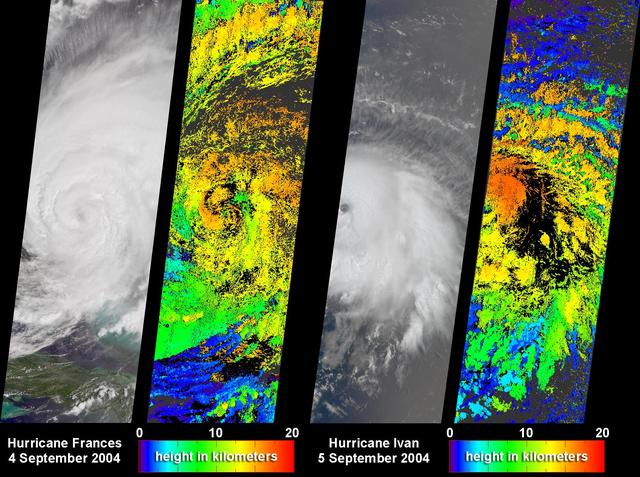
NASA Terra spacecraft captured these images and cloud-top height retrievals of Hurricane Frances on September 4, 2004, when the eye sat just off the coast of eastern Florida, and Hurricane Ivan on September 5th.
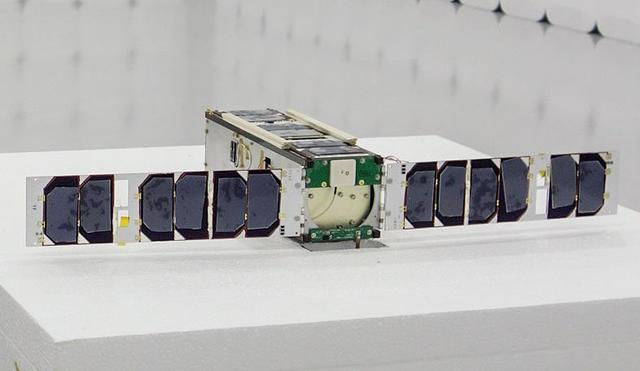
jsc2022e000003 (6/7/2019) --- A preflight image of IHI-SAT in the panels deployed configuration. IHI-SAT is the 3U CubeSat designed, developed and launched by IHI Corporation with support of Tohoku University. IHI-SAT demonstrates advanced AIS (automatic identification system) receiving system. This new system improves a ship’s detection rate in a sea area where many other ships are under way. Image Credit: Image courtesy of IHI Corporation.
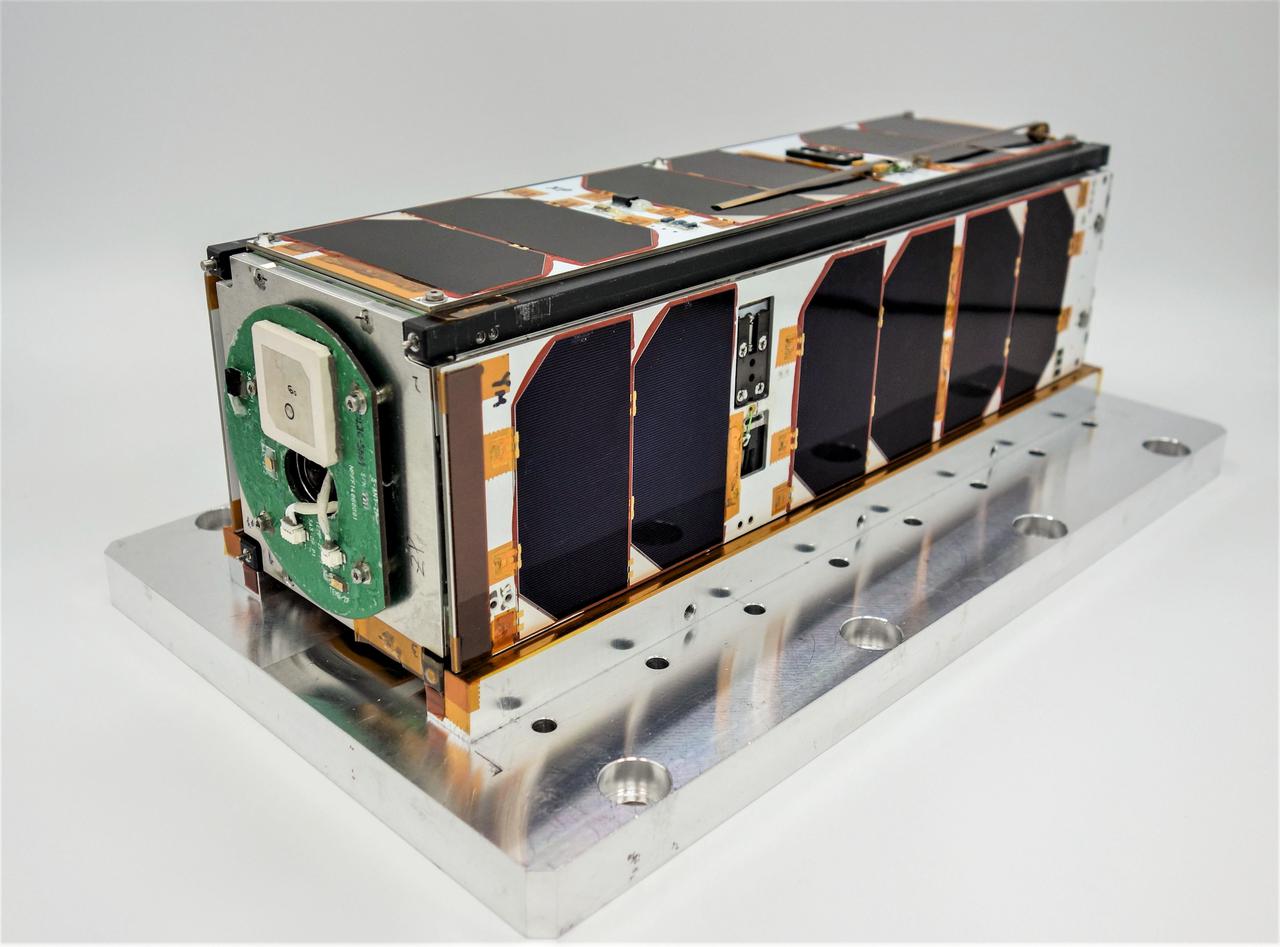
jsc2022e000002 (11/25/2021) --- A preflight image of IHI-SAT in launch configuration. IHI-SAT is the 3U CubeSat designed, developed and launched by IHI Corporation with support of Tohoku University. IHI-SAT demonstrates advanced AIS (automatic identification system) receiving system. This new system improves a ship’s detection rate in a sea area where many other ships are under way. Image Credit: Image courtesy of IHI Corporation.
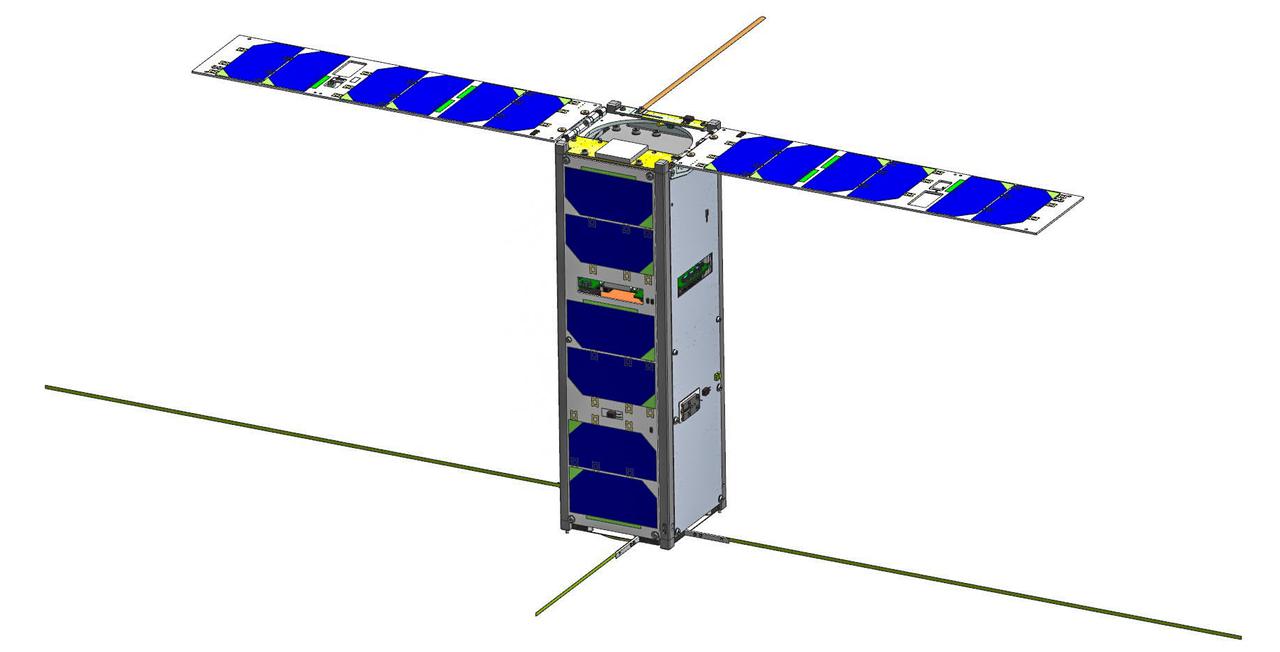
jsc2022e000004 (1/5/2022) --- A preflight graphic of IHI-SAT in in deployed configuration. IHI-SAT is the 3U CubeSat designed, developed and launched by IHI Corporation with support of Tohoku University. IHI-SAT demonstrates advanced AIS (automatic identification system) receiving system. This new system improves a ship’s detection rate in a sea area where many other ships are under way. Image Credit: Image courtesy of IHI Corporation.
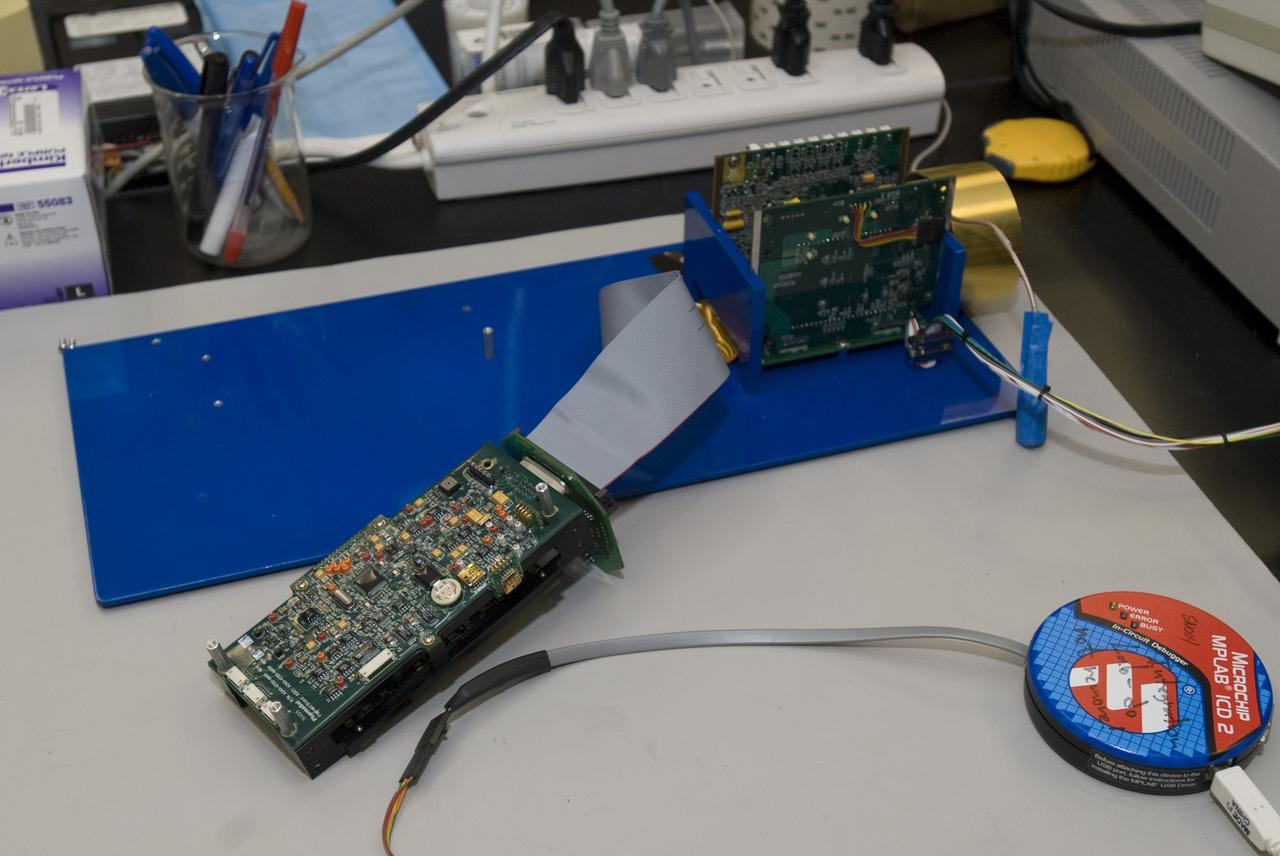
Pre-Sat/Pharmasat practice/backup box in N-240 High Bay
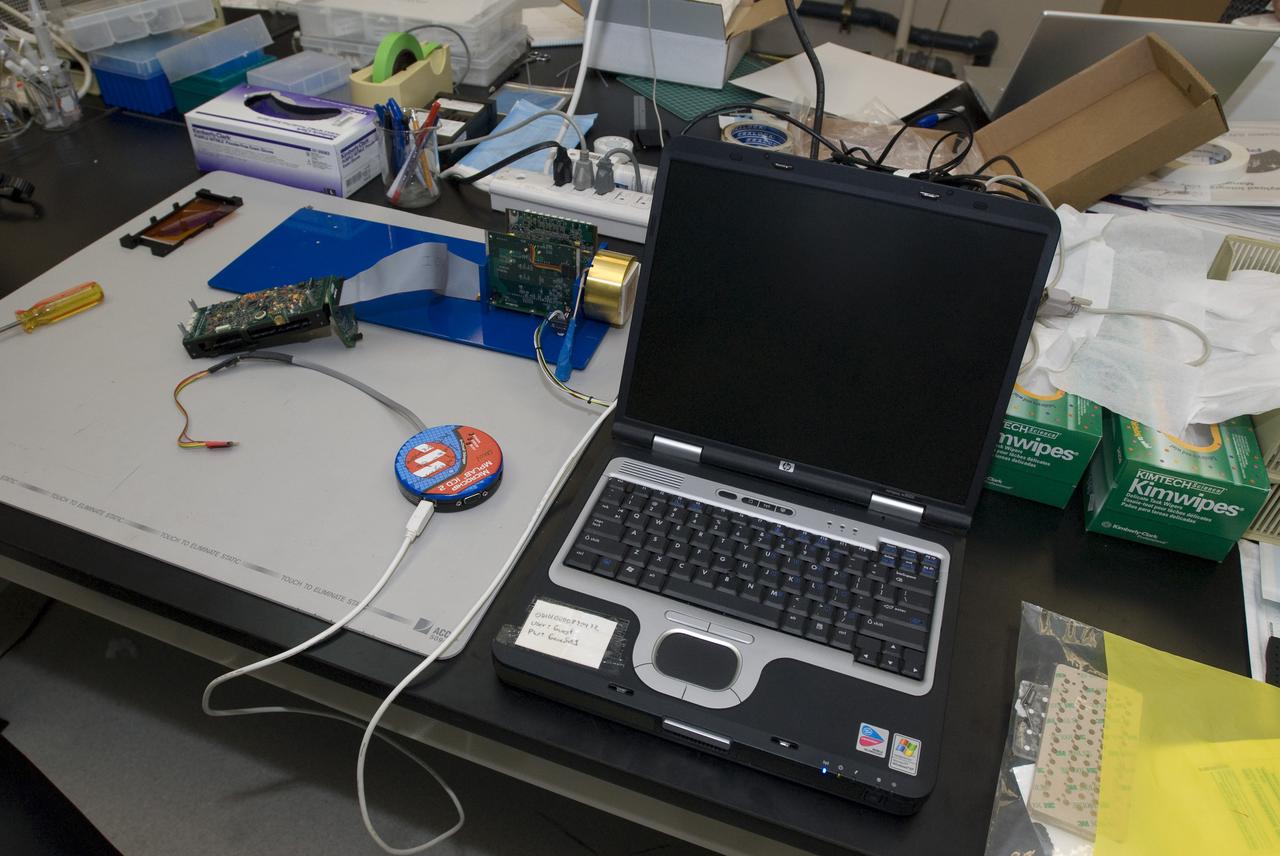
Pre-Sat/Pharmasat practice/backup box in N-240 High Bay
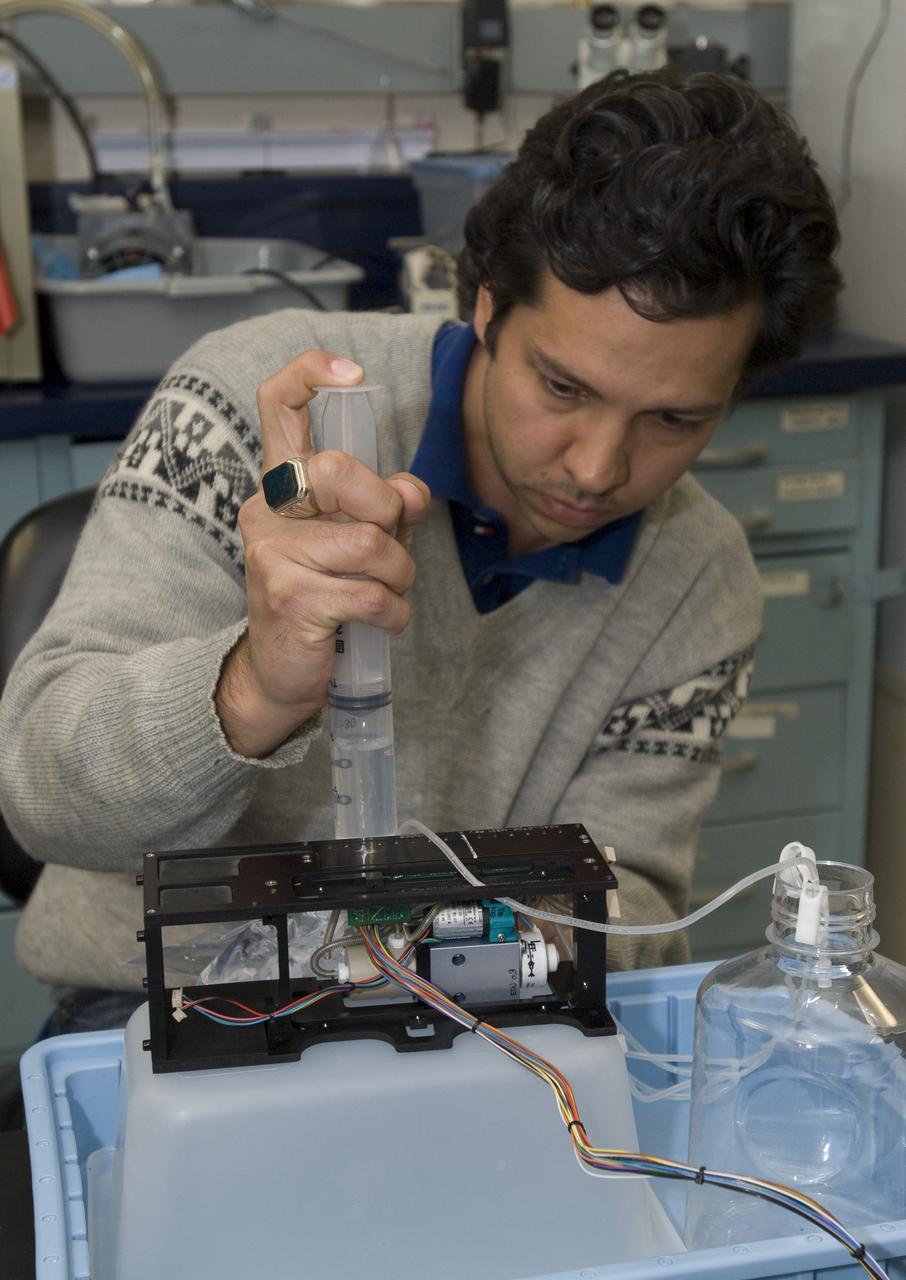
Pre-Sat/Pharmasat practice/backup box Matt Piecini calibrating fluidic in lab
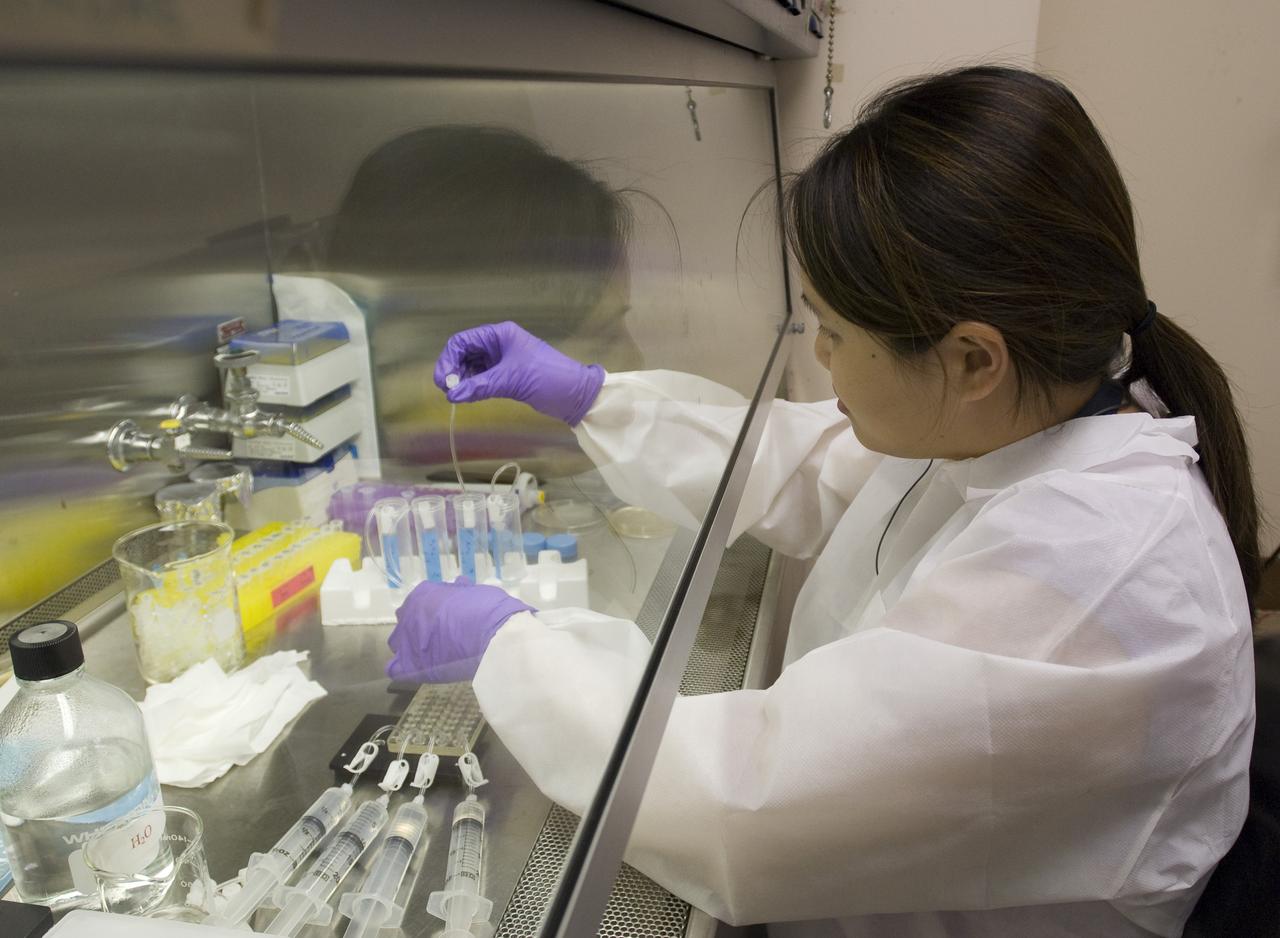
Pre-Sat/Pharmasat practice/backup box Dianna Ly loading the fluidic card in clean environment
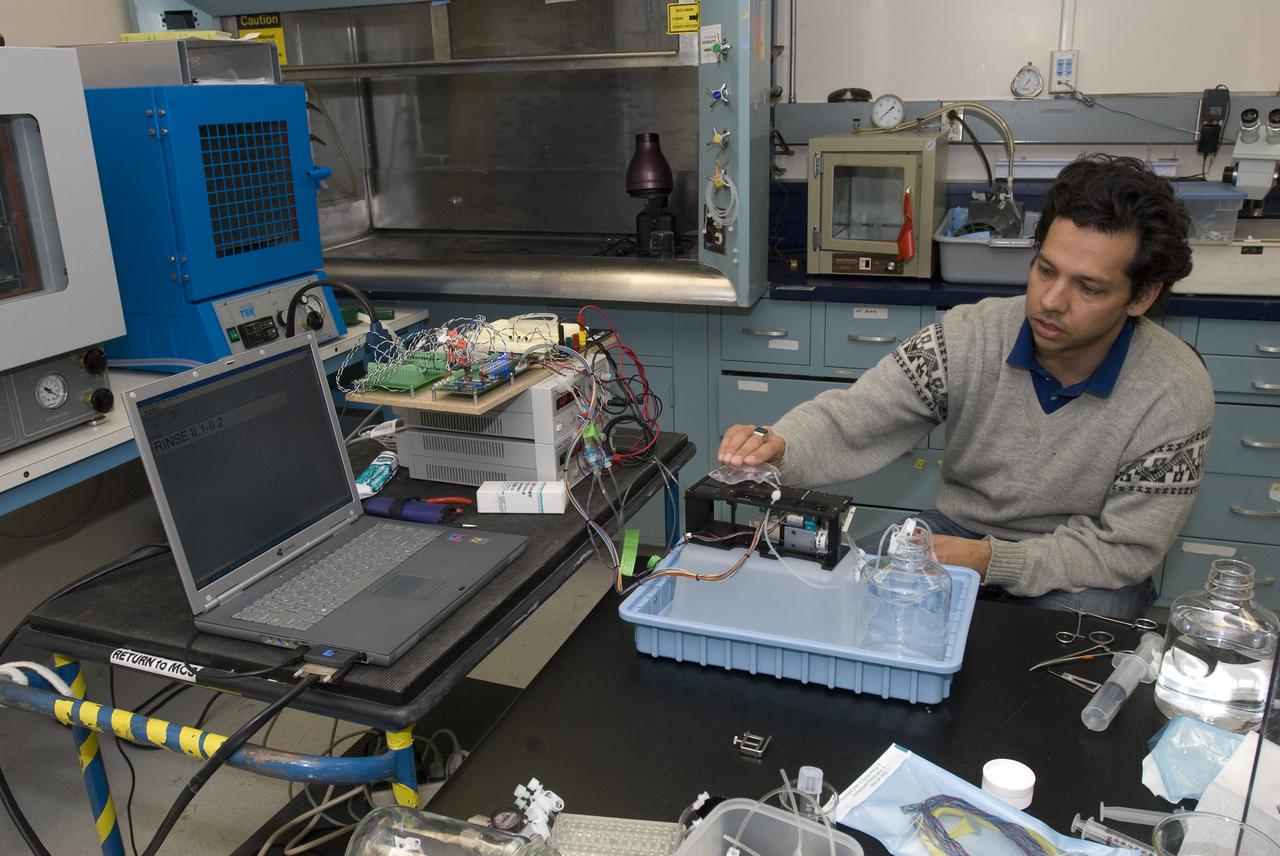
Pre-Sat/Pharmasat practice/backup box Matt Piecini calibrating fluidic in lab
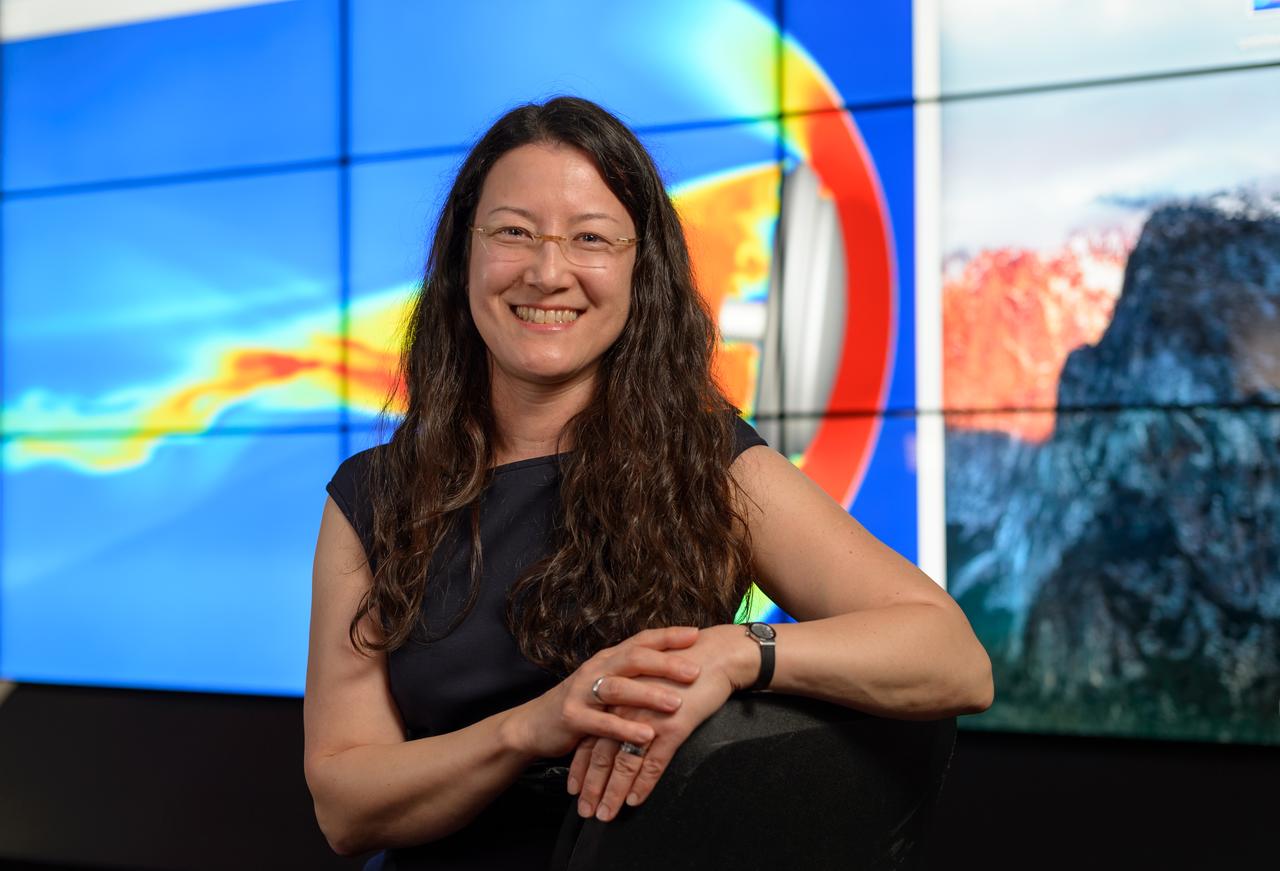
NASA Ames Deputy Director of Exploration Technology Aga M. Goodsell, sat for an on camera interview for the NASA Hidden Figures Project, in front of the Hyperwall (N-252).
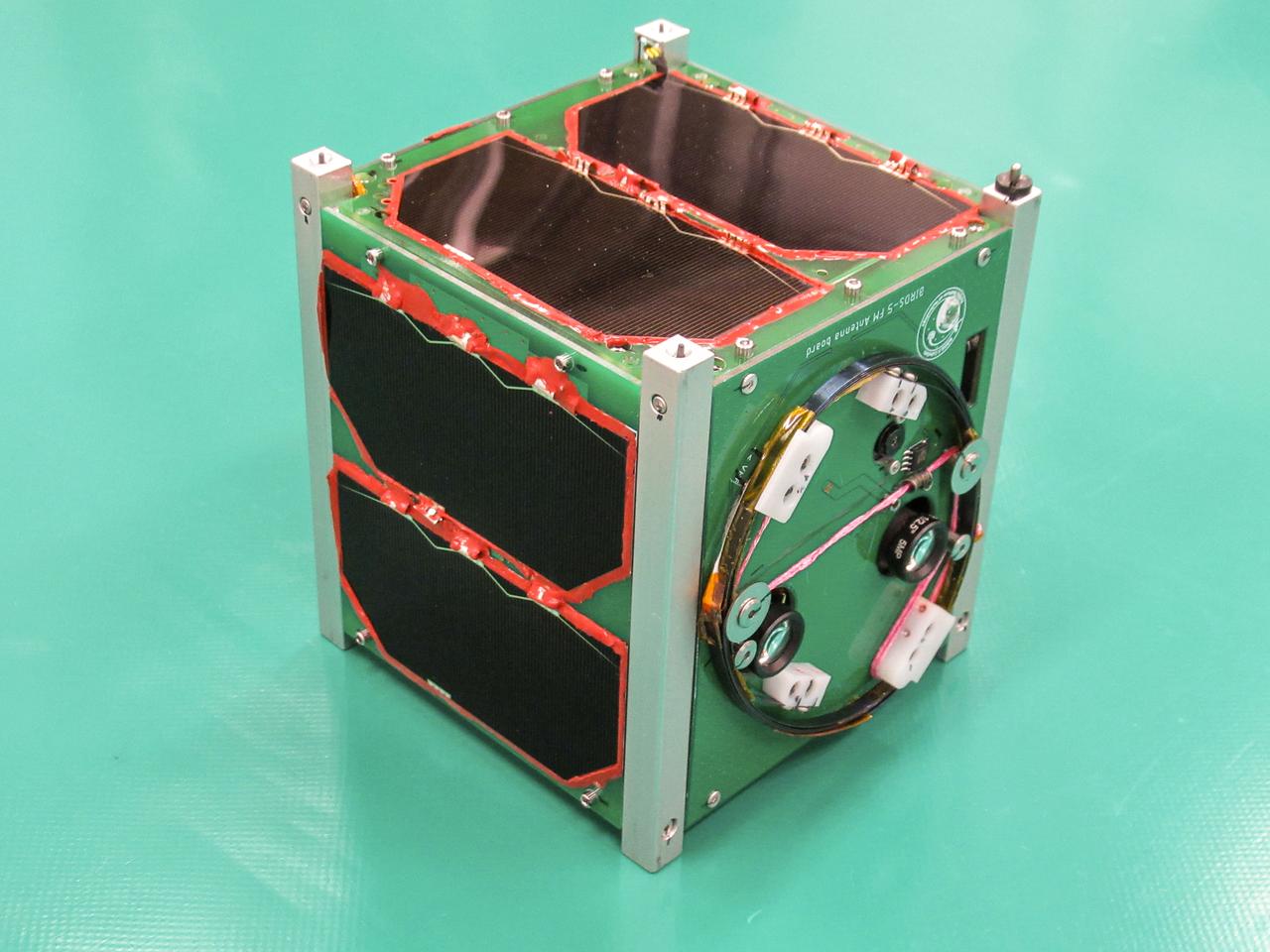
JSC2024E043924 (4/14/2025) --- The CosmoGirl-Sat CubeSat from Japan Aerospace Exploration Agency (JAXA) shows deep blue solar panels at the front of the spacecraft that power three sunken camera lenses (seen on the top of the satellite), amongst a plethora of other subsystems. CosmoGirl-Sat is developed by the Cosmo Women’s Amateur Radio Club, and its primary mission is to transmit imagery to a ground station on Earth. Image courtesy of Cosmo Girls Amateur Radio Club.
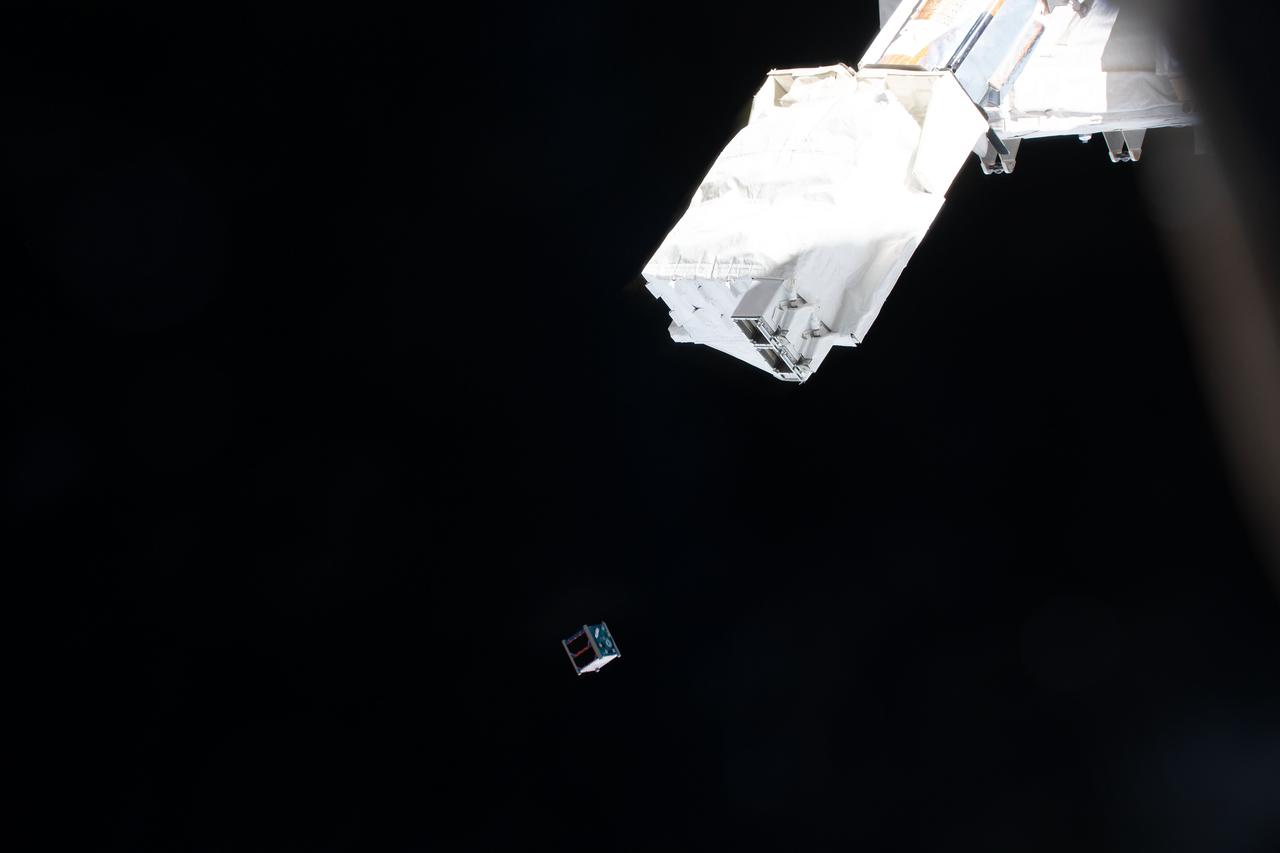
iss070e041245 (Dec. 18, 2023) --- The Clark sat-1 CubeSat is deployed from a small satellie deployer in the grips of the Japanese robotic arm attached to the Kibo laboratory module. Clark sat-1, launched to the Interational Space Station aboard the SpaceX Dragon cargo spacecraft, was developed by students at Clark Next High School in Tokyo, Japan, and its primary mission is to transmit voice and imagery data to ground control stations on Earth.
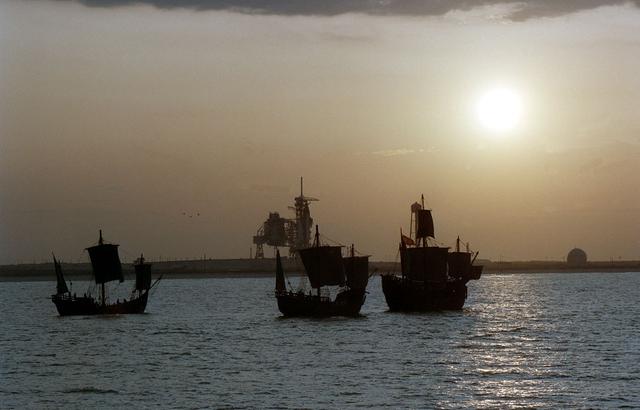
On the 500th arniversary of Christopher Columbus' discovery of the New World, replicas of his three ships sailed past the launch pad at the Kennedy Space Center (KSC) while the space shuttle Columbia sat poised for lift off.

On the 500th arniversary of Christopher Columbus' discovery of the New World, replicas of his three ships sailed past the launch pad at the Kennedy Space Center (KSC) while the space shuttle Columbia sat poised for lift off.

On the 500th arniversary of Christopher Columbus' discovery of the New World, replicas of his three ships sailed past the launch pad at the Kennedy Space Center (KSC) while the space shuttle Columbia sat poised for lift off.

On the 500th arniversary of Christopher Columbus' discovery of the New World, replicas of his three ships sailed past the launch pad at the Kennedy Space Center (KSC) while the space shuttle Columbia sat poised for lift off.
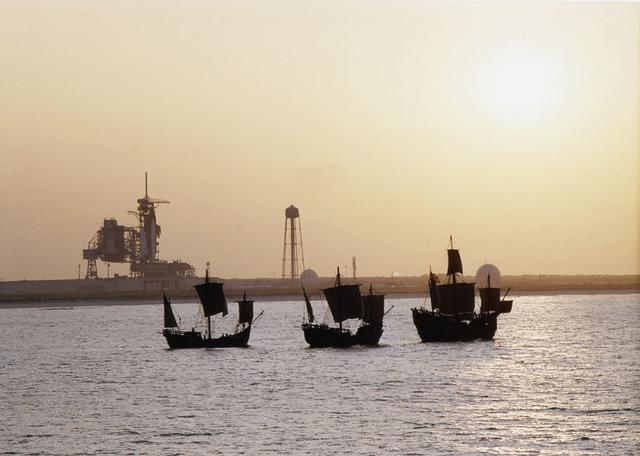
On the 500th arniversary of Christopher Columbus' discovery of the New World, replicas of his three ships sailed past the launch pad at the Kennedy Space Center (KSC) while the space shuttle Columbia sat poised for lift off.
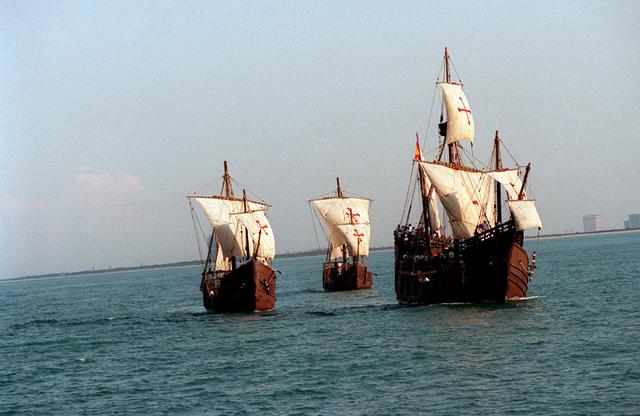
On the 500th arniversary of Christopher Columbus' discovery of the New World, replicas of his three ships sailed past the launch pad at the Kennedy Space Center (KSC) while the space shuttle Columbia sat poised for lift off.
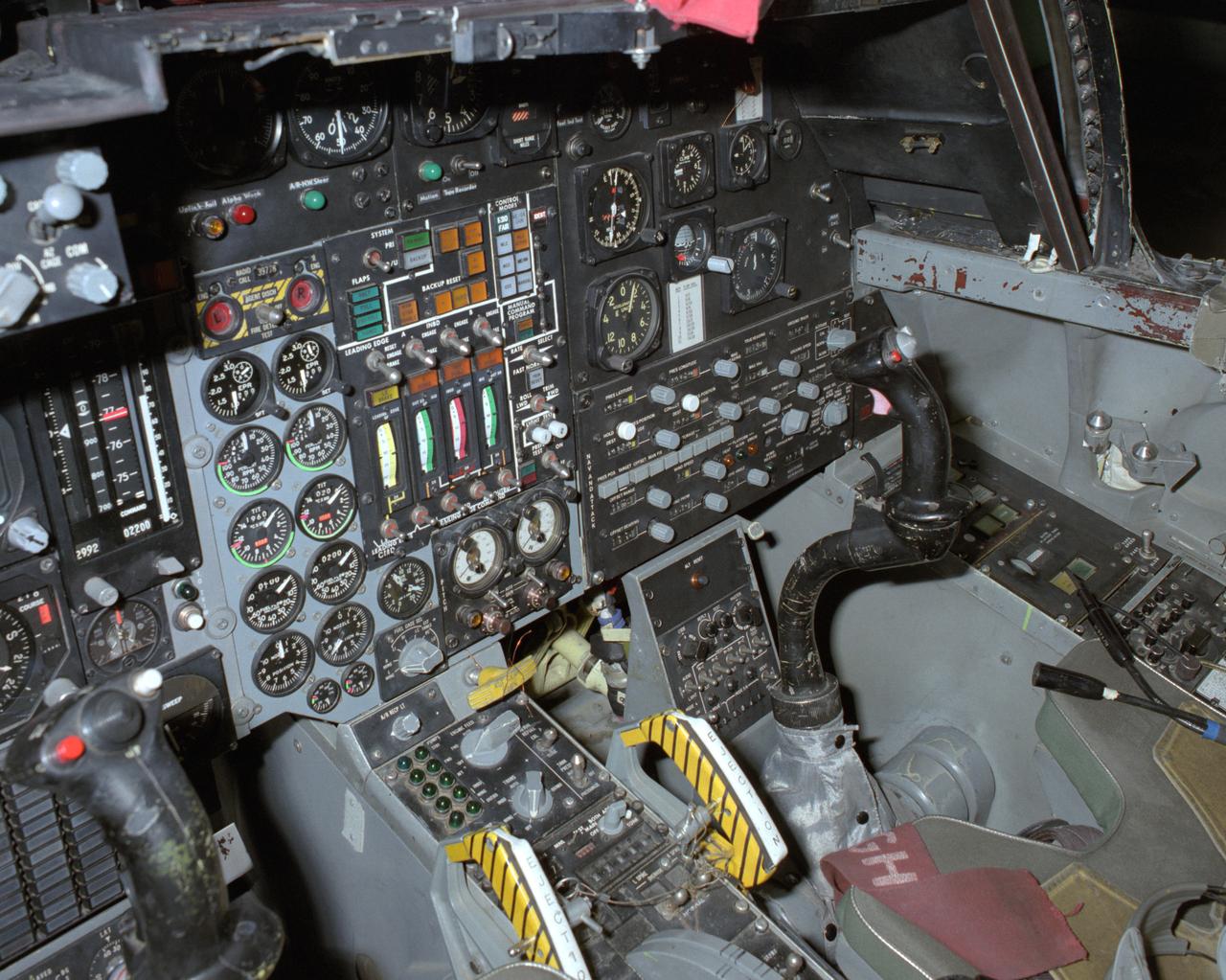
View of the right cockpit of the F-111 MAW aircraft. Unlike most fighter aircraft of the time, the F-111 had side-by-side seating. The pilot sat on the left side, and the weapons systems officer on the right. Both had control sticks to fly the aircraft.
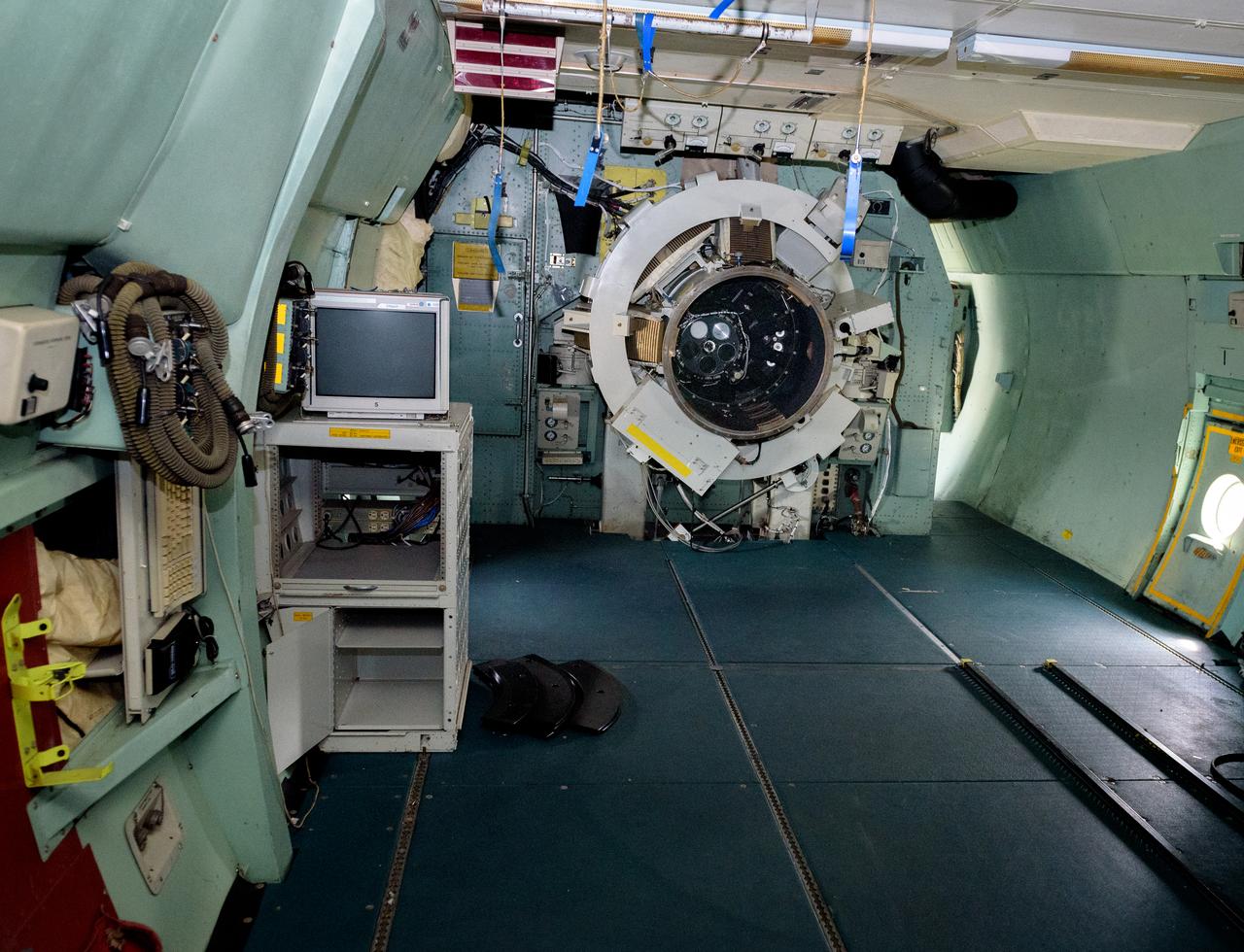
The science instrument mount/telescope flange leading to the telescope cavity. The port work area is where science instruments were connected to the telescope. Astronomers and the science team sat immediately to the left in the port work area on the modified C-141 Kuiper Airborne Observatory, (KAO) (NASA-714), (seats have been removed).
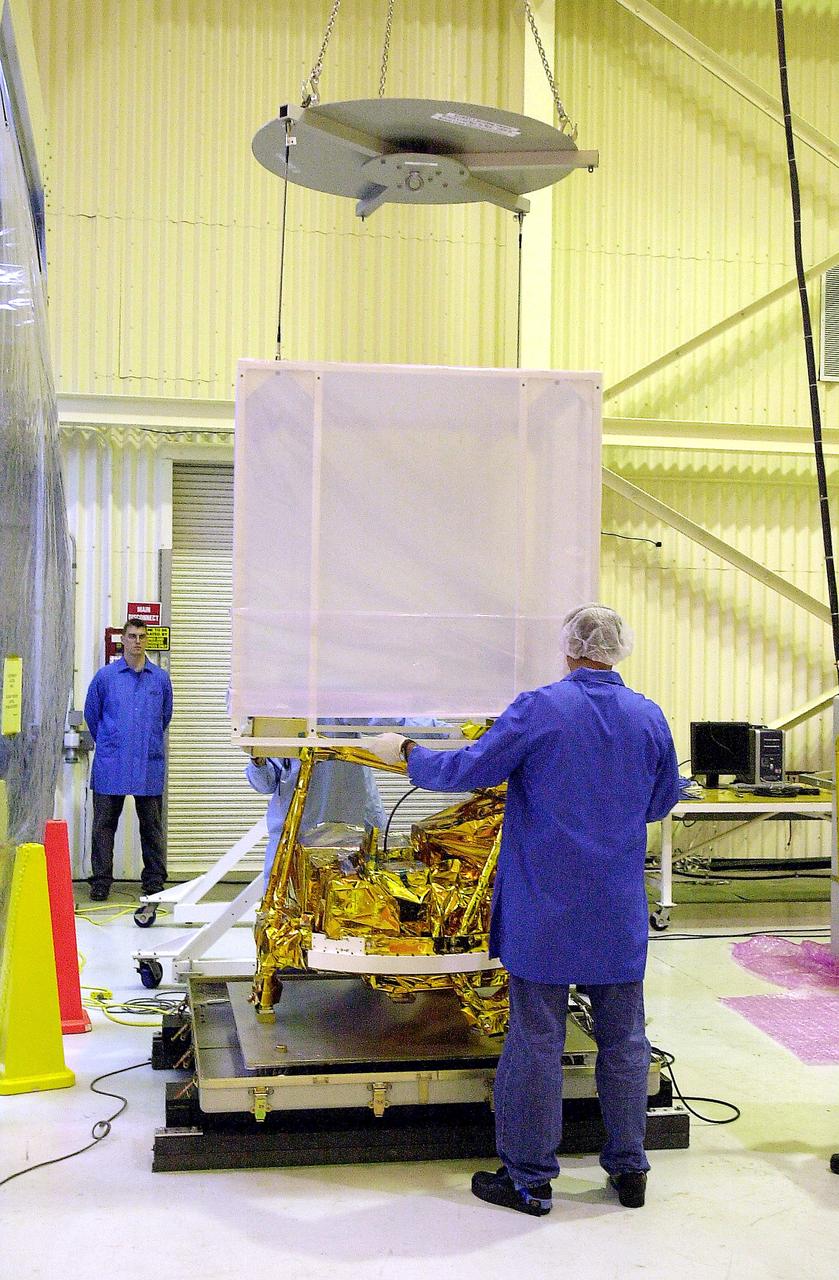
VANDENBERG AIR FORCE BASE, CALIF.- The cover is being lifted off SciSat-1 spacecraft at Vandenberg Air Force Base, Calif. Sci-Sat, which will undergo instrument checkout and spacecraft functional testing, weighs approximately 330 pounds and after launch will be placed in a 400-mile-high polar orbit to investigate processes that control the distribution of ozone in the upper atmosphere. The data from the satellite will provide Canadian and international scientists with improved measurements relating to global ozone processes and help policymakers assess existing environmental policy and develop protective measures for improving the health of our atmosphere, preventing further ozone depletion. The mission is designed to last two years.
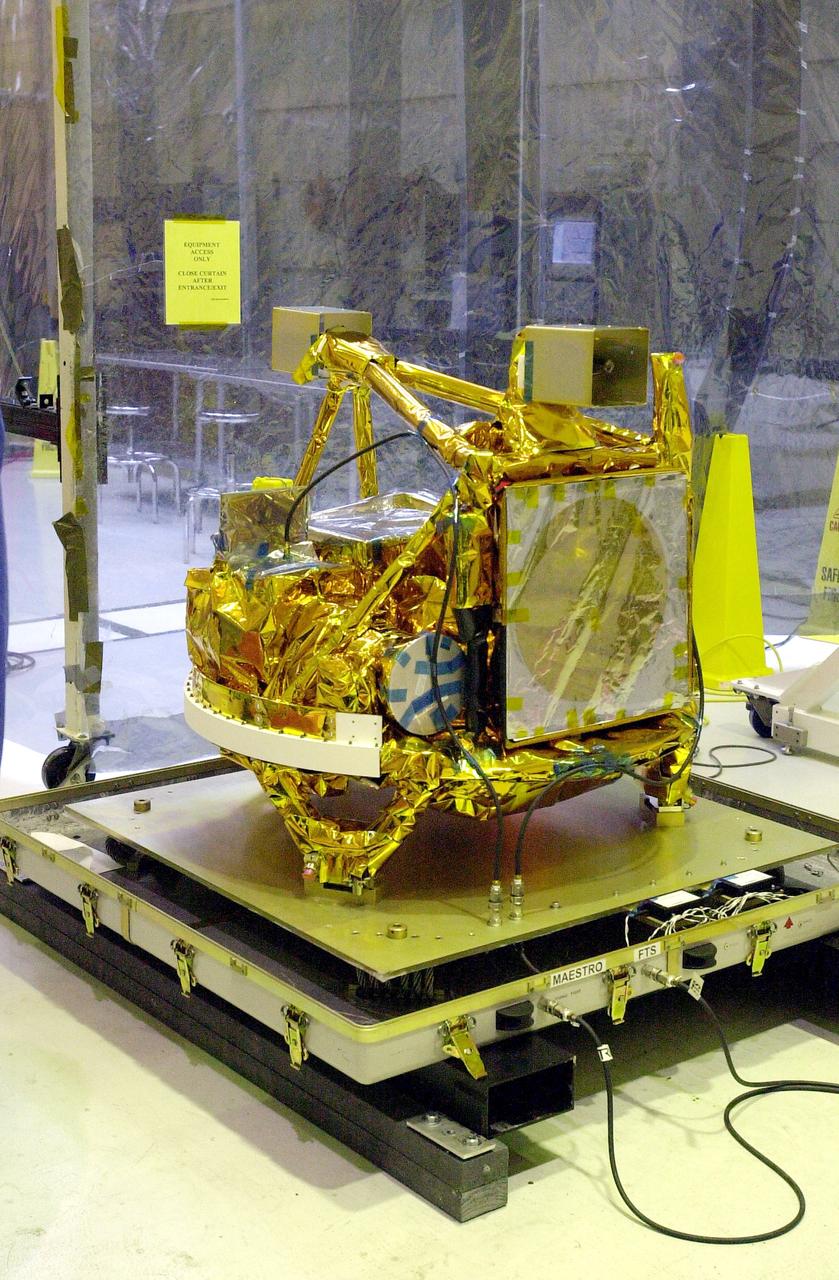
VANDENBERG AIR FORCE BASE, CALIF. - The SciSat-1 spacecraft is revealed at Vandenberg Air Force Base, Calif. Sci-Sat, which will undergo instrument checkout and spacecraft functional testing, weighs approximately 330 pounds and after launch will be placed in a 400-mile-high polar orbit to investigate processes that control the distribution of ozone in the upper atmosphere. The data from the satellite will provide Canadian and international scientists with improved measurements relating to global ozone processes and help policymakers assess existing environmental policy and develop protective measures for improving the health of our atmosphere, preventing further ozone depletion. The mission is designed to last two years.
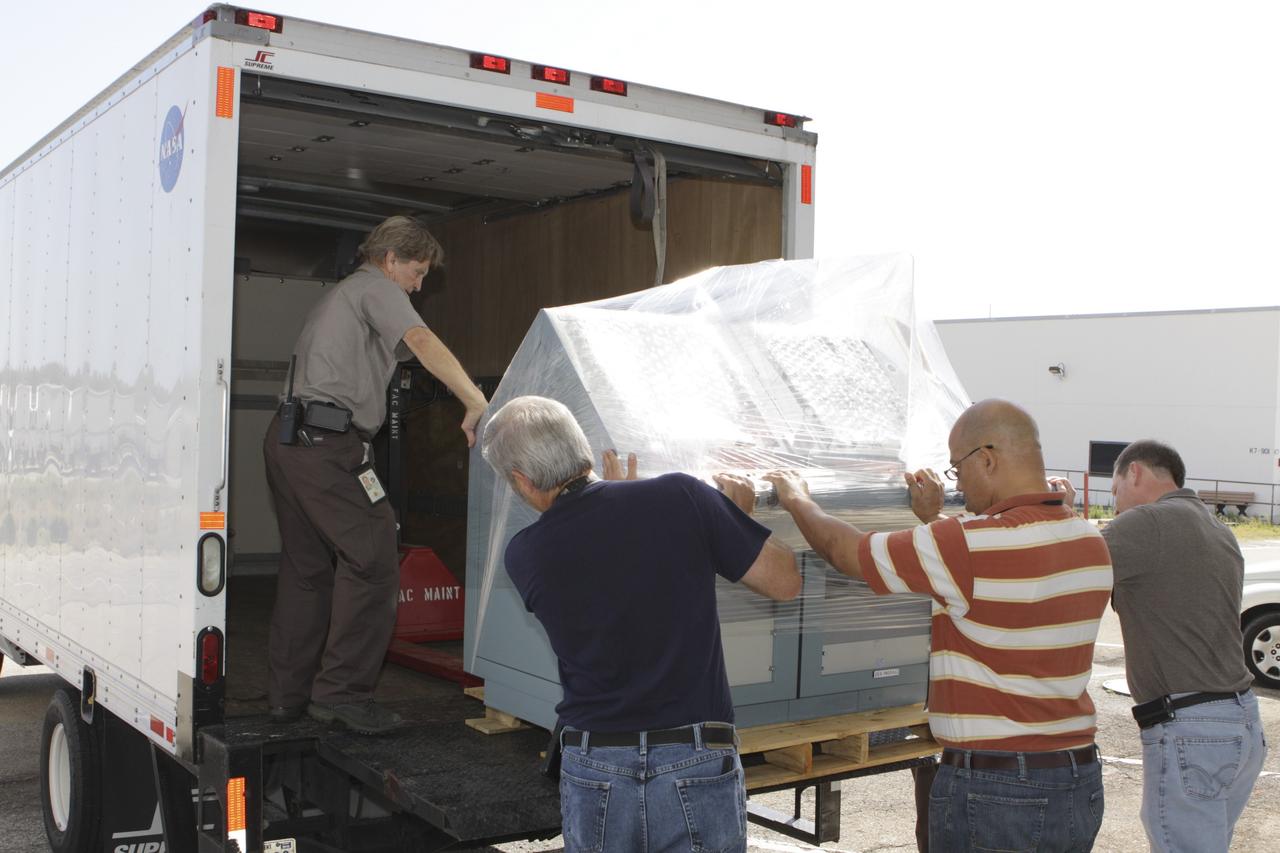
CAPE CANAVERAL, Fla. –At NASA’s Kennedy Space Center in Florida, workers help load the Public Affairs Office console and chairs from Launch Control Center Firing Room 3 onto a truck. The console will be moved to the Kennedy Space Center Visitor Complex in Florida and will be preserved for use in the space shuttle Atlantis display. During the 30-year history of NASA’s space shuttle launches, Public Affairs Officers sat at the console to provide commentary during shuttle tanking and launches. Photo credit: NASA/Glenn Benson
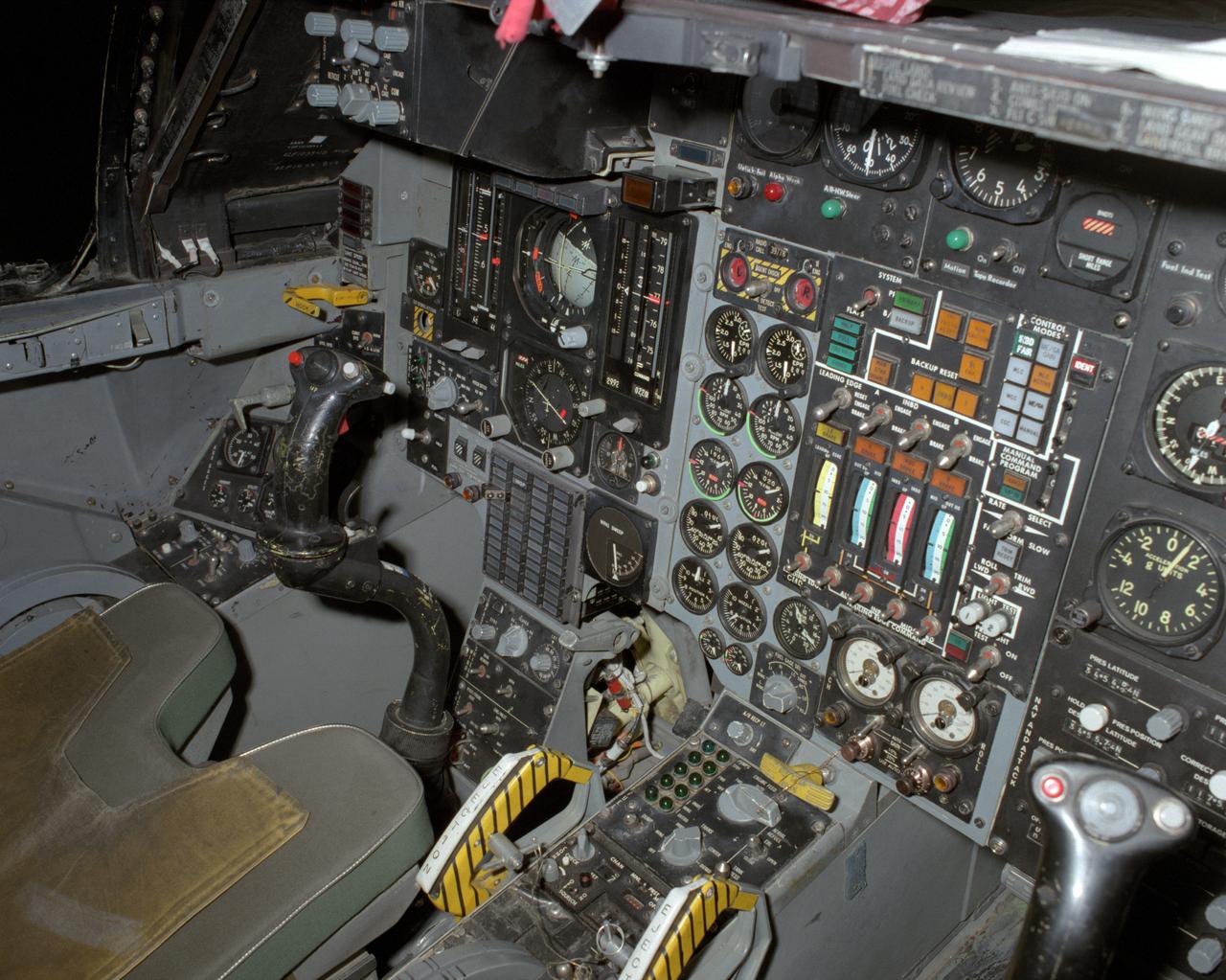
View of the left cockpit and pilot's seat of the F-111 MAW aircraft. Unlike most fighter aircraft of the time, the F-111 had side-by-side seating. The pilot sat on the left side, and the weapons systems officer on the right. Both had control sticks to fly the aircraft. The two yellow and black striped handles would be used in an emergency to eject the entire F-111 cockpit. The F-111 also did not have ejection seats, but used a capsule.
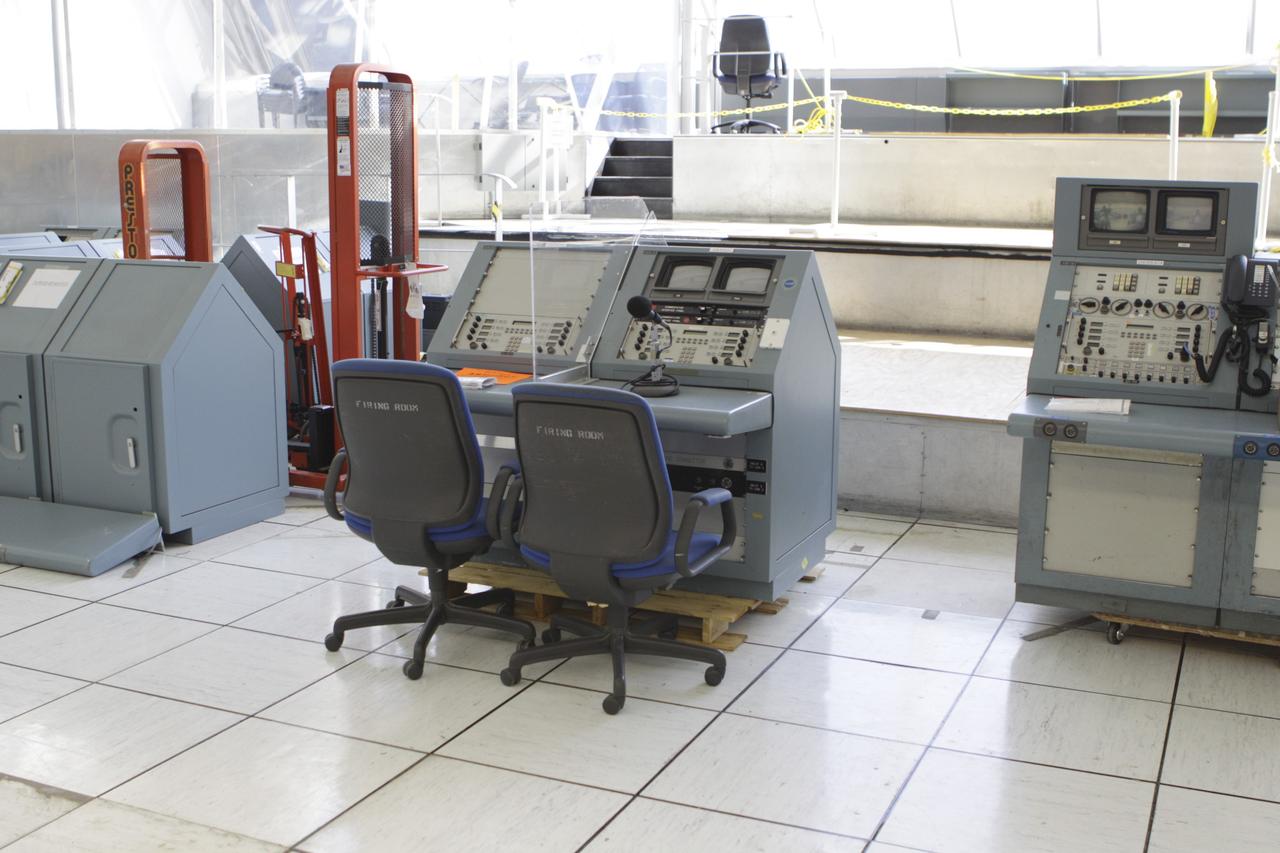
CAPE CANAVERAL, Fla. – Inside the Launch Control Center at NASA’s Kennedy Space Center in Florida, the Public Affairs Office console is being removed from Firing Room 3. The console will be moved to the Kennedy Space Center Visitor Complex in Florida and will be preserved for use in the space shuttle Atlantis display. During the 30-year history of NASA’s space shuttle launches, Public Affairs Officers sat at the console to provide commentary during shuttle tanking and launches. Photo credit: NASA/Glenn Benson
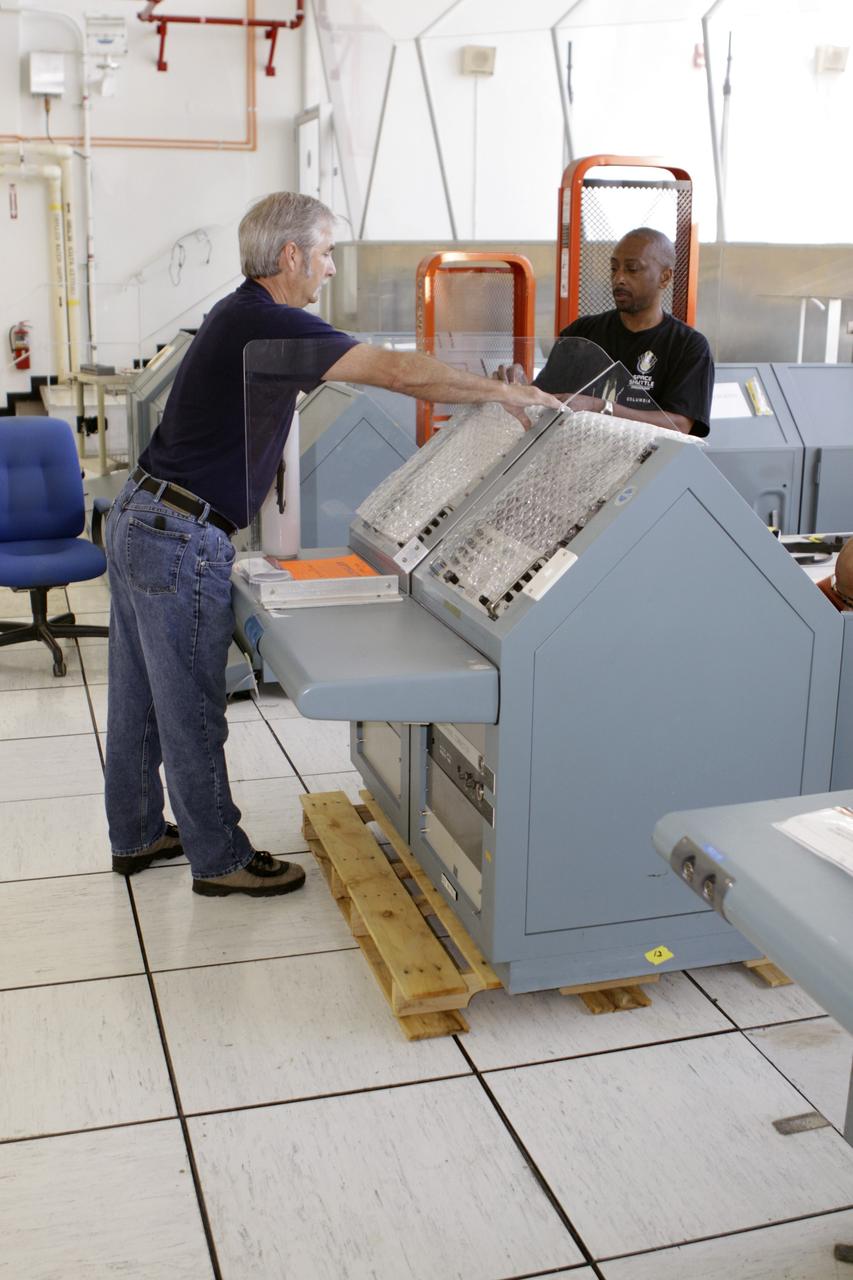
CAPE CANAVERAL, Fla. – Inside the Launch Control Center at NASA’s Kennedy Space Center in Florida, workers prepare to remove the Public Affairs Office console from Firing Room 3. The console will be moved to the Kennedy Space Center Visitor Complex in Florida and will be preserved for use in the space shuttle Atlantis display. During the 30-year history of NASA’s space shuttle launches, Public Affairs Officers sat at the console to provide commentary during shuttle tanking and launches. Photo credit: NASA/Glenn Benson
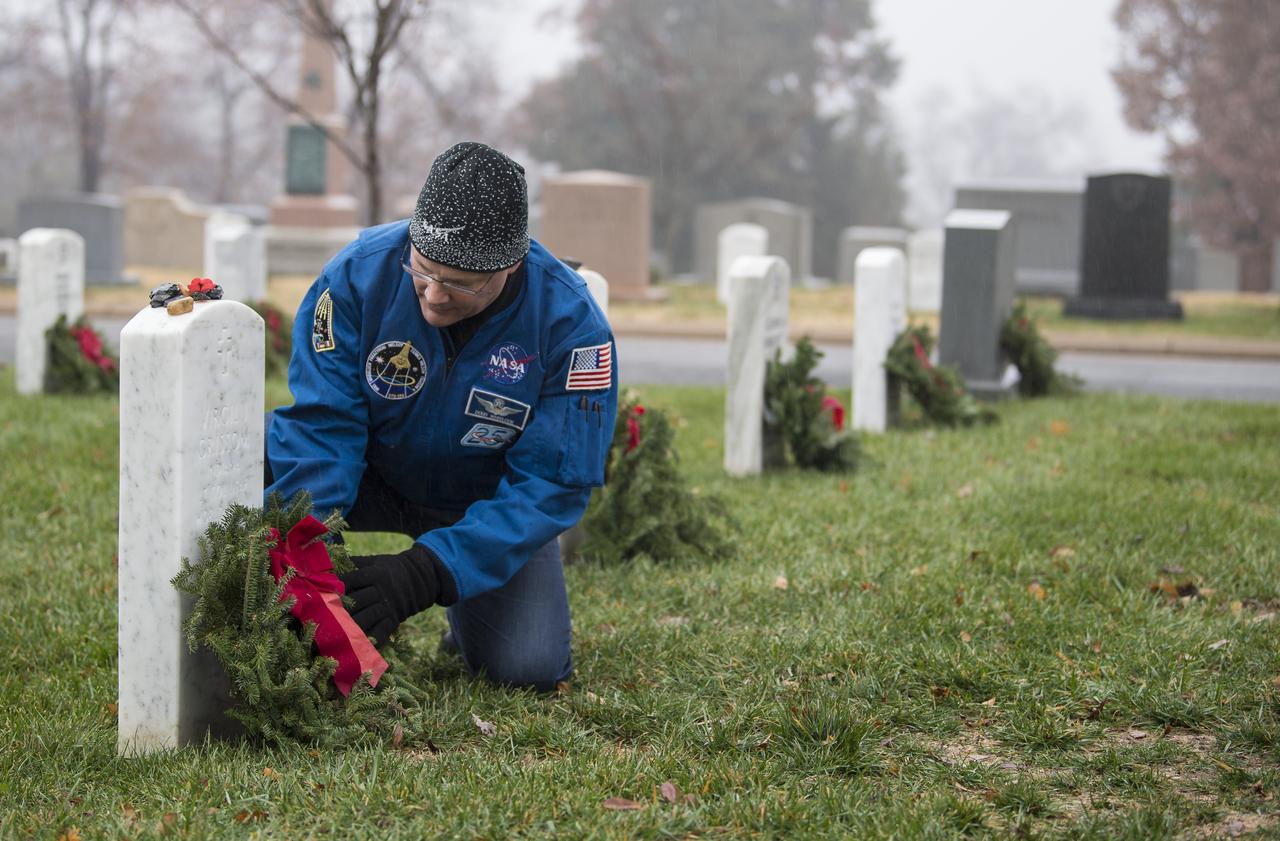
NASA astronaut Doug Wheelock lays a wreath at the grave marker of Virgil "Gus" Grissom from Apollo 1 as part of National Wreaths Across America Day, Sat., Dec. 14, 2019 at Arlington National Cemetery in Arlington, Va. National Wreaths Across America Day is held annually to celebrate the lives of military veterans and wreaths are placed at the foot of every headstone. Wheelock honored those who lost their lives in the quest for space exploration as well as fellow service members. Photo Credit: (NASA/Aubrey Gemignani)
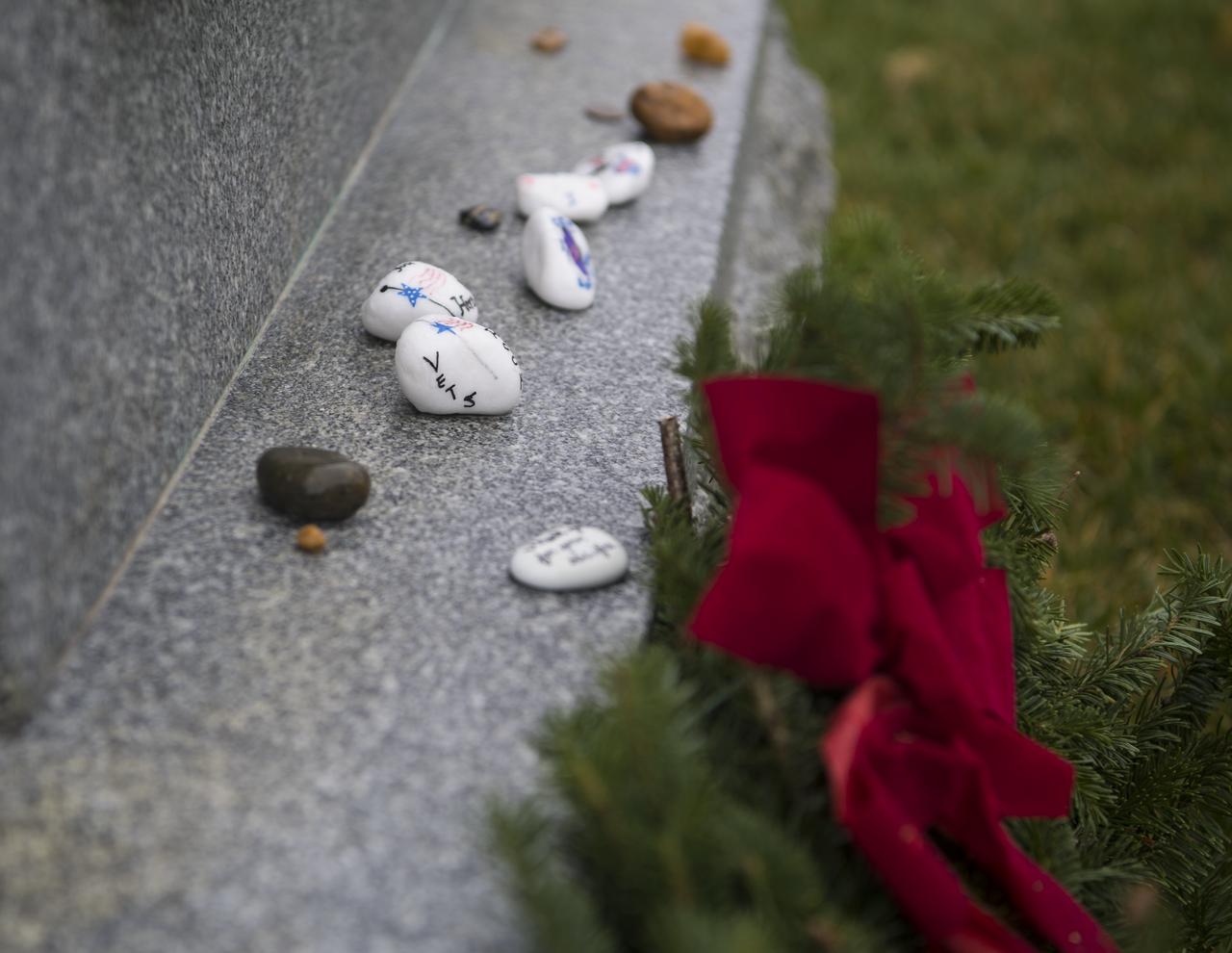
Items are seen at the Space Shuttle Challenger memorial on National Wreaths Across America Day at Arlington National Cemetery, Sat., Dec. 14, 2019 in Arlington, Va. National Wreaths Across America Day is held annually to celebrate the lives of military veterans. NASA astronaut Doug Wheelock attended to honor those who lost their lives in the quest for space exploration as well as fellow service members. Photo Credit: (NASA/Aubrey Gemignani)
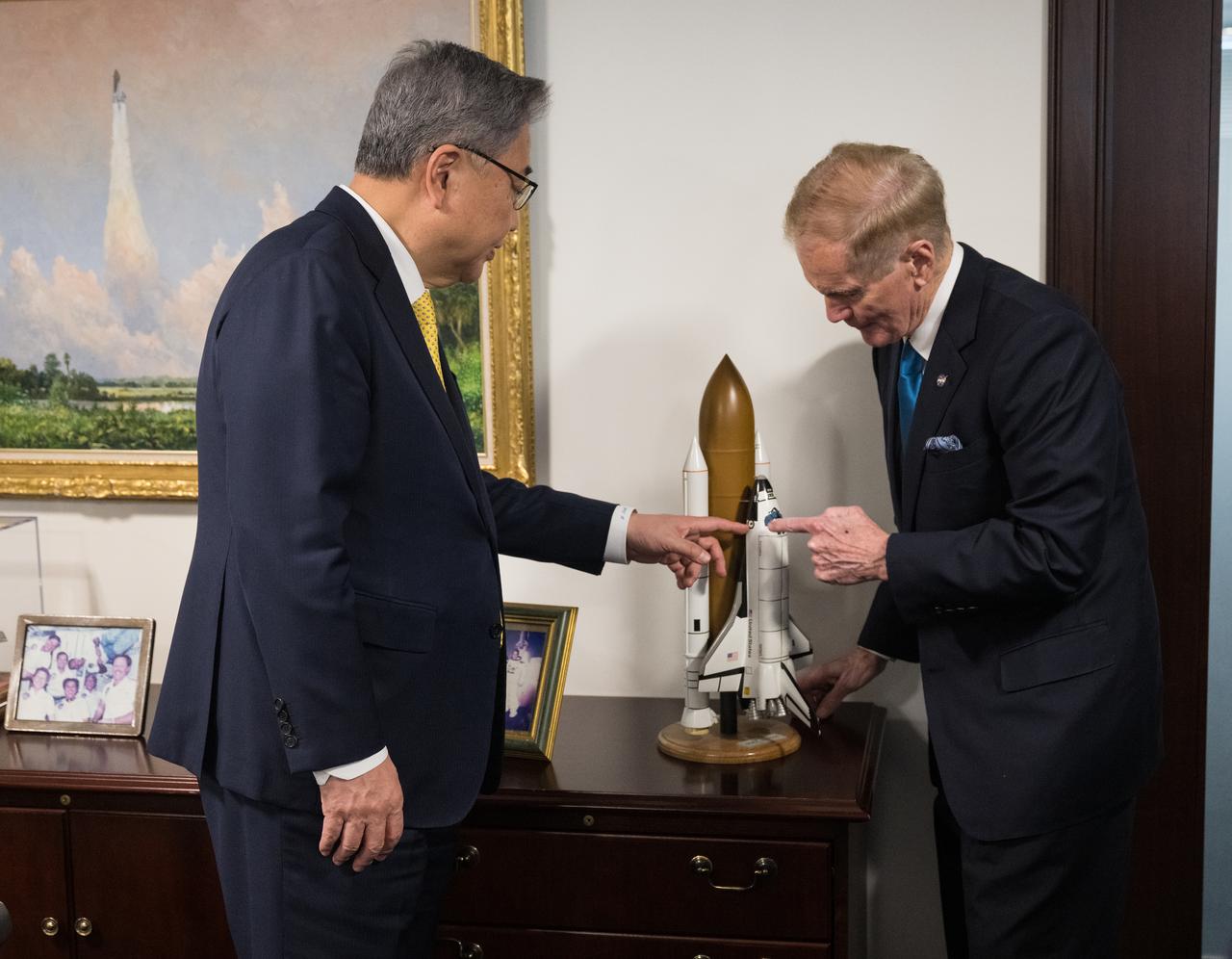
NASA Administrator Bill Nelson shows Republic of Korea Minister of Foreign Affairs, Jin Park, where he sat on the Space Shuttle Columbia during his mission STS-61-C, Thursday, Feb. 2, 2023 at the Mary W. Jackson NASA Headquarters building in Washington DC. Photo Credit: (NASA/Aubrey Gemignani)
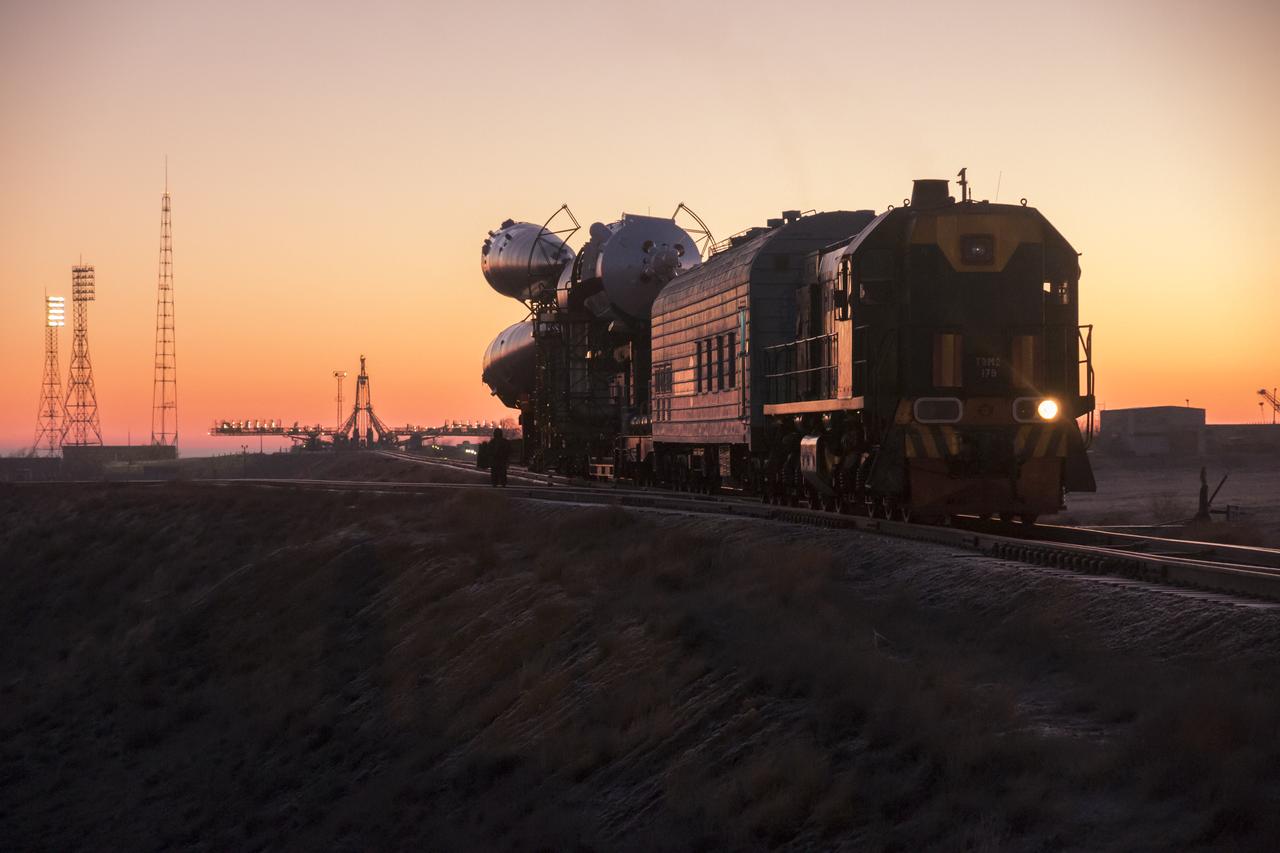
The Soyuz booster rocket and MS-11 spacecraft is rolled out to the launch pad by train on Sat. Dec.1, 2018 at the Baikonur Cosmodrome in Kazakhstan. Launch of the Soyuz rocket is scheduled for Dec. 3 and will carry Expedition 58 Soyuz Commander Oleg Kononenko of Roscosmos, Flight Engineer Anne McClain of NASA, and Flight Engineer David Saint-Jacques of the Canadian Space Agency (CSA) into orbit to begin their six and a half month mission on the International Space Station. Photo Credit: (NASA/Victor Zelentsov)

Visitors stop to look at the headstone of former astronaut and U.S. Senator John Glenn on National Wreaths Across America Day at Arlington National Cemetery, Sat., Dec. 14, 2019 in Arlington, Va. National Wreaths Across America Day is held annually to celebrate the lives of military veterans. NASA astronaut Doug Wheelock attended to honor those who lost their lives in the quest for space exploration as well as fellow service members. Photo Credit: (NASA/Aubrey Gemignani)
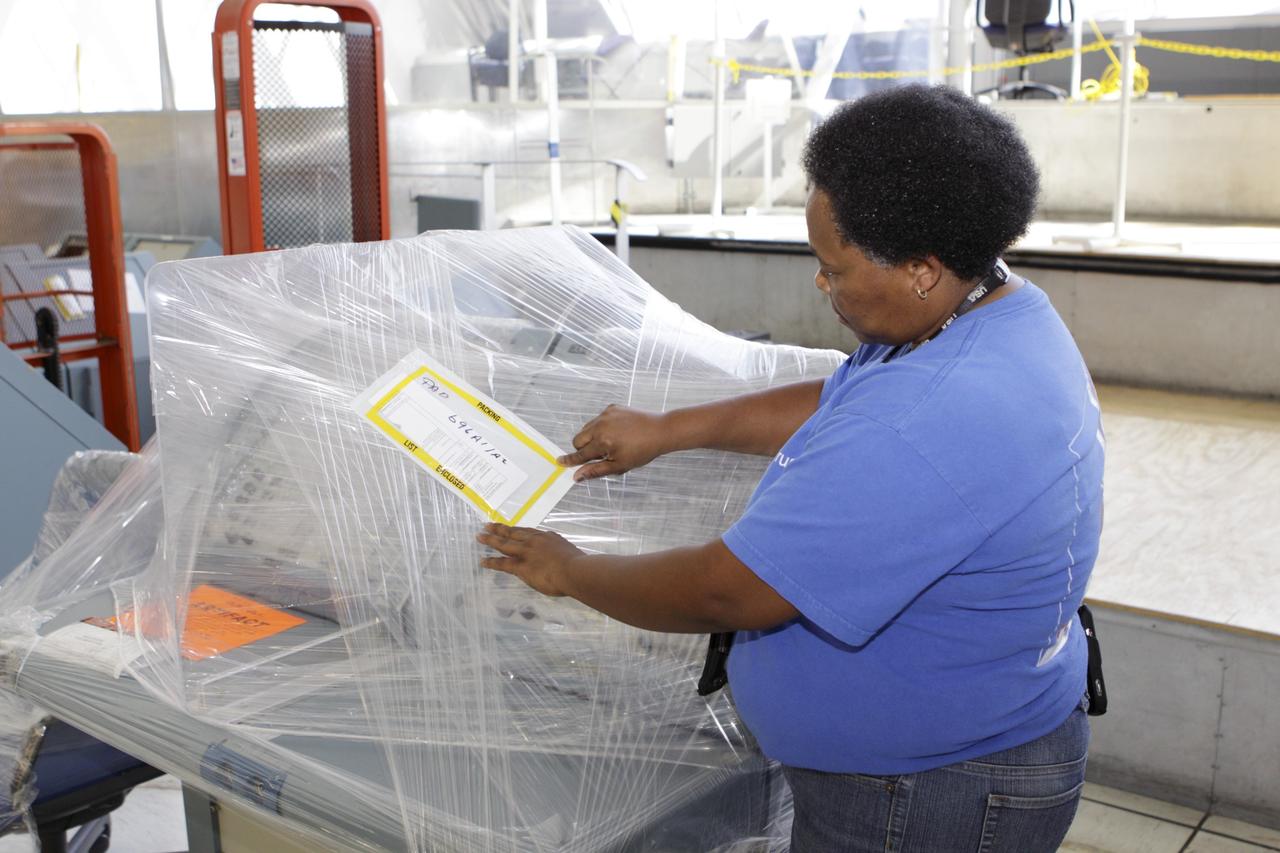
CAPE CANAVERAL, Fla. – Inside the Launch Control Center at NASA’s Kennedy Space Center in Florida, a worker prepares the Public Affairs Office console to be removed from Firing Room 3. The console will be moved to the Kennedy Space Center Visitor Complex in Florida and will be preserved for use in the space shuttle Atlantis display. During the 30-year history of NASA’s space shuttle launches, Public Affairs Officers sat at the console to provide commentary during shuttle tanking and launches. Photo credit: NASA/Glenn Benson
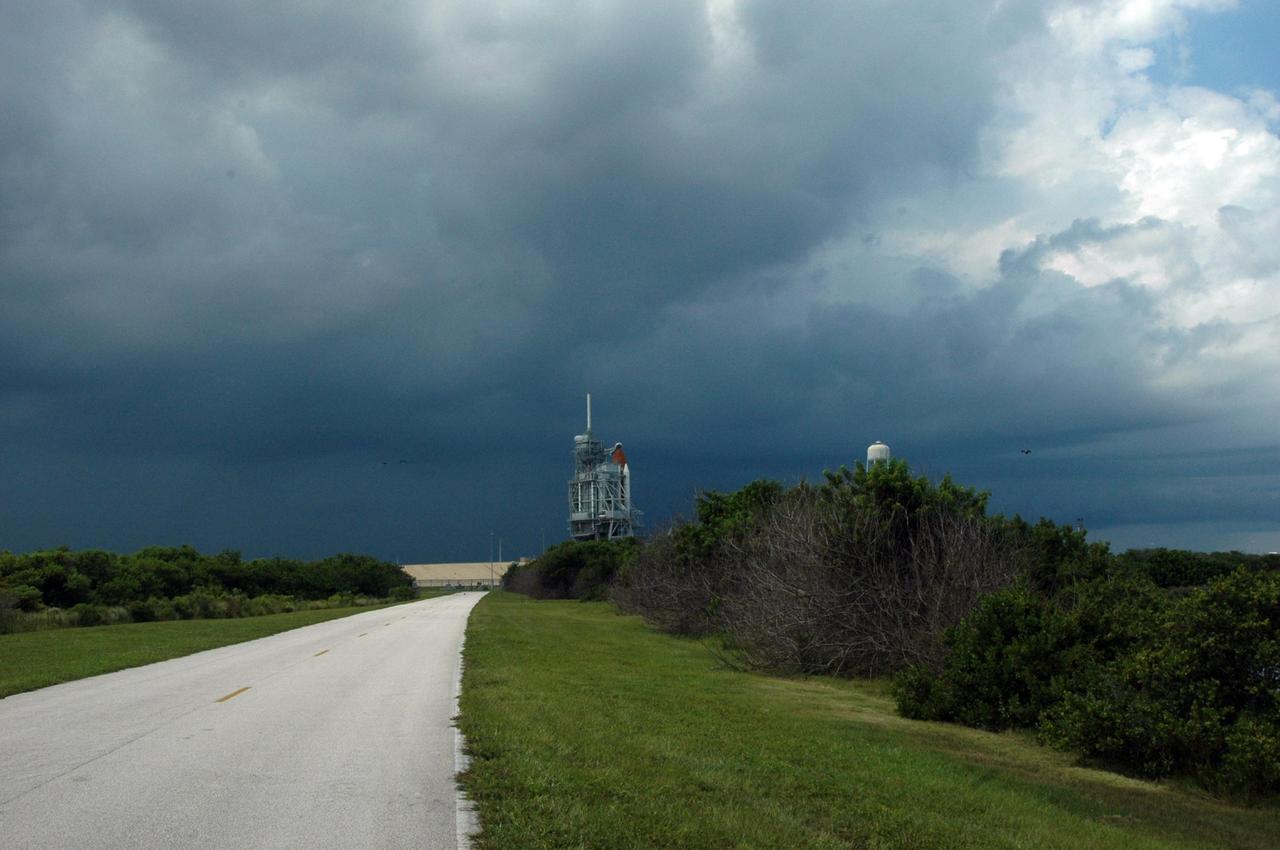
KENNEDY SPACE CENTER, FLA. - The dark clouds of a heavy rainstorm moving into Kennedy Space Center in the late afternoon on Sat., August 26, 2006, seem to illuminate the Space Shuttle Atlantis as it sits on Launch Pad 39B. A lightning strike to the pad's lightning protection system on August 25, caused the mission management team to postpone the launch of mission STS-115 for 24 hours in order to review all electrical systems on the space shuttle and ground support equipment at the pad. Photo credit: NASA/Ken Thornsley.
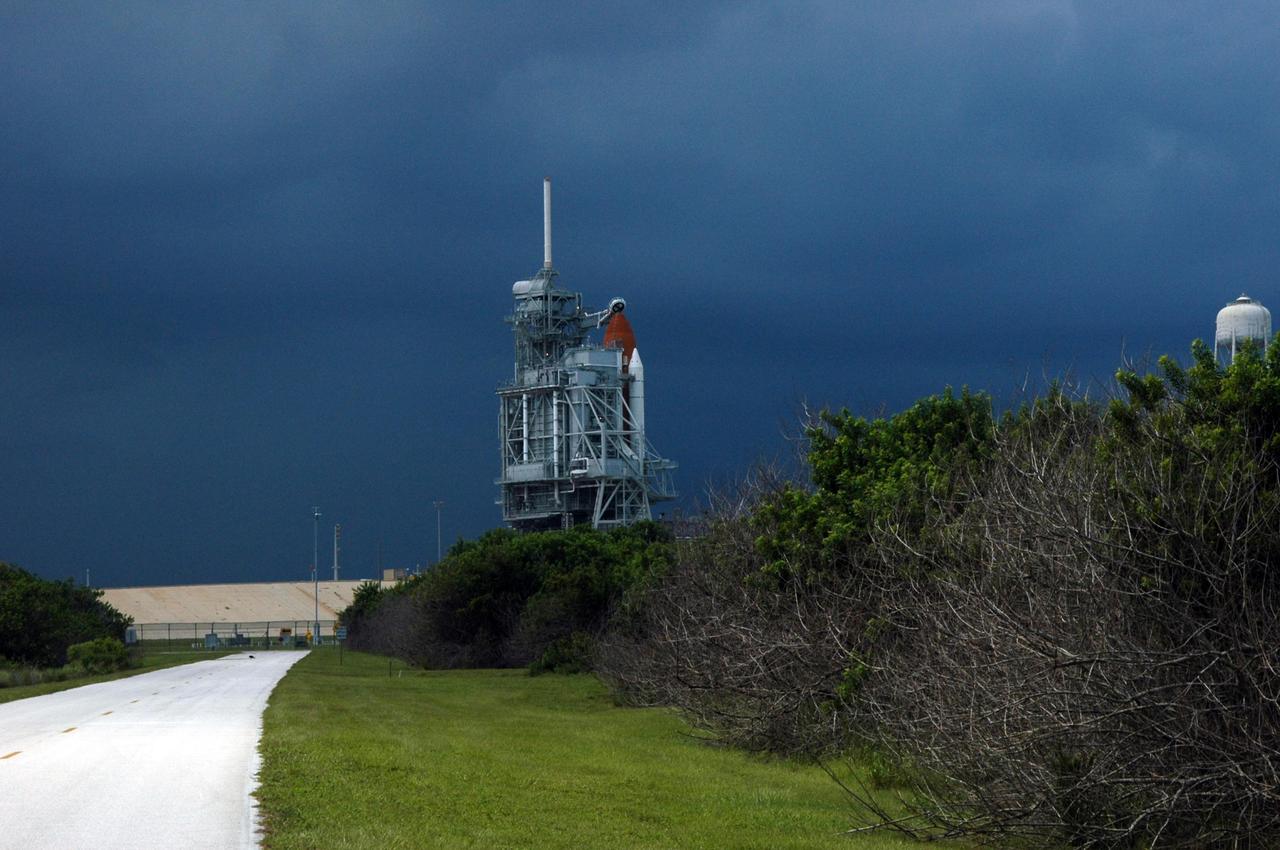
KENNEDY SPACE CENTER, FLA. - The dark clouds of a heavy rainstorm moving into Kennedy Space Center in the late afternoon on Sat., August 26, 2006, seem to illuminate the Space Shuttle Atlantis as it sits on Launch Pad 39B. A lightning strike to the pad's lightning protection system on August 25, caused the mission management team to postpone the launch of mission STS-115 for 24 hours in order to review all electrical systems on the space shuttle and ground support equipment at the pad. Photo credit: NASA/Ken Thornsley.
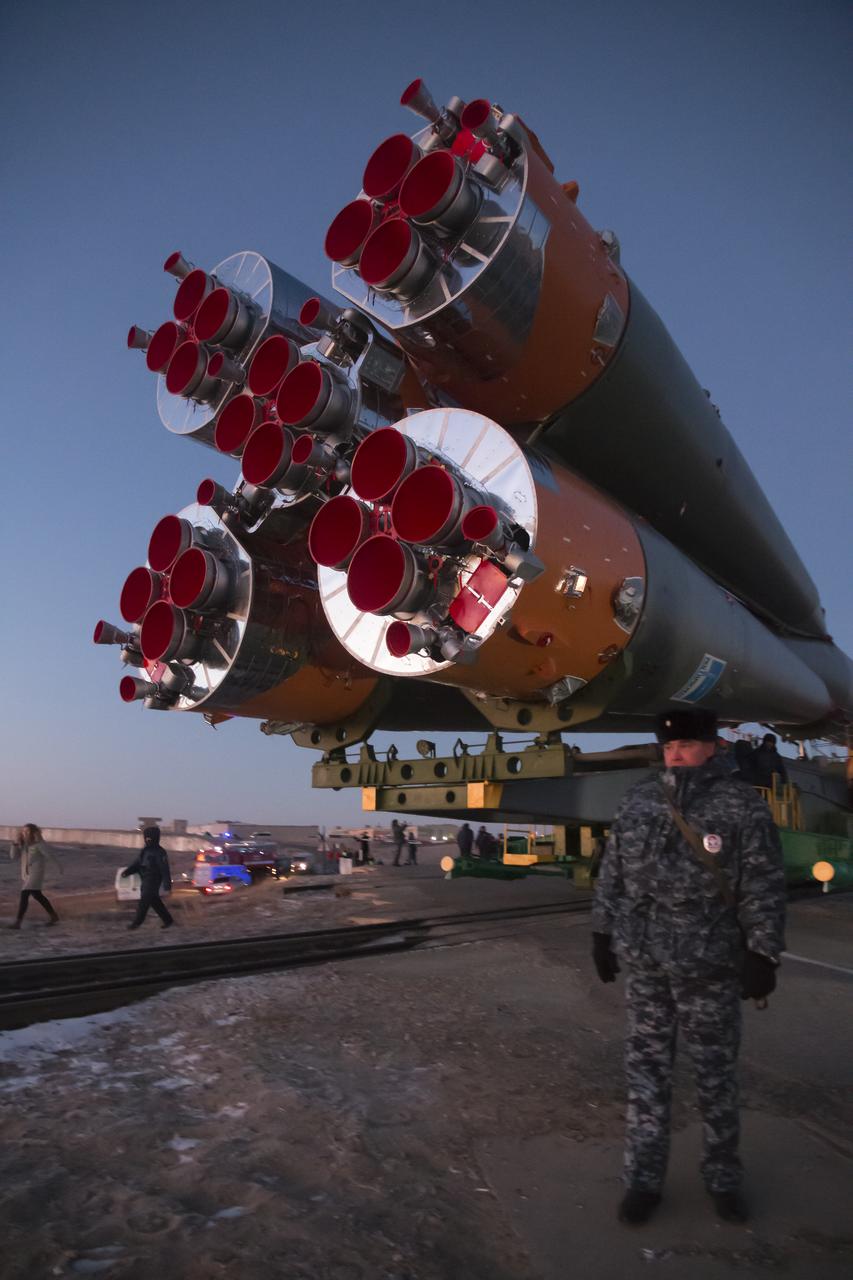
The Soyuz booster rocket and MS-11 spacecraft is rolled out to the launch pad by train on Sat. Dec.1, 2018 at the Baikonur Cosmodrome in Kazakhstan. Launch of the Soyuz rocket is scheduled for Dec. 3 and will carry Expedition 58 Soyuz Commander Oleg Kononenko of Roscosmos, Flight Engineer Anne McClain of NASA, and Flight Engineer David Saint-Jacques of the Canadian Space Agency (CSA) into orbit to begin their six and a half month mission on the International Space Station. Photo Credit: (NASA/Victor Zelentsov)
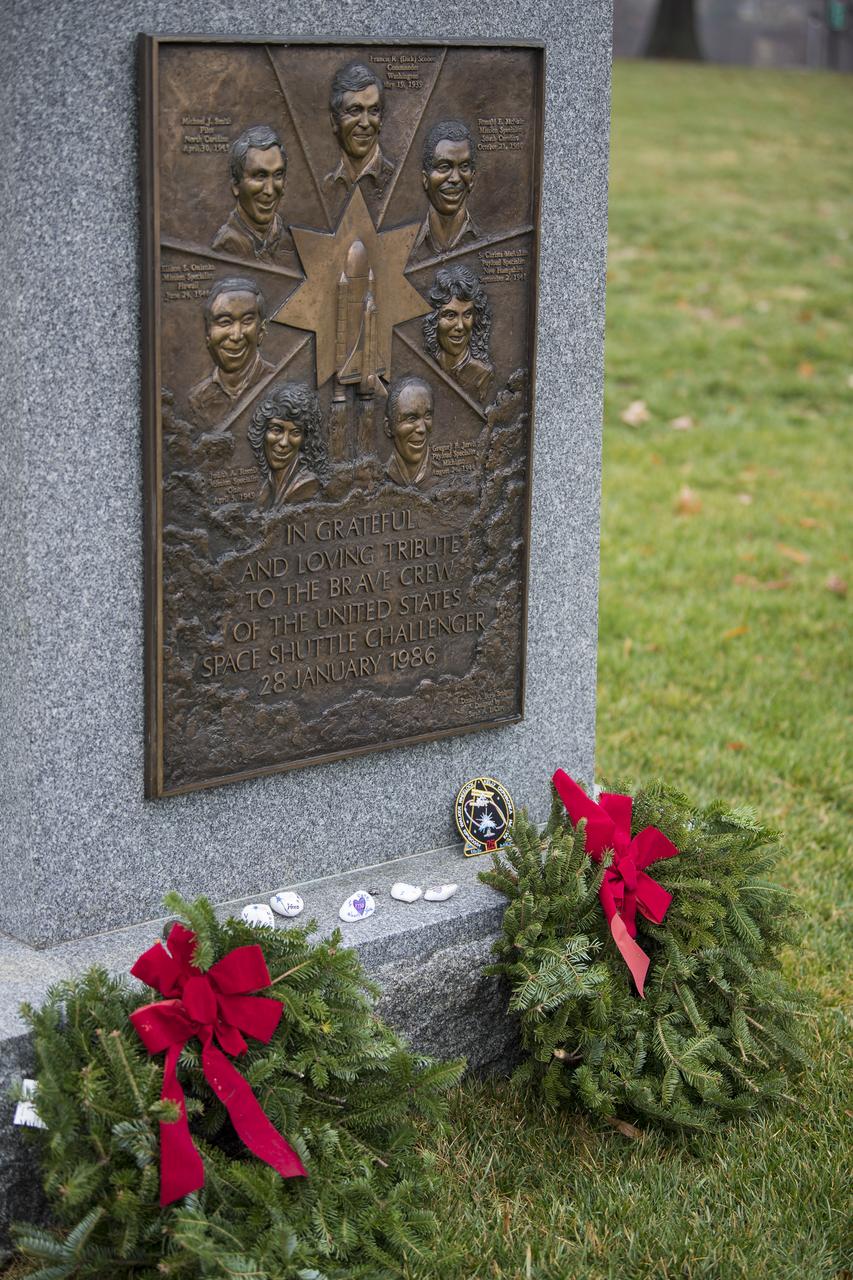
Items are seen at the Space Shuttle Challenger memorial on National Wreaths Across America Day at Arlington National Cemetery, Sat., Dec. 14, 2019 in Arlington, Va. National Wreaths Across America Day is held annually to celebrate the lives of military veterans. NASA astronaut Doug Wheelock attended to honor those who lost their lives in the quest for space exploration as well as fellow service members. Photo Credit: (NASA/Aubrey Gemignani)
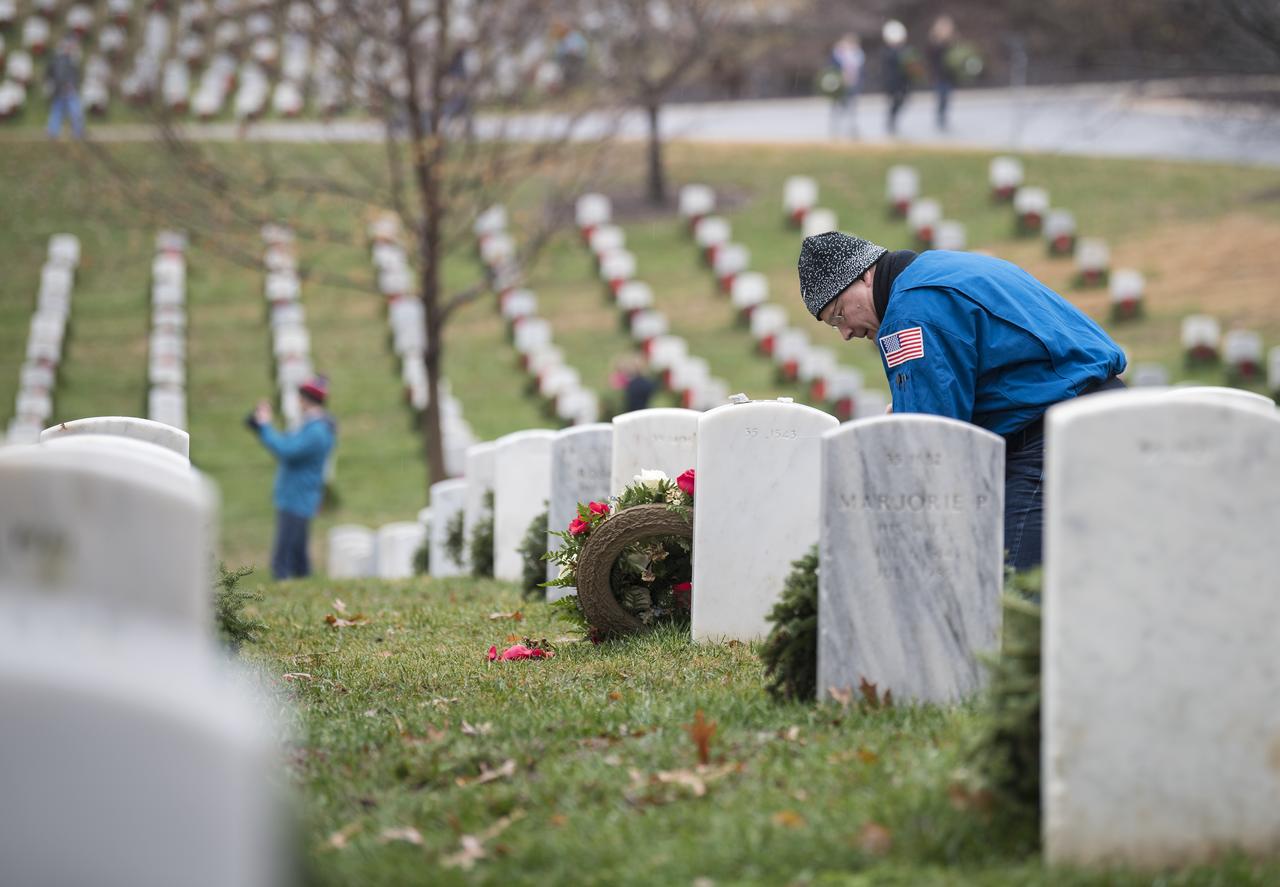
NASA astronaut Doug Wheelock lays a wreath at the gravesite of former astronaut and U.S. Senator John Glenn during National Wreaths Across America Day at Arlington National Cemetery, Sat., Dec. 14, 2019 in Arlington, Va. National Wreaths Across America Day is held annually to celebrate the lives of military veterans and wreaths are placed at the foot of every headstone. Wheelock honored those who lost their lives in the quest for space exploration as well as fellow service members. Photo Credit: (NASA/Aubrey Gemignani)
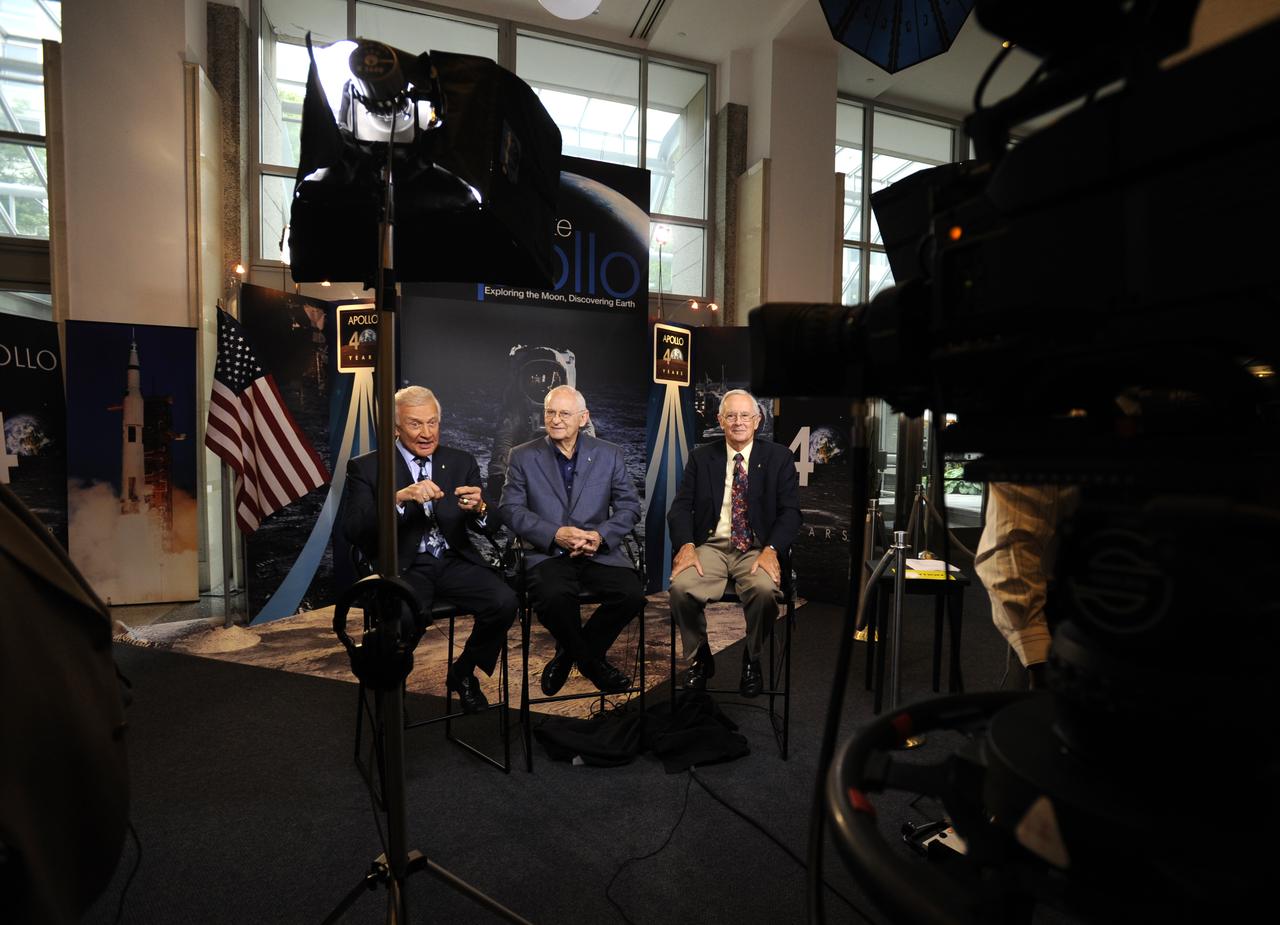
Apollo 11 astronaut Buzz Aldrin, the second man to walk on the Moon, seated left, responds to a question during a live television interview on Monday, July 20, 2009, at NASA Headquarters in Washington as Apollo 12 astronaut Alan Bean and Apollo 16 astronaut Charles Duke, right look on. The three sat in for interviews with morning talks shows covering the 40th Anniversary of the Apollo 11 landing on the Moon. Photo Credit: (NASA/Paul E. Alers)
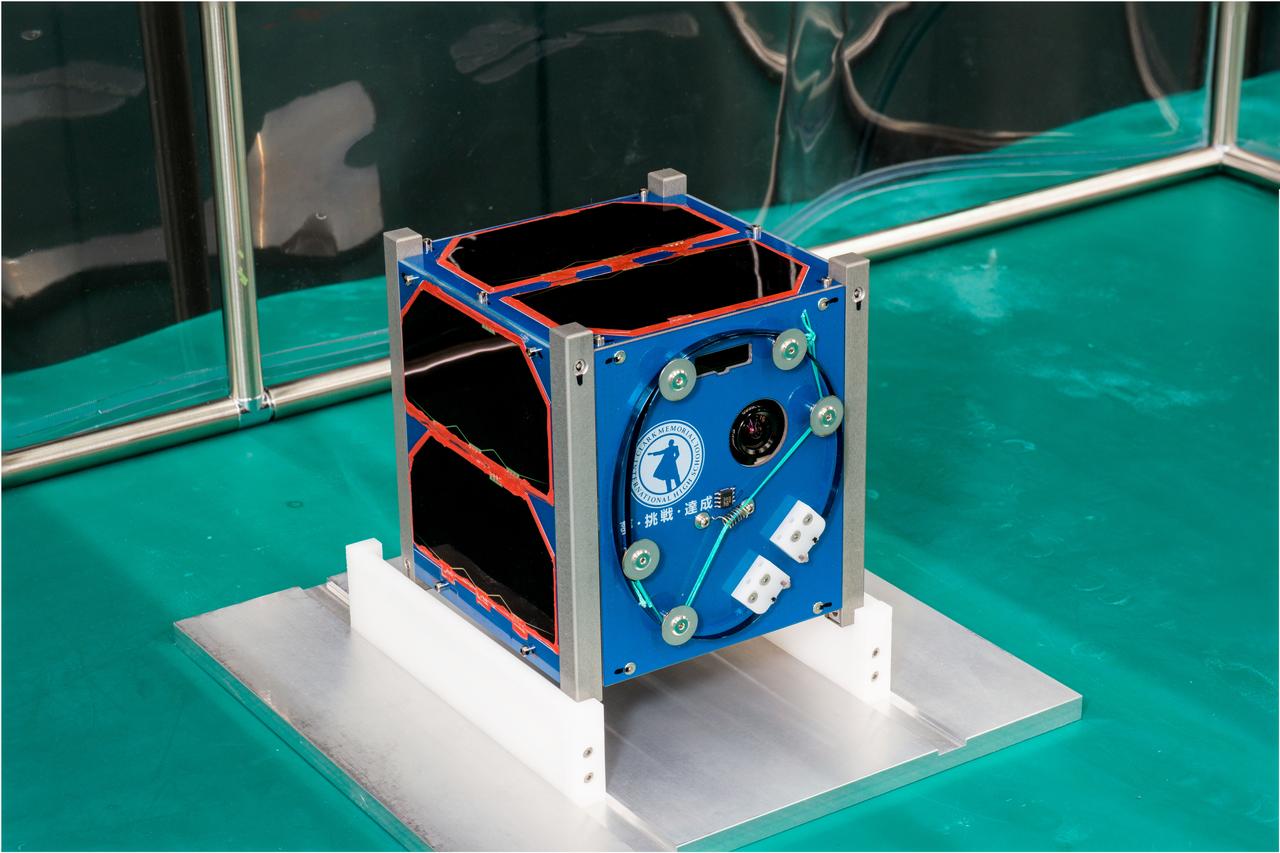
jsc2023e054750 (9/27/2023) --- Clark sat-1 is a 1U size cubesat. The satellite will send voice messages and image data recorded by high school students themselves to ground control stations and general amateur stations. These data will encourage organizations and individuals working on environmental issues on Earth and in space. Image Credit: ArkEdge Space Inc..
![iss056e200730 (10/3/2018) --- Photo documentation of the JEM Small Satellite Orbital Deployer (SSOD) on the Multi-Purpose Experiment Platform (MPEP) installation in preparation of the [Japanese Experiment Module]-Small Satellite Orbital Deployer 10 (J-SSOD 10) mission. J-SSOD-10 deploys the cubesats SPATIUM-I from Nanyang Technological University, Singapore, and the Kyushu Institute of Technology, Japan, RSP-00 from Ryman Sat Spaces General Incorporated Association, Japan, and STARS-Me from Shizuoka University, Japan.](https://images-assets.nasa.gov/image/iss056e200730/iss056e200730~medium.jpg)
iss056e200730 (10/3/2018) --- Photo documentation of the JEM Small Satellite Orbital Deployer (SSOD) on the Multi-Purpose Experiment Platform (MPEP) installation in preparation of the [Japanese Experiment Module]-Small Satellite Orbital Deployer 10 (J-SSOD 10) mission. J-SSOD-10 deploys the cubesats SPATIUM-I from Nanyang Technological University, Singapore, and the Kyushu Institute of Technology, Japan, RSP-00 from Ryman Sat Spaces General Incorporated Association, Japan, and STARS-Me from Shizuoka University, Japan.
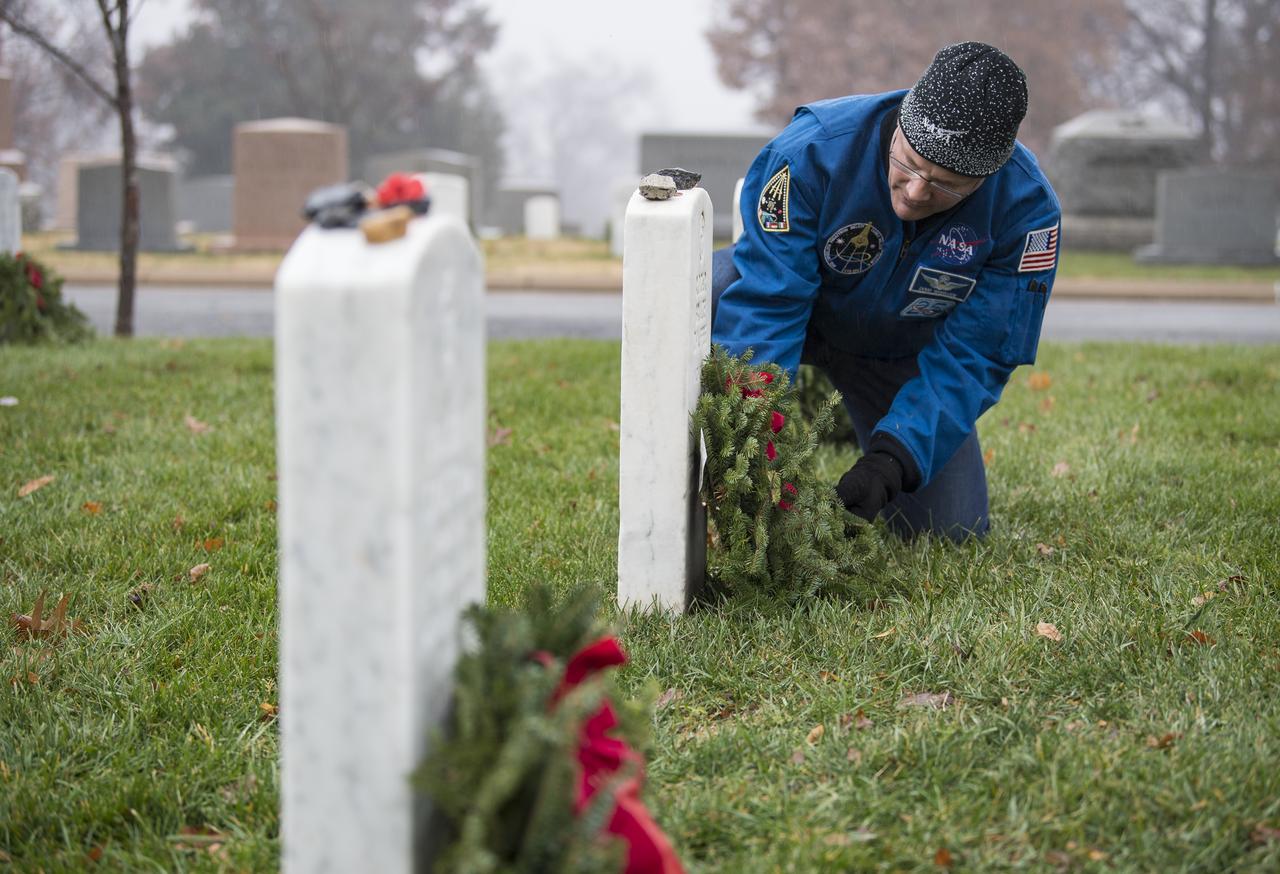
NASA astronaut Doug Wheelock lays a wreath at the grave marker of Roger Chaffee from Apollo 1 as part of National Wreaths Across America Day, Sat., Dec. 14, 2019 at Arlington National Cemetery in Arlington, Va. National Wreaths Across America Day is held annually to celebrate the lives of military veterans and wreaths are placed at the foot of every headstone. Wheelock honored those who lost their lives in the quest for space exploration as well as fellow service members. Photo Credit: (NASA/Aubrey Gemignani)
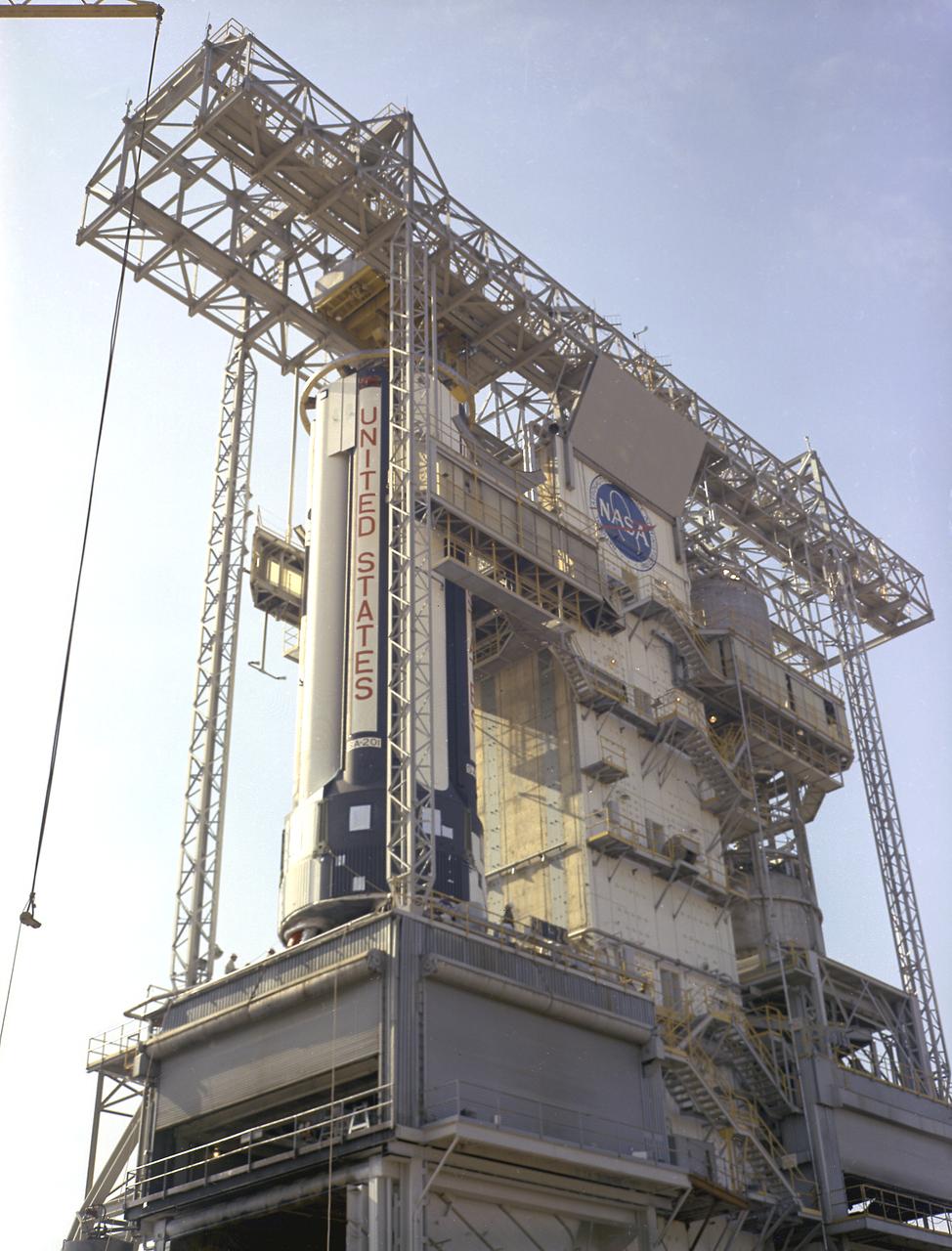
S-IB-1, the first flight version of the Saturn IB launch vehicle's first stage (S-IB stage), sat in the Marshall Space Flight Center (MSFC) Saturn IB static test stand on March 15, 1965. Developed by the MSFC and built by the Chrysler Corporation at the Michoud Assembly Facility (MAF) in New Orleans, Louisiana, the 90,000-pound booster utilized eight H-1 engines to produce a combined thrust of 1,600,000 pounds.
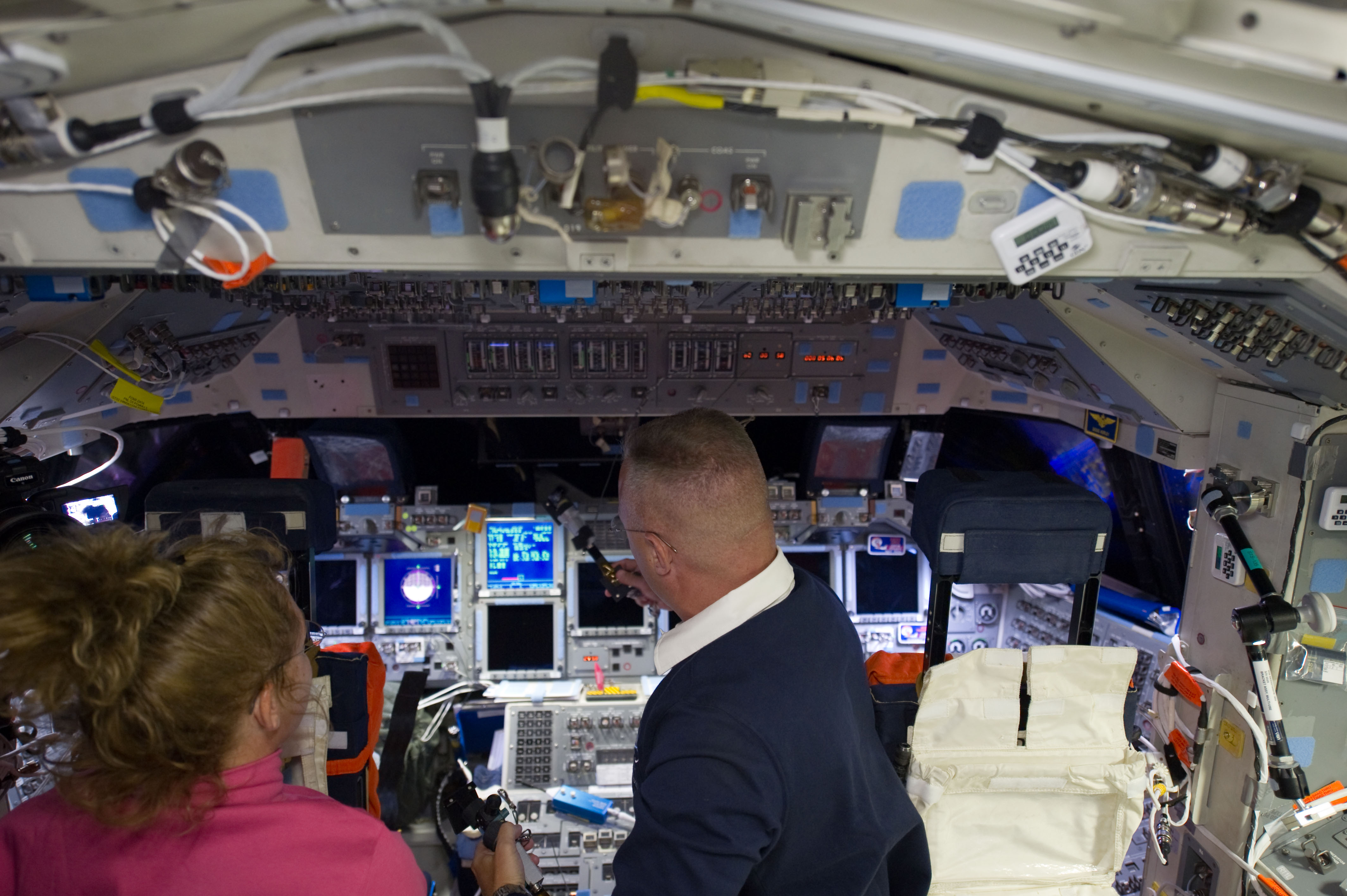
S135-E-006208 (8 July 2011) --- NASA astronauts Sandy Magnus, mission specialist, and Doug Hurley, pilot, are pictured on the flight deck of space shuttle Atlantis en route to the International Space Station. Magnus sat behind the commander and pilot for the launch phase of the Space Shuttle Program's final flight, and doubled as flight engineer. Photo credit: NASA

CAPE CANAVERAL, Fla. – Inside the Launch Control Center at NASA’s Kennedy Space Center in Florida, the Public Affairs Office console is being removed from Firing Room 3. The console will be moved to the Kennedy Space Center Visitor Complex in Florida and will be preserved for use in the space shuttle Atlantis display. During the 30-year history of NASA’s space shuttle launches, Public Affairs Officers sat at the console to provide commentary during shuttle tanking and launches. Photo credit: NASA/Glenn Benson
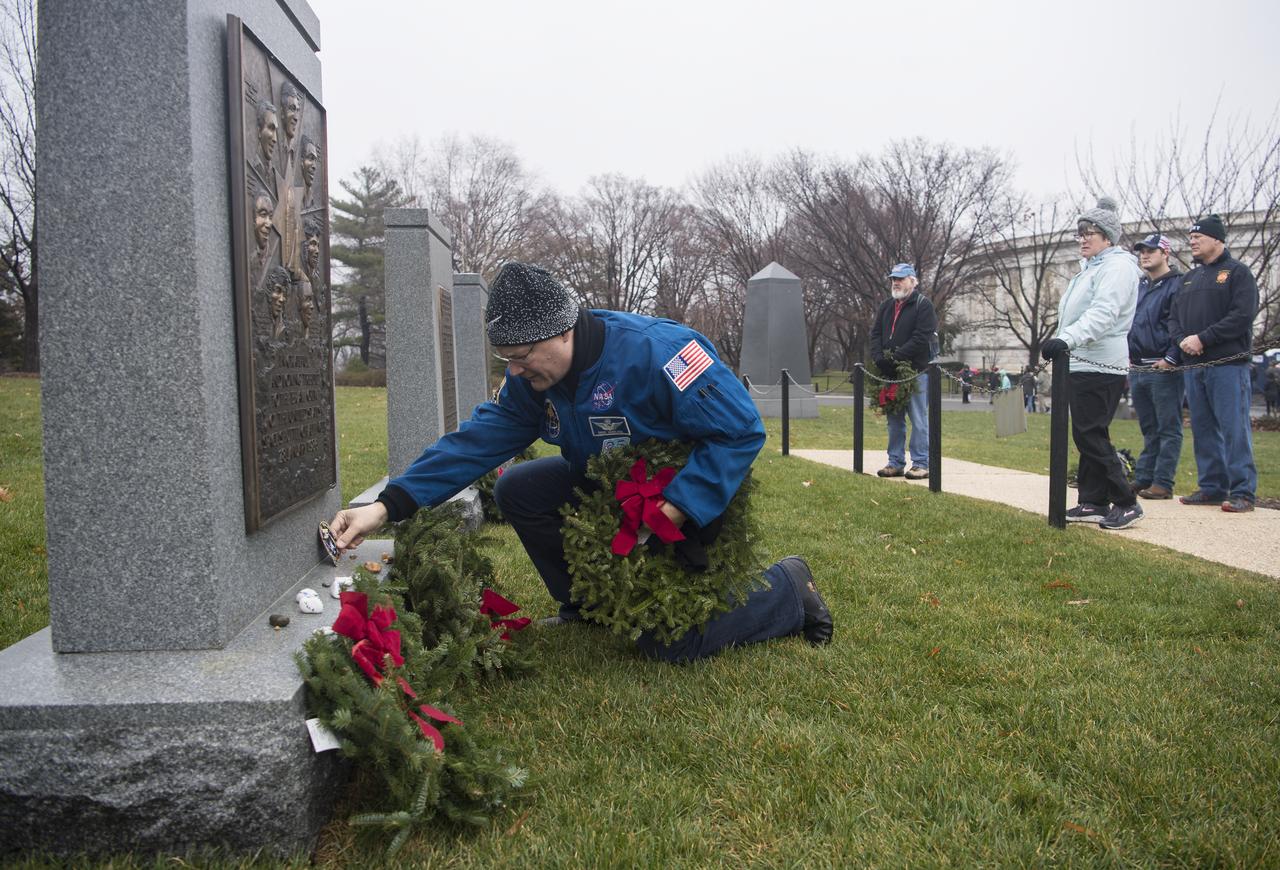
NASA astronaut Doug Wheelock leaves his STS-120 mission patch at the memorial for the Space Shuttle Challenger crew during National Wreaths Across America Day at Arlington National Cemetery, Sat., Dec. 14, 2019 in Arlington, Va. National Wreaths Across America Day is held annually to celebrate the lives of military veterans and wreaths are placed at the foot of every headstone. Wheelock honored those who lost their lives in the quest for space exploration as well as fellow service members. Photo Credit: (NASA/Aubrey Gemignani)
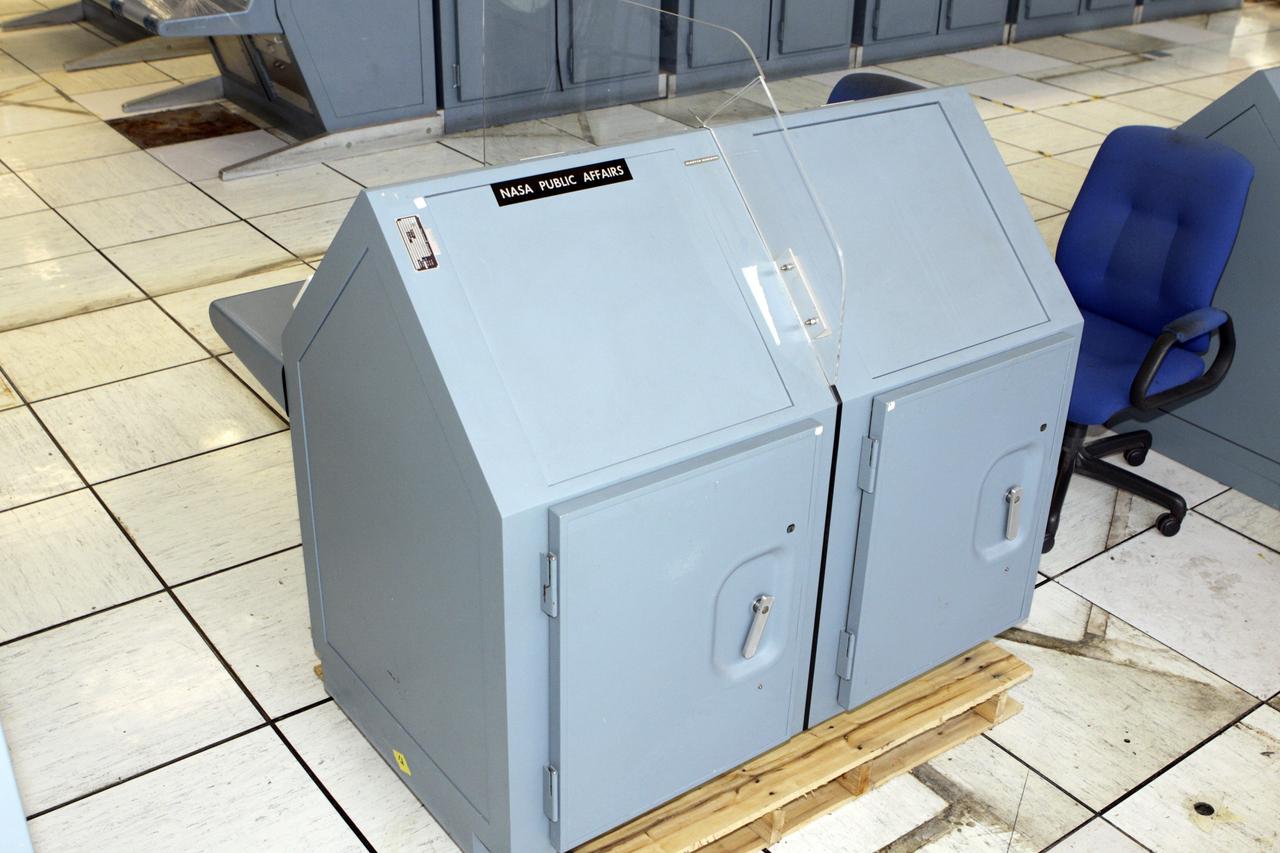
CAPE CANAVERAL, Fla. – Inside the Launch Control Center at NASA’s Kennedy Space Center in Florida, the Public Affairs Office console is being removed from Firing Room 3. The console will be moved to the Kennedy Space Center Visitor Complex in Florida and will be preserved for use in the space shuttle Atlantis display. During the 30-year history of NASA’s space shuttle launches, Public Affairs Officers sat at the console to provide commentary during shuttle tanking and launches. Photo credit: NASA/Glenn Benson

CAPE CANAVERAL, Fla. – Inside the Launch Control Center at NASA’s Kennedy Space Center in Florida, workers prepare the Public Affairs Office console to be removed from Firing Room 3. The console will be moved to the Kennedy Space Center Visitor Complex in Florida and will be preserved for use in the space shuttle Atlantis display. During the 30-year history of NASA’s space shuttle launches, Public Affairs Officers sat at the console to provide commentary during shuttle tanking and launches. Photo credit: NASA/Glenn Benson
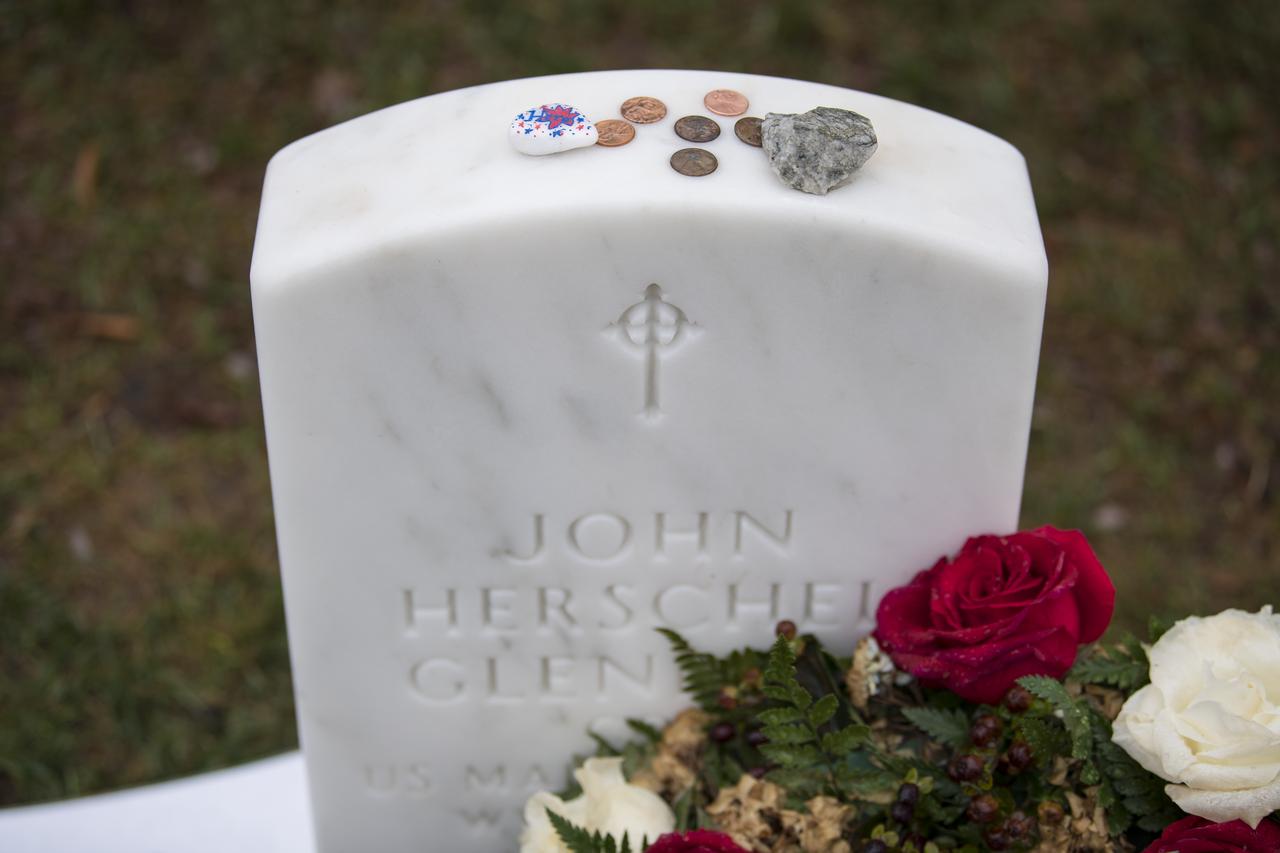
Items are seen on top of the headstone of former astronaut and U.S. Senator John Glenn on National Wreaths Across America Day at Arlington National Cemetery, Sat., Dec. 14, 2019 in Arlington, Va. National Wreaths Across America Day is held annually to celebrate the lives of military veterans. NASA astronaut Doug Wheelock attended to honor those who lost their lives in the quest for space exploration as well as fellow service members. Photo Credit: (NASA/Aubrey Gemignani)
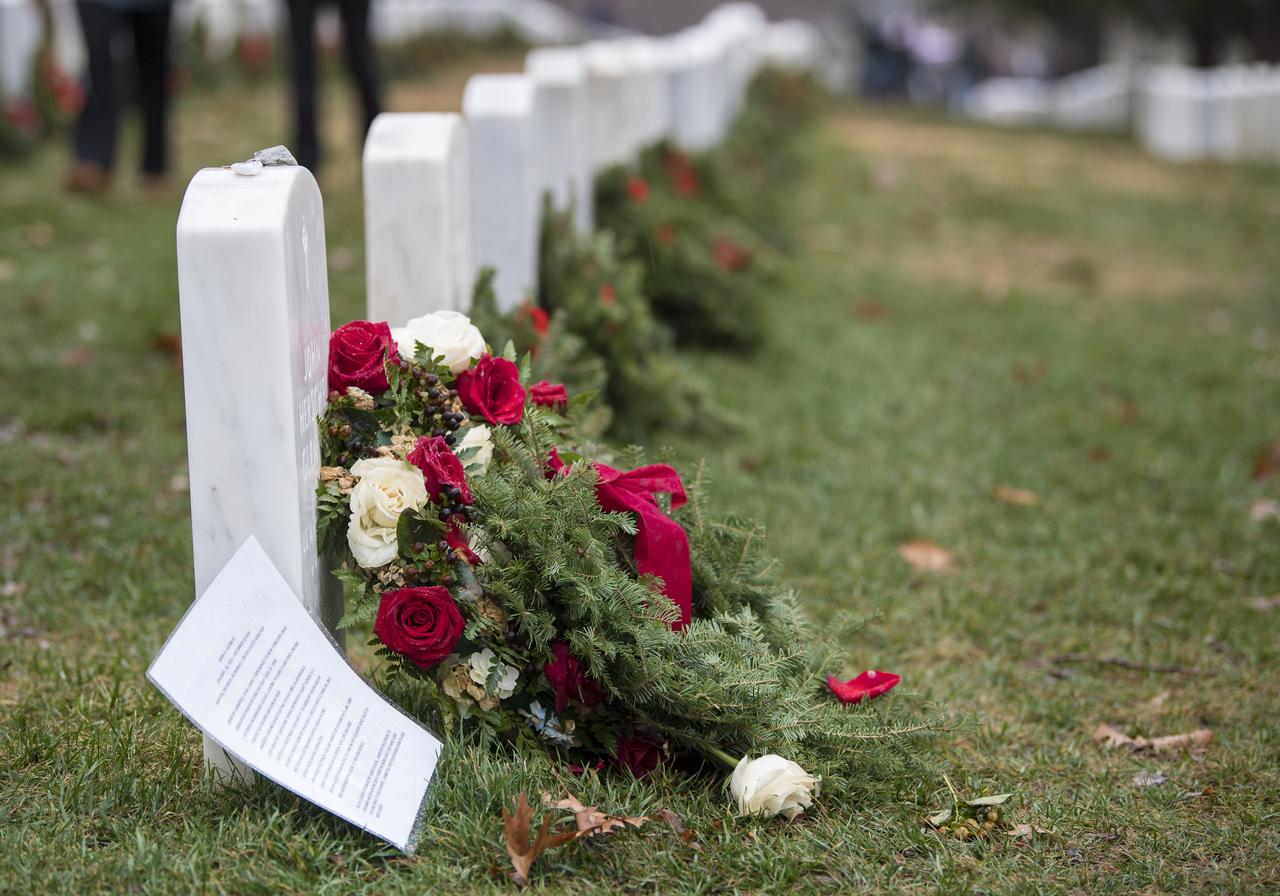
The headstone of former astronaut and U.S. Senator John Glenn is seen on National Wreaths Across America Day at Arlington National Cemetery, Sat., Dec. 14, 2019 in Arlington, Va. National Wreaths Across America Day is held annually to celebrate the lives of military veterans. NASA astronaut Doug Wheelock attended to honor those who lost their lives in the quest for space exploration as well as fellow service members. Photo Credit: (NASA/Aubrey Gemignani)
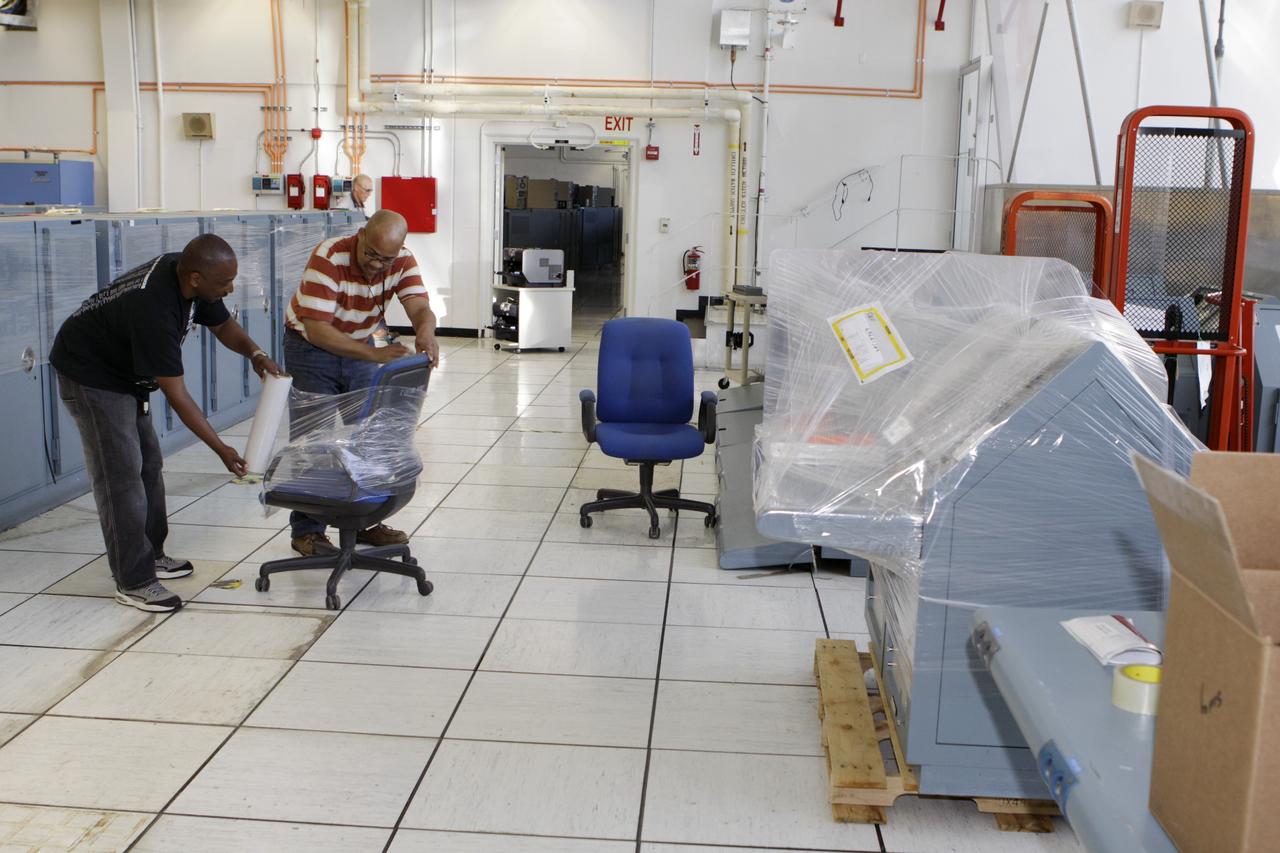
CAPE CANAVERAL, Fla. – Inside the Launch Control Center at NASA’s Kennedy Space Center in Florida, workers prepare the Public Affairs Office console and chairs to be removed from Firing Room 3. The console will be moved to the Kennedy Space Center Visitor Complex in Florida and will be preserved for use in the space shuttle Atlantis display. During the 30-year history of NASA’s space shuttle launches, Public Affairs Officers sat at the console to provide commentary during shuttle tanking and launches. Photo credit: NASA/Glenn Benson

A visitor wraps ribbon around a wreath before laying it at a headstone on National Wreaths Across America Day at Arlington National Cemetery, Sat., Dec. 14, 2019 in Arlington, Va. National Wreaths Across America Day is held annually to celebrate the lives of military veterans. NASA astronaut Doug Wheelock attended to honor those who lost their lives in the quest for space exploration as well as fellow service members. Photo Credit: (NASA/Aubrey Gemignani)

CAPE CANAVERAL, Fla. – Inside the Launch Control Center at NASA’s Kennedy Space Center in Florida, workers remove the Public Affairs Office console and chairs from Firing Room 3. The console will be moved to the Kennedy Space Center Visitor Complex in Florida and will be preserved for use in the space shuttle Atlantis display. During the 30-year history of NASA’s space shuttle launches, Public Affairs Officers sat at the console to provide commentary during shuttle tanking and launches. Photo credit: NASA/Glenn Benson
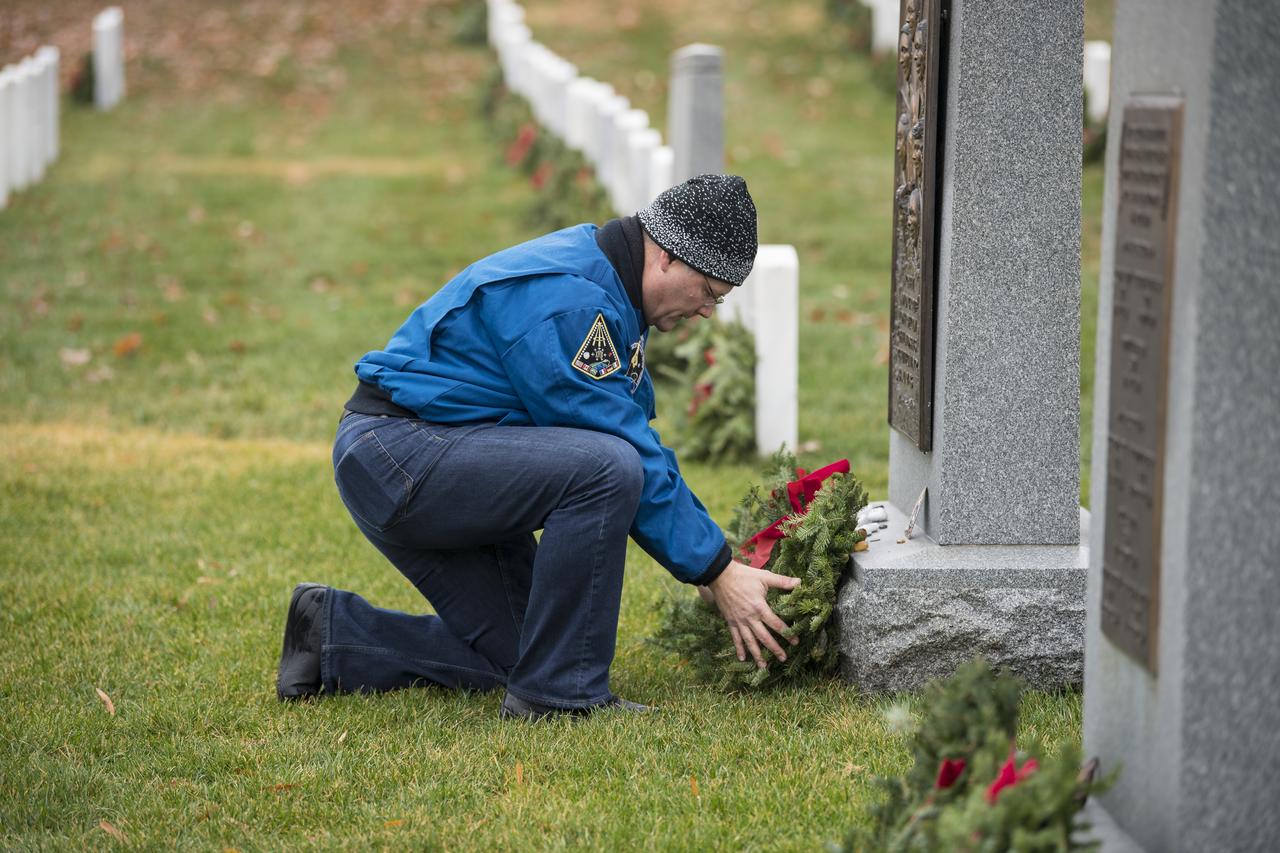
NASA astronaut Doug Wheelock lays a wreath at the memorial for the Space Shuttle Challenger crew during National Wreaths Across America Day at Arlington National Cemetery, Sat., Dec. 14, 2019 in Arlington, Va. National Wreaths Across America Day is held annually to celebrate the lives of military veterans and wreaths are placed at the foot of every headstone. Wheelock honored those who lost their lives in the quest for space exploration as well as fellow service members. Photo Credit: (NASA/Aubrey Gemignani)
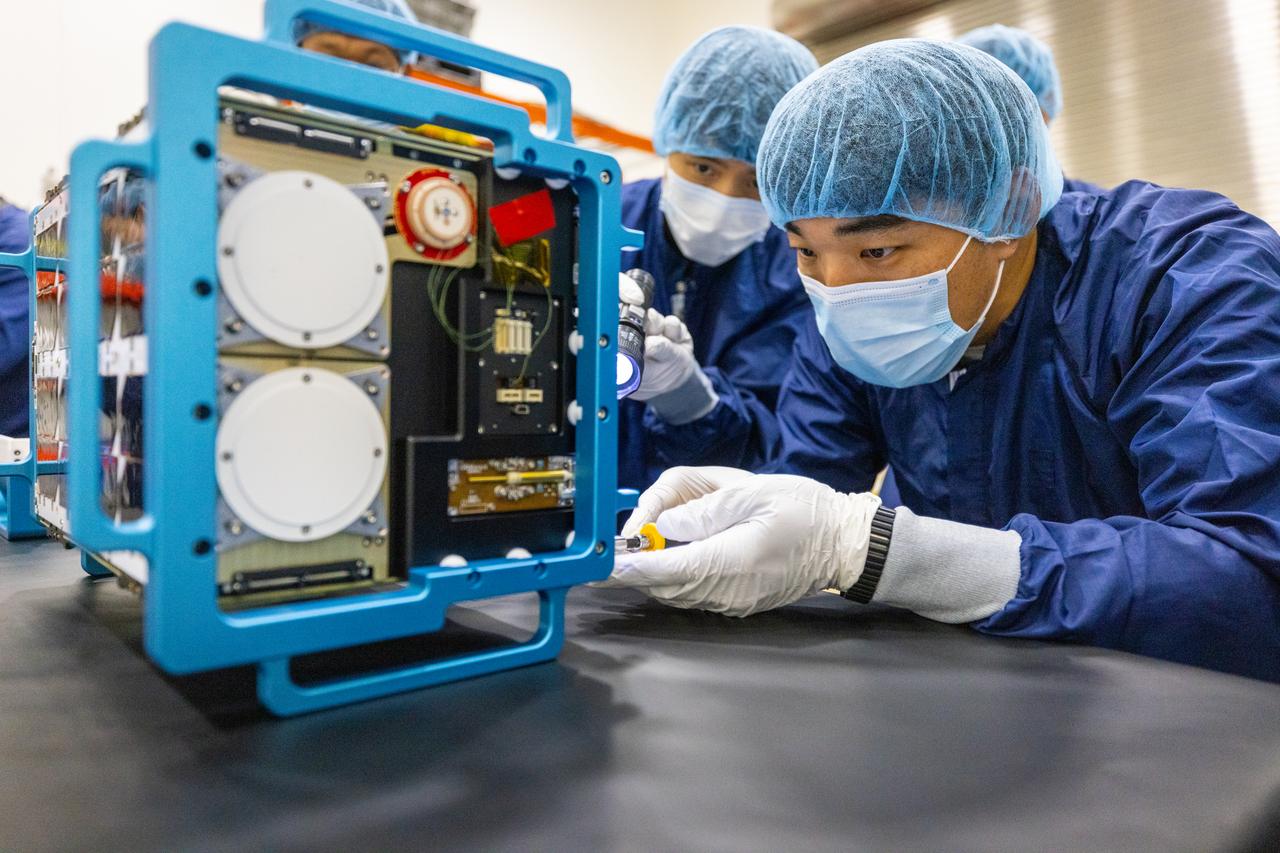
Inside the Multi-Payload Processing Facility at NASA’s Kennedy Space Center in Florida, on Tuesday, Aug. 26, 2025, technicians with the Korea AeroSpace Administration (KASA) inspect the K-Rad Cube, one of several international CubeSats slated to fly on NASA’s Artemis II test flight in 2026. Deploying in high Earth orbit from a spacecraft adapter on NASA’s SLS (Space Launch System) rocket after Orion is safely flying on its own with its crew of four astronauts, K-Rad Cube will use a dosimeter made of material designed to mimic human tissue to measure space radiation and assess biological effects at various altitudes across the Van Allen radiation belts, a critical area of research for human presence at the Moon and Mars.
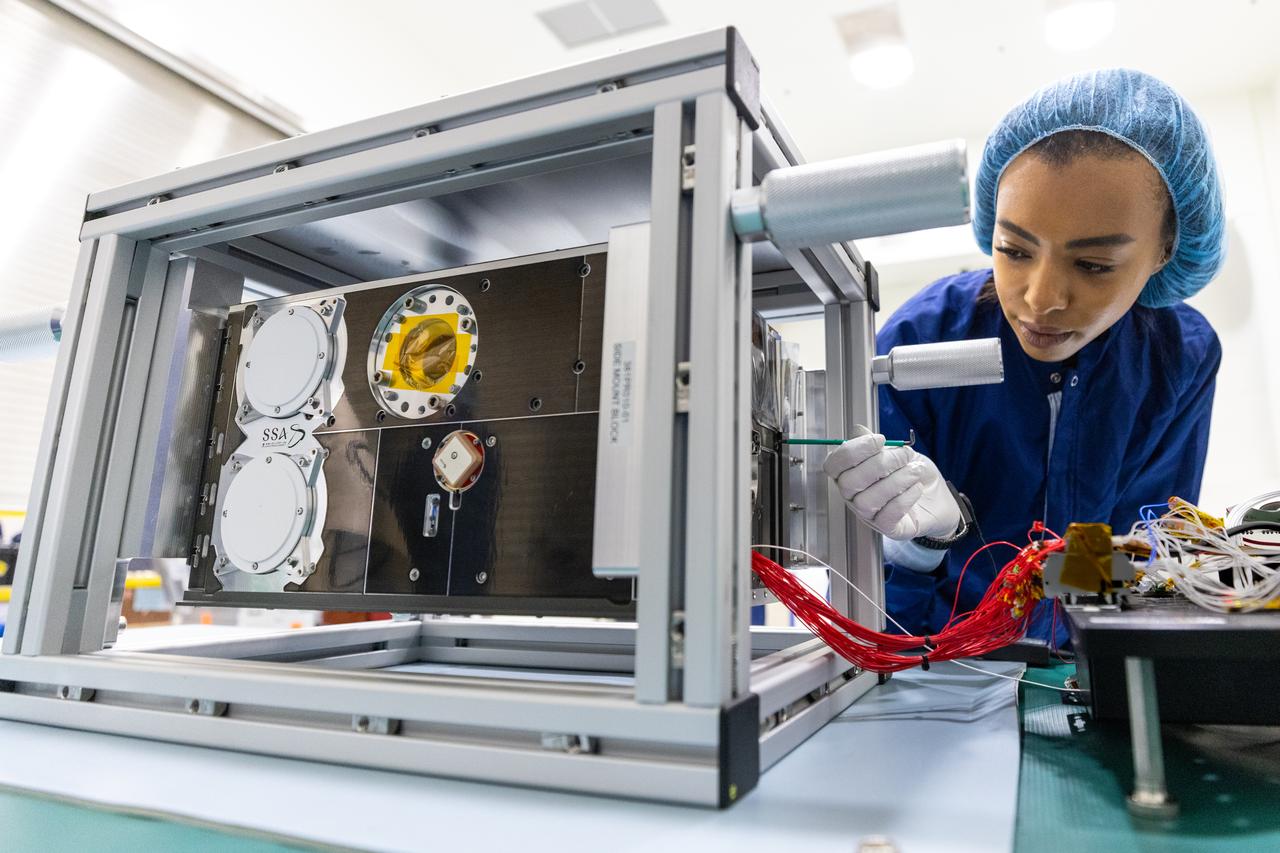
Inside the Multi-Payload Processing Facility at NASA’s Kennedy Space Center in Florida, on Tuesday, Aug. 26, 2025, a technician inspects the Saudi Space Agency’s Space Weather CubeSat, one of several international CubeSats slated to fly on NASA’s Artemis II test flight in 2026. Deploying in high Earth orbit from a spacecraft adapter on NASA’s SLS (Space Launch System) rocket after Orion is safely flying on its own with its crew of four astronauts, the CubeSat will measure aspects of space weather – space radiation, solar X-rays, solar energetic particles, and magnetic fields – at a range of distances from Earth.
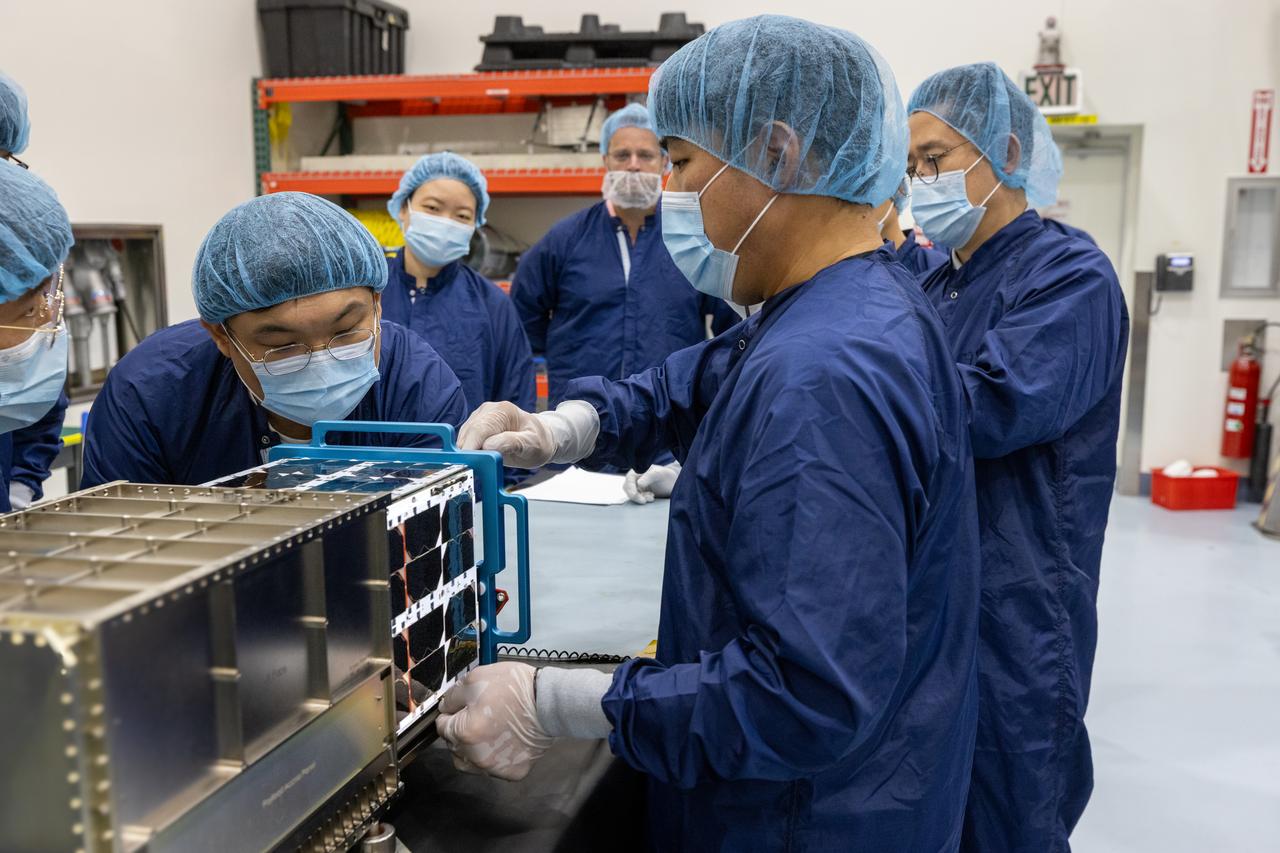
Inside the Multi-Payload Processing Facility at NASA’s Kennedy Space Center in Florida, on Wednesday, Aug. 27, 2025, technicians with the Korea AeroSpace Administration (KASA) complete closeouts on the K-Rad Cube, one of several international CubeSats slated to fly on NASA’s Artemis II test flight in 2026. Deploying in high Earth orbit from a spacecraft adapter on NASA’s SLS (Space Launch System) rocket after Orion is safely flying on its own with its crew of four astronauts, K-Rad Cube will use a dosimeter made of material designed to mimic human tissue to measure space radiation and assess biological effects at various altitudes across the Van Allen radiation belts, a critical area of research for human presence at the Moon and Mars.
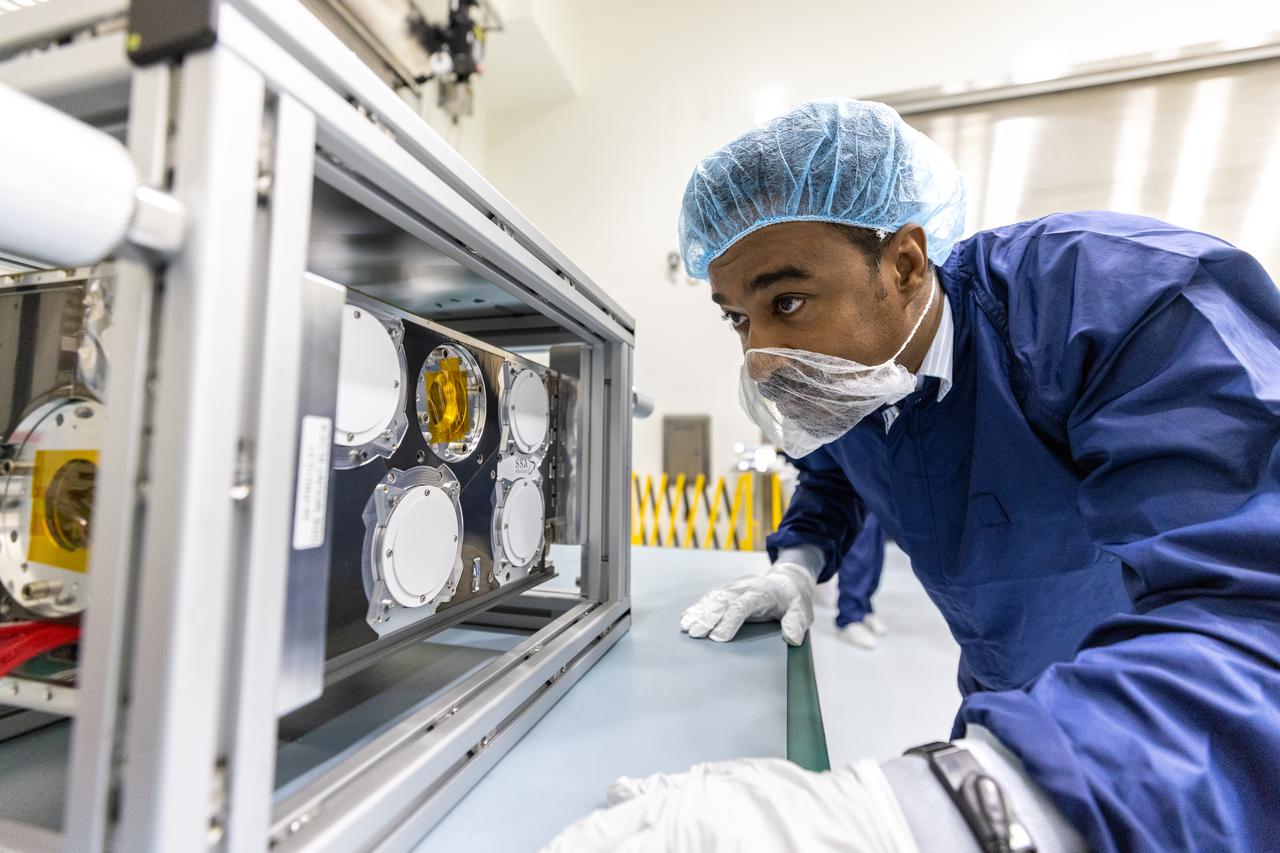
Inside the Multi-Payload Processing Facility at NASA’s Kennedy Space Center in Florida, on Tuesday, Aug. 26, 2025, a technician inspects the Saudi Space Agency’s Space Weather CubeSat, one of several international CubeSats slated to fly on NASA’s Artemis II test flight in 2026. Deploying in high Earth orbit from a spacecraft adapter on NASA’s SLS (Space Launch System) rocket after Orion is safely flying on its own with its crew of four astronauts, the CubeSat will measure aspects of space weather – space radiation, solar X-rays, solar energetic particles, and magnetic fields – at a range of distances from Earth.
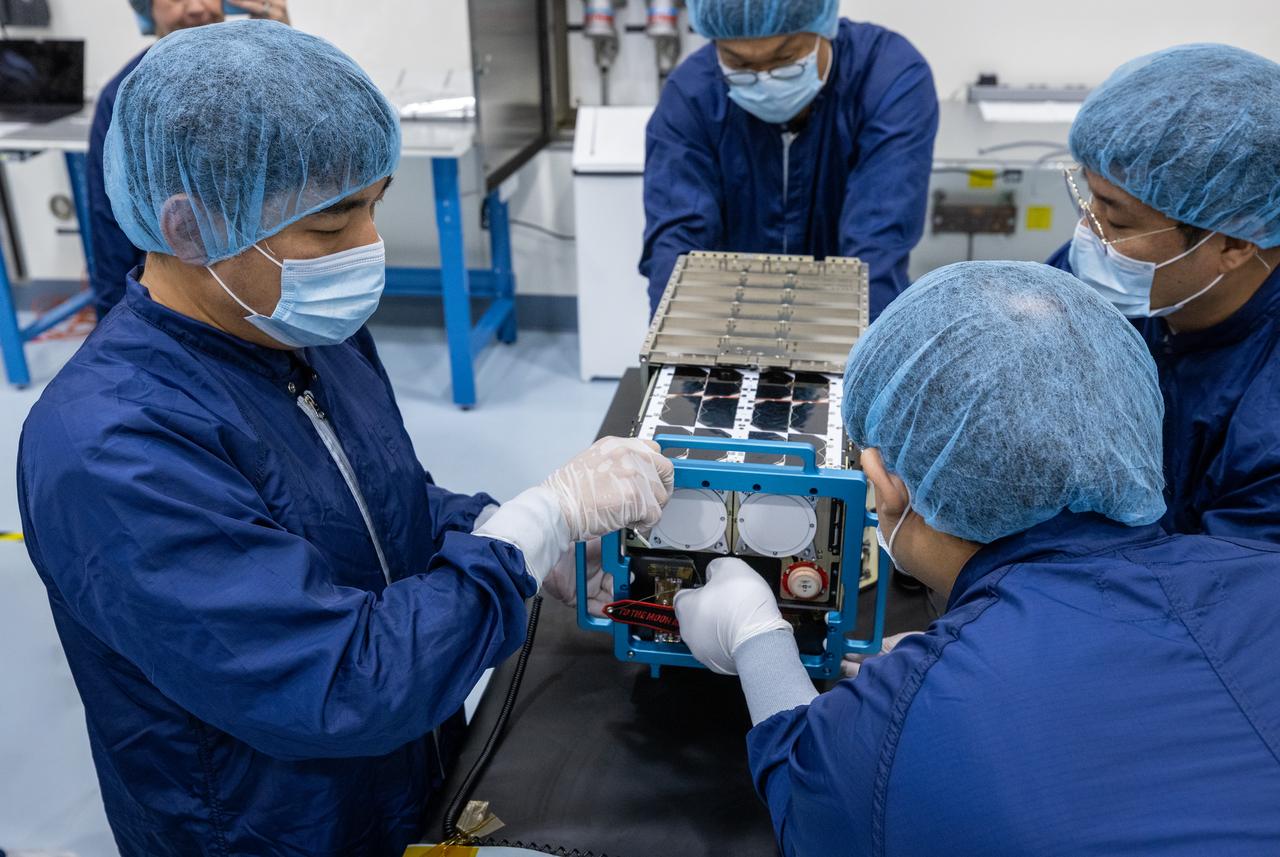
Inside the Multi-Payload Processing Facility at NASA’s Kennedy Space Center in Florida, on Wednesday, Aug. 27, 2025, technicians with the Korea AeroSpace Administration (KASA) complete closeouts on the K-Rad Cube, one of several international CubeSats slated to fly on NASA’s Artemis II test flight in 2026. Deploying in high Earth orbit from a spacecraft adapter on NASA’s SLS (Space Launch System) rocket after Orion is safely flying on its own with its crew of four astronauts, K-Rad Cube will use a dosimeter made of material designed to mimic human tissue to measure space radiation and assess biological effects at various altitudes across the Van Allen radiation belts, a critical area of research for human presence at the Moon and Mars.
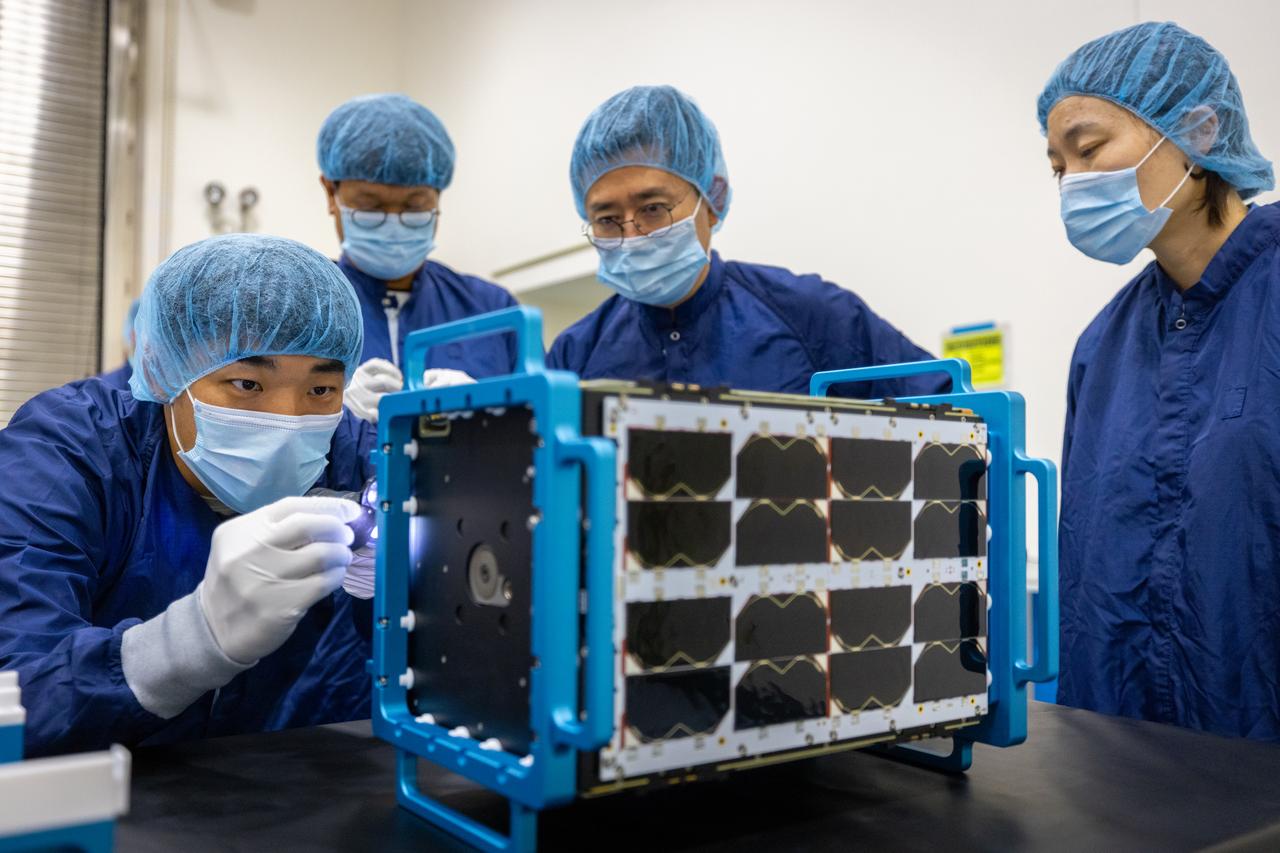
Inside the Multi-Payload Processing Facility at NASA’s Kennedy Space Center in Florida, on Tuesday, Aug. 26, 2025, technicians with the Korea AeroSpace Administration (KASA) inspect the K-Rad Cube, one of several international CubeSats slated to fly on NASA’s Artemis II test flight in 2026. Deploying in high Earth orbit from a spacecraft adapter on NASA’s SLS (Space Launch System) rocket after Orion is safely flying on its own with its crew of four astronauts, K-Rad Cube will use a dosimeter made of material designed to mimic human tissue to measure space radiation and assess biological effects at various altitudes across the Van Allen radiation belts, a critical area of research for human presence at the Moon and Mars.

Inside the Multi-Payload Processing Facility at NASA’s Kennedy Space Center in Florida, on Wednesday, Aug. 27, 2025, technicians with the Korea AeroSpace Administration (KASA) complete closeouts on the K-Rad Cube, one of several international CubeSats slated to fly on NASA’s Artemis II test flight in 2026. Deploying in high Earth orbit from a spacecraft adapter on NASA’s SLS (Space Launch System) rocket after Orion is safely flying on its own with its crew of four astronauts, K-Rad Cube will use a dosimeter made of material designed to mimic human tissue to measure space radiation and assess biological effects at various altitudes across the Van Allen radiation belts, a critical area of research for human presence at the Moon and Mars.
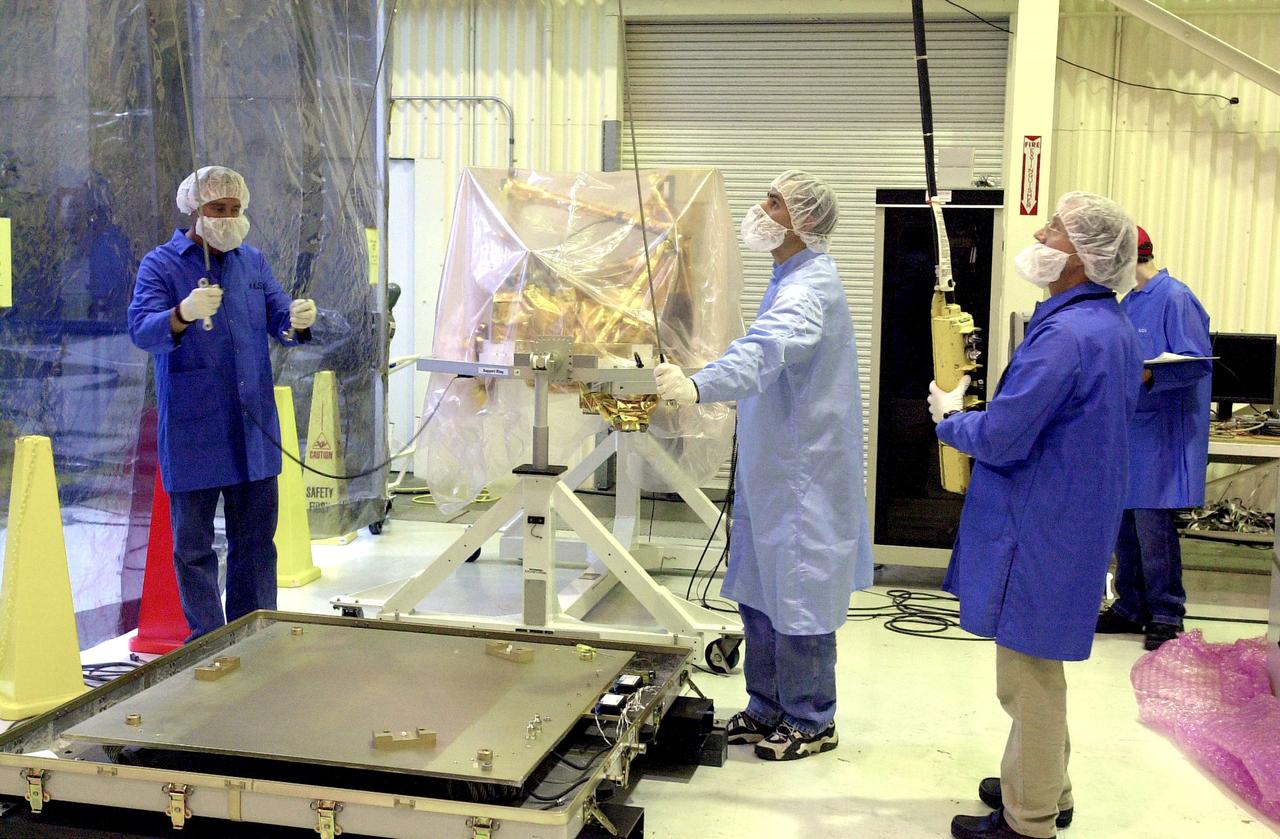
VANDENBERG AIR FORCE BASE, CALIF. - Outside the clean room at Vandenberg Air Force Base, Calif., the SciSat-1 spacecraft (background) has been removed from the shipping container mounting base (lower left) and placed on the handling fixture. Sci-Sat, which will undergo instrument checkout and spacecraft functional testing, weighs approximately 330 pounds and after launch will be placed in a 400-mile-high polar orbit to investigate processes that control the distribution of ozone in the upper atmosphere. The data from the satellite will provide Canadian and international scientists with improved measurements relating to global ozone processes and help policymakers assess existing environmental policy and develop protective measures for improving the health of our atmosphere, preventing further ozone depletion. The mission is designed to last two years.
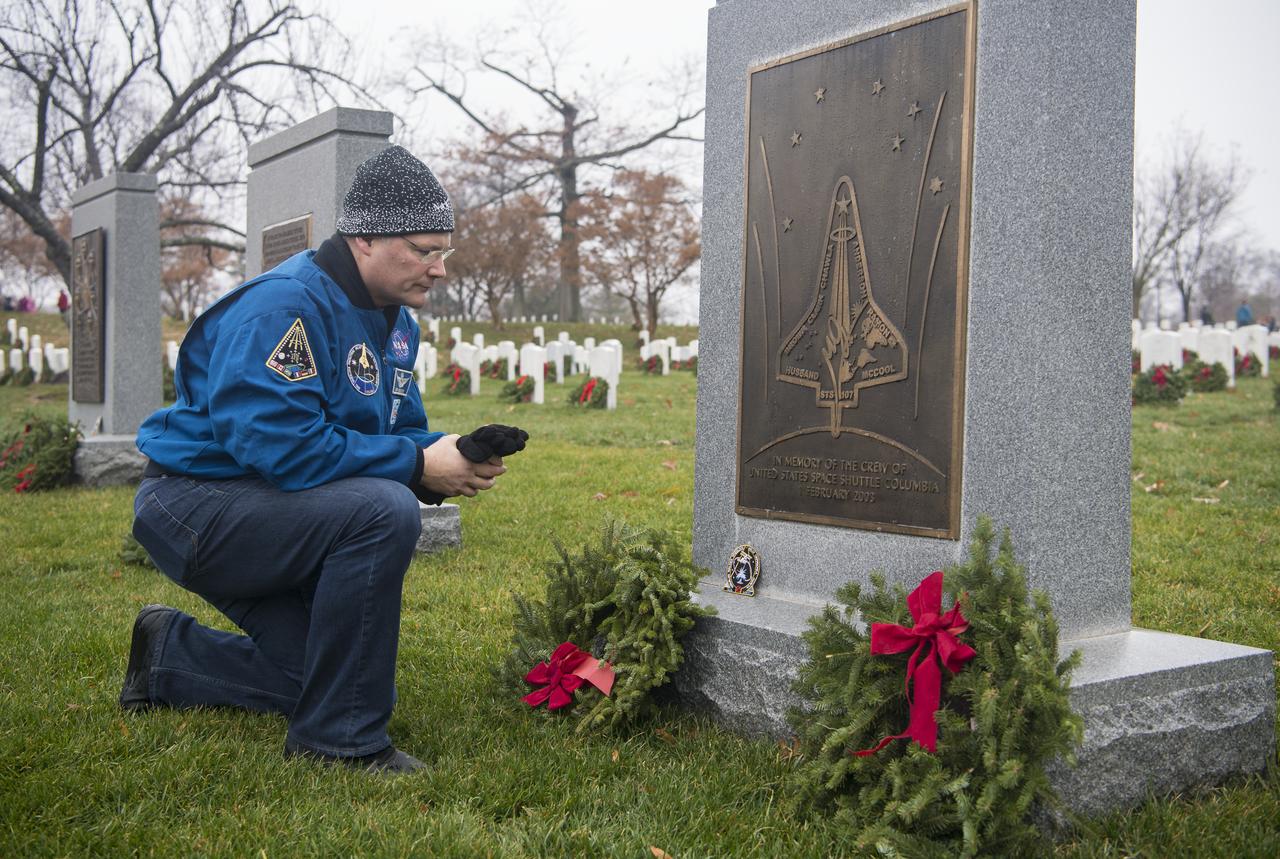
NASA astronaut Doug Wheelock takes a moment after leaving his STS-120 mission patch at the memorial for the Space Shuttle Columbia crew during National Wreaths Across America Day at Arlington National Cemetery, Sat., Dec. 14, 2019 in Arlington, Va. National Wreaths Across America Day is held annually to celebrate the lives of military veterans and wreaths are placed at the foot of every headstone. Wheelock honored those who lost their lives in the quest for space exploration as well as fellow service members. Photo Credit: (NASA/Aubrey Gemignani)
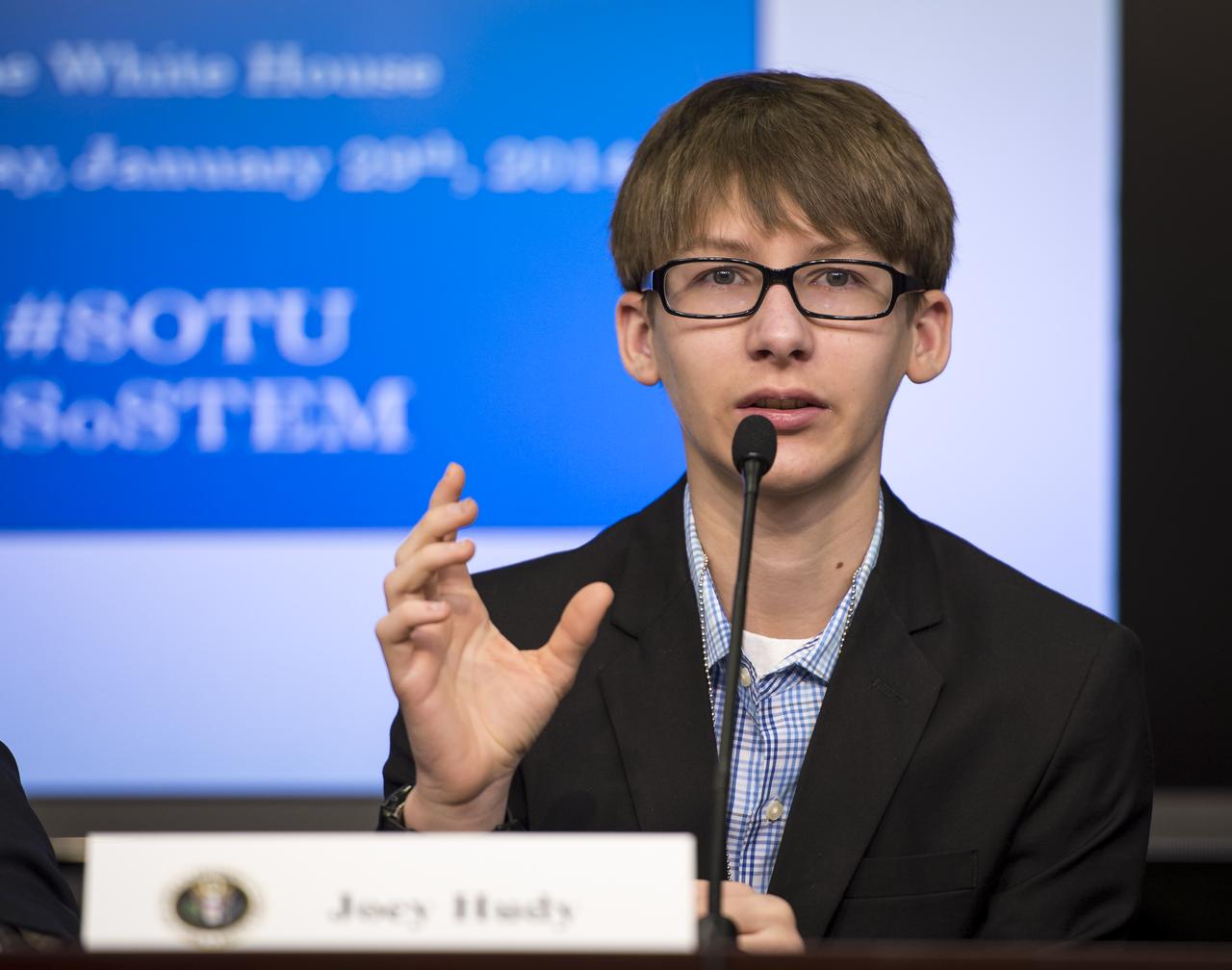
Joey Hudy, Anthem, AZ, 16-year-old self-described “Maker” answers a question from the audience at the annual White House State of Science, Technology, Engineering, and Math (SoSTEM) address, Wednesday, Jan. 29, 2014, in the South Court Auditorium in the Eisenhower Executive Office Building on the White House complex in Washington. Joey sat with the First Lady at the President’s 2014 State of the Union Address after his first shot to fame in 2012 when he attended the White House Science Fair where the President took a turn using his “extreme marshmallow cannon” to launch a marshmallow across the East Room of the White House. Photo Credit: (NASA/Bill Ingalls)
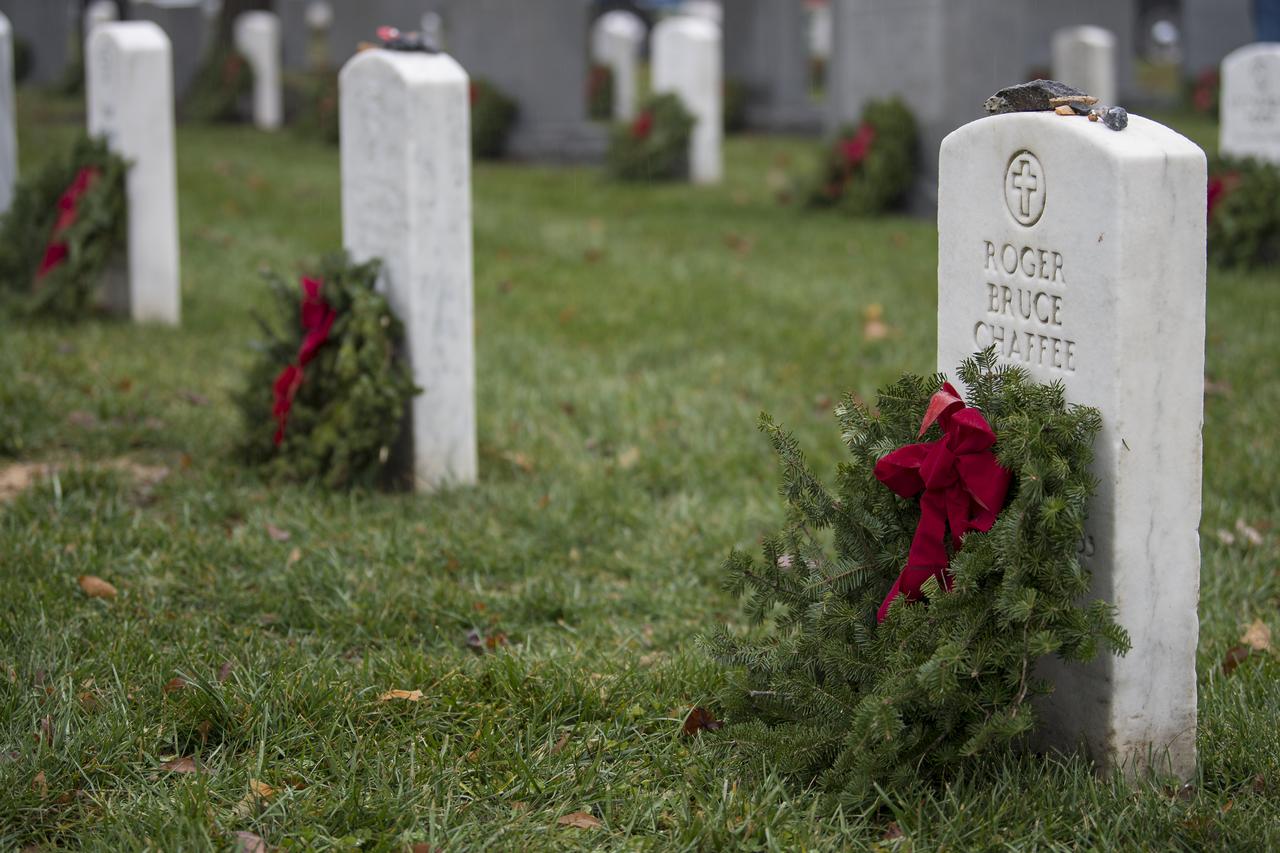
The grave markers of Virgil "Gus" Grissom and Roger Chaffee, from Apollo 1, are seen after NASA astronaut Doug Wheelock laid wreaths at each site as part of National Wreaths Across America Day, Sat., Dec. 14, 2019 at Arlington National Cemetery in Arlington, Va. National Wreaths Across America Day is held annually to celebrate the lives of military veterans and wreaths are placed at the foot of every headstone. Wheelock honored those who lost their lives in the quest for space exploration as well as fellow service members. Photo Credit: (NASA/Aubrey Gemignani)
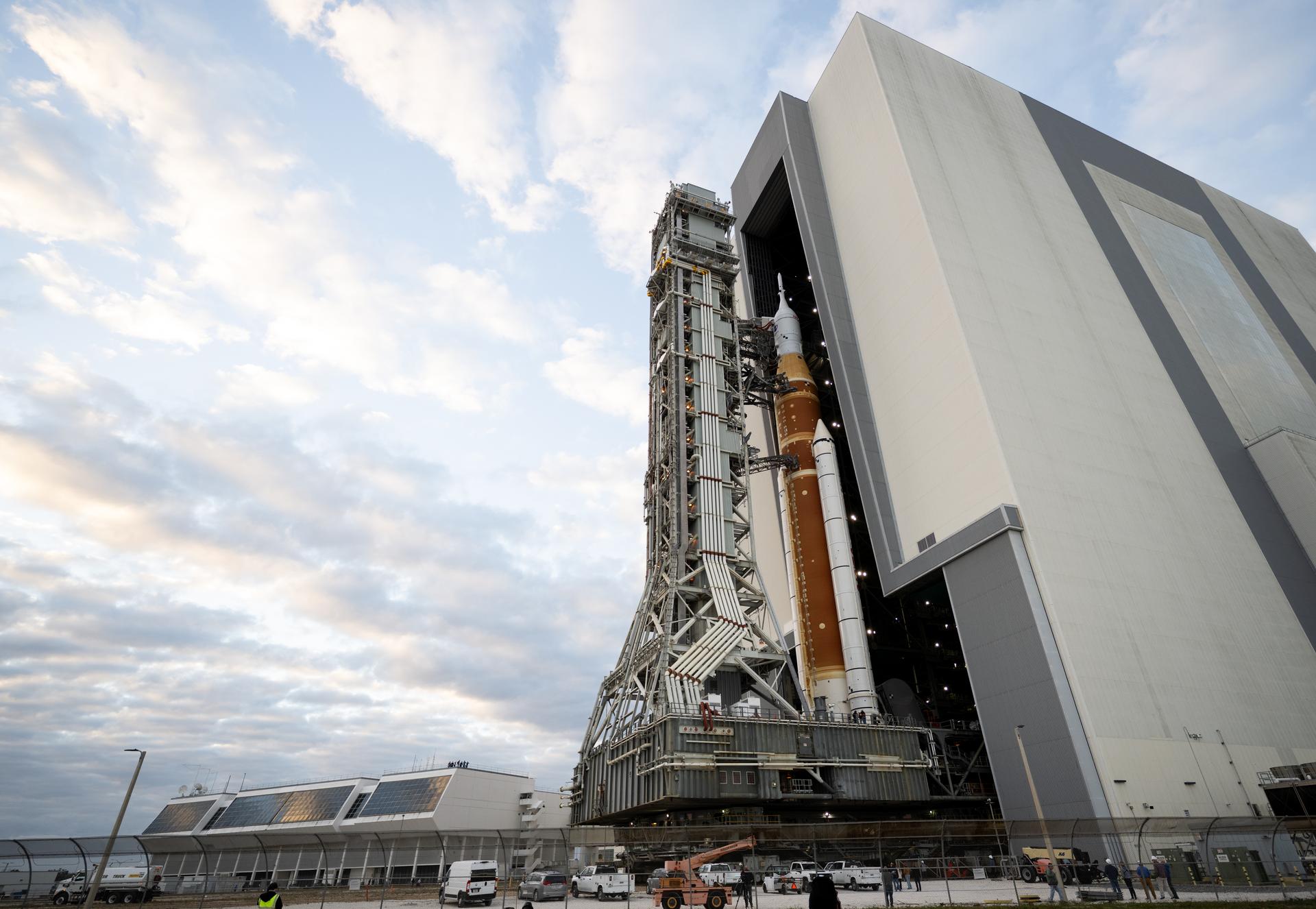
NASA’s Space Launch System (SLS) rocket and Orion spacecraft, secured to the mobile launcher, is seen as it rolls out of the Vehicle Assembly Building to Launch Pad 39B, Sat, Jan. 17, 2026, at NASA’s Kennedy Space Center in Florida. NASA’s Artemis II test flight will take Commander Reid Wiseman, Pilot Victor Glover, and Mission Specialist Christina Koch from NASA, and Mission Specialist Jeremy Hansen from the CSA (Canadian Space Agency), around the Moon and back to Earth no later than no later than April 2026. Photo Credit: (NASA/Joel Kowsky)
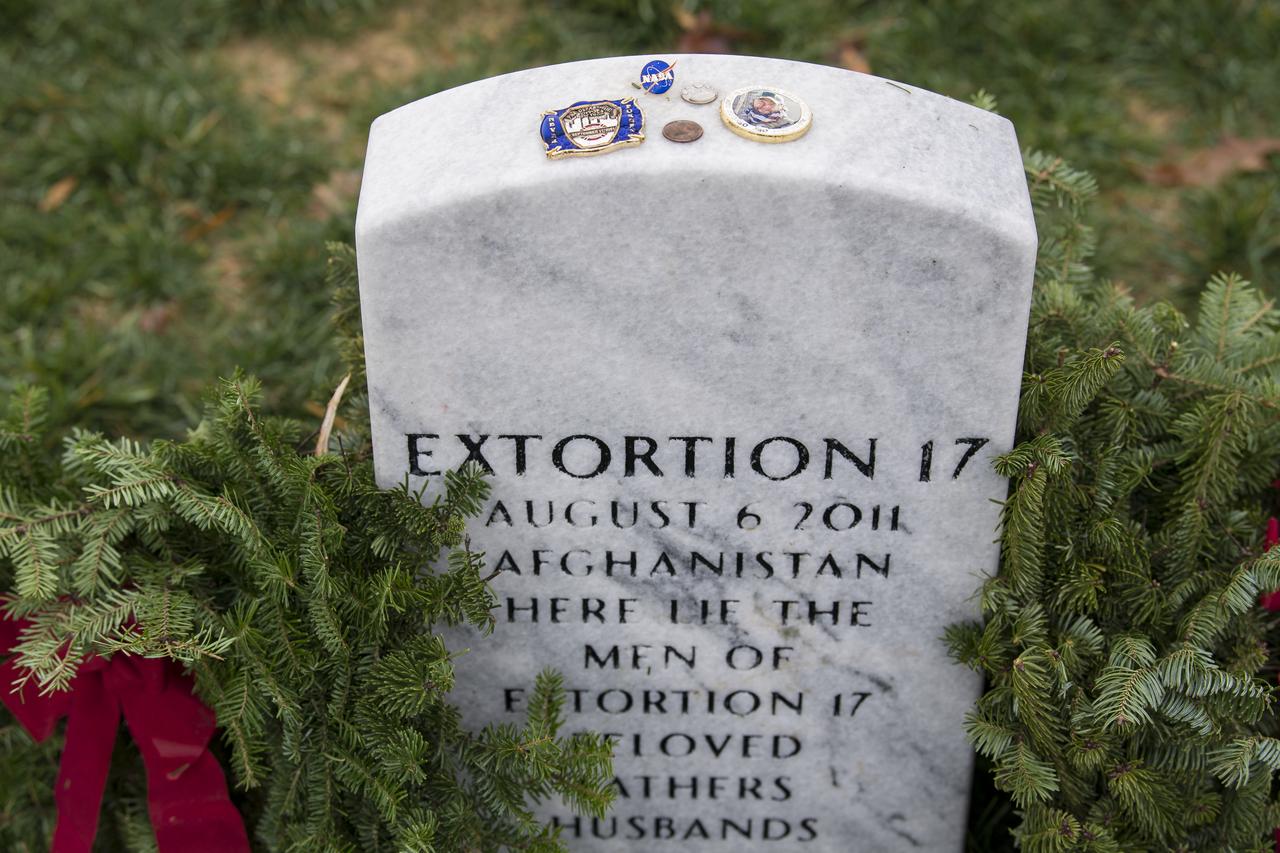
On National Wreaths Across America Day, items are seen on top of the headstone of the Extortion 17, service members who lost their lives during a tour of duty in Afghanistan, Sat., Dec. 14, 2019 at Arlington National Cemetery in Arlington, Va. National Wreaths Across America Day is held annually to celebrate the lives of military veterans. NASA astronaut Doug Wheelock served with the Extortion 17 and honored them as well as those who lost their lives in the quest for space exploration by laying wreaths at their headstones and at the memorial sites. Photo Credit: (NASA/Aubrey Gemignani)
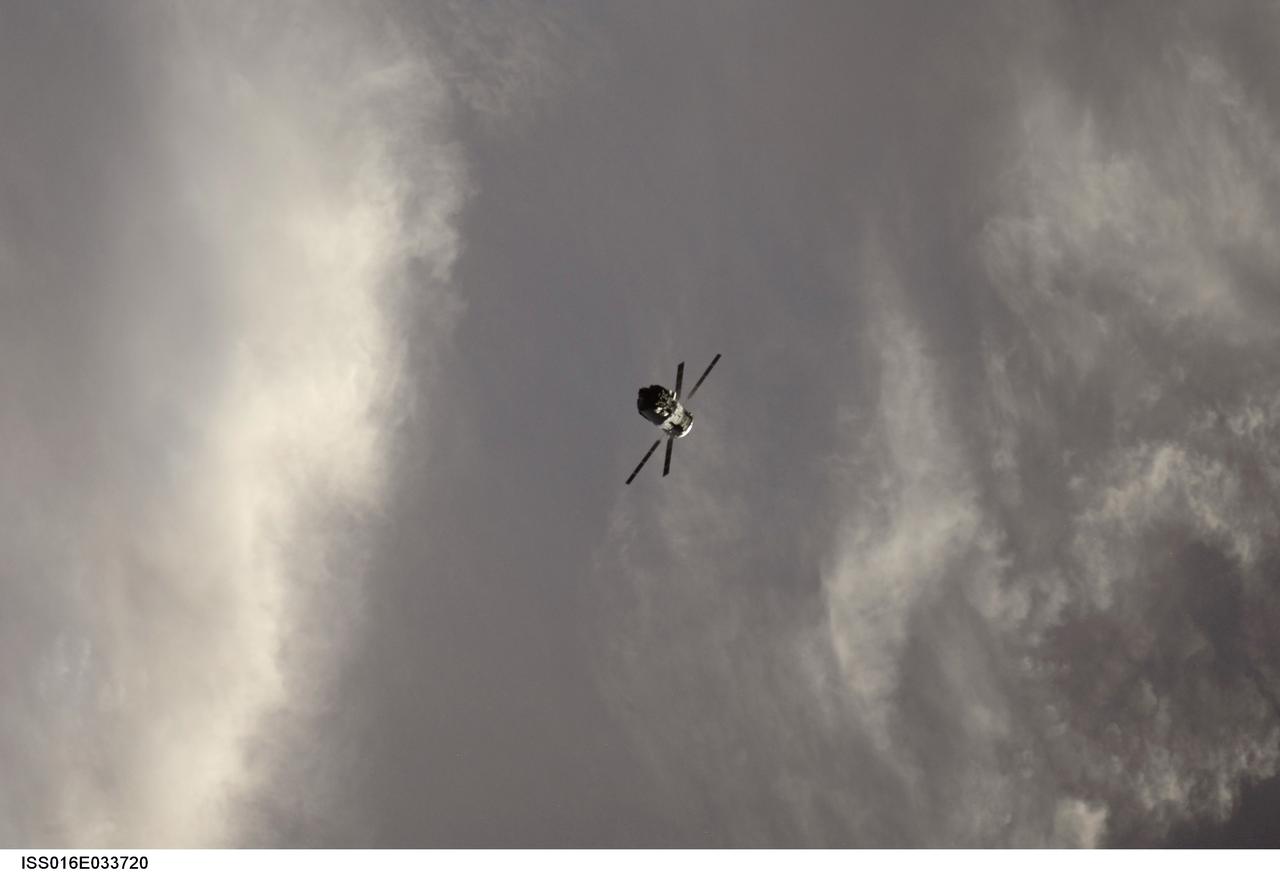
ISS016-E-033720 (29 March 2008) --- Cosmonaut Yuri Malenchenko, Expedition 16 flight engineer, aboard the International Space Station used a digital still camera to record several images of the Jules Verne Automated Transfer Vehicle (ATV) during a rendezvous test March 29, 2008. Malenchenko fitted the camera with an 800mm lens typically employed for Shuttle RPM photography while the ATV sat 2.1 statute miles from the ISS during the first of two demonstration days in the lead up to a docking on April 3. On March 31, Demonstration Day 2 will see ATV approach to within 11 meters of the ISS.
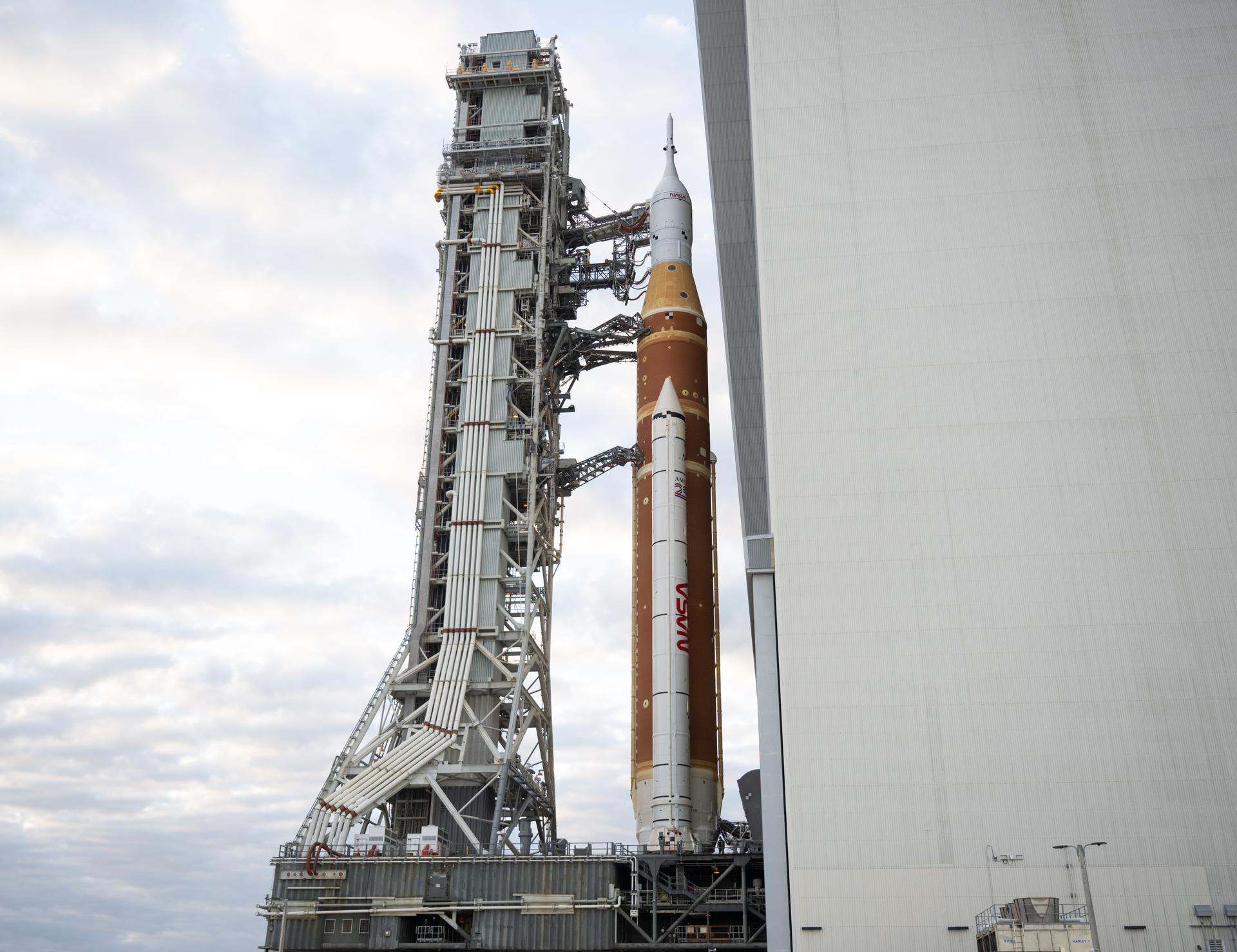
NASA’s Space Launch System (SLS) rocket and Orion spacecraft, secured to the mobile launcher, is seen as it rolls out of the Vehicle Assembly Building to Launch Pad 39B, Sat, Jan. 17, 2026, at NASA’s Kennedy Space Center in Florida. NASA’s Artemis II test flight will take Commander Reid Wiseman, Pilot Victor Glover, and Mission Specialist Christina Koch from NASA, and Mission Specialist Jeremy Hansen from the CSA (Canadian Space Agency), around the Moon and back to Earth no later than no later than April 2026. Photo Credit: (NASA/Joel Kowsky)
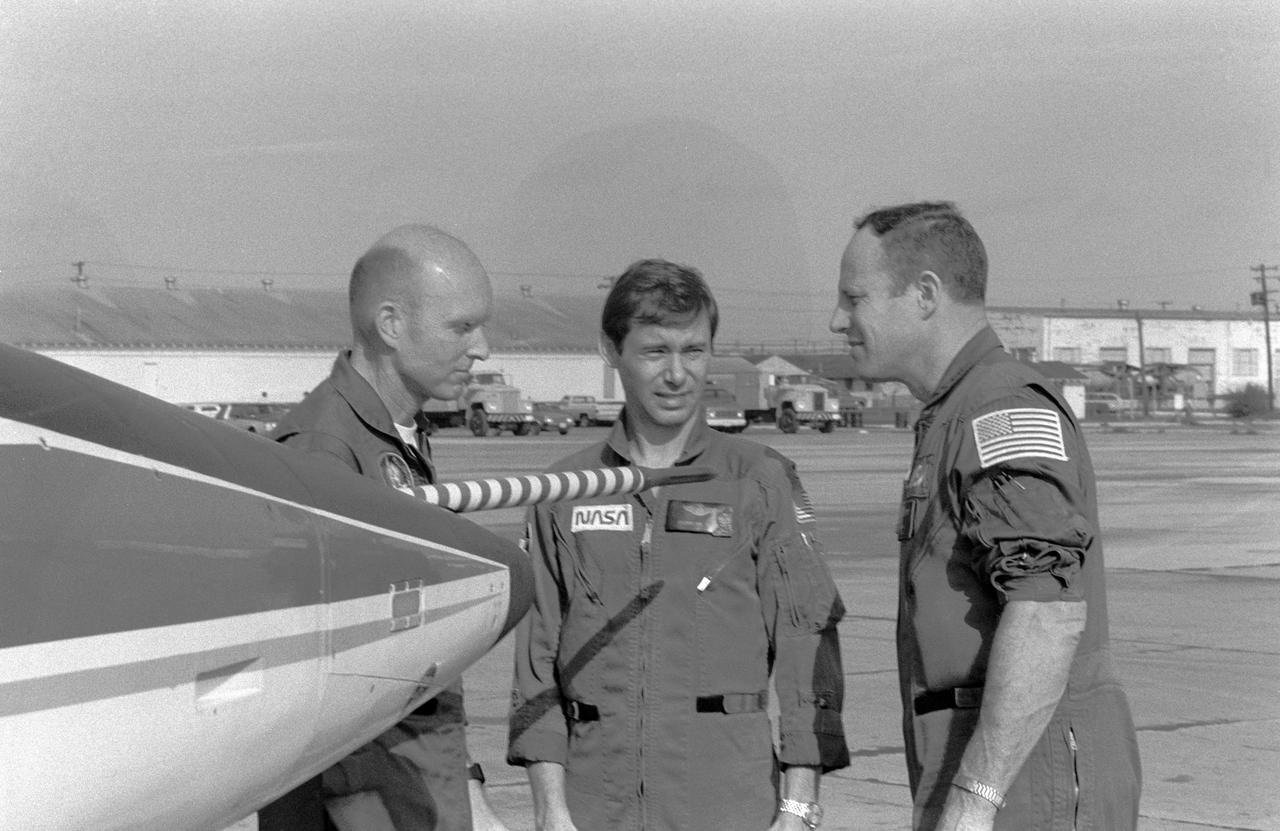
S82-28704 (20 March 1982) --- Astronaut Jack R. Lousma, STS-3 commander, seems to be saying, "?see you guys down there," prior to boarding a T-38 jet trainer and heading for KSC in Florida. Astronaut C. Gordon Fullerton, left, STS-3 pilot, will man the front seat of another T-38, with astronaut Brewster H. Shaw, center, as rear sat passenger. The STS-3 crew has just bade farewell to news media representatives and members of the general public on hand for the departure. Photo credit: NASA
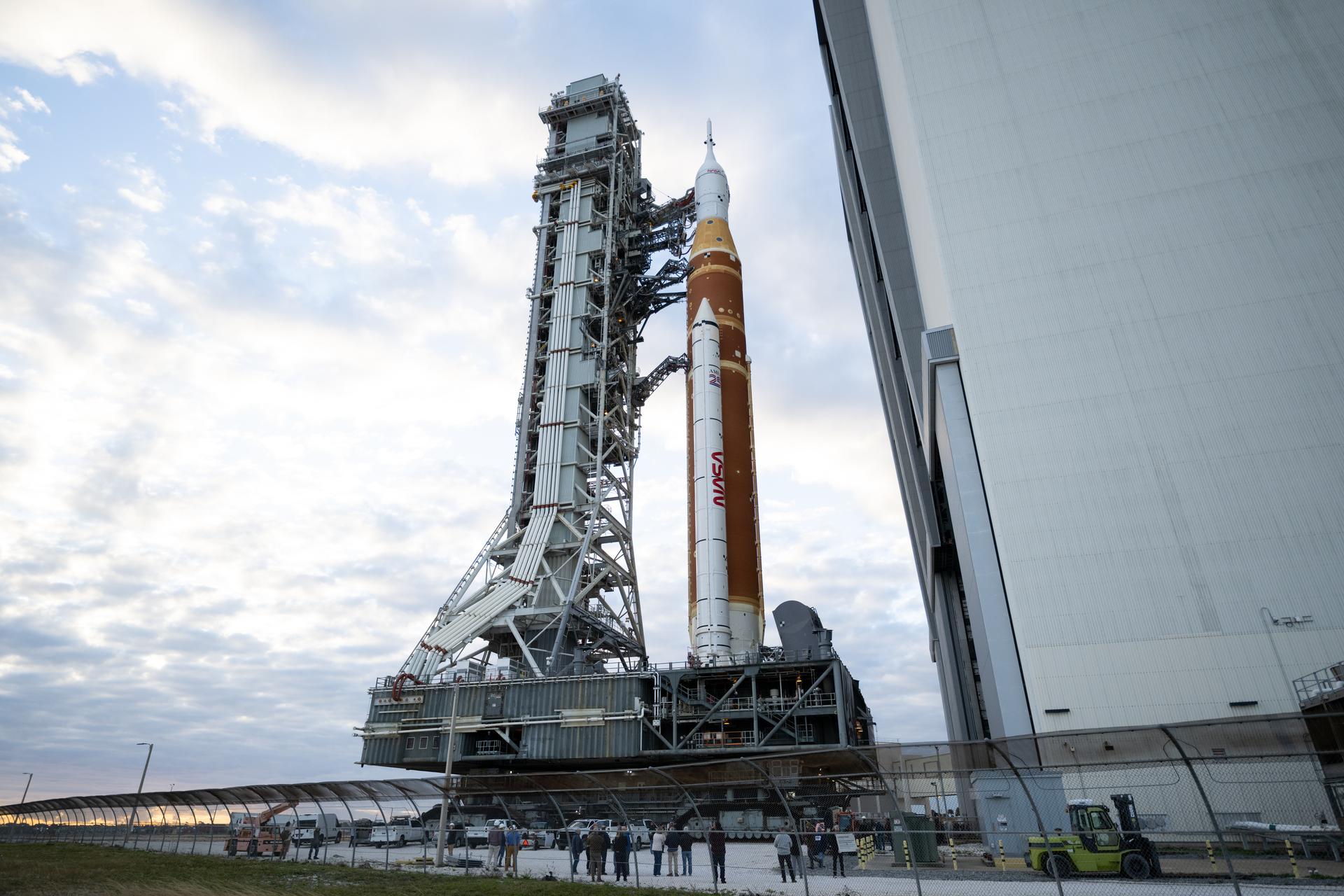
NASA’s Space Launch System (SLS) rocket and Orion spacecraft, secured to the mobile launcher, is seen as it rolls out of the Vehicle Assembly Building to Launch Pad 39B, Sat, Jan. 17, 2026, at NASA’s Kennedy Space Center in Florida. NASA’s Artemis II test flight will take Commander Reid Wiseman, Pilot Victor Glover, and Mission Specialist Christina Koch from NASA, and Mission Specialist Jeremy Hansen from the CSA (Canadian Space Agency), around the Moon and back to Earth no later than no later than April 2026. Photo Credit: (NASA/Joel Kowsky)
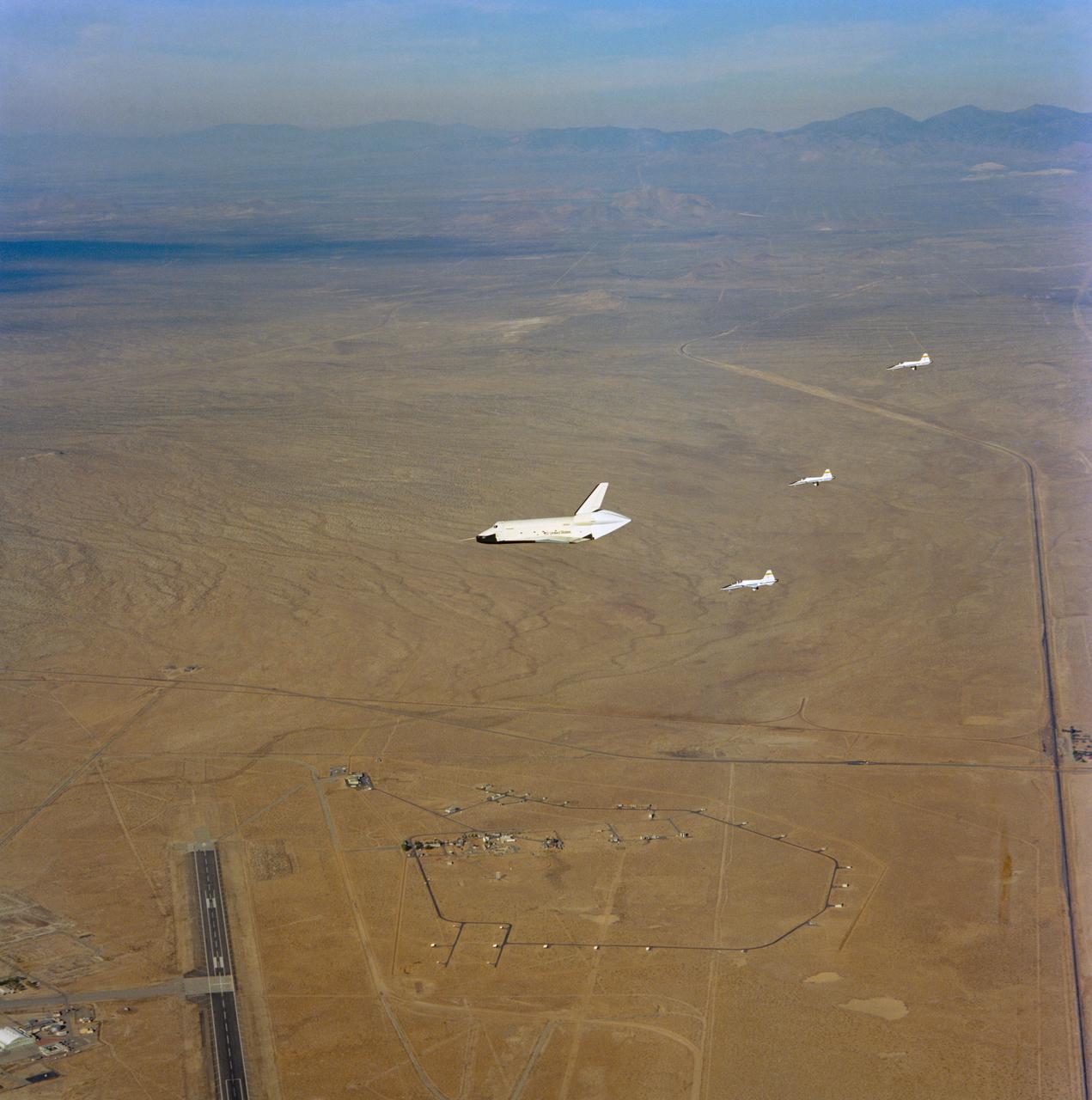
S77-28667 (23 Sept 1977) --- The shuttle Orbiter 101 "Enterprise" soars above the North Base area of Edwards Air Force Base during its five-minute, 34-second unpowered flight, the third of a series of manned Shuttle Approach and Landing Tests (ALT). Moments earlier the "Enterprise" had separated from its 747 carrier aircraft, atop which it sat upon takeoff from the Dryden Flight Research Center (DFRC), with its crew of astronauts Fred W. Haise Jr., commander, and C. Gordon Fullerton, pilot. Three T-38 chase planes follow. This photograph was taken from a fourth T-38 chase plane.
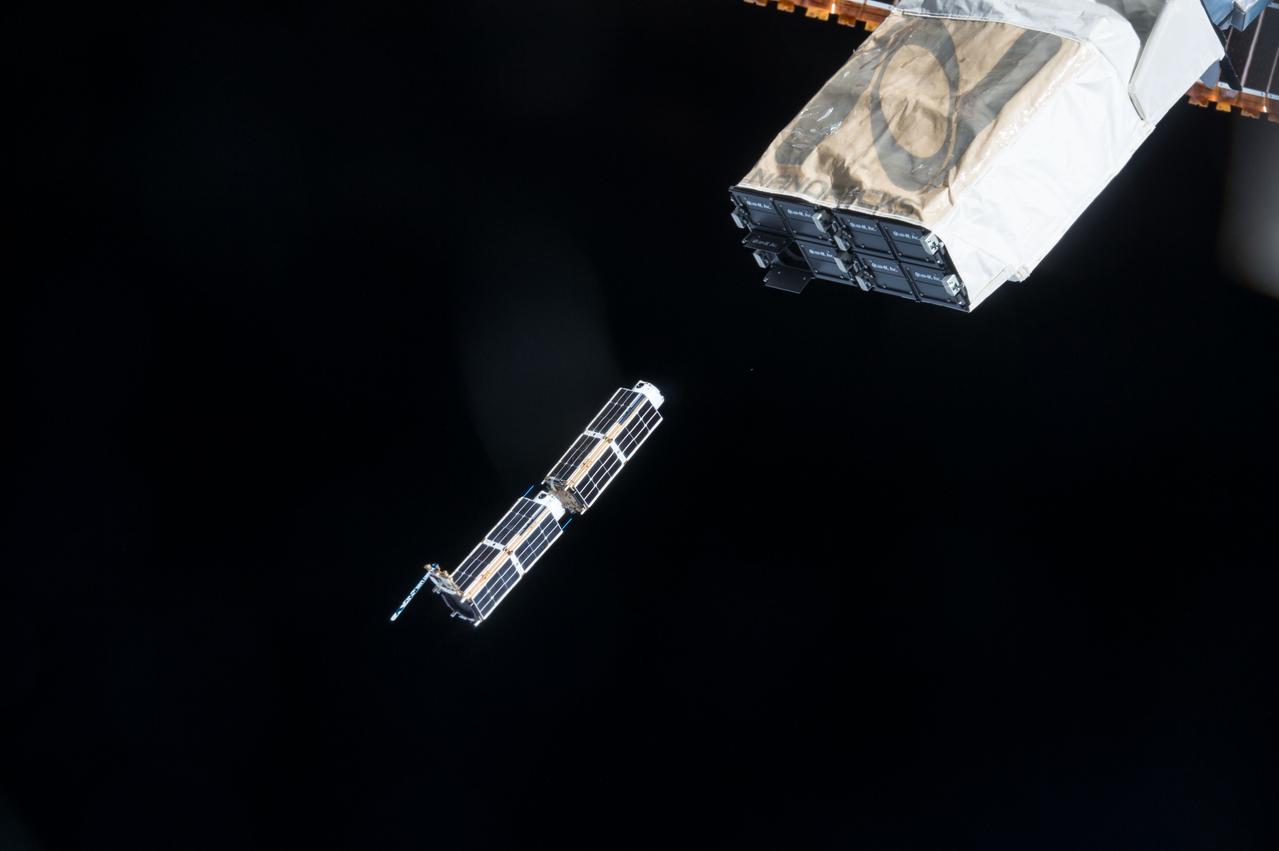
ISS042E290579 (02/27/2015) --- On Feb. 27 2015, a series of CubeSats, small experimental satellites, were deployed via a special device mounted on the Japanese Experiment Module (JEM) Remote Manipulator System (JEMRMS). Deployed satellites included twelve Dove sats, one TechEdSat-4, one GEARRSat, one LambdaSat, one MicroMas. These satellites perform a variety of functions from capturing new Earth imagery, to using microwave scanners to create 3D images of hurricanes, to even developing new methods for returning science samples back to Earth from space. The small satellites were deployed through the first week in March.
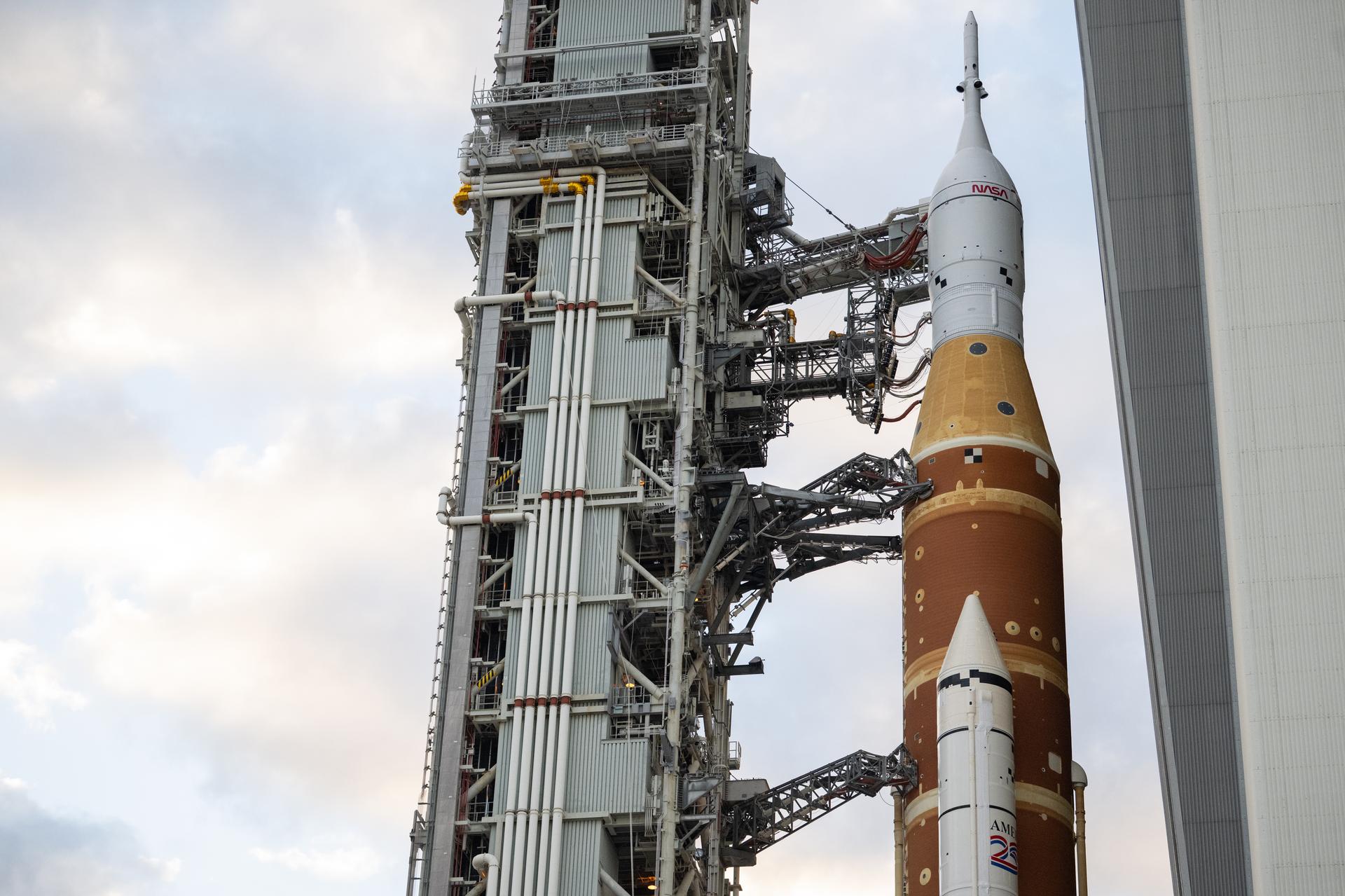
NASA’s Space Launch System (SLS) rocket and Orion spacecraft, secured to the mobile launcher, is seen as it rolls out of the Vehicle Assembly Building to Launch Pad 39B, Sat, Jan. 17, 2026, at NASA’s Kennedy Space Center in Florida. NASA’s Artemis II test flight will take Commander Reid Wiseman, Pilot Victor Glover, and Mission Specialist Christina Koch from NASA, and Mission Specialist Jeremy Hansen from the CSA (Canadian Space Agency), around the Moon and back to Earth no later than no later than April 2026. Photo Credit: (NASA/Joel Kowsky)
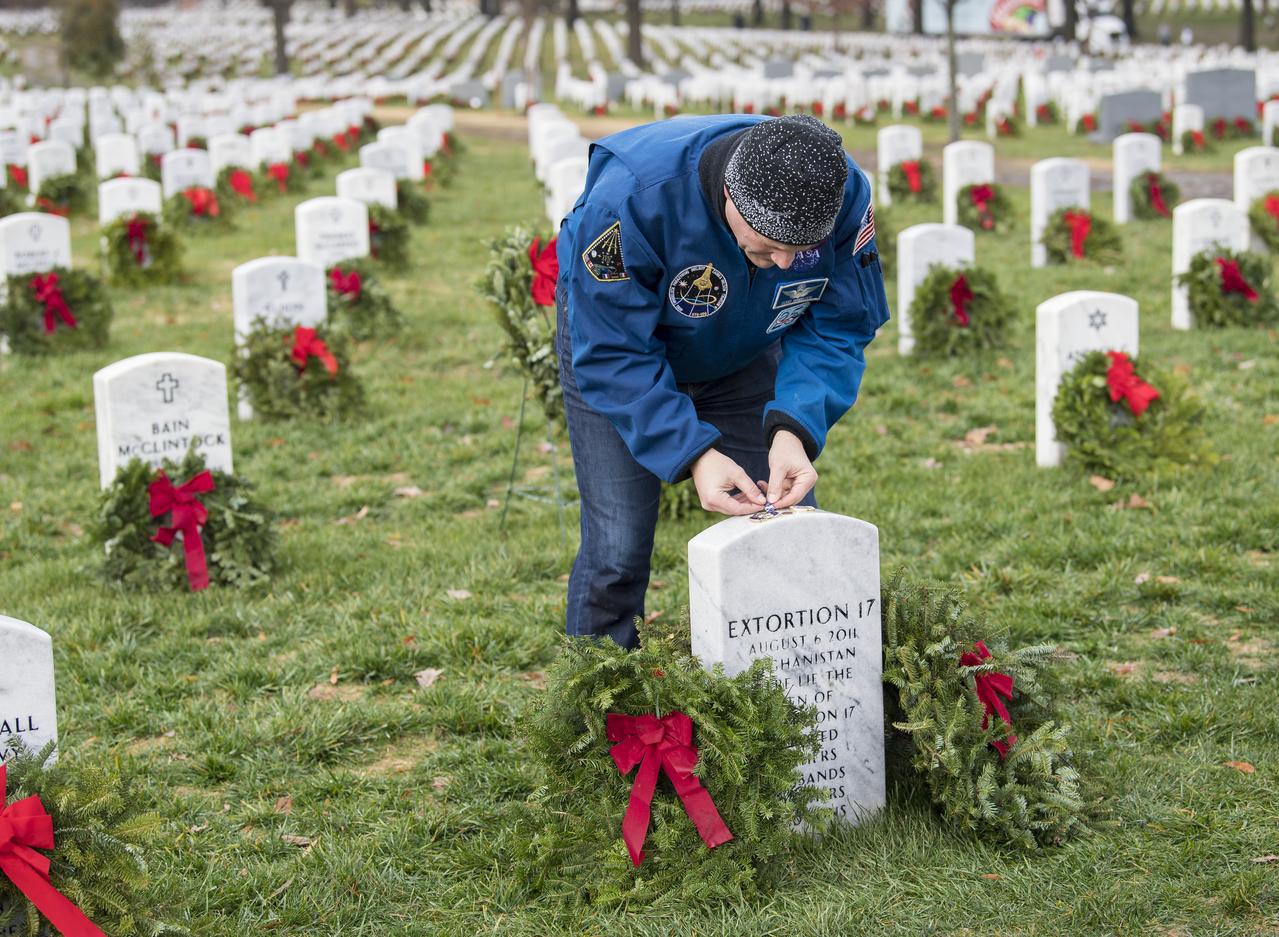
NASA astronaut Doug Wheelock leaves a NASA pin on the headstone of the Extortion 17, fellow service members who lost their lives during his tour of duty in Afghanistan, as part of National Wreaths Across America Day, Sat., Dec. 14, 2019 at Arlington National Cemetery in Arlington, Va. National Wreaths Across America Day is held annually to celebrate the lives of military veterans. Wheelock honored those who lost their lives in the quest for space exploration as well as fellow service members. Photo Credit: (NASA/Aubrey Gemignani)
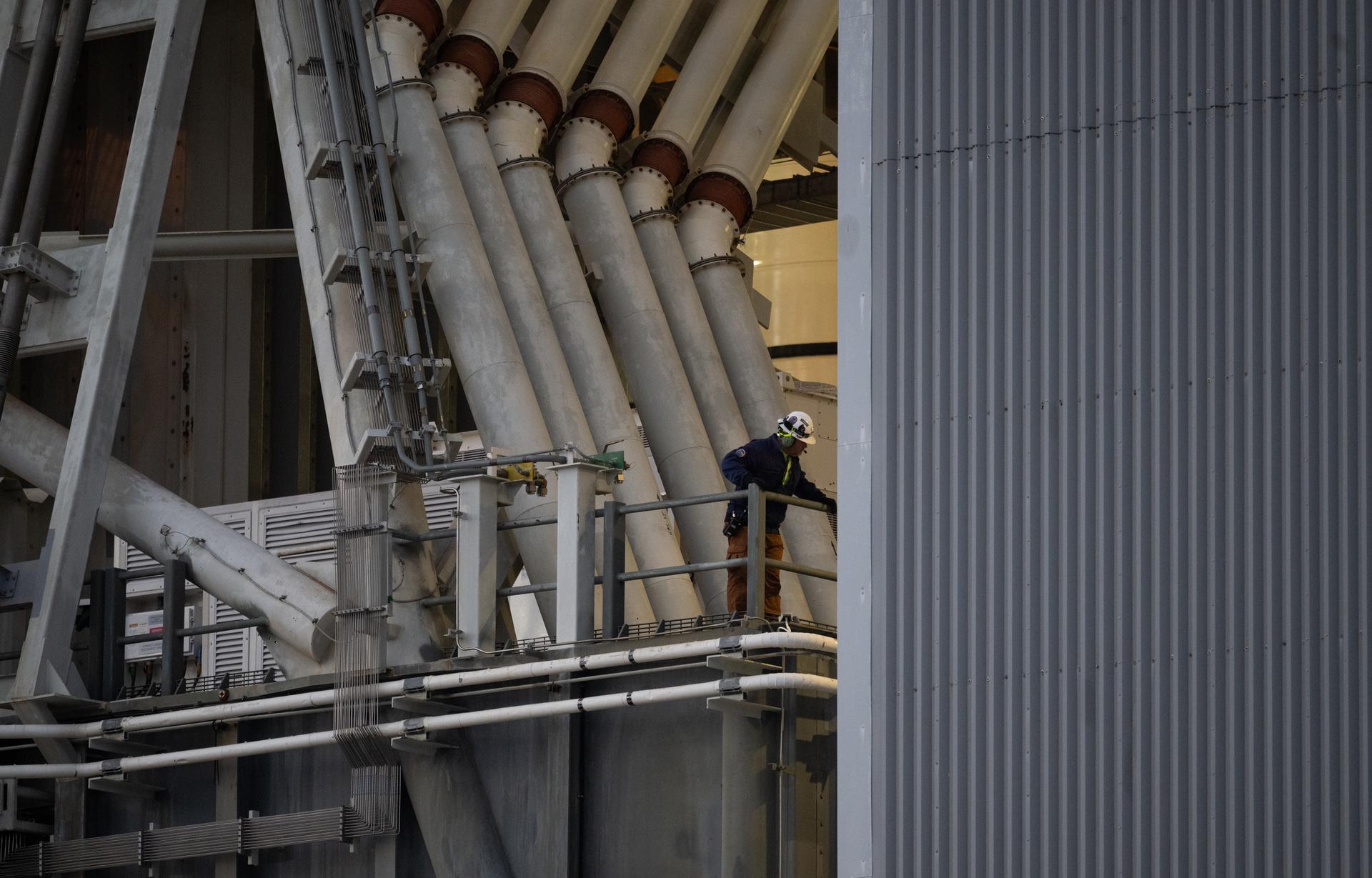
NASA’s Space Launch System (SLS) rocket and Orion spacecraft, secured to the mobile launcher, is seen as it rolls out of the Vehicle Assembly Building to Launch Pad 39B, Sat, Jan. 17, 2026, at NASA’s Kennedy Space Center in Florida. NASA’s Artemis II test flight will take Commander Reid Wiseman, Pilot Victor Glover, and Mission Specialist Christina Koch from NASA, and Mission Specialist Jeremy Hansen from the CSA (Canadian Space Agency), around the Moon and back to Earth no later than no later than April 2026. Photo Credit: (NASA/Joel Kowsky)
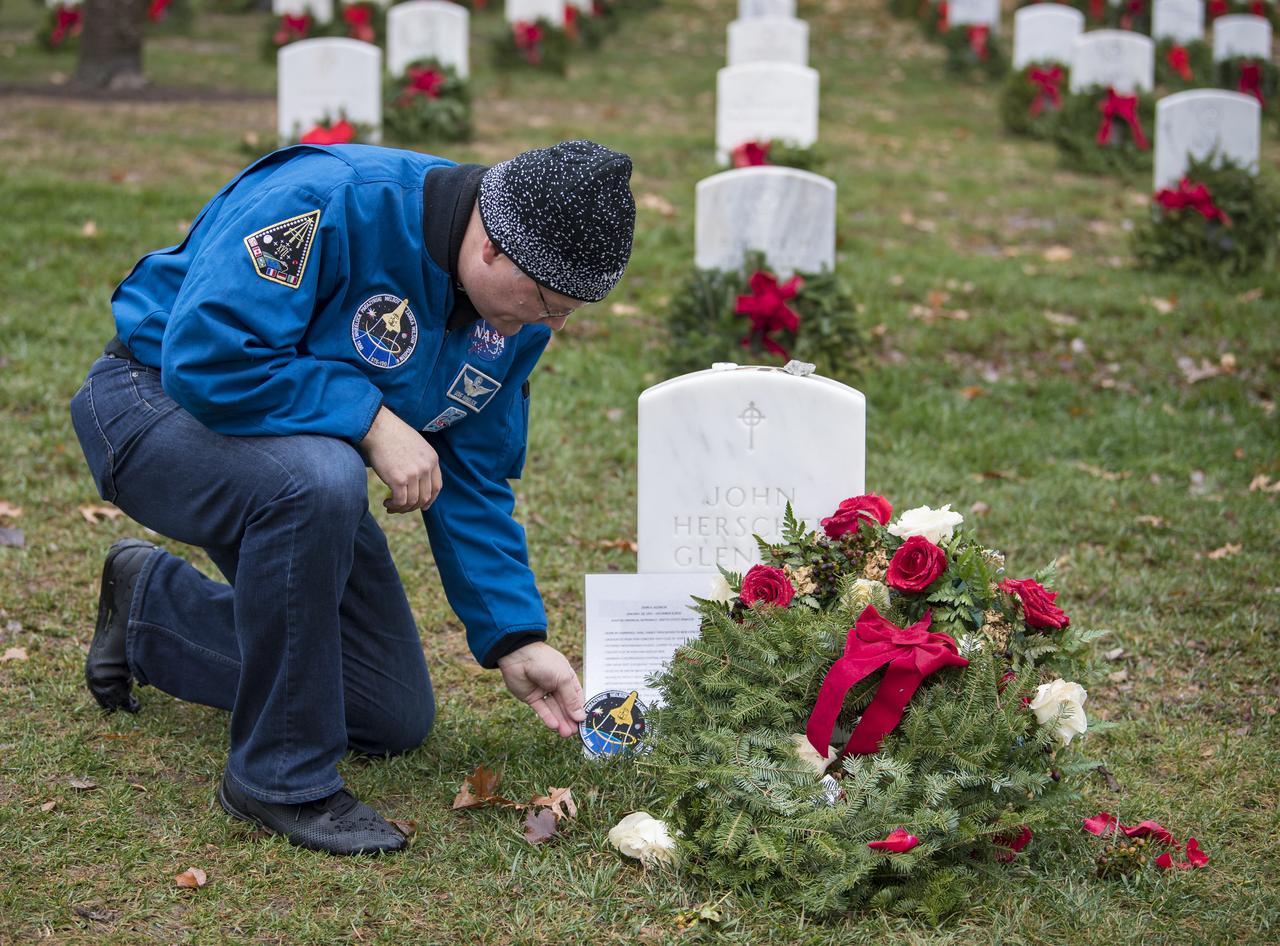
NASA astronaut Doug Wheelock leaves his STS-120 mission patch at the gravesite of former astronaut and U.S. Senator John Glenn during National Wreaths Across America Day at Arlington National Cemetery, Sat., Dec. 14, 2019 in Arlington, Va. National Wreaths Across America Day is held annually to celebrate the lives of military veterans and wreaths are placed at the foot of every headstone. Wheelock honored those who lost their lives in the quest for space exploration as well as fellow service members. Photo Credit: (NASA/Aubrey Gemignani)
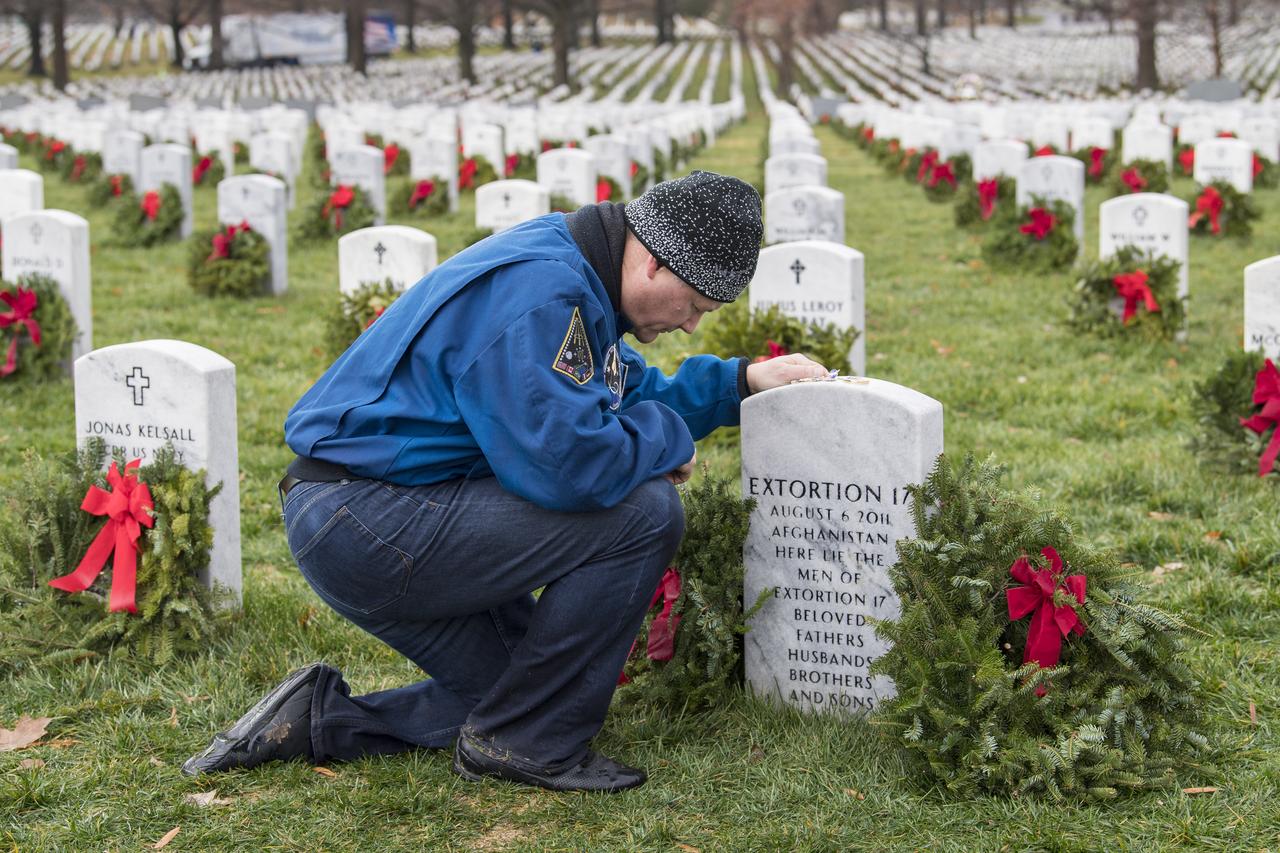
NASA astronaut Doug Wheelock takes a moment after laying a wreath at the headstone of the Extortion 17, fellow service members who lost their lives during his tour of duty in Afghanistan, as part of National Wreaths Across America Day, Sat., Dec. 14, 2019 at Arlington National Cemetery in Arlington, Va. National Wreaths Across America Day is held annually to celebrate the lives of military veterans. Wheelock honored those who lost their lives in the quest for space exploration as well as fellow service members. Photo Credit: (NASA/Aubrey Gemignani)
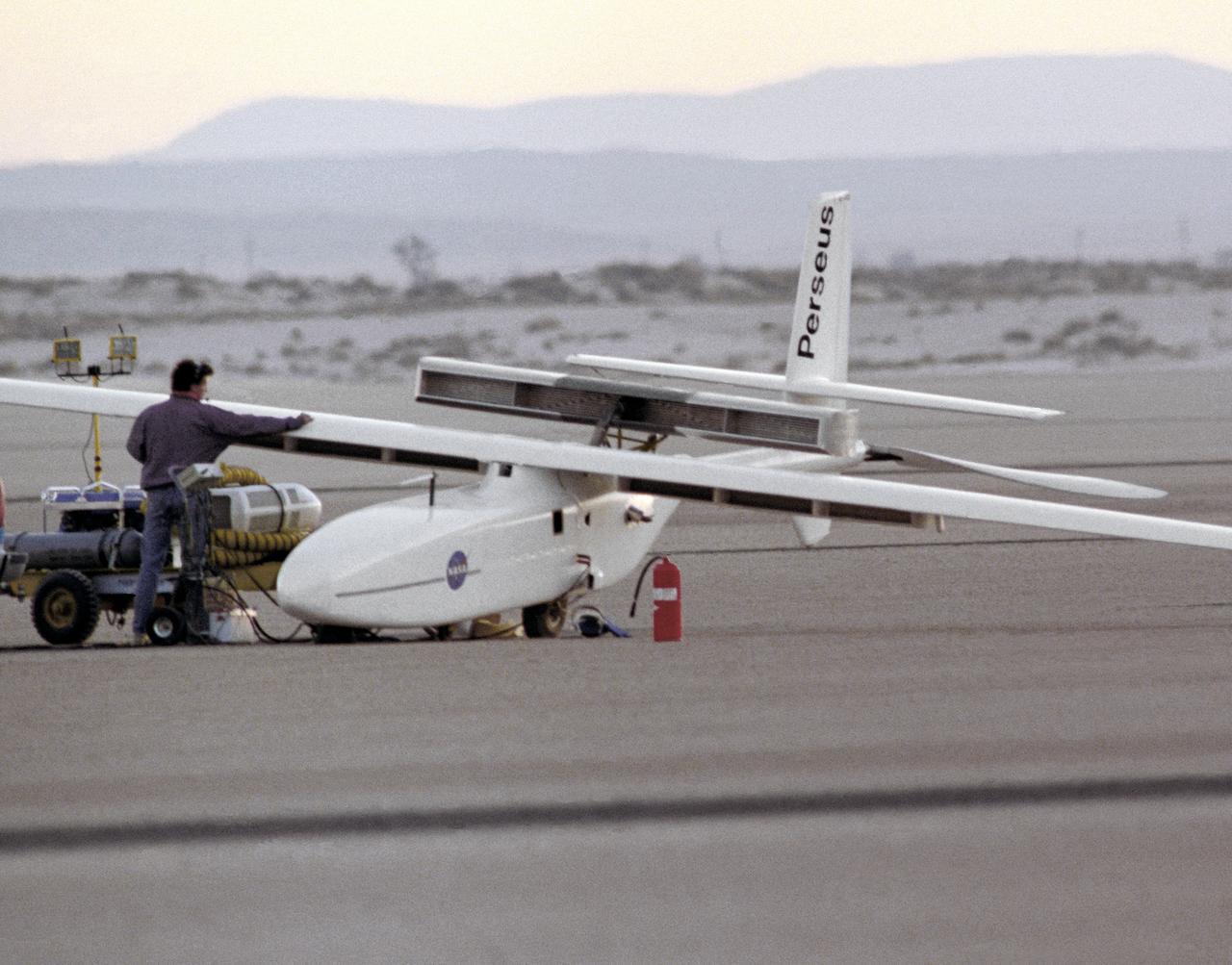
The Perseus A, a remotely-piloted, high-altitude research vehicle, is seen just after landing on Rogers Dry Lake at the Dryden Flight Research Center, Edwards, California. The Perseus A had a unique method of takeoff and landing. To make the aircraft as aerodynamic and lightweight as possible, designers gave it only two very small centerline wheels for landing. These wheels were very close to the fuselage, and therefore produced very little drag. However, since the fuselage sat so close to the ground, it was necessary to keep the large propeller at the rear of the aircraft locked in a horizontal position during takeoff. The aircraft was towed to about 700 feet in the air, where the engine was started and the aircraft began flying under its own power.
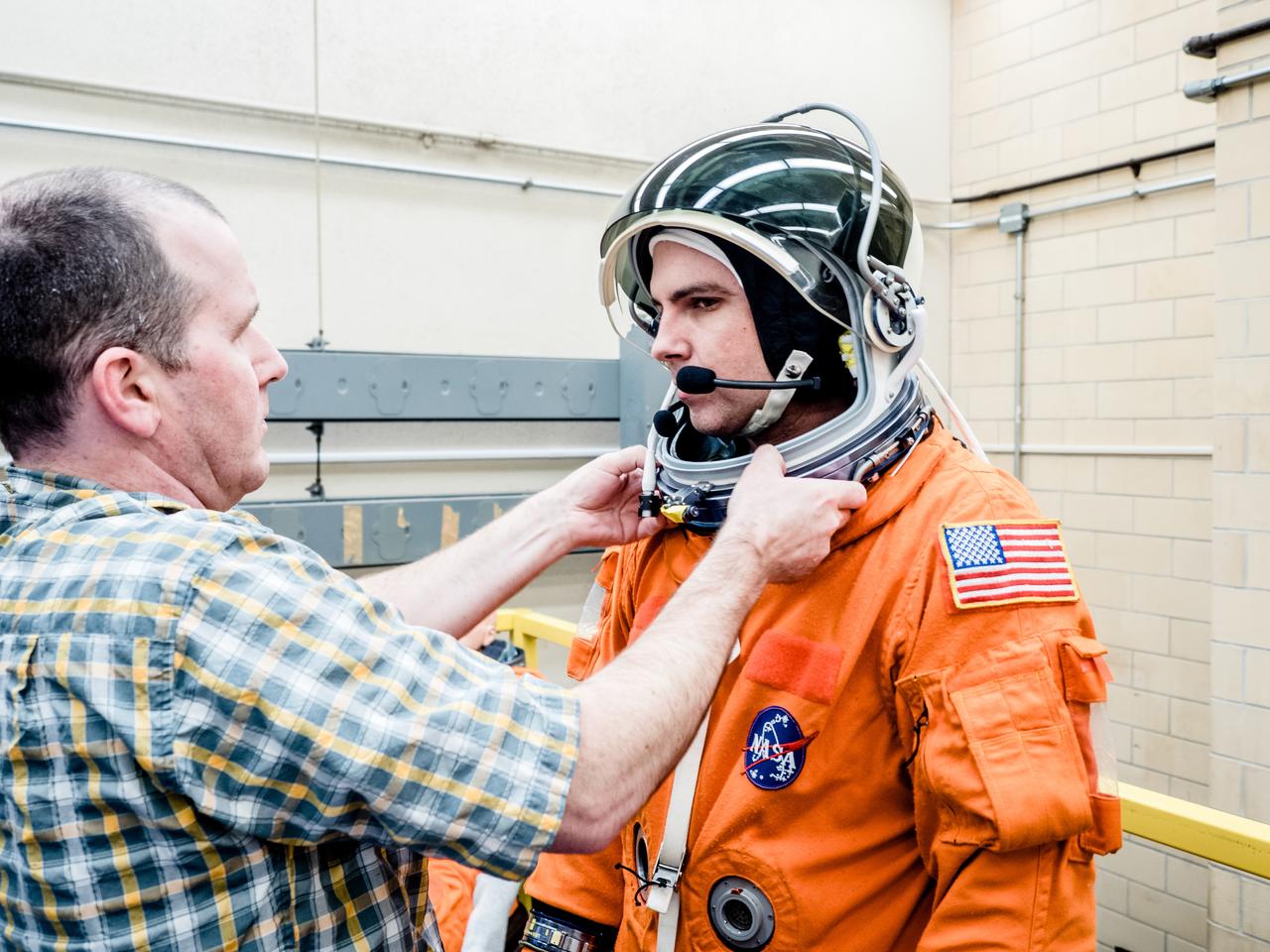
In a lab at NASA’s Johnson Space Center in Houston, engineers simulate conditions that astronauts in space suits would experience when the Orion spacecraft is vibrating during launch atop the agency’s powerful Space Launch System rocket on its way to deep space destinations on Jan. 19, 2017. A series of tests occurring this month at Johnson will help human factors engineers assess how well the crew can interact with the displays and controls they will use to monitor Orion’s systems and operate the spacecraft when necessary...Test subjects wore modified advanced crew escape suits that are being developed for astronauts in Orion, and sat in the latest design of the seat atop the crew impact attenuation system. This was the first time this key hardware was brought together to evaluate how launch vibrations may impact the astronaut’s ability to view the displays and controls.

In a lab at NASA’s Johnson Space Center in Houston, engineers simulate conditions that astronauts in space suits would experience when the Orion spacecraft is vibrating during launch atop the agency’s powerful Space Launch System rocket on its way to deep space destinations on Jan. 19, 2017. A series of tests occurring this month at Johnson will help human factors engineers assess how well the crew can interact with the displays and controls they will use to monitor Orion’s systems and operate the spacecraft when necessary...Test subjects wore modified advanced crew escape suits that are being developed for astronauts in Orion, and sat in the latest design of the seat atop the crew impact attenuation system. This was the first time this key hardware was brought together to evaluate how launch vibrations may impact the astronaut’s ability to view the displays and controls.
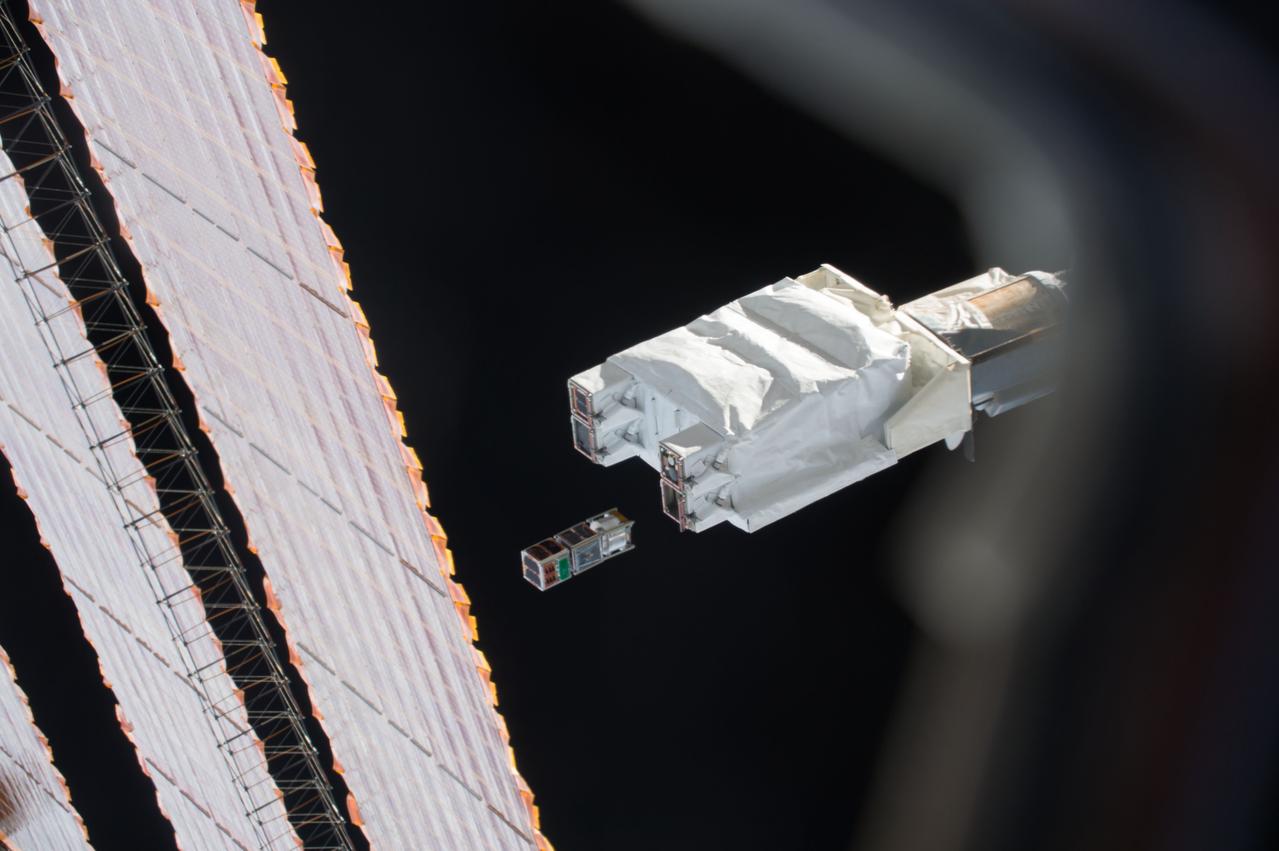
iss050e031198 (1/17/2017) --- Photo documentation of the Japanese-Small Satellite Orbital Deployer-6 (J-SSOD-6) deployment of the ITF-2, Waseda-SAT3 and Freedom CubeSats. The Imagine The Future-2 (ITF-2) CubeSat mission supports amateur radio networking by testing a micro engineered 1/20 wavelength small antenna. The WASEDA SAT-3 is a CubeSat developed by Waseda University aiming to test an ultra-light drag chute for accelerated deorbit. An LCD projector shows images on the chute with imagery sent back to Earth via an onboard camera. FREEDOM is a 1 Unit (1U) CubeSat developed by the Nakashimada Engineering Works and the Tohoku University to demonstrate a deployable deorbit device “DOM” for application in future missions for space debris mitigation.

In a lab at NASA’s Johnson Space Center in Houston, engineers simulate conditions that astronauts in space suits would experience when the Orion spacecraft is vibrating during launch atop the agency’s powerful Space Launch System rocket on its way to deep space destinations on Jan. 19, 2017. A series of tests occurring this month at Johnson will help human factors engineers assess how well the crew can interact with the displays and controls they will use to monitor Orion’s systems and operate the spacecraft when necessary...Test subjects wore modified advanced crew escape suits that are being developed for astronauts in Orion, and sat in the latest design of the seat atop the crew impact attenuation system. This was the first time this key hardware was brought together to evaluate how launch vibrations may impact the astronaut’s ability to view the displays and controls.
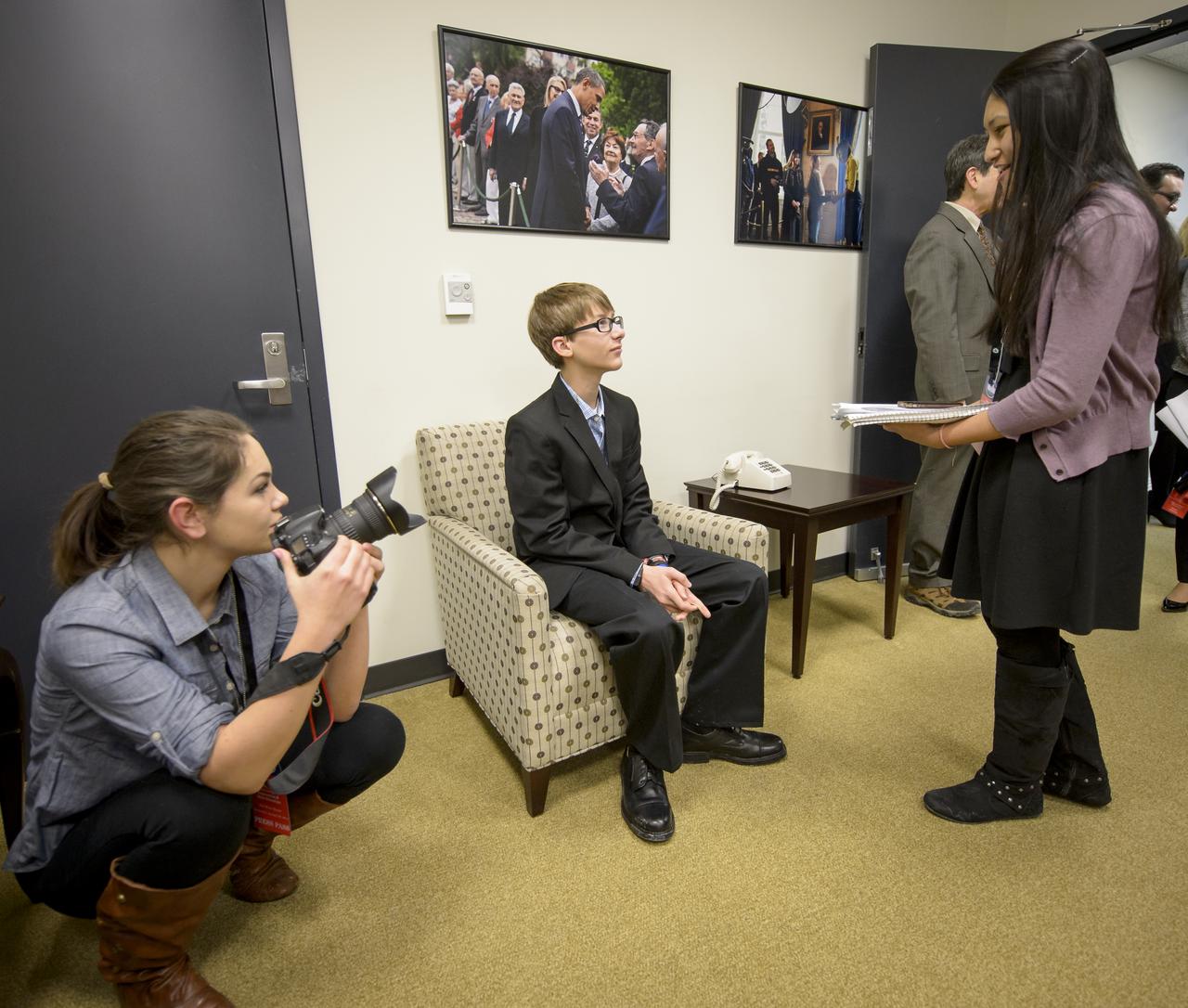
Montgomery Blair High School Student Newspaper “Silver Chips” Online Editor-in-Chief Aanchal Johri, right, and Photo Editor Emma Howells, left, from Silver Spring, MD. interview Joey Hudy, Anthem, AZ, 16-year-old self-described “Maker” at the annual White House State of Science, Technology, Engineering, and Math (SoSTEM) address, Wednesday, Jan. 29, 2014, in the South Court Auditorium in the Eisenhower Executive Office Building on the White House complex in Washington. Joey sat with the First Lady at the President’s 2014 State of the Union Address after his first shot to fame in 2012 when he attended the White House Science Fair where the President took a turn using his “extreme marshmallow cannon” to launch a marshmallow across the East Room of the White House. Photo Credit: (NASA/Bill Ingalls)
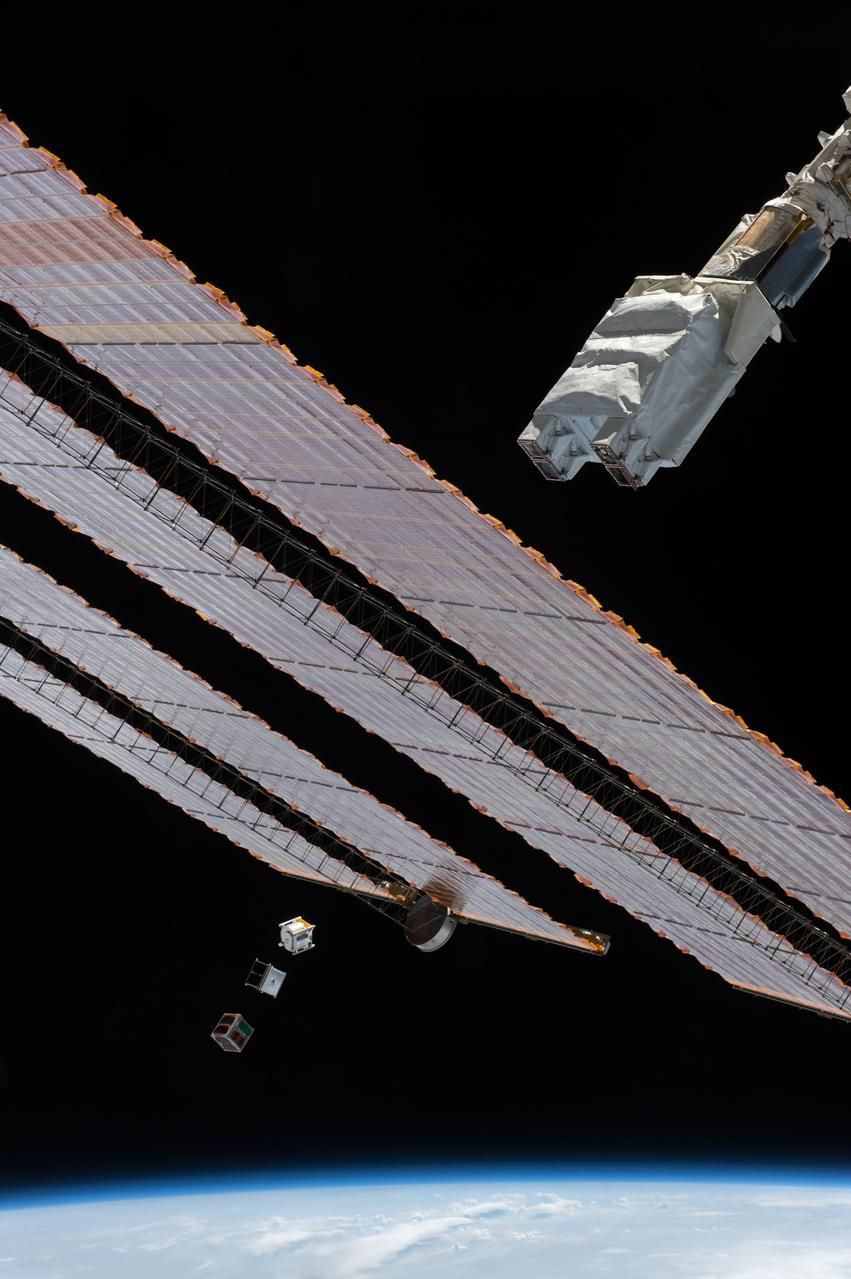
iss050e032565 (1/17/2017) --- Photo documentation of the Japanese-Small Satellite Orbital Deployer-6 (J-SSOD-6) deployment of the ITF-2, Waseda-SAT3 and Freedom CubeSats. The Imagine The Future-2 (ITF-2) CubeSat mission supports amateur radio networking by testing a micro engineered 1/20 wavelength small antenna. The WASEDA SAT-3 is a CubeSat developed by Waseda University aiming to test an ultra-light drag chute for accelerated deorbit. An LCD projector shows images on the chute with imagery sent back to Earth via an onboard camera. FREEDOM is a 1 Unit (1U) CubeSat developed by the Nakashimada Engineering Works and the Tohoku University to demonstrate a deployable deorbit device “DOM” for application in future missions for space debris mitigation.
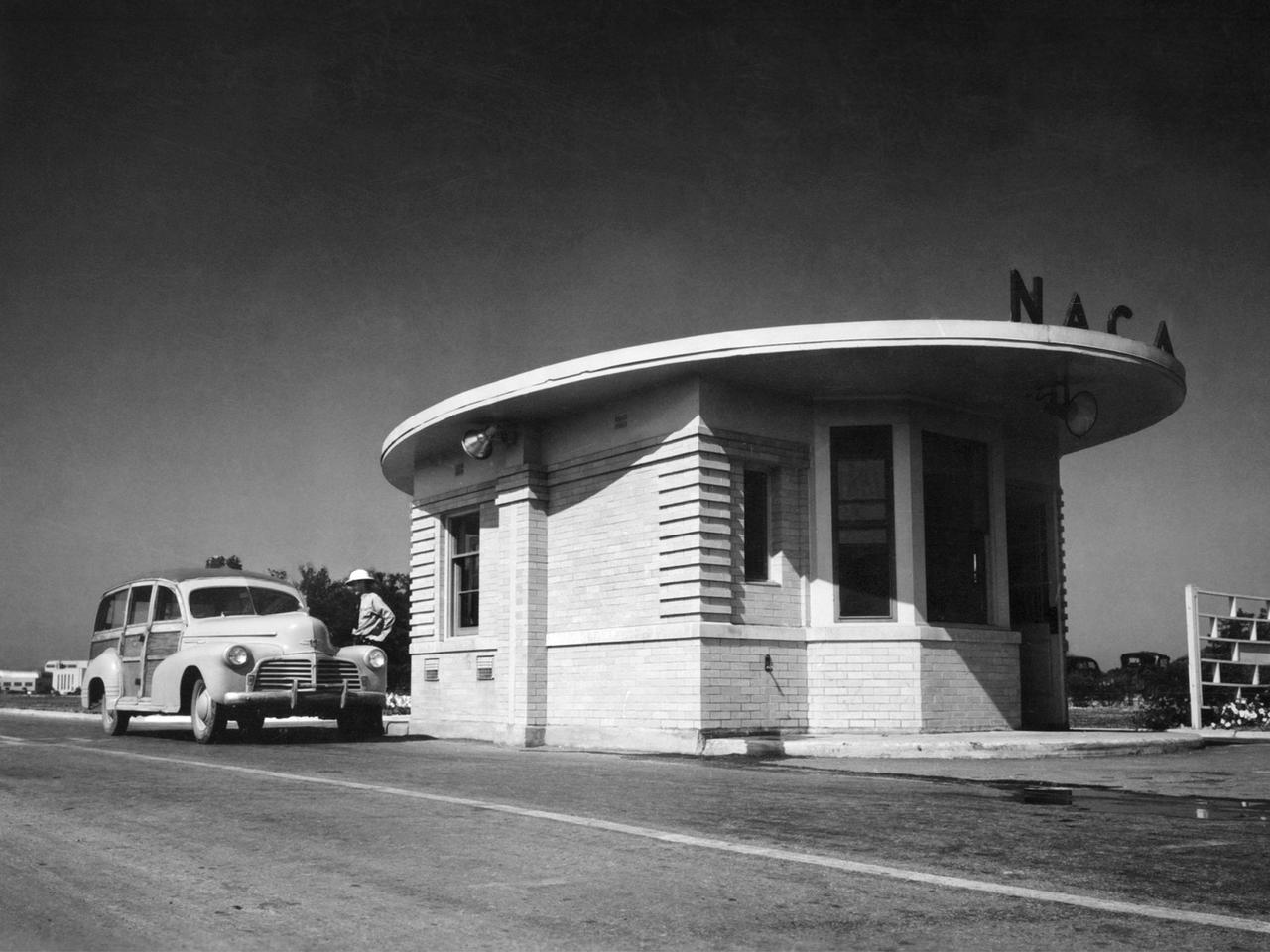
A vehicle leaves the National Advisory Committee for Aeronautics (NACA) Aircraft Engine Research Laboratory on August 14, 1945. At 7 p.m. that evening President Truman announced that Japan had accepted terms for surrender and World War II was over. The end of the war brought significant changes for the laboratory. The NACA would cease its troubleshooting of military aircraft and return to research. Researchers would increase their efforts to address the new technologies that emerged during the war. The entire laboratory was reorganized in October to better investigate turbojets, ramjets, and rockets. The guard house sat on the main entrance to the laboratory off of Brookpark Road. The building was fairly small and easily crowded. In the early 1960s a new security facility was built several hundred feet beyond the original guard house. The original structure remained in place for several years but was not utilized. The subsequent structure was replaced in 2011 by a new building and entrance configuration.

Environmentalist and third-year law student at Elon University School of Law Tyrone Davis is interviewed by TIME for Kids reporter Grace Clark ahead of the annual White House State of Science, Technology, Engineering, and Math (SoSTEM) address, Wednesday, Jan. 29, 2014, in the South Court Auditorium in the Eisenhower Executive Office Building on the White House complex in Washington. Davis sat with the First Lady at the President’s 2014 State of the Union Address. As a Fellow with the Environmental Defense Fund in 2010, he helped show Elizabeth City State University how to save more than $31,000 a year and 200 tons of carbon emissions reductions annually by using technology and efficiency solutions. Photo Credit: (NASA/Bill Ingalls)
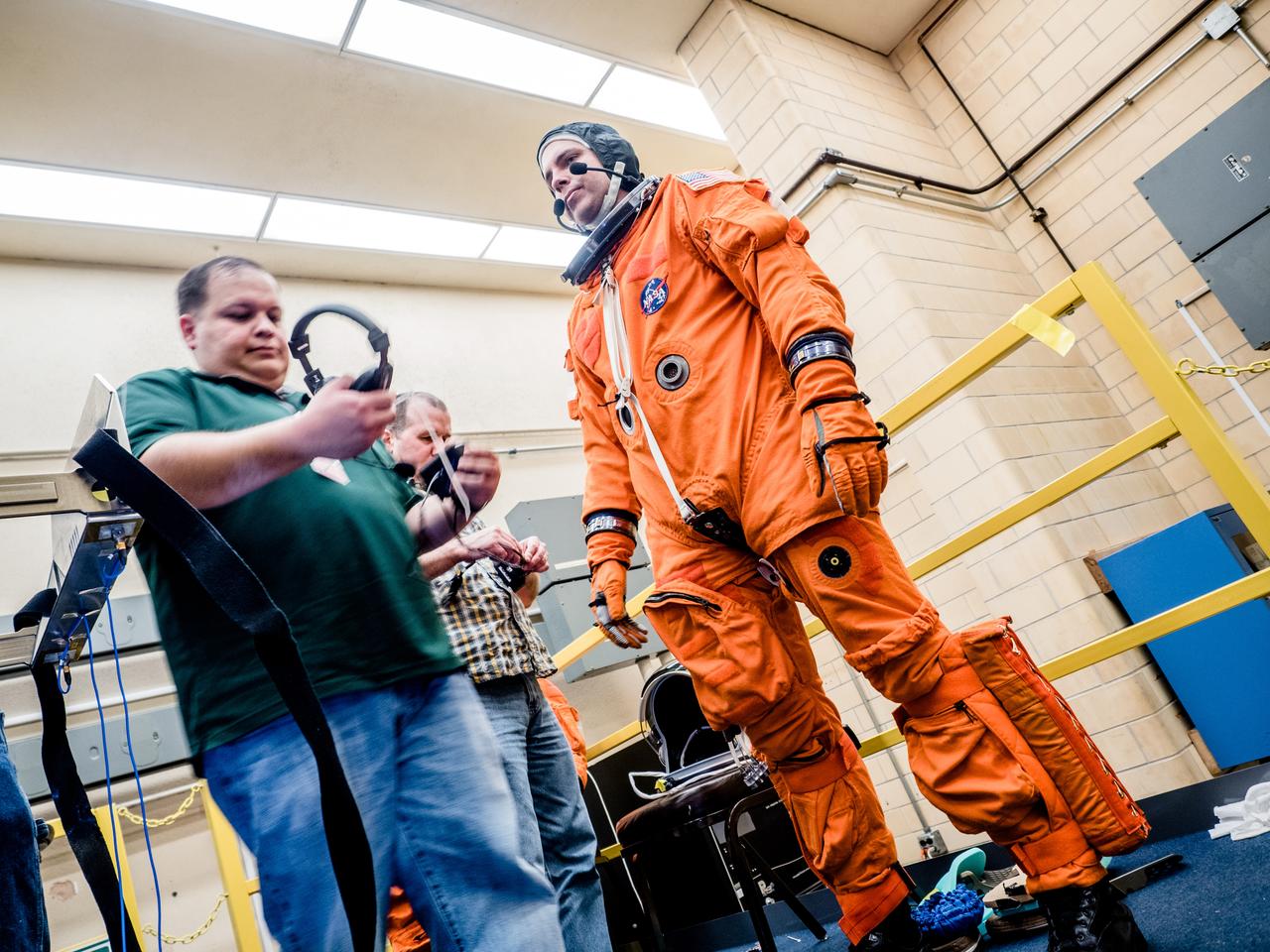
In a lab at NASA’s Johnson Space Center in Houston, engineers simulate conditions that astronauts in space suits would experience when the Orion spacecraft is vibrating during launch atop the agency’s powerful Space Launch System rocket on its way to deep space destinations on Jan. 19, 2017. A series of tests occurring this month at Johnson will help human factors engineers assess how well the crew can interact with the displays and controls they will use to monitor Orion’s systems and operate the spacecraft when necessary...Test subjects wore modified advanced crew escape suits that are being developed for astronauts in Orion, and sat in the latest design of the seat atop the crew impact attenuation system. This was the first time this key hardware was brought together to evaluate how launch vibrations may impact the astronaut’s ability to view the displays and controls.
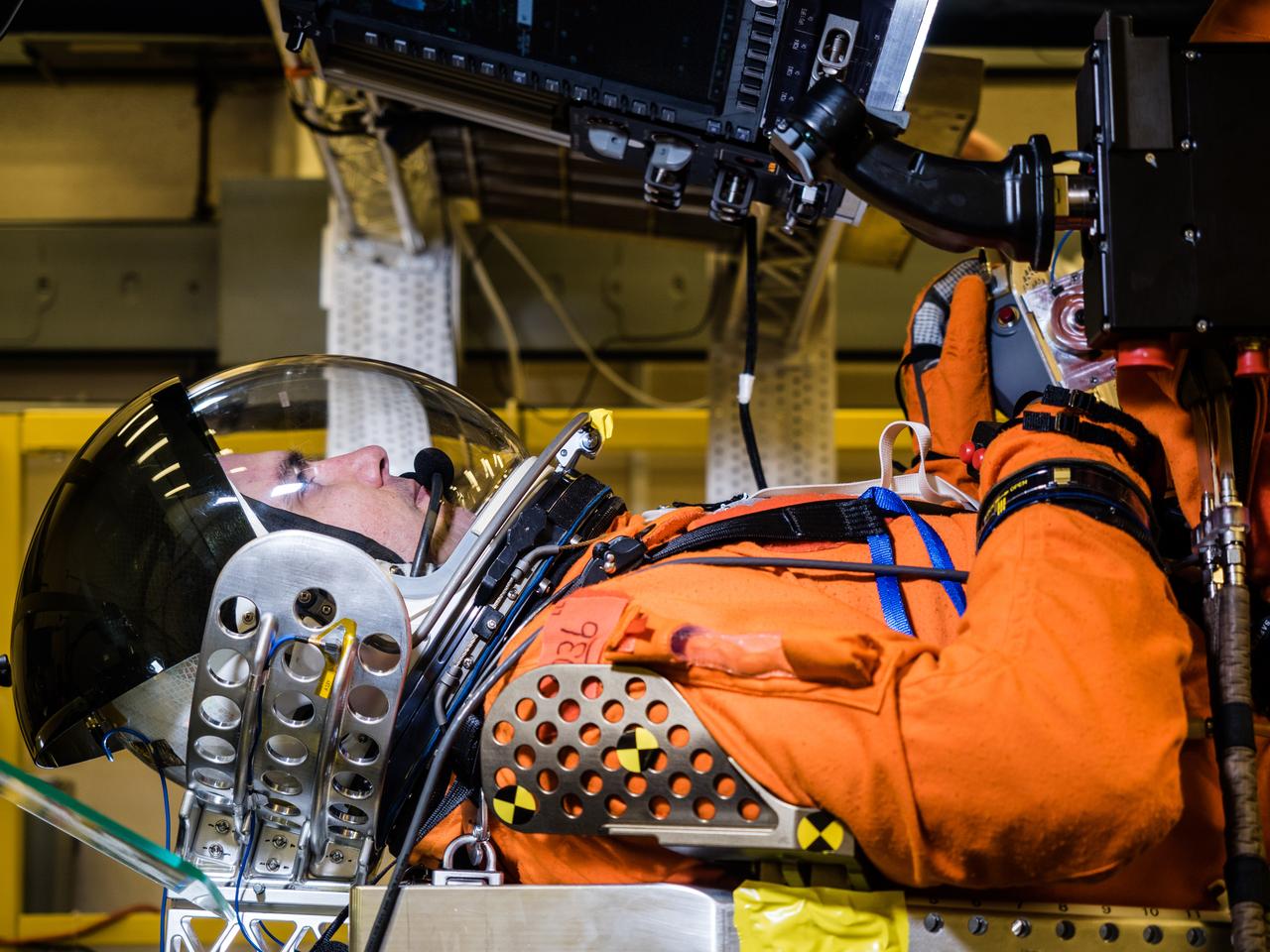
In a lab at NASA’s Johnson Space Center in Houston, engineers simulate conditions that astronauts in space suits would experience when the Orion spacecraft is vibrating during launch atop the agency’s powerful Space Launch System rocket on its way to deep space destinations on Jan. 19, 2017. A series of tests occurring this month at Johnson will help human factors engineers assess how well the crew can interact with the displays and controls they will use to monitor Orion’s systems and operate the spacecraft when necessary...Test subjects wore modified advanced crew escape suits that are being developed for astronauts in Orion, and sat in the latest design of the seat atop the crew impact attenuation system. This was the first time this key hardware was brought together to evaluate how launch vibrations may impact the astronaut’s ability to view the displays and controls.
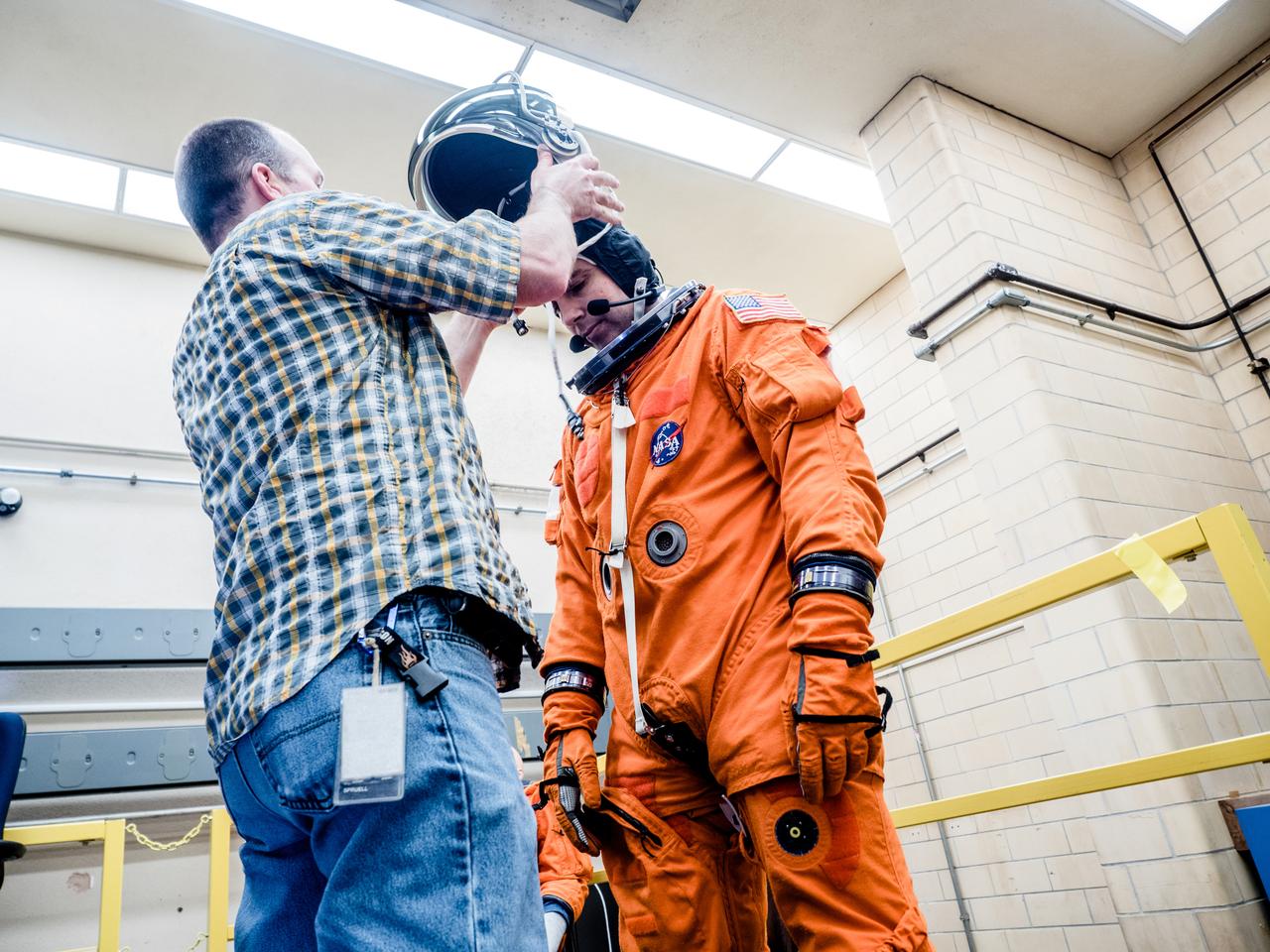
In a lab at NASA’s Johnson Space Center in Houston, engineers simulate conditions that astronauts in space suits would experience when the Orion spacecraft is vibrating during launch atop the agency’s powerful Space Launch System rocket on its way to deep space destinations on Jan. 19, 2017. A series of tests occurring this month at Johnson will help human factors engineers assess how well the crew can interact with the displays and controls they will use to monitor Orion’s systems and operate the spacecraft when necessary...Test subjects wore modified advanced crew escape suits that are being developed for astronauts in Orion, and sat in the latest design of the seat atop the crew impact attenuation system. This was the first time this key hardware was brought together to evaluate how launch vibrations may impact the astronaut’s ability to view the displays and controls.
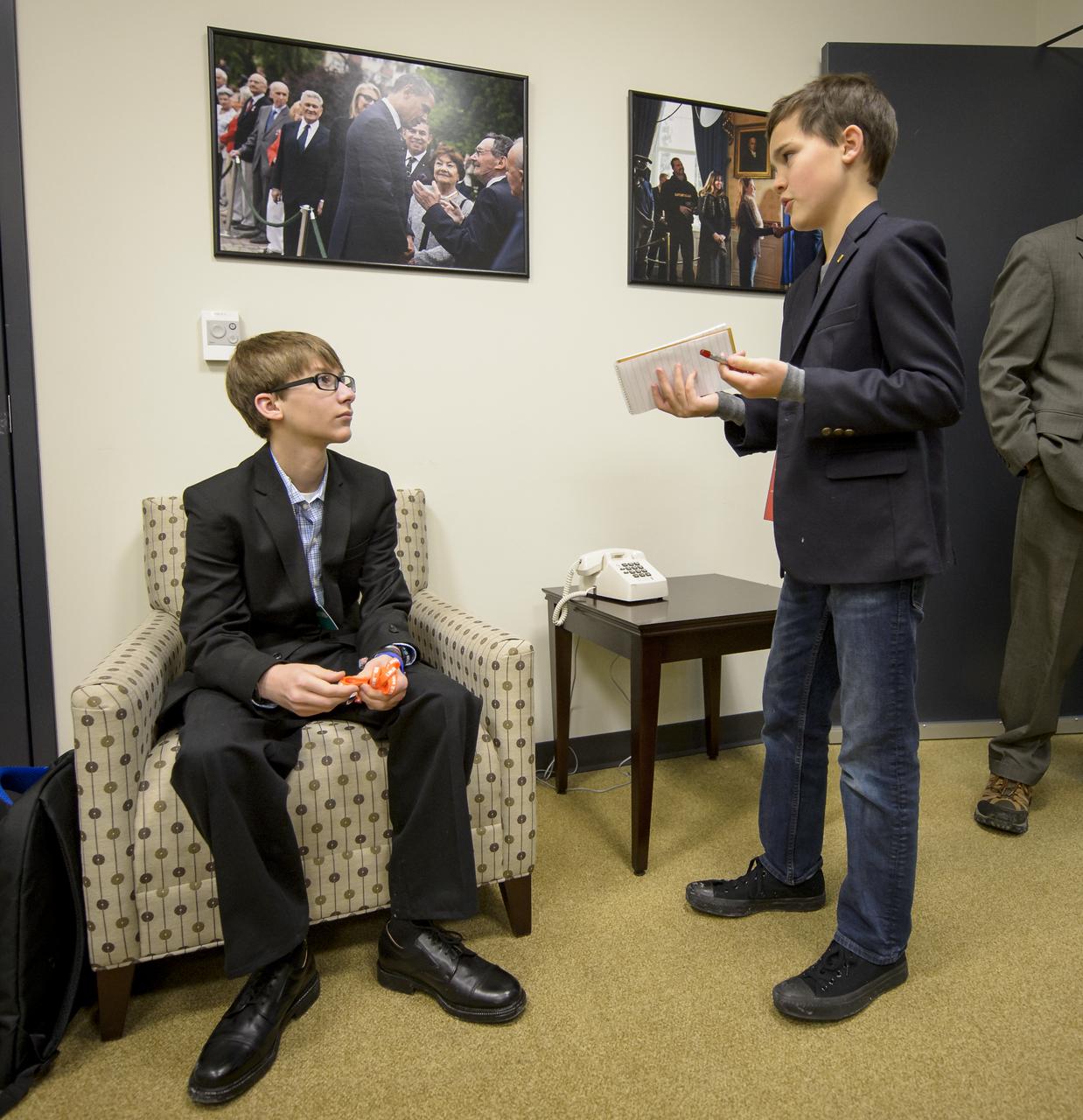
National Geographic Kids reporter Trevor Jehl, right, interviews Joey Hudy, Anthem, AZ, 16-year-old self-described “Maker” at the annual White House State of Science, Technology, Engineering, and Math (SoSTEM) address, Wednesday, Jan. 29, 2014, in the South Court Auditorium in the Eisenhower Executive Office Building on the White House complex in Washington. Joey sat with the First Lady at the President’s 2014 State of the Union Address after his first shot to fame in 2012 when he attended the White House Science Fair where the President took a turn using his “extreme marshmallow cannon” to launch a marshmallow across the East Room of the White House. Photo Credit: (NASA/Bill Ingalls)
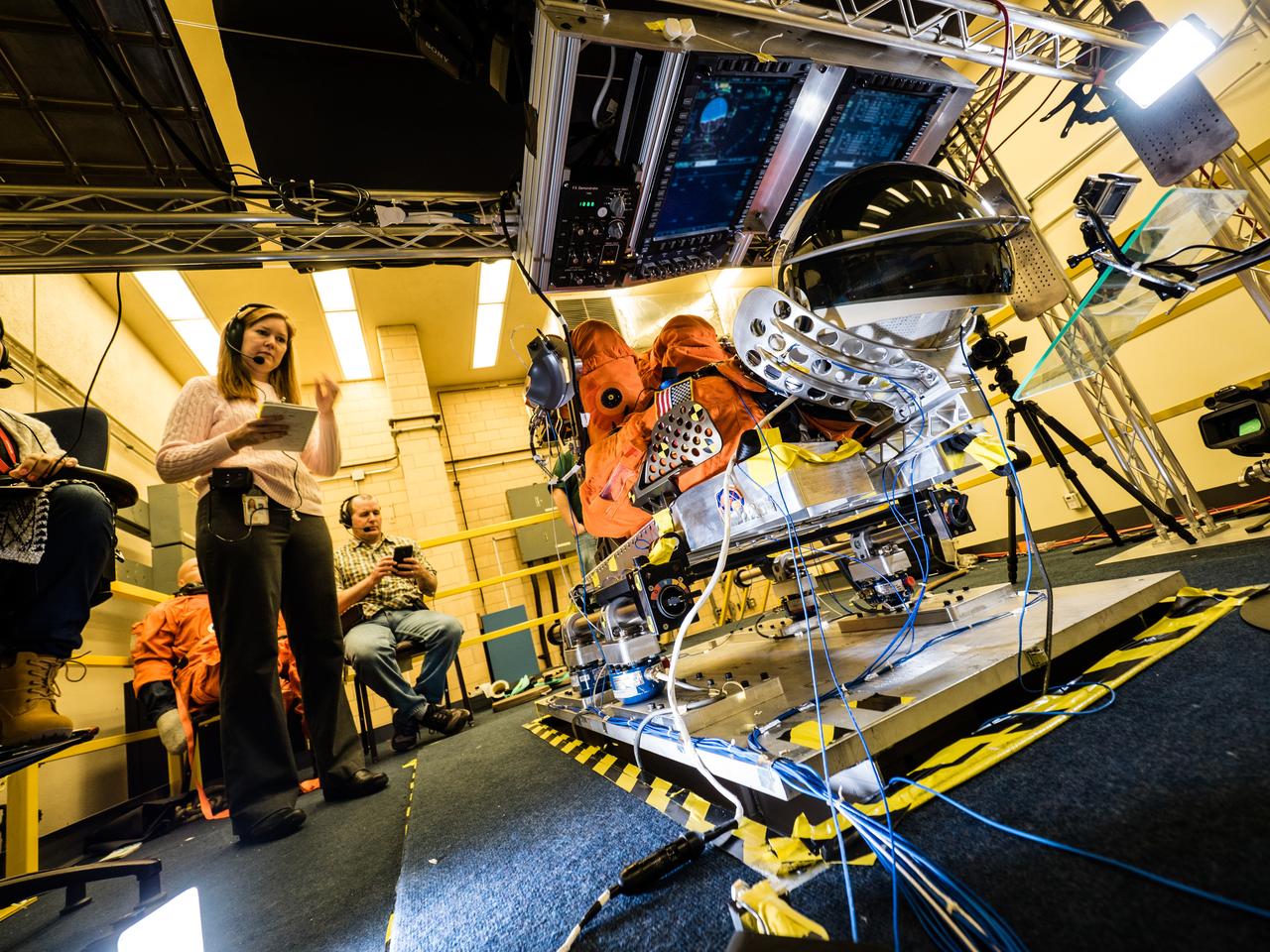
In a lab at NASA’s Johnson Space Center in Houston, engineers simulate conditions that astronauts in space suits would experience when the Orion spacecraft is vibrating during launch atop the agency’s powerful Space Launch System rocket on its way to deep space destinations on Jan. 19, 2017. A series of tests occurring this month at Johnson will help human factors engineers assess how well the crew can interact with the displays and controls they will use to monitor Orion’s systems and operate the spacecraft when necessary...Test subjects wore modified advanced crew escape suits that are being developed for astronauts in Orion, and sat in the latest design of the seat atop the crew impact attenuation system. This was the first time this key hardware was brought together to evaluate how launch vibrations may impact the astronaut’s ability to view the displays and controls.
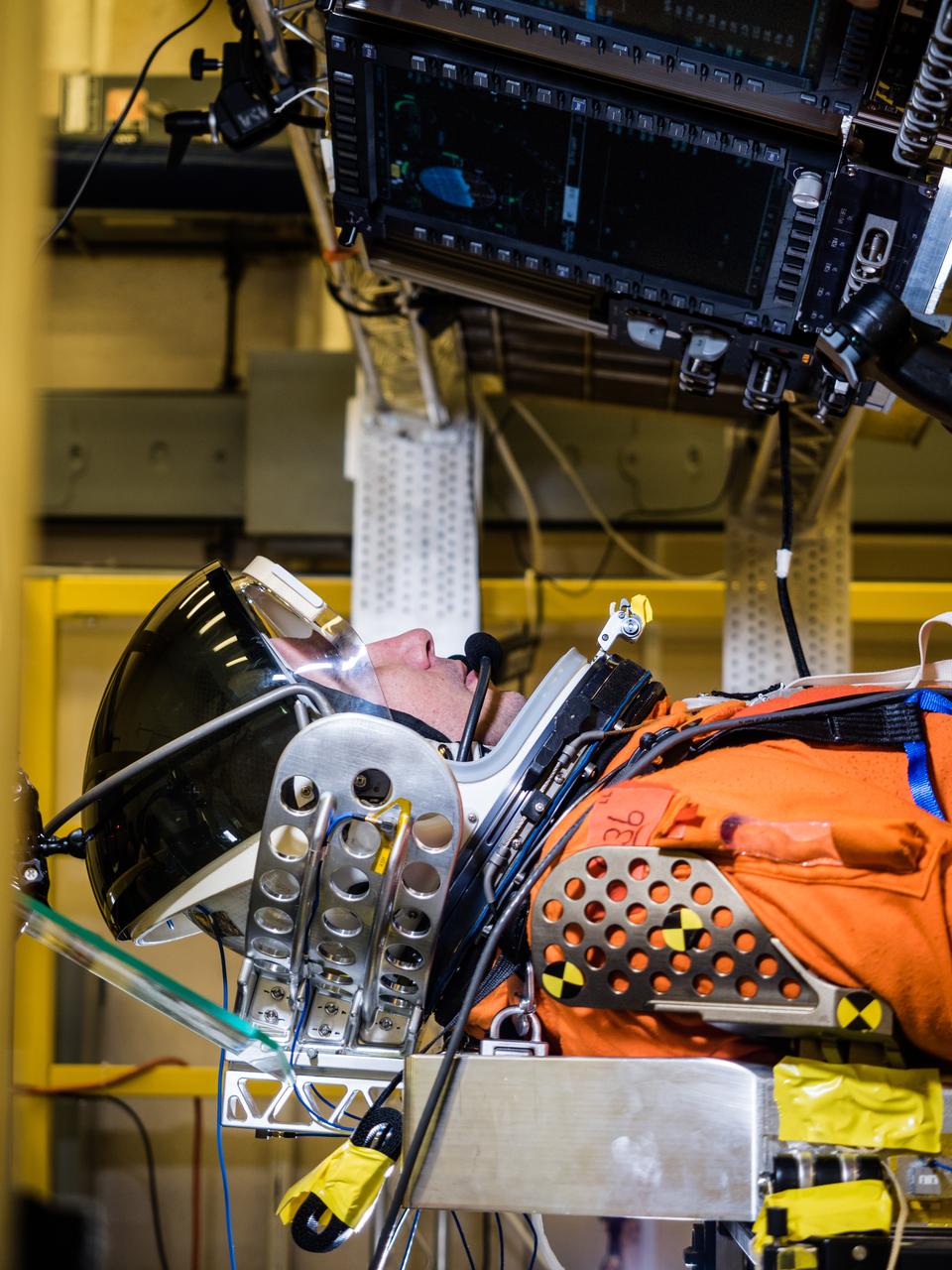
In a lab at NASA’s Johnson Space Center in Houston, engineers simulate conditions that astronauts in space suits would experience when the Orion spacecraft is vibrating during launch atop the agency’s powerful Space Launch System rocket on its way to deep space destinations on Jan. 19, 2017. A series of tests occurring this month at Johnson will help human factors engineers assess how well the crew can interact with the displays and controls they will use to monitor Orion’s systems and operate the spacecraft when necessary...Test subjects wore modified advanced crew escape suits that are being developed for astronauts in Orion, and sat in the latest design of the seat atop the crew impact attenuation system. This was the first time this key hardware was brought together to evaluate how launch vibrations may impact the astronaut’s ability to view the displays and controls.
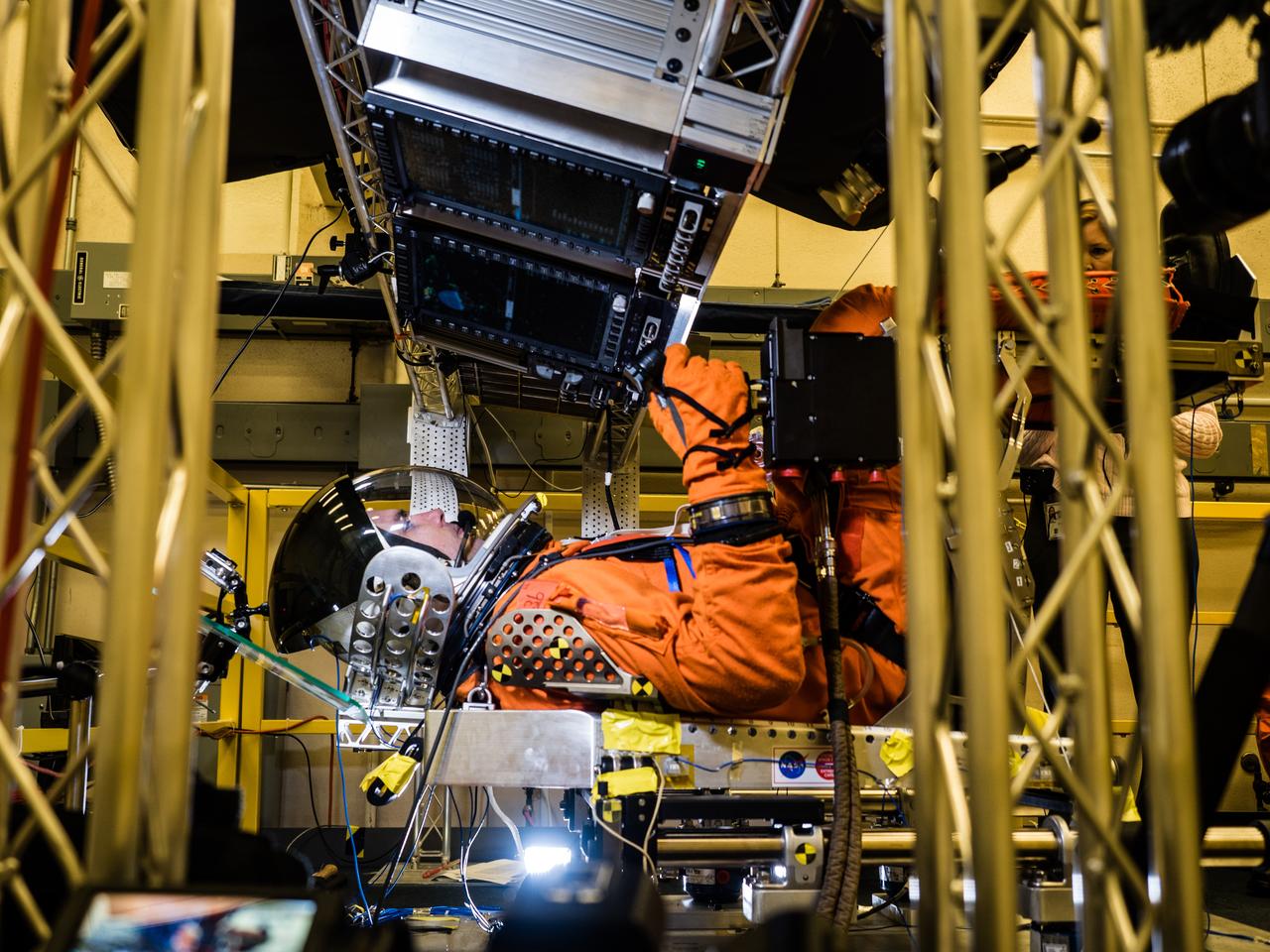
In a lab at NASA’s Johnson Space Center in Houston, engineers simulate conditions that astronauts in space suits would experience when the Orion spacecraft is vibrating during launch atop the agency’s powerful Space Launch System rocket on its way to deep space destinations on Jan. 19, 2017. A series of tests occurring this month at Johnson will help human factors engineers assess how well the crew can interact with the displays and controls they will use to monitor Orion’s systems and operate the spacecraft when necessary...Test subjects wore modified advanced crew escape suits that are being developed for astronauts in Orion, and sat in the latest design of the seat atop the crew impact attenuation system. This was the first time this key hardware was brought together to evaluate how launch vibrations may impact the astronaut’s ability to view the displays and controls.

In a lab at NASA’s Johnson Space Center in Houston, engineers simulate conditions that astronauts in space suits would experience when the Orion spacecraft is vibrating during launch atop the agency’s powerful Space Launch System rocket on its way to deep space destinations on Jan. 19, 2017. A series of tests occurring this month at Johnson will help human factors engineers assess how well the crew can interact with the displays and controls they will use to monitor Orion’s systems and operate the spacecraft when necessary...Test subjects wore modified advanced crew escape suits that are being developed for astronauts in Orion, and sat in the latest design of the seat atop the crew impact attenuation system. This was the first time this key hardware was brought together to evaluate how launch vibrations may impact the astronaut’s ability to view the displays and controls.
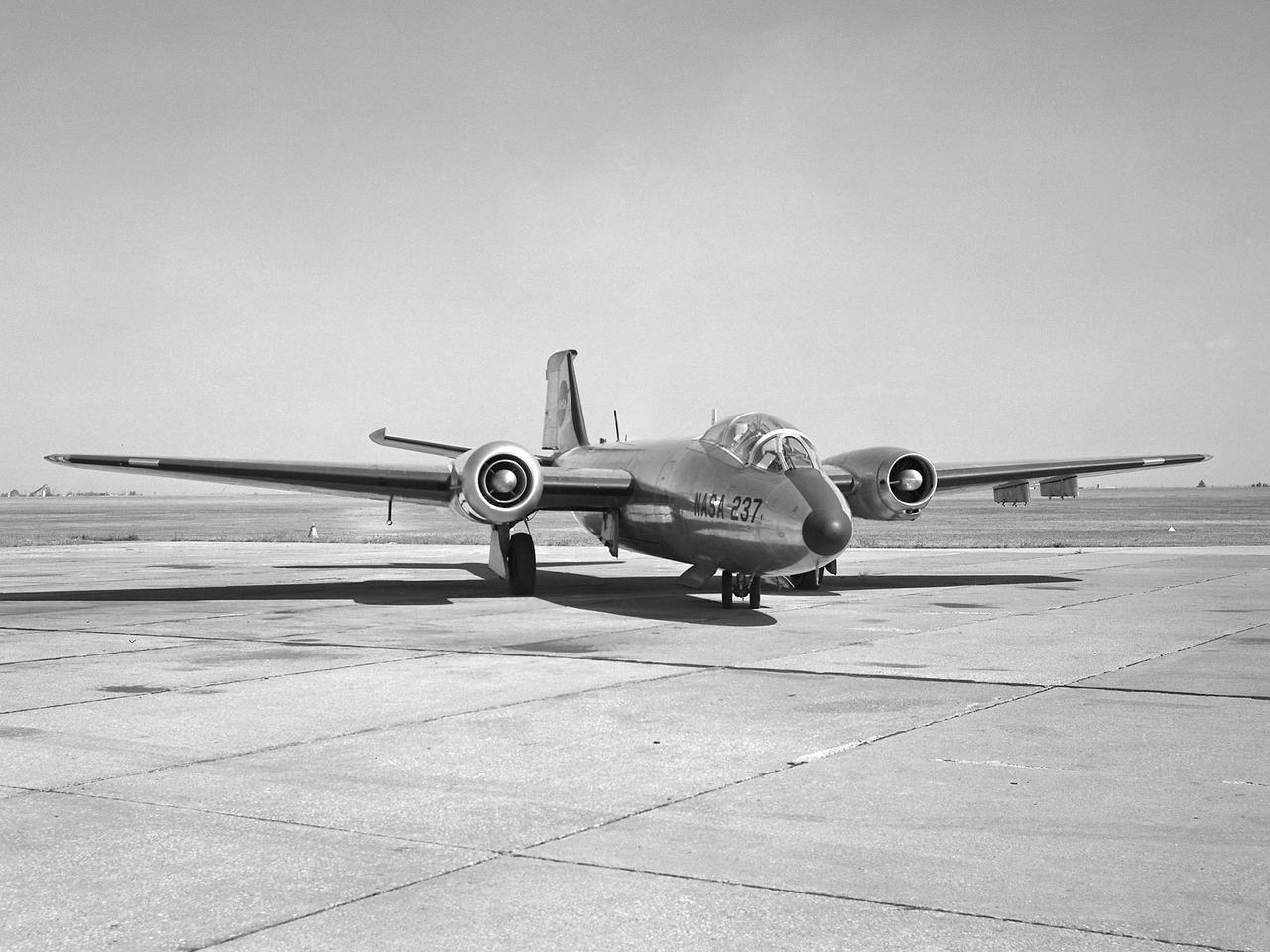
A Martin B-57B Canberra outfitted with a noise suppressor on its right engine at the National Aeronautics and Space Administration (NASA) Lewis Research Center. The aircraft was being prepared for the October 1966 Inspection of the center. The Inspection also marked Lewis’ twentieth anniversary. Lewis researchers had been studying engine noise for almost a decade, but the problem seemed to be increasing in the mid-1960s with heavier airline traffic and larger engines. Researchers discovered early on that the majority of the noise did not emanate from the engine itself, but from the mixing of the hot exhaust gasses with the atmosphere. Attempts to reduce the turbulence using new exhaust nozzles were successful but often resulted in decreased engine performance. The researchers decided to try to lower the jet nozzle exit velocity without decreasing its thrust. The inlet mass air flow had to be increased to accomplish this. The Lewis B-57B was powered by two Wright Aeronautical J65 turbojets. Lewis engineers modified the stators on the two engines to simulate the noise levels from more-modern turbofan engines. A noise suppressor was added to only one of the two engines, seen here on the left. The engines were run one at a time at power levels similar to landing while the aircraft sat on the Lewis hangar apron. A microphone and recording equipment was setup to capture the noise levels. The engine with the suppressor produced 13 fewer decibels than the standard engine.
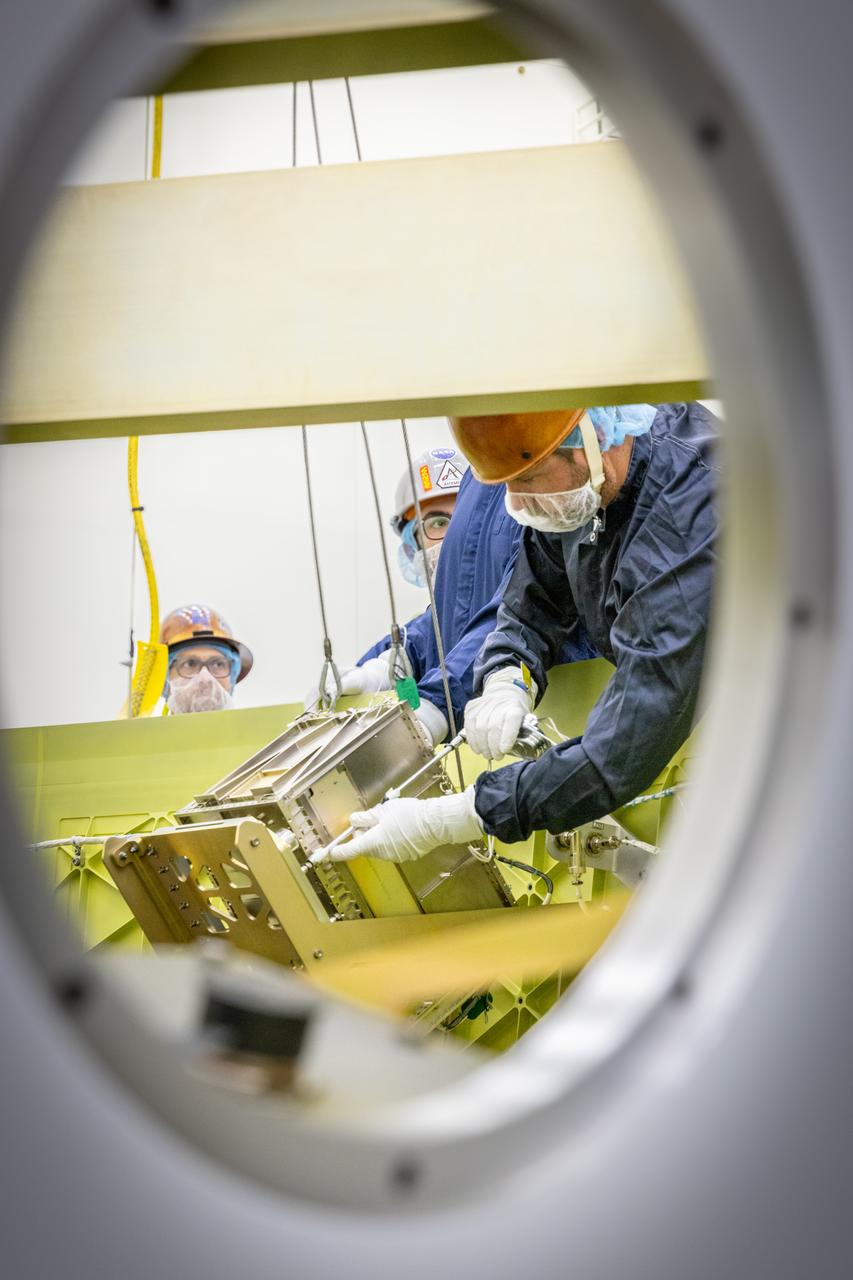
Technicians install the Korea AeroSpace Administration (KASA) K-Rad Cube within the Orion stage adapter inside the Multi-Payload Processing Facility at NASA’s Kennedy Space Center in Florida on Tuesday, Sept. 2, 2025. The K-Rad Cube, about the size of a shoebox, is one of the CubeSats slated to fly on NASA’s Artemis II test flight in 2026. Deploying in high Earth orbit from a spacecraft adapter on NASA’s SLS (Space Launch System) rocket after Orion is safely flying on its own with its crew of four astronauts, K-Rad Cube will use a dosimeter made of material designed to mimic human tissue to measure space radiation and assess biological effects at various altitudes across the Van Allen radiation belts, a critical area of research for human presence at the Moon and Mars.

NASA’s TRACERS (Tandem Reconnection and Cusp Electrodynamics Reconnaissance Satellites) mission launches at 11:13 a.m. PDT (2:13 p.m. EDT) on Wednesday, July 23, 2025, atop a SpaceX Falcon 9 rocket at Space Launch Complex 4 East at Vandenberg Space Force Base in California. The TRACERS mission will study magnetic reconnection around Earth — a process in which electrically charged plasmas exchange energy in the atmosphere — to understand how the Sun’s solar wind interacts with the magnetosphere, Earth’s protective magnetic shield.
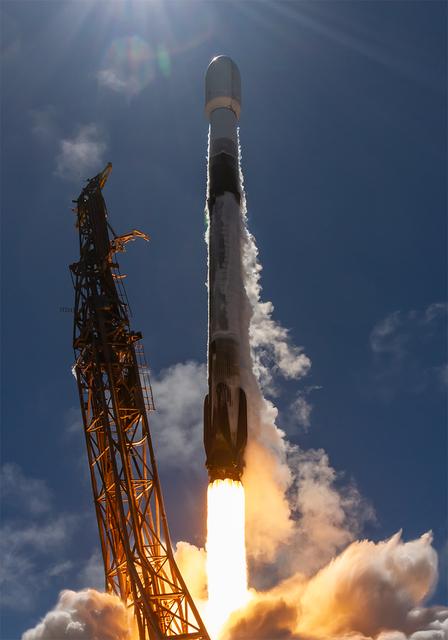
NASA’s TRACERS (Tandem Reconnection and Cusp Electrodynamics Reconnaissance Satellites) mission launches at 11:13 a.m. PDT (2:13 p.m. EDT) on Wednesday, July 23, 2025, atop a SpaceX Falcon 9 rocket at Space Launch Complex 4 East at Vandenberg Space Force Base in California. The TRACERS mission will study magnetic reconnection around Earth — a process in which electrically charged plasmas exchange energy in the atmosphere — to understand how the Sun’s solar wind interacts with the magnetosphere, Earth’s protective magnetic shield.

Technicians install the Korea AeroSpace Administration (KASA) K-Rad Cube within the Orion stage adapter inside the Multi-Payload Processing Facility at NASA’s Kennedy Space Center in Florida on Tuesday, Sept. 2, 2025. The K-Rad Cube, about the size of a shoebox, is one of the CubeSats slated to fly on NASA’s Artemis II test flight in 2026. Deploying in high Earth orbit from a spacecraft adapter on NASA’s SLS (Space Launch System) rocket after Orion is safely flying on its own with its crew of four astronauts, K-Rad Cube will use a dosimeter made of material designed to mimic human tissue to measure space radiation and assess biological effects at various altitudes across the Van Allen radiation belts, a critical area of research for human presence at the Moon and Mars.
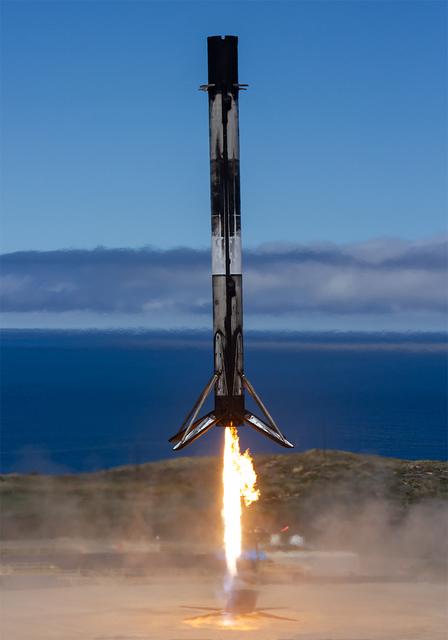
A SpaceX Falcon 9 first stage booster lands on Landing Zone 4 following liftoff of NASA’s TRACERS (Tandem Reconnection and Cusp Electrodynamics Reconnaissance Satellites) mission at Space Launch Complex 4 East at Vandenberg Space Force Base in California on Wednesday, July 23, 2025. This was the 16th flight for the first stage booster, which has previously launched these NASA missions - PACE (Plankton, Aerosol, Cloud, ocean Ecosystem, NASA’s SpaceX Crew-7, and Commercial Resupply Services-29. The TRACERS mission will study magnetic reconnection around Earth — a process in which electrically charged plasmas exchange energy in the atmosphere — to understand how the Sun’s solar wind interacts with the magnetosphere, Earth’s protective magnetic shield.