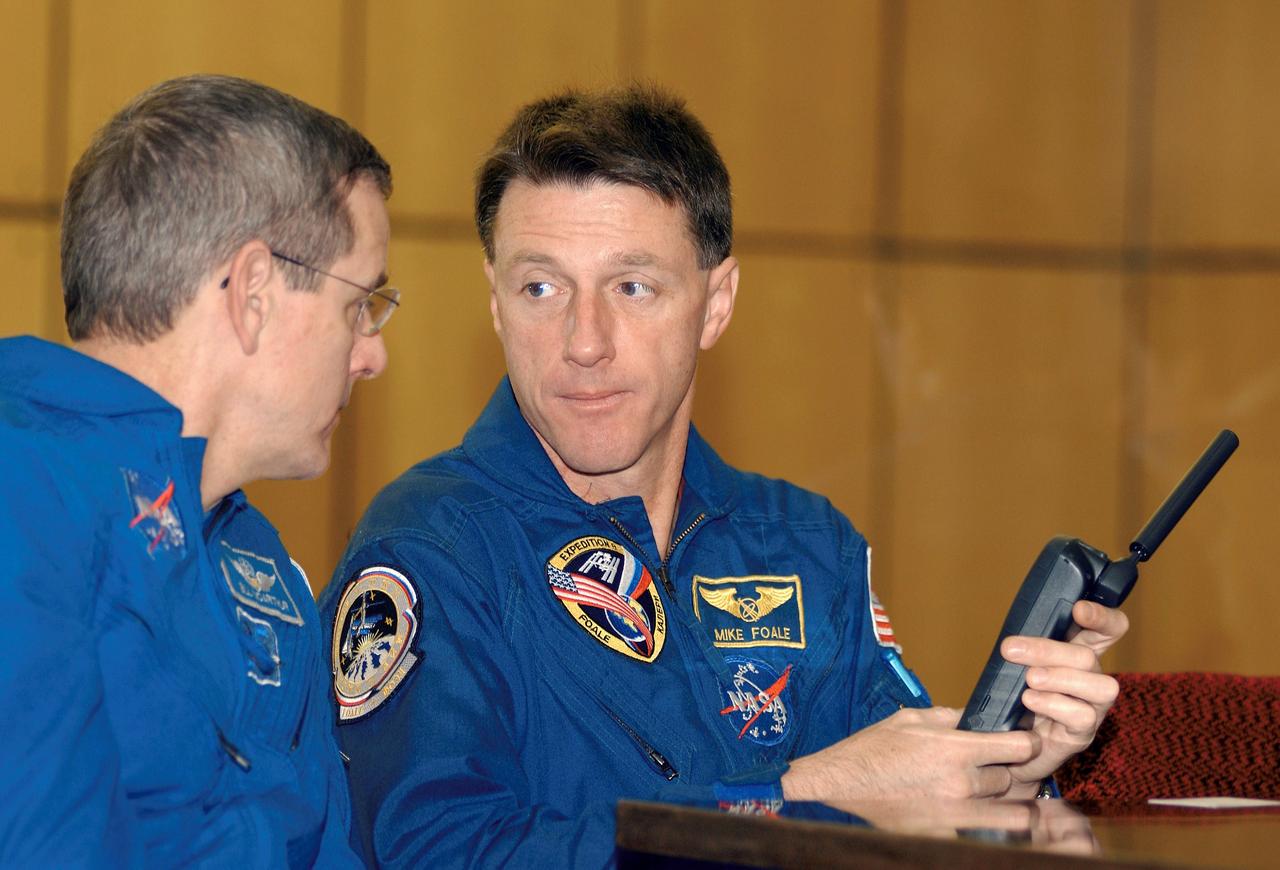
JSC2003-E-59139 (15 October 2003) --- Astronauts C. Michael Foale (right) and William S. (Bill) McArthur, Jr., prime and backup Expedition 8 mission commander and NASA ISS science officer, respectively, practice procedures with a satellite phone during final training at their crew quarters in Baikonur, Kazakhstan. Expedition 8 is scheduled to launch from the Baikonur Cosmodrome on October 18 onboard a Soyuz rocket to the International Space Station (ISS). Foale will be joined for launch by cosmonaut Alexander Y. Kaleri, Soyuz commander and flight engineer, and European Space Agency (ESA) astronaut Pedro Duque of Spain. Photo Credit: NASA/Bill Ingalls
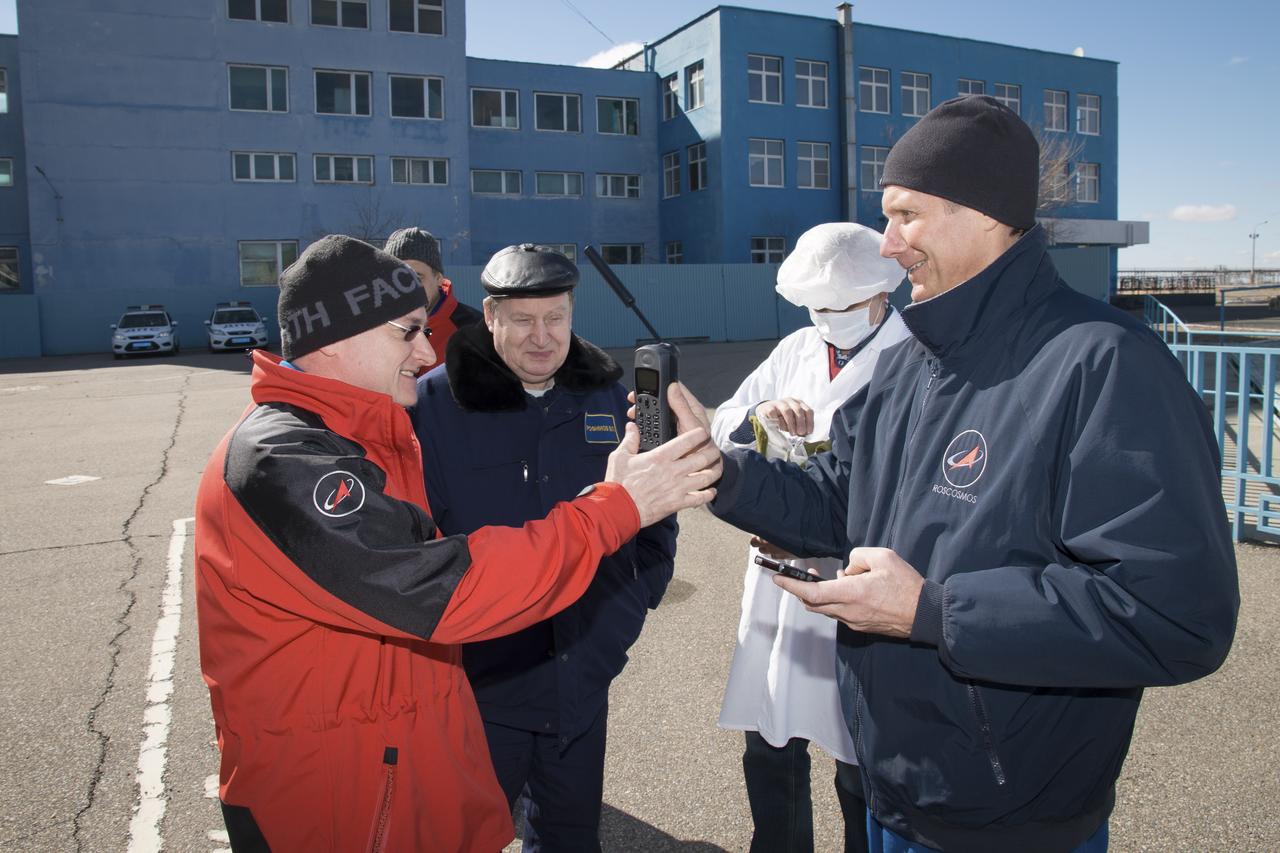
Expedition 43 NASA Astronaut Scott Kelly, left, and Russian Cosmonaut Gennady Padalka of the Russian Federal Space Agency (Roscosmos) take turns testing a satellite phone during their Soyuz TMA-16M spacecraft fit check with fellow crew member Mikhail Kornienko of Roscosmos, Sunday, March 15, 2015 at the Baikonur Cosmodrome in Kazakhstan. The trio are preparing for launch to the International Space Station in their Soyuz TMA-16M spacecraft from the Baikonur Cosmodrome in Kazakhstan March 28, Kazakh time. As the one-year crew, Kelly and Kornienko will return to Earth on Soyuz TMA-18M in March 2016. Photo Credit: (NASA/Victor Zelentsov)
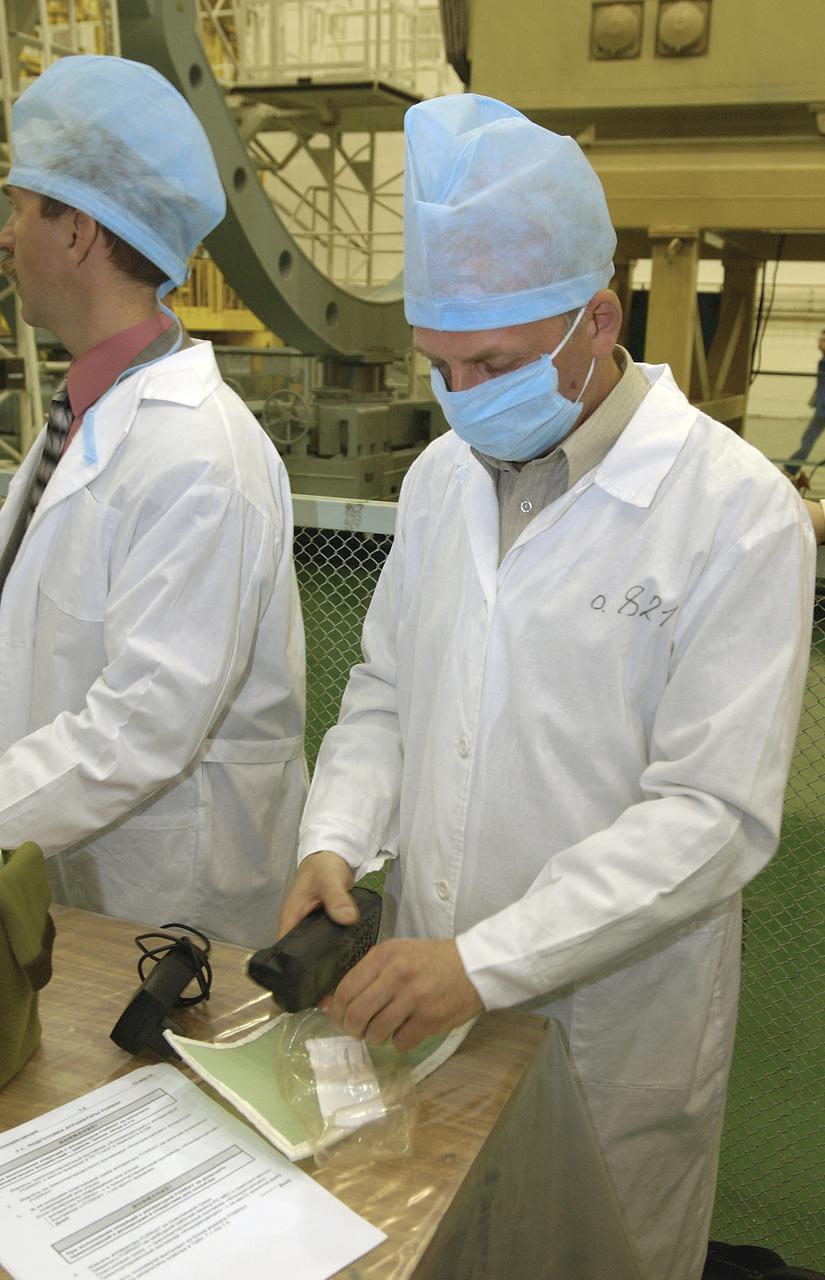
A technician at the Baikonur Cosmodrome packs a satellite phone after instructing the Expedition 9 crew on its use, Wednesday, April, 14, 2004, in Baikonur, Kazakhstan. Photo Credit: (NASA/Bill Ingalls)
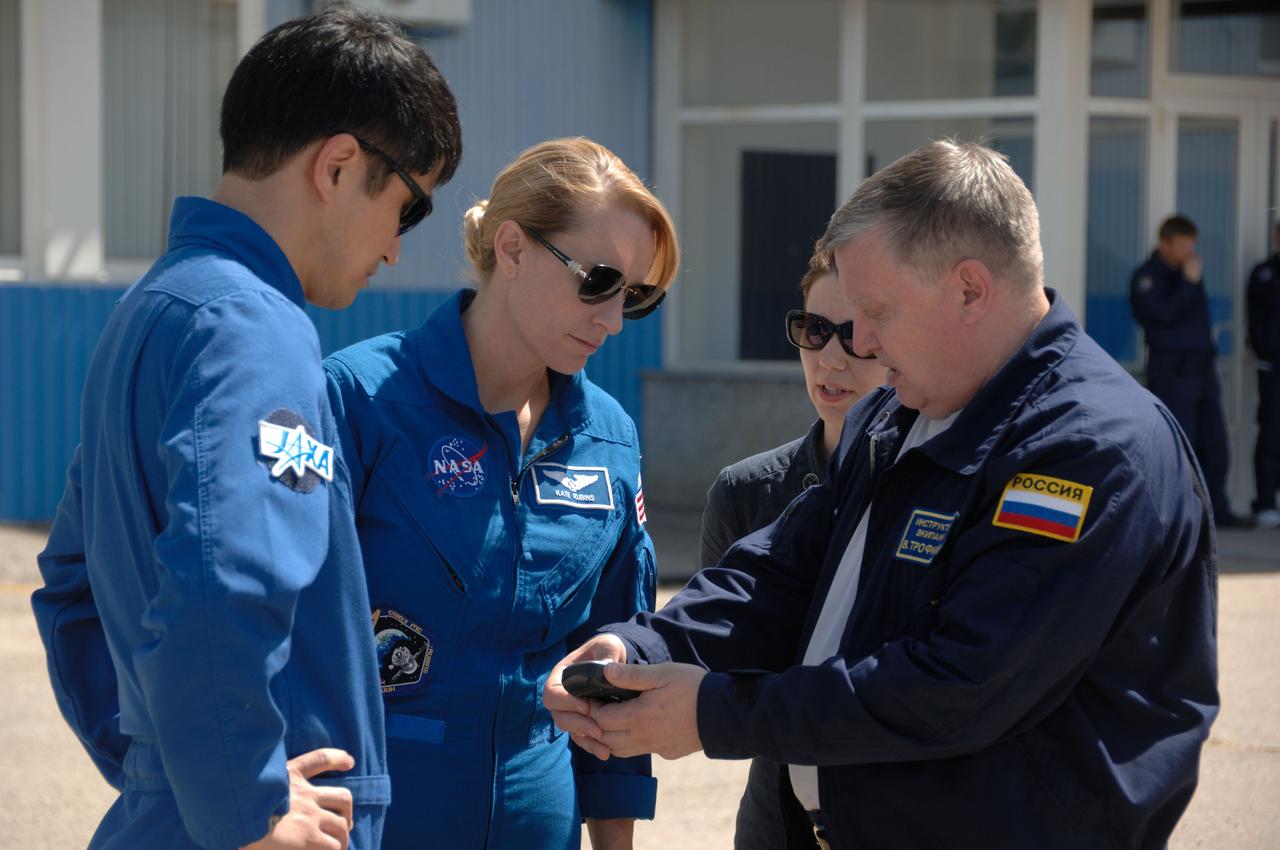
Outside the Integration Facility at the Baikonur Cosmodrome in Kazakhstan, Expedition 48-49 crewmembers Takuya Onishi of the Japan Aerospace Exploration Agency (left) and Kate Rubins of NASA (second from left) receive a briefing on the use of a satellite phone June 25 as they prepare for their launch with Anatoly Ivanishin of Roscosmos on July 7, Baikonur time, on the Soyuz MS-01 spacecraft for a planned four-month mission on the International Space Station. NASA/Alexander Vysotsky
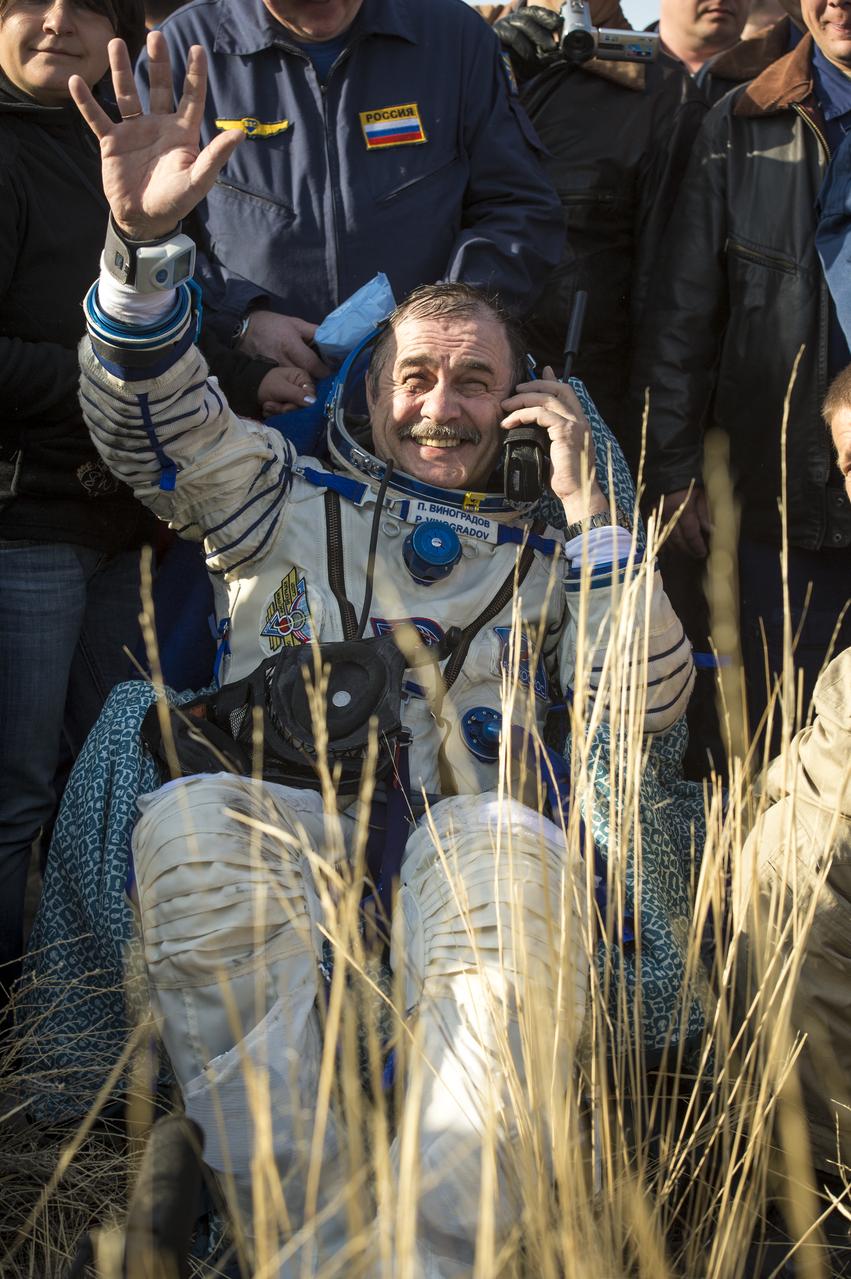
Expedition 36 Commander Pavel Vinogradov of the Russian Federal Space Agency (Roscosmos) talks to his family via satellite phone after he and, Flight Engineer Alexander Misurkin of Roscosmos and Flight Engineer Chris Cassidy of NASA landed their Soyuz TMA-08M spacecraft in a remote area near the town of Zhezkazgan, Kazakhstan, on Wednesday, Sept. 11, 2013. Vinogradov, Misurkin and Cassidy returned to Earth after five and a half months on the International Space Station. Photo Credit: (NASA/Bill Ingalls)
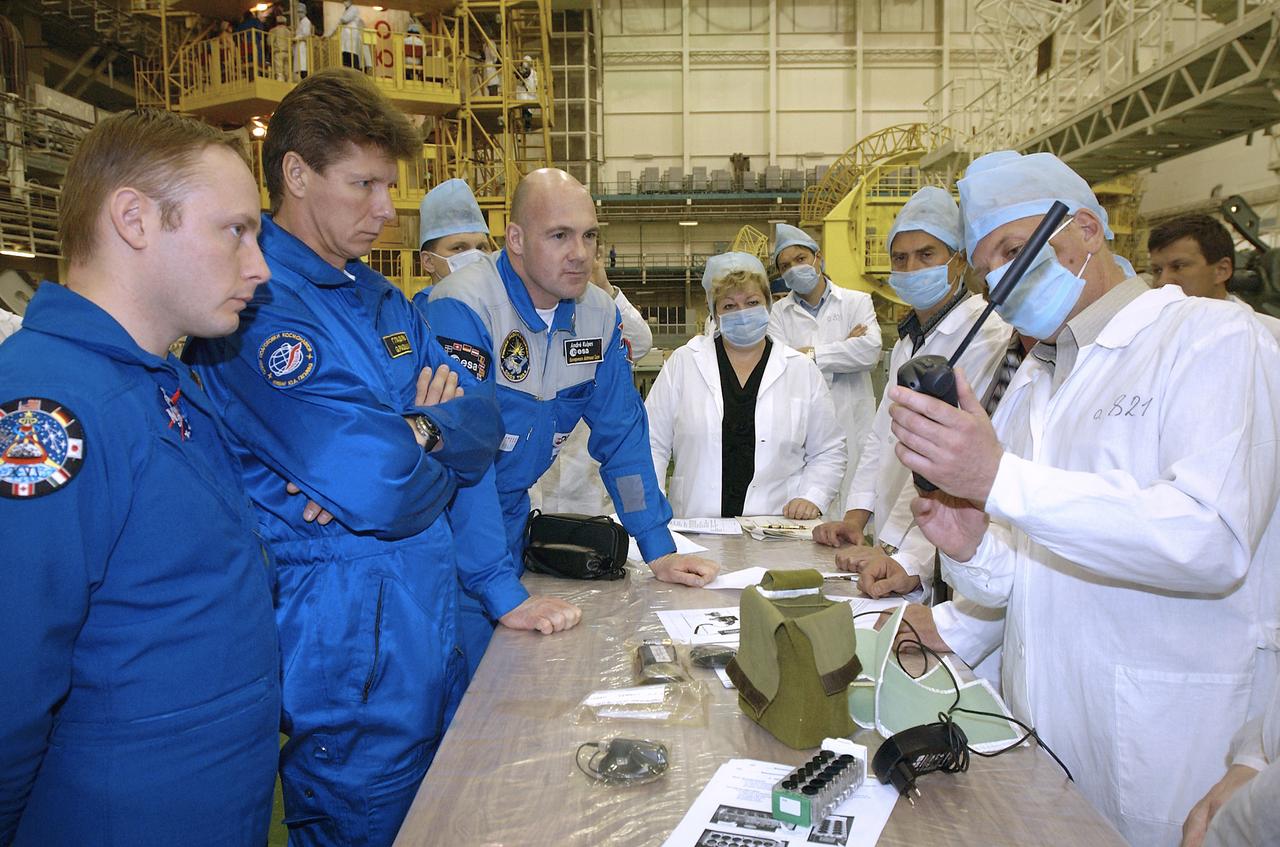
Expedition 9 Science Officer and Flight Engineer Mike Fincke, left, Expedition 9 Commander Gennady Padalka, second from left and Flight Engineer and European Space Agency astronaut Andre Kuipers of the Netherlands listen to instructions on satellite phone and GPS use at building 254 at Baikonur Cosmodrome Wednesday, April 14, 2004, in Baikonur, Kazakhstan. Photo Credit: (NASA/Bill Ingalls)
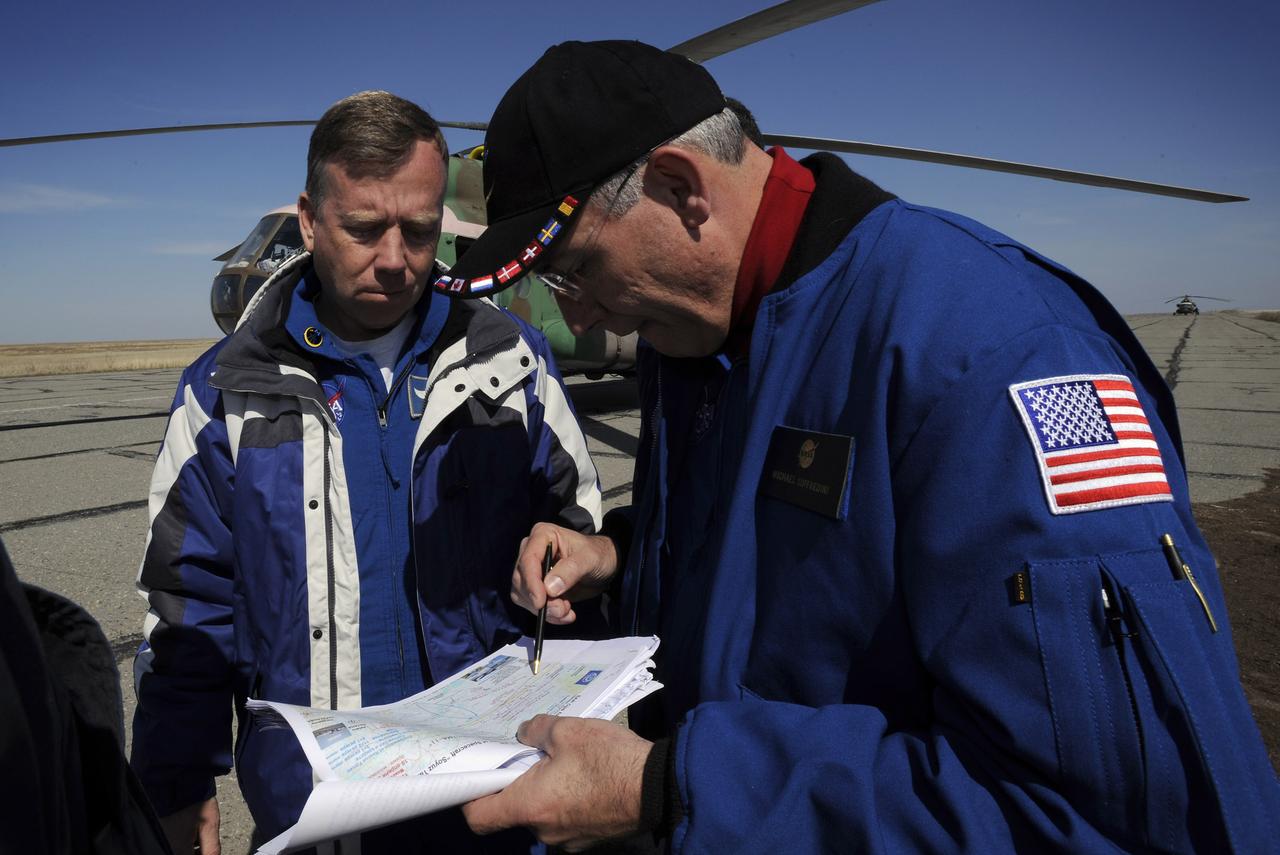
Steve Lindsey, Chief of NASA's Astronaut office, left, and Michael Sufferdini, International Station Program Manager, examine a map of central Kazakhstan as they received information at the Arkalyk airport April 19, 2008 on the landing of the Expedition 16 crew in the Soyuz TMA-11 capsule. The Soyuz made a ballistic landing, touching down more then 400 kilometers short of the intended target, but the crew reported by satellite phone to recovery forces that they were in good shape. Photo Credit: (NASA/Bill Ingalls)
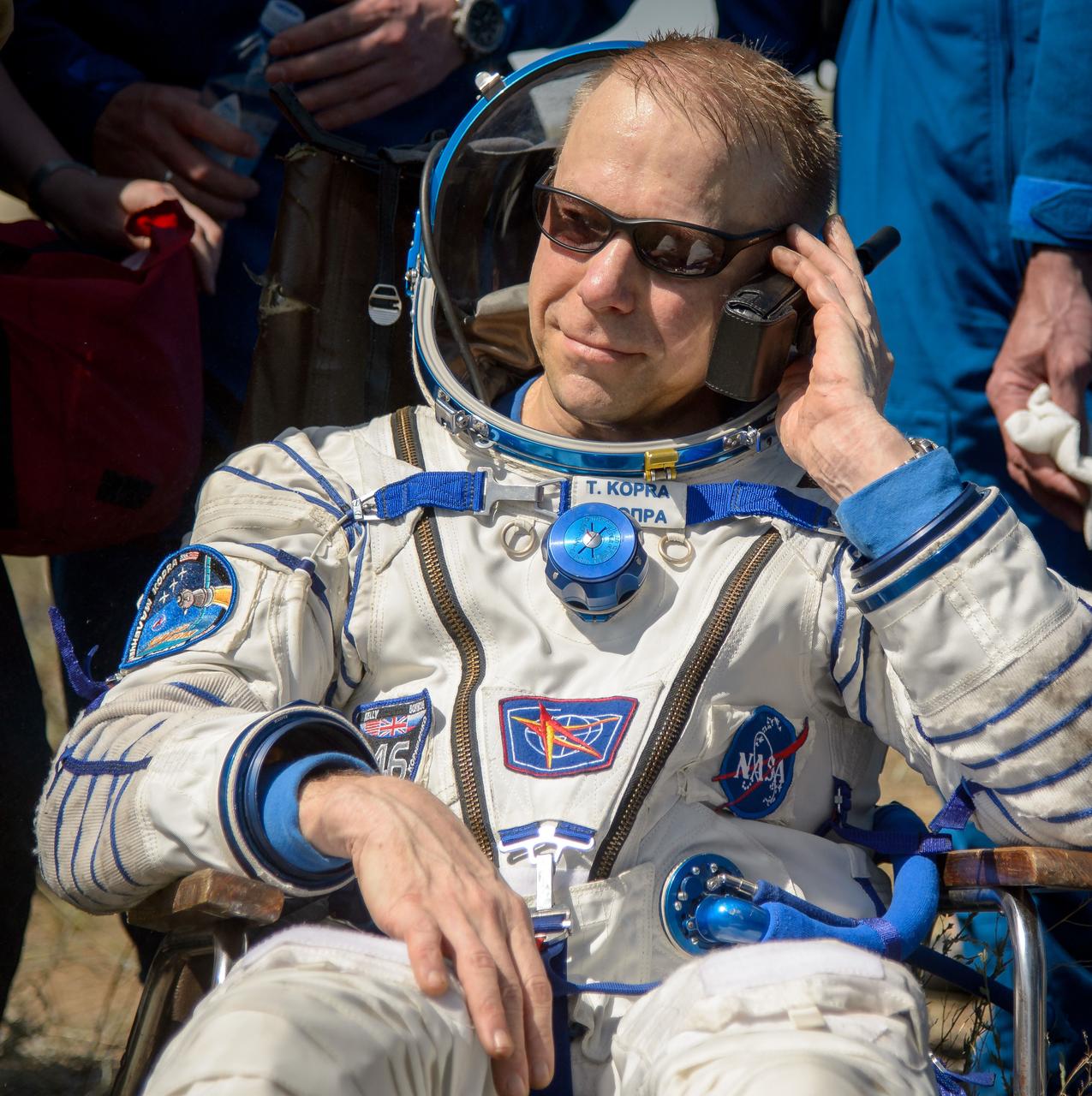
Tim Kopra of NASA talks on a satellite phone outside the Soyuz TMA-19M spacecraft just minutes after he and Yuri Malenchenko of Roscosmos and Tim Peake of the European Space Agency landed in a remote area near the town of Zhezkazgan, Kazakhstan on Saturday, June 18, 2016. Kopra, Peake, and Malenchenko are returning after six months in space where they served as members of the Expedition 46 and 47 crews onboard the International Space Station. Photo Credit: (NASA/Bill Ingalls)
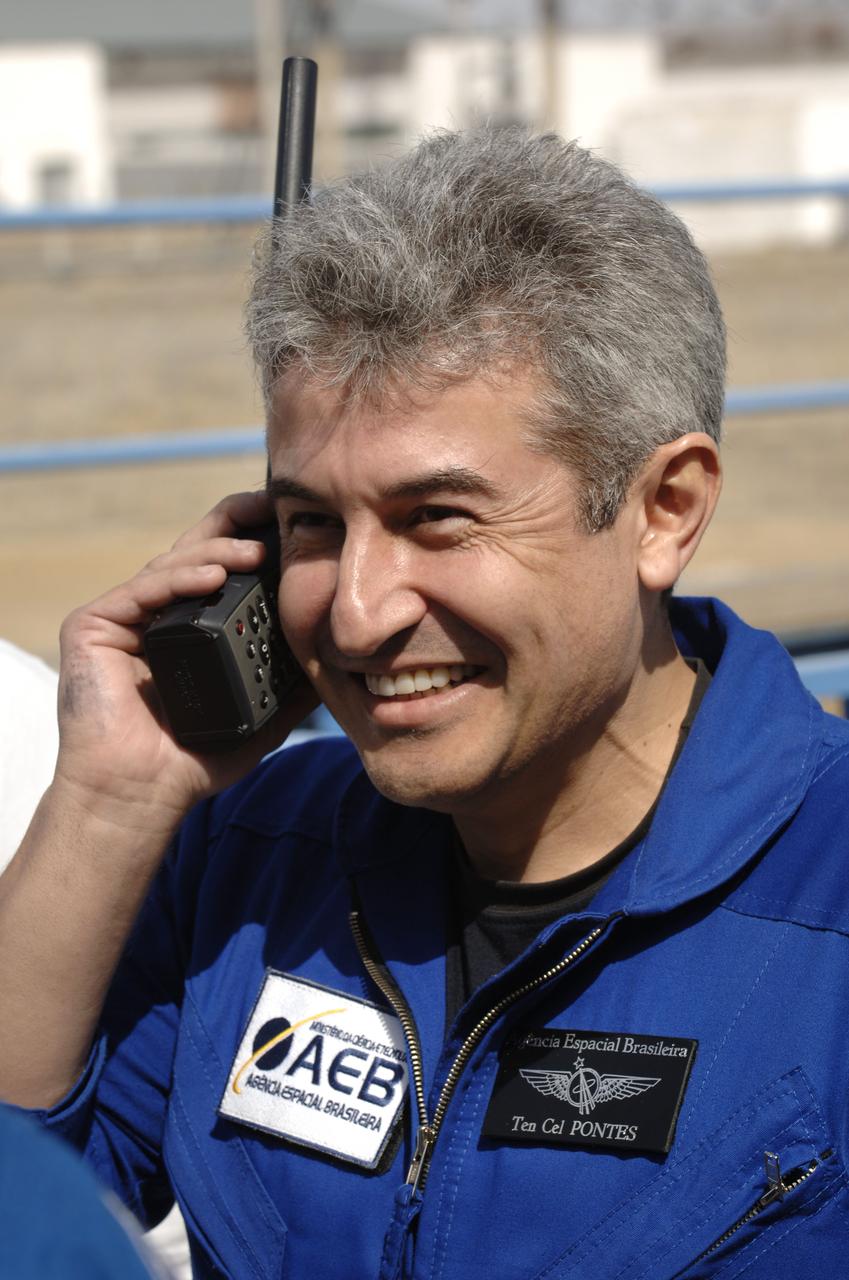
Marcos Pontes, Brazilian Space Agency Soyuz crew member who will spend 10 days aboard the International Space Station under an agreement with the Russian Federal Space Agency, uses a satellite phone after crew members' final check of the Soyuz at building 254 of the Baikonur Cosmodrome in Baikonur, Kazakhstan. Sunday, March 26, 2006. Photo Credit: (NASA/Bill Ingalls)
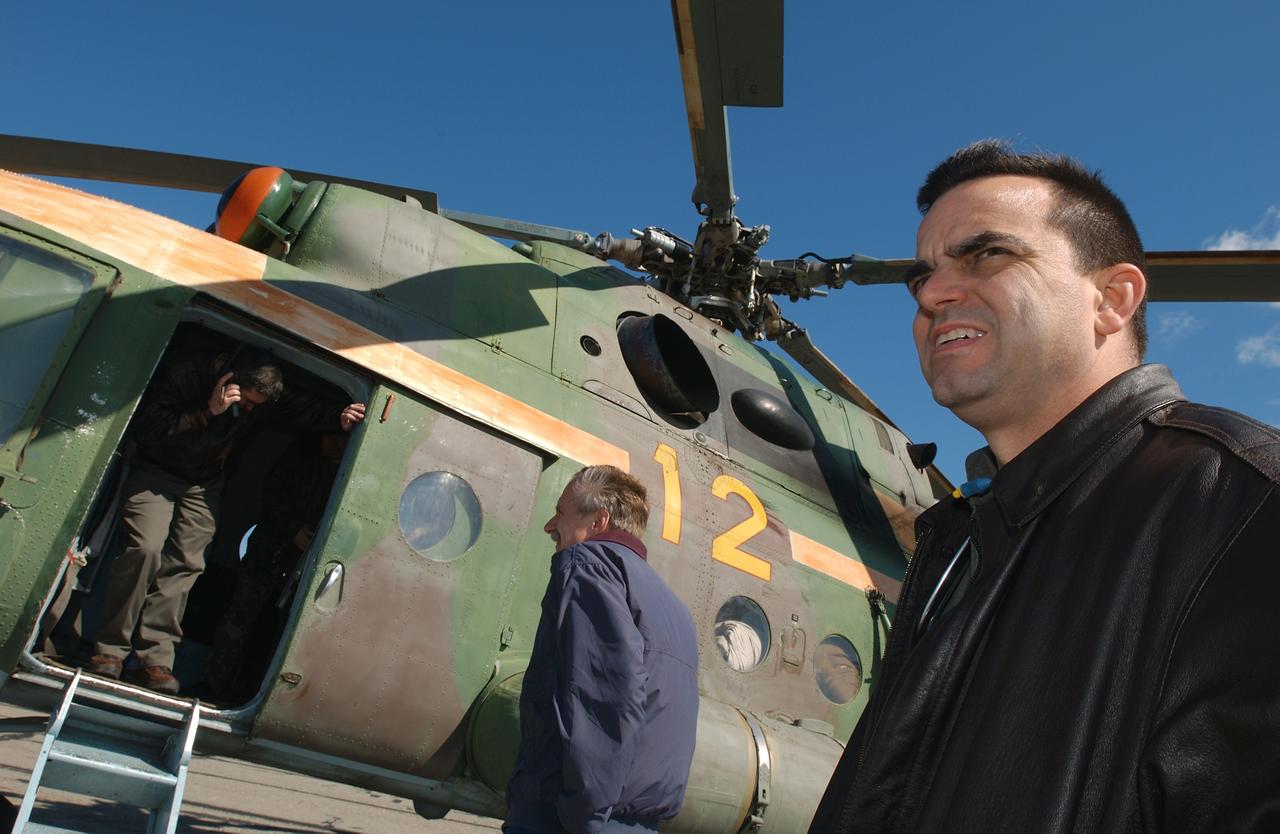
May 4, 2003, Kazakhstan. Bob Cabana (L in door), Director of Flight Crew Operations talks with NASA colleagues on the satellite phone from a Russian helicopter while Bill Gerstenmaier (center), I.S.S. Program Manager and J.D. Polk (R), Expedition Six Flight Surgeon wait to get word if they will be continuing on to the landing site after a refueling stop. Photo Credit: "NASA/Bill Ingalls"
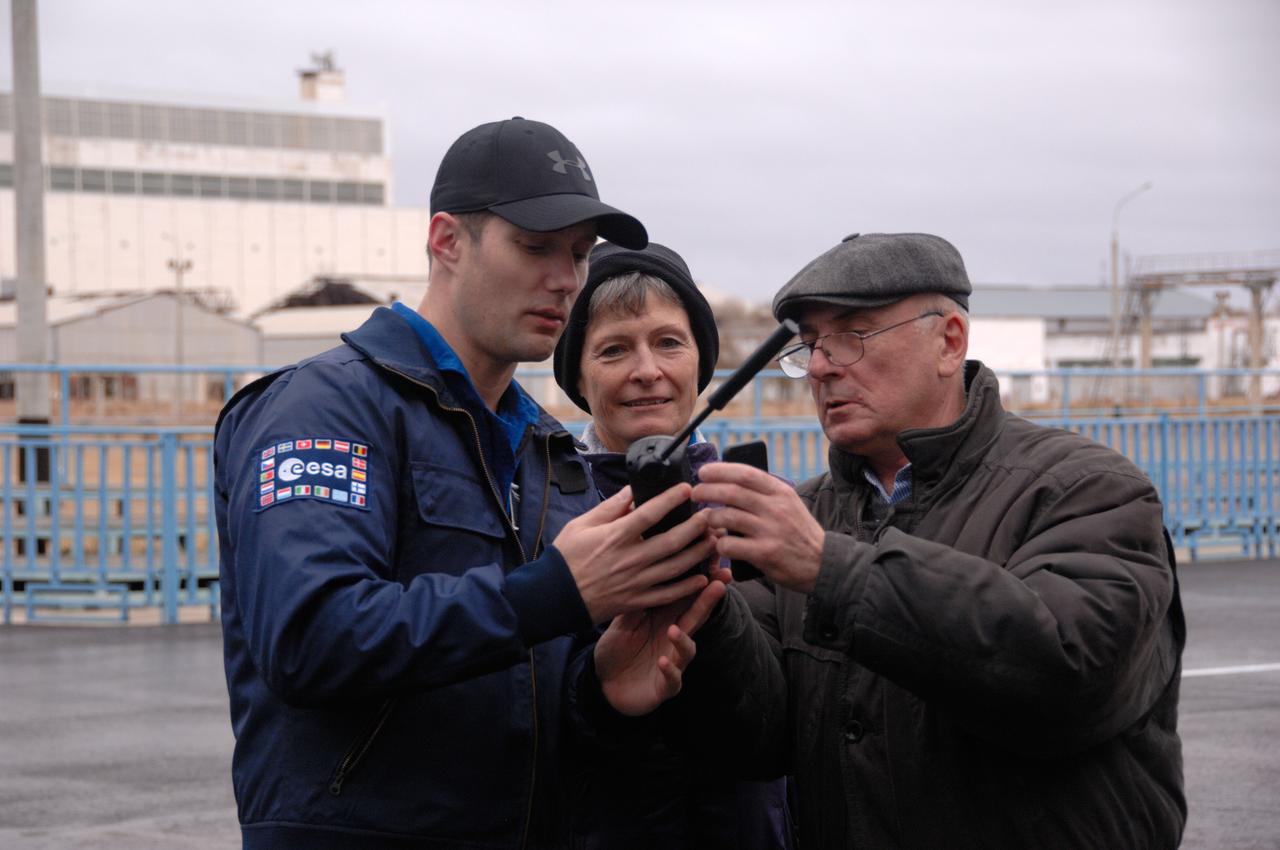
Outside the Integration Facility at the Baikonur Cosmodrome in Kazakhstan, Expedition 50-51 crewmembers Thomas Pesquet of the European Space Agency (left) and Peggy Whitson of NASA (center) take lessons from an unidentified Russian technician on the use of a satellite phone Nov. 2 during pre-launch training. Whitson, Pesquet and Oleg Novitskiy of the Russian Federal Space Agency (Roscosmos) will launch Nov. 18, Baikonur time, on the Soyuz MS-03 spacecraft for a six-month mission on the International Space Station. NASA/Alexander Vysotsky
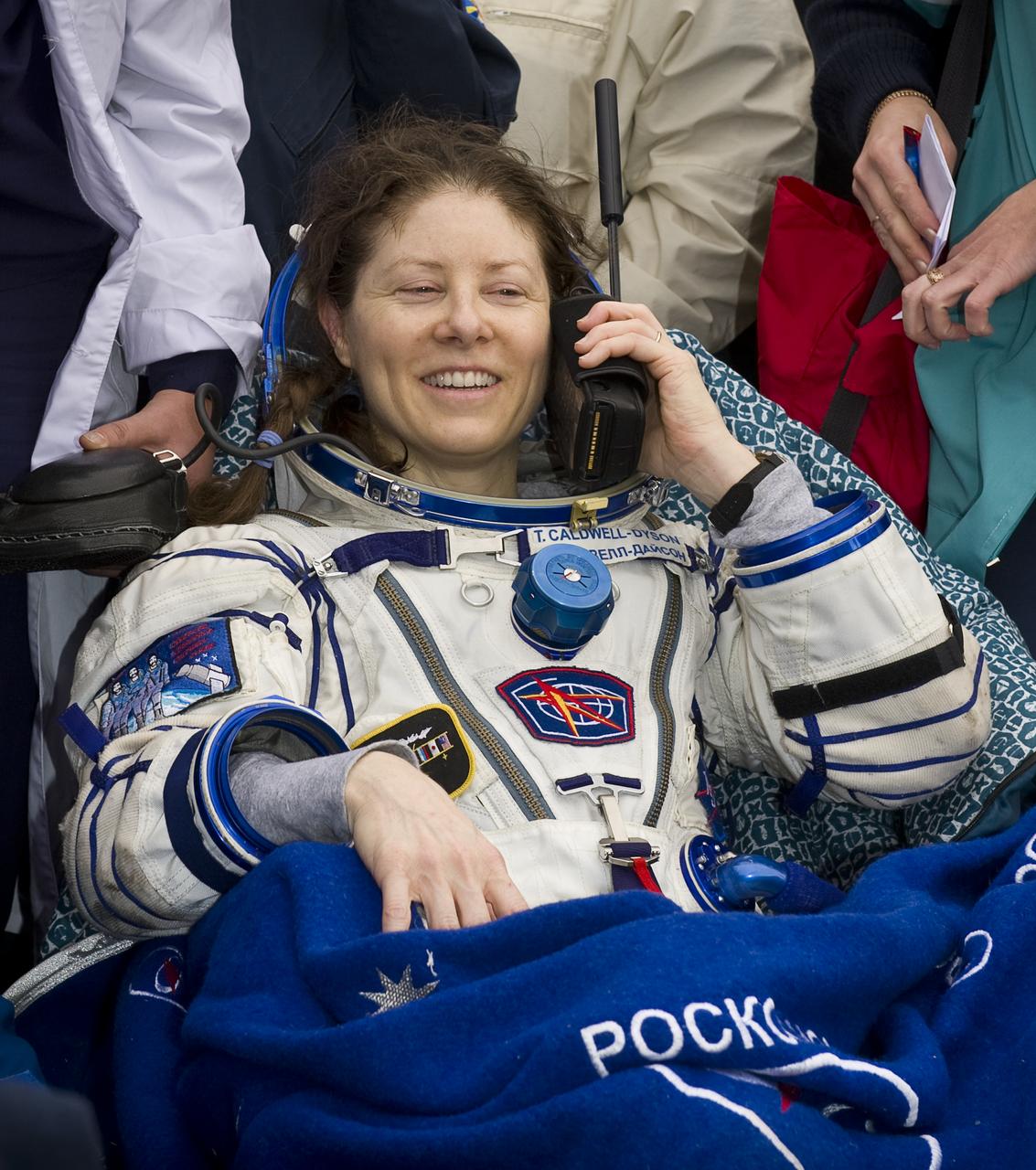
Expedition 24 Flight Engineer Tracy Caldwell Dyson talks to her husband on a satellite phone shortly after landing in the Soyuz TMA-18 spacecraft with fellow crew members Commander Alexander Skvortsov and Mikhail Kornienko near the town of Arkalyk, Kazakhstan on Saturday, Sept. 25, 2010. Russian Cosmonauts Skvortsov and Kornienko and NASA Astronaut Caldwell Dyson, are returning from six months onboard the International Space Station where they served as members of the Expedition 23 and 24 crews. Photo Credit: (NASA/Bill Ingalls)
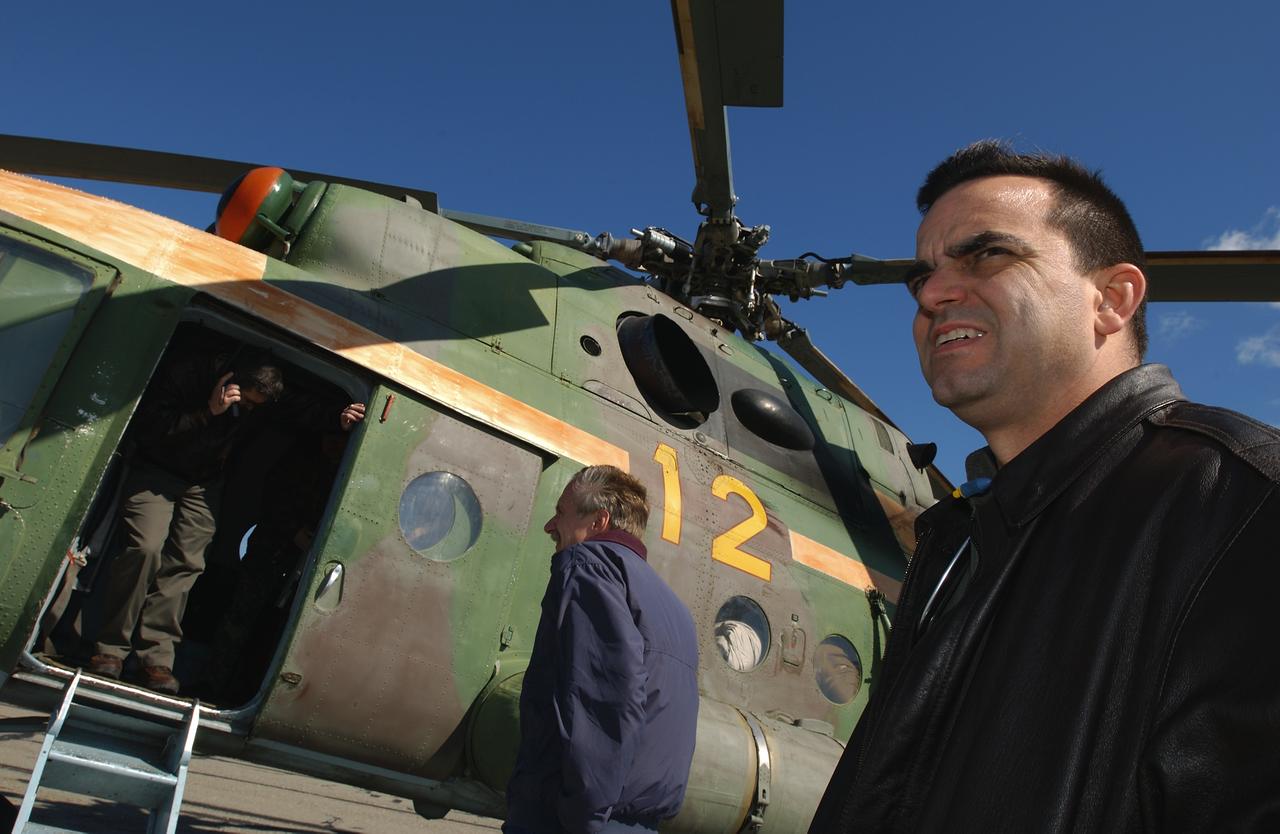
Director of Flight Crew Operations Bob Cabana, upper left, talks with NASA colleagues on the satellite phone from a Russian helicopter while International Space Station Program Manager, William Gerstenmaier and J.D. Polk, Expedition 6 Flight Surgeon, right, wait to get word if they will be continuing on to the landing site after a refueling stop, Tuesday, May 4, 2003 in Kazakhstan. Photo Credit: (NASA/Bill Ingalls)
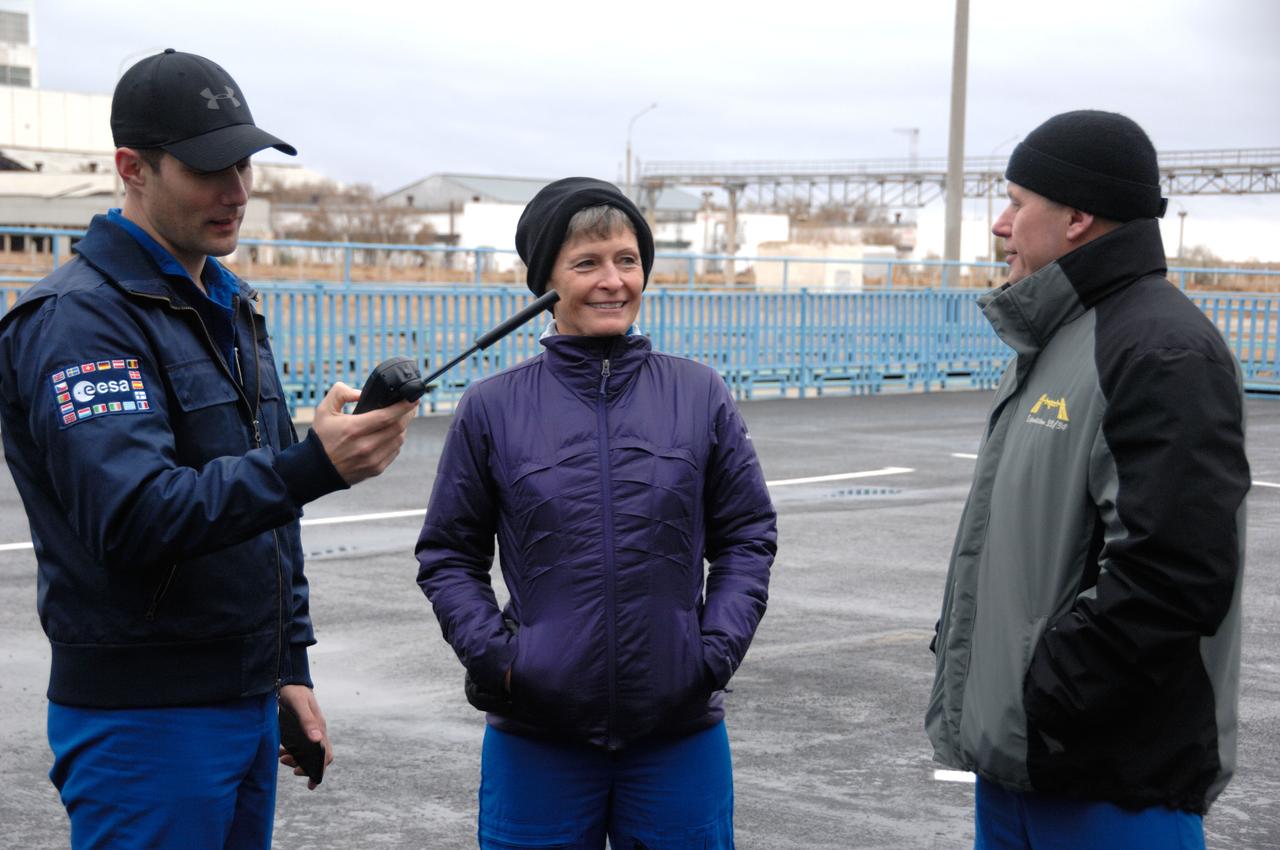
Outside the Integration Facility at the Baikonur Cosmodrome in Kazakhstan, Expedition 50-51 crewmembers Thomas Pesquet of the European Space Agency (left), Peggy Whitson of NASA (center) and Oleg Novitskiy of the Russian Federal Space Agency (Roscosmos, right) practice with a satellite phone Nov. 2 during pre-launch training. They will launch Nov. 18, Baikonur time, on the Soyuz MS-03 spacecraft for a six-month mission on the International Space Station. NASA/Alexander Vysotsky
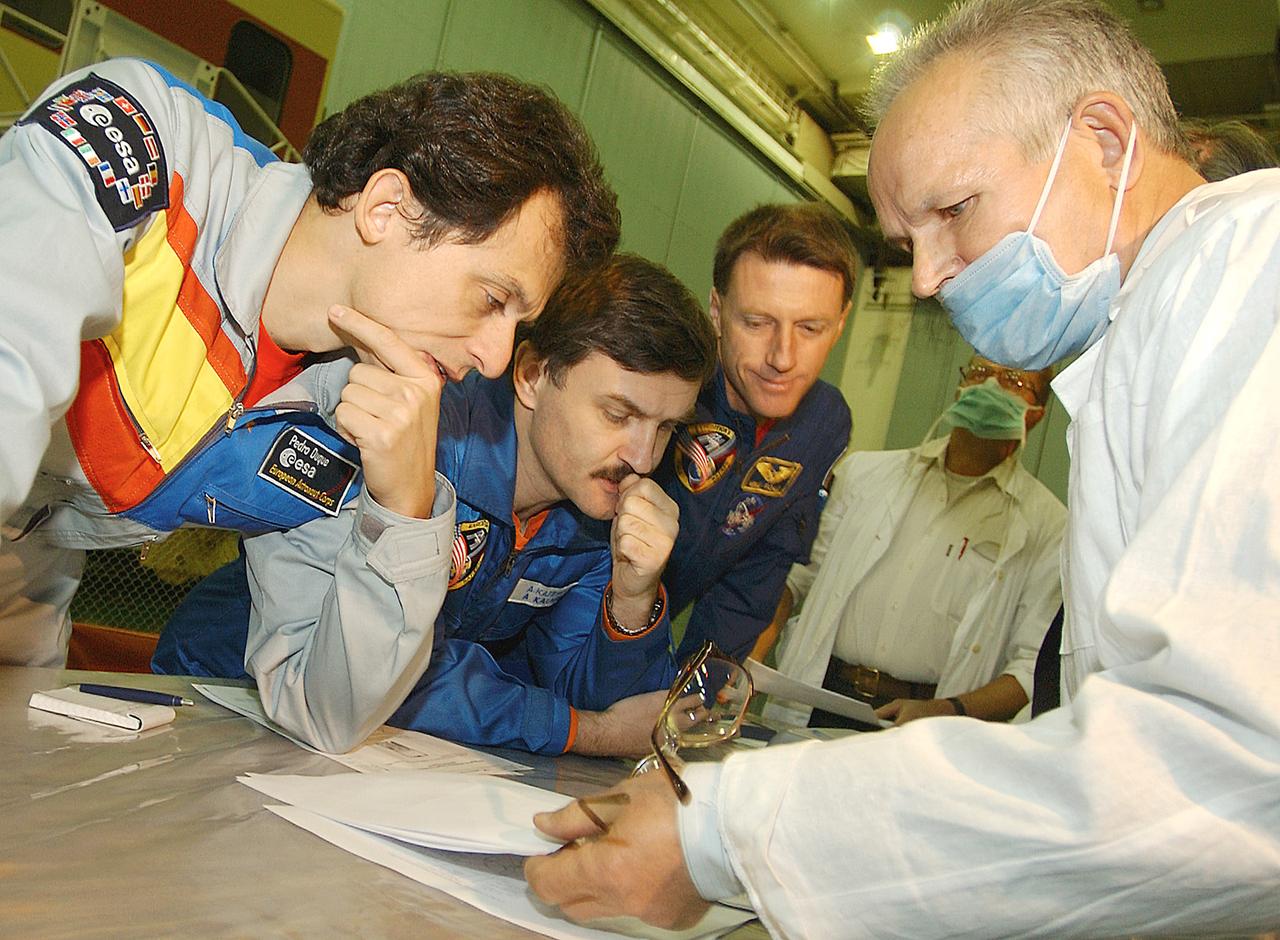
October 13, 2003. Baikonur Cosmodrome, Kazakhstan. European Space Agency Astronaut Pedro Duque of Spain (left), Expedition 8 Soyuz Commander Alexander Kaleri (center) and Expedition 8 Commander and NASA Science Officer Mike Foale (right) receive a briefing on the operation of a satellite phone during prelaunch training Oct. 13, 2003 at the Baikonur Cosmodrome in Kazakhstan. The trio will be launched to the International Space Station on a Soyuz TMA-3 vehicle on Oct. 18. Photo Credit"NASA/Bill Ingalls"
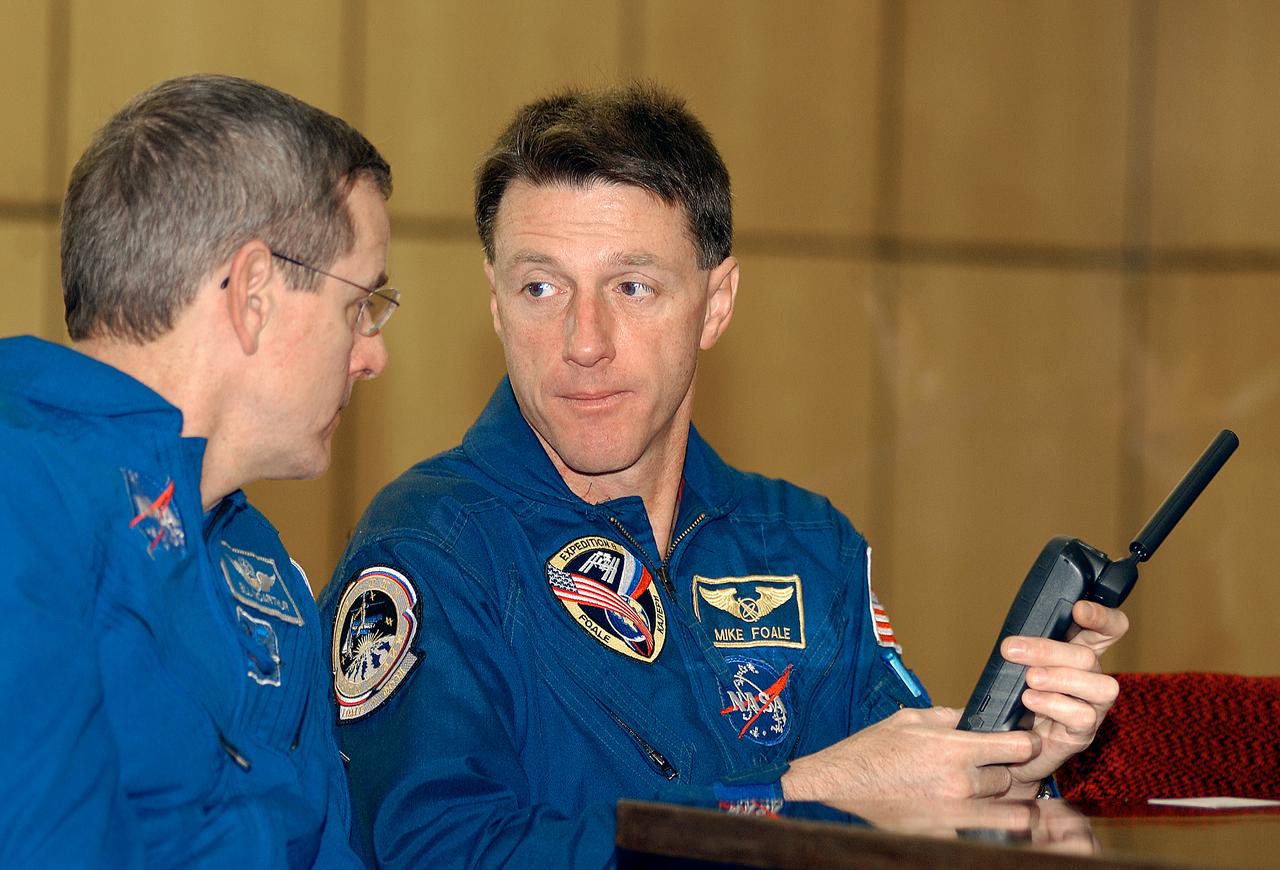
October 15, 2003. Cosmonaut Hotel, Baikonur, Kazakhstan. Backup Expedition 8 Commander Bill McArthur (left) and prime Expedition 8 Commander Mike Foale practice procedures with a satellite phone during final training at their crew quarters in Baikonur, Kazakhstan Oct. 15, 2003 for launch on a Soyuz TMA-3 vehicle Oct. 18 to the International Space Station. Foale will be joined for launch by Expedition 8 Soyuz Commander Alexander Kaleri and European Space Agency Pedro Duque of Spain. Photo Credit: "NASA/Bill Ingalls"
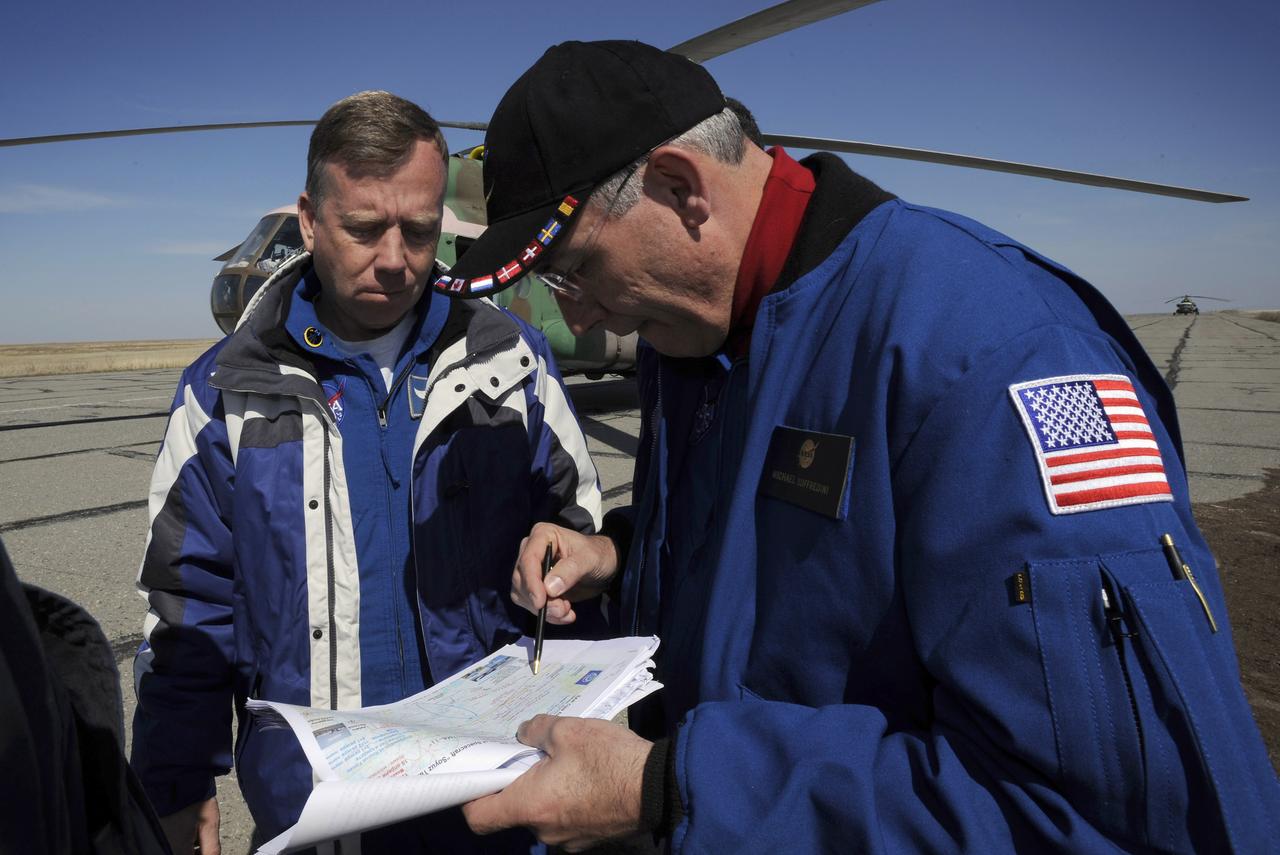
Chief of NASA's Astronaut office, Steve Lindsey, left, and International Space Station Program Manager, Michael Suffredini, examine a map of central Kazakhstan at the Arkalyk airport as they received information on the landing of the Expedition 16 crew in the Soyuz TMA-11 capsule, Saturday, April 19, 2008. The Soyuz made a ballistic landing, touching down more then 400 kilometers short of the intended target in central Kazakhstan. The crew reported by satellite phone to recovery forces that they were in good shape. Photo Credit: (NASA/Bill Ingalls)
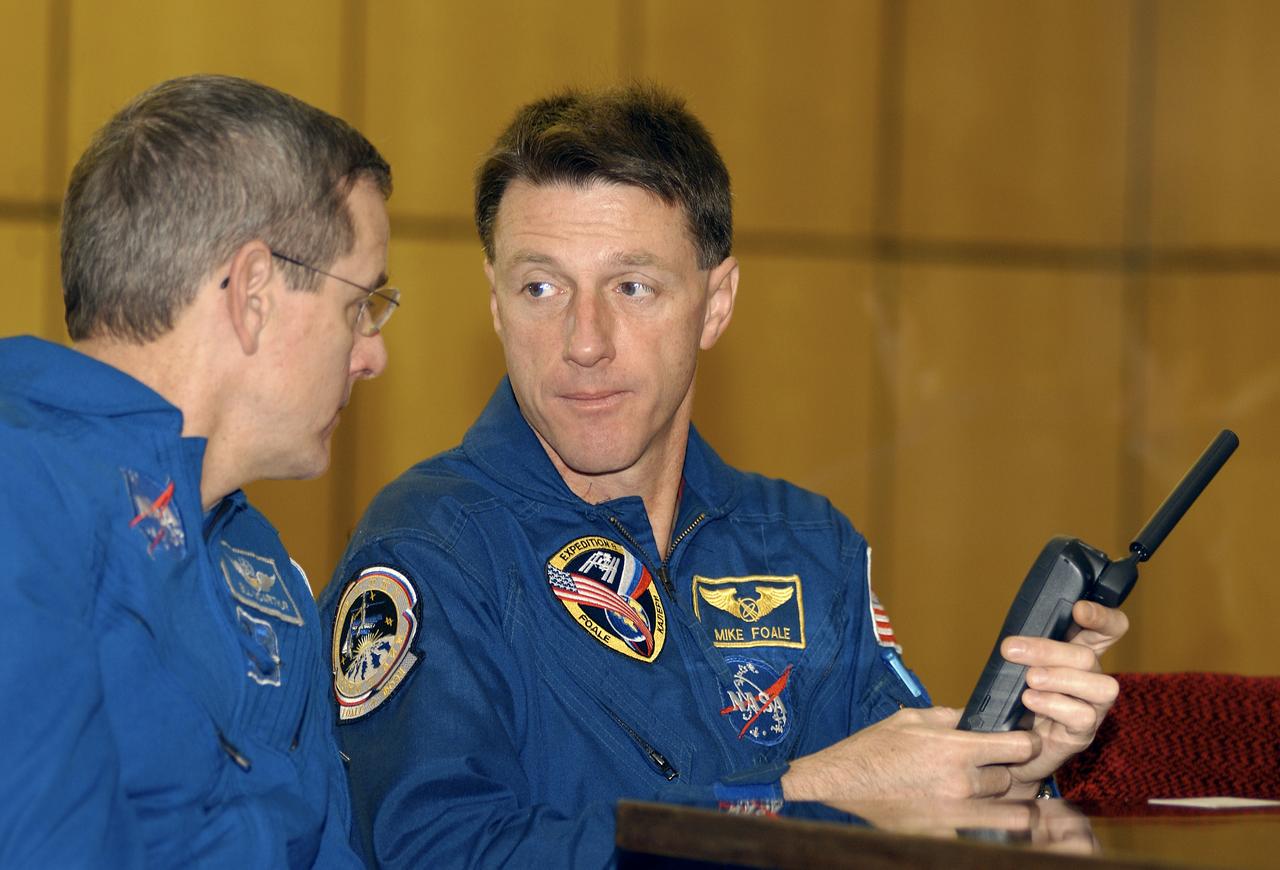
Backup Expedition 8 Commander Bill McArthur, left, and prime Expedition 8 Commander Michael Foale practice procedures with a satellite phone during final training at their crew quarters in Baikonur, Kazakhstan, Wednesday, Oct. 15, 2003, for launch on a Soyuz TMA-3 vehicle Oct. 18 to the International Space Station. Photo Credit (NASA/Bill Ingalls)
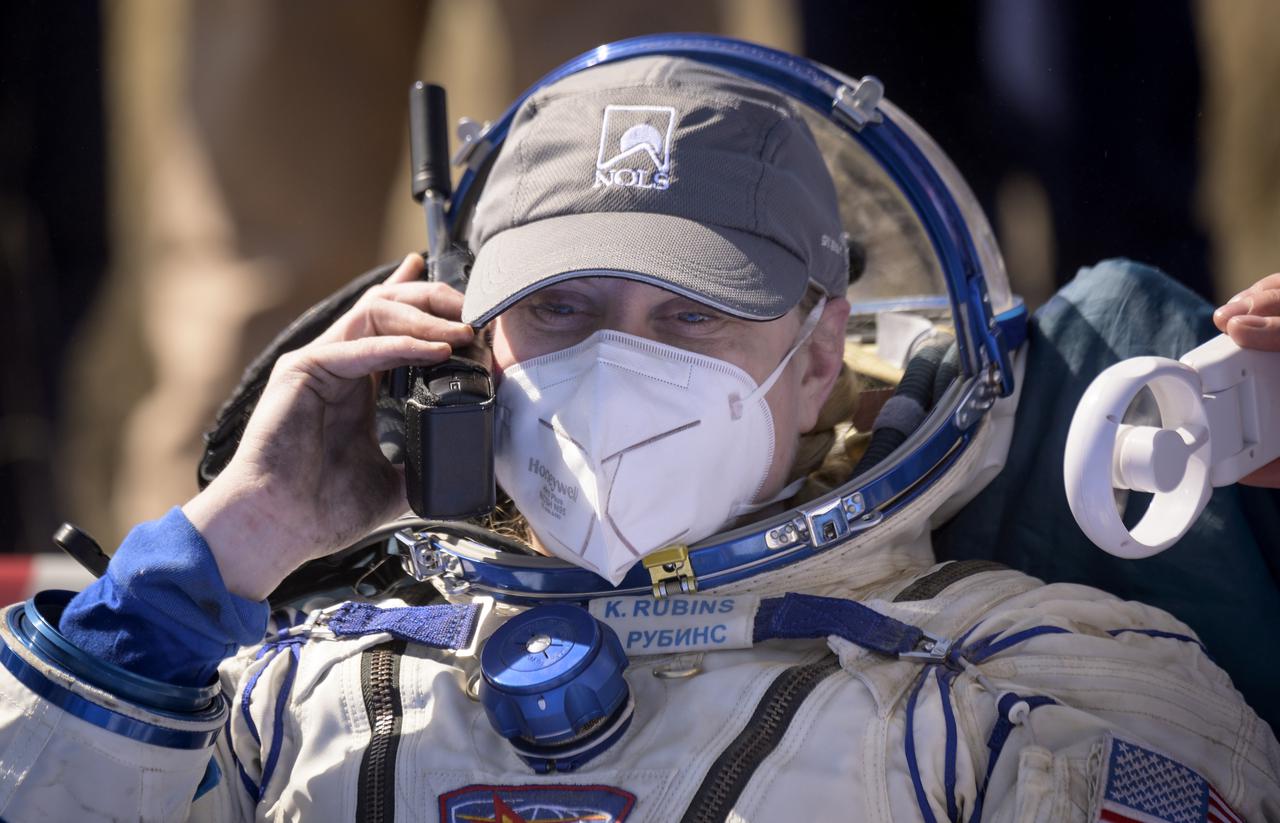
Expedition 64 NASA astronaut Kate Rubins talks to family via satellite phone outside the Soyuz MS-17 spacecraft after she, Roscosmos cosmonauts Sergey Ryzhikov and Sergey Kud-Sverchkov landed in a remote area near the town of Zhezkazgan, Kazakhstan on Saturday, April 17, 2021. Rubins, Ryzhikov and Kud-Sverchkov returned after 185 days in space having served as Expedition 63-64 crew members onboard the International Space Station. Photo Credit: NASA/Bill Ingalls
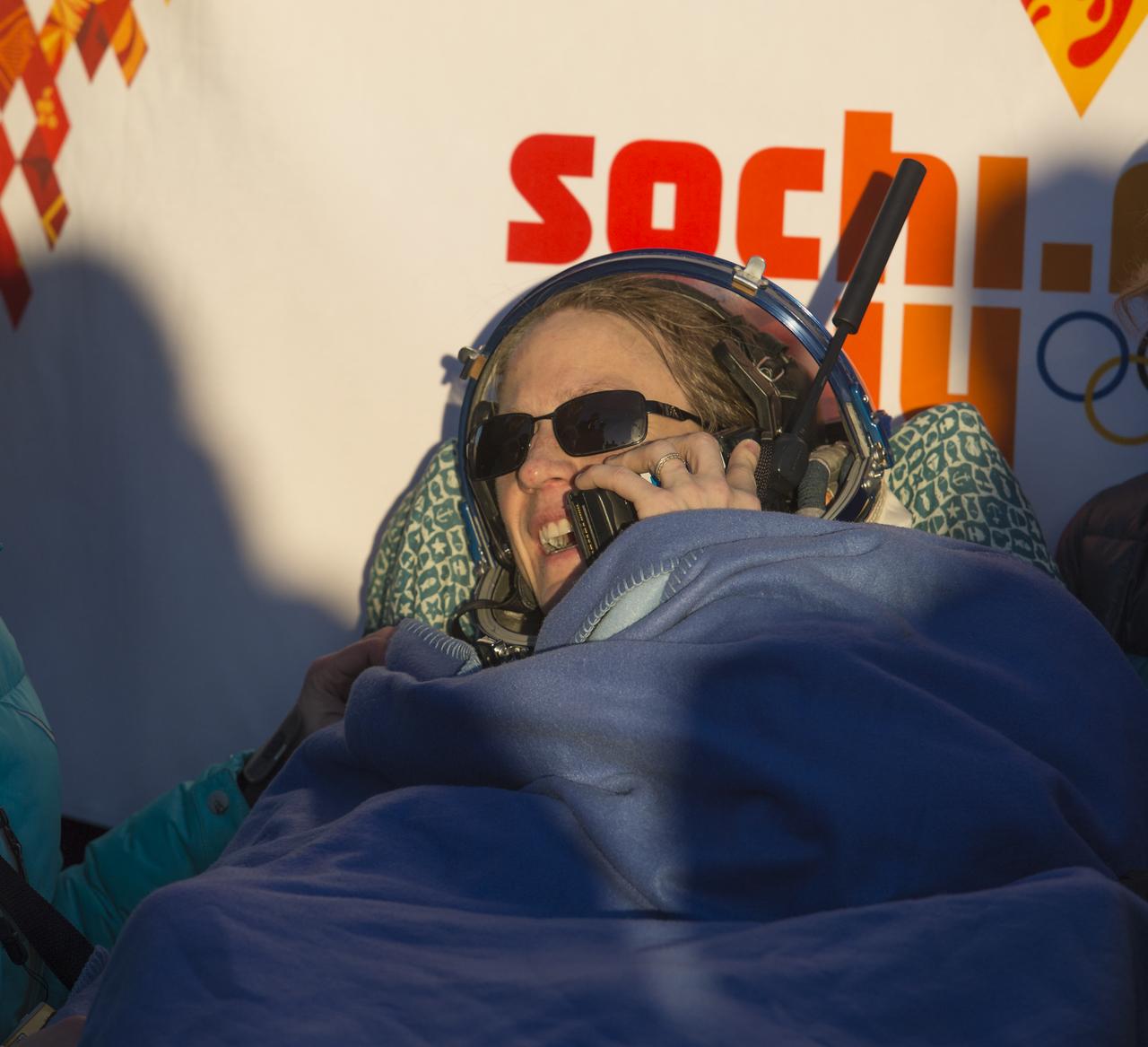
Expedition 37 NASA Flight Engineer Karen Nyberg is seen speaking to her family by satellite phone minutes after her landing in the Soyuz TMA-09M spacecraft in a remote area southeast of the town of Zhezkazgan, Kazakhstan, on Monday, Nov. 11, 2013. Nyberg, Expedition 37 Commander Fyodor Yurchikhin of the Russian Federal Space Agency (Roscosmos) and Italian Flight Engineer Luca Parmitano returned to earth after five and a half months on the International Space Station. Photo Credit: (NASA/Carla Cioffi)
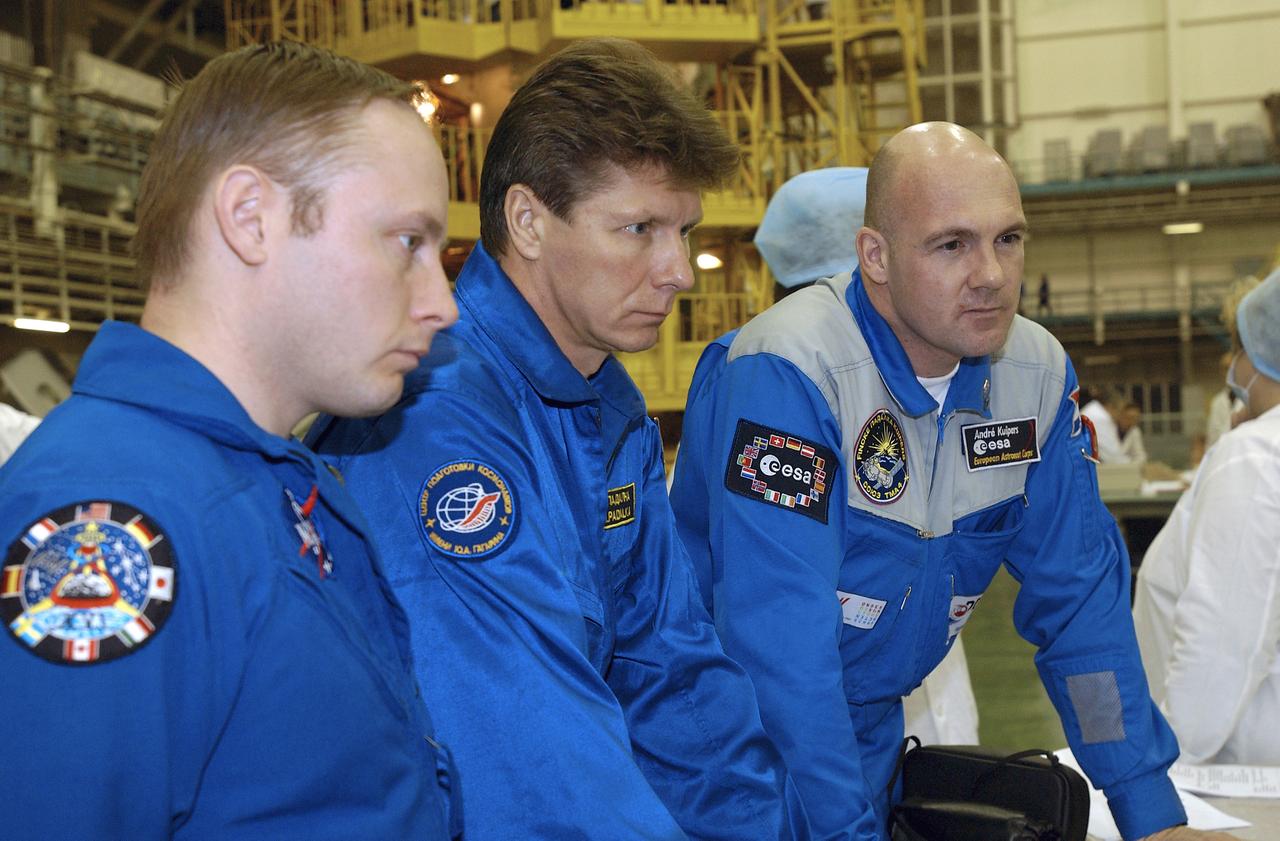
Expedition 9 Science Officer and Flight Engineer Mike Fincke, left, Expedition 9 Commander Gennady Padalka, center and European Space Agency astronaut Andre Kuipers of the Netherlands listen to instructions on satellite phone and GPS use in building 254 at the Baikonur Cosmodrome, Wednesday, April 14, 2004, in Baikonur, Kazakhstan. Photo Credit: (NASA/Bill Ingalls)
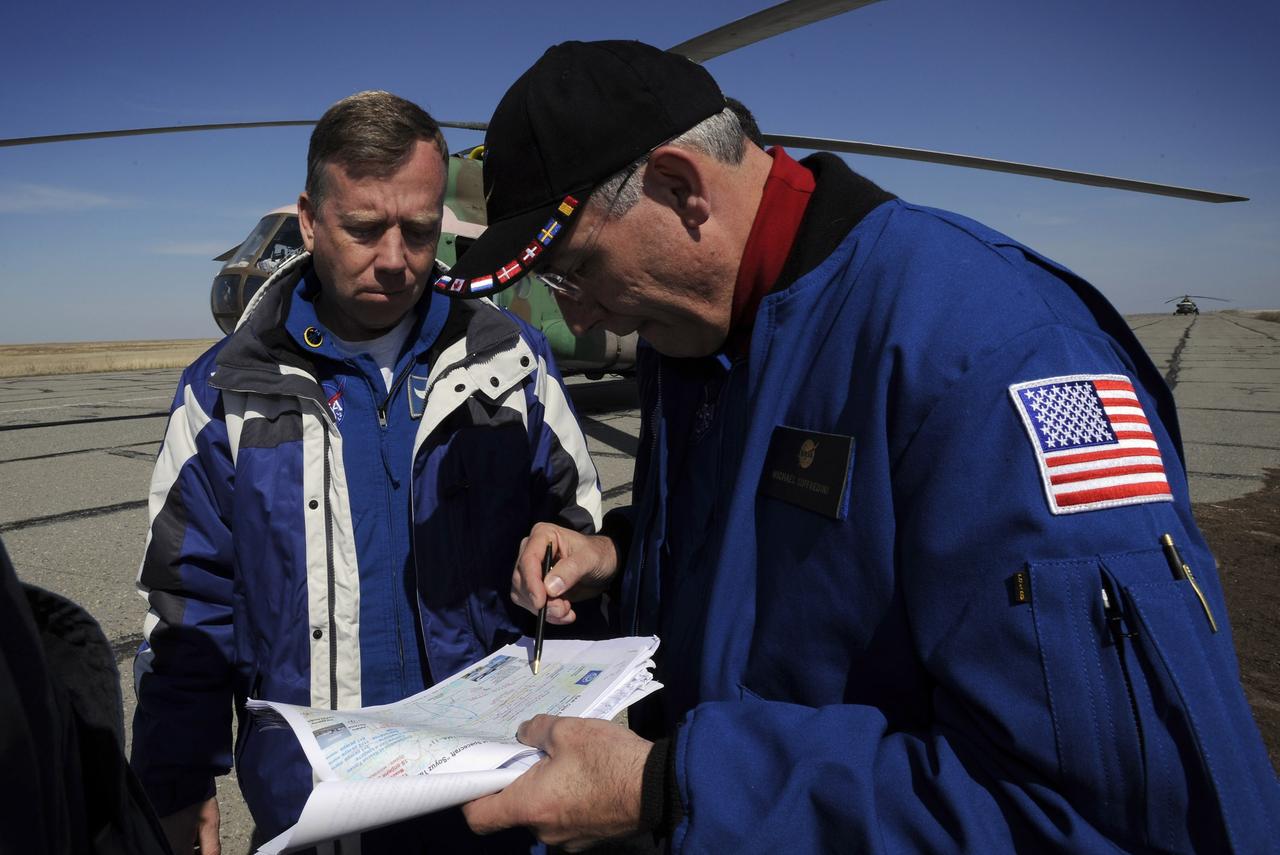
CHKALOVSKY, Russia -- Steve Lindsey, Chief of NASA's Astronaut office, left, and Michael Sufferdini, International Station Program Manager, examine a map of central Kazakhstan as they received information at the Arkalyk airport April 19, 2008, on the landing of the Expedition 16 crew in the Soyuz TMA-11 capsule. The Soyuz made a ballistic landing, touching down more then 400 kilometers short of the intended target, but the crew reported by satellite phone to recovery forces that they were in good shape. Photo Credit: (NASA/Bill Ingalls)
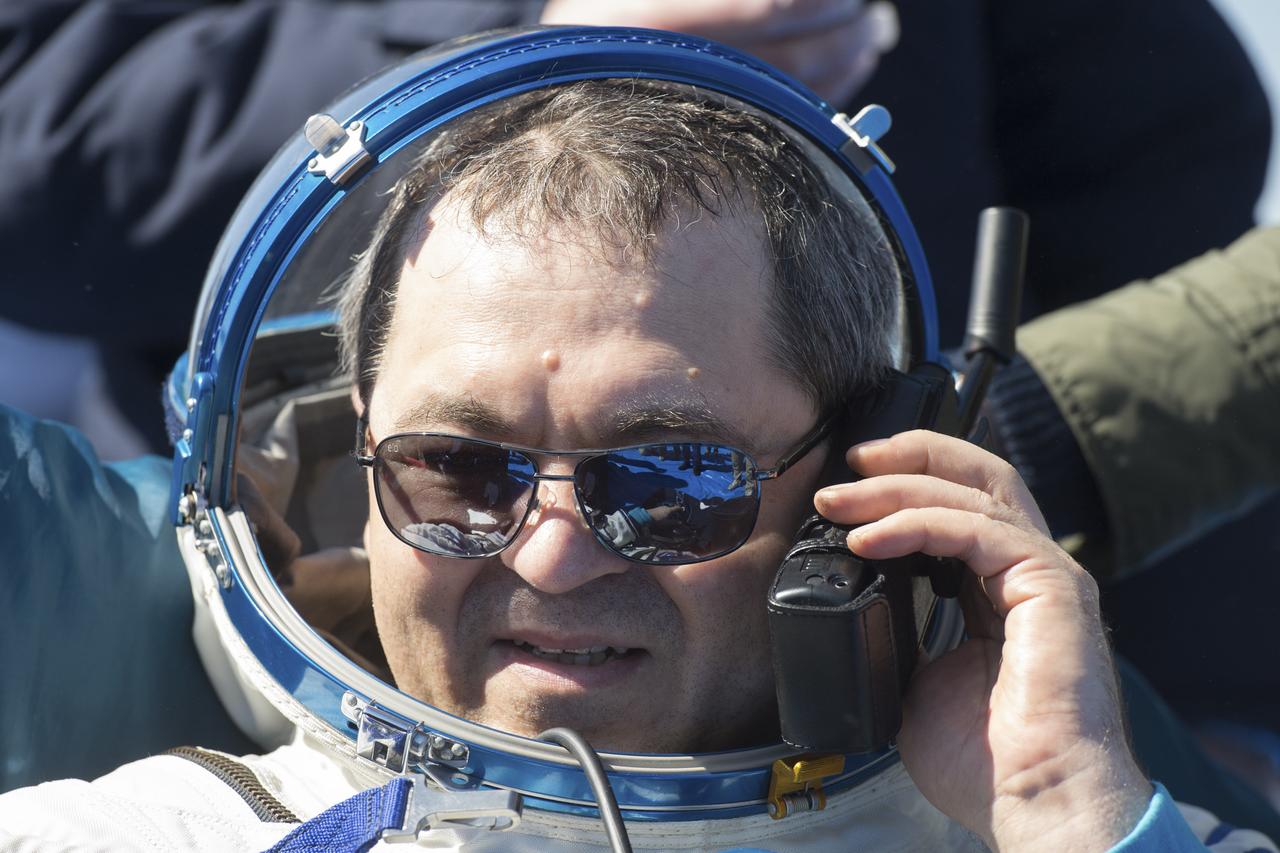
Expedition 62 cosmonaut Oleg Skripochka is seen talking to family via satellite phone outside the Soyuz MS-15 spacecraft after he landed with NASA astronauts Andrew Morgan and Jessica Meir in a remote area near the town of Zhezkazgan, Kazakhstan on Friday, April 17, 2020. Meir and Skripochka returned after 205 days in space, and Morgan after 272 days in space. All three served as Expedition 60-61-62 crew members onboard the International Space Station. Photo Credit: (NASA/GCTC/Andrey Shelepin)
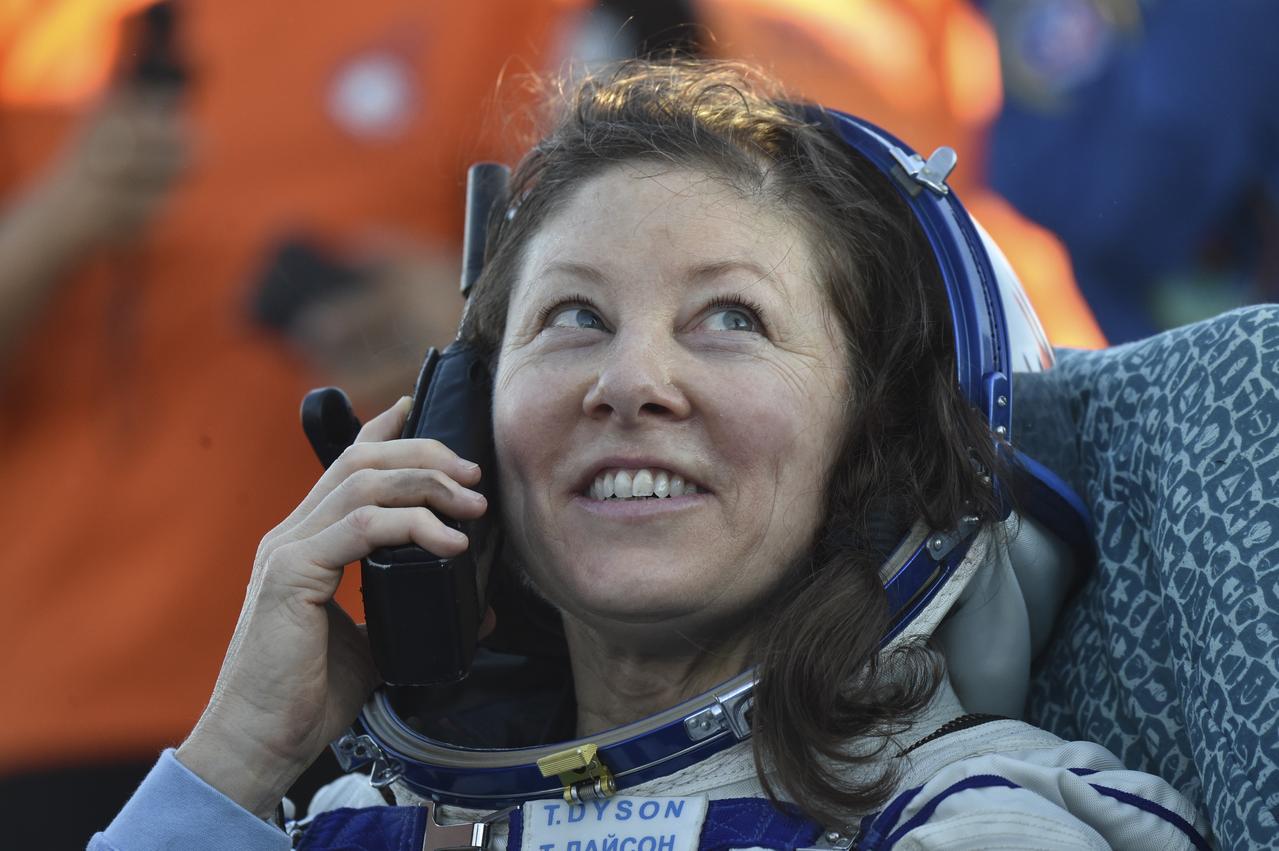
NASA astronaut Tracy C. Dyson is seen outside the Soyuz MS-25 spacecraft talking with friends and family via satellite phone after she landed with Roscosmos cosmonauts Oleg Kononenko and Nikolai Chub, in a remote area near the town of Zhezkazgan, Kazakhstan on Monday, Sept. 23, 2024. Dyson is returning to Earth after logging 184 days in space as a member of Expeditions 70-71 aboard the International Space Station and Chub and Kononenko return after having spent the last 374 days in space. Photo Credit NASA/GCTC/Pavel Shvets
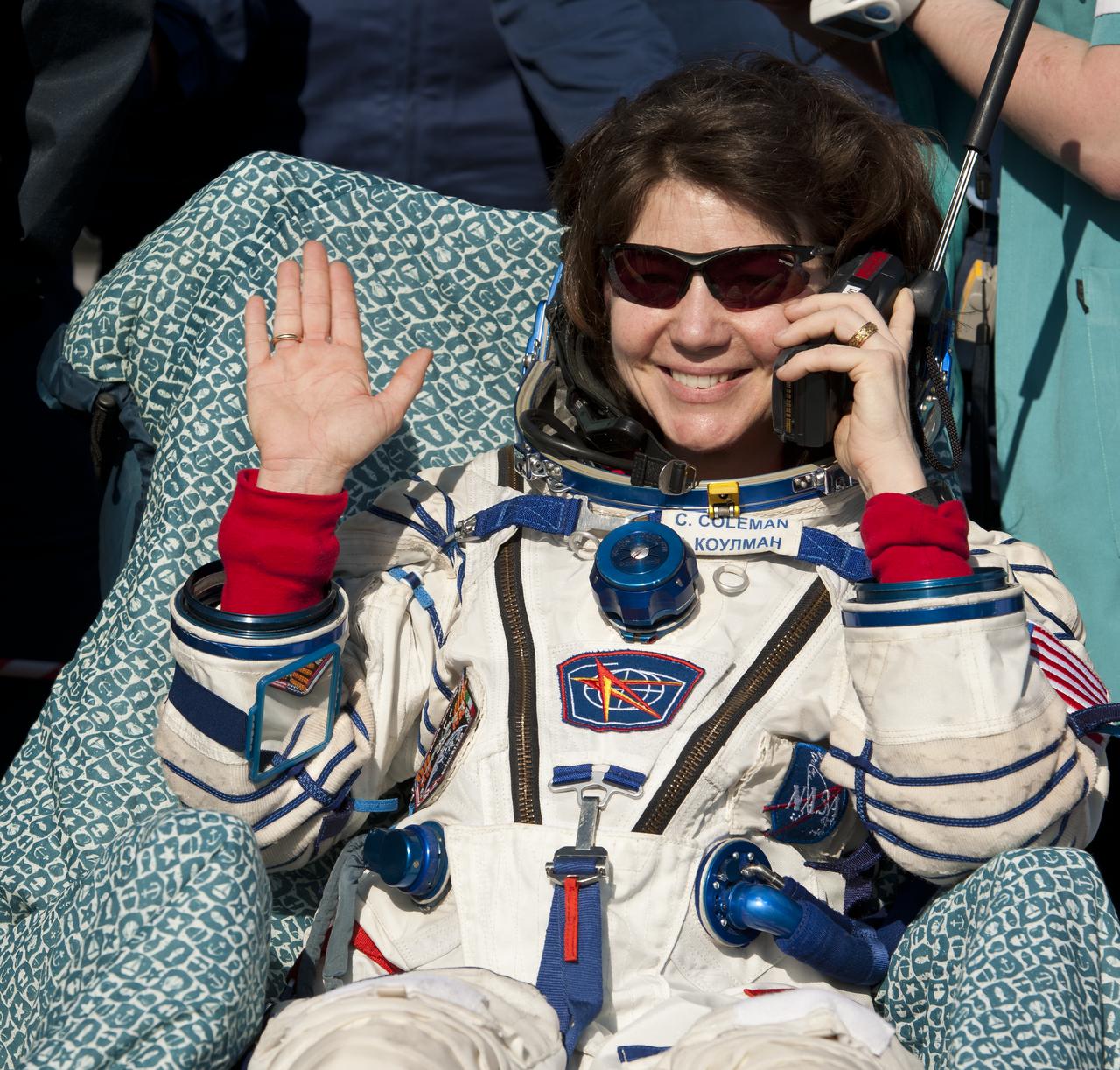
Expedition 27 Flight Engineer Cady Coleman waves hello and talks on a satellite phone to her family shortly after she and Commander Dmitry Kondratyev and Flight Engineer Paolo Nespoli landed in their Soyuz TMA-20 southeast of the town of Zhezkazgan, Kazakhstan, on Tuesday, May 24, 2011. NASA Astronaut Coleman, Russian Cosmonaut Kondratyev and Italian Astronaut Nespoli are returning from more than five months onboard the International Space Station where they served as members of the Expedition 26 and 27 crews. Photo Credit: (NASA/Bill Ingalls)
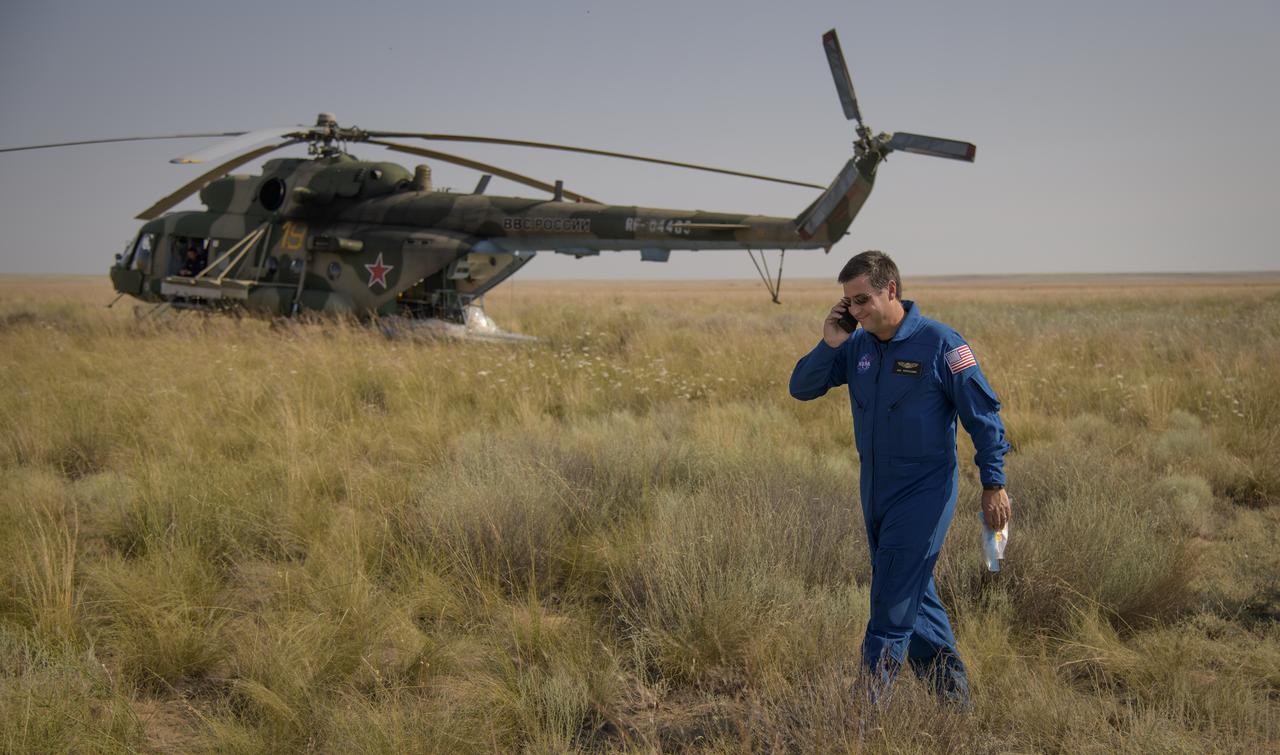
NASA ISS Deputy Program Manager Joel Montalbano talks to mission managers via satellite phone from the Soyuz MS-11 landing zone in a remote area near the town of Zhezkazgan, Kazakhstan on Tuesday, June 25, 2019 Kazakh time (June 24 Eastern time). Expedition 59 crew members Anne McClain of NASA, David Saint-Jacques of the Canadian Space Agency, and Oleg Kononenko of Roscosmos landed in their Soyuz MS-11 spacecraft after 204 days in space where they served as members of the Expedition 58 and 59 crews onboard the International Space Station. Photo Credit: (NASA/Bill Ingalls)
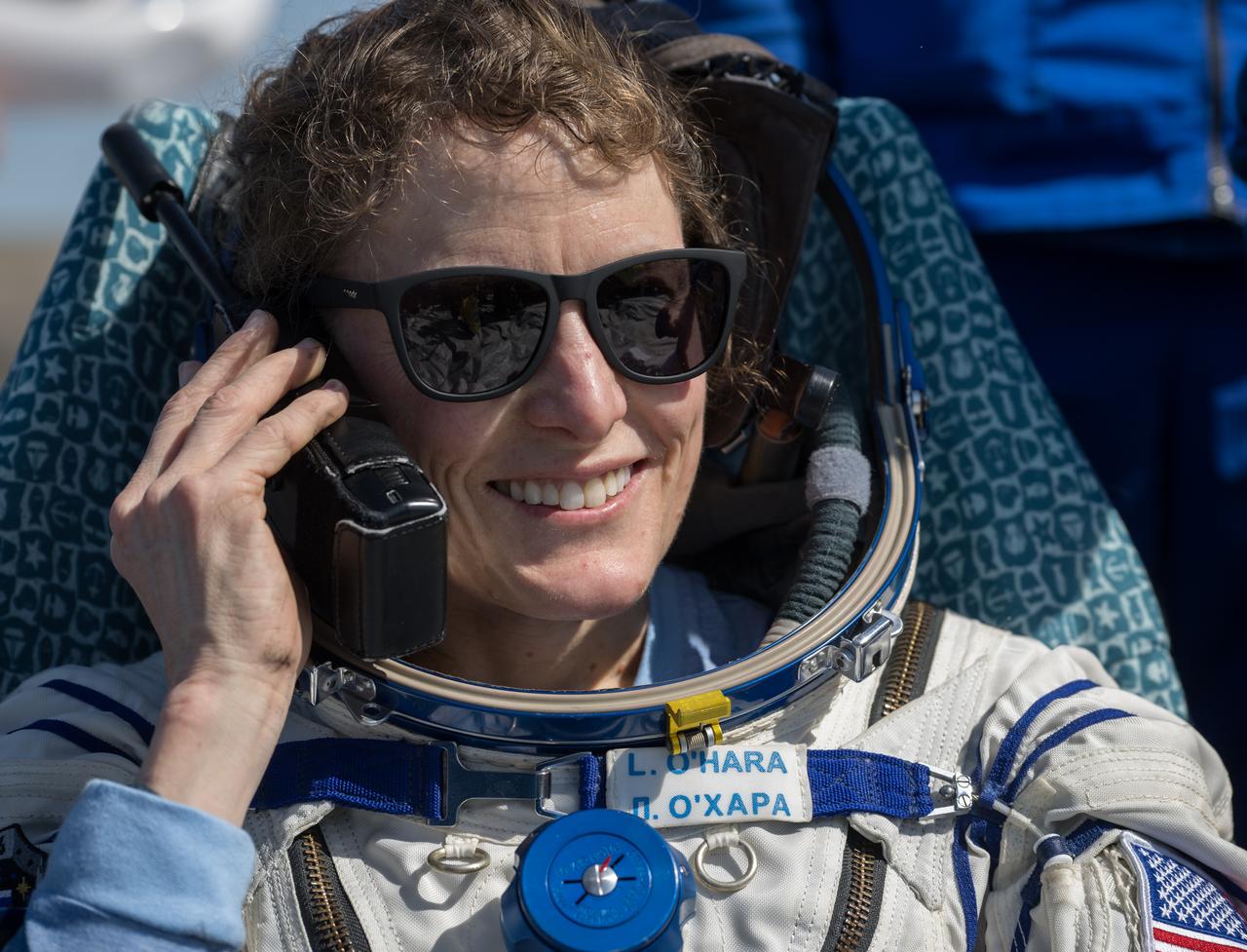
Expedition 70 NASA astronaut Loral O'Hara is seen talking on a satellite phone outside the Soyuz MS-24 spacecraft after she, Roscosmos cosmonaut Oleg Novitskiy, and Belarus spaceflight participant Marina Vasilevskaya landed in a remote area near the town of Zhezkazgan, Kazakhstan on Saturday, April 6, 2024. O’Hara is returning to Earth after logging 204 days in space as a member of Expeditions 69-70 aboard the International Space Station and Novitskiy and Vasilevskaya return after having spent the last 14 days in space. Photo Credit (NASA/Bill Ingalls)
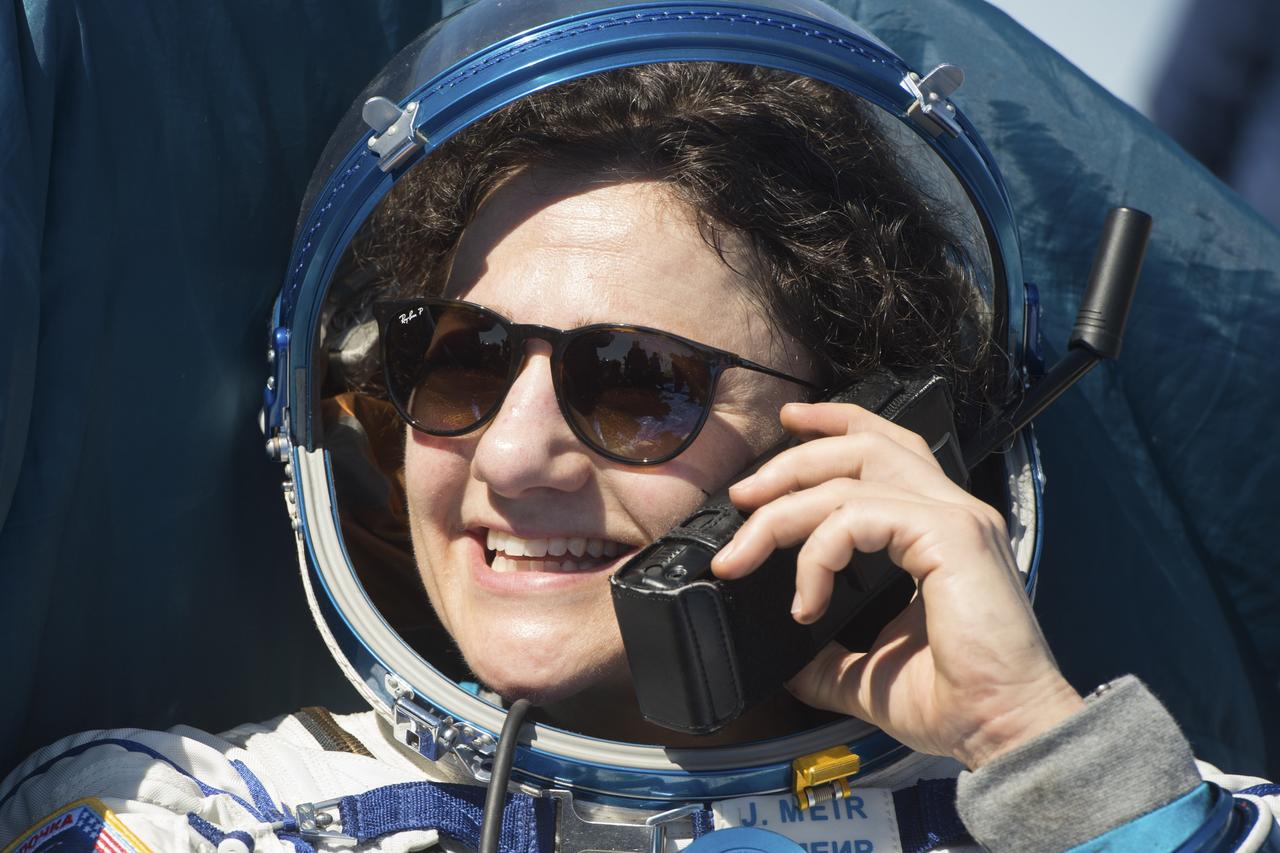
Expedition 62 astronaut Jessica Meir is seen talking on the satellite phone outside the Soyuz MS-15 spacecraft after she landed with NASA astronaut Andrew Morgan and Roscosmos cosmonaut Oleg Skripochka in a remote area near the town of Zhezkazgan, Kazakhstan on Friday, April 17, 2020. Meir and Skripochka returned after 205 days in space, and Morgan after 272 days in space. All three served as Expedition 60-61-62 crew members onboard the International Space Station. Photo Credit: (NASA/GCTC/Andrey Shelepin)
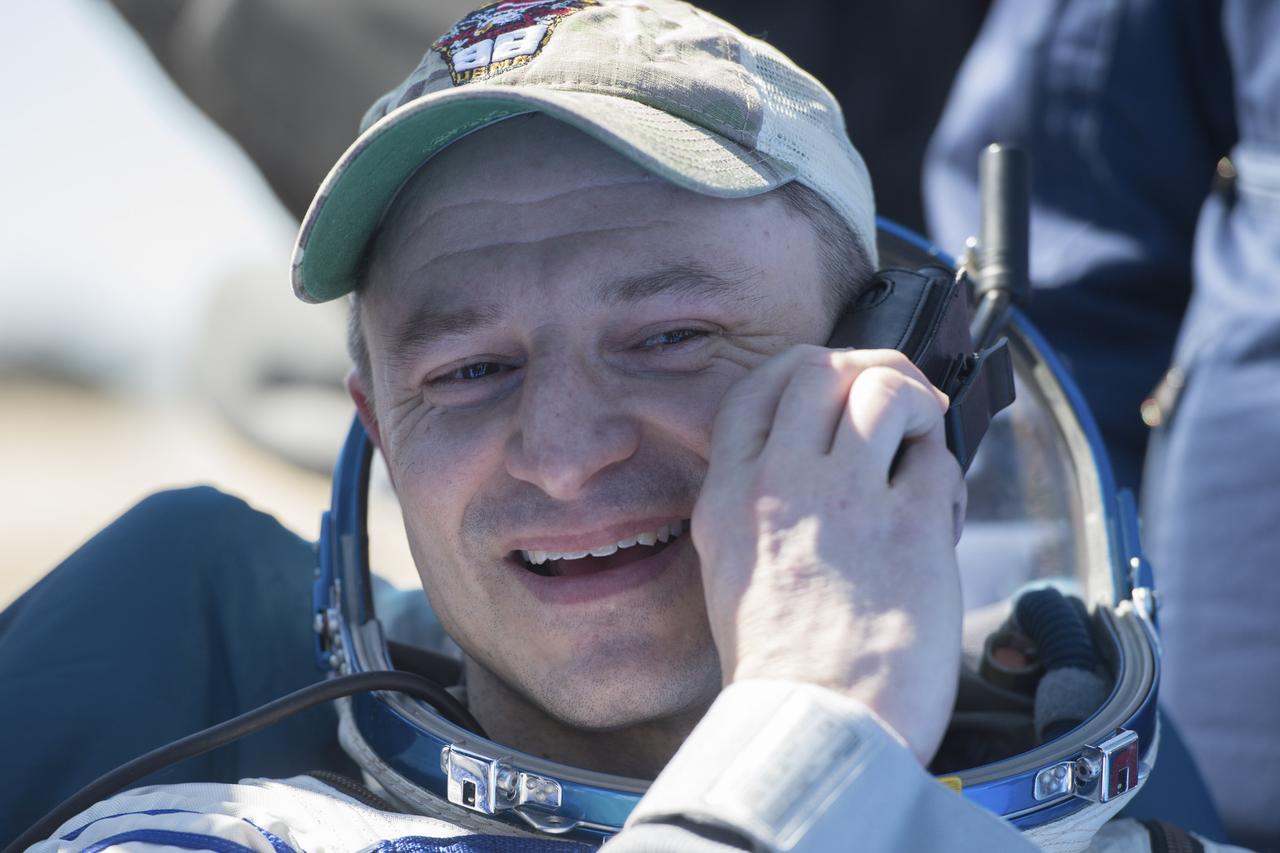
Expedition 62 astronaut Andrew Morgan is seen talking on the satellite phone outside the Soyuz MS-15 spacecraft after he landed with NASA astronaut Jessica Meir and Roscosmos cosmonaut Oleg Skripochka in a remote area near the town of Zhezkazgan, Kazakhstan on Friday, April 17, 2020. Meir and Skripochka returned after 205 days in space, and Morgan after 272 days in space. All three served as Expedition 60-61-62 crew members onboard the International Space Station. Photo Credit: (NASA/GCTC/Andrey Shelepin)
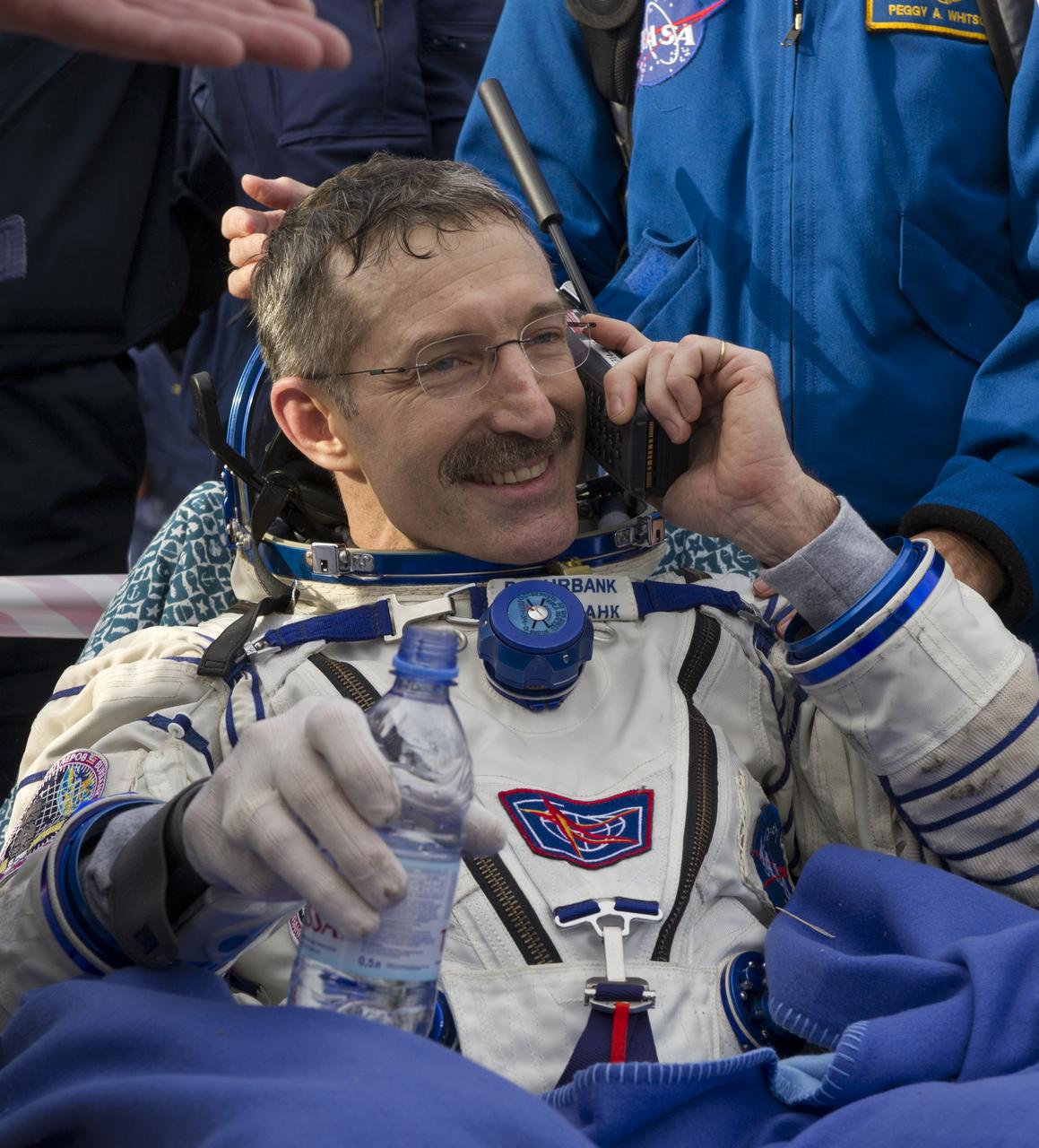
Expedition 30 Commander Dan Burbank speaks with his family via satellite phone outside the Soyuz TMA-22 capsule just minutes after he and Expedition 30 Flight Engineers Anton Shkaplerov and Anatoly Ivanishin landed in a remote area outside of the town of Arkalyk, Kazakhstan, on Friday, April 27, 2012. NASA Astronaut Burbank, Russian Cosmonauts Shkaplerov and Ivanishin are returning from more than five months onboard the International Space Station where they served as members of the Expedition 29 and 30 crews. Photo Credit: (NASA/Carla Cioffi)
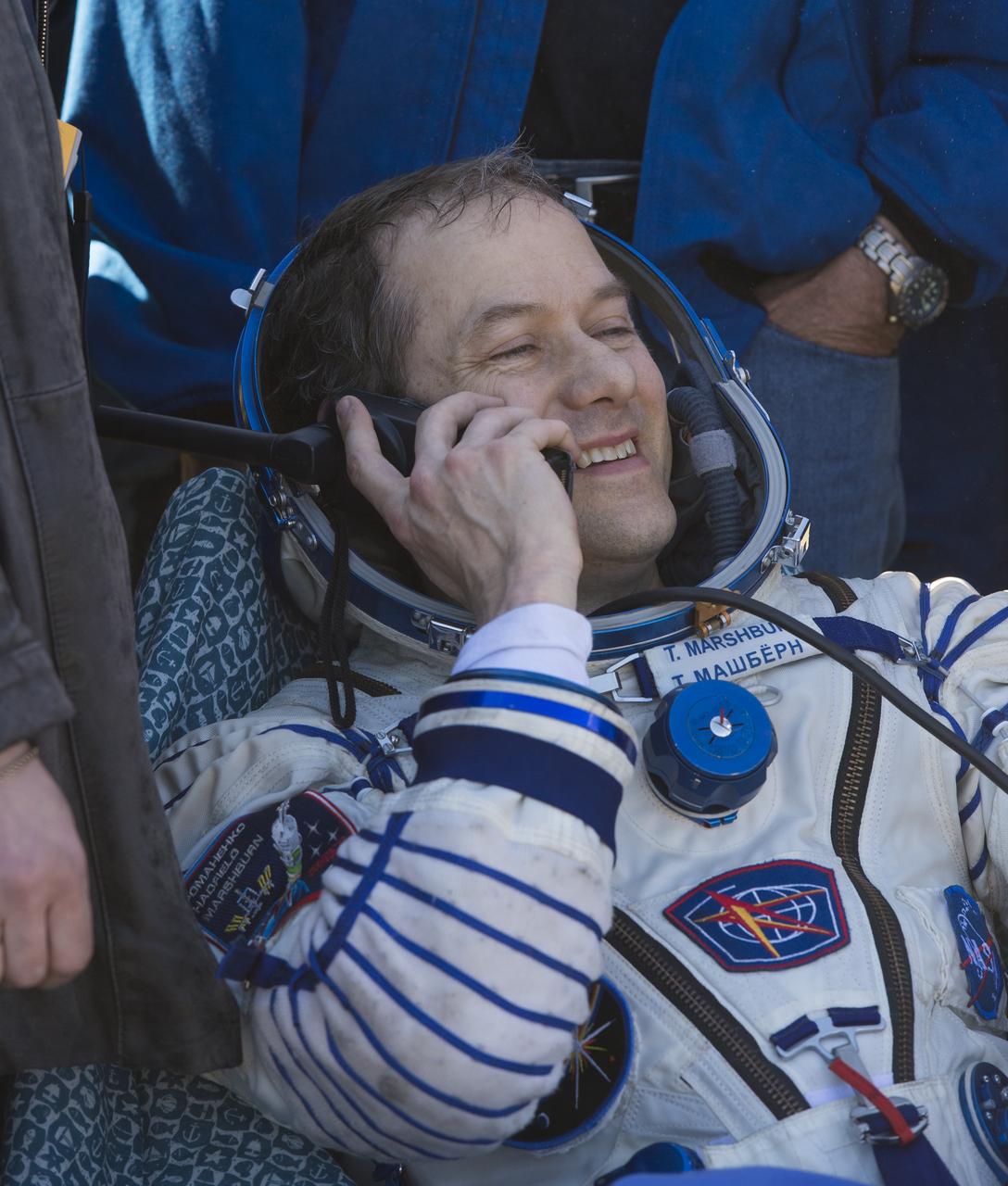
Expedition 35 NASA Flight Engineer Tom Marshburn speaks to family members on a satellite phone following his landing in the Soyuz TMA-07M spacecraft in a remote area near the town of Zhezkazgan, Kazakhstan, Tuesday, May 14, 2013. Marshburn, Expedition 35 Commander Chris Hadfield of the Canadian Space Agency (CSA) and Russian Flight Engineer Roman Romanenko of the Russian Federal Space Agency (Roscosmos) returned to earth from more than five months onboard the International Space Station where they served as members of the Expedition 34 and 35 crews. Photo Credit: (NASA/Carla Cioffi)
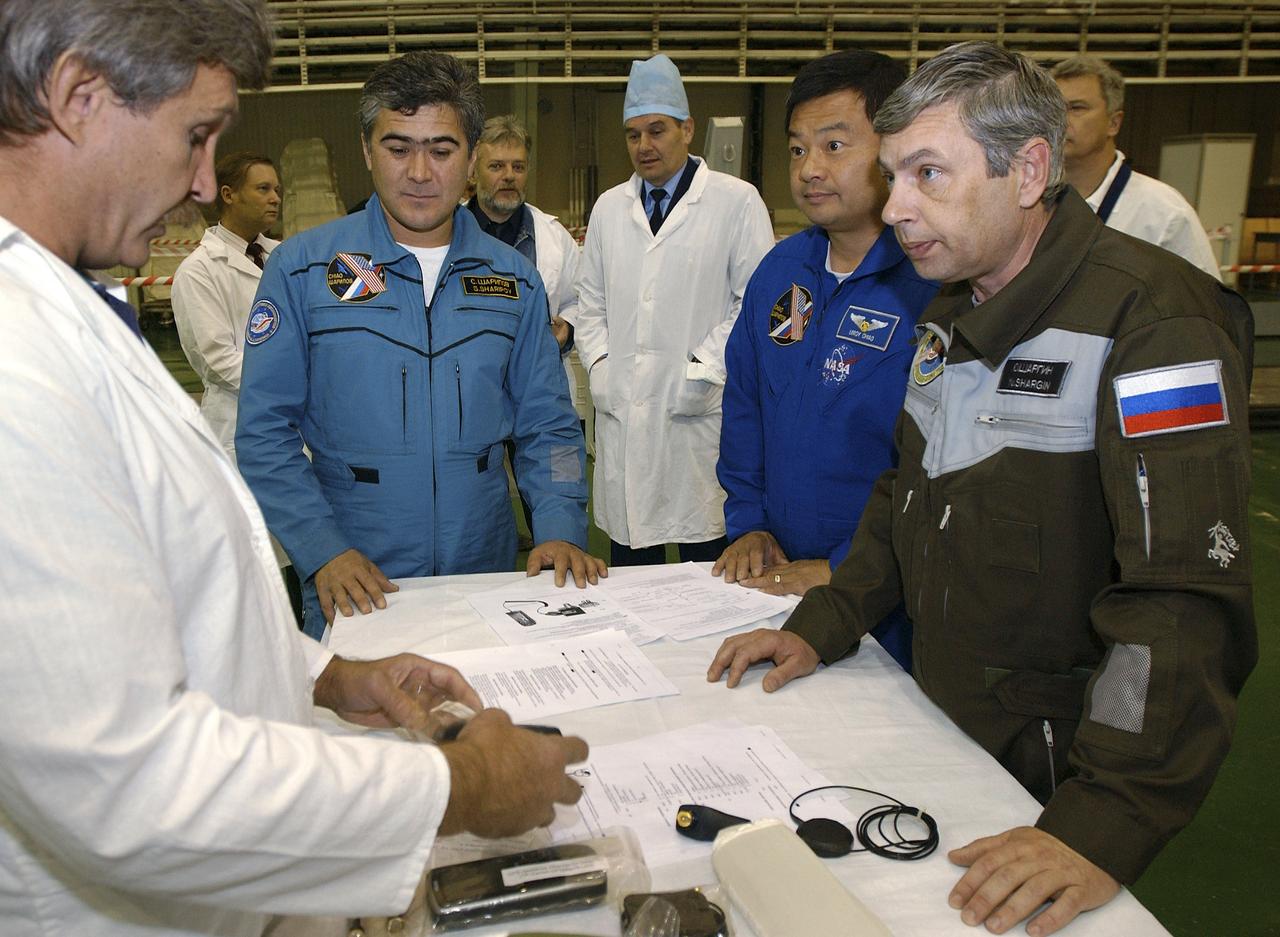
Expedition 10 Flight Engineer and Soyuz Commander Salizhan Sharipov, left, Expedition 10 Commander and NASA Science Officer Leroy Chiao and Russian Space Forces cosmonaut Yuri Shargin are given a review of the GPS and Satellite phone systems after having conducted a final inspection of their Soyuz TMA-5 spacecraft on Saturday, October 9, 2004, at the Baikonur Cosmodrome in Kazakhstan in preparation for their launch October 14 to the International Space Station. The Soyuz vehicle will be mated to its booster rocket October 11 in preparation for its rollout to the Central Asian launch pad October 12. Photo Credit: (NASA/Bill Ingalls)
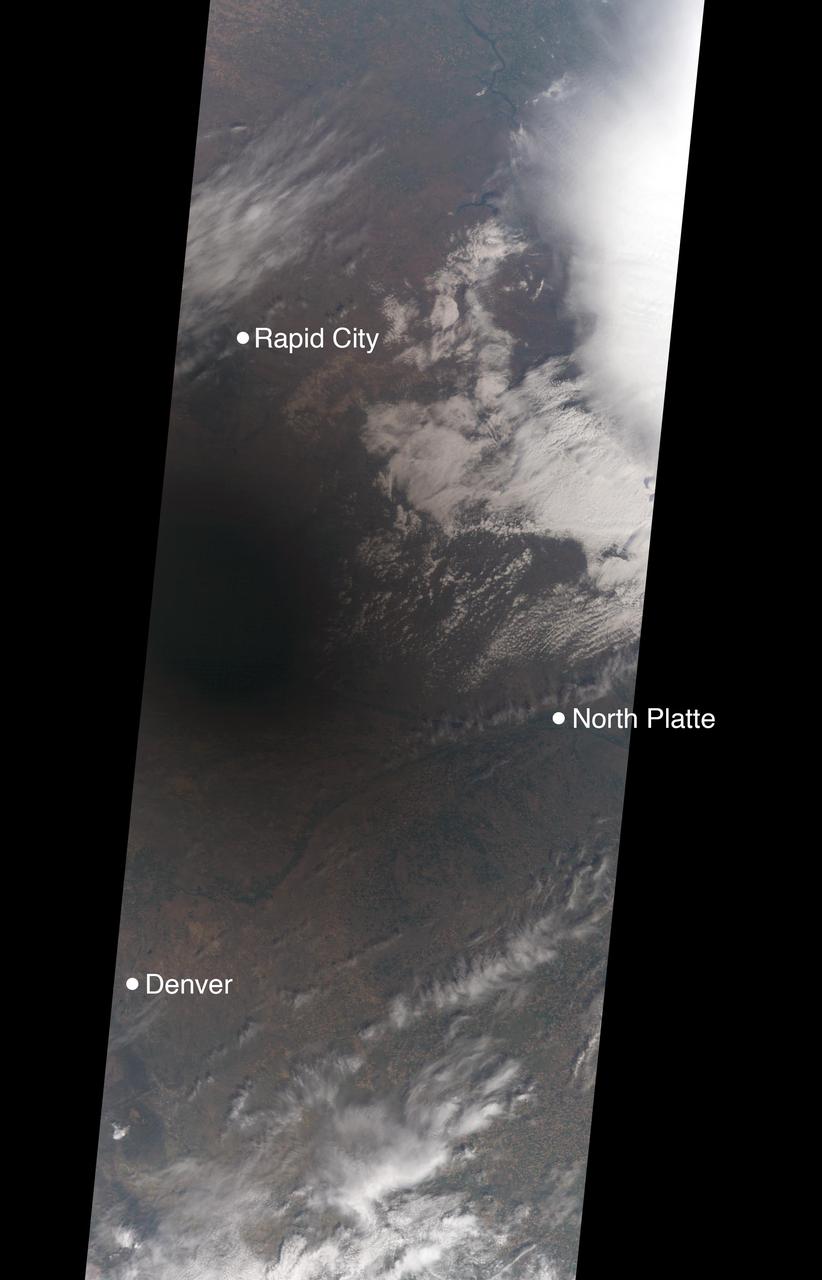
On Aug. 21, 2017, a total solar eclipse swept across the United States -- the first such eclipse in the contiguous 48 states since 1979, and the first cross-country eclipse since 1918. A partial eclipse was visible in all 50 states, and initial estimates suggest that upwards of 20 million people observed the Moon completely obscuring the Sun in the 70-mile-wide (113-kilometer-wide) path of totality. While viewing a total solar eclipse from the ground is an amazing experience, satellites orbiting Earth see the eclipse from a unique perspective. As the Moon's shadow passed through the United States, the Multi-angle Imaging SpectroRadiometer (MISR) instrument aboard NASA's Terra satellite was capturing images of eastern Wyoming and western Nebraska from its altitude of 438 miles (705 kilometers) above the surface. MISR gathers images on a strip about 249 miles (400 kilometers) wide directly below the path of the satellite. Incredibly, given that the shadow of the Moon took only 90 minutes to cross the entire United States, and Terra itself moves at a brisk 16,700 miles per hour from north to south, MISR happened to be in exactly the right place at the right time to capture totality. From the ground, the moment of totality appears suddenly, sweeping over the sky in just a few seconds. "I was unprepared for just how dark it actually was," says Mika Tosca, a researcher who works with MISR data and who observed the eclipse in Nebraska. "The streetlights even turned on. Everything fell silent, and I swear the temperature dropped." From the vantage point of space, however, it’s possible to see the entire shadow of the Moon, with the completely dark, circular umbra and the more diffuse penumbra. MISR contains nine cameras oriented at different angles, viewing forward, downward, and backward along the flight path, resulting in an approximate seven-minute interval for all nine cameras to image a single location on Earth's surface. This animation combines these nine images into a movie showing the motion of the Moon's shadow during this seven-minute period. In the first image, captured by the camera pointing farthest ahead of the satellite, totality has not quite begun in the area seen by MISR. From the second camera onward, totality sweeps across the image area from west to east, beginning just west of the town of Jay Em, Wyoming, and proceeding about halfway across the MISR swath to the town of Alliance, Nebraska. The motion of the lunar shadow in different pairs of images leads to estimates of the local ground speed ranging between 1,480 and 1,820 miles per hour (2,382 and 2,929 kilometers per hour). The spread in values is a measure of the uncertainty of the estimate. At this location, the predicted speed of the eclipse calculated from lunar orbital motion is about 1,658 miles per hour (2,668 kilometers per hour), which falls in the middle of the range estimated from the MISR images. Tosca's observation that the temperature dropped during the eclipse is a well-known phenomenon. The GLOBE Observer, a phone application dedicated to citizen science and sponsored by NASA, encouraged eclipse-goers to record the local air temperature at regular intervals. Data collected by nearby observers in the path of totality show that, on average, temperatures dropped by 9.3 degrees Fahrenheit (5.2 degrees Celsius) during the eclipse. This compares to an average of 5.4 degrees Fahrenheit drop measured at several Nebraska Mesonet weather stations within the path of totality. The decrease in the amount of sunlight reaching Earth affected more than temperatures. Areas that get a large portion of their power from solar energy were naturally concerned about shortages during the eclipse -- the state of California, though not in the path of totality, estimated that 6,000 megawatts of solar power would be lost during the eclipse. An animation is available at https://photojournal.jpl.nasa.gov/catalog/PIA21957