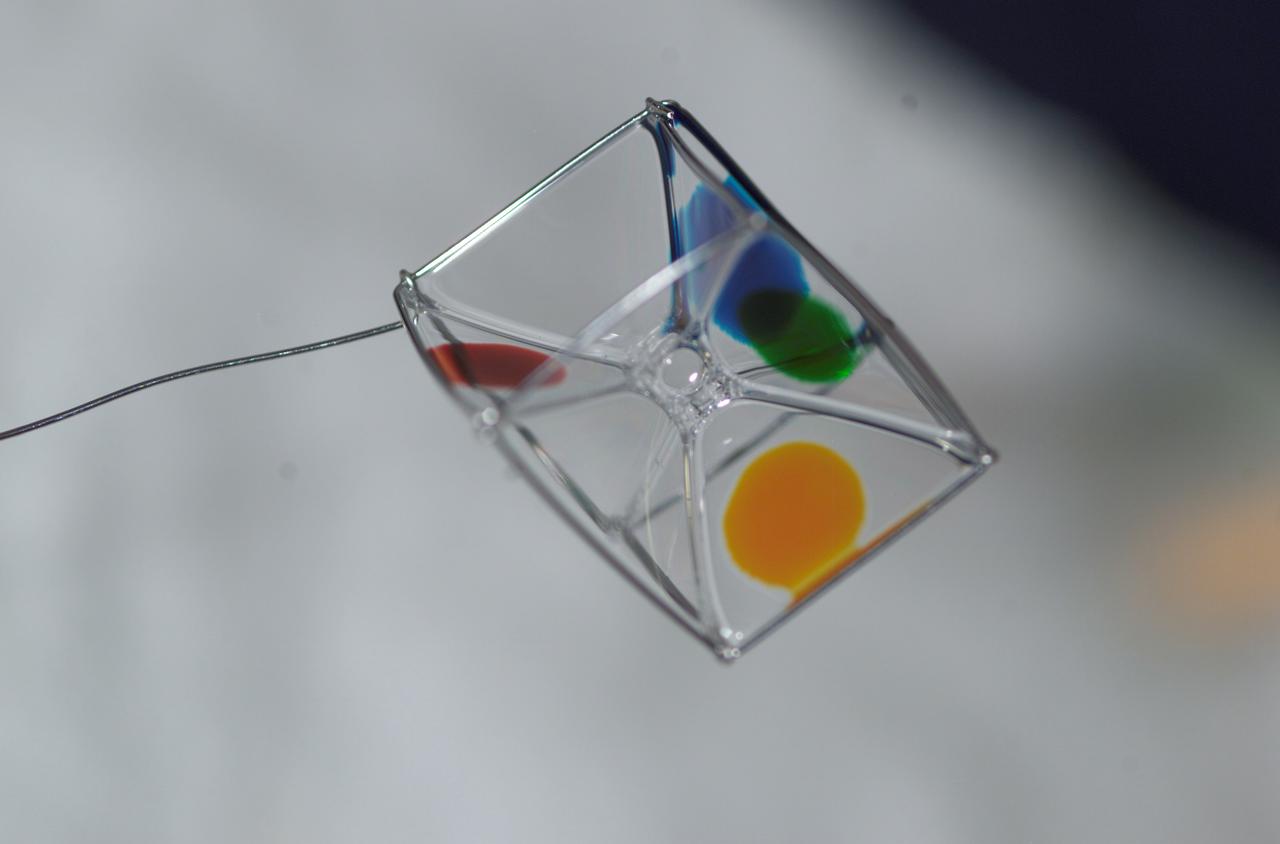
Expedition 6 astronaut Dr. Don Pettit photographed a cube shaped wire frame supporting a thin film made from a water-soap solution during his Saturday Morning Science aboard the International Space Station’s (ISS) Destiny Laboratory. Food coloring was added to several faces to observe the effects of diffusion within the film.
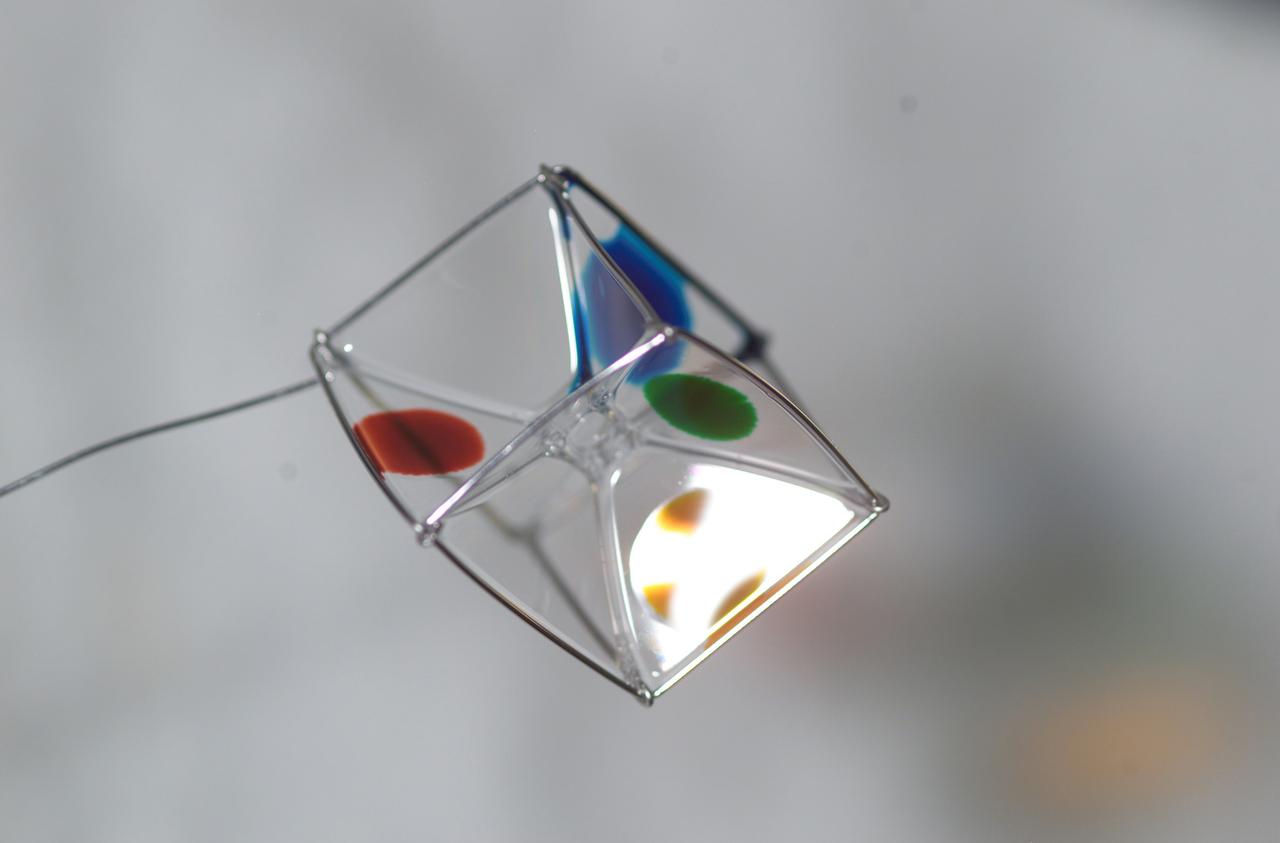
Expedition 6 astronaut Dr. Don Pettit photographed a cube shaped wire frame supporting a thin film made from a water-soap solution during his Saturday Morning Science aboard the International Space Station’s (ISS) Destiny Laboratory. Food coloring was added to several faces to observe the effects of diffusion within the film.
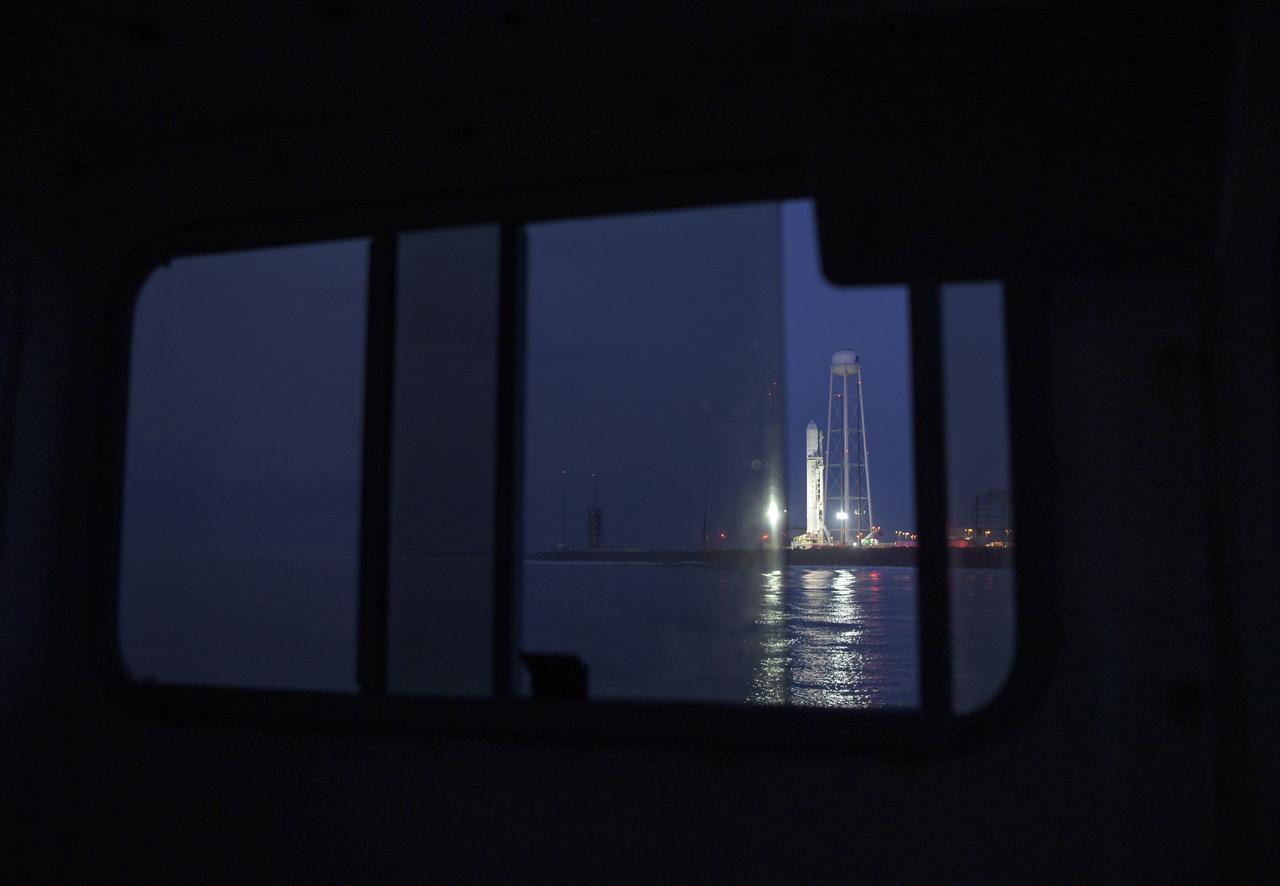
The Northrop Grumman Antares rocket is seen in the early morning on launch Pad-0A, Wednesday, Oct. 30, 2019, at NASA's Wallops Flight Facility in Virginia. Northrop Grumman’s 12th contracted cargo resupply mission with NASA to the International Space Station will deliver about 8,200 pounds of science and research, crew supplies and vehicle hardware to the orbital laboratory and its crew. Launch is scheduled for 9:59 a.m. EDT Saturday, Nov. 2. Photo Credit: (NASA/Bill Ingalls)
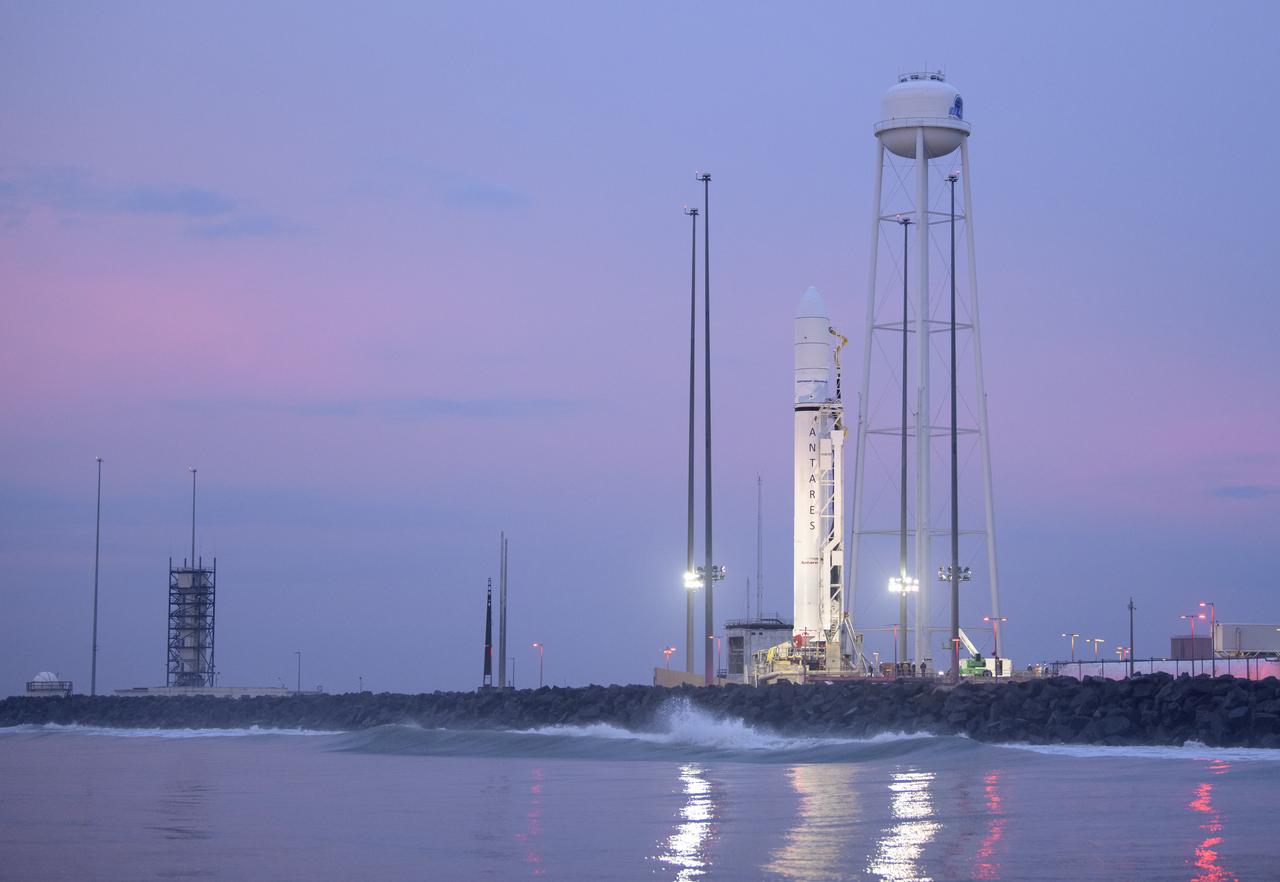
The Northrop Grumman Antares rocket is seen in the early morning on launch Pad-0A, Wednesday, Oct. 30, 2019, at NASA's Wallops Flight Facility in Virginia. Northrop Grumman’s 12th contracted cargo resupply mission with NASA to the International Space Station will deliver about 8,200 pounds of science and research, crew supplies and vehicle hardware to the orbital laboratory and its crew. Launch is scheduled for 9:59 a.m. EDT Saturday, Nov. 2. Photo Credit: (NASA/Bill Ingalls)
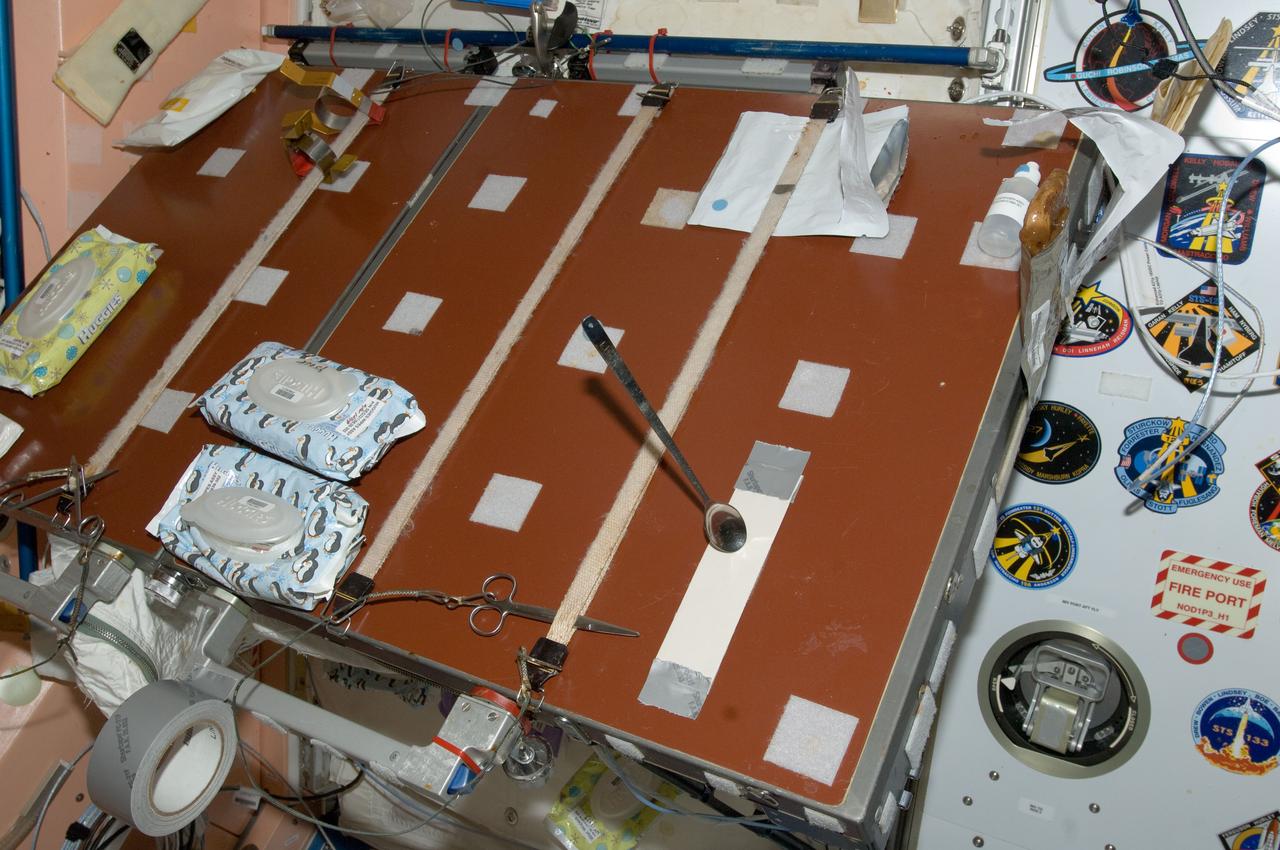
ISS031-E-012220 (5 May 2012) --- A close-up view of the galley in the Unity node photographed by an Expedition 31 crew member on the International Space Station. A long spoon, stuck to double-sided tape is visible in the foreground. This image was used during a Saturday Morning Science session with NASA astronaut Don Pettit, flight engineer.
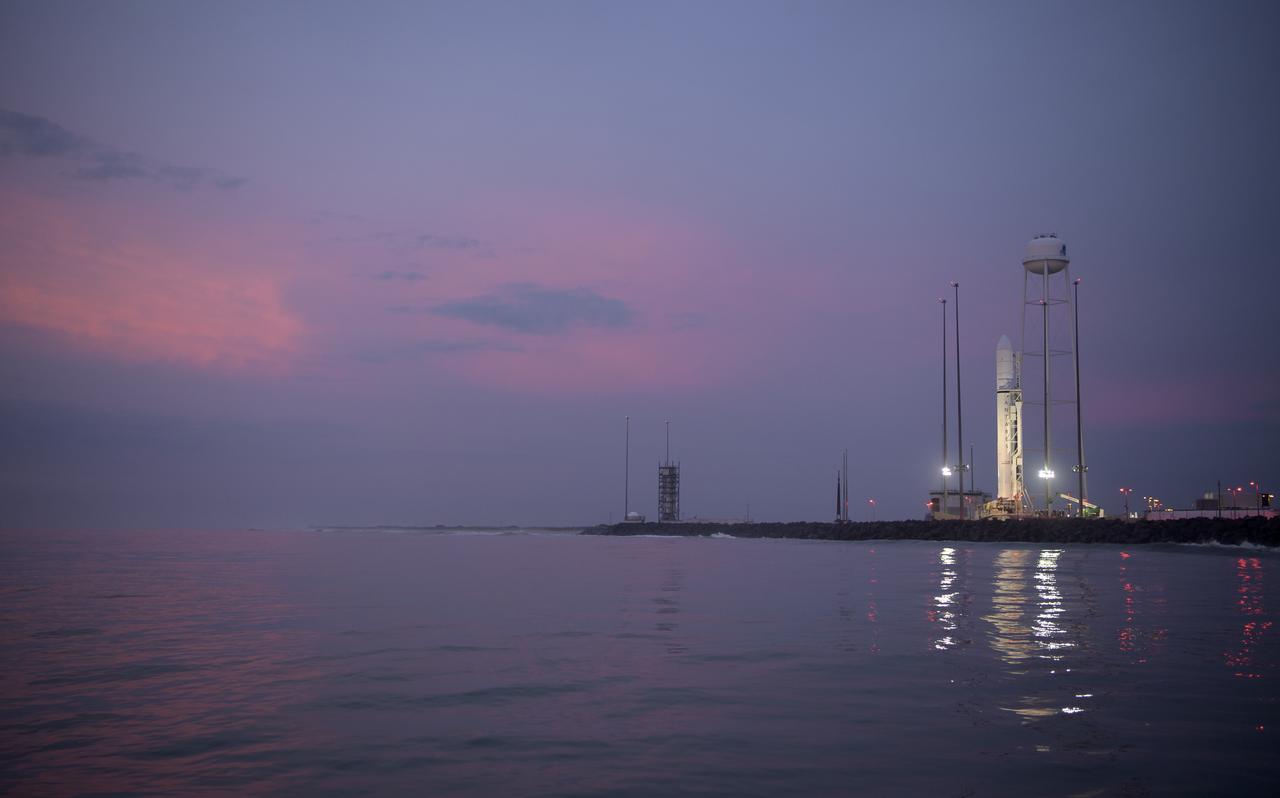
The Northrop Grumman Antares rocket is seen in the early morning on launch Pad-0A, Wednesday, Oct. 30, 2019, at NASA's Wallops Flight Facility in Virginia. Northrop Grumman’s 12th contracted cargo resupply mission with NASA to the International Space Station will deliver about 8,200 pounds of science and research, crew supplies and vehicle hardware to the orbital laboratory and its crew. Launch is scheduled for 9:59 a.m. EDT Saturday, Nov. 2. Photo Credit: (NASA/Bill Ingalls)

The Northrop Grumman Antares rocket is seen in the early morning on launch Pad-0A, Wednesday, Oct. 30, 2019, at NASA's Wallops Flight Facility in Virginia. Northrop Grumman’s 12th contracted cargo resupply mission with NASA to the International Space Station will deliver about 8,200 pounds of science and research, crew supplies and vehicle hardware to the orbital laboratory and its crew. Launch is scheduled for 9:59 a.m. EDT Saturday, Nov. 2. Photo Credit: (NASA/Bill Ingalls)
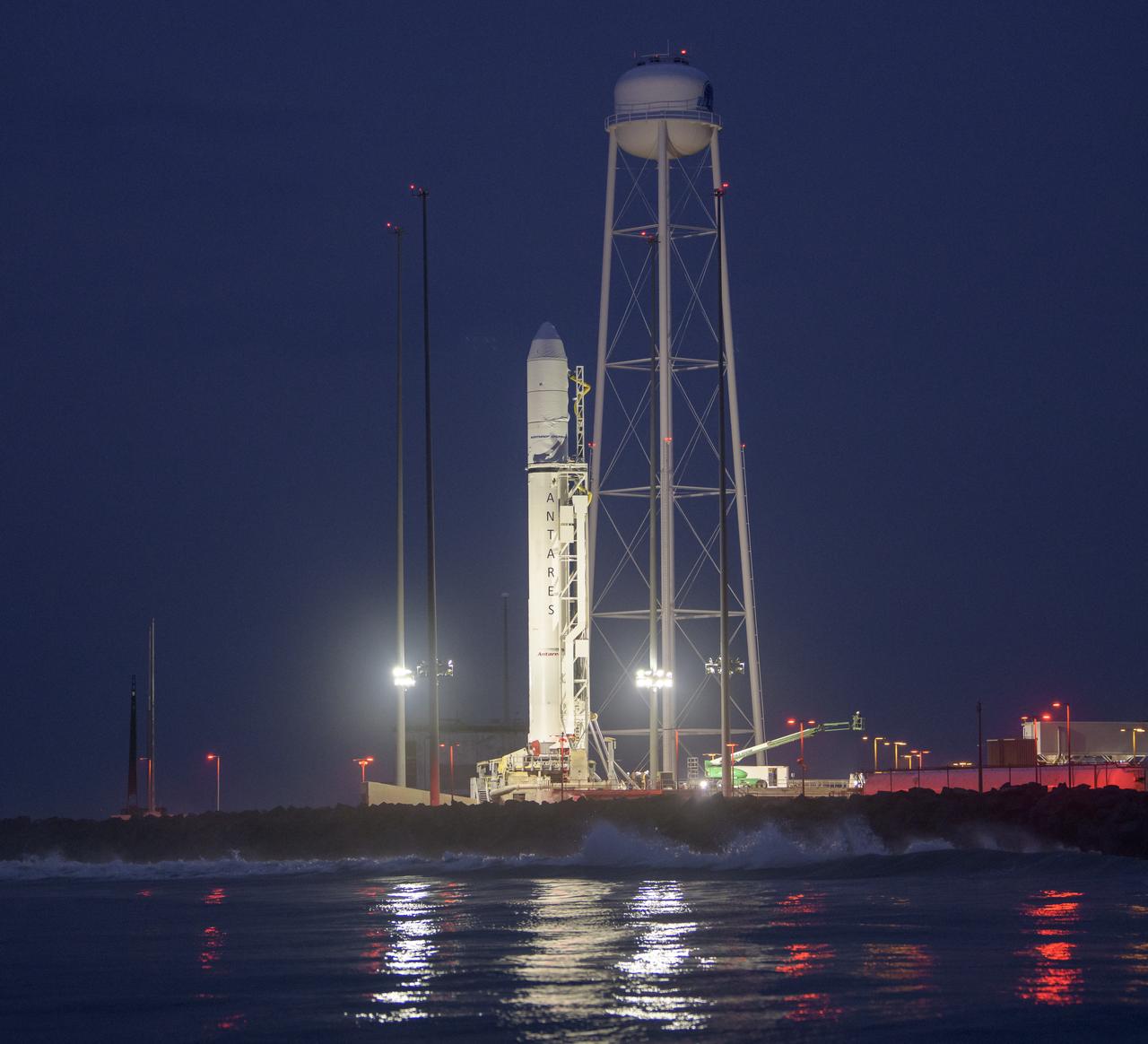
The Northrop Grumman Antares rocket is seen in the early morning on launch Pad-0A, Wednesday, Oct. 30, 2019, at NASA's Wallops Flight Facility in Virginia. Northrop Grumman’s 12th contracted cargo resupply mission with NASA to the International Space Station will deliver about 8,200 pounds of science and research, crew supplies and vehicle hardware to the orbital laboratory and its crew. Launch is scheduled for 9:59 a.m. EDT Saturday, Nov. 2. Photo Credit: (NASA/Bill Ingalls)
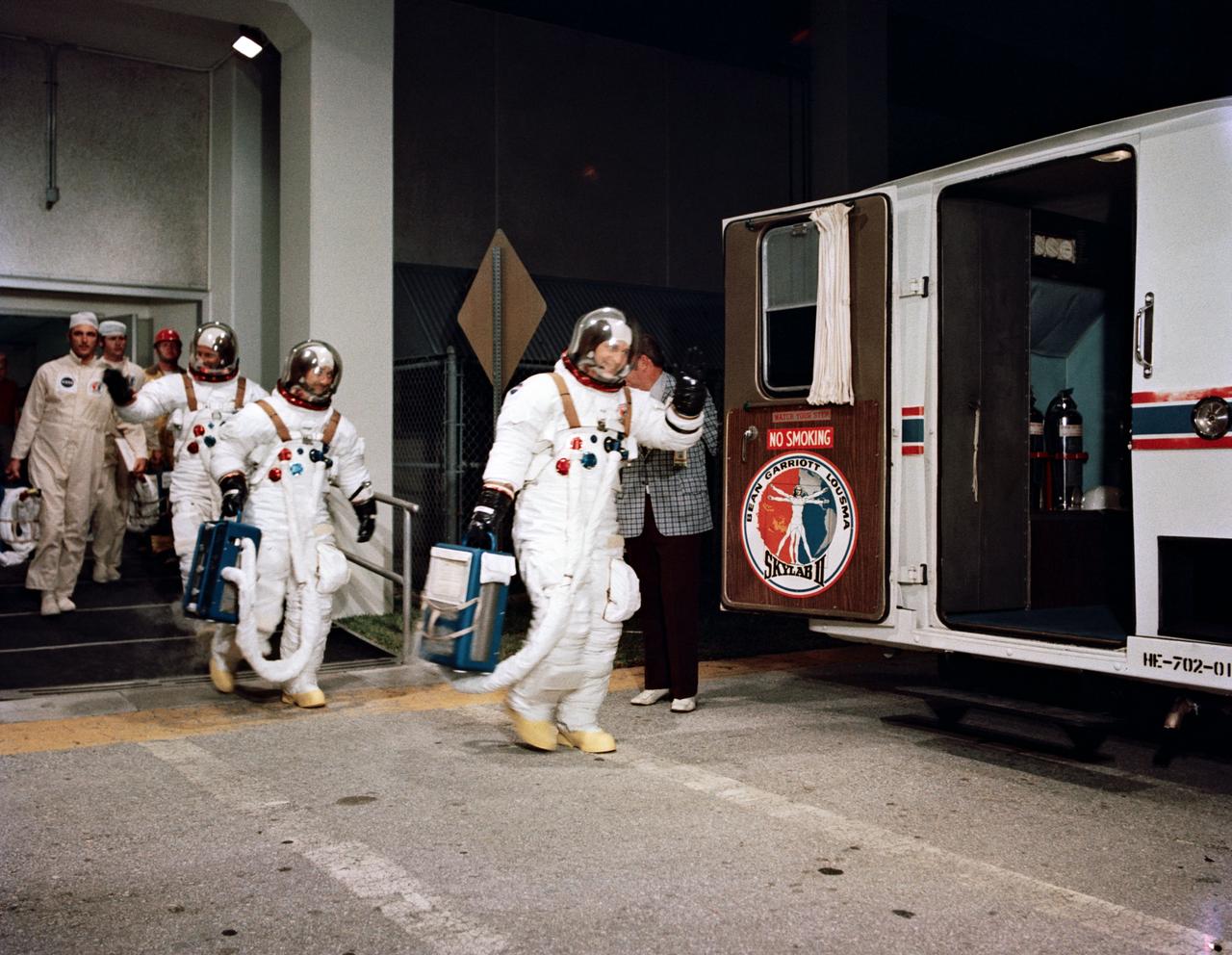
S73-31801 (28 July 1973) --- The three crewmen of the second manned Skylab mission (Skylab 3) leave the Manned Spacecraft Operations Building at the Kennedy Space Center on the morning of the Skylab 3 launch. Leading is astronaut Alan L. Bean, commander; followed by scientist-astronaut Owen K. Garriott, science pilot; and astronaut Jack R. Lousma, pilot. They entered the special van which carried them to Pad B at KSC?s Launch Complex 39 where the Skylab 3/Saturn 1B space vehicle awaited them. The Skylab 3 liftoff was at 7:11 a.m. (EDT), Saturday, July 28, 1973. The three astronauts were scheduled to spend 59 days at the Skylab space station in Earth orbit. Photo credit: NASA
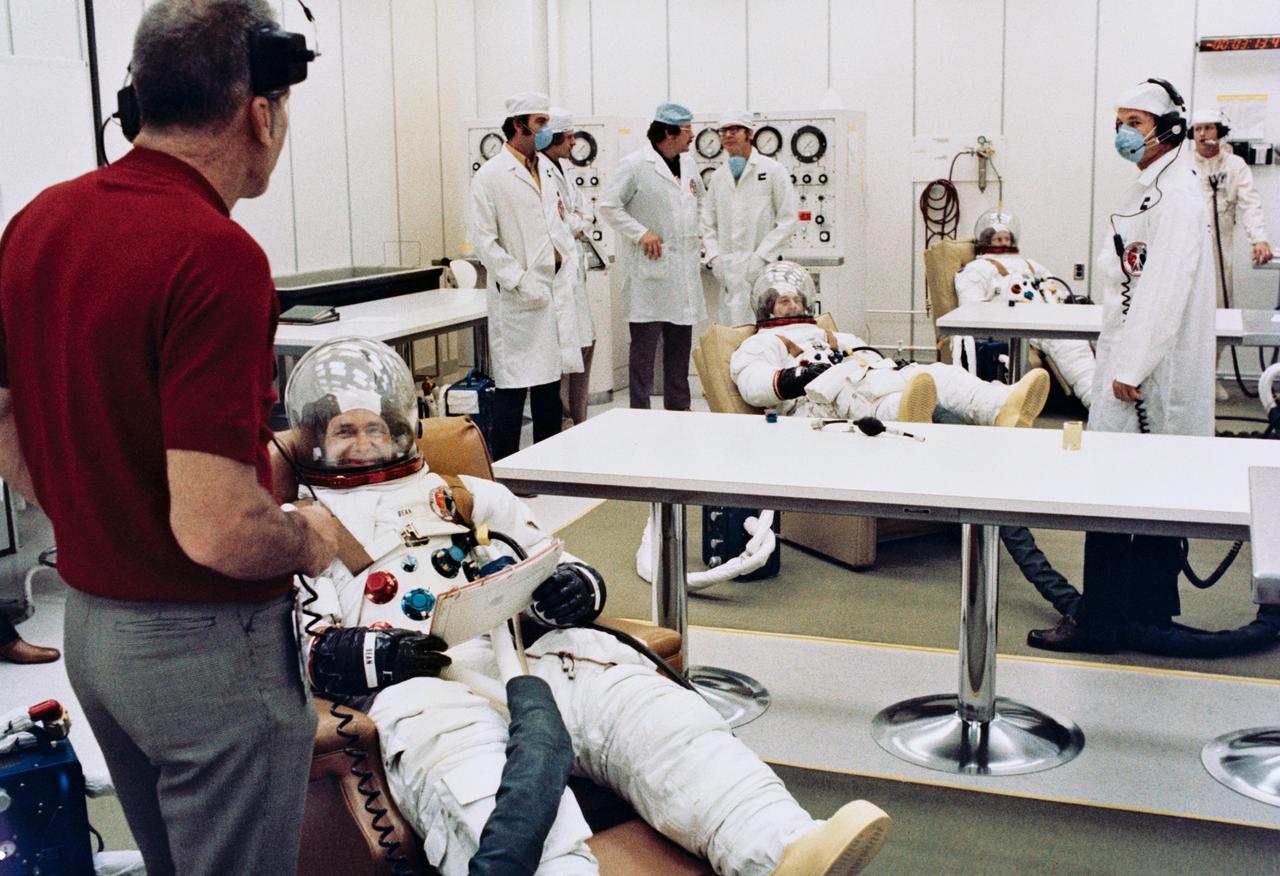
S73-31800 (28 July 1973) --- The three crewmen of the second manned Skylab mission (Skylab 3) participate in prelaunch suiting up activities in the Manned Spacecraft Operations Building at the Kennedy Space Center on the morning of the Skylab 3 launch. They are (from foreground) astronaut Alan L. Bean, commander; scientist-astronaut Owen K. Garriott, science pilot; and astronaut Jack R. Lousma, pilot. Dr. Donald K. Slayton (left foreground), Director of Flight Crew Operations, Johnson Space Center, monitors the prelaunch activities. Skylab 3 lifted off at 7:11 a.m. (EDT), Saturday, July 28, 1973. The three astronauts were scheduled to spend 59 days at the Skylab space station in Earth orbit. Photo credit: NASA
![A swirling Eastern Pacific Ocean storm system headed for California was spotted by NOAA's GOES-West satellite on February 28. According to the National Weather Service, this storm system has the potential to bring heavy rainfall to the drought-stricken state. The storm was captured using visible data from NOAA's GOES-West or GOES-15 satellite on Feb. 28 at 1915 UTC/11:15 a.m. PST was made into an image by NASA/NOAA's GOES Project at NASA's Goddard Space Flight Center in Greenbelt, Md. The storm's center appeared as a tight swirl, with bands of clouds and showers already sweeping over the state extending from northern California to Baja California, Mexico. At 11:30 a.m. PST on February 28, Bill Patzert, climatologist at NASA's Jet Propulsion Laboratory in Pasadena, Calif. said, "Right now from northern to southern California we are being battered by very heavy rain, strong winds and our coastal communities are being battered by high surf. Through the weekend we are bracing for mud and rock slides in areas that recently burned [from wildfires]. Flooding is looming up and down the state." The National Weather Service (NWS) serving Los Angeles posted a Flood Watch for the region on Friday, February 28. The Flood Watch notes the "potential for flash flooding and debris flows for some 2013 and 2014 burn areas in Los Angeles County from this morning through Saturday evening (March 1).” The NWS Flood Watch also noted "a very strong and dynamic storm will bring a significant amount of rain to much of southwestern California through Saturday evening. A flash flood watch has been issued for several recent burn areas in Los Angeles County due to the abundant rainfall expected. Rain rates at times are expected to range from a half inch to one inch per hour which could cause significant mud and debris flows. There will be a chance of thunderstorms with locally higher rainfall rates." "Californians haven't seen rain and wind this powerful in 3 years," Patzert said. "By early next week, as this system moves east, this powerful system will wreak havoc causing snow and ice storms through the Midwest into the Northeast." GOES satellites provide the kind of continuous monitoring necessary for intensive data analysis. Geostationary describes an orbit in which a satellite is always in the same position with respect to the rotating Earth. This allows GOES to hover continuously over one position on Earth's surface, appearing stationary. As a result, GOES provide a constant vigil for the atmospheric "triggers" for severe weather conditions such as tornadoes, flash floods, hail storms and hurricanes. On a positive note, Patzert noted, "This is a nice down payment on drought recovery in the parched Western U.S." For updated information about the storm system, visit NOAA's National Weather Service website: <a href="http://www.weather.gov" rel="nofollow">www.weather.gov</a> For more information about GOES satellites, visit: <a href="http://www.goes.noaa.gov/" rel="nofollow">www.goes.noaa.gov/</a> or <a href="http://goes.gsfc.nasa.gov/" rel="nofollow">goes.gsfc.nasa.gov/</a> Rob Gutro NASA's Goddard Space Flight Center <b><a href="http://www.nasa.gov/audience/formedia/features/MP_Photo_Guidelines.html" rel="nofollow">NASA image use policy.</a></b> <b><a href="http://www.nasa.gov/centers/goddard/home/index.html" rel="nofollow">NASA Goddard Space Flight Center</a></b> enables NASA’s mission through four scientific endeavors: Earth Science, Heliophysics, Solar System Exploration, and Astrophysics. Goddard plays a leading role in NASA’s accomplishments by contributing compelling scientific knowledge to advance the Agency’s mission. <b>Follow us on <a href="http://twitter.com/NASAGoddardPix" rel="nofollow">Twitter</a></b> <b>Like us on <a href="http://www.facebook.com/pages/Greenbelt-MD/NASA-Goddard/395013845897?ref=tsd" rel="nofollow">Facebook</a></b> <b>Find us on <a href="http://instagram.com/nasagoddard?vm=grid" rel="nofollow">Instagram</a></b>](https://images-assets.nasa.gov/image/GSFC_20171208_Archive_e001192/GSFC_20171208_Archive_e001192~medium.jpg)
A swirling Eastern Pacific Ocean storm system headed for California was spotted by NOAA's GOES-West satellite on February 28. According to the National Weather Service, this storm system has the potential to bring heavy rainfall to the drought-stricken state. The storm was captured using visible data from NOAA's GOES-West or GOES-15 satellite on Feb. 28 at 1915 UTC/11:15 a.m. PST was made into an image by NASA/NOAA's GOES Project at NASA's Goddard Space Flight Center in Greenbelt, Md. The storm's center appeared as a tight swirl, with bands of clouds and showers already sweeping over the state extending from northern California to Baja California, Mexico. At 11:30 a.m. PST on February 28, Bill Patzert, climatologist at NASA's Jet Propulsion Laboratory in Pasadena, Calif. said, "Right now from northern to southern California we are being battered by very heavy rain, strong winds and our coastal communities are being battered by high surf. Through the weekend we are bracing for mud and rock slides in areas that recently burned [from wildfires]. Flooding is looming up and down the state." The National Weather Service (NWS) serving Los Angeles posted a Flood Watch for the region on Friday, February 28. The Flood Watch notes the "potential for flash flooding and debris flows for some 2013 and 2014 burn areas in Los Angeles County from this morning through Saturday evening (March 1).” The NWS Flood Watch also noted "a very strong and dynamic storm will bring a significant amount of rain to much of southwestern California through Saturday evening. A flash flood watch has been issued for several recent burn areas in Los Angeles County due to the abundant rainfall expected. Rain rates at times are expected to range from a half inch to one inch per hour which could cause significant mud and debris flows. There will be a chance of thunderstorms with locally higher rainfall rates." "Californians haven't seen rain and wind this powerful in 3 years," Patzert said. "By early next week, as this system moves east, this powerful system will wreak havoc causing snow and ice storms through the Midwest into the Northeast." GOES satellites provide the kind of continuous monitoring necessary for intensive data analysis. Geostationary describes an orbit in which a satellite is always in the same position with respect to the rotating Earth. This allows GOES to hover continuously over one position on Earth's surface, appearing stationary. As a result, GOES provide a constant vigil for the atmospheric "triggers" for severe weather conditions such as tornadoes, flash floods, hail storms and hurricanes. On a positive note, Patzert noted, "This is a nice down payment on drought recovery in the parched Western U.S." For updated information about the storm system, visit NOAA's National Weather Service website: <a href="http://www.weather.gov" rel="nofollow">www.weather.gov</a> For more information about GOES satellites, visit: <a href="http://www.goes.noaa.gov/" rel="nofollow">www.goes.noaa.gov/</a> or <a href="http://goes.gsfc.nasa.gov/" rel="nofollow">goes.gsfc.nasa.gov/</a> Rob Gutro NASA's Goddard Space Flight Center <b><a href="http://www.nasa.gov/audience/formedia/features/MP_Photo_Guidelines.html" rel="nofollow">NASA image use policy.</a></b> <b><a href="http://www.nasa.gov/centers/goddard/home/index.html" rel="nofollow">NASA Goddard Space Flight Center</a></b> enables NASA’s mission through four scientific endeavors: Earth Science, Heliophysics, Solar System Exploration, and Astrophysics. Goddard plays a leading role in NASA’s accomplishments by contributing compelling scientific knowledge to advance the Agency’s mission. <b>Follow us on <a href="http://twitter.com/NASAGoddardPix" rel="nofollow">Twitter</a></b> <b>Like us on <a href="http://www.facebook.com/pages/Greenbelt-MD/NASA-Goddard/395013845897?ref=tsd" rel="nofollow">Facebook</a></b> <b>Find us on <a href="http://instagram.com/nasagoddard?vm=grid" rel="nofollow">Instagram</a></b>