
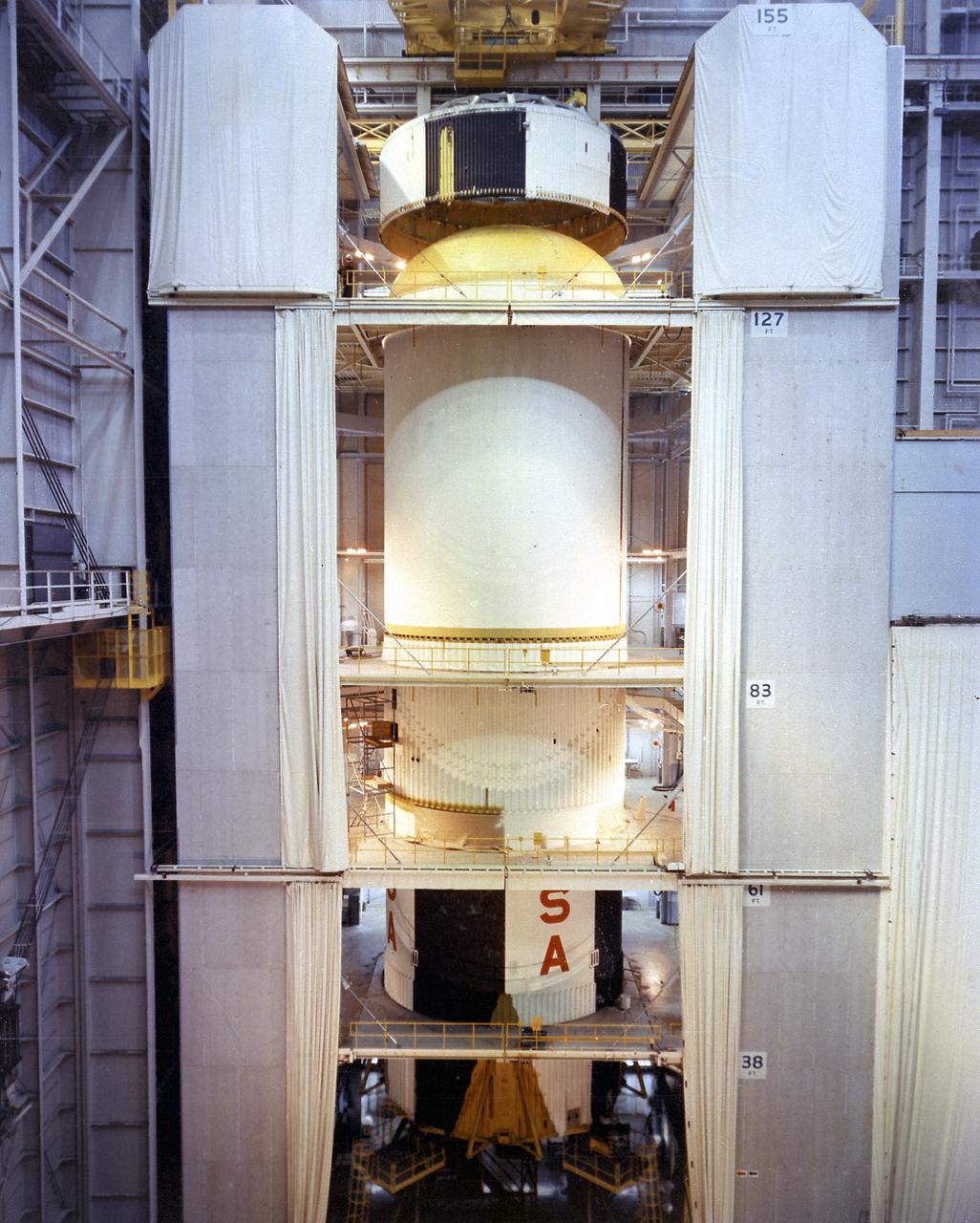
This photograph depicts the Saturn V vehicle (SA-501) for the Apollo 4 mission in the Vehicle Assembly Building (VAB) at the Kennedy Space Center (KSC). After the completion of the assembly operation, the work platform was retracted and the vehicle was readied to rollout from the VAB to the launch pad. The Apollo 4 mission was the first launch of the Saturn V launch vehicle. Objectives of the unmanned Apollo 4 test flight were to obtain flight information on launch vehicle and spacecraft structural integrity and compatibility, flight loads, stage separation, and subsystems operation including testing of restart of the S-IVB stage, and to evaluate the Apollo command module heat shield. The Apollo 4 was launched on November 9, 1967 from KSC.
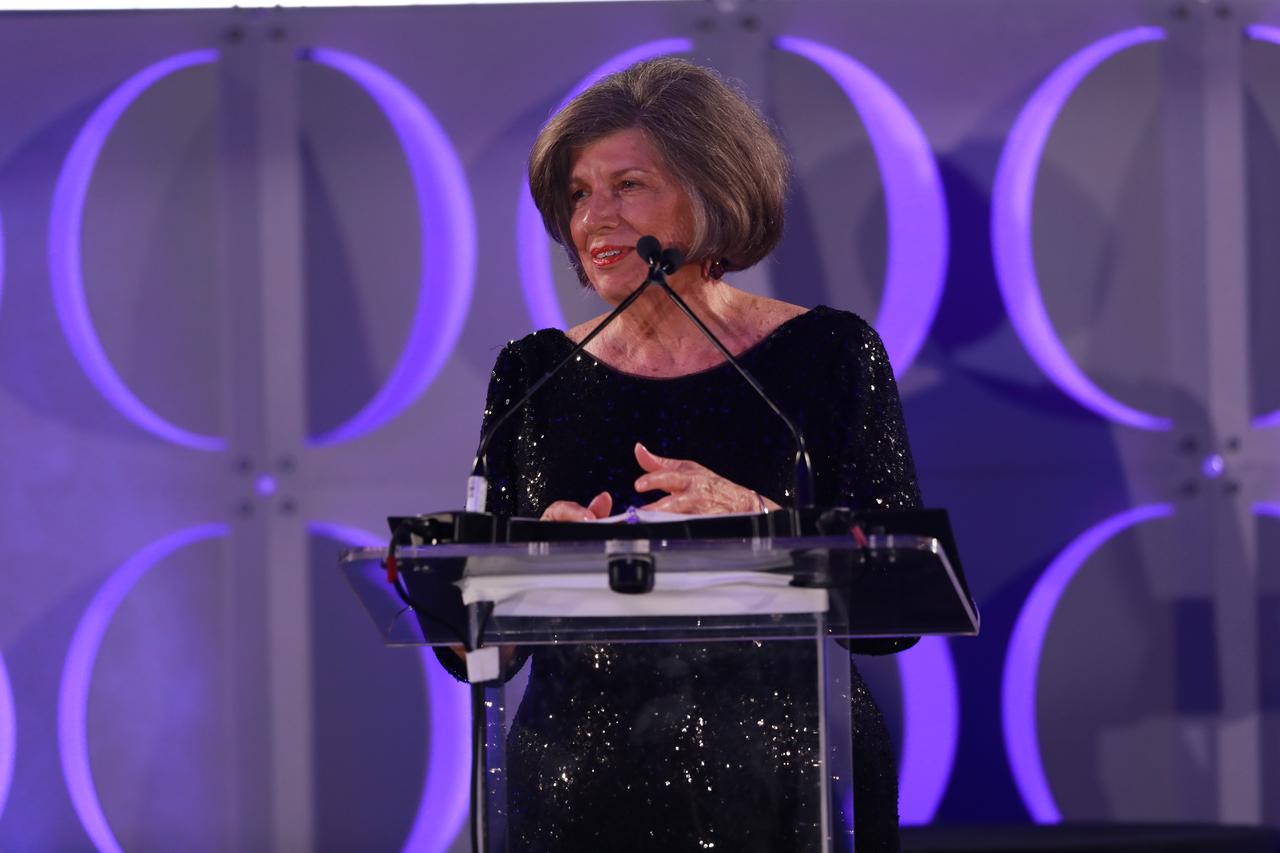
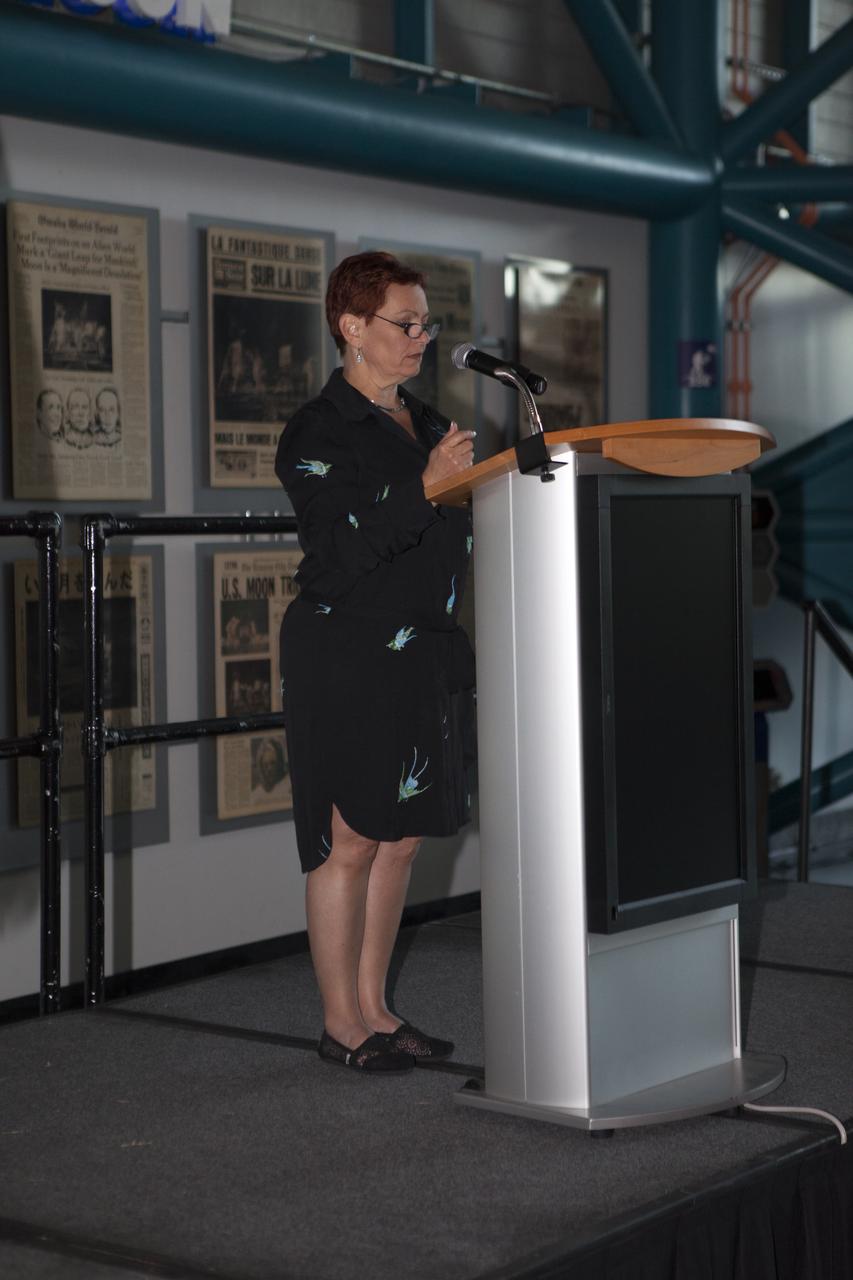
JoAnn Morgan, retired NASA engineer, makes remarks after receiving the Pioneer Award during the Apollo 11 50th Gala on July 16, 2019. The gala, presented by Northrop Grumman, was held inside the Apollo/Saturn V Center at the Kennedy Space Center Visitor Complex in Florida. Morgan was the first woman engineer on console at Kennedy Space Center and the only woman in the firing room during the Apollo 11 launch countdown and launch.
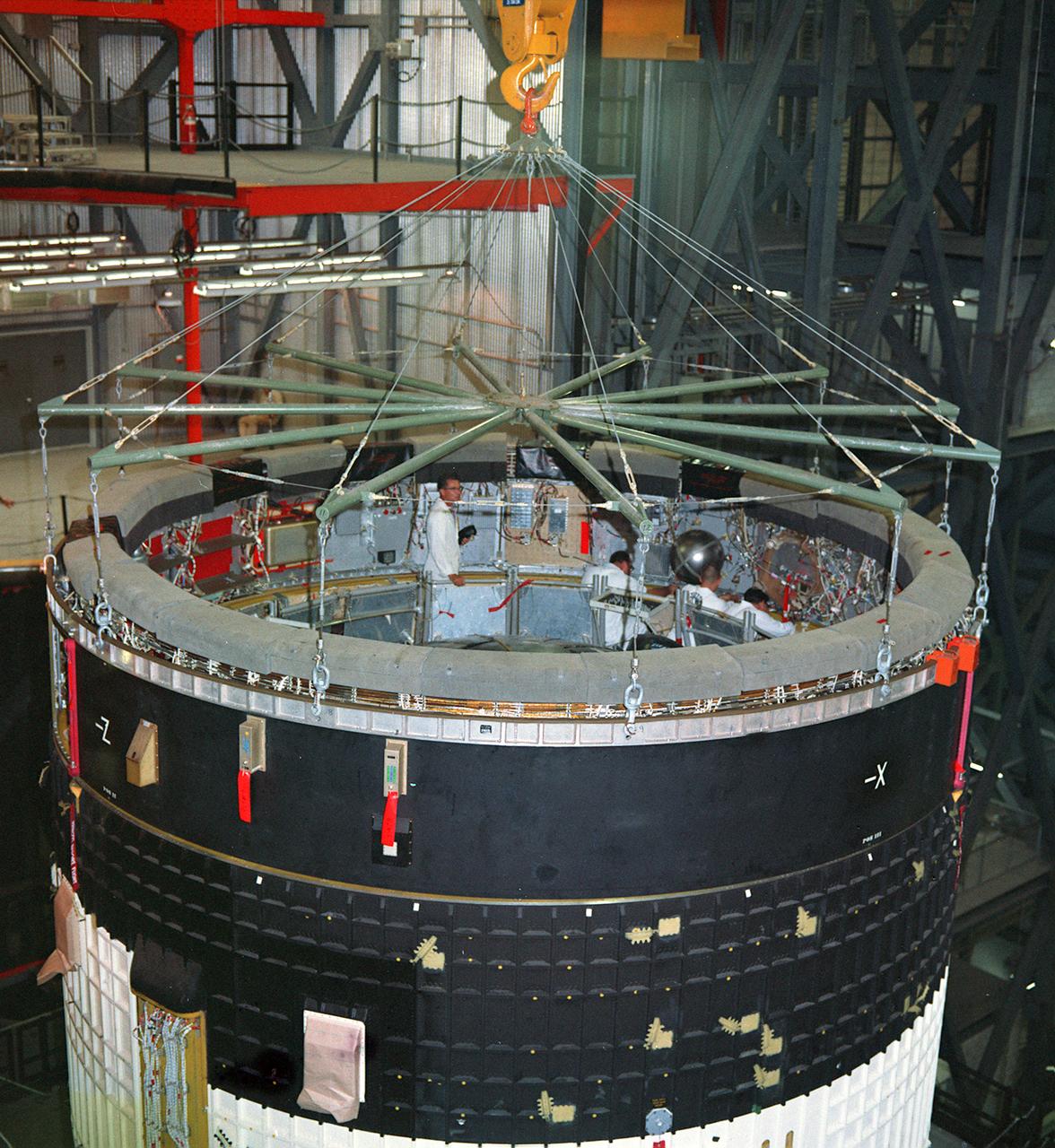
This photograph was taken during the final assembly operation of the Saturn V launch vehicle for the Apollo 4 (SA 501) mission. The instrument unit (IU) was mated atop the S-IC/S-II assembly in the Vehicle Assembly Building high bay at the Kennedy Space Center. The Apollo 4 mission was the first launch of the Saturn V launch vehicle. Objectives of the unmanned Apollo 4 test flight were to obtain flight information on launch vehicle and spacecraft structural integrity and compatibility, flight loads, stage separation, and subsystems operation including testing of restart of the S-IVB stage, and to evaluate the Apollo command module heat shield. The Apollo 4 was launched on November 9, 1967 from KSC.
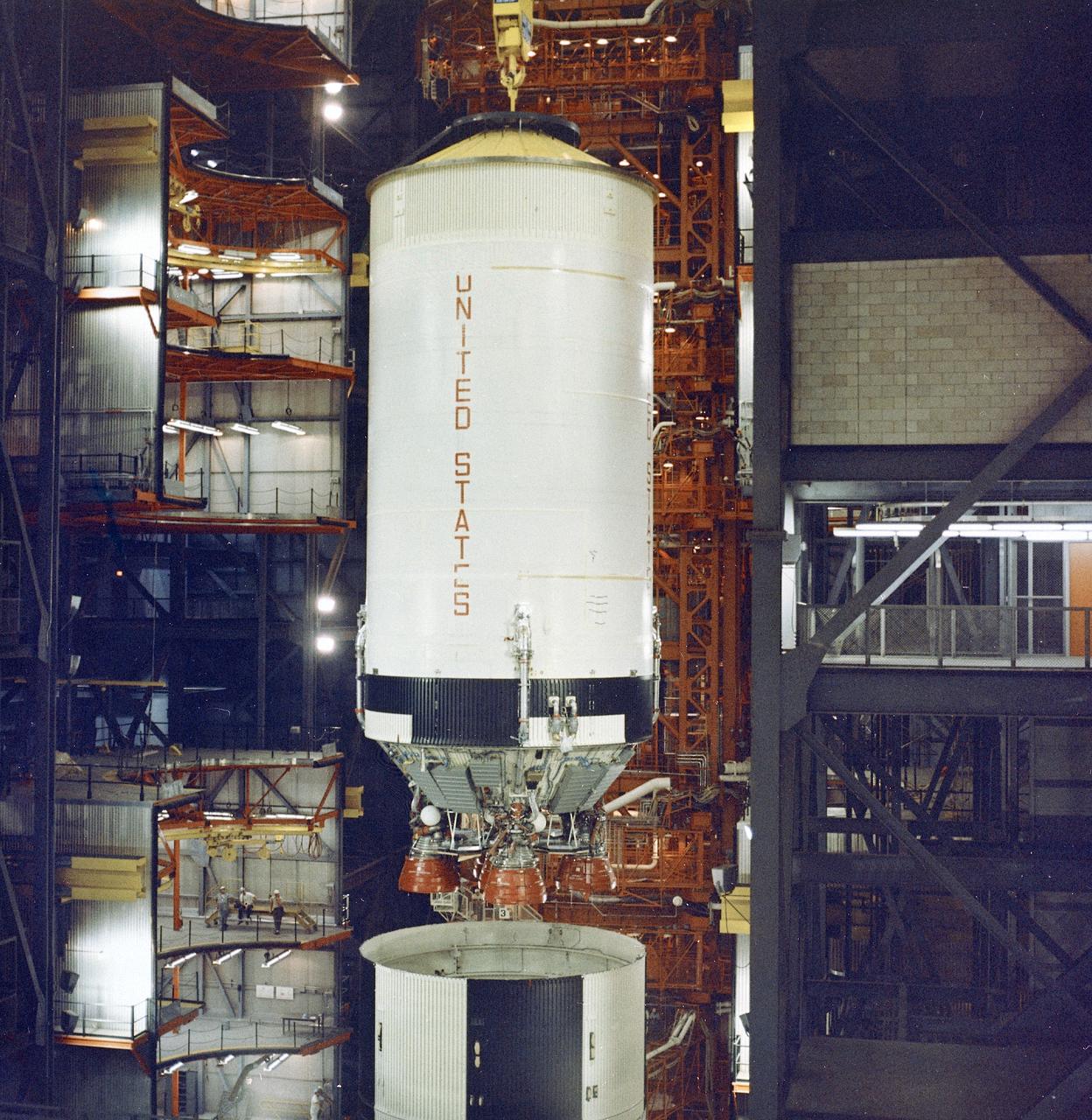
This photograph shows the Saturn V S-II (second) stage of the Apollo 6 mission being lowered atop of the S-IC (first) stage during the final assembly operations in the Vehicle Assembly Building (VAB) at the Kennedy Space Center. The Apollo 6 mission was the second Saturn V unmanned flight for testing an emergency detection system. The launch occurred on April 4, 1968.
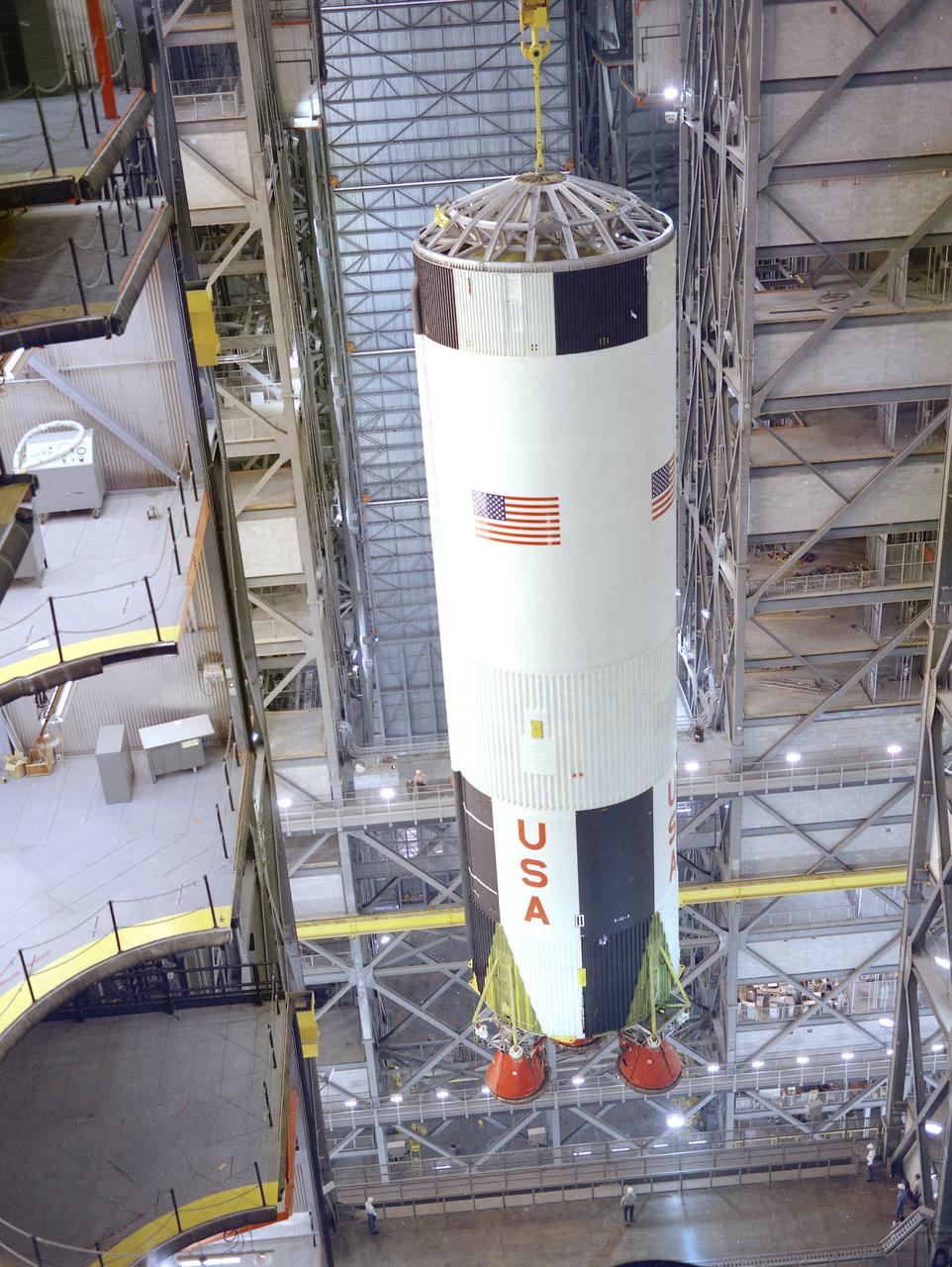
The S-IC stage being erected for the final assembly of the Saturn V launch vehicle for the Apollo 8 mission (AS-503), is photographed in the Vehicle Assembly Building (VAB) high bay at the Kennedy Space Center. The Apollo 8 mission was the first Saturn V manned mission with astronauts Frank Borman, James A. Lovell, and William Anders. They escaped Earth's gravity and traveled to lunar vicinity. The launch of Apollo 8 occurred on December 21, 1968.
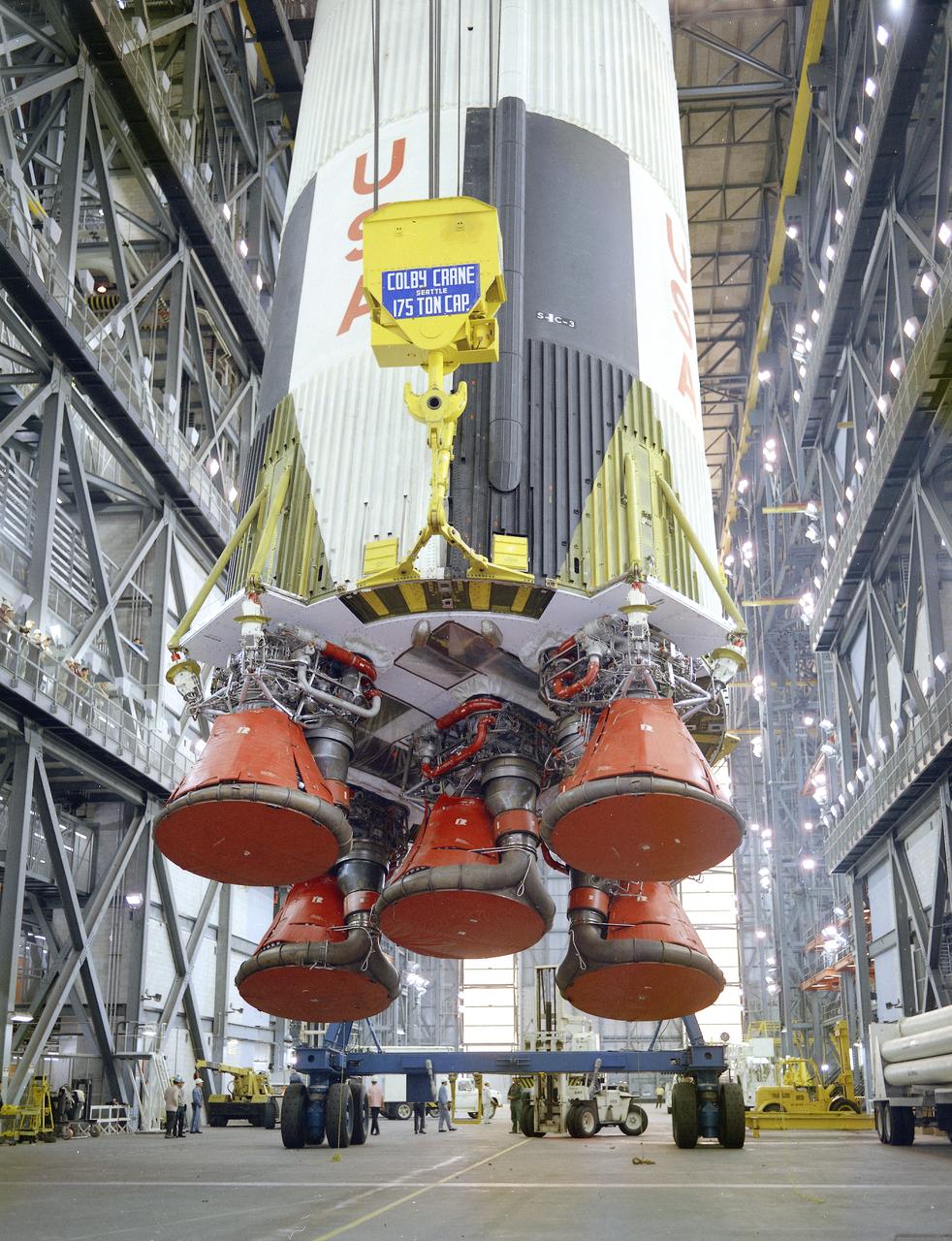
The S-IC stage being erected for the final assembly of the Saturn V launch vehicle for the Apollo 8 mission (AS-503), is photographed in the Vehicle Assembly Building (VAB) high bay at the Kennedy Space Center. The Apollo 8 mission was the first Saturn V manned mission with astronauts Frank Borman, James A. Lovell, and William Anders. They escaped Earth's gravity and traveled to lunar vicinity. The launch of Apollo 8 occurred on December 21, 1968.
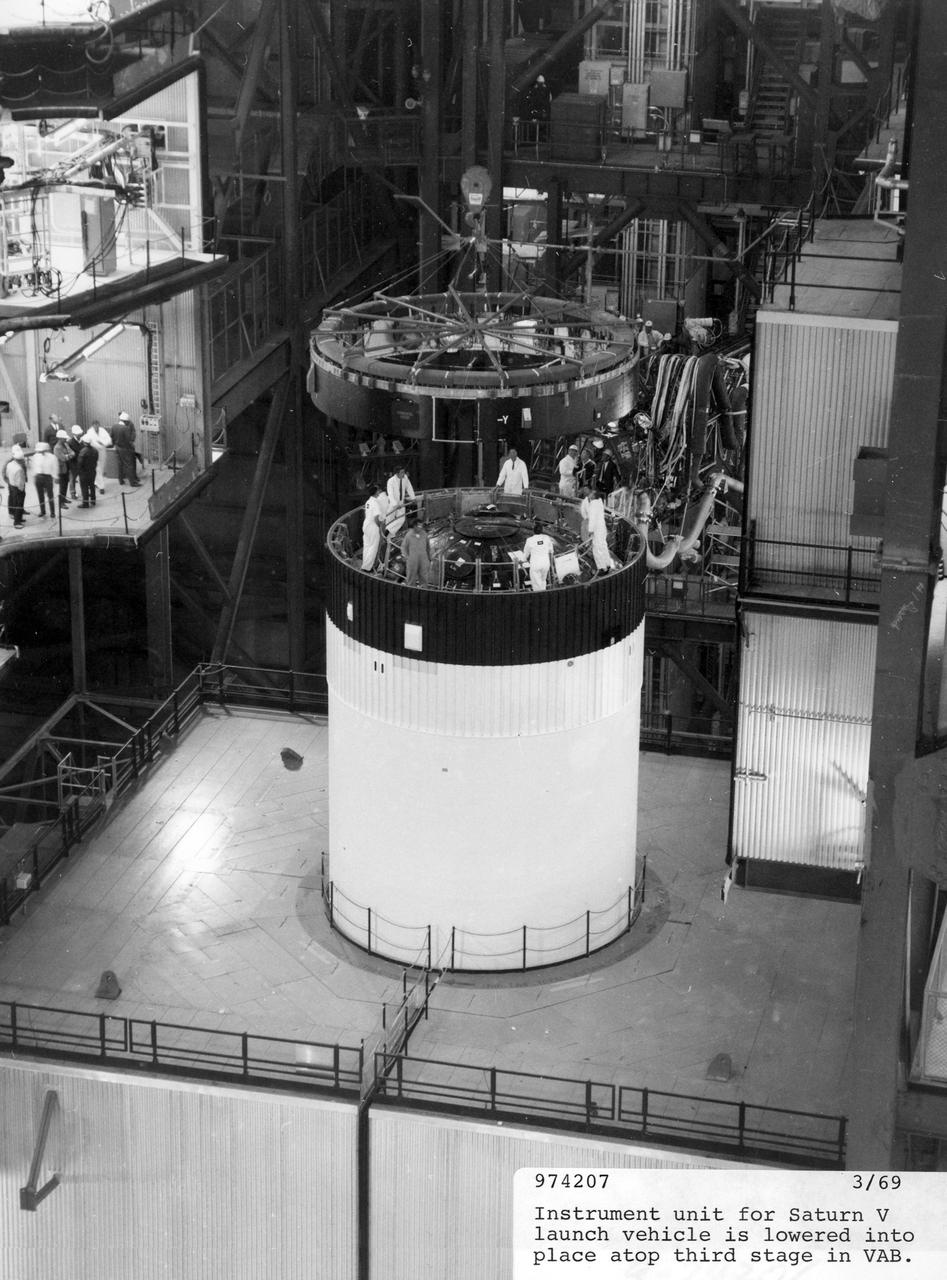
The instrument unit for the Saturn V launch vehicle, AS-506, used to propel the Apollo 11 lunar landing mission, is lowered into place atop the third (S-IVB) stage in the vehicle assembly building at the NASA Kennedy Space Center (KSC). Designed by the NASA Marshall Space Flight Center (MSFC), the instrument unit served as the Saturn’s “nerve center” providing guidance and control, command and sequence of vehicle functions, telemetry, and environmental control. The Apollo 11 mission launched from KSC in Florida via the MSFC developed Saturn V launch vehicle on July 16, 1969 and safely returned to Earth on July 24, 1969. Astronauts onboard included Neil A. Armstrong, commander; Michael Collins, Command Module (CM) pilot; and Edwin E. Aldrin, Jr., Lunar Module (LM) pilot. The CM, “Columbia”, piloted by Collins, remained in a parking orbit around the Moon while the LM, “Eagle’’, carrying astronauts Armstrong and Aldrin, landed on the Moon. On July 20, 1969, Armstrong was the first human to ever stand on the lunar surface, followed by Aldrin. During 2½ hours of surface exploration, the crew collected 47 pounds of lunar surface material for analysis back on Earth. With the success of Apollo 11, the national objective to land men on the Moon and return them safely to Earth had been accomplished
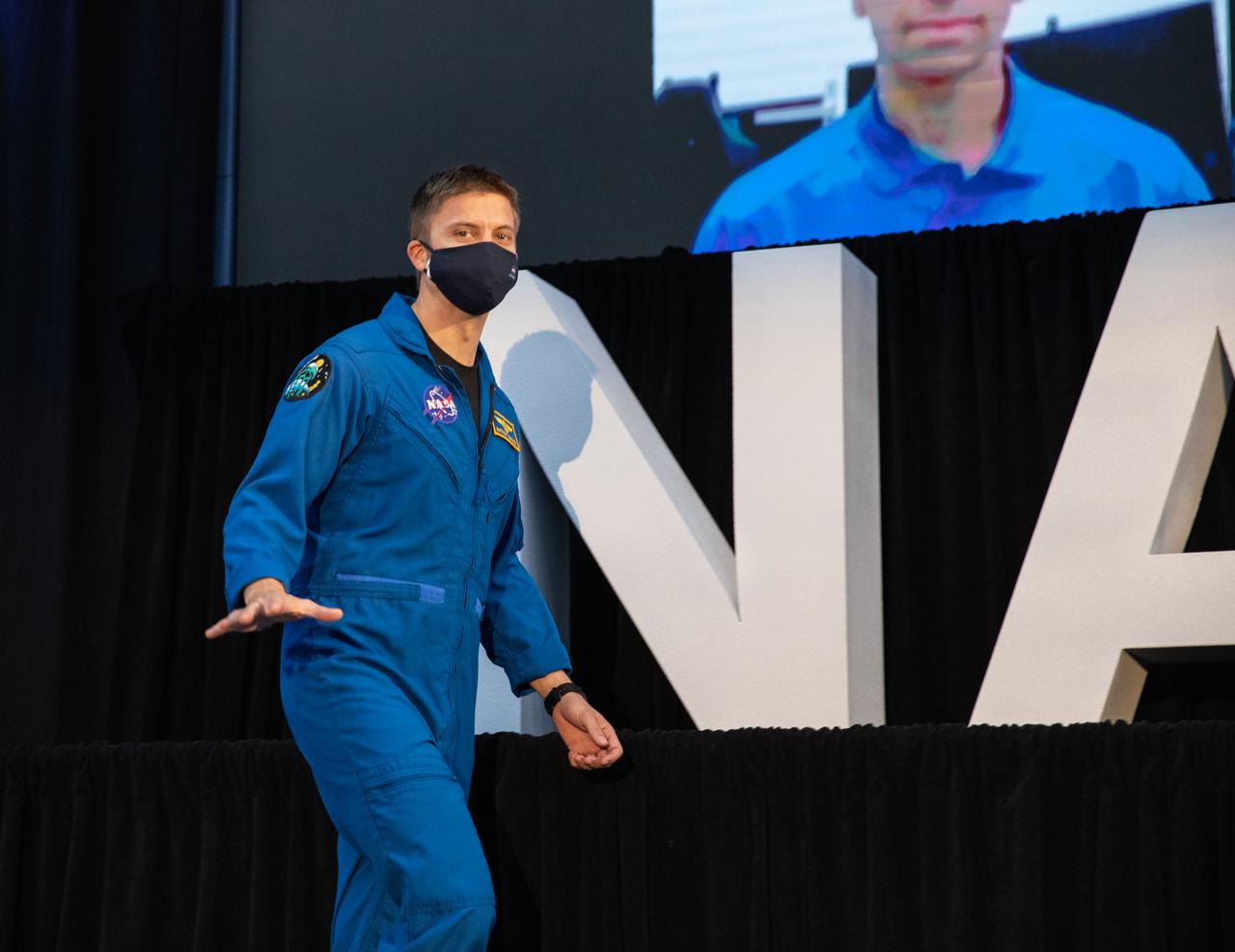
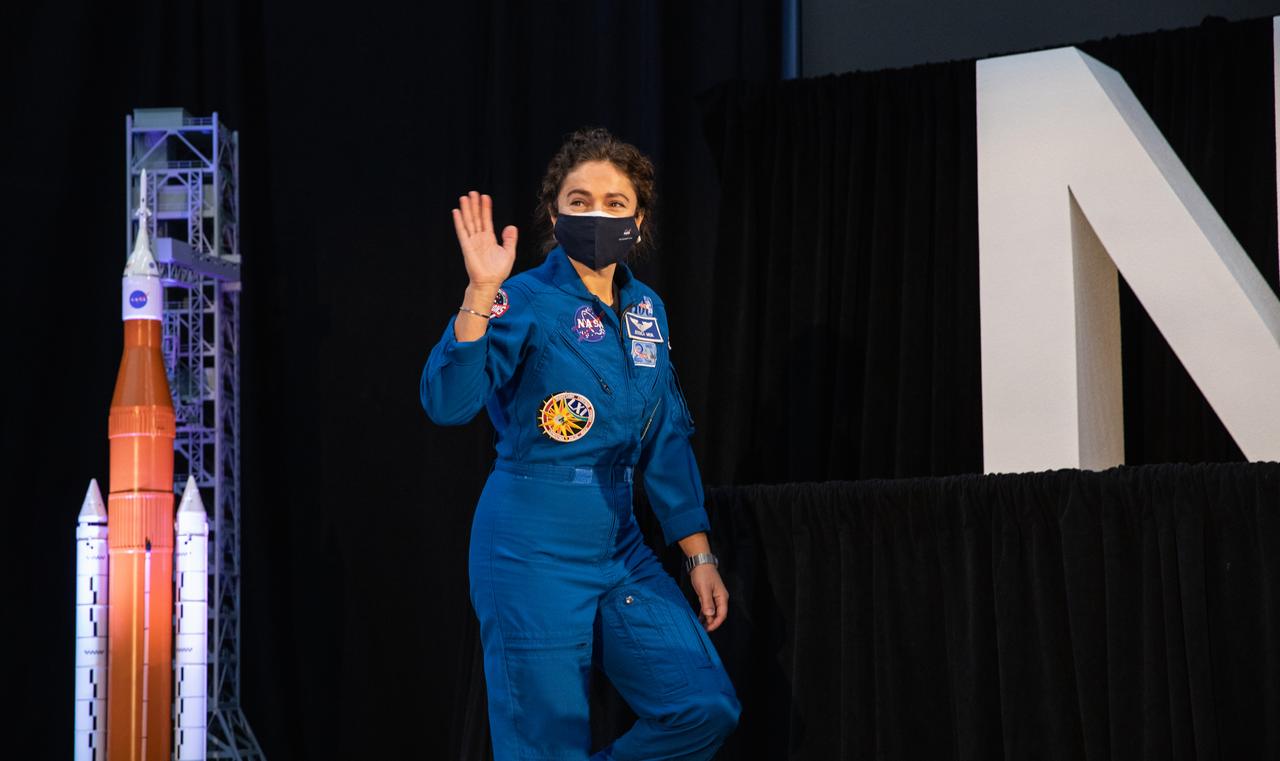
NASA astronaut Matthew Dominick waves during an announcement Dec. 9, 2020, that he is one of the initial team of 18 astronauts eligible for early Artemis missions on and around the Moon. A Colorado native, Dominick was selected as a NASA astronaut in 2017. Joining him at the event were fellow astronauts Joseph Acaba, Jessica Meir, Anne McClain, and Jessica Watkins. Vice President Mike Pence made the announcement at the close of a National Space Council meeting he chaired in the Apollo/Saturn V Center at the Kennedy Space Center Visitor Complex in Florida. Under the Artemis program, NASA will land the first woman and the next man on the Moon in 2024.

NASA astronaut Anne McClain attends an announcement Dec. 9, 2020, that she is one of the initial team of 18 astronauts eligible for early Artemis missions on and around the Moon. A Washington native, McClain was selected as a NASA astronaut in 2013 and has spent 204 days in space on one previous flight. Joining her at the event were fellow astronauts Joseph Acaba, Matthew Dominick, Jessica Meir, and Jessica Watkins. Vice President Mike Pence made the announcement at the close of a National Space Council meeting he chaired in the Apollo/Saturn V Center at the Kennedy Space Center Visitor Complex in Florida. Under the Artemis program, NASA will land the first woman and the next man on the Moon in 2024.
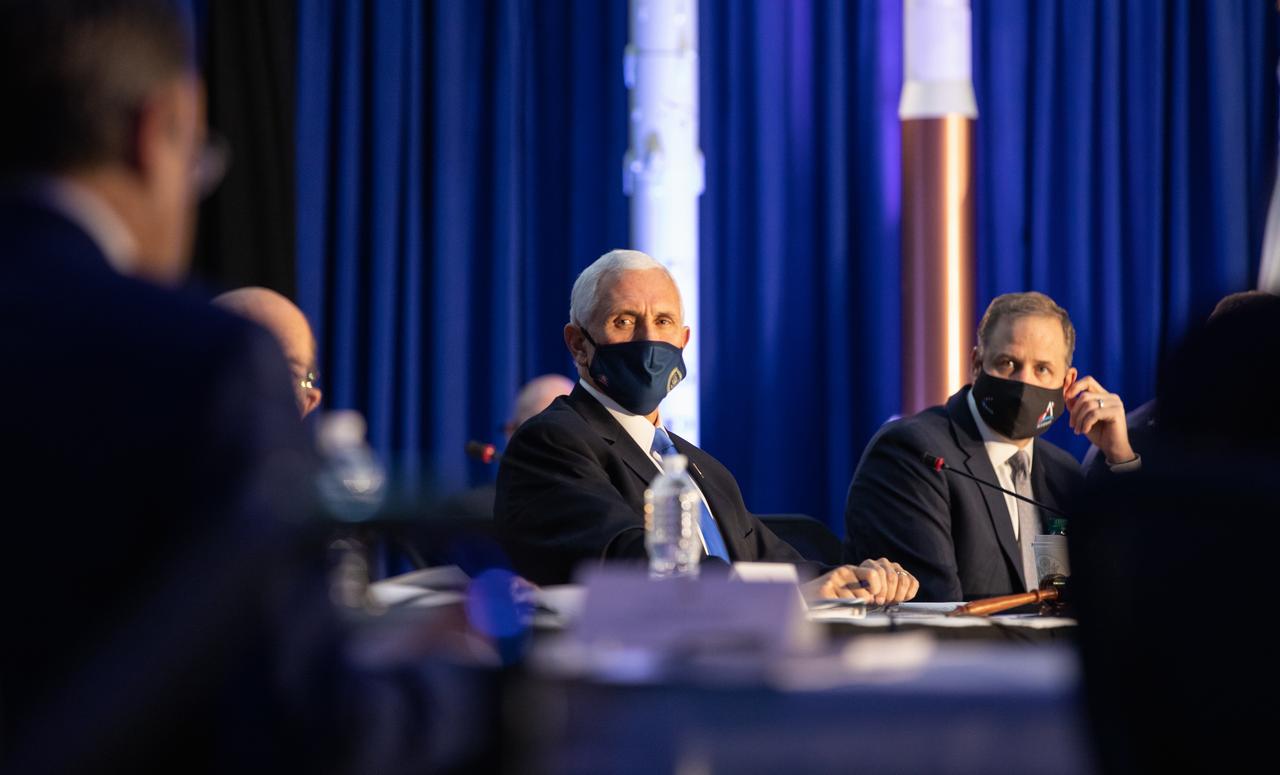
Vice President Mike Pence listens during a meeting of the National Space Council inside the Apollo/Saturn V Center at the Kennedy Space Center Visitor Complex in Florida on Dec. 9, 2020. The council's role is to advise the president regarding national space policy and strategy and to review the nation's long-range goals for space activities. At the close of the meeting, Pence announced the initial team of 18 astronauts eligible for early Artemis missions on and around the Moon. Under the Artemis program, NASA will land the first woman and the next man on the Moon in 2024.
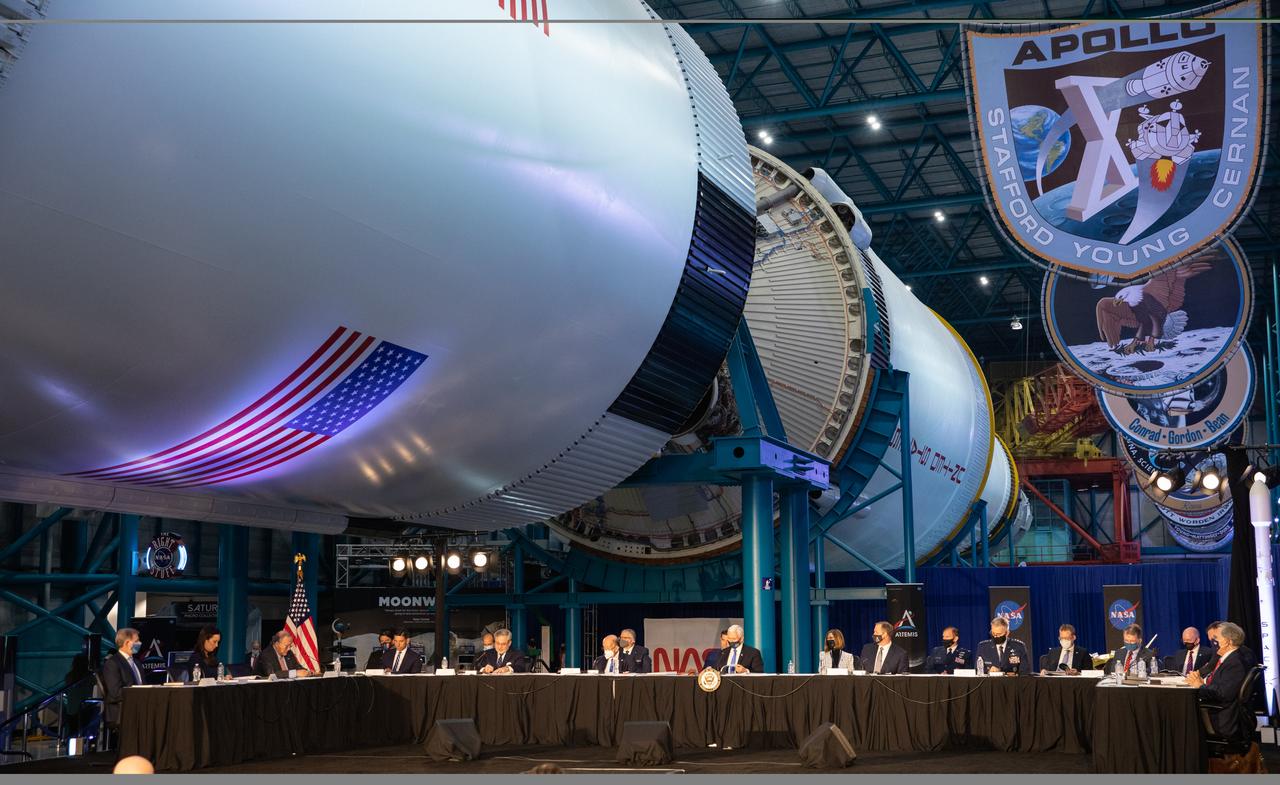
National Space Council Meeting and Special Artemis Announcement
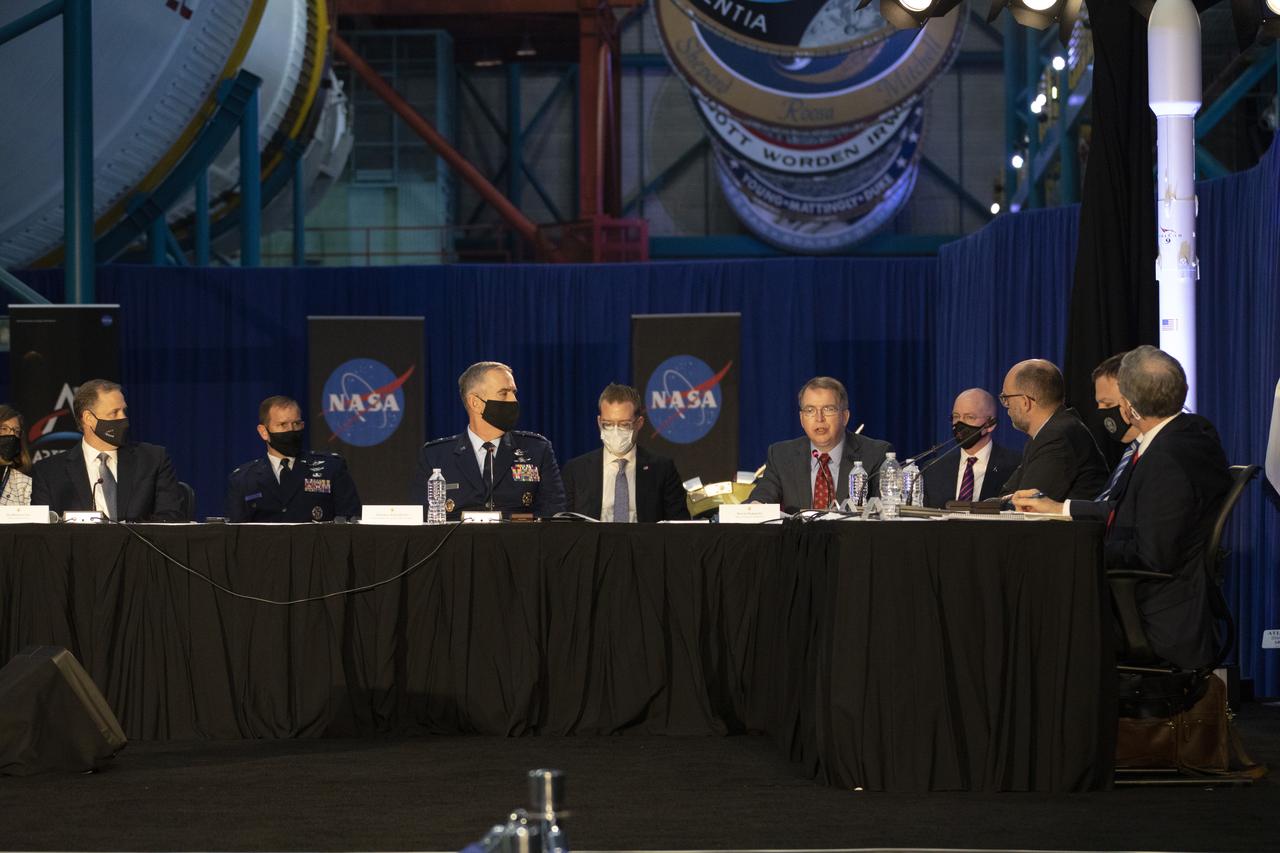
The National Space Council meets inside the Apollo/Saturn V Center at the Kennedy Space Center Visitor Complex in Florida on Dec. 9, 2020. The council's role is to advise the president regarding national space policy and strategy and to review the nation's long-range goals for space activities. Vice President Mike Pence chaired the meeting, at which he announced the initial team of 18 astronauts eligible for early Artemis missions on and around the Moon. Under the Artemis program, NASA will land the first woman and the next man on the Moon in 2024.
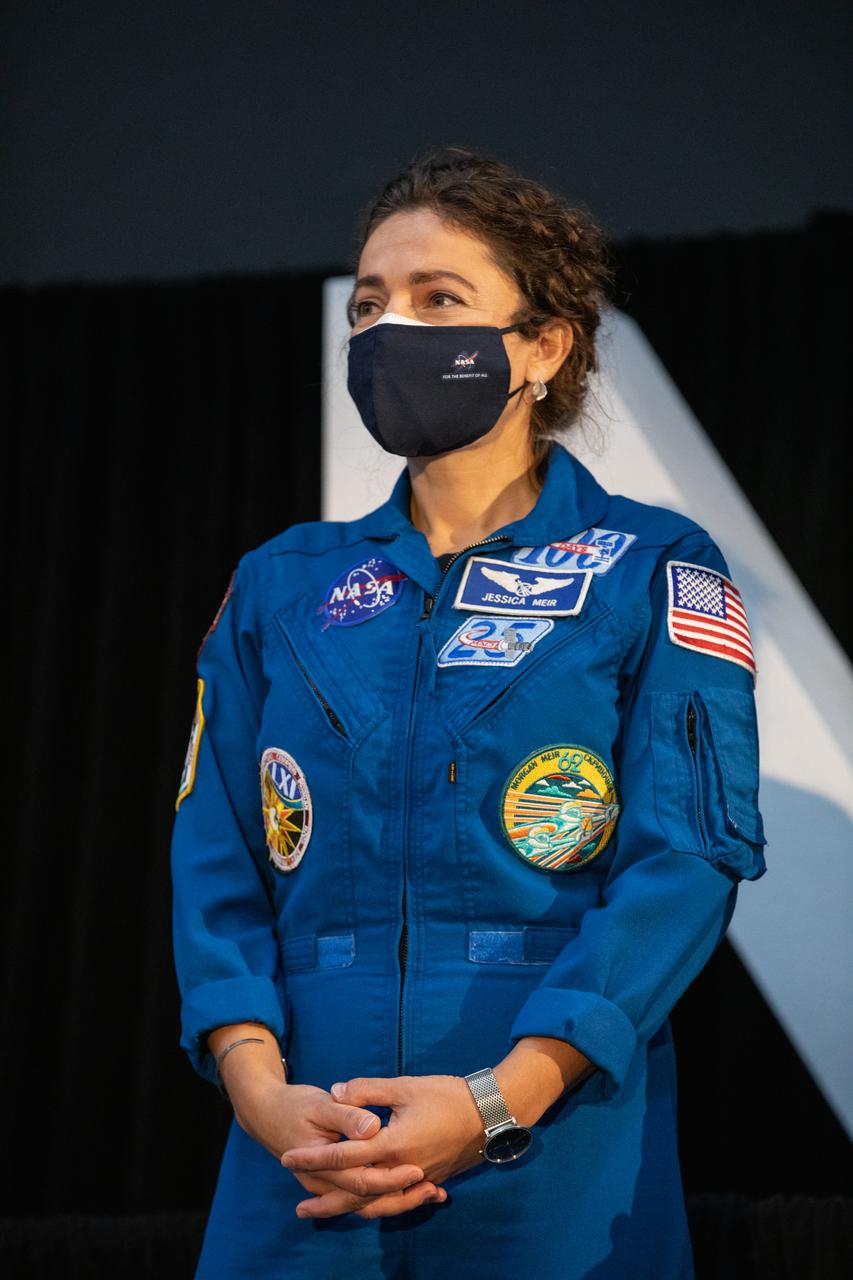
NASA astronaut Jessica Meir attends an announcement Dec. 9, 2020, that she is one of the initial team of 18 astronauts eligible for early Artemis missions on and around the Moon. A Maine native, Meir was selected as a NASA astronaut in 2013 and has spent 205 days in space on one previous flight. Joining her at the event were fellow astronauts Joseph Acaba, Matthew Dominick, Anne McClain, and Jessica Watkins. Vice President Mike Pence made the announcement at the close of a National Space Council meeting he chaired in the Apollo/Saturn V Center at the Kennedy Space Center Visitor Complex in Florida. Under the Artemis program, NASA will land the first woman and the next man on the Moon in 2024.
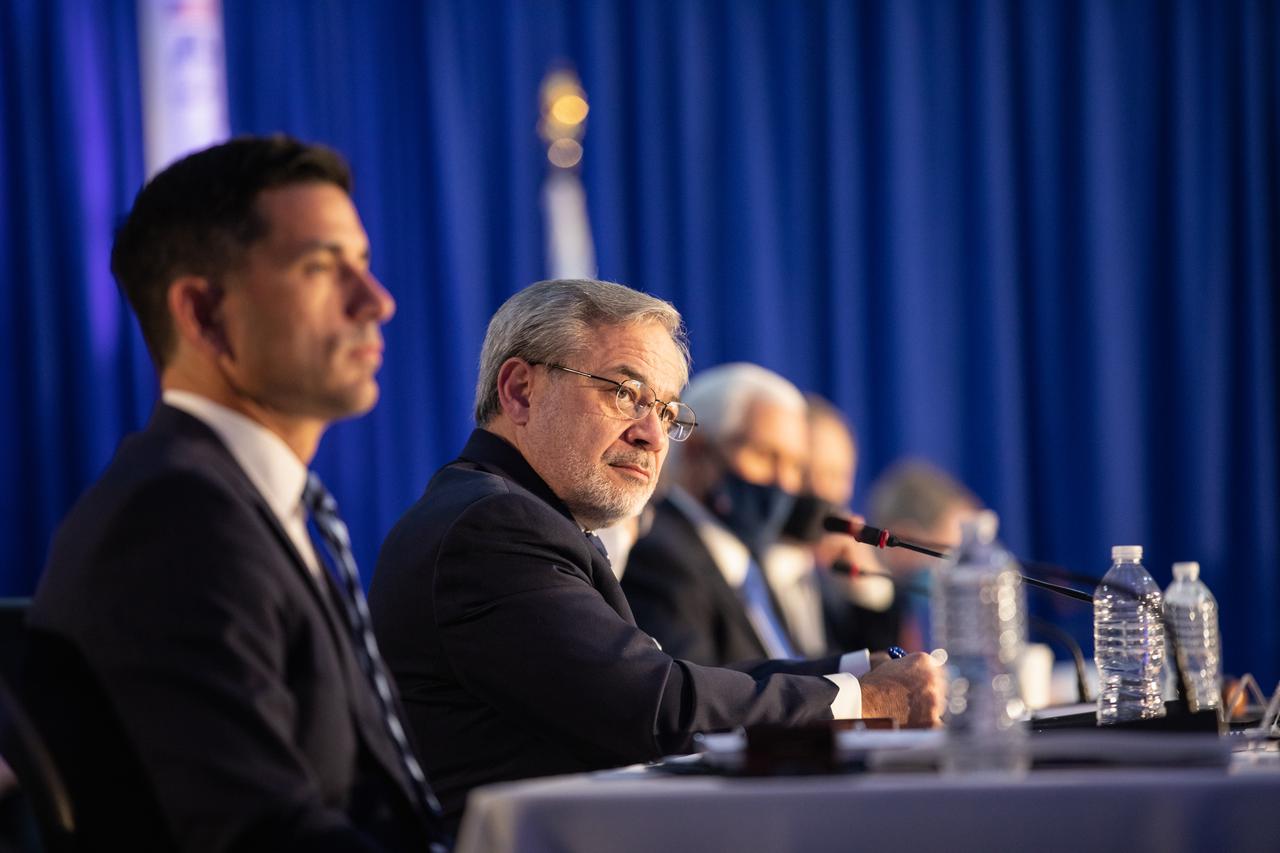
From left, Chad Wolf, acting secretary of Homeland Security, and Dan Brouillette, Secretary of Energy, attend a meeting of the National Space Council inside the Apollo/Saturn V Center at the Kennedy Space Center Visitor Complex in Florida on Dec. 9, 2020. The council's role is to advise the president regarding national space policy and strategy, and to review the nation's long-range goals for space activities. Vice President Mike Pence chaired the meeting, at which he announced the initial team of 18 astronauts eligible for early Artemis missions on and around the Moon. Under the Artemis program, NASA will land the first woman and the next man on the Moon in 2024.
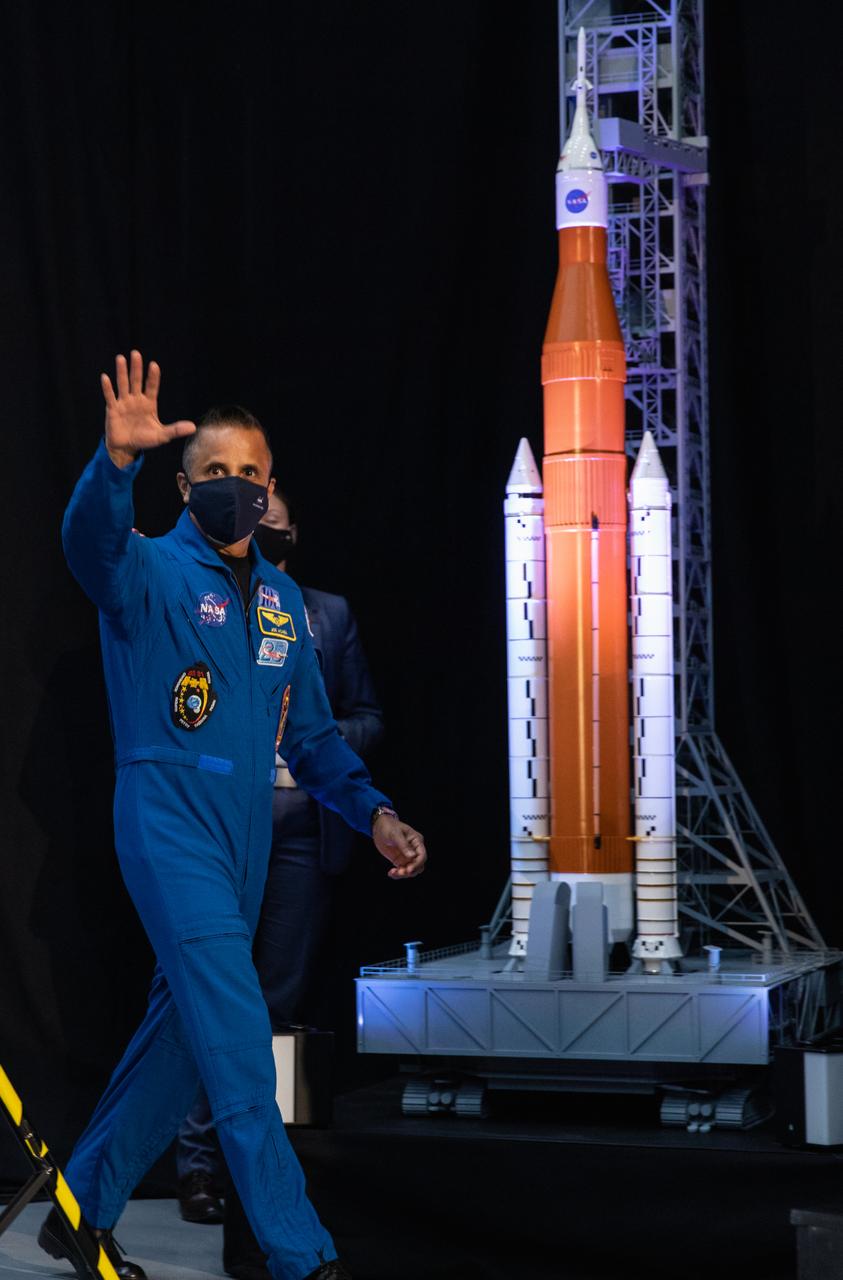
NASA astronaut Joseph Acaba waves during an announcement Dec. 9, 2020, that he is one of the initial team of 18 astronauts eligible for early Artemis missions on and around the Moon. A California native, Acaba was selected as a NASA astronaut in 2004 and has logged a total of 306 days in space on three flights. Joining him at the event were fellow astronauts Matthew Dominick, Jessica Meir, Anne McClain, and Jessica Watkins. Vice President Mike Pence made the announcement at the close of a National Space Council meeting he chaired in the Apollo/Saturn V Center at the Kennedy Space Center Visitor Complex in Florida. Under the Artemis program, NASA will land the first woman and the next man on the Moon in 2024.
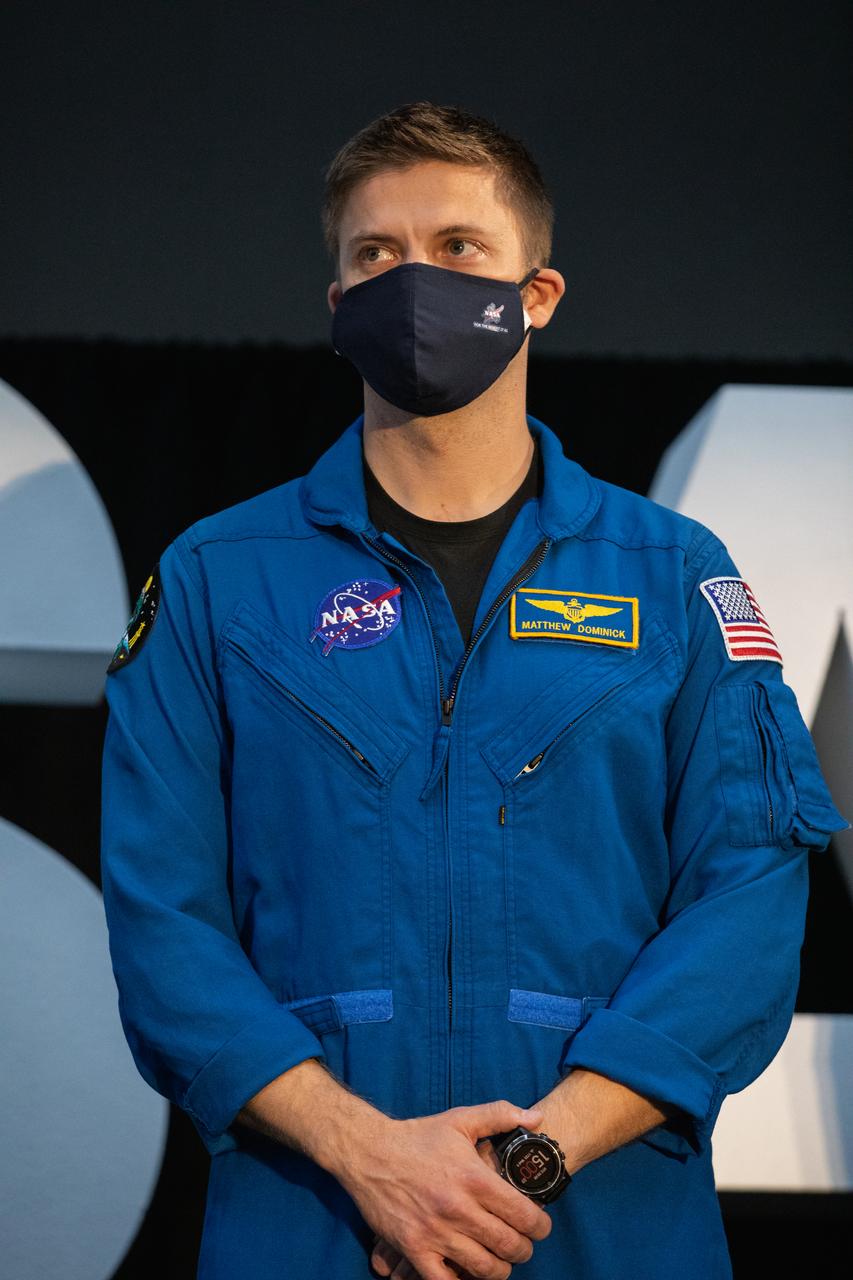
NASA astronaut Matthew Dominick attends an announcement Dec. 9, 2020, that he is one of the initial team of 18 astronauts eligible for early Artemis missions on and around the Moon. A Colorado native, Dominick was selected as a NASA astronaut in 2017. Joining him at the event were fellow astronauts Joseph Acaba, Jessica Meir, Anne McClain, and Jessica Watkins. Vice President Mike Pence made the announcement at the close of a National Space Council meeting he chaired in the Apollo/Saturn V Center at the Kennedy Space Center Visitor Complex in Florida. Under the Artemis program, NASA will land the first woman and the next man on the Moon in 2024.
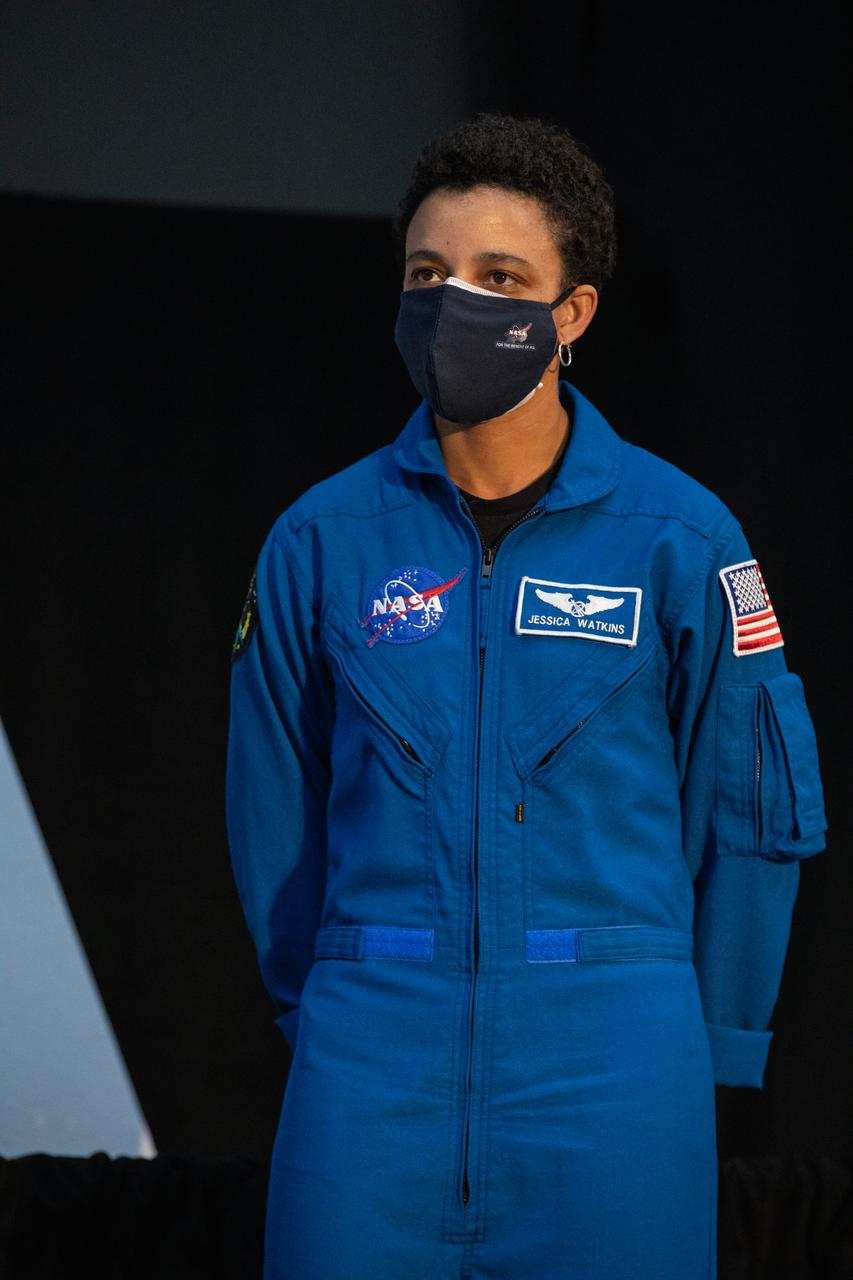
National Space Council Meeting and Special Artemis Announcement
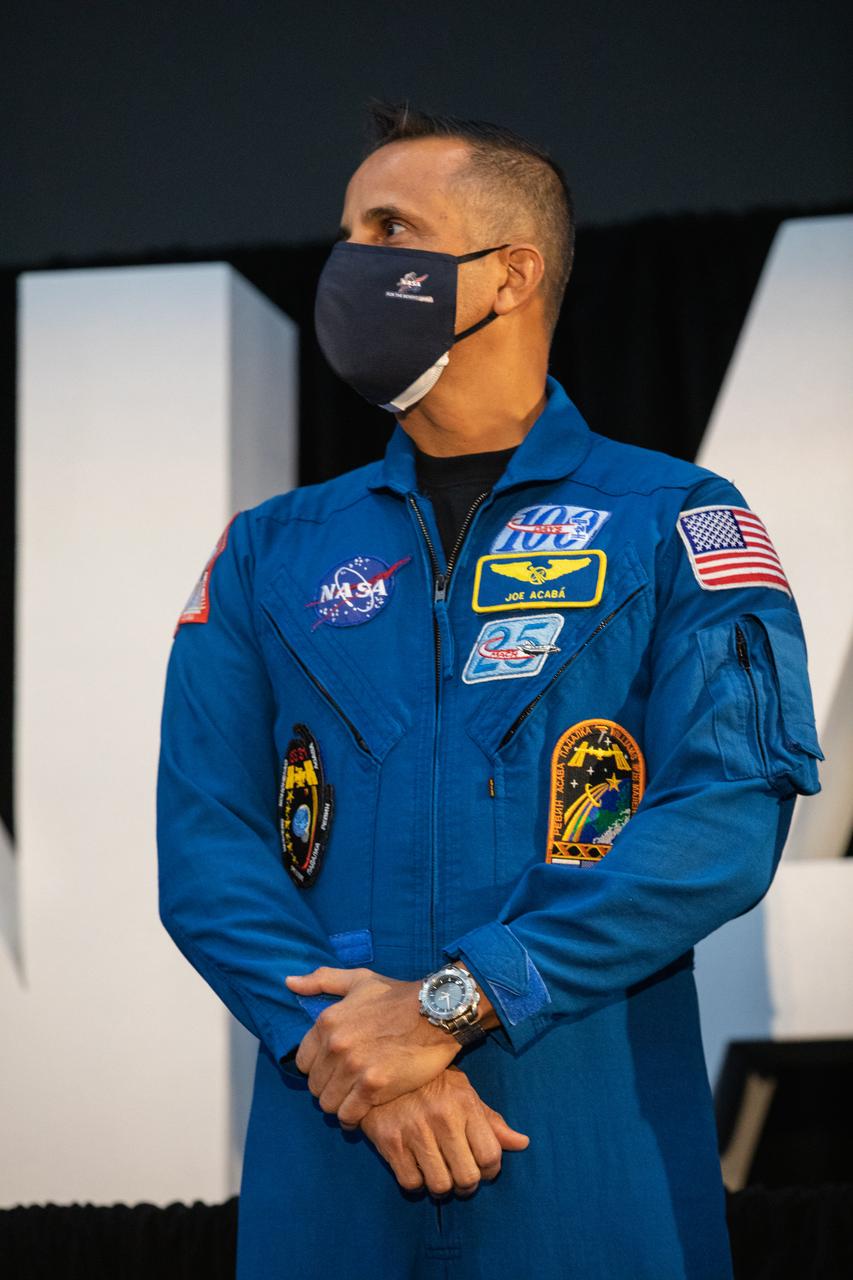
NASA astronaut Joseph Acaba attends an announcement Dec. 9, 2020, that he is one of the initial team of 18 astronauts eligible for early Artemis missions on and around the Moon. A California native, Acaba was selected as a NASA astronaut in 2004 and has logged a total of 306 days in space on three flights. Joining him at the event were fellow astronauts Matthew Dominick, Jessica Meir, Anne McClain, and Jessica Watkins. Vice President Mike Pence made the announcement at the close of a National Space Council meeting he chaired in the Apollo/Saturn V Center at the Kennedy Space Center Visitor Complex in Florida. Under the Artemis program, NASA will land the first woman and the next man on the Moon in 2024.

NASA Administrator Jim Bridenstine speaks during the National Space Council meeting inside the Apollo/Saturn V Center at the Kennedy Space Center Visitor Complex in Florida on Dec. 9, 2020. The council's role is to advise the president regarding national space policy and strategy and to review the nation's long-range goals for space activities. Vice President Mike Pence chaired the meeting, at which he announced the initial team of 18 astronauts eligible for early Artemis missions on and around the Moon. Under the Artemis program, NASA will land the first woman and the next man on the Moon in 2024.
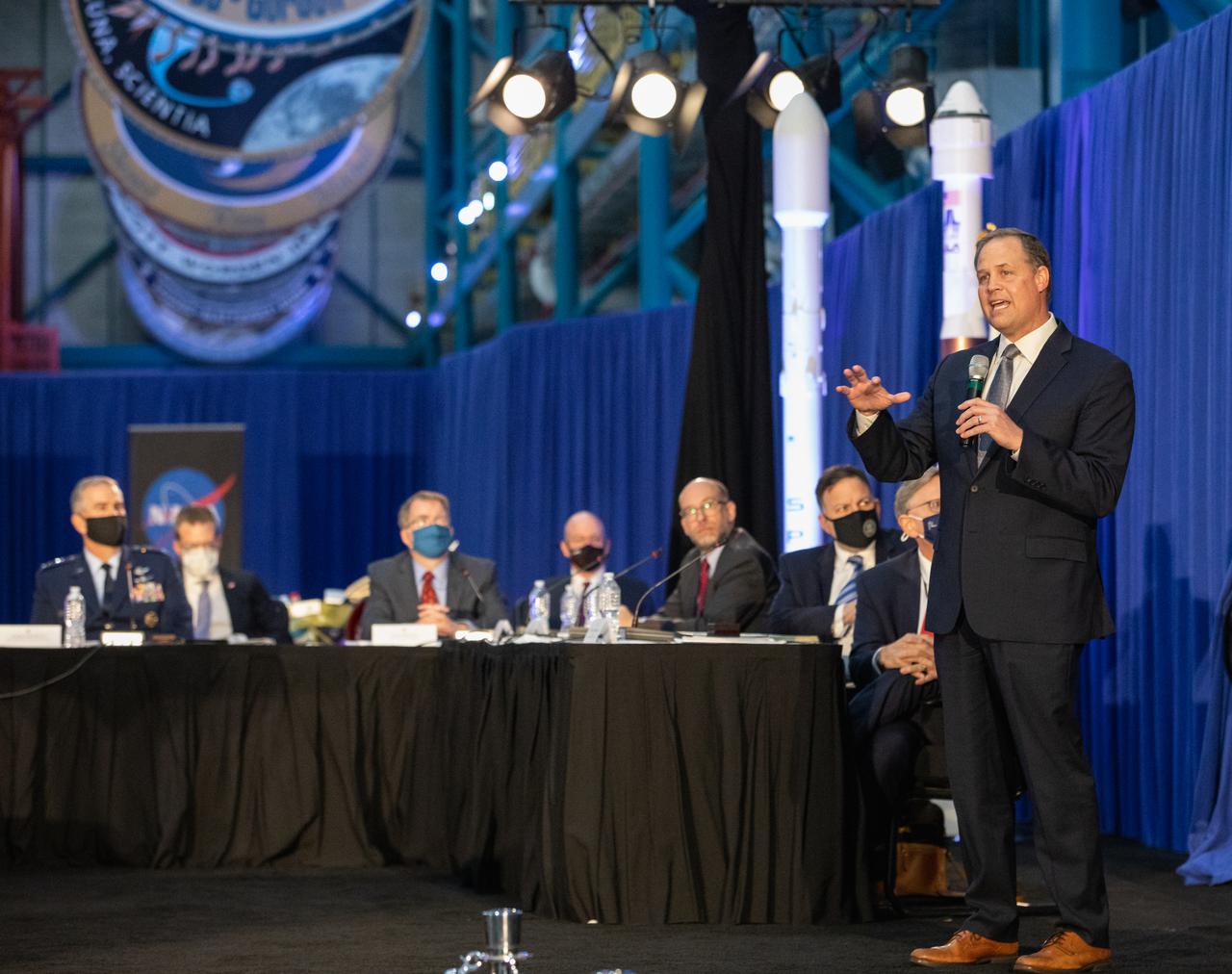
NASA Administrator Jim Bridenstine speaks during the National Space Council meeting inside the Apollo/Saturn V Center at the Kennedy Space Center Visitor Complex in Florida on Dec. 9, 2020. The council's role is to advise the president regarding national space policy and strategy and to review the nation's long-range goals for space activities. Vice President Mike Pence chaired the meeting, at which he announced the initial team of 18 astronauts eligible for early Artemis missions on and around the Moon. Under the Artemis program, NASA will land the first woman and the next man on the Moon in 2024.

National Space Council Meeting and Special Artemis Announcement
National Space Council Meeting and Special Artemis Announcement

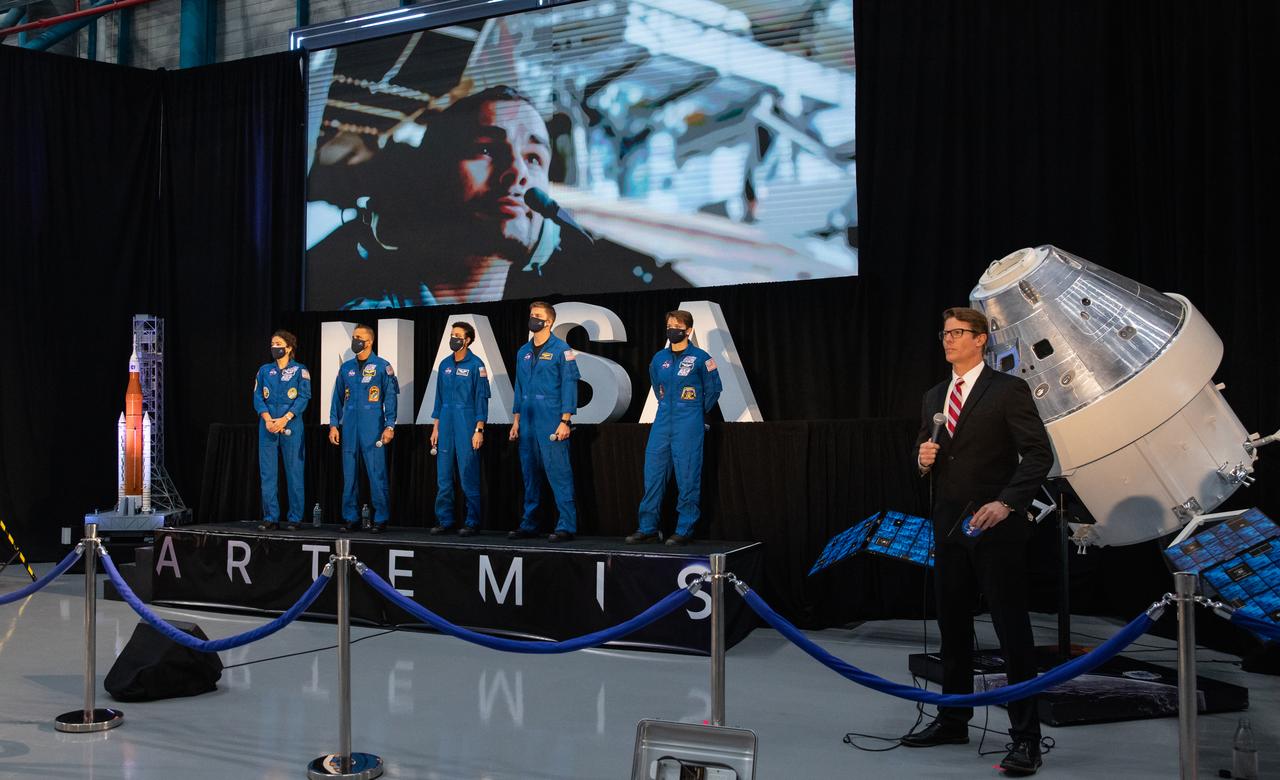
From left, NASA astronauts Jessica Meir, Joseph Acaba, Anne McClain, Matthew Dominick, and Jessica Watkins pose inside the Apollo/Saturn V Center at the Kennedy Space Center Visitor Complex in Florida on Dec. 9, 2020. The five are among the initial team of 18 astronauts eligible for early Artemis missions on and around the Moon, announced by Vice President Mike Pence during a meeting of the National Space Council inside the Apollo/Saturn V Center. Under the Artemis program, NASA will land the first woman and the next man on the Moon in 2024.
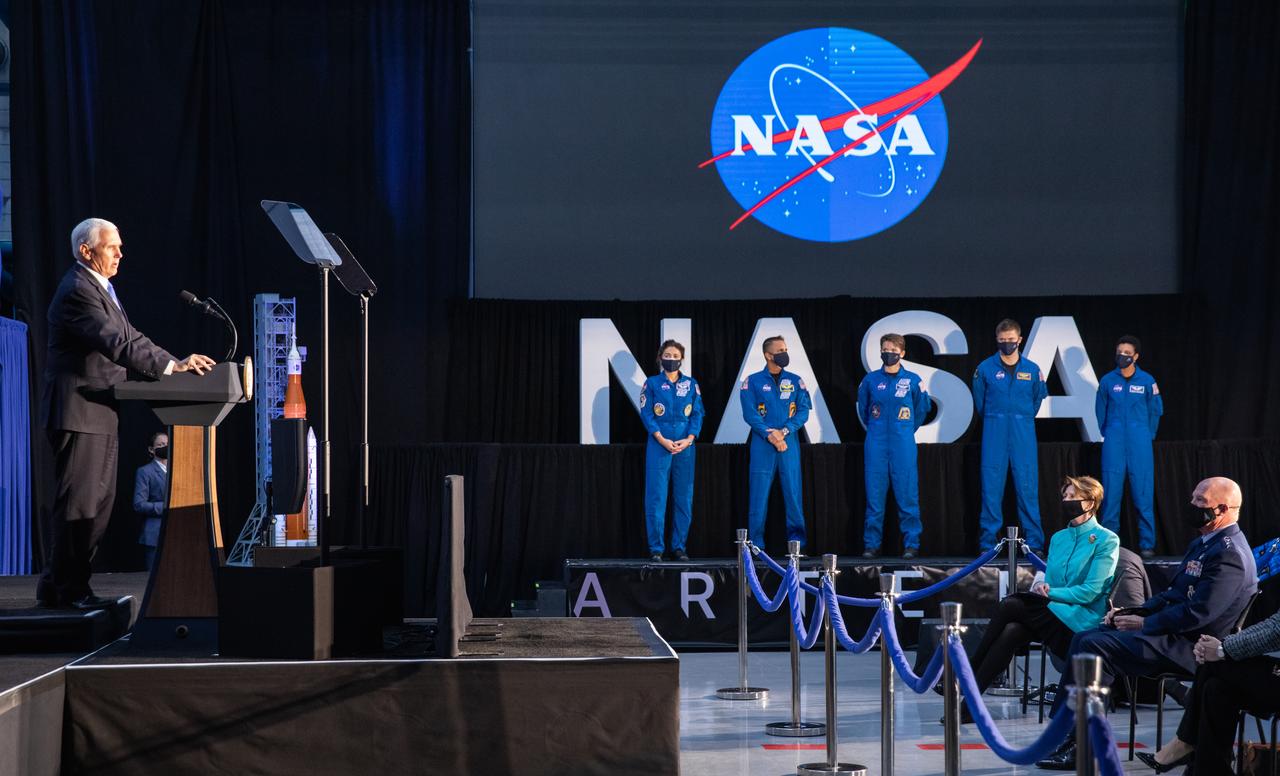
Vice President Mike Pence introduces NASA astronauts, from left, Jessica Meir, Joseph Acaba, Anne McClain, Matthew Dominick, and Jessica Watkins, during a meeting of the National Space Council inside the Apollo/Saturn V Center at the Kennedy Space Center Visitor Complex in Florida on Dec. 9, 2020. Meir, Acaba, McClain, Dominick, and Watkins are among the initial team of 18 astronauts eligible for early Artemis missions on and around the Moon. Under the Artemis program, NASA will land the first woman and the next man on the Moon in 2024.
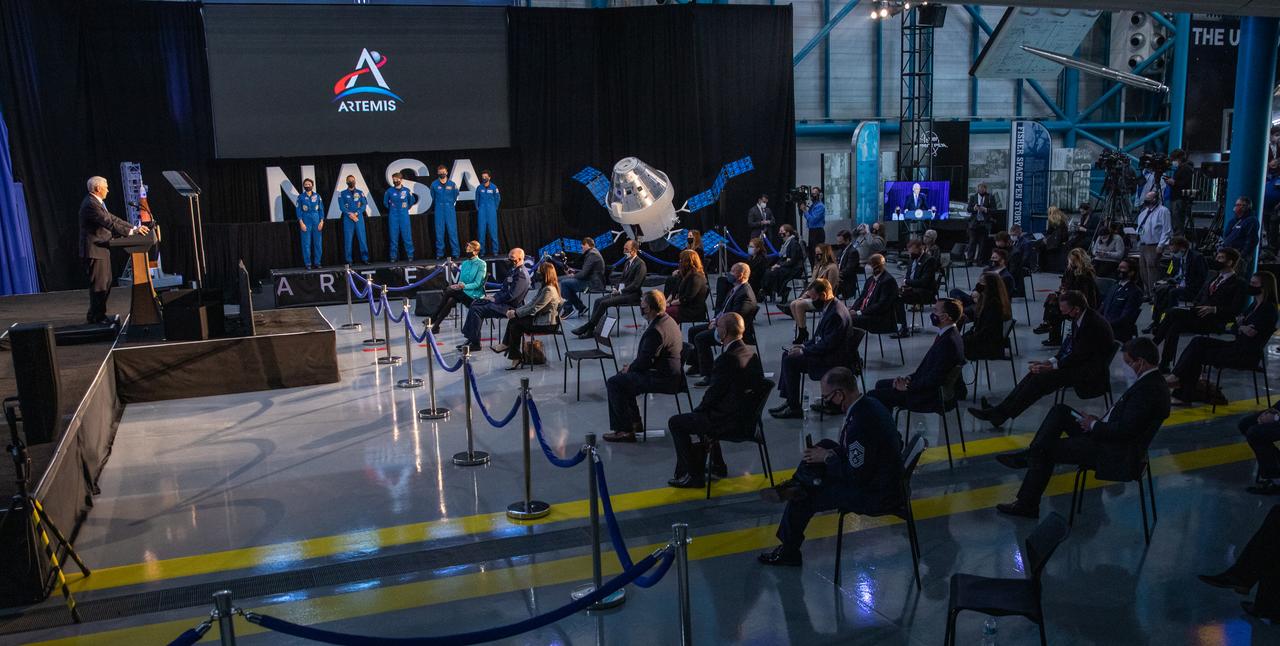
Vice President Mike Pence introduces NASA astronauts, from left, Jessica Meir, Joseph Acaba, Anne McClain, Matthew Dominick, and Jessica Watkins, during a meeting of the National Space Council inside the Apollo/Saturn V Center at the Kennedy Space Center Visitor Complex in Florida on Dec. 9, 2020. Meir, Acaba, McClain, Dominick, and Watkins are among the initial team of 18 astronauts eligible for early Artemis missions on and around the Moon. Under the Artemis program, NASA will land the first woman and the next man on the Moon in 2024.
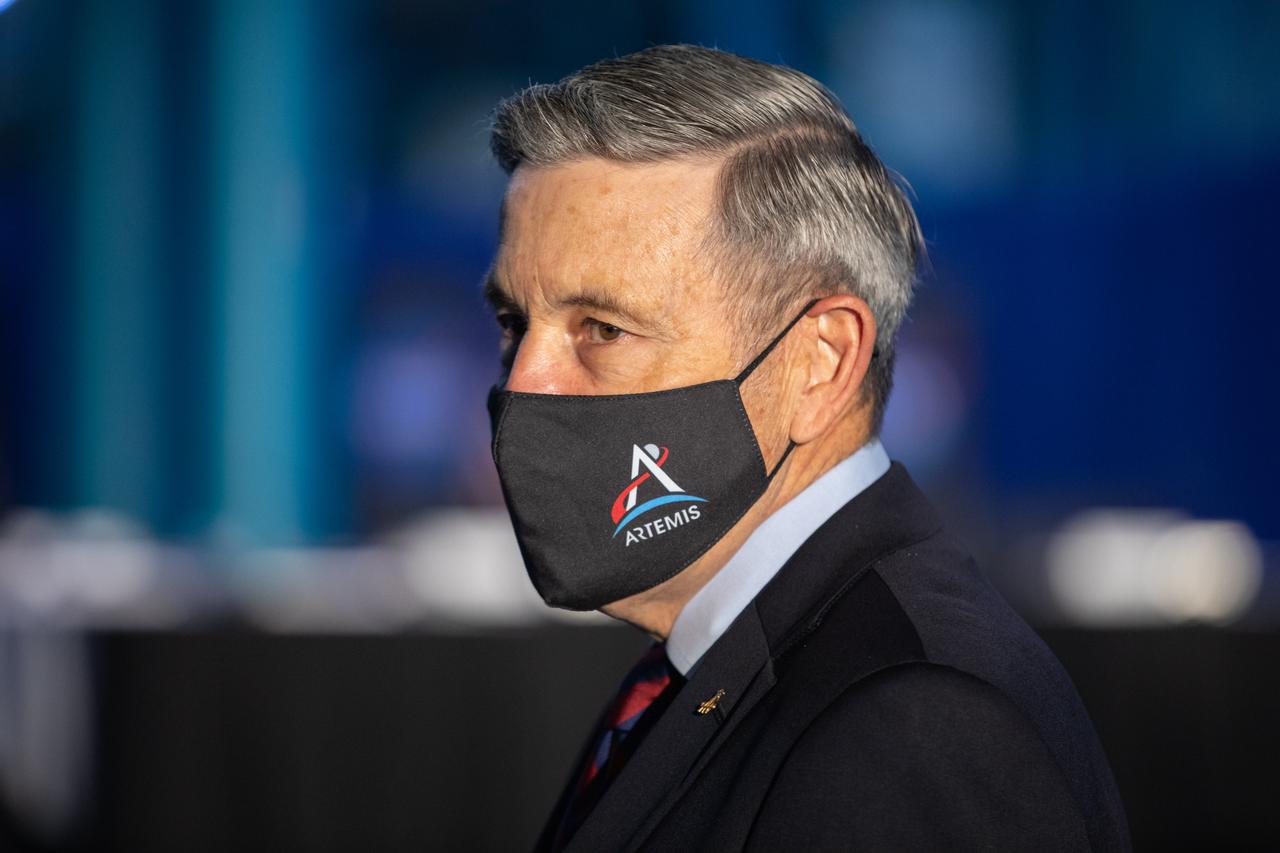
Kennedy Space Center Director Bob Cabana attends a meeting of the National Space Council inside the Apollo/Saturn V Center at the Kennedy Visitor Complex in Florida on Dec. 9, 2020. The council's role is to advise the president regarding national space policy and strategy and to review the nation's long-range goals for space activities. Vice President Mike Pence chaired the meeting, at which he announced the initial team of 18 astronauts eligible for early Artemis missions on and around the Moon. Under the Artemis program, NASA will land the first woman and the next man on the Moon in 2024.
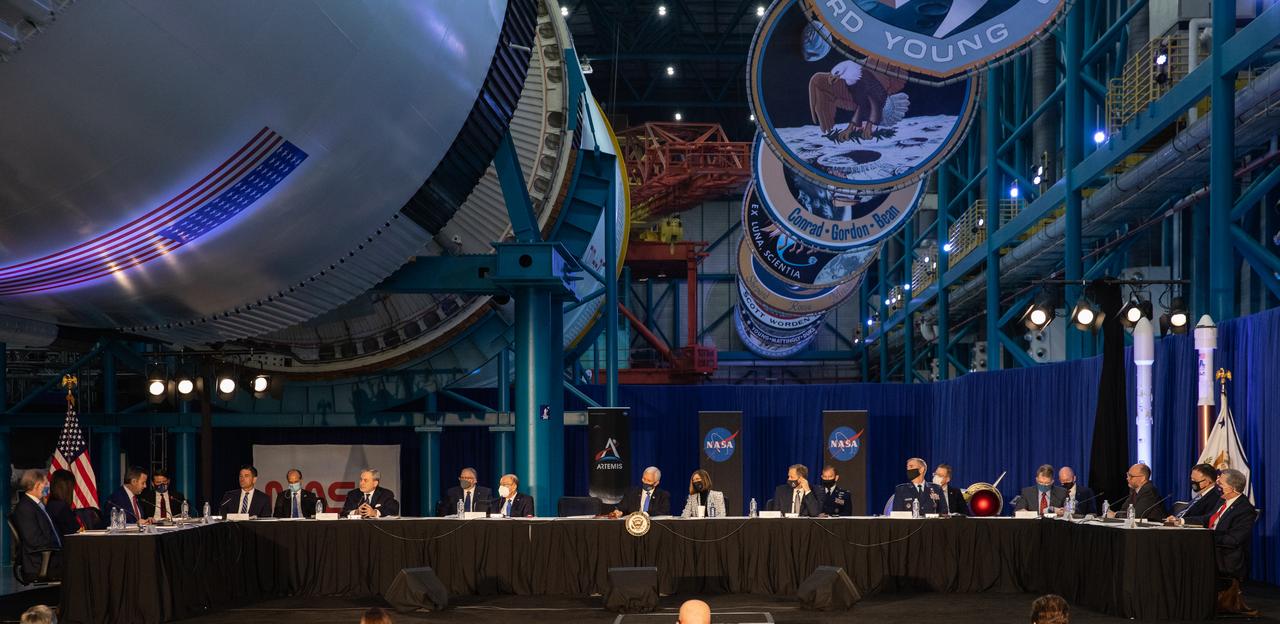
The National Space Council meets inside the Apollo/Saturn V Center at the Kennedy Space Center Visitor Complex in Florida on Dec. 9, 2020. The council's role is to advise the president regarding national space policy and strategy, and to review the nation's long-range goals for space activities. Vice President Mike Pence chaired the meeting, at which he announced the initial team of 18 astronauts eligible for early Artemis missions on and around the Moon. Under the Artemis program, NASA will land the first woman and the next man on the Moon in 2024.
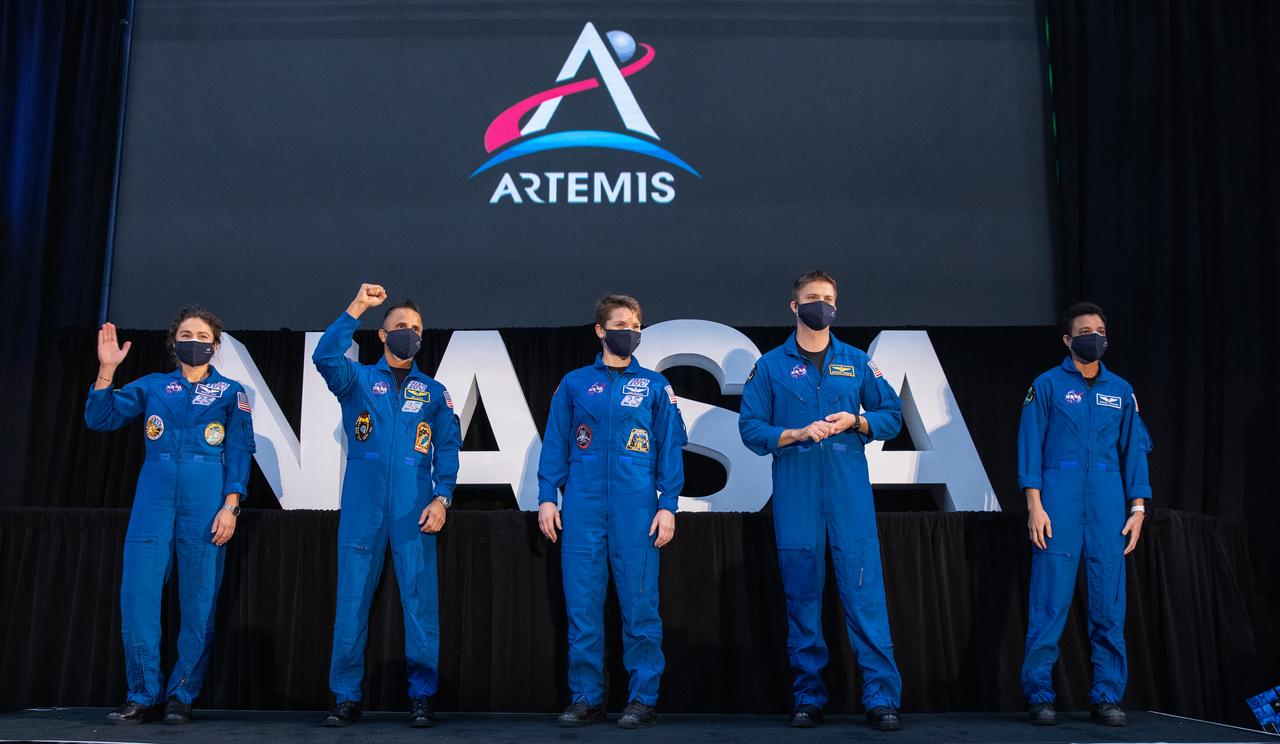
From left, NASA astronauts Jessica Meir, Joseph Acaba, Anne McClain, Matthew Dominick, and Jessica Watkins are introduced during a National Space Council meeting inside the Apollo/Saturn V Center at the Kennedy Space Center Visitor Complex in Florida on Dec. 9, 2020. The five are among an initial team of 18 astronauts eligible for early Artemis missions on and around the Moon. Vice President Mike Pence, who chaired the meeting, introduced the astronauts. Under the Artemis program, NASA will land the first woman and the next man on the Moon in 2024.
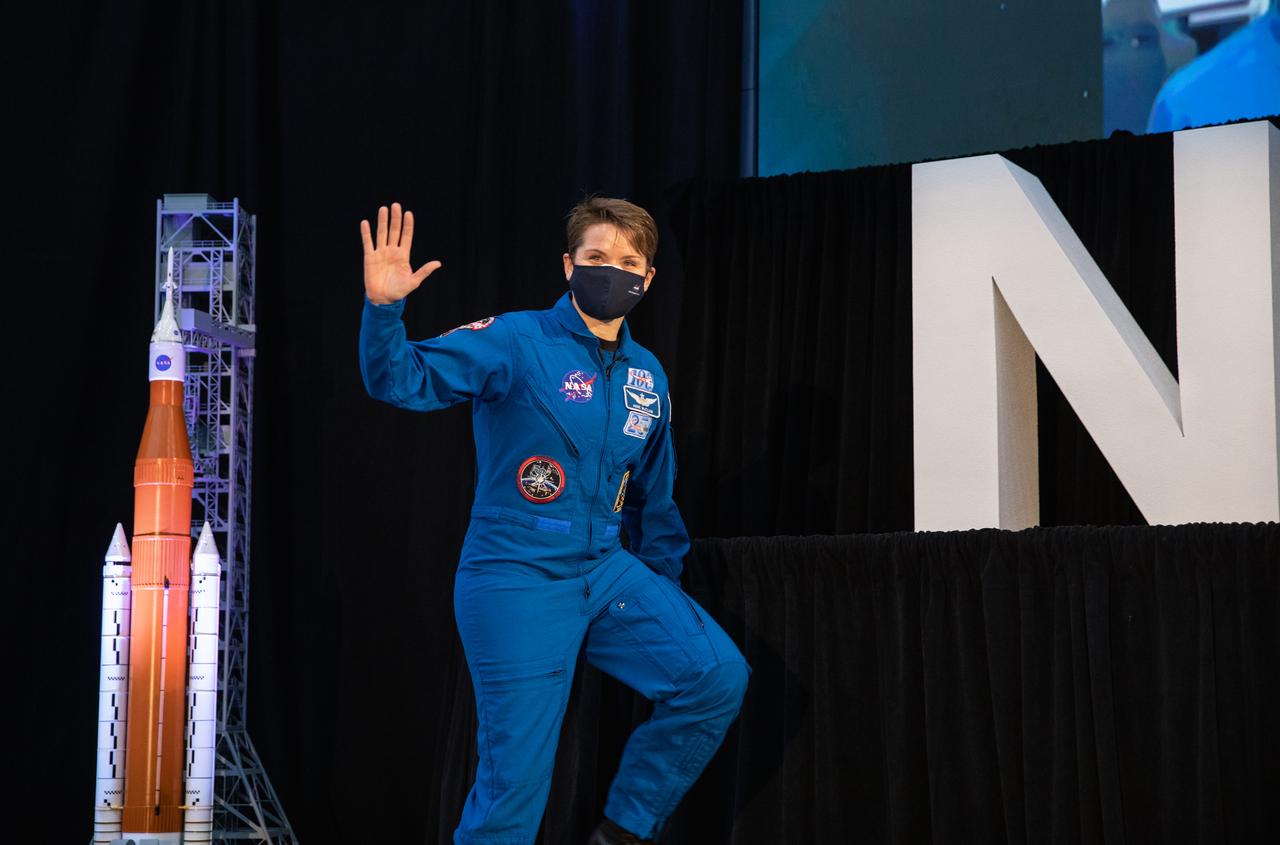
NASA astronaut Anne McClain waves during an announcement Dec. 9, 2020, that she is one of the initial team of 18 astronauts eligible for early Artemis missions on and around the Moon. A Washington native, McClain was selected as a NASA astronaut in 2013 and has spent 204 days in space on one previous flight. Joining her at the event were fellow astronauts Joseph Acaba, Matthew Dominick, Jessica Meir, and Jessica Watkins. Vice President Mike Pence made the announcement at the close of a National Space Council meeting he chaired in the Apollo/Saturn V Center at the Kennedy Space Center Visitor Complex in Florida. Under the Artemis program, NASA will land the first woman and the next man on the Moon in 2024.
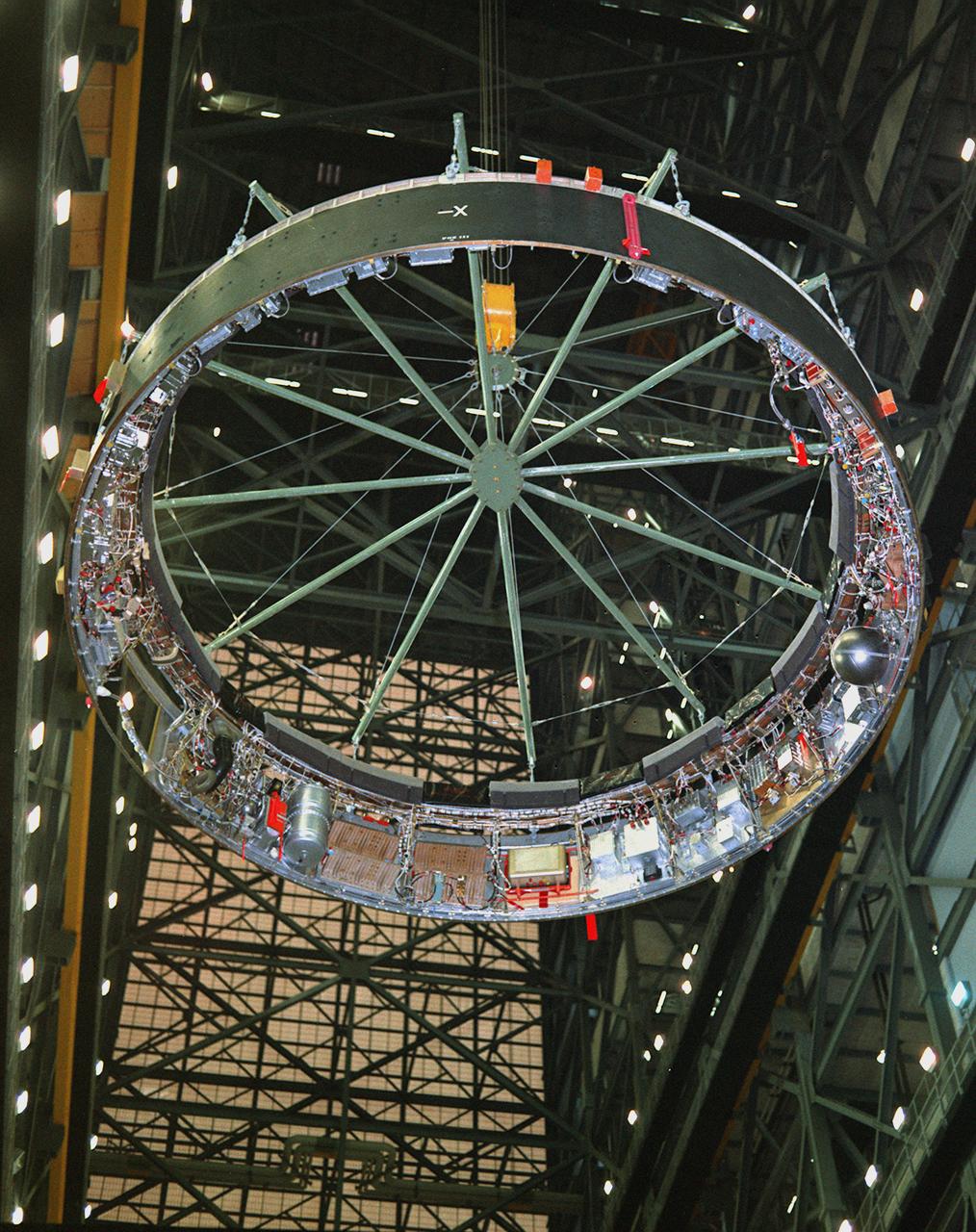
This photograph was taken during the final assembly operation of the Saturn V launch vehicle for the Apollo 4 (SA 501) mission. The instrument unit (IU) was hoisted to be mated to the S-IC/S-II assembly in the Vehicle Assembly Building high bay at the Kennedy Space Center. The Apollo 4 mission was the first launch of the Saturn V launch vehicle. Objectives of the unmanned Apollo 4 test flight were to obtain flight information on launch vehicle and spacecraft structural integrity and compatibility, flight loads, stage separation, and subsystems operation including testing of restart of the S-IVB stage, and to evaluate the Apollo command module heat shield. The Apollo 4 was launched on November 9, 1967 from KSC.
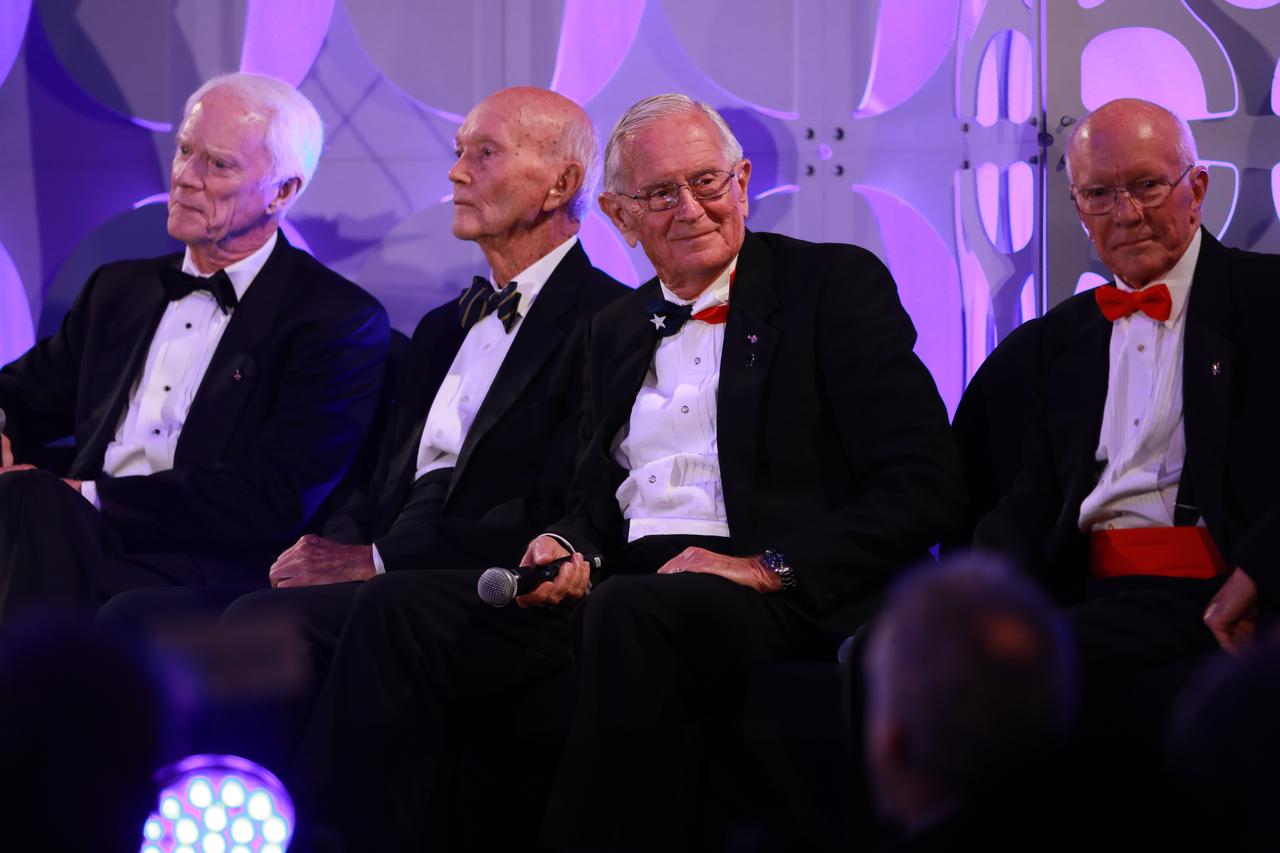
A panel discussion with Apollo astronauts took place during the Apollo 11 50th Gala, present by Northop Grumman, inside the Apollo/Saturn V Center at the Kennedy Space Center Visitor Complex in Florida on July 16, 2019. From left, are Apollo 9 astronaut Rusty Schweickart, Apollo 11 astronaut Michael Collins, Apollo 16 astronaut Charlie Duke, and Apollo Flight Director Gerry Griffin.
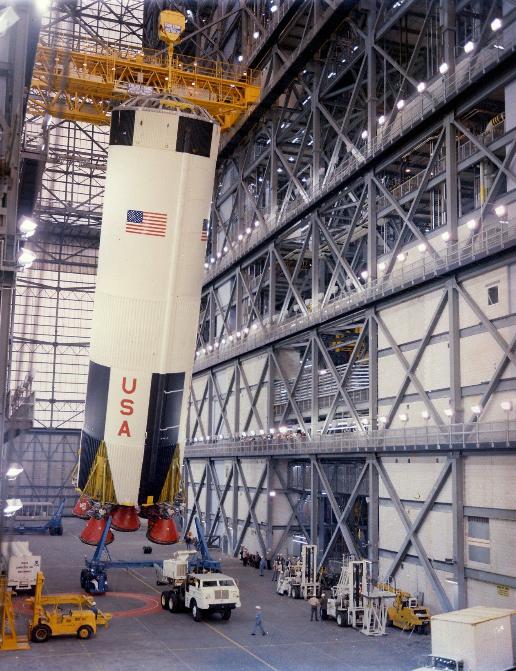
Teams lift the first stage of the Apollo 8 Saturn V rocket inside the transfer aisle of the Vehicle Assembly Building at NASA’s Kennedy Space Center in Florida on Feb. 1, 1968, and prepare to place it atop the mobile launcher. Apollo 8 was the first crewed spacecraft to successfully orbit the Moon and return to Earth, setting the stage for Apollo 11 – the first crewed lunar landing. Apollo 8 launched on Dec. 21, 1968, and the crew members consisted of Frank Borman, William A. Anders, and James A. Lovell Jr.
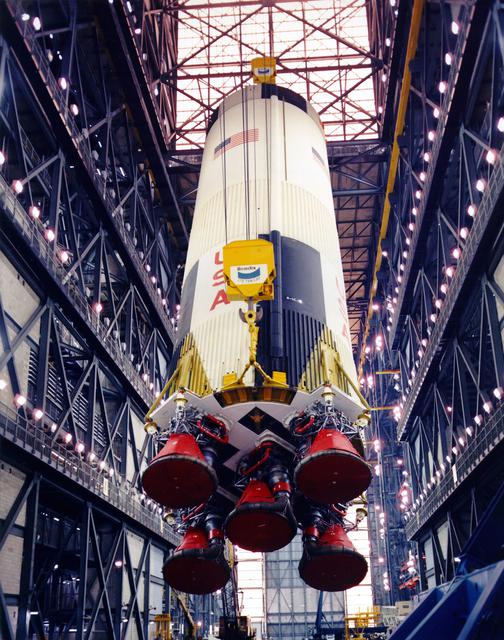
Teams lift the first stage of the Apollo 10 Saturn V rocket by crane inside High Bay 3 of the Vehicle Assembly Building at NASA’s Kennedy Space Center in Florida on Dec. 3, 1968, in preparation for stacking on the mobile launcher. The 138-foot-long stage generated 7.5 million pounds of thrust when it launched Apollo 10 astronauts Thomas P. Stafford, John W. Young, and Eugene A. Cernan. The mission launched on May 18, 1969, and was the first flight of a complete, crewed Apollo spacecraft to operate around the Moon.
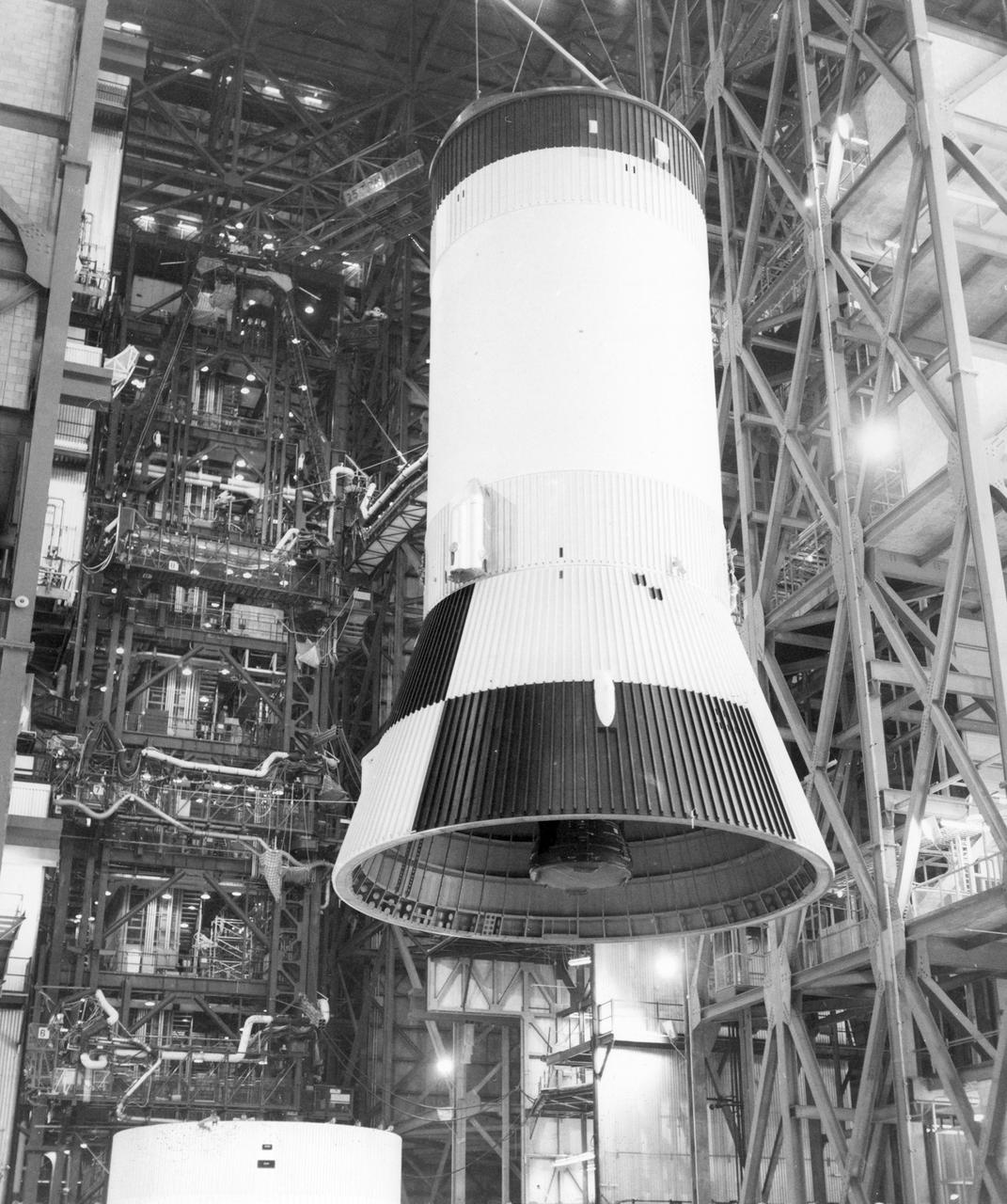
The third stage (S-IVB) of the Saturn V launch vehicle for the Apollo 11 lunar landing mission is hoisted in the vehicle assembly building at the NASA Kennedy Space Center (KSC) for mating with the second stage (S-II). The vehicle, designated as AS-506, projected the first lunar landing mission, Apollo 11, on a trajectory for the Moon. The Apollo 11 mission launched from KSC in Florida via the Marshall Space Flight Center (MSFC) developed Saturn V launch vehicle on July 16, 1969 and safely returned to Earth on July 24, 1969. Astronauts onboard included Neil A. Armstrong, commander; Michael Collins, Command Module (CM) pilot; and Edwin E. Aldrin, Jr., Lunar Module (LM) pilot. The CM, “Columbia”, piloted by Collins, remained in a parking orbit around the Moon while the LM, “Eagle’’, carrying astronauts Armstrong and Aldrin, landed on the Moon. On July 20, 1969, Armstrong was the first human to ever stand on the lunar surface, followed by Aldrin. During 2½ hours of surface exploration, the crew collected 47 pounds of lunar surface material for analysis back on Earth. With the success of Apollo 11, the national objective to land men on the Moon and return them safely to Earth had been accomplished.
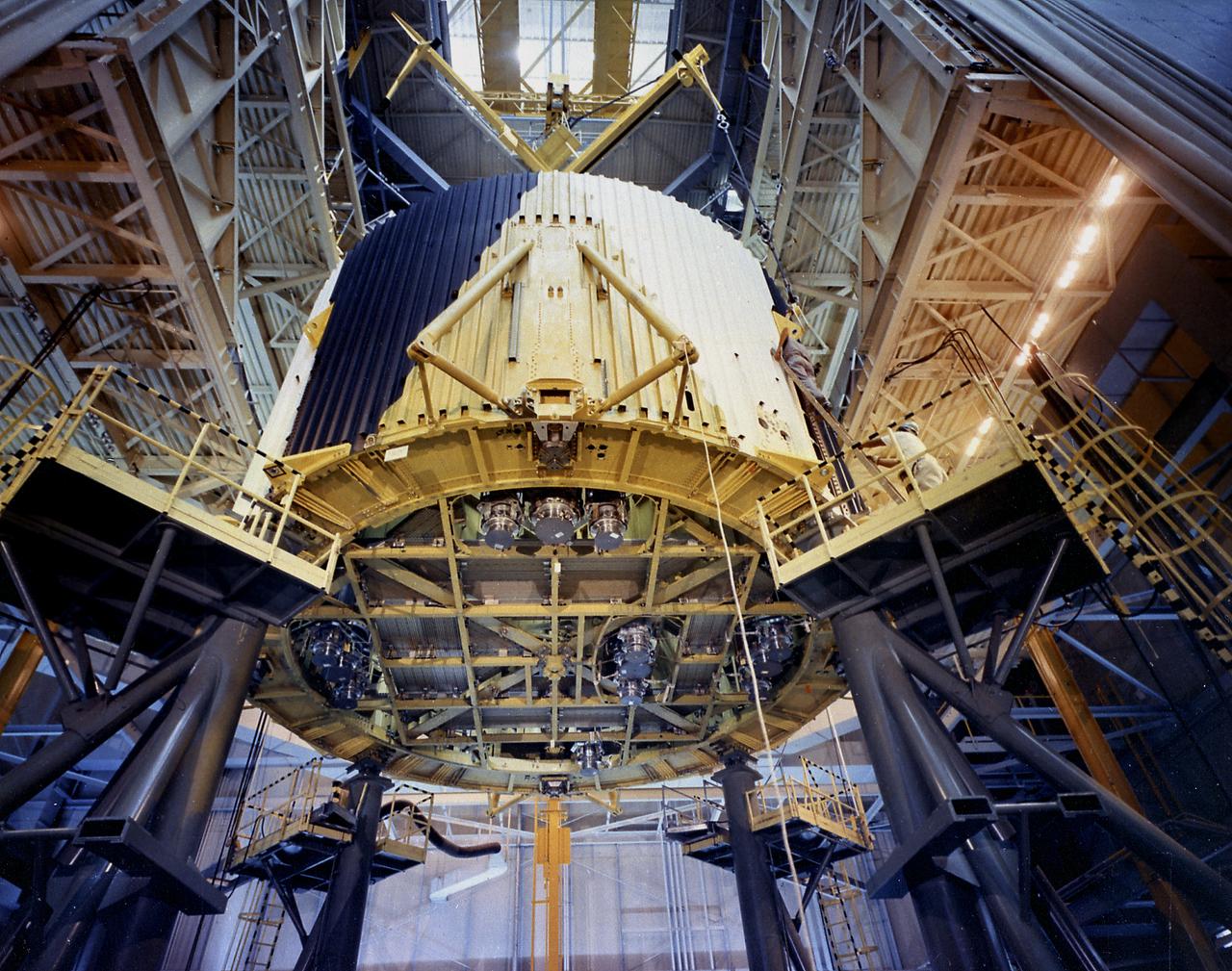
This photograph is a view of stacking the major components of the S-IC (first) stage of the Saturn V vehicle at the Boeing vertical assembly building at the Michoud Assembly Facility (MAF). The view shows the Saturn V S-IC (first) stage thrust structure being placed for the final assembly. The Saturn IB and Saturn V first stages were manufactured at the MAF located 24 kilometers (approximately 15 miles) east of downtown New Orleans, Louisiana. The prime contractors, Chrysler and Boeing, jointly occupied the MAF. The basic manufacturing building boasted 43 acres under one roof. By 1964, NASA added a separate engineering and office building, vertical assembly building, and test stage building. By 1966, other changes to the site included enlarged barge facilities and other miscellaneous support buildings.
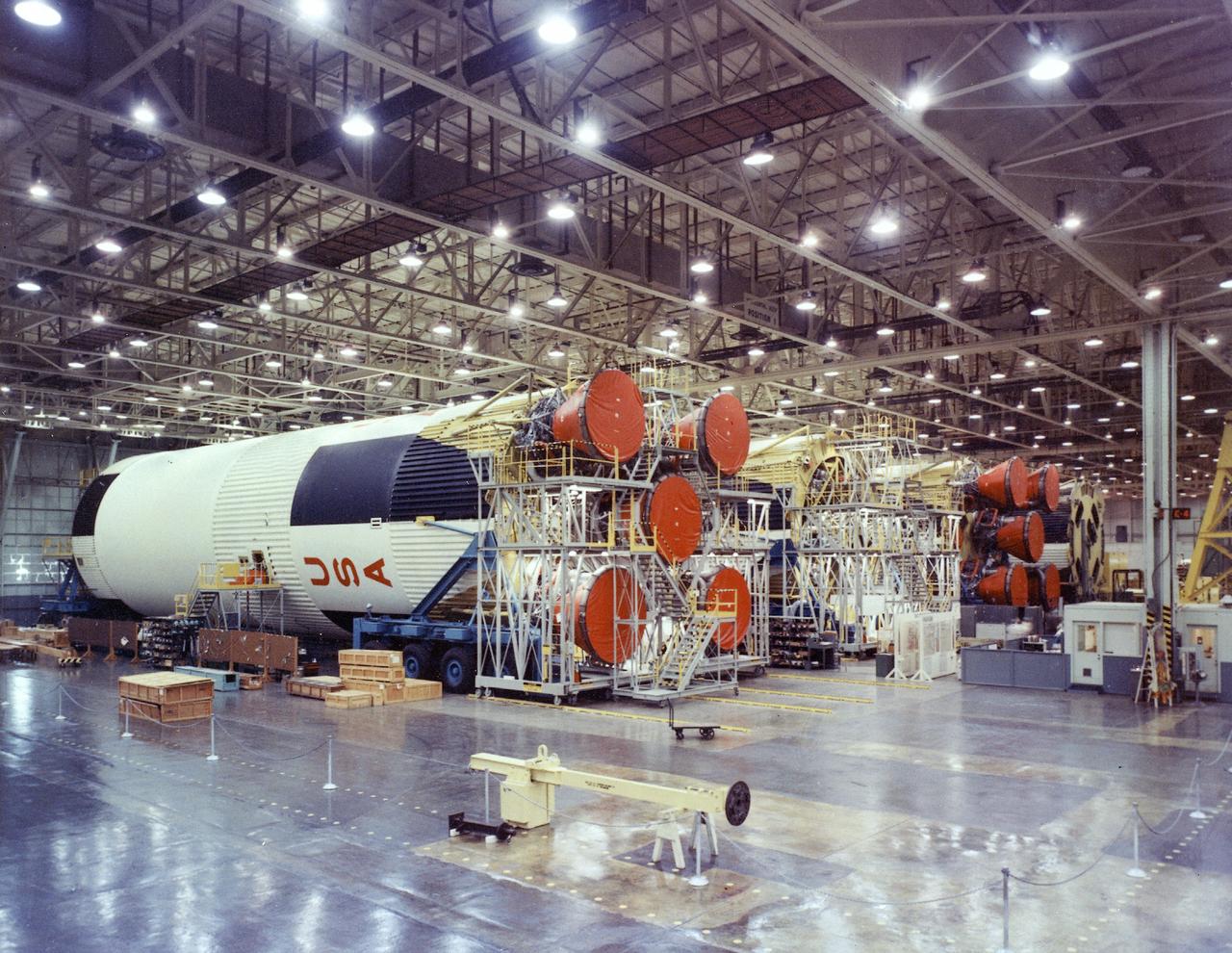
The Saturn IB and Saturn V first stages were manufactured at the Michoud Assembly Facility (MAF), located 24 kilometers (approximately 15 miles) east of downtown New Orleans, Louisiana. The basic manufacturing building boasted 43 acres under one roof. By 1964, NASA added a separate engineering and office building, vertical assembly building, and test stage building. By 1966, other changes to the site included enlarged barge facilities and other miscellaneous support buildings. The photograph shows Saturn V S-IC flight stages being assembled in the horizontal assembly area at the MAF.
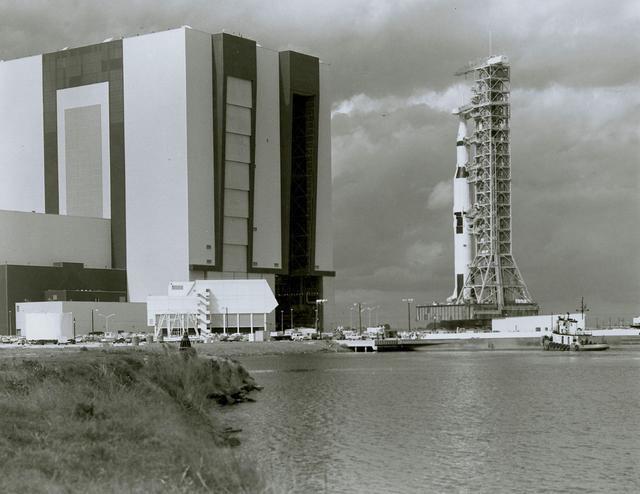
Apollo 6, the second and last of the unmarned Saturn V test flights, is slowly transported past the Vehicle Assembly Building on the way to launch pad 39-A. The towering 363-foot Saturn V was a multi-stage, multi-engine launch vehicle standing taller than the Statue of Liberty. Altogether, the Saturn V engines produced as much power as 85 Hoover Dams.
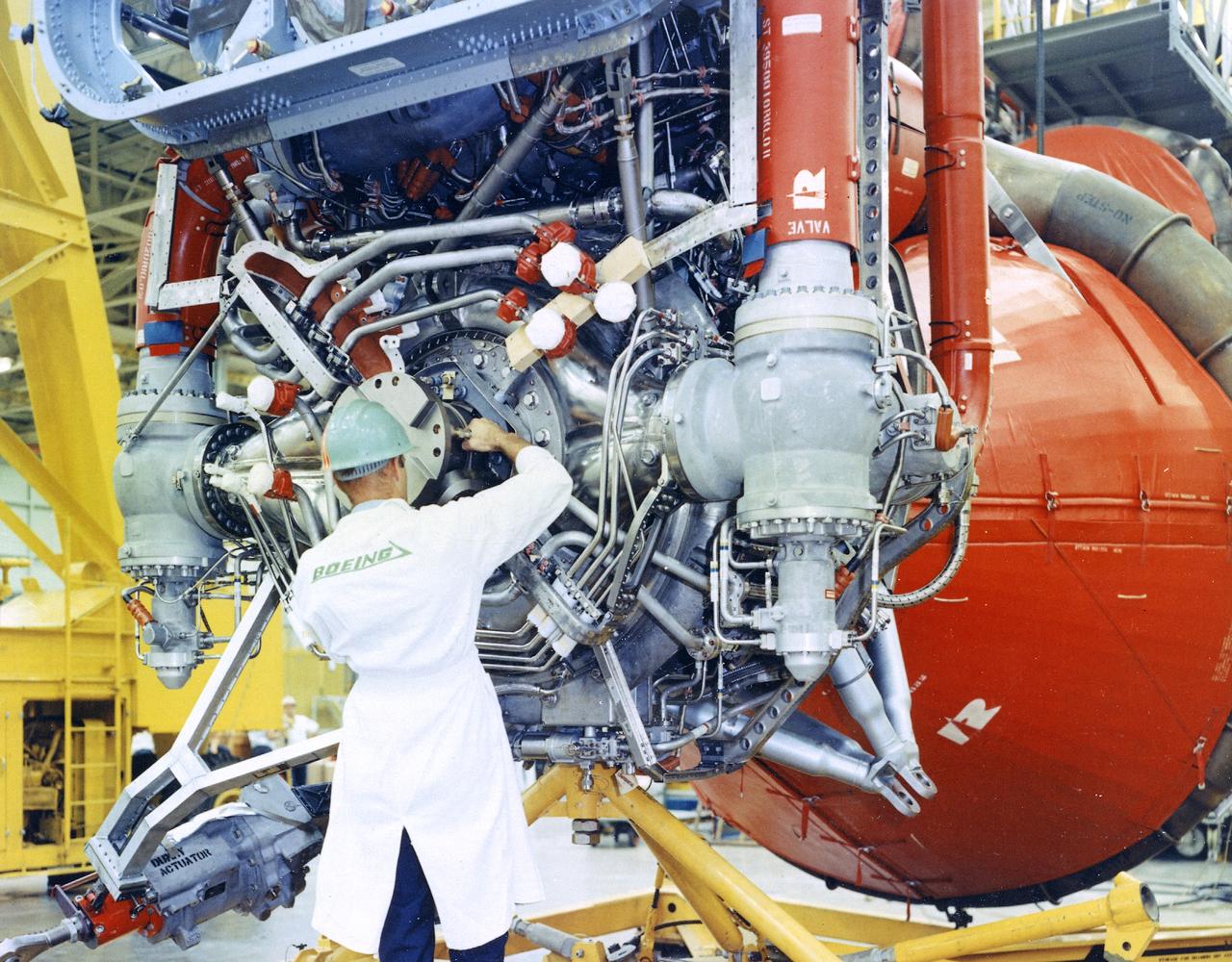
This image depicts a Boeing worker installing an F-1 engine on the Saturn V S-IC flight stage at the Michoud Assembly Facility (MAF). The Saturn IB and Saturn V first stages were manufactured at the MAF, located 24 kilometers (approximately 15 miles) east of downtown New Orleans, Louisiana. The prime contractors, Chrysler and Boeing, jointly occupied the MAF. The basic manufacturing building boasted 43 acres under one roof. By 1964, NASA added a separate engineering and office building, vertical assembly building, and test stage building.
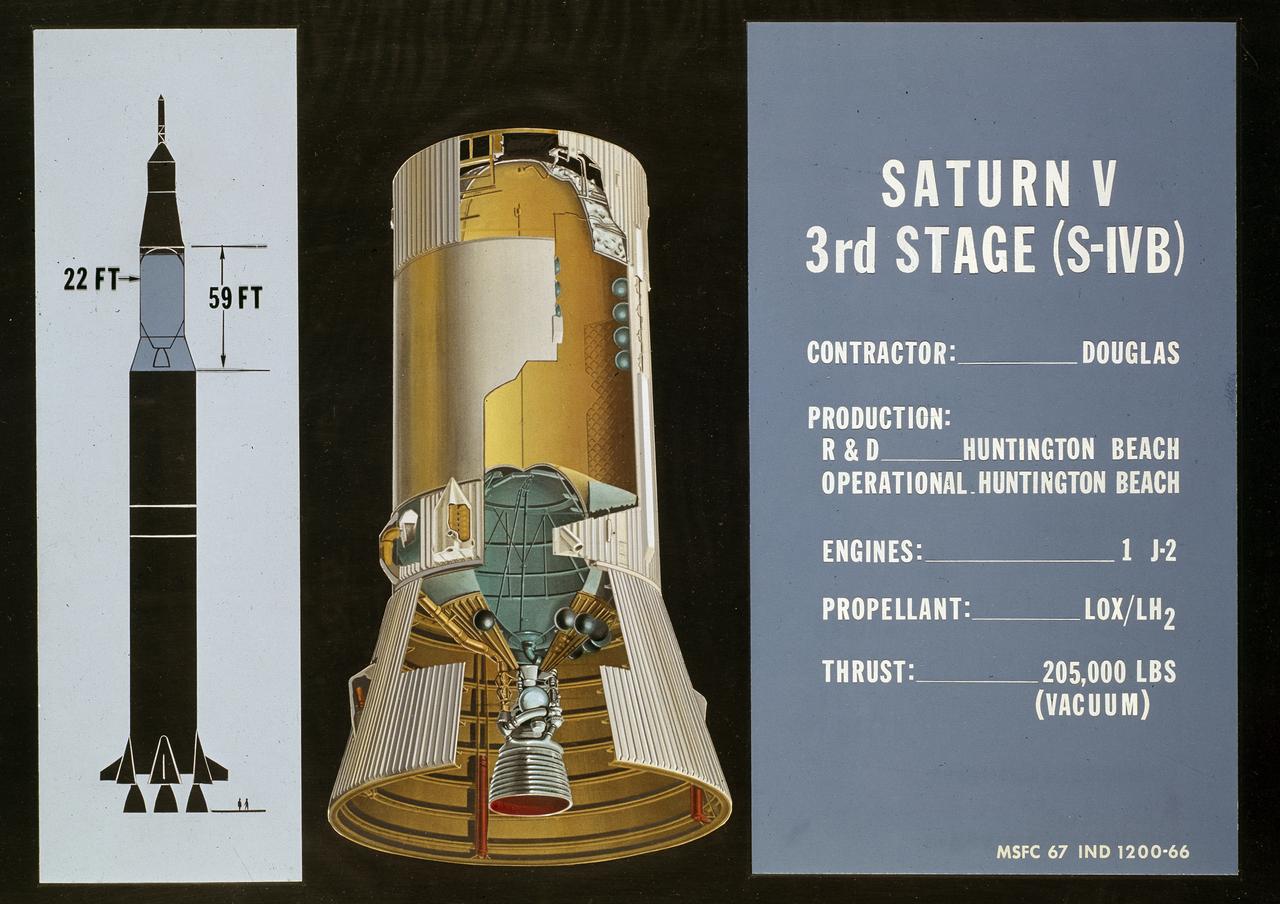
This cutaway drawing shows the S-IVB (third stage) of the Saturn V launch vehicle. As a part of the Marshall Space Flight Center’s (MSFC) “building block” approach to the Saturn development, the S-IVB stage was utilized in the Saturn IB launch vehicle as a second stage and, later, the Saturn V launch vehicle as a third stage. The 59 foot long and 22 feet diameter stage was powered by a single J-2 engine, initially capable of 200,000 pounds of thrust.
![Apollo spacecraft 017 leaves the Manned Spacecraft Operations Building at Kennedy Space Center on its way to the Vehicle Assembly Building where it will be mated with the Saturn 501 launch vehicle. The first flight of the Saturn V [AS-501], an unmanned mission, is scheduled for this fall.](https://images-assets.nasa.gov/image/KSC-67P-0259/KSC-67P-0259~medium.jpg)
Apollo spacecraft 017 leaves the Manned Spacecraft Operations Building at Kennedy Space Center on its way to the Vehicle Assembly Building where it will be mated with the Saturn 501 launch vehicle. The first flight of the Saturn V [AS-501], an unmanned mission, is scheduled for this fall.
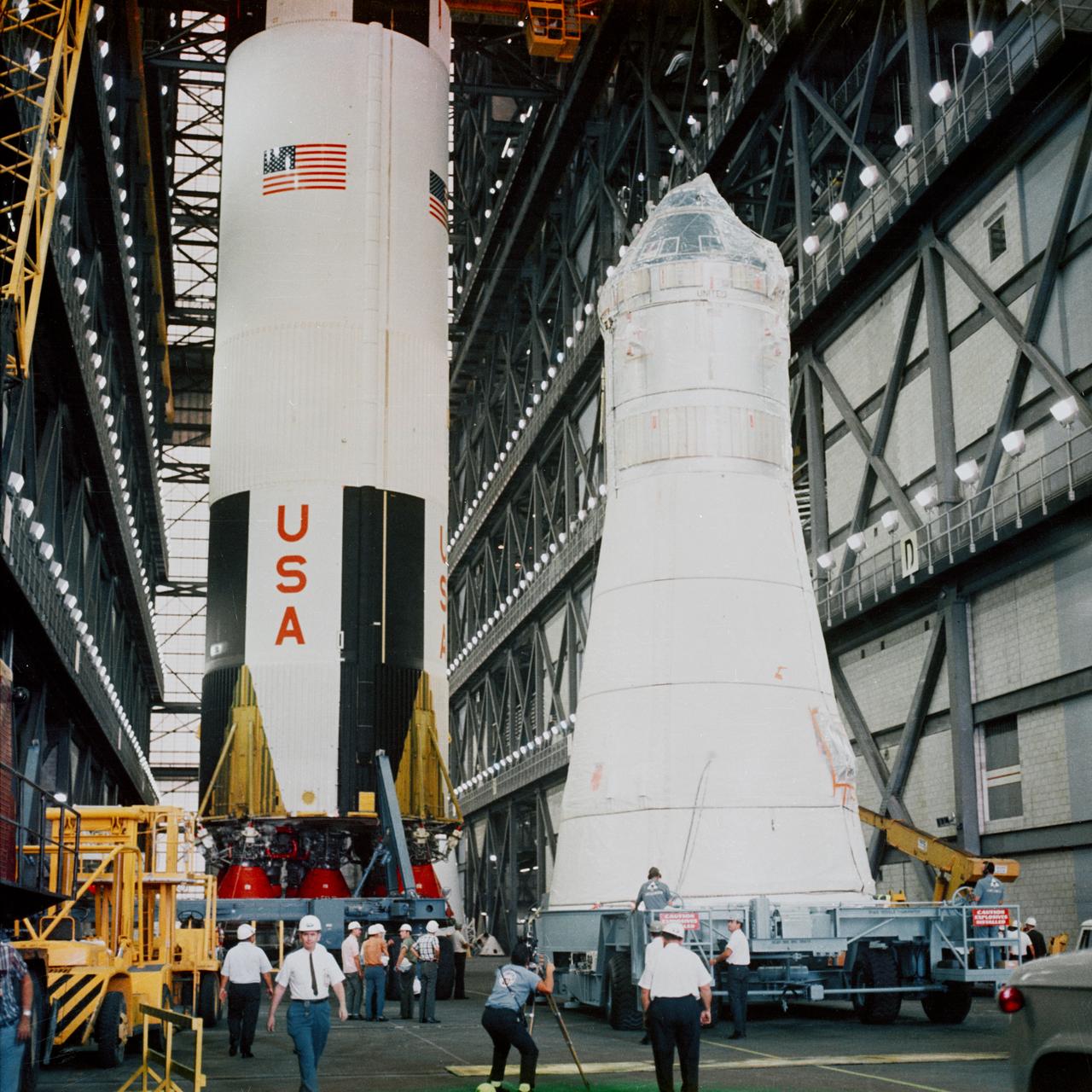
Apollo Spacecraft 104 Command/Service Module and Lunar Module 3 arrive at the Vehicle Assembly Building (VAB) for mating atop the Saturn 504 launch vehicle. The Saturn 504 stack is out of view. The Saturn V first (S-IC) stage in left background is scheduled for a later flight.
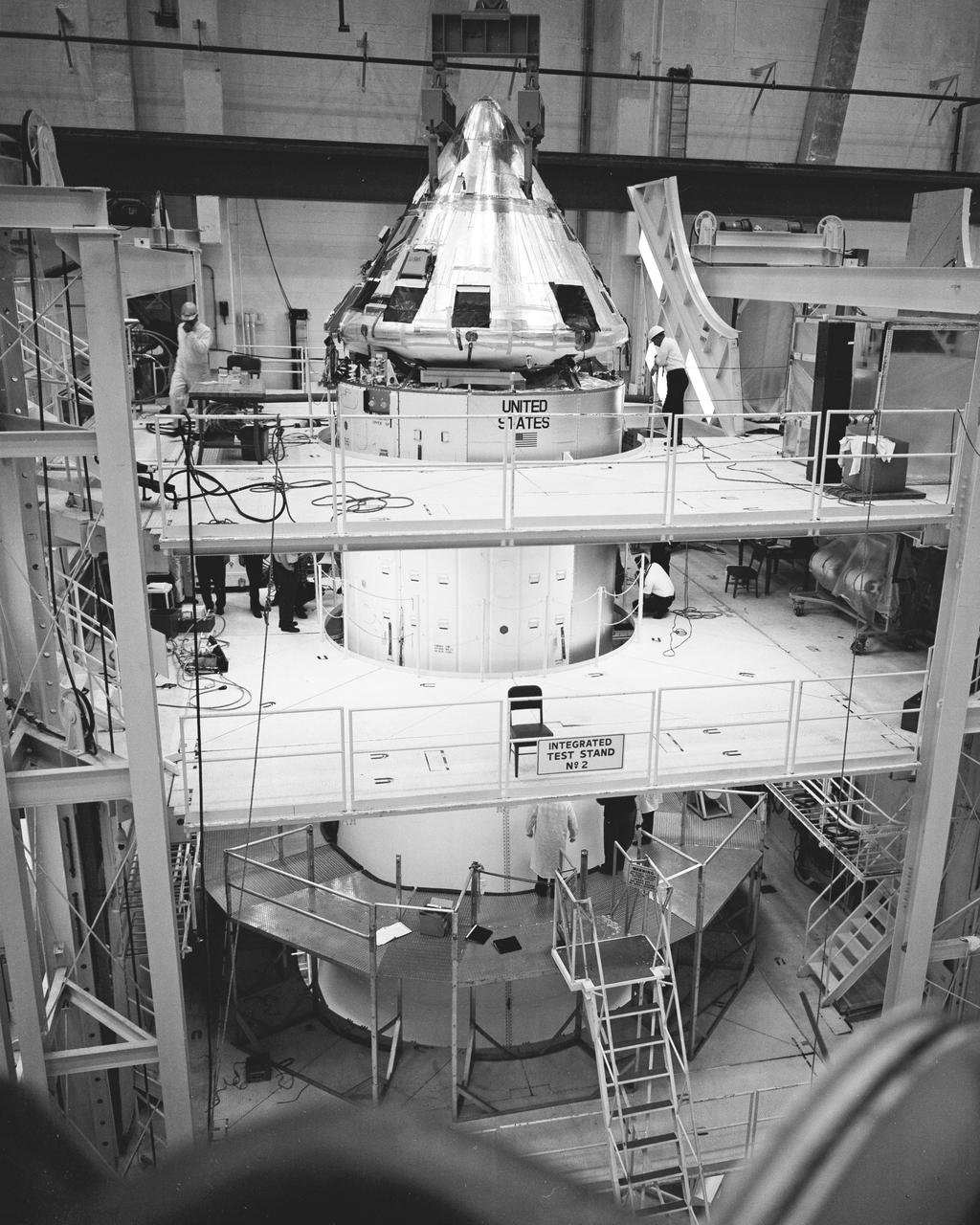
The Apollo/Saturn 501 spacecraft undergoes checkout in test stand within the Kennedy Space Center’s Manned Spacecraft Operations Building in preparation for the first flight of NASA’s Saturn V space vehicle in the second quarter of this year. The command module, top, was mated to the service module, and both were joined to the Spacecraft Lunar Module Adapter, the type that eventually will house a Lunar Module. The first Saturn V flight will be unmanned.
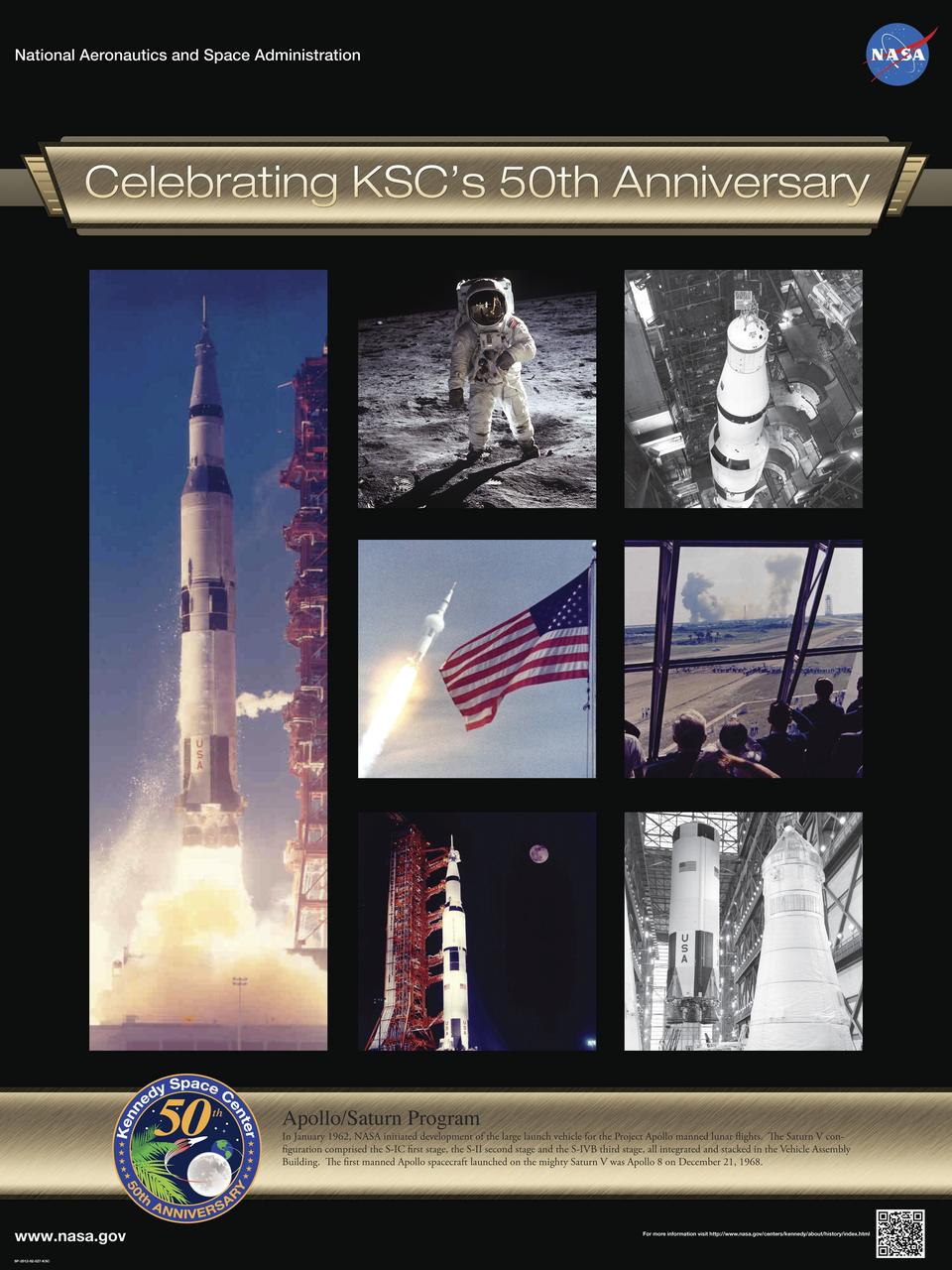
Apollo/Saturn Program: In January 1962, NASA initiated development of the large launch vehicle for the Project Apollo manned lunar flights. The Saturn V configuration comprised the S-IC first stage, the S-II second stage and the S-IVB third stage, all integrated and stacked in the Vehicle Assembly Building. The first manned Apollo spacecraft launched on the mighty Saturn V was Apollo 8 on December 21, 1968. Poster designed by Kennedy Space Center Graphics Department/Greg Lee. Credit: NASA
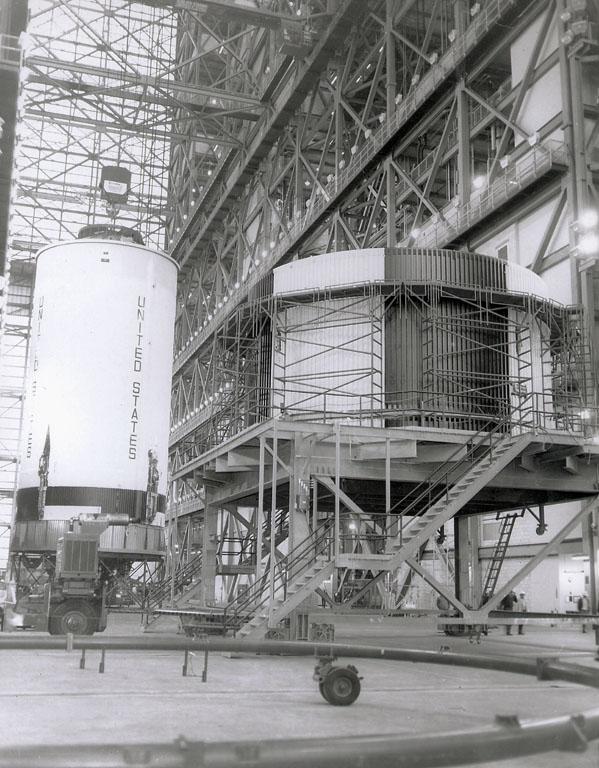
This Saturn V S-II (second) stage is being lifted into position for a test at the Vehicle Assembly Building at the Kennedy Space Center. When the Saturn V booster stage (S-IC) burned out and dropped away, power for the Saturn was provided by the 82-foot-long and 33-foot-diameter S-II stage. Developed by the Space Division of North American Aviation under the direction of the Marshall Space Flight Center, the stage utilized five J-2 engines, each producing 200,000 pounds of thrust. The engines used liquid oxygen and liquid hydrogen as propellants. The towering 363-foot Saturn V was a multi-stage, multi-engine launch vehicle standing taller than the Statue of Liberty. Altogether, the Saturn V engines produced as much power as 85 Hoover Dams.
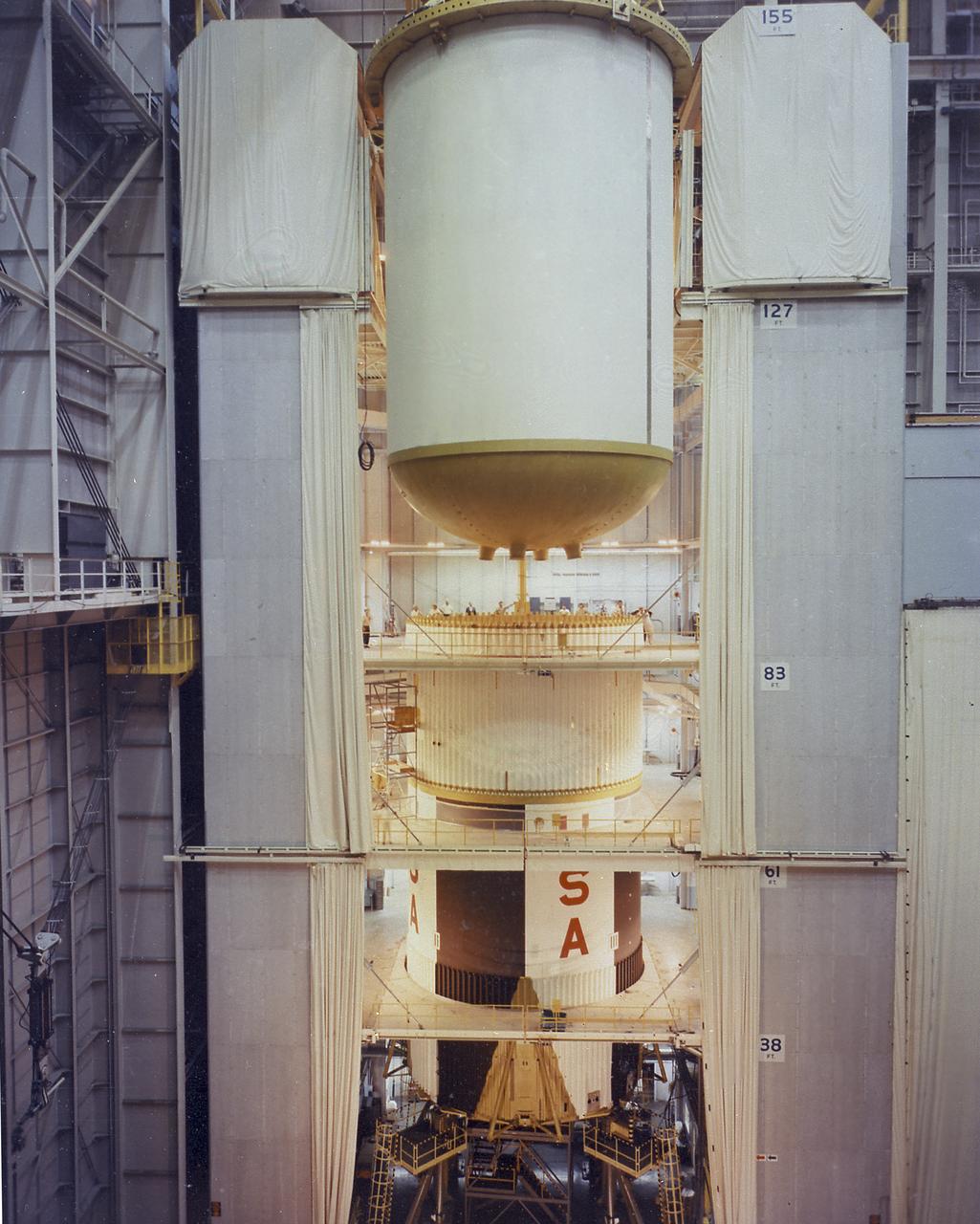
This photograph is a view of stacking the major components of the S-IC (first) stage of the Saturn V vehicle at the Boeing vertical assembly building at the Michoud Assembly Facility (MAF). The view shows placing the liquid oxygen tank on the intertank and the fuel tank assembly. The Saturn IB and Saturn V first stages were manufactured at the MAF located 24 kilometers (approximately 15 miles) east of downtown New Orleans, Louisiana. The prime contractors, Chrysler and Boeing, jointly occupied the MAF. The basic manufacturing building boasted 43 acres under one roof. By 1964, NASA added a separate engineering and office building, vertical assembly building, and test stage building. By 1966, other changes to the site included enlarged barge facilities and other miscellaneous support buildings.
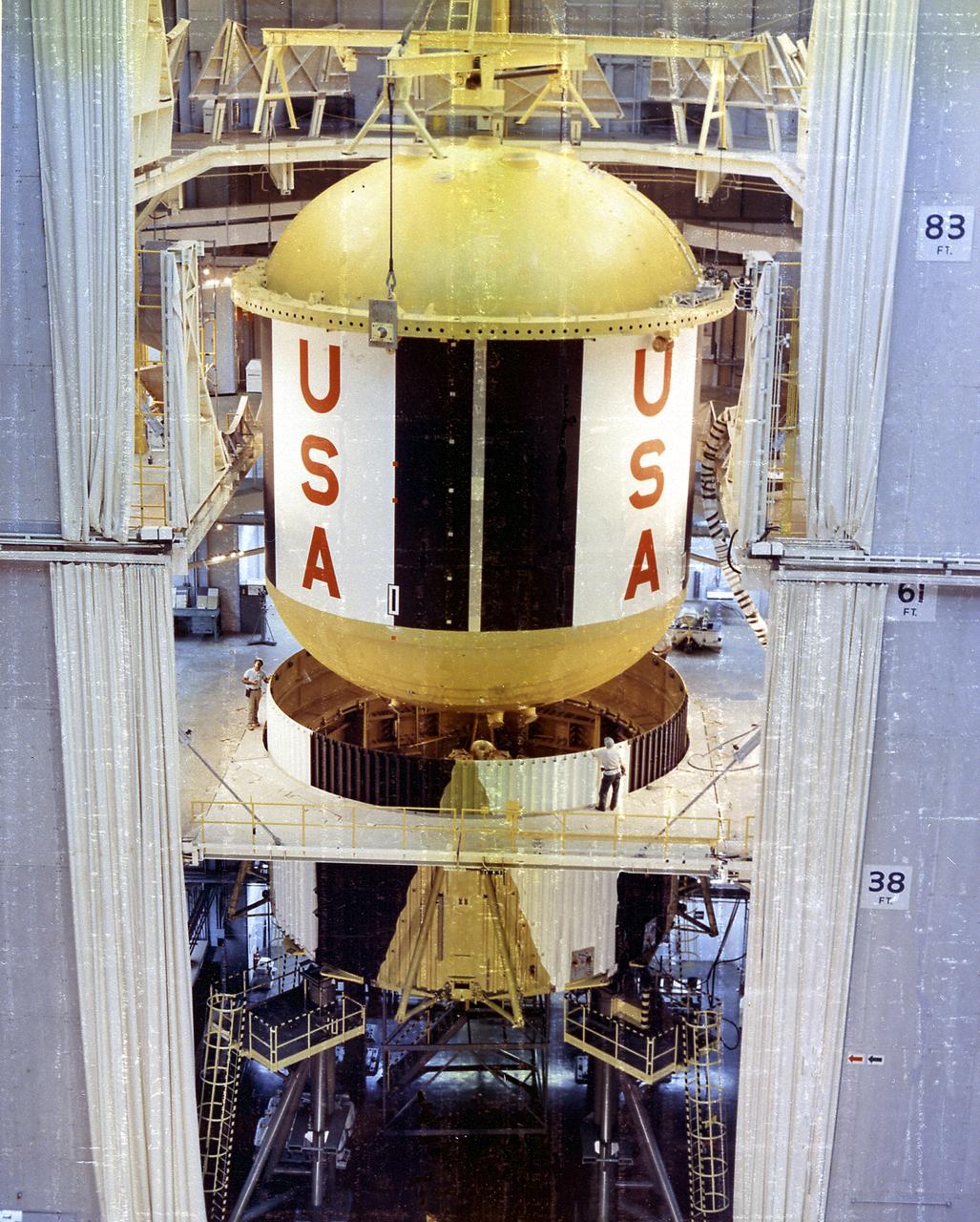
This picture is a view of stacking the major components of the S-IC (first) stage of the Saturn V vehicle at the Boeing vertical assembly building at the Michoud Assembly Facility (MAF). The view shows the fuel tank being lowered into the thrust structure. The Saturn IB and Saturn V first stages were manufactured at the MAF located 24 kilometers (approximately 15 miles) east of downtown New Orleans, Louisiana. The prime contractors, Chrysler and Boeing, jointly occupied the MAF. The basic manufacturing building boasted 43 acres under one roof. By 1964, NASA added a separate engineering and office building, vertical assembly building, and test stage building. By 1966, other changes to the site included enlarged barge facilities and other miscellaneous support buildings.
This picture is a view of stacking the major components of the S-IC (first) stage of the Saturn V vehicle at the Boeing vertical assembly building at the Michoud Assembly Facility (MAF). The view shows the S-IC forward skirt being lowered onto the liquid oxygen (LOX) tank. The Saturn IB and Saturn V first stages were manufactured at the MAF located 24 kilometers (approximately 15 miles) east of downtown New Orleans, Louisiana. The prime contractors, Chrysler and Boeing, jointly occupied the MAF. The basic manufacturing building boasted 43 acres under one roof. By 1964, NASA added a separate engineering and office building, vertical assembly building, and test stage building. By 1966, other changes to the site included enlarged barge facilities and other miscellaneous support buildings.

S67-36022 (20 June 1967) --- Apollo Spacecraft 017 is moved into position in the Vehicle Assembly Building's high bay area for mating with the Saturn V launch vehicle. S/C 017 will be flown on the Spacecraft 017/Saturn 501 (Apollo 4) space mission.
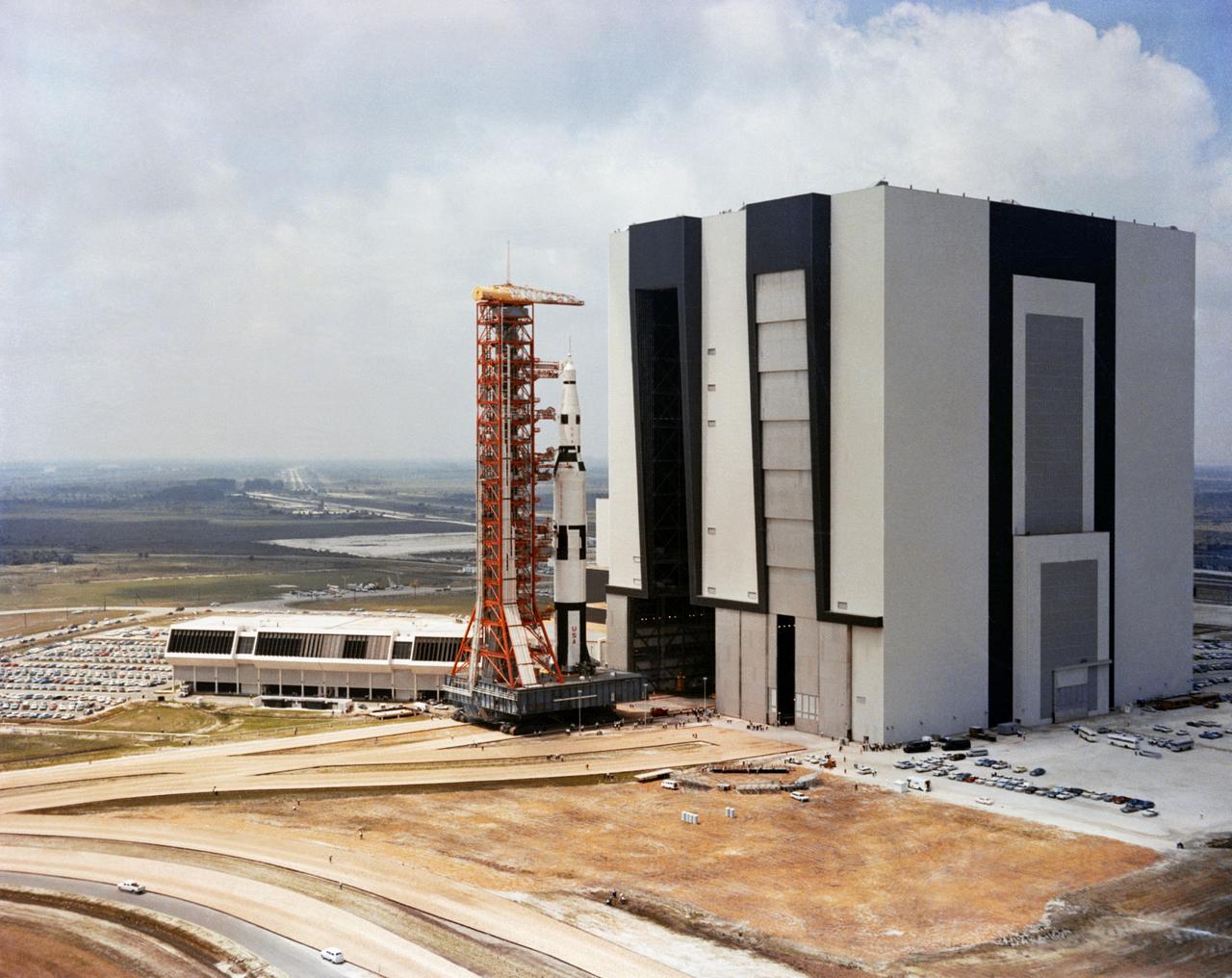
An Apollo/Saturn V facilities Test Vehicle and Launch Umbilical Tower (LUT) atop a crawler-transporter move from the Vehicle Assembly Building (VAB) on the way to Pad A. This test vehicle, designated the Apollo/Saturn 500-F, is being used to verify launch facilities, train launch crews, and develop test and checkout procedures.
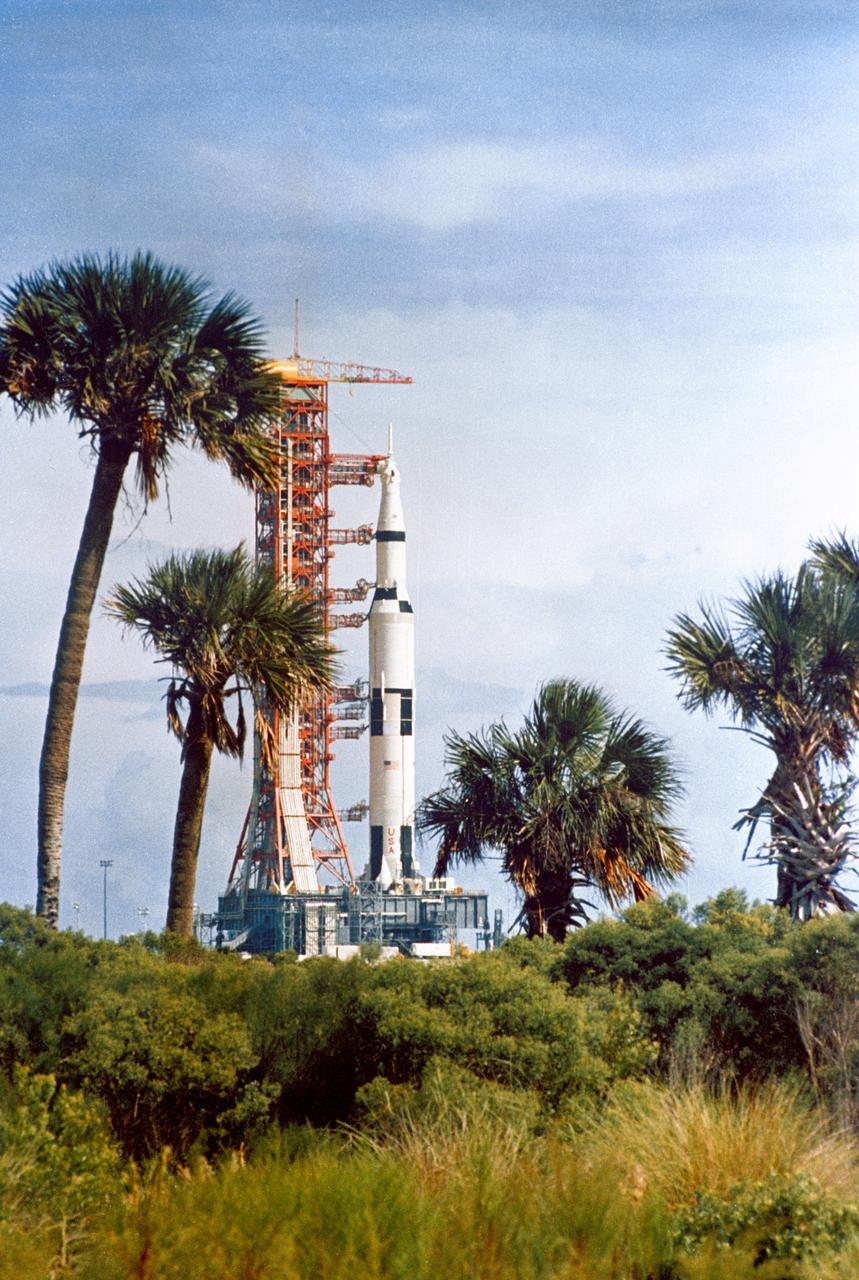
S68-49399 (9 Oct. 1968) --- The Apollo 8 (Spacecraft 103/Saturn 503) space vehicle on the way from the Kennedy Space Center's (KSC) Vehicle Assembly Building (VAB) to Pad A, Launch Complex 39. The Saturn V stack and its mobile launch tower are atop a huge crawler-transporter.
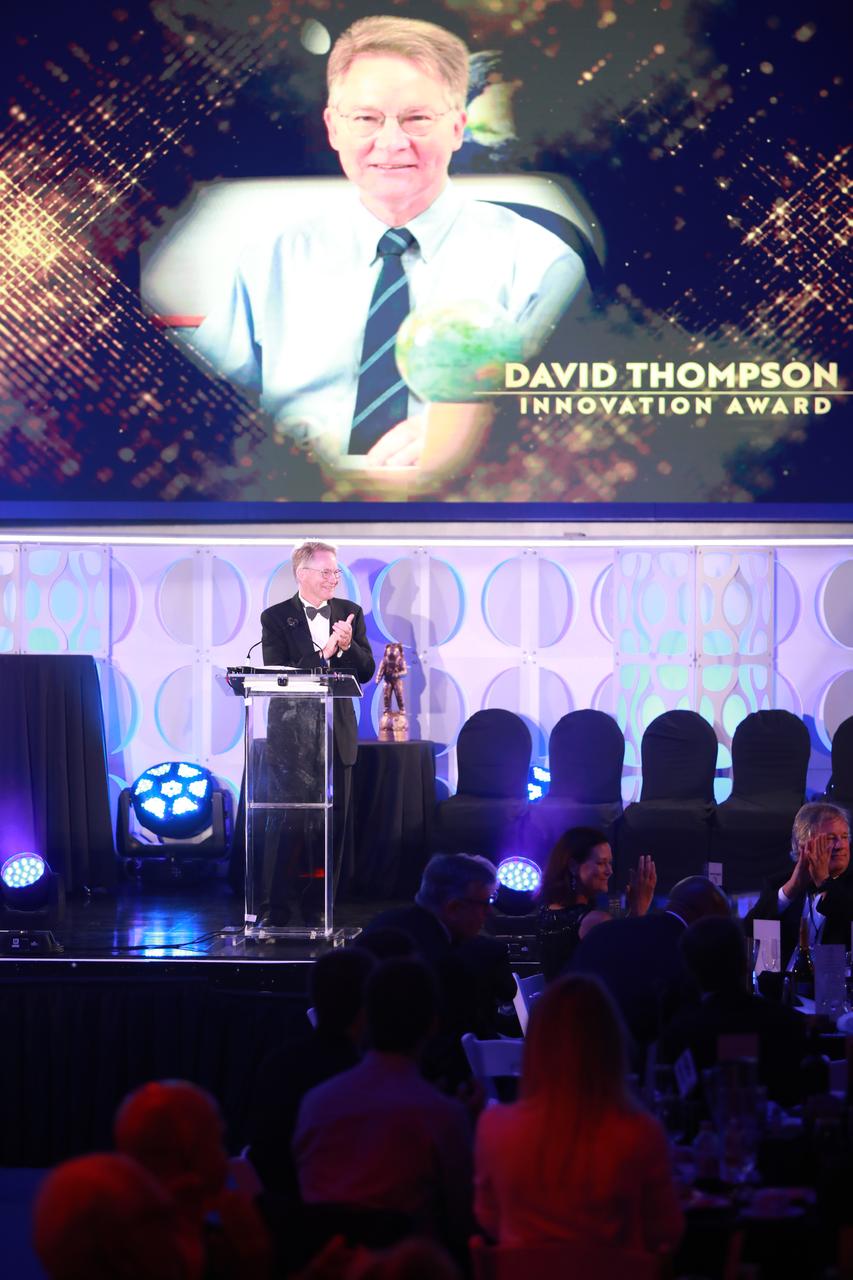
David Thompson, founder, presdient and CEO of Orbital Sciences Corp. (later known as Orbital ATK), makes remarks after receiving the Innovation Award at the Apollo 50th Gala on July 16, 2019. The gala, presented by Northrop Grumman, was held inside the Apollo/Saturn V Center at the Kennedy Space Center Visitor Complex in Florida.
Inside the Apollo-Saturn V Center at the Kennedy Space Center Visitor Complex in Florida, Lisa May, with Murphian Systems, presents the Judges Innovation Award during the award ceremony for NASA's 8th Annual Robotic Mining Competition. More than 40 student teams from colleges and universities around the U.S. used their uniquely-designed mining robots to dig in a supersized sandbox filled with BP-1, or simulated Martian soil, and participated in other competition requirements, May 22-26, at the visitor complex. The Robotic Mining Competition is a NASA Human Exploration and Operations Mission Directorate project designed to encourage students in science, technology, engineering and math, or STEM fields. The project provides a competitive environment to foster innovative ideas and solutions that could be used on NASA's Journey to Mars.
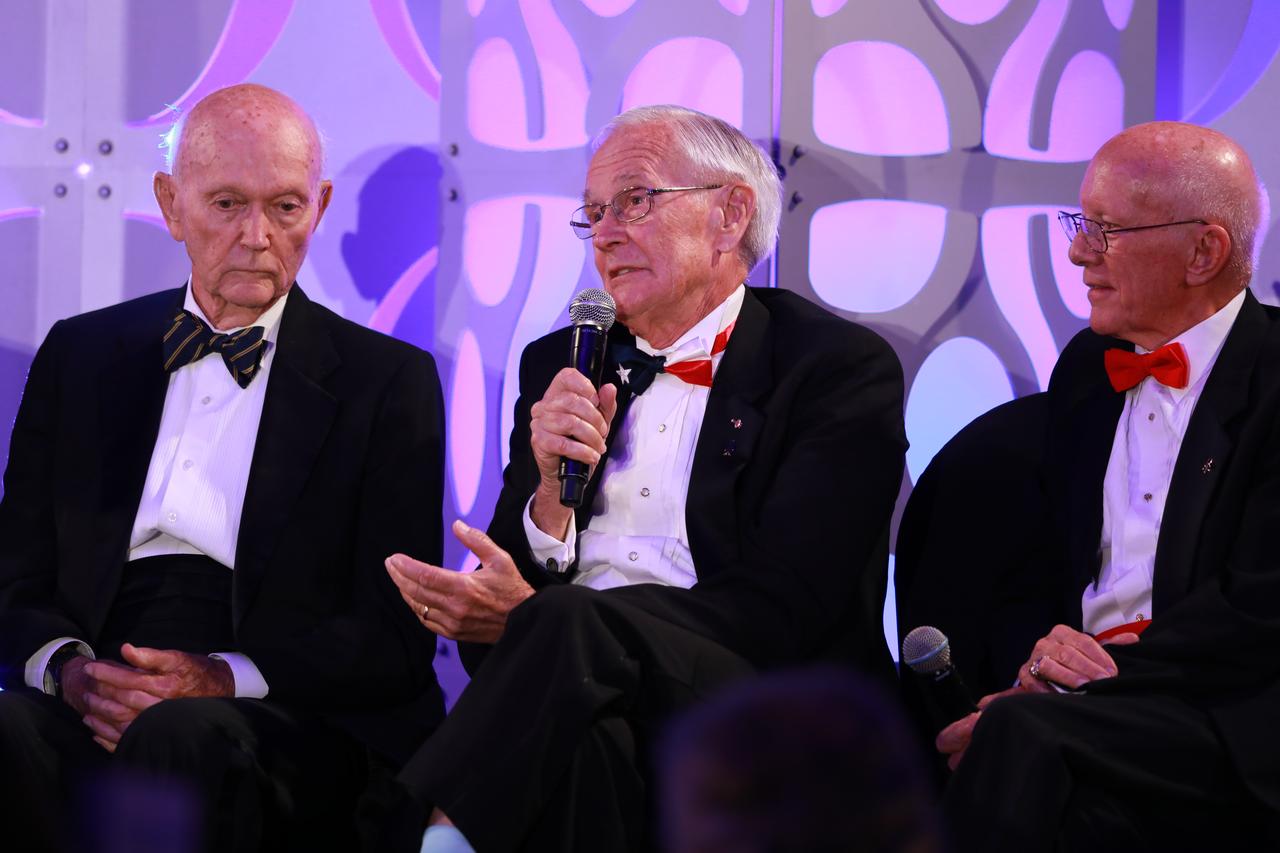
Retired NASA astronauts participate in a panel discussion during the Apollo 11 50th Gala, presented by Northrop Grumman, on July 16, 2019. The gala was held inside the Apollo/Saturn V Center at the Kennedy Space Center Visitor Complex in Florida. From left, are Apollo 11 astronaut Michael Collins, Apollo 16 astronaut Charlie Duke, and Apollo Flight Director Gerry Griffin.
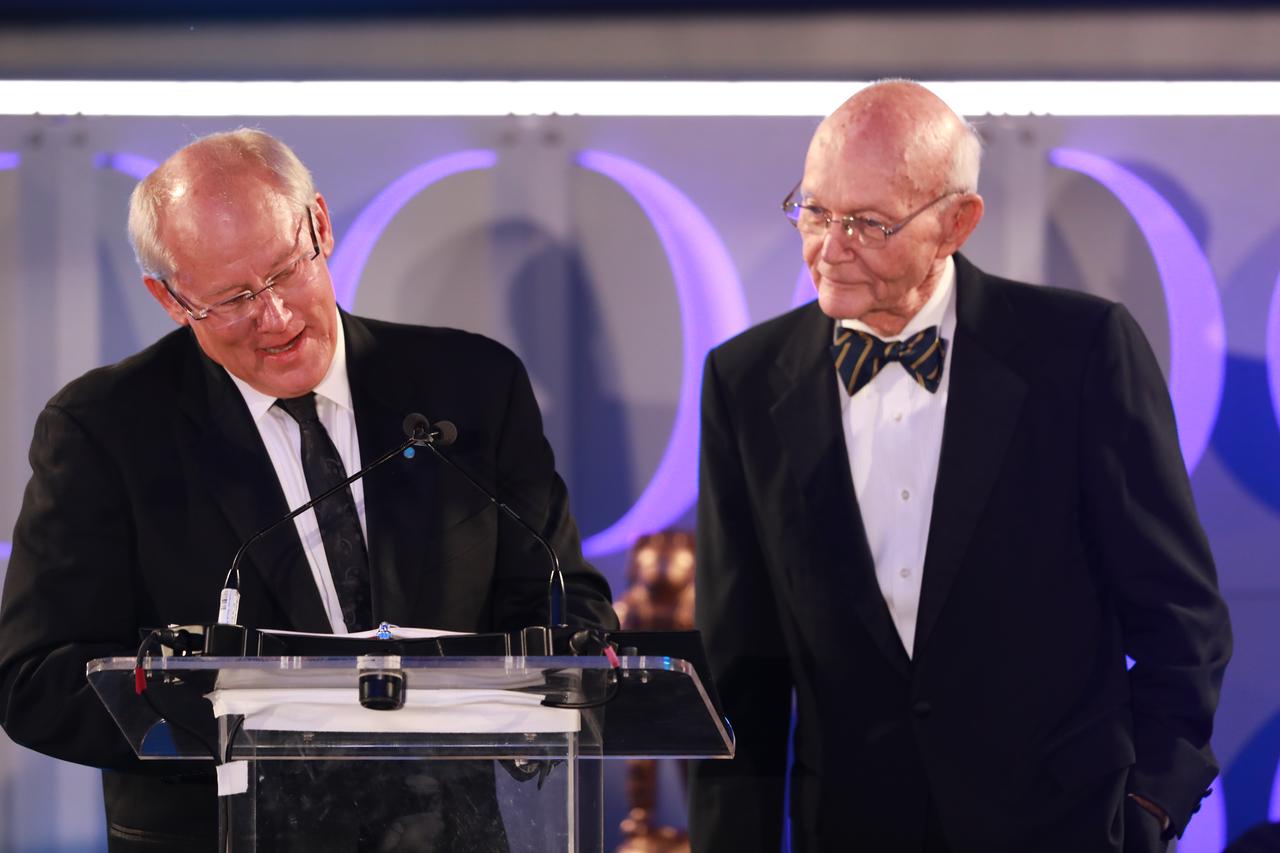
Andy Aldrin, son of Apollo 11 astronaut Buzz Aldrin, introduces Apollo 11 astronaut Michael Collins, during the Apollo 50th Gala, presented by Northrop Grumman. The event was held inside the Apollo/Saturn V Center at the Kennedy Space Center Visitor Complex in Florida on July 16, 2019.
From left, NASA astronauts Jessica Meir, Joseph Acaba, Jessica Watkins, Matthew Dominick, and Anne McClain, along with NASA Communications’ Derrol Nail, listen to a question from a member of the news media during a question-and-answer session Dec. 9, 2020, following a National Space Council meeting inside the Apollo/Saturn V Center at the Kennedy Space Center Visitor Complex in Florida. Vice President Mike Pence chaired the meeting, at which he announced the initial team of 18 astronauts eligible for early Artemis missions on and around the Moon. Under the Artemis program, NASA will land the first woman and the next man on the Moon in 2024.
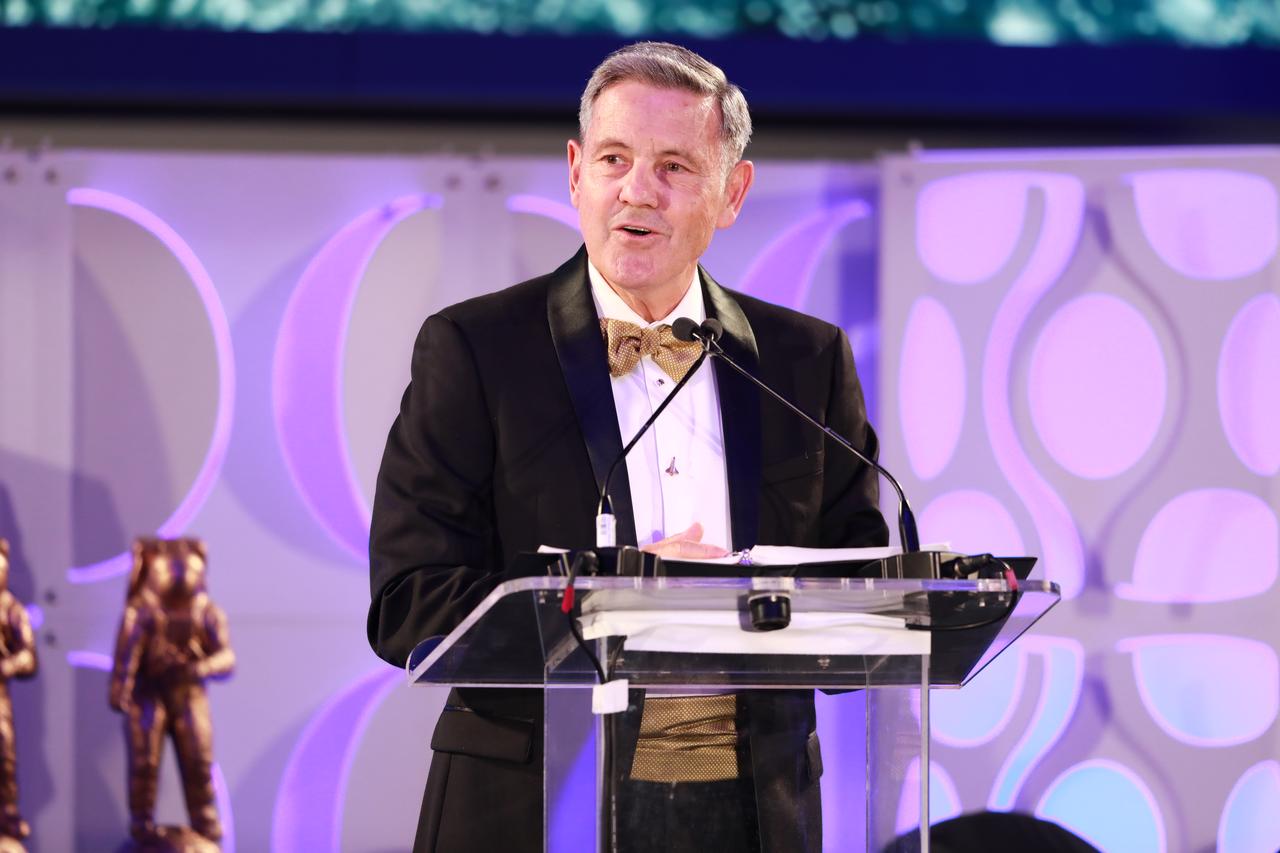
NASA Kennedy Space Center Director and retired astronaut Bob Cabana delivers remarks during the Apollo 50th Gala, presented by Northrop Grumman, inside the Apollo/Saturn V Center at the Kennedy Space Center Visitor Complex in Florida on July 16, 2019.
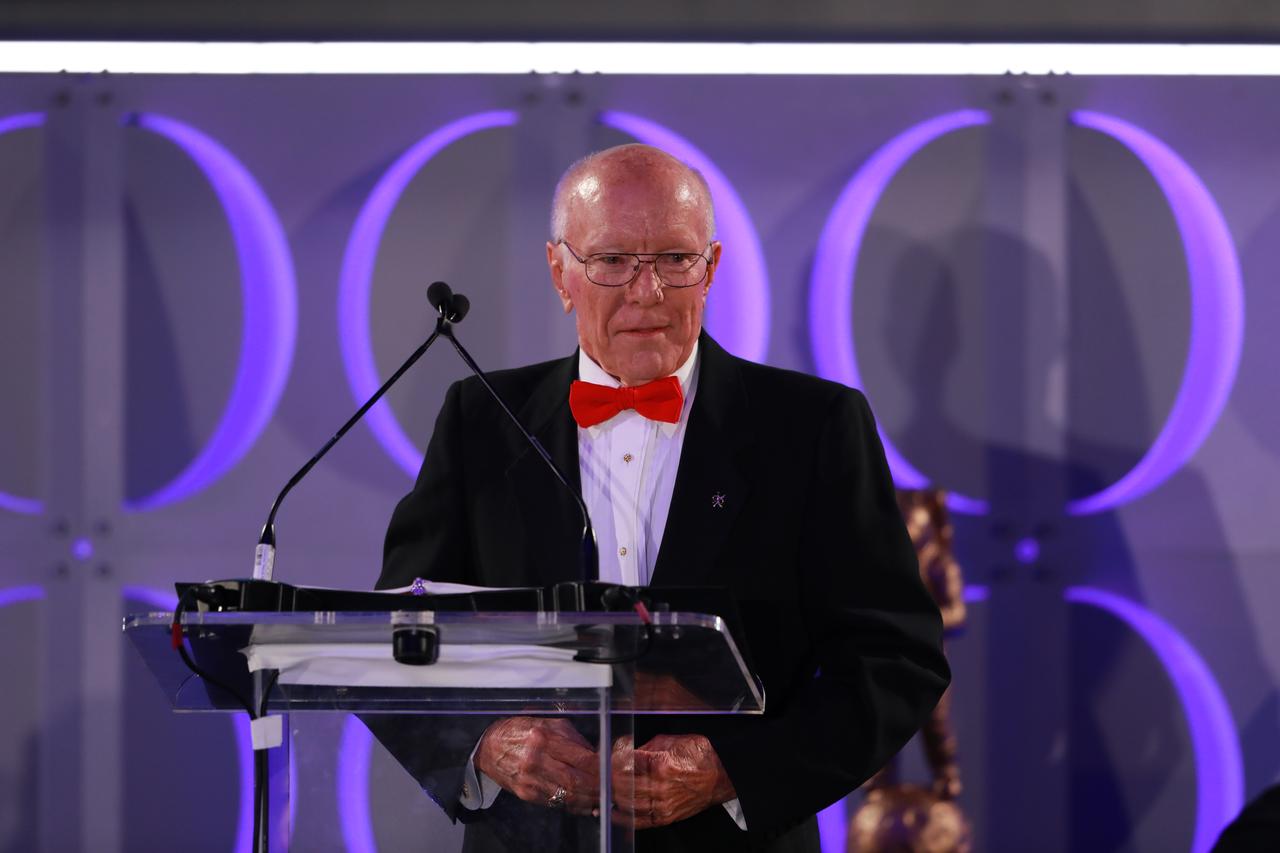
Gerry Griffin, Apollo flight director, makes remarks during the Apollo 11 50th Gala, pressented by Northrop Grumman, inside the Apollo/Saturn V Center at the Kennedy Space Center Visitor Complex on July 16, 2019
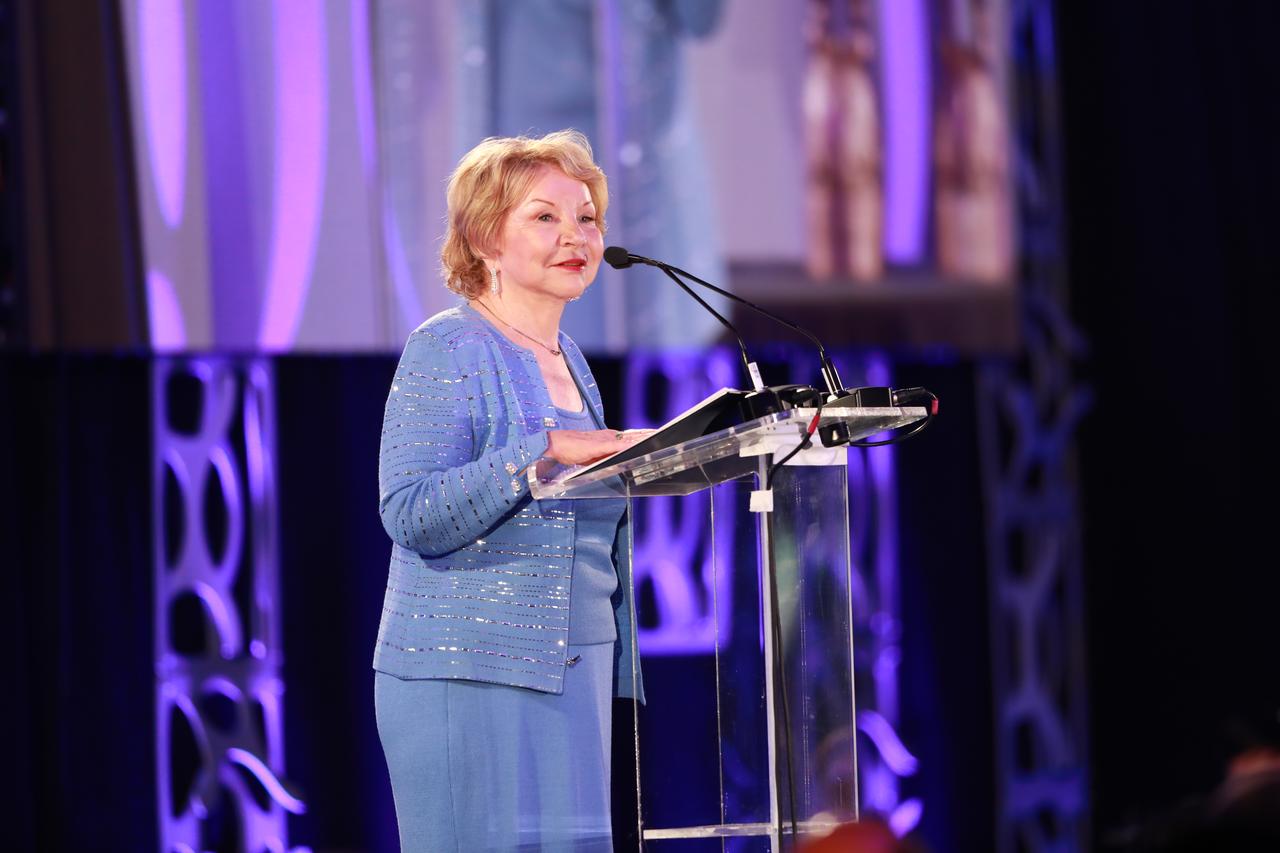
June Scobee Rodgers receives the Education Award during the Apollo 50th Gala, presented by Northrop Grumman, inside the Apollo/Saturn V Center at the Kennedy Space Center Visitor Complex in Florida on July 16, 2019. Scobbee Rodgers is the founding chairman of the Challenger Center for Space Science Education, established in 1986 following the Space Shuttle Challenger accident to continue the legacy of the Challenger crew.
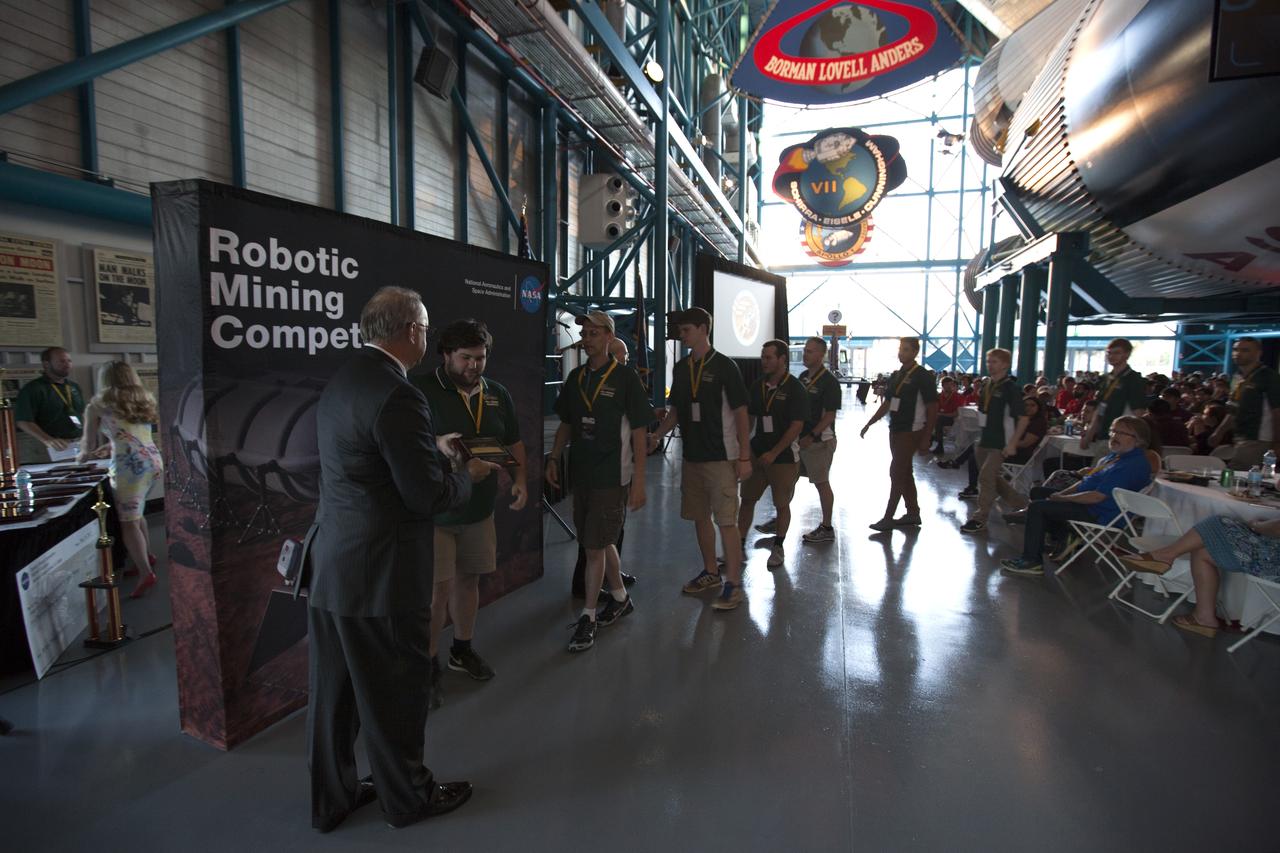
Inside the Apollo-Saturn V Center at the Kennedy Space Center Visitor Complex in Florida, team members from the University of North Carolina at Charlotte receive third-place in the Caterpillar Autonomy Award during the award ceremony for NASA's 8th Annual Robotic Mining Competition. More than 40 student teams from colleges and universities around the U.S. used their uniquely-designed mining robots to dig in a supersized sandbox filled with BP-1, or simulated Martian soil, and participated in other competition requirements, May 22-26, at the visitor complex. The Robotic Mining Competition is a NASA Human Exploration and Operations Mission Directorate project designed to encourage students in science, technology, engineering and math, or STEM fields. The project provides a competitive environment to foster innovative ideas and solutions that could be used on NASA's Journey to Mars.
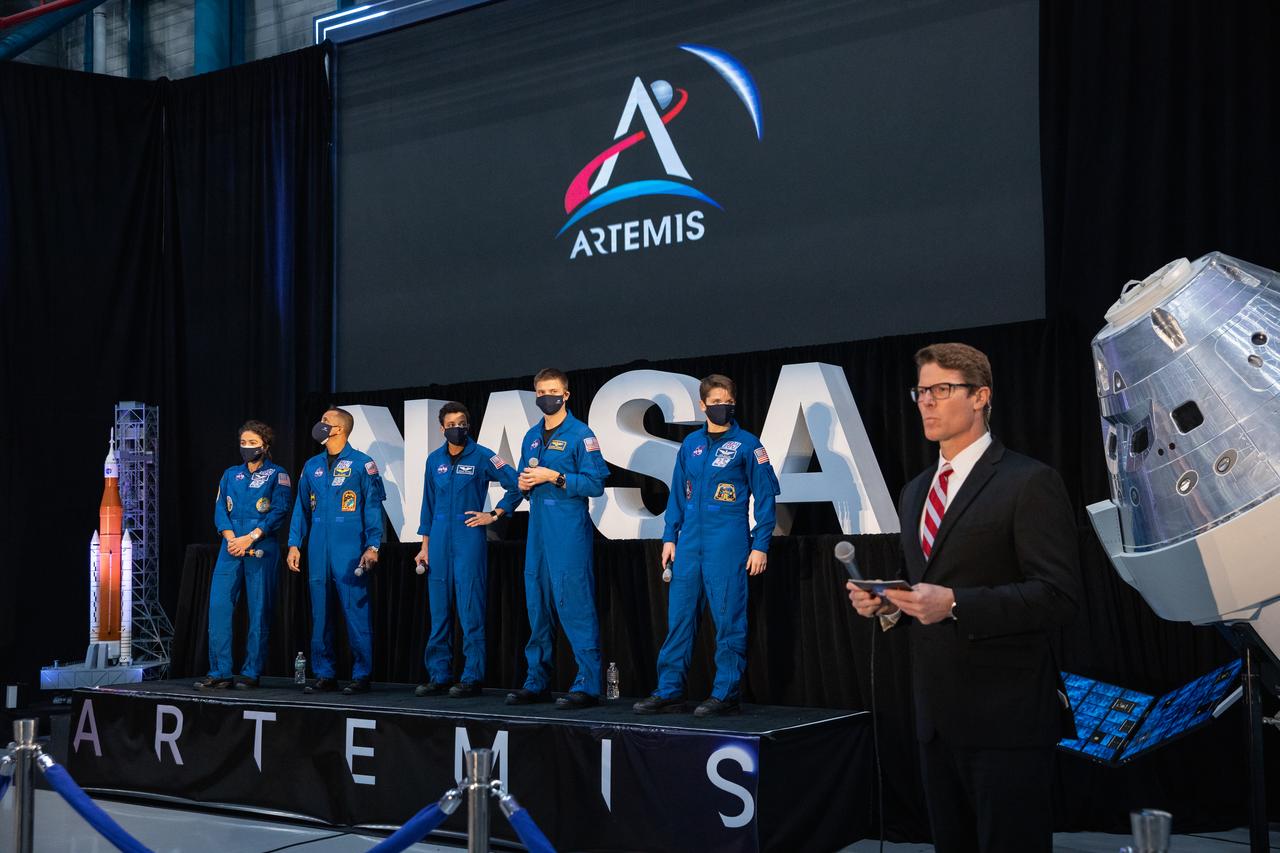
From left, NASA astronauts Jessica Meir, Joseph Acaba, Jessica Watkins, Matthew Dominick, and Anne McClain, along with NASA Communications’ Derrol Nail, listen to a question from a member of the news media during a question-and-answer session Dec. 9, 2020, following a National Space Council meeting inside the Apollo/Saturn V Center at the Kennedy Space Center Visitor Complex in Florida. Vice President Mike Pence chaired the meeting, at which he announced the initial team of 18 astronauts eligible for early Artemis missions on and around the Moon. Under the Artemis program, NASA will land the first woman and the next man on the Moon in 2024.
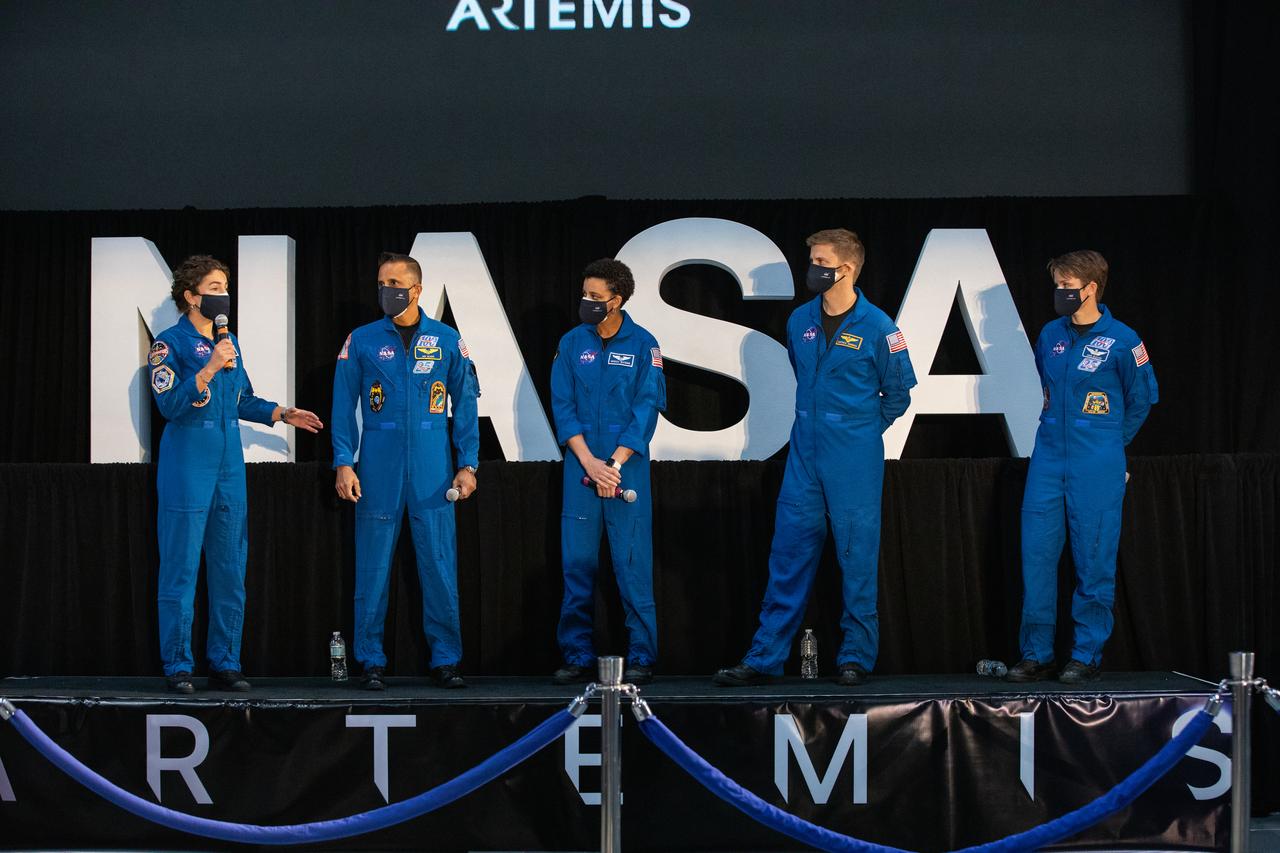
NASA astronaut Jessica Meir speaks to members of the news media during a question-and-answer session Dec. 9, 2020, following a National Space Council meeting inside the Apollo/Saturn V Center at the Kennedy Space Center Visitor Complex in Florida. Vice President Mike Pence chaired the meeting, at which he announced the initial team of 18 astronauts eligible for early Artemis missions on and around the Moon. On stage with Meir, from left, are fellow astronauts Joseph Acaba, Jessica Watkins, Matthew Dominick, and Anne McClain. Under the Artemis program, NASA will land the first woman and the next man on the Moon in 2024.
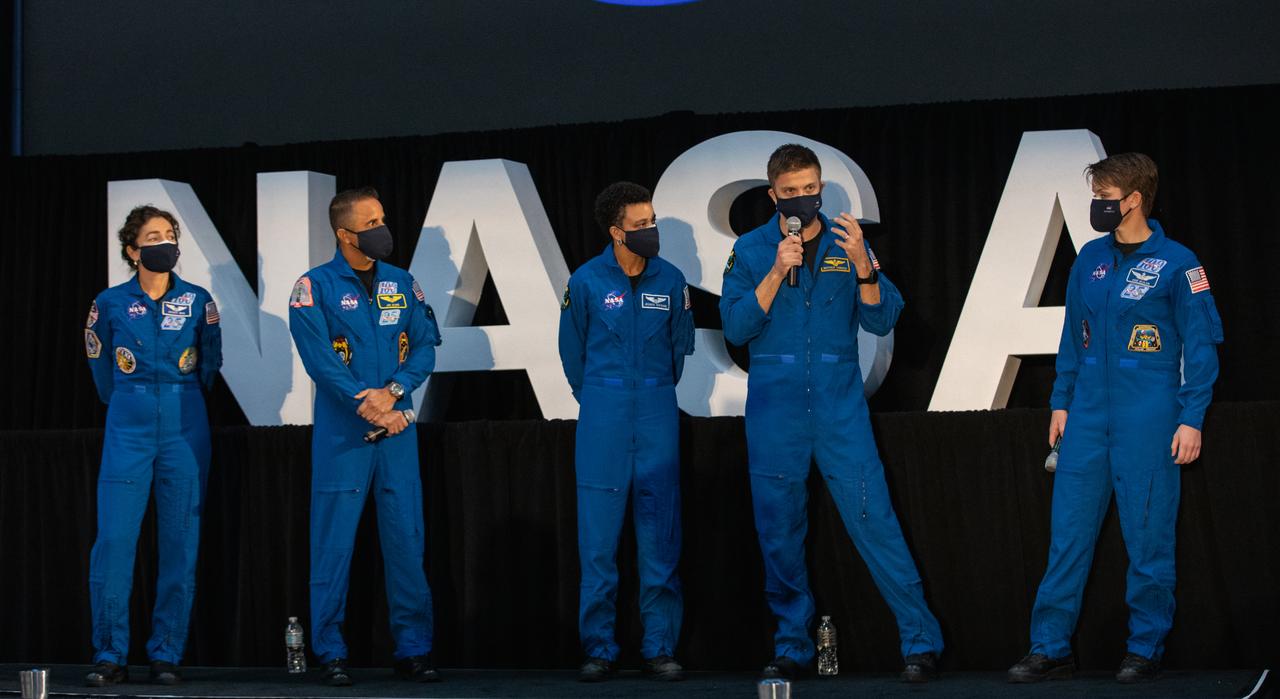
NASA astronaut Matthew Dominick, second from right, speaks to members of the news media during a question-and-answer session Dec. 9, 2020, following a National Space Council meeting inside the Apollo/Saturn V Center at the Kennedy Space Center Visitor Complex in Florida. Vice President Mike Pence chaired the meeting at which he announced the initial team of 18 astronauts eligible for early Artemis missions on and around the Moon. A Colorado native, Dominick was selected as a NASA astronaut in 2017. He was joined at the event by fellow astronauts, from left, Jessica Meir, Joseph Acaba, Jessica Watkins, and Anne McClain. Under the Artemis program, NASA will land the first woman and the next man on the Moon in 2024.
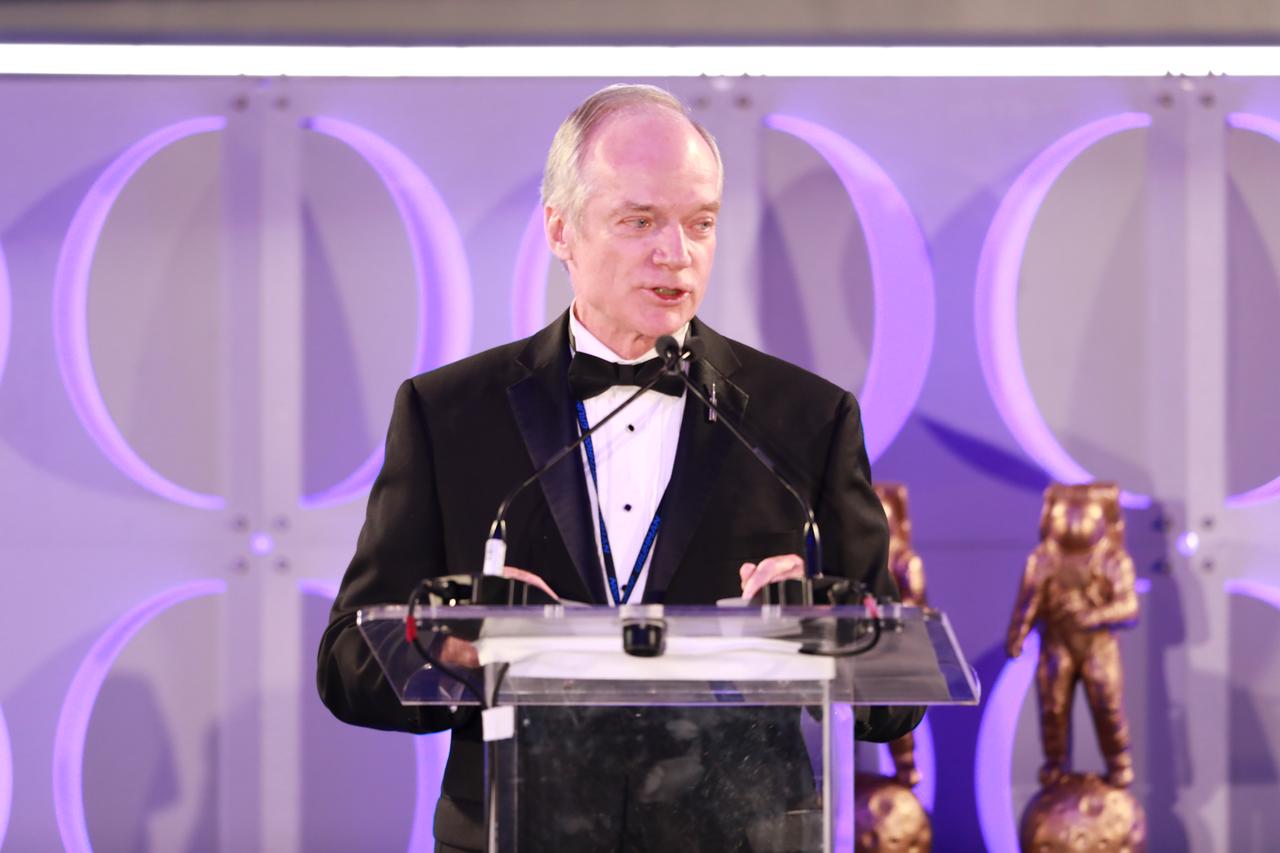
Retired NASA astronaut Charlie Precourt, vice president, propulsion systems, with Northrop Grumman, delivers remarks during the Apollo 11 50th Gala, presented by Northrop Grumman, inside the Apollo/Saturn V Center at the Kennedy Space Center Visitor Complex on July 16, 2019.
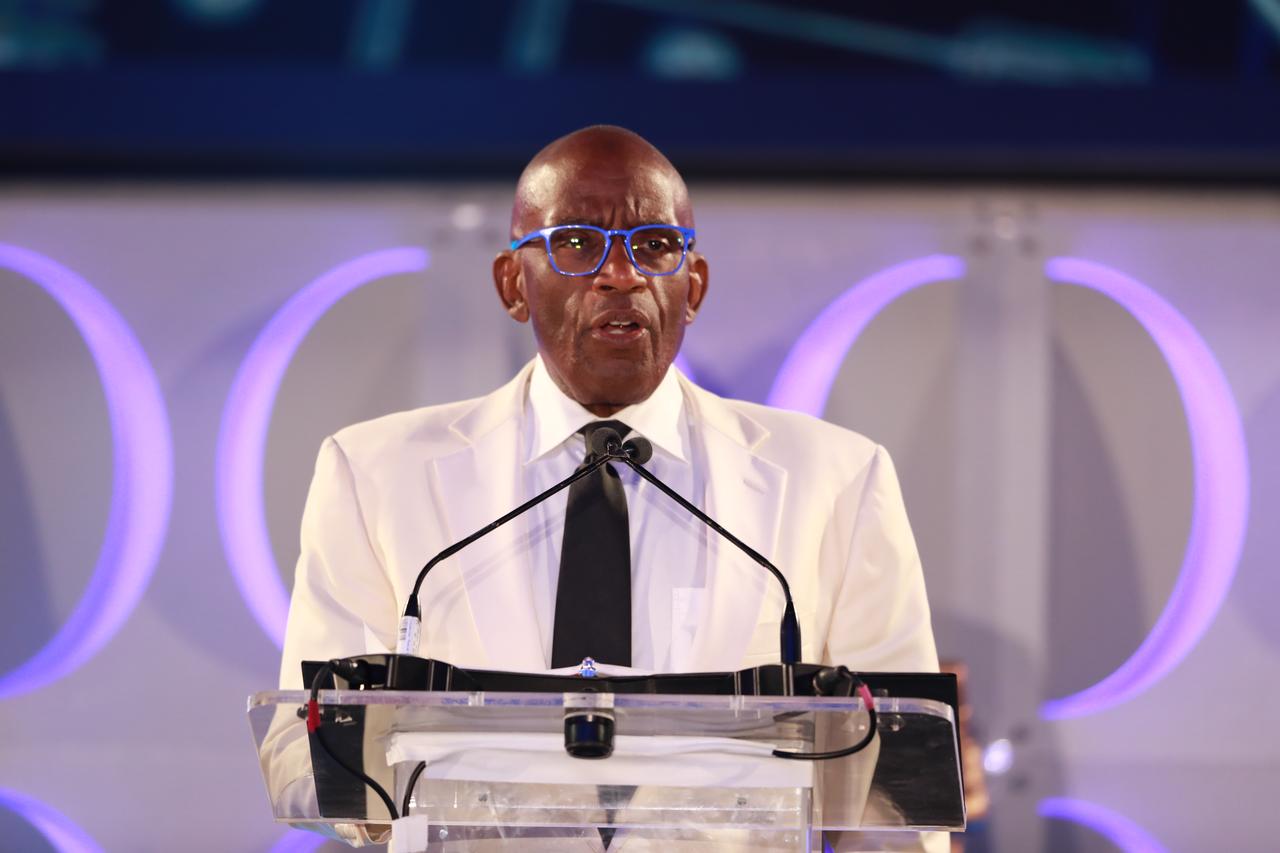
Al Roker, NBC TODAY Show co-host and weatherman, serves as the emcee for the Apollo 11 50th Gala, presented by Northrop Grumman, inside the Apollo/Saturn V Center at the Kennedy Space Center Visitor Complex on July 16, 2019.
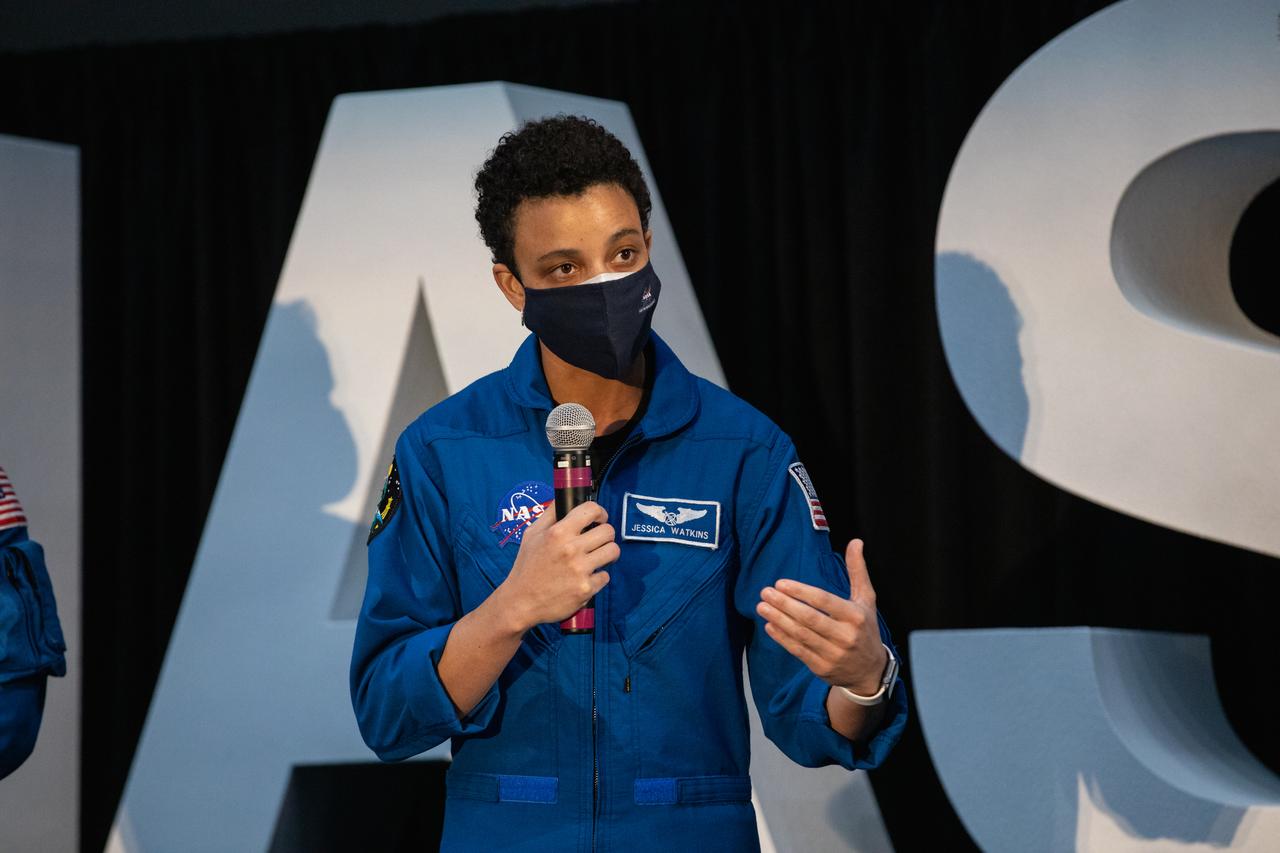
NASA astronaut Jessica Watkins speaks to members of the news media during a question-and-answer session Dec. 9, 2020, following a National Space Council meeting inside the Apollo/Saturn V Center at the Kennedy Space Center Visitor Complex in Florida. Vice President Mike Pence chaired the meeting, at which he announced the initial team of 18 astronauts eligible for early Artemis missions on and around the Moon. A Colorado native, Watkins was selected as a NASA astronaut in 2017. She was joined at the event by fellow astronauts Joseph Acaba, Matthew Dominick, Jessica Meir, and Anne McClain. Under the Artemis program, NASA will land the first woman and the next man on the Moon in 2024.
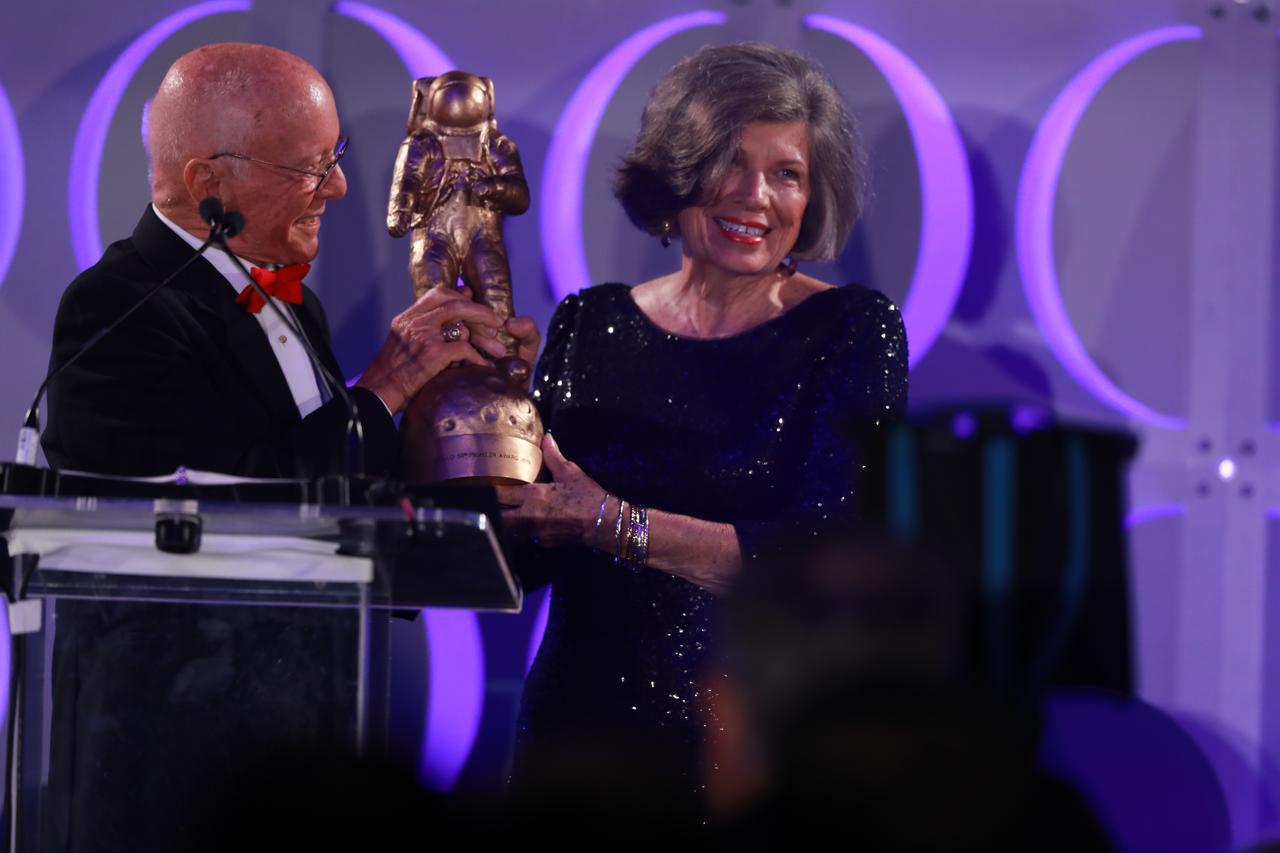
Gerry Griffin, Apollo flight director, left, presents the Pioneer Award to JoAnn Morgan, retired NASA engineer, during the Apollo 11 50th Gala, on July 16, 2019. The gala, presented by Northrop Grumman, was held inside the Apollo/Saturn V Center at the Kennedy Space Center Visitor Comples in Florida. Morgan was the first woman engineer on console at Kennedy Space Center and the only woman in the firing room during the Apollo 11 launch countdown and launch.
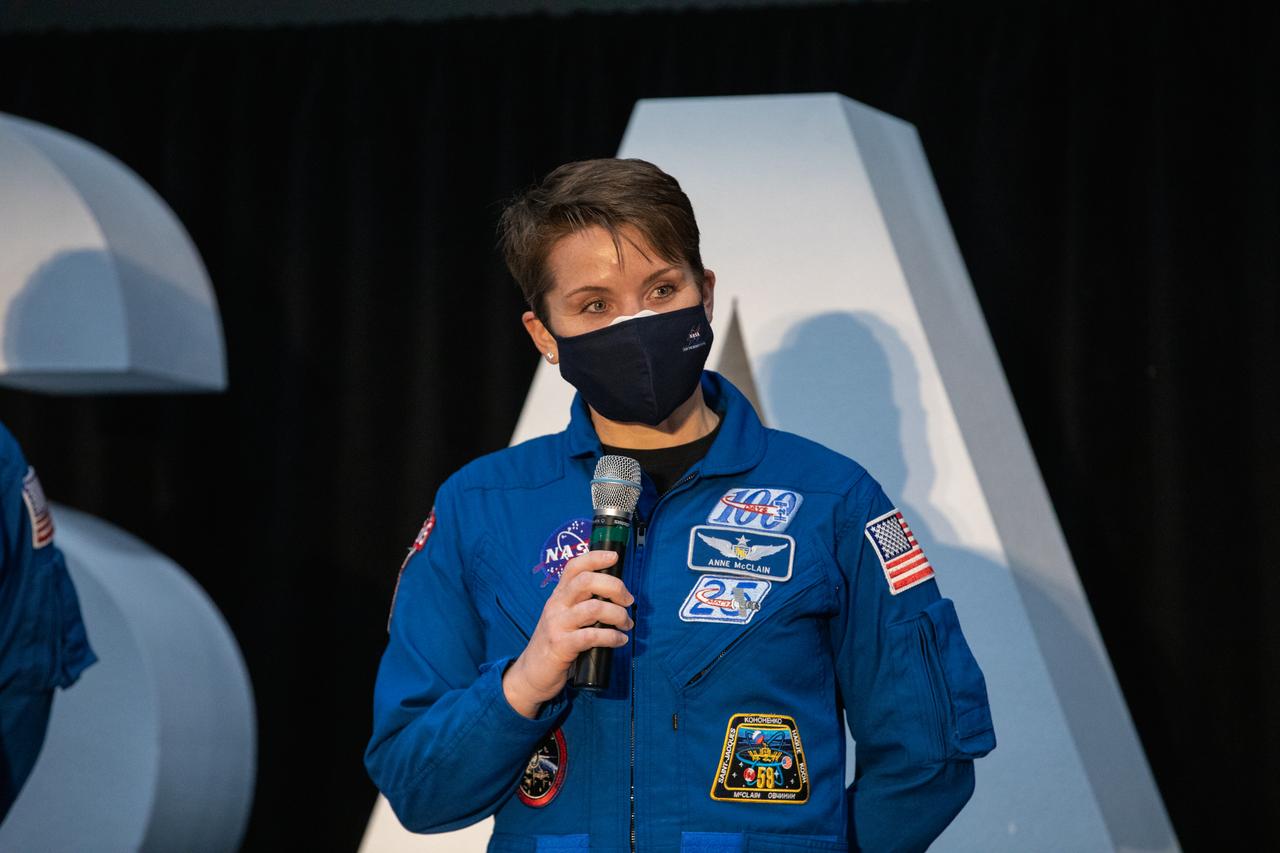
NASA astronaut Anne McClain speaks to members of the news media during a question-and-answer session Dec. 9, 2020, following a National Space Council meeting inside the Apollo/Saturn V Center at the Kennedy Space Center Visitor Complex in Florida. Vice President Mike Pence chaired the meeting, at which he announced the initial team of 18 astronauts eligible for early Artemis missions on and around the Moon. A native of the state of Washington, McClain was selected as a NASA astronaut in 2013 and has spent 204 days in space on one previous flight. She was joined at the event by fellow astronauts Joseph Acaba, Matthew Dominick, Jessica Meir, and Jessica Watkins. Under the Artemis program, NASA will land the first woman and the next man on the Moon in 2024.
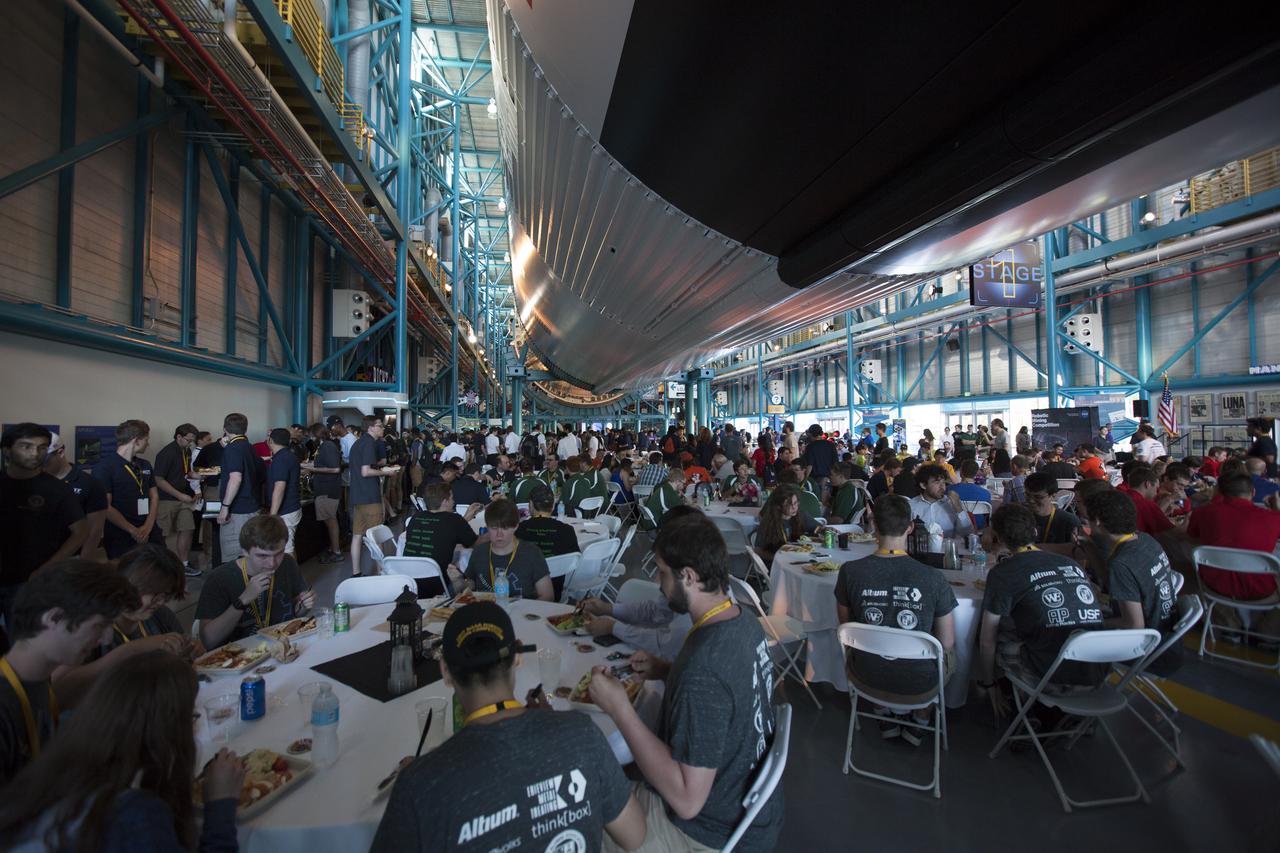
Inside the Apollo-Saturn V Center at NASA's Kennedy Space Center Visitor Complex in Florida, teams from the 8th Annual Robotic Mining Competition eat dinner before the awards ceremony begins. More than 40 student teams from colleges and universities around the U.S. used their mining robots to dig in a supersized sandbox filled with BP-1, or simulated Martian soil, and participated in other competition requirements, May 22-26 at the visitor complex. The Robotic Mining Competition is a NASA Human Exploration and Operations Mission Directorate project designed to encourage students in science, technology, engineering and math, or STEM fields. The project provides a competitive environment to foster innovative ideas and solutions that could be used on NASA's Journey to Mars.
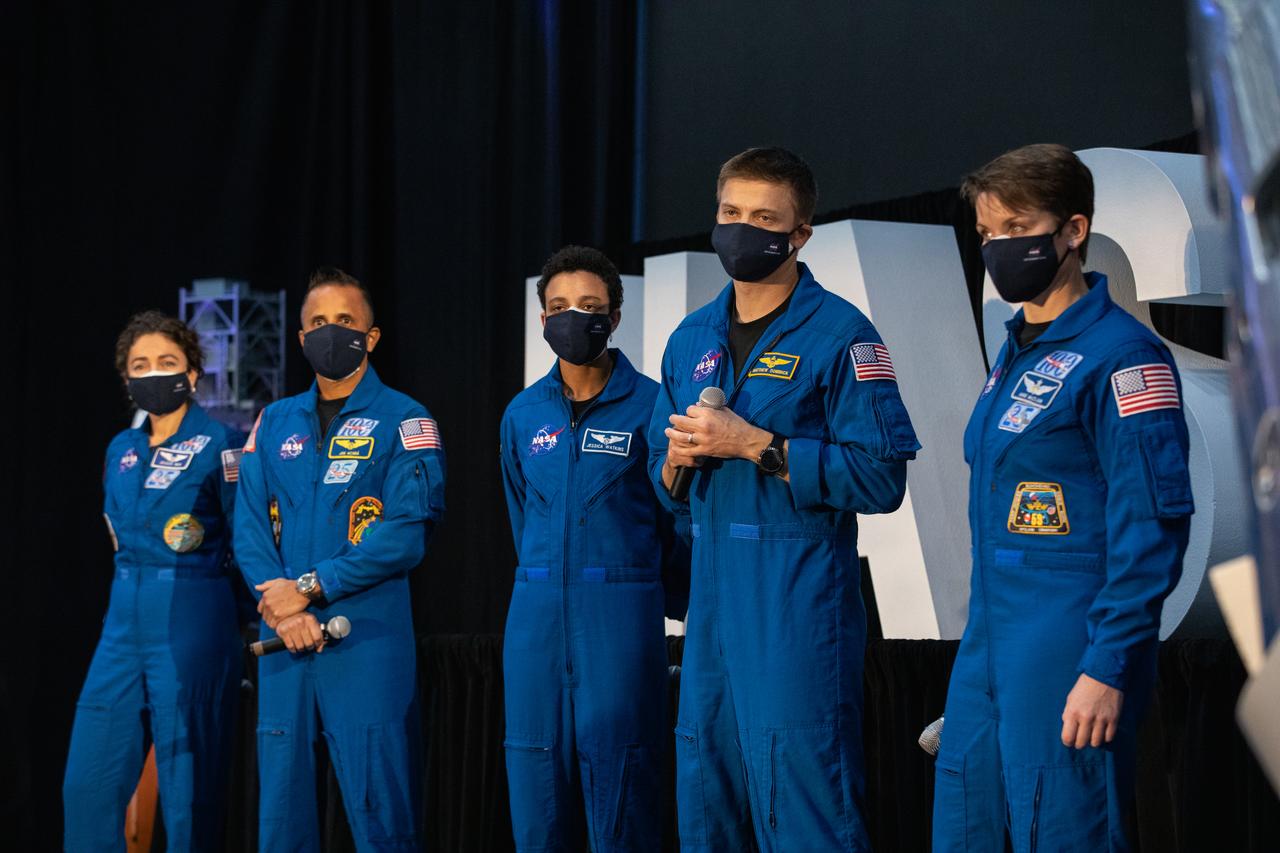
NASA astronaut Matthew Dominick, second from right, listens to a question from a member of the news media during a question-and-answer session Dec. 9, 2020, following a National Space Council meeting inside the Apollo/Saturn V Center at the Kennedy Space Center Visitor Complex in Florida. Vice President Mike Pence chaired the meeting at which he announced the initial team of 18 astronauts eligible for early Artemis missions on and around the Moon. A Colorado native, Dominick was selected as a NASA astronaut in 2017. He was joined at the event by fellow astronauts, from left, Jessica Meir, Joseph Acaba, Jessica Watkins, and Anne McClain. Under the Artemis program, NASA will land the first woman and the next man on the Moon in 2024.

During the Apollo 11 50th Gala, presented by Northrop Grumman, on July 16, 2019, last year's space-themed constume contest winner, left, helps the announcer preent this year's winners their awards. The gala was held inside the Apollo/Saturn V Center at the Kennedy Space Center Visitor Complex in Florida.
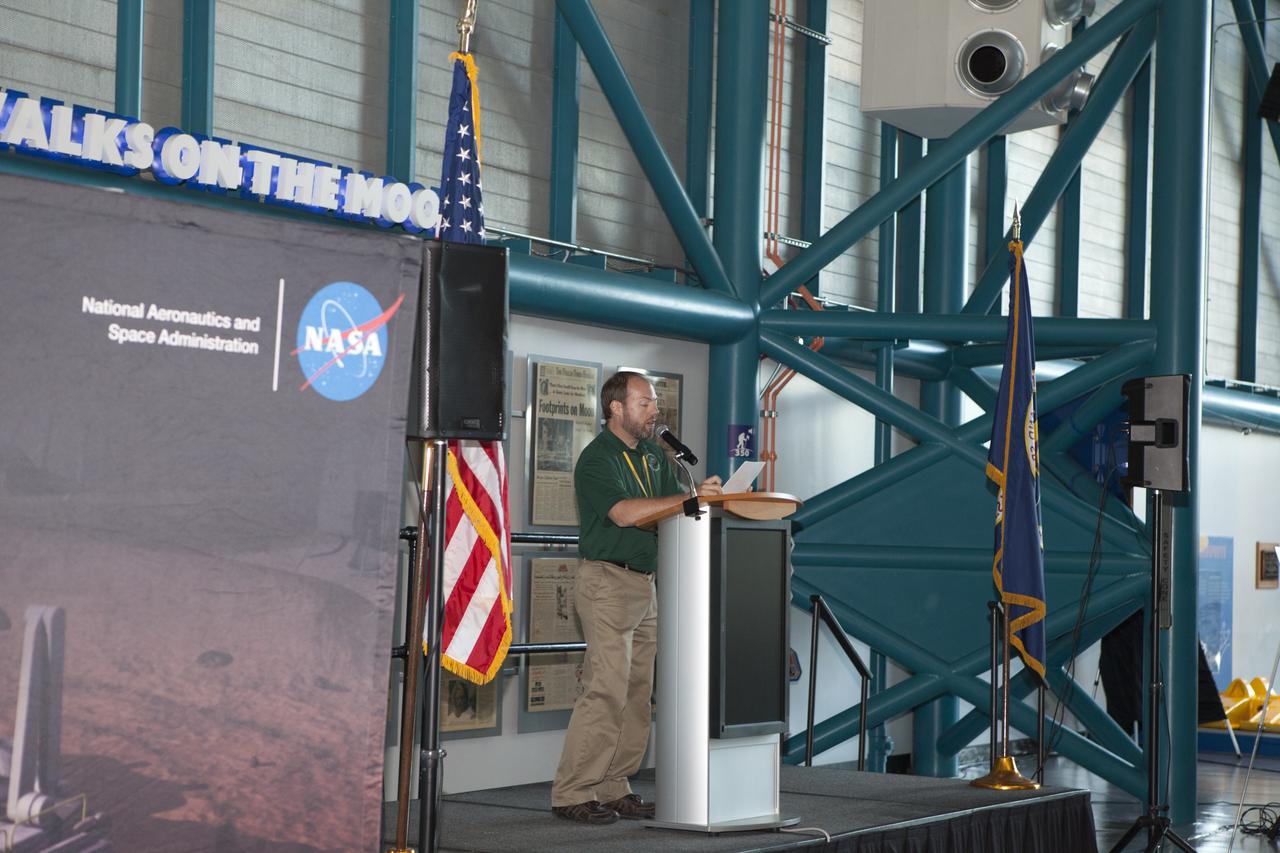
Kurt Leucht, a NASA engineer and event emcee, welcomes guests to the awards ceremony for NASA's 8th Annual Robotic Mining Competition in the Apollo-Saturn V Center at the Kennedy Space Center Visitor Complex in Florida. More than 40 student teams from colleges and universities around the U.S. used their uniquely-designed mining robots to dig in a supersized sandbox filled with BP-1, or simulated Martian soil, and participated in other competition requirements, May 22-26 at the visitor complex. The Robotic Mining Competition is a NASA Human Exploration and Operations Mission Directorate project designed to encourage students in science, technology, engineering and math, or STEM fields. The project provides a competitive environment to foster innovative ideas and solutions that could be used on NASA's Journey to Mars.
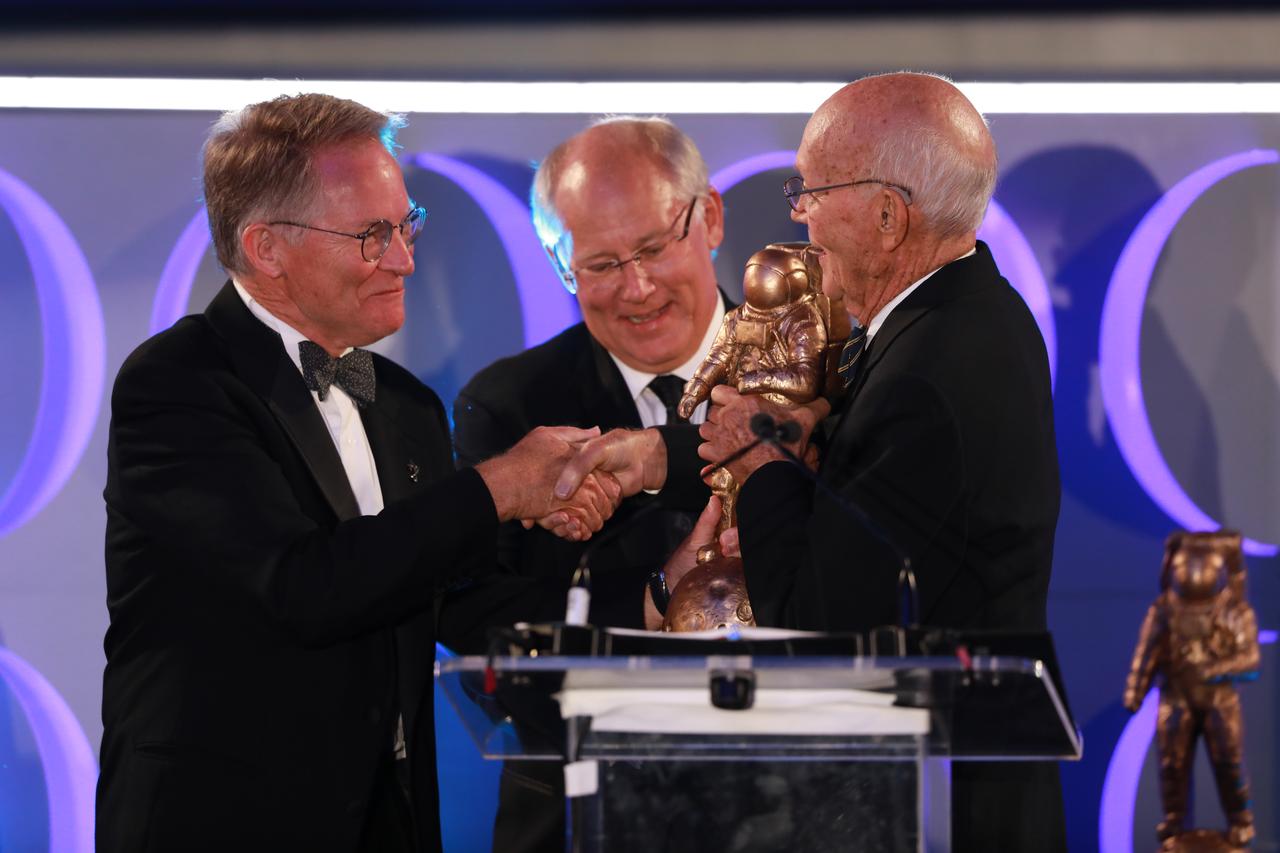
Michael Collins; right; Apollo 11 astronaut; presents the Innovation Award to David Thompson; left; founder; president and CEO of Orbital Sciences Corp (later known as Orbital ATK); during the Apollo 50th Gala on July 16; 2019. The event; presented by Northrop Grumman; was held inside the Apollo/Saturn V Center at the Kennedy Space Center Visitor Comples in Florida. In the center at the podium is Andy Aldrin; son of Apollo 11 astronaut Buzz Aldrin.
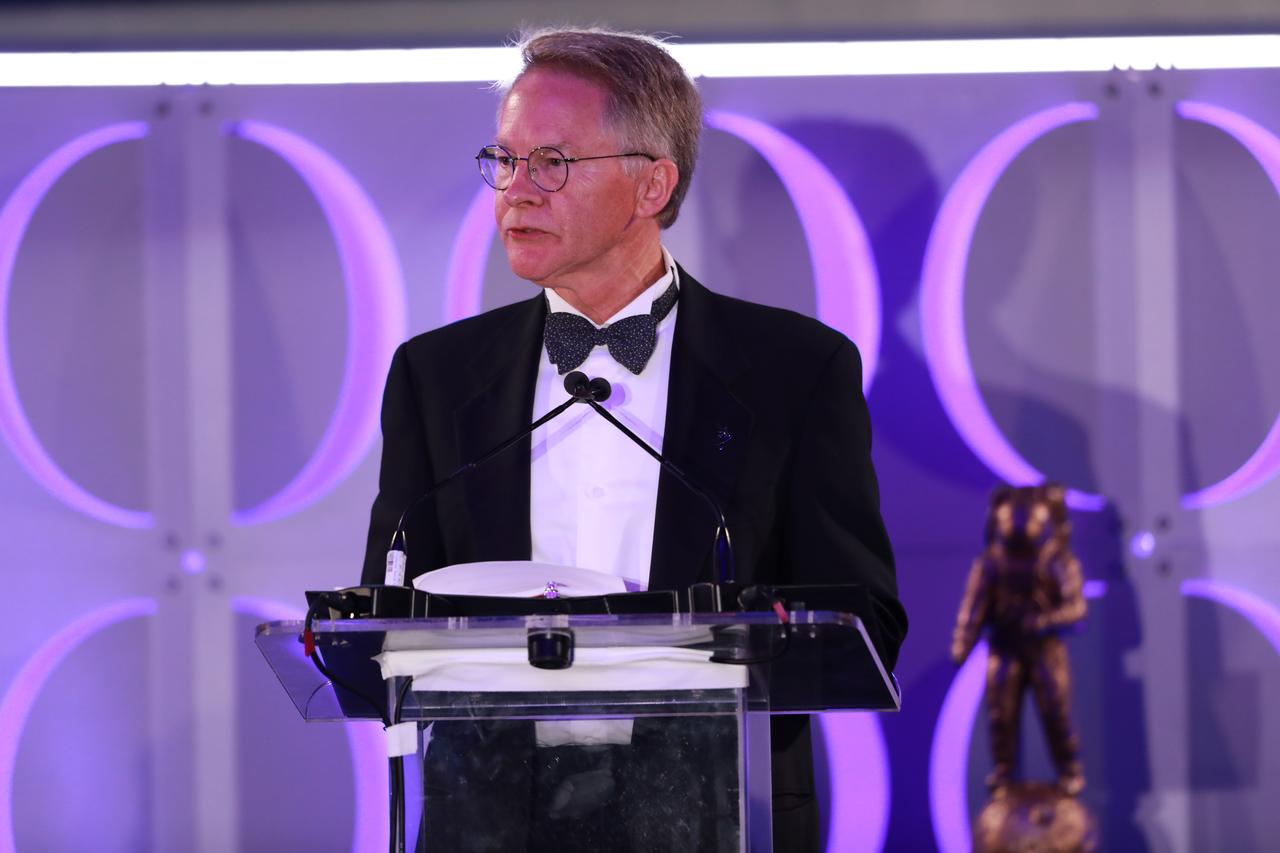
David Thompson, founder, presdient and CEO of Orbital Sciences Corp. (later known as Orbital ATK), makes remarks after receiving the Innovation Award at the Apollo 50th Gala on July 16, 2019. The gala, presented by Northrop Grumman, was held inside the Apollo/Saturn V Center at the Kennedy Space Center Visitor Complex in Florida.
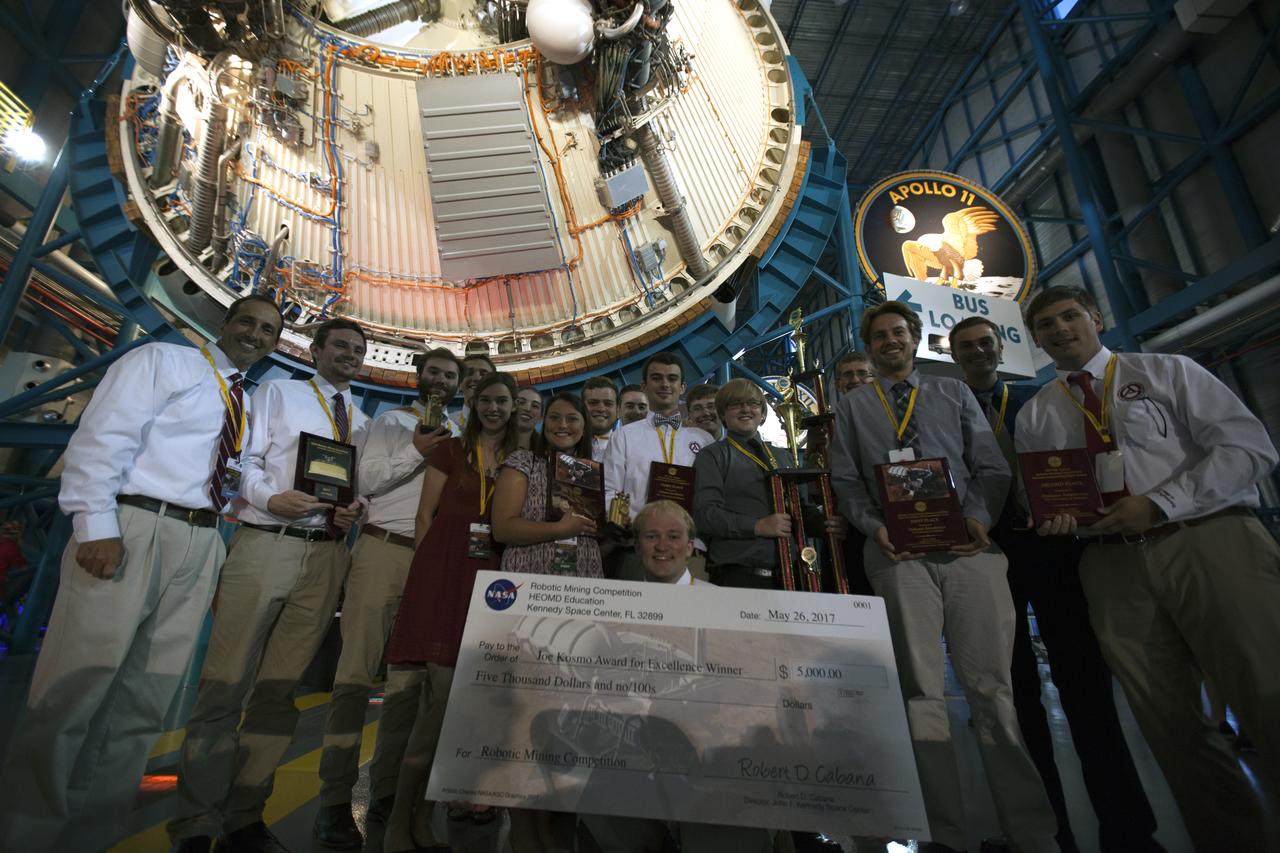
Team Astrobotics from The University of Alabama won the top award, the Joe Kosmo Award for Excellence, and several other awards, during NASA's 8th Annual Robotic Competition award ceremony inside the Apollo-Saturn V Center at the Kennedy Space Center Visitor Complex in Florida. More than 40 student teams from colleges and universities around the U.S. used their uniquely-designed mining robots to dig in a supersized sandbox filled with BP-1, or simulated Martian soil, and participated in other competition requirements, May 22-26, at the visitor complex. The Robotic Mining Competition is a NASA Human Exploration and Operations Mission Directorate project designed to encourage students in science, technology, engineering and math, or STEM fields. The project provides a competitive environment to foster innovative ideas and solutions that could be used on NASA's Journey to Mars.

Undergraduate and graduate students with teams that participated in NASA's 8th Annual Robotic Mining Competition eat dinner in the Apollo-Saturn V Center at NASA's Kennedy Space Center Visitor Complex in Florida, before the awards ceremony. More than 40 student teams from colleges and universities around the U.S. used their uniquely-designed mining robots to dig in a supersized sandbox filled with BP-1, or simulated Martian soil, and participated in other competition requirements, May 22-26 at the visitor complex. The Robotic Mining Competition is a NASA Human Exploration and Operations Mission Directorate project designed to encourage students in science, technology, engineering and math, or STEM fields. The project provides a competitive environment to foster innovative ideas and solutions that could be used on NASA's Journey to Mars.

Physicist Brian Cox serves as the moderator for a panel discussion with Apollo astronauts during the Apollo 11 50th Gala on July 16, 2019. The gala, presented by Northrop Grumman, was held inside the Apollo/Saturn V Center at the Kennedy Space Center Visitor Complex. From left, are Apollo 9 astronaut Rusty Schweichart, Apollo 11 astronaut Michael Collins, Apollo 16 astronaut Charlie Duke, and Apollo Flight Director Gerry Griffin.
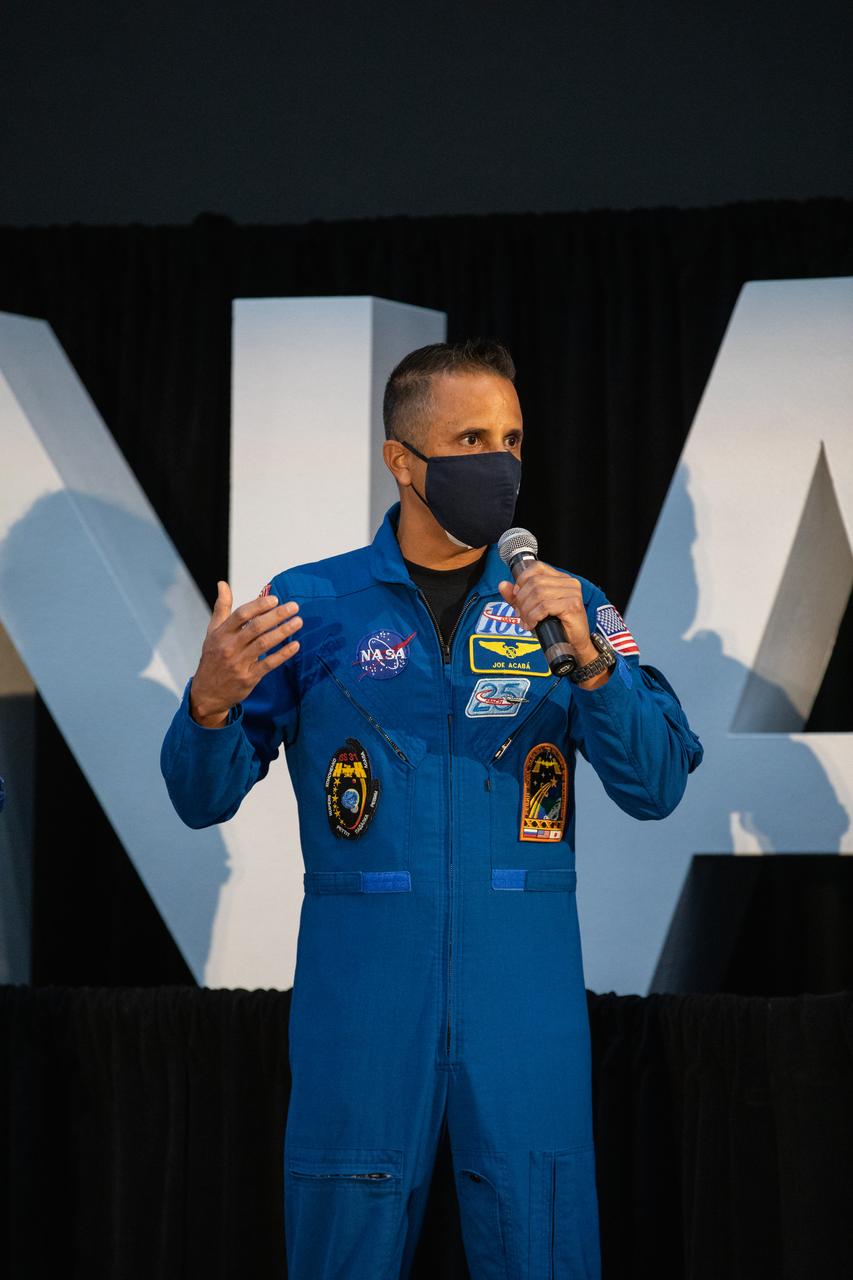
NASA astronaut Joseph Acaba speaks to members of the news media during a question-and-answer session Dec. 9, 2020, following a National Space Council meeting inside the Apollo/Saturn V Center at the Kennedy Space Center Visitor Complex in Florida. Vice President Mike Pence chaired the meeting at which he announced the initial team of 18 astronauts eligible for early Artemis missions on and around the Moon. A California native, Acaba was selected as a NASA astronaut in 2004 and has logged a total of 306 days in space on three flights. He was joined at the event by fellow astronauts Matthew Dominick, Jessica Meir, Anne McClain, and Jessica Watkins. Under the Artemis program, NASA will land the first woman and the next man on the Moon in 2024.
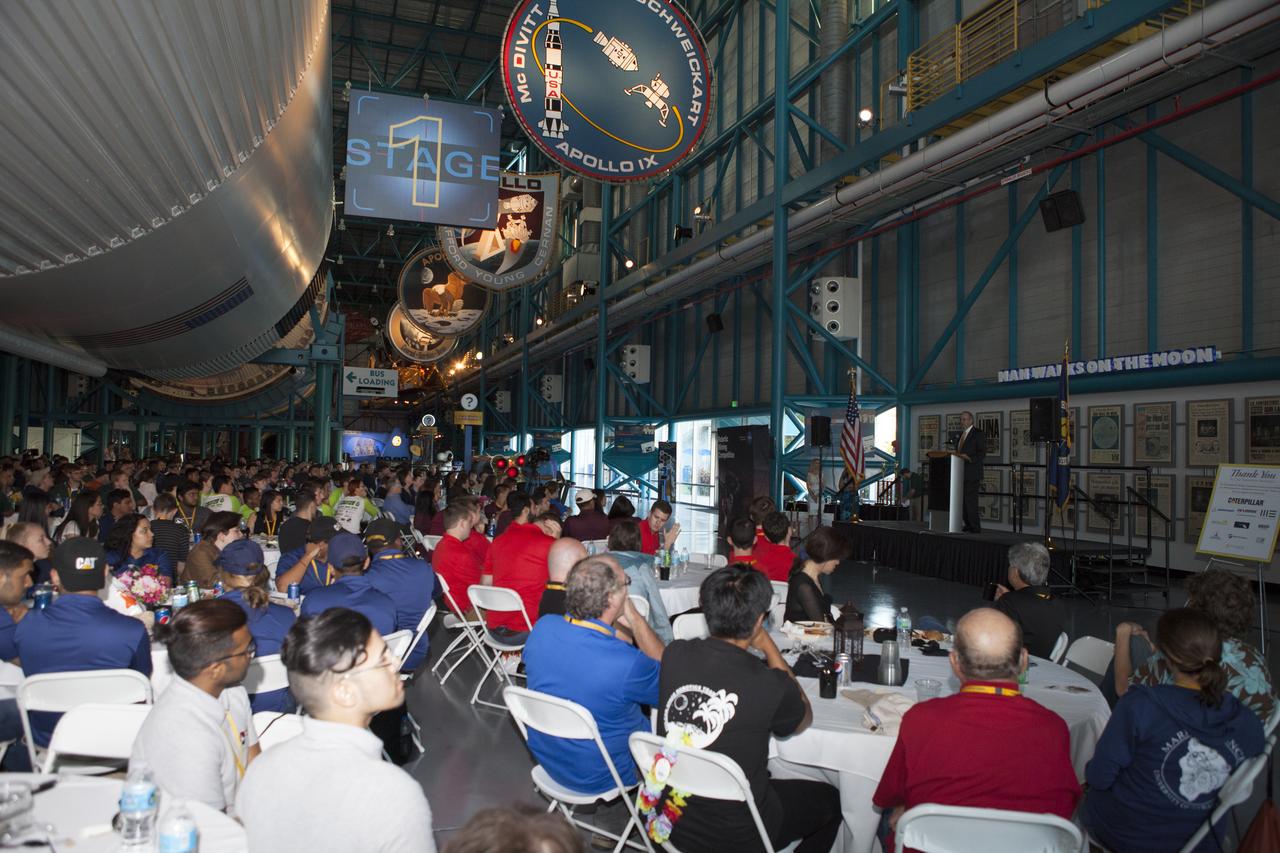
Inside the Apollo-Saturn V Center at the Kennedy Space Center Visitor Complex in Florida, Pat Simpkins, director of the Engineering Directorate at Kennedy Space Center, speaks to the teams during the award ceremony for NASA's 8th Annual Robotic Mining Competition. More than 40 student teams from colleges and universities around the U.S. used their uniquely-designed mining robots to dig in a supersized sandbox filled with BP-1, or simulated Martian soil, and participated in other competition requirements, May 22-26, at the visitor complex. The Robotic Mining Competition is a NASA Human Exploration and Operations Mission Directorate project designed to encourage students in science, technology, engineering and math, or STEM fields. The project provides a competitive environment to foster innovative ideas and solutions that could be used on NASA's Journey to Mars.
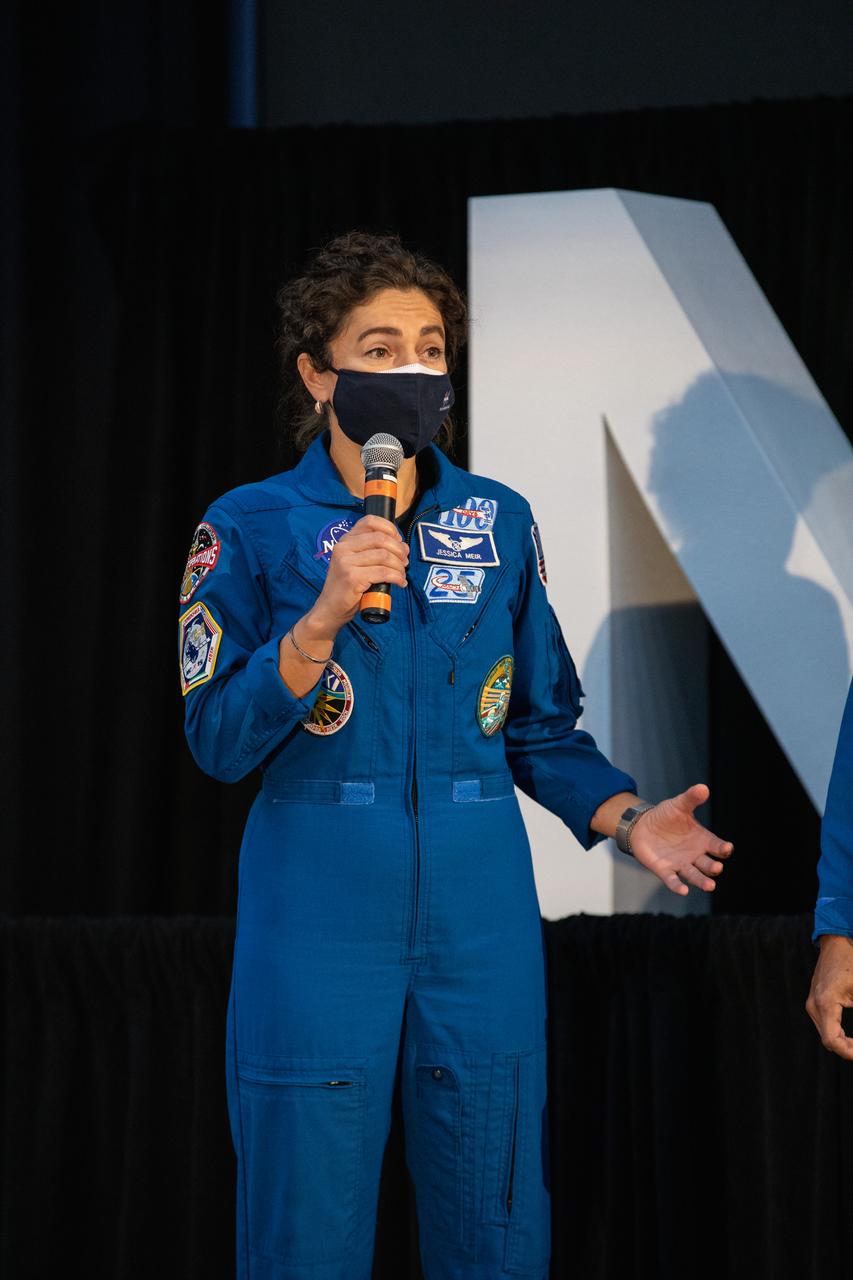
NASA astronaut Jessica Meir speaks to members of the news media during a question-and-answer session Dec. 9, 2020, following a National Space Council meeting inside the Apollo/Saturn V Center at the Kennedy Space Center Visitor Complex in Florida. Vice President Mike Pence chaired the meeting, at which he announced the initial team of 18 astronauts eligible for early Artemis missions on and around the Moon. A Maine native, Meir was selected as a NASA astronaut in 2013 and has spent 205 days in space on one previous flight. She was joined at the event by fellow astronauts Joseph Acaba, Matthew Dominick, Anne McClain, and Jessica Watkins. Under the Artemis program, NASA will land the first woman and the next man on the Moon in 2024.
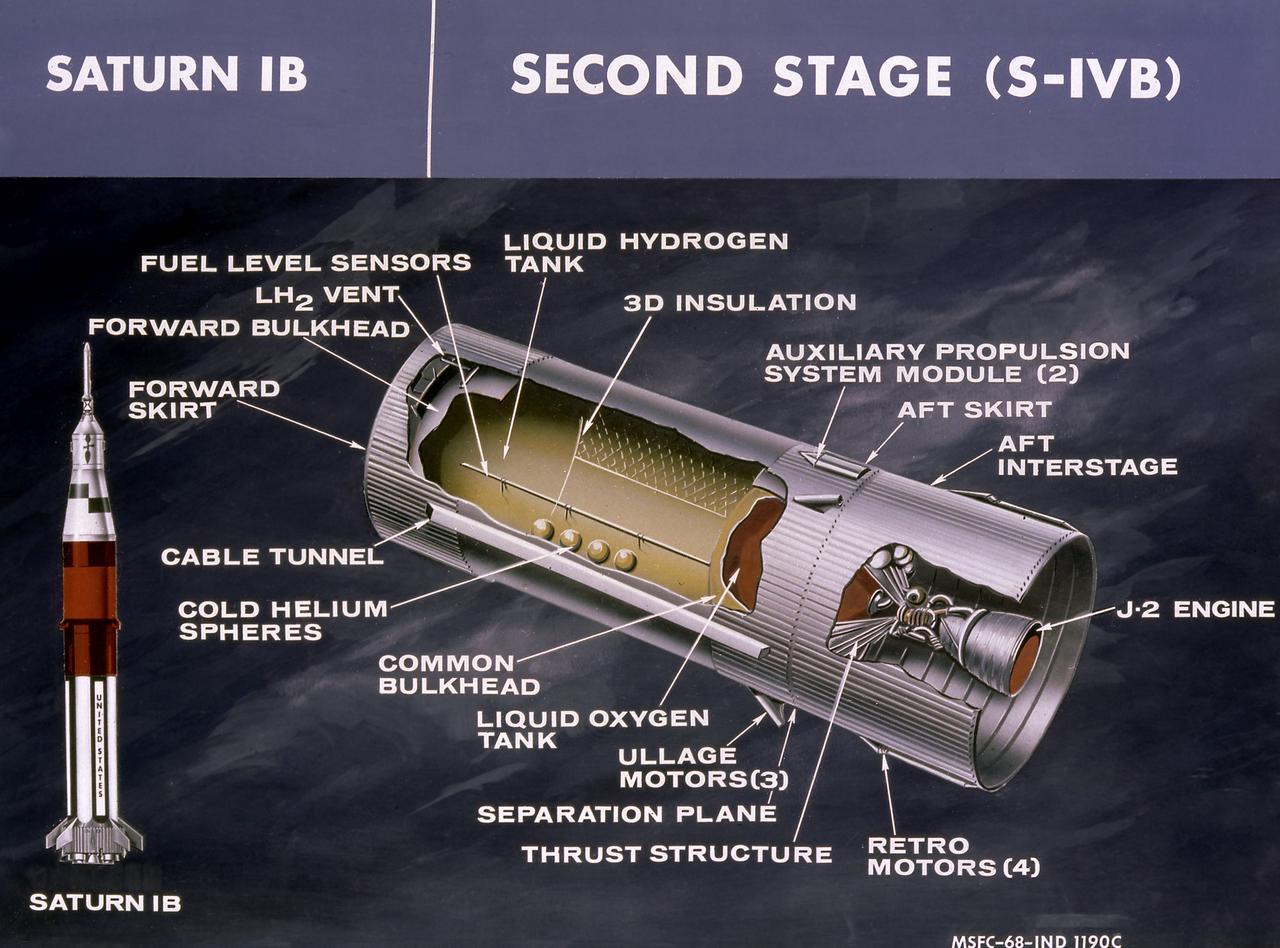
This cutaway drawing shows the S-IVB stage in its Saturn IB configuration. As a part of the Marshall Space Flight Center's (MSFC) "building block" approach to the Saturn development, the S-IVB stage was utilized in the Saturn IB launch vehicle as a second stage and, later, the Saturn V launch vehicle as a third stage. The stage was powered by a single J-2 engine, initially capable of 200,000 pounds of thrust.
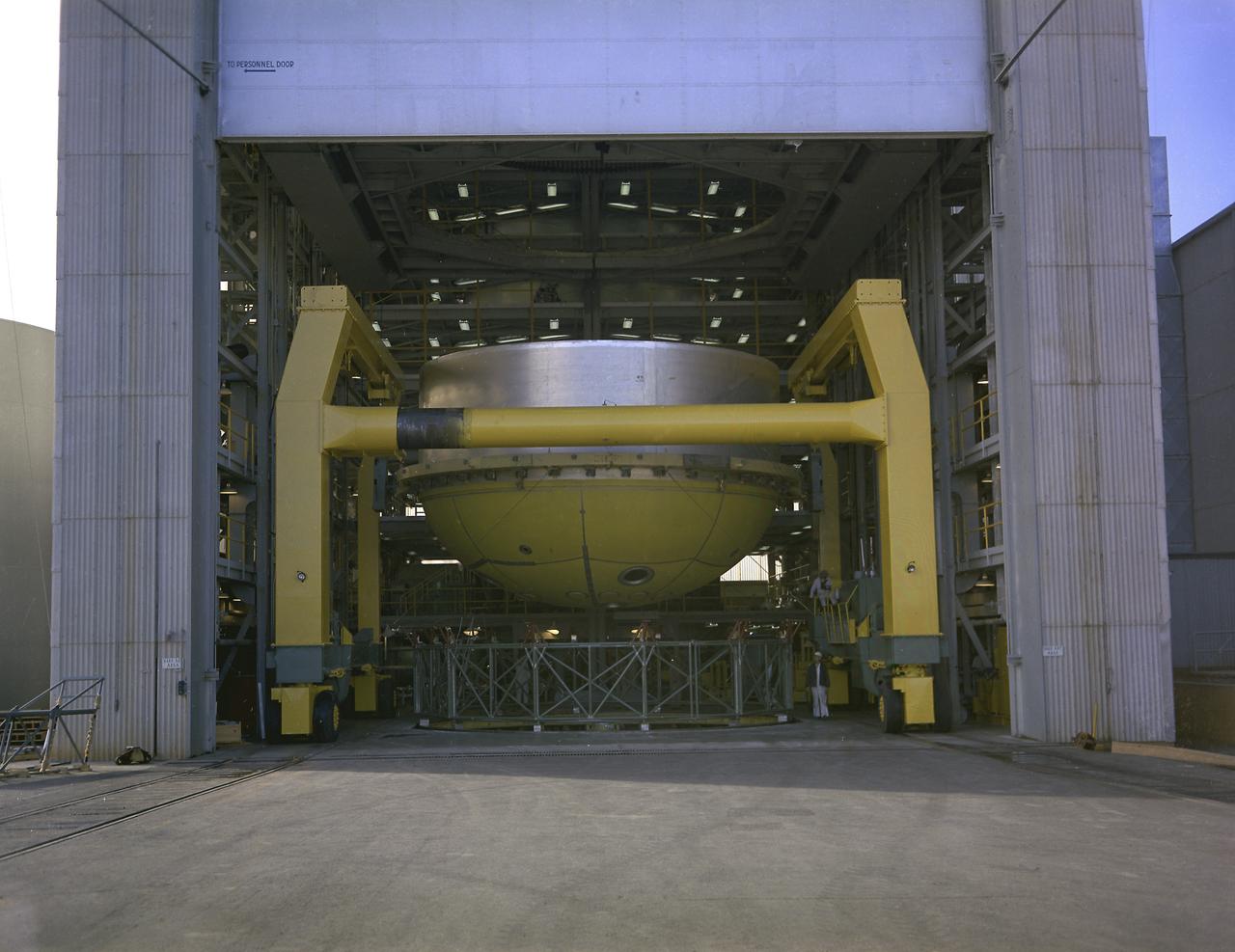
This photograph shows a fuel tank lower half for the Saturn V S-IC-T stage (the S-IC stage for static testing) on a C-frame transporter inside the vertical assembly building at the Marshall Space Flight Center.
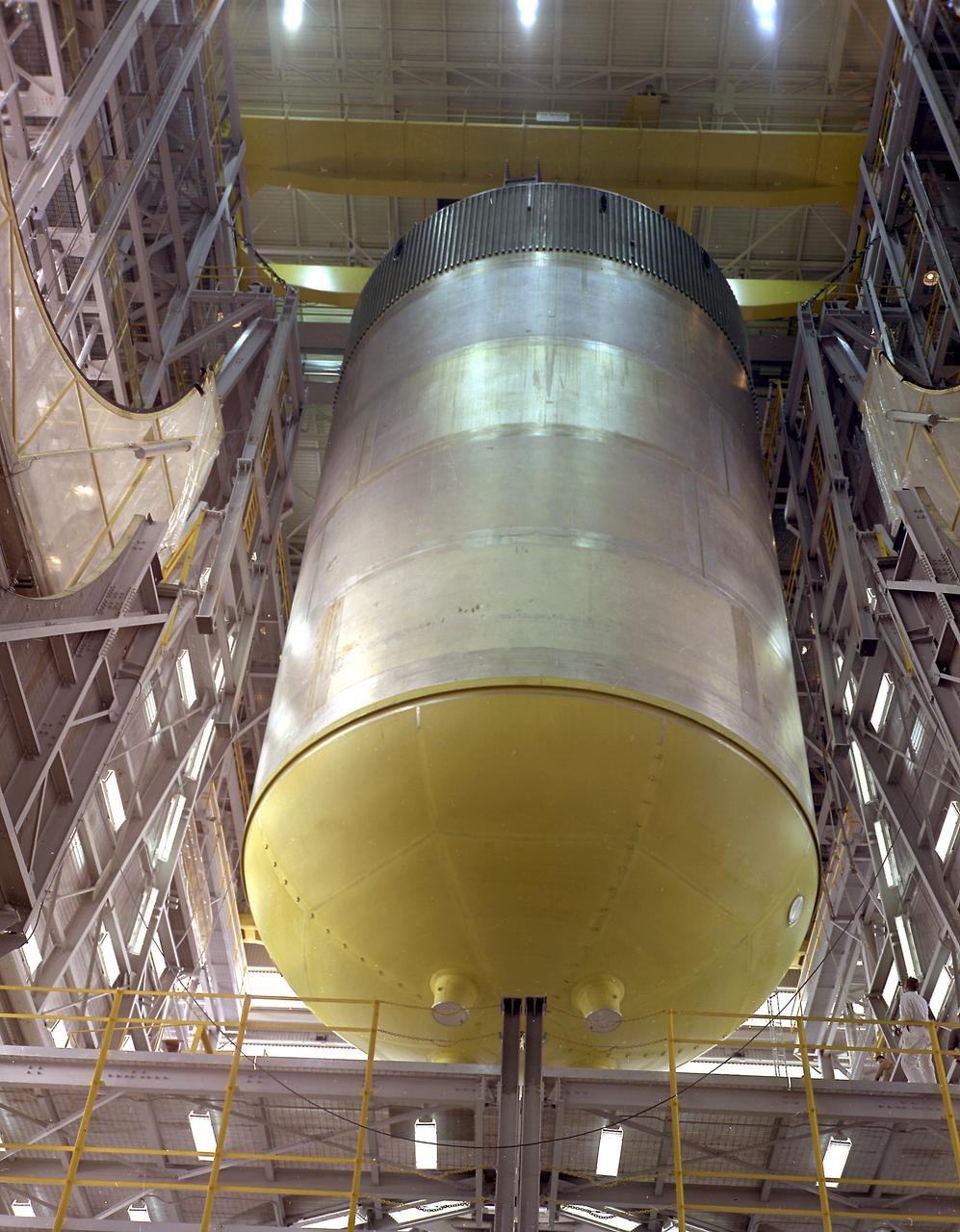
This photograph shows the Saturn V S-IC-S stage (S-IC stage for structural test) liquid oxygen (LOX) tank being lifted in the vehicle assembly building at the Marshall Space Flight Center.
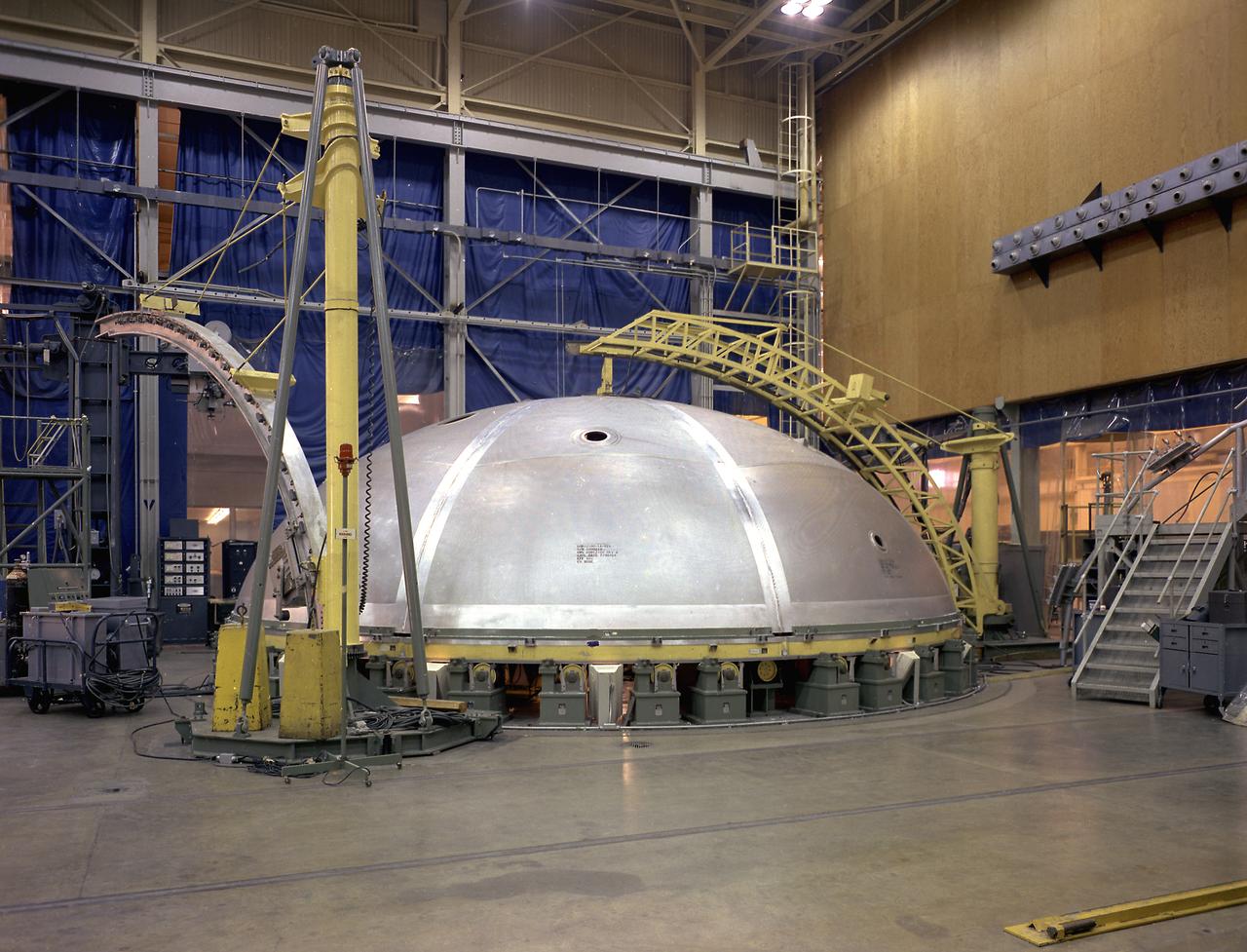
This photograph shows a bulkhead for the Saturn V S-IC stage fuel tank being fabricated at the Manufacturing Engineering Laboratory, building 4704, at the Marshall Space Flight Center.
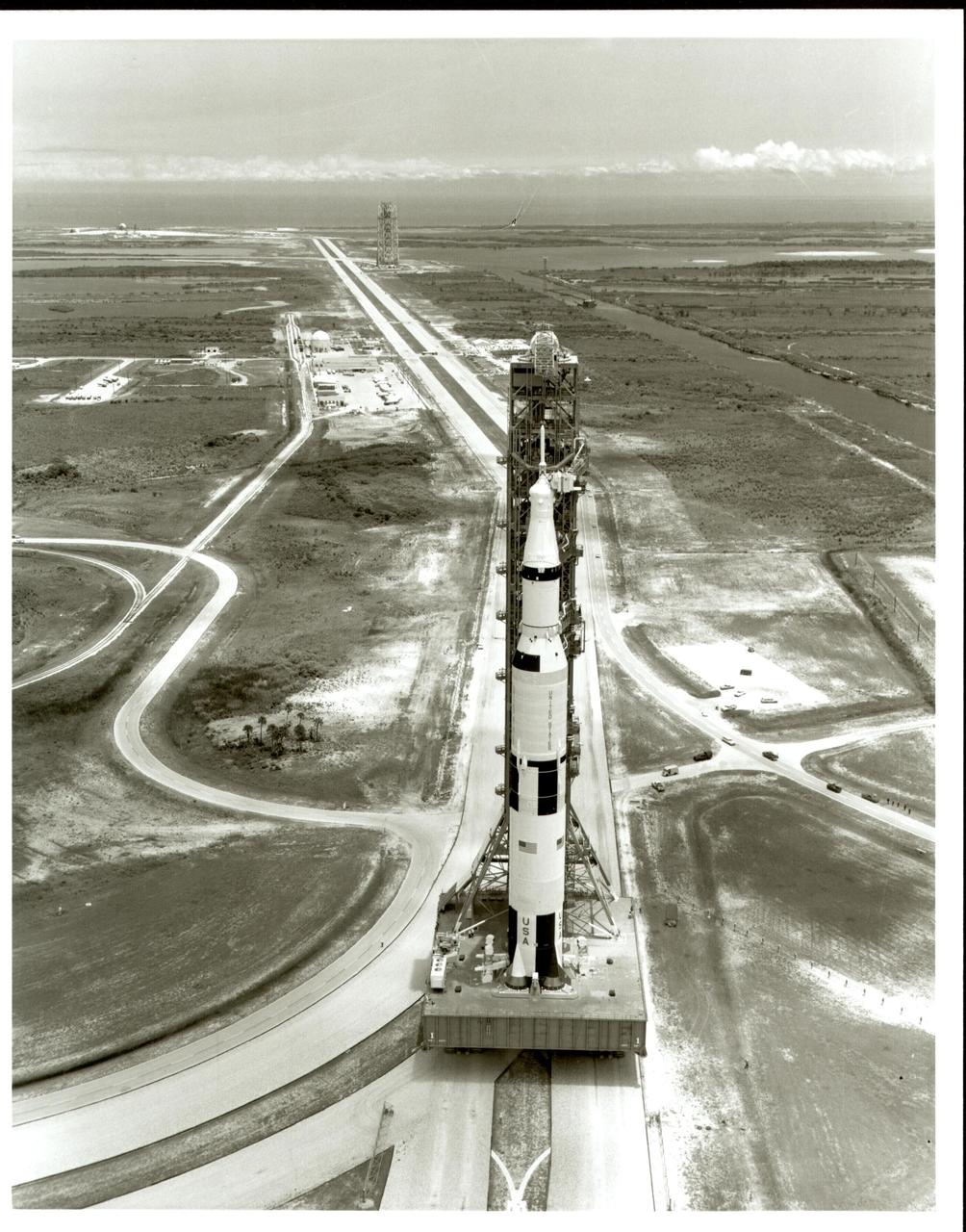
KENNEDY SPACE CENTER, FLA. - Rollout of Apollo 11 Saturn V space vehicle from the Vehicle Assembly Building's High Bay #1 to Launch Complex 39A.
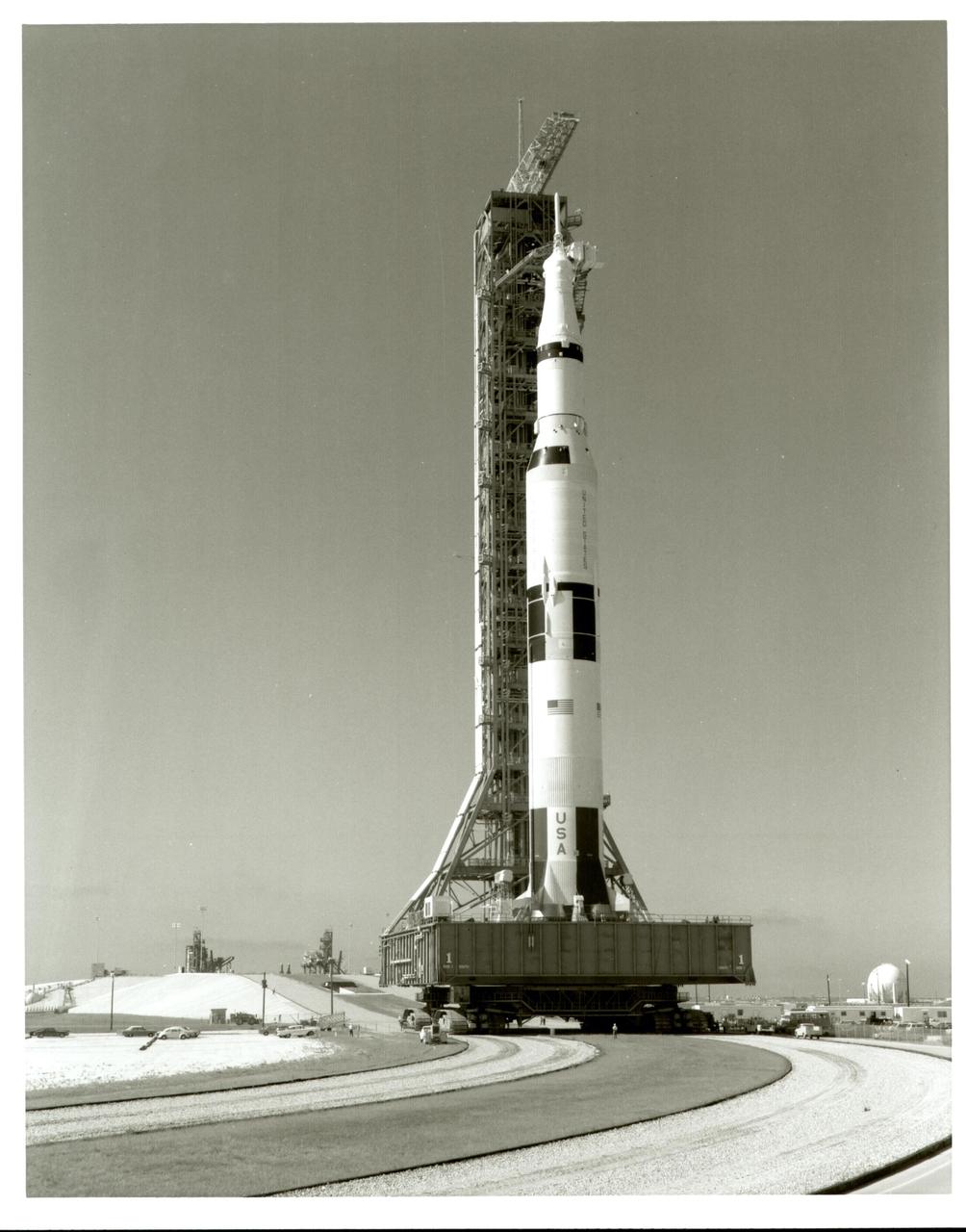
KENNEDY SPACE CENTER, FLA. - Rollout of Apollo 11 Saturn V space vehicle from the Vehicle Assembly Building's High Bay #1 to Launch Complex 39A.
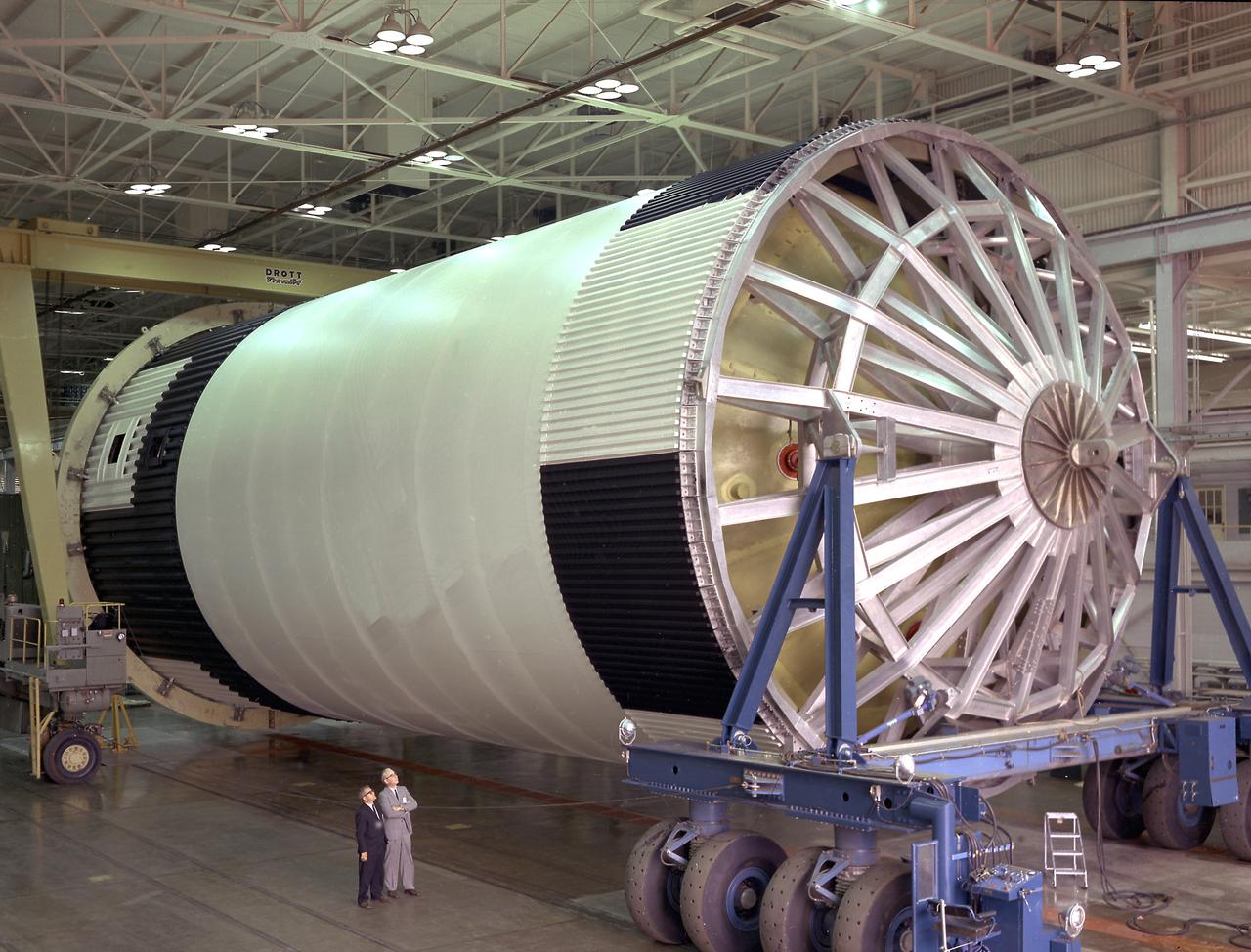
This is a picture of the assembled liquid oxygen (LOX) tank for the Saturn V S-IC (first) stage, with A-frame, that arrived to be mated to the fuel tank at a later date at the Marshall Space Flight Center, building 4705.
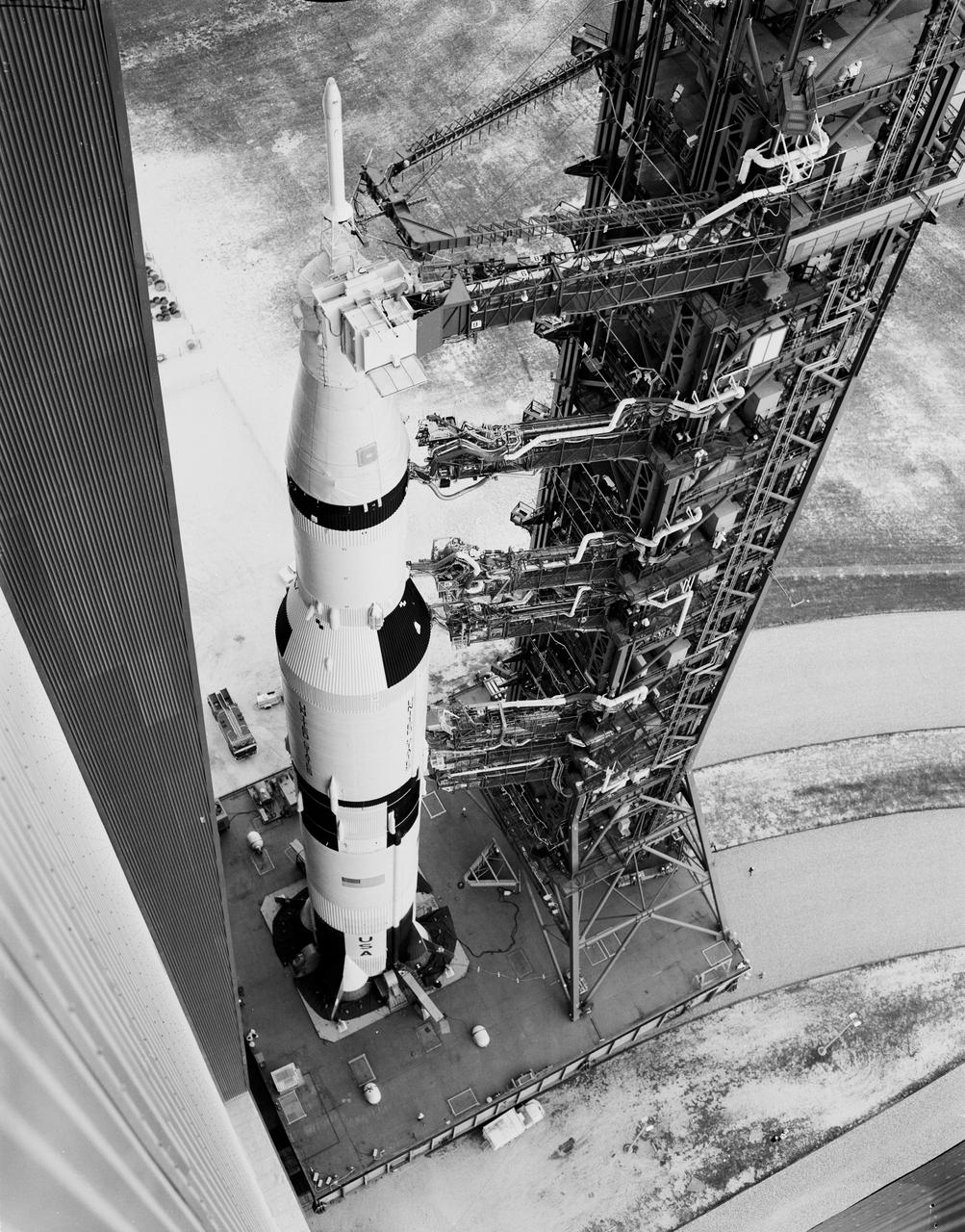
A bird's-eye view of Apollo 6 and its gantry leaving the Vehicle Assembly Building on the transporter heading to the launch site on Pad 39-A at Kennedy Space Center. The towering 363-foot Saturn V was a multi-stage, multi-engine launch vehicle standing taller than the Statue of Liberty. Altogether, the Saturn V engines produced as much power as 85 Hoover Dams.

S73-25140 (16 April 1973) --- A ground-level view of Pad A, Launch Complex 39, Kennedy Space Center, Florida, showing the 341-feet tall Skylab 1/Saturn V space vehicle on the pad soon after being rolled out from the Vehicle Assembly Building (VAB). The vehicle is composed of the Saturn V first (S-1C) stage, the Apollo Telescope Mount (ATM), the Multiple Docking Adapter (MDA), the Airlock Module (AM), and the Orbital Workshop (OWS). Photo credit: NASA
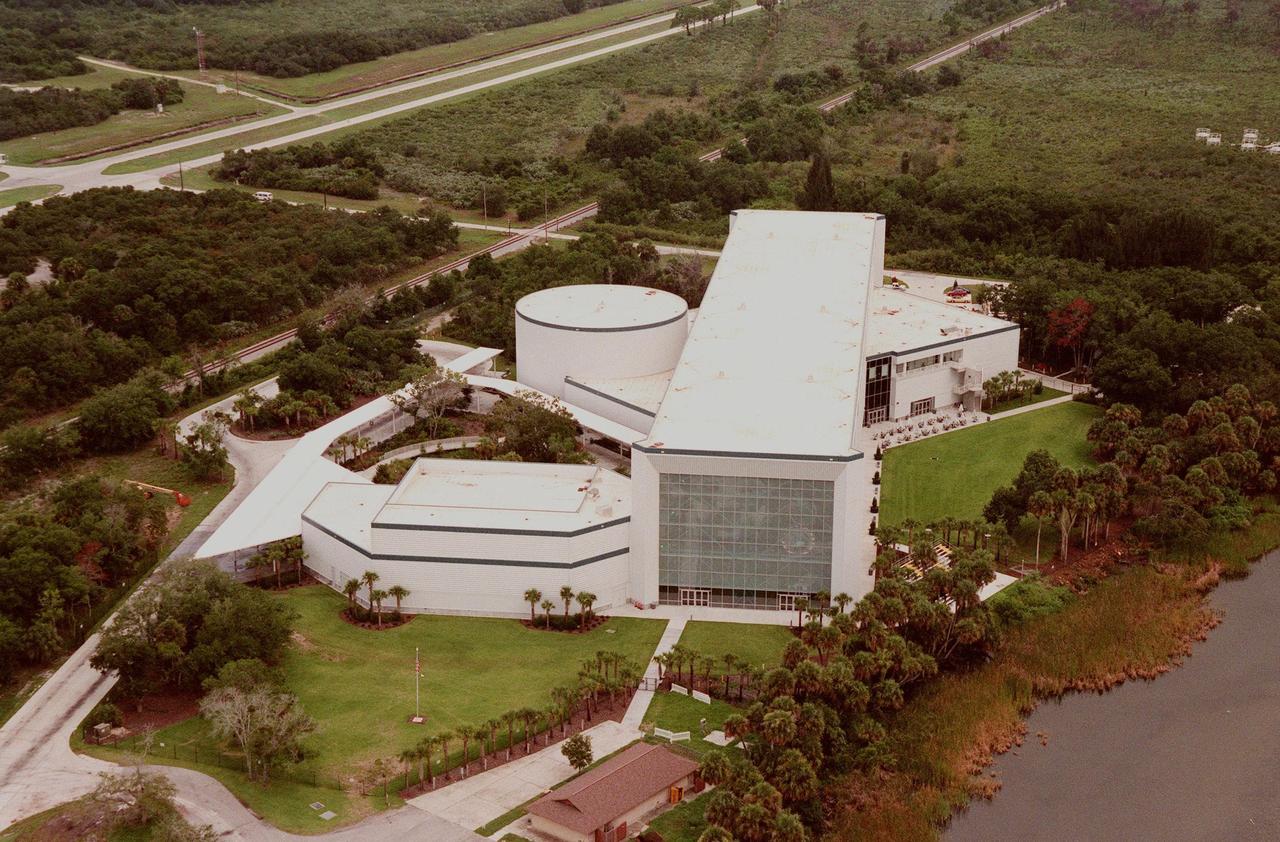
This aerial view, looking north, shows the Apollo/Saturn V Center, part of the KSC Visitor Complex. Located about 2 miles north of the Vehicle Assembly Building on the Kennedy Parkway, it is near the current Banana Creek VIP Shuttle launch viewing site. The 100,000-square-foot attraction includes a refurbished 363-foot-long Apollo-era Saturn V rocket that had been displayed previously near the VAB. Inside, the center includes artifacts and historical displays, plus two film theaters
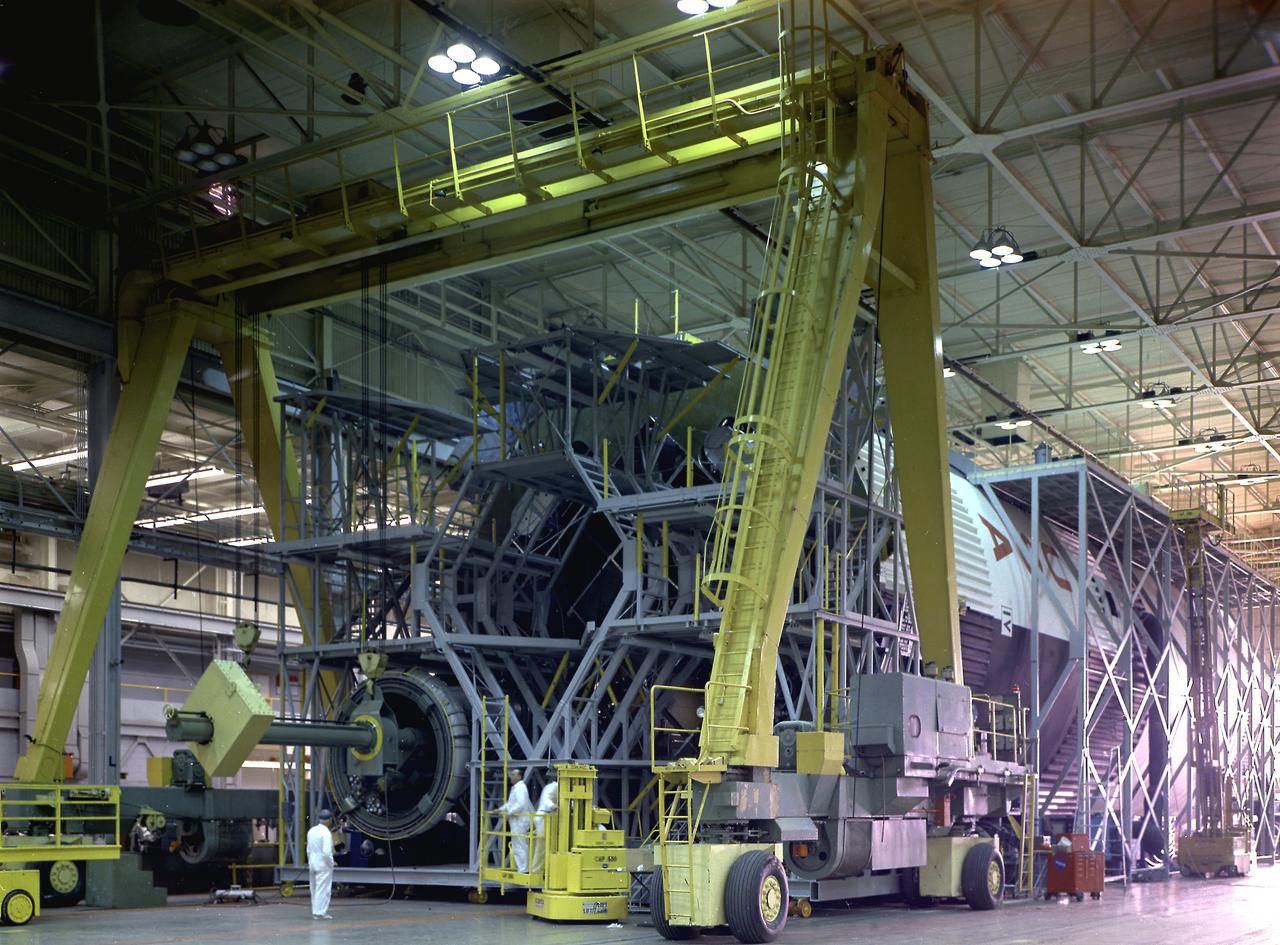
Engineers and technicians at the Marshall Space Flight Center were installing an F-I engine on the Saturn V S-IC (first) stage thrust structure in building 4705. The S-IC (first) stage used five F-1 engines that produced a total thrust of 7,500,000 pounds as each engine produced 1,500,000 pounds of thrust. The S-IC stage lifted the Saturn V vehicle and Apollo spacecraft from the launch pad.
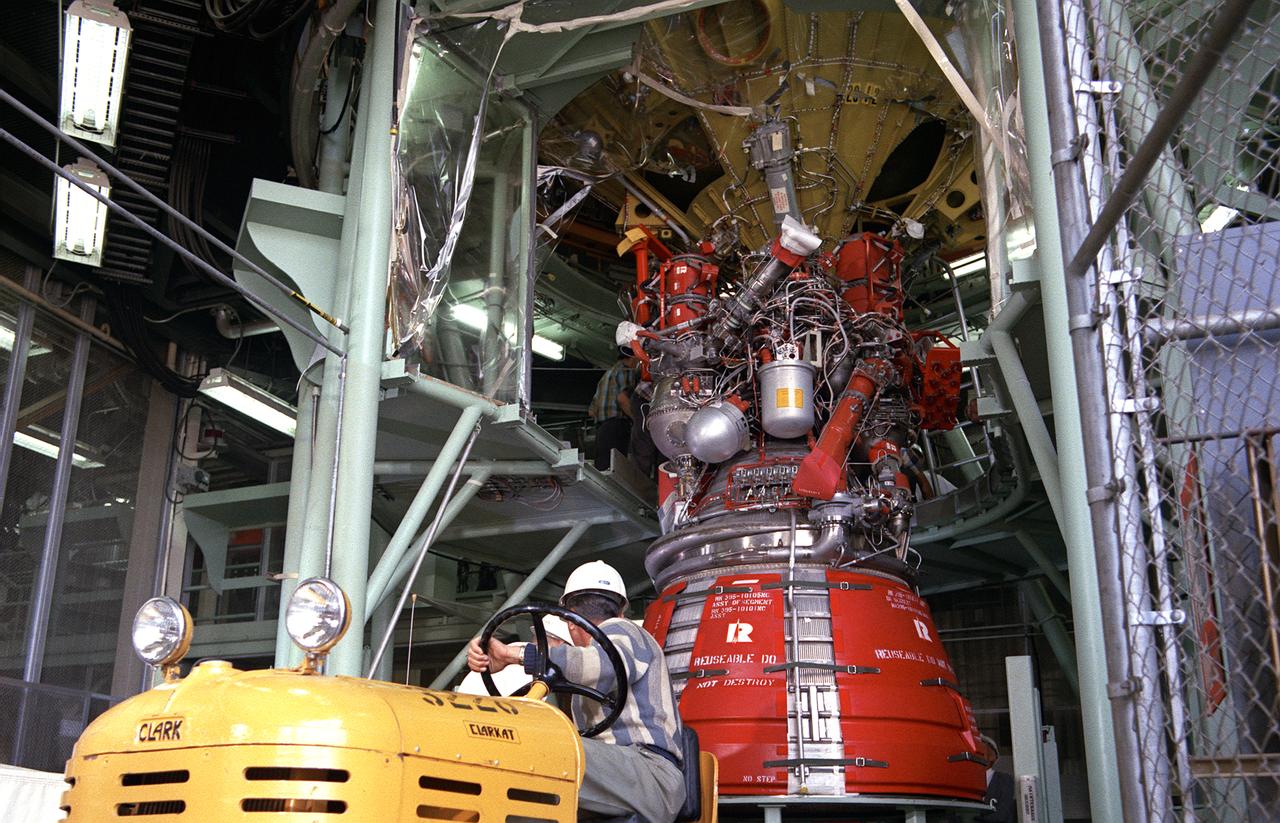
Workmen secure a J-2 engine onto the S-IVB (second) stage thrust structure. As part of Marshall Space Center's "building block" approach to the Saturn development, the S-IVB was utilized in the Saturn IBC launch vehicle as a second stage and the Saturn V launch vehicle as a third stage. The booster, built for NASA by McDornell Douglas Corporation, was powered by a single J-2 engine, initially capable of 200,000 pounds of thrust.
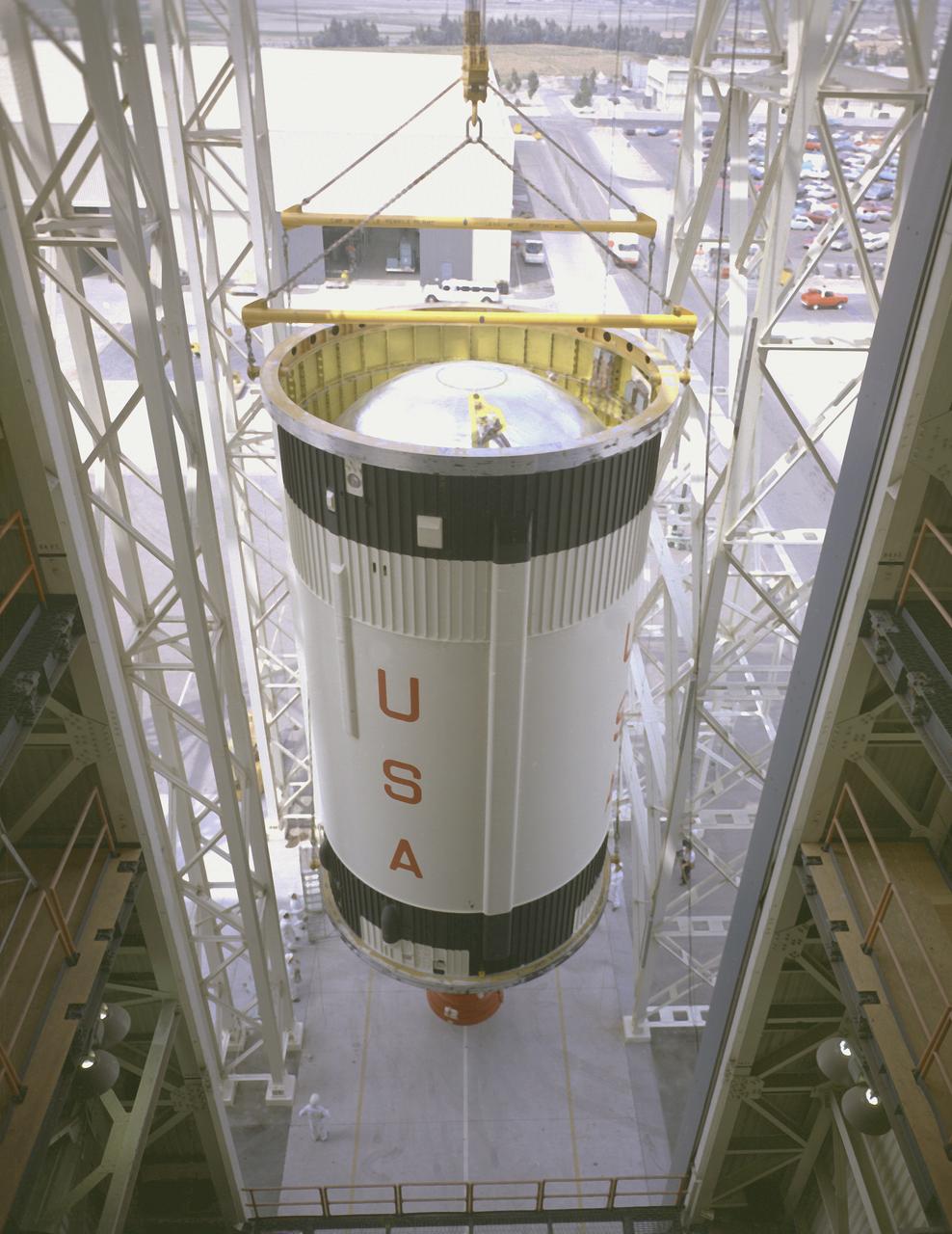
Workers at McDornel-Douglas install the Saturn IB S-IVB (second) stage for the Apollo-Soyuz mission into the company's S-IVB assembly and checkout tower in Huntington Beach, California. The Saturn IB launch vehicle was developed by the Marshall Space Flight Center (MSFC) as an interim vehicle in its "building block" approach to Saturn rocket development. This vehicle utilized the Saturn I technology to further develop and refine the capabilities of a larger booster and the Apollo spacecraft required for the manned lunar missions. The S-IVB stage, later used as the third stage of the Saturn V launch vehicle, was powered by a single J-2 engine initially capable of 200,000 pounds of thrust.
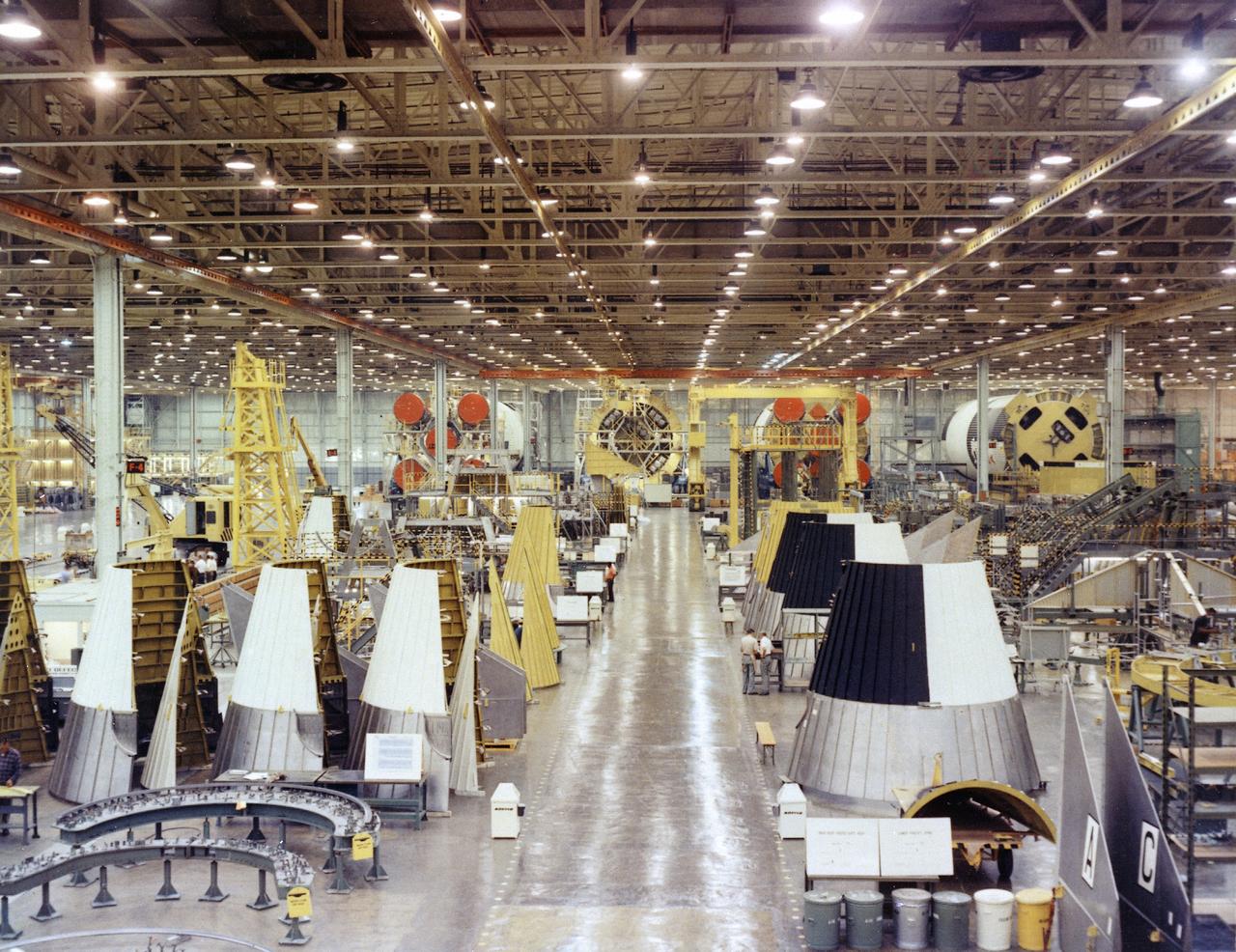
The Saturn IB and Saturn V flight vehicles first stages were manufactured at the Michoud Assembly Facility located 24 kilometers (approximately 15 miles) east of downtown New Orleans, Louisiana. The basic manufacturing building boasted 43 acres under one roof. By 1964, NASA added a separate engineering and office building, vertical assembly building, and test stage building. By 1966, other changes to the site included enlarged barge facilities and other miscellaneous support buildings. The image is a view of various vehicle components in the manufacturing plant.
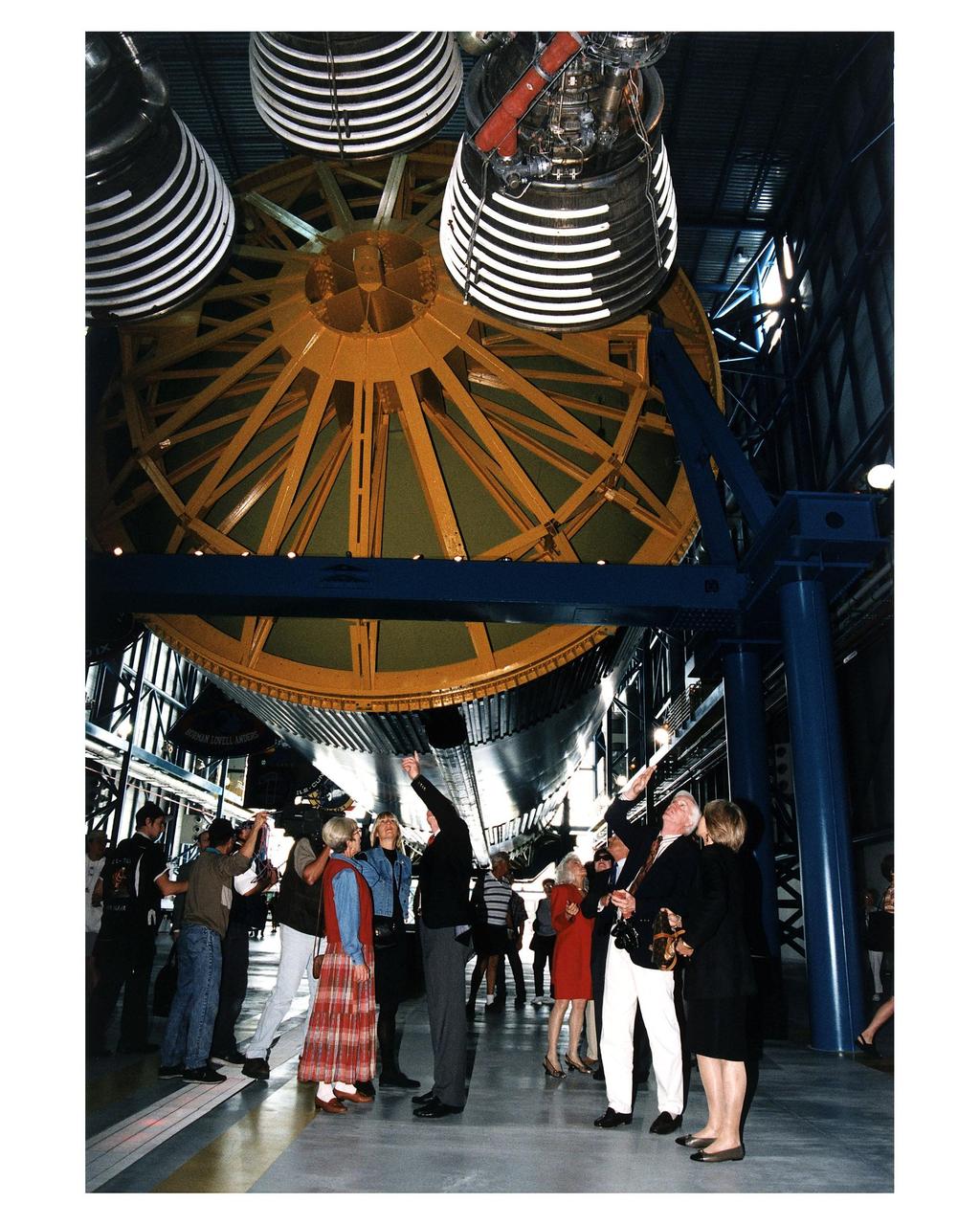
KENNEDY SPACE CENTER, FLA. -- Some of the former Apollo program astronauts tour the new Apollo/Saturn V Center (ASVC) at KSC prior to the gala grand opening ceremony for the facility that was held Jan. 8, 1997. The astronauts were invited to participate in the event, which also featured NASA Administrator Dan Goldin and KSC Director Jay Honeycutt. Apollo 10 Lunar Module Pilot and Apollo 17 Commander Eugene A. Cernan and Apollo 9 Lunar Module Pilot Russell L. Schweickart (second from right), are both pointing at the KSC Apollo/Saturn V rocket inside the building as they talk to other guests on the tour. The ASVC also features several other Apollo program spacecraft components, multimedia presentations and a simulated Apollo/Saturn V liftoff. The facility will be a part of the KSC bus tour that embarks from the KSC Visitor Center
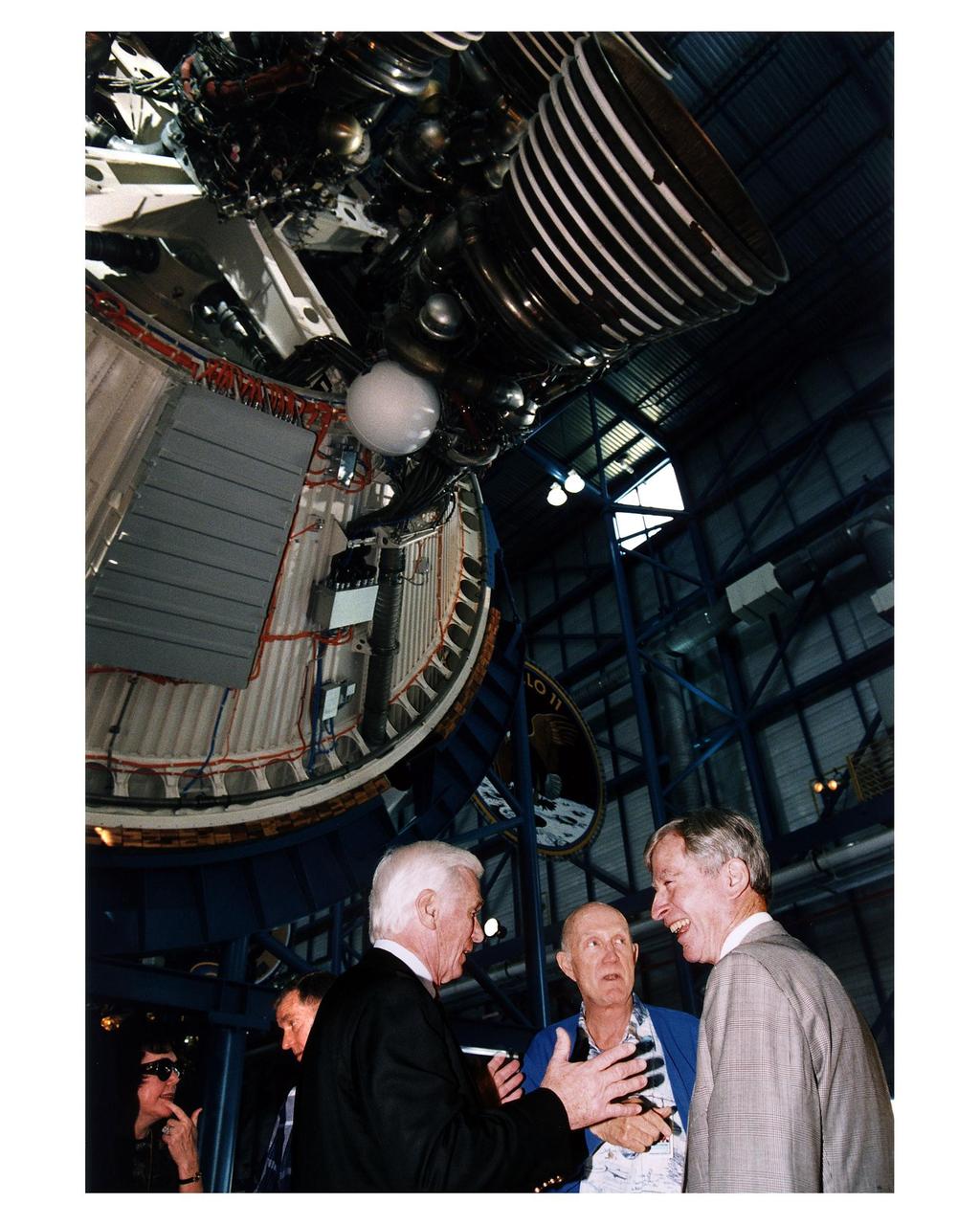
KENNEDY SPACE CENTER, FLA. -- Some of the former Apollo program astronauts tour the new Apollo/Saturn V Center (ASVC) at KSC prior to the gala grand opening ceremony for the facility that was held Jan. 8, 1997. The astronauts were invited to participate in the event, which also featured NASA Administrator Dan Goldin and KSC Director Jay Honeycutt. Discussing old times beneath the KSC Apollo/Saturn V rocket inside the building are (from left) Apollo 10 Lunar Module Pilot and Apollo 17 Commander Eugene A. Cernan; Apollo 10 Commander Thomas P. Stafford and Apollo 16 Commander John W. Young. The ASVC also features several other Apollo program spacecraft components, multimedia presentations and a simulated Apollo/ Saturn V liftoff. The facility will be a part of the KSC bus tour that embarks from the KSC Visitor Center
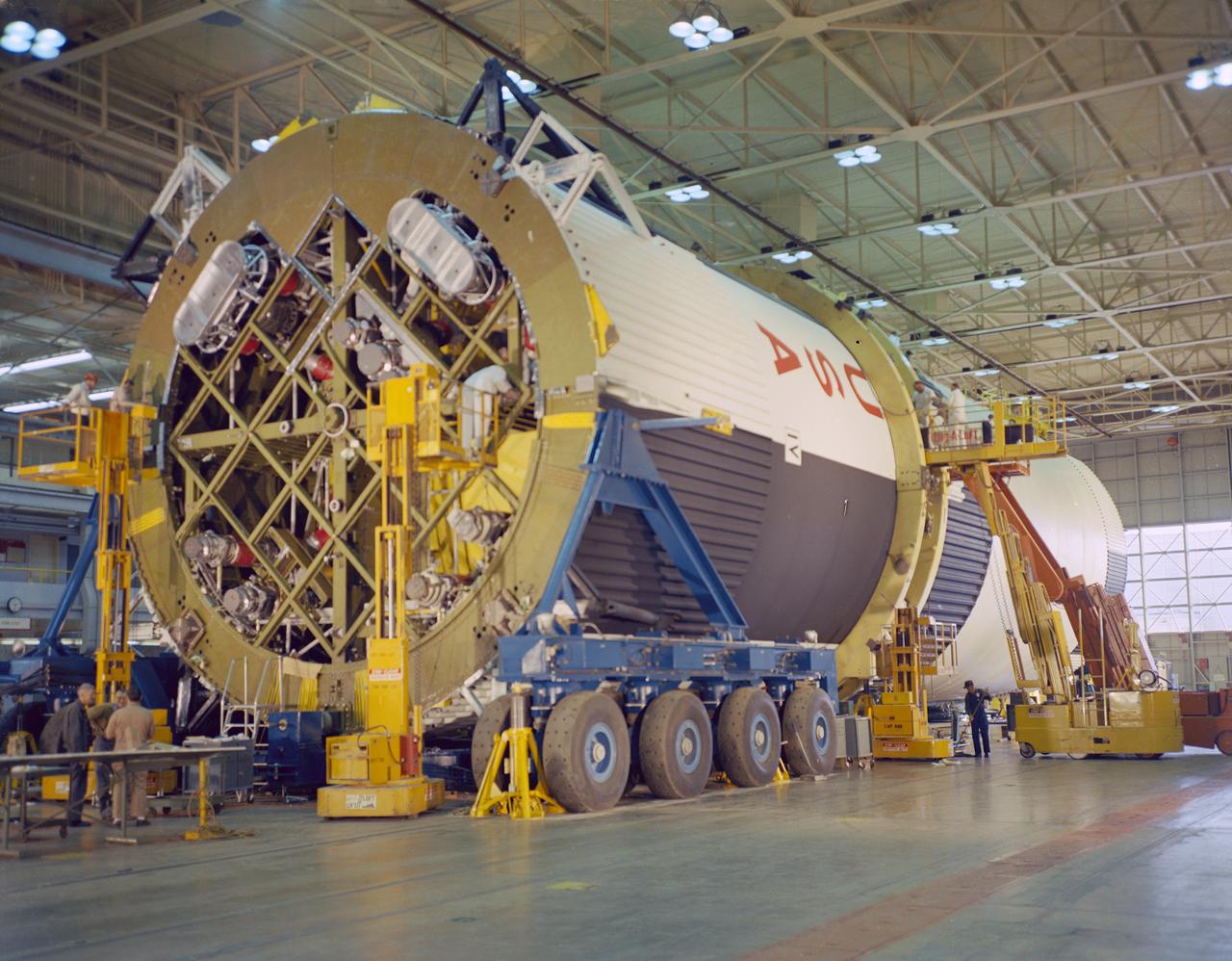
At the Marshall Space Flight Center (MSFC), the fuel tank assembly for the Saturn V S-IC-T (static test stage) fuel tank assembly is mated to the liquid oxygen (LOX) tank in building 4705. This stage underwent numerous static firings at the newly-built S-IC Static Test Stand at the MSFC west test area. The S-IC (first) stage used five F-1 engines that produced a total thrust of 7,500,000 pounds as each engine produced 1,500,000 pounds of thrust. The S-IC stage lifted the Saturn V vehicle and Apollo spacecraft from the launch pad.
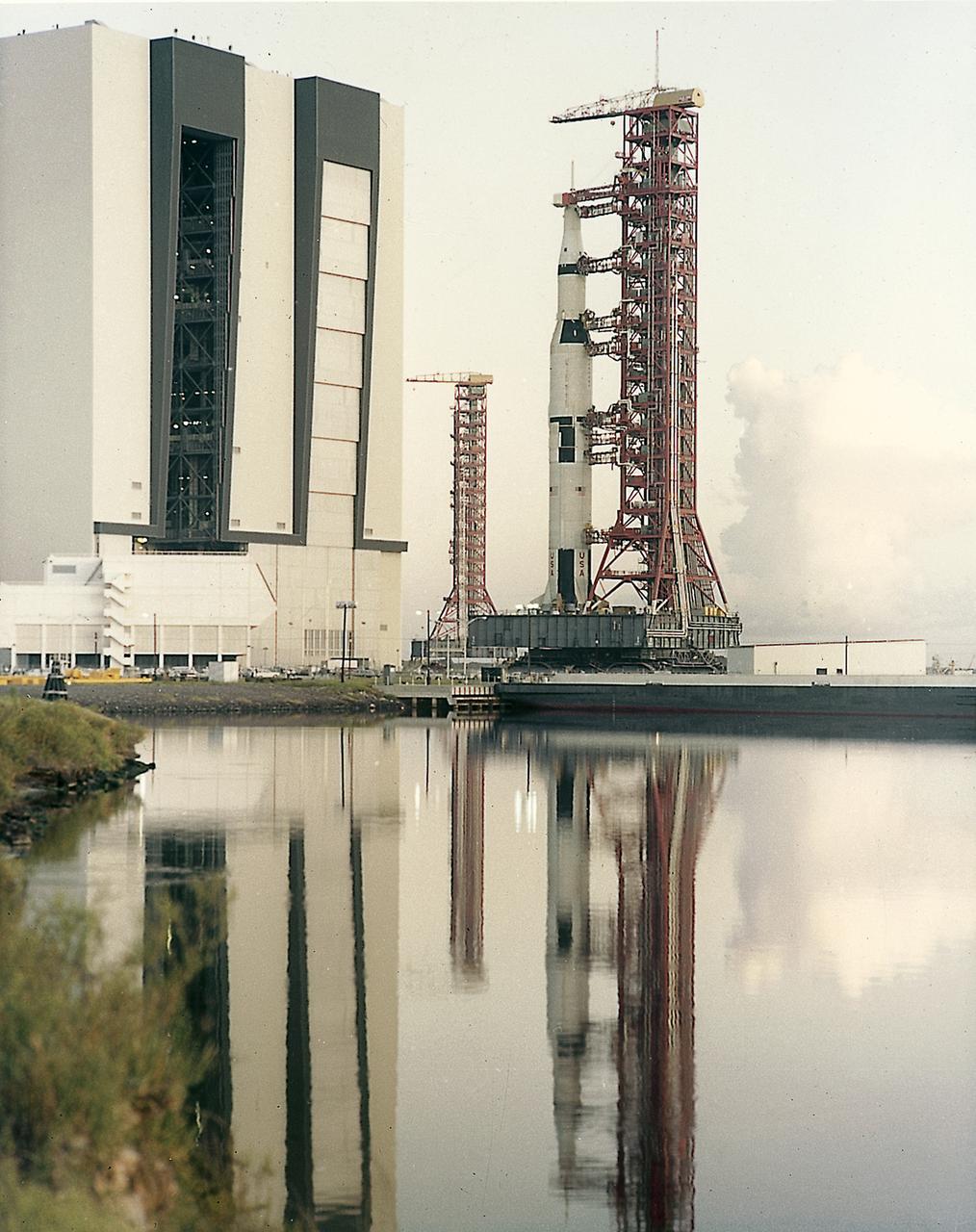
This picture shows the Saturn V vehicle (AS-501), for the Apollo 4 mission on the Crawler Transporter Vehicle. It was rolled out from the Vehicle Assembly Building and slowly (1 mph) moved to the launch pad at the Kennedy Space Center (KSC). The Apollo 4 mission was the first launch of the Saturn V launch vehicle. Objectives of the unmanned Apollo 4 test flight were to obtain flight information on launch vehicle and spacecraft structural integrity and compatibility, flight loads, stage separation, and subsystems operation including testing of restart of the S-IVB stage, and to evaluate the Apollo command module heat shield. The Apollo 4 was launched on November 9, 1967 from KSC.
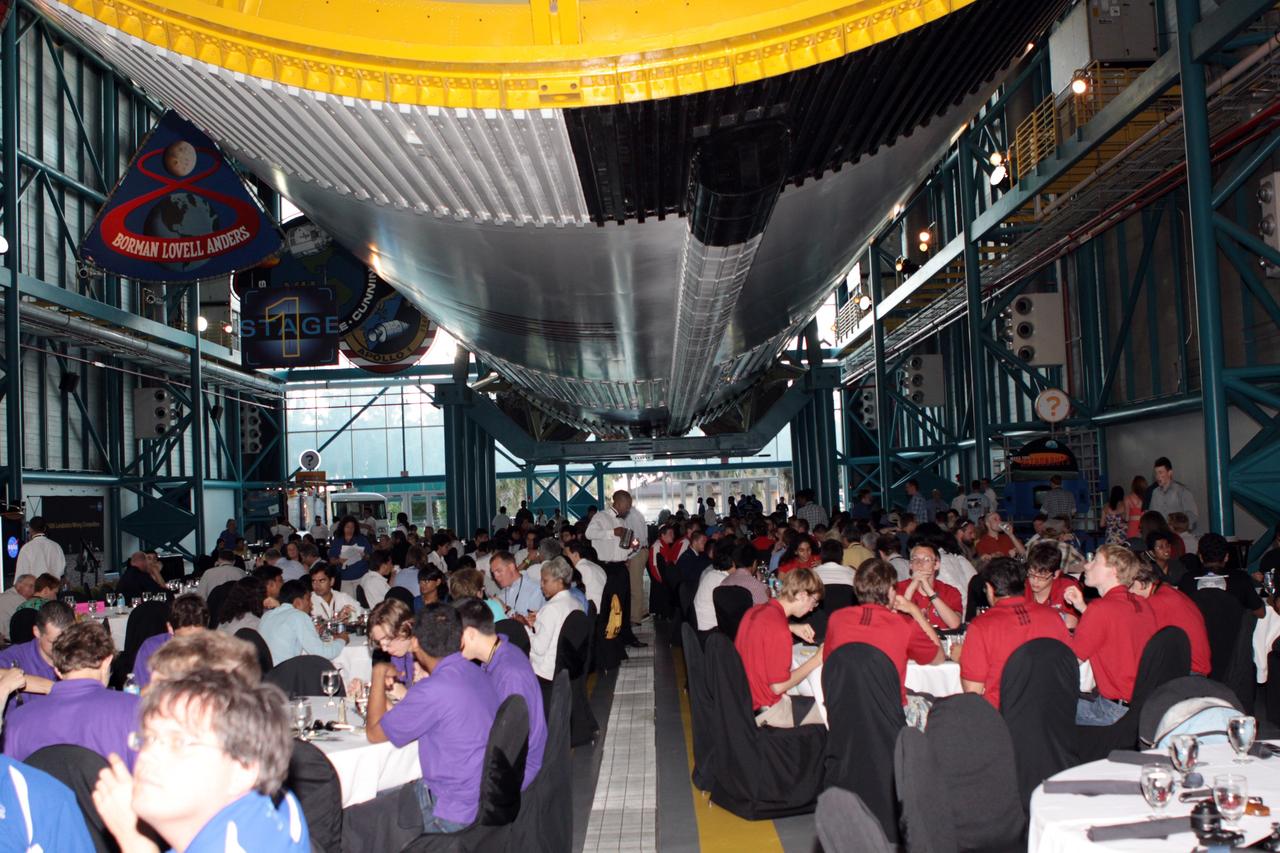
CAPE CANAVERAL, Fla. - Teams taking part in NASA's Lunabotics Mining Competition gather inside the Apollo/Saturn V Center at Kennedy Space Center Visitor Complex in Florida for the awards ceremony at the end of the event. They are seated beneath the first stage of the Saturn V rocket that carried astronauts to the moon. The competition challenged university students to build machines that could collect soil such as the material found on the moon. Working inside the Caterpillar LunArena, the robotic craft dug soil that simulated lunar material. The event was judged by a machine's abilities to collect the soil, its design and operation, size, dust tolerance and its level of autonomy. Photo credit: NASA/Jim Grossmann
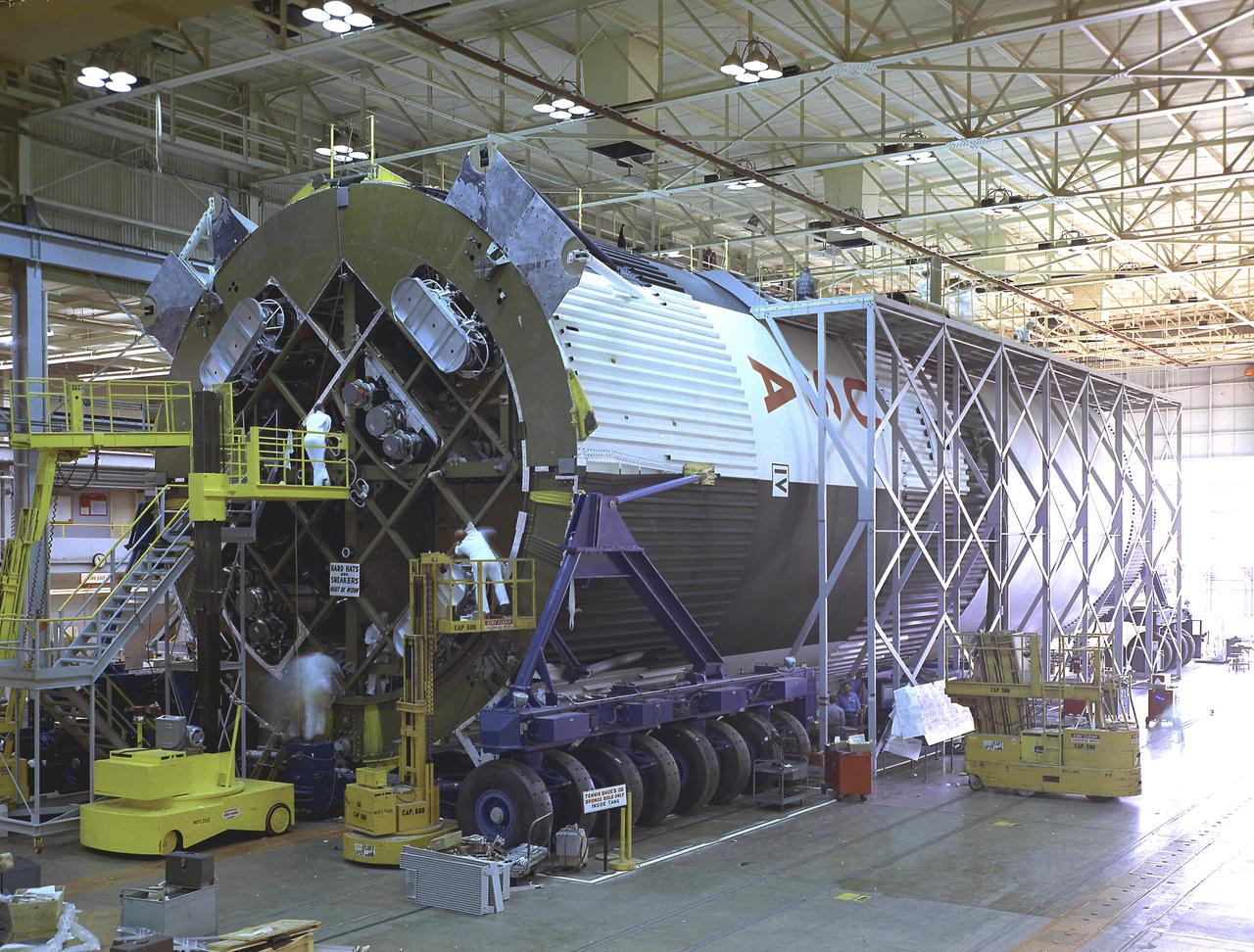
Pictured is the Saturn V S-IC-T stage (static testing stage) being assembled in the horizontal assembly station at the Marshall Space Flight Center (MSFC), building 4705. This stage underwent numerous static firings at the newly-built S-IC Static Test Stand at the MSFC west test area. The S-IC (first) stage used five F-1 engines that produced a total thrust of 7,500,000 pounds as each engine produced 1,500,000 pounds of thrust. The S-IC stage lifted the Saturn V vehicle and Apollo spacecraft from the launch pad.
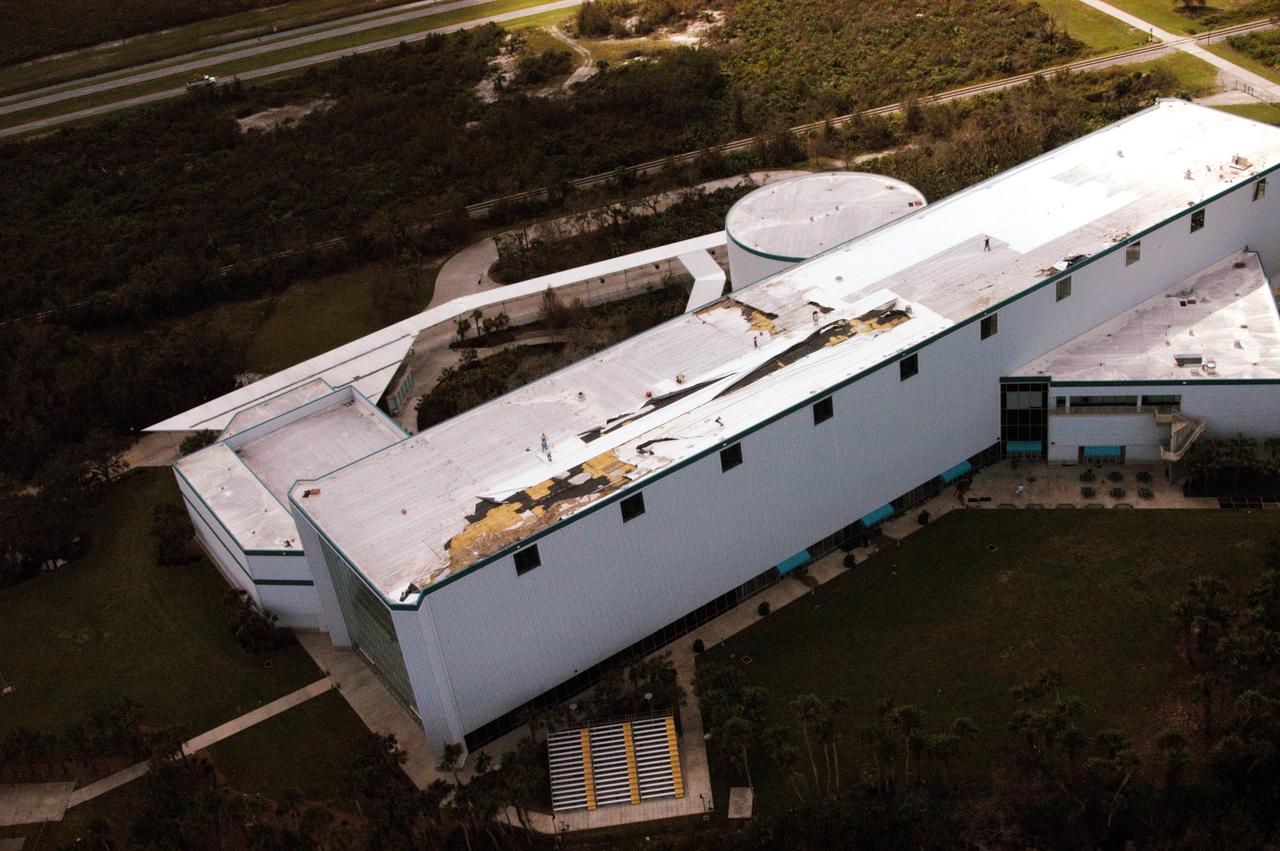
KENNEDY SPACE CENTER, FLA. - In this aerial view, damage is apparent on the roof of the Apollo/Saturn V Building at KSC from Hurricane Jeanne. A category 3 storm, Jeanne barreled through Central Florida Sept. 25-26, the fourth hurricane in 6 weeks to batter the state.