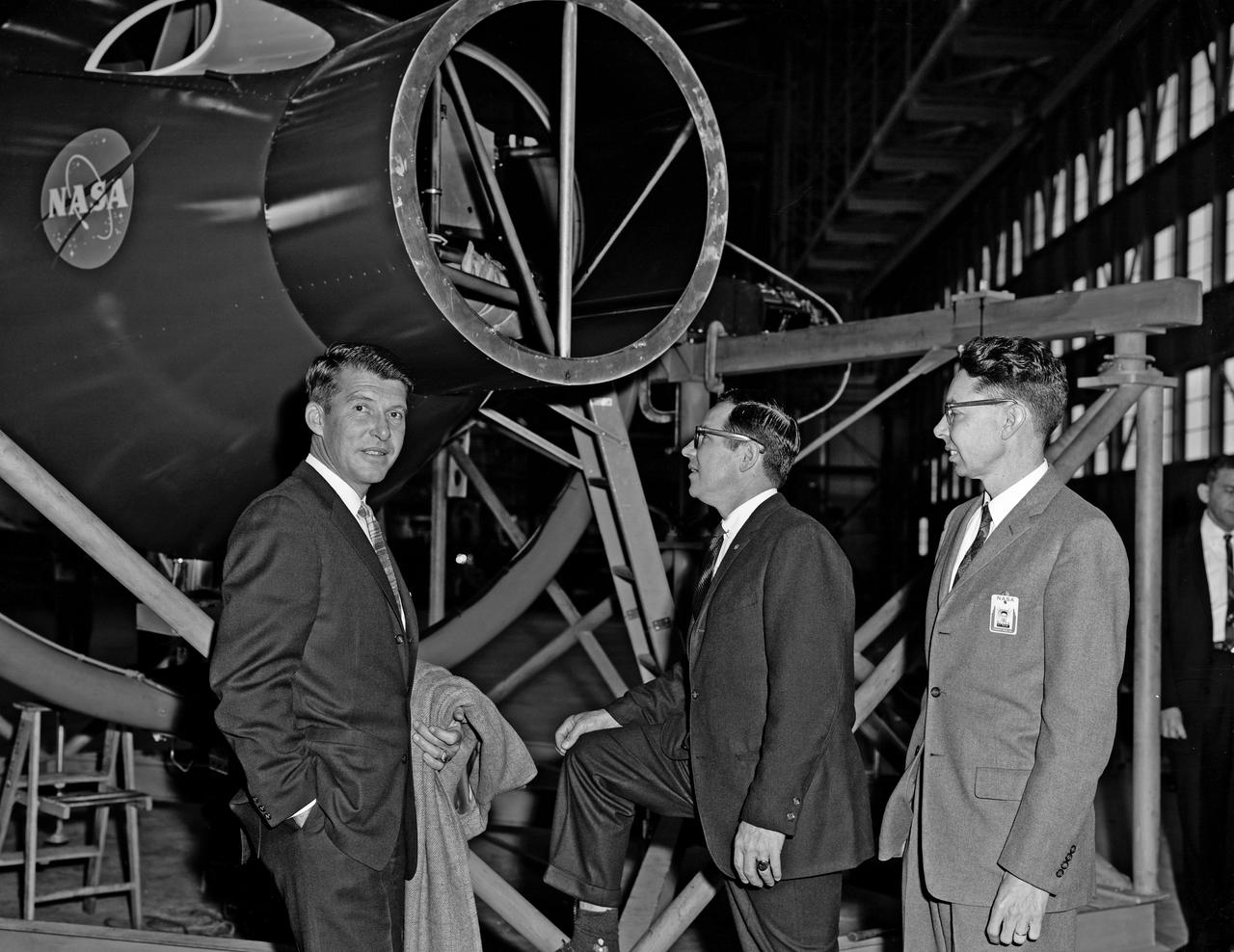
Walter (Wally) M. Schirra Visit to Langley Research Center to the Rendezvous Docking Simulator.
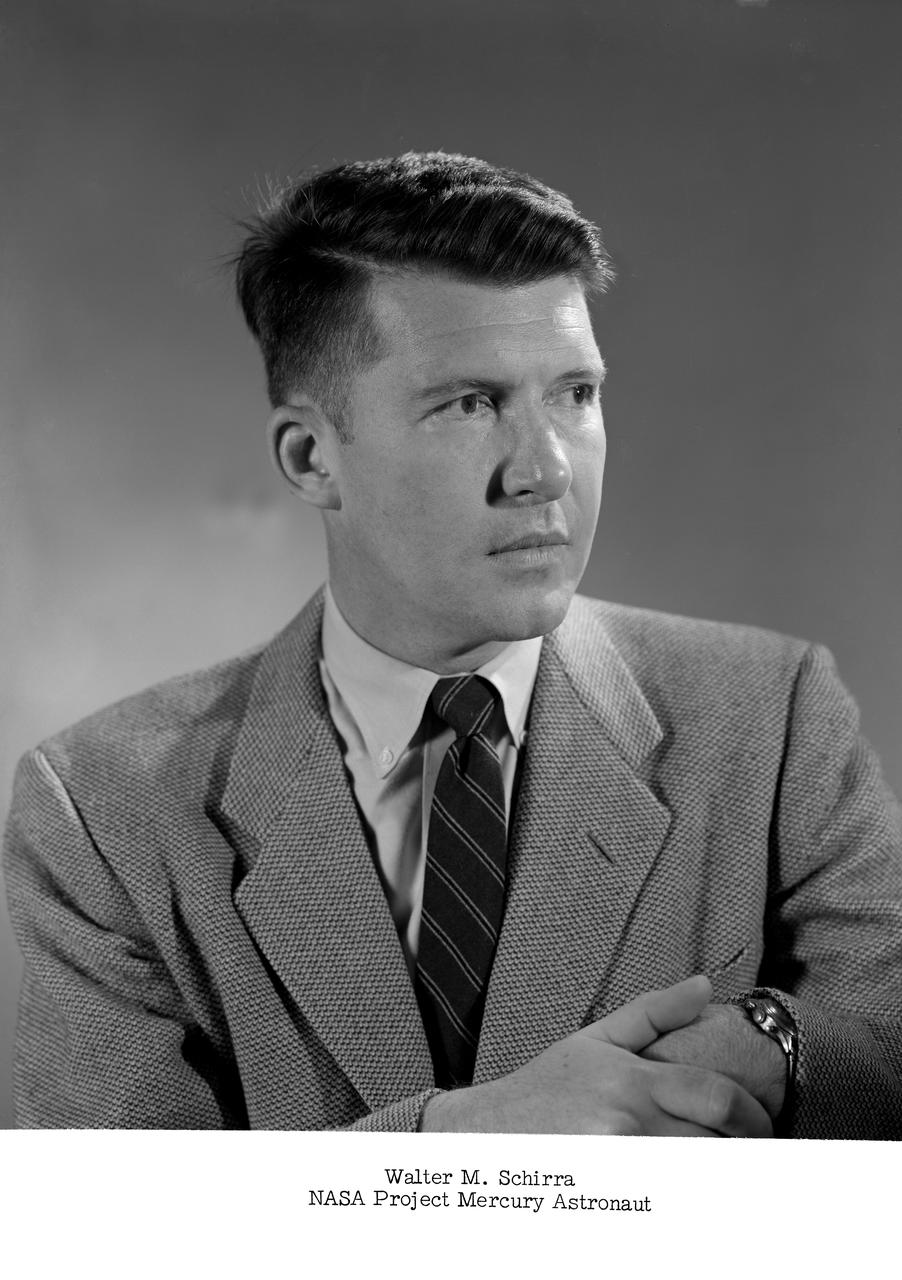
NASA Project Mercury astronaut. -- Schirra was later known as Wally .
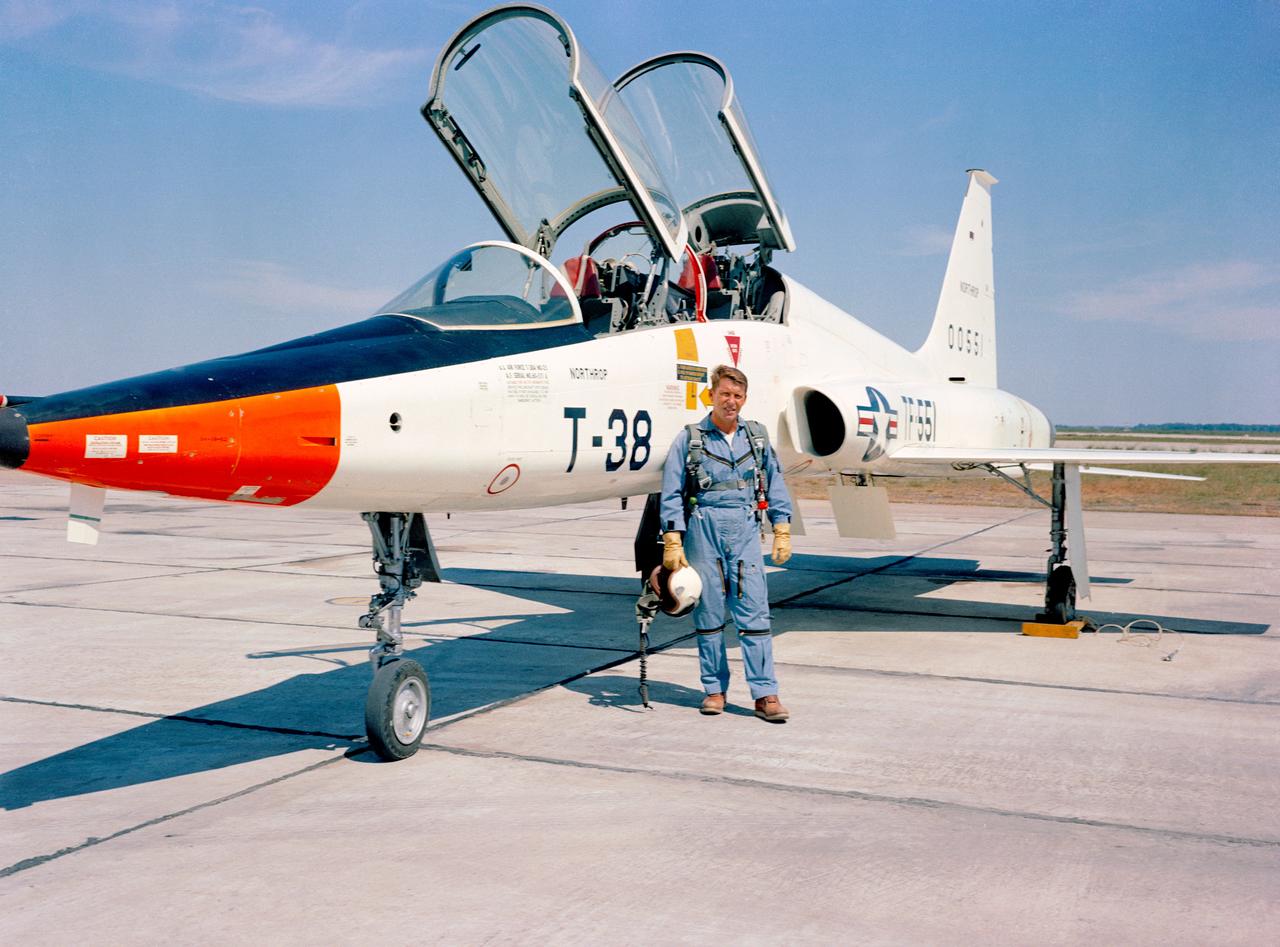
S63-18249 (1963) --- Astronaut Walter M. Schirra Jr. standing beside T-38. Photo credit: NASA
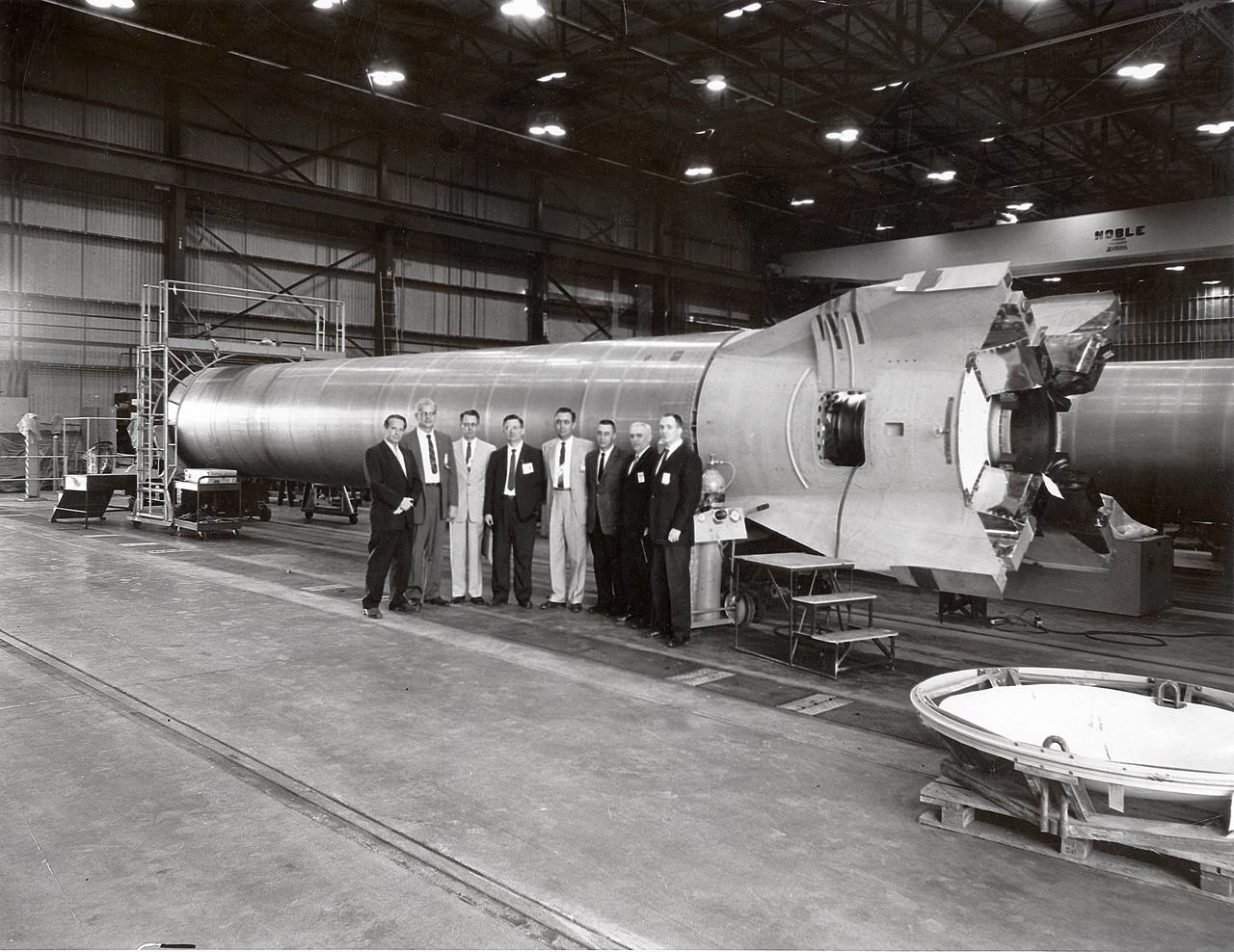
This photograph shows a group of officials standing before a Mercury-Redstone booster at the Marshall Space Flight Center (MSFC). Among those in the photograph are astronauts James Lovell, Walter Schirra, and Gus Grissom. Also pictured is Joachim Kuettner who managed responsibilities of MSFC's Mercury-Redstone program.
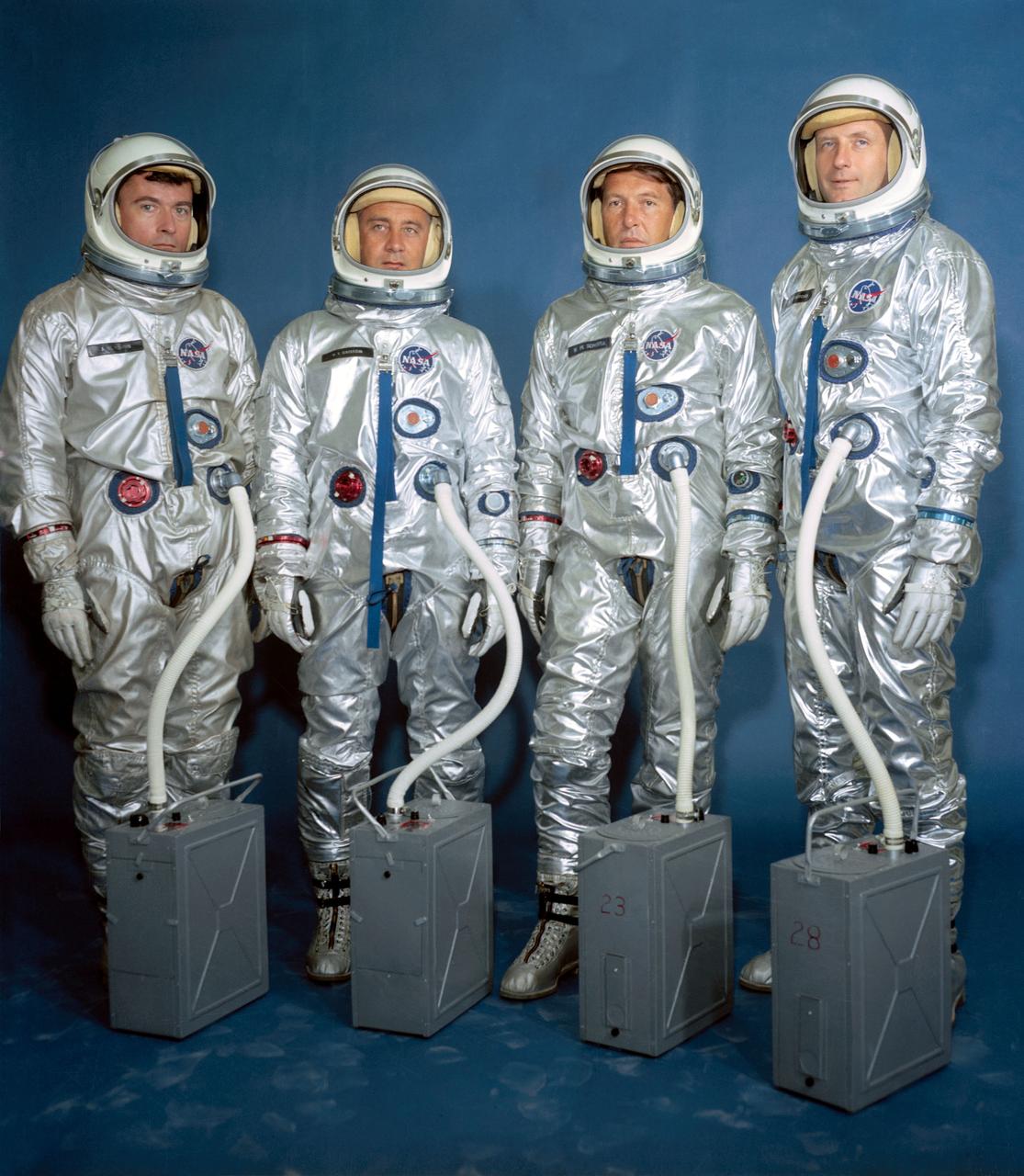
S64-19432 (13 April 1964) --- Left to right are astronauts John W. Young, Virgil I. Grissom, Walter M. Schirra Jr. and Thomas P. Stafford. Gemini III crew assignments are as follows: Grissom, command pilot; Young, pilot, on the prime crew, with Schirra (command pilot) and Stafford (pilot) serving as alternates. EDITOR'S NOTE: For the Gemini-Titan VI mission, Grissom and Young served as backups for Schirra and Stafford.
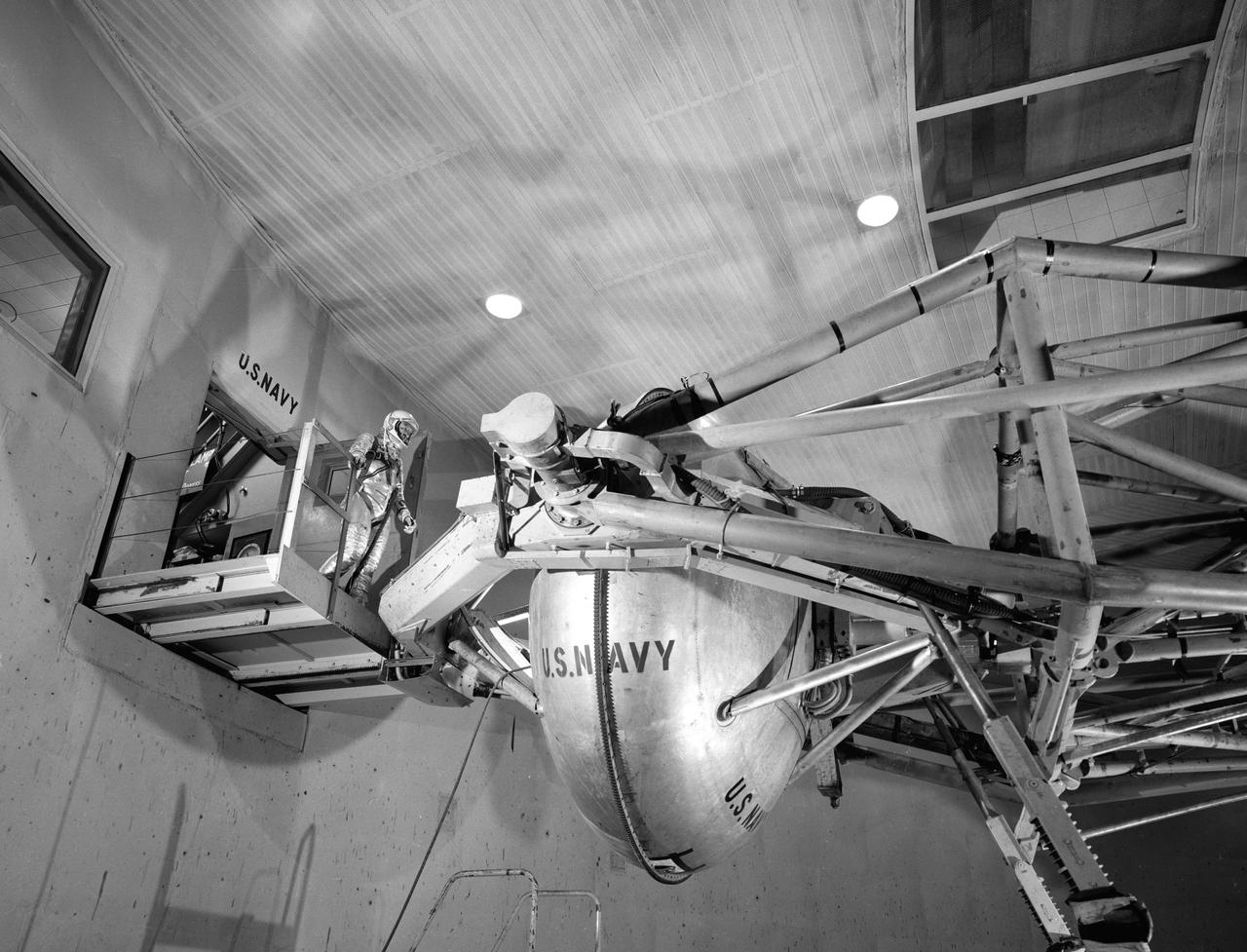
G60-02461 (1960) --- Astronaut Walter M. Schirra Jr. prepares to enter gondola of centrifuge which is used to test gravitational stress on astronauts training for spaceflight. Schirra became the pilot of the Mercury-Atlas 8 (MA-8) six-orbit space mission. Photo credit: NASA
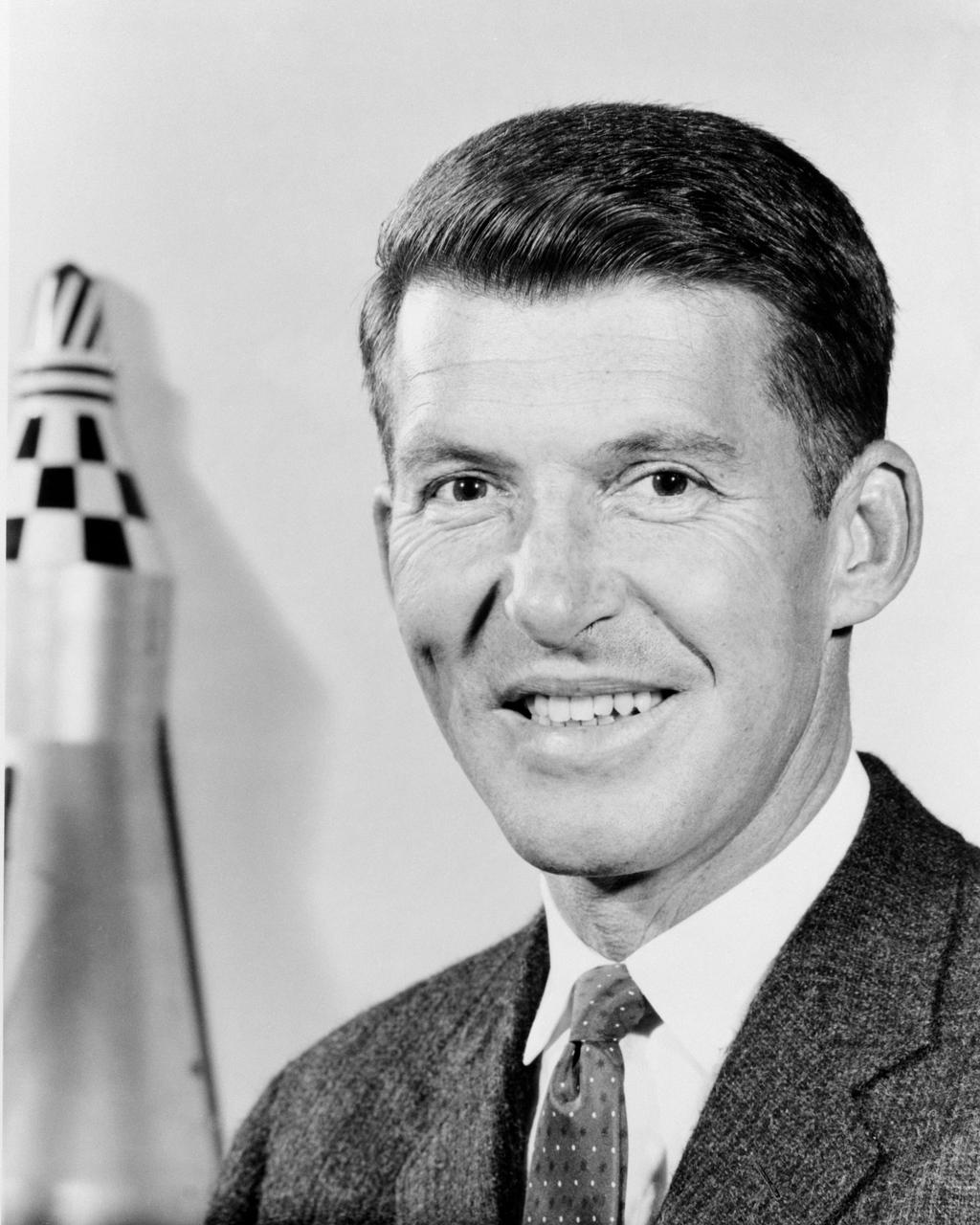
G60-02741 (May 1960) --- Astronaut Walter M. Schirra Jr. Photo credit: NASA
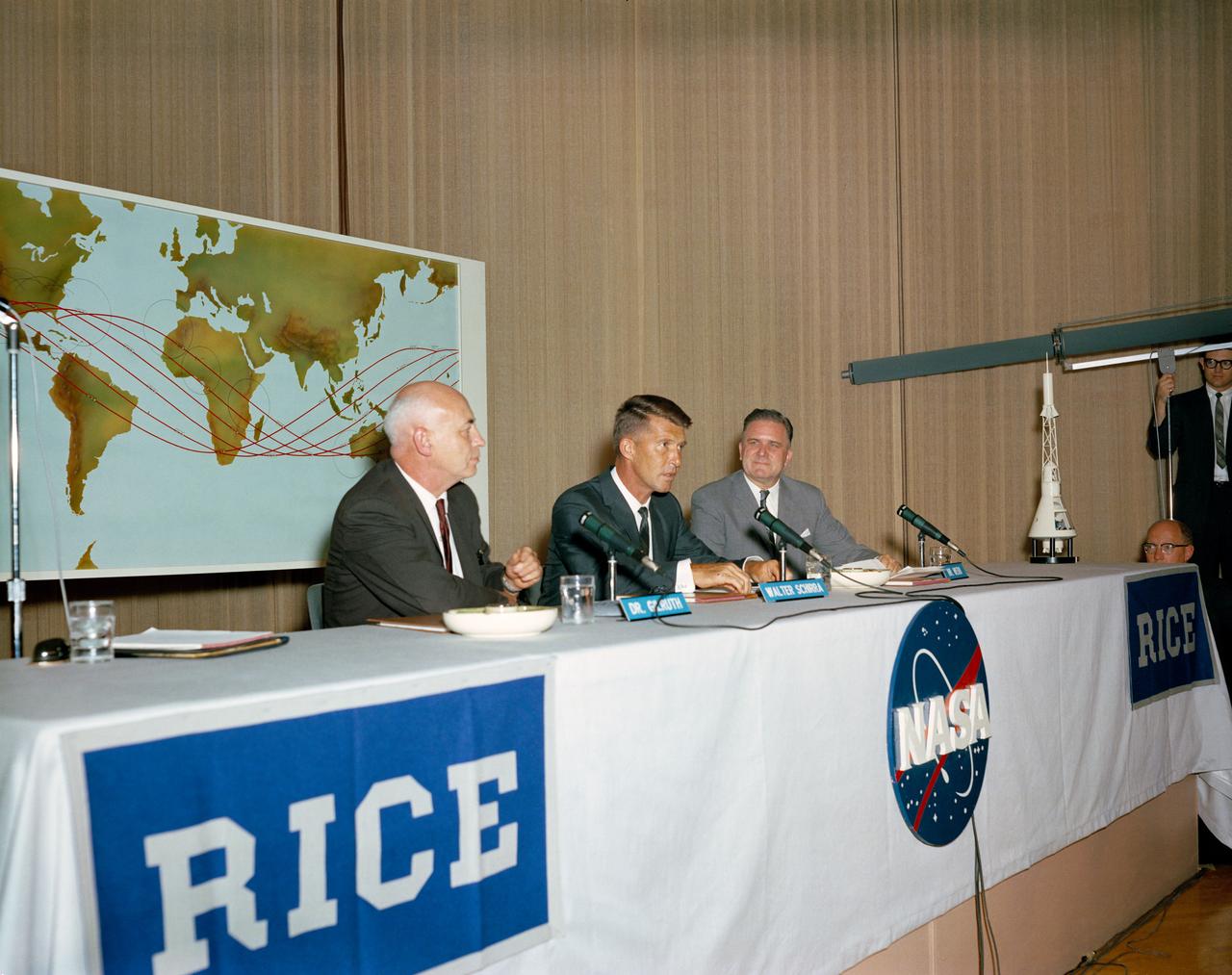
Held following Schirra's MA-8 6-orbital flight 10/03/1962. (FROM COLOR)
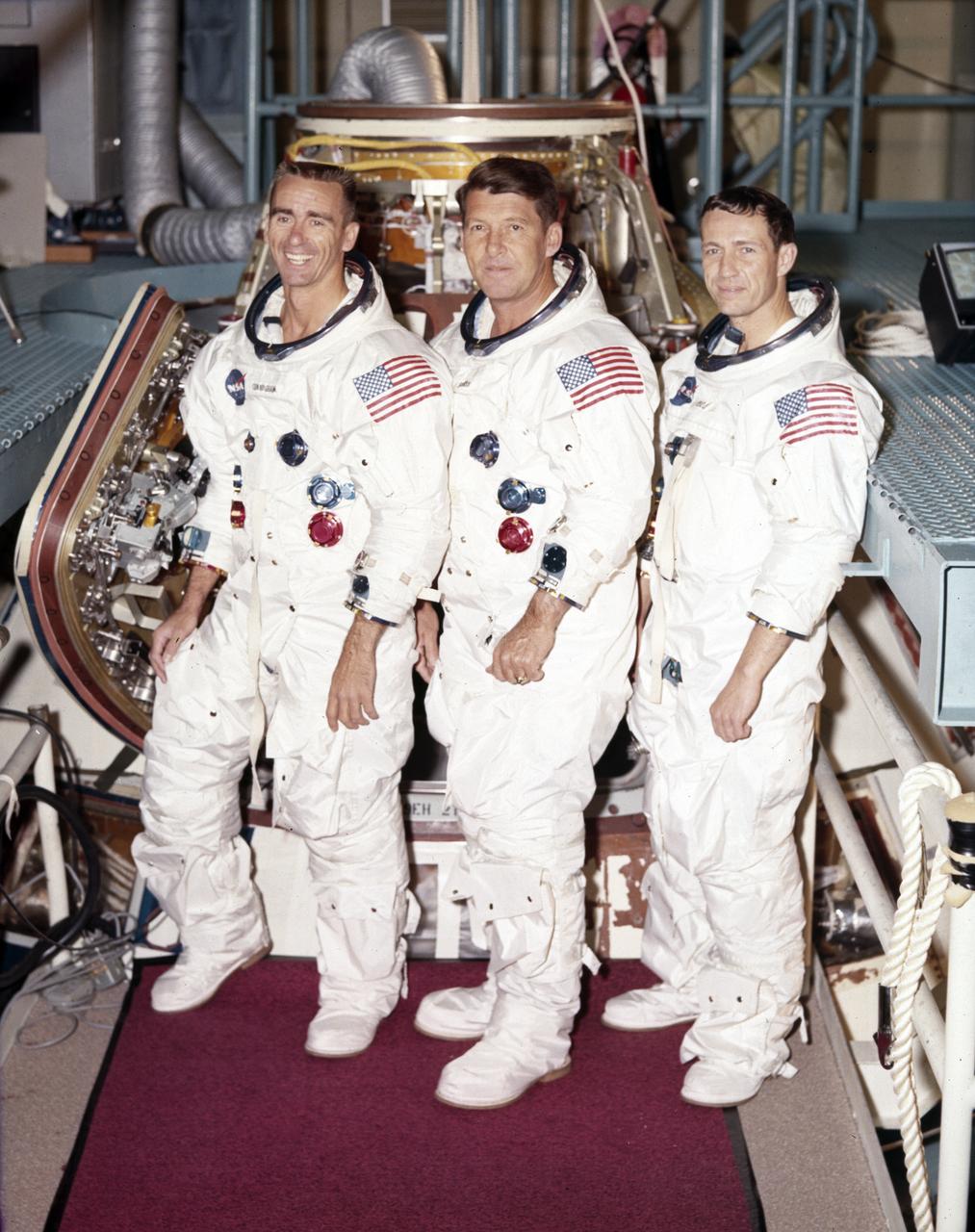
Pictured left to right, in the Apollo 7 Crew Portrait, are astronauts R. Walter Cunningham, Lunar Module pilot; Walter M. Schirra, Jr., commander; and Donn F. Eisele, Command Module Pilot. The Apollo 7 mission, boosted by a Saturn IB launch vehicle on October 11, 1968, was the first manned flight of the Apollo spacecraft.
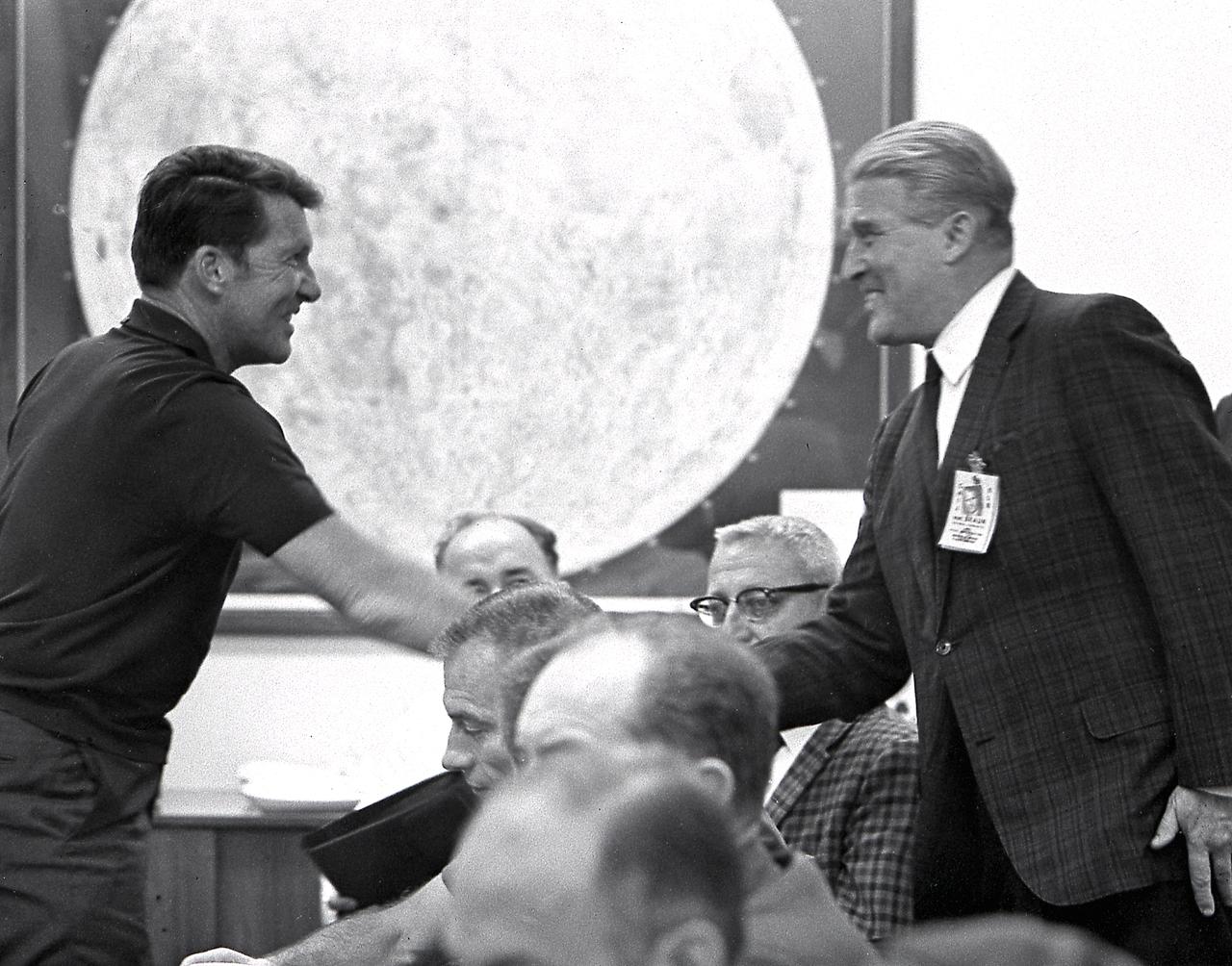
Dr. von Braun, Director of the Marshall Space Flight Center (MSFC), greets Commander of Apollo 7 mission, Walter M. Schirra, Jr., during the mission briefing at Kennedy Space Center (KSC). The Apollo 7 mission, boosted by a Saturn IB launch vehicle on October 11, 1968, was the first flight of the Apollo spacecraft with crew. Other crew members were Astronaut Donn Eisele and Astronaut Walter Cunningham.
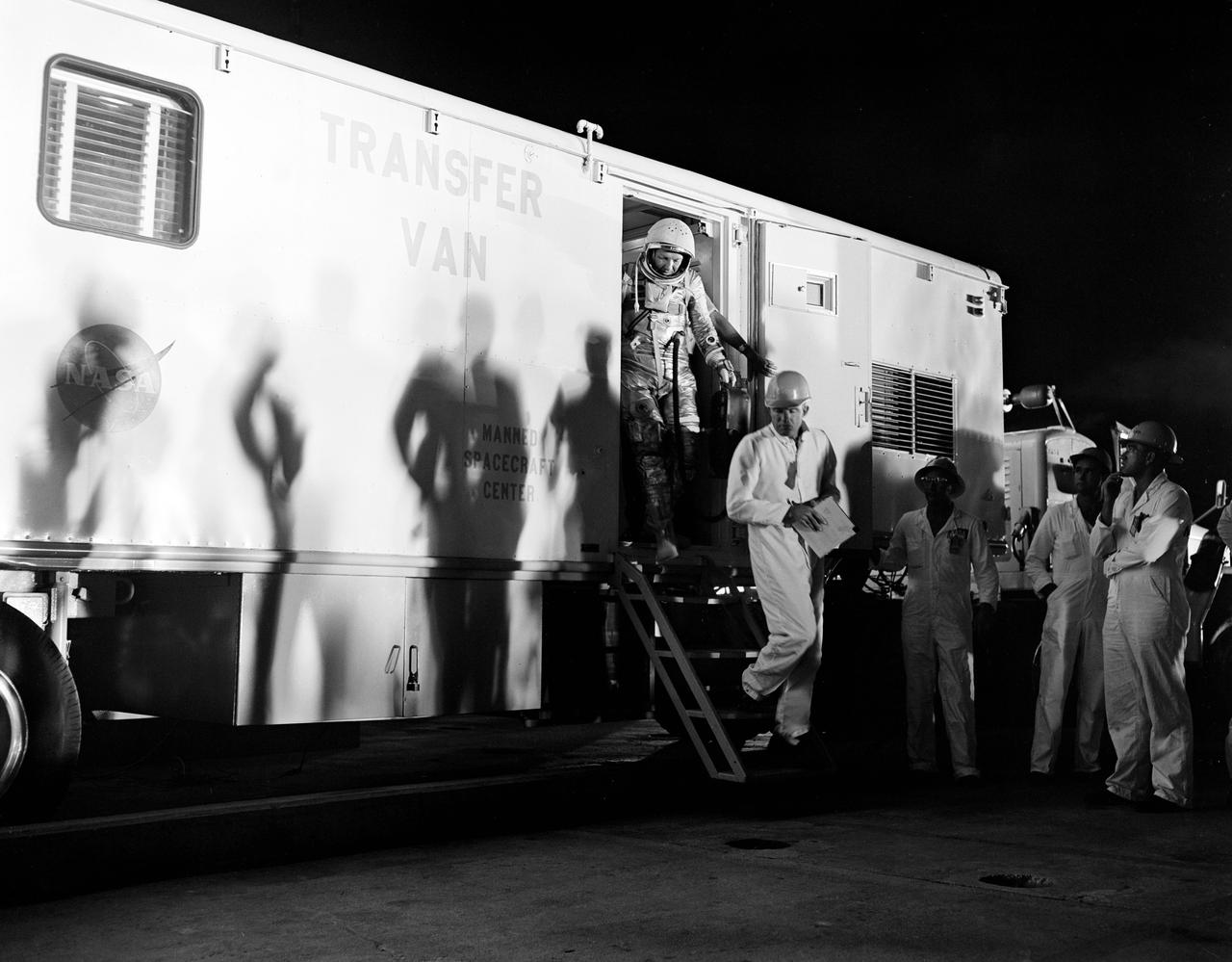
S62-06008 (3 Oct. 1962) --- Astronaut Walter M. Schirra Jr., pilot of the Mercury-Atlas 8 (MA-8) Earth-orbital spaceflight, steps from a transport van as he arrives at Cape Canaveral's Pad 14 during the MA-8 prelaunch countdown. Schirra is accompanied by astronaut L. Gordon Cooper Jr. (in white coveralls), MA-8 backup pilot. Photo credit: NASA
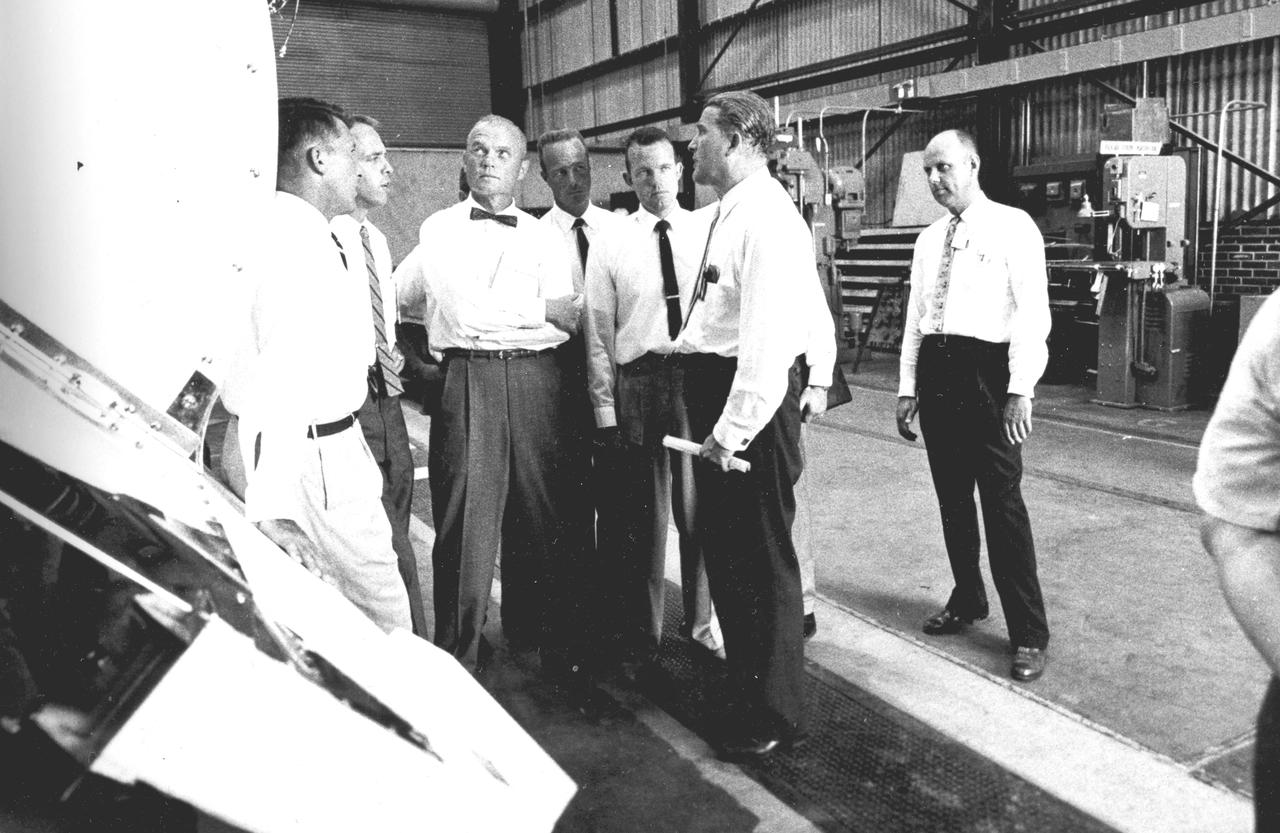
Five of the seven original astronauts are seen with Dr. von Braun inspecting the Mercury-Redstone hardware in the Fabrication Laboratory of Army Ballistic Missile Agency (ABMA) in 1959. Left to right: Astronauts Walter Schirra, Alan Shepard, John Glenn, Scott Carpenter, Gordon Cooper, and Dr. von Braun.
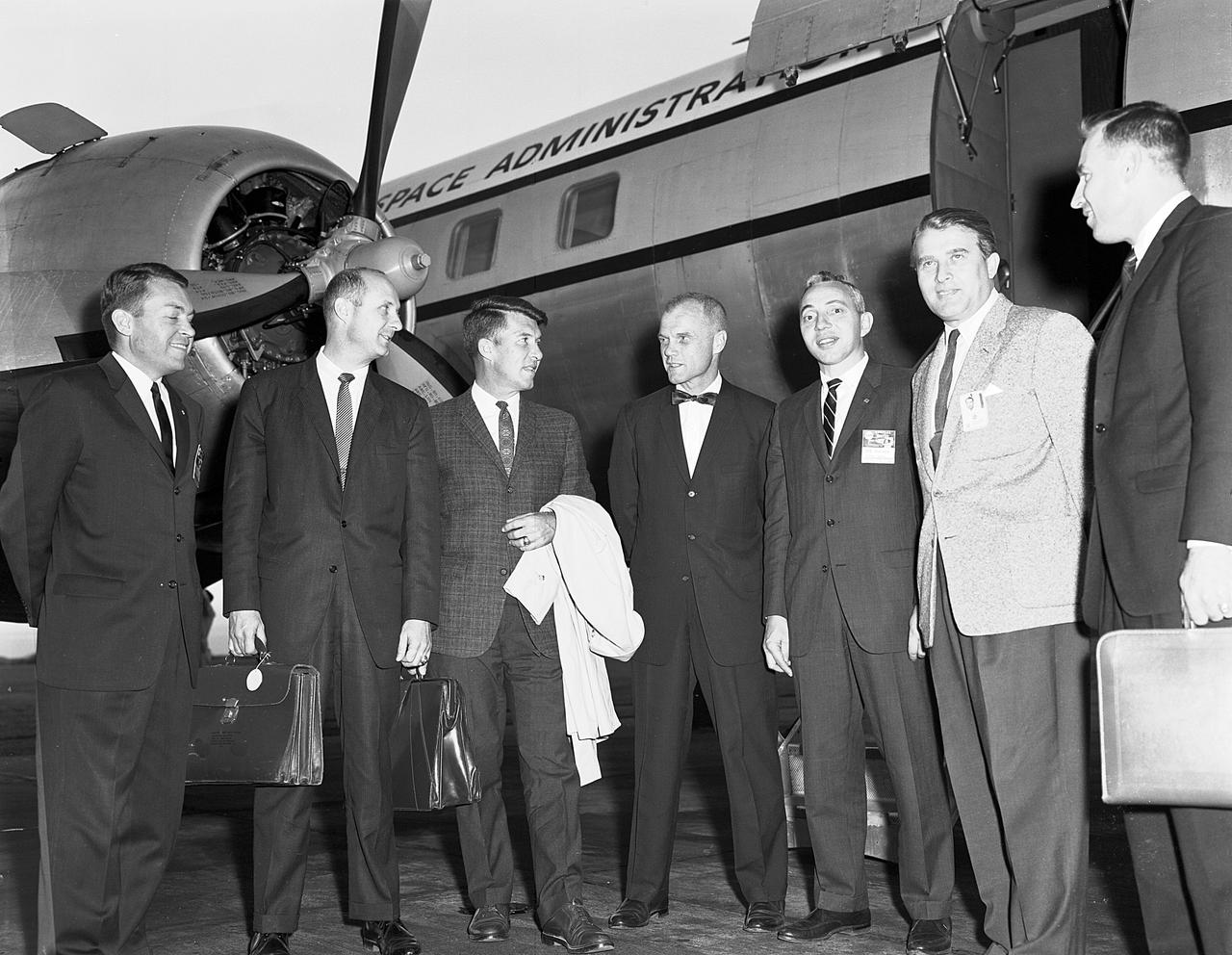
NASA officials from Headquarters and the astronauts often met with Dr. von Braun in Huntsville, Alabama. This photograph was taken in September 1962 during one such visit. From left to right are Elliot See, Tom Stafford, Wally Schirra, John Glenn, Brainerd Holmes, Dr. von Braun, and Jim Lovell.
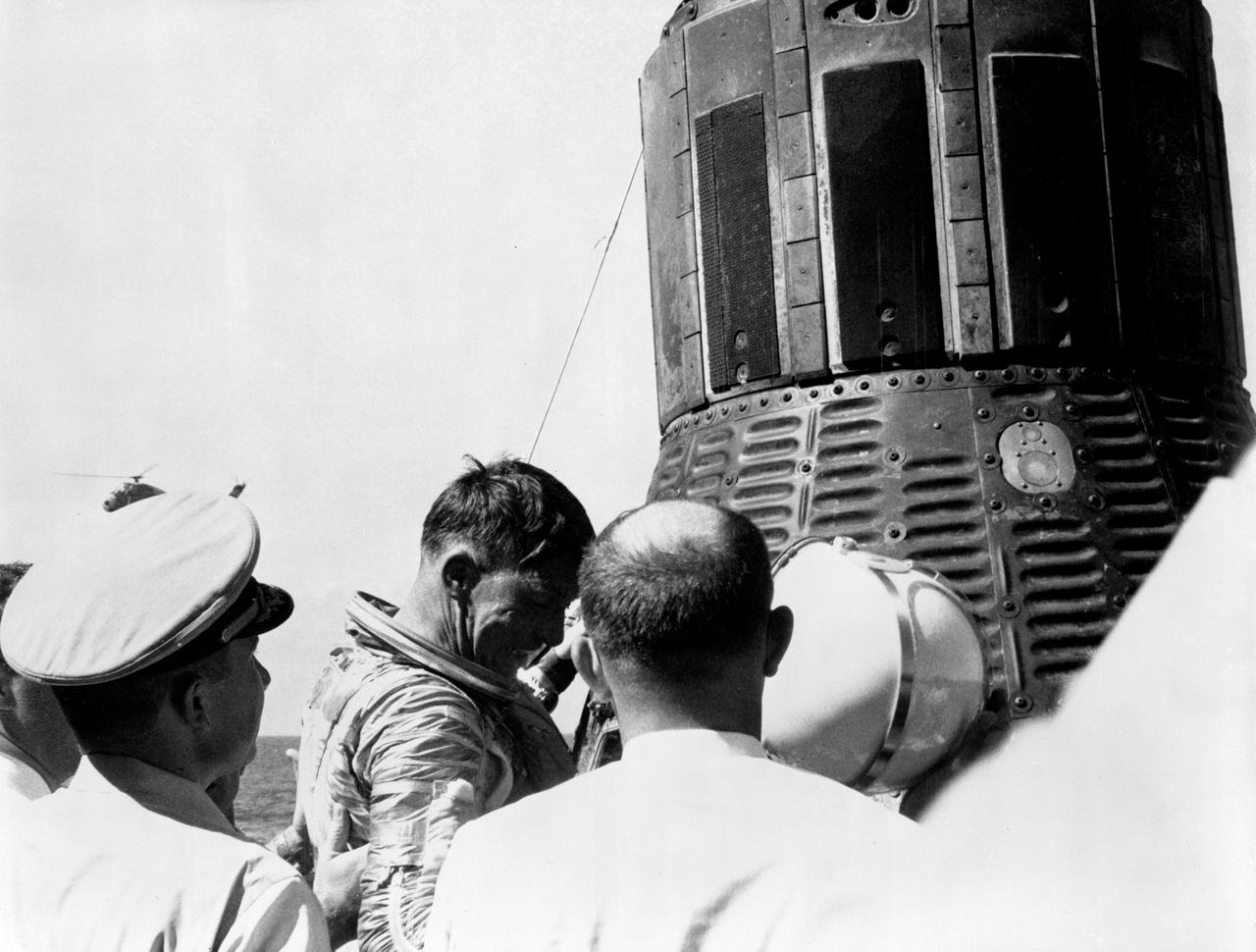
S62-06148 (3 Oct. 1962) --- Close-up view of Mercury-Atlas 8 (MA-8) astronaut Walter Schirra being removed from his Sigma 7 capsule by Navy personnel. Schirra has just removed his helmet. Photo credit: NASA
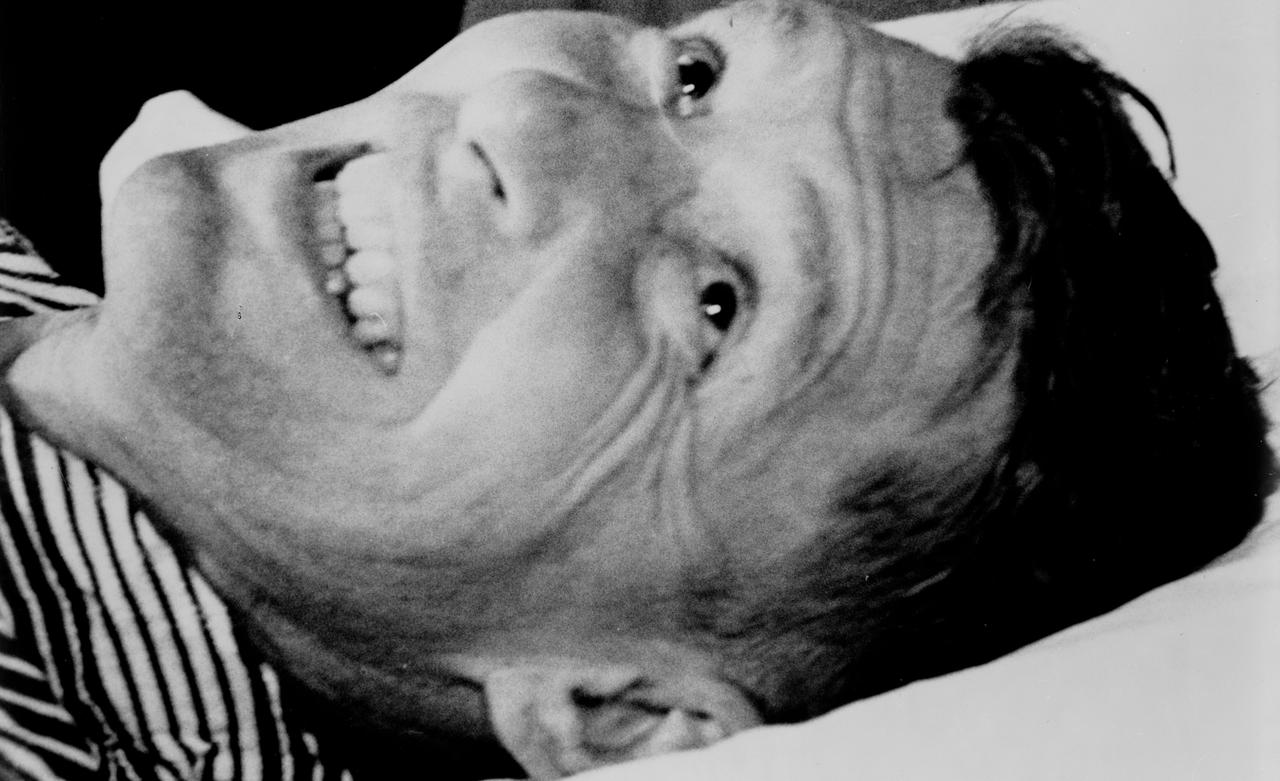
S62-06163 (3 Oct. 1962) --- Astronaut Walter M. Schirra Jr. smiles at medical personnel (out of frame) during a postflight physcial aboard the USS Kearsage, prime recovery vessel for Mercury-Atlas 8 (MA-8) upon which Schirra served as pilot earlier today. Photo credit: NASA
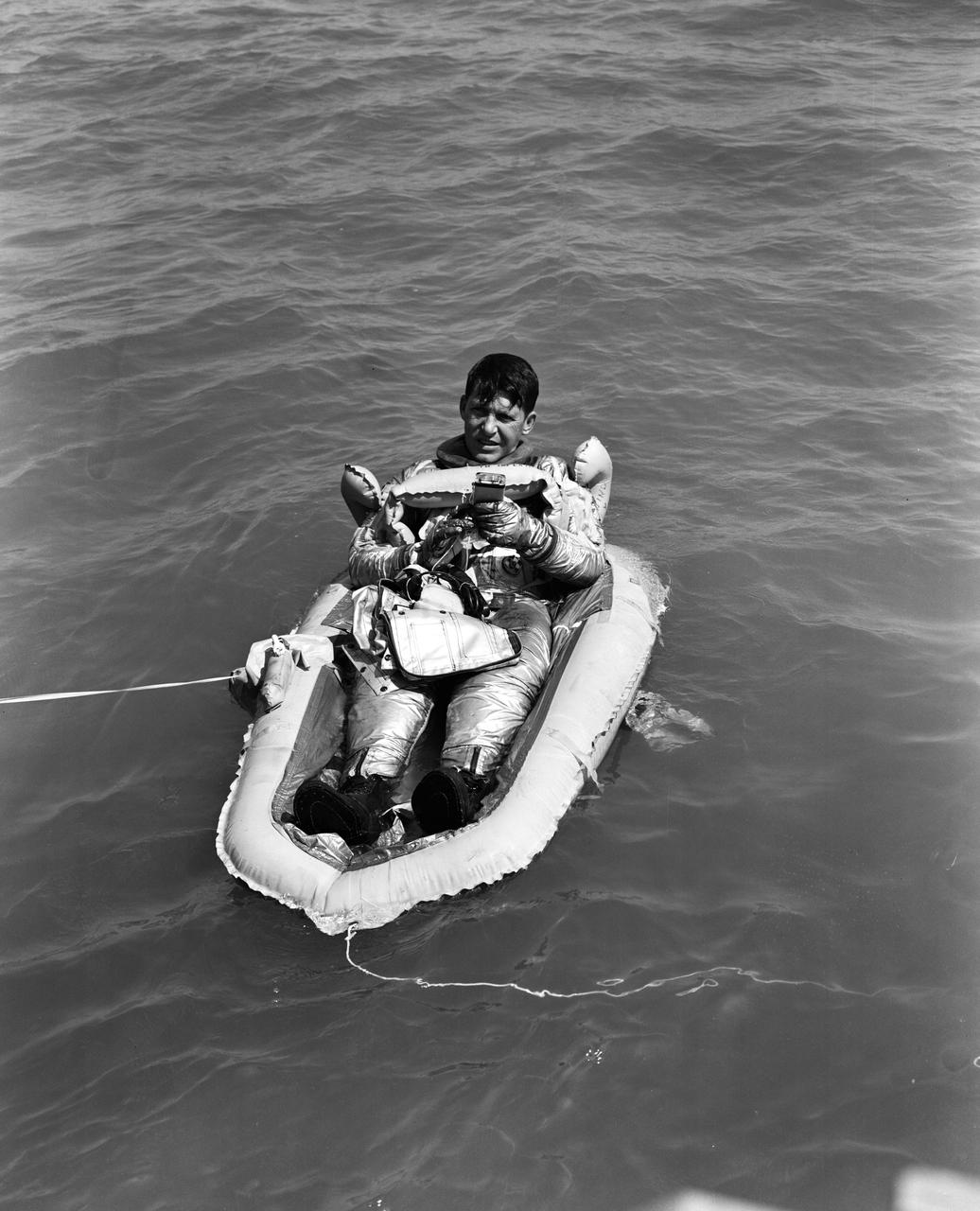
S62-01379 (1962) --- Astronaut Walter M. Schirra Jr., wearing his pressure suit, is seated in a life raft during a portion of his water egress training. Photo credit: NASA
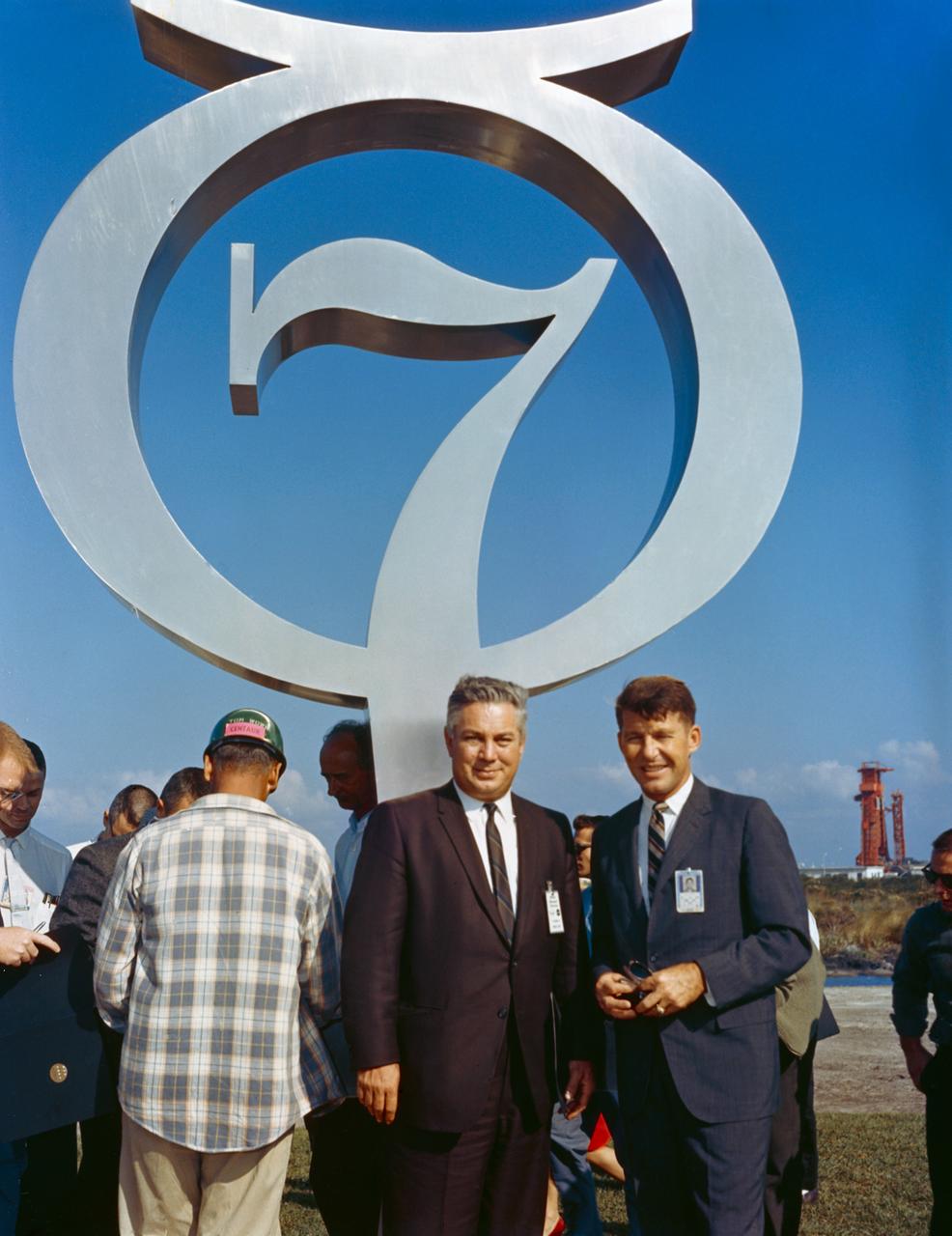
S64-40113 (1964) --- Astronaut Walter Schirra Jr. (right) and Walter Williams, Deputy Director of Mission Requirements, pictured at the Mercury 7 memorial dedication. Photo credit: NASA
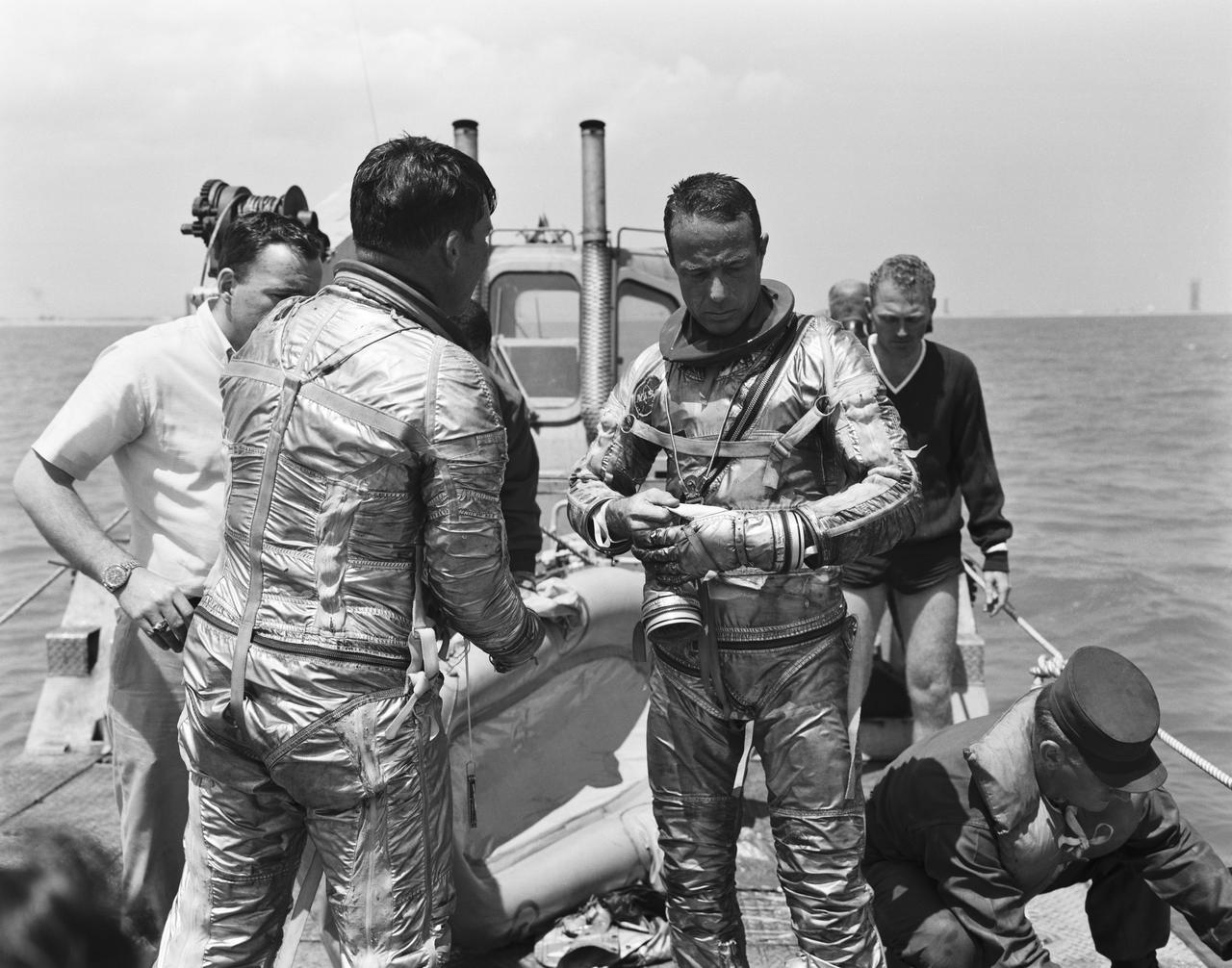
S62-01355 (1962) --- Project Mercury astronauts M. Scott Carpenter, prime pilot of the Mercury-Atlas 7 (MA-7) spaceflight, prepares to go through a water egress test. Astronaut Walter M. Schirra (back to camera), the backup MA-7 pilot is also present. Carpenter and Schirra are in the Mercury pressure suit, without the helmet. Behind them is an inflated life raft. Photo credit: NASA
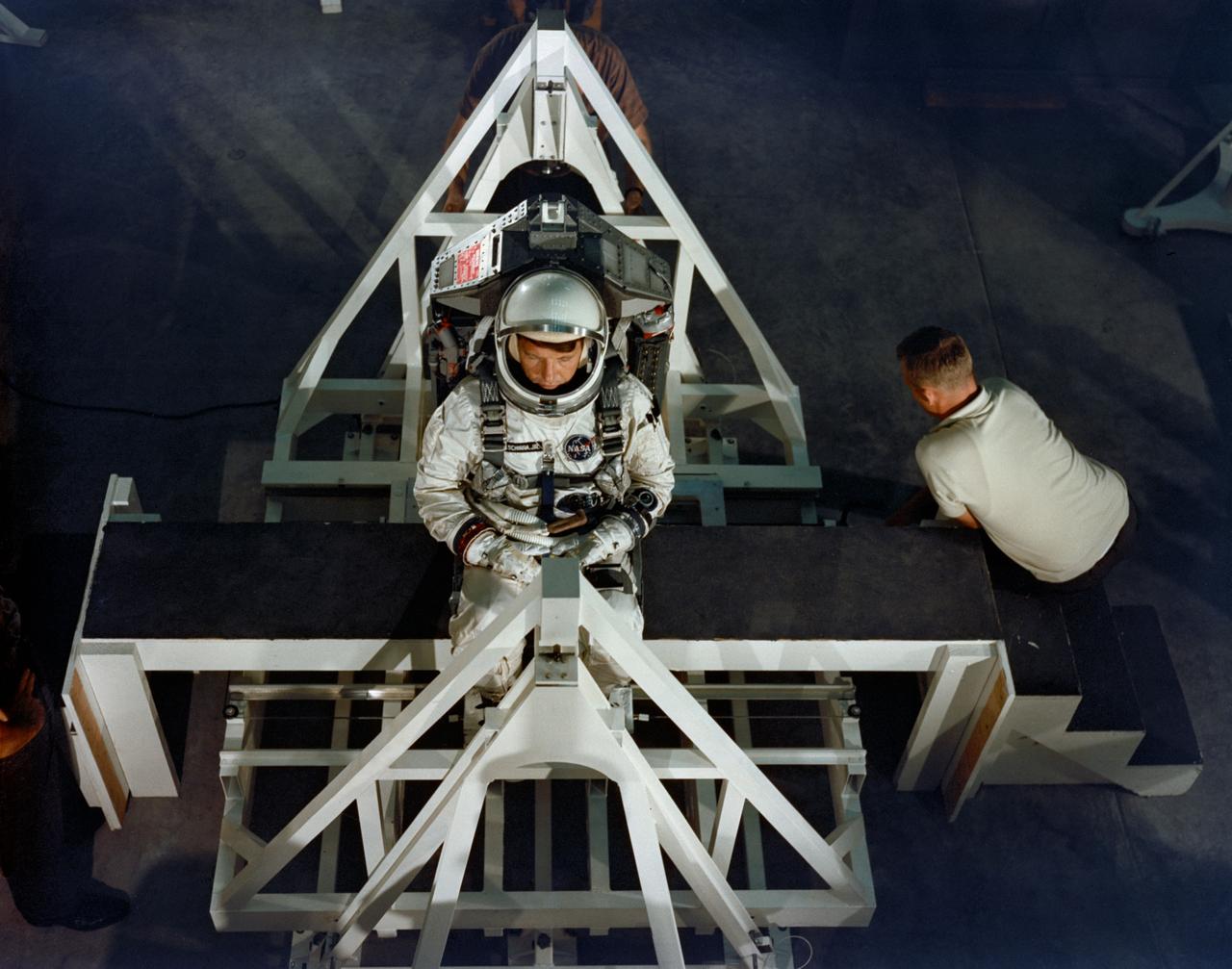
S65-54319 (22 Sept. 1965) --- Astronaut Walter M. Schirra Jr., command pilot of the Gemini-6 prime crew, undergoes weight and balance tests in the Pyrotechnic Installation Building, Merritt Island, Kennedy Space Center, Florida. Photo credit: NASA or National Aeronautics and Space Administration
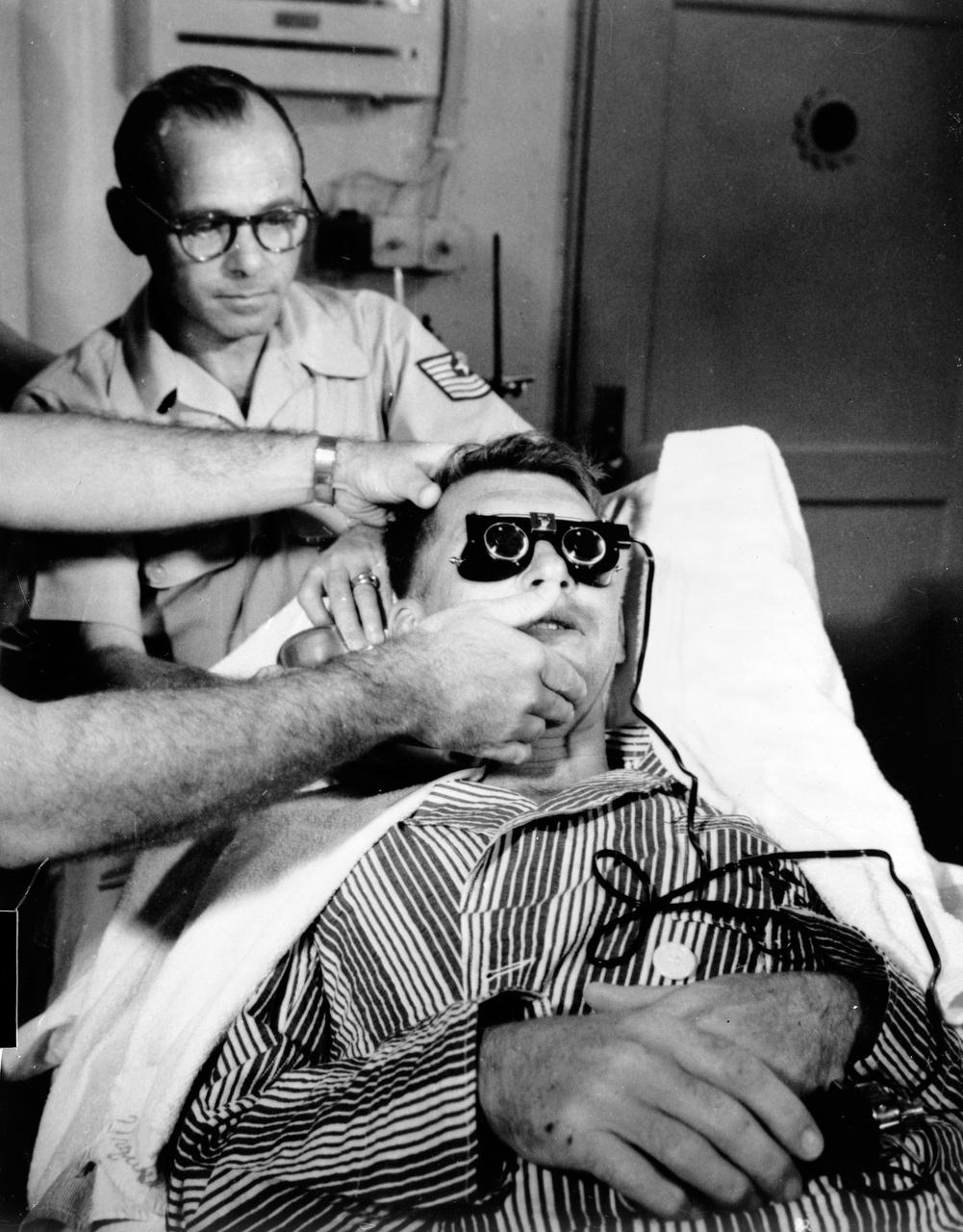
S62-06157 (1962) --- Astronaut Walter Schirra Jr. gets modified calonic test. His balance mechanism (semicircular canals) are tested by running cool water into ear and measuring effect on eye motions (nystagmus) after his six-orbit flight in the Sigma 7 spacecraft. Photo credit: NASA
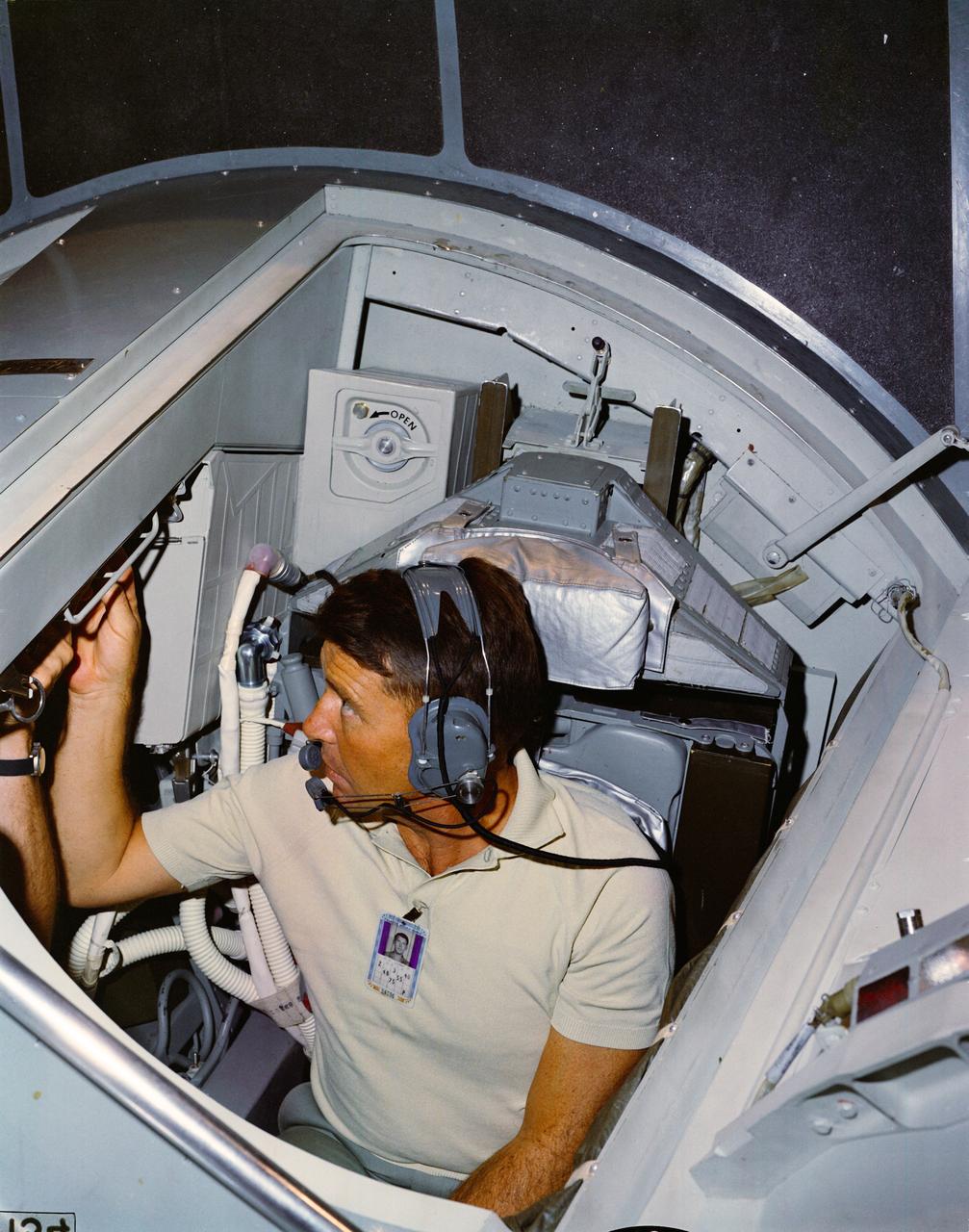
S65-13919 (15 Jan. 1965) --- Astronaut Walter M. Schirra Jr., command pilot of the Gemini-6 prime crew, is pictured in the cockpit of the Gemini simulator at the Mission Control Center at Cape Kennedy, Florida. Photo credit: NASA or National Aeronautics and Space Administration

The original seven astronauts for the Mercury Project pose in front of an Air Force Jet. From left to right: Scott Carpenter, L. Gordon Cooper, John H. Glenn, Virgil I. Gus Grissom, Walter M. Wally Schirra, Alan B. Shepard, and Donald K. Deke Slayton.

Astronaut Walter M. "Wally" Schirra, one of the original seven astronauts for Mercury Project selected by NASA on April 27, 1959. The MA-8 (Mercury-Atlas) mission with Sigma 7 spacecraft was the third marned orbital flight by the United States, and made the six orbits in 9-1/4 hours.
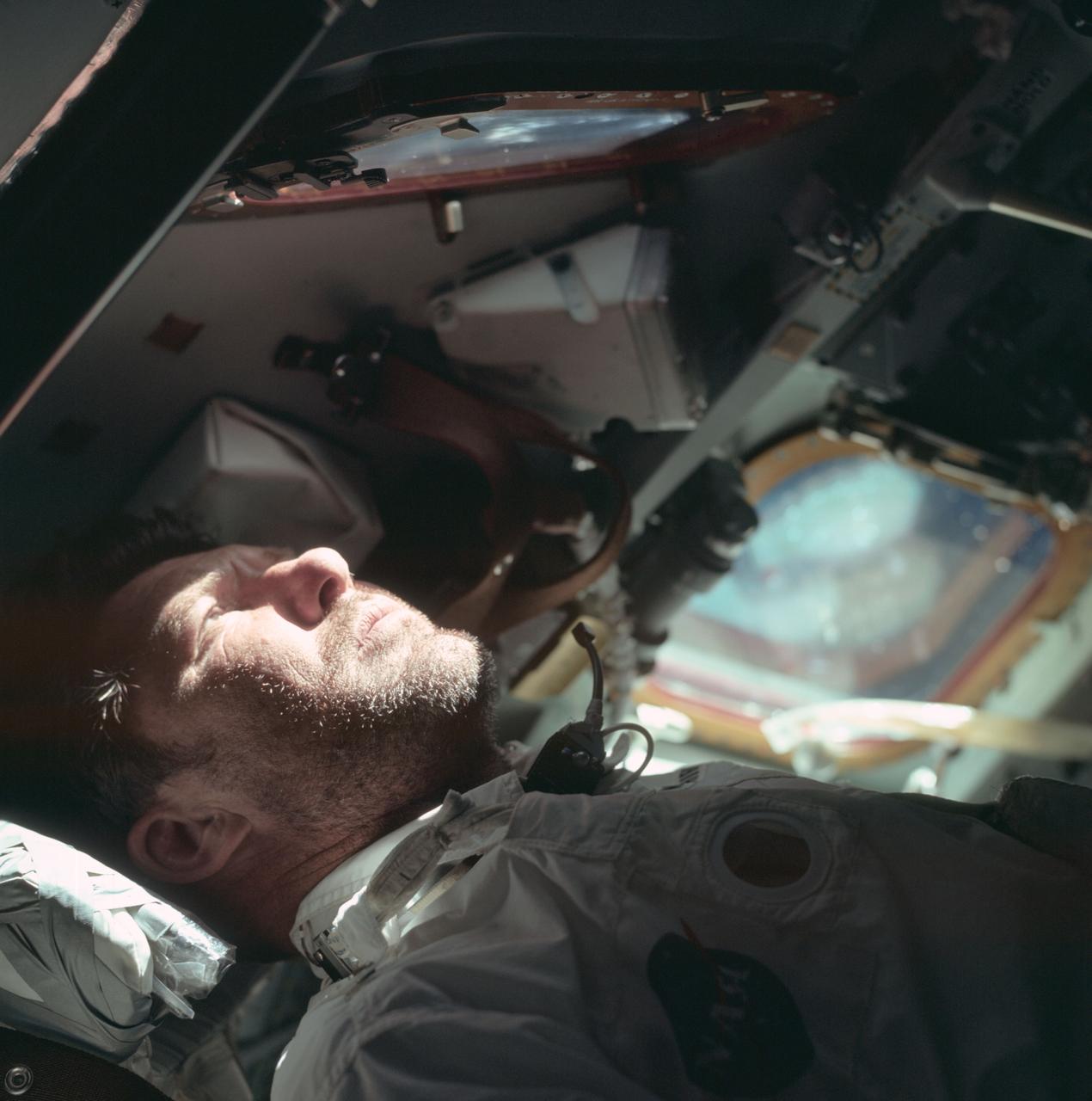
AS07-04-1596 (20 Oct. 1968) --- A heavy beard covers the face of astronaut Walter M. Schirra Jr., Apollo 7 commander, as he looks out the rendezvous window in front of the commander's station on the ninth day of the Apollo 7 mission.
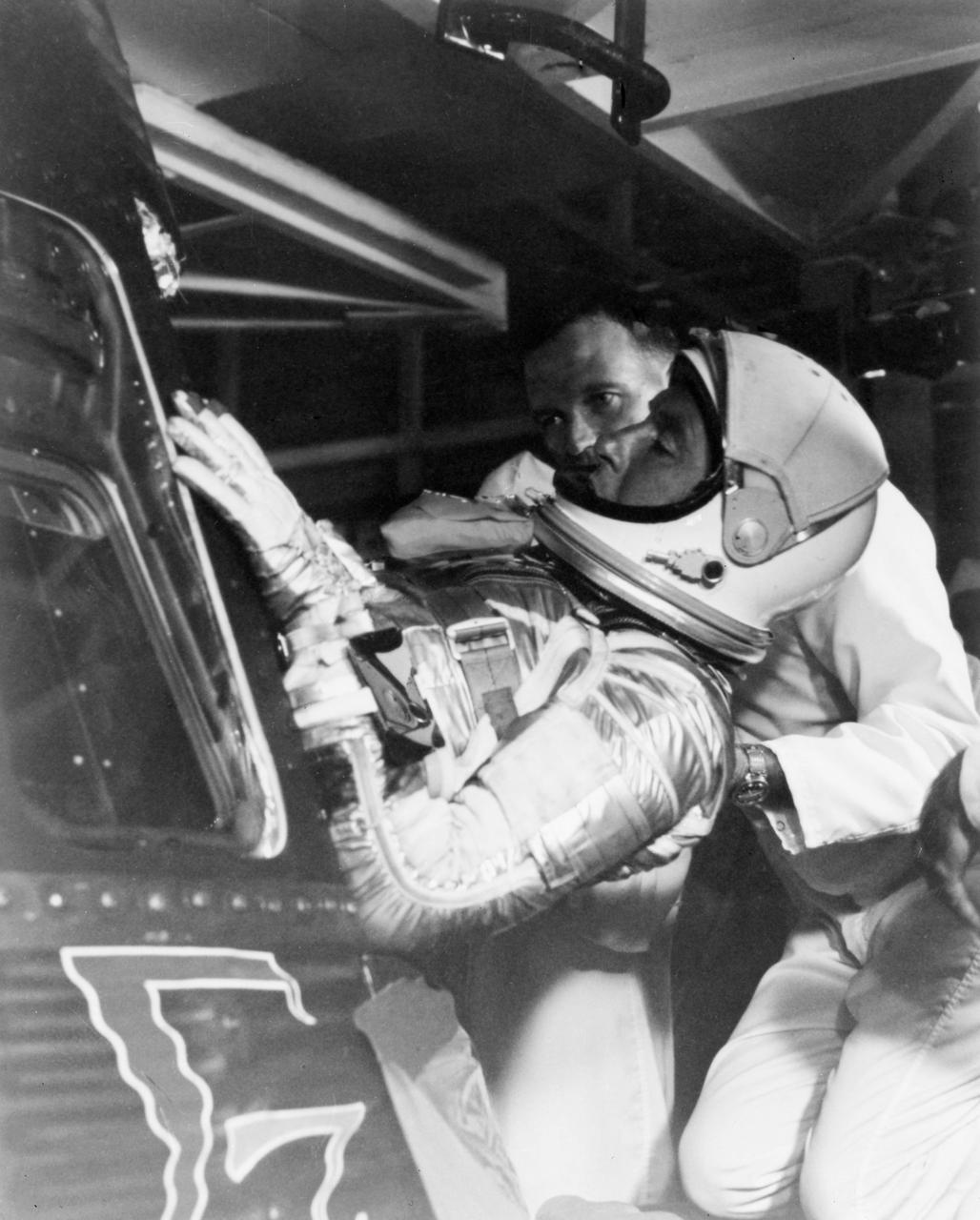
S62-06002 (3 Oct. 1962) --- Astronaut Walter M. Schirra Jr., pilot of the Mercury-Atlas 8 (MA-8) Earth-orbital spaceflight, is assisted by backup pilot L. Gordon Cooper into his Sigma 7 spacecraft for the begining of the MA-8 mission. Photo credit: NASA
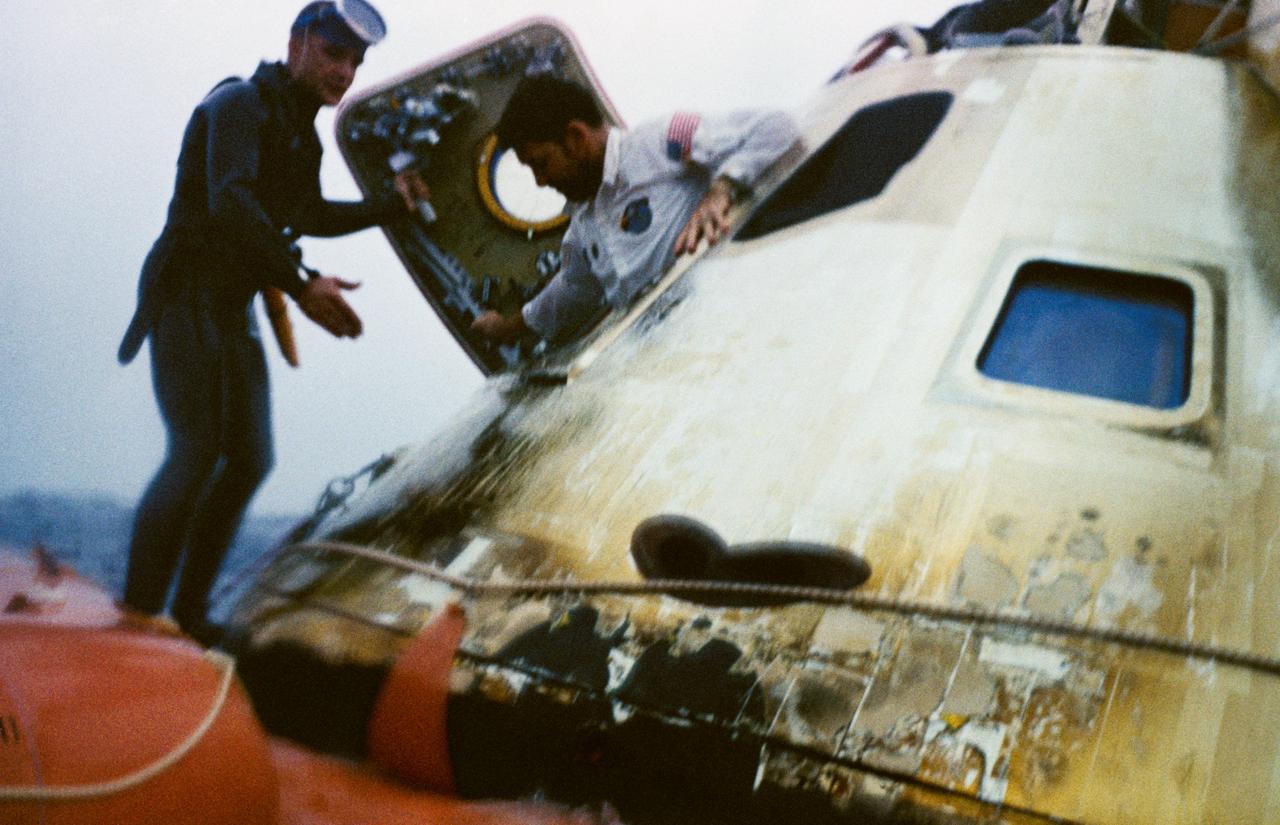
Astronaut Walter M. Schirra, Jr., Apollo 7 commander, egresses the spacecraft during recovery operations in the Atlantic. He is assisted by a member of the U.S. Navy frogman team. The Apollo 7 spacecraft splashed down at 7:11 a.m., October 22, 1968, approximately 200 nautical miles south-southwest of Bermuda.
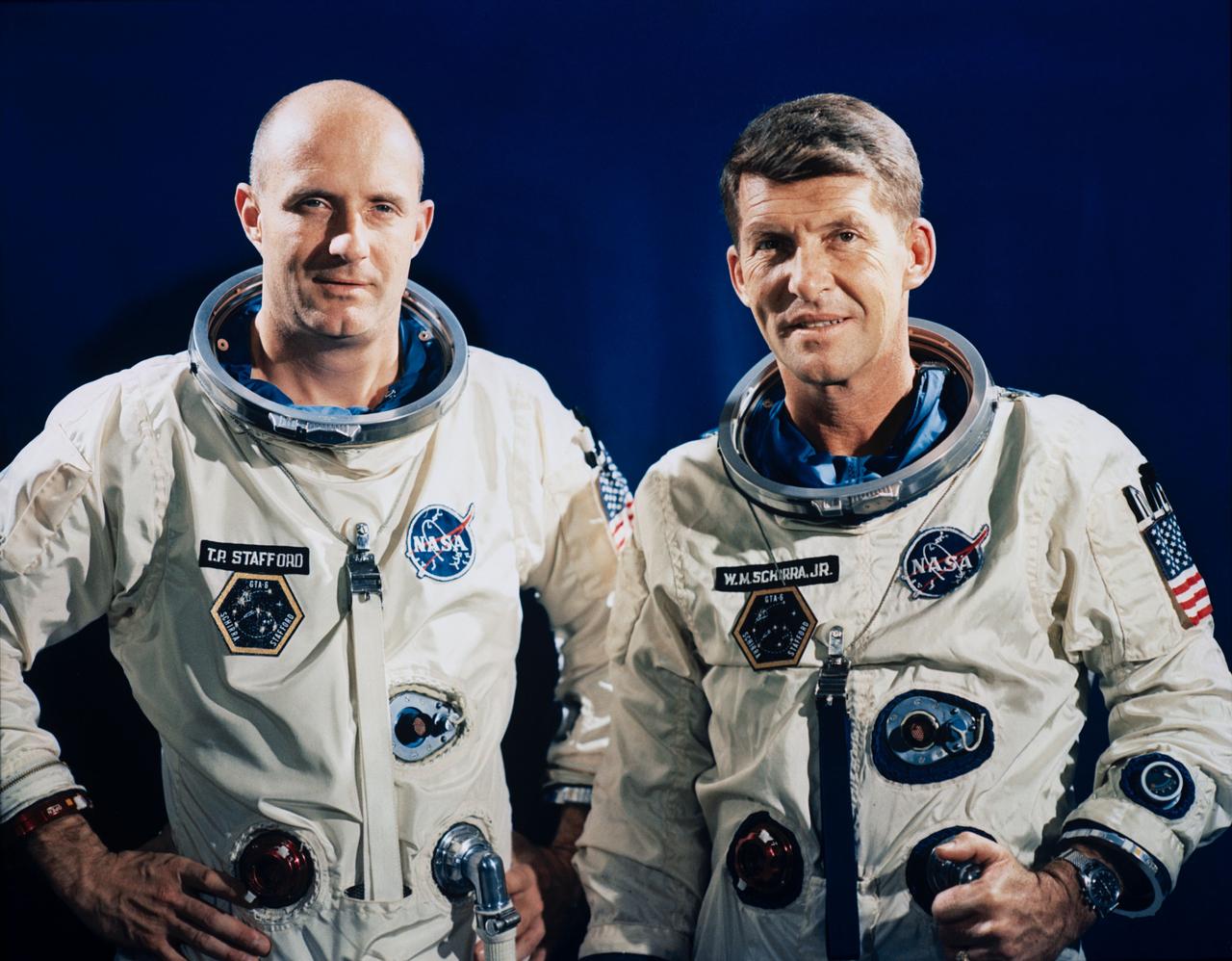
S65-56151 (October 1965) --- Gemini-6 astronauts Thomas P. Stafford (left), pilot, and Walter M. Schirra Jr., command pilot, are shown during suiting up exercises at Cape Kennedy, Florida. Photo credit: NASA or National Aeronautics and Space Administration
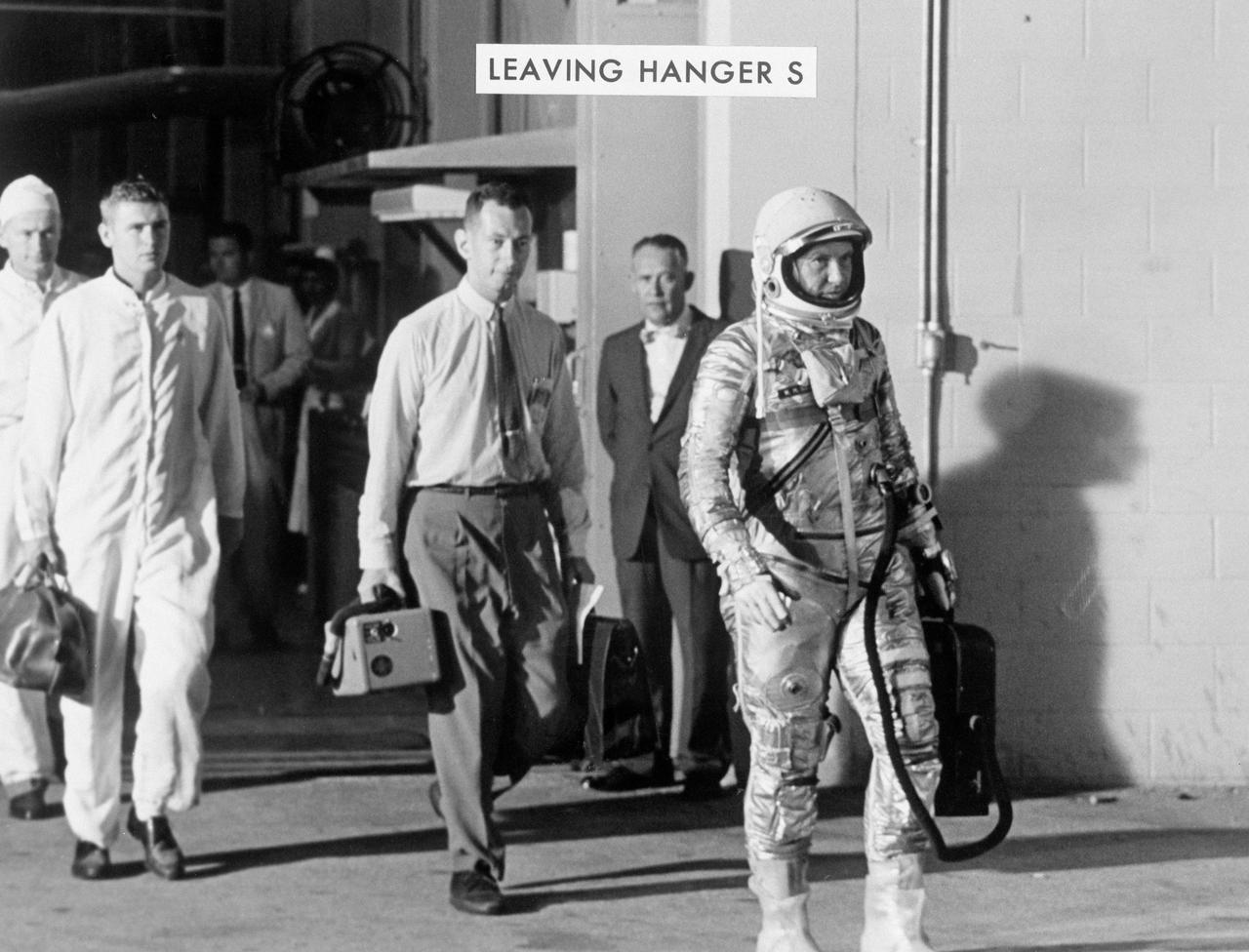
S63-00695 (3 Oct. 1962) --- Astronaut Walter M. Schirra Jr., pilot of the Mercury-Atlas 8 (MA-8) Earth-orbital spaceflight, leaves Hangar "S" at Cape Canaveral on his way to his scheduled Oct. 3, 1962 flight. Photo credit: NASA
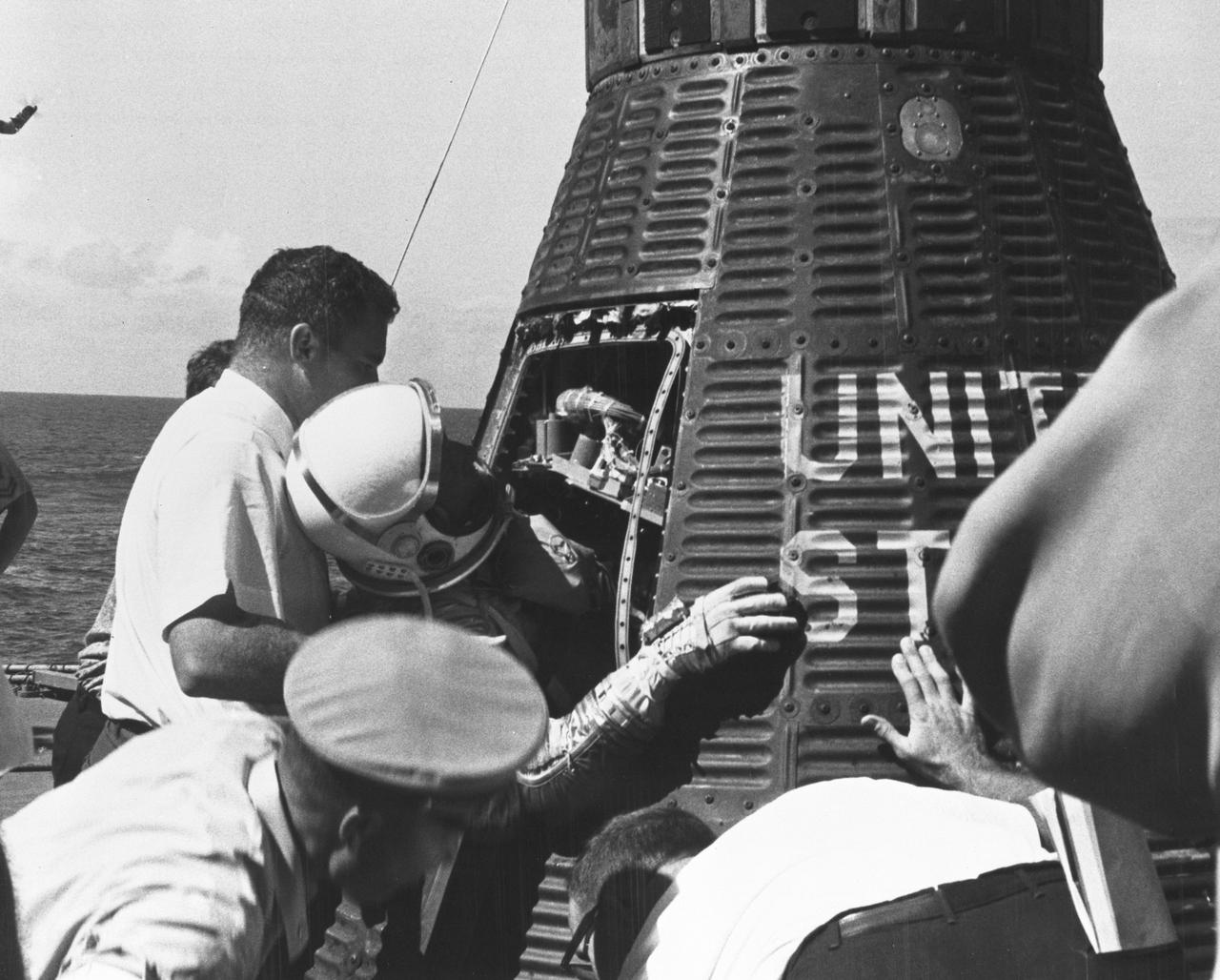
S62-06108 (3 Oct. 1962) --- Close-up view of Mercury-Atlas 8 (MA-8) astronaut Walter Schirra Jr. being removed from his Sigma 7 capsule by Navy personnel. Photo credit: NASA
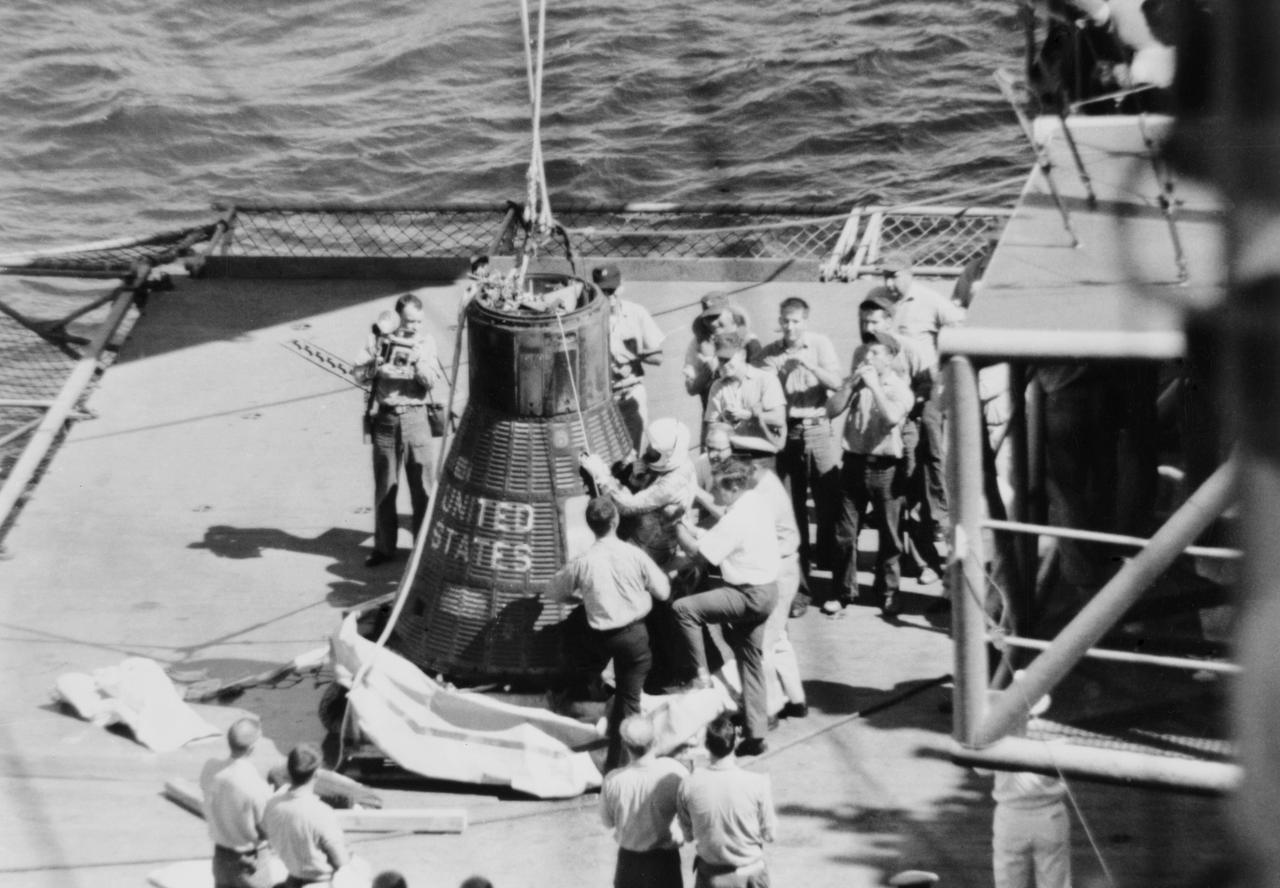
S62-06144 (3 Oct. 1962) --- Wide angle view of Mercury-Atlas 8 (MA-8) astronaut Walter Schirra Jr. being removed from his Sigma 7 capsule by Navy personnel. Photo credit: NASA
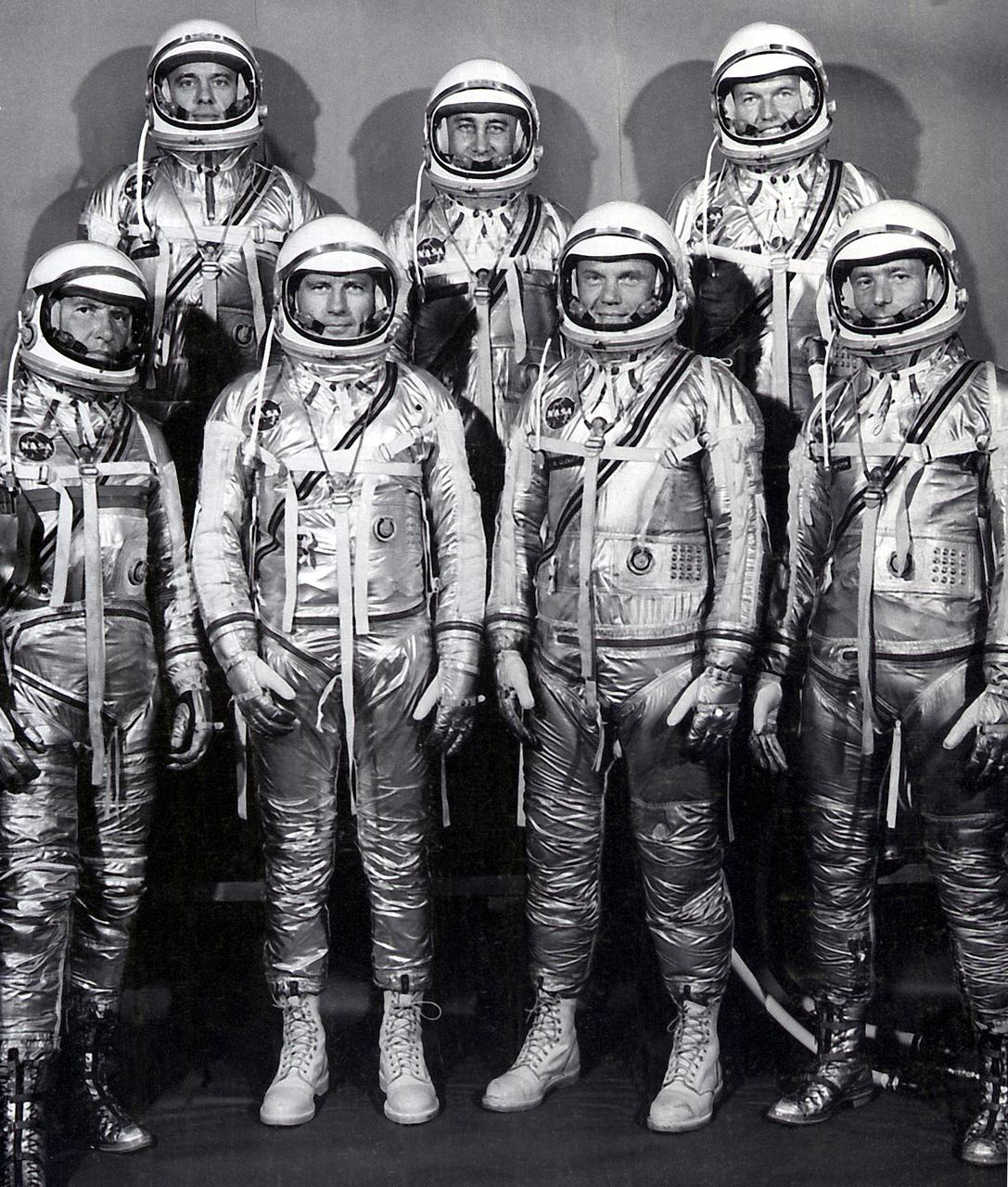
The group portrait of the original seven astronauts for the Mercury Project. NASA selected its first seven astronauts on April 27, 1959. Left to right at front: Walter M. Wally Schirra, Donald K. Deke Slayton, John H. Glenn, Jr., and Scott Carpenter. Left to right at rear: Alan B. Shepard, Virgil I. Gus Grissom, and L. Gordon Cooper, Jr.
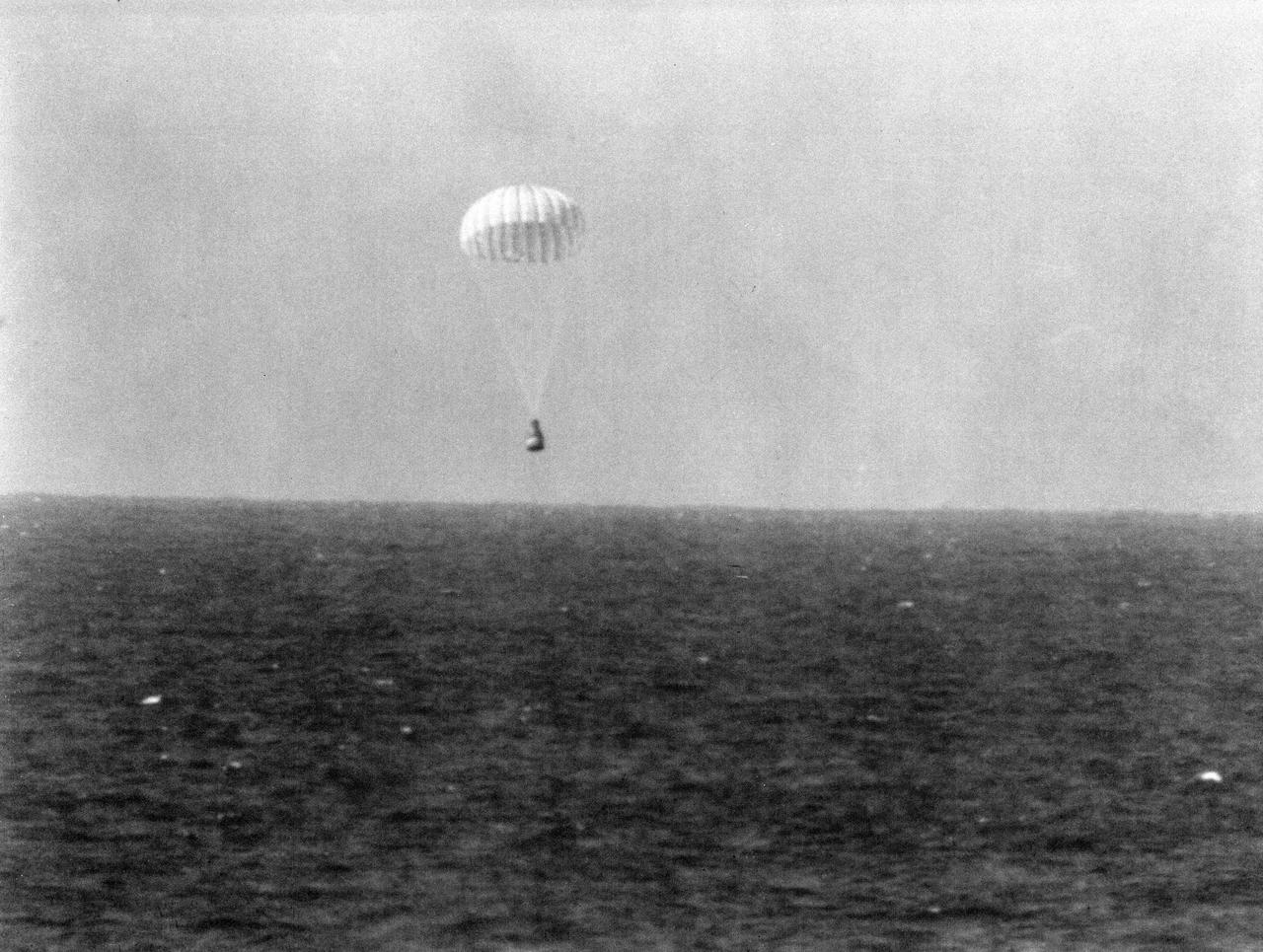
S62-04534 (3 Oct. 1962) --- Landing with parachute extended of astronaut Walter M. Schirra's Mercury-Atlas 8 (MA-8) capsule, called the Sigma 7, after a world orbital flight. Photo credit: NASA
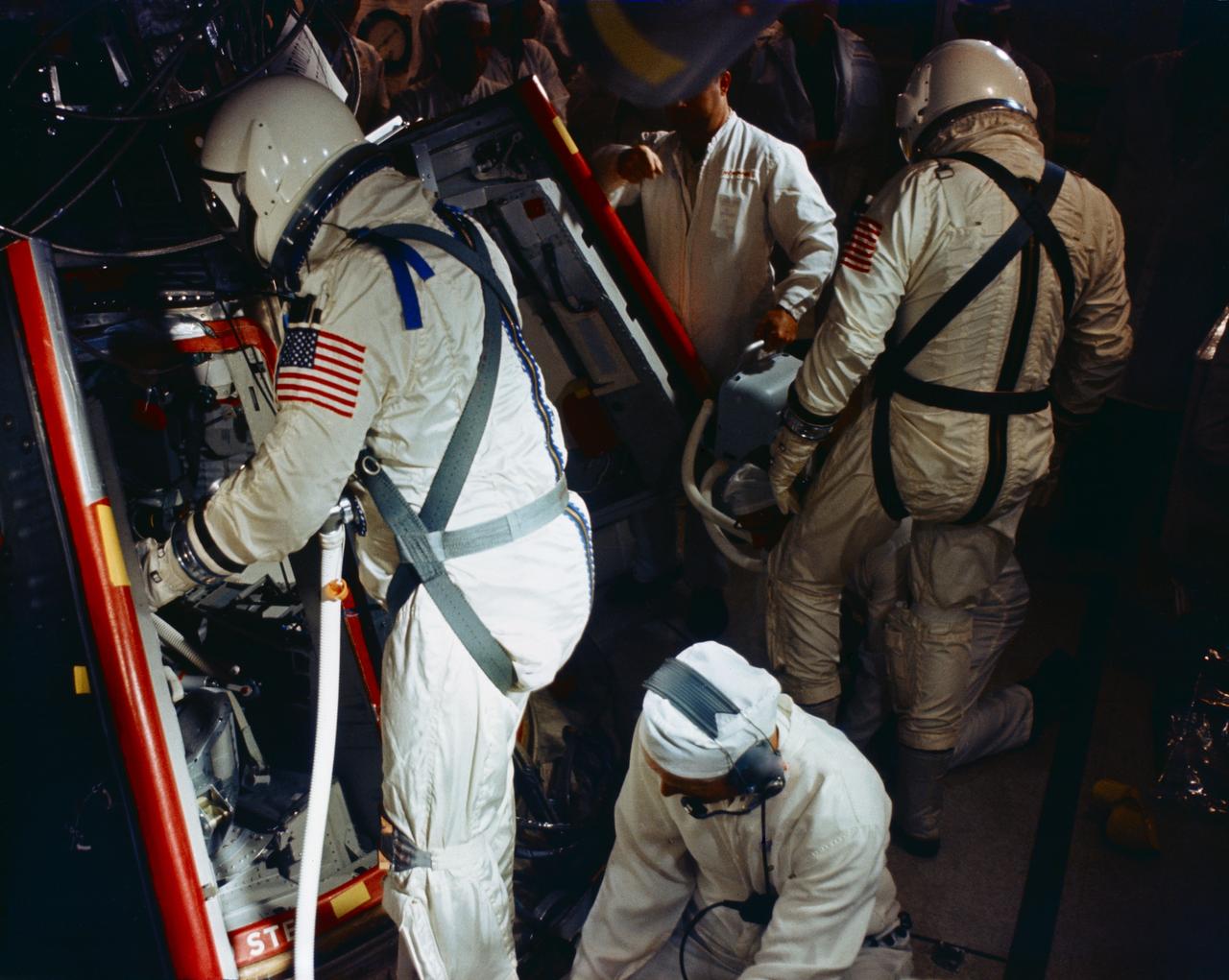
S65-56196 (25 Oct. 1965) --- Astronauts Walter M. Schirra Jr., command pilot; and Thomas P. Stafford, pilot, stand in the white room atop Pad 19 awaiting insertion into their Gemini-6 spacecraft during the prelaunch countdown of the Gemini-Titan-Agena 6 space mission. However, the Gemini-6 liftoff scheduled for Oct. 25 never occurred. The Agena, intended as a rendezvous target vehicle in the mission, failed to achieve orbit. Photo credit: NASA or National Aeronautics and Space Administration
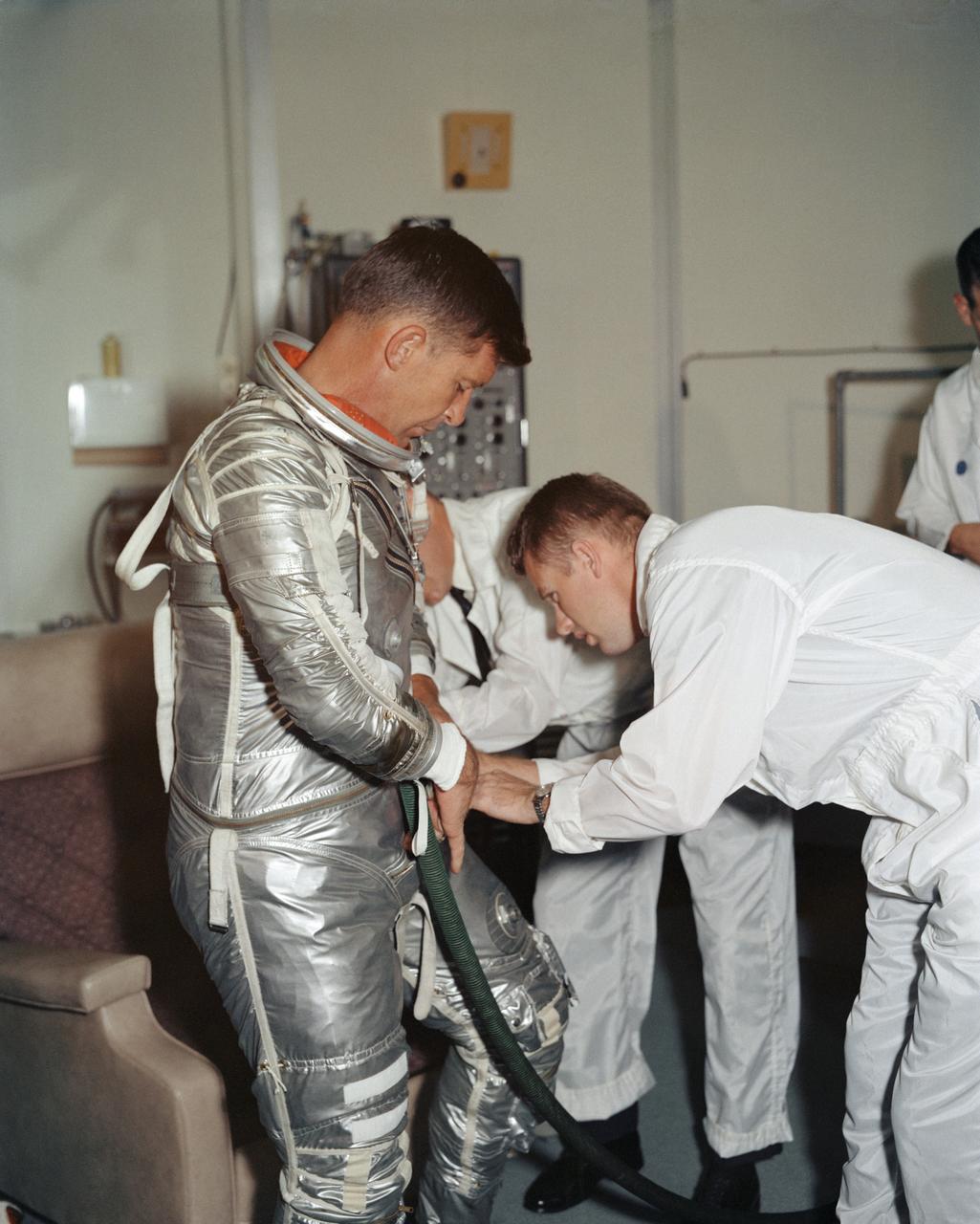
S62-08895 (1962) --- Astronaut Walter M. Schirra Jr., pilot of the Mercury-Atlas 8 (MA-8) Earth-orbital spaceflight, goes through a suiting-up exercise in Hangar "S" at Cape Canaveral several weeks prior to his scheduled Oct. 3, 1962 flight. Photo credit: NASA
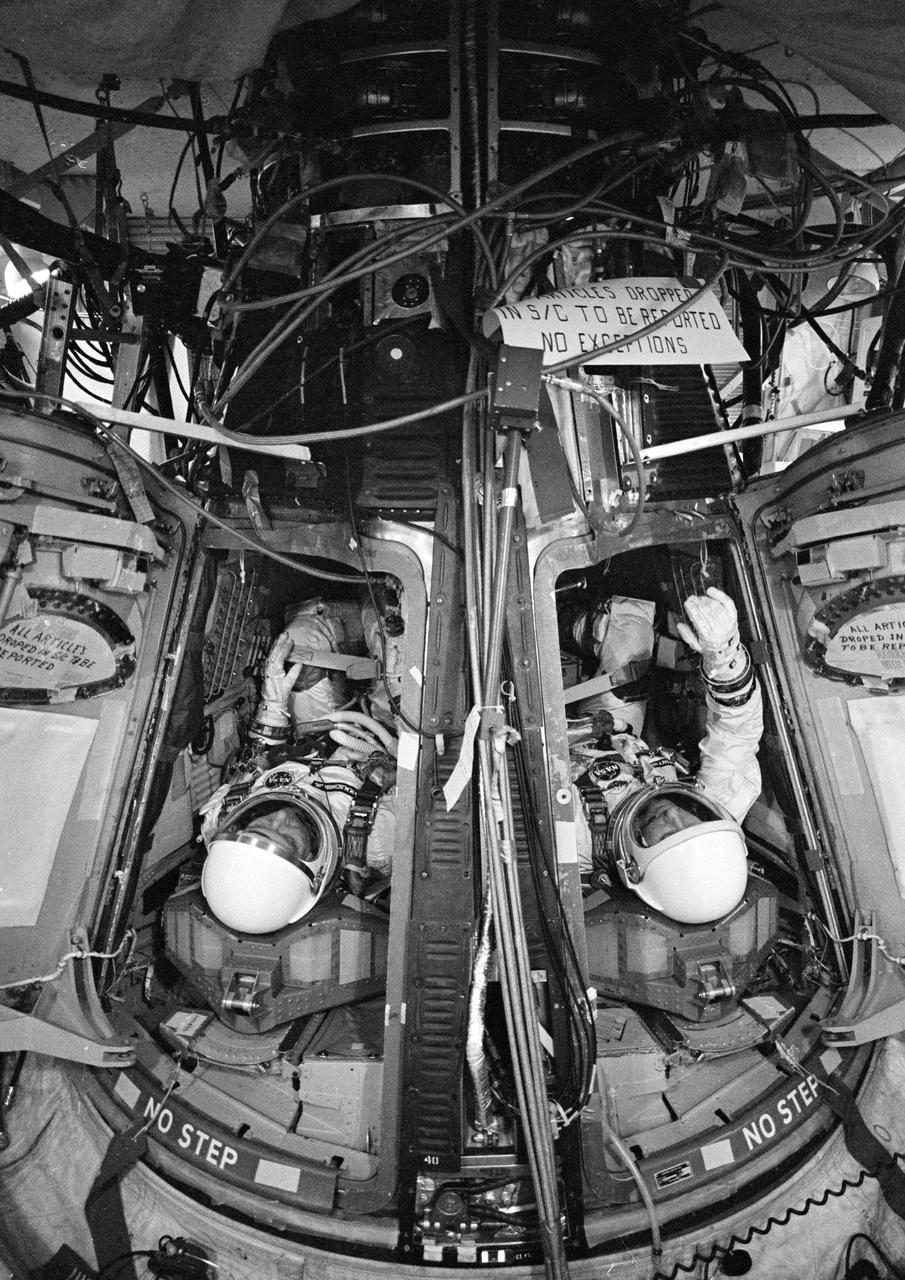
S65-56177 (1965) --- Gemini-6 astronauts Walter M. Schirra Jr., command pilot, and Thomas P. Stafford, pilot, check out the spacecraft during a simulated test at Launch Complex 19 at Cape Canaveral, Florida. Photo credit: NASA or National Aeronautics and Space Administration
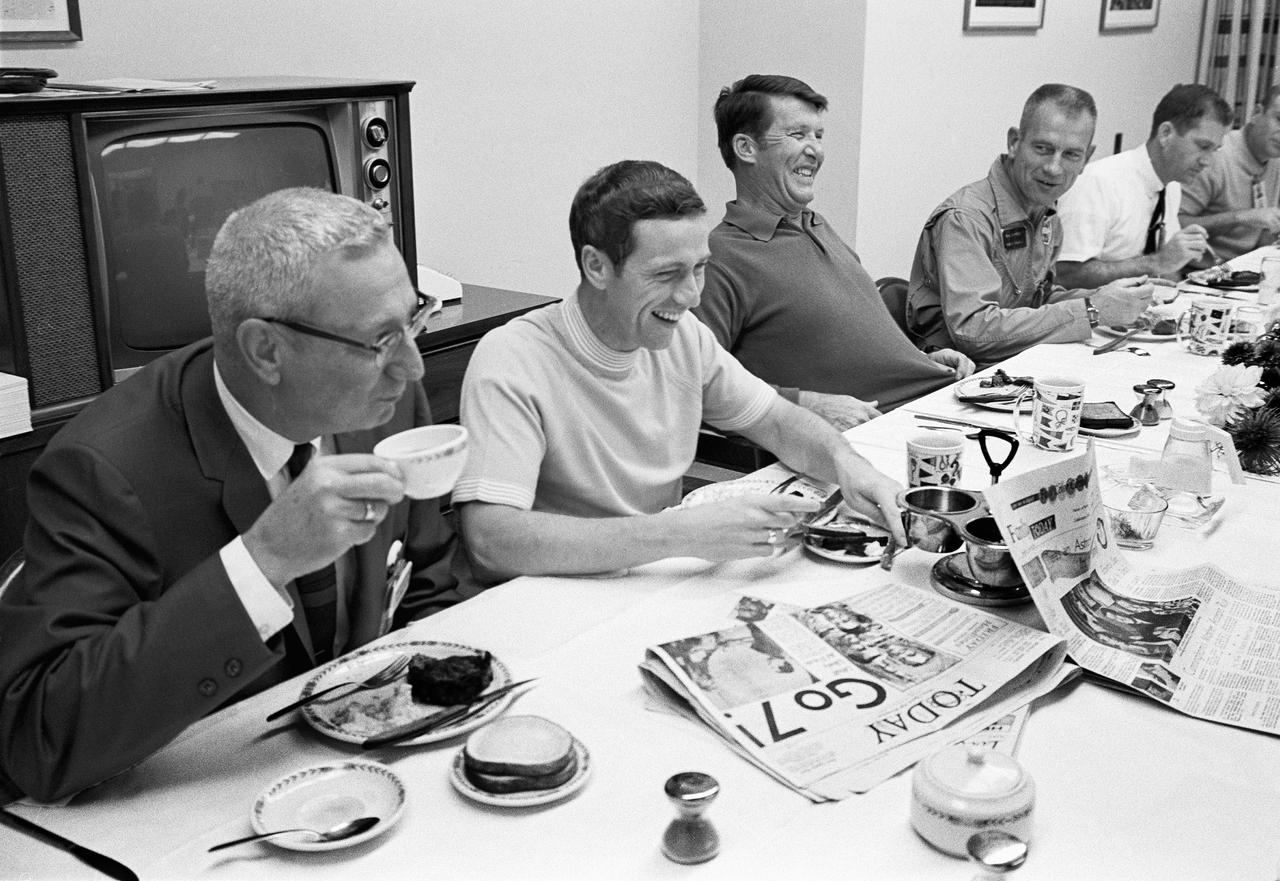
CAPE CANAVERAL, Fla. -- Two of the three Apollo 7 astronauts breakfast with National Aeronautics and Space Administration officials at KSC prior to their Earth orbital mission with astronaut Walter Cunningham, not shown. Photo credit: NASA
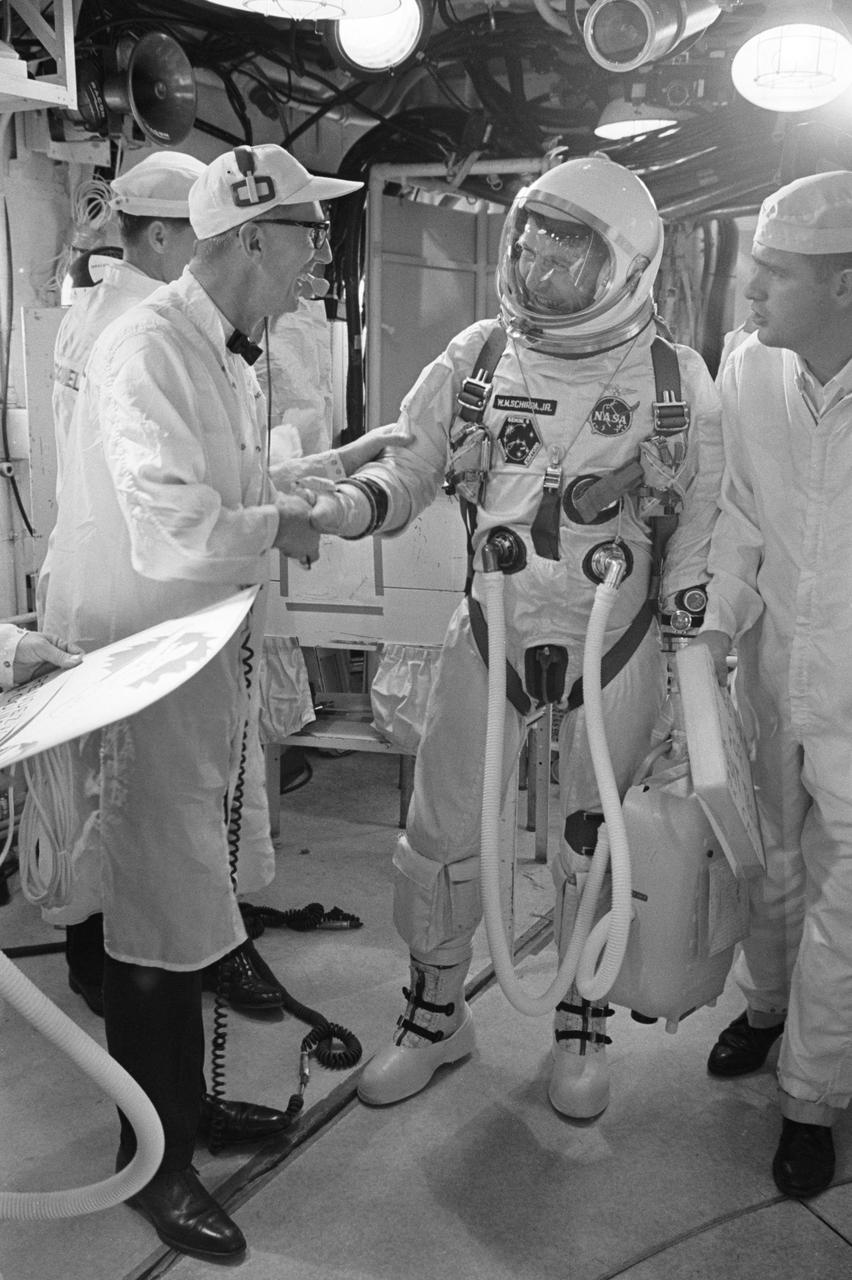
S65-61912 (12 Dec. 1965) --- Astronaut Walter M. Schirra Jr., command pilot, accepts the best wishes of G.F. Wendt, McDonnell Aircraft Corporation pad leader, as he arrives in the white room atop Pad 19. Moments later, Schirra and astronaut Thomas P. Stafford, pilot, entered the spacecraft for their planned two-day mission. At right is NASA suit technician Al Rochford. NASA attempted to launch Gemini-6 at 9:54 a.m. (EST) on Dec. 12, 1965. However, seconds after ignition the first stage engine of the Gemini-6 launch vehicle shut down due to a faulty release of a liftoff umbilical plug. Photo credit: NASA or National Aeronautics and Space Administration
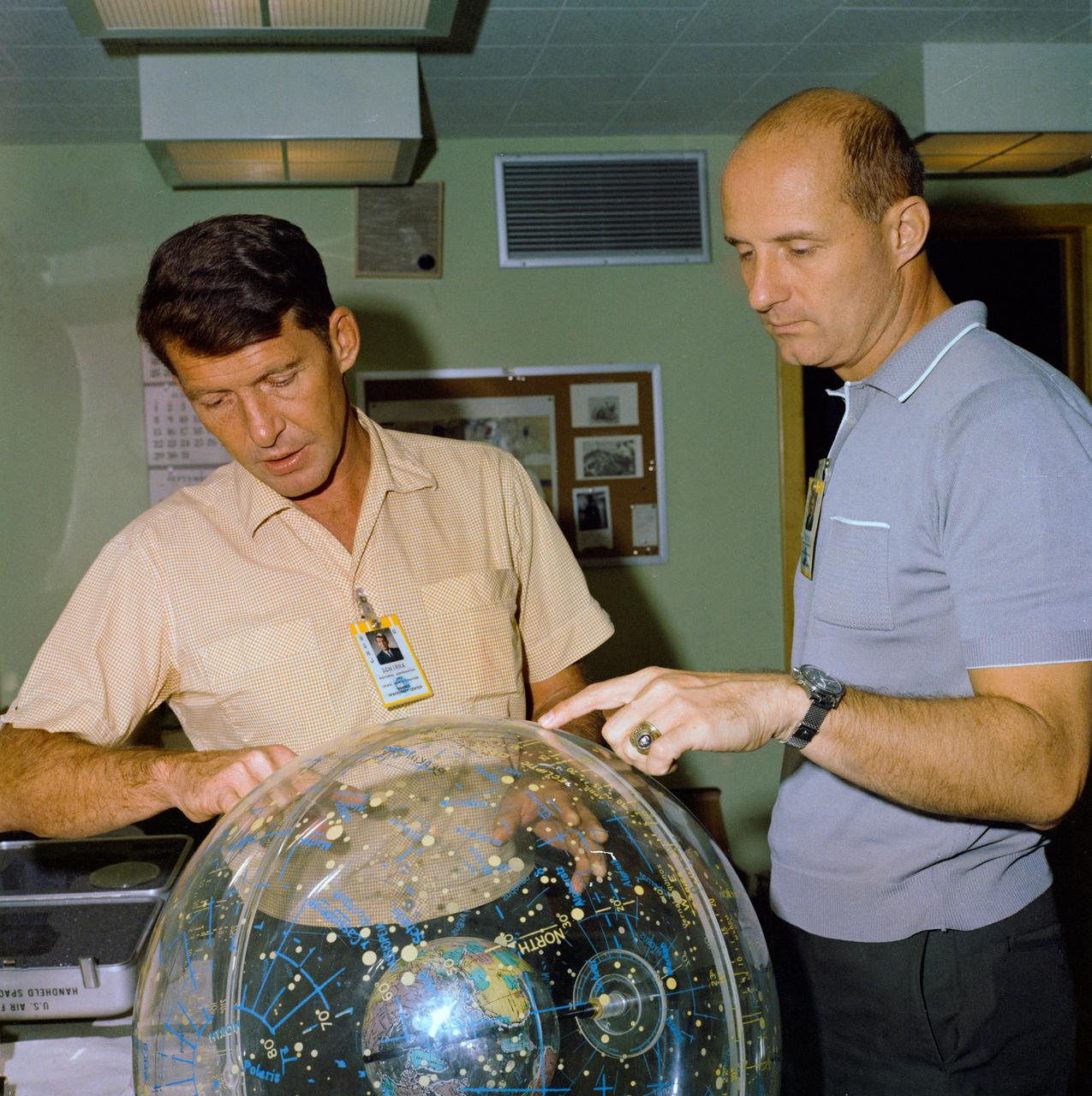
S65-56185 (21 Oct. 1965) --- Gemini-6 astronauts Walter M. Schirra Jr. (left), command pilot; and Thomas P. Stafford, pilot, look at a star globe for celestial pattern recognition for their upcoming flight. The National Aeronautics and Space Administration (NASA) plans a two-day mission for Gemini-6 for the astronauts to develop the ability to rendezvous and dock with an orbiting Agena Target Docking Vehicle. Photo credit: NASA or National Aeronautics and Space Administration
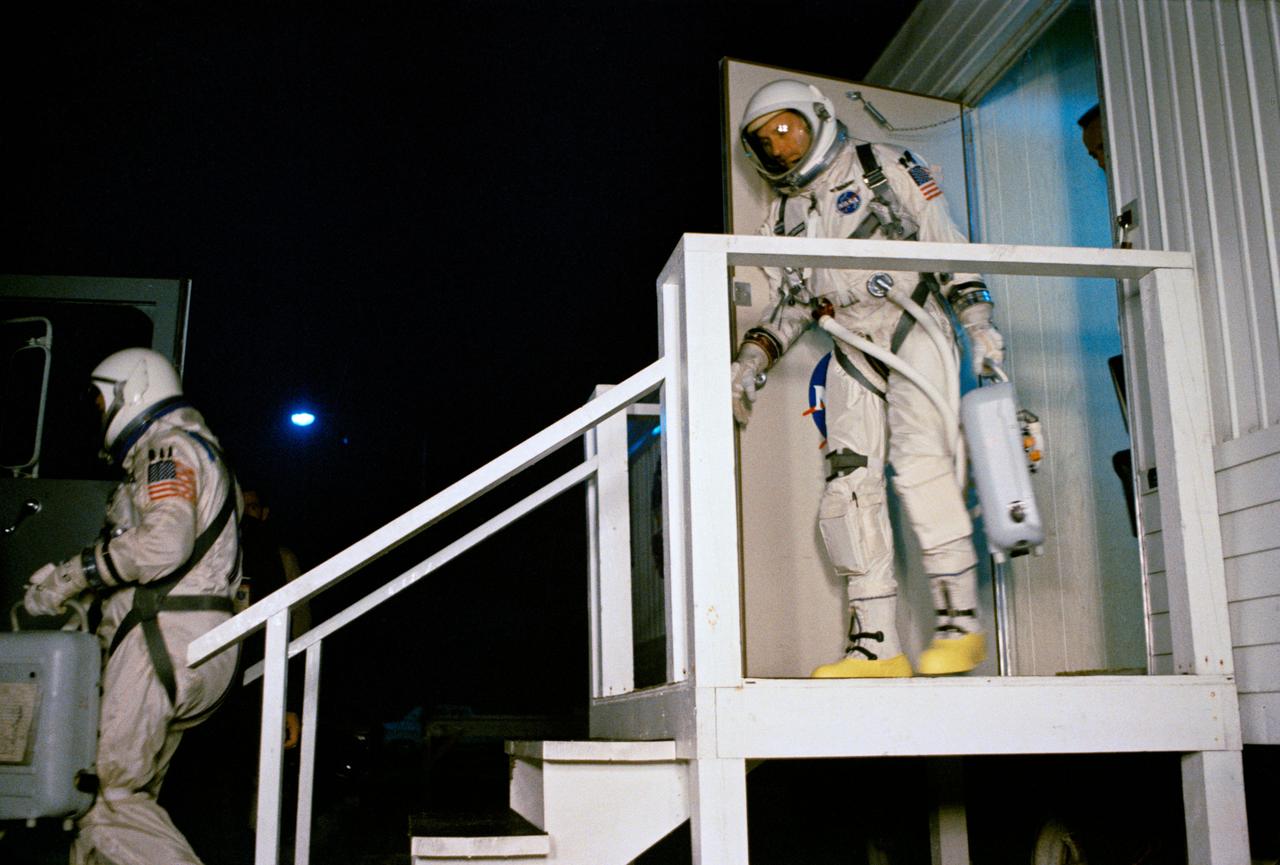
S65-59974 (15 Dec. 1965) --- Astronauts Walter M. Schirra Jr. (leading), command pilot; and Thomas P. Stafford, pilot, leave the suiting trailer at Launch Complex 16 during the Gemini-6 prelaunch countdown at Cape Kennedy, Florida. They entered a special transport van which carried them to Pad 19 and their spacecraft. Gemini-6 lifted off at 8:37 a.m. (EST) on Dec. 15, 1965. Photo credit: NASA or National Aeronautics and Space Administration
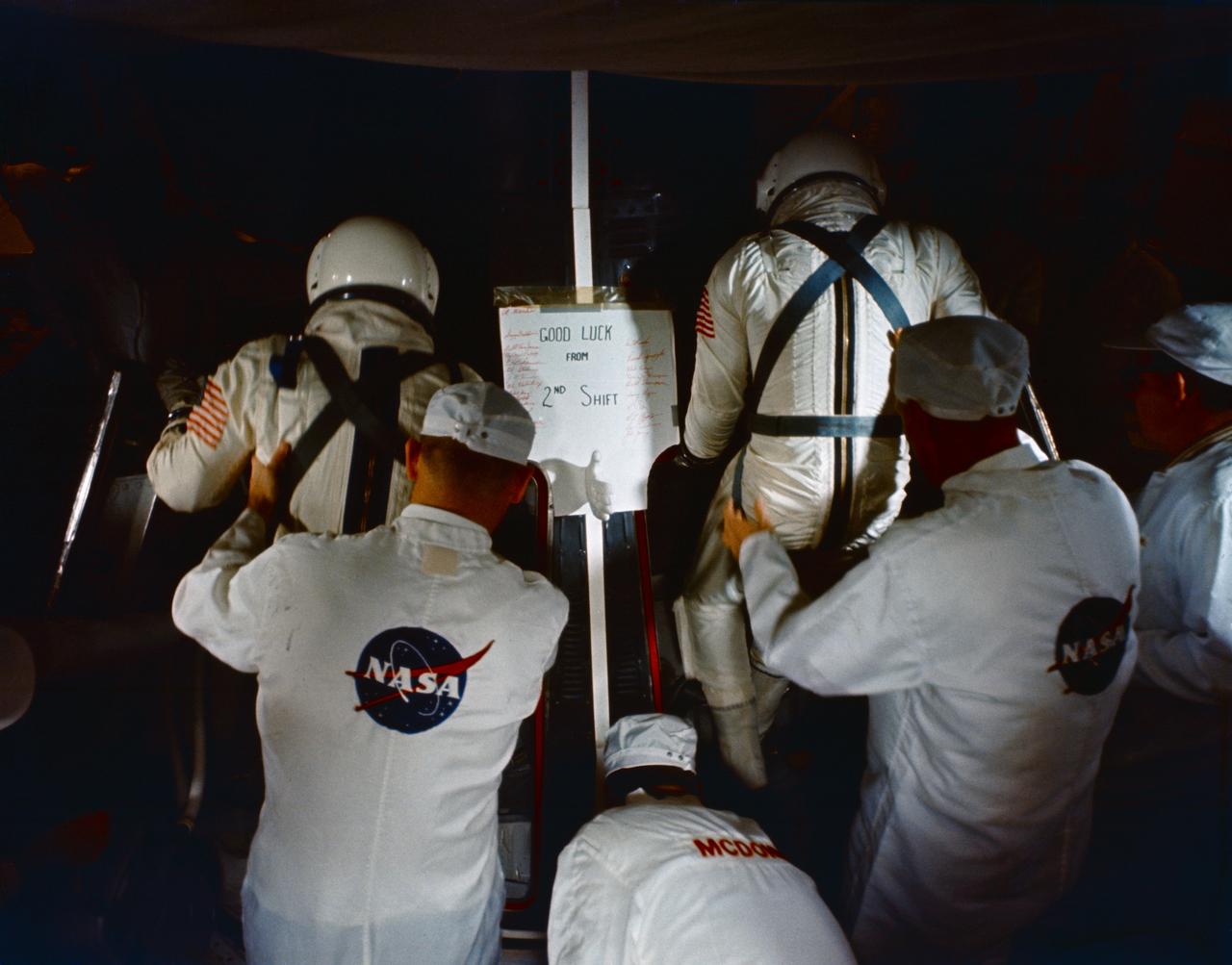
S65-59984 (15 Dec. 1965) --- NASA and McDonnell technicians assist the Gemini-6 prime crew into the spacecraft in the white room atop Pad 19 during the Gemini-6 prelaunch countdown at Cape Kennedy, Florida. Astronaut Walter M. Schirra Jr., command pilot, is on the left; and astronaut Thomas P. Stafford, pilot, is on the right. Liftoff was at 8:37 a.m. (EST) on Dec. 15, 1965. Photo credit: NASA or National Aeronautics and Space Administration
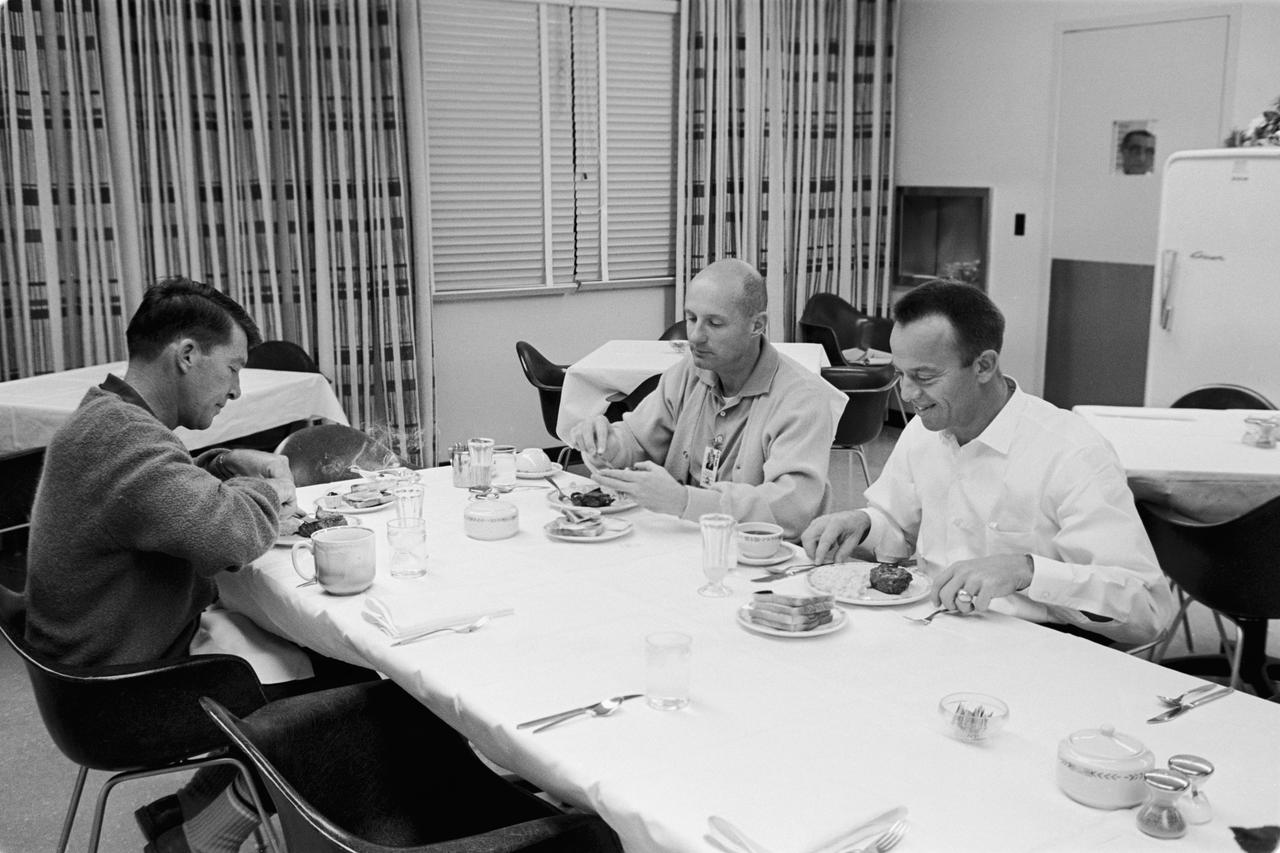
S65-61880 (15 Dec. 1965) --- Astronauts Walter M. Schirra Jr. (left), command pilot; and Thomas P. Stafford (center), pilot, enjoy a breakfast of steak and eggs in the Manned Spacecraft Operations Building, Merritt Island, during the Gemini-6 prelaunch countdown. Seated at right is astronaut Alan B. Shepard Jr., chief, Astronaut Office, Manned Spacecraft Center, Houston, Texas. Gemini-6 was successfully launched from Pad 19 at 8:37 a.m. (EST), Dec. 15, 1965. Photo credit: NASA or National Aeronautics and Space Administration
Astronauts at 1959 Langley Inspection. Astronauts at 1959 Langley Inspection: The seven are shown in the Unitary Plan Wind Tunnel NASA Langley. The astronauts left to right: John H. Glenn Jr., M.Scot Carpenter, Virgil I.Grissom, Walter M. Schirra Jr., L. Gordon Cooper, Alan B. Shepard Jr.and Donald K. Slayton.
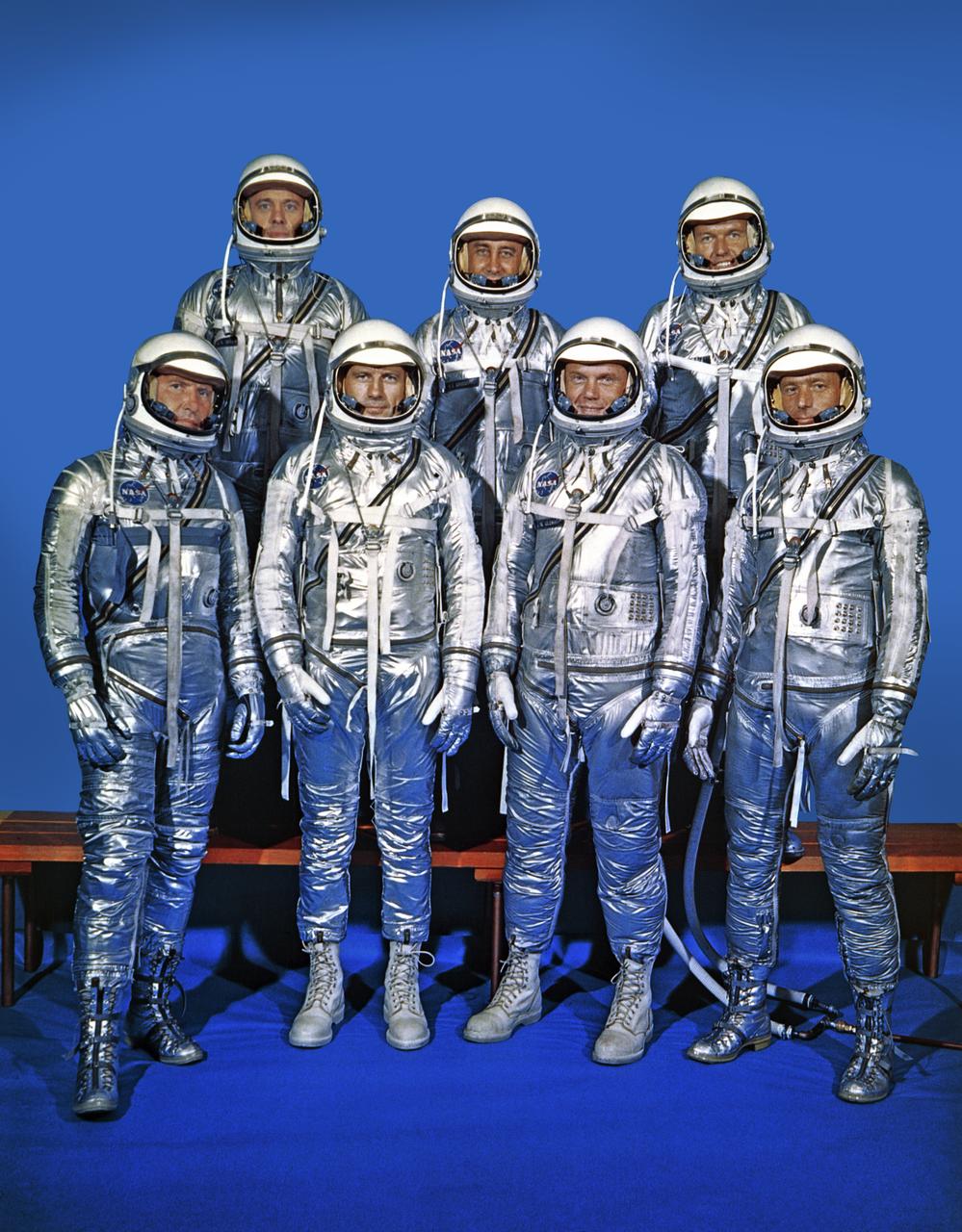
Press release information, September 13, 1968: "FIRST ASTRONAUT TEAM: Project Mercury Astronauts, whose selection was announced on April 9, 1959, only six months after the National Aeronautics and Space Administration was formally established on Oct. 1, 1958, Included: Front row, left to right, Walter M. Schirra, Jr., Donald K. Slayton, John H. Glenn, Jr., and M. Scott Carpenter; back row, Alan B. Shepard, Jr., Virgil I. "Gus" Grissom and L. Gordon Cooper. (1962), *89-361 Also in B&W. This copy of original negative was edited without shadows in the background. Photo taken at NASA Langley Research Center by Life Magazine photographer and negative copied for other centers.
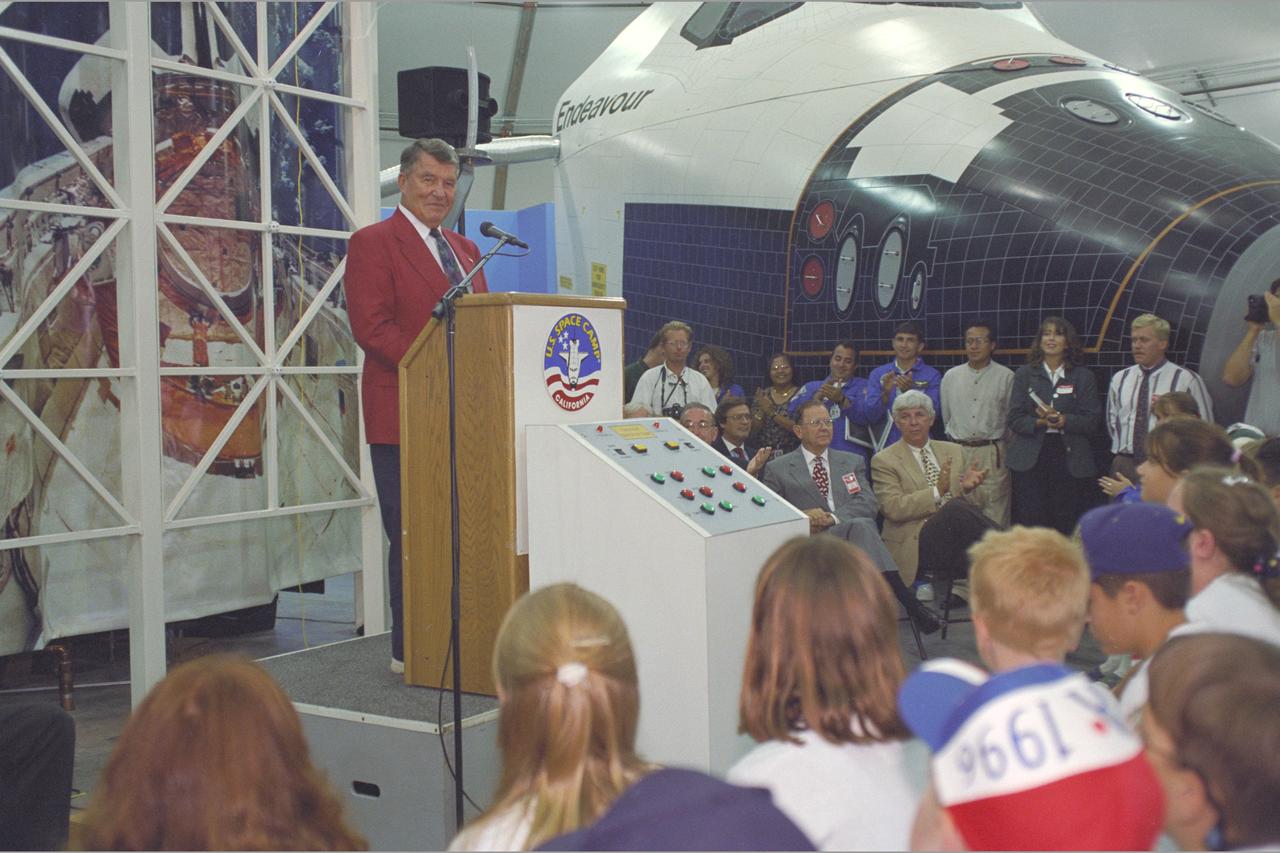
U.S. Space Camp California 'Day Camp' Grand Opening with speaker Astronaut Wally Schirra
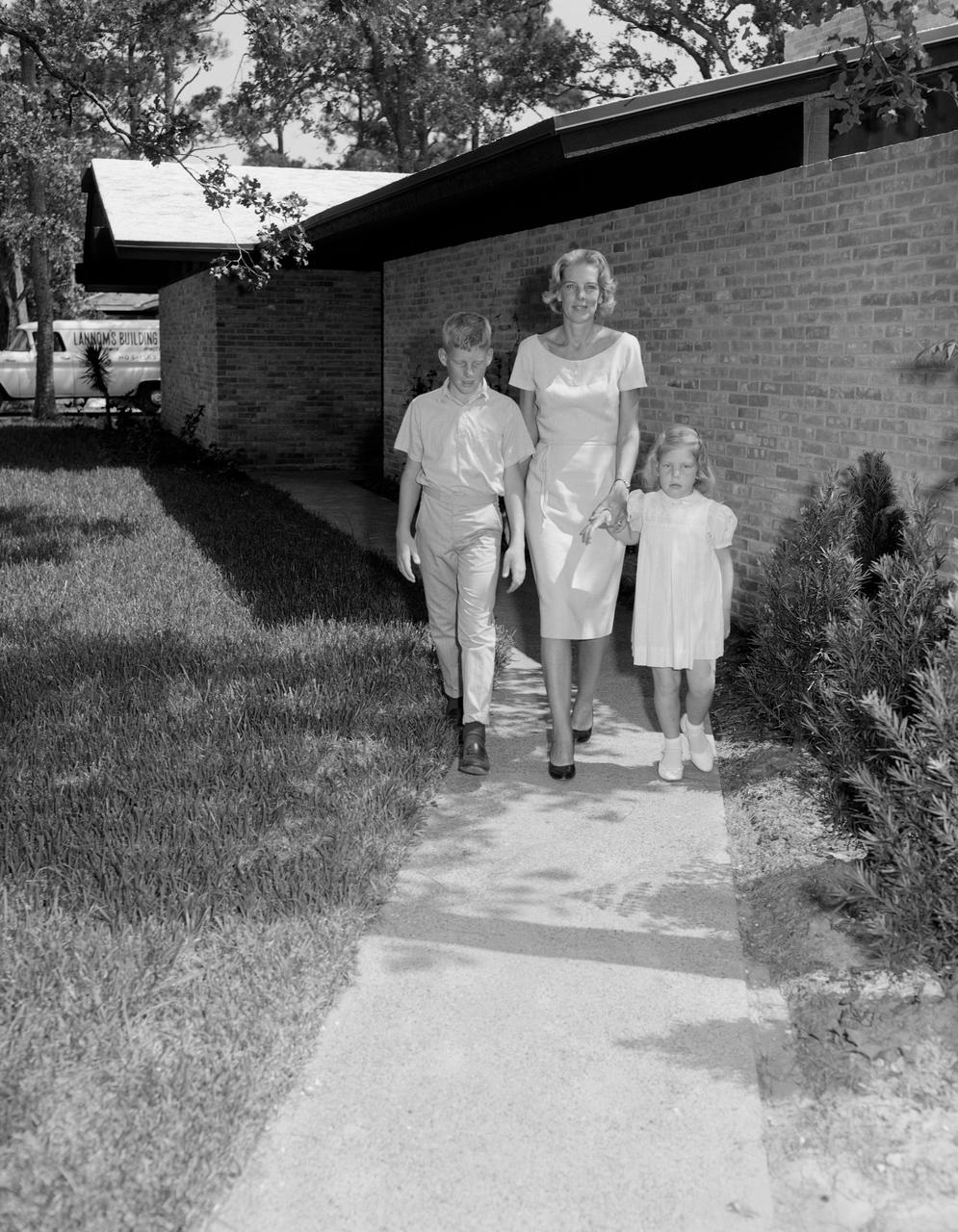
S62-04428 (1962) --- Mrs. Wally schirra and her two children leave the Farnsworth-Chambers Building after a brief visit in 1962. Photo credit: NASA
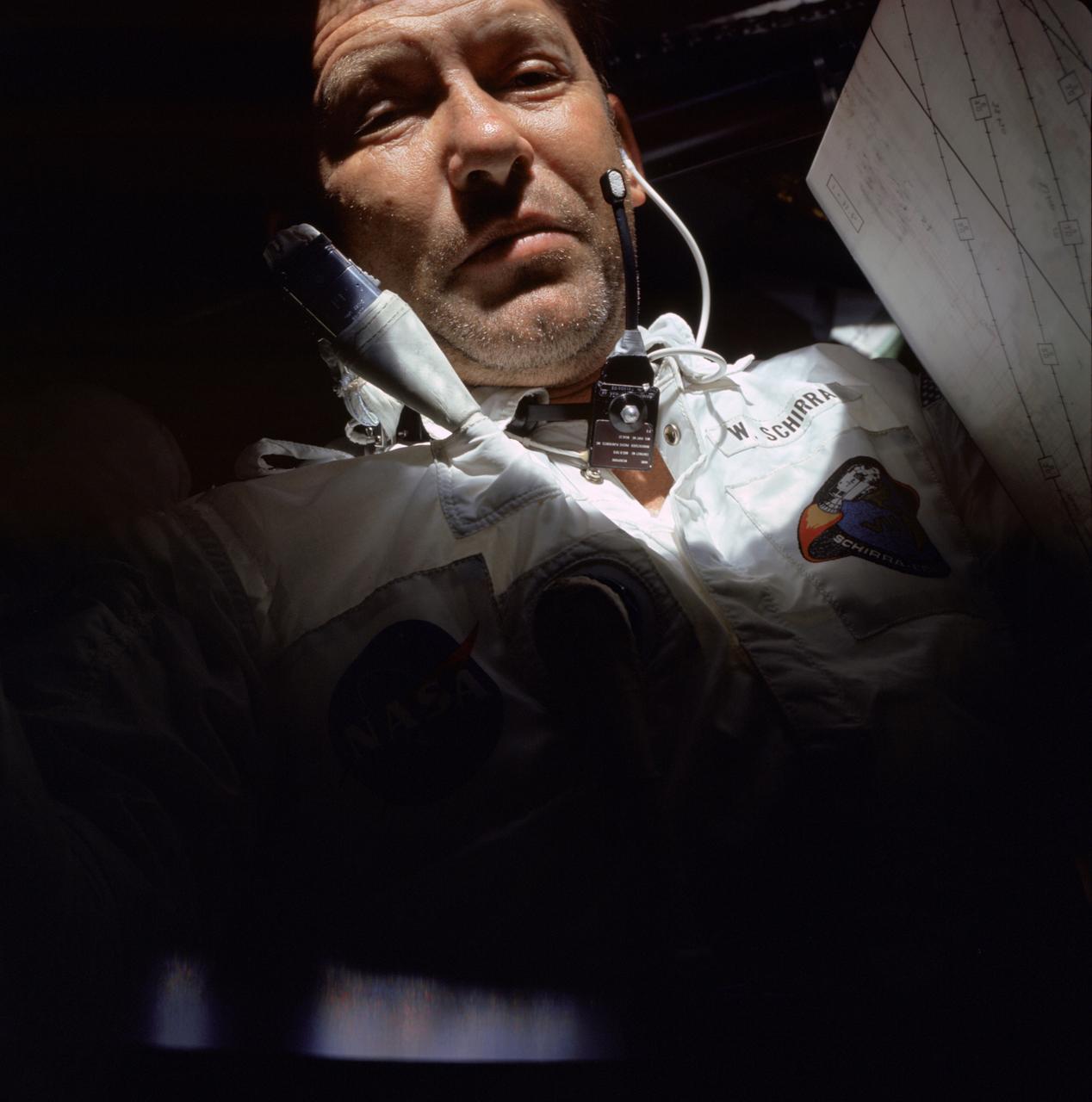
AS07-04-1582 (11-22 Oct. 1968) --- Astronaut Walter M. Schirra Jr., Apollo 7 commander, is photographed during the Apollo 7 mission.
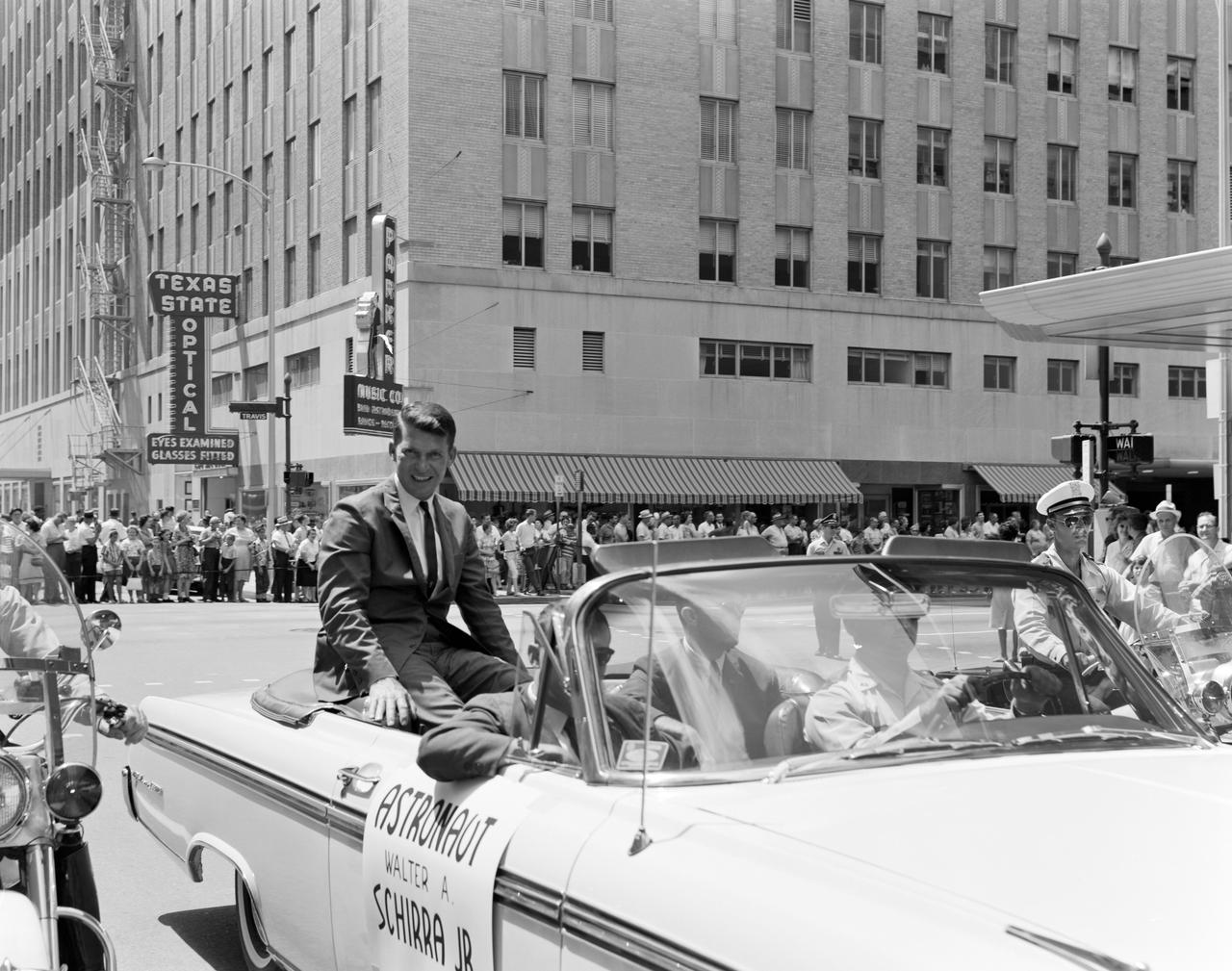
S62-03707 (1962) --- Astronaut Walter Schirra riding in back of a car during a welcome parade in Houston, Texas. Photo credit: NASA

S68-50713 (14 Oct. 1968) --- Astronauts Walter M. Schirra Jr. (on right), mission commander; and Donn F. Eisele, command module pilot; are seen in the first live television transmission from space. Schirra is holding a sign which reads, "Keep those cards and letters coming in, folks!" Out of view at left is astronaut Walter Cunningham, lunar module pilot.
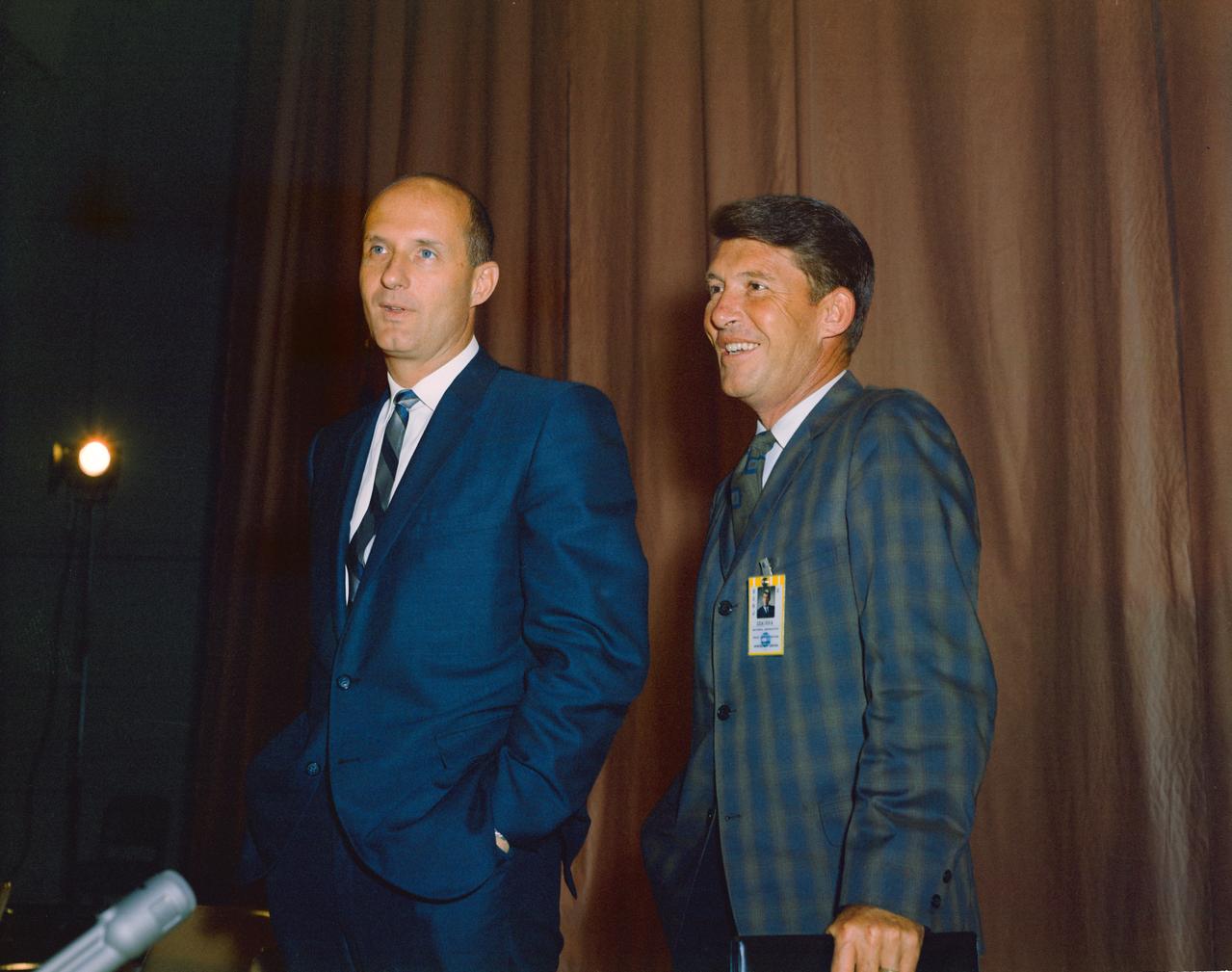
S65-19406 (6 April 1965) --- Astronauts Thomas P. Stafford (left), pilot; and Walter M. Schirra Jr., command pilot, have been named as the prime crew for the Gemini-Titan 6 spaceflight. Schirra and Stafford served as the GT-3 backup crew. Their selection for the GT-6 flight was announced at an MSC news conference on April 6, 1965.

KENNEDY SPACE CENTER, FLA. - Spacesuit technician Clyde Teague adjusts the gloves on Apollo 7 Commander Walter M. Schirra Jr., during suiting operations. Astronaut Schirra, along with Command Module Pilot Donn F. Eisele, and Lunar Module Pilot Walter Cunningham, after being suited up, will depart for Launch Pad 34 and board their Saturn 1B rocket for the first manned lunar orbital mission. .

S65-20431 (23 March 1965) --- Astronaut Virgil I. Grissom (right), the command pilot of the Gemini-Titan 3 three-orbit mission, is shown with astronaut Walter M. Schirra Jr. in the ready room at Pad 16. The GT-3 was launched from Pad 19 the same day. Schirra was the command pilot of the backup crew.
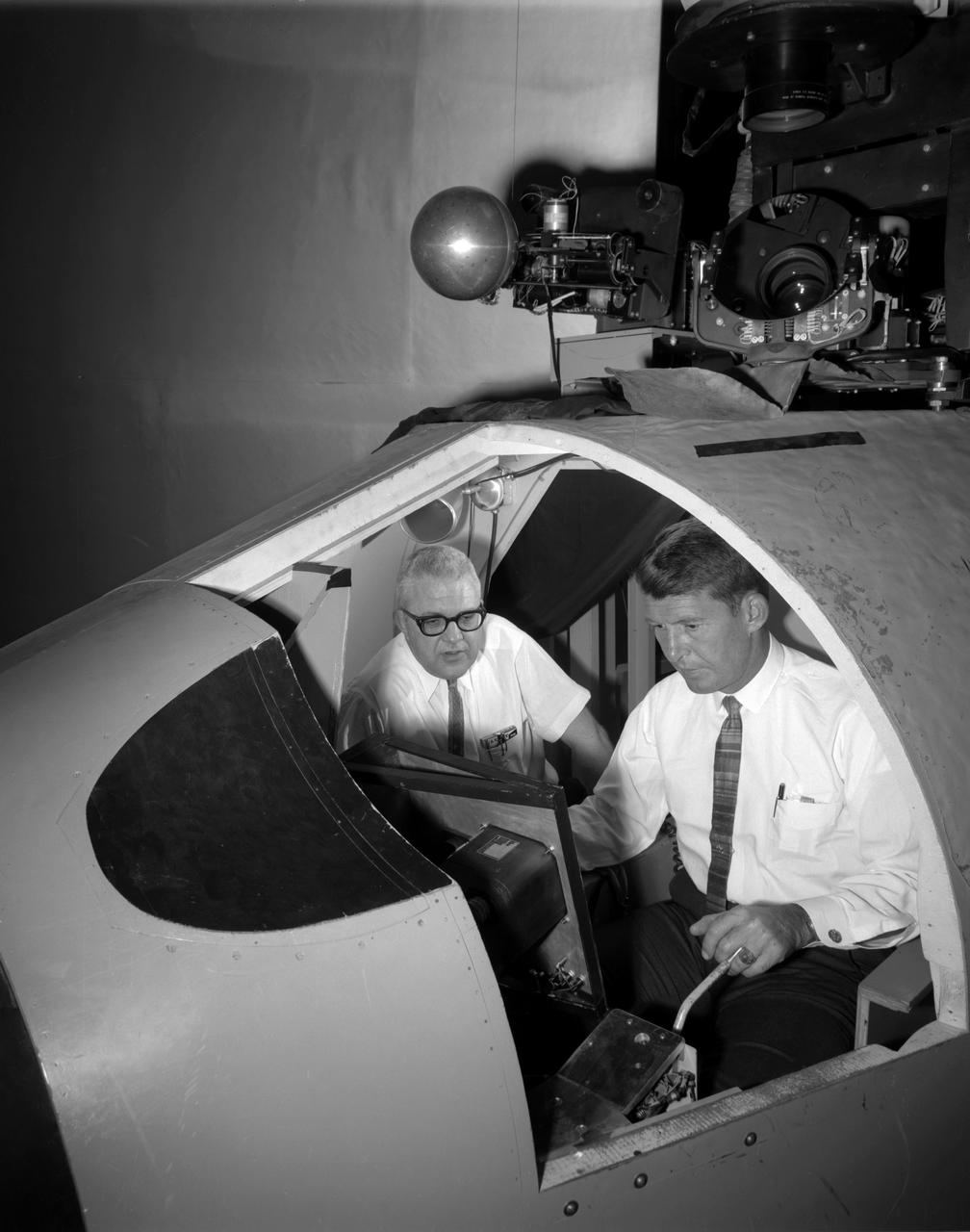
Walter (Wally) M. Schirra in Visual Docking Simulator From A.W. Vogeley, "Piloted Space-Flight Simulation at Langley Research Center," Paper presented at the American Society of Mechanical Engineers 1966 Winter Meeting, New York, NY, November 27-December 1, 1966. "This facility was [later known as the Visual-Optical Simulator. It presents to the pilot an out-the-window view of his target in correct 6 degrees of freedom motion. The scene is obtained by a television camera pick-up viewing a small-scale gimbaled model of the target. "For docking studies, the docking target picture was projected onto the surface of a 20-foot-diameter sphere and the pilot could, effectively, maneuver into contract. this facility was used in a comparison study with the Rendezvous Docking Simulator - one of the few comparison experiments in which conditions were carefully controlled and a reasonable sample of pilots used. All pilots preferred the more realistic RDS visual scene. The pilots generally liked the RDS angular motion cues although some objected to the false gravity cues that these motions introduced. Training time was shorter on the RDS, but final performance on both simulators was essentially equal. " "For station-keeping studies, since close approach is not required, the target was presented to the pilot through a virtual-image system which projects his view to infinity, providing a more realistic effect. In addition to the target, the system also projects a star and horizon background. "
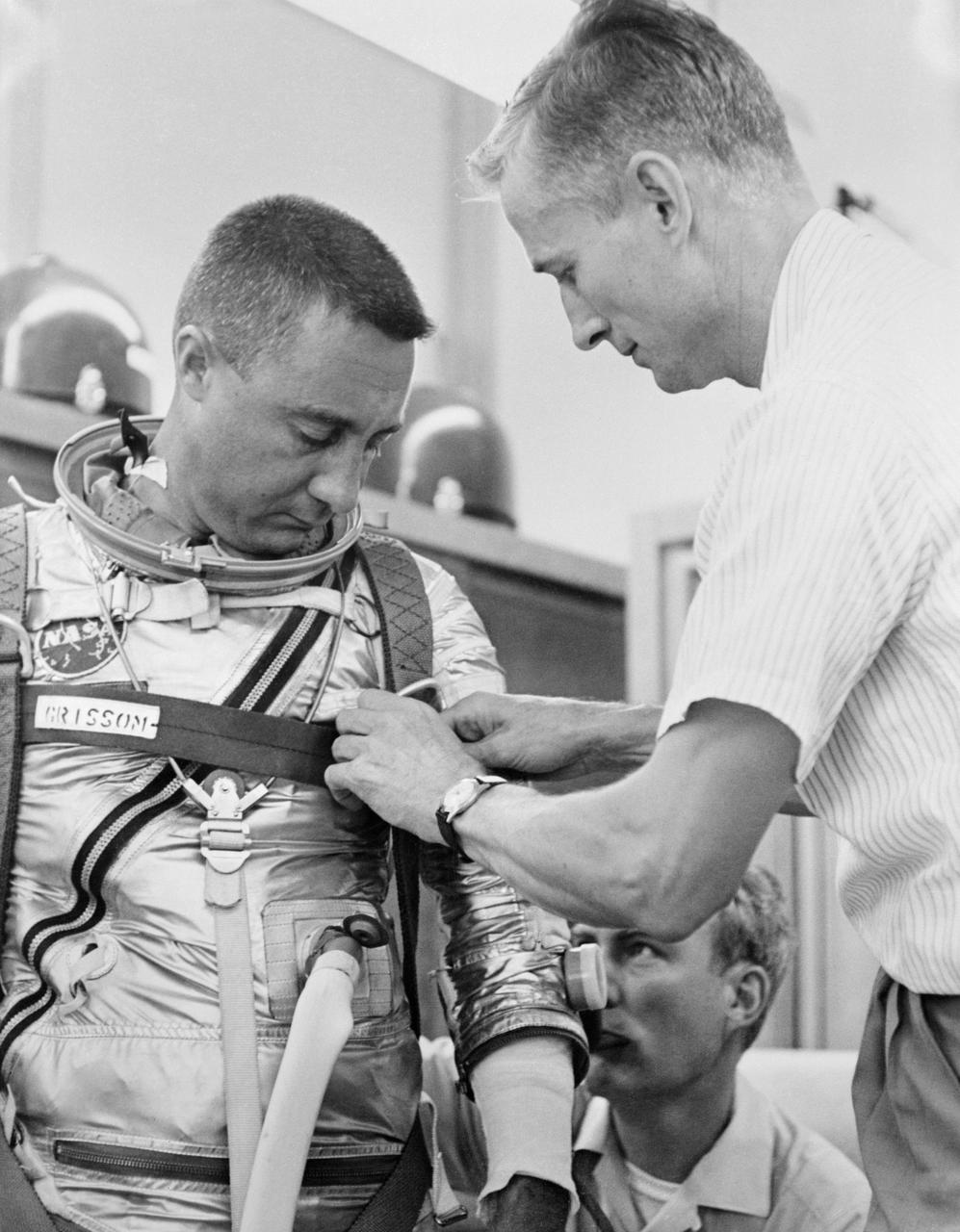
S61-02839 (1961) --- Astronaut Virgil I. (Gus) Grissom, pilot of the Mercury-Redstone 4 (MR-4) spaceflight, suits up for MR-4 simulation training. Assisting is suit technician Joe Schmitt. Photo credit: NASA
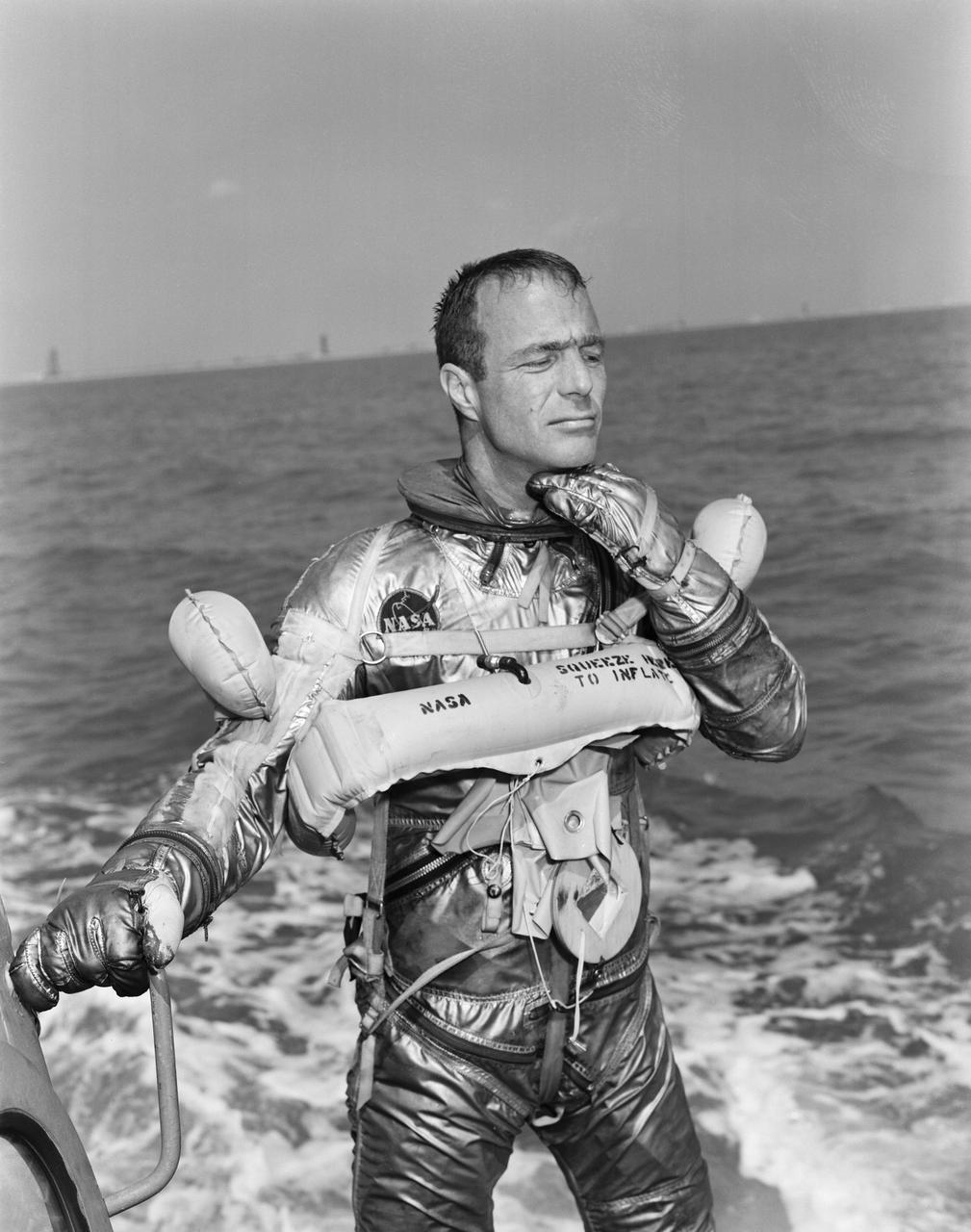
S62-01358 (1962) --- Project Mercury astronaut M. Scott Carpenter, prime pilot of the Mercury-Atlas 7 (MA-7) spaceflight, goes through a water egress test. He is in the Mercury pressure suit, without the helmet, and is wearing a life vest. Photo credit: NASA
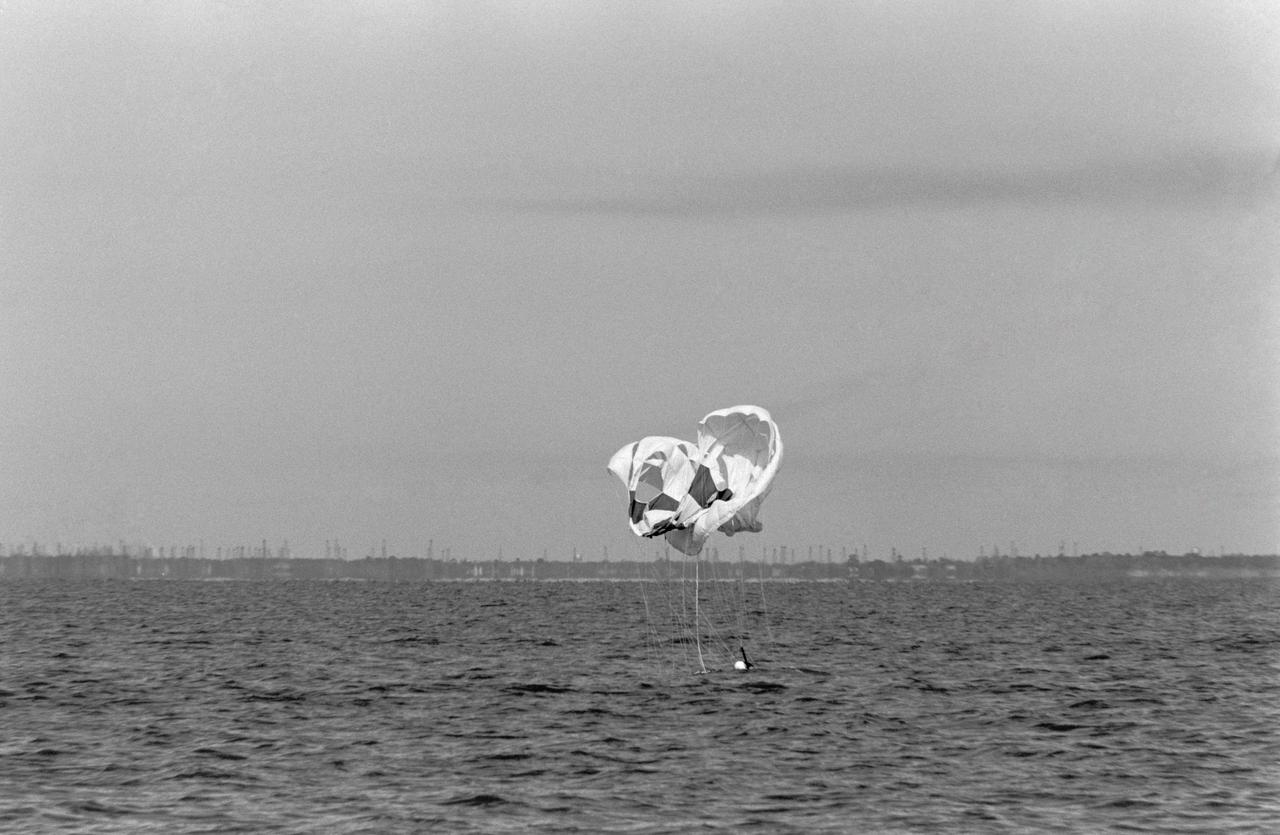
S65-10172 (2 Feb. 1965) --- Astronaut Walter M. Schirra Jr., the Gemini-Titan 3 backup crew command pilot, is shown during water egress para-drop training activity in nearby Galveston Bay.
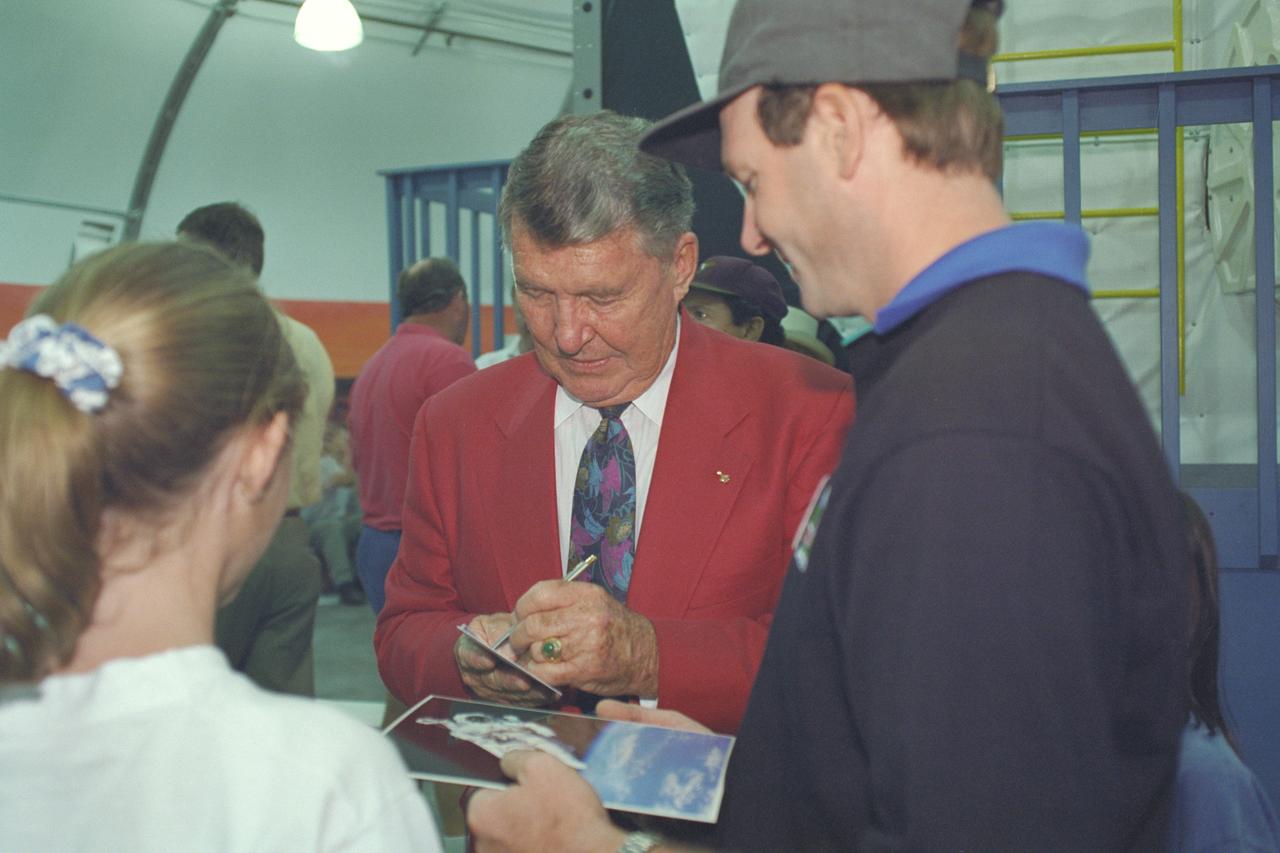
US SPACE CAMP CALIFORNIA - DAY CAMP GRAND OPENING WITH KEVIN JONES (WHISMAN SCHOOL) AND LUCRETIA SUTHERLIN (MCNAIR SCHOOL). AMES SPONSORED STUDENTS AND RACHAEL QUIRING (STAFF) - AUTOGRAPH SIGNING BY Astronaut Wally Schirra
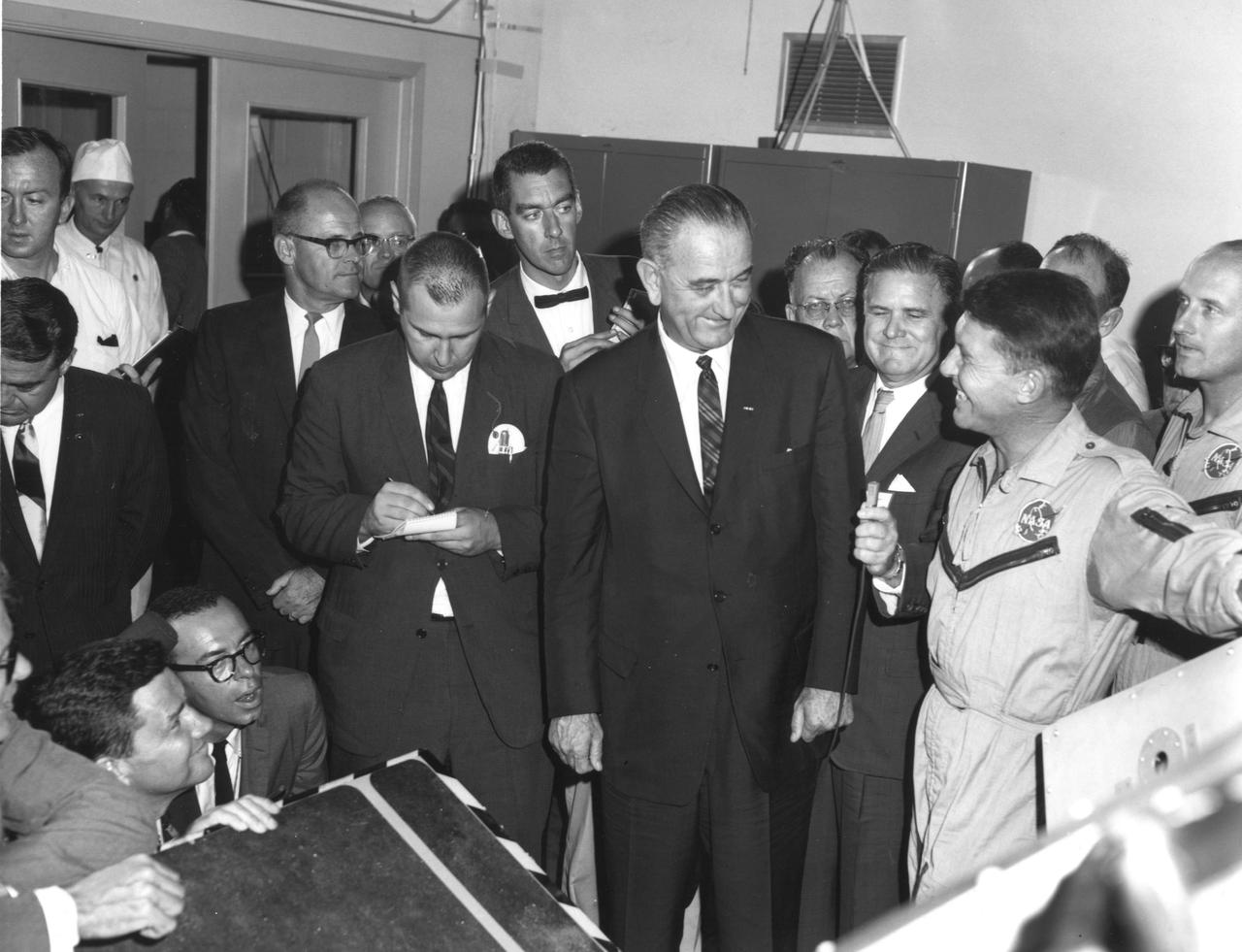
KENNEDY SPACE CENTER, FLA. -- NASA Administrator James T. Webb holds the microphone as President Lyndon B. Johnson (center) and astronaut Walter Schirra (right) converse during the President's visit to the Kennedy Space Center.
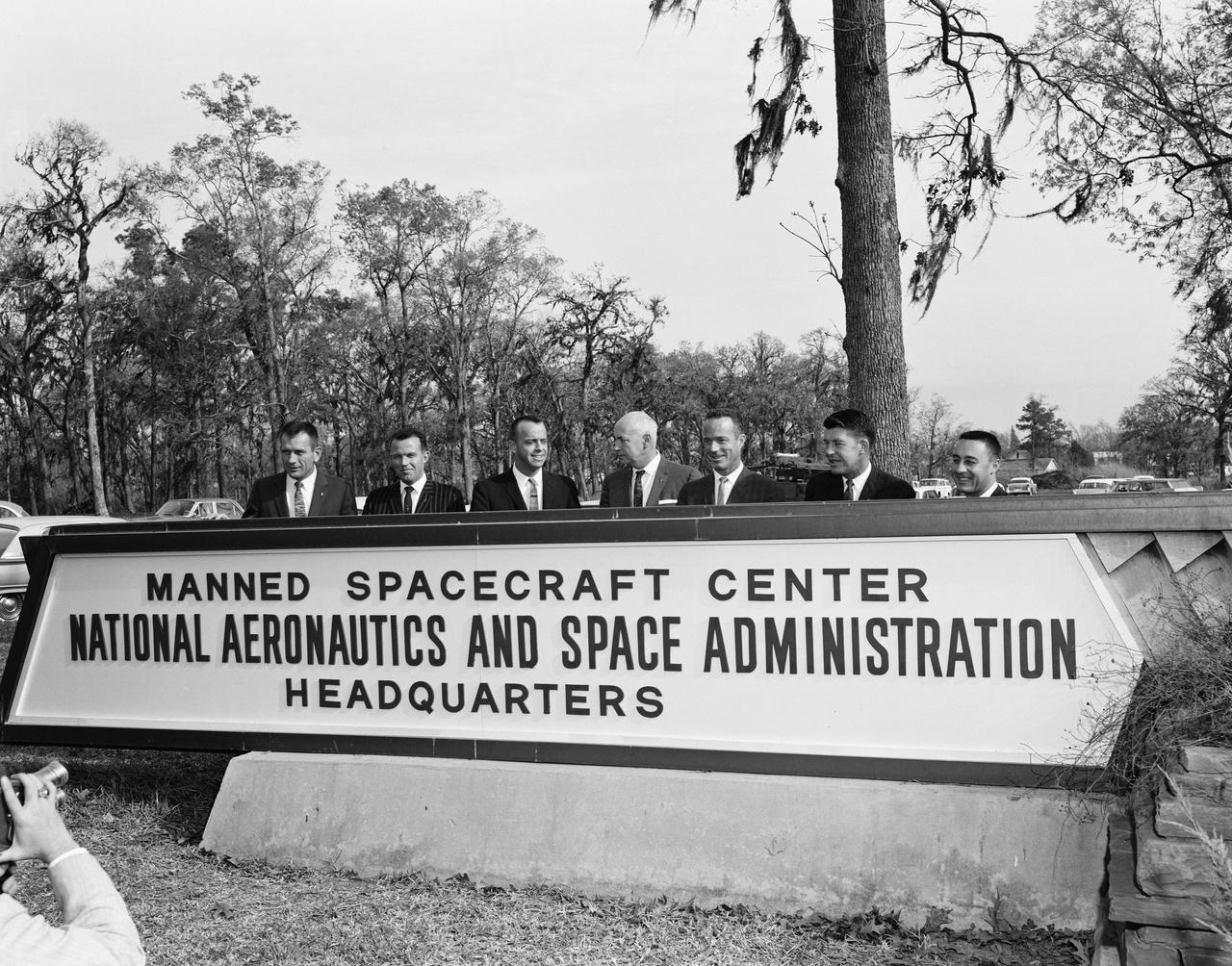
Astronaut Alan Shepard with Gilruth, and Astronauts Slayton, Cooper, Carpenter, Schirra, Grissom around the Manned Spacecraft Center (MSC) sign at the Farnsworth-Chambers Bldg. FARNSWORTH-CHAMBERS BLDG., HOUSTON, TX B&W
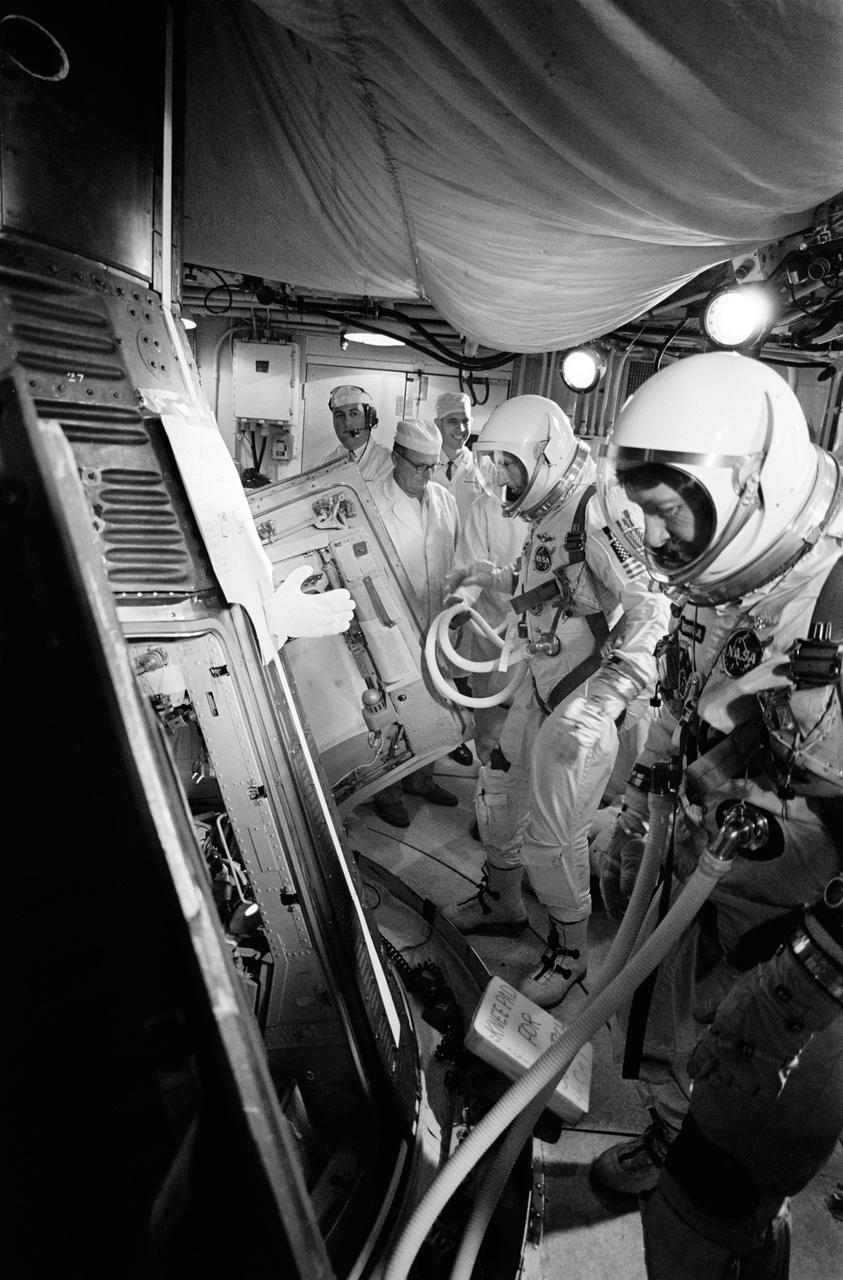
S65-66744 (15 Dec. 1965) --- Insertion of astronauts Walter M. Schirra Jr. (foreground) and Thomas P. Stafford into Gemini-6 spacecraft prior to launch. Photo credit: NASA or National Aeronautics and Space Administration
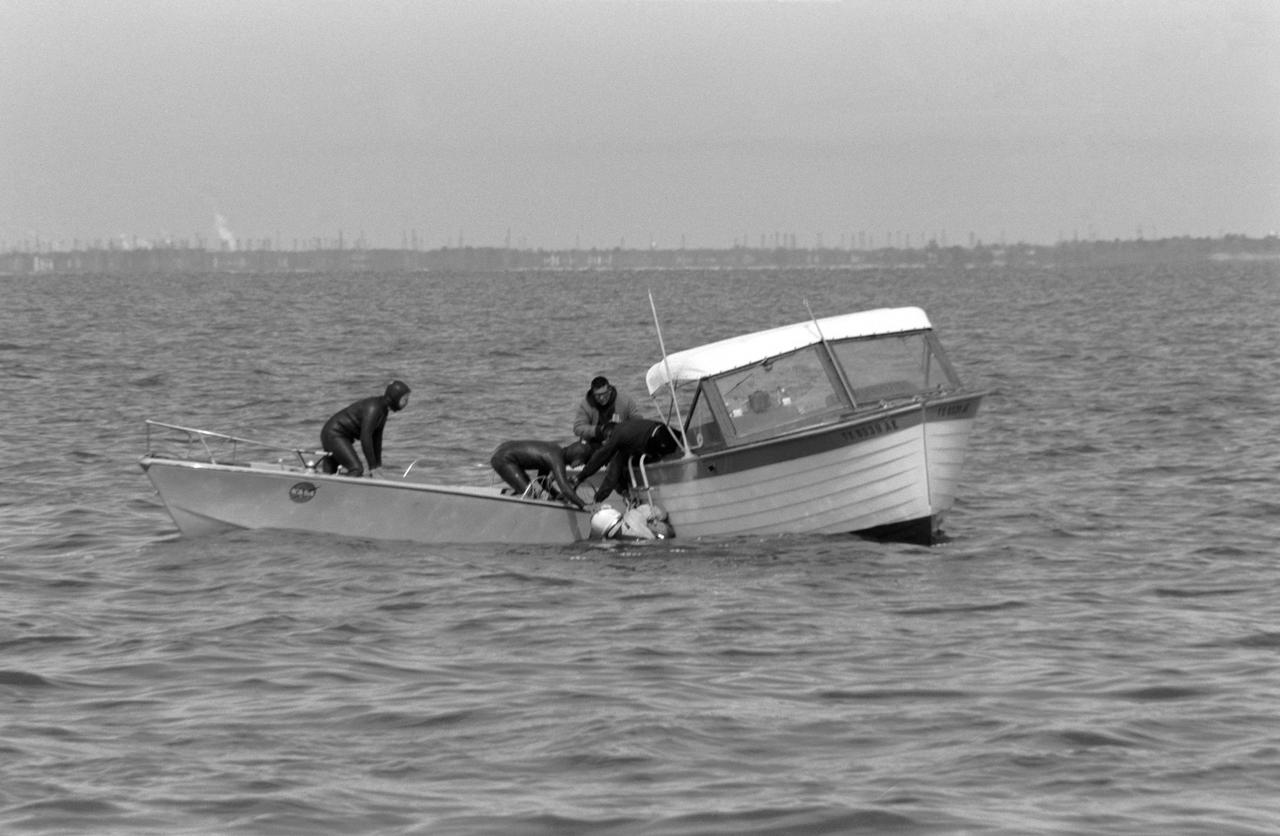
S65-10173 (2 Feb. 1965) --- Astronaut Walter M. Schirra Jr., the Gemini-Titan 3 backup crew command pilot, is shown during water egress para-drop training activity in nearby Galveston Bay.
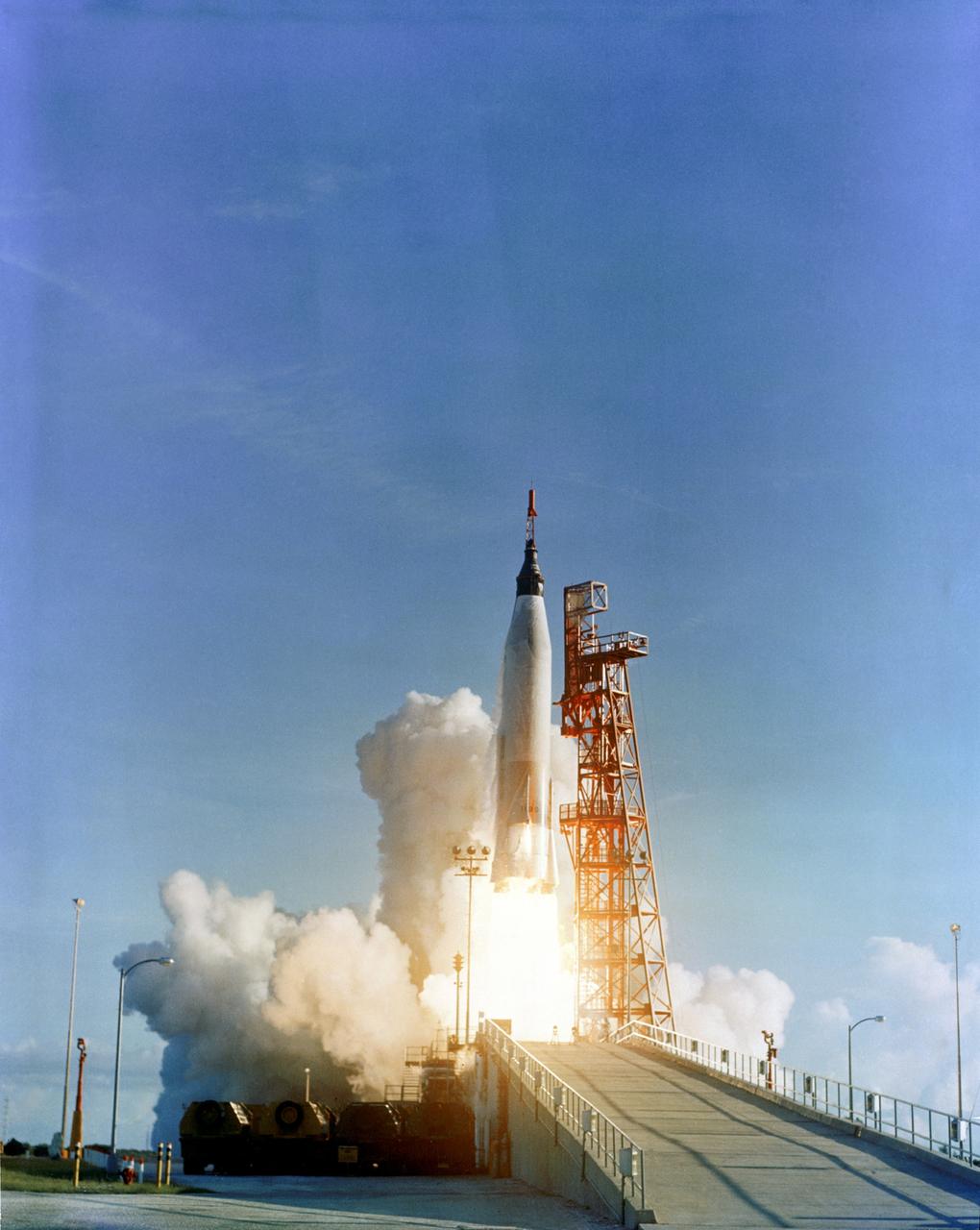
S62-07872 (3 Oct. 1962) --- Launch of the Mercury-Atlas 8 (MA-8) "Sigma 7" mission, carrying astronaut Walter M. Schirra Jr., pilot of the Earth-orbital spaceflight. Photo credit: NASA
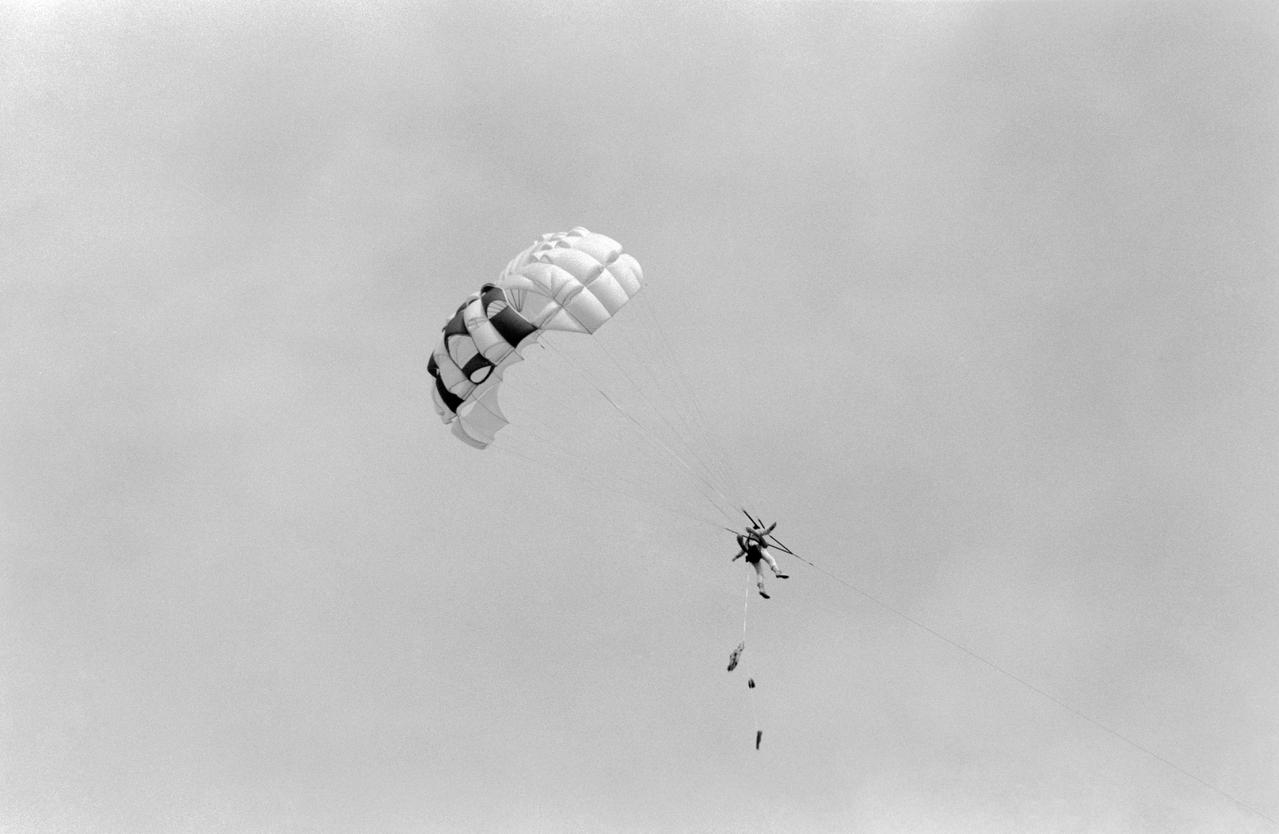
S65-10171 (2 Feb. 1965) --- Astronaut Walter M. Schirra Jr., the Gemini-Titan 3 backup crew command pilot, is shown during water egress para-drop training activity in nearby Galveston Bay.
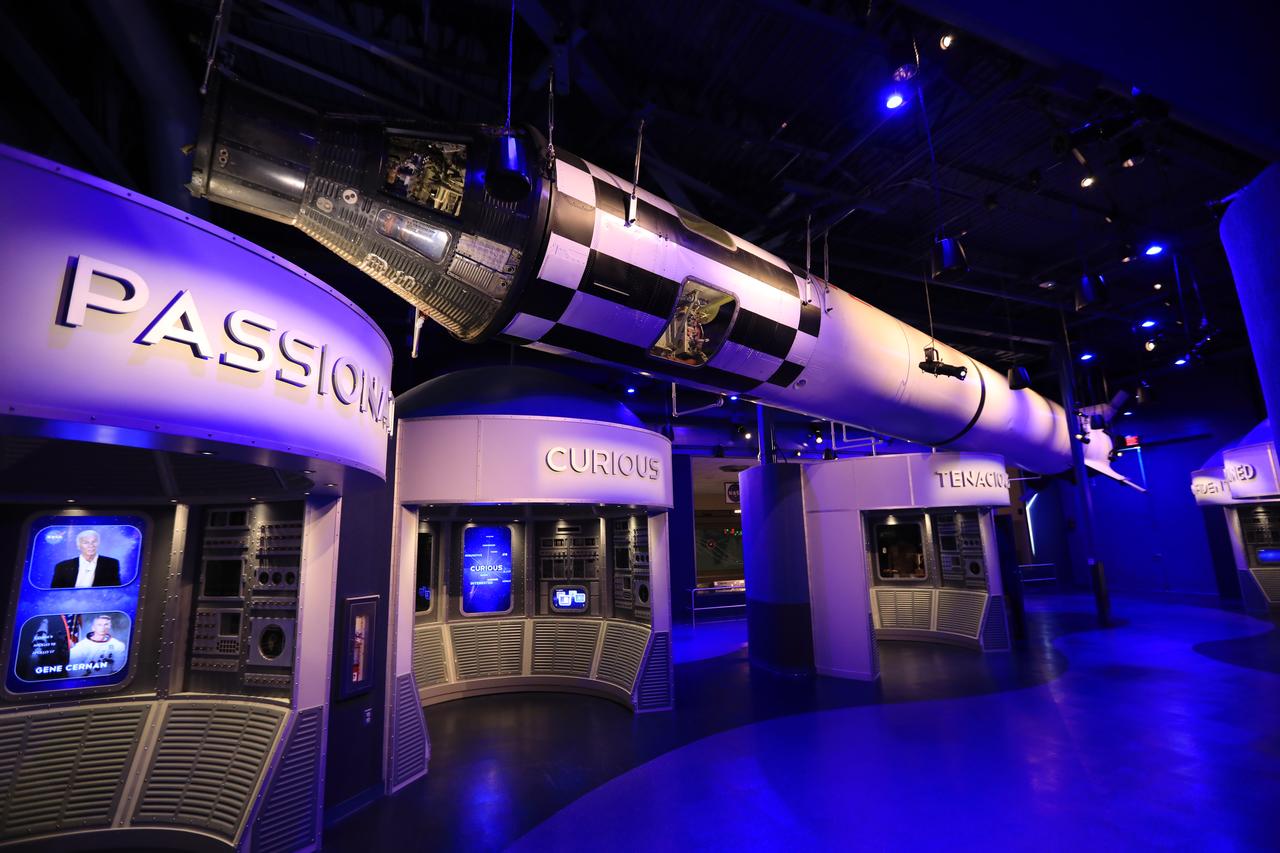
Inside the Heroes and Legends attraction at the Kennedy Space Center Visitor Complex, the Sigma 7 Mercury spacecraft in this exhibit was piloted by astronaut Wally Schirra during his six-orbit mission on Oct. 3, 1962. For display purposes, it is shown here attached to a Redstone launch vehicle like the one that boosted astronauts Alan Shepard and Gus Grissom on sub-orbital flights in 1961. Schirra's capsule was actually launched by the more powerful Atlas rocket in order to reach orbit. The new facility looks back to the pioneering efforts of Mercury, Gemini and Apollo. It sets the stage by providing the background and context for space exploration and the legendary men and women who pioneered the nation's journey into space.
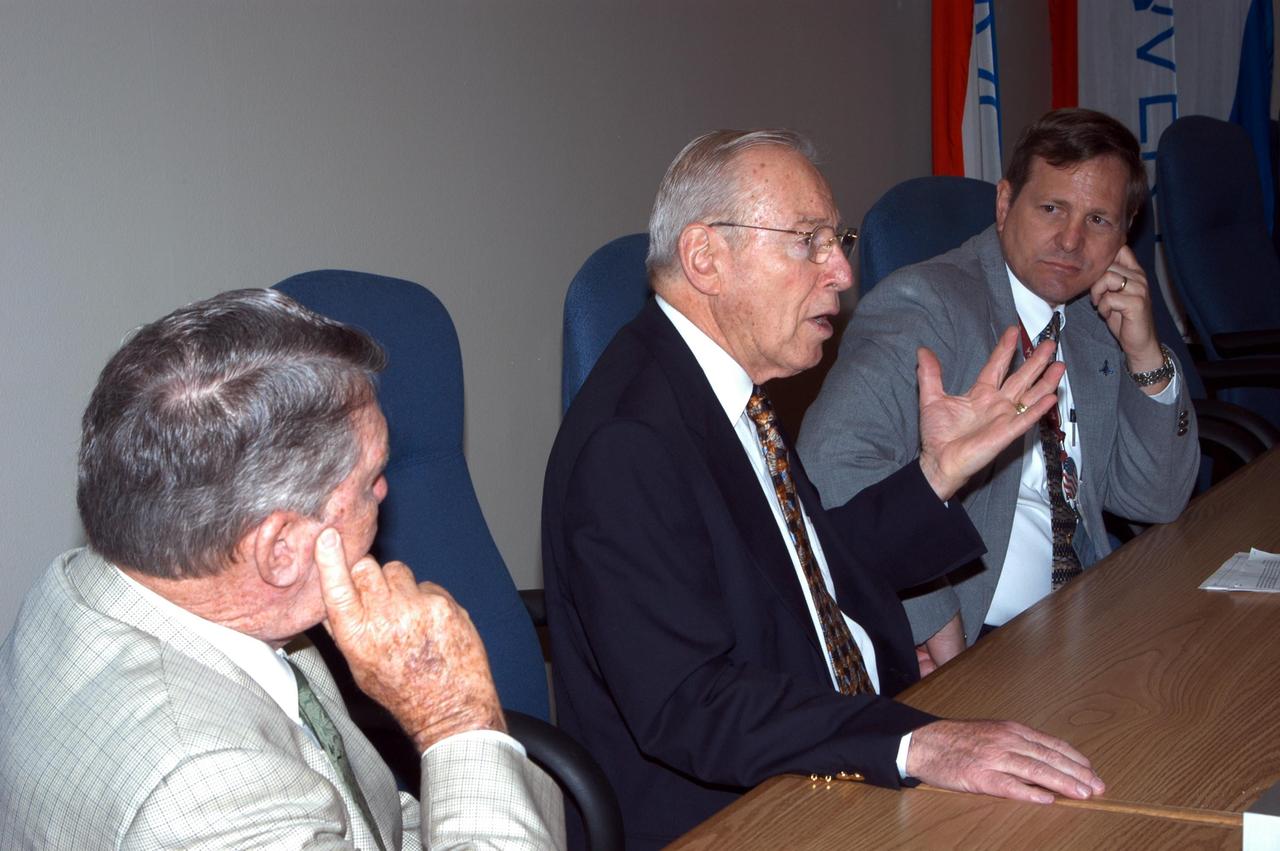
KENNEDY SPACE CENTER, FLA. - Former astronauts Jim Lovell (center) and Wally Schirra (left) talk with Mike Wetmore, director of Shuttle Processing (right) and others during a visit to KSC. Lovell and Schirra visited KSC to talk about the space program and their experiences, as well as offer encouragement to workers to help get the space program "back on its feet." They visited several sites around the Center, including the RLV Hangar where Columbia debris is being collected and examined as part of the investigation into the tragedy that claimed the orbiter and lives of seven astronauts returning from mission STS-107.

KENNEDY SPACE CENTER, FLA. - In the RLV Hangar, (from left) Lisa Malone, acting deputy director of External Relations & Business Development at KSC, former astronauts Jim Lovell and Wally Schirra, and Steve Altemus, Space Shuttle test director, look over pieces of Columbia debris. Lovell and Schirra visited several sites around the Center, encouraging workers to help get the space program "back on its feet." The RLV Hangar is where Columbia debris is being collected and examined as part of the investigation into the tragedy that claimed the orbiter and lives of seven astronauts returning from mission STS-107.
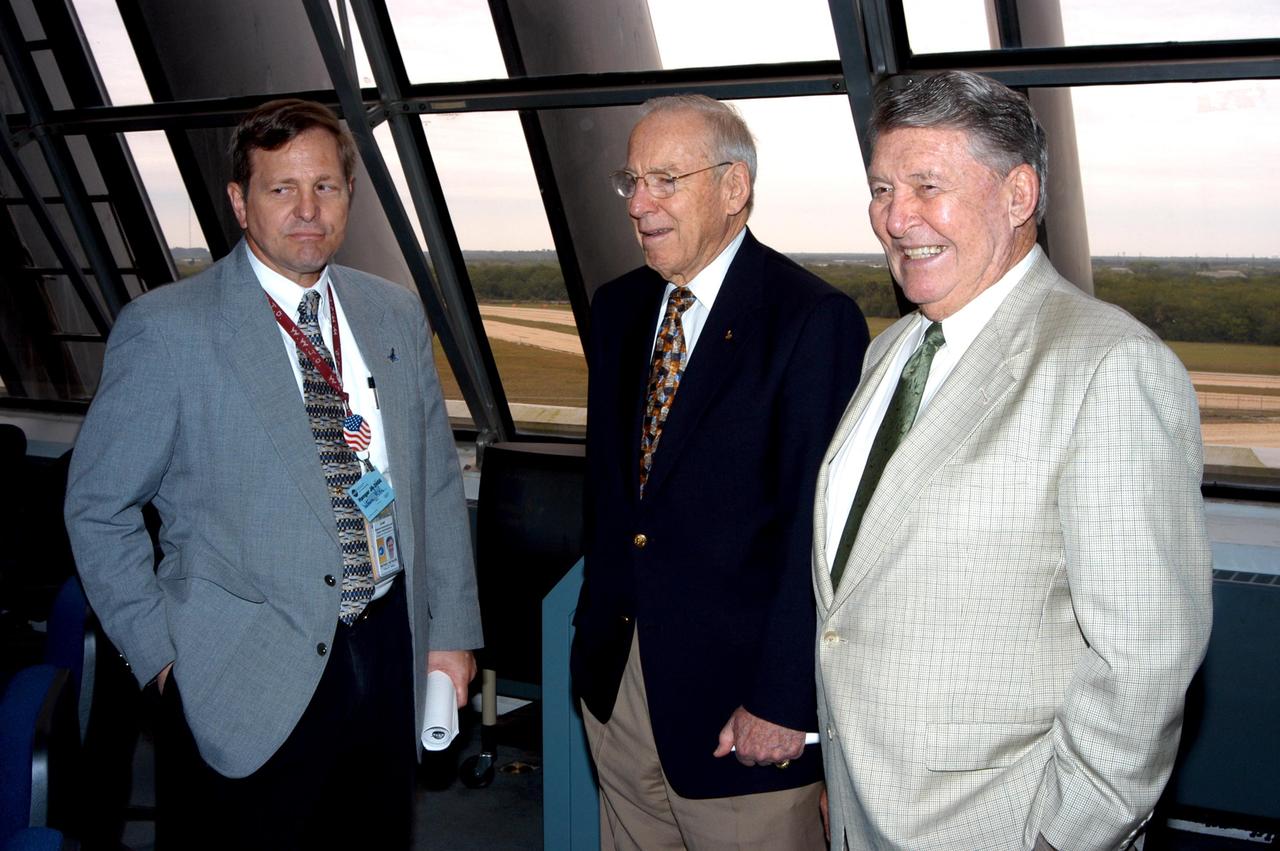
KENNEDY SPACE CENTER, FLA. - At the KSC Launch Control Complex, former astronauts Jim Lovell (center) and Wally Schirra (right) talk with Mike Wetmore, director of Shuttle Processing (left). Lovell and Schirra visited KSC to talk about the space program and their experiences, as well as offer encouragement to workers to help get the space program "back on its feet." They visited several sites around the Center, including the RLV Hangar where Columbia debris is being collected and examined as part of the investigation into the tragedy that claimed the orbiter and lives of seven astronauts returning from mission STS-107.
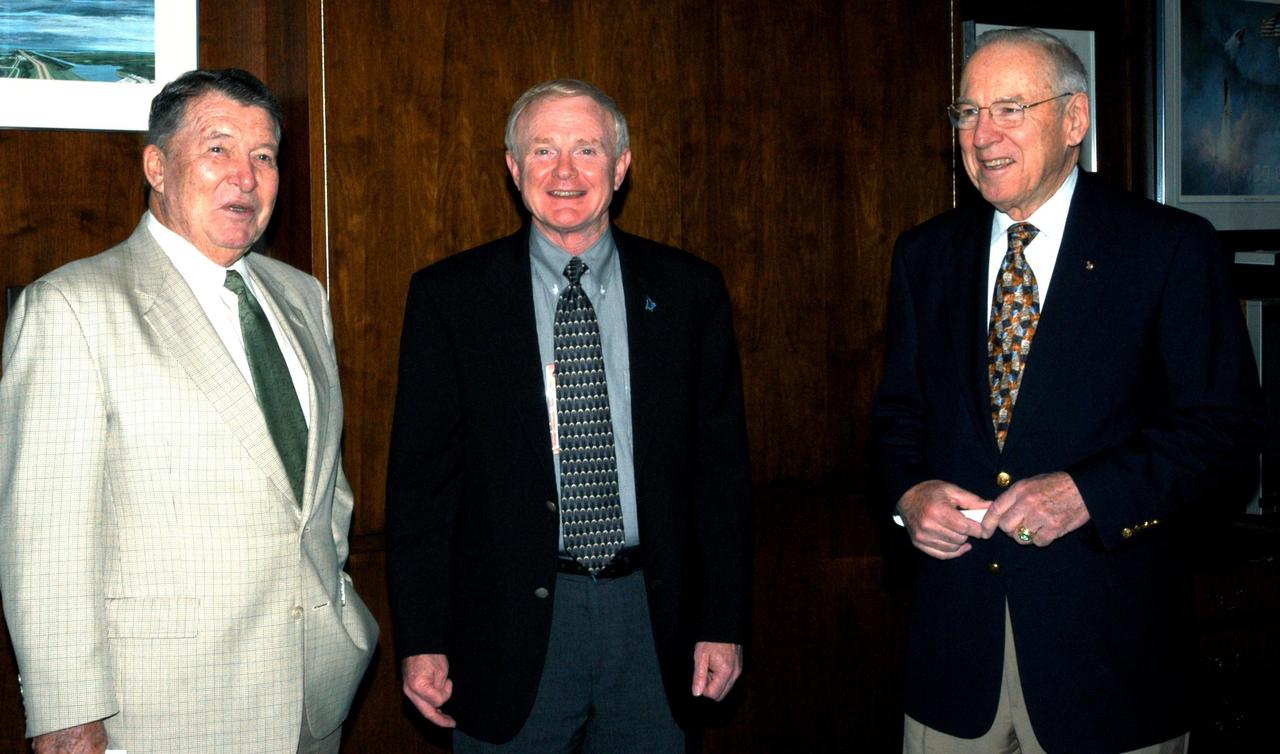
KENNEDY SPACE CENTER, FLA. - Former astronauts Wally Schirra (left) and Jim Lovell (right) join Center Director Roy Bridges (center) before a presentation to KSC employees. Lovell and Schirra visited KSC to talk about the space program and their experiences, as well as offer encouragement to workers to help get the space program "back on its feet." They visited several sites around the Center, including the RLV Hangar where Columbia debris is being collected and examined as part of the investigation into the tragedy that claimed the orbiter and lives of seven astronauts returning from mission STS-107.
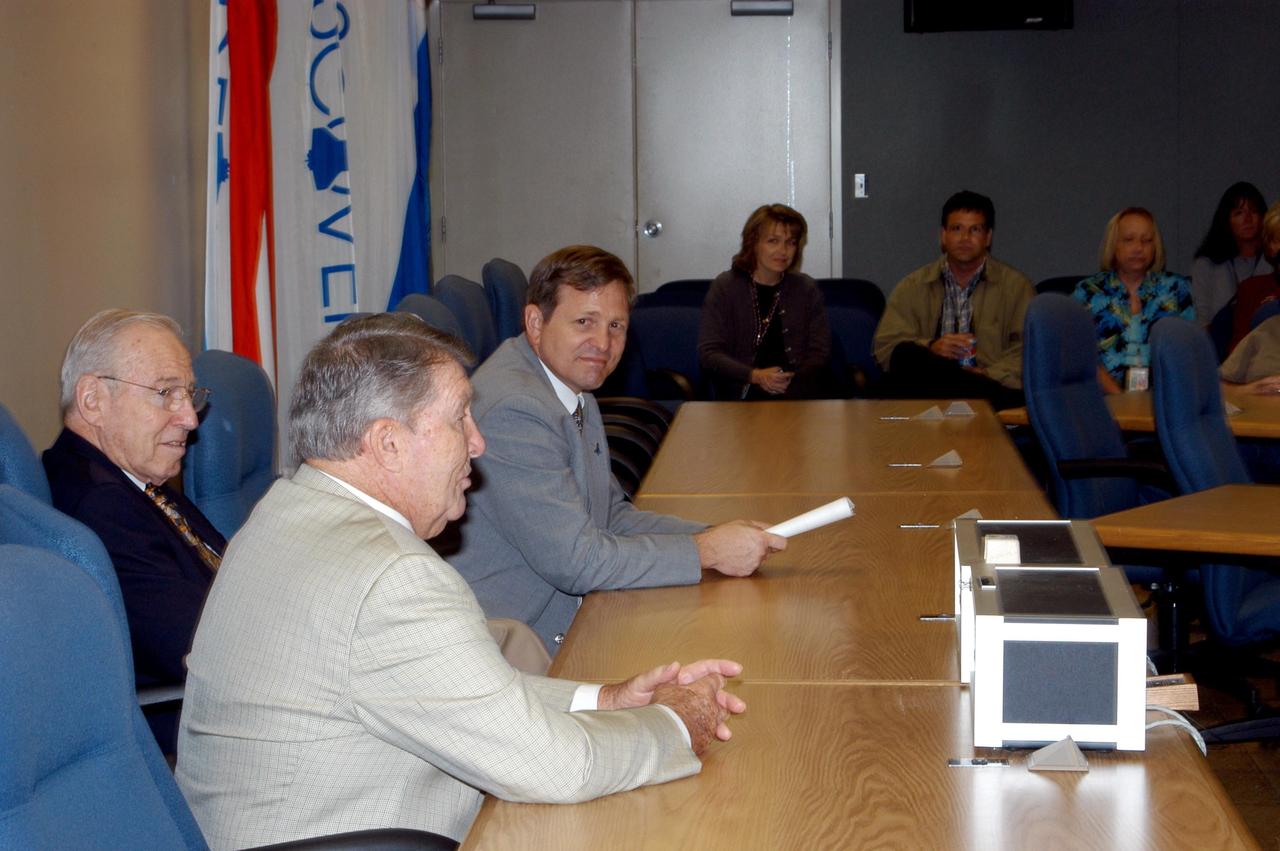
KENNEDY SPACE CENTER, FLA. - From left, former astronauts Jim Lovell and Wally Schirra talk with Mike Wetmore, director of Shuttle Processing (right) and others during a visit to KSC. Lovell and Schirra visited KSC to talk about the space program and their experiences, as well as offer encouragement to workers to help get the space program "back on its feet." They visited several sites around the Center, including the RLV Hangar where Columbia debris is being collected and examined as part of the investigation into the tragedy that claimed the orbiter and lives of seven astronauts returning from mission STS-107.
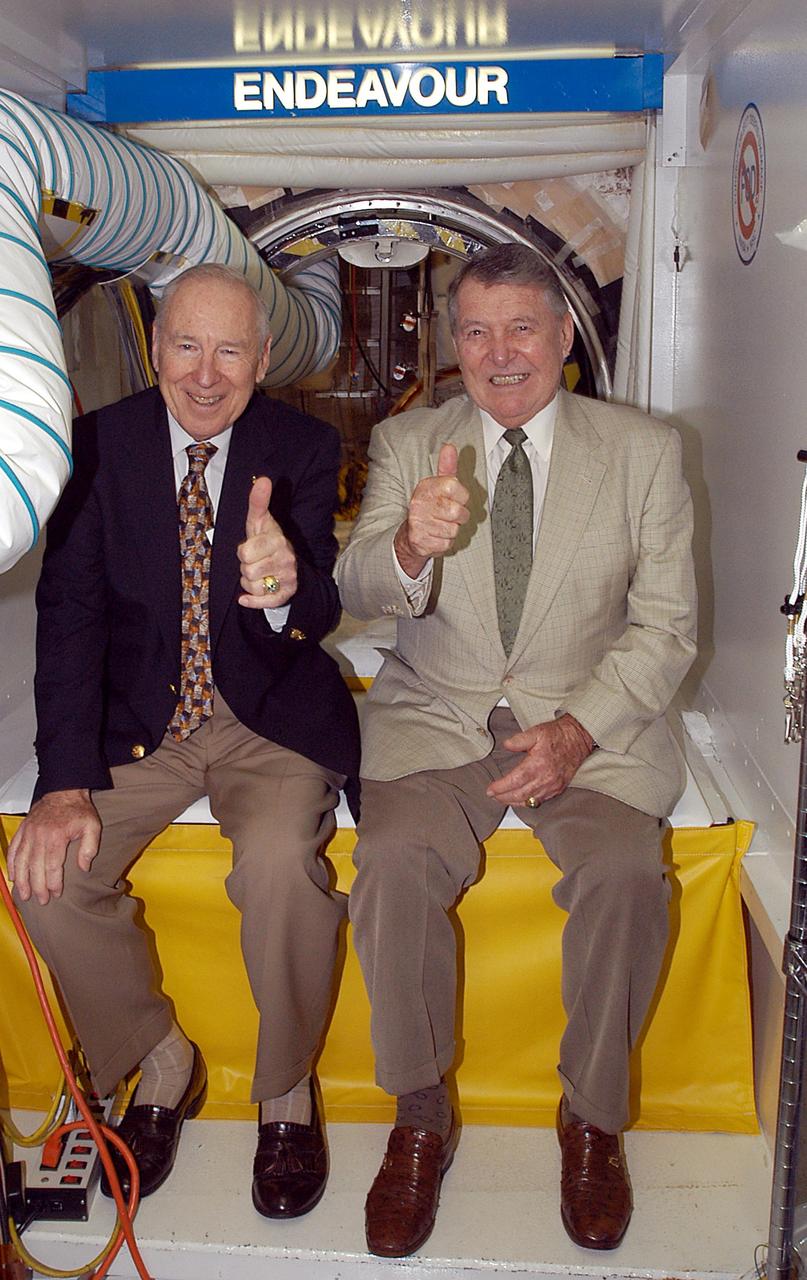
KENNEDY SPACE CENTER, FLA. -Former astronauts Jim Lovell (left) and Wally Schirra (right) pose outside of Endeavour in the Orbiter Processing Facility. Lovell and Schirra visited KSC to talk about the space program and their experiences, as well as offer encouragement to workers to help get the space program "back on its feet." They visited several sites around the Center, including the RLV Hangar where Columbia debris is being collected and examined as part of the investigation into the tragedy that claimed the orbiter and lives of seven astronauts returning from mission STS-107.
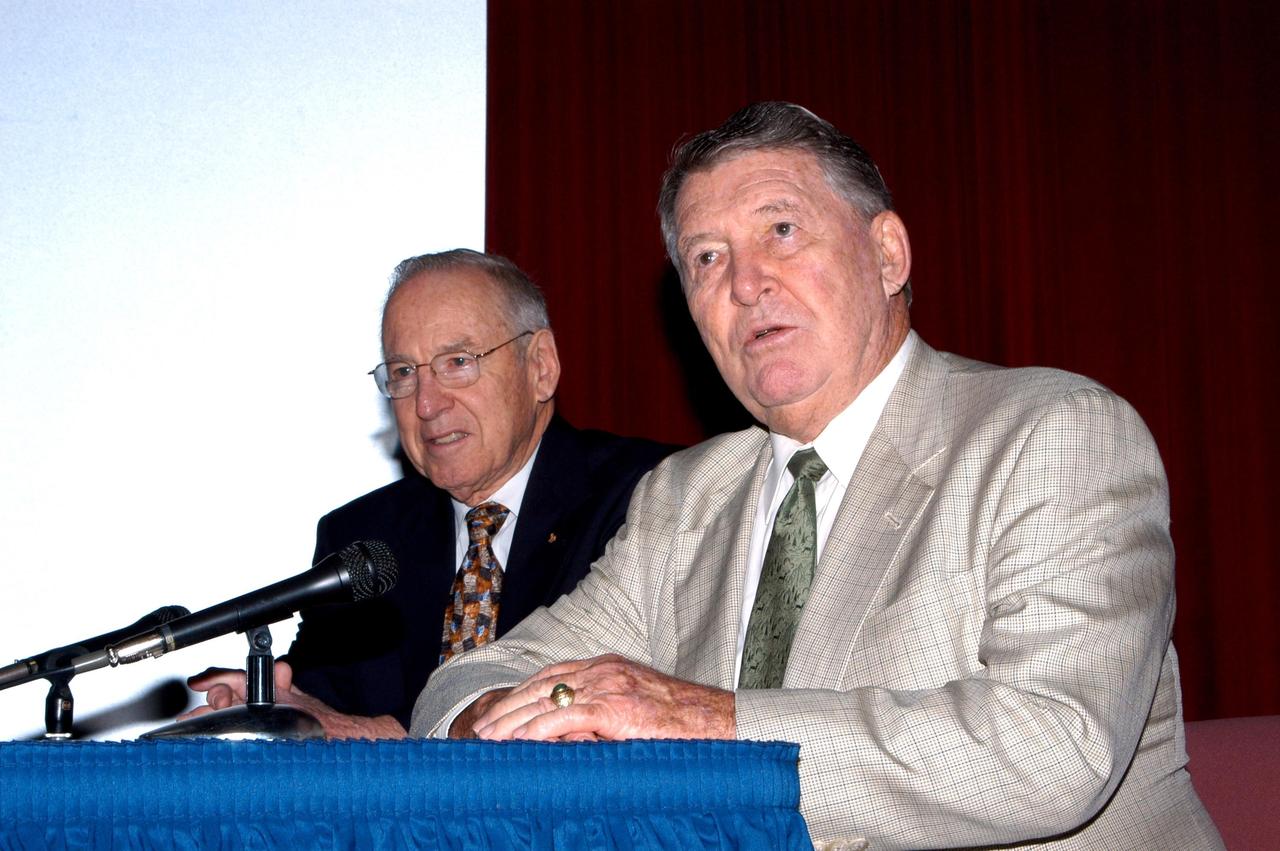
KENNEDY SPACE CENTER, FLA. - During a presentation to KSC employees, former astronauts Jim Lovell (left) and Wally Schirra (right) answer questions from the audience. Lovell and Schirra visited KSC to talk about the space program and their experiences, as well as offer encouragement to workers to help get the space program "back on its feet." They visited several sites around the Center, including the RLV Hangar where Columbia debris is being collected and examined as part of the investigation into the tragedy that claimed the orbiter and lives of seven astronauts returning from mission STS-107.
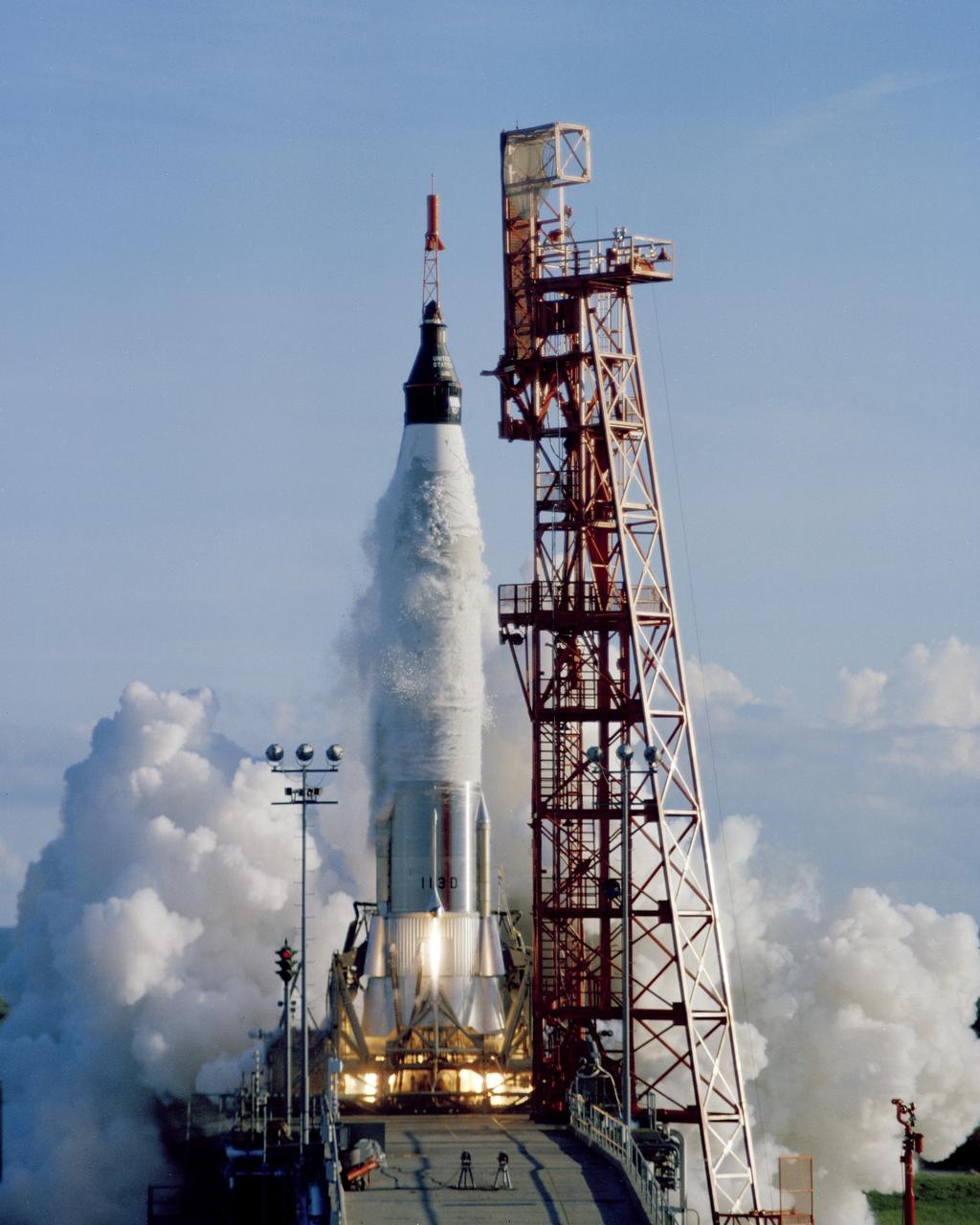
CAPE CANAVERAL, Fla. -- An Atlas launch vehicle lifts off with the Mercury spacecraft Sigma 7 atop with astronaut Walter M. Schirra Jr. aboard. The fifth American into space and the third to orbit the Earth plans to circle the globe six time prior to a planned splashdown in the Pacific Ocean. Photo Credit: NASA
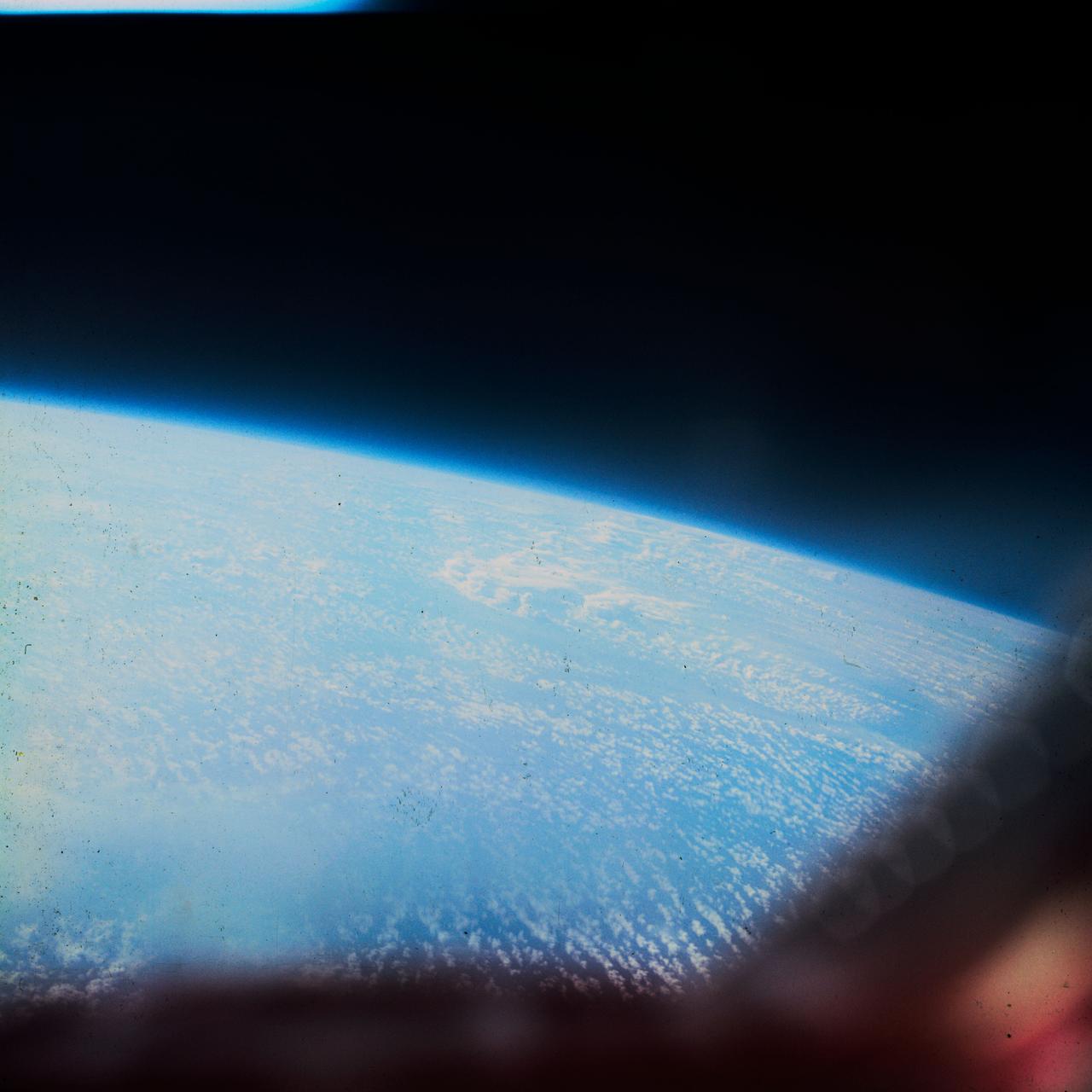
S62-06612 (3 Oct. 1962) --- Cloud formation over South America taken during the fifth orbit pass of the Mercury-Atlas 8 (MA-8) mission by astronaut Walter M. Schirra Jr. with a hand-held camera. Photo credit: NASA
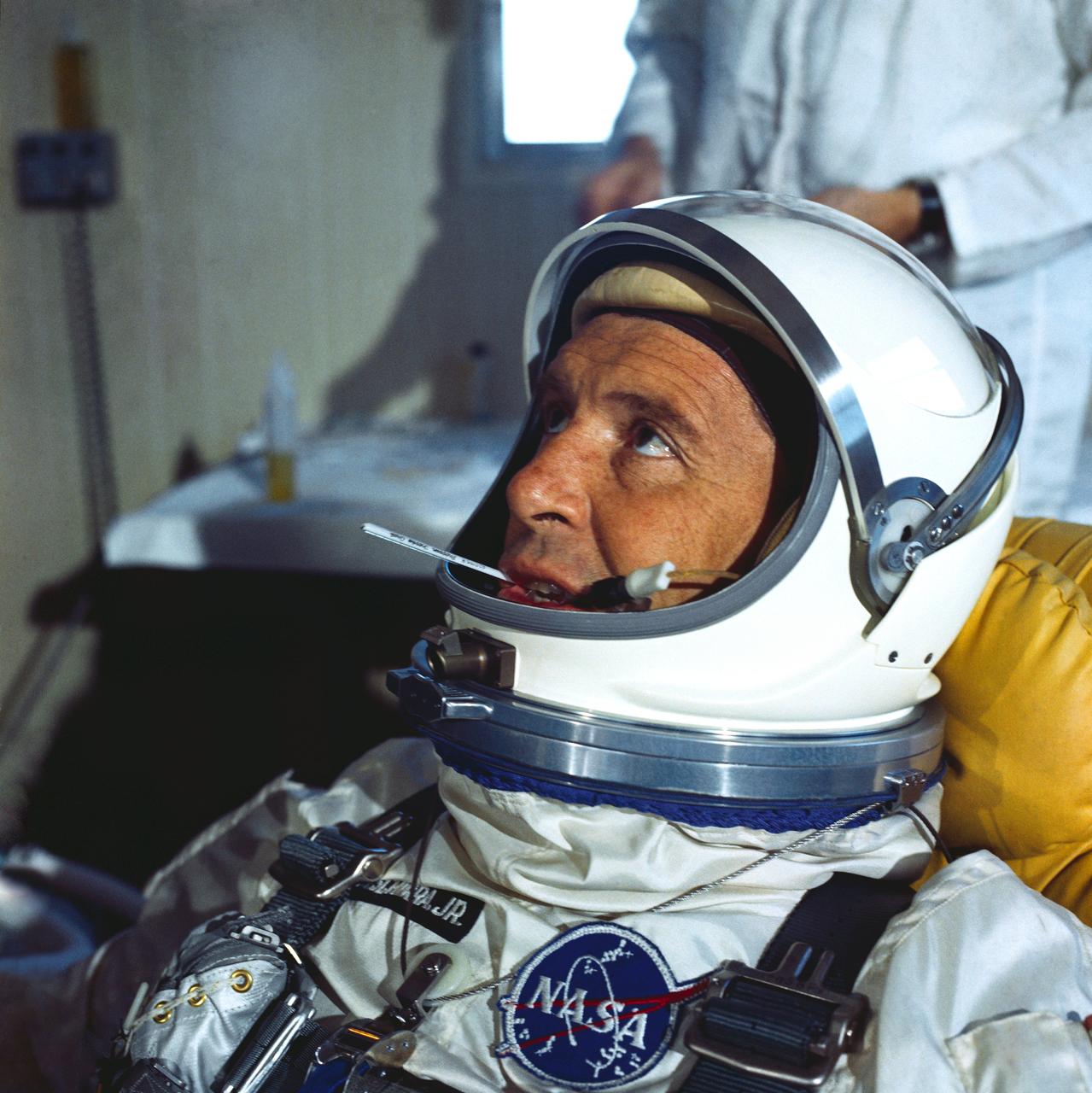
S65-22666 (8 March 1965) --- Astronaut Walter M. Schirra Jr., the command pilot of the GT-3 backup crew, is shown suited up for prelaunch tests. He is shown with his helmet visor up and a thermometer in his mouth.
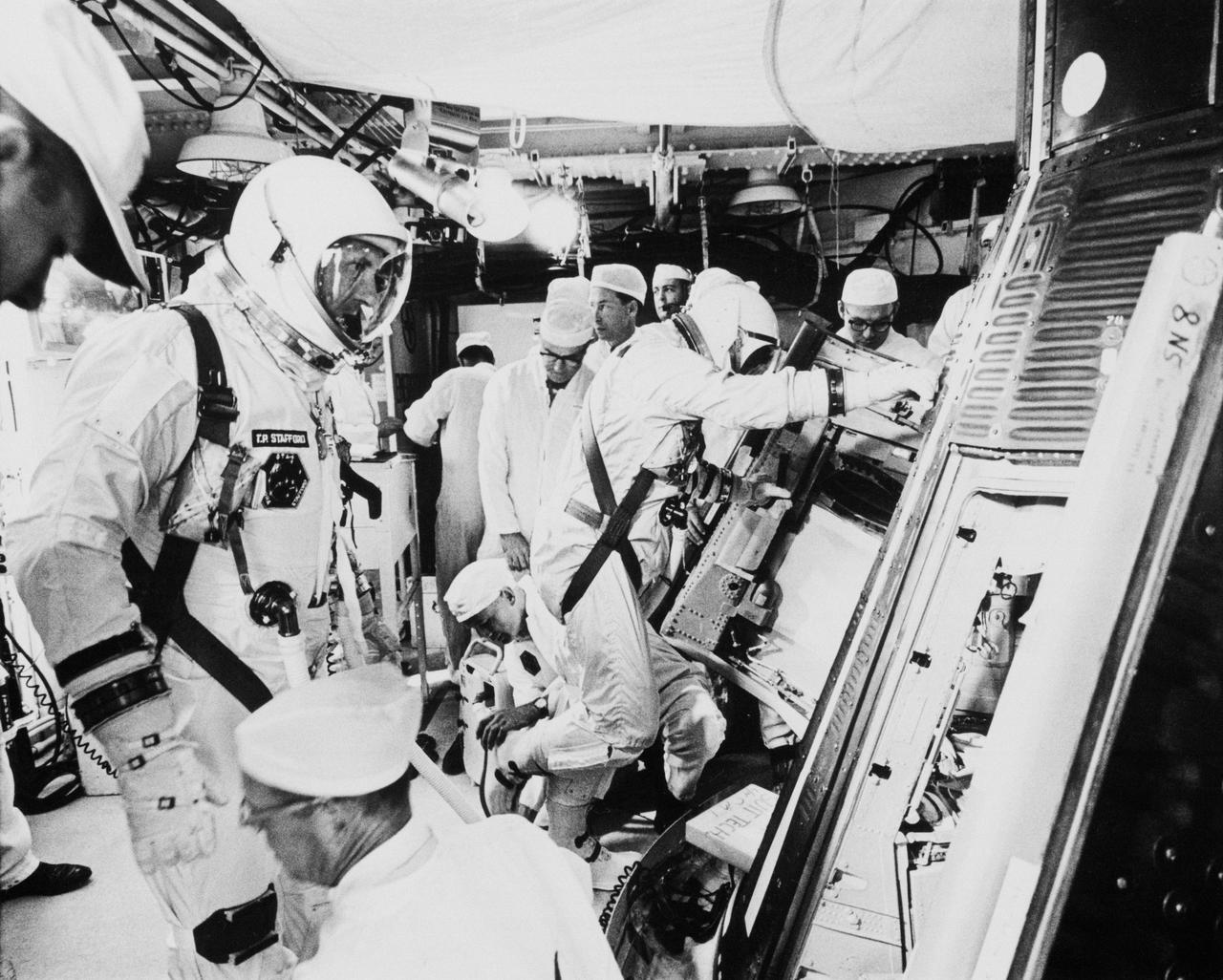
S65-56155 (15 Dec. 1965) --- Astronauts Thomas P. Stafford, pilot; and Walter M. Schirra Jr., command pilot, are readied for insertion into the Gemini-6 spacecraft in the White Room at Pad 19, Cape Canaveral, Florida. Photo credit: NASA or National Aeronautics and Space Administration
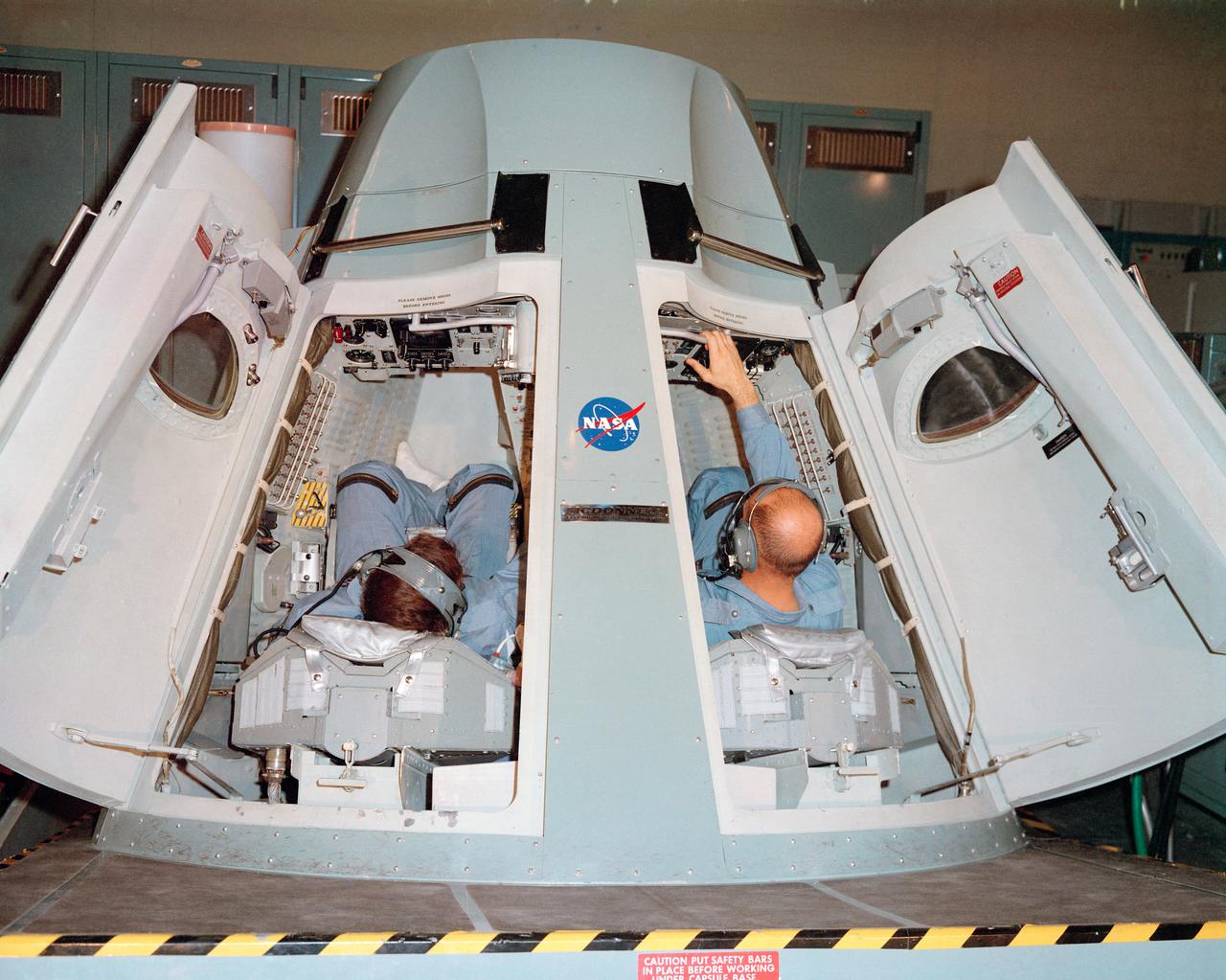
S65-13920 (15 Jan. 1965) --- The Gemini-6 prime crew, astronauts Walter M. Schirra Jr. (left), command pilot, and Thomas P. Stafford, pilot, are pictured in the Gemini simulator during training exercises at the Mission Control Center at Cape Kennedy, Florida. Photo credit: NASA or National Aeronautics and Space Administration
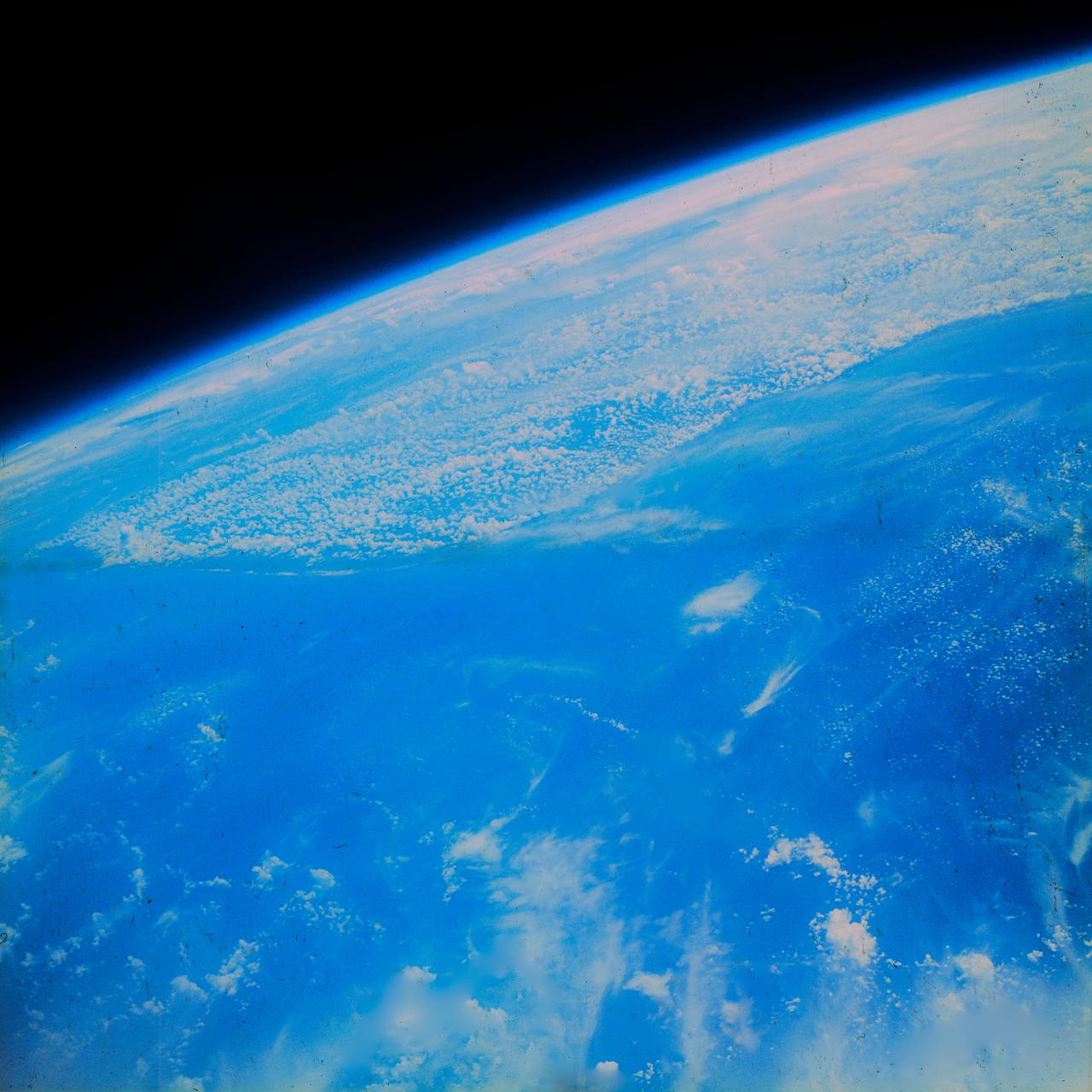
S62-06607 (3 Oct. 1962) --- Western horizon over South America taken during the sixth orbit pass of the Mercury-Atlas 8 (MA-8) mission by astronaut Walter M. Schirra Jr. with a hand-held camera. Photo credit: NASA
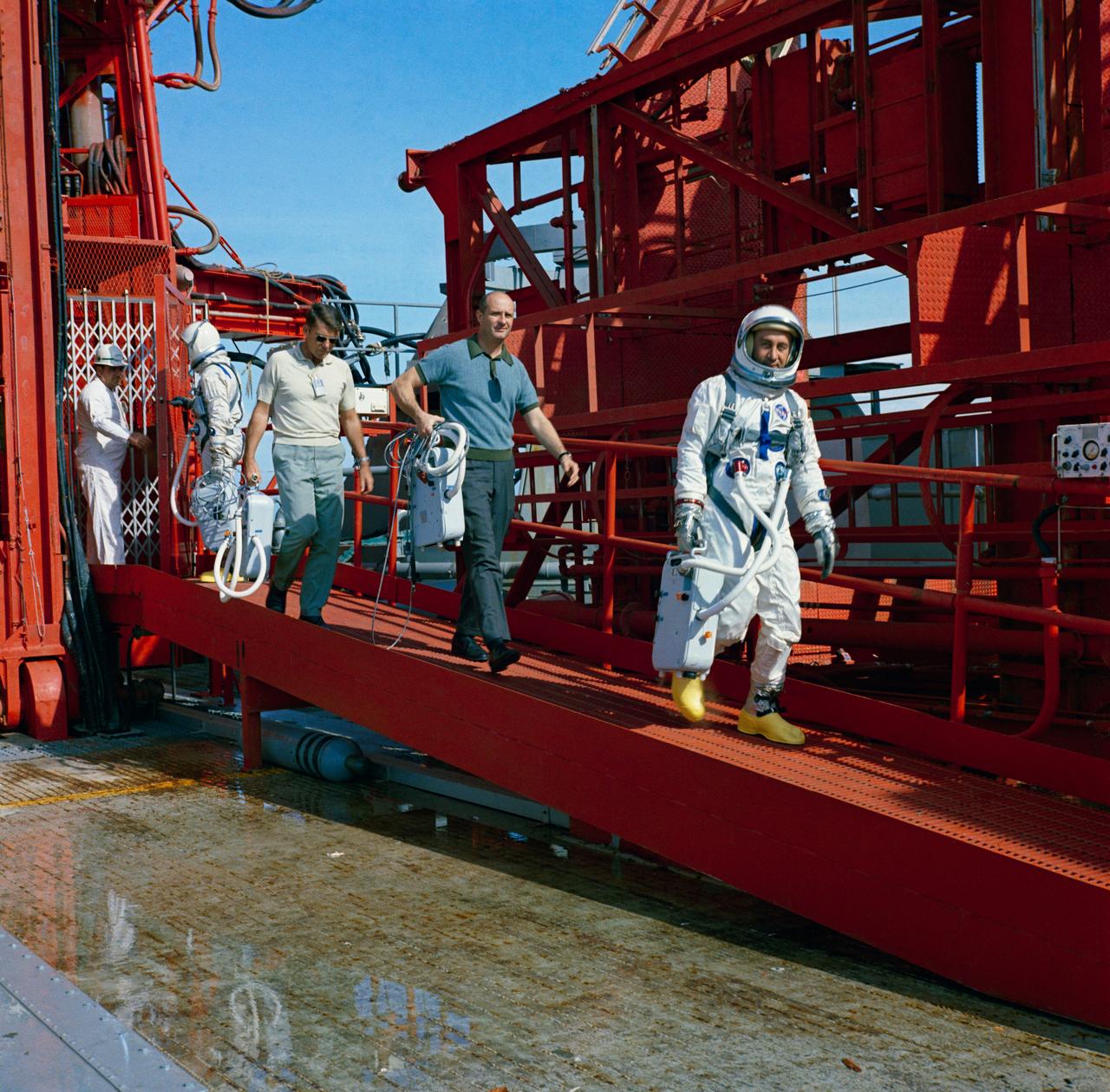
S64-40298 (24 Nov. 1964) --- Astronauts John W. Young, Walter M. Schirra Jr., Thomas P. Stafford and Virgil I. Grissom (left to right) are shown during egress training during Gemini-Titan 3 simulation launch at Pad 19.
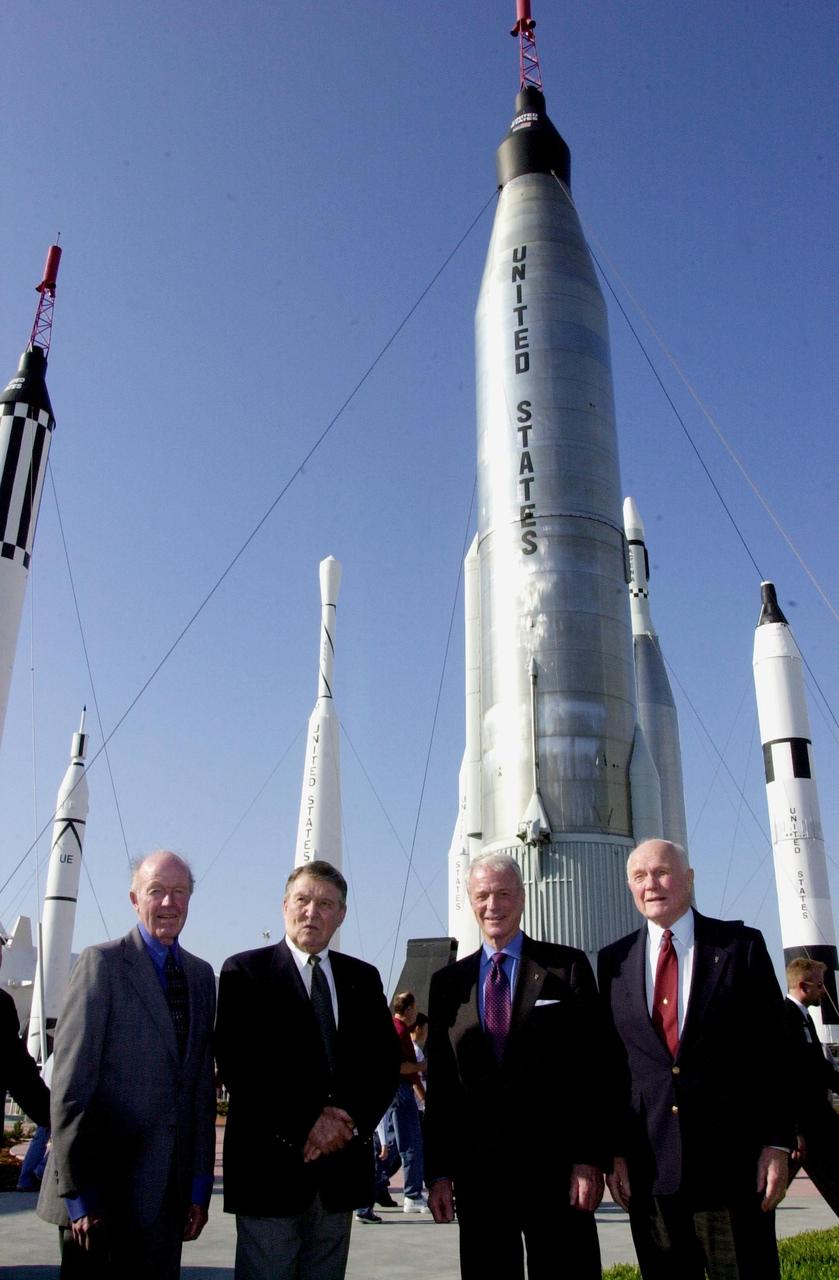
KENNEDY SPACE CENTER, FLA. -- Four space pioneers pose for a photo in the Rocket Garden at the KSC Visitor Complex. From left are Gordon Cooper, Wally Schirra, Scott Carpenter and John Glenn Jr. The occasion was the celebration of the 40th anniversary of American spaceflight. The event was held Feb. 24, 2002
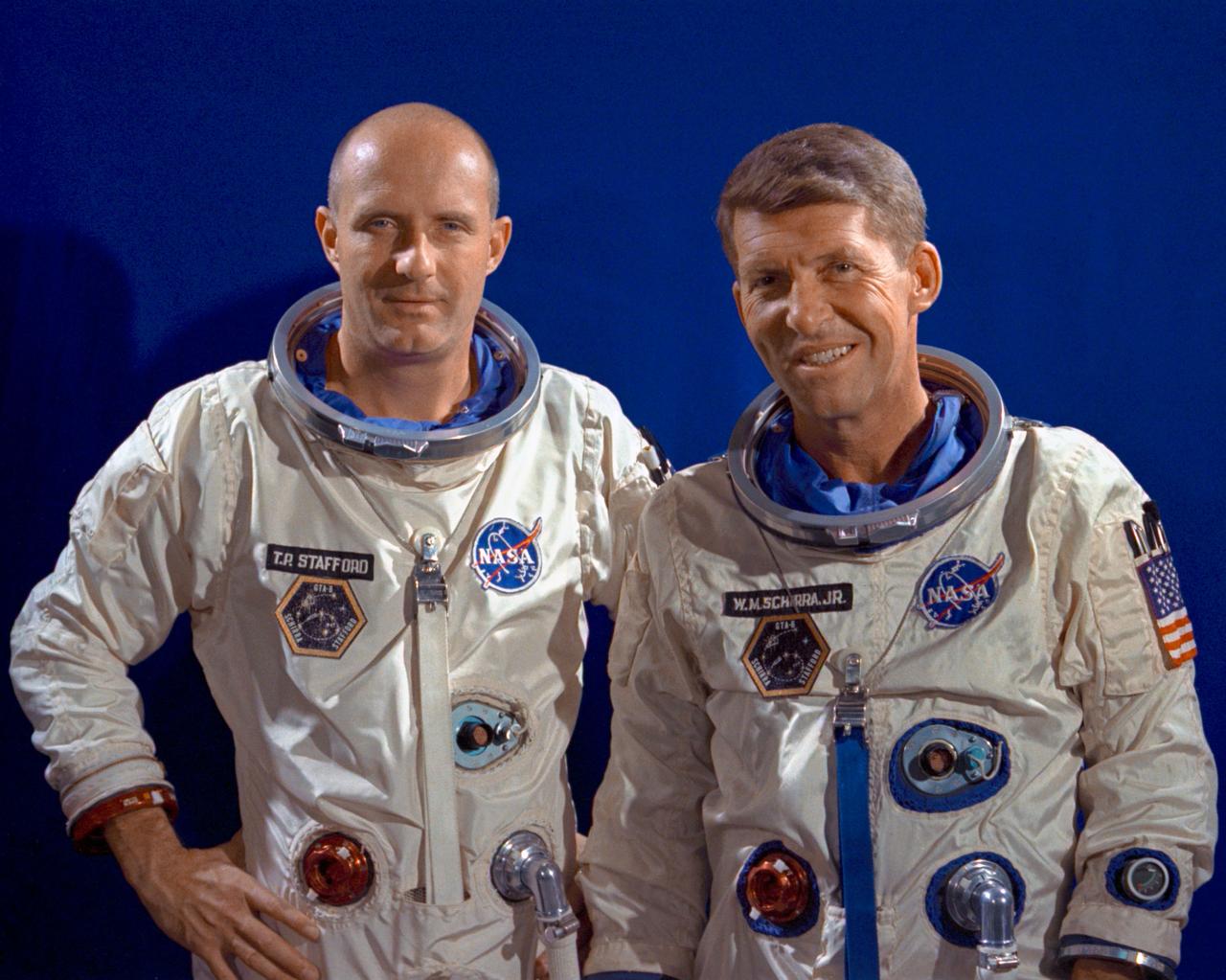
S65-56188 (20 Oct. 1965) --- Astronauts Thomas P. Stafford (left), pilot, and Walter M. Schirra Jr., command pilot, pose during a suiting up exercise in preparation for the National Aeronautics and Space Administration's Gemini-6 two-day mission. Photo credit: NASA
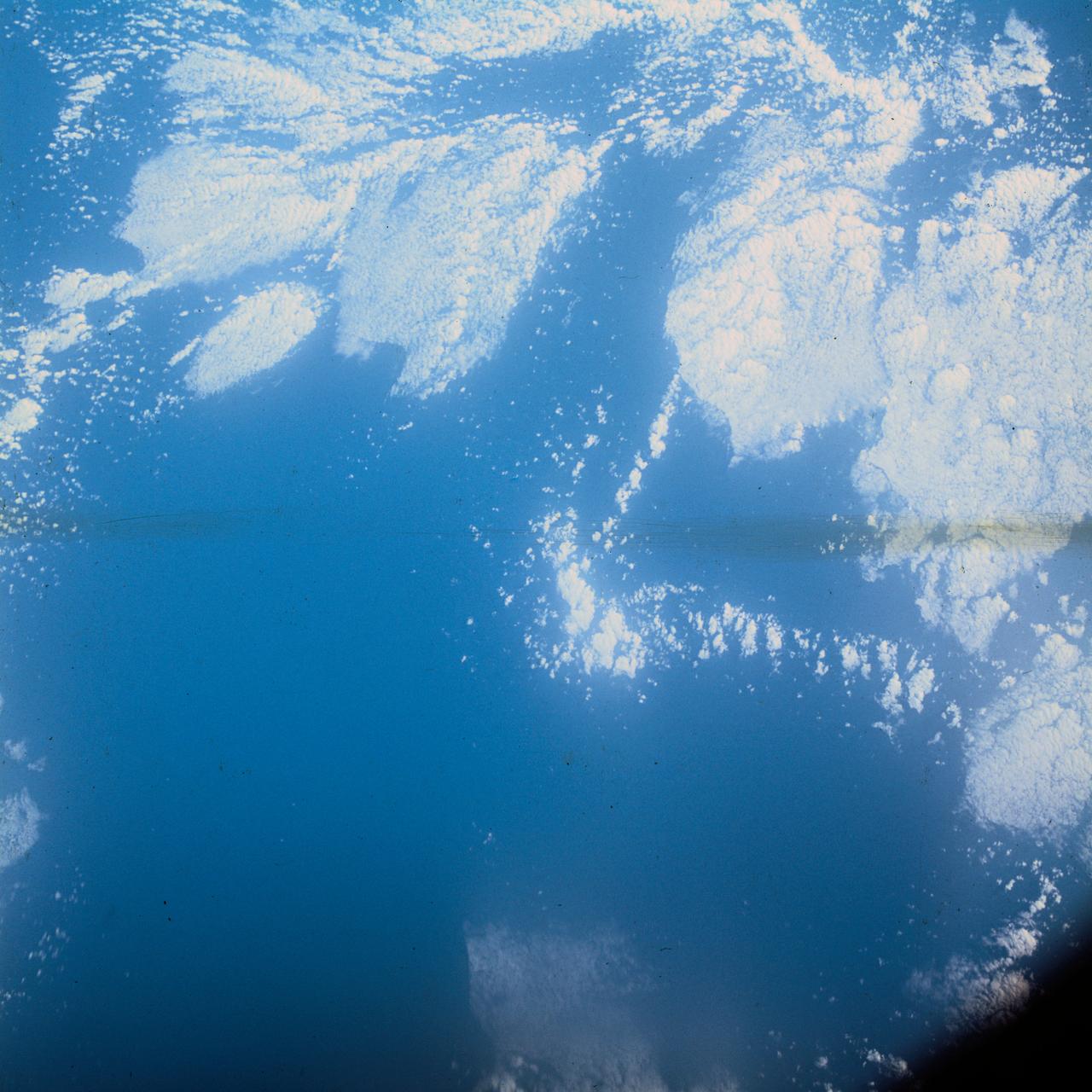
S62-06606 (3 Oct. 1962) --- Cloud formation over Western Atlantic Ocean north of South America taken during the fourth orbit pass of the Mercury-Atlas 8 (MA-8) mission by astronaut Walter M. Schirra Jr. with a hand-held camera. Photo credit: NASA
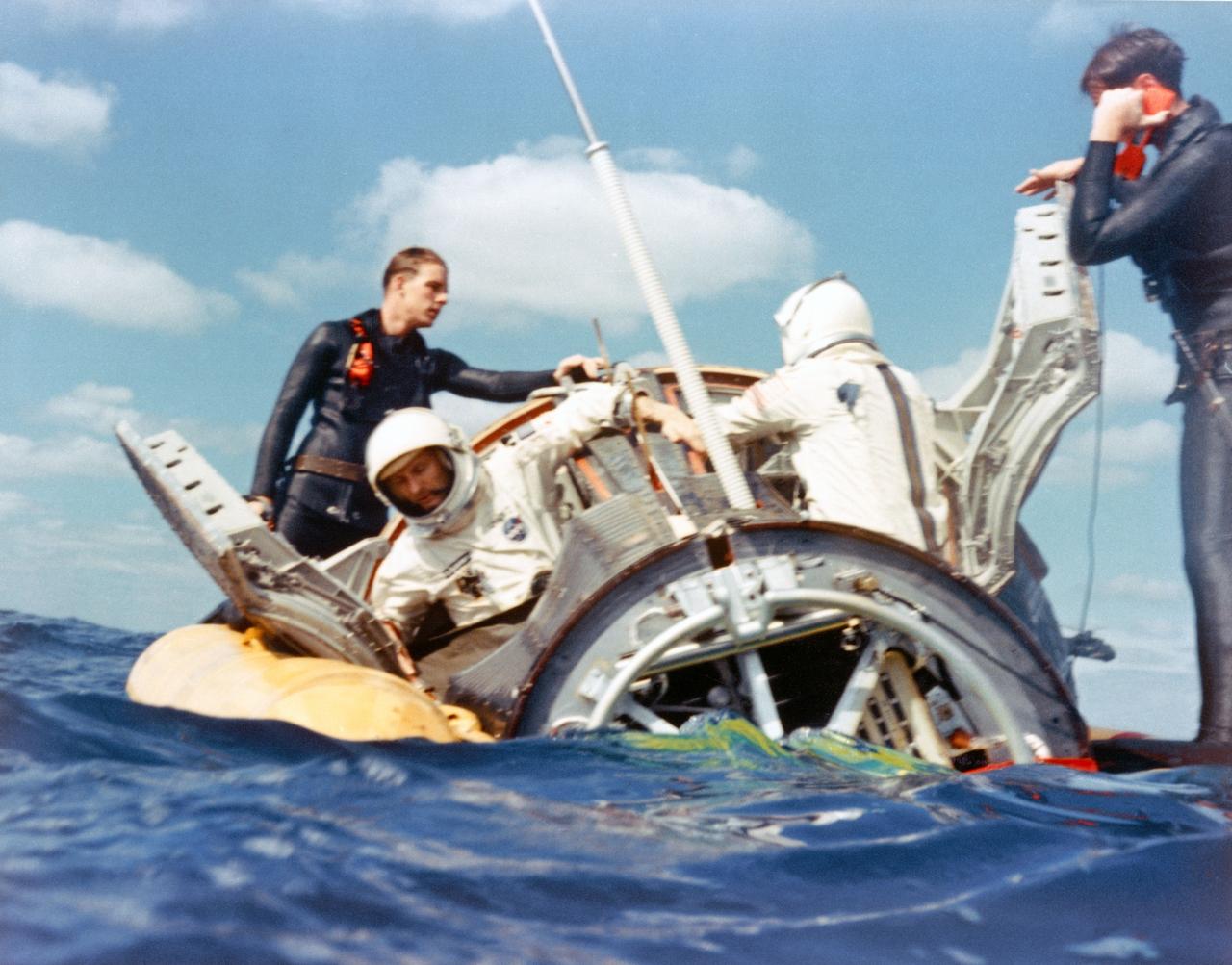
S65-61886 (16 Dec. 1965) --- A water level view of Navy divers assisting Gemini-6 crew members Stafford and Schirra to open hatches after landing in the Atlantic. Photo credit: NASA or National Aeronautics and Space Administration

S68-33744 (22 May 1968) --- The prime crew of the first manned Apollo space mission, Apollo 7 (Spacecraft 101/Saturn 205), left to right, are astronauts Donn F. Eisele, command module pilot, Walter M. Schirra Jr., commander; and Walter Cunningham, lunar module pilot.
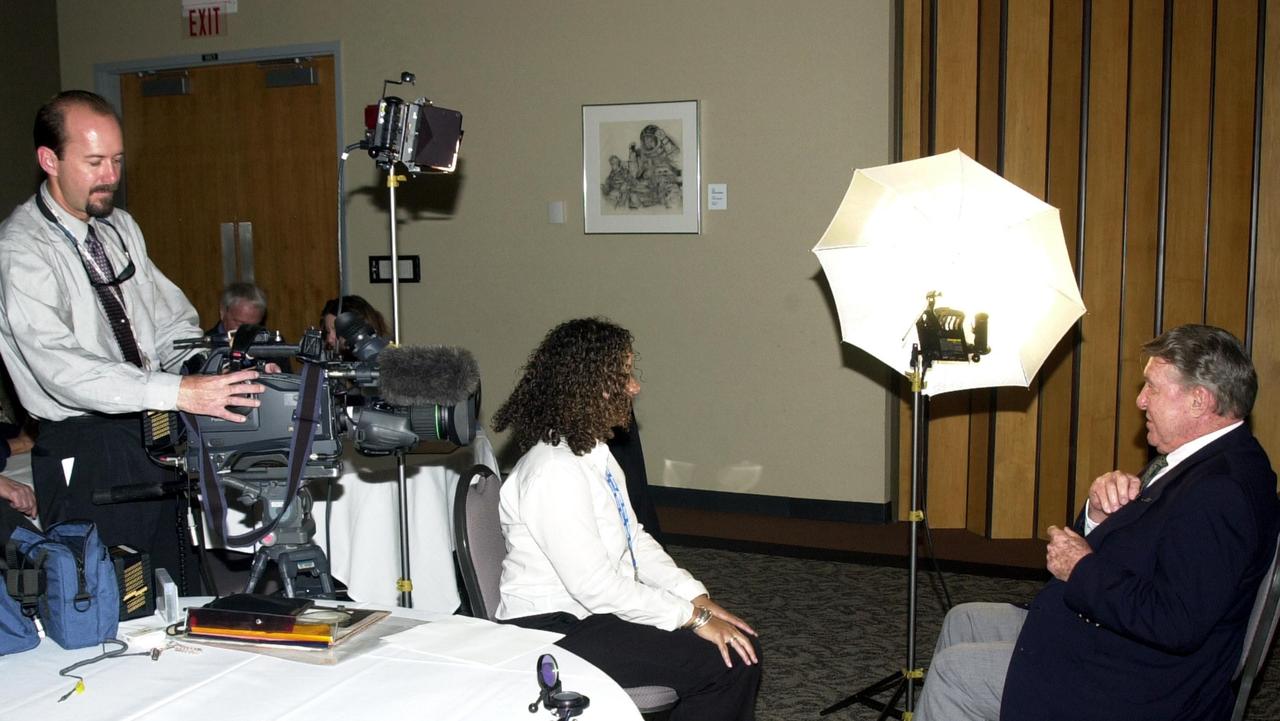
KENNEDY SPACE CENTER, FLA. -- KSC videographer Glen Benson (left) tapes an interview that Lucha Ray (center) is conducting with space pioneer Wally Schirra (right). The occasion was the celebration of the 40th anniversary of American spaceflight. The event was held at the KSC Visitor Complex Feb. 24, 2002
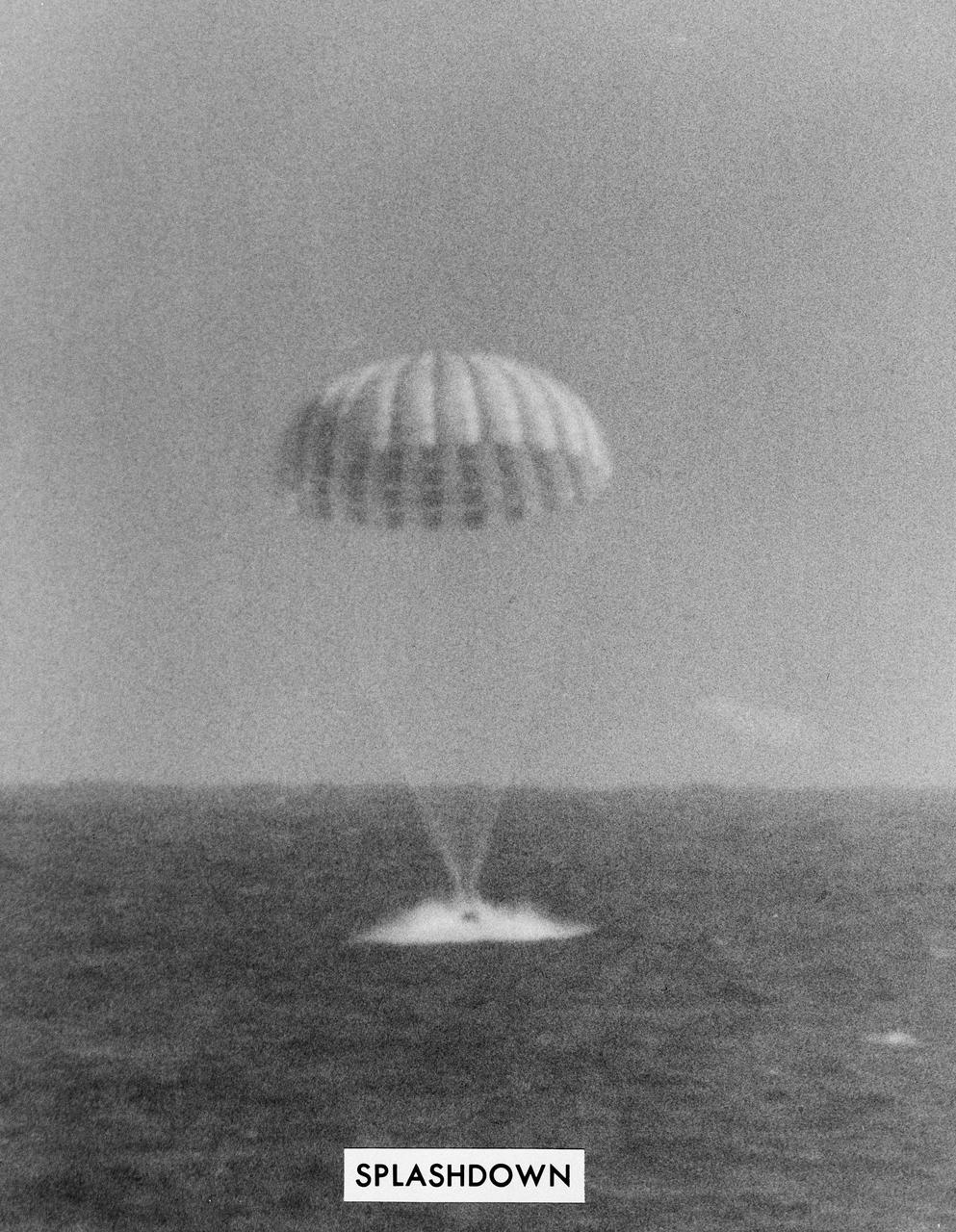
S63-00693 (3 Oct. 1962) --- Landing with parachute extended of astronaut Walter M. Schirra's Mercury-Atlas 8 (MA-8) capsule, called the Sigma 7, after a world orbital flight. Photo is labeled "Splashdown". Photo credit: NASA
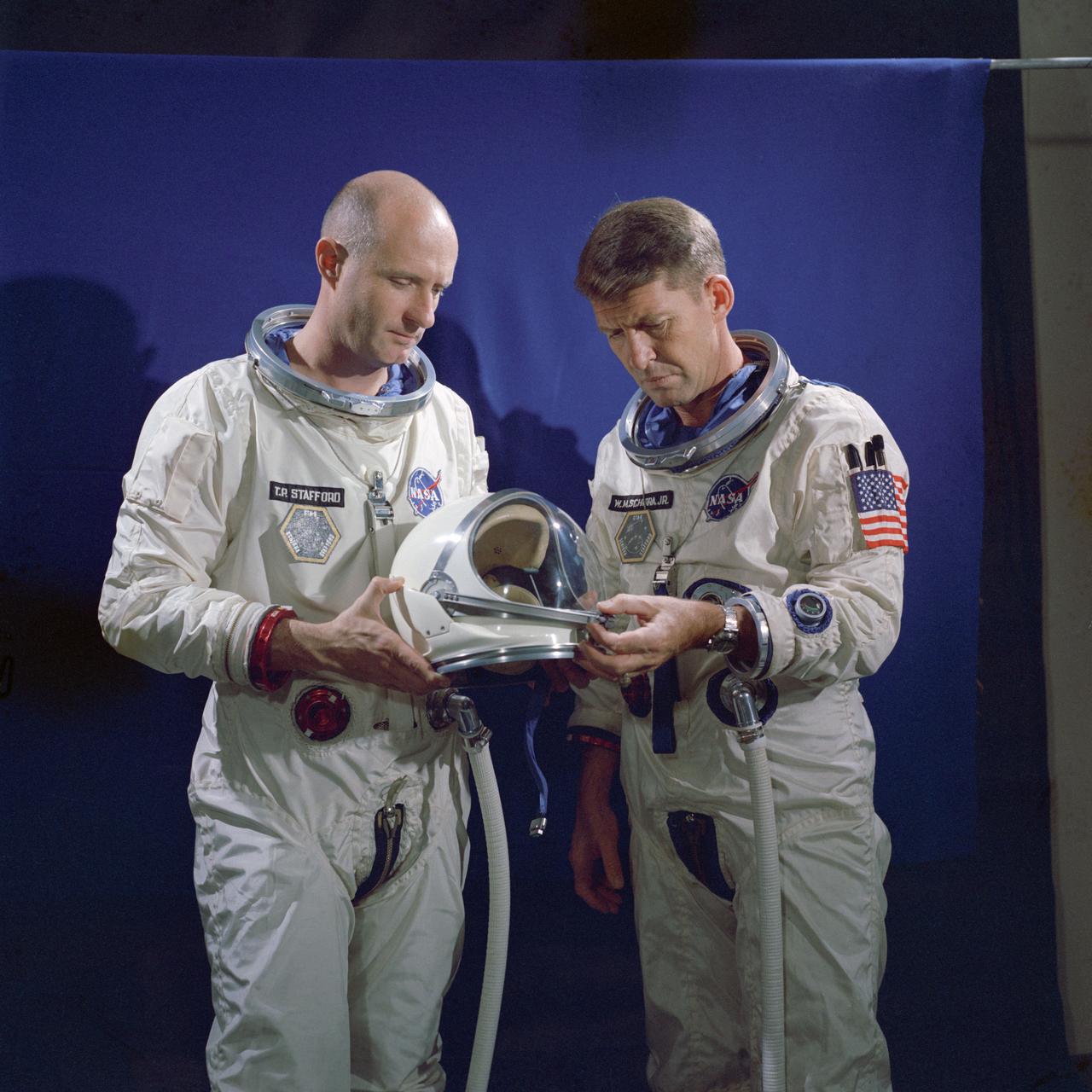
S65-56123 (1 Oct. 1965) --- Astronauts Thomas P. Stafford (left), pilot; and Walter M. Schirra Jr., command pilot, the prime crew of the Gemini-6 spaceflight, are pictured during a suiting up training exercise at Cape Kennedy, Florida. Photo credit: NASA or National Aeronautics and Space Administration

S66-18607 (18 March 1966) --- Astronauts Neil A. Armstrong (center), Gemini-8 command pilot, and David R. Scott, pilot, arrive at Hickam Field, Hawaii on their way from Naha, Okinawa, to Cape Kennedy, Florida. Astronaut Walter M. Schirra Jr. is at extreme left. Photo credit: NASA
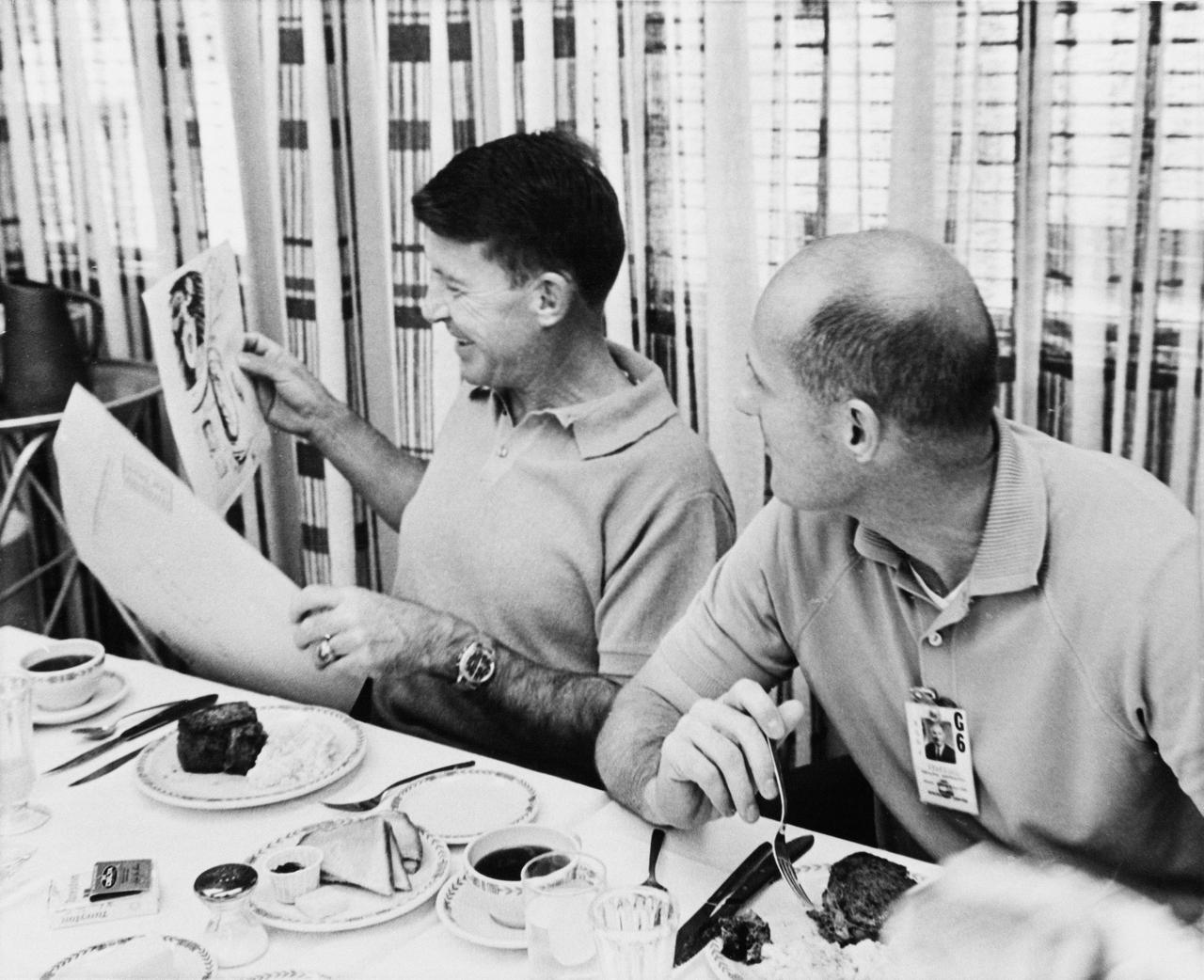
S65-56159 (15 Dec. 1965) --- Astronauts Walter M. Schirra Jr. (left), command pilot, and Thomas P. Stafford, pilot, look at a cartoon presented to them by the other astronauts on the morning of the scheduled Gemini-6 launch. Photo credit: NASA or National Aeronautics and Space Administration
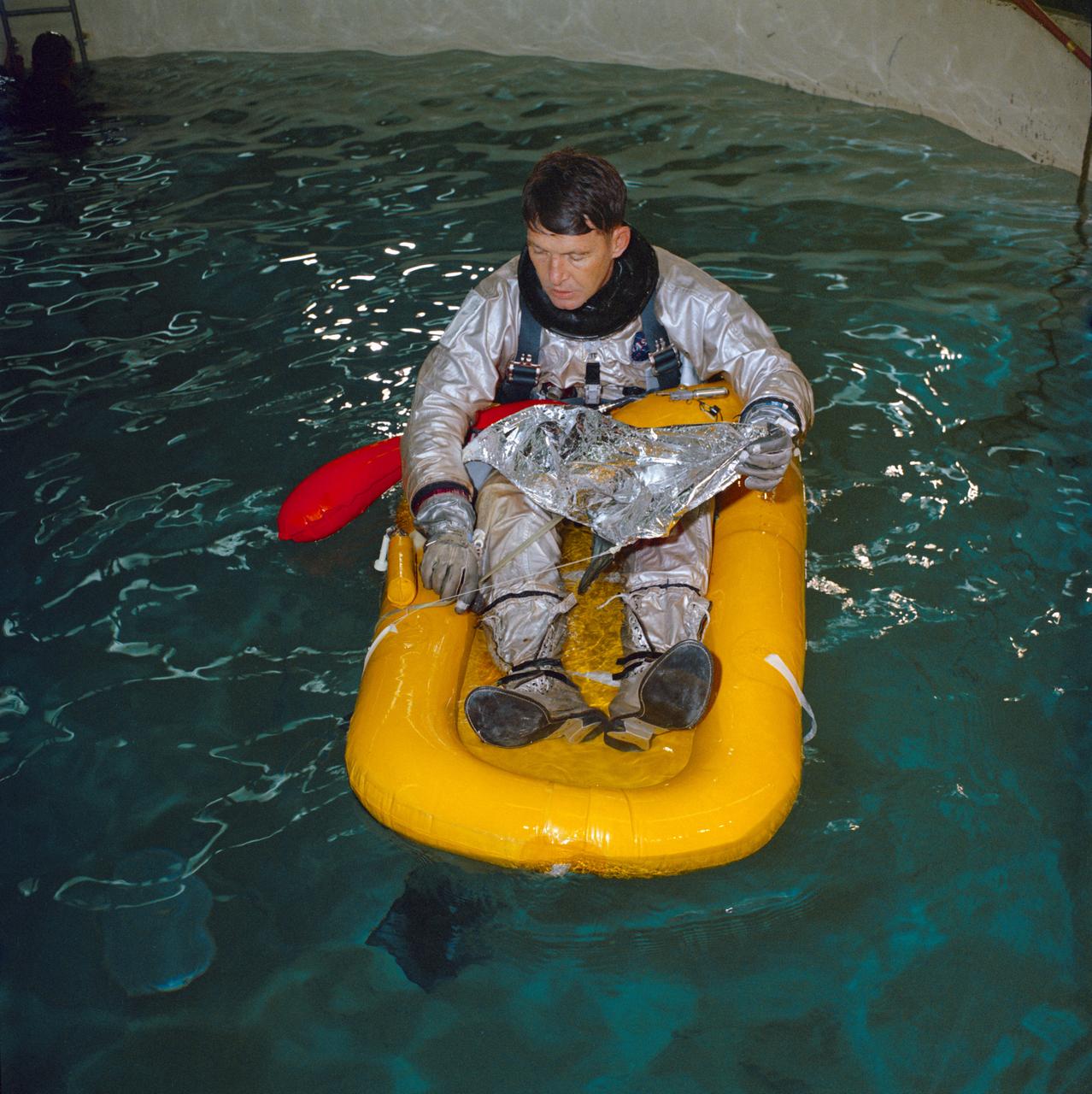
S65-10121 (1 Feb. 1965) --- Astronaut Walter M. Schirra Jr., the Gemini-6 command pilot for the prime crew, floats on a one-man life raft in a pool during water egress training at Ellington Air Force Base, Texas. Photo credit: NASA or National Aeronautics and Space Administration

KENNEDY SPACE CENTER, FLA. -- More than 600 accredited newsmen at Press Site #2 covered this morning's launch of Apollo 7, carying astronauts Walter M. Schirra Jr., Donn F. Eisele and Walter Cunningham from Launch Complex 34.
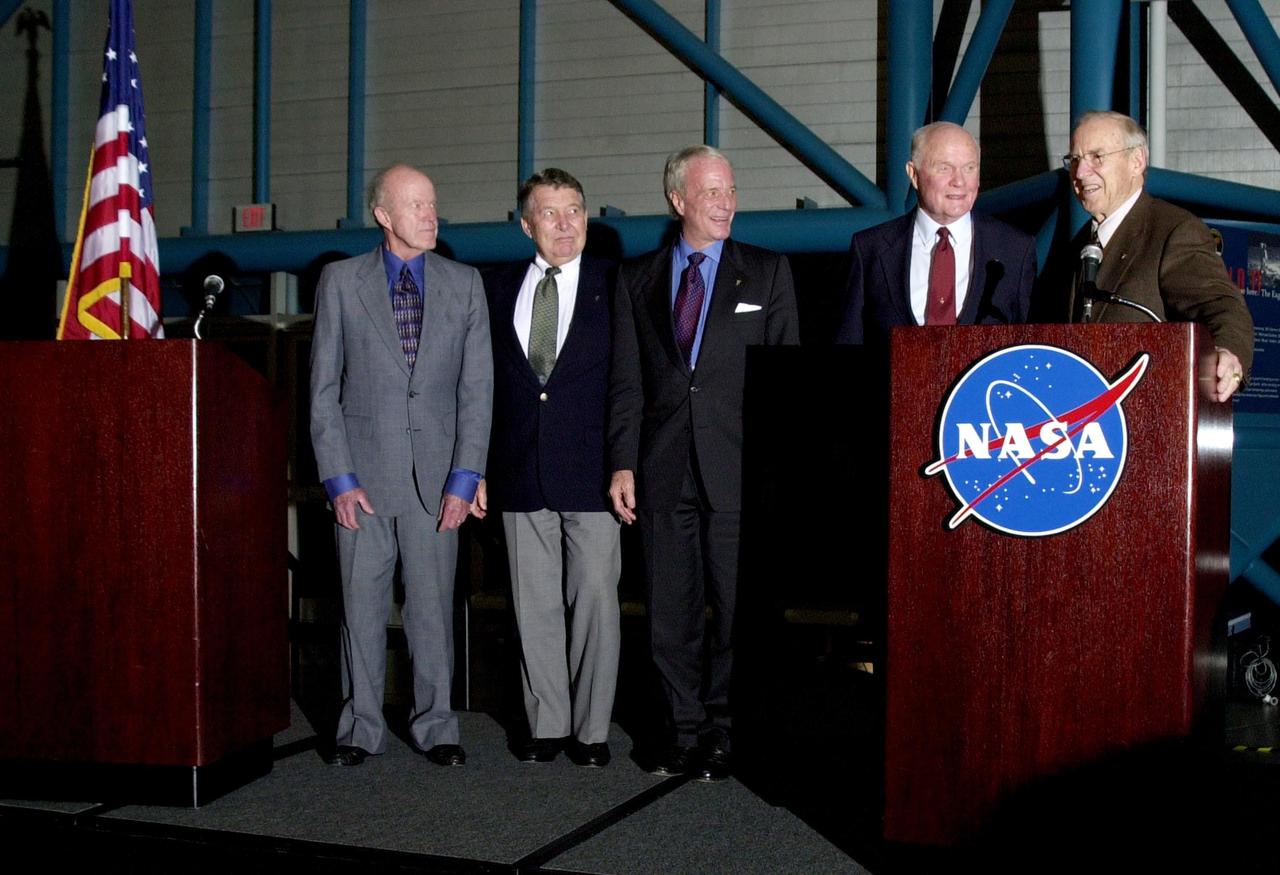
KENNEDY SPACE CENTER, FLA. - Five of the Mercury astronauts gathered on the stage of KSC's Apollo/Saturn V Center during the celebration of the 40th anniversary of American spaceflight. From left are former astronauts Gordon Cooper, Wally Schirra, Scott Carpenter, John Glenn and James Lovell, who served as host of the celebration.
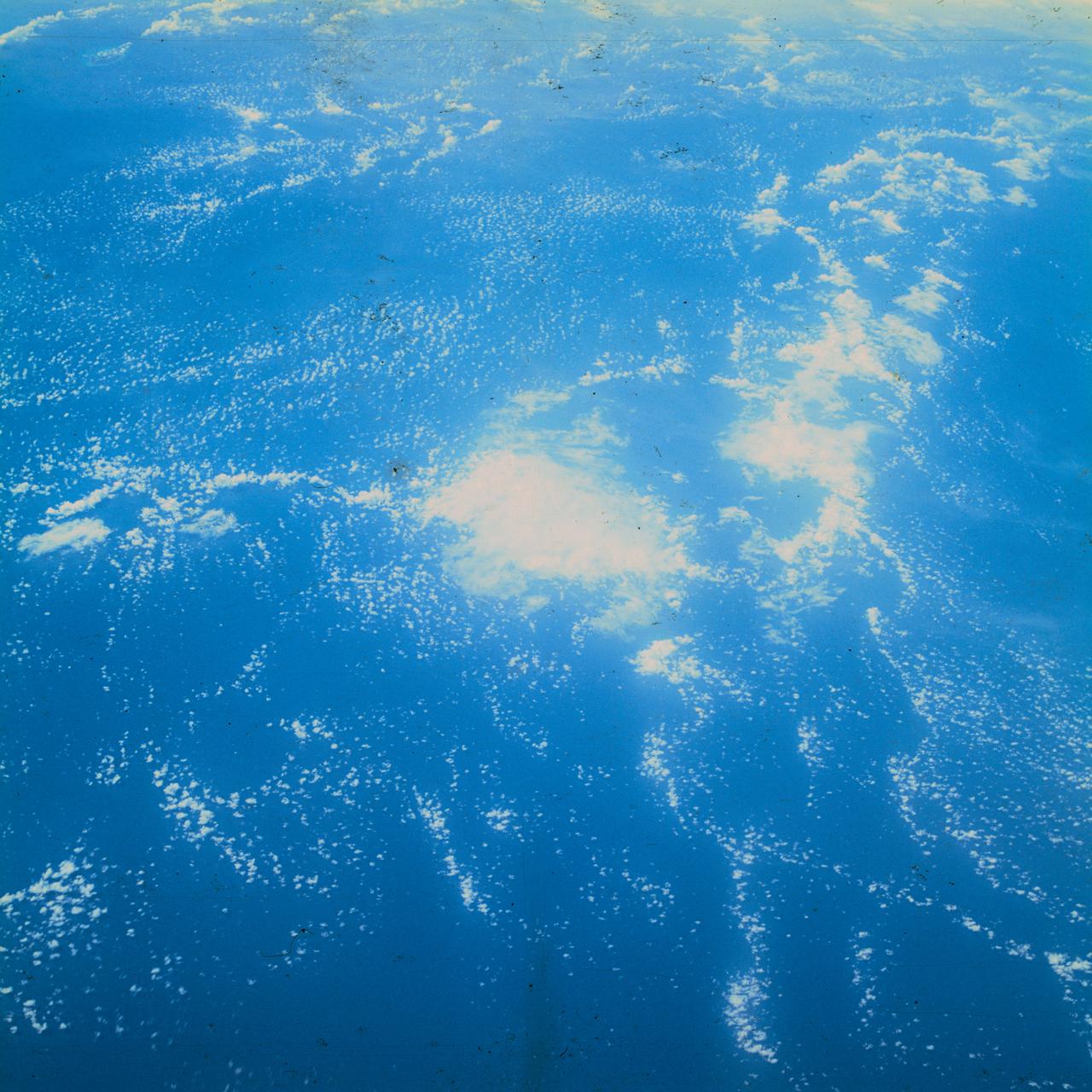
S62-06613 (3 Oct. 1962) --- Cumulus cloud formation over West Atlantic Ocean north of South American during the fourth orbit pass of the Mercury-Atlas 8 (MA-8) mission by astronaut Walter M. Schirra Jr. with a hand-held camera. Photo credit: NASA
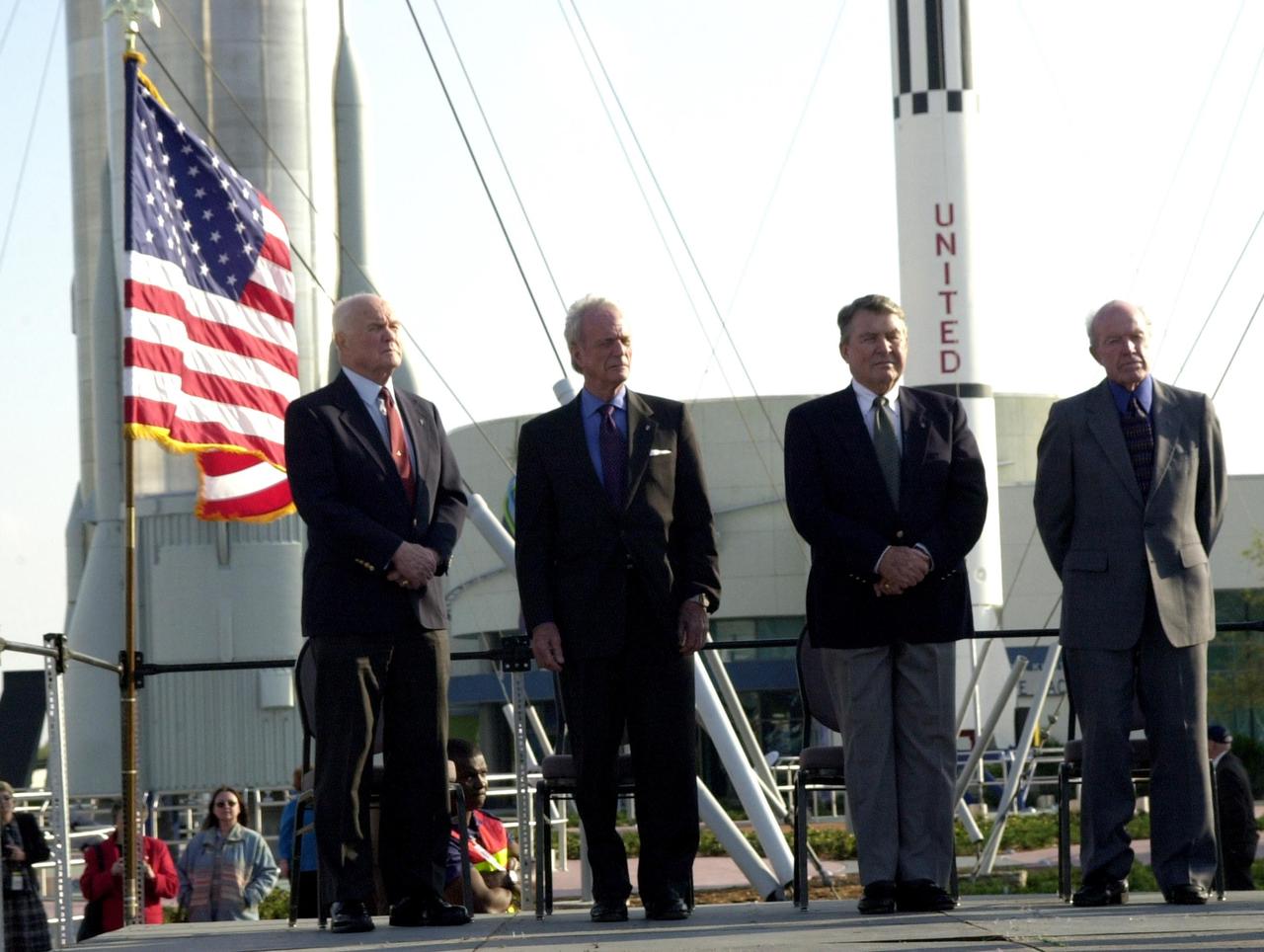
KENNEDY SPACE CENTER, FLA. -- During opening ceremonies for the 40th anniversary celebration of American spaceflight, four space pioneers stand at attention: (from left) John Glenn Jr., Scott Carpenter, Wallly Schirra and Gordon Cooper. The site is the Rocket Garden in the KSC Visitor Complex

S68-42343 (5 Aug. 1968) --- The prime crew of the first manned Apollo space mission, Apollo 7, stands on the deck of the NASA Motor Vessel Retriever after suiting up for water egress training in the Gulf of Mexico. Left to right, are astronauts Walter Cunningham, Donn F. Eisele, and Walter M. Schirra Jr.
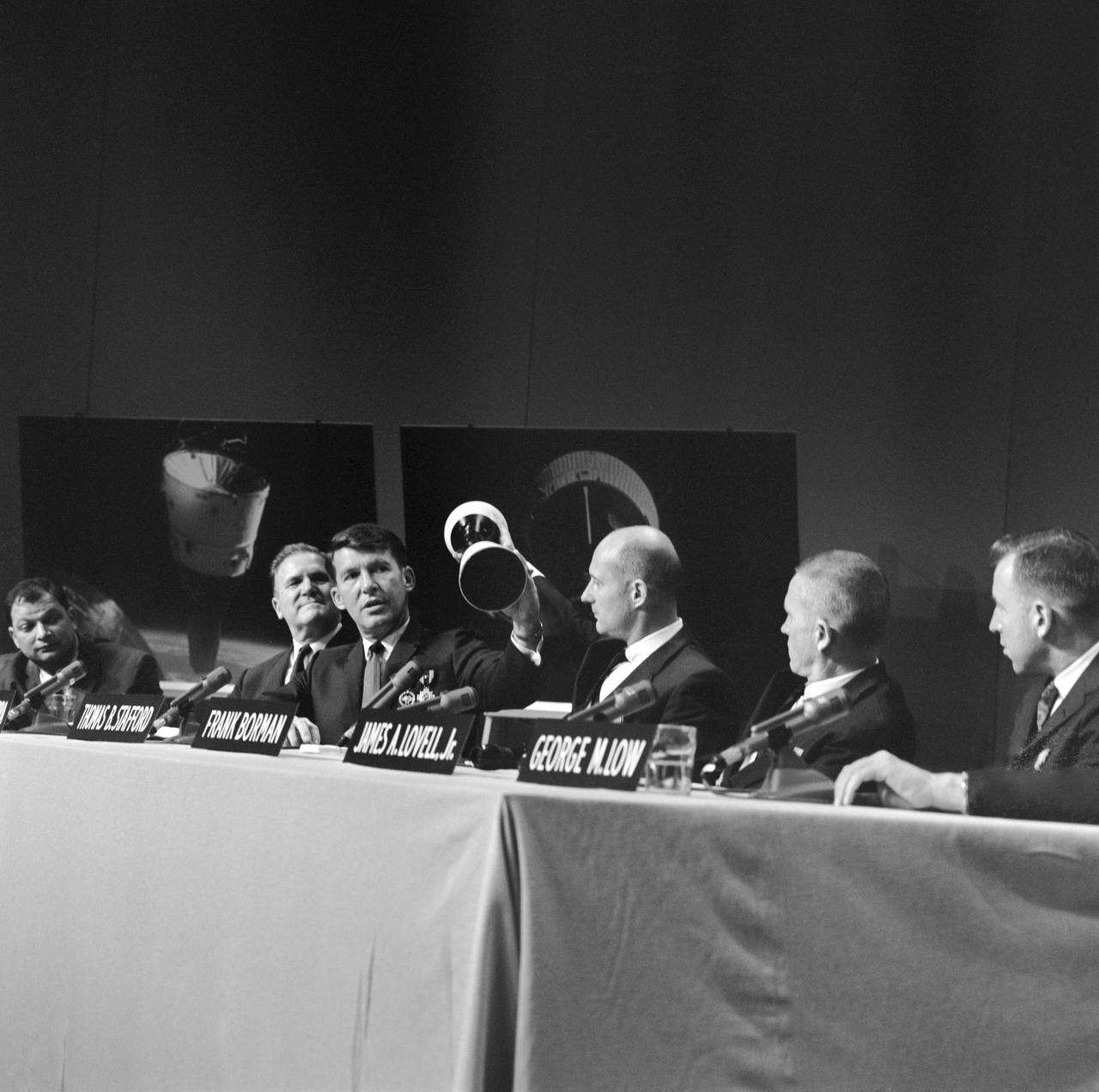
S66-15044 (3 Jan. 1966) --- View of the Gemini 6 and 7 press conference. From right to left are NASA Administrator James E. Webb; MSC Deputy Director George M. Low; and astronauts James A. Lovell Jr., Frank Borman, Thomas B. Stafford and Walter M. Schirra. Photo credit: NASA
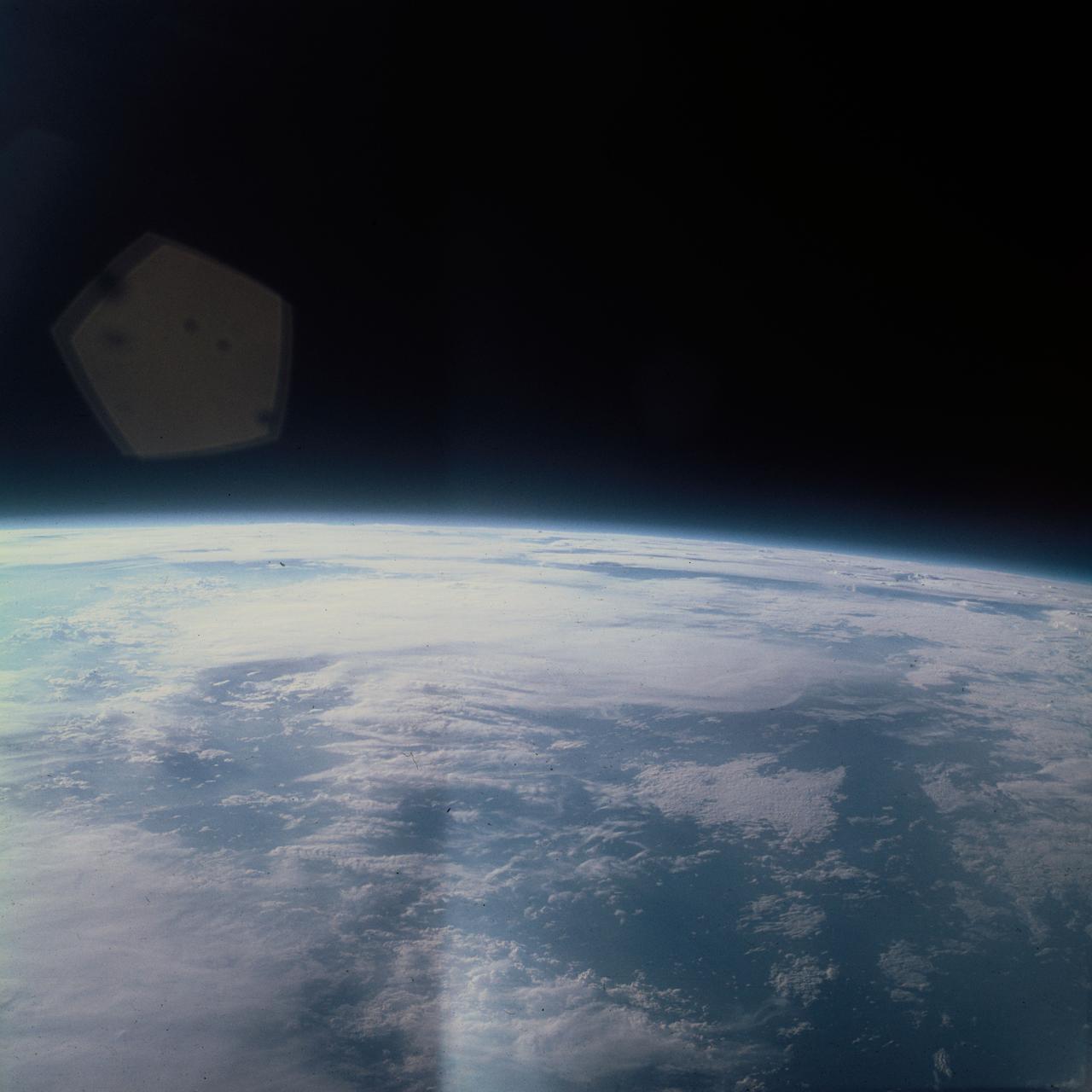
S62-06604 (3 Oct. 1962) --- Western horizon over South America taken during the sixth orbit pass of the Mercury-Atlas 8 (MA-8) mission by astronaut Walter M. Schirra Jr. with a hand-held camera. Photo credit: NASA
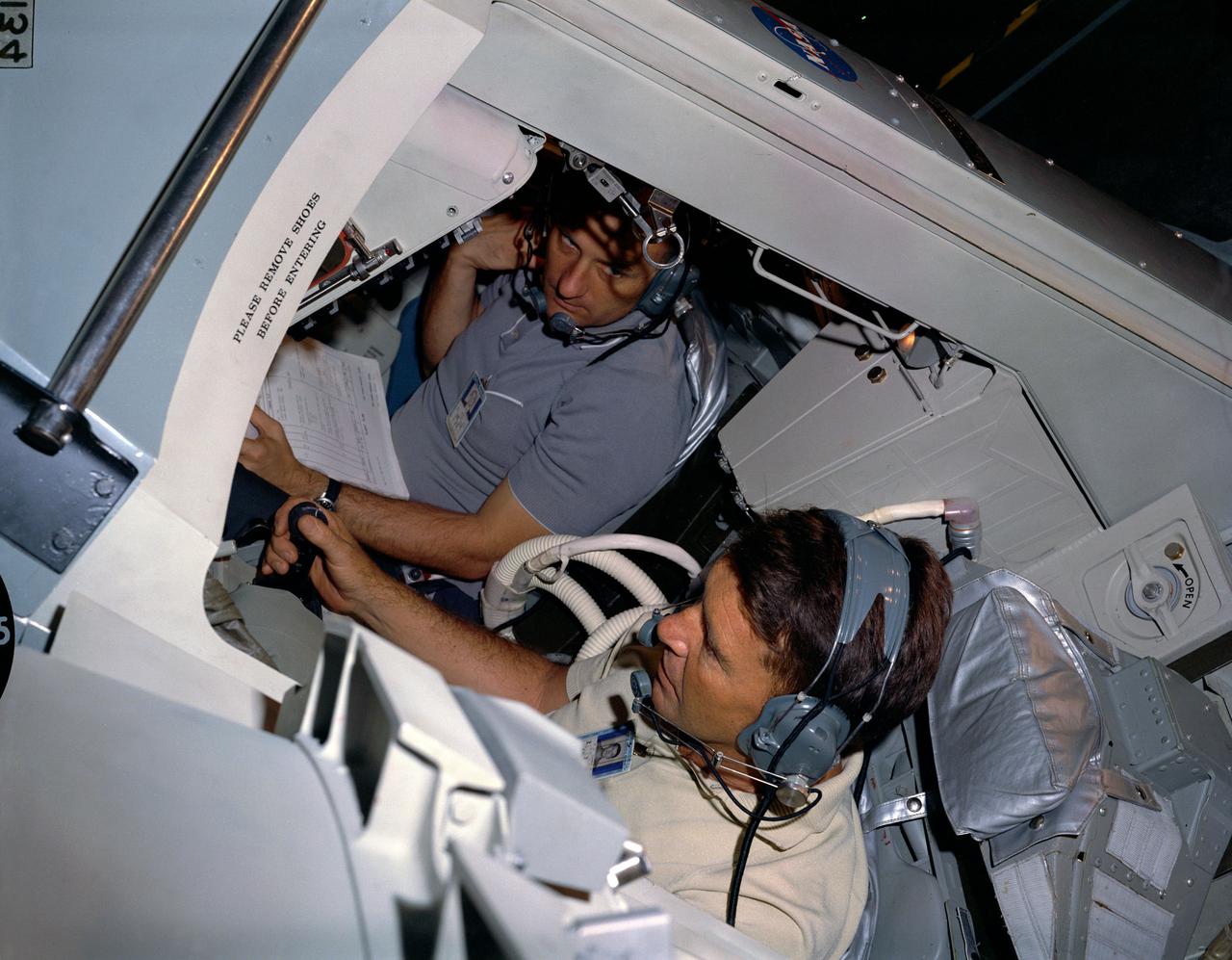
S65-13921 (1965) --- Overhead view of astronauts Walter M. Schirra Jr. (foreground), backup command pilot, and Thomas P. Stafford, backup pilot, as they prepare to run Gemini-Titan 3 simulations in the Gemini mission simulator in the Mission Control Center at Merritt Island, Florida.
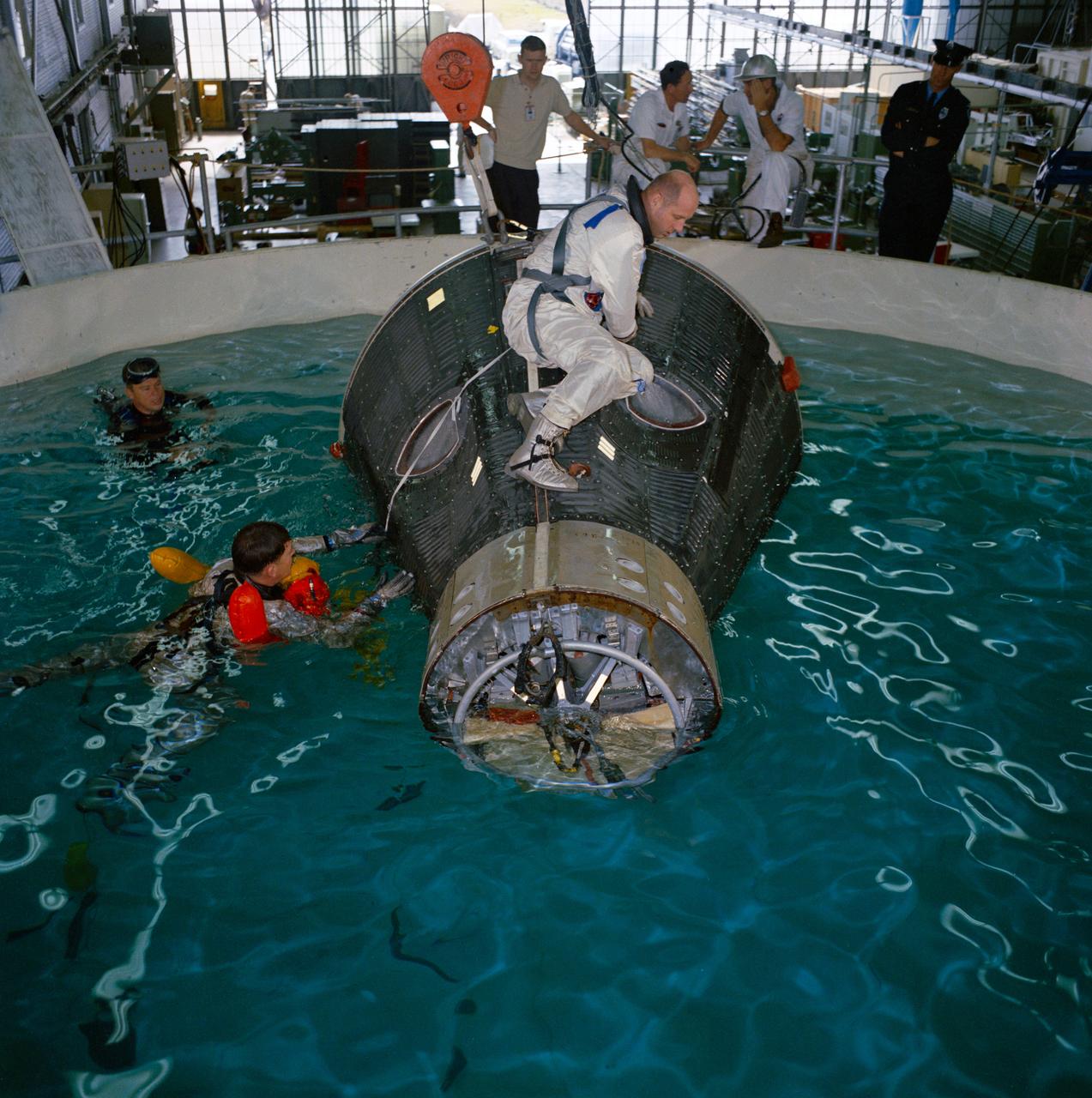
S65-10118 (1 Feb. 1965) --- The Gemini-6 prime crew, astronauts Walter M. Schirra Jr. (in water), command pilot; and Thomas P. Stafford (on spacecraft), pilot, are pictured during water egress training at Ellington Air Force Base, Texas. Photo credit: NASA or National Aeronautics and Space Administration
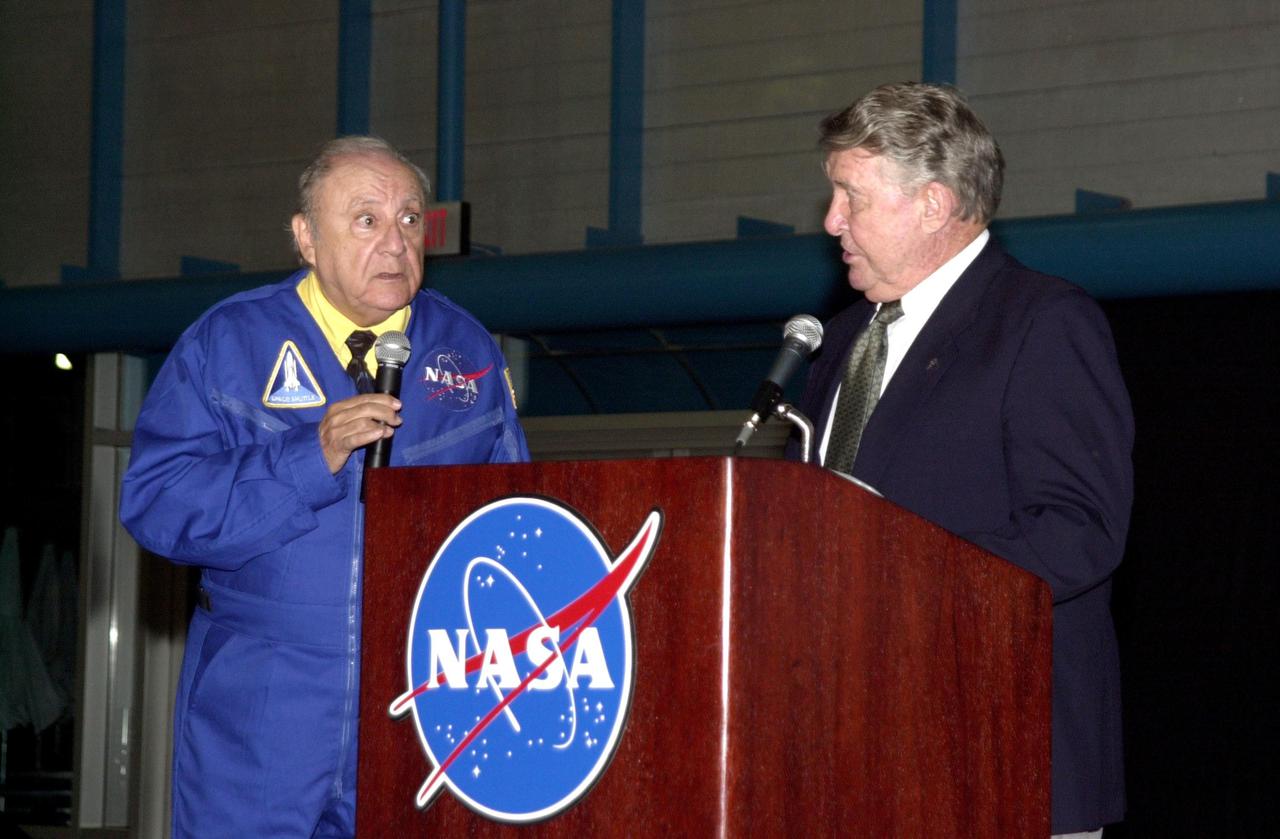
KENNEDY SPACE CENTER, FLA. - A popular comedian during the early days of the space program, Bill Dana (left) recreates his comedic persona of 'astronaut Jose Jimenez' as he talks with space pioneer Wally Schirra. The occasion was the celebration of the 40th anniversary of American spaceflight. The dinner event was held at KSC's Apollo_Saturn V Center.

KENNEDY SPACE CENTER, FLA. - At the KSC Launch Control Complex, former astronauts Jim Lovell (second from left) and Wally Schirra (second from right) talk with Mike Wetmore, director of Shuttle Processing (far left). At far right is Lisa Malone, acting deputy director of External Relations & Business Development at KSC. Lovell and Schirra visited KSC to talk about the space program and their experiences, as well as offer encouragement to workers to help get the space program "back on its feet." They visited several sites around the Center, including the RLV Hangar where Columbia debris is being collected and examined as part of the investigation into the tragedy that claimed the orbiter and lives of seven astronauts returning from mission STS-107.
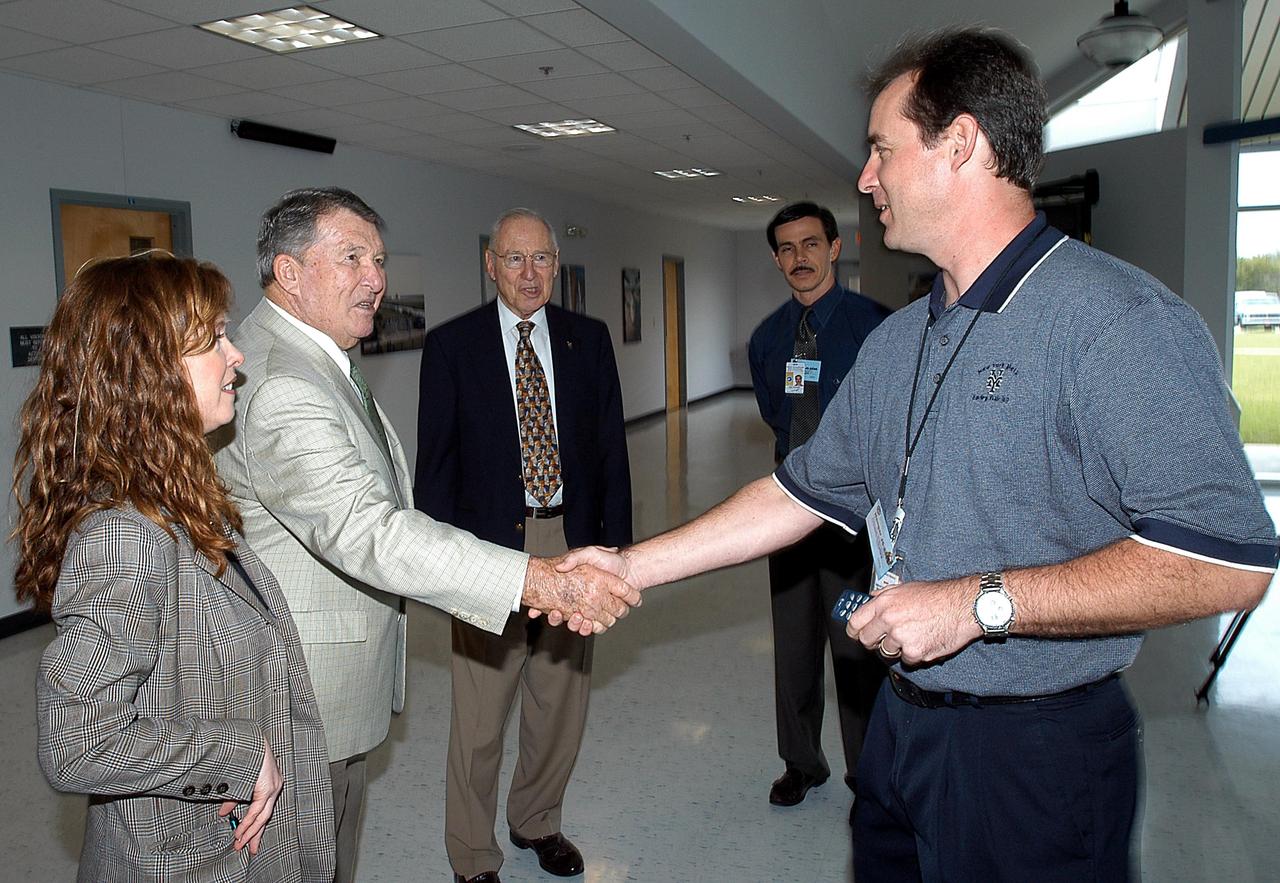
KENNEDY SPACE CENTER, FLA. - During a visit to KSC, former astronauts Wally Schirra (second from left) and Jim Lovell (third from left) greet Space Shuttle Test Director Steve Altemus. At far left is is Lisa Malone, acting deputy director of External Relations & Business Development at KSC, and reconstruction engineer John Cowart (second from right). Lovell and Schirra visited KSC to talk about the space program and their experiences, as well as offer encouragement to workers to help get the space program "back on its feet." They visited several sites around the Center, including the RLV Hangar where Columbia debris is being collected and examined as part of the investigation into the tragedy that claimed the orbiter and lives of seven astronauts returning from mission STS-107.