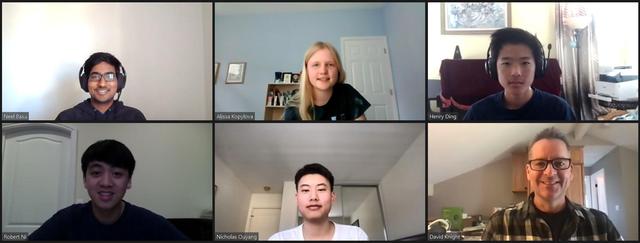
For the fourth consecutive year, Irvine's University High School won the Southern California regional round of the National Science Bowl, hosted by JPL. The team, including coach David Knight (lower right), paused for a group shot after their victory on March 20, 2021. https://photojournal.jpl.nasa.gov/catalog/PIA23730
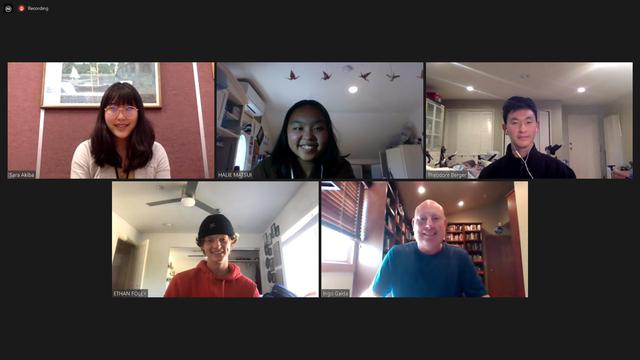
Santa Monica High School's winning team in the 2021 National Ocean Sciences Bowl Los Angeles regional competition, including Ingo Gaida, (lower right) who's been leading Santa Monica in the bowl for more than two decades. The competition took place Saturday, March 6. https://photojournal.jpl.nasa.gov/catalog/PIA23728
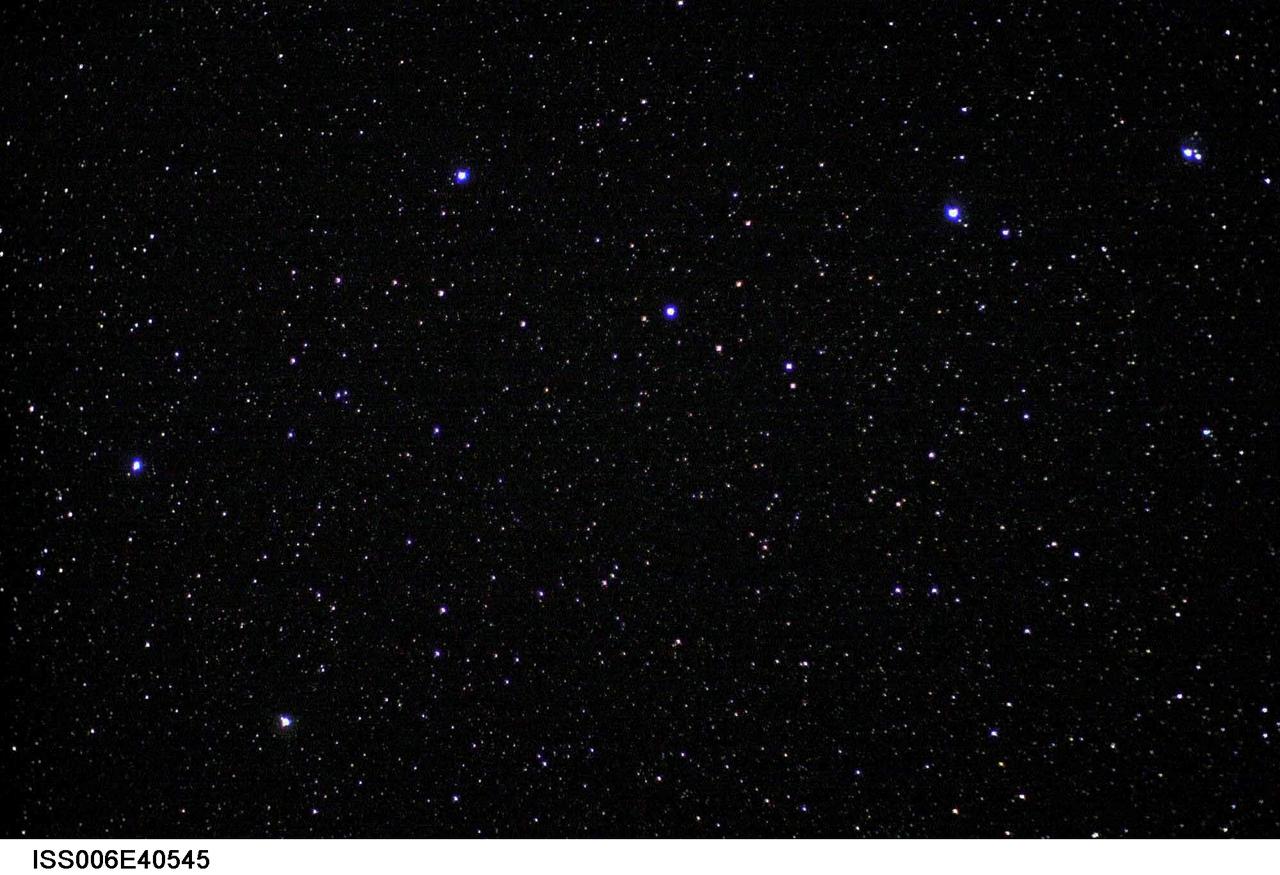
ISS006-E-40545 (March 2003) --- The bowl and a portion of the “handle” stars of the Big Dipper are visible in this photograph taken by astronaut Donald R. Pettit, Expedition Six NASA ISS science officer, on board the International Space Station (ISS).
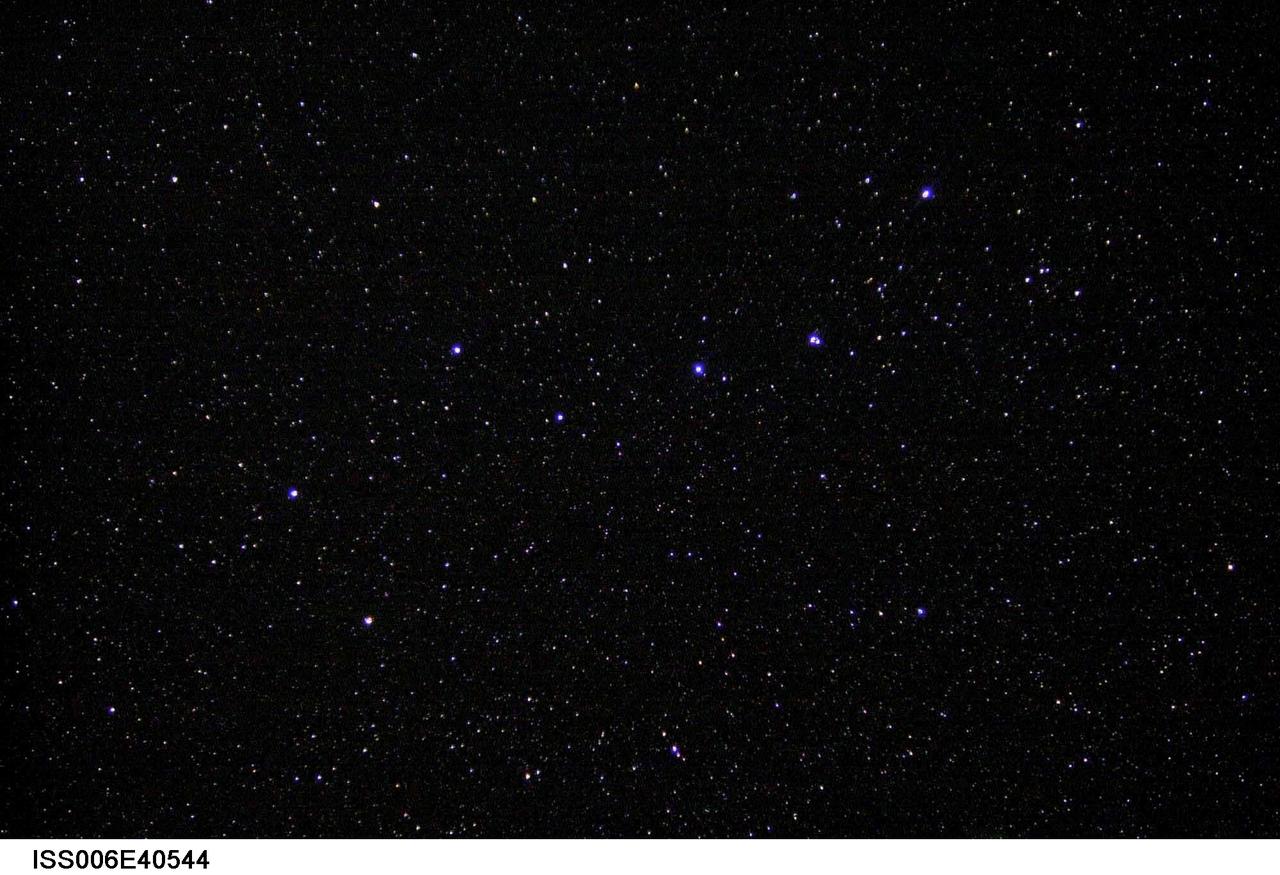
ISS006-E-40544 (March 2003) --- The entire Big Dipper is visible in this photograph taken by astronaut Donald R. Pettit, Expedition Six NASA ISS science officer, on board the International Space Station (ISS). The roughly rectangular bowl (center left) and “handle” (extending toward the upper right) are shaped by the brightest stars. The Dipper is upside-down, appearing to empty its contents.
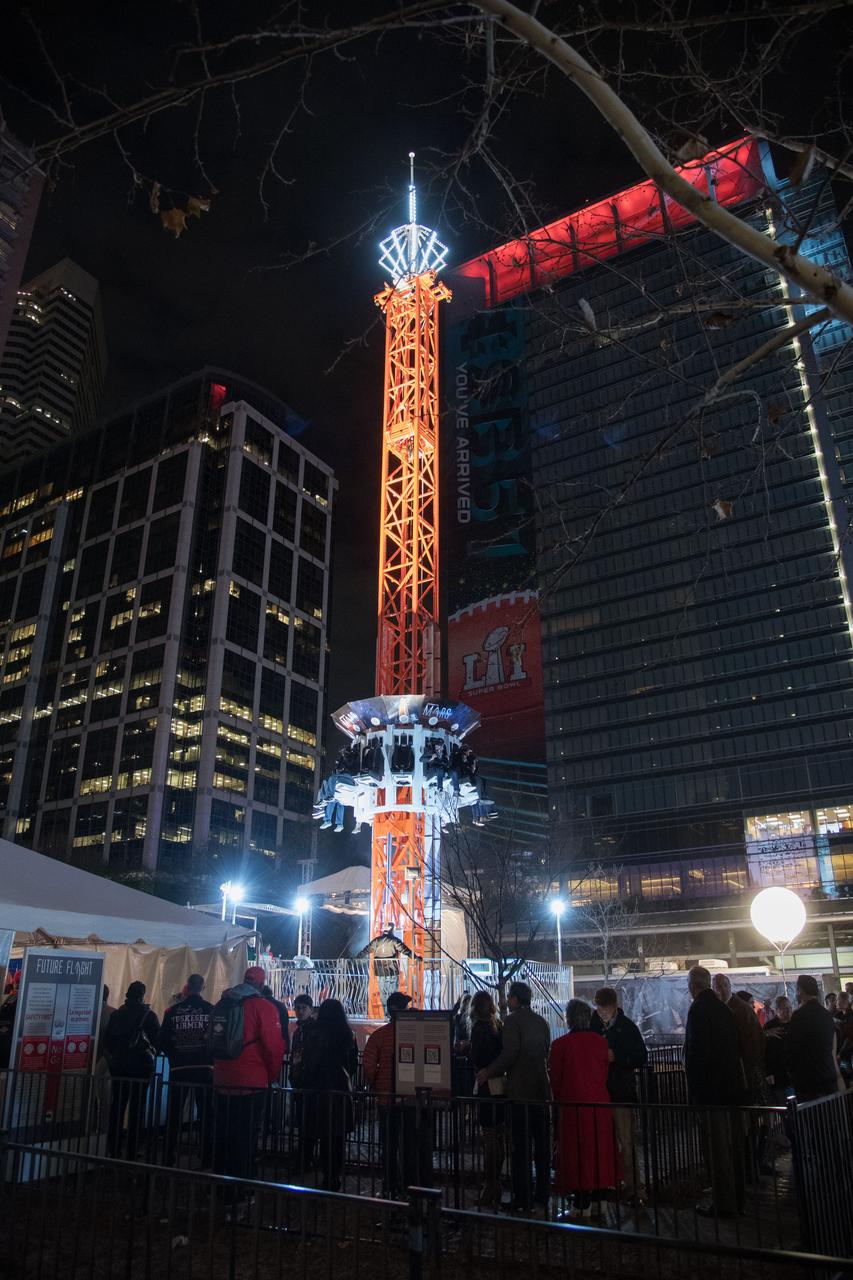
jsc2017e011279 (01/27/2017) --- Crowds of visitors line up for the NASA Orion Journey to Mars ride at the Houston Texas NFL Live Super Bowl LI event on Discovery Green Jan. 27, 2017. With people safely seated and virtual googles in place the ride pulls the Orion capsule up 90 feet then drops them suddenly to the bottom providing a physical experience as well as a visual one while experiencing the trip to Mars and back. The virtual reality trip is a popular no cost feature as part of NASA’s Future Flight area which also houses many other NASA space exploration and science exhibits. NASA PHOTOGRAPHER: Robert Markowitz
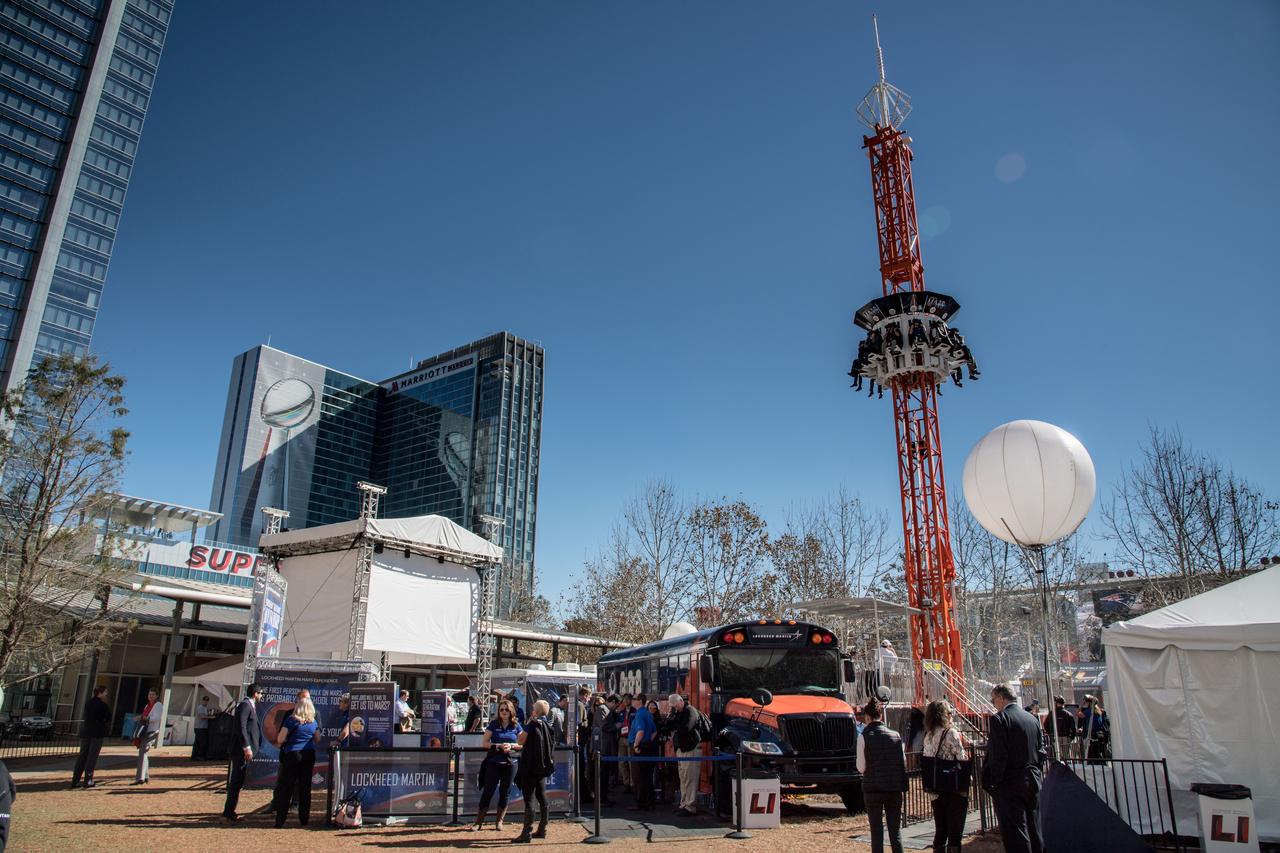
jsc2017e011393 (01/30/2017) --- Space exploration will feature prominently at Super Bowl LIVE, a nine-day fan festival running Jan. 28 through Feb. 5 on Discovery Green, Houston Texas where 100,000 visitors are expected each day. NASA is collaborating with the Houston Super Bowl Host Committee, which is the fan festival organizer, to share NASA’s contributions with the Houston community and to the nation. At NASA's Future Flight, the primary attraction at the free fan festival, riders will take a trip to Mars and back using virtual reality goggles on a 90-foot drop tower ride. Visitors also will get a chance to see several NASA assets that have been transported to downtown Houston for the activities. These assets include: the Orion mockup used for water recovery testing, Space Exploration Vehicle (SEV /Rover), the Driven to Explore mobile exhibit, Mars Science Laboratory – Curiosity Rover - replica, Robonaut 1 (Centaur configuration), EMU space suit presentation unit, Arctic meteorite and astromaterials display, and the Mark III advanced space suit photo-op. Several of NASA’s industry partners sponsoring Future Flight will also have assets on display, and a replica of the James Webb Space Telescope will be located near but not inside the activities on Discovery Green. NASA and industry partner volunteers will be staffing the Future Flight area. NASA PHOTOGRAPHER: Bill Stafford
It can't always be about space, right? Well, technically this still is about space...and the Super Bowl. Take a look at how NASA sees all the Super Bowl Championship Cities! Enjoy the game! <b><a href="http://www.nasa.gov/audience/formedia/features/MP_Photo_Guidelines.html" rel="nofollow">NASA image use policy.</a></b> <b><a href="http://www.nasa.gov/centers/goddard/home/index.html" rel="nofollow">NASA Goddard Space Flight Center</a></b> enables NASA’s mission through four scientific endeavors: Earth Science, Heliophysics, Solar System Exploration, and Astrophysics. Goddard plays a leading role in NASA’s accomplishments by contributing compelling scientific knowledge to advance the Agency’s mission. <b>Follow us on <a href="http://twitter.com/NASAGoddardPix" rel="nofollow">Twitter</a></b> <b>Like us on <a href="http://www.facebook.com/pages/Greenbelt-MD/NASA-Goddard/395013845897?ref=tsd" rel="nofollow">Facebook</a></b> <b>Find us on <a href="http://instagrid.me/nasagoddard/?vm=grid" rel="nofollow">Instagram</a></b>
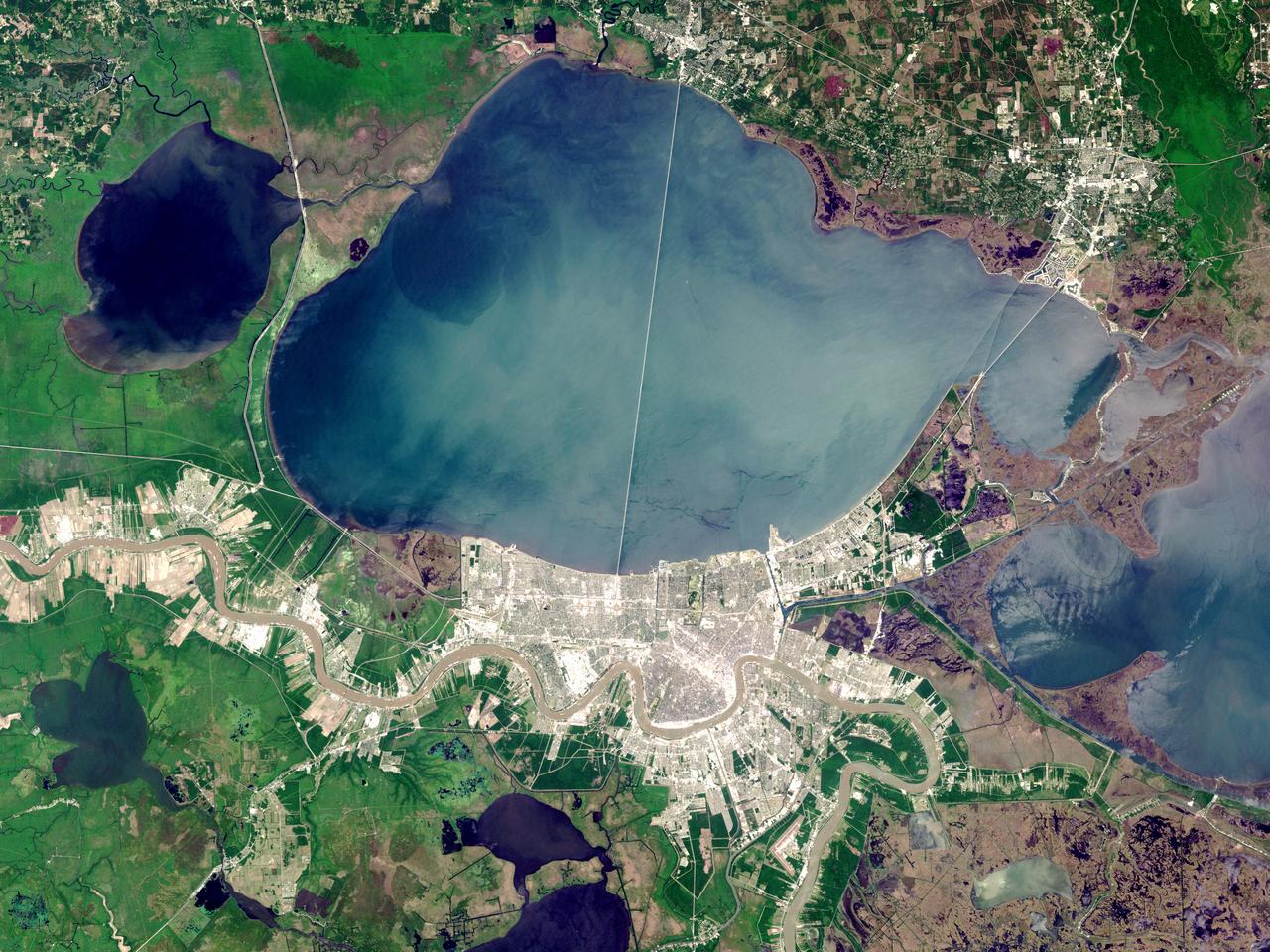
On Sunday, February 3, roughly 800 million eyes from all over the world focused on the Louisiana Superdome in New Orleans as the New England Patriots battled the St. Louis Rams for the NFL Championship in Super Bowl XXXVI. This true color image of New Orleans was acquired on April 26, 2000, by the Enhanced Thematic Mapper plus (ETM+), flying aboard the Landsat 7 satellite. Lake Pontchartrain borders the city to the north. The big river winding its way east to west through the image is the Mississippi. The Louisiana Superdome, built in 1975, sits just inside the rightmost portion of the big river bend that cradles downtown New Orleans. The city, however, may not be around to hold a Super Bowl in 2102. New Orleans is slowly sinking into the Gulf of Mexico. The construction of flood walls and dams north of New Orleans over the past century have prevented sediments carried by the Mississippi River from reaching New Orleans and the Mississippi River Delta. Before the dams were built, river sediments would empty out onto the delta adding layer upon layer of new soil each year. The additional soil prevented the Gulf from subsuming the delta. Unless drastic measures are taken, the city and the delta could be awash in seawater by the end of this century. Image by Robert Simmon, based on data provided by the Landsat 7 Science Team Credit: NASA/GSFC/Landsat <b><a href="http://www.nasa.gov/centers/goddard/home/index.html" rel="nofollow">NASA Goddard Space Flight Center</a></b> enables NASA’s mission through four scientific endeavors: Earth Science, Heliophysics, Solar System Exploration, and Astrophysics. Goddard plays a leading role in NASA’s accomplishments by contributing compelling scientific knowledge to advance the Agency’s mission. <b>Follow us on <a href="http://twitter.com/NASA_GoddardPix" rel="nofollow">Twitter</a></b> <b>Join us on <a href="http://www.facebook.com/pages/Greenbelt-MD/NASA-Goddard/395013845897?ref=tsd" rel="nofollow">Facebook</a></b>
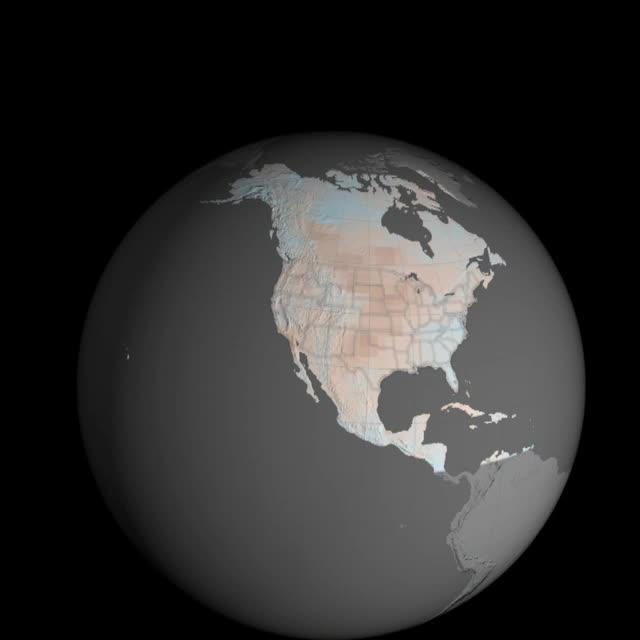
Droughts in the U.S. Southwest and Central Plains at the end of this century could be drier and longer compared to drought conditions seen in those regions in the last 1,000 years, according to a new NASA study. The study, published Feb 12 in the journal Science Advances, is based on projections from several climate models, including one sponsored by NASA. The research found the risk of severe droughts in those regions would increase if human-produced greenhouse gas emissions continue to increase. "Natural droughts like the 1930s Dust Bowl and the current drought in the Southwest have historically lasted maybe a decade or a little less," said Ben Cook, climate scientist at NASA's Goddard Institute for Space Studies and the Lamont-Doherty Earth Observatory at Columbia University in New York City, and lead author of the study. "What these results are saying is we're going to get a drought similar to those events, but it is probably going to last at least 30 to 35 years." Read more:http://bit.ly/nasa-megadroughts Credit: NASA’s Goddard Space Flight Center <b><a href="http://www.nasa.gov/audience/formedia/features/MP_Photo_Guidelines.html" rel="nofollow">NASA image use policy.</a></b> <b><a href="http://www.nasa.gov/centers/goddard/home/index.html" rel="nofollow">NASA Goddard Space Flight Center</a></b> enables NASA’s mission through four scientific endeavors: Earth Science, Heliophysics, Solar System Exploration, and Astrophysics. Goddard plays a leading role in NASA’s accomplishments by contributing compelling scientific knowledge to advance the Agency’s mission. <b>Follow us on <a href="http://twitter.com/NASAGoddardPix" rel="nofollow">Twitter</a></b> <b>Like us on <a href="http://www.facebook.com/pages/Greenbelt-MD/NASA-Goddard/395013845897?ref=tsd" rel="nofollow">Facebook</a></b> <b>Find us on <a href="http://instagram.com/nasagoddard?vm=grid" rel="nofollow">Instagram</a></b>
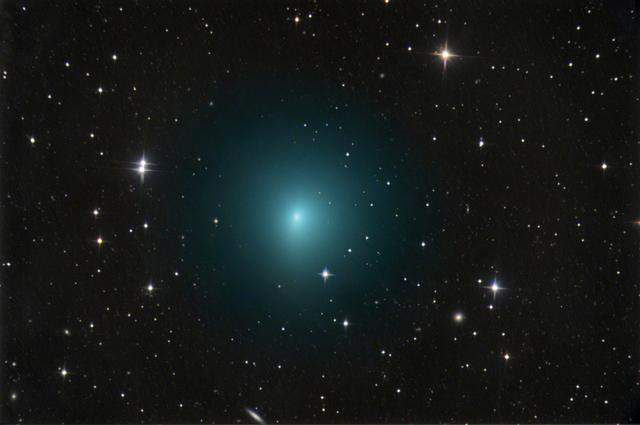
On April 1, 2017, comet 41P will pass closer than it normally does to Earth, giving observers with binoculars or a telescope a special viewing opportunity. Comet hunters in the Northern Hemisphere should look for it near the constellations Draco and Ursa Major, which the Big Dipper is part of. Whether a comet will put on a good show for observers is notoriously difficult to predict, but 41P has a history of outbursts, and put on quite a display in 1973. If the comet experiences similar outbursts this time, there’s a chance it could become bright enough to see with the naked eye. The comet is expected to reach perihelion, or its closest approach to the sun, on April 12. A member of the Jupiter family of comets, 41P makes a trip around the sun every 5.4 years, coming relatively close to Earth on some of those trips. On this approach, the comet will pass our planet at a distance of about 13 million miles (0.14 astronomical units), or about 55 times the distance from Earth to the moon. This is the comet’s closest approach to Earth in more than 50 years and perhaps more than a century. Read more: <a href="https://go.nasa.gov/2nLNzes" rel="nofollow">go.nasa.gov/2nLNzes</a> Photo caption: In this image taken March 24, 2017, comet 41P/Tuttle-Giacobini-Kresák is shown moving through a field of faint galaxies in the bowl of the Big Dipper. On April 1, the comet will pass by Earth at a distance of about 13 million miles (0.14 astronomical units), or 55 times the distance from Earth to the moon; that is a much closer approach than usual for this Jupiter-family comet. Photo credit: Image copyright Chris Schur©, used with permission <b><a href="http://www.nasa.gov/audience/formedia/features/MP_Photo_Guidelines.html" rel="nofollow">NASA image use policy.</a></b> <b><a href="http://www.nasa.gov/centers/goddard/home/index.html" rel="nofollow">NASA Goddard Space Flight Center</a></b> enables NASA’s mission through four scientific endeavors: Earth Science, Heliophysics, Solar System Exploration, and Astrophysics. Goddard plays a leading role in NASA’s accomplishments by contributing compelling scientific knowledge to advance the Agency’s mission. <b>Follow us on <a href="http://twitter.com/NASAGoddardPix" rel="nofollow">Twitter</a></b> <b>Like us on <a href="http://www.facebook.com/pages/Greenbelt-MD/NASA-Goddard/395013845897?ref=tsd" rel="nofollow">Facebook</a></b> <b>Find us on <a href="http://instagrid.me/nasagoddard/?vm=grid" rel="nofollow">Instagram</a></b>