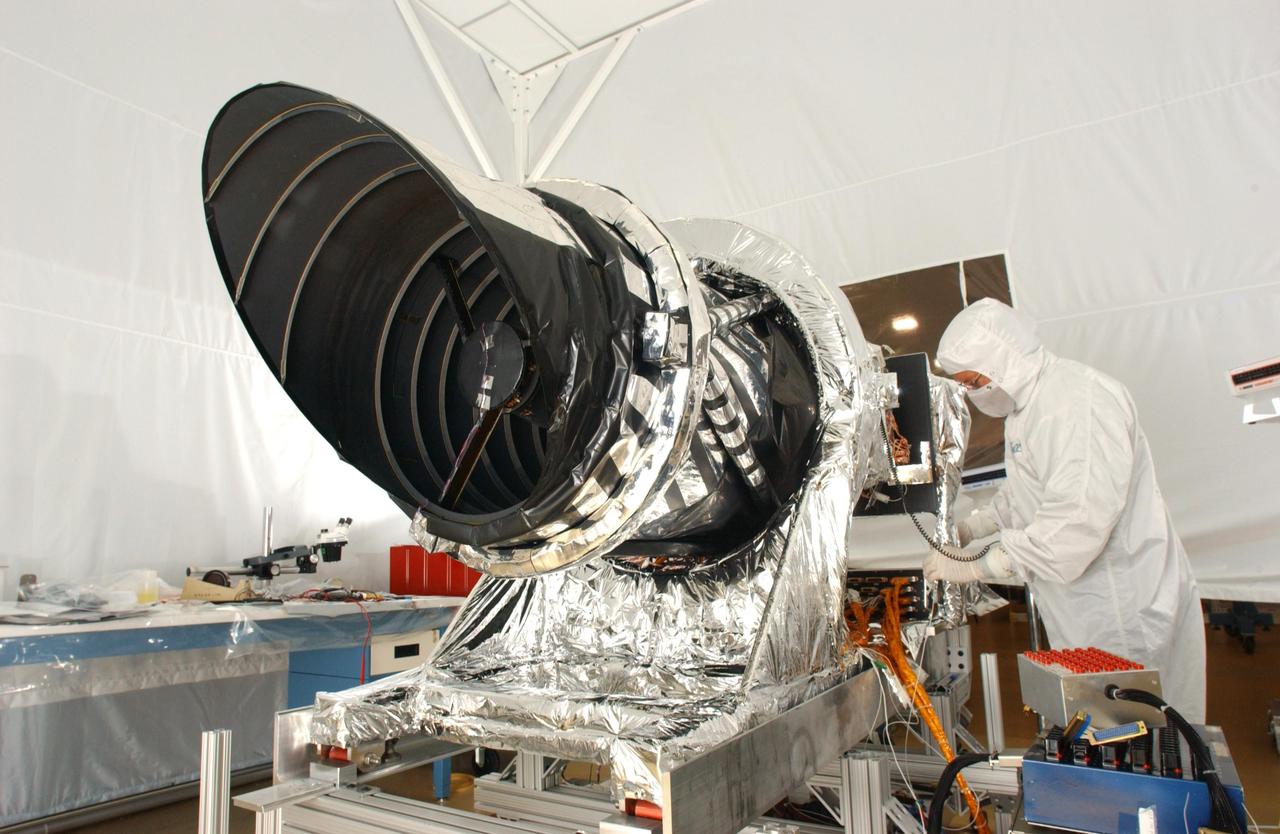
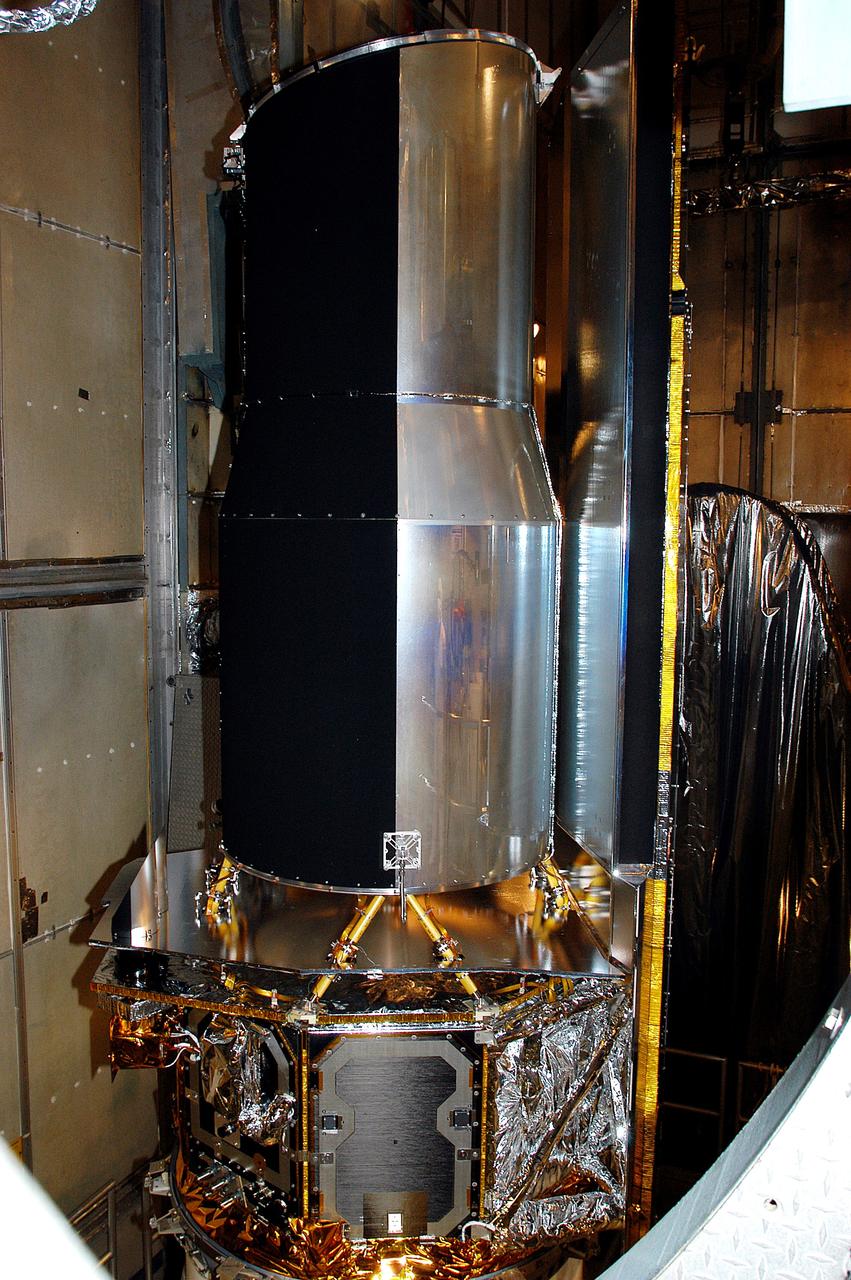
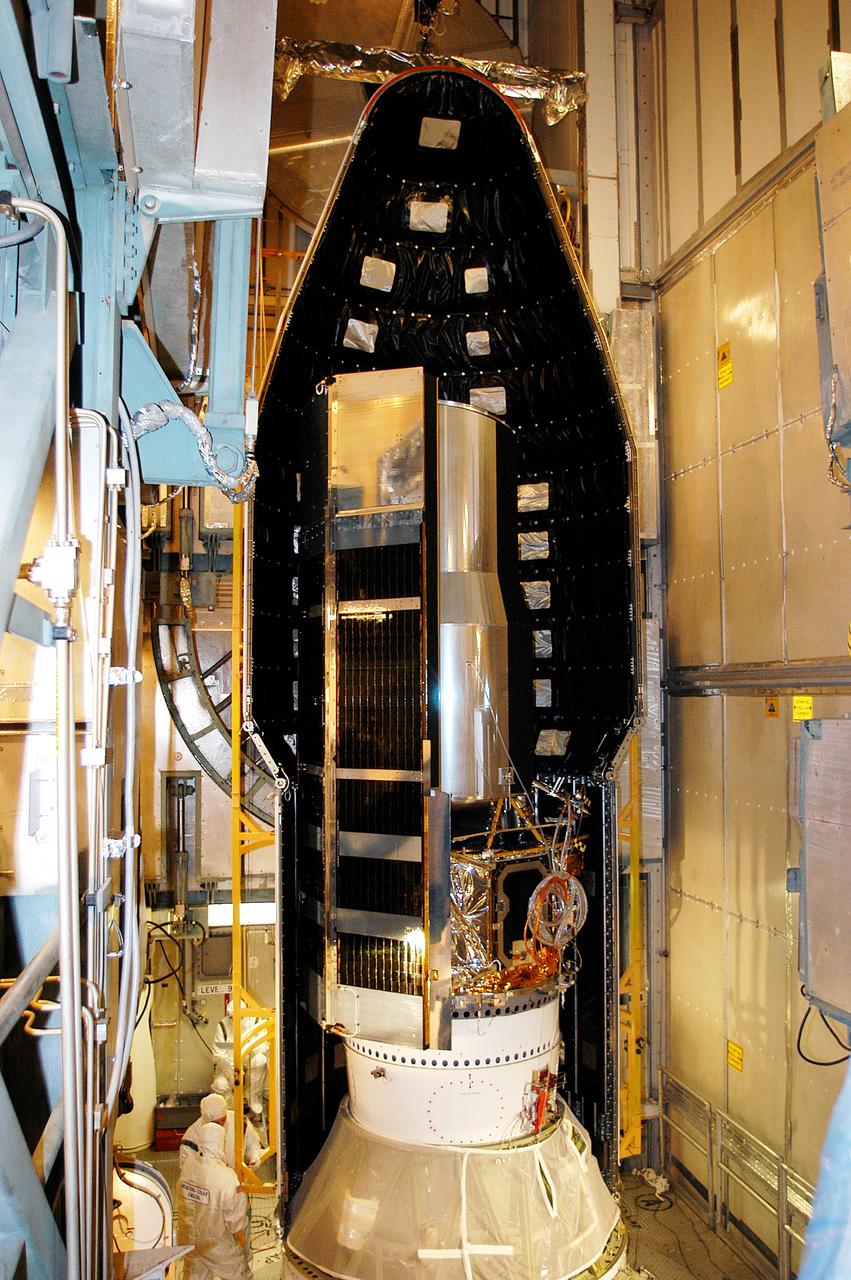
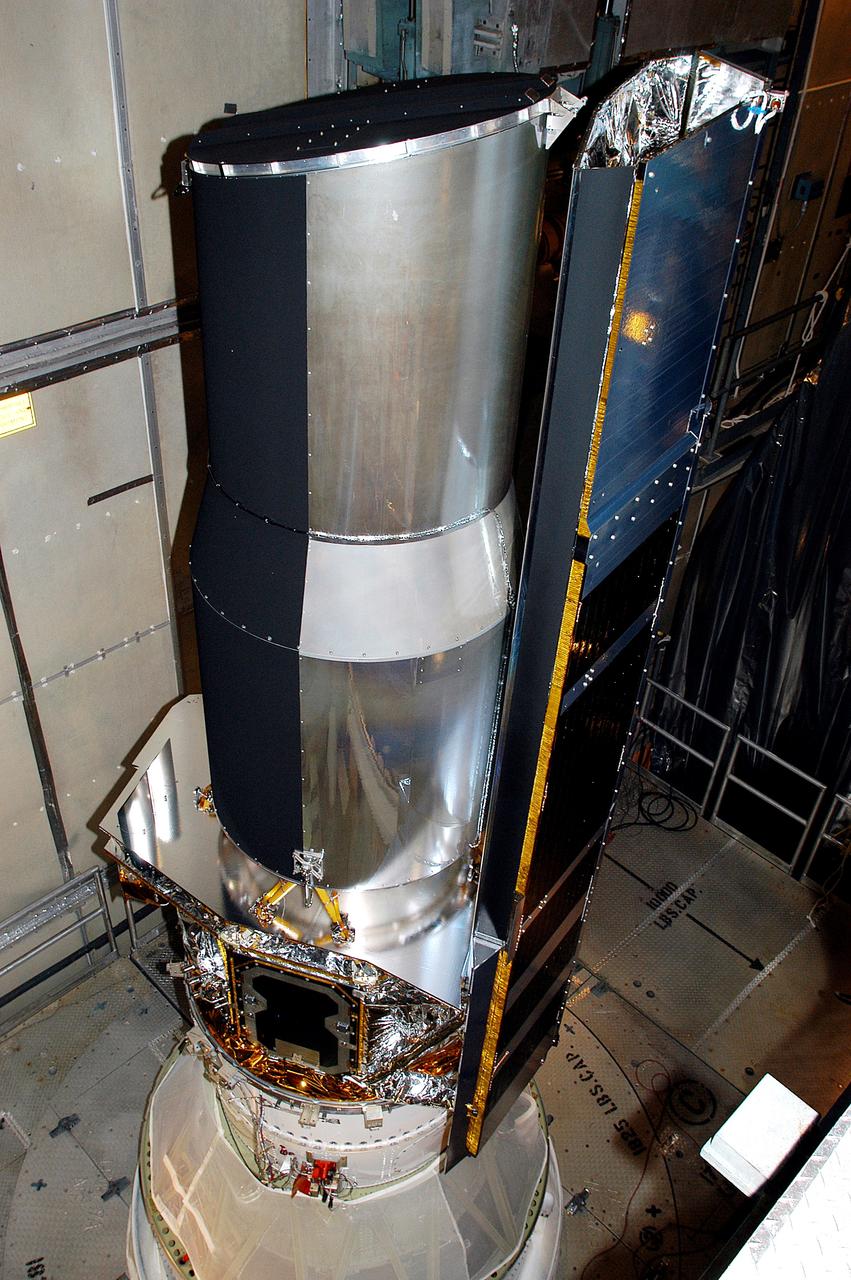
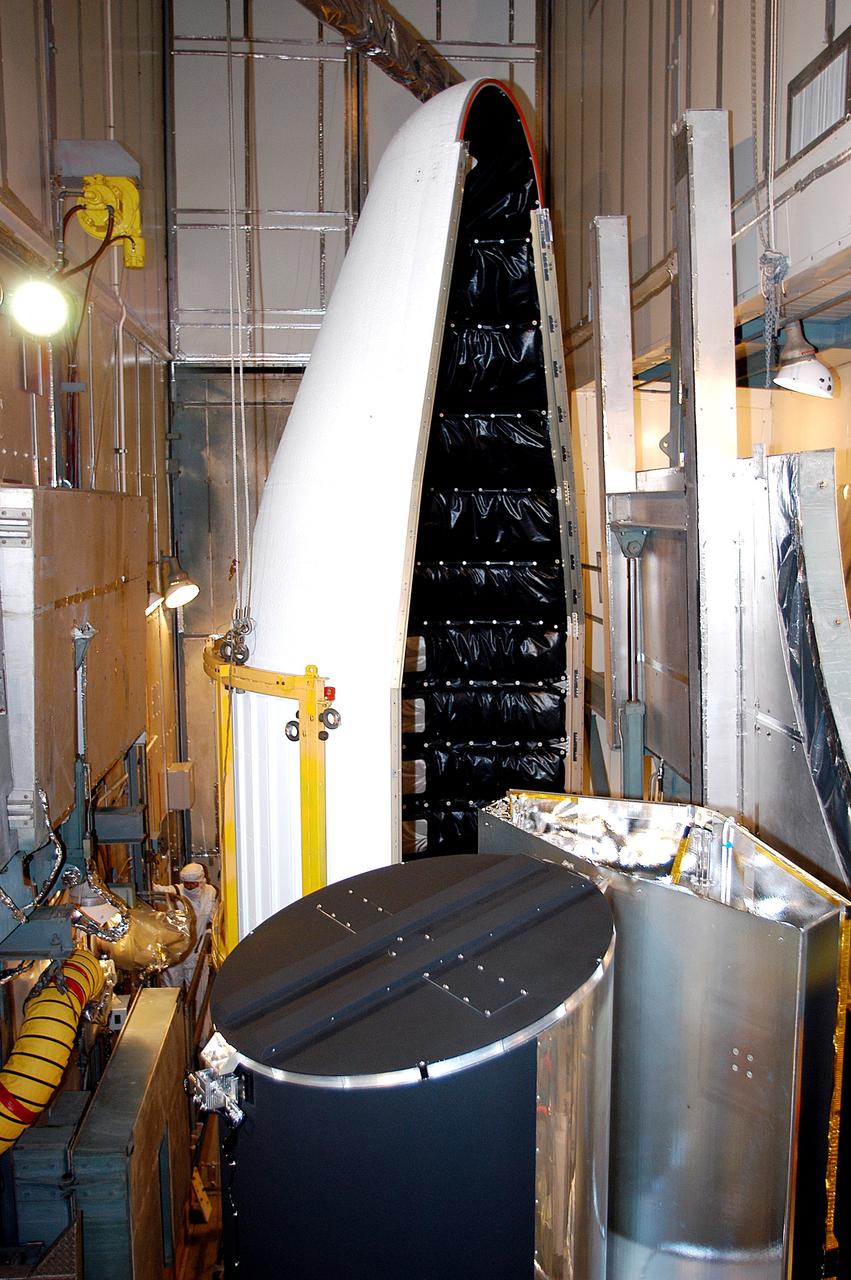
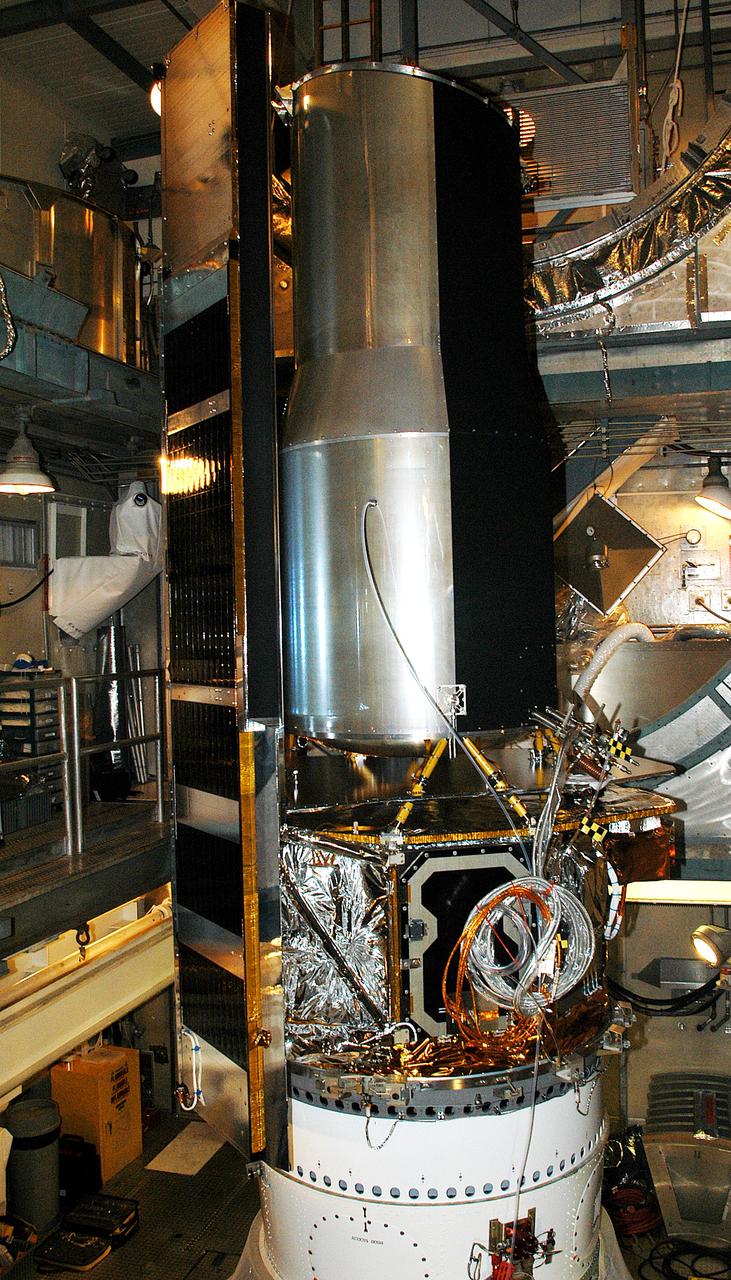
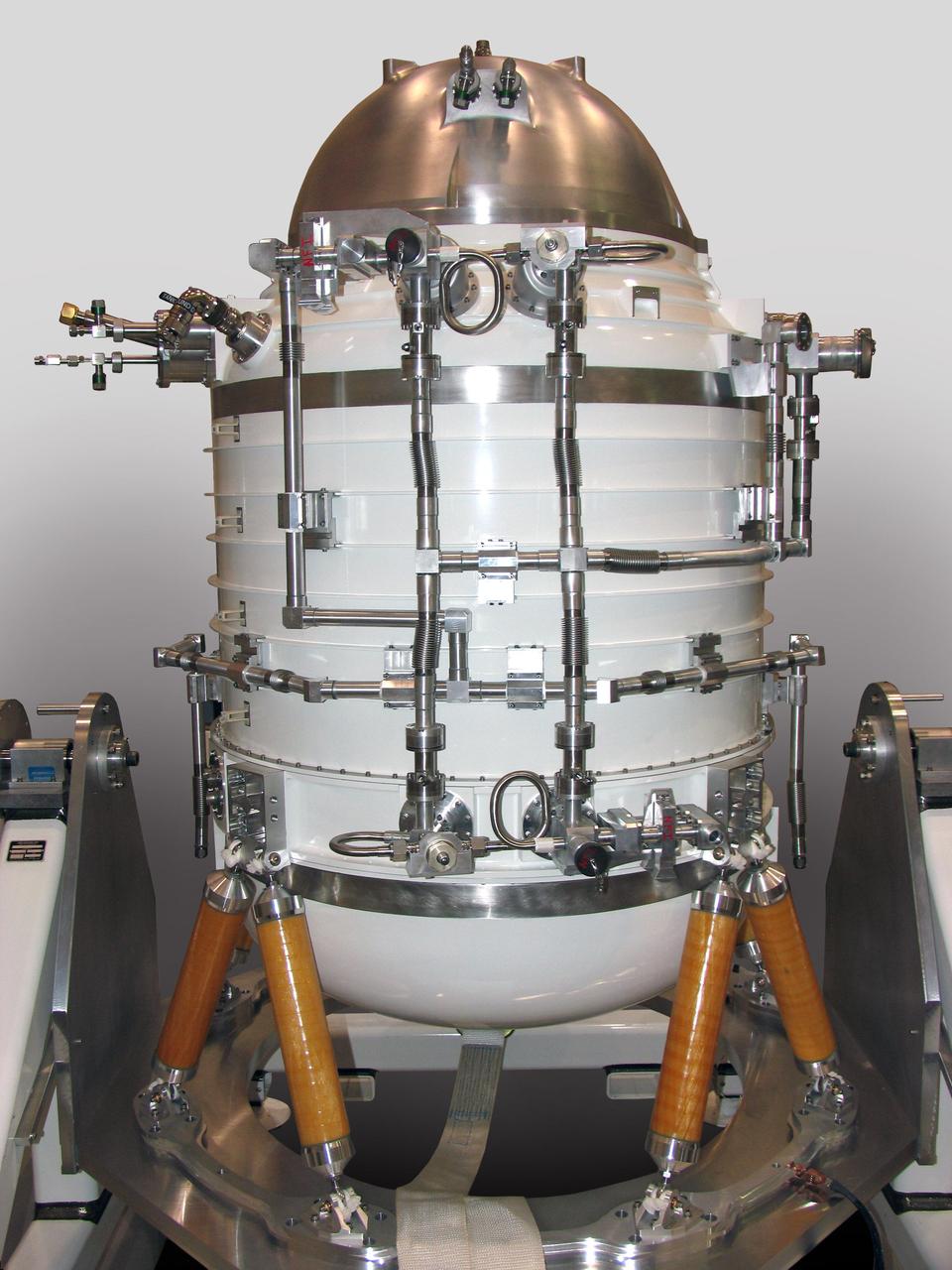
Some say the science instrument on NASA Wide-field Infrared Survey Explorer mission resembles the Star Wars robot R2-D2. The instrument is enclosed in a solid-hydrogen cryostat, which cools the WISE telescope and detectors.
A Robot or a Science Instrument?
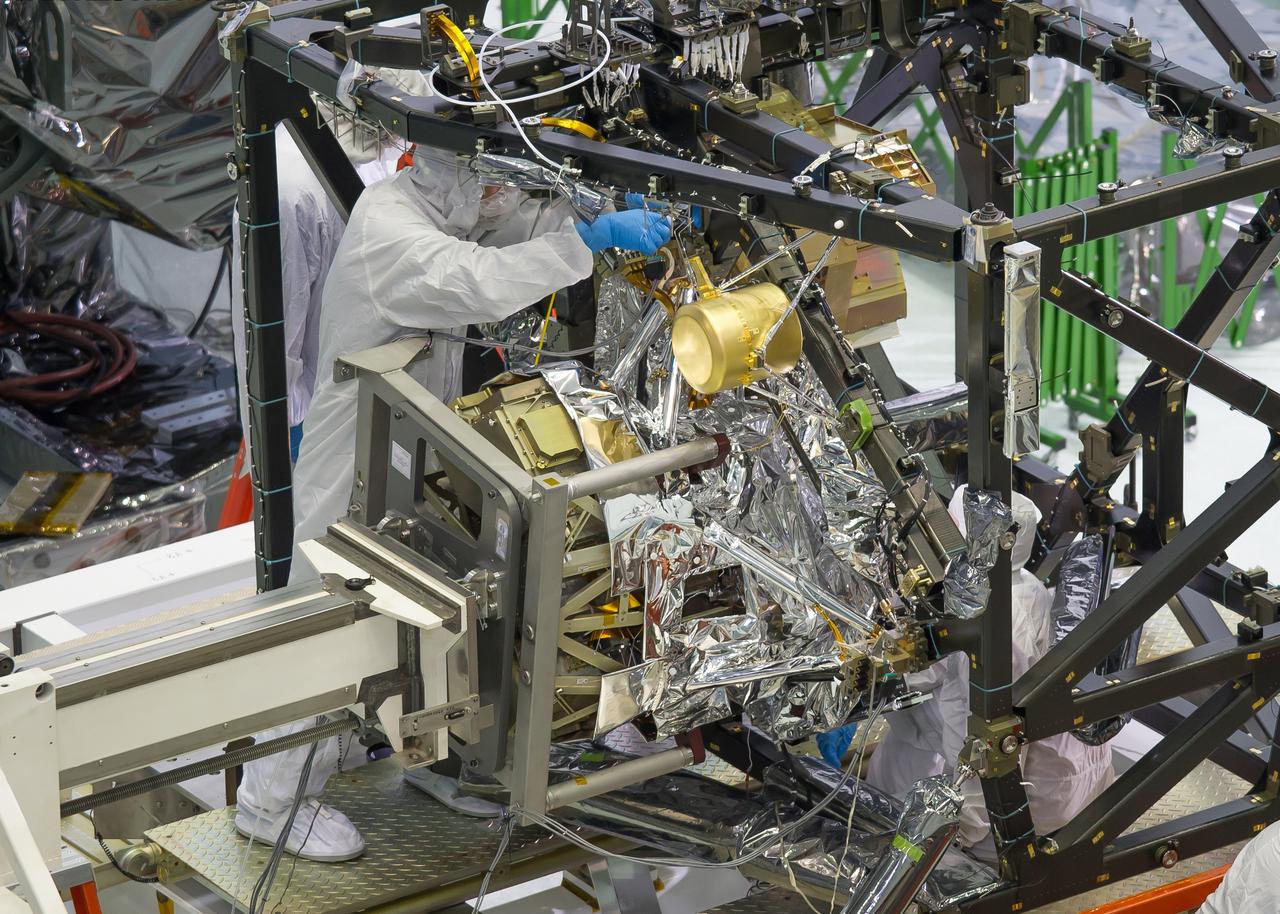
A technician is installing the bolts that will hold the MIRI, or Mid-Infrared Instrument, to the composite Integrated Science Instrument Module (ISIM) structure, or the black frame. The MIRI is attached to a balance beam, called the Horizontal Integration Tool (HIT), hanging from a precision overhead crane. That's the same tool that Hubble engineers used to prepare hardware for its servicing missions.   Photo Credit: NASA/Chris Gunn; Text Credit: NASA/Laura Betz  ----  Engineers worked meticulously to implant the James Webb Space Telescope's Mid-Infrared Instrument into the ISIM, or Integrated Science Instrument Module, in the cleanroom at NASA's Goddard Space Flight Center in Greenbelt, Md. As the successor to NASA's Hubble Space Telescope, the Webb telescope will be the most powerful space telescope ever built. It will  observe the most distant objects in the universe, provide images of the first galaxies formed and see unexplored planets around distant stars.   For more information, visit: <a href="http://www.jwst.nasa.gov" rel="nofollow">www.jwst.nasa.gov</a>  <b><a href="http://www.nasa.gov/audience/formedia/features/MP_Photo_Guidelines.html" rel="nofollow">NASA image use policy.</a></b>  <b><a href="http://www.nasa.gov/centers/goddard/home/index.html" rel="nofollow">NASA Goddard Space Flight Center</a></b> enables NASA’s mission through four scientific endeavors: Earth Science, Heliophysics, Solar System Exploration, and Astrophysics. Goddard plays a leading role in NASA’s accomplishments by contributing compelling scientific knowledge to advance the Agency’s mission.  <b>Follow us on <a href="http://twitter.com/NASA_GoddardPix" rel="nofollow">Twitter</a></b>  <b>Like us on <a href="http://www.facebook.com/pages/Greenbelt-MD/NASA-Goddard/395013845897?ref=tsd" rel="nofollow">Facebook</a></b>  <b>Find us on <a href="http://instagram.com/nasagoddard?vm=grid" rel="nofollow">Instagram</a></b>
Key Science Instrument Installed into Webb Structure
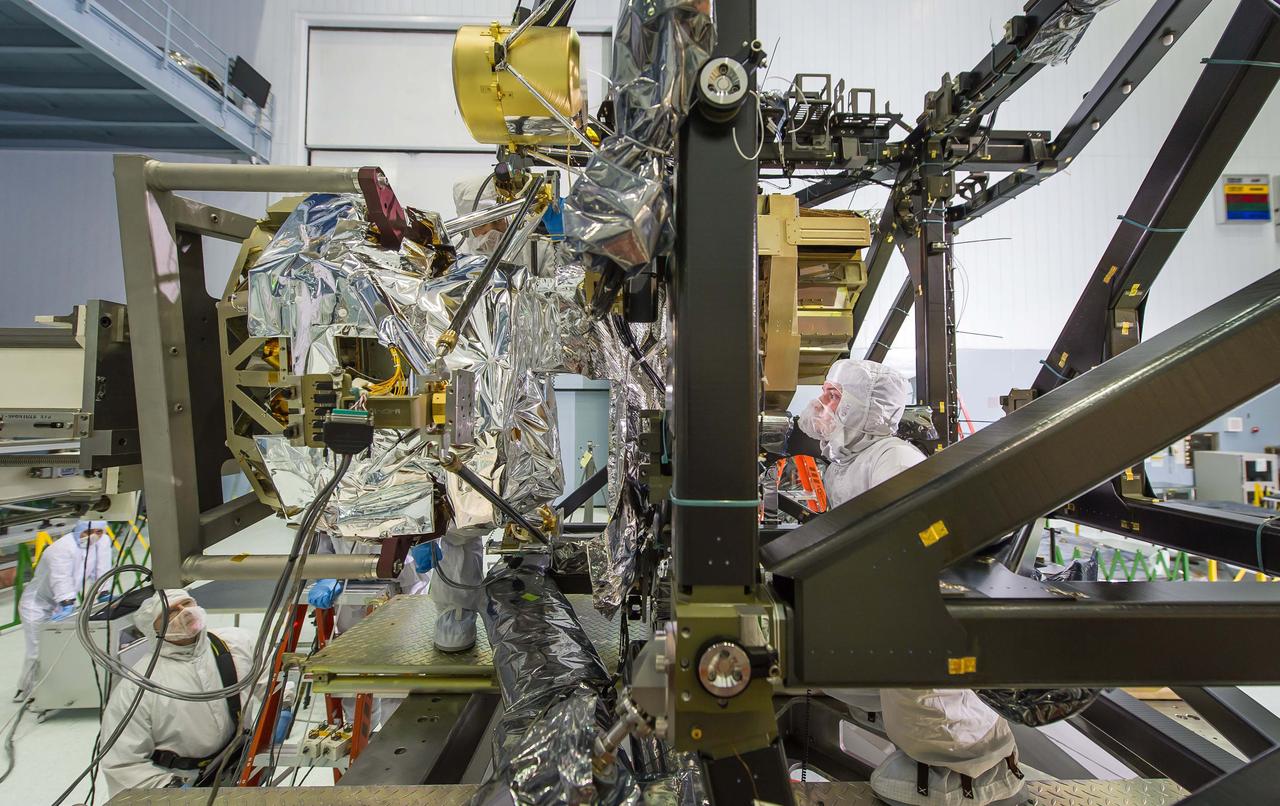
Engineers Tom Huber (behind MIRI) and Mick Wilks (inside black ISIM Structure) check that MIRI is integrated precisely. The engineers have to make sure that MIRI, the only instrument on the Webb telescope that 'sees' mid-infrared light, is precisely positioned so that it and the other instruments can glimpse the formation of galaxies and see deeper into the universe than ever before.   Photo Credit: NASA/Chris Gunn; Text Credit: NASA/Laura Betz  ----  Engineers worked meticulously to implant the James Webb Space Telescope's Mid-Infrared Instrument into the ISIM, or Integrated Science Instrument Module, in the cleanroom at NASA's Goddard Space Flight Center in Greenbelt, Md. As the successor to NASA's Hubble Space Telescope, the Webb telescope will be the most powerful space telescope ever built. It will  observe the most distant objects in the universe, provide images of the first galaxies formed and see unexplored planets around distant stars.   For more information, visit: <a href="http://www.jwst.nasa.gov" rel="nofollow">www.jwst.nasa.gov</a>  <b><a href="http://www.nasa.gov/audience/formedia/features/MP_Photo_Guidelines.html" rel="nofollow">NASA image use policy.</a></b>  <b><a href="http://www.nasa.gov/centers/goddard/home/index.html" rel="nofollow">NASA Goddard Space Flight Center</a></b> enables NASA’s mission through four scientific endeavors: Earth Science, Heliophysics, Solar System Exploration, and Astrophysics. Goddard plays a leading role in NASA’s accomplishments by contributing compelling scientific knowledge to advance the Agency’s mission.  <b>Follow us on <a href="http://twitter.com/NASA_GoddardPix" rel="nofollow">Twitter</a></b>  <b>Like us on <a href="http://www.facebook.com/pages/Greenbelt-MD/NASA-Goddard/395013845897?ref=tsd" rel="nofollow">Facebook</a></b>  <b>Find us on <a href="http://instagram.com/nasagoddard?vm=grid" rel="nofollow">Instagram</a></b>
Key Science Instrument Installed into Webb Structure
Engineers are checking to make sure that MIRI is precisely positioned with the ISIM as it slides into position. They have to make sure it's installed exactly where it needs to be within the width of a thin human hair. Visible is MIRI's pickoff mirror, which is the protrusion on the right side of the instrument that looks like a periscope on its side.  This is where MIRI grabs light coming from the telescope optics.  Also visible is the silver-colored base of MIRI's cryocooled shield, already installed on the ISIM structure and with a hole in it for MIRI's pickoff mirror.  MIRI itself has special silver-colored blanketing around it as insulation to keep it at its proper cryogenic temperature during operation.   Photo Credit: NASA/Chris Gunn; Text Credit: NASA/Laura Betz  ----  Engineers worked meticulously to implant the James Webb Space Telescope's Mid-Infrared Instrument into the ISIM, or Integrated Science Instrument Module, in the cleanroom at NASA's Goddard Space Flight Center in Greenbelt, Md. As the successor to NASA's Hubble Space Telescope, the Webb telescope will be the most powerful space telescope ever built. It will  observe the most distant objects in the universe, provide images of the first galaxies formed and see unexplored planets around distant stars.   For more information, visit: <a href="http://www.jwst.nasa.gov" rel="nofollow">www.jwst.nasa.gov</a>  <b><a href="http://www.nasa.gov/audience/formedia/features/MP_Photo_Guidelines.html" rel="nofollow">NASA image use policy.</a></b>  <b><a href="http://www.nasa.gov/centers/goddard/home/index.html" rel="nofollow">NASA Goddard Space Flight Center</a></b> enables NASA’s mission through four scientific endeavors: Earth Science, Heliophysics, Solar System Exploration, and Astrophysics. Goddard plays a leading role in NASA’s accomplishments by contributing compelling scientific knowledge to advance the Agency’s mission.  <b>Follow us on <a href="http://twitter.com/NASA_GoddardPix" rel="nofollow">Twitter</a></b>  <b>Like us on <a href="http://www.facebook.com/pages/Greenbelt-MD/NASA-Goddard/395013845897?ref=tsd" rel="nofollow">Facebook</a></b>  <b>Find us on <a href="http://instagram.com/nasagoddard?vm=grid" rel="nofollow">Instagram</a></b>
Key Science Instrument Installed into Webb Structure
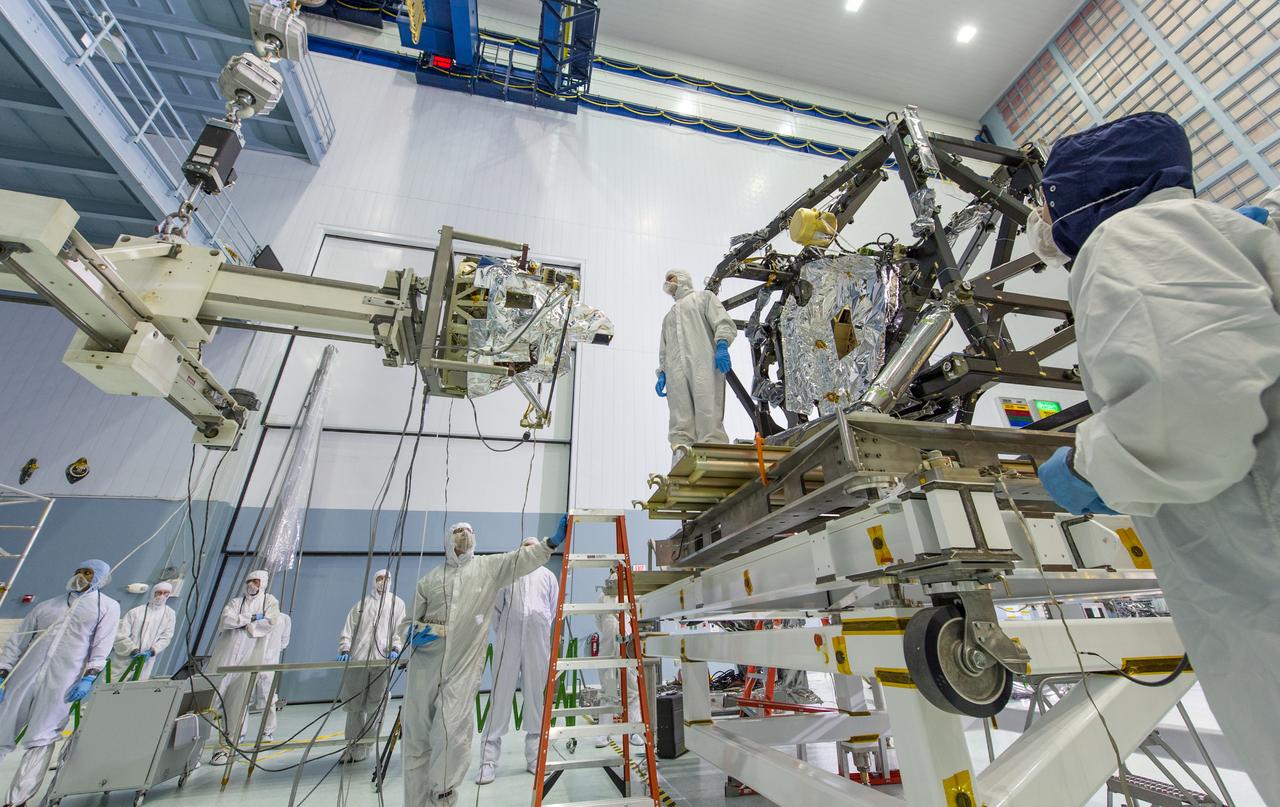
The MIRI itself weighs 181 pounds (82 kg) and is being held by a special balance beam (on the left of the photo), which is being maneuvered using a precision overhead crane by the engineer at the base of the ladder.   Photo Credit: NASA/Chris Gunn; Text Credit: NASA/Laura Betz  ----  Engineers worked meticulously to implant the James Webb Space Telescope's Mid-Infrared Instrument into the ISIM, or Integrated Science Instrument Module, in the cleanroom at NASA's Goddard Space Flight Center in Greenbelt, Md. As the successor to NASA's Hubble Space Telescope, the Webb telescope will be the most powerful space telescope ever built. It will  observe the most distant objects in the universe, provide images of the first galaxies formed and see unexplored planets around distant stars.   For more information, visit: <a href="http://www.jwst.nasa.gov" rel="nofollow">www.jwst.nasa.gov</a>  <b><a href="http://www.nasa.gov/audience/formedia/features/MP_Photo_Guidelines.html" rel="nofollow">NASA image use policy.</a></b>  <b><a href="http://www.nasa.gov/centers/goddard/home/index.html" rel="nofollow">NASA Goddard Space Flight Center</a></b> enables NASA’s mission through four scientific endeavors: Earth Science, Heliophysics, Solar System Exploration, and Astrophysics. Goddard plays a leading role in NASA’s accomplishments by contributing compelling scientific knowledge to advance the Agency’s mission.  <b>Follow us on <a href="http://twitter.com/NASA_GoddardPix" rel="nofollow">Twitter</a></b>  <b>Like us on <a href="http://www.facebook.com/pages/Greenbelt-MD/NASA-Goddard/395013845897?ref=tsd" rel="nofollow">Facebook</a></b>  <b>Find us on <a href="http://instagram.com/nasagoddard?vm=grid" rel="nofollow">Instagram</a></b>
Key Science Instrument Installed into Webb Structure
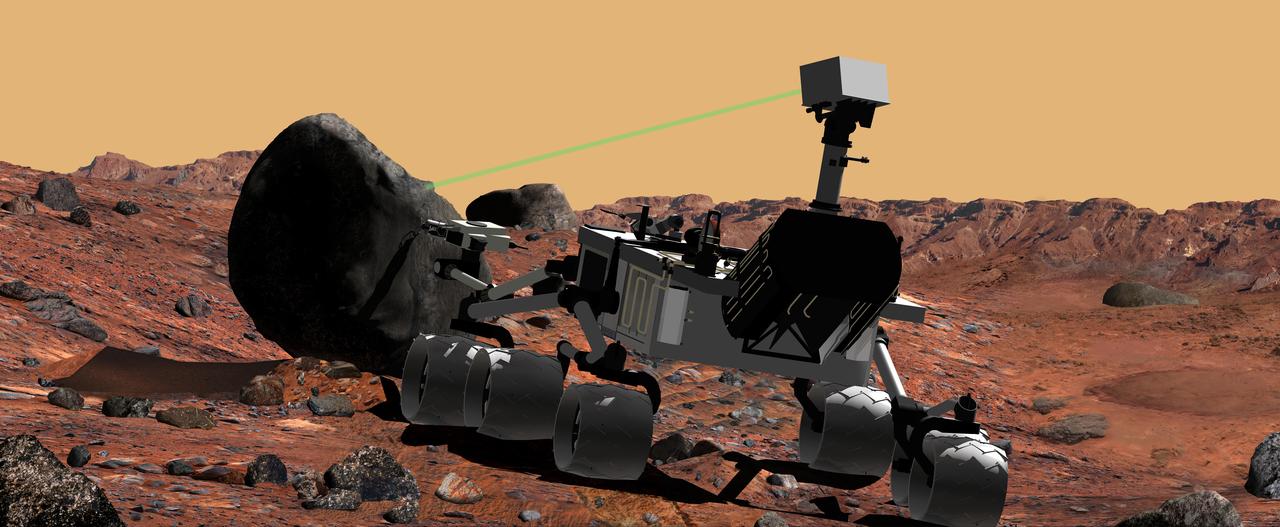
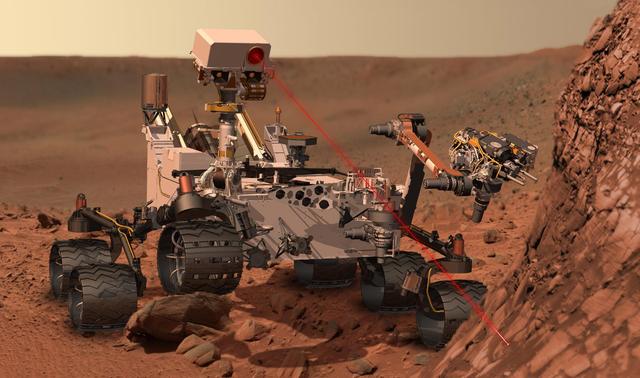
This artist conception of NASA Mars Science Laboratory portrays use of the rover ChemCam instrument to identify the chemical composition of a rock sample on the surface of Mars.
Mars Science Laboratory Using Laser Instrument, Artist Concept
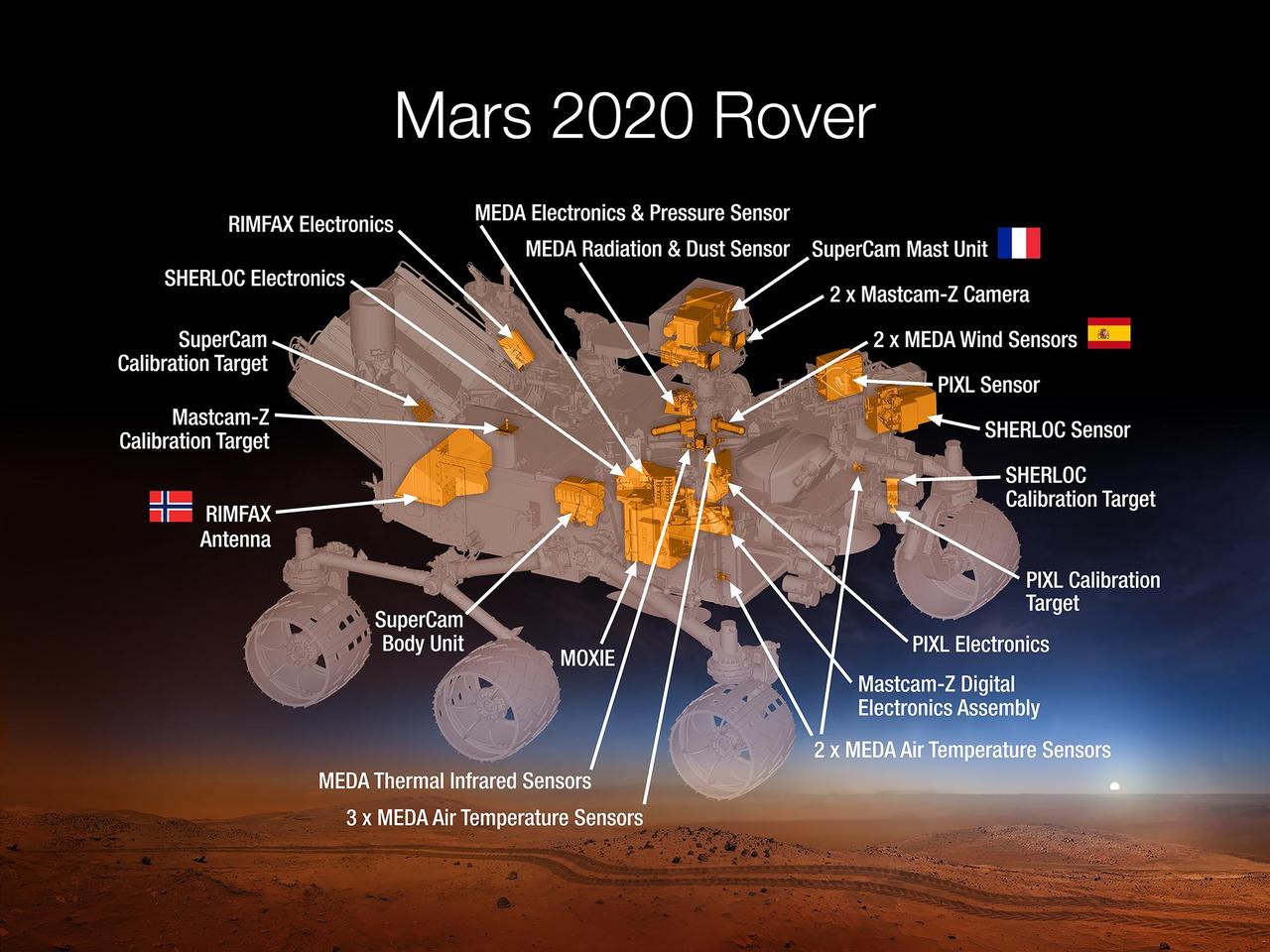
This 2015 diagram shows components of the investigations payload for NASA's Mars 2020 rover mission.  Mars 2020 will re-use the basic engineering of NASA's Mars Science Laboratory to send a different rover to Mars, with new objectives and instruments, launching in 2020. The rover will carry seven instruments to conduct its science and exploration technology investigations. They are:  Mastcam-Z, an advanced camera system with panoramic and stereoscopic imaging capability and the ability to zoom. The instrument also will determine mineralogy of the Martian surface and assist with rover operations. The principal investigator is James Bell, Arizona State University in Tempe.  SuperCam, an instrument that can provide imaging, chemical composition analysis, and mineralogy. The instrument will also be able to detect the presence of organic compounds in rocks and regolith from a distance. The principal investigator is Roger Wiens, Los Alamos National Laboratory, Los Alamos, New Mexico. This instrument also has a significant contribution from the Centre National d'Etudes Spatiales, Institut de Recherche en Astrophysique et Planétologie (CNES/IRAP) France.  Planetary Instrument for X-ray Lithochemistry (PIXL), an X-ray fluorescence spectrometer that will also contain an imager with high resolution to determine the fine-scale elemental composition of Martian surface materials. PIXL will provide capabilities that permit more detailed detection and analysis of chemical elements than ever before. The principal investigator is Abigail Allwood, NASA's Jet Propulsion Laboratory, Pasadena, California.  Scanning Habitable Environments with Raman & Luminescence for Organics and Chemicals (SHERLOC), a spectrometer that will provide fine-scale imaging and uses an ultraviolet (UV) laser to determine fine-scale mineralogy and detect organic compounds. SHERLOC will be the first UV Raman spectrometer to fly to the surface of Mars and will provide complementary measurements with other instruments in the payload. SHERLOC includes a high-resolution color camera for microscopic imaging of Mars' surface. The principal investigator is Luther Beegle, JPL.  The Mars Oxygen ISRU Experiment (MOXIE), an exploration technology investigation that will produce oxygen from Martian atmospheric carbon dioxide. The principal investigator is Michael Hecht, Massachusetts Institute of Technology, Cambridge, Massachusetts.  Mars Environmental Dynamics Analyzer (MEDA), a set of sensors that will provide measurements of temperature, wind speed and direction, pressure, relative humidity and dust size and shape. The principal investigator is Jose Rodriguez-Manfredi, Centro de Astrobiologia, Instituto Nacional de Tecnica Aeroespacial, Spain.  The Radar Imager for Mars' Subsurface Experiment (RIMFAX), a ground-penetrating radar that will provide centimeter-scale resolution of the geologic structure of the subsurface. The principal investigator is Svein-Erik Hamran, the Norwegian Defence Research Establishment, Norway.  http://photojournal.jpl.nasa.gov/catalog/PIA19672
Science Instruments on NASA Mars 2020 Rover
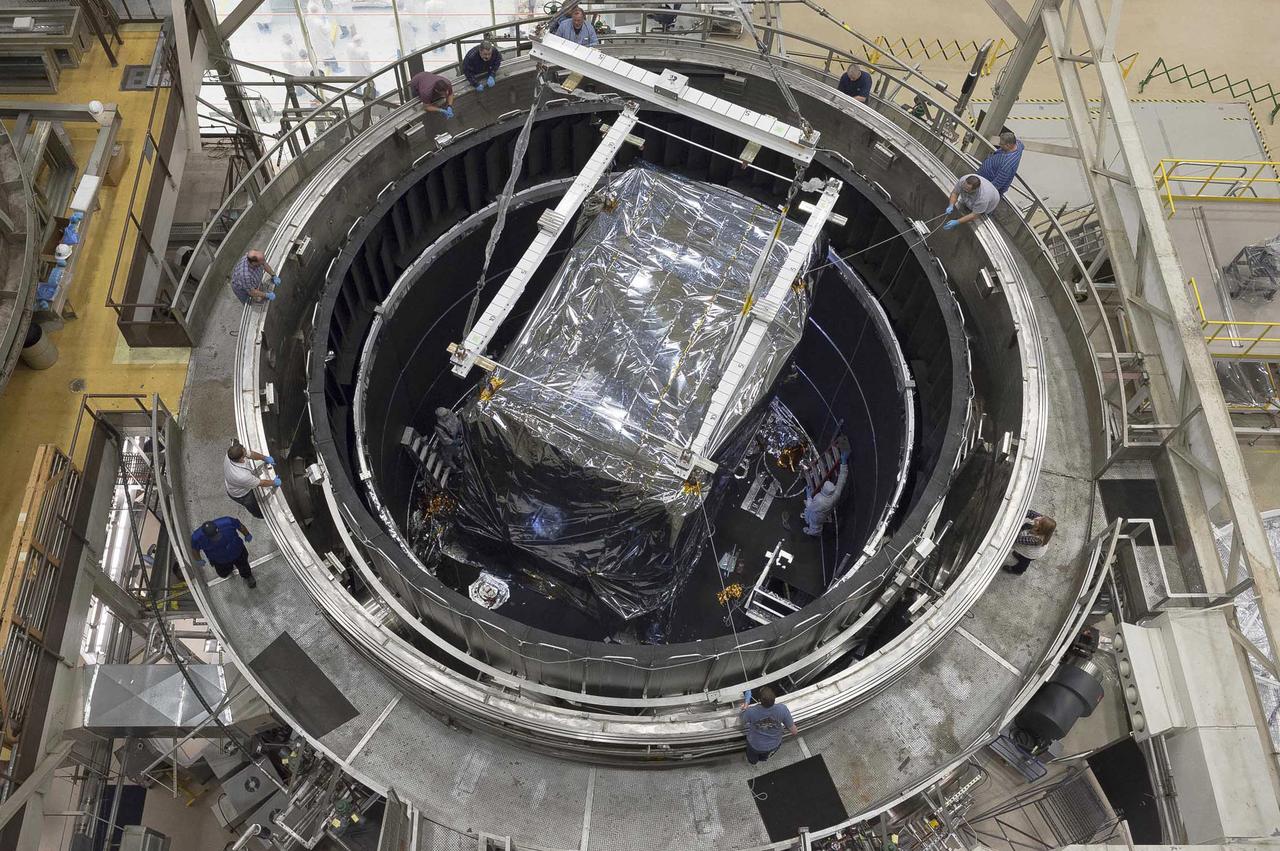
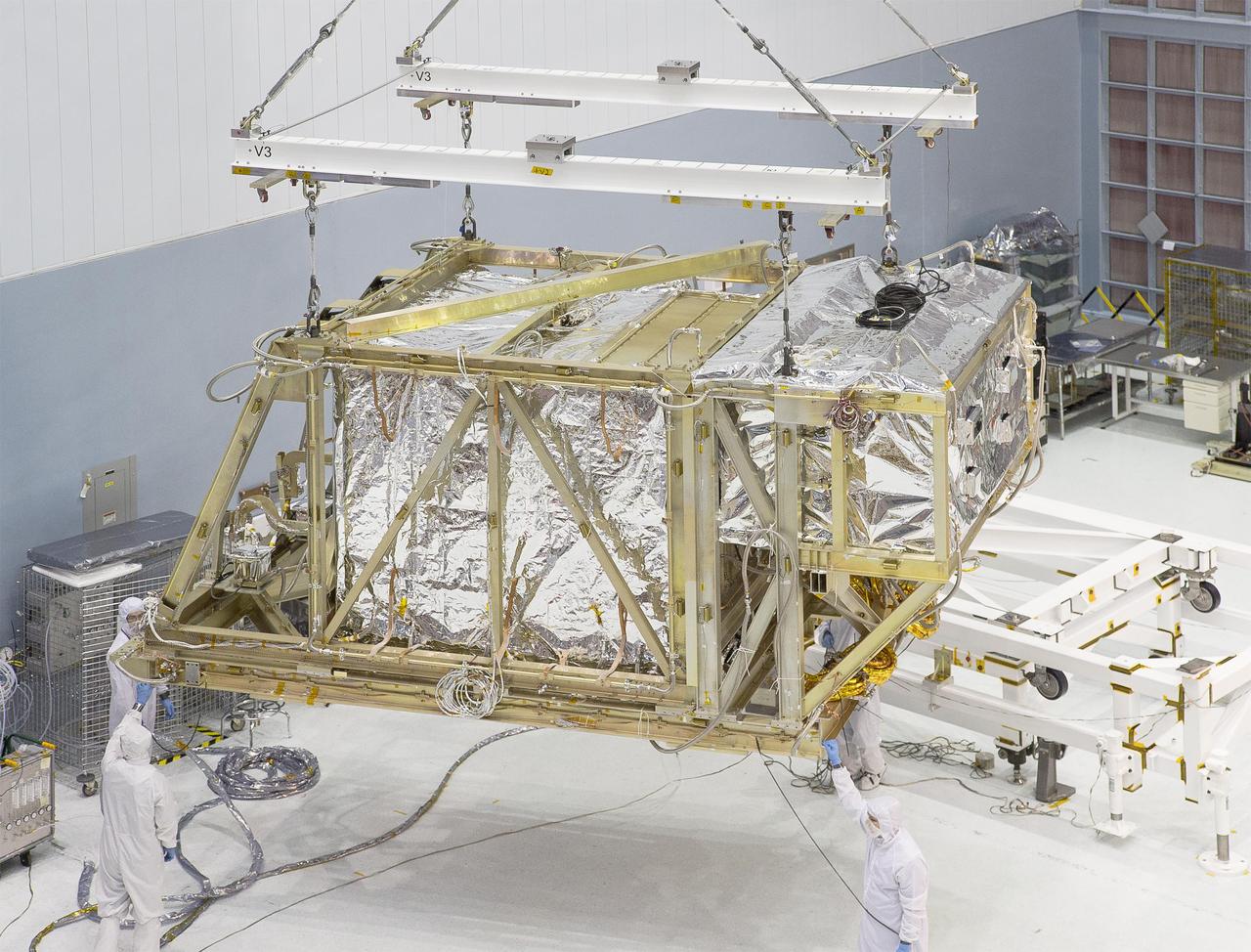
At NASA's James Webb Space Telescope's final destination in space, one million miles away from Earth, it will operate at incredibly cold temperatures of -387 degrees Fahrenheit, or 40 degrees Kelvin. This is 260 degrees Fahrenheit colder than any place on the Earth’s surface has ever been.  So first, this final super cold test at Goddard will prepare the Integrated Science Instrument Module (ISIM), or the “heart” of the telescope, for space.  Read more: <a href="http://go.nasa.gov/1KFPwJG" rel="nofollow">go.nasa.gov/1KFPwJG</a>  Credit: NASA/Goddard/Chris Gunn  <b><a href="http://www.nasa.gov/audience/formedia/features/MP_Photo_Guidelines.html" rel="nofollow">NASA image use policy.</a></b>  <b><a href="http://www.nasa.gov/centers/goddard/home/index.html" rel="nofollow">NASA Goddard Space Flight Center</a></b> enables NASA’s mission through four scientific endeavors: Earth Science, Heliophysics, Solar System Exploration, and Astrophysics. Goddard plays a leading role in NASA’s accomplishments by contributing compelling scientific knowledge to advance the Agency’s mission.  <b>Follow us on <a href="http://twitter.com/NASAGoddardPix" rel="nofollow">Twitter</a></b>  <b>Like us on <a href="http://www.facebook.com/pages/Greenbelt-MD/NASA-Goddard/395013845897?ref=tsd" rel="nofollow">Facebook</a></b>  <b>Find us on <a href="http://instagrid.me/nasagoddard/?vm=grid" rel="nofollow">Instagram</a></b>
NASA's James Webb Space Telescope Science Instruments Begin Final Super Cold Test at Goddard
At NASA's James Webb Space Telescope's final destination in space, one million miles away from Earth, it will operate at incredibly cold temperatures of -387 degrees Fahrenheit, or 40 degrees Kelvin. This is 260 degrees Fahrenheit colder than any place on the Earth’s surface has ever been.  So first, this final super cold test at Goddard will prepare the Integrated Science Instrument Module (ISIM), or the “heart” of the telescope, for space.  Read more: <a href="http://go.nasa.gov/1KFPwJG" rel="nofollow">go.nasa.gov/1KFPwJG</a>  Credit: NASA/Goddard/Chris Gunn  <b><a href="http://www.nasa.gov/audience/formedia/features/MP_Photo_Guidelines.html" rel="nofollow">NASA image use policy.</a></b>  <b><a href="http://www.nasa.gov/centers/goddard/home/index.html" rel="nofollow">NASA Goddard Space Flight Center</a></b> enables NASA’s mission through four scientific endeavors: Earth Science, Heliophysics, Solar System Exploration, and Astrophysics. Goddard plays a leading role in NASA’s accomplishments by contributing compelling scientific knowledge to advance the Agency’s mission.  <b>Follow us on <a href="http://twitter.com/NASAGoddardPix" rel="nofollow">Twitter</a></b>  <b>Like us on <a href="http://www.facebook.com/pages/Greenbelt-MD/NASA-Goddard/395013845897?ref=tsd" rel="nofollow">Facebook</a></b>  <b>Find us on <a href="http://instagrid.me/nasagoddard/?vm=grid" rel="nofollow">Instagram</a></b>
NASA's James Webb Space Telescope Science Instruments Begin Final Super Cold Test at Goddard
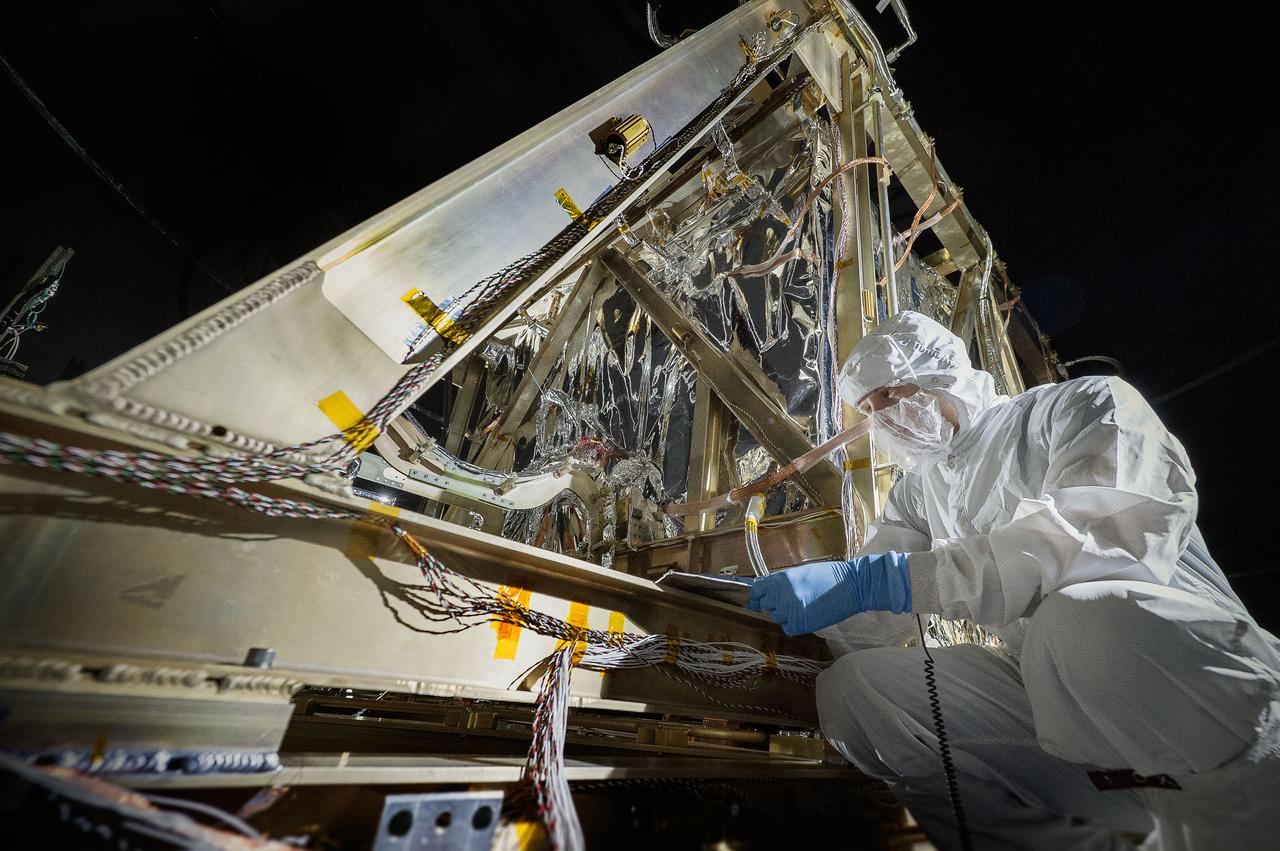
At NASA's James Webb Space Telescope's final destination in space, one million miles away from Earth, it will operate at incredibly cold temperatures of -387 degrees Fahrenheit, or 40 degrees Kelvin. This is 260 degrees Fahrenheit colder than any place on the Earth’s surface has ever been.  So first, this final super cold test at Goddard will prepare the Integrated Science Instrument Module (ISIM), or the “heart” of the telescope, for space.  Read more: <a href="http://go.nasa.gov/1KFPwJG" rel="nofollow">go.nasa.gov/1KFPwJG</a>  Contamination Control Engineer Alan Abeel conducts final inspections and places contamination foils before the start of the test.  Credit: NASA/Goddard/Chris Gunn  <b><a href="http://www.nasa.gov/audience/formedia/features/MP_Photo_Guidelines.html" rel="nofollow">NASA image use policy.</a></b>  <b><a href="http://www.nasa.gov/centers/goddard/home/index.html" rel="nofollow">NASA Goddard Space Flight Center</a></b> enables NASA’s mission through four scientific endeavors: Earth Science, Heliophysics, Solar System Exploration, and Astrophysics. Goddard plays a leading role in NASA’s accomplishments by contributing compelling scientific knowledge to advance the Agency’s mission.  <b>Follow us on <a href="http://twitter.com/NASAGoddardPix" rel="nofollow">Twitter</a></b>  <b>Like us on <a href="http://www.facebook.com/pages/Greenbelt-MD/NASA-Goddard/395013845897?ref=tsd" rel="nofollow">Facebook</a></b>  <b>Find us on <a href="http://instagrid.me/nasagoddard/?vm=grid" rel="nofollow">Instagram</a></b>
NASA's James Webb Space Telescope Science Instruments Begin Final Super Cold Test at Goddard
The high resolution imaging science experiment HiRISE is one of six science instruments for NASA Mars Reconnaissance Orbiter.
Telescopic Camera for Mars Reconnaissance Orbiter, Front End
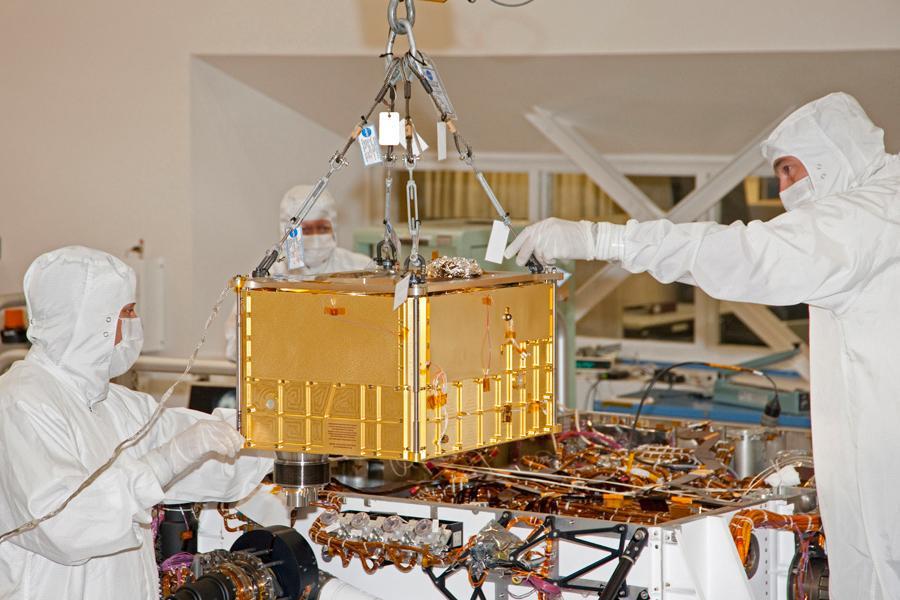
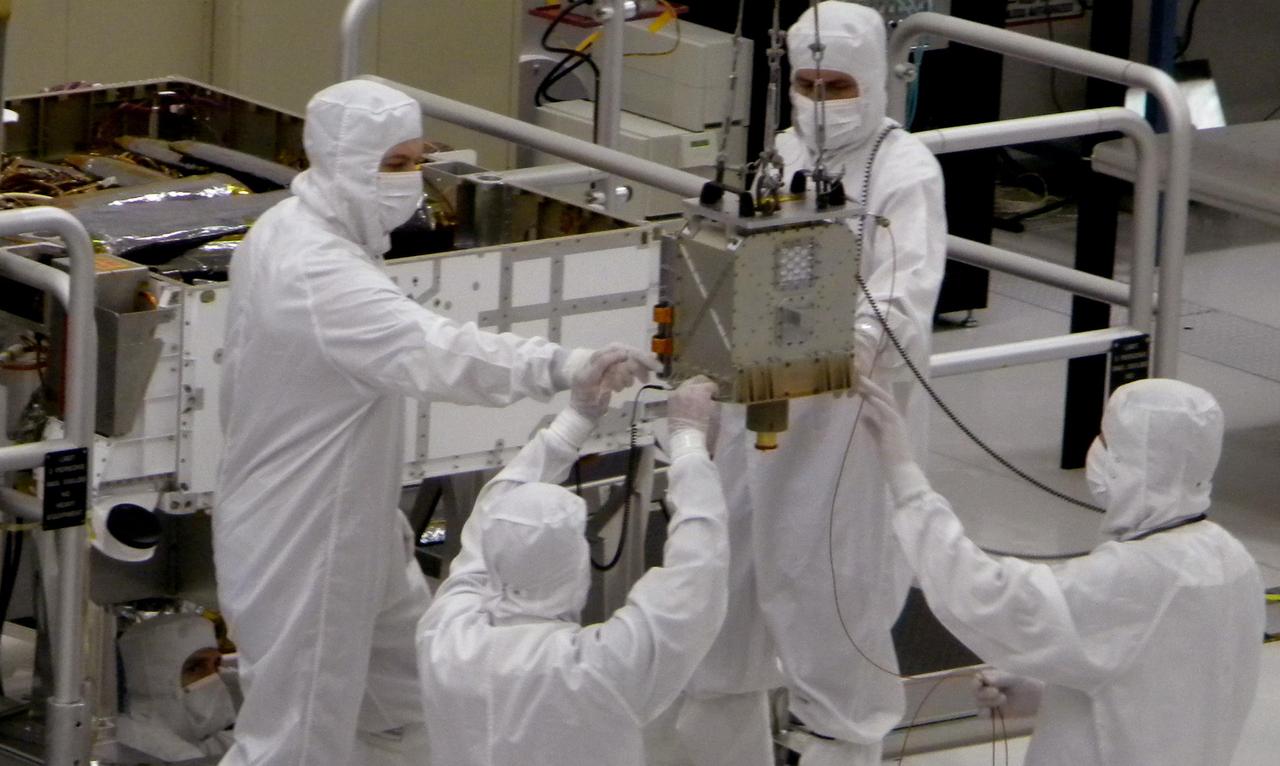
NASA Sample Analysis at Mars SAM instrument, largest of the 10 science instruments for NASA Mars Science Laboratory mission, will examine samples of Martian rocks, soil and atmosphere for information about chemicals that are important to life.
Lifting SAM Instrument for Installation into Mars Rover
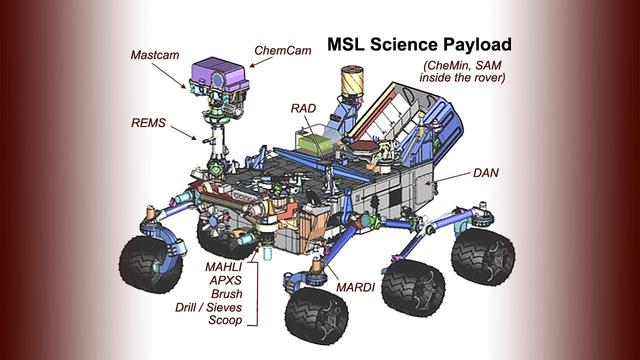
This drawing of the Mars Science Laboratory mission rover, Curiosity, indicates the location of science instruments and some other tools on the car-size rover.
Diverse Science Payload on Mars Rover Curiosity
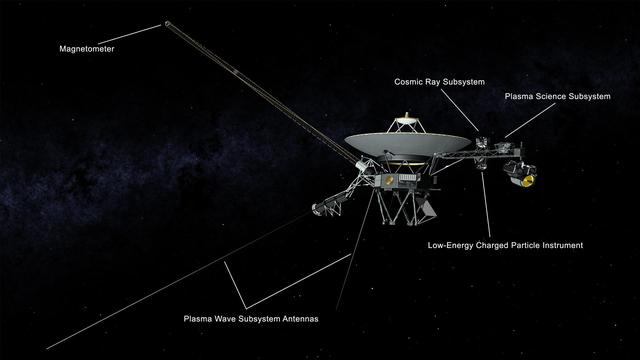
This illustration of NASA's Voyager 2 spacecraft shows the location of the onboard science instruments that are still operating: the magnetometer, the cosmic ray subsystem, the plasma science experiment, the low-energy charged particle instrument and the antennas used by the plasma wave subsystem.  https://photojournal.jpl.nasa.gov/catalog/PIA22915
Voyager 2 Spacecraft Instruments
The High Altitude Lidar Observatory (HALO) instrument head, which houses the lidar instrument, is installed onto the DC-8 airborne science laboratory at NASA Armstrong Flight Research Center in Edwards, California. The gold and blue casing holds the laser, optics, detectors, and electronics, which are at the heart of the lidar.
High Altitude Lidar Observatory (HALO) Instrument
The two main parts of the ChemCam laser instrument for NASA Mars Science Laboratory mission are shown in this combined image.
Body and Mast Units of ChemCam Instrument for Mars Rover
The science payload of NASA Phoenix Mars Lander includes a multi-tool instrument named the Microscopy, Electrochemistry, and Conductivity Analyzer MECA.
Microscopes for NASA Phoenix Mars Lander
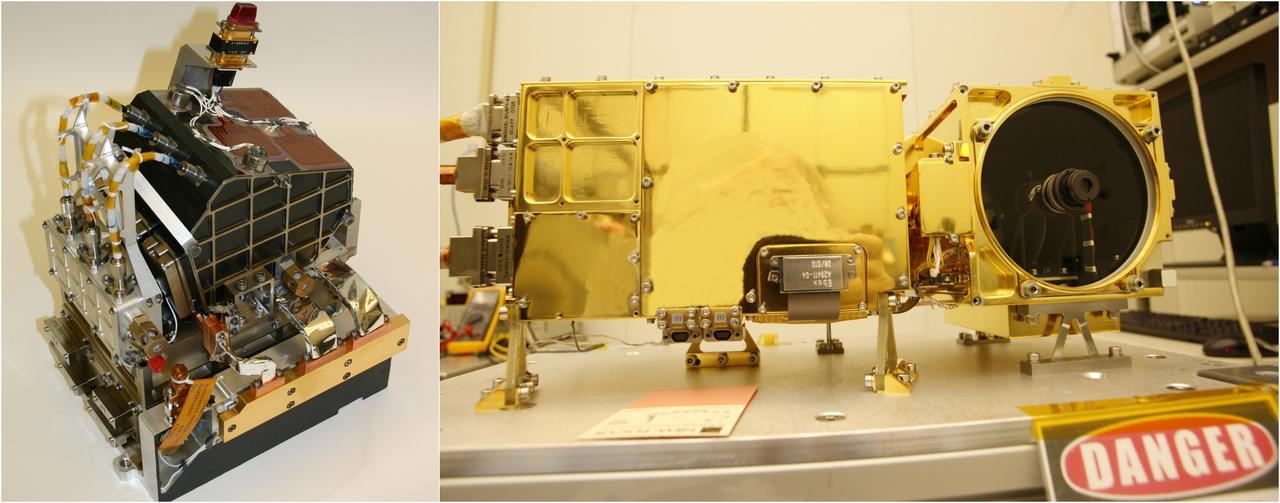
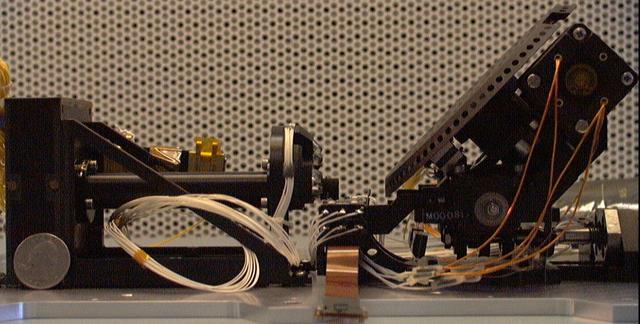
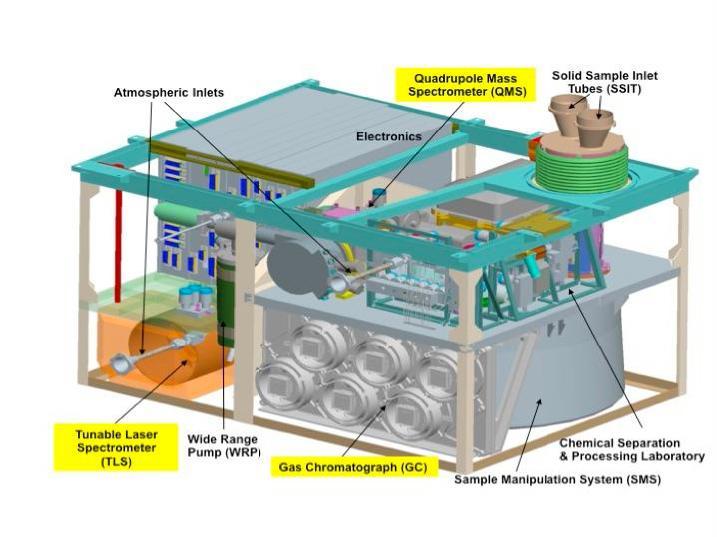
This schematic illustration for NASA Mars Science Laboratory Sample Analysis at Mars SAM instrument shows major components of the microwave-oven-size instrument, which will examine samples of Martian rocks, soil and atmosphere.
Schematic of Sample Analysis at Mars SAM Instrument
Researchers prepare for a test of the Chemistry and Camera ChemCam instrument that will fly on NASA Mars Science Laboratory mission; researchers are preparing the instrument mast unit for a laser firing test.
ChemCam Mast Unit Being Prepared for Laser Firing
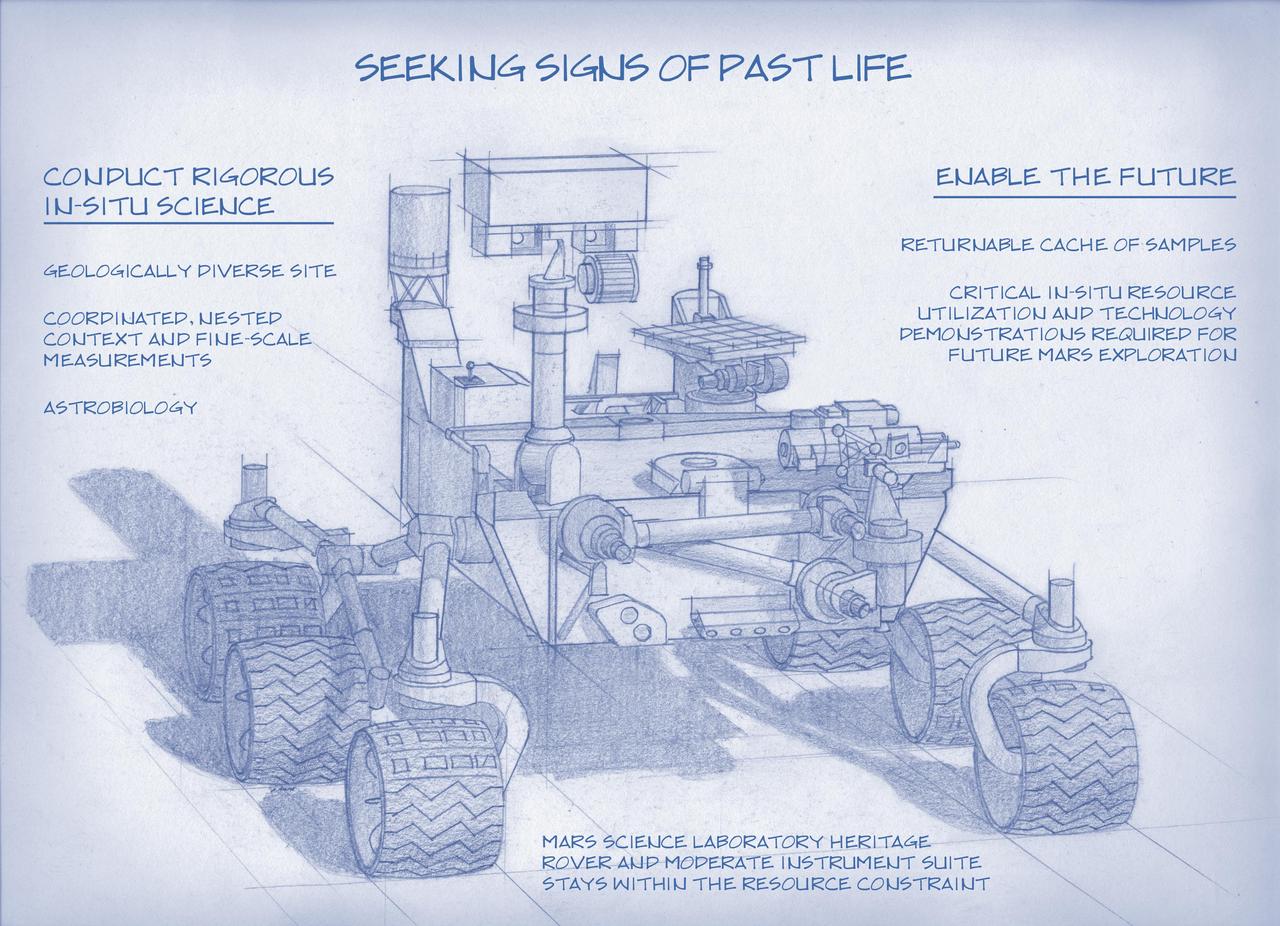
Planning for NASA 2020 Mars rover envisions a basic structure that capitalizes on existing design and engineering, but with new science instruments selected through competition for accomplishing different science objectives.
Artist Concept of Mars 2020 Rover, Annotated
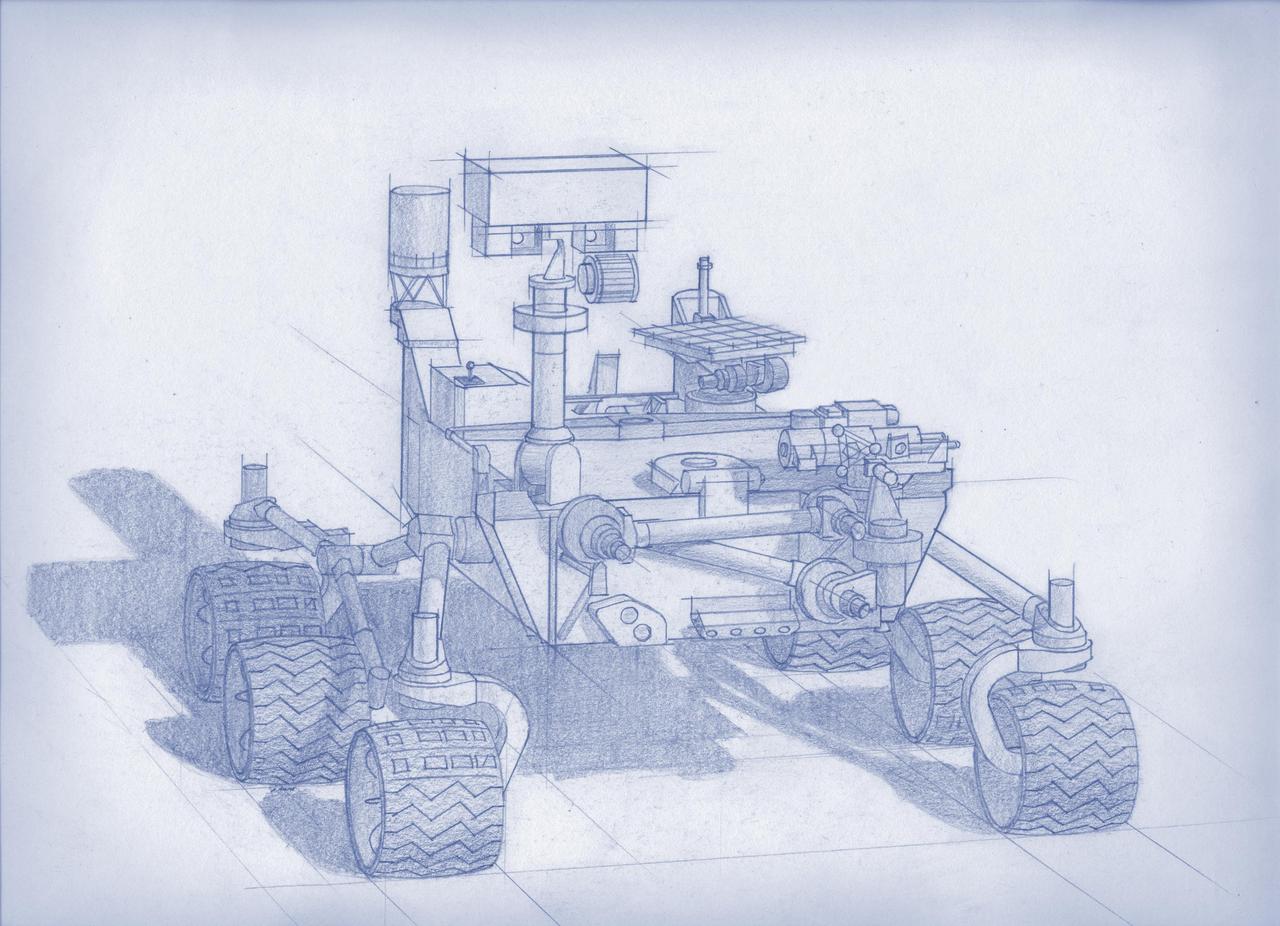
Planning for NASA 2020 Mars rover envisions a basic structure that capitalizes on existing design and engineering, but with new science instruments selected through competition for accomplishing different science objectives.
Artist Concept of Mars 2020 Rover
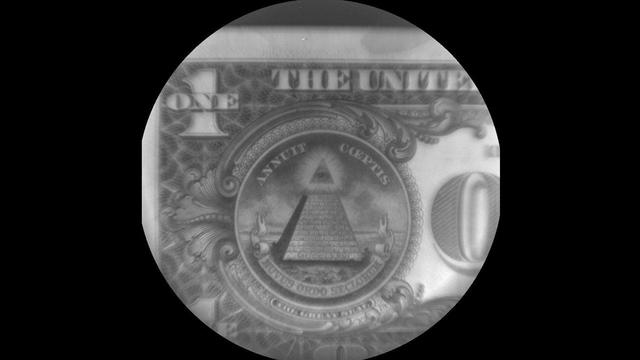
Malin Space Science Systems, San Diego, delivered the two cameras for the Mast Camera Mastcam instrument of NASA Mars Science Laboratory rover to NASA Jet Propulsion Laboratory, Pasadena, Calif., in March 2011.
Sample Image Through Camera Built for Next Mars Rover
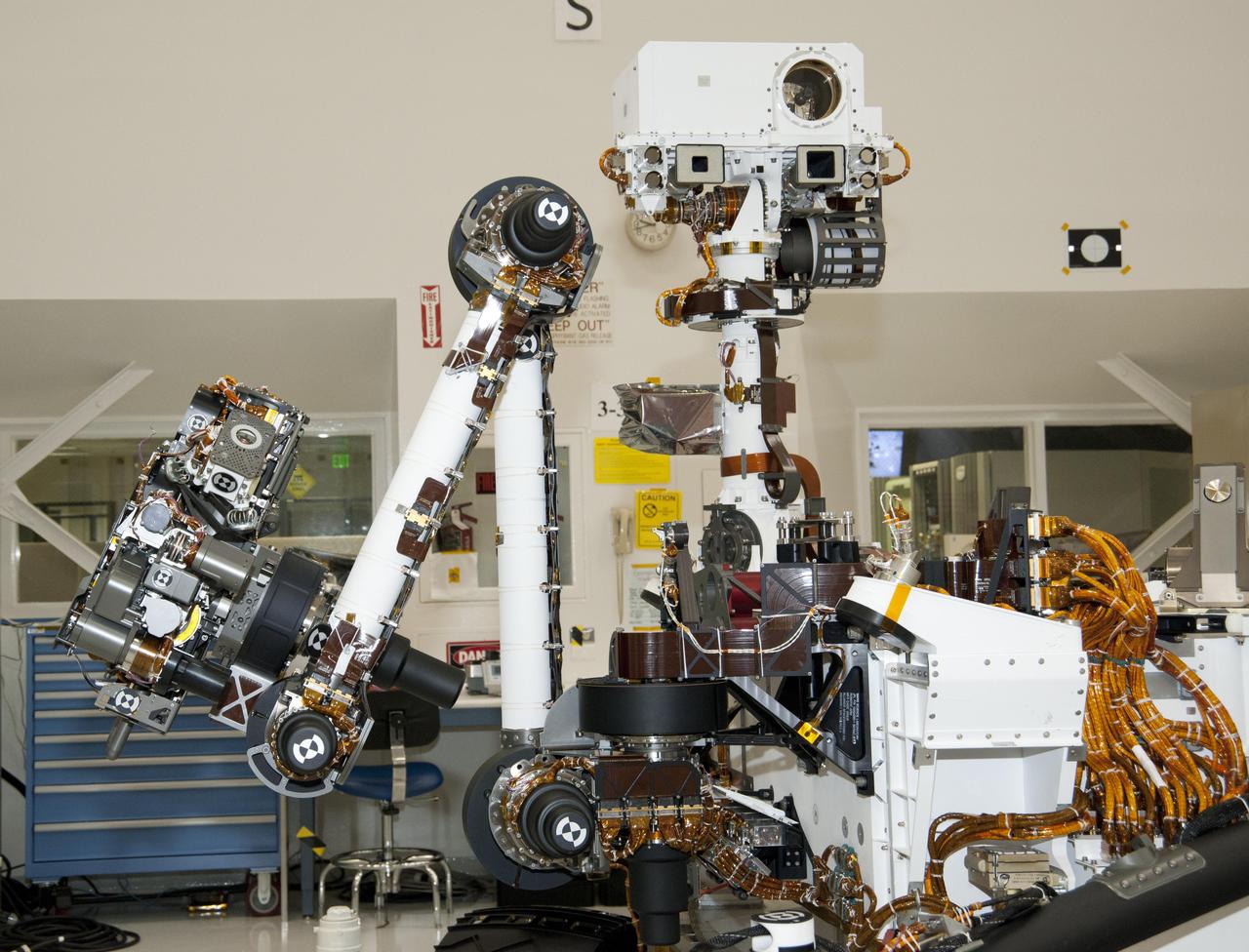
The arm and the remote sensing mast of the Mars rover Curiosity each carry science instruments and other tools for NASA Mars Science Laboratory mission. This image shows the arm on the left and the mast just right of center.
Arm and Mast of NASA Mars Rover Curiosity
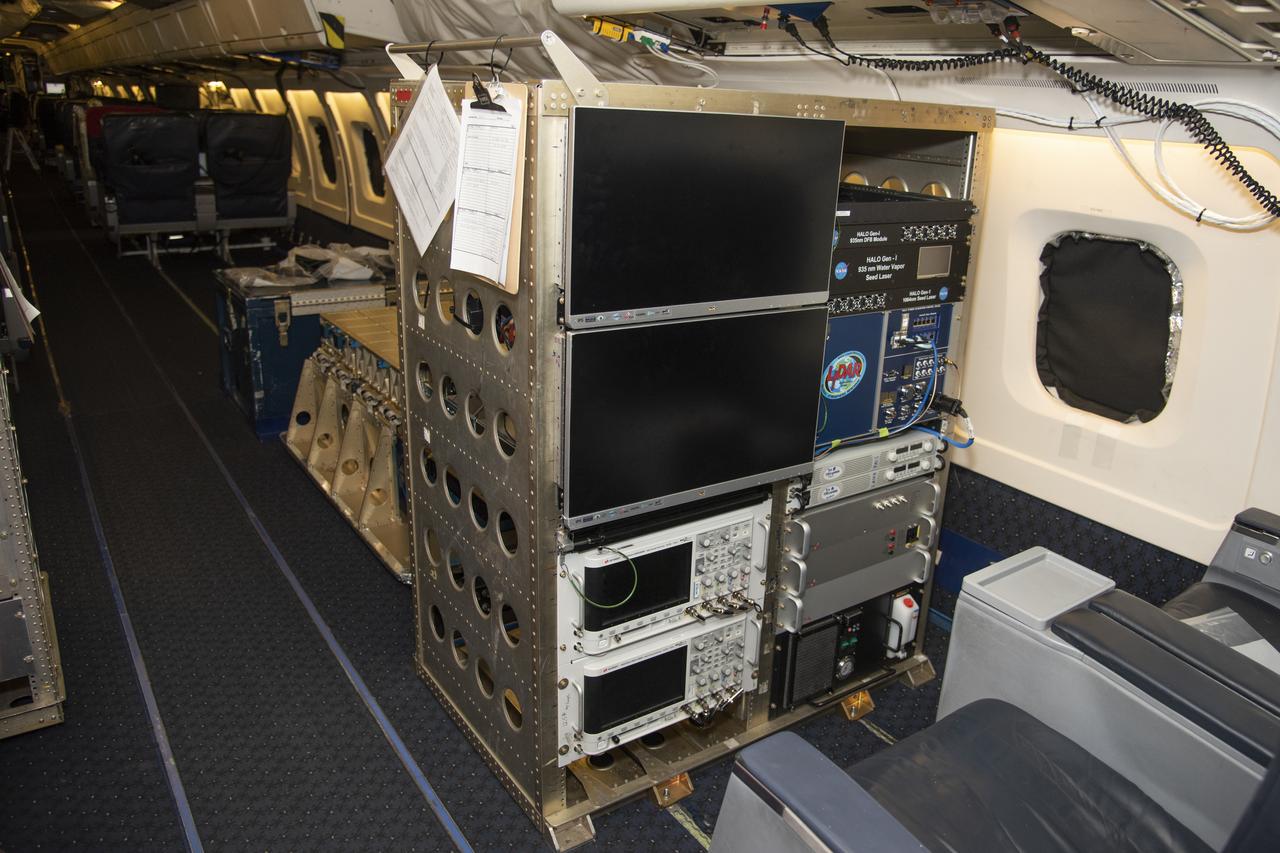
The High Altitude Lidar Observatory (HALO) system electronics and diagnostic tools are integrated onto the DC-8 airborne science laboratory at NASA Armstrong Flight Research Center in Edwards, California. The lidar system control electronics are on the right hand side of the rack. The large monitors on the left are used to display real-time images of water vapor and aerosol profiles, which are used by the science team to guide in-flight decisions and navigation. The compact HALO instrument head can be seen directly behind the electronics rack.
High Altitude Lidar Observatory (HALO) instrument
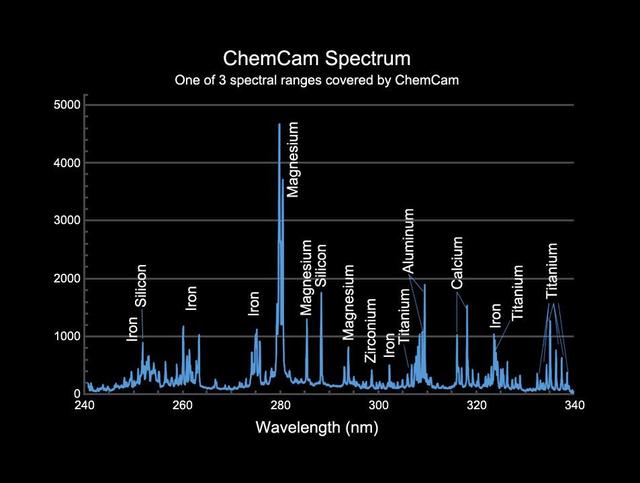
This image provides an example of the type of data collected by the Chemistry and Camera ChemCam instrument on NASA Mars Science Laboratory mission Curiosity rover.
Example of a Spectrum from Curiosity ChemCam Instrument
This artist concept depicts the rover Curiosity, of NASA Mars Science Laboratory mission, as it uses its Chemistry and Camera ChemCam instrument to investigate the composition of a rock surface.
Curiosity at Work on Mars Artist Concept
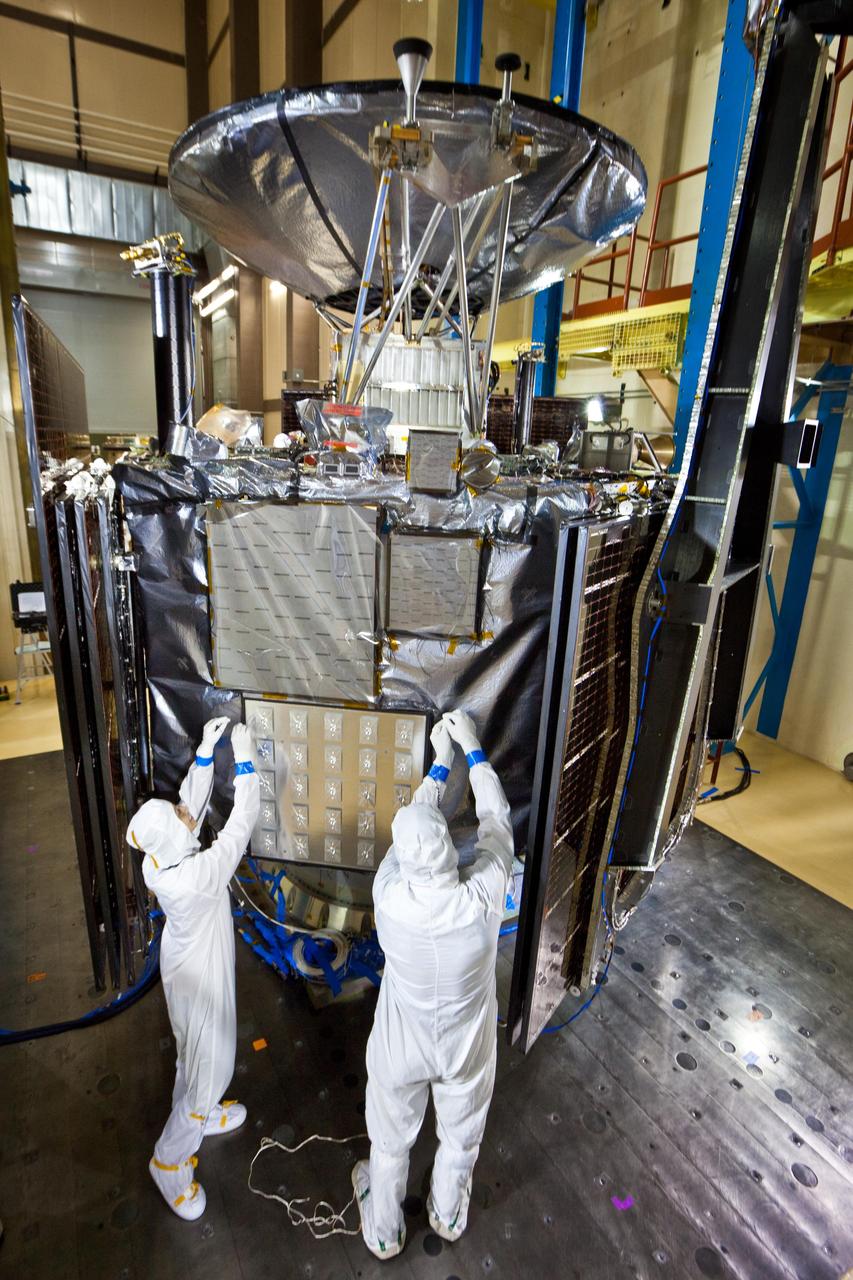
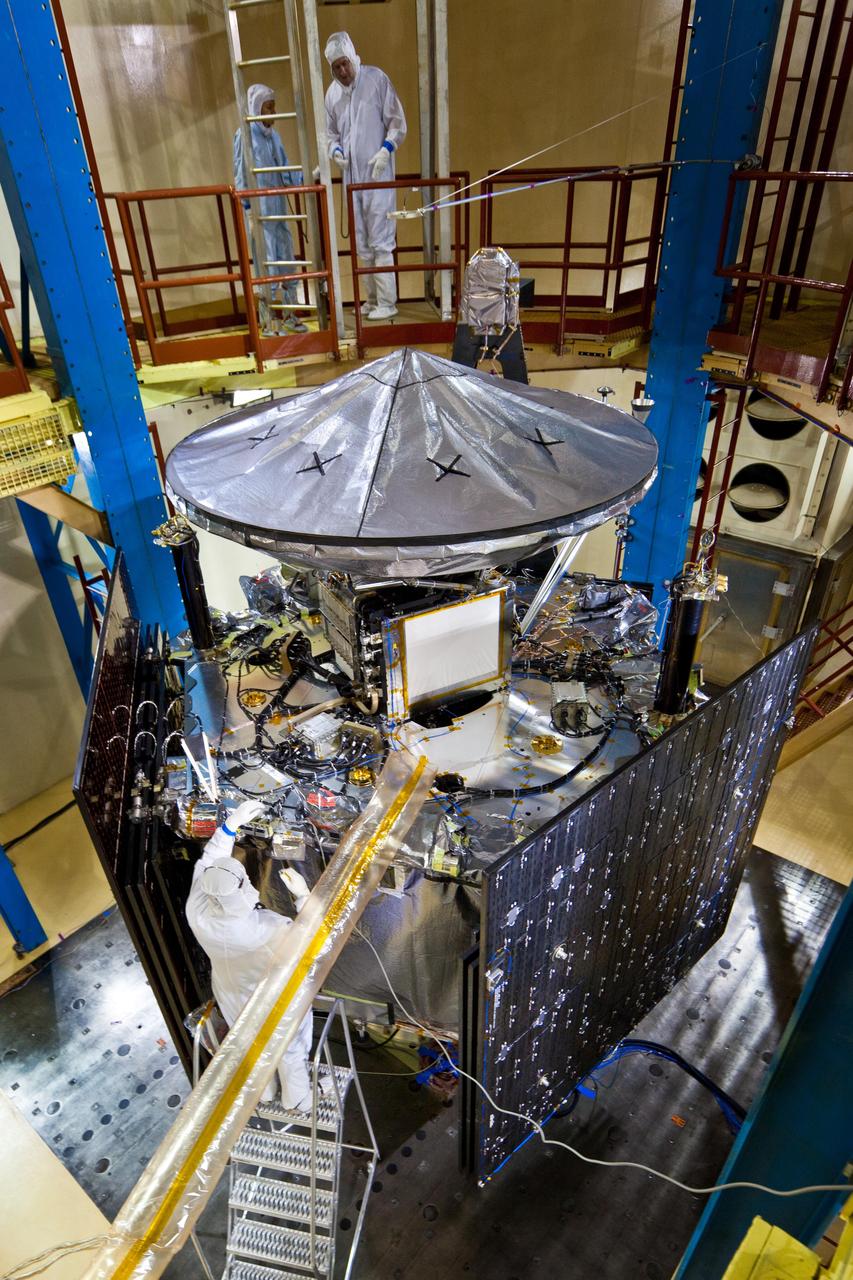
Technicians inspect NASA Juno spacecraft and its science instruments following acoustics testing at Lockheed Martin Space Systems in Denver, Colo. on Jan. 26, 2011.
Juno Spacecraft Passes the Test
Technicians inspect NASA Juno spacecraft and its science instruments following acoustics testing at Lockheed Martin Space Systems in Denver, Colo. on Jan. 26, 2011.
Juno Spacecraft Passes the Test
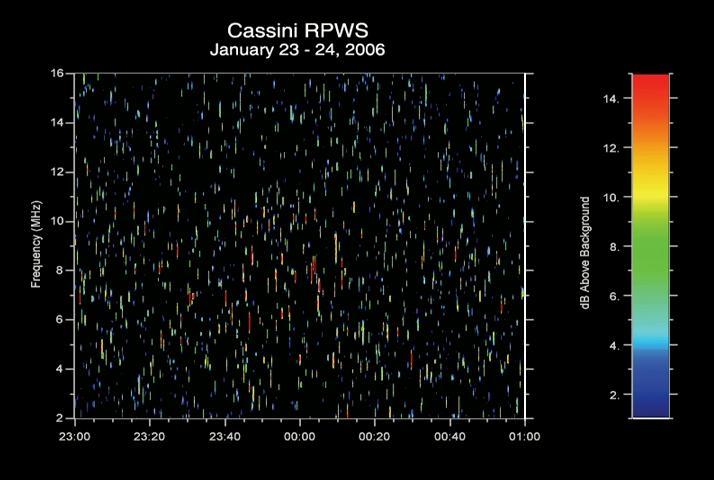
Lightning sounds from Saturn can be heard via radio signals received by the radio and   plasma wave science instrument on the Cassini spacecraft
Lightning Sounds from Saturn Audio
This image displays the type of detail discernable with the telescopic camera of the Chemistry and Camera ChemCam instrument on the Mars Science Laboratory mission Curiosity rover.
Detail Observed from 10 Feet away with Curiosity ChemCam
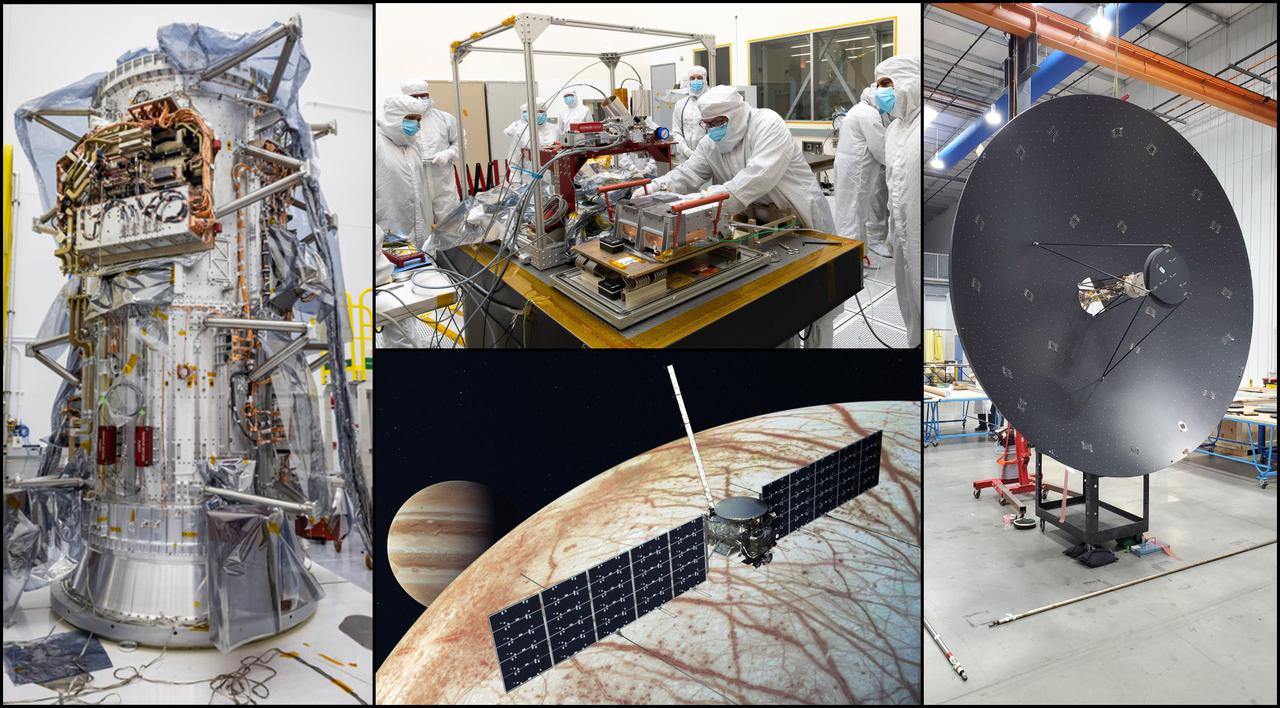
Science instruments and other hardware for NASA's Europa Clipper spacecraft will come together in the mission's final phase before launching to Jupiter's icy moon Europa in 2024.  https://photojournal.jpl.nasa.gov/catalog/PIA25125
NASA Begins Assembly of Europa Clipper Spacecraft
An engineer works on vibration acoustics and pyro shock testing for one of NASA's Voyager spacecraft on November 18, 1976. Several of the spacecraft's science instruments are visible at left.  https://photojournal.jpl.nasa.gov/catalog/PIA21733
Voyager: Vibration Acoustics and Pyro Shock Testing
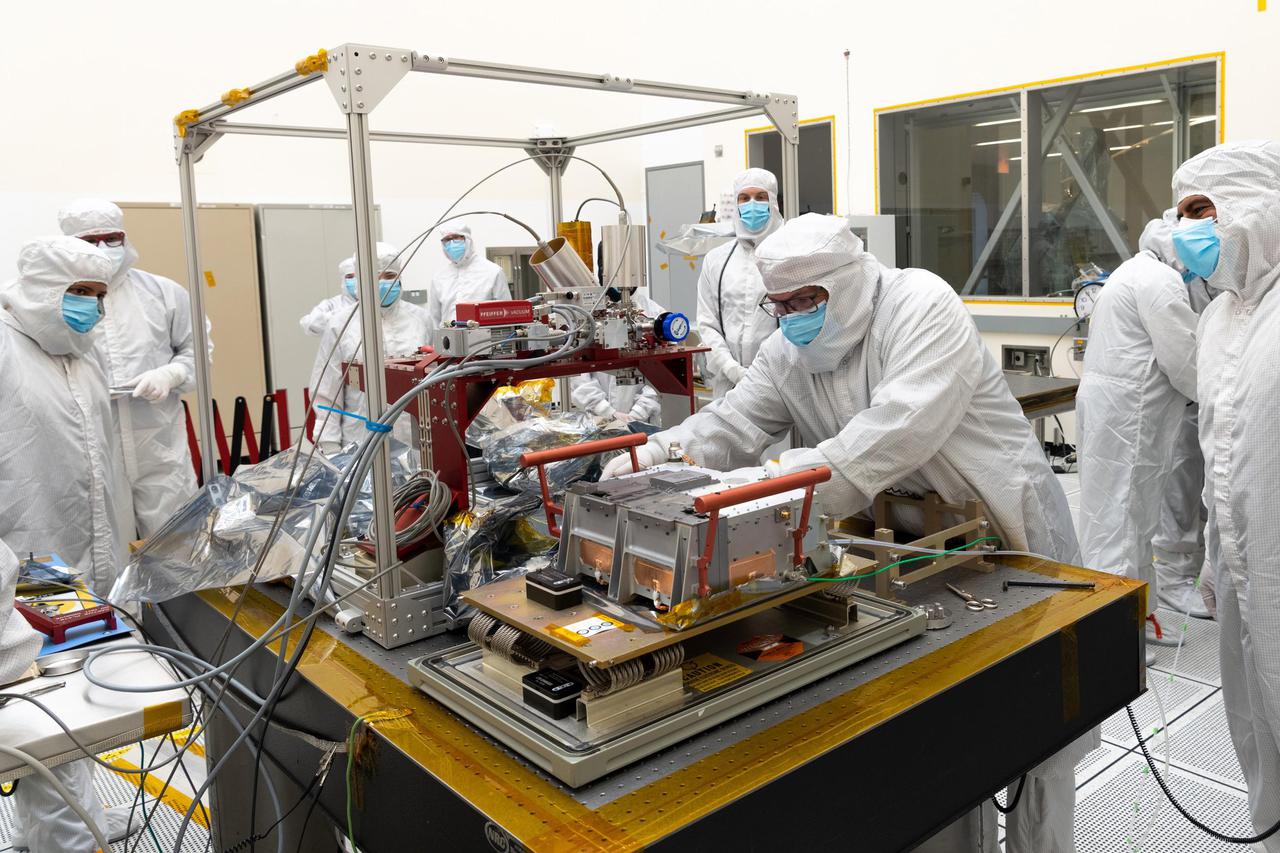
Engineers and technicians examine and test the first of NASA's Europa Clipper's science instruments to be delivered to the agency's Jet Propulsion Laboratory in Southern California. The ultraviolet spectrograph, called Europa-UVS and led by the Southwest Research Institute in San Antonio, Texas, will be integrated into the spacecraft during the phase of the mission called assembly, test, and launch operations. Europa-UVS is part of a payload of nine science instruments aboard Europa Clipper.  In this photo, captured in February 2022, the instrument's custom testing equipment is seen at left, with a boxy, red frame. The instrument itself is seen at right. During testing, technicians shined ultraviolet light into the instrument's front aperture.  With an internal global ocean under a thick layer of ice, Jupiter's moon Europa may have the potential to harbor existing life. Europa Clipper will swoop around Jupiter in an elliptical orbit, dipping close to the moon on each flyby to collect data. Understanding Europa's habitability will help scientists better understand how life developed on Earth and the potential for finding life beyond our planet. Europa Clipper is set to launch in 2024.  Europa-UVS will search above the surface of Europa for signs of potential plumes that may be venting subsurface water into space. The instrument collects ultraviolet light, then separates the wavelengths of that light to help determine the composition of the moon's surface and gases in the atmosphere.  https://photojournal.jpl.nasa.gov/catalog/PIA24897
NASA's Europa Clipper's Ultraviolet Spectrograph Is Delivered
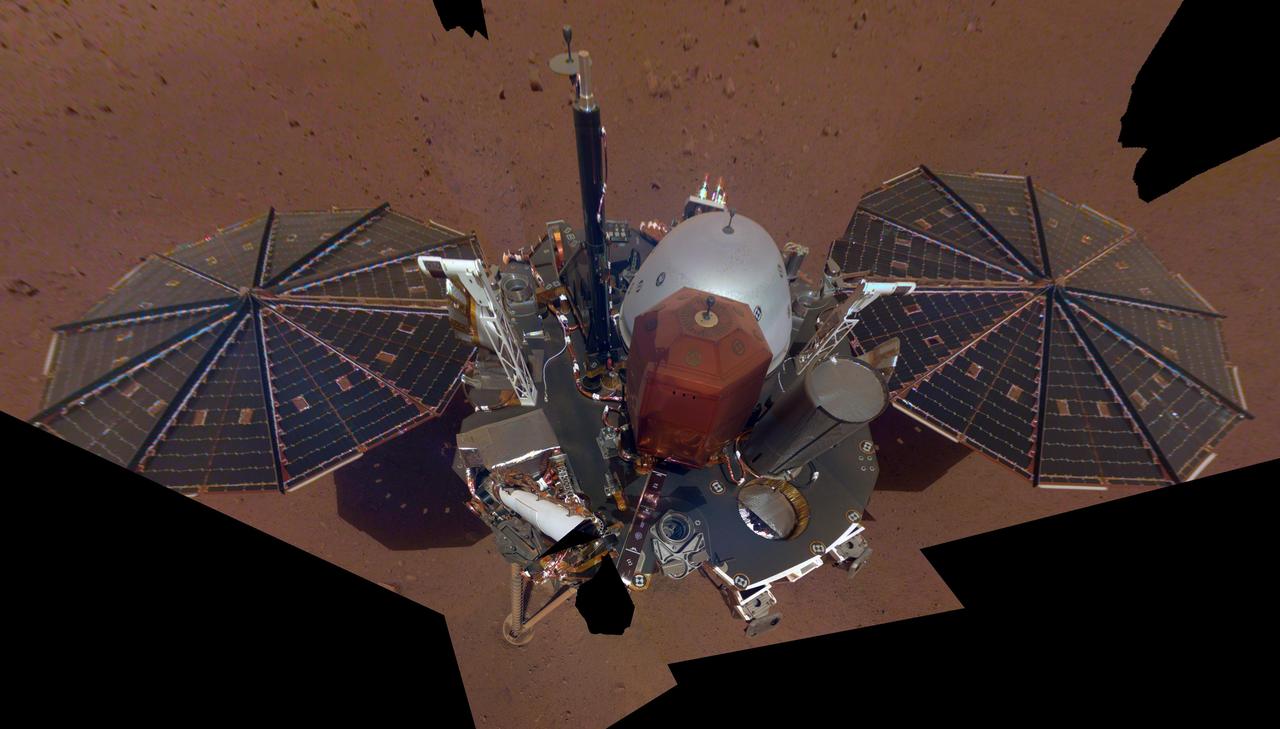
This is NASA InSight's first full selfie on Mars. It displays the lander's solar panels and deck. On top of the deck are its science instruments, weather sensor booms and UHF antenna. The selfie was taken on Dec. 6, 2018 (Sol 10).  The selfie is made up of 11 images which were taken by its Instrument Deployment Camera, located on the elbow of its robotic arm. Those images are then stitched together into a mosaic.  https://photojournal.jpl.nasa.gov/catalog/PIA22876
InSight's First Selfie
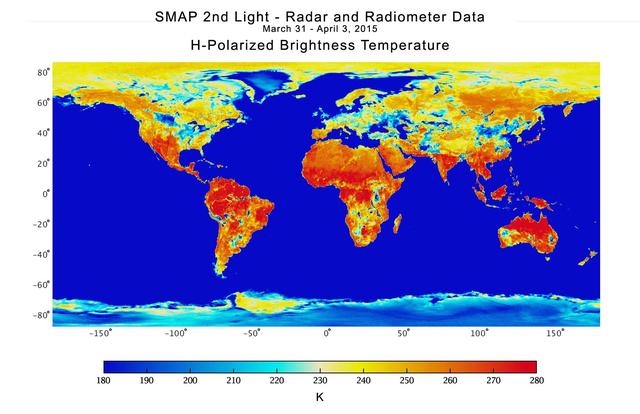
With its antenna now spinning at full speed, NASA new Soil Moisture Active Passive SMAP observatory has successfully re-tested its science instruments and generated its first global maps, a key step to beginning routine science operations in May, 2015
NASA Soil Moisture Mission Produces First Global Radiometer Map
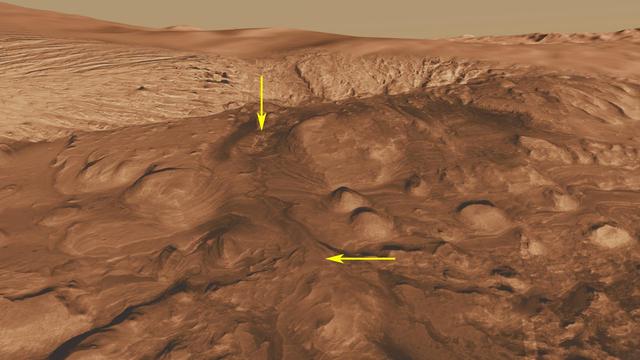
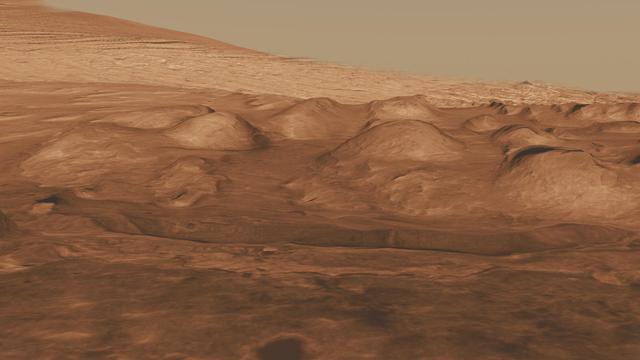
This oblique view of the mound in Gale crater shows several different rock types of interest to the Mars Science Laboratory mission. The Mars Science Laboratory rover, Curiosity, will use its full instrument suite to study these minerals and how they form
Rock Types in Gale Crater
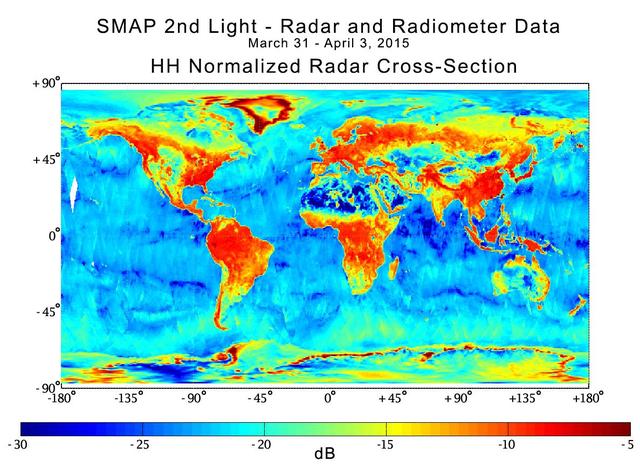
With its antenna now spinning at full speed, NASA new Soil Moisture Active Passive SMAP observatory has successfully re-tested its science instruments and generated its first global maps, a key step to beginning routine science operations in May, 2015
NASA Soil Moisture Mission Produces First Global Radar Map
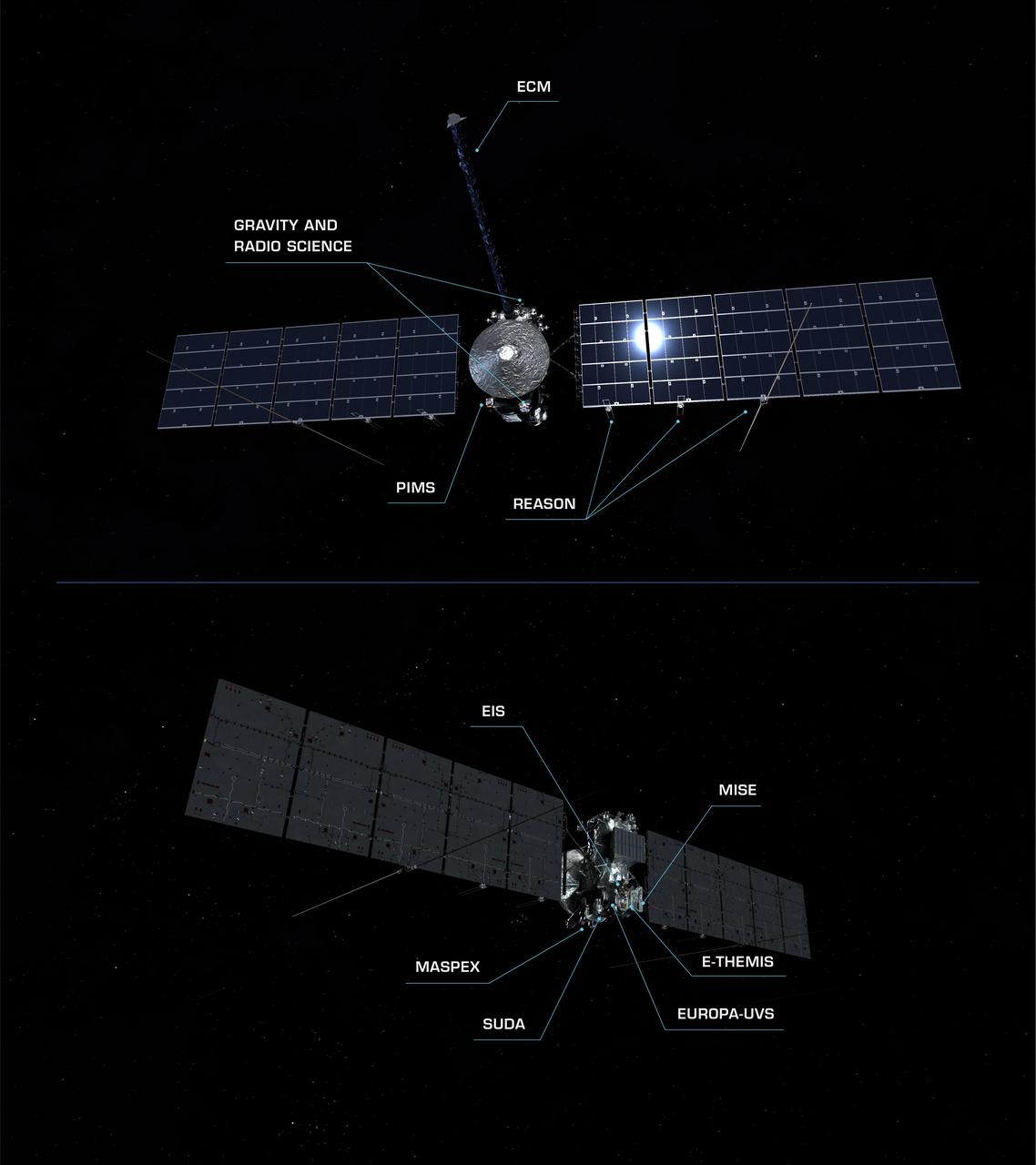
To conduct its detailed investigations of Jupiter's icy moon Europa, NASA's Europa Clipper spacecraft carries a suite of nine science instruments and a gravity experiment that uses its telecommunications system. These components are depicted in this pair of artist's concepts showing each side of the spacecraft, and include:      Europa Imaging System (EIS)     Europa Thermal Emission Imaging System (E-THEMIS)     Europa Ultraviolet Spectrograph (Europa-UVS)     Mapping Imaging Spectrometer for Europa (MISE)     Europa Clipper Magnetometer (ECM)     Plasma Instrument for Magnetic Sounding (PIMS)     Radar for Europa Assessment and Sounding: Ocean to Near-surface (REASON)     MAss Spectrometer for Planetary EXploration/Europa (MASPEX)     Surface Dust Analyzer (SUDA)     Gravity and Radio Science Experiment (G/RS)  Europa Clipper's three main science objectives are to determine the thickness of the moon's icy shell and its interactions with the ocean below, to investigate its composition, and to characterize its geology. The mission's detailed exploration of Europa will help scientists better understand the astrobiological potential for habitable worlds beyond our planet.  https://photojournal.jpl.nasa.gov/catalog/PIA26439
Europa Clipper: Equipped for Discovery (Artist's Concept)
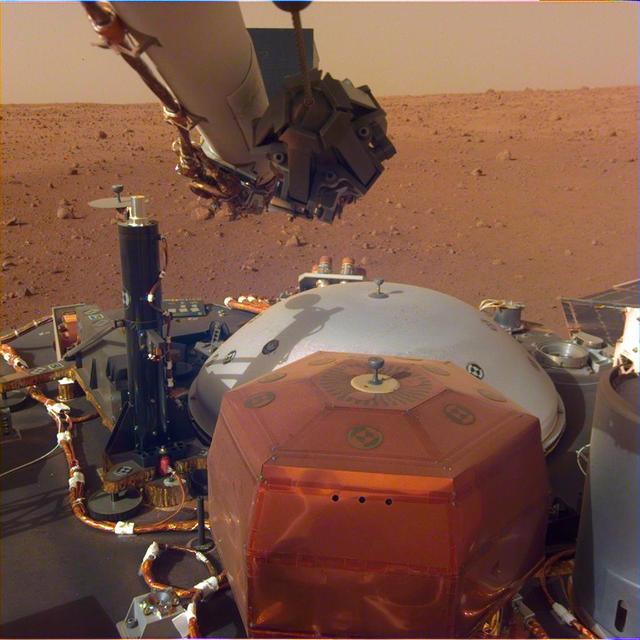
This image from InSight's robotic-arm mounted Instrument Deployment Camera shows the instruments on the spacecraft's deck, with the Martian surface of Elysium Planitia in the background.  The color-calibrated picture was acquired on Dec. 4, 2018 (Sol 8). In the foreground, a copper-colored hexagonal cover protects the Seismic Experiment for Interior Structure instrument (SEIS), a seismometer that will measure marsquakes. The gray dome behind SEIS is the wind and thermal shield, which will be placed over SEIS. To the left is a black cylindrical instrument, the Heat Flow and Physical Properties Probe (HP3). HP3 will drill up to 16 feet (5 meters) below the Martian surface, measuring heat released from the interior of the planet. Above the deck is InSight's robotic arm, with the stowed grapple directly facing the camera.  To the right can be seen a small portion of one of the two solar panels that help power InSight and part of the UHF communication antenna.  https://photojournal.jpl.nasa.gov/catalog/PIA22871
Full View of InSight's Deck and Two Science Instruments
NASA's Jet Propulsion Laboratory in Southern California is building the spectrometer for the agency's Europa Clipper mission. Called the Mapping Imaging Spectrometer for Europa (MISE), it is seen in the midst of assembly in a clean room at JPL. Pronounced "mize," the instrument will analyze infrared light reflected from Jupiter's moon Europa and will map the distribution of organics and salts on the surface to help scientists understand if the moon's global ocean – which lies beneath a thick layer of ice – is habitable.  Because of its internal ocean, scientists believe Jupiter's moon Europa may have the potential to harbor existing life. Europa Clipper will swoop around Jupiter on an elliptical path, dipping close to the moon on each flyby. Understanding Europa's habitability will help scientists better understand how life developed on Earth and the potential for finding life beyond our planet. Europa Clipper is set to launch in 2024.  https://photojournal.jpl.nasa.gov/catalog/PIA24781
The Mapping Imaging Spectrometer for Europa (MISE) Science Instrument
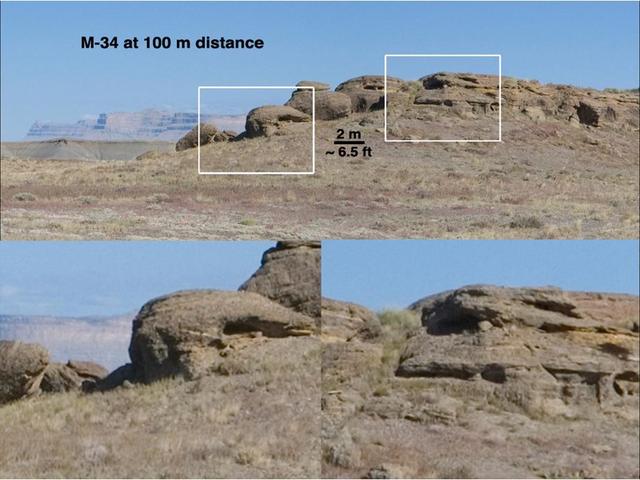
This set of views illustrates capabilities of the Mast Camera MastCam instrument on NASA Mars Science Laboratory Curiosity rover, using a scene on Earth as an example of what MastCam two cameras can see from different distances.
Illustrating MastCam Capabilities with a Terrestrial Scene
The Mast Camera Mastcam instrument for NASA Mars Science Laboratory will use a side-by side pair of cameras for examining terrain around the mission rover, Curiosity. The Mastcam 100 offers telephoto capability.
Mastcam 100: Longer Focal-Length Eye of Mast Camera Pair for Mars Rover
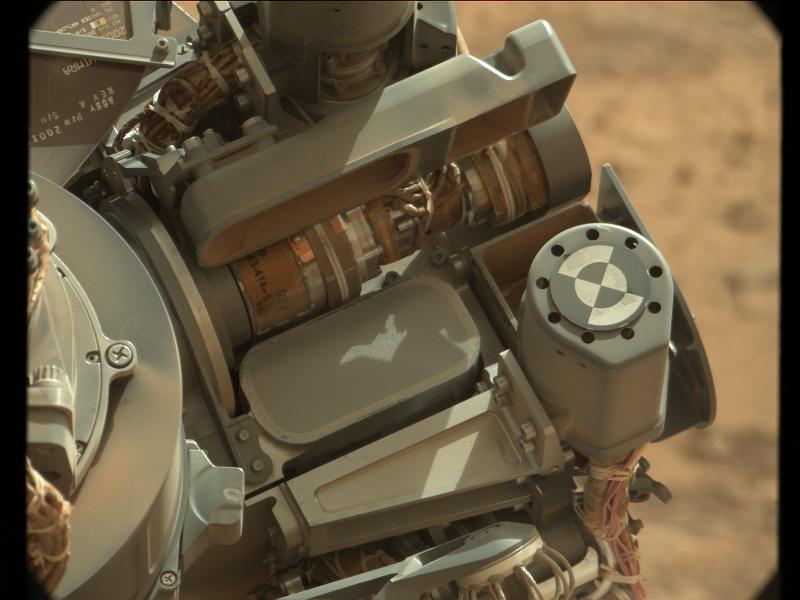
An in-flight camera check produced this out-of-focus image when NASA Mars Science Laboratory spacecraft turned on illumination sources that are part of the Curiosity rover Mars Hand Lens Imager MAHLI instrument.
Camera Test on Curiosity During Flight to Mars
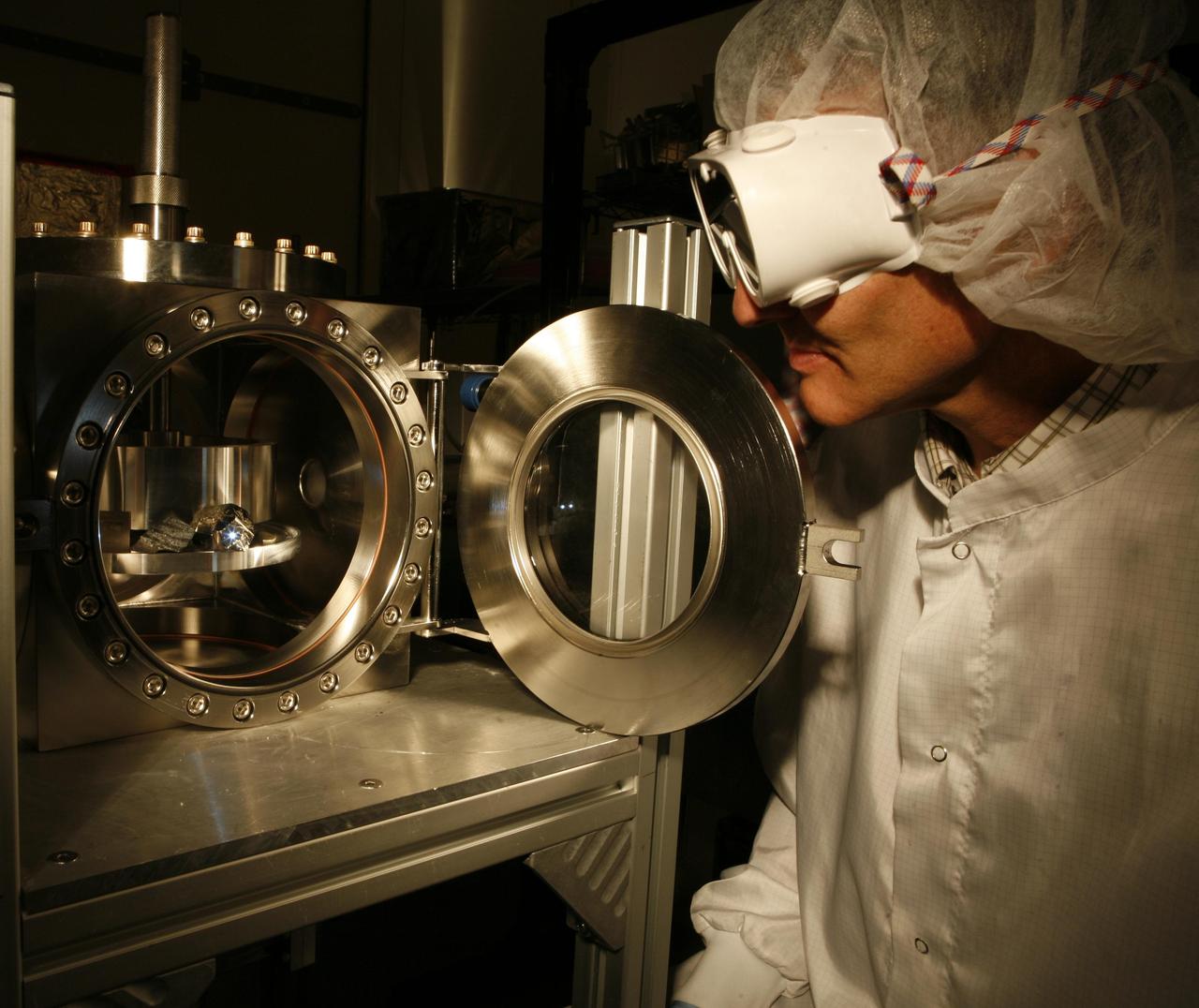
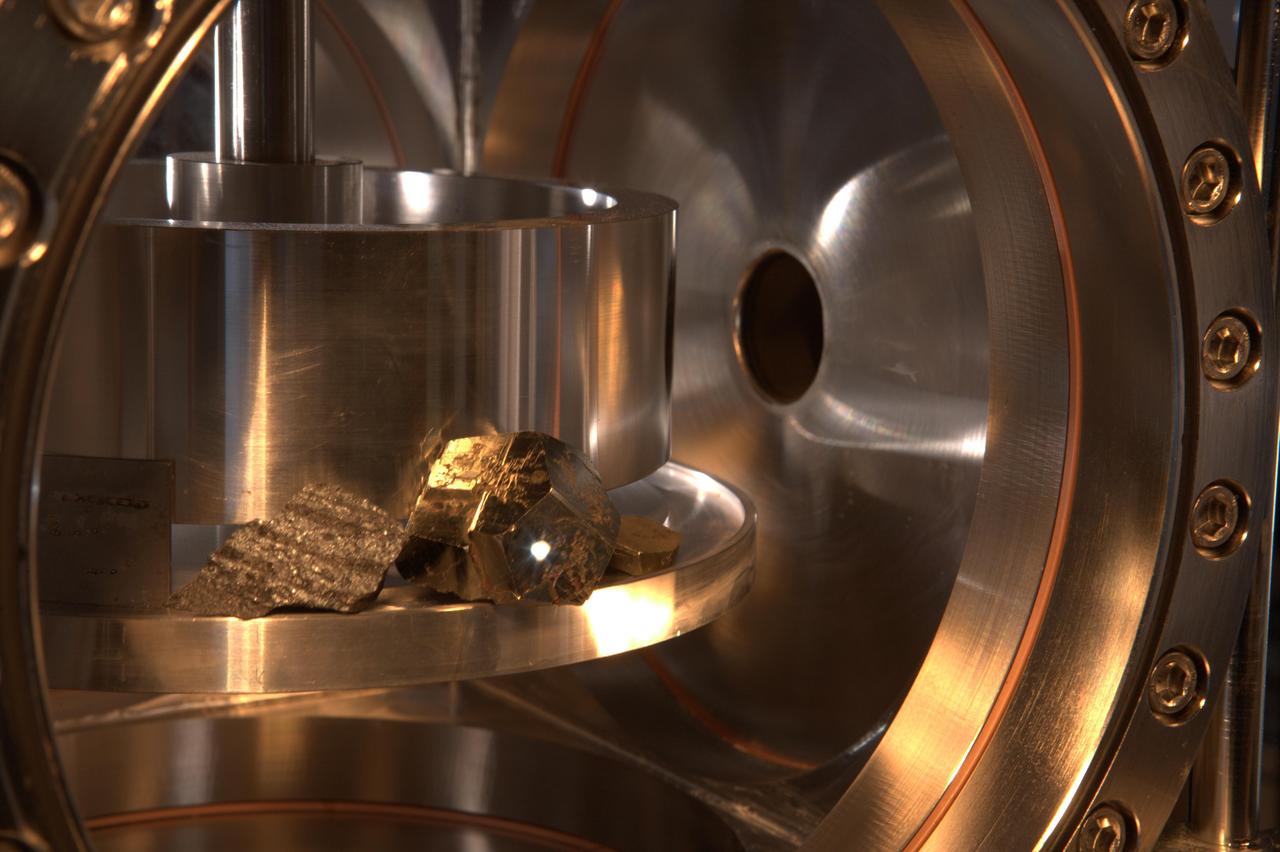
The ChemCam instrument for NASA Mars Science Laboratory mission uses a pulsed laser beam to vaporize a pinhead-size target, producing a flash of light from the ionized material plasma that can be analyzed to identify chemical elements in the target.
Spark Generated by ChemCam Laser During Tests
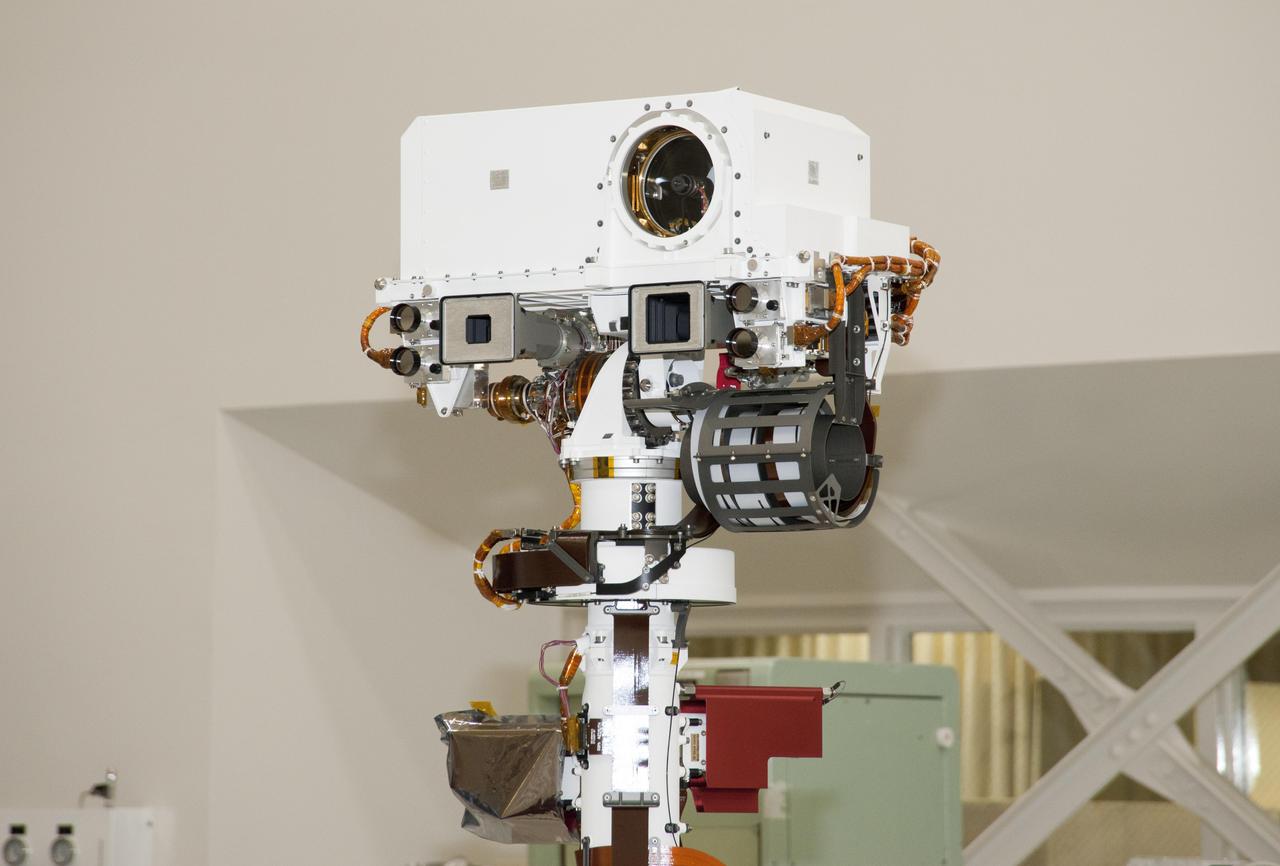
The remote sensing mast on NASA Mars rover Curiosity holds two science instruments for studying the rover surroundings and two stereo navigation cameras for use in driving the rover and planning rover activities.
Top of Mars Rover Curiosity Remote Sensing Mast
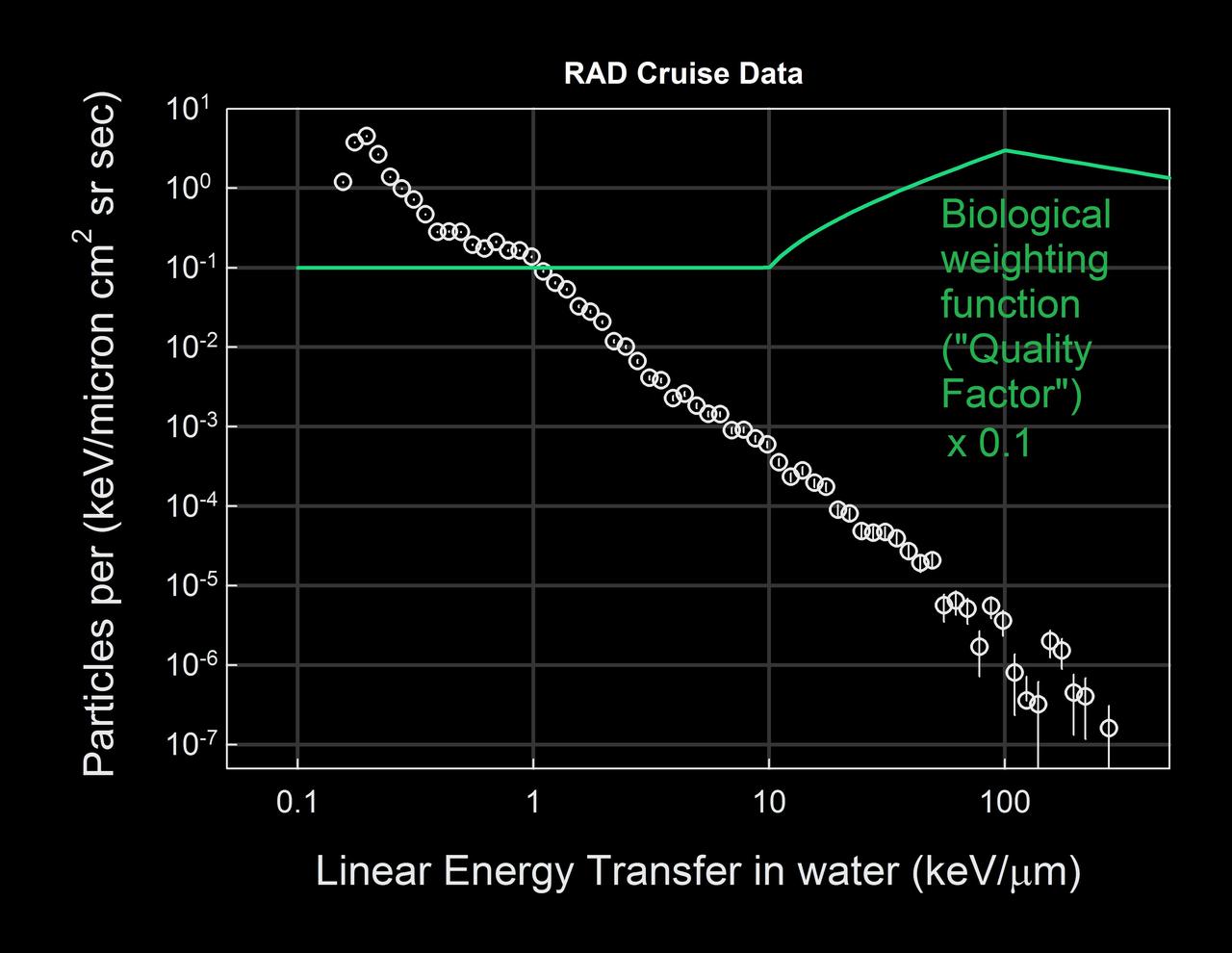
This graph based on data from the RAD instrument onboard NASA Mars Science Laboratory spacecraft shows the flux of energetic particles vertical axis as a function of the estimated energy deposited in water horizontal axis.
Calculating Radiation Dose for Biological Tissue
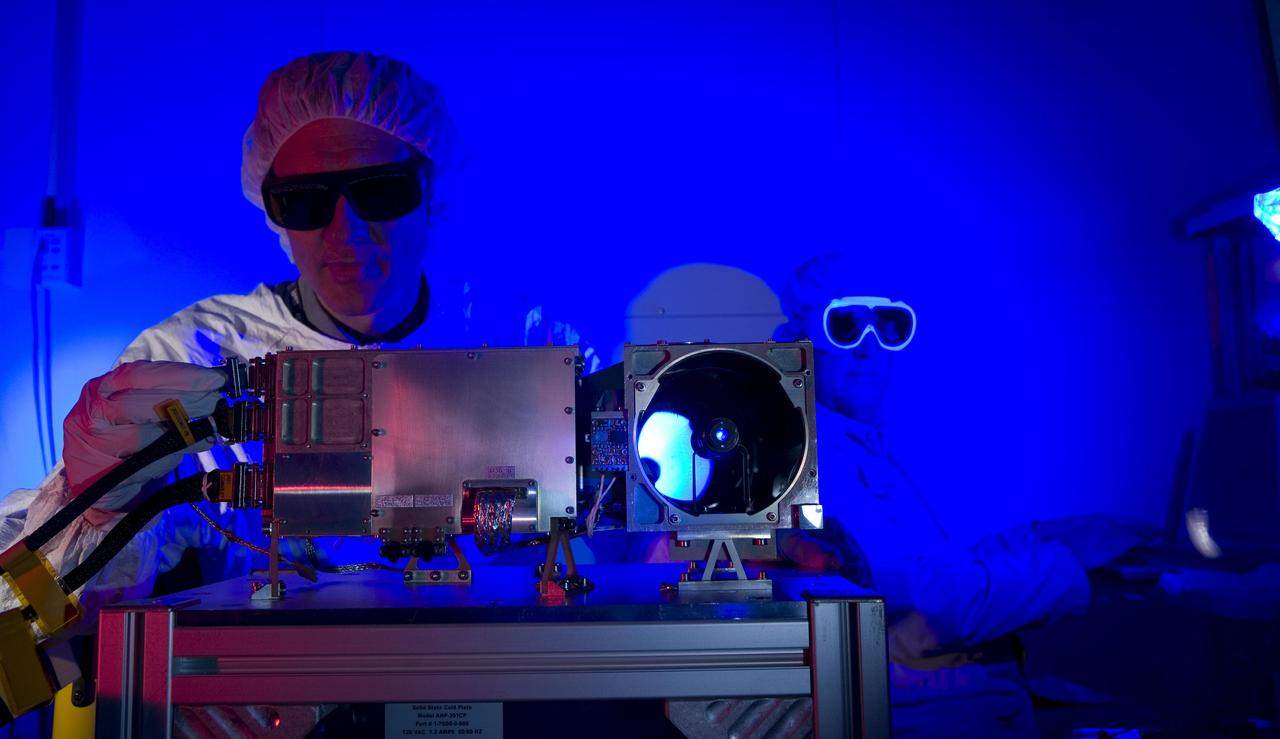
The Sample Analysis at Mars SAM instrument for NASA Mars Science Laboratory mission will study chemistry of rocks, soil and air as the mission rover, Curiosity, investigates Gale Crater on Mars.
SAM Instrument at NASA Goddard Space Flight Center
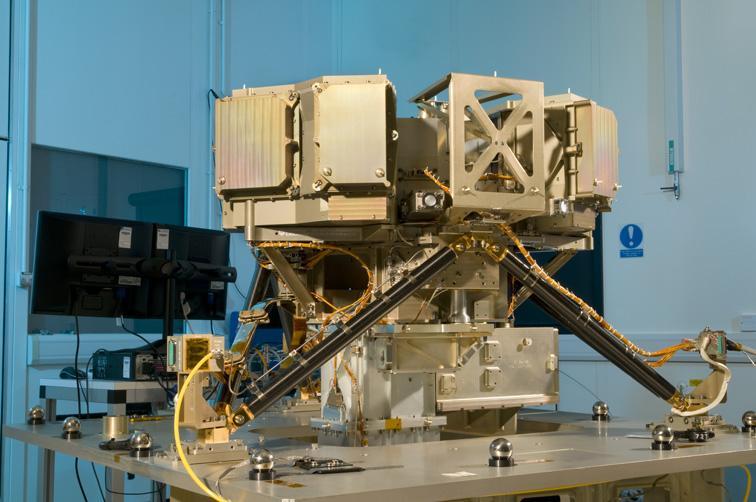
The Mid-Infrared Instrument, a component of NASA James Webb Space Telescope, underwent alignment testing at the Science and Technology Facilities Council Rutherford Appleton Laboratory Space in Oxfordshire, England.
Webb Instrument Undergoes Alignment Testing
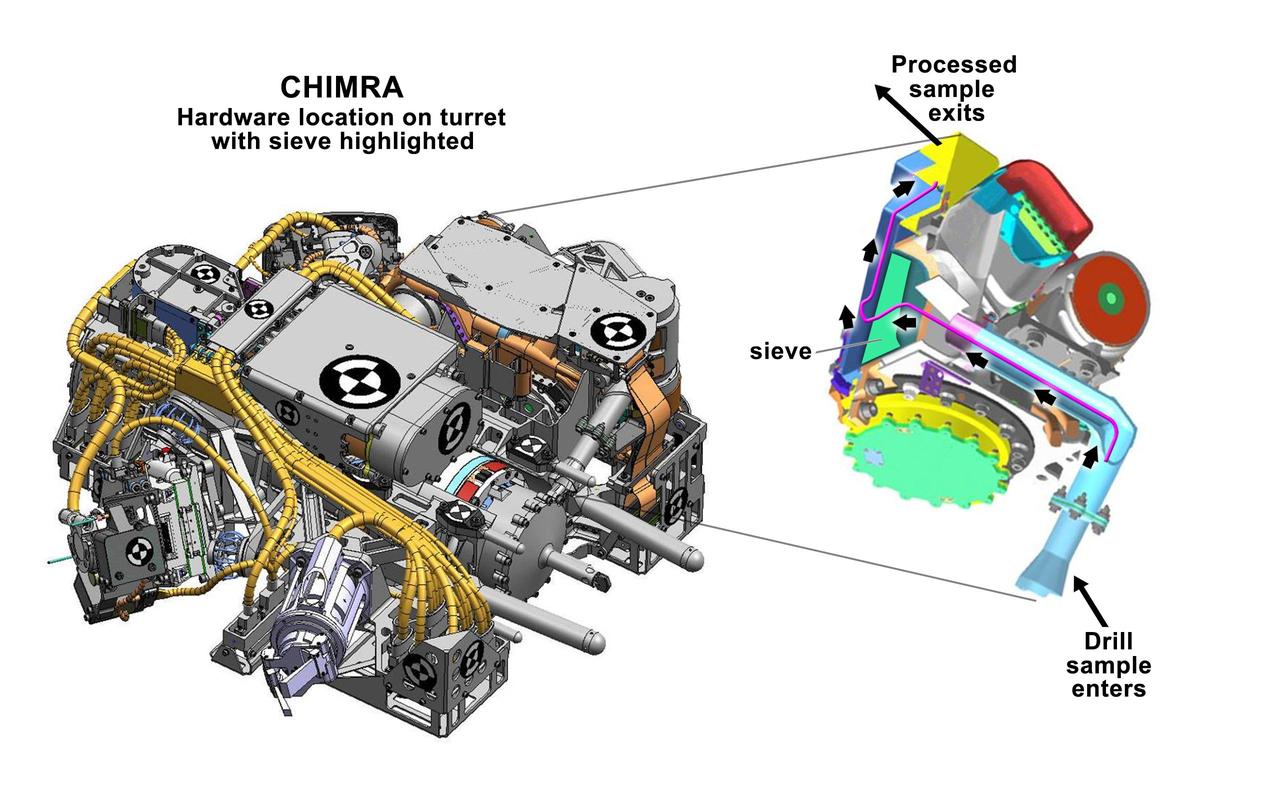
This figure shows the location of CHIMRA on the turret of NASA Curiosity rover, together with a cutaway view of the device. CHIMRA processes samples from the rover scoop or drill and delivers them to science instruments.
Preparing Samples on Mars
The ChemCam instrument for NASA Mars Science Laboratory mission uses a pulsed laser beam to vaporize a pinhead-size target, producing a flash of light from the ionized material plasma that can be analyzed to identify chemical elements in the target.
Viewing Spark Generated by ChemCam Laser for Mars Rover
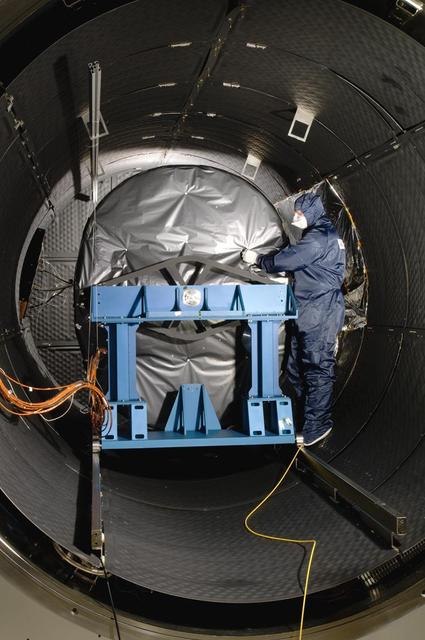
The Mid-Infrared Instrument, a component of NASA James Webb Space Telescope, underwent testing inside the thermal space test chamber at the Science and Technology Facilities Council Rutherford Appleton Laboratory Space in Oxfordshire, England.
Webb Instrument Inside Test Chamber
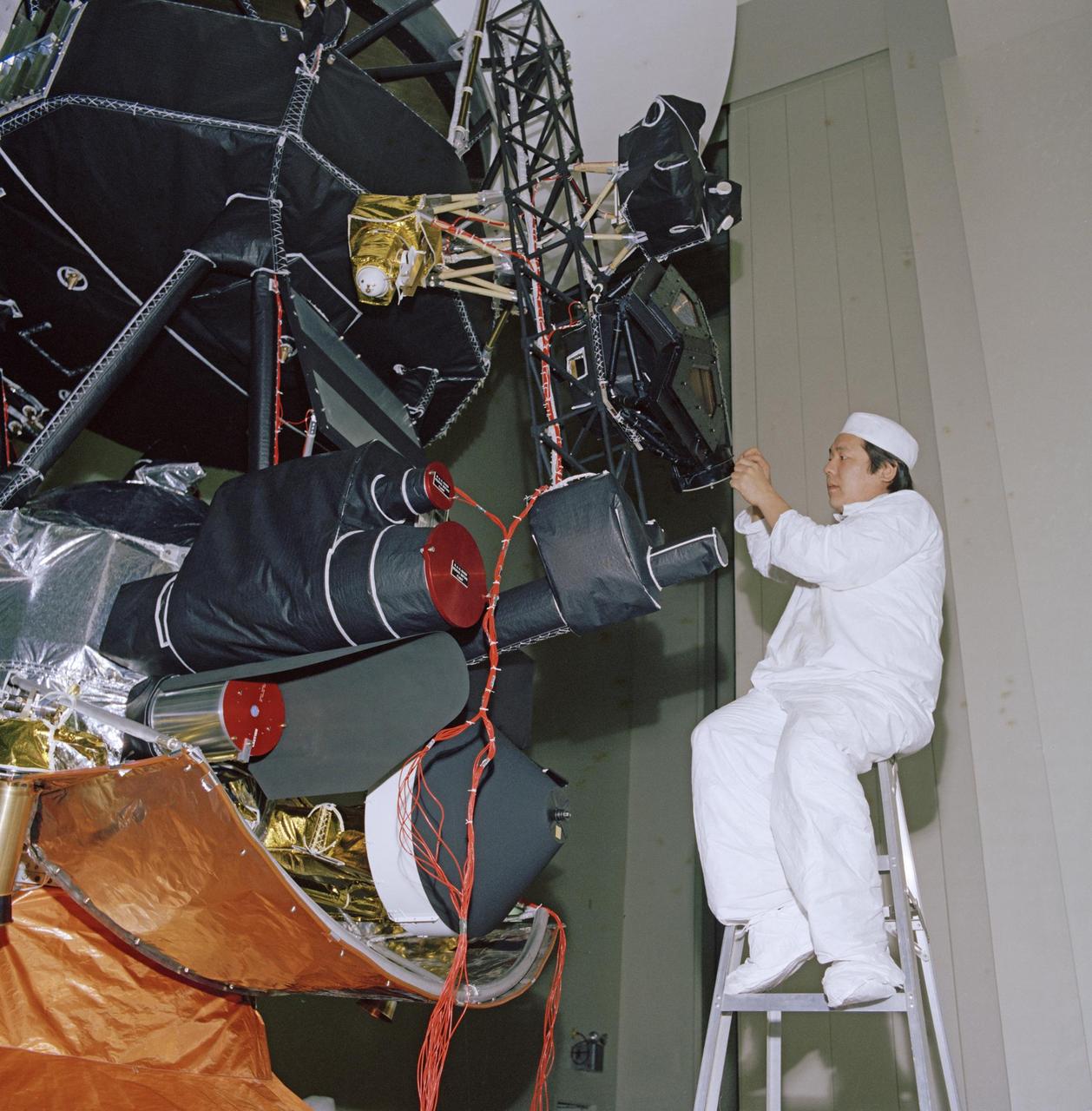
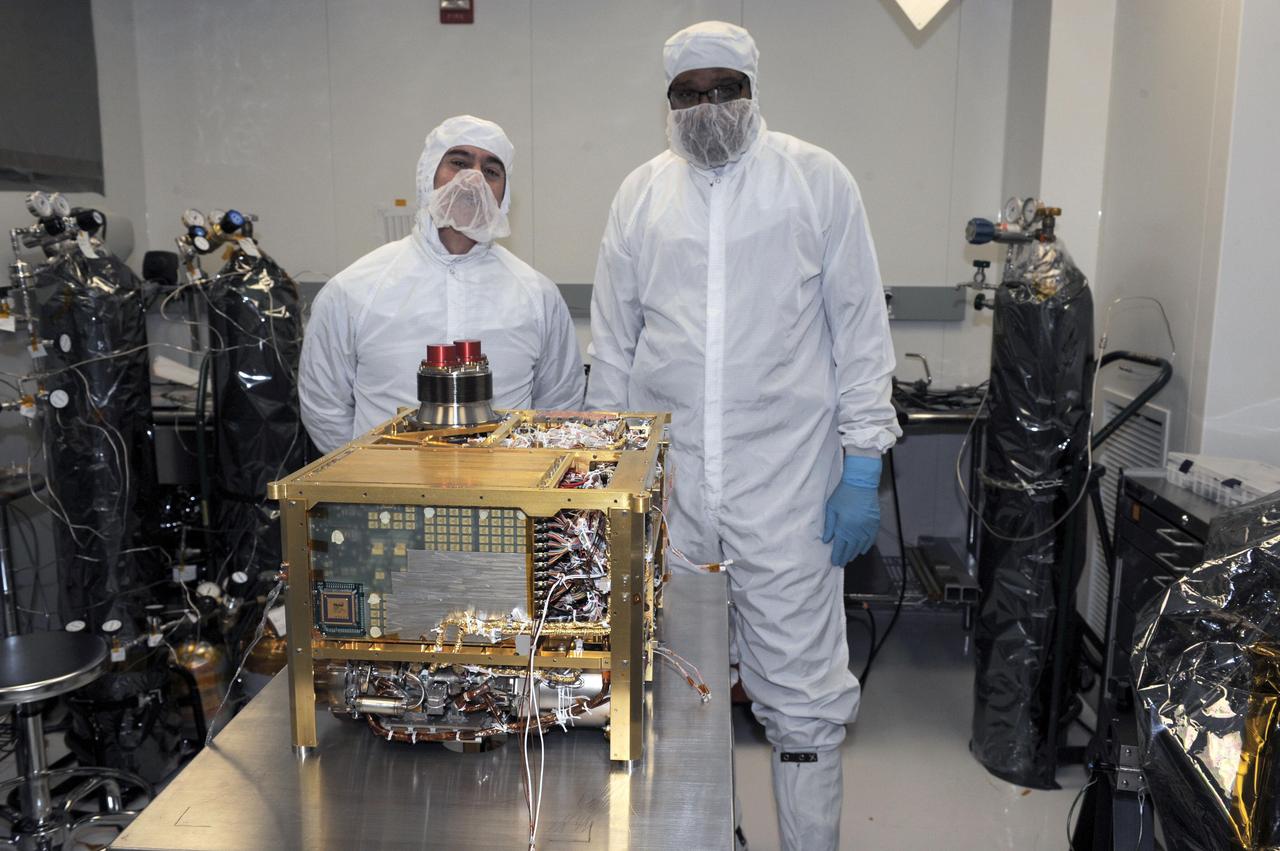
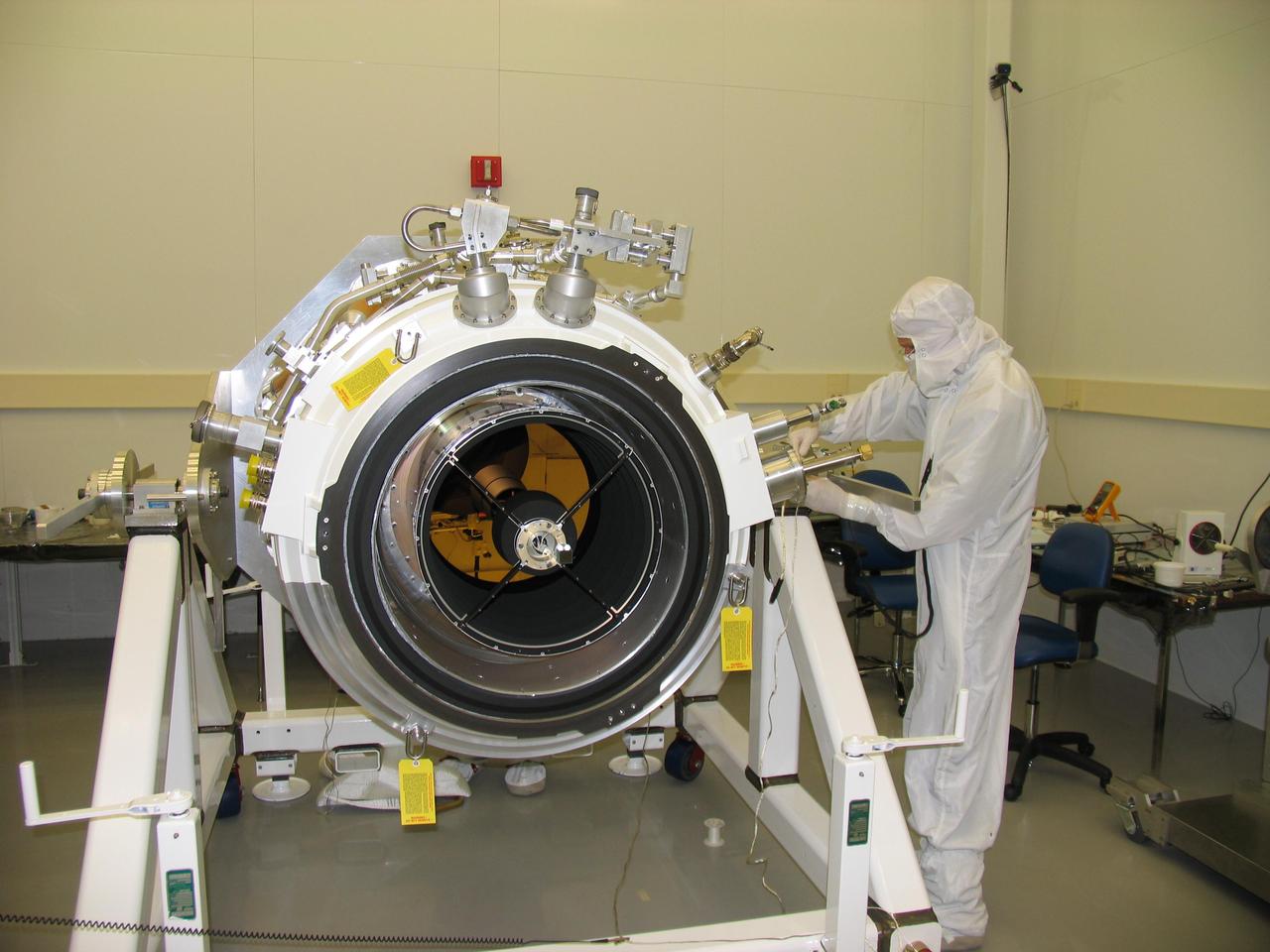
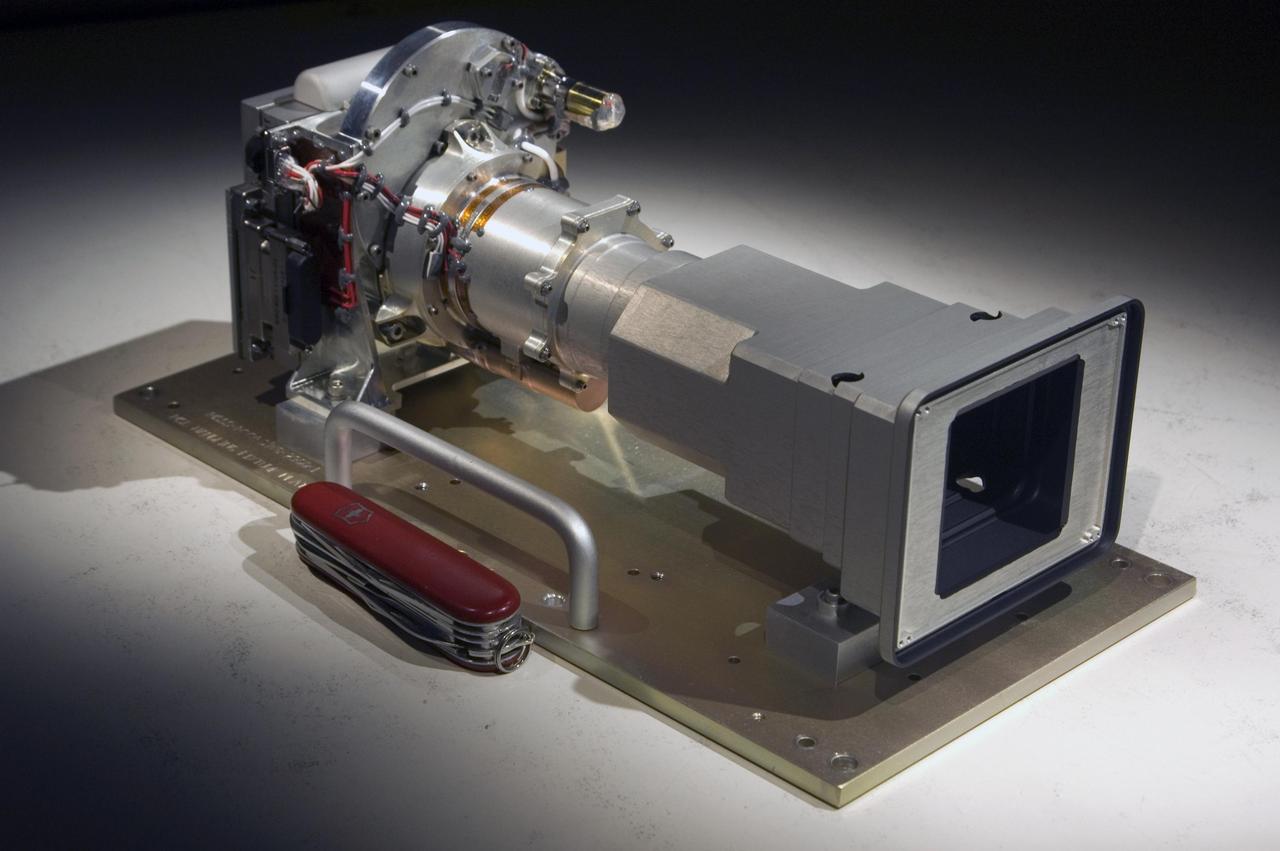
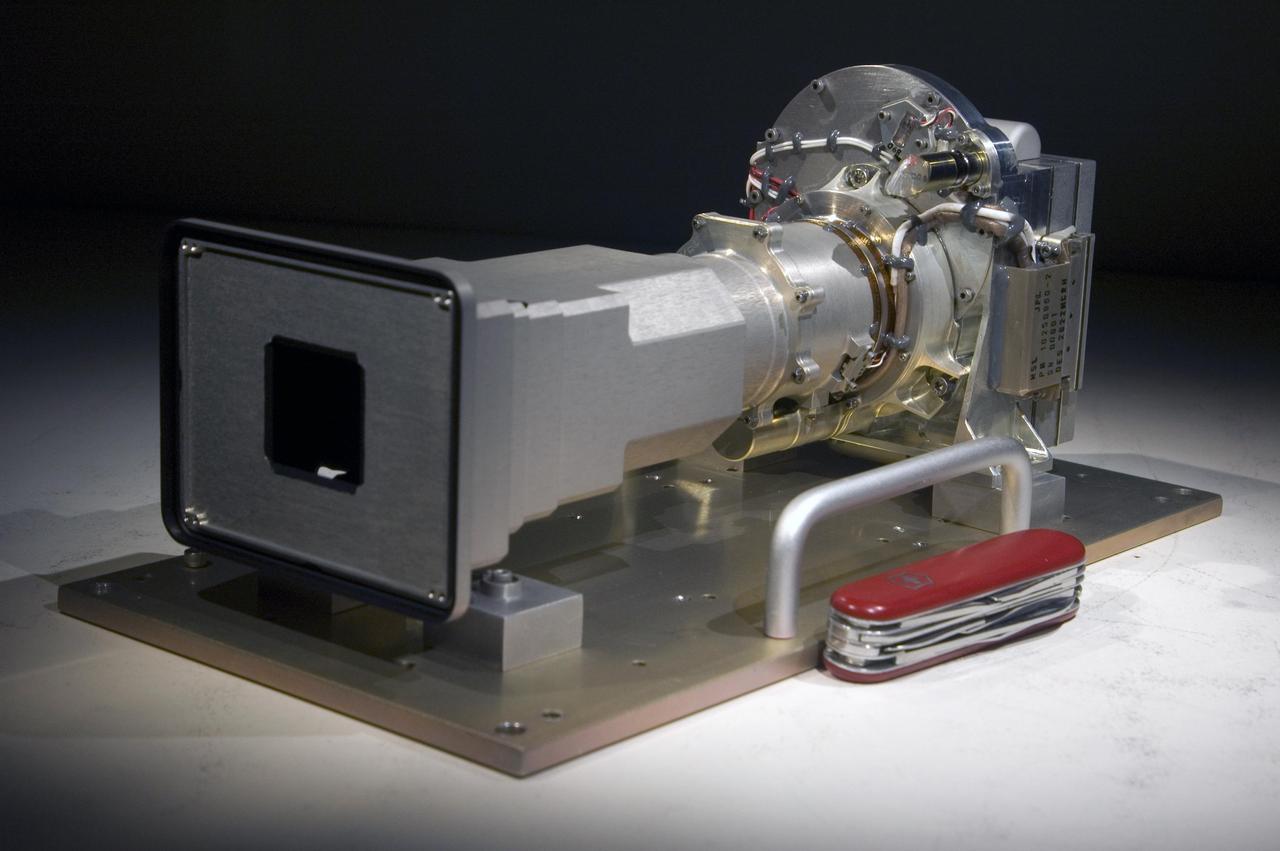
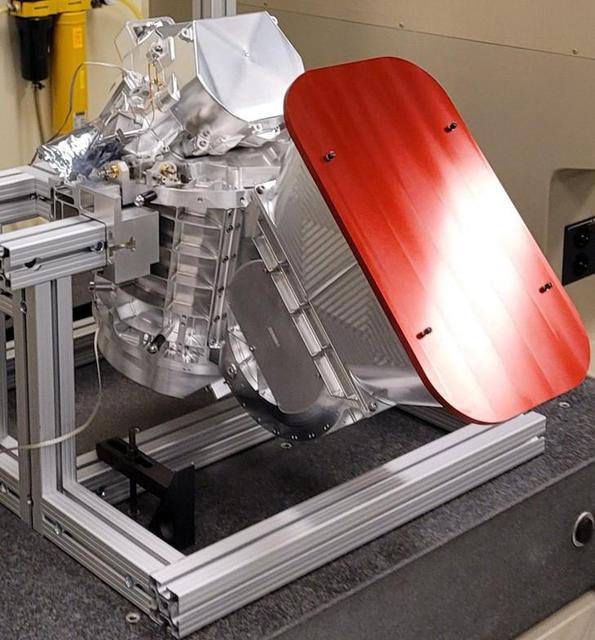
The science instrument on NASA Wide-field Infrared Survey Explorer is shown here with its aperture cover removed, during assembly at the Space Dynamics Laboratory in Logan, Utah.
A Look Inside WISE
The Mast Camera Mastcam instrument for NASA Mars Science Laboratory will use a side-by side pair of cameras for examining terrain around the mission rover, Curiosity. The Mastcam 34 offers wider-angle viewing.
Mastcam 34: Shorter Focal-Length Eye of Mast Camera Pair for Mars Rover
This image shows the location of the 150-micrometer sieve screen on NASA Mars rover Curiosity, a device used to remove larger particles from samples before delivery to science instruments.
Sifting Martian Samples
Mars scientists have several important hypotheses about how these minerals may reflect changes in the amount of water on the surface of Mars. The Mars Science Laboratory rover, Curiosity, will use its full suite of instruments to study these minerals.
Rock Layers in Lower Mound in Gale Crater
Members of NASA Mars Science Laboratory team carefully steer the hoisted Chemistry and Mineralogy CheMin instrument during its June 15, 2010, installation into the mission Mars rover, Curiosity.
Chemistry and Mineralogy Instrument Installed in Mars Rover
During its close flyby of Earth, NASA Jupiter-bound Juno spacecraft listened for a coordinated, global transmission from amateur radio operators using its radio and plasma wave science instrument, known as Waves.
Juno Detects a Ham Radio HI from Earth
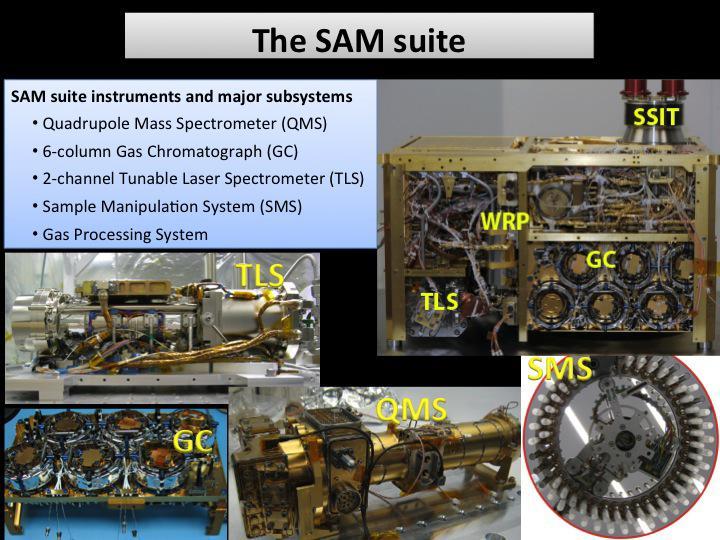
This illustration shows the instruments and subsystems of the Sample Analysis at Mars SAM suite on the Curiosity Rover of NASA Mars Science Laboratory Project. SAM analyzes the gases in the Martian atmosphere.
The SAM Suite
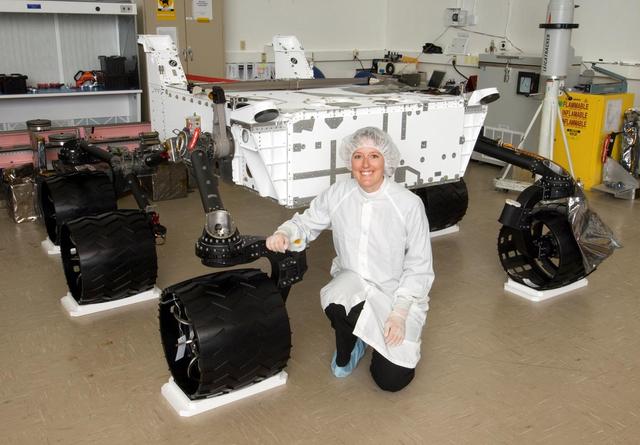
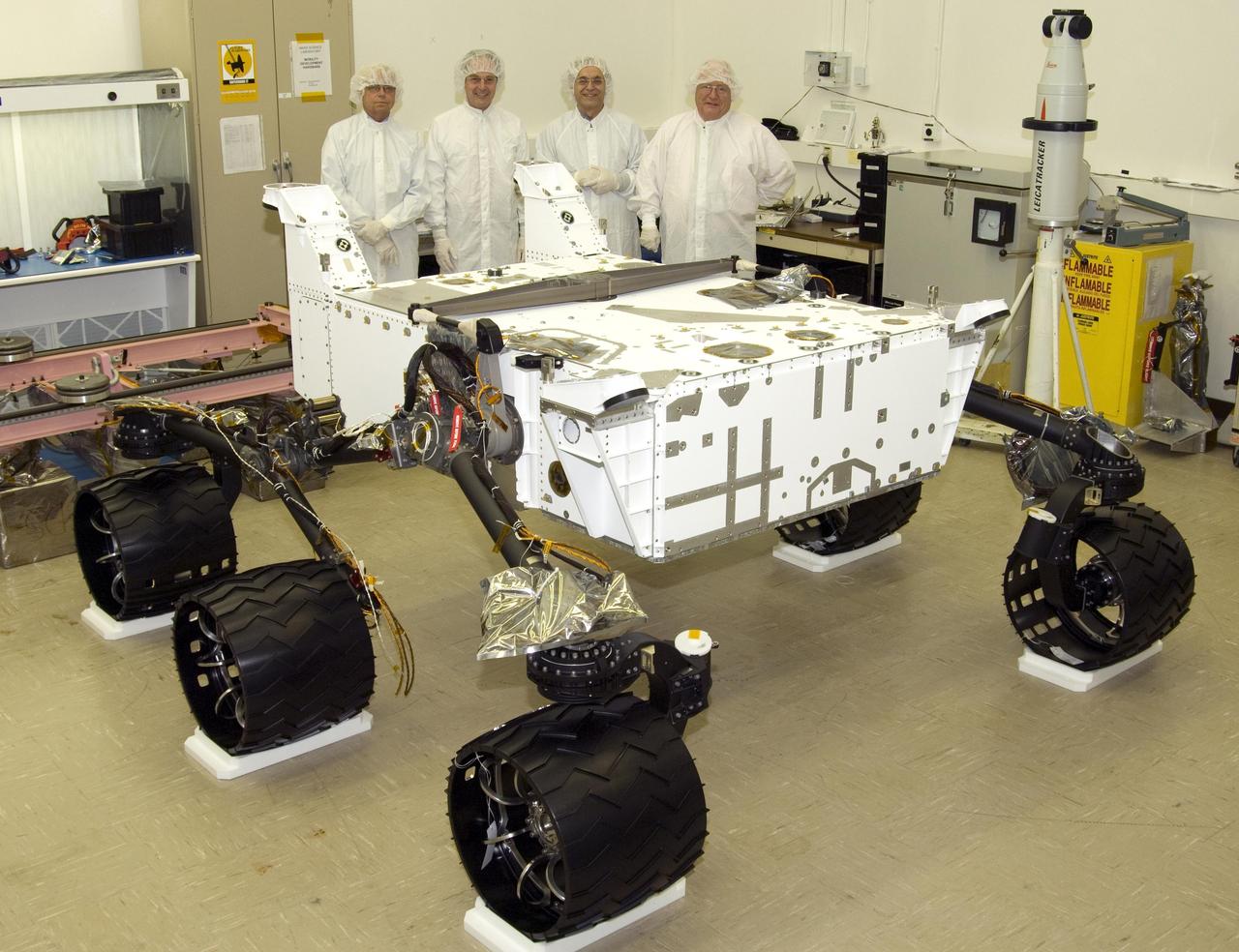
This image from August 2008 shows NASA Mars Science Laboratory rover in the course of its assembly, before additions of its arm, mast, laboratory instruments and other equipment.
Wheels and Suspension on Mars Science Laboratory Rover
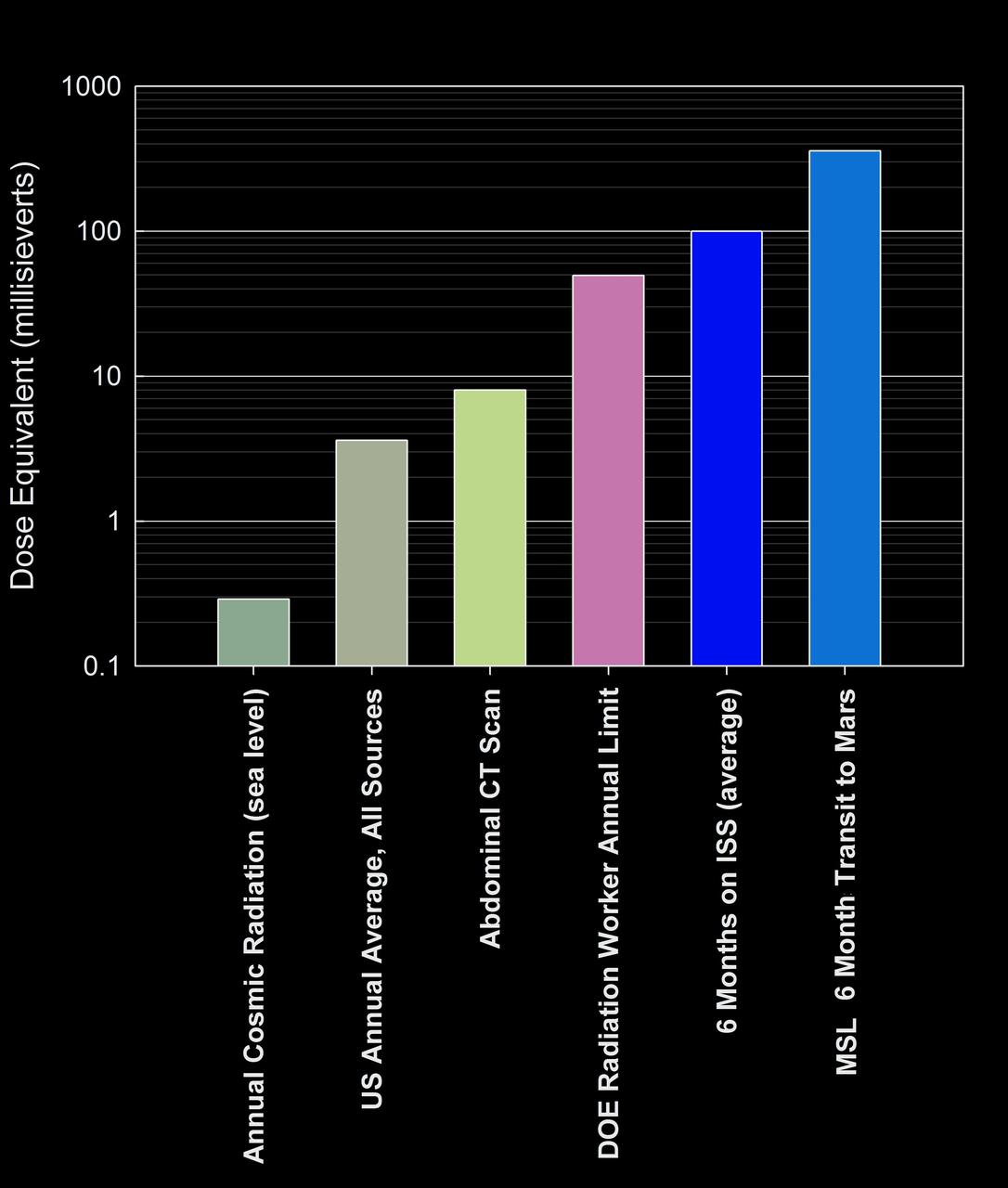
This graphic compares the radiation dose equivalent for several types of experiences, including a calculation for a trip from Earth to Mars based on measurements made by the RAD instrument shielded inside NASA Mars Science Laboratory spacecraft.
Comparison of Some Radiation Exposures to Mars-Trip Level
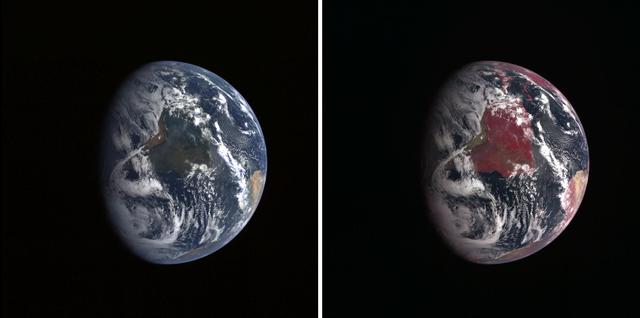
NASA MESSENGER Earth flyby on Aug. 2, 2005, not only adjusted the spacecraft path to Mercury - the gravity assist maneuver allowed the spacecraft team to test several MESSENGER science instruments by observing its home planet.
Twins Image
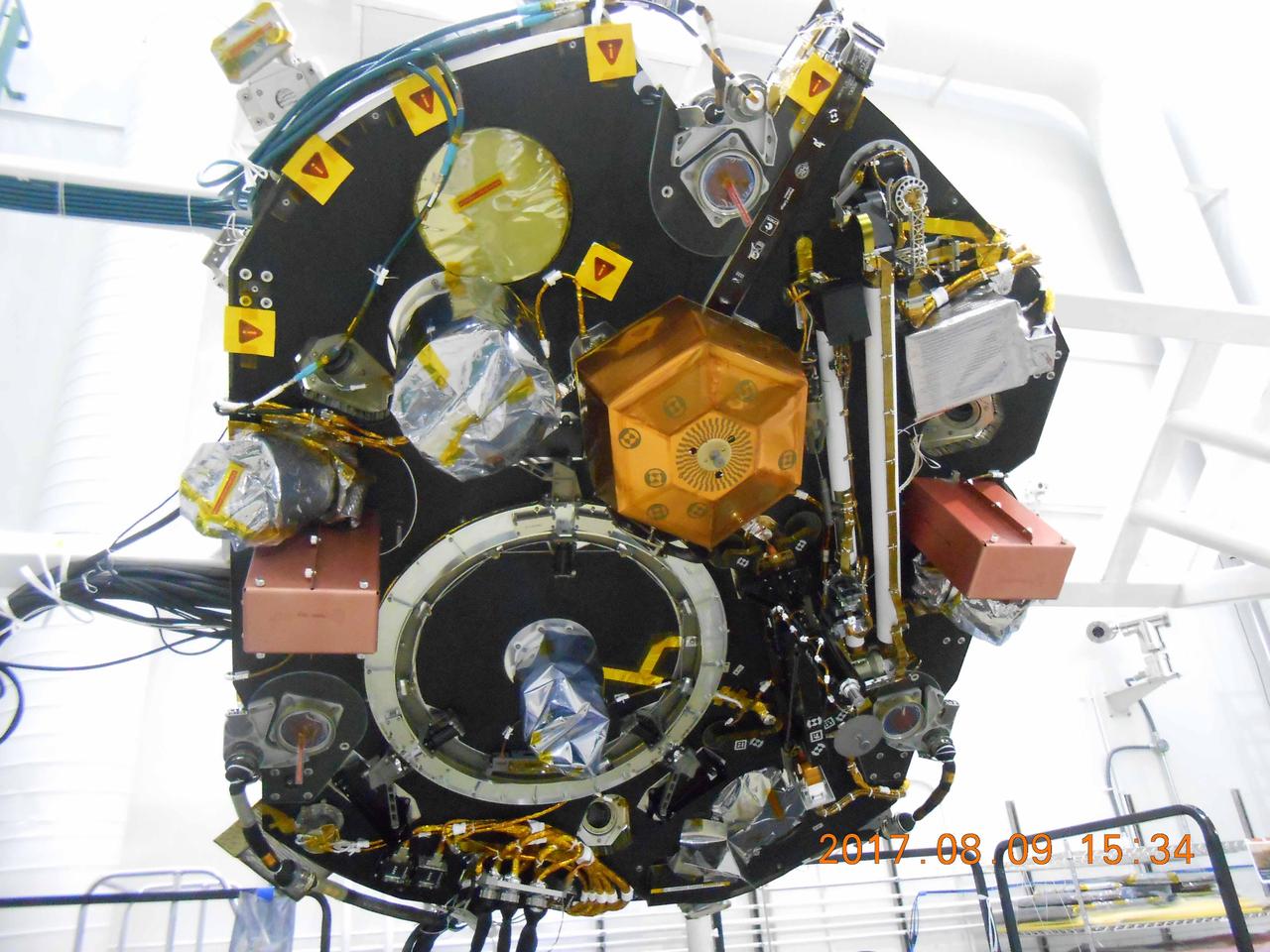
This view looks upward toward the InSight Mars lander suspended upside down. It shows the top of the lander's science deck with the mission's two main science instruments -- the Seismic Experiment for Interior Structure (SEIS) and the Heat Flow and Physical Properties Probe (HP3) -- plus the robotic arm and other subsystems installed. The photo was taken Aug. 9, 2017, in a Lockheed Martin clean room facility in Littleton, Colorado.  The InSight mission (for Interior Exploration using Seismic Investigations, Geodesy and Heat Transport) is scheduled to launch in May 2018 and land on Mars Nov. 26, 2018. It will investigate processes that formed and shaped Mars and will help scientists better understand the evolution of our inner solar system's rocky planets, including Earth.  https://photojournal.jpl.nasa.gov/catalog/PIA21847
Mars Lander Deck of NASA's InSight Mission
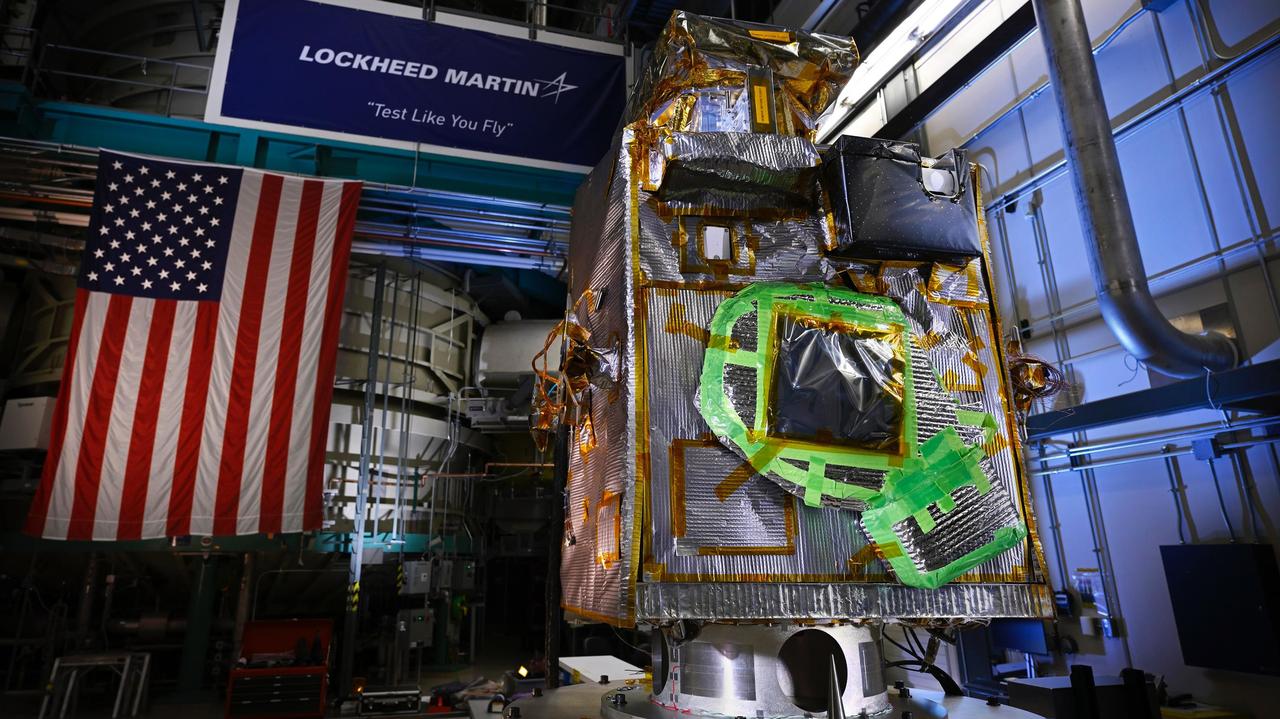
NASA's Lunar Trailblazer sits in a clean room at Lockheed Martin Space in Littleton, Colorado, shortly after being integrated with its second and final science instrument in June 2023. Called the Lunar Thermal Mapper (LTM), the instrument is visible as a black rectangular box in the upper right of the spacecraft's body. Green tape on the spacecraft will be removed before launch.  Built by the University of Oxford in England and contributed by the UK Space Agency, LTM joins the High-resolution Volatiles and Minerals Moon Mapper (HVM³) that was integrated with the spacecraft late last year. Together, the instruments will enable scientists to determine the abundance, location, and form of the Moon's water.  https://photojournal.jpl.nasa.gov/catalog/PIA25837
Lunar Trailblazer Spacecraft Nears Completion
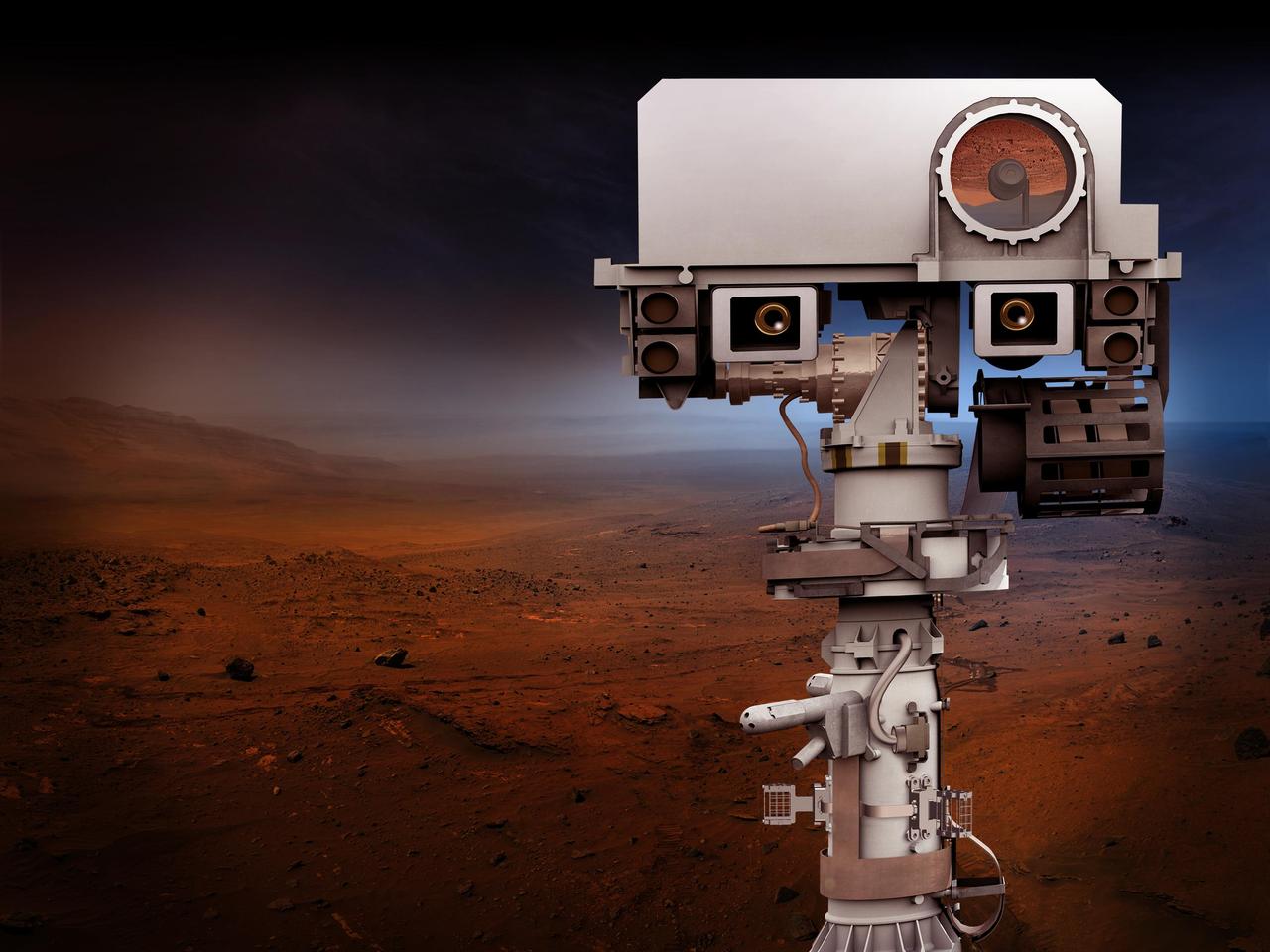
NASA's Mars 2020 Project will re-use the basic engineering of NASA's Mars Science Laboratory/Curiosity to send a different rover to Mars, with new objectives and instruments. This artist's concept depicts the top of the 2020 rover's mast.  http://photojournal.jpl.nasa.gov/catalog/PIA20760
NASA to Launch Mars Rover in 2020 Artist Concept
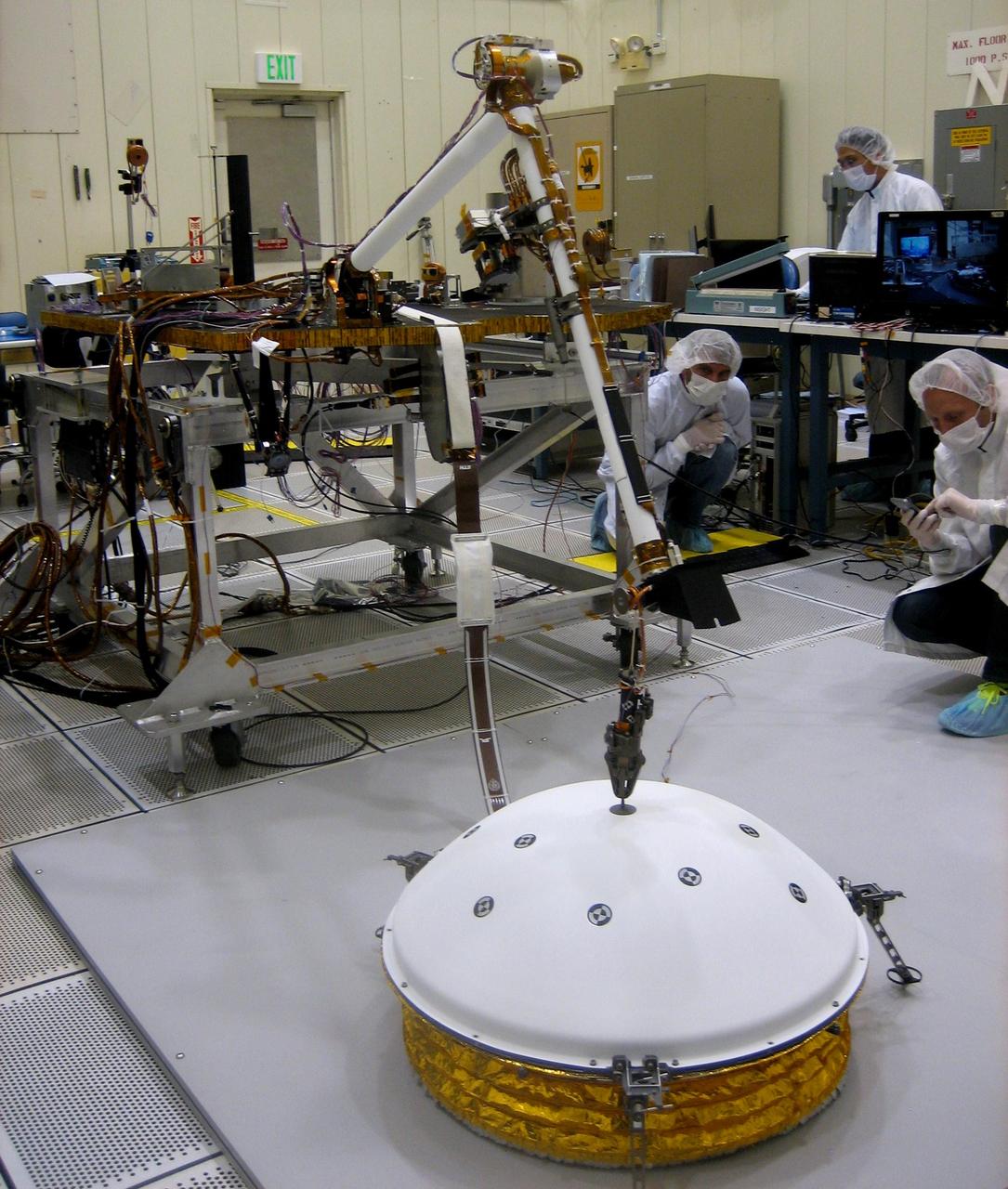
In the weeks after NASA's InSight mission reaches Mars in September 2016, the lander's arm will lift two key science instruments off the deck and place them onto the ground. This image shows testing of InSight's robotic arm inside a clean room at NASA's Jet Propulsion Laboratory, Pasadena, California, about two years before it will perform these tasks on Mars.  InSight -- an acronym for Interior Exploration using Seismic Investigations, Geodesy and Heat Transport -- will launch in March 2016. It will study the interior of Mars to improve understanding of the processes that formed and shaped rocky planets, including Earth.  One key instrument that the arm will deploy is the Seismic Experiment for Interior Structure, or SEIS. It is from France's national space agency (CNES), with components from Germany, Switzerland, the United Kingdom and the United States. In this scene, the arm has just deployed a test model of a protective covering for SEIS, the instrument's wind and thermal shield. The shield's purpose is to lessen disturbances that weather would cause to readings from the sensitive seismometer.  Note: After thorough examination, NASA managers have decided to suspend the planned March 2016 launch of the Interior Exploration using Seismic Investigations Geodesy and Heat Transport (InSight) mission. The decision follows unsuccessful attempts to repair a leak in a section of the prime instrument in the science payload.  http://photojournal.jpl.nasa.gov/catalog/PIA19144
Testing for Instrument Deployment by InSight Robotic Arm
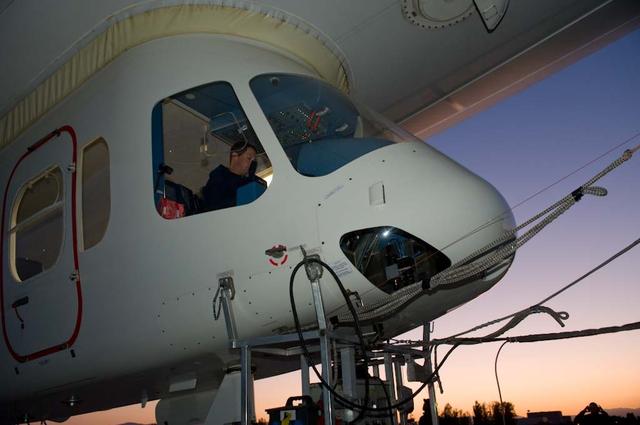
NASA Conducts Airborne Science Aboard Zeppelin Airship: equipped with two imaging instruments enabling remote sensing and atmospheric science measurements not previously practical. Pre-flight checkout of airship flight systems and instruments.
ARC-2009-ACD09-0218-006
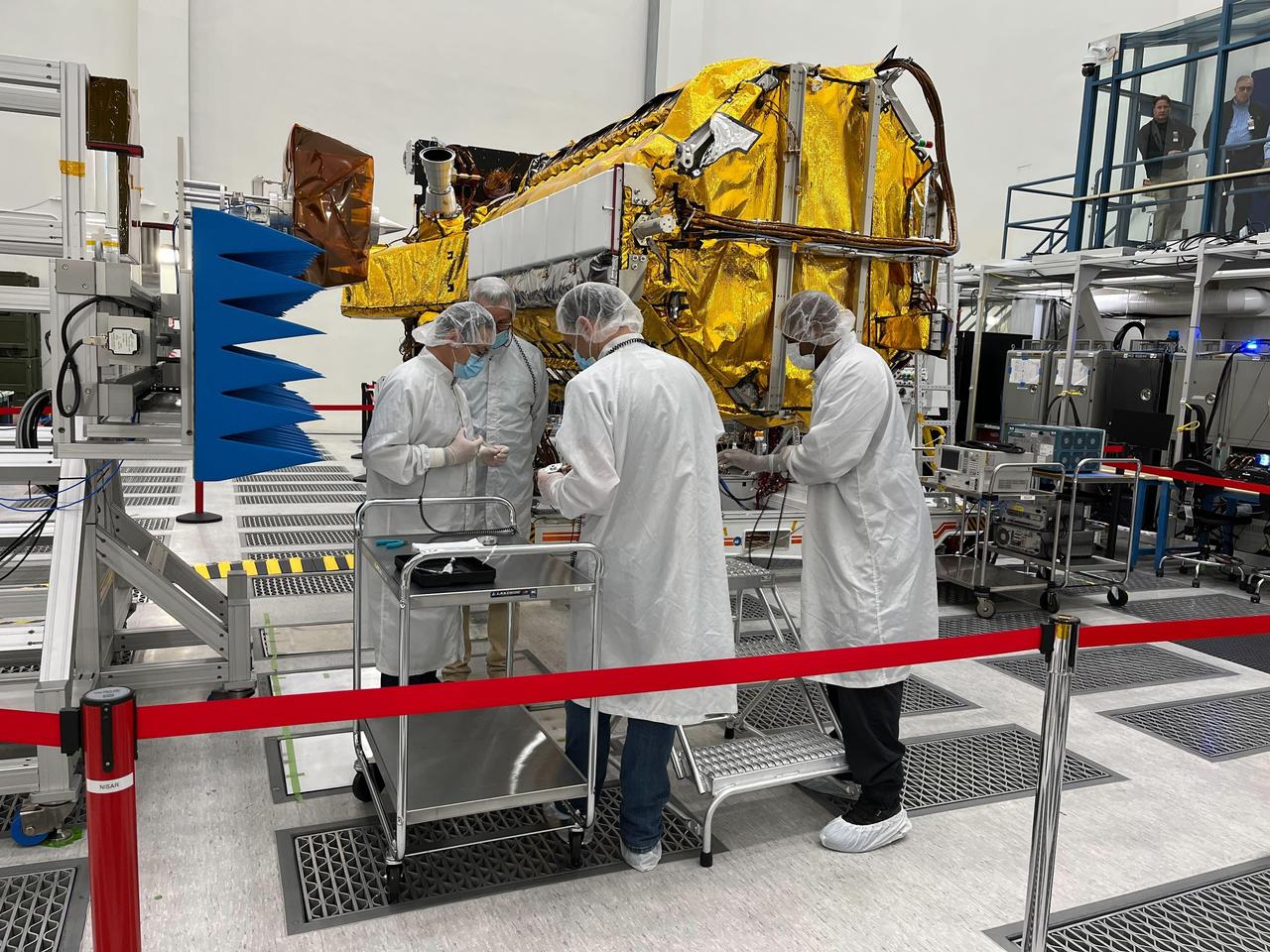
Engineers and technicians from NASA's Jet Propulsion Laboratory work on the NASA-ISRO Synthetic Aperture Radar (NISAR) science instrument payload in a clean room at JPL on Feb. 3, 2023. The payload is scheduled to ship to India in March 2023.      The NISAR mission – a joint effort between NASA and ISRO – will measure changes to Earth's land ice surfaces down to fractions of an inch. Data collected by this satellite will help researchers monitor a wide range of changes critical to life on Earth in unprecedented detail. This includes spotting warning signs of imminent volcanic eruptions, helping to monitor groundwater supplies, tracking the melt rate of ice sheets tied to sea level rise, and observing shifts in the distribution of vegetation around the world. The data will inform humanity's responses to urgent challenges posed by natural disasters and climate change, and help communities prepare for and manage hazards.      There are two instruments on the satellite that will send and receive radar signals to and from Earth's surface to make the mission's measurements. An L-band synthetic aperture radar (SAR), which uses a signal wavelength of around 9 inches (24 centimeters), and an S-band SAR with a signal wavelength of nearly 5 inches (12 centimeters). Both will bounce their microwave signal off of the planet's surface and record how long it takes the signal to make one roundtrip, as well as the strength of that return signal. This enables the researchers to calculate the distance from the spacecraft to Earth's surface and thereby determine how the land or ice is changing. An antenna reflector nearly 40 feet (12 meters) in diameter, supported by a deployable boom, will focus the microwave signals sent and received by the SARs.      JPL, which is managed for NASA by Caltech in Pasadena, leads the U.S. component of NISAR and is providing the mission's L-band SAR instrument. NASA is also providing the radar reflector antenna, the deployable boom, a high-rate communication subsystem for science data, GPS receivers, a solid-state recorder, and payload data subsystem. ISRO is providing the spacecraft bus, the S-band SAR, the launch vehicle, and associated launch services and satellite mission operations.  https://photojournal.jpl.nasa.gov/catalog/PIA25771
Engineers, Technicians Working on NISAR in Clean Room
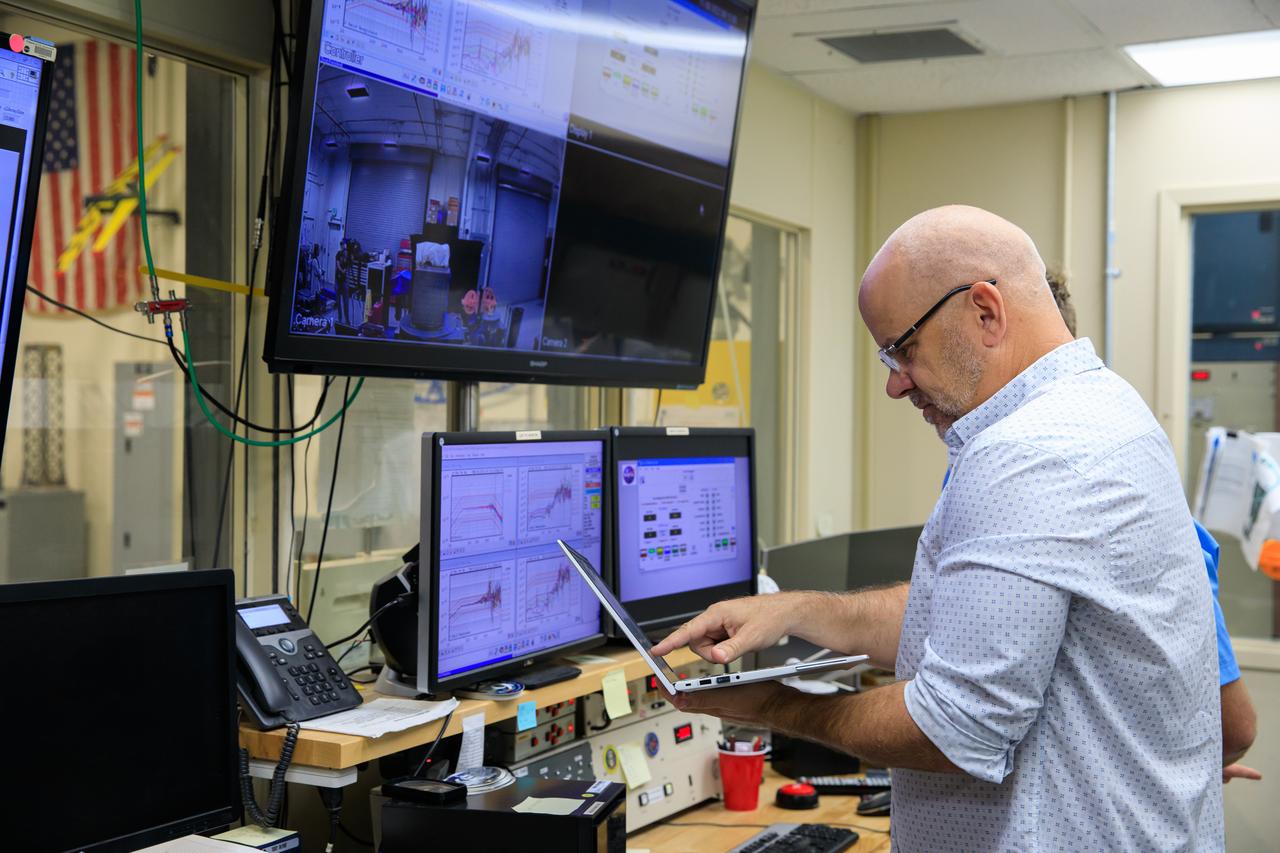
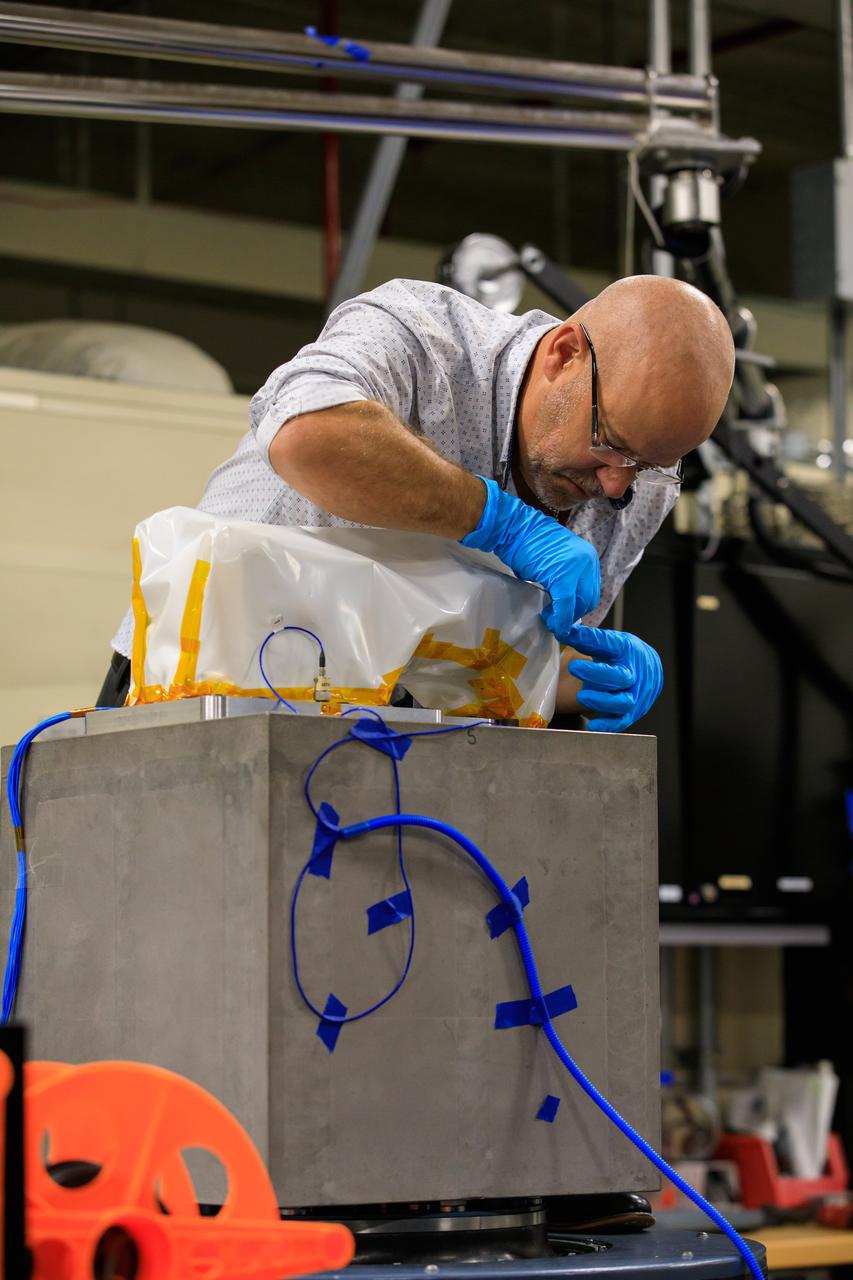
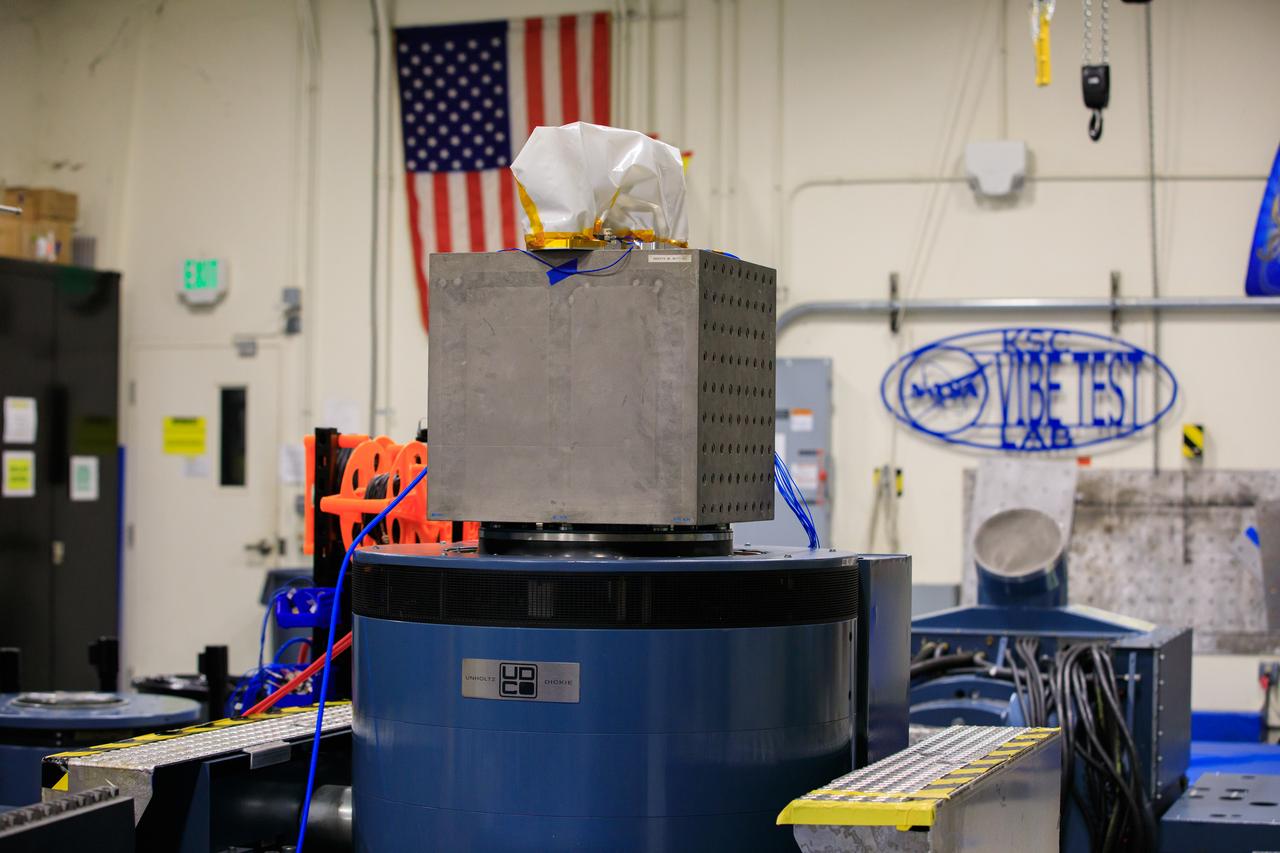
Preparations are underway to conduct a vibration test on the Mass Spectrometer Observing Lunar Operations (MSolo) for NASA’s VIPER mission inside a laboratory in the Neil Armstrong Operations and Checkout Building at NASA’s Kennedy Space Center in Florida on Nov. 8, 2022. Exposing the instrument to vibration environments that it might see during launch helps engineers to find issues prior to liftoff. MSolo is a commercial off-the-shelf mass spectrometer modified to work in space and it will help analyze the chemical makeup of landing sites on the Moon, as well as study water on the lunar surface. MSolo will be part of NASA’s first Commercial Lunar Payload Delivery Service (CLPS) mission where under the Artemis program, commercial deliveries will be used to perform science experiments, test technologies and demonstrate capabilities to help NASA explore the Moon and prepare for human missions.
VIPER MSolo Vibe Test
Preparations are underway to conduct a vibration test on the Mass Spectrometer Observing Lunar Operations (MSolo) for NASA’s VIPER mission inside a laboratory in the Neil Armstrong Operations and Checkout Building at NASA’s Kennedy Space Center in Florida on Nov. 8, 2022. Exposing the instrument to vibration environments that it might see during launch helps engineers to find issues prior to liftoff. MSolo is a commercial off-the-shelf mass spectrometer modified to work in space and it will help analyze the chemical makeup of landing sites on the Moon, as well as study water on the lunar surface. MSolo will be part of NASA’s first Commercial Lunar Payload Delivery Service (CLPS) mission where under the Artemis program, commercial deliveries will be used to perform science experiments, test technologies and demonstrate capabilities to help NASA explore the Moon and prepare for human missions.
VIPER MSolo Vibe Test
The Mass Spectrometer Observing Lunar Operations (MSolo) for NASA’s VIPER mission is being prepared for a vibration test inside a laboratory in the Neil Armstrong Operations and Checkout Building at NASA’s Kennedy Space Center in Florida on Nov. 8, 2022. Exposing the instrument to vibration environments that it might see during launch helps engineers to find issues prior to liftoff. MSolo is a commercial off-the-shelf mass spectrometer modified to work in space and it will help analyze the chemical makeup of landing sites on the Moon, as well as study water on the lunar surface. MSolo will be part of NASA’s first Commercial Lunar Payload Delivery Service (CLPS) mission where under the Artemis program, commercial deliveries will be used to perform science experiments, test technologies and demonstrate capabilities to help NASA explore the Moon and prepare for human missions.
VIPER MSolo Vibe Test
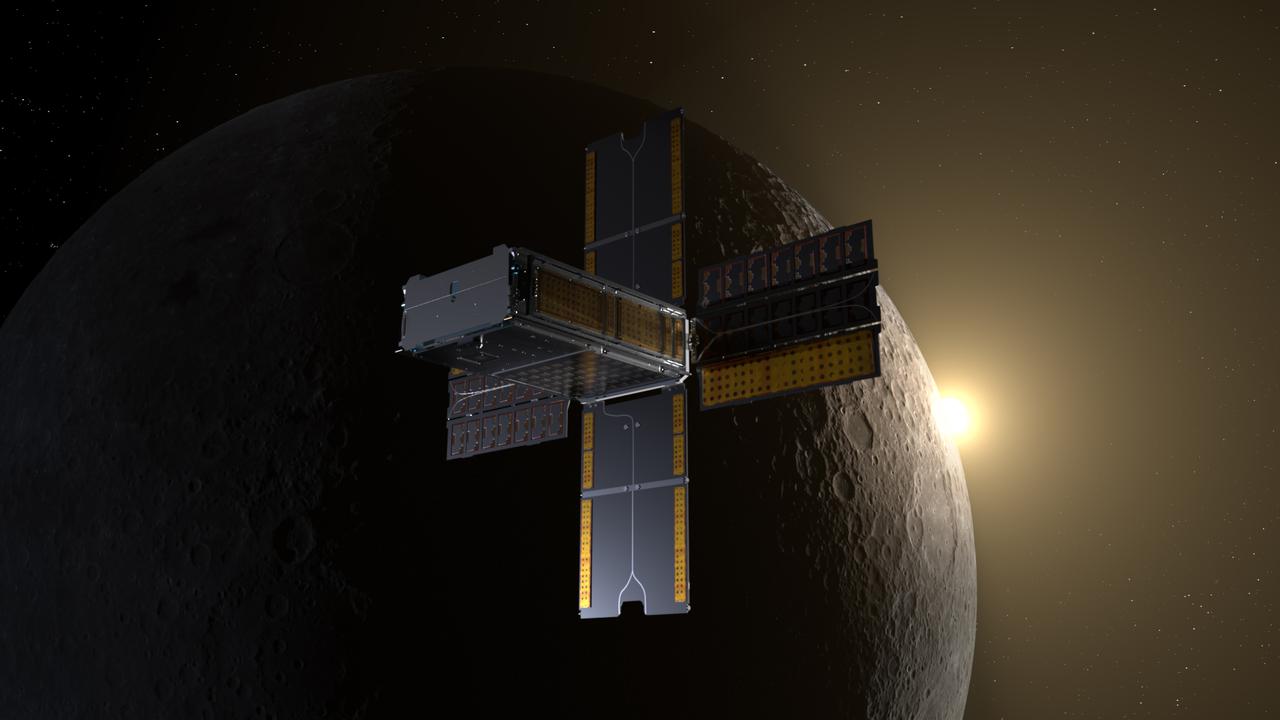
BioSentinel spacecraft enters a lunar flyby trajectory into a heliocentric orbit. BioSentinel will detect and measure the impact of space radiation on living organisms over long durations beyond low-Earth orbit (LEO). Illustration by Daniel Rutter.
BioSentinel Encounters Lunar Sunrise
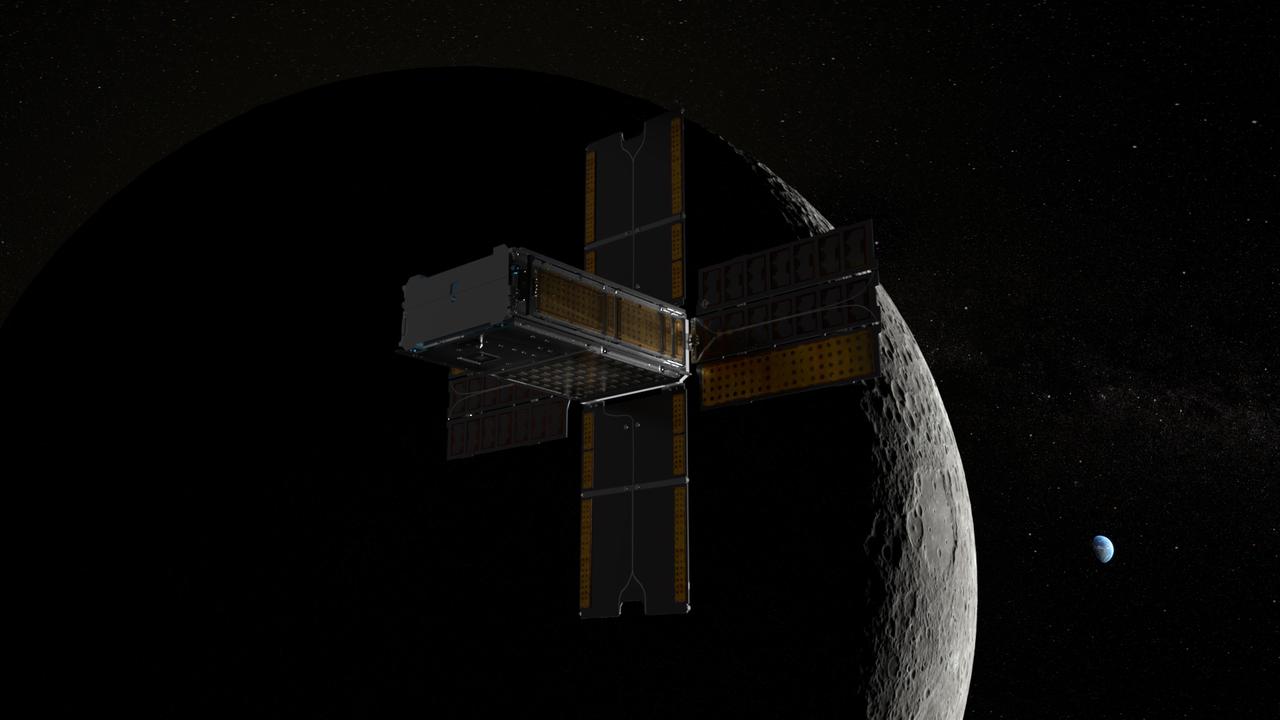
BioSentinel spacecraft leaves Earth and enters a lunar flyby trajectory into a heliocentric orbit. BioSentinel will detect and measure the impact of space radiation on living organisms over long durations beyond low-Earth orbit (LEO). Illustration by Daniel Rutter.
BioSentinel Passes the Moon
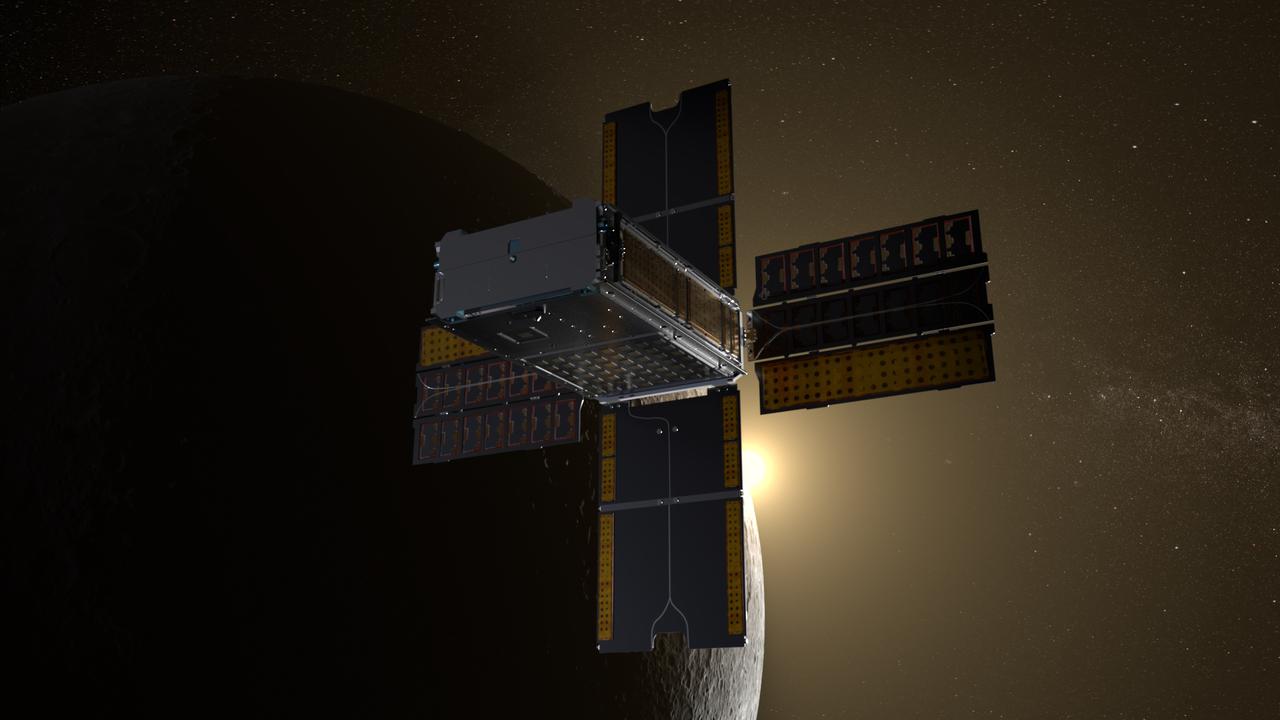
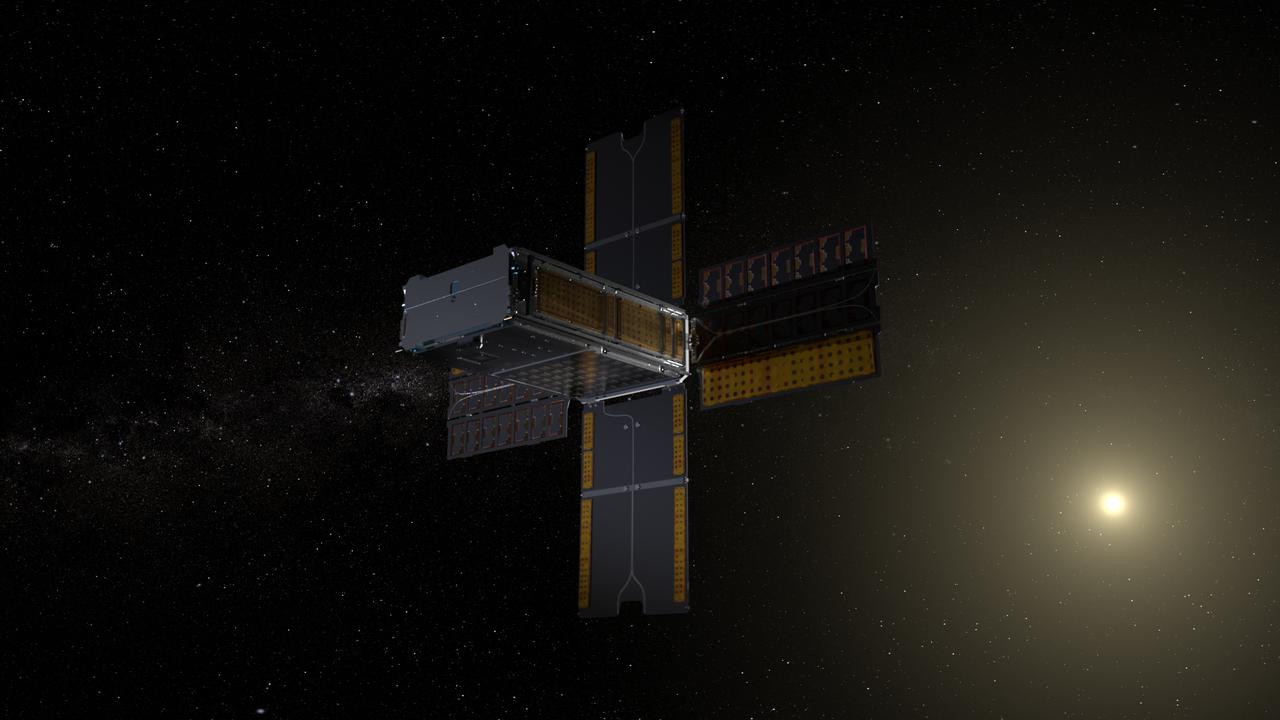
The BioSentinel spacecraft enters a heliocentric orbit. BioSentinel will detect and measure the impact of space radiation on living organisms over long durations beyond low-Earth orbit (LEO). Illustration by Daniel Rutter.
BioSentinel Enters Heliocentric Orbit
BioSentinel spacecraft enters a lunar flyby trajectory into a heliocentric orbit. BioSentinel will detect and measure the impact of space radiation on living organisms over long durations beyond low-Earth orbit (LEO). Illustration by Daniel Rutter.
BioSentinel Encounters Lunar Sunrise
BioSentinel spacecraft enters a lunar flyby trajectory into a heliocentric orbit. BioSentinel will detect and measure the impact of space radiation on living organisms over long durations beyond low-Earth orbit (LEO). Illustration by Daniel Rutter.
BioSentinel Encounters Lunar Sunrise
The BioSentinel spacecraft enters a heliocentric orbit. BioSentinel will detect and measure the impact of space radiation on living organisms over long durations beyond low-Earth orbit (LEO). Illustration by Daniel Rutter.
BioSentinel Enters Heliocentric Orbit
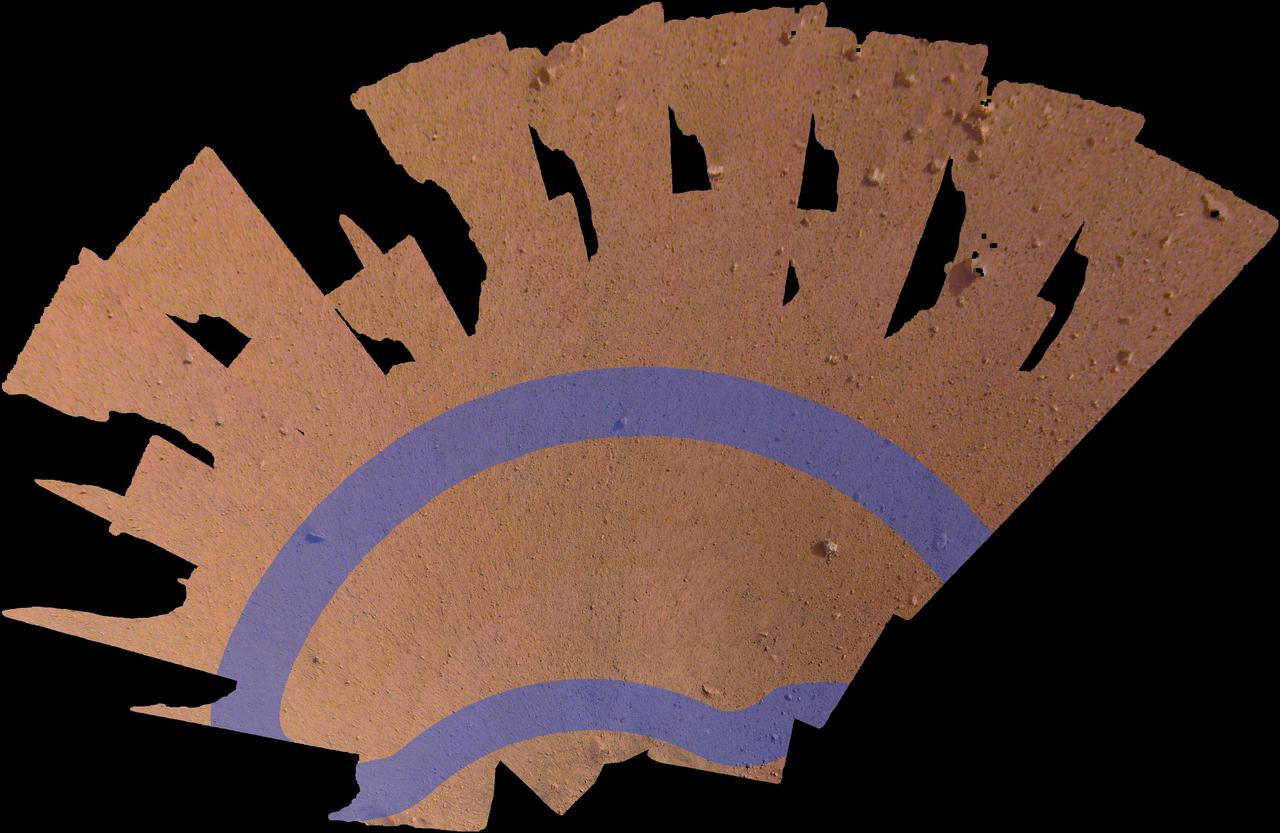
This mosaic, made of 52 individual images from NASA's InSight lander, shows the workspace where the spacecraft will eventually set its science instruments. The workspace is roughly 14 by 7 feet (4 by 2 meters). The lavender annotation shows where InSight's seismometer (called the Seismic Experiment for Interior Structure, or SEIS) and heat flow probe (called the Heat Flow and Physical Properties Package, or HP3) can be placed.  https://photojournal.jpl.nasa.gov/catalog/PIA22874
Mosaic of InSight's Workspace
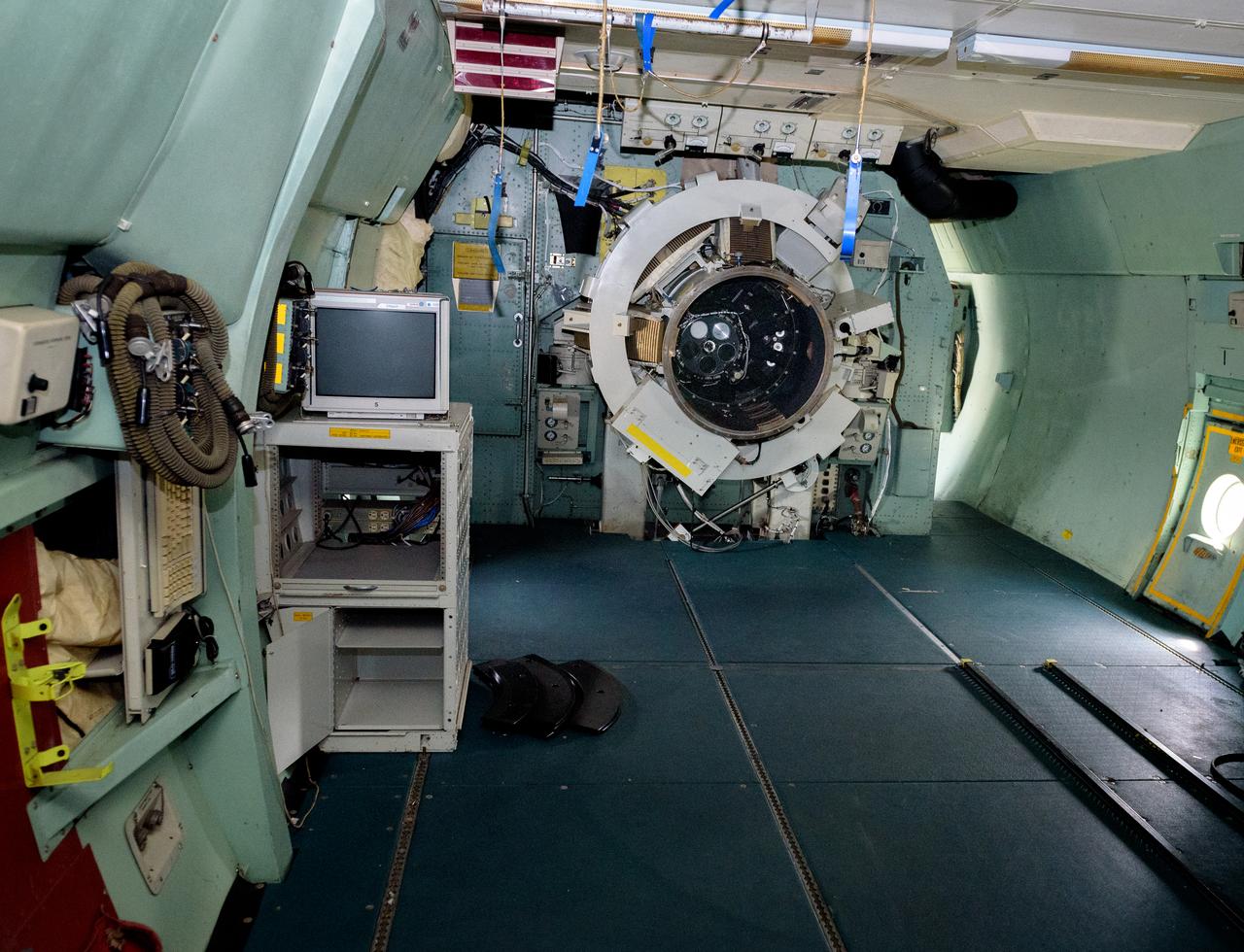
The science instrument mount/telescope flange leading to the telescope cavity.  The port work area is where science instruments were connected to the telescope. Astronomers and the science team sat immediately to the left in the port work area on the modified C-141 Kuiper Airborne Observatory, (KAO) (NASA-714), (seats have been removed).
Kuiper Airborne Observatory (KAO) Demolition
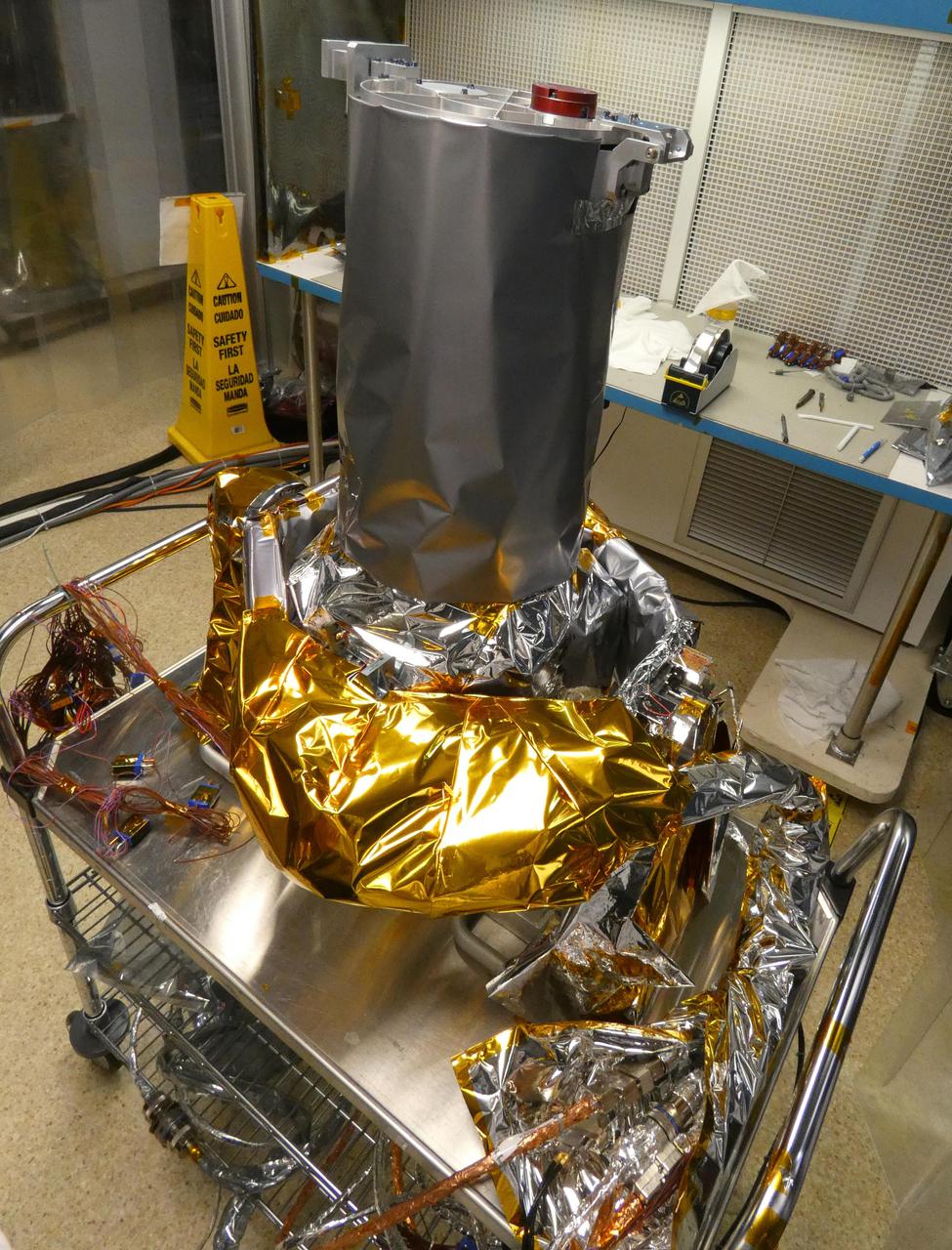
Included in the payload of science instruments for NASA's Europa Clipper is the Europa Imaging System (EIS) Narrow Angle Camera (NAC). Shown here at the Johns Hopkins Applied Physics Laboratory (APL) in Laurel, Maryland, the engineering model, which is used to test the instrument, is mounted on the two-axis gimbal mechanism that allows the NAC telescope to be pointed independently. The model consists of the NAC telescope, electronics, gimbal, and cables, covered in thermal blankets.  EIS will allow groundbreaking measurements and map most of Europa, an icy moon of Jupiter with an ocean under its crust, at resolutions previous missions could only achieve in small areas. EIS data will offer fresh insights into Europa's geological structure and processes and will be used to search for evidence of recent or current geologic activity, including potential erupting plumes.  With an internal global ocean twice the size of Earth's oceans combined, Europa may have the potential to harbor life. NASA's Europa Clipper spacecraft will swoop around Jupiter on an elliptical path, dipping close to the moon on each flyby to collect data. Understanding Europa's habitability will help scientists better understand how life developed on Earth and the potential for finding life beyond our planet.  https://photojournal.jpl.nasa.gov/catalog/PIA24328
Europa Imaging System Narrow Angle Camera
This natural-color, high-resolution mosaic showing "Observation Rock" was taken by the Mastcam-Z instrument on NASA's Perseverance as the rover climbed the western wall of Jezero Crater. The location is near an area the Perseverance science team is calling "Curtis Ridge."  The 14 frames used to generate the mosaic were acquired on Oct. 18, 2024, the 1,302nd Martian day, or sol, of Perseverance's mission.  Arizona State University leads the operations of the Mastcam-Z instrument, working in collaboration with Malin Space Science Systems in San Diego, on the design, fabrication, testing, and operation of the cameras, and in collaboration with the Niels Bohr Institute of the University of Copenhagen on the design, fabrication, and testing of the calibration targets.  A key objective for Perseverance's mission on Mars is astrobiology, including the search for signs of ancient microbial life. The rover will characterize the planet's geology and past climate, pave the way for human exploration of the Red Planet, and be the first mission to collect and cache Martian rock and regolith (broken rock and dust).  Subsequent NASA missions, in cooperation with ESA (European Space Agency), would send spacecraft to Mars to collect these sealed samples from the surface and return them to Earth for in-depth analysis.  The Mars 2020 Perseverance mission is part of NASA's Moon to Mars exploration approach, which includes Artemis missions to the Moon that will help prepare for human exploration of the Red Planet.  https://photojournal.jpl.nasa.gov/catalog/PIA26481
NASA's Perseverance Observes 'Observation Rock'
NASA Conducts Airborne Science Aboard Zeppelin Airship: equipped with two imaging instruments enabling remote sensing and atmospheric science measurements not previously practical. Shown here is Steve Dunagan, NASA Ames scientist. Cabin viewof instrument operaor Steve Dunagan, Pilot Katharing 'Kate' Board.
ARC-2009-ACD09-0218-009
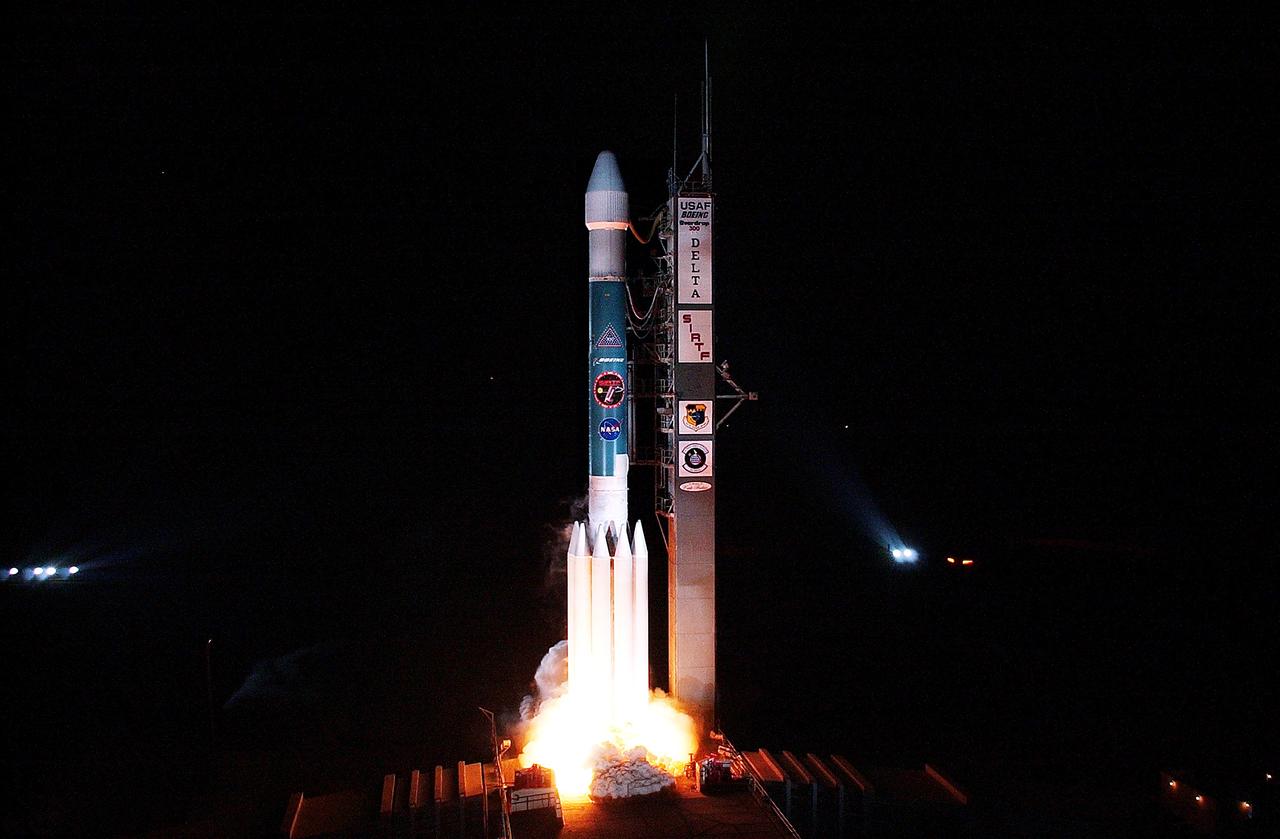
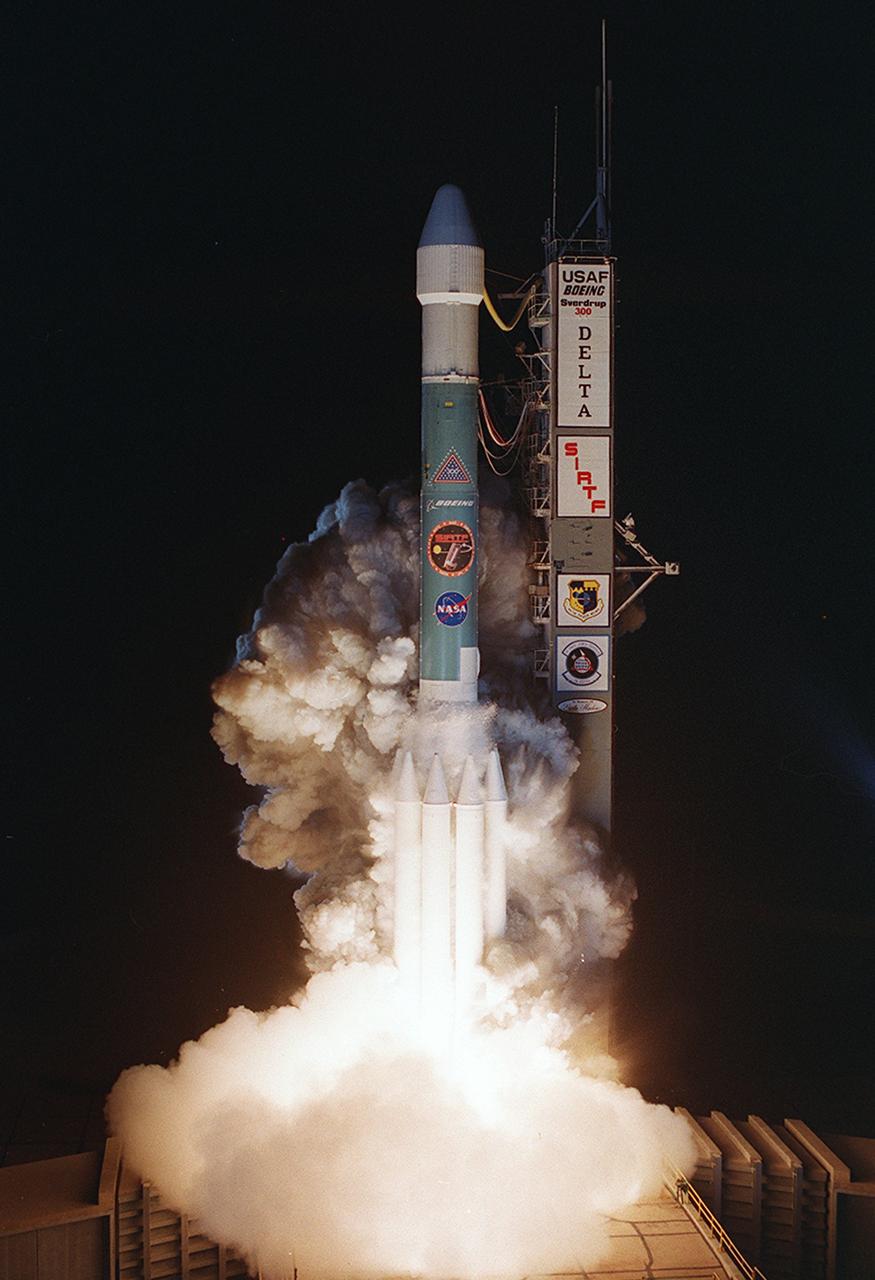
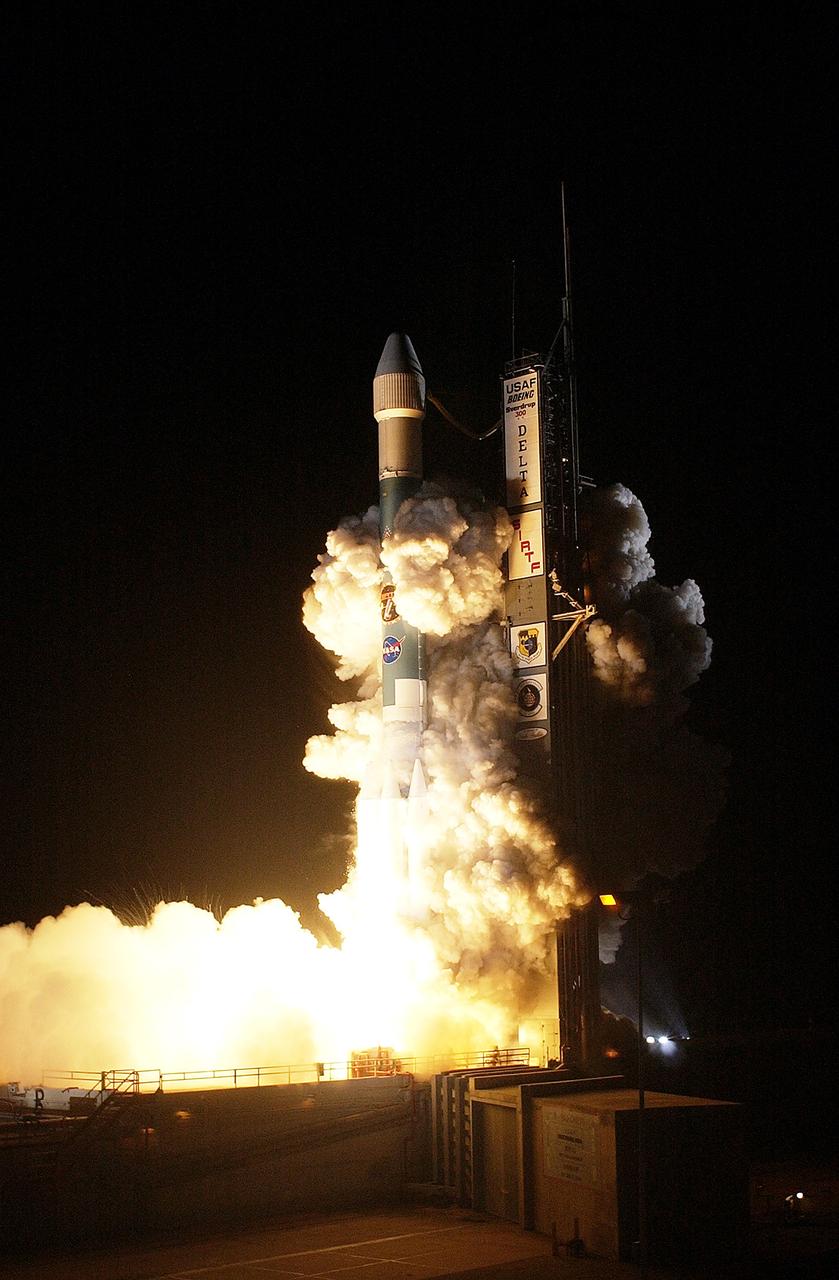
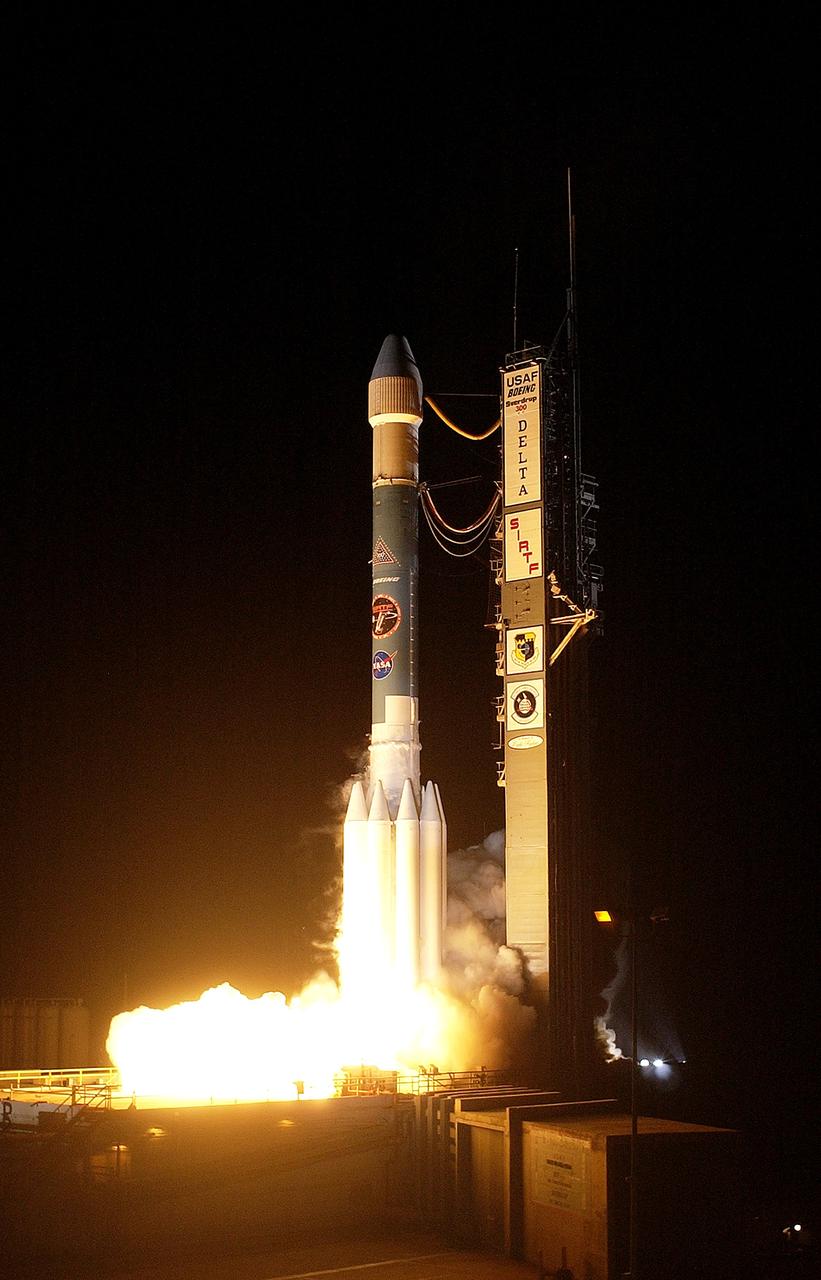
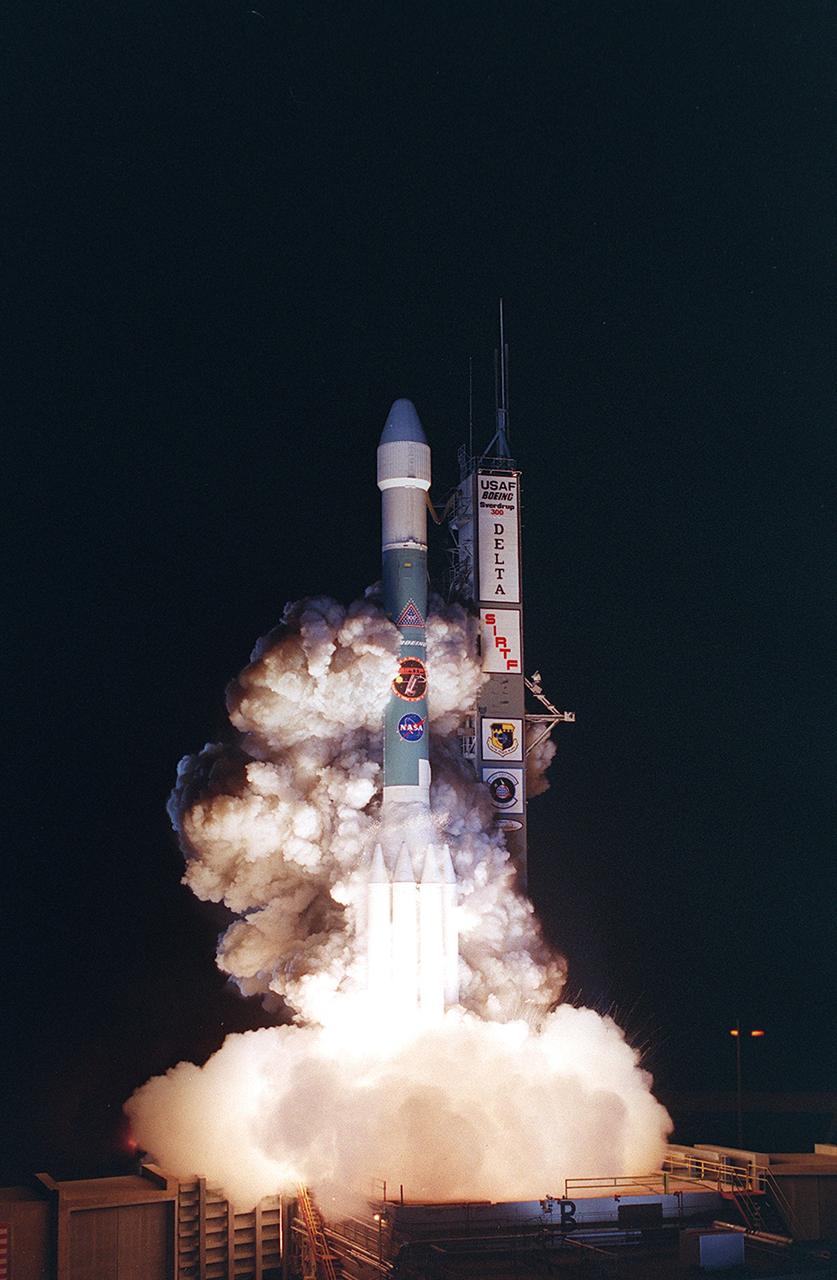
KENNEDY SPACE CENTER, FLA.  -  NASA's Space Infrared Telescope Facility (SIRTF) lifts off from Launch Pad 17-B, Cape Canaveral Air Force Station, on Aug. 25 at 1:35:39 a.m. EDT. SIRTF will obtain images and spectra by detecting the infrared energy, or heat, radiated by objects in space. Consisting of a 0.85-meter telescope and three cryogenically cooled science instruments, SIRTF will be the largest infrared telescope ever launched into space. It is the fourth and final element in NASA’s family of orbiting “Great Observatories.” Its highly sensitive instruments will give a unique view of the Universe and peer into regions of space that are hidden from optical telescopes.
KENNEDY SPACE CENTER, FLA. - NASA's Space Infrared Telescope Facility (SIRTF) lifts off from Launch Pad 17-B, Cape Canaveral Air Force Station, on Aug. 25 at 1:35:39 a.m. EDT. SIRTF will obtain images and spectra by detecting the infrared energy, or heat, radiated by objects in space. Consisting of a 0.85-meter telescope and three cryogenically cooled science instruments, SIRTF will be the largest infrared telescope ever launched into space. It is the fourth and final element in NASA’s family of orbiting “Great Observatories.” Its highly sensitive instruments will give a unique view of the Universe and peer into regions of space that are hidden from optical telescopes.
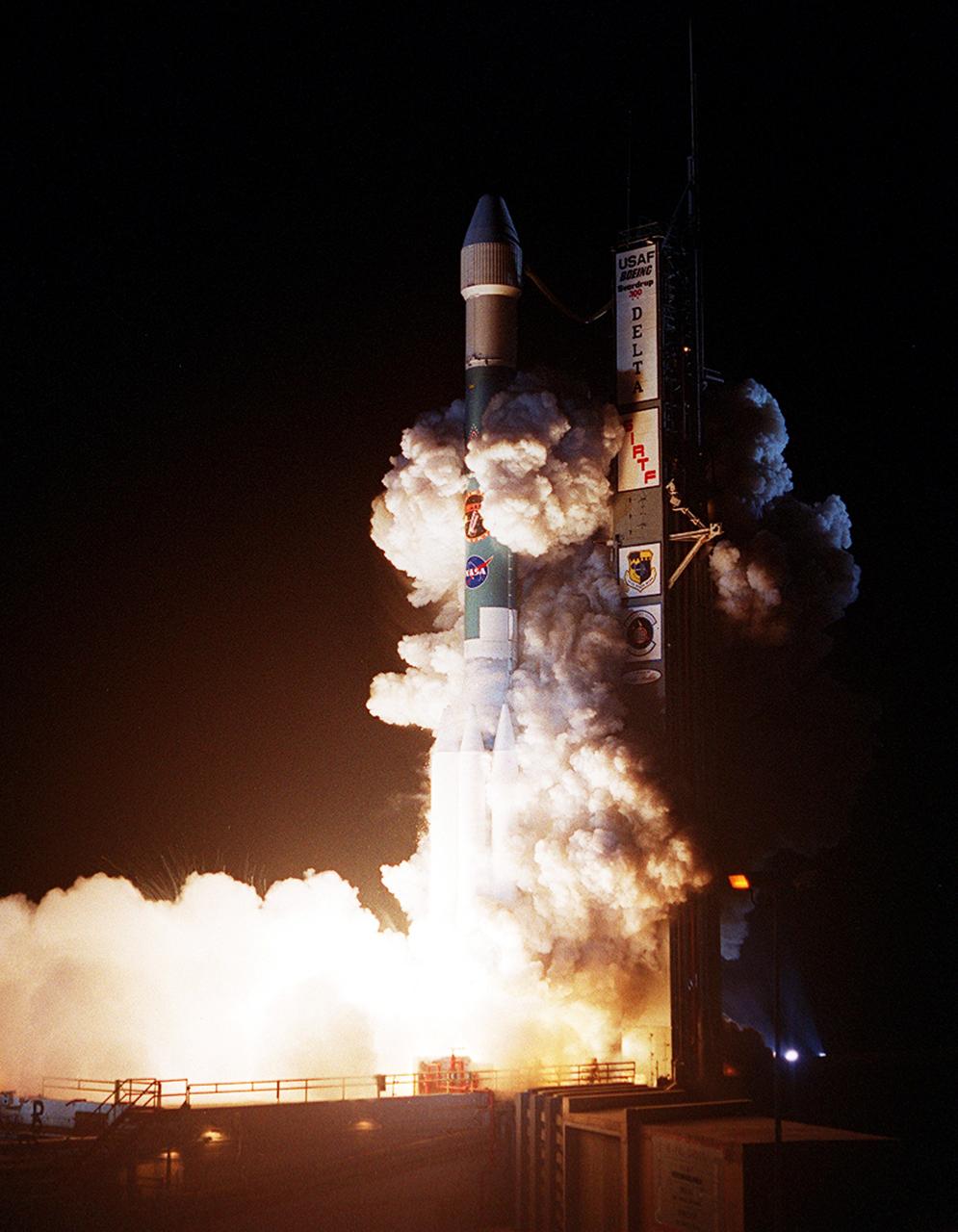
KENNEDY SPACE CENTER, FLA.  -  NASA's Space Infrared Telescope Facility (SIRTF) lifts off from Launch Pad 17-B, Cape Canaveral Air Force Station, on Aug. 25 at 1:35:39 a.m. EDT. SIRTF will obtain images and spectra by detecting the infrared energy, or heat, radiated by objects in space. Consisting of a 0.85-meter telescope and three cryogenically cooled science instruments, SIRTF will be the largest infrared telescope ever launched into space. It is the fourth and final element in NASA’s family of orbiting “Great Observatories.” Its highly sensitive instruments will give a unique view of the Universe and peer into regions of space that are hidden from optical telescopes.
KENNEDY SPACE CENTER, FLA. - NASA's Space Infrared Telescope Facility (SIRTF) lifts off from Launch Pad 17-B, Cape Canaveral Air Force Station, on Aug. 25 at 1:35:39 a.m. EDT. SIRTF will obtain images and spectra by detecting the infrared energy, or heat, radiated by objects in space. Consisting of a 0.85-meter telescope and three cryogenically cooled science instruments, SIRTF will be the largest infrared telescope ever launched into space. It is the fourth and final element in NASA’s family of orbiting “Great Observatories.” Its highly sensitive instruments will give a unique view of the Universe and peer into regions of space that are hidden from optical telescopes.
KENNEDY SPACE CENTER, FLA.  -  NASA's Space Infrared Telescope Facility (SIRTF) lifts off from Launch Pad 17-B, Cape Canaveral Air Force Station, on Aug. 25 at 1:35:39 a.m. EDT. SIRTF will obtain images and spectra by detecting the infrared energy, or heat, radiated by objects in space. Consisting of a 0.85-meter telescope and three cryogenically cooled science instruments, SIRTF will be the largest infrared telescope ever launched into space. It is the fourth and final element in NASA’s family of orbiting “Great Observatories.” Its highly sensitive instruments will give a unique view of the Universe and peer into regions of space that are hidden from optical telescopes.
KENNEDY SPACE CENTER, FLA. - NASA's Space Infrared Telescope Facility (SIRTF) lifts off from Launch Pad 17-B, Cape Canaveral Air Force Station, on Aug. 25 at 1:35:39 a.m. EDT. SIRTF will obtain images and spectra by detecting the infrared energy, or heat, radiated by objects in space. Consisting of a 0.85-meter telescope and three cryogenically cooled science instruments, SIRTF will be the largest infrared telescope ever launched into space. It is the fourth and final element in NASA’s family of orbiting “Great Observatories.” Its highly sensitive instruments will give a unique view of the Universe and peer into regions of space that are hidden from optical telescopes.
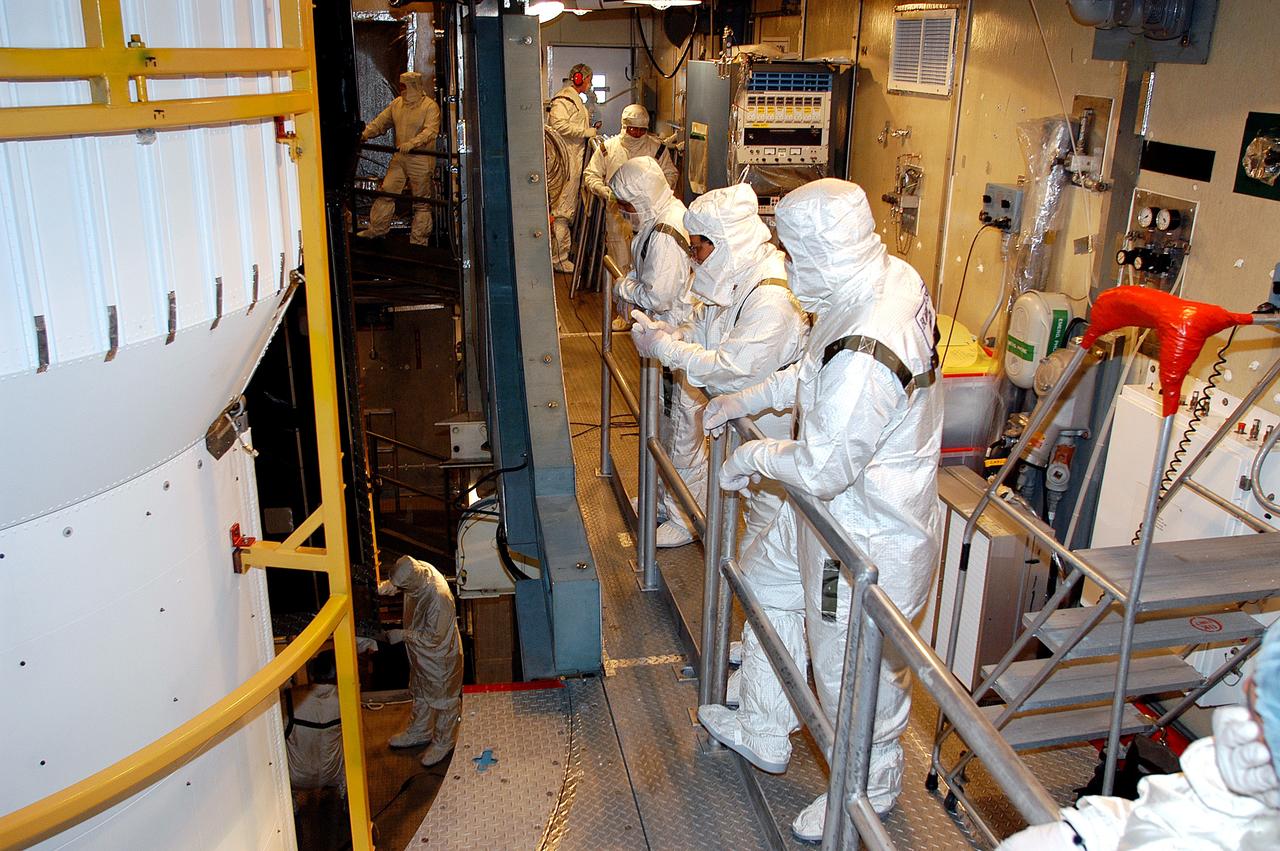
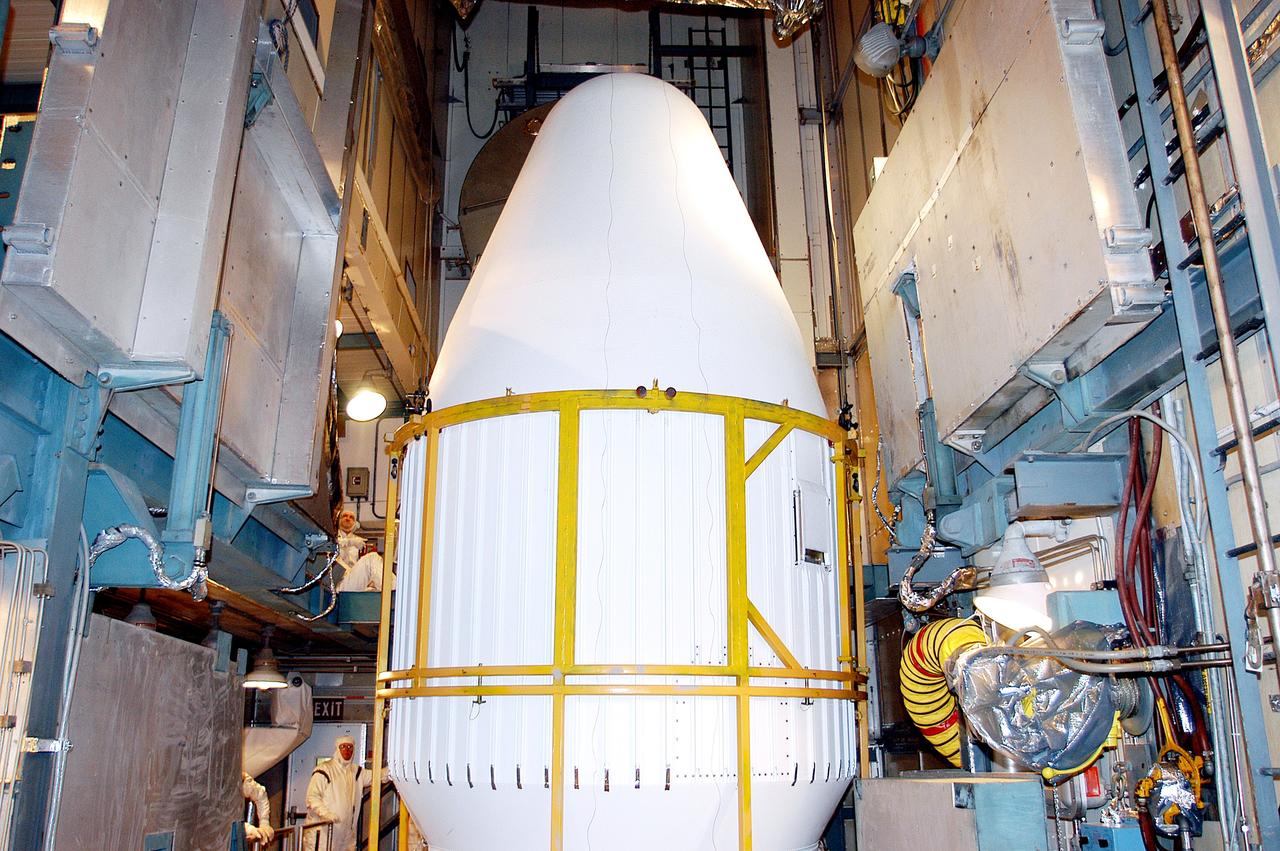
KENNEDY SPACE CENTER, FLA.  - In the mobile service tower on Launch Pad 17-B, Cape Canaveral Air Force Station, the Space Infrared Telescope Facility (SIRTF) waits for encapsulation. SIRTF will obtain images and spectra by detecting the infrared energy, or heat, radiated by objects in space. Consisting of a 0.85-meter telescope and three cryogenically cooled science instruments, SIRTF will be the largest infrared telescope ever launched into space. It is the fourth and final element in NASA’s family of orbiting “Great Observatories.” Its highly sensitive instruments will give a unique view of the Universe and peer into regions of space that are hidden from optical telescopes.
KENNEDY SPACE CENTER, FLA. - In the mobile service tower on Launch Pad 17-B, Cape Canaveral Air Force Station, the Space Infrared Telescope Facility (SIRTF) waits for encapsulation. SIRTF will obtain images and spectra by detecting the infrared energy, or heat, radiated by objects in space. Consisting of a 0.85-meter telescope and three cryogenically cooled science instruments, SIRTF will be the largest infrared telescope ever launched into space. It is the fourth and final element in NASA’s family of orbiting “Great Observatories.” Its highly sensitive instruments will give a unique view of the Universe and peer into regions of space that are hidden from optical telescopes.
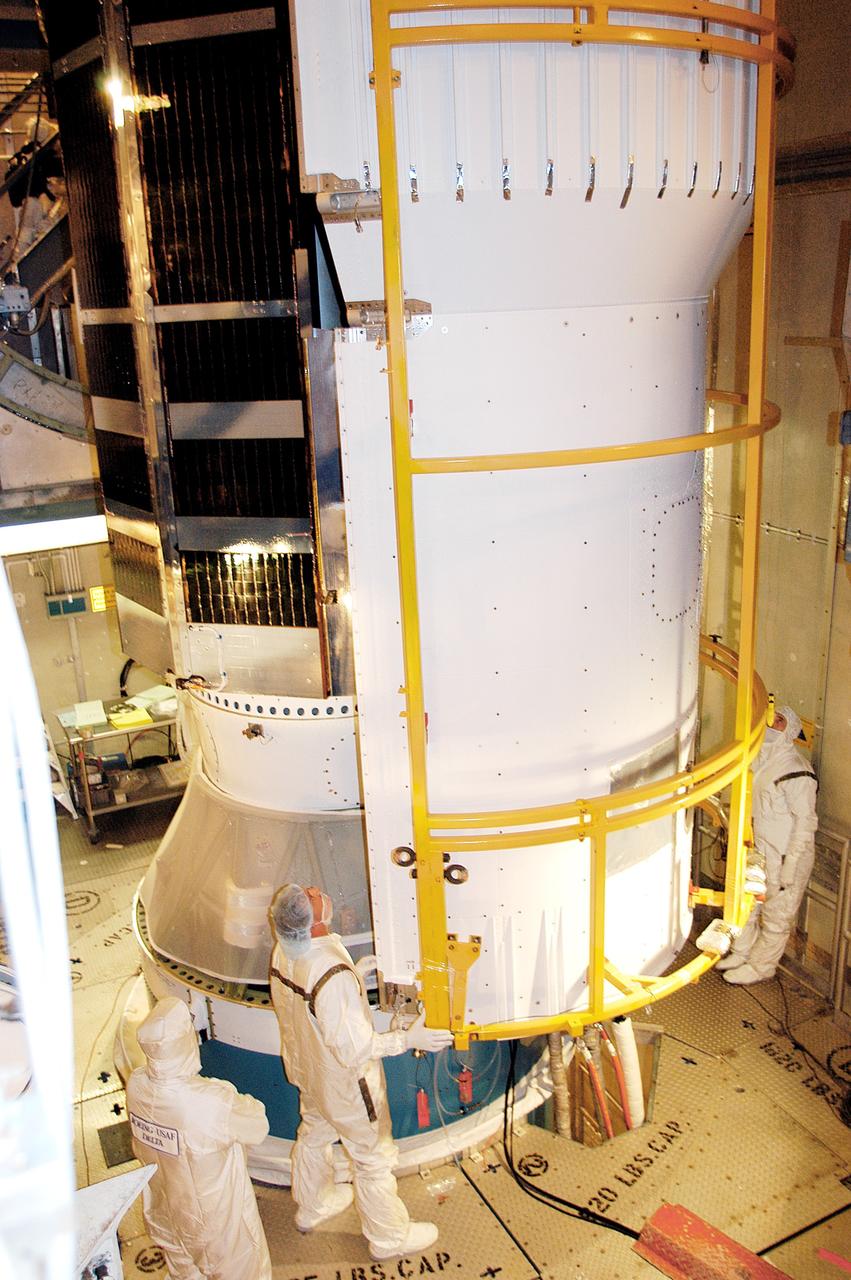
KENNEDY SPACE CENTER, FLA.  - In the mobile service tower on Launch Pad 17-B, Cape Canaveral Air Force Station, the first half of the fairing (background) moves toward the Space Infrared Telescope Facility (foreground) for encapsulation. SIRTF will obtain images and spectra by detecting the infrared energy, or heat, radiated by objects in space. Consisting of a 0.85-meter telescope and three cryogenically cooled science instruments, SIRTF will be the largest infrared telescope ever launched into space. It is the fourth and final element in NASA’s family of orbiting “Great Observatories.” Its highly sensitive instruments will give a unique view of the Universe and peer into regions of space that are hidden from optical telescopes.
KENNEDY SPACE CENTER, FLA. - In the mobile service tower on Launch Pad 17-B, Cape Canaveral Air Force Station, the first half of the fairing (background) moves toward the Space Infrared Telescope Facility (foreground) for encapsulation. SIRTF will obtain images and spectra by detecting the infrared energy, or heat, radiated by objects in space. Consisting of a 0.85-meter telescope and three cryogenically cooled science instruments, SIRTF will be the largest infrared telescope ever launched into space. It is the fourth and final element in NASA’s family of orbiting “Great Observatories.” Its highly sensitive instruments will give a unique view of the Universe and peer into regions of space that are hidden from optical telescopes.
KENNEDY SPACE CENTER, FLA.  - In the mobile service tower on Launch Pad 17-B, Cape Canaveral Air Force Station, the top of the fairing is seen as it moves into place around the Space Infrared Telescope Facility (SIRTF). SIRTF will obtain images and spectra by detecting the infrared energy, or heat, radiated by objects in space. Consisting of a 0.85-meter telescope and three cryogenically cooled science instruments, SIRTF will be the largest infrared telescope ever launched into space. It is the fourth and final element in NASA’s family of orbiting “Great Observatories.” Its highly sensitive instruments will give a unique view of the Universe and peer into regions of space that are hidden from optical telescopes.
KENNEDY SPACE CENTER, FLA. - In the mobile service tower on Launch Pad 17-B, Cape Canaveral Air Force Station, the top of the fairing is seen as it moves into place around the Space Infrared Telescope Facility (SIRTF). SIRTF will obtain images and spectra by detecting the infrared energy, or heat, radiated by objects in space. Consisting of a 0.85-meter telescope and three cryogenically cooled science instruments, SIRTF will be the largest infrared telescope ever launched into space. It is the fourth and final element in NASA’s family of orbiting “Great Observatories.” Its highly sensitive instruments will give a unique view of the Universe and peer into regions of space that are hidden from optical telescopes.
KENNEDY SPACE CENTER, FLA.  -  NASA's Space Infrared Telescope Facility (SIRTF) lifts off from Launch Pad 17-B, Cape Canaveral Air Force Station, on Aug. 25 at 1:35:39 a.m. EDT. SIRTF will obtain images and spectra by detecting the infrared energy, or heat, radiated by objects in space. Consisting of a 0.85-meter telescope and three cryogenically cooled science instruments, SIRTF will be the largest infrared telescope ever launched into space. It is the fourth and final element in NASA’s family of orbiting “Great Observatories.” Its highly sensitive instruments will give a unique view of the Universe and peer into regions of space that are hidden from optical telescopes.
KENNEDY SPACE CENTER, FLA. - NASA's Space Infrared Telescope Facility (SIRTF) lifts off from Launch Pad 17-B, Cape Canaveral Air Force Station, on Aug. 25 at 1:35:39 a.m. EDT. SIRTF will obtain images and spectra by detecting the infrared energy, or heat, radiated by objects in space. Consisting of a 0.85-meter telescope and three cryogenically cooled science instruments, SIRTF will be the largest infrared telescope ever launched into space. It is the fourth and final element in NASA’s family of orbiting “Great Observatories.” Its highly sensitive instruments will give a unique view of the Universe and peer into regions of space that are hidden from optical telescopes.
KENNEDY SPACE CENTER, FLA.  - In the mobile service tower on Launch Pad 17-B, Cape Canaveral Air Force Station, workers watch as the first half of the fairing moves closer around the Space Infrared Telescope Facility (SIRTF). SIRTF will obtain images and spectra by detecting the infrared energy, or heat, radiated by objects in space. Consisting of a 0.85-meter telescope and three cryogenically cooled science instruments, SIRTF will be the largest infrared telescope ever launched into space. It is the fourth and final element in NASA’s family of orbiting “Great Observatories.” Its highly sensitive instruments will give a unique view of the Universe and peer into regions of space that are hidden from optical telescopes.
KENNEDY SPACE CENTER, FLA. - In the mobile service tower on Launch Pad 17-B, Cape Canaveral Air Force Station, workers watch as the first half of the fairing moves closer around the Space Infrared Telescope Facility (SIRTF). SIRTF will obtain images and spectra by detecting the infrared energy, or heat, radiated by objects in space. Consisting of a 0.85-meter telescope and three cryogenically cooled science instruments, SIRTF will be the largest infrared telescope ever launched into space. It is the fourth and final element in NASA’s family of orbiting “Great Observatories.” Its highly sensitive instruments will give a unique view of the Universe and peer into regions of space that are hidden from optical telescopes.
KENNEDY SPACE CENTER, FLA.  - In the mobile service tower on Launch Pad 17-B, Cape Canaveral Air Force Station, the Space Infrared Telescope Facility (SIRTF) waits for encapsulation. SIRTF will obtain images and spectra by detecting the infrared energy, or heat, radiated by objects in space. Consisting of a 0.85-meter telescope and three cryogenically cooled science instruments, SIRTF will be the largest infrared telescope ever launched into space. It is the fourth and final element in NASA’s family of orbiting “Great Observatories.” Its highly sensitive instruments will give a unique view of the Universe and peer into regions of space that are hidden from optical telescopes.
KENNEDY SPACE CENTER, FLA. - In the mobile service tower on Launch Pad 17-B, Cape Canaveral Air Force Station, the Space Infrared Telescope Facility (SIRTF) waits for encapsulation. SIRTF will obtain images and spectra by detecting the infrared energy, or heat, radiated by objects in space. Consisting of a 0.85-meter telescope and three cryogenically cooled science instruments, SIRTF will be the largest infrared telescope ever launched into space. It is the fourth and final element in NASA’s family of orbiting “Great Observatories.” Its highly sensitive instruments will give a unique view of the Universe and peer into regions of space that are hidden from optical telescopes.
KENNEDY SPACE CENTER, FLA.  -  NASA's Space Infrared Telescope Facility (SIRTF) lifts off from Launch Pad 17-B, Cape Canaveral Air Force Station, on Aug. 25 at 1:35:39 a.m. EDT. SIRTF will obtain images and spectra by detecting the infrared energy, or heat, radiated by objects in space. Consisting of a 0.85-meter telescope and three cryogenically cooled science instruments, SIRTF will be the largest infrared telescope ever launched into space. It is the fourth and final element in NASA’s family of orbiting “Great Observatories.” Its highly sensitive instruments will give a unique view of the Universe and peer into regions of space that are hidden from optical telescopes.
KENNEDY SPACE CENTER, FLA. - NASA's Space Infrared Telescope Facility (SIRTF) lifts off from Launch Pad 17-B, Cape Canaveral Air Force Station, on Aug. 25 at 1:35:39 a.m. EDT. SIRTF will obtain images and spectra by detecting the infrared energy, or heat, radiated by objects in space. Consisting of a 0.85-meter telescope and three cryogenically cooled science instruments, SIRTF will be the largest infrared telescope ever launched into space. It is the fourth and final element in NASA’s family of orbiting “Great Observatories.” Its highly sensitive instruments will give a unique view of the Universe and peer into regions of space that are hidden from optical telescopes.
KENNEDY SPACE CENTER, FLA.  - In the mobile service tower on Launch Pad 17-B, Cape Canaveral Air Force Station, workers move the first half of the fairing around the Space Infrared Telescope Facility (SIRTF) behind it for encapsulation. SIRTF will obtain images and spectra by detecting the infrared energy, or heat, radiated by objects in space. Consisting of a 0.85-meter telescope and three cryogenically cooled science instruments, SIRTF will be the largest infrared telescope ever launched into space. It is the fourth and final element in NASA’s family of orbiting “Great Observatories.” Its highly sensitive instruments will give a unique view of the Universe and peer into regions of space that are hidden from optical telescopes.
KENNEDY SPACE CENTER, FLA. - In the mobile service tower on Launch Pad 17-B, Cape Canaveral Air Force Station, workers move the first half of the fairing around the Space Infrared Telescope Facility (SIRTF) behind it for encapsulation. SIRTF will obtain images and spectra by detecting the infrared energy, or heat, radiated by objects in space. Consisting of a 0.85-meter telescope and three cryogenically cooled science instruments, SIRTF will be the largest infrared telescope ever launched into space. It is the fourth and final element in NASA’s family of orbiting “Great Observatories.” Its highly sensitive instruments will give a unique view of the Universe and peer into regions of space that are hidden from optical telescopes.
KENNEDY SPACE CENTER, FLA.  - In the mobile service tower on Launch Pad 17-B, Cape Canaveral Air Force Station, the first half of the fairing is moved around the Space Infrared Telescope Facility (SIRTF). SIRTF will obtain images and spectra by detecting the infrared energy, or heat, radiated by objects in space. Consisting of a 0.85-meter telescope and three cryogenically cooled science instruments, SIRTF will be the largest infrared telescope ever launched into space. It is the fourth and final element in NASA’s family of orbiting “Great Observatories.” Its highly sensitive instruments will give a unique view of the Universe and peer into regions of space that are hidden from optical telescopes.
KENNEDY SPACE CENTER, FLA. - In the mobile service tower on Launch Pad 17-B, Cape Canaveral Air Force Station, the first half of the fairing is moved around the Space Infrared Telescope Facility (SIRTF). SIRTF will obtain images and spectra by detecting the infrared energy, or heat, radiated by objects in space. Consisting of a 0.85-meter telescope and three cryogenically cooled science instruments, SIRTF will be the largest infrared telescope ever launched into space. It is the fourth and final element in NASA’s family of orbiting “Great Observatories.” Its highly sensitive instruments will give a unique view of the Universe and peer into regions of space that are hidden from optical telescopes.
KENNEDY SPACE CENTER, FLA.  -  NASA's Space Infrared Telescope Facility (SIRTF) lifts off from Launch Pad 17-B, Cape Canaveral Air Force Station, on Aug. 25 at 1:35:39 a.m. EDT. SIRTF will obtain images and spectra by detecting the infrared energy, or heat, radiated by objects in space. Consisting of a 0.85-meter telescope and three cryogenically cooled science instruments, SIRTF will be the largest infrared telescope ever launched into space. It is the fourth and final element in NASA’s family of orbiting “Great Observatories.” Its highly sensitive instruments will give a unique view of the Universe and peer into regions of space that are hidden from optical telescopes.
KENNEDY SPACE CENTER, FLA. - NASA's Space Infrared Telescope Facility (SIRTF) lifts off from Launch Pad 17-B, Cape Canaveral Air Force Station, on Aug. 25 at 1:35:39 a.m. EDT. SIRTF will obtain images and spectra by detecting the infrared energy, or heat, radiated by objects in space. Consisting of a 0.85-meter telescope and three cryogenically cooled science instruments, SIRTF will be the largest infrared telescope ever launched into space. It is the fourth and final element in NASA’s family of orbiting “Great Observatories.” Its highly sensitive instruments will give a unique view of the Universe and peer into regions of space that are hidden from optical telescopes.
KENNEDY SPACE CENTER, FLA.  - In the mobile service tower on Launch Pad 17-B, Cape Canaveral Air Force Station, the Space Infrared Telescope Facility (SIRTF) waits for encapsulation. SIRTF will obtain images and spectra by detecting the infrared energy, or heat, radiated by objects in space. Consisting of a 0.85-meter telescope and three cryogenically cooled science instruments, SIRTF will be the largest infrared telescope ever launched into space. It is the fourth and final element in NASA’s family of orbiting “Great Observatories.” Its highly sensitive instruments will give a unique view of the Universe and peer into regions of space that are hidden from optical telescopes.
KENNEDY SPACE CENTER, FLA. - In the mobile service tower on Launch Pad 17-B, Cape Canaveral Air Force Station, the Space Infrared Telescope Facility (SIRTF) waits for encapsulation. SIRTF will obtain images and spectra by detecting the infrared energy, or heat, radiated by objects in space. Consisting of a 0.85-meter telescope and three cryogenically cooled science instruments, SIRTF will be the largest infrared telescope ever launched into space. It is the fourth and final element in NASA’s family of orbiting “Great Observatories.” Its highly sensitive instruments will give a unique view of the Universe and peer into regions of space that are hidden from optical telescopes.
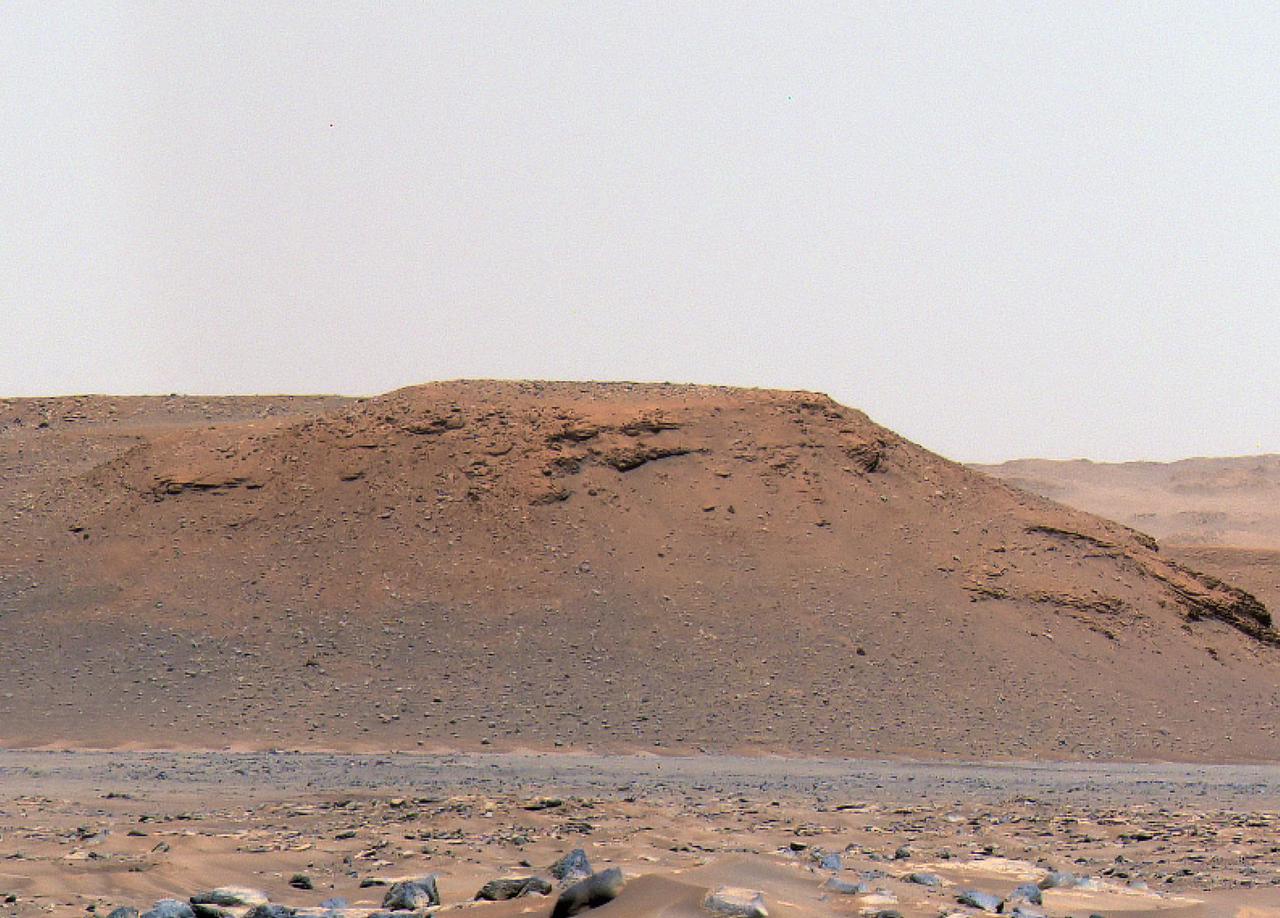
The long, steep slope known as an escarpment, or scarp, along the delta in Mars' Jezero Crater that the science team of NASA's Perseverance rover mission refers to as "Scarp a" is seen in this image captured by the rover's Mastcam-Z instrument on Apr. 17, 2021.  The Mastcam-Z investigation is led and operated by Arizona State University in Tempe, working in collaboration with Malin Space Science Systems in San Diego, California, on the design, fabrication, testing, and operation of the cameras, and in collaboration with the Neils Bohr Institute of the University of Copenhagen on the design, fabrication, and testing of the calibration targets.  A key objective for Perseverance's mission on Mars is astrobiology, including the search for signs of ancient microbial life. The rover will characterize the planet's geology and past climate, pave the way for human exploration of the Red Planet, and be the first mission to collect and cache Martian rock and regolith (broken rock and dust).  Subsequent NASA missions, in cooperation with ESA (European Space Agency), would send spacecraft to Mars to collect these sealed samples from the surface and return them to Earth for in-depth analysis.  The Mars 2020 Perseverance mission is part of NASA's Moon to Mars exploration approach, which includes Artemis missions to the Moon that will help prepare for human exploration of the Red Planet.  https://photojournal.jpl.nasa.gov/catalog/PIA24813
Jezero Crater's Scarp A
Soon after NASA's Europa Clipper spacecraft launched toward Jupiter's icy moon on Oct. 14, 2024, the mission team powered on each of the science instruments for a series of test or "checkout" activities. The Europa Imaging System – with its narrow-angle and wide-angle cameras – underwent its first checkouts in December 2024.  Each camera has a cover to protect its sensitive detectors from the Sun while the spacecraft moves through the inner solar system, so the test images only show low-level variations in the sensitivity of the detector system. This image, taken by the narrow-angle camera (or NAC), has been enhanced to show more subtle variations in brightness. The pattern shown here matched similar test images taken before launch, confirming the camera is working as expected.  The large, 8-megapixel detectors are divided into 16 sections to capture data quickly during the very fast, low-altitude flybys of Europa. Each section has a slightly different background brightness level, which gives it the image a striped appearance. Images like this are used to correct the background pattern in science observations.  Instrument scientists and engineers at the Johns Hopkins Applied Physics Laboratory (APL), where the camera was designed and built, will use images like this to calibrate the science imagery it eventually gathers above Europa. The team also, for the first time in flight, moved the gimbal that will allow the NAC to target specific locations on Europa.  In 2027, the spacecraft will be far enough from the Sun to safely open the lens covers and capture the first images, which will of starfields until arrival at the Jupiter system in 2030.  Europa Clipper's three main science objectives are to determine the thickness of the moon's icy shell and its interactions with the ocean below, to investigate its composition, and to characterize its geology. The mission's detailed exploration of Europa will help scientists better understand the astrobiological potential for habitable worlds beyond our planet.  https://photojournal.jpl.nasa.gov/catalog/PIA26564
Europa Clipper Camera Passes First Test in Space
NASA Conducts Airborne Science Aboard Zeppelin Airship: equipped with two imaging instruments enabling remote sensing and atmospheric science measurements not previously practical
ARC-2009-ACD09-0218-007
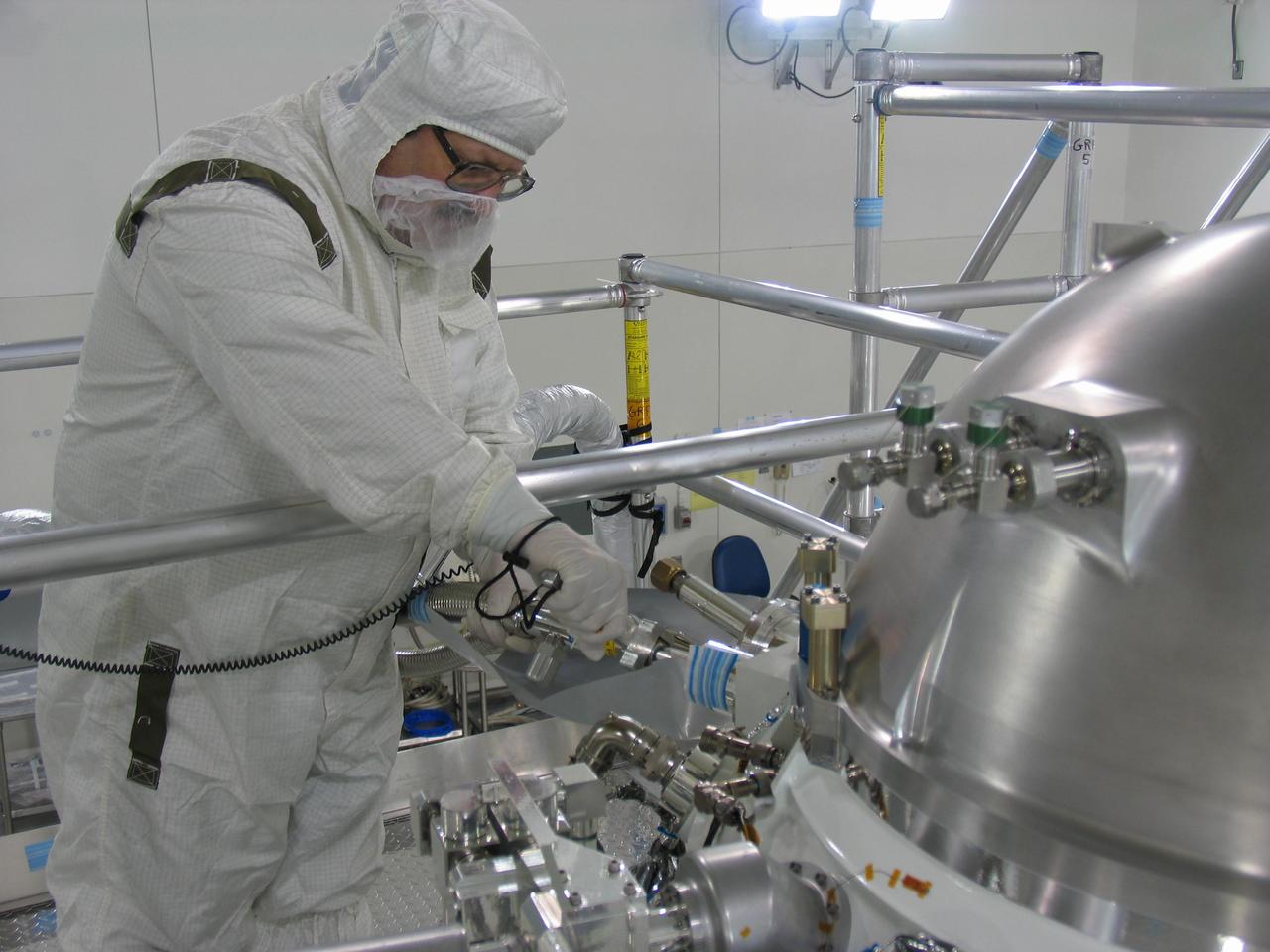
An engineer loads hydrogen gas into the Wide-Field Infrared Survey Explorer in a clean room at the Vandenberg Air Force Base, Calif. The hydrogen is cooled and frozen inside a Thermos-like bottle, called the cryostat, which keeps the science instrument
Freezing Hydrogen
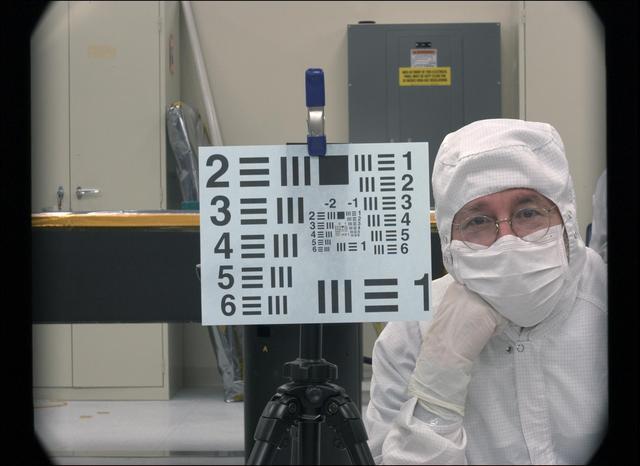
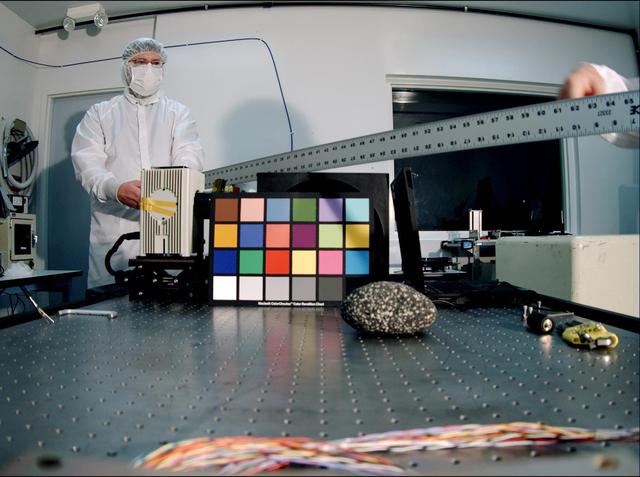
Ken Edgett, deputy principal investigator for NASA Mars Descent Imager, holds a ruler used as a depth-of-field test target. The instrument took this image inside the Malin Space Science Systems clean room in San Diego, CA, during calibration testing.
Test Image by Mars Descent Imager