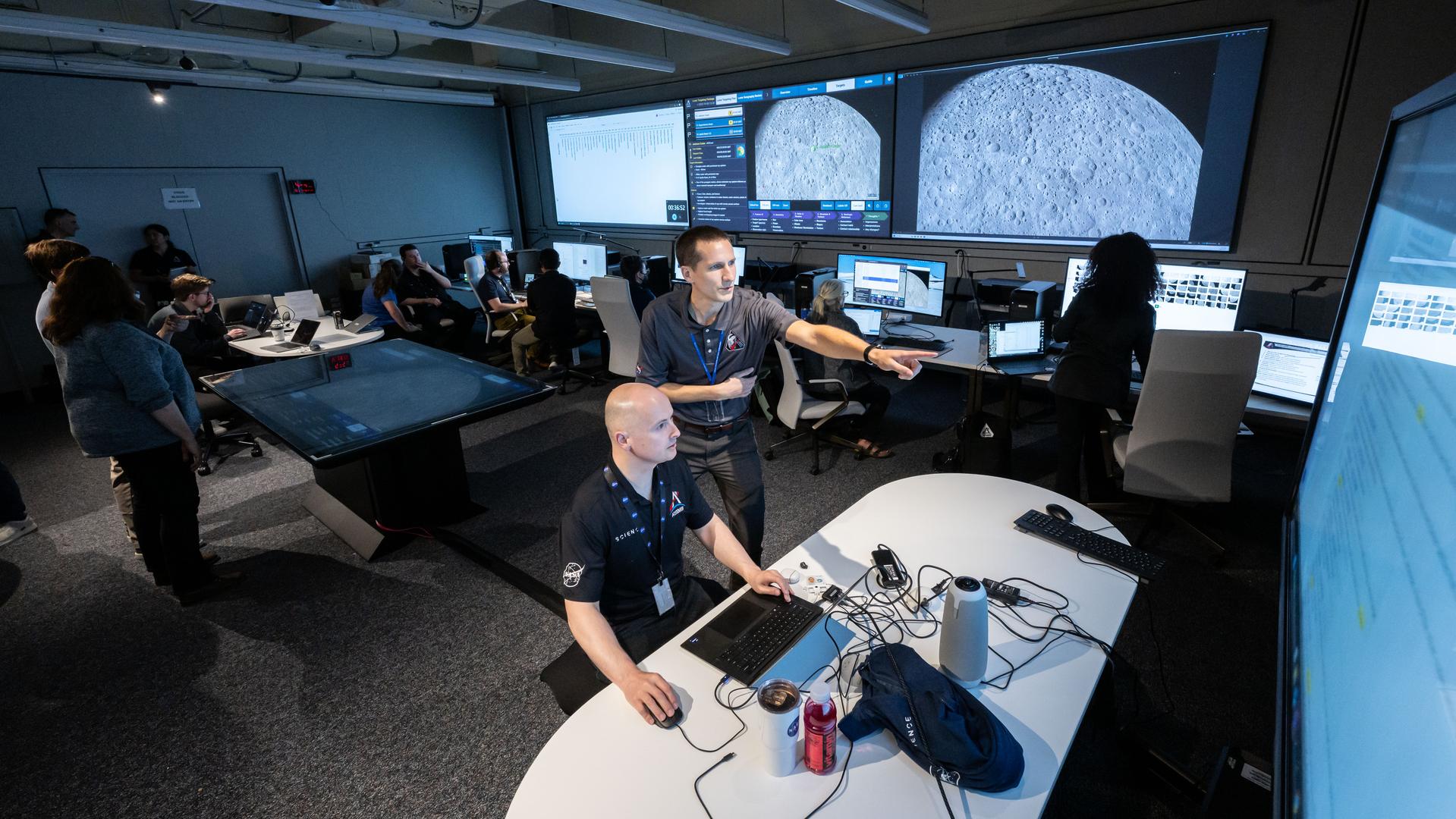
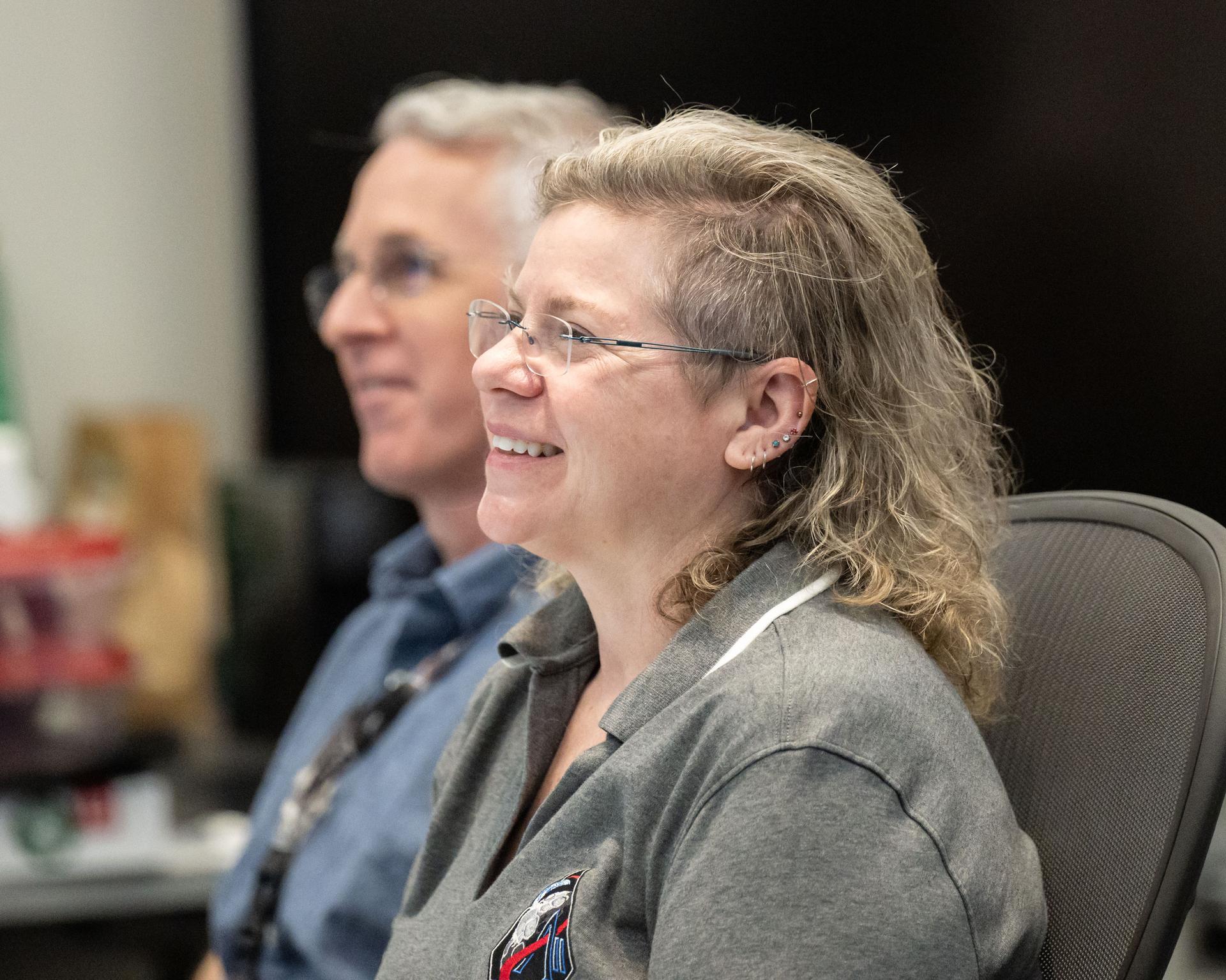
jsc2025e087237 --- Artemis lunar science team members Andrew Needham, sitting, and David Hollibaugh work in the Science Mission Operations Room (SMOR) during a training simulation at NASA's Johnson Space Center in Houston during a simulation of the Artemis II lunar flyby during which astronauts will document their observations through photographs and audio recordings to inform scientists’ understanding of the Moon. Credit: NASA/James Blair
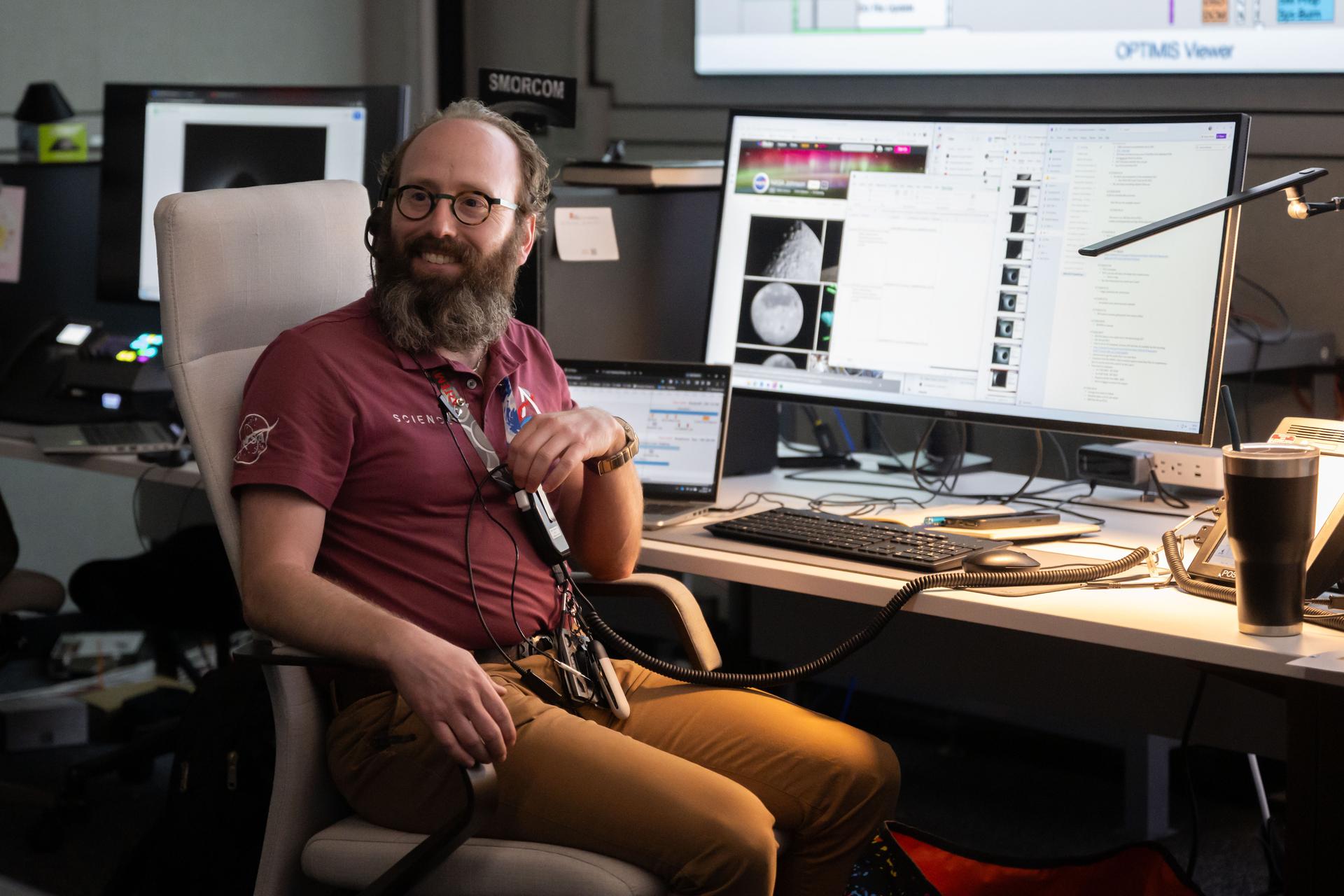
Artemis lunar science team member, Aaron Regberg, works in the Science Mission Operations Room, where scientists analyzed imagery and audio recordings of lunar observations captured by the Artemis II astronauts during their lunar flyby on April 6, 2026.
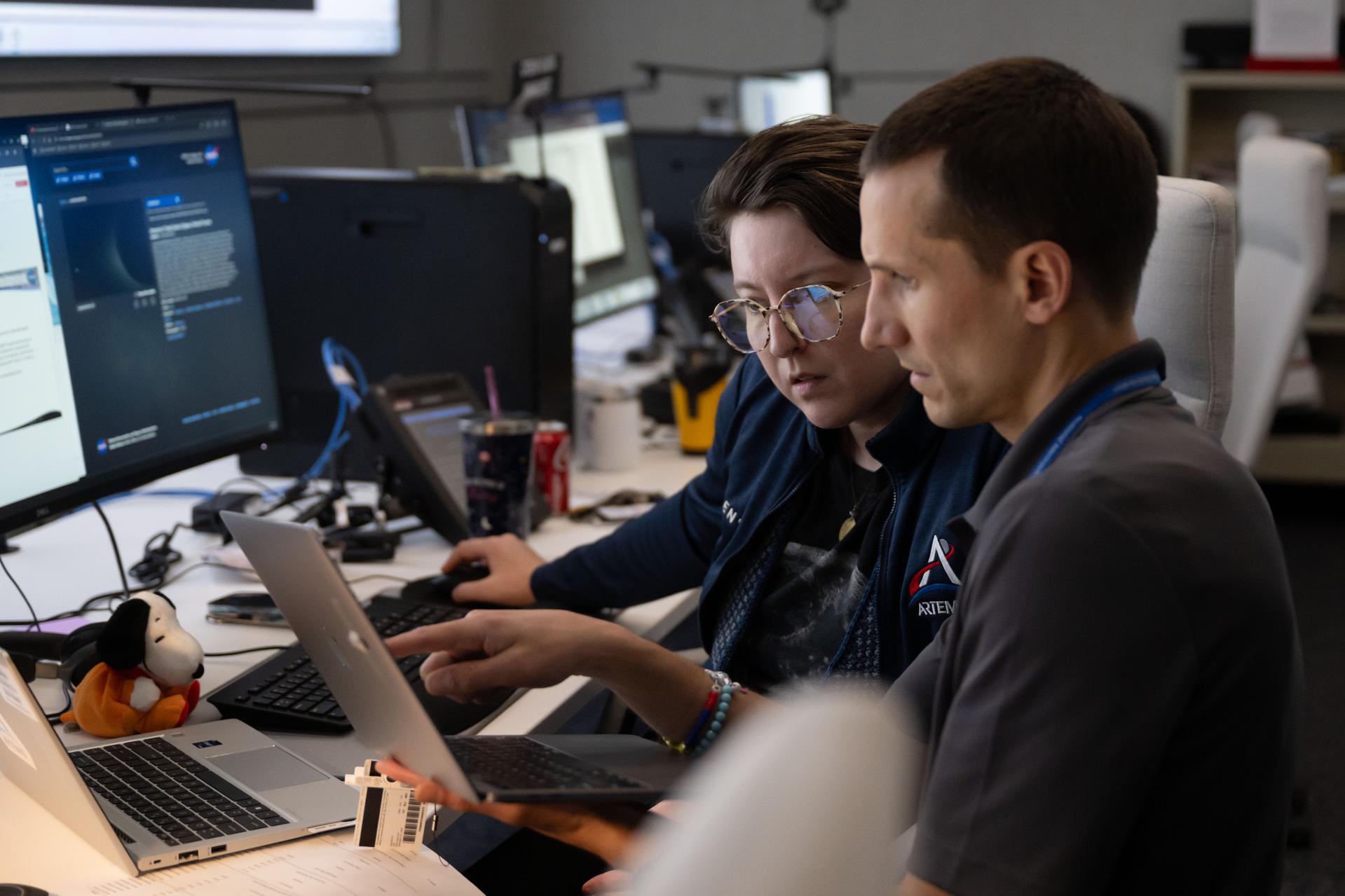
Artemis lunar science team members, from left, Alexandra Constantinou, and David Hollibaugh-Baker, work in the Science Mission Operations Room at NASA’s Johnson Space Center in Houston. They are analyzing imagery and audio recordings of lunar observations captured by the Artemis II astronauts during their lunar flyby on April 6, 2026.
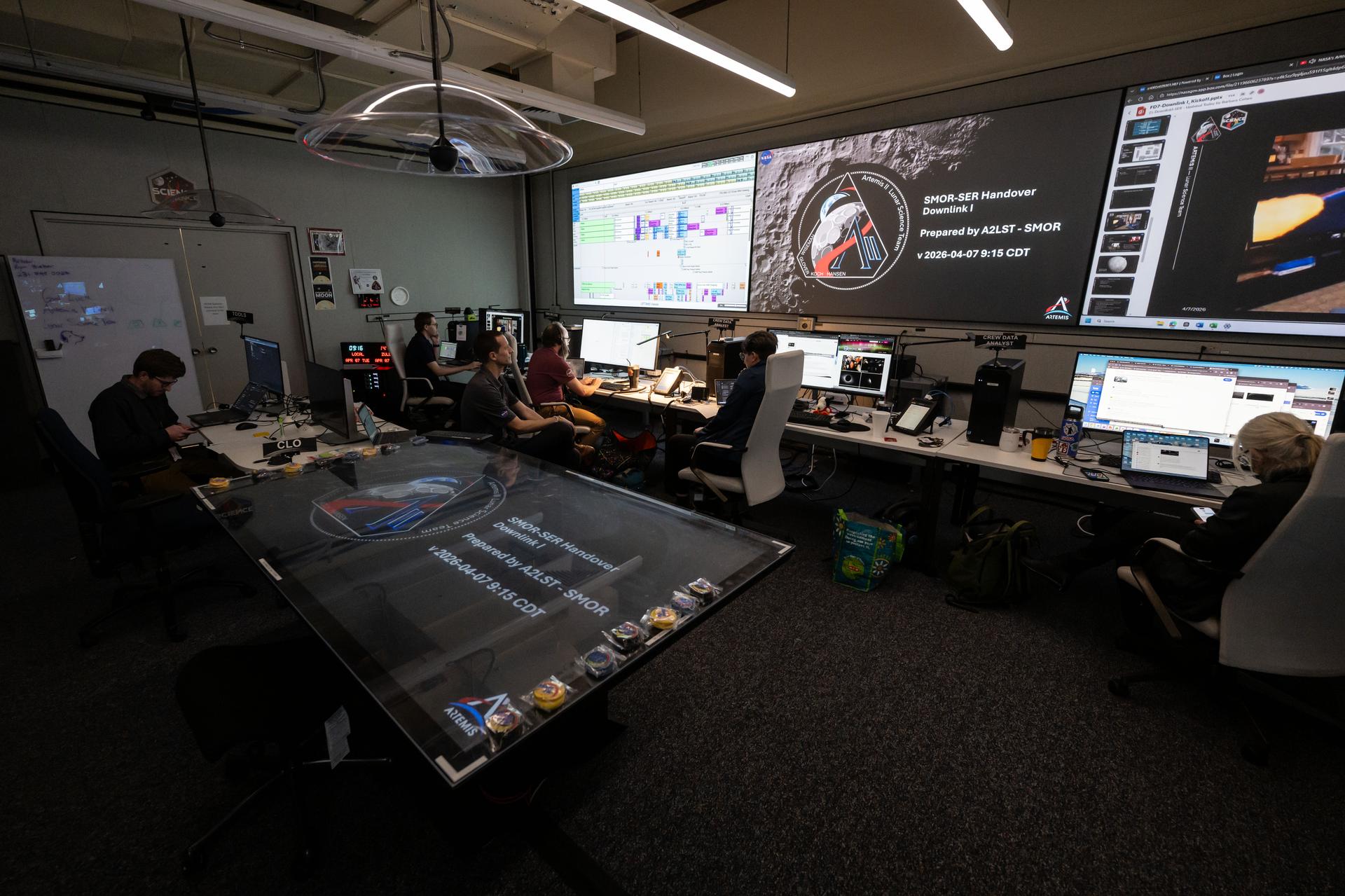
Artemis lunar science team members, work in the Science Mission Operations Room at NASA’s Johnson Space Center in Houston, analyzing imagery and audio recordings of lunar observations captured by the Artemis II astronauts during their lunar flyby on April 6, 2026.
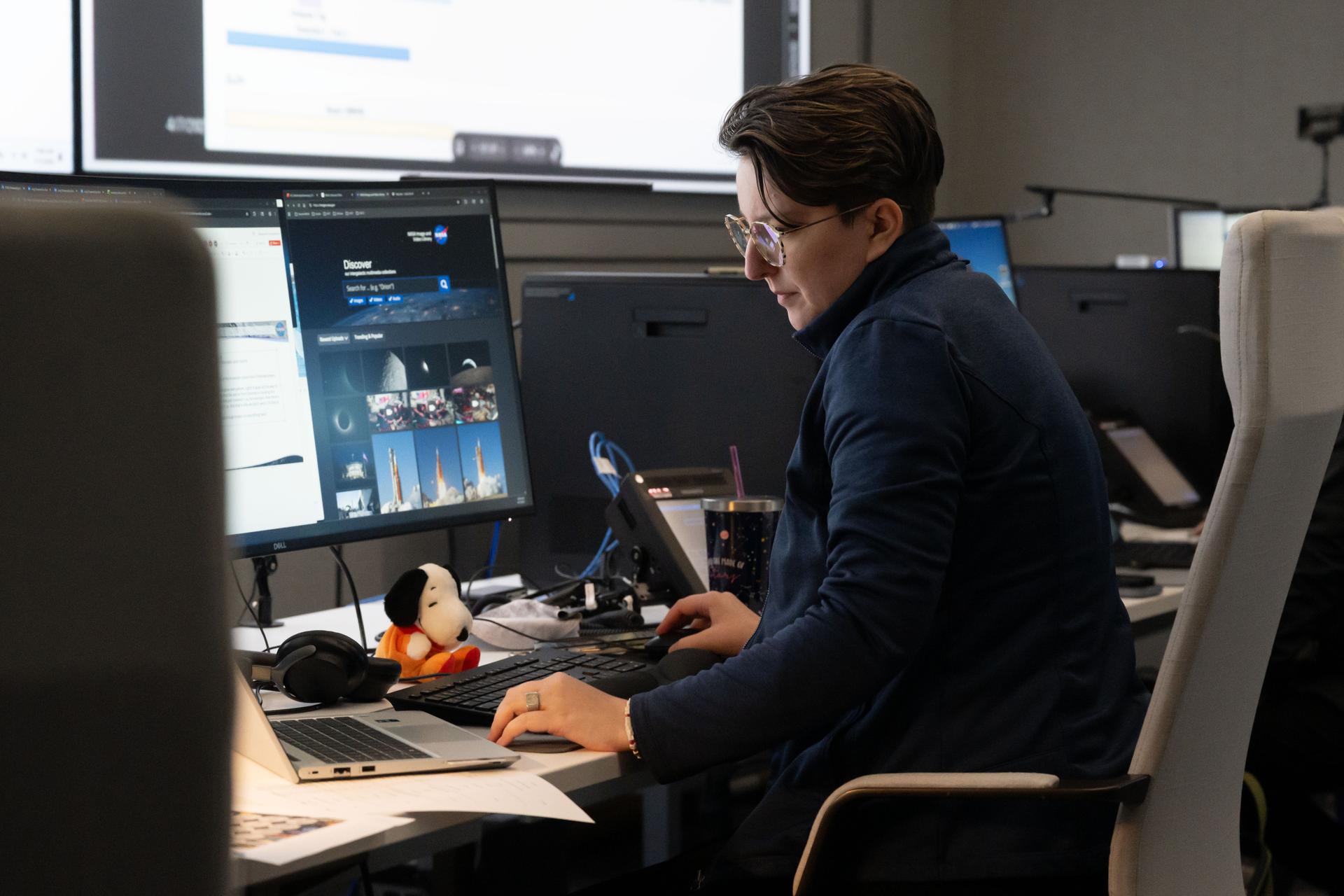
Artemis lunar science team member, Alexandra Constantinou, works in the Science Mission Operations Room at NASA’s Johnson Space Center in Houston, where scientists analyzed imagery and audio recordings of lunar observations captured by the Artemis II astronauts during their lunar flyby on April 6, 2026. Credits: NASA/Helen Arase Vargas
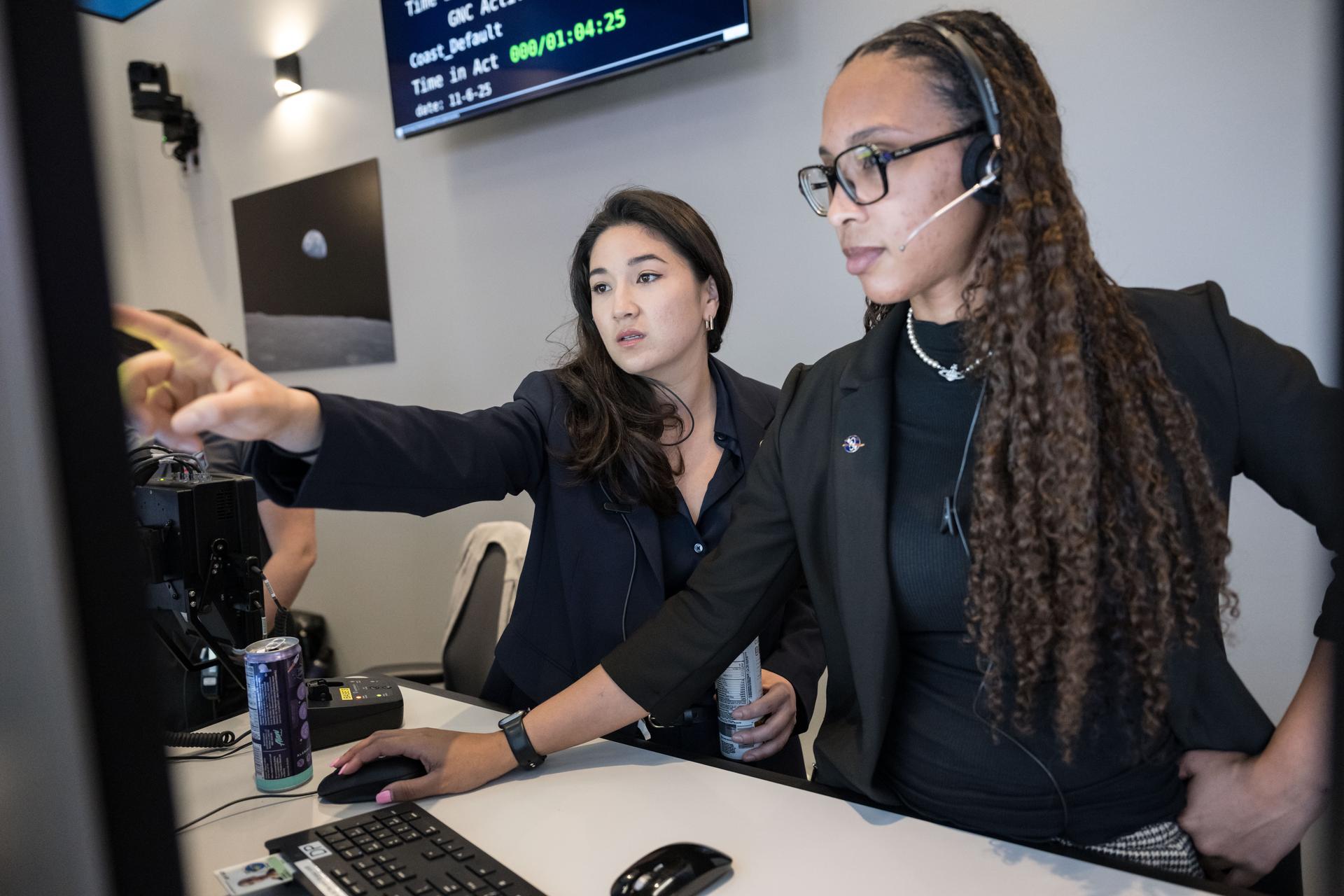
Artemis science officer, Angela Garcia, left and lunar science team member, Kiarre Dumes discuss science operations in the Science Evaluation Room (SER) in Mission Control at NASA's Johnson Space Center in Houston. The SER supports lunar science and planetary observations for the Artemis science officer in the mission’s main flight control room. Dumes serves as the SERCOMM, or Science Evaluation Room Communicator, acting as the singular voice from the science team in the back room, reporting to the science officer. Credits: NASA/Luna Posadas Nava
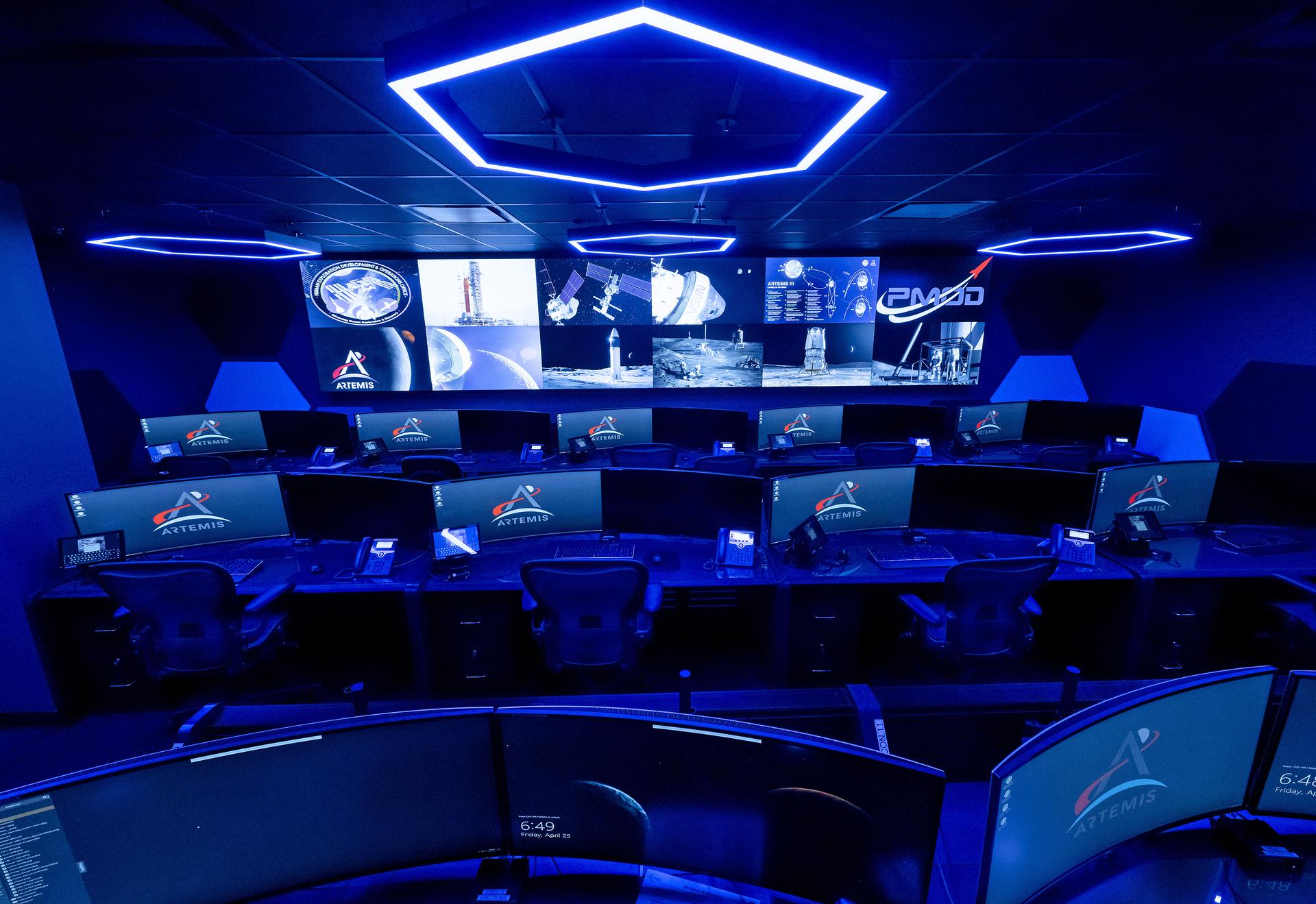
These photos offer a look inside the twin control rooms at NASA’s Marshall Space Flight Center in Huntsville, Alabama, where engineers will monitor Artemis science and future landing operations for Artemis. The LUCA (Lunar Utilization Control Area) and LESA (Lander Engineering Support Area) rooms are part of the Huntsville Operations Support Center at NASA Marshall. The LUCA is specially designed to support a wide variety of science operations on and around the Moon – and beyond. Engineers in the LUCA monitored operations for the Lunar Node-1 experiment, an autonomous navigation payload that was part of the first NASA Commercial Lunar Payload Services (CLPS) launch on Intuitive Machines’ Nova-C lunar lander in 2024. NASA Marshall flight controllers will use the LUCA again for Artemis II to monitor science operations. Beginning with Artemis III, members of the NASA Human Landing System Mission Insight Support Team – a group of engineers, safety leads, flight operations experts, and technical authorities – will work in the LESA. There, they will monitor lander systems in real-time and be involved in key decision-making processes throughout the mission. For more information, contact NASA Marshall’s Office of Communications at 256-544-0034.
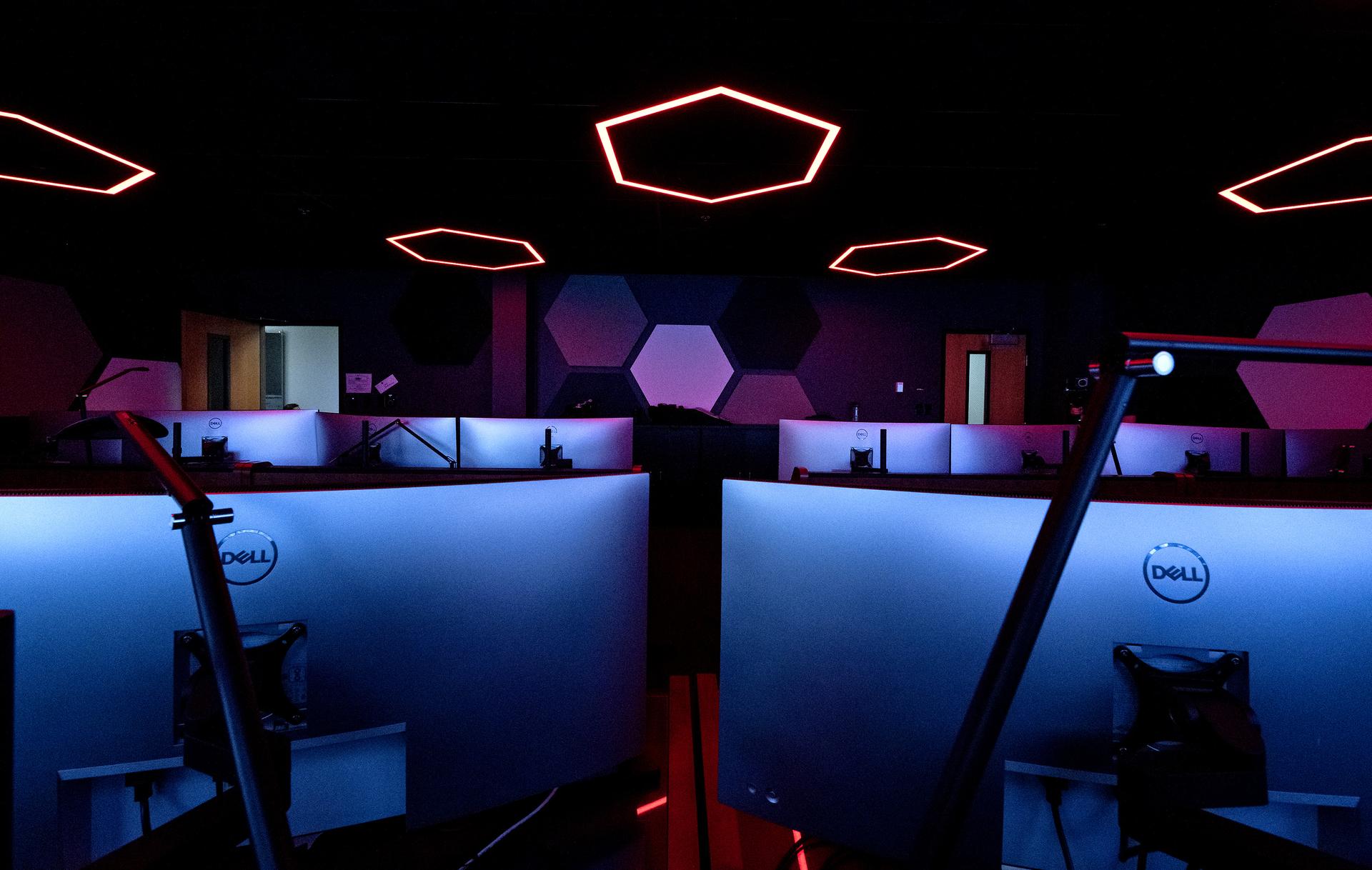
These photos offer a look inside the twin control rooms at NASA’s Marshall Space Flight Center in Huntsville, Alabama, where engineers will monitor Artemis science and future landing operations for Artemis. The LUCA (Lunar Utilization Control Area) and LESA (Lander Engineering Support Area) rooms are part of the Huntsville Operations Support Center at NASA Marshall. The LUCA is specially designed to support a wide variety of science operations on and around the Moon – and beyond. Engineers in the LUCA monitored operations for the Lunar Node-1 experiment, an autonomous navigation payload that was part of the first NASA Commercial Lunar Payload Services (CLPS) launch on Intuitive Machines’ Nova-C lunar lander in 2024. NASA Marshall flight controllers will use the LUCA again for Artemis II to monitor science operations. Beginning with Artemis III, members of the NASA Human Landing System Mission Insight Support Team – a group of engineers, safety leads, flight operations experts, and technical authorities – will work in the LESA. There, they will monitor lander systems in real-time and be involved in key decision-making processes throughout the mission. For more information, contact NASA Marshall’s Office of Communications at 256-544-0034.
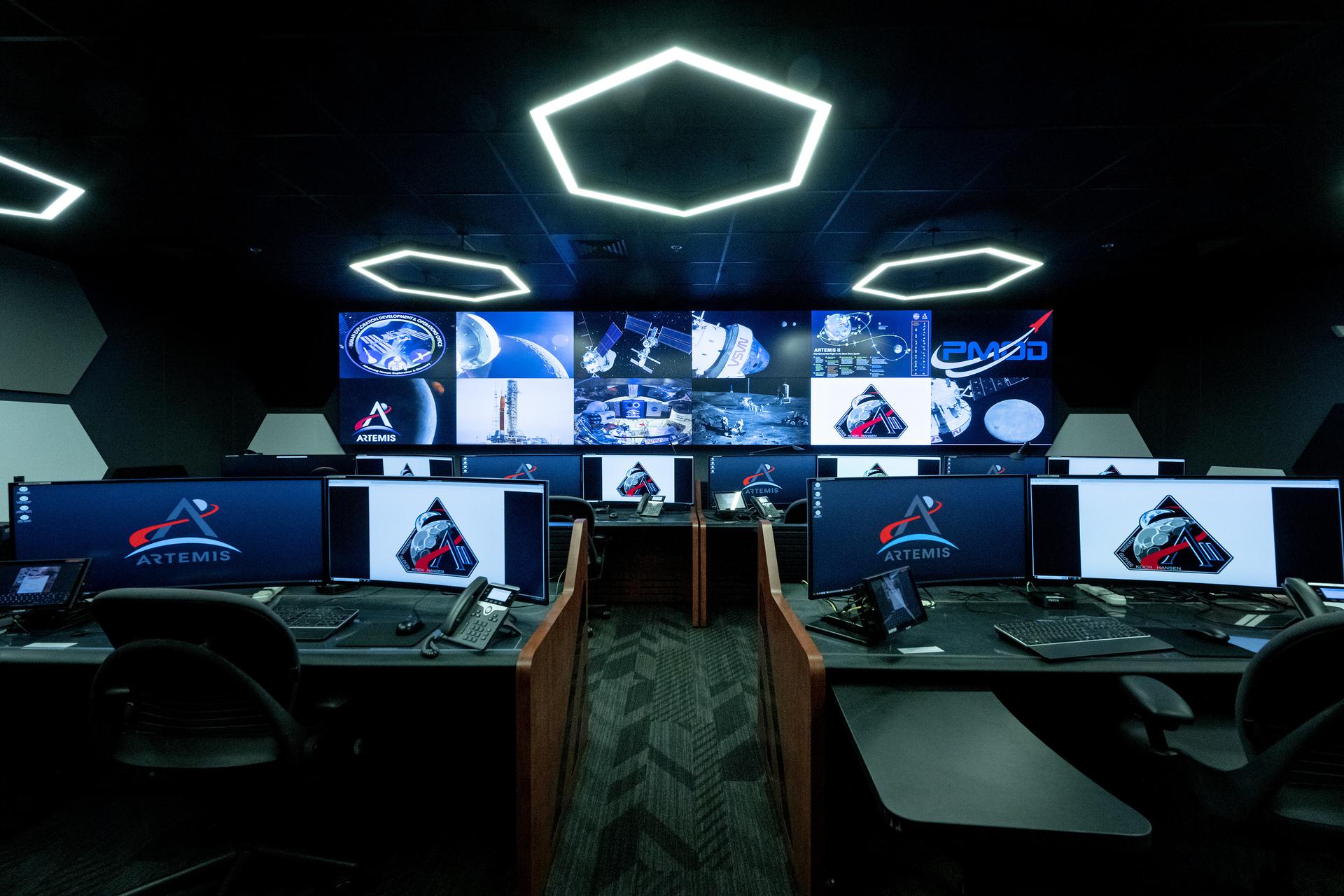
These photos offer a look inside the twin control rooms at NASA’s Marshall Space Flight Center in Huntsville, Alabama, where engineers will monitor Artemis science and future landing operations for Artemis. The LUCA (Lunar Utilization Control Area) and LESA (Lander Engineering Support Area) rooms are part of the Huntsville Operations Support Center at NASA Marshall. The LUCA is specially designed to support a wide variety of science operations on and around the Moon – and beyond. Engineers in the LUCA monitored operations for the Lunar Node-1 experiment, an autonomous navigation payload that was part of the first NASA Commercial Lunar Payload Services (CLPS) launch on Intuitive Machines’ Nova-C lunar lander in 2024. NASA Marshall flight controllers will use the LUCA again for Artemis II to monitor science operations. Beginning with Artemis III, members of the NASA Human Landing System Mission Insight Support Team – a group of engineers, safety leads, flight operations experts, and technical authorities – will work in the LESA. There, they will monitor lander systems in real-time and be involved in key decision-making processes throughout the mission. For more information, contact NASA Marshall’s Office of Communications at 256-544-0034.
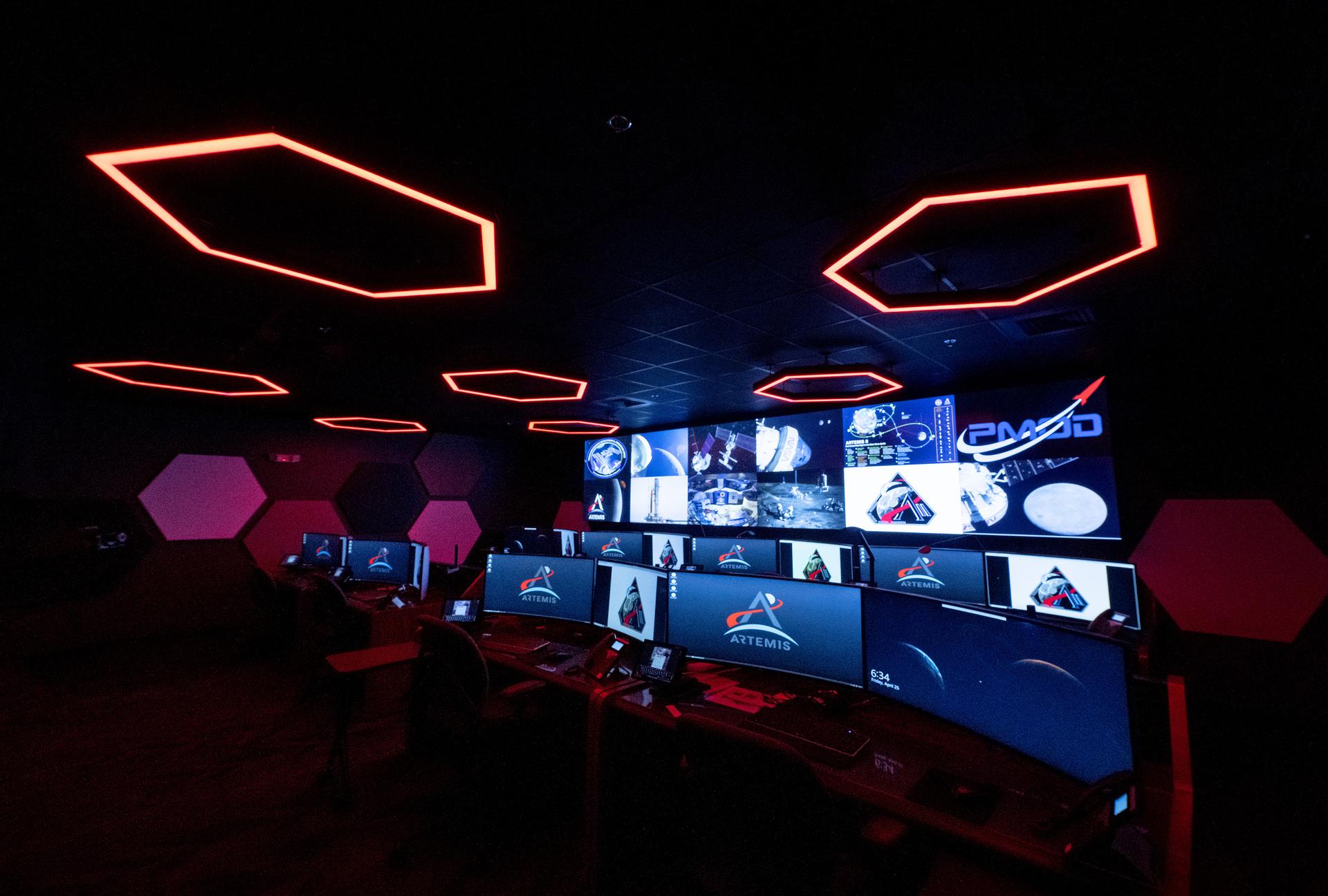
These photos offer a look inside the twin control rooms at NASA’s Marshall Space Flight Center in Huntsville, Alabama, where engineers will monitor Artemis science and future landing operations for Artemis. The LUCA (Lunar Utilization Control Area) and LESA (Lander Engineering Support Area) rooms are part of the Huntsville Operations Support Center at NASA Marshall. The LUCA is specially designed to support a wide variety of science operations on and around the Moon – and beyond. Engineers in the LUCA monitored operations for the Lunar Node-1 experiment, an autonomous navigation payload that was part of the first NASA Commercial Lunar Payload Services (CLPS) launch on Intuitive Machines’ Nova-C lunar lander in 2024. NASA Marshall flight controllers will use the LUCA again for Artemis II to monitor science operations. Beginning with Artemis III, members of the NASA Human Landing System Mission Insight Support Team – a group of engineers, safety leads, flight operations experts, and technical authorities – will work in the LESA. There, they will monitor lander systems in real-time and be involved in key decision-making processes throughout the mission. For more information, contact NASA Marshall’s Office of Communications at 256-544-0034.
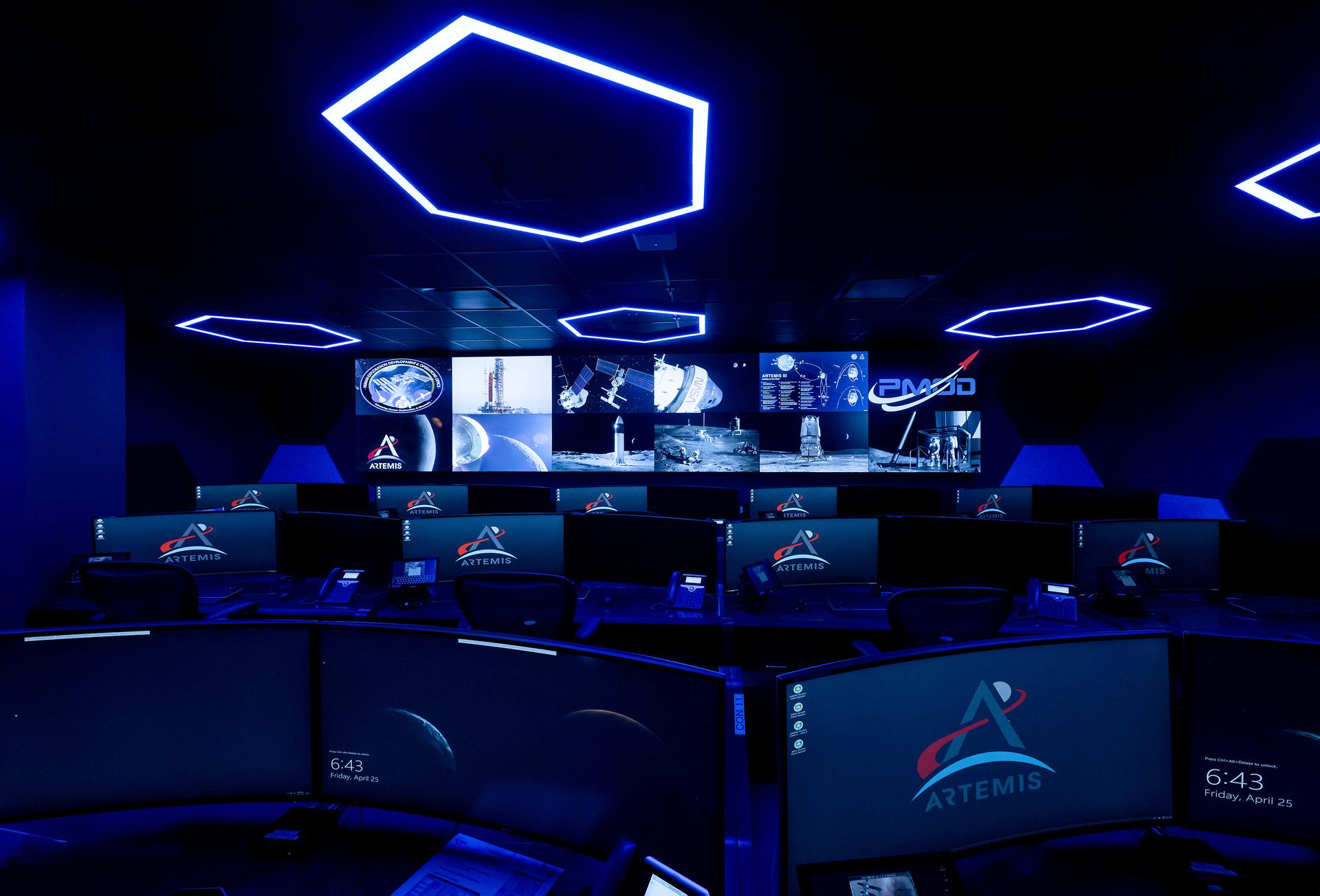
These photos offer a look inside the twin control rooms at NASA’s Marshall Space Flight Center in Huntsville, Alabama, where engineers will monitor Artemis science and future landing operations for Artemis. The LUCA (Lunar Utilization Control Area) and LESA (Lander Engineering Support Area) rooms are part of the Huntsville Operations Support Center at NASA Marshall. The LUCA is specially designed to support a wide variety of science operations on and around the Moon – and beyond. Engineers in the LUCA monitored operations for the Lunar Node-1 experiment, an autonomous navigation payload that was part of the first NASA Commercial Lunar Payload Services (CLPS) launch on Intuitive Machines’ Nova-C lunar lander in 2024. NASA Marshall flight controllers will use the LUCA again for Artemis II to monitor science operations. Beginning with Artemis III, members of the NASA Human Landing System Mission Insight Support Team – a group of engineers, safety leads, flight operations experts, and technical authorities – will work in the LESA. There, they will monitor lander systems in real-time and be involved in key decision-making processes throughout the mission. For more information, contact NASA Marshall’s Office of Communications at 256-544-0034.
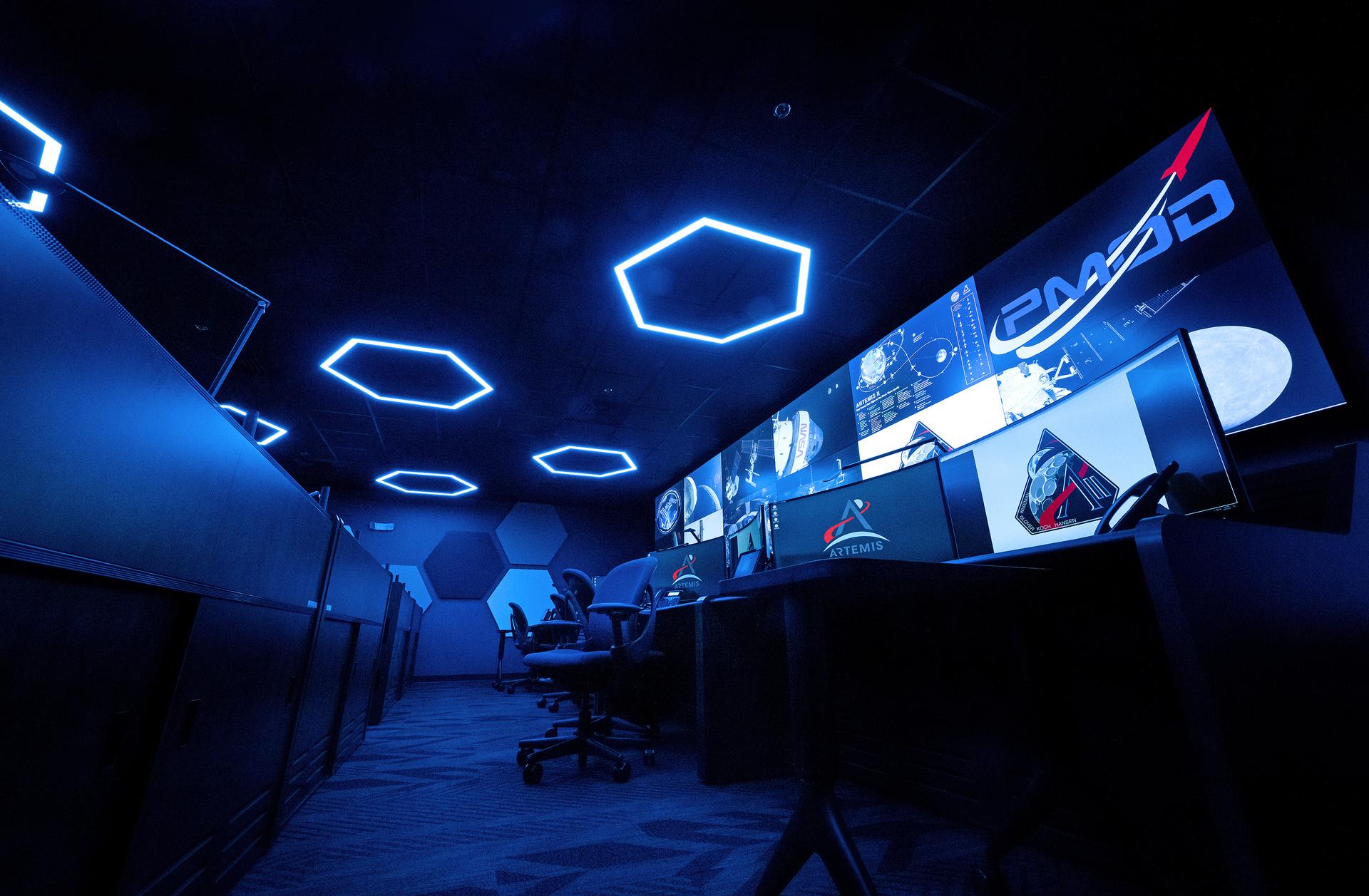
These photos offer a look inside the twin control rooms at NASA’s Marshall Space Flight Center in Huntsville, Alabama, where engineers will monitor Artemis science and future landing operations for Artemis. The LUCA (Lunar Utilization Control Area) and LESA (Lander Engineering Support Area) rooms are part of the Huntsville Operations Support Center at NASA Marshall. The LUCA is specially designed to support a wide variety of science operations on and around the Moon – and beyond. Engineers in the LUCA monitored operations for the Lunar Node-1 experiment, an autonomous navigation payload that was part of the first NASA Commercial Lunar Payload Services (CLPS) launch on Intuitive Machines’ Nova-C lunar lander in 2024. NASA Marshall flight controllers will use the LUCA again for Artemis II to monitor science operations. Beginning with Artemis III, members of the NASA Human Landing System Mission Insight Support Team – a group of engineers, safety leads, flight operations experts, and technical authorities – will work in the LESA. There, they will monitor lander systems in real-time and be involved in key decision-making processes throughout the mission. For more information, contact NASA Marshall’s Office of Communications at 256-544-0034.
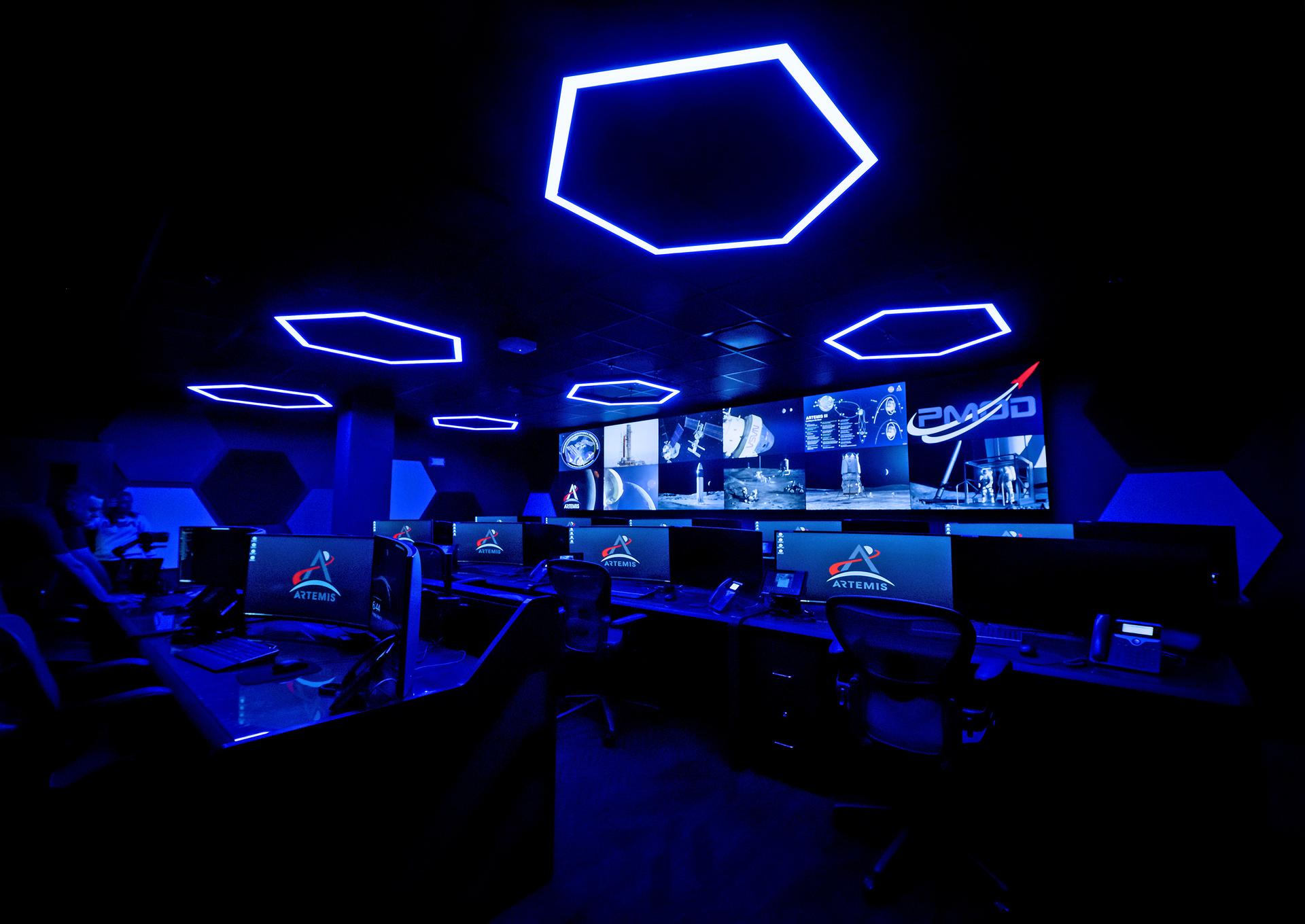
These photos offer a look inside the twin control rooms at NASA’s Marshall Space Flight Center in Huntsville, Alabama, where engineers will monitor Artemis science and future landing operations for Artemis. The LUCA (Lunar Utilization Control Area) and LESA (Lander Engineering Support Area) rooms are part of the Huntsville Operations Support Center at NASA Marshall. The LUCA is specially designed to support a wide variety of science operations on and around the Moon – and beyond. Engineers in the LUCA monitored operations for the Lunar Node-1 experiment, an autonomous navigation payload that was part of the first NASA Commercial Lunar Payload Services (CLPS) launch on Intuitive Machines’ Nova-C lunar lander in 2024. NASA Marshall flight controllers will use the LUCA again for Artemis II to monitor science operations. Beginning with Artemis III, members of the NASA Human Landing System Mission Insight Support Team – a group of engineers, safety leads, flight operations experts, and technical authorities – will work in the LESA. There, they will monitor lander systems in real-time and be involved in key decision-making processes throughout the mission. For more information, contact NASA Marshall’s Office of Communications at 256-544-0034.
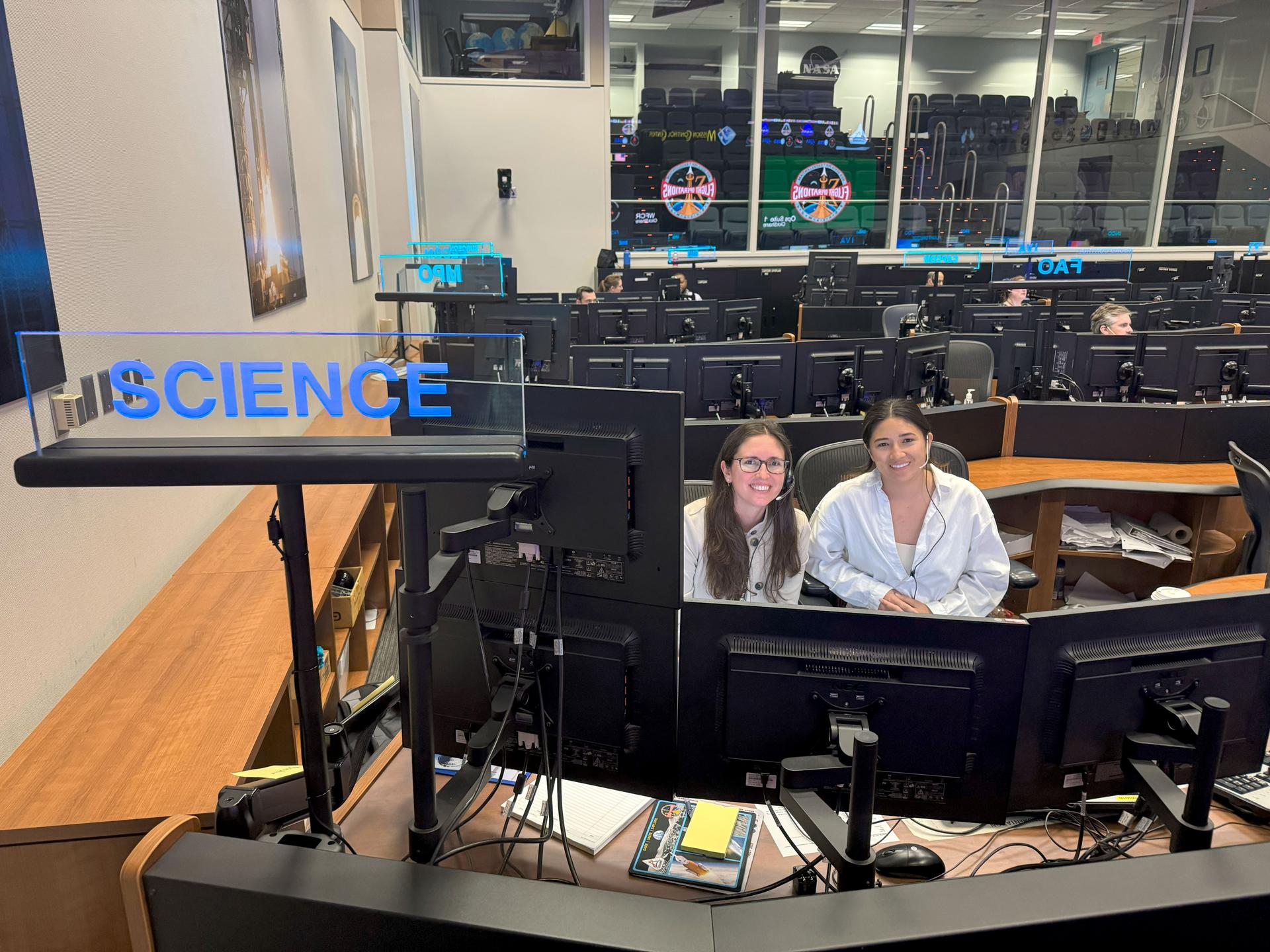
jsc2025e067512 --- Artemis II science officers Kelsey Young, left, and Angela Garcia sit at the SCIENCE console during a training simulation in the White Flight Control Room of the Mission Control Center at NASA's Johnson Space Center in Houston. Artemis II will test mission science operations and integration into flight control. Lessons learned during Artemis II science operations will pave the way for lunar science operations for future Artemis missions. A team of experts will staff the Science Evaluation Room (SER) at Johnson, providing lunar scientific expertise, data analysis, and strategic guidance in real-time to the science officer and the rest of Mission Control.
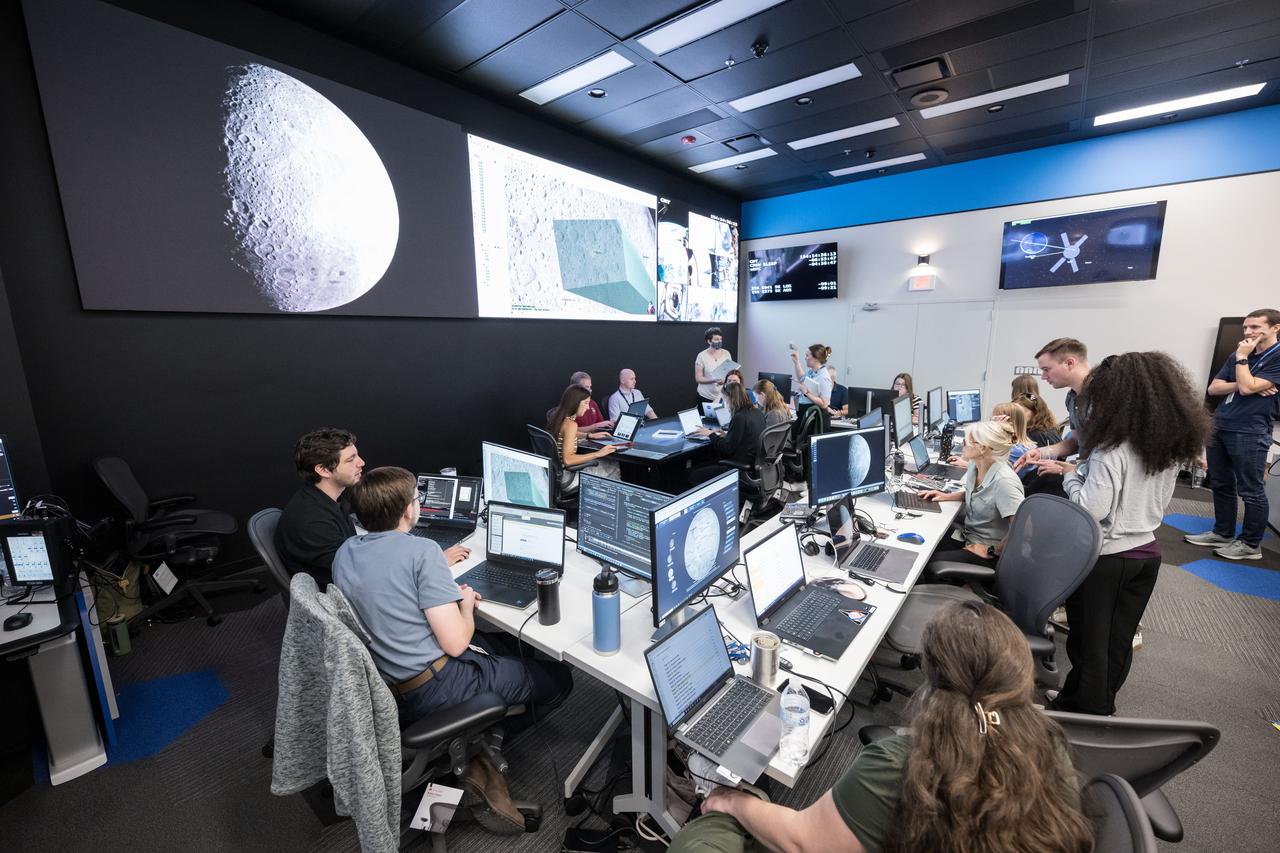
jsc2025e056603 --- The Artemis II Lunar Science Team runs a simulation of lunar observation operations in the new Science Evaluation Room (SER) that serves as a backroom to Mission Control.
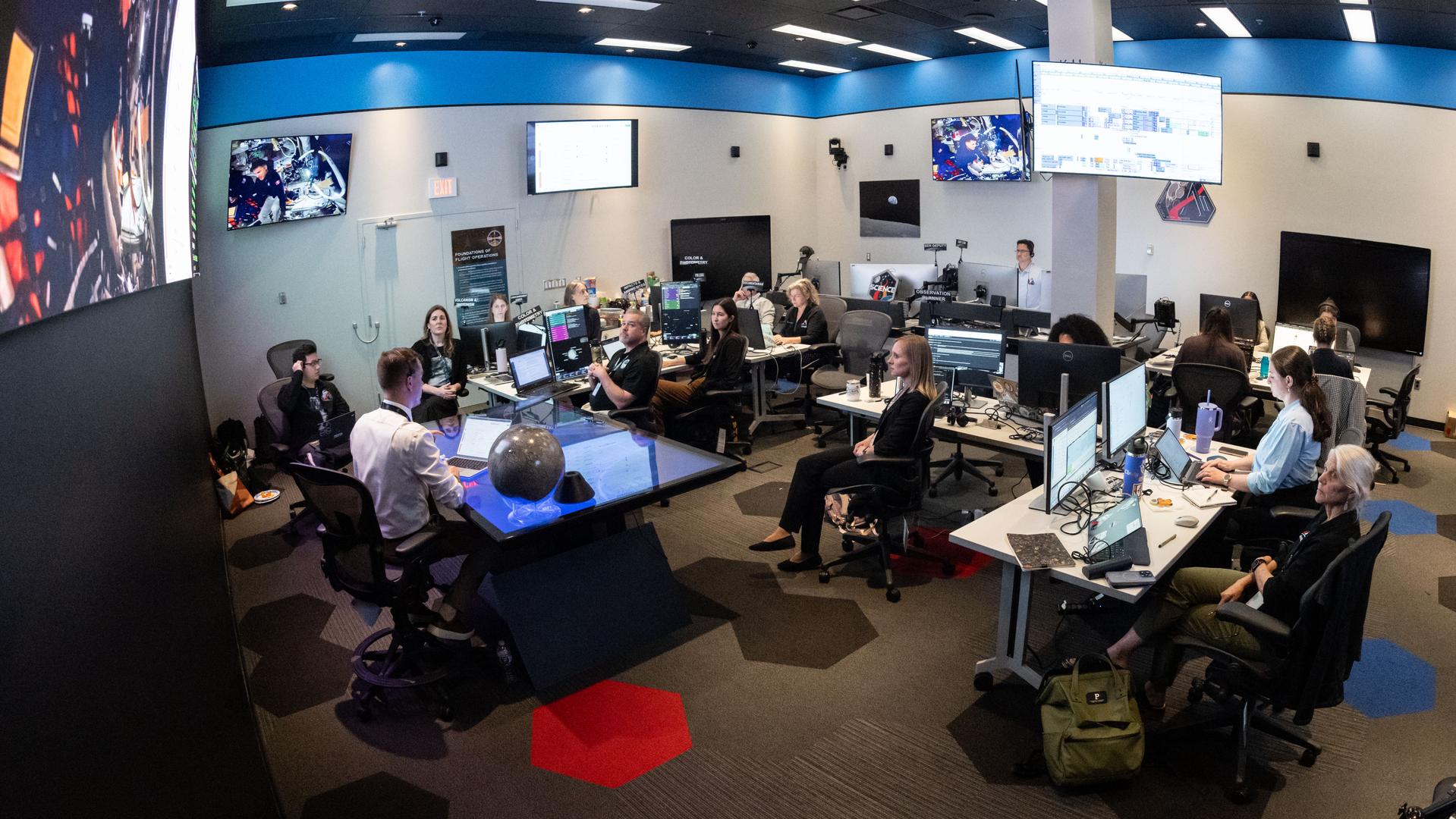
A view inside the Science Evaluation Room (SER) in Mission Control at NASA’s Johnson Space Center in Houston. The SER supports lunar science and planetary observations for the Artemis science officer in the mission’s main flight control room. Built specifically for Artemis missions with these science priorities in mind, the SER is equipped to support rapid data interpretation, collaborative analysis, real-time decision making, and seamless coordination between the science and operations teams. Credits: NASA/Bill Stafford
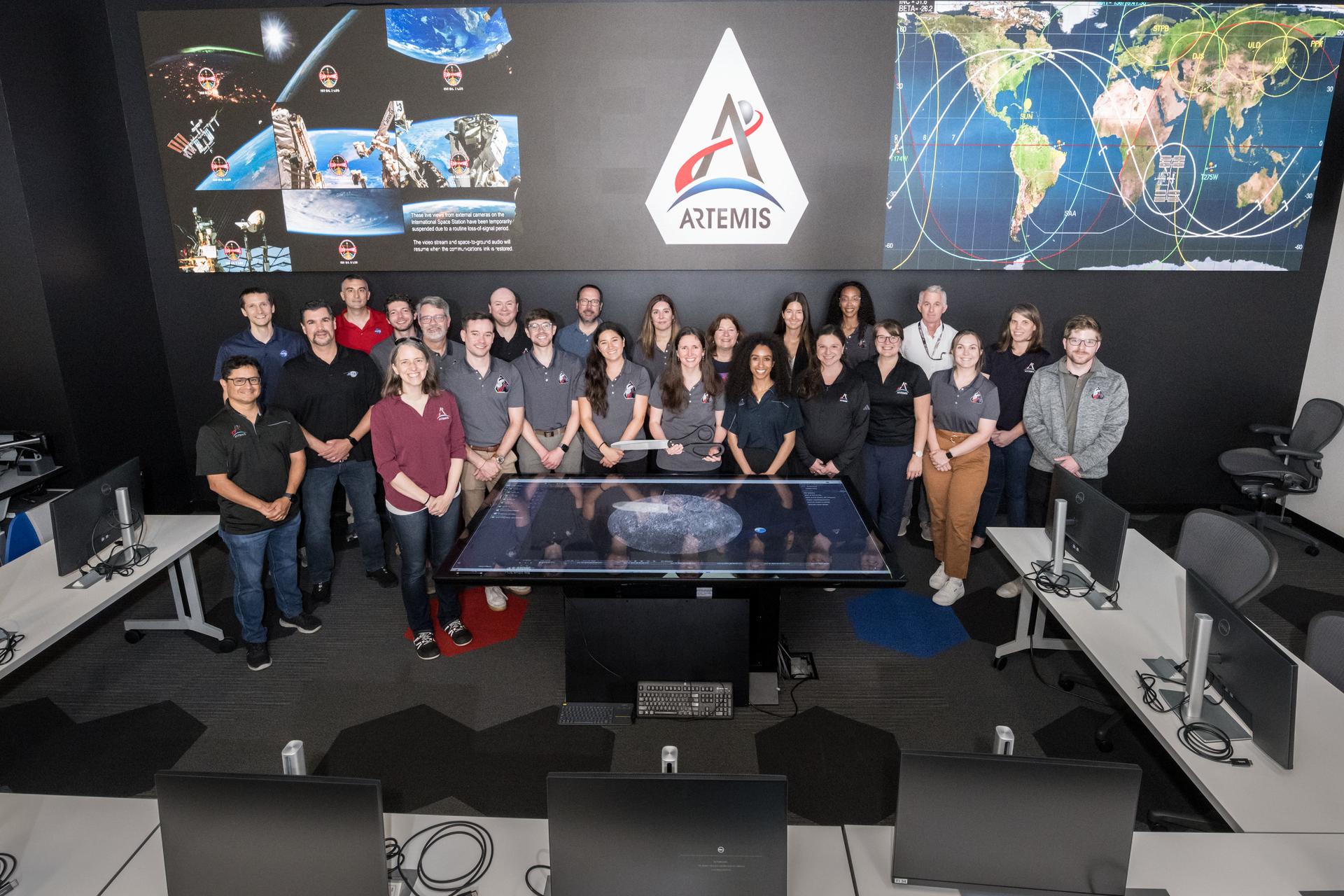
jsc2025e057254 --- NASA’s Artemis II lunar science team is pictured in the Science Evaluation Room (SER) at the agency’s Johnson Space Center in Houston. Located in the Christopher C. Kraft Jr. Mission Control Center, the SER supports the mission’s main flight control room for lunar science and planetary observations. Built specifically for Artemis missions with these science priorities in mind, the SER is equipped to support rapid data interpretation, collaborative analysis, real-time decision making, and seamless coordination between the science and operations teams.
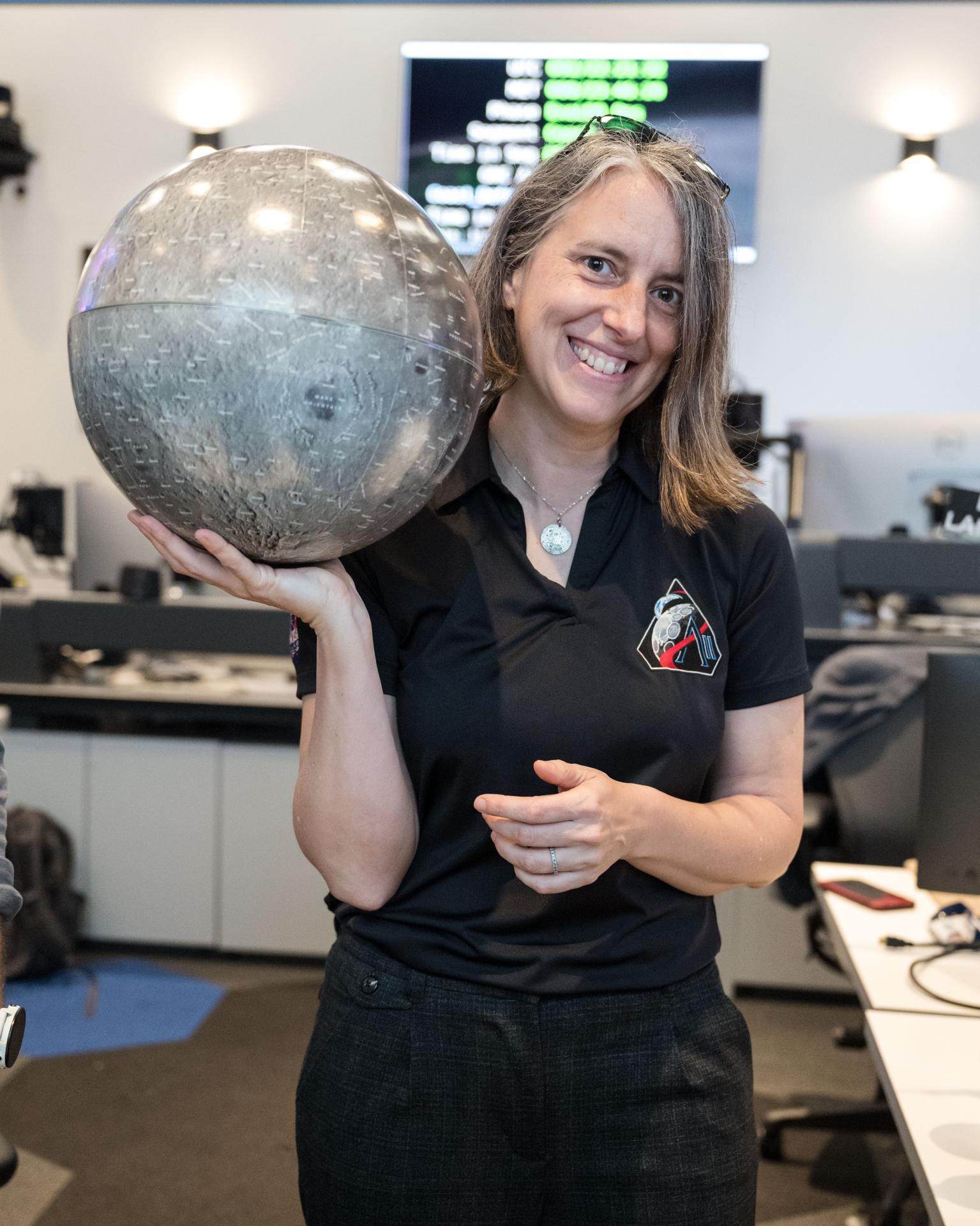
Artemis curation lead, Juliane Gross, holds a lunar globe in the Science Evaluation Room (SER) in Mission Control at Johnson Space Center in Houston. The SER supports lunar science and planetary observations for the Artemis science officer in the mission’s main flight control room. Built specifically for Artemis missions with these science priorities in mind, the SER is equipped to support rapid data interpretation, collaborative analysis, real-time decision making, and seamless coordination between the science and operations teams. Credits: NASA/Luna Posadas Nava
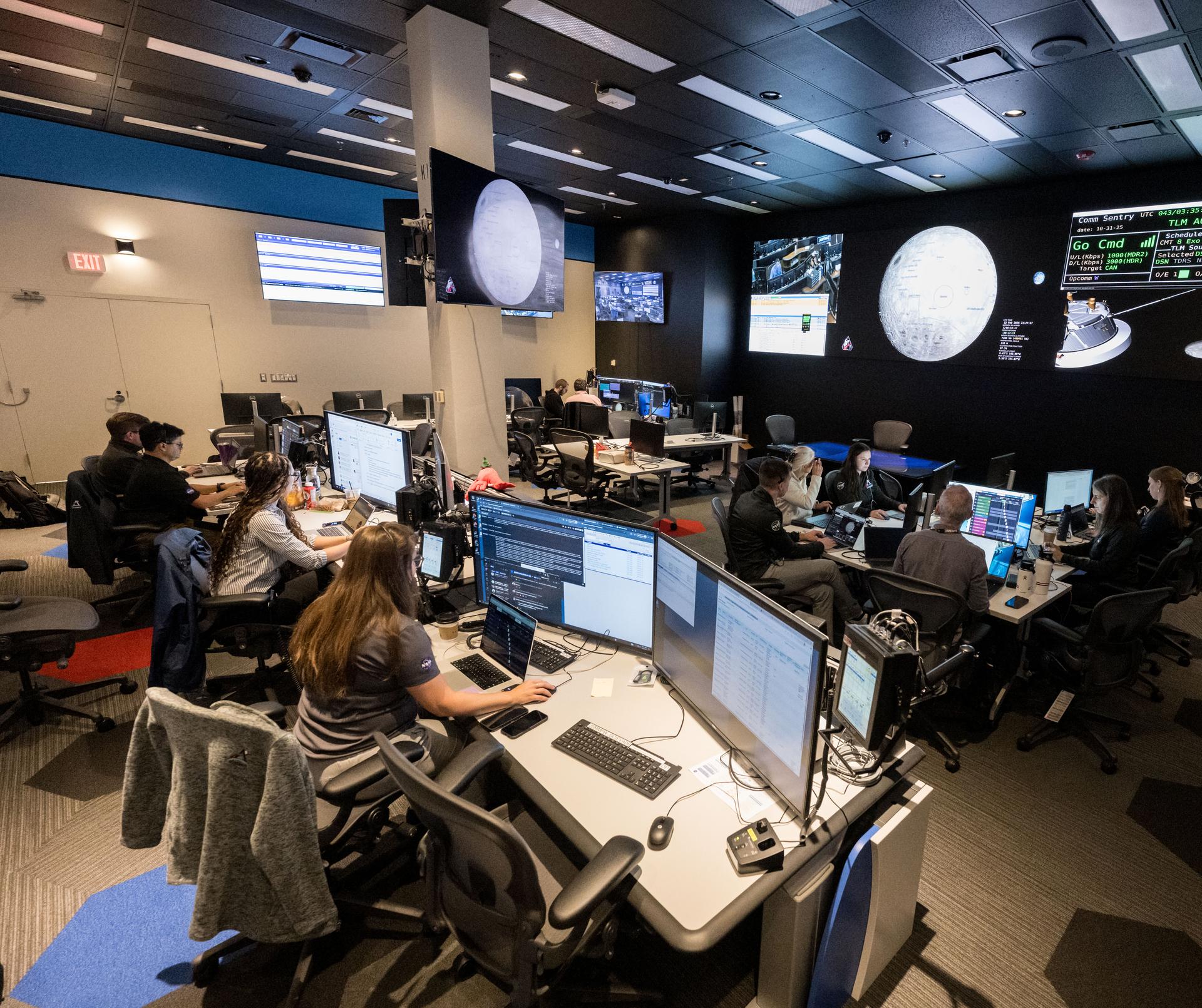
jsc2026e000861 --- The Artemis II Lunar Science Team works in the Science Evaluation Room (SER) during a training simulation in the Mission Control Center at NASA’s Johnson Space Center in Houston. The SER supports the mission’s main flight control room for lunar science and planetary observations. Built specifically for Artemis missions with these science priorities in mind, the SER is equipped to support rapid data interpretation, collaborative analysis, real-time decision making, and seamless coordination between the science and operations teams. Credit: James Blair
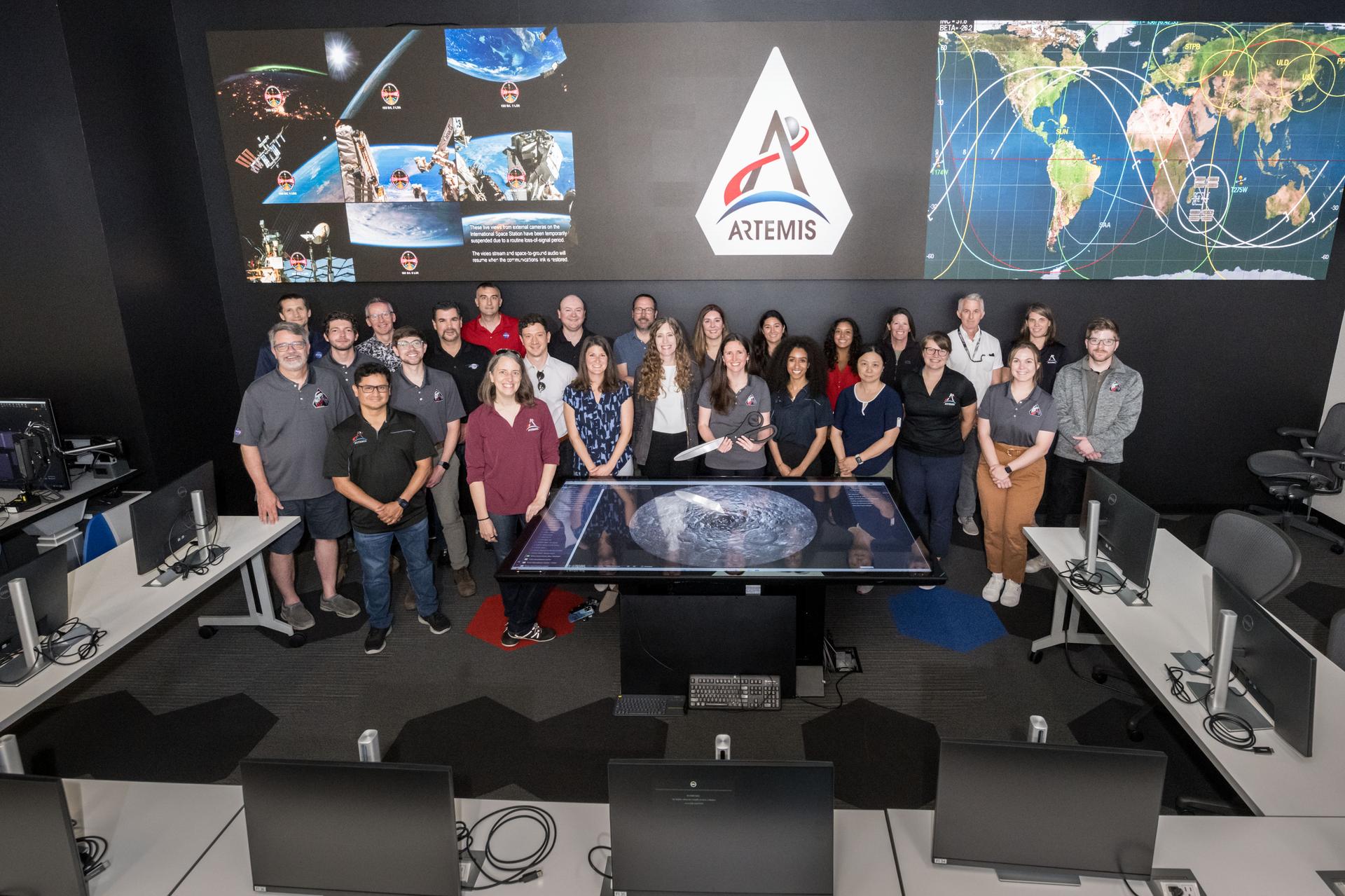
jsc2025e057255 --- NASA’s Artemis III lunar science team is pictured in the Science Evaluation Room (SER) at the agency’s Johnson Space Center in Houston. Located in the Christopher C. Kraft Jr. Mission Control Center, the SER supports the mission’s main flight control room for lunar science and planetary observations. Built specifically for Artemis missions with these science priorities in mind, the SER is equipped to support rapid data interpretation, collaborative analysis, real-time decision making, and seamless coordination between the science and operations teams.
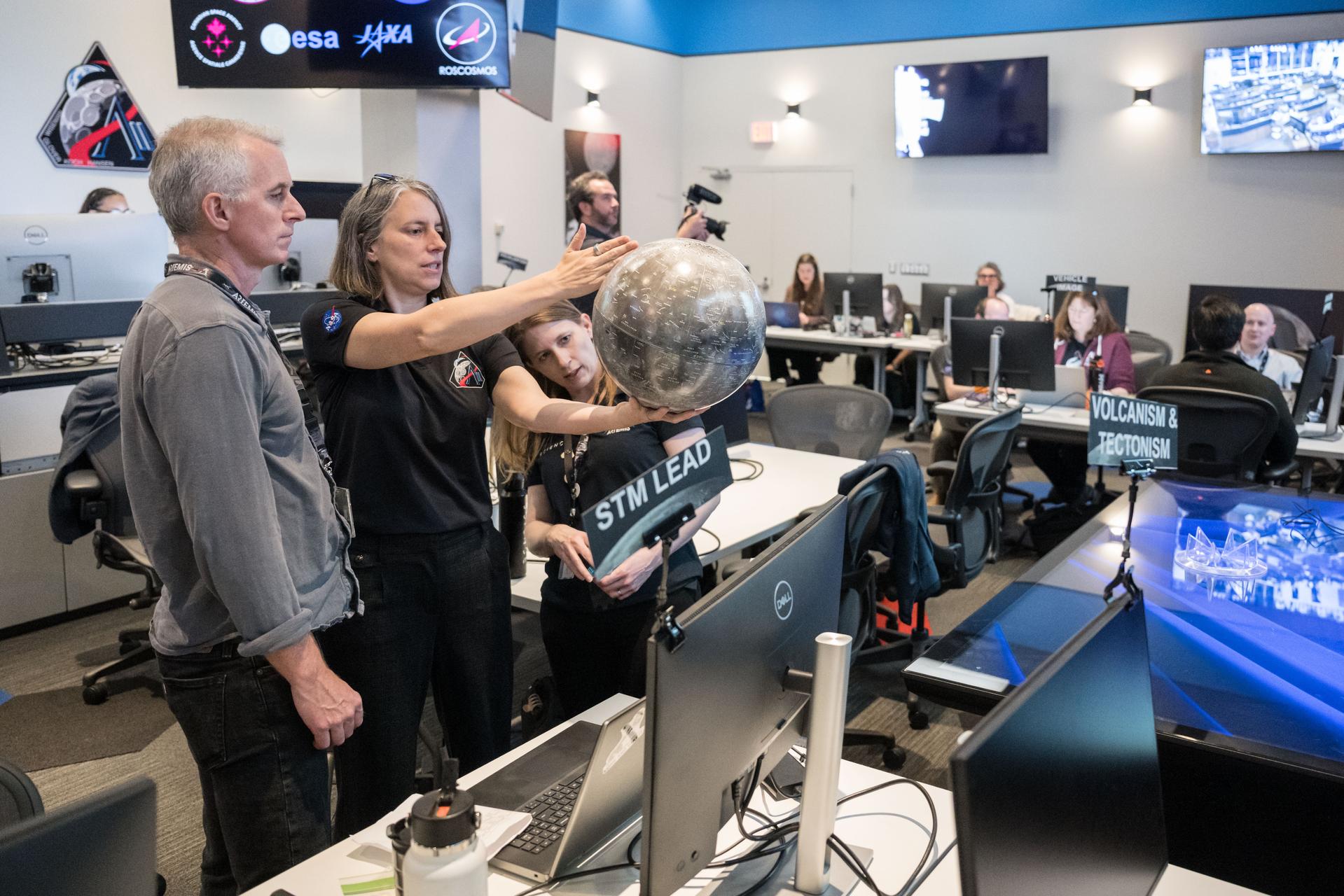
Artemis II lunar science team members, from left, Ryan Ewing, Juliane Gross, and Debra Needham, discuss lunar geography ahead of the translunar injection burn that accelerated the Orion spacecraft to break free of Earth’s orbit and began the outbound trajectory toward the Moon. They are in the Science Evaluation Room (SER) a back room that supports lunar science and planetary observations for the Artemis science officer in the mission’s main flight control room. Built specifically for Artemis missions with these science priorities in mind, the SER is equipped to support rapid data interpretation, collaborative analysis, real-time decision making, and seamless coordination between the science and operations teams.
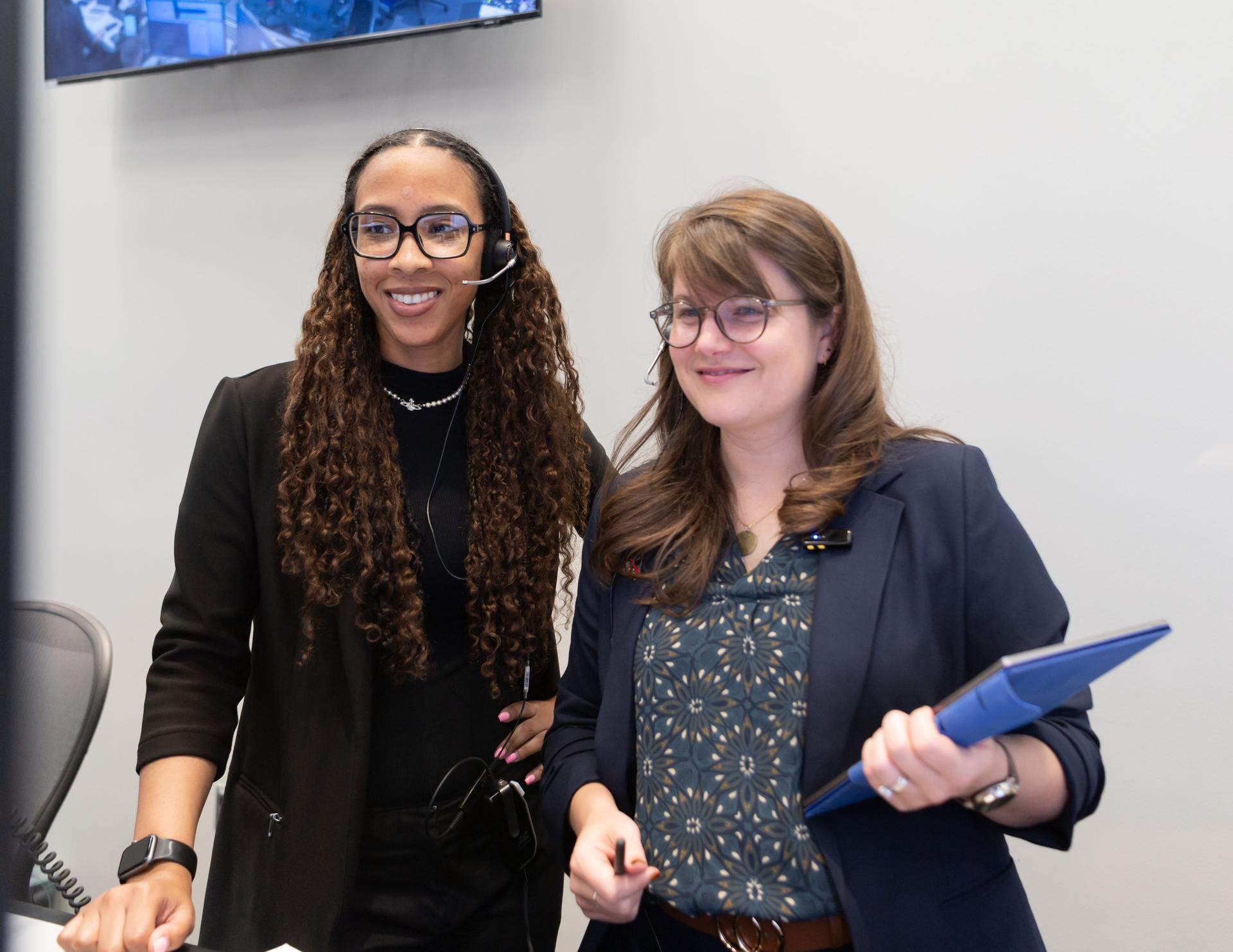
Science evaluation room communicator, Kiarre Dumes, left, and deputy lunar science lead Marie Henderson work in the Science Evaluation Room (SER) during Artemis II. Built specifically for Artemis missions with these science priorities in mind, the SER is equipped to support rapid data interpretation, collaborative analysis, real-time decision making, and seamless coordination between the science and operations teams. Credits: NASA/Luna Posadas Nava
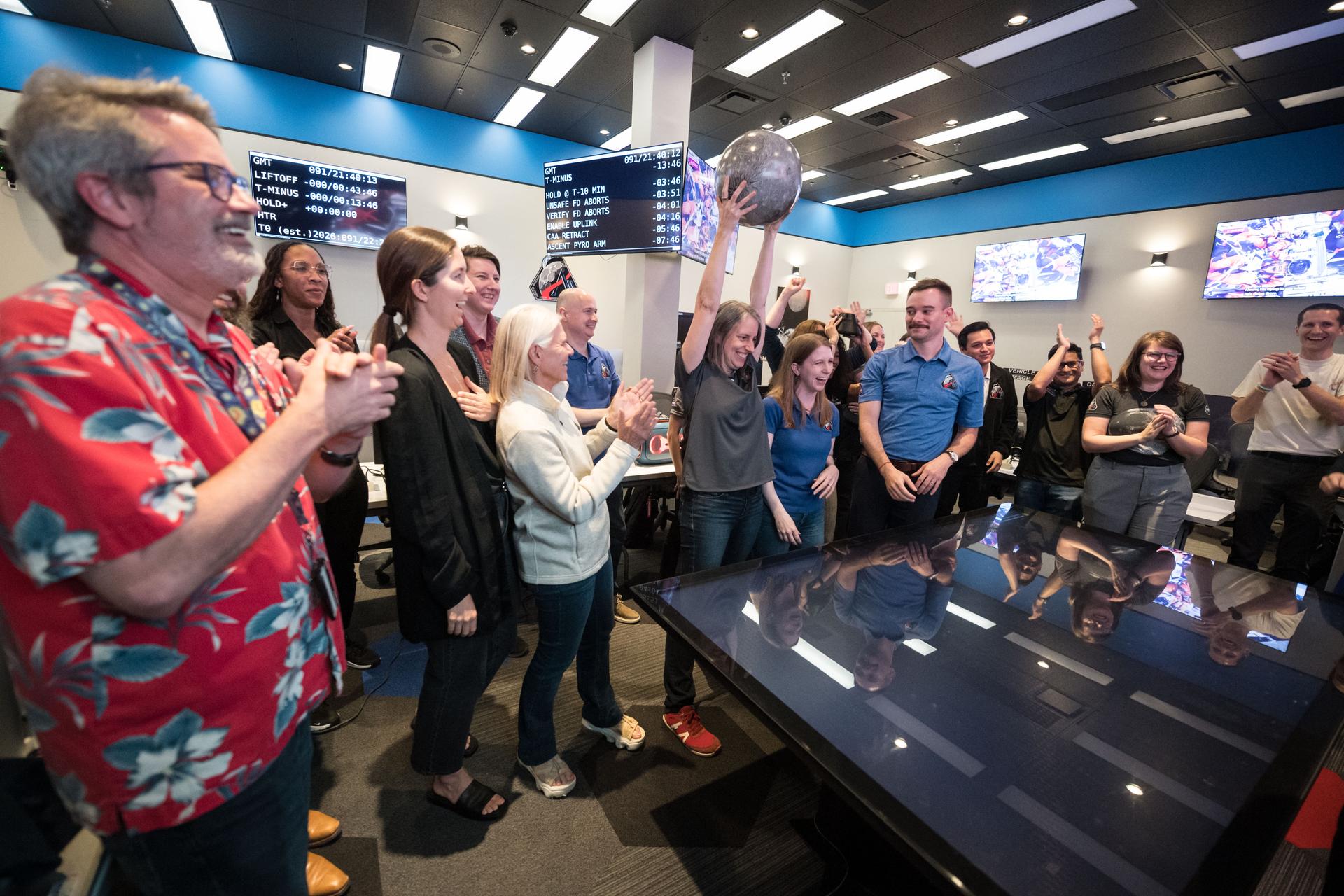
Members of the Artemis lunar science team cheer as they gather to watch the Artemis II launch broadcast from the Science Evaluation Room (SER) in Mission Control at NASA's Johnson Space Center in Houston. The SER supports lunar science and planetary observations for the Artemis science officer in the mission’s main flight control room. Built specifically for Artemis missions with these science priorities in mind, the SER is equipped to support rapid data interpretation, collaborative analysis, real-time decision making, and seamless coordination between the science and operations teams. Credits: NASA/Mark Sowa.
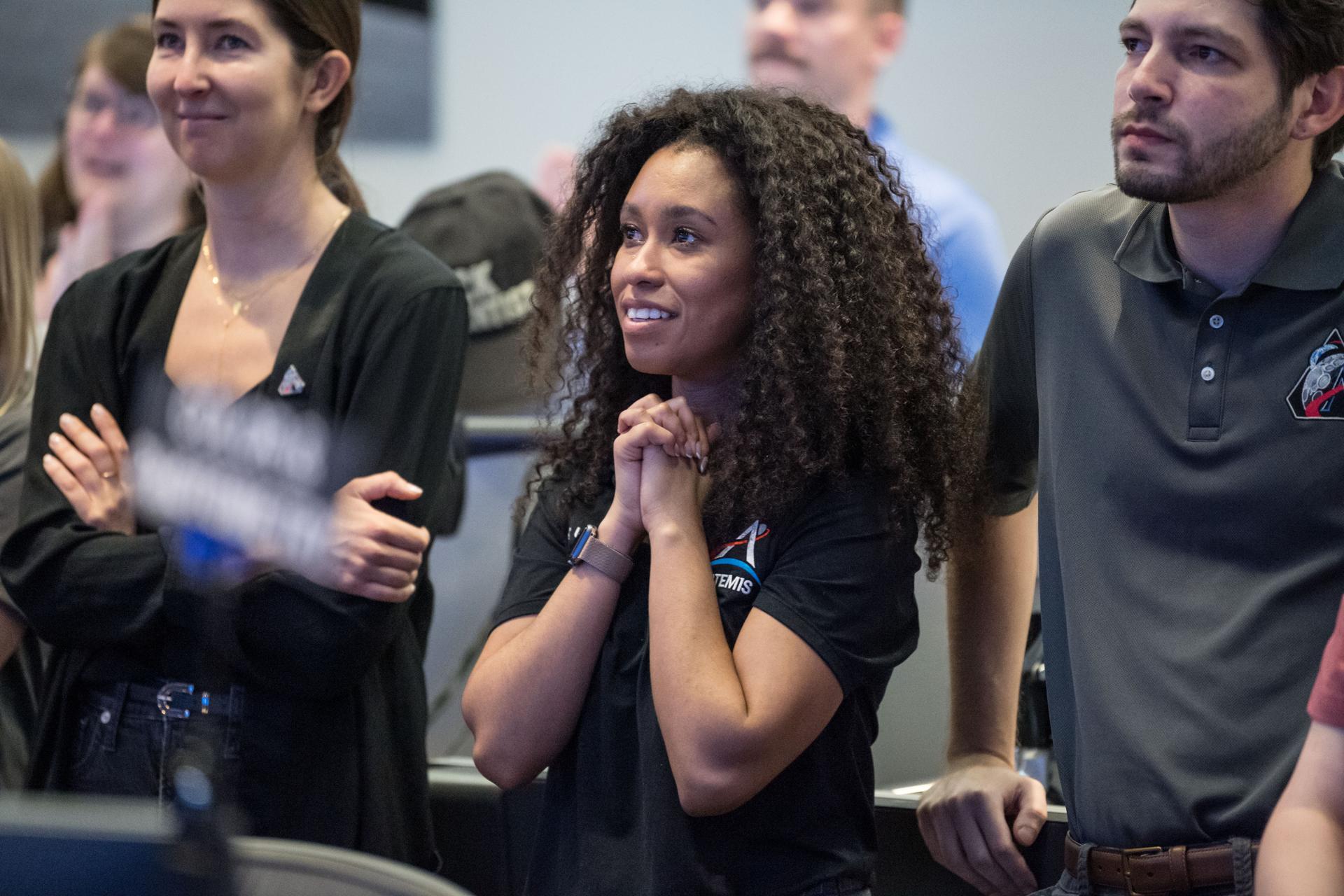
Members of the Artemis lunar science team, from left, Ariel Deutsch, Amber Turner, and Wilfredo Garcia-Lopez, watch the Artemis II launch from the Science Evaluation Room (SER) in Mission Control at Johnson Space Center in Houston. The SER supports lunar science and planetary observations for the Artemis science officer in the mission’s main flight control room. Built specifically for Artemis missions with these science priorities in mind, the SER is equipped to support rapid data interpretation, collaborative analysis, real-time decision making, and seamless coordination between the science and operations teams. Credits: NASA/Mark Sowa.
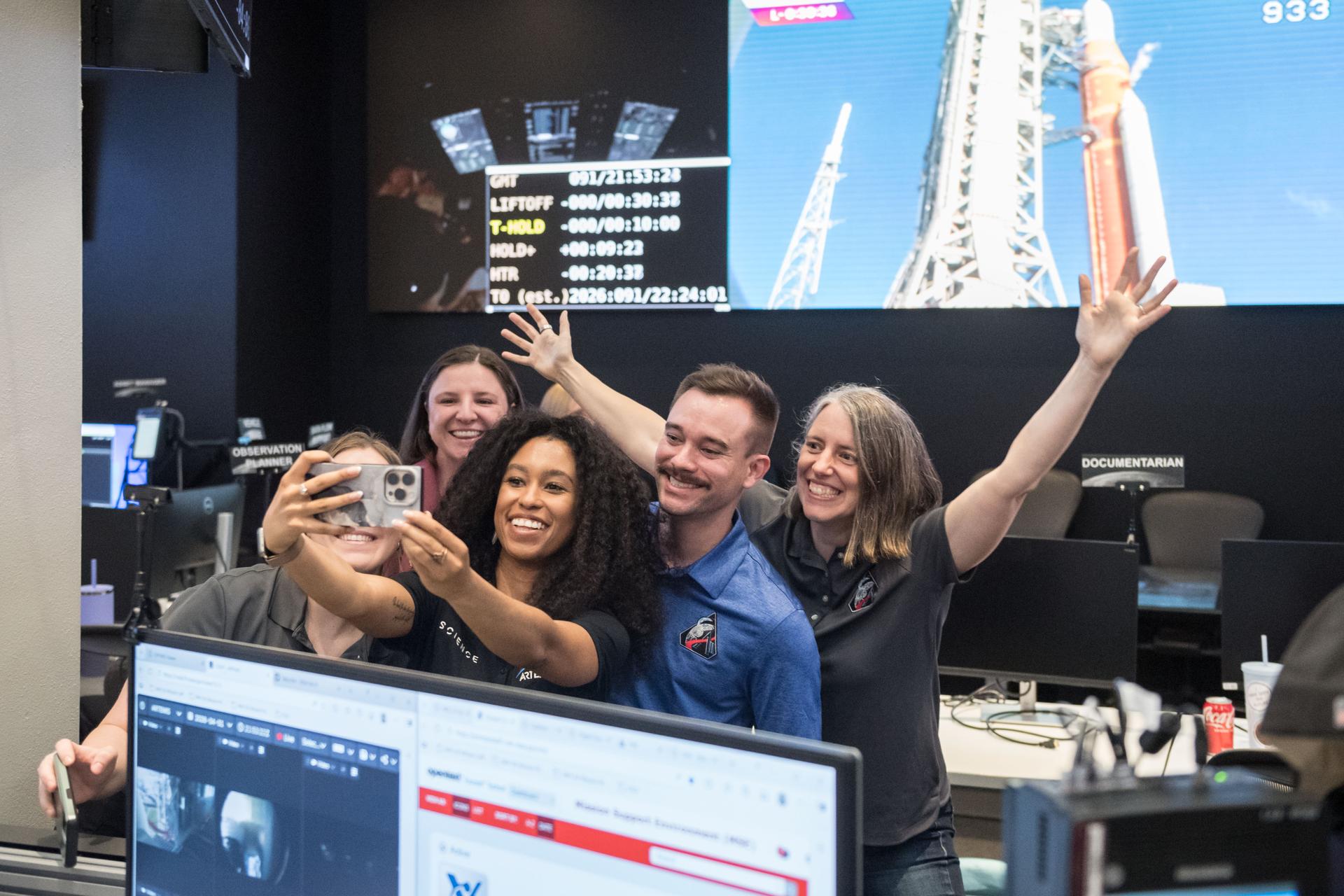
Members of the Artemis lunar science team, from left, Sara Schmidt, Megan Borel, Amber Turner, Jacob Richardson, and Juliane Gross pose for a selfie with the Artemis II launch broadcast on the screen behind them in the Science Evaluation Room (SER) in Mission Control at NASA's Johnson Space Center in Houston. The SER supports lunar science and planetary observations for the Artemis science officer in the mission’s main flight control room. Built specifically for Artemis missions with these science priorities in mind, the SER is equipped to support rapid data interpretation, collaborative analysis, real-time decision making, and seamless coordination between the science and operations teams. Credits: NASA/Mark Sowa.
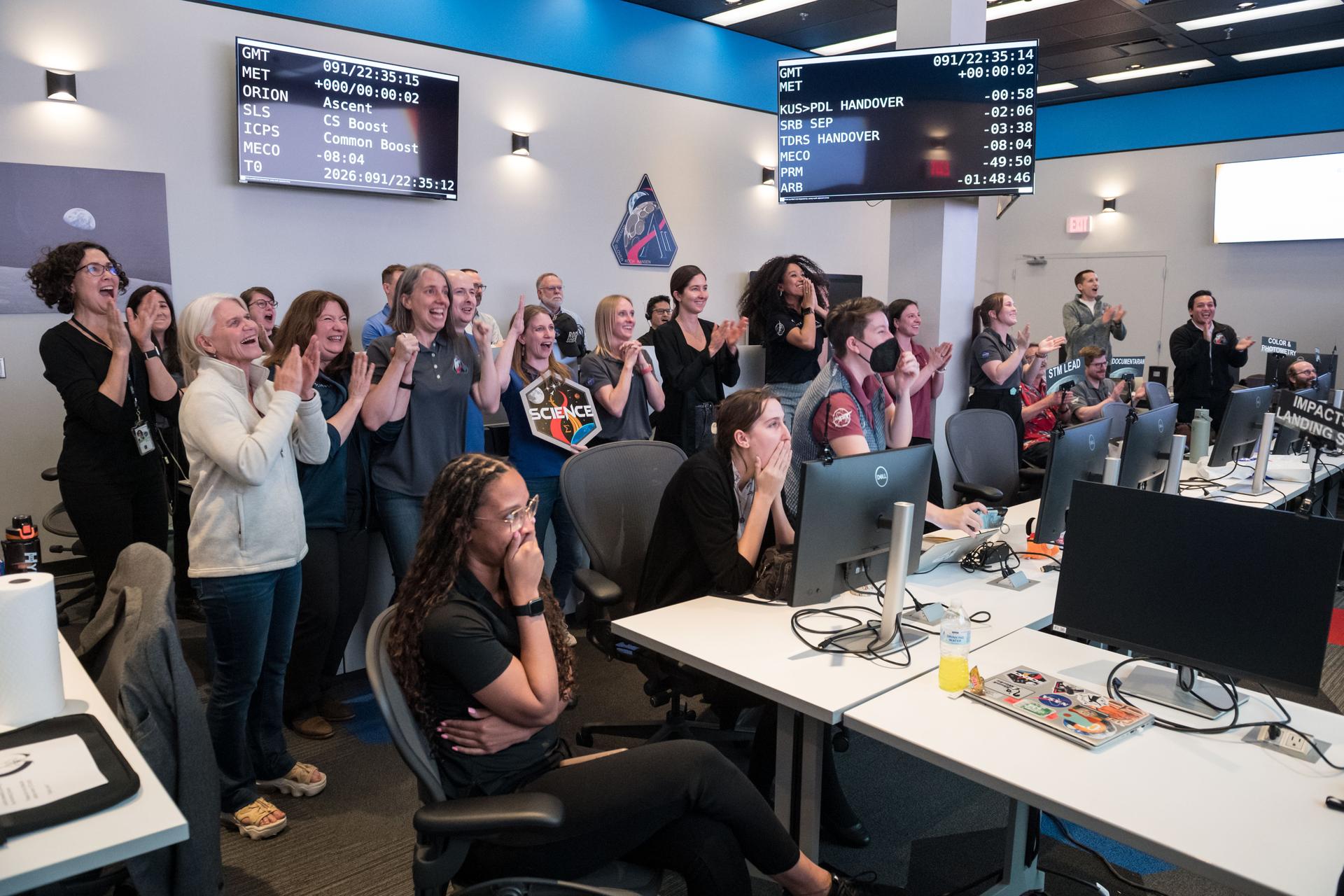
Members of the Artemis lunar science team celebrate the Artemis II launch as they watch from the Science Evaluation Room (SER) in Mission Control at NASA's Johnson Space Center in Houston. The SER supports lunar science and planetary observations for the Artemis science officer in the mission’s main flight control room. Built specifically for Artemis missions with these science priorities in mind, the SER is equipped to support rapid data interpretation, collaborative analysis, real-time decision making, and seamless coordination between the science and operations teams. Credits: NASA/Mark Sowa.
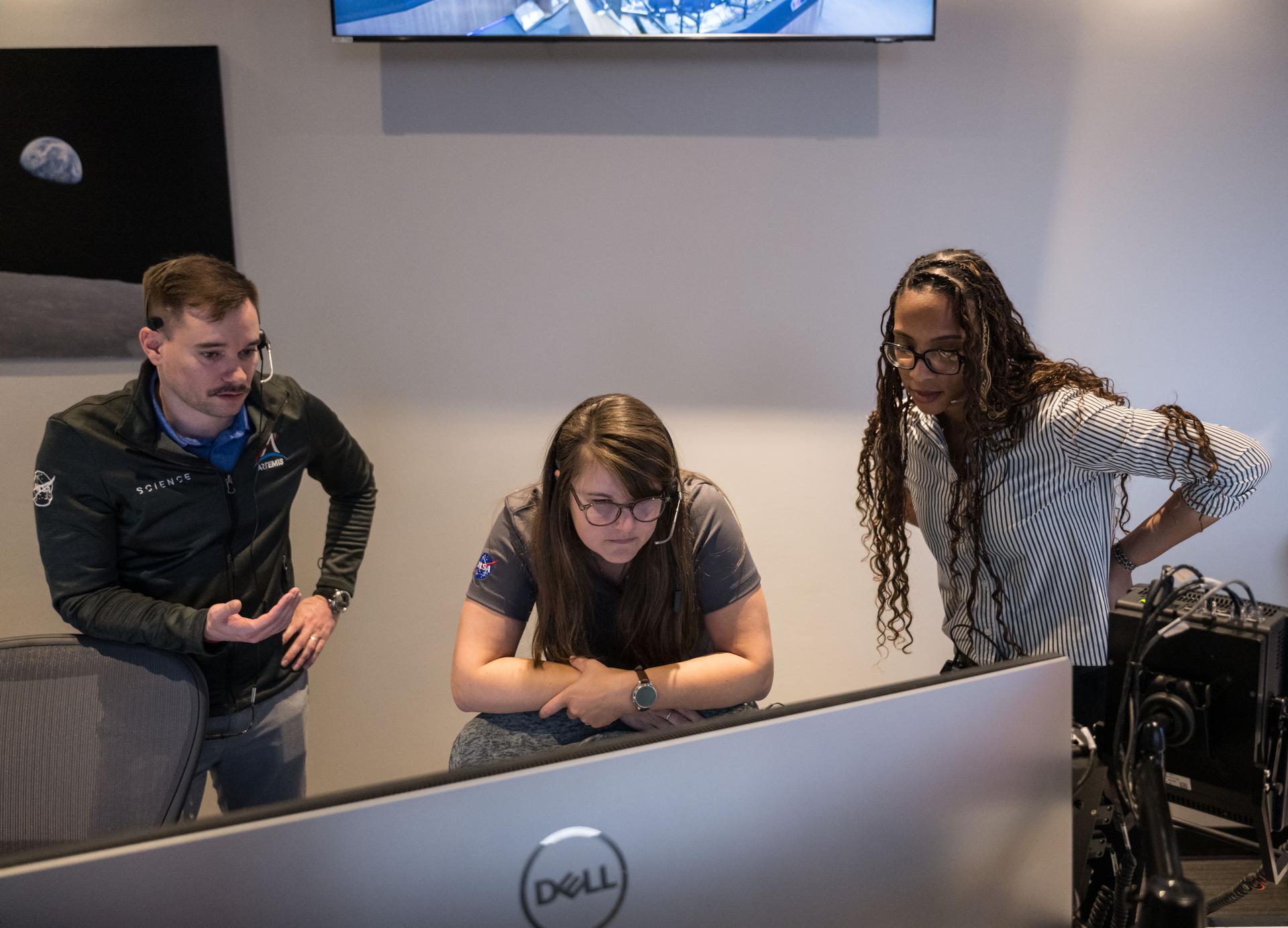
jsc2026e000848 --- Artemis lunar science team members, from left, Jacob Richardson, Marie Henderson, and Kiarre Dumes, monitor a lunar flyby simulation from the Science Evaluation Room (SER) at the NASA’s Johnson Space Center in Houston. Located in the Christopher C. Kraft Jr. Mission Control Center, the SER supports the mission’s main flight control room for lunar science and planetary observations. Built specifically for Artemis missions with these science priorities in mind, the SER is equipped to support rapid data interpretation, collaborative analysis, real-time decision making, and seamless coordination between the science and operations teams. Credit: James Blair
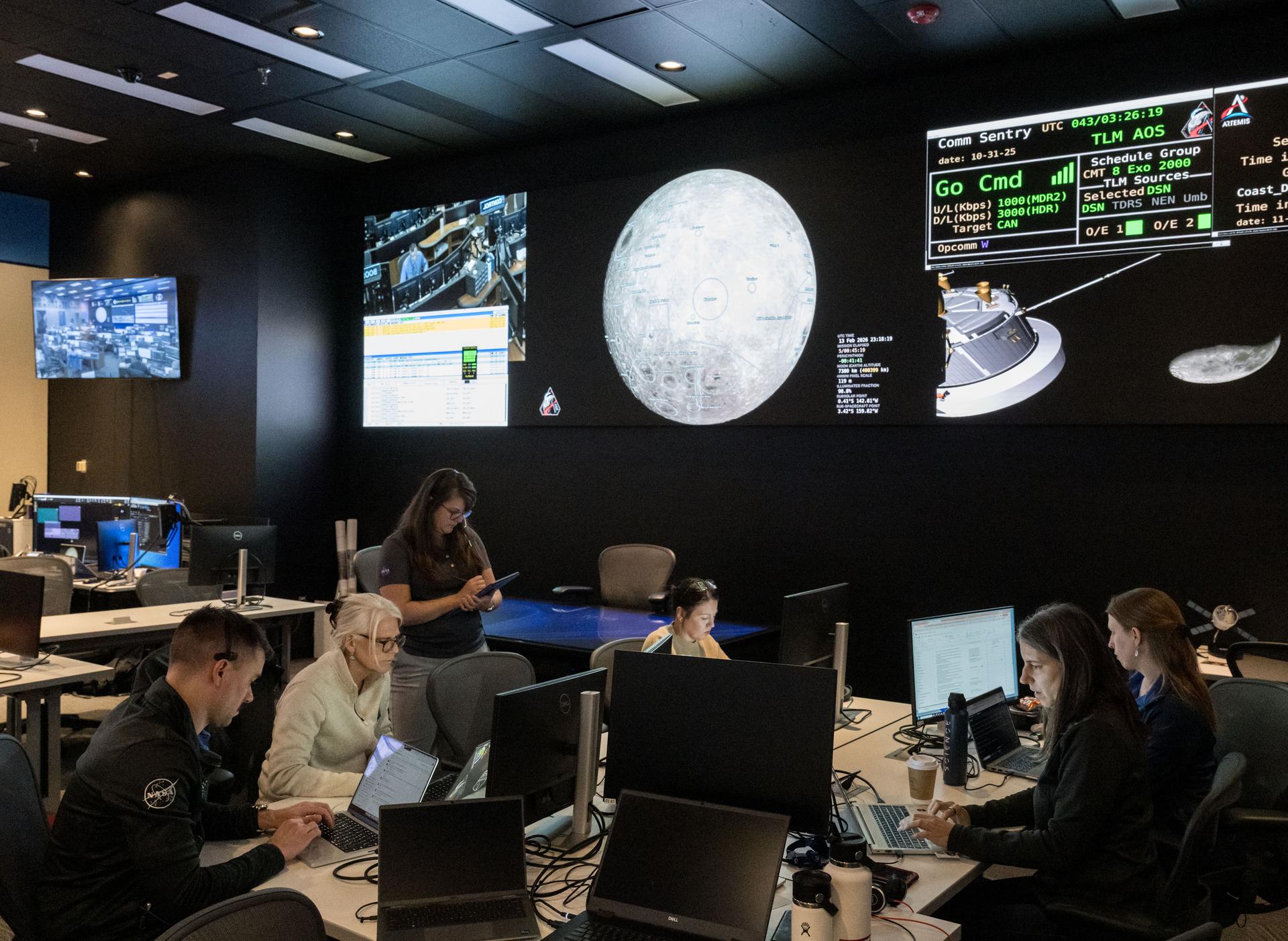
jsc2026e000849 --- The Artemis II Lunar Science Team works in the Science Evaluation Room (SER) during a training simulation at the NASA’s Johnson Space Center in Houston. Located in the Christopher C. Kraft Jr. Mission Control Center, the SER supports the mission’s main flight control room for lunar science and planetary observations. Built specifically for Artemis missions with these science priorities in mind, the SER is equipped to support rapid data interpretation, collaborative analysis, real-time decision making, and seamless coordination between the science and operations teams. Credit: James Blair
Artemis II lunar science team members, from left, Ryan Ewing, and Barbara Cohen, react to crew observations during the lunar flyby on April 6, 2026. The team worked in the Science Evaluation Room (SER) in Mission Control at NASA’s Johnson Space Center in Houston. Built specifically for Artemis missions with these science priorities in mind, the SER is equipped to support rapid data interpretation, collaborative analysis, real-time decision making, and seamless coordination between the science and operations teams. Credits: NASA/Luna Posadas Nava
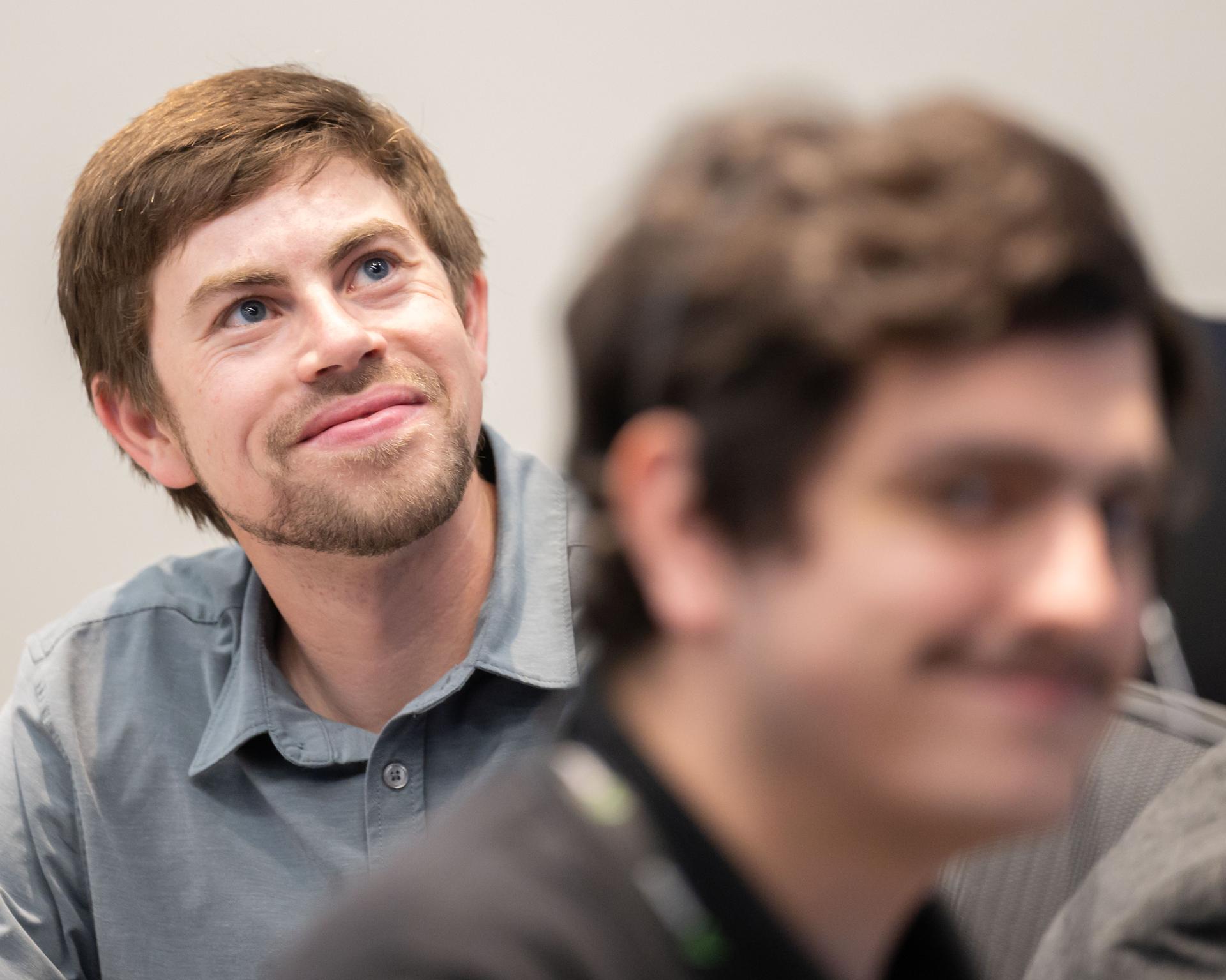
Artemis II crew lunar observations team member, Alex Stoken, monitors the mission from the Science Evaluation Room (SER). Built specifically for Artemis missions with these science priorities in mind, the SER is equipped to support rapid data interpretation, collaborative analysis, real-time decision making, and seamless coordination between the science and operations teams. Credits: NASA/Luna Posadas Nava
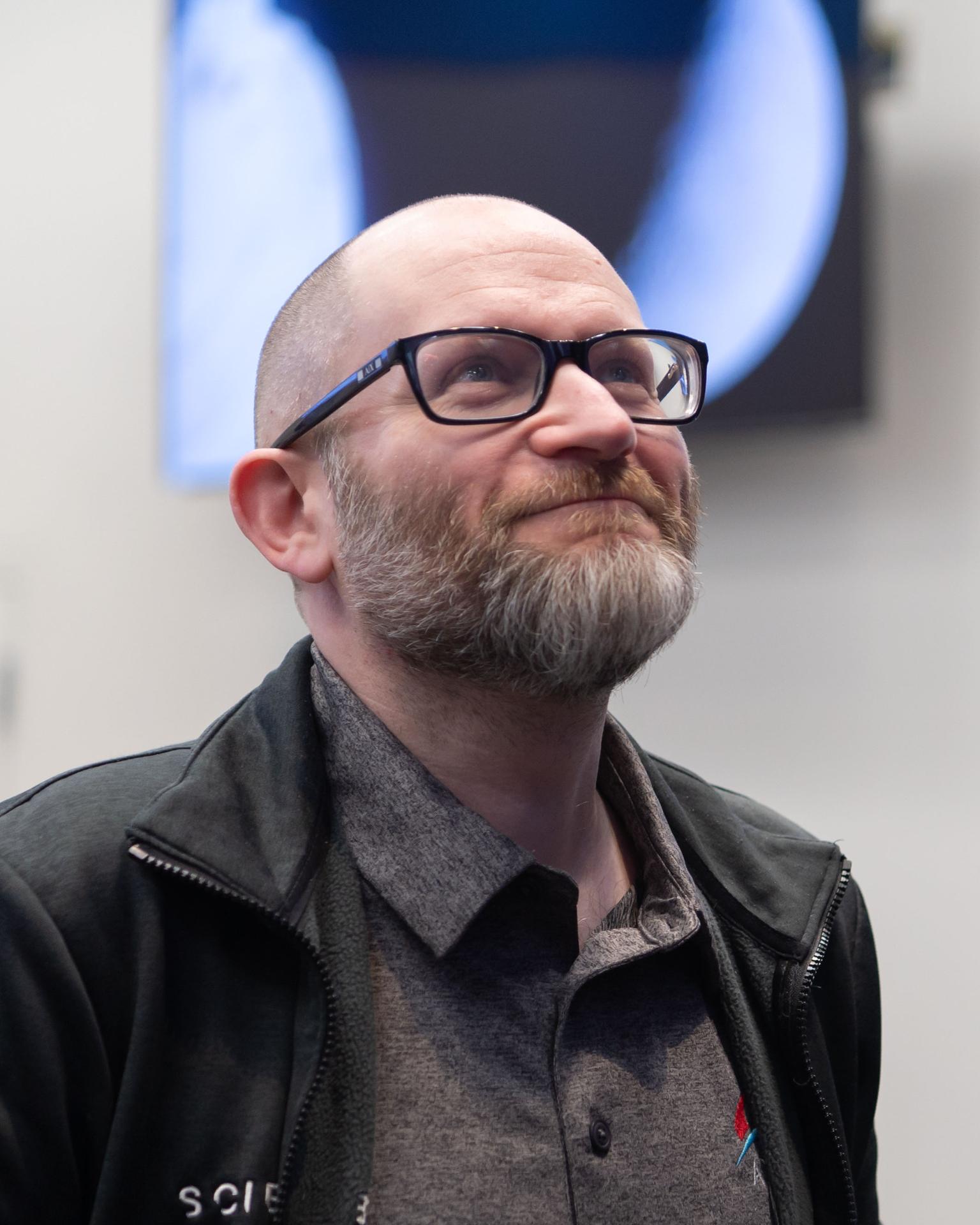
Artemis II crew lunar observations team member, David Charney, monitors the mission from the Science Evaluation Room (SER). Built specifically for Artemis missions with these science priorities in mind, the SER is equipped to support rapid data interpretation, collaborative analysis, real-time decision making, and seamless coordination between the science and operations teams. Credits: NASA/Luna Posadas Nava
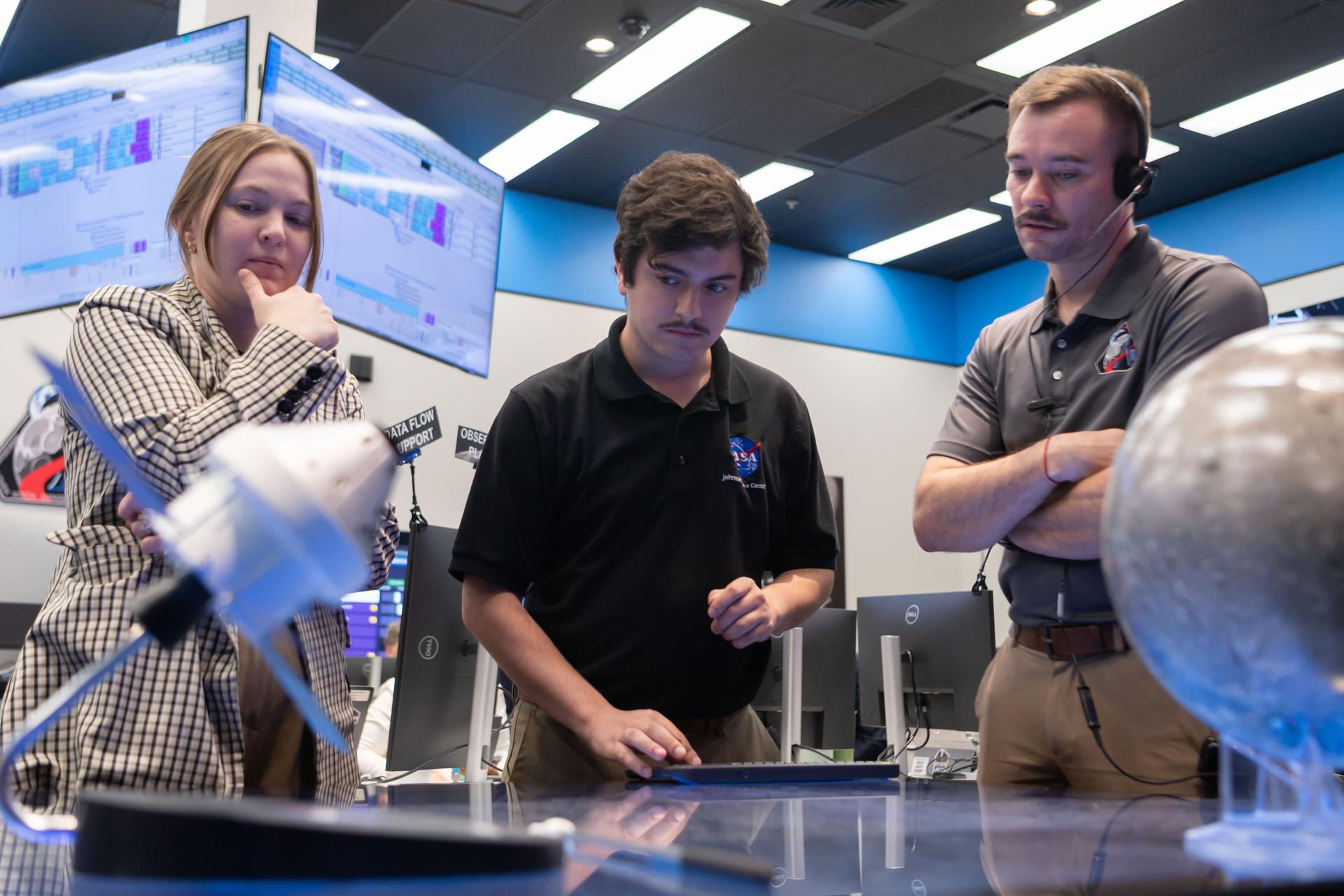
Crew lunar observations team member, Sara Schmidt, left, asset manager, Luke McSherry, and Artemis deputy lunar science lead, Jacob Richardson work in the Science Evaluation Room (SER). Built specifically for Artemis missions with these science priorities in mind, the SER is equipped to support rapid data interpretation, collaborative analysis, real-time decision making, and seamless coordination between the science and operations teams. Credits: NASA/Luna Posadas Nava
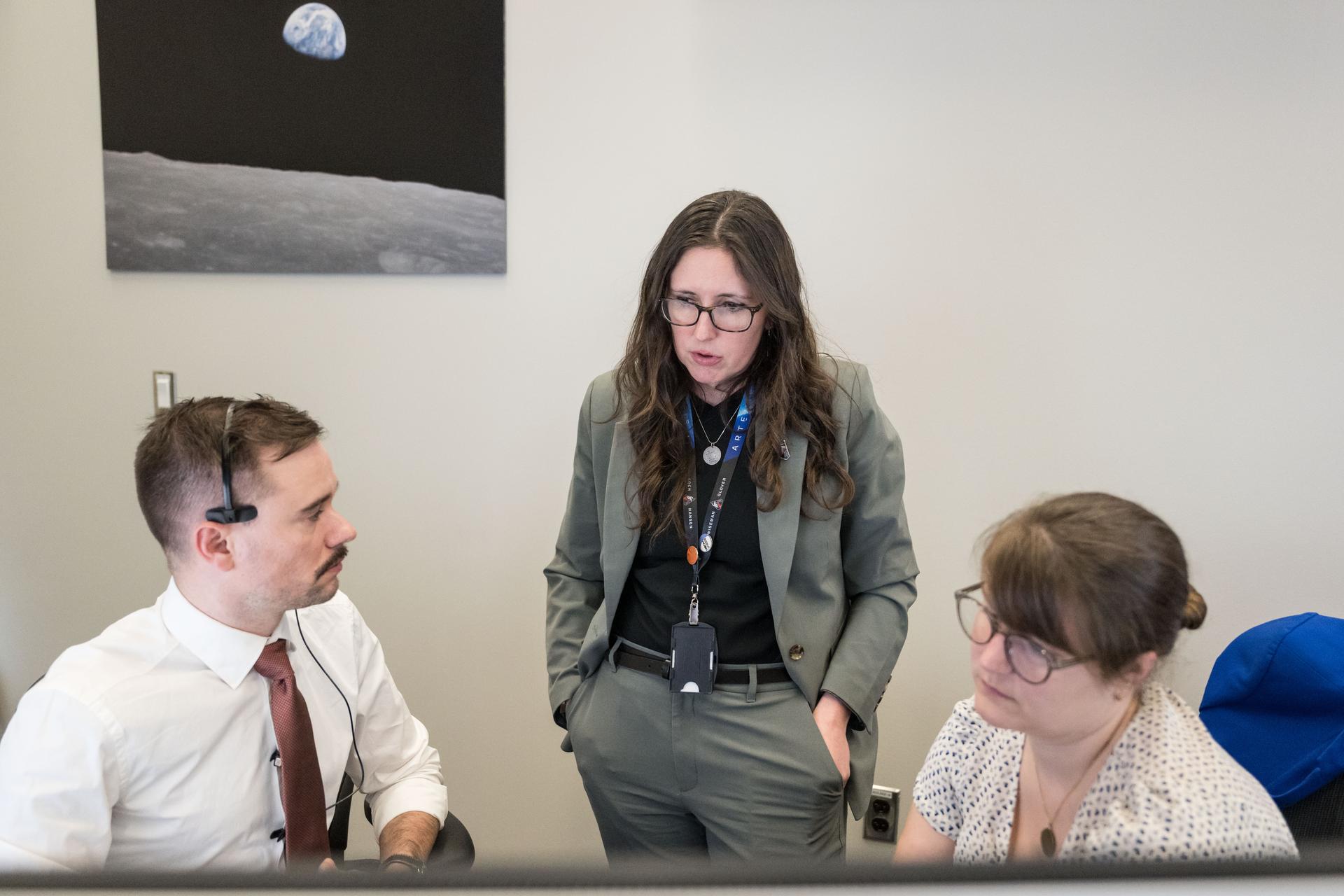
Artemis II lunar science team members, from left, Barbara Cohen, Jennifer Heldmann, and Anthony Colaprete, work in the Science Evaluation Room (SER). Built specifically for Artemis missions with these science priorities in mind, the SER is equipped to support rapid data interpretation, collaborative analysis, real-time decision making, and seamless coordination between the science and operations teams. Credits: NASA/Luna Posadas Nava
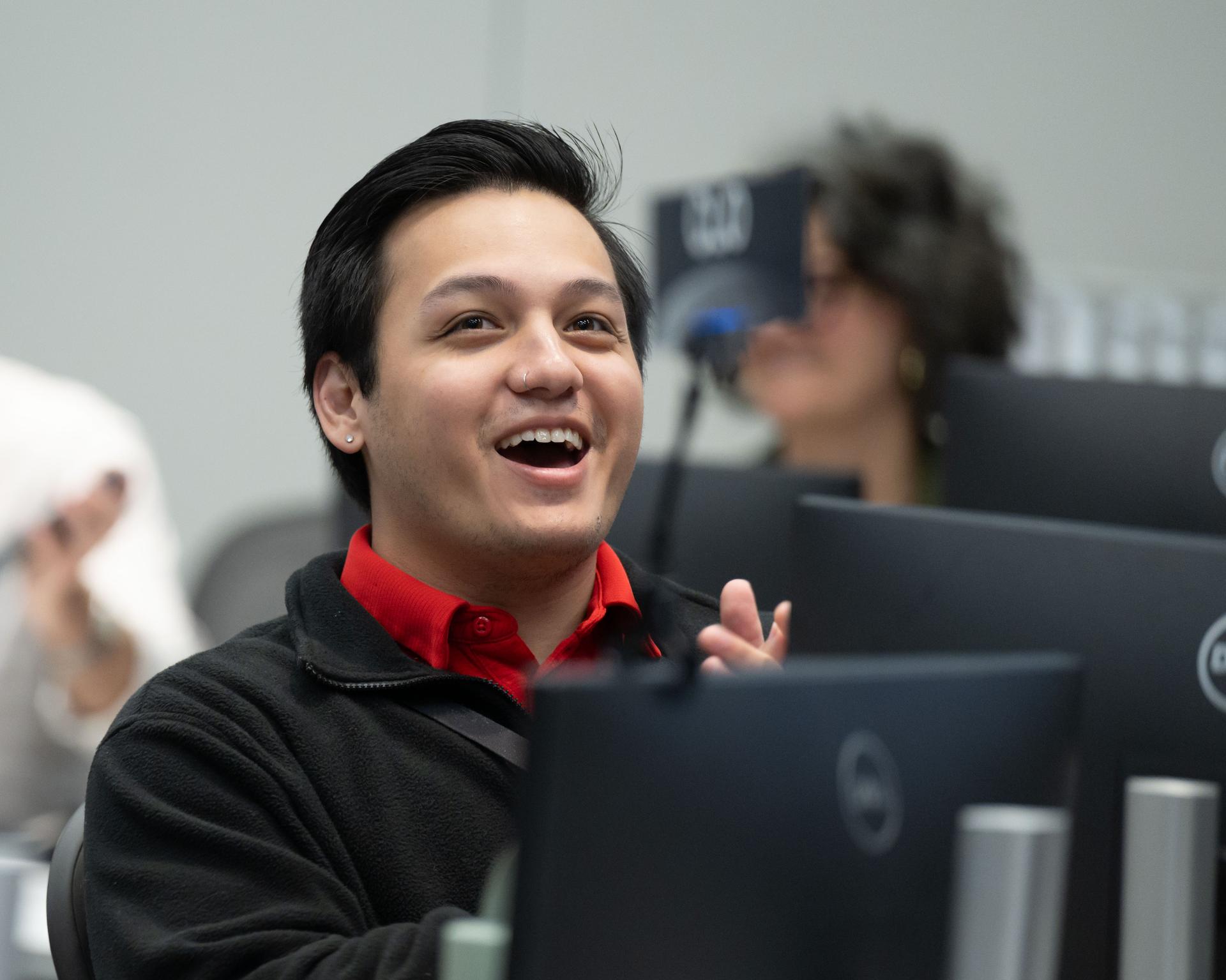
Jared Ralleta, Artemis II lunar science team member, reacts to the lunar flyby crew observations in the Science Evaluation Room (SER). Built specifically for Artemis missions with these science priorities in mind, the SER is equipped to support rapid data interpretation, collaborative analysis, real-time decision making, and seamless coordination between the science and operations teams. Credits: NASA/Luna Posadas Nava
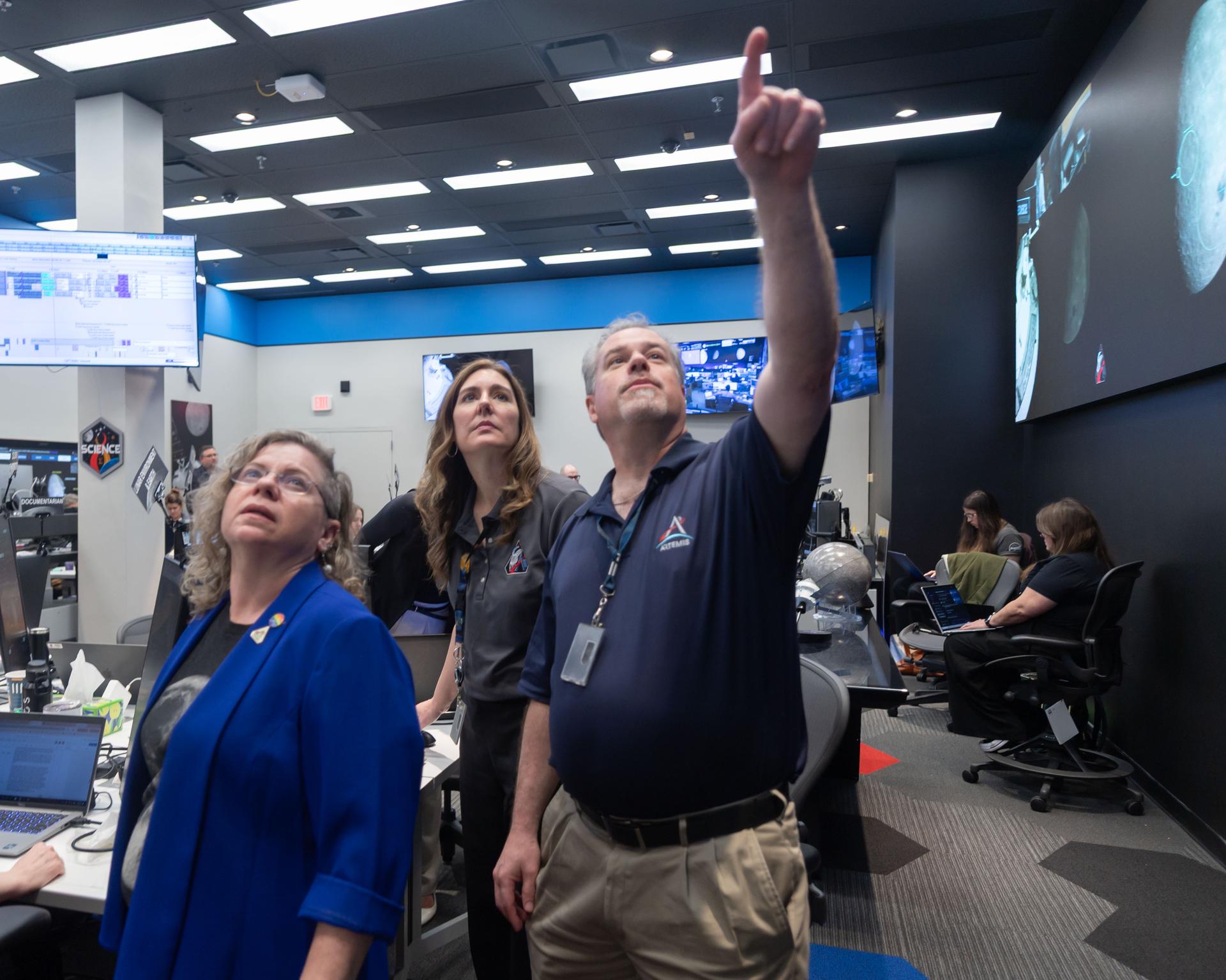
From left, Artemis II deputy lunar science lead, Jacob Richardson, science officer and lunar science lead, Kelsey Young, and deputy lunar science lead, Marie Henderson, discuss the team’s final preparations for the lunar flyby. The team worked in the Science Evaluation Room (SER) in Mission Control at NASA’s Johnson Space Center in Houston. Built specifically for Artemis missions with these science priorities in mind, the SER is equipped to support rapid data interpretation, collaborative analysis, real-time decision making, and seamless coordination between the science and operations teams. Credits: NASA/ Robert Markowitz
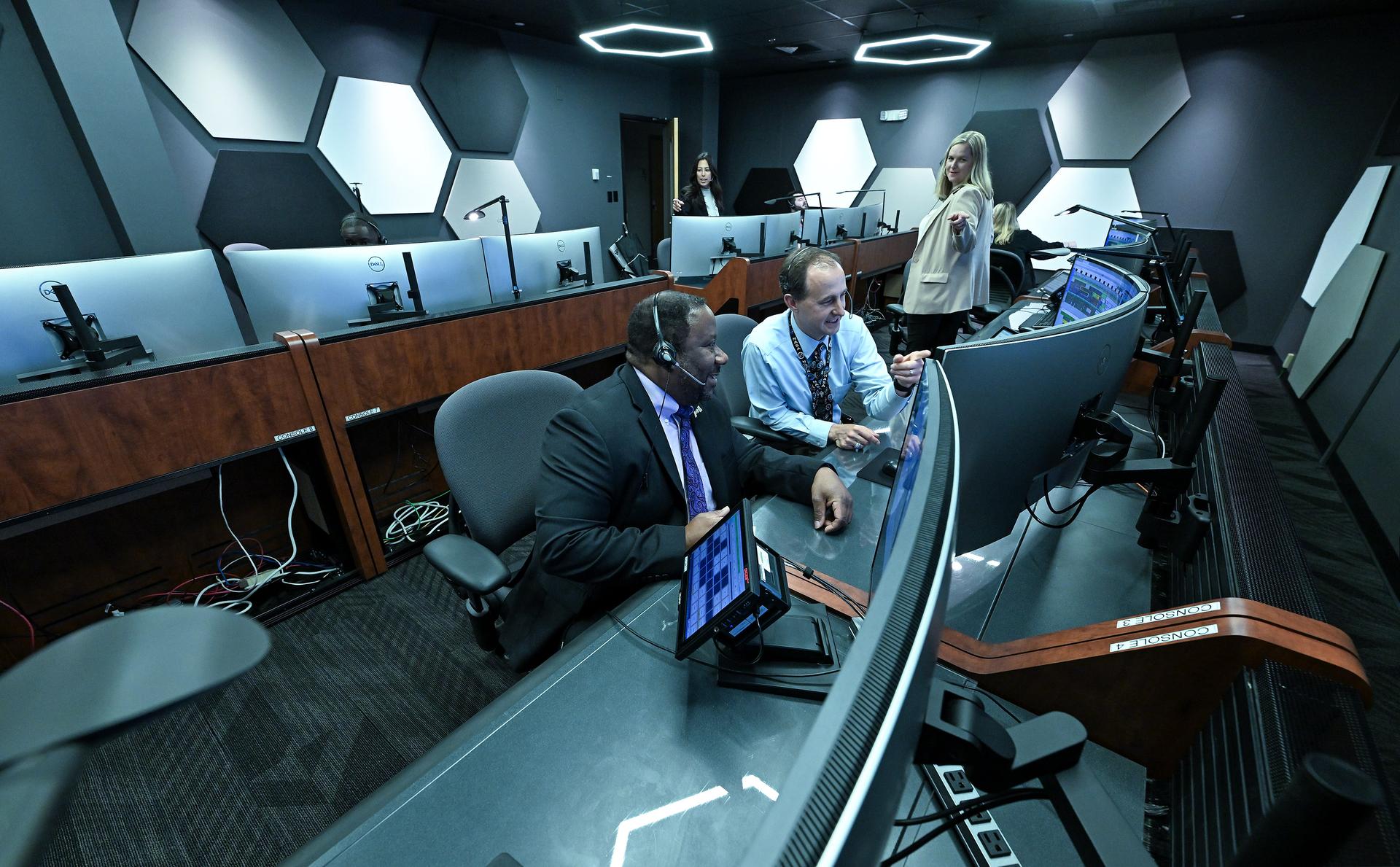
These photos offer a look inside the twin control rooms at NASA’s Marshall Space Flight Center in Huntsville, Alabama, where engineers will monitor Artemis science and future landing operations for Artemis. The LUCA (Lunar Utilization Control Area) and LESA (Lander Engineering Support Area) rooms are part of the Huntsville Operations Support Center at NASA Marshall. The LUCA is specially designed to support a wide variety of science operations on and around the Moon – and beyond. Engineers in the LUCA monitored operations for the Lunar Node-1 experiment, an autonomous navigation payload that was part of the first NASA Commercial Lunar Payload Services (CLPS) launch on Intuitive Machines’ Nova-C lunar lander in 2024. NASA Marshall flight controllers will use the LUCA again for Artemis II to monitor science operations. Beginning with Artemis III, members of the NASA Human Landing System Mission Insight Support Team – a group of engineers, safety leads, flight operations experts, and technical authorities – will work in the LESA. There, they will monitor lander systems in real-time and be involved in key decision-making processes throughout the mission. For more information, contact NASA Marshall’s Office of Communications at 256-544-0034.
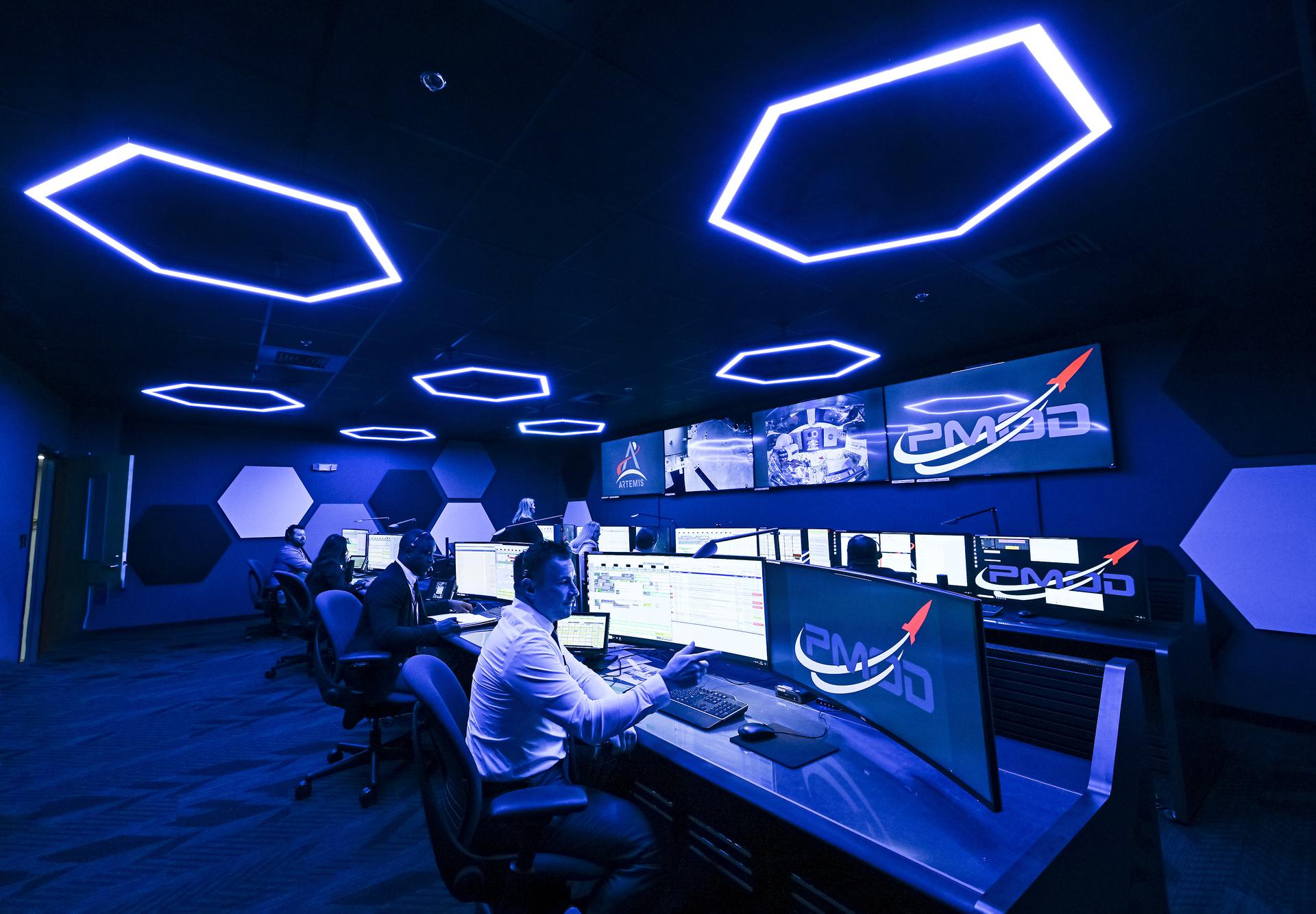
These photos offer a look inside the twin control rooms at NASA’s Marshall Space Flight Center in Huntsville, Alabama, where engineers will monitor Artemis science and future landing operations for Artemis. The LUCA (Lunar Utilization Control Area) and LESA (Lander Engineering Support Area) rooms are part of the Huntsville Operations Support Center at NASA Marshall. The LUCA is specially designed to support a wide variety of science operations on and around the Moon – and beyond. Engineers in the LUCA monitored operations for the Lunar Node-1 experiment, an autonomous navigation payload that was part of the first NASA Commercial Lunar Payload Services (CLPS) launch on Intuitive Machines’ Nova-C lunar lander in 2024. NASA Marshall flight controllers will use the LUCA again for Artemis II to monitor science operations. Beginning with Artemis III, members of the NASA Human Landing System Mission Insight Support Team – a group of engineers, safety leads, flight operations experts, and technical authorities – will work in the LESA. There, they will monitor lander systems in real-time and be involved in key decision-making processes throughout the mission. For more information, contact NASA Marshall’s Office of Communications at 256-544-0034.
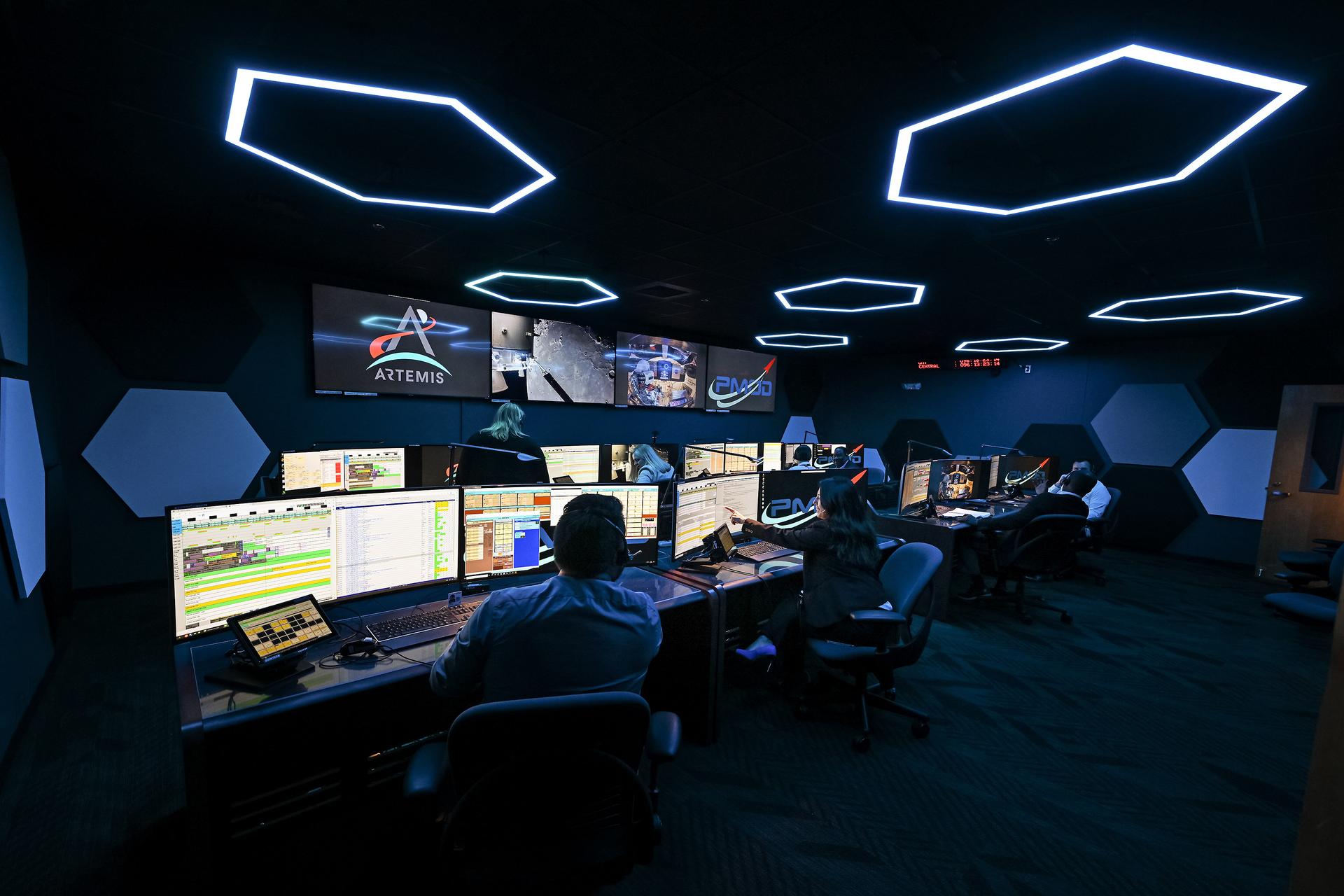
These photos offer a look inside the twin control rooms at NASA’s Marshall Space Flight Center in Huntsville, Alabama, where engineers will monitor Artemis science and future landing operations for Artemis. The LUCA (Lunar Utilization Control Area) and LESA (Lander Engineering Support Area) rooms are part of the Huntsville Operations Support Center at NASA Marshall. The LUCA is specially designed to support a wide variety of science operations on and around the Moon – and beyond. Engineers in the LUCA monitored operations for the Lunar Node-1 experiment, an autonomous navigation payload that was part of the first NASA Commercial Lunar Payload Services (CLPS) launch on Intuitive Machines’ Nova-C lunar lander in 2024. NASA Marshall flight controllers will use the LUCA again for Artemis II to monitor science operations. Beginning with Artemis III, members of the NASA Human Landing System Mission Insight Support Team – a group of engineers, safety leads, flight operations experts, and technical authorities – will work in the LESA. There, they will monitor lander systems in real-time and be involved in key decision-making processes throughout the mission. For more information, contact NASA Marshall’s Office of Communications at 256-544-0034.

Artemis II lunar science team member, Juliane Gross, center, and the extended lunar science team behind her, celebrates crew observations made during the lunar flyby on April 6. The team worked in the Science Evaluation Room (SER) in Mission Control at NASA’s Johnson Space Center in Houston. Built specifically for Artemis missions with these science priorities in mind, the SER is equipped to support rapid data interpretation, collaborative analysis, real-time decision making, and seamless coordination between the science and operations teams. Credits: NASA/Luna Posadas Nava
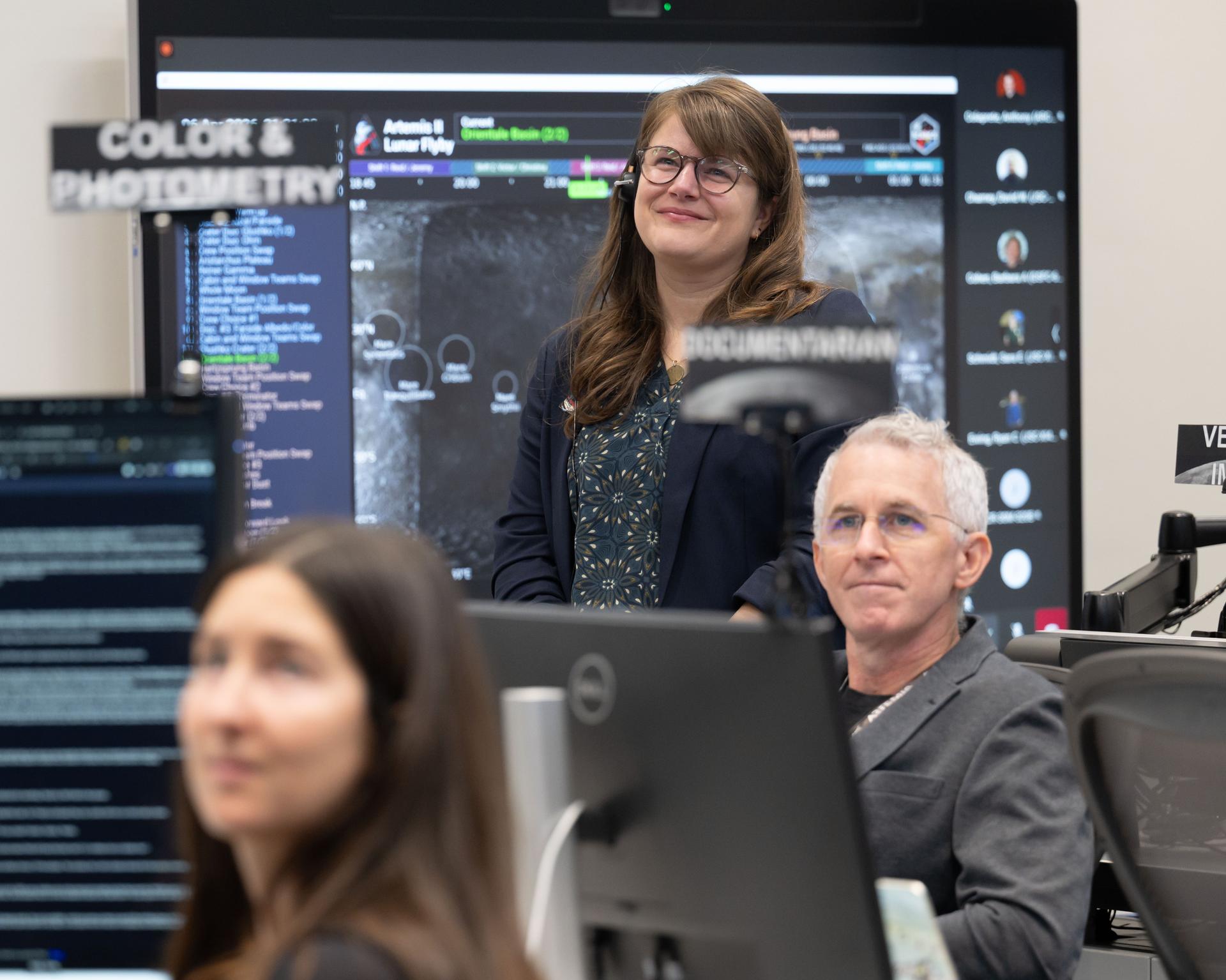
Artemis II deputy lunar science lead Marie Henderson, background, and lunar science team members, Ariel Deutsch, and Ryan Ewing, react to crew observations during the lunar flyby on April 6, 2026. The team worked in the Science Evaluation Room (SER) in Mission Control at NASA’s Johnson Space Center in Houston. Built specifically for Artemis missions with these science priorities in mind, the SER is equipped to support rapid data interpretation, collaborative analysis, real-time decision making, and seamless coordination between the science and operations teams. Credits: NASA/Luna Posadas Nava
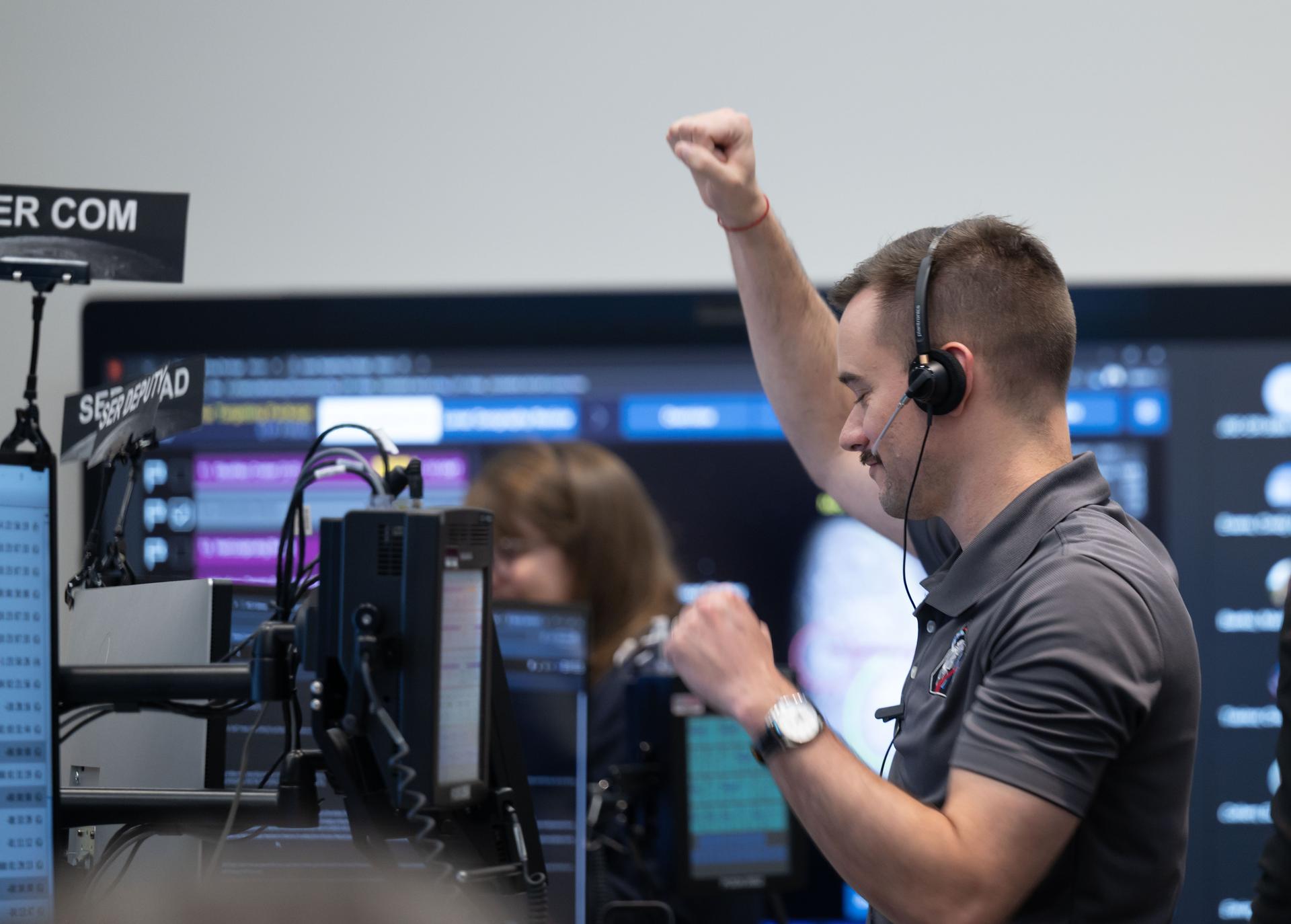
Artemis II deputy lunar science lead, Jacob Richardson, celebrates with a dance after hearing astronauts describe seeing impact flashes on the Moon during their lunar flyby on April 6, 2026. Richardson was monitoring the flyby from the Science Evaluation Room (SER) in Mission Control at NASA’s Johnson Space Center in Houston. Built specifically for Artemis missions with these science priorities in mind, the SER is equipped to support rapid data interpretation, collaborative analysis, real-time decision making, and seamless coordination between the science and operations teams. Credits: NASA/Luna Posadas Nava
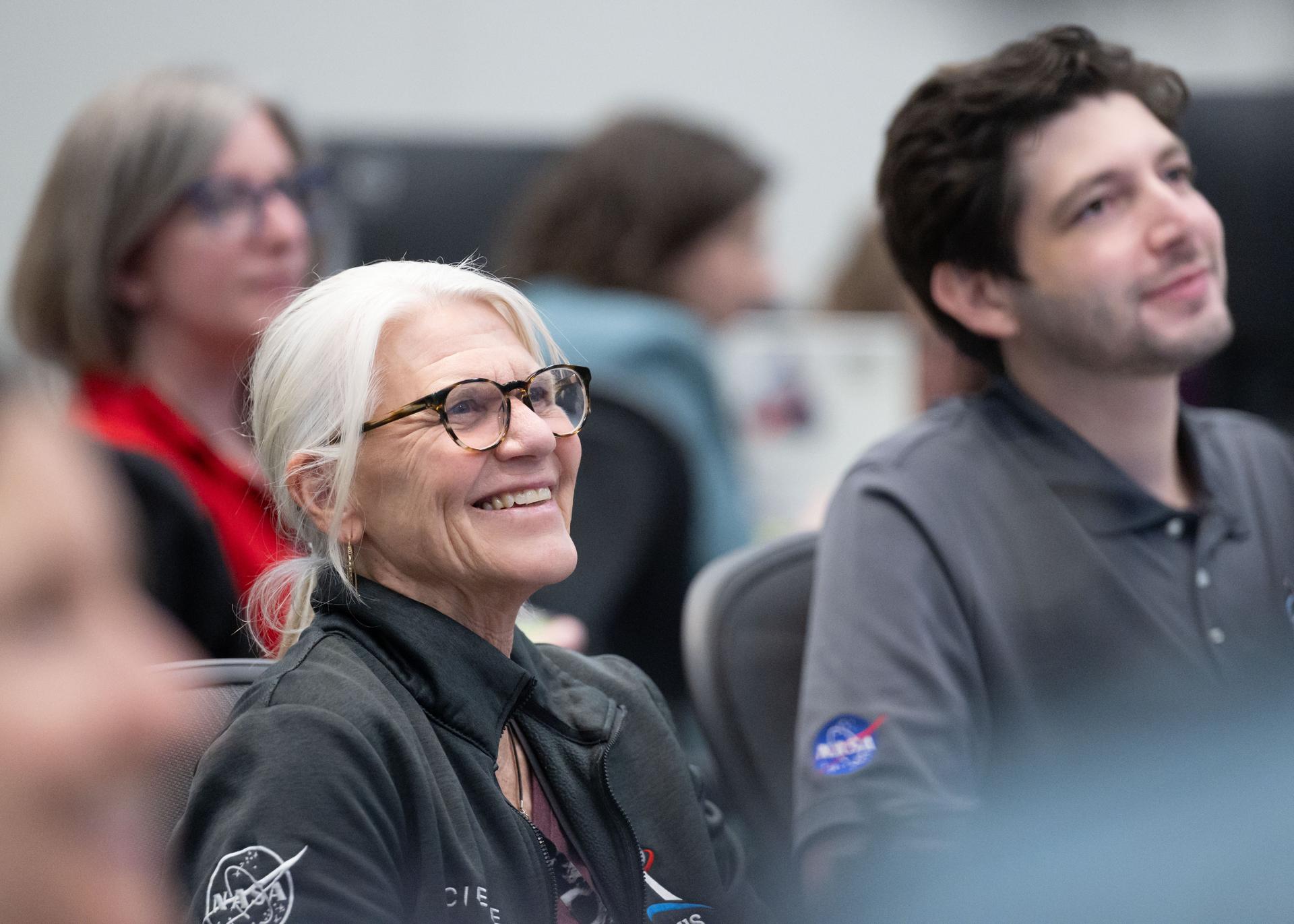
Artemis II lunar science team members, from left, Cindy Evans, and Wilfredo Garcia Lopez, react to crew observations during the lunar flyby on April 6, 2026. The team worked in the Science Evaluation Room (SER) in Mission Control at NASA’s Johnson Space Center in Houston. Built specifically for Artemis missions with these science priorities in mind, the SER is equipped to support rapid data interpretation, collaborative analysis, real-time decision making, and seamless coordination between the science and operations teams. Credits: NASA/Luna Posadas Nava
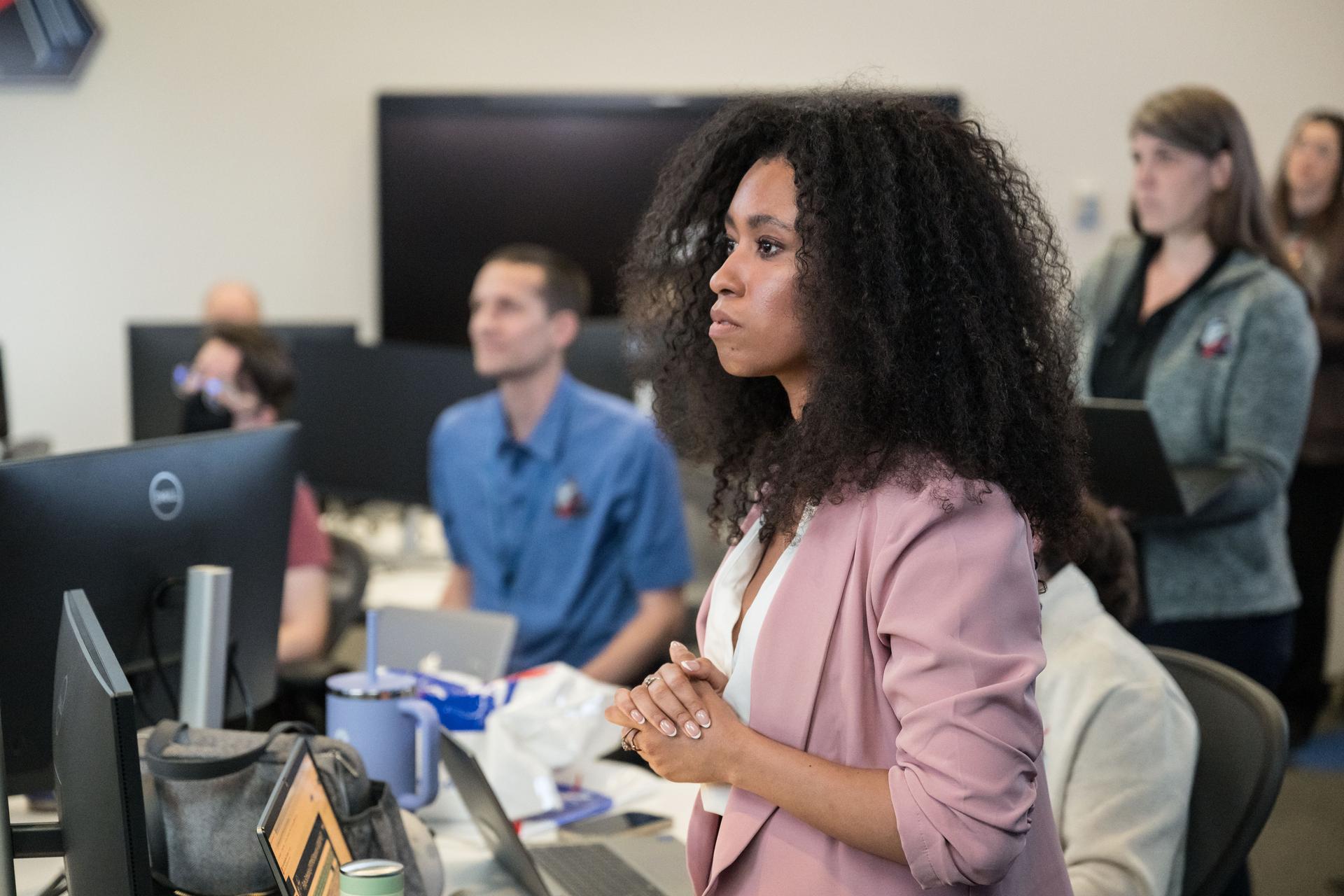
Artemis II lunar science team member, foreground, Amber Turner, and David Hollibaugh-Baker, and Cherie Achilles, background, participate in the team’s analysis of crew observations during the lunar flyby on April 6, 2026. The team worked in the Science Evaluation Room (SER) in Mission Control at NASA’s Johnson Space Center in Houston. Built specifically for Artemis missions with these science priorities in mind, the SER is equipped to support rapid data interpretation, collaborative analysis, real-time decision making, and seamless coordination between the science and operations teams. Credits: NASA/ Robert Markowitz
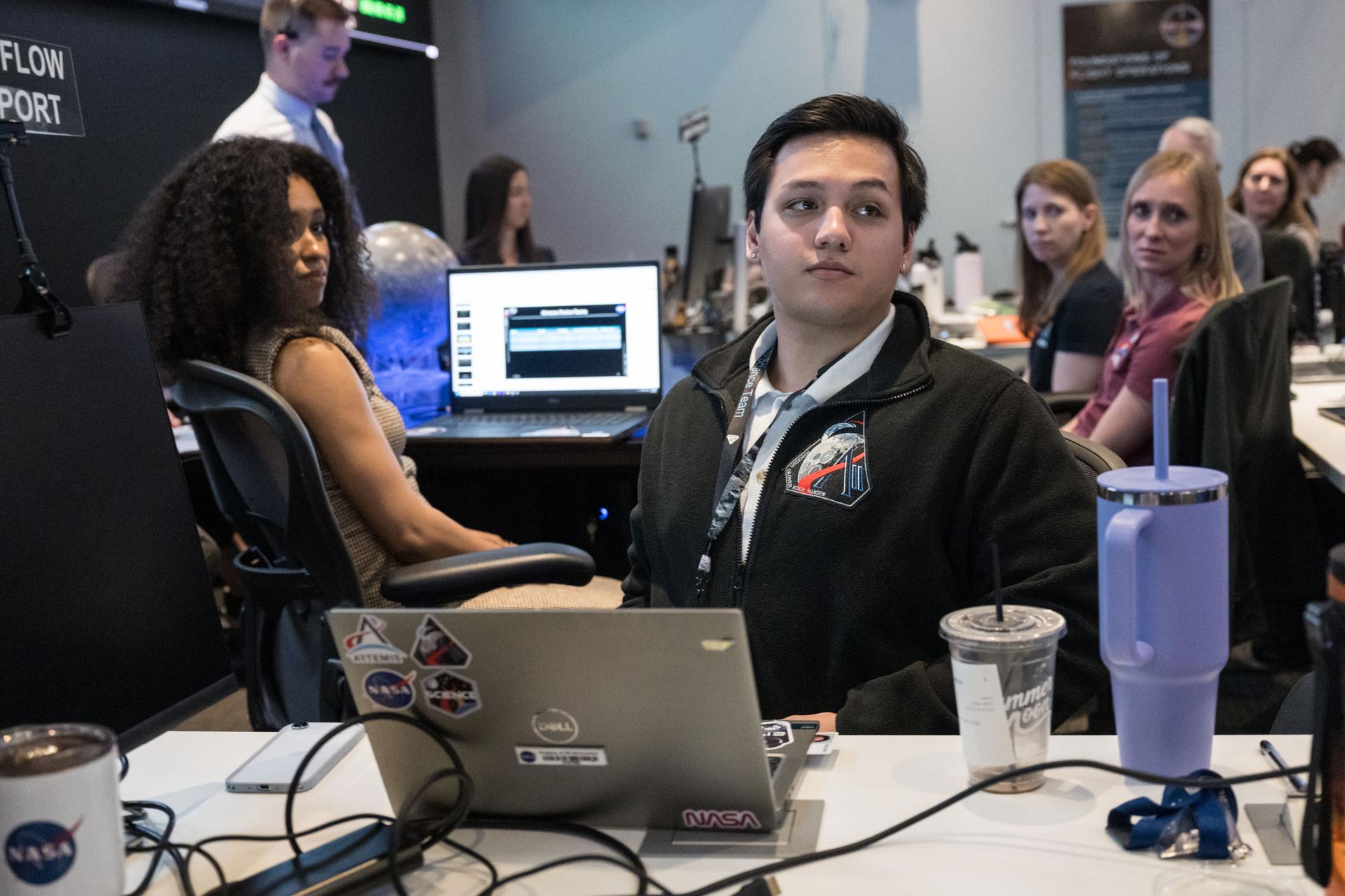
Artemis II lunar science team members, in the foreground from left: Amber Turner and Jared Ralleta in the center. Standing up behind Turner is Jacob Richardson, and sitting behind and to the right, of Ralleta, are Ryan Watkins in the front, and Debra Needham behind her. The SER supports the Artemis science officer in the mission’s main flight control room. Built specifically for Artemis missions with these science priorities in mind, the SER is equipped to support rapid data interpretation, collaborative analysis, real-time decision making, and seamless coordination between the science and operations teams. Credits: NASA/Luna Posadas Nava
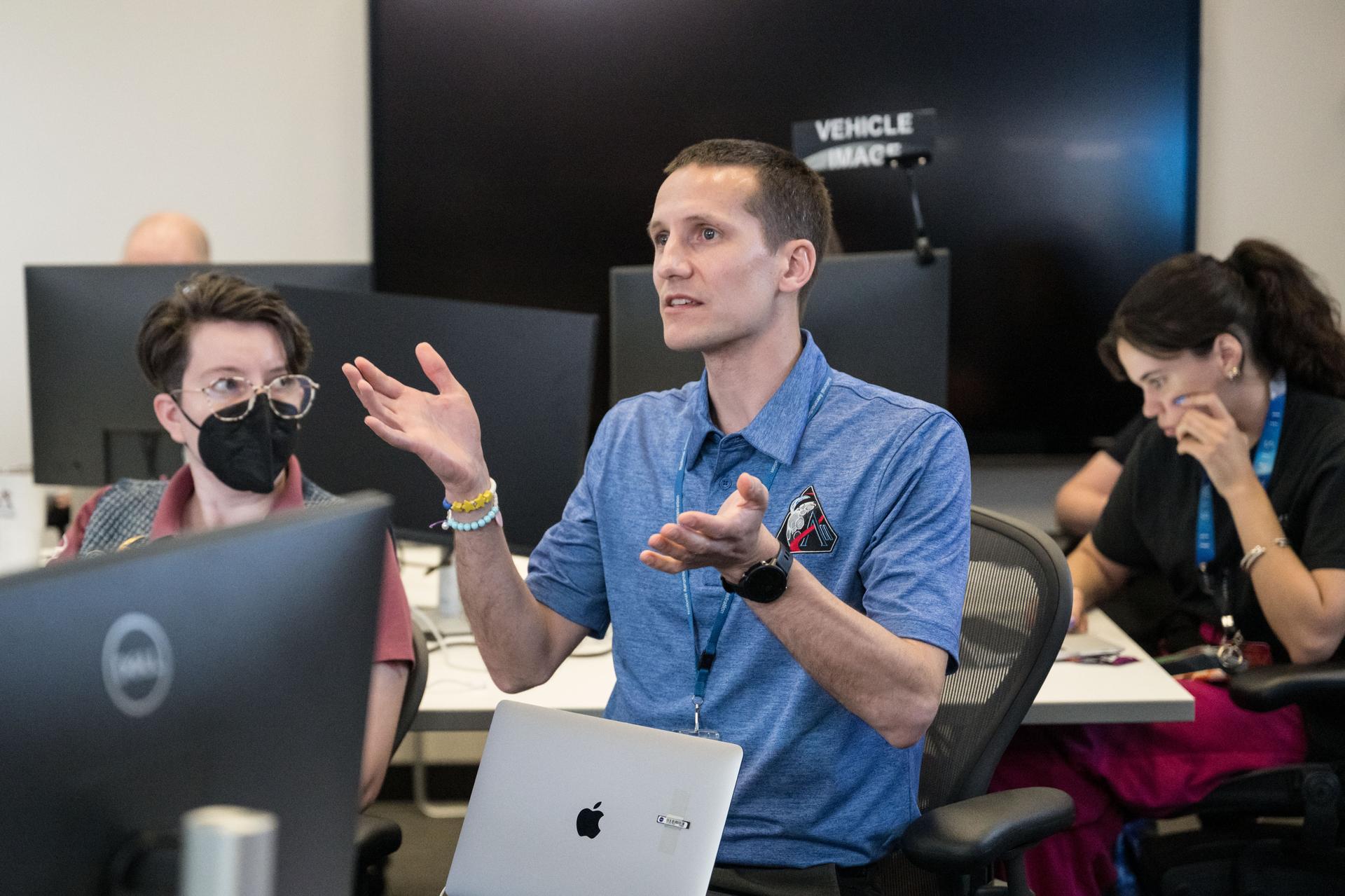
Artemis II lunar science team members, from left, Alexadra Constantinou, David Hollibaugh-Baker, participate in the team’s final preparations for the lunar flyby. NASA Johnson public affairs officer, Victoria Segovia, is seen in the background. The team worked in the Science Evaluation Room (SER) in Mission Control at NASA’s Johnson Space Center in Houston. Built specifically for Artemis missions with these science priorities in mind, the SER is equipped to support rapid data interpretation, collaborative analysis, real-time decision making, and seamless coordination between the science and operations teams. Credits: Credits: NASA/ Robert Markowitz
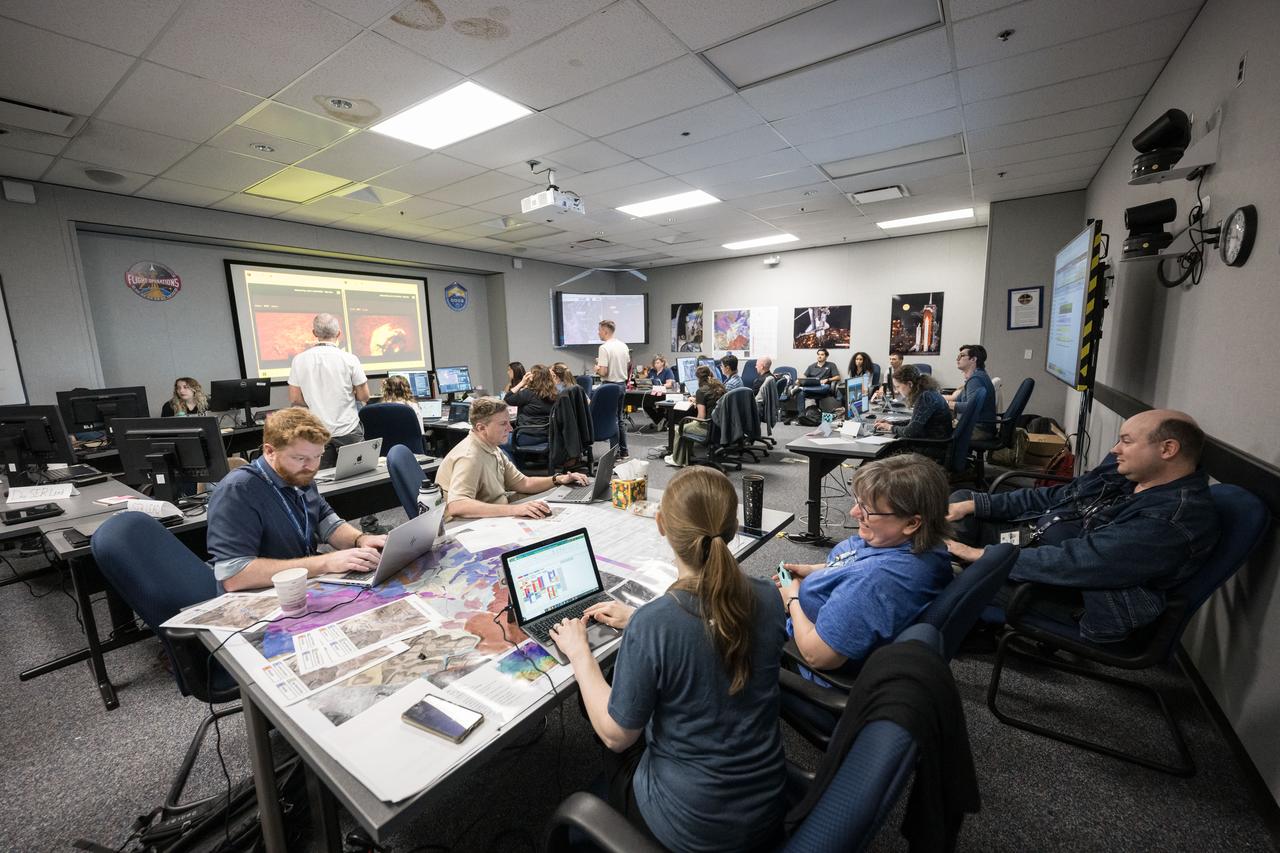
A large group of scientists work in the Science Evaluation Room (SER) at NASA’s Johnson Space Center in Houston during the JETT 5 field test. The SER is the science backroom to mission control during Artemis operations. JETT 5 was a week-long field test in the lunar-like landscape of San Francisco Volcanic Field near Flagstaff, Arizona while a team of flight controllers and scientists at Johnson monitor and guide their activities. Credit: NASA/Robert Markowitz
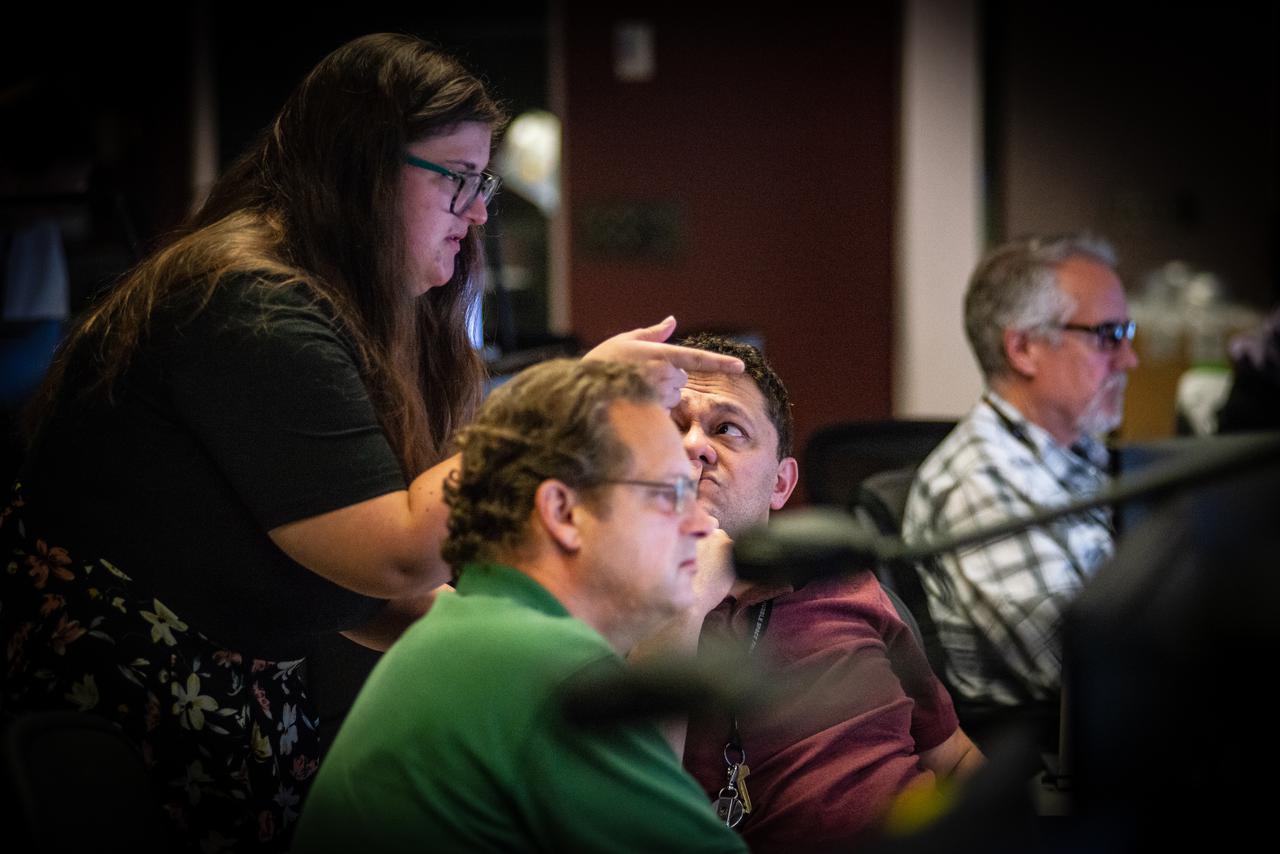
Members of the Hubble operations team work in the control room on July 15, 2021 to restore Hubble to science operations. Credits: NASA/Goddard/Rebecca Roth --- More info: Hubble’s payload computer, which controls and coordinates the observatory’s onboard science instruments, halted suddenly on June 13. When the main computer failed to receive a signal from the payload computer, it automatically placed Hubble’s science instruments into safe mode. That meant the telescope would no longer be doing science while mission specialists analyzed the situation. In response to the anomaly, NASA began a switch to backup spacecraft hardware on Hubble in response to an ongoing problem with its payload computer. This was a multi-day event. Science observations restarted the afternoon of Saturday, July 17.
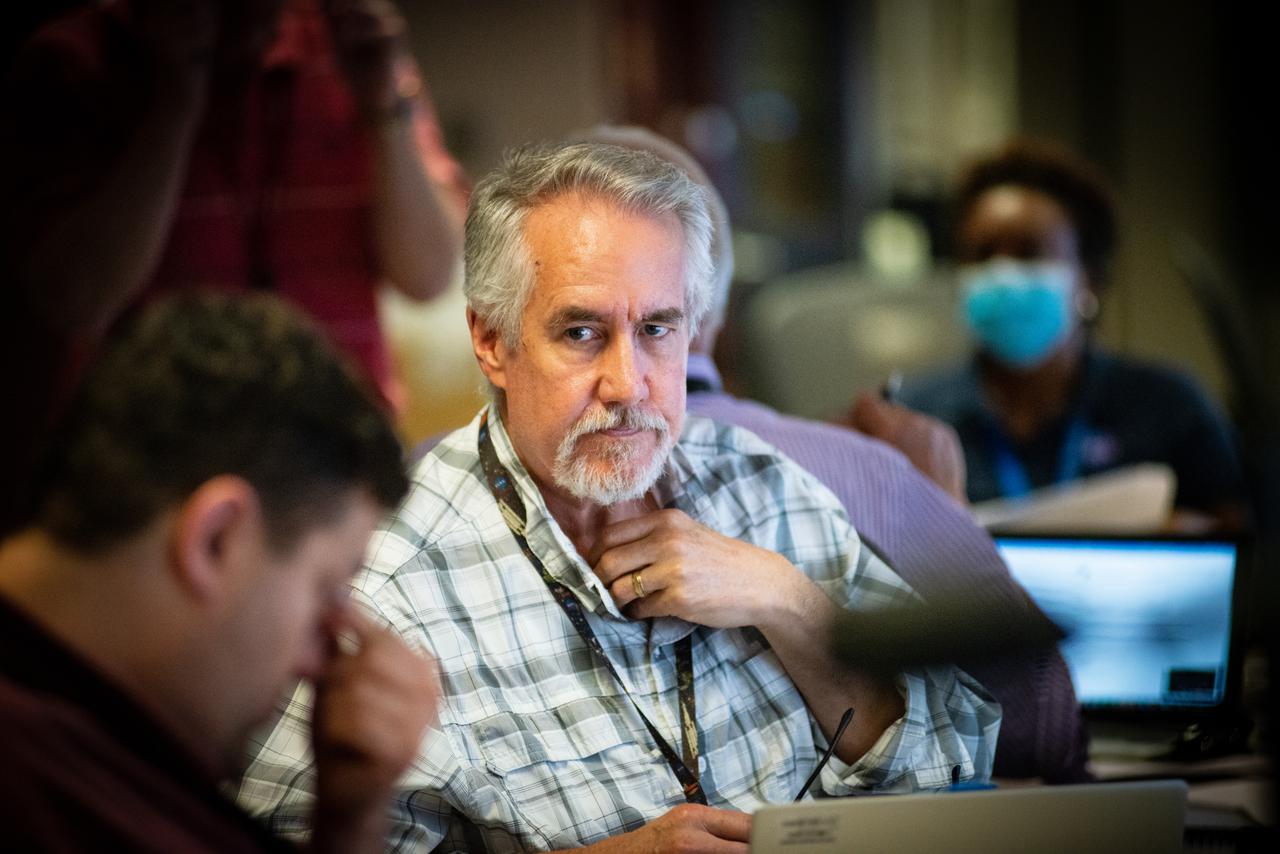
Members of the Hubble operations team work in the control room on July 15, 2021 to restore Hubble to science operations. Credits: NASA/Goddard/Rebecca Roth --- More info: Hubble’s payload computer, which controls and coordinates the observatory’s onboard science instruments, halted suddenly on June 13. When the main computer failed to receive a signal from the payload computer, it automatically placed Hubble’s science instruments into safe mode. That meant the telescope would no longer be doing science while mission specialists analyzed the situation. In response to the anomaly, NASA began a switch to backup spacecraft hardware on Hubble in response to an ongoing problem with its payload computer. This was a multi-day event. Science observations restarted the afternoon of Saturday, July 17.
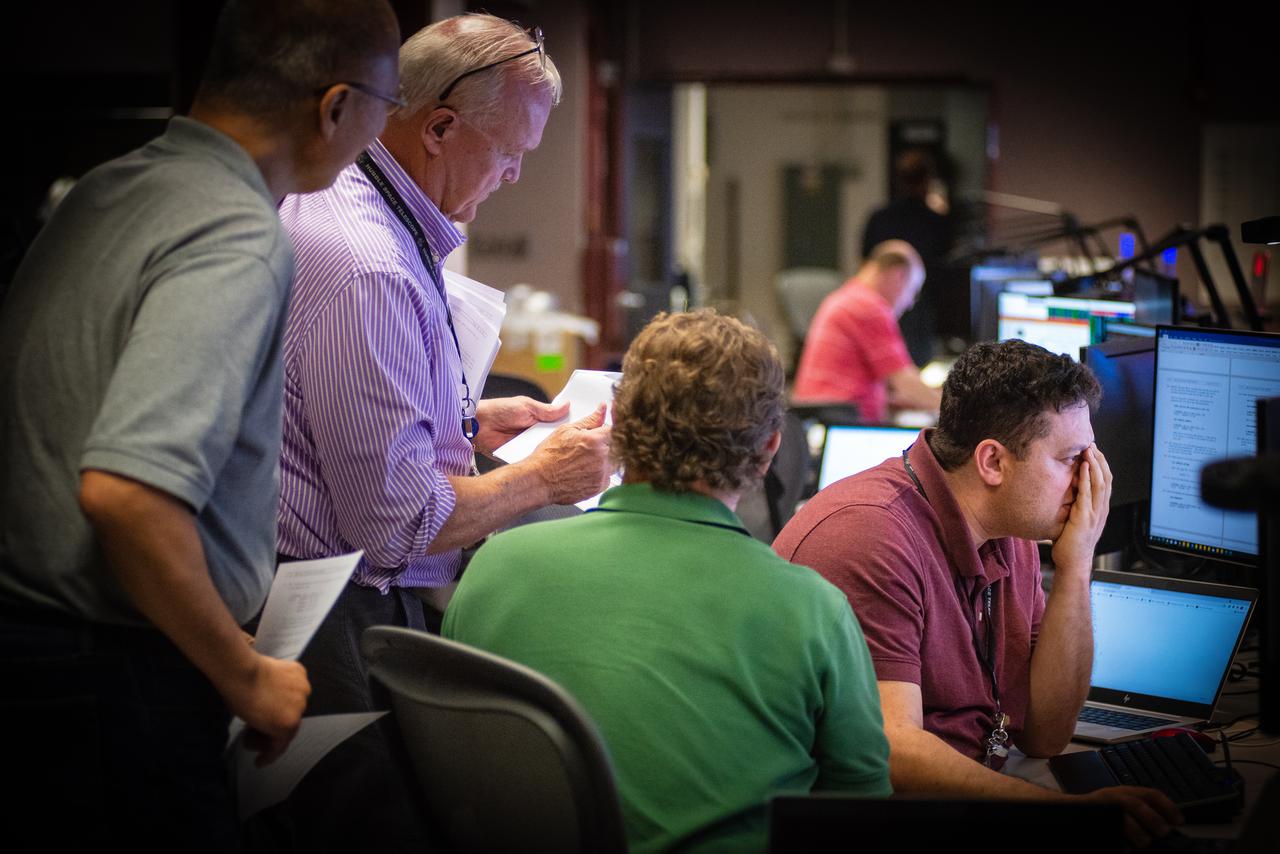
Members of the Hubble operations team work in the control room on July 15, 2021 to restore Hubble to science operations. Credits: NASA/Goddard/Rebecca Roth --- More info: Hubble’s payload computer, which controls and coordinates the observatory’s onboard science instruments, halted suddenly on June 13. When the main computer failed to receive a signal from the payload computer, it automatically placed Hubble’s science instruments into safe mode. That meant the telescope would no longer be doing science while mission specialists analyzed the situation. In response to the anomaly, NASA began a switch to backup spacecraft hardware on Hubble in response to an ongoing problem with its payload computer. This was a multi-day event. Science observations restarted the afternoon of Saturday, July 17.
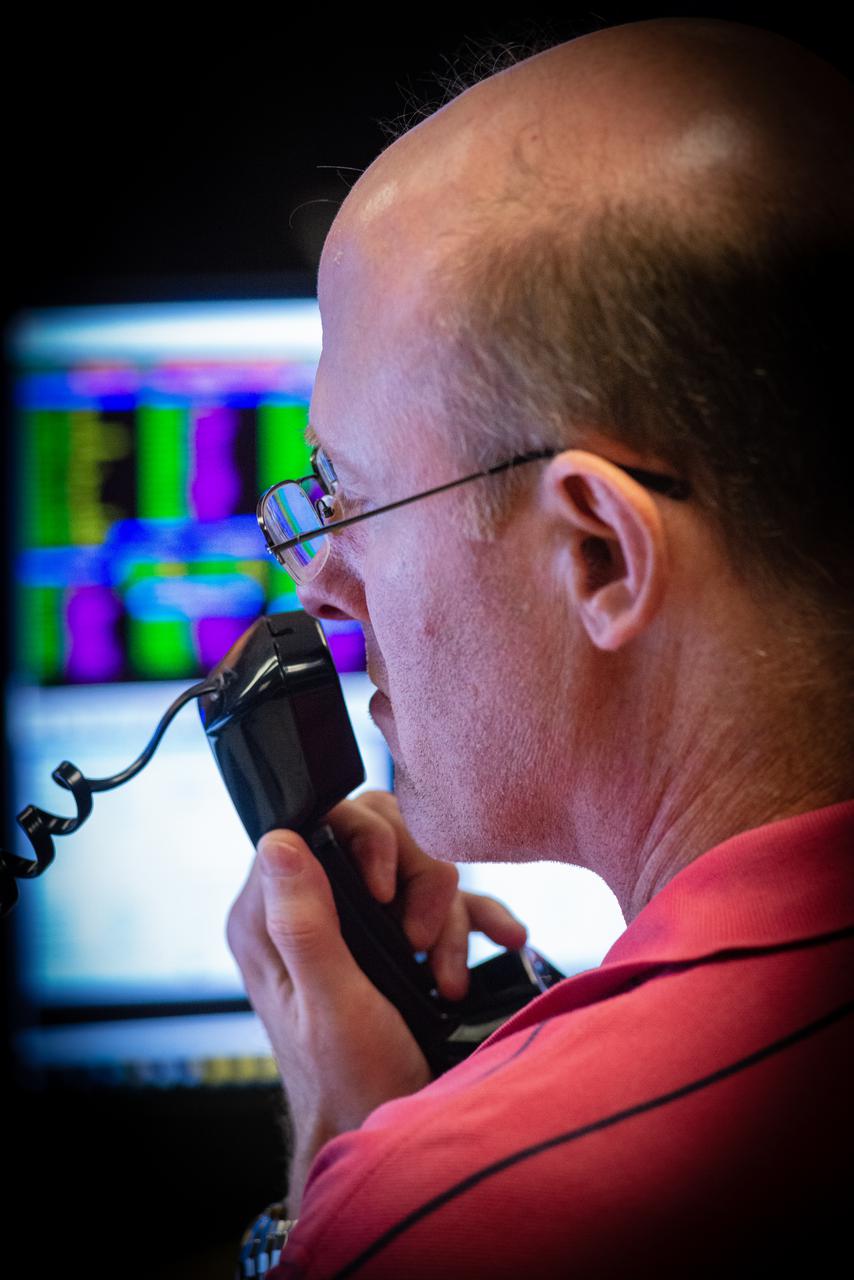
Members of the Hubble operations team work in the control room on July 15, 2021 to restore Hubble to science operations. Credits: NASA/Goddard/Rebecca Roth --- More info: Hubble’s payload computer, which controls and coordinates the observatory’s onboard science instruments, halted suddenly on June 13. When the main computer failed to receive a signal from the payload computer, it automatically placed Hubble’s science instruments into safe mode. That meant the telescope would no longer be doing science while mission specialists analyzed the situation. In response to the anomaly, NASA began a switch to backup spacecraft hardware on Hubble in response to an ongoing problem with its payload computer. This was a multi-day event. Science observations restarted the afternoon of Saturday, July 17.
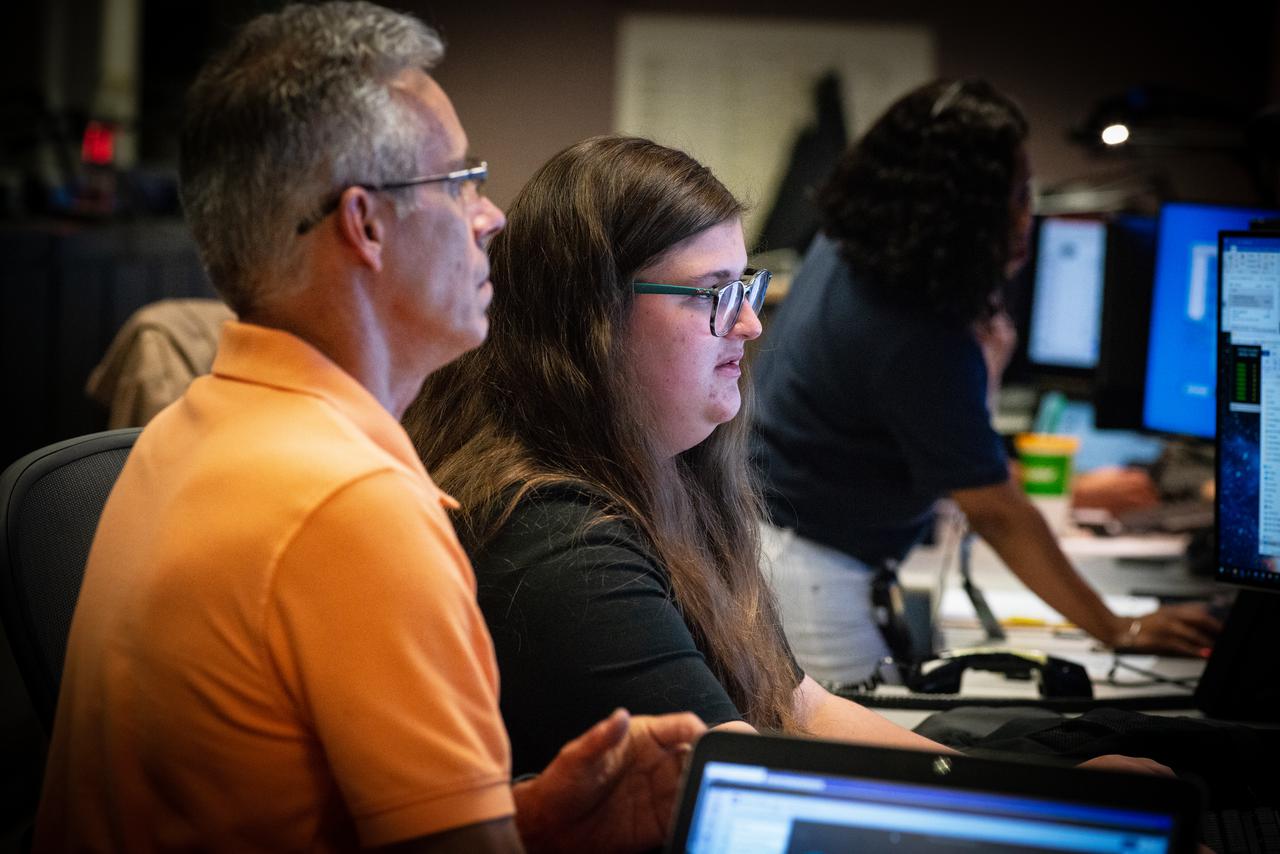
Members of the Hubble operations team work in the control room on July 15, 2021 to restore Hubble to science operations. Credits: NASA/Goddard/Rebecca Roth --- More info: Hubble’s payload computer, which controls and coordinates the observatory’s onboard science instruments, halted suddenly on June 13. When the main computer failed to receive a signal from the payload computer, it automatically placed Hubble’s science instruments into safe mode. That meant the telescope would no longer be doing science while mission specialists analyzed the situation. In response to the anomaly, NASA began a switch to backup spacecraft hardware on Hubble in response to an ongoing problem with its payload computer. This was a multi-day event. Science observations restarted the afternoon of Saturday, July 17.
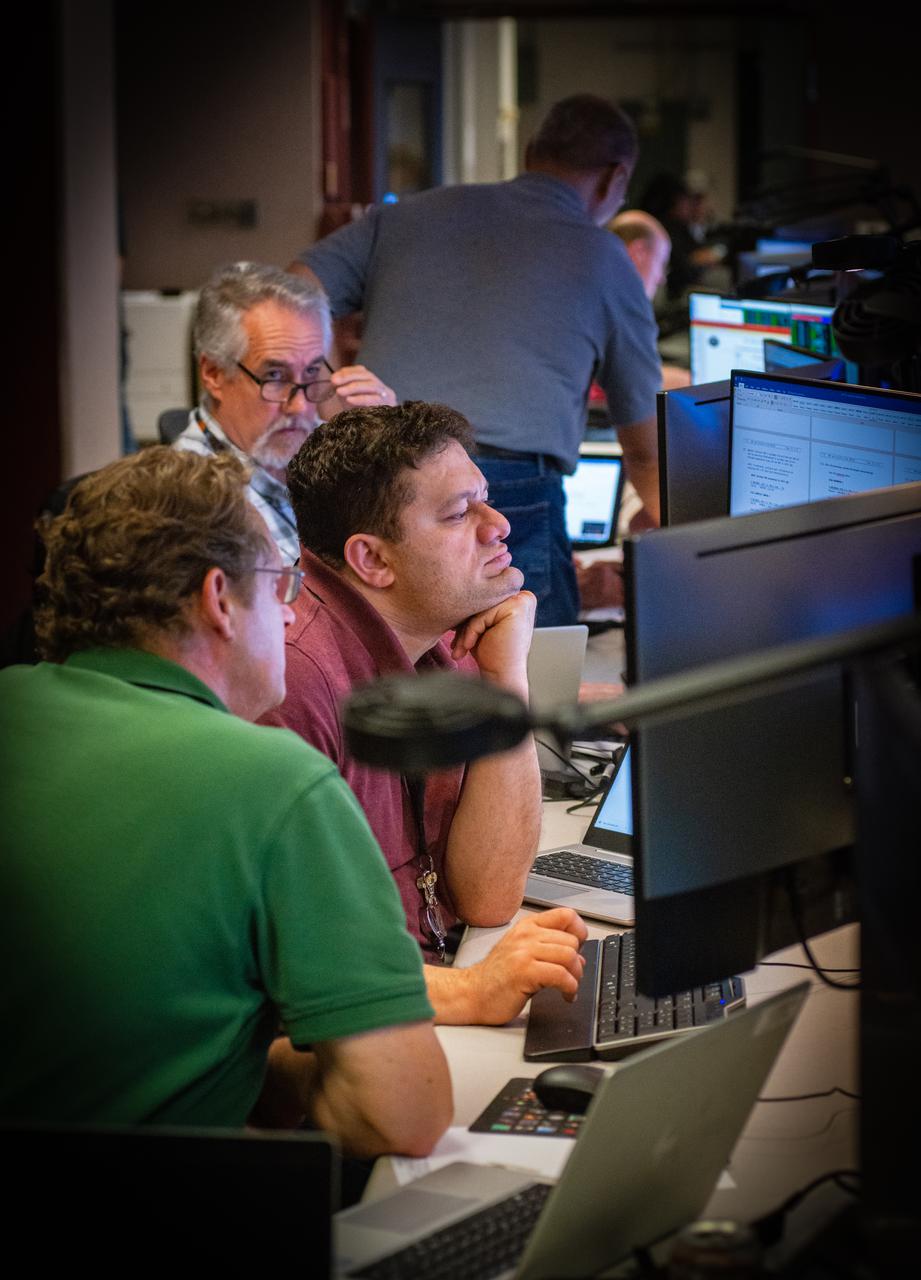
Members of the Hubble operations team work in the control room on July 15, 2021 to restore Hubble to science operations. Credits: NASA/Goddard/Rebecca Roth --- More info: Hubble’s payload computer, which controls and coordinates the observatory’s onboard science instruments, halted suddenly on June 13. When the main computer failed to receive a signal from the payload computer, it automatically placed Hubble’s science instruments into safe mode. That meant the telescope would no longer be doing science while mission specialists analyzed the situation. In response to the anomaly, NASA began a switch to backup spacecraft hardware on Hubble in response to an ongoing problem with its payload computer. This was a multi-day event. Science observations restarted the afternoon of Saturday, July 17.
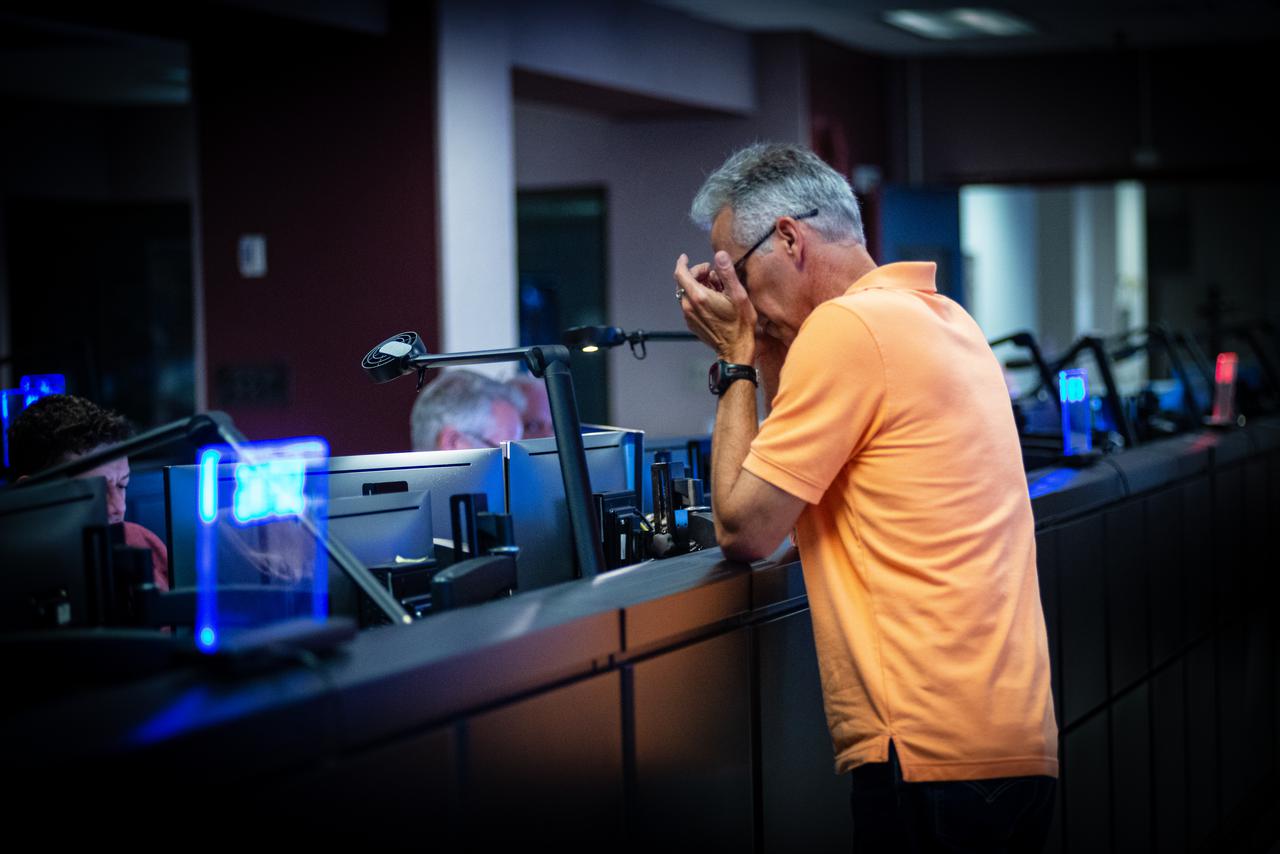
Members of the Hubble operations team work in the control room on July 15, 2021 to restore Hubble to science operations. Credits: NASA/Goddard/Rebecca Roth --- More info: Hubble’s payload computer, which controls and coordinates the observatory’s onboard science instruments, halted suddenly on June 13. When the main computer failed to receive a signal from the payload computer, it automatically placed Hubble’s science instruments into safe mode. That meant the telescope would no longer be doing science while mission specialists analyzed the situation. In response to the anomaly, NASA began a switch to backup spacecraft hardware on Hubble in response to an ongoing problem with its payload computer. This was a multi-day event. Science observations restarted the afternoon of Saturday, July 17.
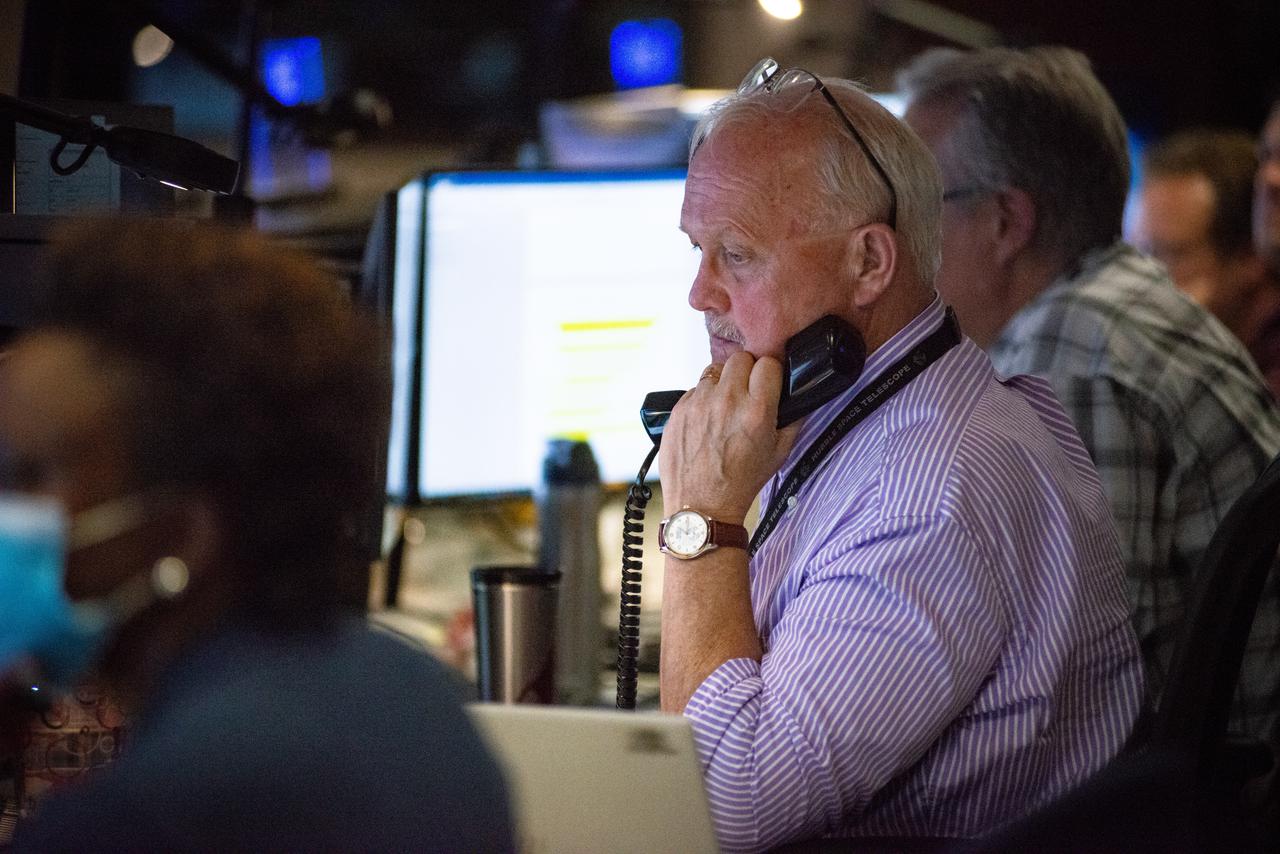
Members of the Hubble operations team work in the control room on July 15, 2021 to restore Hubble to science operations. Credits: NASA/Goddard/Rebecca Roth --- More info: Hubble’s payload computer, which controls and coordinates the observatory’s onboard science instruments, halted suddenly on June 13. When the main computer failed to receive a signal from the payload computer, it automatically placed Hubble’s science instruments into safe mode. That meant the telescope would no longer be doing science while mission specialists analyzed the situation. In response to the anomaly, NASA began a switch to backup spacecraft hardware on Hubble in response to an ongoing problem with its payload computer. This was a multi-day event. Science observations restarted the afternoon of Saturday, July 17.
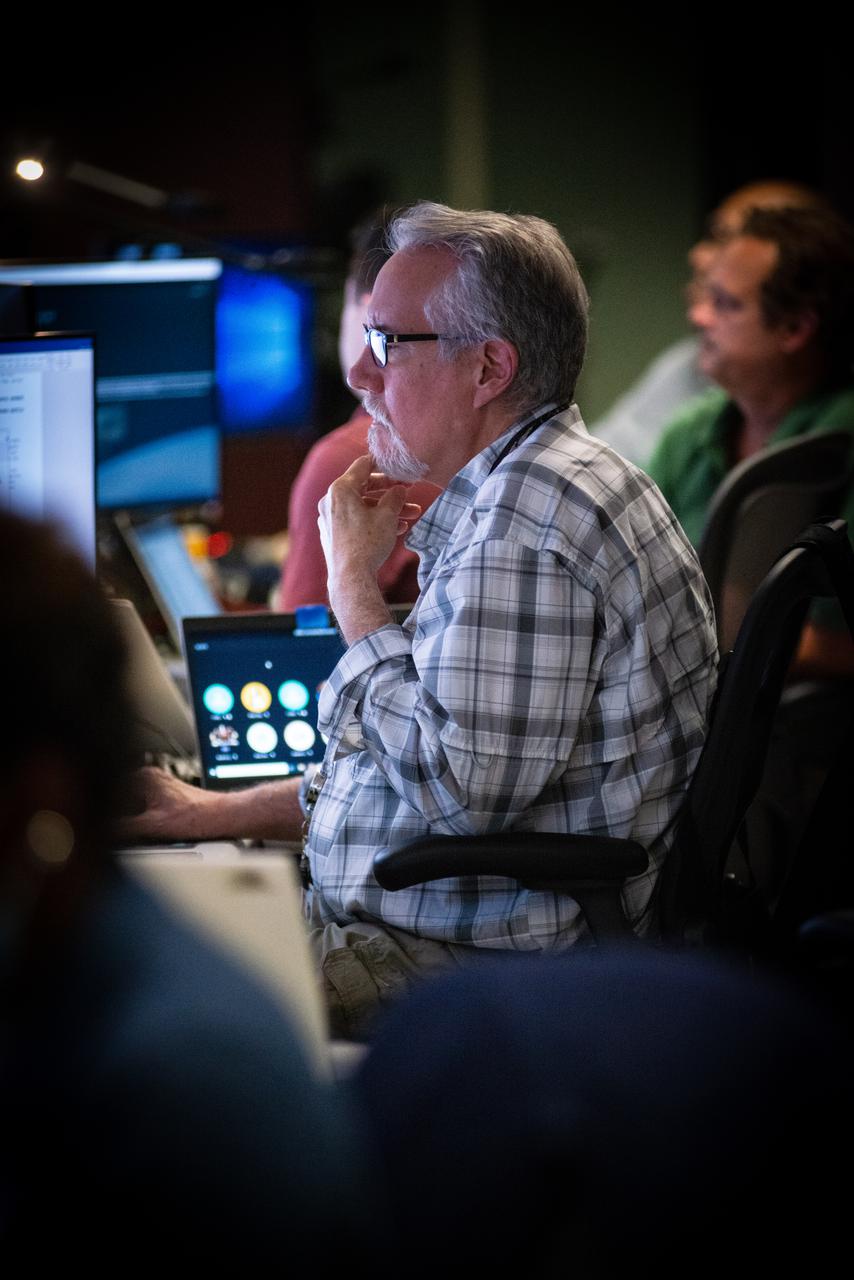
Members of the Hubble operations team work in the control room on July 15, 2021 to restore Hubble to science operations. Credits: NASA/Goddard/Rebecca Roth --- More info: Hubble’s payload computer, which controls and coordinates the observatory’s onboard science instruments, halted suddenly on June 13. When the main computer failed to receive a signal from the payload computer, it automatically placed Hubble’s science instruments into safe mode. That meant the telescope would no longer be doing science while mission specialists analyzed the situation. In response to the anomaly, NASA began a switch to backup spacecraft hardware on Hubble in response to an ongoing problem with its payload computer. This was a multi-day event. Science observations restarted the afternoon of Saturday, July 17.
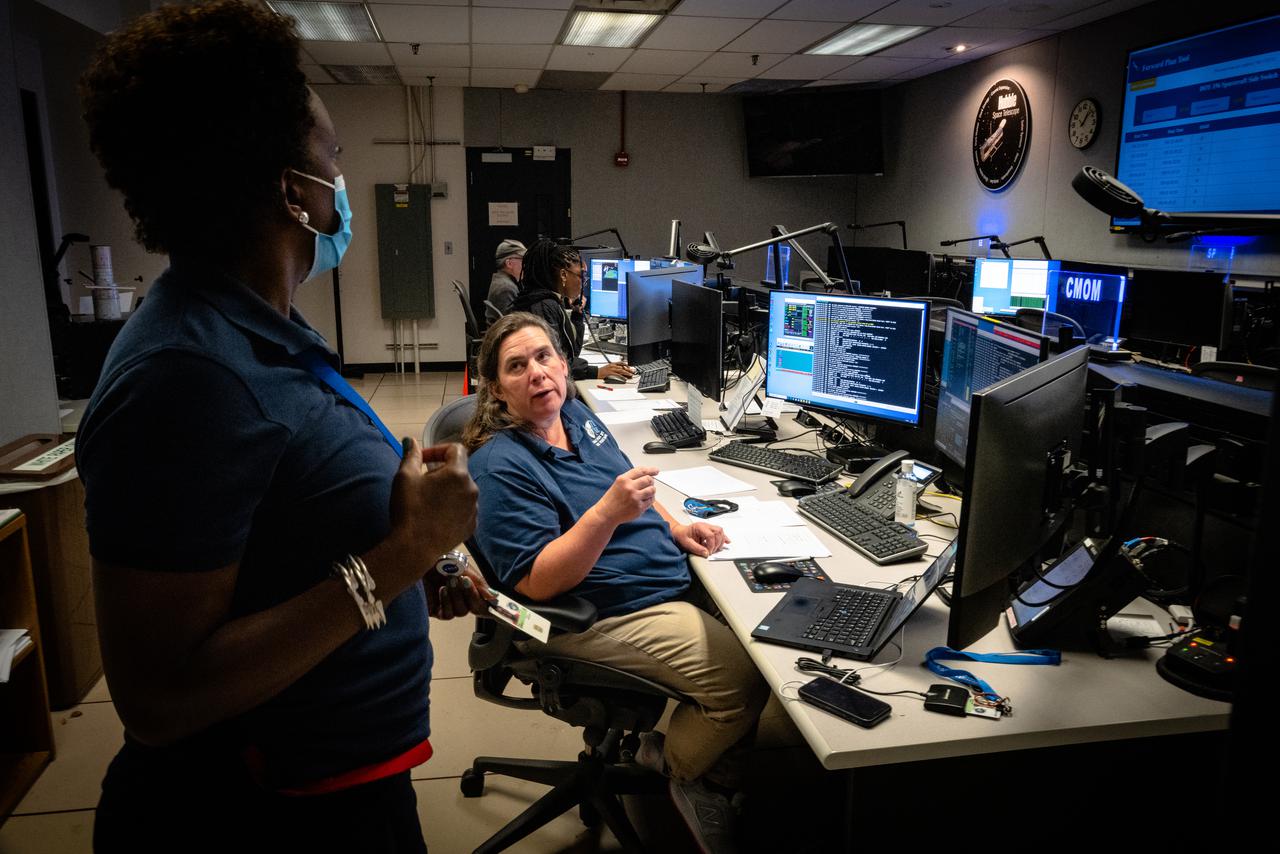
Members of the Hubble operations team work in the control room on July 15, 2021 to restore Hubble to science operations. Credits: NASA/Goddard/Rebecca Roth --- More info: Hubble’s payload computer, which controls and coordinates the observatory’s onboard science instruments, halted suddenly on June 13. When the main computer failed to receive a signal from the payload computer, it automatically placed Hubble’s science instruments into safe mode. That meant the telescope would no longer be doing science while mission specialists analyzed the situation. In response to the anomaly, NASA began a switch to backup spacecraft hardware on Hubble in response to an ongoing problem with its payload computer. This was a multi-day event. Science observations restarted the afternoon of Saturday, July 17.
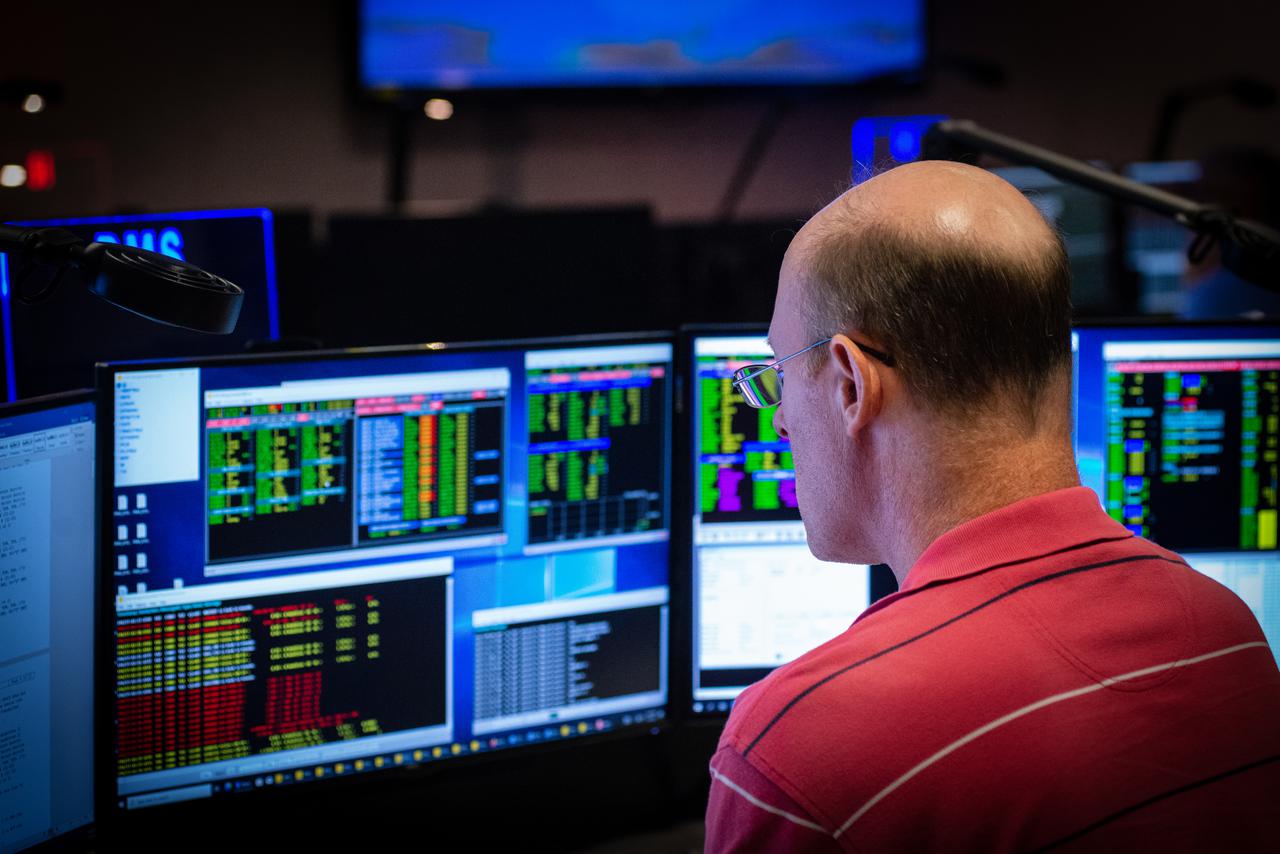
Members of the Hubble operations team work in the control room on July 15, 2021 to restore Hubble to science operations. Credits: NASA/Goddard/Rebecca Roth --- More info: Hubble’s payload computer, which controls and coordinates the observatory’s onboard science instruments, halted suddenly on June 13. When the main computer failed to receive a signal from the payload computer, it automatically placed Hubble’s science instruments into safe mode. That meant the telescope would no longer be doing science while mission specialists analyzed the situation. In response to the anomaly, NASA began a switch to backup spacecraft hardware on Hubble in response to an ongoing problem with its payload computer. This was a multi-day event. Science observations restarted the afternoon of Saturday, July 17.
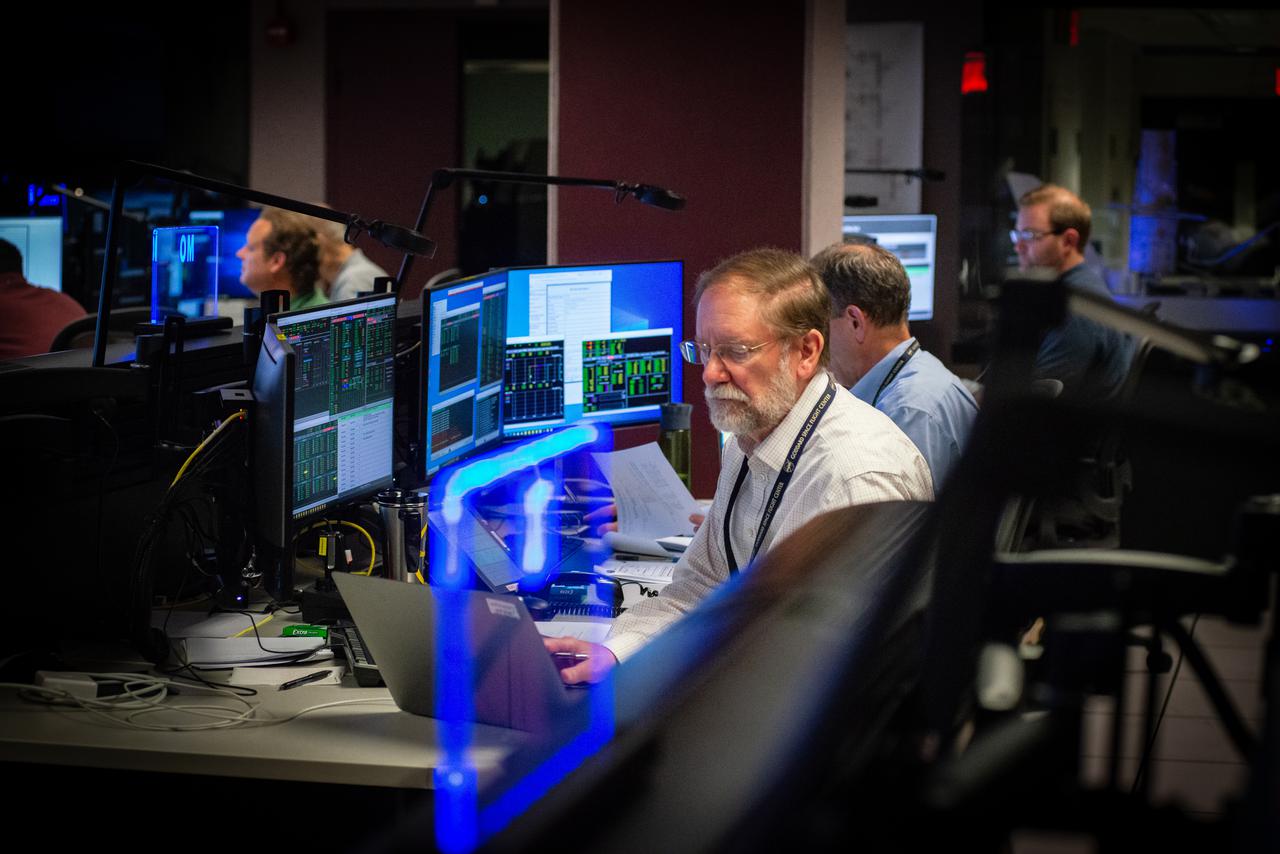
Members of the Hubble operations team work in the control room on July 15, 2021 to restore Hubble to science operations. Credits: NASA/Goddard/Rebecca Roth --- More info: Hubble’s payload computer, which controls and coordinates the observatory’s onboard science instruments, halted suddenly on June 13. When the main computer failed to receive a signal from the payload computer, it automatically placed Hubble’s science instruments into safe mode. That meant the telescope would no longer be doing science while mission specialists analyzed the situation. In response to the anomaly, NASA began a switch to backup spacecraft hardware on Hubble in response to an ongoing problem with its payload computer. This was a multi-day event. Science observations restarted the afternoon of Saturday, July 17.
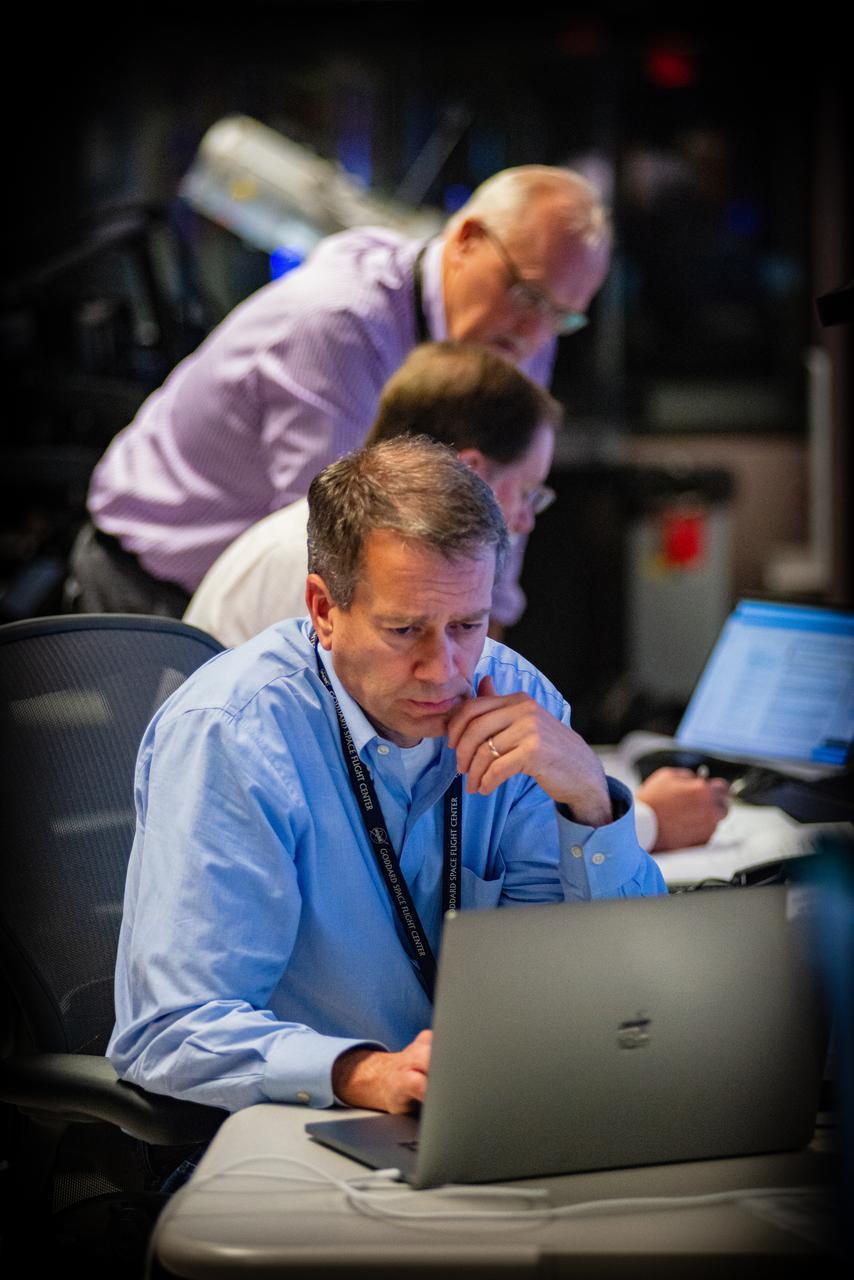
Members of the Hubble operations team work in the control room on July 15, 2021 to restore Hubble to science operations. Credits: NASA/Goddard/Rebecca Roth --- More info: Hubble’s payload computer, which controls and coordinates the observatory’s onboard science instruments, halted suddenly on June 13. When the main computer failed to receive a signal from the payload computer, it automatically placed Hubble’s science instruments into safe mode. That meant the telescope would no longer be doing science while mission specialists analyzed the situation. In response to the anomaly, NASA began a switch to backup spacecraft hardware on Hubble in response to an ongoing problem with its payload computer. This was a multi-day event. Science observations restarted the afternoon of Saturday, July 17.
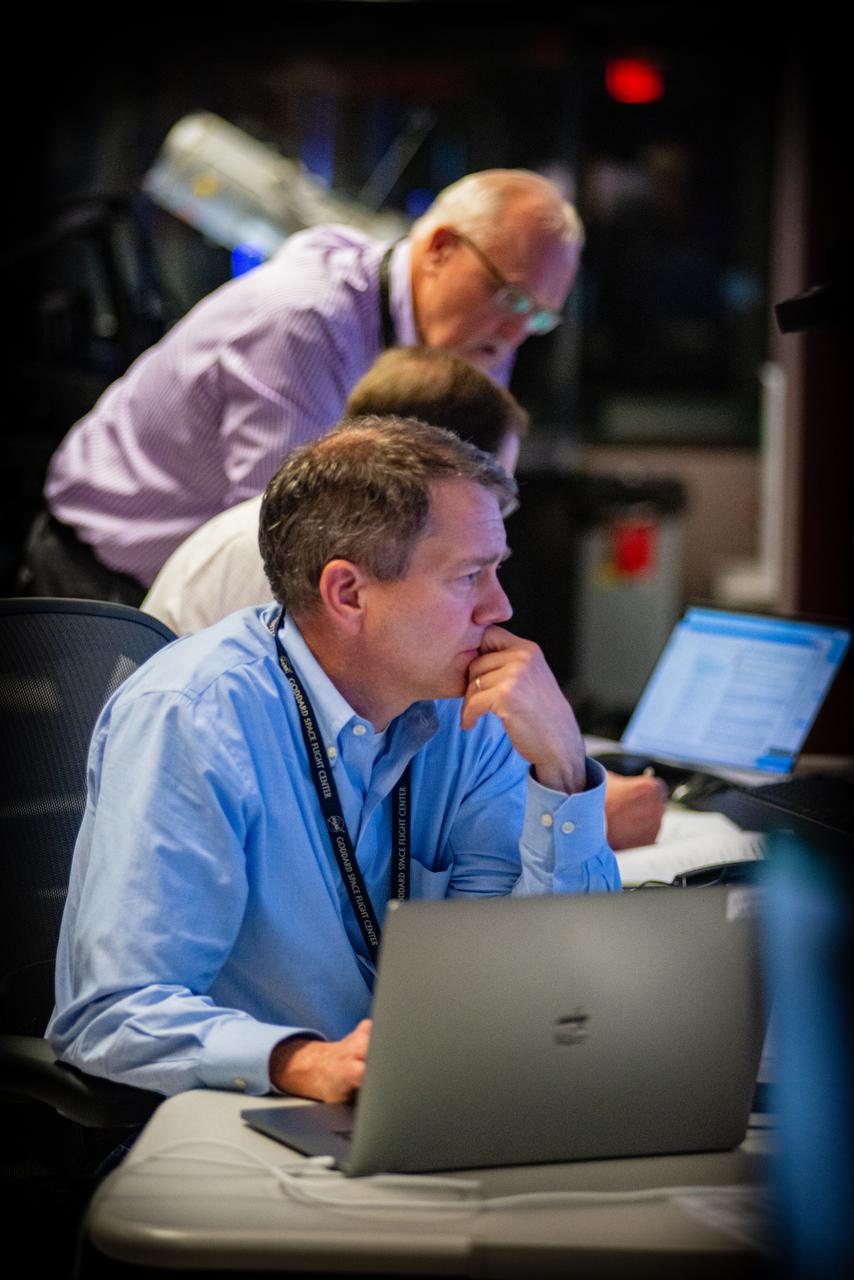
Members of the Hubble operations team work in the control room on July 15, 2021 to restore Hubble to science operations. Credits: NASA/Goddard/Rebecca Roth --- More info: Hubble’s payload computer, which controls and coordinates the observatory’s onboard science instruments, halted suddenly on June 13. When the main computer failed to receive a signal from the payload computer, it automatically placed Hubble’s science instruments into safe mode. That meant the telescope would no longer be doing science while mission specialists analyzed the situation. In response to the anomaly, NASA began a switch to backup spacecraft hardware on Hubble in response to an ongoing problem with its payload computer. This was a multi-day event. Science observations restarted the afternoon of Saturday, July 17.
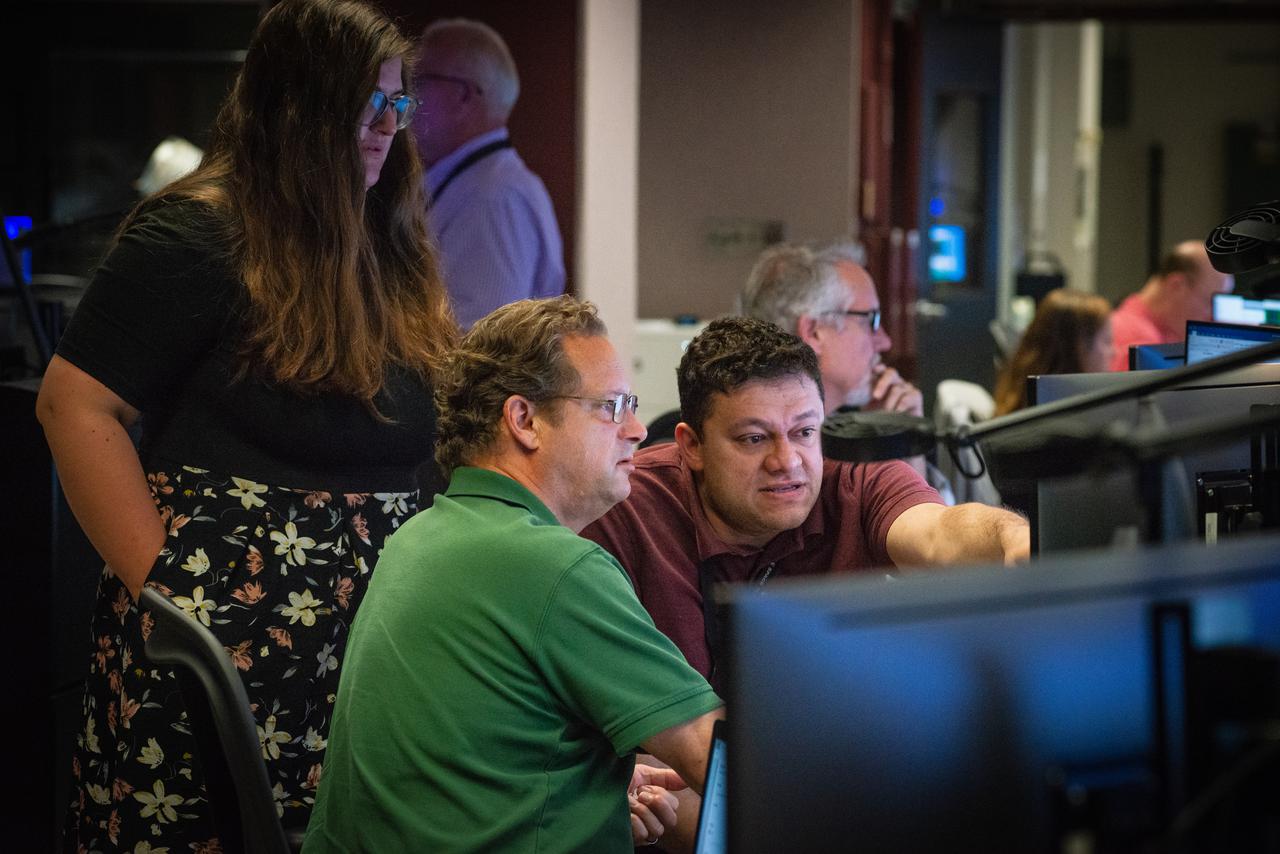
Members of the Hubble operations team work in the control room on July 15, 2021 to restore Hubble to science operations. Credits: NASA/Goddard/Rebecca Roth --- More info: Hubble’s payload computer, which controls and coordinates the observatory’s onboard science instruments, halted suddenly on June 13. When the main computer failed to receive a signal from the payload computer, it automatically placed Hubble’s science instruments into safe mode. That meant the telescope would no longer be doing science while mission specialists analyzed the situation. In response to the anomaly, NASA began a switch to backup spacecraft hardware on Hubble in response to an ongoing problem with its payload computer. This was a multi-day event. Science observations restarted the afternoon of Saturday, July 17.
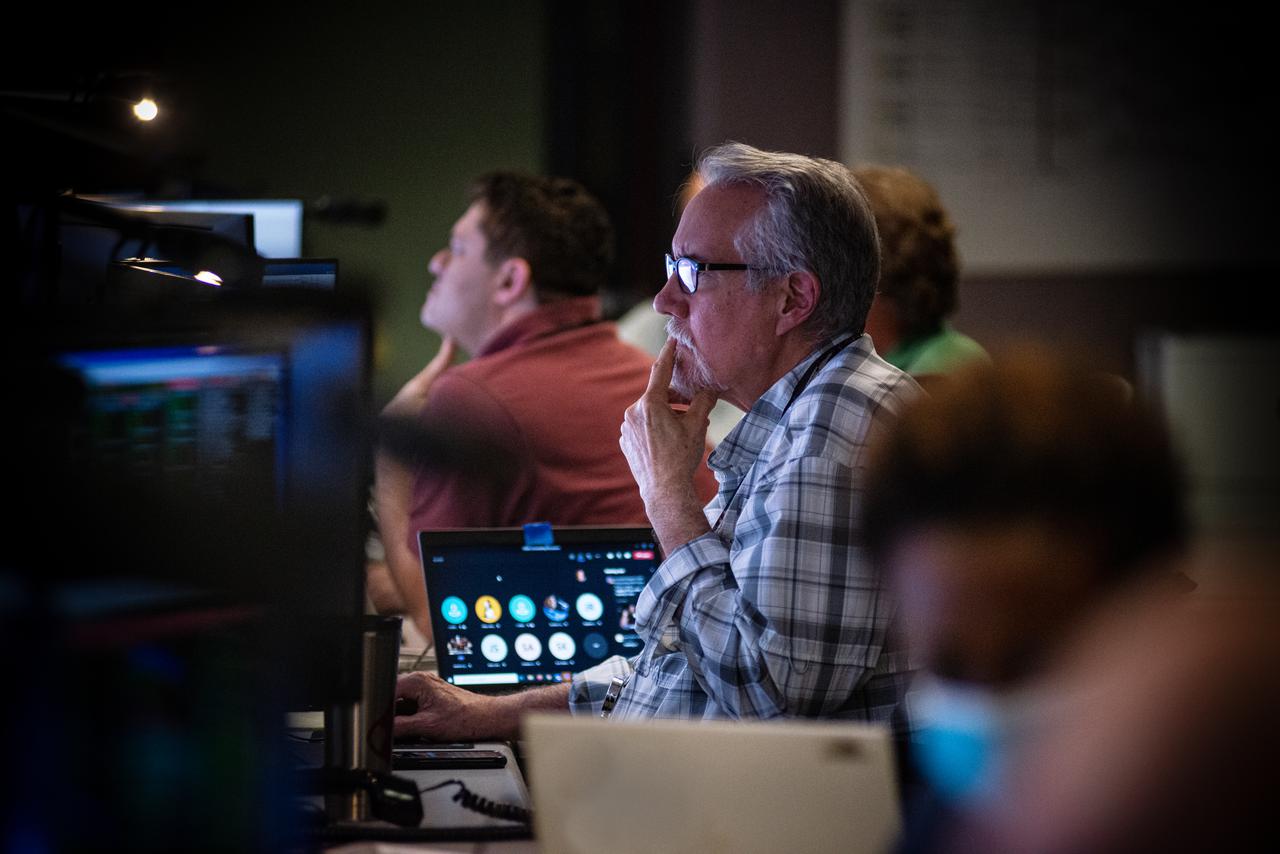
Members of the Hubble operations team work in the control room on July 15, 2021 to restore Hubble to science operations. Credits: NASA/Goddard/Rebecca Roth --- More info: Hubble’s payload computer, which controls and coordinates the observatory’s onboard science instruments, halted suddenly on June 13. When the main computer failed to receive a signal from the payload computer, it automatically placed Hubble’s science instruments into safe mode. That meant the telescope would no longer be doing science while mission specialists analyzed the situation. In response to the anomaly, NASA began a switch to backup spacecraft hardware on Hubble in response to an ongoing problem with its payload computer. This was a multi-day event. Science observations restarted the afternoon of Saturday, July 17.
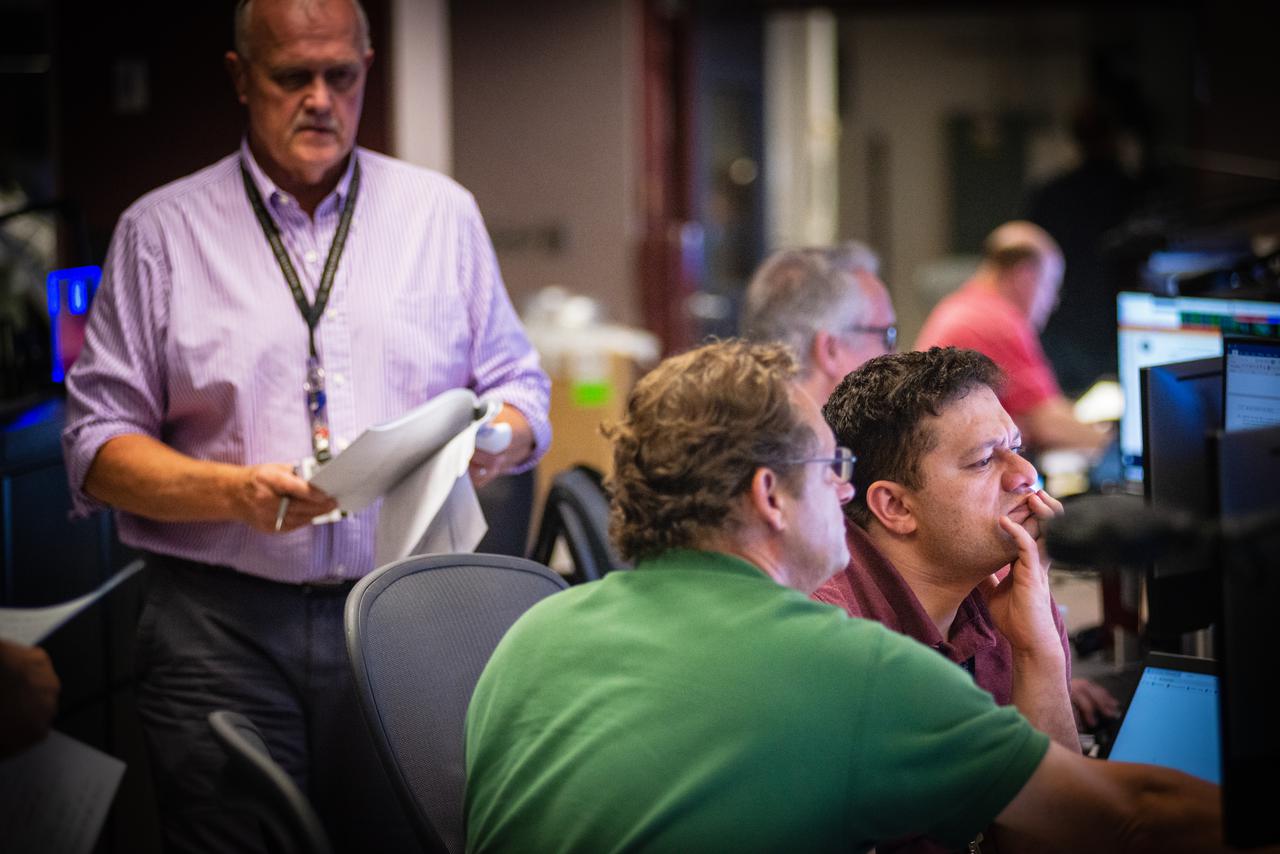
Members of the Hubble operations team work in the control room on July 15, 2021 to restore Hubble to science operations. Credits: NASA/Goddard/Rebecca Roth --- More info: Hubble’s payload computer, which controls and coordinates the observatory’s onboard science instruments, halted suddenly on June 13. When the main computer failed to receive a signal from the payload computer, it automatically placed Hubble’s science instruments into safe mode. That meant the telescope would no longer be doing science while mission specialists analyzed the situation. In response to the anomaly, NASA began a switch to backup spacecraft hardware on Hubble in response to an ongoing problem with its payload computer. This was a multi-day event. Science observations restarted the afternoon of Saturday, July 17.
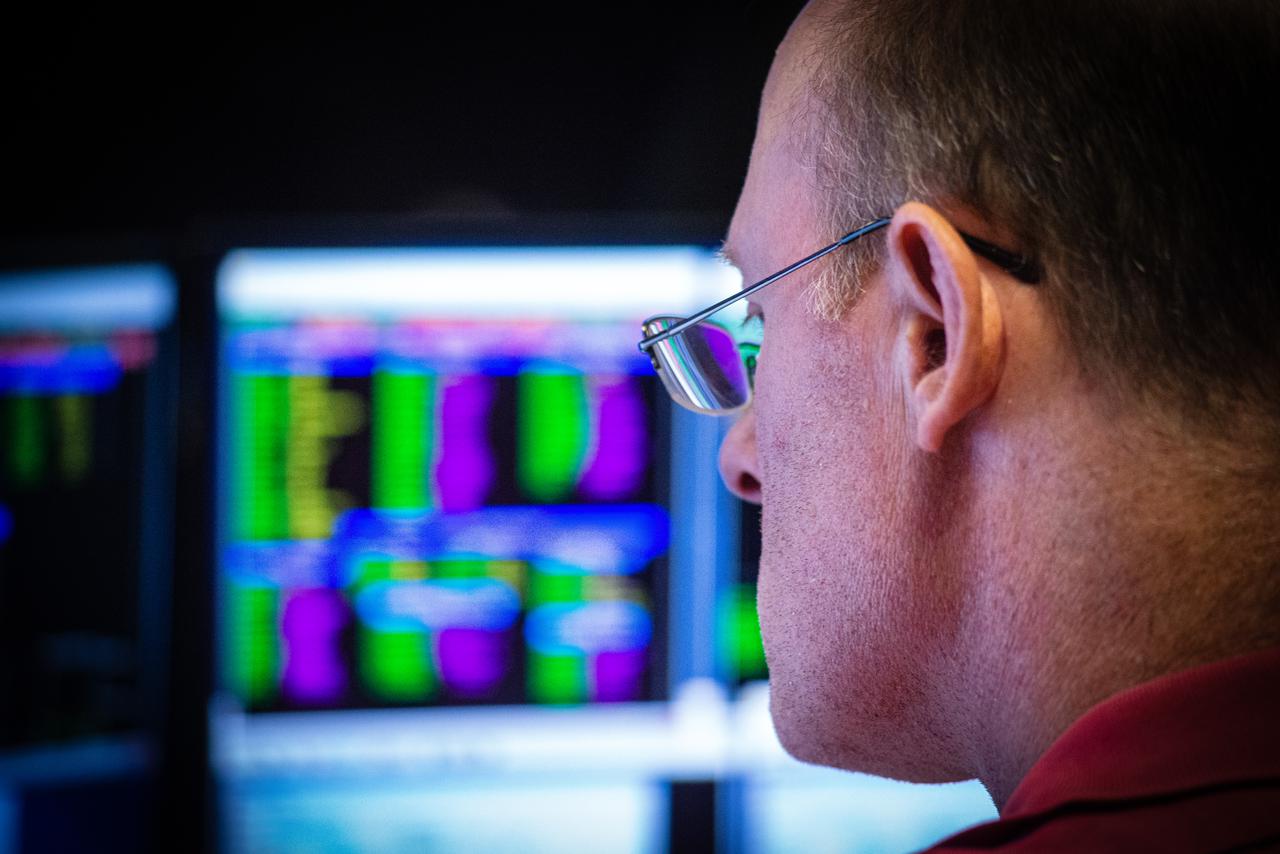
Members of the Hubble operations team work in the control room on July 15, 2021 to restore Hubble to science operations. Credits: NASA/Goddard/Rebecca Roth --- More info: Hubble’s payload computer, which controls and coordinates the observatory’s onboard science instruments, halted suddenly on June 13. When the main computer failed to receive a signal from the payload computer, it automatically placed Hubble’s science instruments into safe mode. That meant the telescope would no longer be doing science while mission specialists analyzed the situation. In response to the anomaly, NASA began a switch to backup spacecraft hardware on Hubble in response to an ongoing problem with its payload computer. This was a multi-day event. Science observations restarted the afternoon of Saturday, July 17.
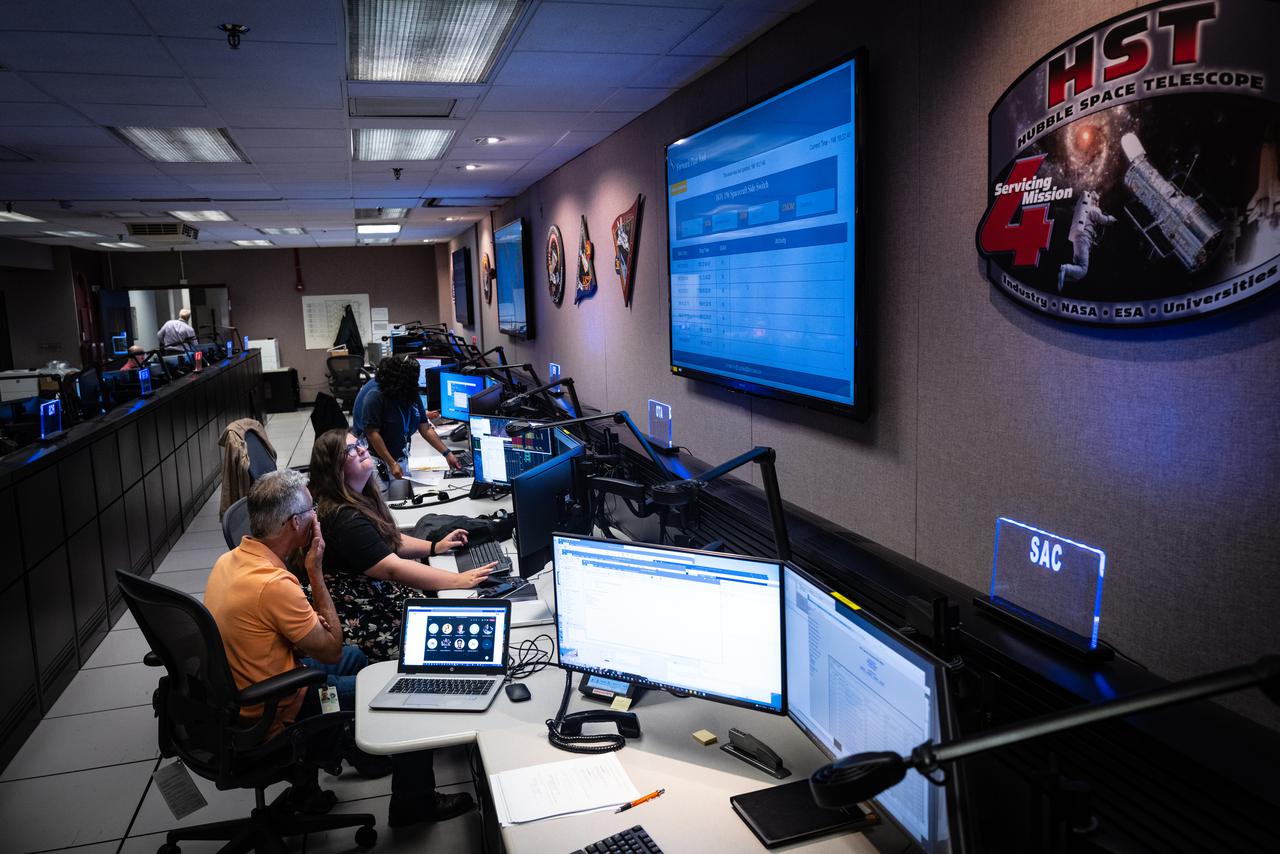
Members of the Hubble operations team work in the control room on July 15, 2021 to restore Hubble to science operations. Credits: NASA/Goddard/Rebecca Roth --- More info: Hubble’s payload computer, which controls and coordinates the observatory’s onboard science instruments, halted suddenly on June 13. When the main computer failed to receive a signal from the payload computer, it automatically placed Hubble’s science instruments into safe mode. That meant the telescope would no longer be doing science while mission specialists analyzed the situation. In response to the anomaly, NASA began a switch to backup spacecraft hardware on Hubble in response to an ongoing problem with its payload computer. This was a multi-day event. Science observations restarted the afternoon of Saturday, July 17.
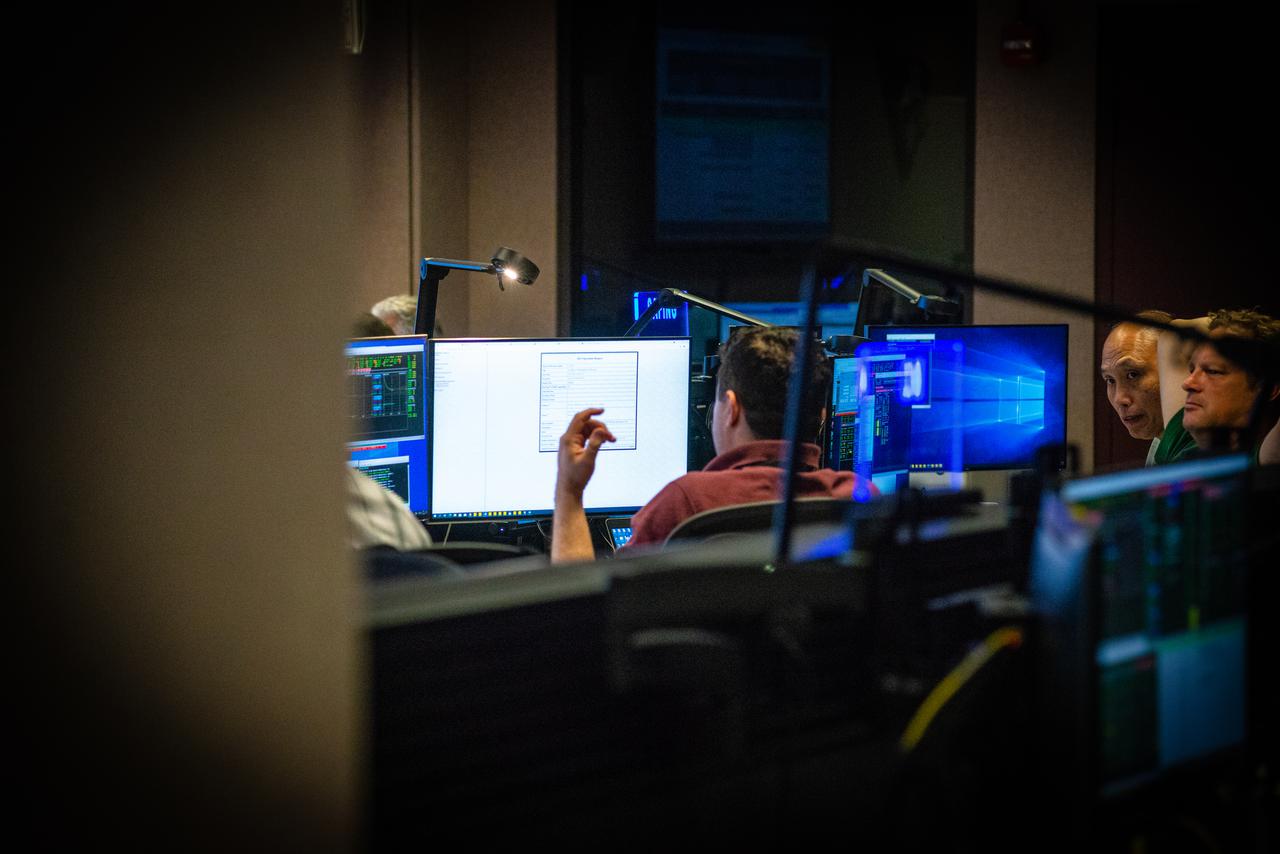
Members of the Hubble operations team work in the control room on July 15, 2021 to restore Hubble to science operations. Credits: NASA/Goddard/Rebecca Roth --- More info: Hubble’s payload computer, which controls and coordinates the observatory’s onboard science instruments, halted suddenly on June 13. When the main computer failed to receive a signal from the payload computer, it automatically placed Hubble’s science instruments into safe mode. That meant the telescope would no longer be doing science while mission specialists analyzed the situation. In response to the anomaly, NASA began a switch to backup spacecraft hardware on Hubble in response to an ongoing problem with its payload computer. This was a multi-day event. Science observations restarted the afternoon of Saturday, July 17.
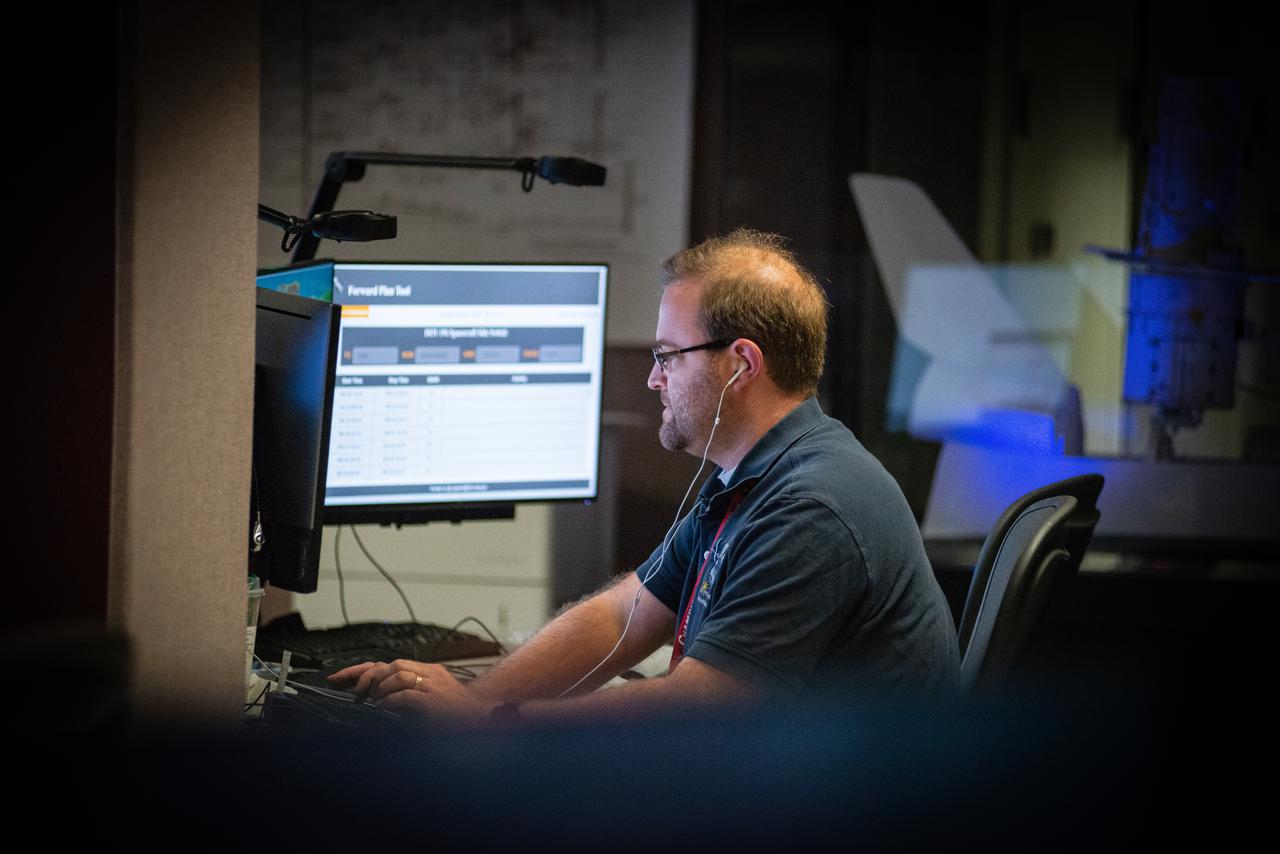
Members of the Hubble operations team work in the control room on July 15, 2021 to restore Hubble to science operations. Credits: NASA/Goddard/Rebecca Roth --- More info: Hubble’s payload computer, which controls and coordinates the observatory’s onboard science instruments, halted suddenly on June 13. When the main computer failed to receive a signal from the payload computer, it automatically placed Hubble’s science instruments into safe mode. That meant the telescope would no longer be doing science while mission specialists analyzed the situation. In response to the anomaly, NASA began a switch to backup spacecraft hardware on Hubble in response to an ongoing problem with its payload computer. This was a multi-day event. Science observations restarted the afternoon of Saturday, July 17.
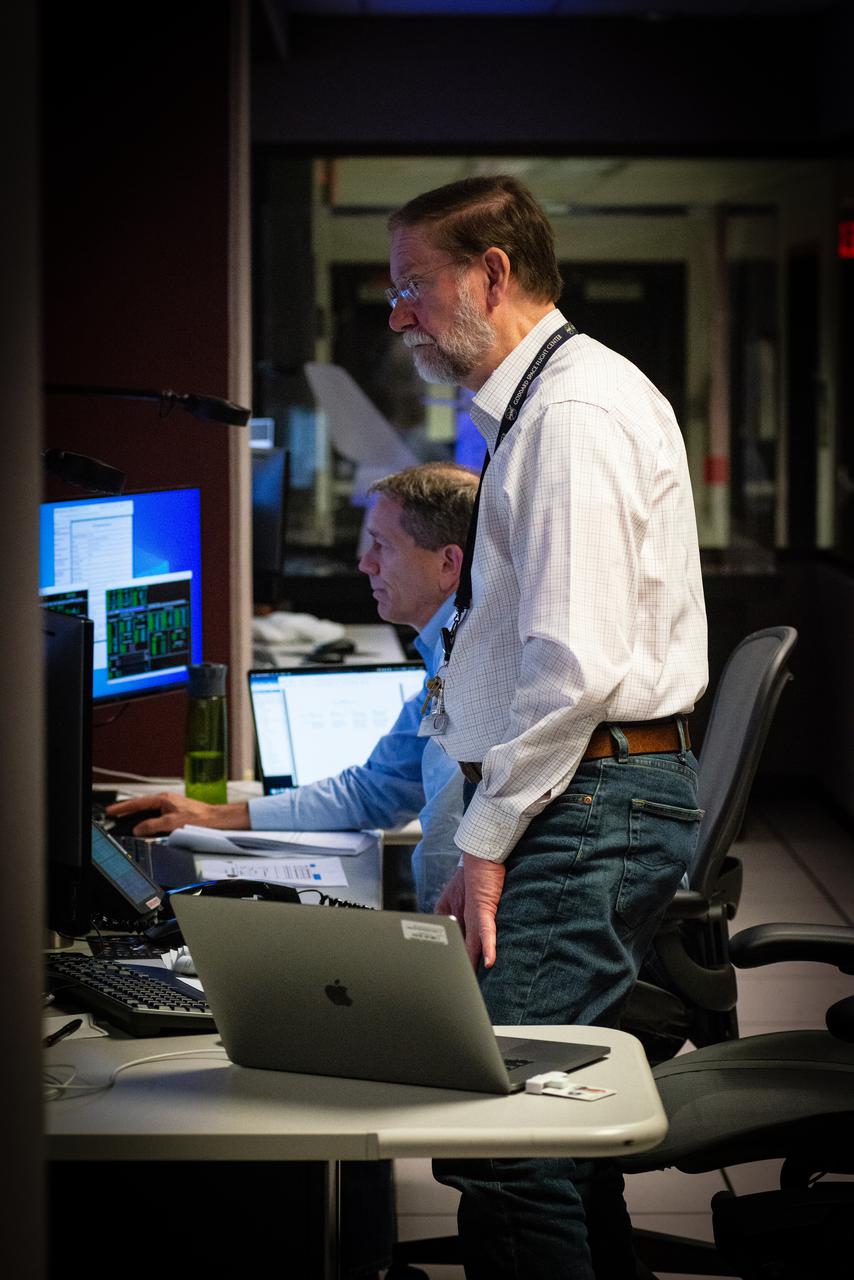
Members of the Hubble operations team work in the control room on July 15, 2021 to restore Hubble to science operations. Credits: NASA/Goddard/Rebecca Roth --- More info: Hubble’s payload computer, which controls and coordinates the observatory’s onboard science instruments, halted suddenly on June 13. When the main computer failed to receive a signal from the payload computer, it automatically placed Hubble’s science instruments into safe mode. That meant the telescope would no longer be doing science while mission specialists analyzed the situation. In response to the anomaly, NASA began a switch to backup spacecraft hardware on Hubble in response to an ongoing problem with its payload computer. This was a multi-day event. Science observations restarted the afternoon of Saturday, July 17.
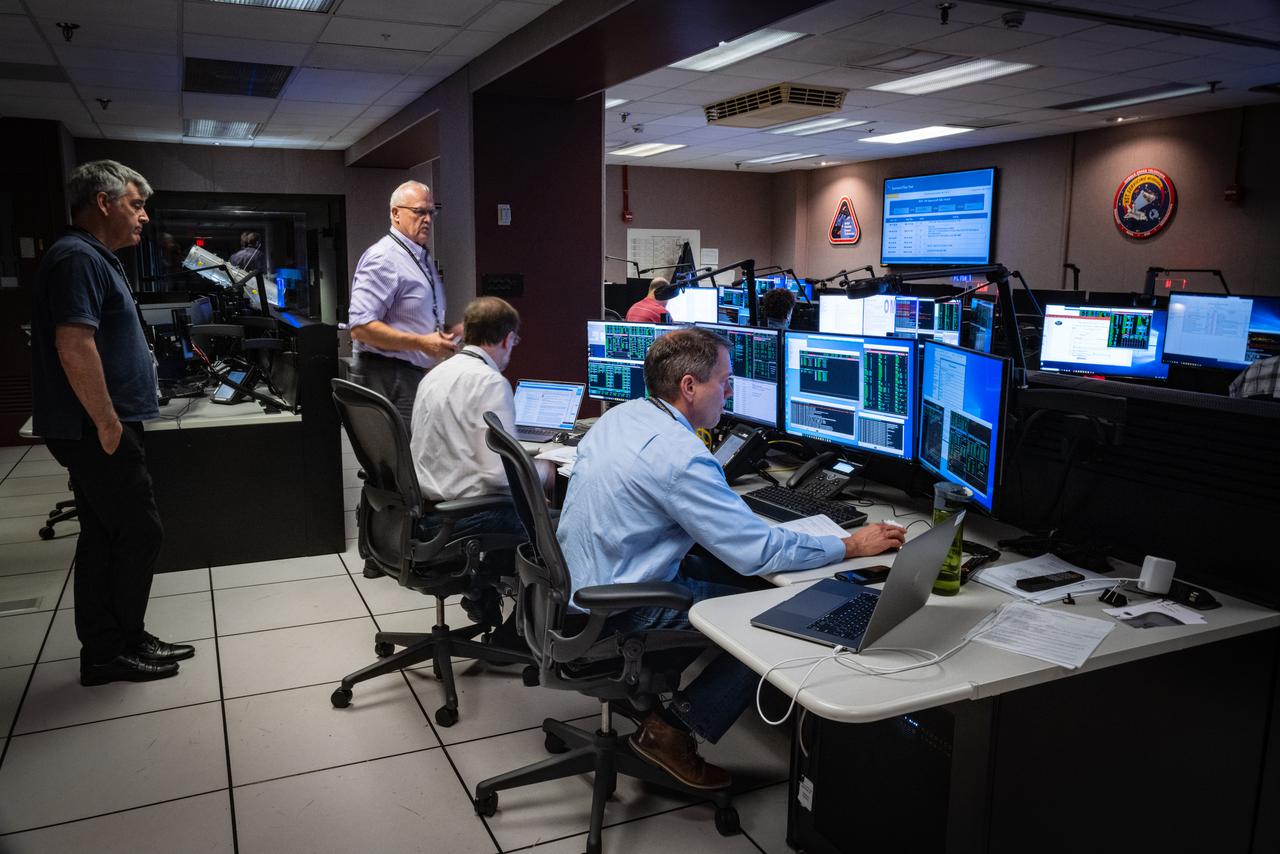
Members of the Hubble operations team work in the control room on July 15, 2021 to restore Hubble to science operations. Credits: NASA/Goddard/Rebecca Roth --- More info: Hubble’s payload computer, which controls and coordinates the observatory’s onboard science instruments, halted suddenly on June 13. When the main computer failed to receive a signal from the payload computer, it automatically placed Hubble’s science instruments into safe mode. That meant the telescope would no longer be doing science while mission specialists analyzed the situation. In response to the anomaly, NASA began a switch to backup spacecraft hardware on Hubble in response to an ongoing problem with its payload computer. This was a multi-day event. Science observations restarted the afternoon of Saturday, July 17.
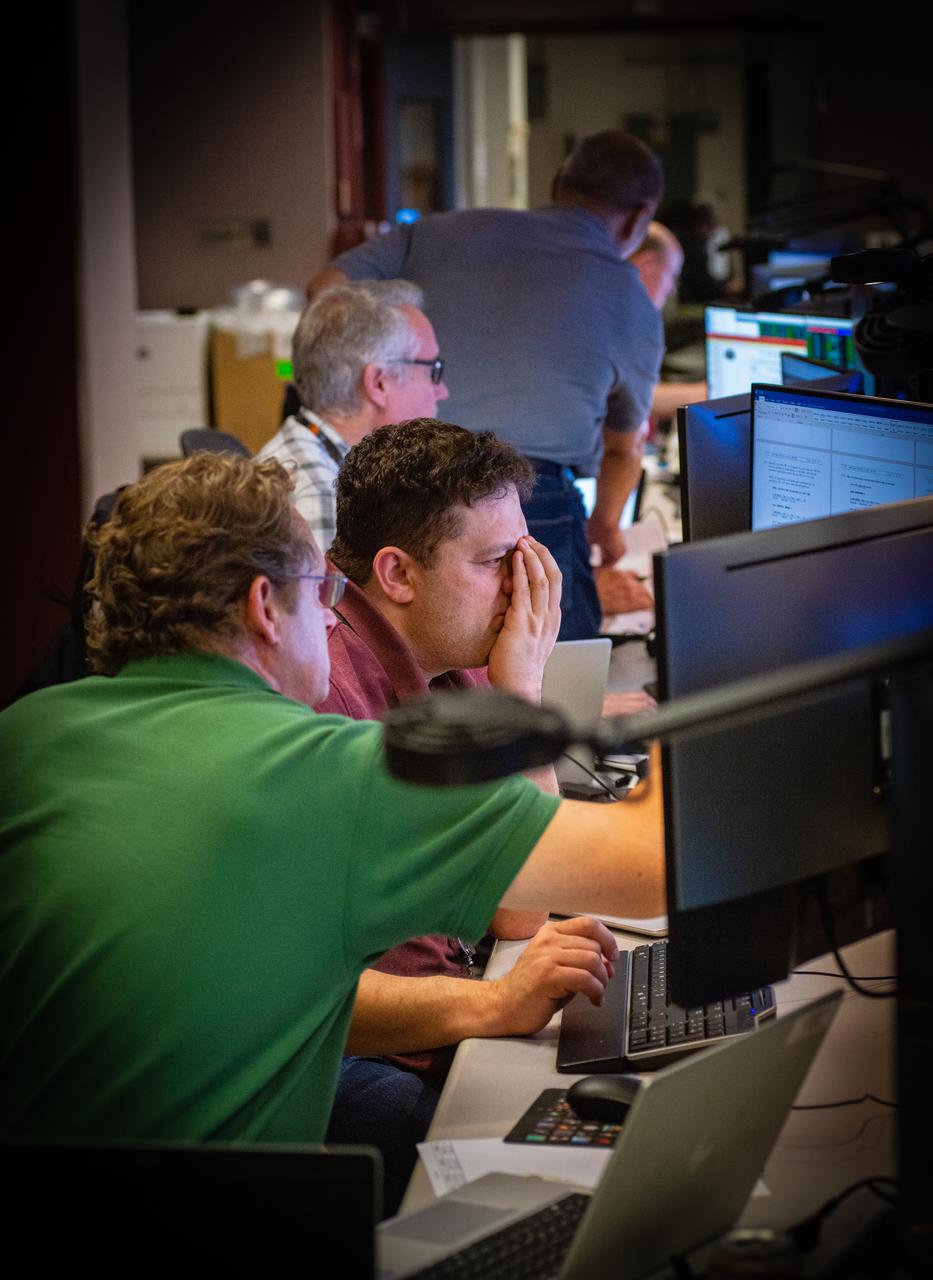
Members of the Hubble operations team work in the control room on July 15, 2021 to restore Hubble to science operations. Credits: NASA/Goddard/Rebecca Roth --- More info: Hubble’s payload computer, which controls and coordinates the observatory’s onboard science instruments, halted suddenly on June 13. When the main computer failed to receive a signal from the payload computer, it automatically placed Hubble’s science instruments into safe mode. That meant the telescope would no longer be doing science while mission specialists analyzed the situation. In response to the anomaly, NASA began a switch to backup spacecraft hardware on Hubble in response to an ongoing problem with its payload computer. This was a multi-day event. Science observations restarted the afternoon of Saturday, July 17.
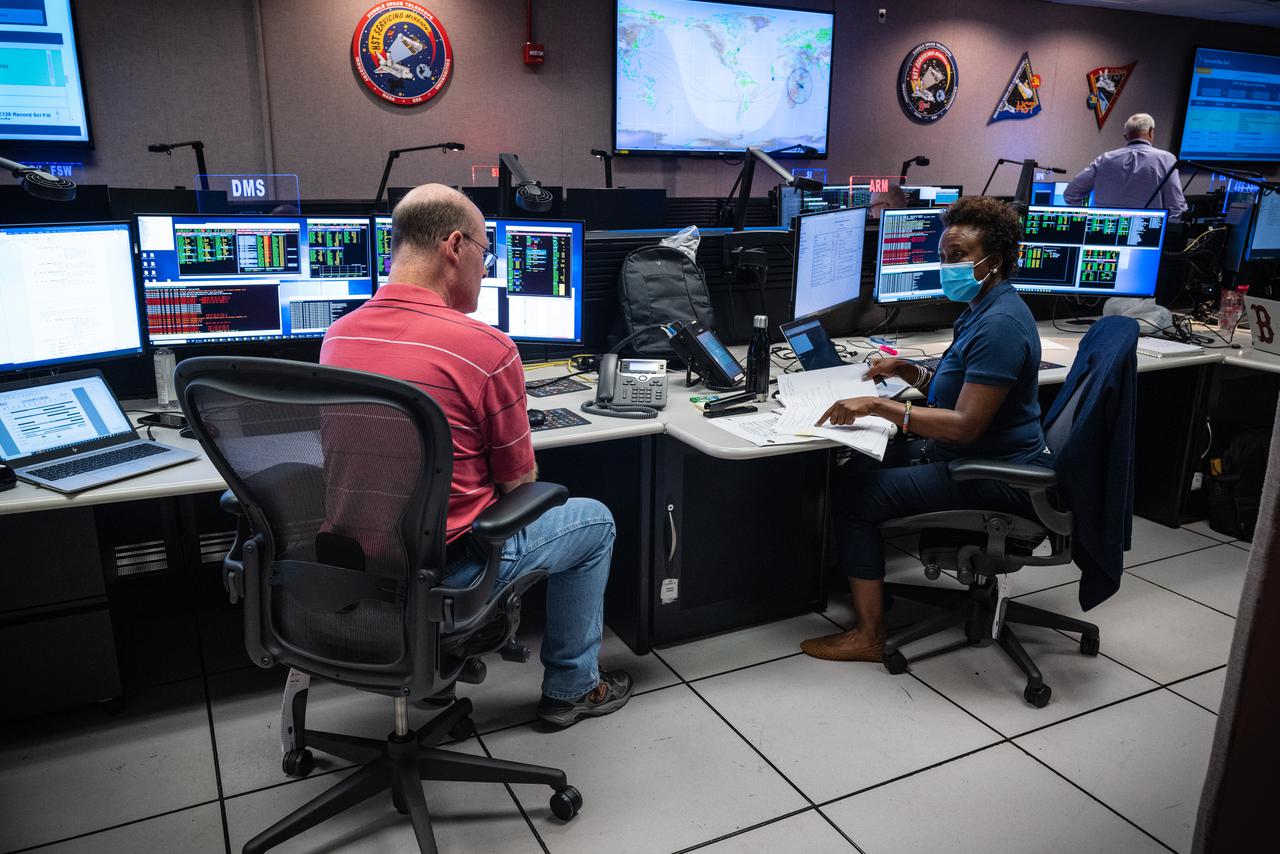
Members of the Hubble operations team work in the control room on July 15, 2021 to restore Hubble to science operations. Credits: NASA/Goddard/Rebecca Roth --- More info: Hubble’s payload computer, which controls and coordinates the observatory’s onboard science instruments, halted suddenly on June 13. When the main computer failed to receive a signal from the payload computer, it automatically placed Hubble’s science instruments into safe mode. That meant the telescope would no longer be doing science while mission specialists analyzed the situation. In response to the anomaly, NASA began a switch to backup spacecraft hardware on Hubble in response to an ongoing problem with its payload computer. This was a multi-day event. Science observations restarted the afternoon of Saturday, July 17.
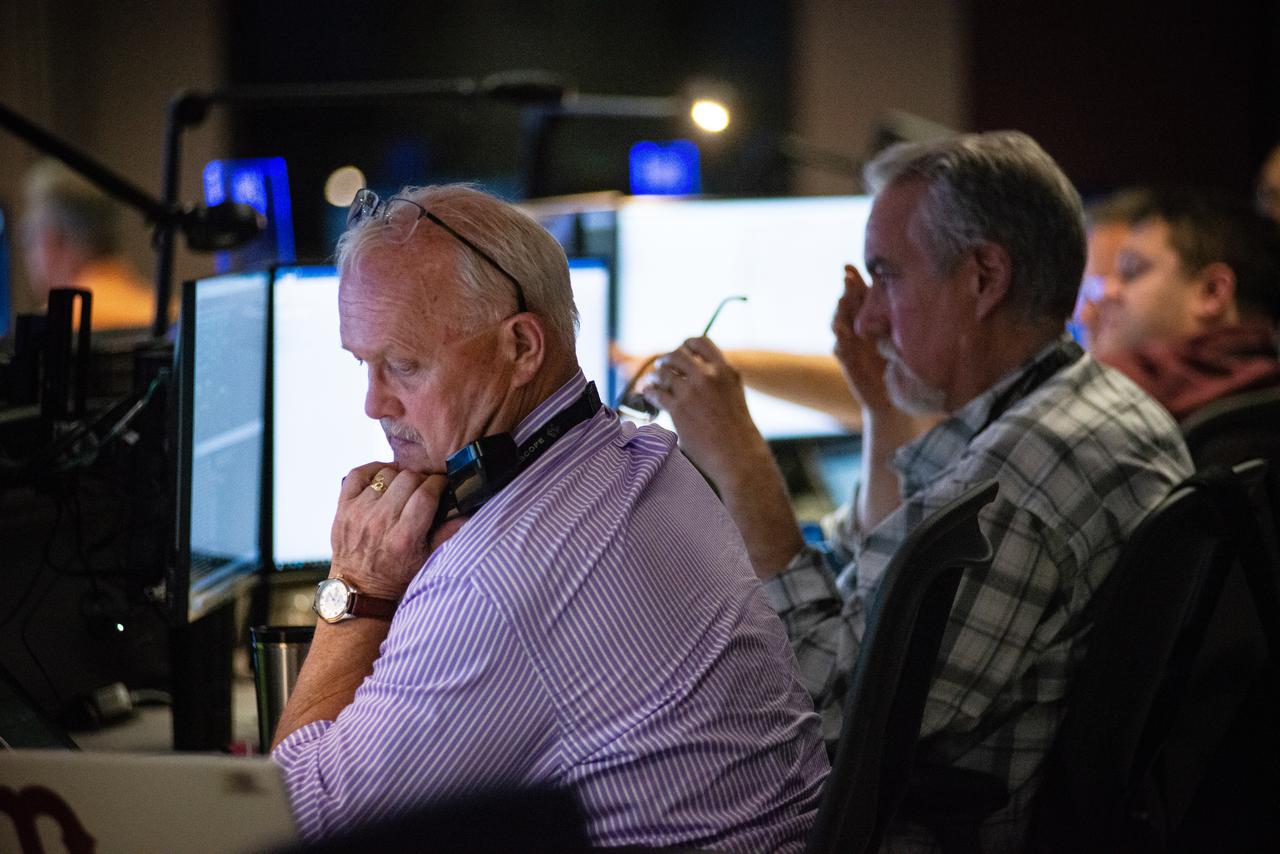
Members of the Hubble operations team work in the control room on July 15, 2021 to restore Hubble to science operations. Credits: NASA/Goddard/Rebecca Roth --- More info: Hubble’s payload computer, which controls and coordinates the observatory’s onboard science instruments, halted suddenly on June 13. When the main computer failed to receive a signal from the payload computer, it automatically placed Hubble’s science instruments into safe mode. That meant the telescope would no longer be doing science while mission specialists analyzed the situation. In response to the anomaly, NASA began a switch to backup spacecraft hardware on Hubble in response to an ongoing problem with its payload computer. This was a multi-day event. Science observations restarted the afternoon of Saturday, July 17.
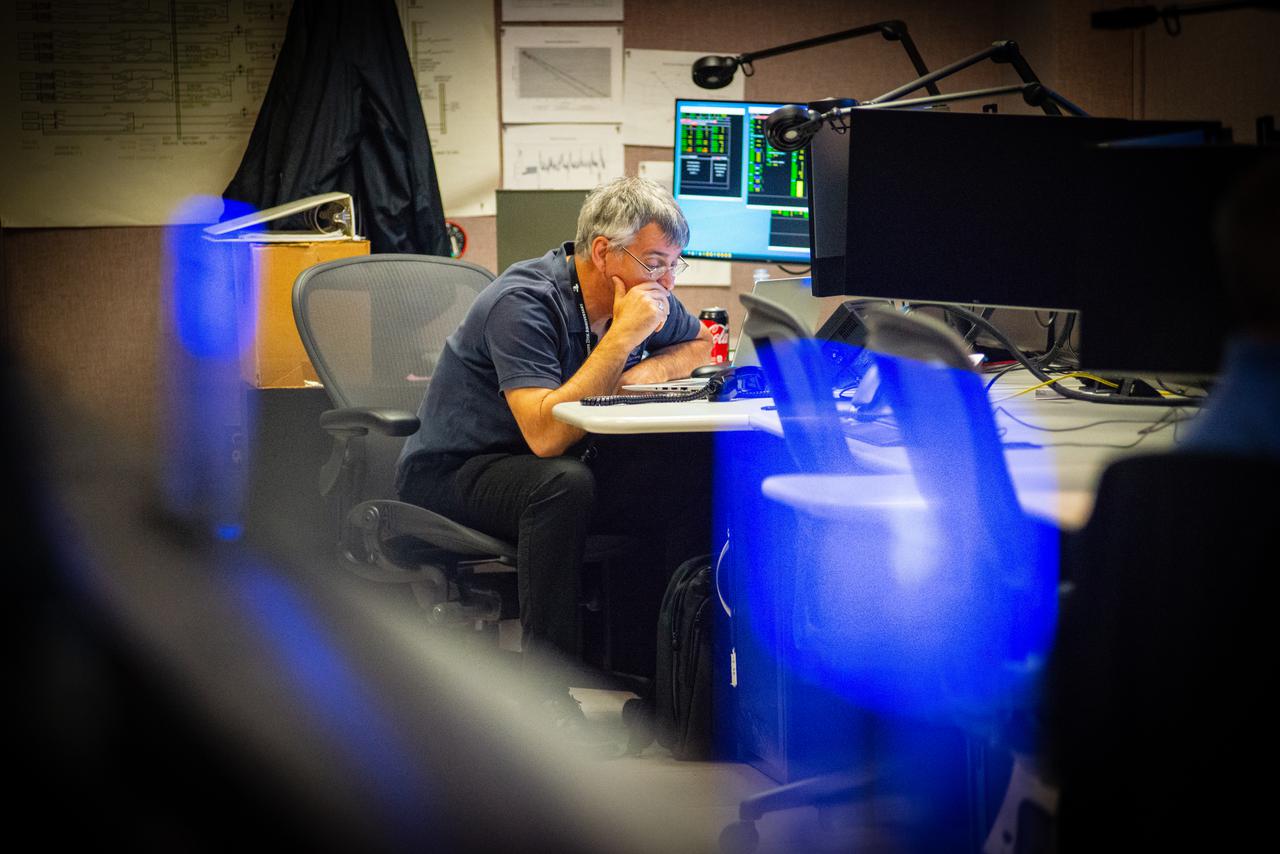
Members of the Hubble operations team work in the control room on July 15, 2021 to restore Hubble to science operations. Credits: NASA/Goddard/Rebecca Roth --- More info: Hubble’s payload computer, which controls and coordinates the observatory’s onboard science instruments, halted suddenly on June 13. When the main computer failed to receive a signal from the payload computer, it automatically placed Hubble’s science instruments into safe mode. That meant the telescope would no longer be doing science while mission specialists analyzed the situation. In response to the anomaly, NASA began a switch to backup spacecraft hardware on Hubble in response to an ongoing problem with its payload computer. This was a multi-day event. Science observations restarted the afternoon of Saturday, July 17.

Members of the Hubble operations team work in the control room on July 15, 2021 to restore Hubble to science operations. Credits: NASA/Goddard/Rebecca Roth --- More info: Hubble’s payload computer, which controls and coordinates the observatory’s onboard science instruments, halted suddenly on June 13. When the main computer failed to receive a signal from the payload computer, it automatically placed Hubble’s science instruments into safe mode. That meant the telescope would no longer be doing science while mission specialists analyzed the situation. In response to the anomaly, NASA began a switch to backup spacecraft hardware on Hubble in response to an ongoing problem with its payload computer. This was a multi-day event. Science observations restarted the afternoon of Saturday, July 17.
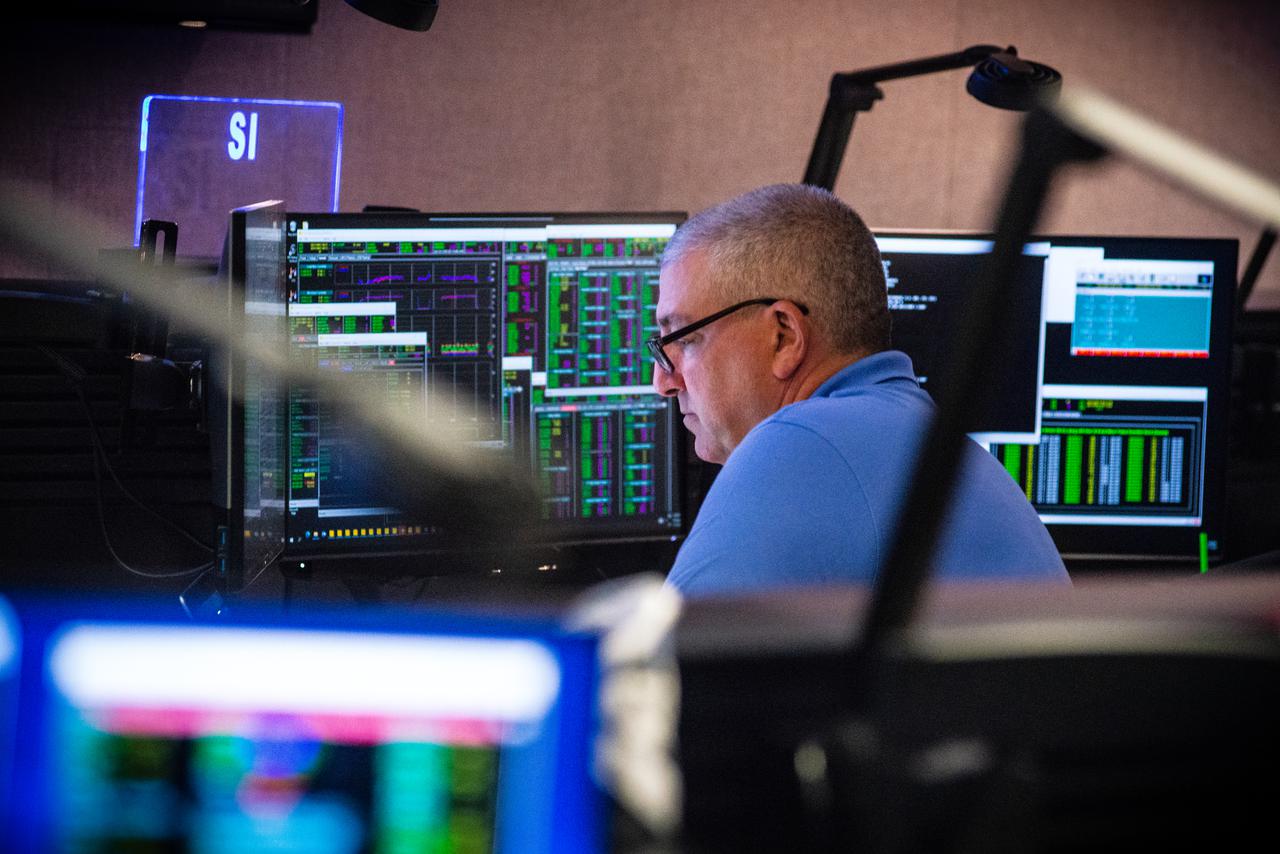
Members of the Hubble operations team work in the control room on July 15, 2021 to restore Hubble to science operations. Credits: NASA/Goddard/Rebecca Roth --- More info: Hubble’s payload computer, which controls and coordinates the observatory’s onboard science instruments, halted suddenly on June 13. When the main computer failed to receive a signal from the payload computer, it automatically placed Hubble’s science instruments into safe mode. That meant the telescope would no longer be doing science while mission specialists analyzed the situation. In response to the anomaly, NASA began a switch to backup spacecraft hardware on Hubble in response to an ongoing problem with its payload computer. This was a multi-day event. Science observations restarted the afternoon of Saturday, July 17.
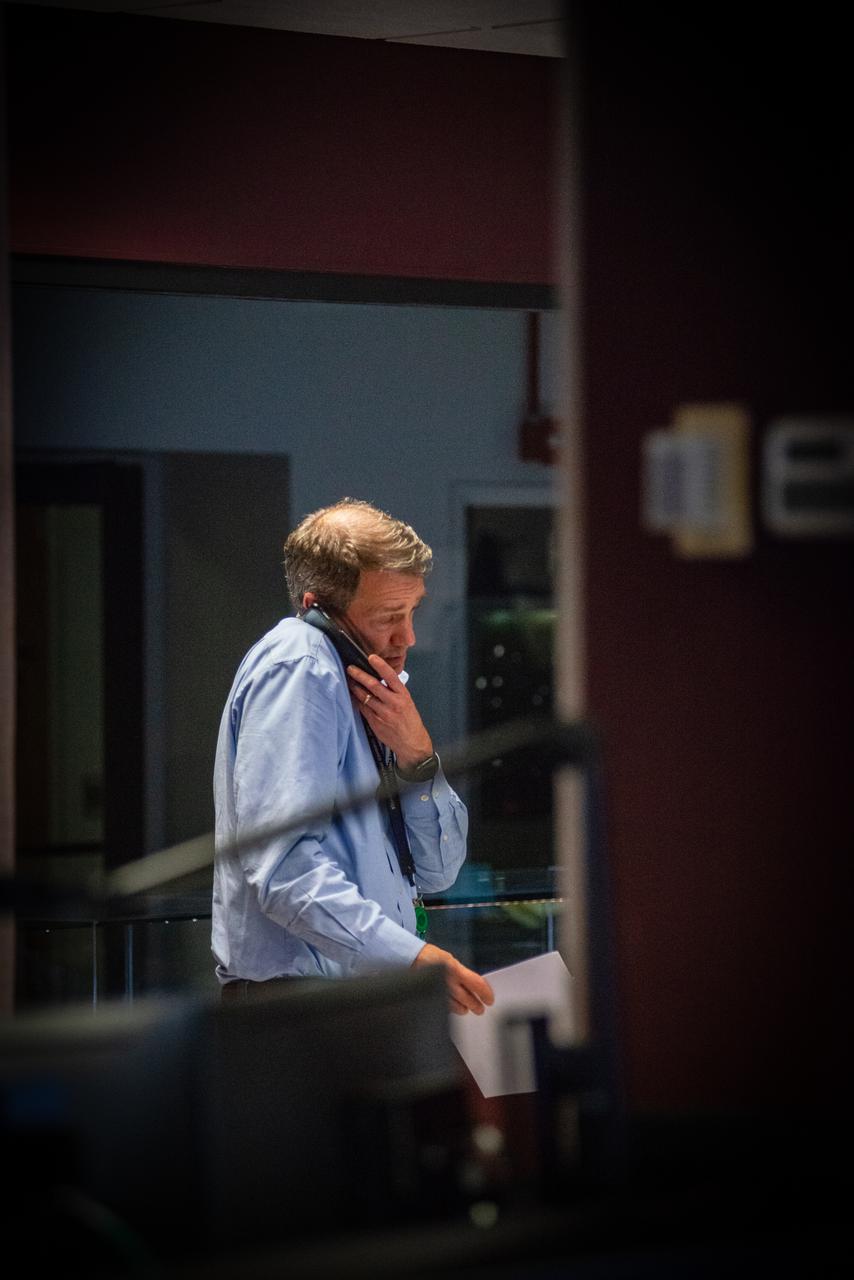
Members of the Hubble operations team work in the control room on July 15, 2021 to restore Hubble to science operations. Credits: NASA/Goddard/Rebecca Roth --- More info: Hubble’s payload computer, which controls and coordinates the observatory’s onboard science instruments, halted suddenly on June 13. When the main computer failed to receive a signal from the payload computer, it automatically placed Hubble’s science instruments into safe mode. That meant the telescope would no longer be doing science while mission specialists analyzed the situation. In response to the anomaly, NASA began a switch to backup spacecraft hardware on Hubble in response to an ongoing problem with its payload computer. This was a multi-day event. Science observations restarted the afternoon of Saturday, July 17.
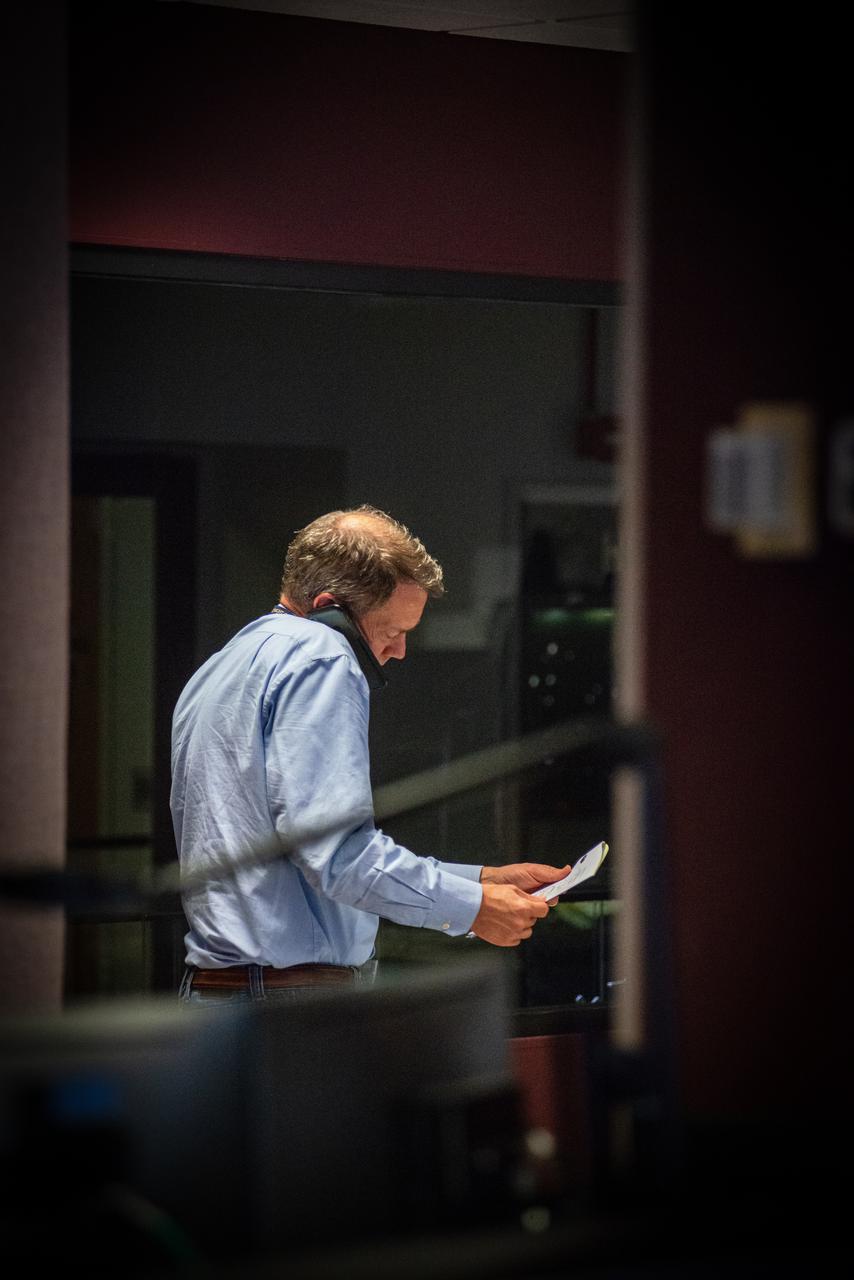
Members of the Hubble operations team work in the control room on July 15, 2021 to restore Hubble to science operations. Credits: NASA/Goddard/Rebecca Roth --- More info: Hubble’s payload computer, which controls and coordinates the observatory’s onboard science instruments, halted suddenly on June 13. When the main computer failed to receive a signal from the payload computer, it automatically placed Hubble’s science instruments into safe mode. That meant the telescope would no longer be doing science while mission specialists analyzed the situation. In response to the anomaly, NASA began a switch to backup spacecraft hardware on Hubble in response to an ongoing problem with its payload computer. This was a multi-day event. Science observations restarted the afternoon of Saturday, July 17.
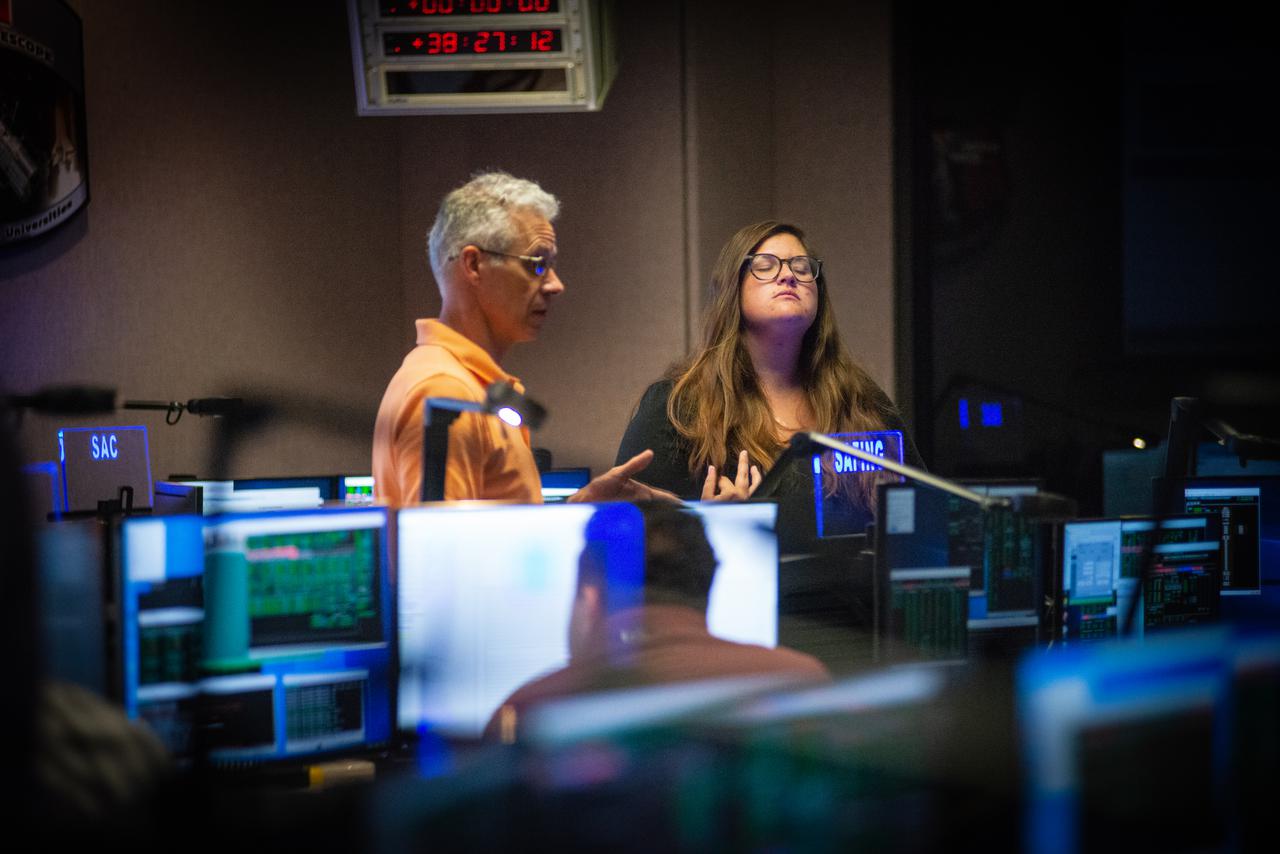
Members of the Hubble operations team work in the control room on July 15, 2021 to restore Hubble to science operations. Credits: NASA/Goddard/Rebecca Roth --- More info: Hubble’s payload computer, which controls and coordinates the observatory’s onboard science instruments, halted suddenly on June 13. When the main computer failed to receive a signal from the payload computer, it automatically placed Hubble’s science instruments into safe mode. That meant the telescope would no longer be doing science while mission specialists analyzed the situation. In response to the anomaly, NASA began a switch to backup spacecraft hardware on Hubble in response to an ongoing problem with its payload computer. This was a multi-day event. Science observations restarted the afternoon of Saturday, July 17.
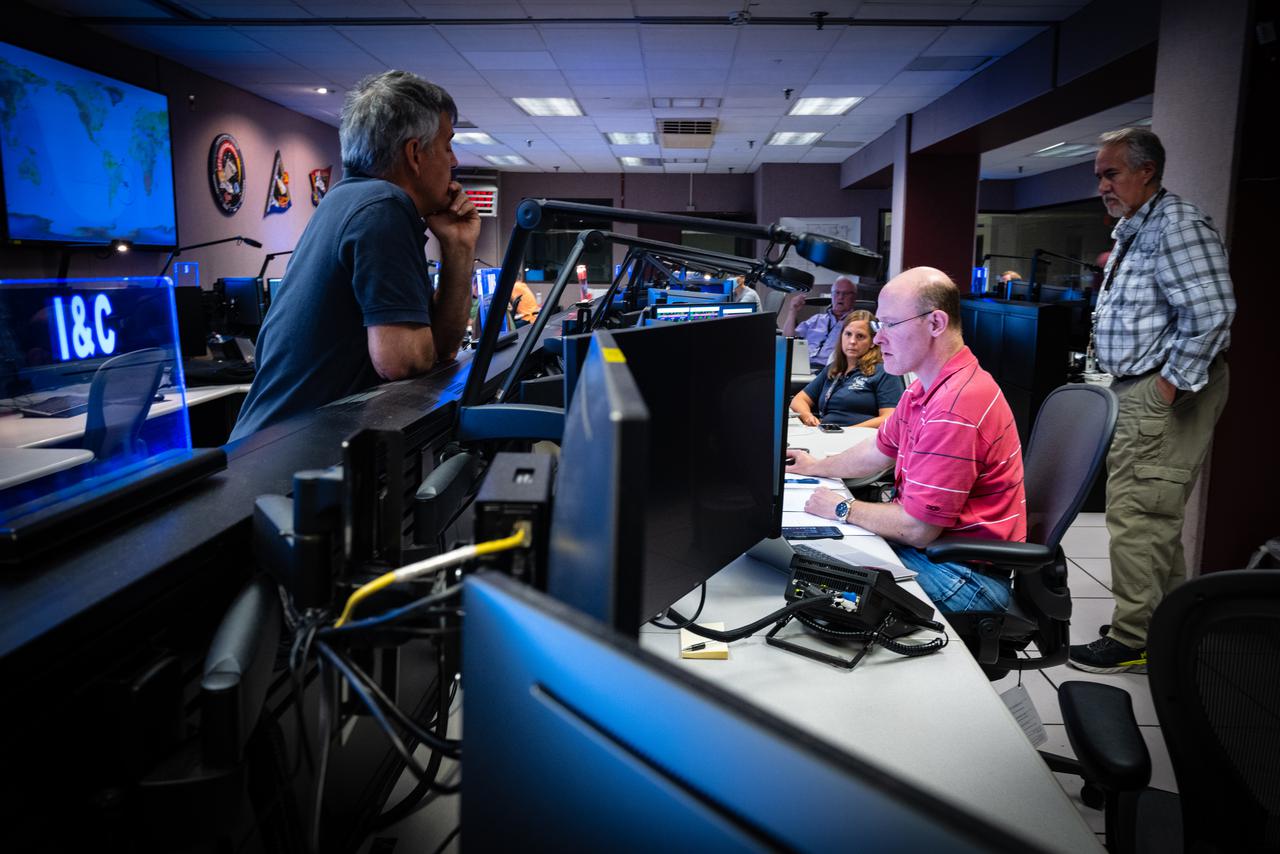
Members of the Hubble operations team work in the control room on July 15, 2021 to restore Hubble to science operations. Credits: NASA/Goddard/Rebecca Roth --- More info: Hubble’s payload computer, which controls and coordinates the observatory’s onboard science instruments, halted suddenly on June 13. When the main computer failed to receive a signal from the payload computer, it automatically placed Hubble’s science instruments into safe mode. That meant the telescope would no longer be doing science while mission specialists analyzed the situation. In response to the anomaly, NASA began a switch to backup spacecraft hardware on Hubble in response to an ongoing problem with its payload computer. This was a multi-day event. Science observations restarted the afternoon of Saturday, July 17.
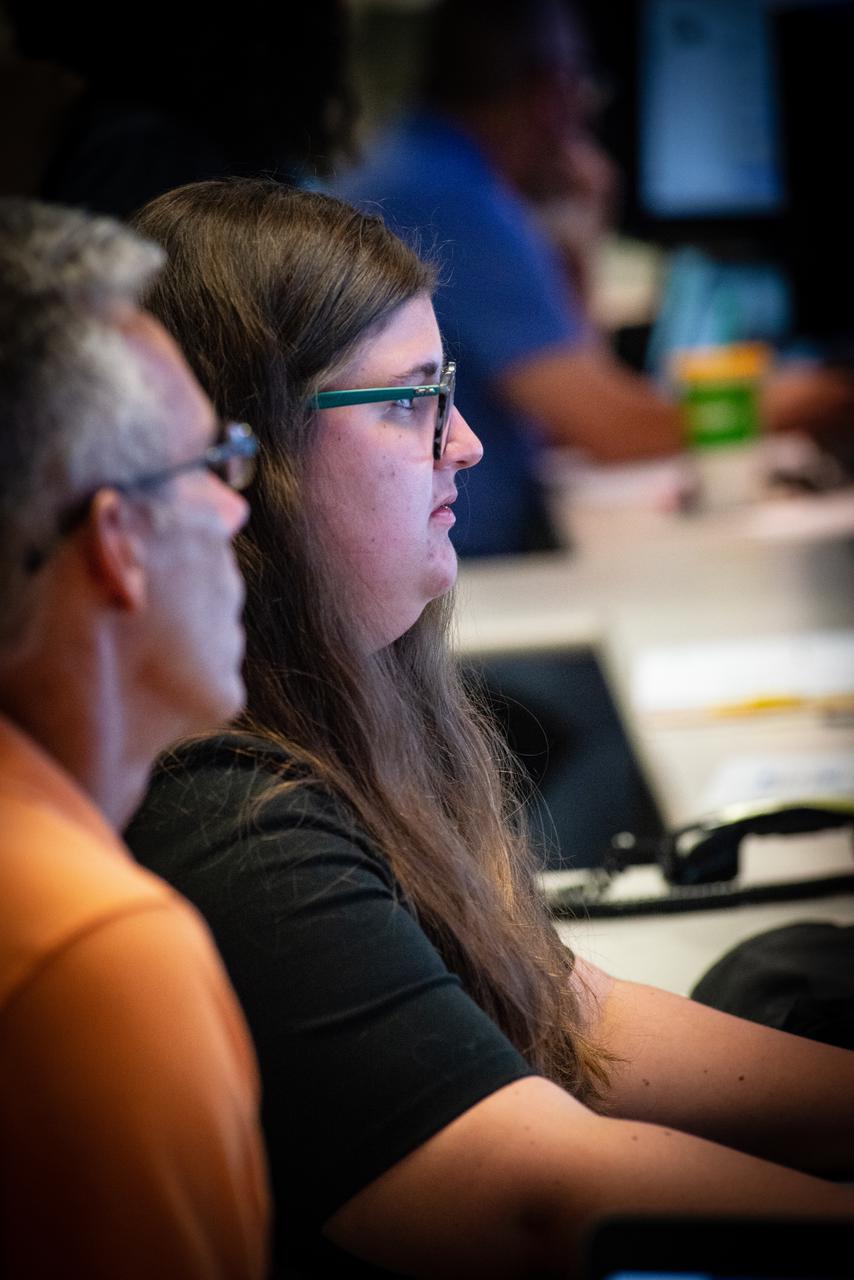
Members of the Hubble operations team work in the control room on July 15, 2021 to restore Hubble to science operations. Credits: NASA/Goddard/Rebecca Roth --- More info: Hubble’s payload computer, which controls and coordinates the observatory’s onboard science instruments, halted suddenly on June 13. When the main computer failed to receive a signal from the payload computer, it automatically placed Hubble’s science instruments into safe mode. That meant the telescope would no longer be doing science while mission specialists analyzed the situation. In response to the anomaly, NASA began a switch to backup spacecraft hardware on Hubble in response to an ongoing problem with its payload computer. This was a multi-day event. Science observations restarted the afternoon of Saturday, July 17.
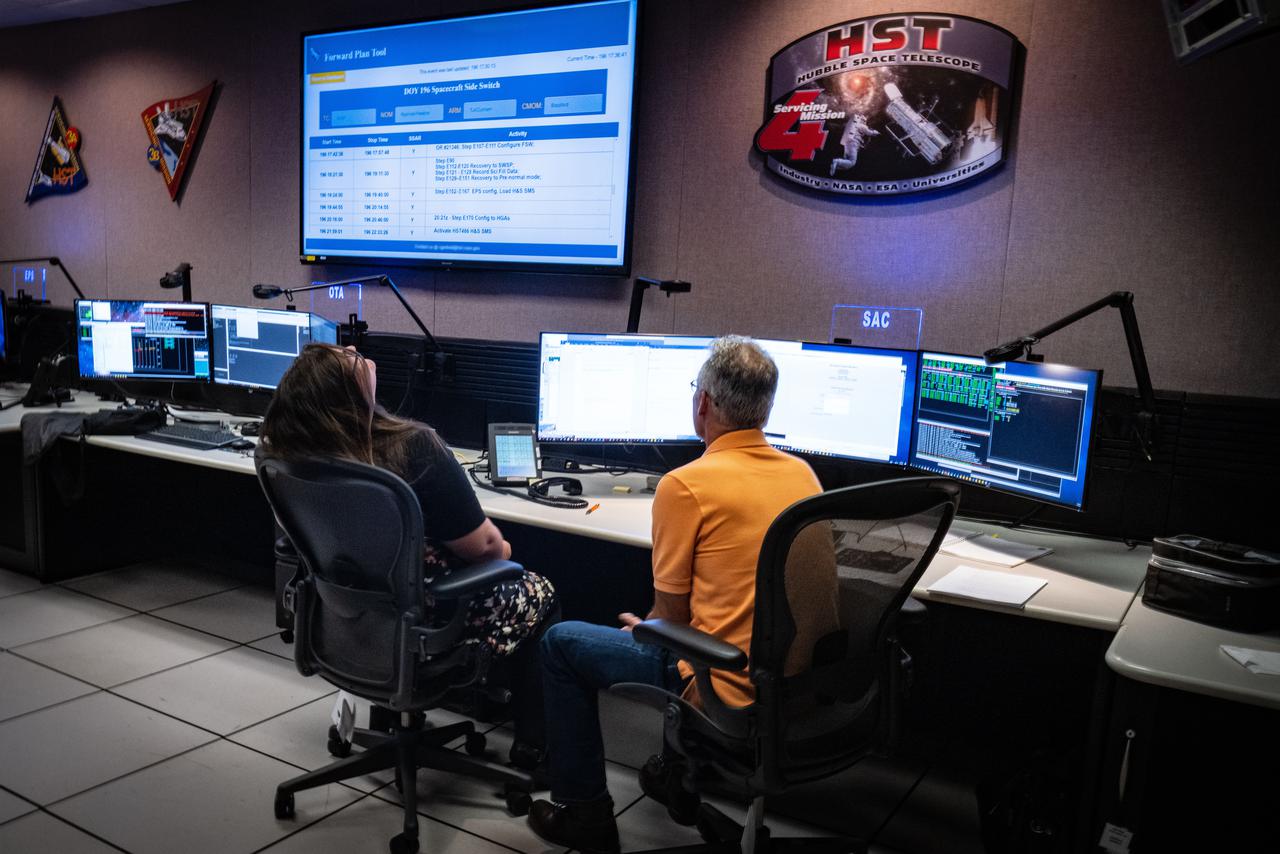
Members of the Hubble operations team work in the control room on July 15, 2021 to restore Hubble to science operations. Credits: NASA/Goddard/Rebecca Roth --- More info: Hubble’s payload computer, which controls and coordinates the observatory’s onboard science instruments, halted suddenly on June 13. When the main computer failed to receive a signal from the payload computer, it automatically placed Hubble’s science instruments into safe mode. That meant the telescope would no longer be doing science while mission specialists analyzed the situation. In response to the anomaly, NASA began a switch to backup spacecraft hardware on Hubble in response to an ongoing problem with its payload computer. This was a multi-day event. Science observations restarted the afternoon of Saturday, July 17.
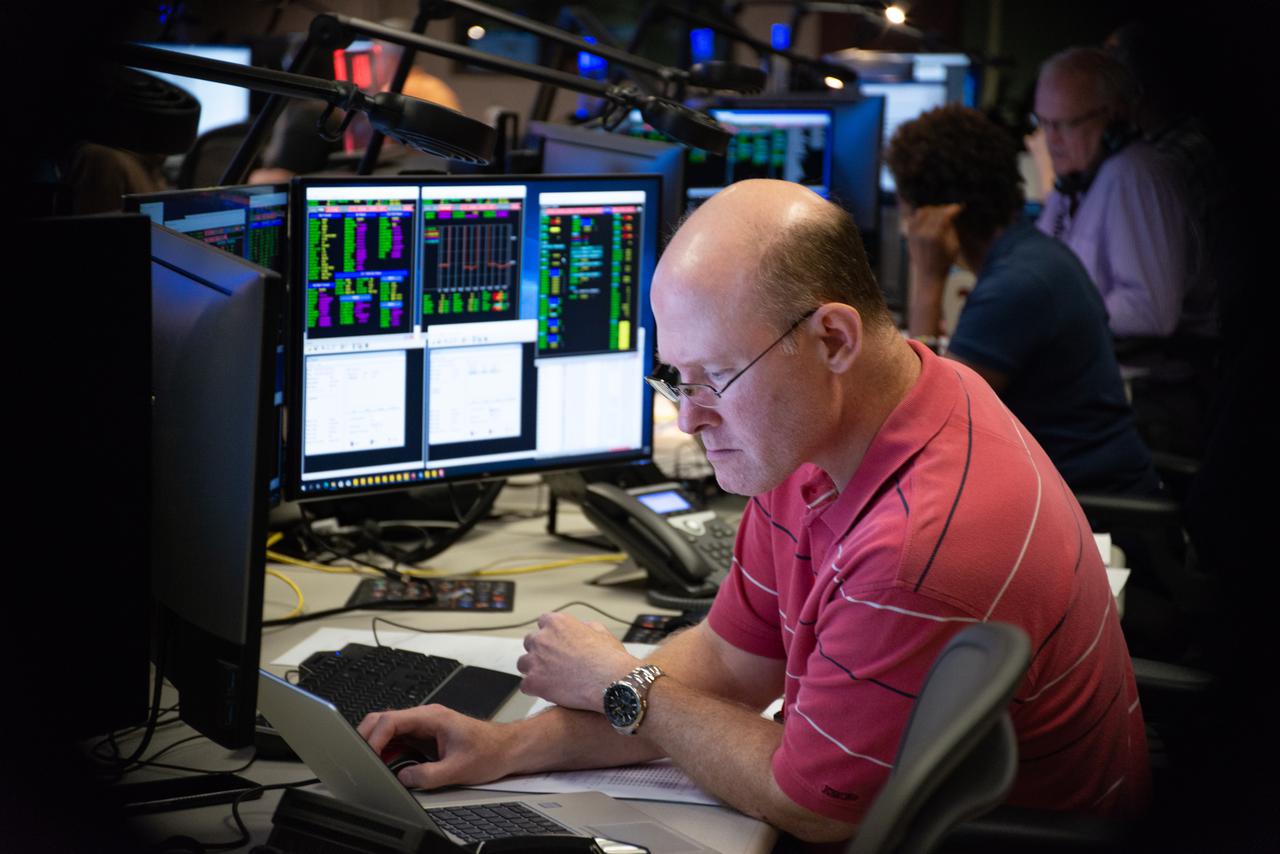
Members of the Hubble operations team work in the control room on July 15, 2021 to restore Hubble to science operations. Credits: NASA/Goddard/Rebecca Roth --- More info: Hubble’s payload computer, which controls and coordinates the observatory’s onboard science instruments, halted suddenly on June 13. When the main computer failed to receive a signal from the payload computer, it automatically placed Hubble’s science instruments into safe mode. That meant the telescope would no longer be doing science while mission specialists analyzed the situation. In response to the anomaly, NASA began a switch to backup spacecraft hardware on Hubble in response to an ongoing problem with its payload computer. This was a multi-day event. Science observations restarted the afternoon of Saturday, July 17.
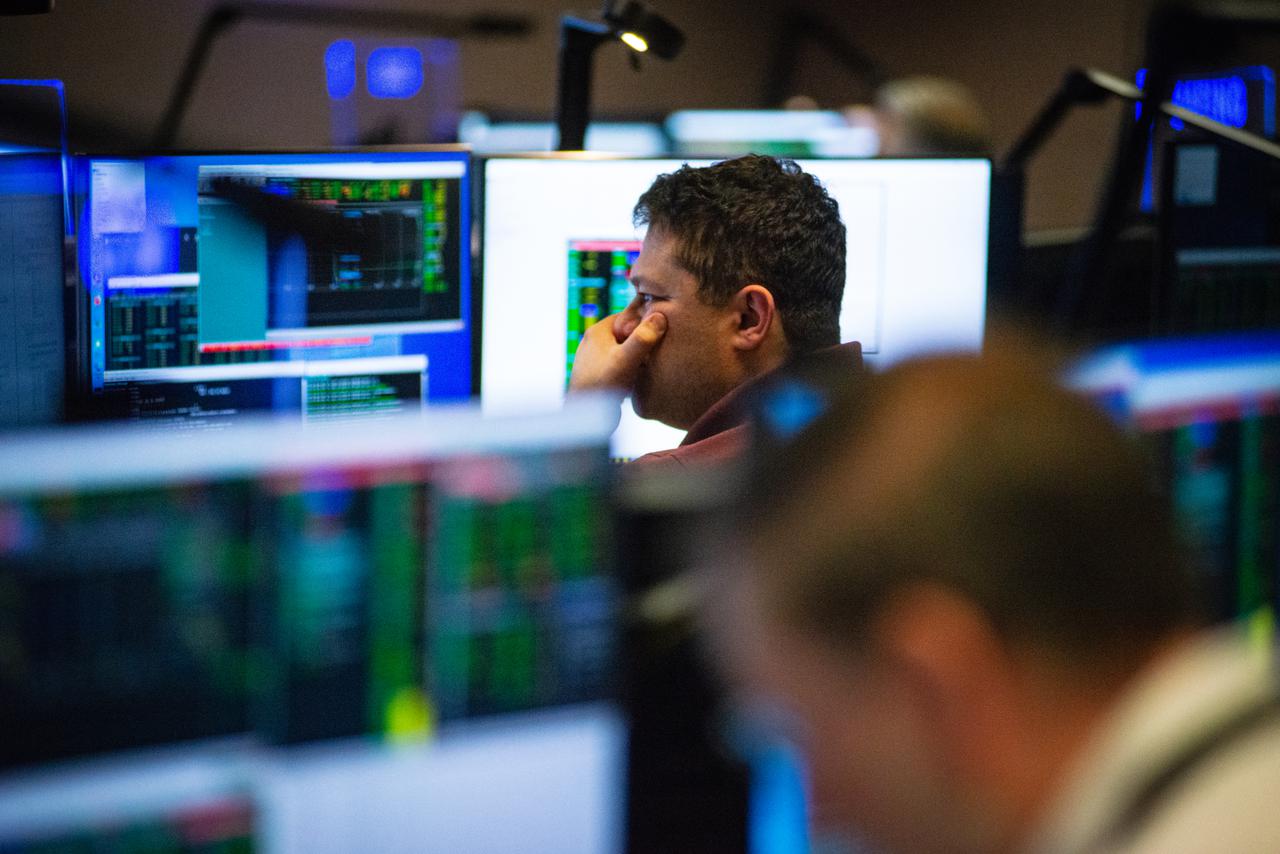
Members of the Hubble operations team work in the control room on July 15, 2021 to restore Hubble to science operations. Credits: NASA/Goddard/Rebecca Roth --- More info: Hubble’s payload computer, which controls and coordinates the observatory’s onboard science instruments, halted suddenly on June 13. When the main computer failed to receive a signal from the payload computer, it automatically placed Hubble’s science instruments into safe mode. That meant the telescope would no longer be doing science while mission specialists analyzed the situation. In response to the anomaly, NASA began a switch to backup spacecraft hardware on Hubble in response to an ongoing problem with its payload computer. This was a multi-day event. Science observations restarted the afternoon of Saturday, July 17.
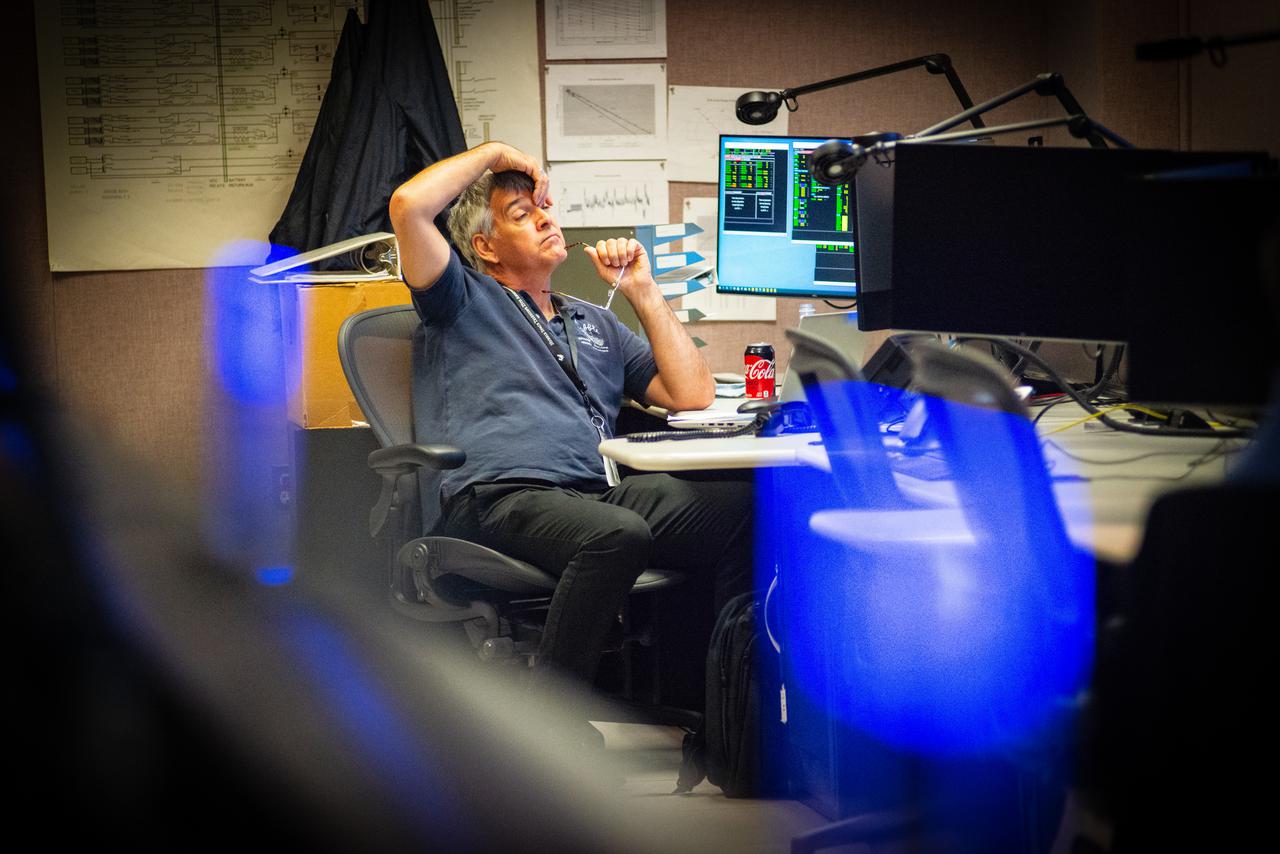
Members of the Hubble operations team work in the control room on July 15, 2021 to restore Hubble to science operations. Credits: NASA/Goddard/Rebecca Roth --- More info: Hubble’s payload computer, which controls and coordinates the observatory’s onboard science instruments, halted suddenly on June 13. When the main computer failed to receive a signal from the payload computer, it automatically placed Hubble’s science instruments into safe mode. That meant the telescope would no longer be doing science while mission specialists analyzed the situation. In response to the anomaly, NASA began a switch to backup spacecraft hardware on Hubble in response to an ongoing problem with its payload computer. This was a multi-day event. Science observations restarted the afternoon of Saturday, July 17.
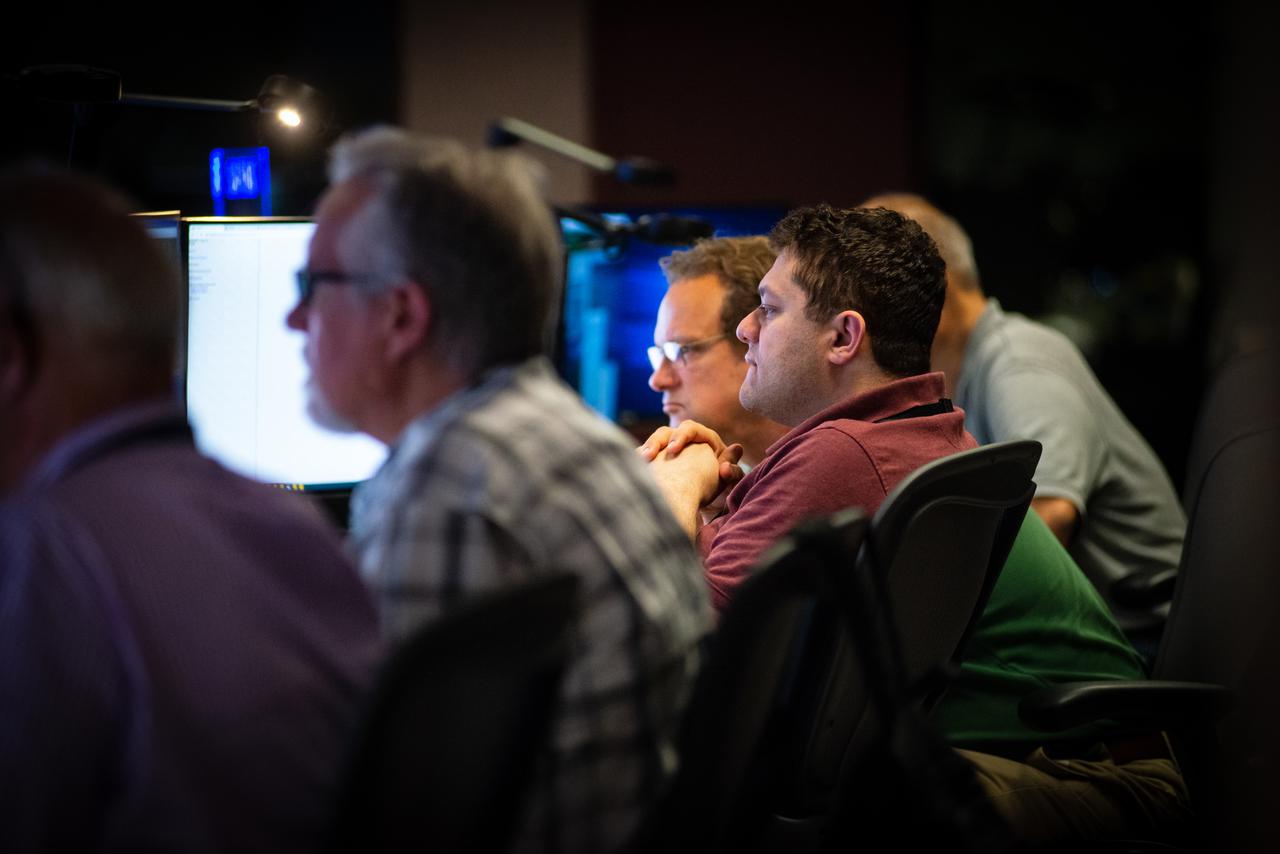
Members of the Hubble operations team work in the control room on July 15, 2021 to restore Hubble to science operations. Credits: NASA/Goddard/Rebecca Roth --- More info: Hubble’s payload computer, which controls and coordinates the observatory’s onboard science instruments, halted suddenly on June 13. When the main computer failed to receive a signal from the payload computer, it automatically placed Hubble’s science instruments into safe mode. That meant the telescope would no longer be doing science while mission specialists analyzed the situation. In response to the anomaly, NASA began a switch to backup spacecraft hardware on Hubble in response to an ongoing problem with its payload computer. This was a multi-day event. Science observations restarted the afternoon of Saturday, July 17.
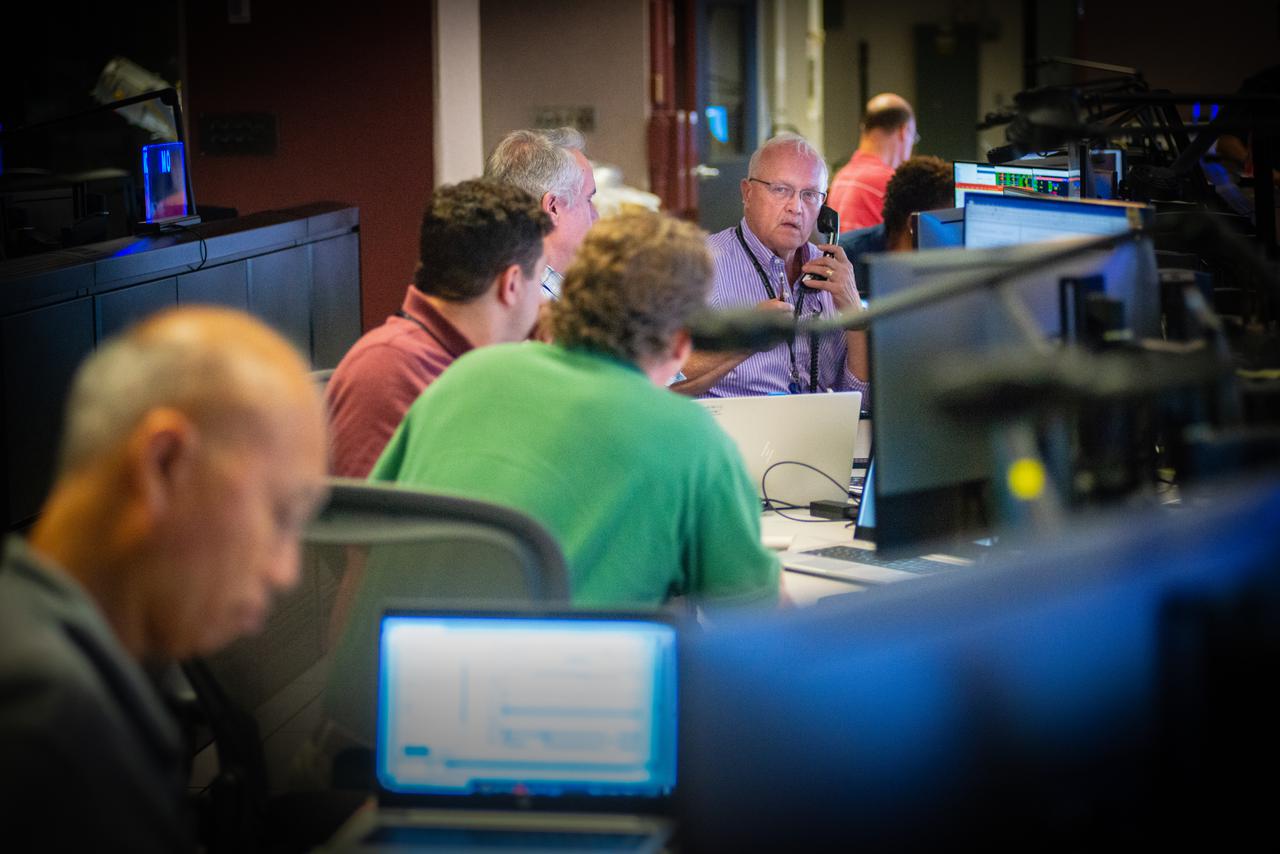
Members of the Hubble operations team work in the control room on July 15, 2021 to restore Hubble to science operations. Credits: NASA/Goddard/Rebecca Roth --- More info: Hubble’s payload computer, which controls and coordinates the observatory’s onboard science instruments, halted suddenly on June 13. When the main computer failed to receive a signal from the payload computer, it automatically placed Hubble’s science instruments into safe mode. That meant the telescope would no longer be doing science while mission specialists analyzed the situation. In response to the anomaly, NASA began a switch to backup spacecraft hardware on Hubble in response to an ongoing problem with its payload computer. This was a multi-day event. Science observations restarted the afternoon of Saturday, July 17.
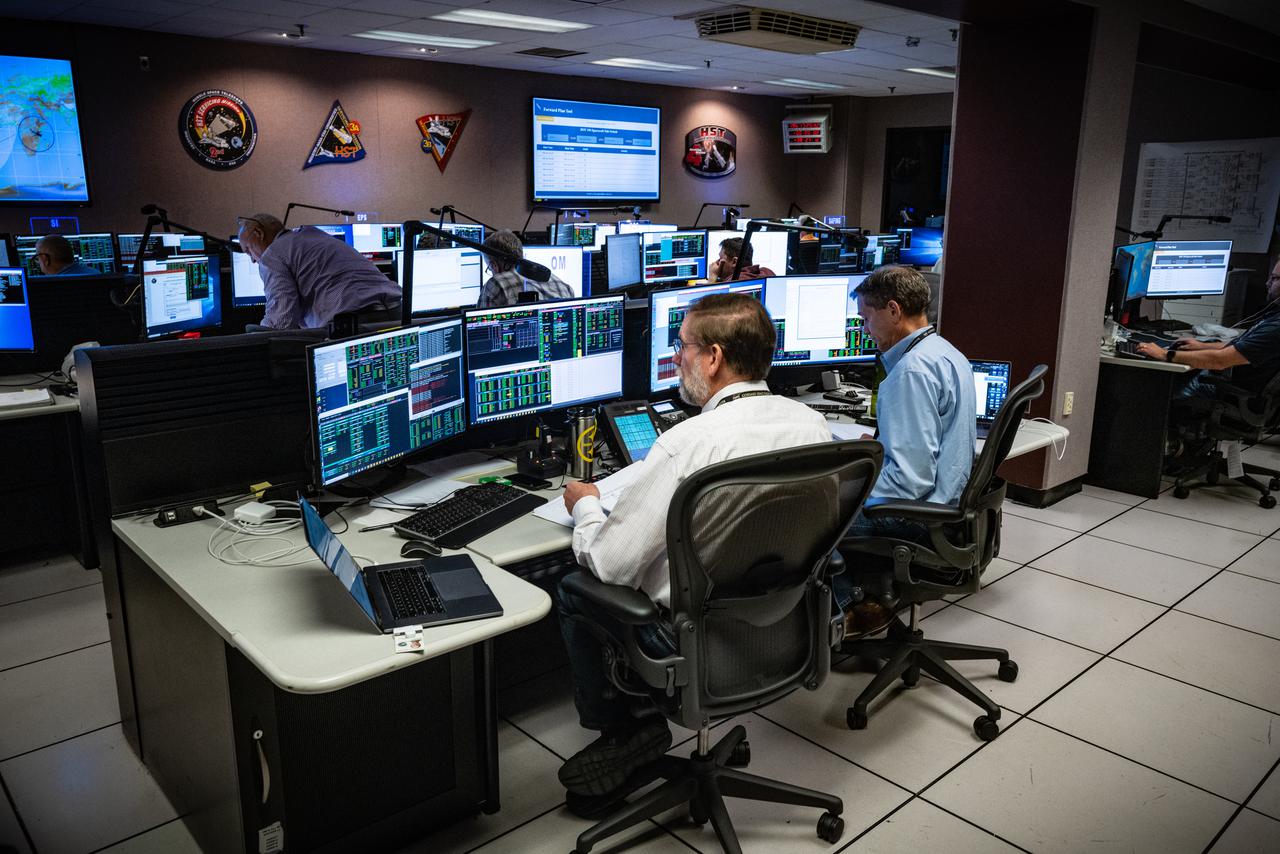
Members of the Hubble operations team work in the control room on July 15, 2021 to restore Hubble to science operations. Credits: NASA/Goddard/Rebecca Roth --- More info: Hubble’s payload computer, which controls and coordinates the observatory’s onboard science instruments, halted suddenly on June 13. When the main computer failed to receive a signal from the payload computer, it automatically placed Hubble’s science instruments into safe mode. That meant the telescope would no longer be doing science while mission specialists analyzed the situation. In response to the anomaly, NASA began a switch to backup spacecraft hardware on Hubble in response to an ongoing problem with its payload computer. This was a multi-day event. Science observations restarted the afternoon of Saturday, July 17.
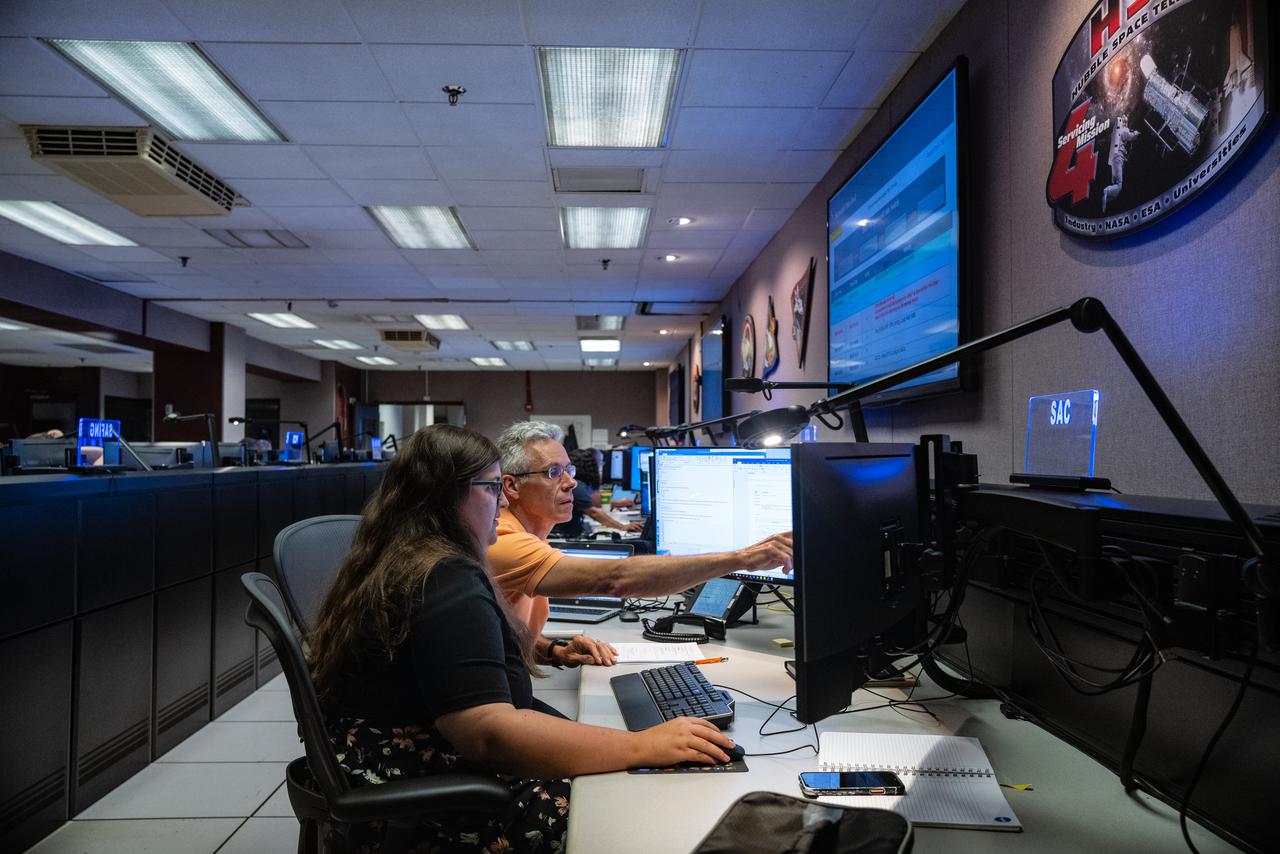
Members of the Hubble operations team work in the control room on July 15, 2021 to restore Hubble to science operations. Credits: NASA/Goddard/Rebecca Roth --- More info: Hubble’s payload computer, which controls and coordinates the observatory’s onboard science instruments, halted suddenly on June 13. When the main computer failed to receive a signal from the payload computer, it automatically placed Hubble’s science instruments into safe mode. That meant the telescope would no longer be doing science while mission specialists analyzed the situation. In response to the anomaly, NASA began a switch to backup spacecraft hardware on Hubble in response to an ongoing problem with its payload computer. This was a multi-day event. Science observations restarted the afternoon of Saturday, July 17.
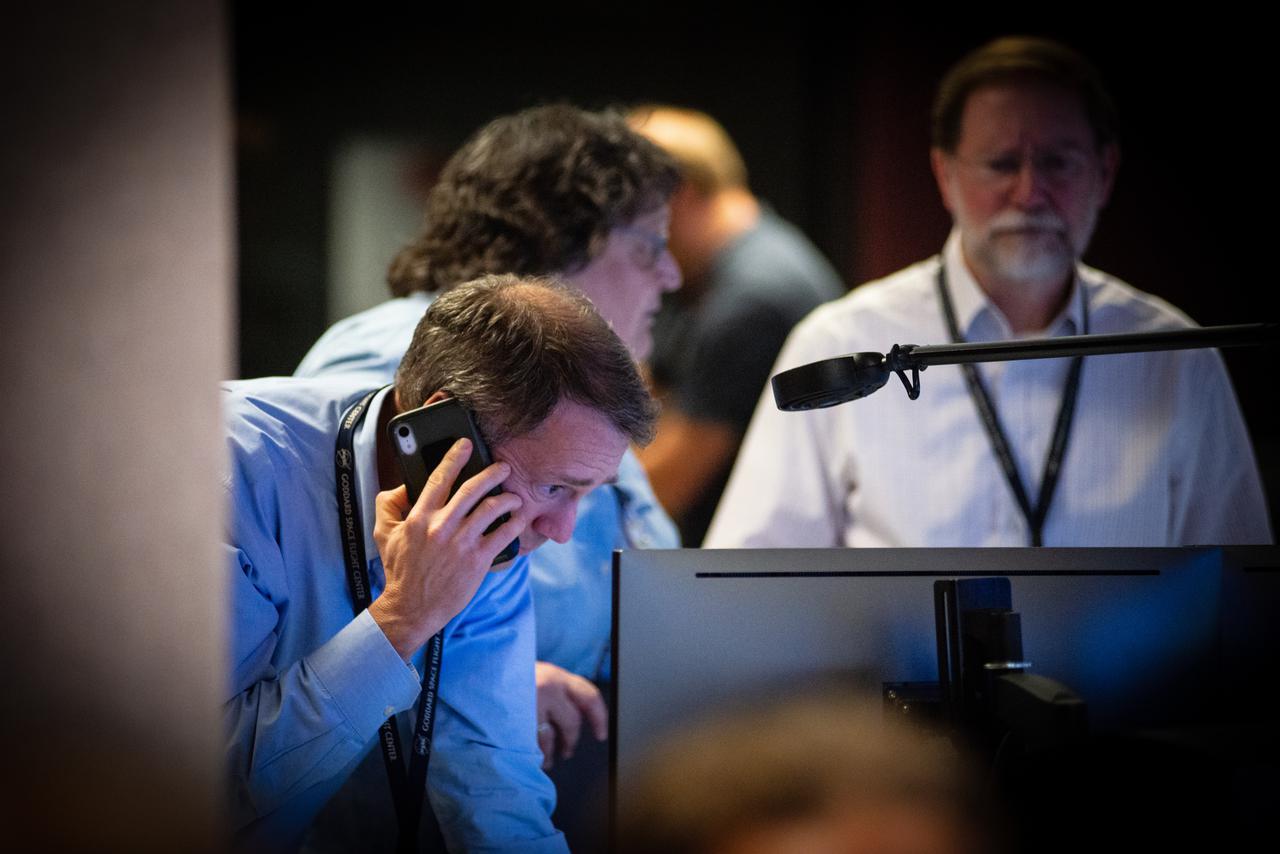
Members of the Hubble operations team work in the control room on July 15, 2021 to restore Hubble to science operations. Credits: NASA/Goddard/Rebecca Roth --- More info: Hubble’s payload computer, which controls and coordinates the observatory’s onboard science instruments, halted suddenly on June 13. When the main computer failed to receive a signal from the payload computer, it automatically placed Hubble’s science instruments into safe mode. That meant the telescope would no longer be doing science while mission specialists analyzed the situation. In response to the anomaly, NASA began a switch to backup spacecraft hardware on Hubble in response to an ongoing problem with its payload computer. This was a multi-day event. Science observations restarted the afternoon of Saturday, July 17.
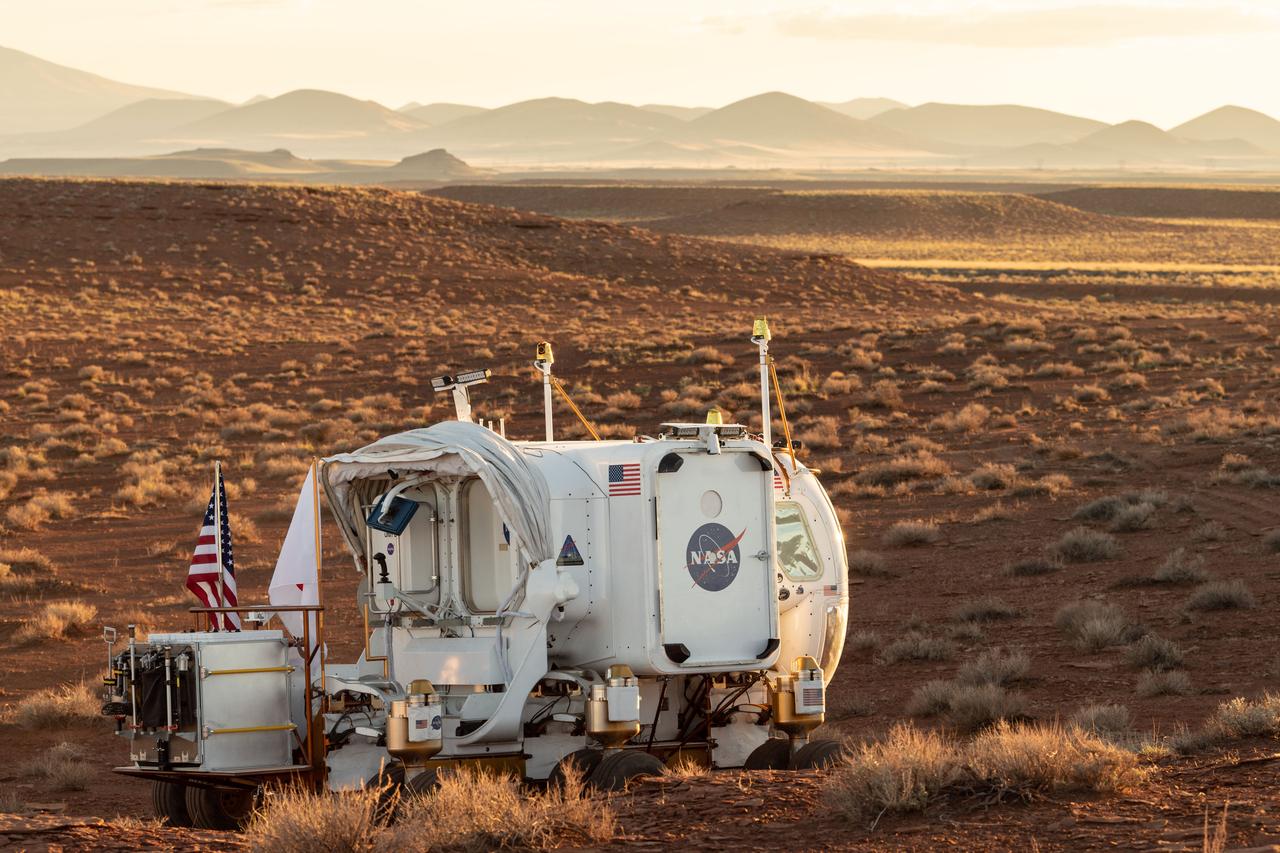
The Desert Research and Technology Studies (DesertRATS) is one of NASA’s analog missions to test hardware and operational scenarios in a remote environment with geographic similarities to the Moon and Mars. In October 2022, NASA evaluated rover design and operations, communications with the Mission Control Center and a Science Evaluation Room at NASA’s Johnson Space Center in Houston. A key element of the DesertRATS analog is the pressurized rover, a capability that is planned for astronaut surface exploration at the Moon and Mars. NASA has a study agreement with the Japan Aerospace Exploration Agency (JAXA) for development of the Artemis pressurized rover, and JAXA representatives joined NASA at DesertRATS.
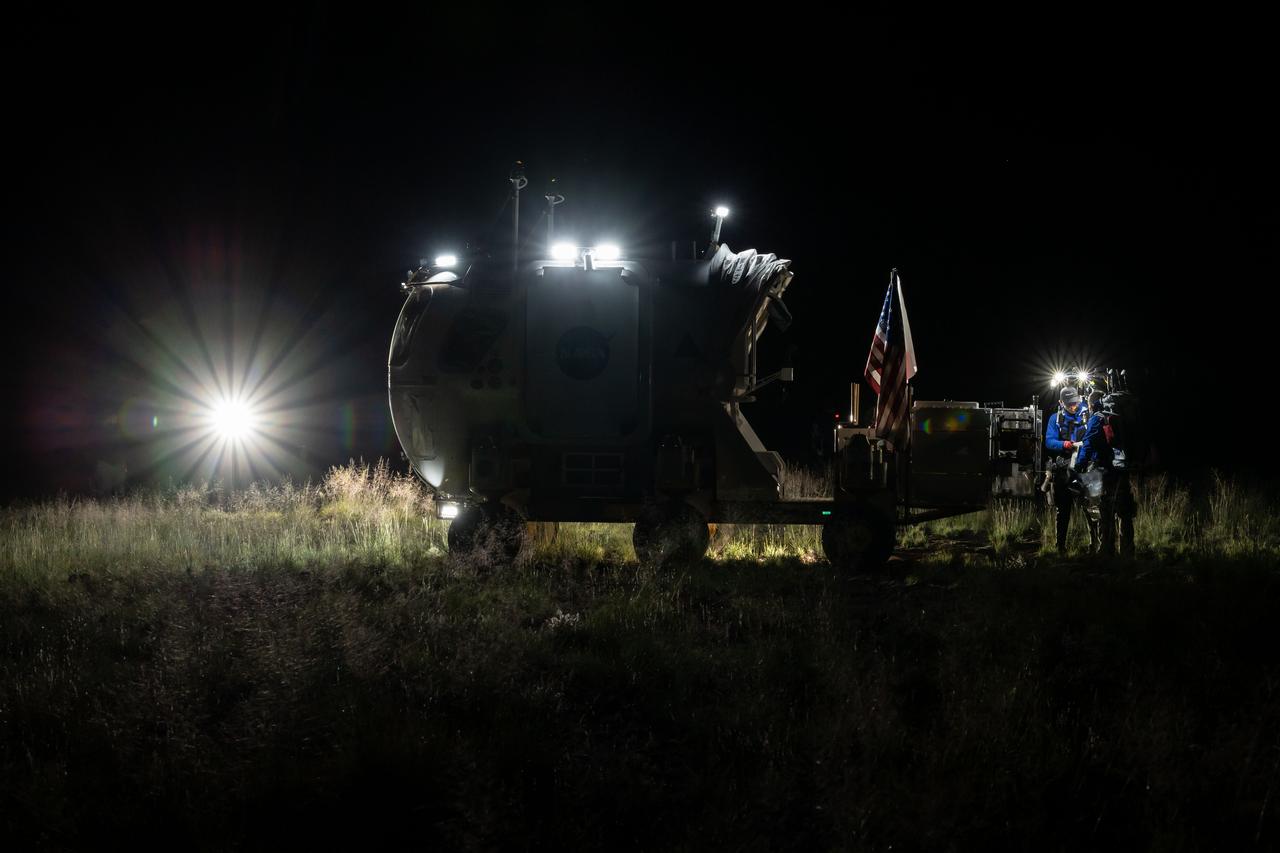
The Desert Research and Technology Studies (DesertRATS) is one of NASA’s analog missions to test hardware and operational scenarios in a remote environment with geographic similarities to the Moon and Mars. In October 2022, NASA evaluated rover design and operations, communications with the Mission Control Center and a Science Evaluation Room at NASA’s Johnson Space Center in Houston. A key element of the DesertRATS analog is the pressurized rover, a capability that is planned for astronaut surface exploration at the Moon and Mars. NASA has a study agreement with the Japan Aerospace Exploration Agency (JAXA) for development of the Artemis pressurized rover, and JAXA representatives joined NASA at DesertRATS.
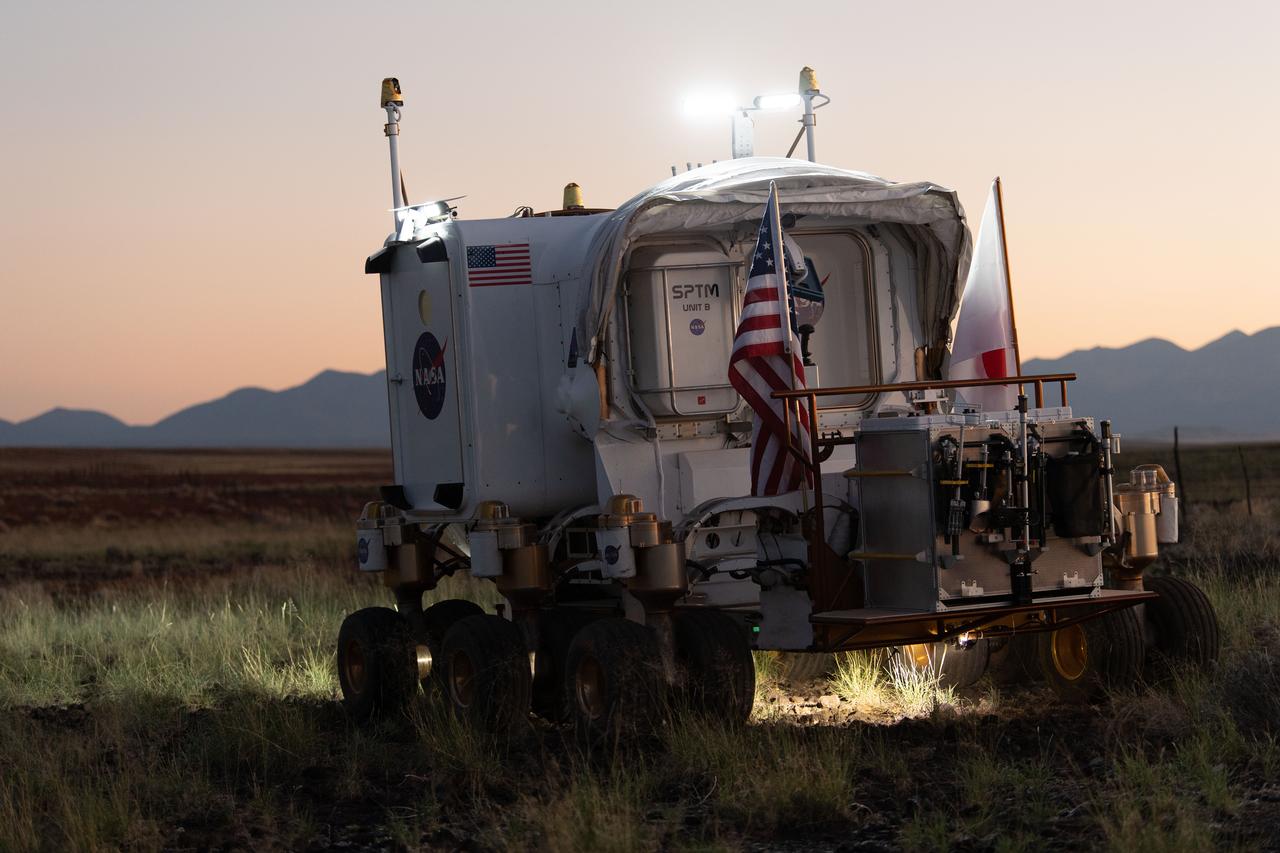
The Desert Research and Technology Studies (DesertRATS) is one of NASA’s analog missions to test hardware and operational scenarios in a remote environment with geographic similarities to the Moon and Mars. In October 2022, NASA evaluated rover design and operations, communications with the Mission Control Center and a Science Evaluation Room at NASA’s Johnson Space Center in Houston. A key element of the DesertRATS analog is the pressurized rover, a capability that is planned for astronaut surface exploration at the Moon and Mars. NASA has a study agreement with the Japan Aerospace Exploration Agency (JAXA) for development of the Artemis pressurized rover, and JAXA representatives joined NASA at DesertRATS.
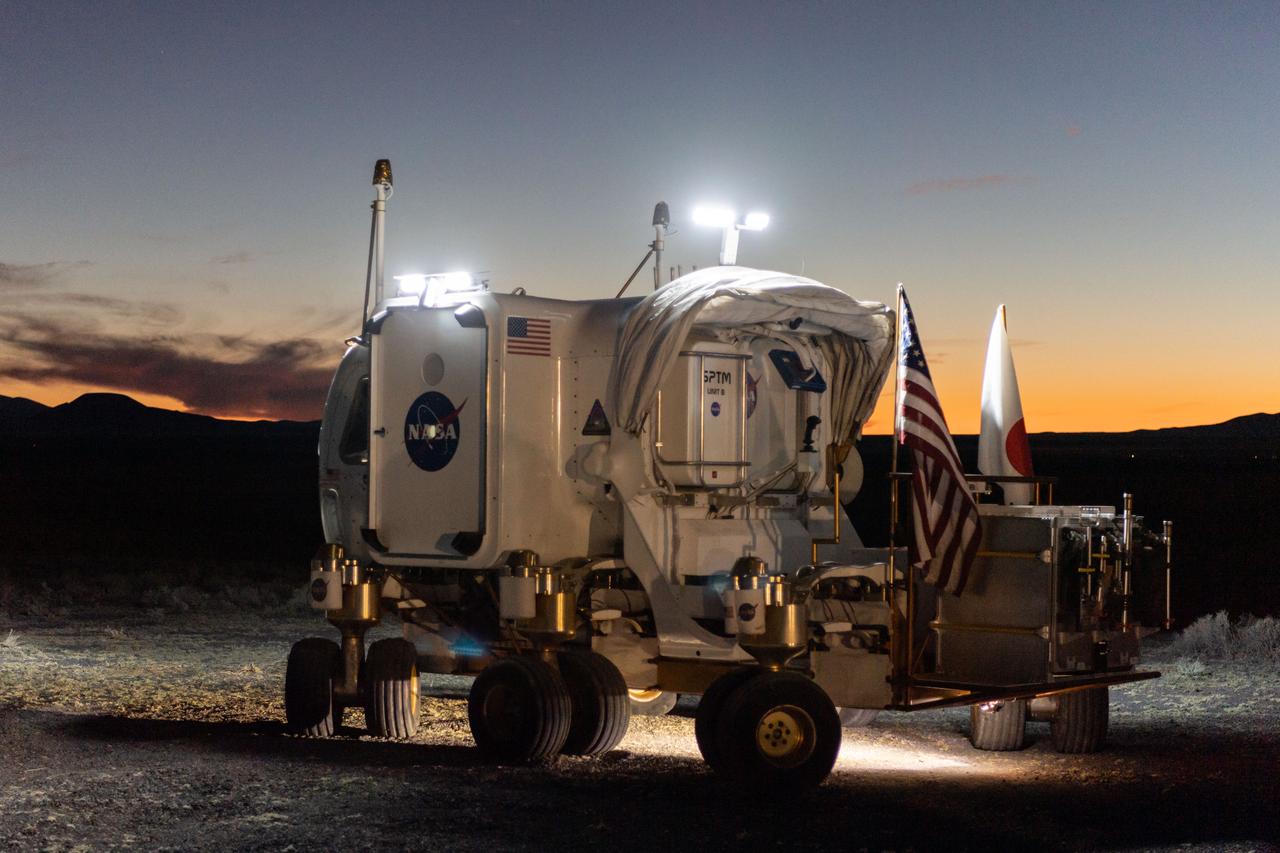
The Desert Research and Technology Studies (DesertRATS) is one of NASA’s analog missions to test hardware and operational scenarios in a remote environment with geographic similarities to the Moon and Mars. In October 2022, NASA evaluated rover design and operations, communications with the Mission Control Center and a Science Evaluation Room at NASA’s Johnson Space Center in Houston. A key element of the DesertRATS analog is the pressurized rover, a capability that is planned for astronaut surface exploration at the Moon and Mars. NASA has a study agreement with the Japan Aerospace Exploration Agency (JAXA) for development of the Artemis pressurized rover, and JAXA representatives joined NASA at DesertRATS.

The Desert Research and Technology Studies (DesertRATS) is one of NASA’s analog missions to test hardware and operational scenarios in a remote environment with geographic similarities to the Moon and Mars. In October 2022, NASA evaluated rover design and operations, communications with the Mission Control Center and a Science Evaluation Room at NASA’s Johnson Space Center in Houston. A key element of the DesertRATS analog is the pressurized rover, a capability that is planned for astronaut surface exploration at the Moon and Mars. NASA has a study agreement with the Japan Aerospace Exploration Agency (JAXA) for development of the Artemis pressurized rover, and JAXA representatives joined NASA at DesertRATS.
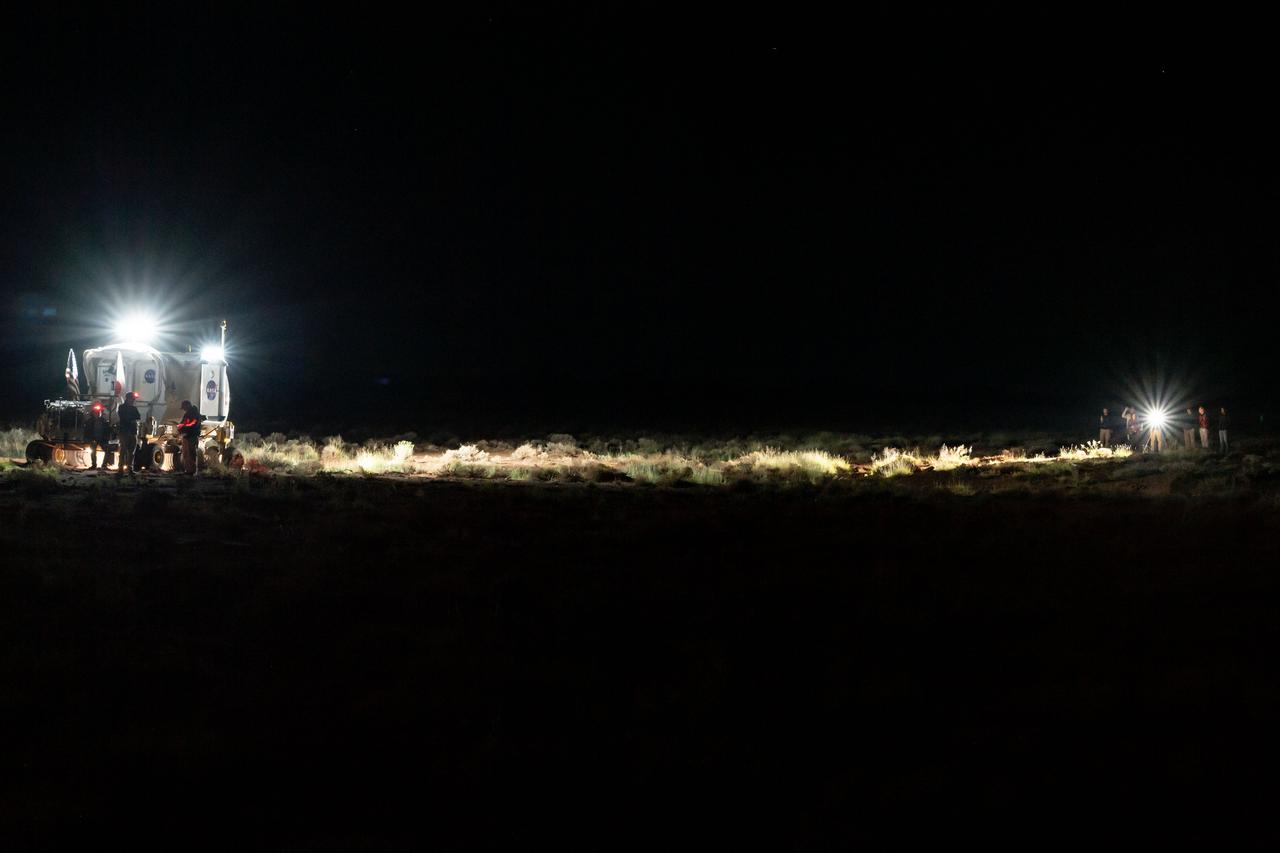
The Desert Research and Technology Studies (DesertRATS) is one of NASA’s analog missions to test hardware and operational scenarios in a remote environment with geographic similarities to the Moon and Mars. In October 2022, NASA evaluated rover design and operations, communications with the Mission Control Center and a Science Evaluation Room at NASA’s Johnson Space Center in Houston. A key element of the DesertRATS analog is the pressurized rover, a capability that is planned for astronaut surface exploration at the Moon and Mars. NASA has a study agreement with the Japan Aerospace Exploration Agency (JAXA) for development of the Artemis pressurized rover, and JAXA representatives joined NASA at DesertRATS.
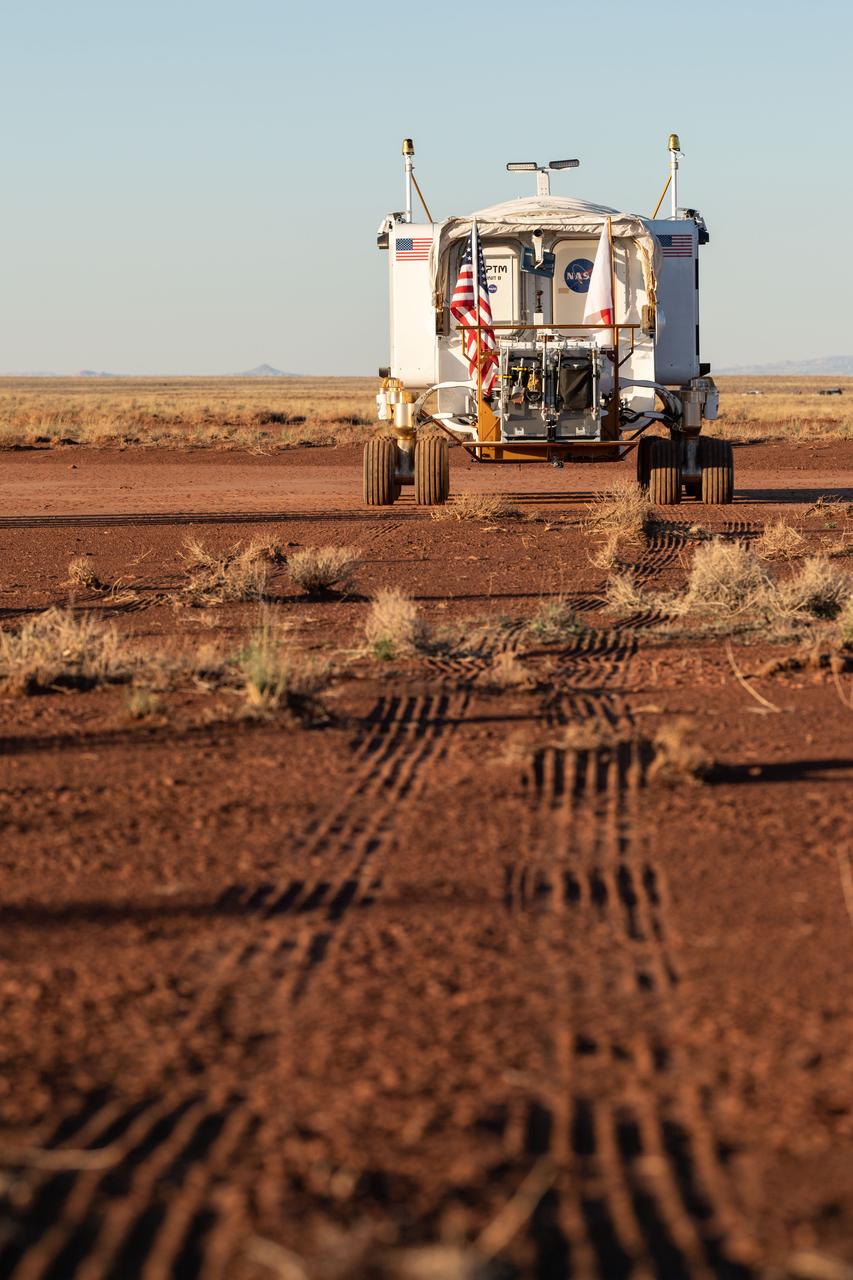
The Desert Research and Technology Studies (DesertRATS) is one of NASA’s analog missions to test hardware and operational scenarios in a remote environment with geographic similarities to the Moon and Mars. In October 2022, NASA evaluated rover design and operations, communications with the Mission Control Center and a Science Evaluation Room at NASA’s Johnson Space Center in Houston. A key element of the DesertRATS analog is the pressurized rover, a capability that is planned for astronaut surface exploration at the Moon and Mars. NASA has a study agreement with the Japan Aerospace Exploration Agency (JAXA) for development of the Artemis pressurized rover, and JAXA representatives joined NASA at DesertRATS.

The Desert Research and Technology Studies (DesertRATS) is one of NASA’s analog missions to test hardware and operational scenarios in a remote environment with geographic similarities to the Moon and Mars. In October 2022, NASA evaluated rover design and operations, communications with the Mission Control Center and a Science Evaluation Room at NASA’s Johnson Space Center in Houston. A key element of the DesertRATS analog is the pressurized rover, a capability that is planned for astronaut surface exploration at the Moon and Mars. NASA has a study agreement with the Japan Aerospace Exploration Agency (JAXA) for development of the Artemis pressurized rover, and JAXA representatives joined NASA at DesertRATS.
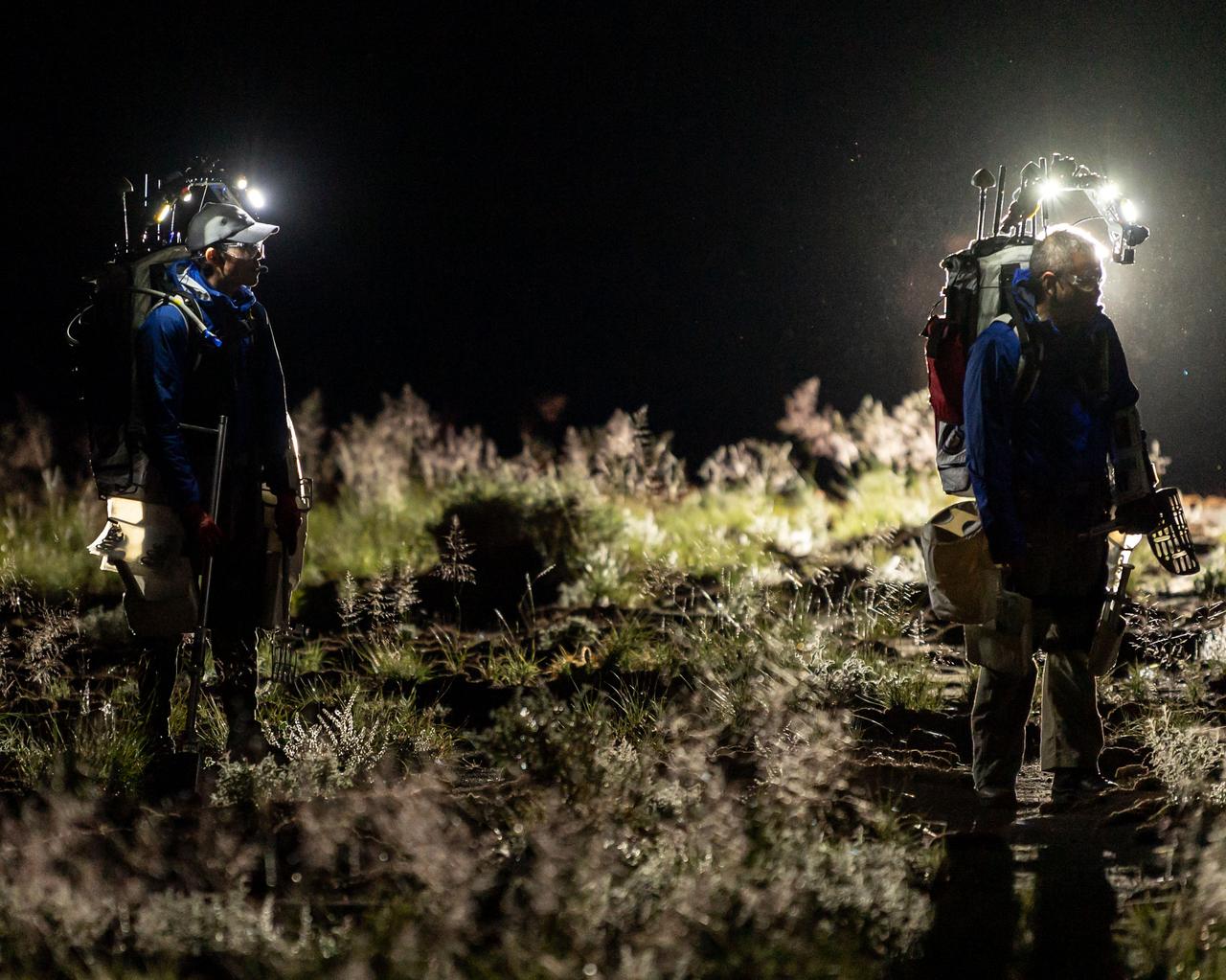
The Desert Research and Technology Studies (DesertRATS) is one of NASA’s analog missions to test hardware and operational scenarios in a remote environment with geographic similarities to the Moon and Mars. In October 2022, NASA evaluated rover design and operations, communications with the Mission Control Center and a Science Evaluation Room at NASA’s Johnson Space Center in Houston. A key element of the DesertRATS analog is the pressurized rover, a capability that is planned for astronaut surface exploration at the Moon and Mars. NASA has a study agreement with the Japan Aerospace Exploration Agency (JAXA) for development of the Artemis pressurized rover, and JAXA representatives joined NASA at DesertRATS.
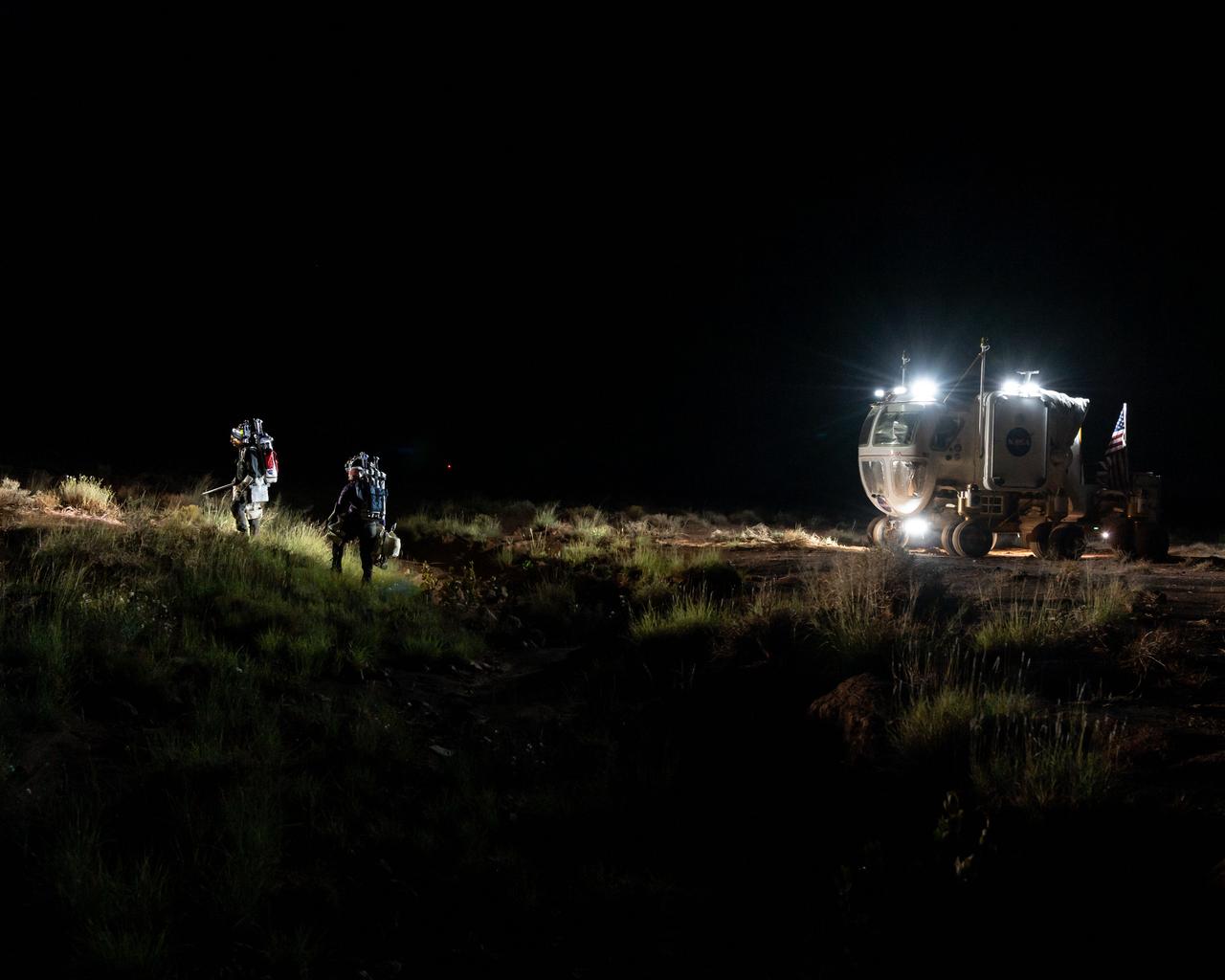
The Desert Research and Technology Studies (DesertRATS) is one of NASA’s analog missions to test hardware and operational scenarios in a remote environment with geographic similarities to the Moon and Mars. In October 2022, NASA evaluated rover design and operations, communications with the Mission Control Center and a Science Evaluation Room at NASA’s Johnson Space Center in Houston. A key element of the DesertRATS analog is the pressurized rover, a capability that is planned for astronaut surface exploration at the Moon and Mars. NASA has a study agreement with the Japan Aerospace Exploration Agency (JAXA) for development of the Artemis pressurized rover, and JAXA representatives joined NASA at DesertRATS.

The Desert Research and Technology Studies (DesertRATS) is one of NASA’s analog missions to test hardware and operational scenarios in a remote environment with geographic similarities to the Moon and Mars. In October 2022, NASA evaluated rover design and operations, communications with the Mission Control Center and a Science Evaluation Room at NASA’s Johnson Space Center in Houston. A key element of the DesertRATS analog is the pressurized rover, a capability that is planned for astronaut surface exploration at the Moon and Mars. NASA has a study agreement with the Japan Aerospace Exploration Agency (JAXA) for development of the Artemis pressurized rover, and JAXA representatives joined NASA at DesertRATS.