
Women in Science, Technology, Engineering and Math, STEM Award Event
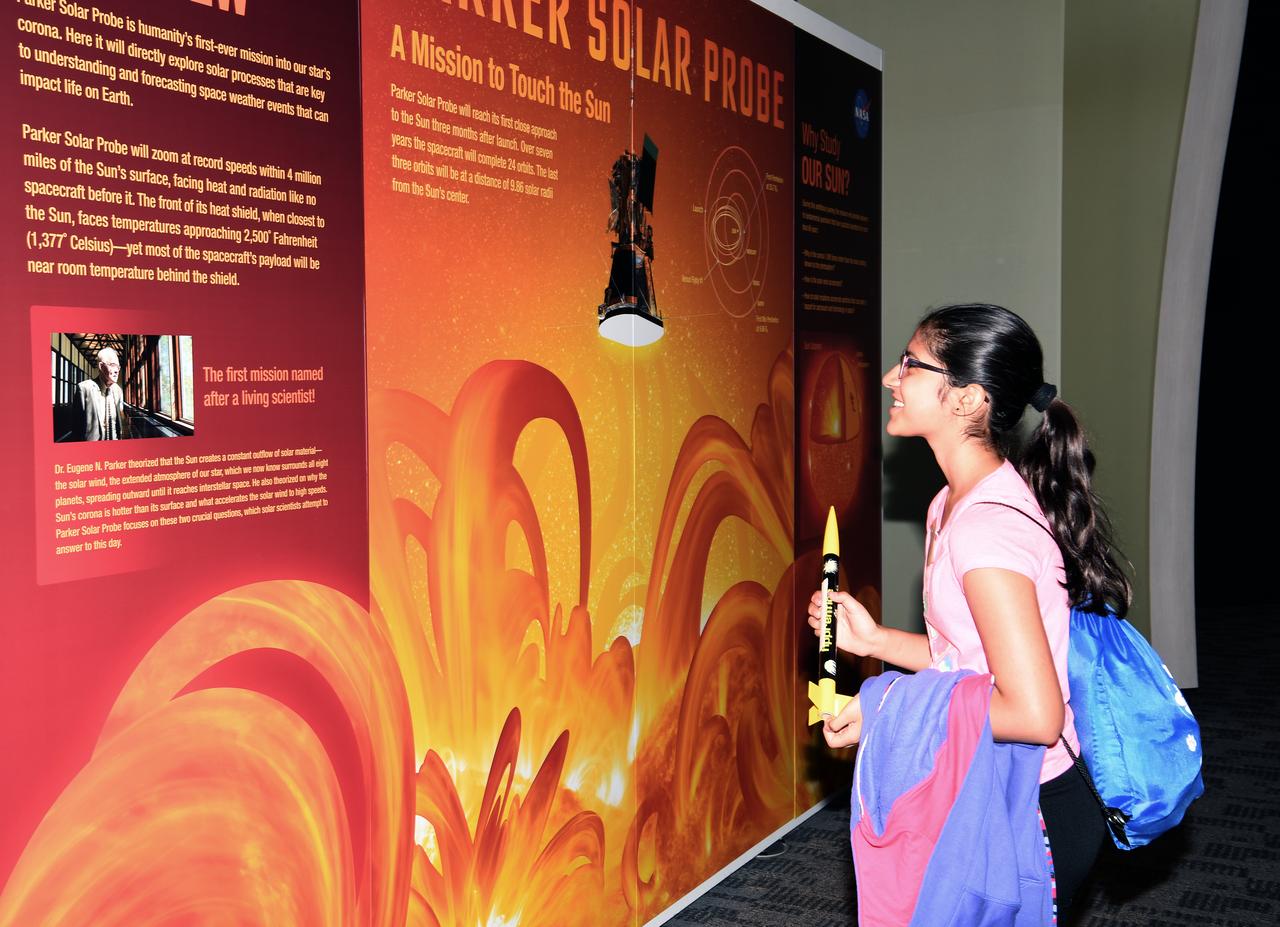
STEM 2019 program including middle school girls and boys who participated in hands-on activities in Science Technology, Engineering and Math July 15-19, 2019
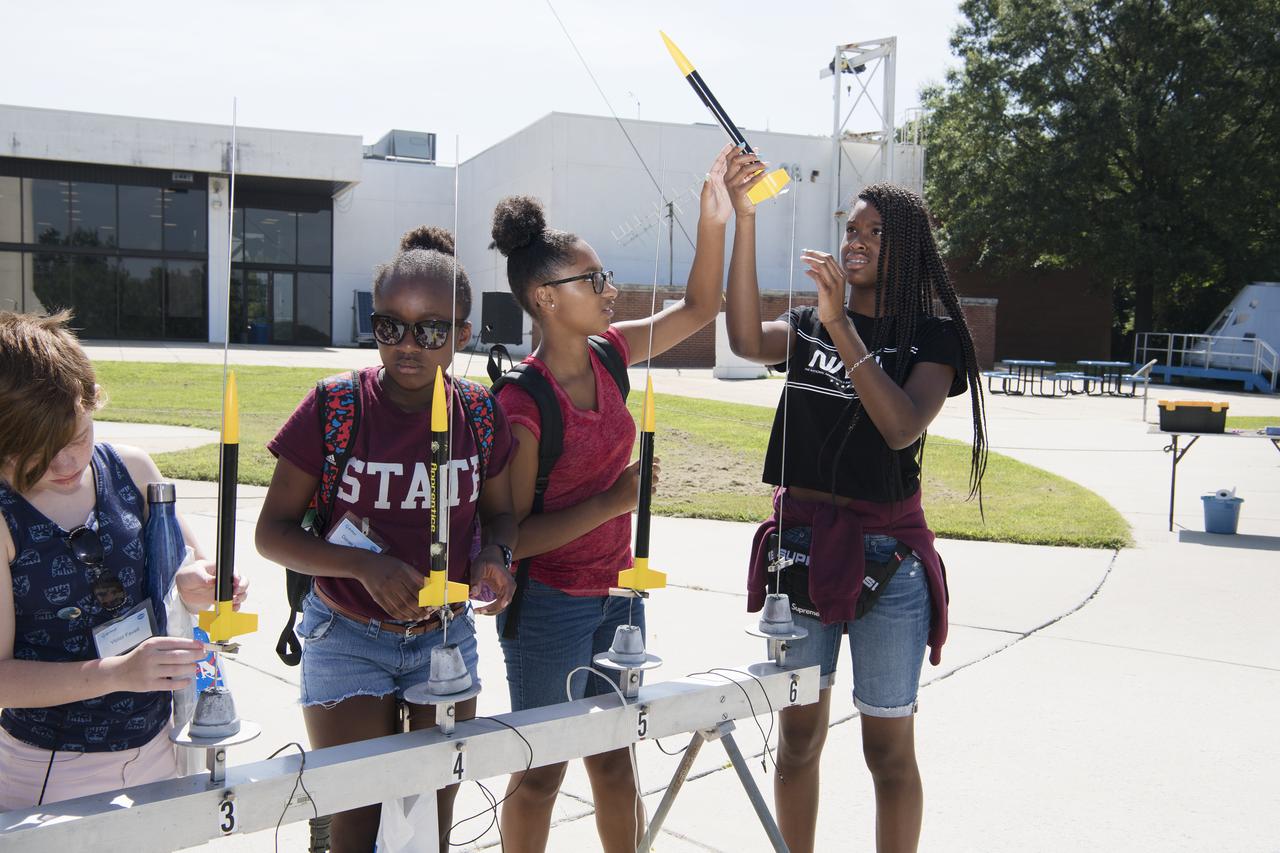
STEM 2019 program including middle school girls and boys who participated in hands-on activities in Science, Technology, Engineering and Math July 15- 19, 2019
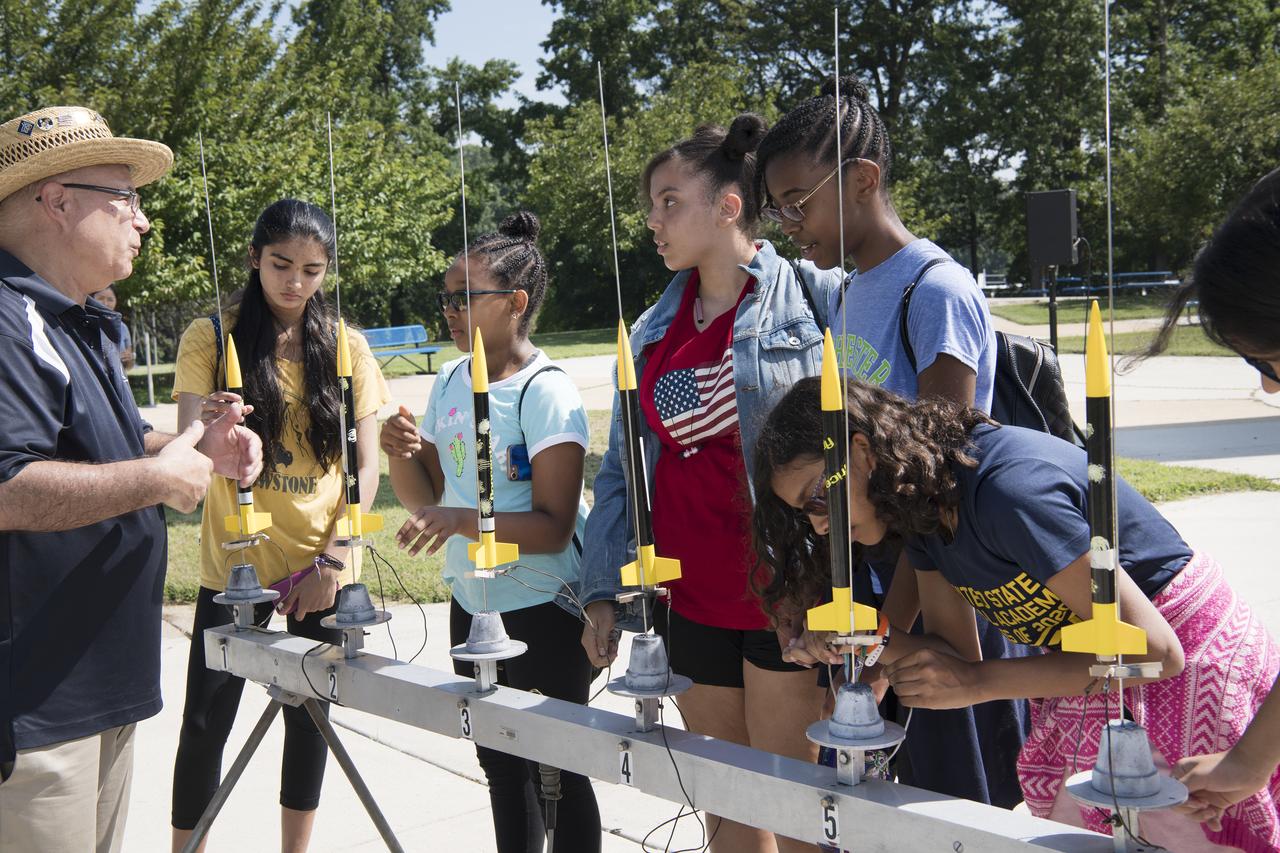
STEM 2019 program including middle school girls and boys who participated in hands-on activities in Science, Technology, Engineering and Math July 15-19, 2019
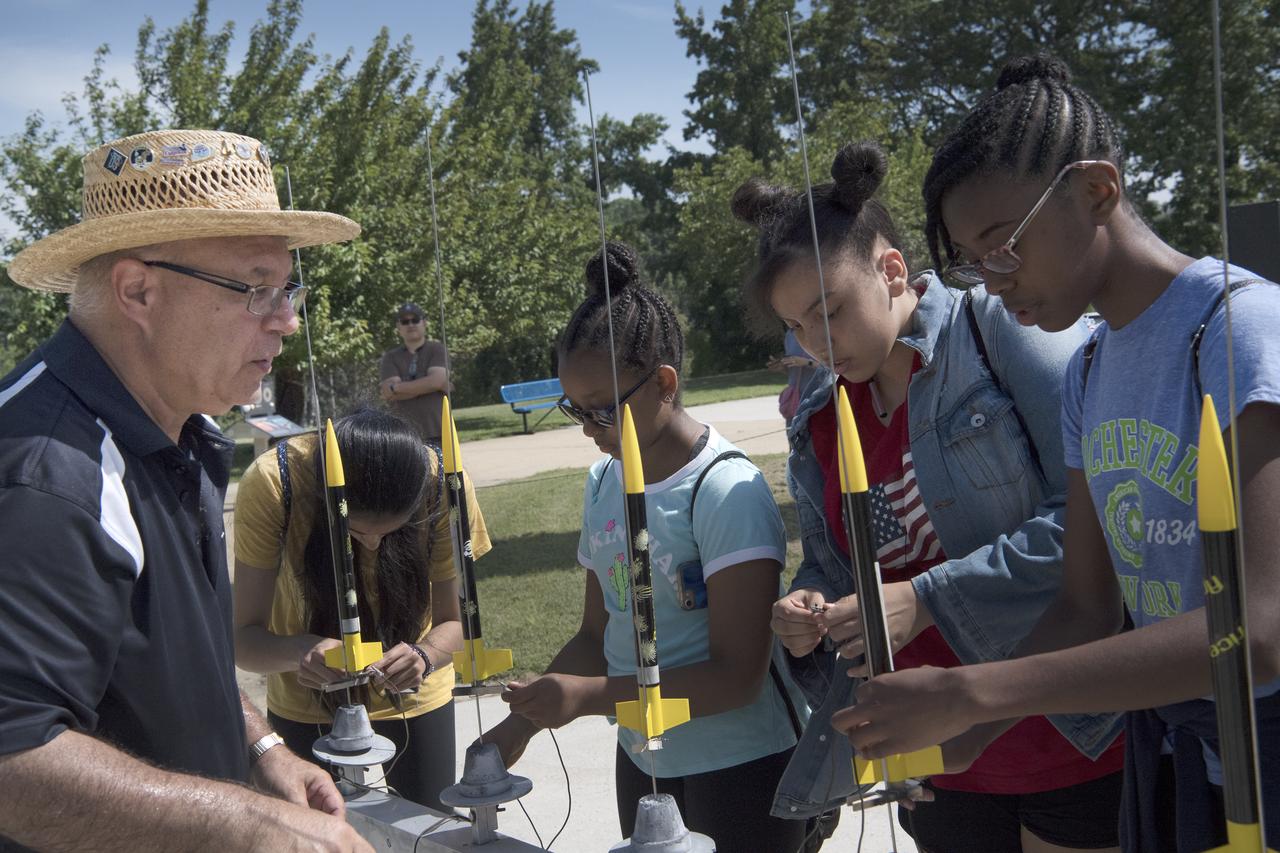
STEM 2019 program including middle school girls and boys who participated in hands-on activities in Science, Technology, Engineering and Math July 15-19, 2019
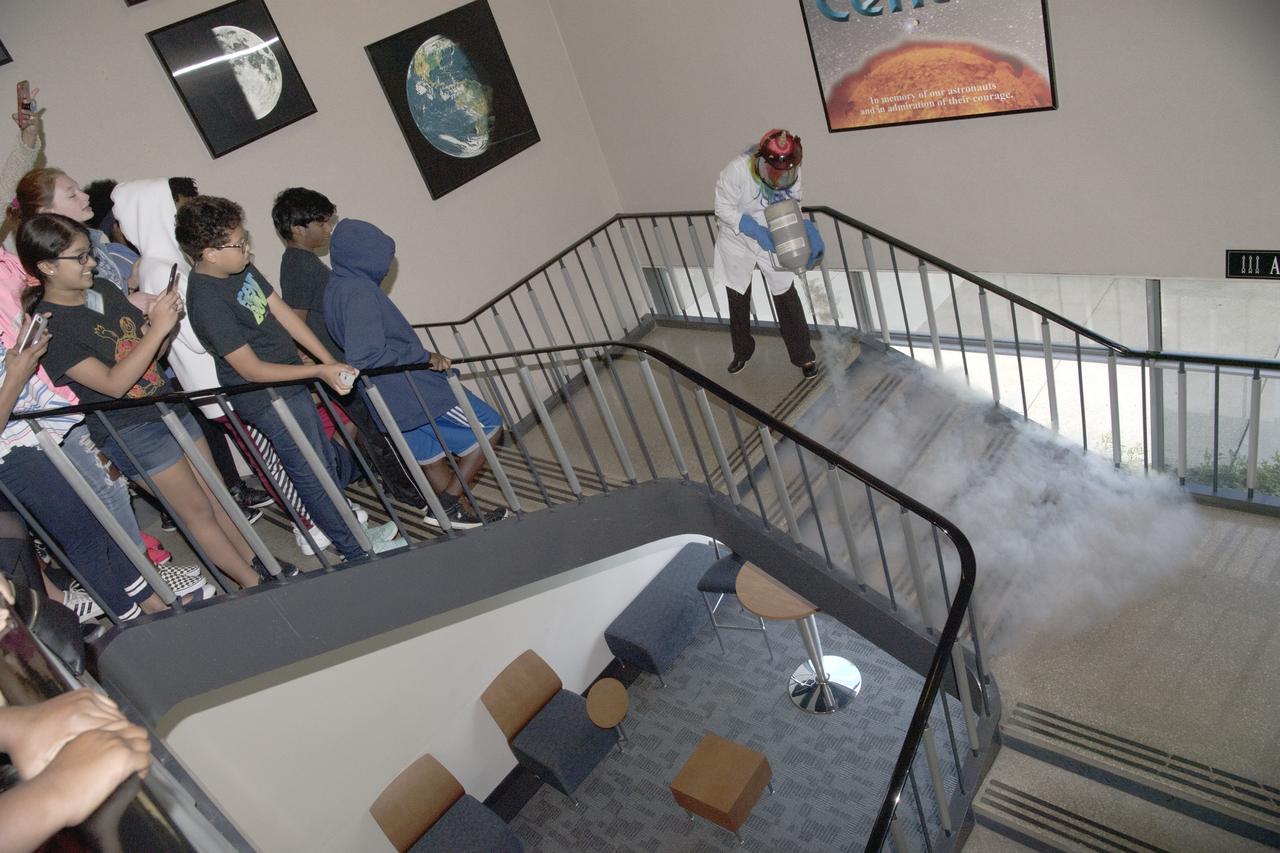
STEM 2019 program including middle school girls and boys who participated in hands-on activities in Science, Technology, Engineering and Math July 15-19, 2019
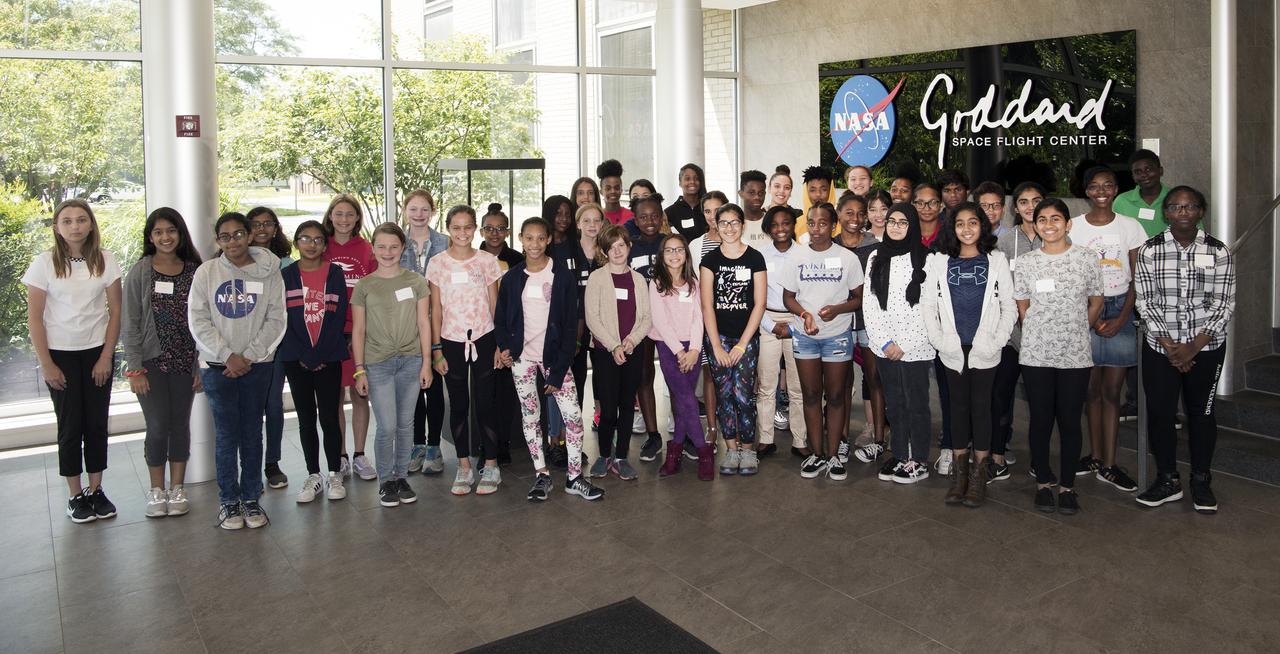
STEM program was held including middle school girls and boys who participated in hands-on activities in Science, Technology, Engineering and Math July 15-19, 2019
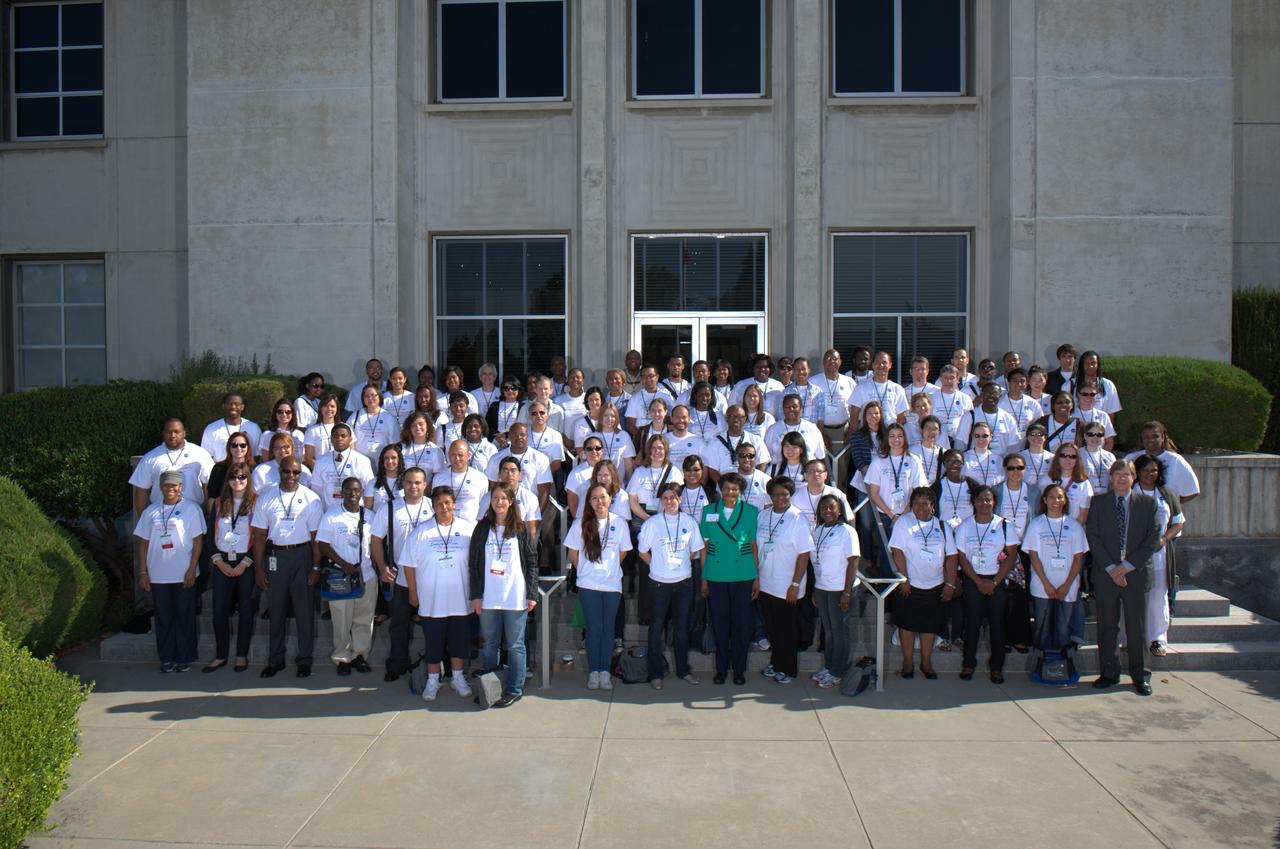
United Negro College Fund Special Programs (UNCFSP) Science Technology Engineering and Math (STEM) symposium - NASA Harriet G. Jenkins Pre-Doctoral Fellowship Project
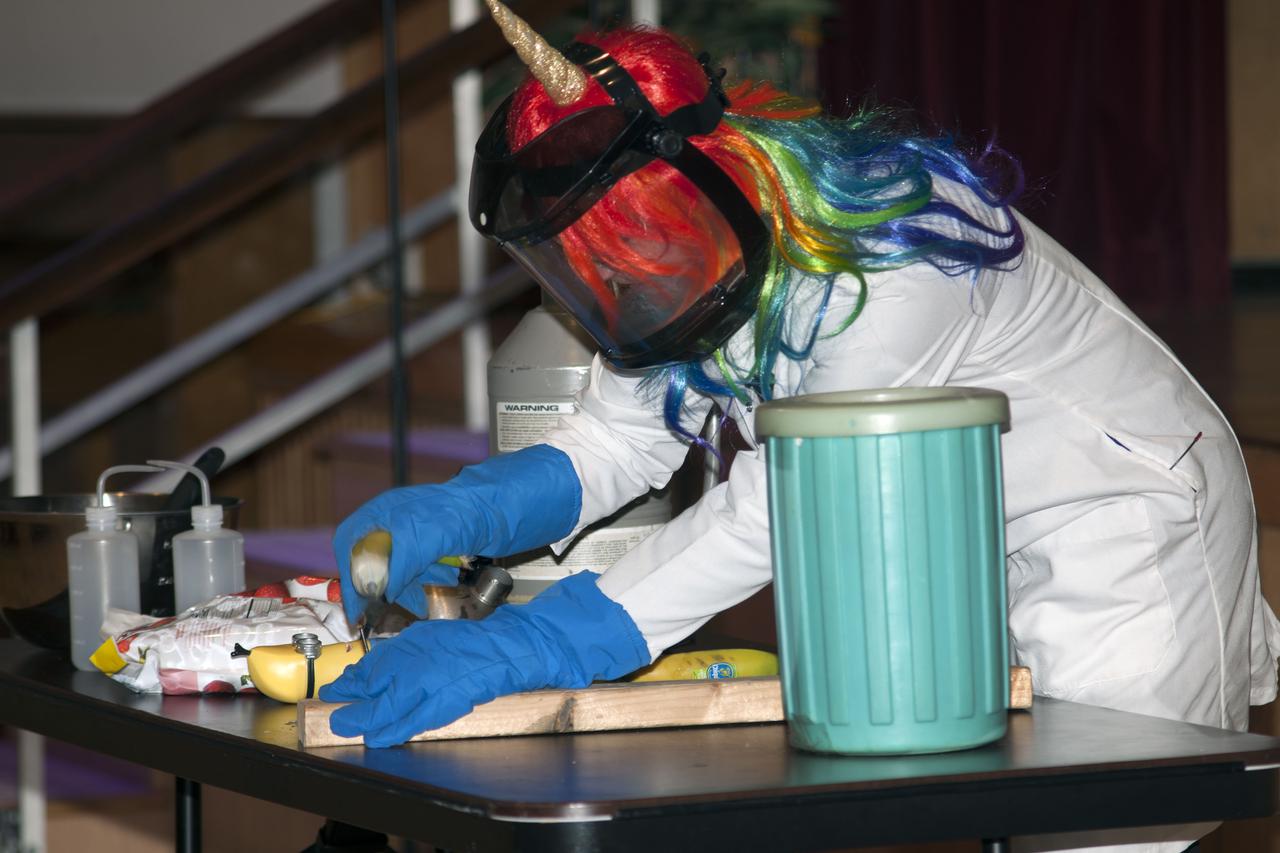
STEM 2019 program including middle school girls and boys who participated in hands-on activities in Science, Technology, Engineering and Math July 15-19, 2019 Betsy Pugel makes ice cream
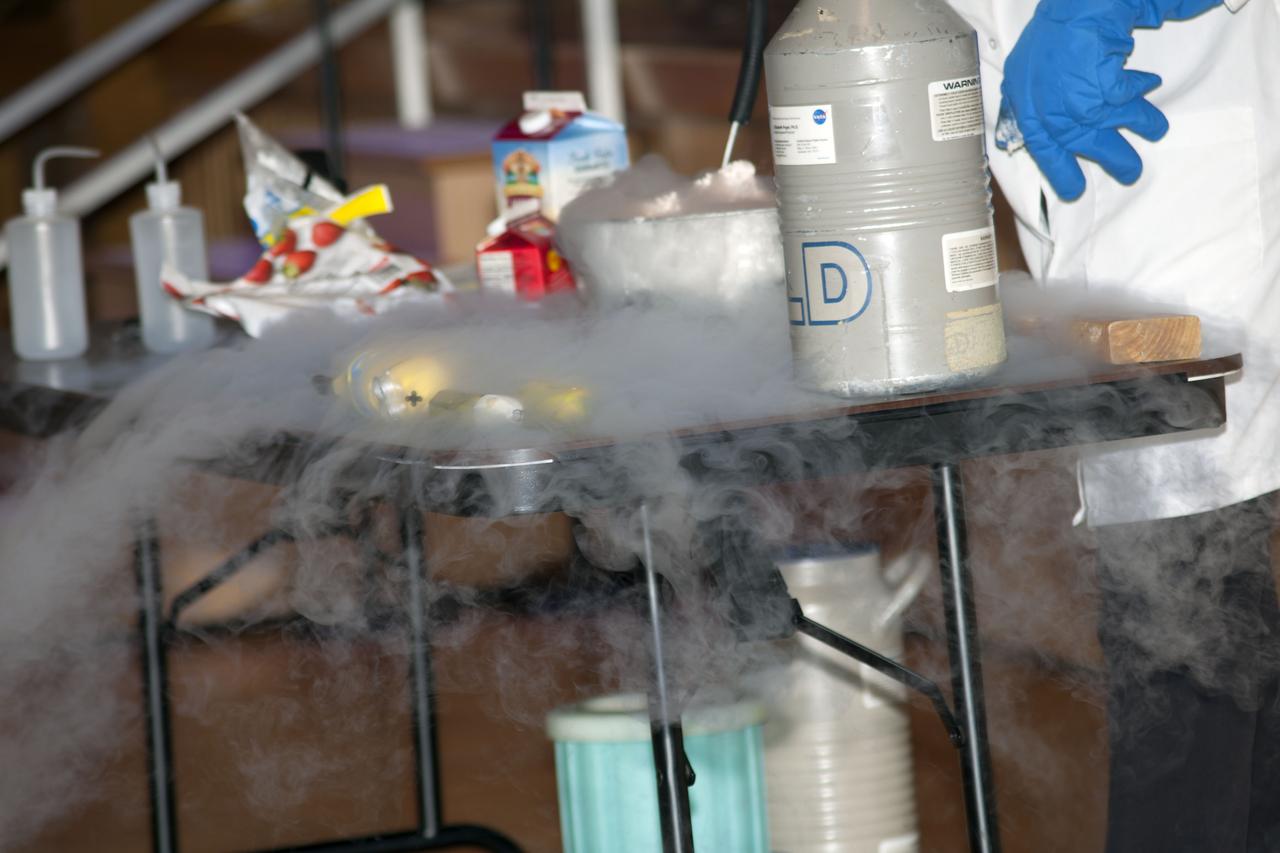
STEM 2019 program including middle school girls and boys who participated in hands-on activities in Science, Technology, Engineering and Math July 15-19, 2019 Liquid nitrogen for ice cream
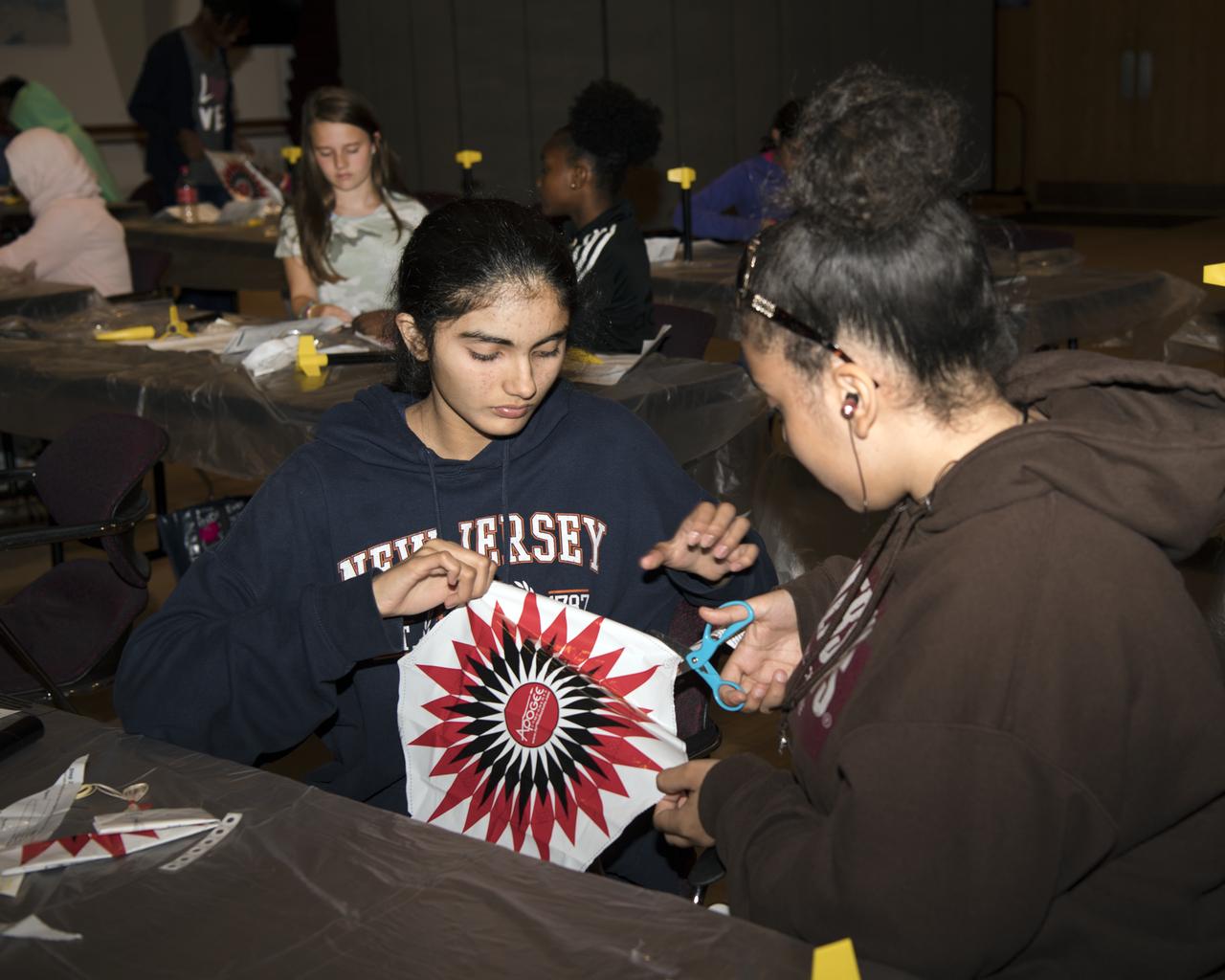
STEM 2019 program including middle school girls and boys who participated in hands-on activities in Science, Technology, Engineering and Math July 15-19, 2019 Model rocket building B8
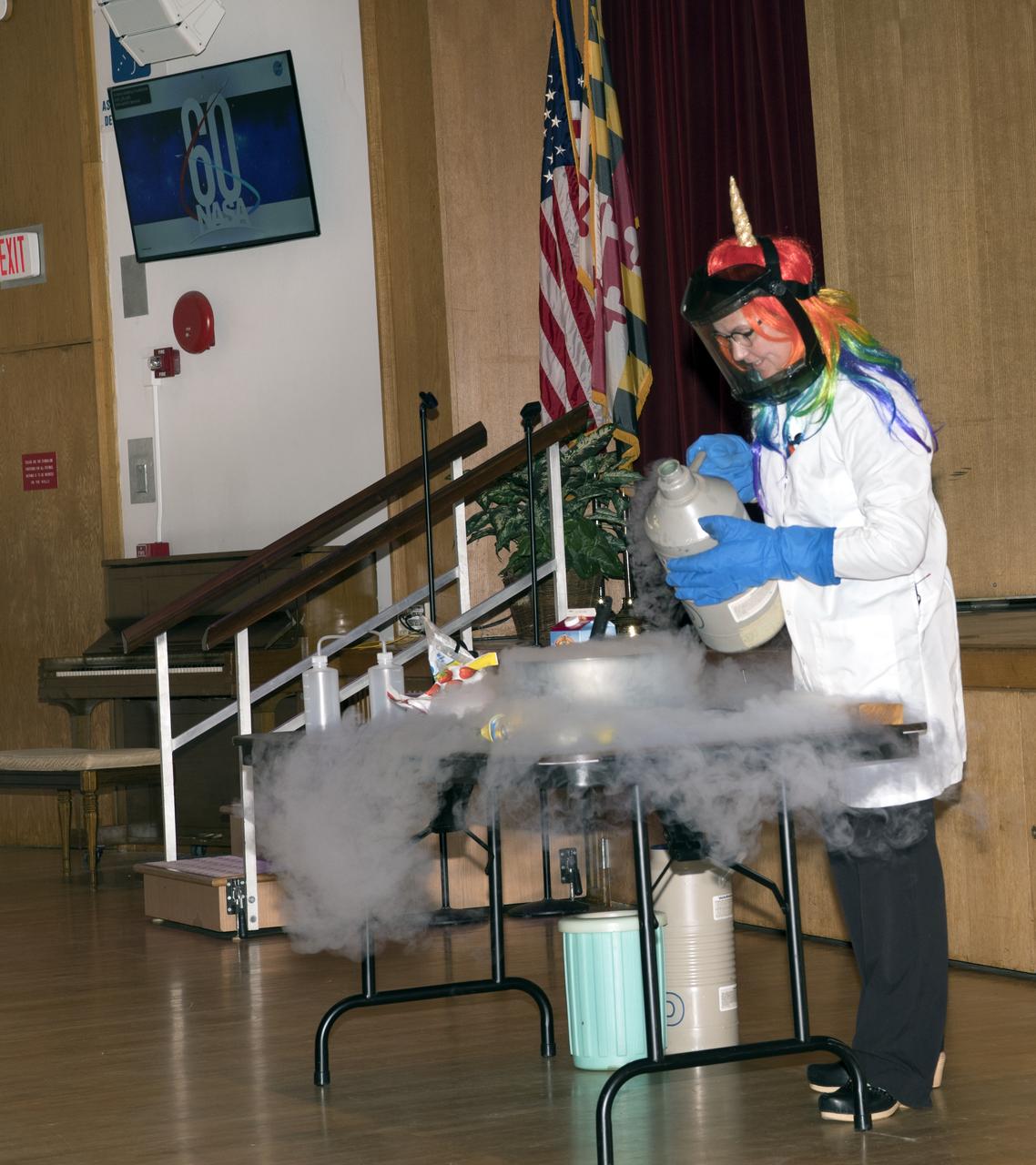
STEM 2019 program including middle school girls and boys who participated in hands-on activities in Science, Technology, Engineering and Math July 15-19, 2019 Betsy Pugel liquid nitrogen
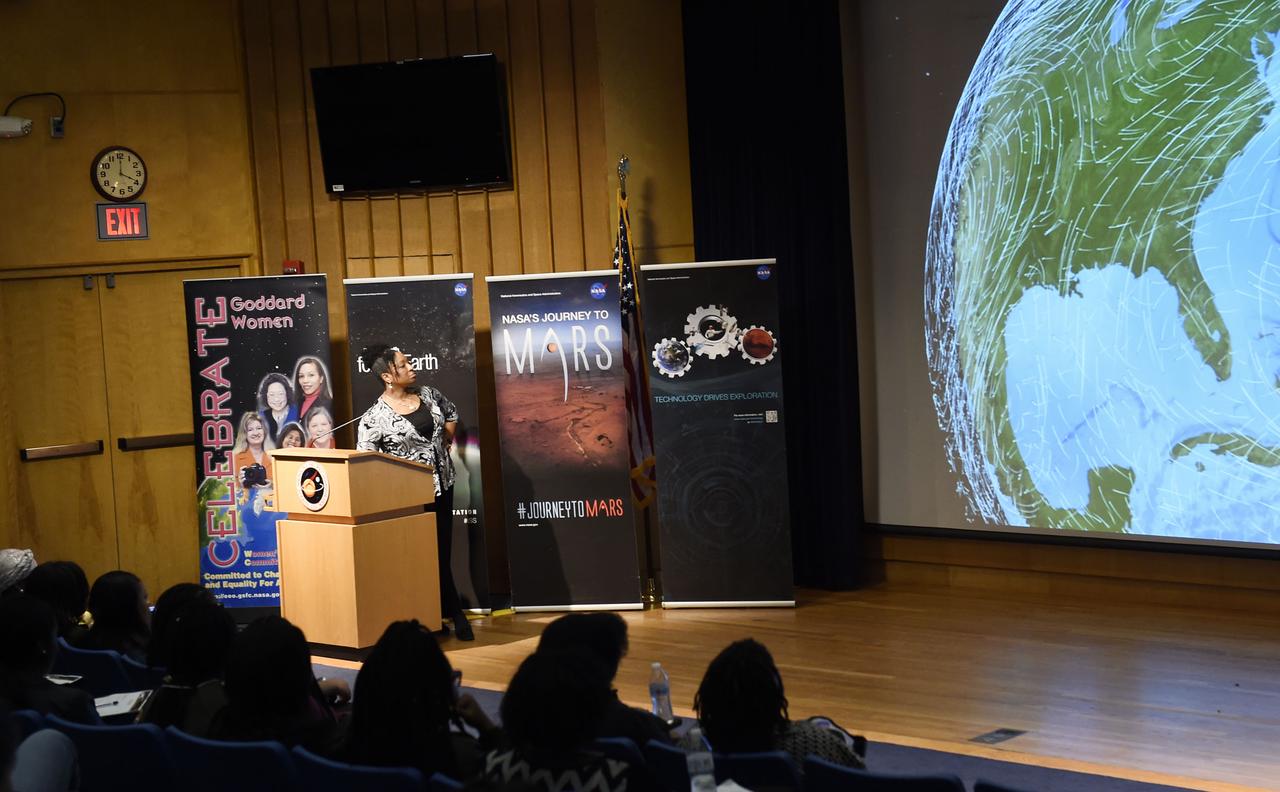
Girls Night In was held at Goddard on Nov 4-5, 2016. This is a pilot program which reinvigorates, inspires, and engages high school girls who may be struggling or not fully engaged in STEM (Science, Technology Engineering and Math) education. The program allowed NASA women to share and demonstrate the work they do, provide the girls an opportunity to completely immerse themselves in Goddard science, technology, engineering and math as well as provide them activities that will challenge and promote knowledge and discovery. Goddard invites other NASA centers tolearn from this pilot program and work towards a simultaneous multicenter event in the future. Participating schools were: DuVal, Crossland, Flowers, High Point, Northwestern and Oxon Hill
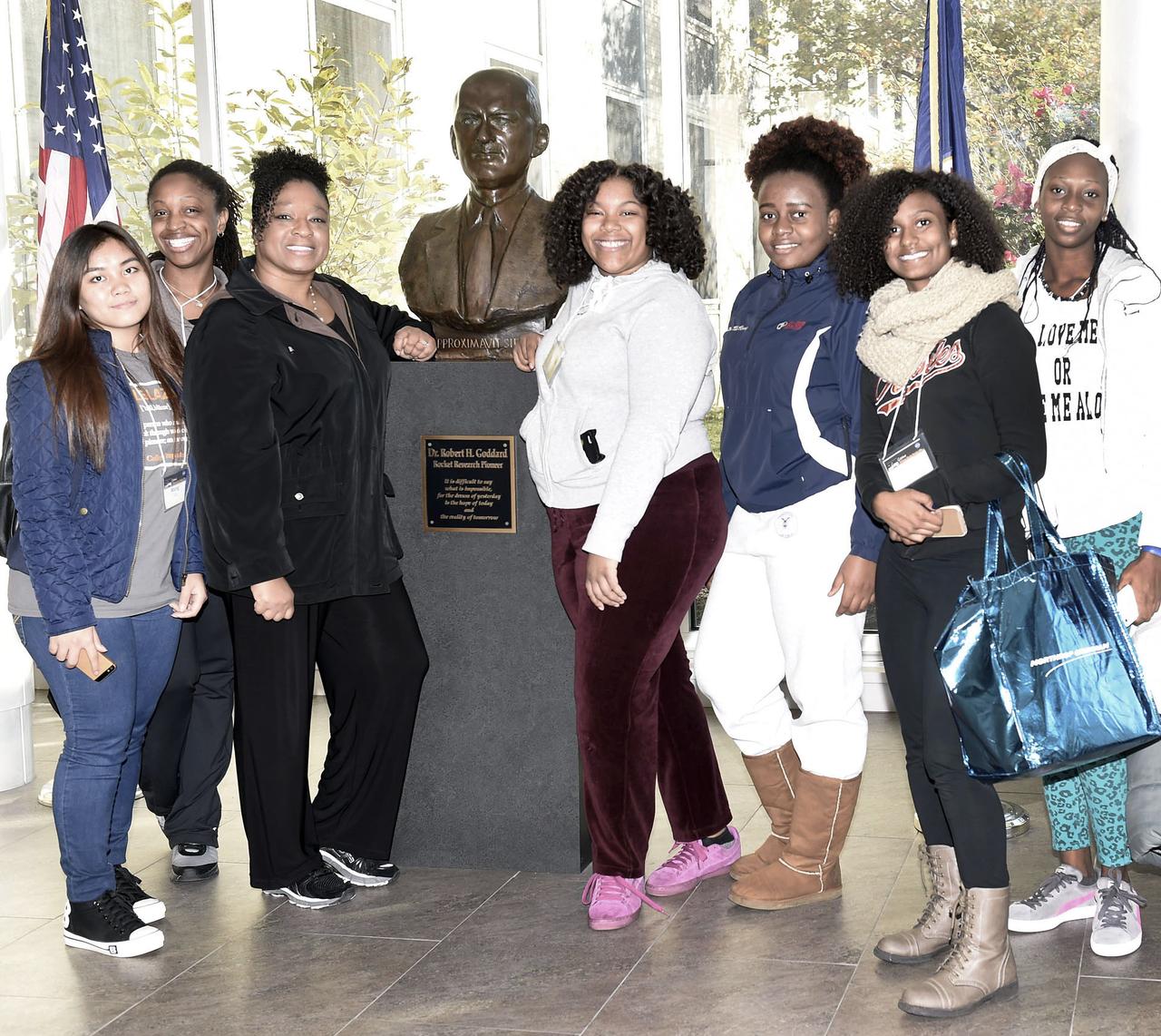
Girls Night In was held at Goddard on Nov 4-5, 2016. This is a pilot program which reinvigorates, inspires, and engages high school girls who may be struggling or not fully engaged in STEM (Science, Technology Engineering and Math) education. The program allowed NASA women to share and demonstrate the work they do, provide the girls an opportunity to completely immerse themselves in Goddard science, technology, engineering and math as well as provide them activities that will challenge and promote knowledge and discovery. Goddard invites other NASA centers tolearn from this pilot program and work towards a simultaneous multicenter event in the future. Participating schools were: DuVal, Crossland, Flowers, High Point, Northwestern and Oxon Hill
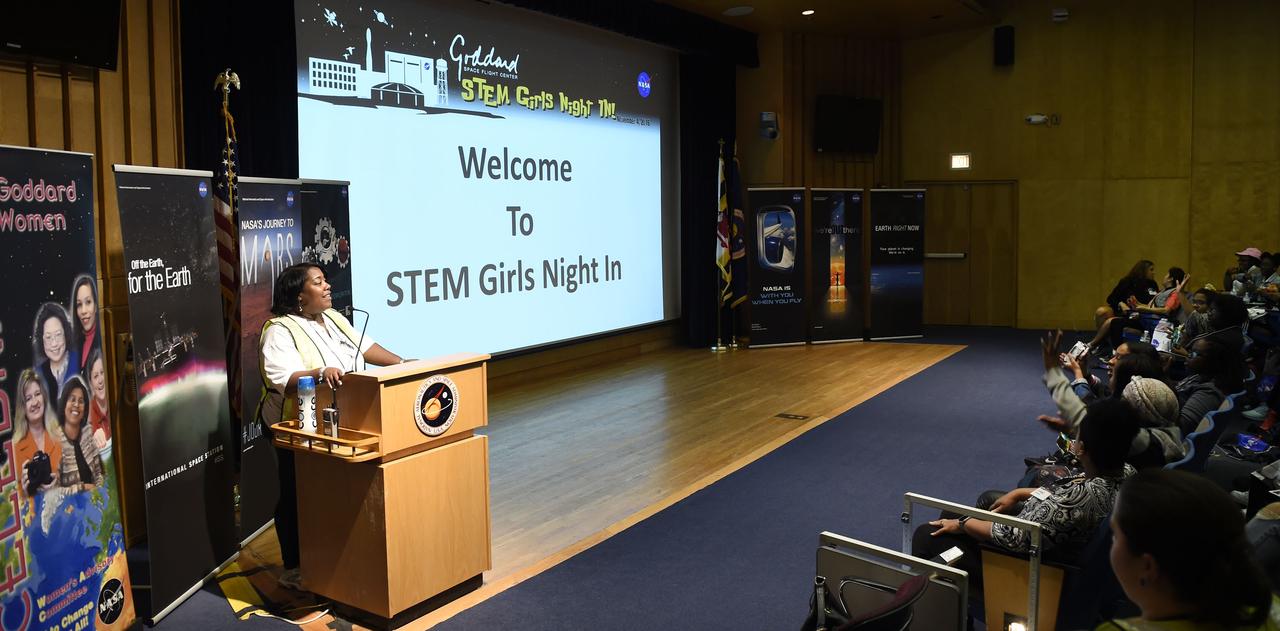
Girls Night In was held at Goddard on Nov 4-5, 2016. This is a pilot program which reinvigorates, inspires, and engages high school girls who may be struggling or not fully engaged in STEM (Science, Technology Engineering and Math) education. The program allowed NASA women to share and demonstrate the work they do, provide the girls an opportunity to completely immerse themselves in Goddard science, technology, engineering and math as well as provide them activities that will challenge and promote knowledge and discovery. Goddard invites other NASA centers tolearn from this pilot program and work towards a simultaneous multicenter event in the future. Participating schools were: DuVal, Crossland, Flowers, High Point, Northwestern and Oxon Hill
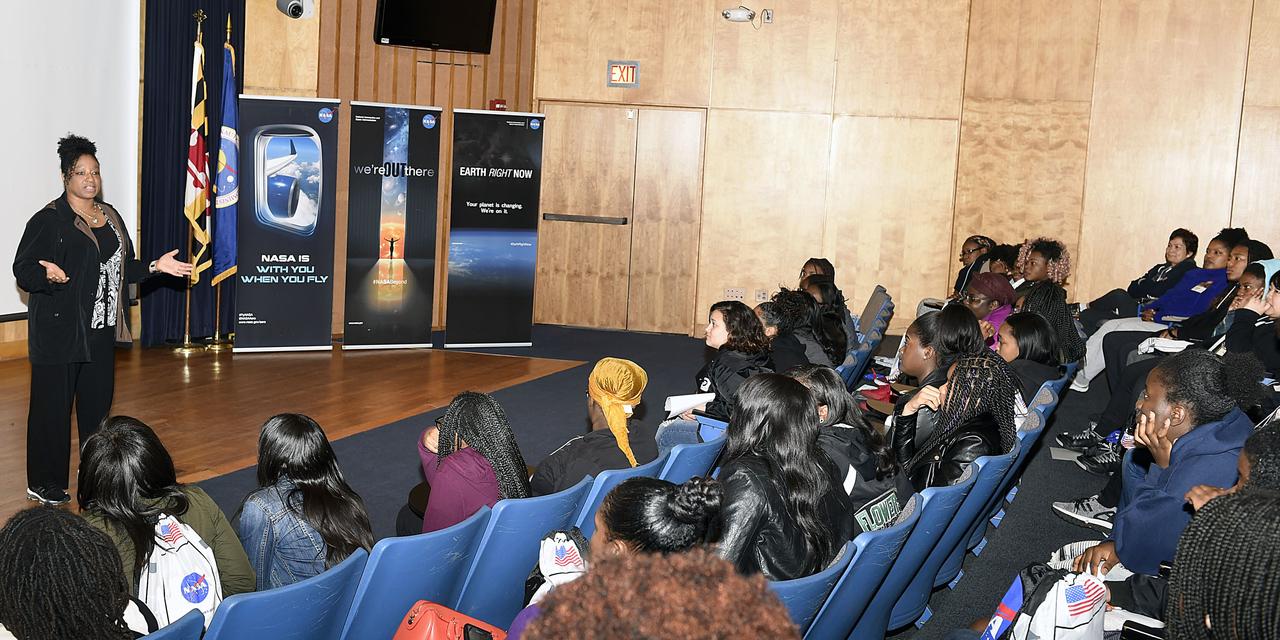
Girls Night In was held at Goddard on Nov 4-5, 2016. This is a pilot program which reinvigorates, inspires, and engages high school girls who may be struggling or not fully engaged in STEM (Science, Technology Engineering and Math) education. The program allowed NASA women to share and demonstrate the work they do, provide the girls an opportunity to completely immerse themselves in Goddard science, technology, engineering and math as well as provide them activities that will challenge and promote knowledge and discovery. Goddard invites other NASA centers tolearn from this pilot program and work towards a simultaneous multicenter event in the future. Participating schools were: DuVal, Crossland, Flowers, High Point, Northwestern and Oxon Hill
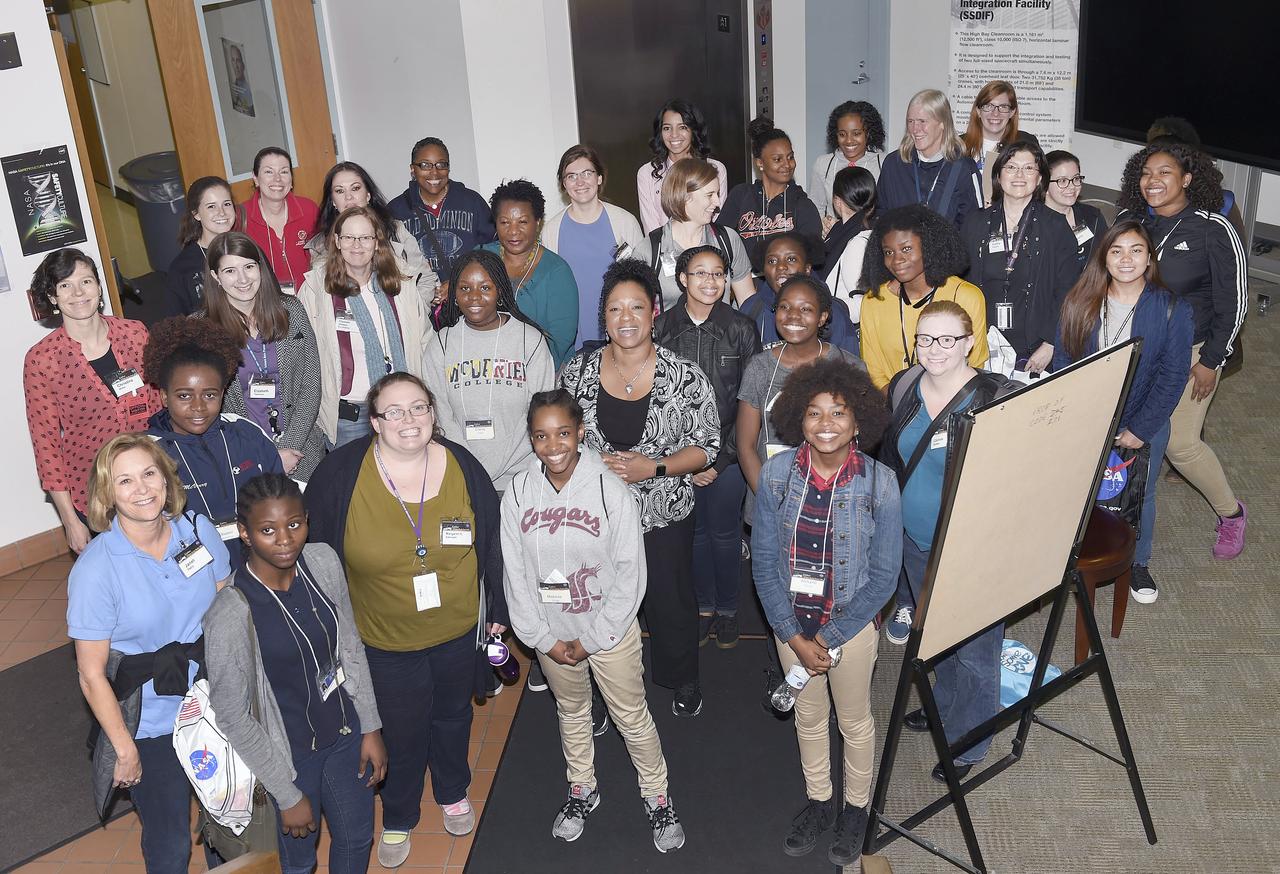
Girls Night In was held at Goddard on Nov 4-5, 2016. This is a pilot program which reinvigorates, inspires, and engages high school girls who may be struggling or not fully engaged in STEM (Science, Technology Engineering and Math) education. The program allowed NASA women to share and demonstrate the work they do, provide the girls an opportunity to completely immerse themselves in Goddard science, technology, engineering and math as well as provide them activities that will challenge and promote knowledge and discovery. Goddard invites other NASA centers tolearn from this pilot program and work towards a simultaneous multicenter event in the future. Participating schools were: DuVal, Crossland, Flowers, High Point, Northwestern and Oxon Hill
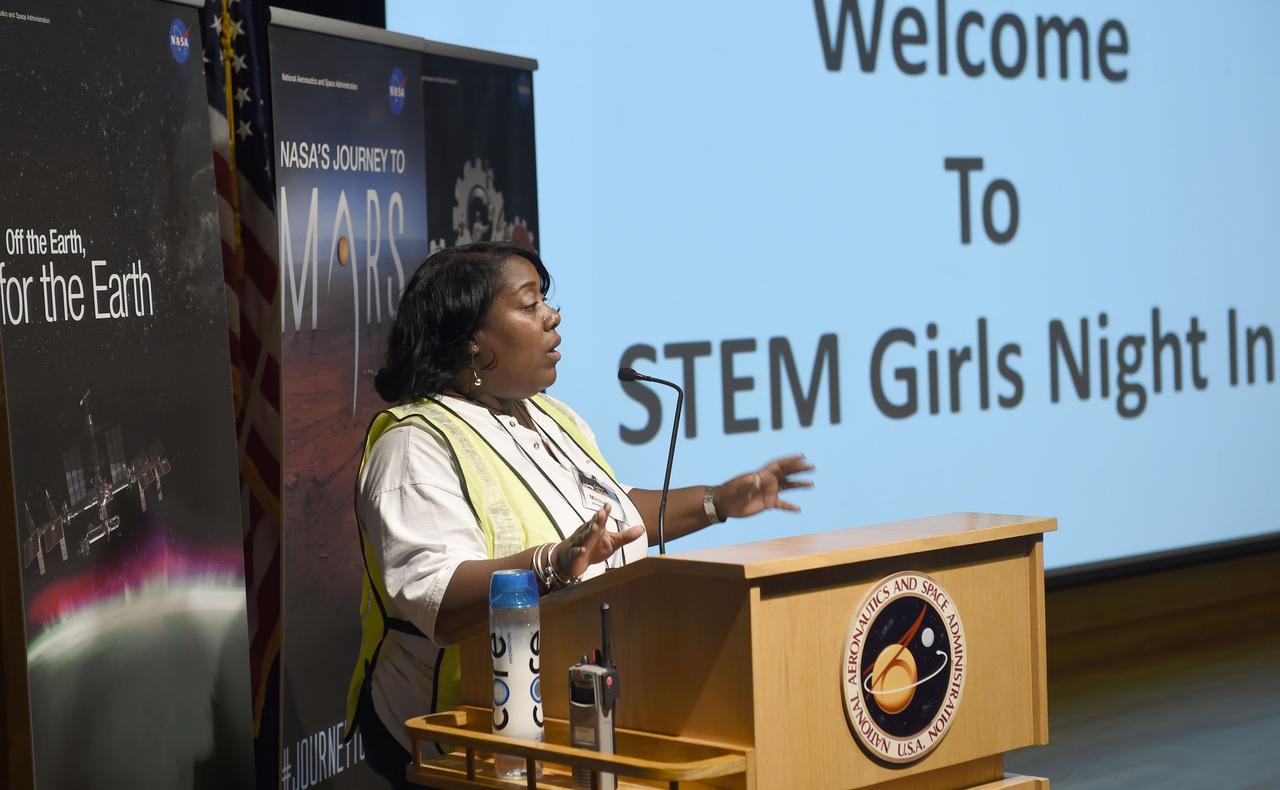
Girls Night In was held at Goddard on Nov 4-5, 2016. This is a pilot program which reinvigorates, inspires, and engages high school girls who may be struggling or not fully engaged in STEM (Science, Technology Engineering and Math) education. The program allowed NASA women to share and demonstrate the work they do, provide the girls an opportunity to completely immerse themselves in Goddard science, technology, engineering and math as well as provide them activities that will challenge and promote knowledge and discovery. Goddard invites other NASA centers tolearn from this pilot program and work towards a simultaneous multicenter event in the future. Participating schools were: DuVal, Crossland, Flowers, High Point, Northwestern and Oxon Hill
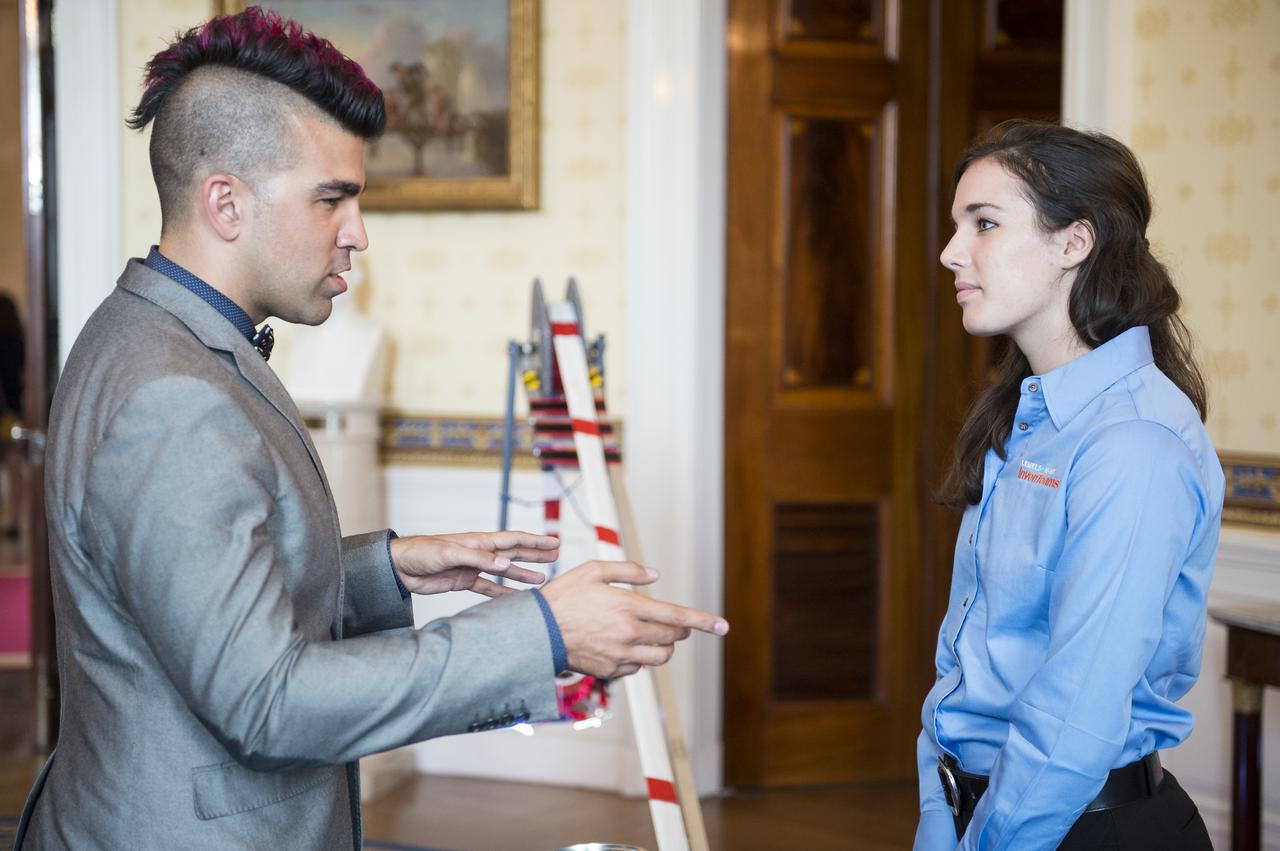
Bobak Ferdowsi, a system's engineer at NASA's Jet Propulsion Laboratory who became widely known for his mohawk hairstyle during the broadcast of the Curiosity landing on Mars, is seen here discussing a project with a participant in the White House Science Fair. The fourth White House Science Fair was held at the White House and included 100 students from more than 30 different states who competed in science, technology, engineering, and math (STEM) competitions. (Photo Credit: NASA/Aubrey Gemignani)
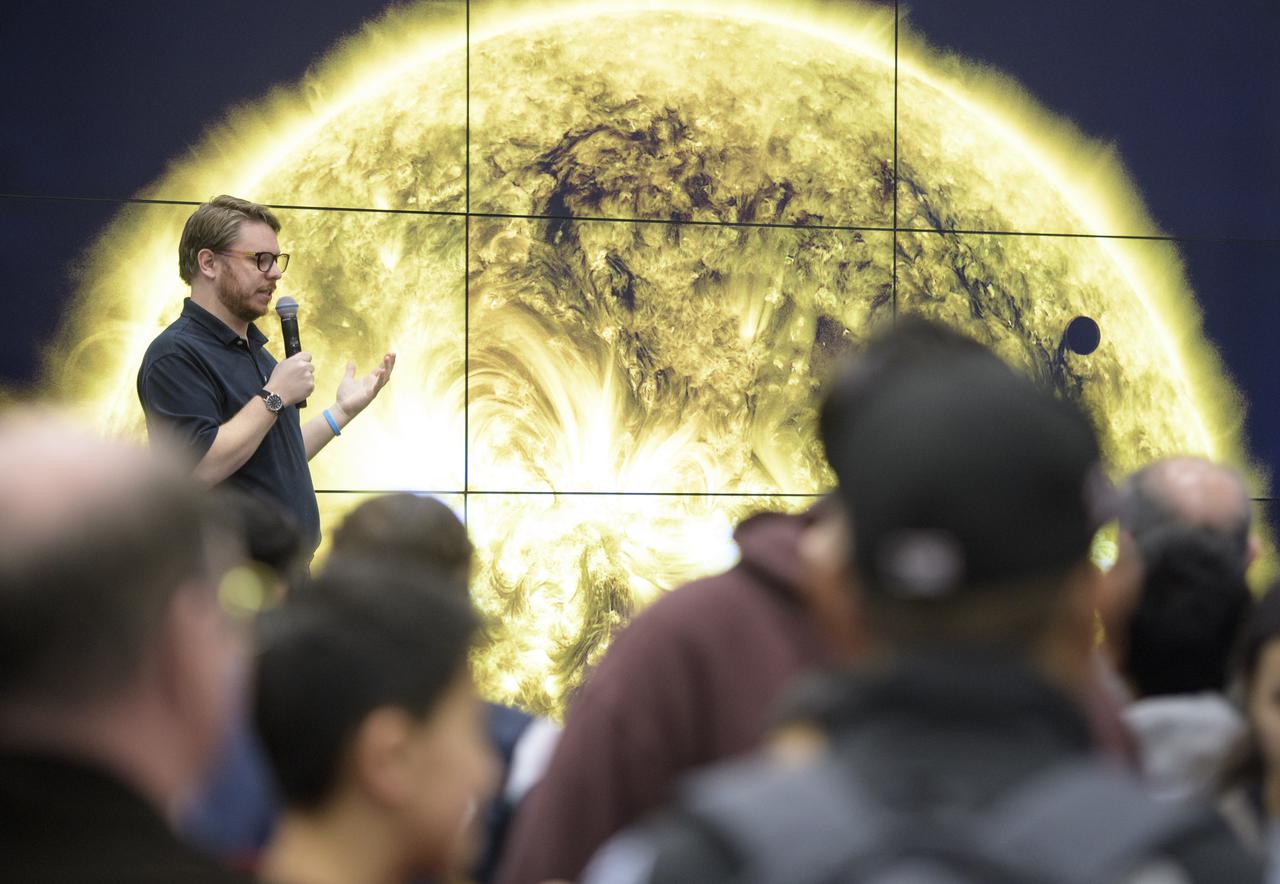
Tom Barclay, Director of the Kepler/K2 Guest Observer Office at NASA's Ames Research Center, speaks about exoplanets and NASA's next exoplanet mission during Sneak Peek Friday at the USA Science and Engineering Festival, Friday, April 6, 2018 at the Walter E. Washington Convention Center in Washington, DC. The festival is open to the public April 7-8. Photo Credit: (NASA/Joel Kowsky)
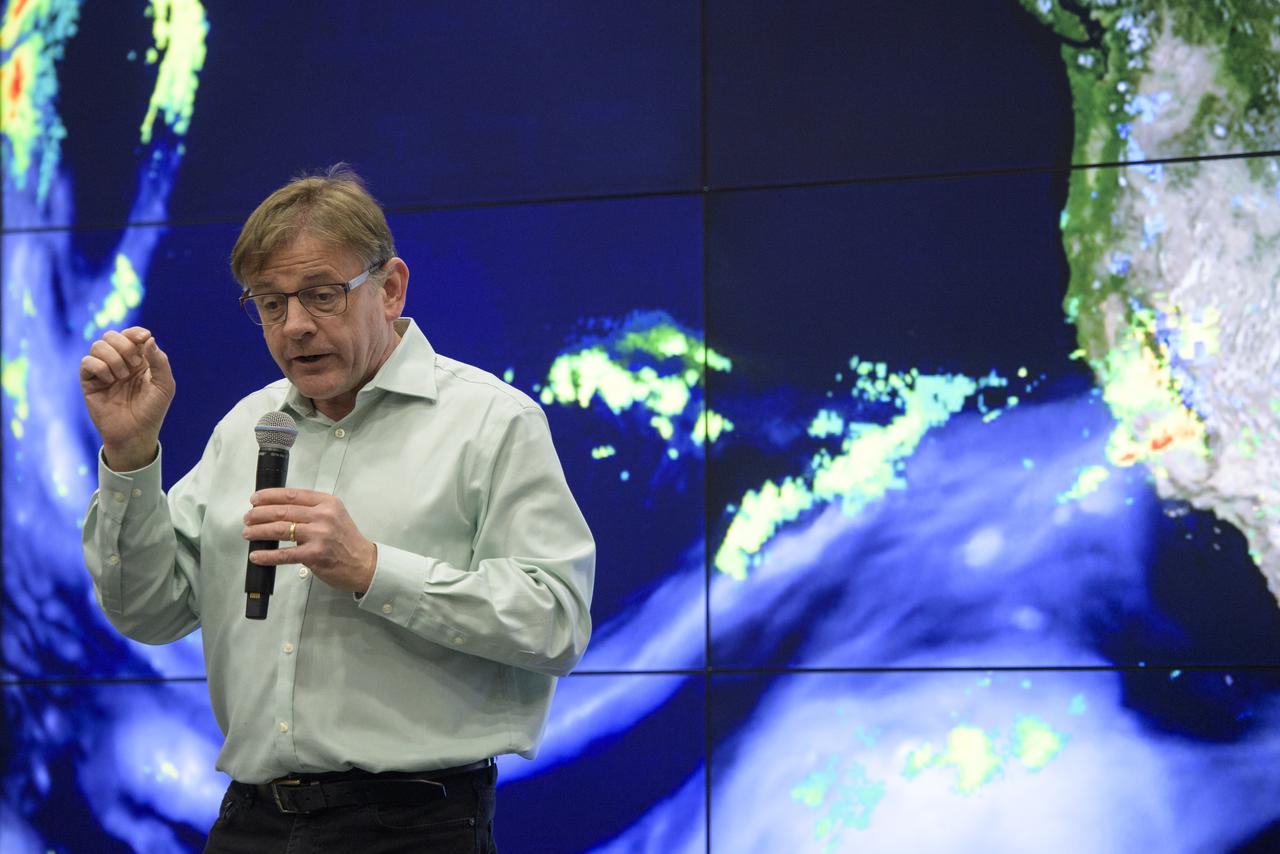
Steven Pawson, Chief of the Global Modeling and Assimilation Office at NASA's Goddard Space Flight Center, speaks about NASA's observations of Earth during Sneak Peek Friday at the USA Science and Engineering Festival, Friday, April 6, 2018 at the Walter E. Washington Convention Center in Washington, DC. The festival is open to the public April 7-8. Photo Credit: (NASA/Joel Kowsky)
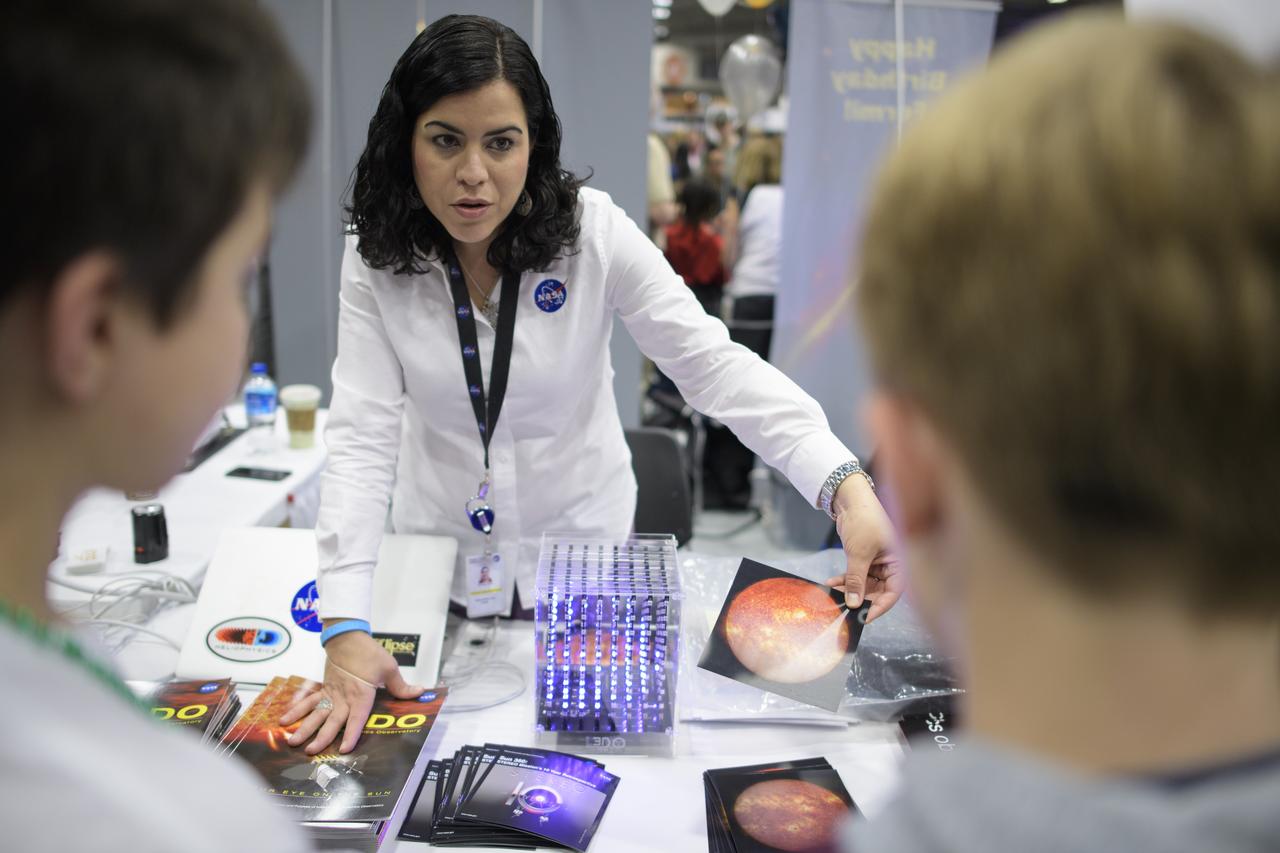
Attendees listen to a NASA staff member speak about the Sun and NASA's Solar Dynamics Observatory mission during Sneak Peek Friday at the USA Science and Engineering Festival, Friday, April 6, 2018 at the Walter E. Washington Convention Center in Washington, DC. The festival is open to the public April 7-8. Photo Credit: (NASA/Joel Kowsky)
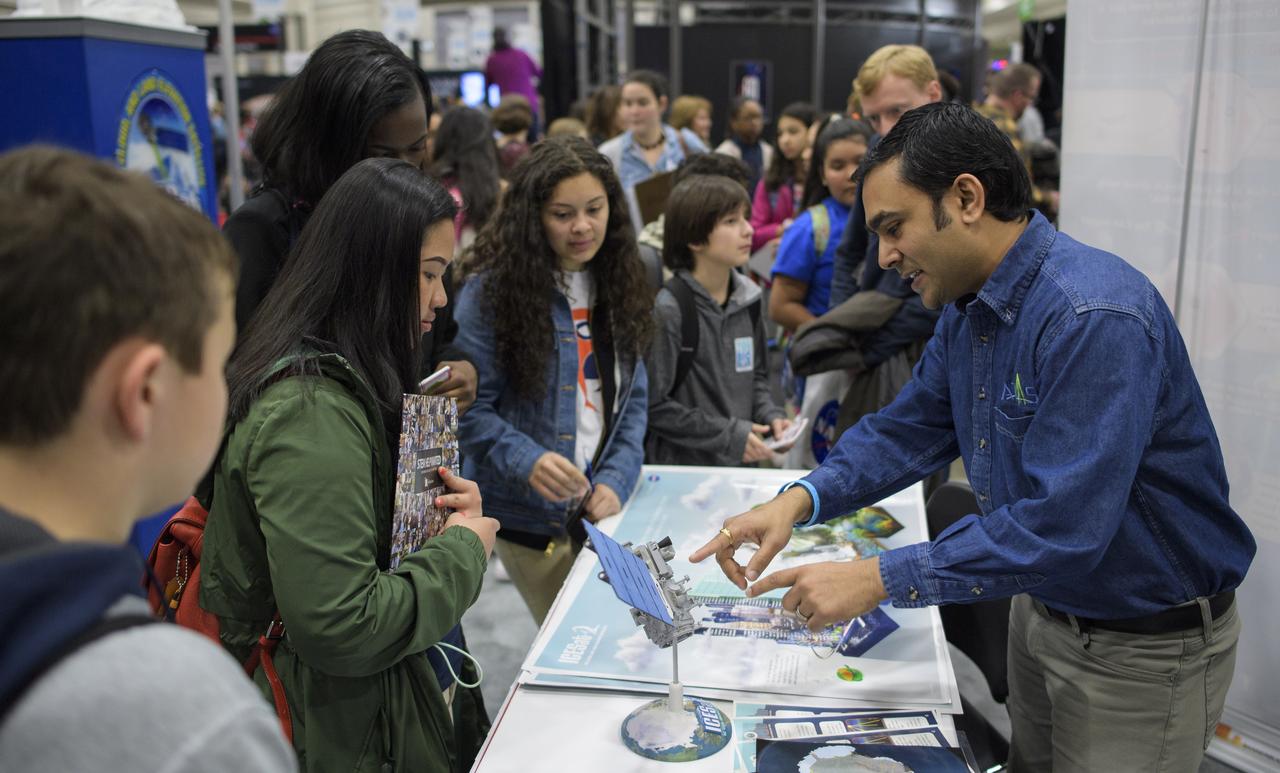
Attendees learn about NASA's Ice, Cloud, and Land Elevation Satellite 2, or ICESat-2, during Sneak Peek Friday at the USA Science and Engineering Festival, Friday, April 6, 2018 at the Walter E. Washington Convention Center in Washington, DC. The festival is open to the public April 7-8. Photo Credit: (NASA/Joel Kowsky)
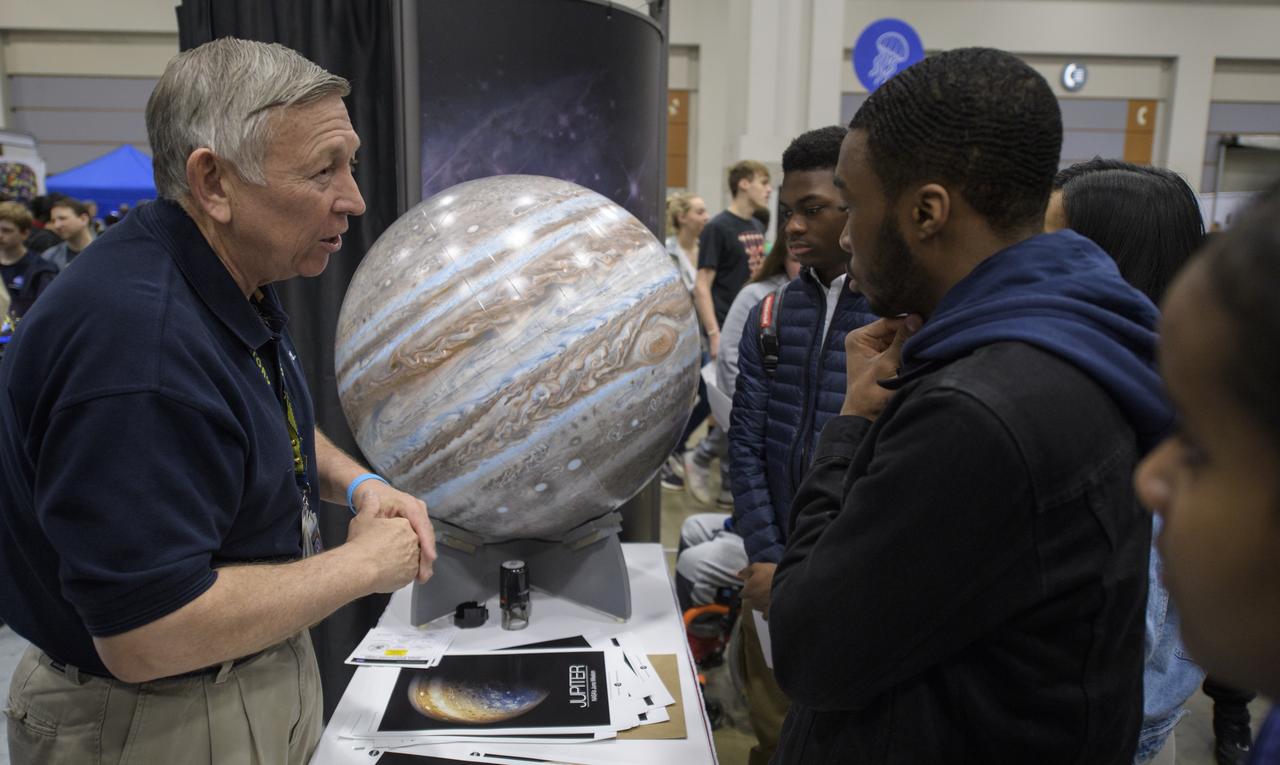
Attendees listen to a NASA staff member speak about Jupiter and NASA's Juno mission during Sneak Peek Friday at the USA Science and Engineering Festival, Friday, April 6, 2018 at the Walter E. Washington Convention Center in Washington, DC. The festival is open to the public April 7-8. Photo Credit: (NASA/Joel Kowsky)
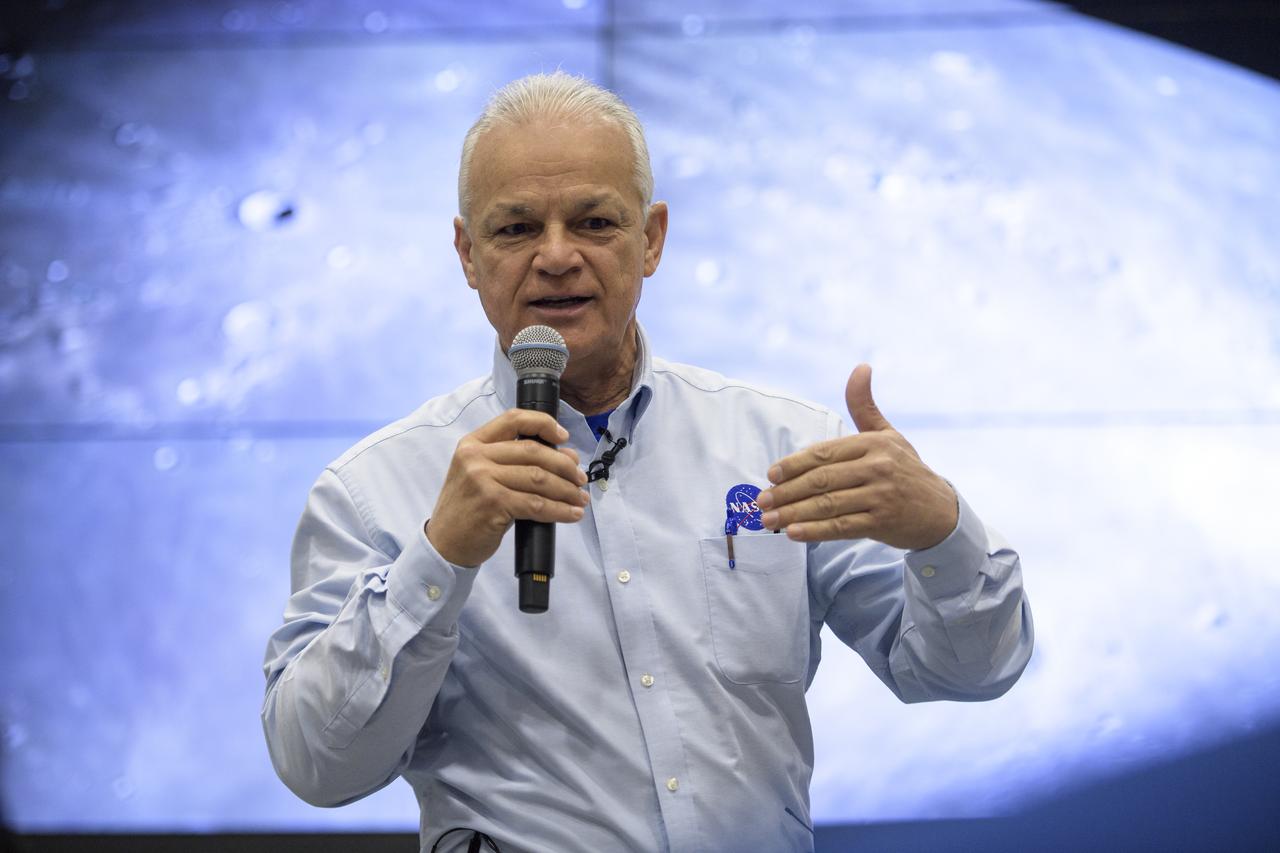
NASA Acting Chief Technologist Douglas Terrier speaks about technology challenges for the Moon, Mars, and beyond during Sneak Peek Friday at the USA Science and Engineering Festival, Friday, April 6, 2018 at the Walter E. Washington Convention Center in Washington, DC. The festival is open to the public April 7-8. Photo Credit: (NASA/Joel Kowsky)
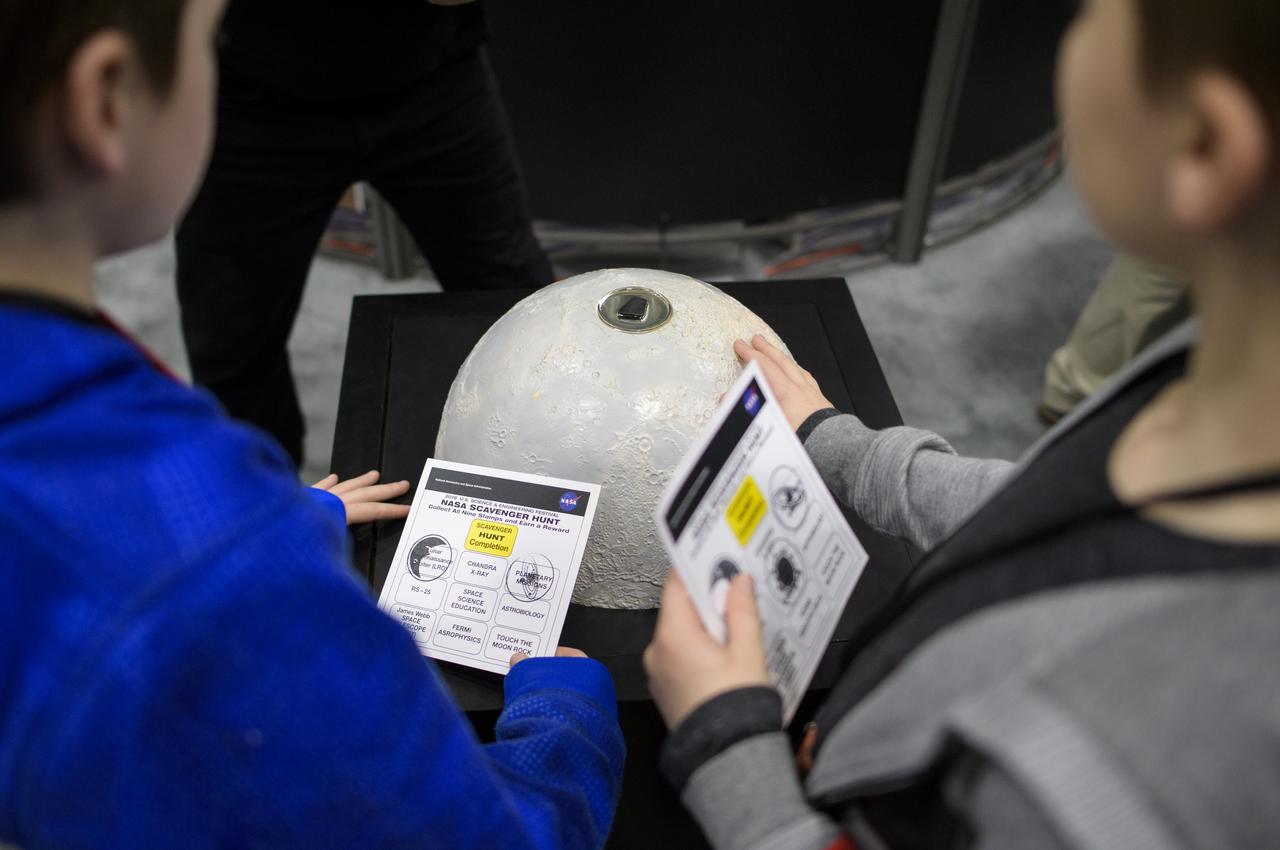
Attendees view a Moon rock that was returned by the Apollo 17 mission during Sneak Peek Friday at the USA Science and Engineering Festival, Friday, April 6, 2018 at the Walter E. Washington Convention Center in Washington, DC. The festival is open to the public April 7-8. Photo Credit: (NASA/Joel Kowsky)

Attendees learn about packing for space travel during Sneak Peek Friday at the USA Science and Engineering Festival, Friday, April 6, 2018 at the Walter E. Washington Convention Center in Washington, DC. The festival is open to the public April 7-8. Photo Credit: (NASA/Joel Kowsky)
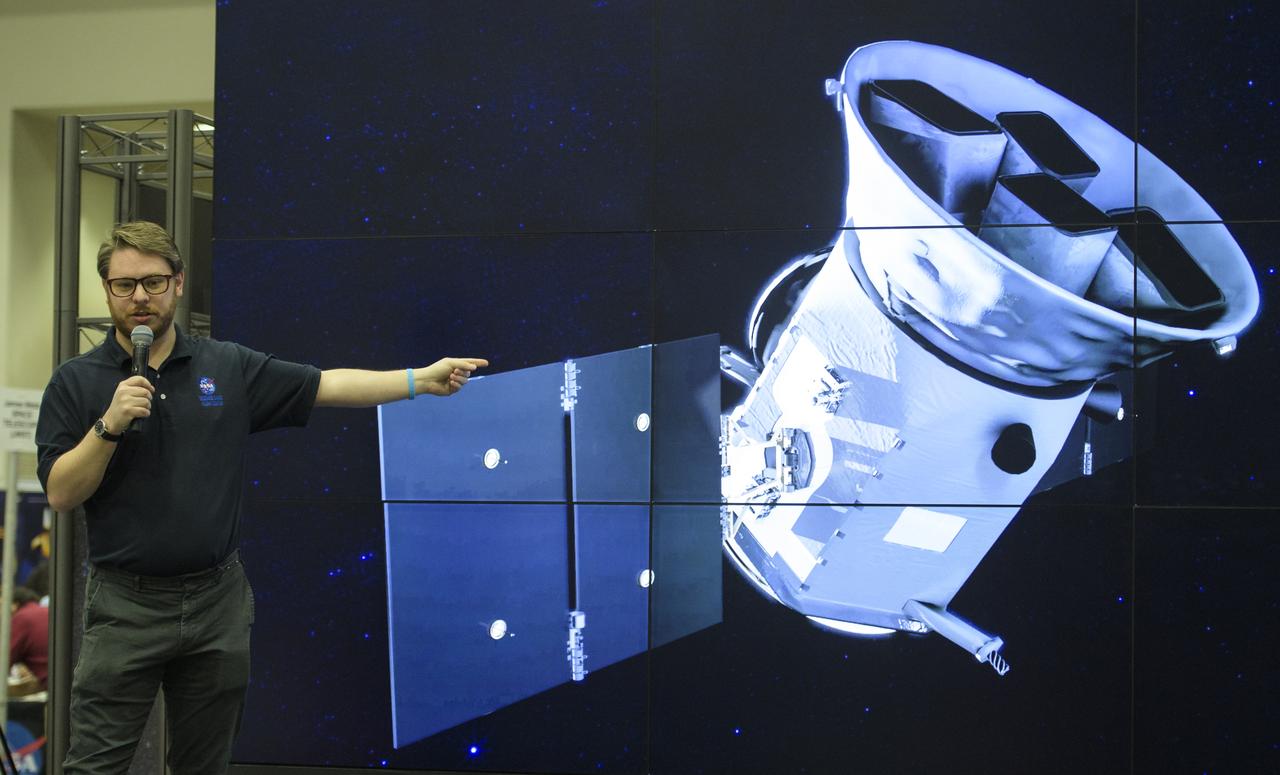
Tom Barclay, Director of the Kepler/K2 Guest Observer Office at NASA's Ames Research Center, speaks about exoplanets and NASA's next exoplanet mission, the Transiting Exoplanet Survey Satellite, during Sneak Peek Friday at the USA Science and Engineering Festival, Friday, April 6, 2018 at the Walter E. Washington Convention Center in Washington, DC. The festival is open to the public April 7-8. Photo Credit: (NASA/Joel Kowsky)
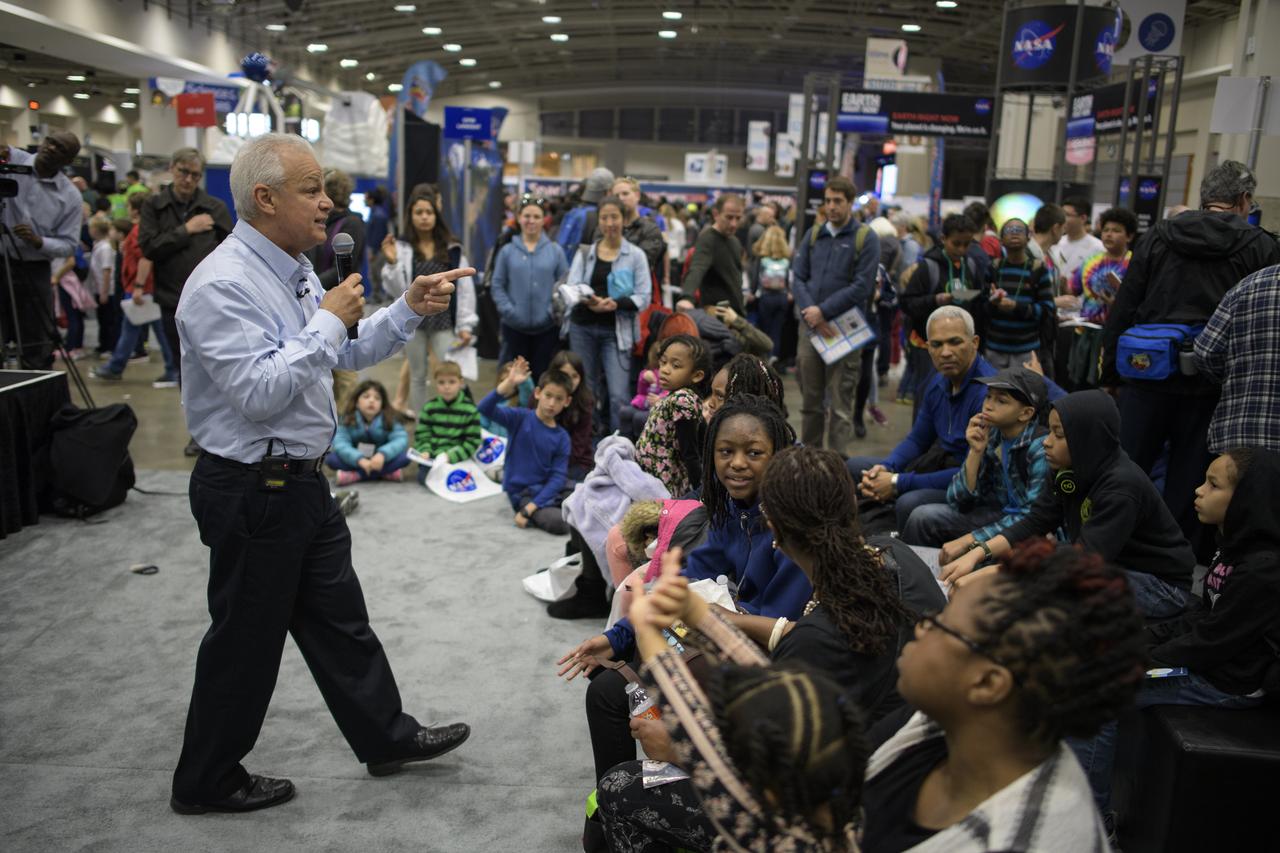
NASA Acting Chief Technologist Douglas Terrier speaks about technology challenges for the Moon, Mars, and beyond during Sneak Peek Friday at the USA Science and Engineering Festival, Friday, April 6, 2018 at the Walter E. Washington Convention Center in Washington, DC. The festival is open to the public April 7-8. Photo Credit: (NASA/Joel Kowsky)
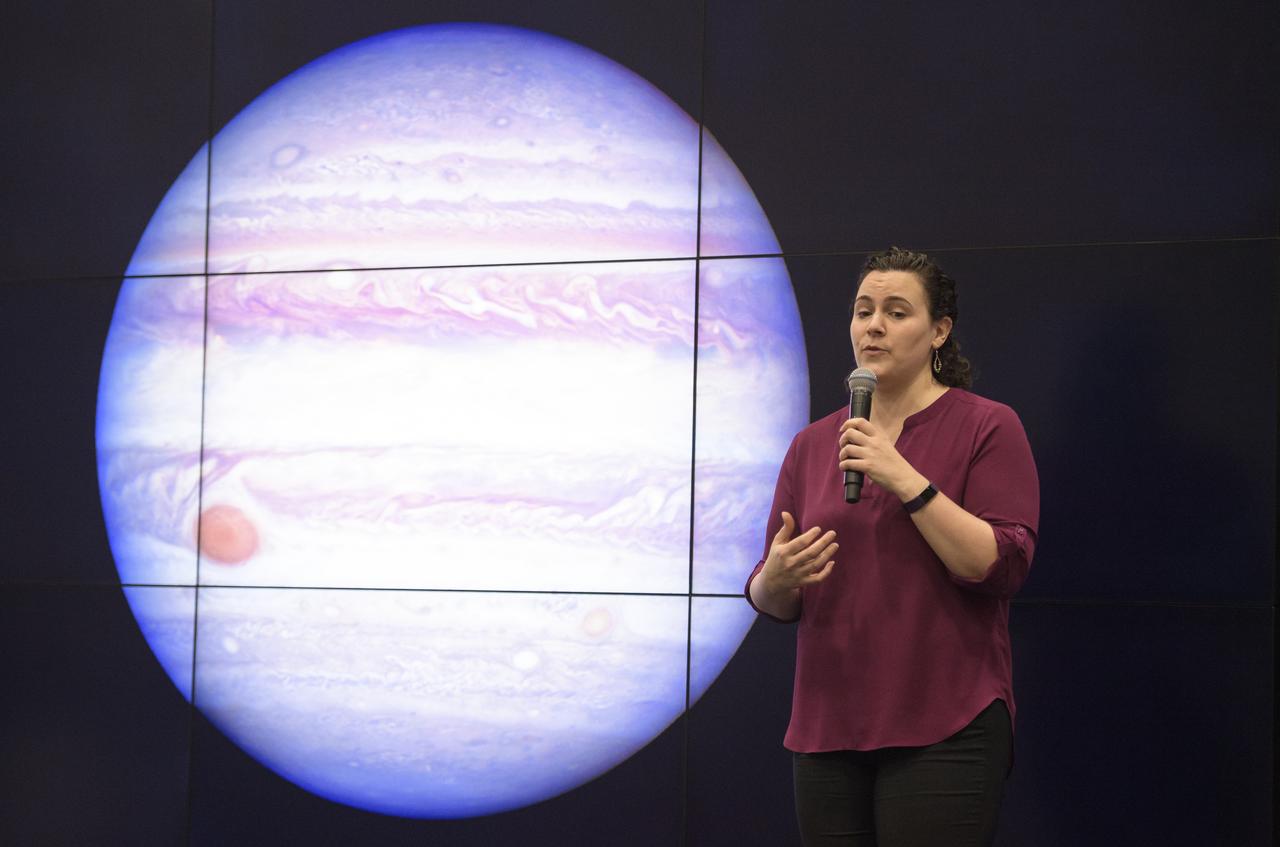
Emma Marcucci, Education and Outreach Scientist at the Space Telescope Science Institute, speaks about the planets in our Solar System during Sneak Peek Friday at the USA Science and Engineering Festival, Friday, April 6, 2018 at the Walter E. Washington Convention Center in Washington, DC. The festival is open to the public April 7-8. Photo Credit: (NASA/Joel Kowsky)
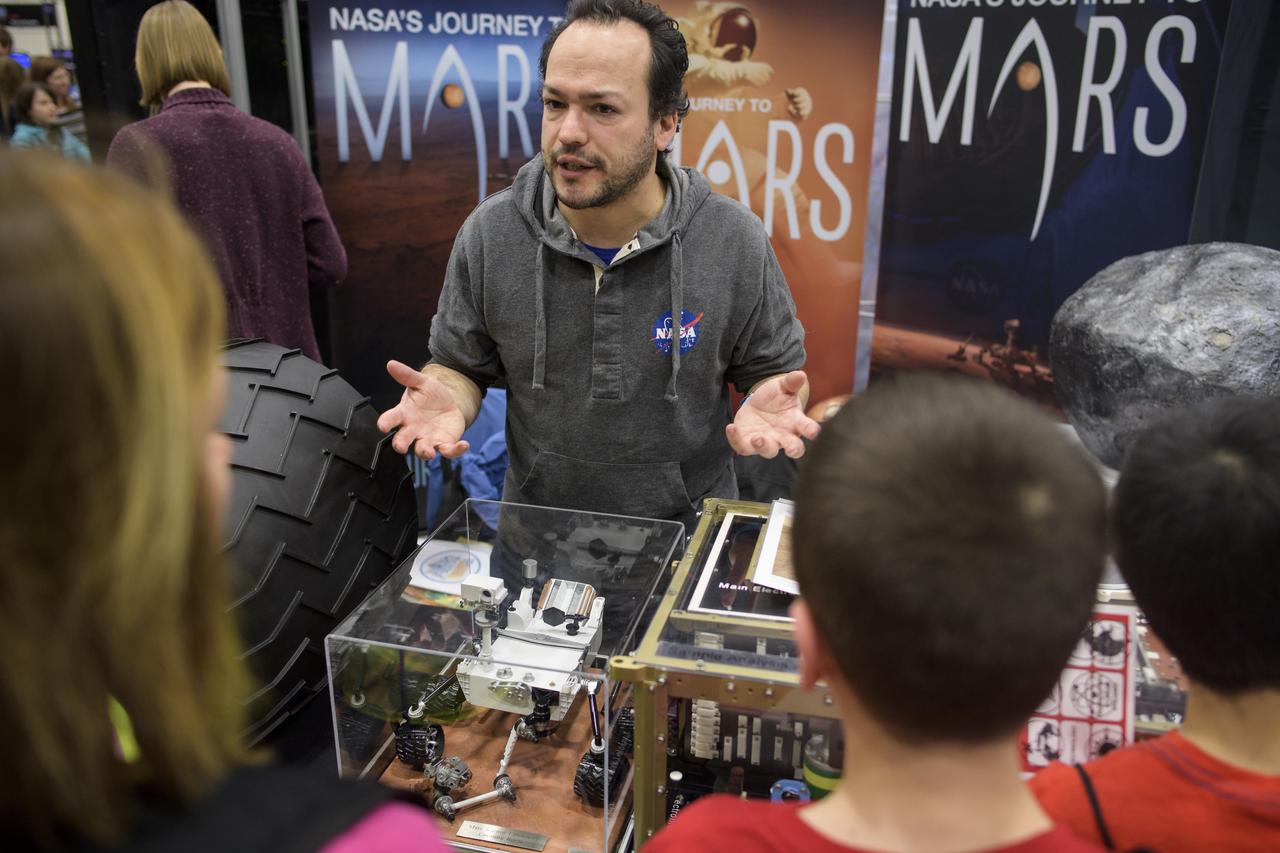
Attendees listen to a NASA staff member talk about NASA's Mars Science Laboratory mission during Sneak Peek Friday at the USA Science and Engineering Festival, Friday, April 6, 2018 at the Walter E. Washington Convention Center in Washington, DC. The festival is open to the public April 7-8. Photo Credit: (NASA/Joel Kowsky)
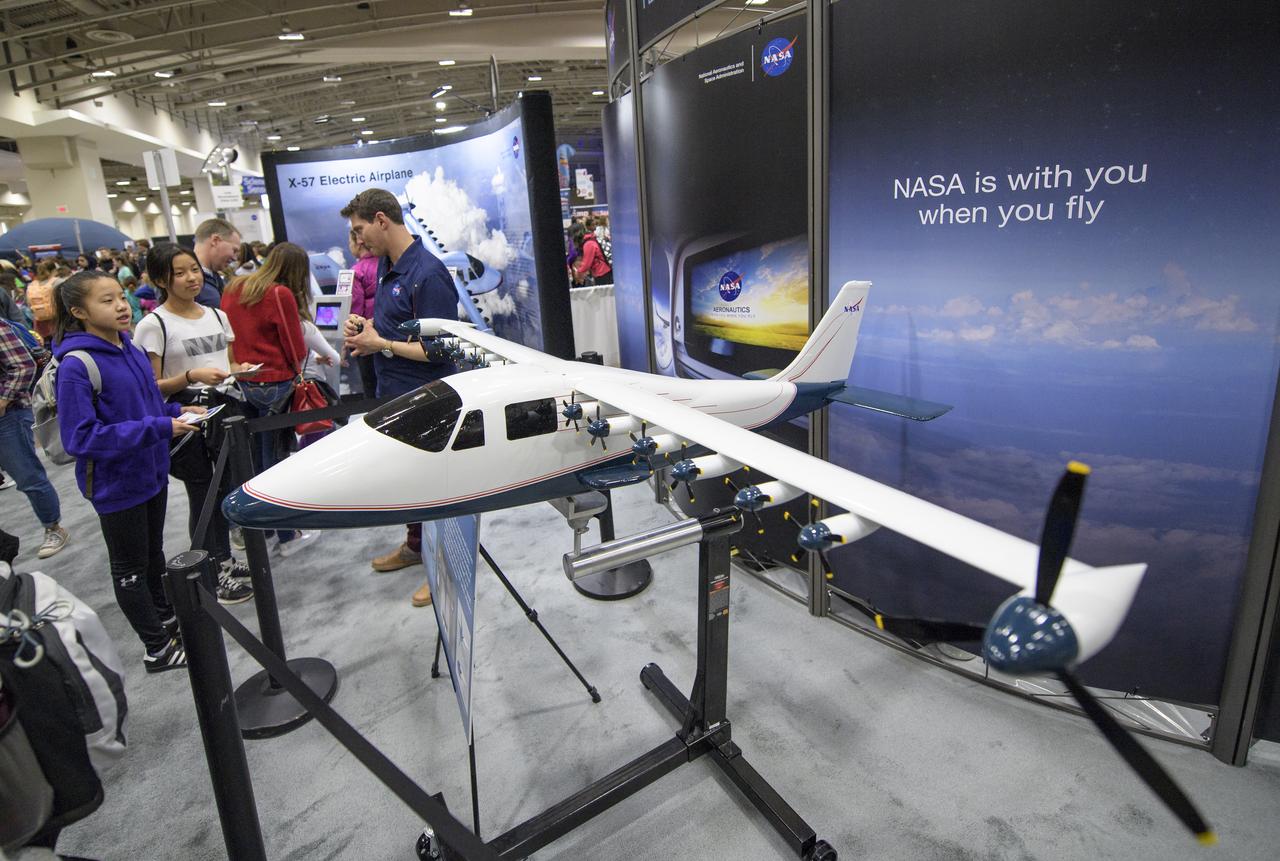
Attendees listen to a NASA staff member speak about the X-57, a research aircraft powered by 14 electric motors, during Sneak Peek Friday at the USA Science and Engineering Festival, Friday, April 6, 2018 at the Walter E. Washington Convention Center in Washington, DC. The festival is open to the public April 7-8. Photo Credit: (NASA/Joel Kowsky)
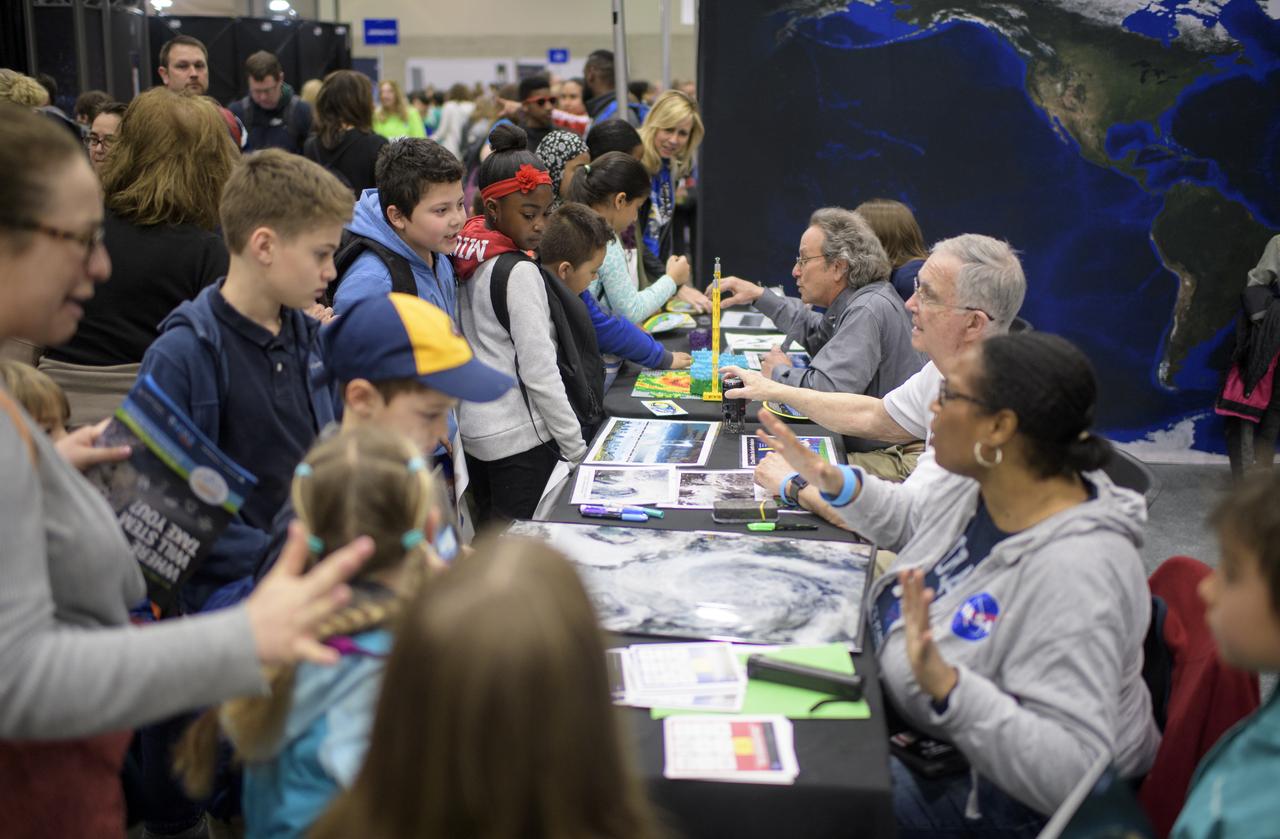
Attendees visit NASA exhibits during Sneak Peek Friday at the USA Science and Engineering Festival, Friday, April 6, 2018 at the Walter E. Washington Convention Center in Washington, DC. The festival is open to the public April 7-8. Photo Credit: (NASA/Joel Kowsky)
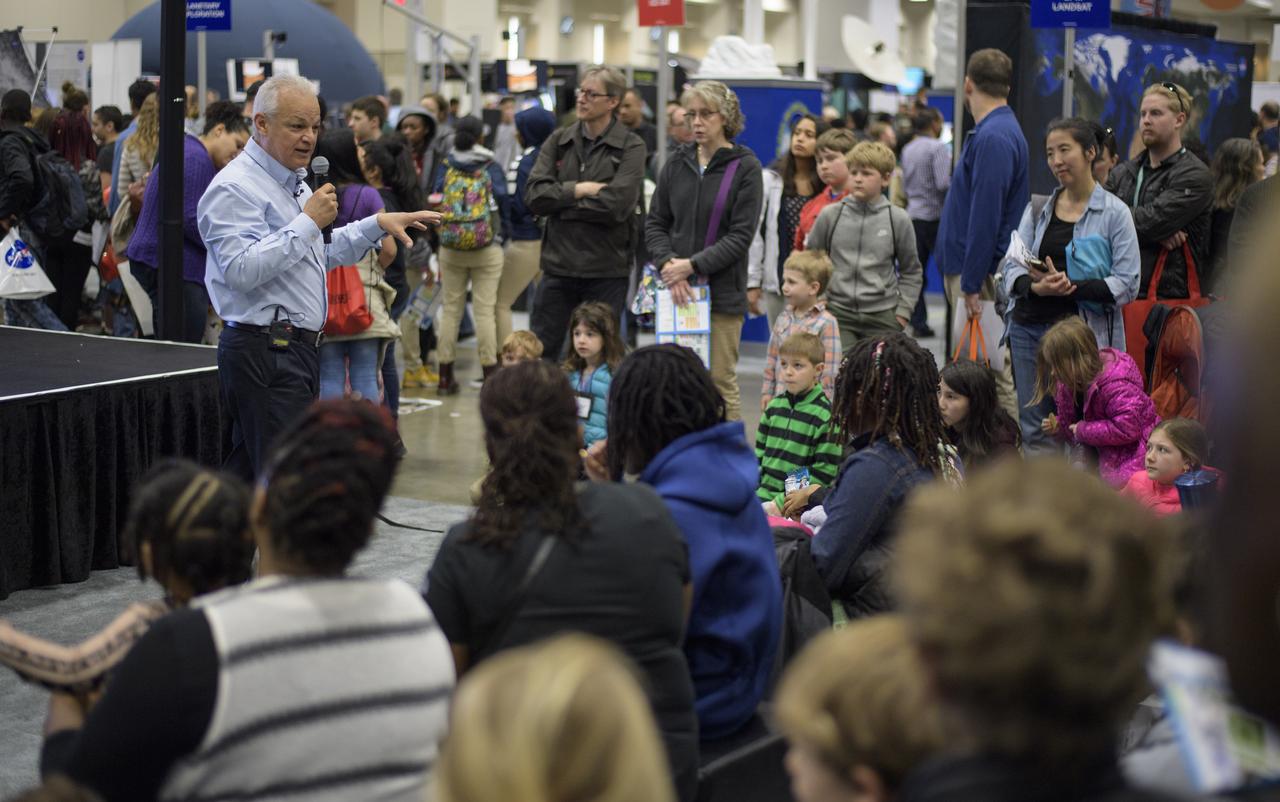
NASA Acting Chief Technologist Douglas Terrier speaks about technology challenges for the Moon, Mars, and beyond during Sneak Peek Friday at the USA Science and Engineering Festival, Friday, April 6, 2018 at the Walter E. Washington Convention Center in Washington, DC. The festival is open to the public April 7-8. Photo Credit: (NASA/Joel Kowsky)
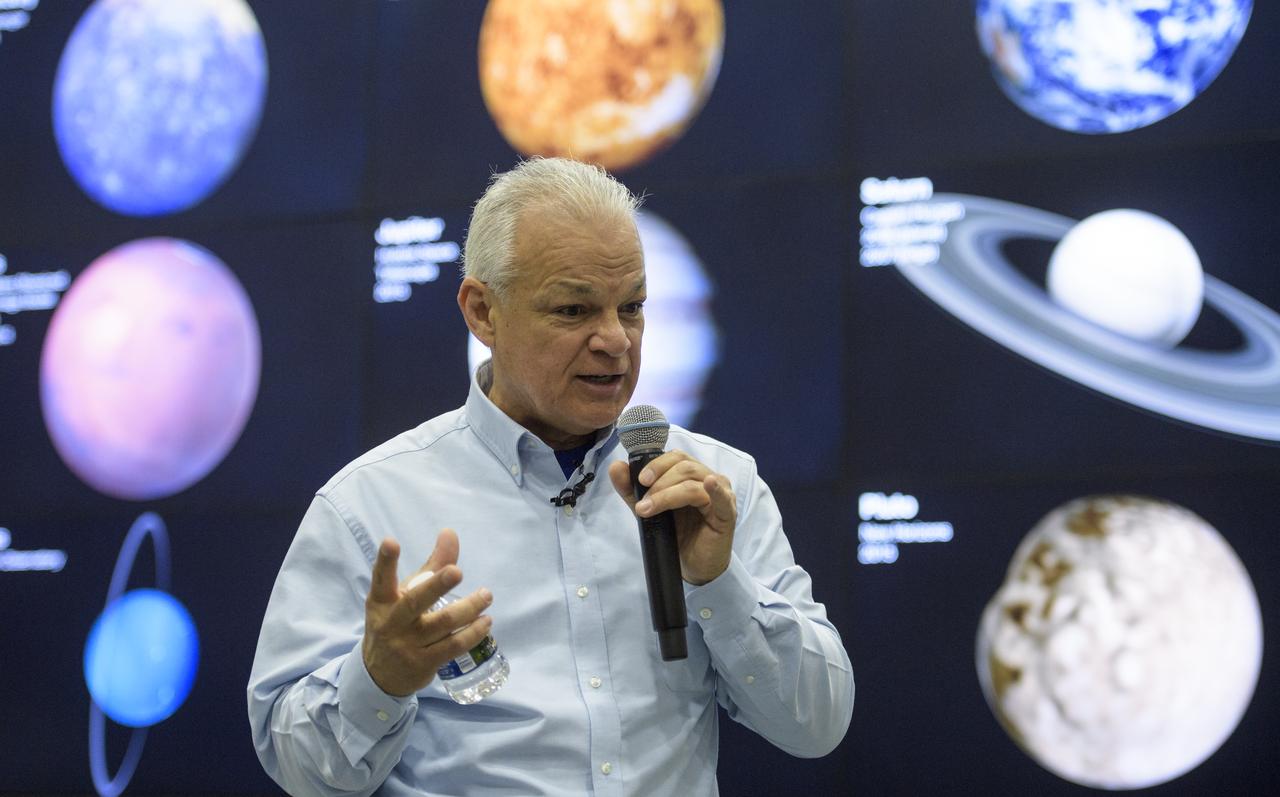
NASA Acting Chief Technologist Douglas Terrier speaks about technology challenges for the Moon, Mars, and beyond during Sneak Peek Friday at the USA Science and Engineering Festival, Friday, April 6, 2018 at the Walter E. Washington Convention Center in Washington, DC. The festival is open to the public April 7-8. Photo Credit: (NASA/Joel Kowsky)
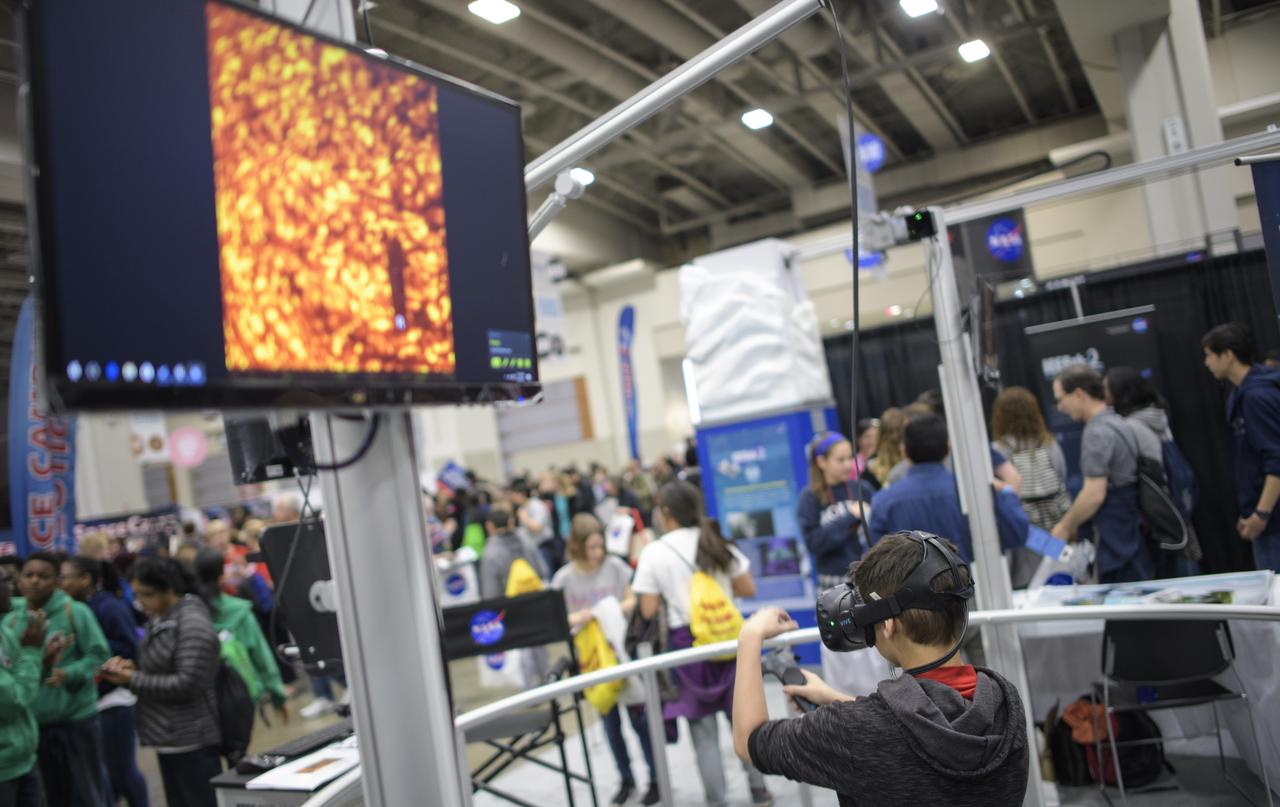
An attendee uses virtual reality goggles to view the Sun during Sneak Peek Friday at the USA Science and Engineering Festival, Friday, April 6, 2018 at the Walter E. Washington Convention Center in Washington, DC. The festival is open to the public April 7-8. Photo Credit: (NASA/Joel Kowsky)
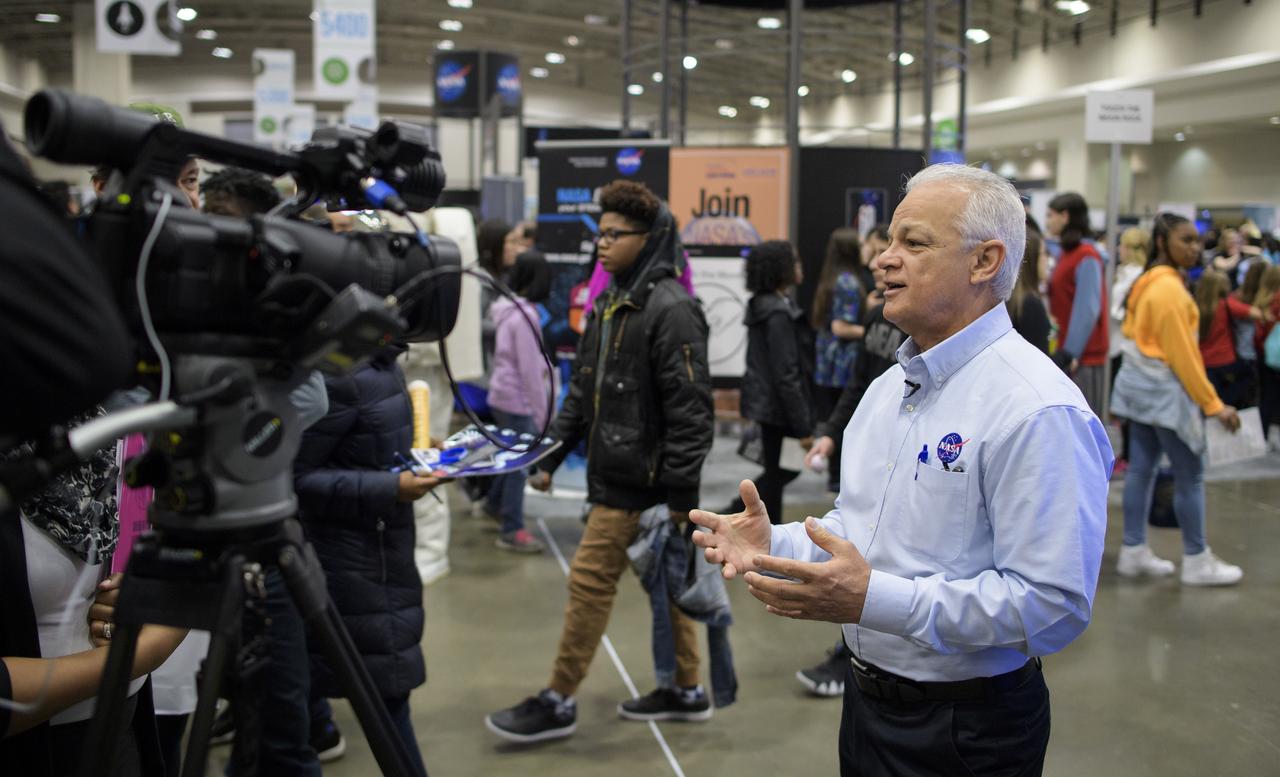
NASA Acting Chief Technologist Douglas Terrier is interviewed by a member of the media during Sneak Peek Friday at the USA Science and Engineering Festival, Friday, April 6, 2018 at the Walter E. Washington Convention Center in Washington, DC. The festival is open to the public April 7-8. Photo Credit: (NASA/Joel Kowsky)

Attendees walk past an inflatable model of NASA's Space Launch System during Sneak Peek Friday at the USA Science and Engineering Festival, Friday, April 6, 2018 at the Walter E. Washington Convention Center in Washington, DC. The festival is open to the public April 7-8. Photo Credit: (NASA/Joel Kowsky)
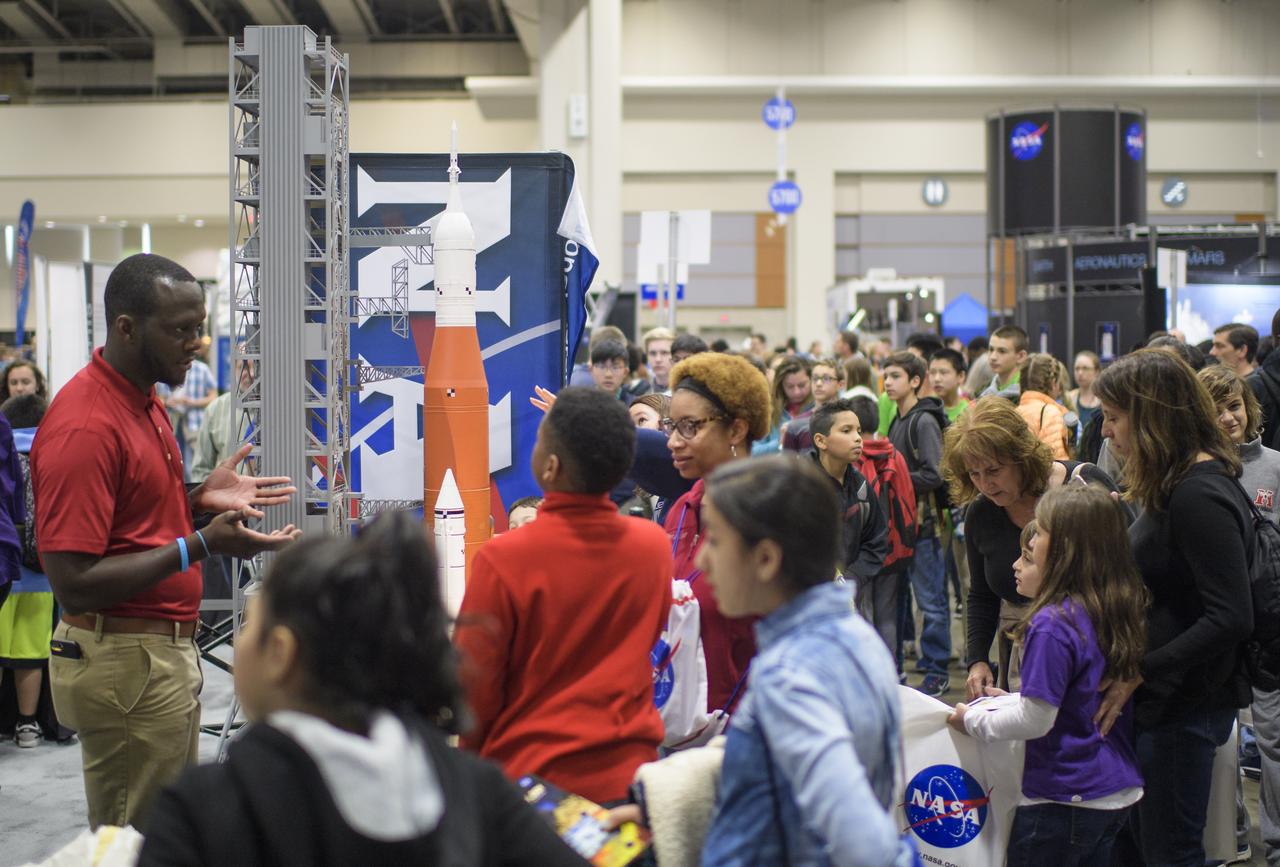
Attendees visit NASA exhibits during Sneak Peek Friday at the USA Science and Engineering Festival, Friday, April 6, 2018 at the Walter E. Washington Convention Center in Washington, DC. The festival is open to the public April 7-8. Photo Credit: (NASA/Joel Kowsky)
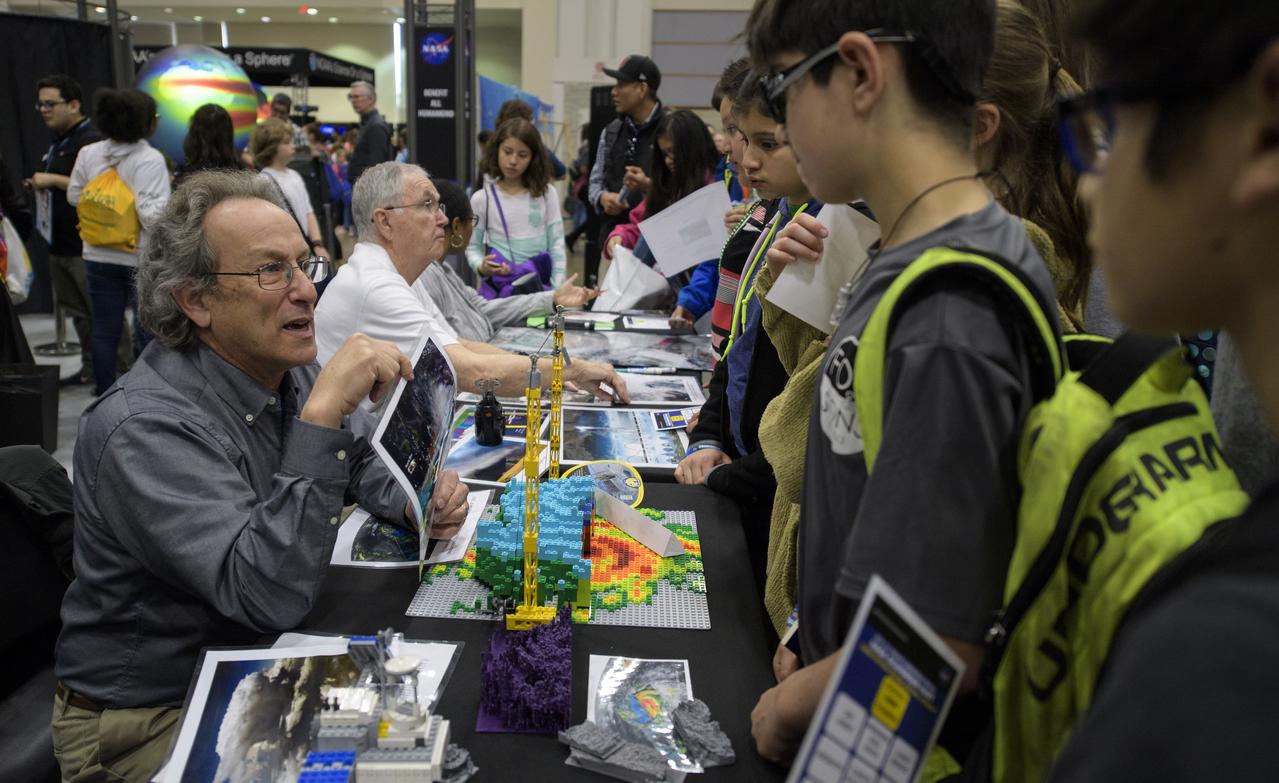
Attendees listen to a NASA staff member talk about the Global Precipitation Measurement mission during Sneak Peek Friday at the USA Science and Engineering Festival, Friday, April 6, 2018 at the Walter E. Washington Convention Center in Washington, DC. The festival is open to the public April 7-8. Photo Credit: (NASA/Joel Kowsky)
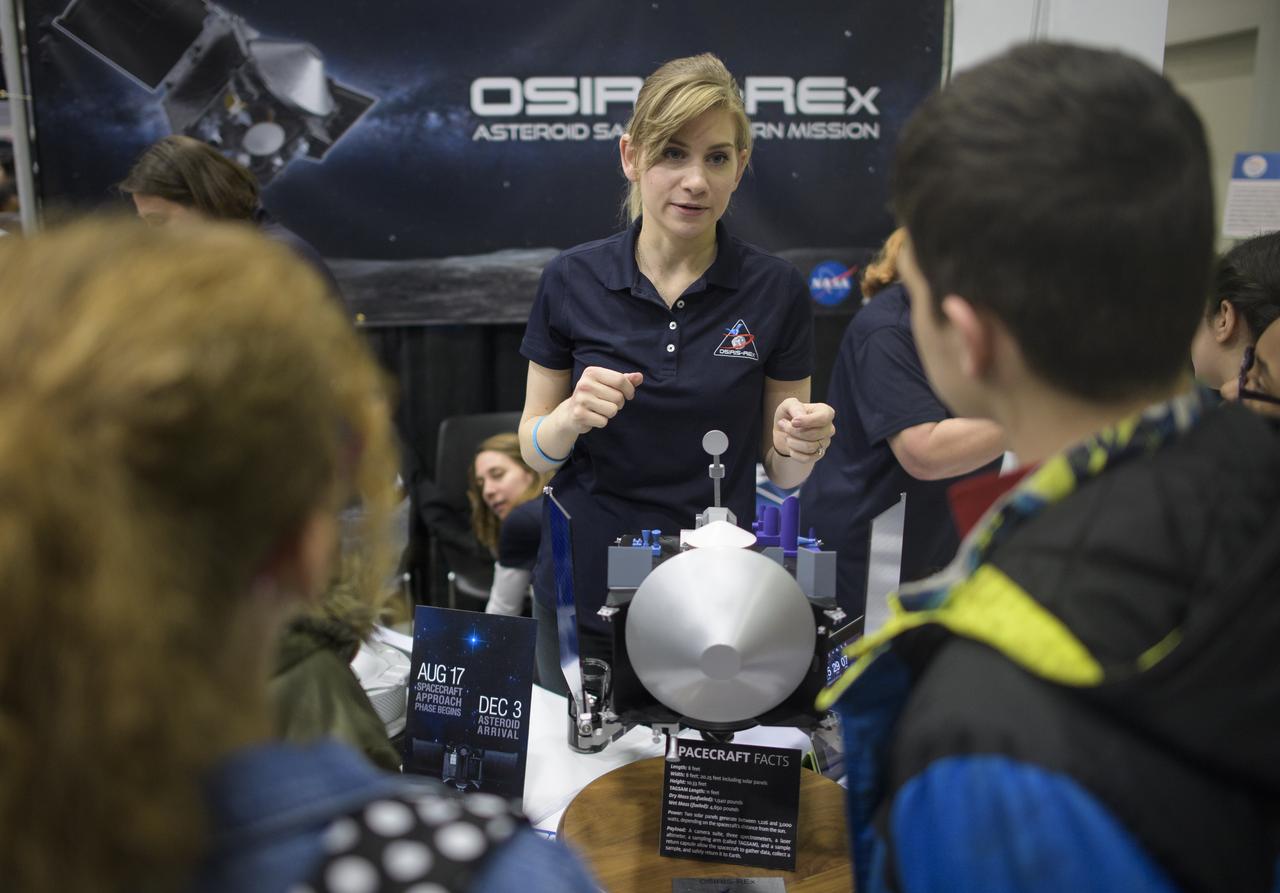
Attendees listen as a NASA staff member speaks about NASA's Origins-Spectral Interpretation-Resource Identification-Security-Regolith Explorer, or OSIRIS-REx, mission during Sneak Peek Friday at the USA Science and Engineering Festival, Friday, April 6, 2018 at the Walter E. Washington Convention Center in Washington, DC. The festival is open to the public April 7-8. Photo Credit: (NASA/Joel Kowsky)
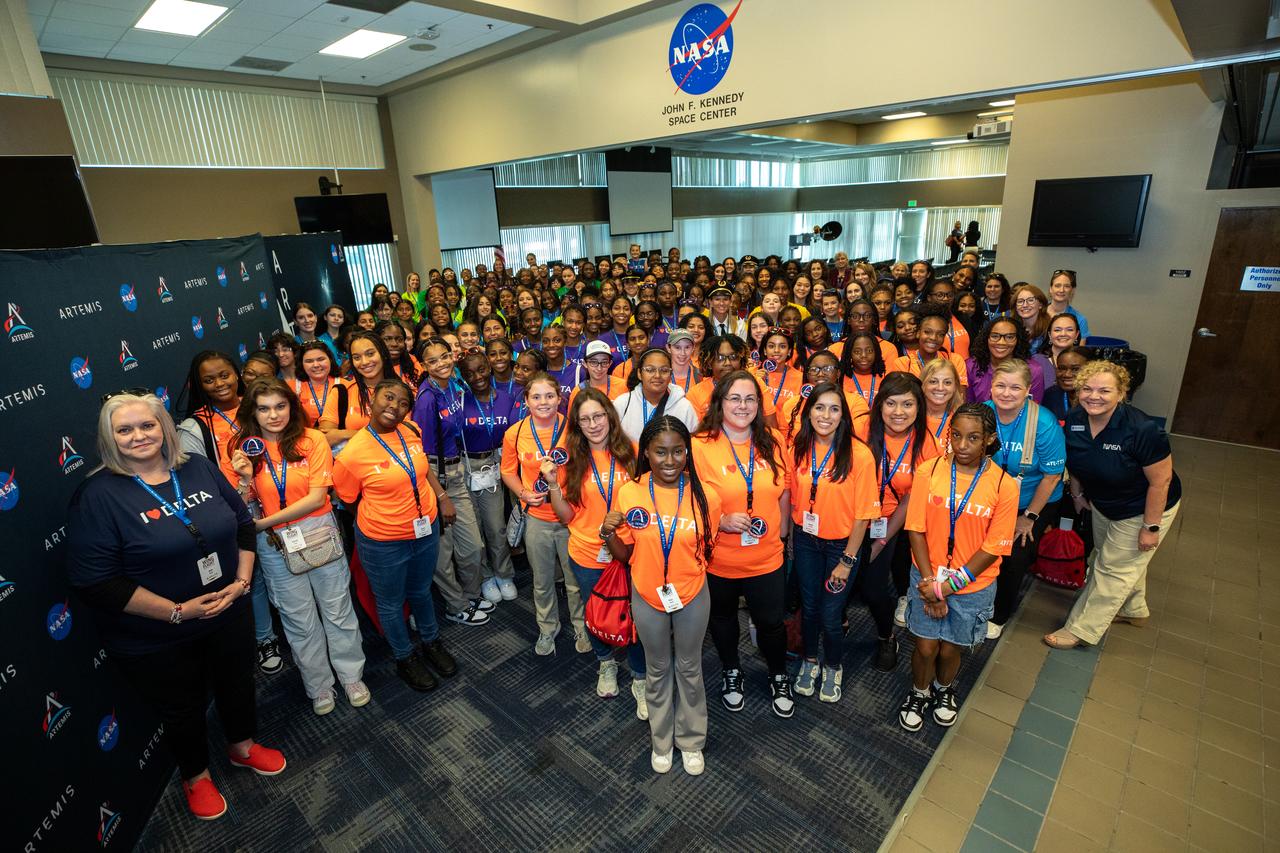
Young women, ages 11 to 18, from the Atlanta, Georgia area, with interests in STEM (science, technology, engineering, and math), pose for a photo on Friday, Sept. 20, 2024, at NASA’s Kennedy Space Center in Florida. NASA Kennedy hosted the Delta Air Lines’ Women Inspiring Our Next Generation (WING) flight to showcase various women-led STEM careers available at the Florida spaceport.
Young women, ages 11 to 18, from the Atlanta, Georgia area, with interests in STEM (science, technology, engineering, and math), pose for a photo on Friday, Sept. 20, 2024, at NASA’s Kennedy Space Center in Florida. NASA Kennedy hosted the Delta Air Lines’ Women Inspiring Our Next Generation (WING) flight to showcase various women-led STEM careers available at the Florida spaceport.
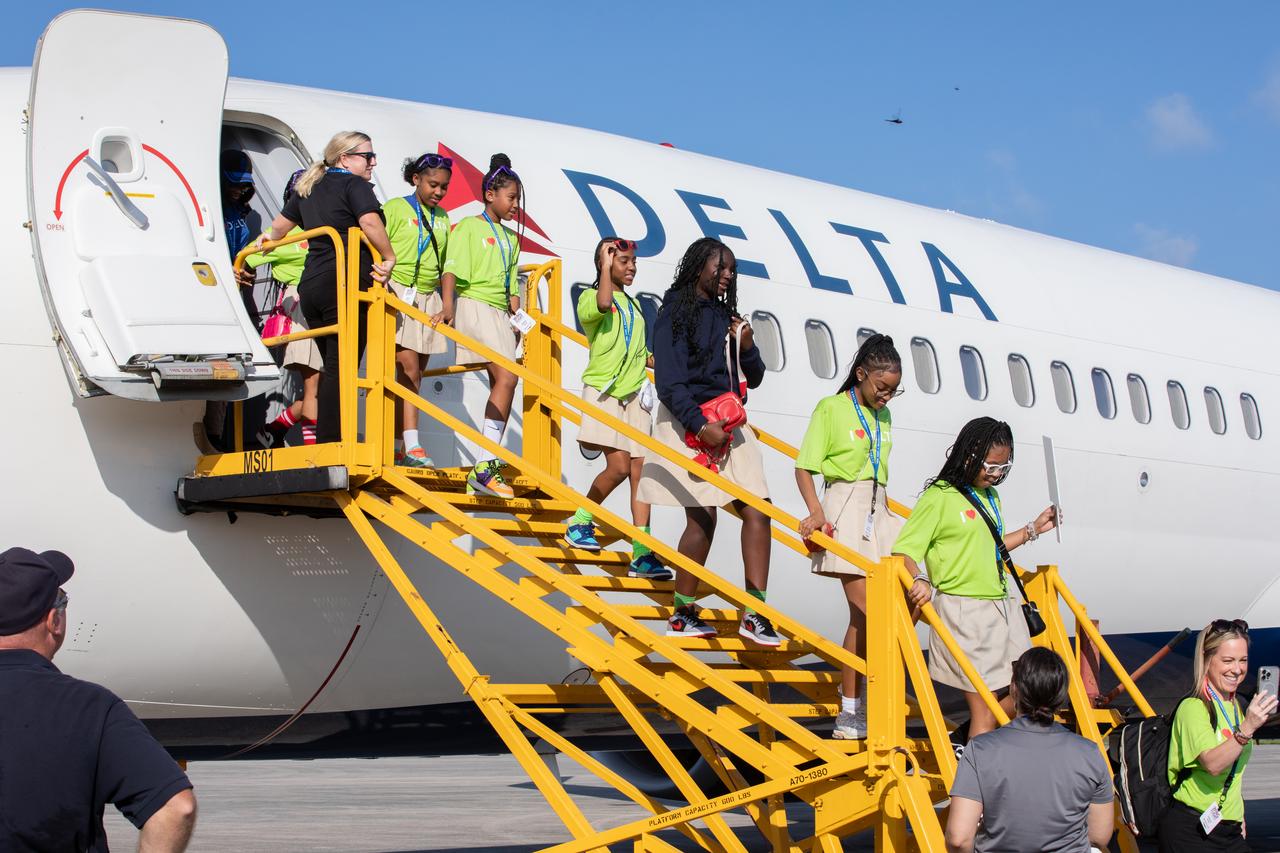
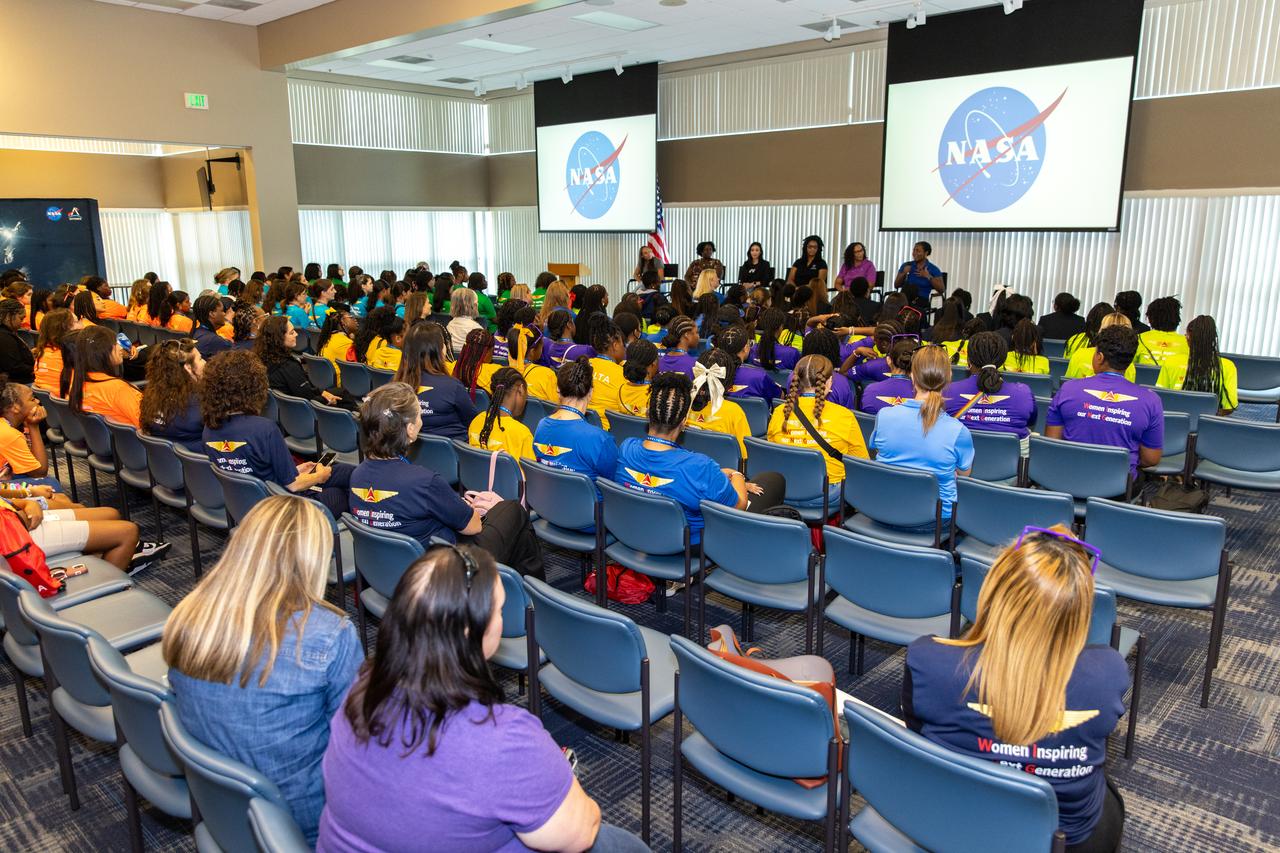
Roughly 130 young women with an interest in STEM (science, technology, engineering, and math) from Delta Air Lines’ Women Inspiring Our Next Generation (WING) flight arrive Friday, Sept. 20, 2024, at NASA’s Kennedy Space Center in Florida. The initiative between Delta and NASA Kennedy showcases the various STEM careers available at the Florida spaceport. The group had the opportunity to view center facilities and hear from a panel of women about their careers at Kennedy and Delta.
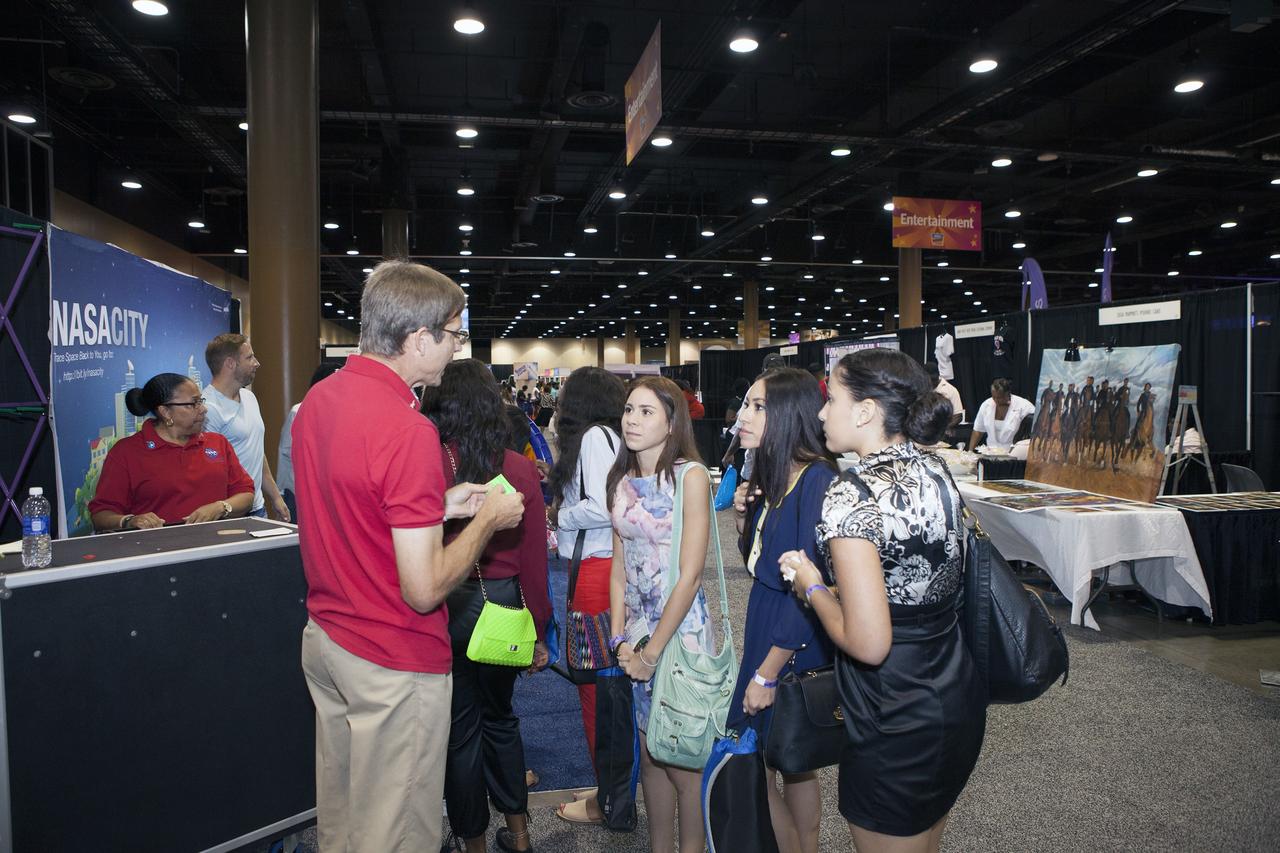
KISSIMMEE, Fla. – Guests at the Tom Joyner Family Reunion participate in "Learn and Spin Challenge," an opportunity to answer questions related to science, technology, engineering and math. Robert Smith asks a question as part of NASA’s educational theme during the five-day event. Behind Smith, to the left, is Debbie Houston who also supported the "Learn and Spin Challenge." The Tom Joyner Family Reunion is designed to present uplifting programs, entertainment and information about growing, diverse communities. An annual event of the nationally-syndicated Tom Joyner Morning Show, the many exhibits included NASA's participation focusing on encouraging young people to consider studies and careers in STEM -- science, technology, engineering and math. NASA's Education Division promoted the benefits of math and scientific learning along with career opportunities offered by the space agency. The activities took place at the Gaylord Palms Resort in Kissimmee, Florida, during the Labor Day weekend. Photo credit: NASA/Daniel Casper

Kennedy Space Center Deputy Director Janet Petro speaks to students during a Women in STEM mentoring breakfast inside the Debus Conference Center at the Kennedy Space Center Visitor Complex in Florida. STEM is science, technology, engineering and math. The special event gave students competing in NASA's 8th Annual Robotic Mining Competition the chance to learn from female NASA scientists, engineers and professionals about their careers and the paths they took to working at Kennedy. The Robotic Mining Competition is a NASA Human Exploration and Operations Mission Directorate project designed to encourage students in STEM fields. The project provides a competitive environment to foster innovative ideas and solutions that could be used on NASA's Journey to Mars.

Kennedy Space Center Deputy Director Janet Petro speaks to students during a Women in STEM mentoring breakfast inside the Debus Conference Center at the Kennedy Space Center Visitor Complex in Florida. STEM is science, technology, engineering and math. The special event gave students competing in NASA's 8th Annual Robotic Mining Competition the chance to learn from female NASA scientists, engineers and professionals about their careers and the paths they took to working at Kennedy. The Robotic Mining Competition is a NASA Human Exploration and Operations Mission Directorate project designed to encourage students in STEM fields. The project provides a competitive environment to foster innovative ideas and solutions that could be used on NASA's Journey to Mars.

Kim Stratton, at left, with Caterpillar, talks to students during a Women in STEM breakfast inside the Debus Conference Center at the Kennedy Space Center Visitor Complex in Florida. STEM is science, technology, engineering and math. The special event gave students competing in NASA's 8th Annual Robotic Mining Competition the chance to learn from female NASA scientists, engineers and professionals about their careers and the paths they took to working at Kennedy. The Robotic Mining Competition is a NASA Human Exploration and Operations Mission Directorate project designed to encourage students in STEM fields. The project provides a competitive environment to foster innovative ideas and solutions that could be used on NASA's Journey to Mars.

Gioia Massa, at left, a NASA payload scientist, talks to students during a Women in STEM breakfast inside the Debus Conference Center at the Kennedy Space Center Visitor Complex in Florida. STEM is science, technology, engineering and math. The special event gave students competing in NASA's 8th Annual Robotic Mining Competition the chance to learn from female NASA scientists, engineers and professionals about their careers and the paths they took to working at Kennedy. The Robotic Mining Competition is a NASA Human Exploration and Operations Mission Directorate project designed to encourage students in STEM fields. The project provides a competitive environment to foster innovative ideas and solutions that could be used on NASA's Journey to Mars.
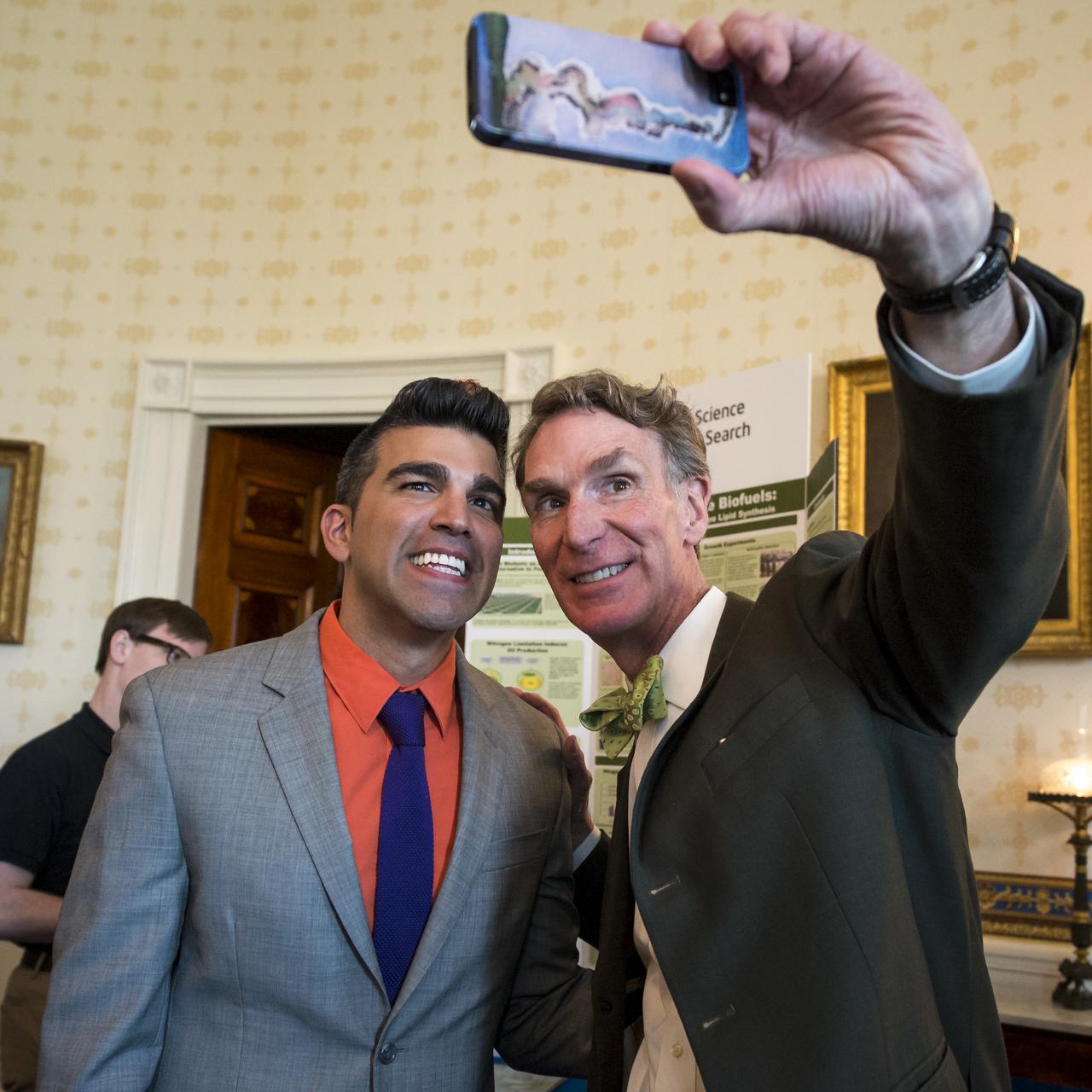
Planetary Society Executive Director and “Bill Nye the Science Guy” host Bill Nye, right, photographs himself with NASA Mars Curiosity Landing mission controller, Bobak "Mohawk Guy" Ferdowsi, during the White House Science Fair held at the White House, April 22, 2013. The science fair celebrated student winners of a broad range of science, technology, engineering and math (STEM) competitions from across the country. Photo Credit: (NASA/Bill Ingalls)
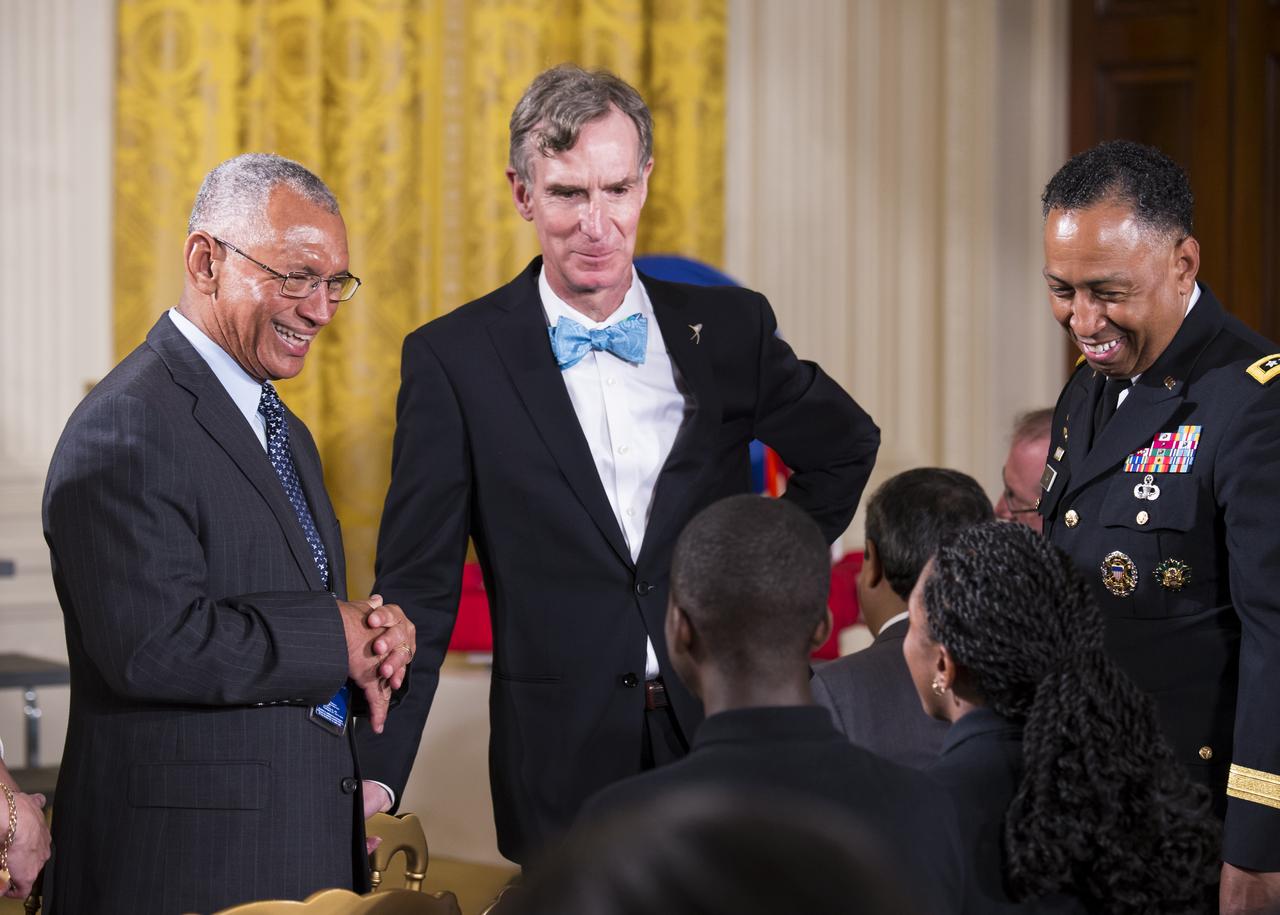
NASA Administrator Charles Bolden (left) and Bill Nye, The Science Guy, speak with some students that participated in the White House Science Fair. The fourth White House Science Fair was held at the White House on May 27, 2014 and included 100 students from more than 30 different states who competed in science, technology, engineering, and math (STEM) competitions. (Photo Credit: NASA/Aubrey Gemignani)
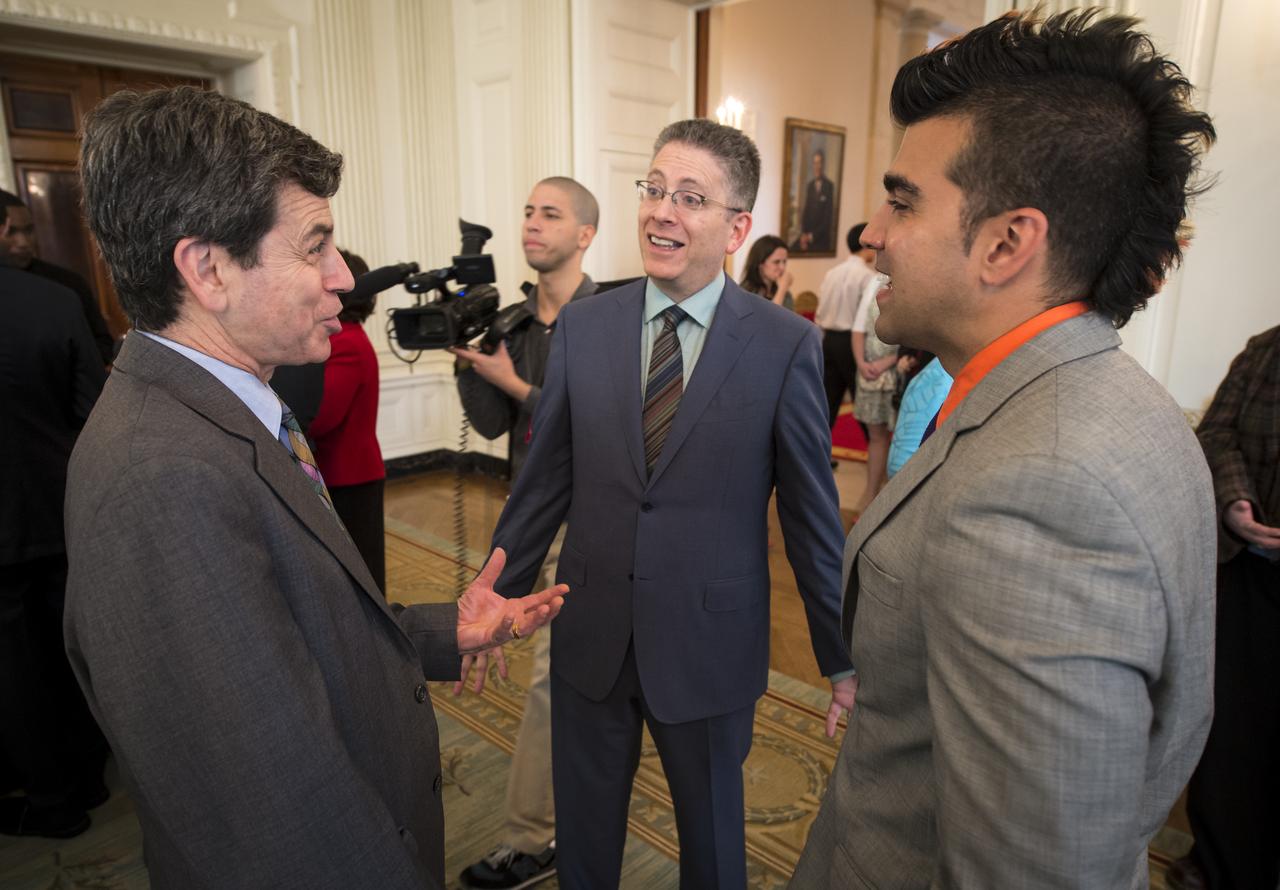
Director of Strategic Communications and Senior Science and Technology Policy Analyst, Office of Science and Technology Policy, Executive Office of the President, Rick Weiss, left, “Big Bang Theory” co-creator Bill Prady, center, and NASA Mars Curiosity Landing mission controller, Bobak "Mohawk Guy" Ferdowsi talk during the White House Science Fair held at the White House, April 22, 2013. The science fair celebrated student winners of a broad range of science, technology, engineering and math (STEM) competitions from across the country. Photo Credit: (NASA/Bill Ingalls)

U.S. President Obama recognizes NASA Administrator Charles Bolden during his remarks at the 3rd Annual White House Science Fair in the East Room of the White House on Monday, April 22, 2013. The science fair celebrated student winners of a broad range of science, technology, engineering and math (STEM) competitions from across the country. Photo Credit: (NASA/Bill Ingalls)
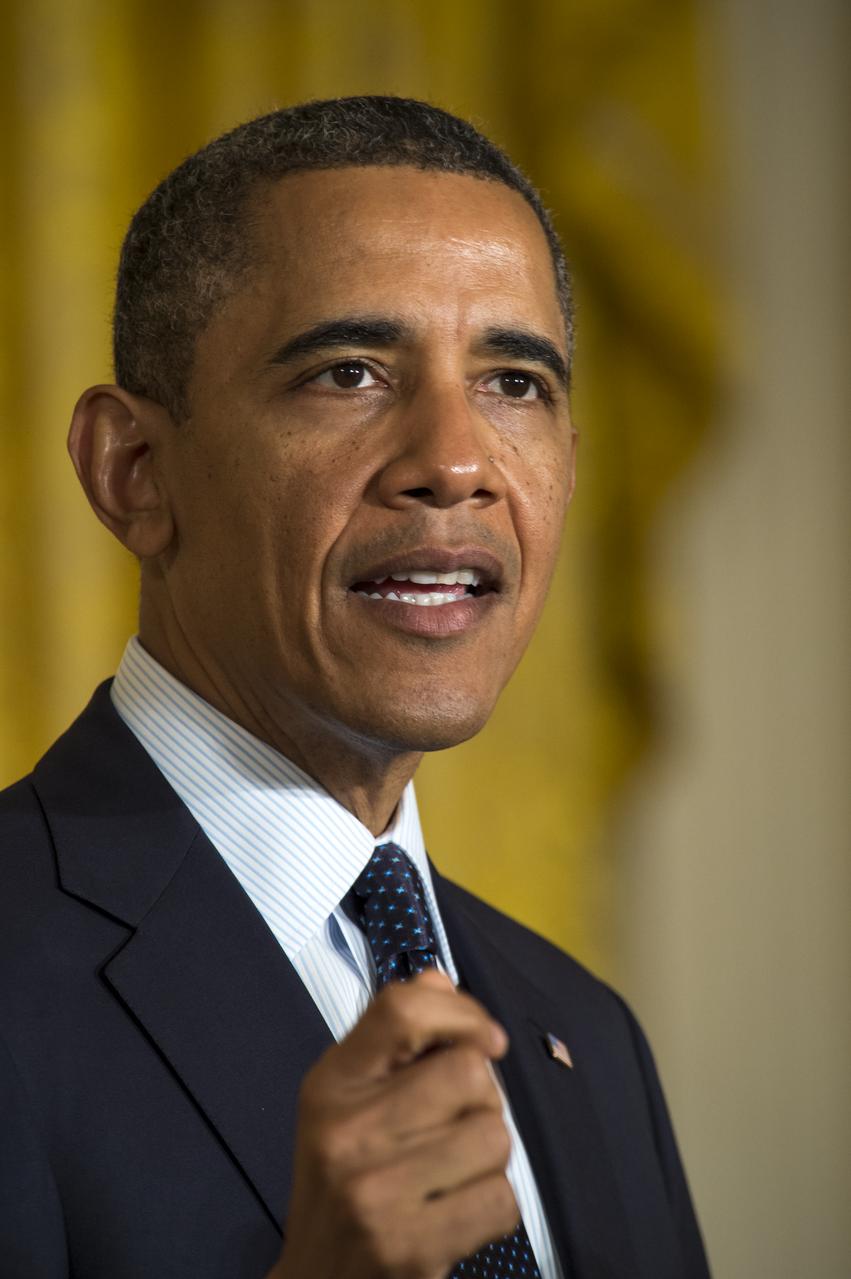
U.S. President Barack Obama speaks as he hosts the third-ever White House Science Fair in the East Room at the White House in Washington, April 22, 2013. The science fair celebrated student winners of a broad range of science, technology, engineering and math (STEM) competitions from across the country. Photo Credit: (NASA/Bill Ingalls)
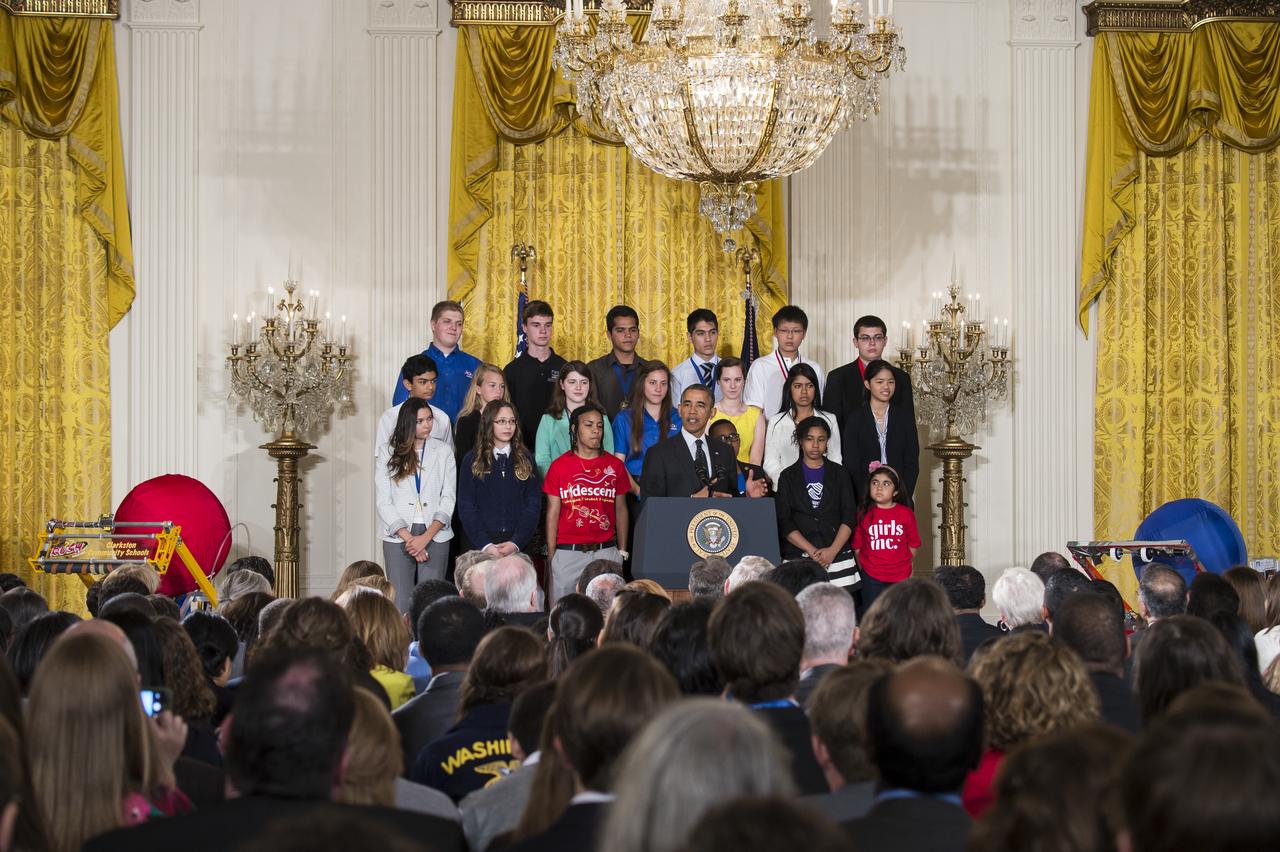
President Barack Obama spoke at the White House Science Fair Tuesday, May 27, 2014 at the White House. NASA Administrator Charles Bolden attended and was recognized by the President at the fourth White House Science Fair, which included 100 students from more than 30 different states who competed in science, technology, engineering, and math (STEM) competitions. (Photo Credit: NASA/Aubrey Gemignani)
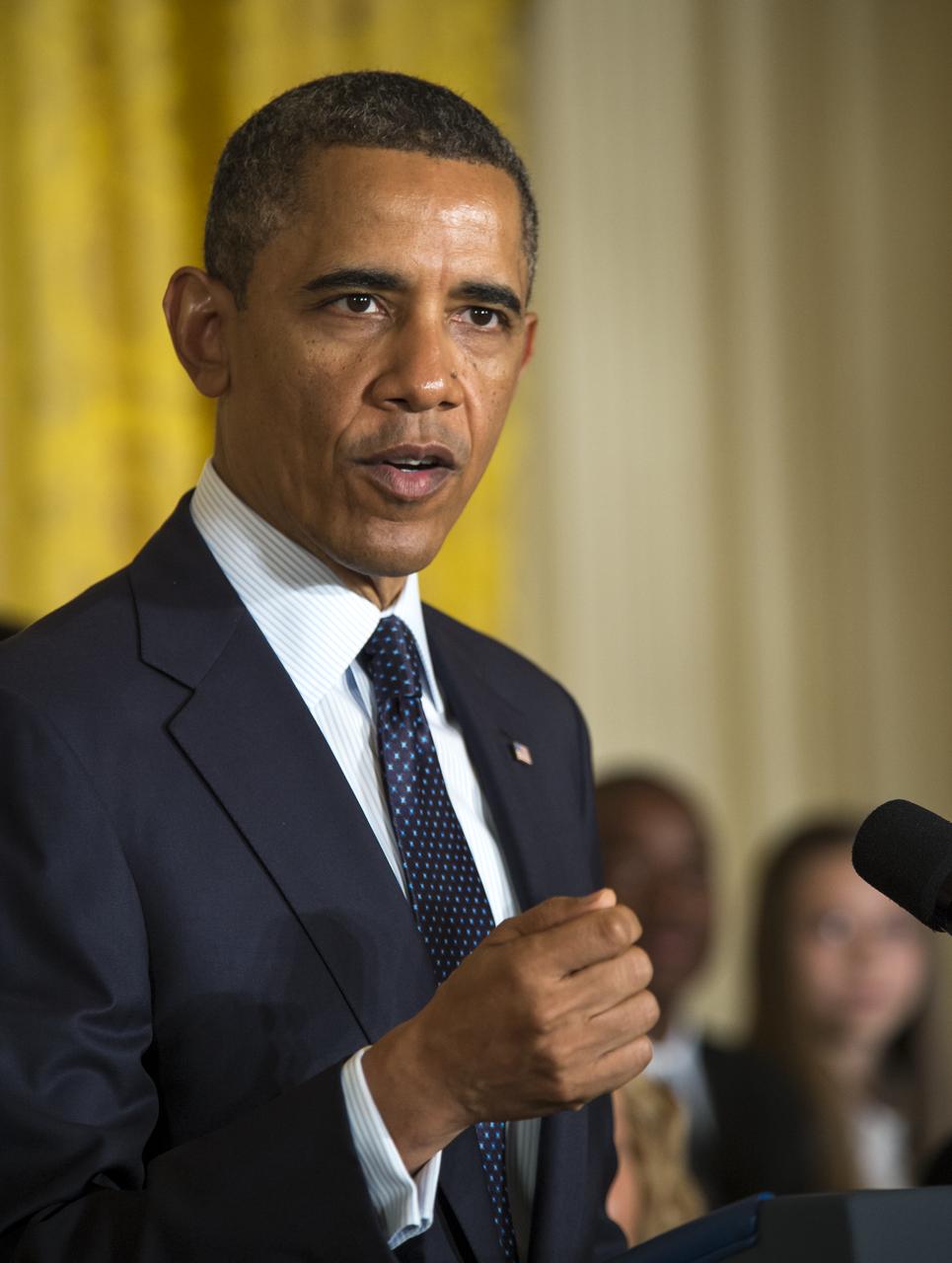
U.S. President Barack Obama speaks as he hosts the third-ever White House Science Fair in the East Room at the White House in Washington, April 22, 2013. The science fair celebrated student winners of a broad range of science, technology, engineering and math (STEM) competitions from across the country. Photo Credit: (NASA/Bill Ingalls)
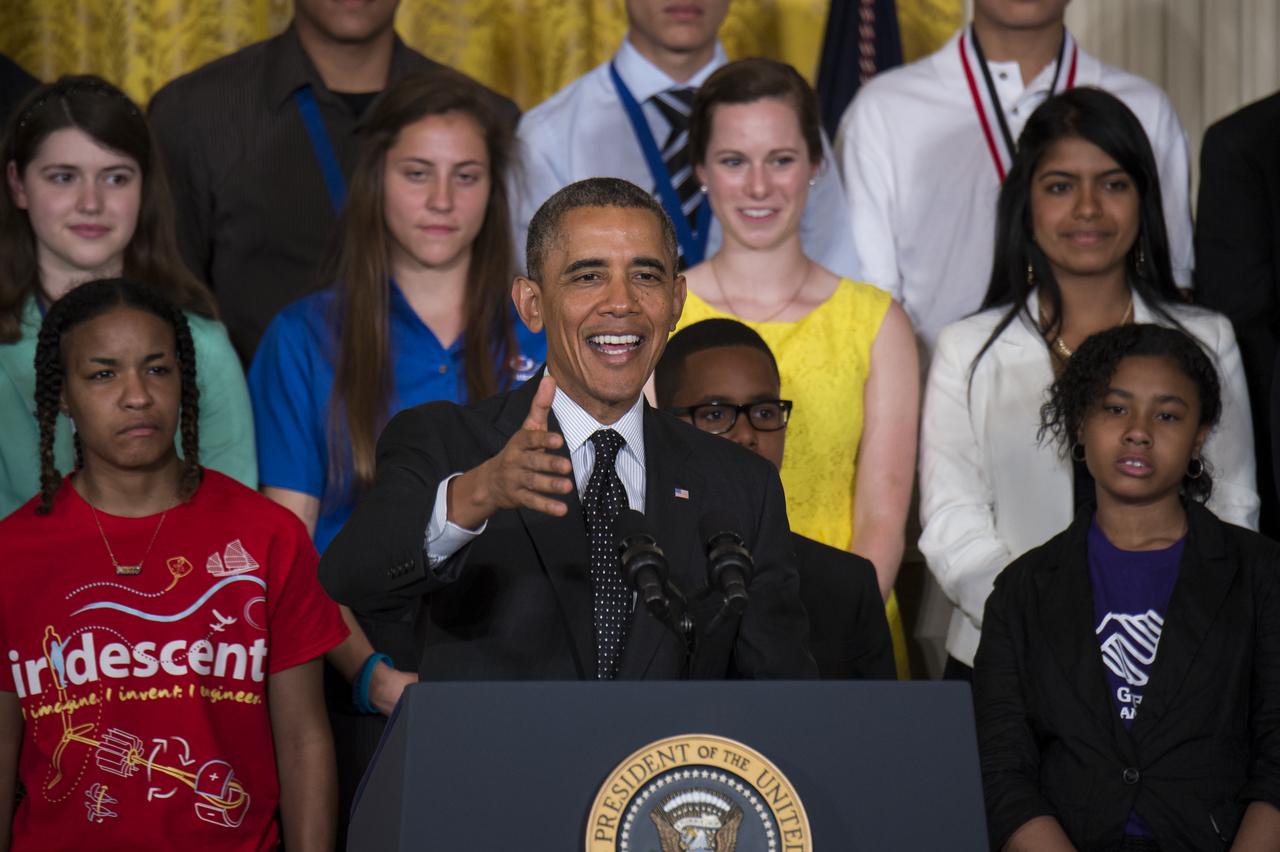
President Barack Obama spoke at the White House Science Fair Tuesday, May 27, 2014 at the White House. NASA Administrator Charles Bolden attended and was recognized by the President at the fourth White House Science Fair, which included 100 students from more than 30 different states who competed in science, technology, engineering, and math (STEM) competitions. (Photo Credit: NASA/Aubrey Gemignani)
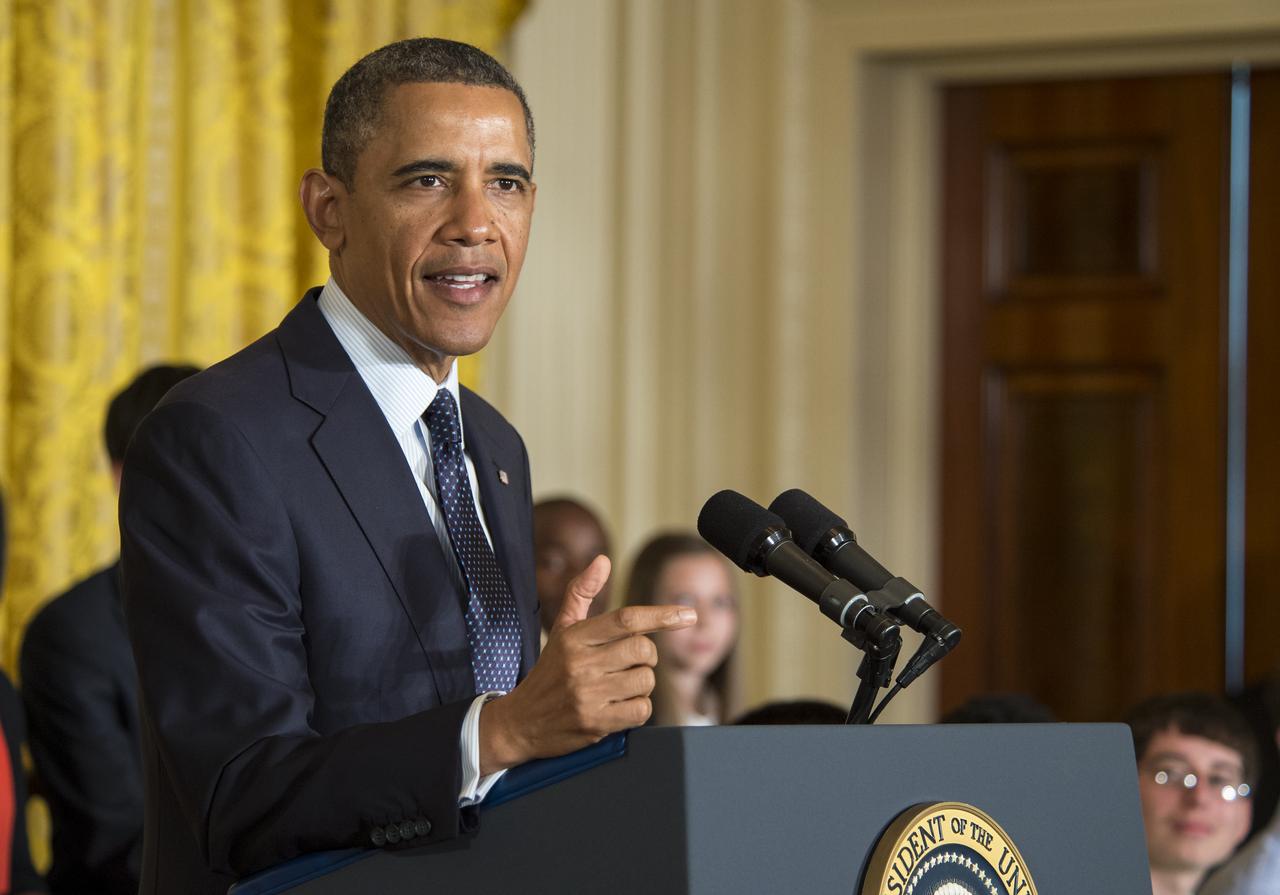
U.S. President Barack Obama speaks as he hosts the third-ever White House Science Fair in the East Room at the White House in Washington, April 22, 2013. The science fair celebrated student winners of a broad range of science, technology, engineering and math (STEM) competitions from across the country. Photo Credit: (NASA/Bill Ingalls)
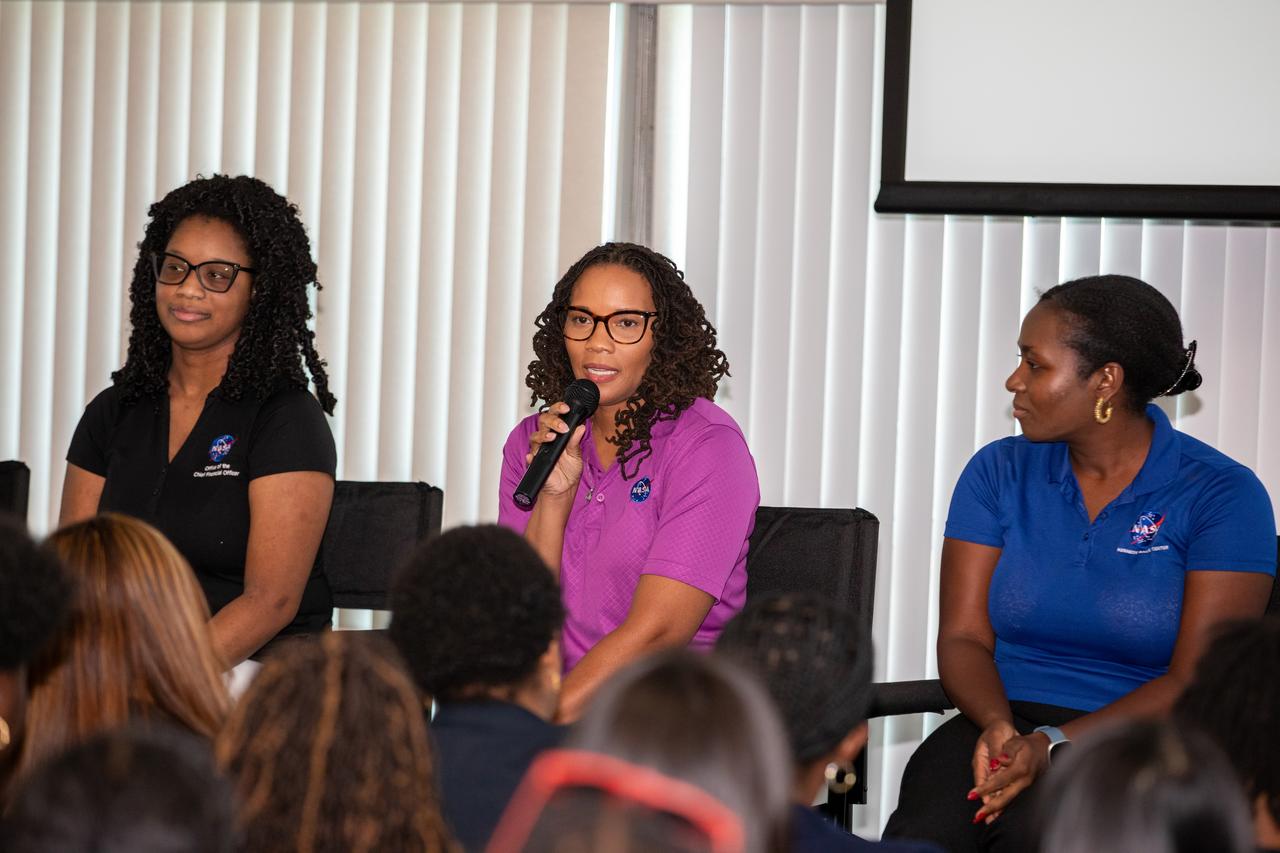
From left to right, Savitri Thomas, management and program analyst; Ales-Cia Winsley, lead Space Launch System avionics engineer; Alexandra Philip, metrology engineer, at NASA’s Kennedy Space Center in Florida, speak on Friday, Sept. 20, 2024, to young women, ages 11 to 18, from the Atlanta, Georgia area, with interests in STEM (science, technology, engineering, and math). NASA Kennedy hosted the Delta Air Lines’ Women Inspiring Our Next Generation (WING) flight to showcase various women-led STEM careers available at the Florida spaceport.
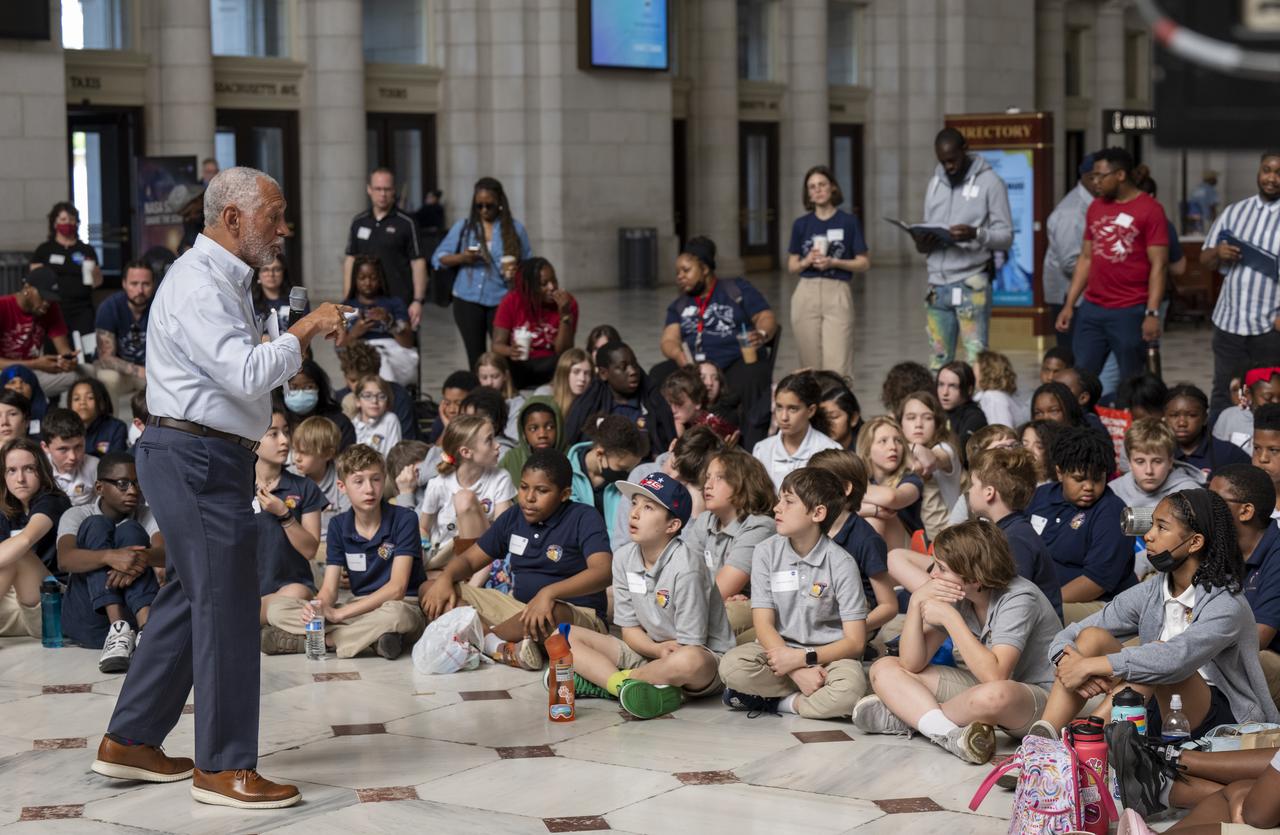
Former NASA Administrator Charlie Bolden speaks with local students during an Earth Day event, Thursday, April 20, 2023, at Union Station in Washington. Photo Credit: (NASA/Keegan Barber)
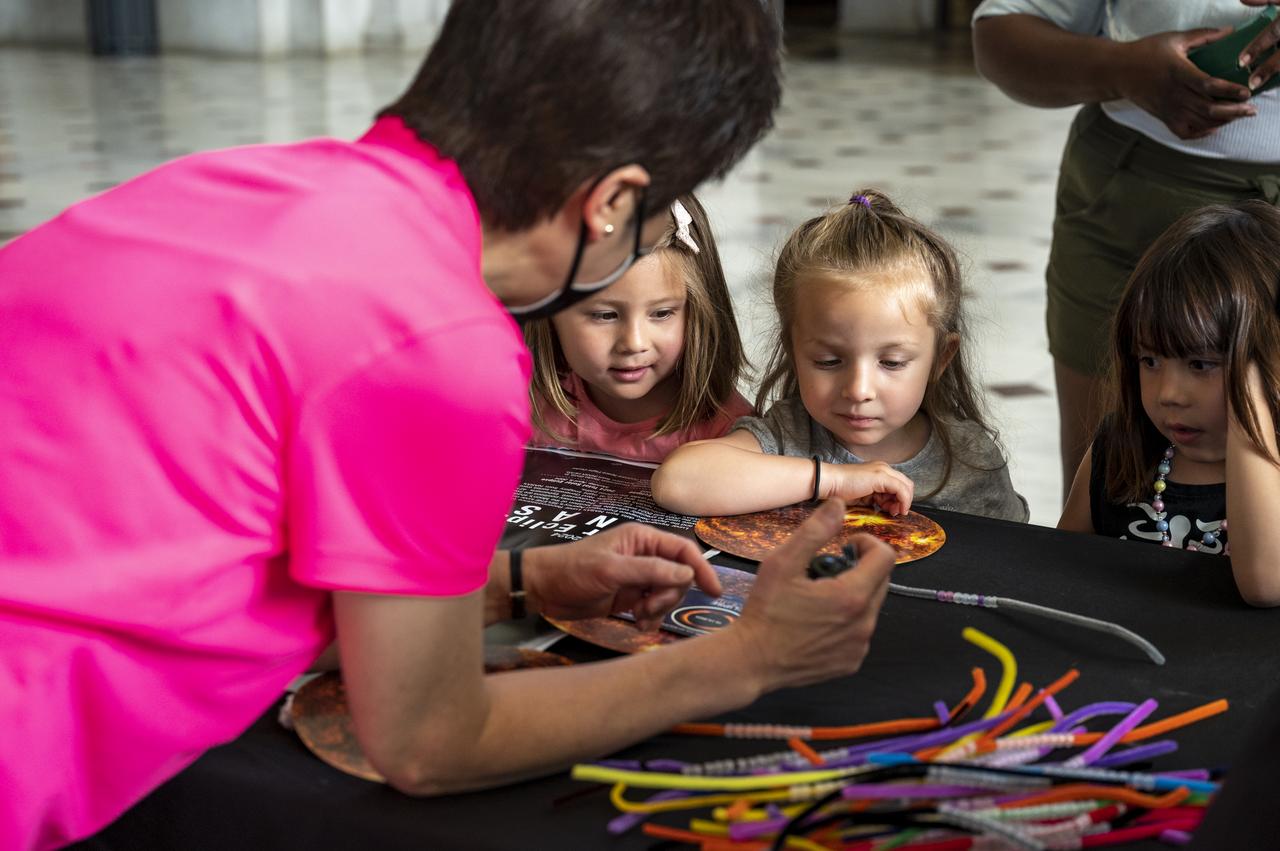
Visitors explore NASA’s hands-on exhibits during an Earth Day event, Thursday, April 20, 2023, at Union Station in Washington. Photo Credit: (NASA/Keegan Barber)
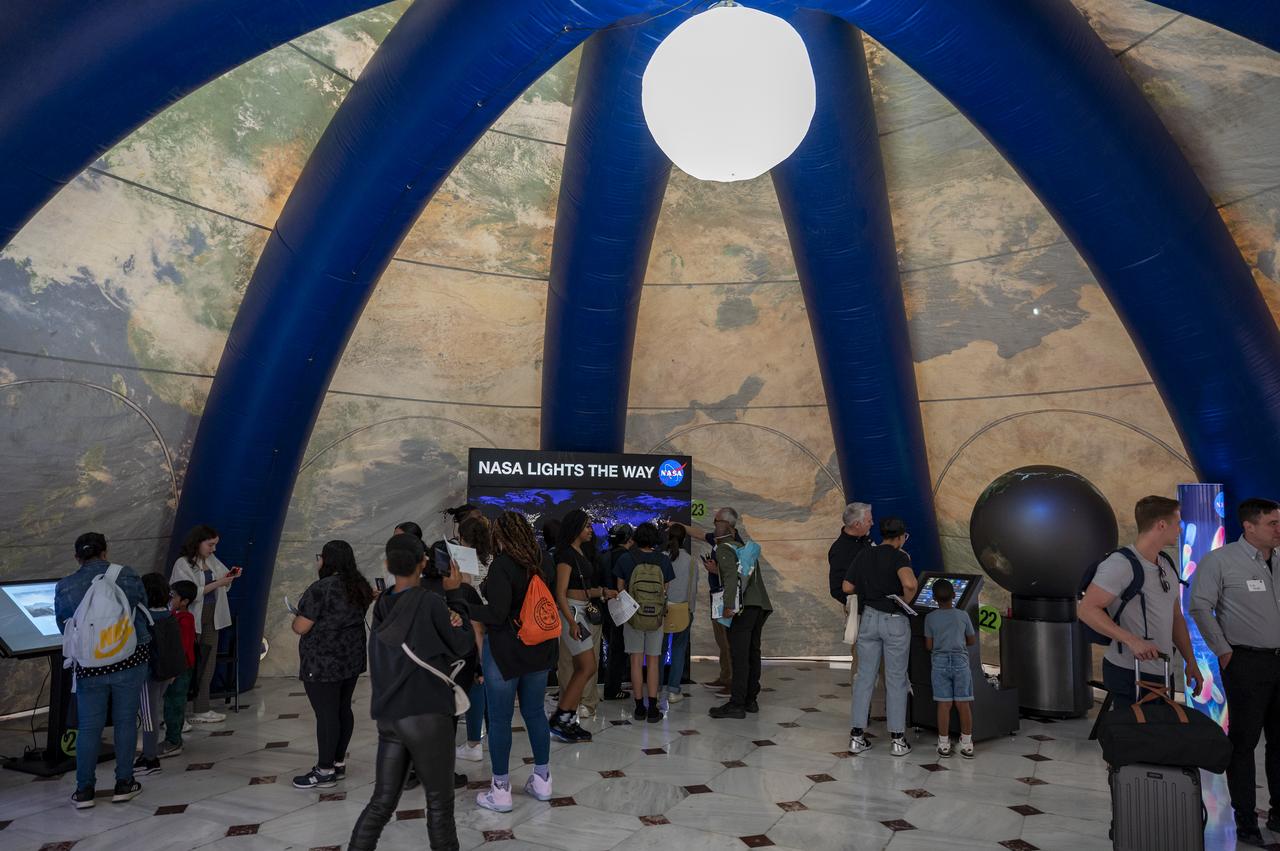
Visitors explore NASA’s hands-on exhibits during an Earth Day event, Thursday, April 20, 2023, at Union Station in Washington. Photo Credit: (NASA/Keegan Barber)
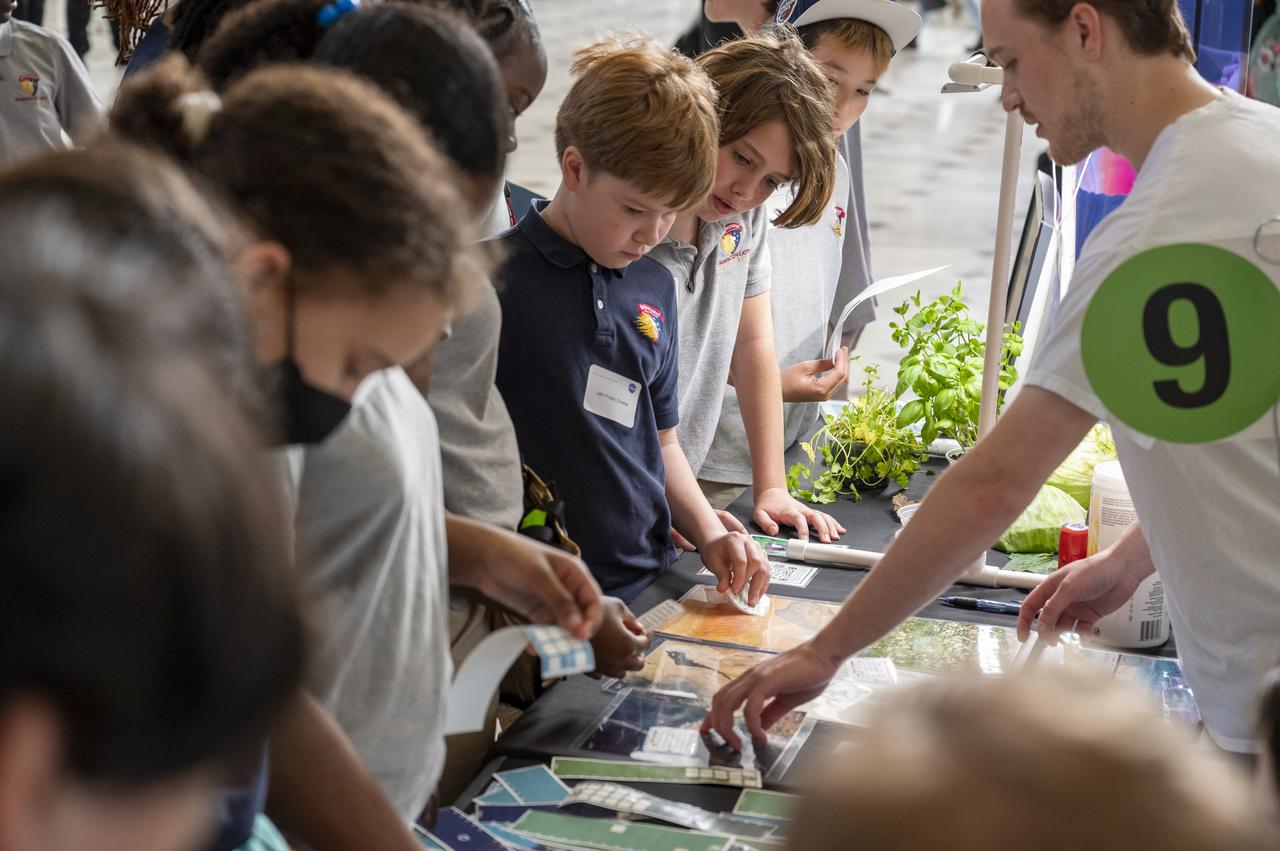
Visitors explore NASA’s hands-on exhibits during an Earth Day event, Thursday, April 20, 2023, at Union Station in Washington. Photo Credit: (NASA/Keegan Barber)
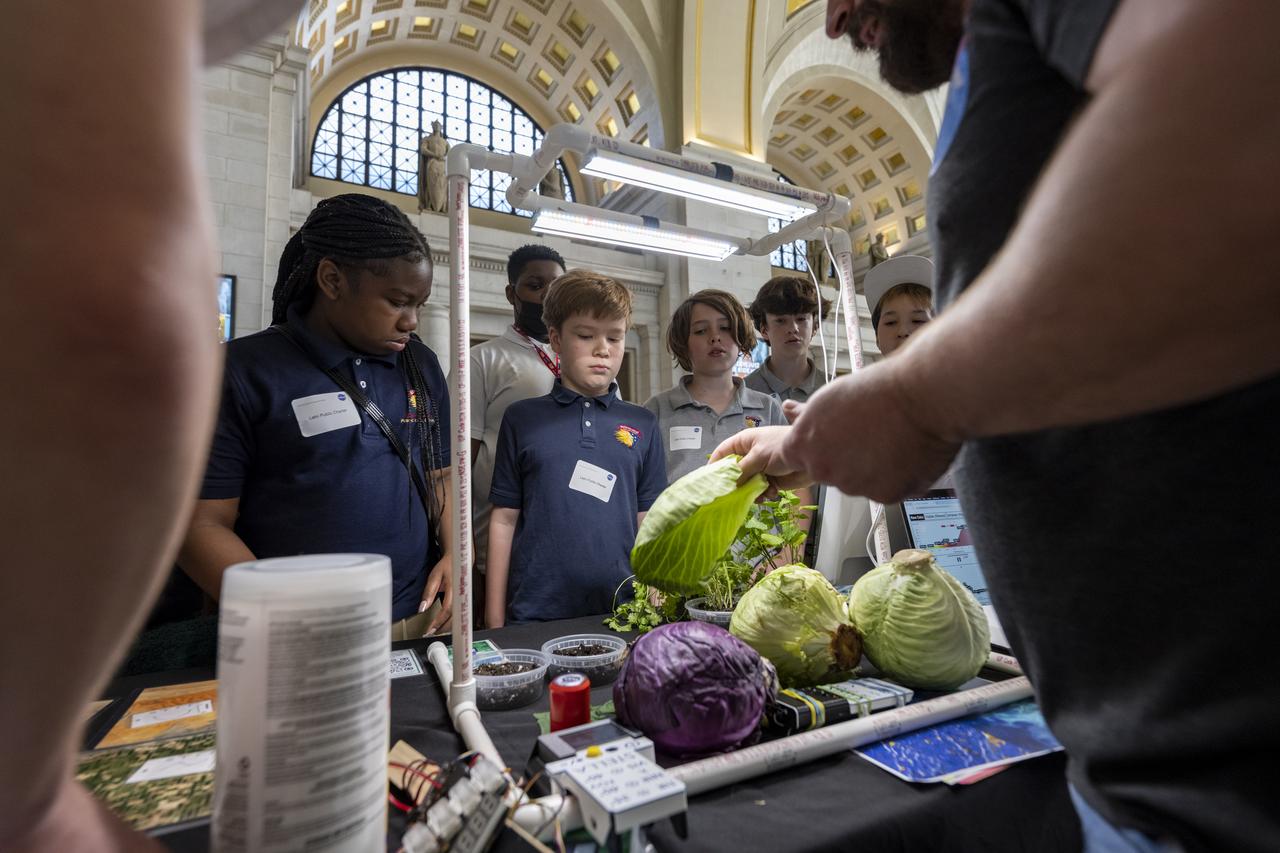
Visitors explore NASA’s hands-on exhibits during an Earth Day event, Thursday, April 20, 2023, at Union Station in Washington. Photo Credit: (NASA/Keegan Barber)
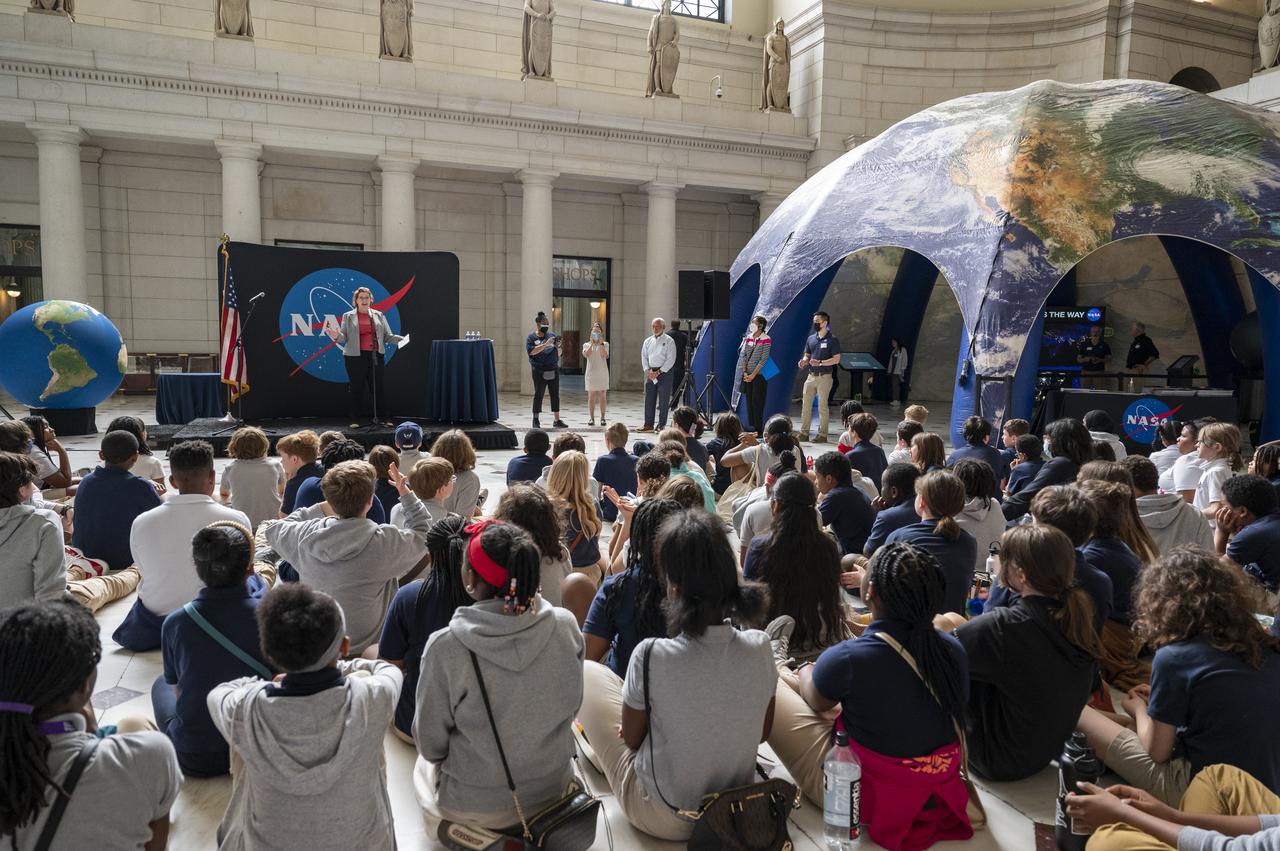
Earth Science Division Deputy Director Julie Robinson speaks with local students during an Earth Day event, Thursday, April 20, 2023, at Union Station in Washington. Photo Credit: (NASA/Keegan Barber)

Visitors explore NASA’s hands-on exhibits during an Earth Day event, Thursday, April 20, 2023, at Union Station in Washington. Photo Credit: (NASA/Keegan Barber)
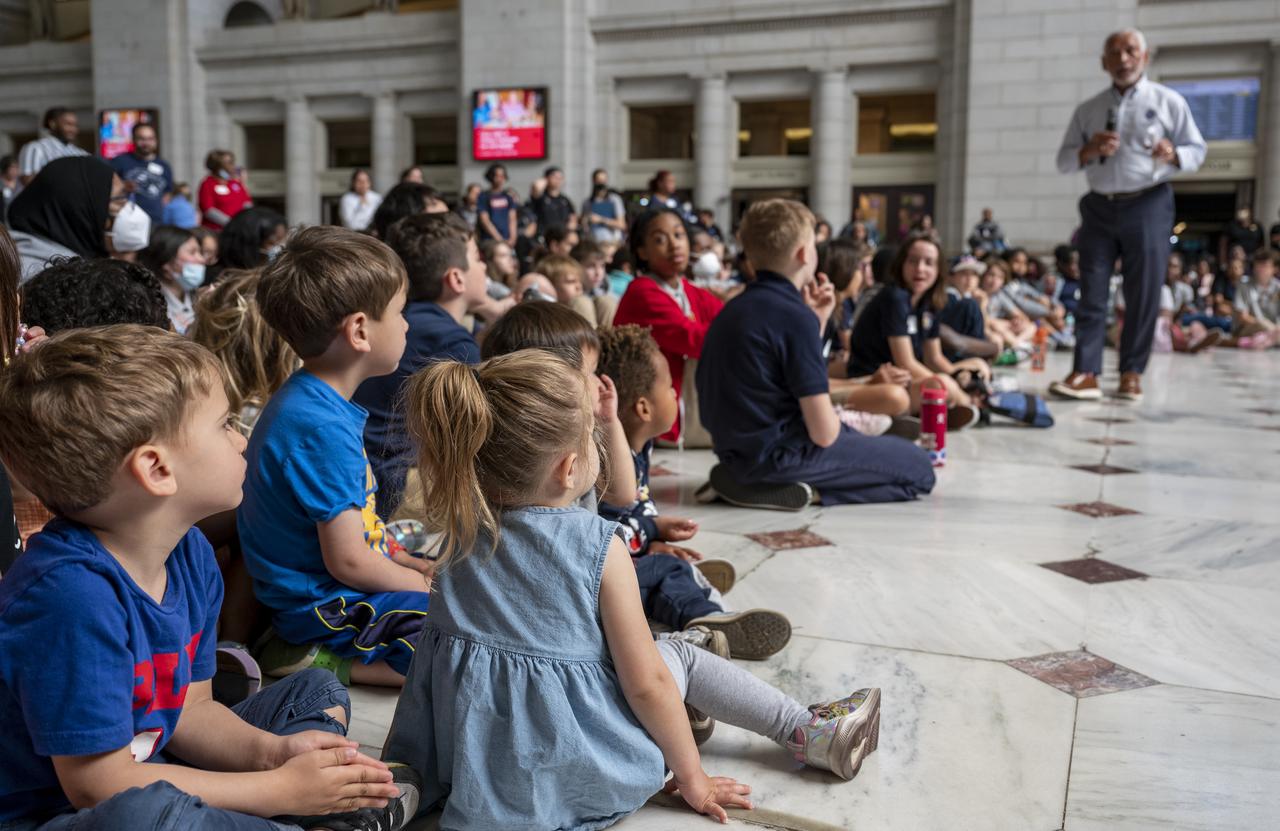
Former NASA Administrator Charlie Bolden speaks with local students during an Earth Day event, Thursday, April 20, 2023, at Union Station in Washington. Photo Credit: (NASA/Keegan Barber)
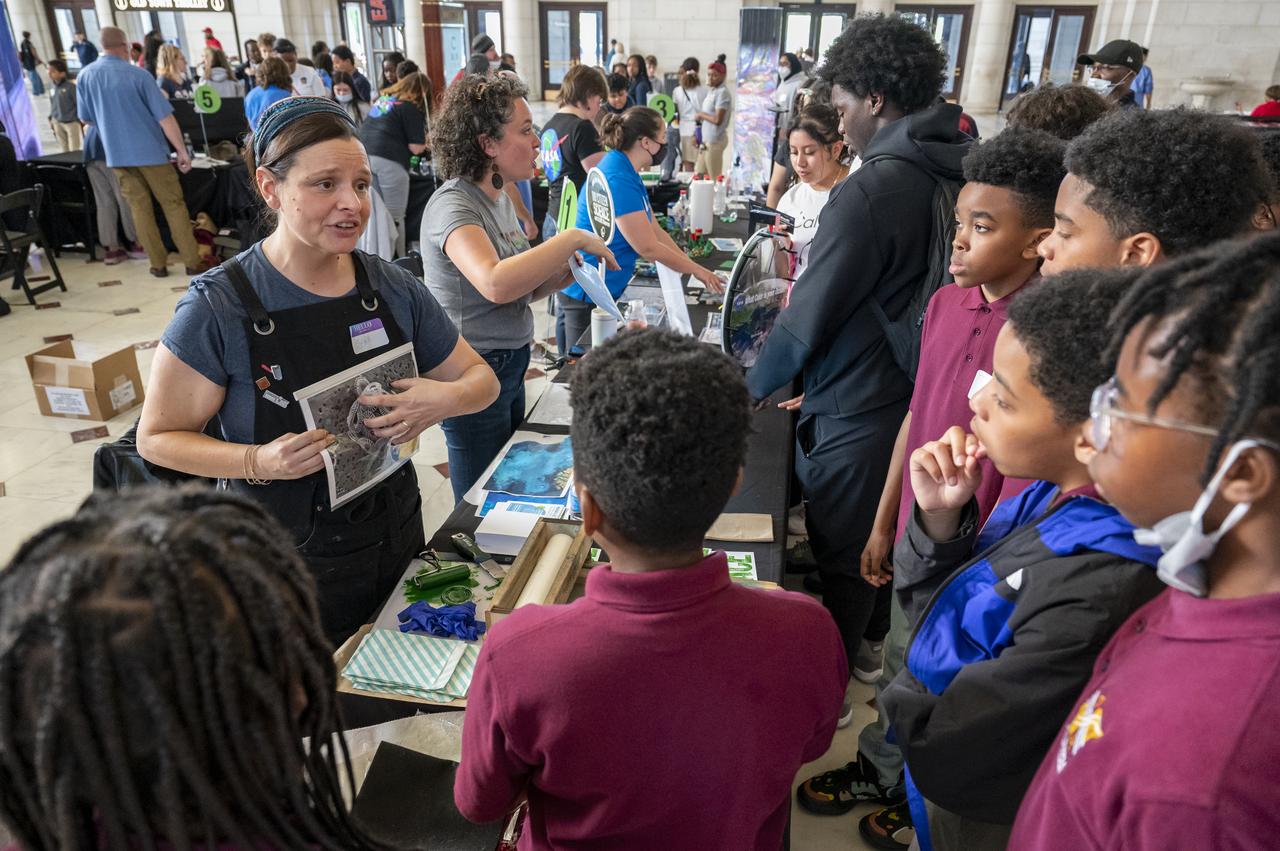
Visitors explore NASA’s hands-on exhibits during an Earth Day event, Thursday, April 20, 2023, at Union Station in Washington. Photo Credit: (NASA/Keegan Barber)
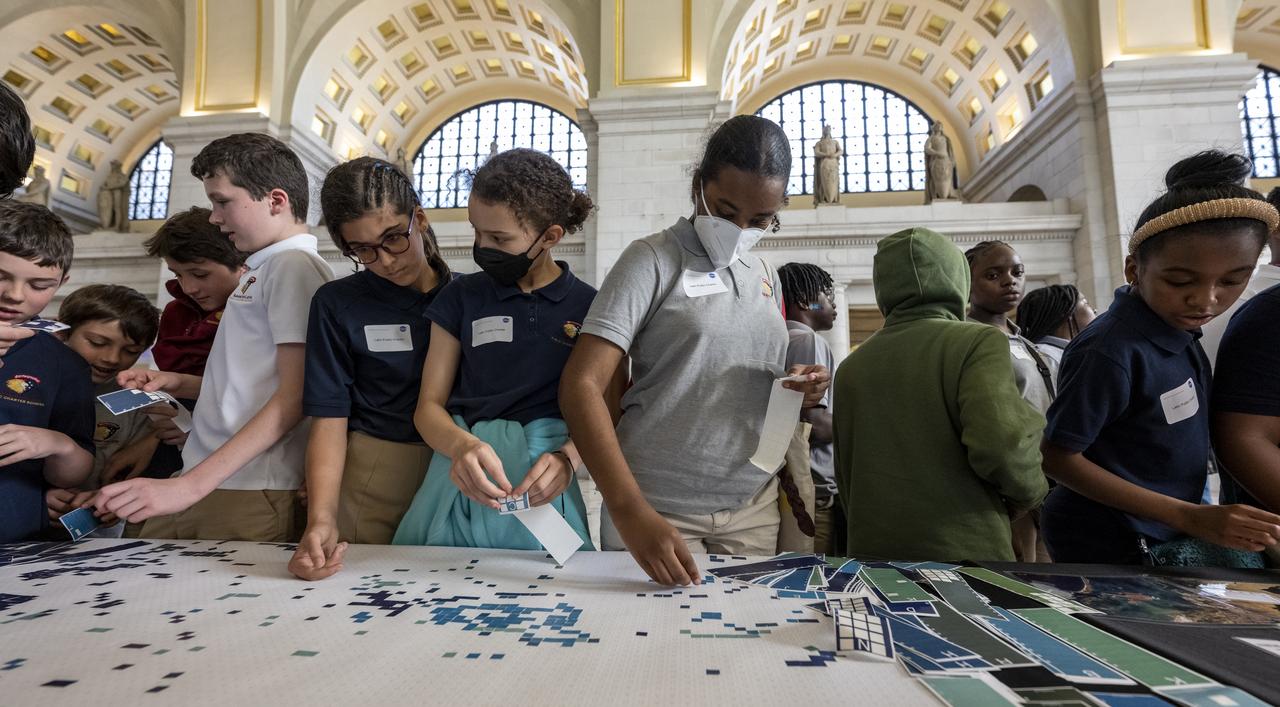
Visitors explore NASA’s hands-on exhibits during an Earth Day event, Thursday, April 20, 2023, at Union Station in Washington. Photo Credit: (NASA/Keegan Barber)
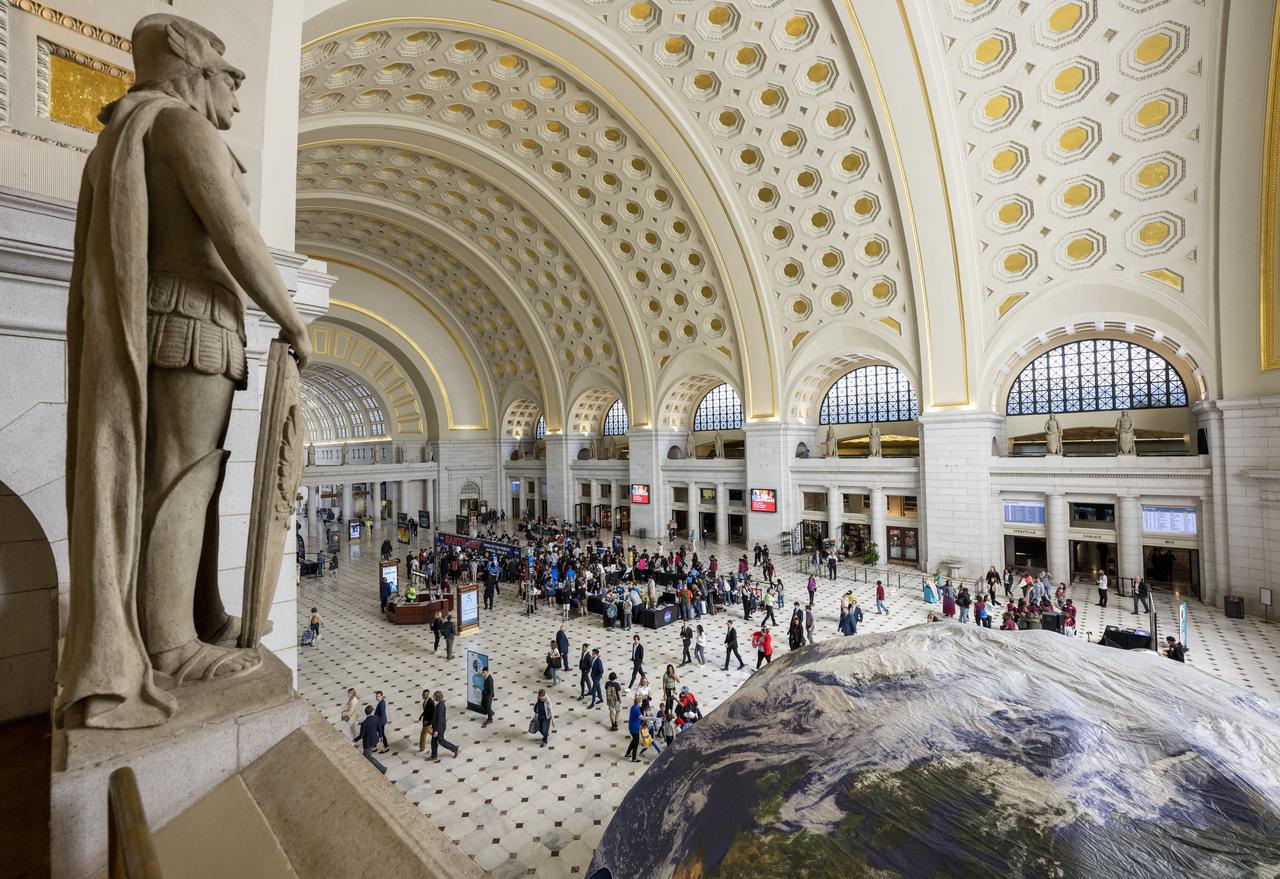
Visitors explore NASA’s hands-on exhibits during an Earth Day event, Thursday, April 20, 2023, at Union Station in Washington. Photo Credit: (NASA/Keegan Barber)
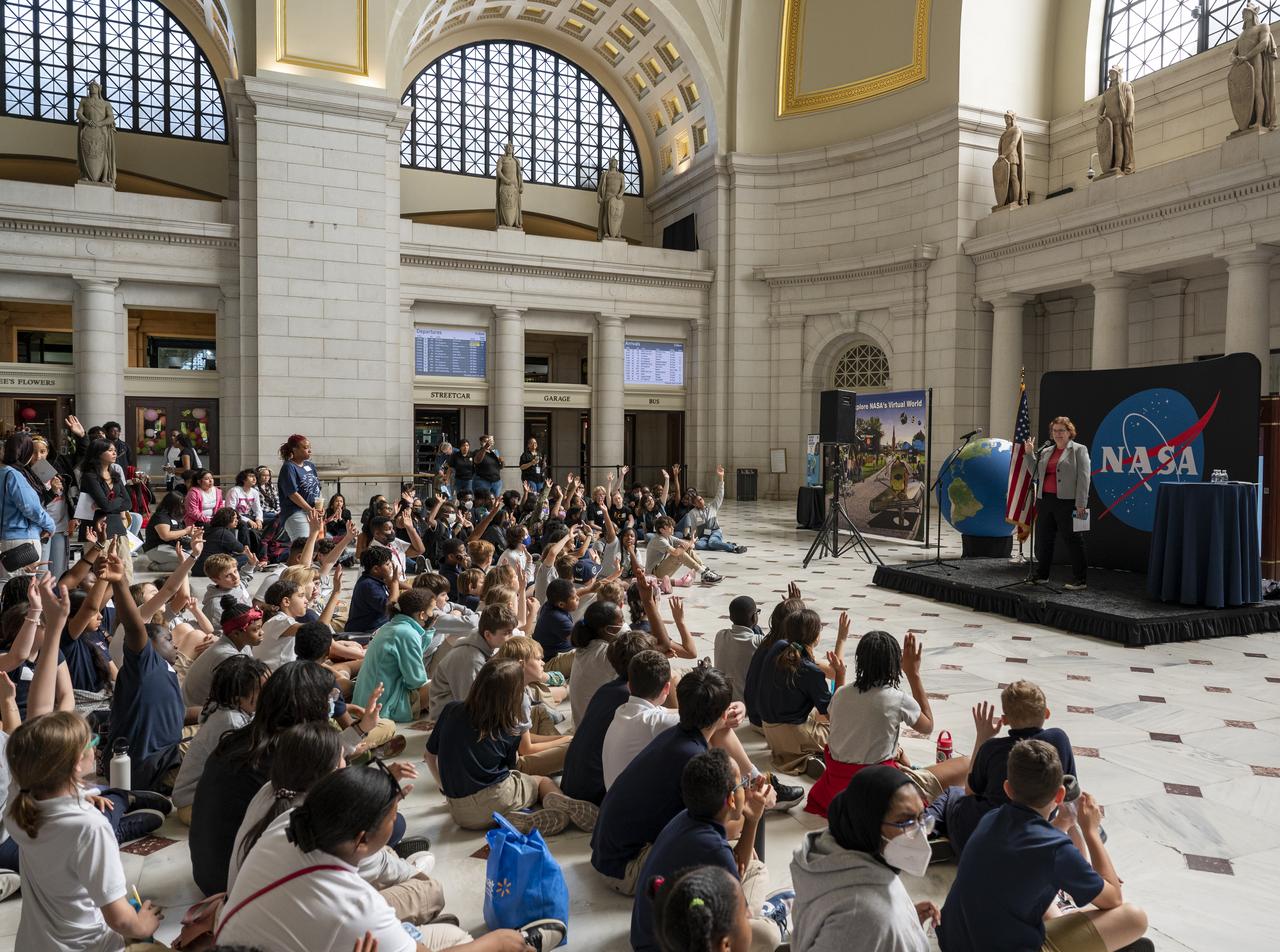
Earth Science Division Deputy Director Julie Robinson speaks with local students during an Earth Day event, Thursday, April 20, 2023, at Union Station in Washington. Photo Credit: (NASA/Keegan Barber)
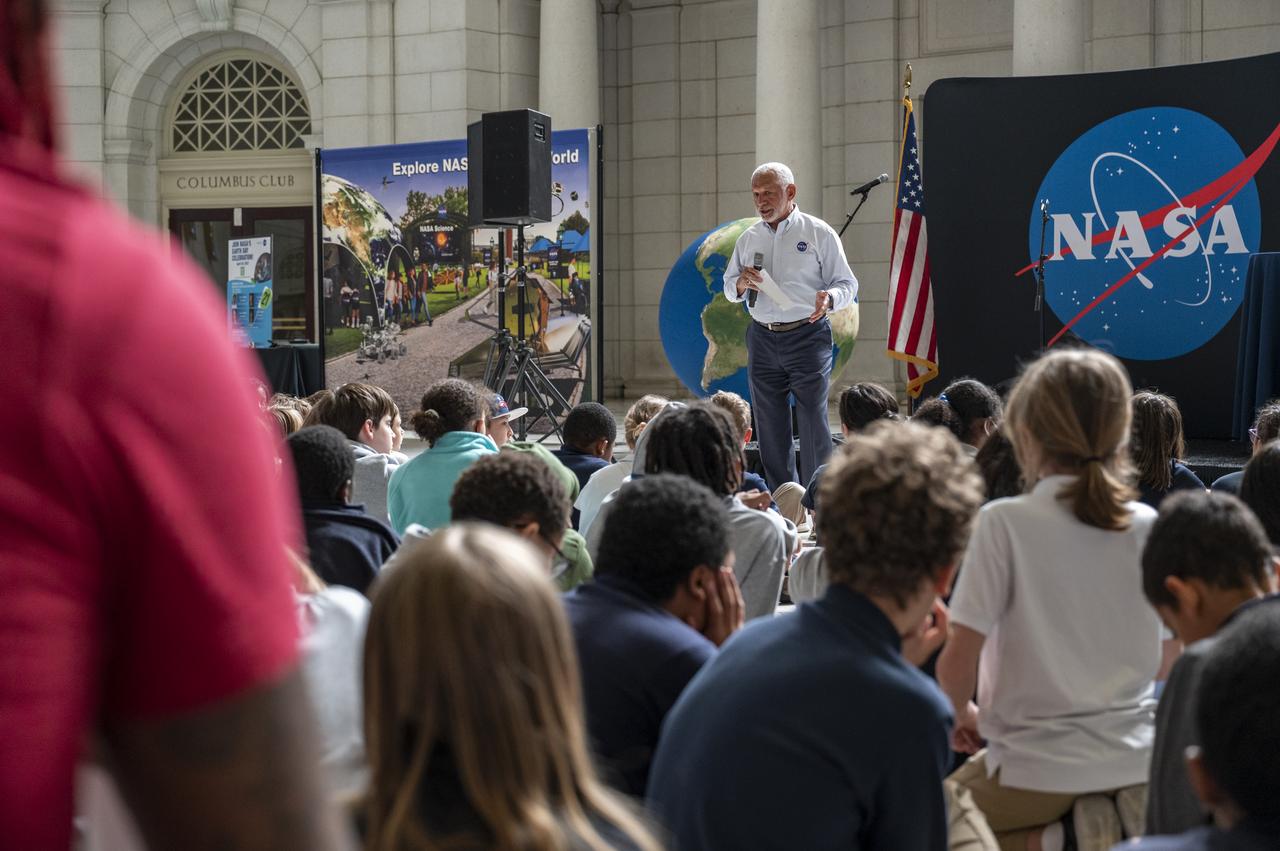
Former NASA Administrator Charlie Bolden speaks with local students during an Earth Day event, Thursday, April 20, 2023, at Union Station in Washington. Photo Credit: (NASA/Keegan Barber)
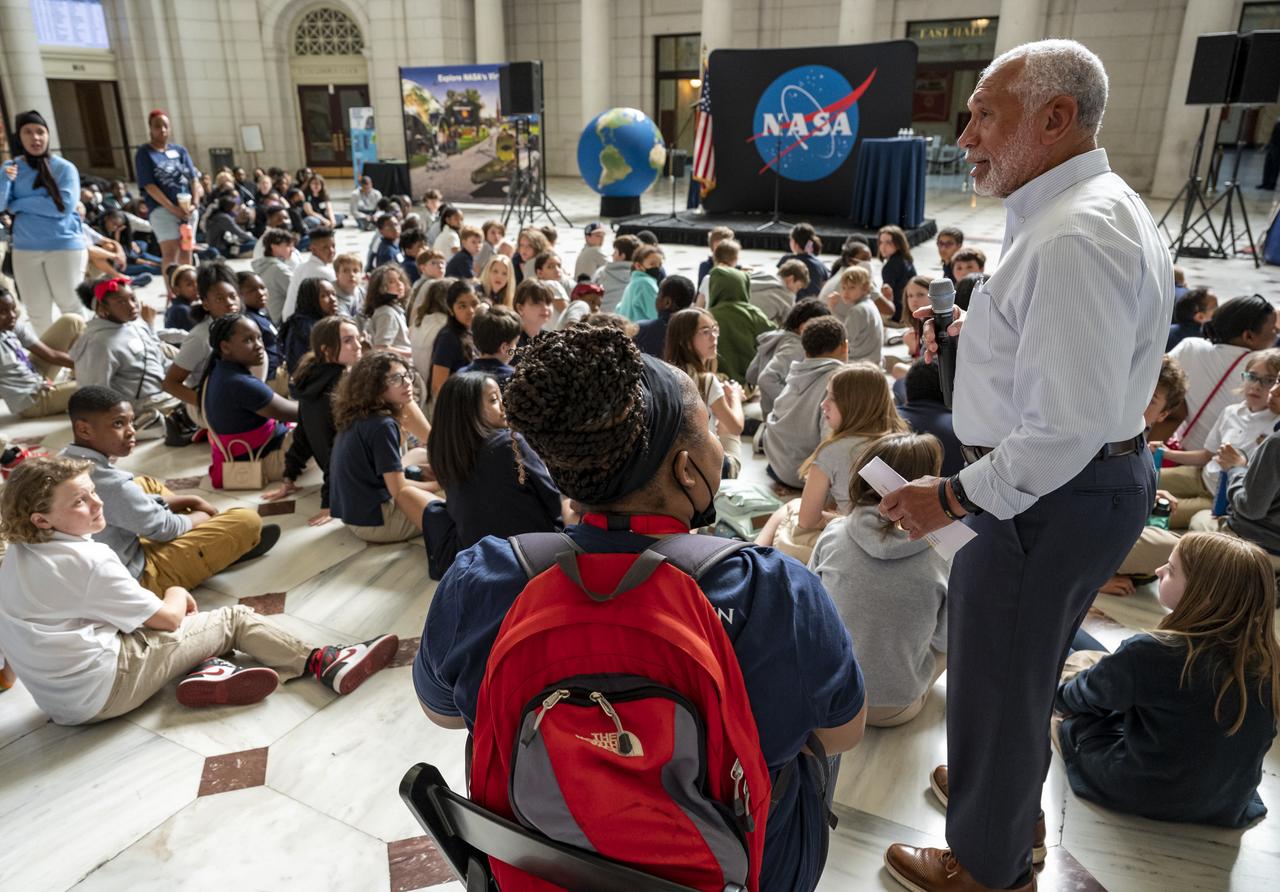
Former NASA Administrator Charlie Bolden speaks with local students during an Earth Day event, Thursday, April 20, 2023, at Union Station in Washington. Photo Credit: (NASA/Keegan Barber)
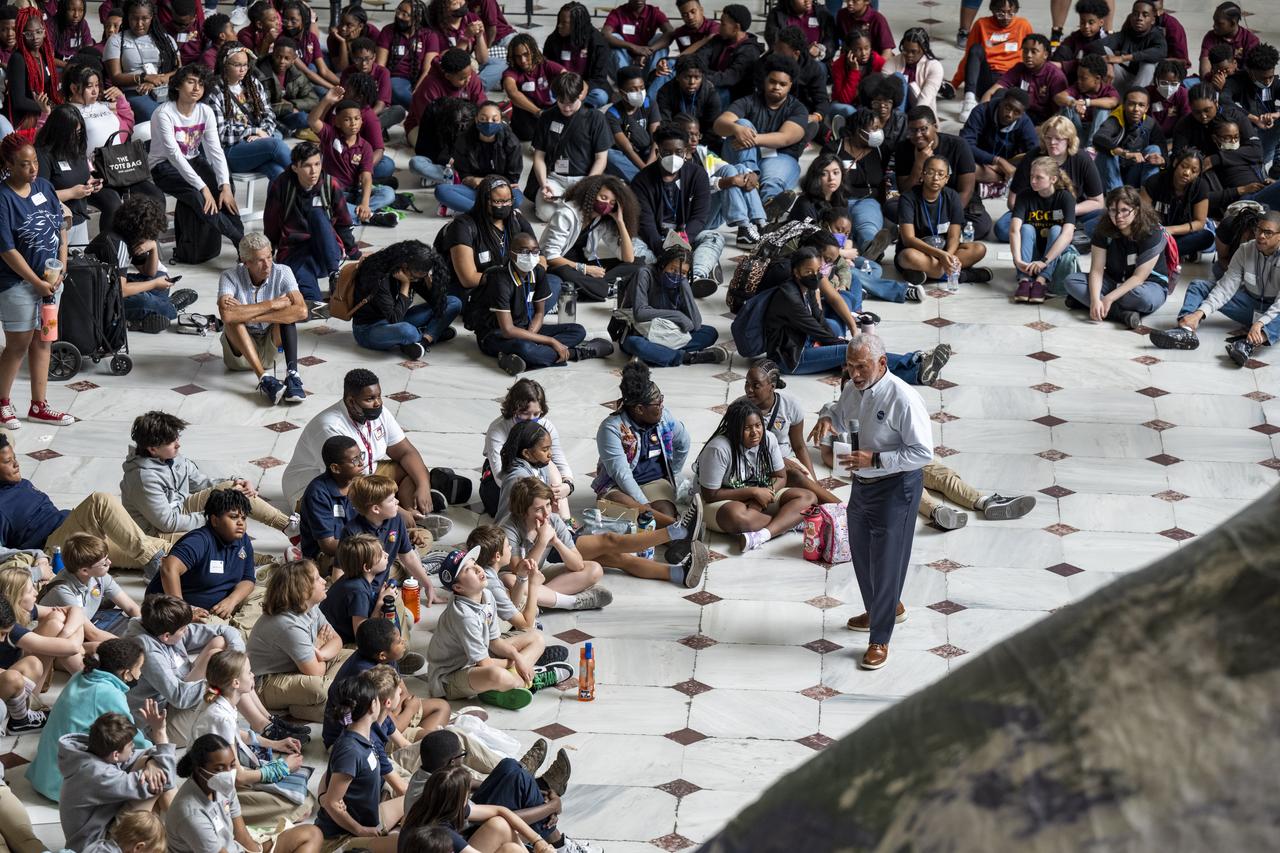
Former NASA Administrator Charlie Bolden speaks with local students during an Earth Day event, Thursday, April 20, 2023, at Union Station in Washington. Photo Credit: (NASA/Keegan Barber)
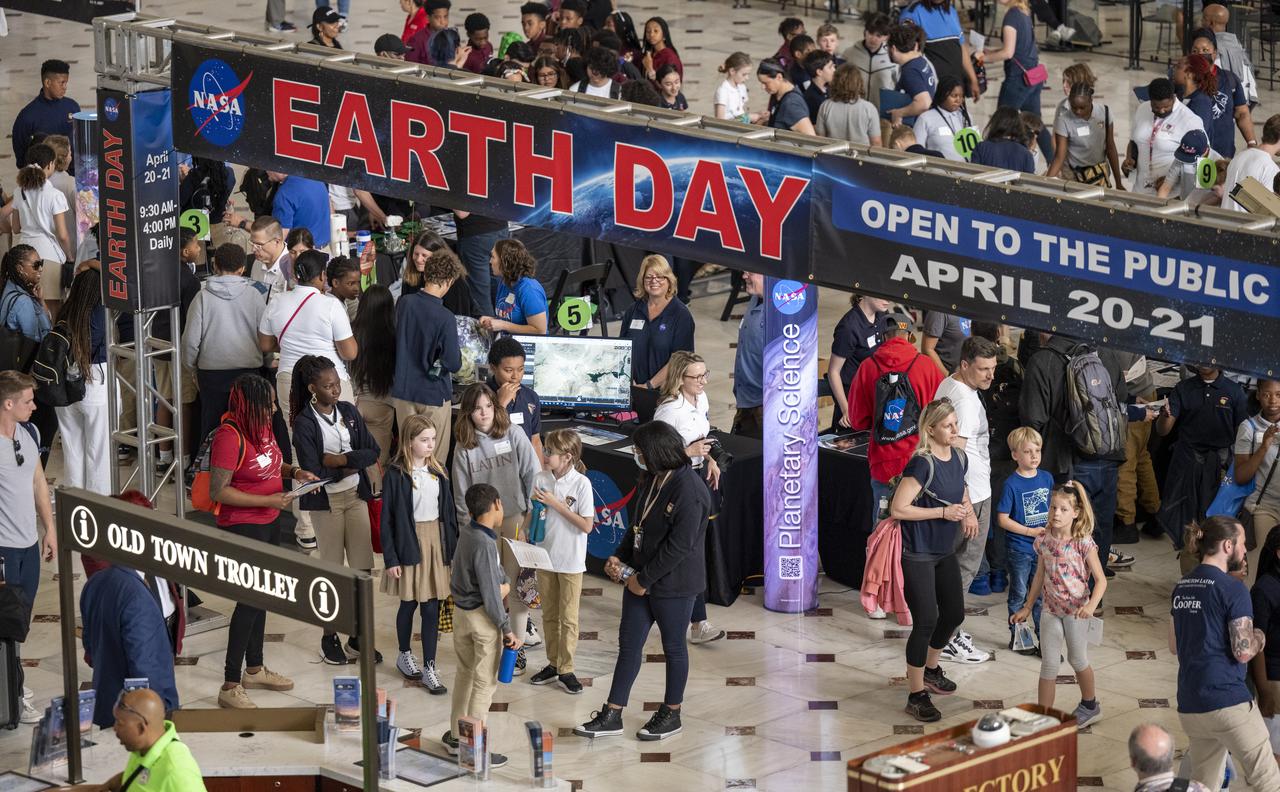
Visitors explore NASA’s hands-on exhibits during an Earth Day event, Thursday, April 20, 2023, at Union Station in Washington. Photo Credit: (NASA/Keegan Barber)
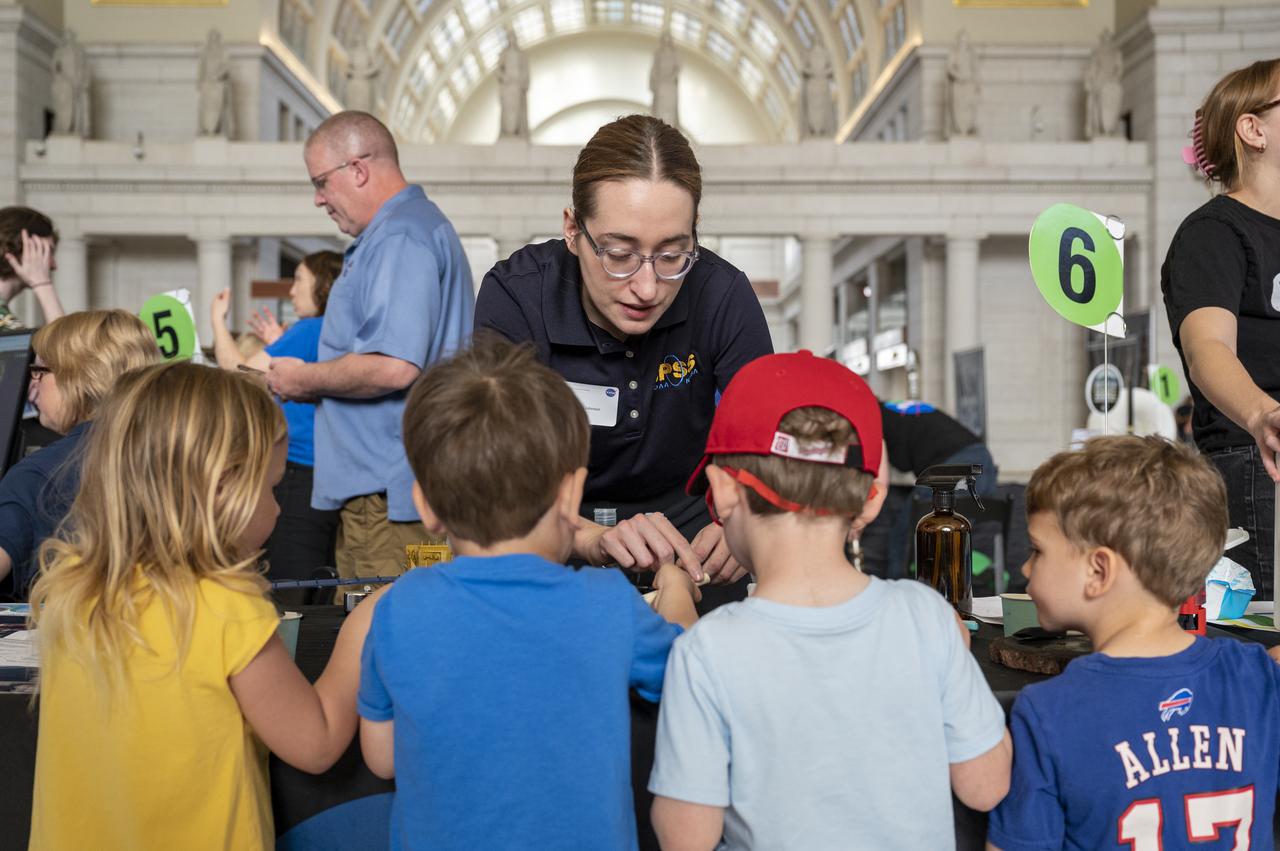
Visitors explore NASA’s hands-on exhibits during an Earth Day event, Thursday, April 20, 2023, at Union Station in Washington. Photo Credit: (NASA/Keegan Barber)
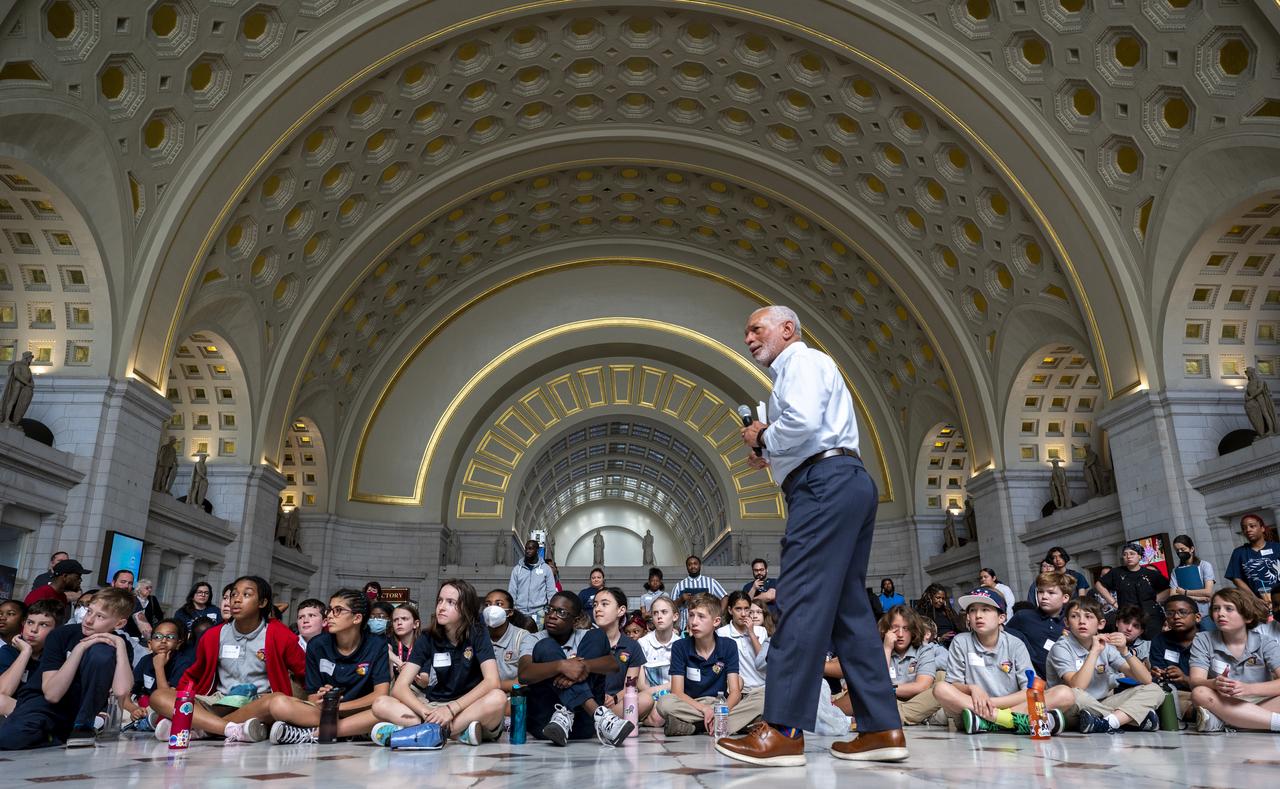
Former NASA Administrator Charlie Bolden speaks with local students during an Earth Day event, Thursday, April 20, 2023, at Union Station in Washington. Photo Credit: (NASA/Keegan Barber)
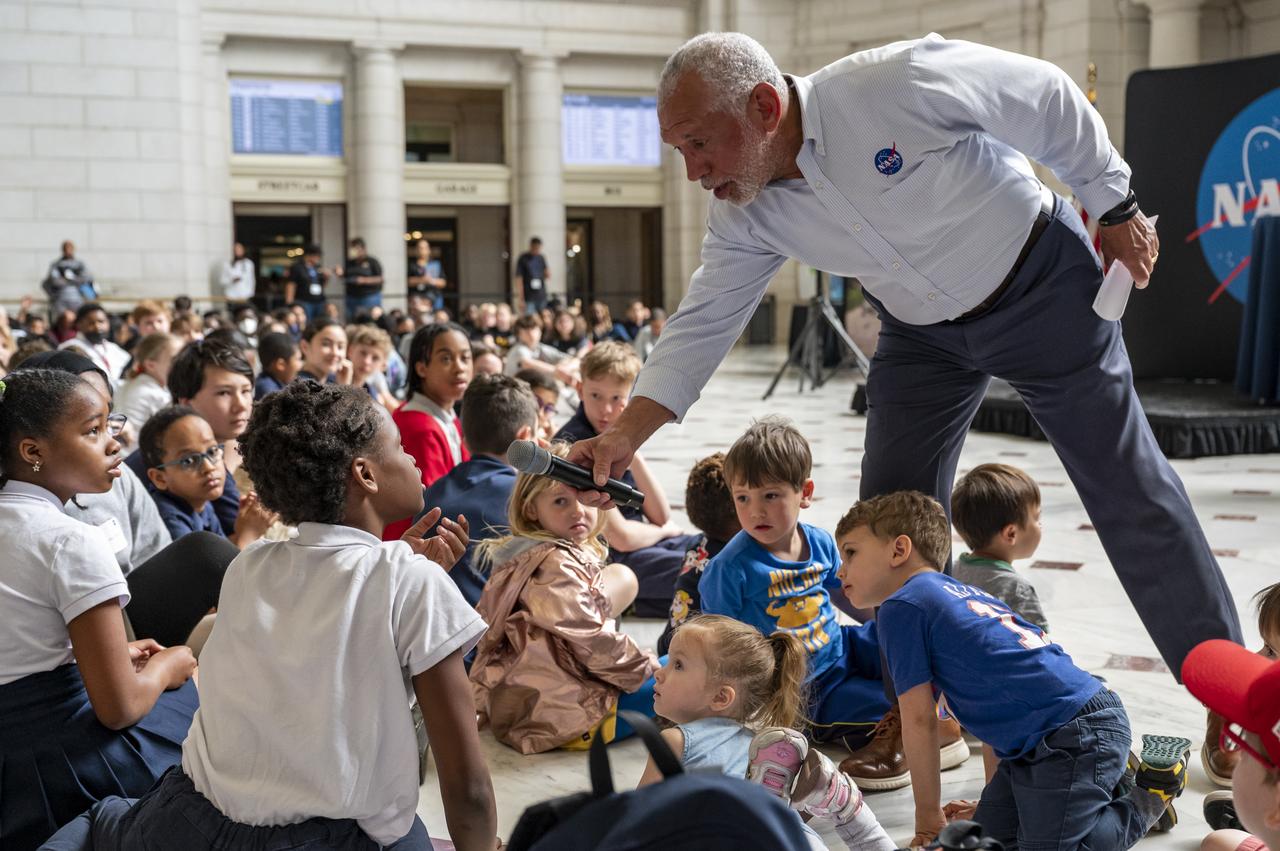
Former NASA Administrator Charlie Bolden speaks with local students during an Earth Day event, Thursday, April 20, 2023, at Union Station in Washington. Photo Credit: (NASA/Keegan Barber)
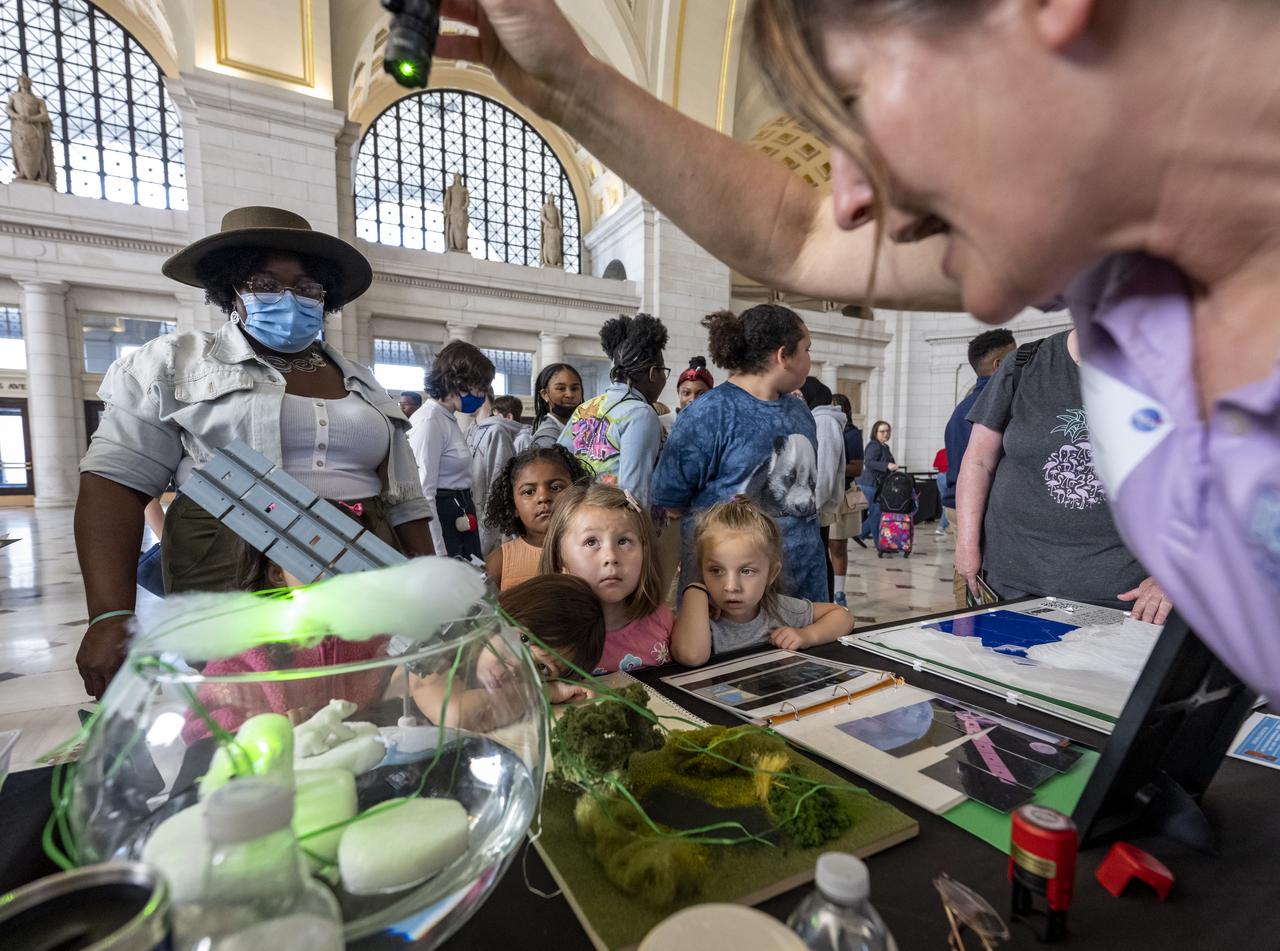
Visitors explore NASA’s hands-on exhibits during an Earth Day event, Thursday, April 20, 2023, at Union Station in Washington. Photo Credit: (NASA/Keegan Barber)
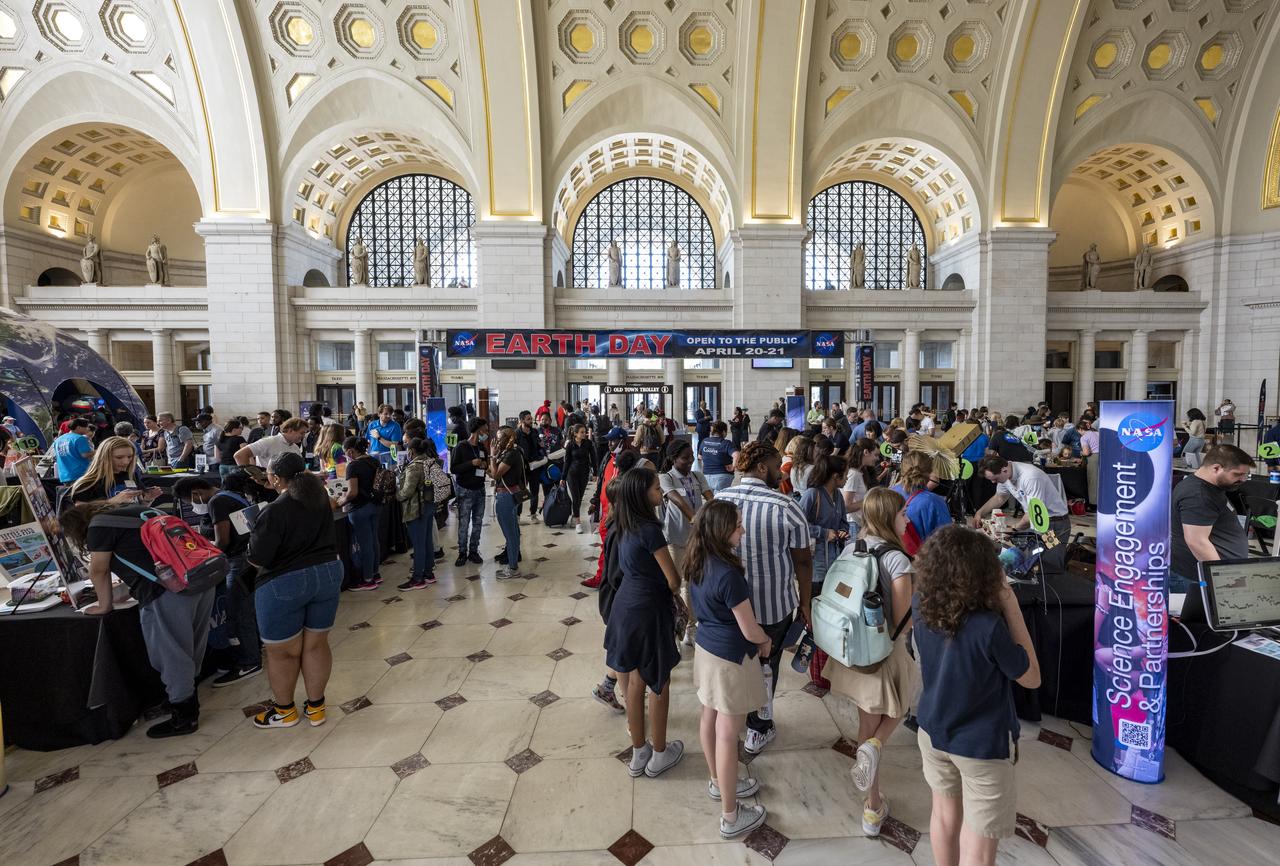
Visitors explore NASA’s hands-on exhibits during an Earth Day event, Thursday, April 20, 2023, at Union Station in Washington. Photo Credit: (NASA/Keegan Barber)
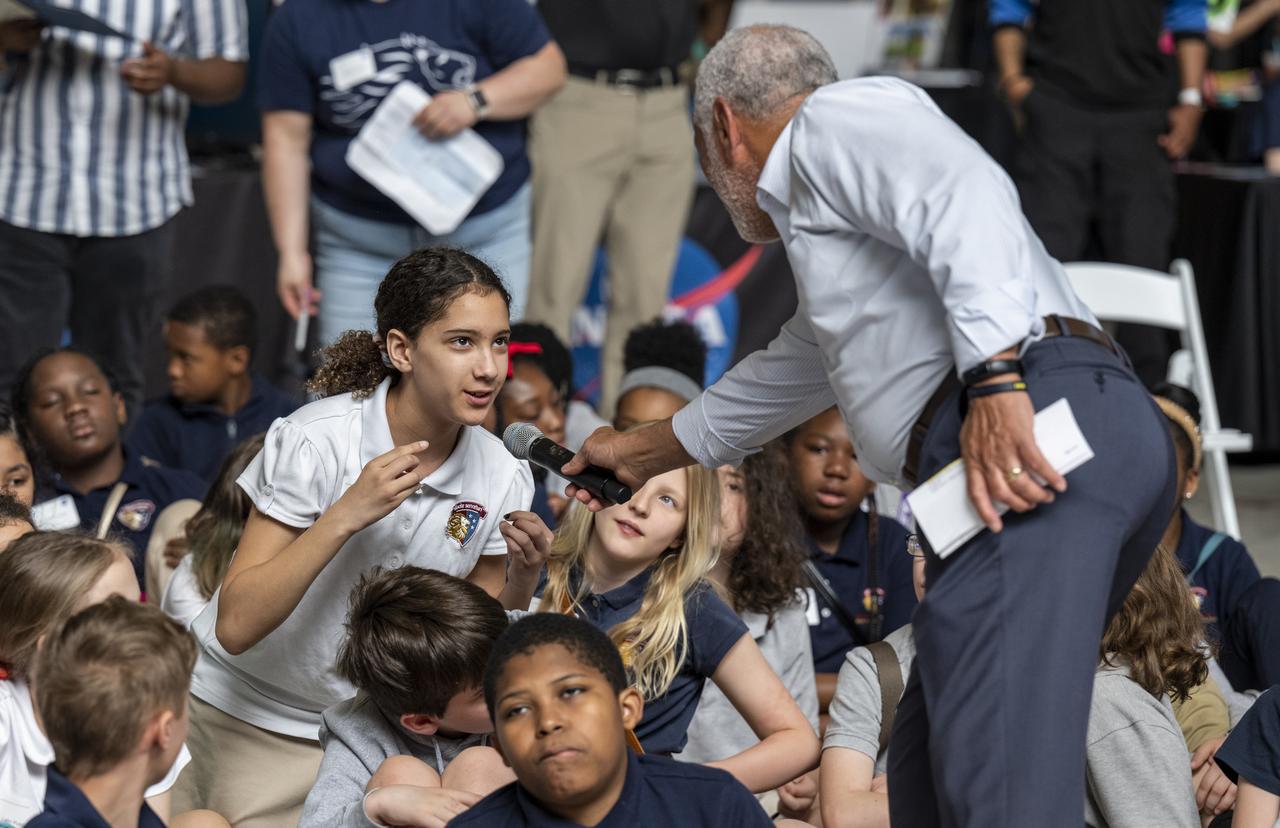
Former NASA Administrator Charlie Bolden speaks with local students during an Earth Day event, Thursday, April 20, 2023, at Union Station in Washington. Photo Credit: (NASA/Keegan Barber)
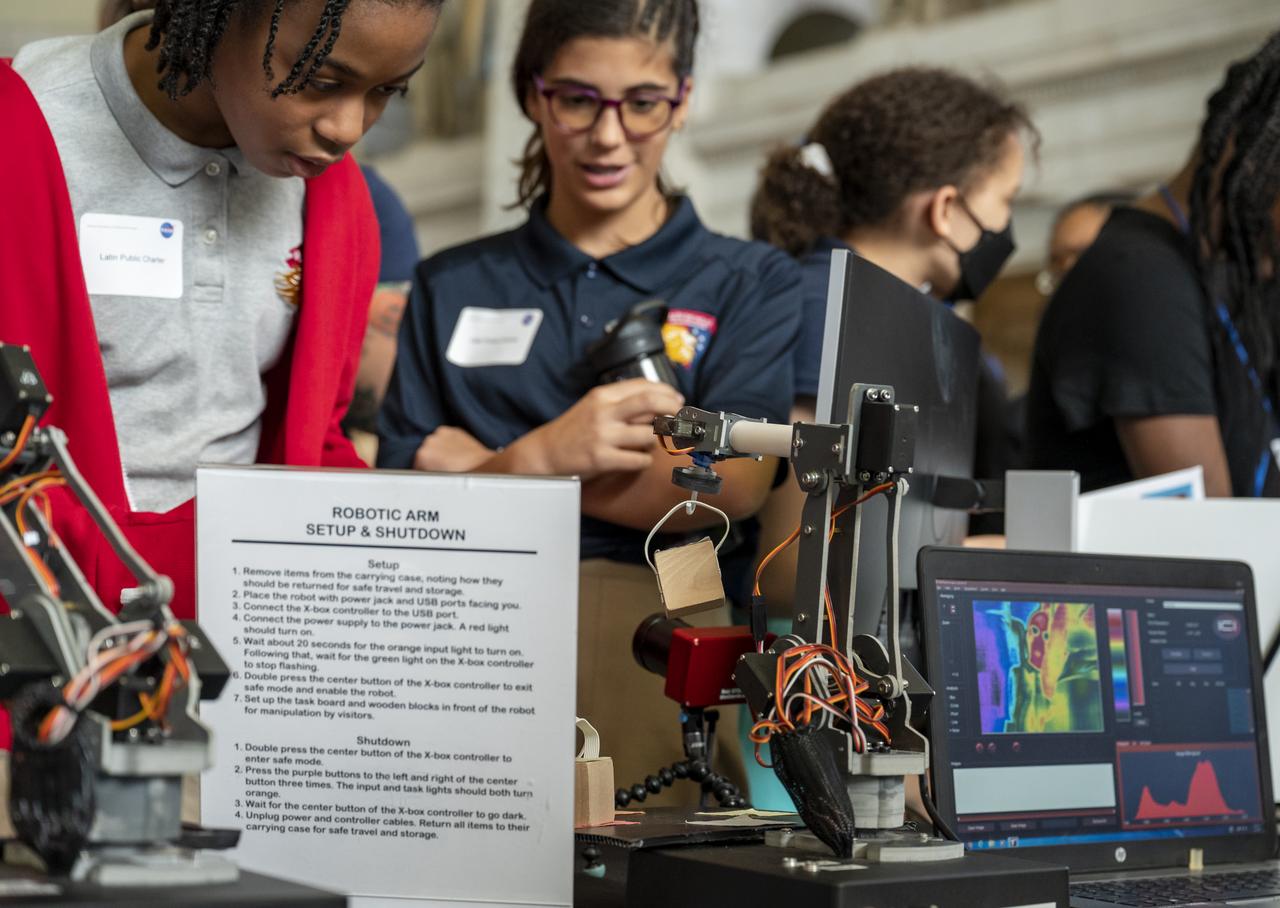
Visitors explore NASA’s hands-on exhibits during an Earth Day event, Thursday, April 20, 2023, at Union Station in Washington. Photo Credit: (NASA/Keegan Barber)

Earth Science Division Deputy Director Julie Robinson speaks with local students during an Earth Day event, Thursday, April 20, 2023, at Union Station in Washington. Photo Credit: (NASA/Keegan Barber)
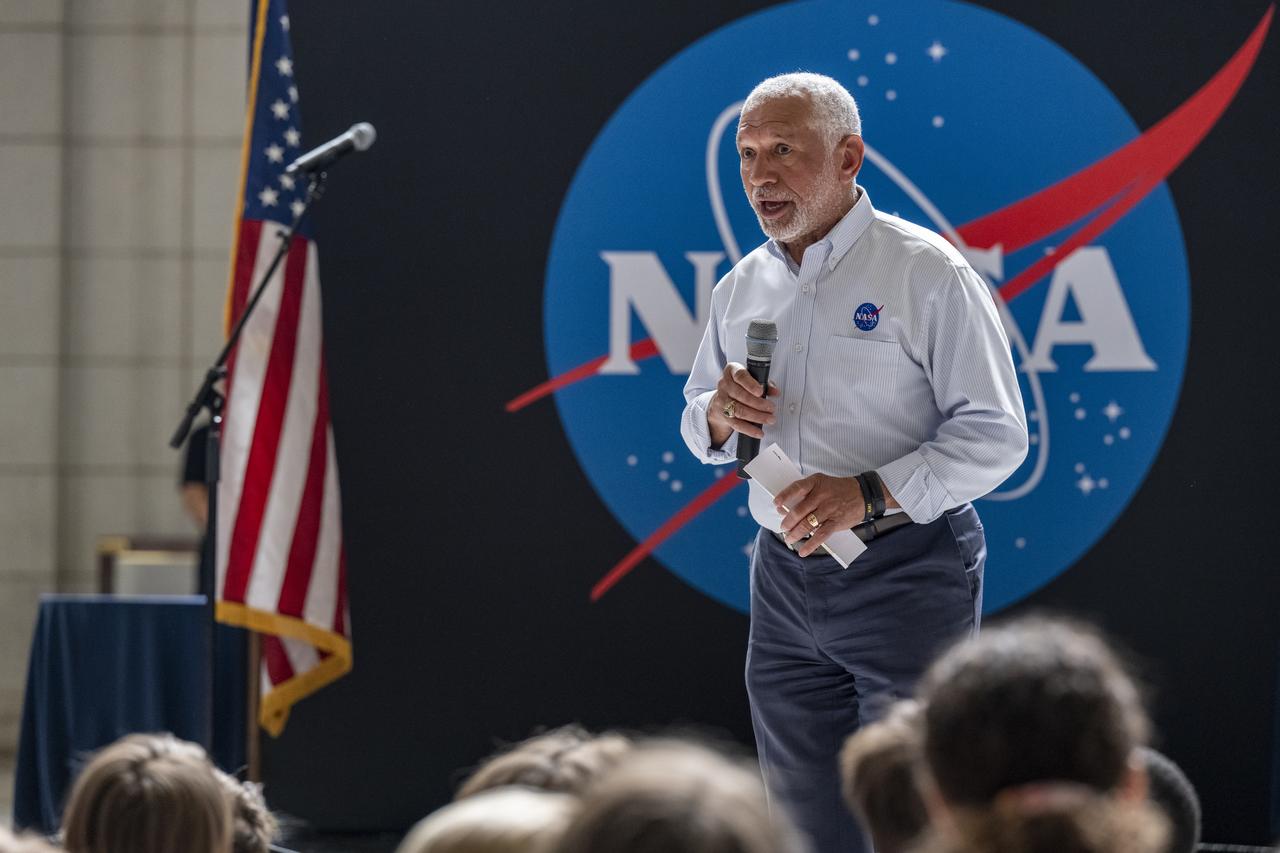
Former NASA Administrator Charlie Bolden speaks with local students during an Earth Day event, Thursday, April 20, 2023, at Union Station in Washington. Photo Credit: (NASA/Keegan Barber)
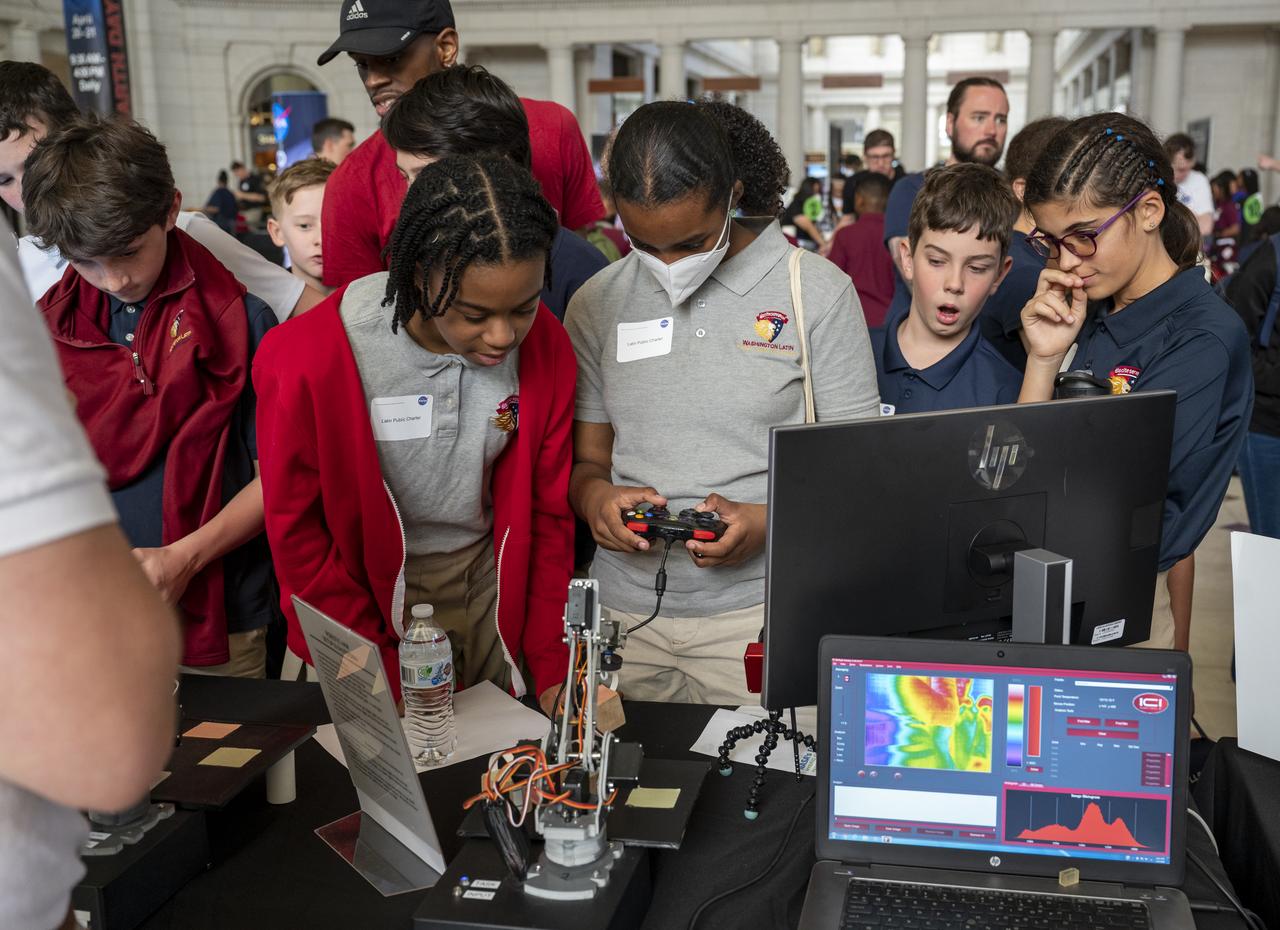
Visitors explore NASA’s hands-on exhibits during an Earth Day event, Thursday, April 20, 2023, at Union Station in Washington. Photo Credit: (NASA/Keegan Barber)
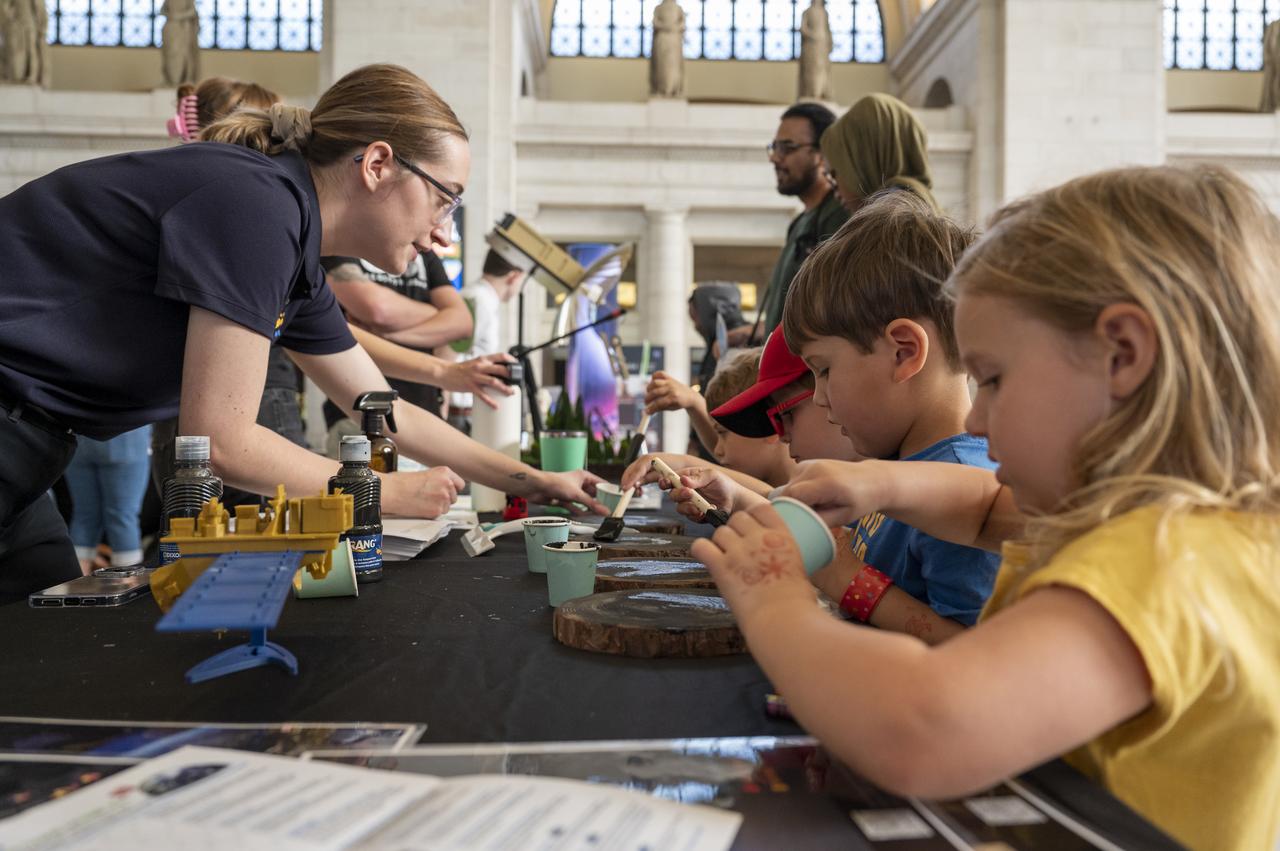
Visitors explore NASA’s hands-on exhibits during an Earth Day event, Thursday, April 20, 2023, at Union Station in Washington. Photo Credit: (NASA/Keegan Barber)
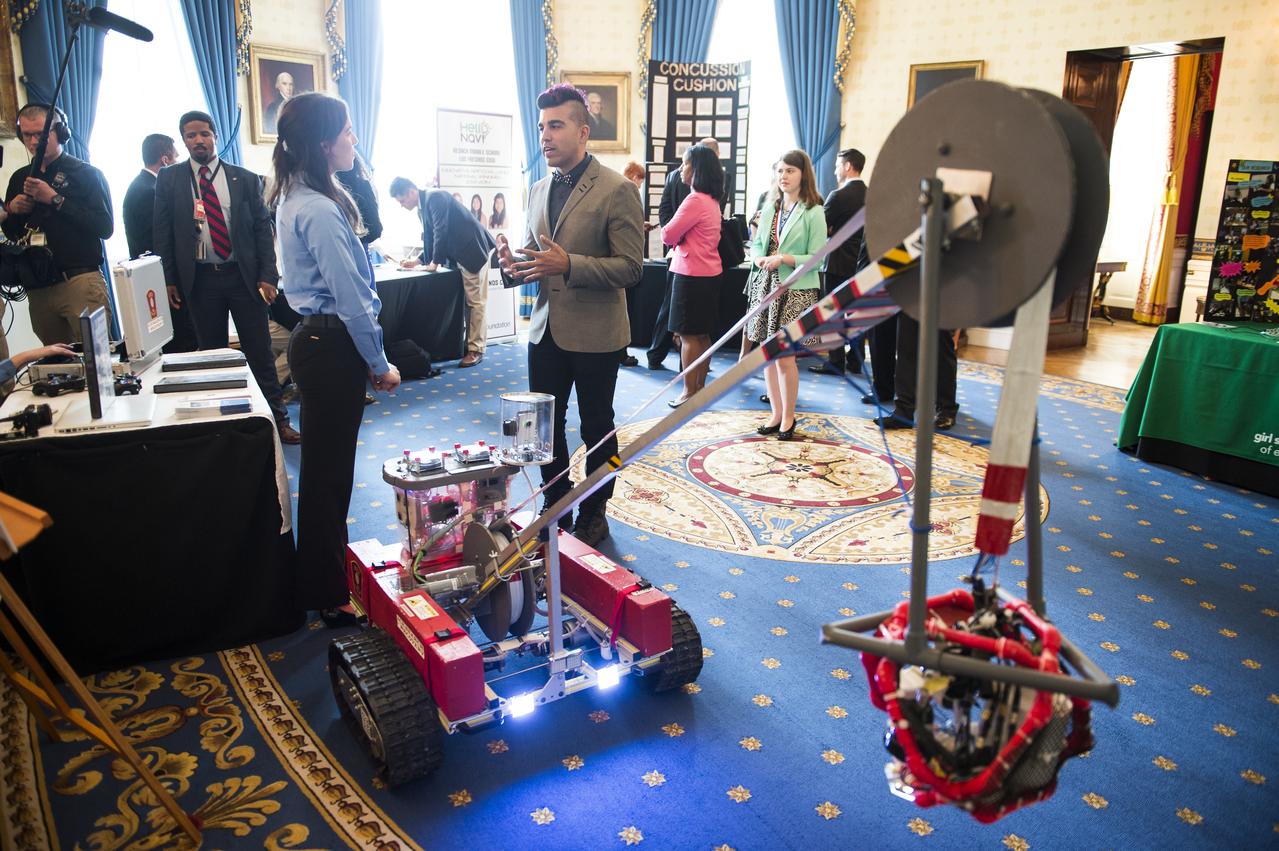
Bobak Ferdowsi, a system's engineer at NASA's Jet Propulsion Laboratory, speaks with a member of "invenTeam" at the White House Science Fair. Olivia Van Amsterdam, 16, Katelyn Sweeney, 17, and their team of student engineers from Natick, MA, invented a 120 lb remotely operated vehicle (ROV) that can help search-and-rescue dive teams search for bodies in dangerous, icy waters. The fourth White House Science Fair was held at the White House and included 100 students from more than 30 different states who competed in science, technology, engineering, and math (STEM) competitions. (Photo Credit: NASA/Aubrey Gemignani)
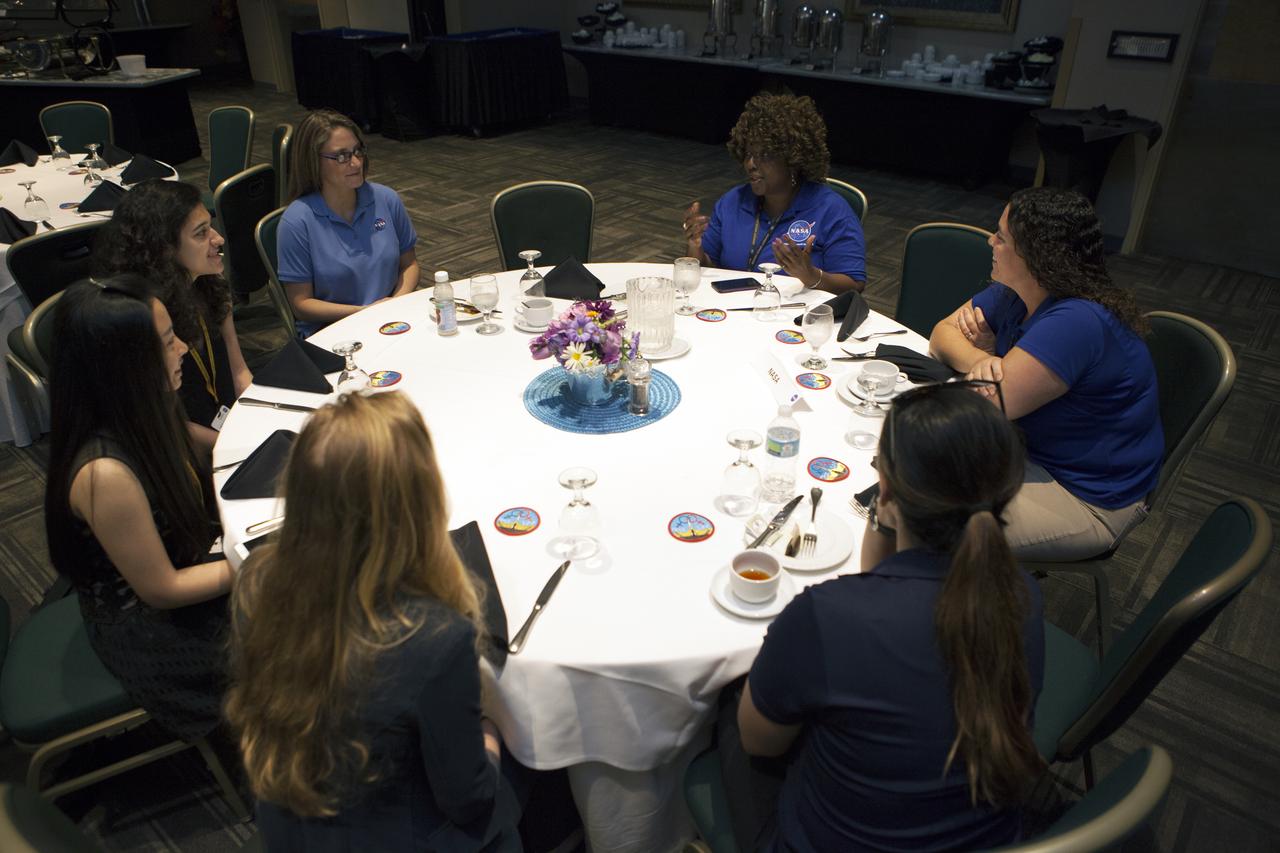
Barbara Brown, center at the table, strategic implementation manager with the Exploration Research and Technology Programs at NASA's Kennedy Space Center in Florida, talks to students during a Women in STEM breakfast inside the Debus Conference Center at the Kennedy Space Center Visitor Complex. STEM is science, technology, engineering and math. The special event gave students competing in NASA's 8th Annual Robotic Mining Competition the chance to learn from female NASA scientists, engineers and professionals about their careers and the paths they took to working at Kennedy. The Robotic Mining Competition is a NASA Human Exploration and Operations Mission Directorate project designed to encourage students in STEM fields. The project provides a competitive environment to foster innovative ideas and solutions that could be used on NASA's Journey to Mars.

NASA Officials, LEGO Group management, students, teachers and parents create their vision of the future in space with LEGO bricks and elements as part of a “Build the Future” activity inside a tent that was set up on the launch viewing area at NASA's Kennedy Space Center in Cape Canaveral, Fla. on Monday, Nov. 1, 2010. NASA and The LEGO Group signed a Space Act Agreement to spark children's interest in science, technology, engineering and math (STEM). Photo Credit: (NASA/Bill Ingalls)
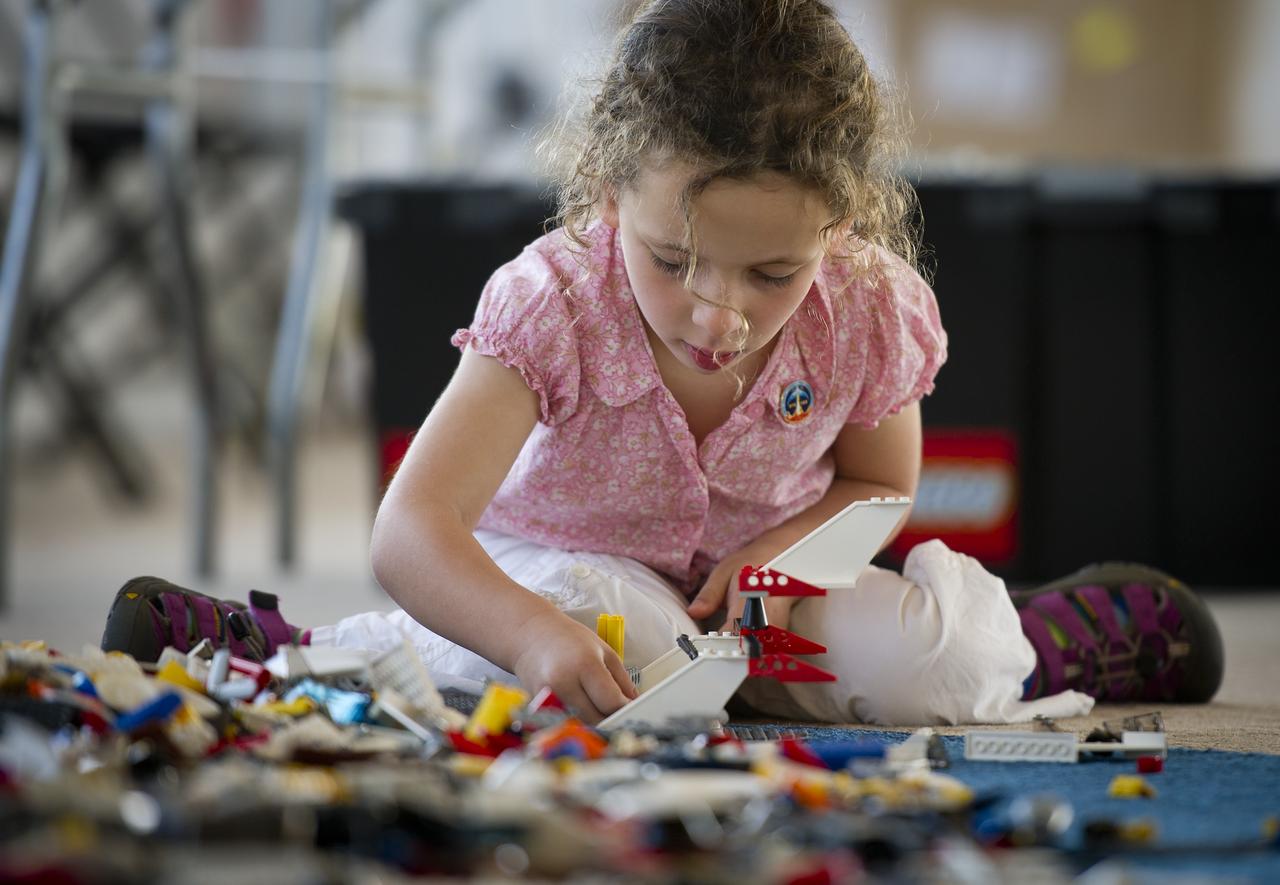
NASA Officials, LEGO Group management, students, teachers and parents create their vision of the future in space with LEGO bricks and elements as part of a “Build the Future” activity inside a tent that was set up on the launch viewing area at NASA's Kennedy Space Center in Cape Canaveral, Fla. on Monday, Nov. 1, 2010. NASA and The LEGO Group signed a Space Act Agreement to spark children's interest in science, technology, engineering and math (STEM). Photo Credit: (NASA/Bill Ingalls)
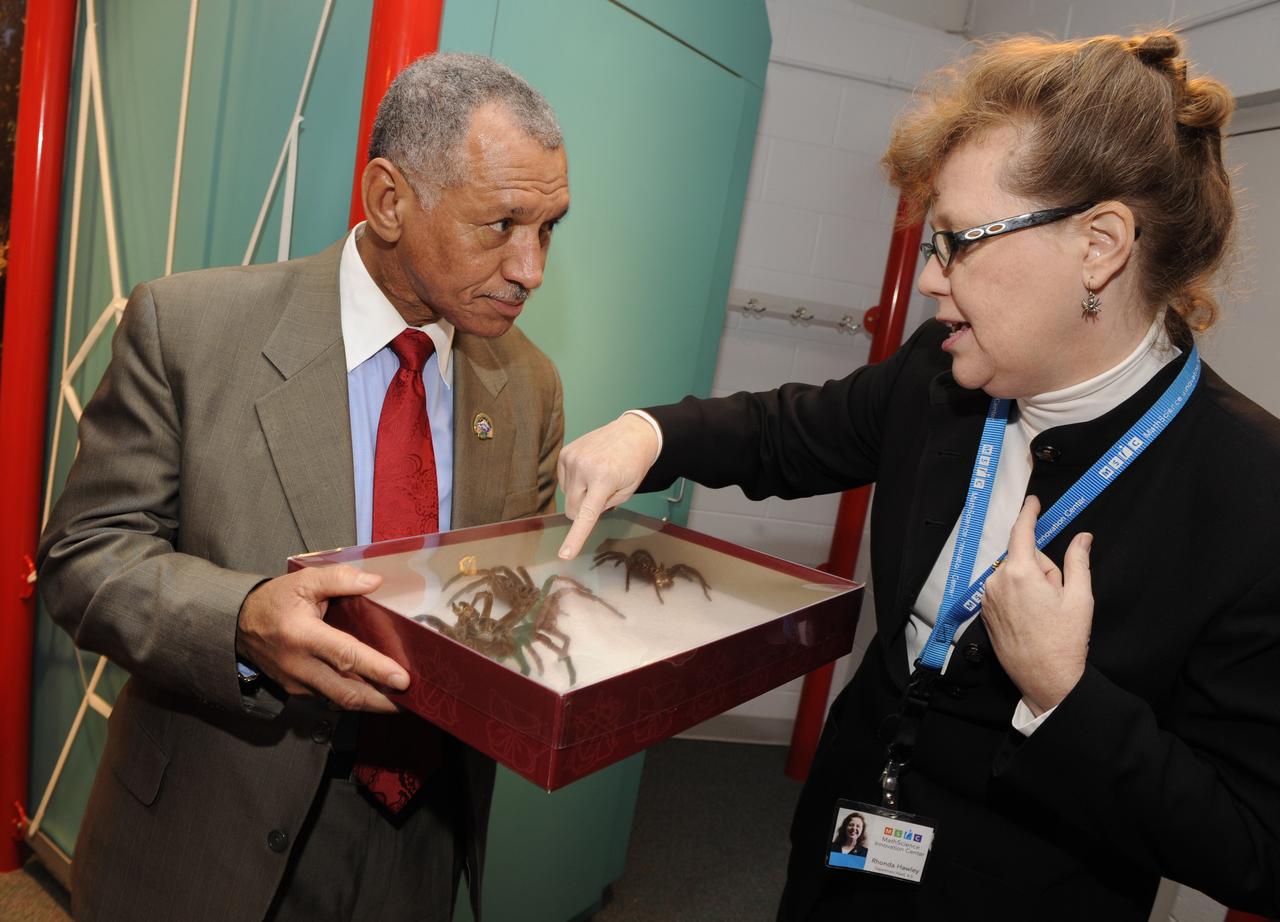
NASA Administrator Charles Bolden, left, holds a box of spiders as MathScience Innovation Center Instructor Rhonda Hawley describes them during a visit to the "Spider Room" at the center, Friday, Jan. 28. 2011, at the center in Richmond, Va. Earlier, Bolden spoke to students from Albert Hill Middle School, where he highlighted the importance of science, technology, engineering and math, or STEM, as he shared his life experiences with the students. (Photo Credit:NASA/Paul E. Alers)
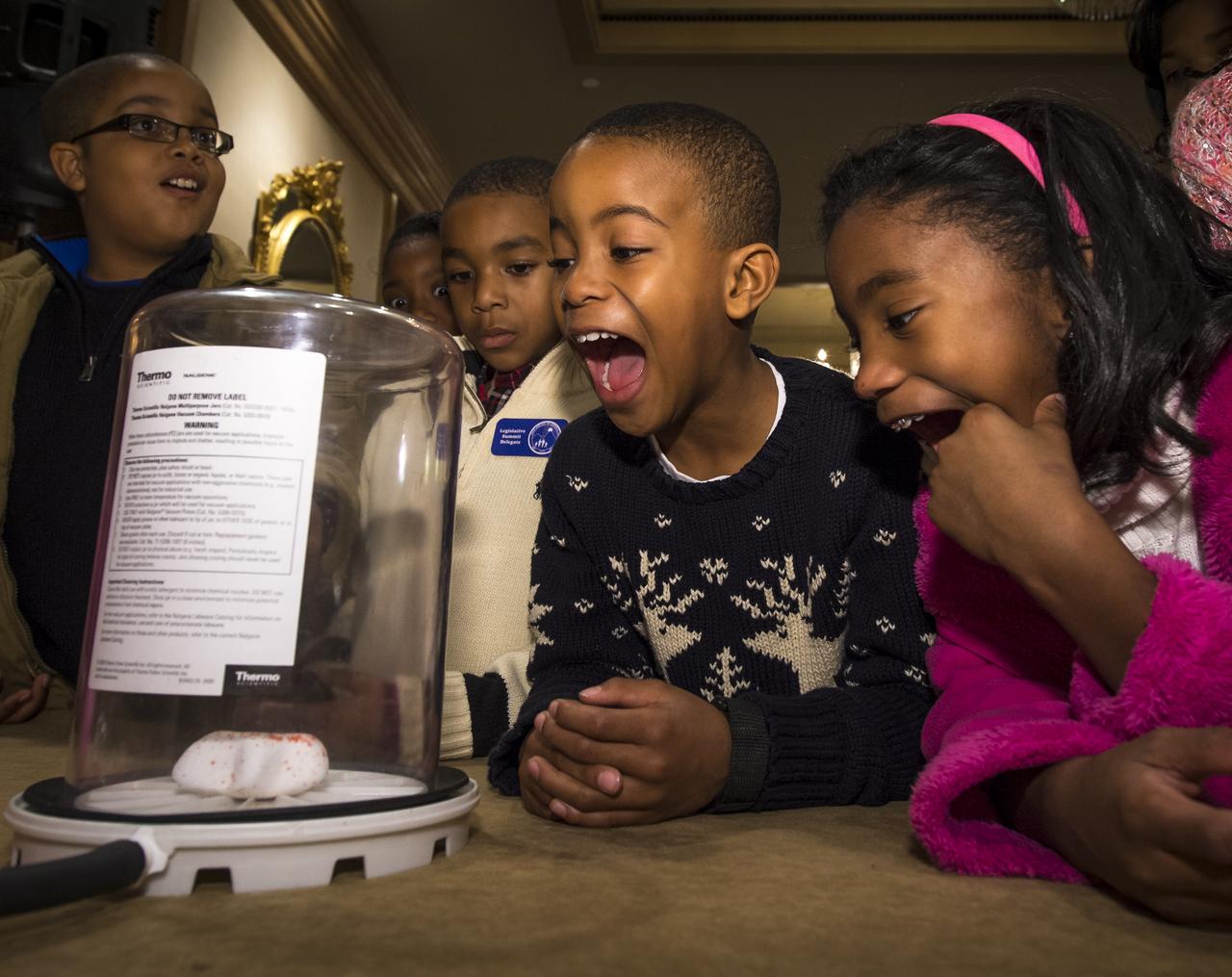
School children react to food shrinking in a vacuum chamber during an Science, Technology, Engineering, and Math (STEM) education event held at the Ritz-Carlton Hotel in Arlington, VA on Saturday, Jan. 19, 2013. Students were able to meet with Astronaut Melvin, conduct experiments, build their own space jab, and touch a mockup space suit. Photo Credit: (NASA/Bill Ingalls)
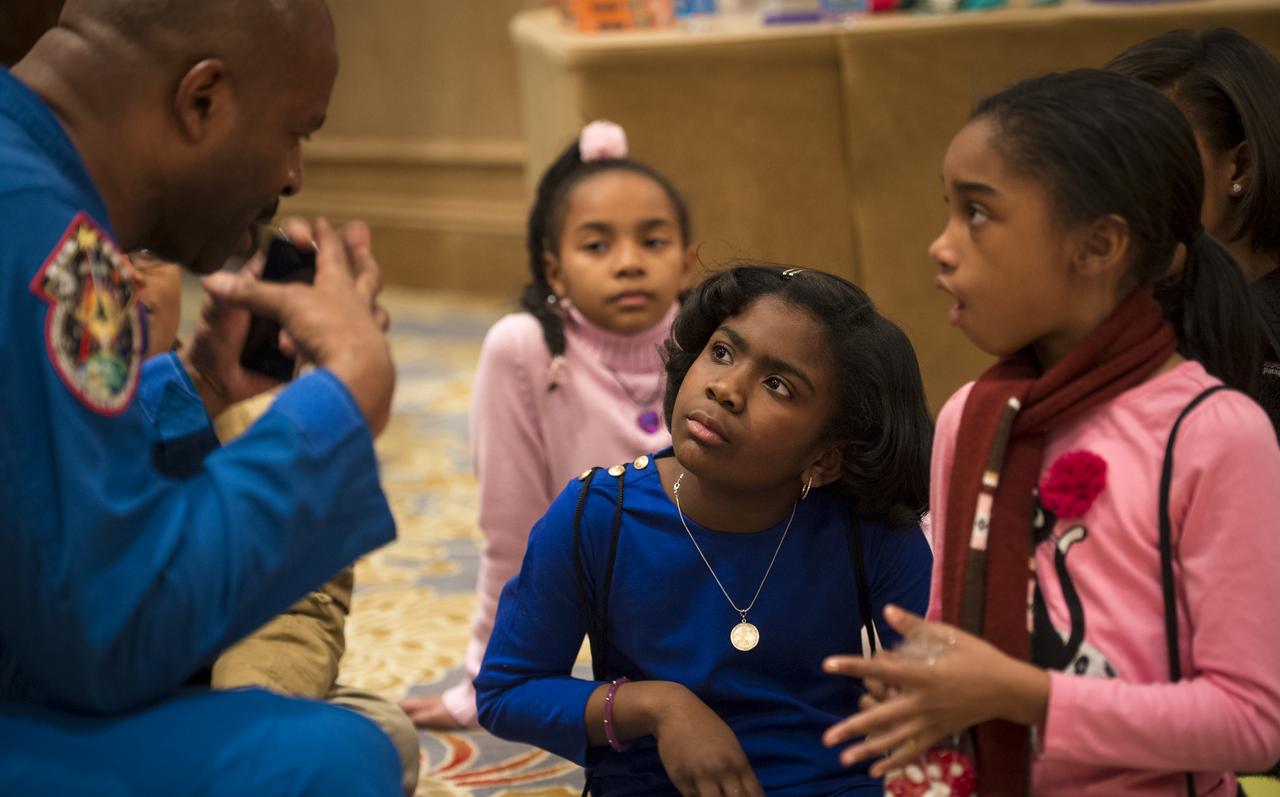
NASA Astronaut and Associate Administrator for Education, Leland Melvin, talks to school children during an Science, Technology, Engineering, and Math (STEM) education event held at the Ritz-Carlton Hotel in Arlington, VA on Saturday, Jan. 19, 2013. Students were able to meet with Astronaut Melvin, conduct experiments, build their own space jab, and touch a mockup space suit. Photo Credit: (NASA/Bill Ingalls)
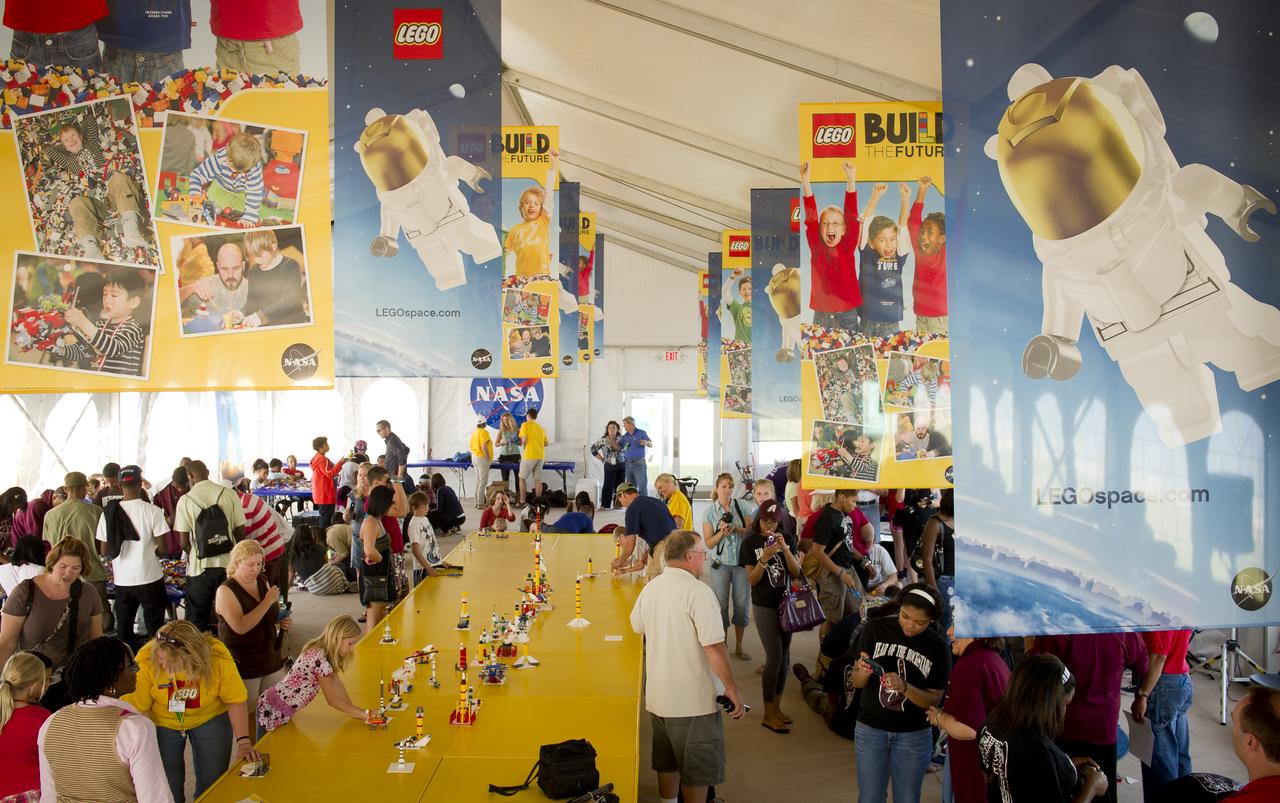
NASA Officials, LEGO Group management, students, teachers and parents create their vision of the future in space with LEGO bricks and elements as part of a “Build the Future” activity inside a tent that was set up on the launch viewing area at NASA's Kennedy Space Center in Cape Canaveral, Fla. on Monday, Nov. 1, 2010. NASA and The LEGO Group signed a Space Act Agreement to spark children's interest in science, technology, engineering and math (STEM). Photo Credit: (NASA/Bill Ingalls)
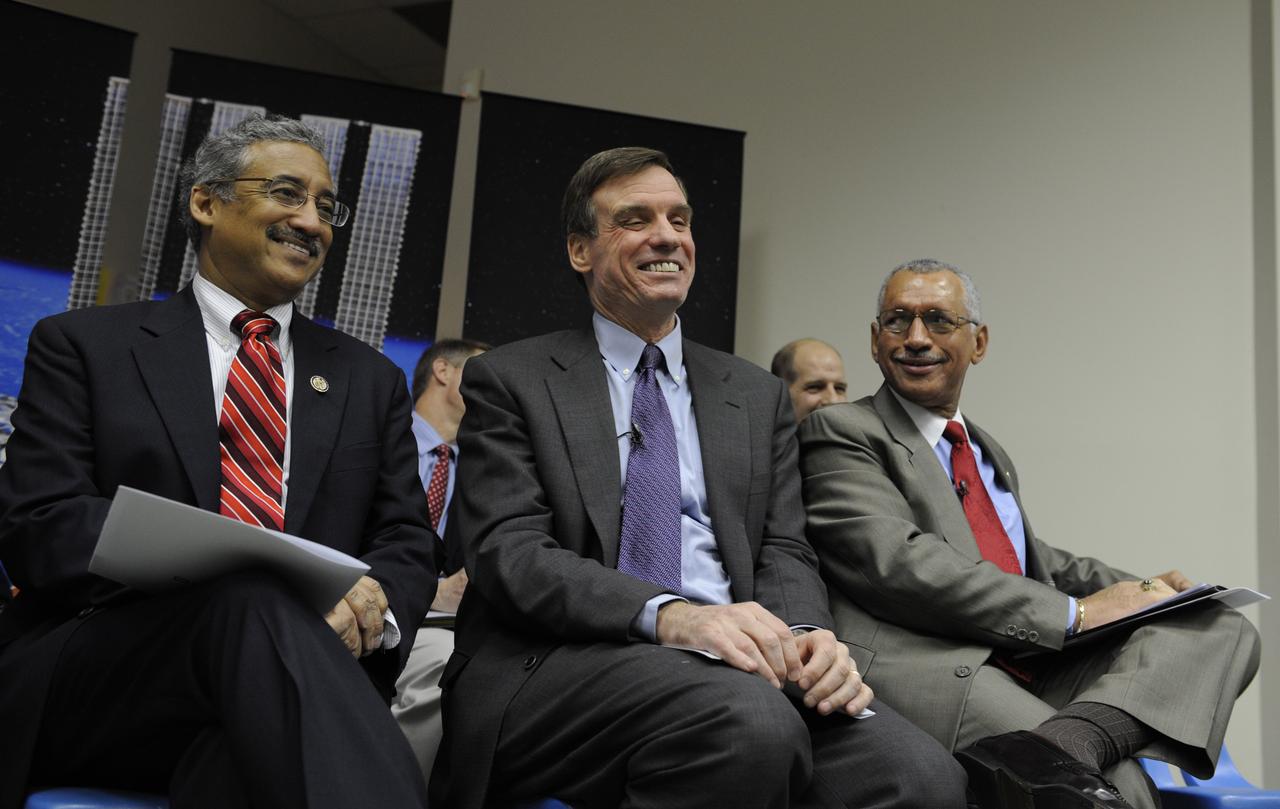
NASA Administrator Charles Bolden, right, shares a laugh with U.S. Sen. Mark Warner, D-Va., center and U.S. Rep. Bobby Scott, D-Va., prior to an event at the MathScience Innovation Center, Friday, Jan. 28, 2011, in Richmond, Va. Bolden later spoke to students from Albert Hill Middle School highlighting the importance of science, technology, engineering and math, or STEM, as he shared his life experiences with the students. (Photo Credit:NASA/Paul E. Alers)
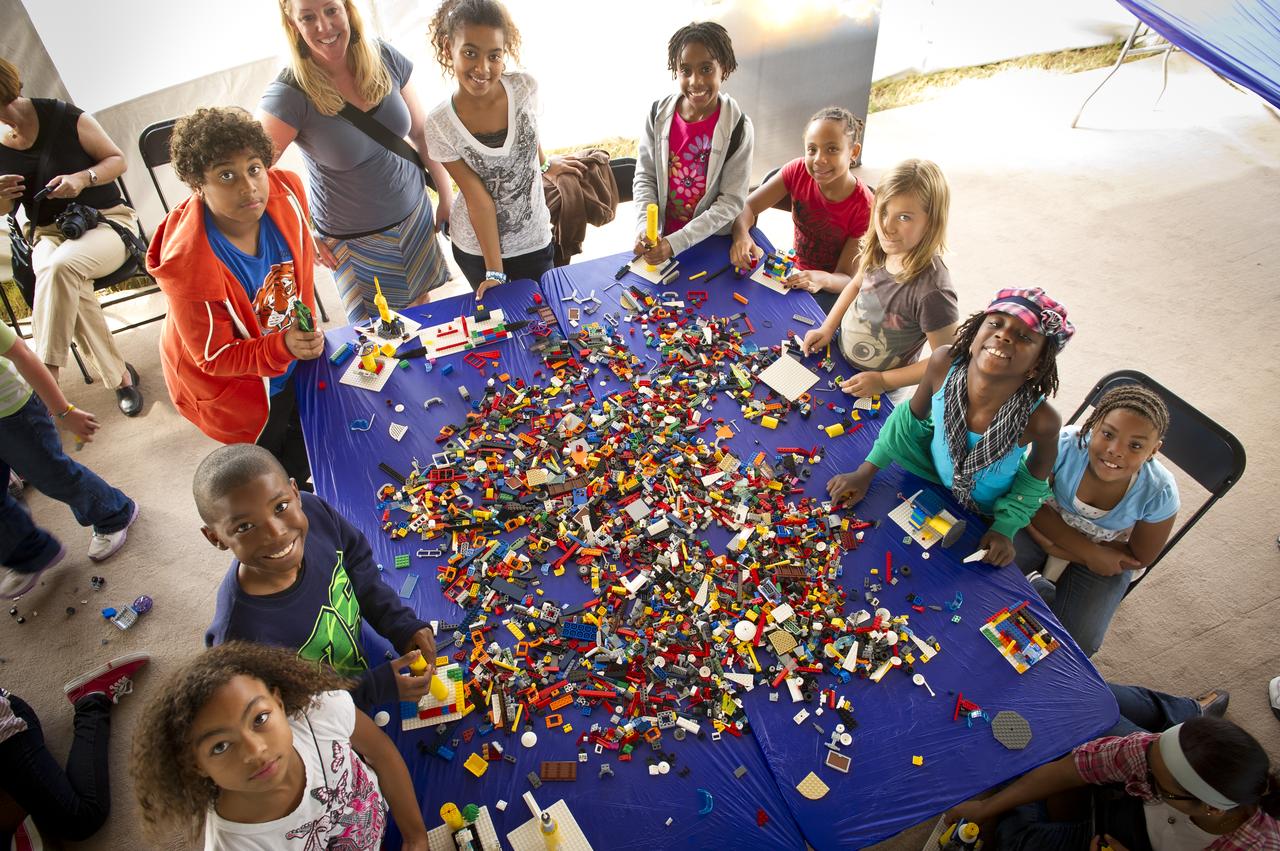
NASA Officials, LEGO Group management, students, teachers and parents create their vision of the future in space with LEGO bricks and elements as part of a “Build the Future” activity inside a tent that was set up on the launch viewing area at NASA's Kennedy Space Center in Cape Canaveral, Fla. on Monday, Nov. 1, 2010. NASA and The LEGO Group signed a Space Act Agreement to spark children's interest in science, technology, engineering and math (STEM). Photo Credit: (NASA/Bill Ingalls)
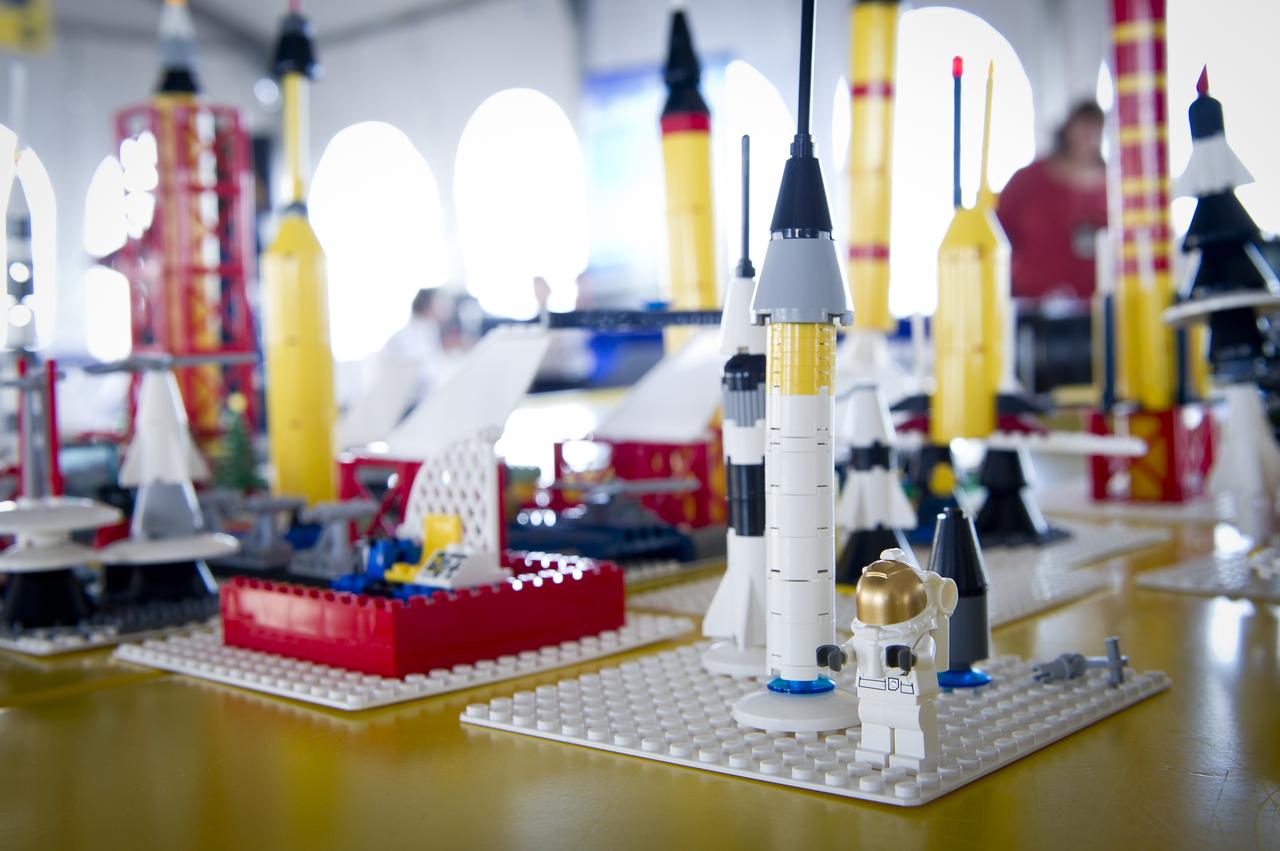
LEGOs are seen assembled by students as part of a “Build the Future” activity inside a tent that was set up on the launch viewing area at NASA's Kennedy Space Center in Cape Canaveral, Fla. on Wednesday, Nov. 3, 2010. NASA and The LEGO Group signed a Space Act Agreement to spark children's interest in science, technology, engineering and math (STEM). Photo Credit: (NASA/Bill Ingalls)
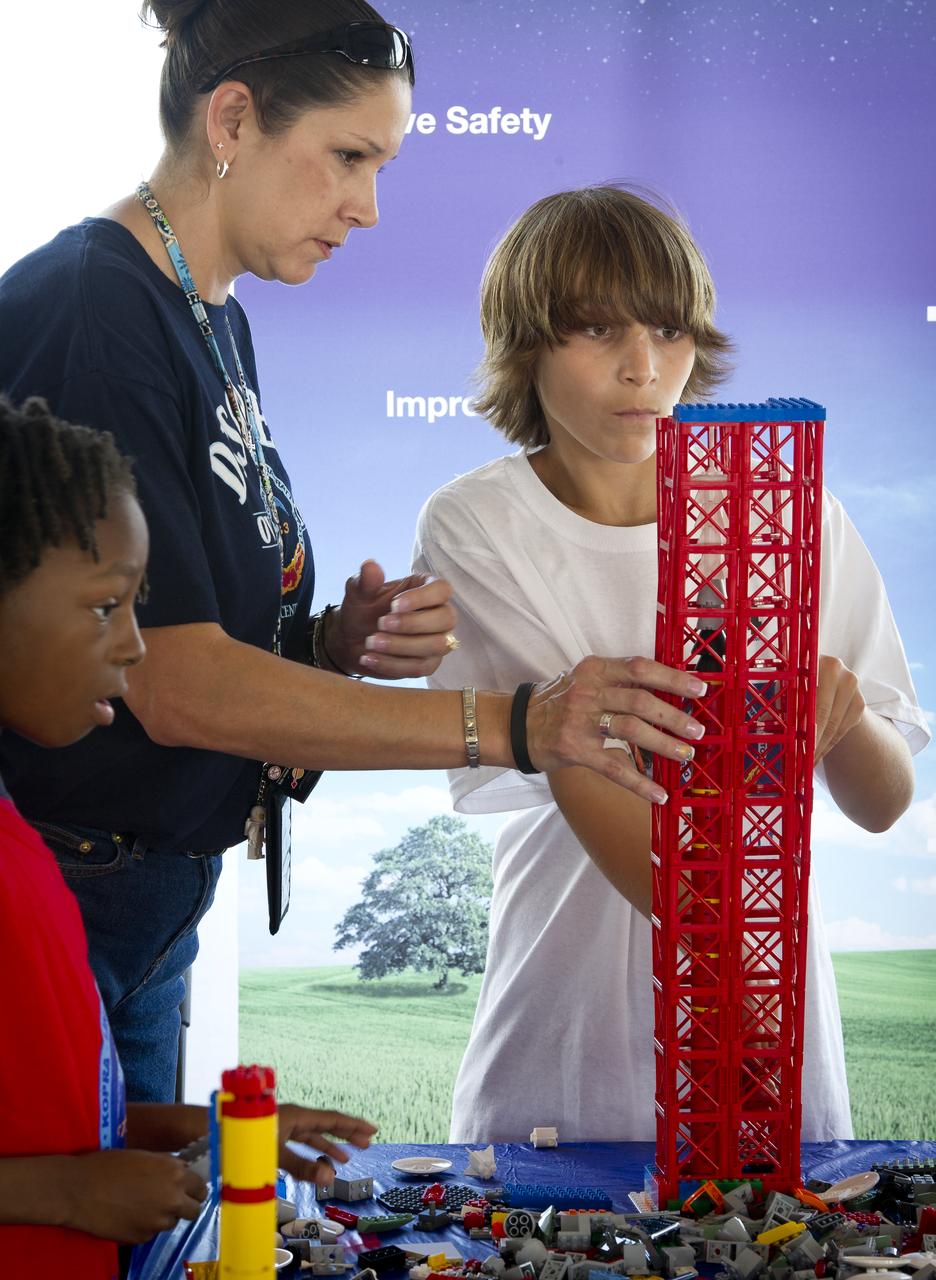
NASA Officials, LEGO Group management, students, teachers and parents create their vision of the future in space with LEGO bricks and elements as part of a “Build the Future” activity inside a tent that was set up on the launch viewing area at NASA's Kennedy Space Center in Cape Canaveral, Fla. on Wednesday, Nov. 3, 2010. NASA and The LEGO Group signed a Space Act Agreement to spark children's interest in science, technology, engineering and math (STEM). Photo Credit: (NASA/Bill Ingalls)
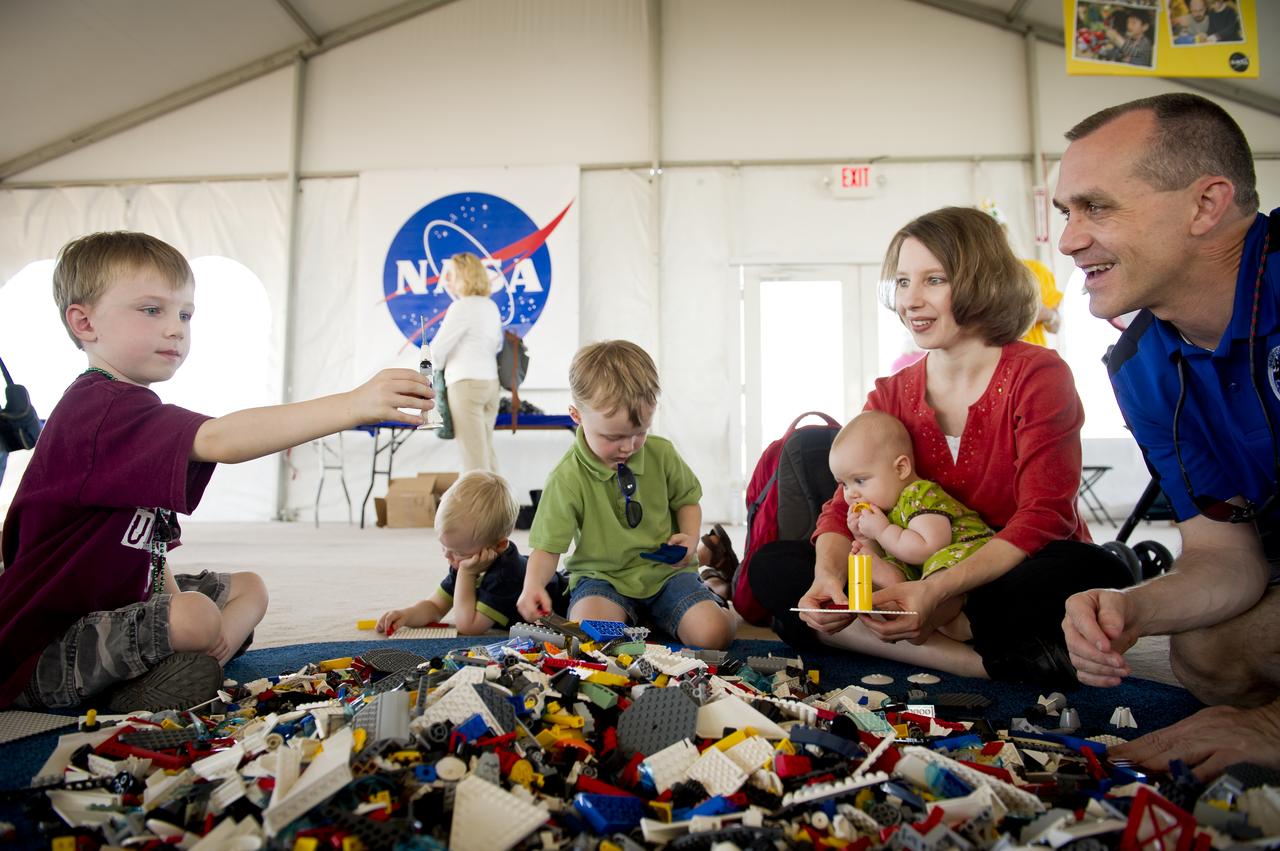
NASA Officials, LEGO Group management, students, teachers and parents create their vision of the future in space with LEGO bricks and elements as part of a “Build the Future” activity inside a tent that was set up on the launch viewing area at NASA's Kennedy Space Center in Cape Canaveral, Fla. on Monday, Nov. 1, 2010. NASA and The LEGO Group signed a Space Act Agreement to spark children's interest in science, technology, engineering and math (STEM). Photo Credit: (NASA/Bill Ingalls)
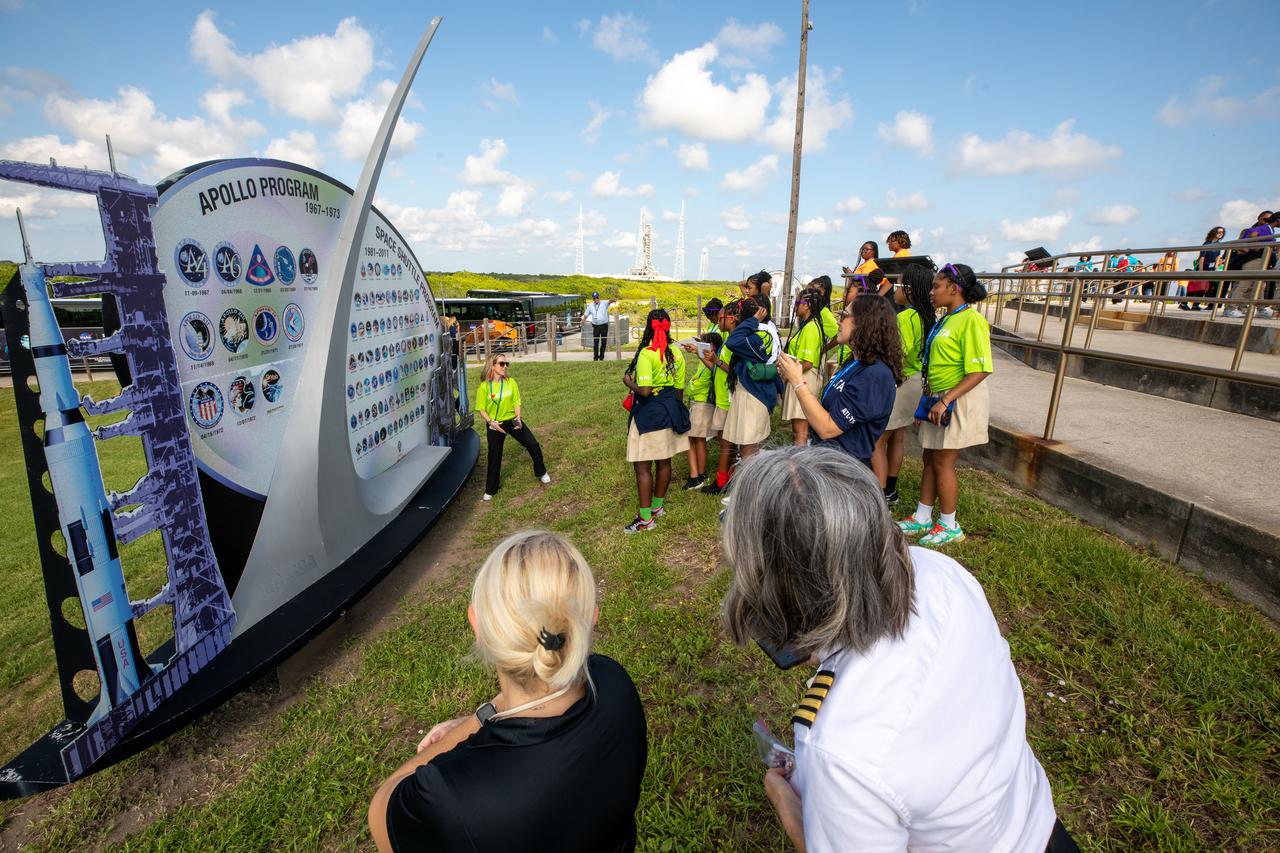
Young women, ages 11 to 18, visited launch pads 39A and 39B on Friday, Sept. 20, 2024, at the agency’s Kennedy Space Center in Florida. Part of the Delta Air Lines’ Women Inspiring Our Next Generation (WING) flight, the young women from the Atlanta, Georgia area, learned about the various women-led STEM (science, technology, engineering, and math) careers available at the Florida spaceport.