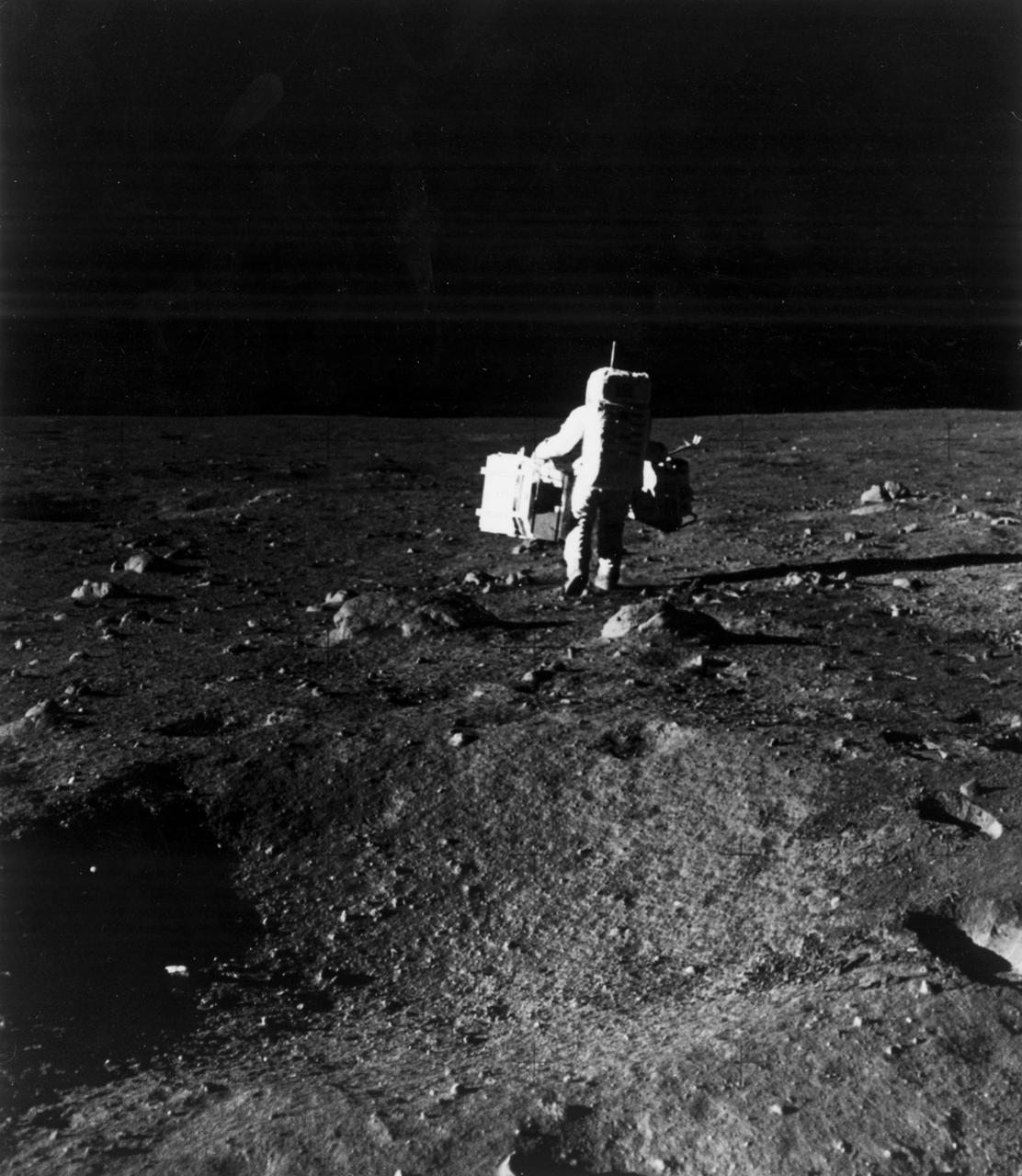
The first manned lunar landing mission, Apollo 11, launched from the Kennedy Space Center (KSC) in Florida via the Marshall Space Flight Center (MSFC) developed Saturn V launch vehicle on July 16, 1969 and safely returned to Earth on July 24, 1969. Aboard the space craft were astronauts Neil A. Armstrong, commander; Michael Collins, Command Module (CM) pilot; and Edwin E. (Buzz) Aldrin Jr., Lunar Module (LM) pilot. The CM, piloted by Michael Collins, remained in a parking orbit around the Moon, while the LM, named “Eagle’’, carrying astronauts Armstrong and Aldrin, landed on the Moon in the Sea of Tranquility. During 2½ hours of surface exploration, the crew set up experiments, collected 47 pounds of lunar surface material for analysis back on Earth, planted the U.S. Flag, and left a message for all mankind. In this photograph, Aldrin walks past some rocks, easily carrying scientific equipment experiements, which would have been to heavy too carry on Earth. The two packages made up the Early Apollo Scientific Experiment Package (EASEP) on Apollo 11. On the left is the Passive Seismic Experiment Package (PSEP) and on the right is the Laser Ranging Retroreflector (LRRR).
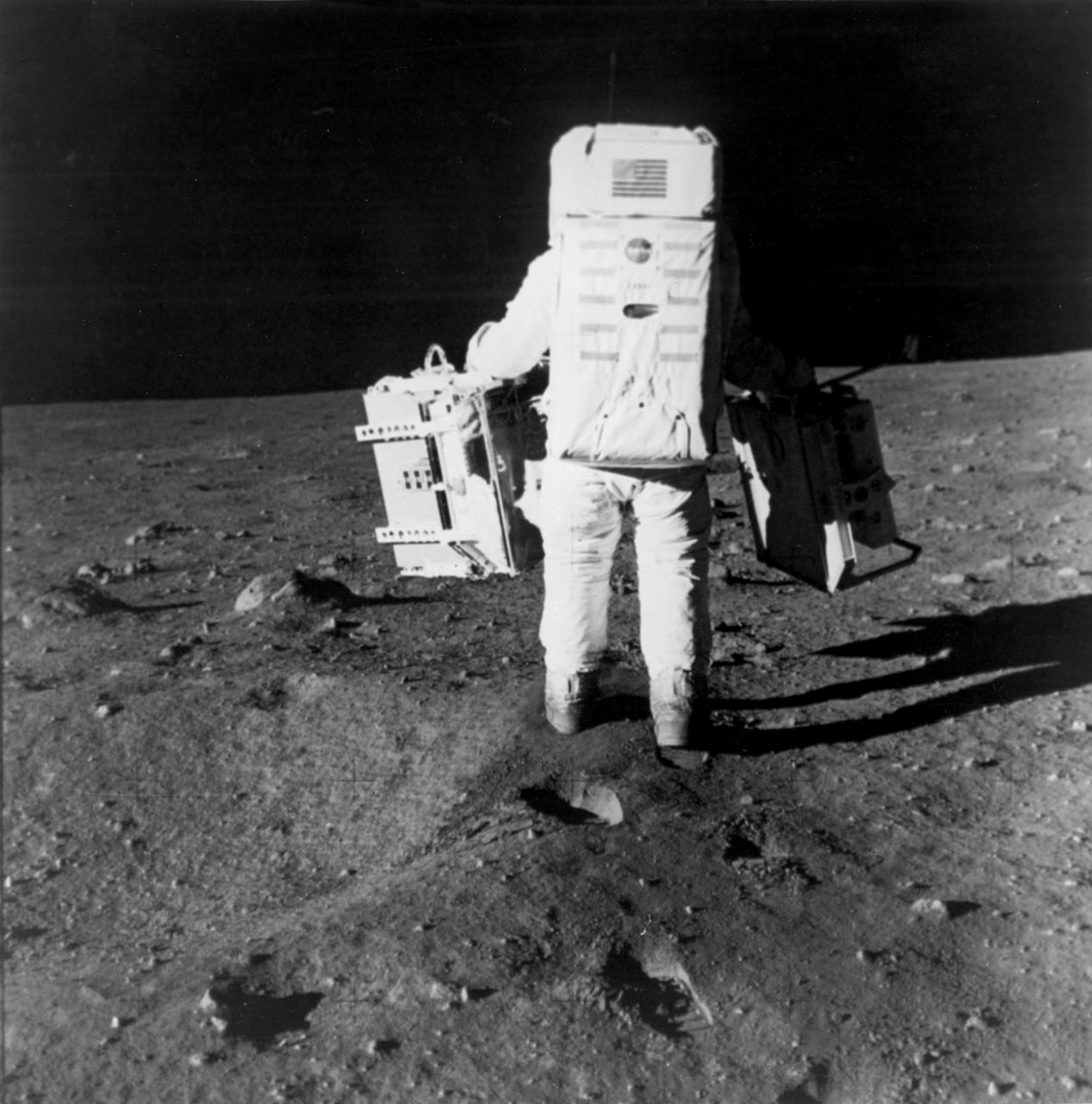
The first manned lunar landing mission, Apollo 11, launched from the Kennedy Space Center (KSC) in Florida via the Marshall Space Flight Center (MSFC) developed Saturn V launch vehicle on July 16, 1969 and safely returned to Earth on July 24, 1969. Aboard the space craft were astronauts Neil A. Armstrong, commander; Michael Collins, Command Module (CM) pilot; and Edwin E. (Buzz) Aldrin Jr., Lunar Module (LM) pilot. The CM, piloted by Michael Collins, remained in a parking orbit around the Moon, while the LM, named “Eagle’’, carrying astronauts Armstrong and Aldrin, landed on the Moon in the Sea of Tranquility. During 2½ hours of surface exploration, the crew set up experiments, collected 47 pounds of lunar surface material for analysis back on Earth, planted the U.S Flag, and left a message for all mankind. In this photograph, Aldrin walks past some rocks, easily carrying scientific equipment which would have been too heavy to carry on Earth. The two packages made up the Early Apollo Scientific Experiment Package (EASEP) on Apollo 11. On the left is the Passive Seismic Experiment Package (PSEP) and on the right is the Laser Ranging Retroreflector (LRR).
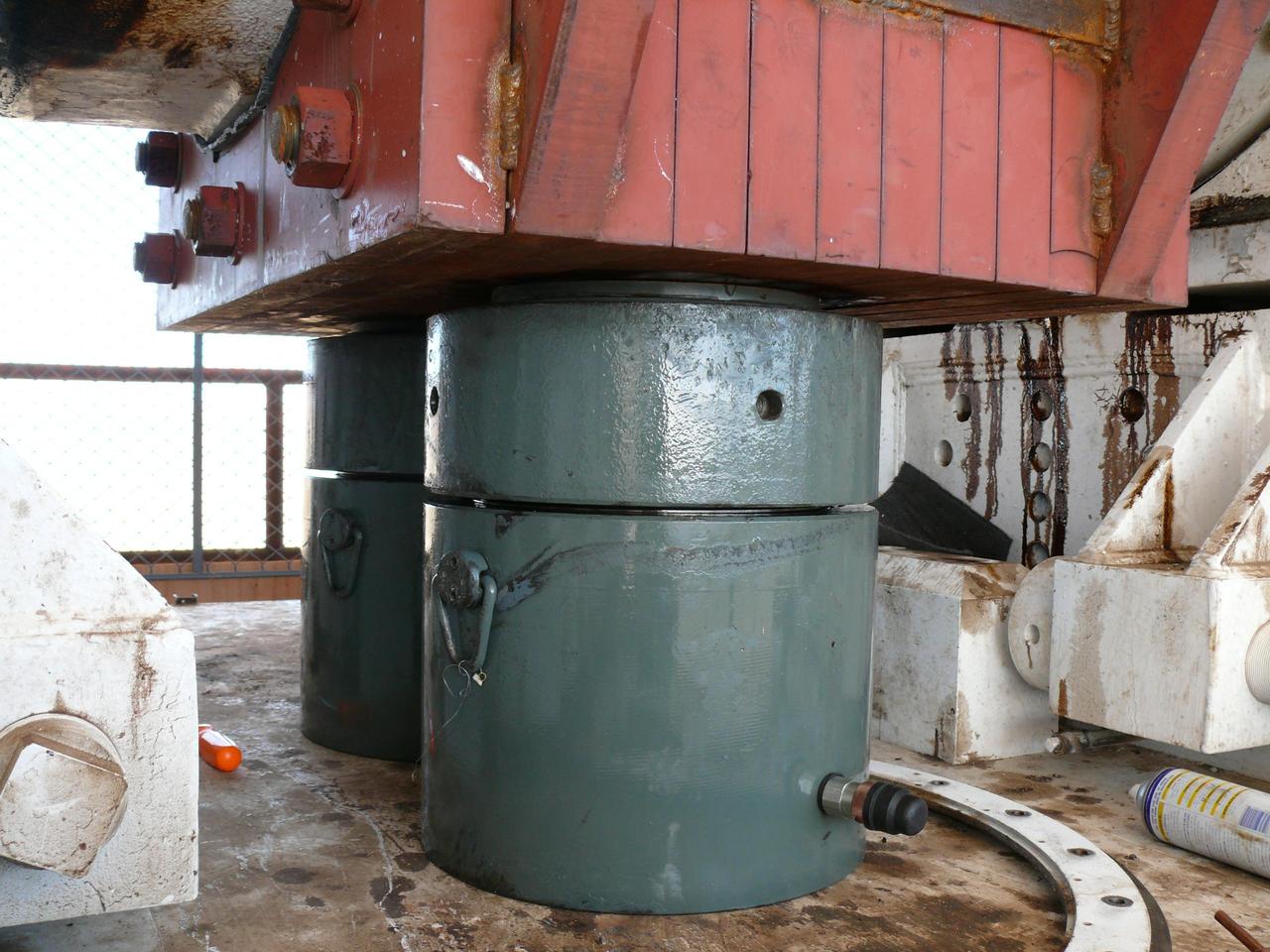
A major refurbishment of the giant Mars antenna at NASA Deep Space Network Goldstone Deep Space Communications Complex in California Mojave Desert required workers to jack up millions of pounds of delicate scientific equipment.
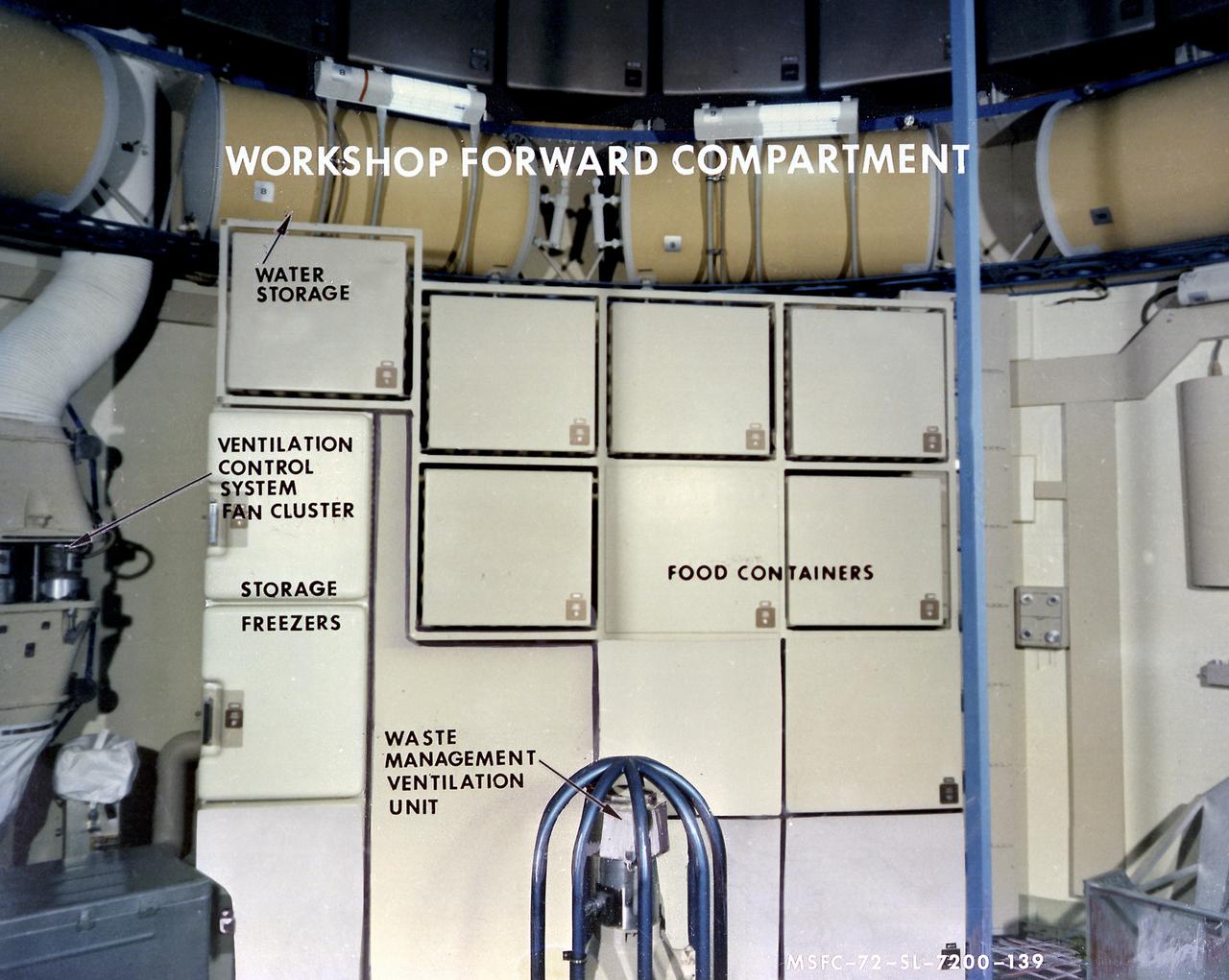
This image, with callouts, depicts the storage area of the forward compartment at the upper level of the Orbital Workshop (OWS). The upper level consisted of a large work area and housed water storage tanks, a food freezer, storage vaults for film, scientific airlocks, mobility and stability experiment equipment, and other experimental equipment.
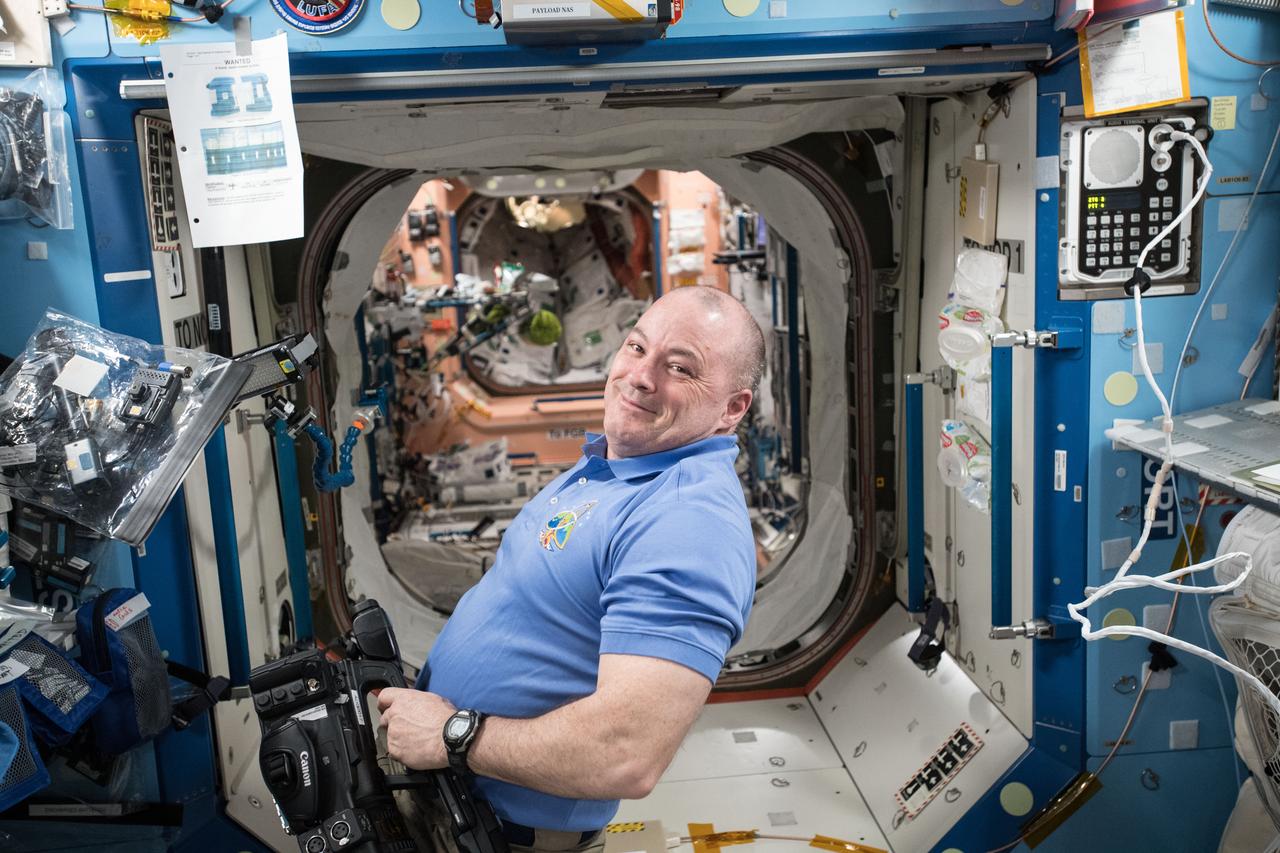
iss055e018690 (April 11, 2018) --- NASA astronaut Scott Tingle prepares video equipment for a series of education videos being recorded for the STEMonstration campaign which demonstrates scientific concepts in space for students and teachers.
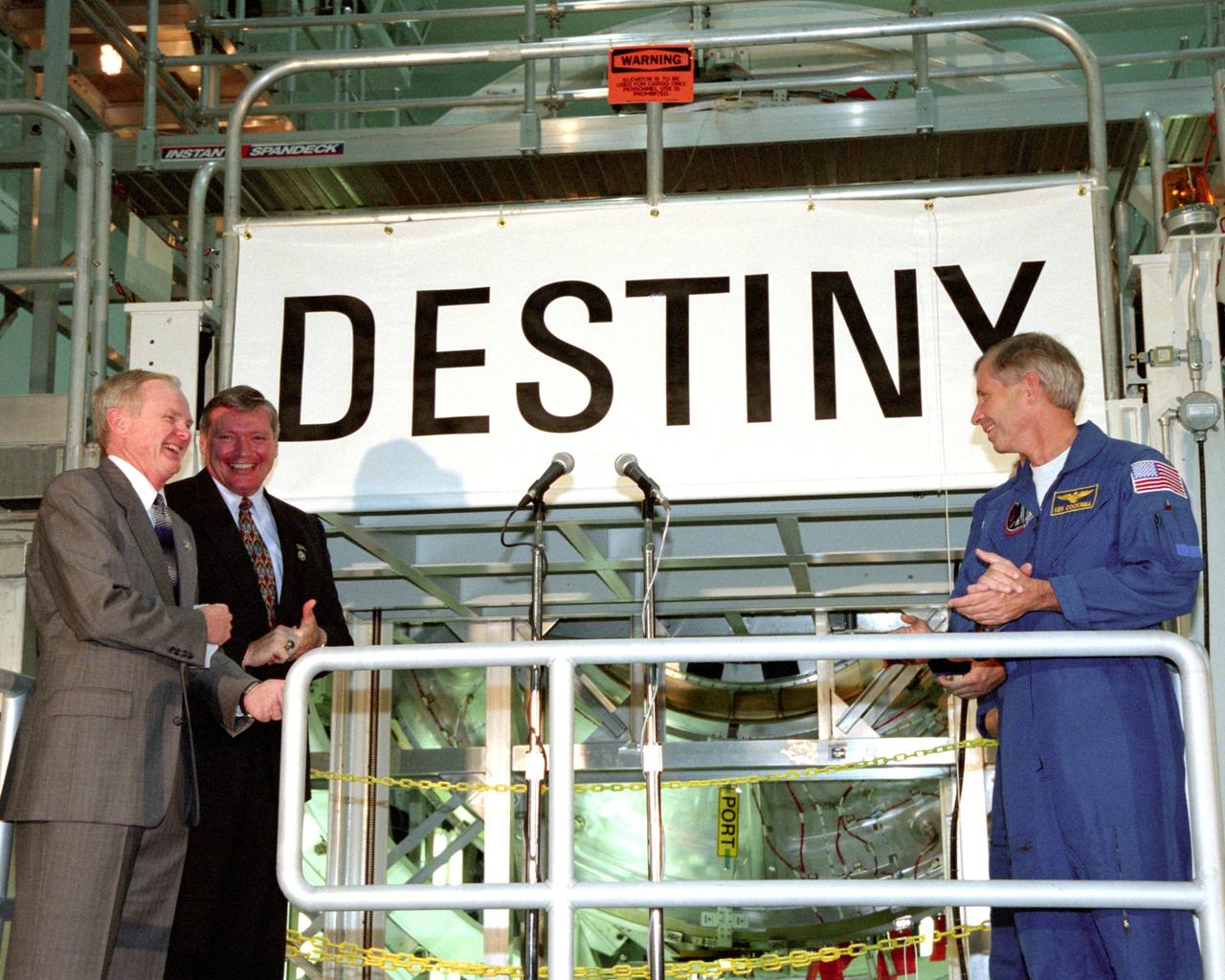
KENNEDY SPACE CENTER, FLA. - In the Space Station Processing Facility, Center Director Roy Bridges (left), Program Manager of the International Space Station (ISS) Randy Brinkley (second from left) and STS-98 Commander Ken Cockrell (right) applaud the unveiling of the name "Destiny" for the U.S. Laboratory module. The lab, which is behnd them on a workstand, is scheduled to be launched on STS-98 on Space Shuttle Endeavour in early 2000. It will become the centerpiece of scientific research on the ISS. The Shuttle will spend six days docked to the Station while the laboratory is attached and three spacewalks are conducted to compete its assembly. The laboratory will be launched with five equipment racks aboard, which will provide essential functions for Station systems, including high data-rate communications, and maintain the Station's orientation using control gyroscopes launched earlier. Additional equipment and research racks will be installed in the laboratory on subsequent Shuttle flights.
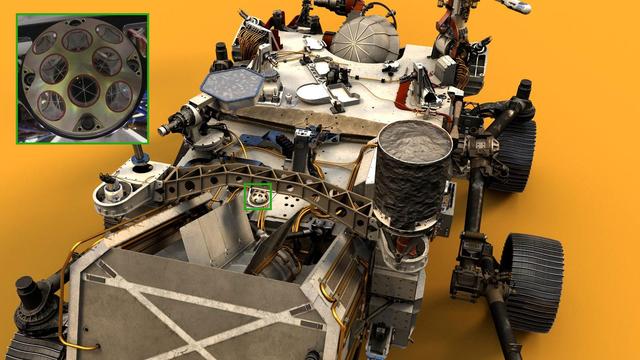
Visible near the center of NASA's Perseverance Mars rover in this illustration is the palm-size dome called the Laser Retroreflector Array (LaRA). In the distant future, laser-equipped Mars orbiters could use such a reflector for scientific studies. https://photojournal.jpl.nasa.gov/catalog/PIA24097

S89-E-5310 (26 Jan 1998) --- This Electronic Still Camera (ESC) image shows astronauts David A. Wolf, former cosmonaut guest researcher (on left), and Andrew S. W. Thomas, future cosmonaut guest researcher. Wolf, during hand-over operations, explains the use of this scientific piece of equipment to Thomas, who will use this equipment during his tour aboard the Russian Mir Space Station. This ESC view was taken on January 26, 1998, at 15:50:31 MET.
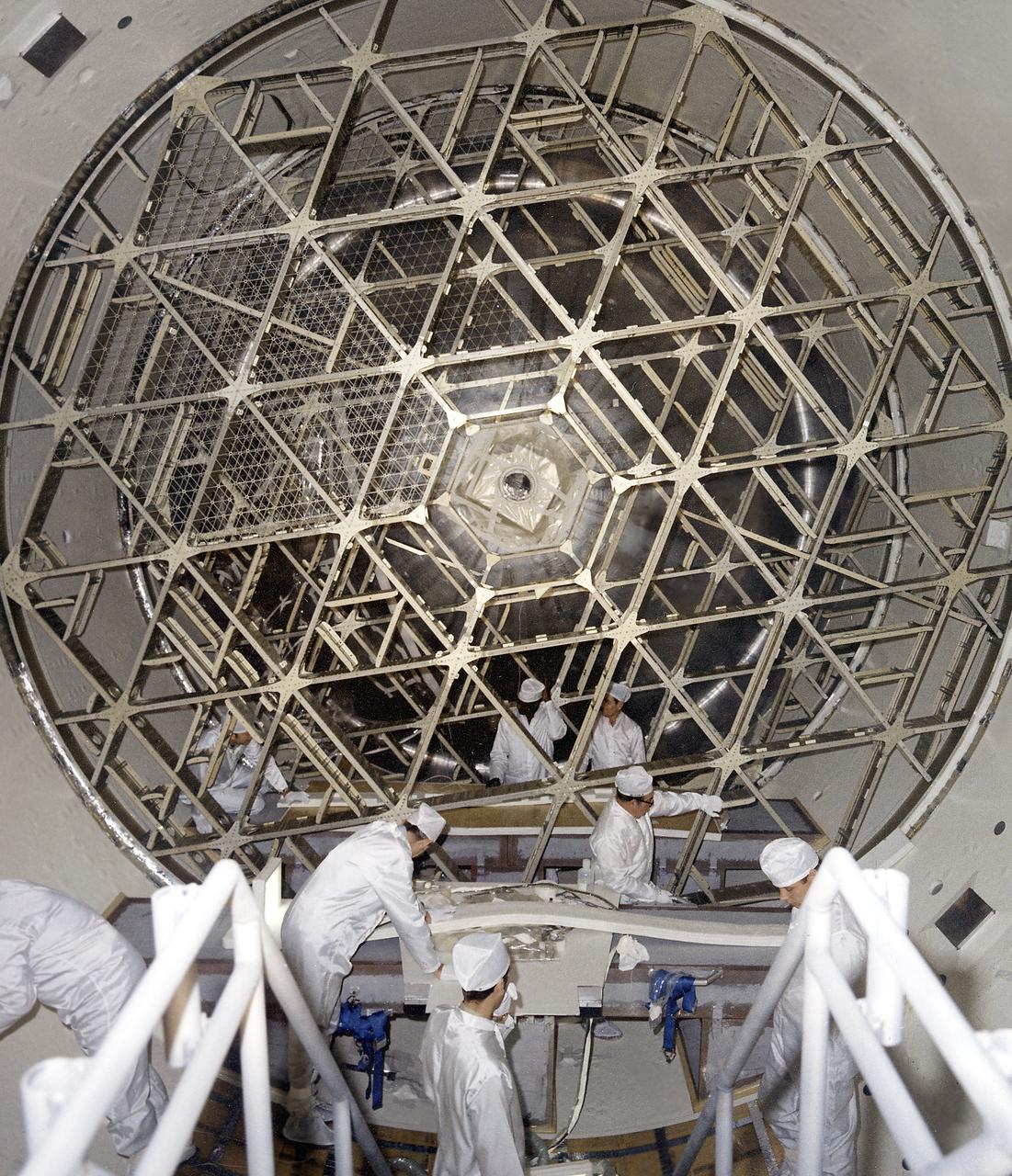
This photograph was taken during installation of floor grids on the upper and lower floors inside the Skylab Orbital Workshop at the McDornell Douglas plant at Huntington Beach, California. The OWS was divided into two major compartments. The lower level provided crew accommodations for sleeping, food preparation and consumption, hygiene, waste processing and disposal, and performance of certain experiments. The upper level consisted of a large work area and housed water storage tanks, a food freezer, storage vaults for film, scientific airlocks, mobility and stability experiment equipment, and other experimental equipment.
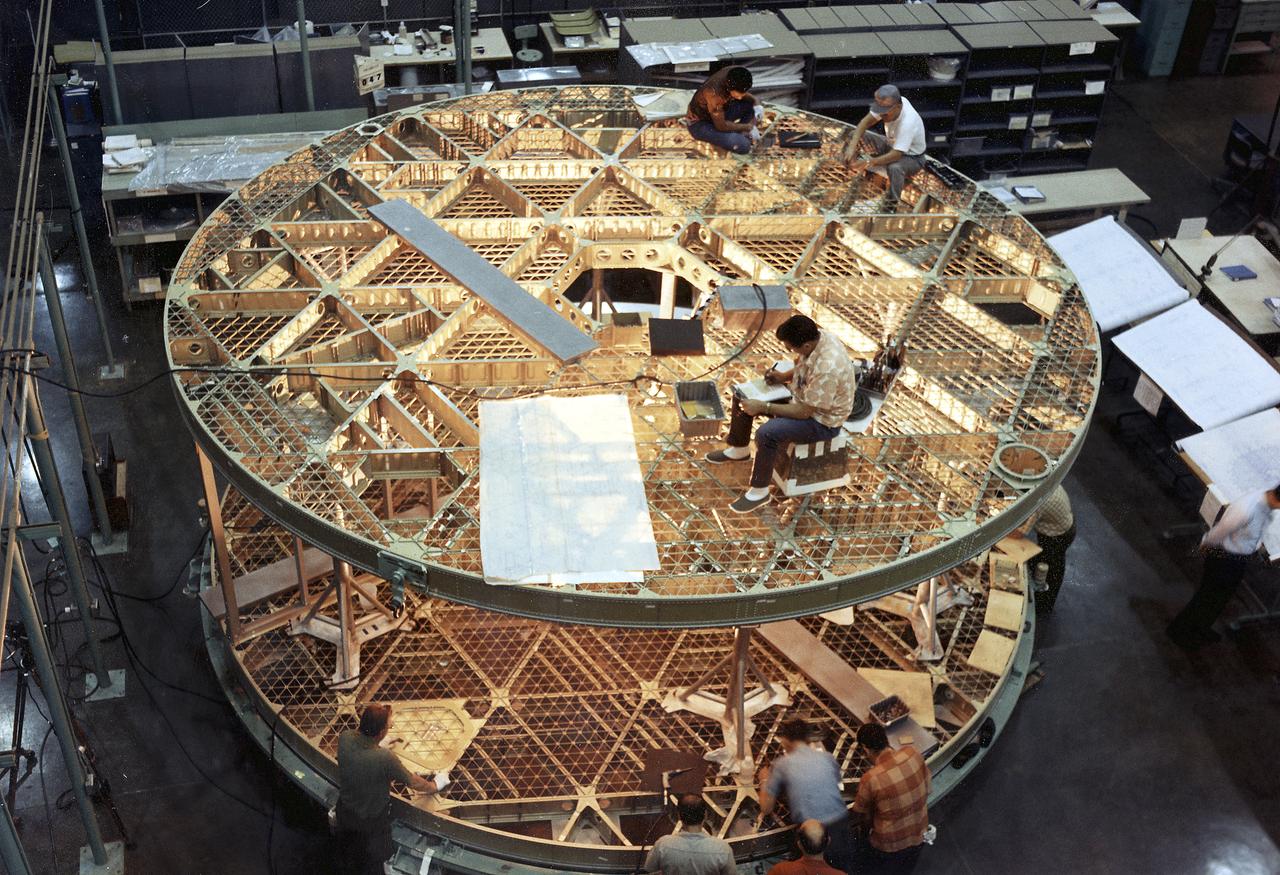
This photograph was taken during assembly of the bottom and upper floors of the Skylab Orbital Workshop (OWS). The OWS was divided into two major compartments. The lower level provided crew accommodations for sleeping, food preparation and consumption, hygiene, waste processing and disposal, and performance of certain experiments. The upper level consisted of a large work area and housed water storage tanks, a food freezer, storage vaults for film, scientific airlocks, mobility and stability experiment equipment, and other experimental equipment.

KENNEDY SPACE CENTER, FLA. - STS-115 Mission Specialist Joseph Tanner (second from right) checks out a camera and cables for the Japanese Experiment Module (JEM) in the Space Station Processing Facility. Known as Kibo, the JEM consists of six components: two research facilities - the Pressurized Module and the Exposed Facility; a Logistics Module attached to each of them; a Remote Manipulator System; and an Inter-Orbit Communication System unit. Kibo also has a scientific airlock through which experiments are transferred and exposed to the external environment of space. The various components of JEM will be assembled in space over the course of three Space Shuttle missions. Equipment familiarization is a routine part of astronaut training and launch preparations.
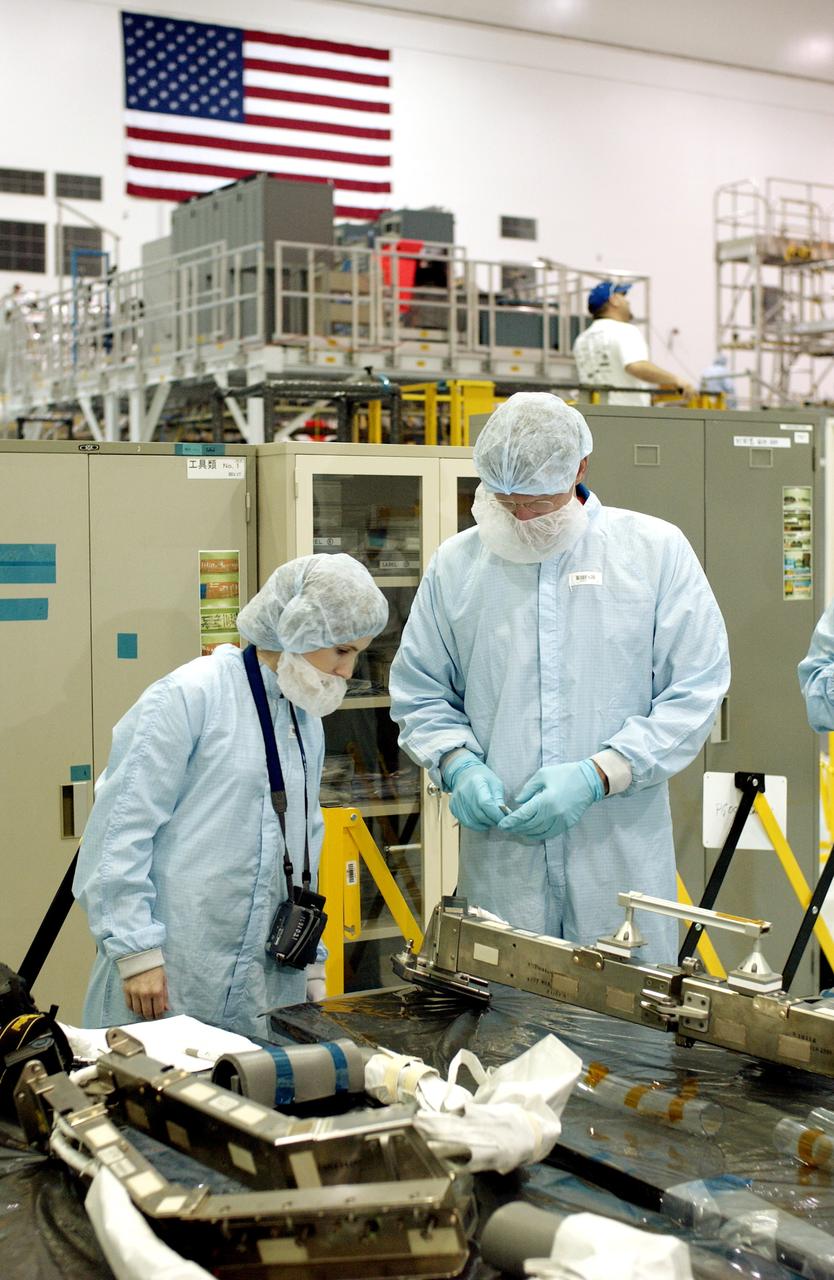
KENNEDY SPACE CENTER, FLA. - In the Space Station Processing Facility, STS-115 Mission Specialist Joseph Tanner (right) checks out a camera and cables for the Japanese Experiment Module (JEM). Known as Kibo, the JEM consists of six components: two research facilities - the Pressurized Module and the Exposed Facility; a Logistics Module attached to each of them; a Remote Manipulator System; and an Inter-Orbit Communication System unit. Kibo also has a scientific airlock through which experiments are transferred and exposed to the external environment of space. The various components of JEM will be assembled in space over the course of three Space Shuttle missions. Equipment familiarization is a routine part of astronaut training and launch preparations.
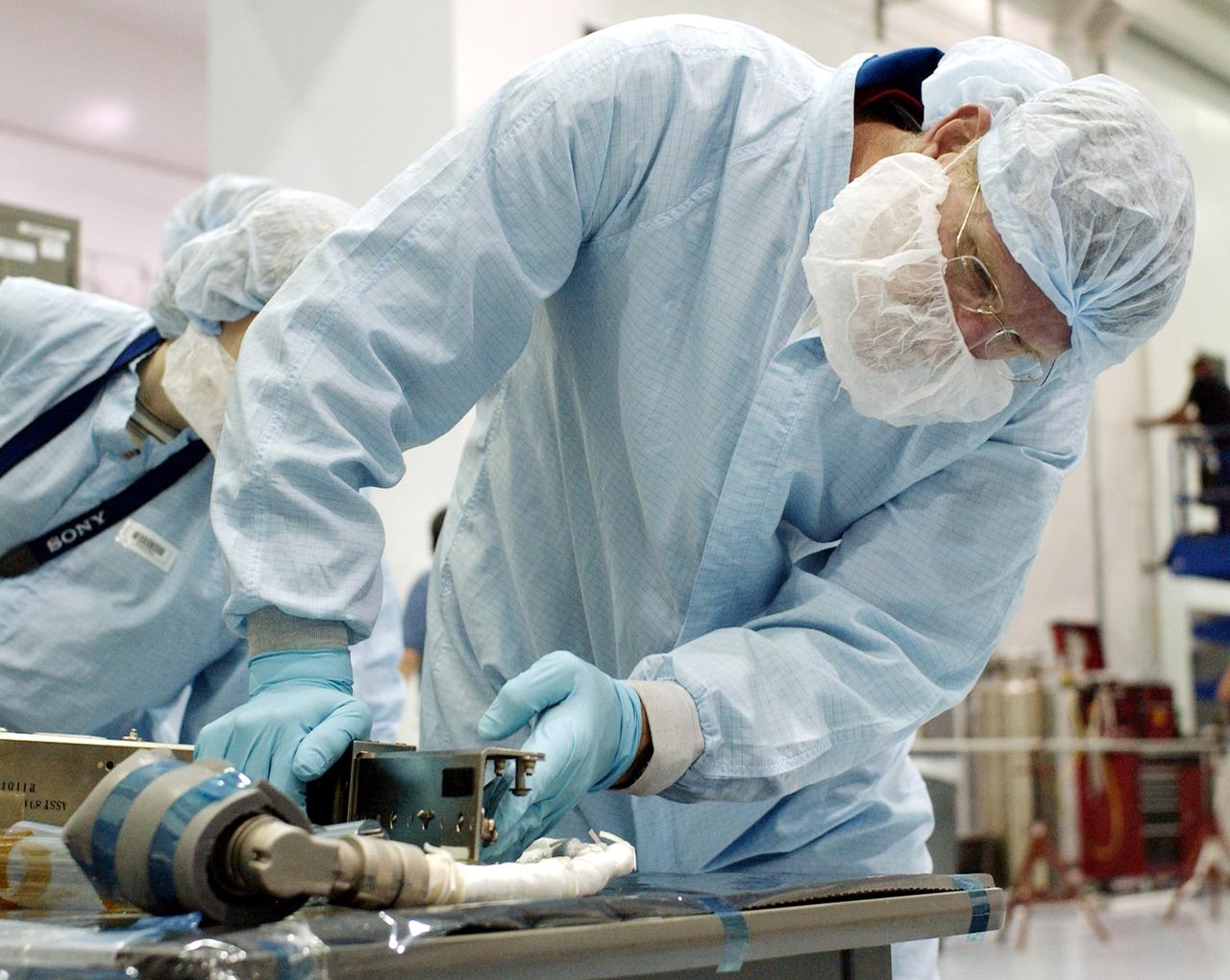
KENNEDY SPACE CENTER, FLA. - STS-115 Mission Specialist Joseph Tanner checks out a camera for the Japanese Experiment Module (JEM) in the Space Station Processing Facility. Known as Kibo, the JEM consists of six components: two research facilities -- the Pressurized Module and the Exposed Facility; a Logistics Module attached to each of them; a Remote Manipulator System; and an Inter-Orbit Communication System unit. Kibo also has a scientific airlock through which experiments are transferred and exposed to the external environment of space. The various components of JEM will be assembled in space over the course of three Space Shuttle missions. Equipment familiarization is a routine part of astronaut training and launch preparations.
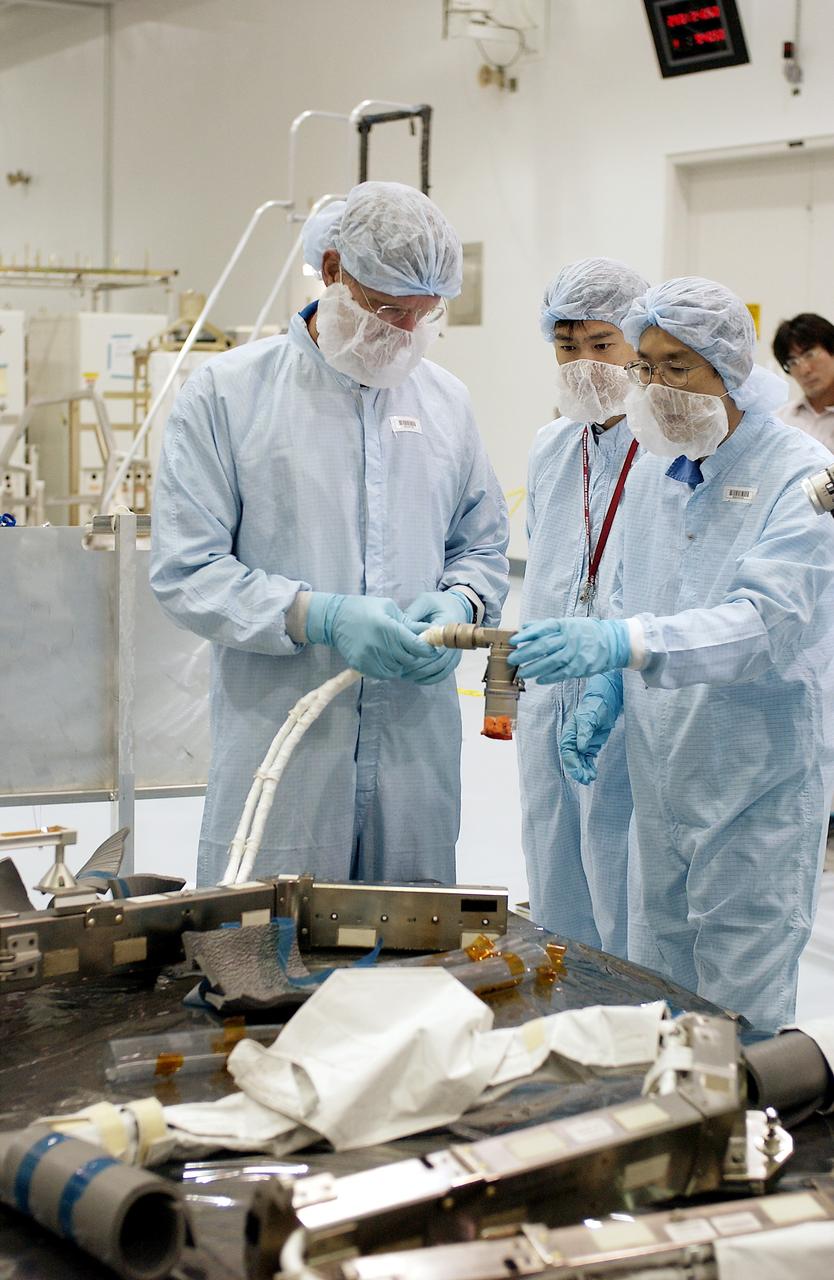
KENNEDY SPACE CENTER, FLA. - In the Space Station Processing Facility, STS-115 Mission Specialist Joseph Tanner (left) checks out a camera and cables to be used in the Japanese Experiment Module (JEM). Known as Kibo, the JEM consists of six components: two research facilities - the Pressurized Module and the Exposed Facility; a Logistics Module attached to each of them; a Remote Manipulator System; and an Inter-Orbit Communication System unit. Kibo also has a scientific airlock through which experiments are transferred and exposed to the external environment of space. The various components of JEM will be assembled in space over the course of three Space Shuttle missions. Equipment familiarization is a routine part of astronaut training and launch preparations.
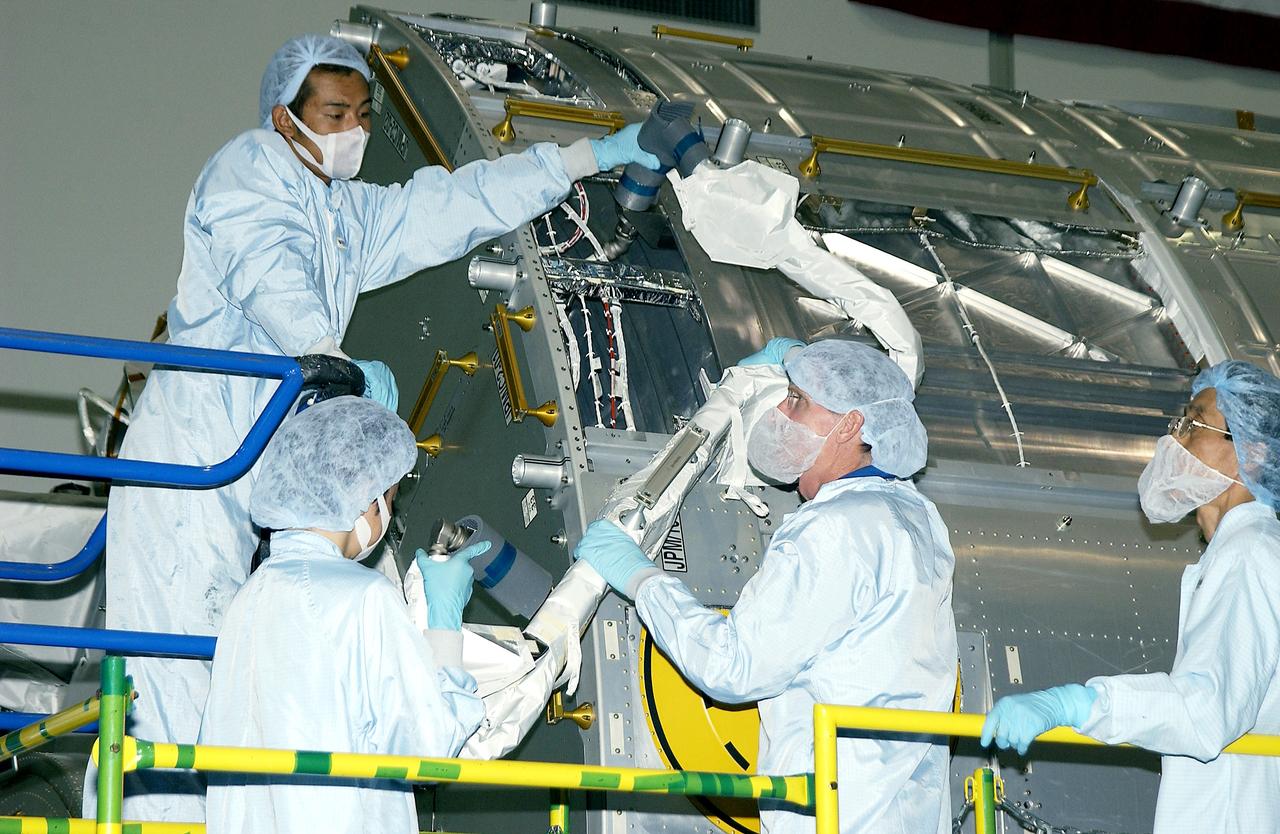
KENNEDY SPACE CENTER, FLA. - In the Space Station Processing Facility, STS-115 Mission Specialist Joseph Tanner (center, foreground) works with technicians to learn more about the Japanese Experiment Module (JEM), known as Kibo. The JEM consists of six components: two research facilities - the Pressurized Module and the Exposed Facility; a Logistics Module attached to each of them; a Remote Manipulator System; and an Inter-Orbit Communication System unit. Kibo also has a scientific airlock through which experiments are transferred and exposed to the external environment of space. The various components of JEM will be assembled in space over the course of three Space Shuttle missions. Equipment familiarization is a routine part of astronaut training and launch preparations.

KENNEDY SPACE CENTER, FLA. - In the Space Station Processing Facility, STS-115 Mission Specialist Joseph Tanner takes a closer look at the Japanese Experiment Module (JEM). Known as Kibo, the JEM consists of six components: two research facilities - the Pressurized Module and the Exposed Facility; a Logistics Module attached to each of them; a Remote Manipulator System; and an Inter-Orbit Communication System unit. Kibo also has a scientific airlock through which experiments are transferred and exposed to the external environment of space. The various components of JEM will be assembled in space over the course of three Space Shuttle missions. Equipment familiarization is a routine part of astronaut training and launch preparations.
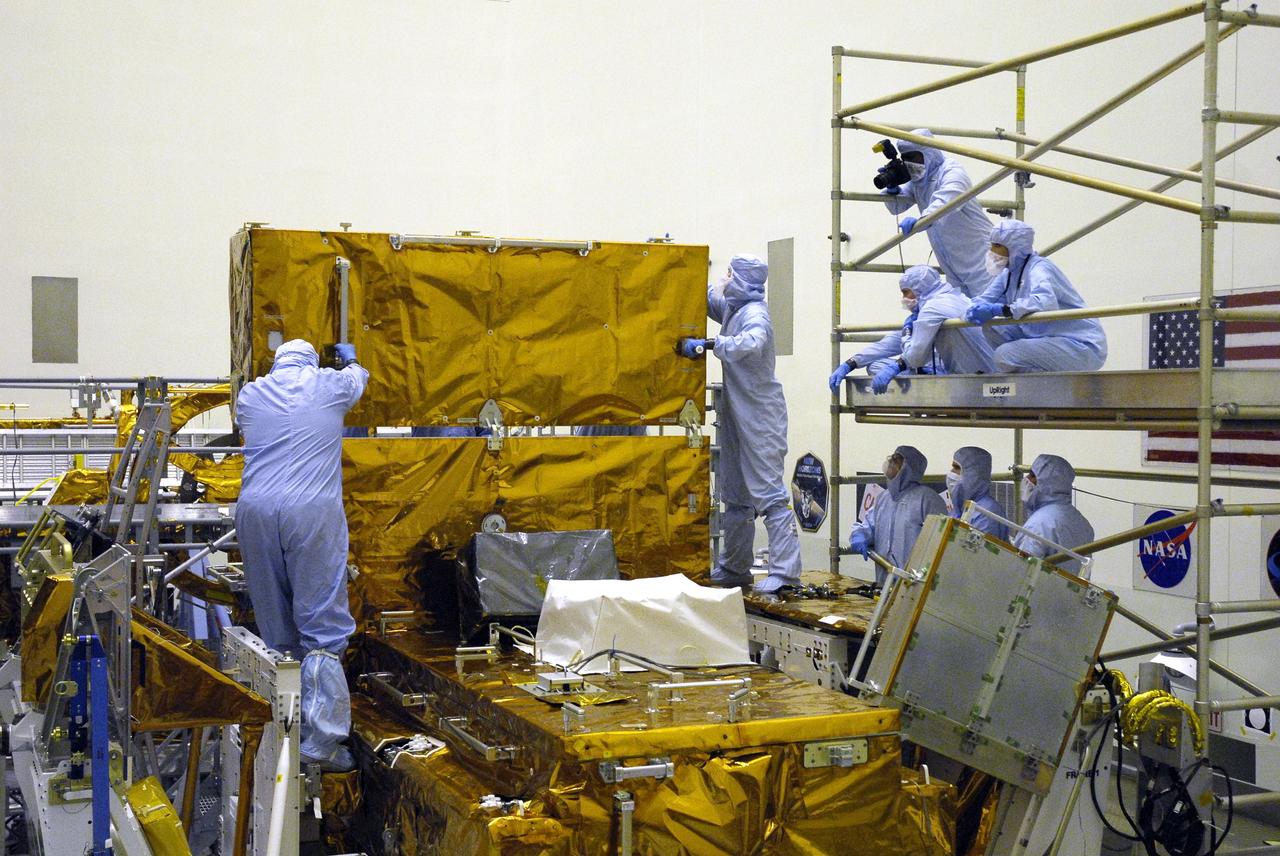
CAPE CANAVERAL, Fla. – In the Payload Hazardous Servicing Facility at NASA’s Kennedy Space Center, crew members with the STS-125 mission get a close look at some of the equipment associated with their mission to service NASA’s Hubble Space Telescope. Here, technicians prepare to close the Fine Guidance Sensor Scientific Instrument Protective Enclosure, or FSIPE. The STS-125 crew is taking part in a crew equipment interface test, which provides experience handling tools, equipment and hardware they will use on their mission. Space shuttle Atlantis is targeted to launch on the STS-125 mission Oct. 10. Photo credit: NASA/Kim Shiflett
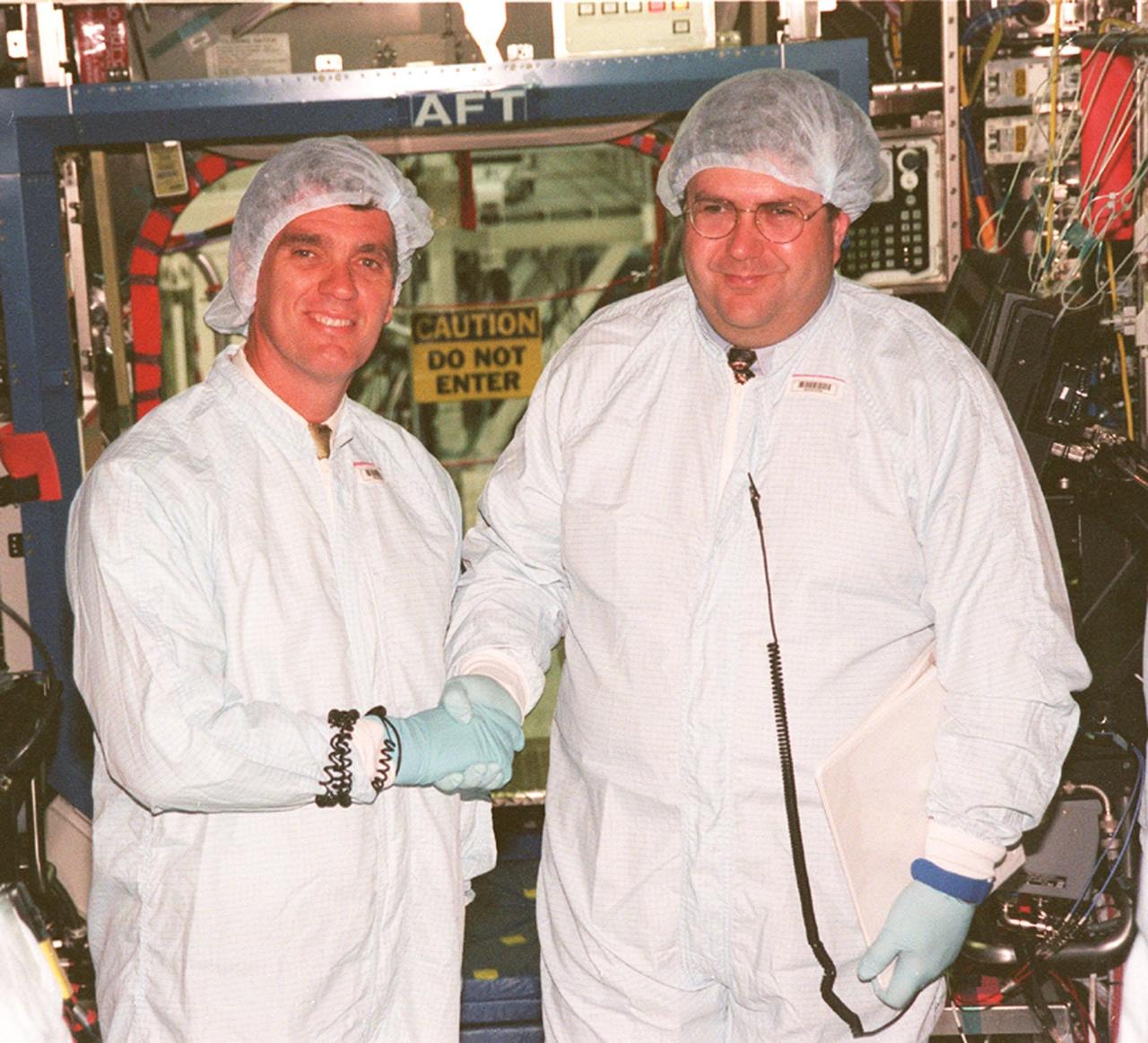
KENNEDY SPACE CENTER, FLA. -- Standing in front of the U.S. Lab, named Destiny, U.S. Rep. Dave Weldon (left) thanks Thomas R. "Randy" Galloway, with the Space Station Hardware Integration Office, for briefing him on the equipment inside the Lab. Weldon is on the House Science Committee and vice chairman of the Space and Aeronautics Subcommittee. Destiny is scheduled to be launched on Space Shuttle Endeavour in early 2000. It will become the centerpiece of scientific research on the ISS, with five equipment racks aboard to provide essential functions for station systems, including high data-rate communications, and to maintain the station's orientation using control gyroscopes launched earlier. Additional equipment and research racks will be installed in the laboratory on subsequent Shuttle flights
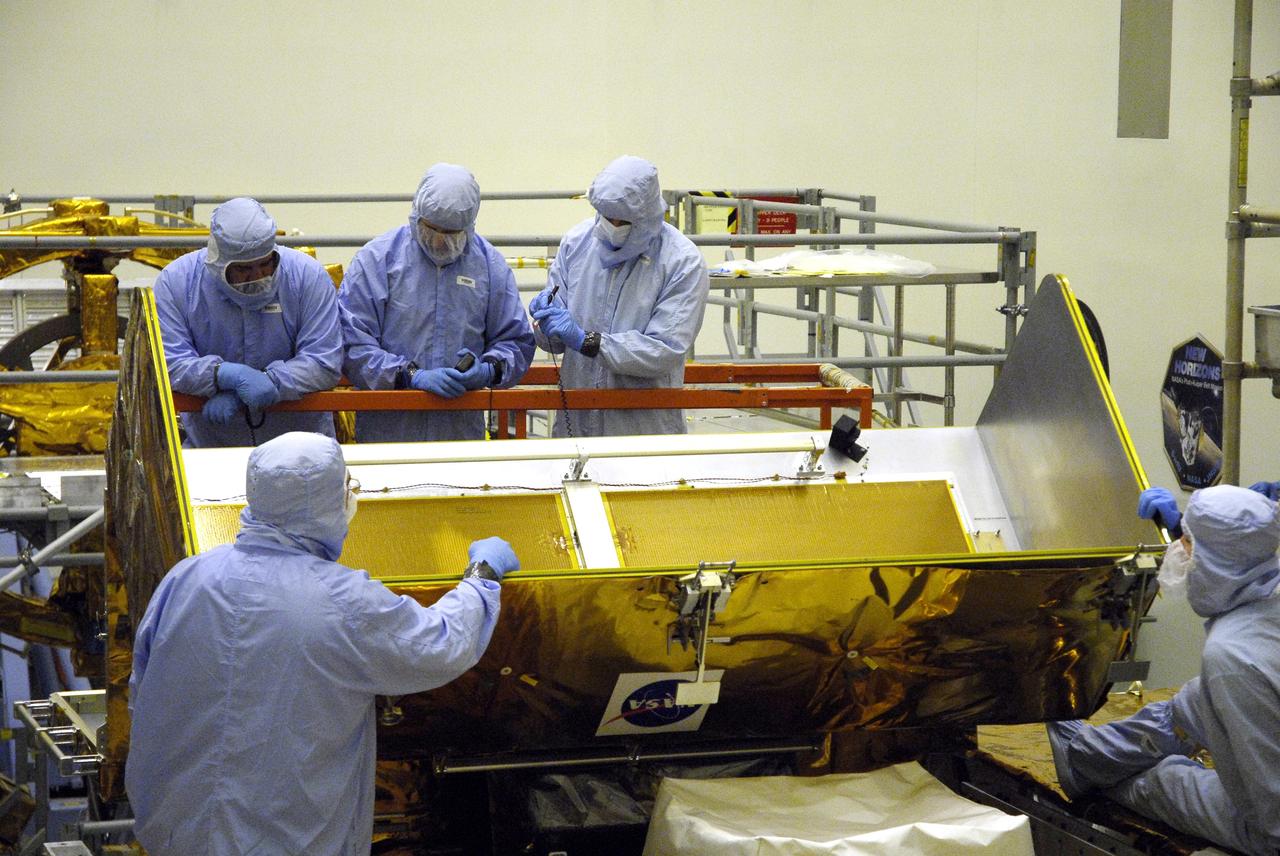
CAPE CANAVERAL, Fla. – In the Payload Hazardous Servicing Facility at NASA’s Kennedy Space Center, crew members with the STS-125 mission get a close look at some of the equipment associated with their mission to service NASA’s Hubble Space Telescope. From right, Mission Specialists Andrew Feustel and Mike Massimino look at the Fine Guidance Sensor inside the Fine Guidance Sensor Scientific Instrument Protective Enclosure, or FSIPE. The STS-125 crew is taking part in a crew equipment interface test, which provides experience handling tools, equipment and hardware they will use on their mission. Space shuttle Atlantis is targeted to launch on the STS-125 mission Oct. 10. Photo credit: NASA/Kim Shiflett
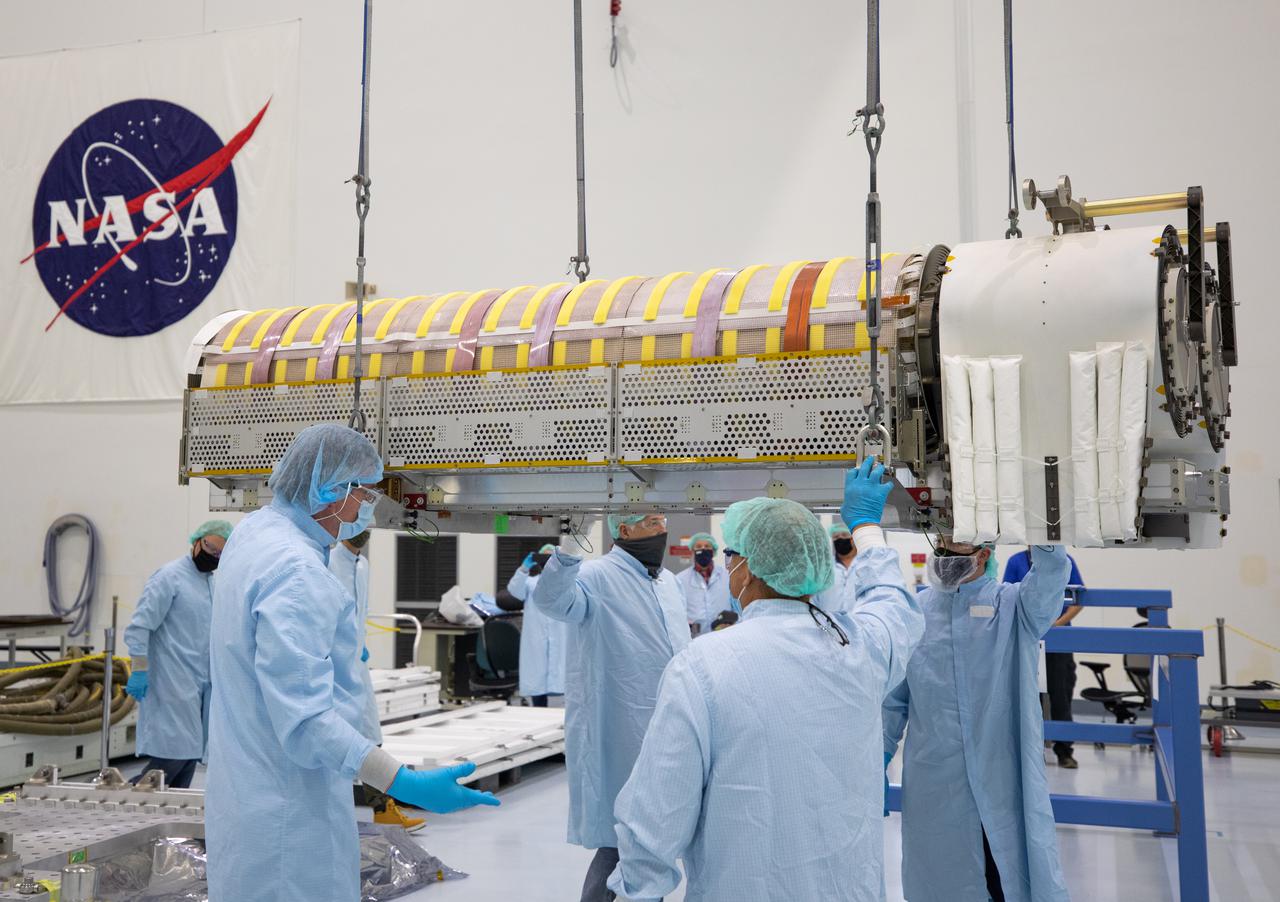
NASA and Boeing workers lift solar arrays into flight support equipment on April 2, 2021, in the Space Station Processing Facility at NASA’s Kennedy Space Center in Florida. The 63- by- 20-foot solar arrays will launch to the International Space Station later this year. They are the first two of six new solar arrays that in total will produce more than 120 kilowatts of electricity from the Sun’s energy, enough to power more than 40 average U.S. homes. Combined with the eight original, larger arrays, this advanced hardware will provide 215 kilowatts of energy, a 20 to 30 percent increase in power, helping maximize the space station’s capabilities for years to come. The arrays will produce electricity to sustain the station’s systems and equipment, plus augment the electricity available to continue a wide variety of public and private experiments and research in the microgravity environment of low-Earth orbit. Most of the station systems, including its batteries, scientific equipment racks, and communications equipment have been upgraded since humans began a continuous presence on the orbiting laboratory in November 2000. For more than two decades, astronauts have lived and worked on this unique orbiting lab, supporting scientific research that has led to numerous discoveries that benefit people on Earth and prepare for future Artemis missions to the Moon and beyond.
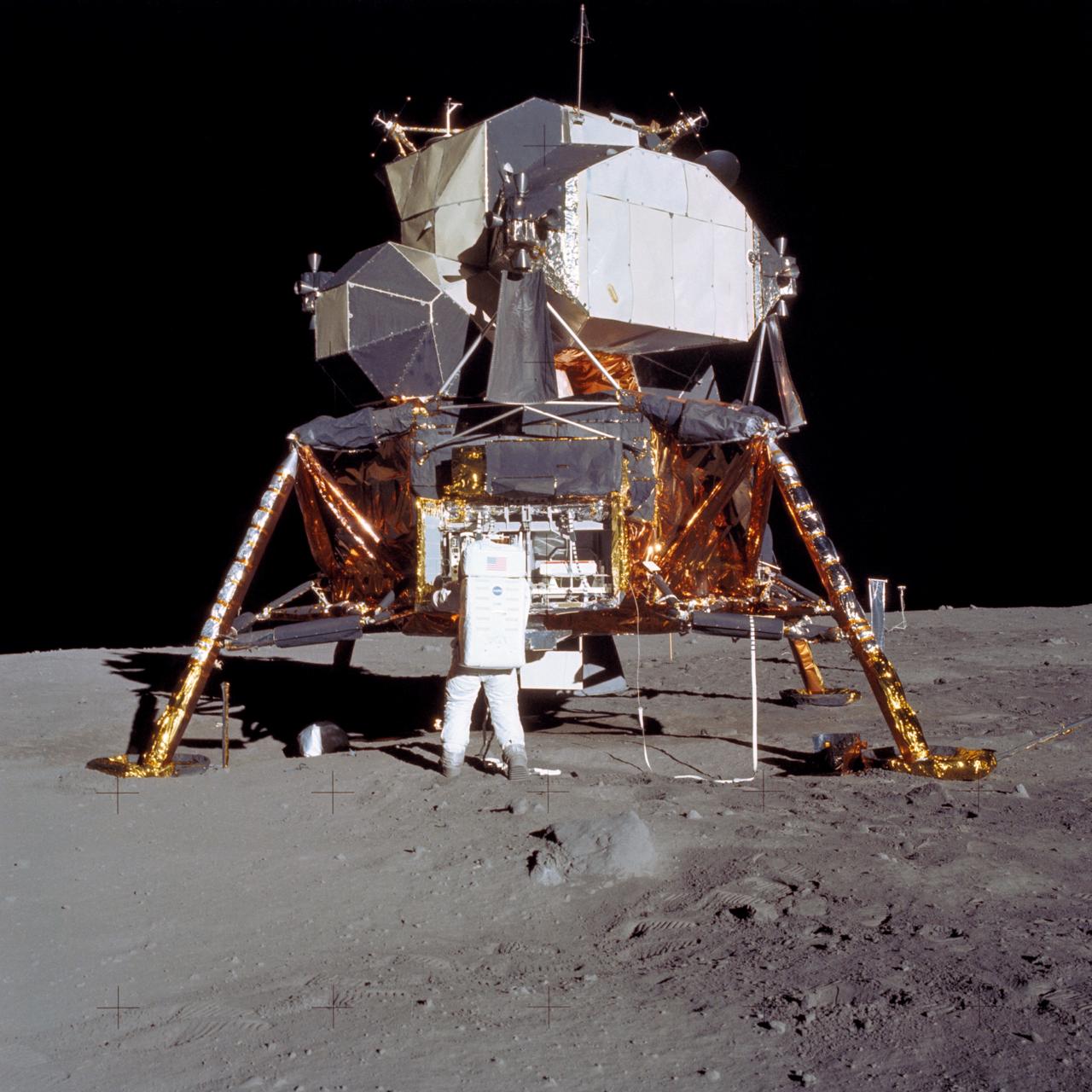
AS11-40-5927 (20 July 1969) --- Astronaut Edwin E. Aldrin Jr., lunar module pilot, prepares to deploy the Early Apollo Scientific Experiments Package (EASEP) during the Apollo 11 lunar surface extravehicular activity (EVA). Astronaut Neil A. Armstrong, commander, took this picture with a 70mm lunar surface camera. During flight the EASEP is stowed in the Lunar Module's (LM) scientific equipment bay at the left year quadrant of the descent stage looking forward. Aldrin is removing the EASEP from its stowed position. Photo credit: NASA
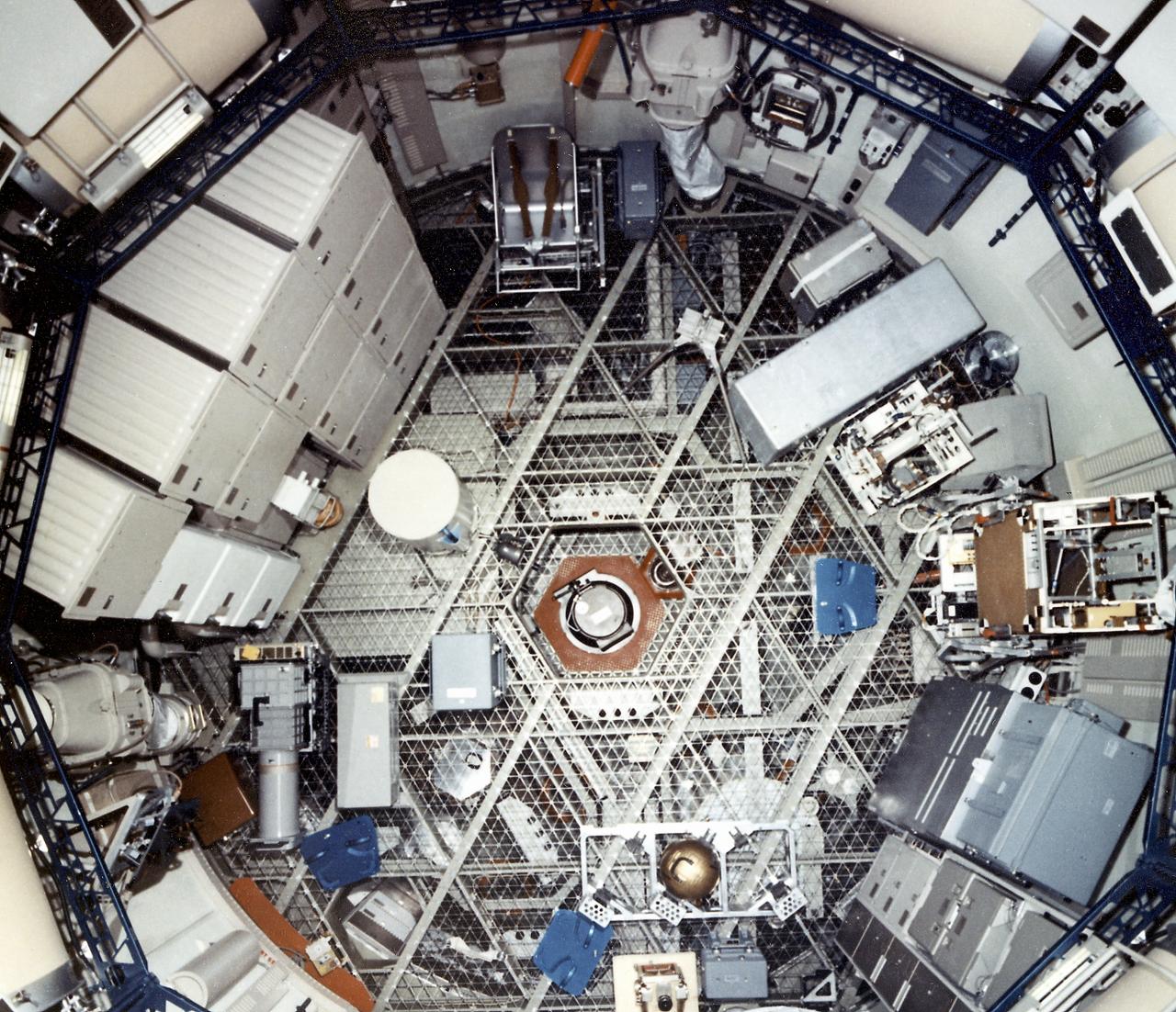
This photograph is an interior view of the Orbital Workshop (OWS) upper level looking from the airlock hatch, showing the octagonal opening that separated the workshop's two levels. The trash airlock can be seen at center. The lower level of the OWS provided crew accommodations for sleeping, food preparation and consumption, hygiene, waste processing and disposal, and performance of certain experiments. The upper level consisted of a large work area and housed water storage tanks, a food freezer, storage vaults for film, scientific airlocks, mobility and stability experiment equipment, and other experimental equipment.

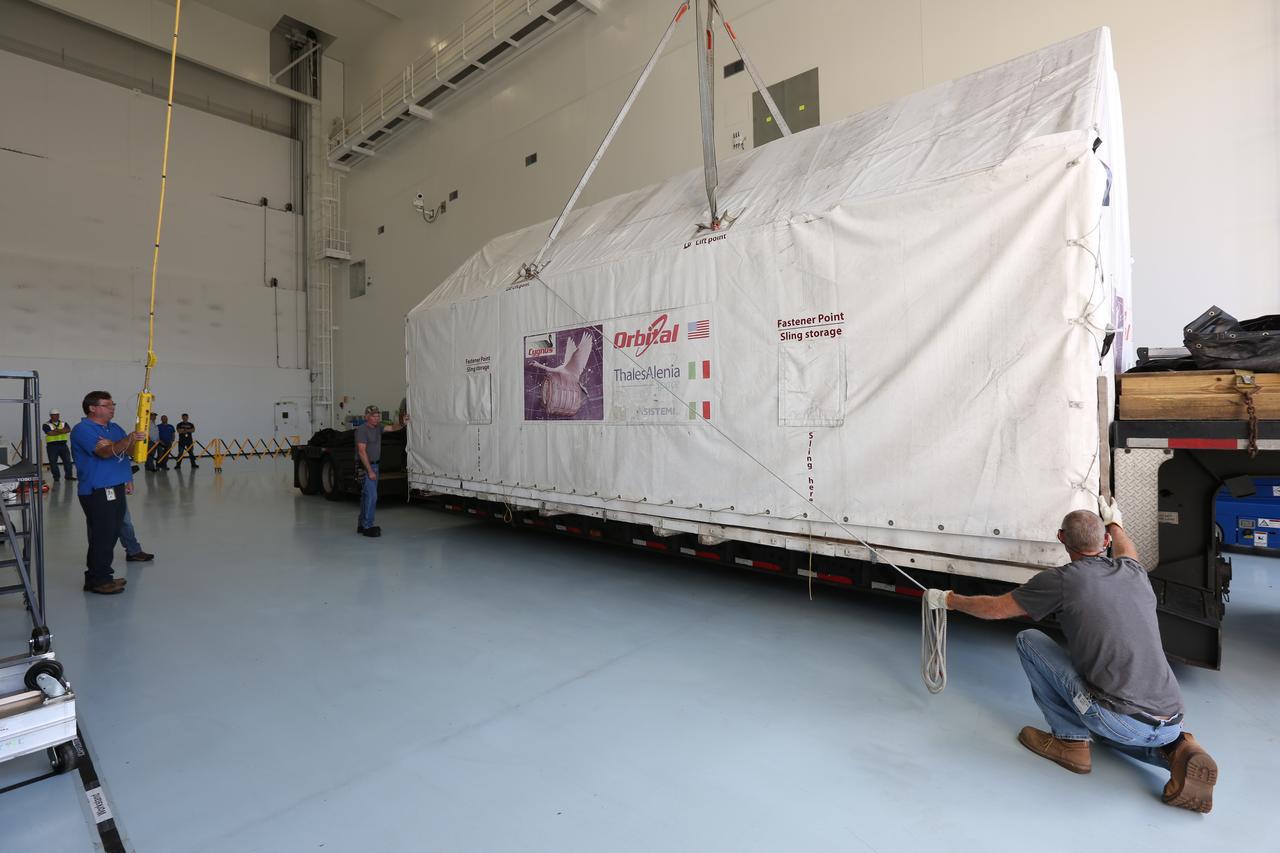
Inside the Space Station Processing Facility low bay at NASA’s Kennedy Space Center in Florida, technicians use a crane to lift the cover off ground support equipment for the Orbital ATK OA-7 commercial resupply services mission. The Orbital ATK CRS-7 with the Cygnus cargo module will lift off atop a United Launch Alliance Atlas V rocket from Space launch Complex 41 at Cape Canaveral Air Force Station. The commercial resupply services mission to the International Space Station will deliver thousands of pounds of supplies, equipment and scientific research materials that improve life on Earth and drive progress toward future space exploration.

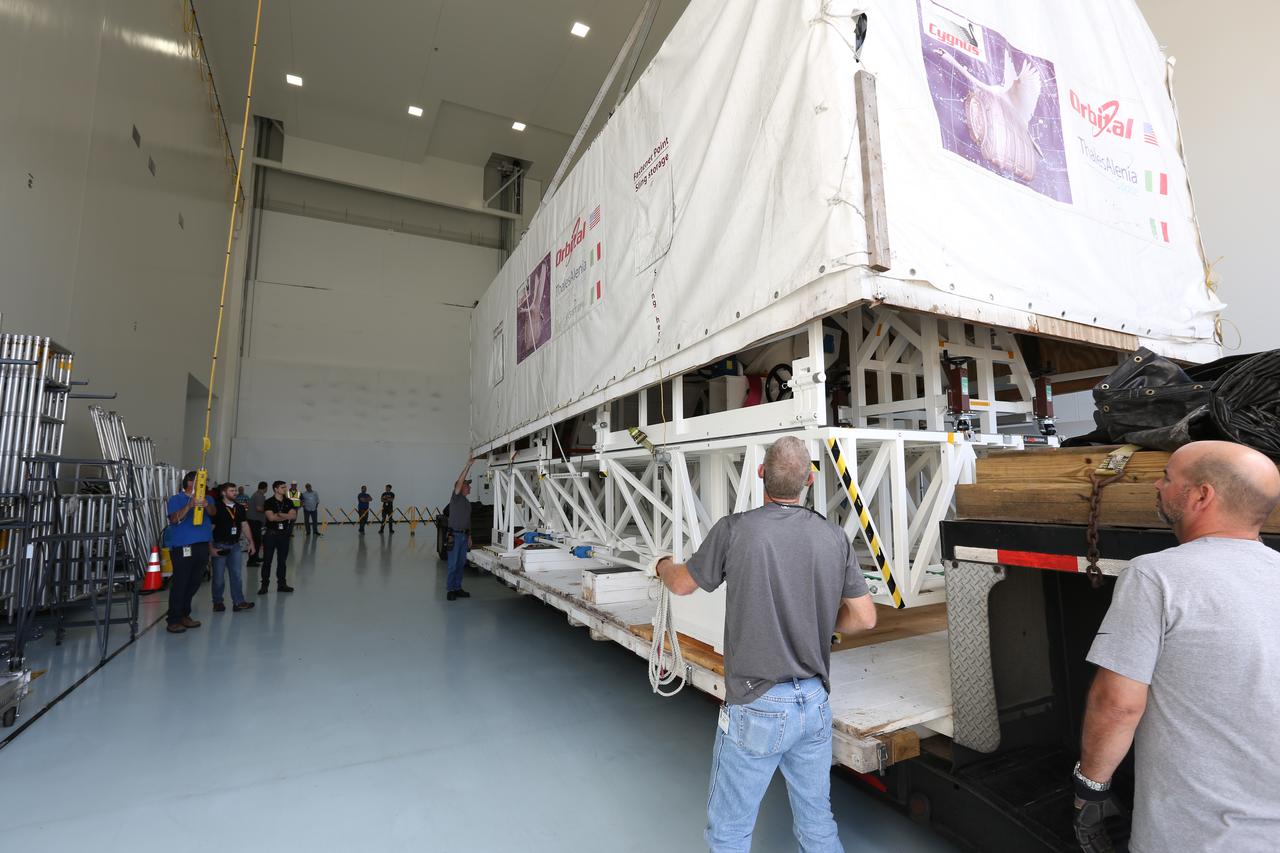
Sealed in its shipping container, the ground support equipment for the Orbital ATK OA-7 commercial resupply services mission has arrived at the Space Station Processing Facility at NASA's Kennedy Space Center in Florida. The container will be moved inside the low bay of the facility. The Orbital ATK CRS-7 with the Cygnus cargo module will lift off atop a United Launch Alliance Atlas V rocket from Space launch Complex 41 at Cape Canaveral Air Force Station. The commercial resupply services mission to the International Space Station will deliver thousands of pounds of supplies, equipment and scientific research materials that improve life on Earth and drive progress toward future space exploration.
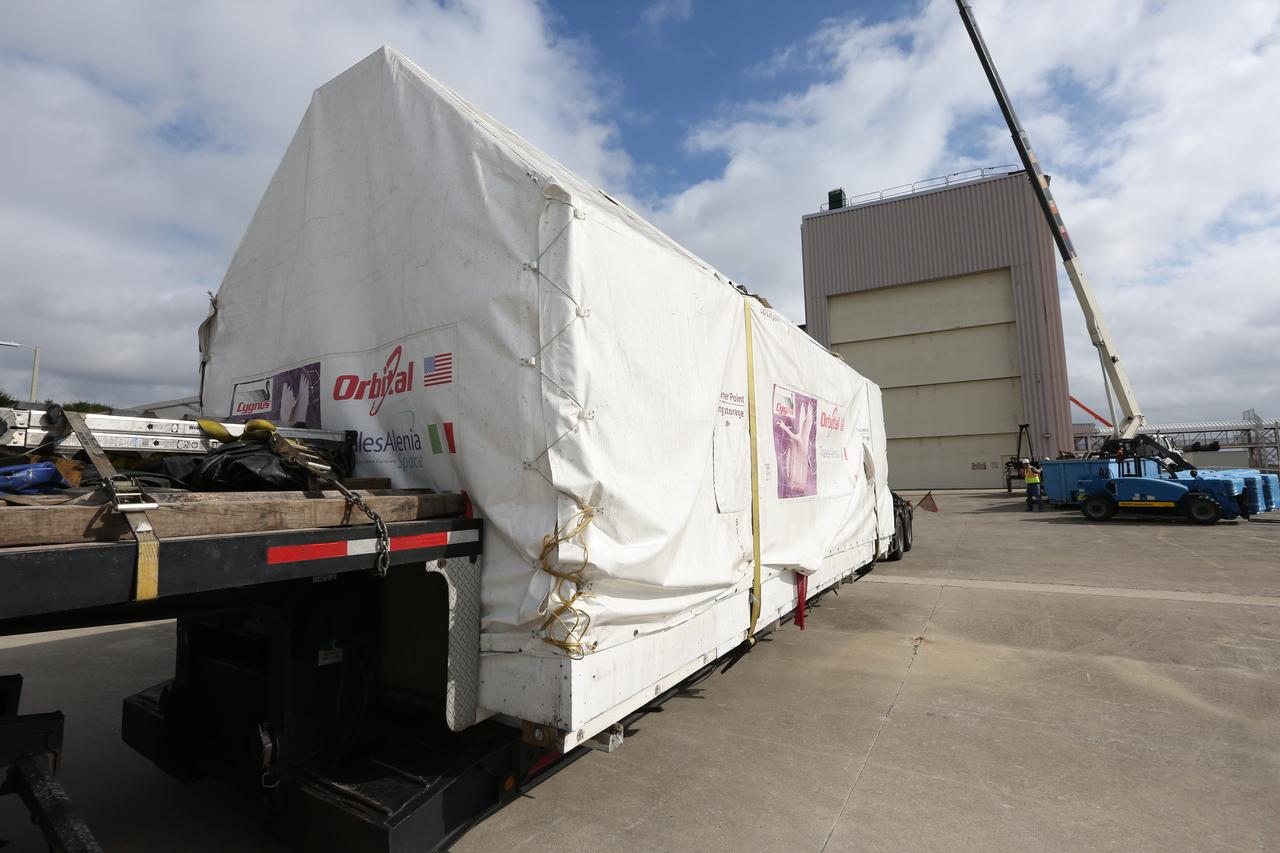
Sealed in its shipping container, the ground support equipment for the Orbital ATK OA-7 commercial resupply services mission has arrived at the Space Station Processing Facility at NASA's Kennedy Space Center in Florida. The container will be moved inside the low bay of the facility. The Orbital ATK CRS-7 with the Cygnus cargo module will lift off atop a United Launch Alliance Atlas V rocket from Space launch Complex 41 at Cape Canaveral Air Force Station. The commercial resupply services mission to the International Space Station will deliver thousands of pounds of supplies, equipment and scientific research materials that improve life on Earth and drive progress toward future space exploration.
Inside the Space Station Processing Facility low bay at NASA’s Kennedy Space Center in Florida, technicians use a crane to lift the cover off ground support equipment for the Orbital ATK OA-7 commercial resupply services mission. The Orbital ATK CRS-7 with the Cygnus cargo module will lift off atop a United Launch Alliance Atlas V rocket from Space launch Complex 41 at Cape Canaveral Air Force Station. The commercial resupply services mission to the International Space Station will deliver thousands of pounds of supplies, equipment and scientific research materials that improve life on Earth and drive progress toward future space exploration.
Sealed in its shipping container, the ground support equipment for the Orbital ATK OA-7 commercial resupply services mission was moved inside the low bay of the Space Station Processing Facility at NASA's Kennedy Space Center in Florida. The Orbital ATK CRS-7 with the Cygnus cargo module will lift off atop a United Launch Alliance Atlas V rocket from Space launch Complex 41 at Cape Canaveral Air Force Station. The commercial resupply services mission to the International Space Station will deliver thousands of pounds of supplies, equipment and scientific research materials that improve life on Earth and drive progress toward future space exploration.
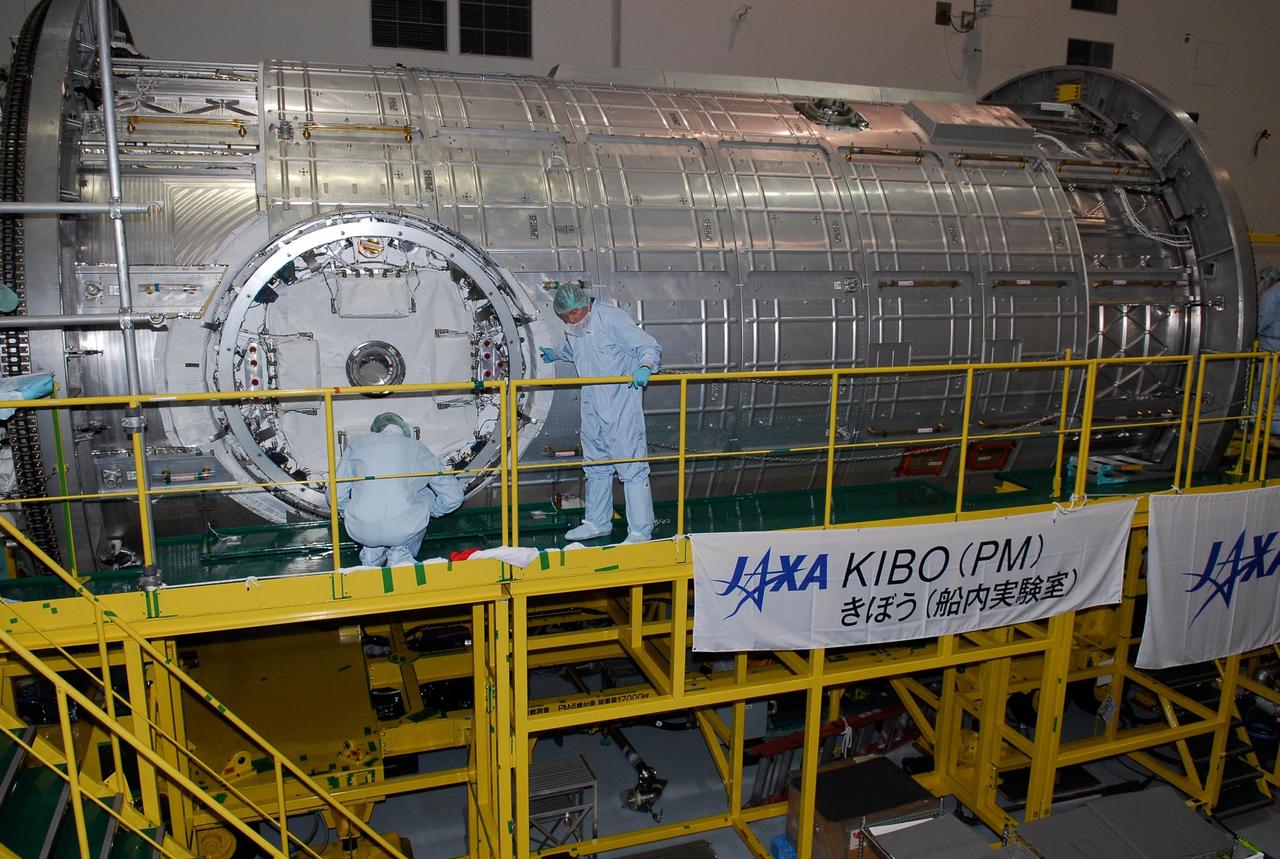
KENNEDY SPACE CENTER, FLA. -- In the Space Station Processing Facility at NASA's Kennedy Space Center, members of the STS-124 crew look over equipment related to the scientific airlock in the Kibo pressurized module. The module is part of the payload for the mission, targeted for launch no earlier than April 24. The crew comprises seven: Commander Mark Kelly, Pilot Kenneth Ham, and Mission Specialists Karen Nyberg, Ronald Garan, Michael Fossum and Akihiko Hoshide. The crew is at Kennedy for a crew equipment interface test that includes familiarization with tools and equipment that will be used on the mission. The STS-124 mission is the second of three flights that will launch components to complete the Japanese pressurized module, the Kibo laboratory. The mission will include two spacewalks to install the new lab and its remote manipulator system. The lab's logistics module, which will have been installed in a temporary location during STS-123, will be attached to the new lab. Photo credit: NASA/Kim Shiflett

KENNEDY SPACE CENTER, FLA. -- In the Orbiter Processing Facility, STS-122 Mission Specialist Rex Walheim practices working with equipment for the mission. In the background, at right, is European Space Agency astronaut Leopold Eyharts, who will be on the mission and joining the Expedition 16 crew as flight engineer on the International Space Station. The crew is at Kennedy Space Center to take part in a crew equipment interface test, which includes equipment familiarization. The mission will carry and install the Columbus Lab, a multifunctional, pressurized laboratory that will be permanently attached to Node 2 of the space station to carry out experiments in materials science, fluid physics and biosciences, as well as to perform a number of technological applications. It is Europe’s largest contribution to the construction of the International Space Station and will support scientific and technological research in a microgravity environment. STS-122 is targeted for launch in December. Photo credit: NASA/Kim Shiflett
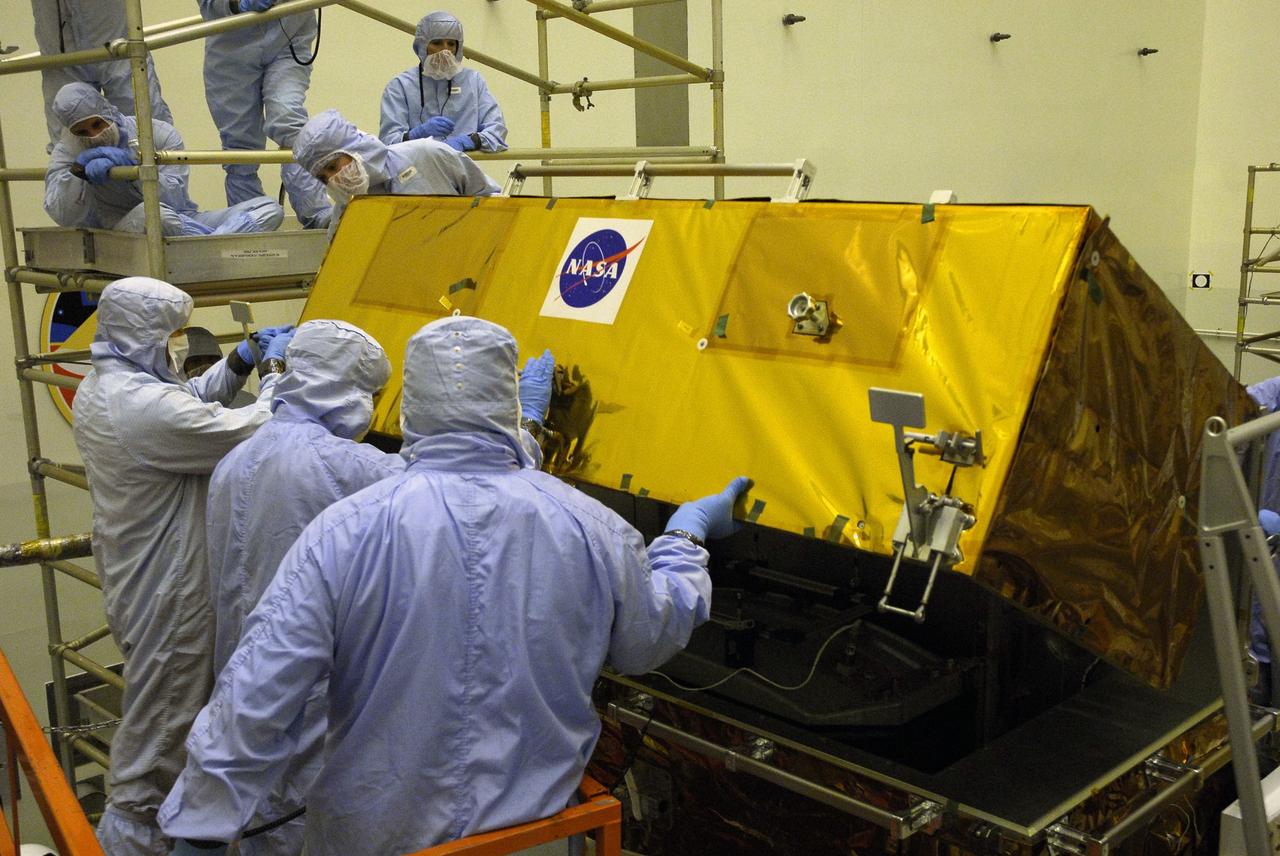
CAPE CANAVERAL, Fla. – In the Payload Hazardous Servicing Facility at NASA’s Kennedy Space Center, crew members with the STS-125 mission get a close look at some of the equipment associated with their mission to service NASA’s Hubble Space Telescope. From left, Mission Specialists John Grunsfeld and Mike Massimino, with the help of a technician, open the Fine Guidance Sensor Scientific Instrument Protective Enclosure, or FSIPE, to look at the Fine Guidance Sensor. The STS-125 crew is taking part in a crew equipment interface test, which provides experience handling tools, equipment and hardware they will use on their mission. Space shuttle Atlantis is targeted to launch on the STS-125 mission Oct. 10. Photo credit: NASA/Kim Shiflett
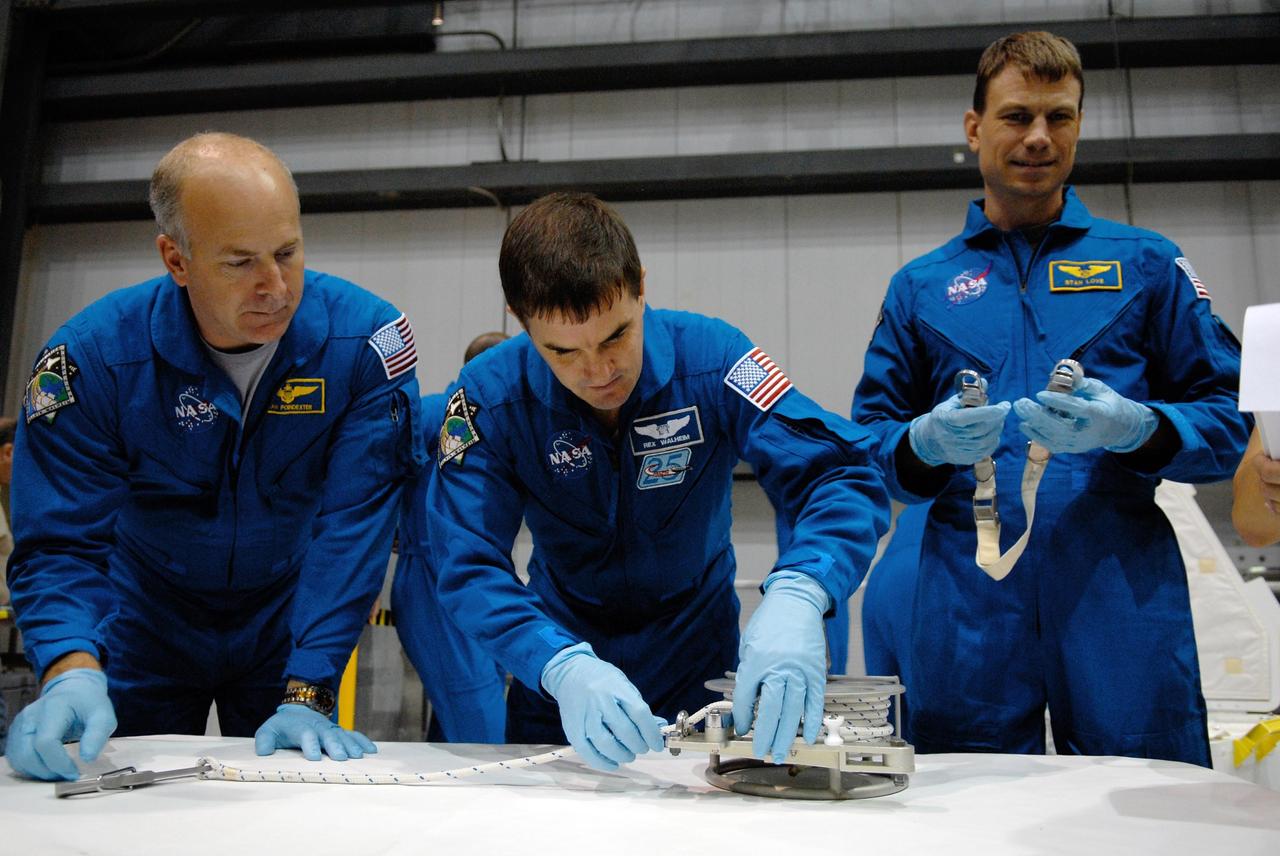
KENNEDY SPACE CENTER, FLA. -- In the Orbiter Processing Facility, STS-122 Pilot Alan Poindexter and Mission Specialists Rex Walheim and Stanley Love practice working with equipment for the mission. The crew is at Kennedy Space Center to take part in a crew equipment interface test, which includes equipment familiarization. The mission will carry and install the Columbus Lab, a multifunctional, pressurized laboratory that will be permanently attached to Node 2 of the space station to carry out experiments in materials science, fluid physics and biosciences, as well as to perform a number of technological applications. It is Europe’s largest contribution to the construction of the International Space Station and will support scientific and technological research in a microgravity environment. STS-122 is targeted for launch in December. Photo credit: NASA/Kim Shiflett
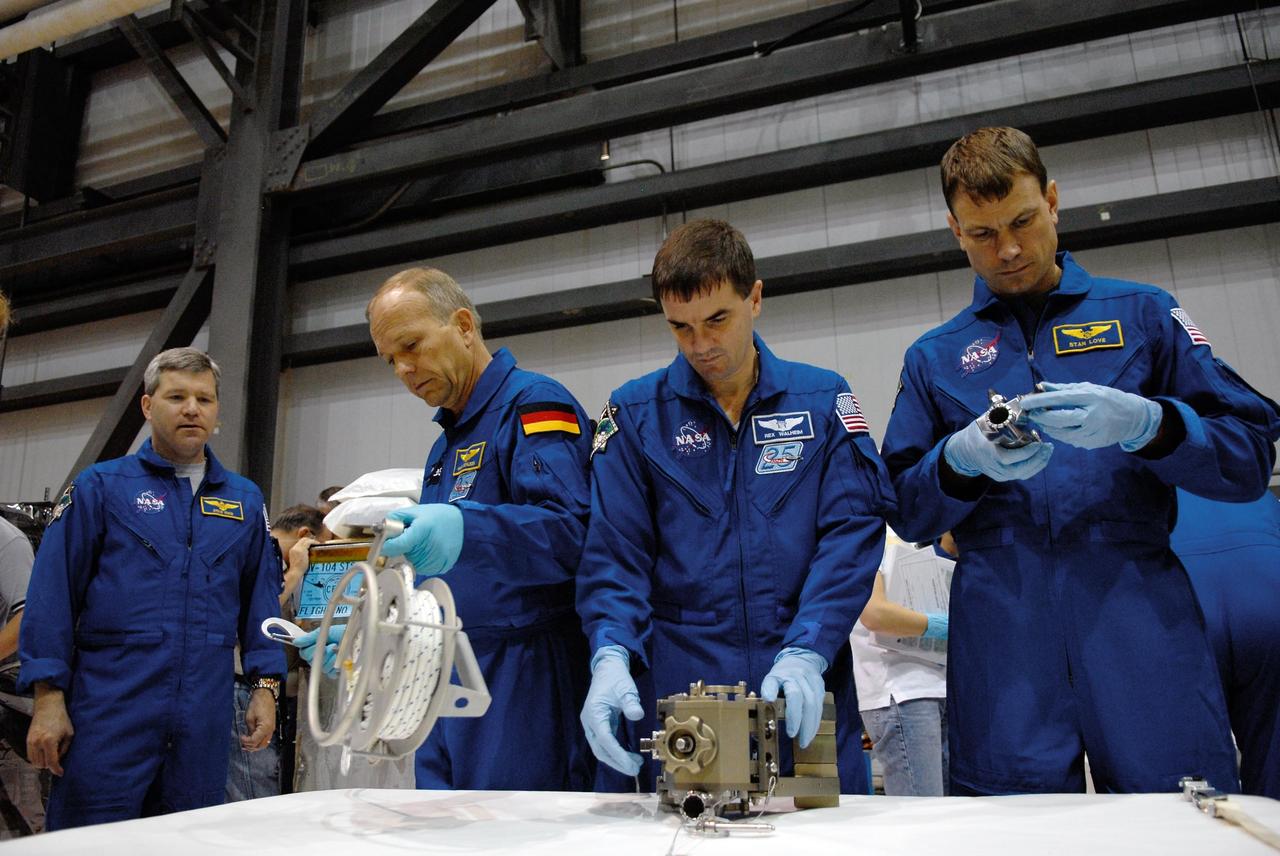
KENNEDY SPACE CENTER, FLA. -- In the Orbiter Processing Facility, STS-122 crew members practice working with equipment for the mission. From left are Commander Stephen Frick and Mission Specialists Hans Schlegel, Rex Walheim and Stanley Love. Schlegel represents the European Space Agency. The crew is at Kennedy Space Center to take part in a crew equipment interface test, which includes equipment familiarization. The mission will carry and install the Columbus Lab, a multifunctional, pressurized laboratory that will be permanently attached to Node 2 of the space station to carry out experiments in materials science, fluid physics and biosciences, as well as to perform a number of technological applications. It is Europe’s largest contribution to the construction of the International Space Station and will support scientific and technological research in a microgravity environment. STS-122 is targeted for launch in December. Photo credit: NASA/Kim Shiflett
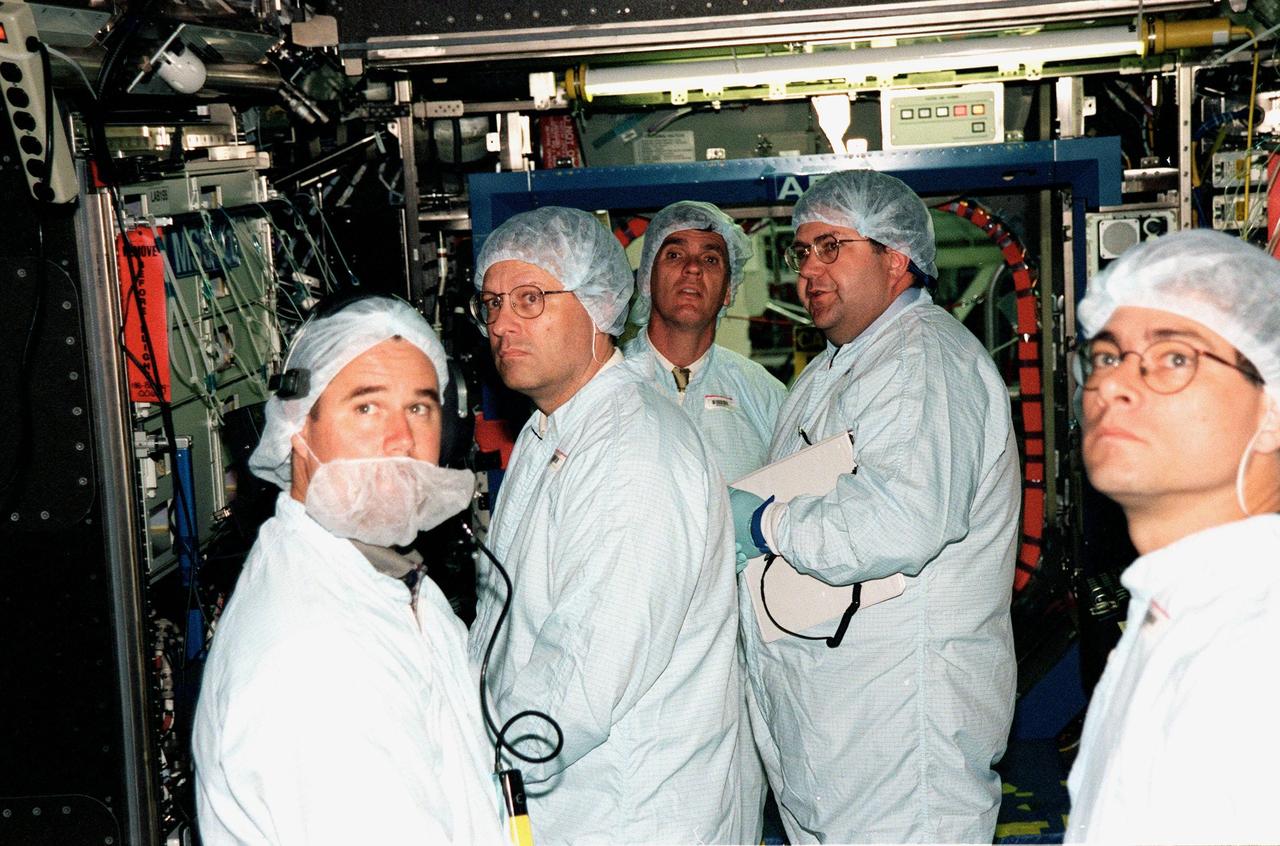
KENNEDY SPACE CENTER, FLA. -- In the Space Station Processing Facility, U.S. Rep. Dave Weldon (center) and his chief of staff Dana Gartzke (second from left) get a close-up look at the interior of the U.S. Lab, called "Destiny." Thomas R. "Randy" Galloway (second from right), with the Space Station Hardware Integration Office, helps with their familiarization of the equipment. They are joined (far left and right) by workers from Boeing. Weldon is on the House Science Committee and vice chairman of the Space and Aeronautics Subcommittee. Destiny is scheduled to be launched on Space Shuttle Endeavour in early 2000. It will become the centerpiece of scientific research on the ISS, with five equipment racks aboard to provide essential functions for station systems, including high data-rate communications, and to maintain the station's orientation using control gyroscopes launched earlier. Additional equipment and research racks will be installed in the laboratory on subsequent Shuttle flights
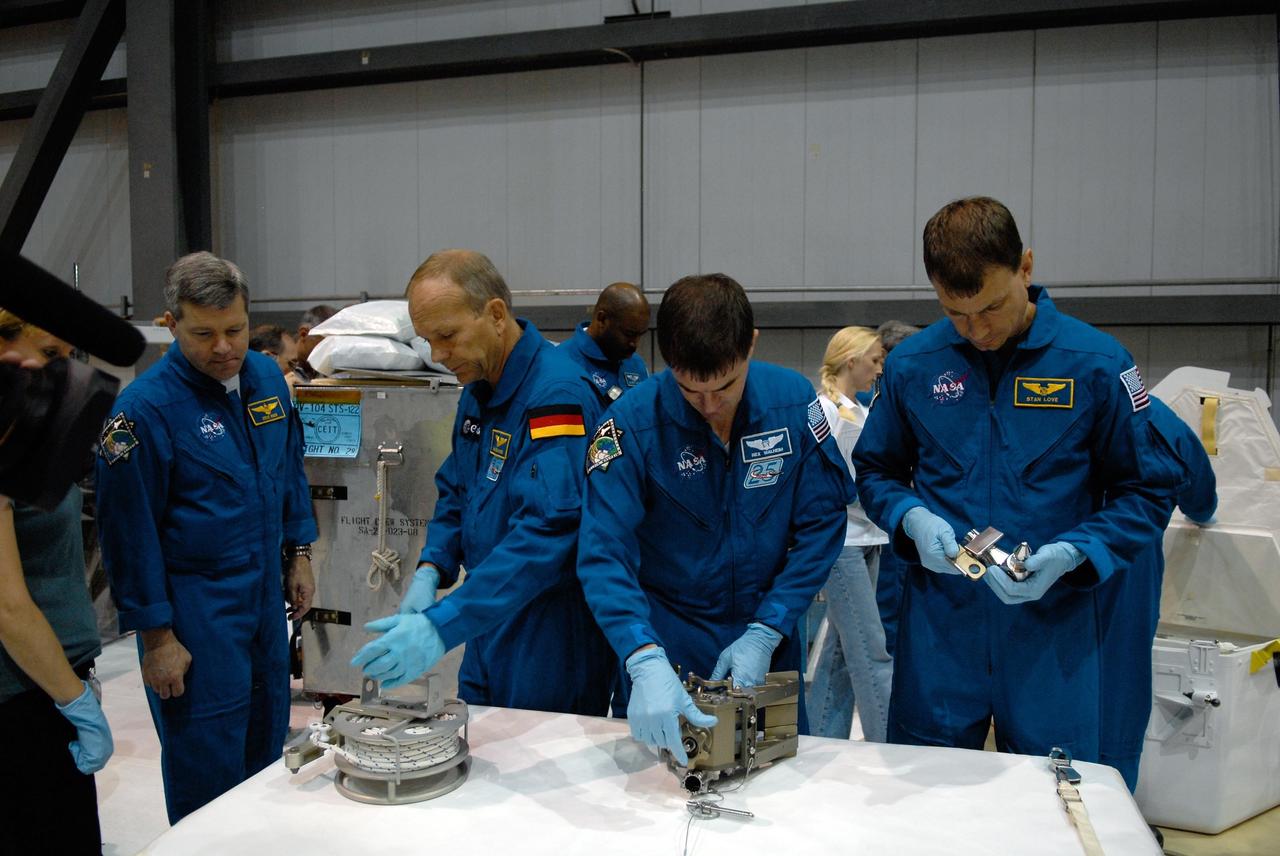
KENNEDY SPACE CENTER, FLA. -- In the Orbiter Processing Facility, STS-122 crew members practice working with equipment for the mission. From left are Commander Stephen Frick and Mission Specialists Hans Schlegel, Leland Melvin (behind), Rex Walheim and Stanley Love. Schlegel represents the European Space Agency. The crew is at Kennedy Space Center to take part in a crew equipment interface test, which includes equipment familiarization. The mission will carry and install the Columbus Lab, a multifunctional, pressurized laboratory that will be permanently attached to Node 2 of the space station to carry out experiments in materials science, fluid physics and biosciences, as well as to perform a number of technological applications. It is Europe’s largest contribution to the construction of the International Space Station and will support scientific and technological research in a microgravity environment. STS-122 is targeted for launch in December. Photo credit: NASA/Kim Shiflett
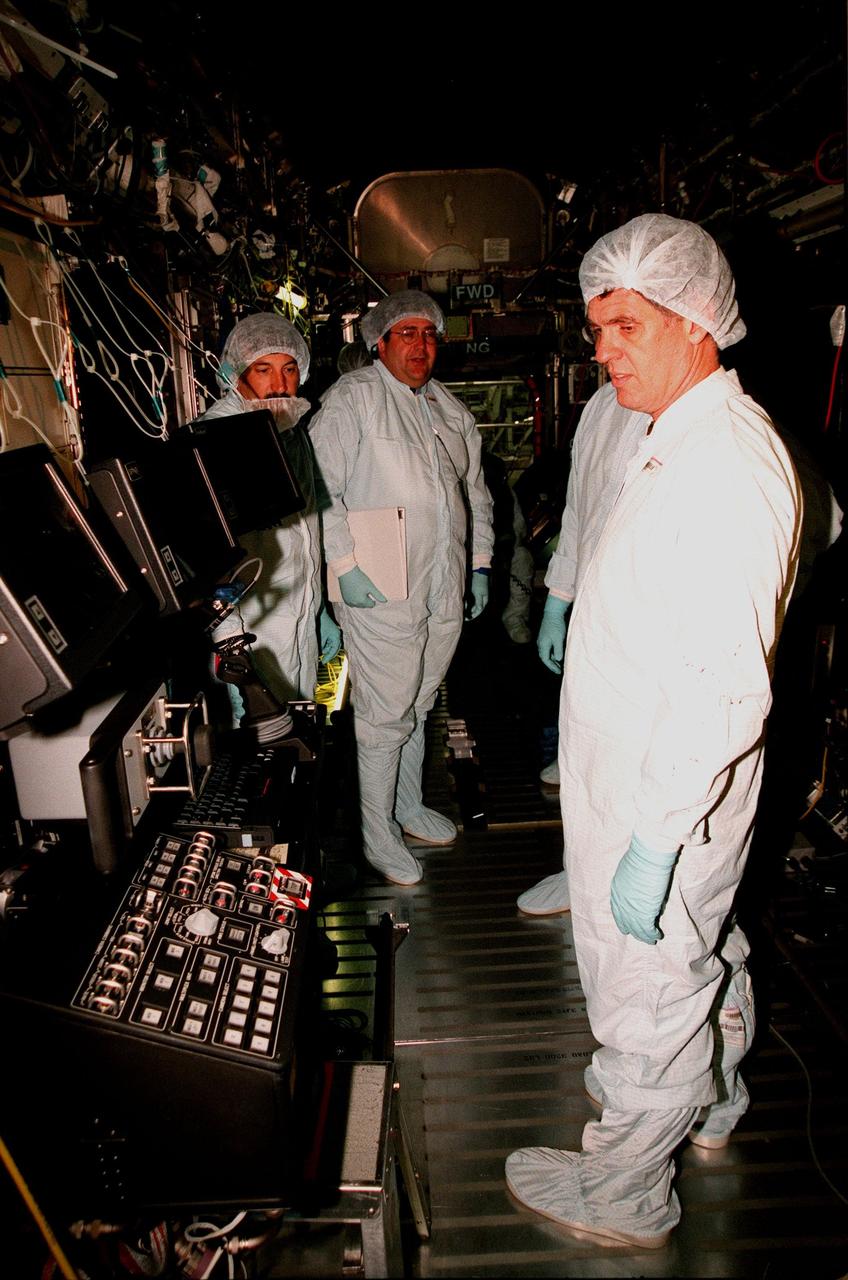
KENNEDY SPACE CENTER, FLA. -- Inside the U.S. Lab, called "Destiny," which is in the Space Station Processing Facility, U.S. Rep. Dave Weldon (right) looks over equipment. In the background (center) is Thomas R. "Randy" Galloway, with the Space Station Hardware Integration Office. Weldon is on the House Science Committee and vice chairman of the Space and Aeronautics Subcommittee. Destiny is scheduled to be launched on Space Shuttle Endeavour in early 2000. It will become the centerpiece of scientific research on the ISS, with five equipment racks aboard to provide essential functions for station systems, including high data-rate communications, and to maintain the station's orientation using control gyroscopes launched earlier. Additional equipment and research racks will be installed in the laboratory on subsequent Shuttle flights
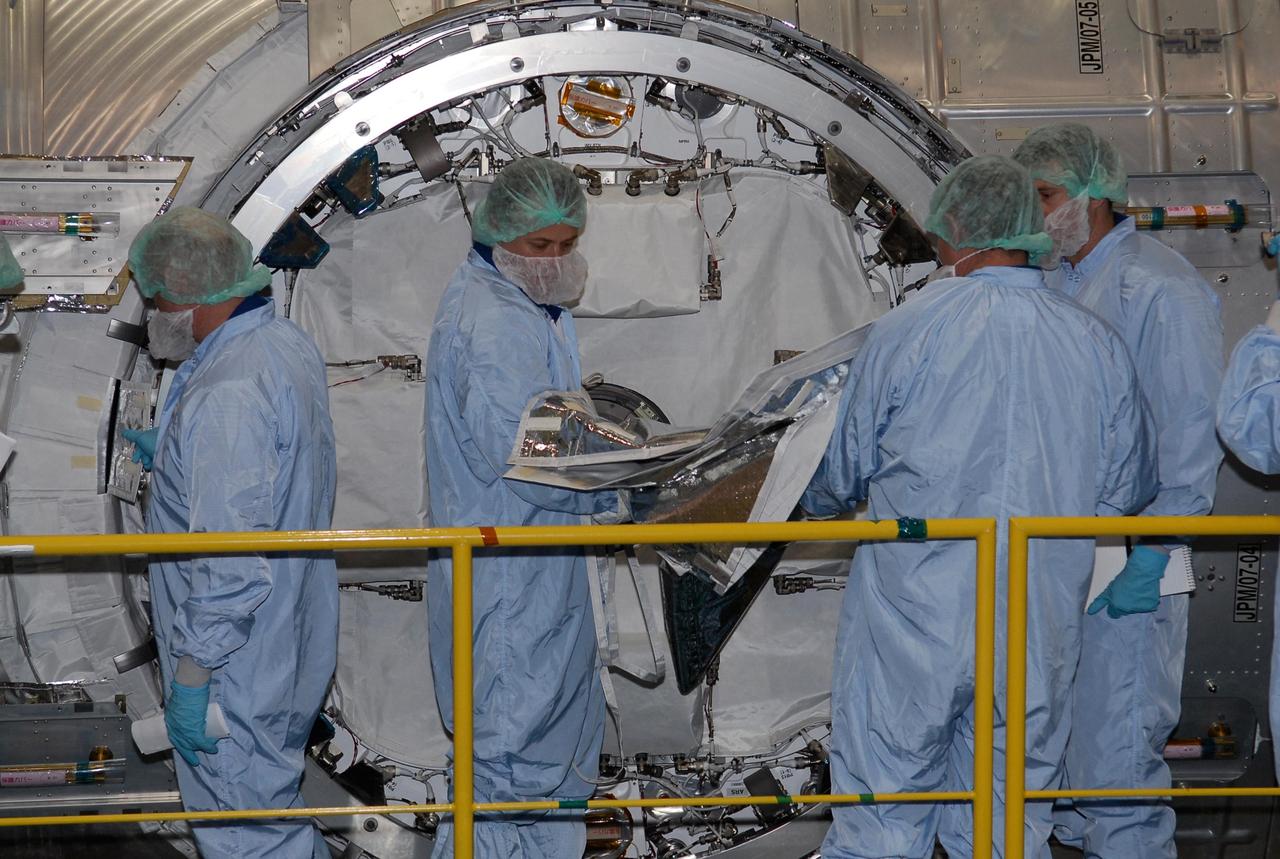
KENNEDY SPACE CENTER, FLA. -- In the Space Station Processing Facility at NASA's Kennedy Space Center, members of the STS-124 crew look over equipment related to the scientific airlock in the Kibo pressurized module. The module is part of the payload for the mission, targeted for launch no earlier than April 24. The crew comprises seven: Commander Mark Kelly, Pilot Kenneth Ham, and Mission Specialists Karen Nyberg, Ronald Garan, Michael Fossum and Akihiko Hoshide. The crew is at Kennedy for a crew equipment interface test that includes familiarization with tools and equipment that will be used on the mission. The STS-124 mission is the second of three flights that will launch components to complete the Japanese pressurized module, the Kibo laboratory. The mission will include two spacewalks to install the new lab and its remote manipulator system. The lab's logistics module, which will have been installed in a temporary location during STS-123, will be attached to the new lab. Photo credit: NASA/Kim Shiflett
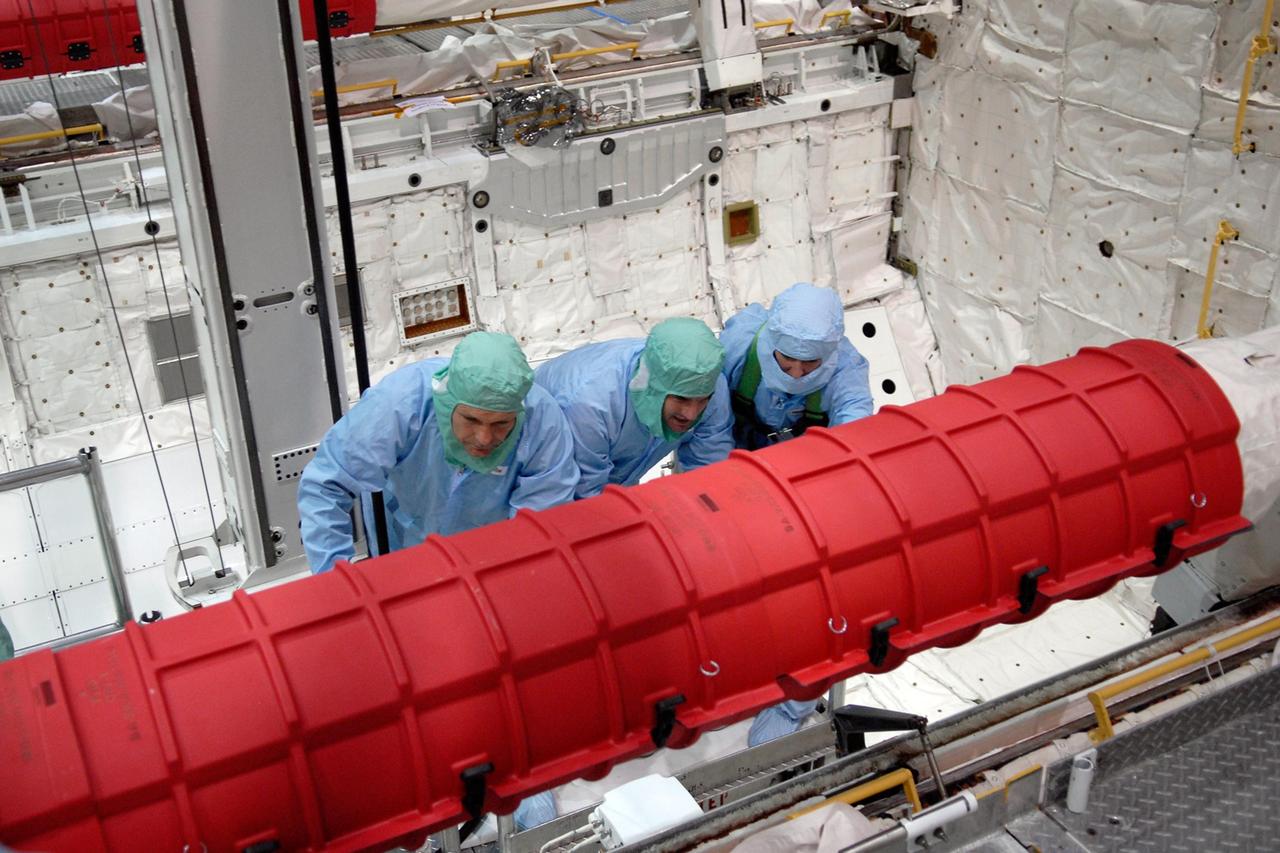
KENNEDY SPACE CENTER, FLA. -- STS-122 crew members get a close look at shuttle equipment from inside the payload bay of space shuttle Atlantis. The crew is at Kennedy Space Center to take part in a crew equipment interface test, which includes equipment familiarization. The mission will carry and install the Columbus Lab, a multifunctional, pressurized laboratory that will be permanently attached to Node 2 of the space station to carry out experiments in materials science, fluid physics and biosciences, as well as to perform a number of technological applications. It is Europe’s largest contribution to the construction of the International Space Station and will support scientific and technological research in a microgravity environment. STS-122 is targeted for launch in December. Photo credit: NASA/Kim Shiflett

KENNEDY SPACE CENTER, FLA. -- In the Space Station Processing Facility at NASA's Kennedy Space Center, members of the STS-124 crew look over equipment for the scientific airlock in the Kibo pressurized module. The module is part of the payload for the mission targeted for launch no earlier than April 24. The crew comprises seven: Commander Mark Kelly, Pilot Kenneth Ham, and Mission Specialists Karen Nyberg, Ronald Garan, Michael Fossum and Akihiko Hoshide. The crew members are at Kennedy for a crew equipment interface test, that includes familiarization with tools and equipment that will be used on the mission. The STS-124 mission is the second of three flights that will launch components to complete the Japanese pressurized module, the Kibo laboratory. The mission will include two spacewalks to install the new lab and its remote manipulator system. The lab's logistics module, which will have been installed in a temporary location during STS-123, will be attached to the new lab. Photo credit: NASA/Kim Shiflett
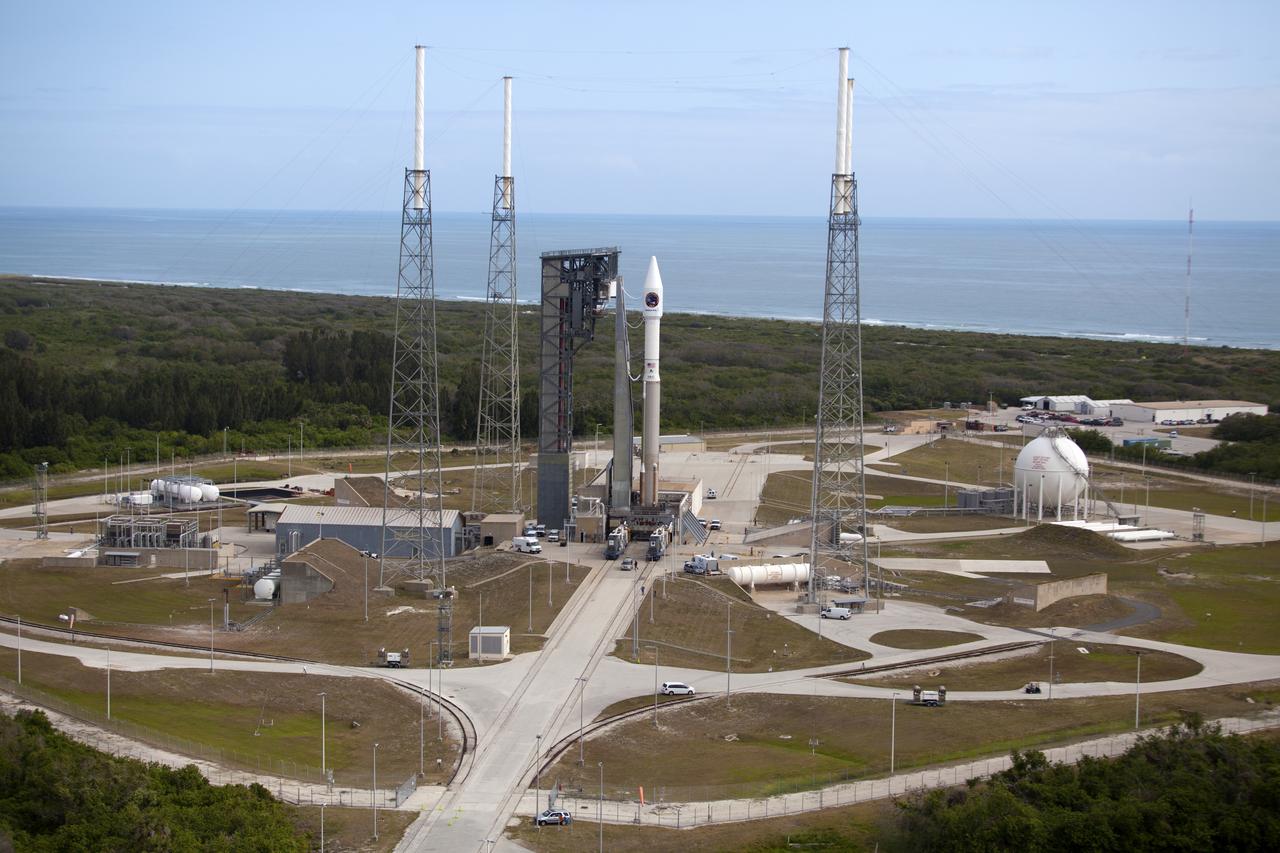
The United Launch Alliance Atlas V rocket, with the Orbital ATK Cygnus pressurized cargo module, stands ready for launch on the pad at Space Launch Complex 41 at Cape Canaveral Air Force Station in Florida. Orbital ATK's seventh commercial resupply services mission, CRS-7, is scheduled to launch to the International Space Station on April 18, 2017. Cygnus will deliver 7,600 pounds of supplies, equipment and scientific research materials to the space station. Liftoff is scheduled for 11:11 a.m. EDT.
A United Launch Alliance Atlas V rocket, with the Orbital ATK Cygnus pressurized cargo module, is transported along the road to the pad at Space Launch Complex 41 at Cape Canaveral Air Force Station in Florida. Orbital ATK's seventh commercial resupply services mission, CRS-7, is scheduled to launch to the International Space Station on April 18, 2017. Cygnus will deliver 7,600 pounds of supplies, equipment and scientific research materials to the space station. Liftoff is scheduled for 11:11 a.m. EDT.
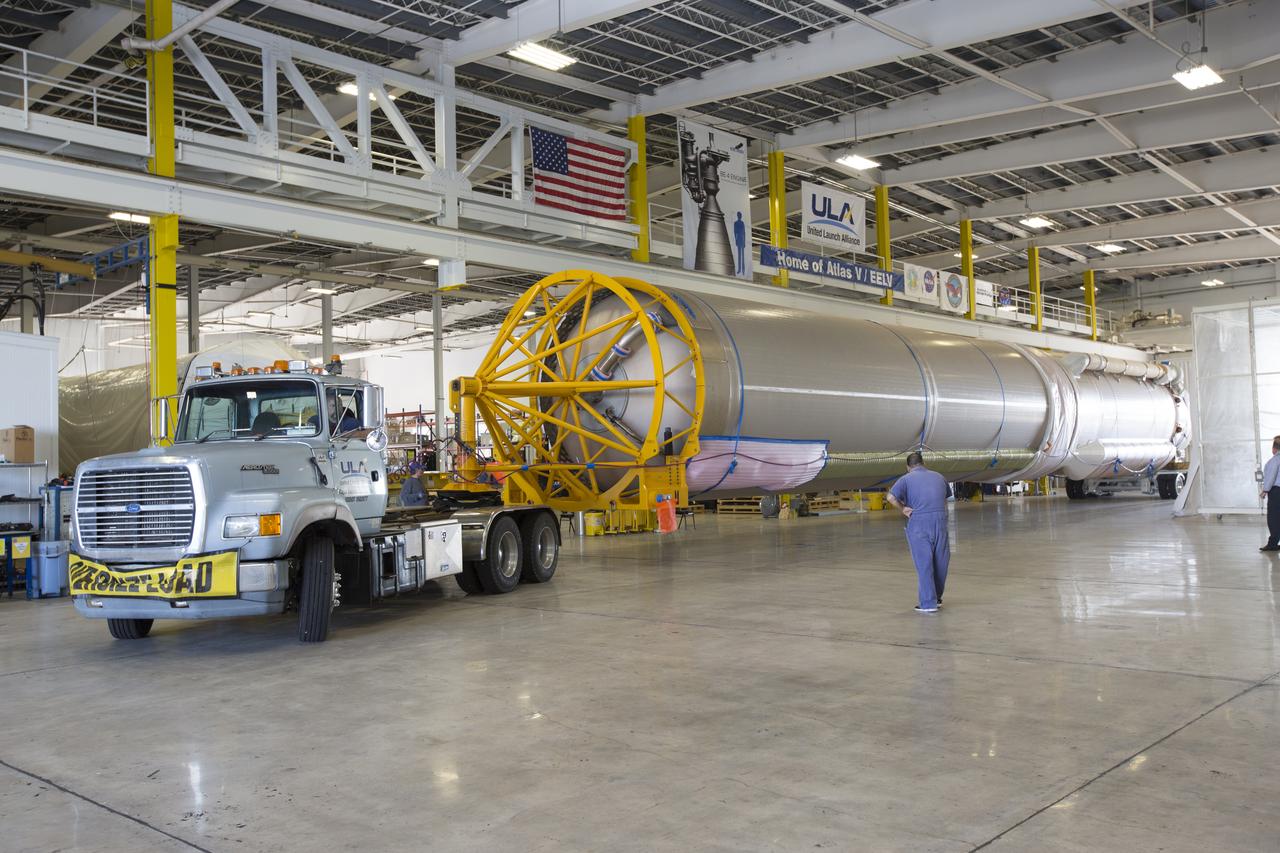
A United Launch Alliance (ULA) Atlas V booster arrives at Cape Canaveral Air Force Station's Atlas Spaceflight Operations Center (ASOC). The Atlas V will undergo final testing in that facility. When processing in the ASOC is complete, the Atlas booster will be moved to the Vertical Integration Facility for stacking at Space Launch Complex 41. Scheduled to launch March 19, 2017, the Atlas will launch a Cygnus spacecraft on the Orbital ATK CRS-7 mission to deliver thousands of pounds of supplies, equipment and scientific research materials to the International Space Station.

Against the backdrop of a bright blue sky, a United Launch Alliance Atlas V rocket lifts off from Space Launch Complex 41 at Cape Canaveral Air Force Station in Florida, carrying the Orbital ATK Cygnus pressurized cargo module on the company's seventh commercial resupply services mission to the International Space Station. Liftoff was at 11:11 a.m. EDT. Cygnus will deliver 7,600 pounds of supplies, equipment and scientific research materials to the space station.
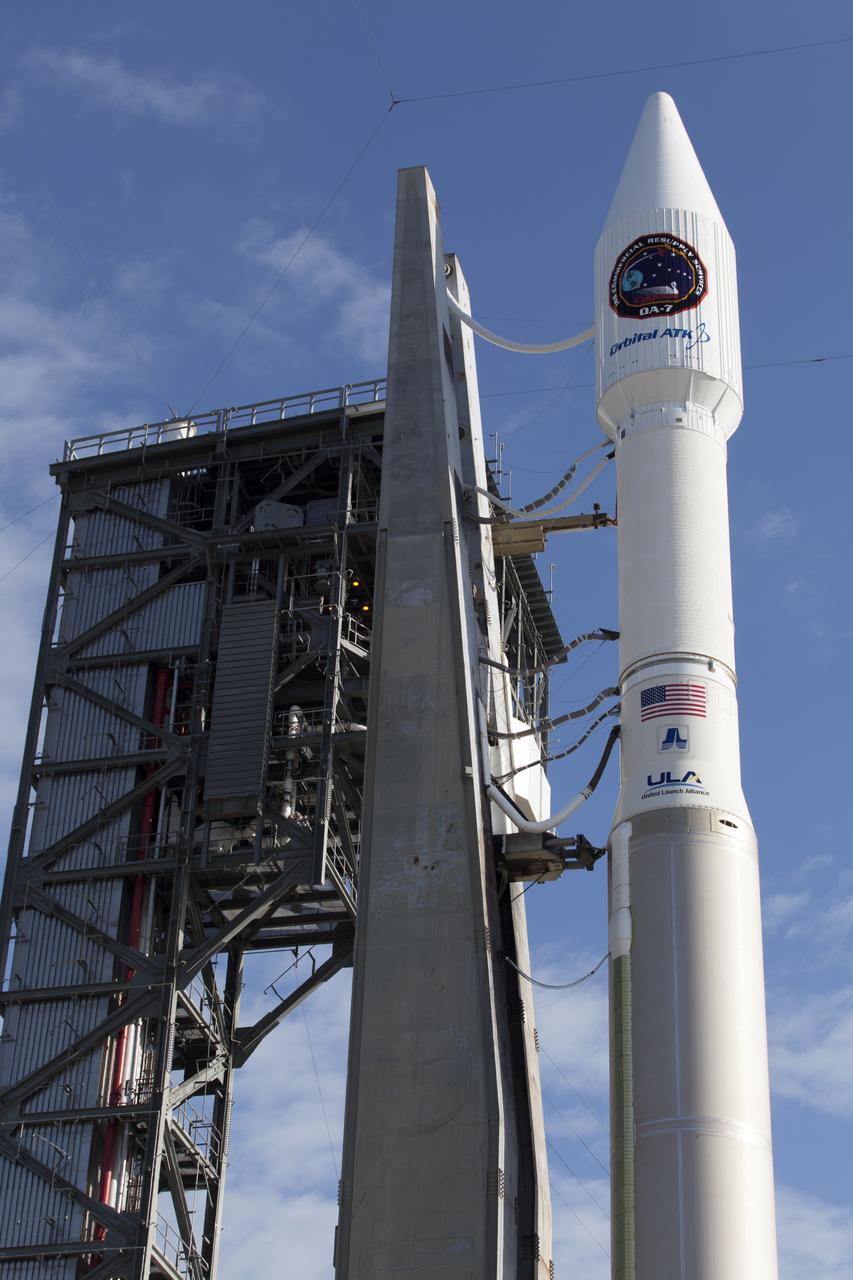
A United Launch Alliance Atlas V rocket, with the Orbital ATK Cygnus pressurized cargo module, arrives at the pad at Space Launch Complex 41 at Cape Canaveral Air Force Station in Florida. Orbital ATK's seventh commercial resupply services mission, CRS-7, is scheduled to launch to the International Space Station on April 18, 2017. Cygnus will deliver 7,600 pounds of supplies, equipment and scientific research materials to the space station. Liftoff is scheduled for 11:11 a.m. EDT.
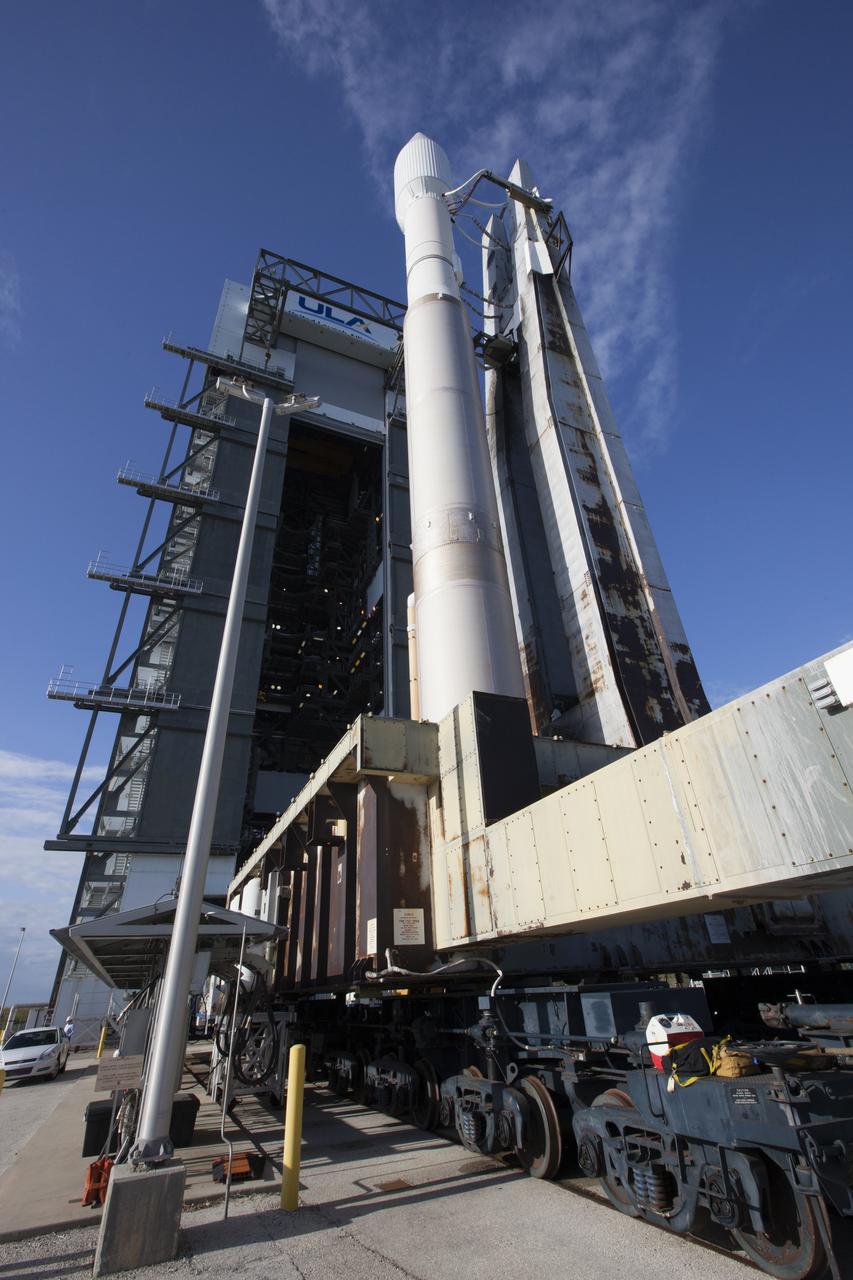
A United Launch Alliance Atlas V rocket, with the Orbital ATK Cygnus pressurized cargo module, has exited the Vertical Integration Facility for the trip to the pad at Space Launch Complex 41 at Cape Canaveral Air Force Station in Florida. Orbital ATK's seventh commercial resupply services mission, CRS-7, is scheduled to launch to the International Space Station on April 18, 2017. Cygnus will deliver 7,600 pounds of supplies, equipment and scientific research materials to the space station. Liftoff is scheduled for 11:11 a.m. EDT.
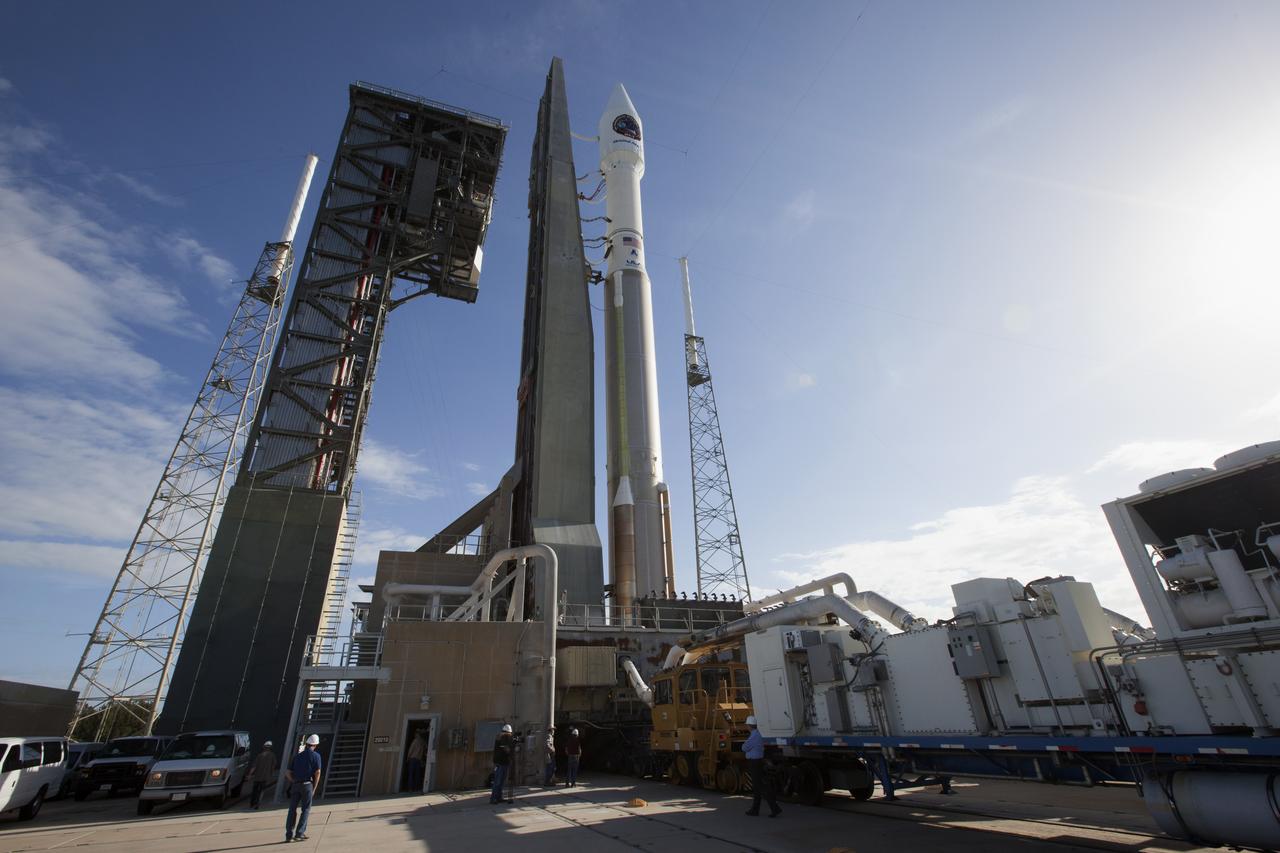
A United Launch Alliance Atlas V rocket, with the Orbital ATK Cygnus pressurized cargo module, arrives at the pad at Space Launch Complex 41 at Cape Canaveral Air Force Station in Florida. Orbital ATK's seventh commercial resupply services mission, CRS-7, is scheduled to launch to the International Space Station on April 18, 2017. Cygnus will deliver 7,600 pounds of supplies, equipment and scientific research materials to the space station. Liftoff is scheduled for 11:11 a.m. EDT.
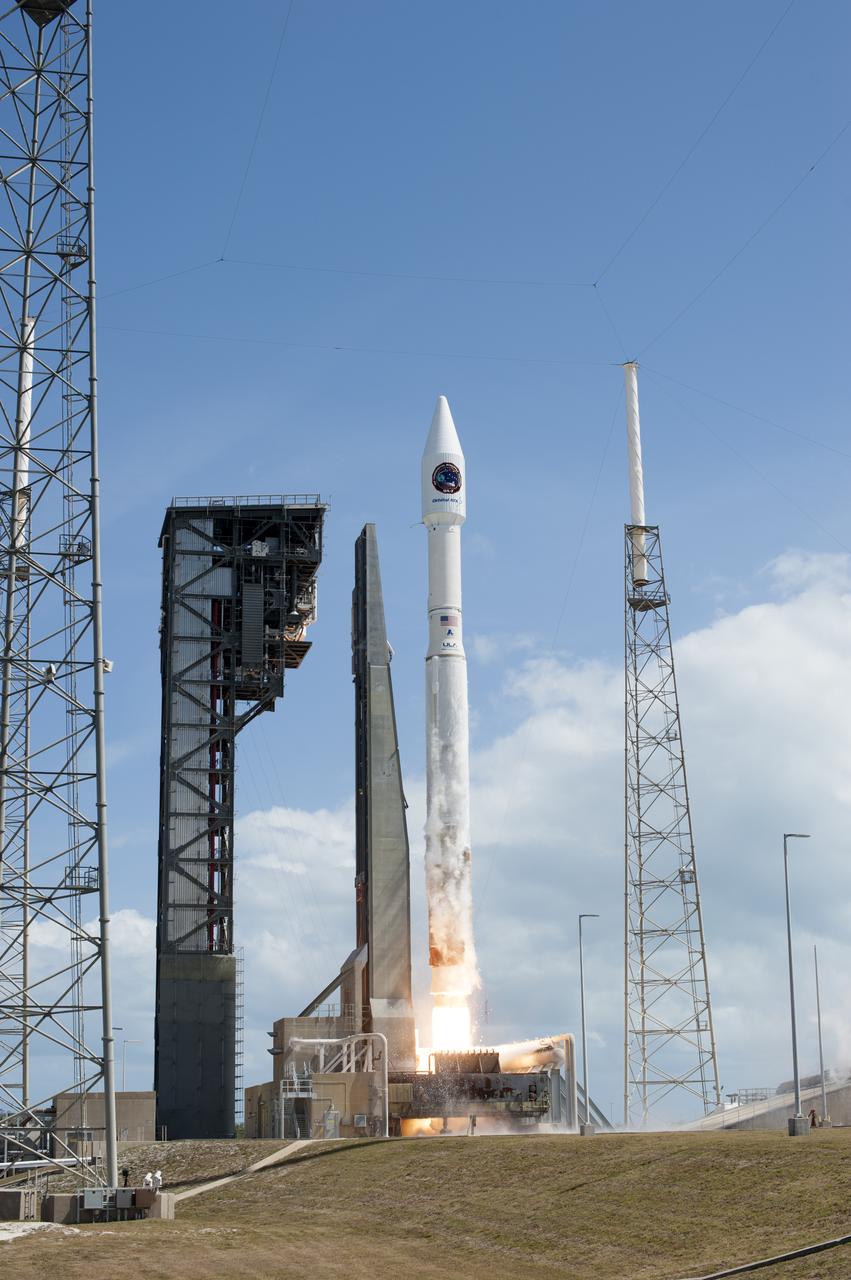
The Orbital ATK Cygnus pressurized cargo module is carried atop the United Launch Alliance Atlas V rocket from Space Launch Complex 41 at Cape Canaveral Air Force Station in Florida. Orbital ATK's seventh resupply services mission, CRS-7, will deliver 7,600 pounds of supplies, equipment and scientific research materials to the International Space Station. Liftoff was at 11:11 a.m. EDT.
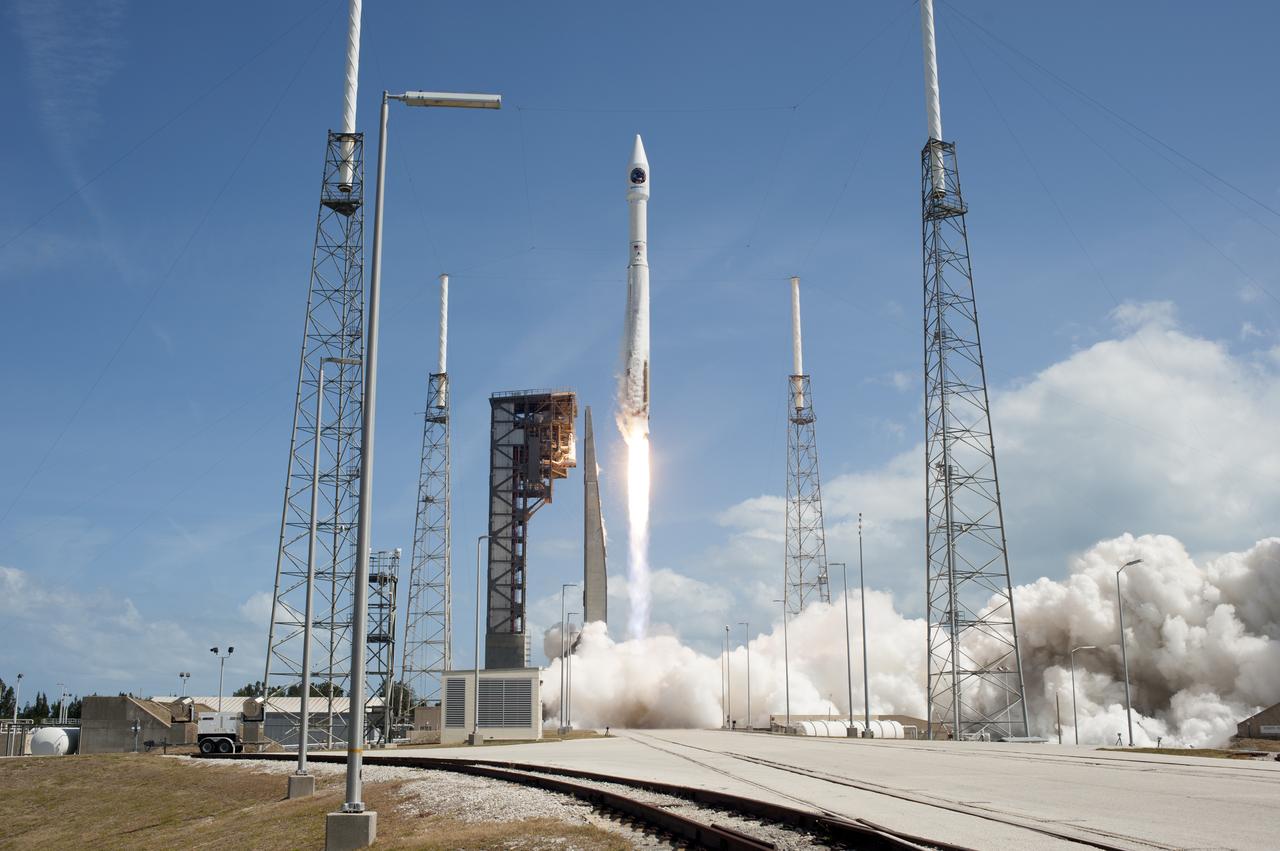
A United Launch Alliance Atlas V rocket lifts off at 11:11 a.m. EDT from Space Launch Complex 41 at Cape Canaveral Air Force Station in Florida, carrying the Orbital ATK Cygnus pressurized cargo module on the company's seventh commercial resupply services mission to the International Space Station. Cygnus will deliver 7,600 pounds of supplies, equipment and scientific research materials to the space station.
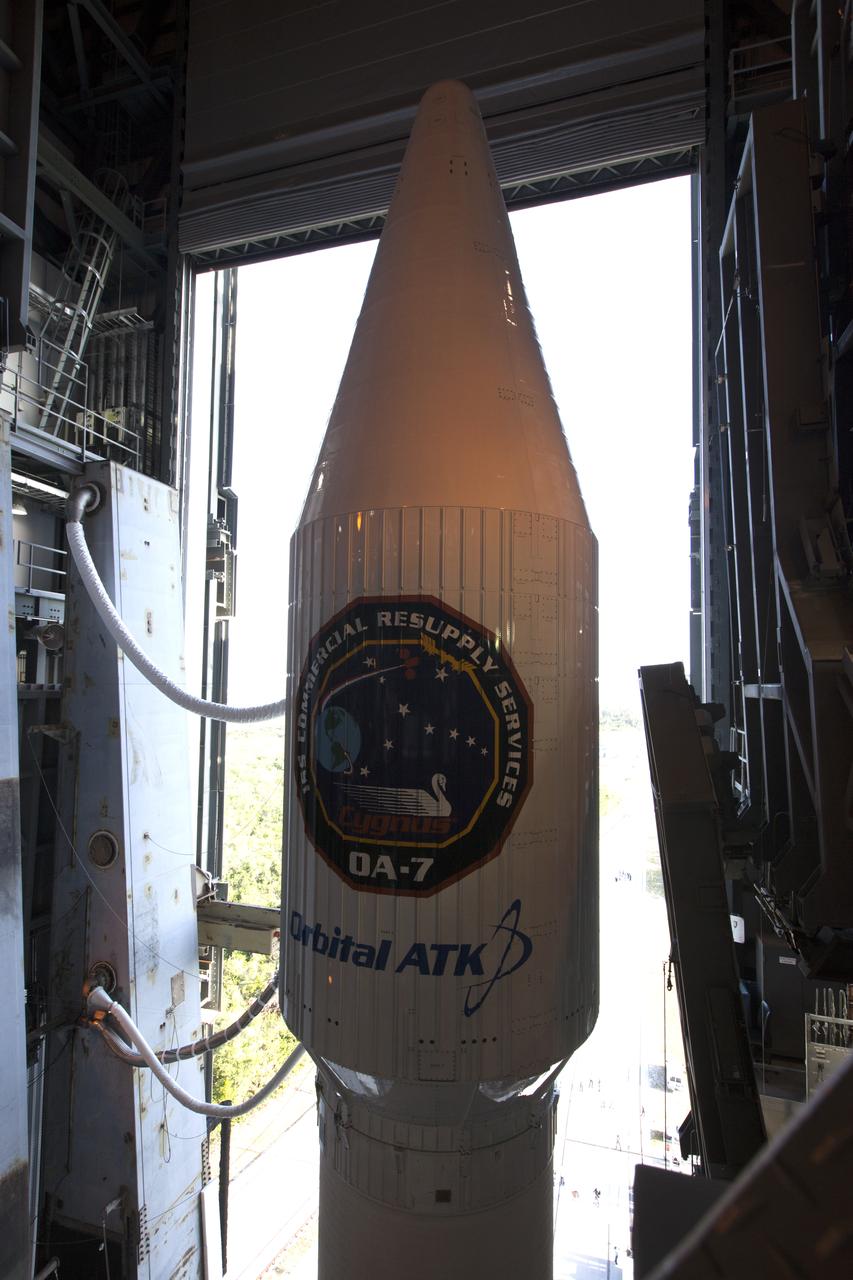
A United Launch Alliance Atlas V rocket, with the Orbital ATK Cygnus pressurized cargo module, exits the Vertical Integration Facility at Space Launch Complex 41 at Cape Canaveral Air Force Station in Florida. Orbital ATK's seventh commercial resupply services mission, CRS-7, is scheduled to launch to the International Space Station on April 18, 2017. Cygnus will deliver 7,600 pounds of supplies, equipment and scientific research materials to the space station. Liftoff is scheduled for 11:11 a.m. EDT.
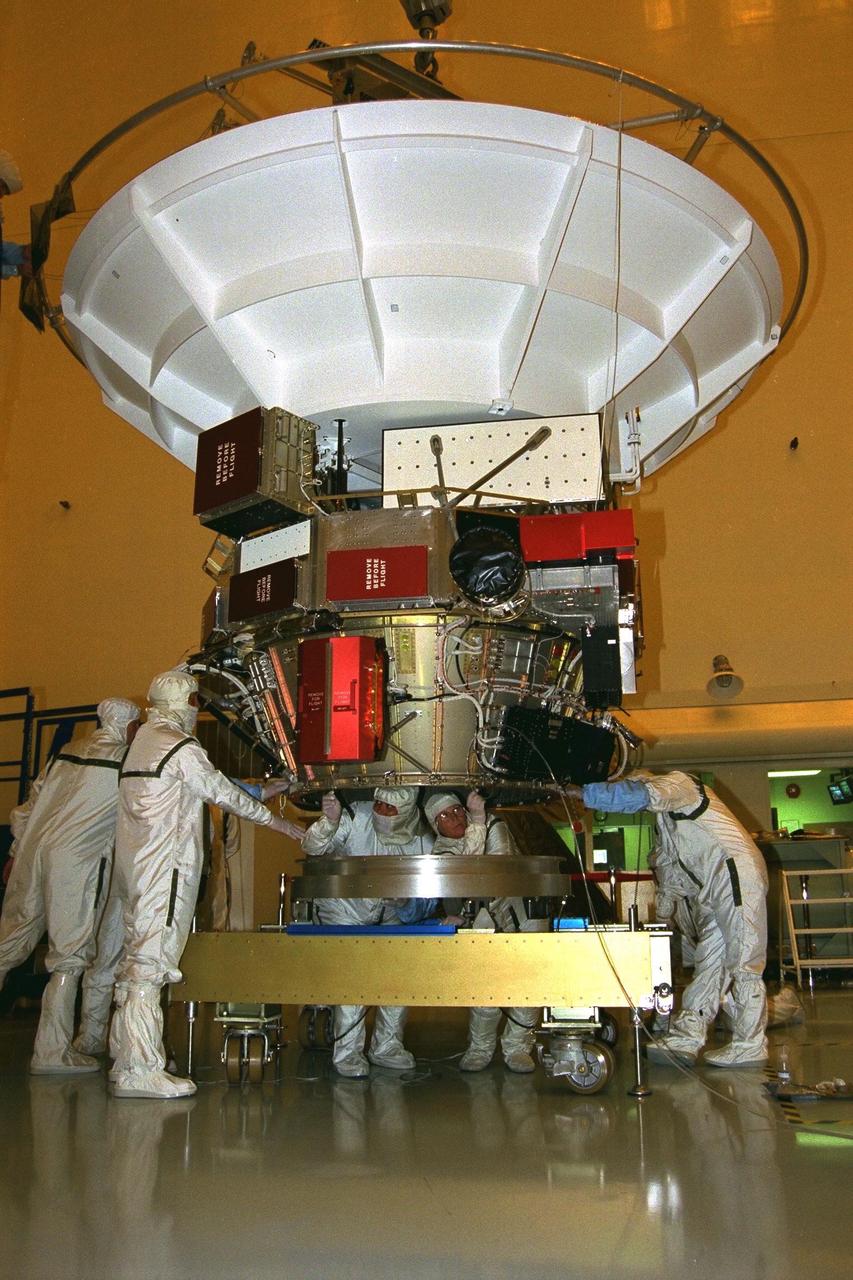
Jet Propulsion Laboratory (JPL) technicians clean and prepare the upper equipment module for mating with the propulsion module subsystem of the Cassini orbiter in the Payload Hazardous Servicing Facility at KSC in July. A four- year, close-up study of the Saturnian system, the Cassini mission is scheduled for launch from Cape Canaveral Air Station in October 1997. It will take seven years for the spacecraft to reach Saturn. Scientific instruments carried aboard the spacecraft will study Saturn’s atmosphere, magnetic field, rings, and several moons. JPL is managing the Cassini project for NASA
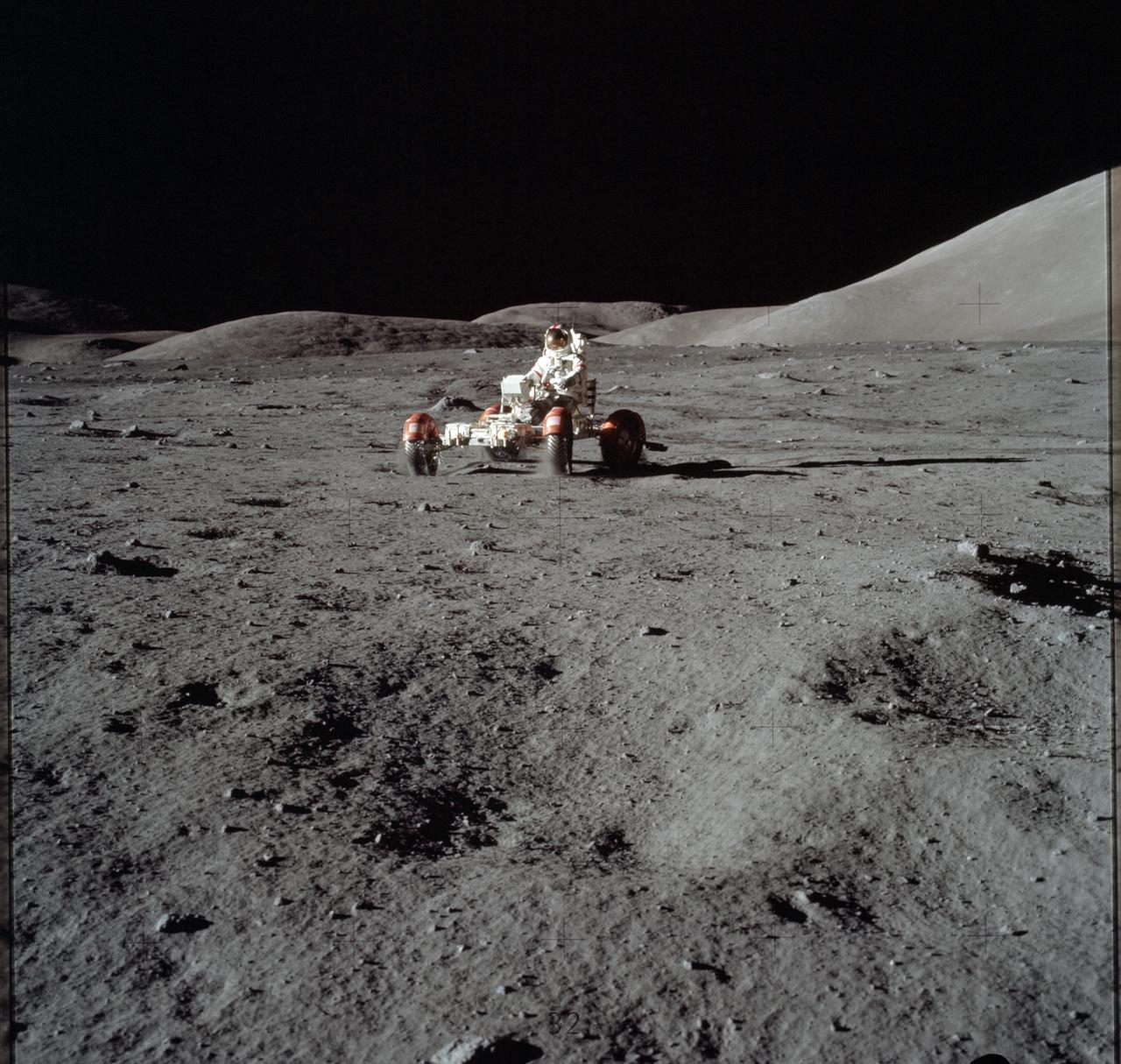
AS17-147-22523 (11 Dec. 1972) --- Astronaut Eugene A. Cernan is seen test driving the "stripped down" Lunar Rover Vehicle (LRV) prior to loading the LRV up. Equipment later loaded onto the LRV included the ground controlled television assembly, the lunar communications relay unit, the hi-gain antenna, the low-gain antenna, aft tool pallet, and lunar tools and scientific gear.
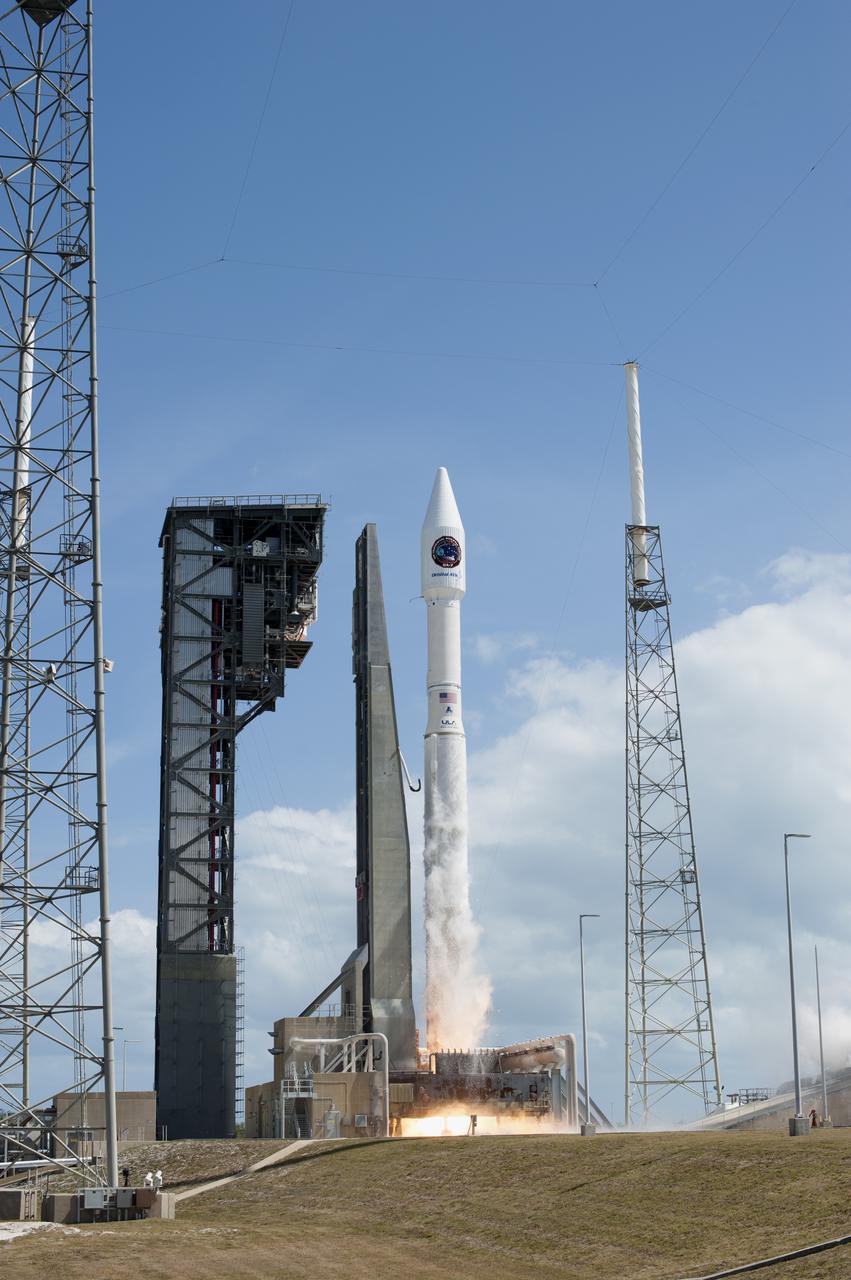
The Orbital ATK Cygnus pressurized cargo module is carried atop the United Launch Alliance Atlas V rocket from Space Launch Complex 41 at Cape Canaveral Air Force Station in Florida. Orbital ATK's seventh resupply services mission, CRS-7, will deliver 7,600 pounds of supplies, equipment and scientific research materials to the International Space Station. Liftoff was at 11:11 a.m. EDT.
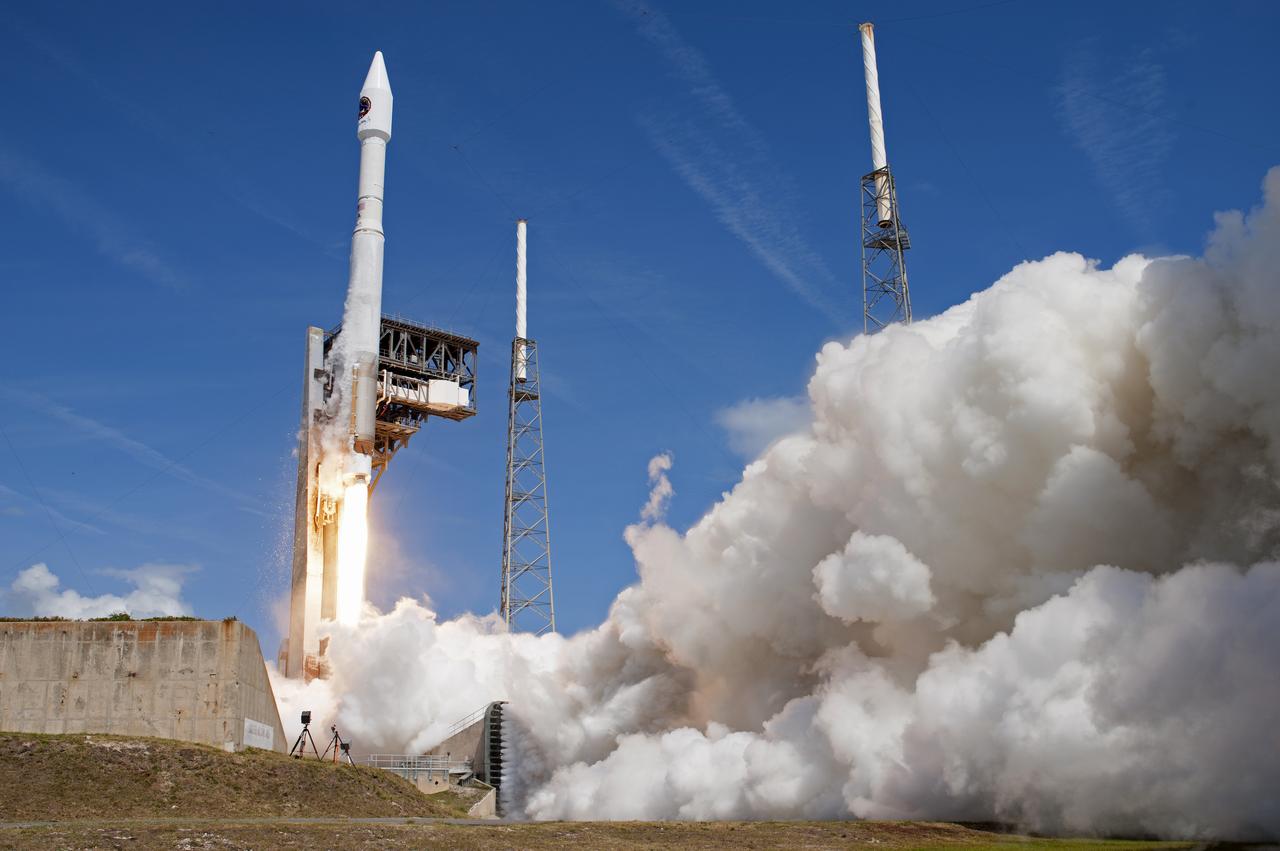
With blue sky for a background, the Orbital ATK Cygnus pressurized cargo module is carried atop the United Launch Alliance Atlas V rocket from Space Launch Complex 41 at Cape Canaveral Air Force Station in Florida. Orbital ATK's seventh commercial resupply services mission, CRS-7, will deliver 7,600 pounds of supplies, equipment and scientific research materials to the International Space Station. Liftoff was at 11:11 a.m. EDT.
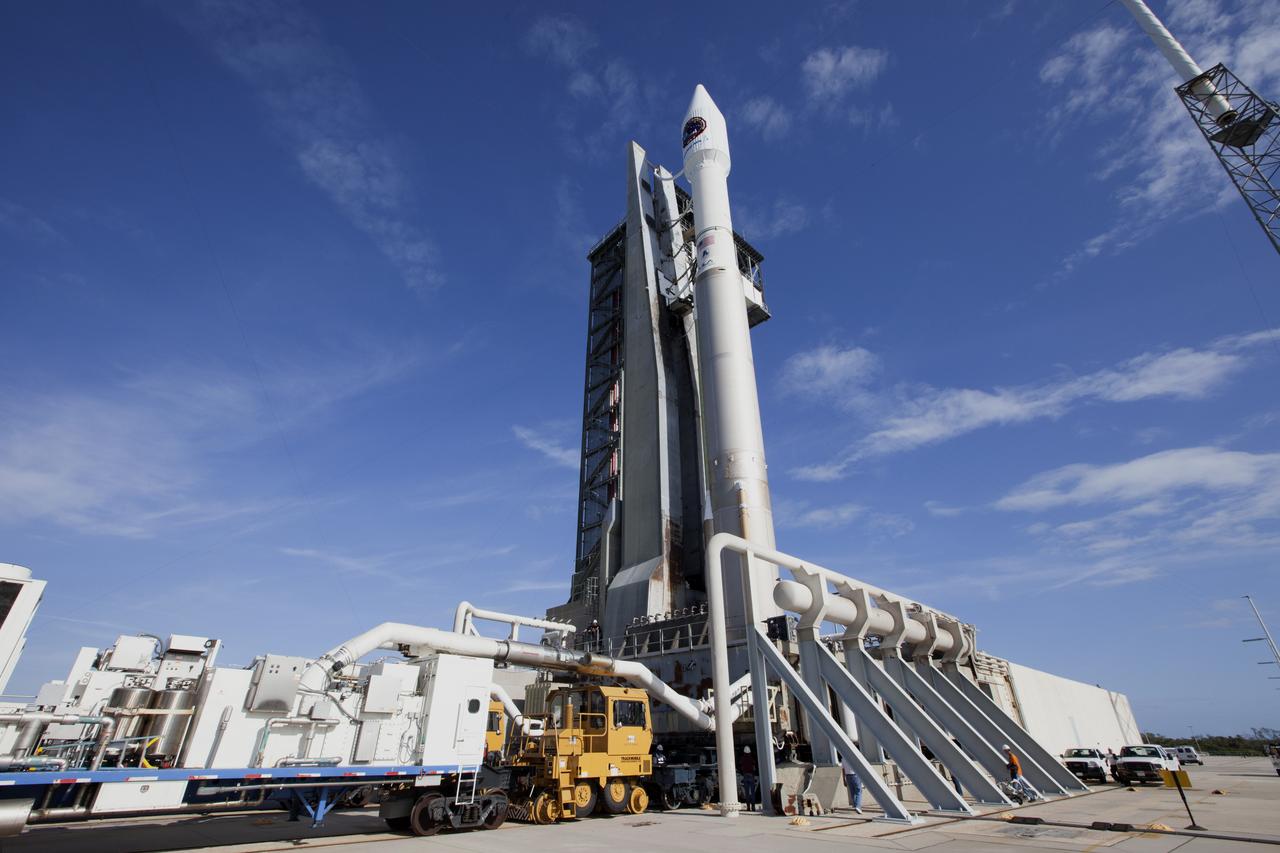
A United Launch Alliance Atlas V rocket, with the Orbital ATK Cygnus pressurized cargo module, arrives at the pad at Space Launch Complex 41 at Cape Canaveral Air Force Station in Florida. Orbital ATK's seventh commercial resupply services mission, CRS-7, is scheduled to launch to the International Space Station on April 18, 2017. Cygnus will deliver 7,600 pounds of supplies, equipment and scientific research materials to the space station. Liftoff is scheduled for 11:11 a.m. EDT.
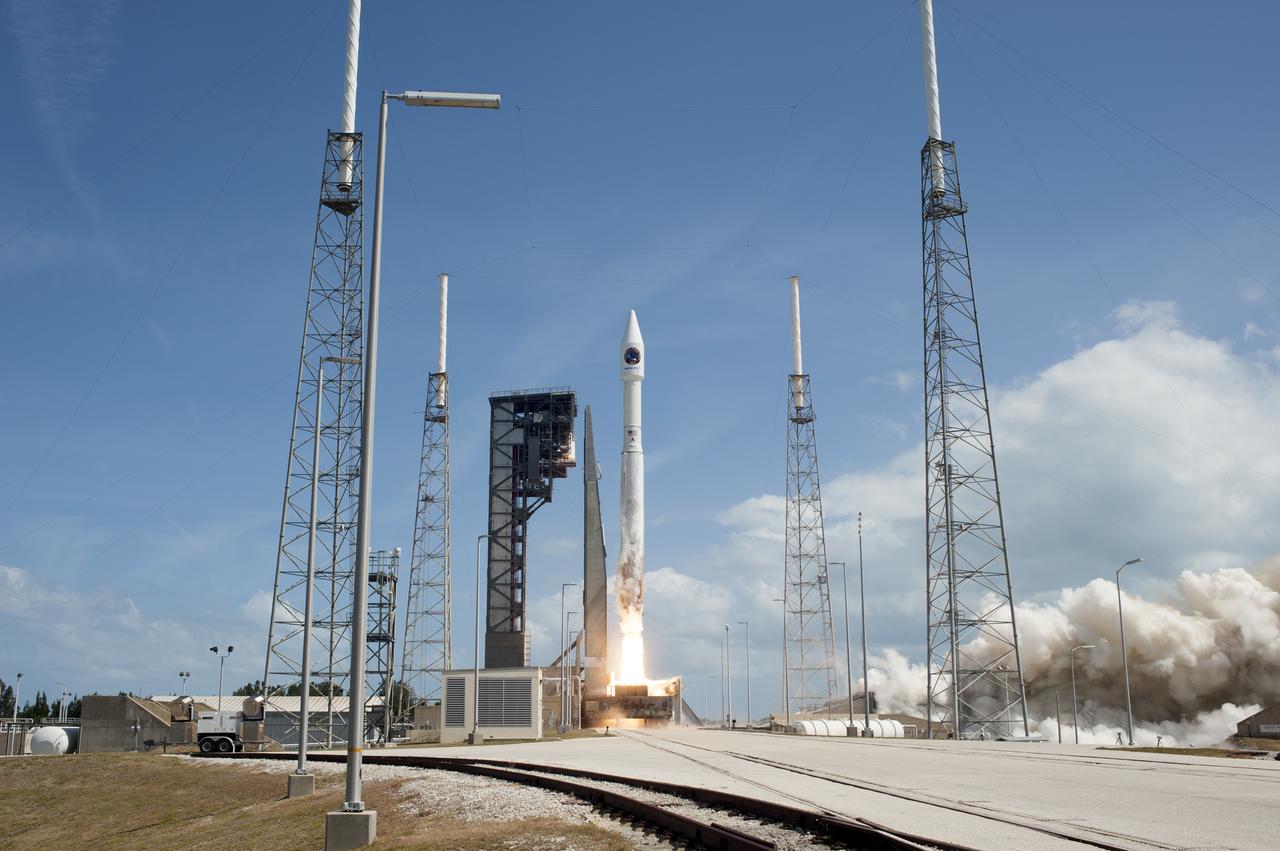
A United Launch Alliance Atlas V rocket lifts off at 11:11 a.m. EDT from Space Launch Complex 41 at Cape Canaveral Air Force Station in Florida, carrying the Orbital ATK Cygnus pressurized cargo module on the company's seventh commercial resupply services mission to the International Space Station. Cygnus will deliver 7,600 pounds of supplies, equipment and scientific research materials to the space station.
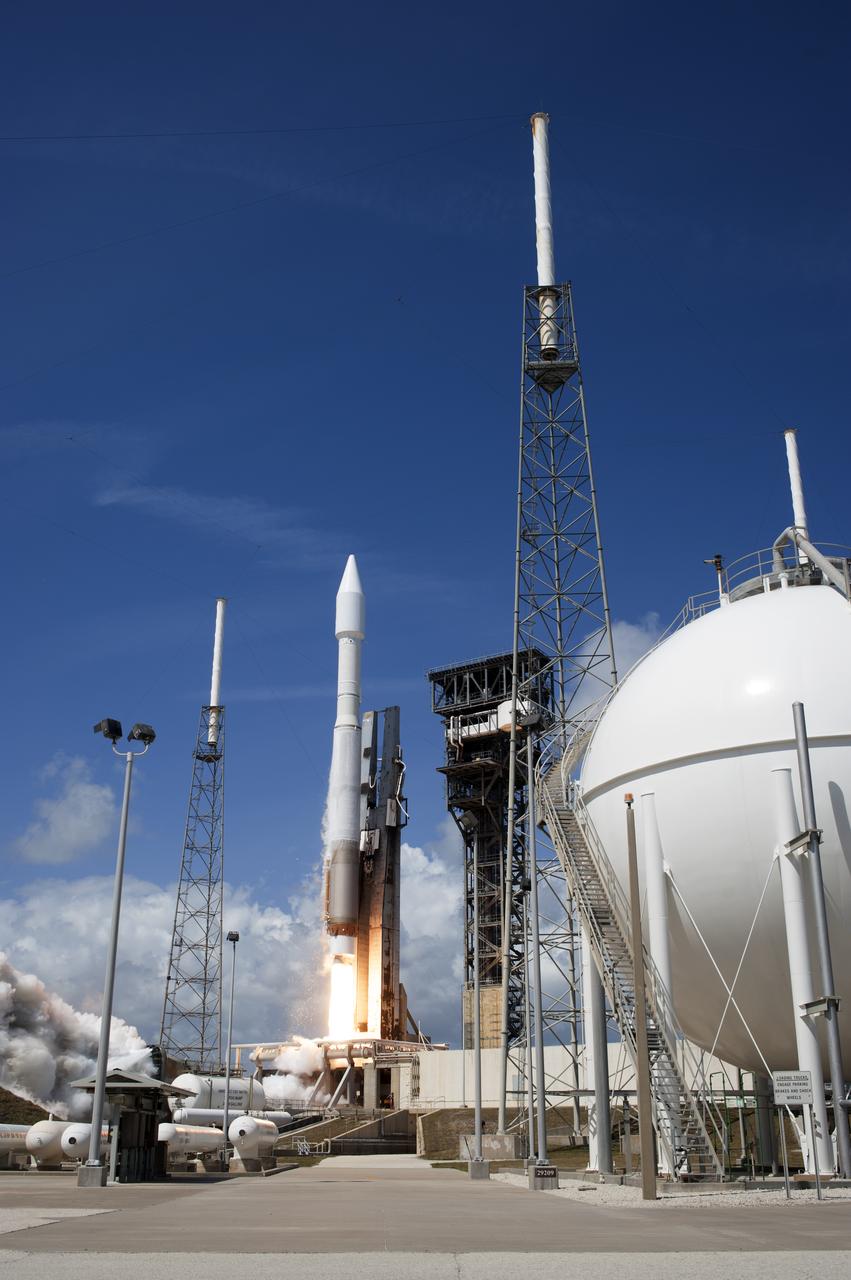
Against the backdrop of a bright blue sky, a United Launch Alliance Atlas V rocket lifts off from Space Launch Complex 41 at Cape Canaveral Air Force Station in Florida, carrying the Orbital ATK Cygnus pressurized cargo module on the company's seventh commercial resupply services mission to the International Space Station. Liftoff was at 11:11 a.m. EDT. Cygnus will deliver 7,600 pounds of supplies, equipment and scientific research materials to the space station.
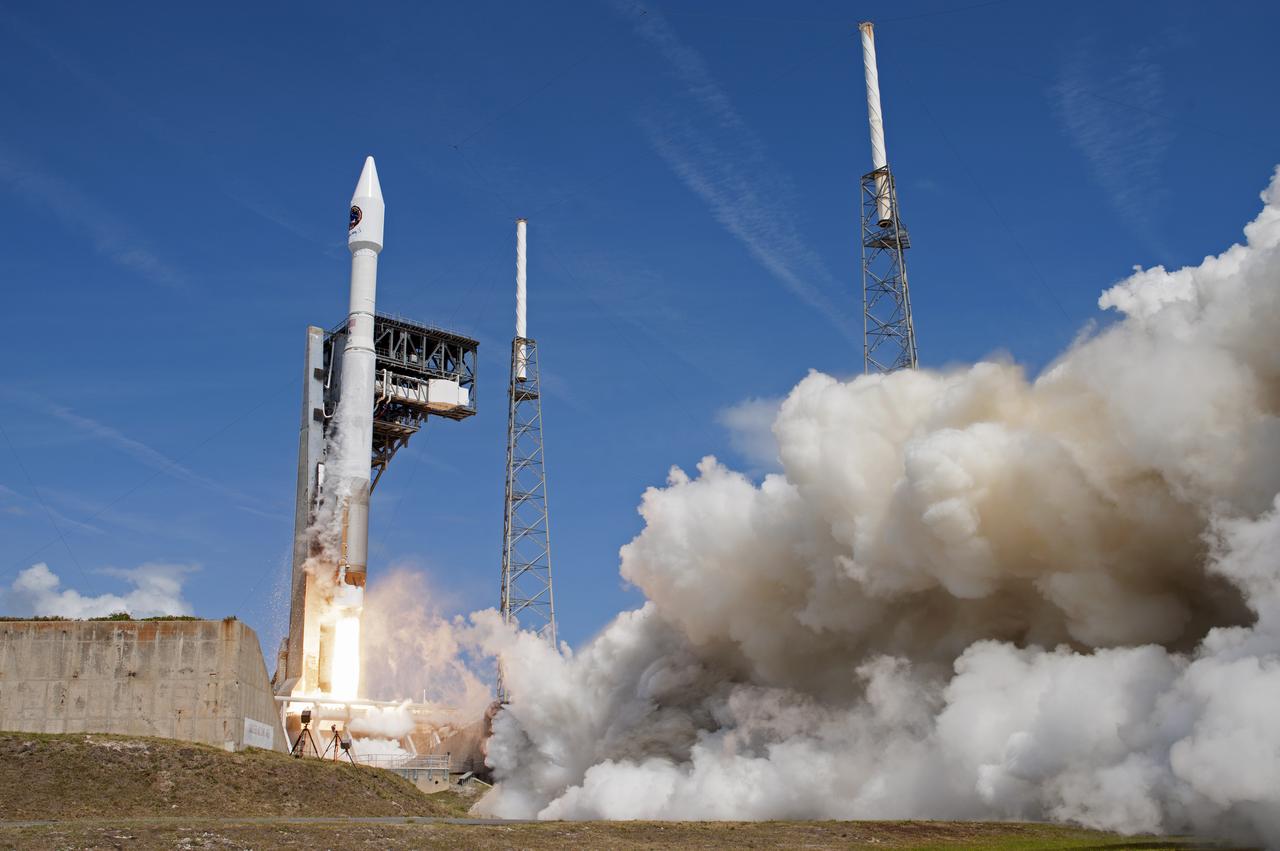
With blue sky for a background, the Orbital ATK Cygnus pressurized cargo module is carried atop the United Launch Alliance Atlas V rocket from Space Launch Complex 41 at Cape Canaveral Air Force Station in Florida. Orbital ATK's seventh commercial resupply services mission, CRS-7, will deliver 7,600 pounds of supplies, equipment and scientific research materials to the International Space Station. Liftoff was at 11:11 a.m. EDT.
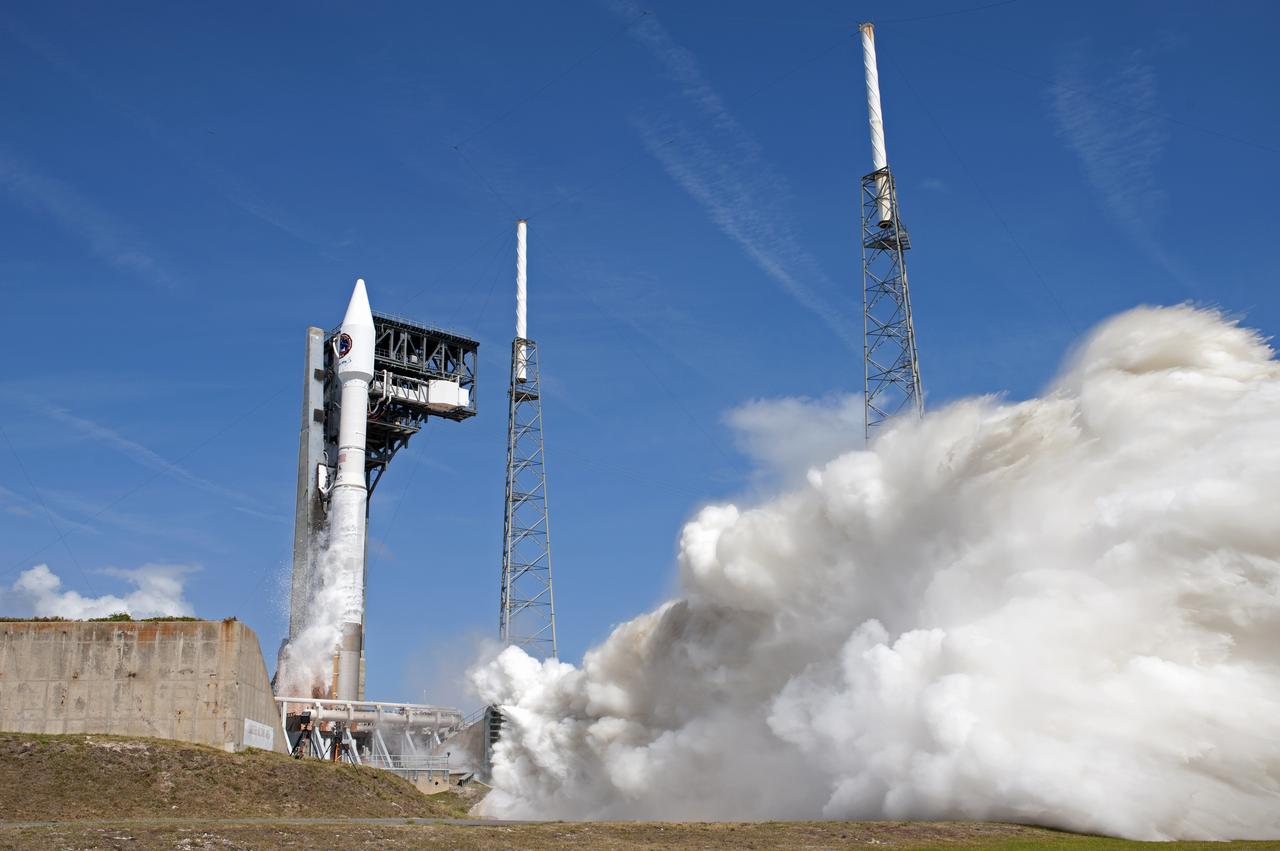
With blue sky for a background, the Orbital ATK Cygnus pressurized cargo module is carried atop the United Launch Alliance Atlas V rocket from Space Launch Complex 41 at Cape Canaveral Air Force Station in Florida. Orbital ATK's seventh commercial resupply services mission, CRS-7, will deliver 7,600 pounds of supplies, equipment and scientific research materials to the International Space Station. Liftoff was at 11:11 a.m. EDT.
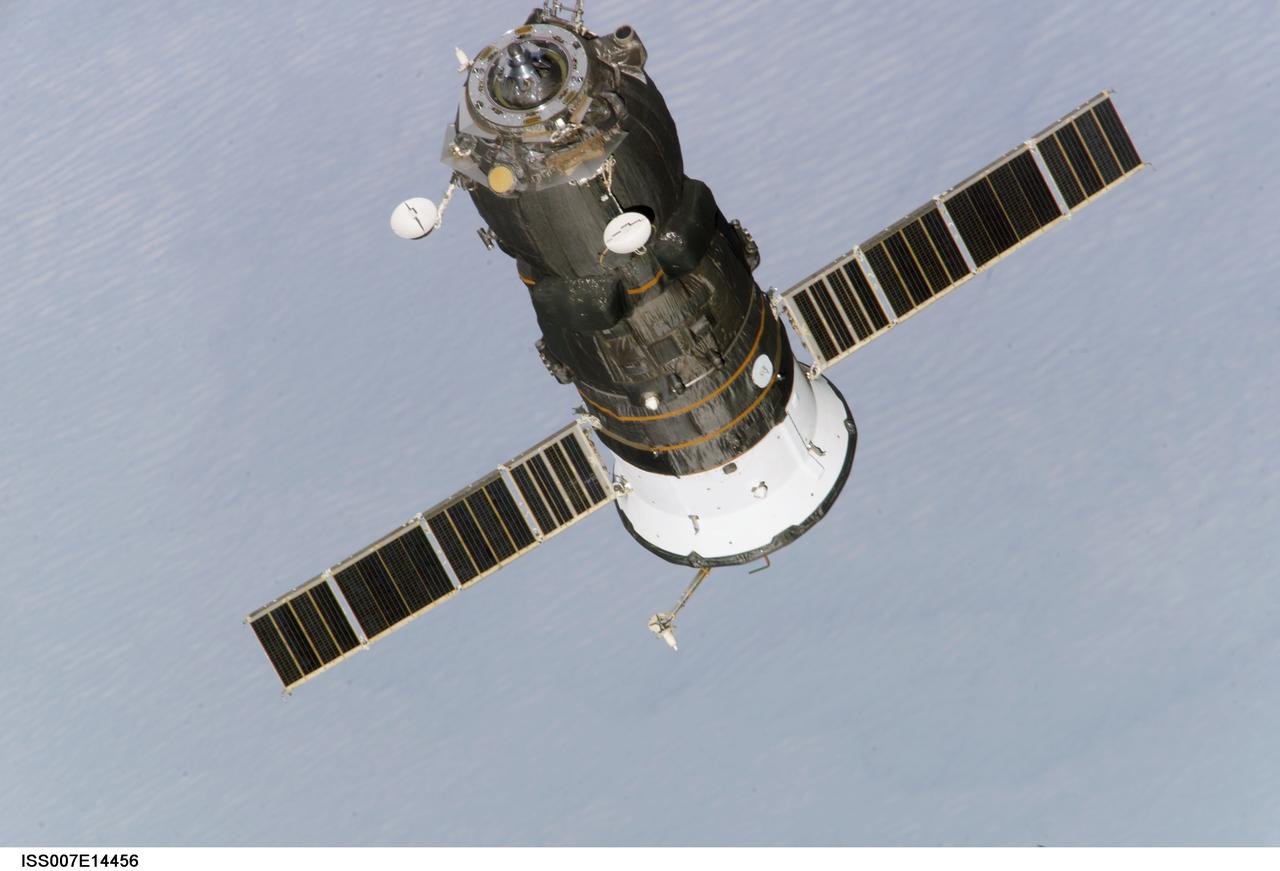
ISS007-E-14456 (4 September 2003) --- An unpiloted Progress 11 supply vehicle departs from the Pirs Docking Compartment on the International Space Station (ISS) at 2:42 p.m. (CDT) on September 4, 2003 for another month alone in orbit, as part of a Russian scientific experiment. It will then be deorbited with its load of trash and unneeded equipment and burn in the Earth’s atmosphere.
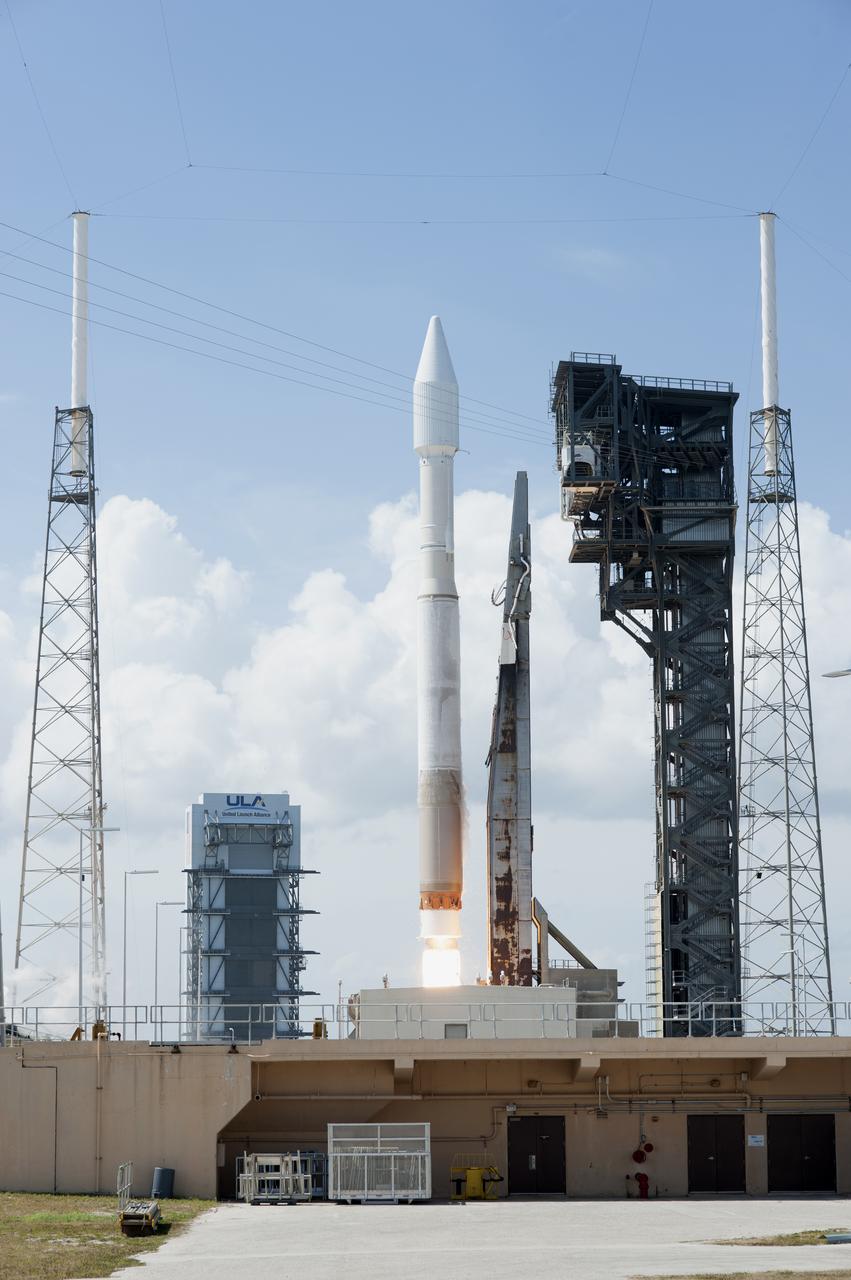
A United Launch Alliance Atlas V rocket lifts off at 11:11 a.m. EDT from Space Launch Complex 41 at Cape Canaveral Air Force Station in Florida, carrying the Orbital ATK Cygnus pressurized cargo module on the company's seventh commercial resupply services mission to the International Space Station. Cygnus will deliver 7,600 pounds of supplies, equipment and scientific research materials to the space station.
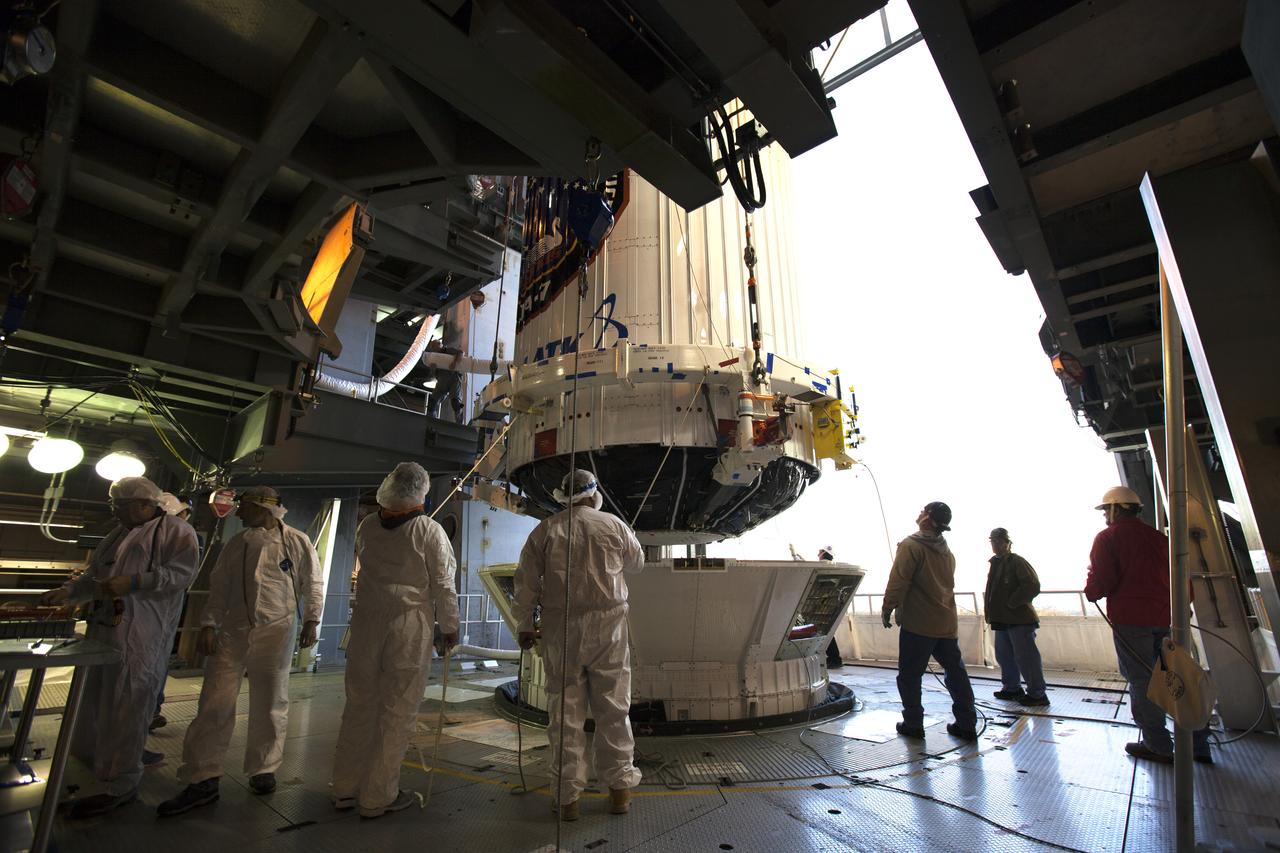
The payload fairing containing the Orbital ATK Cygnus pressurized cargo module is lowered onto the Centaur upper stage, or second stage, of the United Launch Alliance (ULA) rocket in the Vertical Integration Facility at Space Launch Complex 41 at Cape Canaveral Air Force Station in Florida. The Orbital ATK CRS-7 commercial resupply services mission to the International Space Station is scheduled to launch atop the Atlas V from pad 41. Cygnus will deliver 7,600 pounds of supplies, equipment and scientific research materials to the space station.
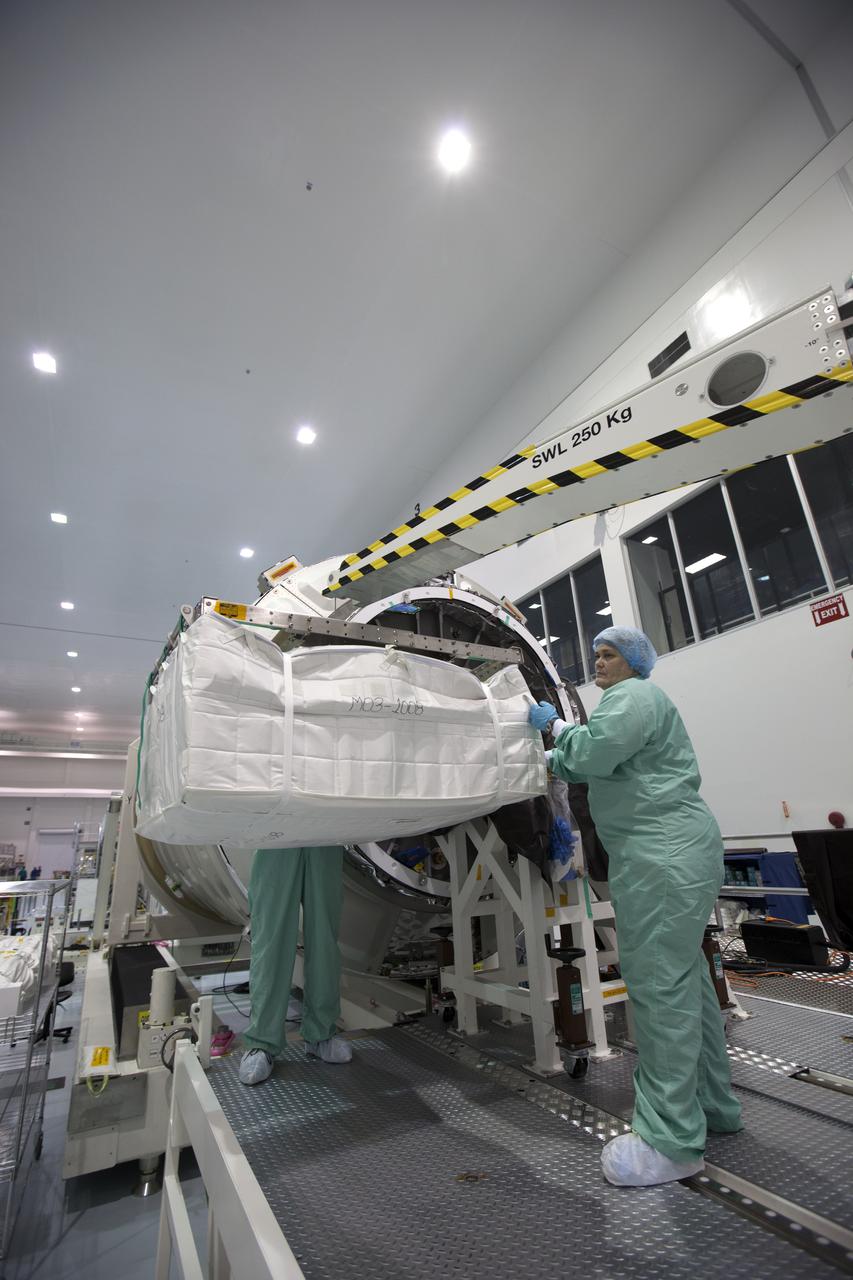
In the Space Station Processing Facility at NASA's Kennedy Space Center in Florida, technicians and engineers load thousands of pounds of supplies, equipment and scientific research materials aboard a Cygnus spacecraft's pressurized cargo module (PCM) for the Orbital ATK CRS-7 mission to the International Space Station. Scheduled to launch on March 19, 2017, the commercial resupply services mission will lift off atop a United Launch Alliance Atlas V rocket from Space launch Complex 41 at Cape Canaveral Air Force Station.
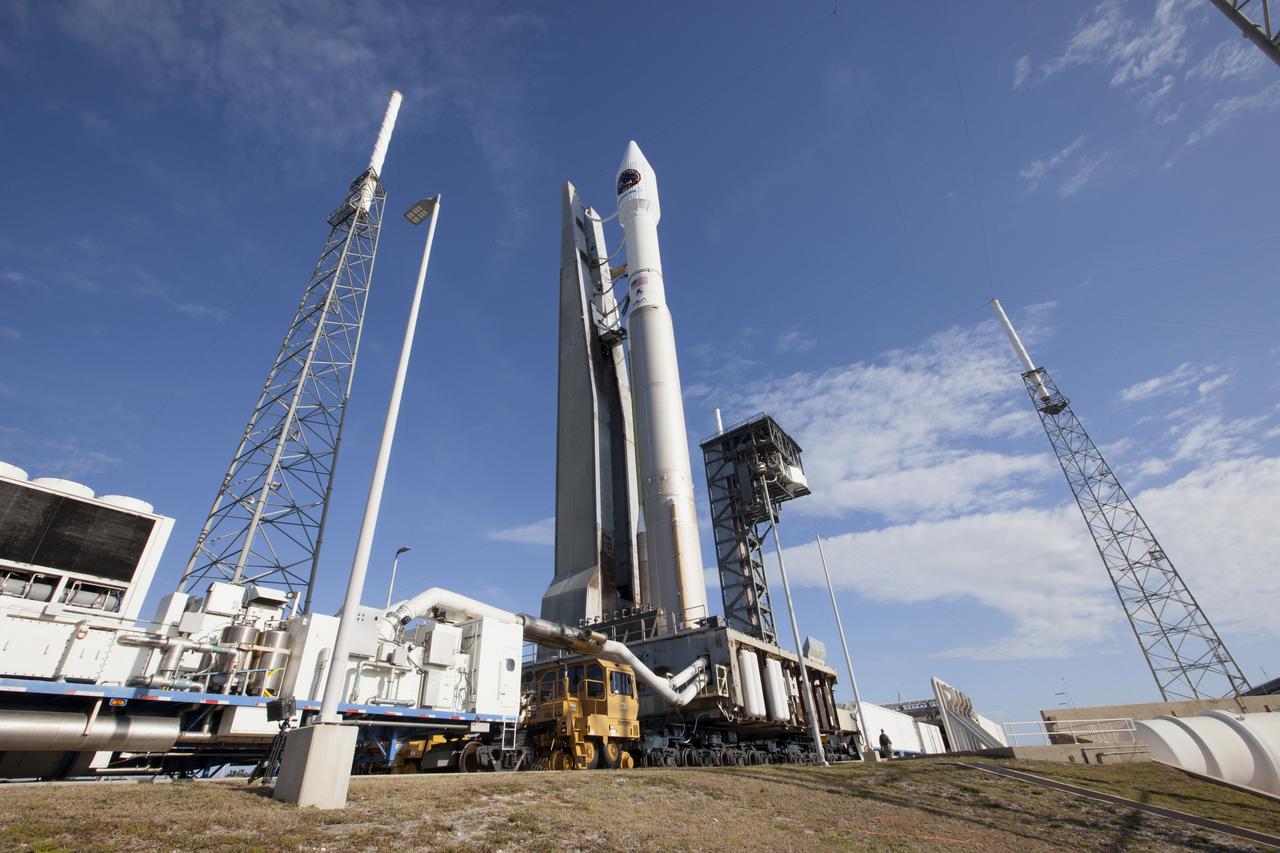
A United Launch Alliance Atlas V rocket, with the Orbital ATK Cygnus pressurized cargo module, is transported along the road to the pad at Space Launch Complex 41 at Cape Canaveral Air Force Station in Florida. Orbital ATK's seventh commercial resupply services mission, CRS-7, is scheduled to launch to the International Space Station on April 18, 2017. Cygnus will deliver 7,600 pounds of supplies, equipment and scientific research materials to the space station. Liftoff is scheduled for 11:11 a.m. EDT.
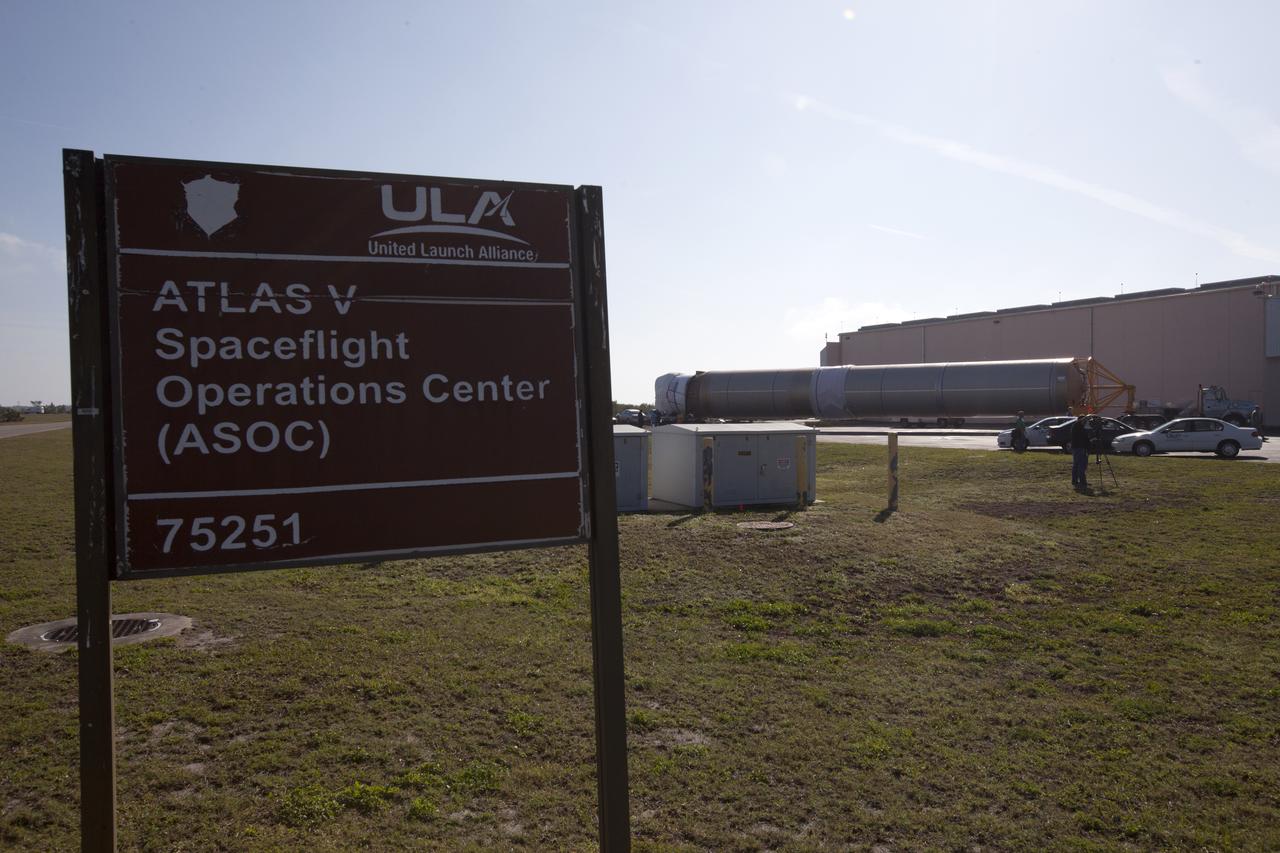
A United Launch Alliance (ULA) Atlas V booster arrives at Cape Canaveral Air Force Station's Atlas Spaceflight Operations Center (ASOC). The Atlas V will undergo final testing in that facility. When processing in the ASOC is complete, the Atlas booster will be moved to the Vertical Integration Facility for stacking at Space Launch Complex 41. Scheduled to launch March 19, 2017, the Atlas will launch a Cygnus spacecraft on the Orbital ATK CRS-7 mission to deliver thousands of pounds of supplies, equipment and scientific research materials to the International Space Station.
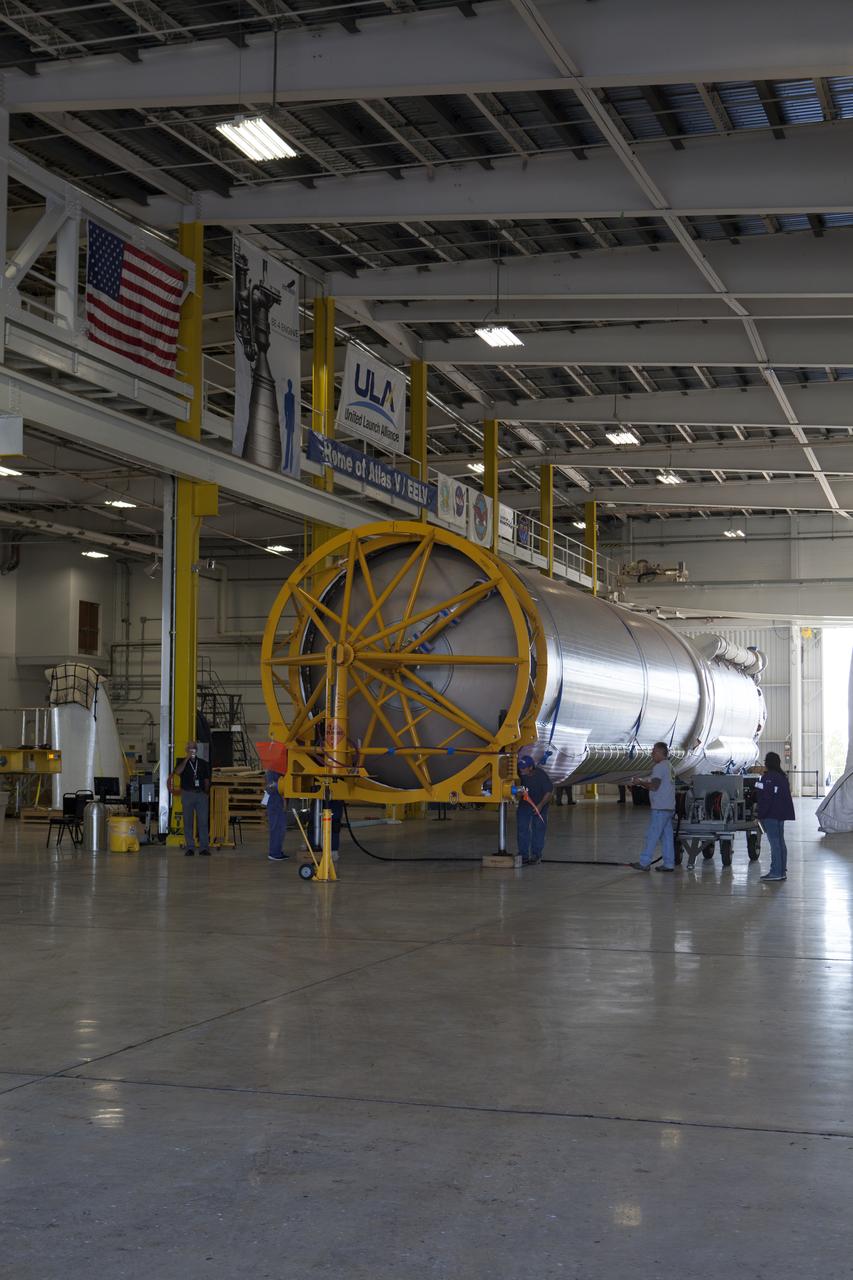
A United Launch Alliance (ULA) Atlas V booster arrives at Cape Canaveral Air Force Station's Atlas Spaceflight Operations Center (ASOC). The Atlas V will undergo final testing in that facility. When processing in the ASOC is complete, the Atlas booster will be moved to the Vertical Integration Facility for stacking at Space Launch Complex 41. Scheduled to launch March 19, 2017, the Atlas will launch a Cygnus spacecraft on the Orbital ATK CRS-7 mission to deliver thousands of pounds of supplies, equipment and scientific research materials to the International Space Station.
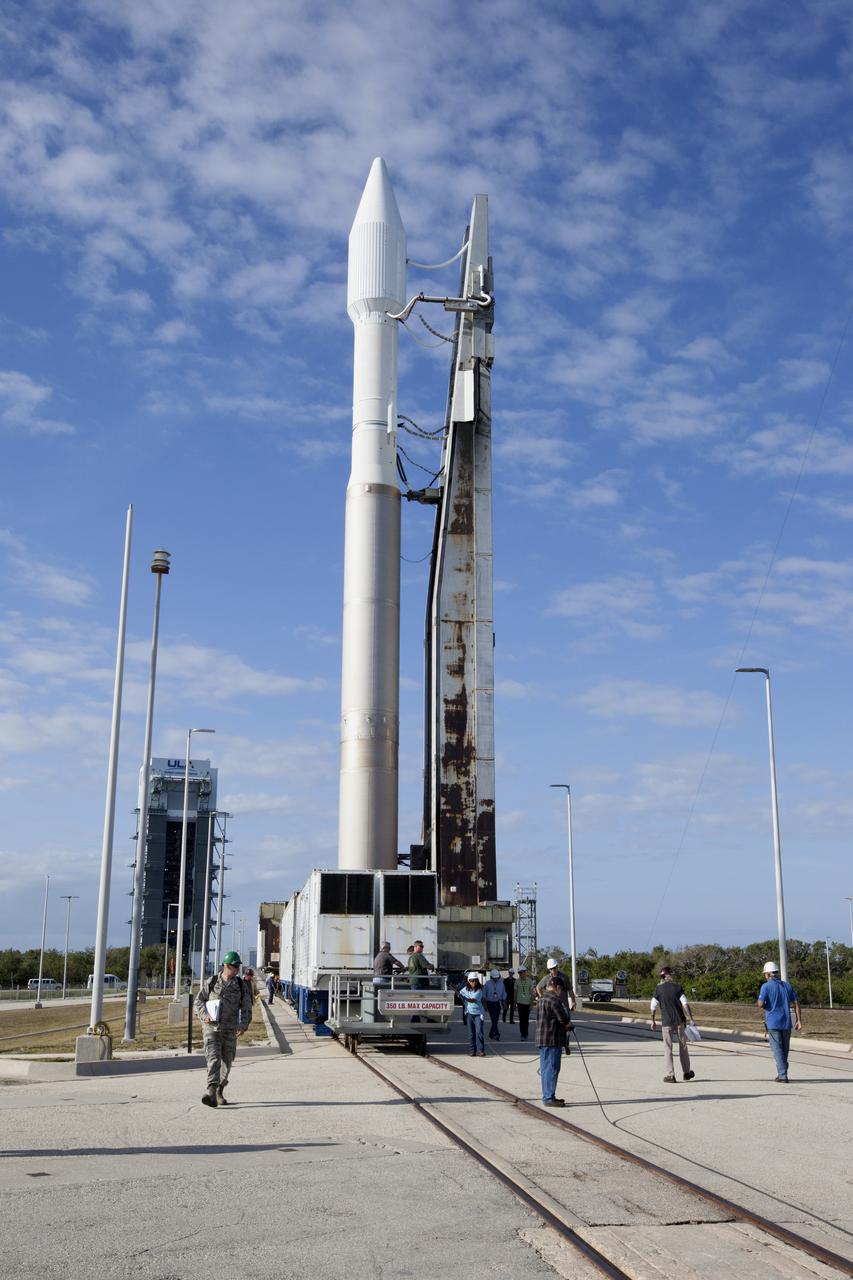
A United Launch Alliance Atlas V rocket, with the Orbital ATK Cygnus pressurized cargo module, is transported along the road to the pad at Space Launch Complex 41 at Cape Canaveral Air Force Station in Florida. Orbital ATK's seventh commercial resupply services mission, CRS-7, is scheduled to launch to the International Space Station on April 18, 2017. Cygnus will deliver 7,600 pounds of supplies, equipment and scientific research materials to the space station. Liftoff is scheduled for 11:11 a.m. EDT.
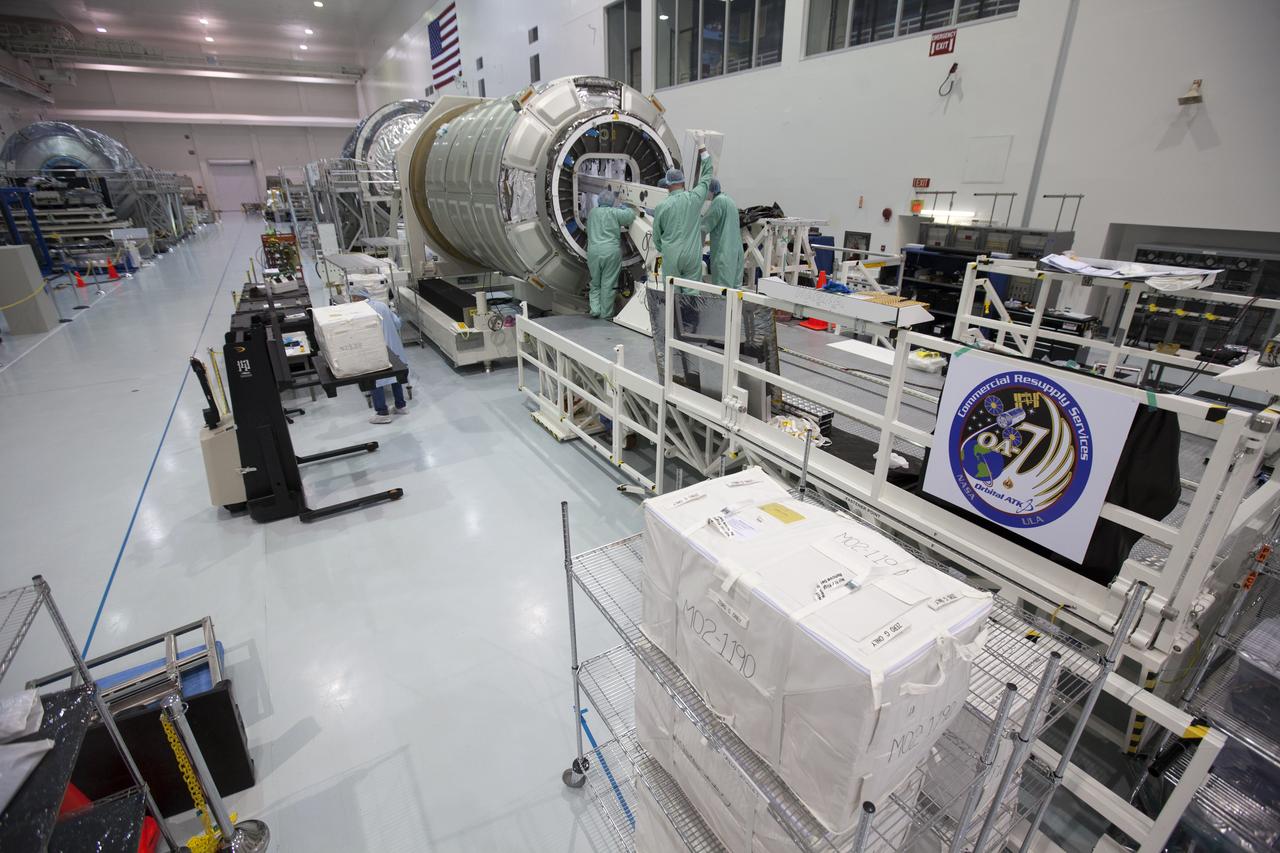
In the Space Station Processing Facility at NASA's Kennedy Space Center in Florida, technicians and engineers load thousands of pounds of supplies, equipment and scientific research materials aboard a Cygnus spacecraft's pressurized cargo module (PCM) for the Orbital ATK CRS-7 mission to the International Space Station. Scheduled to launch on March 19, 2017, the commercial resupply services mission will lift off atop a United Launch Alliance Atlas V rocket from Space launch Complex 41 at Cape Canaveral Air Force Station.
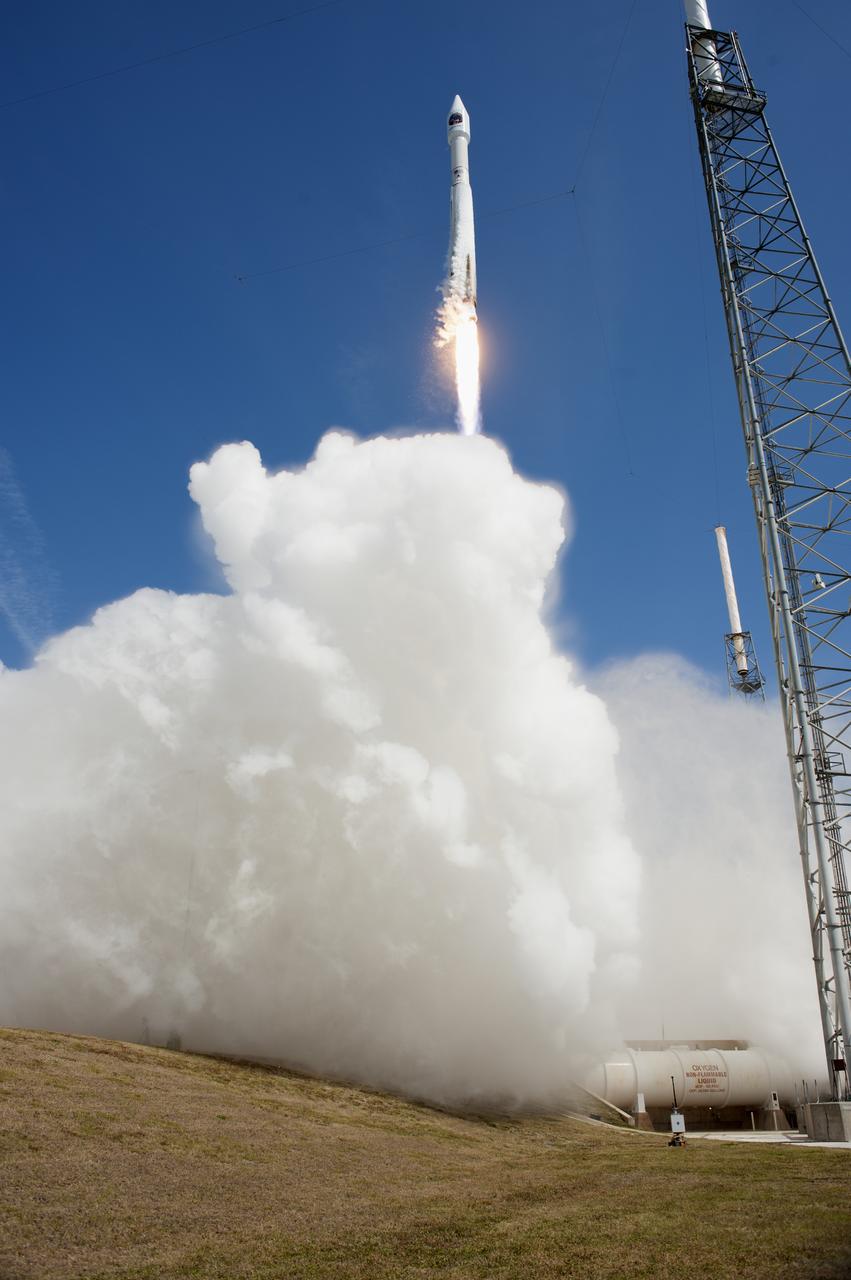
Against the backdrop of a bright blue sky, a United Launch Alliance Atlas V rocket soars upward after liftoff from Space Launch Complex 41 at Cape Canaveral Air Force Station in Florida, carrying the Orbital ATK Cygnus pressurized cargo module on the company's seventh commercial resupply services mission to the International Space Station. Liftoff was at 11:11 a.m. EDT. Cygnus will deliver 7,600 pounds of supplies, equipment and scientific research materials to the space station.
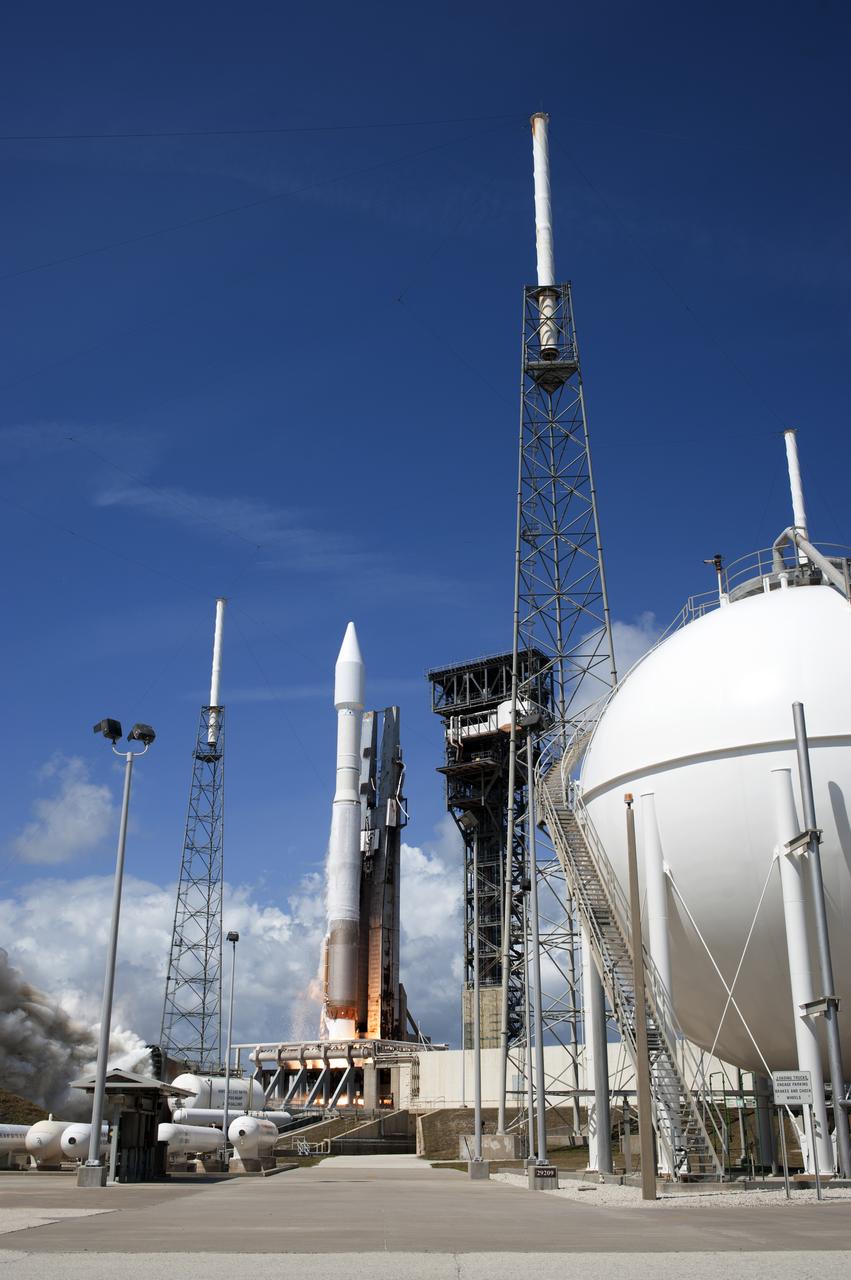
Against the backdrop of a bright blue sky, a United Launch Alliance Atlas V rocket lifts off from Space Launch Complex 41 at Cape Canaveral Air Force Station in Florida, carrying the Orbital ATK Cygnus pressurized cargo module on the company's seventh commercial resupply services mission to the International Space Station. Liftoff was at 11:11 a.m. EDT. Cygnus will deliver 7,600 pounds of supplies, equipment and scientific research materials to the space station.
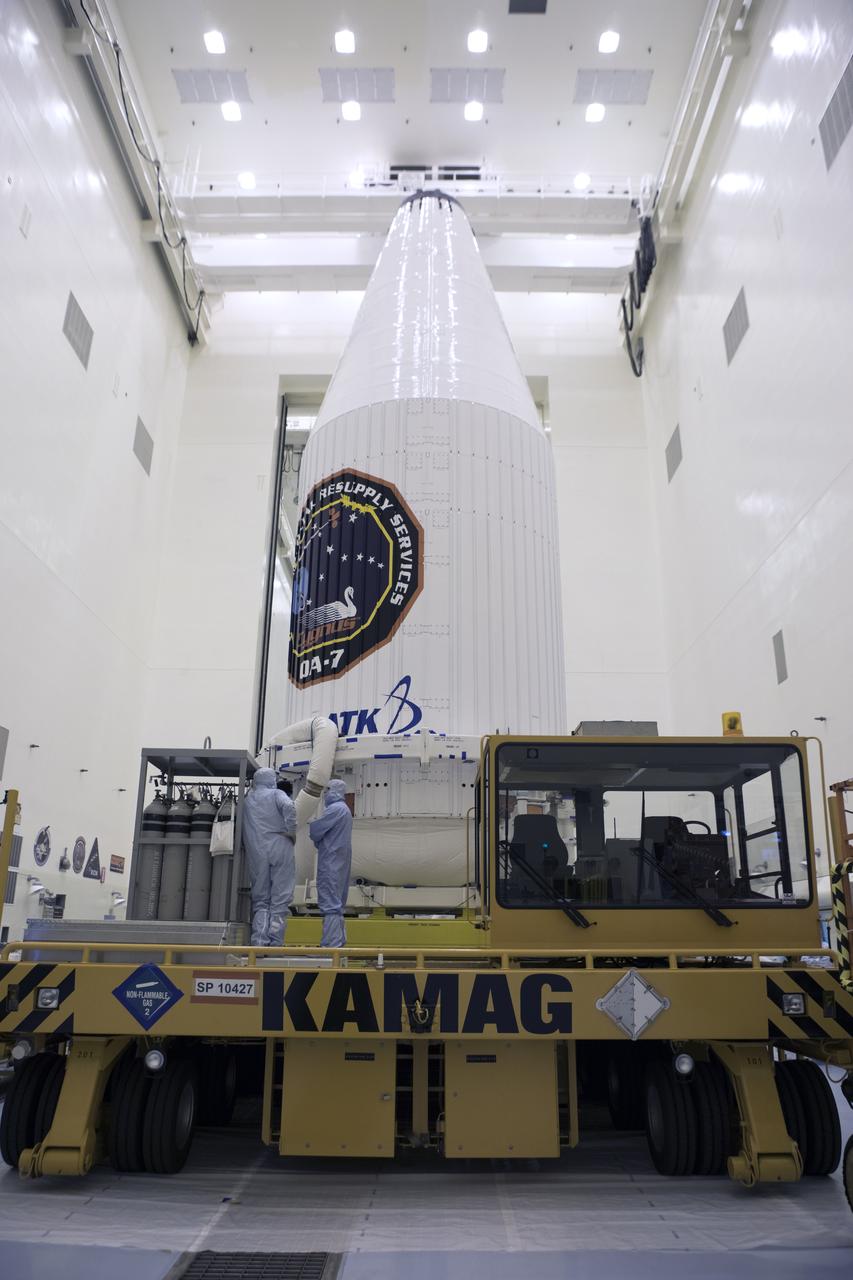
Inside the Payload Hazardous Servicing Facility at NASA's Kennedy Space Center in Florida, the Orbital ATK Cygnus pressurized cargo module, enclosed in its payload fairing, is secured on a KAMAG transporter. The Orbital ATK CRS-7 commercial resupply services mission to the International Space Station is scheduled to launch atop a United Launch Alliance Atlas V rocket from Space Launch Complex 41 at Cape Canaveral Air Force Station. Cygnus will deliver 7,600 pounds of supplies, equipment and scientific research materials to the space station.
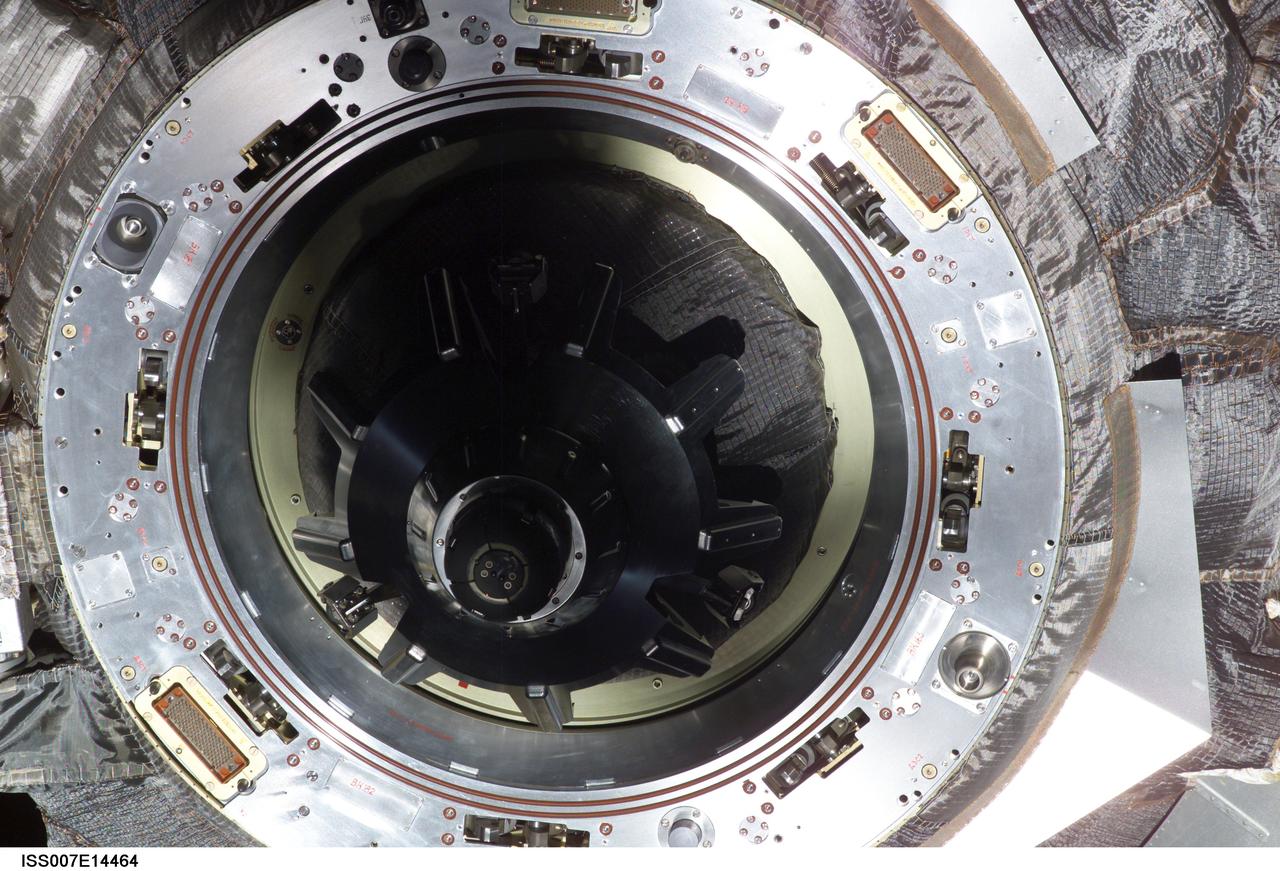
ISS007-E-14464 (4 September 2003) --- This close-up view of an unpiloted Progress supply vehicle was taken by one of the Expedition 7 crewmembers onboard the International Space Station (ISS) as it departed from the Pirs Docking Compartment at 2:42 p.m. (CDT) on September 4, 2003. The Progress 11 will remain in orbit for another month as part of a Russian scientific experiment. It will then be de deorbited with its load of trash and unneeded equipment and burn in the Earth’s atmosphere.
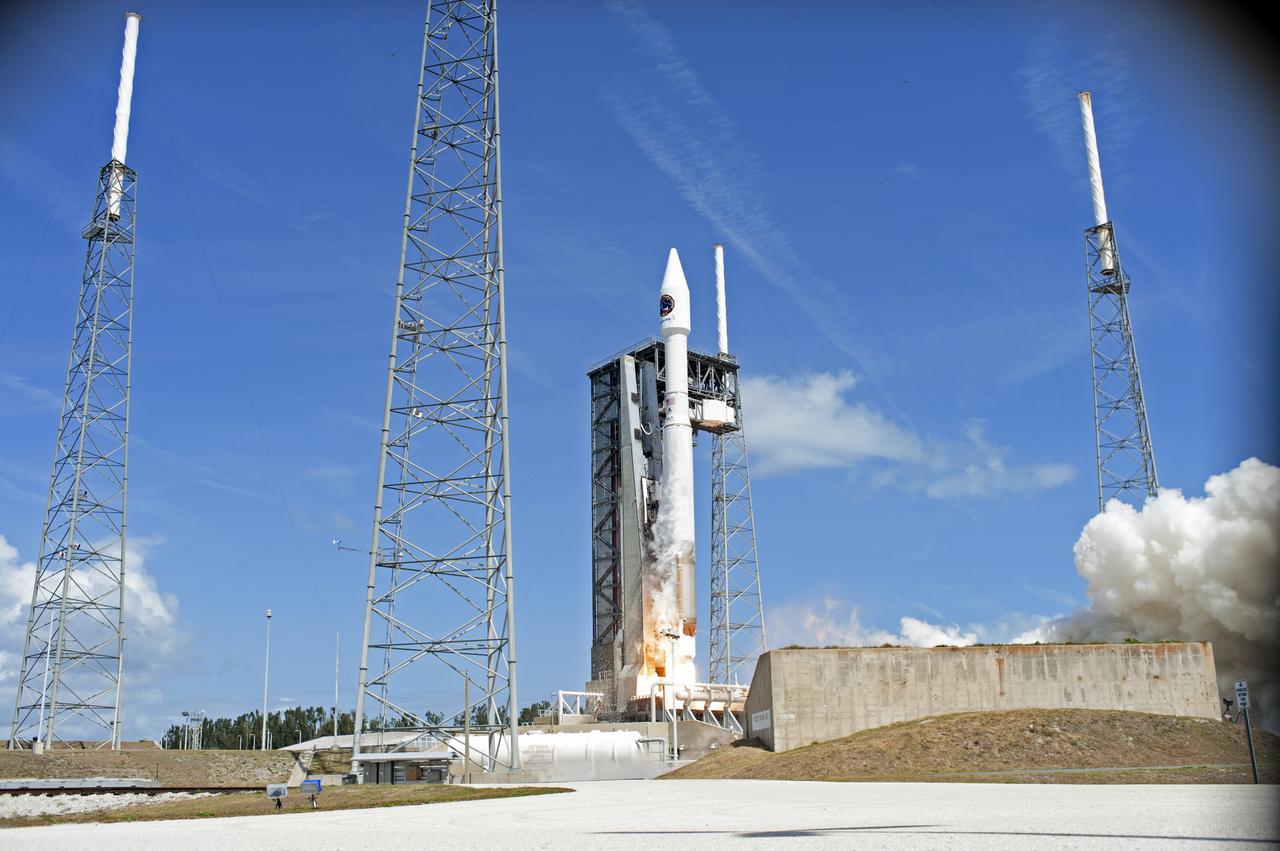
The Orbital ATK Cygnus pressurized cargo module is carried atop the United Launch Alliance Atlas V rocket from Space Launch Complex 41 at Cape Canaveral Air Force Station in Florida. Orbital ATK's seventh commercial resupply services mission, CRS-7, will deliver 7,600 pounds of supplies, equipment and scientific research materials to the International Space Station. Liftoff was at 11:11 a.m. EDT.
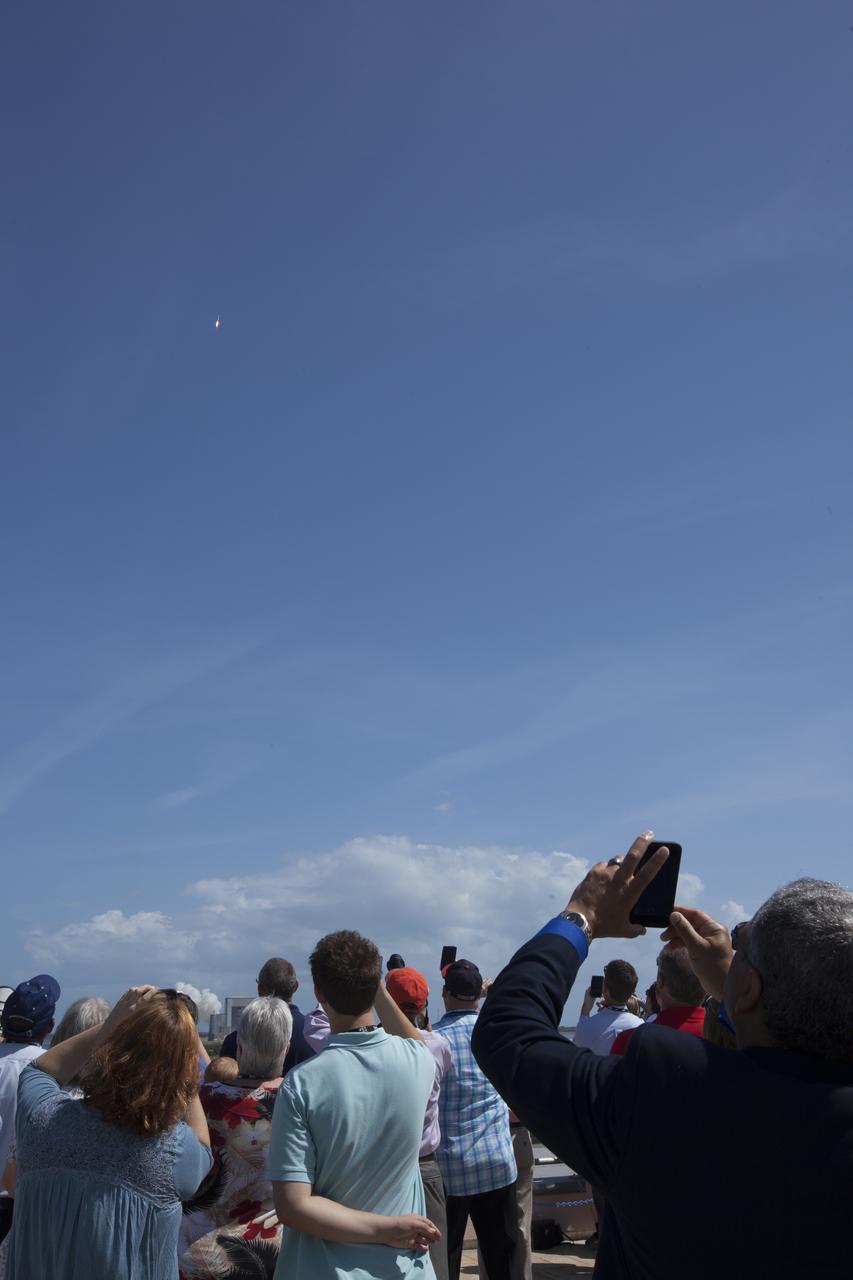
Social media guests watch a United Launch Alliance Atlas V rocket soar upward after lliftoff at 11:11 a.m. EDT from Space Launch Complex 41 at Cape Canaveral Air Force Station in Florida, carrying the Orbital ATK Cygnus pressurized cargo module on the company's seventh commercial resupply services mission to the International Space Station. Cygnus will deliver 7,600 pounds of supplies, equipment and scientific research materials to the space station.
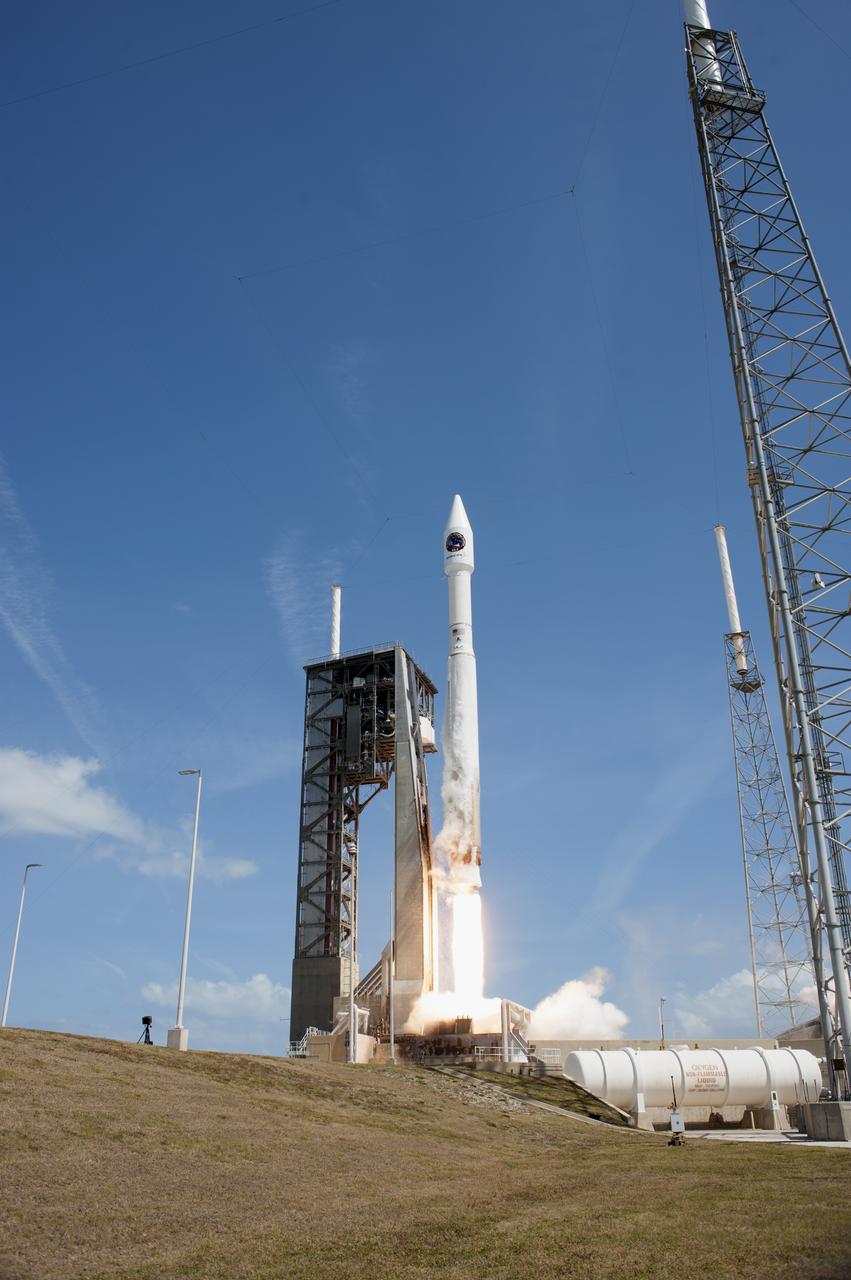
Against the backdrop of a bright blue sky, a United Launch Alliance Atlas V rocket lifts off from Space Launch Complex 41 at Cape Canaveral Air Force Station in Florida, carrying the Orbital ATK Cygnus pressurized cargo module on the company's seventh commercial resupply services mission to the International Space Station. Liftoff was at 11:11 a.m. EDT. Cygnus will deliver 7,600 pounds of supplies, equipment and scientific research materials to the space station.
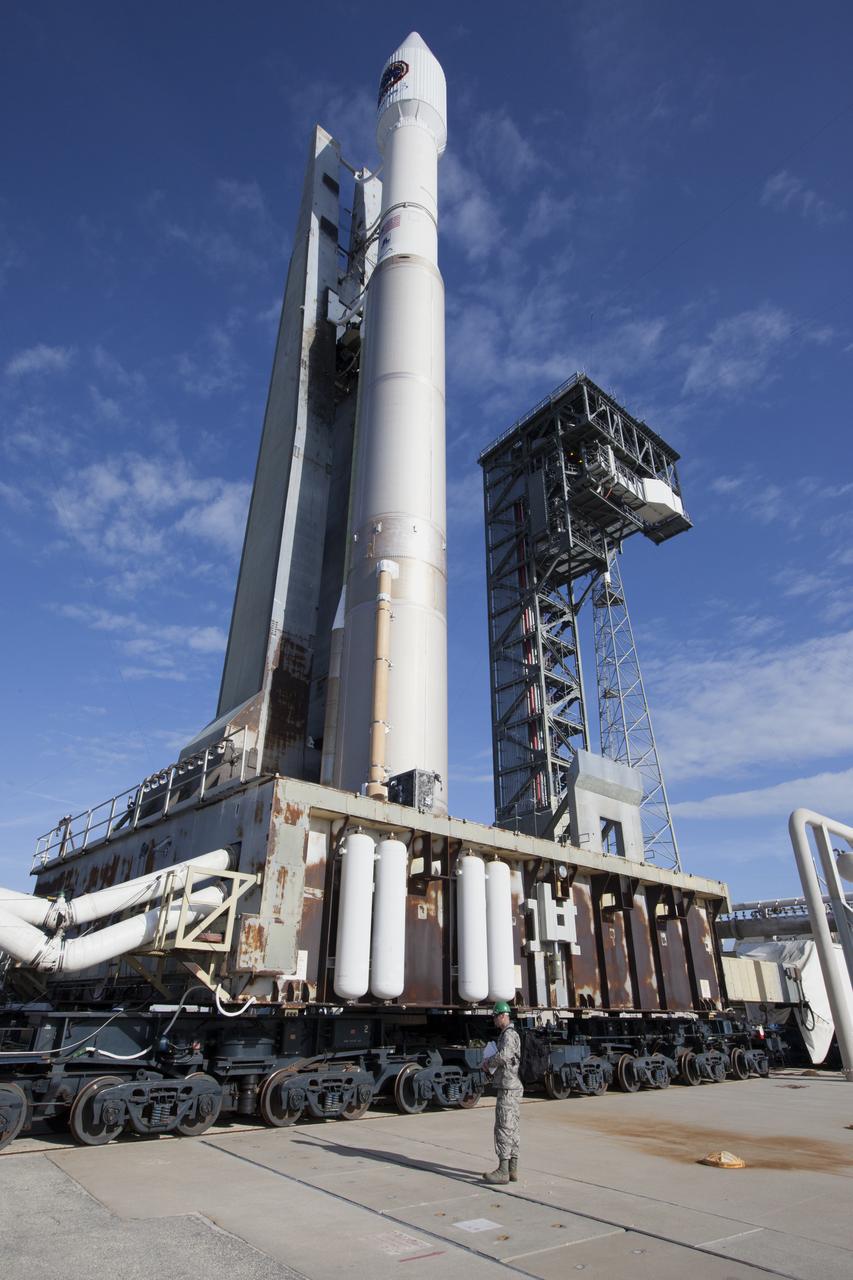
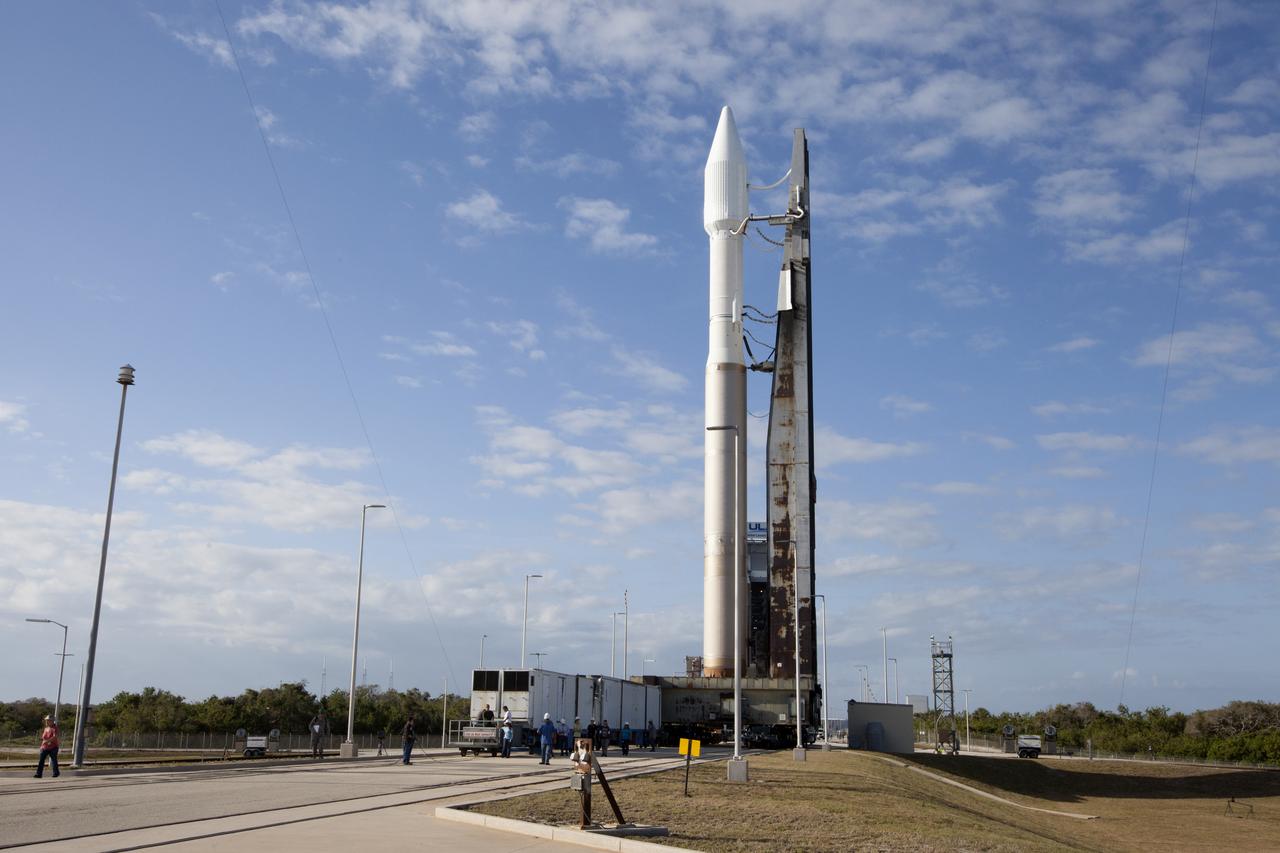
A United Launch Alliance Atlas V rocket, with the Orbital ATK Cygnus pressurized cargo module, nears the pad at Space Launch Complex 41 at Cape Canaveral Air Force Station in Florida. Orbital ATK's seventh commercial resupply services mission, CRS-7, is scheduled to launch to the International Space Station on April 18, 2017. Cygnus will deliver 7,600 pounds of supplies, equipment and scientific research materials to the space station. Liftoff is scheduled for 11:11 a.m. EDT.
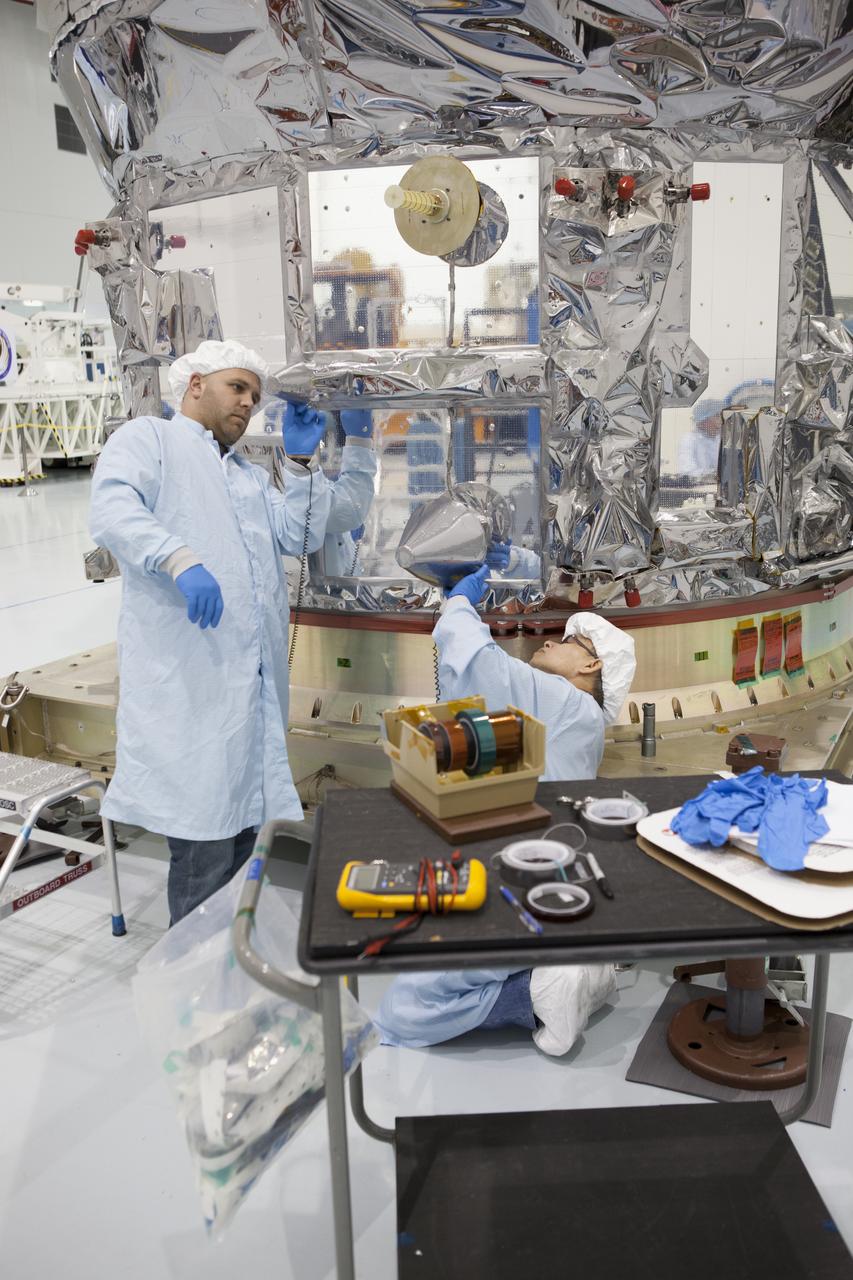
In the Space Station Processing Facility high bay at NASA's Kennedy Space Center in Florida, technicians are preparing Orbital ATK's CYGNUS pressurized cargo module for bagging. The Orbital ATK CRS-7 commercial resupply services mission to the International Space Station is scheduled to launch atop a United Launch Alliance Atlas V rocket from Space Launch Complex 41 at Cape Canaveral Air Force Station on March 19, 2017. CYGNUS will deliver thousands of pounds of supplies, equipment and scientific research materials to the space station.
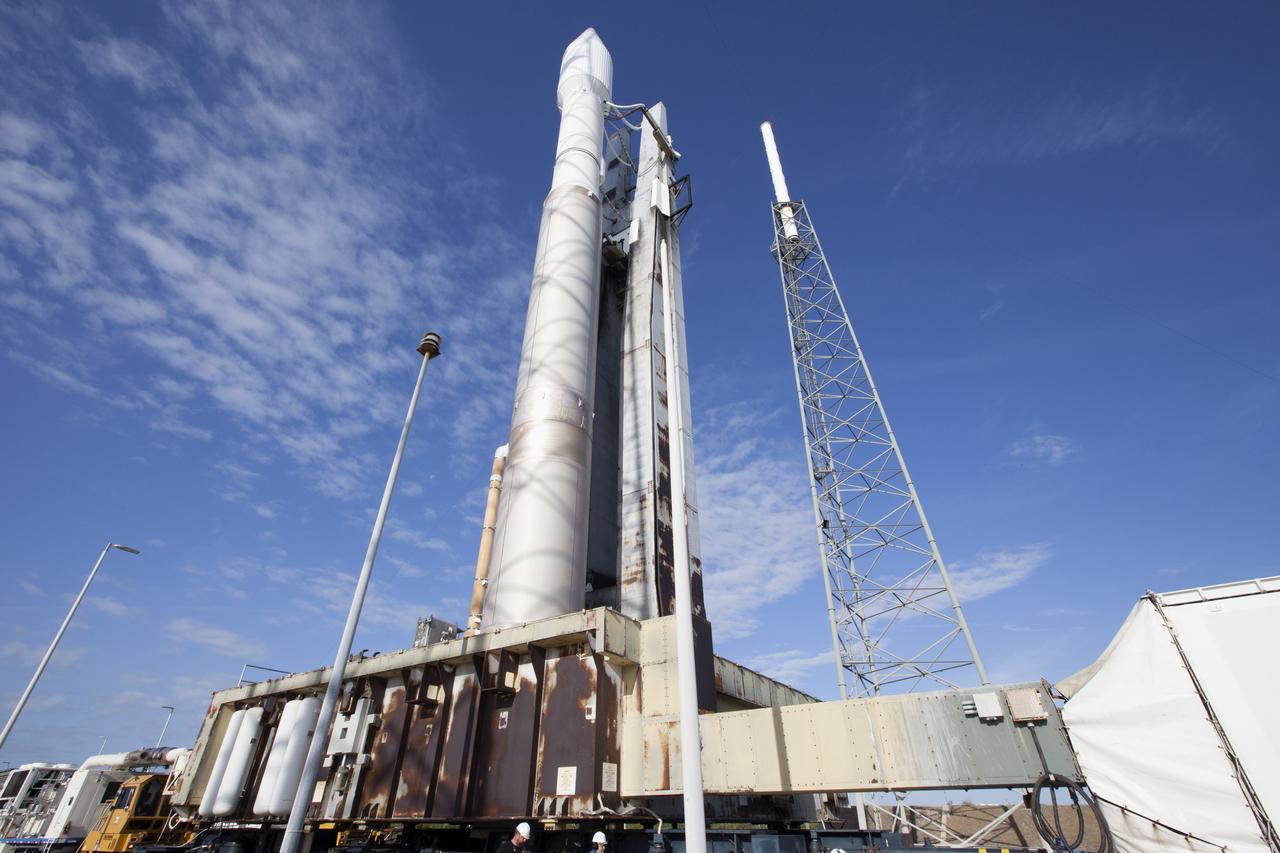
A United Launch Alliance Atlas V rocket, with the Orbital ATK Cygnus pressurized cargo module, is transported along the road to the pad at Space Launch Complex 41 at Cape Canaveral Air Force Station in Florida. Orbital ATK's seventh commercial resupply services mission, CRS-7, is scheduled to launch to the International Space Station on April 18, 2017. Cygnus will deliver 7,600 pounds of supplies, equipment and scientific research materials to the space station. Liftoff is scheduled for 11:11 a.m. EDT.
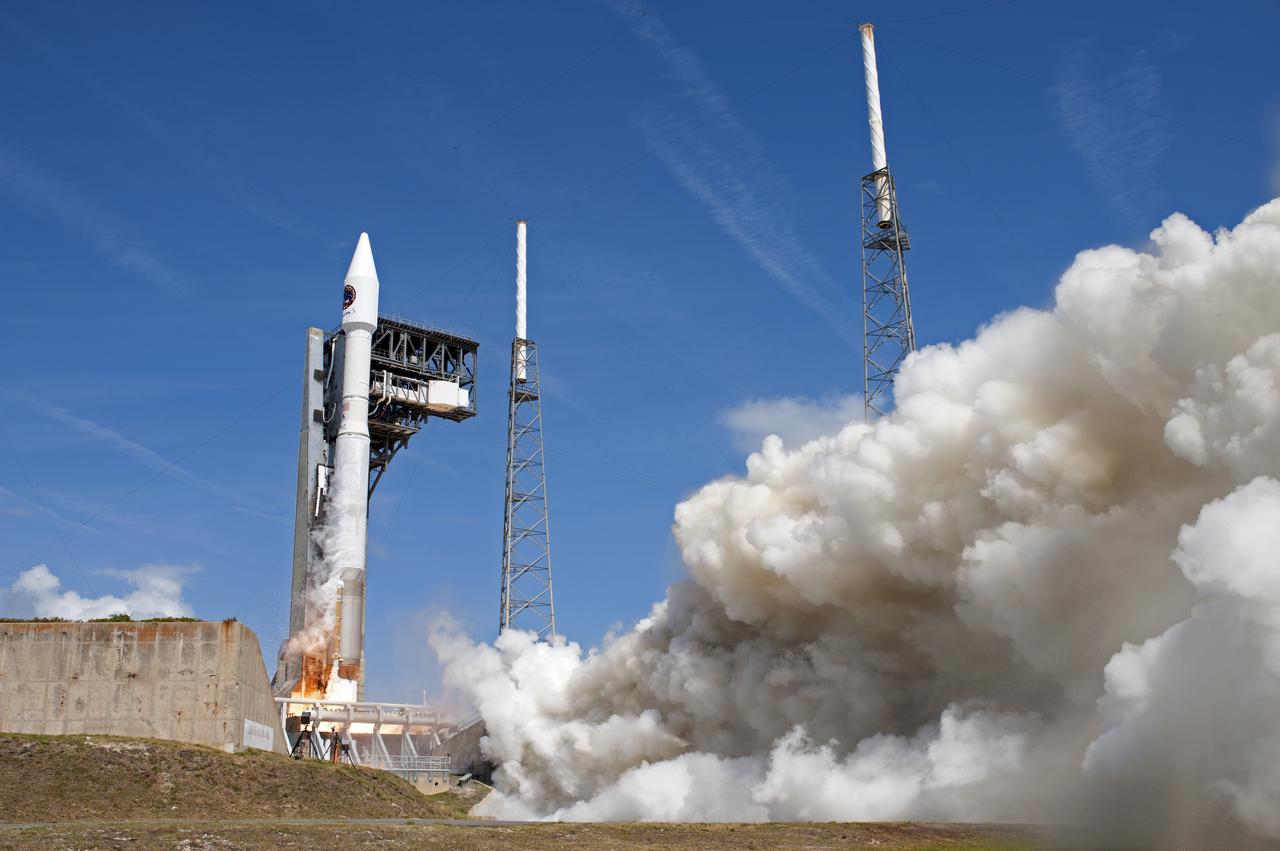
With blue sky for a background, the Orbital ATK Cygnus pressurized cargo module is carried atop the United Launch Alliance Atlas V rocket from Space Launch Complex 41 at Cape Canaveral Air Force Station in Florida. Orbital ATK's seventh commercial resupply services mission, CRS-7, will deliver 7,600 pounds of supplies, equipment and scientific research materials to the International Space Station. Liftoff was at 11:11 a.m. EDT.
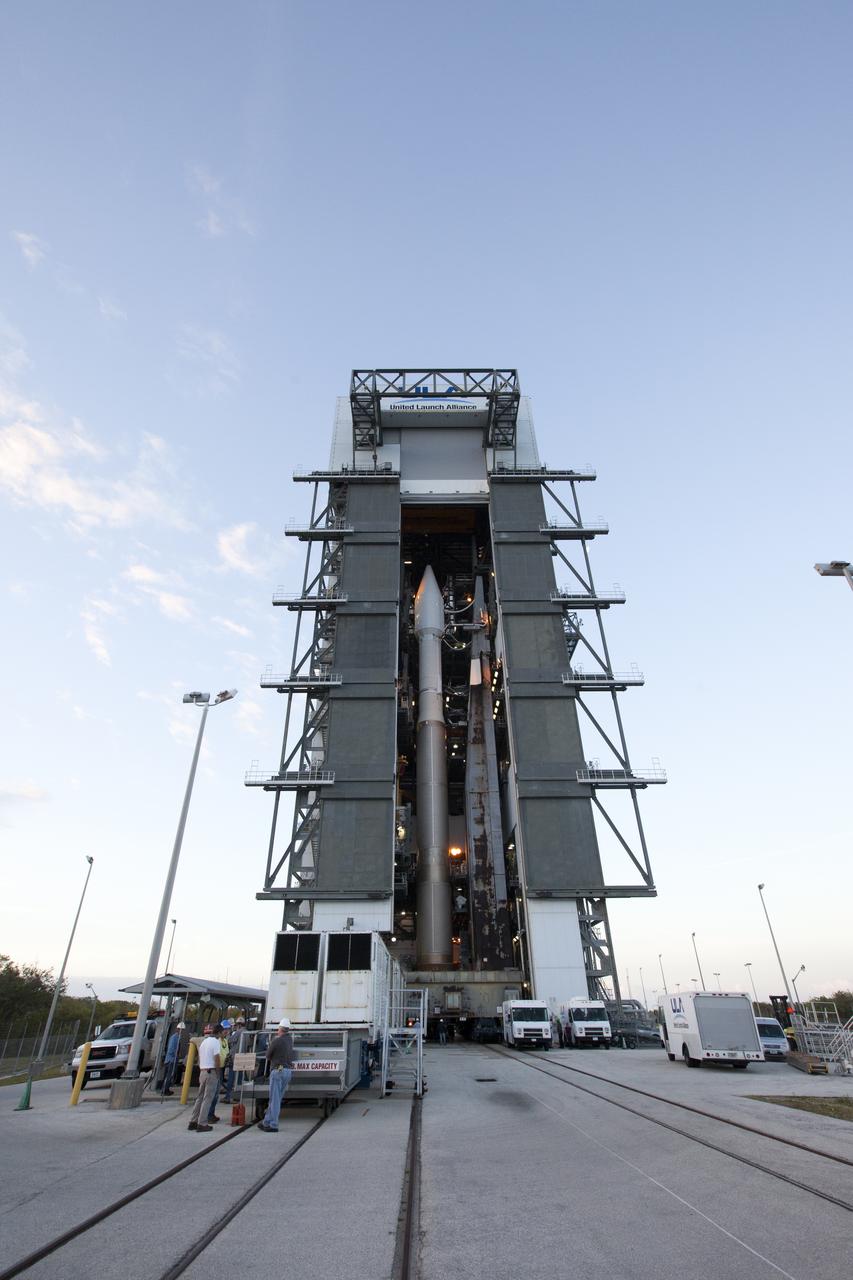
A United Launch Alliance Atlas V rocket, with the Orbital ATK Cygnus pressurized cargo module, begins to exit the Vertical Integration Facility at Space Launch Complex 41 at Cape Canaveral Air Force Station in Florida. Orbital ATK's seventh commercial resupply services mission, CRS-7, is scheduled to launch to the International Space Station on April 18, 2017. Cygnus will deliver 7,600 pounds of supplies, equipment and scientific research materials to the space station. Liftoff is scheduled for 11:11 a.m. EDT.
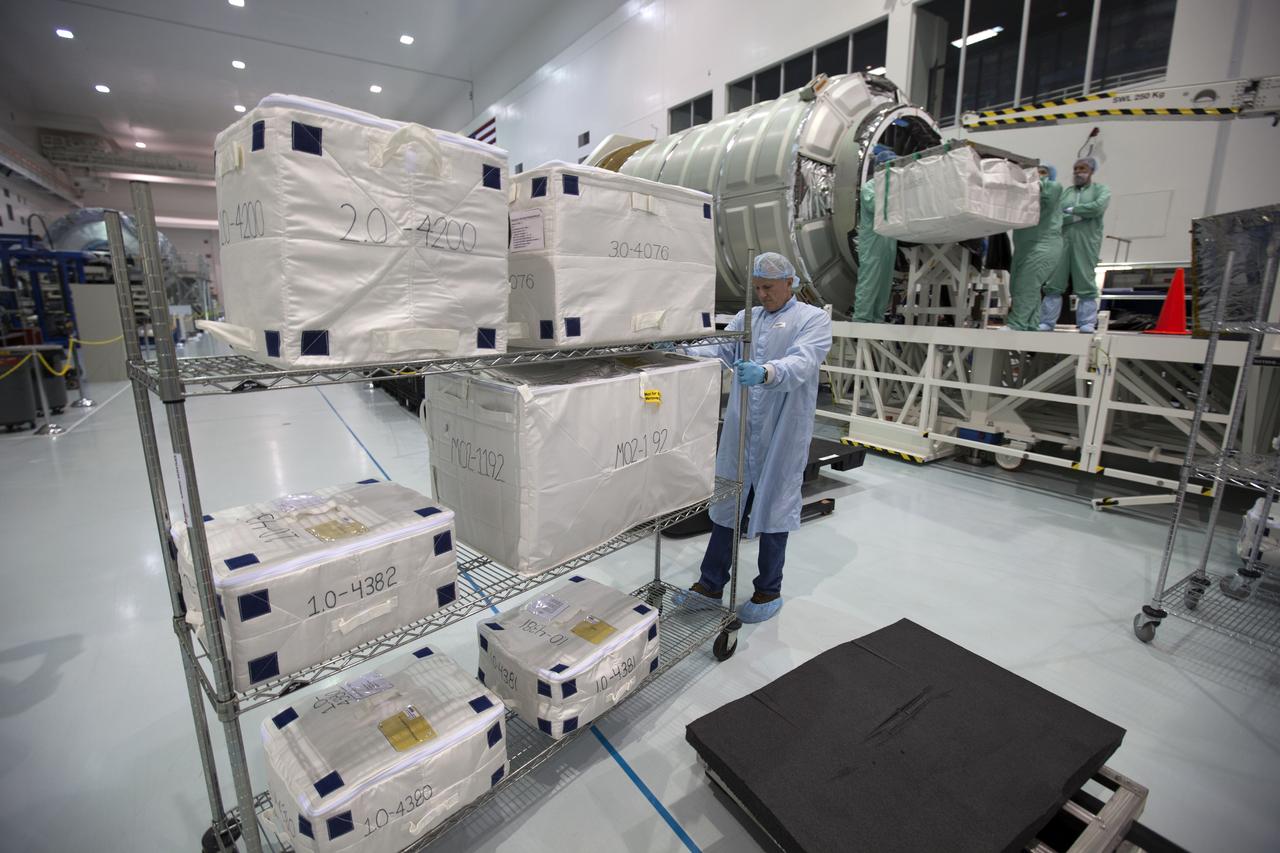
In the Space Station Processing Facility at NASA's Kennedy Space Center in Florida, technicians and engineers load thousands of pounds of supplies, equipment and scientific research materials aboard a Cygnus spacecraft's pressurized cargo module (PCM) for the Orbital ATK CRS-7 mission to the International Space Station. Scheduled to launch on March 19, 2017, the commercial resupply services mission will lift off atop a United Launch Alliance Atlas V rocket from Space launch Complex 41 at Cape Canaveral Air Force Station.
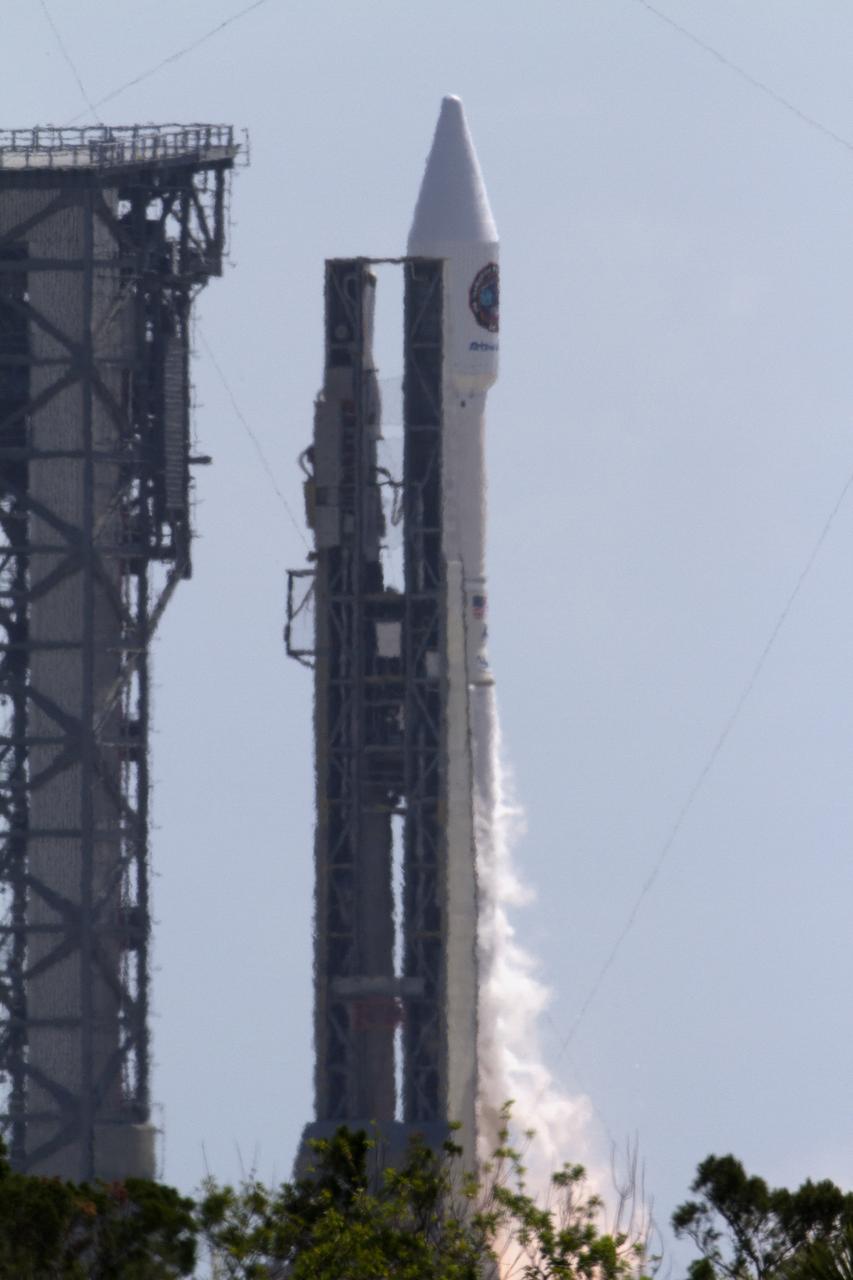
A United Launch Alliance Atlas V rocket lifts off at 11:11 a.m. EDT from Space Launch Complex 41 at Cape Canaveral Air Force Station in Florida, carrying the Orbital ATK Cygnus pressurized cargo module on the company's seventh commercial resupply services mission to the International Space Station. Cygnus will deliver 7,600 pounds of supplies, equipment and scientific research materials to the space station.
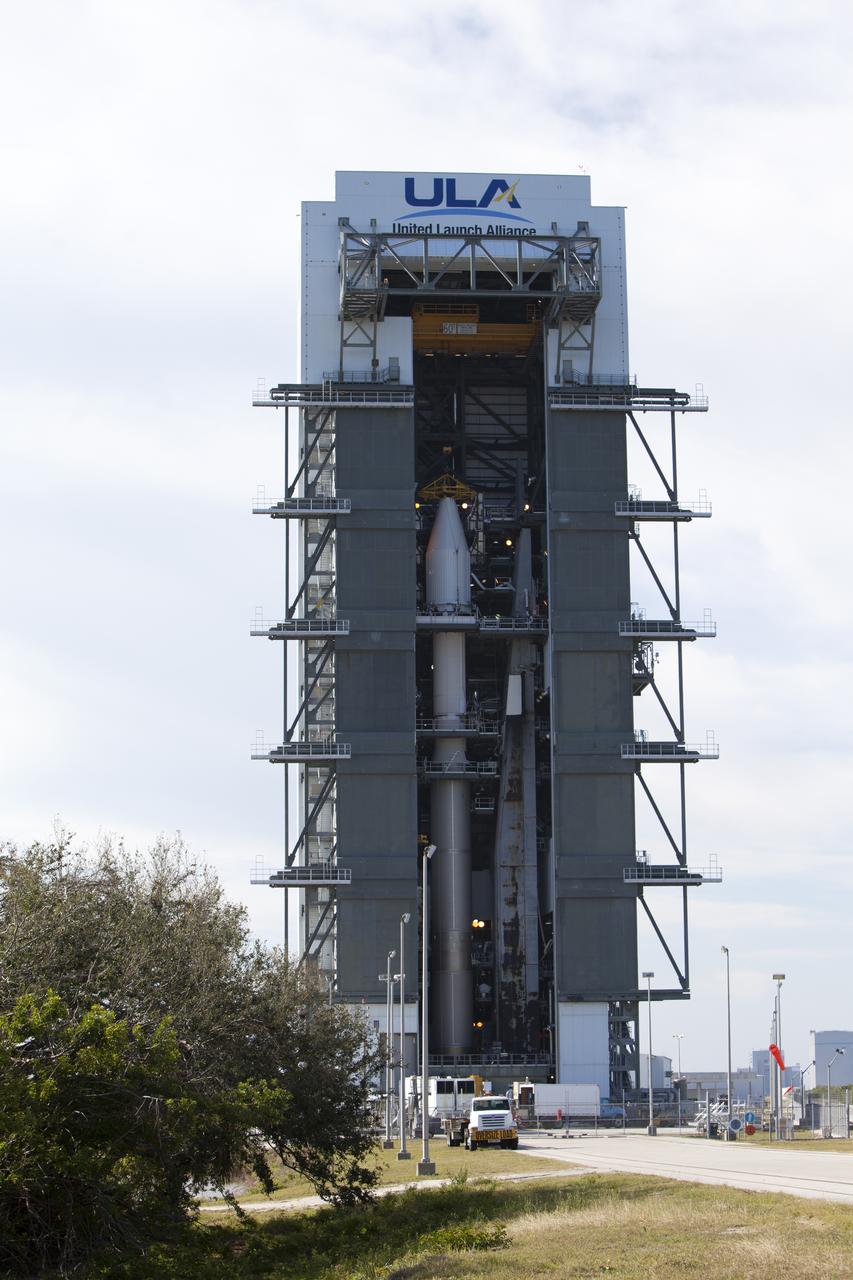
The payload fairing containing the Orbital ATK Cygnus pressurized cargo module is mated to the Centaur upper stage, or second stage, of the United Launch Alliance (ULA) rocket in the Vertical Integration Facility at Space Launch Complex 41 at Cape Canaveral Air Force Station in Florida. The Orbital ATK CRS-7 commercial resupply services mission to the International Space Station is scheduled to launch atop the Atlas V from pad 41. Cygnus will deliver 7,600 pounds of supplies, equipment and scientific research materials to the space station.
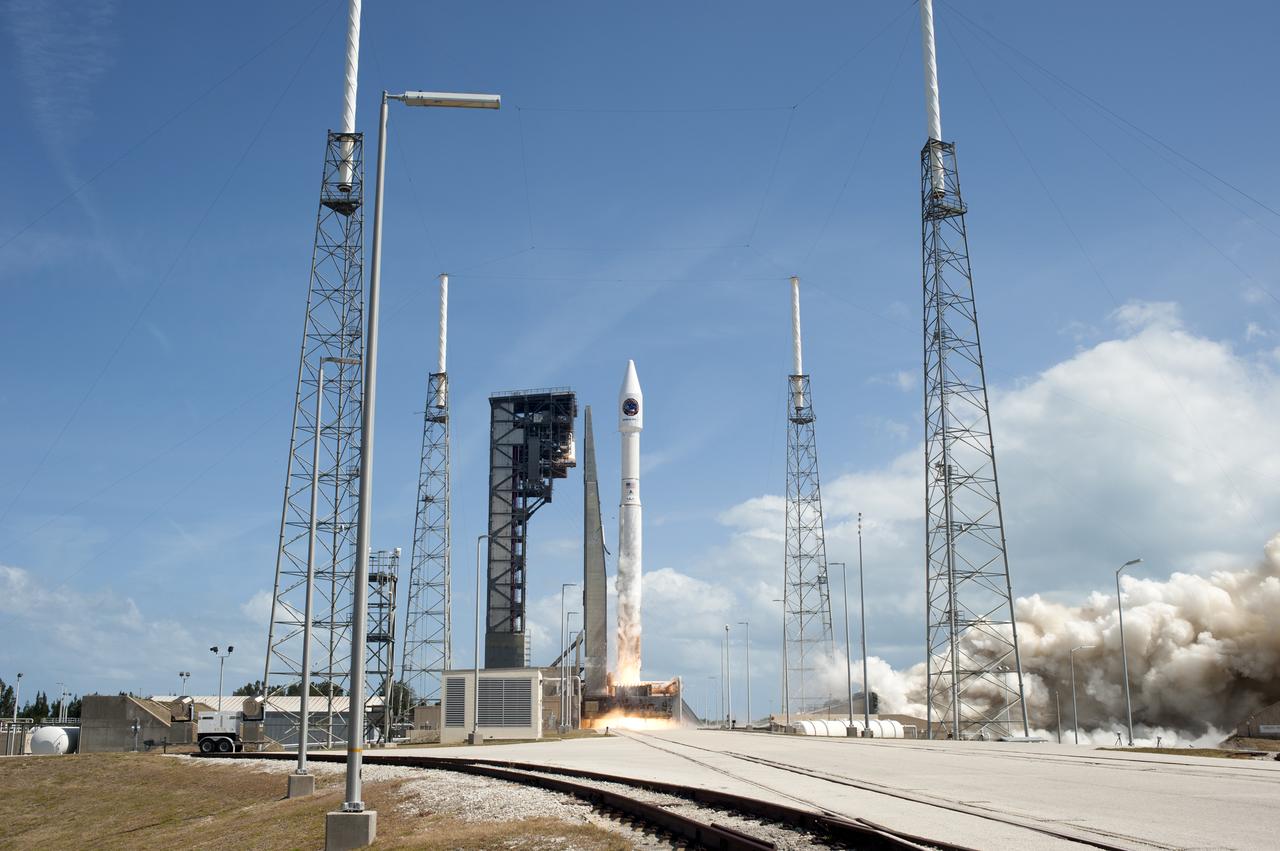
A United Launch Alliance Atlas V rocket lifts off at 11:11 a.m. EDT from Space Launch Complex 41 at Cape Canaveral Air Force Station in Florida, carrying the Orbital ATK Cygnus pressurized cargo module on the company's seventh commercial resupply services mission to the International Space Station. Cygnus will deliver 7,600 pounds of supplies, equipment and scientific research materials to the space station.
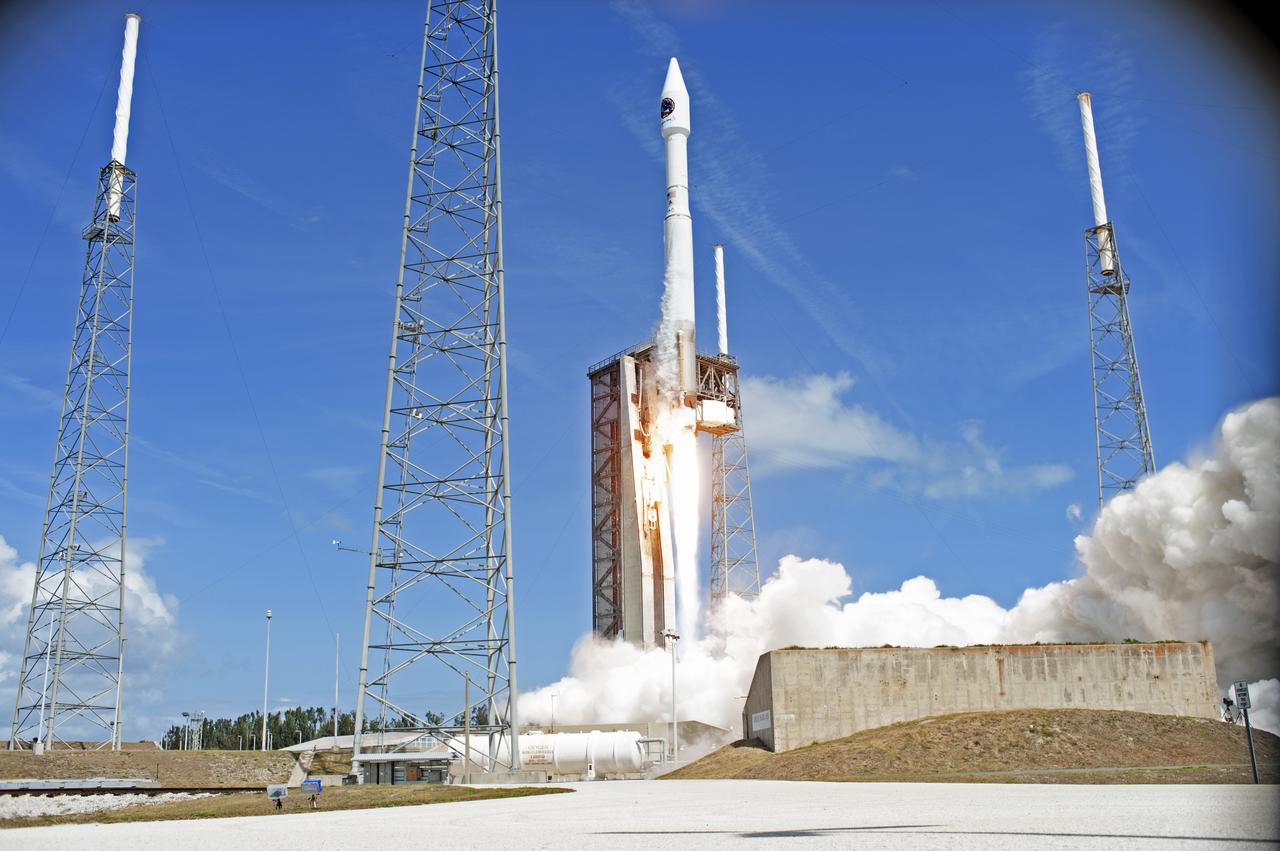
The Orbital ATK Cygnus pressurized cargo module is carried atop the United Launch Alliance Atlas V rocket from Space Launch Complex 41 at Cape Canaveral Air Force Station in Florida. Orbital ATK's seventh commercial resupply services mission, CRS-7, will deliver 7,600 pounds of supplies, equipment and scientific research materials to the International Space Station. Liftoff was at 11:11 a.m. EDT.
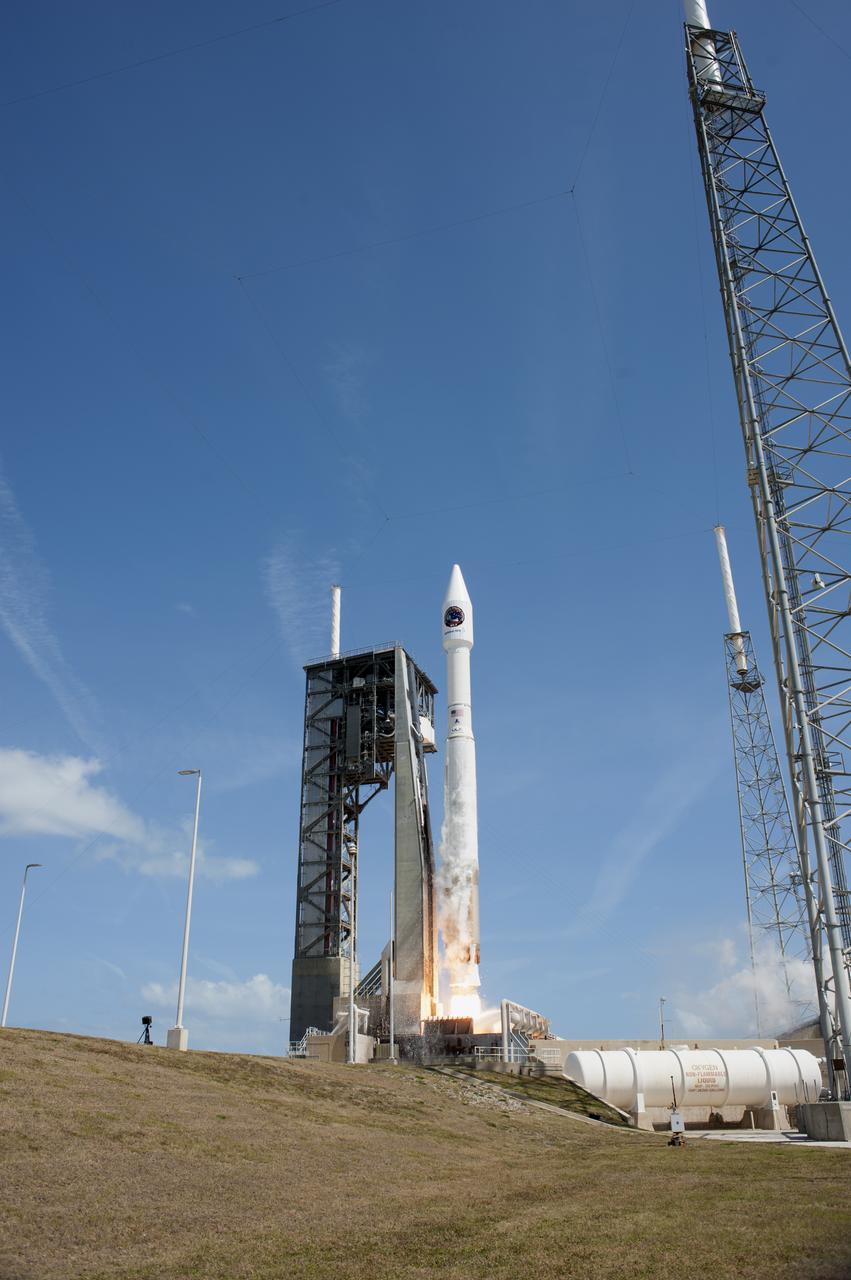
Against the backdrop of a bright blue sky, a United Launch Alliance Atlas V rocket lifts off from Space Launch Complex 41 at Cape Canaveral Air Force Station in Florida, carrying the Orbital ATK Cygnus pressurized cargo module on the company's seventh commercial resupply services mission to the International Space Station. Liftoff was at 11:11 a.m. EDT. Cygnus will deliver 7,600 pounds of supplies, equipment and scientific research materials to the space station.
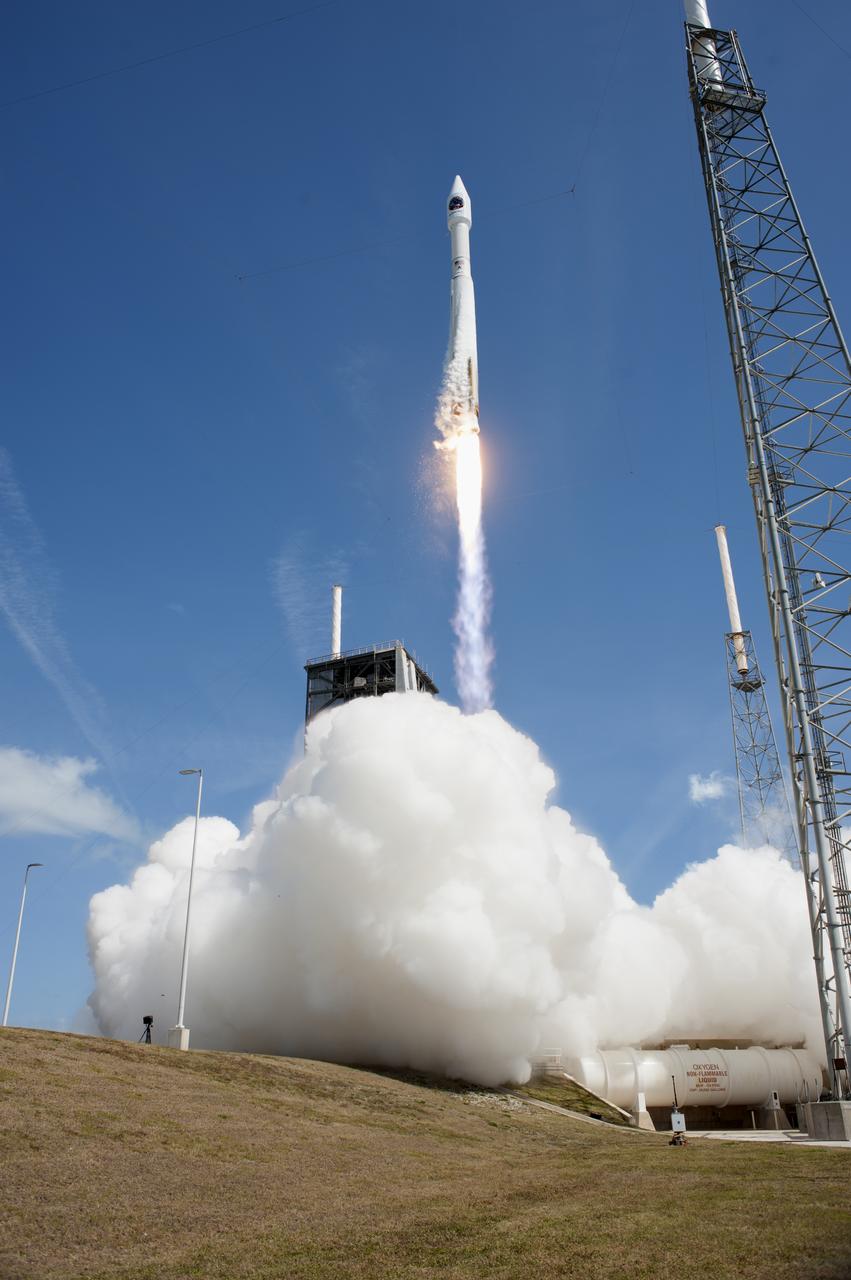
Against the backdrop of a bright blue sky, a United Launch Alliance Atlas V rocket soars upward after liftoff from Space Launch Complex 41 at Cape Canaveral Air Force Station in Florida, carrying the Orbital ATK Cygnus pressurized cargo module on the company's seventh commercial resupply services mission to the International Space Station. Liftoff was at 11:11 a.m. EDT. Cygnus will deliver 7,600 pounds of supplies, equipment and scientific research materials to the space station.
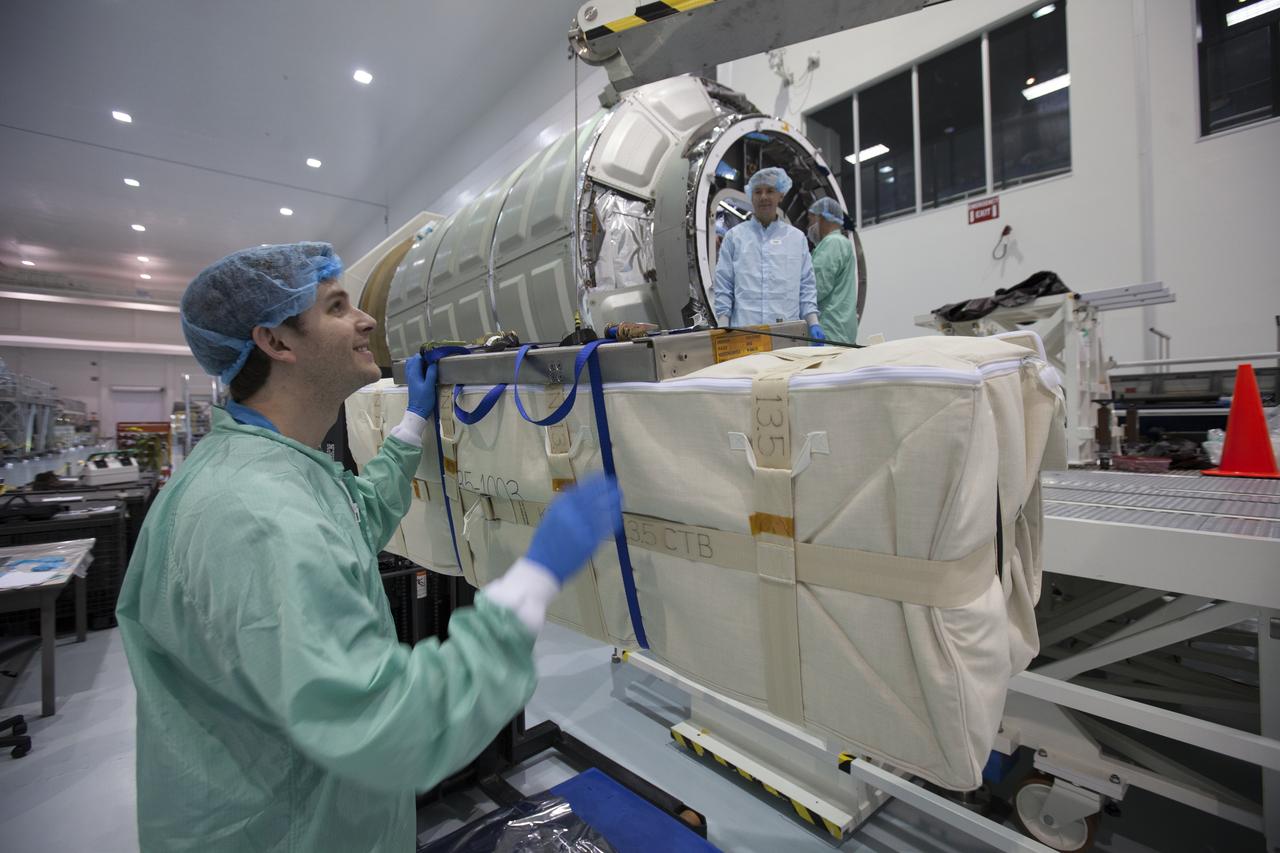
In the Space Station Processing Facility at NASA's Kennedy Space Center in Florida, technicians and engineers load thousands of pounds of supplies, equipment and scientific research materials aboard a Cygnus spacecraft's pressurized cargo module (PCM) for the Orbital ATK CRS-7 mission to the International Space Station. Scheduled to launch on March 19, 2017, the commercial resupply services mission will lift off atop a United Launch Alliance Atlas V rocket from Space launch Complex 41 at Cape Canaveral Air Force Station.
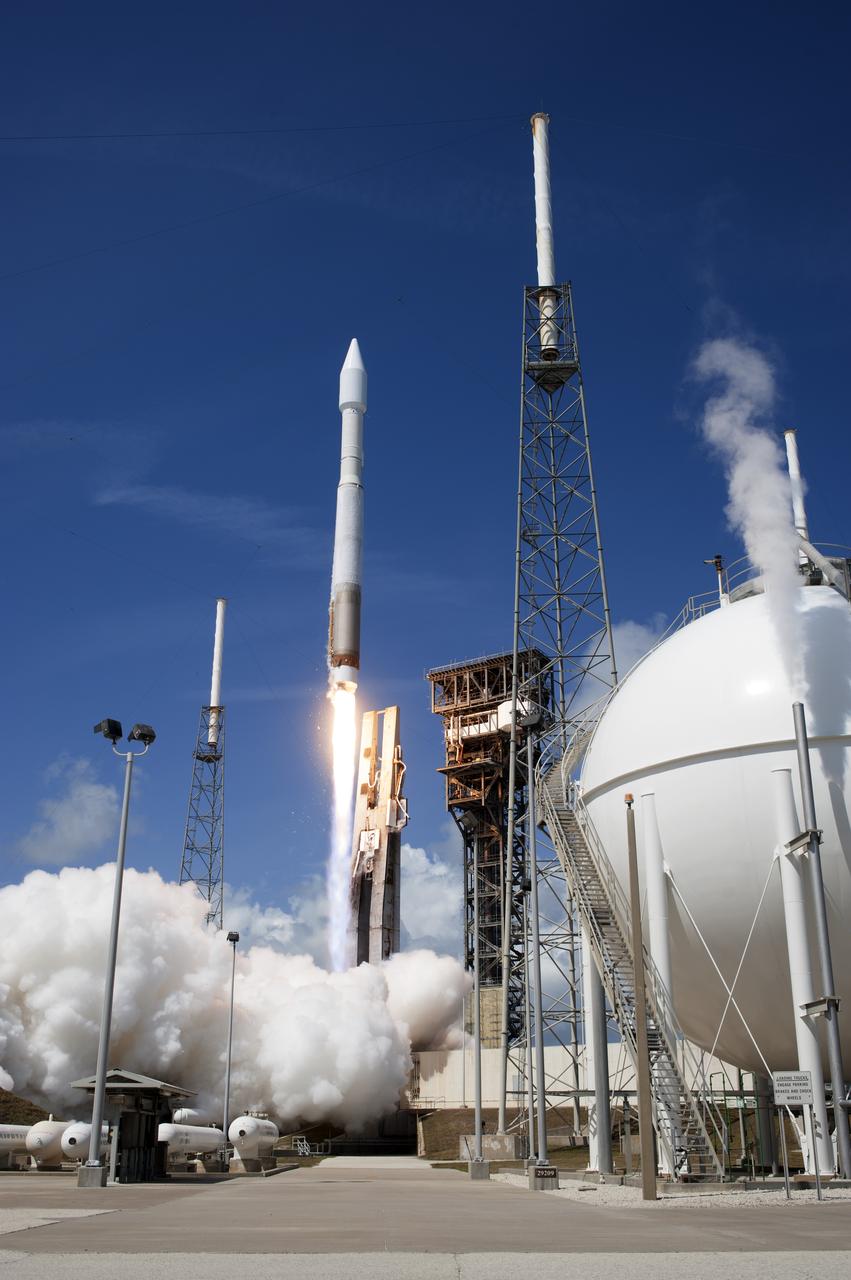
Against the backdrop of a bright blue sky, a United Launch Alliance Atlas V soars upward after liftoff from Space Launch Complex 41 at Cape Canaveral Air Force Station in Florida, carrying the Orbital ATK Cygnus pressurized cargo module on the company's seventh commercial resupply services mission to the International Space Station. Liftoff was at 11:11 a.m. EDT. Cygnus will deliver 7,600 pounds of supplies, equipment and scientific research materials to the space station.
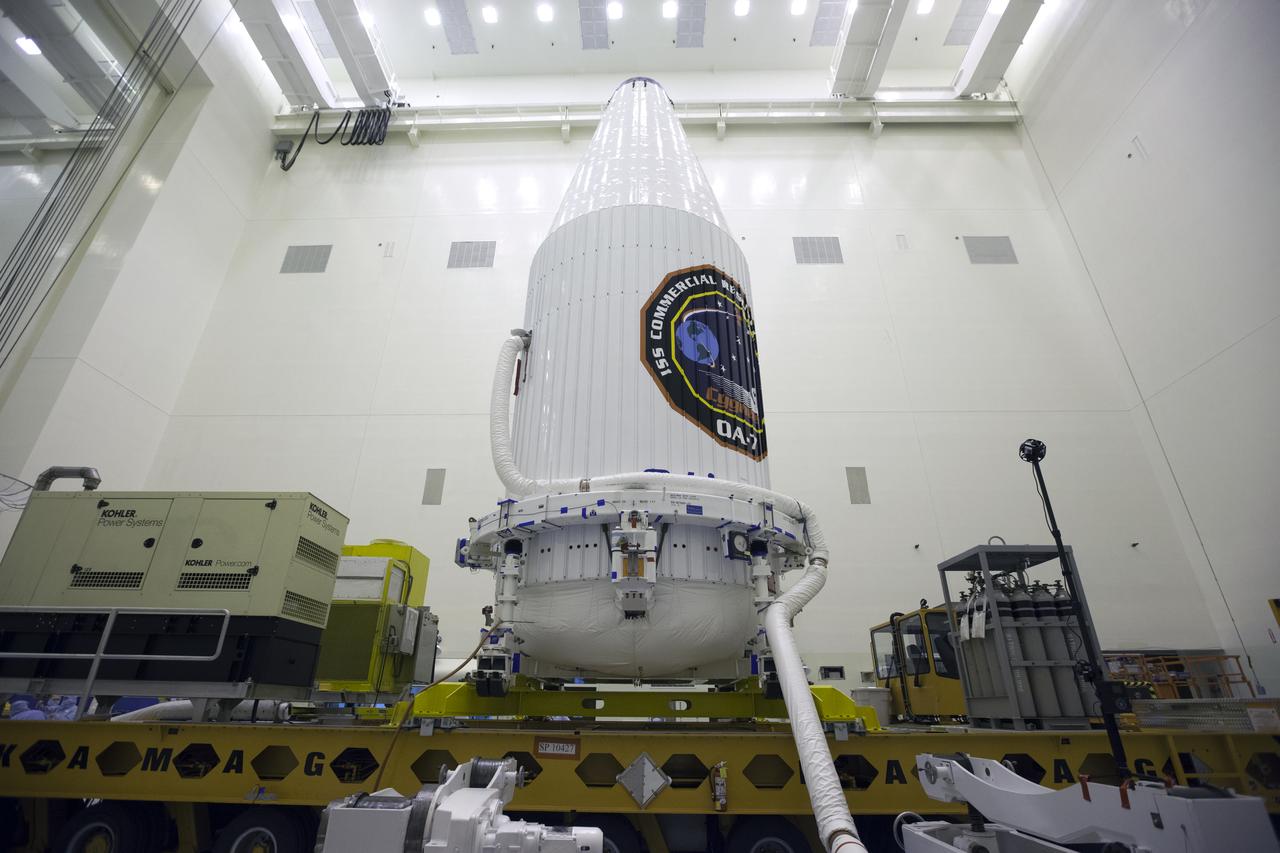
Inside the Payload Hazardous Servicing Facility at NASA's Kennedy Space Center in Florida, the Orbital ATK Cygnus pressurized cargo module, enclosed in its payload fairing, is secured on a KAMAG transporter. The Orbital ATK CRS-7 commercial resupply services mission to the International Space Station is scheduled to launch atop a United Launch Alliance Atlas V rocket from Space Launch Complex 41 at Cape Canaveral Air Force Station. Cygnus will deliver 7,600 pounds of supplies, equipment and scientific research materials to the space station.
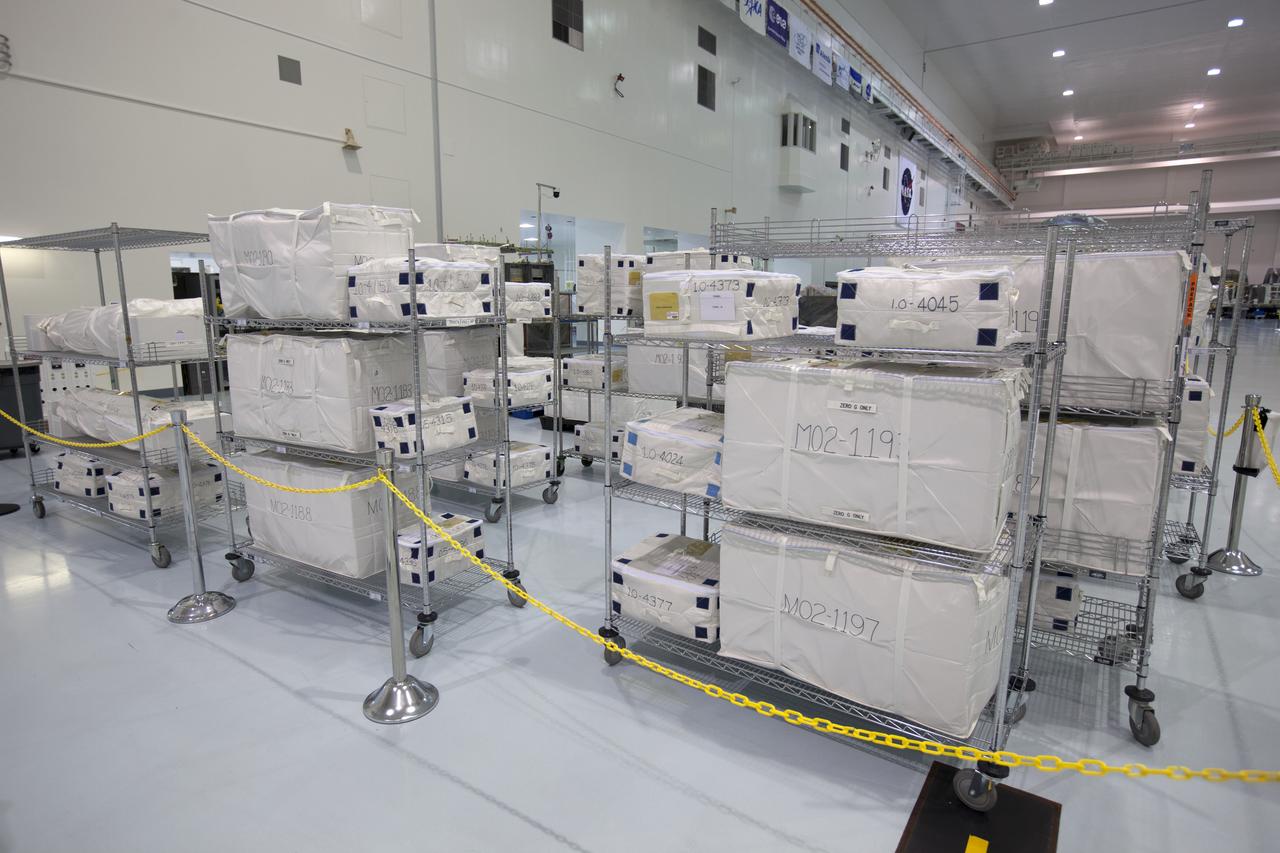
In the Space Station Processing Facility at NASA's Kennedy Space Center in Florida, thousands of pounds of supplies, equipment and scientific research materials are prepared for loading aboard a Cygnus spacecraft's pressurized cargo module (PCM) for the Orbital ATK CRS-7 mission to the International Space Station. Scheduled to launch on March 19, 2017, the commercial resupply services mission will lift off atop a United Launch Alliance Atlas V rocket from Space launch Complex 41 at Cape Canaveral Air Force Station.
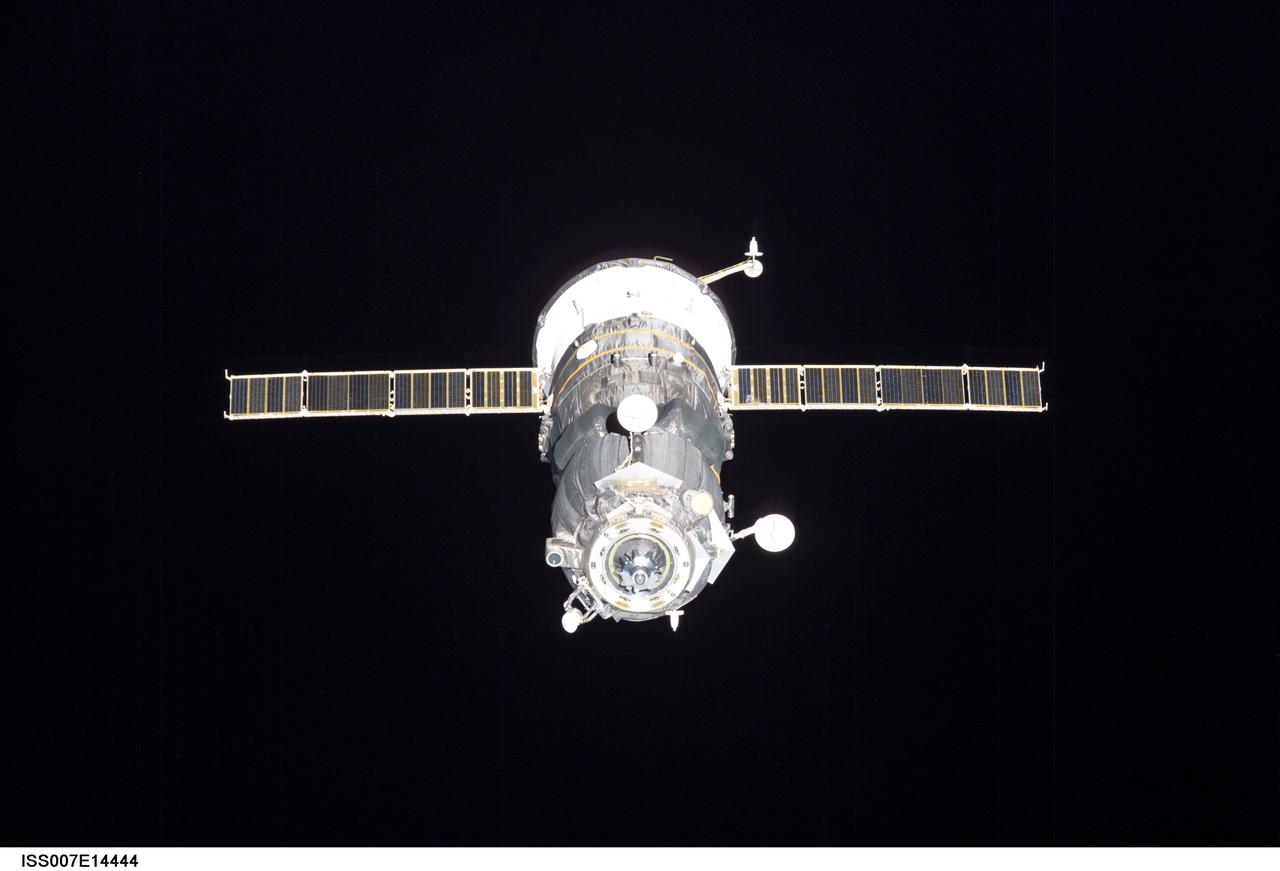
ISS007-E-14444 (4 September 2003) --- Backdropped by the blackness of space, an unpiloted Progress 11 supply vehicle departs from the Pirs Docking Compartment on the International Space Station (ISS) at 2:42 p.m. (CDT) on September 4, 2003 for another month alone in orbit, as part of a Russian scientific experiment. It will then be deorbited with its load of trash and unneeded equipment and burn in the Earth’s atmosphere.

A United Launch Alliance Atlas V rocket lifts off at 11:11 a.m. EDT from Space Launch Complex 41 at Cape Canaveral Air Force Station in Florida, carrying the Orbital ATK Cygnus pressurized cargo module on the company's seventh commercial resupply services mission to the International Space Station. Cygnus will deliver 7,600 pounds of supplies, equipment and scientific research materials to the space station.
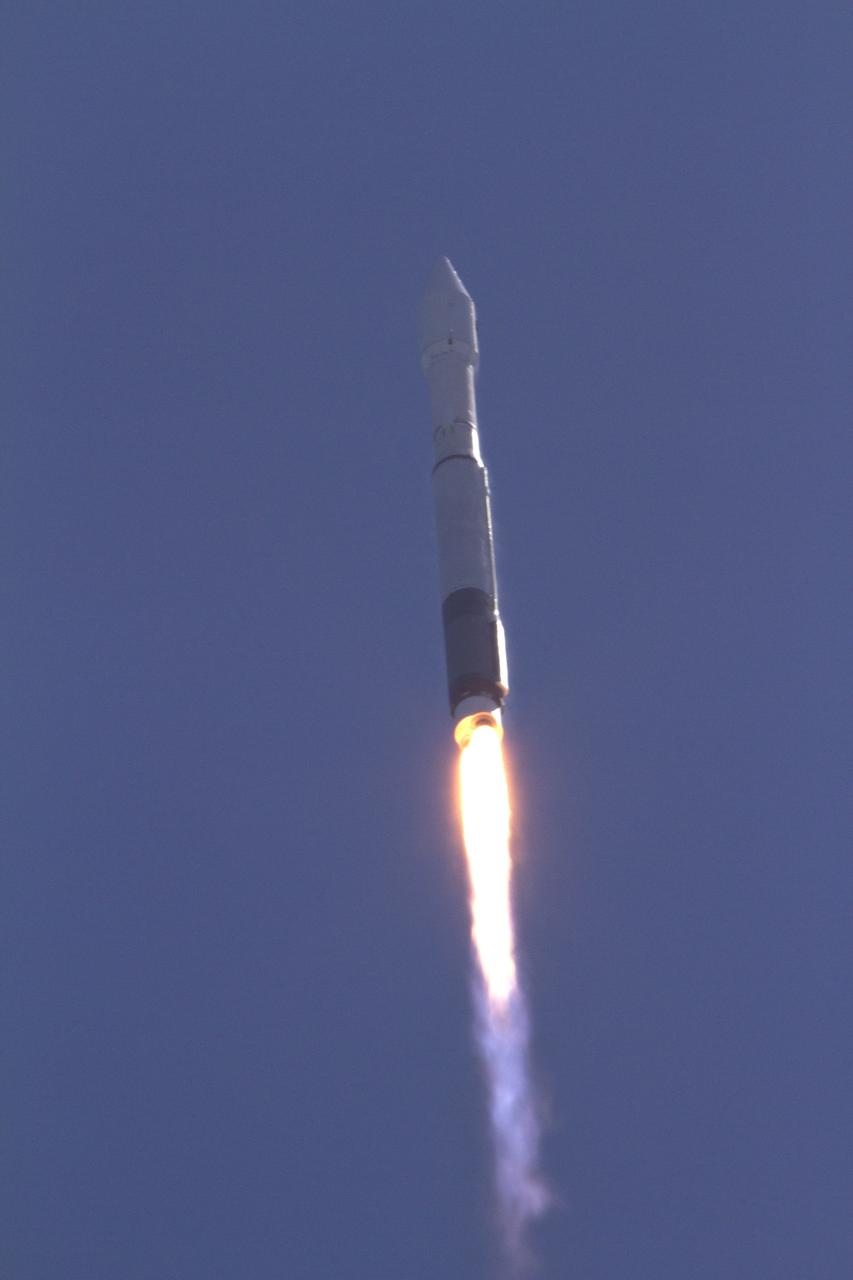
A United Launch Alliance Atlas V rocket soars upward after liftoff at 11:11 a.m. EDT from Space Launch Complex 41 at Cape Canaveral Air Force Station in Florida, carrying the Orbital ATK Cygnus pressurized cargo module on the company's seventh commercial resupply services mission to the International Space Station. Cygnus will deliver 7,600 pounds of supplies, equipment and scientific research materials to the space station.
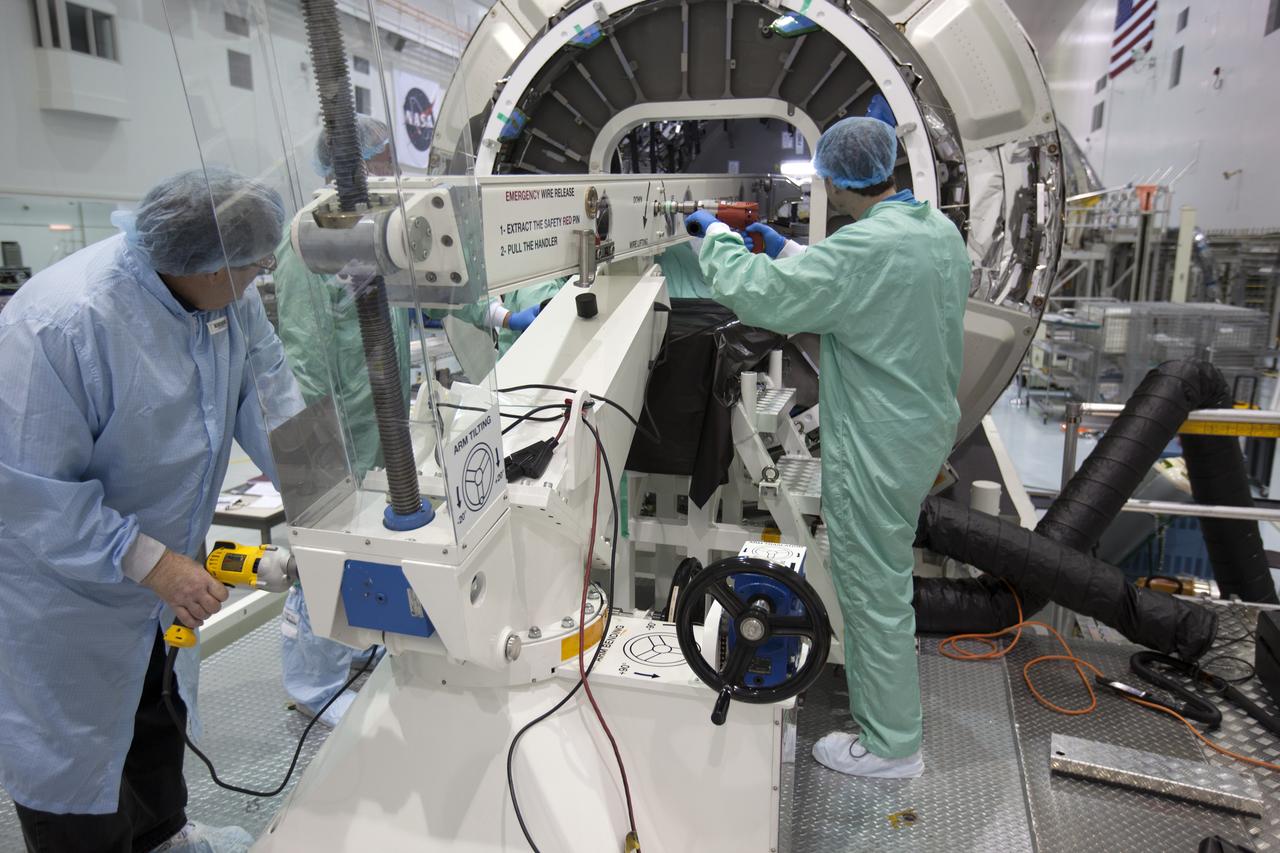
In the Space Station Processing Facility at NASA's Kennedy Space Center in Florida, technicians and engineers load thousands of pounds of supplies, equipment and scientific research materials aboard a Cygnus spacecraft's pressurized cargo module (PCM) for the Orbital ATK CRS-7 mission to the International Space Station. Scheduled to launch on March 19, 2017, the commercial resupply services mission will lift off atop a United Launch Alliance Atlas V rocket from Space launch Complex 41 at Cape Canaveral Air Force Station.
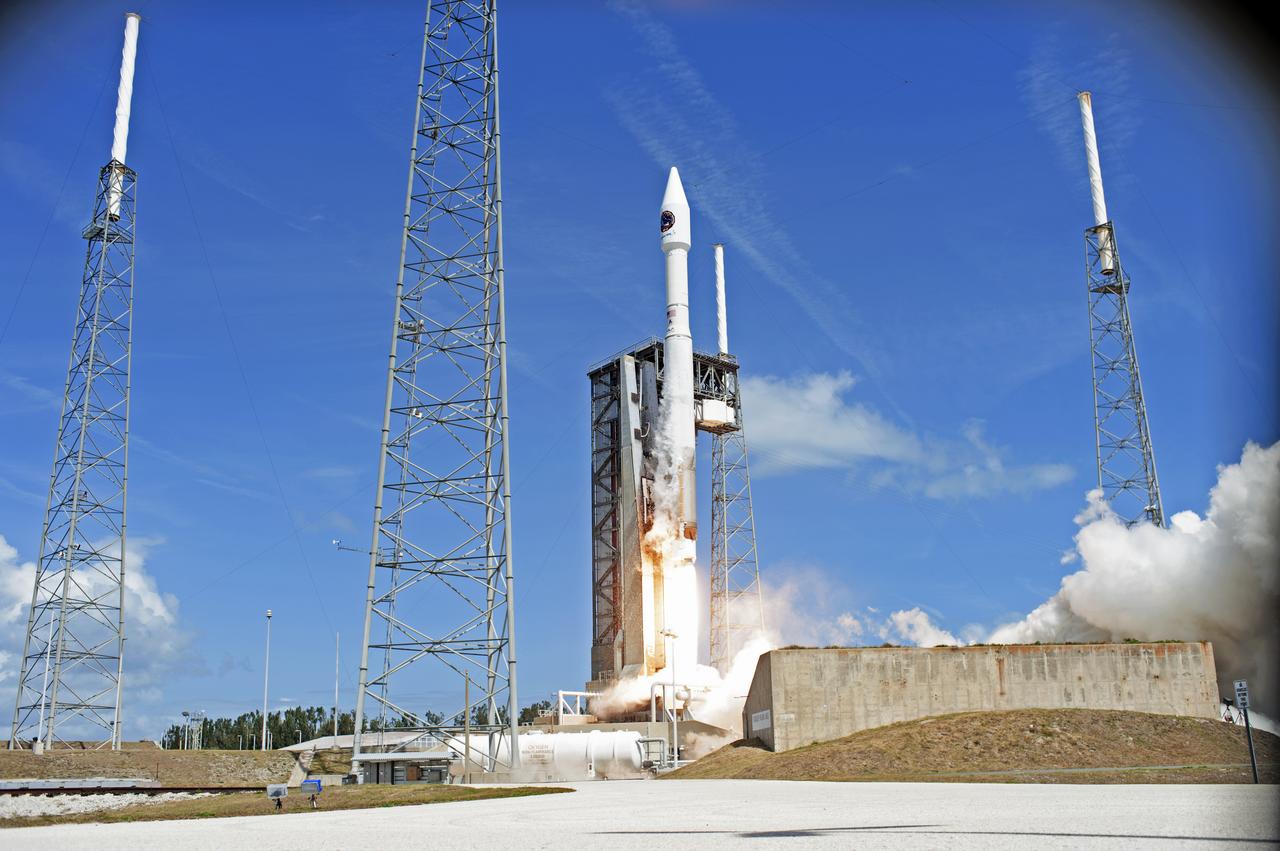
The Orbital ATK Cygnus pressurized cargo module is carried atop the United Launch Alliance Atlas V rocket from Space Launch Complex 41 at Cape Canaveral Air Force Station in Florida. Orbital ATK's seventh commercial resupply services mission, CRS-7, will deliver 7,600 pounds of supplies, equipment and scientific research materials to the International Space Station. Liftoff was at 11:11 a.m. EDT.
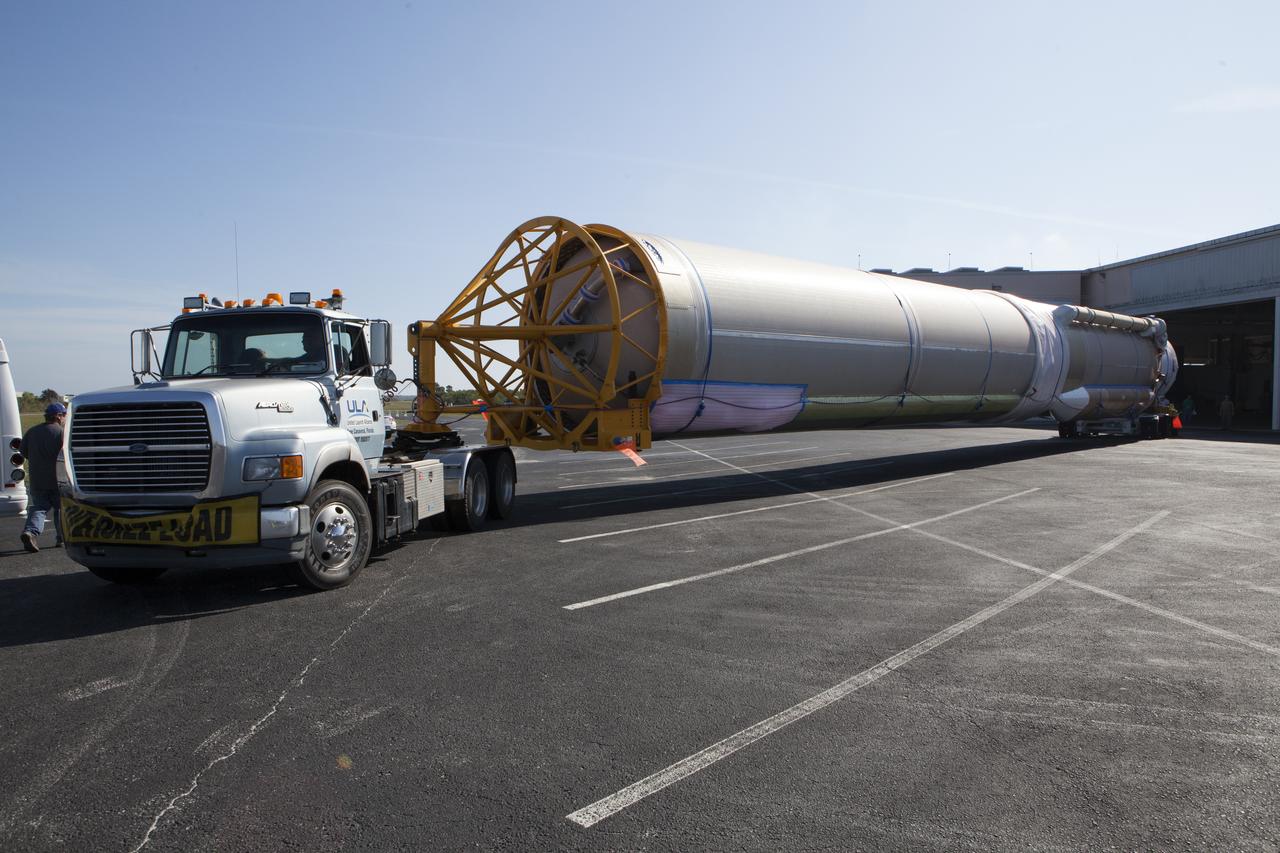
A United Launch Alliance (ULA) Atlas V booster arrives at Cape Canaveral Air Force Station's Atlas Spaceflight Operations Center (ASOC). The Atlas V will undergo final testing in that facility. When processing in the ASOC is complete, the Atlas booster will be moved to the Vertical Integration Facility for stacking at Space Launch Complex 41. Scheduled to launch March 19, 2017, the Atlas will launch a Cygnus spacecraft on the Orbital ATK CRS-7 mission to deliver thousands of pounds of supplies, equipment and scientific research materials to the International Space Station.
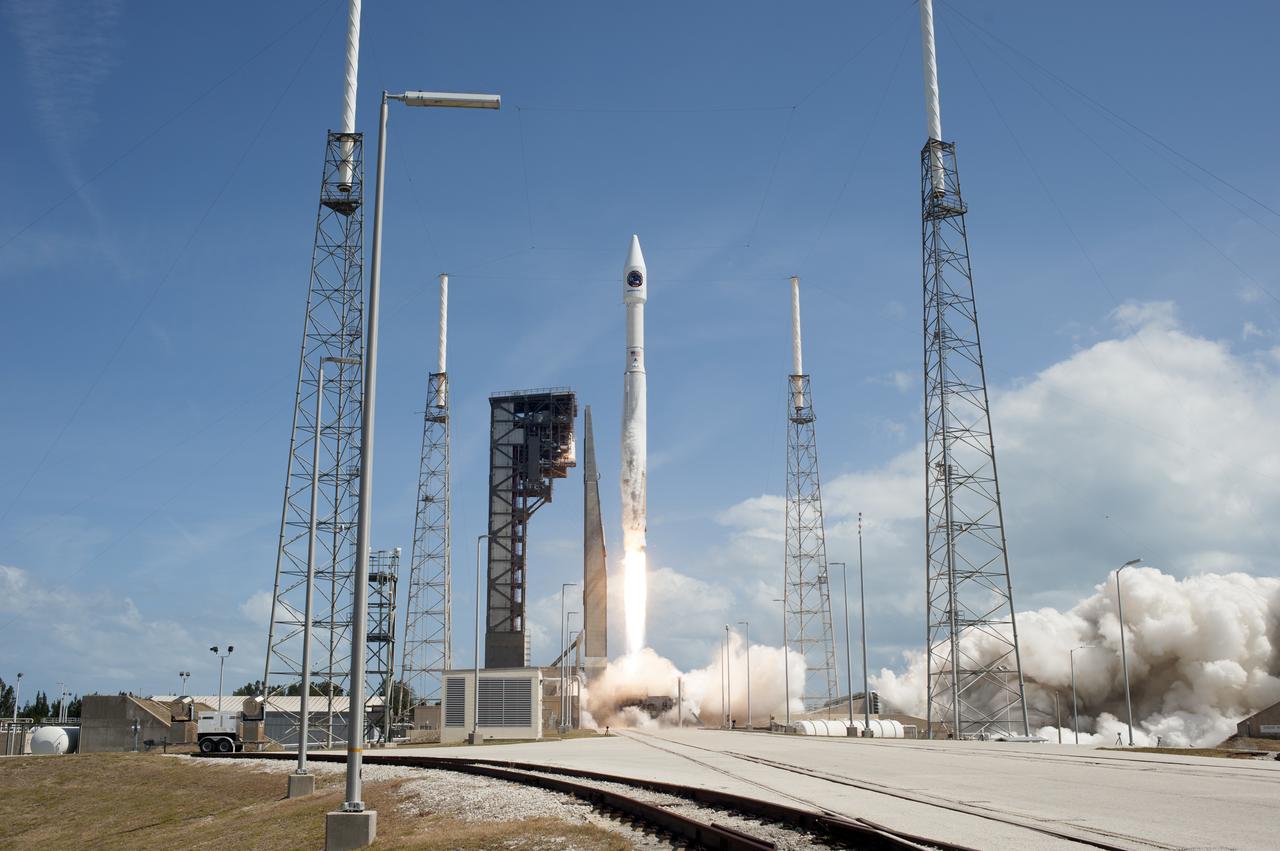
A United Launch Alliance Atlas V rocket lifts off at 11:11 a.m. EDT from Space Launch Complex 41 at Cape Canaveral Air Force Station in Florida, carrying the Orbital ATK Cygnus pressurized cargo module on the company's seventh commercial resupply services mission to the International Space Station. Cygnus will deliver 7,600 pounds of supplies, equipment and scientific research materials to the space station.
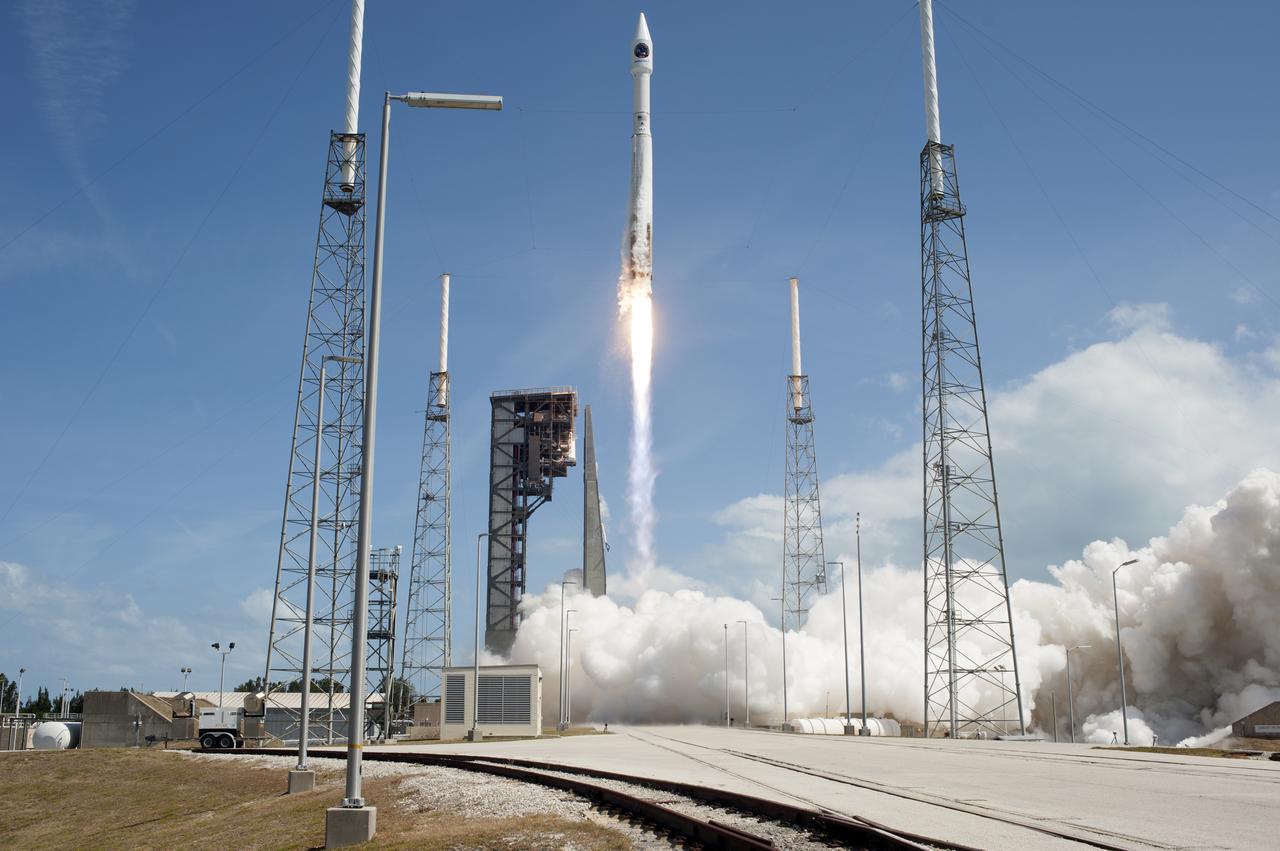
A United Launch Alliance Atlas V rocket lifts off at 11:11 a.m. EDT from Space Launch Complex 41 at Cape Canaveral Air Force Station in Florida, carrying the Orbital ATK Cygnus pressurized cargo module on the company's seventh commercial resupply services mission to the International Space Station. Cygnus will deliver 7,600 pounds of supplies, equipment and scientific research materials to the space station.
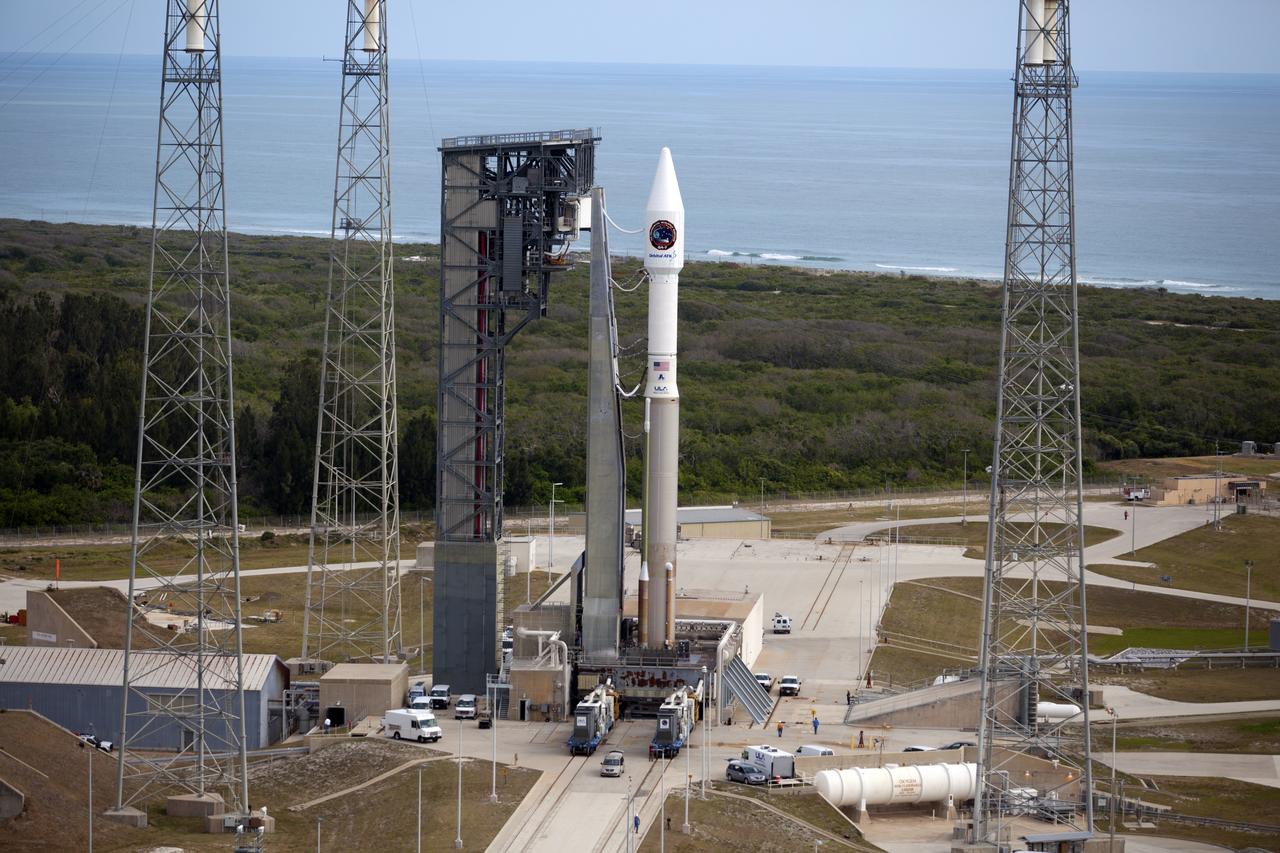
The United Launch Alliance Atlas V rocket, with the Orbital ATK Cygnus pressurized cargo module, stands ready for launch on the pad at Space Launch Complex 41 at Cape Canaveral Air Force Station in Florida. Orbital ATK's seventh commercial resupply services mission, CRS-7, is scheduled to launch to the International Space Station on April 18, 2017. Cygnus will deliver 7,600 pounds of supplies, equipment and scientific research materials to the space station. Liftoff is scheduled for 11:11 a.m. EDT.
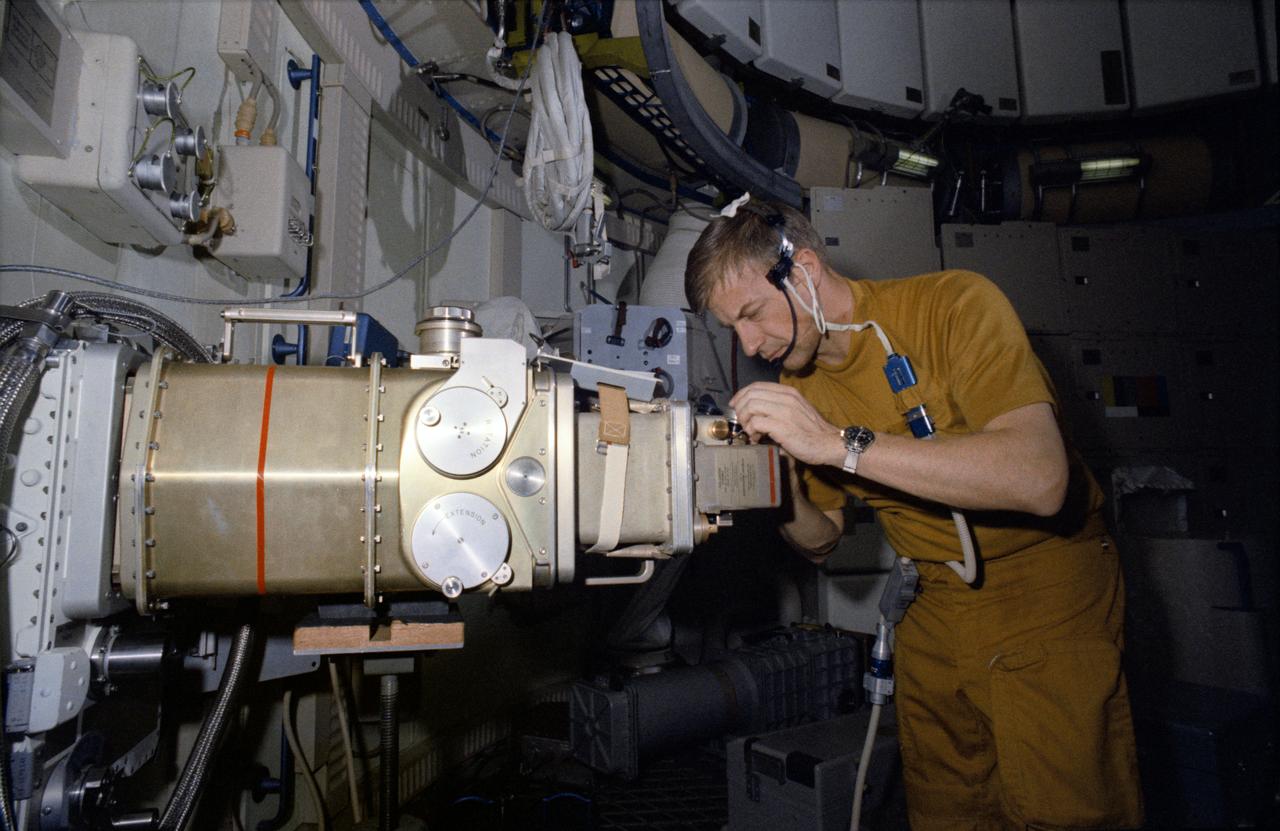
S73-20716 (1 March 1973) --- Astronaut Paul J. Weitz, pilot of the first manned Skylab mission, works with the UV Stellar Astronomy Experiment S019 in the forward compartment of the Skylab Orbital Workshop (OWS) trainer during Skylab training at Johnson Space Center. The equipment consists of a reflecting telescope, a 35mm camera and an additional mirror. It is mounted in an anti-solar scientific airlock in the side of the OWS. Photo credit: NASA
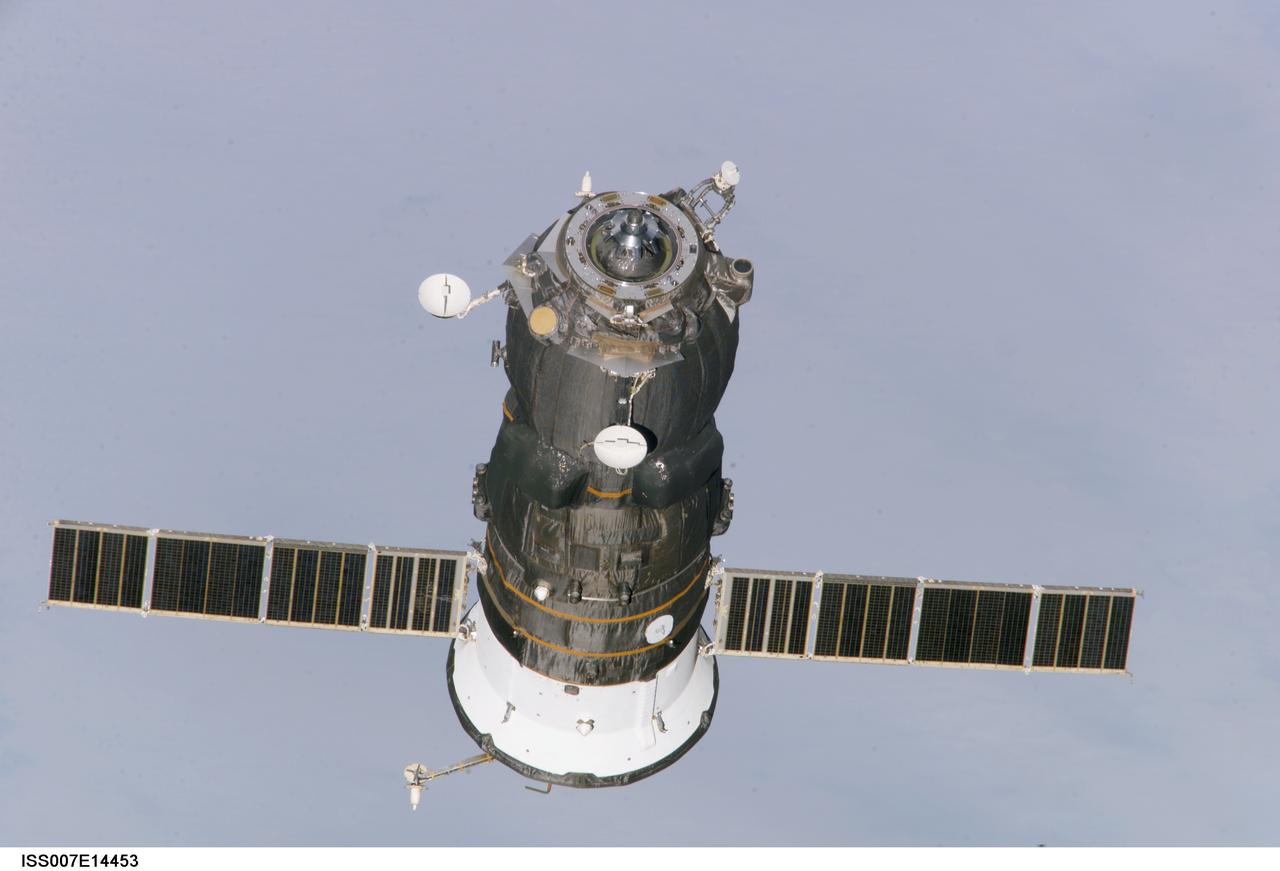
ISS007-E-14453 (4 September 2003) --- An unpiloted Progress 11 supply vehicle departs from the Pirs Docking Compartment on the International Space Station (ISS) at 2:42 p.m. (CDT) on September 4, 2003 for another month alone in orbit, as part of a Russian scientific experiment. It will then be deorbited with its load of trash and unneeded equipment and burn in the Earth’s atmosphere.