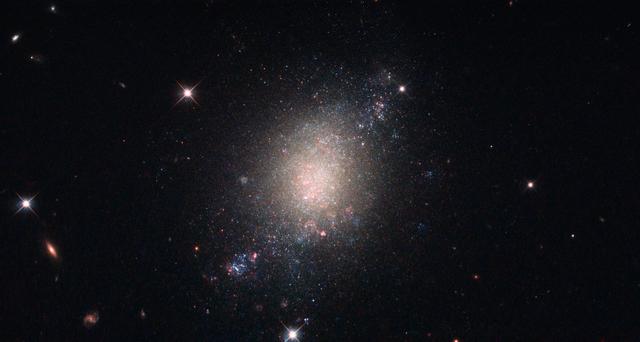
This image displays a galaxy known as ESO 486-21 (with several other background galaxies and foreground stars visible in the field as well). ESO 486-21 is a spiral galaxy — albeit with a somewhat irregular and ill-defined structure — located some 30 million light-years from Earth. The NASA/ESA (European Space Agency) Hubble Space Telescope observed this object while performing a survey — the Legacy ExtraGalactic UV Survey (LEGUS) — of 50 nearby star-forming galaxies. The LEGUS sample was selected to cover a diverse range of galactic morphologies, star formation rates, galaxy masses and more. Astronomers use such data to understand how stars form and evolve within clusters, and how these processes affect both their home galaxy and the wider universe. ESO 486-21 is an ideal candidate for inclusion in such a survey because it is known to be in the process of forming new stars, which are created when large clouds of gas and dust (seen here in pink) within the galaxy crumple inwards upon themselves. Credit: NASA/ESA <b><a href="http://www.nasa.gov/audience/formedia/features/MP_Photo_Guidelines.html" rel="nofollow">NASA image use policy.</a></b> <b><a href="http://www.nasa.gov/centers/goddard/home/index.html" rel="nofollow">NASA Goddard Space Flight Center</a></b> enables NASA’s mission through four scientific endeavors: Earth Science, Heliophysics, Solar System Exploration, and Astrophysics. Goddard plays a leading role in NASA’s accomplishments by contributing compelling scientific knowledge to advance the Agency’s mission. <b>Follow us on <a href="http://twitter.com/NASAGoddardPix" rel="nofollow">Twitter</a></b> <b>Like us on <a href="http://www.facebook.com/pages/Greenbelt-MD/NASA-Goddard/395013845897?ref=tsd" rel="nofollow">Facebook</a></b> <b>Find us on <a href="http://instagrid.me/nasagoddard/?vm=grid" rel="nofollow">Instagram</a></b>
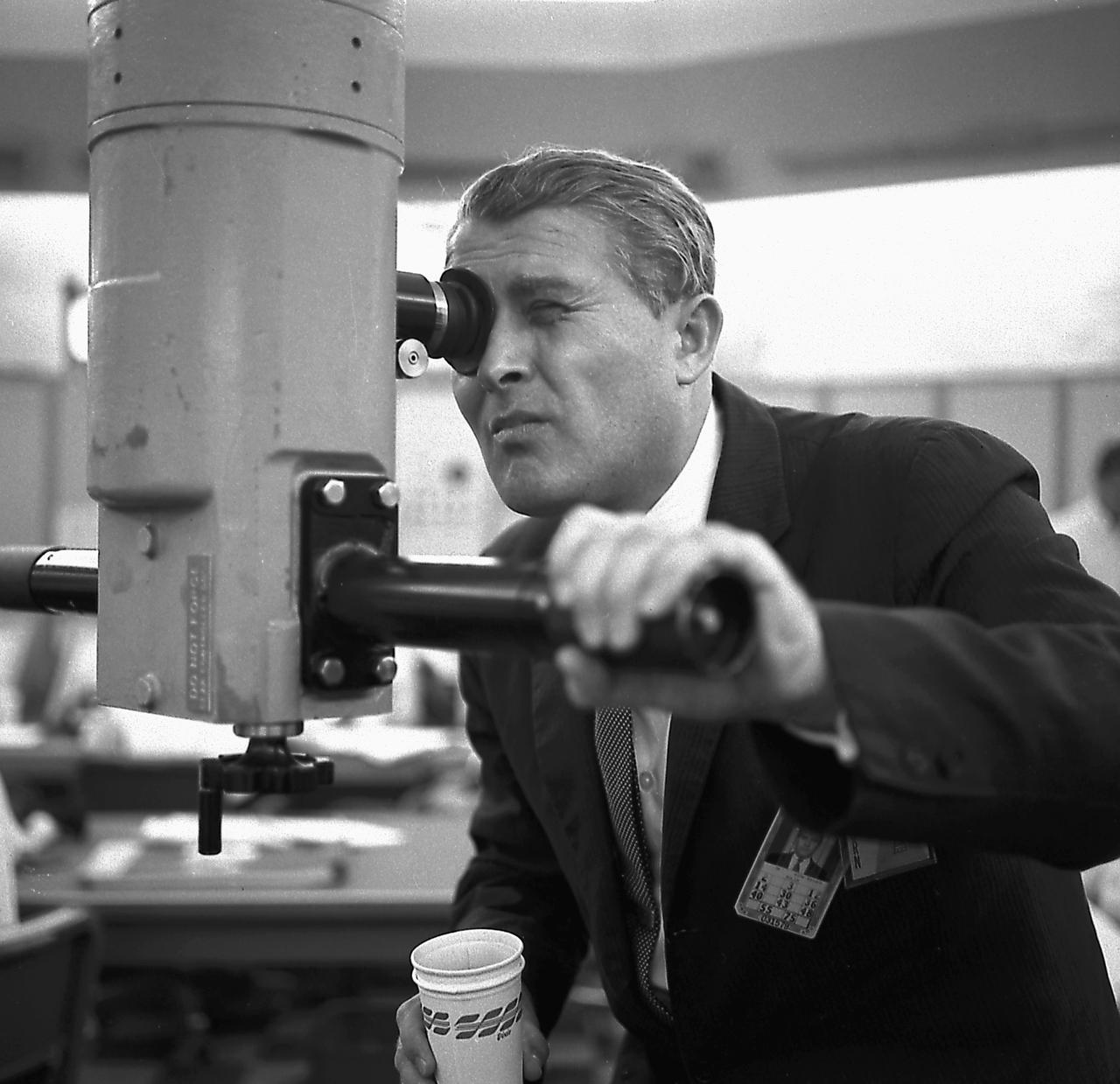
Dr. von Braun watches the Saturn 1 (SA-1) launch through a scope from the blockhouse 34 on October 27, 1961. The SA-1 was the first launch of Saturn launch vehicles developed at the Marshall Space Flight Center (MSFC) under the direction of Dr. von Braun. The flight demonstrated the validity of the clustered engine concept and launched dummy upper stages.
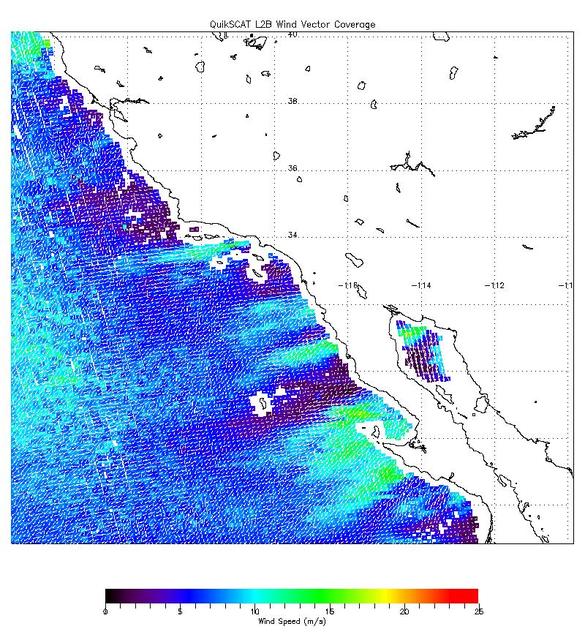
The scope and extent of the strong Santa Ana wind event in Southern California the week of Oct. 21, 2007, is visible in this image from NASA QuikScat satellite.

The Cassini spacecraft takes a break from the Saturn system to check out the Seven Sisters.
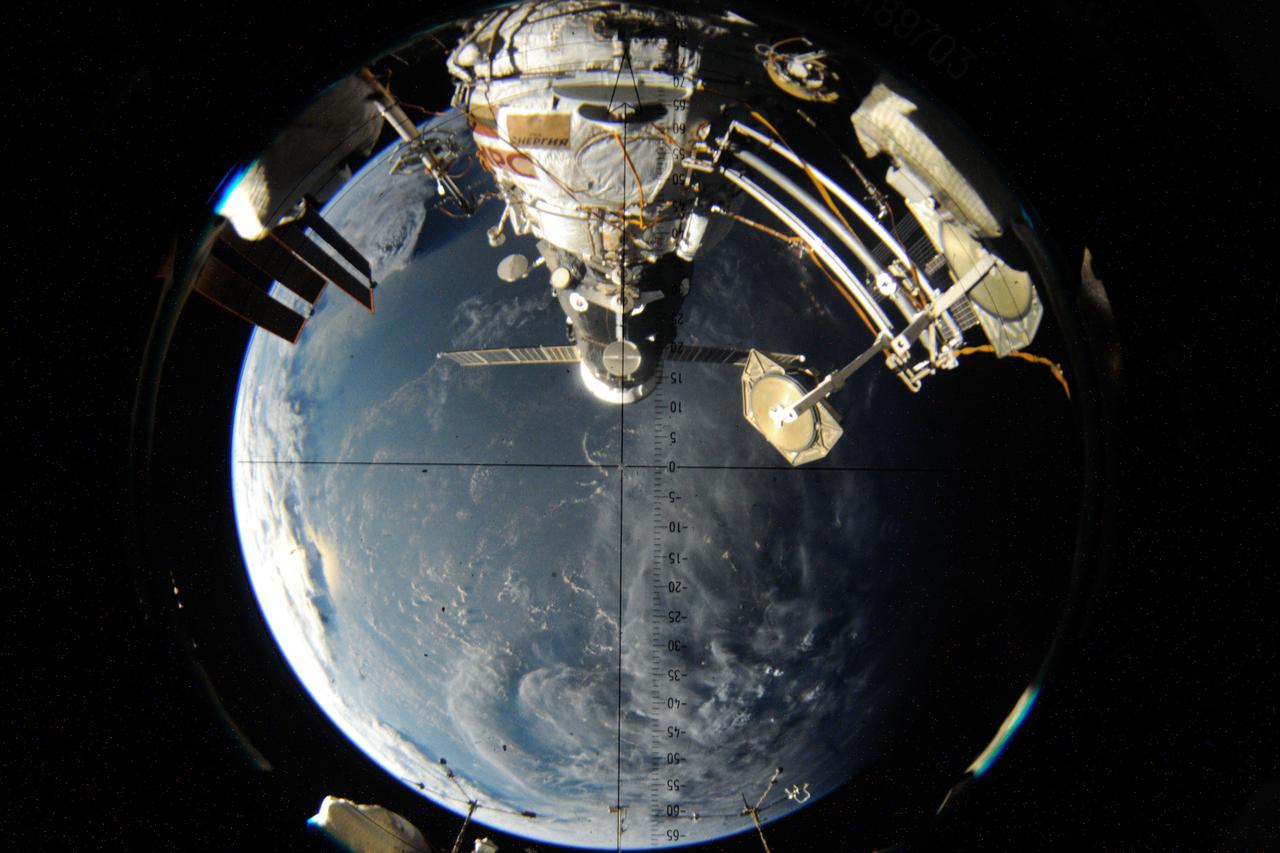
iss048e045888 (07/29/2016) --- The visual scope looking down at the Pirs docking compartment on the Russian segment of the International Space Station. Currently seen docked to Pirs is the ISS Progress 64 cargo craft, which delivered over 3 tons of food, fuel and supplies to the crew of Expedition 48
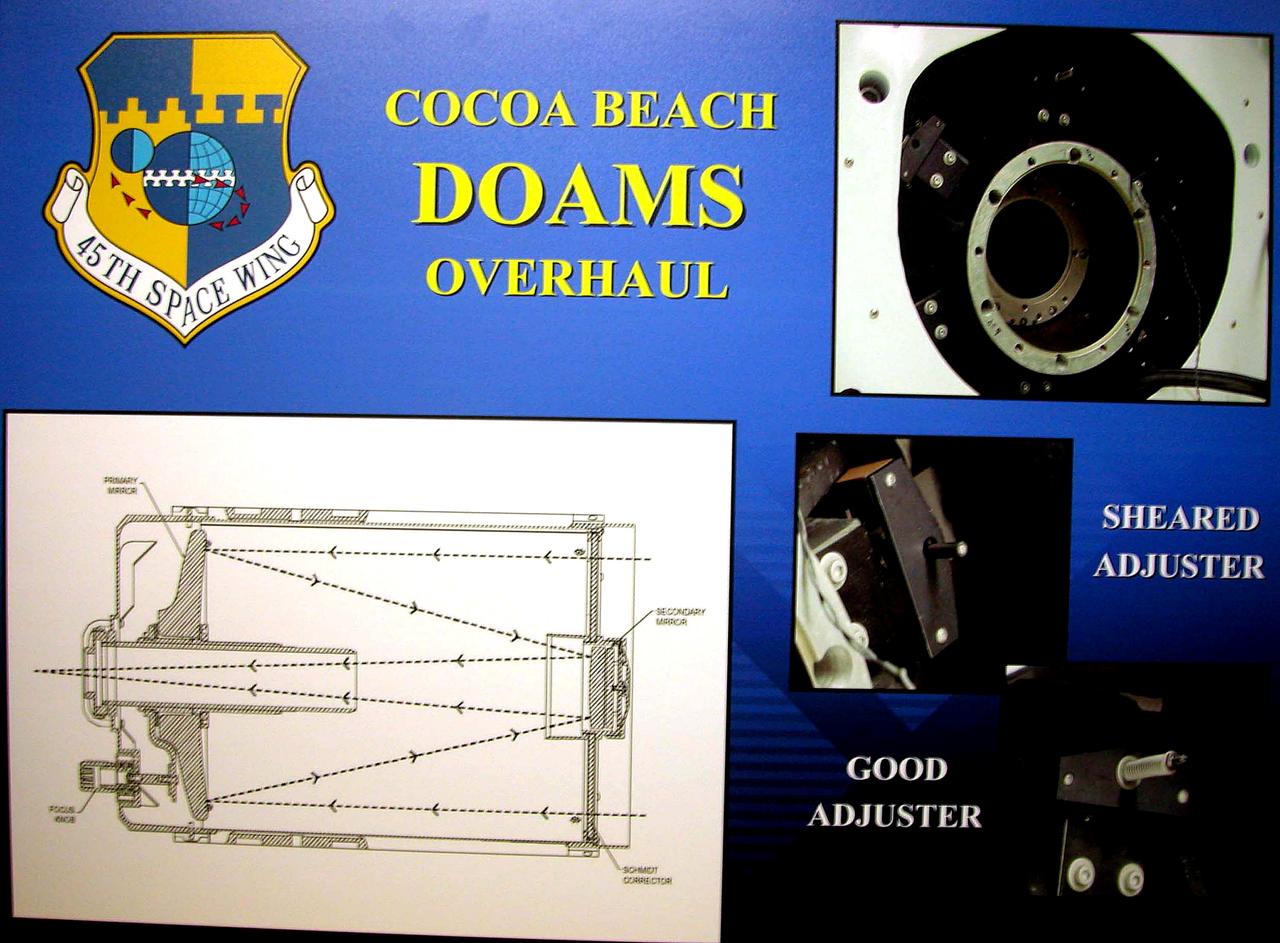
KENNEDY SPACE CENTER, FLA. - This storyboard shows a diagram of the telescope design and photos for a new five-meter focal length scope. The tracking telescope is part of the Distant Object Attitude Measurement System (DOAMS) in Cocoa Beach, Fla., that provides optical support for launches from KSC and Cape Canaveral.
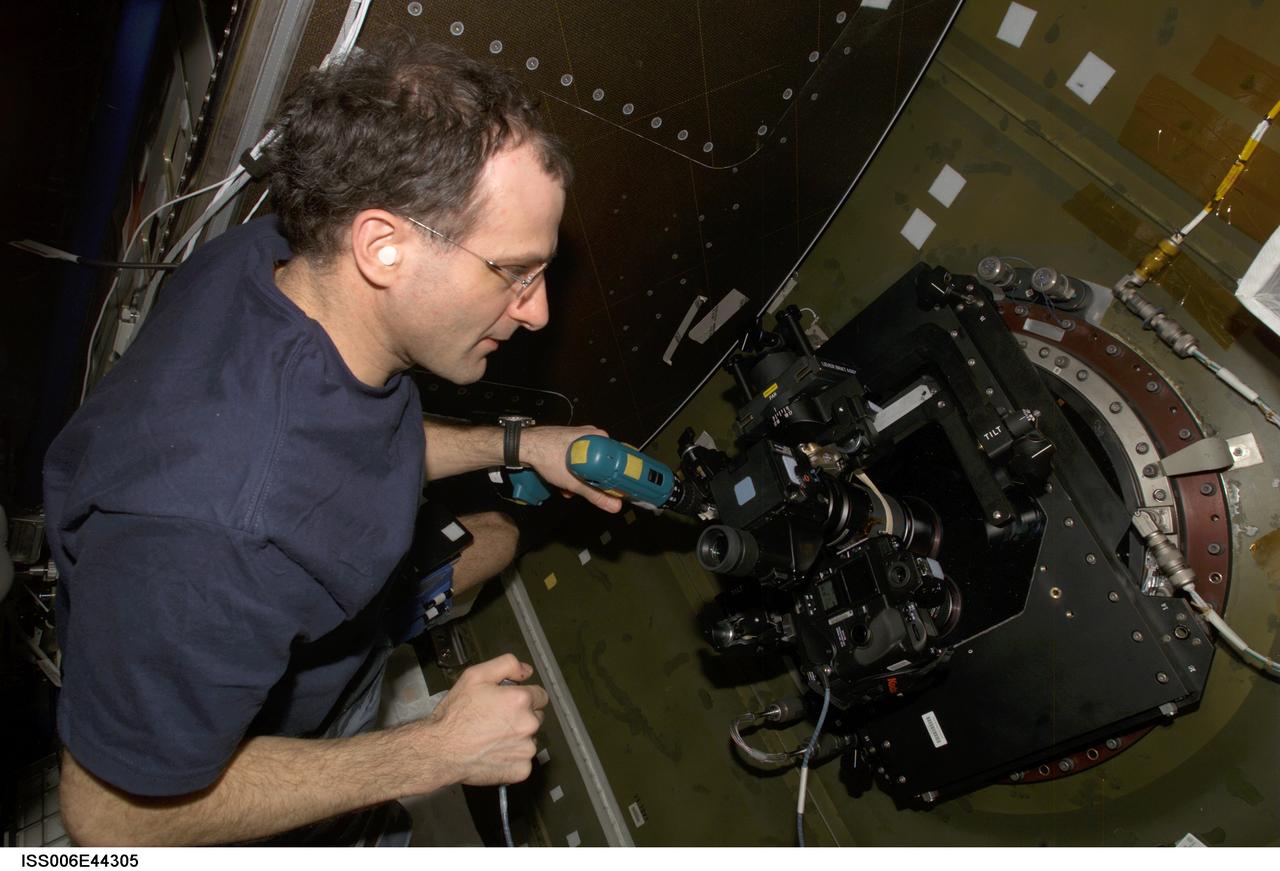
ISS006-E-44305 (5 April 2003) --- Astronaut Donald R. Pettit, Expedition Six NASA ISS science officer, runs a drill while looking through a camera mounted on the nadir window in the Destiny laboratory on the International Space Station (ISS). The device is called a “barn door tracker”. The drill turns the screw, which moves the camera and its spotting scope.
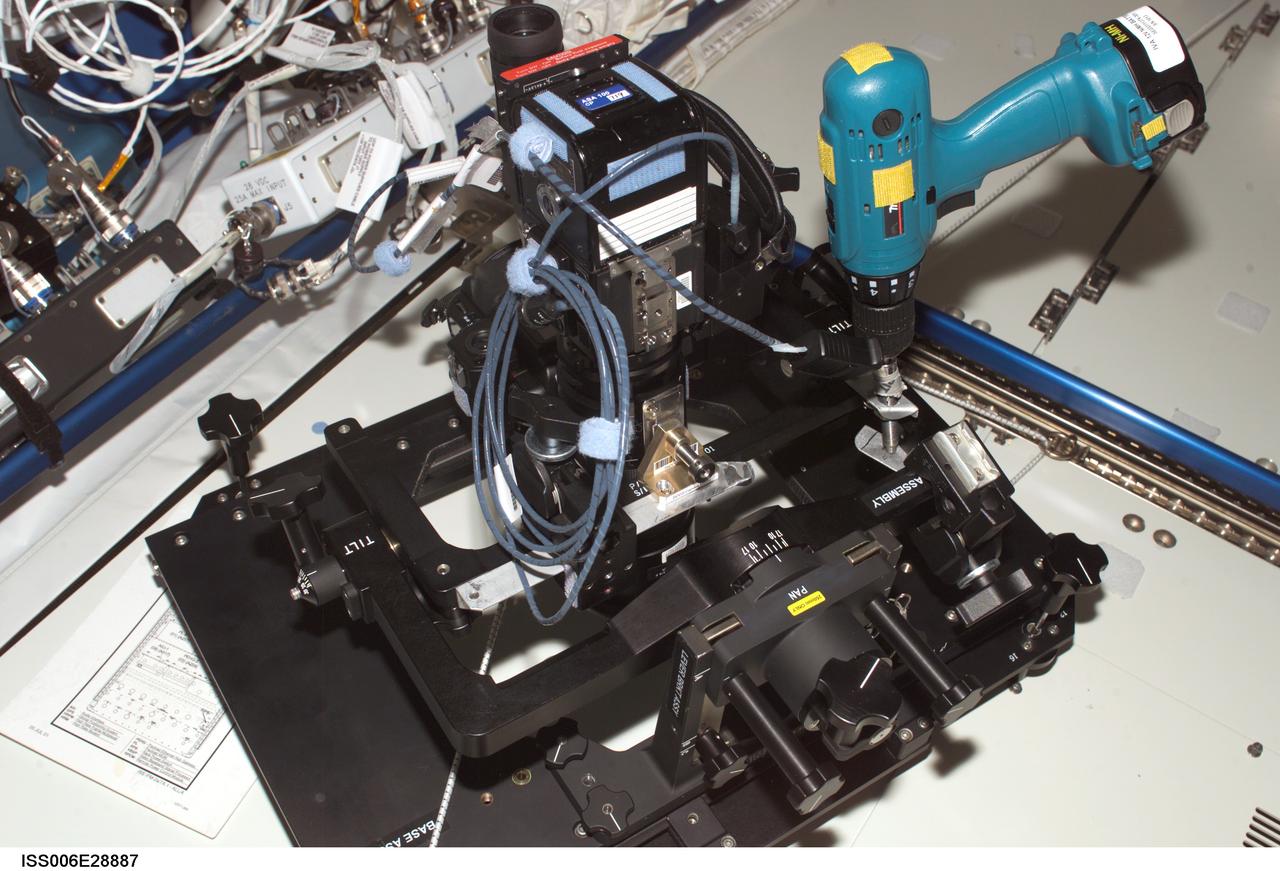
ISS006-E-28887 (15 February 2003) --- This view features a “barn door tracker” device assembled by astronaut Donald R. Pettit, Expedition 6 NASA ISS science officer, while onboard the International Space Station (ISS). The device is based on the fine gimbal movements in the IMAX camera mount for the Destiny laboratory window. A drill turns a screw, which moves the camera and its spotting scope.
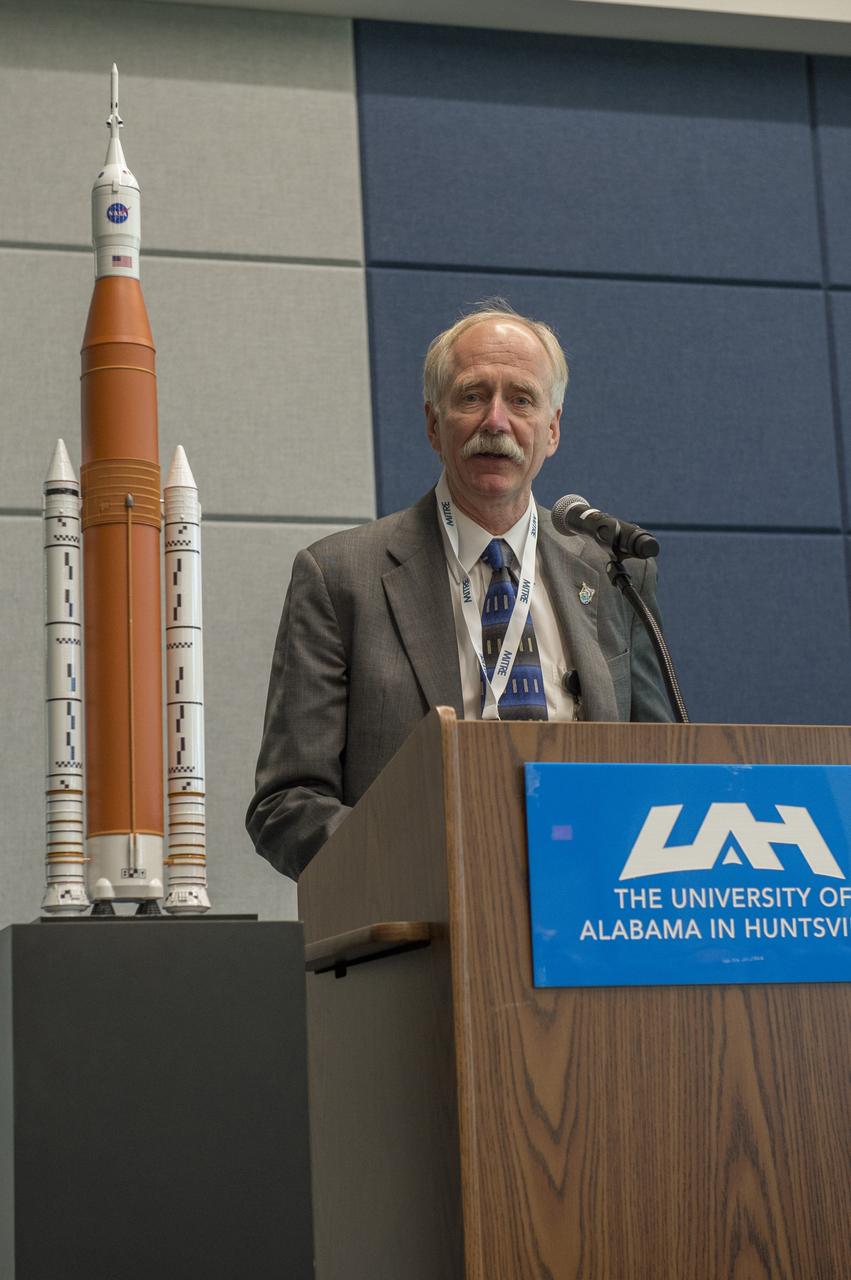
William Gerstenmaier is guest speaker for luncheon on first day of Wernher von Braun Memorial Symposium. William Gerstenmaier, associate administrator, Human Exploration and Operations at NASA Headquarters, shared an overview of NASA programs that are in the scope of human space exploration during his remarks. He discussed the vast landscape of NASA’s human space exploration missions and showed his love for the practical side of NASA’s work. "I’m always excited to see real hardware and speak with real engineers. That’s why I’m always glad to visit Marshall."

A member of NASA Kennedy Space Center's Emergency Response Team talks looks through the scope of his rifle as he prepares for the next tactical challenge during the 37th Annual SWAT Round-Up International at the Lawson Lamar Firearms and Tactical Training Center in Orlando, Florida. The competition was held Nov. 10 to 15, 2019, and featured five different tactical challenges. Kennedy's ERT members exchanged best practices and competed with more than 50 teams from the U.S. and around the world.
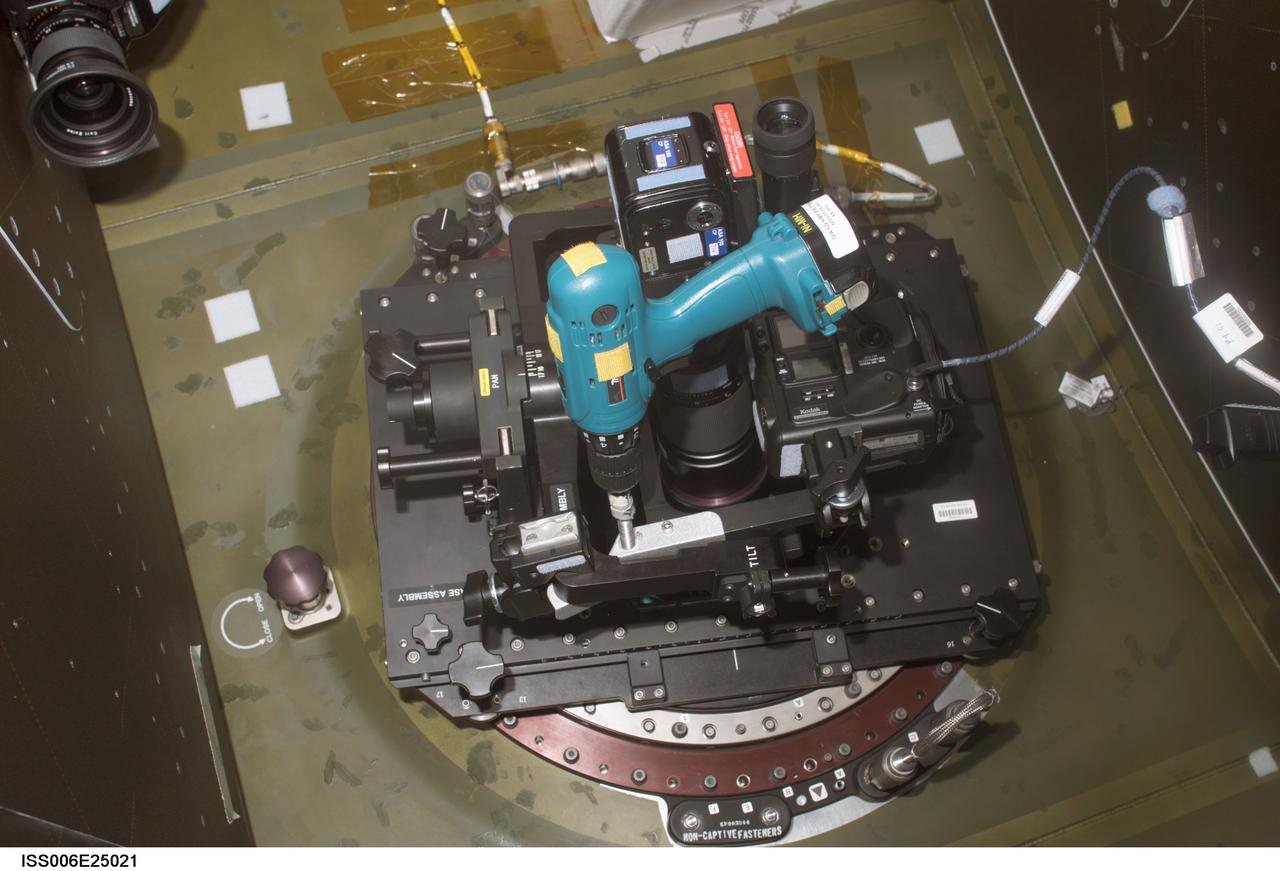
ISS006-E-25021 (8 February 2003) --- This view features a “barn door tracker” device assembled by astronaut Donald R. Pettit, Expedition 6 NASA ISS science officer, while onboard the International Space Station (ISS). The device is based on the fine gimbal movements in the IMAX camera mount for the Destiny laboratory window. A drill turns a screw, which moves the camera and its spotting scope.

Members of NASA Kennedy Space Center's Emergency Response Team check the scopes on their rifles to prepare for the next tactical challenge during the 37th Annual SWAT Round-Up International at the Lawson Lamar Firearms and Tactical Training Center in Orlando, Florida. The competition was held Nov. 10 to 15, 2019, and featured five different tactical challenges. Special pellets, rather than real bullets, are used during the competition. Kennedy's ERT members exchanged best practices and competed with more than 50 teams from the U.S. and around the world.

Members of NASA Kennedy Space Center's Emergency Response Team check the scopes on their rifles to prepare for the next tactical challenge during the 37th Annual SWAT Round-Up International at the Lawson Lamar Firearms and Tactical Training Center in Orlando, Florida. The competition was held Nov. 10 to 15, 2019, and featured five different tactical challenges. Special pellets, rather than real bullets, are used during the competition. Kennedy's ERT members exchanged best practices and competed with more than 50 teams from the U.S. and around the world.
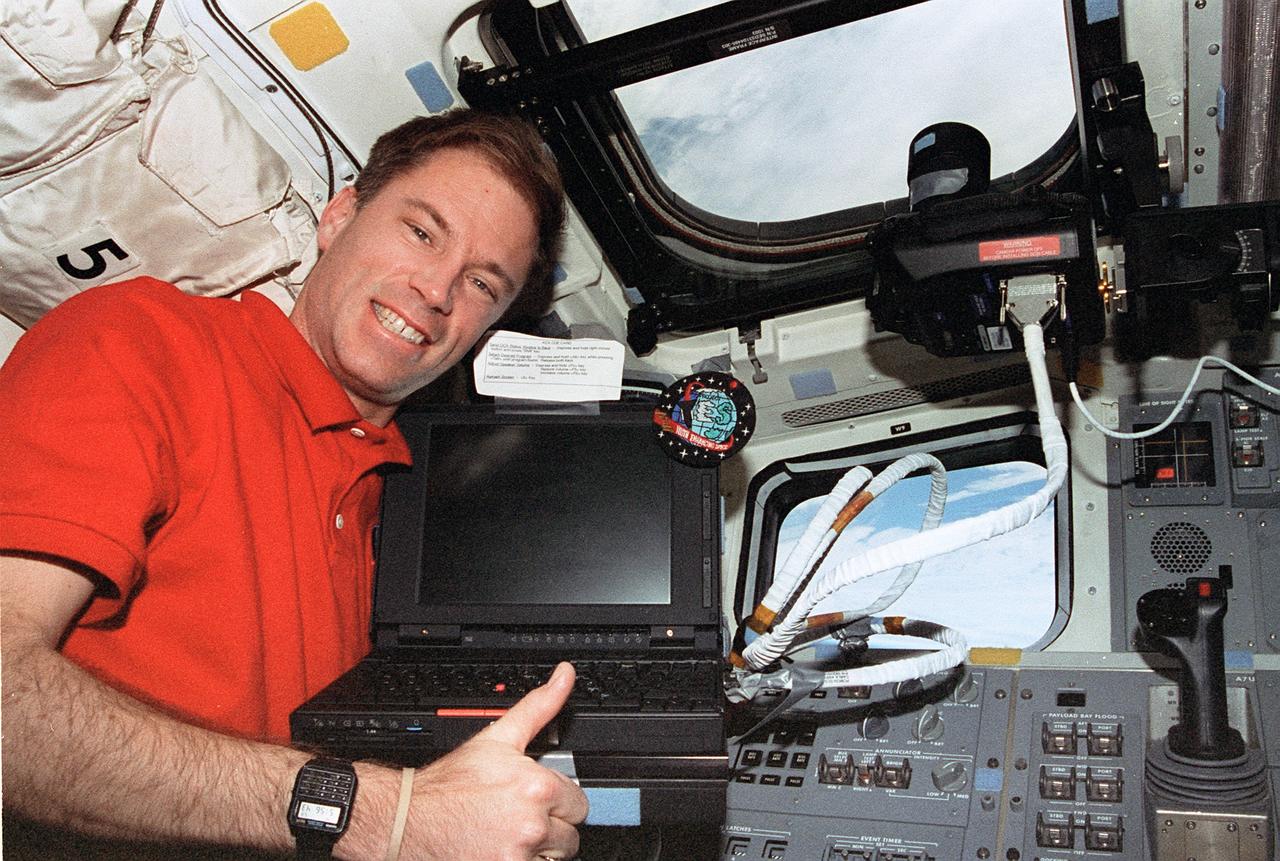
STS076-315-003 (22-31 March 1996) --- Onboard the aft flight deck of the Earth-orbiting space shuttle Atlantis, astronaut Richard A. Searfoss, pilot, signals approval of progress with the KidSat Project - a three year pilot program making its first flight in space. KidSat is to fly on the Space Shuttle once a year. An Electronic Still Camera (ESC) (upper right), aimed at Earth below, was controlled by students on the ground during the flight. A video camera (out of frame) was also utilized. The downlinked images are to be used as a basis for a broad scope of curriculum disciplines.

Supervisory employees from NASA’s Kennedy Space Center participated in the Supervisor Cohort “Action Day” hosted by Leadership for the Future at Kennedy Space Center Visitor Complex in Florida on Friday, June 7, 2024. NASA Kennedy’s Leadership for the Future supervisor cohort initiative focuses on creating a space for supervisors to engage in providing solutions for important topics on center, as well as supporting the development of the supervisory community. The Leadership for the Future Champions hosted the Action Day to share expectations, form the teams, scope the projects, and launch. Leadership for the Future Champions, comprising several of the spaceport’s senior leaders, select the supervisor cohorts with the goal of advancing the spaceport, the agency, and America’s leadership in space.
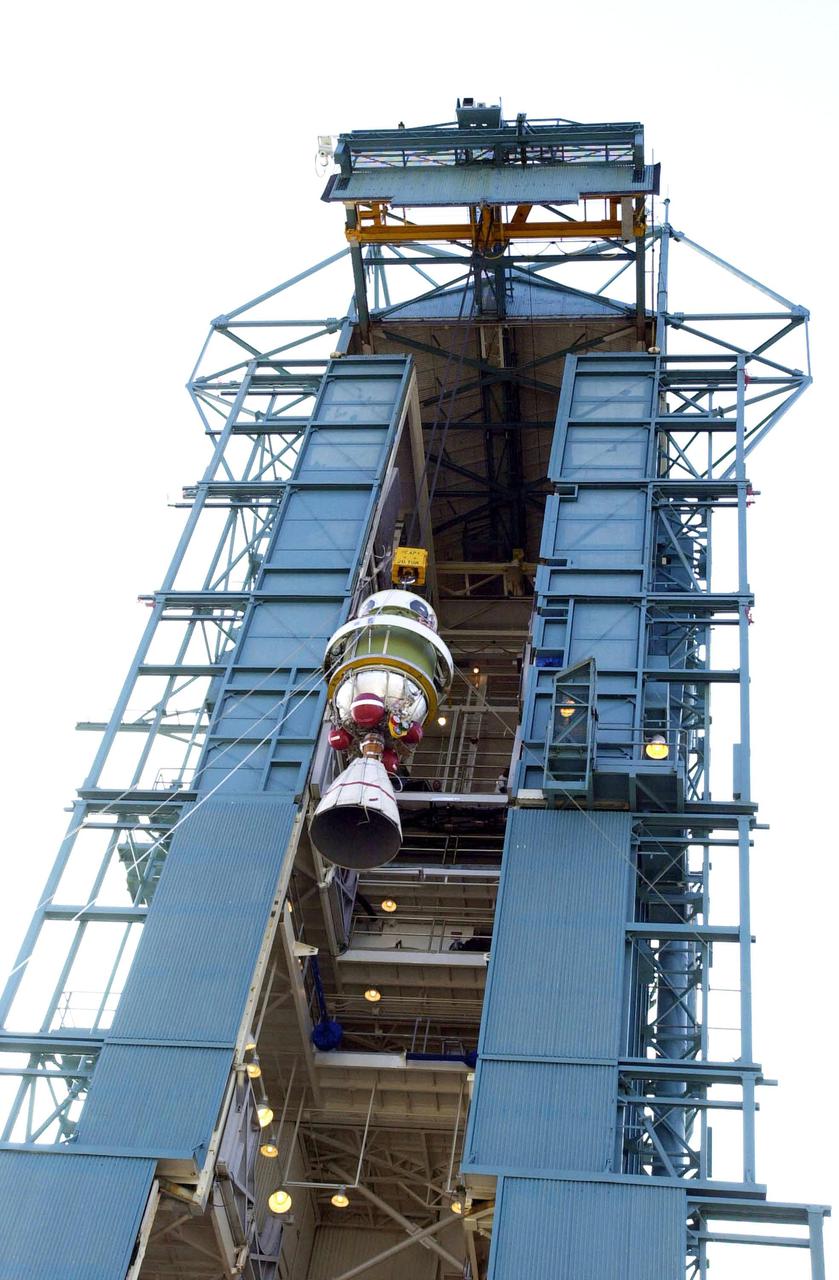
VANDENBERG AFB, CALIF. - The second stage of the Delta II rocket is lifted up the gantry on the launch pad. The Delta II rocket will launch the Aqua-EOS satellite. Aqua is one of a series of spacebased platforms that are central to NASA's Earth Science Enterprise (ESE), a long-term study of the scope, dynamics and implications of global change. The Aqua program is composed of Aqua and other spacecraft (including Terra and Aura) and a data distribution system (ESDIS, and Mission Operations Center Implementation Team). Flying in an orbit that covers the globe every 16 days, Aqua will provide a six-year chronology of the planet and its processes. Comprehensive measurements taken by its onboard instruments will allow multidisciplinary teams of scientists and researchers from North and South America, Asia, Australia and Europe to assess long-term change, identify its human and natural causes and advance the development of models for long-term forecasting. Launch is scheduled for April 26 from Vandenberg
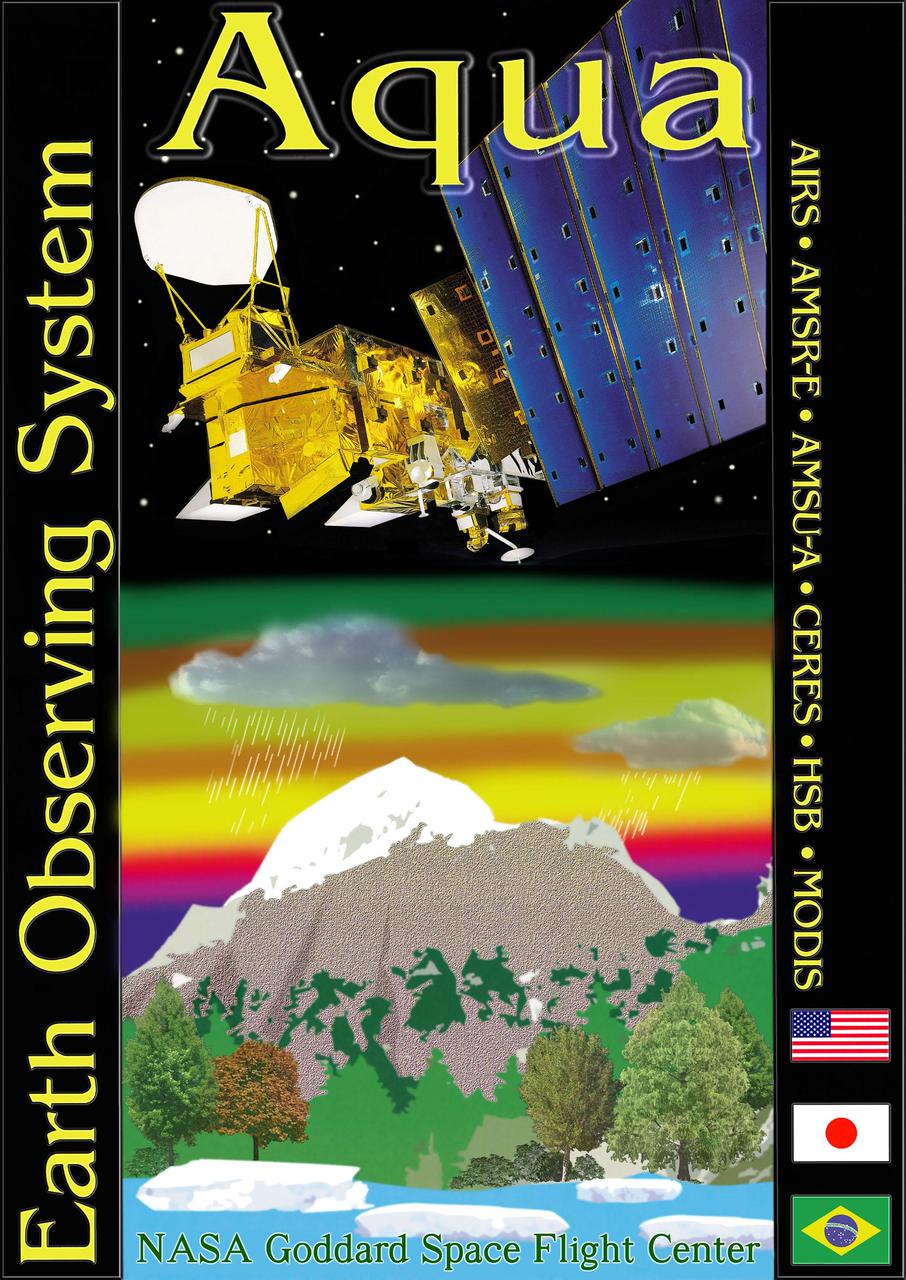
KENNEDY SPACE CENTER, FLA. -- The Aqua-EOS logo. Aqua is one of a series of spacebased platforms that are central to NASA's Earth Science Enterprise (ESE), a long-term study of the scope, dynamics and implications of global change. The Aqua program is composed of Aqua and other spacecraft (including Terra and Aura) and a data distribution system (ESDIS, and Mission Operations Center Implementation Team). Flying in an orbit that covers the globe every 16 days, Aqua will provide a six-year chronology of the planet and its processes. Comprehensive measurements taken by its onboard instruments will allow multidisciplinary teams of scientists and researchers from North and South America, Asia, Australia and Europe to assess long-term change, identify its human and natural causes and advance the development of models for long-term forecasting. Launch is scheduled from Vandenberg Air Force Base, Calif
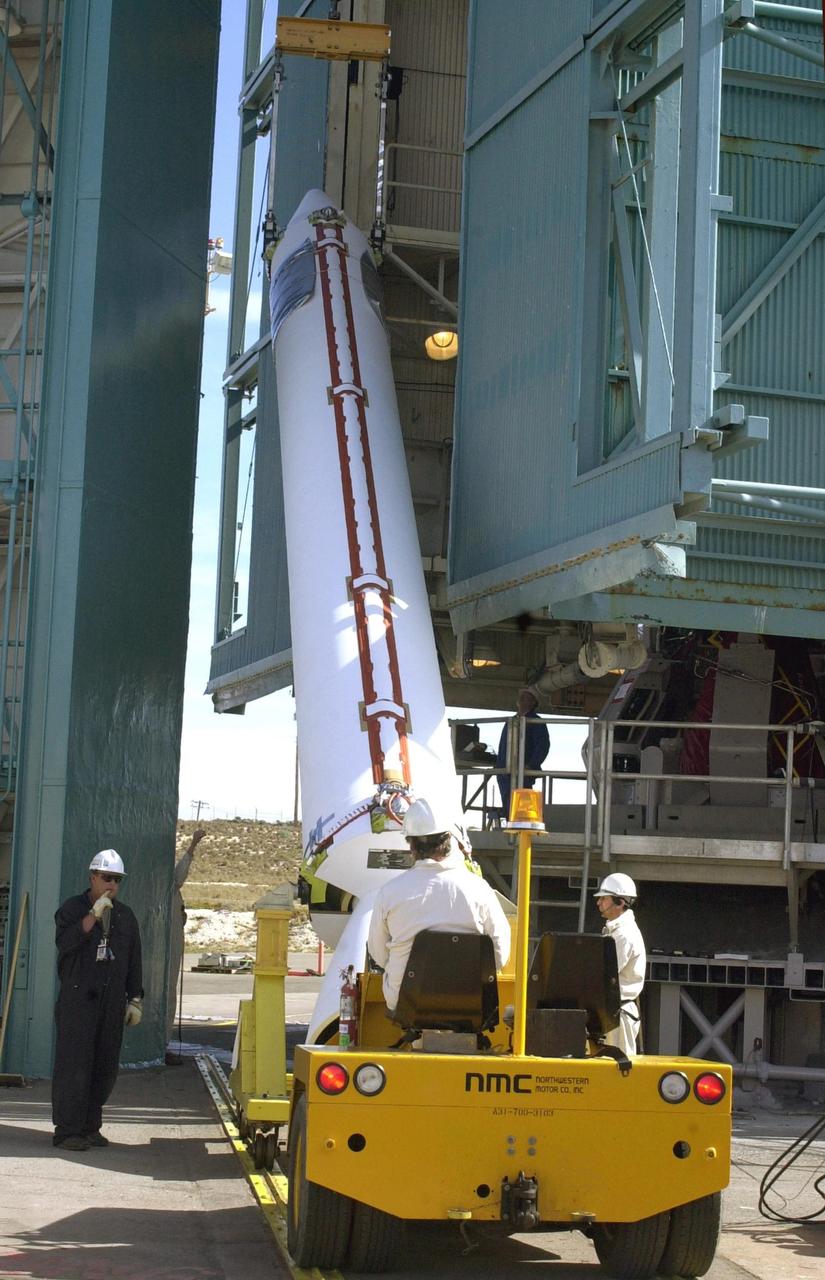
VANDENBERG AFB, CALIF. -- On the launch pad, an overhead crane lifts a solid rocket booster to vertical for mating with the Delta II rocket that will launch the Aqua-EOS satellite. Aqua is one of a series of spacebased platforms that are central to NASA's Earth Science Enterprise (ESE), a long-term study of the scope, dynamics and implications of global change. The Aqua program is composed of Aqua and other spacecraft (including Terra and Aura) and a data distribution system (ESDIS, and Mission Operations Center Implementation Team). Flying in an orbit that covers the globe every 16 days, Aqua will provide a six-year chronology of the planet and its processes. Comprehensive measurements taken by its onboard instruments will allow multidisciplinary teams of scientists and researchers from North and South America, Asia, Australia and Europe to assess long-term change, identify its human and natural causes and advance the development of models for long-term forecasting. Launch is scheduled for April 26 from Vandenberg

VANDENBERG AFB,CALIF. - On the SLC-2 launch pad, the gantry closes in on the Delta II rocket to enable mating of the second stage. The Delta II will launch the Aqua-EOS satellite. Aqua is one of a series of spacebased platforms that are central to NASA's Earth Science Enterprise (ESE), a long-term study of the scope, dynamics and implications of global change. The Aqua program is composed of Aqua and other spacecraft (including Terra and Aura) and a data distribution system (ESDIS, and Mission Operations Center Implementation Team). Flying in an orbit that covers the globe every 16 days, Aqua will provide a six-year chronology of the planet and its processes. Comprehensive measurements taken by its onboard instruments will allow multidisciplinary teams of scientists and researchers from North and South America, Asia, Australia and Europe to assess long-term change, identify its human and natural causes and advance the development of models for long-term forecasting. Launch is scheduled for April 26 from Vandenberg
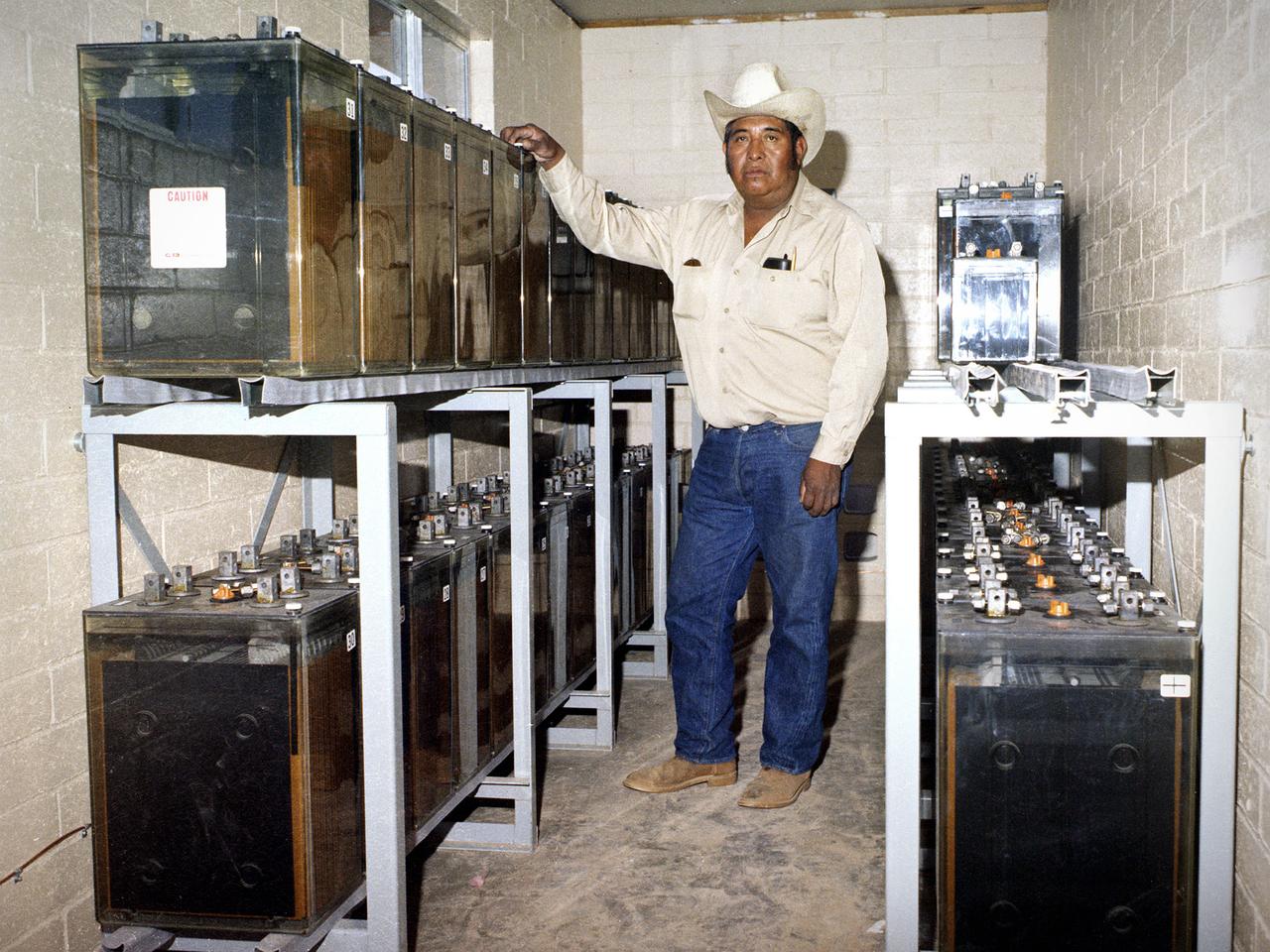
National Aeronautics and Space Administration (NASA) Lewis Research Center. NASA signed an agreement with the Papago tribe in May 1978 to provide the village with solar-generated electricity within the year. The project was funded by the Department of Energy and managed by NASA Lewis. Lewis provided all of the equipment and technical assistance while the tribe’s construction team built the arrays and support equipment, seen here. The 3.5-kilowatt system was modest in scope, but resulted in the first solar electric village. The system provided power to operate a refrigerator, freezer, washing machine, and water pump for the village and lights in each of the 16 homes. The system was activated on December 16, 1978. During the next year officials from around the world travelled to Schuchuli to ascertain if the system was applicable to their areas. The major television networks and over 100 publications covered the story. Less than one percent of the cells failed during the first year of operation.
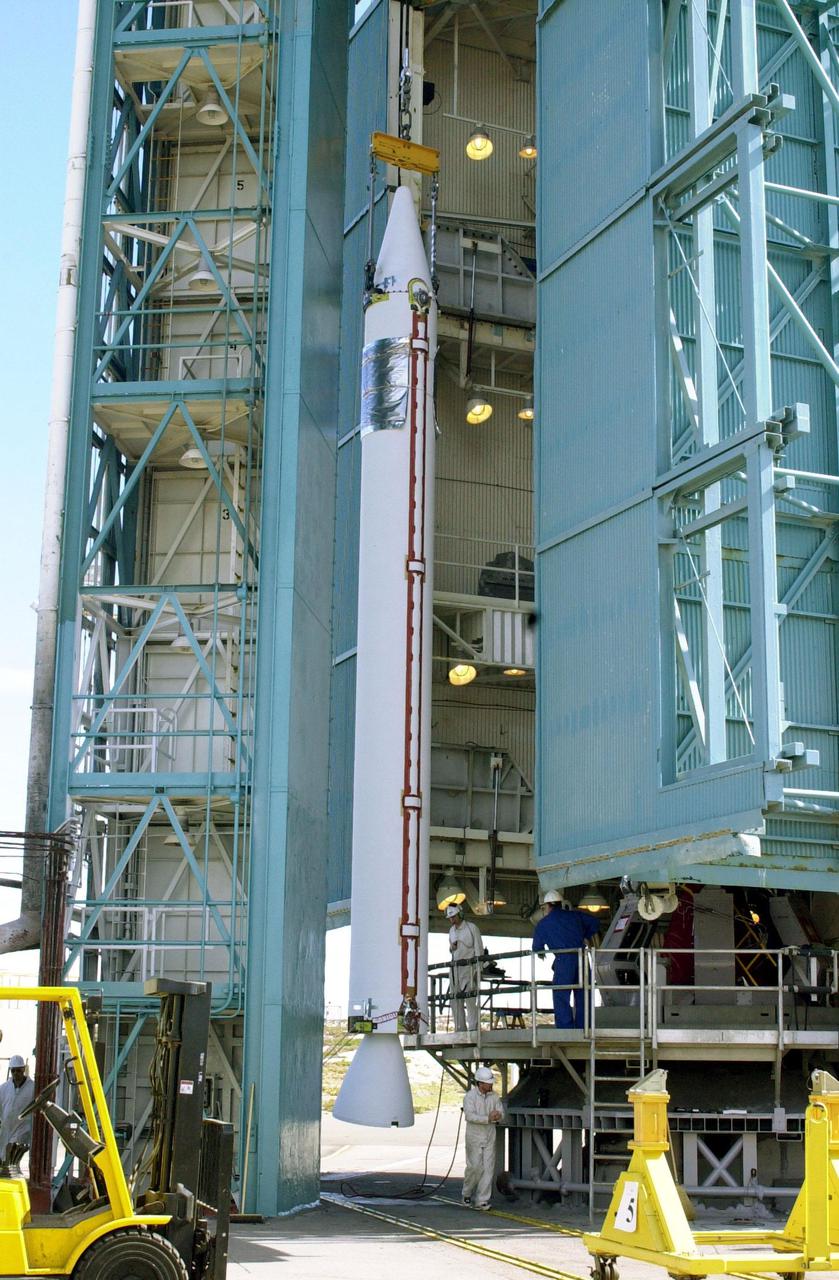
VANDENBERG AFB, CALIF. -- On the launch pad, a solid rocket booster is lifted up the gantry for mating with the Delta II rocket that will launch the Aqua-EOS satellite. Aqua is one of a series of spacebased platforms that are central to NASA's Earth Science Enterprise (ESE), a long-term study of the scope, dynamics and implications of global change. The Aqua program is composed of Aqua and other spacecraft (including Terra and Aura) and a data distribution system (ESDIS, and Mission Operations Center Implementation Team). Flying in an orbit that covers the globe every 16 days, Aqua will provide a six-year chronology of the planet and its processes. Comprehensive measurements taken by its onboard instruments will allow multidisciplinary teams of scientists and researchers from North and South America, Asia, Australia and Europe to assess long-term change, identify its human and natural causes and advance the development of models for long-term forecasting. Launch is scheduled for April 26 from Vandenberg
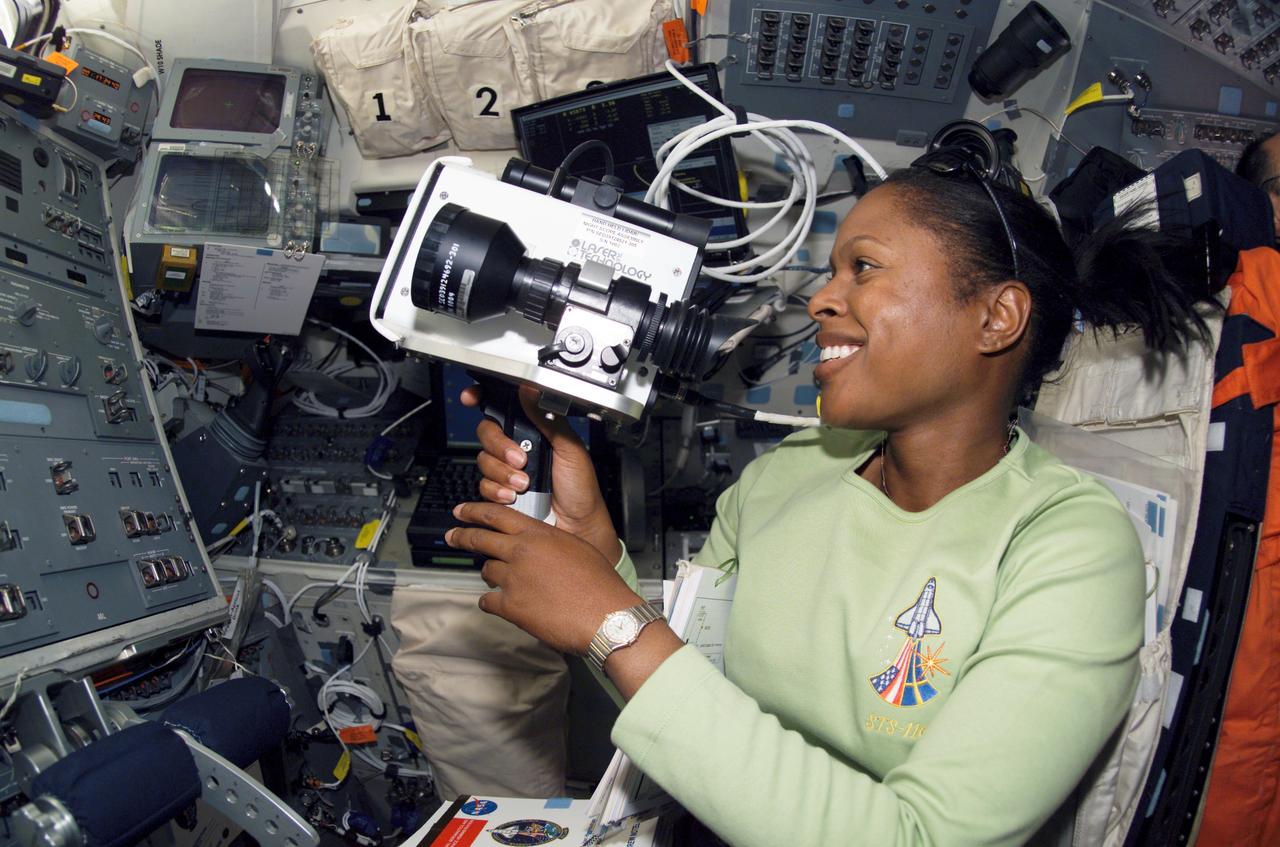
S116-E-05447 (11 Dec. 2006) --- Astronaut Joan E. Higginbotham, STS-116 mission specialist, uses a handheld laser ranging device on the aft flight deck of the Space Shuttle Discovery to track the range of the International Space Station during rendezvous operations.
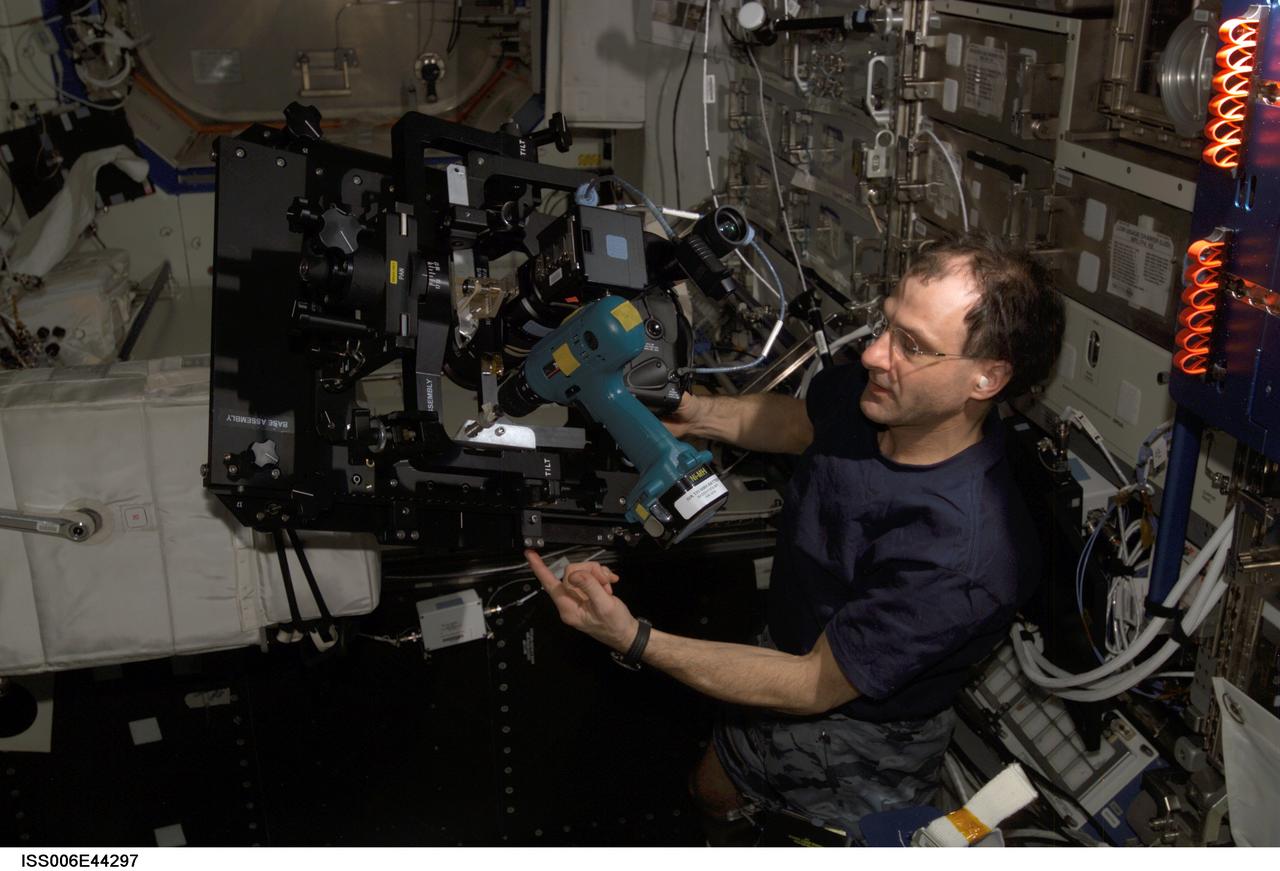
ISS006-E-44297 (5 April 2003) --- Astronaut Donald R. Pettit, Expedition Six NASA ISS science officer, prepares to deploy an observation experiment in the nadir window in the Destiny laboratory on the International Space Station (ISS).
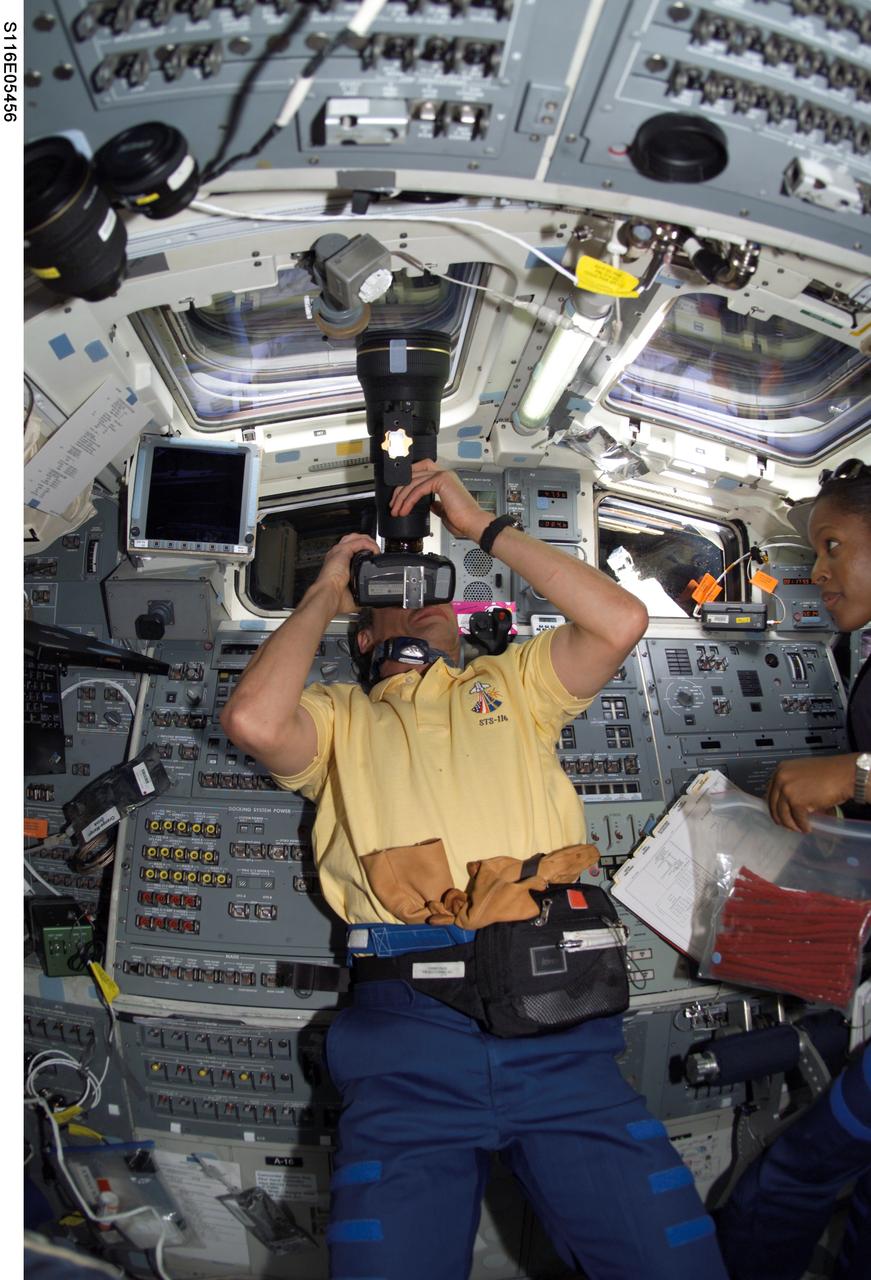
S116-E-05456 (11 Dec. 2006) --- European Space Agency (ESA) astronaut Christer Fuglesang, STS-116 mission specialist, aims a still camera through the overhead windows of the Space Shuttle Discovery during flight day three activities.
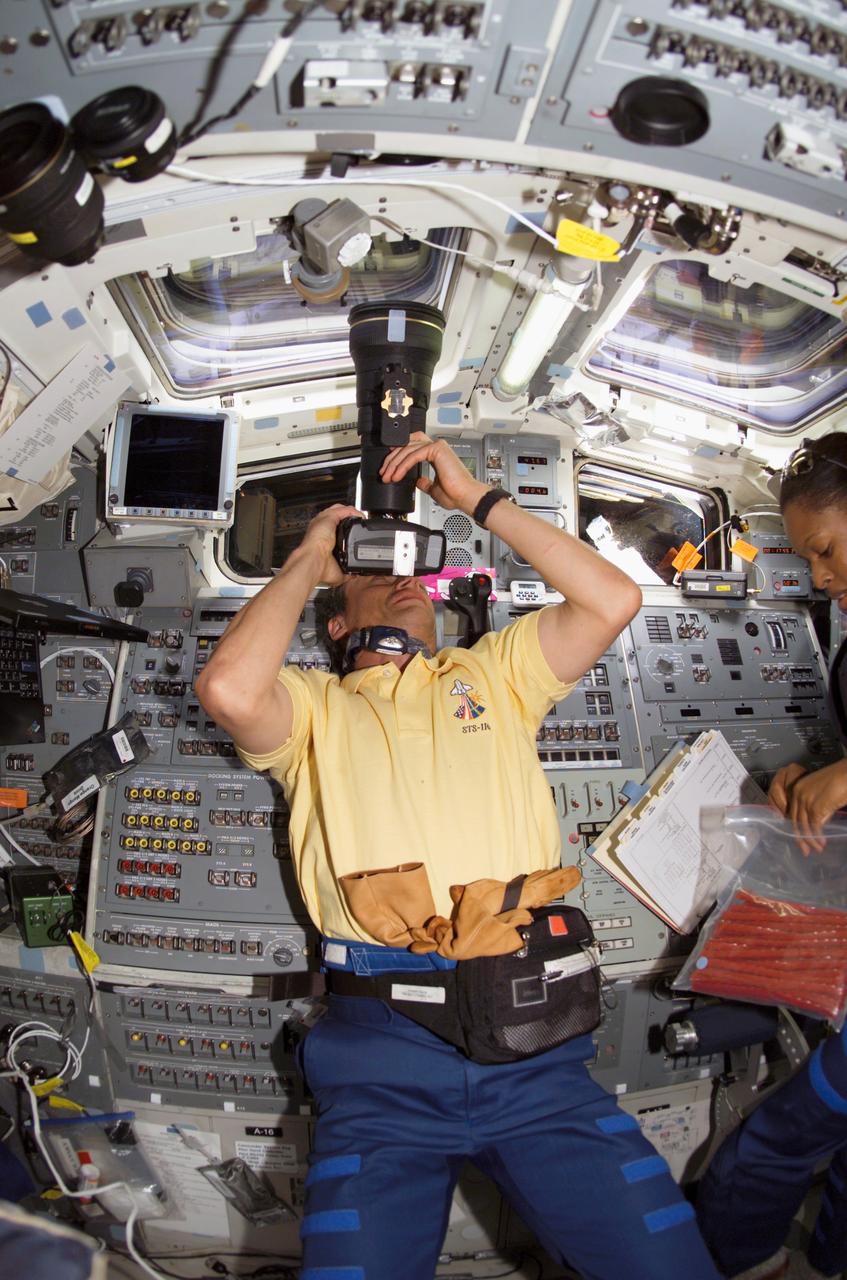
S116-E-05457 (11 Dec. 2006) --- European Space Agency (ESA) astronaut Christer Fuglesang, STS-116 mission specialist, aims a still camera through the overhead windows of the Space Shuttle Discovery during flight day three activities.

The sign near the entrance of the National Advisory Committee for Aeronautics (NACA) Flight Propulsion Research Laboratory. The name was changed several weeks later to the Lewis Flight Propulsion Laboratory in honor of the NACA’s former Director of Aeronautical Research, George W. Lewis. The research laboratory has had five different names since its inception in 1941. The Cleveland laboratory was originally known as the NACA Aircraft Engine Research Laboratory. In 1947 it was renamed the NACA Flight Propulsion Research Laboratory to reflect the expansion of the research activities beyond just engines. Following the death of George Lewis, the name was changed to the NACA Lewis Flight Propulsion Laboratory in September 1948. On October 1, 1958, the lab was incorporated into the new NASA space agency, and it was renamed the NASA Lewis Research Center. Following John Glenn’s flight on the space shuttle, the name was changed again to the NASA Glenn Research Center on March 1, 1999. From his office in Washington DC, George Lewis managed the aeronautical research conducted at the NACA for over 20 years. His most important accomplishment, however, may have been an investigative tour of German research facilities in the fall of 1936. The visit resulted in the broadening of the scope of the NACA’s research and the physical expansion that included the new engine laboratory in Cleveland.

VANDENBERG AFB, CALIF. - - Inside the gantry on the SLC-2 launch pad, workers check the fitting on the second stage of a Delta II rocket mated with the first stage, below. The Delta II will launch the Aqua-EOS satellite. Aqua is one of a series of spacebased platforms that are central to NASA's Earth Science Enterprise (ESE), a long-term study of the scope, dynamics and implications of global change. The Aqua program is composed of Aqua and other spacecraft (including Terra and Aura) and a data distribution system (ESDIS, and Mission Operations Center Implementation Team). Flying in an orbit that covers the globe every 16 days, Aqua will provide a six-year chronology of the planet and its processes. Comprehensive measurements taken by its onboard instruments will allow multidisciplinary teams of scientists and researchers from North and South America, Asia, Australia and Europe to assess long-term change, identify its human and natural causes and advance the development of models for long-term forecasting. Launch is scheduled for April 26 from Vandenberg
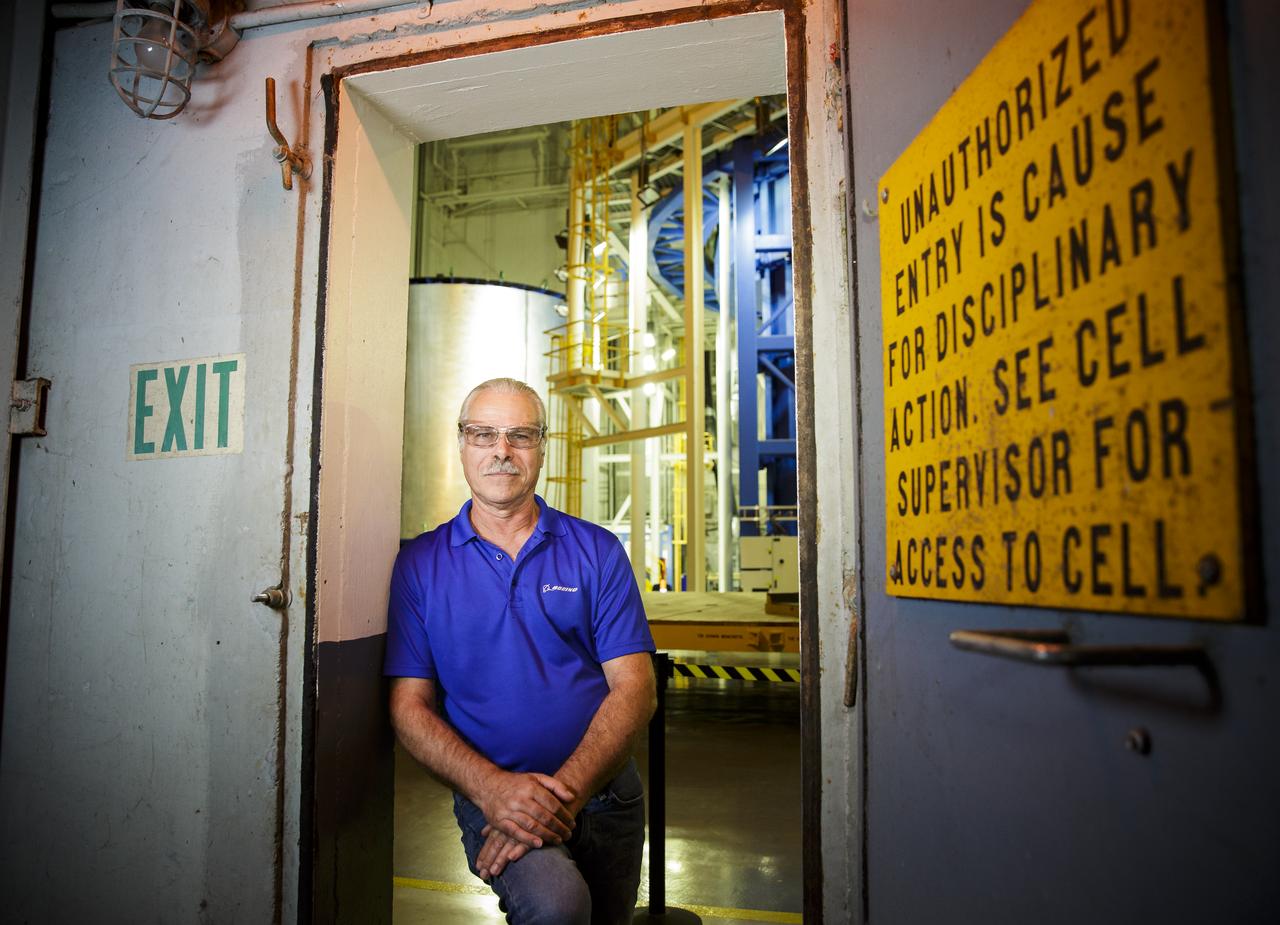
"I’m old enough that I watched Mercury and Apollo missions. That’s when a kid’s dream went from becoming a doctor when you grew up to becoming an astronaut. Everyone wanted to be an astronaut. Which, I realized, was way out of scope for me. I thought I’d never have anything to do with the aerospace program, but it was a cool thought. I ended up working on the Shuttle Program, and I was just wide-eyed the entire time. And I never had any desire to leave aerospace. It was always something new, always something different. I wanted to be involved, y’know? This is exploration. There’s no more land to explore. Instead of going across oceans, we’re going across space. And I can be a part of that. "My very first project was literally on a bar napkin. And I was given three dimensions: the top, the bottom and the length between. My manager gave me this and said, 'Here, make me something like this. Order whatever you need to do it.' And I thought, 'Well, this is going to be a great job!'" Dr. Terry Teal, Facilities and Asset Management, Boeing, Friday, June 28, 2019 at Michoud Assembly Facility, New Orleans, LA. Photo Credit: (NASA/Aubrey Gemignani)
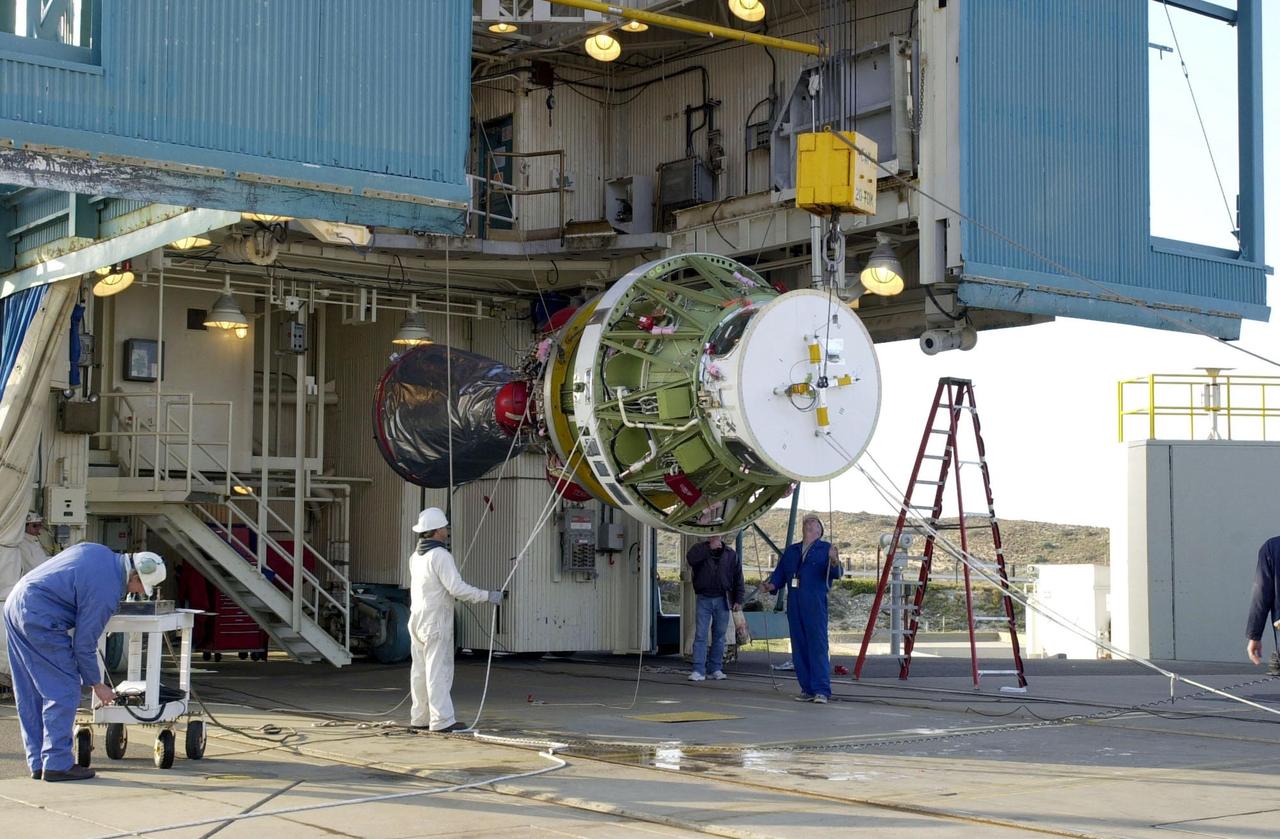
VANDENBERG AFB, CALIF. - Inside the gantry on the SLC-2 launch pad, the second stage of a Delta II rocket is lowered for mating with the first stage, below. The Delta II will launch the Aqua-EOS satellite. Aqua is one of a series of spacebased platforms that are central to NASA's Earth Science Enterprise (ESE), a long-term study of the scope, dynamics and implications of global change. The Aqua program is composed of Aqua and other spacecraft (including Terra and Aura) and a data distribution system (ESDIS, and Mission Operations Center Implementation Team). Flying in an orbit that covers the globe every 16 days, Aqua will provide a six-year chronology of the planet and its processes. Comprehensive measurements taken by its onboard instruments will allow multidisciplinary teams of scientists and researchers from North and South America, Asia, Australia and Europe to assess long-term change, identify its human and natural causes and advance the development of models for long-term forecasting. Launch is scheduled for April 26 from Vandenberg
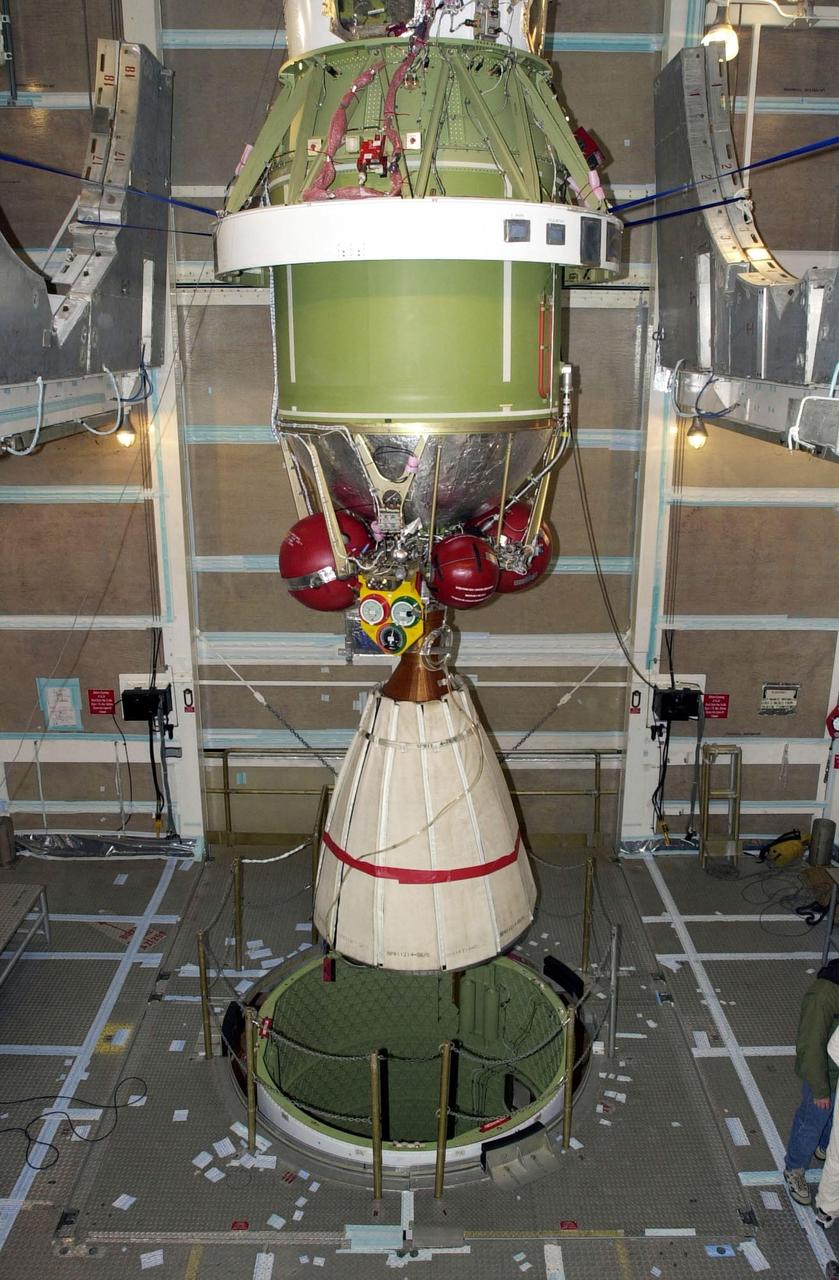
VANDENBERG AFB, CALIF. -- The second stage of the Delta II rocket is ready to be raised to vertical for its lift up the gantry on the launch pad. The Delta II rocket will launch the Aqua-EOS satellite. Aqua is one of a series of spacebased platforms that are central to NASA's Earth Science Enterprise (ESE), a long-term study of the scope, dynamics and implications of global change. The Aqua program is composed of Aqua and other spacecraft (including Terra and Aura) and a data distribution system (ESDIS, and Mission Operations Center Implementation Team). Flying in an orbit that covers the globe every 16 days, Aqua will provide a six-year chronology of the planet and its processes. Comprehensive measurements taken by its onboard instruments will allow multidisciplinary teams of scientists and researchers from North and South America, Asia, Australia and Europe to assess long-term change, identify its human and natural causes and advance the development of models for long-term forecasting. Launch is scheduled for April 26 from Vandenberg
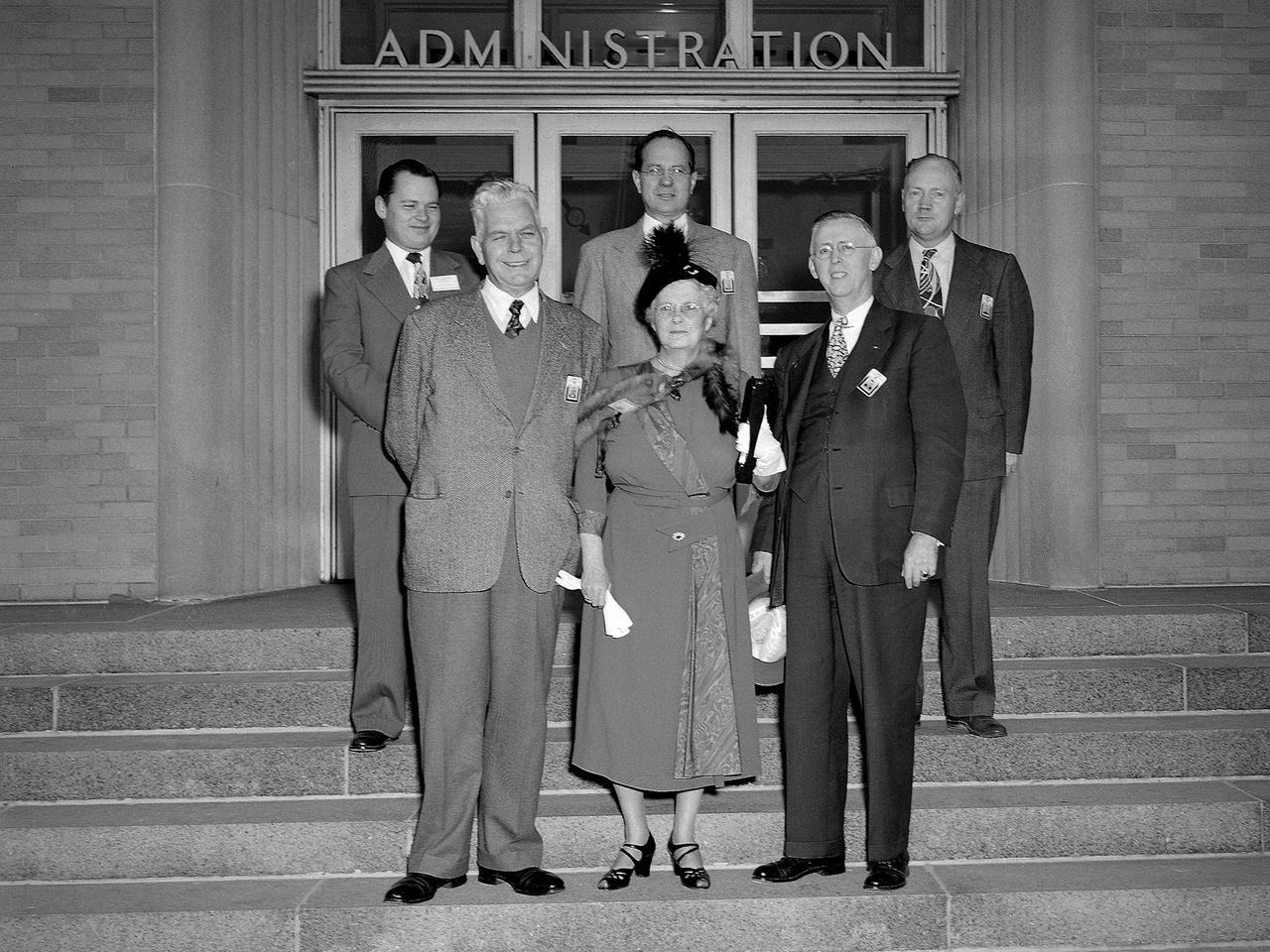
Myrtle Lewis and three of her sons visit the National Advisory Committee for Aeronautics (NACA) Lewis Flight Propulsion Laboratory in Cleveland, Ohio. The Flight Propulsion Research Laboratory was renamed in Lewis’ honor in September 1948. Lewis served as the NACA’s Director of Aeronautical Research for over 20 years. Lewis joined the NACA as Executive Officer in 1919 and was named Director of Aeronautical Research in 1924. In this role Lewis served as the liaison between the Executive Committee and the research laboratories. His most important accomplishment may have been the investigative tours of German research facilities in 1936 and 1939. The visits resulted in the NACA’s physical expansion and the broadening of its scope of research. Lewis did not take a day of leave between the Pearl Harbor attack and the Armistice, but began suffering health problems in 1945. He was forced to retire two years later and passed in July 1948. Front row, left to right: Lewis Director Raymond Sharp, Mrs. Lewis, NACA Executive Secretary John Victory; back row: Executive Officer Robert Sessions, Armand Lewis, Harvey Lewis, and George Lewis II. Harvey and George Lewis II were employed at NACA Lewis in the Instrument Service and Applied Compressor sections, respectively.
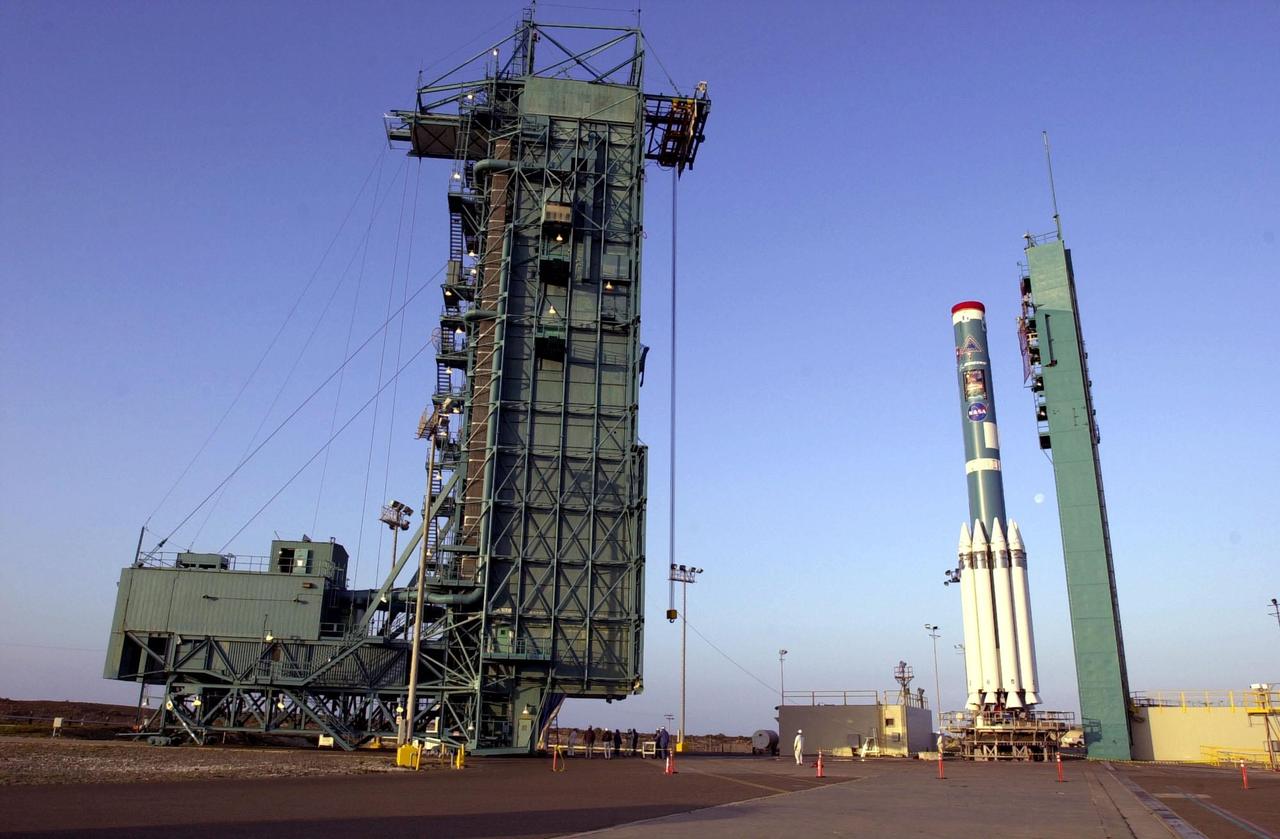
VANDENBERG AFB, CALIF. -- The partially assembled Delta II rocket (right) and the gantry (left) wait for the rocket's second stage to be transported to the launch pad. The Delta II rocket will launch the Aqua-EOS satellite. Aqua is one of a series of spacebased platforms that are central to NASA's Earth Science Enterprise (ESE), a long-term study of the scope, dynamics and implications of global change. The Aqua program is composed of Aqua and other spacecraft (including Terra and Aura) and a data distribution system (ESDIS, and Mission Operations Center Implementation Team). Flying in an orbit that covers the globe every 16 days, Aqua will provide a six-year chronology of the planet and its processes. Comprehensive measurements taken by its onboard instruments will allow multidisciplinary teams of scientists and researchers from North and South America, Asia, Australia and Europe to assess long-term change, identify its human and natural causes and advance the development of models for long-term forecasting. Launch is scheduled for April 26 from Vandenberg
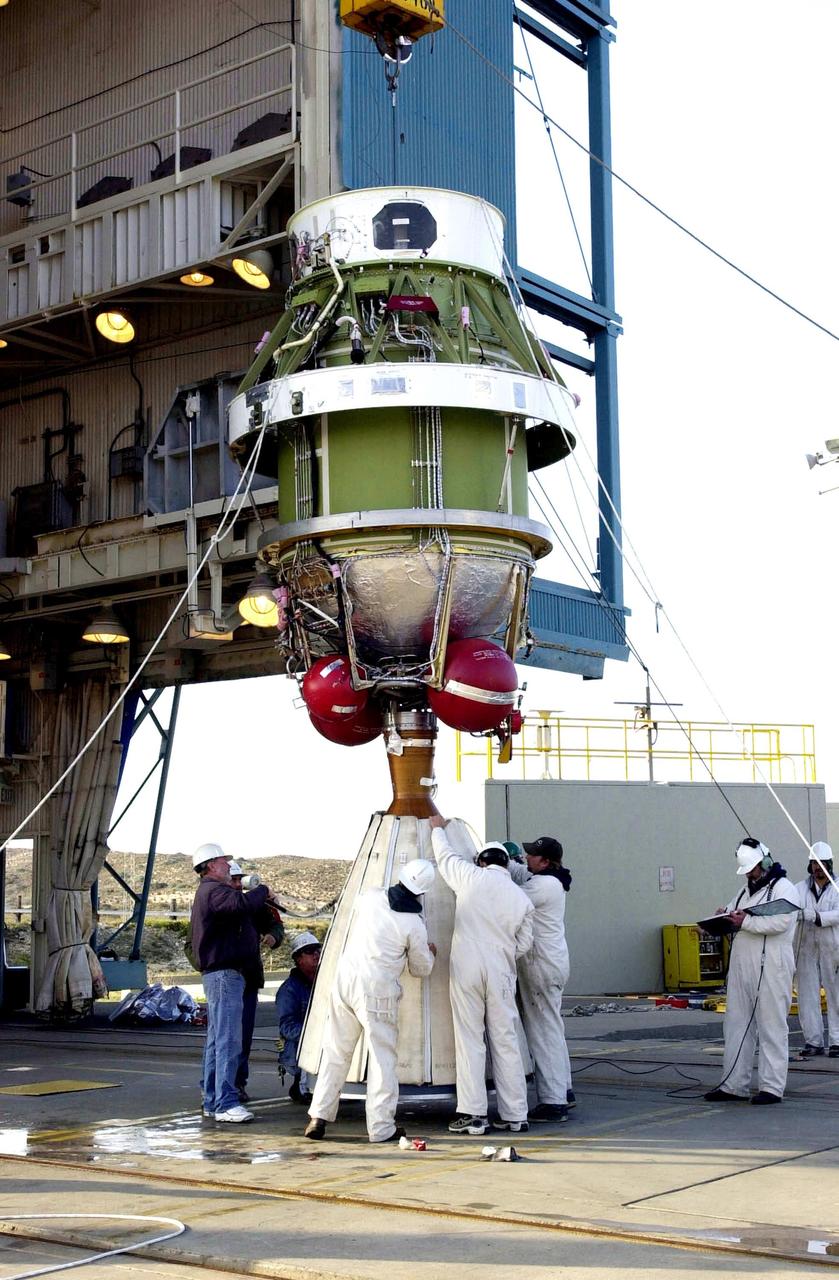
VANDENBERG AFB, CALIF. - Workers on the launch pad ready the second stage of the Delta II rocket for its lift up the gantry on the launch pad. The Delta II rocket will launch the Aqua-EOS satellite. Aqua is one of a series of spacebased platforms that are central to NASA's Earth Science Enterprise (ESE), a long-term study of the scope, dynamics and implications of global change. The Aqua program is composed of Aqua and other spacecraft (including Terra and Aura) and a data distribution system (ESDIS, and Mission Operations Center Implementation Team). Flying in an orbit that covers the globe every 16 days, Aqua will provide a six-year chronology of the planet and its processes. Comprehensive measurements taken by its onboard instruments will allow multidisciplinary teams of scientists and researchers from North and South America, Asia, Australia and Europe to assess long-term change, identify its human and natural causes and advance the development of models for long-term forecasting. Launch is scheduled for April 26 from Vandenberg
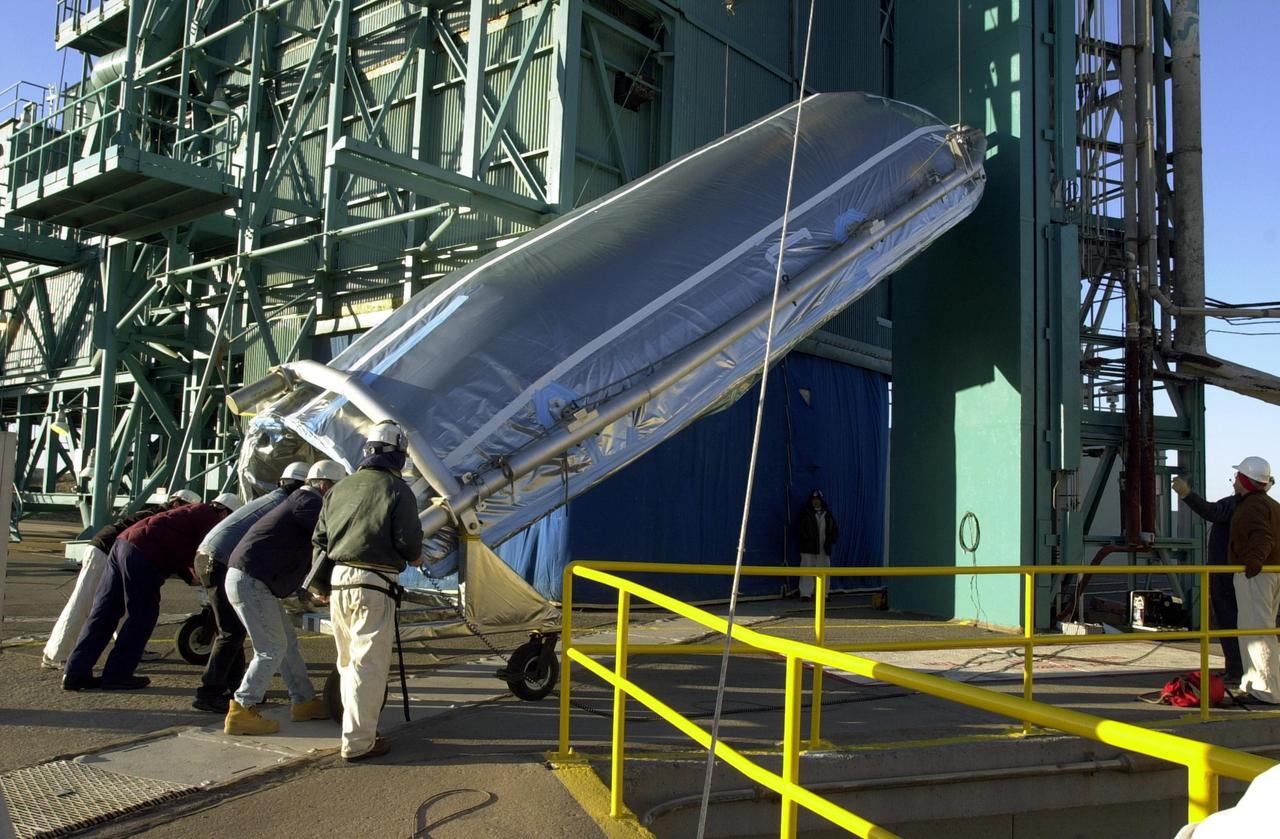
VANDENBERG AFB, CALIF. - On the SLC-2 launch pad, the first half of the Delta II fairing for the Aqua-EOS satellite arrives at the gantry. The Delta II will launch the Aqua-EOS satellite. Aqua is one of a series of spacebased platforms that are central to NASA's Earth Science Enterprise (ESE), a long-term study of the scope, dynamics and implications of global change. The Aqua program is composed of Aqua and other spacecraft (including Terra and Aura) and a data distribution system (ESDIS, and Mission Operations Center Implementation Team). Flying in an orbit that covers the globe every 16 days, Aqua will provide a six-year chronology of the planet and its processes. Comprehensive measurements taken by its onboard instruments will allow multidisciplinary teams of scientists and researchers from North and South America, Asia, Australia and Europe to assess long-term change, identify its human and natural causes and advance the development of models for long-term forecasting. Launch is scheduled for April 26 from Vandenberg
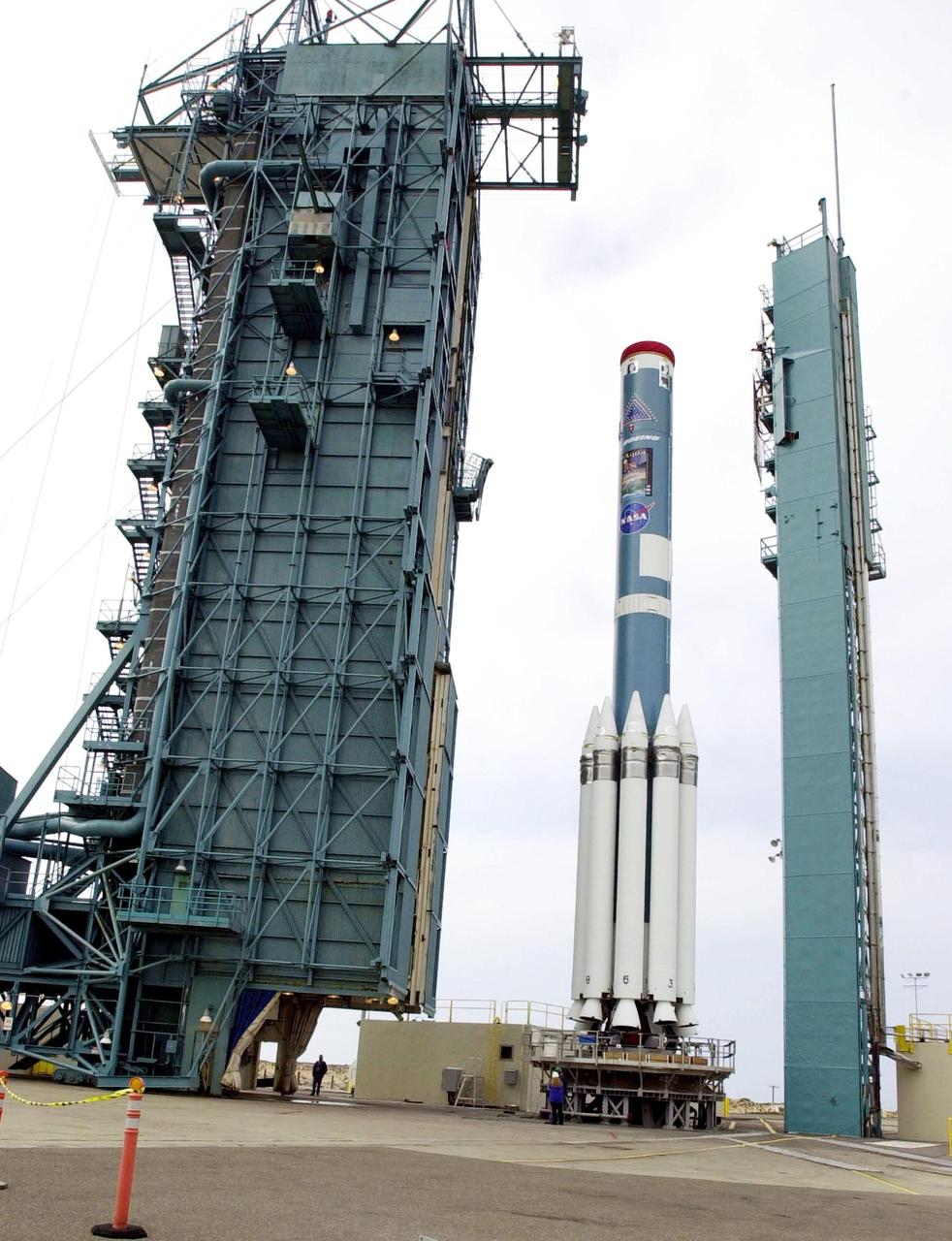
VANDENBERG AFB,CALIF. - The gantry (left) on SLC-2 moves toward the first stage of the Delta II rocket, for mating with the second stage. The Delta II will launch the Aqua-EOS satellite. Aqua is one of a series of spacebased platforms that are central to NASA's Earth Science Enterprise (ESE), a long-term study of the scope, dynamics and implications of global change. The Aqua program is composed of Aqua and other spacecraft (including Terra and Aura) and a data distribution system (ESDIS, and Mission Operations Center Implementation Team). Flying in an orbit that covers the globe every 16 days, Aqua will provide a six-year chronology of the planet and its processes. Comprehensive measurements taken by its onboard instruments will allow multidisciplinary teams of scientists and researchers from North and South America, Asia, Australia and Europe to assess long-term change, identify its human and natural causes and advance the development of models for long-term forecasting. Launch is scheduled for April 26 from Vandenberg
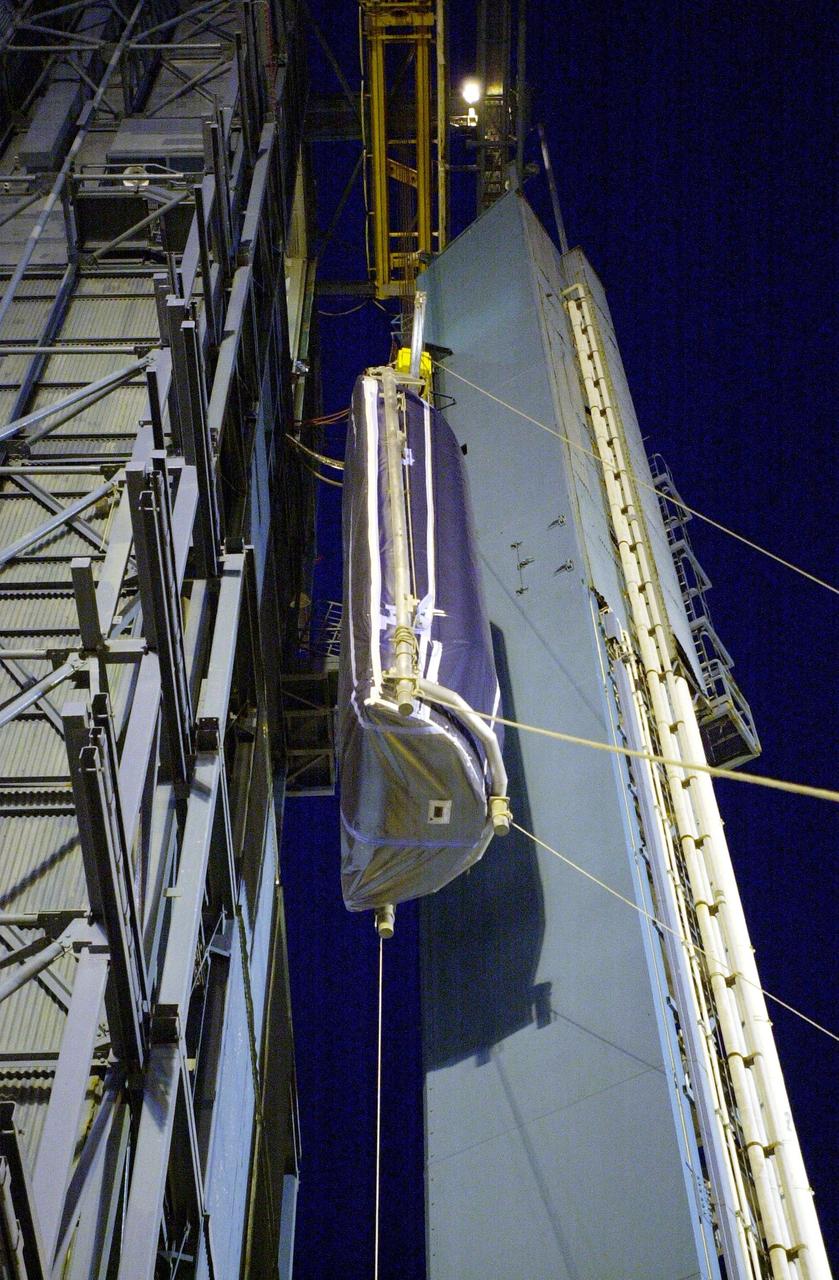
VANDENBERG AFB, CALIF. - On the SLC-2 launch pad, the first half of the Delta II fairing for the Aqua-EOS satellite is lifted up the gantry. The Delta II will launch the Aqua-EOS satellite, one of a series of spacebased platforms that are central to NASA's Earth Science Enterprise (ESE), a long-term study of the scope, dynamics and implications of global change. The Aqua program is composed of Aqua and other spacecraft (including Terra and Aura) and a data distribution system (ESDIS, and Mission Operations Center Implementation Team). Flying in an orbit that covers the globe every 16 days, Aqua will provide a six-year chronology of the planet and its processes. Comprehensive measurements taken by its onboard instruments will allow multidisciplinary teams of scientists and researchers from North and South America, Asia, Australia and Europe to assess long-term change, identify its human and natural causes and advance the development of models for long-term forecasting. Launch is scheduled for April 26 from Vandenberg

“I grew up in Venezuela and studied in the military high school Gran Mariscal de Ayacucho. They would frequently bring in speakers, usually professional that were doing important work. Here comes Dr. Humberto Fernandez-Moran, a Venezuelan scientist working at NASA He was speaking to us about teamwork and he told an anecdote about this janitor that was mopping the floors in one of the NASA installations, when someone asked the man what he was doing. The janitor turned around and said “I’m sending people to the Moon.” In that moment I thought, “Wow, NASA is a really inclusive place to work because they value all the contributions of the people that work for them.” When I immigrated to the United States, I didn’t start my career at NASA. I worked in various positions in the private and public sector. When I saw this position open and applied, I was reminded of that story. Later on, I worked for NASA as part of the new employee orientation team for a little over a year I would share that story with the new hires to let them know that NASA was extremely inclusive and that their work would matter. Regardless of the scope of their contribution you were part of a team working toward the same goal. When someone asks me about my job? I respond with immense pride I am part of the Office of the General Counsel – International Law Practice Group and I send astronauts into space." NASA Legal Administrative Specialist, Linda Perozo, poses for a portrait outside her home in Maryland, Wednesday, Sept. 16, 2020. Photo Credit: (NASA/Aubrey Gemignani)
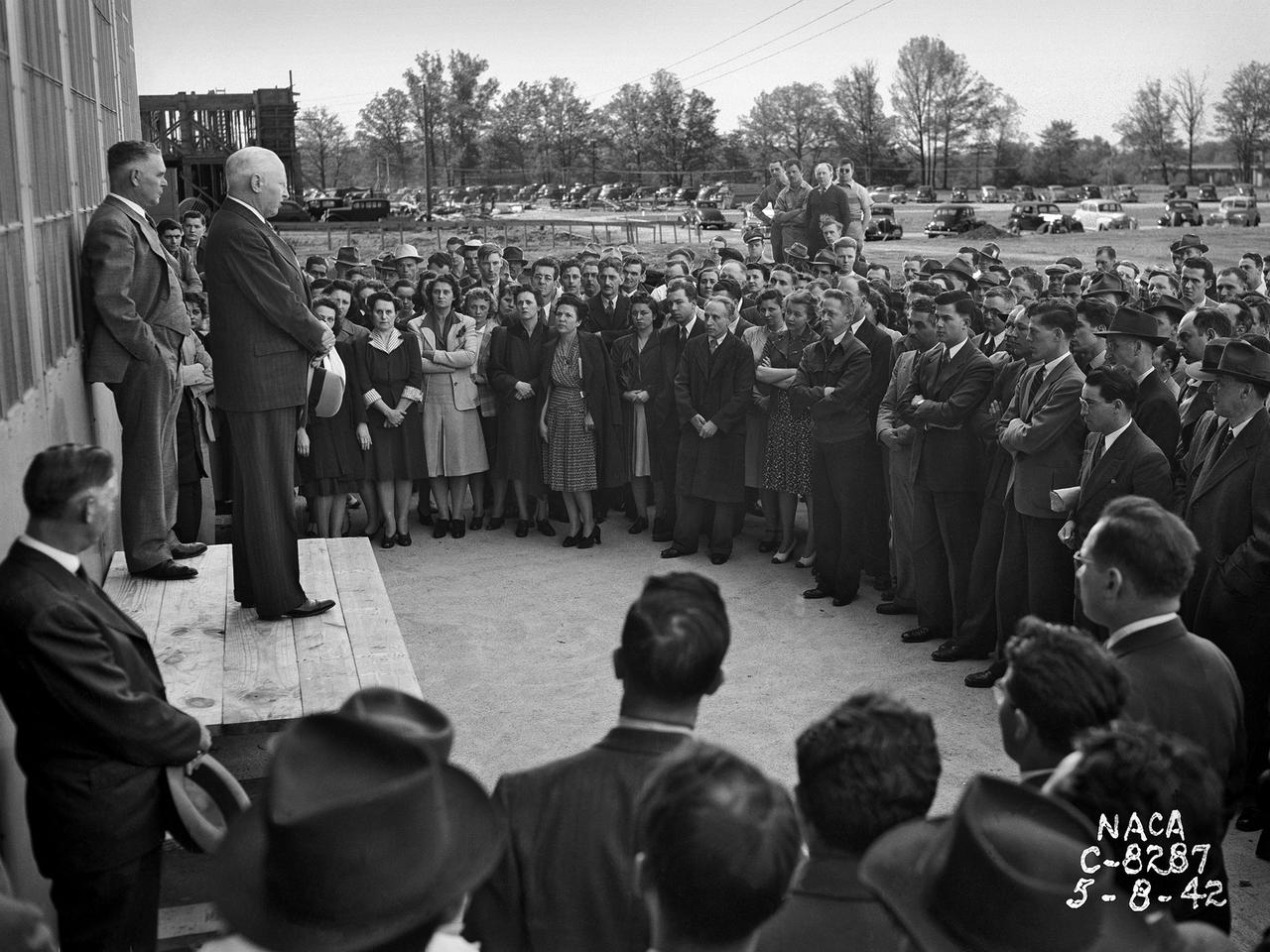
Construction Manager Raymond Sharp and the National Advisory Committee for Aeronautics (NACA) Director of Research George Lewis speak to employees during the May 8, 1942, Initiation of Research ceremony at the Aircraft Engine Research Laboratory. The event marked the first operation of a test facility at the new laboratory. The overall laboratory was still under construction, however, and behind schedule. Lewis traveled from his office in Washington, DC every week to personally assess the progress. Drastic measures were undertaken to accelerate the lab’s construction schedule. The military provided special supplies, contractors were given new agreements and pressured to meet deadlines, and Congress approved additional funds. The effort paid off and much of the laboratory was operational in early 1943. George Lewis managed the NACA’s aeronautical research for over 20 years. Lewis joined the NACA as Executive Officer in 1919, and was named Director of Aeronautical Research in 1924. In this role Lewis served as the liaison between the Executive Committee and the research laboratories. His most important accomplishment may have been the investigative tours of the research facilities in Germany in 1936 and 1939. The visits resulted in the NACA’s physical expansion and the broadening of the scope of its research. Lewis did not take a day of leave between the Pearl Harbor attack and the Armistice. He began suffering health problems in 1945 and was forced to retire two years later. The Aircraft Engine Research Laboratory was renamed the NACA Lewis Flight Propulsion Laboratory in September 1948.
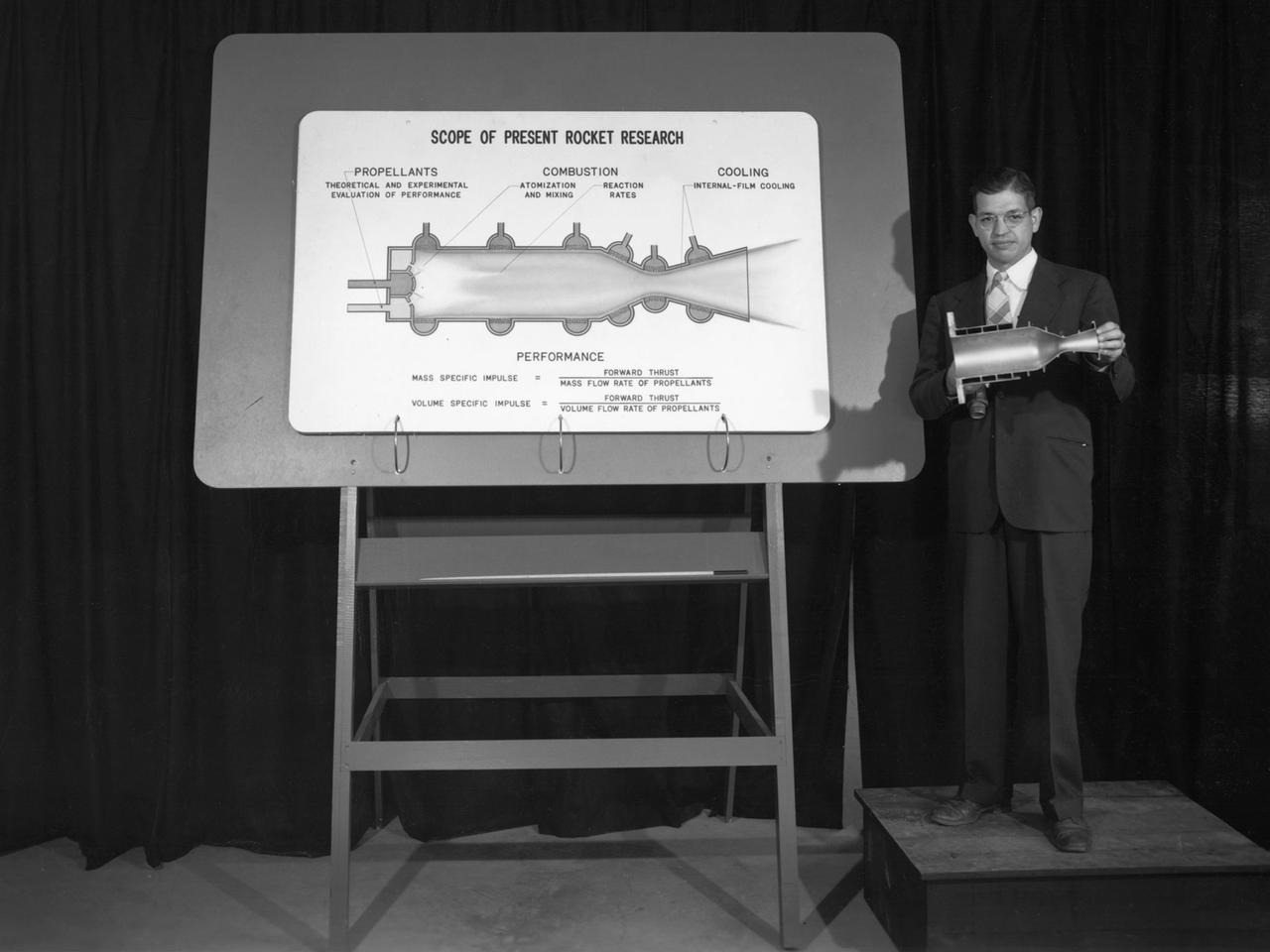
Researcher John Sloop briefs visitors on his latest rocket engine research during the 1947 Inspection at the National Advisory Committee for Aeronautics (NACA) Lewis Flight Propulsion Laboratory. The NACA had been hosting annual Aircraft Engineering Conferences, better known as Inspections, since 1926. Individuals from the manufacturing industry, military, and university settings were invited to tour the NACA laboratories. There were a series of stops on the tour, mostly at test facilities, where researchers would brief the group on the latest efforts in their particular field. The Inspections grew in size and scope over the years and by the mid-1940s required multiple days. The three-day 1947 Inspection was the first time the event was held at NACA Lewis. Over 800 scientists, industrialists, and military leaders attended the three-day event. Talks were given at the Altitude Wind Tunnel, Four Burner Area, Engine Research Building, and other facilities. An array of topics were discussed, including full-scale engine testing, ramjets, axial-flow compressors, turbojets, fuels, icing, and materials. The NACA Lewis staff and their families were able to view the same presentations after the Inspection was over. Sloop, a researcher in the Fuels and Thermodynamics Division, briefed visitors on NACA Lewis’ early research in rocket engine propellants, combustion, and cooling. This early NACA Lewis work led to the development of liquid hydrogen as a viable propellant in the late 1950s.