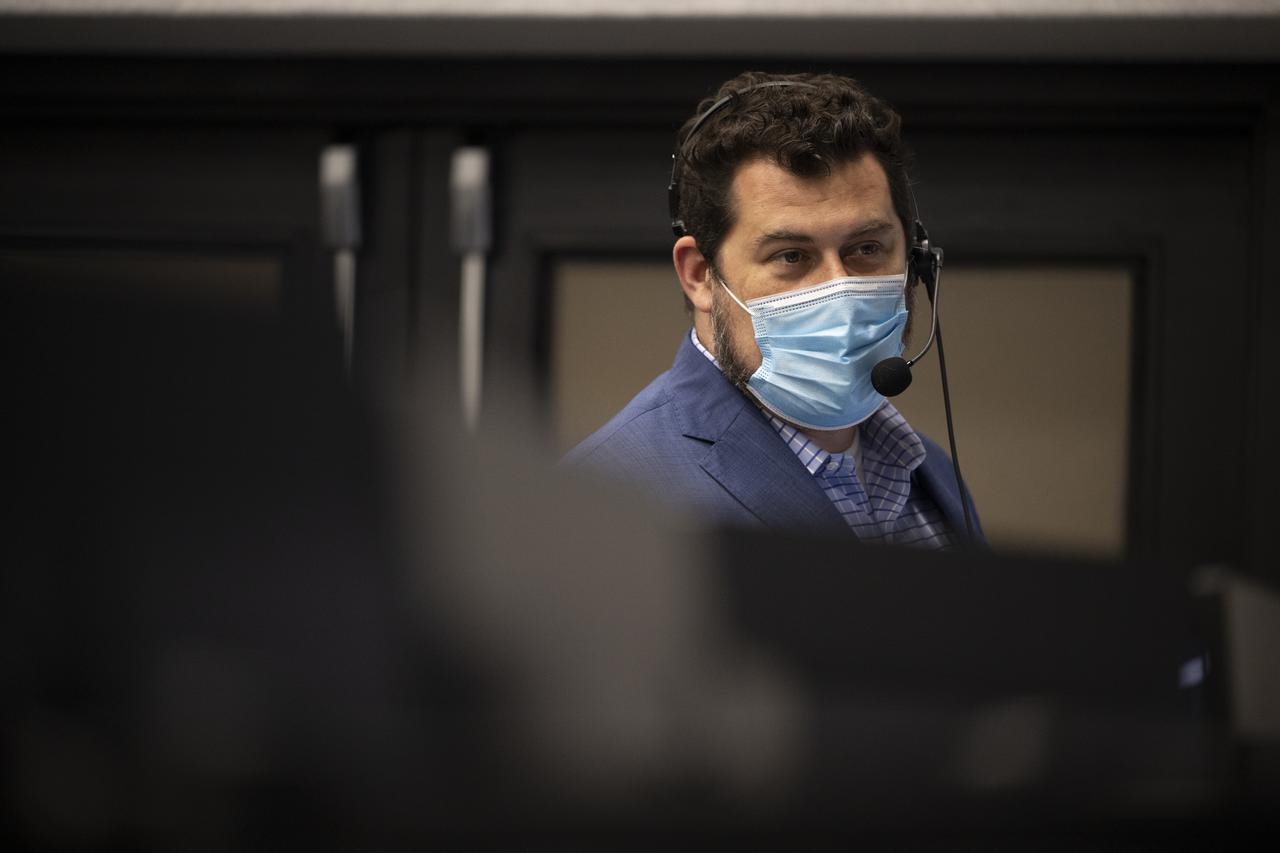
Scott Ede, mission manager for mission management and integration in NASA's Commercial Crew Program, monitors the countdown of the launch of a SpaceX Falcon 9 rocket carrying the company's Crew Dragon spacecraft on NASA’s SpaceX Crew-4 mission with NASA astronauts Kjell Lindgren, Robert Hines, Jessica Watkins, and ESA (European Space Agency) astronaut Samantha Cristoforetti onboard, Wednesday, April 27, 2022, in firing room four of the Rocco A. Petrone Launch Control Center at NASA’s Kennedy Space Center in Florida. NASA’s SpaceX Crew-4 mission is the fourth crew rotation mission of the SpaceX Crew Dragon spacecraft and Falcon 9 rocket to the International Space Station as part of the agency’s Commercial Crew Program. Lindgren, Hines, Watkins, and Cristoforetti launched at at 3:52 a.m. ET, from Launch Complex 39A at the Kennedy Space Center. Photo Credit: (NASA/Joel Kowsky)
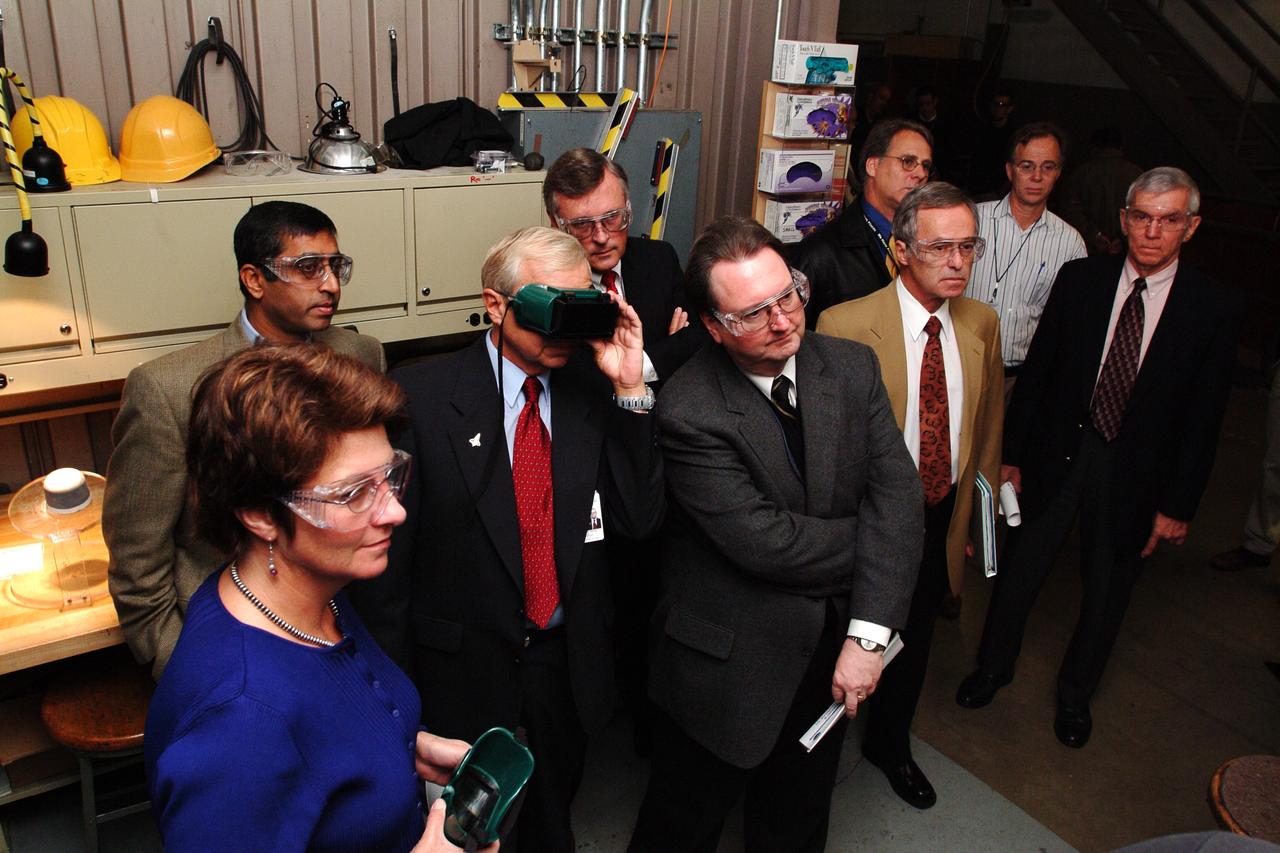
NASA Space Science Advisory Committee Chairman Ed Wiler (r) visit to Ames Research Center: on tour of the Arc Jet Facility with G. Scott Hubbard, Raj Venkatapathy and entourage
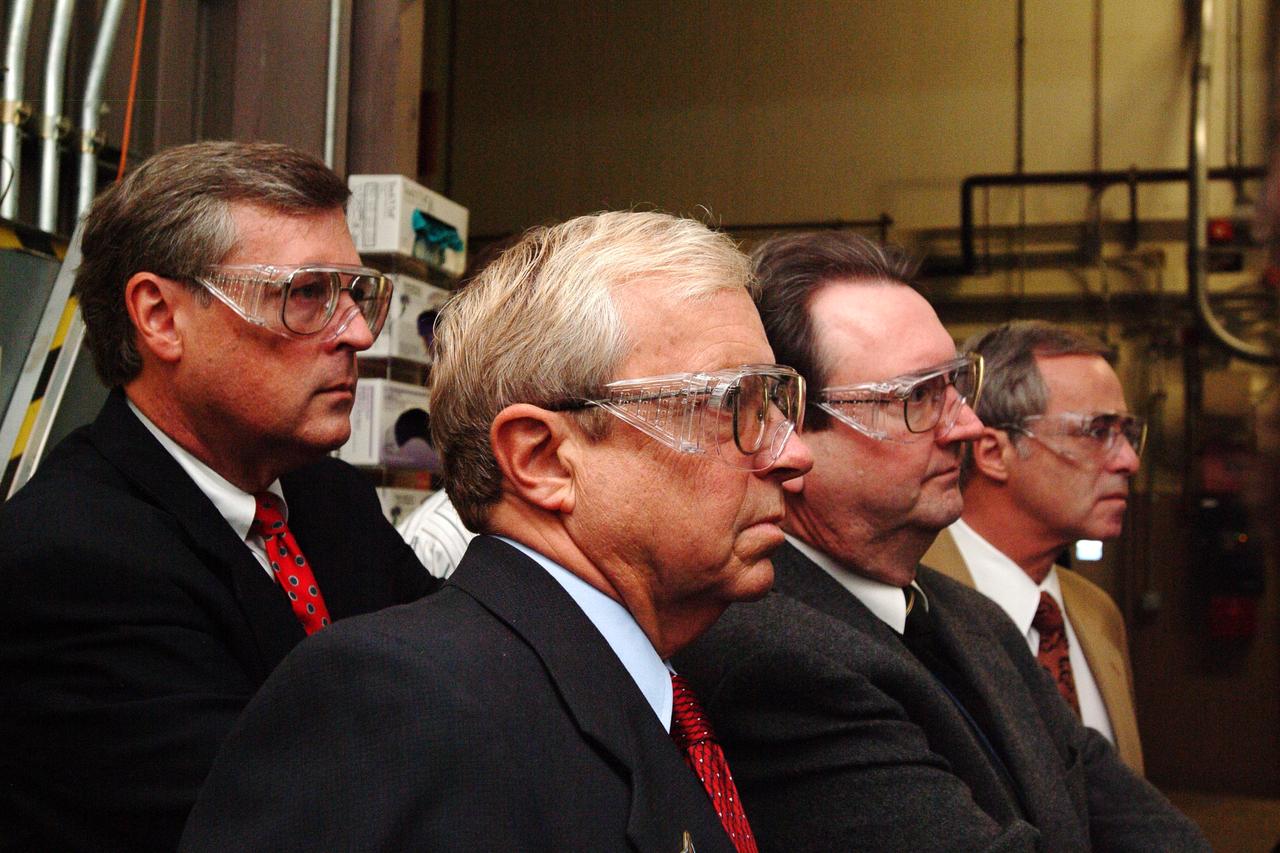
NASA Space Science Advisory Committee Chairman Ed Wiler (r) visit to Ames Research Center: on tour of the Arc Jet Facility with G. Scott Hubbard, Raj Venkatapathy and entourage.
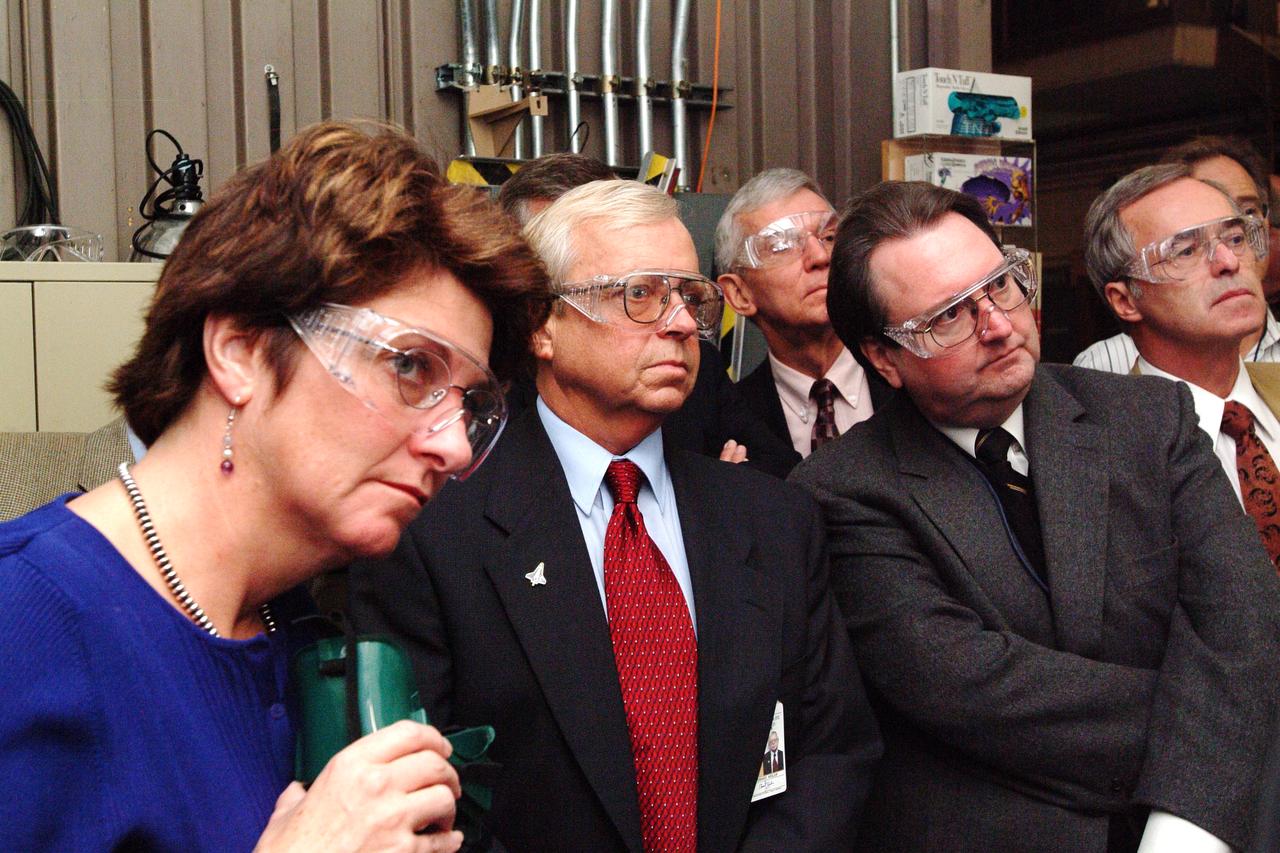
NASA Space Science Advisory Committee Chairman Ed Wiler (c) visit to Ames Research Center: on tour of the Arc Jet Facility with G. Scott Hubbard, Raj Venkatapathy and entourage.
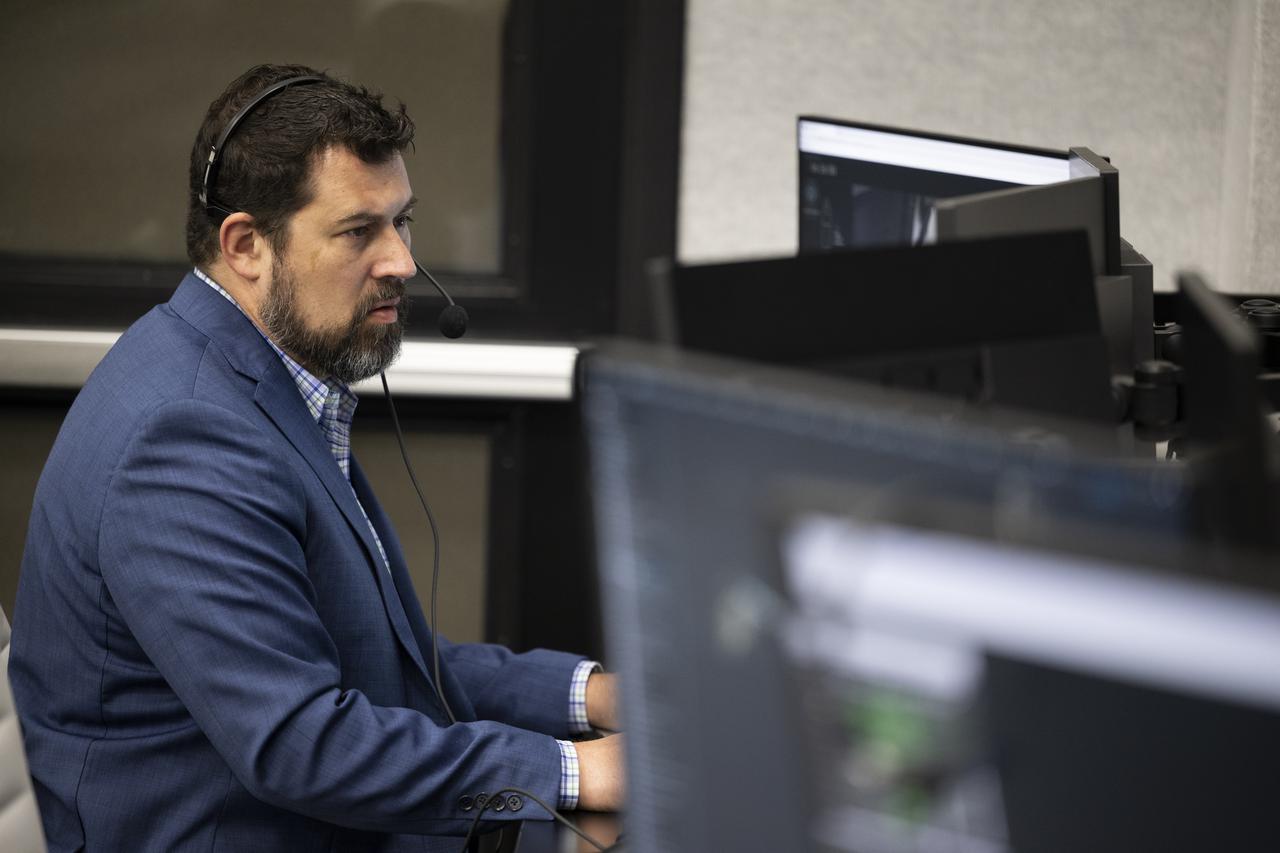
Scott Ede, mission manager for mission management and integration in NASA's Commercial Crew Program, monitors the countdown during a dress rehearsal in preparation for the launch of a SpaceX Falcon 9 rocket carrying the company's Crew Dragon spacecraft on NASA’s SpaceX Crew-4 mission with NASA astronauts Kjell Lindgren, Robert Hines, Jessica Watkins, and ESA (European Space Agency) astronaut Samantha Cristoforetti onboard, Wednesday, April 20, 2022, in firing room four of the Rocco A. Petrone Launch Control Center at NASA’s Kennedy Space Center in Florida. NASA’s SpaceX Crew-4 mission is the fourth crew rotation mission of the SpaceX Crew Dragon spacecraft and Falcon 9 rocket to the International Space Station as part of the agency’s Commercial Crew Program. Lindgren, Hines, Watkins, and Cristoforetti are scheduled to launch on April 23 at 5:26 a.m. EDT, from Launch Complex 39A at the Kennedy Space Center. Photo Credit: (NASA/Joel Kowsky)
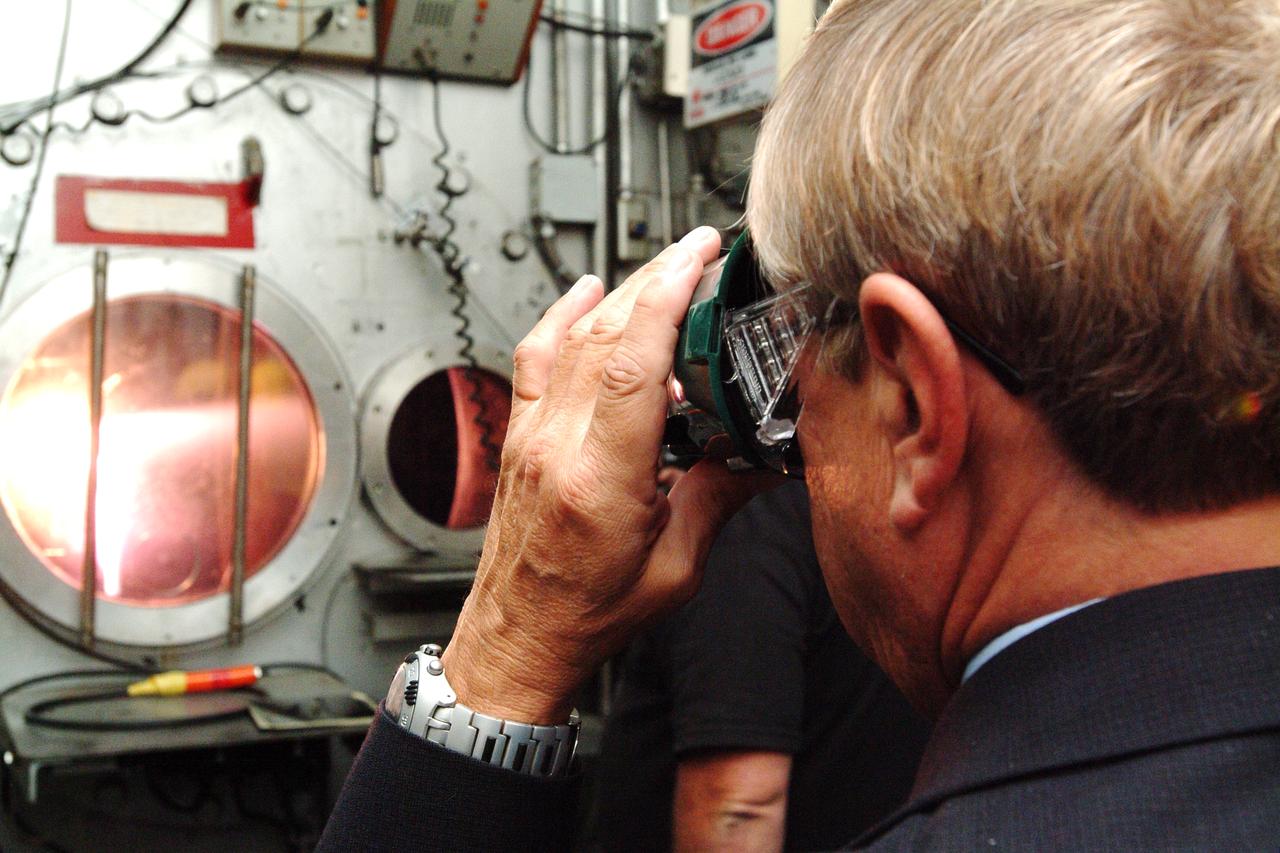
NASA Space Science Advisory Committee Chairman Ed Wiler (r) visit to Ames Research Center: while on tour of the Arc Jet Facility with G. Scott Hubbard, Raj Venkatapathy and entourage. Wiler uses special viewing glasses to observe a test run of Thermal Protection Materials.
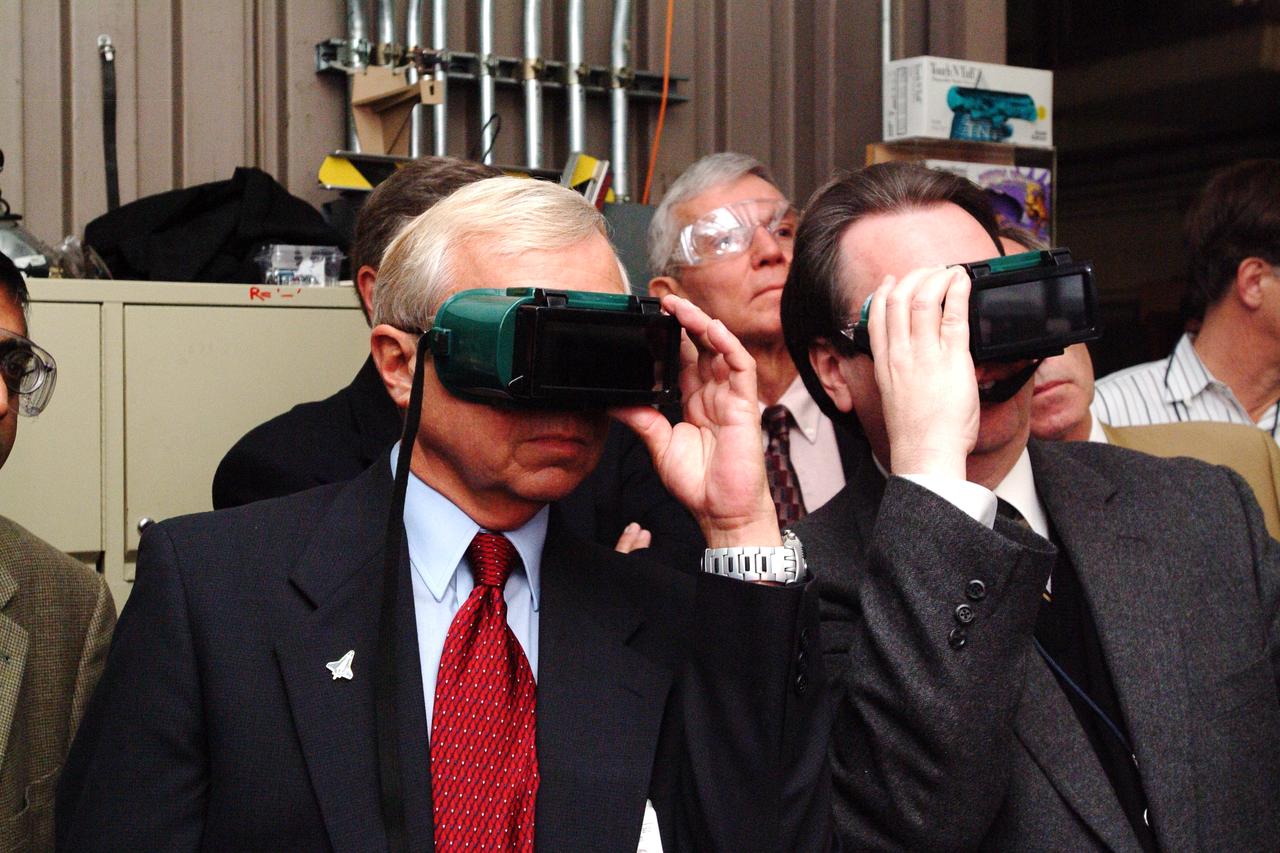
NASA Space Science Advisory Committee Chairman Ed Wiler (r) visit to Ames Research Center: on tour of the Arc Jet Facility with G. Scott Hubbard, Raj Venkatapathy and entourage. Wiler and Hubbard use special viewing glasses to observe a test run of Thermal Protection Materials.
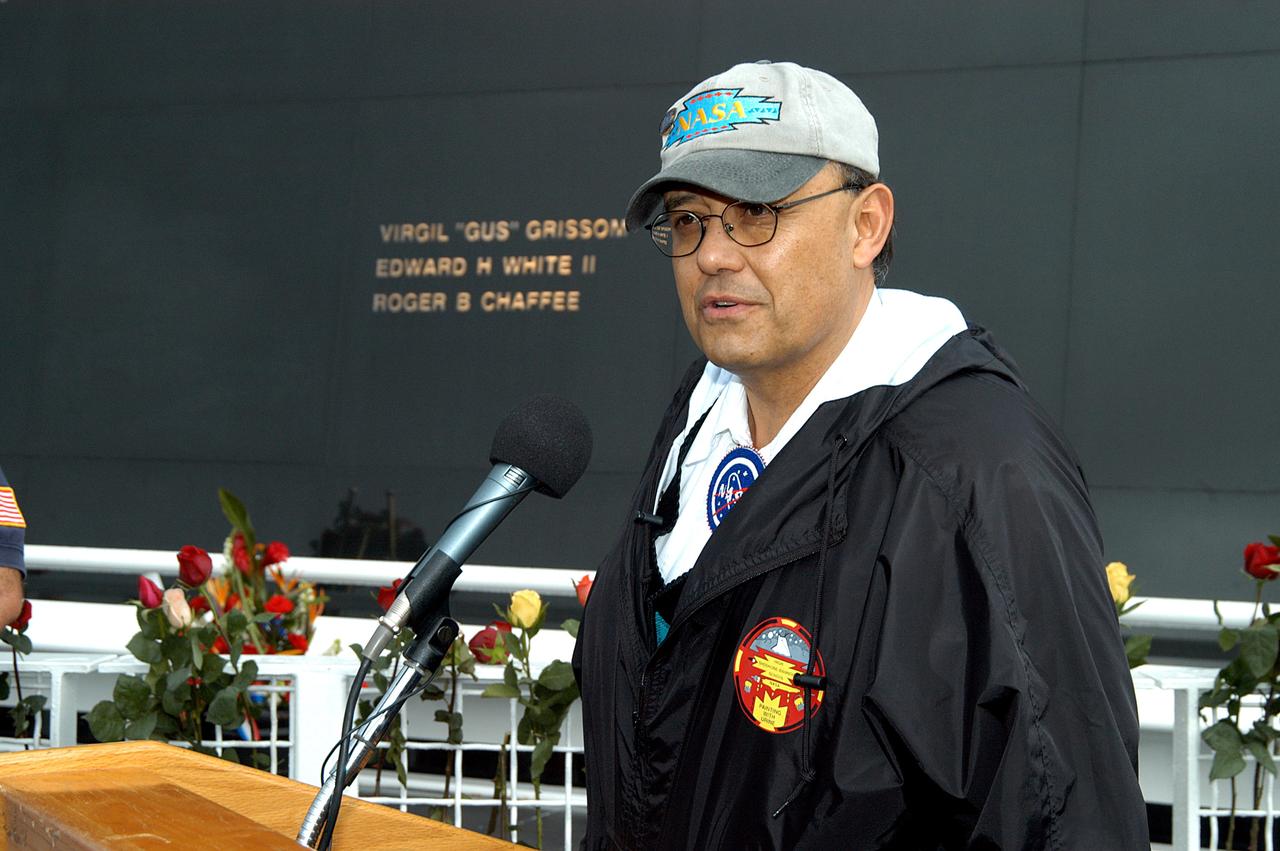
KENNEDY SPACE CENTER, FLA. - Dr. Ed Galindo speaks to the visitors at the memorial service held at the Space Memorial Mirror for the crew of Columbia. Galindo is science educator of Shoshone-Bannock High School and introduced the dancers from the Shoshone-Bannock Native American community in Fort Hall, Idaho. The dancers performed a healing ceremony during the memorial. Students and staff of the Shoshone-Bannock Nation had an experiment on board Columbia. Feb. 1 is the one-year anniversary of the loss of the crew and orbiter Columbia in a tragic accident as the ship returned to Earth following mission STS-107. The public was invited to the memorial service, held in the KSC Visitor Complex, which included comments by Center Director Jim Kennedy and Executive Director of Florida Space Authority Winston Scott. Scott is a former astronaut who flew on Columbia in 1997.
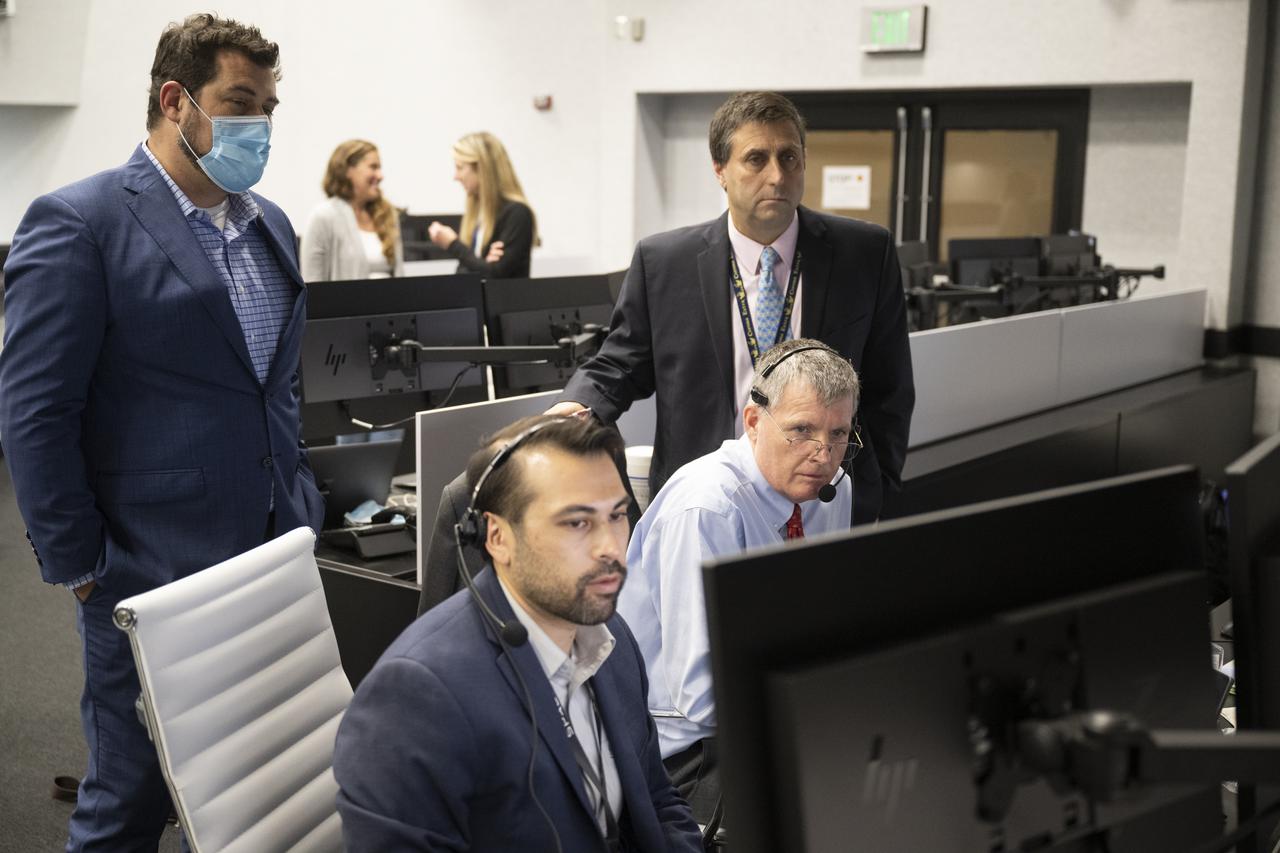
Scott Ede, mission manager for mission management and integration in NASA's Commercial Crew Program, left, Kyle Stewart, SpaceX Mission Manager, second from left, Steve Stich, manager of NASA’s Commercial Crew Program, second from right, and NASA International Space Station program manger Joel Montalbano, right monitor the countdown of the launch of a SpaceX Falcon 9 rocket carrying the company's Crew Dragon spacecraft on NASA’s SpaceX Crew-4 mission with NASA astronauts Kjell Lindgren, Robert Hines, Jessica Watkins, and ESA (European Space Agency) astronaut Samantha Cristoforetti onboard, Wednesday, April 27, 2022, in firing room four of the Rocco A. Petrone Launch Control Center at NASA’s Kennedy Space Center in Florida. NASA’s SpaceX Crew-4 mission is the fourth crew rotation mission of the SpaceX Crew Dragon spacecraft and Falcon 9 rocket to the International Space Station as part of the agency’s Commercial Crew Program. Lindgren, Hines, Watkins, and Cristoforetti launched at at 3:52 a.m. ET, from Launch Complex 39A at the Kennedy Space Center. Photo Credit: (NASA/Joel Kowsky)
New Center Network Deployment ribbon Cutting: from left to right: Maryland Edwards, Code JT upgrade project deputy task manager; Ed Murphy, foundry networks systems engineer; Bohdan Cmaylo, Code JT upgrade project task manager, Scott Santiago, Division Chief, Code JT; Greg Miller, Raytheon Network engineer and Frank Daras, Raytheon network engineering manager.
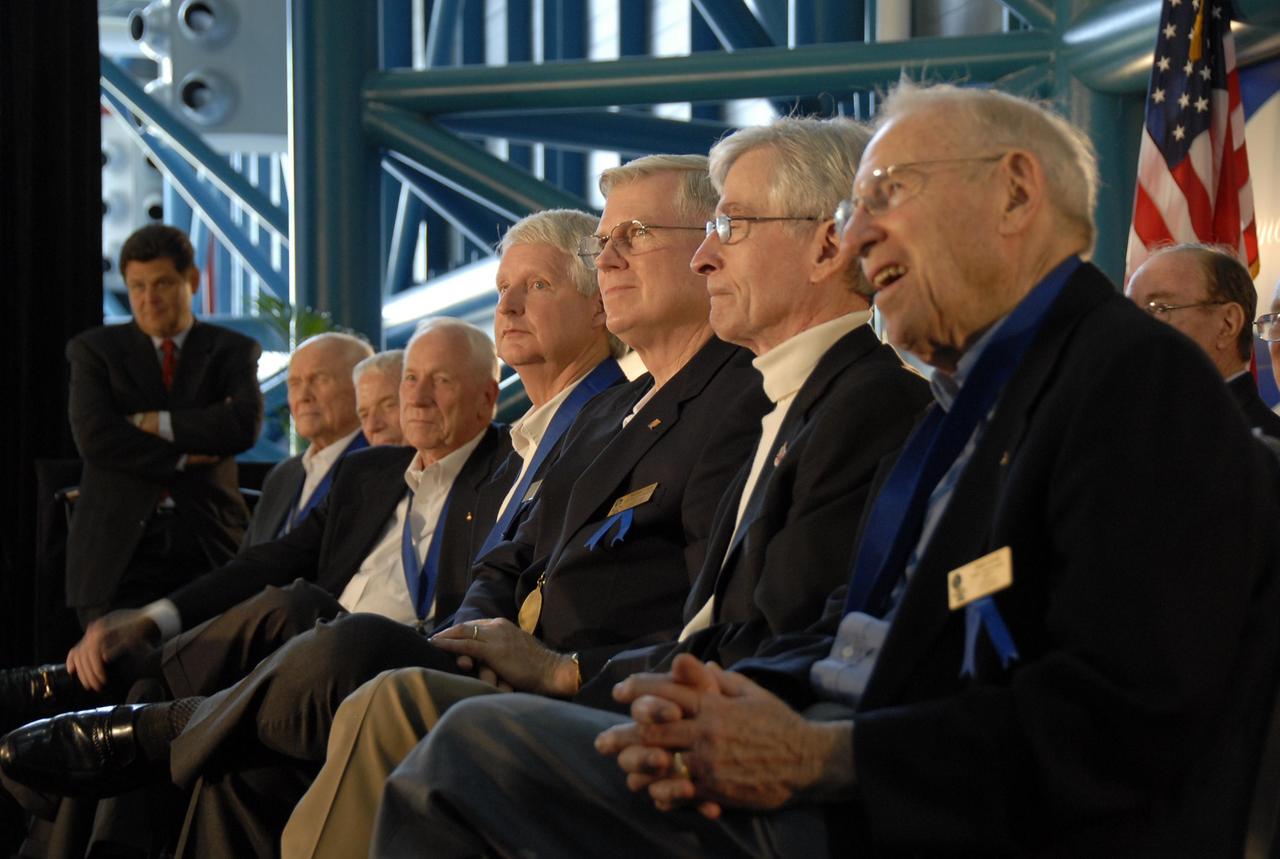
KENNEDY SPACE CENTER, FLA. -- At the U.S. Astronaut Hall of Fame induction ceremony, new and former inductees are seated on the dais. In the front row, from left, are John Glenn, Scott Carpenter, Al Worden, Steven Hawley, Michael Coats, John Young, Jim Lovell and Ed Mitchell. At far left is John Zarrella, CNN's Miami Bureau Chief, who moderated. The May 5 induction added space shuttle commanders Michael L. Coats, Steven A. Hawley and Jeffrey A. Hoffman to the Hall of Fame. They grow the number of space explorers enshrined in the Hall of Fame to 66. The ceremony was held at the Kennedy Space Center's Apollo/Saturn V Center. Photo credit: NASA/Kim Shiflett
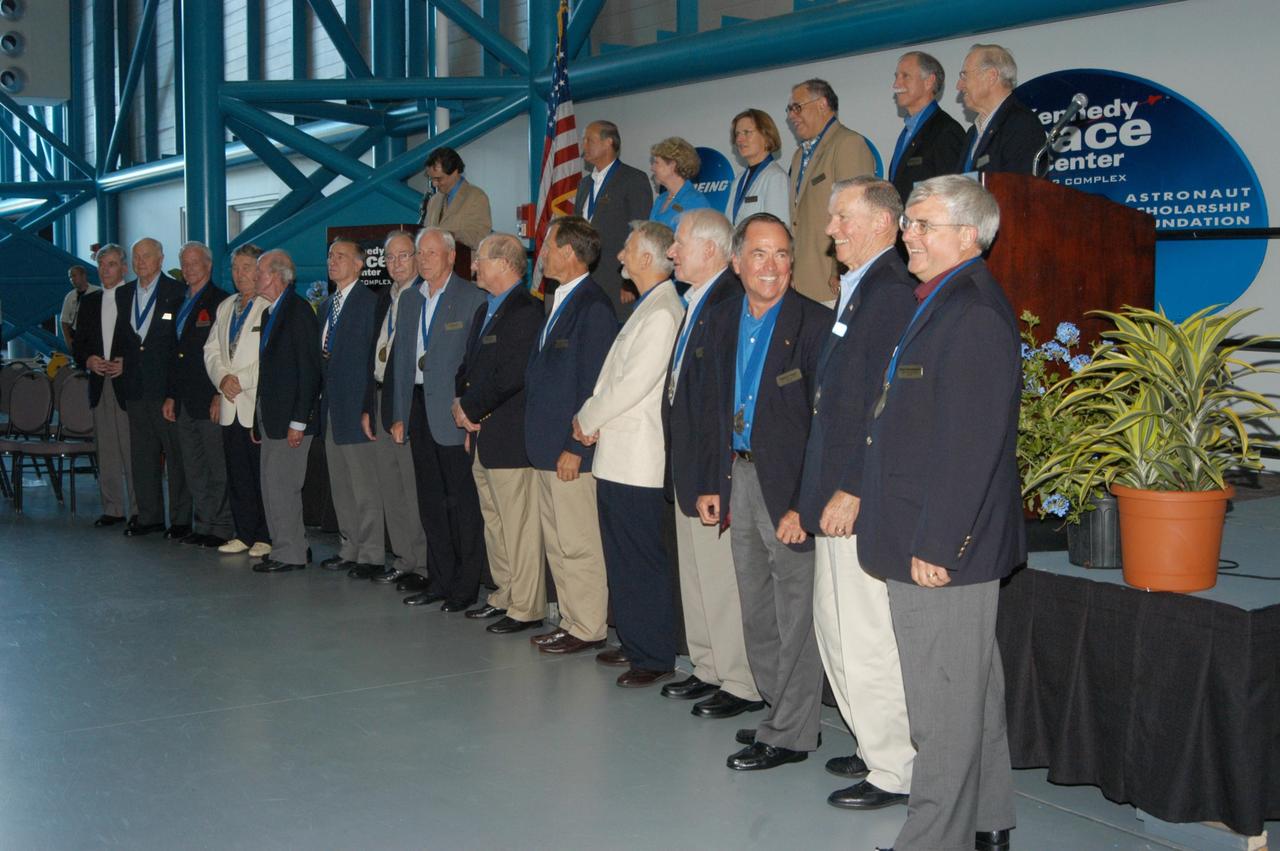
KENNEDY SPACE CENTER, FLA. -- Following the induction ceremony welcoming five new space program heroes in the U.S. Astronaut Hall of Fame, the members line up for a commemorative photo. From left, in front, are John Young, John Glenn Jr., Scott Carpenter, Wally Schirra, Gordon Cooper, Walt Cunningham, Ed Mitchell, Al Worden, Rick Hauck, Ed Gibson, Owen Garriott, Vance Brand, Robert Crippen, Joe Engle, Dan Brandenstein. In back are space author Andrew Chaikin, at the podium; and Norm Thagard, June Scobee representing her late husband Dick Scobee, Kathryn Sullivan, Fred Gregory, Richard Covey and Jim Lovell. The induction ceremony was held at the Apollo/Saturn V Center at KSC. The U.S. Astronaut Hall of Fame opened in 1990 to provide a place where space travelers could be remembered for their participation and accomplishments in the U.S. space program. The five inductees join 52 previously honored astronauts from the ranks of the Gemini, Apollo, Skylab, Apollo-Soyuz, and Space Shuttle programs.
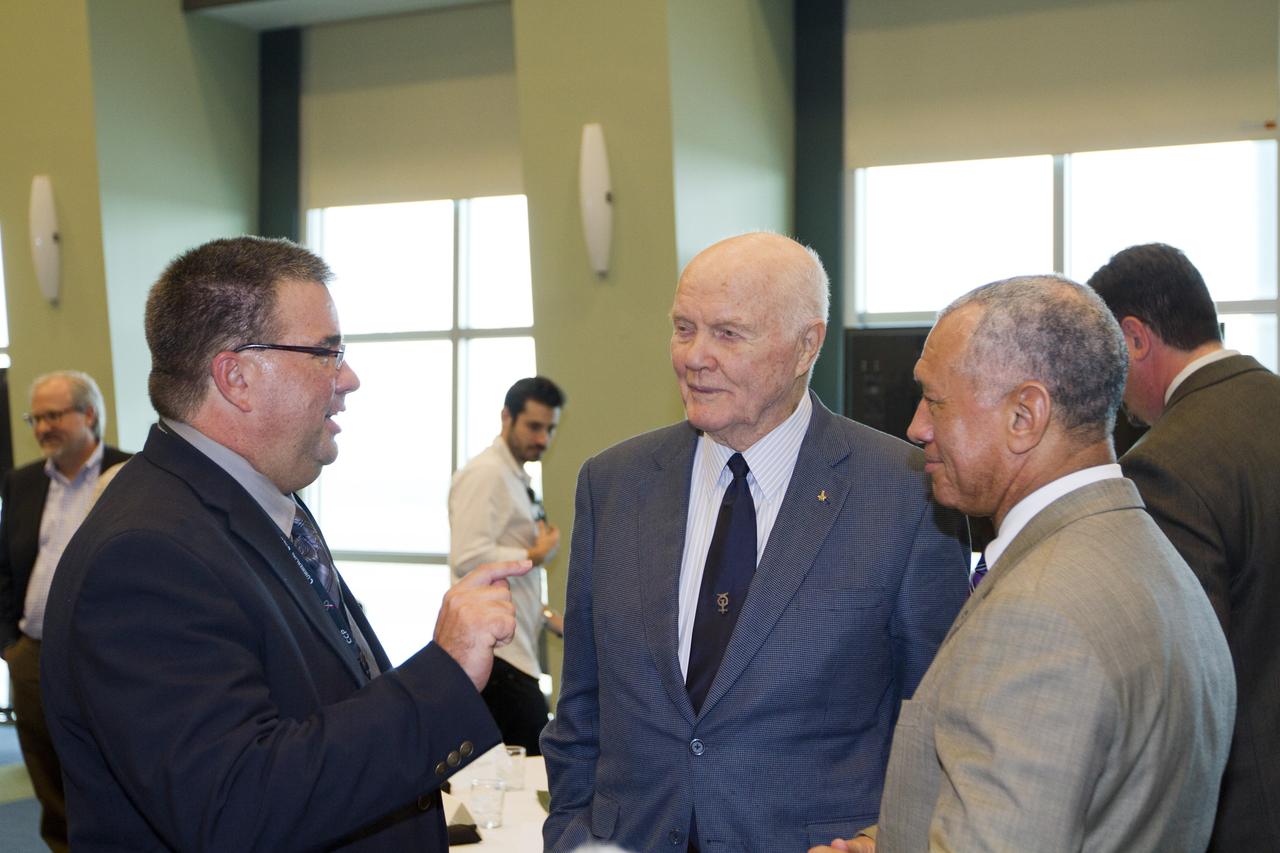
CAPE CANAVERAL, Fla. - Ed Mango, program manager of NASA's Commercial Crew Program, left, talks with astronaut John Glenn, center and NASA Administrator Charles Bolden before a luncheon Feb. 17, 2012, celebrating 50 years of Americans in orbit, an era which began with Glenn's Mercury mission MA-6, on Feb. 20, 1962. Glenn's launch aboard an Atlas rocket took with it the hopes of an entire nation and ushered in a new era of space travel that eventually led to Americans walking on the moon by the end of the 1960s. Glenn soon was followed into orbit by Scott Carpenter, Walter Schirra and Gordon Cooper. Their fellow Mercury astronauts Alan Shepard and Virgil "Gus" Grissom flew earlier suborbital flights. Deke Slayton, a member of NASA's original Mercury 7 astronauts, was grounded by a medical condition until the Apollo-Soyuz Test Project in 1975. Photo credit: NASA/Kim Shiflett
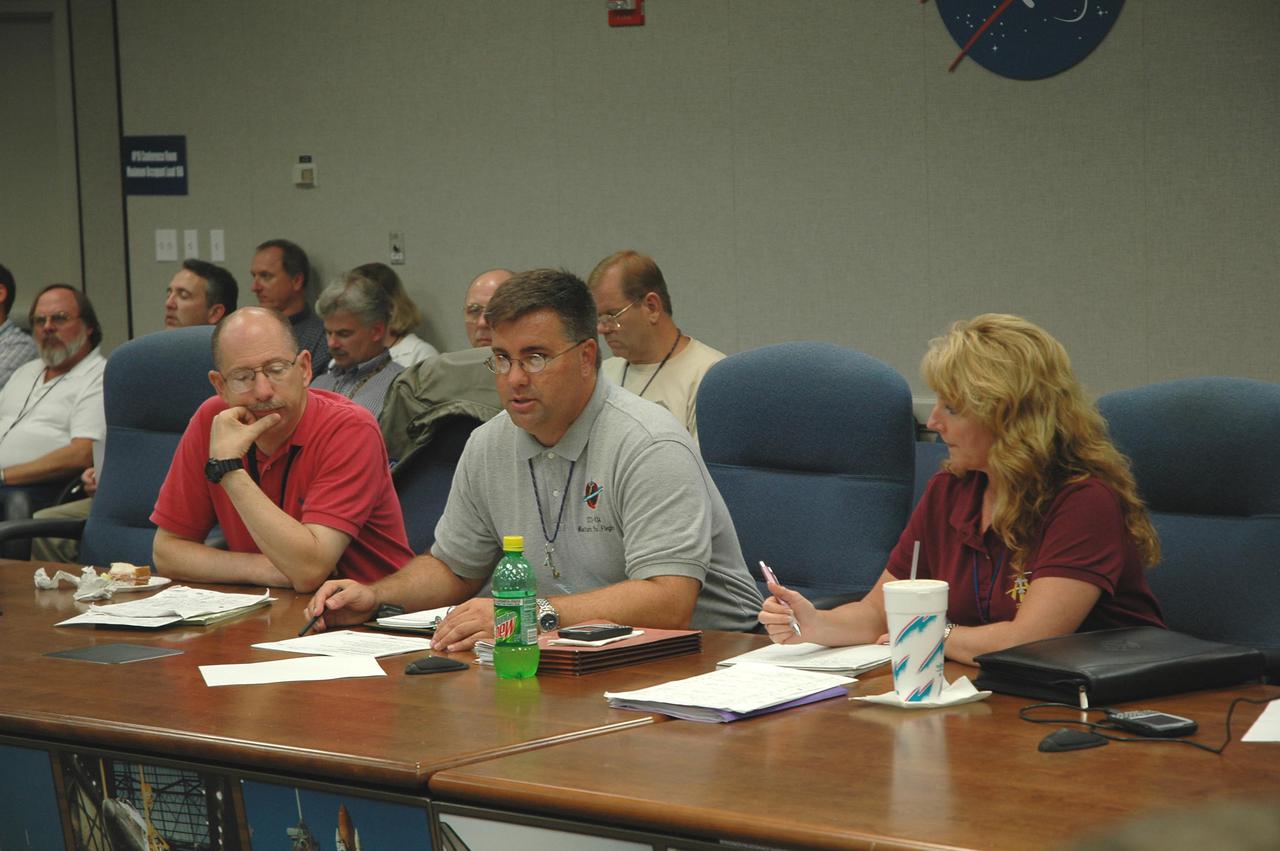
KENNEDY SPACE CENTER, FLA. - Members of the engineering team are meeting in the Launch Control Center to review data and possible troubleshooting plans for the liquid hydrogen tank low-level fuel cut-off sensor. At left is John Muratore, manager of Systems Engineering and Integration for the Space Shuttle Program; Ed Mango, JSC deputy manager of the orbiter project office; and Carol Scott, KSC Integration Manager. The sensor failed a routine prelaunch check during the launch countdown July 13, causing mission managers to scrub Discovery's first launch attempt. The sensor protects the Shuttle's main engines by triggering their shutdown in the event fuel runs unexpectedly low. The sensor is one of four inside the liquid hydrogen section of the External Tank (ET).
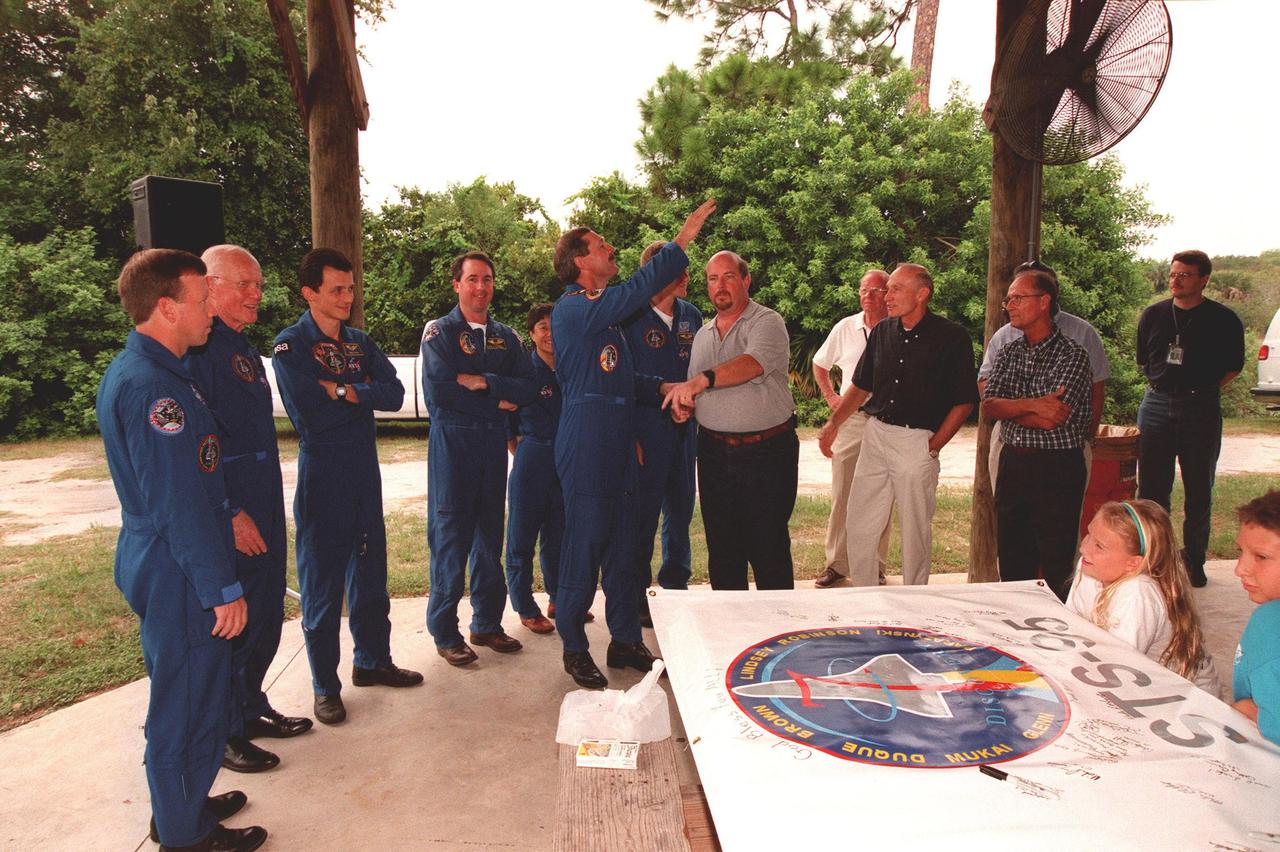
During a break in the Crew Equipment Interface Test (CEIT), the STS-95 crew gathers with United Space Alliance (USA) personnel and their families. From left are Pilot Steven W. Lindsey; Payload Specialist John H. Glenn Jr., a senator from Ohio; Pedro Duque, with the European Space Agency (ESA); Mission Specialist Stephen K. Robinson, Ph.D.; Chiaki Mukai, with the National Space Development Agency of Japan (NASDA); Mission Commander Curtis L. Brown Jr. (with arm raised); Mission Specialist Scott E. Parazynski, M.D.; Jim Furr, USA National Space Flight Awareness representative; Jack King, USA Public Affairs; Bob Sieck, KSC director of Shuttle Processing; and Ed Adamek, USA vice president and associate program manager for Ground Operations at KSC
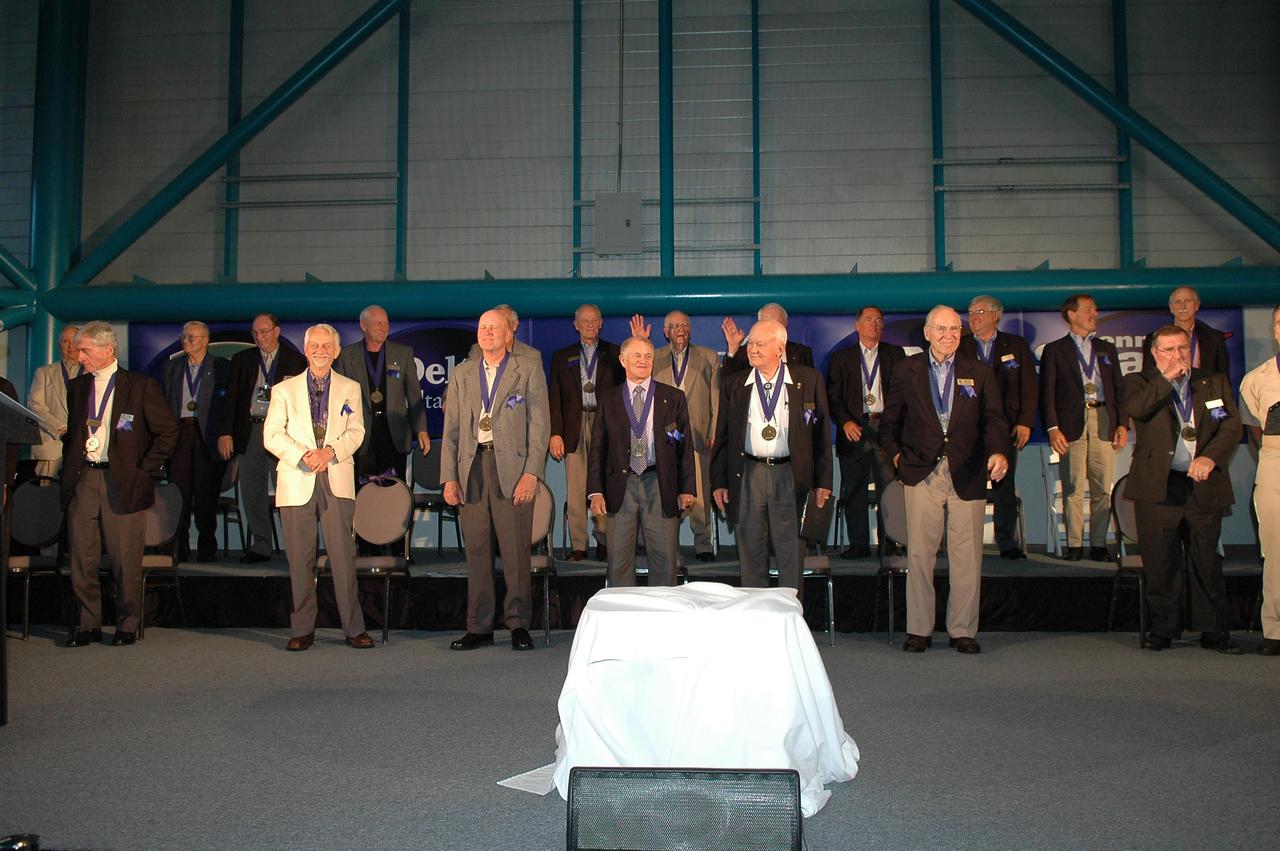
KENNEDY SPACE CENTER, FLA. - Members of the Astronaut Hall of Fame are applauded by the guests at the Astronaut Hall of Fame Induction Ceremony held at the Kennedy Space Center Visitor Complex’s Apollo_Saturn V Center. From left are Al Gordon, John Young, Walt Cunningham, Bill Anders, Owen Garriott, Ed Mitchell, Gordon Fullerton, Al Worden, Charlie Duke, Joe Allen, Jack Lousma, Bruce McCandless, Bill Pogue, Robert Crippen, Jim Lovell, Dan Brandenstein, Robert “Hoot” Gibson, Fred Haise, and Stephen Covey. Not pictured are Scott Carpenter and Vance Brand. McCandless, Allen and Fullerton are the 2005 inductees. Recognized for their individual flight accomplishments and contributions to the success and future success of the U.S. space program, this elite group of inductees is among only 60 astronauts to be honored in the Hall of Fame and the fourth group of Space Shuttle astronauts named.

KENNEDY SPACE CENTER, FLA. - Owen Garriott, chairman of the Astronaut Hall of Fame, speaks to guests at the Induction Ceremony of three new additions to the Hall of Fame: Gordon Fullerton, Bruce McCandless and Joe Allen. Seated on stage are current Hall of Famers, from left in the back row, Dick Gordon, Walt Cunningham, Bill Anders, Ed Mitchell, Al Worden, Charles Duke, Jack Lousma, Bill Pogue, Robert Crippen, Dan Brandenstein, Robert “Hoot” Gibson and Stephen Covey. In front, from left, are Master of Ceremonies LeVar Burton, who starred in the television series “Star Trek: The Next Generation,” and Hall of Famers Scott Carpenter and John Young, and at right, Jim Lovell and Fred Haise. The ceremony is being held in the Kennedy Space Center Visitor Complex’s Apollo_Saturn V Center. Recognized for their individual flight accomplishments and contributions to the success and future success of the U.S. space program, this elite group of inductees is among only 60 astronauts to be honored in the Hall of Fame and the fourth group of Space Shuttle astronauts named.