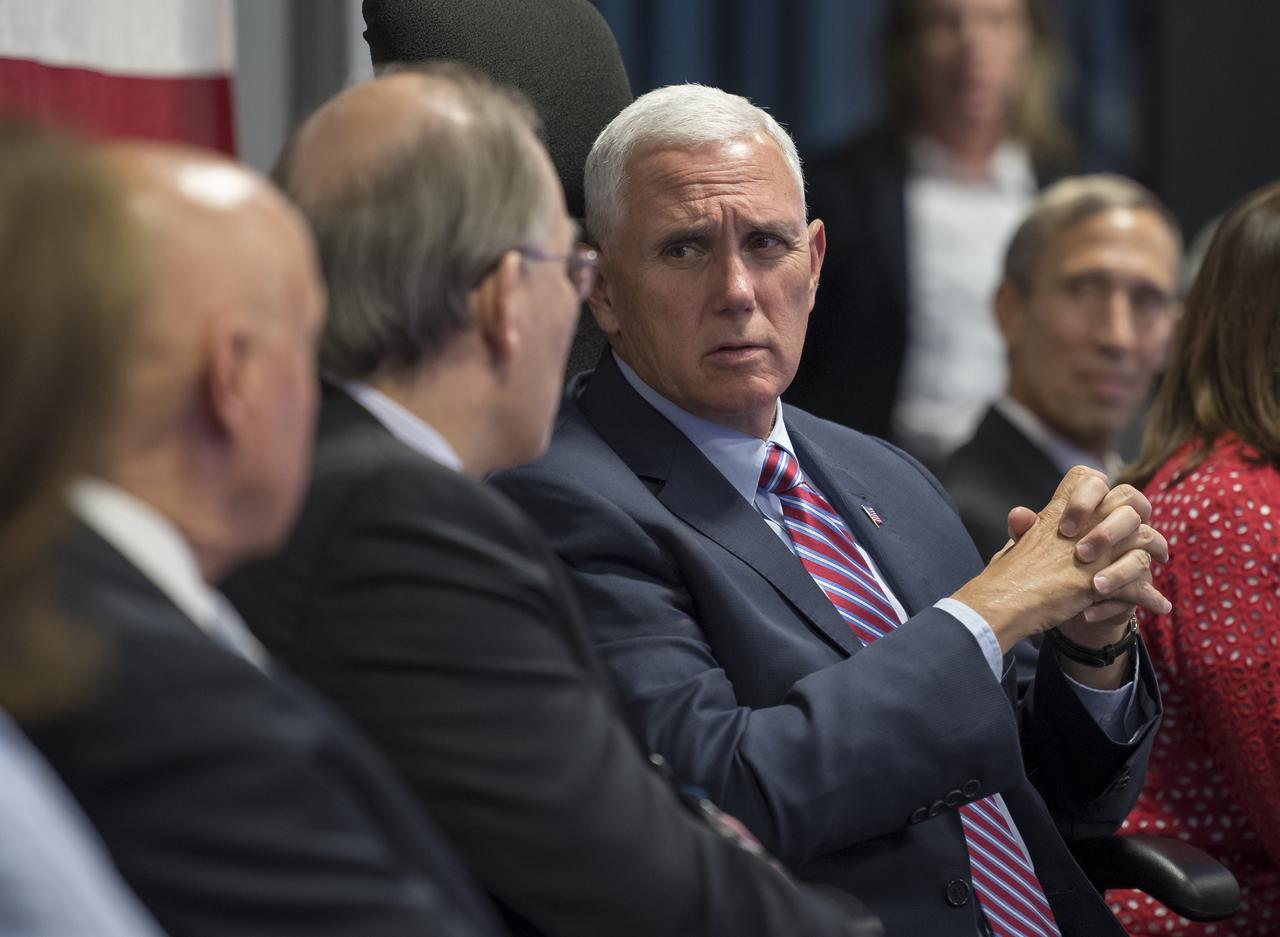
U.S. Vice President Mike Pence turns and talks with Executive Director of the National Space Council Scott Pace during a tour of NASA's Jet Propulsion Laboratory, Saturday, April 28, 2018 in Pasadena, California. Photo Credit: (NASA/Bill Ingalls)
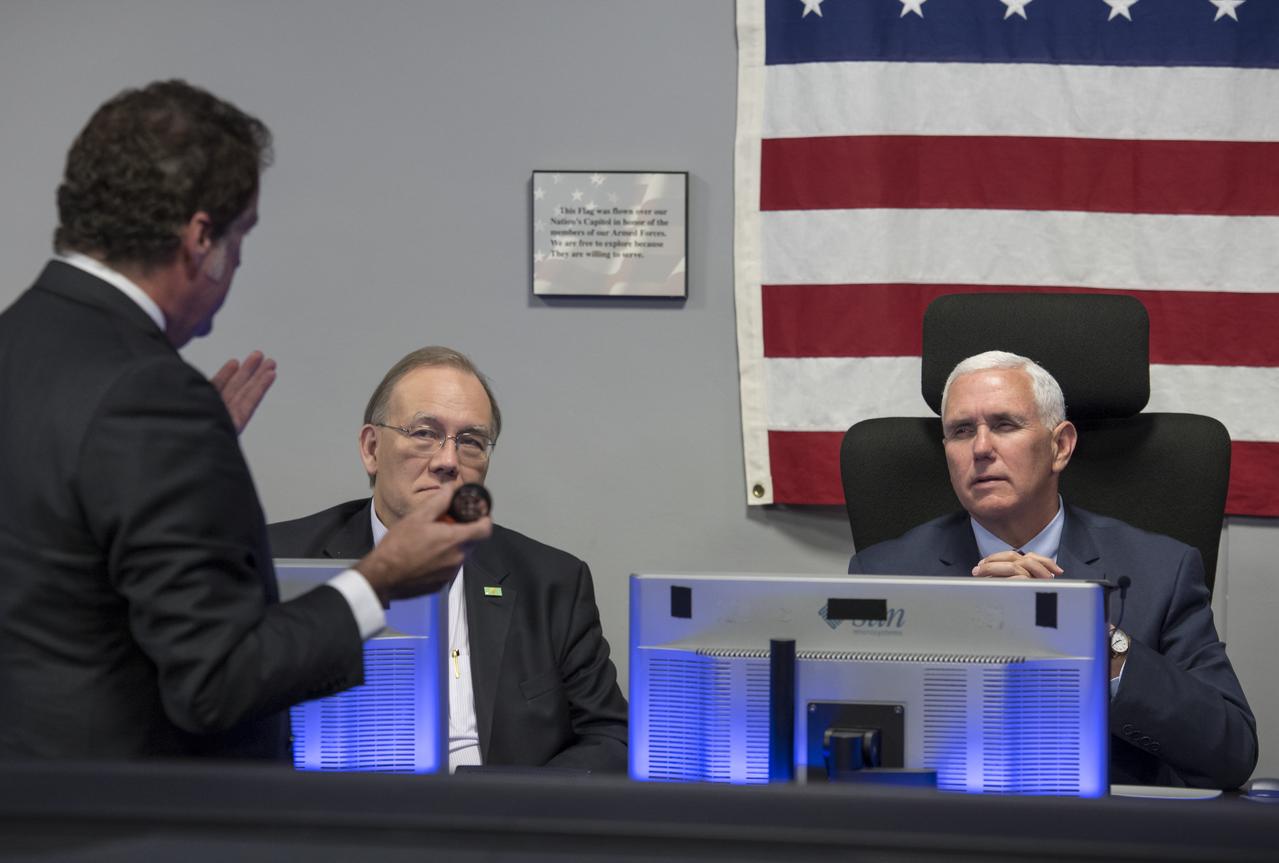
JPL Director Michael Watkins, standing, explains the history of NASA's Jet Propulsion Laboratory and the use of the Mission Support Area to Vice President Mike Pence, right, and Executive Director of the National Space Council Scott Pace during a tour of JPL, Saturday, April 28, 2018 in Pasadena, California. Photo Credit: (NASA/Bill Ingalls)
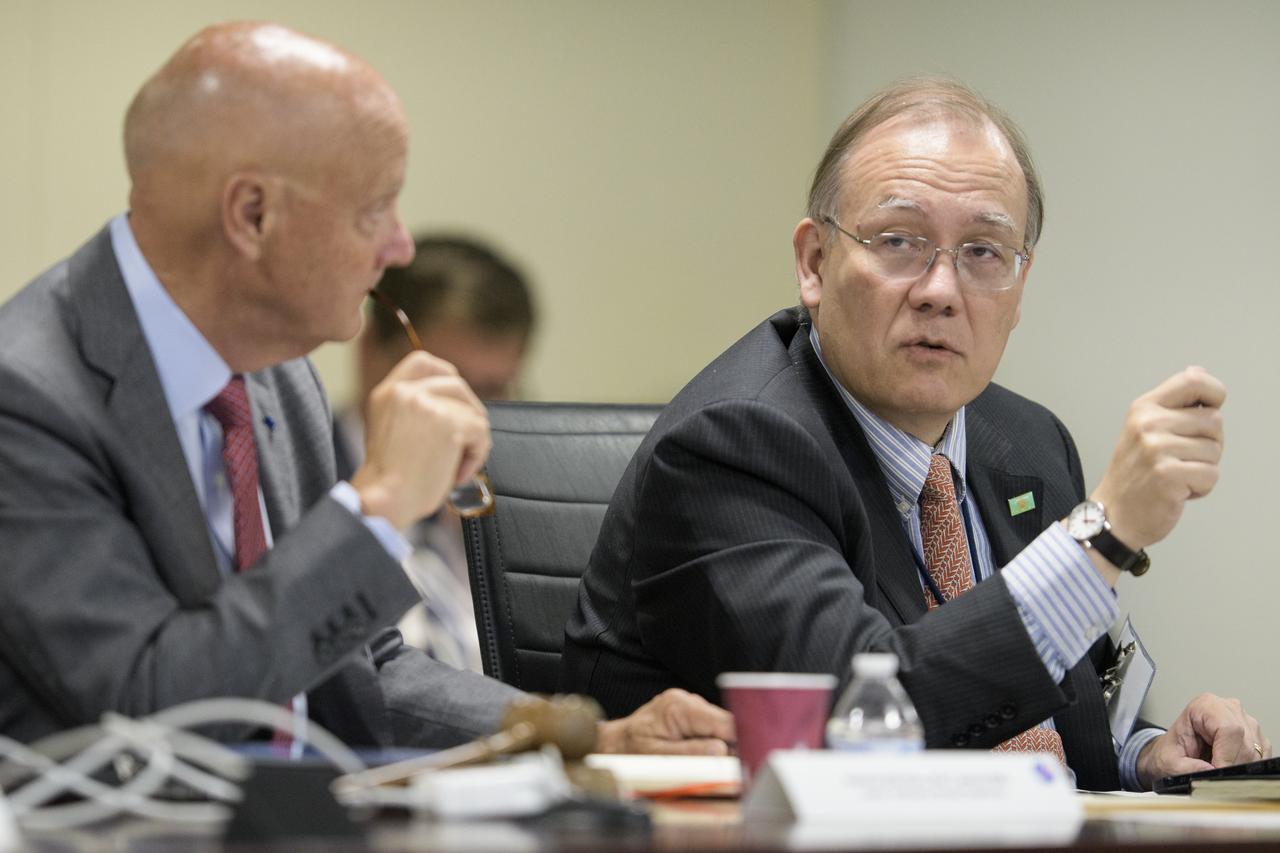
National Space Council Executive Secretary Scott Pace speaks at the first meeting of the National Space Council Users' Advisory Group, Tuesday, June 19, 2018 at NASA Headquarters in Washington. The Users' Advisory Group will advise and inform the National Space Council on a broad range of aerospace topics, including the impacts of U.S. and international laws and regulations, national security space priorities, scientific and human space exploration priorities, and ways to bolster support. Photo Credit: (NASA/Joel Kowsky)
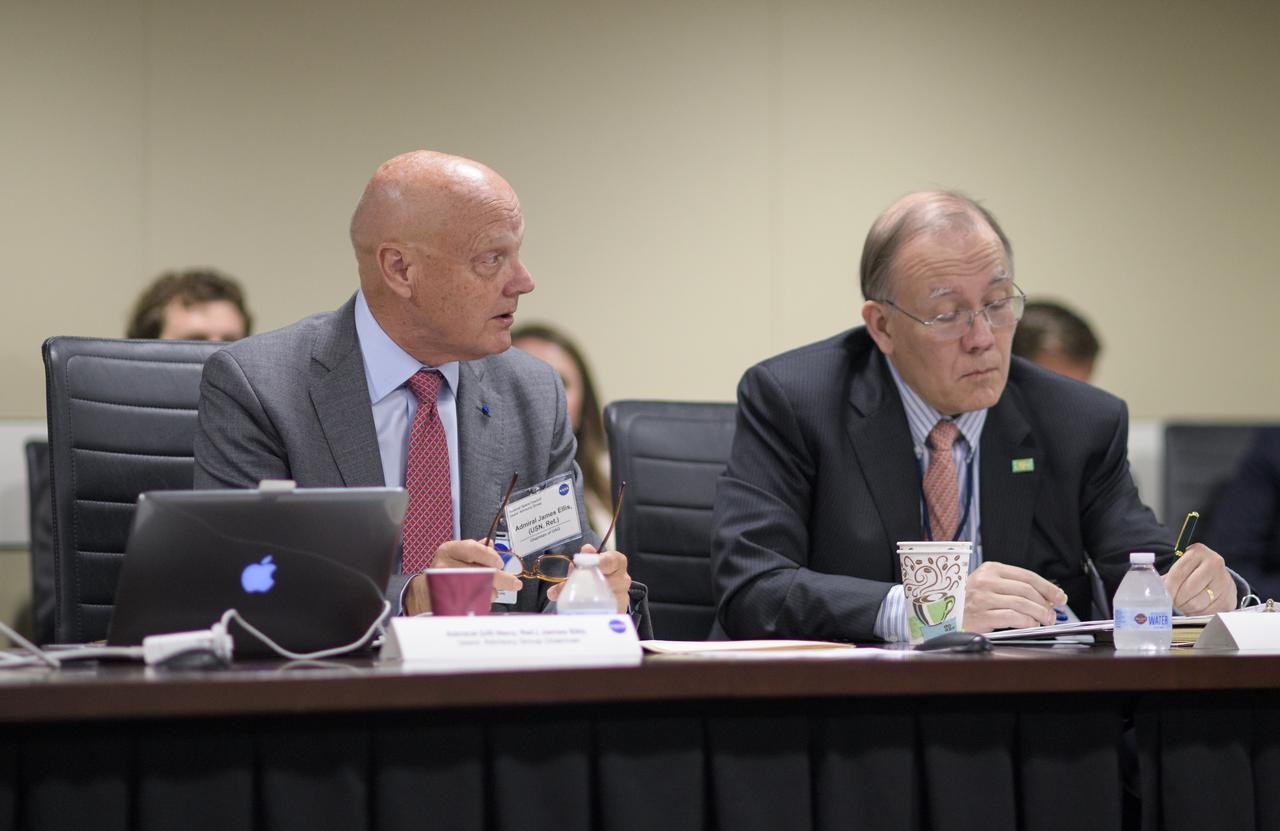
National Space Council Executive Secretary Scott Pace, right, and Chairman of the Users' Advisory Group Adm. Jim Ellis, USN (Ret.), left, are seen during the first meeting of the National Space Council Users' Advisory Group, Tuesday, June 19, 2018 at NASA Headquarters in Washington. The Users' Advisory Group will advise and inform the National Space Council on a broad range of aerospace topics, including the impacts of U.S. and international laws and regulations, national security space priorities, scientific and human space exploration priorities, and ways to bolster support. Photo Credit: (NASA/Joel Kowsky)
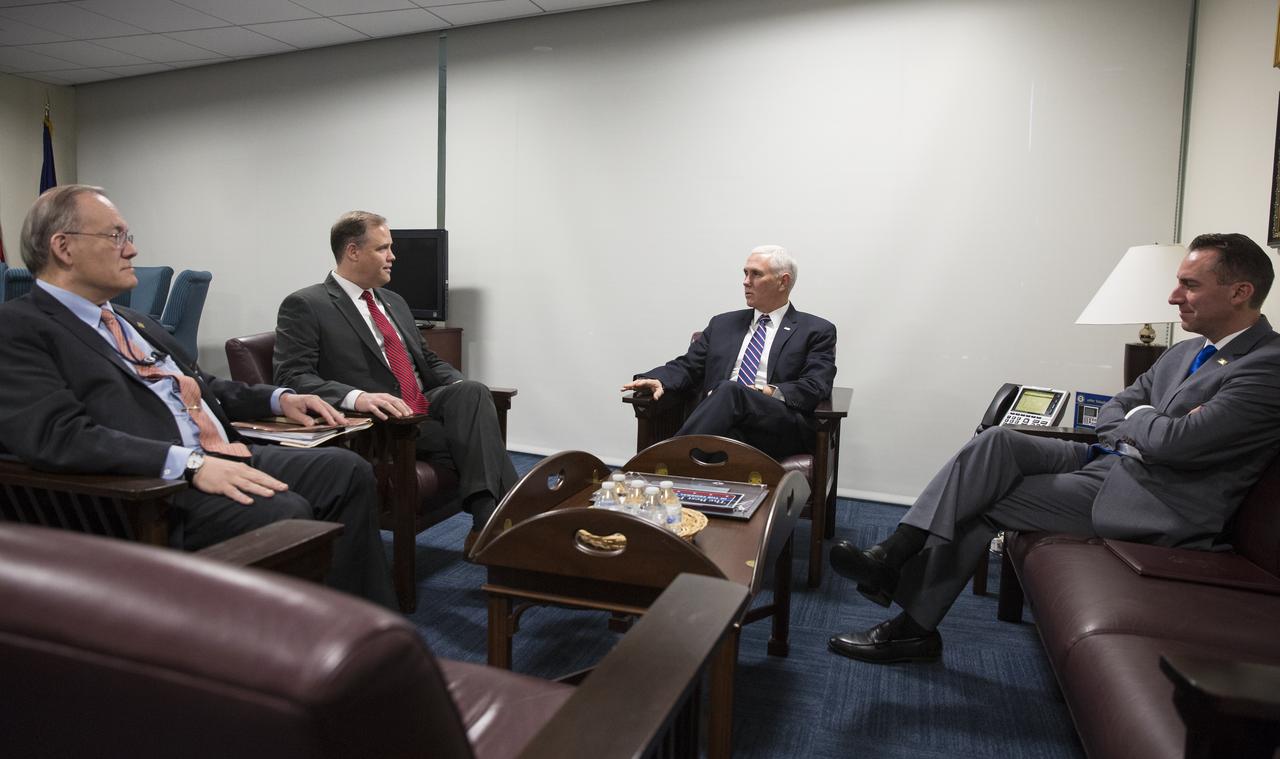
NASA Administrator Jim Bridenstine, second from left speaks with Vice President Mike Pence, second from right, Scott Pace, Executive Director of the National Space Council, left, and acting Chief of Staff to the Vice President, Jarrod Agen, right, prior to a meeting with NASA leadership about the progress on Space Policy Directive 1 (SPD-1), Wednesday, Dec. 12, 2018 at NASA Headquarters in Washington. Photo Credit: (NASA/Joel Kowsky)
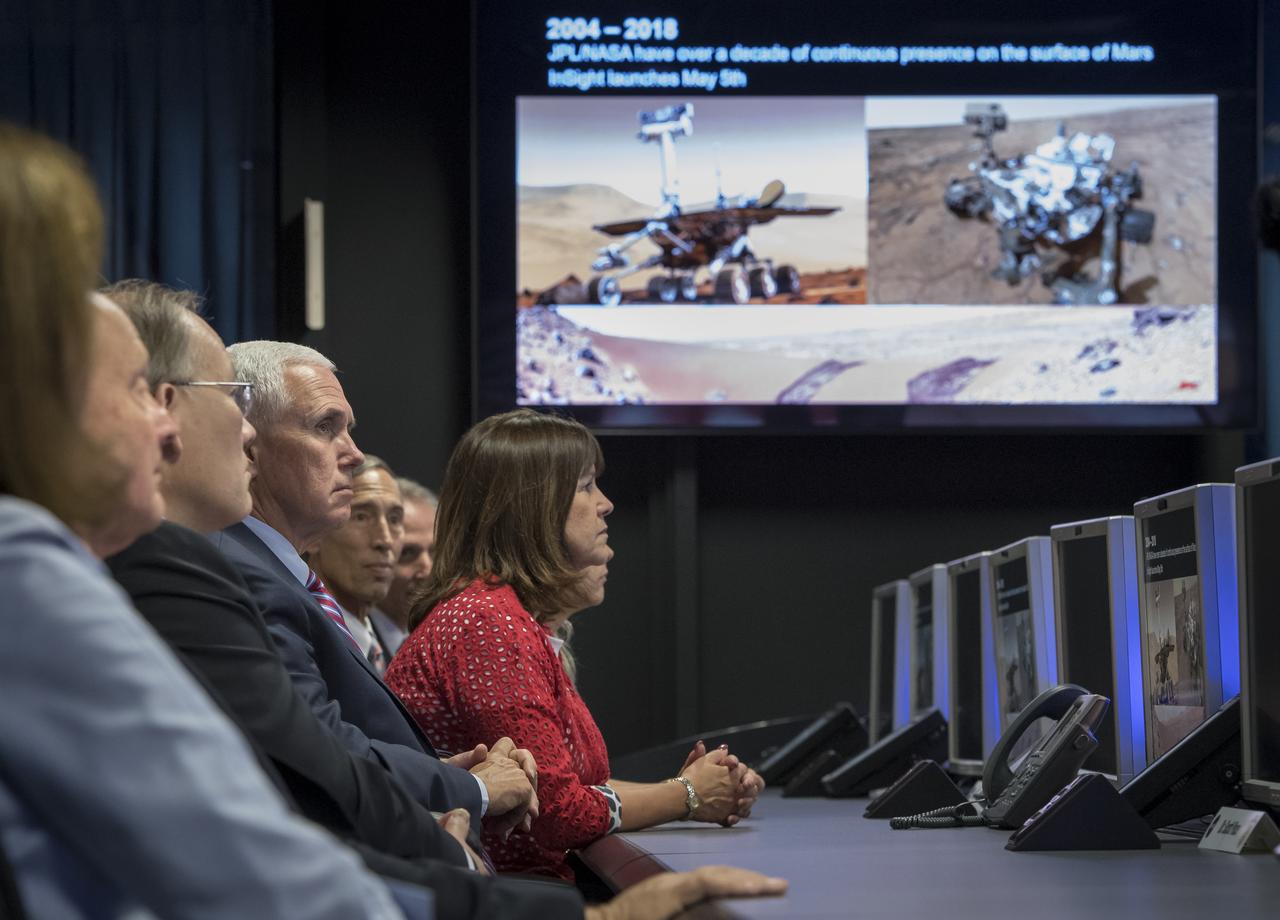
U.S. Vice President Mike Pence can be seen with his wife Karen Pence as they toured NASA's Jet Propulsion Laboratory, Saturday, April 28, 2018 in Pasadena, California. The vice President was also joined by his daughter Charlotte Pence, JPL Distinguished Visiting Scientist and Spouse of UAG Chairman James Ellis, Elisabeth Pate-Cornell , UAG Chairman, Admiral (Ret) James Ellis , Executive Director of the National Space Council Scott Pace, JPL Deputy Director Lt. Gen. (Ret) Larry James, and California Institute of Technology President Thomas Rosenbaum. Photo Credit: (NASA/Bill Ingalls)
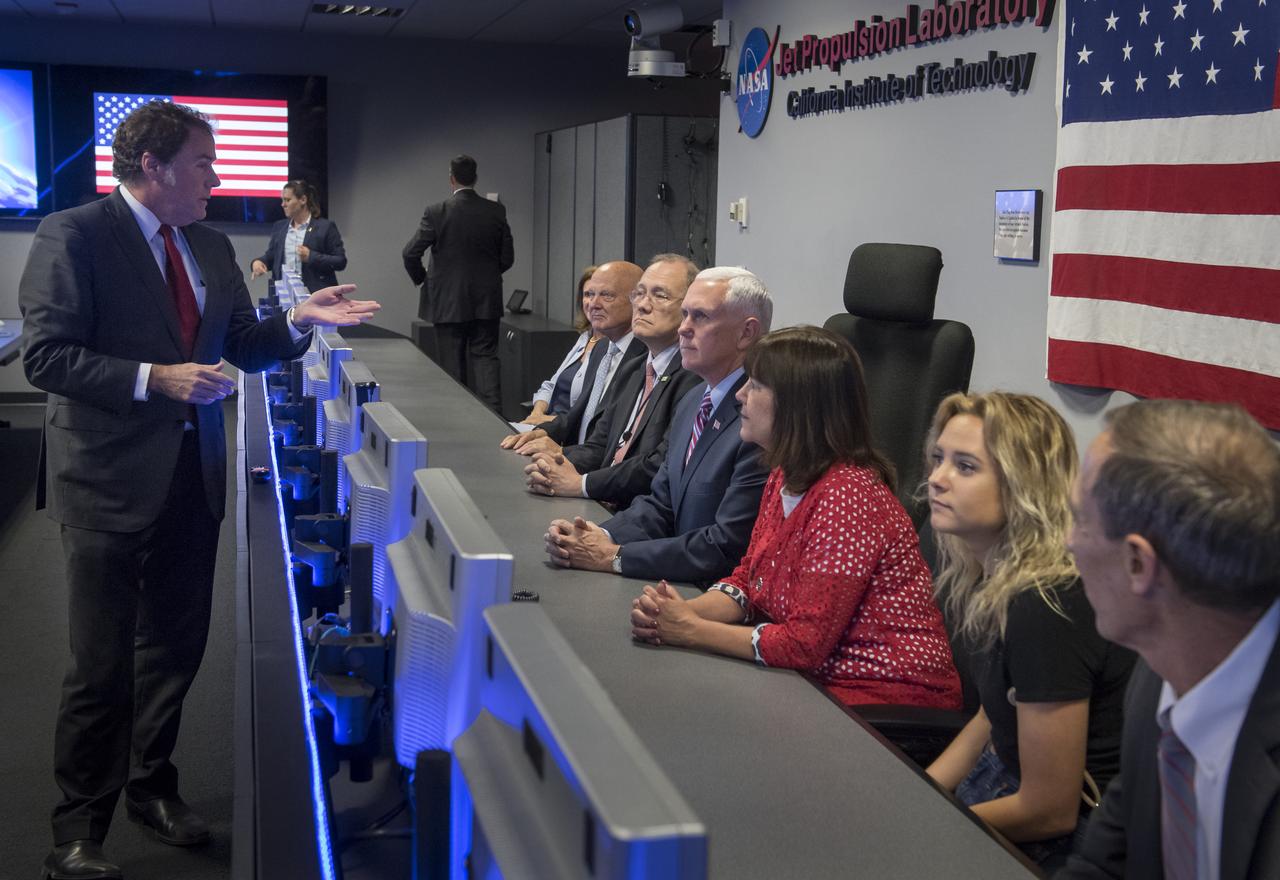
JPL Director Michael Watkins, left, explains the history of NASA's Jet Propulsion Laboratory and the use of the Mission Support Area to Vice President Mike Pence, seated 4th from left, during a tour of JPL, Saturday, April 28, 2018 in Pasadena, California. Joining the Vice President was, JPL Distinguished Visiting Scientist and Spouse of UAG Chairman James Ellis, Elisabeth Pate-Cornell, left, UAG Chairman, Admiral (Ret) James Ellis, Executive Director of the National Space Council Scott Pace, wife of Mike Pence, Karen Pence, daughter of Mike Pence, Charlotte Pence, and JPL Deputy Director Lt. Gen. (Ret) Larry James. Photo Credit: (NASA/Bill Ingalls)
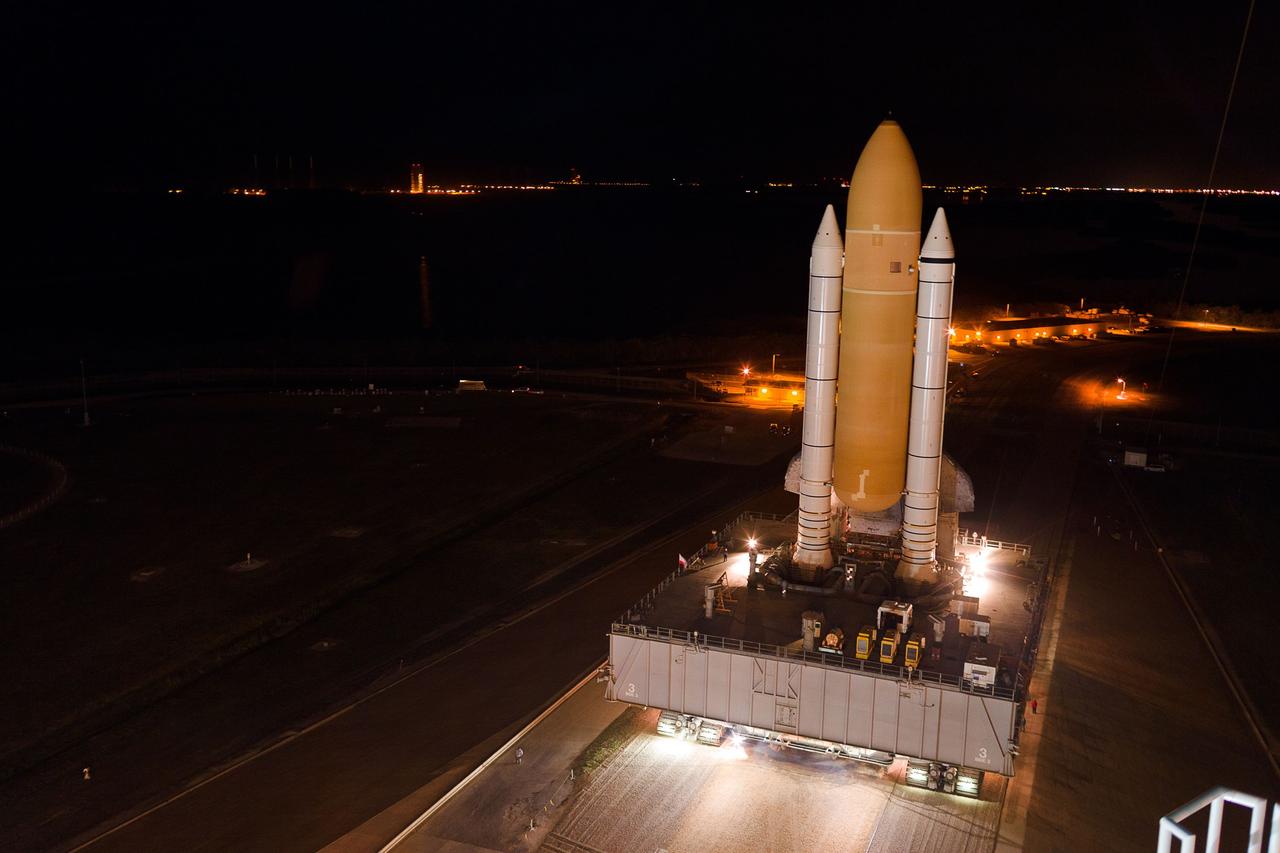
CAPE CANAVERAL, Fla. -- At a slow pace of about 1 mph, space shuttle Atlantis makes its final journey from the Vehicle Assembly Building to Launch Pad 39A at NASA's Kennedy Space Center in Florida. First motion was at 8:42 p.m. EDT. It will take the crawler-transporter about six hours to carry the shuttle, attached to its external fuel tank and solid rocket boosters, to the seaside launch pad. The milestone move, known as "rollout," paves the way for the launch of the STS-135 mission to the International Space Station, targeted for July 8. STS-135 will be the 33rd flight of Atlantis, the 37th shuttle mission to the space station, and the 135th and final mission of NASA's Space Shuttle Program. For more information visit: www.nasa.gov/mission_pages/shuttle/shuttlemissions/sts135/index.html. Photo credit: Courtesy of Scott Andrews/Canon
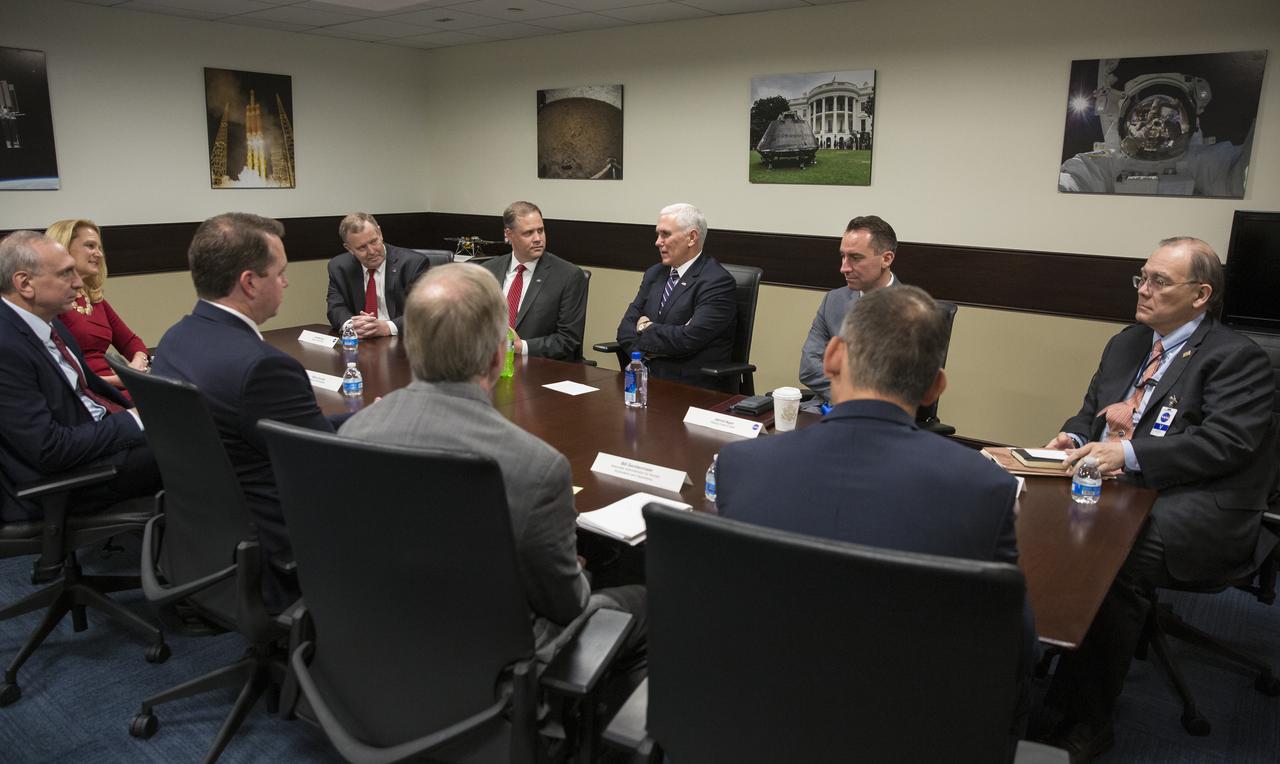
Vice President Mike Pence, center, meets with NASA Administrator Jim Bridenstine, second from left, and NASA Deputy Administrator Jim Morhard, left, to discuss the progress on Space Policy Directive 1 (SPD-1), Wednesday, Dec. 12, 2018 at NASA Headquarters in Washington. Also attending the meeting was NASA Chief of Staff Janet Karika, NASA Associate Administrator Steve Jurczyk, Chief Financial Officer Jeff DeWit, Associate Administrator for Human Exploration and Operations William Gerstenmaier, and Associate Administrator for the Science Mission Directorate Thomas Zurbuchen, along with acting Chief of Staff to the Vice President Jarrod Agen and Executive Director of the National Space Council Scott Pace. Photo Credit: (NASA/Joel Kowsky)
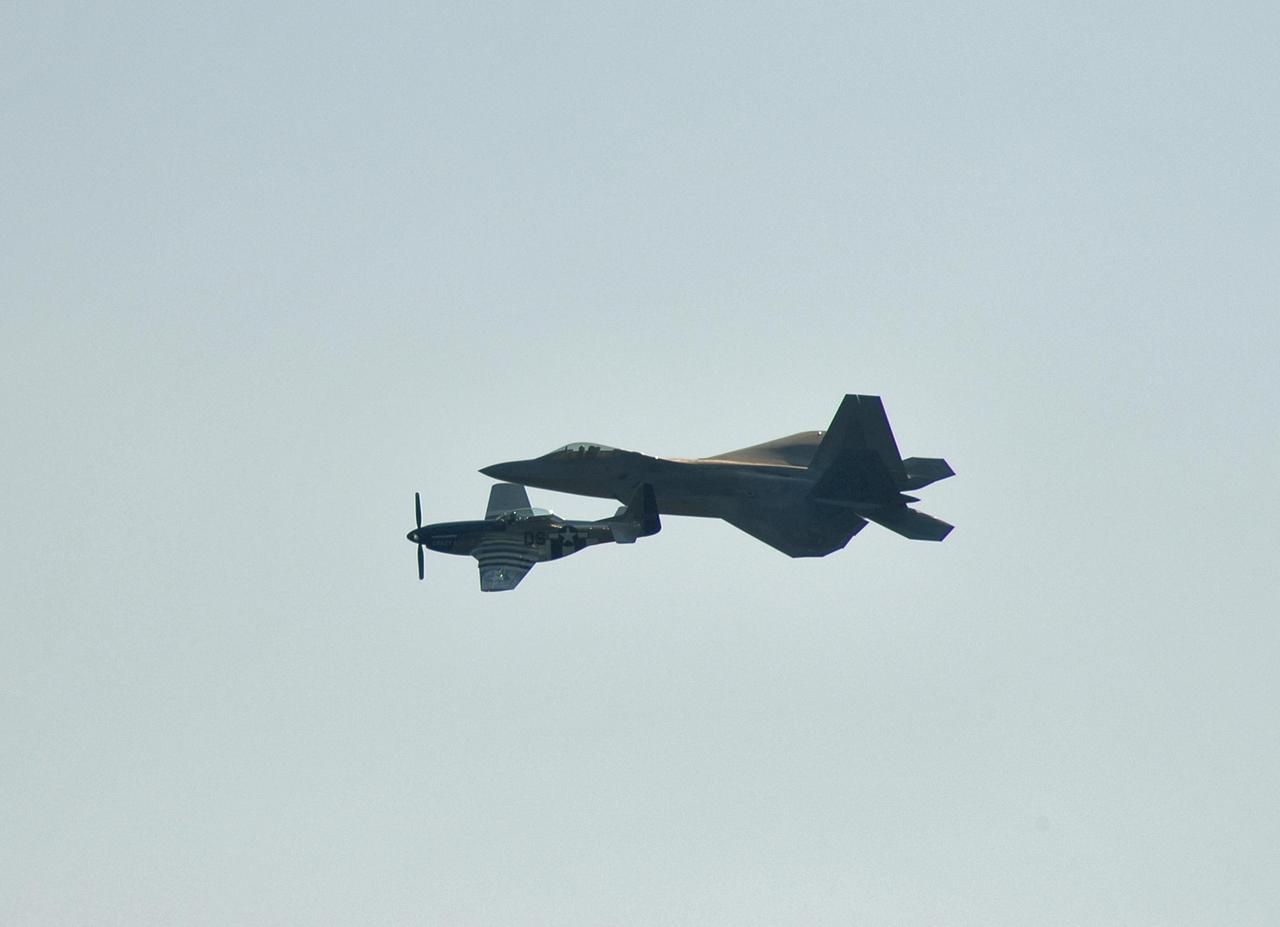
KENNEDY SPACE CENTER, FLA. -- At NASA's Kennedy Space Center, a P-51 Mustang keeps pace with a U.S. Air Force F-22 Raptor during the World Space Expo aerial salute. Other aircraft joining in the expo salute include the U.S. Air Force Thunderbirds Demonstration Squadron, the U.S. Navy F-18 Super Hornets, U.S. Air Force F-15 Eagle, the U.S. Air Force 920th Rescue wing, which was responsible for Mercury and Gemini capsule recovery, and the U.S. Army Golden Knights demonstrating precision skydiving. The World Space Expo held Nov. 1-4 was an event commemorating humanity's first 50 years in space while looking forward to returning people to the moon and exploring beyond. The expo showcased various panels, presentations and educational programs. It also was a part of NASA's 50th anniversary celebrations, highlighting the 45th Anniversary of the Mercury Program celebration featuring original NASA astronauts John Glenn and Scott Carpenter and the Pioneering Women of Aerospace forum featuring Eileen Collins and other prominent female space veterans. The agency was founded Oct. 1, 1958. Photo credit: NASA/Chris Chamberland
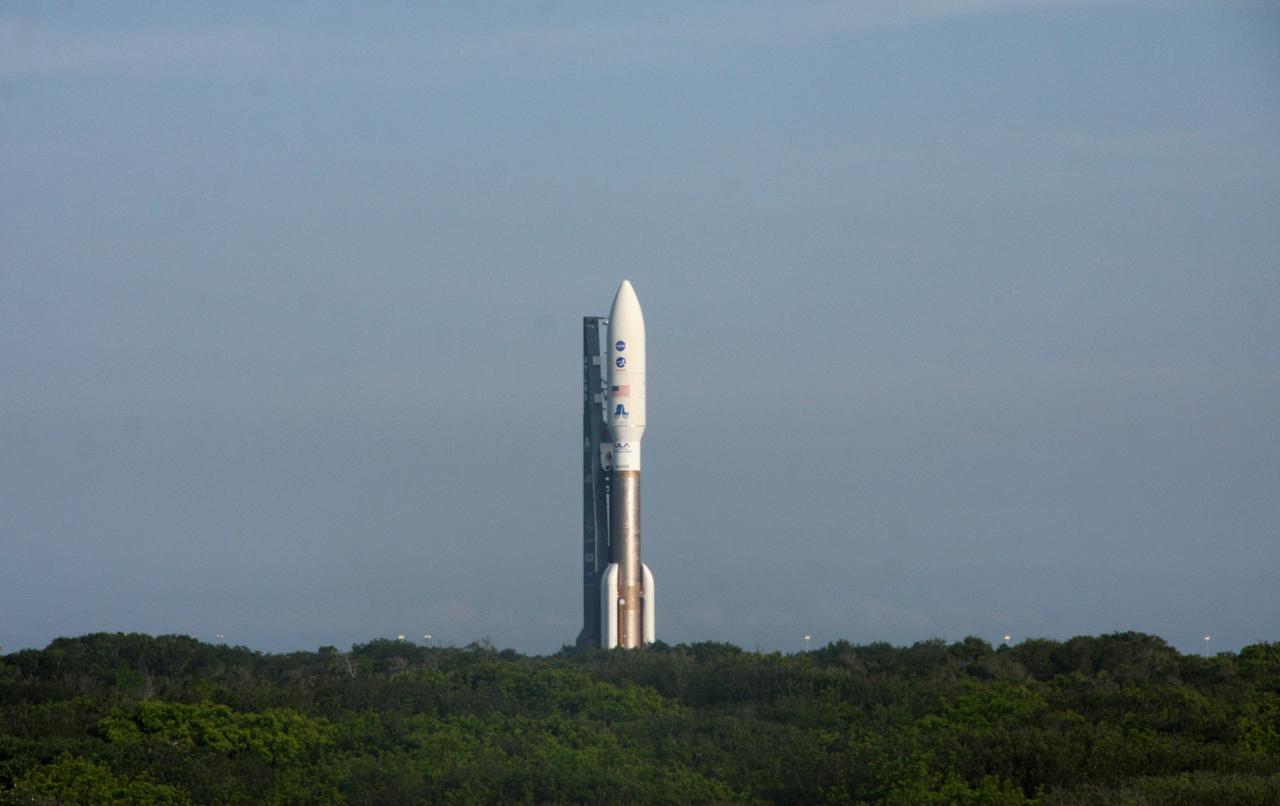
CAPE CANAVERAL, Fla. -- On Cape Canaveral Air Force Station in Florida, the 197-foot-tall United Launch Alliance Atlas V-551 launch vehicle moves at a slow, steady pace from the Vertical Integration Facility to the launch pad at Space Launch Complex 41. Atop the rocket is NASA's Juno spacecraft, enclosed in its payload fairing. Liftoff is planned during a launch window which extends from 11:34 a.m. to 12:43 p.m. EDT on Aug. 5. The solar-powered spacecraft will orbit Jupiter's poles 33 times to find out more about the gas giant's origins, structure, atmosphere and magnetosphere and investigate the existence of a solid planetary core. NASA's Jet Propulsion Laboratory, Pasadena, Calif., manages the Juno mission for the principal investigator, Scott Bolton, of Southwest Research Institute in San Antonio. The Juno mission is part of the New Frontiers Program managed at NASA's Marshall Space Flight Center in Huntsville, Ala. Lockheed Martin Space Systems, Denver, built the spacecraft. Launch management for the mission is the responsibility of NASA's Launch Services Program at the Kennedy Space Center in Florida. For more information, visit www.nasa.gov/juno. Photo credit: NASA/Ken Thornsley