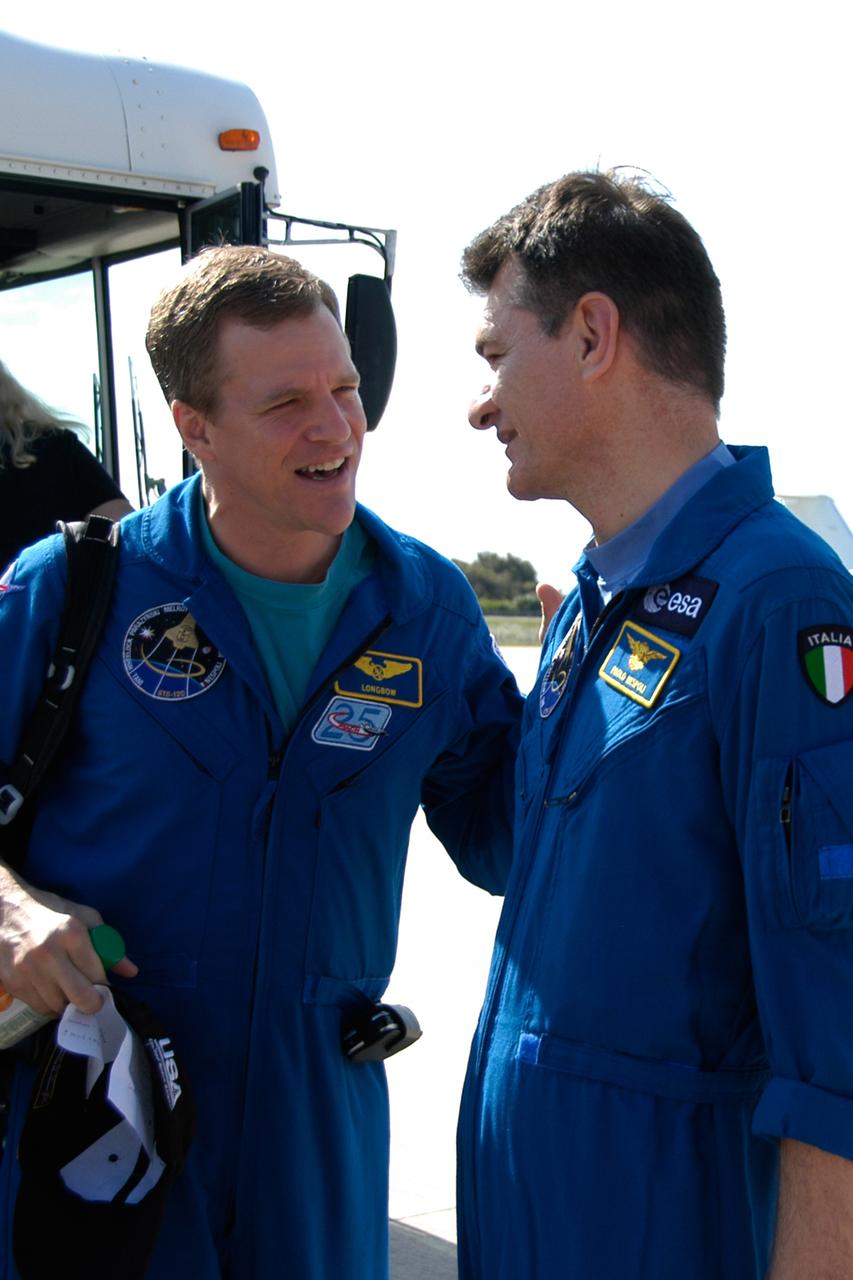
STS-120 Mission Specialists Scott Parazynski (left) and Paolo Nespoli talk before their return to flight to Houston. A welcoming ceremony for the crew is planned at NASA's Hangar 276 on the south end of Ellington Field in Texas. On the 15-day mission, the STS-120 crew continued the construction of the station with the installation of the Harmony Node 2 module and the relocation of the P6 truss. They landed Nov. 7 at NASA's Kennedy Space Center.
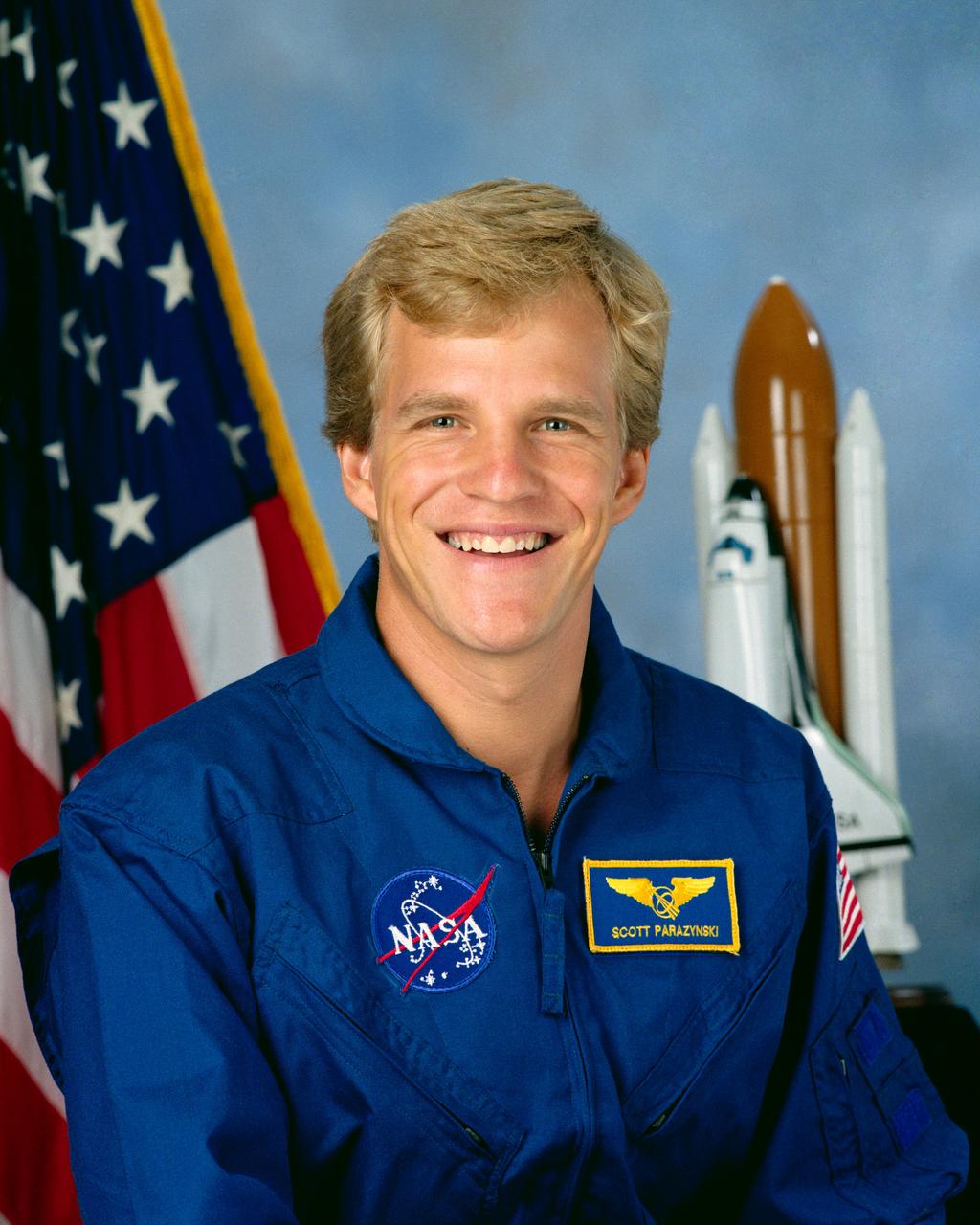
S92-44926 (September 1992) --- Astronaut Scott E. Parazynski, mission specialist.
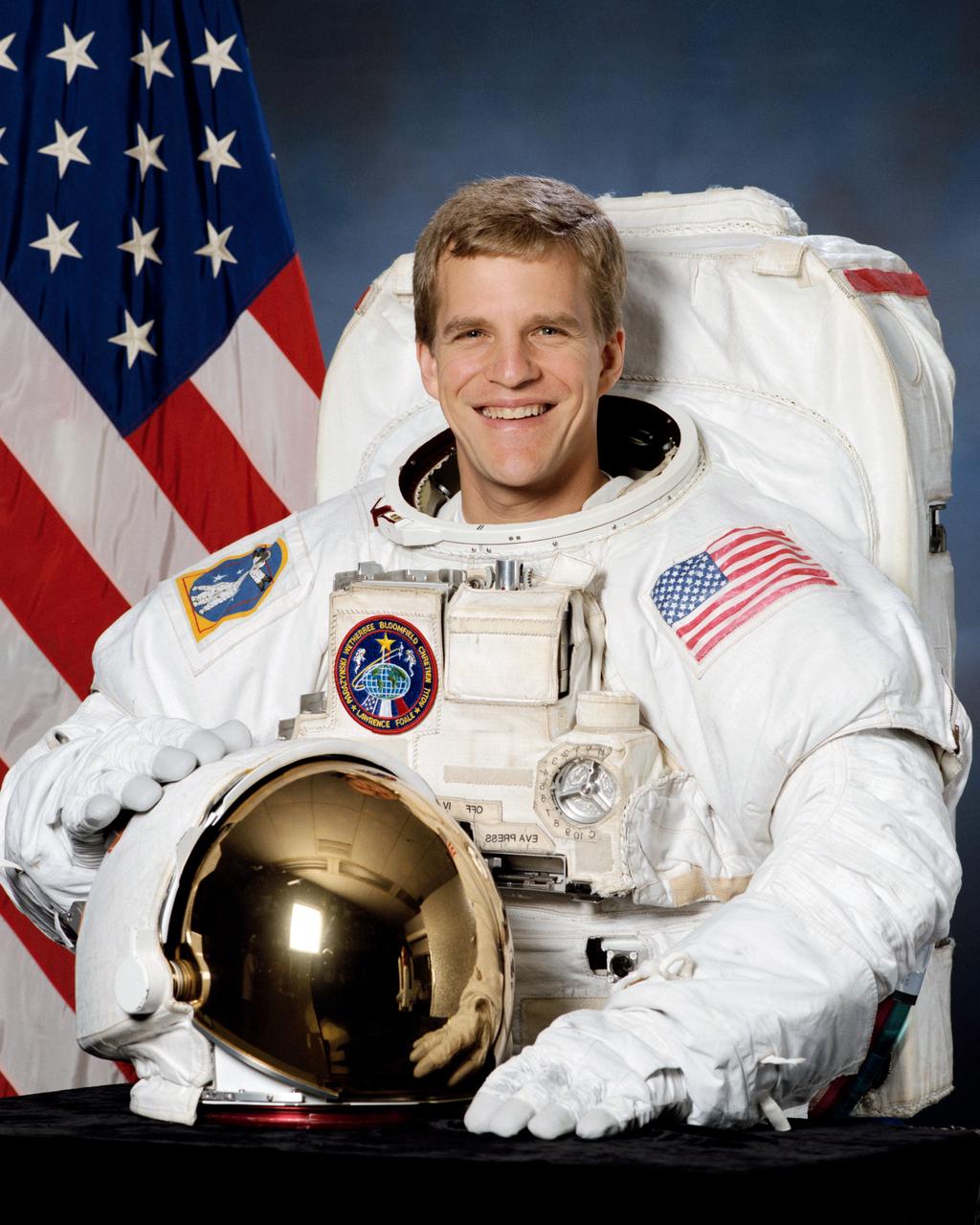
S98-01036 (1 Dec 1997) --- Astronaut Scott E. Parazynski, mission specialist.
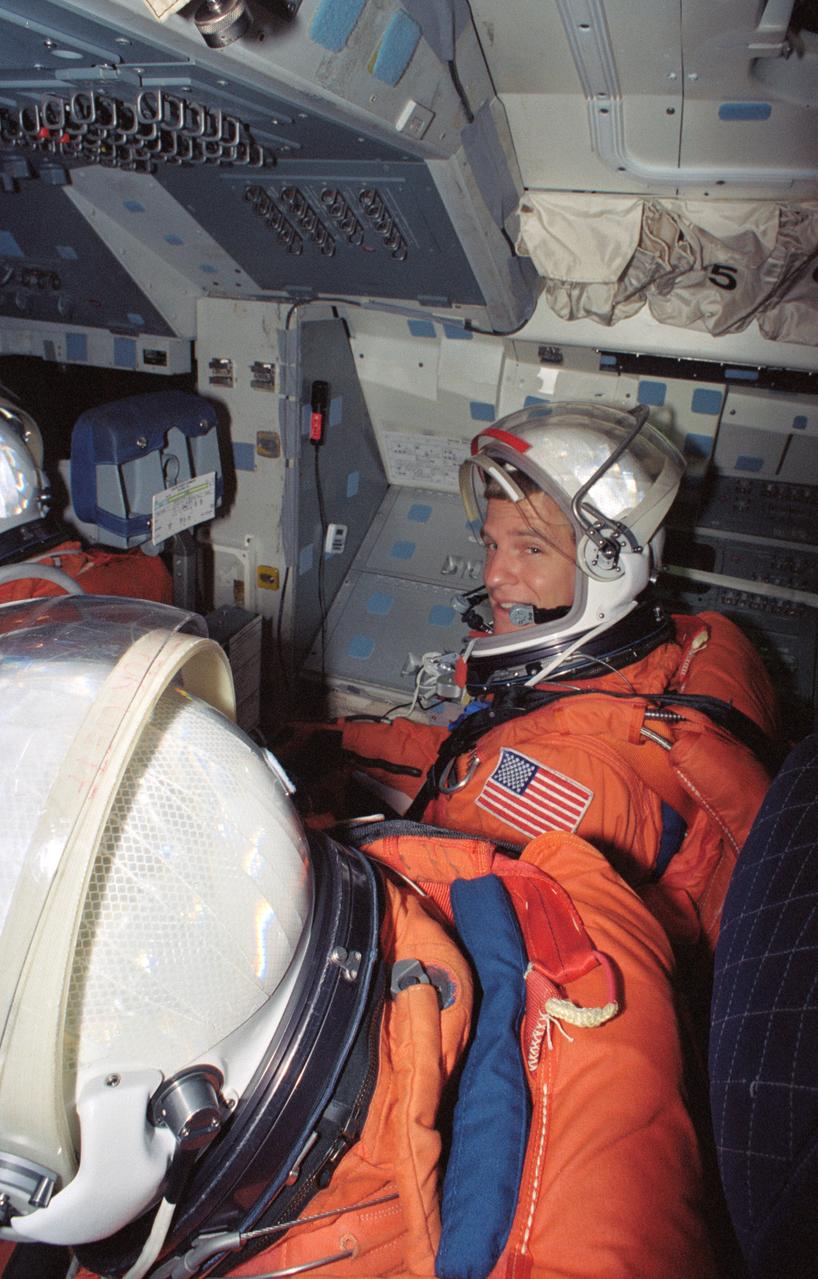
S94-40079 (23 June 1994) --- Astronaut Scott E. Parazynski looks at fellow STS-66 mission specialist Joseph R. Tanner, (partially visible in foreground) during a rehearsal of procedures to be followed during launch and entry phases of the their scheduled November flight. This rehearsal, held in the Crew Compartment Trainer (CCT) of the Johnson Space Center's (JSC) Shuttle Mockup and Integration Laboratory, was followed by a training session on emergency egress procedures. In November, Parazynski and Tanner will join three other NASA astronauts and a European mission specialist for a week and a half aboard the Space Shuttle Atlantis in Earth-orbit in support of the Atmospheric Laboratory for Applications and Science (ATLAS-3).
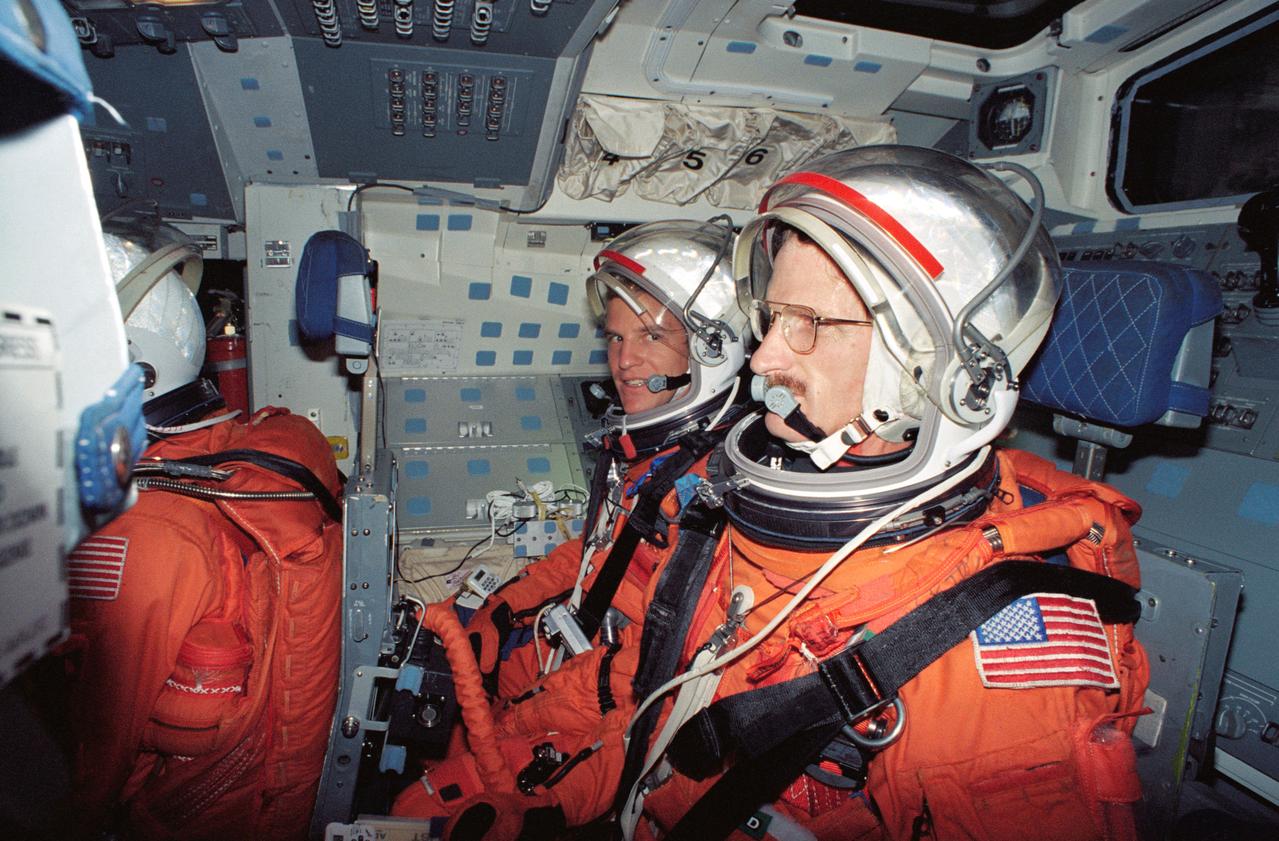
S94-40083 (23 June 1994) --- Astronaut Scott E. Parazynski looks at fellow STS-66 mission specialist Joseph R. Tanner, (foreground) during a rehearsal of procedures to be followed during launch and entry phases of the their scheduled November flight. This rehearsal, held in the Crew Compartment Trainer (CCT) of the Johnson Space Center's (JSC) Shuttle Mockup and Integration Laboratory, was followed by a training session on emergency egress procedures. In November, Parazynski and Tanner will join three other NASA astronauts and a European mission specialist for a week and a half aboard the Space Shuttle Atlantis in Earth-orbit in support of the Atmospheric Laboratory for Applications and Science (ATLAS-3).
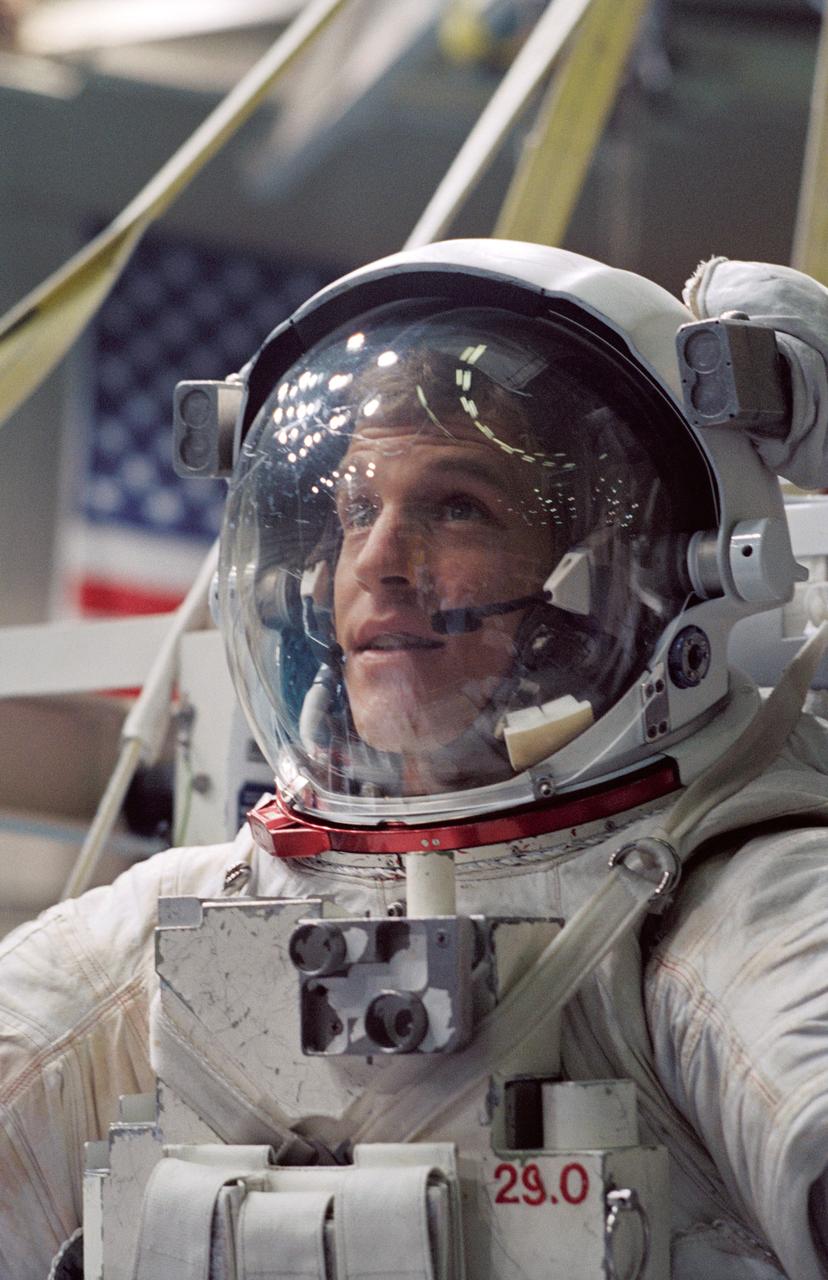
S94-40051 (1 August 1994) --- Attired in a training version of the Extravehicular Mobility Unit (EMU), astronaut Scott E. Parazynski, mission specialist, prepares to be submerged in a 25-feet deep pool at the Johnson Space Center's (JSC) Weightless Environment Training Facility (WET-F). Though no extravehicular activity (EVA) is planned for the mission, at least two astronauts are trained to perform tasks that would require a space walk in the event of failure of remote systems. In November, Parazynski will join four other NASA astronauts and a European mission specialist for a week and a half in space aboard the Space Shuttle Atlantis. The flight will support the Atmospheric Laboratory for Applications and Science (ATLAS-3) mission.
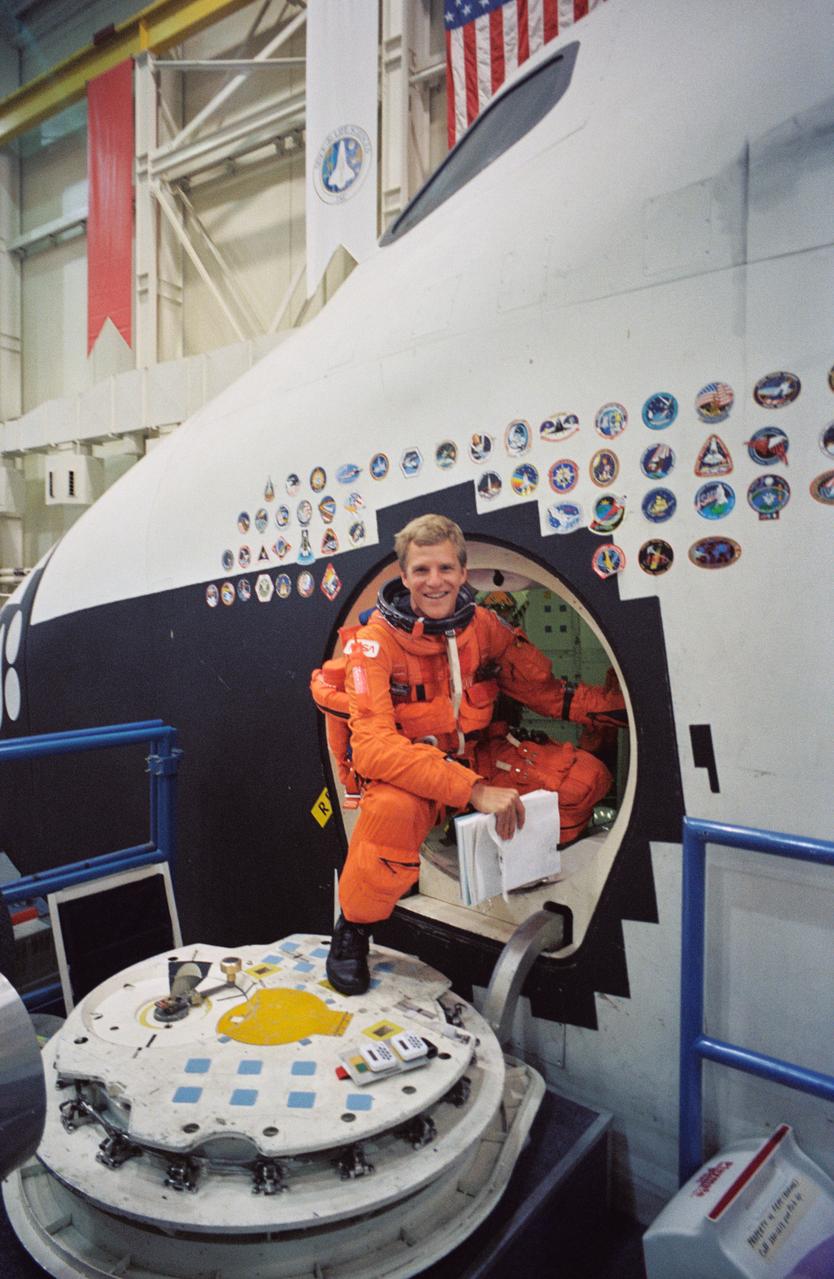
S94-36628 (23 June 1994) --- Astronaut Scott E. Parazynski poses at the hatch of the crew compartment trainer prior to a rehearsal of launch and entry procedures for a November 1994 flight aboard the Space Shuttle Atlantis. Four other NASA astronauts and a European mission specialist joined the mission specialist for this training exercise in the crew compartment trainer at the Johnson Space Center's (JSC) Shuttle Mockup and Integration Laboratory and will join him aboard Atlantis in November. The flight is manifest to support the Atmospheric Laboratory for Applications and Science (ATLAS-3) mission.
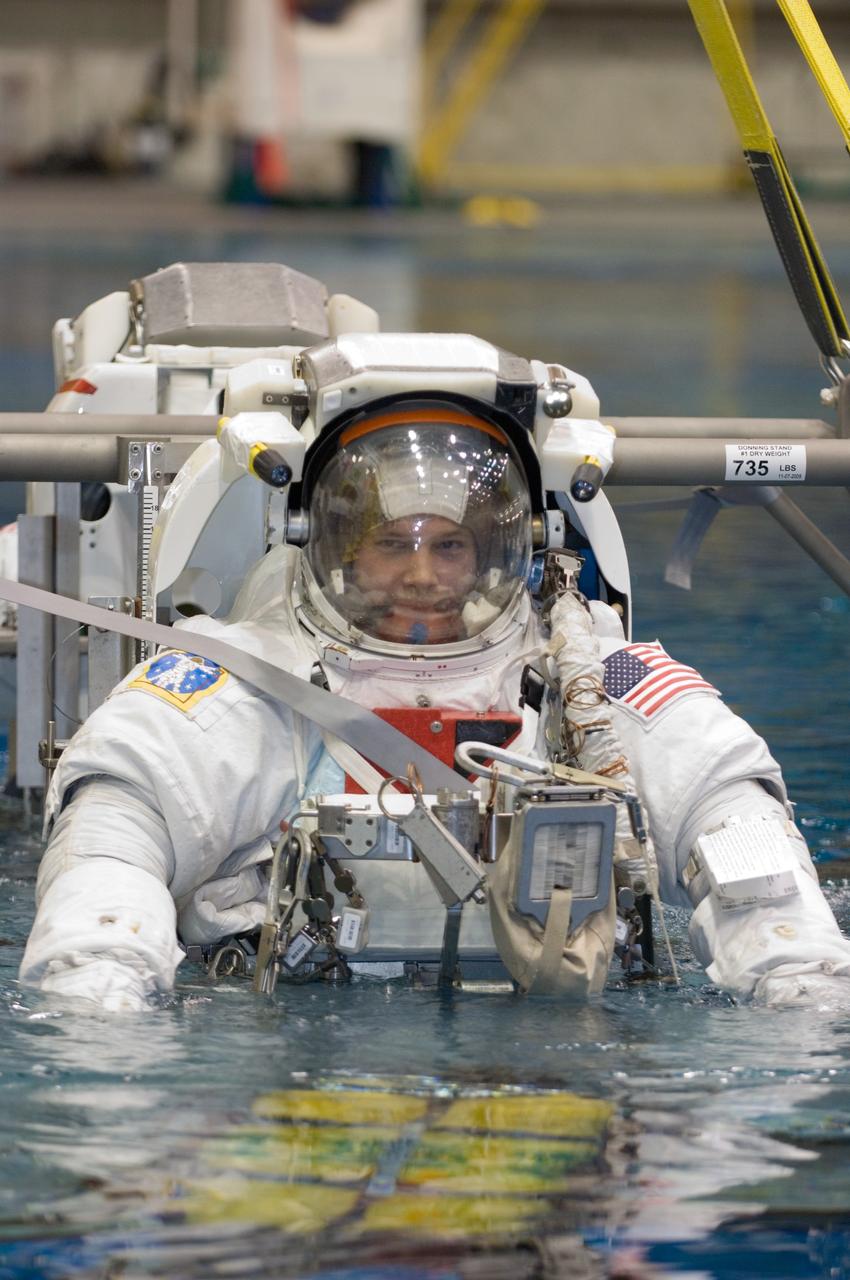
JSC2007-E-06549 (2 Feb. 2007) --- Astronauts Douglas H. Wheelock and Scott E. Parazynski (partially obscured), both STS-120 mission specialists, are about to be submerged in the waters of the Neutral Buoyancy Laboratory (NBL) near Johnson Space Center. Wheelock and Parazynski are attired in training versions of the Extravehicular Mobility Unit (EMU) spacesuit. SCUBA-equipped divers (out of frame) are in the water to assist the crewmembers in their rehearsal, intended to help prepare them for work on the exterior of the International Space Station.
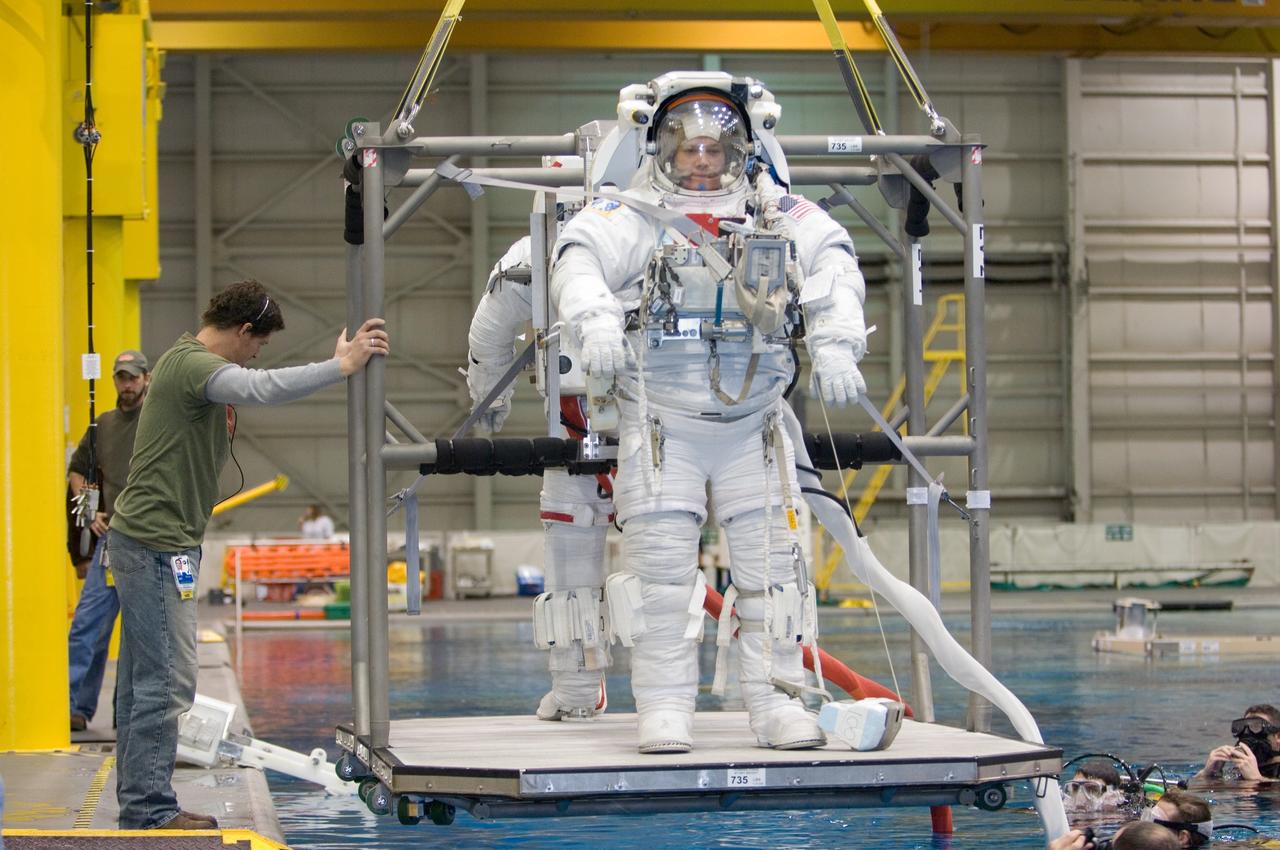
JSC2007-E-06548 (2 Feb. 2007) --- Astronauts Douglas H. Wheelock and Scott E. Parazynski (partially obscured), both STS-120 mission specialists, are about to be submerged in the waters of the Neutral Buoyancy Laboratory (NBL) near Johnson Space Center. Wheelock and Parazynski are attired in training versions of the Extravehicular Mobility Unit (EMU) spacesuit. SCUBA-equipped divers are in the water to assist the crewmembers in their rehearsal, intended to help prepare them for work on the exterior of the International Space Station.
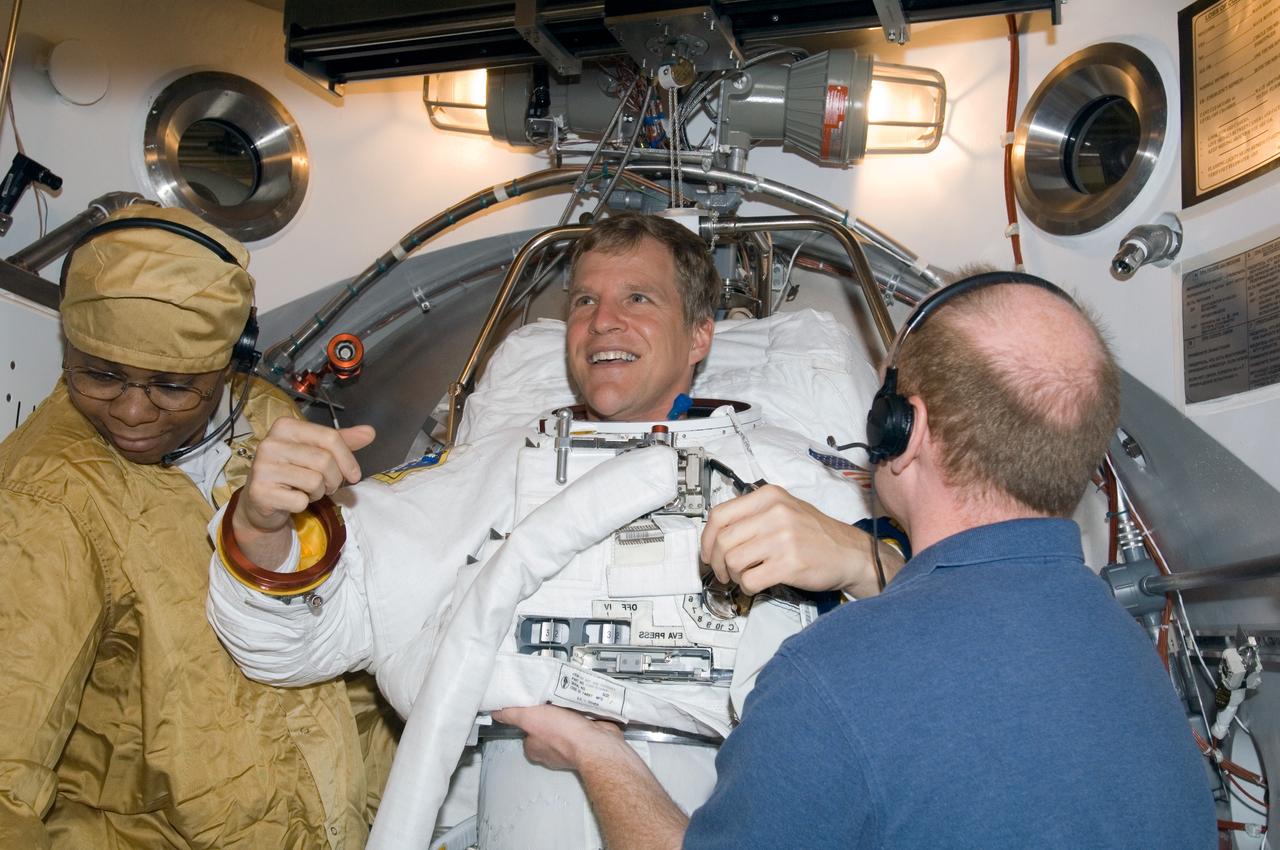
JSC2007-E-18450 (5 April 2007) --- Astronaut Scott E. Parazynski, STS-120 mission specialist, participates in an Extravehicular Mobility Unit (EMU) spacesuit fit check in the Space Station Airlock Test Article (SSATA) in the Crew Systems Laboratory at the Johnson Space Center. United Space Alliance (USA) suit technician James Lemmon (left) and USA suit engineer Shawn Macleod assisted Parazynski.
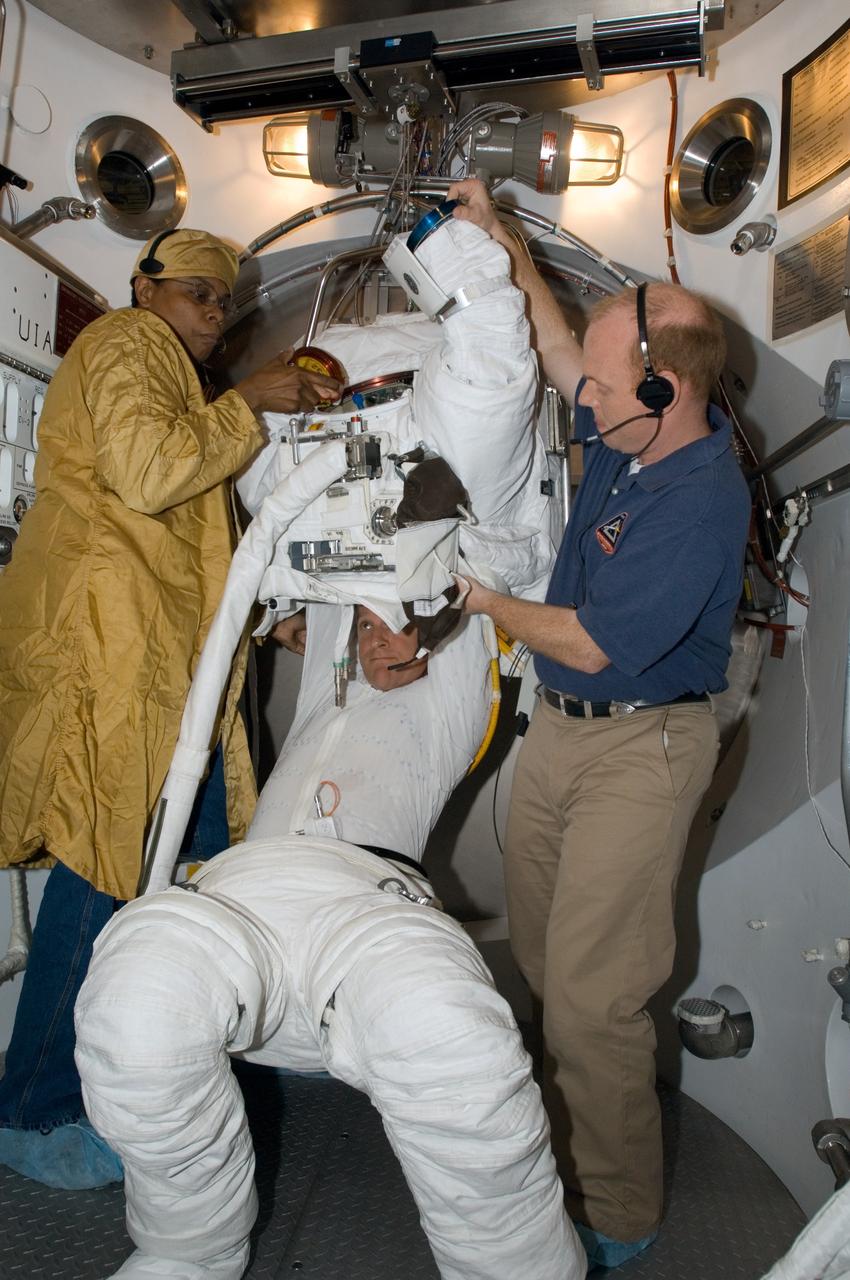
JSC2007-E-18448 (5 April 2007) --- Astronaut Scott E. Parazynski, STS-120 mission specialist, participates in an Extravehicular Mobility Unit (EMU) spacesuit fit check in the Space Station Airlock Test Article (SSATA) in the Crew Systems Laboratory at the Johnson Space Center. United Space Alliance (USA) suit technician James Lemmon (left) and USA suit engineer Shawn Macleod assisted Parazynski.
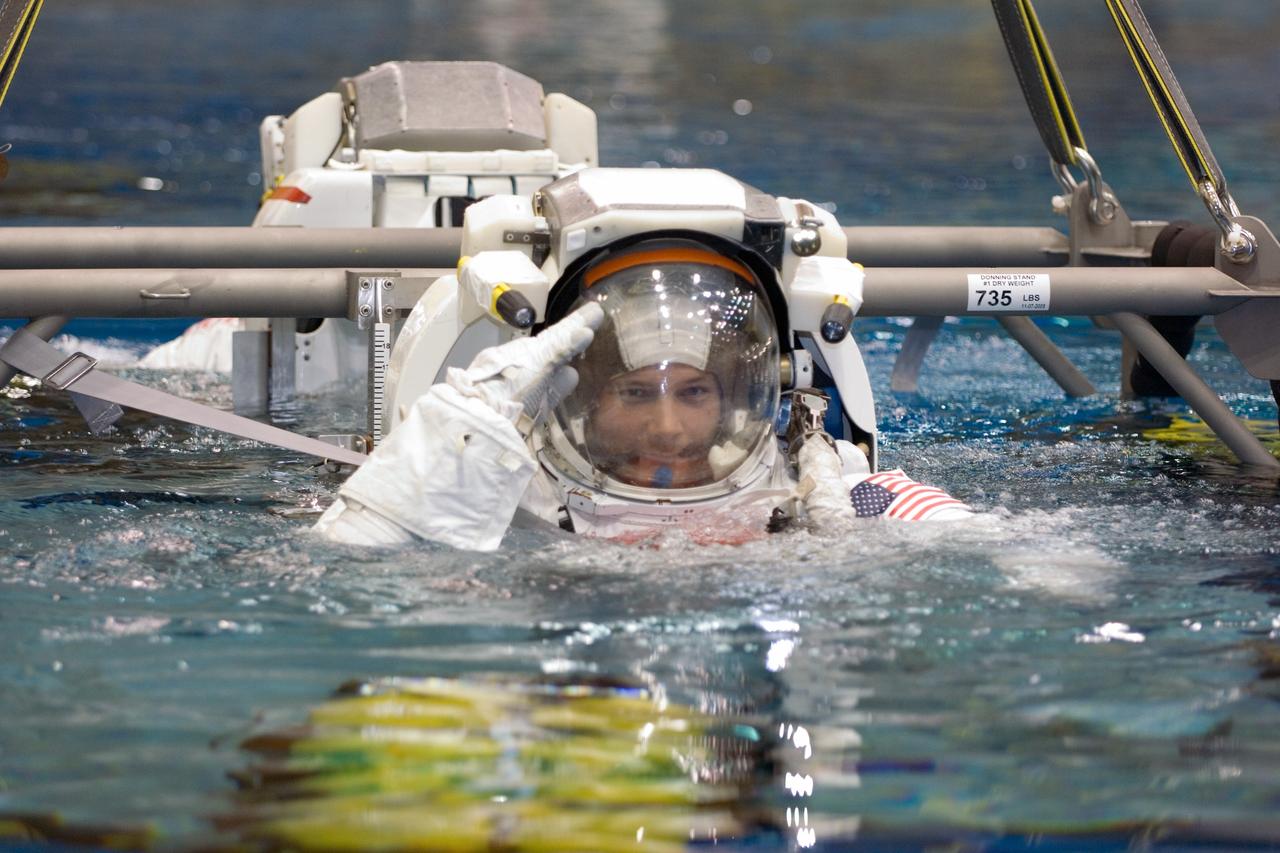
JSC2007-E-06550 (2 Feb. 2007) --- Astronauts Douglas H. Wheelock and Scott E. Parazynski (partially obscured), both STS-120 mission specialists, are about to be submerged in the waters of the Neutral Buoyancy Laboratory (NBL) near Johnson Space Center. Wheelock and Parazynski are attired in training versions of the Extravehicular Mobility Unit (EMU) spacesuit. SCUBA-equipped divers (out of frame) are in the water to assist the crewmembers in their rehearsal, intended to help prepare them for work on the exterior of the International Space Station.
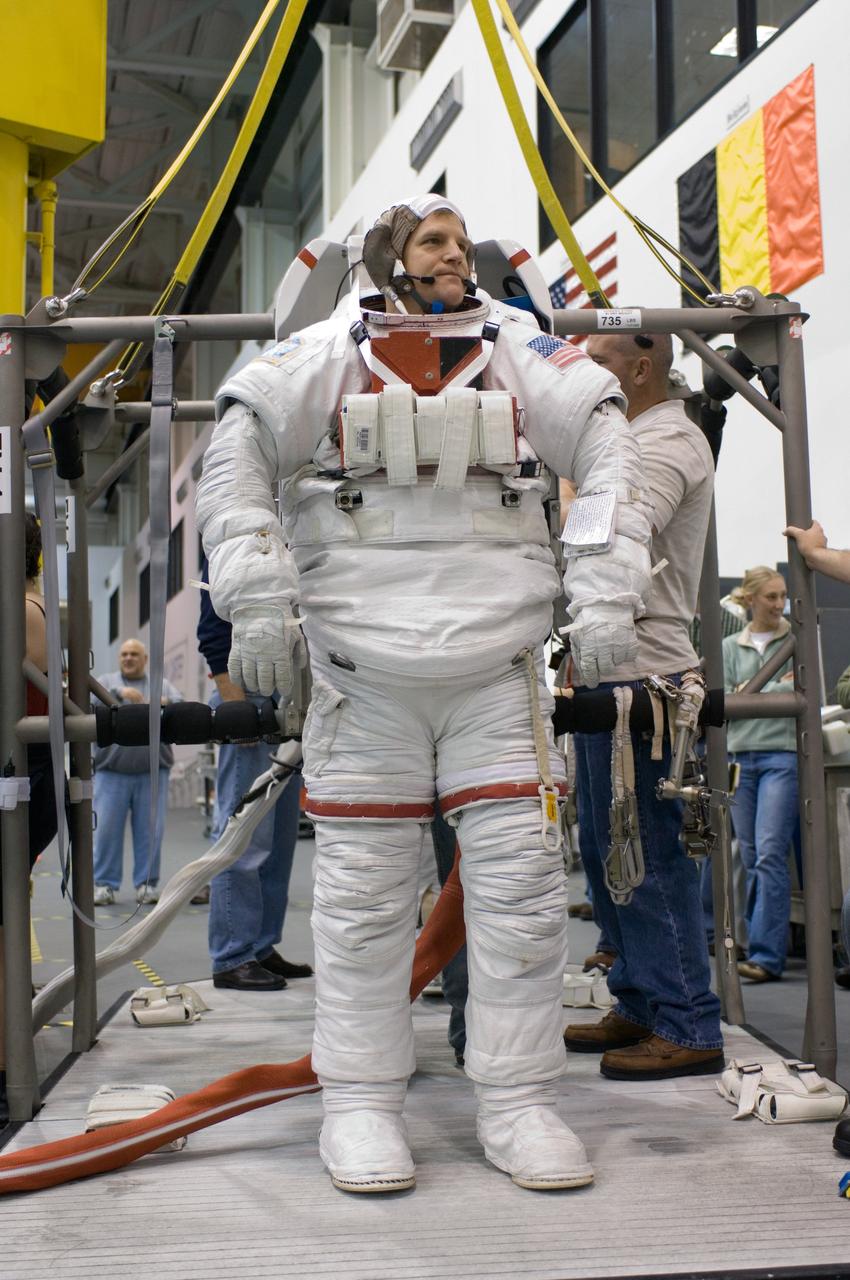
JSC2007-E-06538 (2 Feb. 2007) --- Astronaut Scott E. Parazynski, STS-120 mission specialist, attired in a training version of the Extravehicular Mobility Unit (EMU) spacesuit, awaits the start of a training session in the waters of the Neutral Buoyancy Laboratory (NBL) near Johnson Space Center.
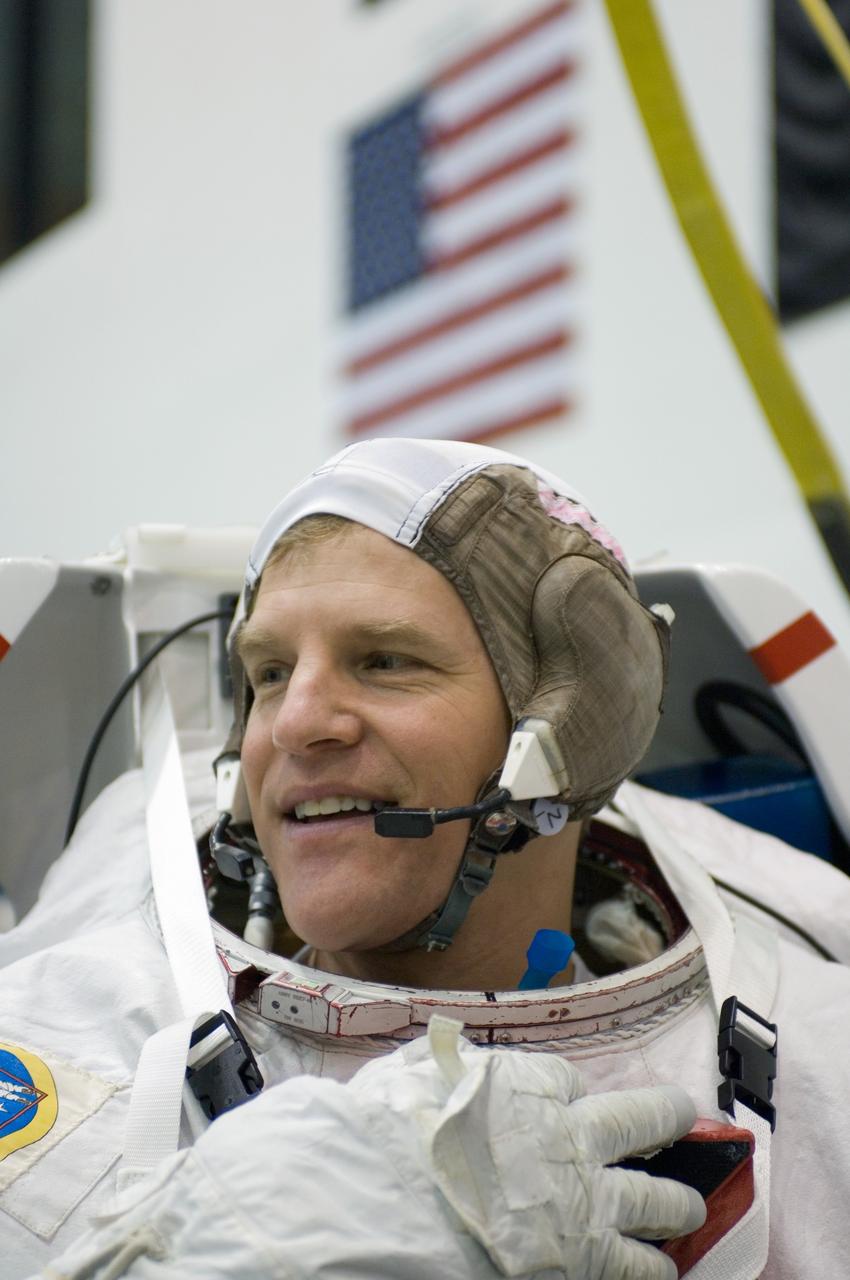
JSC2007-E-06532 (2 Feb. 2007) --- Astronaut Scott E. Parazynski, STS-120 mission specialist, attired in a training version of the Extravehicular Mobility Unit (EMU) spacesuit, awaits the start of a training session in the waters of the Neutral Buoyancy Laboratory (NBL) near Johnson Space Center.
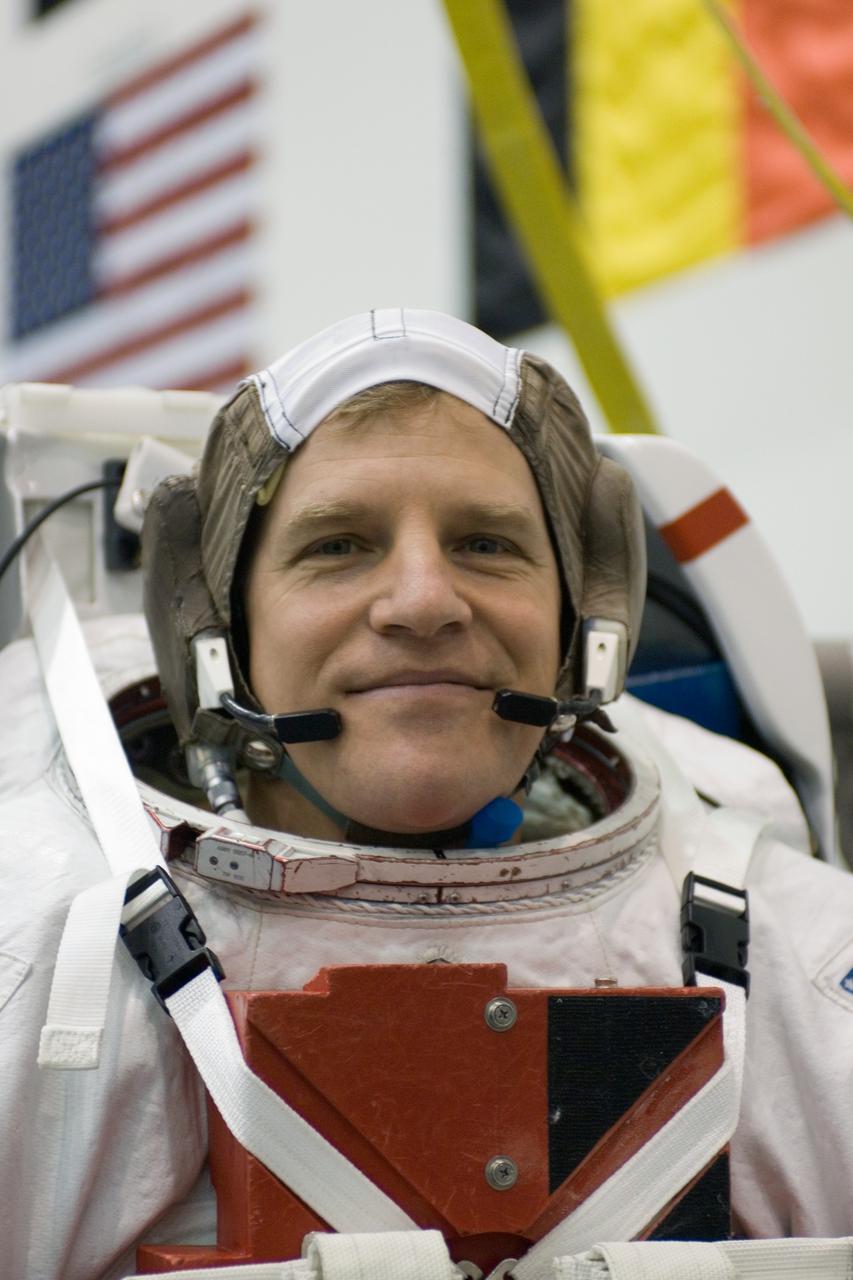
JSC2007-E-06537 (2 Feb. 2007) --- Astronaut Scott E. Parazynski, STS-120 mission specialist, attired in a training version of the Extravehicular Mobility Unit (EMU) spacesuit, awaits the start of a training session in the waters of the Neutral Buoyancy Laboratory (NBL) near Johnson Space Center.
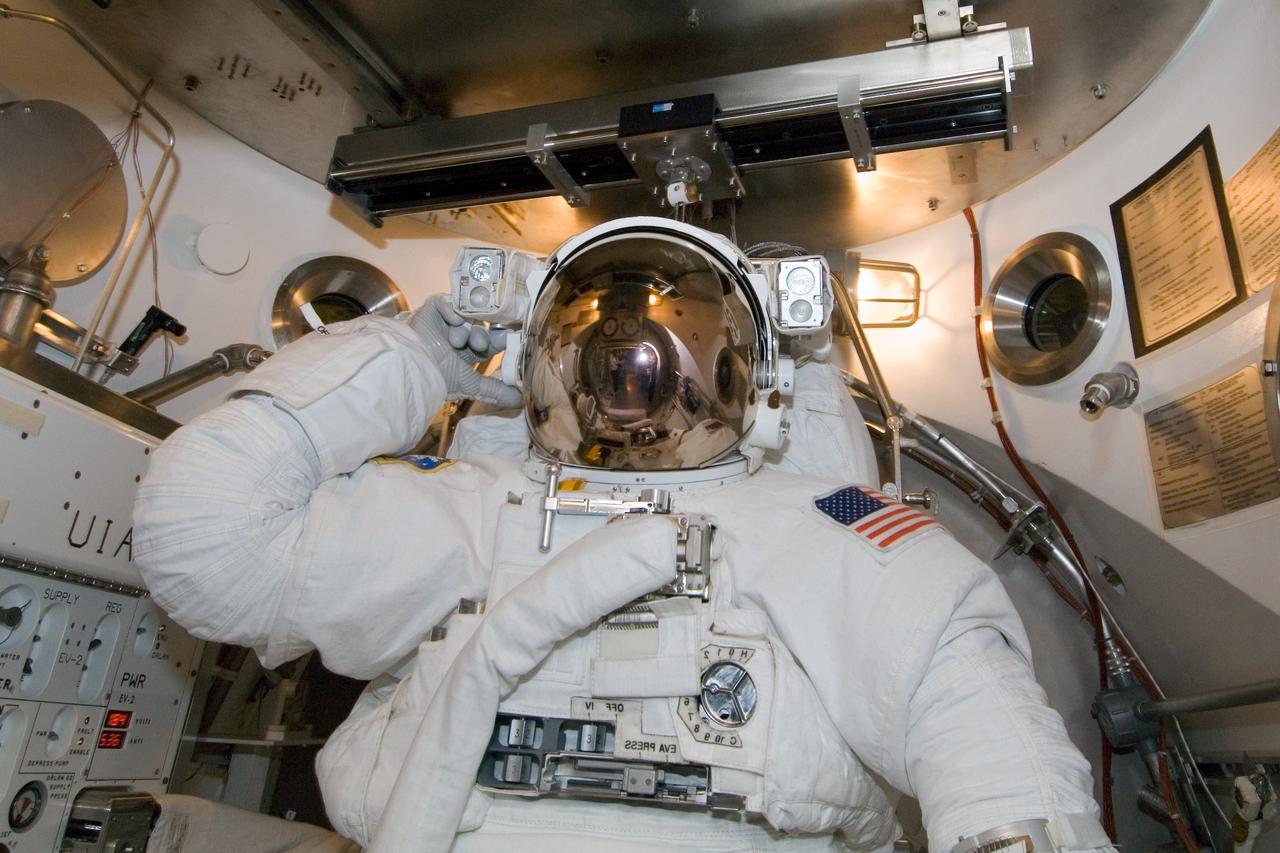
JSC2007-E-18462 (5 April 2007) --- Astronaut Scott E. Parazynski, STS-120 mission specialist, participates in an Extravehicular Mobility Unit (EMU) spacesuit fit check in the Space Station Airlock Test Article (SSATA) in the Crew Systems Laboratory at the Johnson Space Center.
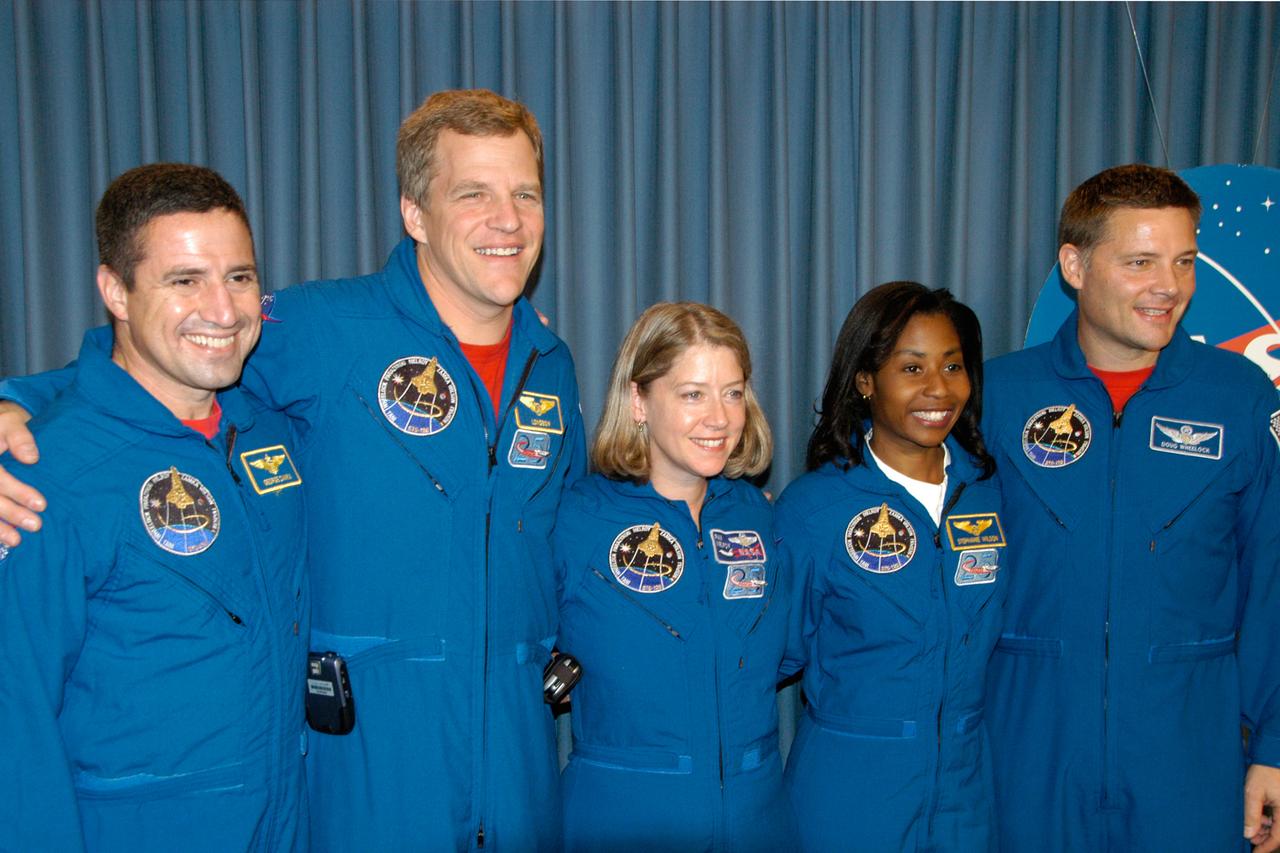
After a post-landing news conference, members of the STS-120 crew pose for photographers. From left are Pilot George Zamka, Mission Specialist Scott Parazynski, Commander Pamela Melroy and Mission Specialists Stephanie Wilson and Doug Wheelock. The crew completed a 15-day mission to the International Space Station with a smooth landing on Runway 33. Main gear touchdown was 1:01:16 p.m. Wheel stop was at 1:02:07 p.m. Mission elapsed time was 15 days, 2 hours, 24 minutes and 2 seconds. Mission STS-120 continued the construction of the station with the installation of the Harmony Node 2 module and the relocation of the P6 truss.
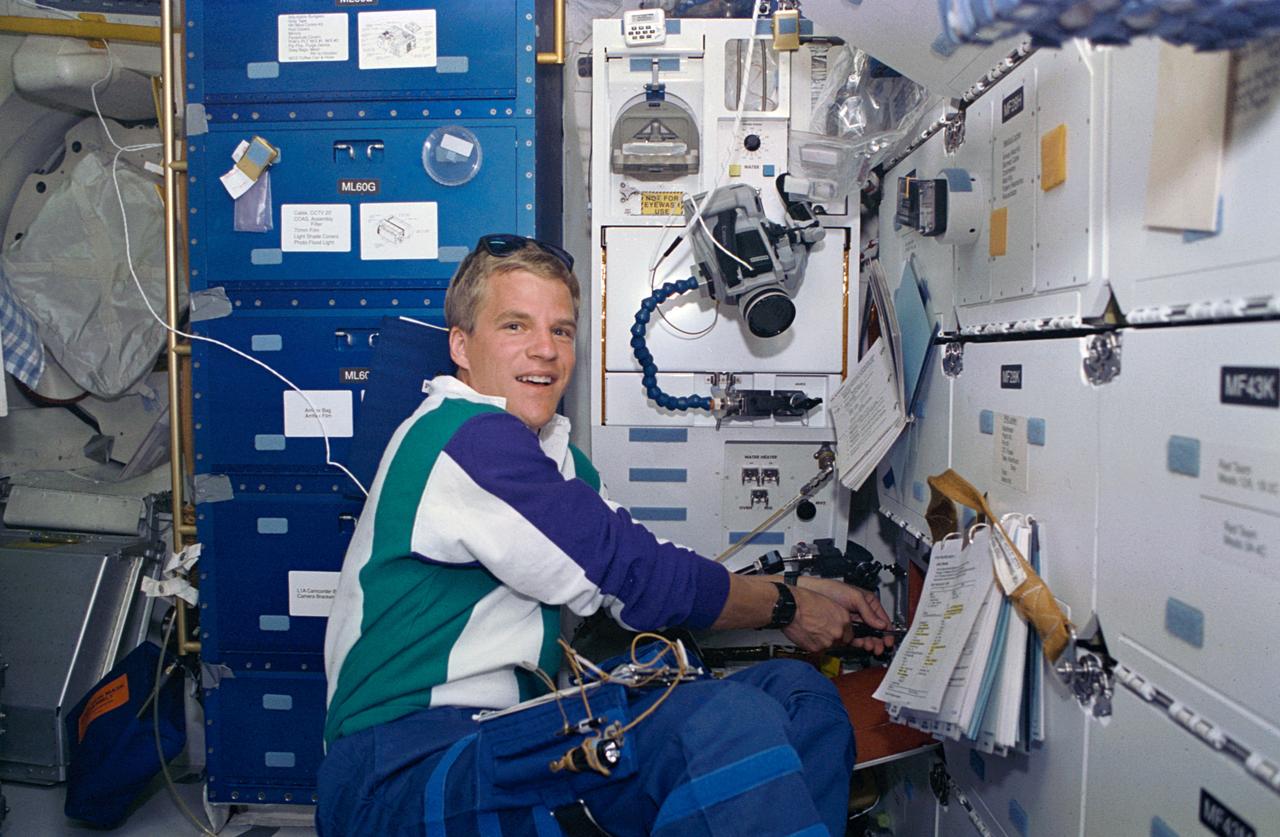
STS066-13-029 (3-14 Nov 1994) --- On the Space Shuttle Atlantis' mid-deck, astronaut Scott E. Parazynski, mission specialist, works at one of two areas onboard the Shuttle which support the Protein Crystal Growth (PCG) experiment. This particular section is called the Vapor Diffusion Apparatus (VDA), housed in a Single Locker Thermal Enclosure (STES). Together with the Crystal Observation System, housed in the Thermal Enclosure System (COS/TES) the VDA represents the continuing research into the structures of proteins and other macromolecules such as viruses. In addition to using the microgravity of space to grow high-quality protein crystals for structural analyses, the experiments are expected to help develop technologies and methods to improve the protein crystallization process on Earth as well as in space.
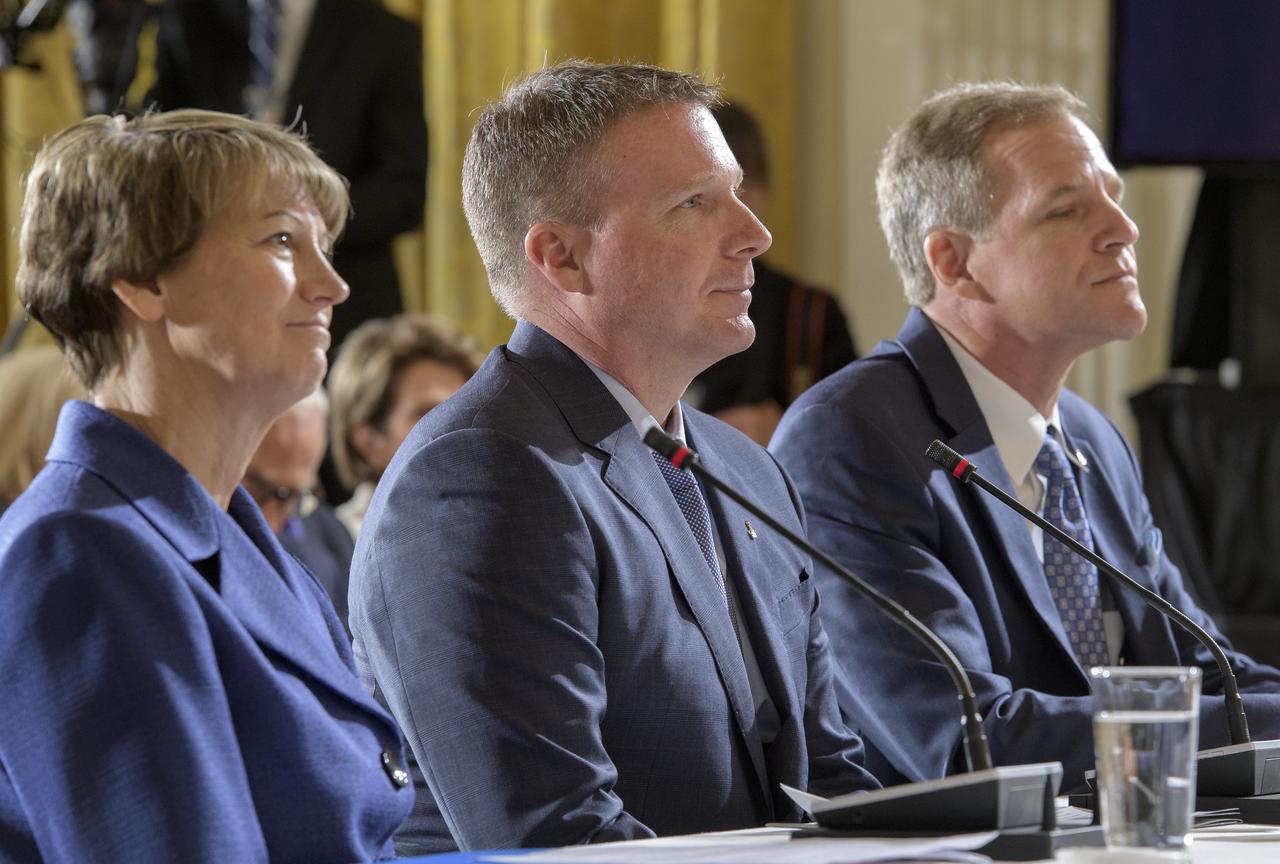
Former NASA astronauts Eileen Collins, left, Terry Virts, center, and Scott Parazynski are seen during a meeting of the National Space Council in the East Room of the White House, Monday, June 18, 2018, in Washington. Chaired by the Vice President, the council's role is to advise the President regarding national space policy and strategy, and review the nation's long-range goals for space activities. Photo Credit: (NASA/Bill Ingalls)
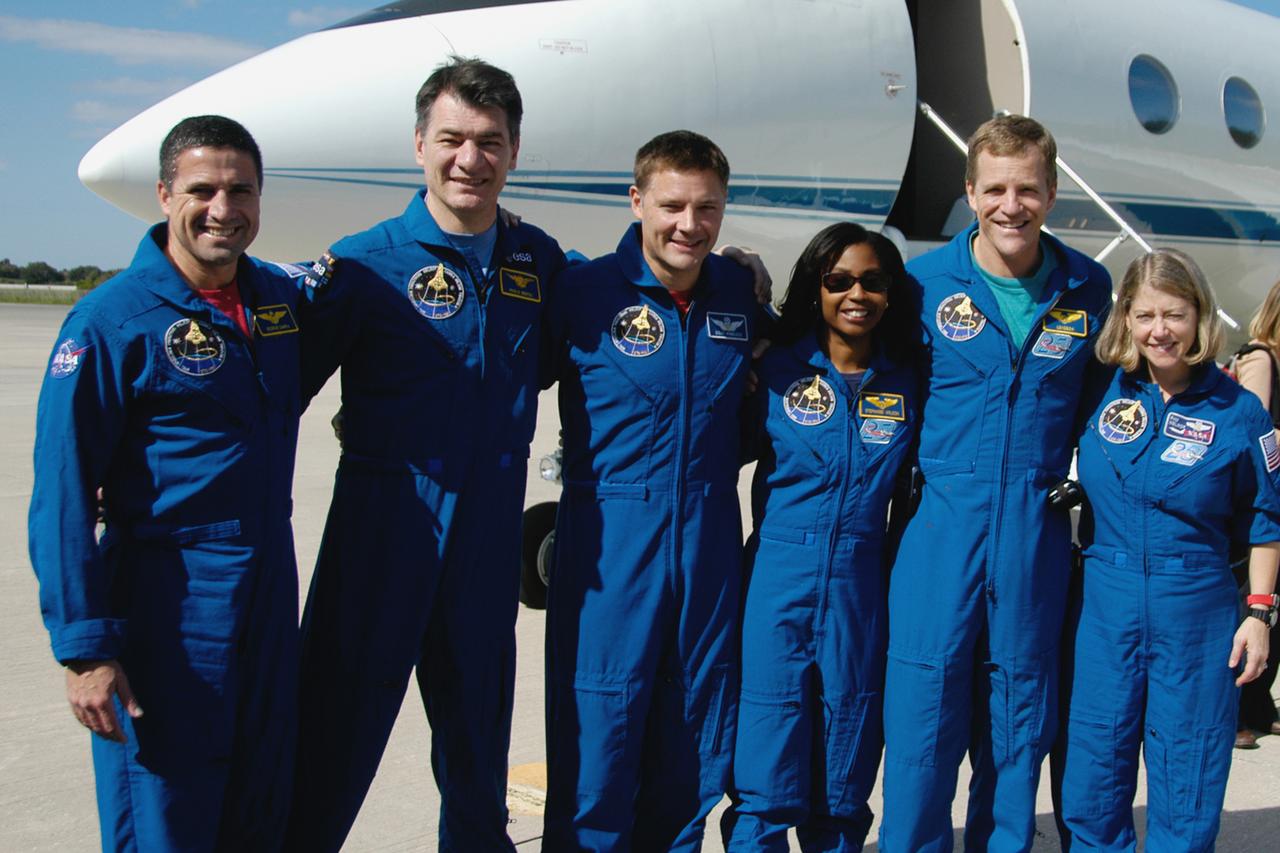
The STS-120 crew members are ready for their return to flight to Houston. From left are Pilot George Zamka, Mission Specialists Paolo Nespoli, Doug Wheelock, Stephanie Wilson and Scott Parazynski, and Commander Pamela Melroy. A welcoming ceremony for the crew is planned at NASA's Hangar 276 on the south end of Ellington Field in Texas. On the 15-day mission, the STS-120 crew continued the construction of the station with the installation of the Harmony Node 2 module and the relocation of the P6 truss. They landed Nov. 7 at NASA's Kennedy Space Center.
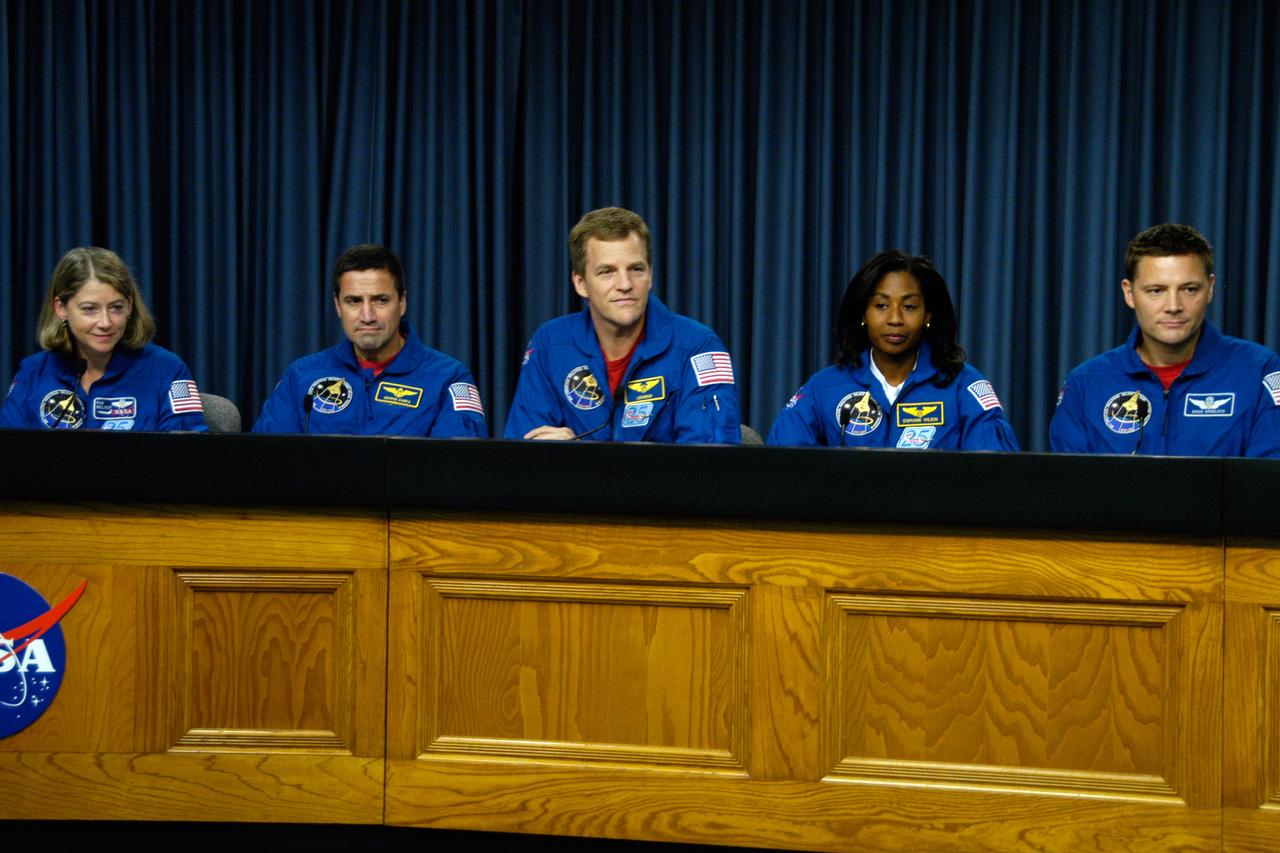
Members of the STS-120 crew take part in a news conference after their successful landing aboard space shuttle Discovery at NASA's Kennedy Space Center. From left are Commander Pamela Melroy, Pilot George Zamka and mission specialists Scott Parazynski, Stephanie Wilson and Doug Wheelock. The crew completed a 15-day mission to the International Space Station with a smooth landing on Runway 33. Main gear touchdown was 1:01:16 p.m. Wheel stop was at 1:02:07 p.m. Mission elapsed time was 15 days, 2 hours, 24 minutes and 2 seconds. Mission STS-120 continued the construction of the station with the installation of the Harmony Node 2 module and the relocation of the P6 truss.
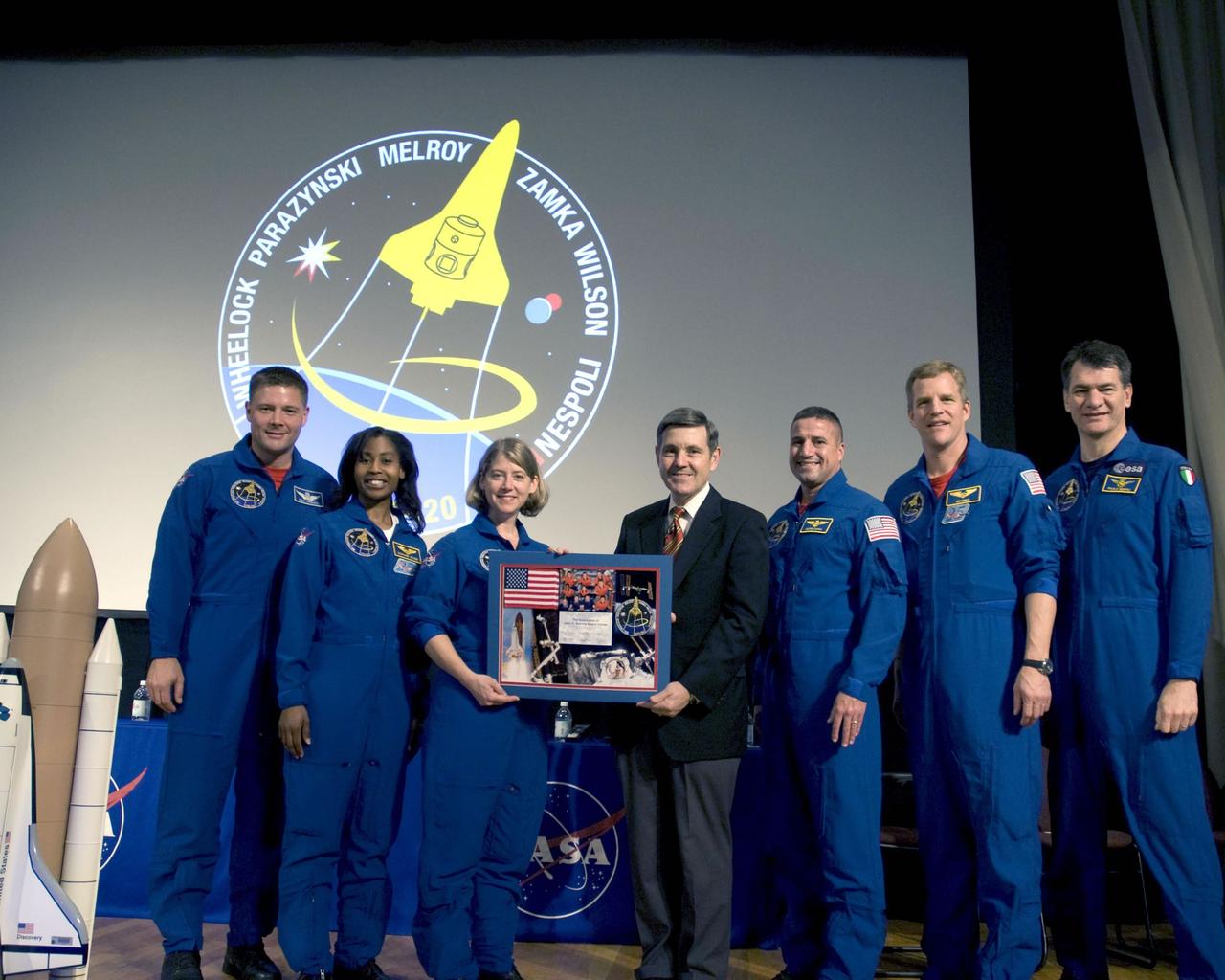
Astronaut Pam Melroy presents a commemorative collage of photos and items flown aboard space shuttle Discovery to Bob Cabana, director of NASA's Stennis Space Center in South Mississippi. Melroy commanded NASA's space shuttle mission STS-120. She and fellow crewmembers (from left) Doug Wheelock, Stephanie Wilson, George Zamka, Scott Parazynski and Paolo Nespoli visited Stennis Dec. 13, 2007, to thank employees for the reliability and safe performance of the space shuttle's main engines, which on Oct. 23 launched them aboard Discovery on their mission to the International Space Station.
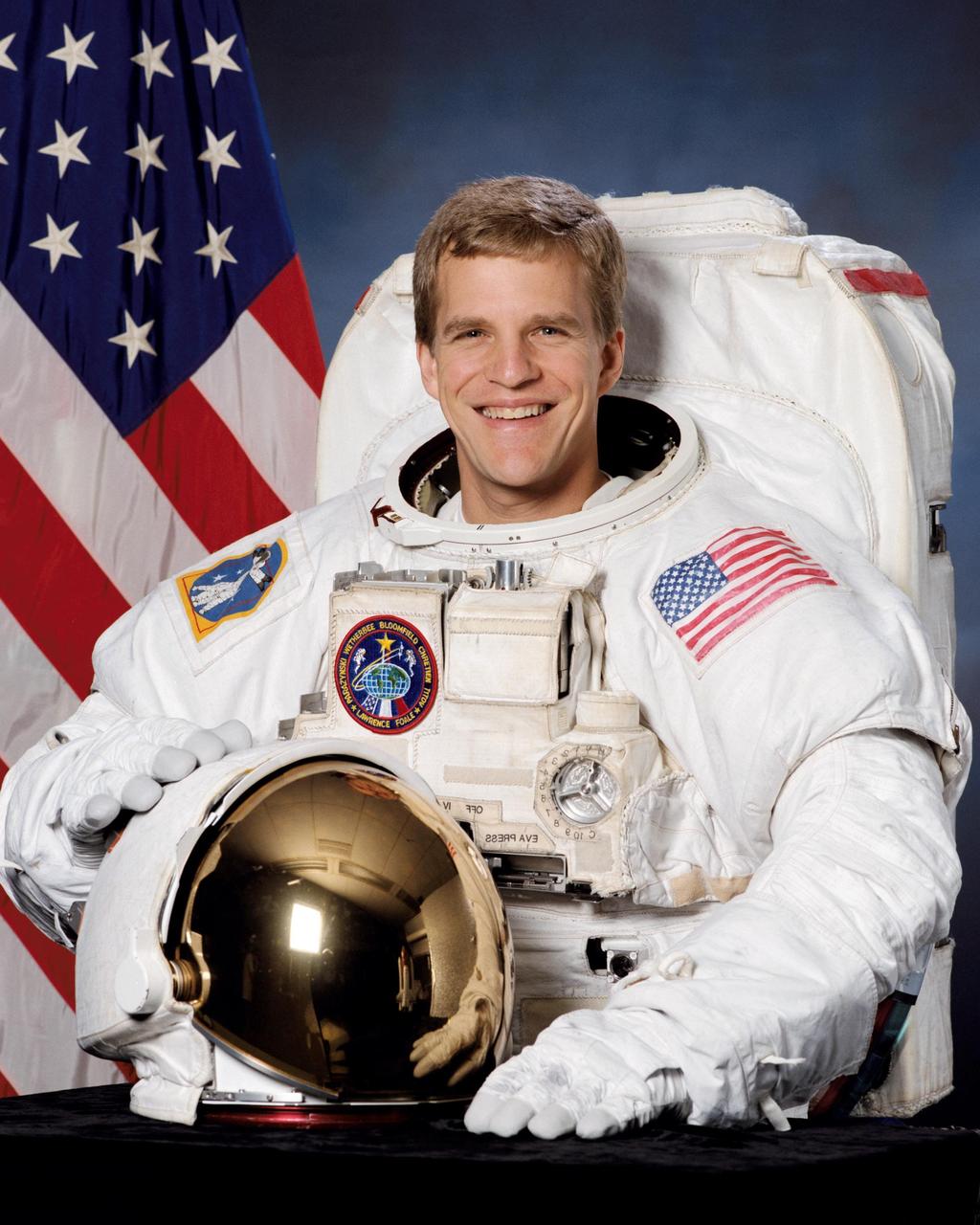
JOHNSON SPACE CENTER, Houston, Texas -- S98-01036 -- Astronaut Scott E. Parazynski, mission specialist
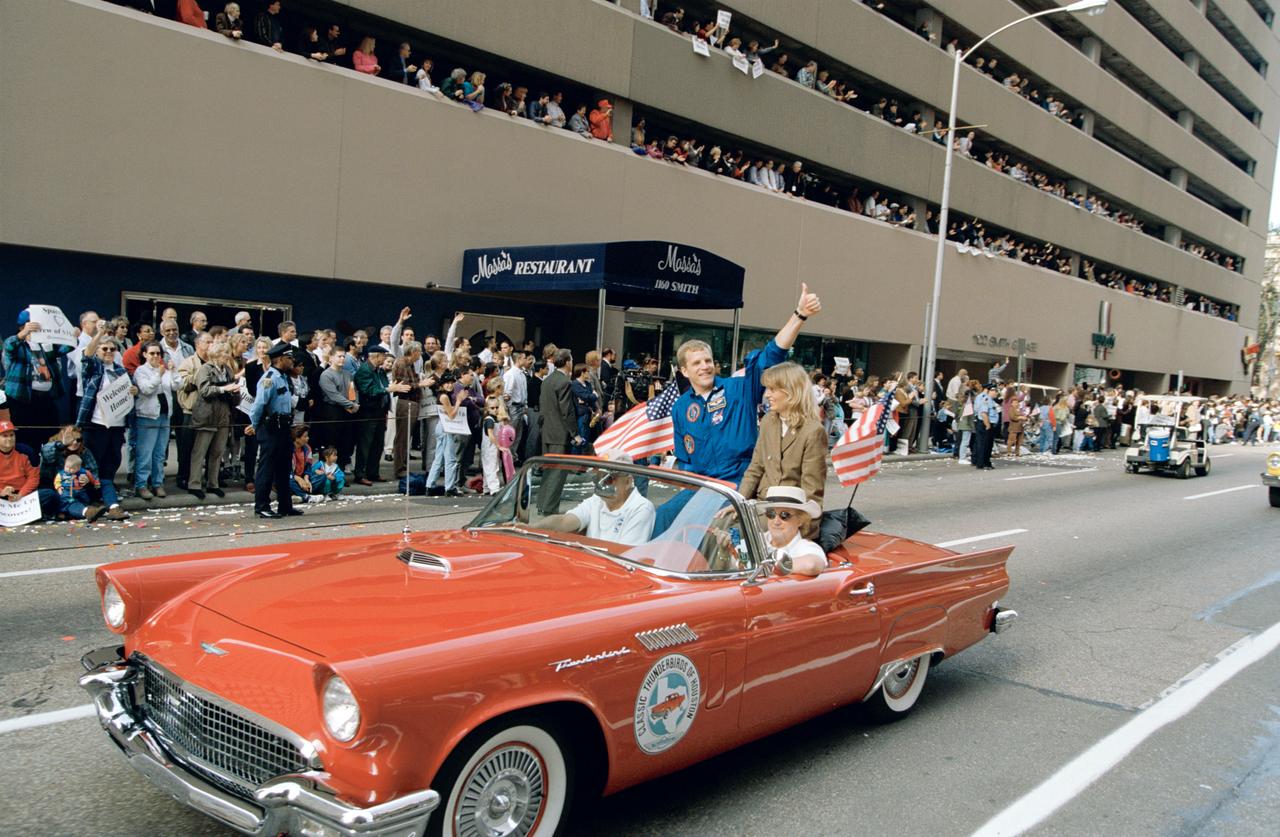
Downtown Houston parade honoring STS-95 crew. View is of Astronaut Scott Parazynski and family in car being greeted by crowd.
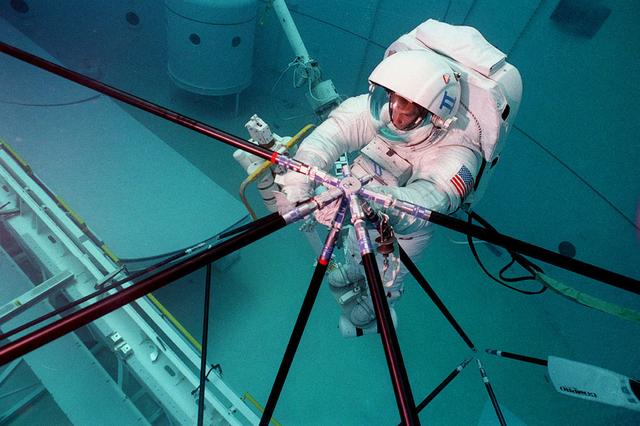
Astronaut Scott Parazynski participates in a Nitrox breathing system test in Marshall's Neutral Buoyancy Simulator (NBS).
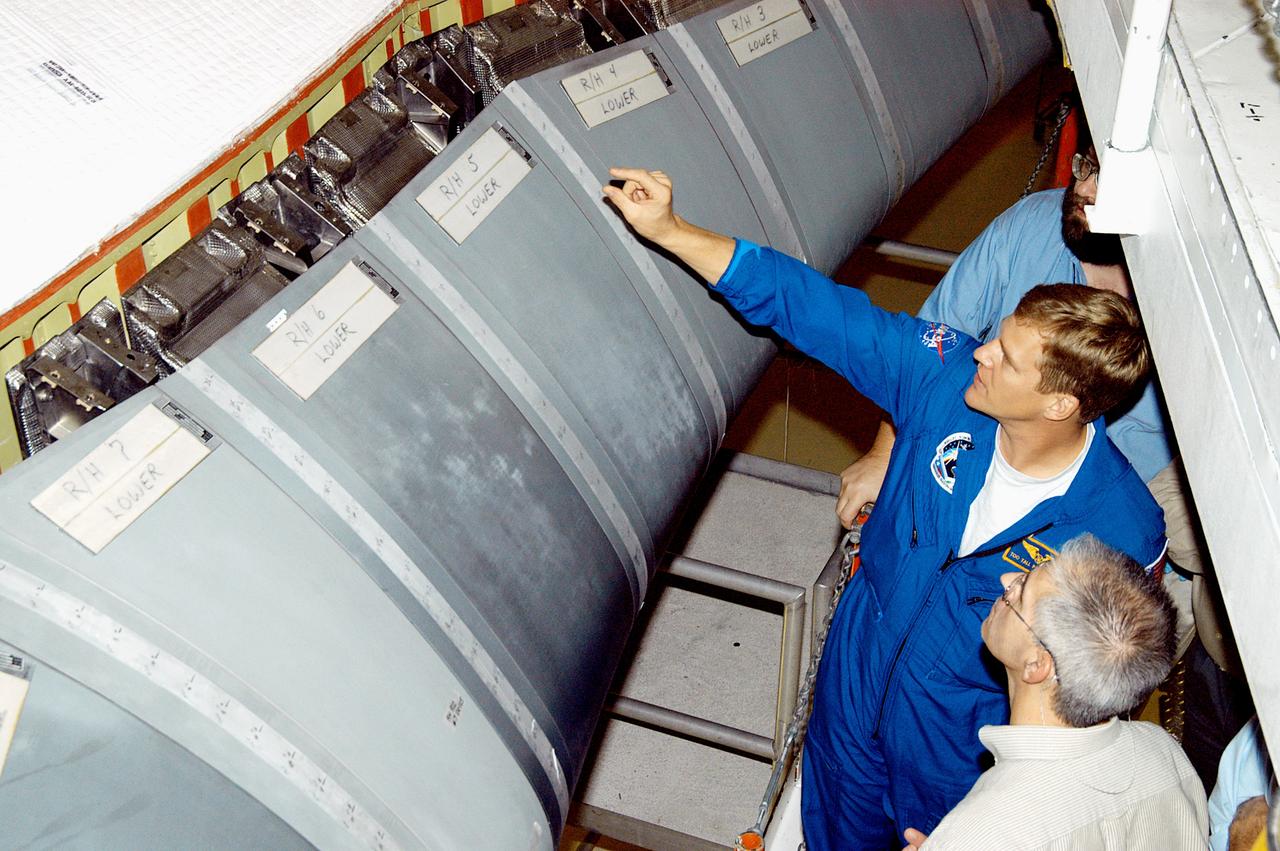
KENNEDY SPACE CENTER, FLA. - In the Orbiter Processing Facility, astronaut Scott E. Parazynski points to the Reinforced Carbon Carbon panels used on the leading edge of the wing of the orbiters. With Parazynski are engineers from around the Agency who are working on improving the RCC panels used on the wing leading edge. The gray carbon composite RCC panels have sufficient strength to withstand the aerodynamic forces experienced during launch and reentry, which can reach as high as 800 pounds per square foot. The operating range of RCC is from minus 250º F to about 3,000º F, the temperature produced by friction with the atmosphere during reentry.
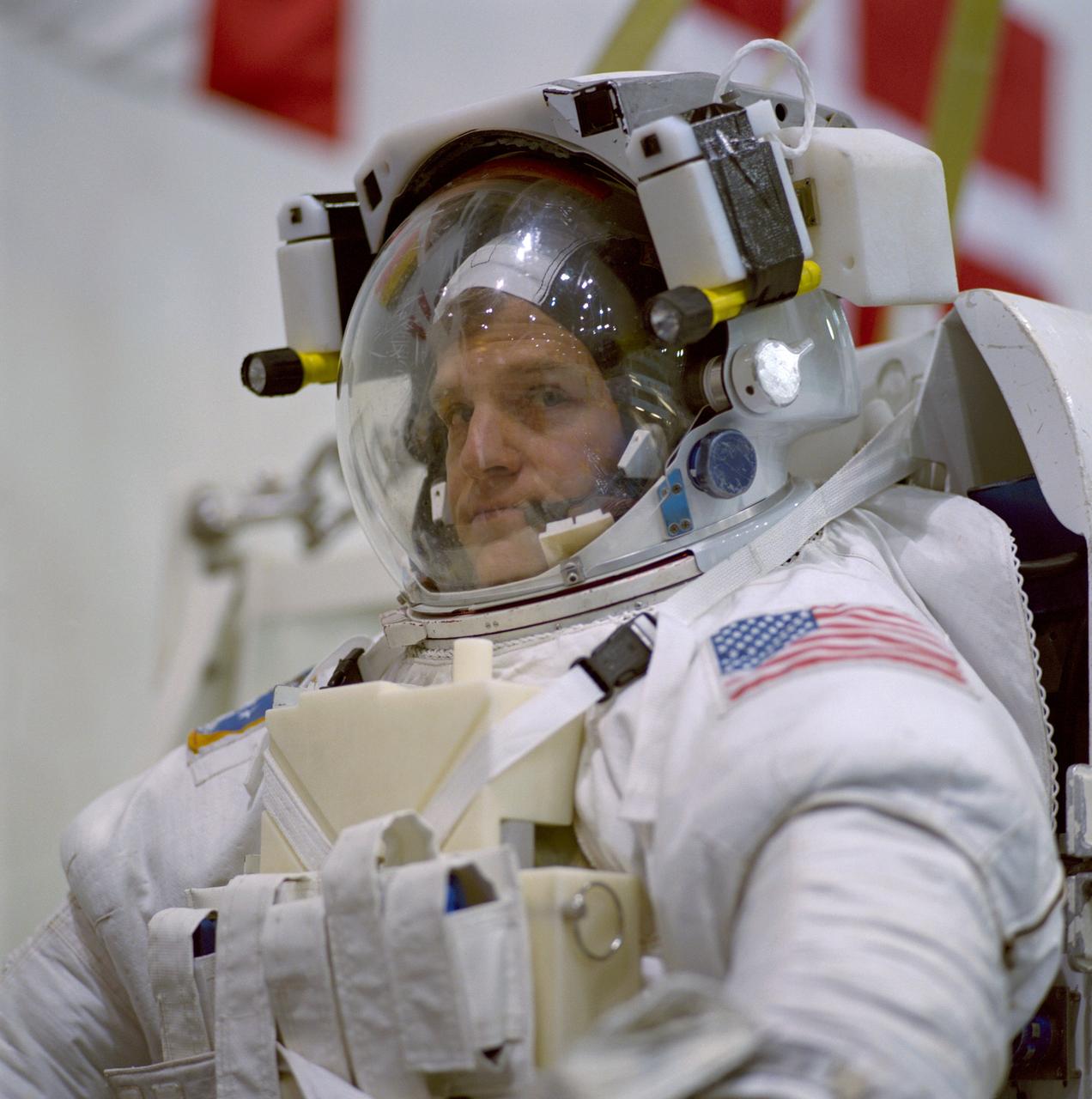
JSC2000-07396 (1 Dec. 2000) --- Astronaut Scott E. Parazynski, mission specialist, is about to be submerged in a giant pool of water in order to simulate spacewalk chores scheduled for next year's STS-100 visit to the International Space Station (ISS). Astronaut Chris A. Hadfield (out of frame) joined Parazynski for the rehearsal.
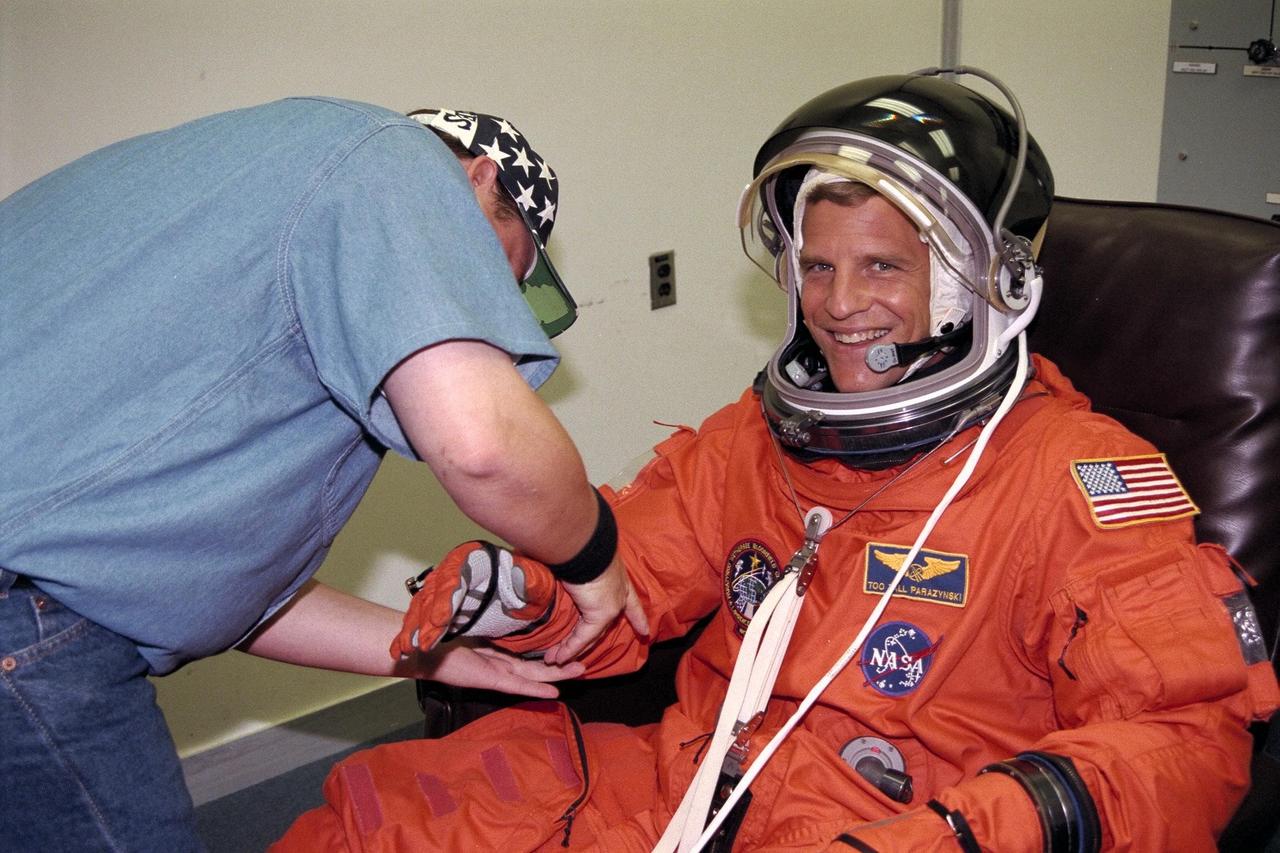
STS-86 Mission Specialist Scott E. Parazynski gets assistance from a suit technician in making adjustments to his launch and entry suit in the Operations and Checkout Building. This will be Parazynski’s second flight. He and the six other crew members will depart shortly for Launch Pad 39A, where the Space Shuttle Atlantis awaits liftoff on a 10-day mission slated to be the seventh docking of the Space Shuttle with the Russian Space Station Mir. Parazynski is scheduled to perform a spacewalk during the docking
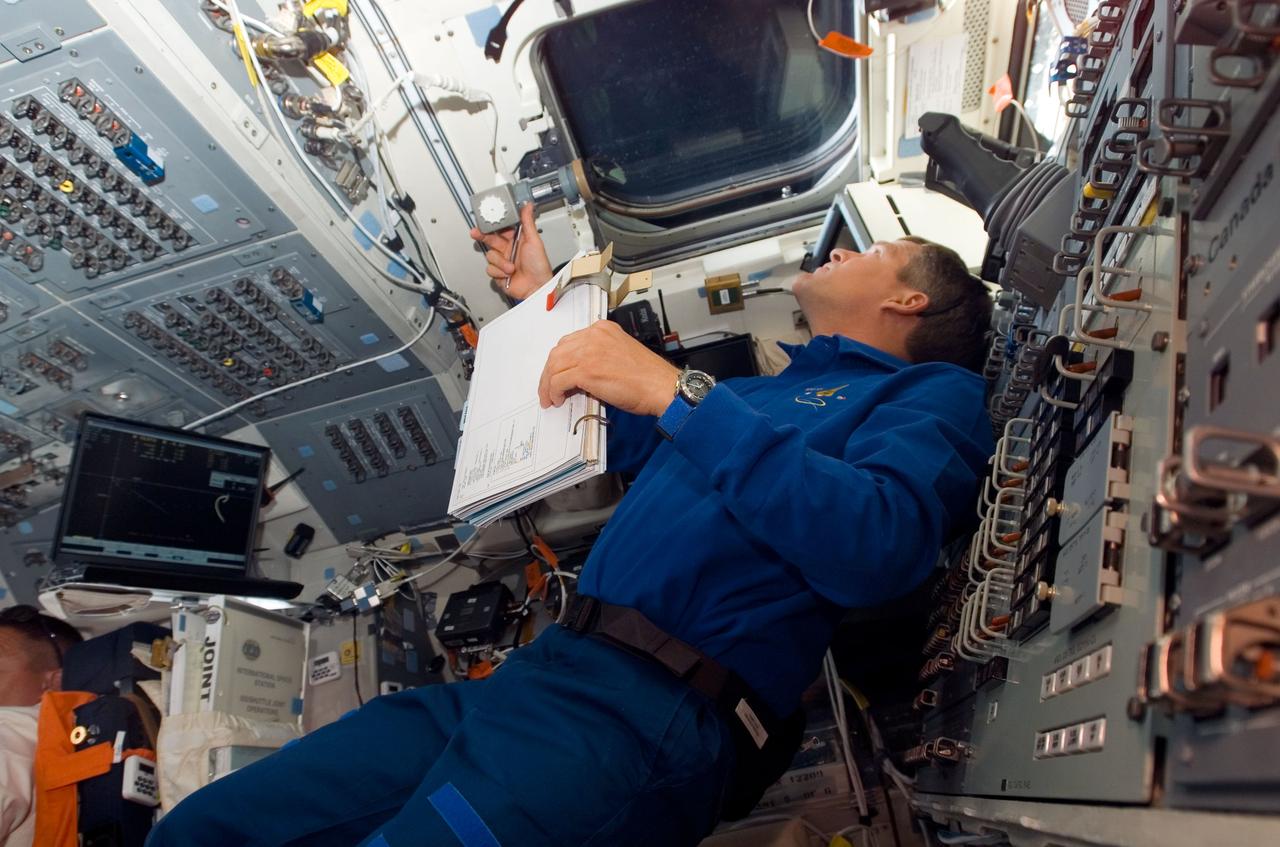
S120-E-006219 (25 Oct. 2007) --- Astronaut Scott Parazynski, STS-120 mission specialist, looks out an overhead window on the aft flight deck of Space Shuttle Discovery during flight day three activities.

S120-E-006887 (26 Oct. 2007) --- Astronaut Scott Parazynski, STS-120 mission specialist, uses a computer on the middeck of Space Shuttle Discovery while docked with the International Space Station.
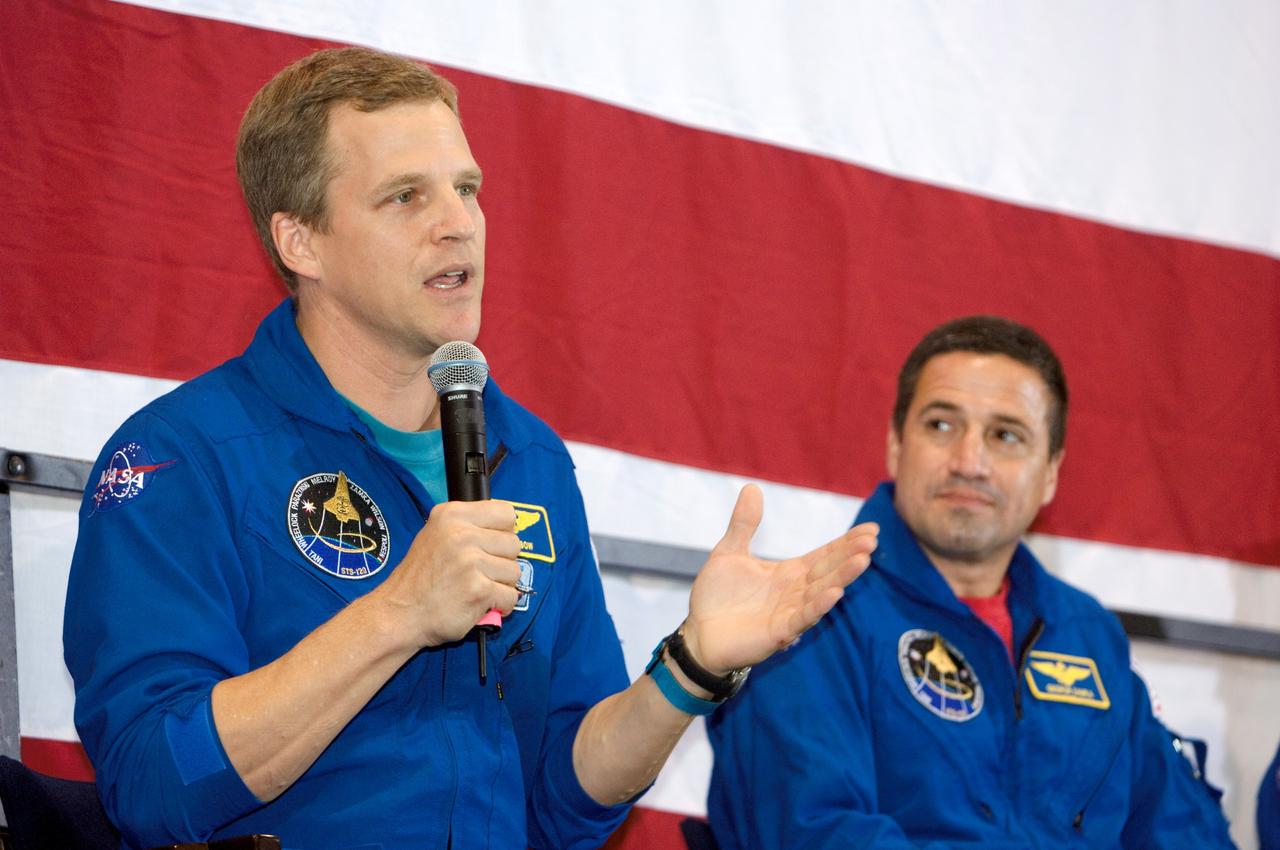
JSC2007-E-098006 (8 Nov. 2007) --- The crew of the STS-120 mission was welcomed home to Houston Nov. 8, following the landing of Space Shuttle Discovery in Florida on Nov. 7. Astronaut Scott Parazynski, who participated in all four STS-120 spacewalks, addresses well-wishers. Astronaut George Zamka, pilot, looks on. Not pictured are astronaut Pam Melroy, commander, and mission specialists Scott Parazynski, Stephanie Wilson, Doug Wheelock, Paolo Nespoli (ESA) and Clay Anderson (all out of frame). The astronauts were welcomed by family and friends during an afternoon ceremony at Houston's Ellington Field.
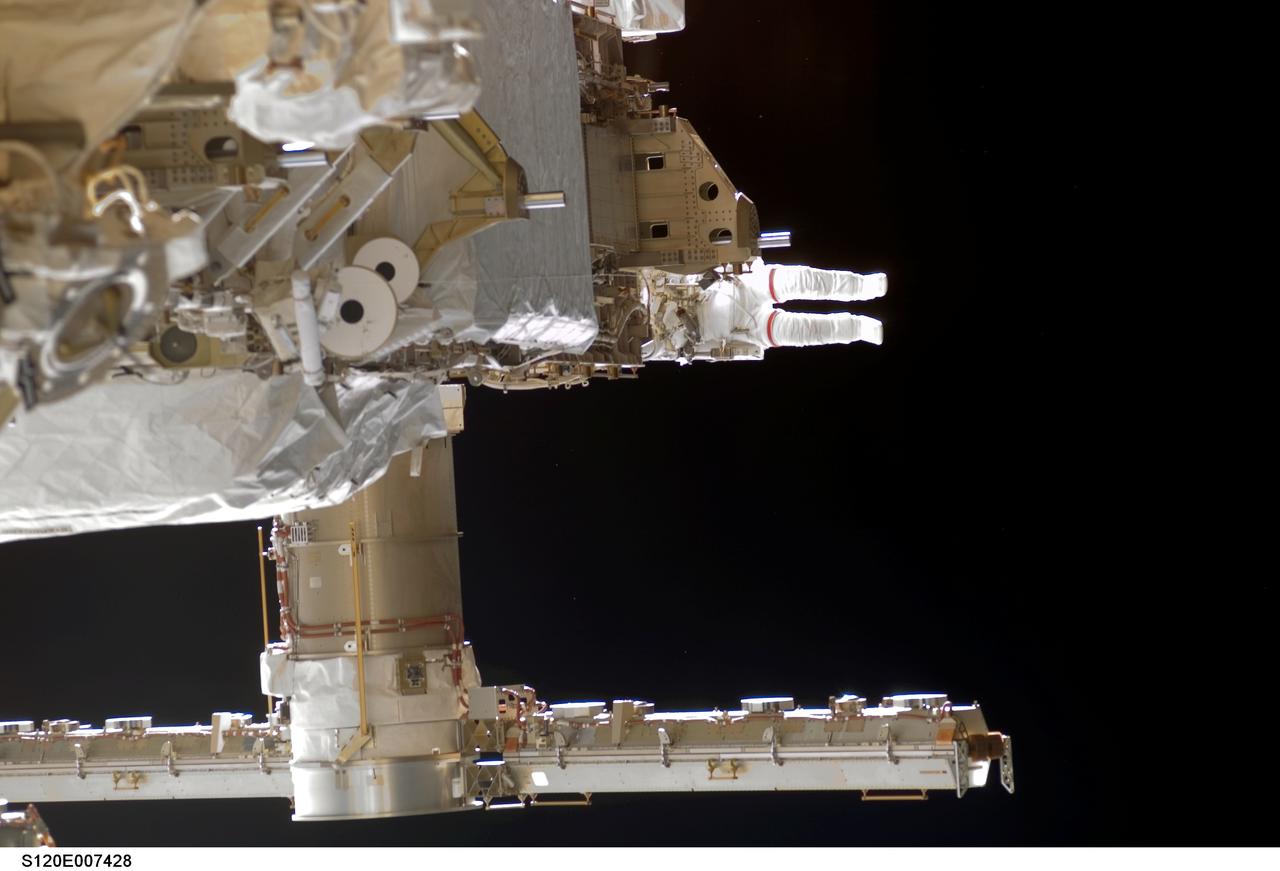
S120-E-007428 (30 Oct. 2007) --- Astronaut Scott Parazynski, STS-120 mission specialist, participates in the third scheduled session of extravehicular activity (EVA) as construction continues on the International Space Station. During the 7-hour, 8-minute spacewalk Parazynski and astronaut Doug Wheelock (out of frame), mission specialist, installed the P6 truss segment with its set of solar arrays to its permanent home, installed a spare main bus switching unit on a stowage platform, and performed a few get-ahead tasks. Also, Parazynski inspected the port Solar Alpha Rotary Joint (SARJ) to gather comparison data for the starboard rotary joint.
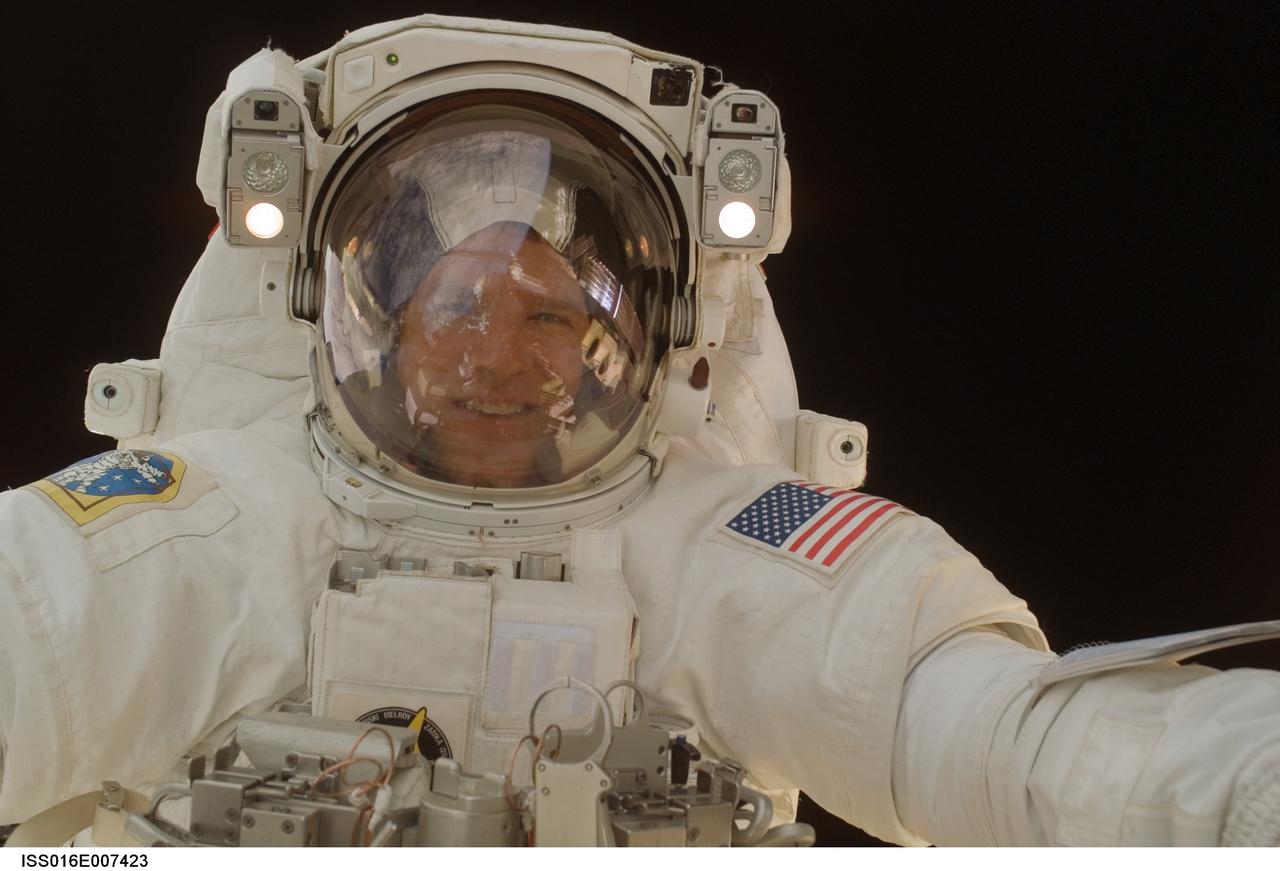
ISS016-E-007423 (30 Oct. 2007) --- Astronaut Scott Parazynski, STS-120 mission specialist, participates in the third scheduled session of extravehicular activity (EVA) as construction continues on the International Space Station. During the 7-hour, 8-minute spacewalk Parazynski and astronaut Doug Wheelock (out of frame), mission specialist, installed the P6 truss segment with its set of solar arrays to its permanent home, installed a spare main bus switching unit on a stowage platform, and performed a few get-ahead tasks. Also, Parazynski inspected the port Solar Alpha Rotary Joint (SARJ) to gather comparison data for the starboard rotary joint.
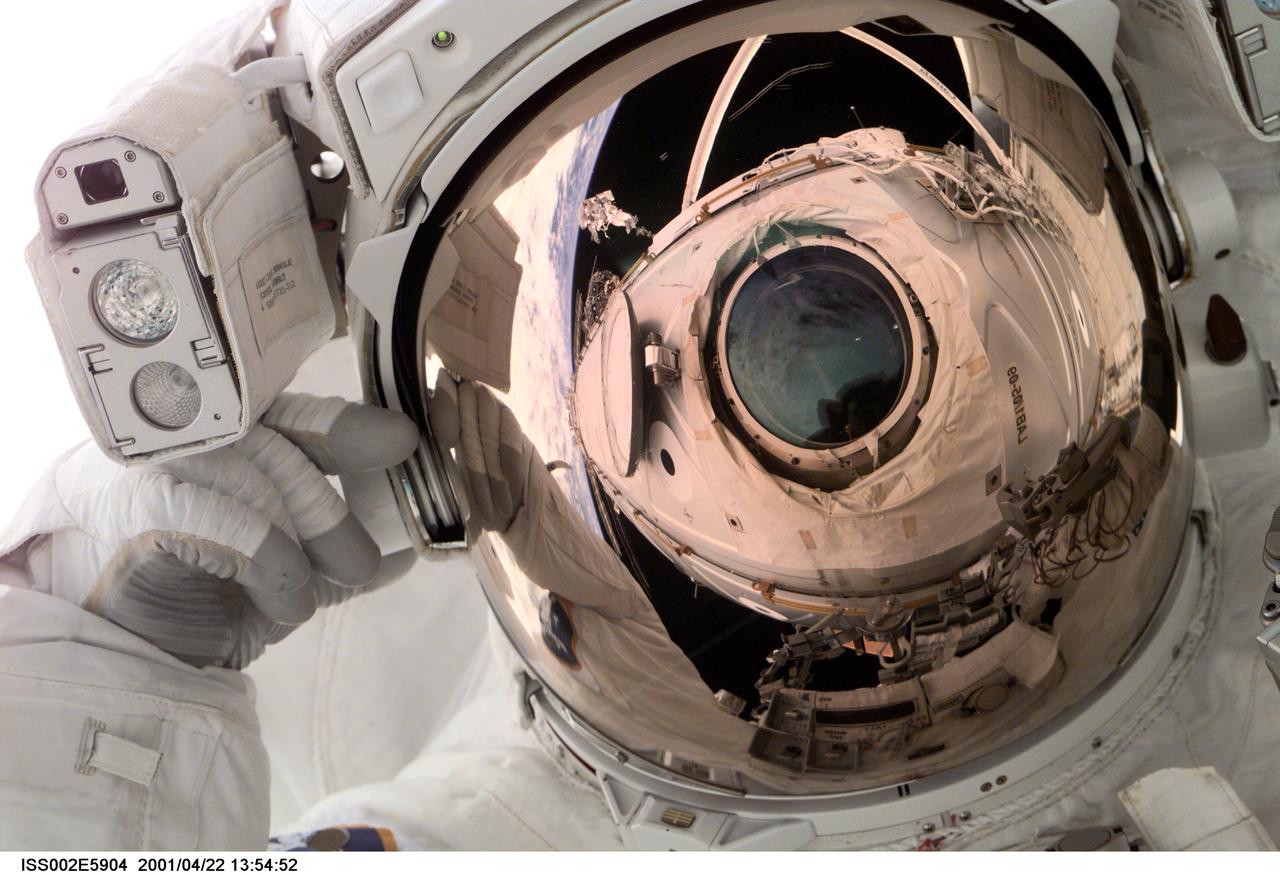
ISS002-E-05904 (24 April 2001) --- Astronaut Scott E. Parazynski, mission specialist, was photographed with a digital still camera by one of the Expedition Two crewmembers aboard the International Space Station (ISS) during the first of two scheduled STS-100 spacewalks. The window on Destiny through which the photo was made is reflected in Parazynski's gold helmet visor. Astronauts Parazynski and Chris A. Hadfield were working to install the Space Station Remote Manipulator System (SSRMS) or Canadarm2 during this extravehicular activity (EVA). Hadfield, representing the Canadian Space Agency (CSA), is reflected in the visor as well.
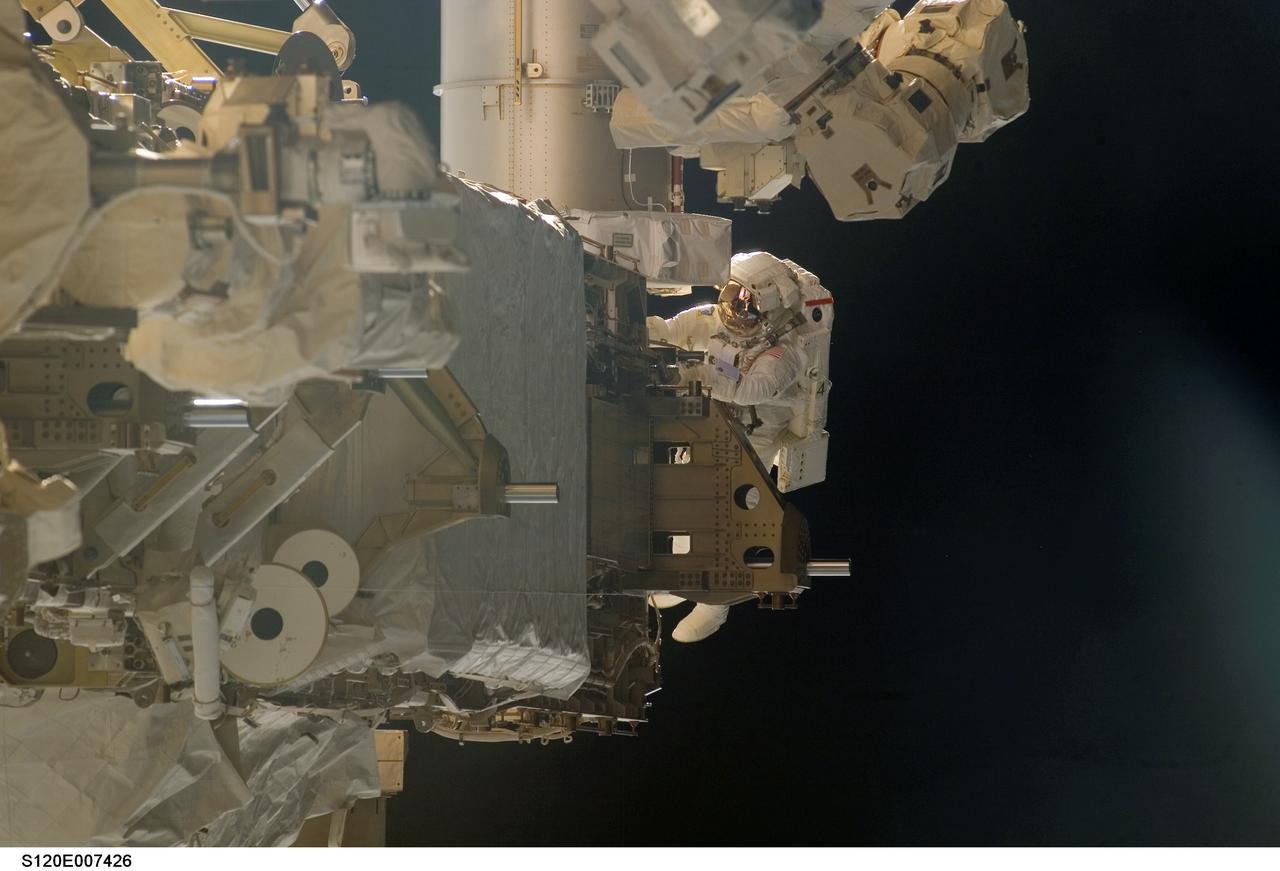
S120-E-007426 (30 Oct. 2007) --- Astronaut Scott Parazynski, STS-120 mission specialist, participates in the third scheduled session of extravehicular activity (EVA) as construction continues on the International Space Station. During the 7-hour, 8-minute spacewalk Parazynski and astronaut Doug Wheelock (out of frame), mission specialist, installed the P6 truss segment with its set of solar arrays to its permanent home, installed a spare main bus switching unit on a stowage platform, and performed a few get-ahead tasks. Also, Parazynski inspected the port Solar Alpha Rotary Joint (SARJ) to gather comparison data for the starboard rotary joint.
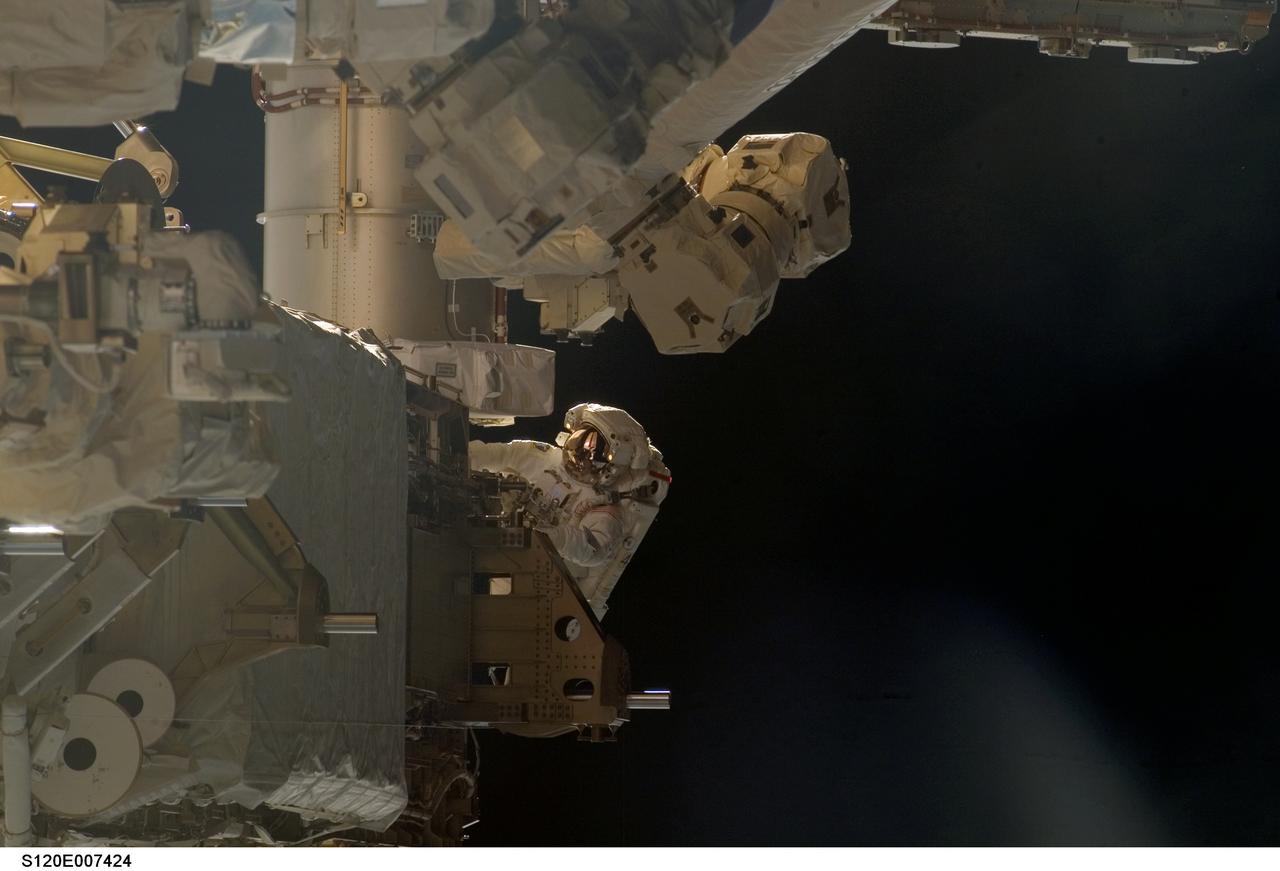
S120-E-007424 (30 Oct. 2007) --- Astronaut Scott Parazynski, STS-120 mission specialist, participates in the third scheduled session of extravehicular activity (EVA) as construction continues on the International Space Station. During the 7-hour, 8-minute spacewalk Parazynski and astronaut Doug Wheelock (out of frame), mission specialist, installed the P6 truss segment with its set of solar arrays to its permanent home, installed a spare main bus switching unit on a stowage platform, and performed a few get-ahead tasks. Also, Parazynski inspected the port Solar Alpha Rotary Joint (SARJ) to gather comparison data for the starboard rotary joint.
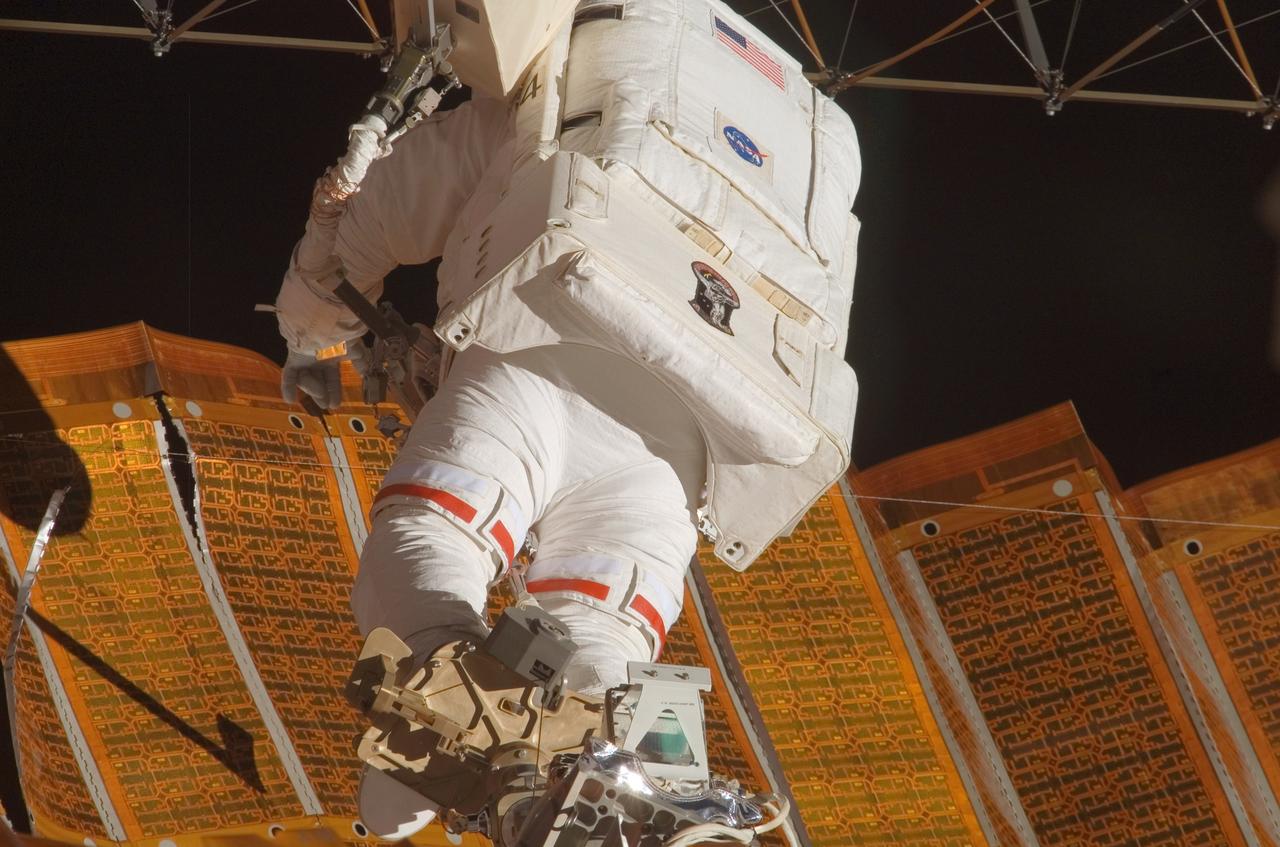
While anchored to a foot restraint on the end of the Orbiter Boom Sensor System (OBSS), astronaut Scott Parazynski, STS-120 mission specialist, participated in the mission's fourth session of extravehicular activity (EVA) while Space Shuttle Discovery was docked with the International Space Station (ISS). During the 7-hour and 19-minute space walk, Parazynski cut a snagged wire and installed homemade stabilizers designed to strengthen the structure and stability of the damaged P6 4B solar array wing. Astronaut Doug Wheelock (out of frame), mission specialist, assisted from the truss by keeping an eye on the distance between Parazynski and the array. Once the repair was complete, flight controllers on the ground successfully completed the deployment of the array.
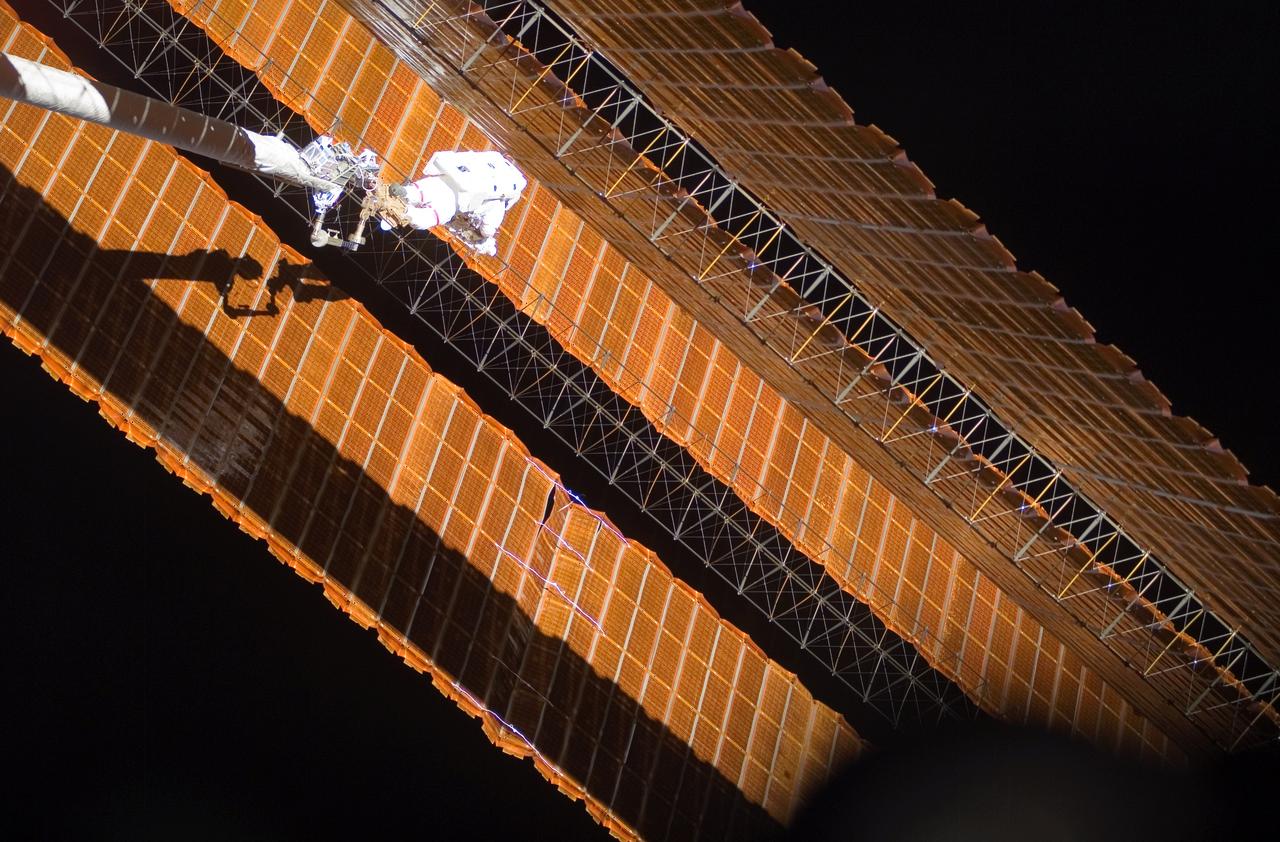
While anchored to a foot restraint on the end of the Orbiter Boom Sensor System (OBSS), astronaut Scott Parazynski, STS-120 mission specialist, participated in the mission's fourth session of extravehicular activity (EVA) while Space Shuttle Discovery was docked with the International Space Station (ISS). During the 7-hour and 19-minute space walk, Parazynski cut a snagged wire and installed homemade stabilizers designed to strengthen the structure and stability of the damaged P6 4B solar array wing. Astronaut Doug Wheelock (out of frame), mission specialist, assisted from the truss by keeping an eye on the distance between Parazynski and the array. Once the repair was complete, flight controllers on the ground successfully completed the deployment of the array.
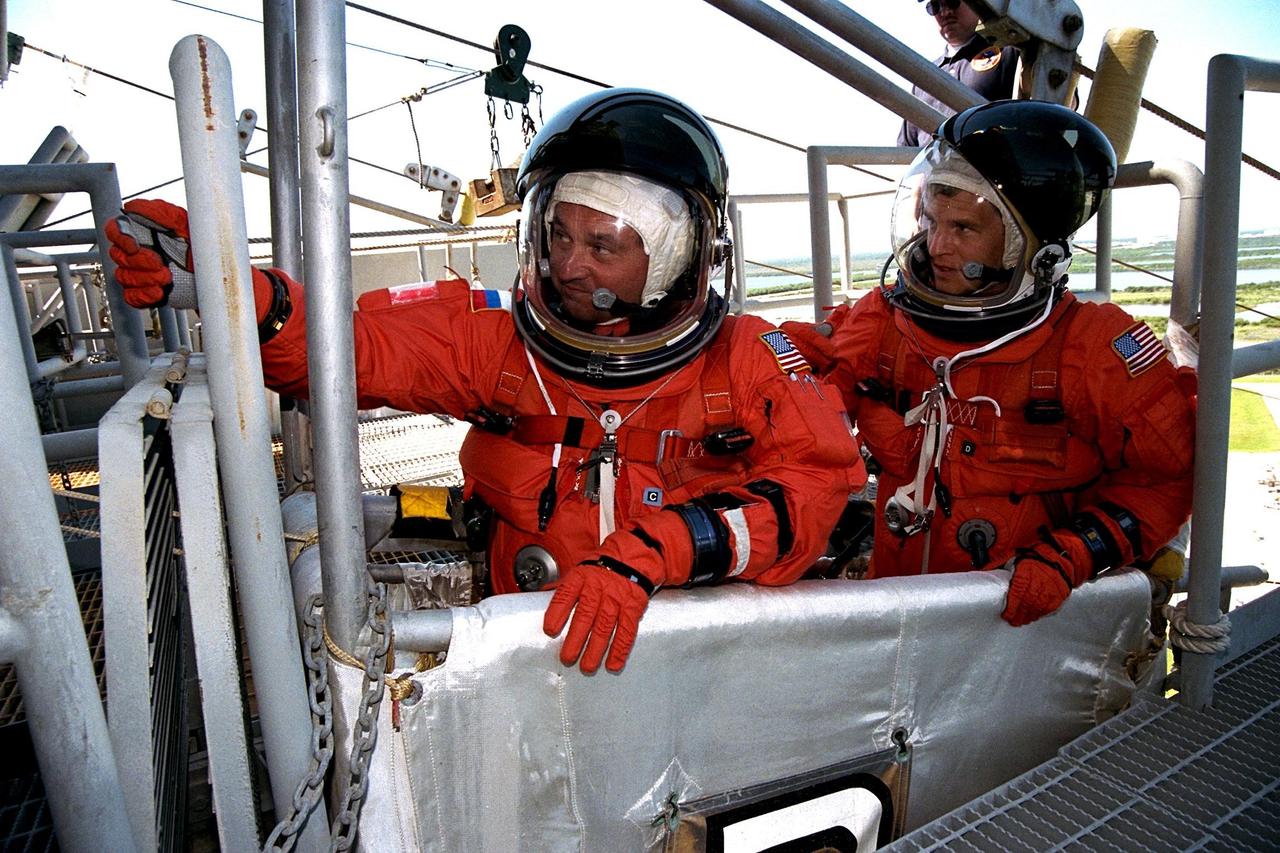
KENNEDY SPACE CENTER, Fla. -- STS-86 Mission Specialists Vladimir Georgievich Titov of the Russian Space Agency, at left, and Scott E. Parazynski practice emergency egress procedures in a slidewire basket as part of Terminal Countdown Demonstration Test (TCDT) activities at Launch Pad 39A. Titov and Parazynski are scheduled to perform a spacewalk during the STS-86 mission, which will be the seventh docking of the Space Shuttle with the Russian Space Station Mir. Liftoff of the Space Shuttle Atlantis on Mission STS-86 is targeted for Sept. 25
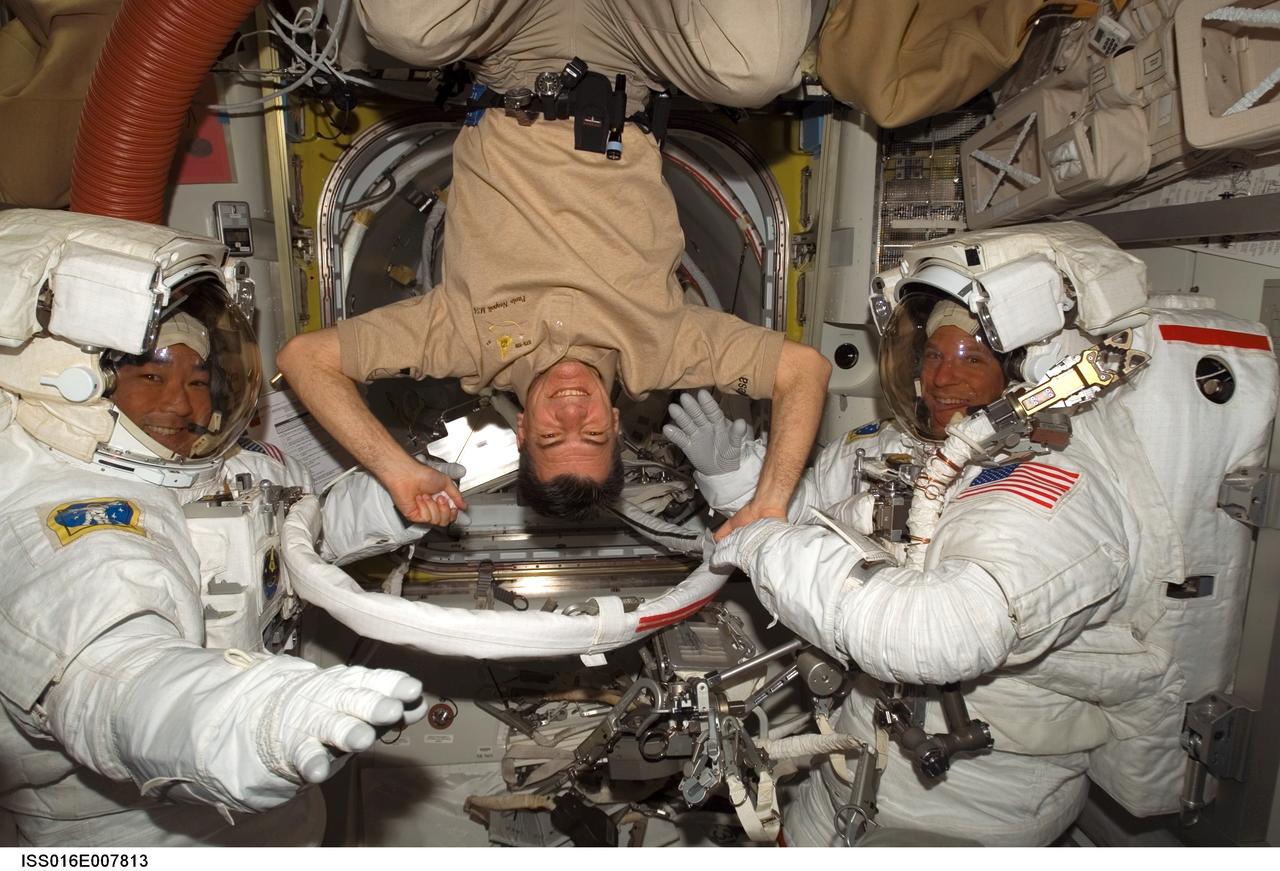
ISS016-E-007813 (28 Oct. 2007) --- European Space Agency (ESA) astronaut Paolo Nespoli (center), STS-120 mission specialist, turns a flip for astronauts Scott Parazynski (right), STS-120 mission specialist, and Daniel Tani, Expedition 16 flight engineer, as they prepare for the mission's second session of extravehicular activity (EVA) in the Quest Airlock of the International Space Station while Space Shuttle Discovery is docked with the station. Parazynski and Tani are attired in their Extravehicular Mobility Unit (EMU) spacesuits.
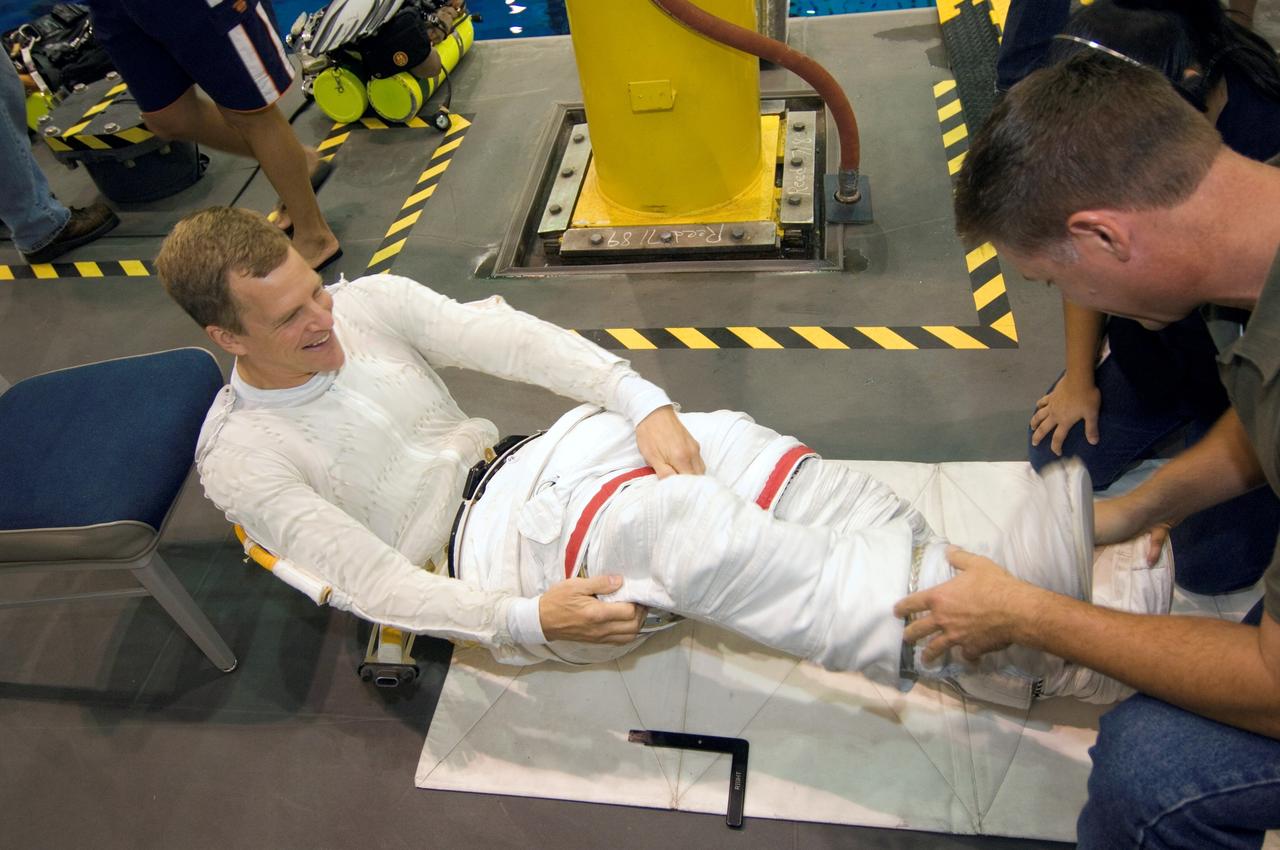
JSC2007-E-46531 (18 Sept. 2007) --- Astronaut Scott E. Parazynski, STS-120 mission specialist, dons a training version of the Extravehicular Mobility Unit (EMU) spacesuit prior to being submerged in the waters of the Neutral Buoyancy Laboratory (NBL) near the Johnson Space Center. Astronaut Douglas H. Wheelock, mission specialist, assisted Parazynski.
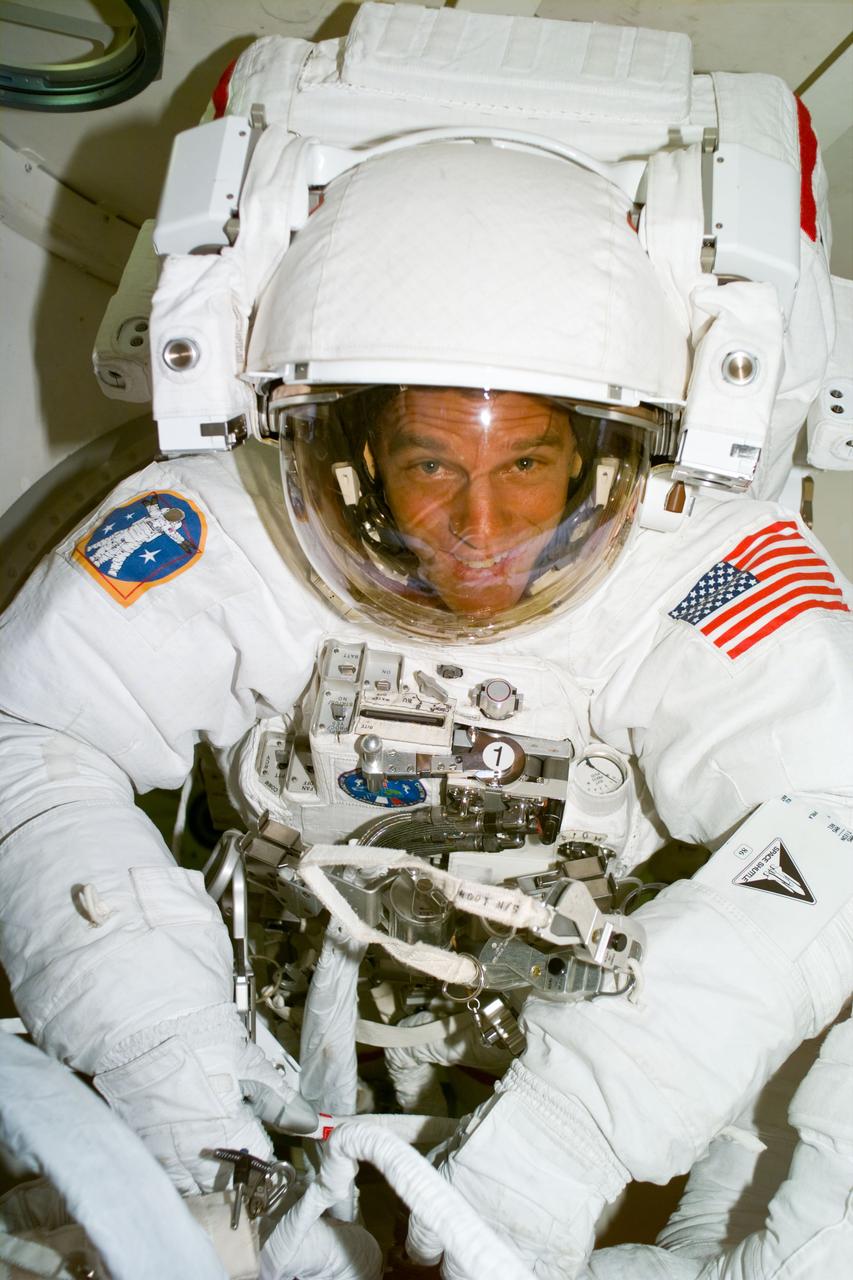
STS086E5383 (1 Oct. 1997) --- This still photo shows Scott F. Parazynski, mission specialist, still suited up after performing an Extravehicular Activity during the STS-86 mission. Parazynski was joined in the EVA by Vladimir G. Titov, mission specialist representing the Russian Space Agency (RSA), out of frame. It was the first U.S. vehicle-based spacewalk involving an international astronaut. The view was captured at 23:11:05 GMT on October 1, 1997.
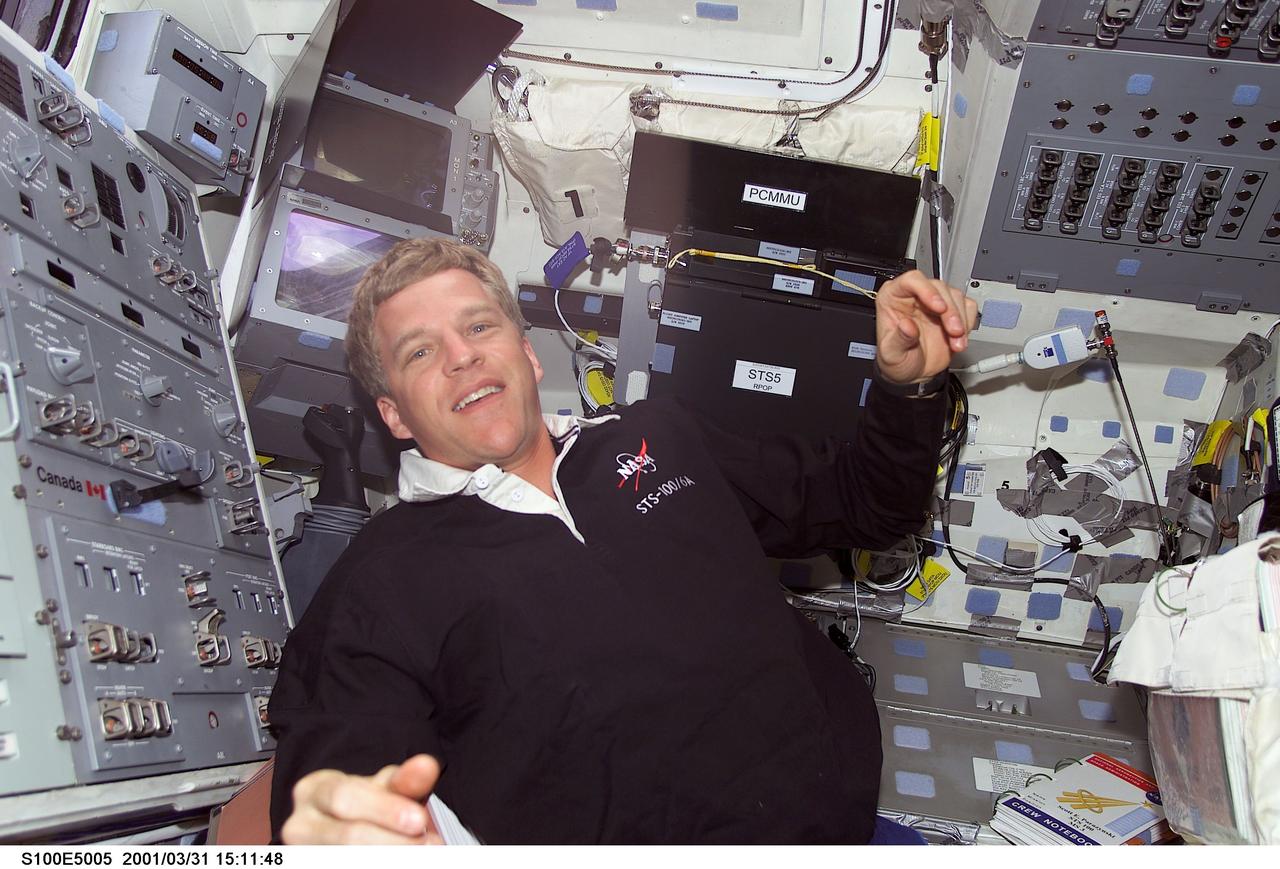
S100-E-5005 (20 April 2001)--- Astronaut Scott E. Parazynski, mission specialist for STS-100, is pictured on the aft flight deck of the Space Shuttle Endeavour as the shuttle steadily makes its way toward the International Space Station (ISS) following an April 19 launch. Part of Parazynski's training has been geared toward preparing him for scheduled extravehicular activity (EVA) later in the mission. This image was recorded by a fellow crew member using a digital still camera.
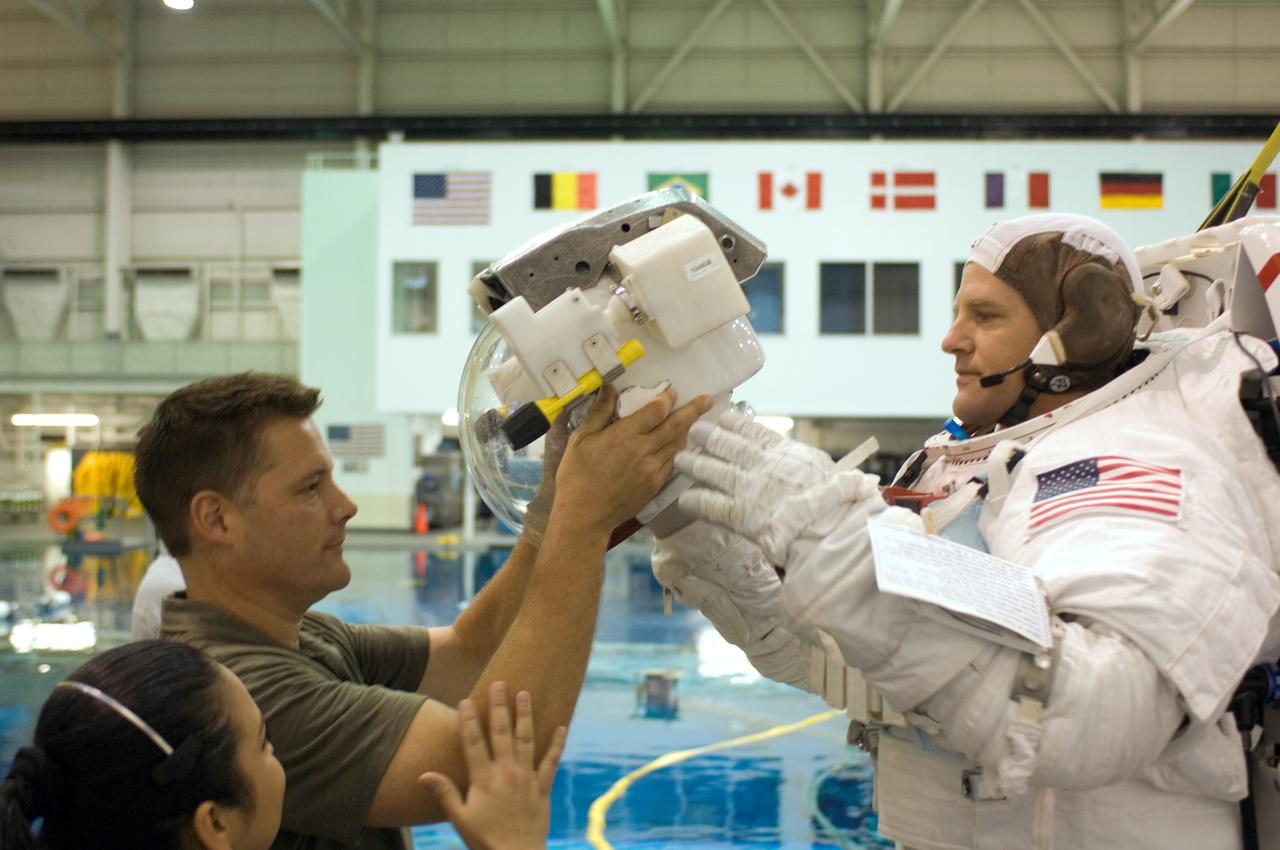
JSC2007-E-46545 (18 Sept. 2007) --- Astronaut Scott E. Parazynski, STS-120 mission specialist, dons a training version of the Extravehicular Mobility Unit (EMU) spacesuit prior to being submerged in the waters of the Neutral Buoyancy Laboratory (NBL) near the Johnson Space Center. Astronaut Douglas H. Wheelock, mission specialist, assisted Parazynski.
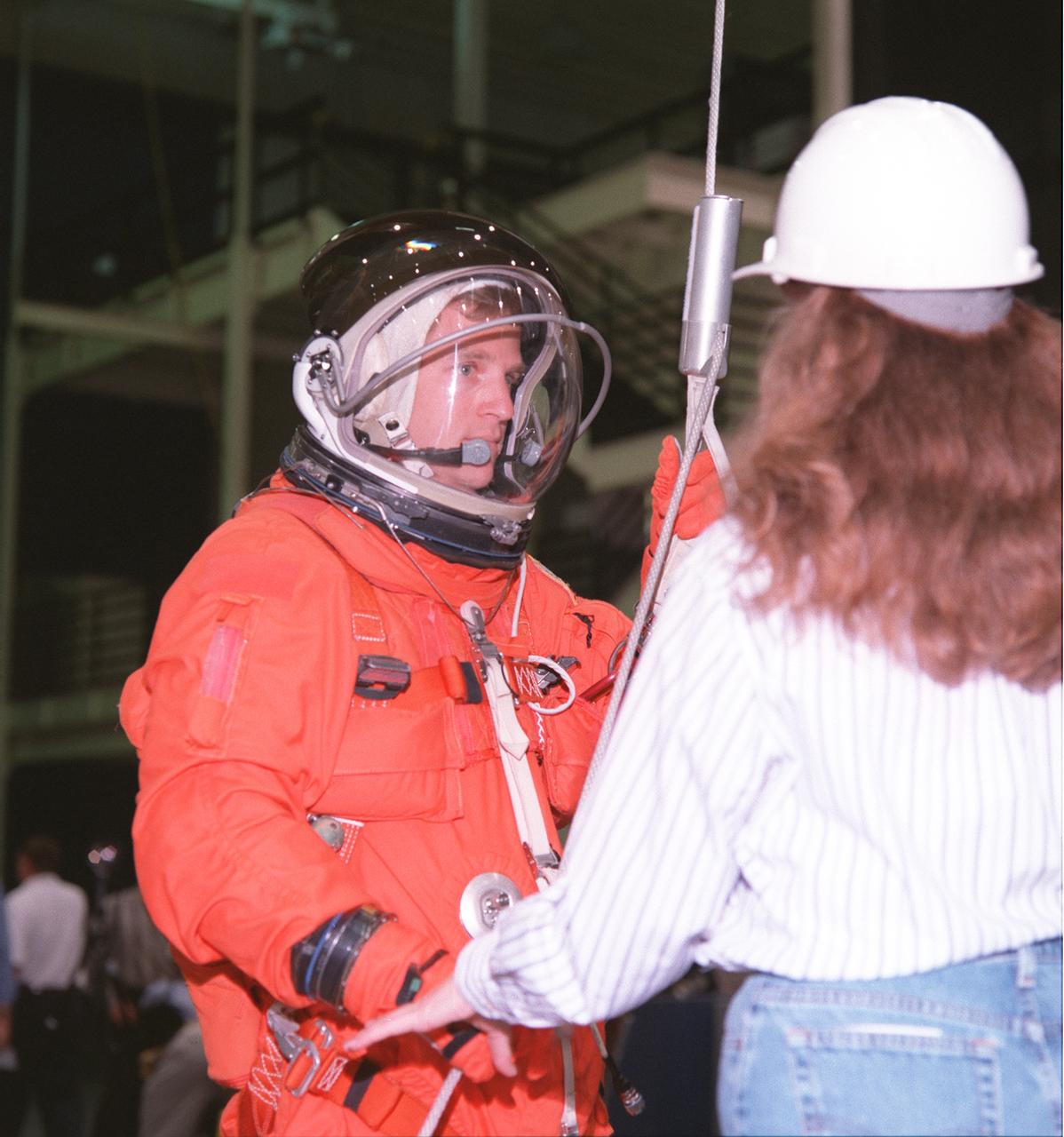
S98-07975 (5 June 1998) --- Astronaut Scott E. Parazynski, STS-95 mission specialist, is briefed by crew trainer Sharon Jones during a lengthy training session in the Johnson Space Center's systems integration facility. Parazynski, four other NASA astronauts, including a European, and two payload specialists, are scheduled to be launched into space on Oct. 29 for a nine-day mission in Earth orbit.
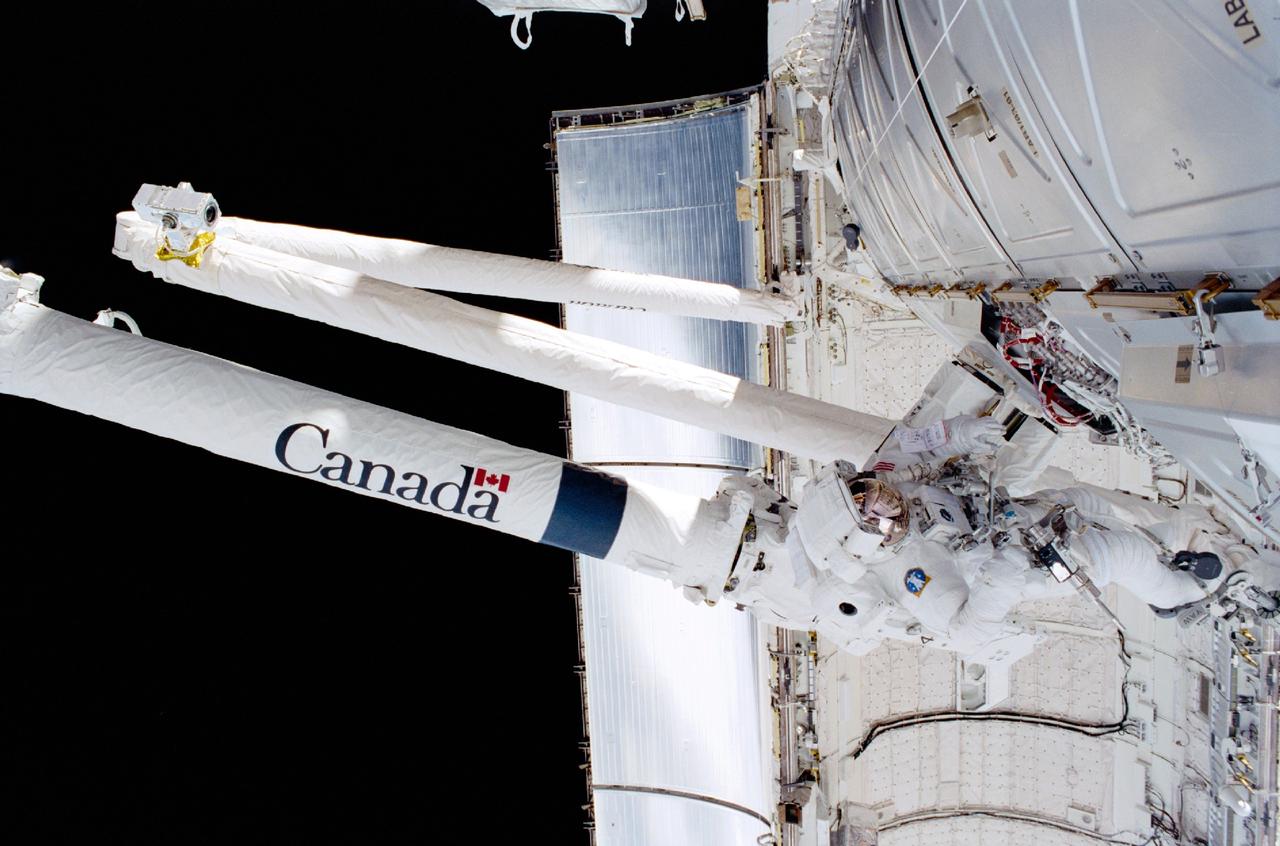
STS100-396-007 (19 April-1 May 2001) --- Astronaut Scott E. Parazynski, STS-100 mission specialist, works with cables associated with the Space Station Remote Manipulator System (SSRMS) or Canadarm2 during one of two days of extravehicular activity (EVA). Parazynski shared both space walks with astronaut Chris A. Hadfield of the Canadian Space Agency (CSA).
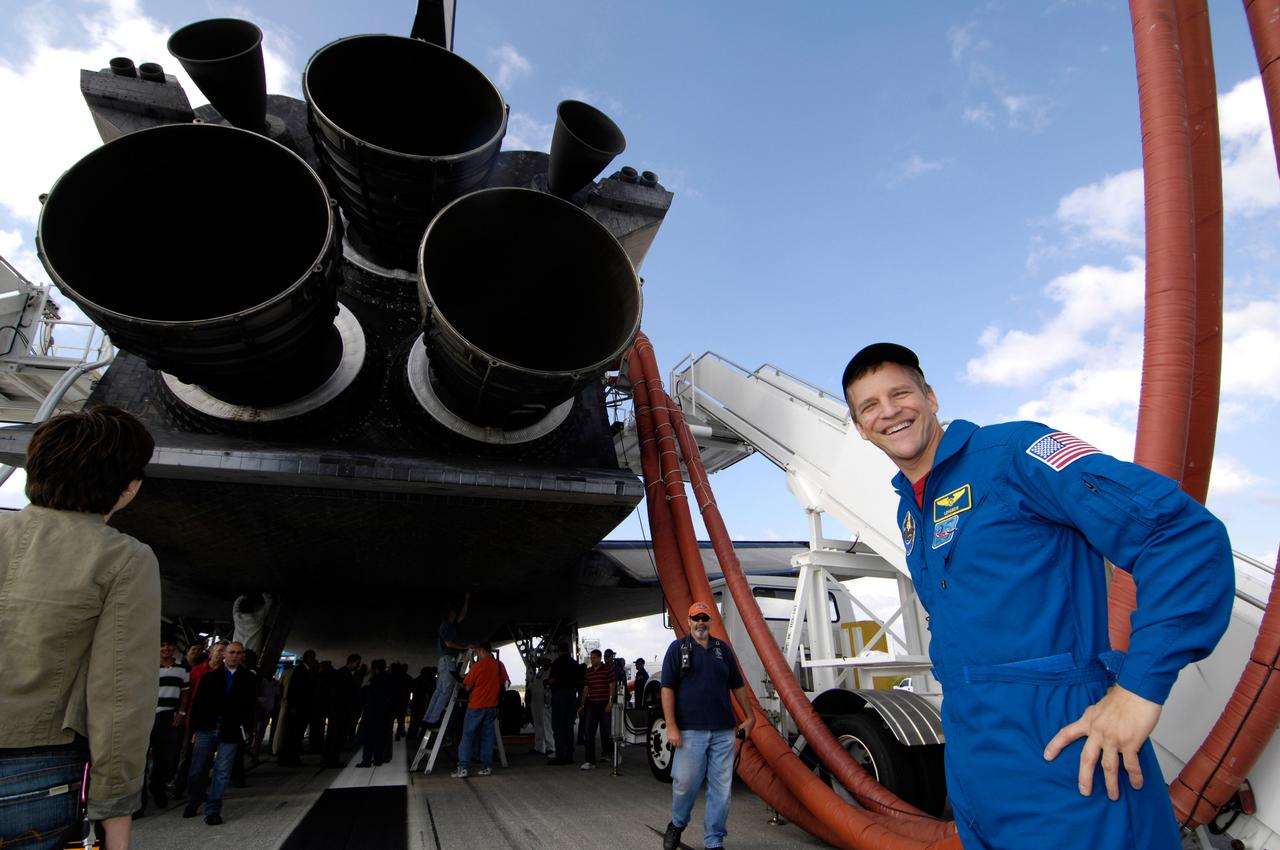
Astronaut Scott Parazynski smiles for a photo while he and the crew of STS-120 walk around and look at the underside of the space shuttle Discovery shortly after their 1:01pm EST landing at NASA's Kennedy Space Center in Florida. Parazynski performed a repair of a damaged solar array during one of his spacewalks at the International Space Station. Photo Credit: "NASA/Bill Ingalls"

KENNEDY SPACE CENTER, FLA. -- Astronaut Scott Parazynski smiles for a photo while he and the crew of STS-120 walk around and look at the underside of the space shuttle Discovery shortly after their 1:01 p.m. EST landing at NASA's Kennedy Space Center in Florida. Parazynski performed a repair of a damaged solar array during one of his spacewalks at the International Space Station. Photo credit: NASA/Bill Ingalls
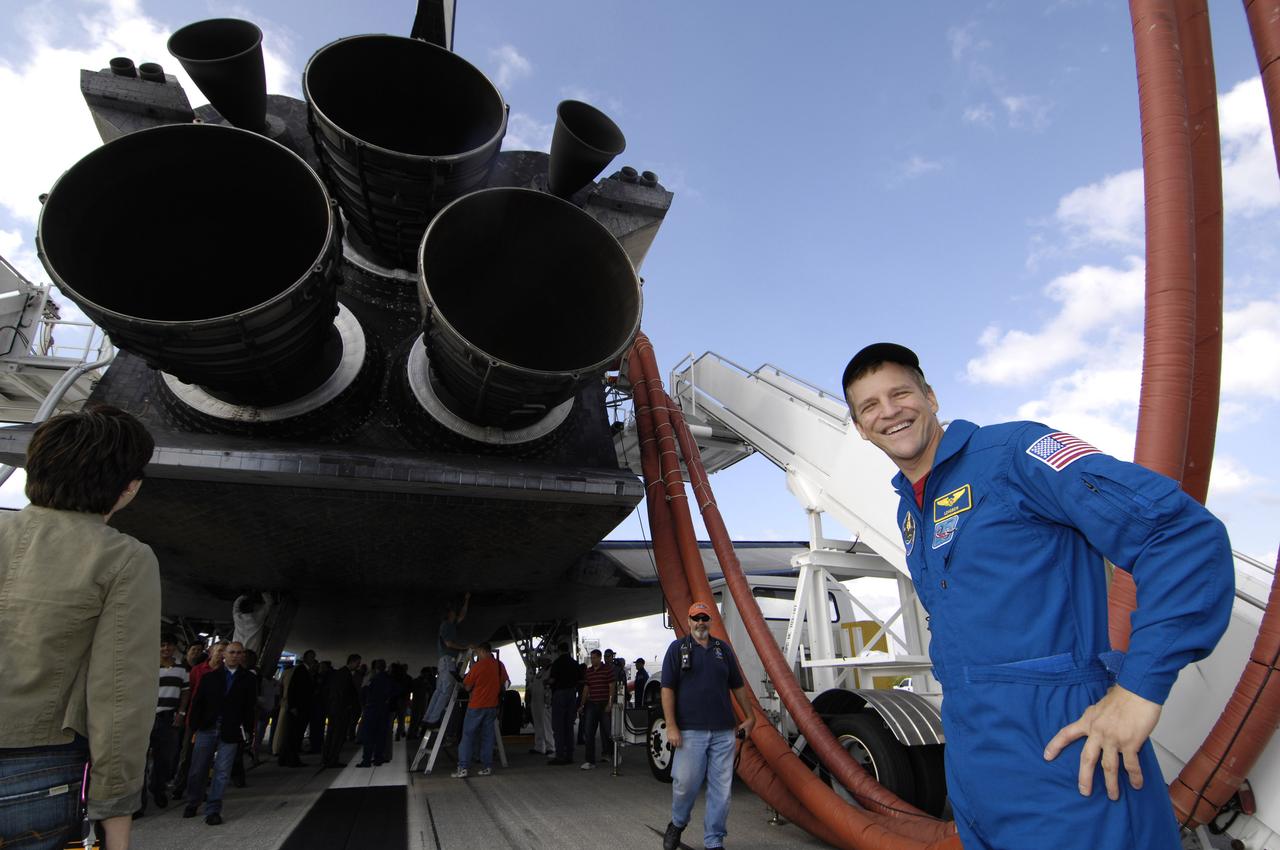
Astronaut Scott Parazynski smiles for a photo while he and the crew of STS-120 walk around and look at the underside of the space shuttle Discovery shortly after their 1:01pm EST landing at NASA's Kennedy Space Center in Florida. Parazynski performed a repair of a damaged solar array during one of his spacewalks at the International Space Station. Photo Credit: "NASA/Bill Ingalls"
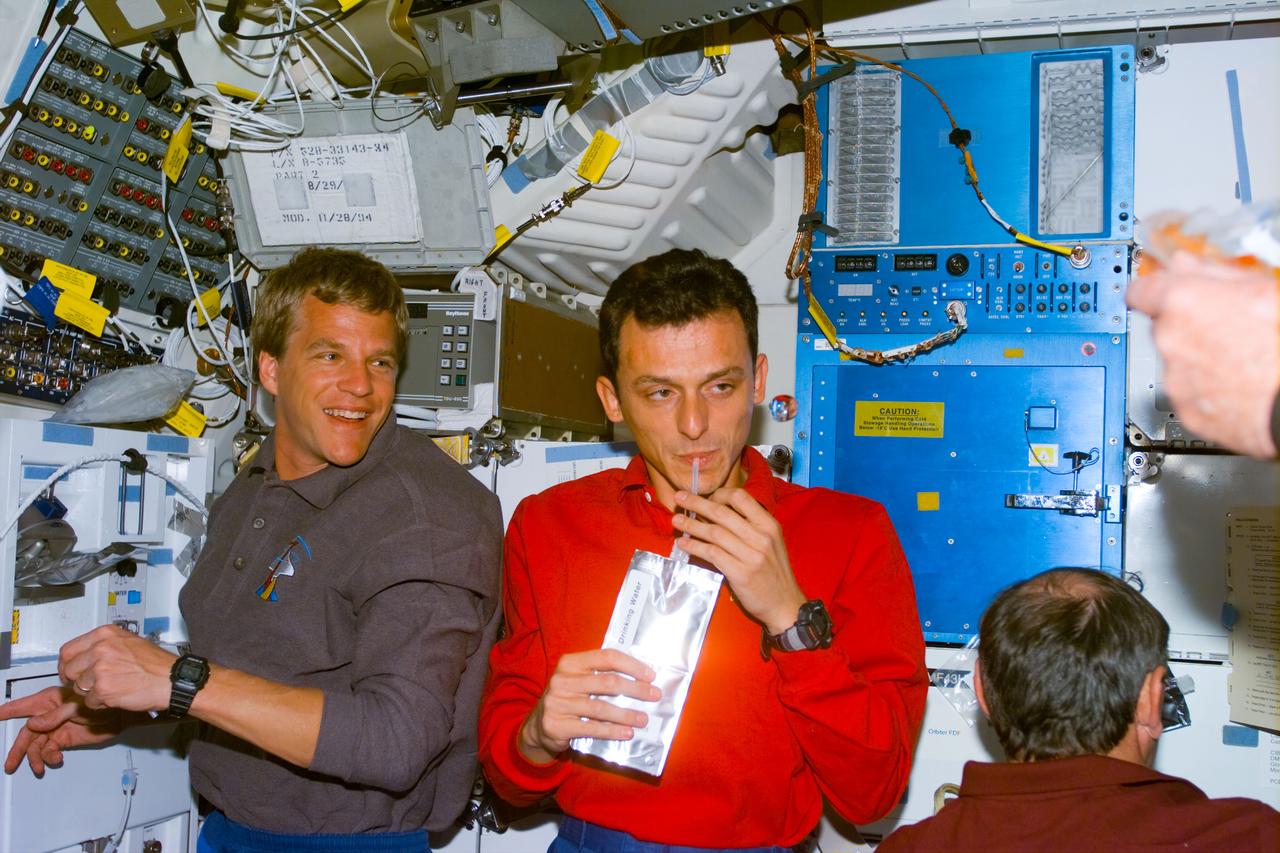
S95-E-5004 (29 Oct. 1998) --- Astronauts Scott E. Parazynski (left) and Pedro Duque, both STS-95 mission specialists, look toward astronaut Curtis L. Brown, commander, on Discovery's middeck during flight day one activity. Parazynski stands next to the galley, which Duque, who represents the European Space Agency (ESA), used to rehydrate the beverage container he holds. The photo was made with an electronic still camera (ESC) at 10:05:27 GMT, Oct. 29.
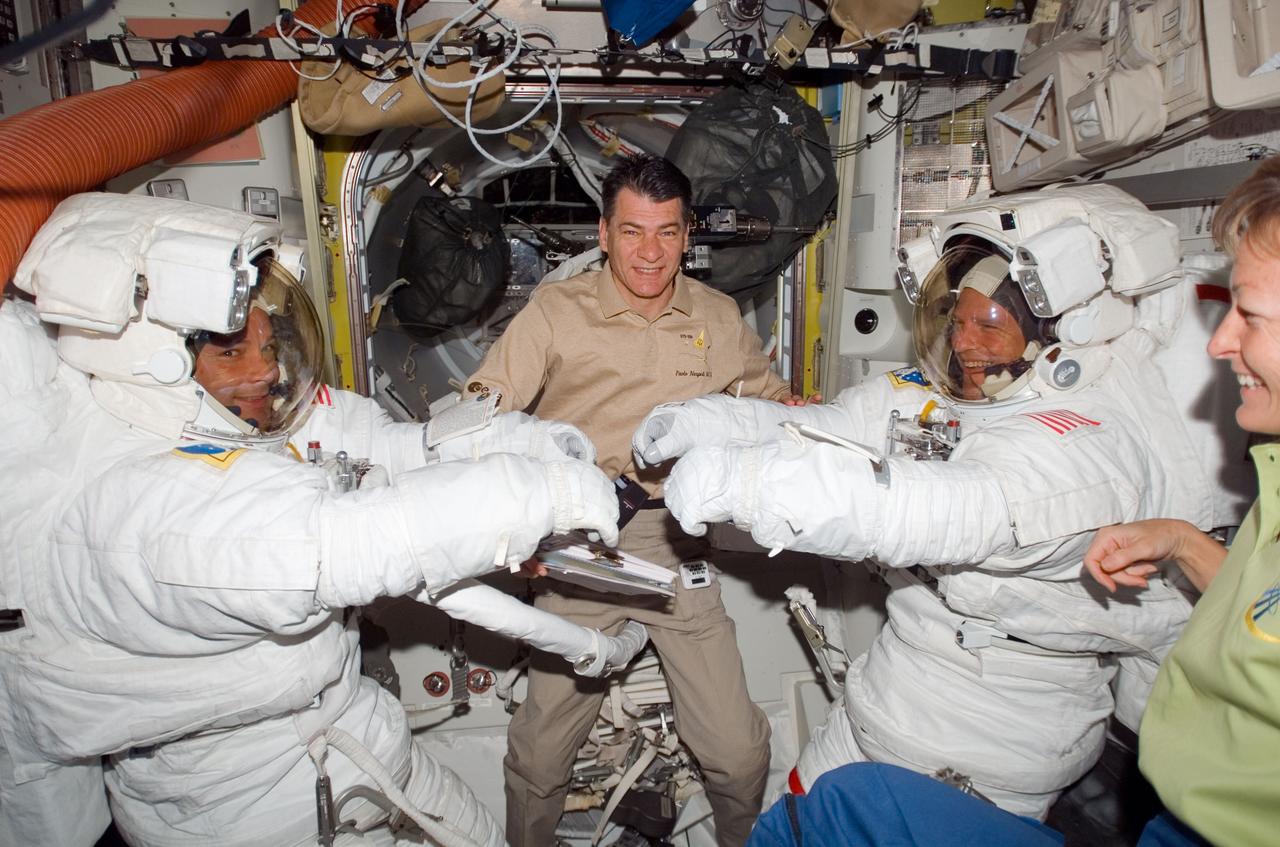
ISS016-E-006731 (26 Oct. 2007) --- Attired in their Extravehicular Mobility Unit (EMU) spacesuits, astronauts Doug Wheelock (left) and Scott Parazynski, STS-120 mission specialists, prepare for the mission's first session of extravehicular activity (EVA) in the Quest Airlock of the International Space Station while Space Shuttle Discovery is docked with the station. European Space Agency (ESA) astronaut Paolo Nespoli, mission specialist, assisted Wheelock and Parazynski. Astronaut Peggy A. Whitson (partially out of frame), Expedition 16 commander, is visible at right.
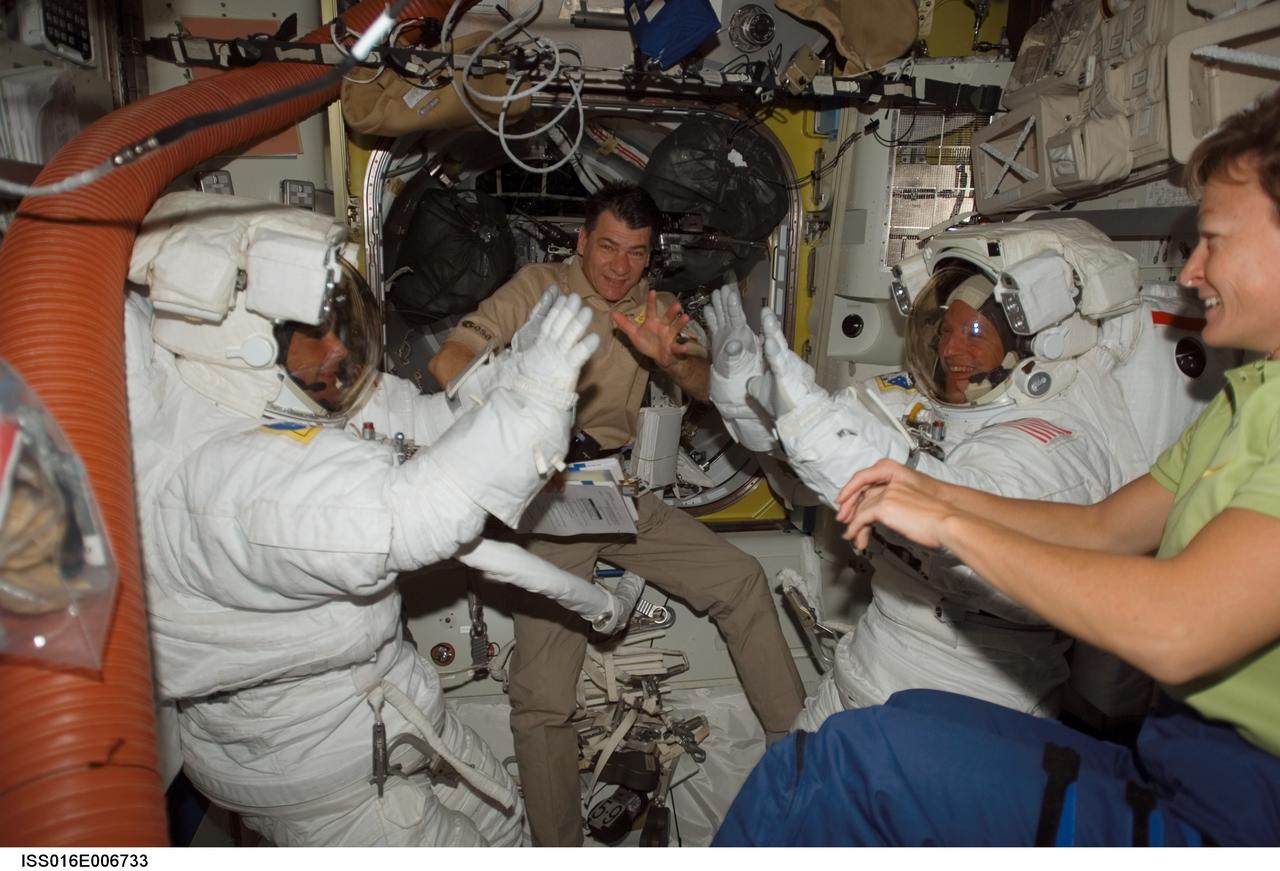
ISS016-E-006733 (26 Oct. 2007) --- Attired in their Extravehicular Mobility Unit (EMU) spacesuits, astronauts Doug Wheelock (left) and Scott Parazynski, STS-120 mission specialists, prepare for the mission's first session of extravehicular activity (EVA) in the Quest Airlock of the International Space Station while Space Shuttle Discovery is docked with the station. European Space Agency (ESA) astronaut Paolo Nespoli, mission specialist, assisted Wheelock and Parazynski. Astronaut Peggy A. Whitson (partially out of frame), Expedition 16 commander, is visible at right.
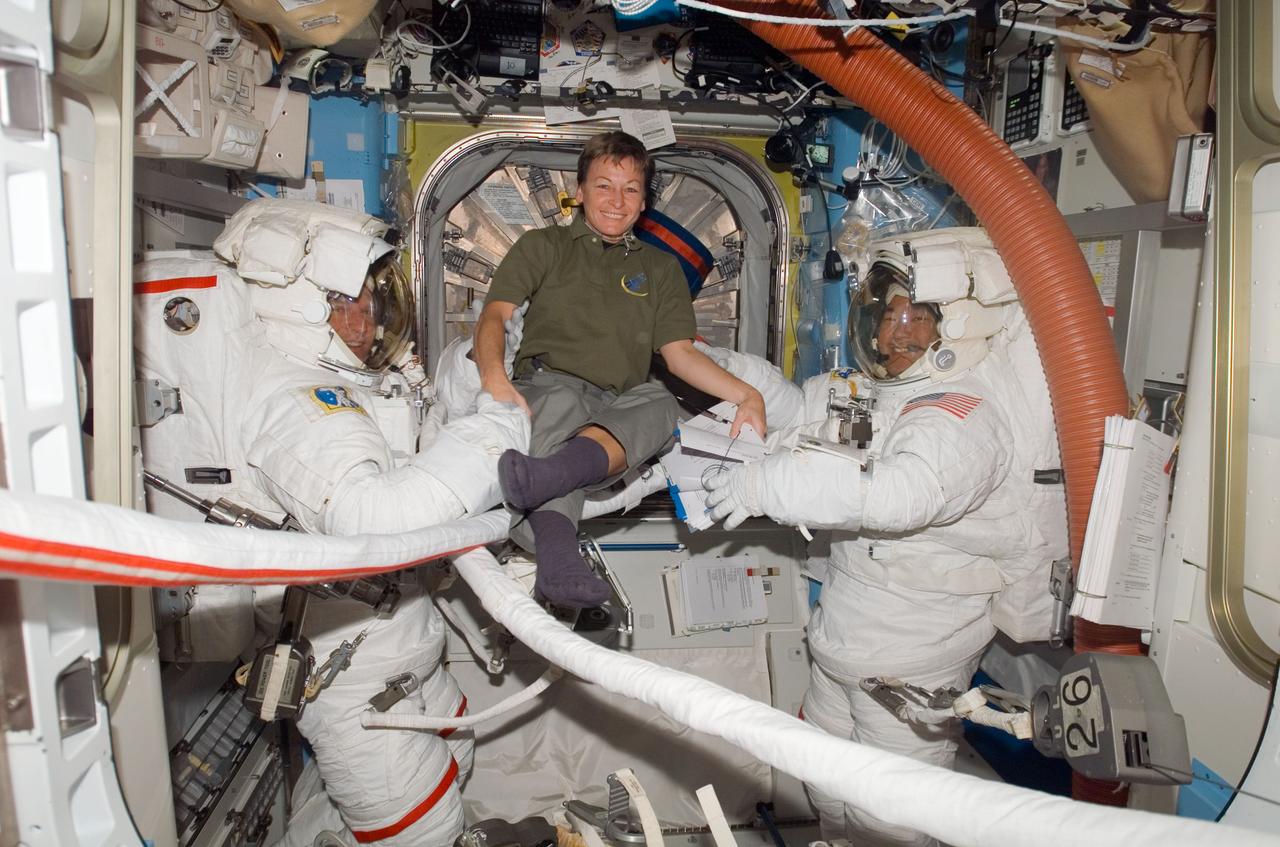
ISS016-E-007808 (28 Oct. 2007) --- Astronaut Peggy A. Whitson, Expedition 16 commander, takes a moment to pose for a photo with astronauts Scott Parazynski (left), STS-120 mission specialist, and Daniel Tani, Expedition 16 flight engineer, as they prepare for the mission's second session of extravehicular activity (EVA) in the Quest Airlock of the International Space Station while Space Shuttle Discovery is docked with the station. Parazynski and Tani are attired in their Extravehicular Mobility Unit (EMU) spacesuits.
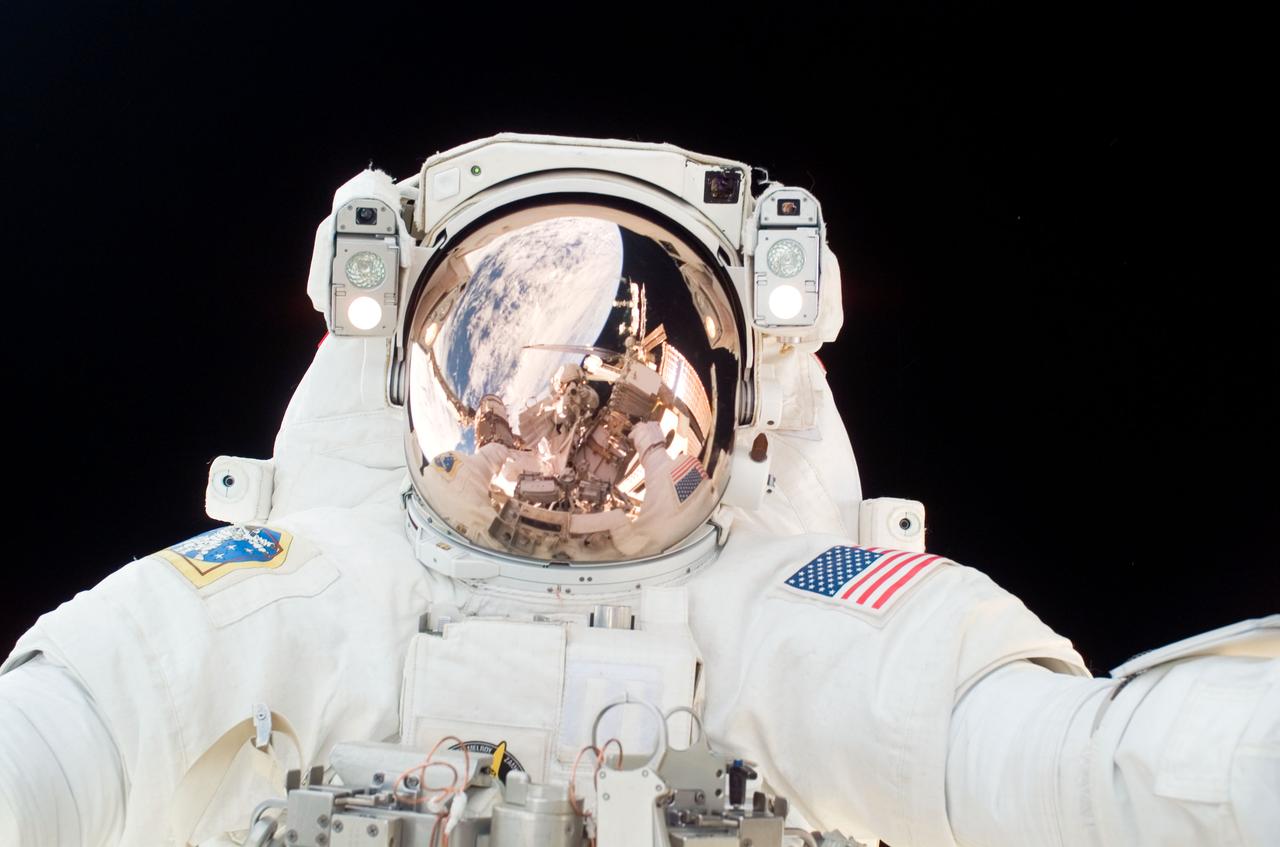
ISS016-E-007421 (30 Oct. 2007) --- Astronaut Scott Parazynski, STS-120 mission specialist, participates in the third scheduled session of extravehicular activity (EVA) as construction continues on the International Space Station. During the 7-hour, 8-minute spacewalk Parazynski and astronaut Doug Wheelock (out of frame), mission specialist, installed the P6 truss segment with its set of solar arrays to its permanent home, installed a spare main bus switching unit on a stowage platform, and performed a few get-ahead tasks. Also, Parazynski inspected the port Solar Alpha Rotary Joint (SARJ) to gather comparison data for the starboard rotary joint. Various components of the station are visible in the reflections in Parazynski's helmet visor.
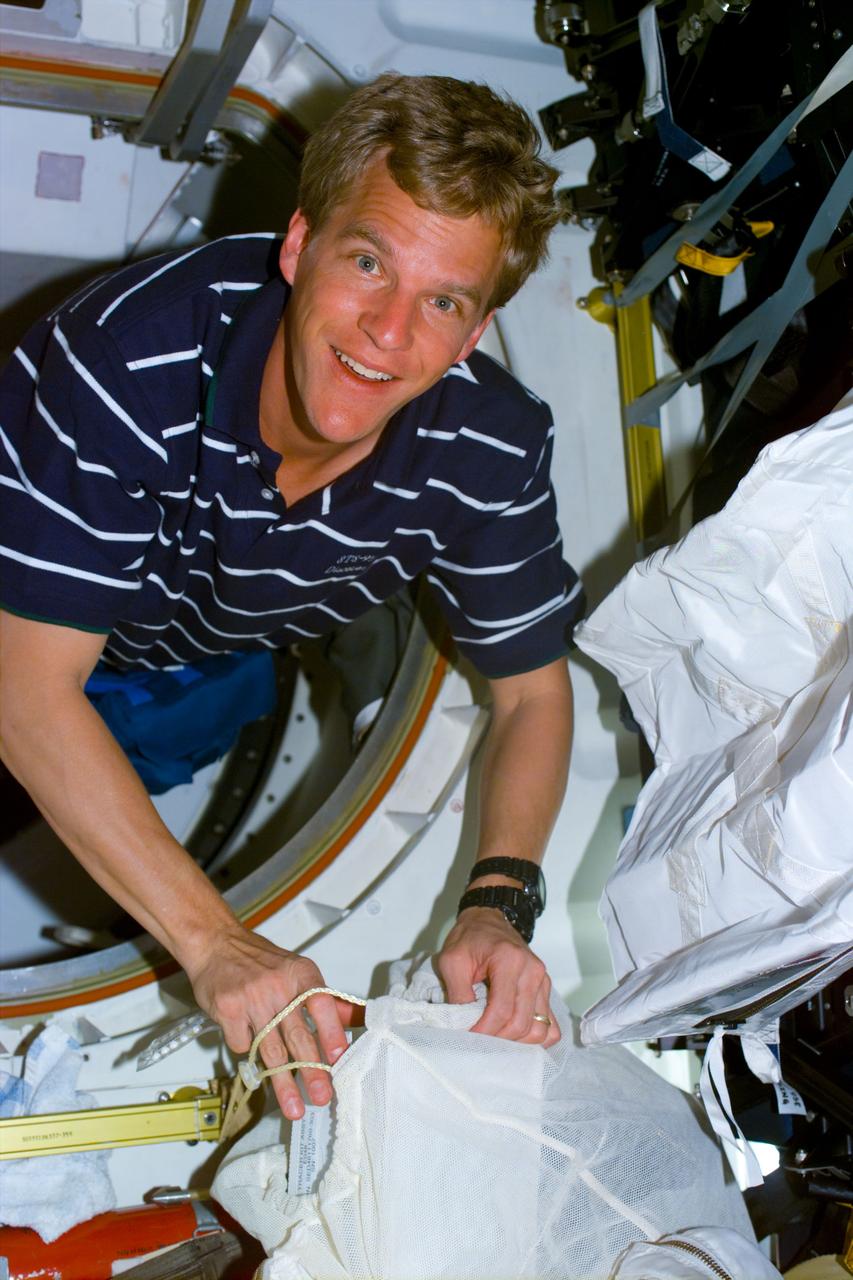
STS095-E-5052 (30 Oct. 1998) --- Astronaut Scott E. Parazynski, STS-95 mission specialist, emerges from the tunnel that connects SPACEHAB to Discovery's middeck during flight day two activity. The photo was taken with an electronic still camera (ESC) at 10:42:30, Oct. 30.
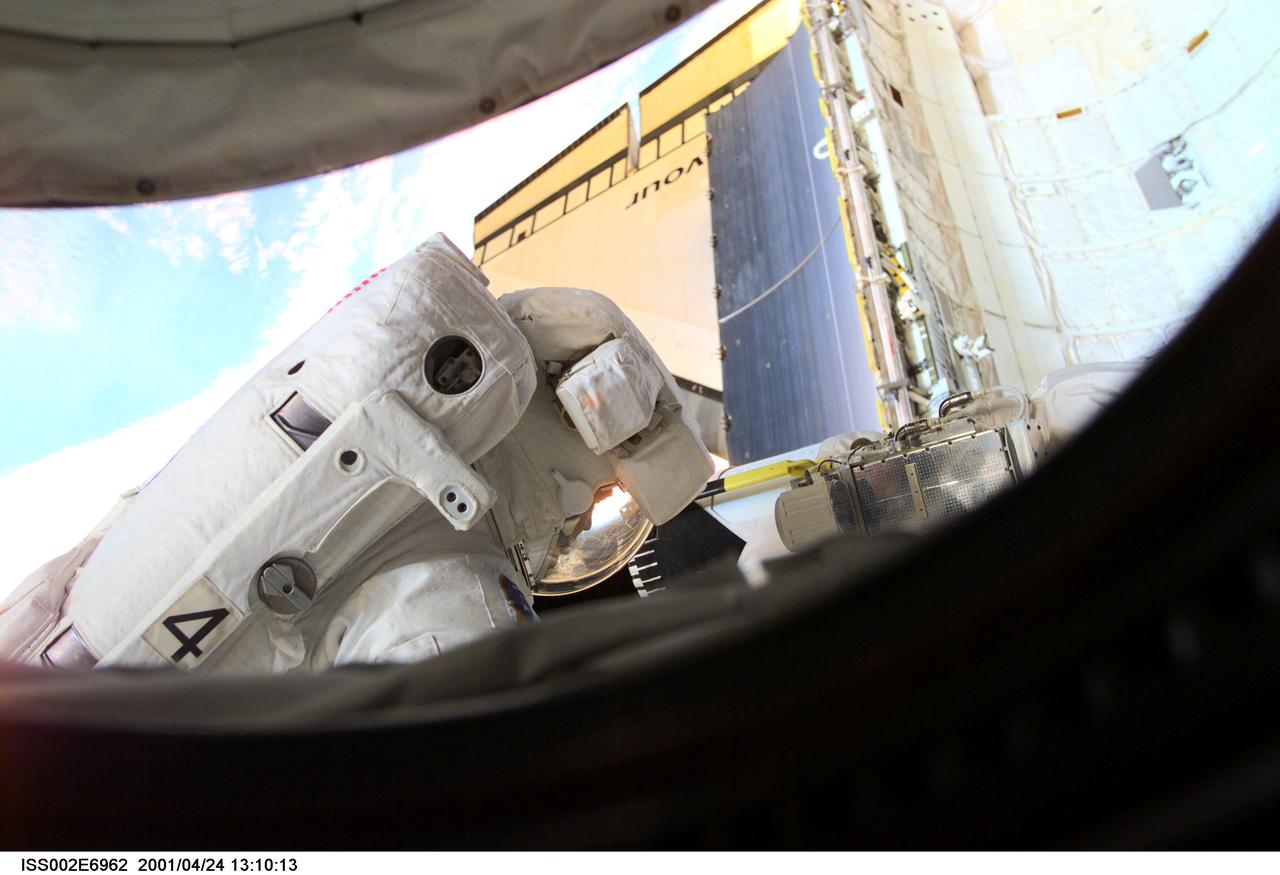
ISS002-E-6962 (24 April 2001) --- Astronaut Scott E. Parazynski, STS-100 mission specialist, performs a task during the second space walk (EVA-2). A digital still camera on the International Space Station (ISS) was used to record this image.
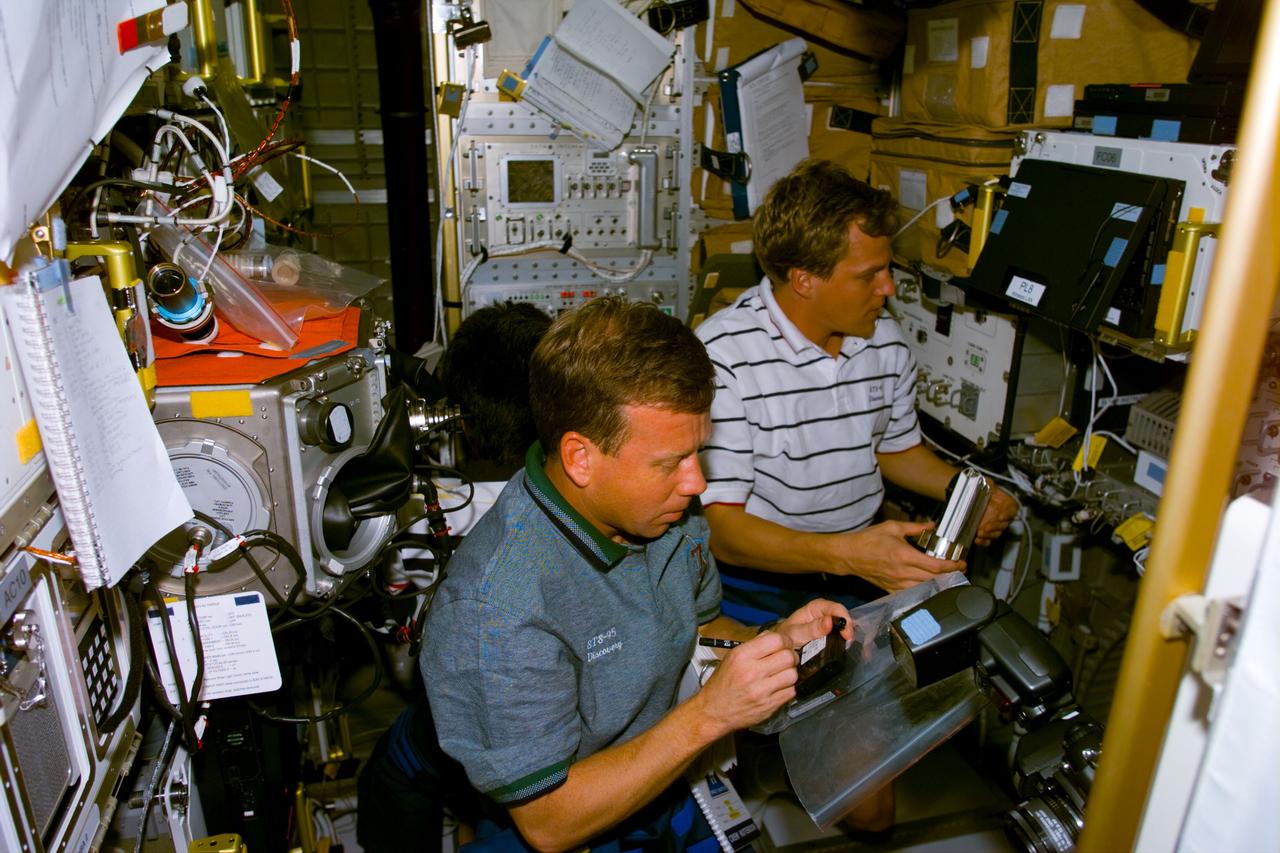
STS095-E-5109 (2 Nov. 1998) --- Astronauts Steven W. Lindsey (left), STS-95 pilot, and Scott E. Parazynski, mission specialist, work with cameras and other supportive gear for experiments on Spacehab. The photo was taken with an electronic still camera (ESC) at 05:11:28 GMT, Nov. 2.
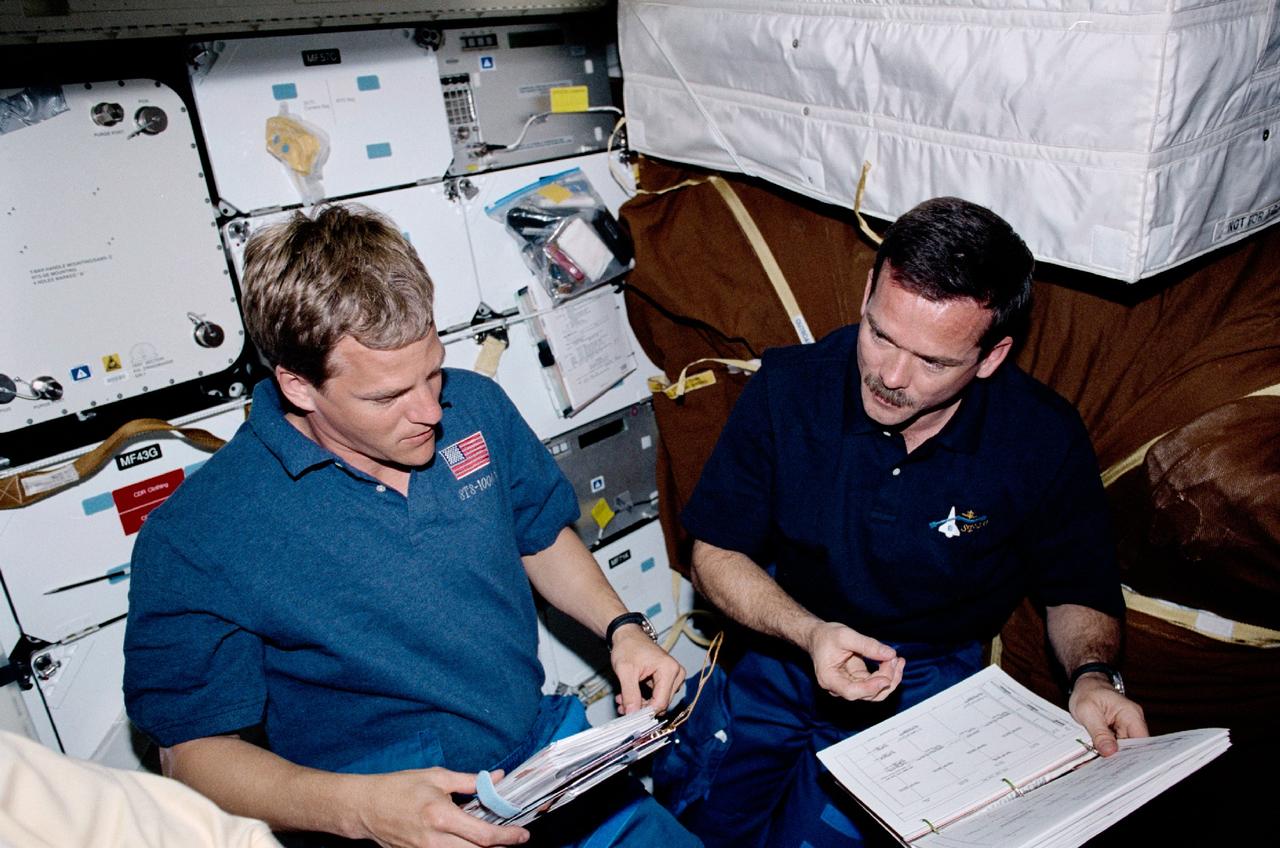
STS100-337-007 (19 April - 1 May 2001) --- Astronauts Scott E. Parazynski (left) and Chris A. Hadfield, STS-100 mission specialists, discuss one of the two assigned space walks they're sharing on this flight. The two are reviewing the extravehicular (EVA) checklist, on the middeck of the Space Shuttle Endeavour.
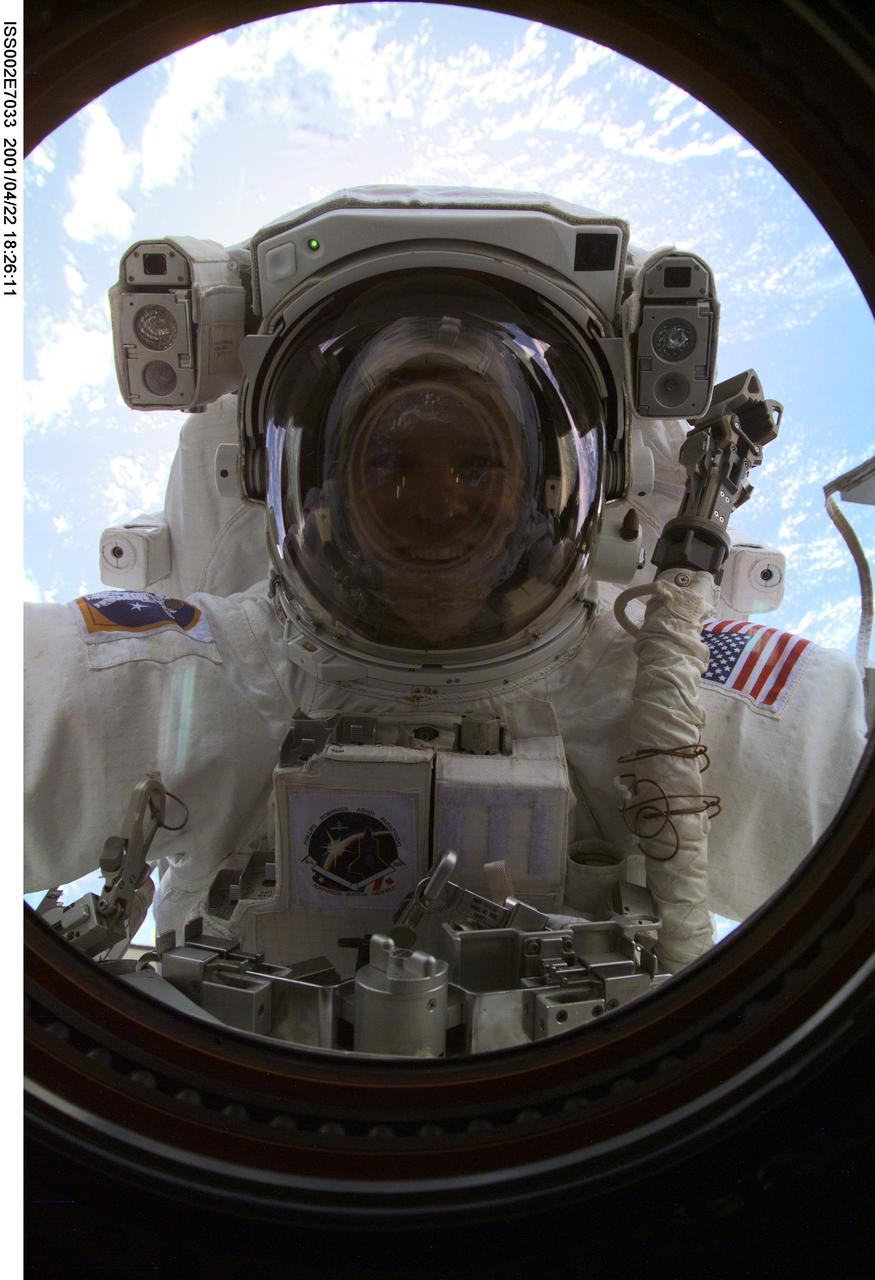
ISS002-E-7033 (22 April 2001) --- Astronaut Scott E. Parazynski, STS-100 mission specialist, peers into the Destiny/U.S. Laboratory's nadir window during the first space walk (EVA-1) of the STS-100 mission. A digital still camera was used to record this image.
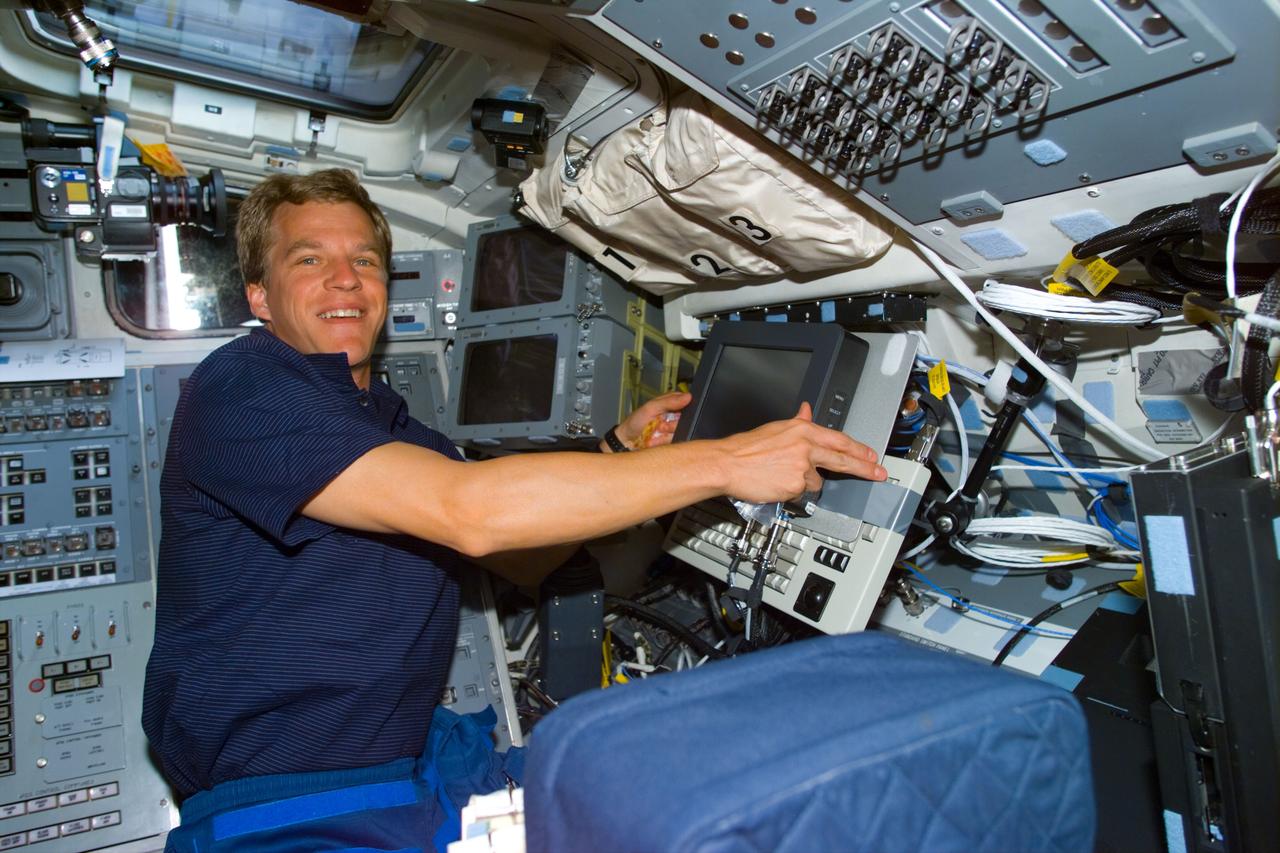
STS095-E-5181 (31 Oct. 1998) --- Astronaut Scott E. Parazynski, STS-95 mission specialist, pictured at a lap top computer on the flight deck of Space Shuttle Discovery. The photo was taken with an electronic still camera (ESC) at 02:05:37, Oct. 31.
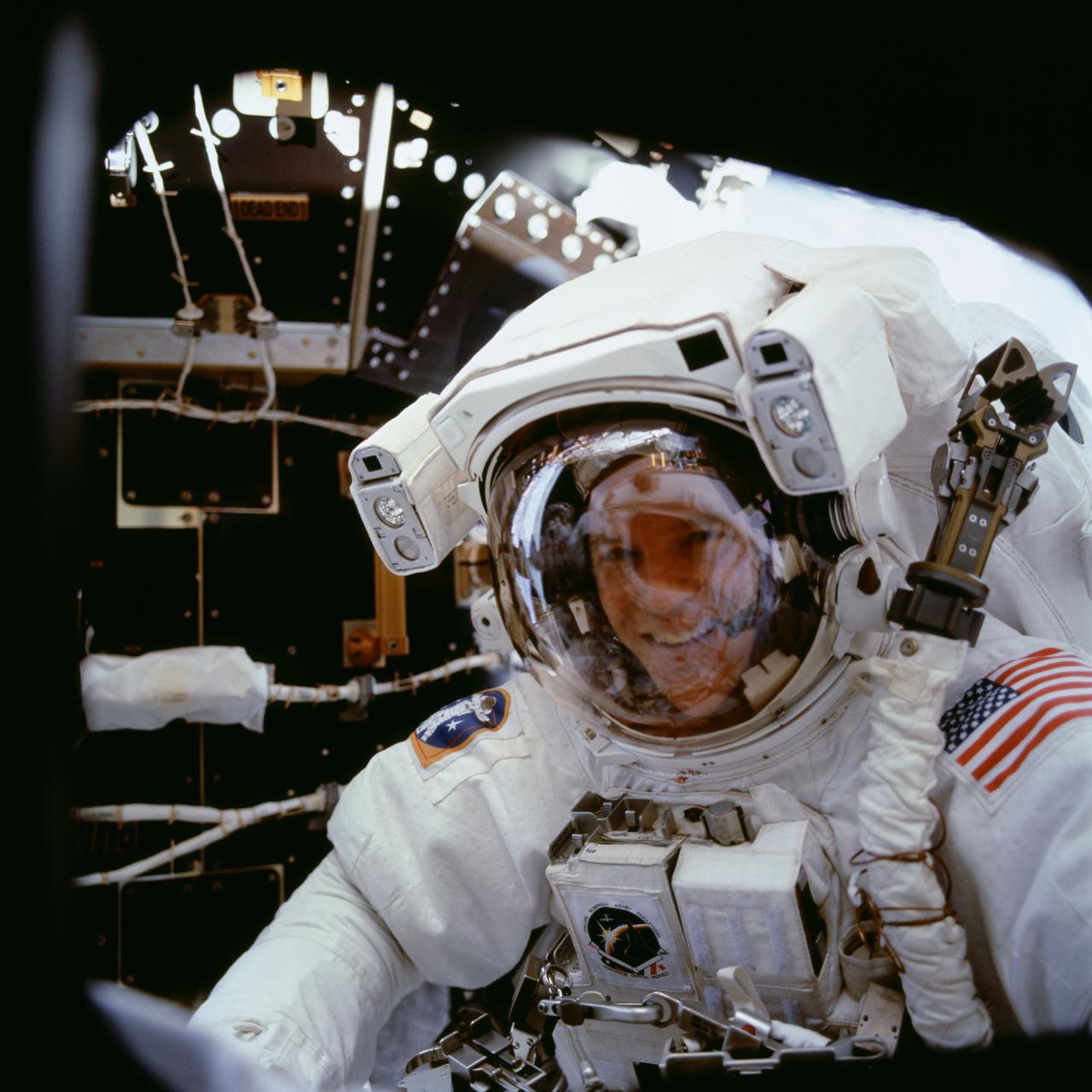
STS100-714-059 (19 April-1 May 2001) --- Astronaut Scott E. Parazynski, mission specialist, was photographed by a crew mate inside the Space Shuttle Endeavour in this close up view, during one of the two days of extravehicular activity (EVA) on the STS-100 mission.
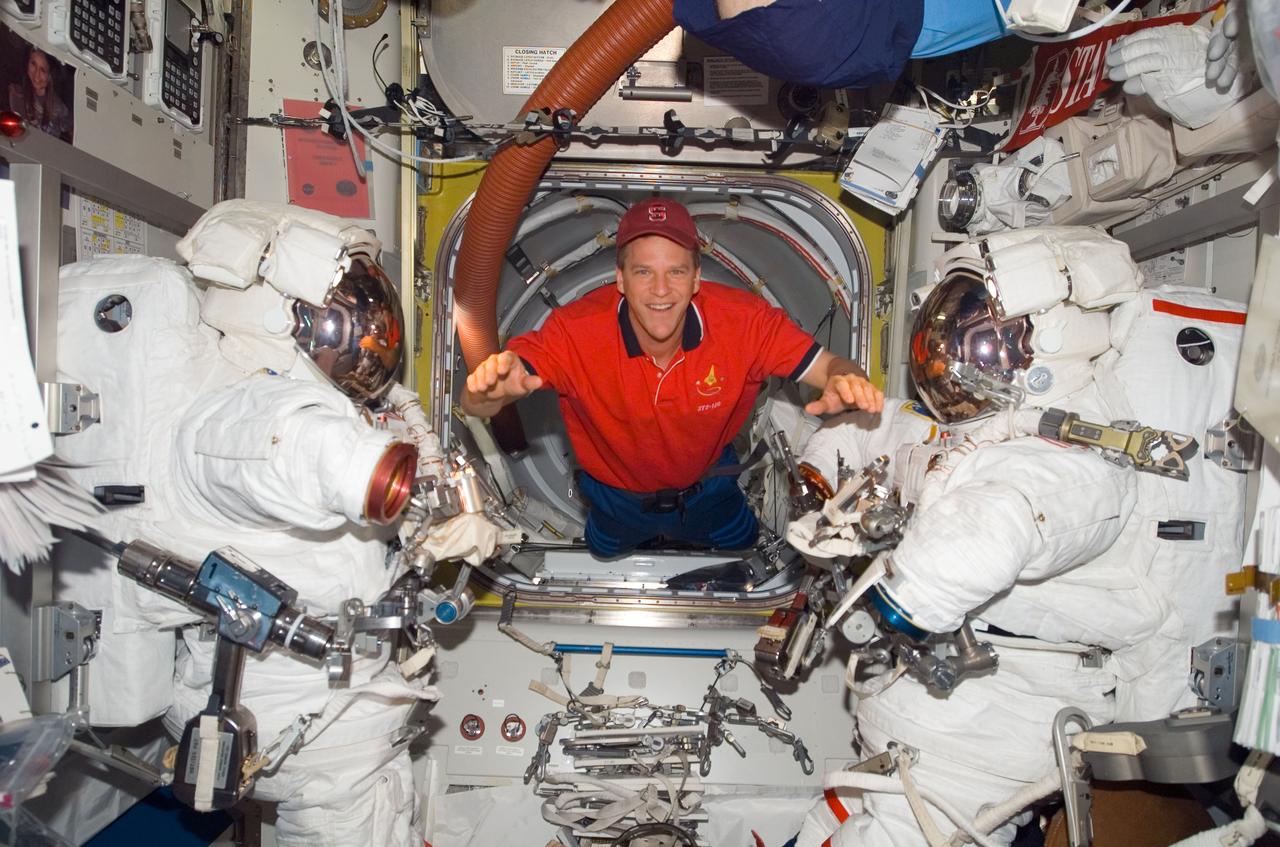
S120-E-007918 (1 Nov. 2007) --- Astronaut Scott Parazynski, STS-120 mission specialist, floats between two Extravehicular Mobility Unit (EMU) spacesuits in the Quest Airlock of the International Space Station while Space Shuttle Discovery is docked with the station.
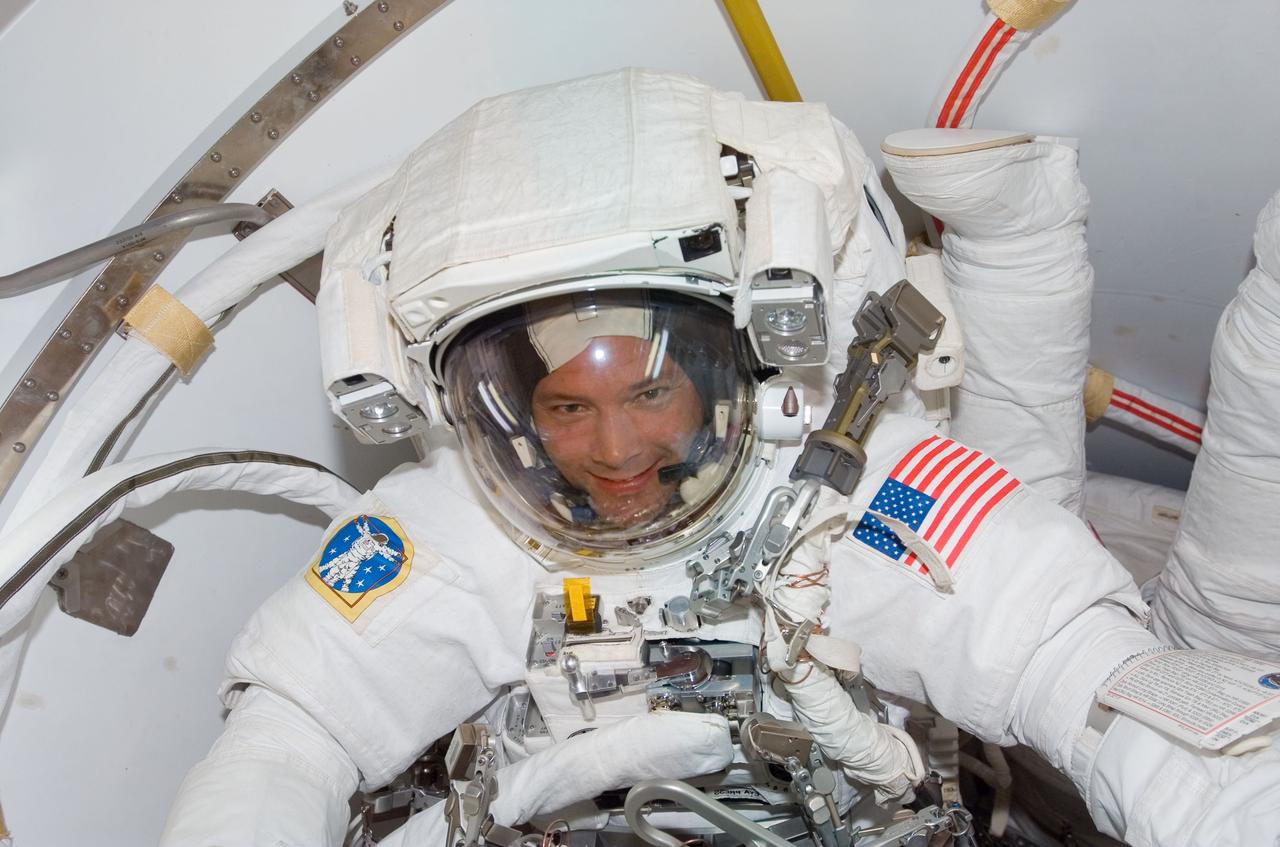
S120-E-006859 (26 Oct. 2007) --- Astronaut Doug Wheelock shares the airlock with astronaut Scott Parazynski, as the two mission specialists prepare for their Oct. 26 spacewalk, the first of five scheduled by various shuttle and International Space Station crewmembers while the Space Shuttle Discovery is docked to ISS.
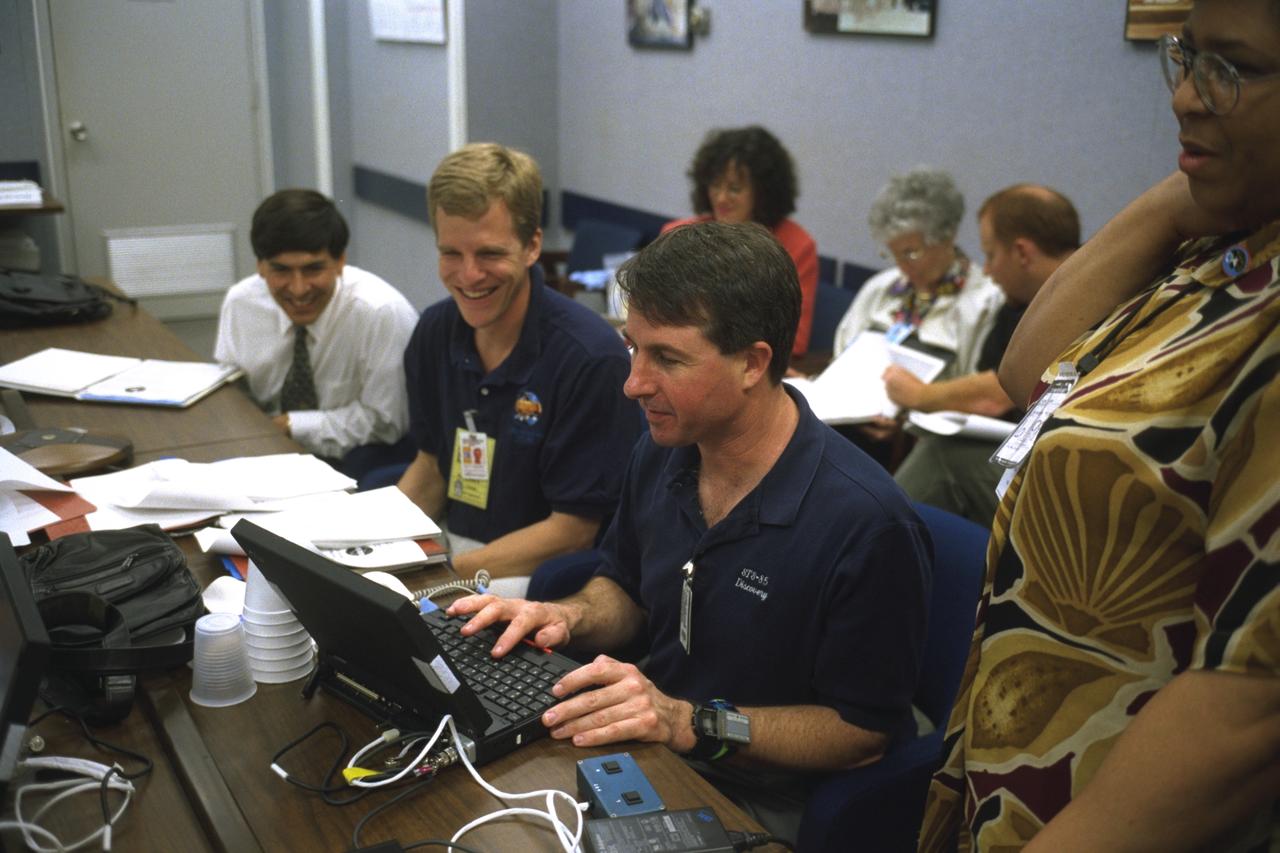
S98-08742 (May 1998) --- Two mission specialists assigned to the STS-95 flight rehearse some of their duties for the scheduled late October launch of the Space Shuttle Discovery. Stephen K. Robinson inputs data on the laptop computer while Scott E. Parazynski looks on. The photo was taken by Joe McNally, National Geographic, for NASA.
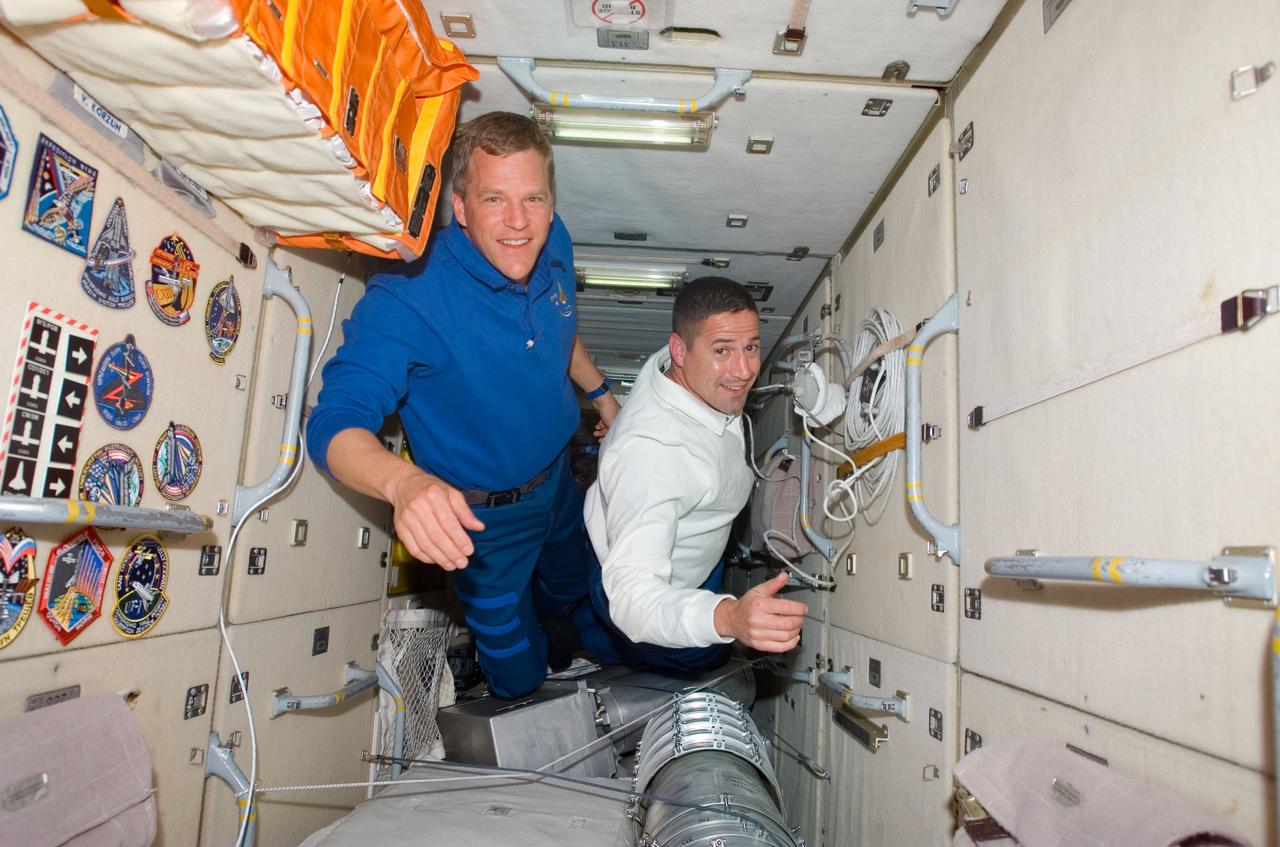
S120-E-006416 (25 Oct. 2007) --- Astronauts Scott Parazynski (left) and George Zamka, STS-120 mission specialist and pilot, respectively, float in the Zarya module of the International Space Station while Space Shuttle Discovery is docked with the station.
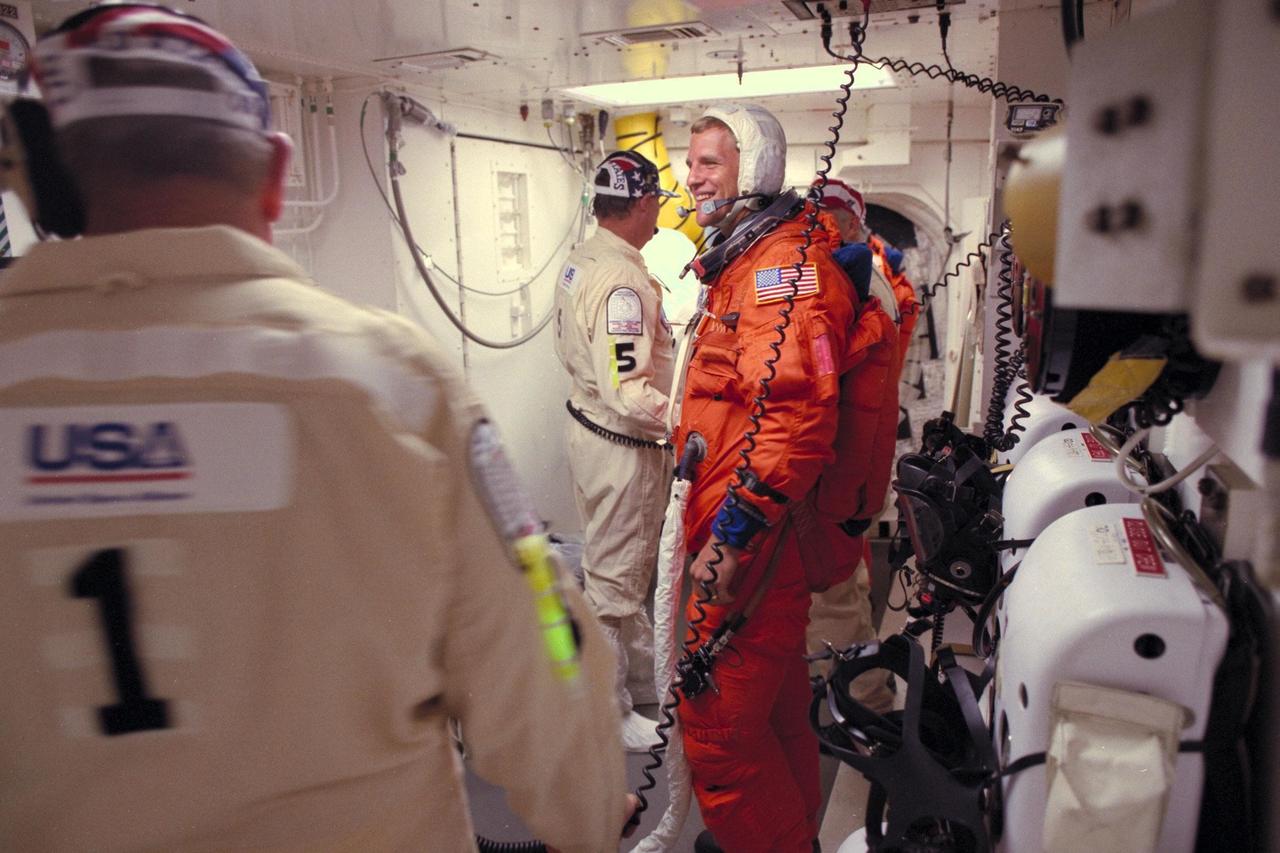
STS-86 crew members, including Mission Specialist Scott E. Parazynski, at center, prepare to enter the Space Shuttle Atlantis at Launch Pad 39A. They are being assisted by Rick Welty, at left, the United Space Alliance (USA) vehicle closeout chief, and George Schramm, USA mechanical technician
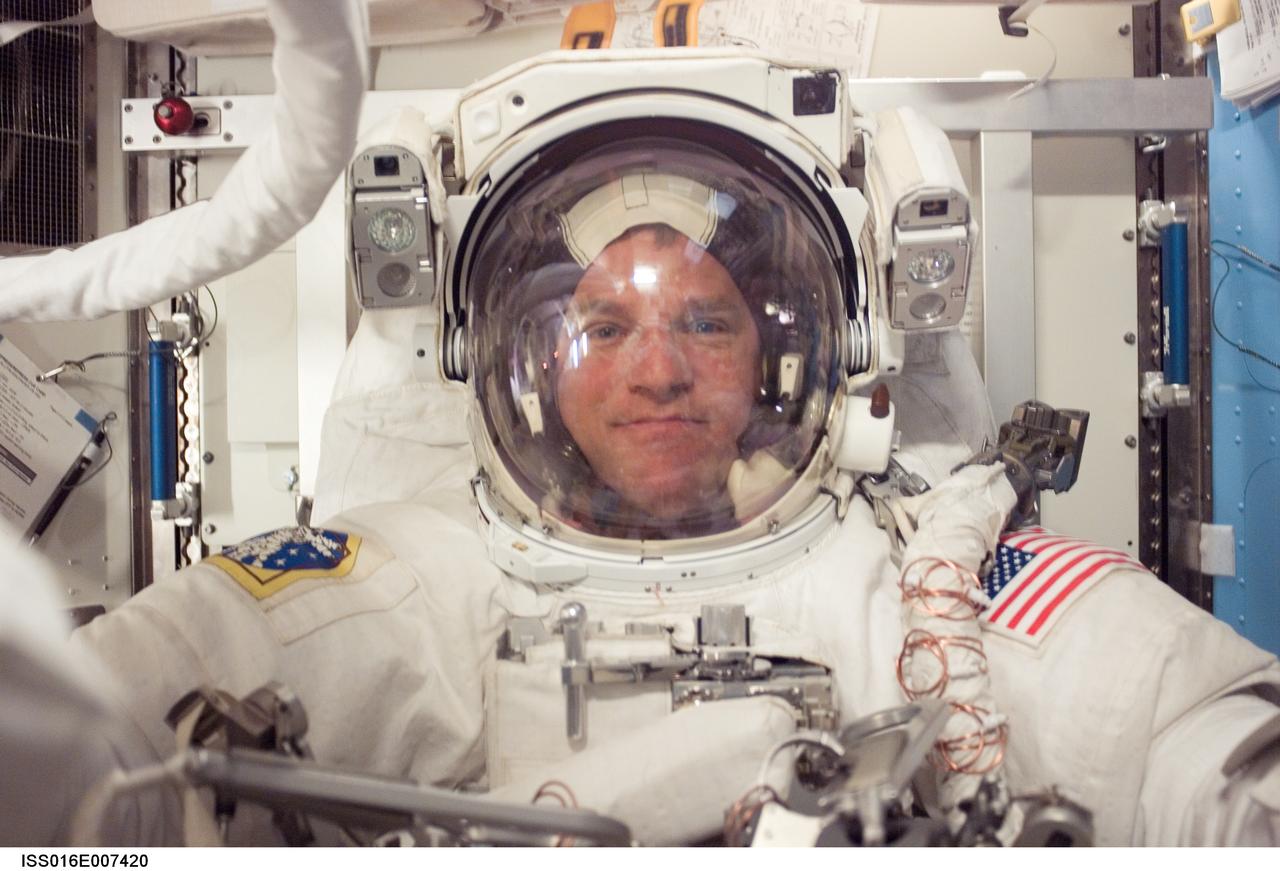
ISS016-E-007420 (30 Oct. 2007) --- Attired in his Extravehicular Mobility Unit (EMU) spacesuit, astronaut Scott Parazynski, STS-120 mission specialist, prepares for the mission's third session of extravehicular activity (EVA) in the Quest Airlock of the International Space Station while Space Shuttle Discovery is docked with the station.
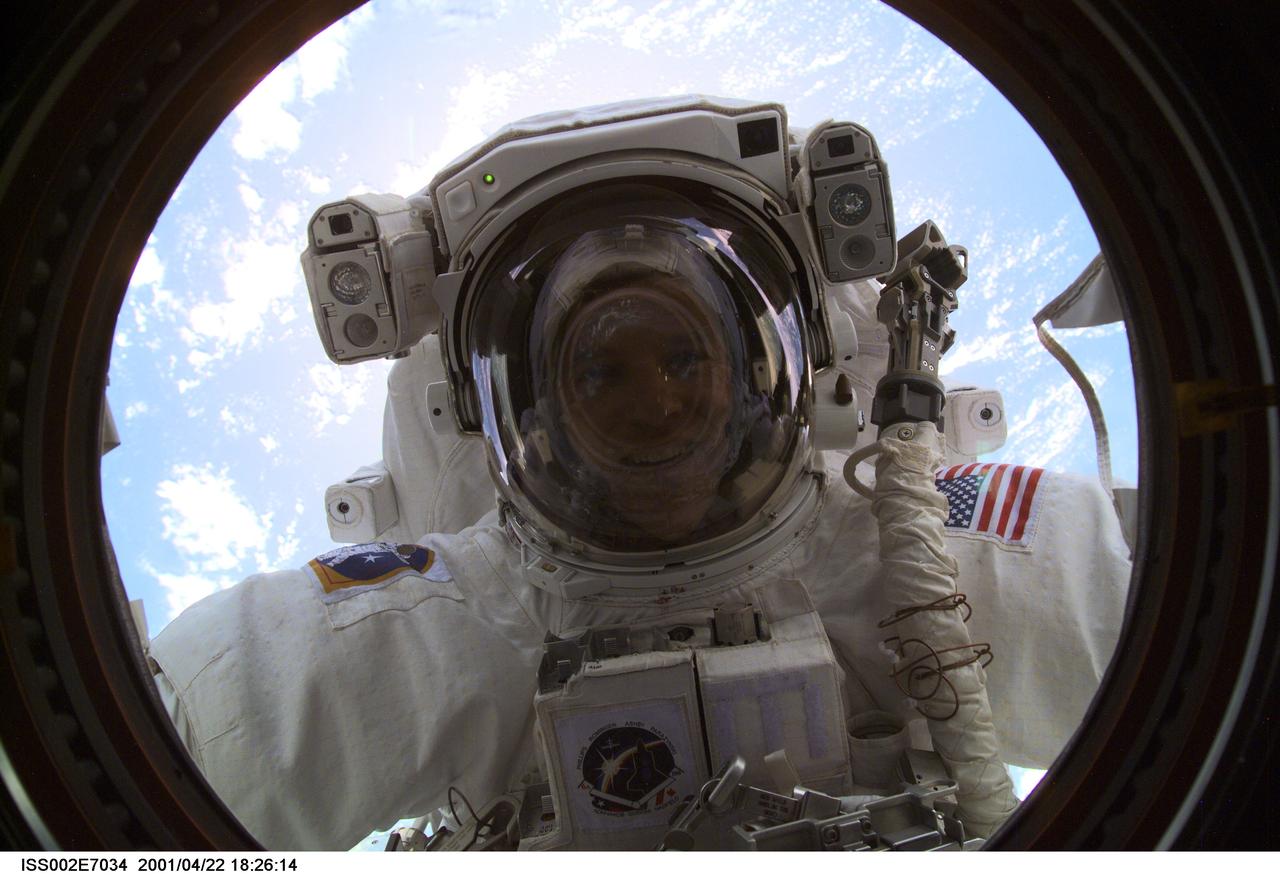
ISS002-E-7034 (22 April 2001) --- Astronaut Scott E. Parazynski, STS-100 mission specialist, peers into the Destiny Laboratory's nadir window during the first extravehicular activity of the STS-100 mission. This image was recorded with a digital still camera by an Expedition Two crew member.
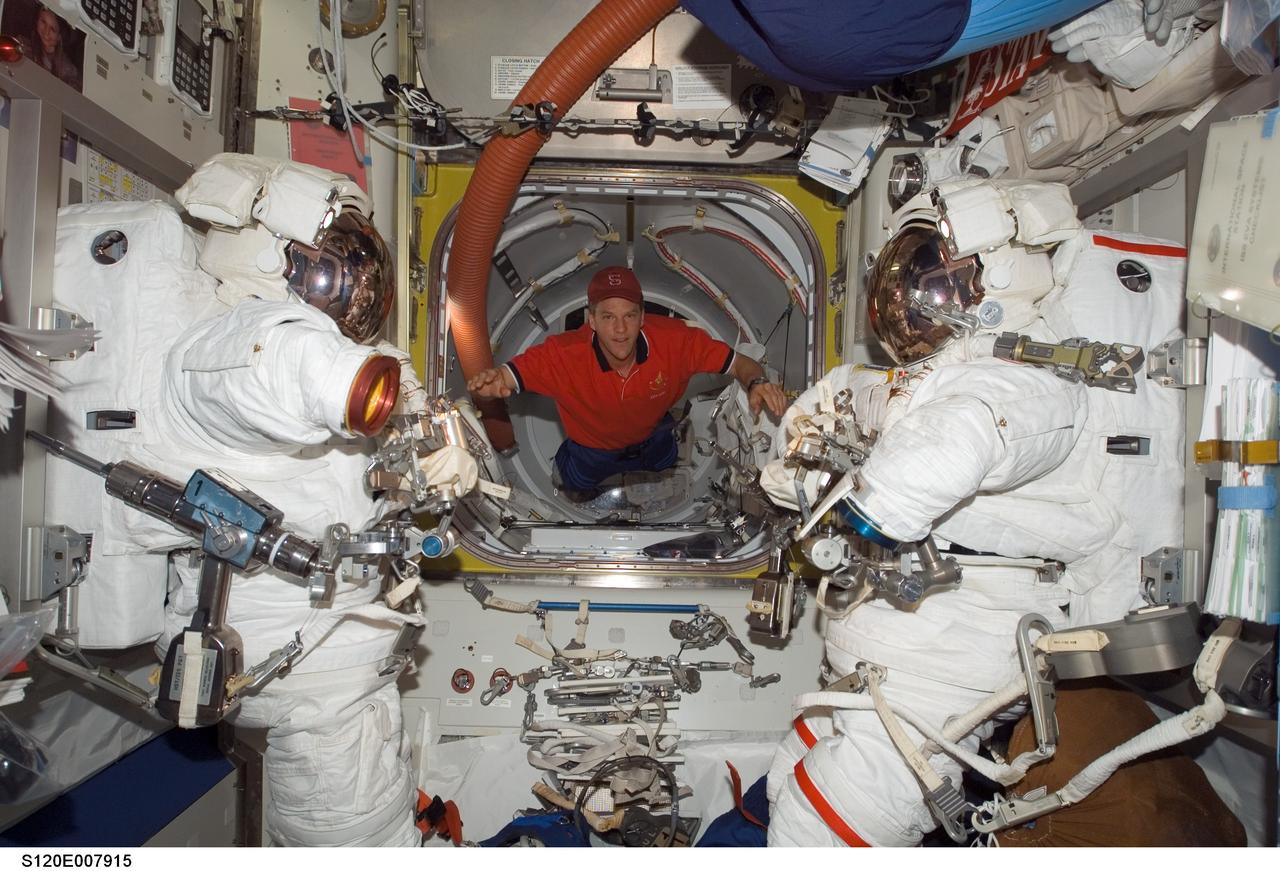
S120-E-007915 (1 Nov. 2007) --- Astronaut Scott Parazynski, STS-120 mission specialist, floats between two Extravehicular Mobility Unit (EMU) spacesuits in the Quest Airlock of the International Space Station while Space Shuttle Discovery is docked with the station.
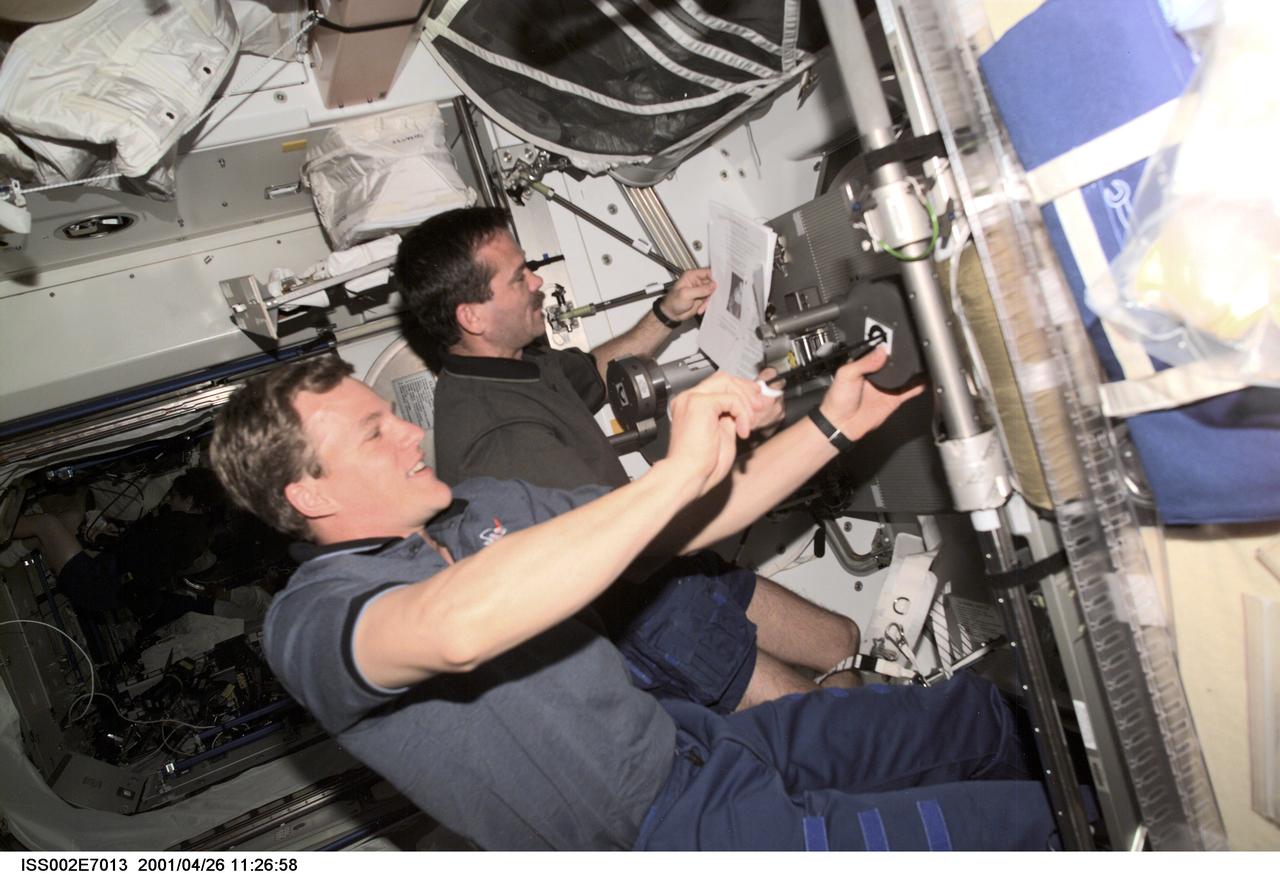
ISS002-E-7013 (26 April 2001) --- Astronauts Scott E. Parazynski and Chris A. Hadfield, mission specialists, install the Interim Resistive Exercise Devise (IRED) in the Unity/Node 1. Hadfield represents the Canadian Space Agency (CSA). A digital still camera was used to record this image.
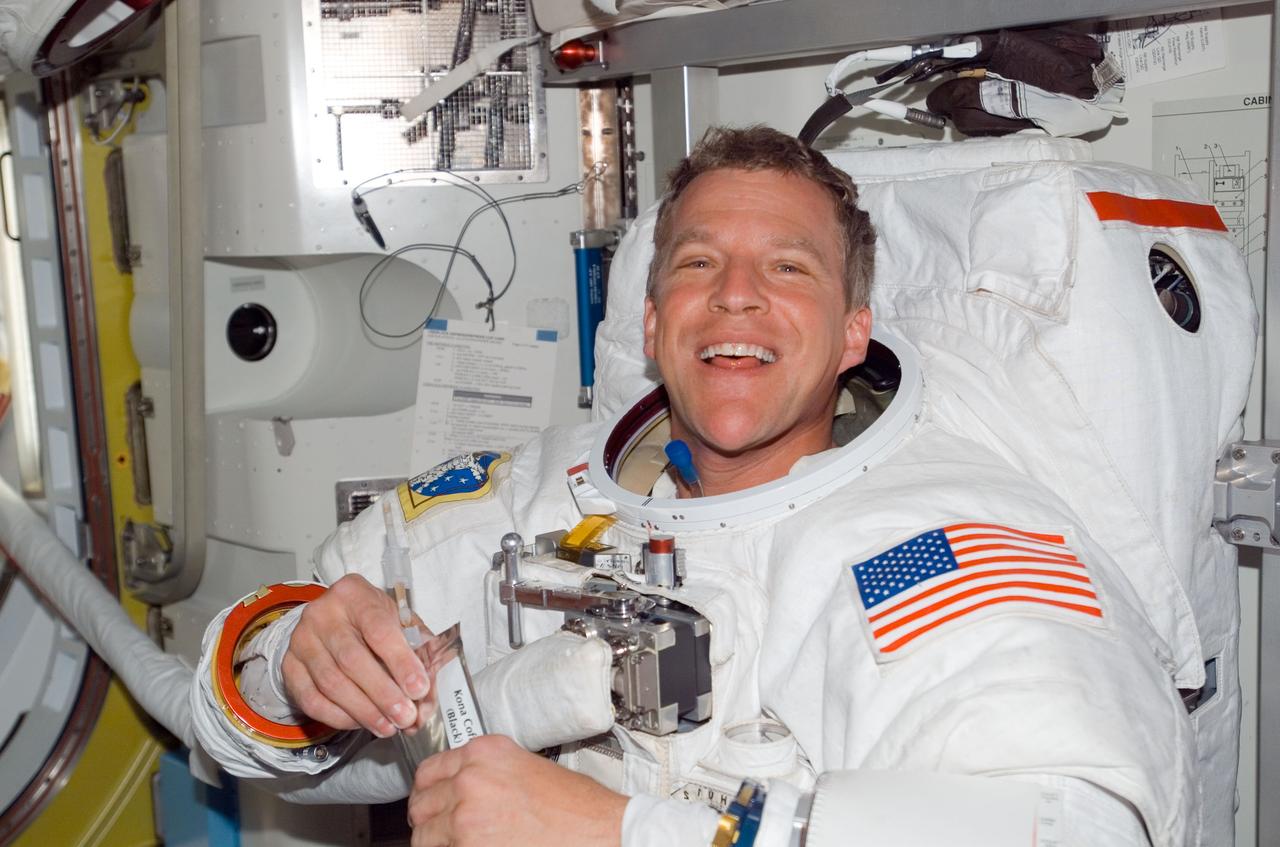
ISS016-E-006783 (26 Oct. 2007) --- Attired in his Extravehicular Mobility Unit (EMU) spacesuit, astronaut Scott Parazynski, STS-120 mission specialist, is pictured in the Quest Airlock of the International Space Station as the mission's first spacewalk draws to a close.
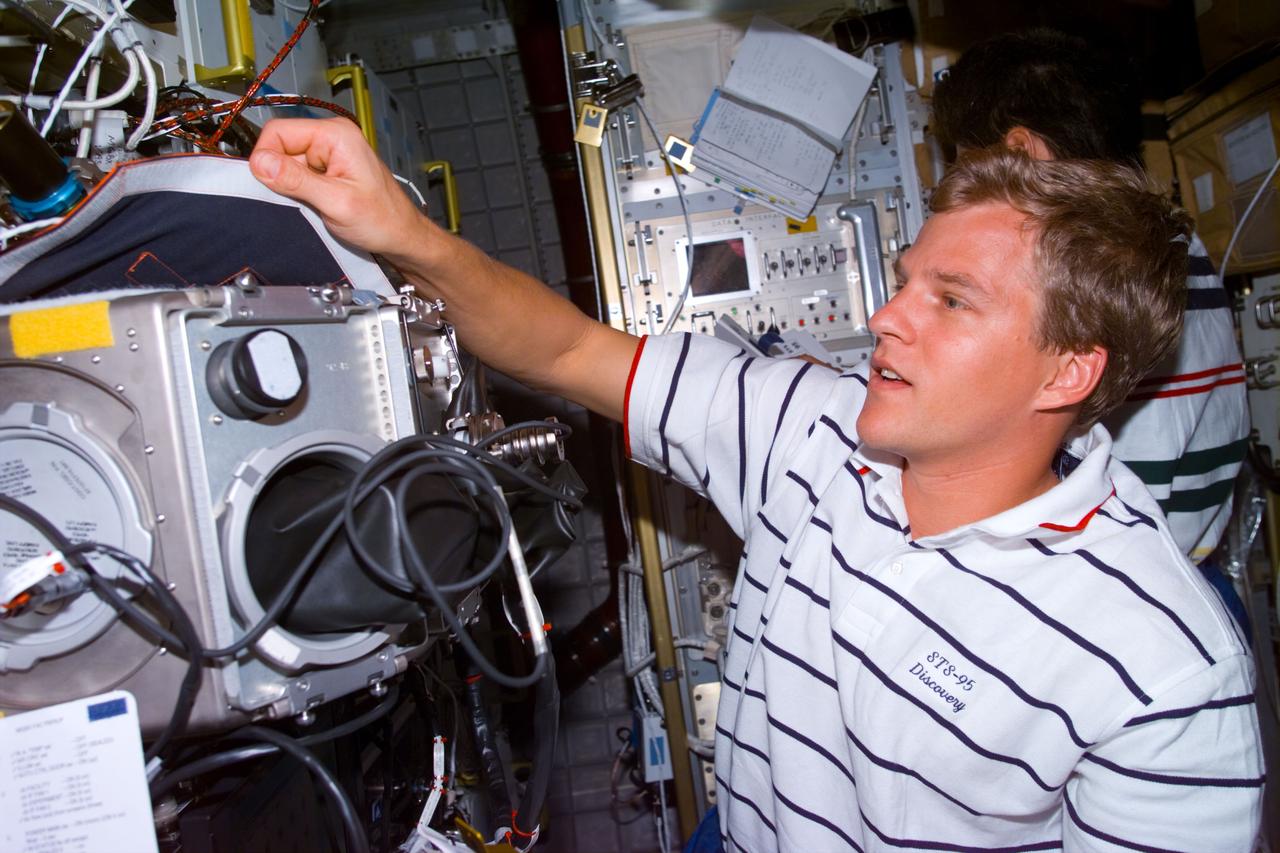
STS095-E-5104 (2 Nov. 1998) --- Astronaut Scott E. Parazynski, STS-95 mission specialist, at glove box in Spacehab facility during flight day four activity. The photo was taken with an electronic still camera (ESC) at 4:59:22 GMT, Nov. 2.
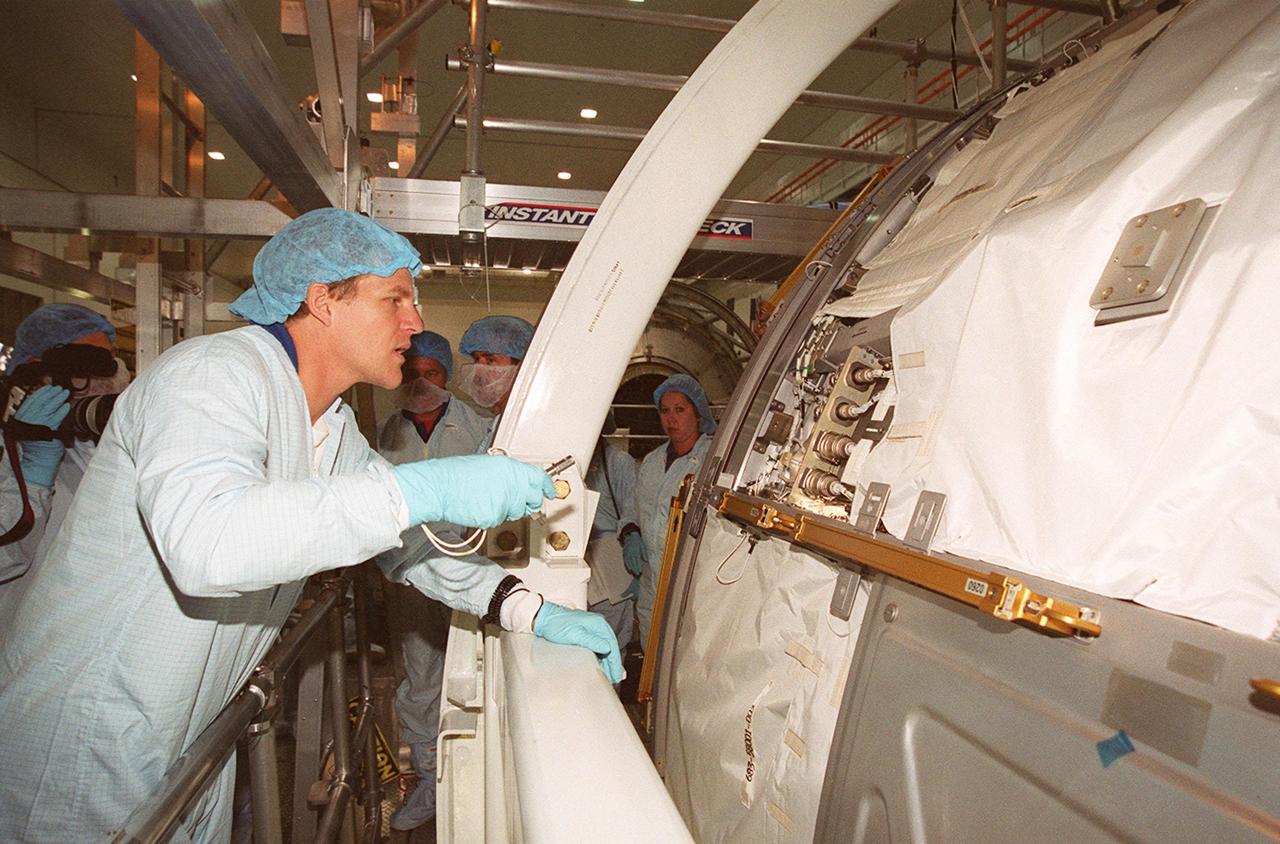
In the Space Station Processing Facility, STS-100 Mission Specialist Scott Parazynski looks over part of the U.S. Lab, Destiny. Mission STS-100 will be the ninth construction flight for the International Space Station. It is scheduled to launch April 19, 2001
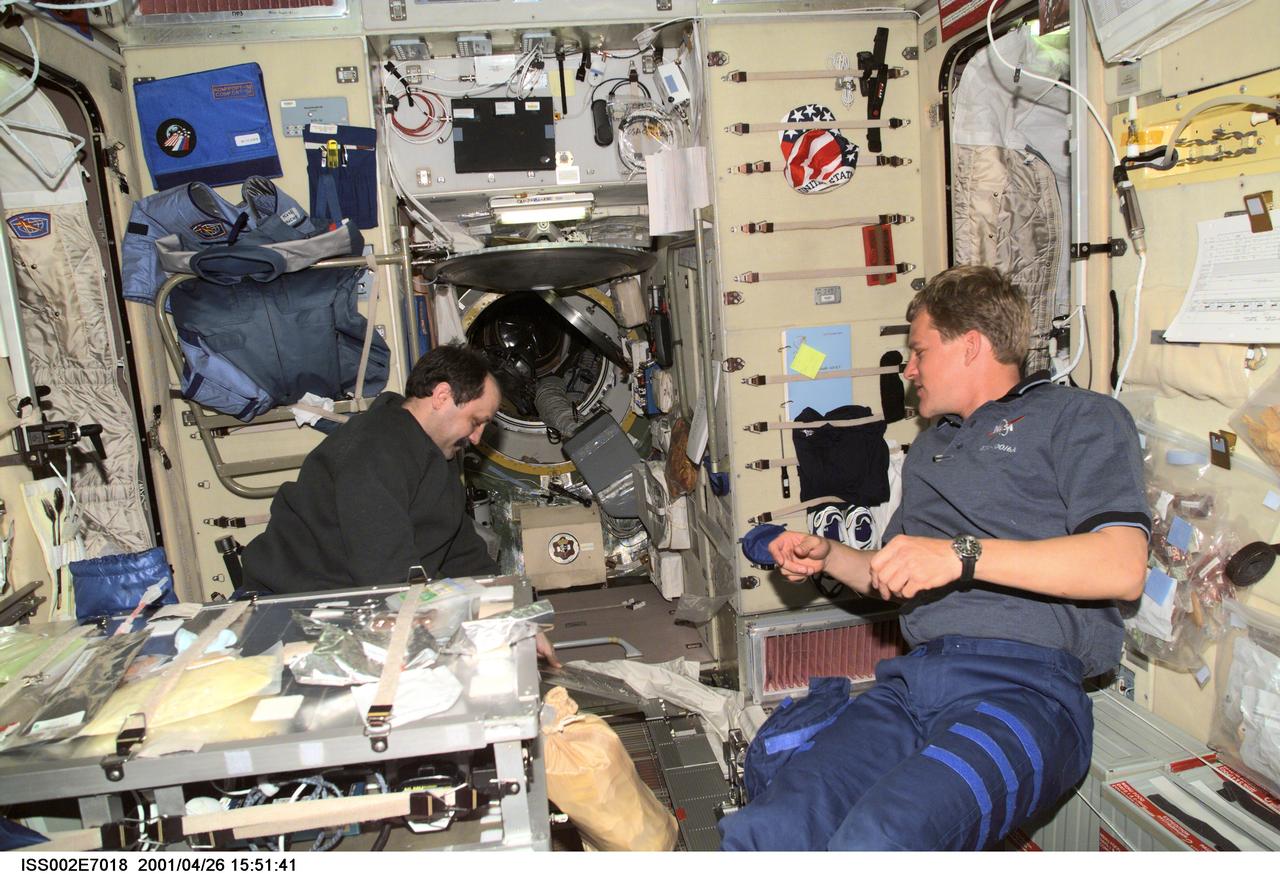
ISS002-E-7018 (26 April 2001) --- Astronaut Scott E. Parazynski, STS-100 mission specialist, talks with cosmonaut Yury V. Usachev, Expedition Two commander, who is conducting maintenance on the Treadmill Vibration Isolation System (TVIS) in the Zvezda/Service Module. A digital still camera was used to record this image.
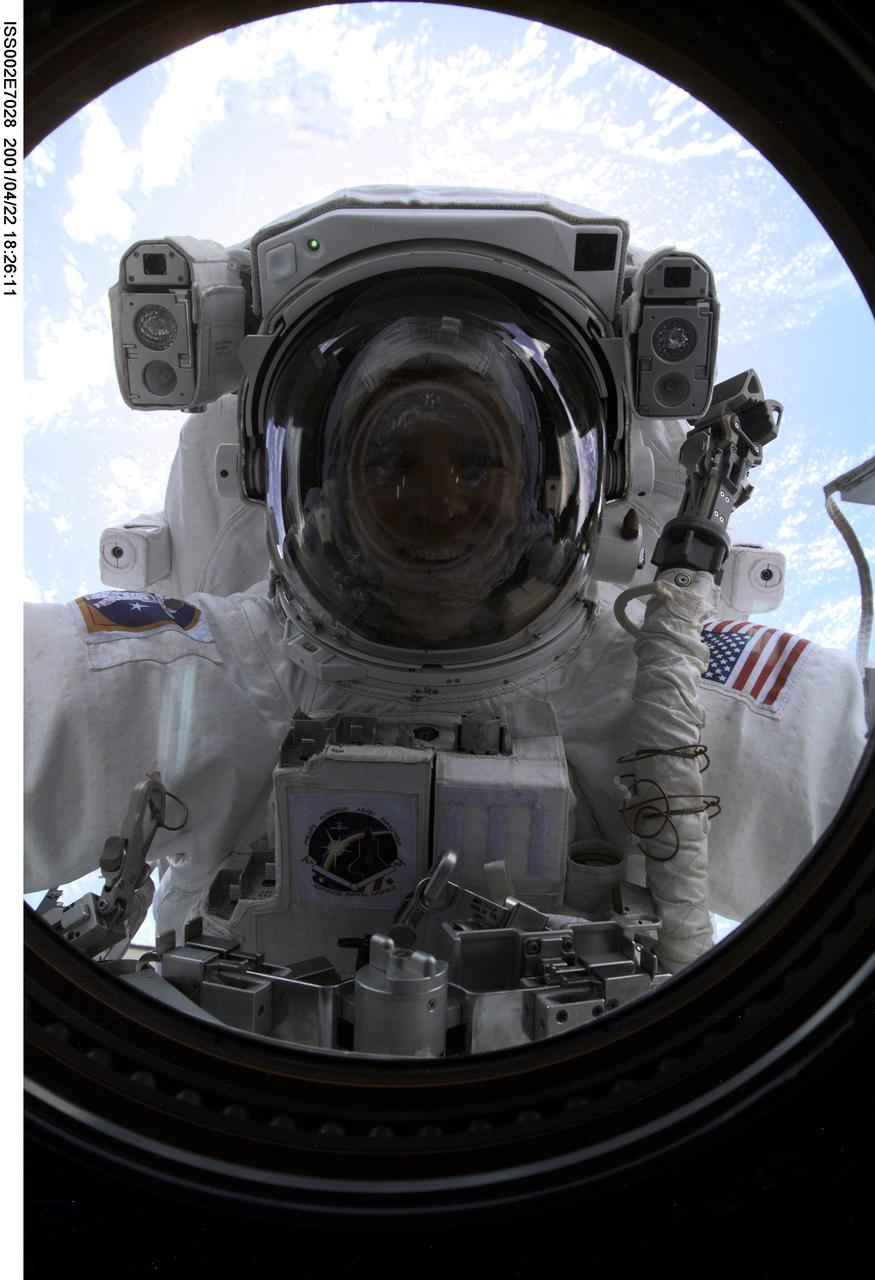
ISS002-E-7028 (22 April 2001) --- Astronaut Scott E. Parazynski, STS-100 mission specialist, peers into the Destiny/U.S. Laboratory's nadir window during the first space walk (EVA-1) of the STS-100 mission. A digital still camera was used to record this image.
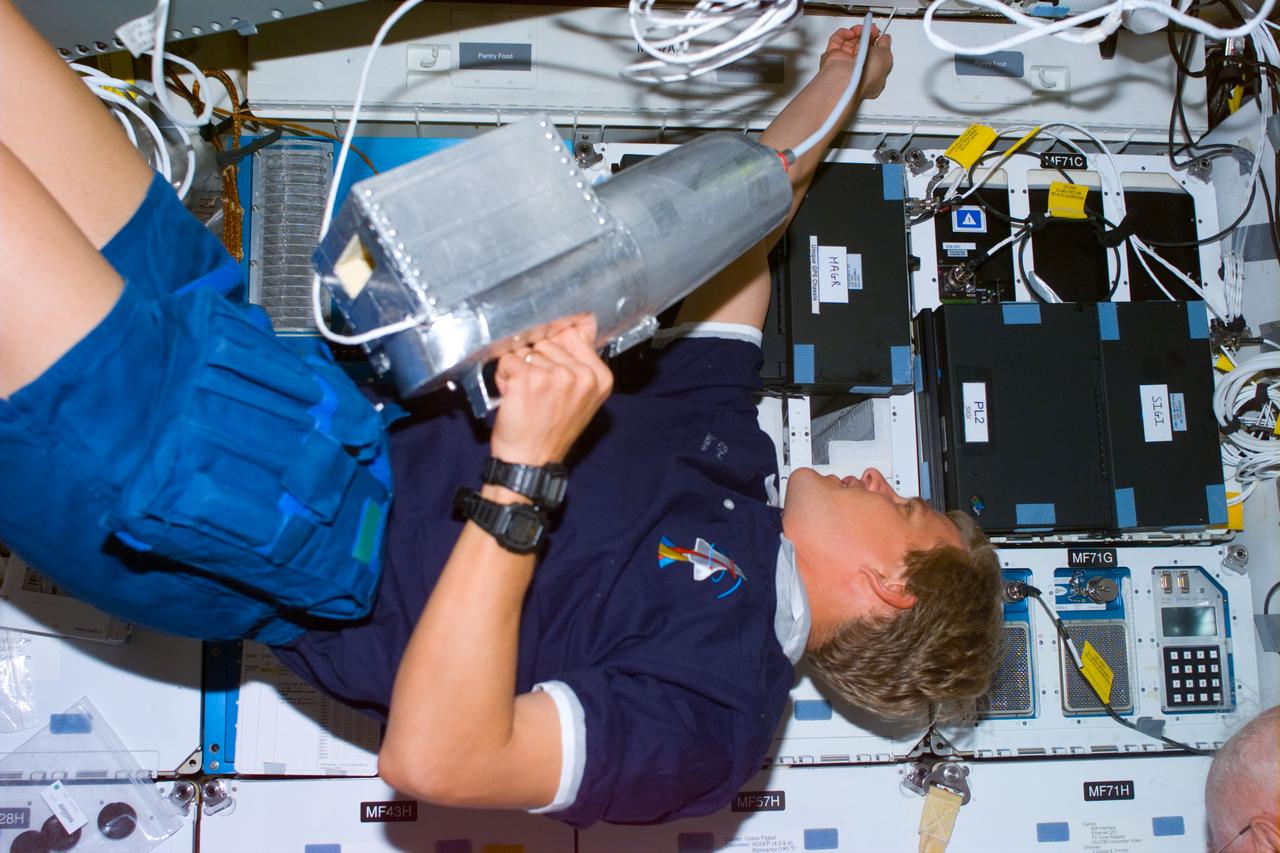
STS095-E-5262 (4 Nov. 1998) --- Astronaut Scott E. Parazynski, STS-95 mission specialist, with housekeeping chores on flight day seven aboard the Space Shuttle Discovery. The photo was taken with an electronic still camera (ESC) at 22:54:50 GMT, Nov. 4.
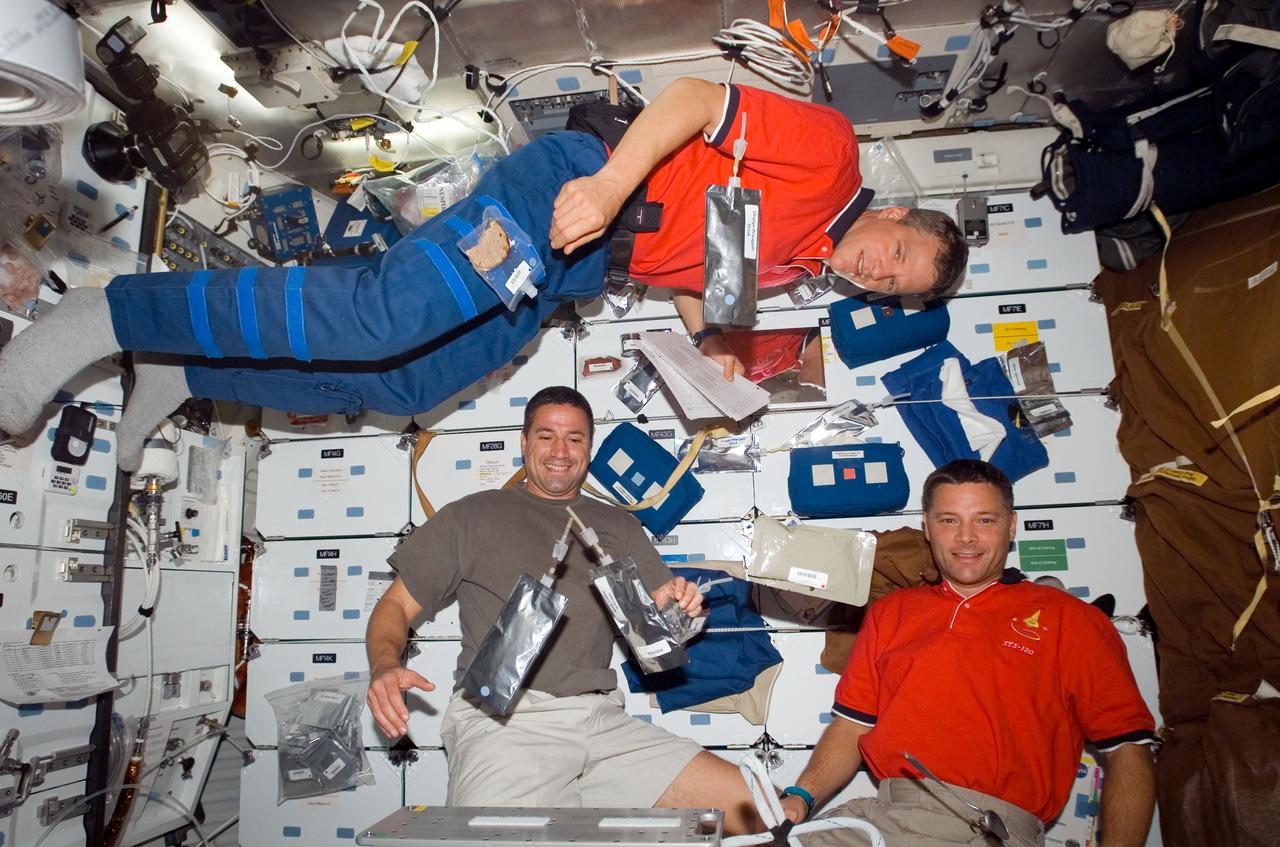
S120-E-007896 (1 Nov. 2007) --- Astronauts Scott Parazynski (top), Doug Wheelock (right), both STS-120 mission specialists; and George Zamka, pilot, share a snack on the middeck of Space Shuttle Discovery while docked with the International Space Station.
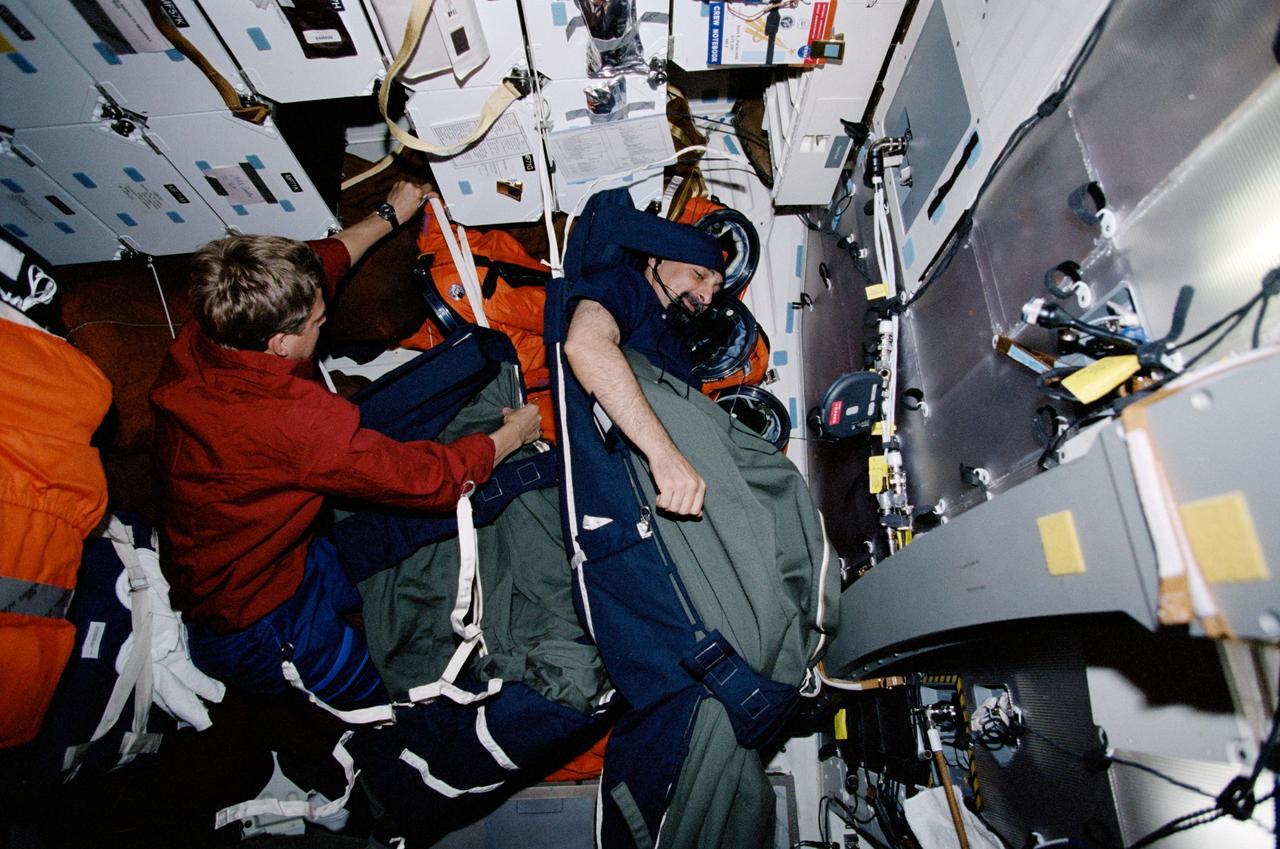
STS100-363-012 (19 April-1 May 2001) --- Astronaut Umberto Guidoni, STS-100 mission specialist, sleeps while astronaut Scott E. Parazynski, mission specialist, prepares for his sleep shift on the Space Shuttle Endeavour's middeck.
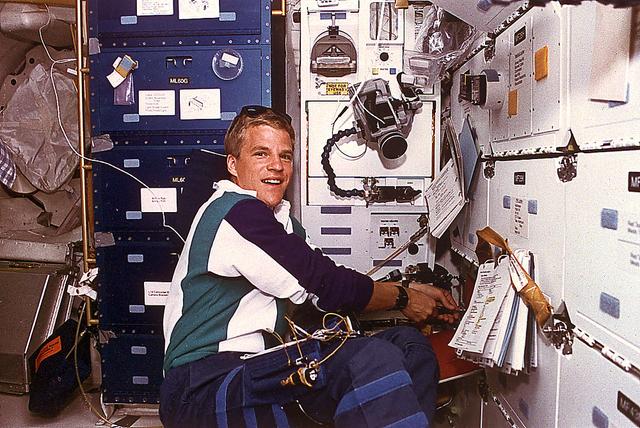
This is an onboard photo of space shuttle Atlantis (STS-66) astronaut Scott E. Parazynski, in the International Microgravity Laboratory (IML), performing a series of experiments devoted to material and life sciences studies using the Spacelab Long Module (SLM). STS-066 was launched on November 3, 1994.
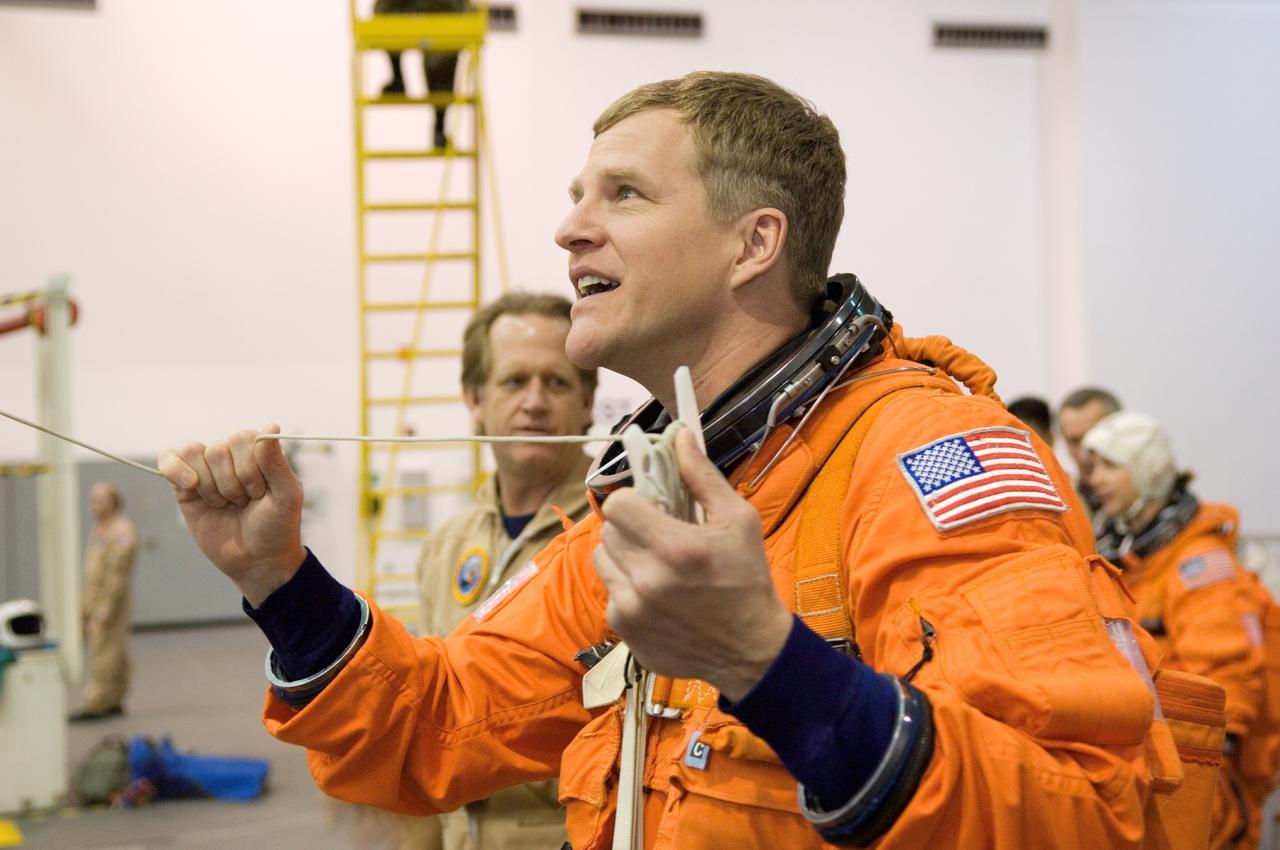
JSC2007-E-06436 (31 Jan. 2007) --- Astronaut Scott E. Parazynski, STS-120 mission specialist, attired in a training version of his shuttle launch and entry suit, works with a pulley during a water survival training session in the Neutral Buoyancy Laboratory (NBL) near Johnson Space Center.

S100-E-5124 (21 April 2001) --- Astronaut Scott E. Parazynski works on the middeck of the Space Shuttle Endeavour as the seven-member STS-100 crew busily prepares for its fastly-approaching rendezvous with the International Space Station (ISS). The image was recorded with a digital still camera.
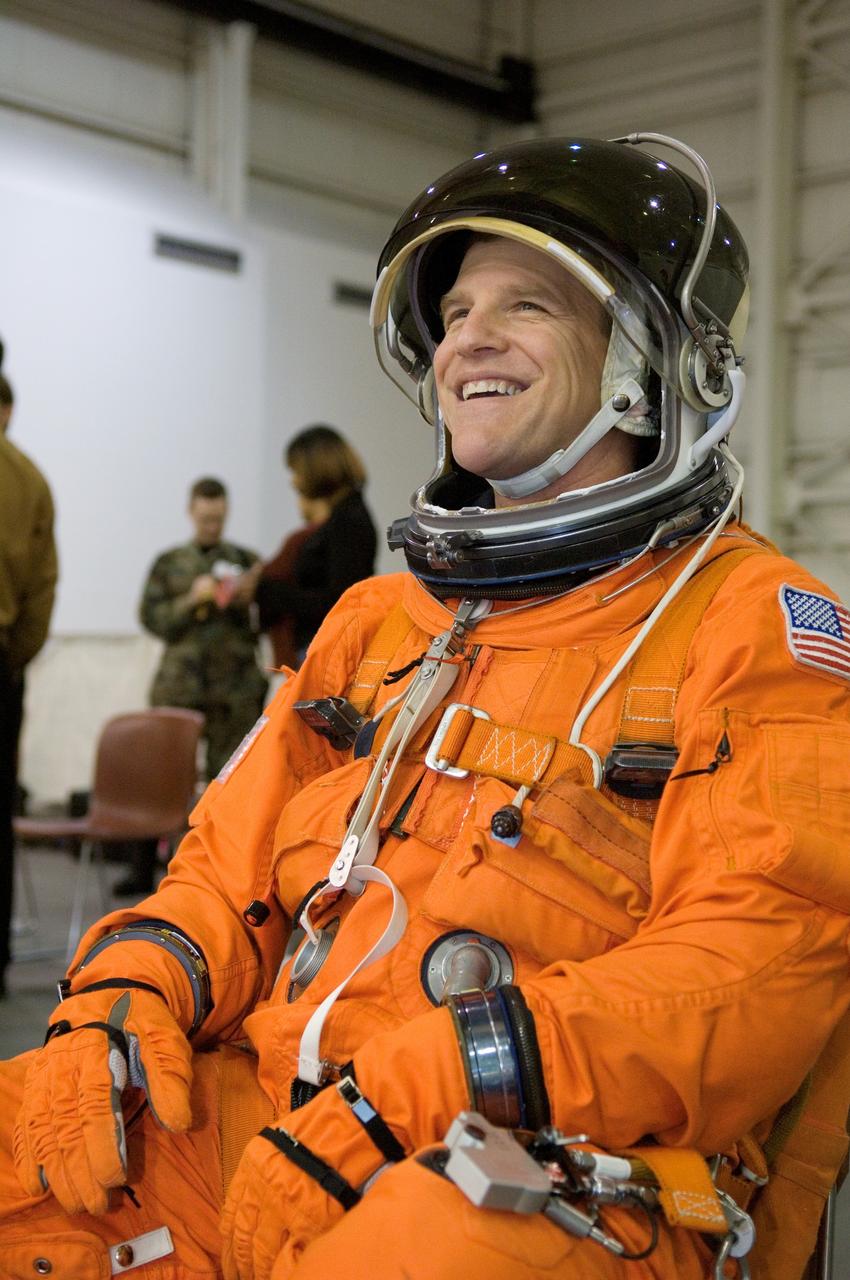
JSC2007-E-06449 (31 Jan. 2007) --- Astronaut Scott E. Parazynski, STS-120 mission specialist, attired in a training version of his shuttle launch and entry suit, awaits the start of a water survival training session in the Neutral Buoyancy Laboratory (NBL) near Johnson Space Center.
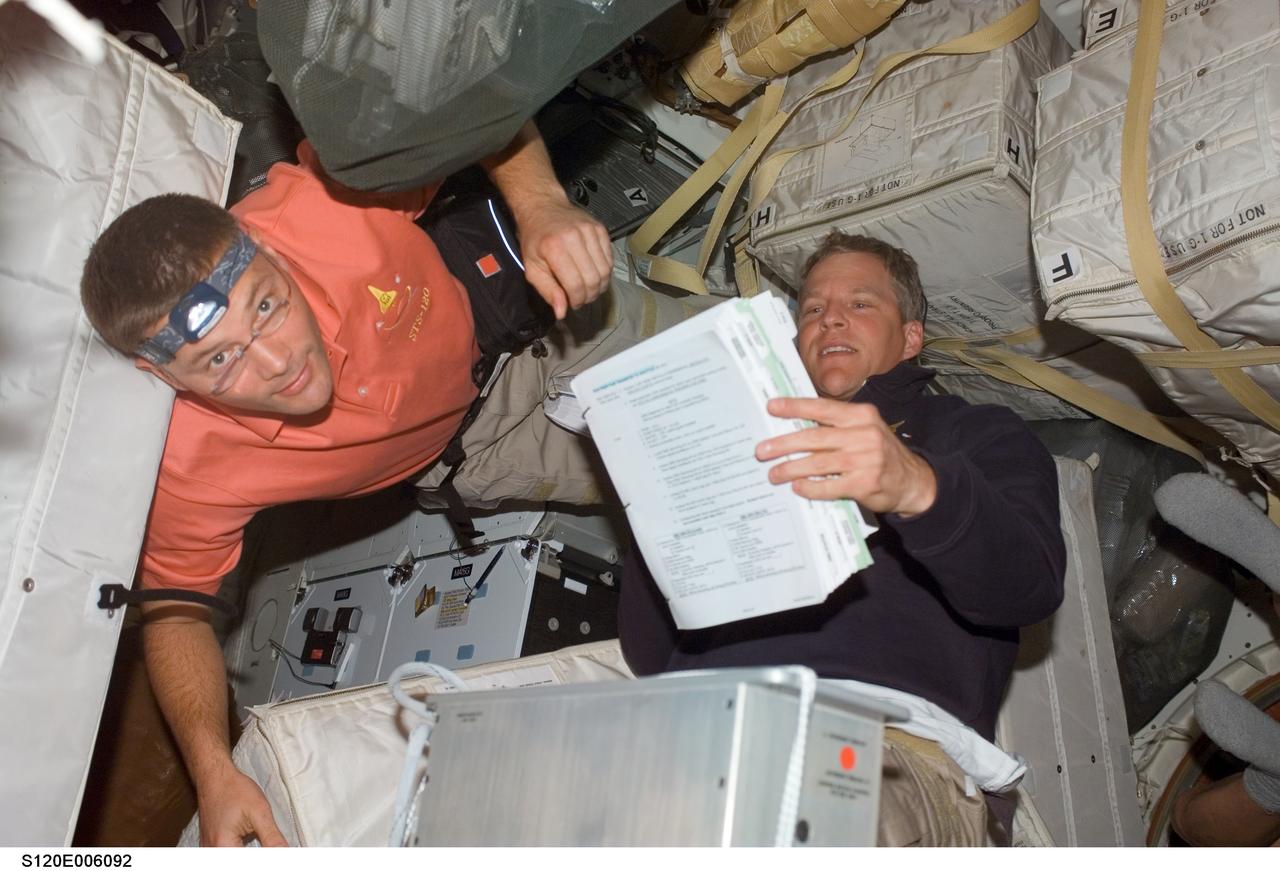
S120-E-006092 (24 Oct. 2007) --- Astronauts Doug Wheelock (left) and Scott Parazynski, both STS-120 mission specialists, work among stowage bags on the middeck of Space Shuttle Discovery during flight day two activities.
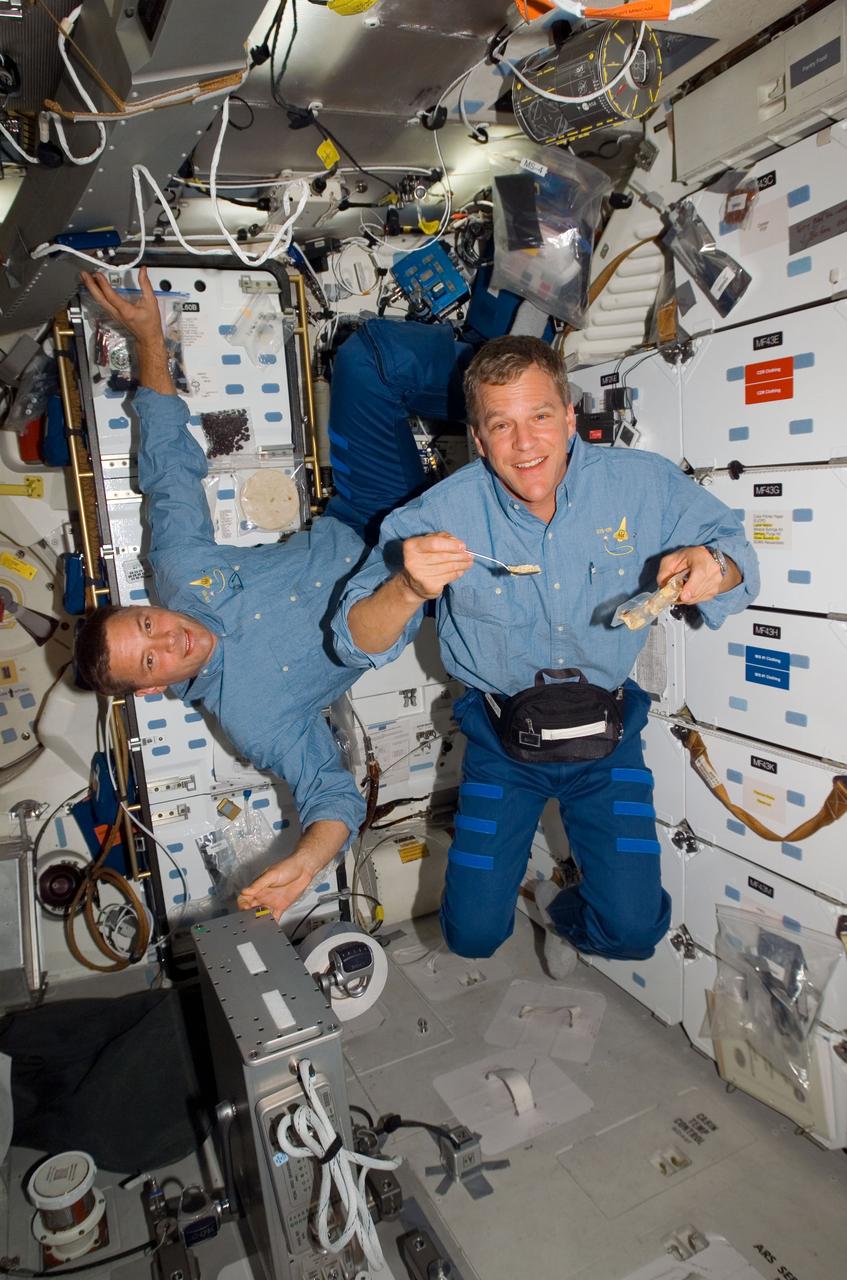
S120-E-007340 (29 Oct. 2007) --- Astronauts Doug Wheelock (left) and Scott Parazynski, both STS-120 mission specialists, float near the galley on the middeck of Space Shuttle Discovery while docked with the International Space Station.
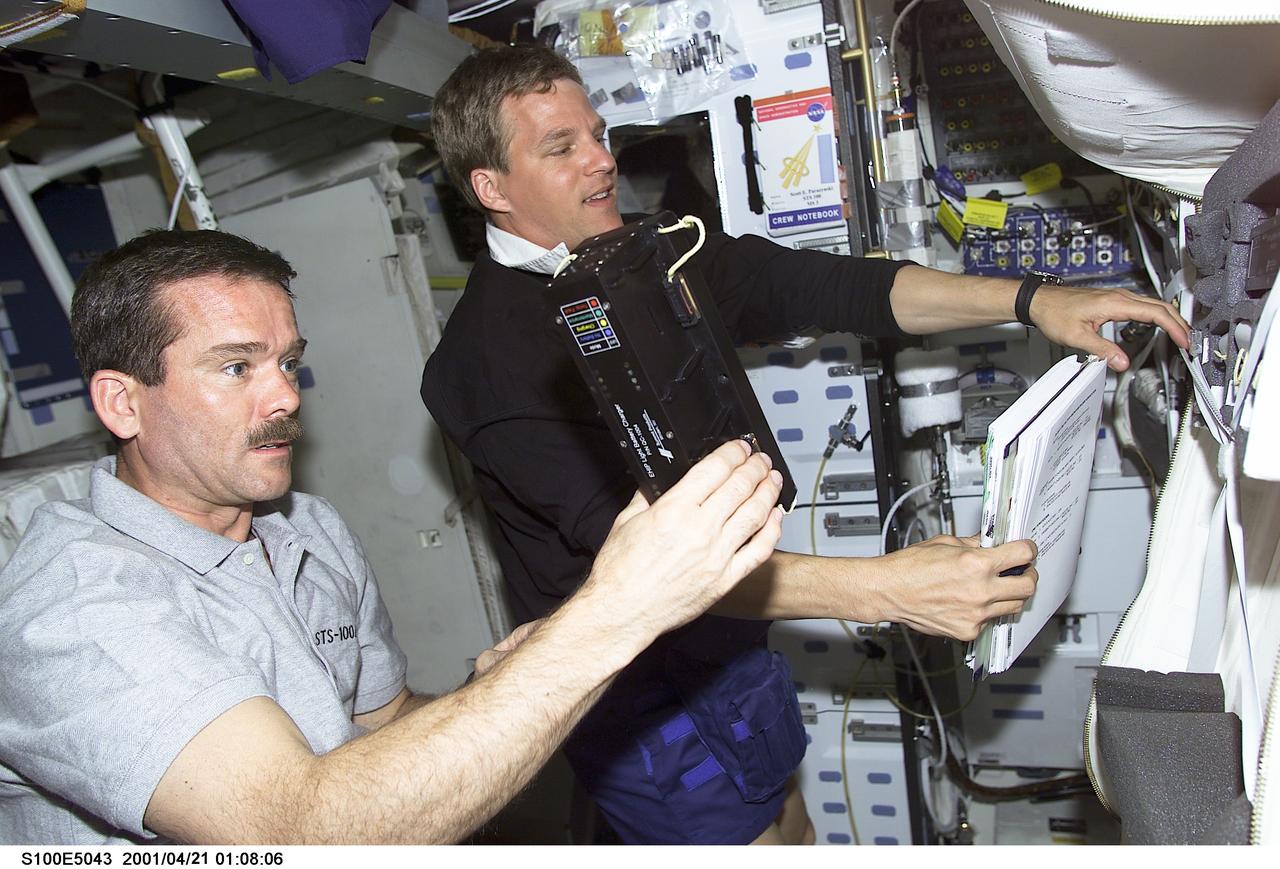
S100-E-5043 (21 April 2001) --- Astronauts Scott E. Parazynski (right) and Chris A. Hadfield of the Canadian Space Agency, both mission specialists, are seen on the middeck of the Space Shuttle Endeavour as the STS-100 crew anticipates its union with the International Space Station (ISS). Assigned space-walking astronauts Hadfield and Parazynski were later joined on the middeck by spacewalk coordinator John L. Phillips in conducting some final checks of the suits and hardware that are to be used during the next day's planned 6-hour, 30-minute spacewalk. The image was recorded with a digital still camera.
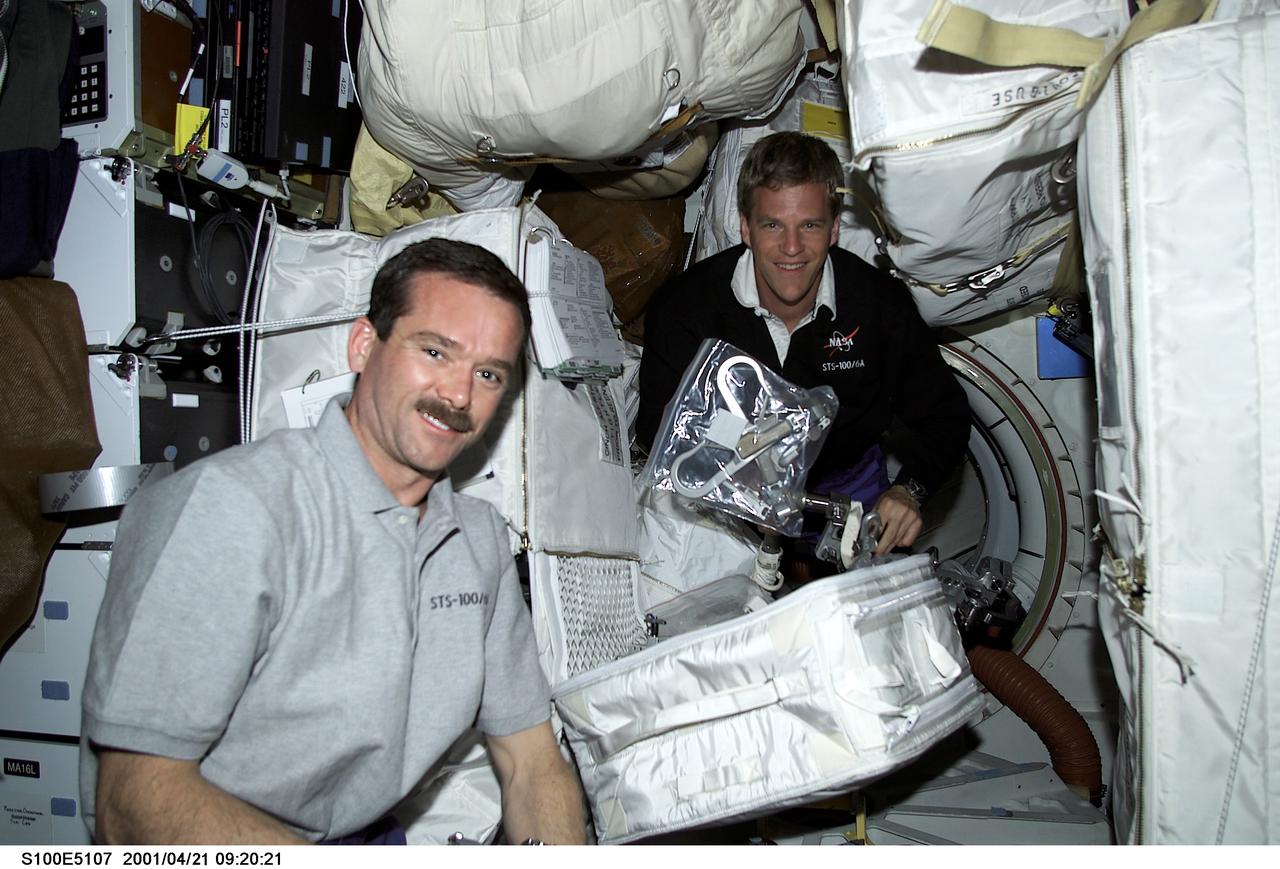
S100-E-5107 (21 April 2001) --- Astronauts Chris A. Hadfield (left) of the Canadian Space Agency and Scott E. Parazynski, both mission specialists, are seen on the middeck of the Space Shuttle Endeavour as the STS-100 crew anticipates its union with the International Space Station (ISS). Assigned space-walking astronauts Hadfield and Parazynski were later joined on the middeck by spacewalk coordinator John L. Phillips in conducting some final checks of the suits and hardware that are to be used during the next day's planned 6-hour, 30-minute spacewalk. The image was recorded with a digital still camera.
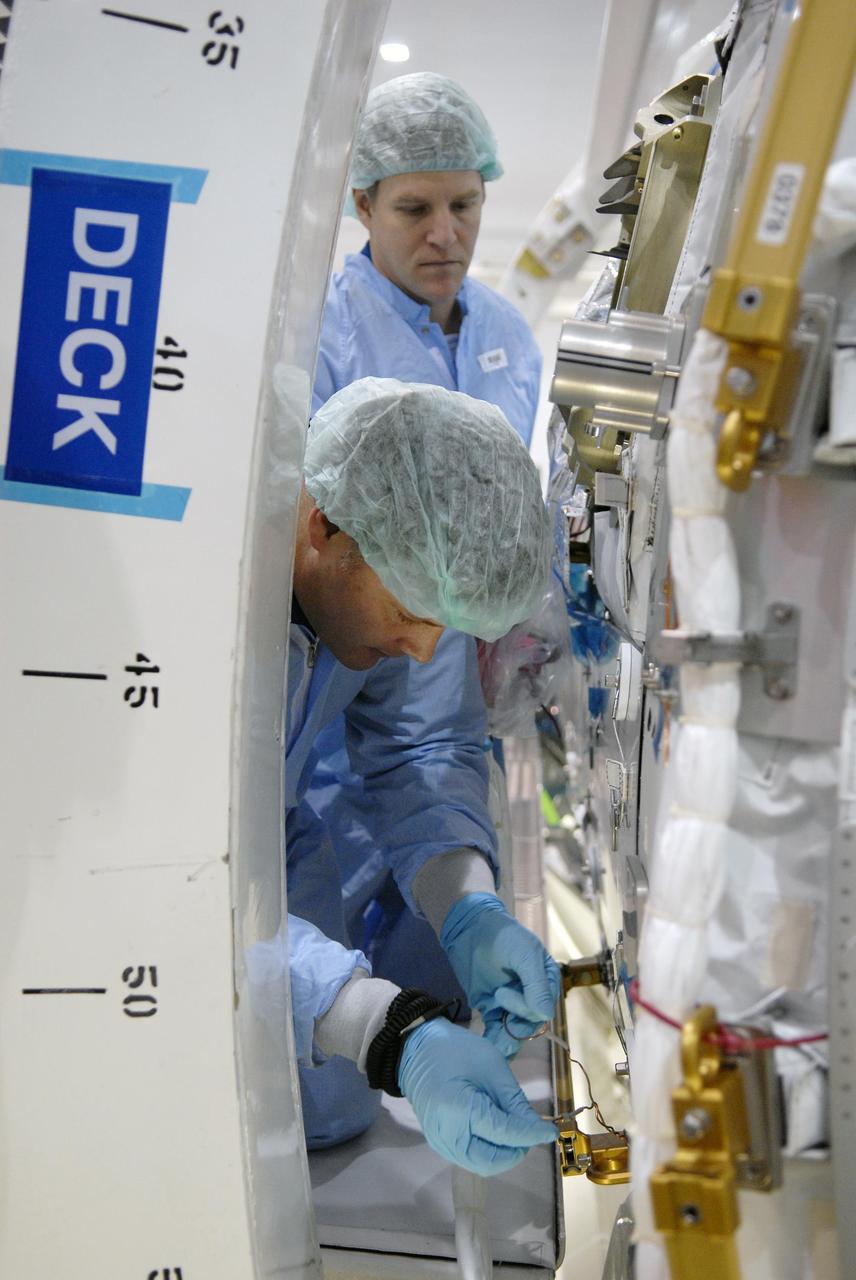
KENNEDY SPACE CENTER, FLA. -- STS-120 Mission Specialist Scott Parazynski (background) watches Mission Specialist Doug Wheelock work with a wire on the primary payload for the mission: the U.S. Node 2, another element to be added to the International Space Station. Parazynski, Wheelock and other crew members are familiarizing themselves with the payload. Node 2 will provide a passageway between three station science experiment facilities: the U.S. Destiny Laboratory, the Kibo Japanese Experiment Module, and the European Columbus Laboratory. STS-120 is targeted for launch on Sept. 7 with a crew of six, including Commander Pam Melroy, Pilot George Zamka, and Mission Specialist Mike Foreman. Photo credit: NASA/Kim Shiflett
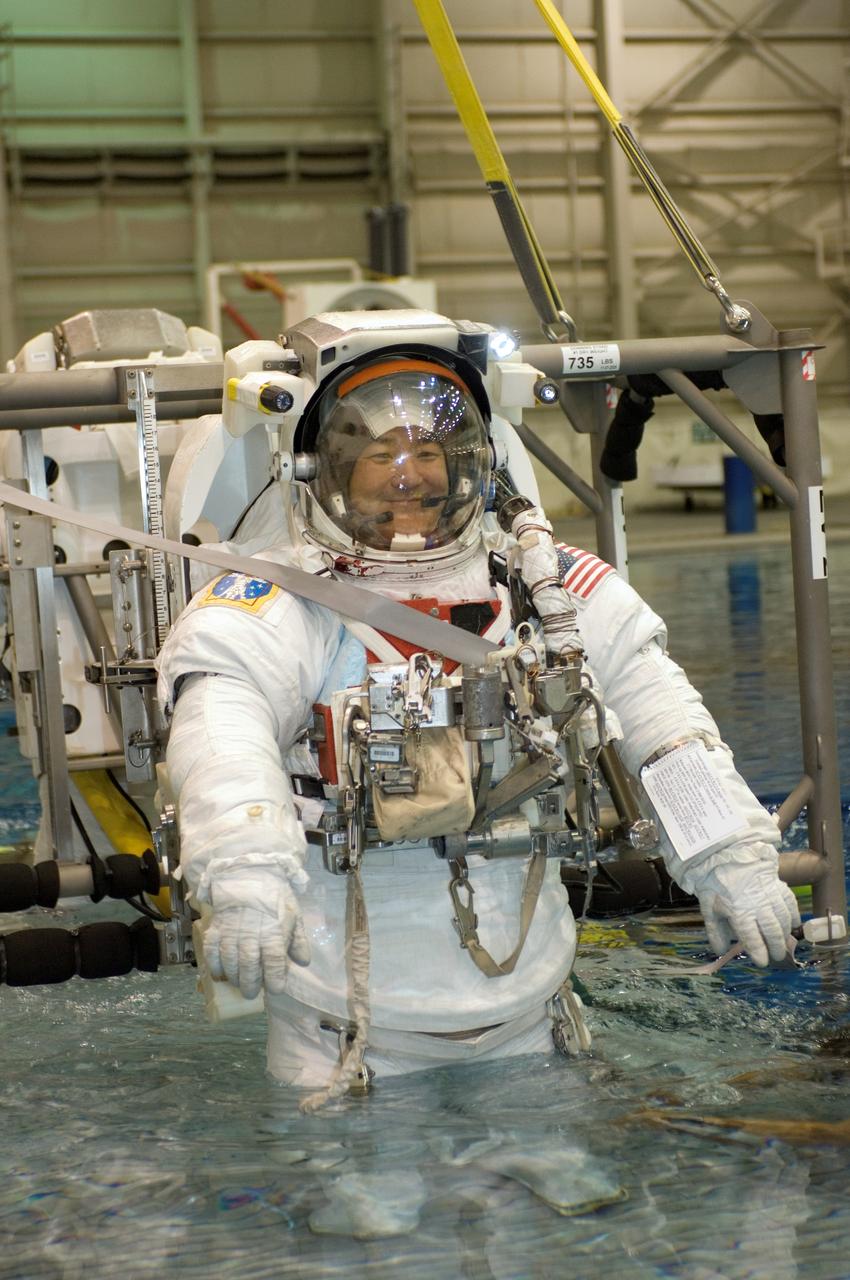
JSC2007-E-46552 (18 Sept. 2007) --- Astronauts Daniel M. Tani, Expedition 16 flight engineer; and Scott E. Parazynski (partially obscured), STS-120 mission specialist, are about to be submerged in the waters of the Neutral Buoyancy Laboratory (NBL) near Johnson Space Center. Tani and Parazynski are attired in training versions of their Extravehicular Mobility Unit (EMU) spacesuit. SCUBA-equipped divers (out of frame) are in the water to assist the crewmembers in their rehearsal, intended to help prepare them for work on the exterior of the International Space Station. Tani is scheduled to join Expedition 16 after launching to the station on mission STS-120.

STS100-396-019 (24 April 2001) --- Astronaut Scott E. Parazynski, STS-100 mission specialist, totes a Direct Current Switching Unit while anchored on the end of the Canadian-built Remote Manipulator System (RMS) robotic arm. The RMS is in the process of moving Parazynski to the exterior of the Destiny laboratory (right foreground), where, assisted by astronaut Chris A. Hadfield (out of frame), he will secure the spare unit--a critical part for the station's electrical system--to the stowage platform for future crews in case it is needed. Also in the frame are the Italian-built Raffaello Multi-Purpose Logistics Module (center) and the new Canadarm2 (lower right) or Space Station Remote Manipulator System (SSRMS).
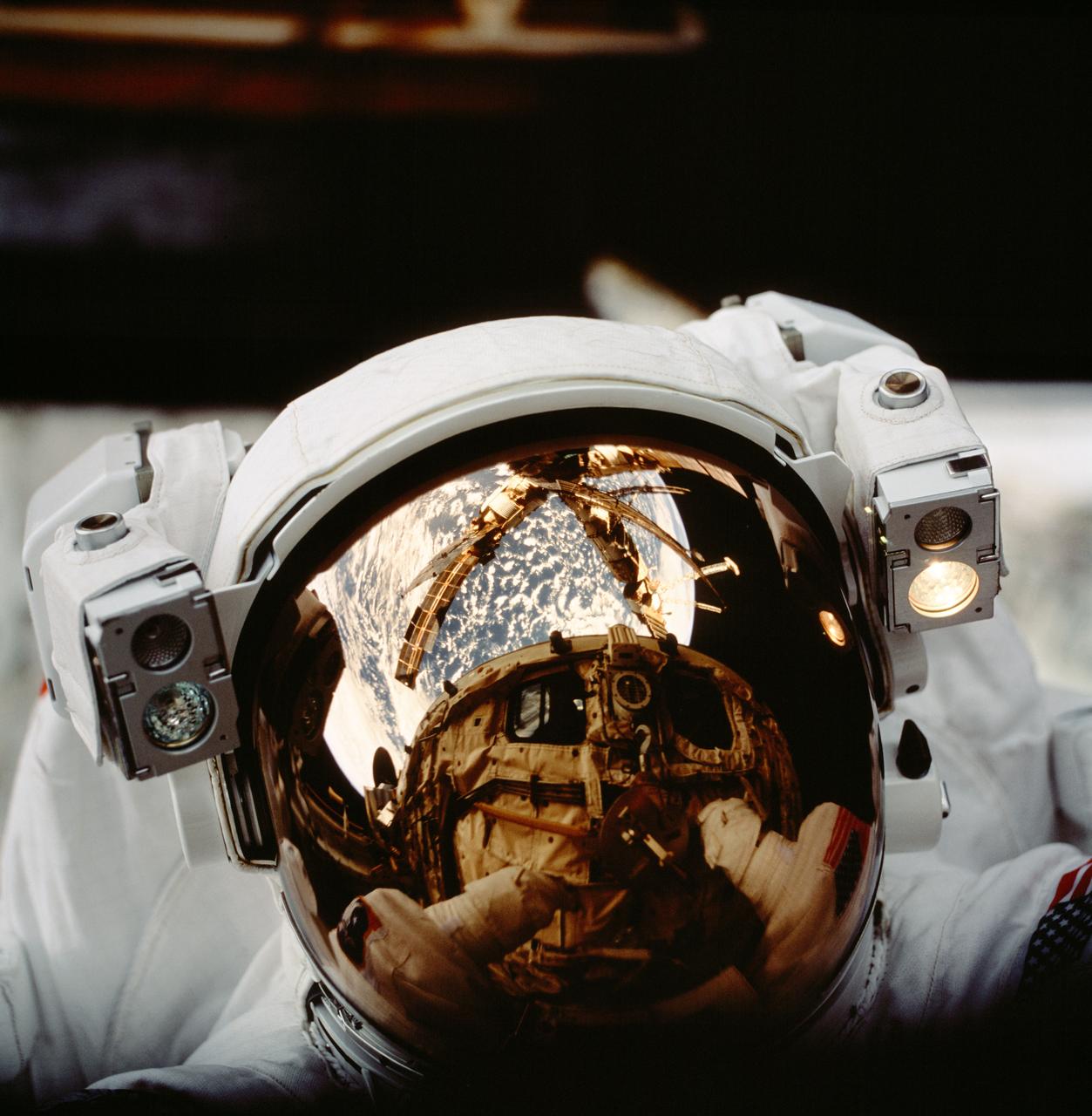
STS086-729-076 (25 Sept-6 Oct. 1997) --- The helmet visor of astronaut Scott F. Parazynski reflects the space shuttle Atlantis’ cargo bay and Russia’s Mir Space Station as well as Earth’s horizon. Astronauts Parazynski and Vladimir G. Titov, both STS-86 mission specialists, spent several hours retrieving Mir Environmental Effects Packages (MEEP) which had been exposed to the space environment around Mir’s permanent Docking Module (DM) since September of 1996. Titov is representing the Russian Space Agency (RSA). Photo credit: NASA
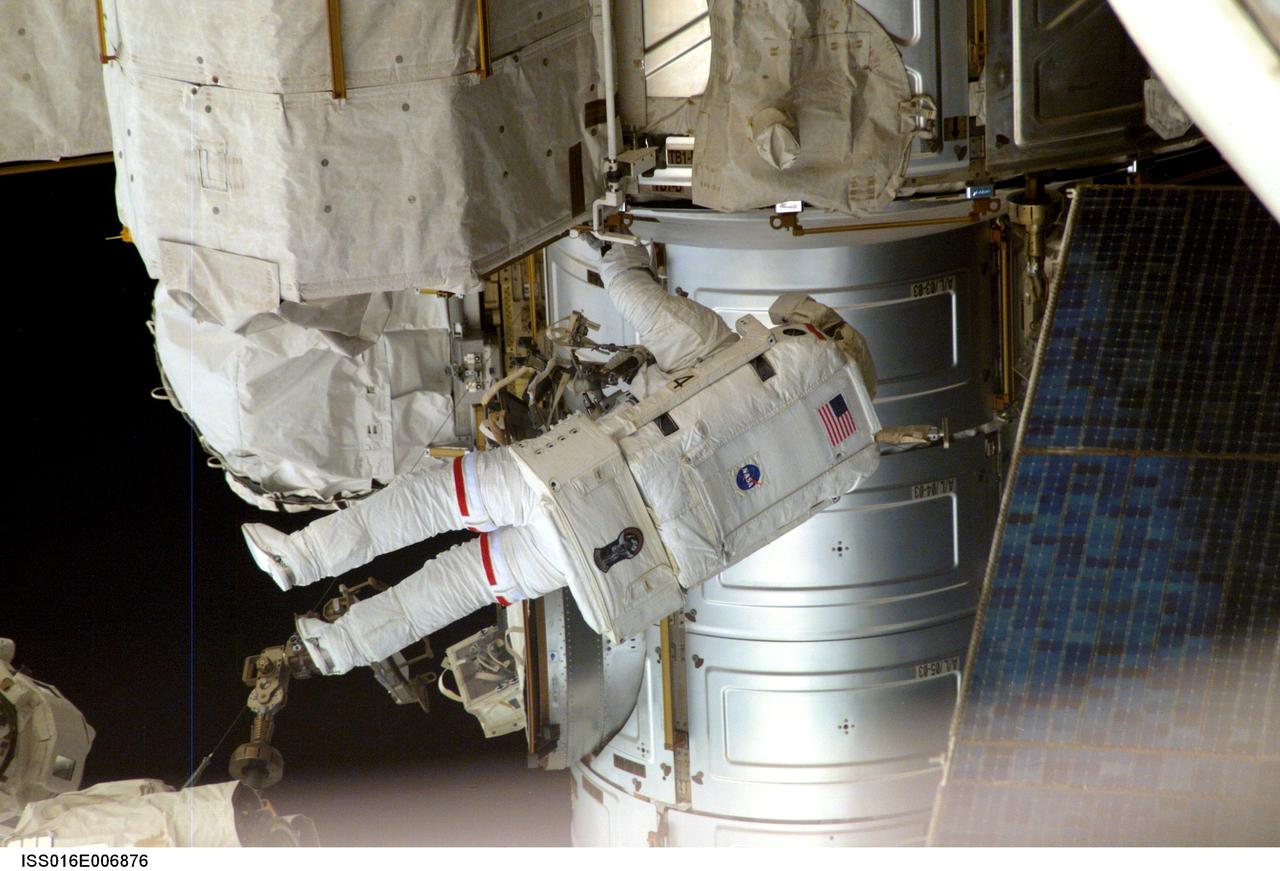
ISS016-E-006876 (26 Oct. 2007) --- Astronaut Scott Parazynski, STS-120 mission specialist, participates in the first of five scheduled sessions of extravehicular activity (EVA) to perform work on the International Space Station while Space Shuttle Discovery is docked to the station. In just over six hours, Parazynski and astronaut Doug Wheelock (out of frame), mission specialist, installed the Harmony module in its temporary location on the station, readied the P6 truss for its relocation during the second EVA session, retrieved a failed radio communications antenna and snapped shut a window cover on Harmony that opened during launch on Discovery.
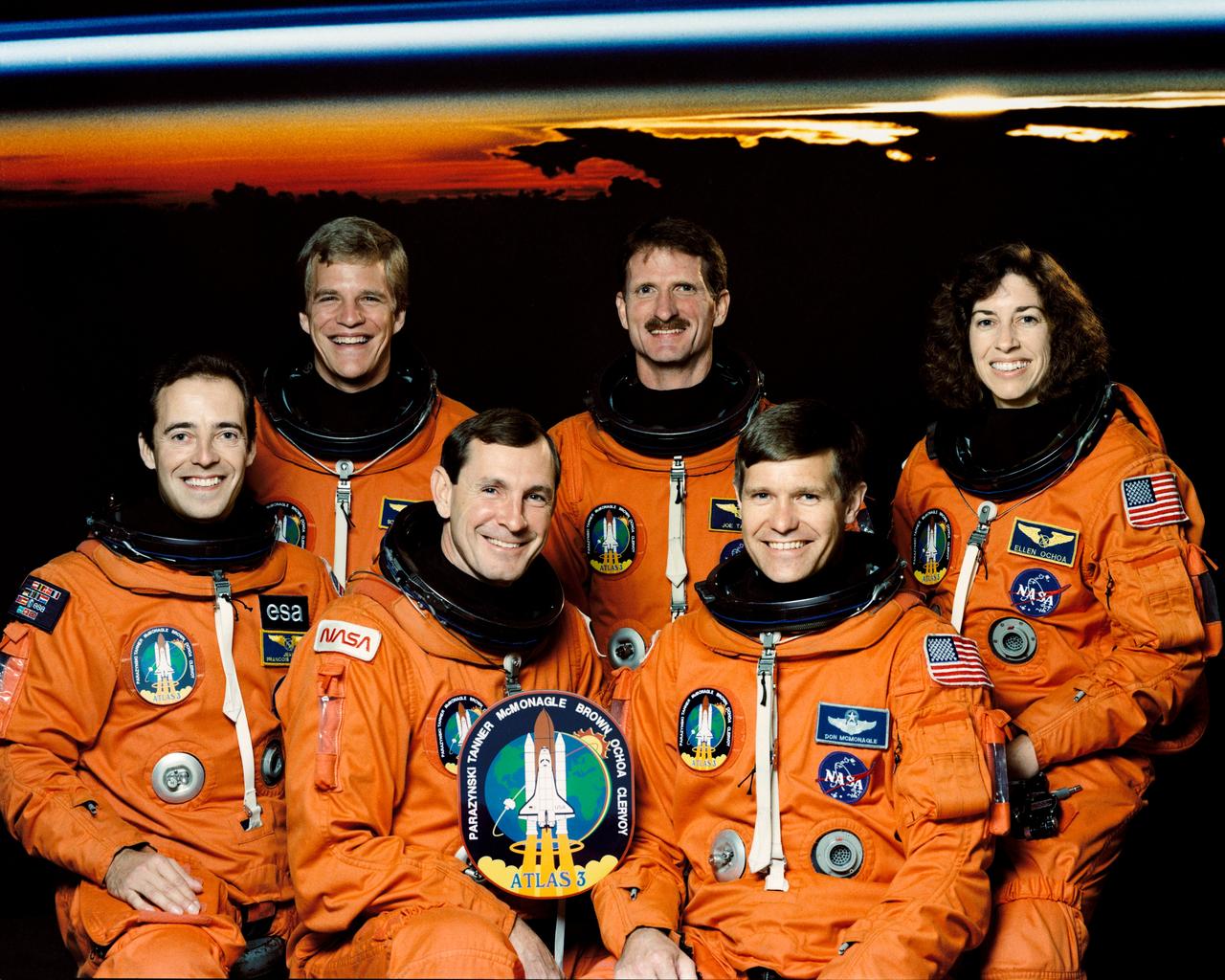
STS066-S-002 (September 1994) --- These five NASA astronauts and one European Space Agency (ESA) crew member are in training for the 13th flight of the Space Shuttle Atlantis. Donald R. McMonagle (front right) is mission commander, and Curtis L. Brown, Jr. (front center) is pilot. The other crew members are Ellen S. Ochoa, payload commander; Scott E. Parazynski, (rear left) and Joseph R. Tanner (rear center), mission specialists, along with ESA astronaut Jean-François Clervoy (front left), mission specialist. Clervoy, Parazynski and Tanner, members of the 1992 astronaut class, are making their initial flights in space.
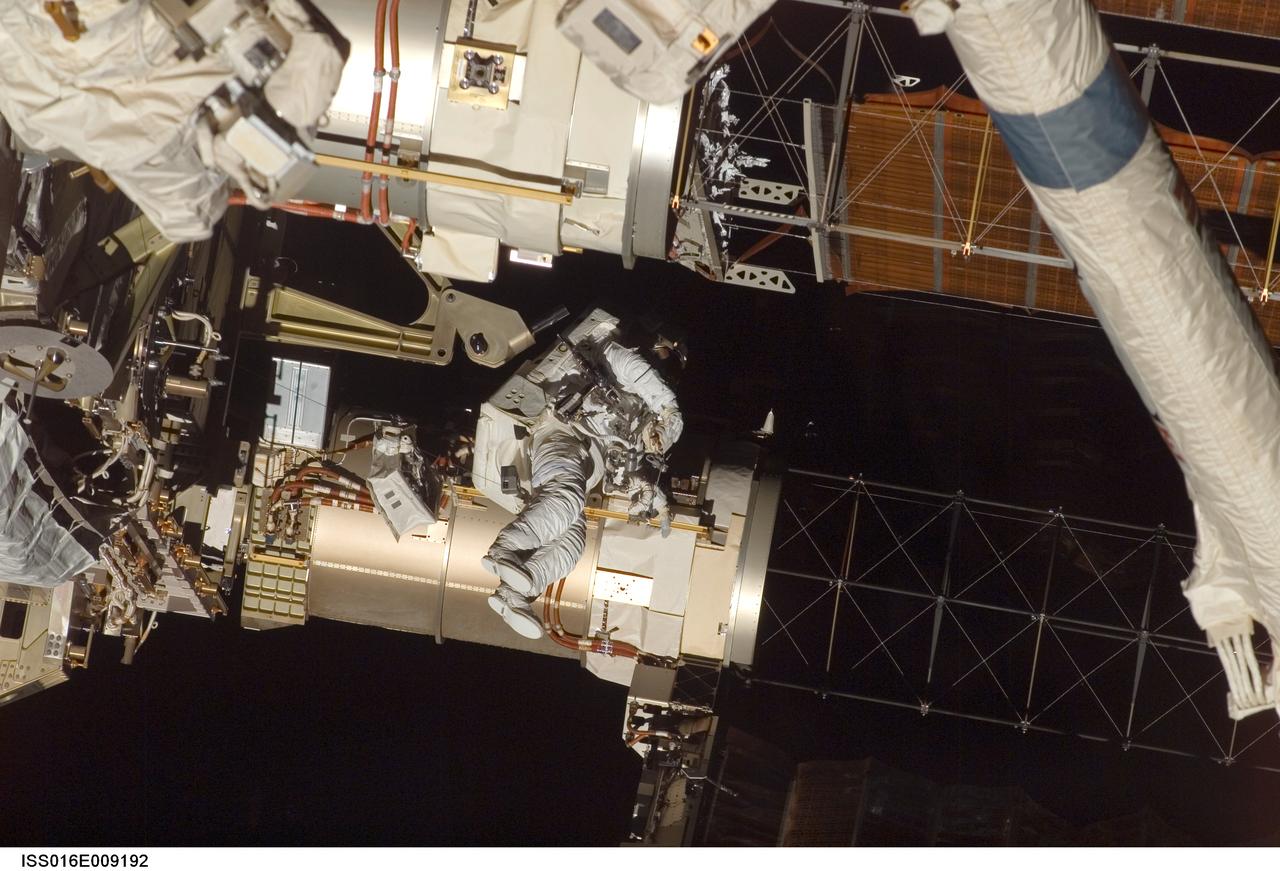
ISS016-E-009192 (3 Nov. 2007) --- Astronaut Doug Wheelock, STS-120 mission specialist, participates in the mission's fourth session of extravehicular activity (EVA) while Space Shuttle Discovery is docked with the International Space Station. During the 7-hour, 19-minute spacewalk, astronaut Scott Parazynski (out of frame), mission specialist, cut a snagged wire and installed homemade stabilizers designed to strengthen the damaged solar array's structure and stability in the vicinity of the damage. Wheelock assisted from the truss by keeping an eye on the distance between Parazynski and the array. Once the repair was complete, flight controllers on the ground successfully completed the deployment of the array.
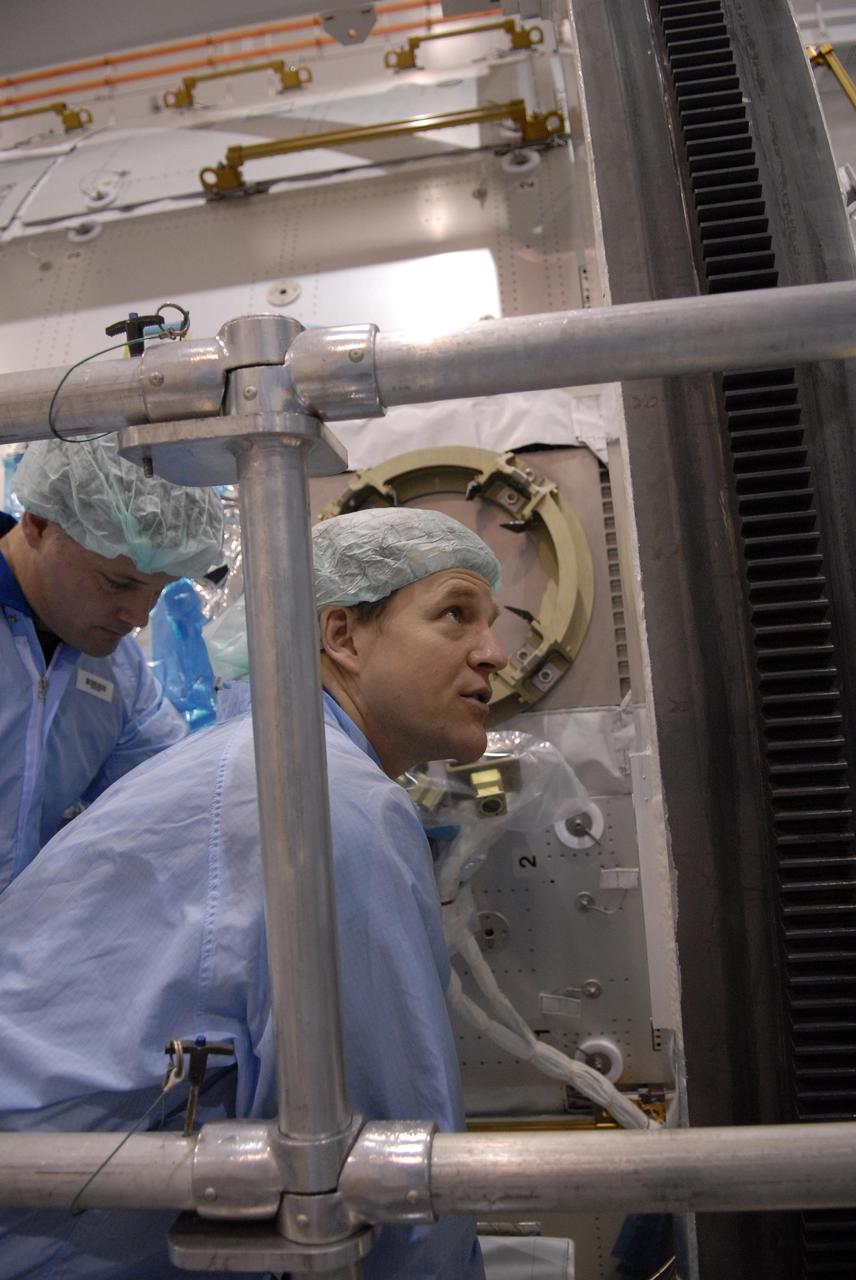
KENNEDY SPACE CENTER, FLA. -- In the Space Station Processing Facility at NASA's Kennedy Space Center, STS-120 Mission Specialist Scott Parazynski checks out the primary payload for the mission: the U.S. Node 2, another element to be added to the International Space Station. Parazynski and other crew members are familiarizing themselves with the payload. Node 2 will provide a passageway between three station science experiment facilities: the U.S. Destiny Laboratory, the Kibo Japanese Experiment Module, and the European Columbus Laboratory. STS-120 is targeted for launch on Sept. 7 with a crew of six, including Commander Pam Melroy, Pilot George Zamka, and Mission Specialist Mike Foreman. Photo credit: NASA/Kim Shiflett
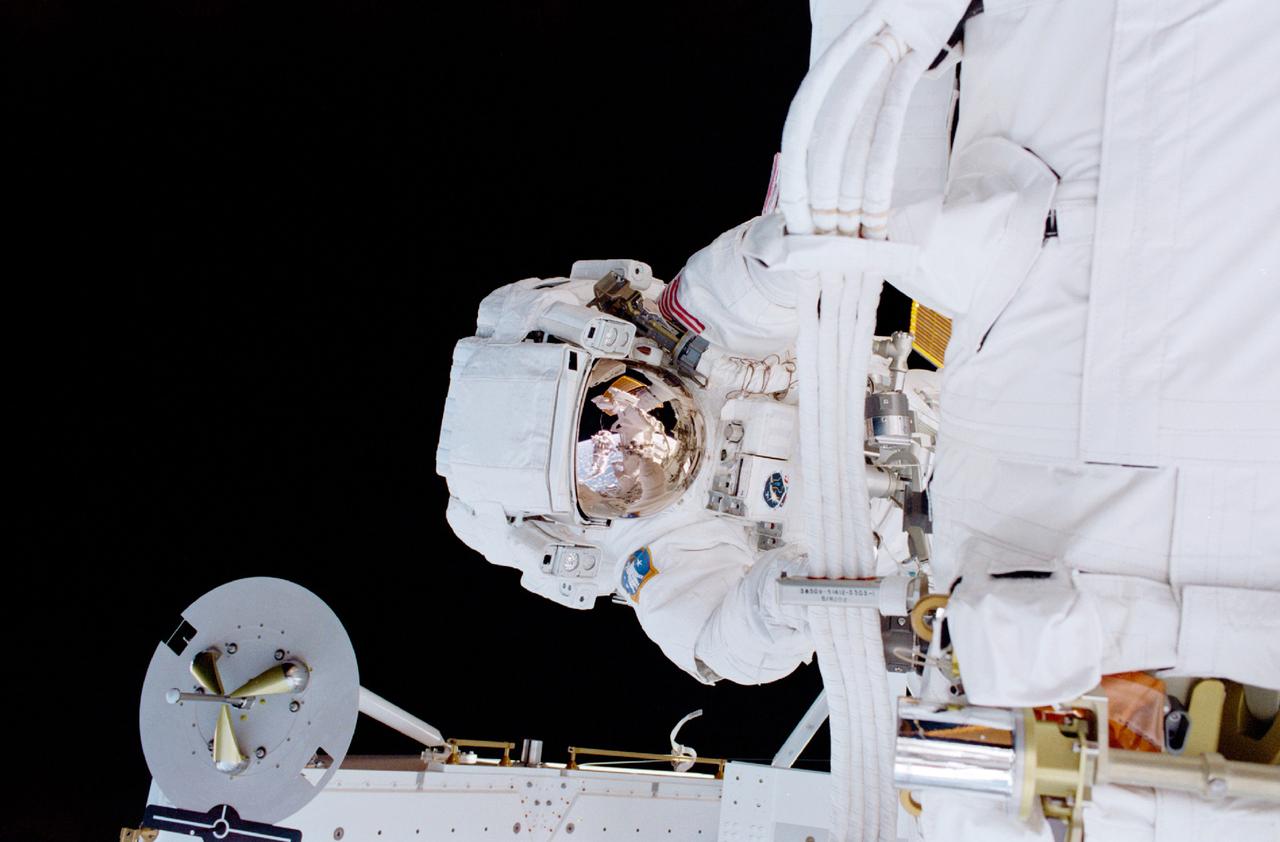
The main objective of the STS-100 mission, the sixth International Space Station (ISS) assembly flight, was the delivery and installation of the Canadian-built Space Station Remote Manipulator System (SSRMS), or Canadarm2. In this photograph, astronaut Scott E. Parazynski, mission specialist, works with cables associated with the robotic arm during one of two days of extravehicular activity (EVA). Both space walks were shared with Chris A. Hadfield, mission specialist representing the Canadian Space Agency (CSA), who is visible in the helmet visor of Parazynski. STS-100 launched April 19, 2001 aboard the Space Shuttle Orbiter Endeavour for an 11 day mission.
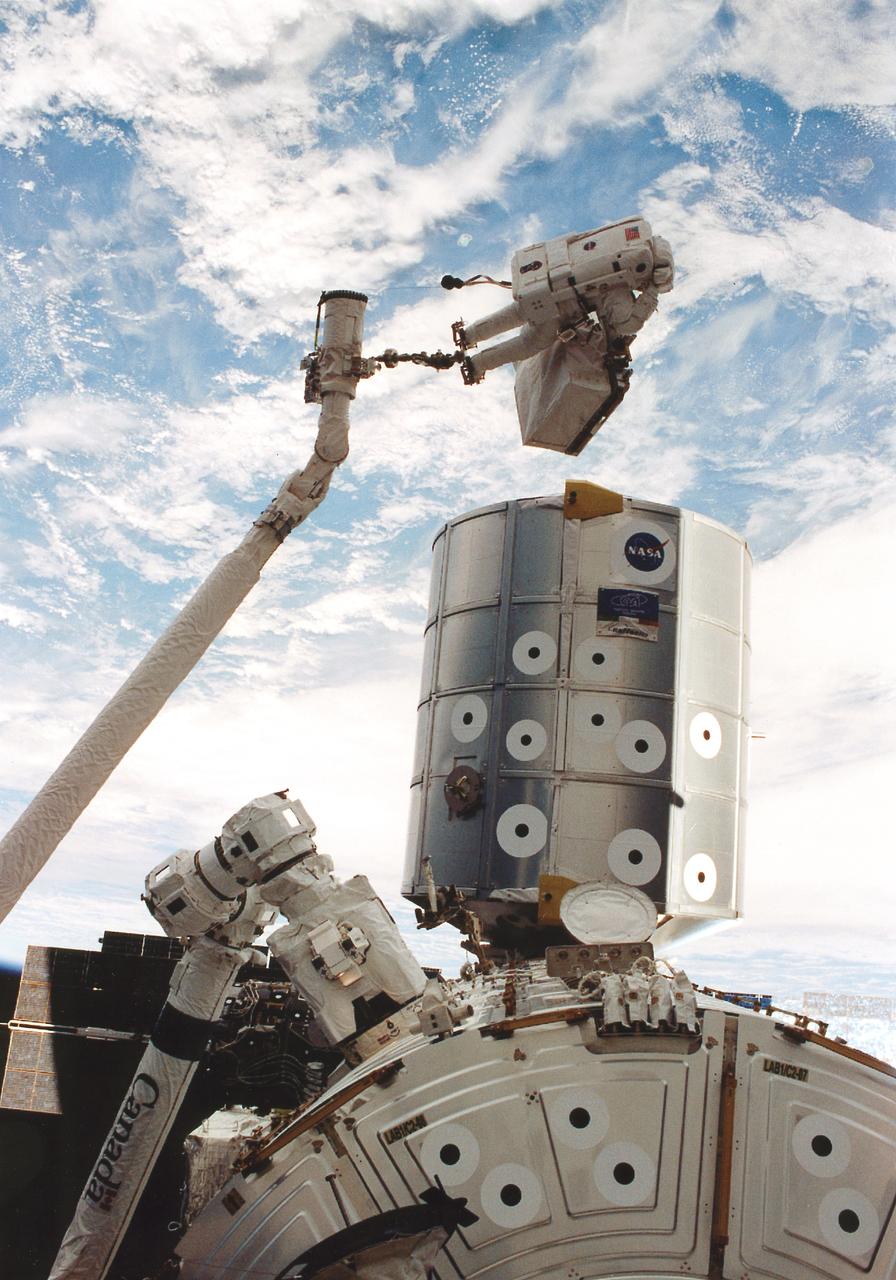
This is a Space Shuttle STS-100 mission onboard photograph. Astronaut Scott Parazynski totes a Direct Current Switching Unit while anchored on the end of the Canadian-built Remote Manipulator System (RMS) robotic arm. The RMS is in the process of moving Parazynski to the exterior of the Destiny laboratory (right foreground), where he will secure the spare unit, a critical part of the station's electrical system, to the stowage platform in case future crews will need it. Also in the photograph are the Italian-built Raffaello multipurpose Logistics Module (center) and the new Canadarm2 (lower right) or Space Station Remote Manipulator System.
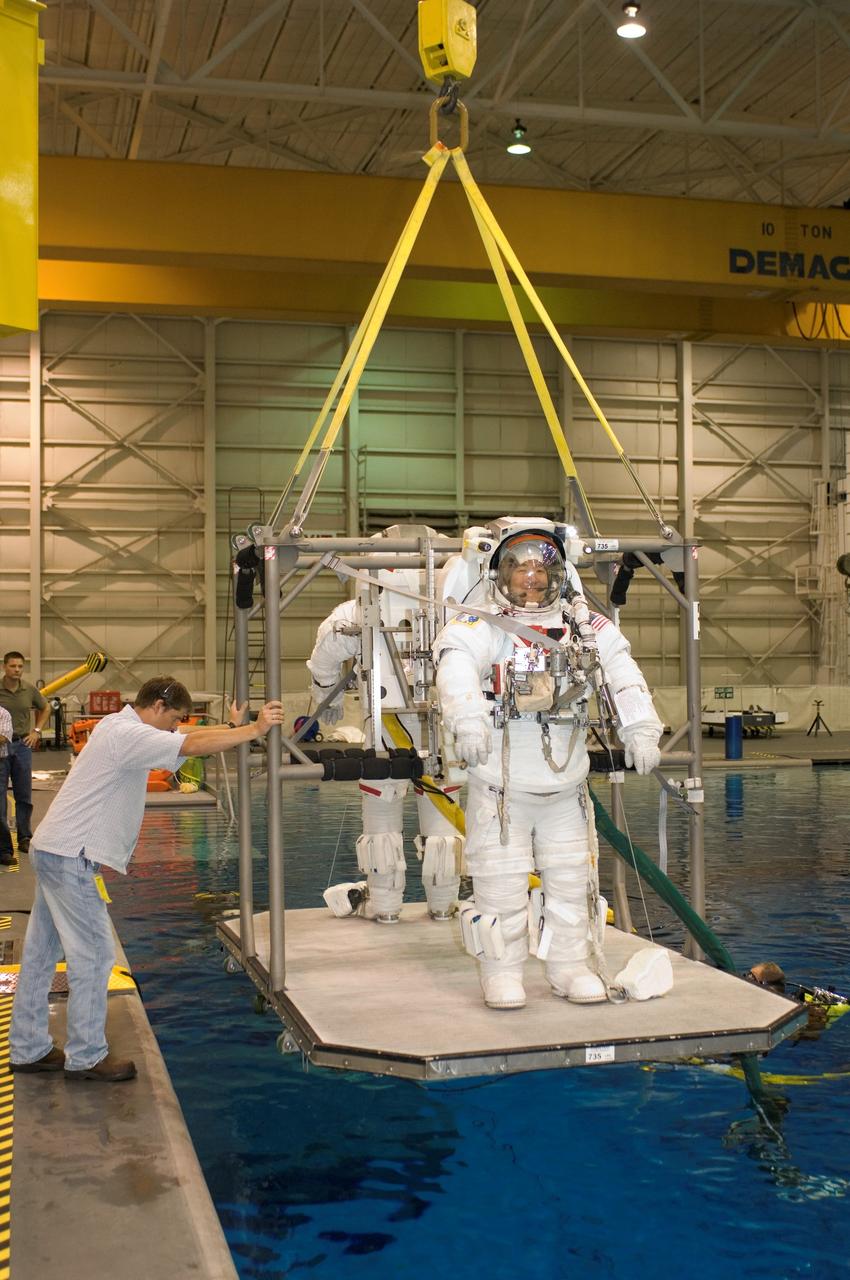
JSC2007-E-46551 (18 Sept. 2007) --- Astronauts Daniel M. Tani, Expedition 16 flight engineer; and Scott E. Parazynski (partially obscured), STS-120 mission specialist, are about to be submerged in the waters of the Neutral Buoyancy Laboratory (NBL) near Johnson Space Center. Tani and Parazynski are attired in training versions of their Extravehicular Mobility Unit (EMU) spacesuit. SCUBA-equipped divers (out of frame) are in the water to assist the crewmembers in their rehearsal, intended to help prepare them for work on the exterior of the International Space Station. Tani is scheduled to join Expedition 16 after launching to the station on mission STS-120.
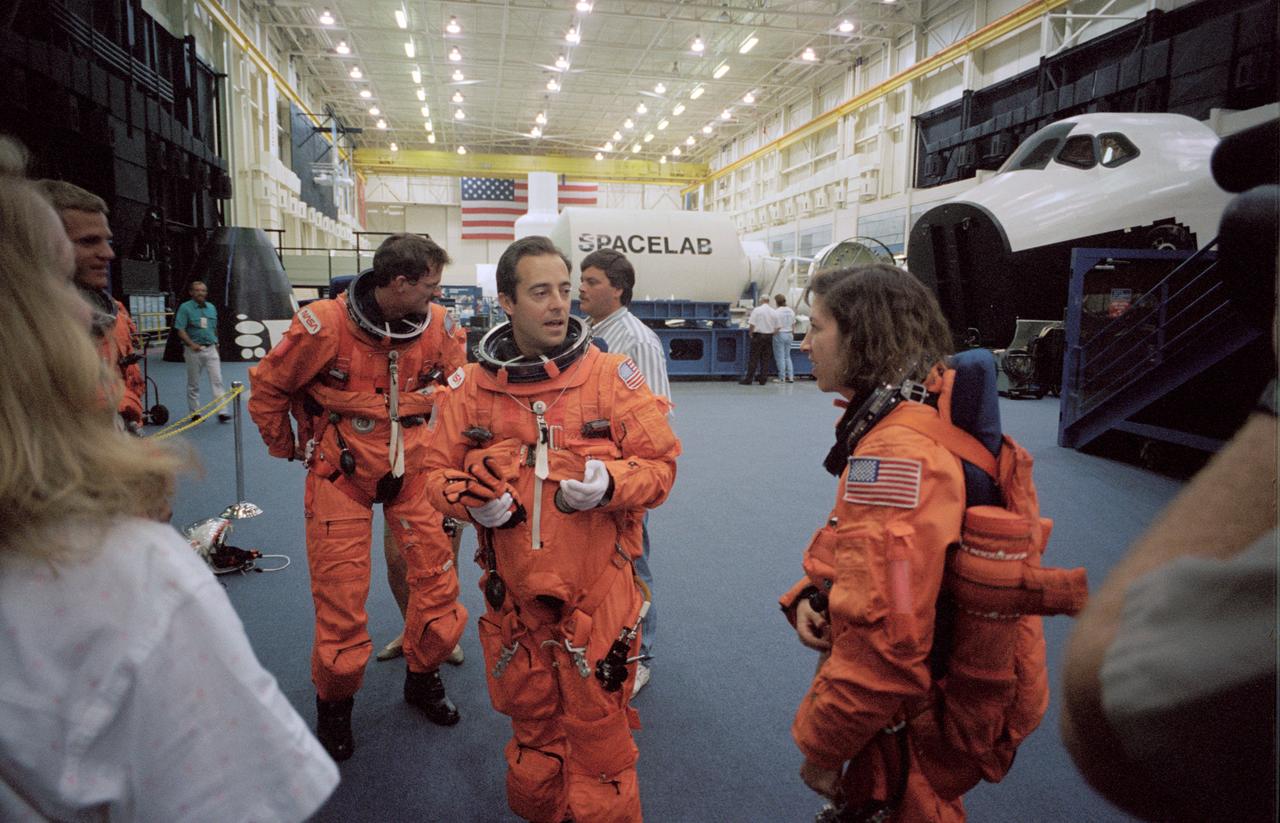
S94-40095 (23 June 1994) --- Jean-Francois Clervoy (center), STS-66 international mission specialist, chats with payload crew mates during a training session on emergency egress procedures. Wearing training versions of the launch and entry suits (LES), the crew members are, left to right, Scott E. Parazynski, Joseph P. Tanner, Clervoy and Ellen Ochoa. Ochoa is payload commander; Tanner and Parazynski are NASA mission specialists and Clervoy represents the European Space Agency (ESA) as a mission specialist. Six astronauts will spend a week and a half aboard the Space Shuttle Atlantis in Earth-orbit in support of the Atmospheric Laboratory for Applications and Science (ATLAS-3).
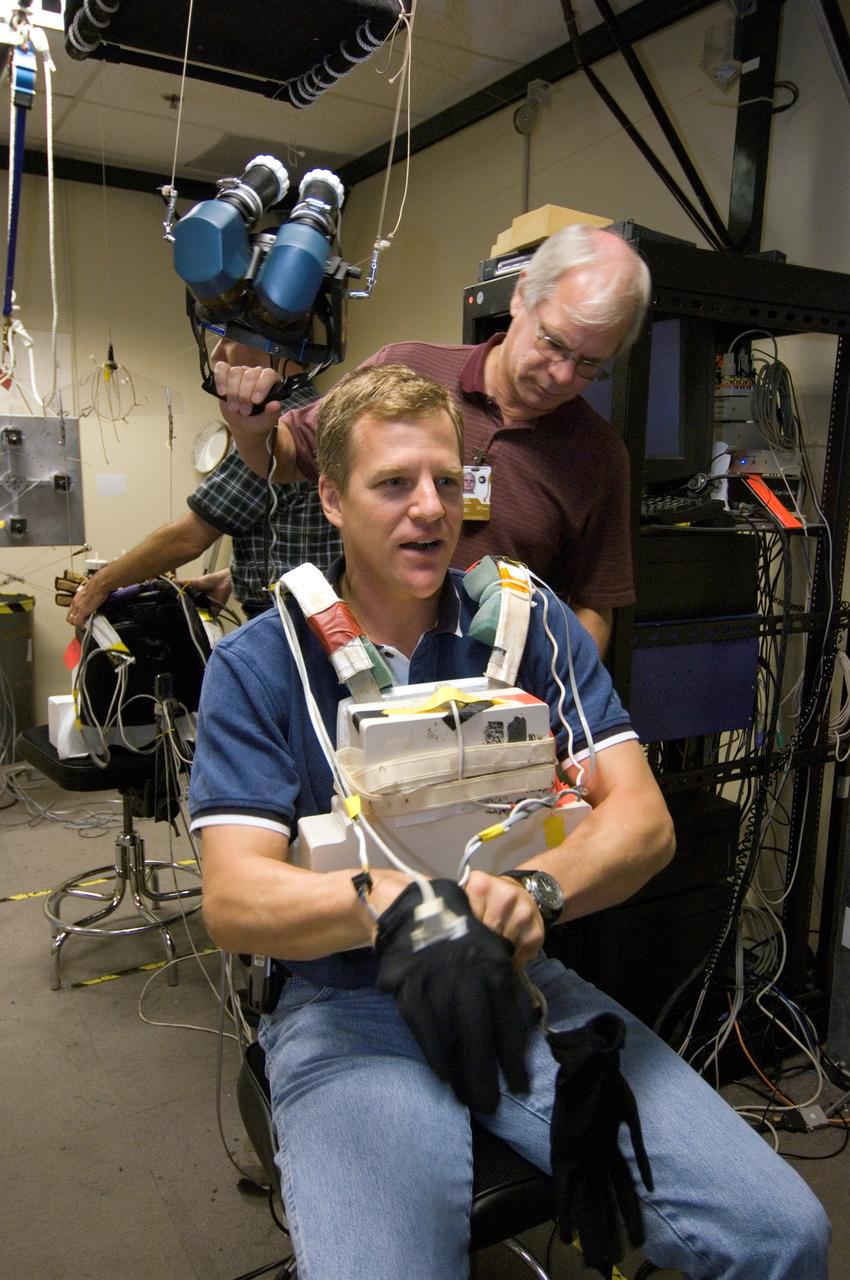
JSC2007-E-41534 (9 Aug. 2007) --- Astronaut Scott E. Parazynski, STS-120 mission specialist, prepares to use virtual reality hardware in the Space Vehicle Mockup Facility at Johnson Space Center to rehearse some of his duties on the upcoming mission to the International Space Station. This type of virtual reality training allows the astronauts to wear special gloves and other gear while looking at computer displays simulating actual movements around the various locations on the station hardware with which they will be working. David J. Homan assisted Parazynski.
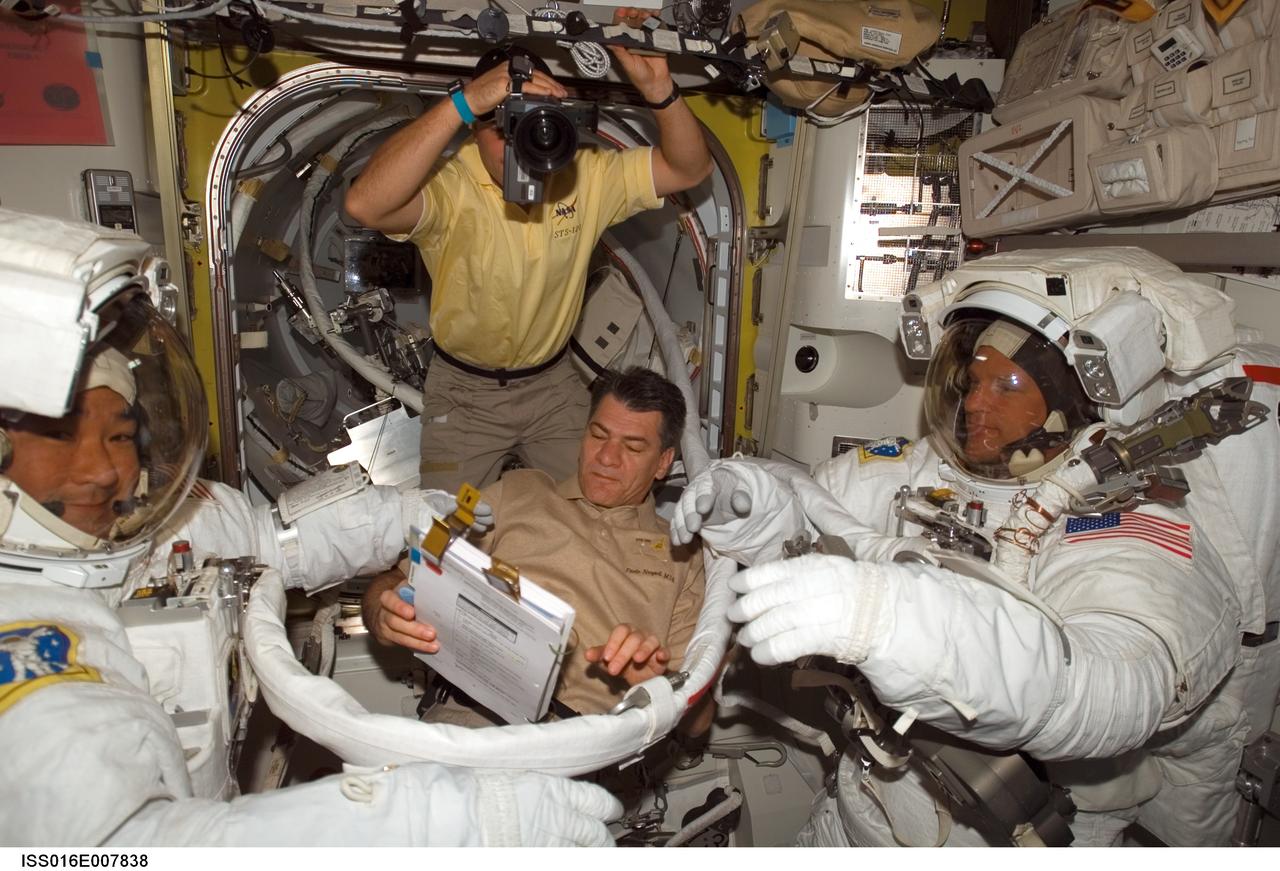
ISS016-E-007838 (28 Oct. 2007) --- Attired in their Extravehicular Mobility Unit (EMU) spacesuits, astronauts Daniel Tani (left), Expedition 16 flight engineer, and Scott Parazynski, STS-120 mission specialist, prepare for the mission's second session of extravehicular activity (EVA) in the Quest Airlock of the International Space Station while Space Shuttle Discovery is docked with the station. European Space Agency (ESA) astronaut Paolo Nespoli (center bottom), STS-120 mission specialist, assisted Tani and Parazynski, while astronaut Doug Wheelock, mission specialist, photographs the event.