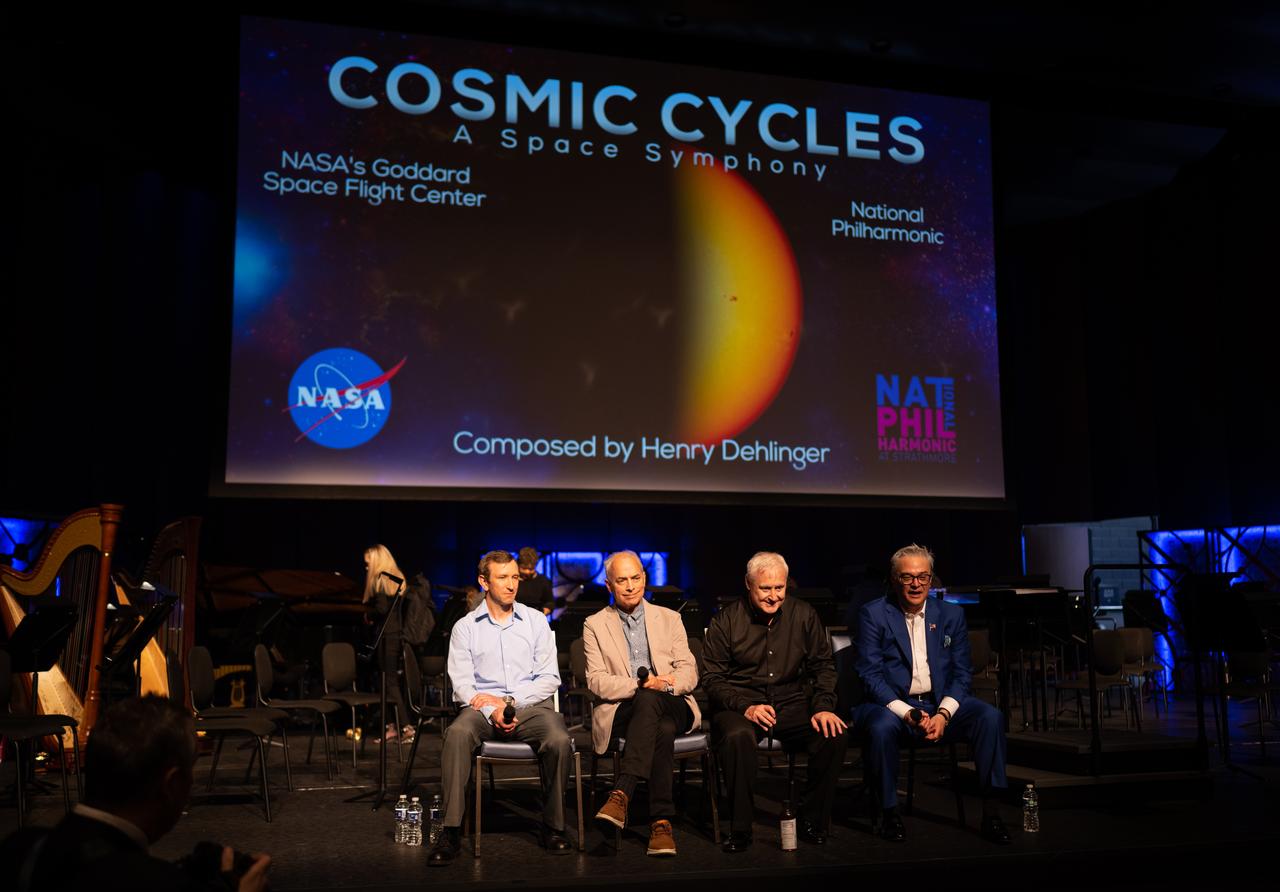
Scott Wiessinger, multimedia producer at NASA’s Goddard Space Flight Center, left, Wade Sisler, executive producer at NASA’s Goddard Space Flight Center, second from left, maestro Piotr Gajewski, second from right, composer Henry Dehlinger, right, are seen as they answer questions following the world premier performance of Dehlinger’s “Cosmic Cycles,” Thursday, May 11, 2023, at Capital One Hall in Tysons, Va. “Cosmic Cycles: A Space Symphony” is a collaboration between composer Henry Dehlinger, NASA’s Goddard Space Flight Center, and the National Philharmonic that features a fusion of music and video in seven multimedia works on the Sun, Earth, Moon, Planets, and Cosmos. Photo Credit: (NASA/Joel Kowsky)

Composer Henry Dehlinger, right, answers a question alongside Scott Wiessinger, multimedia producer at NASA’s Goddard Space Flight Center, left, Wade Sisler, executive producer at NASA’s Goddard Space Flight Center, second from left, maestro Piotr Gajewski, second from right, following the world premier performance of Dehlinger’s “Cosmic Cycles,” Thursday, May 11, 2023, at Capital One Hall in Tysons, Va. “Cosmic Cycles: A Space Symphony” is a collaboration between composer Henry Dehlinger, NASA’s Goddard Space Flight Center, and the National Philharmonic that features a fusion of music and video in seven multimedia works on the Sun, Earth, Moon, Planets, and Cosmos. Photo Credit: (NASA/Joel Kowsky)

In this illustration, an asteroid (bottom left) breaks apart under the powerful gravity of LSPM J0207+3331, the oldest, coldest white dwarf known to be surrounded by a ring of dusty debris. Scientists think the system’s infrared signal is best explained by two distinct rings composed of dust supplied by crumbling asteroids. Credit: NASA’s Goddard Space Flight Center/Scott Wiessinger https://svs.gsfc.nasa.gov/13147
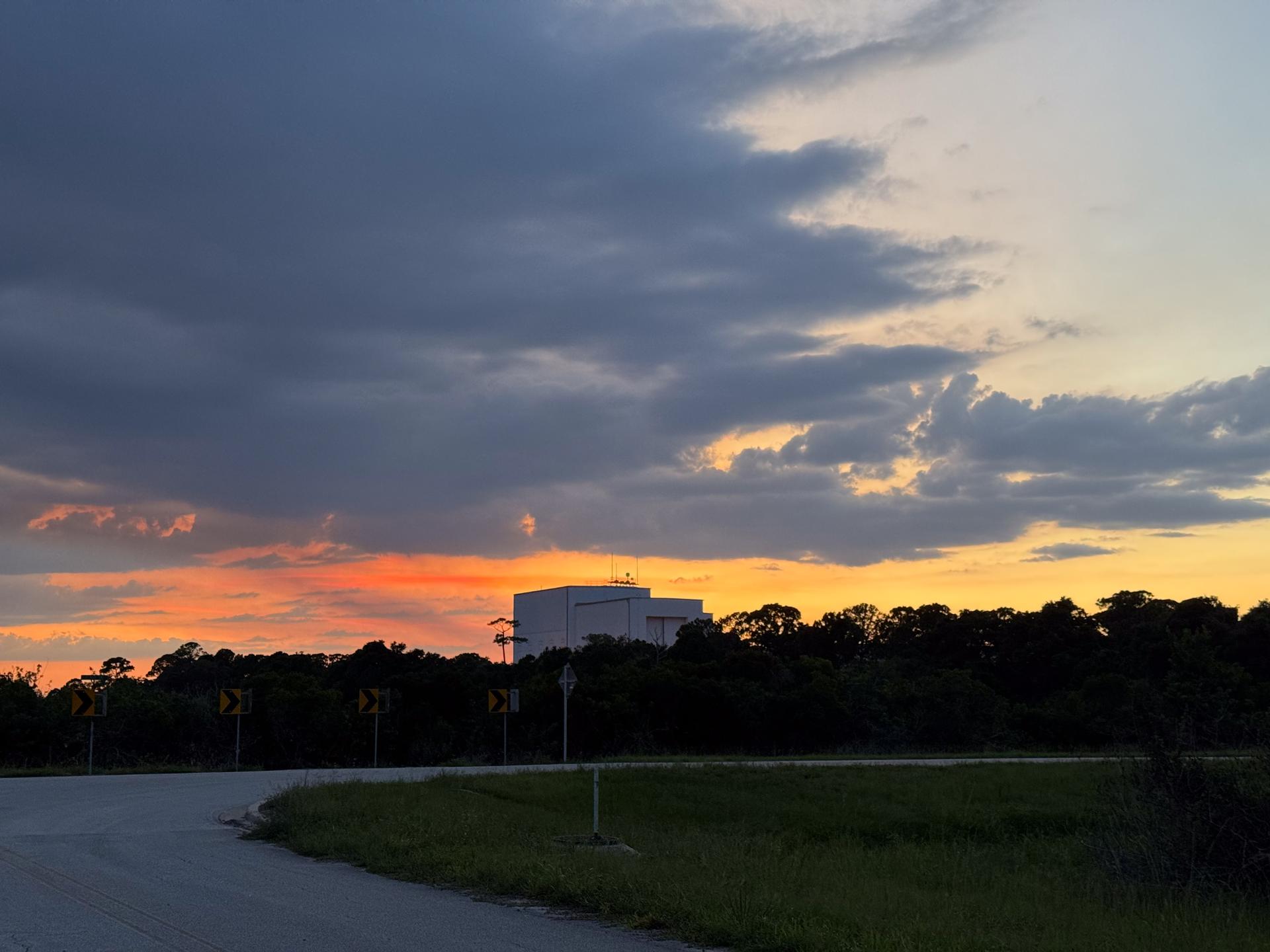
The sun sets on Sunday, June 21, 2026, at the Payload Hazardous Servicing Facility at the agency’s Kennedy Space Center in Florida before the arrival of NASA’s Nancy Grace Roman Space Telescope to undergo prelaunch processing. Named for NASA’s first chief astronomer and “mother of the Hubble Space Telescope,” Roman will offer a field of view over 100 times larger than Hubble’s to study up to a billion galaxies, directly image exoplanets and planet‑forming disks, and address fundamental questions about dark energy, exoplanets, and infrared astrophysics. Liftoff atop a SpaceX Falcon Heavy rocket from NASA Kennedy’s Launch Complex 39A is targeted no earlier than Sunday, Aug. 30, 2026.
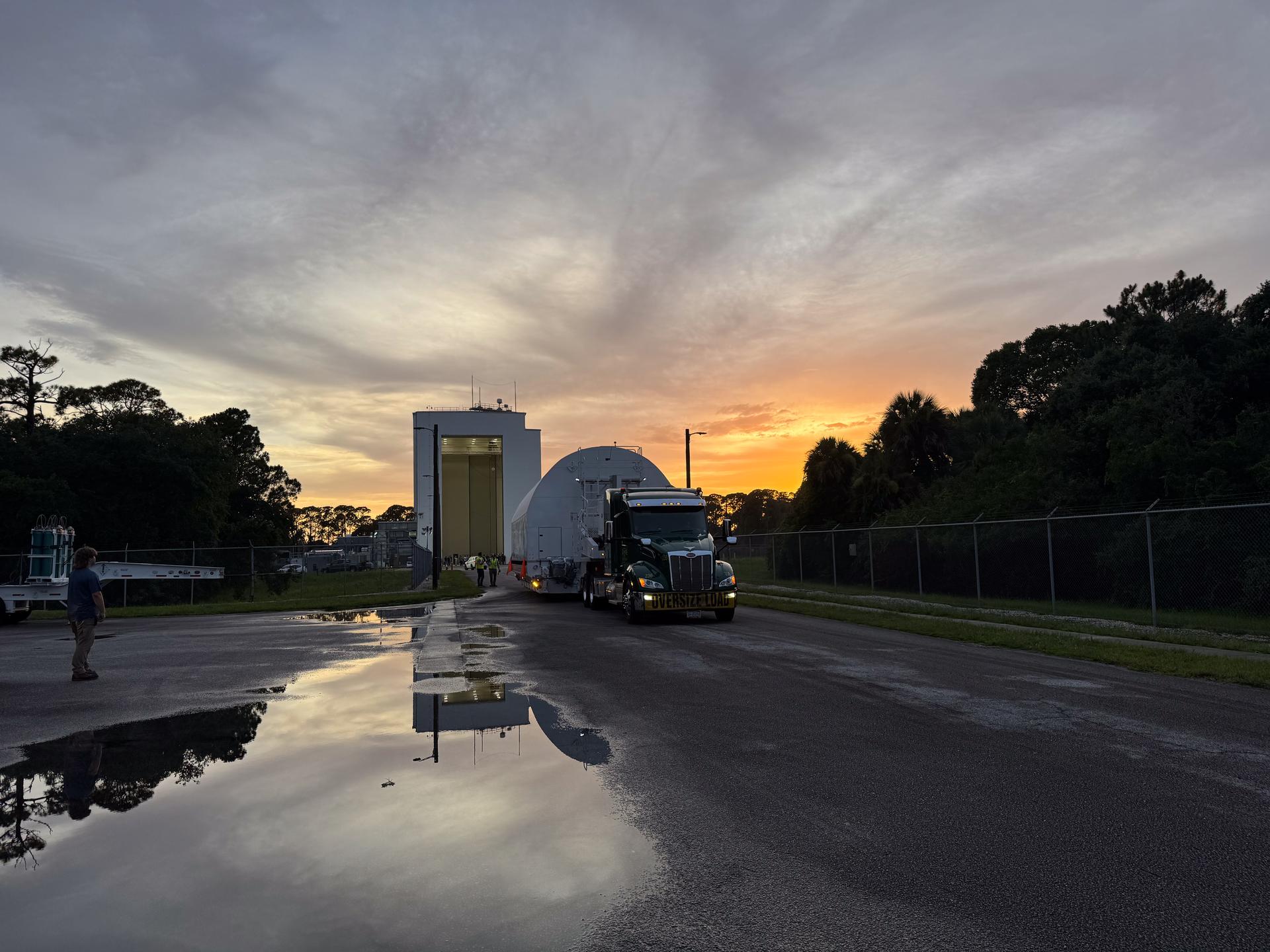
NASA’s Nancy Grace Roman Space Telescope arrives at the Payload Hazardous Servicing Facility at the agency’s Kennedy Space Center in Florida on Sunday, June 21, 2026, to undergo prelaunch processing. Named for NASA’s first chief astronomer and “mother of the Hubble Space Telescope,” Roman will offer a field of view over 100 times larger than Hubble’s to study up to a billion galaxies, directly image exoplanets and planet‑forming disks, and address fundamental questions about dark energy, exoplanets, and infrared astrophysics. Liftoff atop a SpaceX Falcon Heavy rocket from NASA Kennedy’s Launch Complex 39A is targeted no earlier than Sunday, Aug. 30, 2026.
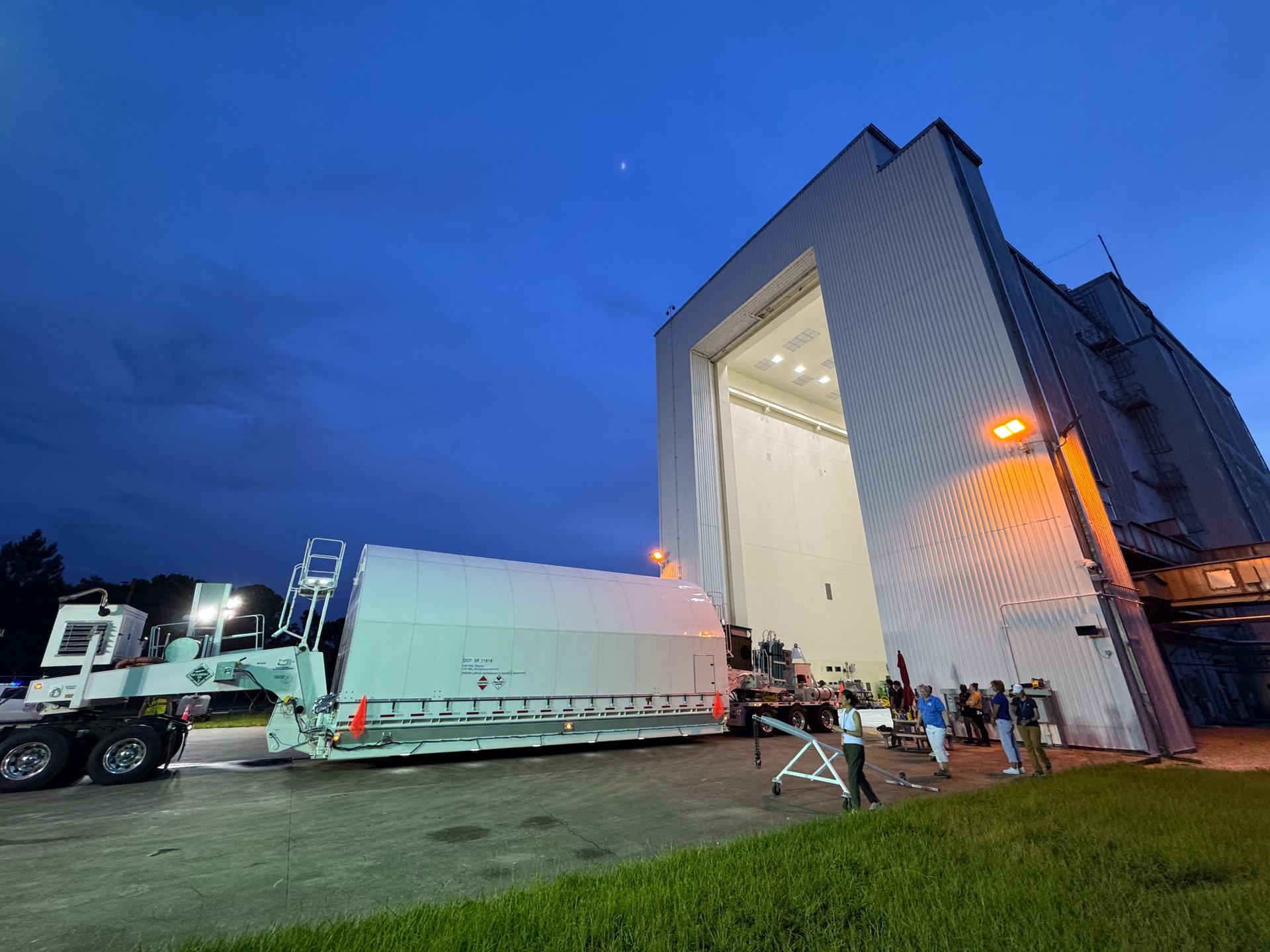
NASA’s Nancy Grace Roman Space Telescope arrives at the Payload Hazardous Servicing Facility at the agency’s Kennedy Space Center in Florida on Sunday, June 21, 2026, to undergo prelaunch processing. Named for NASA’s first chief astronomer and “mother of the Hubble Space Telescope,” Roman will offer a field of view over 100 times larger than Hubble’s to study up to a billion galaxies, directly image exoplanets and planet‑forming disks, and address fundamental questions about dark energy, exoplanets, and infrared astrophysics. Liftoff atop a SpaceX Falcon Heavy rocket from NASA Kennedy’s Launch Complex 39A is targeted no earlier than Sunday, Aug. 30, 2026.

NASA’s Nancy Grace Roman Space Telescope arrives at the Payload Hazardous Servicing Facility at the agency’s Kennedy Space Center in Florida on Sunday, June 21, 2026, to undergo prelaunch processing. Named for NASA’s first chief astronomer and “mother of the Hubble Space Telescope,” Roman will offer a field of view over 100 times larger than Hubble’s to study up to a billion galaxies, directly image exoplanets and planet‑forming disks, and address fundamental questions about dark energy, exoplanets, and infrared astrophysics. Liftoff atop a SpaceX Falcon Heavy rocket from NASA Kennedy’s Launch Complex 39A is targeting no earlier than Sunday, Aug. 30, 2026.
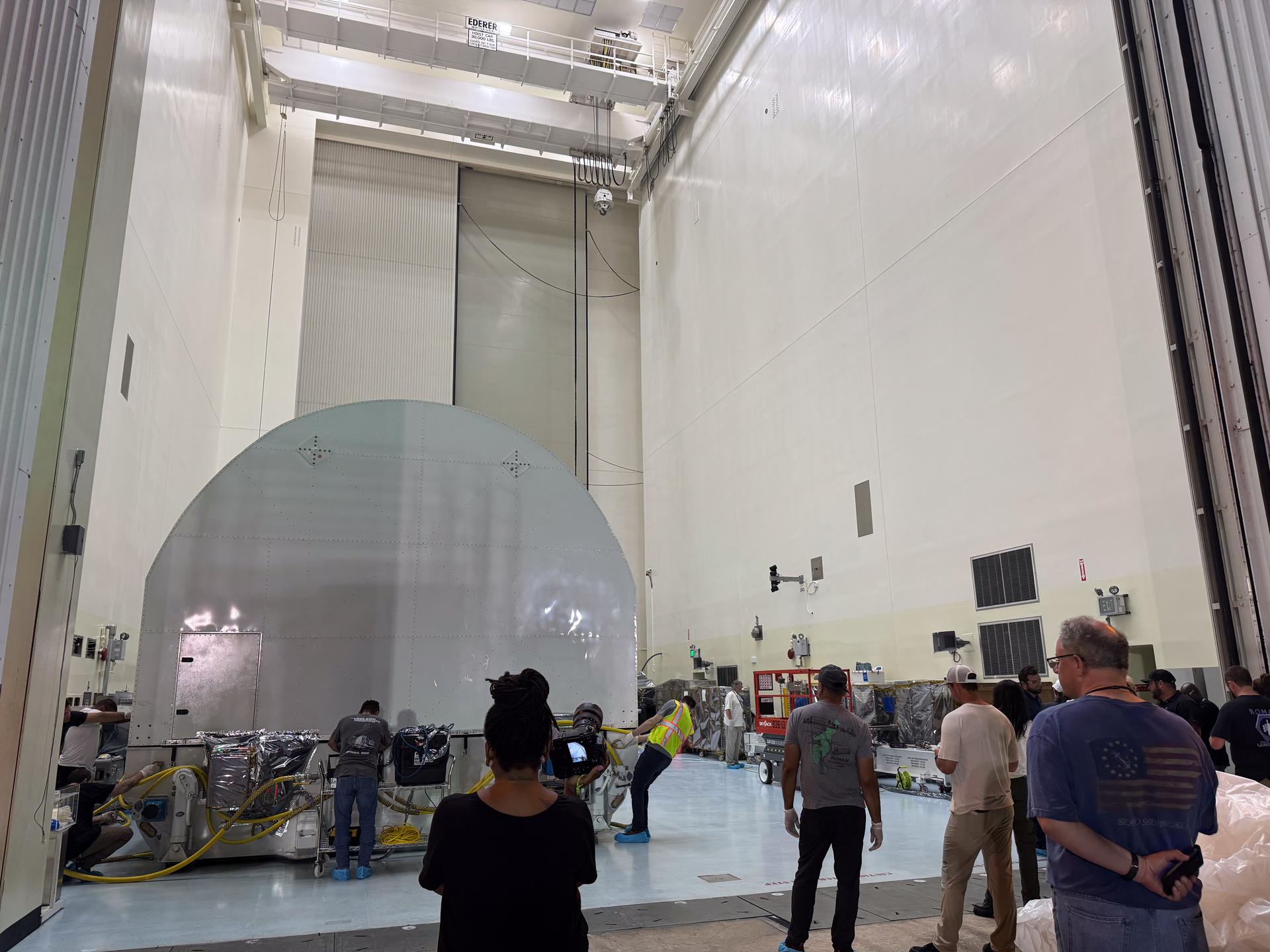
NASA’s Nancy Grace Roman Space Telescope arrives at the Payload Hazardous Servicing Facility at the agency’s Kennedy Space Center in Florida on Sunday, June 21, 2026, to undergo prelaunch processing. Named for NASA’s first chief astronomer and “mother of the Hubble Space Telescope,” Roman will offer a field of view over 100 times larger than Hubble’s to study up to a billion galaxies, directly image exoplanets and planet‑forming disks, and address fundamental questions about dark energy, exoplanets, and infrared astrophysics. Liftoff atop a SpaceX Falcon Heavy rocket from NASA Kennedy’s Launch Complex 39A is targeted no earlier than Sunday, Aug. 30, 2026.
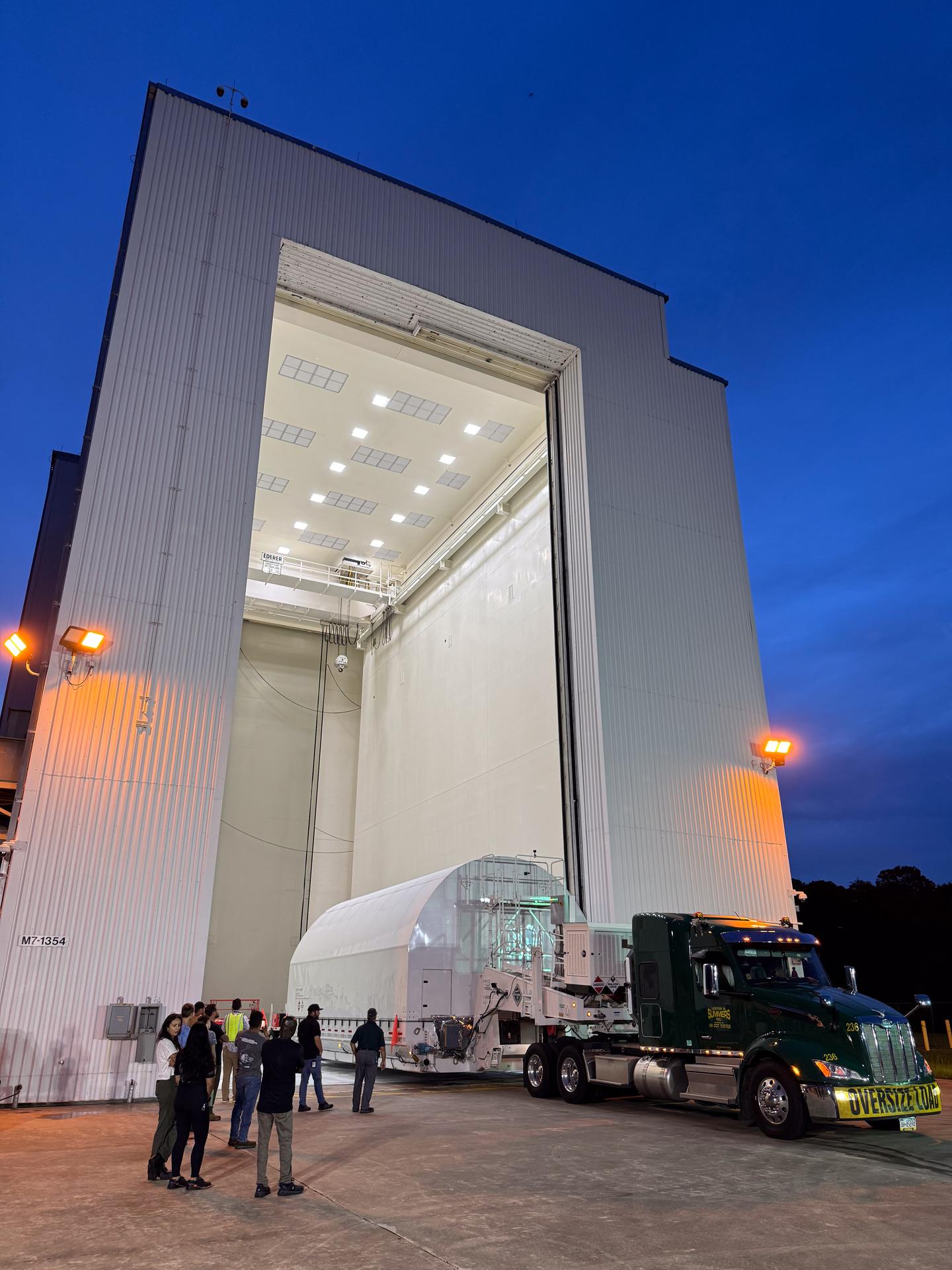
NASA’s Nancy Grace Roman Space Telescope arrives at the Payload Hazardous Servicing Facility at the agency’s Kennedy Space Center in Florida on Sunday, June 21, 2026, to undergo prelaunch processing. Named for NASA’s first chief astronomer and “mother of the Hubble Space Telescope,” Roman will offer a field of view over 100 times larger than Hubble’s to study up to a billion galaxies, directly image exoplanets and planet‑forming disks, and address fundamental questions about dark energy, exoplanets, and infrared astrophysics. Liftoff atop a SpaceX Falcon Heavy rocket from NASA Kennedy’s Launch Complex 39A is targeted no earlier than Sunday, Aug. 30, 2026.