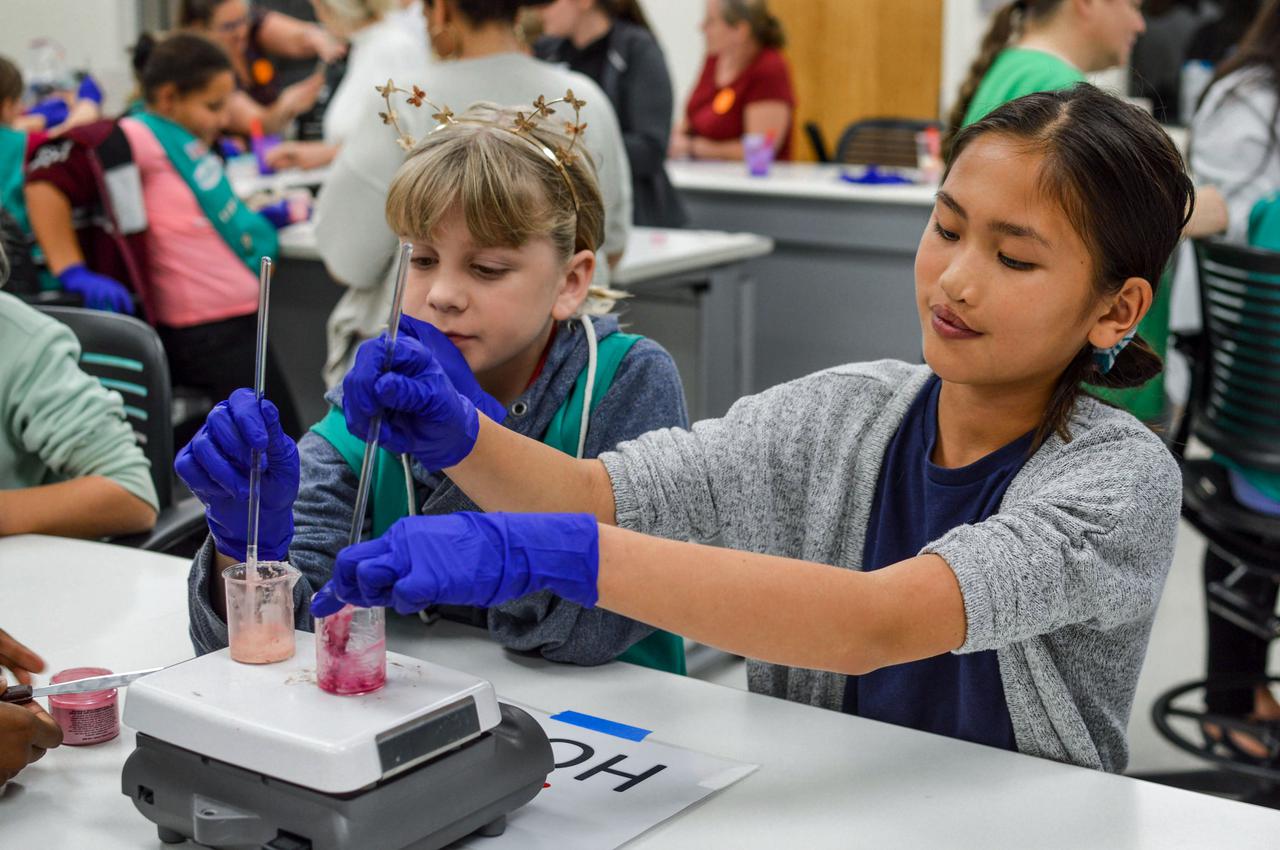
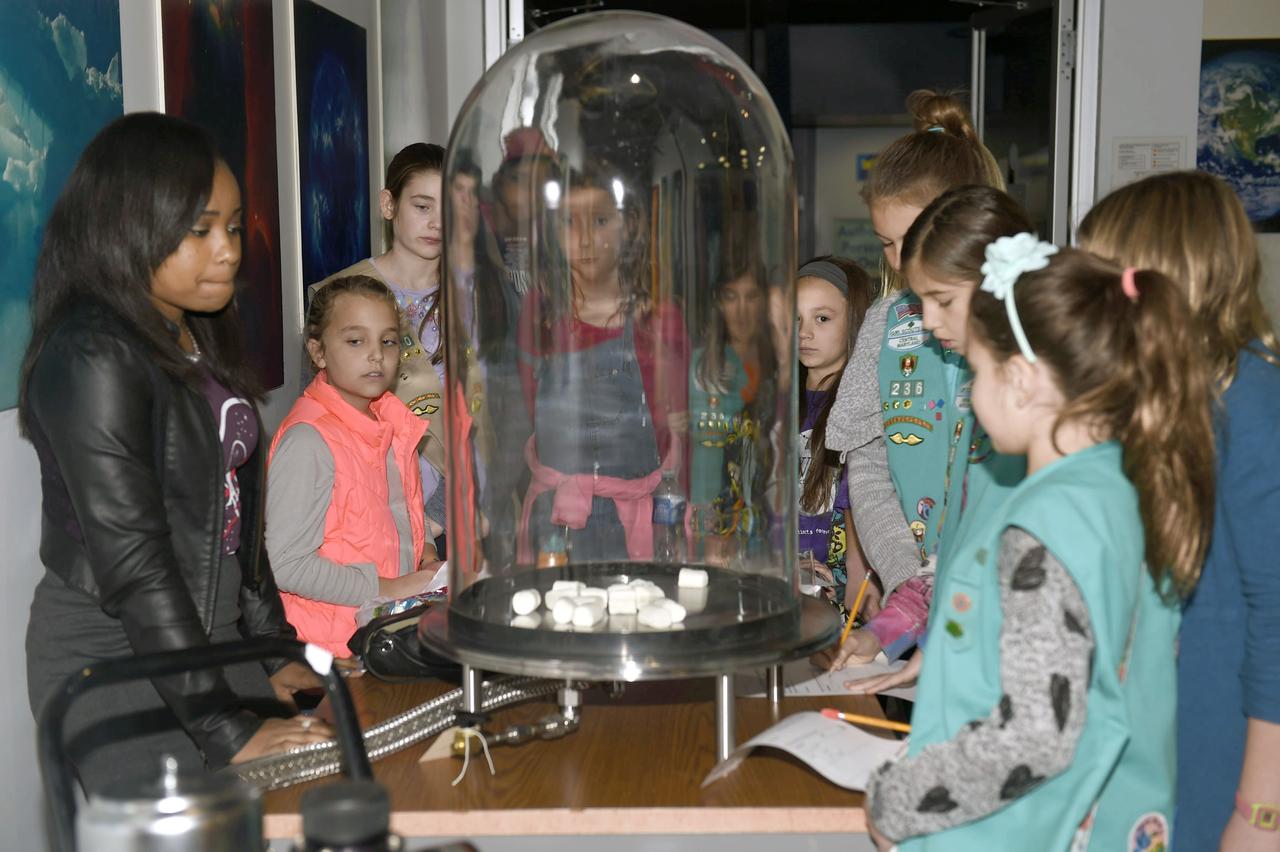
jsc2021e037279 (11/15/2019) --- Girl Scouts prepare experiments as part of a STEM collaboration with the Girl Scouts of Citrus Council. Faraday-Girl Scouts-1 (Faraday-Girls Scouts) offers Girl Scouts the opportunity to conduct a control experiment and observe the actual experiments on plant growth, ant colonization, and brine shrimp lifecycle in Faraday boxes aboard the International Space Station. This is part of a year-long effort by the Girl Scouts of Citrus Council to engage scouts in the study and understanding of space. The program also provides scouts firsthand experience with the concept of an experimental control. Image Credit: Girl Scouts Citrus Council
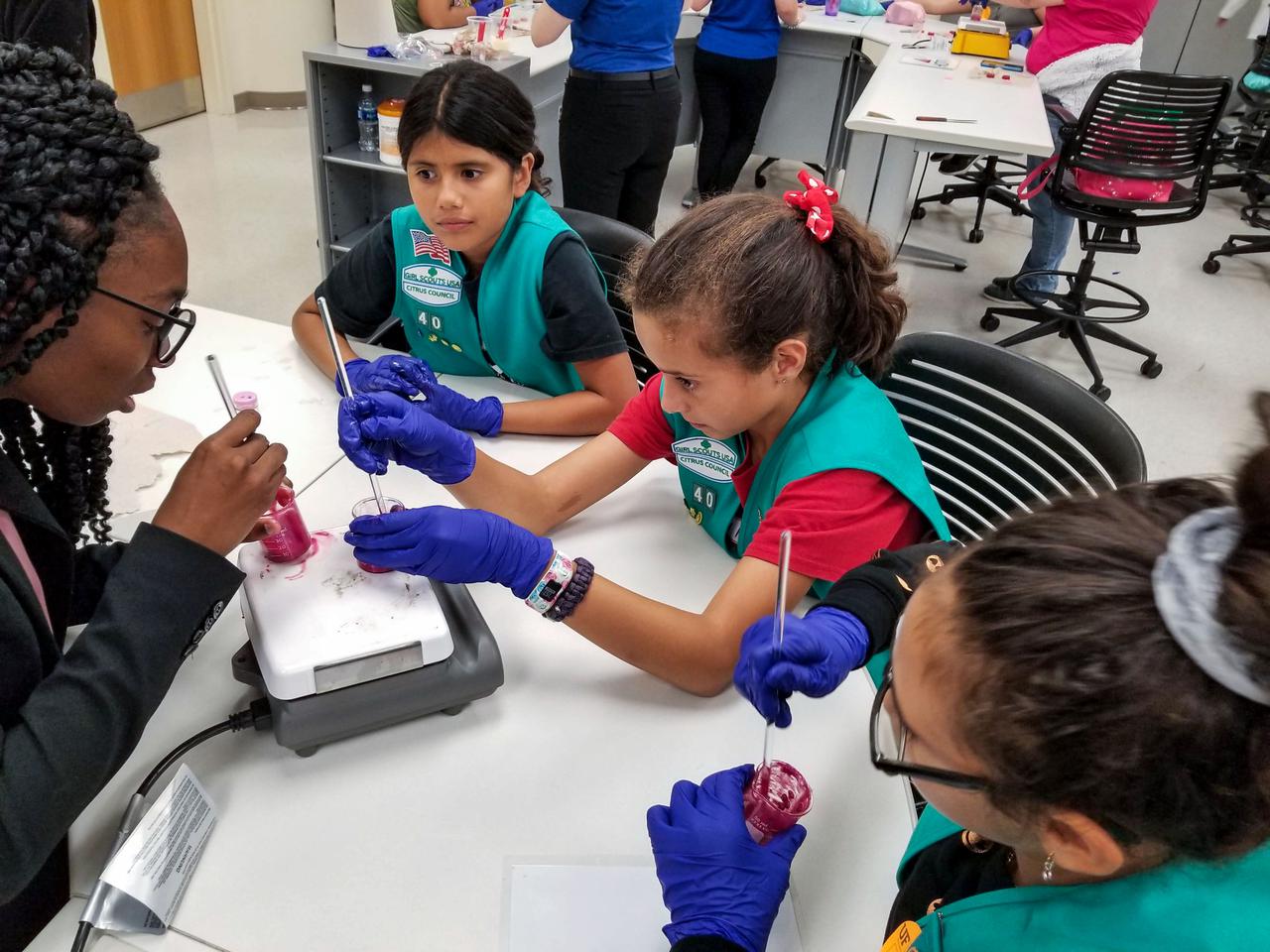
jsc2021e037278 (11/15/2019) --- Girl Scouts prepare experiments as part of a STEM collaboration with the Girl Scouts of Citrus Council. Faraday-Girl Scouts-1 (Faraday-Girls Scouts) offers Girl Scouts the opportunity to conduct a control experiment and observe the actual experiments on plant growth, ant colonization, and brine shrimp lifecycle in Faraday boxes aboard the International Space Station. This is part of a year-long effort by the Girl Scouts of Citrus Council to engage scouts in the study and understanding of space. The program also provides scouts firsthand experience with the concept of an experimental control. Image Credit: Girl Scouts Citrus Council

jsc2021e037280 (11/15/2019) --- Girl Scouts prepare experiments as part of a STEM collaboration with the Girl Scouts of Citrus Council. Faraday-Girl Scouts-1 (Faraday-Girls Scouts) offers Girl Scouts the opportunity to conduct a control experiment and observe the actual experiments on plant growth, ant colonization, and brine shrimp lifecycle in Faraday boxes aboard the International Space Station. This is part of a year-long effort by the Girl Scouts of Citrus Council to engage scouts in the study and understanding of space. The program also provides scouts firsthand experience with the concept of an experimental control. Image Credit: Girl Scouts Citrus Council
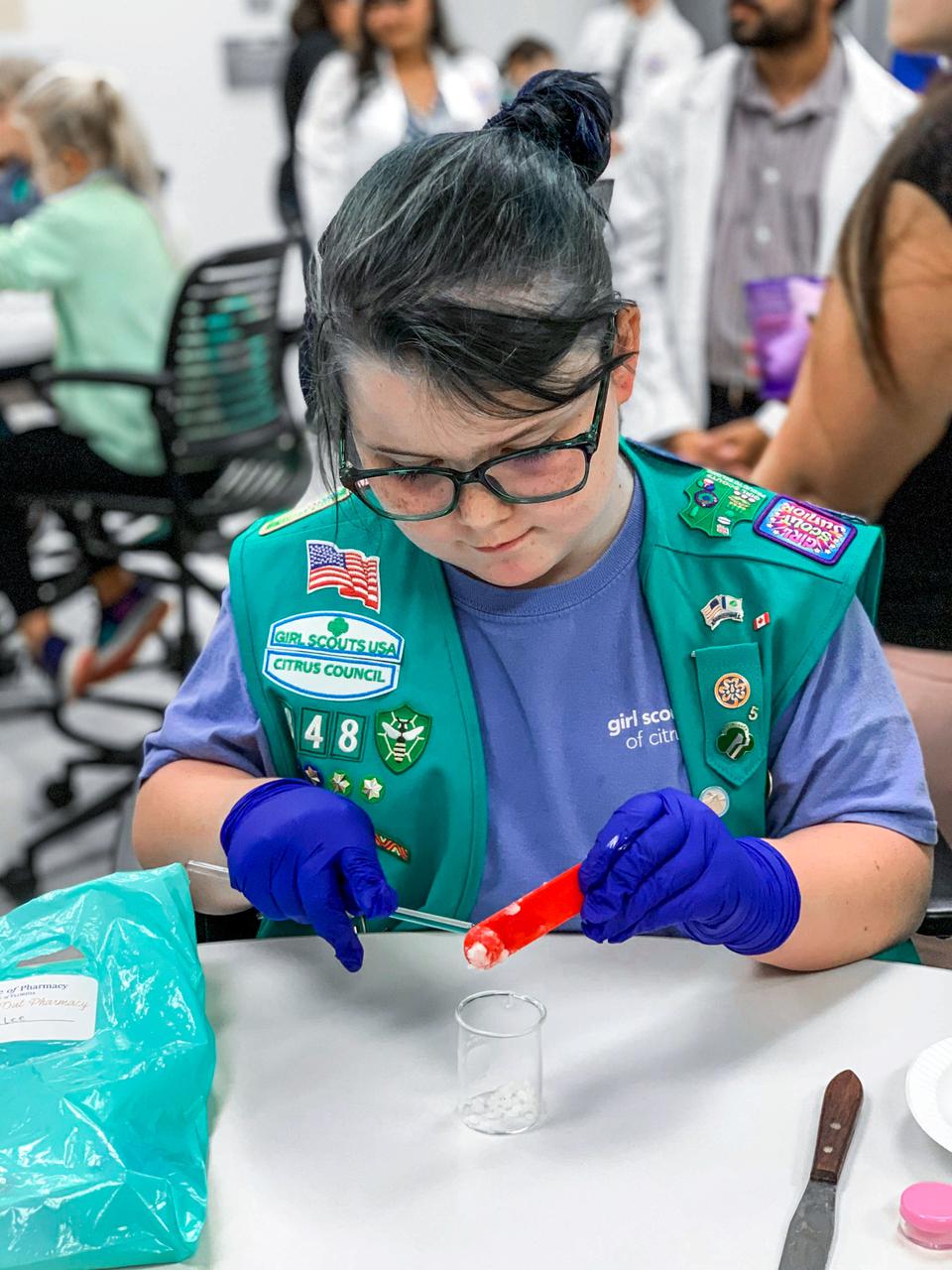
jsc2021e037281 (11/15/2019) --- Girl Scouts prepare experiments as part of a STEM collaboration with the Girl Scouts of Citrus Council. Faraday-Girl Scouts-1 (Faraday-Girls Scouts) offers Girl Scouts the opportunity to conduct a control experiment and observe the actual experiments on plant growth, ant colonization, and brine shrimp lifecycle in Faraday boxes aboard the International Space Station. This is part of a year-long effort by the Girl Scouts of Citrus Council to engage scouts in the study and understanding of space. The program also provides scouts firsthand experience with the concept of an experimental control. Image Credit: Girl Scouts Citrus Council

Junior Girl Scouts from two locals conceils, Girl Scouts of Central Maryland and Girl Scouts of Nations Capital, participated in She's an Engineer! Girl Scout program on November 3, 2016. They met with female NASA engineers and tested rover models in simulated I&T stations to explore the Engineering Design process.
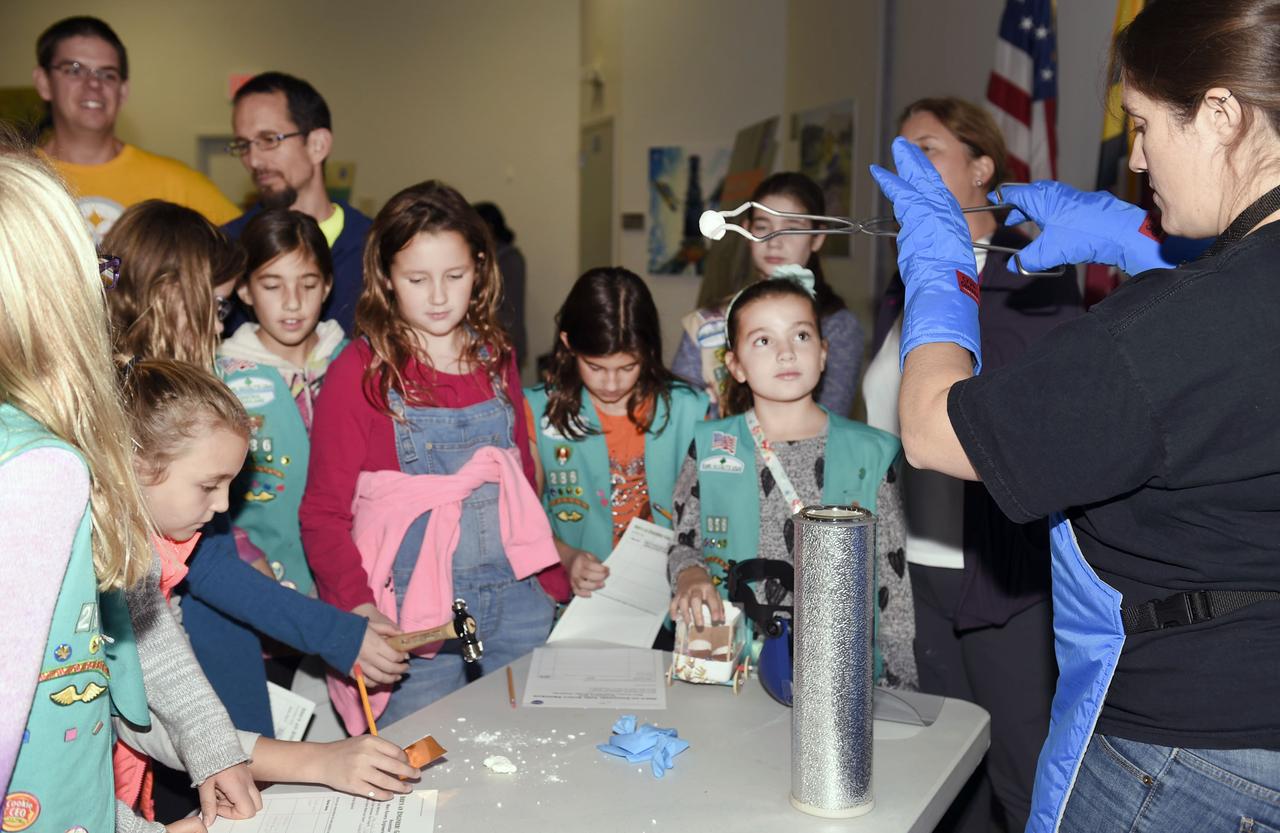
Junior Girl Scouts from two locals conceils, Girl Scouts of Central Maryland and Girl Scouts of Nations Capital, participated in She's an Engineer! Girl Scout program on November 3, 2016. They met with female NASA engineers and tested rover models in simulated I&T stations to explore the Engineering Design process.
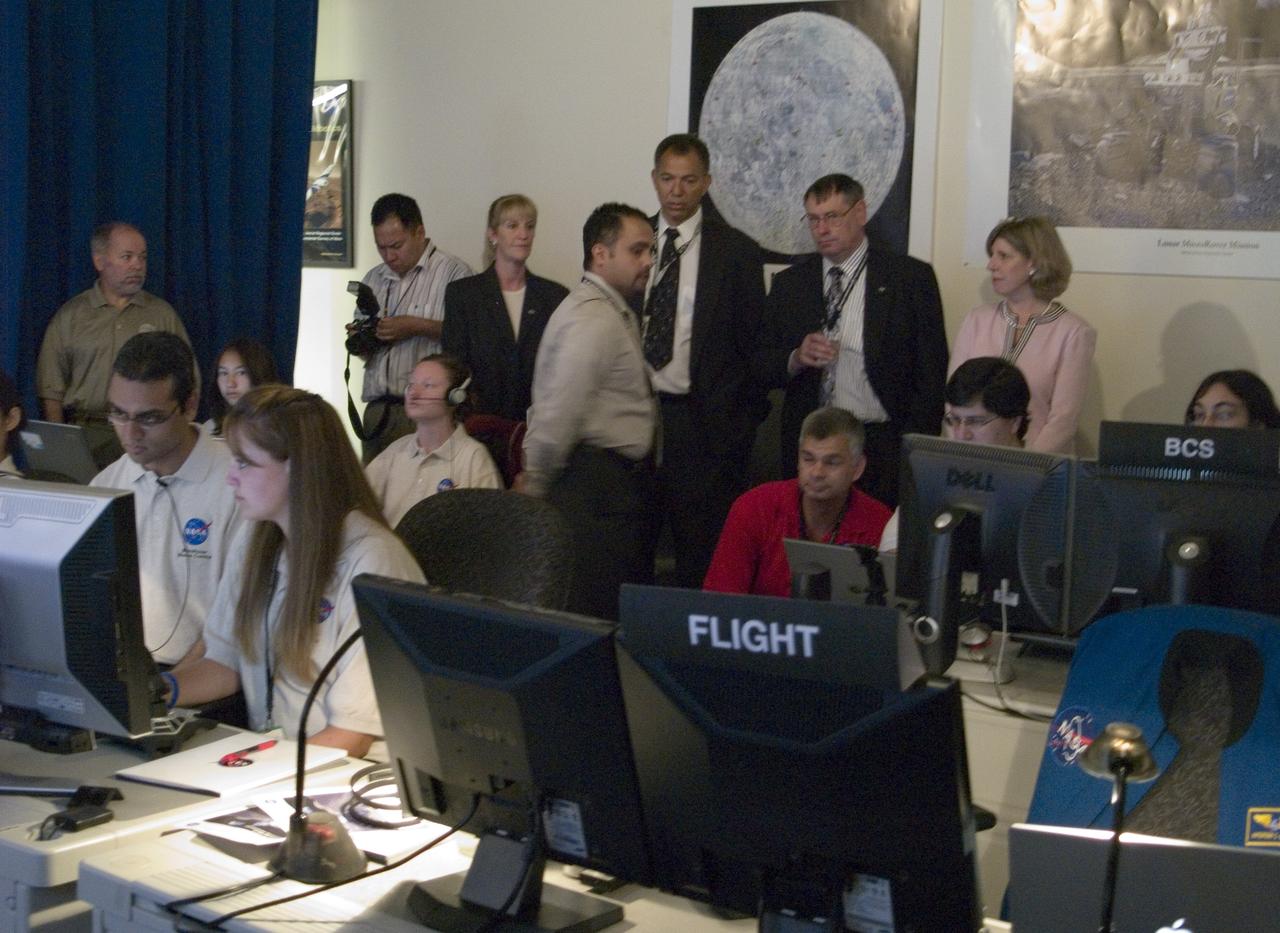
Junior Girl Scouts from two locals conceils, Girl Scouts of Central Maryland and Girl Scouts of Nations Capital, participated in She's an Engineer! Girl Scout program on November 3, 2016. They met with female NASA engineers and tested rover models in simulated I&T stations to explore the Engineering Design process.
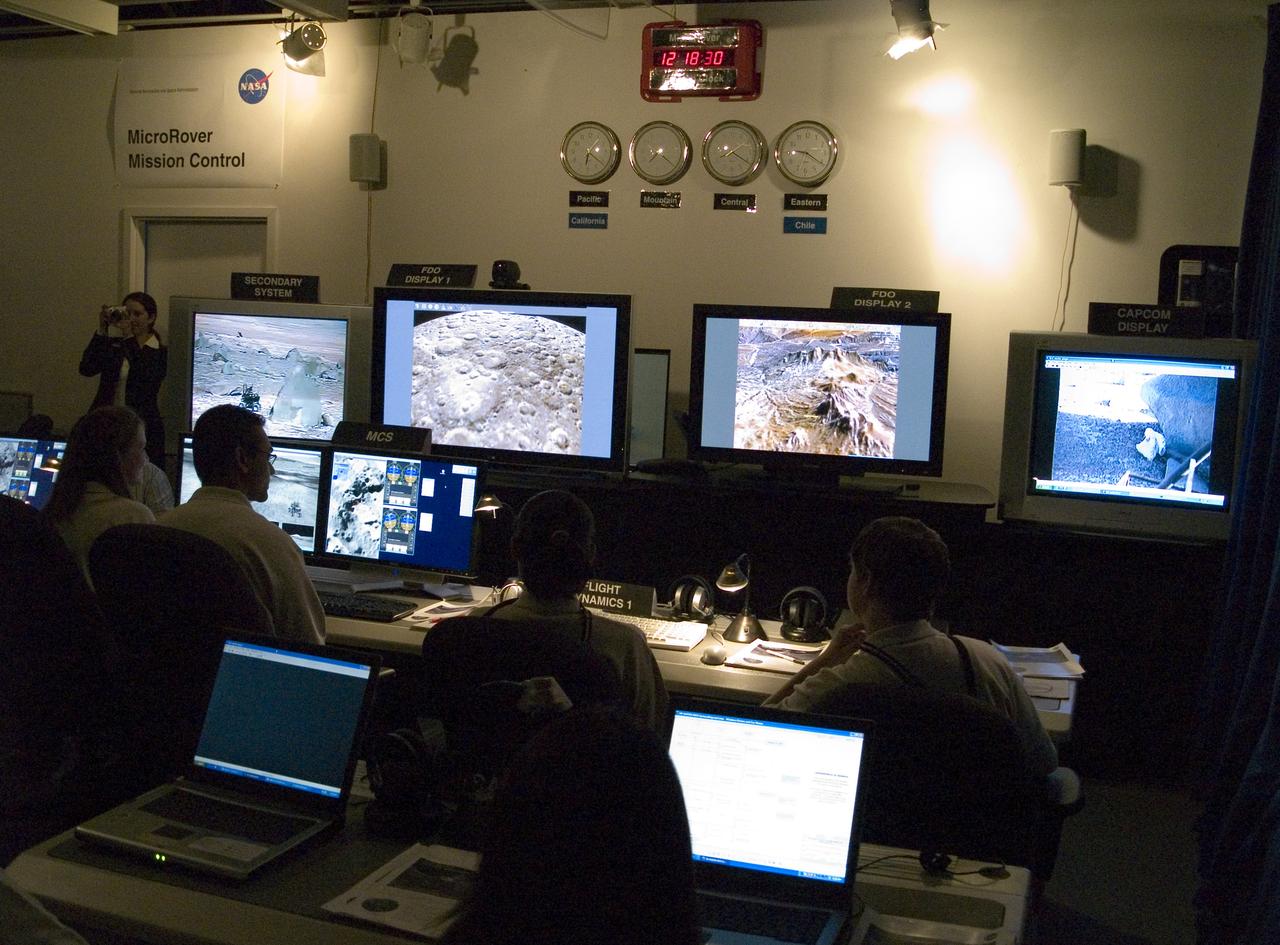
Spaceward Bound Program in Atacama Desert; shown here is a realtime webcast from Yungay, Chile vis satellite involving NASA Scientists and seven NASA Explorer school teachers. On the Ames end we find the Girl Scouts Space cookines robotic team. The robot nicknamed Zoe is looking for life in extreme environments in preparation for what might be encounter on Mars. see full text on the NASA-Ames News - Research # 04-91AR
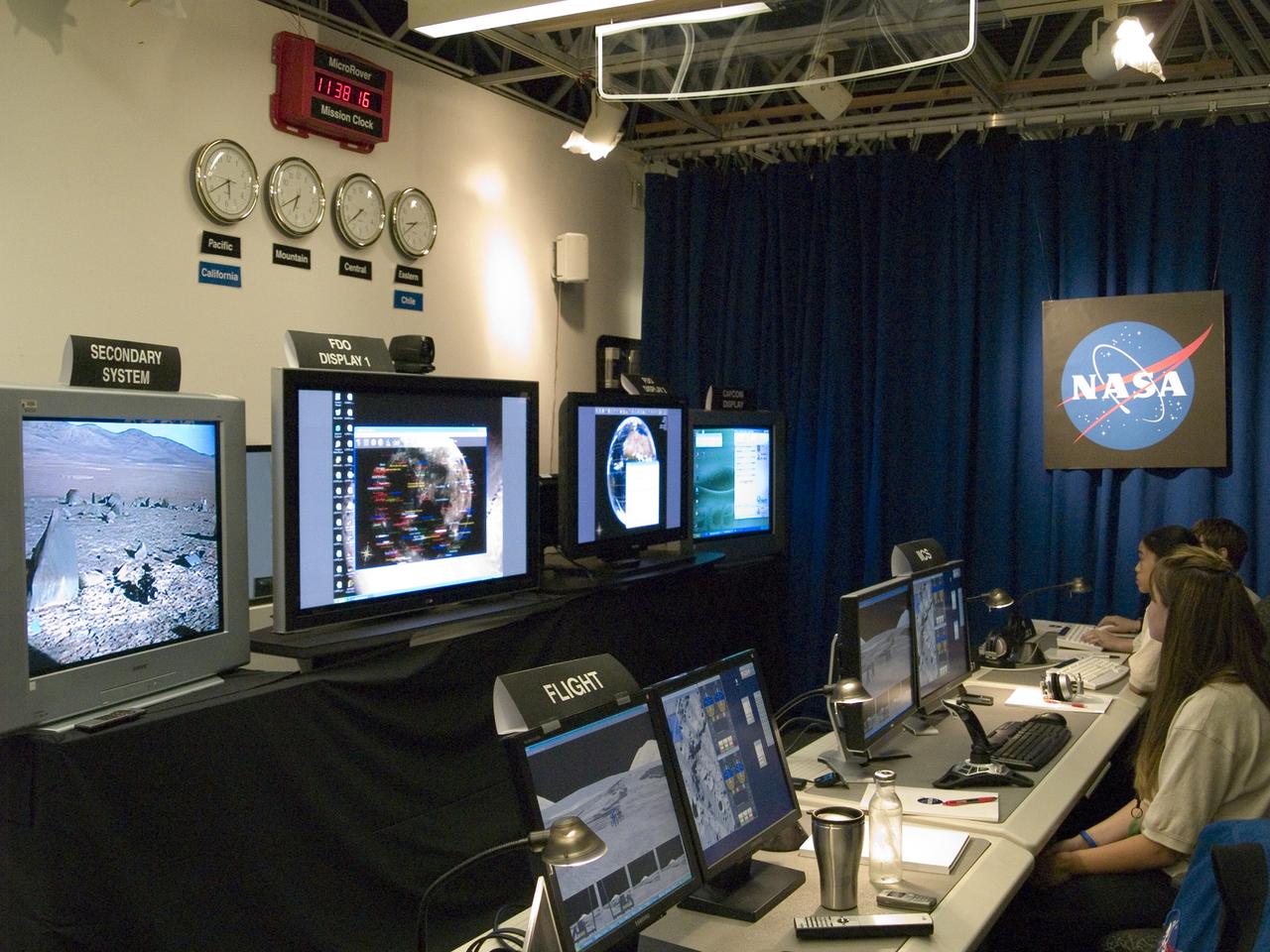
Spaceward Bound Program in Atacama Desert; shown here is a realtime webcast from Yungay, Chile vis satellite involving NASA Scientists and seven NASA Explorer school teachers. On the Ames end we find the Girl Scouts Space cookines robotic team. The robot nicknamed Zoe is looking for life in extreme environments in preparation for what might be encounter on Mars. see full text on the NASA-Ames News - Research # 04-91AR
Spaceward Bound Program in Atacama Desert; shown here is a realtime webcast from Yungay, Chile vis satellite involving NASA Scientists and seven NASA Explorer school teachers. On the Ames end we find the Girl Scouts Space cookines robotic team. The robot nicknamed Zoe is looking for life in extreme environments in preparation for what might be encounter on Mars. see full text on the NASA-Ames News - Research # 04-91AR
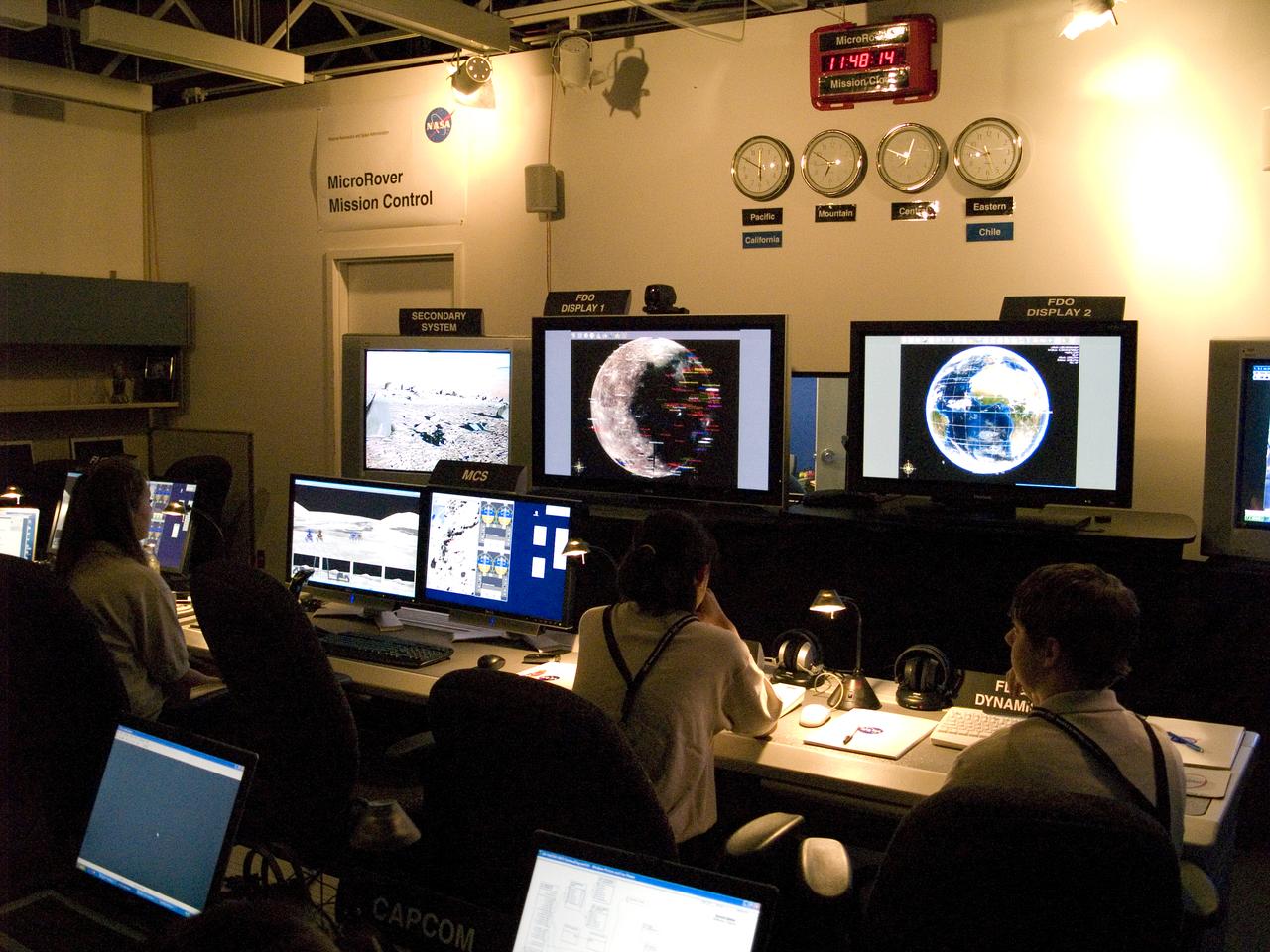
Spaceward Bound Program in Atacama Desert; shown here is a realtime webcast from Yungay, Chile vis satellite involving NASA Scientists and seven NASA Explorer school teachers. On the Ames end we find the Girl Scouts Space cookines robotic team. The robot nicknamed Zoe is looking for life in extreme environments in preparation for what might be encounter on Mars. see full text on the NASA-Ames News - Research # 04-91AR
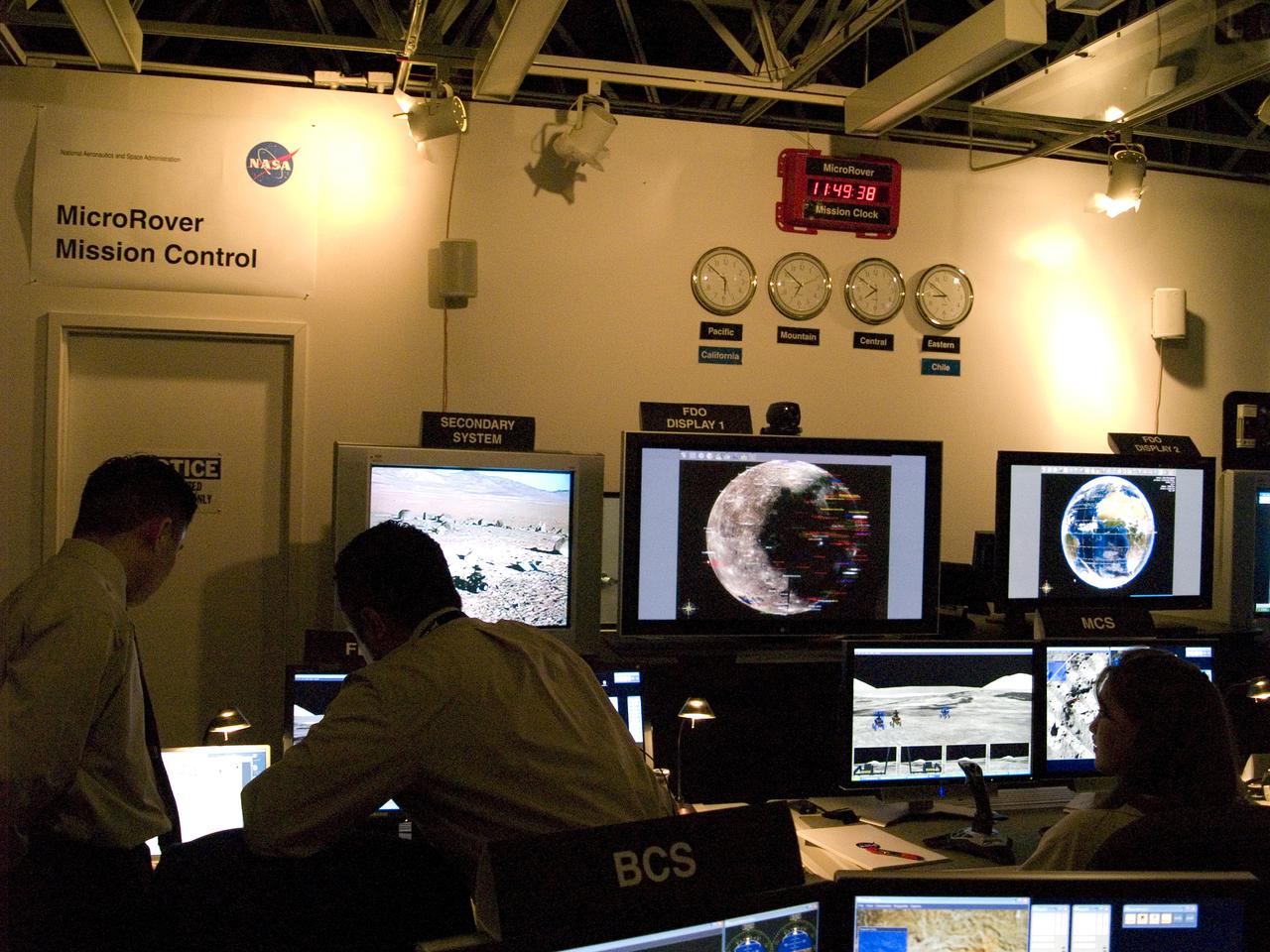
Spaceward Bound Program in Atacama Desert; shown here is a realtime webcast from Yungay, Chile vis satellite involving NASA Scientists and seven NASA Explorer school teachers. On the Ames end we find the Girl Scouts Space cookines robotic team. The robot nicknamed Zoe is looking for life in extreme environments in preparation for what might be encounter on Mars. see full text on the NASA-Ames News - Research # 04-91AR
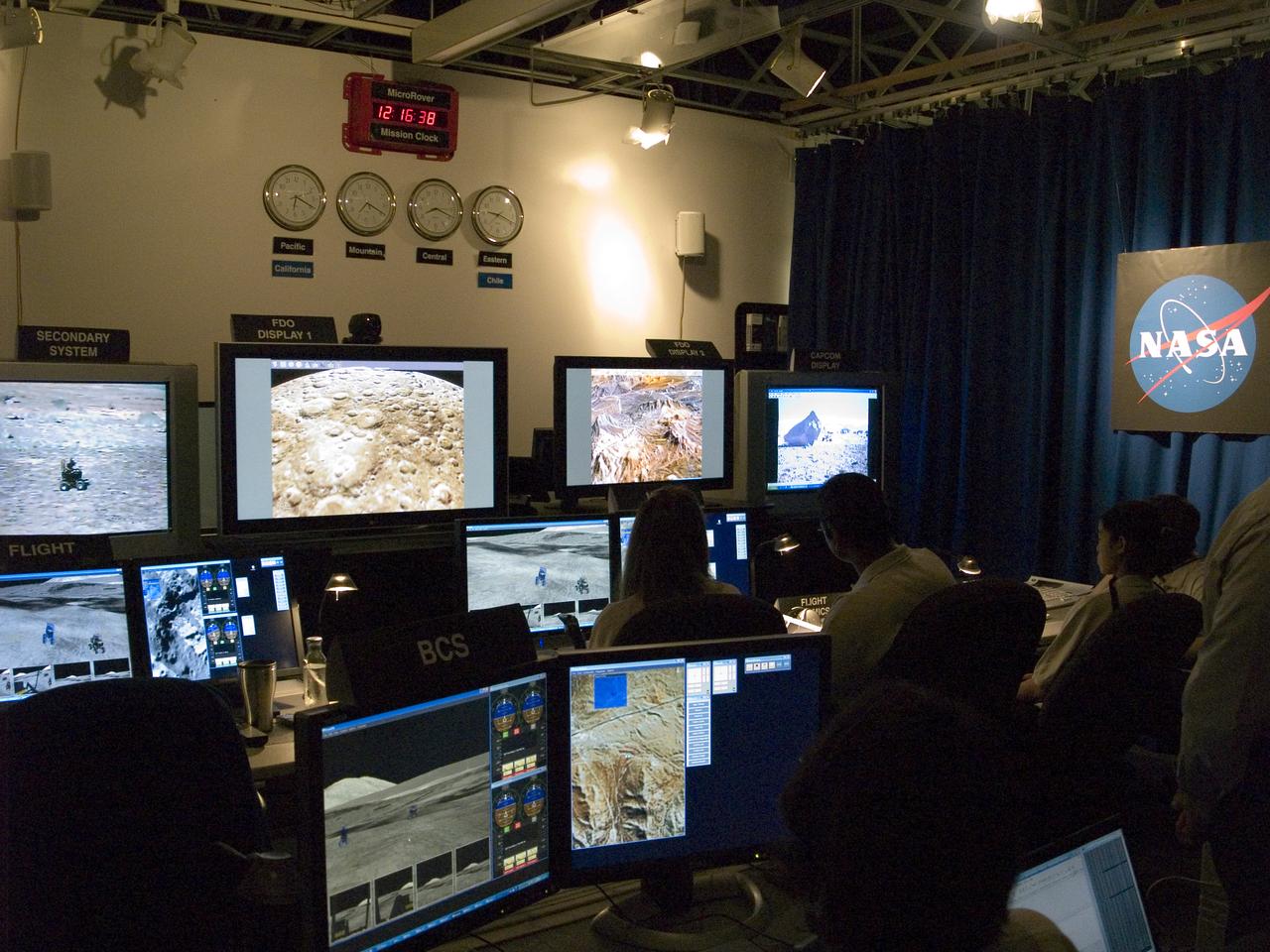
Spaceward Bound Program in Atacama Desert; shown here is a realtime webcast from Yungay, Chile vis satellite involving NASA Scientists and seven NASA Explorer school teachers. On the Ames end we find the Girl Scouts Space cookines robotic team. The robot nicknamed Zoe is looking for life in extreme environments in preparation for what might be encounter on Mars. see full text on the NASA-Ames News - Research # 04-91AR

Spaceward Bound Program in Atacama Desert; shown here is a realtime webcast from Yungay, Chile vis satellite involving NASA Scientists and seven NASA Explorer school teachers. On the Ames end we find the Girl Scouts Space cookines robotic team. The robot nicknamed Zoe is looking for life in extreme environments in preparation for what might be encounter on Mars. see full text on the NASA-Ames News - Research # 04-91AR
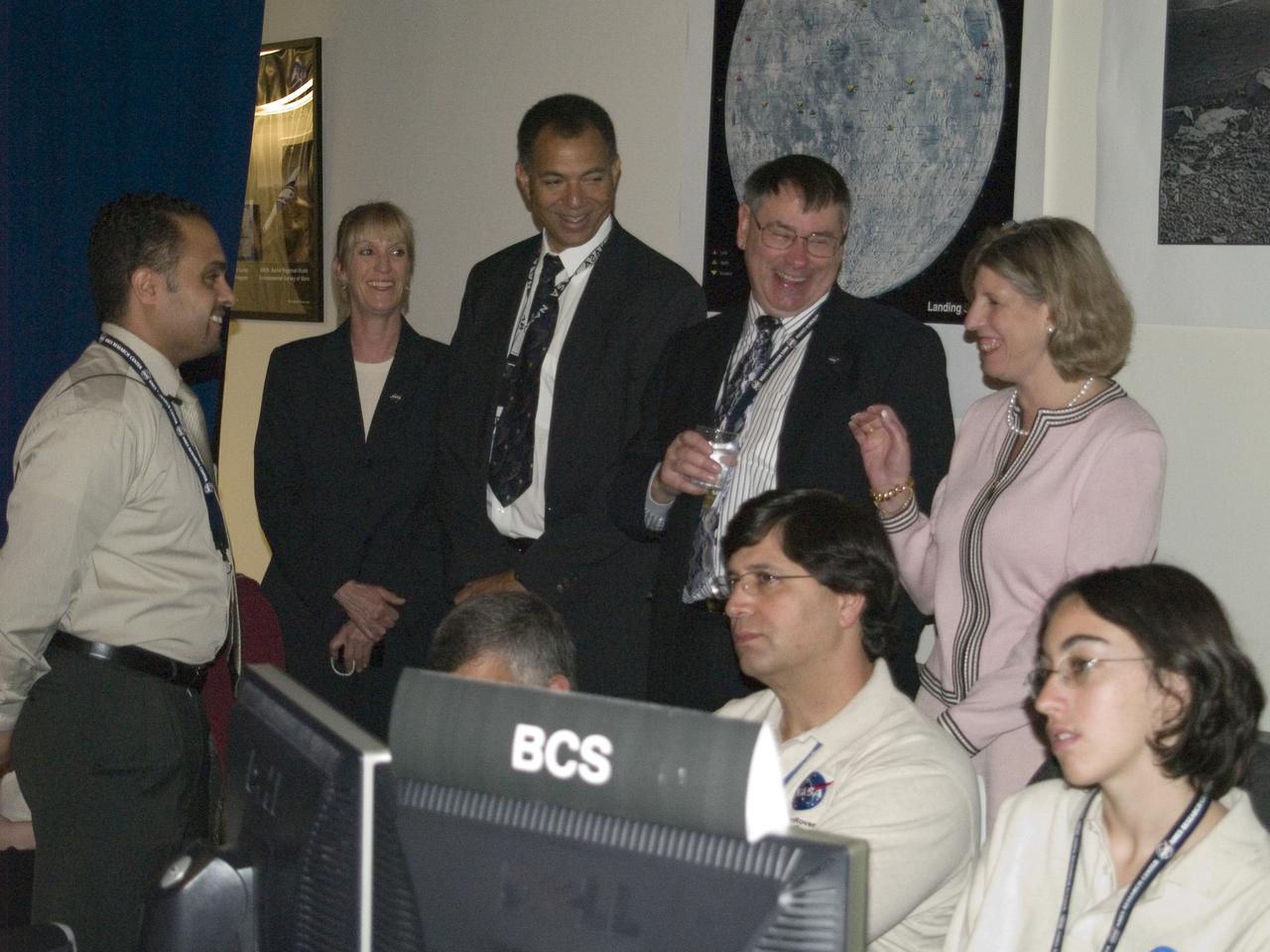
Spaceward Bound Program in Atacama Desert; shown here is a realtime webcast from Yungay, Chile vis satellite involving NASA Scientists and seven NASA Explorer school teachers. On the Ames end we find the Girl Scouts Space cookines robotic team. The robot nicknamed Zoe is looking for life in extreme environments in preparation for what might be encounter on Mars. (back row l-r) Yvonne Clearwater, Ames Education Division, Donald James, Ames Education Division Chief, Pete Worden, Ames Center Director, Angela Diaz, Ames Director of Strategic Communications) see full text on the NASA-Ames News - Research # 04-91AR
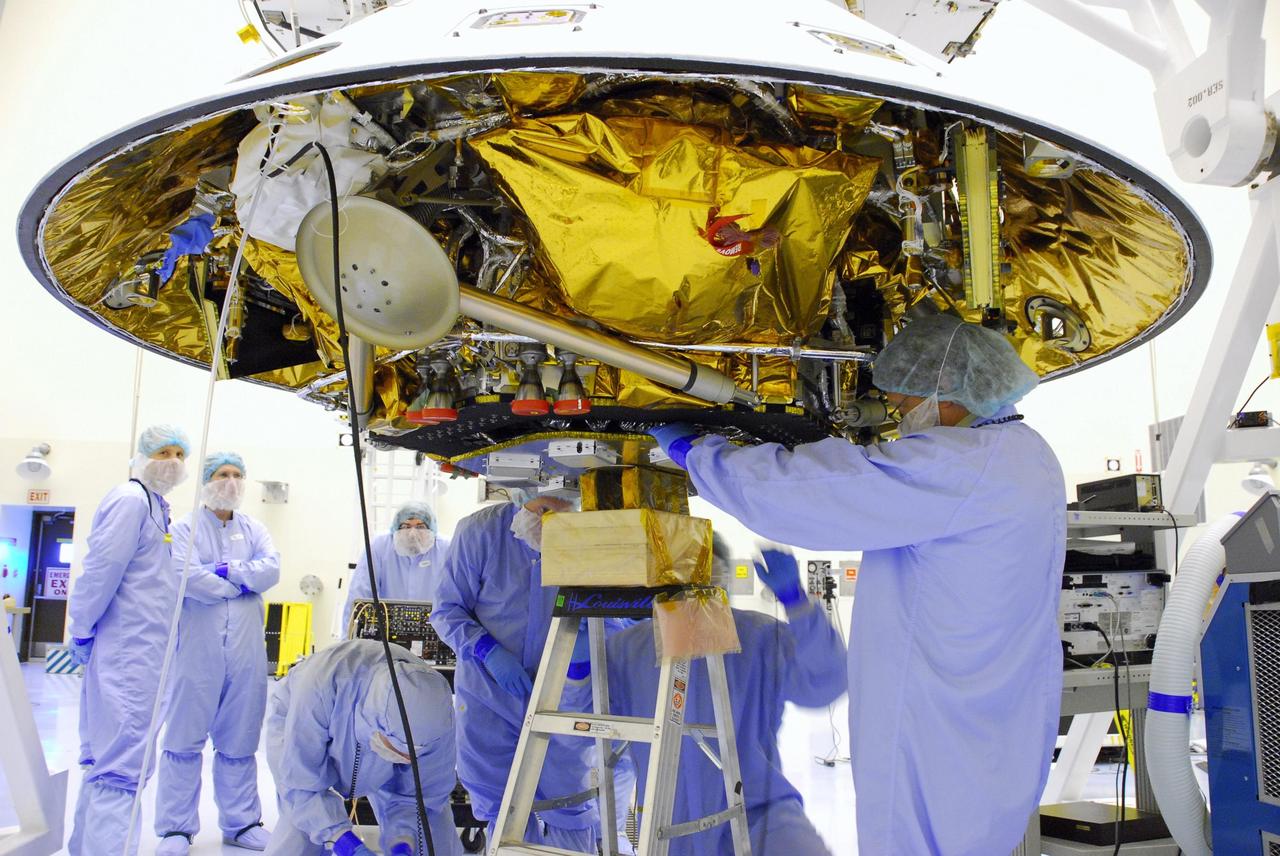
KENNEDY SPACE CENTER, FLA. -- At the Payload Hazardous Servicing Facility, the landing radar is integrated with the Phoenix spacecraft. Testing will follow. The Phoenix mission is the first project in NASA's first openly competed program of Mars Scout missions. Phoenix will land in icy soils near the north polar permanent ice cap of Mars and explore the history of the water in these soils and any associated rocks, while monitoring polar climate. Landing is planned in May 2008 on arctic ground where a mission currently in orbit, Mars Odyssey, has detected high concentrations of ice just beneath the top layer of soil. Photo credit: NASA/George Shelton
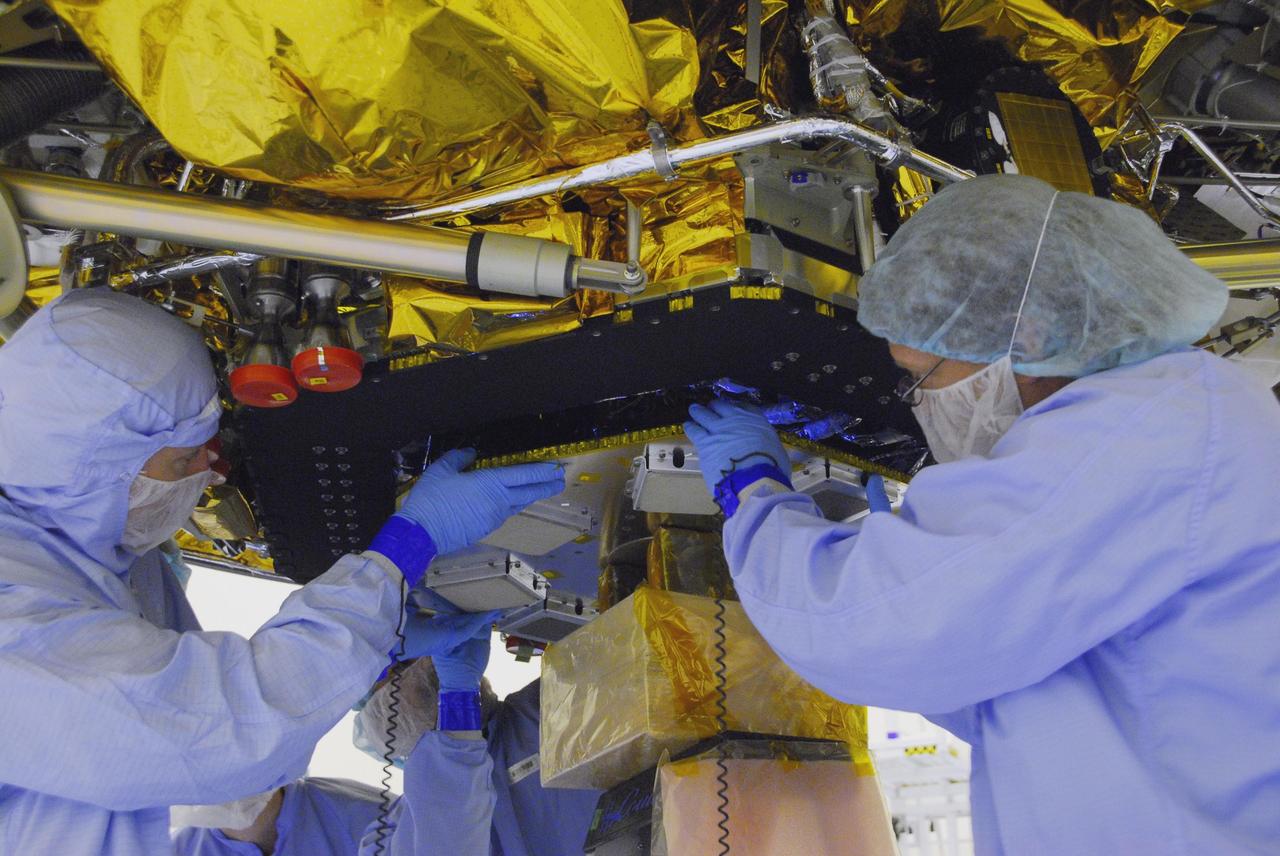
KENNEDY SPACE CENTER, FLA. -- At the Payload Hazardous Servicing Facility, workers integrate the landing radar with the Phoenix spacecraft. Testing will follow. The Phoenix mission is the first project in NASA's first openly competed program of Mars Scout missions. Phoenix will land in icy soils near the north polar permanent ice cap of Mars and explore the history of the water in these soils and any associated rocks, while monitoring polar climate. Landing is planned in May 2008 on arctic ground where a mission currently in orbit, Mars Odyssey, has detected high concentrations of ice just beneath the top layer of soil. Photo credit: NASA/George Shelton
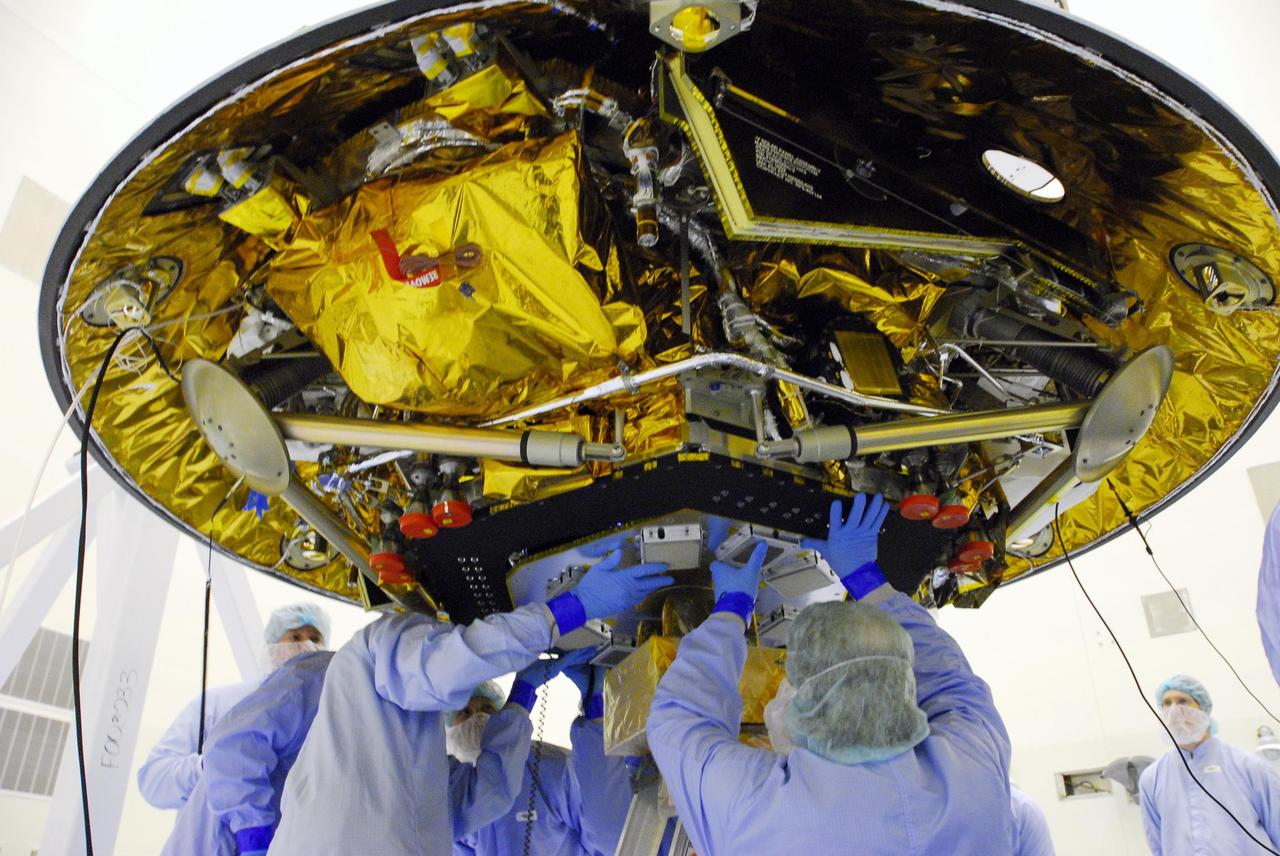
KENNEDY SPACE CENTER, FLA. -- At the Payload Hazardous Servicing Facility, workers integrate the landing radar with the Phoenix spacecraft. Testing will follow. The Phoenix mission is the first project in NASA's first openly competed program of Mars Scout missions. Phoenix will land in icy soils near the north polar permanent ice cap of Mars and explore the history of the water in these soils and any associated rocks, while monitoring polar climate. Landing is planned in May 2008 on arctic ground where a mission currently in orbit, Mars Odyssey, has detected high concentrations of ice just beneath the top layer of soil. Photo credit: NASA/George Shelton
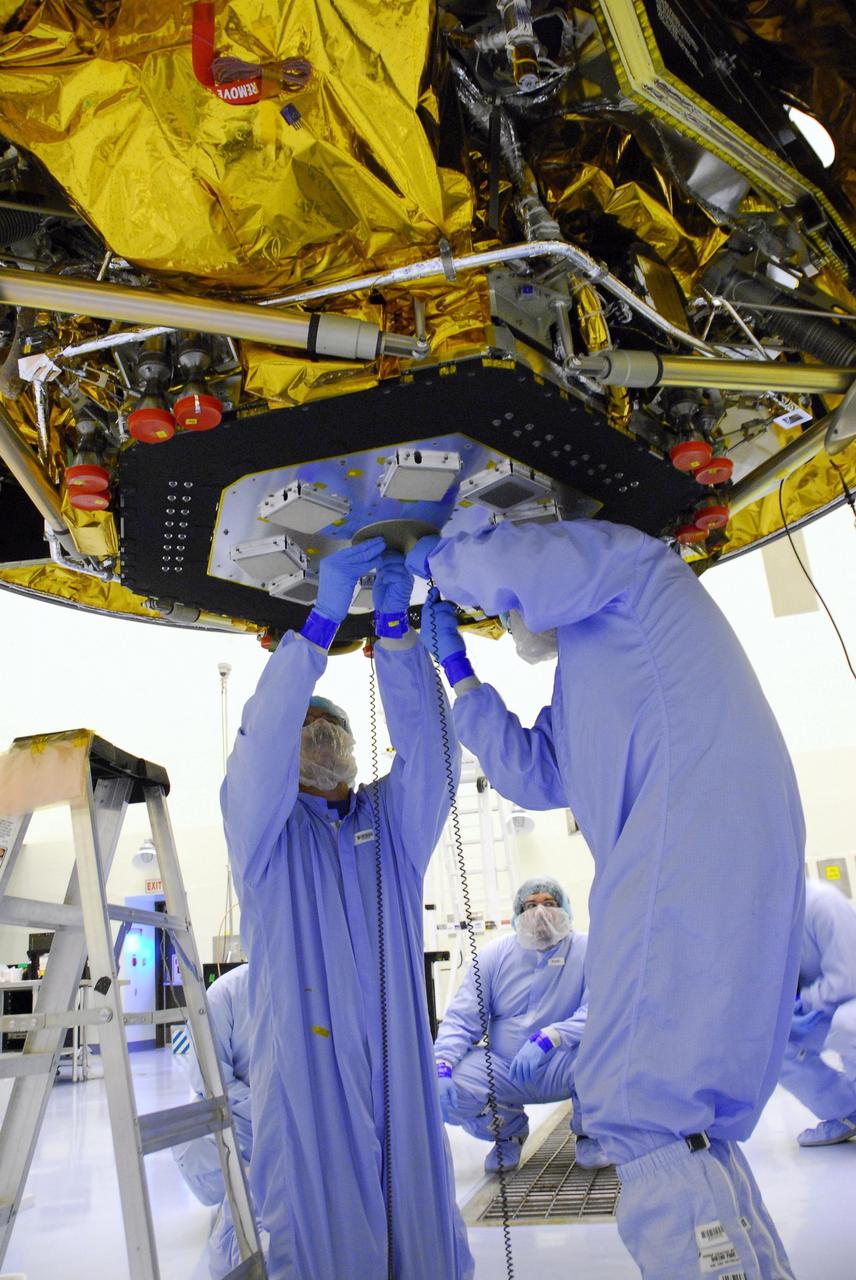
KENNEDY SPACE CENTER, FLA. -- At the Payload Hazardous Servicing Facility, workers integrate the landing radar with the Phoenix spacecraft. Testing will follow. The Phoenix mission is the first project in NASA's first openly competed program of Mars Scout missions. Phoenix will land in icy soils near the north polar permanent ice cap of Mars and explore the history of the water in these soils and any associated rocks, while monitoring polar climate. Landing is planned in May 2008 on arctic ground where a mission currently in orbit, Mars Odyssey, has detected high concentrations of ice just beneath the top layer of soil. Photo credit: NASA/George Shelton
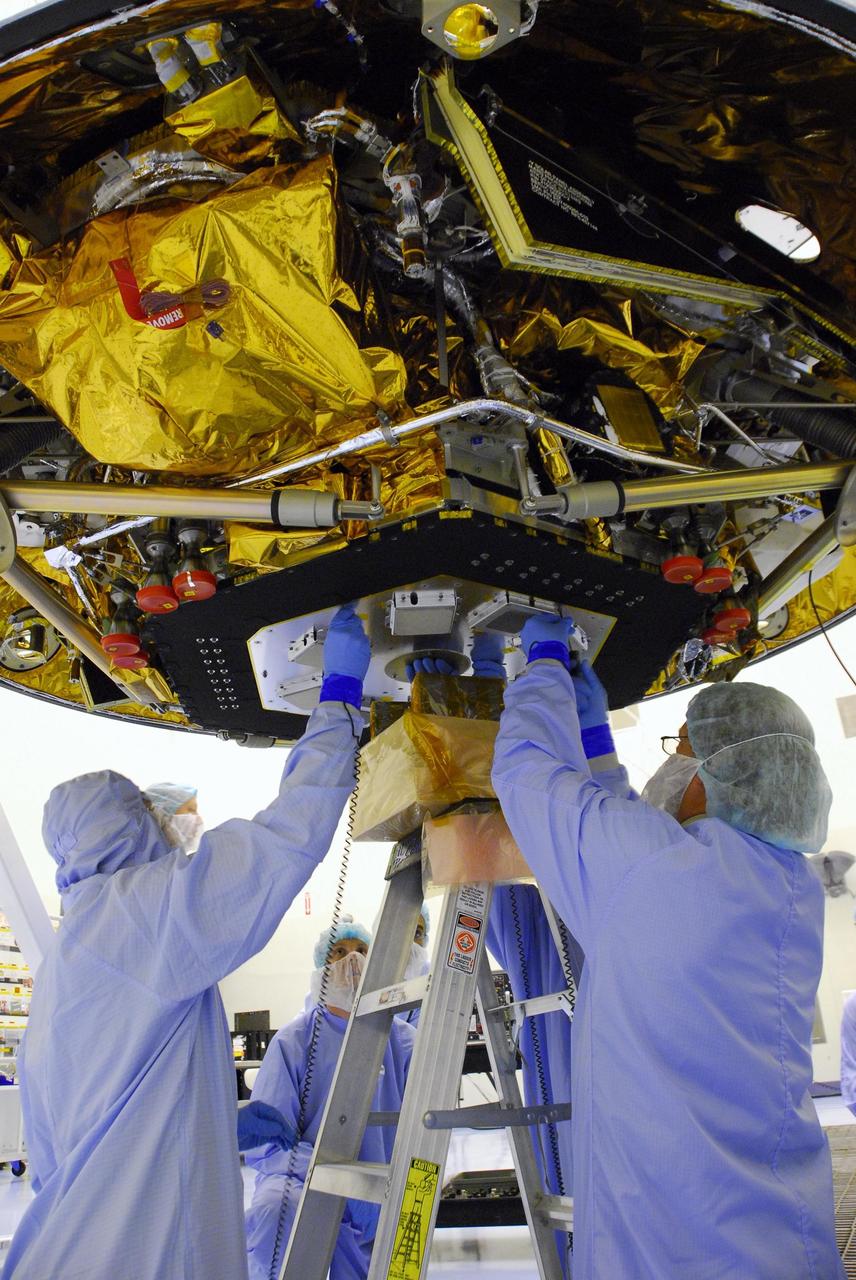
KENNEDY SPACE CENTER, FLA. -- At the Payload Hazardous Servicing Facility, workers integrate the landing radar with the Phoenix spacecraft. Testing will follow. The Phoenix mission is the first project in NASA's first openly competed program of Mars Scout missions. Phoenix will land in icy soils near the north polar permanent ice cap of Mars and explore the history of the water in these soils and any associated rocks, while monitoring polar climate. Landing is planned in May 2008 on arctic ground where a mission currently in orbit, Mars Odyssey, has detected high concentrations of ice just beneath the top layer of soil. Photo credit: NASA/George Shelton
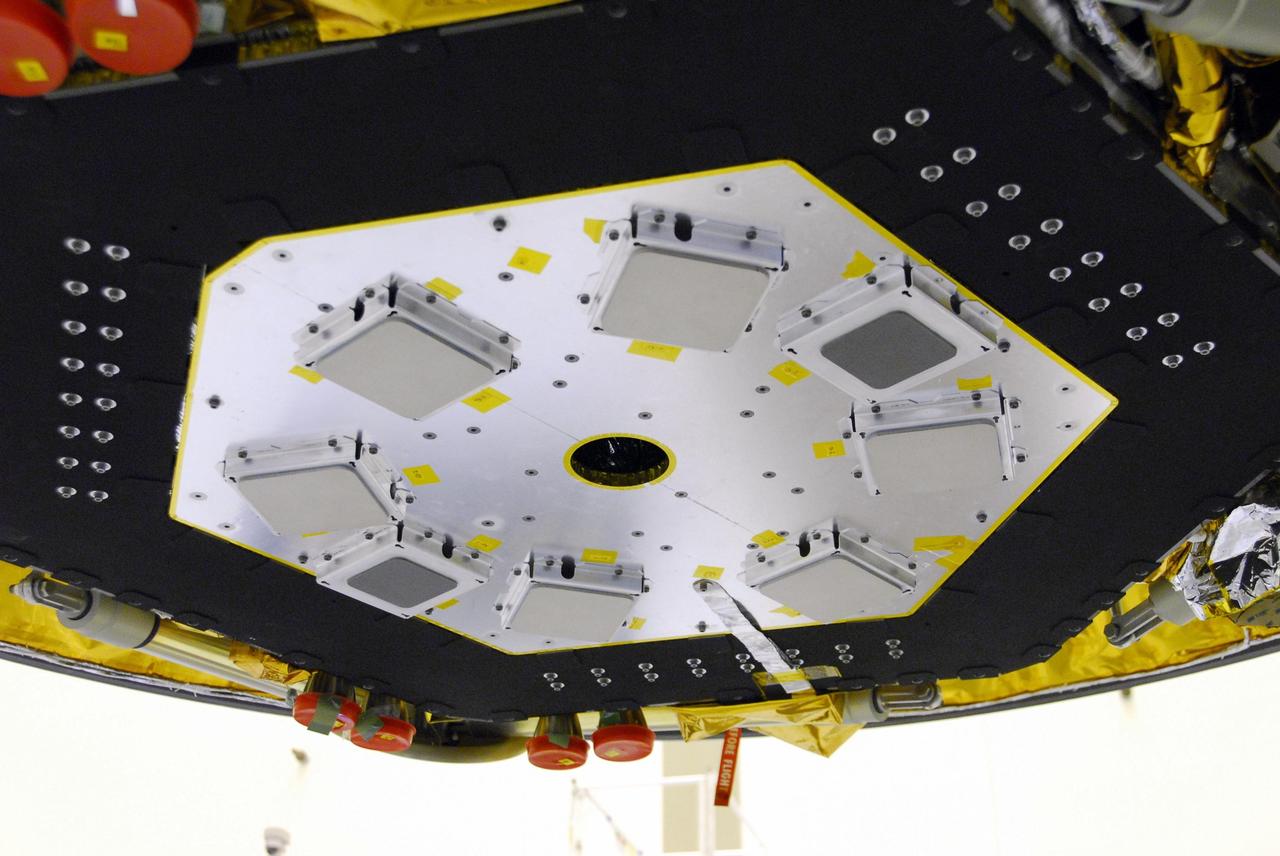
KENNEDY SPACE CENTER, FLA. -- A closeup of the landing radar installed on the Phoenix spacecraft. Testing will follow. The Phoenix mission is the first project in NASA's first openly competed program of Mars Scout missions. Phoenix will land in icy soils near the north polar permanent ice cap of Mars and explore the history of the water in these soils and any associated rocks, while monitoring polar climate. Landing is planned in May 2008 on arctic ground where a mission currently in orbit, Mars Odyssey, has detected high concentrations of ice just beneath the top layer of soil. Photo credit: NASA/George Shelton

Aside from native flora, fauna and the Langley rocket-research complex, there was not much on Wallops Island. Pictured is a 1960 photo of Launch area Number Three, used principally for Scout rocket firings. -- Photograph published in Winds of Change, 75th Anniversary NASA publication (page 73), by James Schultz.
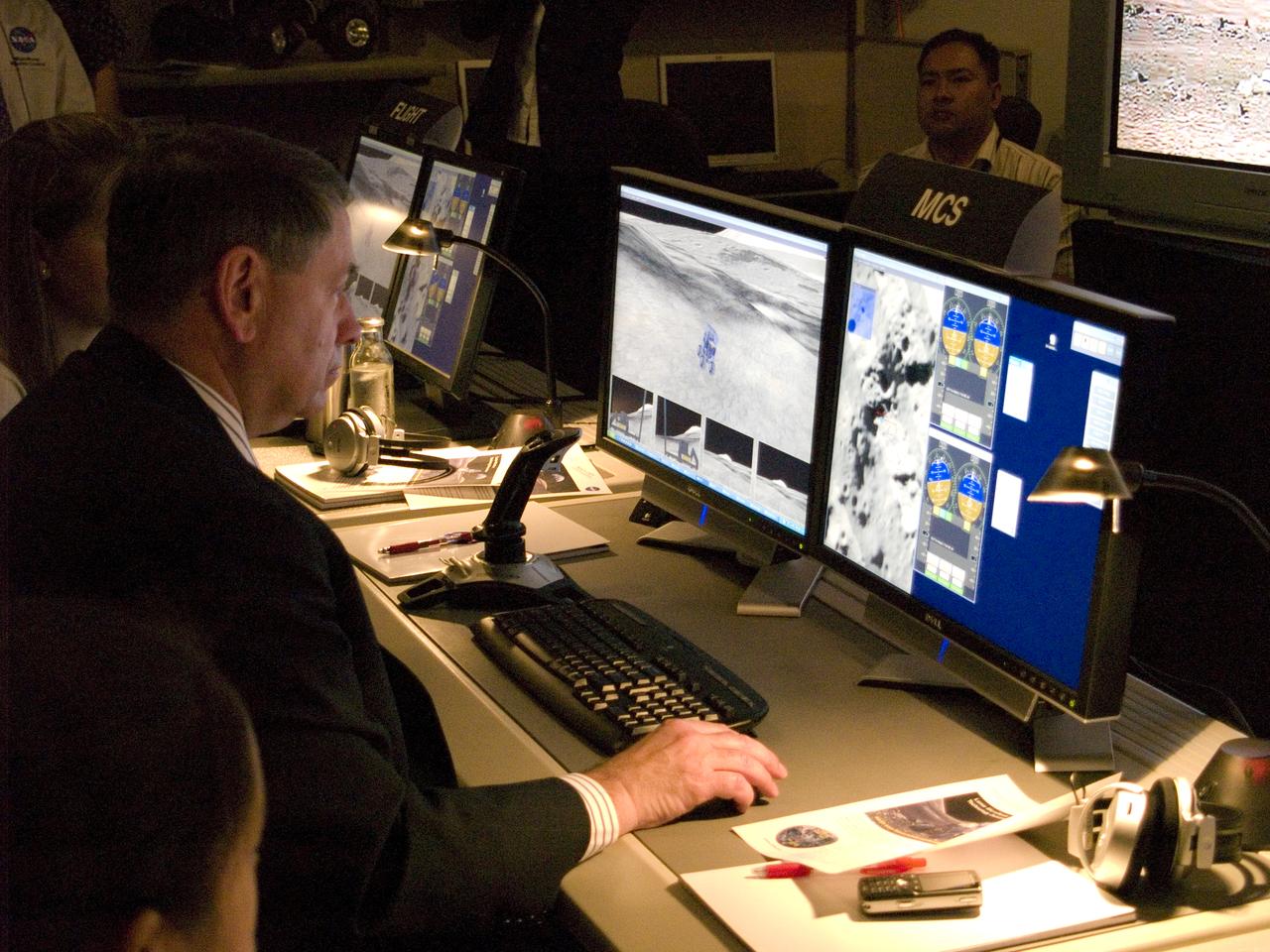
Spaceward Bound Program in Atacama Desert; shown here is a realtime webcast from Yungay, Chile vis satellite involving NASA Scientists and seven NASA Explorer school teachers. Spaceward Bound Program in Atacama Desert; shown here is a realtime webcast from Yungay, Chile vis satellite involving NASA Scientists and seven NASA Explorer school teachers. On the Ames end we find the Girl Scouts Space cookines robotic team. The robot nicknamed Zoe is looking for life in extreme environments in preparation for what might be encounter on Mars. On the Ames end we find the Girl Csouts Space cookines robotic team. The robot nicknamed Zoe is looking for life in extreme environments in preparation for what might be encounter on Mars. see full text on the NASA-Ames News - Research # 04-91AR Center Director works with 'SpaceCookie' sending commands to Zoe.
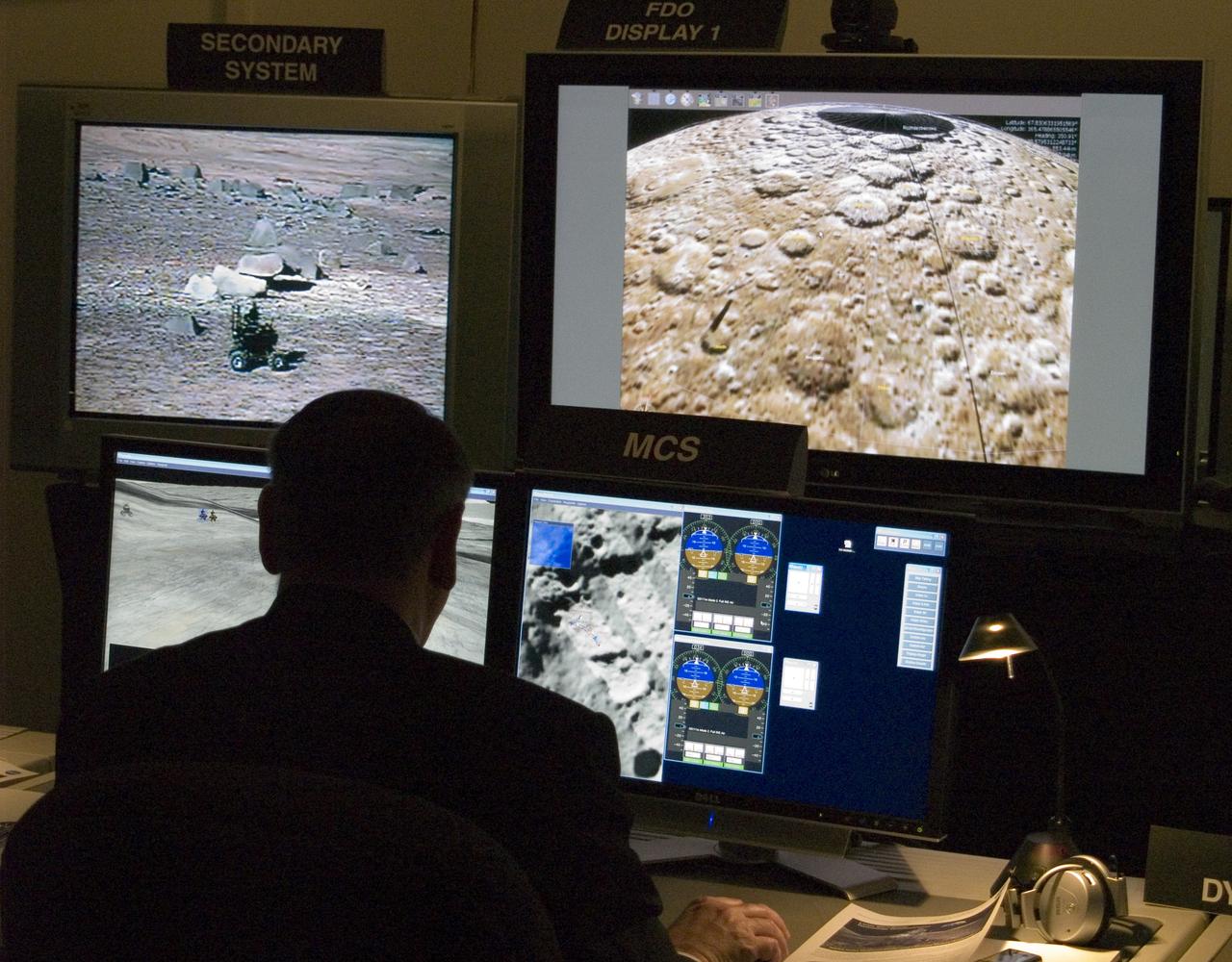
Spaceward Bound Program in Atacama Desert; shown here is a realtime webcast from Yungay, Chile vis satellite involving NASA Scientists and seven NASA Explorer school teachers. Spaceward Bound Program in Atacama Desert; shown here is a realtime webcast from Yungay, Chile vis satellite involving NASA Scientists and seven NASA Explorer school teachers. On the Ames end we find the Girl Scouts Space cookines robotic team. The robot nicknamed Zoe is looking for life in extreme environments in preparation for what might be encounter on Mars. On the Ames end we find the Girl Csouts Space cookines robotic team. The robot nicknamed Zoe is looking for life in extreme environments in preparation for what might be encounter on Mars. see full text on the NASA-Ames News - Research # 04-91AR Center Director works with 'SpaceCookie' sending commands to Zoe.
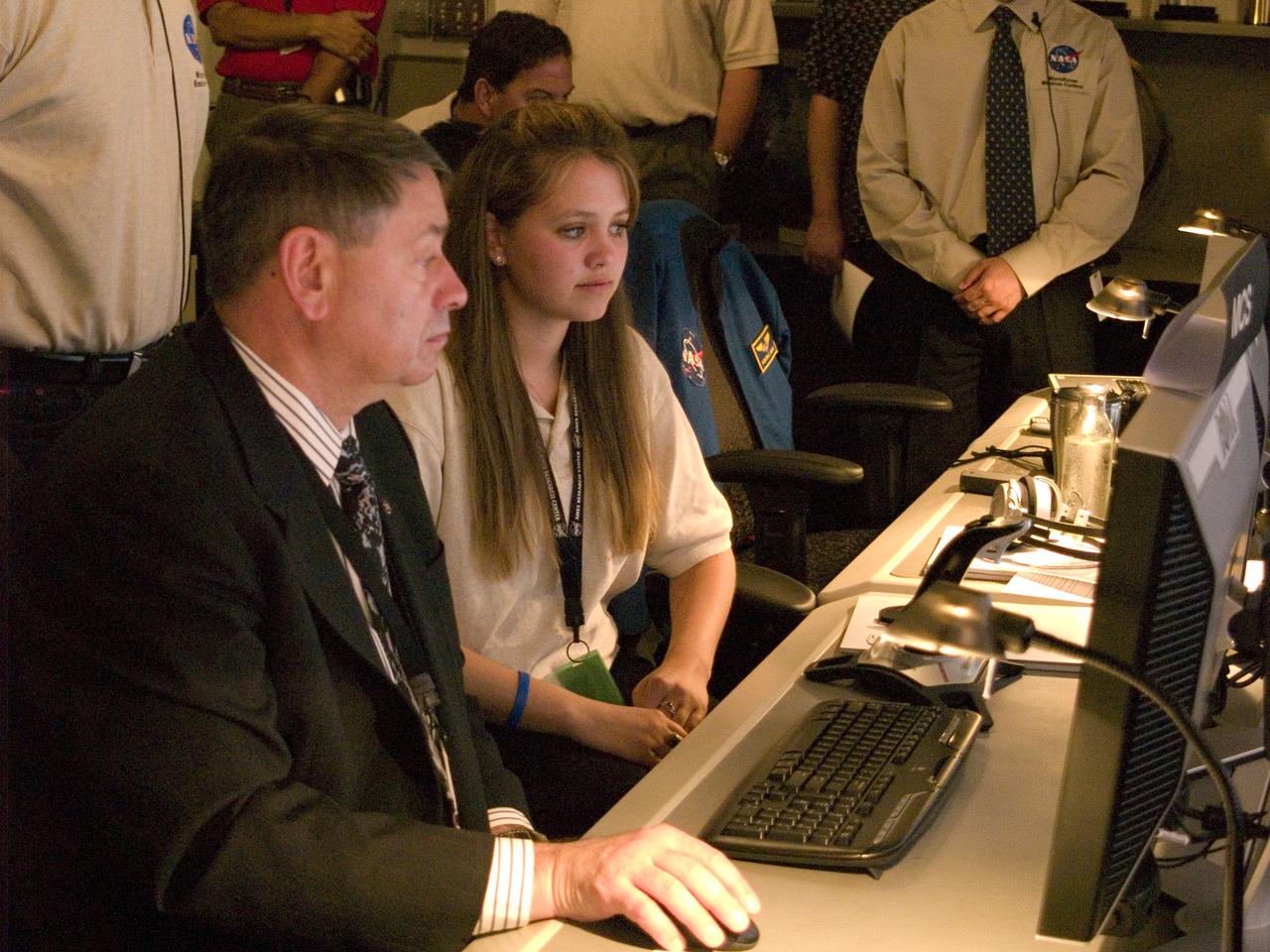
Spaceward Bound Program in Atacama Desert; shown here is a realtime webcast from Yungay, Chile vis satellite involving NASA Scientists and seven NASA Explorer school teachers. Spaceward Bound Program in Atacama Desert; shown here is a realtime webcast from Yungay, Chile vis satellite involving NASA Scientists and seven NASA Explorer school teachers. On the Ames end we find the Girl Scouts Space cookines robotic team. The robot nicknamed Zoe is looking for life in extreme environments in preparation for what might be encounter on Mars. On the Ames end we find the Girl Csouts Space cookines robotic team. The robot nicknamed Zoe is looking for life in extreme environments in preparation for what might be encounter on Mars. see full text on the NASA-Ames News - Research # 04-91AR Center Director works with 'SpaceCookie' sending commands to Zoe.
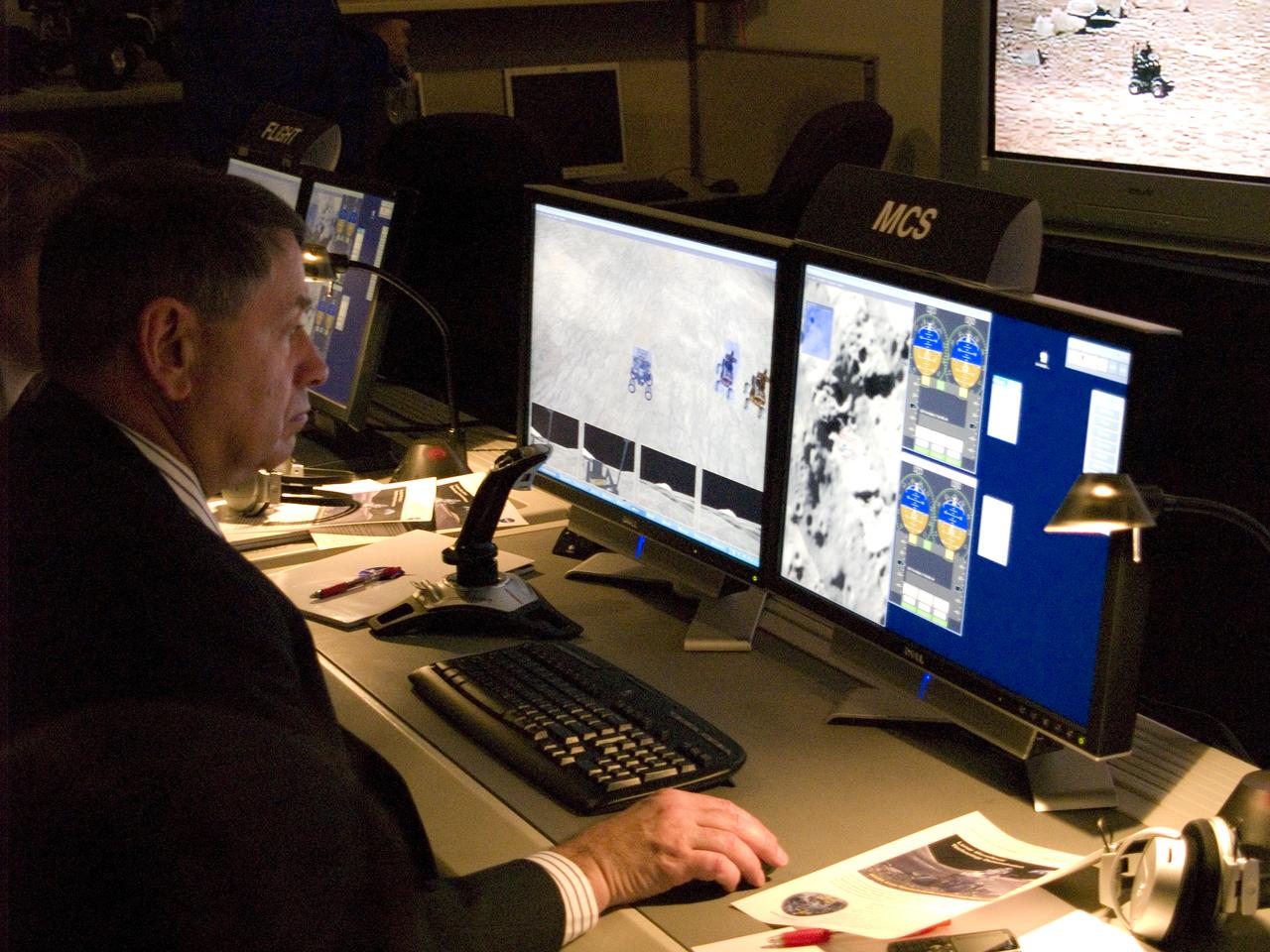
Spaceward Bound Program in Atacama Desert; shown here is a realtime webcast from Yungay, Chile vis satellite involving NASA Scientists and seven NASA Explorer school teachers. Spaceward Bound Program in Atacama Desert; shown here is a realtime webcast from Yungay, Chile vis satellite involving NASA Scientists and seven NASA Explorer school teachers. On the Ames end we find the Girl Scouts Space cookines robotic team. The robot nicknamed Zoe is looking for life in extreme environments in preparation for what might be encounter on Mars. On the Ames end we find the Girl Csouts Space cookines robotic team. The robot nicknamed Zoe is looking for life in extreme environments in preparation for what might be encounter on Mars. see full text on the NASA-Ames News - Research # 04-91AR Center Director works with 'SpaceCookie' sending commands to Zoe.
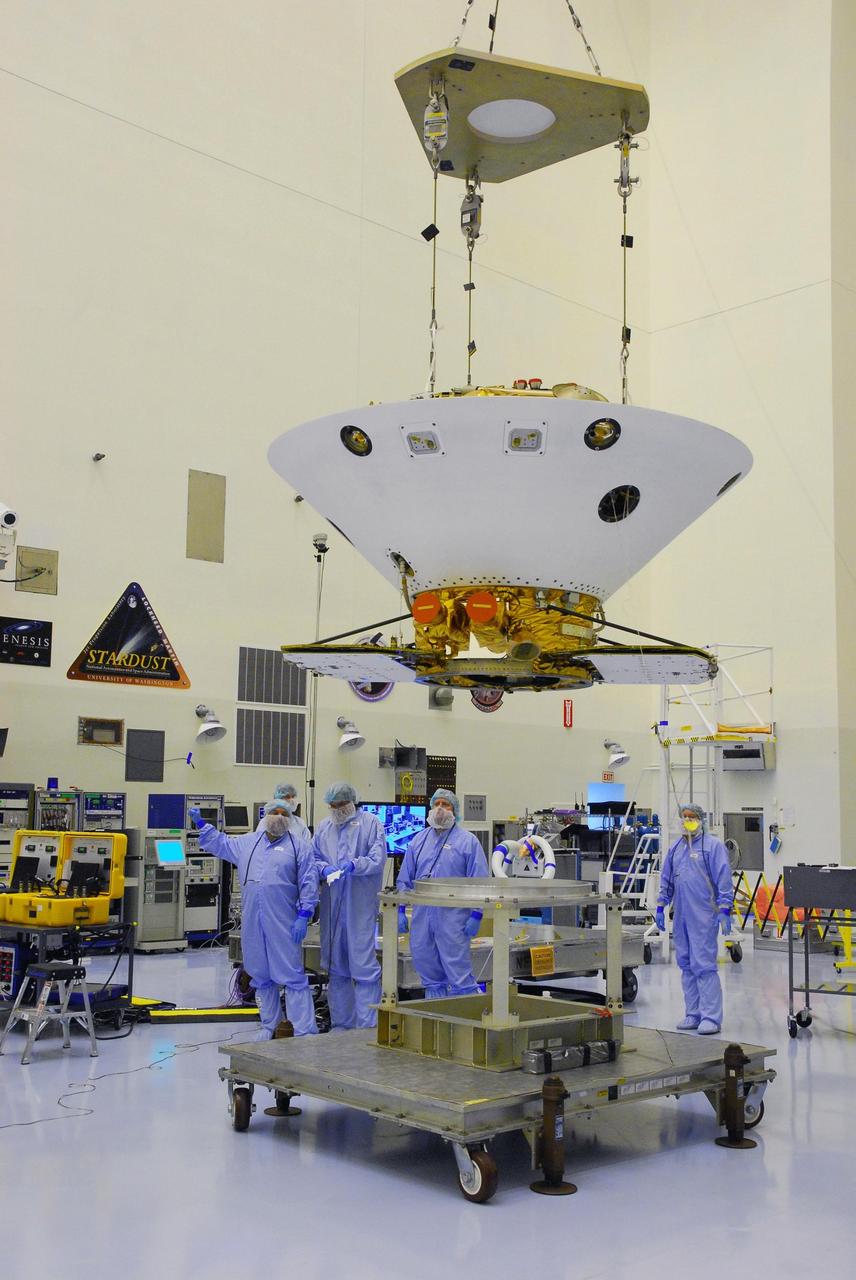
KENNEDY SPACE CENTER, FLA. -- In the Payload Handling Servicing Facility, an overhead crane lifts the Phoenix spacecraft from its stand for a move to a rotation stand for an interim weight and center of gravity determination. The Phoenix mission is the first project in NASA's first openly competed program of Mars Scout missions. Phoenix will land in icy soils near the north polar permanent ice cap of Mars and explore the history of the water in these soils and any associated rocks, while monitoring polar climate. Landing is planned in May 2008 on arctic ground where a mission currently in orbit, Mars Odyssey, has detected high concentrations of ice just beneath the top layer of soil. It will serve as NASA's first exploration of a potential modern habitat on Mars and open the door to a renewed search for carbon-bearing compounds, Photo credit: NASA/George Shelton
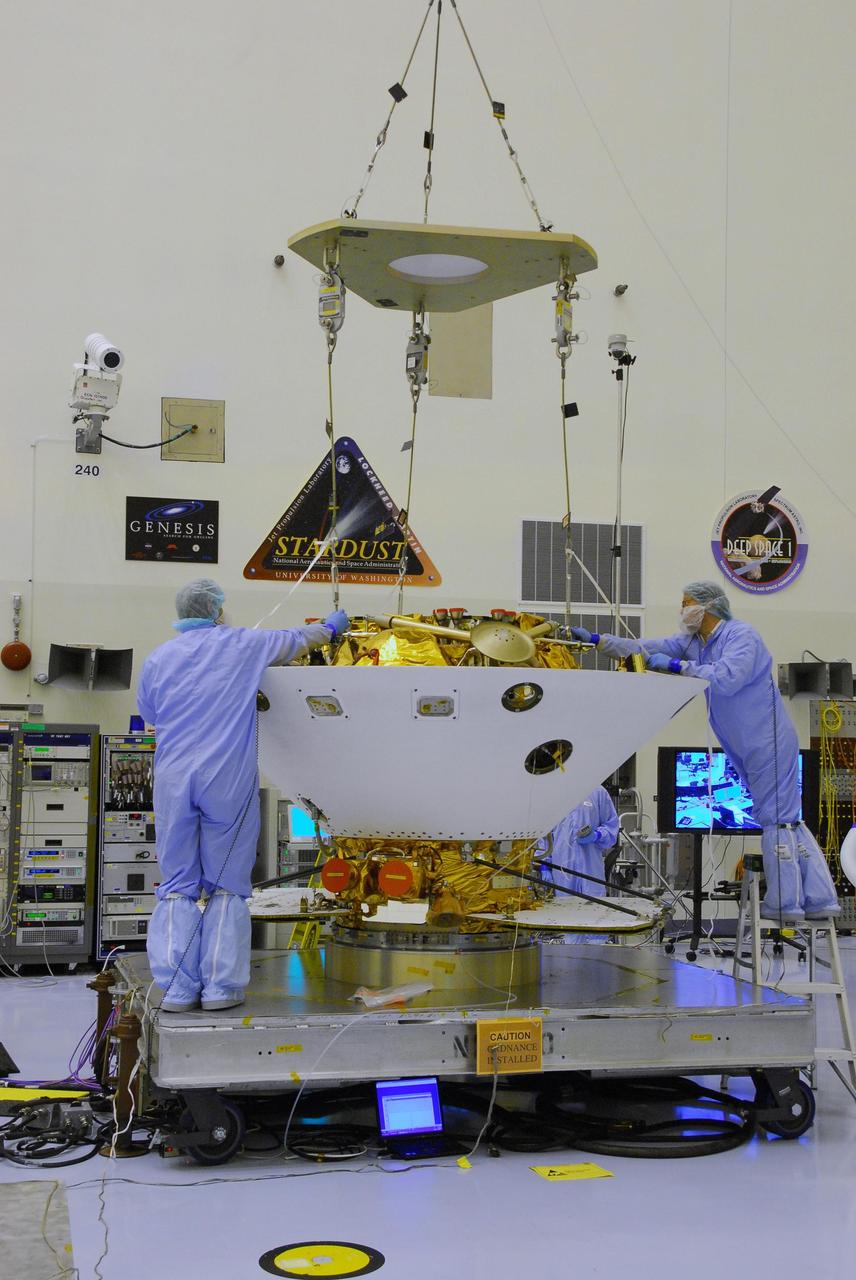
KENNEDY SPACE CENTER, FLA. -- Workers in the Payload Handling Servicing Facility attach an overhead crane to the Phoenix spacecraft. The spacecraft will be lifted and moved to a rotation stand for an interim weight and center of gravity determination. The Phoenix mission is the first project in NASA's first openly competed program of Mars Scout missions. Phoenix will land in icy soils near the north polar permanent ice cap of Mars and explore the history of the water in these soils and any associated rocks, while monitoring polar climate. Landing is planned in May 2008 on arctic ground where a mission currently in orbit, Mars Odyssey, has detected high concentrations of ice just beneath the top layer of soil. It will serve as NASA's first exploration of a potential modern habitat on Mars and open the door to a renewed search for carbon-bearing compounds, Photo credit: NASA/George Shelton
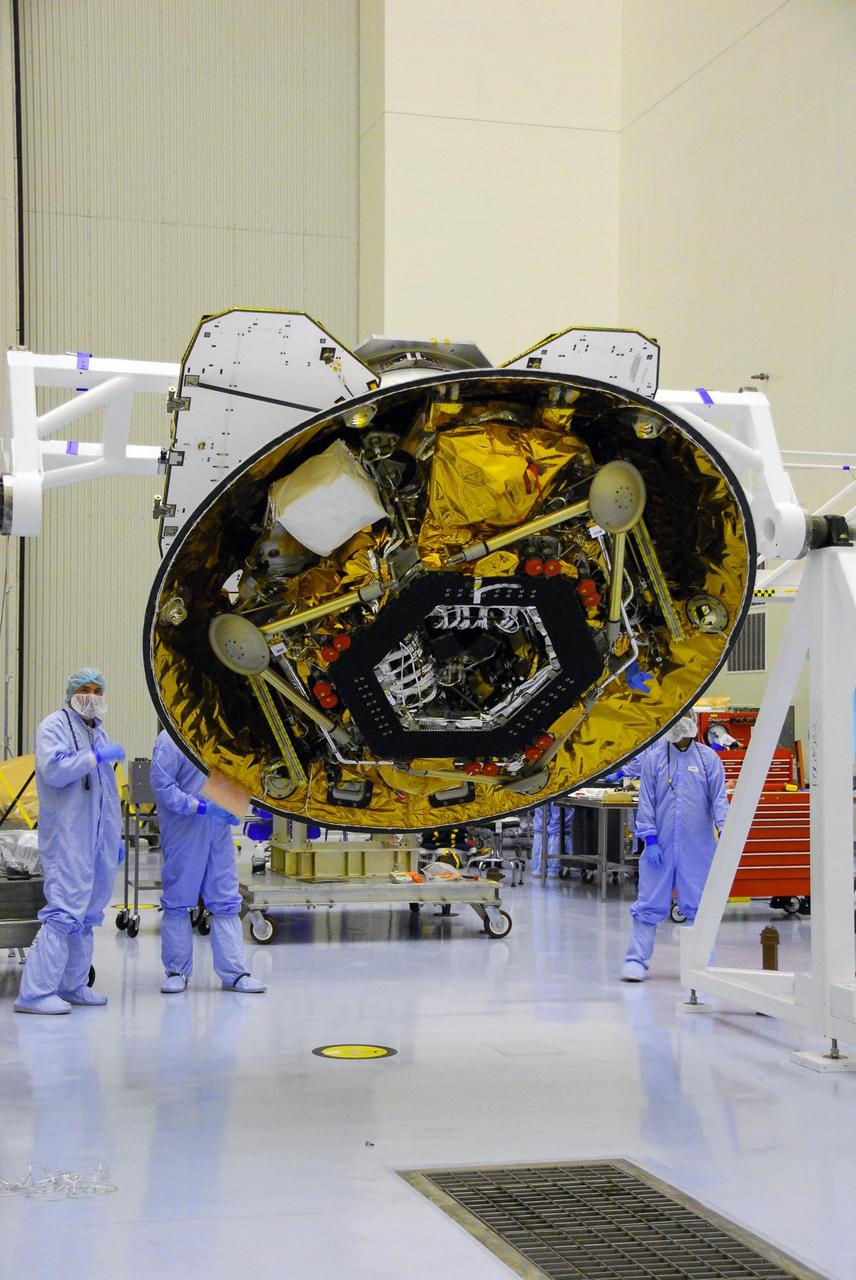
KENNEDY SPACE CENTER, FLA. -- In the Payload Handling Servicing Facility, the Phoenix spacecraft is upside down during rotation. The Phoenix mission is the first project in NASA's first openly competed program of Mars Scout missions. Phoenix will land in icy soils near the north polar permanent ice cap of Mars and explore the history of the water in these soils and any associated rocks, while monitoring polar climate. Landing is planned in May 2008 on arctic ground where a mission currently in orbit, Mars Odyssey, has detected high concentrations of ice just beneath the top layer of soil. It will serve as NASA's first exploration of a potential modern habitat on Mars and open the door to a renewed search for carbon-bearing compounds, Photo credit: NASA/George Shelton
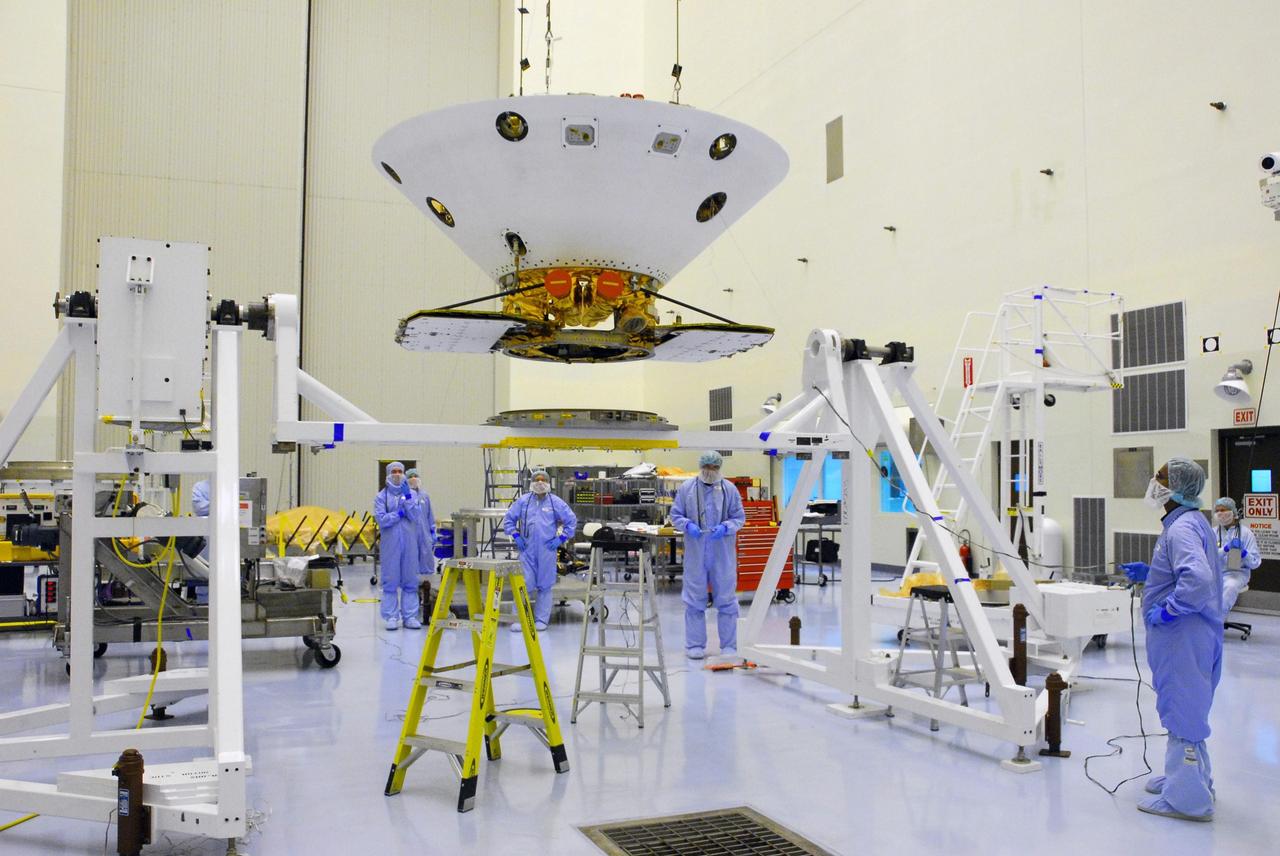
KENNEDY SPACE CENTER, FLA. -- In the Payload Handling Servicing Facility, the Phoenix spacecraft is being rotated for center of gravity determination. The Phoenix mission is the first project in NASA's first openly competed program of Mars Scout missions. Phoenix will land in icy soils near the north polar permanent ice cap of Mars and explore the history of the water in these soils and any associated rocks, while monitoring polar climate. Landing is planned in May 2008 on arctic ground where a mission currently in orbit, Mars Odyssey, has detected high concentrations of ice just beneath the top layer of soil. It will serve as NASA's first exploration of a potential modern habitat on Mars and open the door to a renewed search for carbon-bearing compounds, Photo credit: NASA/George Shelton
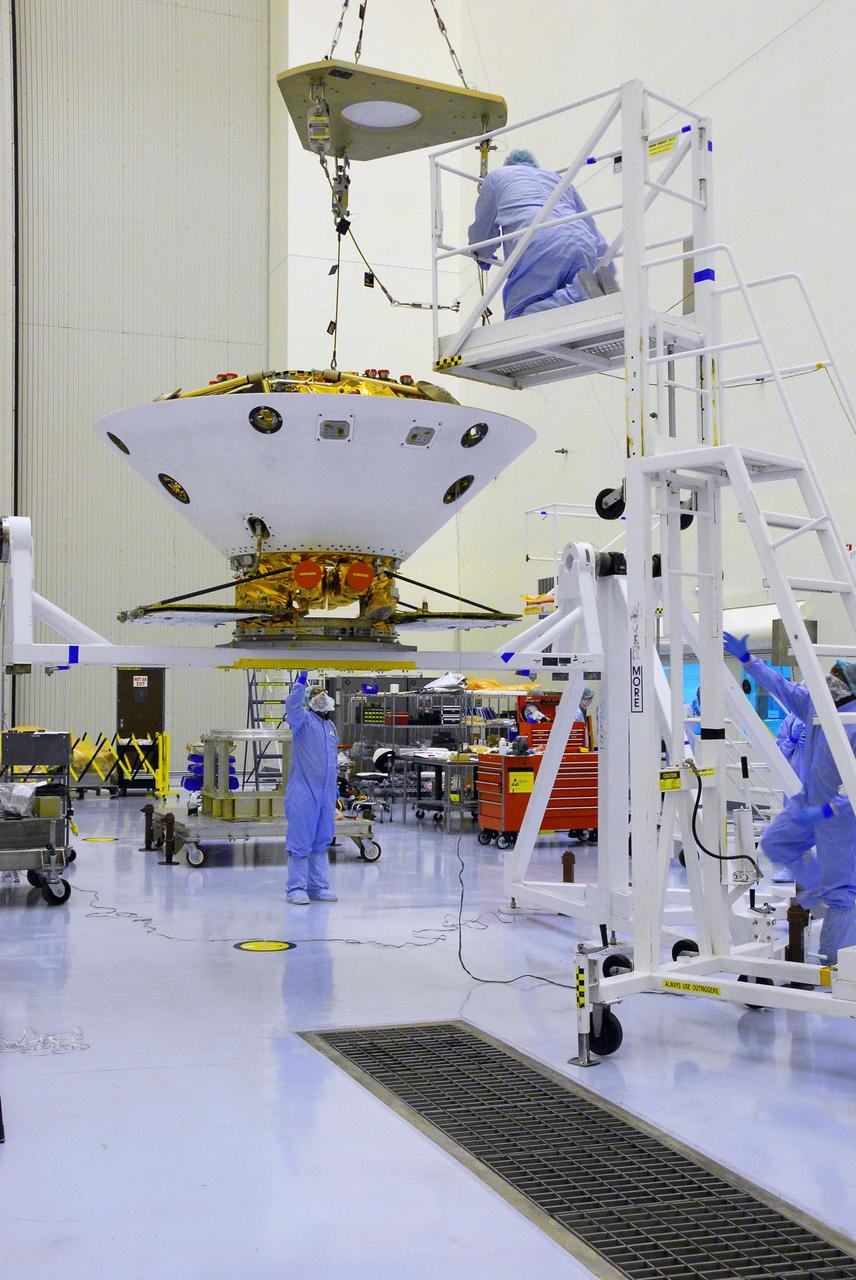
KENNEDY SPACE CENTER, FLA. -- In the Payload Handling Servicing Facility, an overhead crane lowers the Phoenix spacecraft onto a rotation stand for an interim weight and center of gravity determination. The Phoenix mission is the first project in NASA's first openly competed program of Mars Scout missions. Phoenix will land in icy soils near the north polar permanent ice cap of Mars and explore the history of the water in these soils and any associated rocks, while monitoring polar climate. Landing is planned in May 2008 on arctic ground where a mission currently in orbit, Mars Odyssey, has detected high concentrations of ice just beneath the top layer of soil. It will serve as NASA's first exploration of a potential modern habitat on Mars and open the door to a renewed search for carbon-bearing compounds, Photo credit: NASA/George Shelton
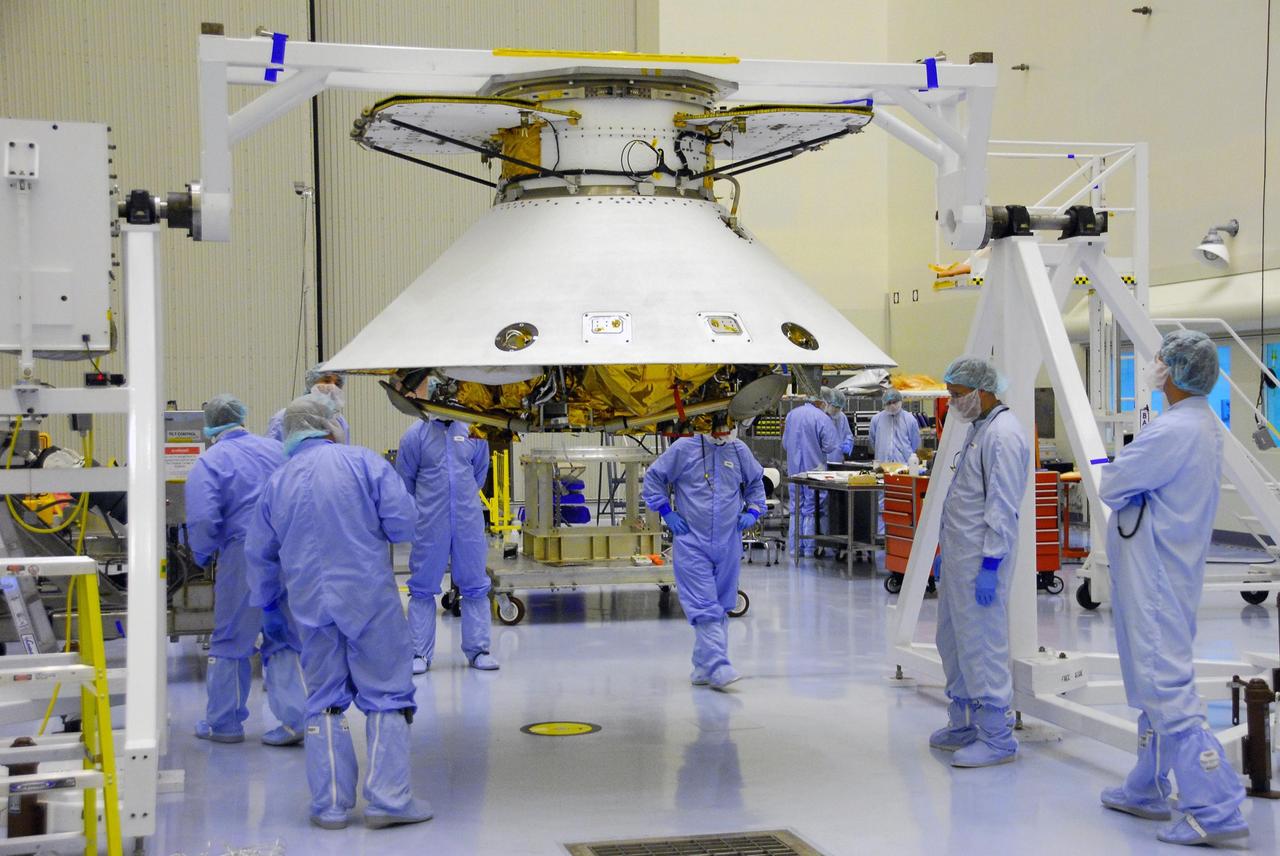
KENNEDY SPACE CENTER, FLA. -- In the Payload Handling Servicing Facility, an overhead crane lifts the Phoenix spacecraft from its stand for a move to a rotation stand for an interim weight and center of gravity determination. The Phoenix mission is the first project in NASA's first openly competed program of Mars Scout missions. Phoenix will land in icy soils near the north polar permanent ice cap of Mars and explore the history of the water in these soils and any associated rocks, while monitoring polar climate. Landing is planned in May 2008 on arctic ground where a mission currently in orbit, Mars Odyssey, has detected high concentrations of ice just beneath the top layer of soil. It will serve as NASA's first exploration of a potential modern habitat on Mars and open the door to a renewed search for carbon-bearing compounds, Photo credit: NASA/George Shelton
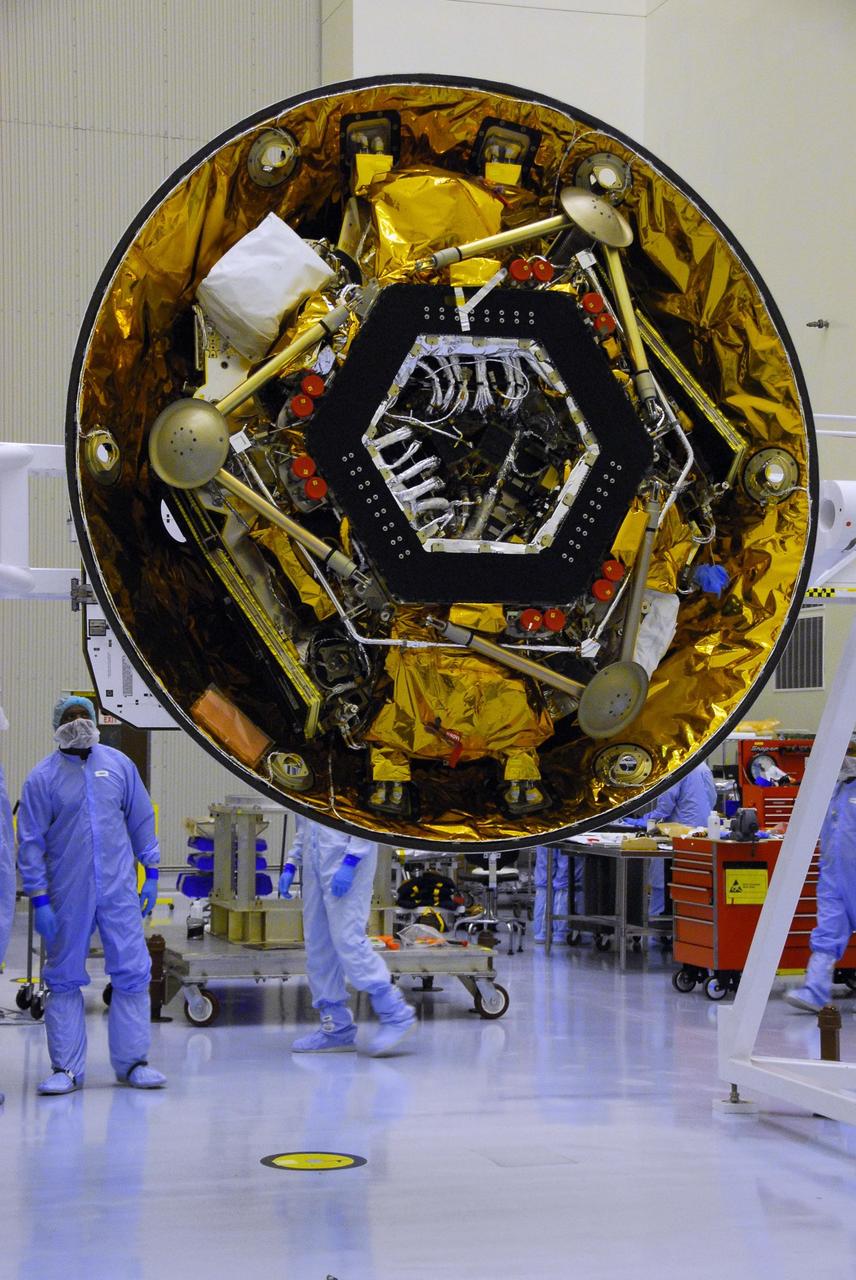
KENNEDY SPACE CENTER, FLA. -- In the Payload Handling Servicing Facility, the Phoenix spacecraft is being rotated for center of gravity determination. The Phoenix mission is the first project in NASA's first openly competed program of Mars Scout missions. Phoenix will land in icy soils near the north polar permanent ice cap of Mars and explore the history of the water in these soils and any associated rocks, while monitoring polar climate. Landing is planned in May 2008 on arctic ground where a mission currently in orbit, Mars Odyssey, has detected high concentrations of ice just beneath the top layer of soil. It will serve as NASA's first exploration of a potential modern habitat on Mars and open the door to a renewed search for carbon-bearing compounds, Photo credit: NASA/George Shelton
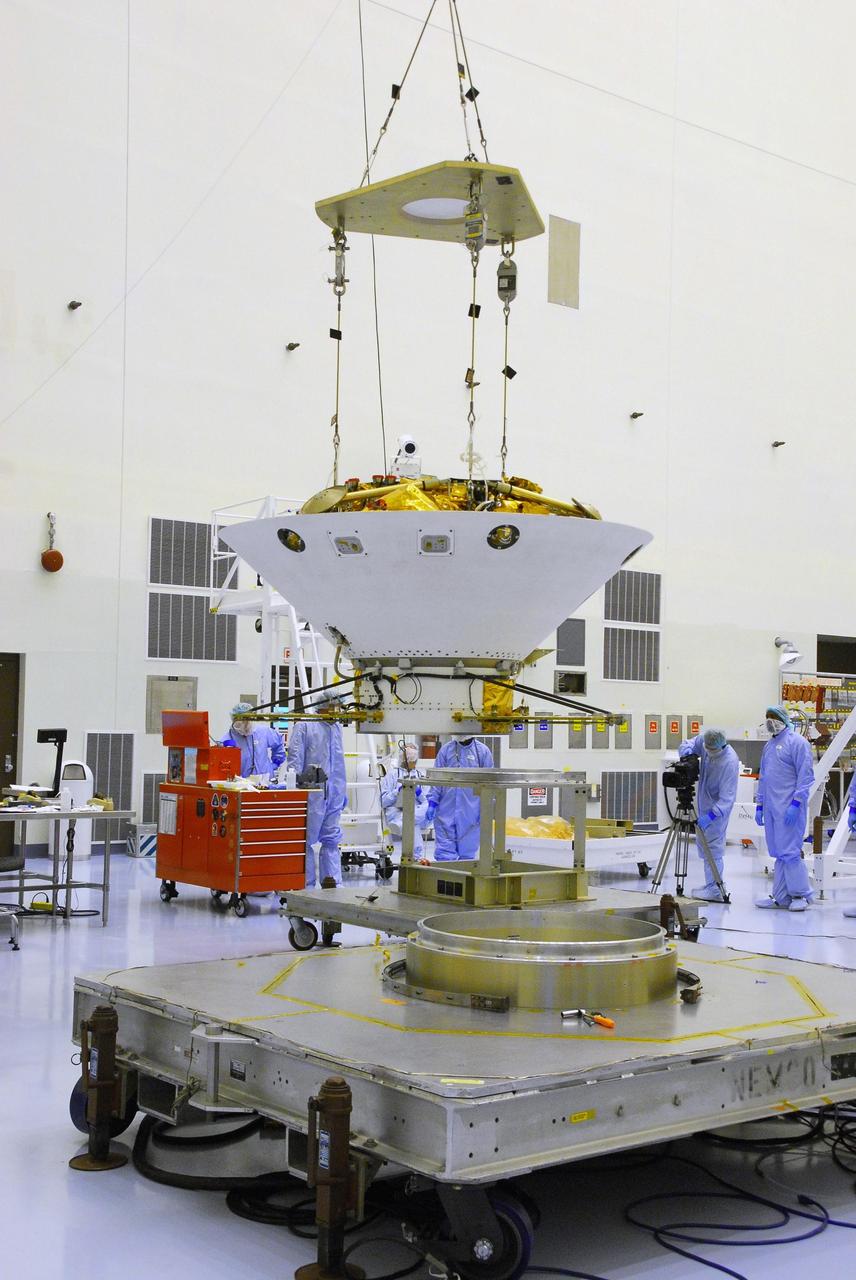
KENNEDY SPACE CENTER, FLA. -- An overhead crane lifts the Phoenix spacecraft from its stand for a move to a rotation stand for an interim weight and center of gravity determination. The Phoenix mission is the first project in NASA's first openly competed program of Mars Scout missions. Phoenix will land in icy soils near the north polar permanent ice cap of Mars and explore the history of the water in these soils and any associated rocks, while monitoring polar climate. Landing is planned in May 2008 on arctic ground where a mission currently in orbit, Mars Odyssey, has detected high concentrations of ice just beneath the top layer of soil. It will serve as NASA's first exploration of a potential modern habitat on Mars and open the door to a renewed search for carbon-bearing compounds, Photo credit: NASA/George Shelton
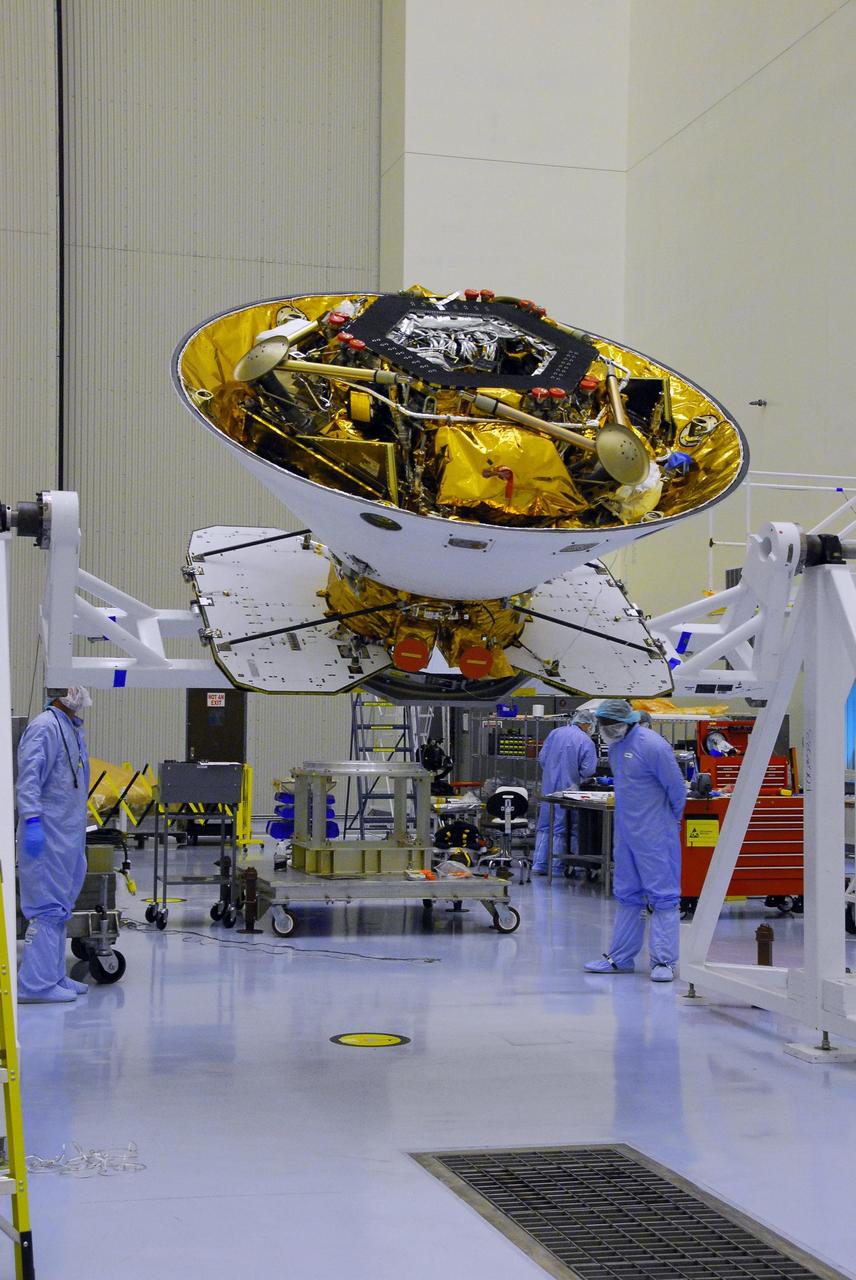
KENNEDY SPACE CENTER, FLA. -- In the Payload Handling Servicing Facility, the Phoenix spacecraft is being rotated for center of gravity determination. The Phoenix mission is the first project in NASA's first openly competed program of Mars Scout missions. Phoenix will land in icy soils near the north polar permanent ice cap of Mars and explore the history of the water in these soils and any associated rocks, while monitoring polar climate. Landing is planned in May 2008 on arctic ground where a mission currently in orbit, Mars Odyssey, has detected high concentrations of ice just beneath the top layer of soil. It will serve as NASA's first exploration of a potential modern habitat on Mars and open the door to a renewed search for carbon-bearing compounds, Photo credit: NASA/George Shelton
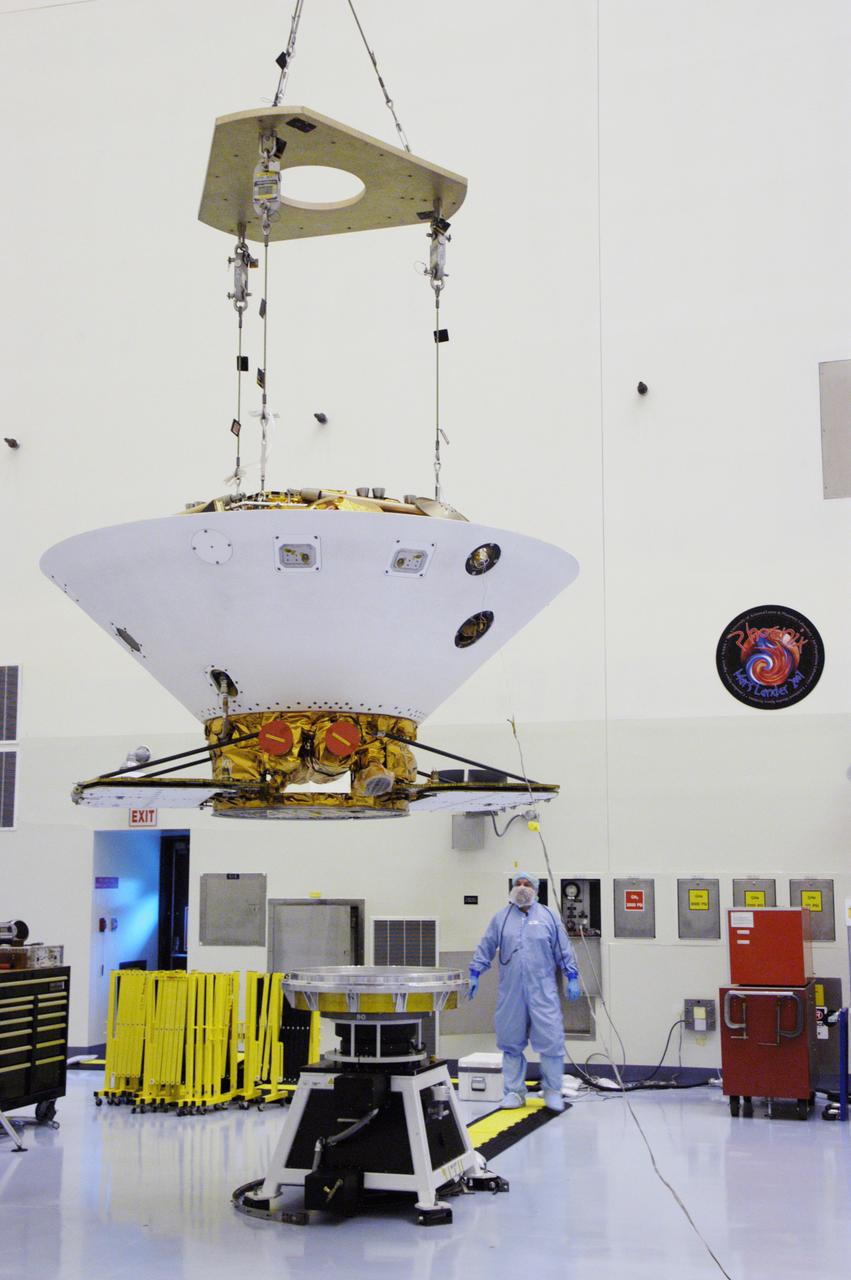
An overhead crane lowers the backshell with the Phoenix Mars Lander inside toward a spin table for spin testing in the Payload Hazardous Servicing Facility. The Phoenix mission is the first project in NASA's first openly competed program of Mars Scout missions. Phoenix will land in icy soils near the north polar permanent ice cap of Mars and explore the history of the water in these soils and any associated rocks, while monitoring polar climate. Landing is planned in May 2008 on arctic ground where a mission currently in orbit, Mars Odyssey, has detected high concentrations of ice just beneath the top layer of soil. It will serve as NASA's first exploration of a potential modern habitat on Mars and open the door to a renewed search for carbon-bearing compounds, last attempted with NASA’s Viking missions in the 1970s. A stereo color camera and a weather station will study the surrounding environment while the other instruments check excavated soil samples for water, organic chemicals and conditions that could indicate whether the site was ever hospitable to life. Microscopes can reveal features as small as one one-thousandth the width of a human hair. Launch of Phoenix aboard a Delta II rocket is targeted for Aug. 3 from Cape Canaveral Air Force Station in Florida.
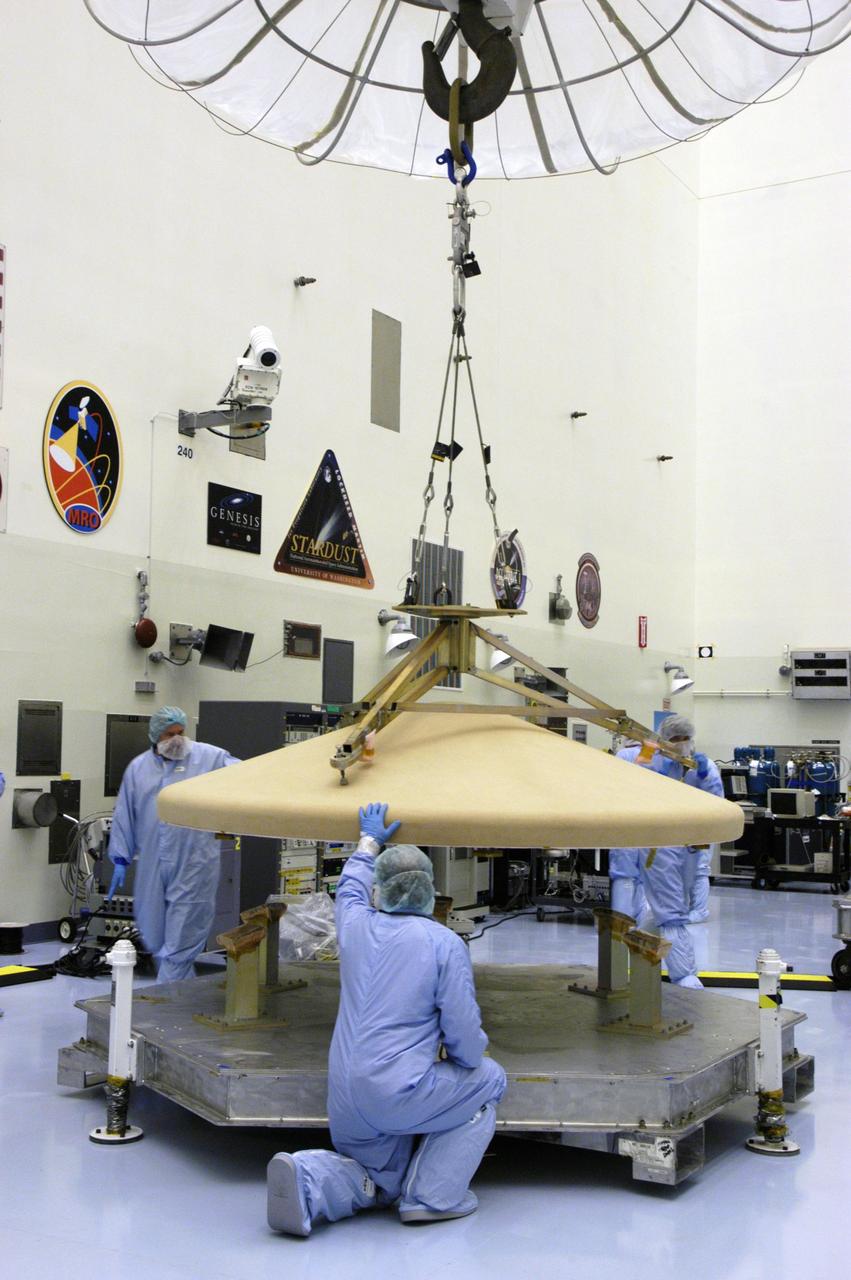
KENNEDY SPACE CENTER, FLA. -- In the Payload Hazardous Servicing Facility, workers help guide the heat shield onto a platform. The heat shield was removed from the Phoenix Mars Lander spacecraft.. The Phoenix mission is the first project in NASA's first openly competed program of Mars Scout missions. Phoenix will land in icy soils near the north polar permanent ice cap of Mars and explore the history of the water in these soils and any associated rocks, while monitoring polar climate. Landing is planned in May 2008 on arctic ground where a mission currently in orbit, Mars Odyssey, has detected high concentrations of ice just beneath the top layer of soil. It will serve as NASA's first exploration of a potential modern habitat on Mars and open the door to a renewed search for carbon-bearing compounds, last attempted with NASA’s Viking missions in the 1970s. A stereo color camera and a weather station will study the surrounding environment while the other instruments check excavated soil samples for water, organic chemicals and conditions that could indicate whether the site was ever hospitable to life. Microscopes can reveal features as small as one one-thousandth the width of a human hair. Launch of Phoenix aboard a Delta II rocket is targeted for Aug. 3 from Cape Canaveral Air Force Station in Florida. Photo credit: NASA/George Shelton
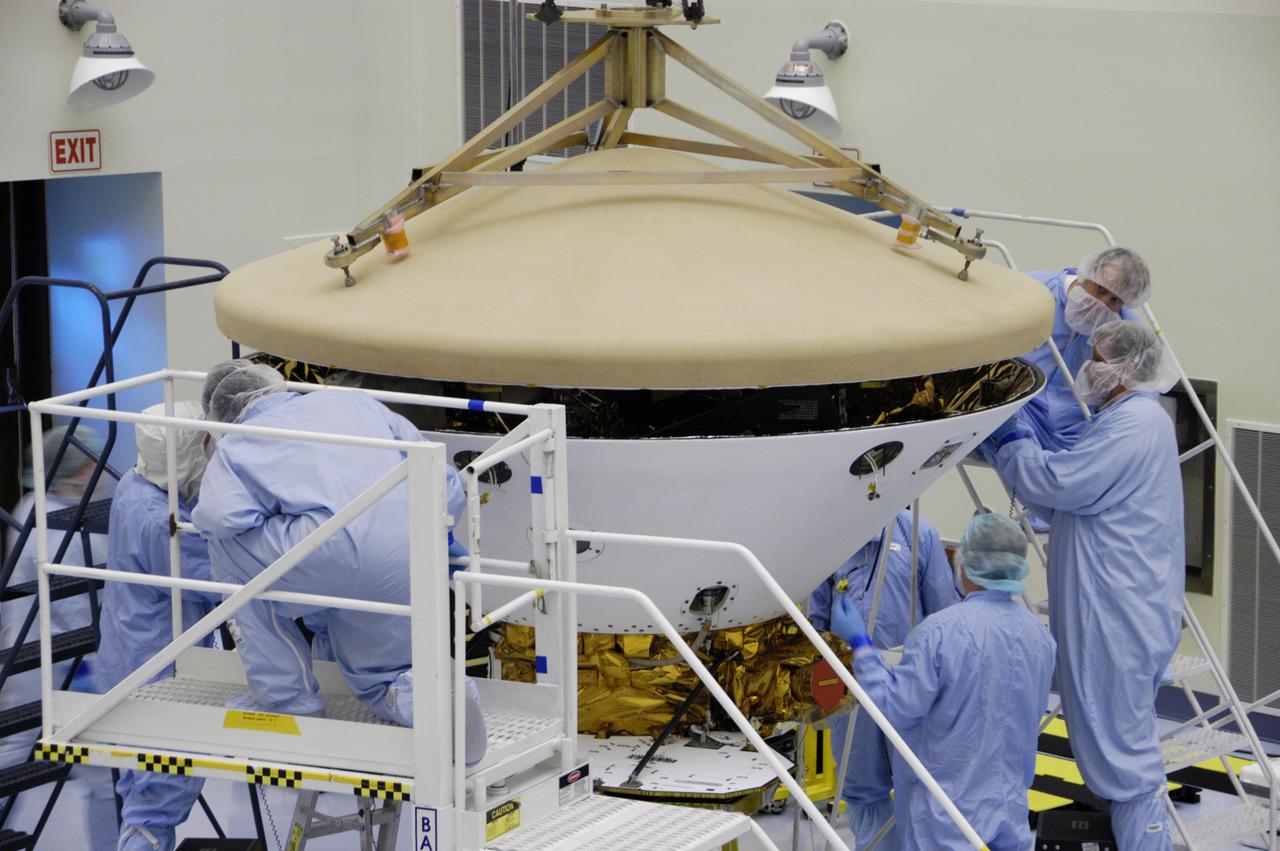
In the Payload Hazardous Servicing Facility, technicians prepare to install the heat shield on the Phoenix Mars Lander spacecraft. The Phoenix mission is the first project in NASA's first openly competed program of Mars Scout missions. Phoenix will land in icy soils near the north polar permanent ice cap of Mars and explore the history of the water in these soils and any associated rocks, while monitoring polar climate. Landing is planned in May 2008 on arctic ground where a mission currently in orbit, Mars Odyssey, has detected high concentrations of ice just beneath the top layer of soil. It will serve as NASA's first exploration of a potential modern habitat on Mars and open the door to a renewed search for carbon-bearing compounds, last attempted with NASA's Viking missions in the 1970s. A stereo color camera and a weather station will study the surrounding environment while the other instruments check excavated soil samples for water, organic chemicals and conditions that could indicate whether the site was ever hospitable to life. Microscopes can reveal features as small as one one-thousandth the width of a human hair. Launch of Phoenix aboard a Delta II rocket is targeted for Aug. 3 from Cape Canaveral Air Force Station in Florida.
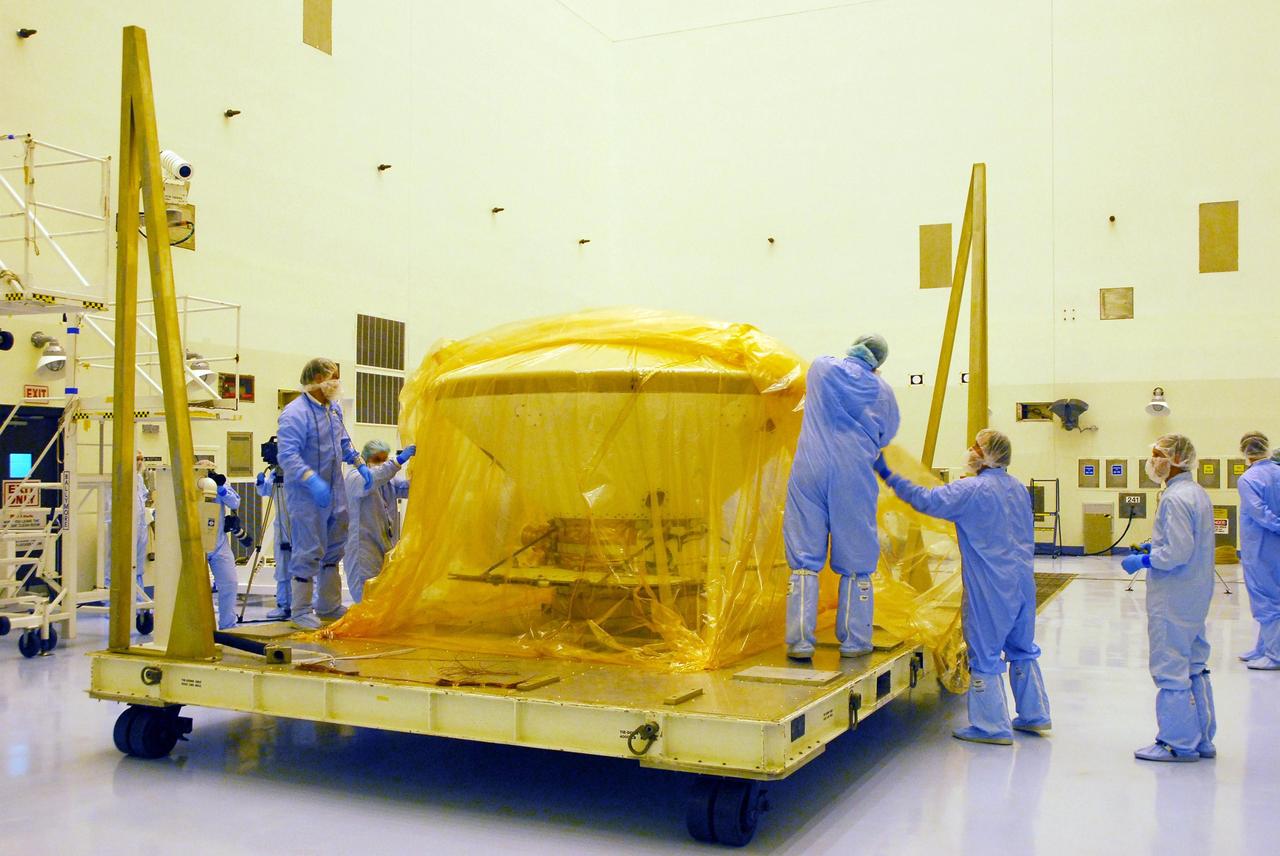
KENNEDY SPACE CENTER, FLA. -- In the Payload Hazardous Servicing Facility at Kennedy Space Center, workers dressed in clean-room garb begin removing the protective wrapping from around the Phoenix spacecraft. The Phoenix mission is the first project in NASA's first openly competed program of Mars Scout missions. Phoenix will land in icy soils near the north polar permanent ice cap of Mars and explore the history of the water in these soils and any associated rocks, while monitoring polar climate. Landing is planned in May 2008 on arctic ground where a mission currently in orbit, Mars Odyssey, has detected high concentrations of ice just beneath the top layer of soil. It will serve as NASA's first exploration of a potential modern habitat on Mars and open the door to a renewed search for carbon-bearing compounds, last attempted with NASA’s Viking missions in the 1970s. A stereo color camera and a weather station will study the surrounding environment while the other instruments check excavated soil samples for water, organic chemicals and conditions that could indicate whether the site was ever hospitable to life. Microscopes can reveal features as small as one one-thousandth the width of a human hair. Launch of Phoenix aboard a Delta II rocket is targeted for Aug. 3 from Cape Canaveral Air Force Station in Florida. Photo credit: NASA/George Shelton
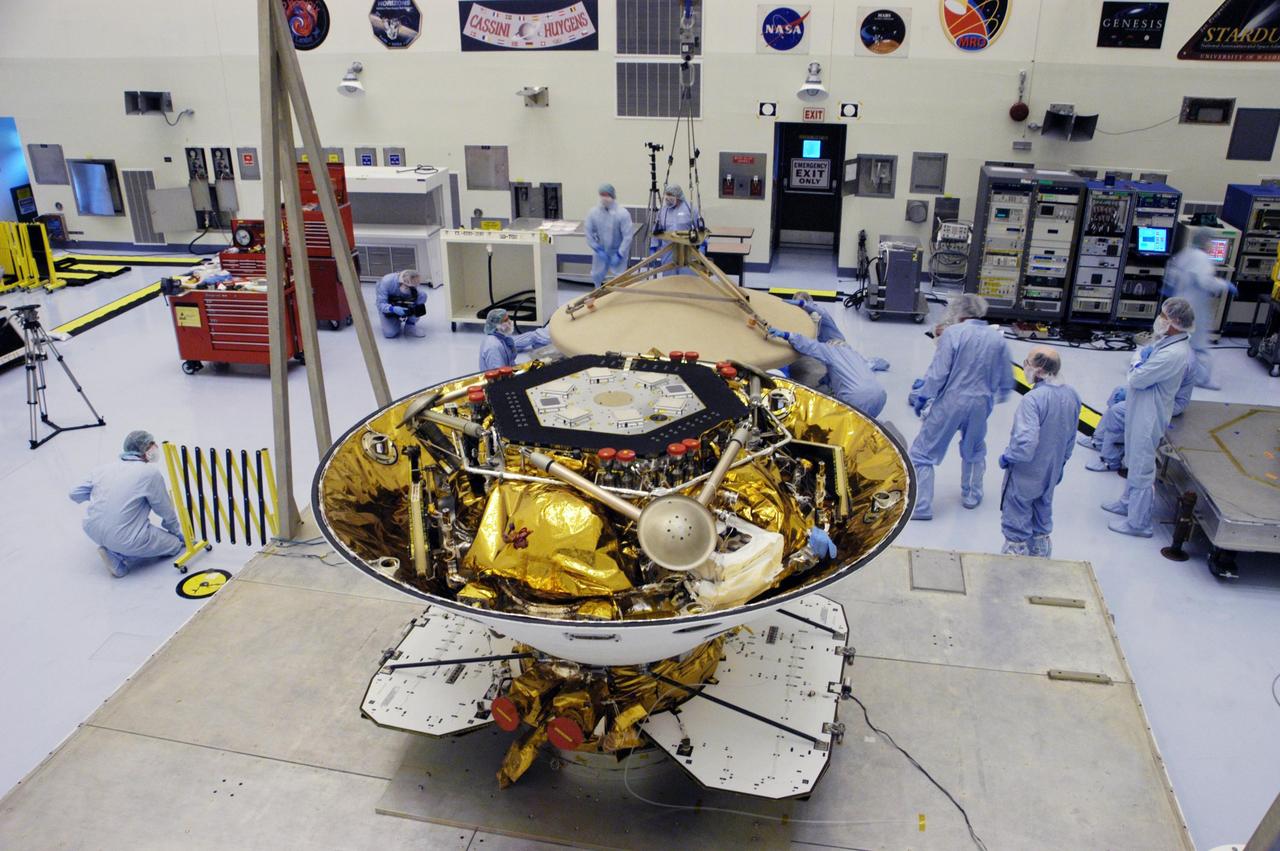
KENNEDY SPACE CENTER, FLA. -- In the Payload Hazardous Servicing Facility, the Phoenix Mars Lander (foreground) can be seen inside the backshell. In the background, workers are helping place the heat shield, just removed from the Phoenix, onto a platform. The Phoenix mission is the first project in NASA's first openly competed program of Mars Scout missions. Phoenix will land in icy soils near the north polar permanent ice cap of Mars and explore the history of the water in these soils and any associated rocks, while monitoring polar climate. Landing is planned in May 2008 on arctic ground where a mission currently in orbit, Mars Odyssey, has detected high concentrations of ice just beneath the top layer of soil. It will serve as NASA's first exploration of a potential modern habitat on Mars and open the door to a renewed search for carbon-bearing compounds, last attempted with NASA’s Viking missions in the 1970s. A stereo color camera and a weather station will study the surrounding environment while the other instruments check excavated soil samples for water, organic chemicals and conditions that could indicate whether the site was ever hospitable to life. Microscopes can reveal features as small as one one-thousandth the width of a human hair. Launch of Phoenix aboard a Delta II rocket is targeted for Aug. 3 from Cape Canaveral Air Force Station in Florida. Photo credit: NASA/George Shelton
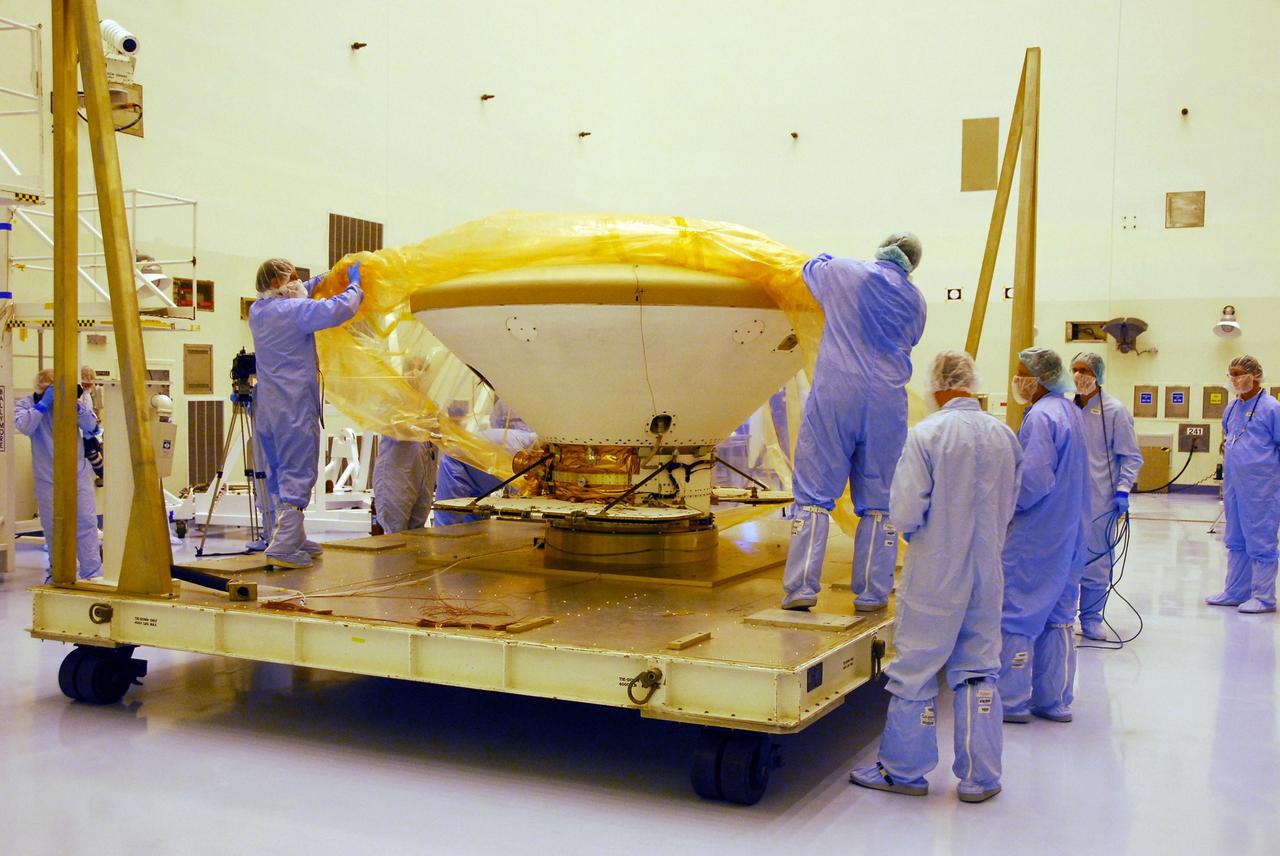
KENNEDY SPACE CENTER, FLA. -- In the Payload Hazardous Servicing Facility at Kennedy Space Center, workers dressed in clean-room garb remove the protective wrapping from around the Phoenix spacecraft. The Phoenix mission is the first project in NASA's first openly competed program of Mars Scout missions. Phoenix will land in icy soils near the north polar permanent ice cap of Mars and explore the history of the water in these soils and any associated rocks, while monitoring polar climate. Landing is planned in May 2008 on arctic ground where a mission currently in orbit, Mars Odyssey, has detected high concentrations of ice just beneath the top layer of soil. It will serve as NASA's first exploration of a potential modern habitat on Mars and open the door to a renewed search for carbon-bearing compounds, last attempted with NASA’s Viking missions in the 1970s. A stereo color camera and a weather station will study the surrounding environment while the other instruments check excavated soil samples for water, organic chemicals and conditions that could indicate whether the site was ever hospitable to life. Microscopes can reveal features as small as one one-thousandth the width of a human hair. Launch of Phoenix aboard a Delta II rocket is targeted for Aug. 3 from Cape Canaveral Air Force Station in Florida. Photo credit: NASA/George Shelton
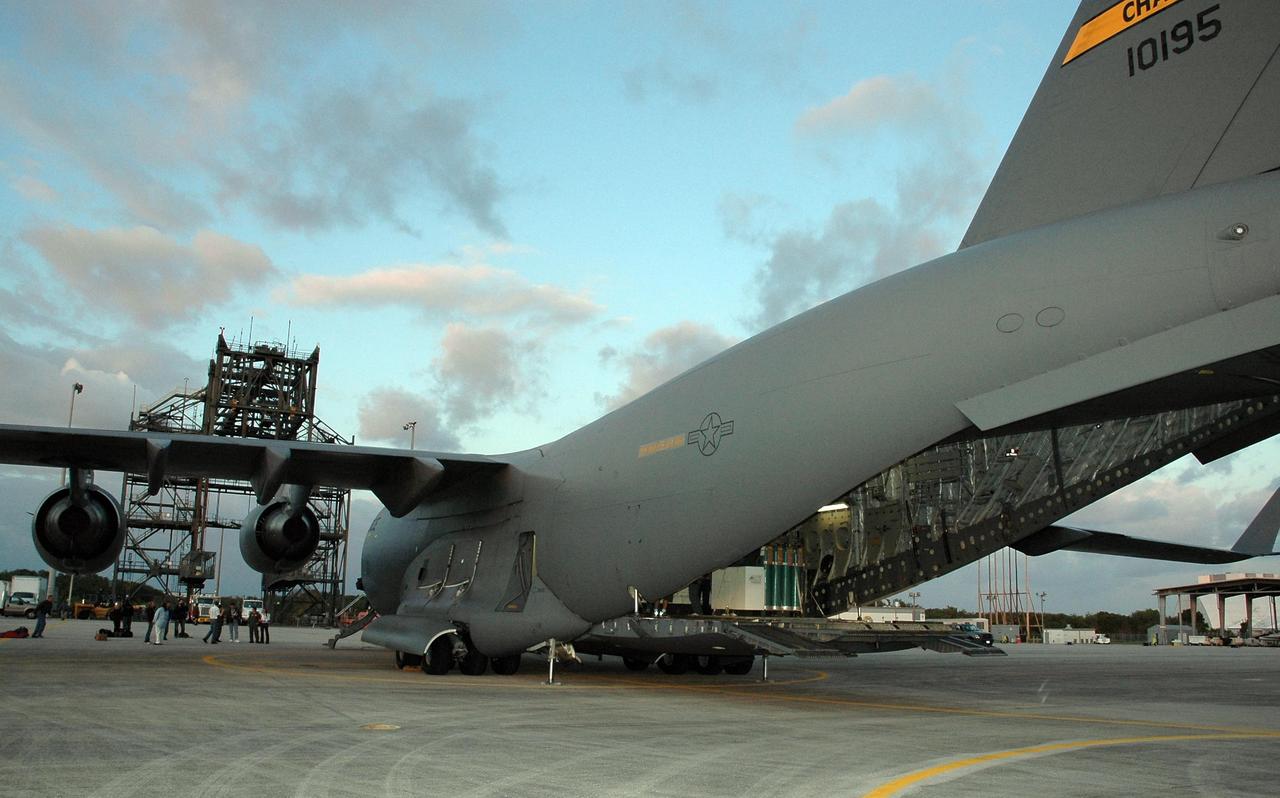
KENNEDY SPACE CENTER, FLA. -- On Kennedy Space Center's Shuttle Landing Facility, the cargo hold of this U.S. Air Force C-17 Globemaster III opens to reveal the crated Phoenix spacecraft inside. The Phoenix mission is the first project in NASA's first openly competed program of Mars Scout missions. Phoenix will land in icy soils near the north polar permanent ice cap of Mars and explore the history of the water in these soils and any associated rocks, while monitoring polar climate. Landing is planned in May 2008 on arctic ground where a mission currently in orbit, Mars Odyssey, has detected high concentrations of ice just beneath the top layer of soil. It will serve as NASA's first exploration of a potential modern habitat on Mars and open the door to a renewed search for carbon-bearing compounds, last attempted with NASA’s Viking missions in the 1970s. A stereo color camera and a weather station will study the surrounding environment while the other instruments check excavated soil samples for water, organic chemicals and conditions that could indicate whether the site was ever hospitable to life. Microscopes can reveal features as small as one one-thousandth the width of a human hair. Launch of Phoenix aboard a Delta II rocket is targeted for Aug. 3 from Cape Canaveral Air Force Station in Florida. Photo credit: NASA/Charisse Nahser
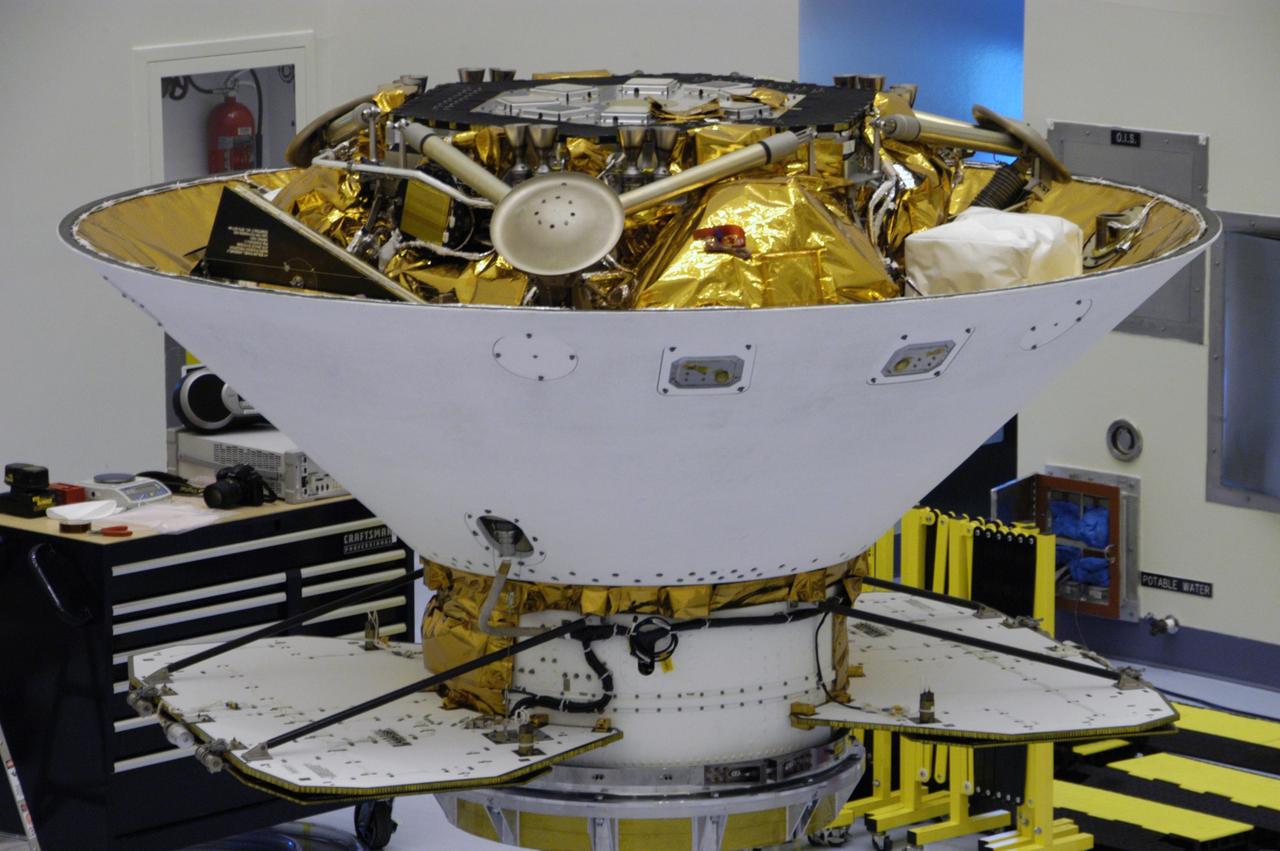
KENNEDY SPACE CENTER, FLA. -- This closeup shows the Phoenix Mars Lander spacecraft nestled inside the backshell. The spacecraft will undergo spin testing on the spin table to which it is attached in the Payload Hazardous Servicing Facility. The Phoenix mission is the first project in NASA's first openly competed program of Mars Scout missions. Phoenix will land in icy soils near the north polar permanent ice cap of Mars and explore the history of the water in these soils and any associated rocks, while monitoring polar climate. Landing is planned in May 2008 on arctic ground where a mission currently in orbit, Mars Odyssey, has detected high concentrations of ice just beneath the top layer of soil. It will serve as NASA's first exploration of a potential modern habitat on Mars and open the door to a renewed search for carbon-bearing compounds, last attempted with NASA’s Viking missions in the 1970s. A stereo color camera and a weather station will study the surrounding environment while the other instruments check excavated soil samples for water, organic chemicals and conditions that could indicate whether the site was ever hospitable to life. Microscopes can reveal features as small as one one-thousandth the width of a human hair. Launch of Phoenix aboard a Delta II rocket is targeted for Aug. 3 from Cape Canaveral Air Force Station in Florida. Photo credit: NASA/George Shelton
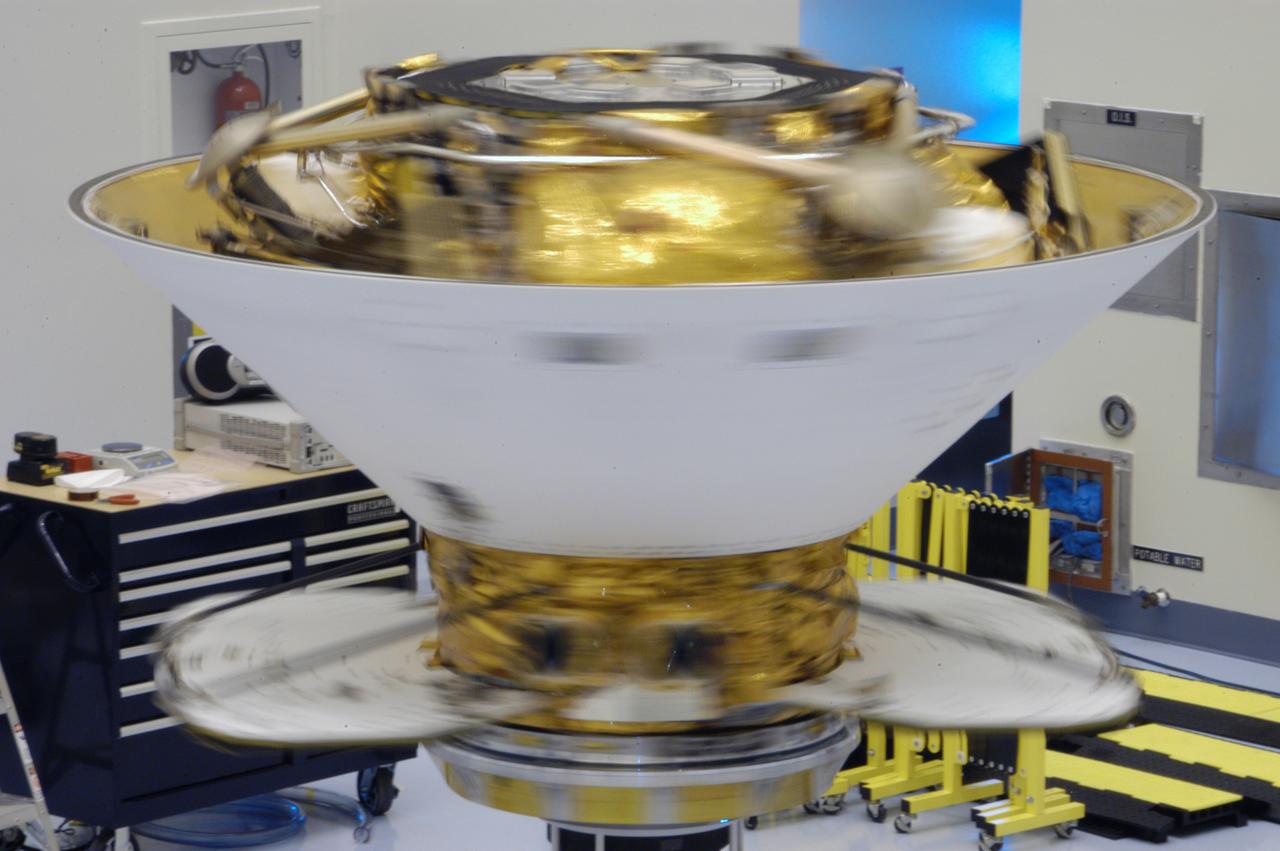
This closeup shows the spin test of the Phoenix Mars Lander in the Payload Hazardous Servicing Facility. The Phoenix mission is the first project in NASA's first openly competed program of Mars Scout missions. Phoenix will land in icy soils near the north polar permanent ice cap of Mars and explore the history of the water in these soils and any associated rocks, while monitoring polar climate. Landing is planned in May 2008 on arctic ground where a mission currently in orbit, Mars Odyssey, has detected high concentrations of ice just beneath the top layer of soil. It will serve as NASA's first exploration of a potential modern habitat on Mars and open the door to a renewed search for carbon-bearing compounds, last attempted with NASA’s Viking missions in the 1970s. A stereo color camera and a weather station will study the surrounding environment while the other instruments check excavated soil samples for water, organic chemicals and conditions that could indicate whether the site was ever hospitable to life. Microscopes can reveal features as small as one one-thousandth the width of a human hair. Launch of Phoenix aboard a Delta II rocket is targeted for Aug. 3 from Cape Canaveral Air Force Station in Florida.
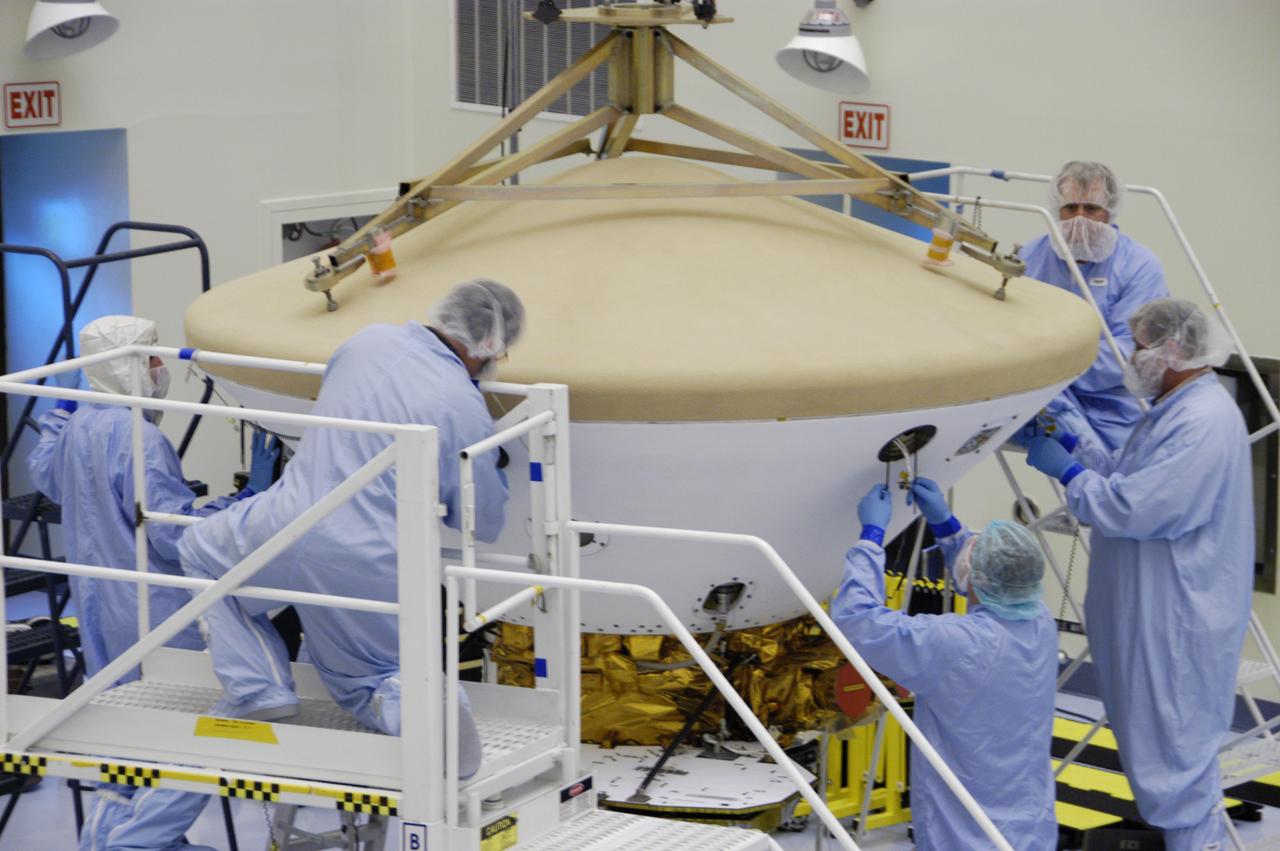
In the Payload Hazardous Servicing Facility, technicians install the heat shield on the Phoenix Mars Lander spacecraft. The Phoenix mission is the first project in NASA's first openly competed program of Mars Scout missions. Phoenix will land in icy soils near the north polar permanent ice cap of Mars and explore the history of the water in these soils and any associated rocks, while monitoring polar climate. Landing is planned in May 2008 on arctic ground where a mission currently in orbit, Mars Odyssey, has detected high concentrations of ice just beneath the top layer of soil. It will serve as NASA's first exploration of a potential modern habitat on Mars and open the door to a renewed search for carbon-bearing compounds, last attempted with NASA's Viking missions in the 1970s. A stereo color camera and a weather station will study the surrounding environment while the other instruments check excavated soil samples for water, organic chemicals and conditions that could indicate whether the site was ever hospitable to life. Microscopes can reveal features as small as one one-thousandth the width of a human hair. Launch of Phoenix aboard a Delta II rocket is targeted for Aug. 3 from Cape Canaveral Air Force Station in Florida.
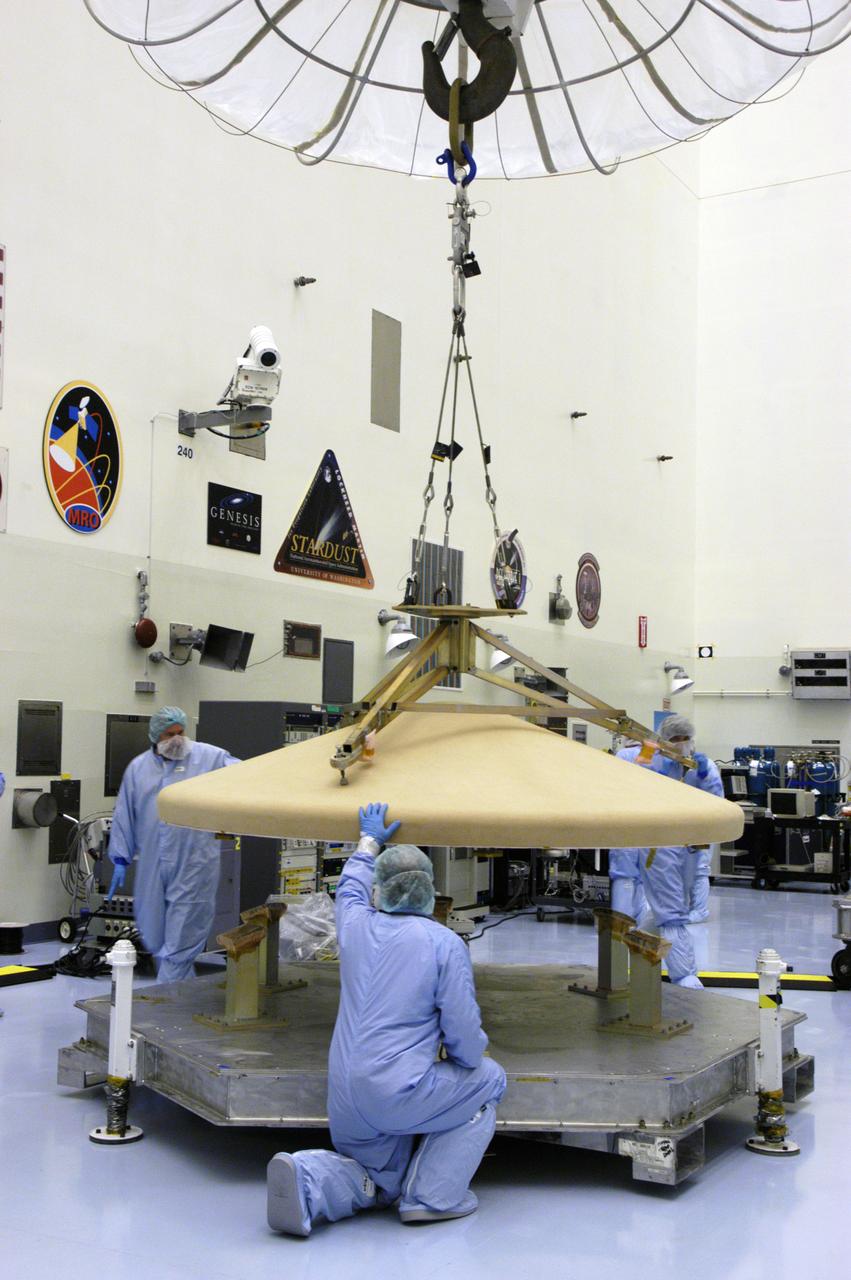
In the Payload Hazardous Servicing Facility, workers help guide the heat shield onto a platform. The heat shield was removed from the Phoenix Mars Lander spacecraft.. The Phoenix mission is the first project in NASA's first openly competed program of Mars Scout missions. Phoenix will land in icy soils near the north polar permanent ice cap of Mars and explore the history of the water in these soils and any associated rocks, while monitoring polar climate. Landing is planned in May 2008 on arctic ground where a mission currently in orbit, Mars Odyssey, has detected high concentrations of ice just beneath the top layer of soil. It will serve as NASA's first exploration of a potential modern habitat on Mars and open the door to a renewed search for carbon-bearing compounds, last attempted with NASA’s Viking missions in the 1970s. A stereo color camera and a weather station will study the surrounding environment while the other instruments check excavated soil samples for water, organic chemicals and conditions that could indicate whether the site was ever hospitable to life. Microscopes can reveal features as small as one one-thousandth the width of a human hair. Launch of Phoenix aboard a Delta II rocket is targeted for Aug. 3 from Cape Canaveral Air Force Station in Florida.
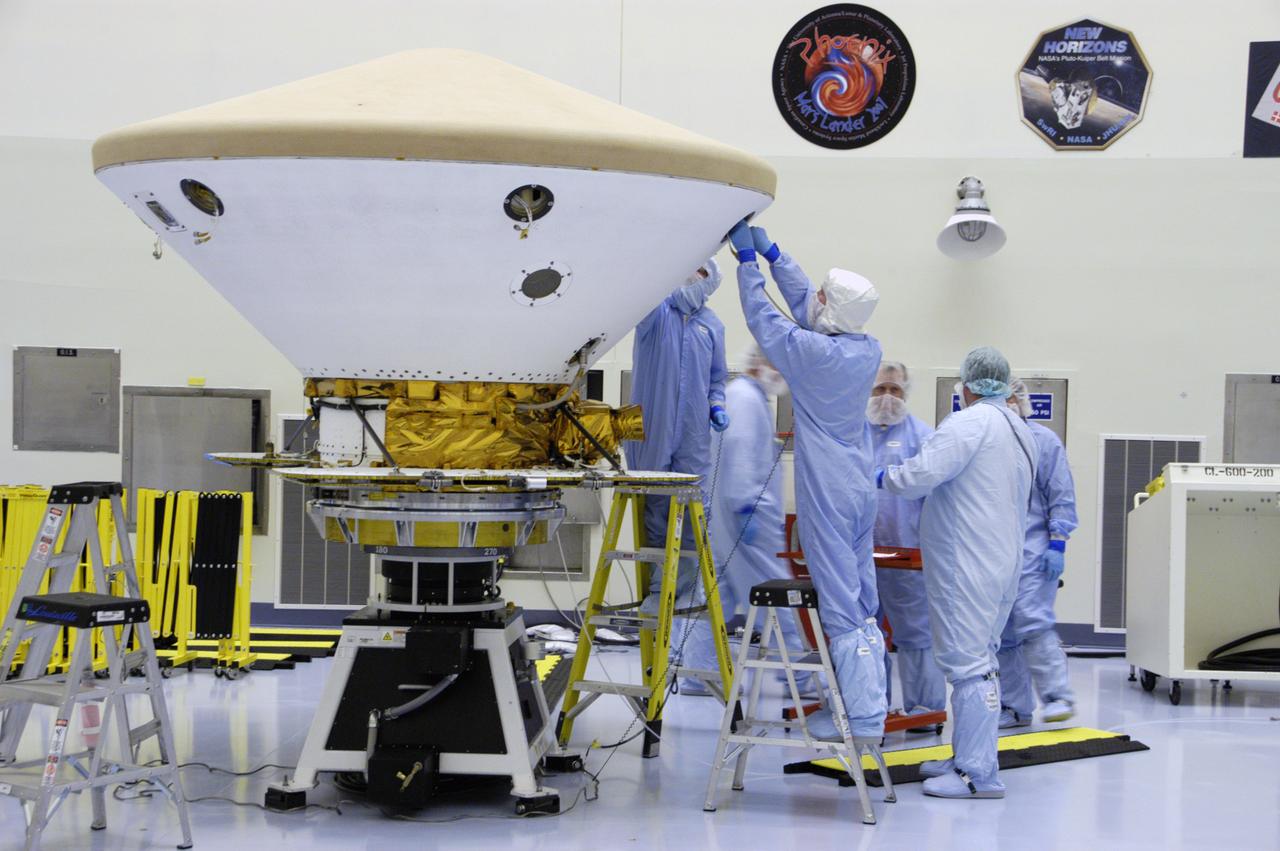
In the Payload Hazardous Servicing Facility, technicians complete the installation of the heat shield on the Phoenix Mars Lander spacecraft. The Phoenix mission is the first project in NASA's first openly competed program of Mars Scout missions. Phoenix will land in icy soils near the north polar permanent ice cap of Mars and explore the history of the water in these soils and any associated rocks, while monitoring polar climate. Landing is planned in May 2008 on arctic ground where a mission currently in orbit, Mars Odyssey, has detected high concentrations of ice just beneath the top layer of soil. It will serve as NASA's first exploration of a potential modern habitat on Mars and open the door to a renewed search for carbon-bearing compounds, last attempted with NASA's Viking missions in the 1970s. A stereo color camera and a weather station will study the surrounding environment while the other instruments check excavated soil samples for water, organic chemicals and conditions that could indicate whether the site was ever hospitable to life. Microscopes can reveal features as small as one one-thousandth the width of a human hair. Launch of Phoenix aboard a Delta II rocket is targeted for Aug. 3 from Cape Canaveral Air Force Station in Florida.
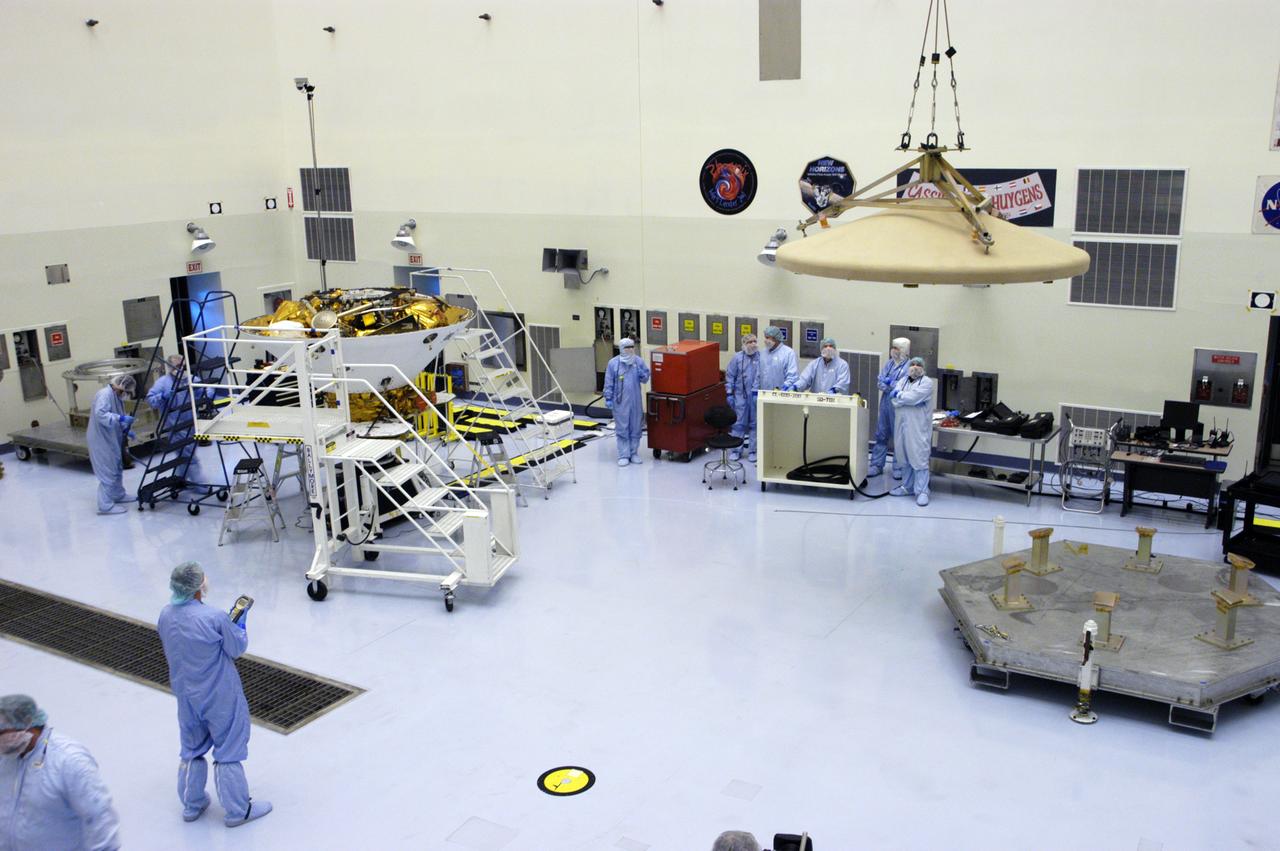
In the Payload Hazardous Servicing Facility, the heat shield for the Phoenix Mars Lander is moved into position for installation on the spacecraft. The Phoenix mission is the first project in NASA's first openly competed program of Mars Scout missions. Phoenix will land in icy soils near the north polar permanent ice cap of Mars and explore the history of the water in these soils and any associated rocks, while monitoring polar climate. Landing is planned in May 2008 on arctic ground where a mission currently in orbit, Mars Odyssey, has detected high concentrations of ice just beneath the top layer of soil. It will serve as NASA's first exploration of a potential modern habitat on Mars and open the door to a renewed search for carbon-bearing compounds, last attempted with NASA's Viking missions in the 1970s. A stereo color camera and a weather station will study the surrounding environment while the other instruments check excavated soil samples for water, organic chemicals and conditions that could indicate whether the site was ever hospitable to life. Microscopes can reveal features as small as one one-thousandth the width of a human hair. Launch of Phoenix aboard a Delta II rocket is targeted for Aug. 3 from Cape Canaveral Air Force Station in Florida.

Girl Scout troop 2612 members from Tulsa, OK take photos of one another with Google Glass at the White House Science Fair Tuesday, May 27, 2014. Avery Dodson, 6; Natalie Hurley, 8; Miriam Schaffer, 8; Claire Winton, 8; and Lucy Claire Sharp, 8 participated in the Junior FIRST Lego League's Disaster Blaster Challenge, which invites elementary-school-aged students from across the country to explore how simple machines, engineering, and math can help solve problems posed by natural disasters. The girls invented the "Flood Proof Bridge" and built a model mechanizing the bridge using motors and developing a computer program to automatically retract the bridge when flood conditions are detected. The fourth White House Science Fair was held at the White House and included 100 students from more than 30 different states who competed in science, technology, engineering, and math (STEM) competitions. (Photo Credit: NASA/Aubrey Gemignani)

KENNEDY SPACE CENTER, FLA. -- Barbara West, from local ABC affiliate WFTV, talks to the audience of Girl Scouts attending the Pioneering Women of Aerospace forum during the World Space Expo held at NASA's Kennedy Space Center Visitor Complex. The forum featured Eileen Collins and other prominent female space veterans. The expo commemorates humanity's first 50 years in space while looking forward to returning people to the moon and exploring beyond. The expo showcased various panels, presentations and educational programs, as well as an aerial salute featuring the U.S. Air Force Thunderbirds, U.S. Air Force F-22 Raptor, U.S. Navy F-18 Super Hornet, U.S. Air Force F-15 Eagle, the P-51 Mustang Heritage Flight, and the U.S. Air Force 920th Rescue Wing, which was responsible for Mercury and Gemini capsule recovery. The U.S. Army Golden Knights also demonstrated precision skydiving. Photo credit: NASA/Kim Shiflett
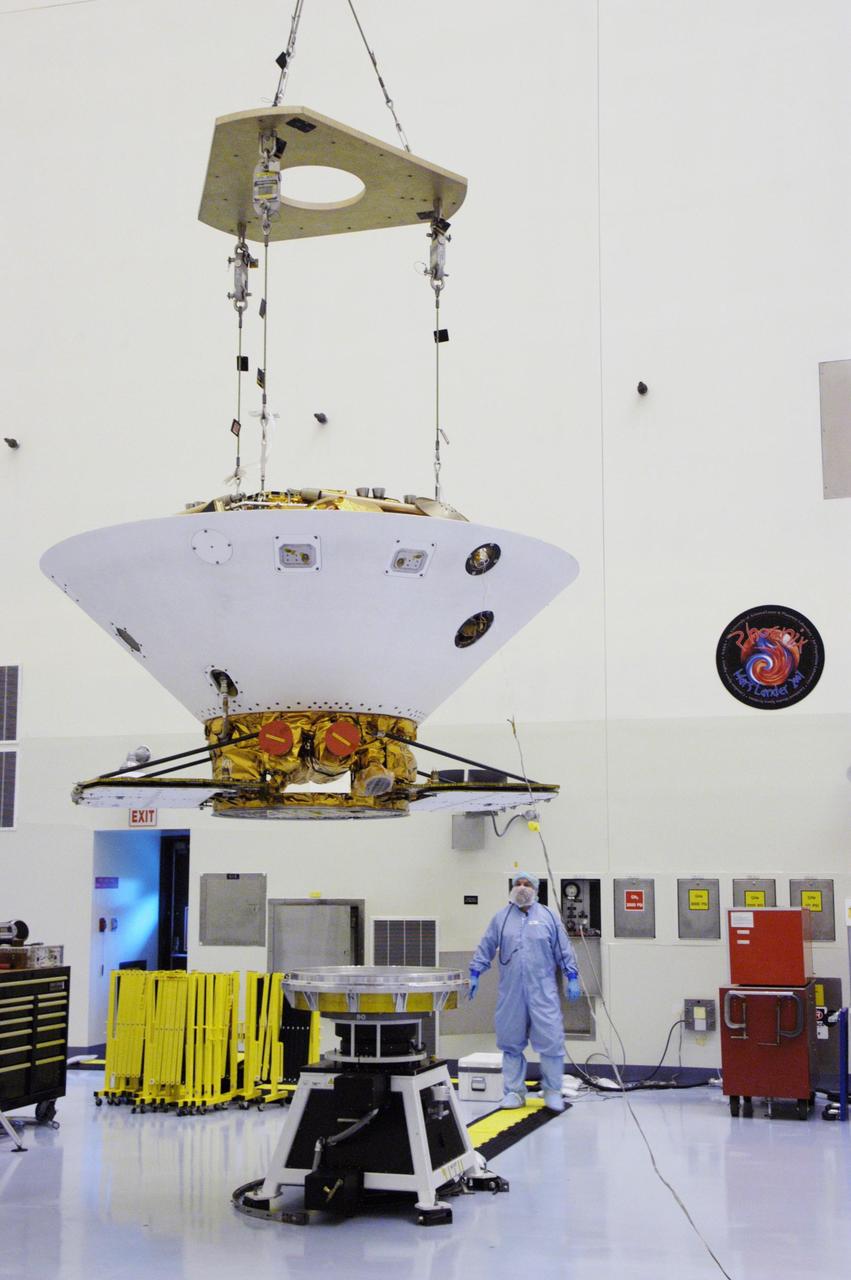
KENNEDY SPACE CENTER, FLA. -- An overhead crane lowers the backshell with the Phoenix Mars Lander inside toward a spin table for spin testing in the Payload Hazardous Servicing Facility. The Phoenix mission is the first project in NASA's first openly competed program of Mars Scout missions. Phoenix will land in icy soils near the north polar permanent ice cap of Mars and explore the history of the water in these soils and any associated rocks, while monitoring polar climate. Landing is planned in May 2008 on arctic ground where a mission currently in orbit, Mars Odyssey, has detected high concentrations of ice just beneath the top layer of soil. It will serve as NASA's first exploration of a potential modern habitat on Mars and open the door to a renewed search for carbon-bearing compounds, last attempted with NASA’s Viking missions in the 1970s. A stereo color camera and a weather station will study the surrounding environment while the other instruments check excavated soil samples for water, organic chemicals and conditions that could indicate whether the site was ever hospitable to life. Microscopes can reveal features as small as one one-thousandth the width of a human hair. Launch of Phoenix aboard a Delta II rocket is targeted for Aug. 3 from Cape Canaveral Air Force Station in Florida. Photo credit: NASA/George Shelton
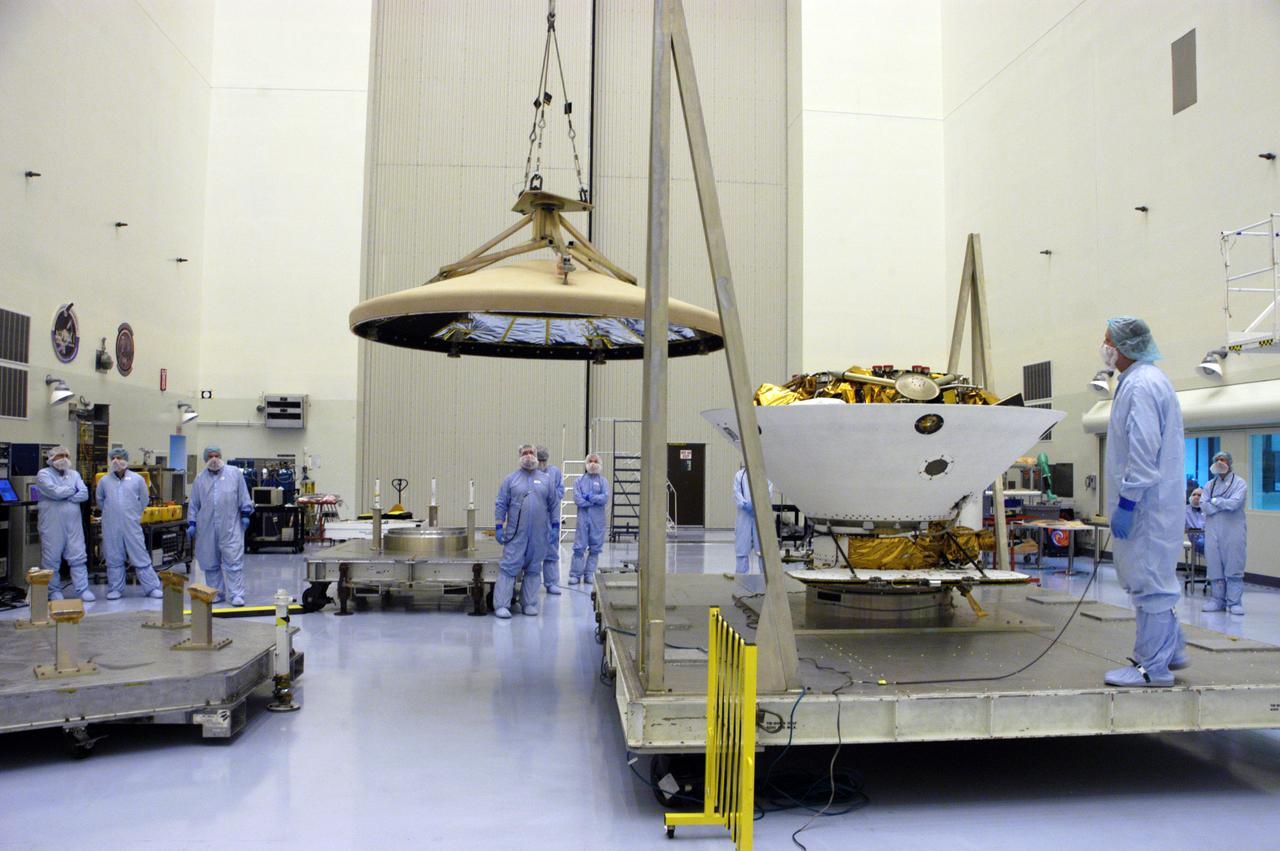
In the Payload Hazardous Servicing Facility, an overhead crane moves the heat shield toward a platform at left. The heat shield was removed from the Phoenix Mars Lander spacecraft at right. The Phoenix mission is the first project in NASA's first openly competed program of Mars Scout missions. Phoenix will land in icy soils near the north polar permanent ice cap of Mars and explore the history of the water in these soils and any associated rocks, while monitoring polar climate. Landing is planned in May 2008 on arctic ground where a mission currently in orbit, Mars Odyssey, has detected high concentrations of ice just beneath the top layer of soil. It will serve as NASA's first exploration of a potential modern habitat on Mars and open the door to a renewed search for carbon-bearing compounds, last attempted with NASA’s Viking missions in the 1970s. A stereo color camera and a weather station will study the surrounding environment while the other instruments check excavated soil samples for water, organic chemicals and conditions that could indicate whether the site was ever hospitable to life. Microscopes can reveal features as small as one one-thousandth the width of a human hair. Launch of Phoenix aboard a Delta II rocket is targeted for Aug. 3 from Cape Canaveral Air Force Station in Florida.
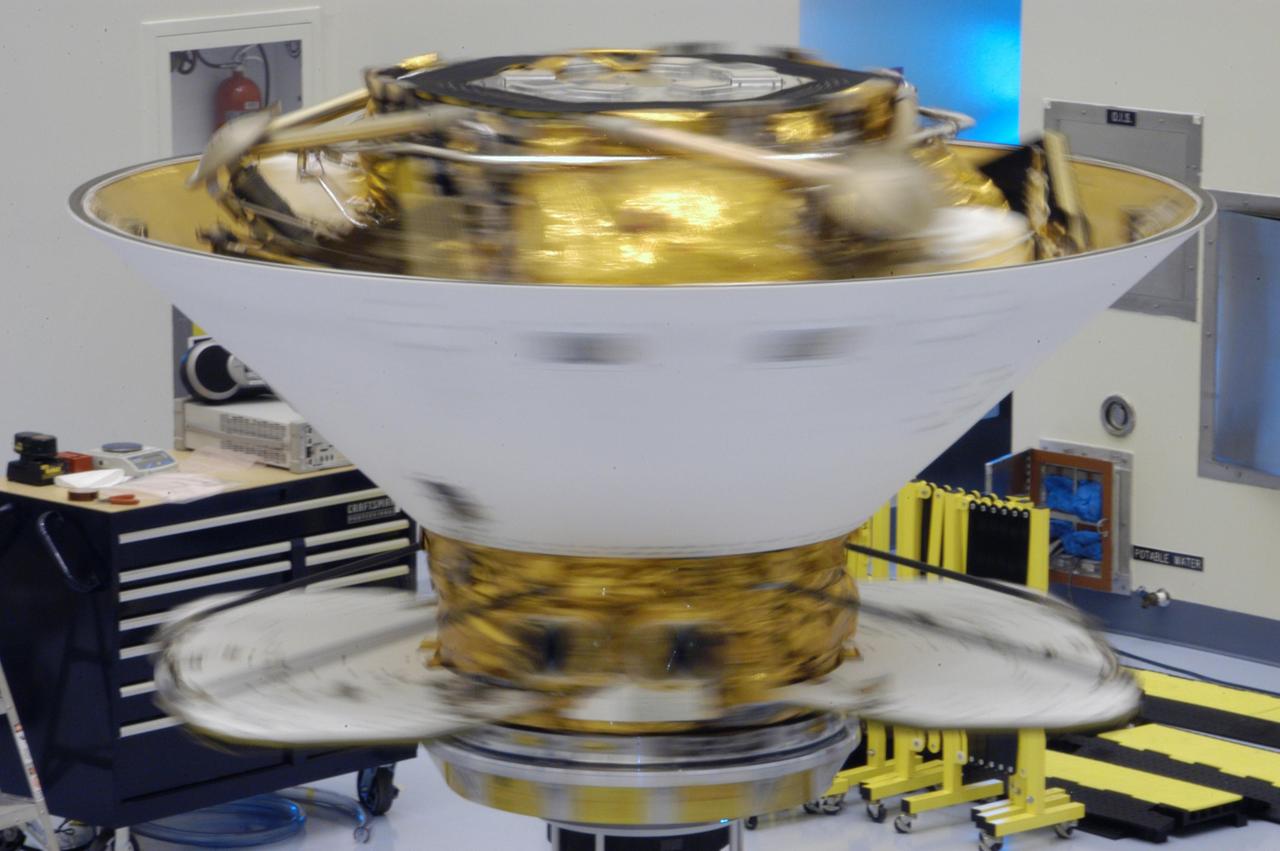
KENNEDY SPACE CENTER, FLA. -- This closeup shows the spin test of the Phoenix Mars Lander in the Payload Hazardous Servicing Facility. The Phoenix mission is the first project in NASA's first openly competed program of Mars Scout missions. Phoenix will land in icy soils near the north polar permanent ice cap of Mars and explore the history of the water in these soils and any associated rocks, while monitoring polar climate. Landing is planned in May 2008 on arctic ground where a mission currently in orbit, Mars Odyssey, has detected high concentrations of ice just beneath the top layer of soil. It will serve as NASA's first exploration of a potential modern habitat on Mars and open the door to a renewed search for carbon-bearing compounds, last attempted with NASA’s Viking missions in the 1970s. A stereo color camera and a weather station will study the surrounding environment while the other instruments check excavated soil samples for water, organic chemicals and conditions that could indicate whether the site was ever hospitable to life. Microscopes can reveal features as small as one one-thousandth the width of a human hair. Launch of Phoenix aboard a Delta II rocket is targeted for Aug. 3 from Cape Canaveral Air Force Station in Florida. Photo credit: NASA/George Shelton
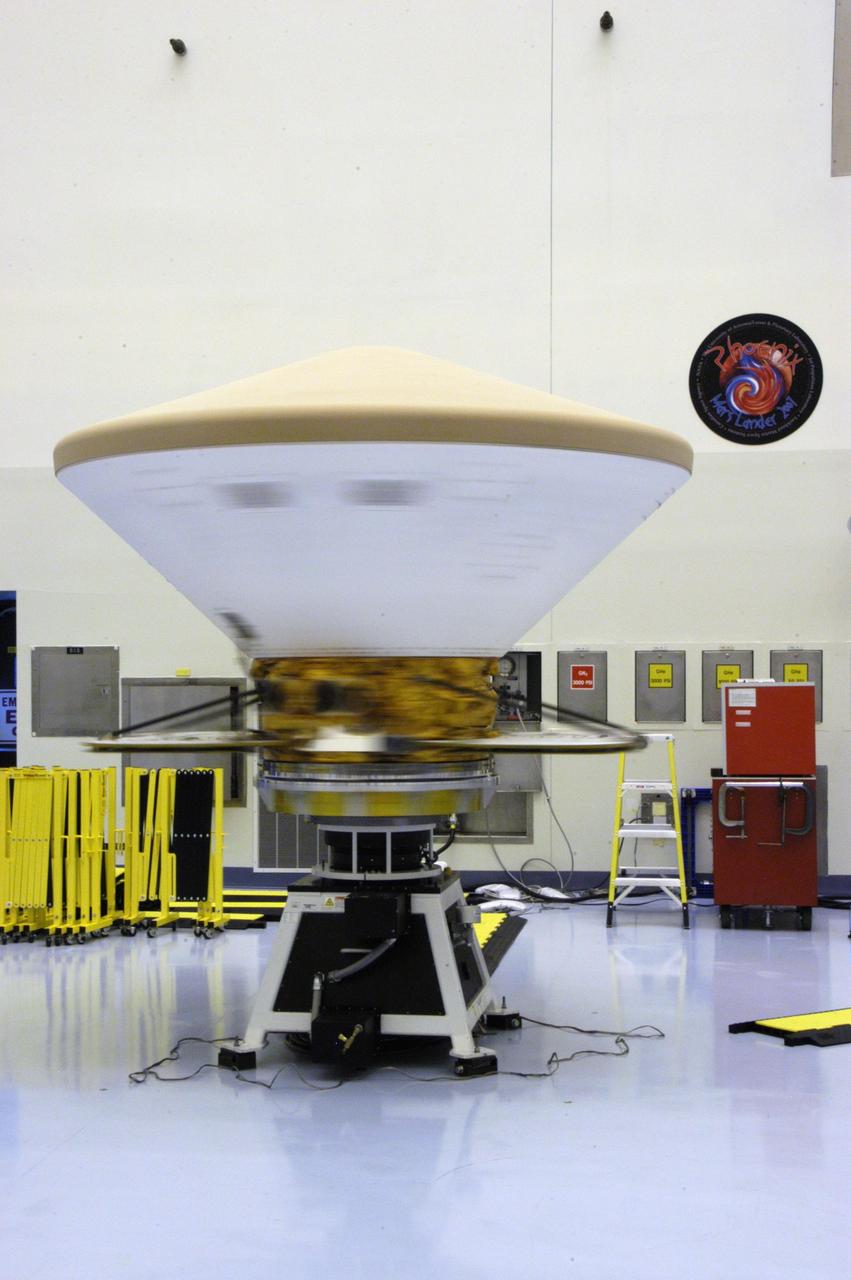
KENNEDY SPACE CENTER, FLA. -- In the Payload Hazardous Servicing Facility, the Phoenix Mars Lander spacecraft undergoes spin testing. The Phoenix mission is the first project in NASA's first openly competed program of Mars Scout missions. Phoenix will land in icy soils near the north polar permanent ice cap of Mars and explore the history of the water in these soils and any associated rocks, while monitoring polar climate. Landing is planned in May 2008 on arctic ground where a mission currently in orbit, Mars Odyssey, has detected high concentrations of ice just beneath the top layer of soil. It will serve as NASA's first exploration of a potential modern habitat on Mars and open the door to a renewed search for carbon-bearing compounds, last attempted with NASA's Viking missions in the 1970s. A stereo color camera and a weather station will study the surrounding environment while the other instruments check excavated soil samples for water, organic chemicals and conditions that could indicate whether the site was ever hospitable to life. Microscopes can reveal features as small as one one-thousandth the width of a human hair. Launch of Phoenix aboard a Delta II rocket is targeted for Aug. 3 from Cape Canaveral Air Force Station in Florida. Photo credit: NASA/George Shelton
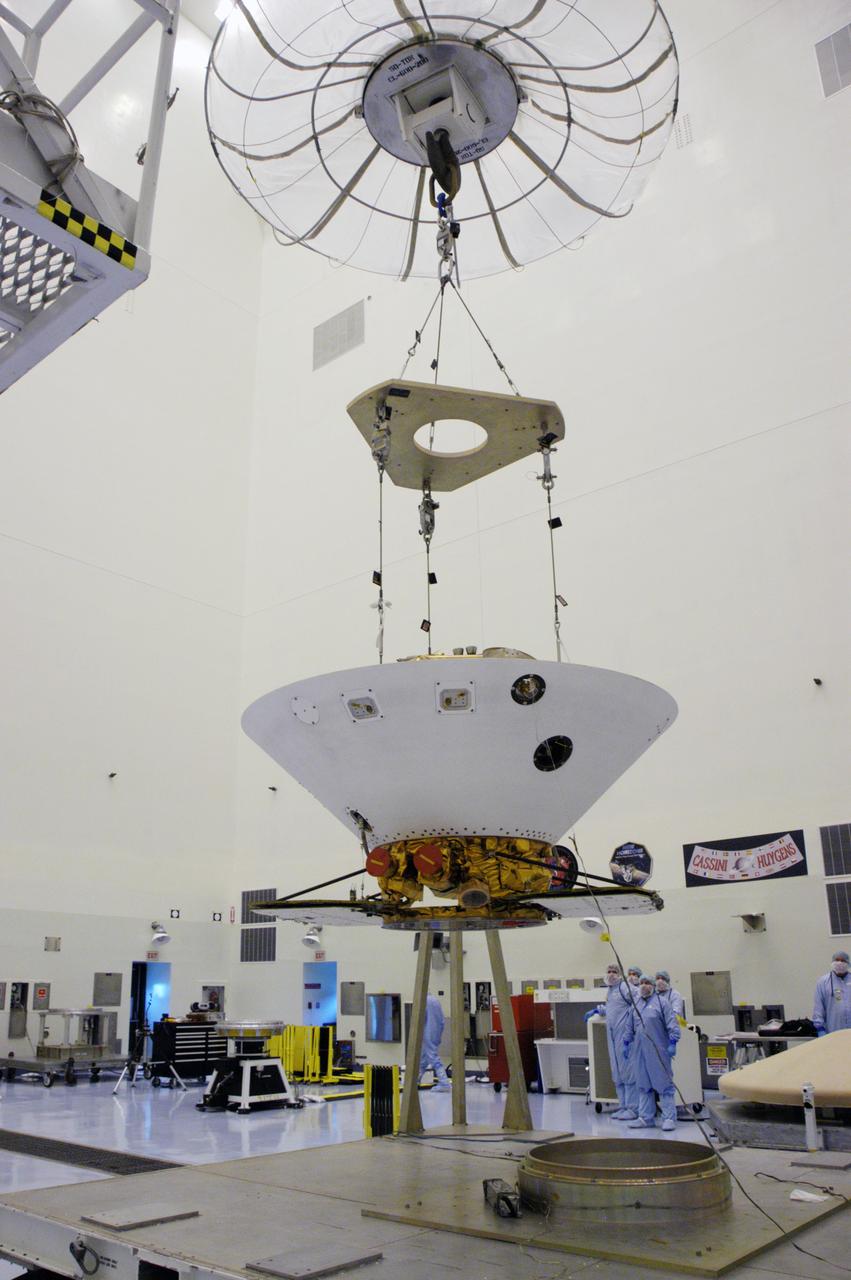
An overhead crane lifts the backshell with the Phoenix Mars Lander inside off its work stand in the Payload Hazardous Servicing Facility. The spacecraft is being moved to a spin table (back left) for spin testing. The Phoenix mission is the first project in NASA's first openly competed program of Mars Scout missions. Phoenix will land in icy soils near the north polar permanent ice cap of Mars and explore the history of the water in these soils and any associated rocks, while monitoring polar climate. Landing is planned in May 2008 on arctic ground where a mission currently in orbit, Mars Odyssey, has detected high concentrations of ice just beneath the top layer of soil. It will serve as NASA's first exploration of a potential modern habitat on Mars and open the door to a renewed search for carbon-bearing compounds, last attempted with NASA’s Viking missions in the 1970s. A stereo color camera and a weather station will study the surrounding environment while the other instruments check excavated soil samples for water, organic chemicals and conditions that could indicate whether the site was ever hospitable to life. Microscopes can reveal features as small as one one-thousandth the width of a human hair. Launch of Phoenix aboard a Delta II rocket is targeted for Aug. 3 from Cape Canaveral Air Force Station in Florida.
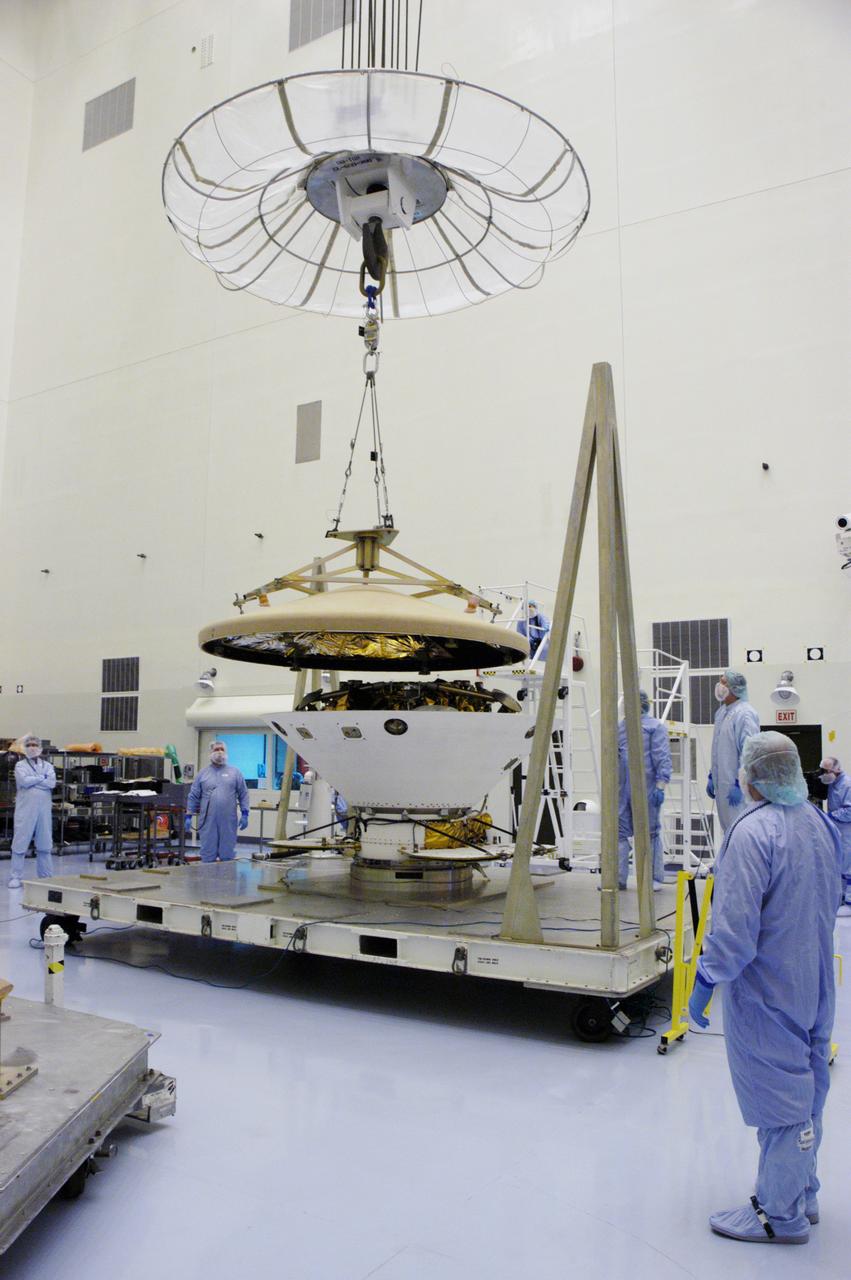
In the Payload Hazardous Servicing Facility, an overhead crane lifts the heat shield from the Phoenix Mars Lander spacecraft. The Phoenix mission is the first project in NASA's first openly competed program of Mars Scout missions. Phoenix will land in icy soils near the north polar permanent ice cap of Mars and explore the history of the water in these soils and any associated rocks, while monitoring polar climate. Landing is planned in May 2008 on arctic ground where a mission currently in orbit, Mars Odyssey, has detected high concentrations of ice just beneath the top layer of soil. It will serve as NASA's first exploration of a potential modern habitat on Mars and open the door to a renewed search for carbon-bearing compounds, last attempted with NASA’s Viking missions in the 1970s. A stereo color camera and a weather station will study the surrounding environment while the other instruments check excavated soil samples for water, organic chemicals and conditions that could indicate whether the site was ever hospitable to life. Microscopes can reveal features as small as one one-thousandth the width of a human hair. Launch of Phoenix aboard a Delta II rocket is targeted for Aug. 3 from Cape Canaveral Air Force Station in Florida.
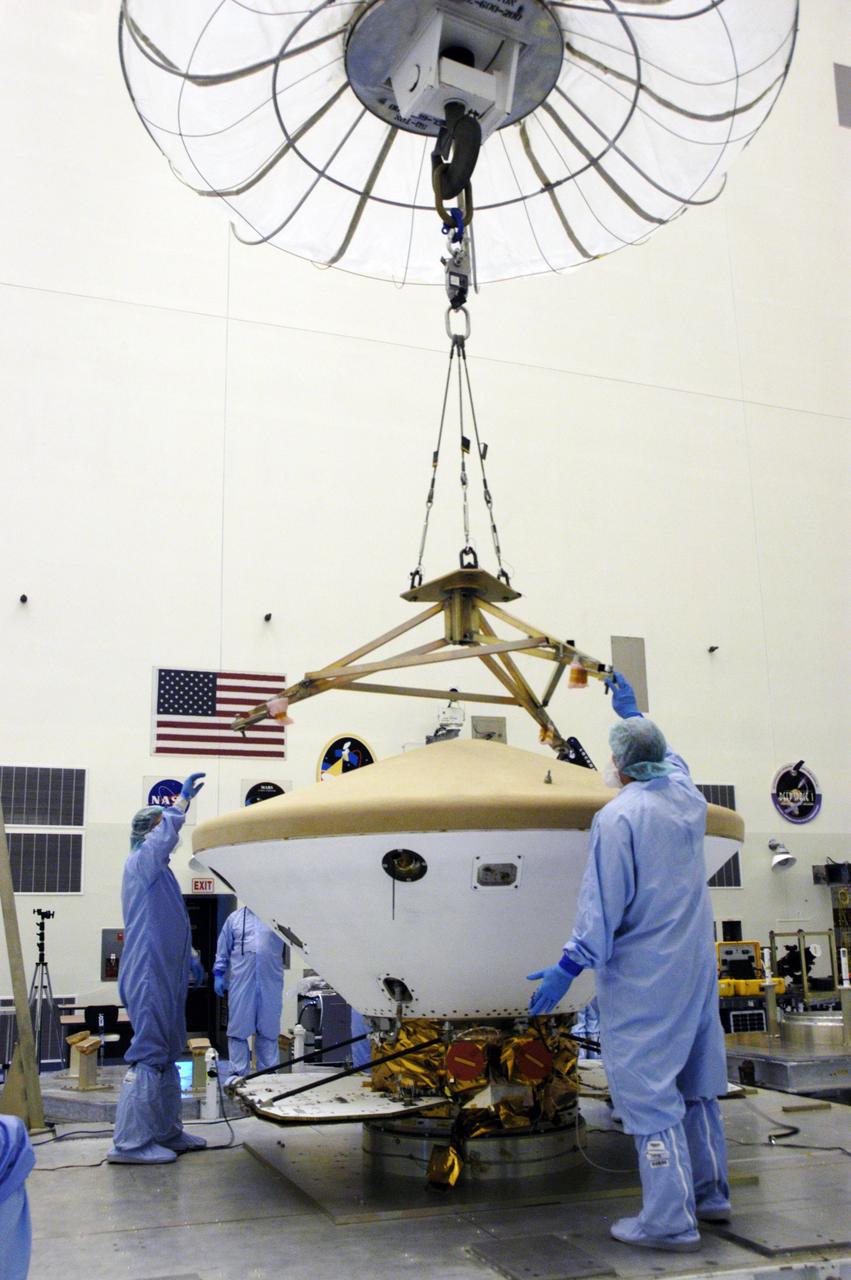
KENNEDY SPACE CENTER, FLA. -- In the Payload Hazardous Servicing Facility, technicians lower a crane over the Phoenix Mars Lander spacecraft. The crane will be used to remove the heat shield from around the Phoenix. The Phoenix mission is the first project in NASA's first openly competed program of Mars Scout missions. Phoenix will land in icy soils near the north polar permanent ice cap of Mars and explore the history of the water in these soils and any associated rocks, while monitoring polar climate. Landing is planned in May 2008 on arctic ground where a mission currently in orbit, Mars Odyssey, has detected high concentrations of ice just beneath the top layer of soil. It will serve as NASA's first exploration of a potential modern habitat on Mars and open the door to a renewed search for carbon-bearing compounds, last attempted with NASA’s Viking missions in the 1970s. A stereo color camera and a weather station will study the surrounding environment while the other instruments check excavated soil samples for water, organic chemicals and conditions that could indicate whether the site was ever hospitable to life. Microscopes can reveal features as small as one one-thousandth the width of a human hair. Launch of Phoenix aboard a Delta II rocket is targeted for Aug. 3 from Cape Canaveral Air Force Station in Florida. Photo credit: NASA/George Shelton
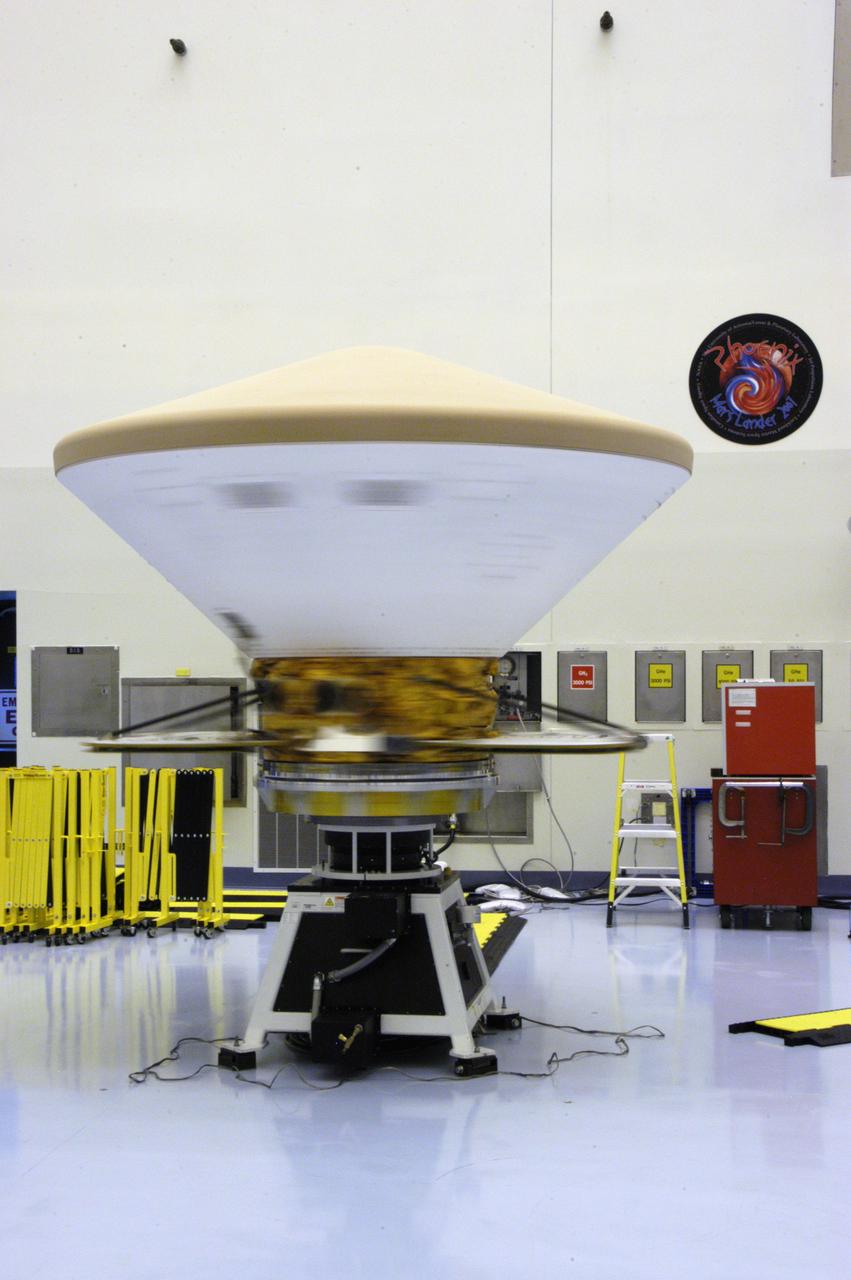
In the Payload Hazardous Servicing Facility, the Phoenix Mars Lander spacecraft undergoes spin testing. The Phoenix mission is the first project in NASA's first openly competed program of Mars Scout missions. Phoenix will land in icy soils near the north polar permanent ice cap of Mars and explore the history of the water in these soils and any associated rocks, while monitoring polar climate. Landing is planned in May 2008 on arctic ground where a mission currently in orbit, Mars Odyssey, has detected high concentrations of ice just beneath the top layer of soil. It will serve as NASA's first exploration of a potential modern habitat on Mars and open the door to a renewed search for carbon-bearing compounds, last attempted with NASA's Viking missions in the 1970s. A stereo color camera and a weather station will study the surrounding environment while the other instruments check excavated soil samples for water, organic chemicals and conditions that could indicate whether the site was ever hospitable to life. Microscopes can reveal features as small as one one-thousandth the width of a human hair. Launch of Phoenix aboard a Delta II rocket is targeted for Aug. 3 from Cape Canaveral Air Force Station in Florida.
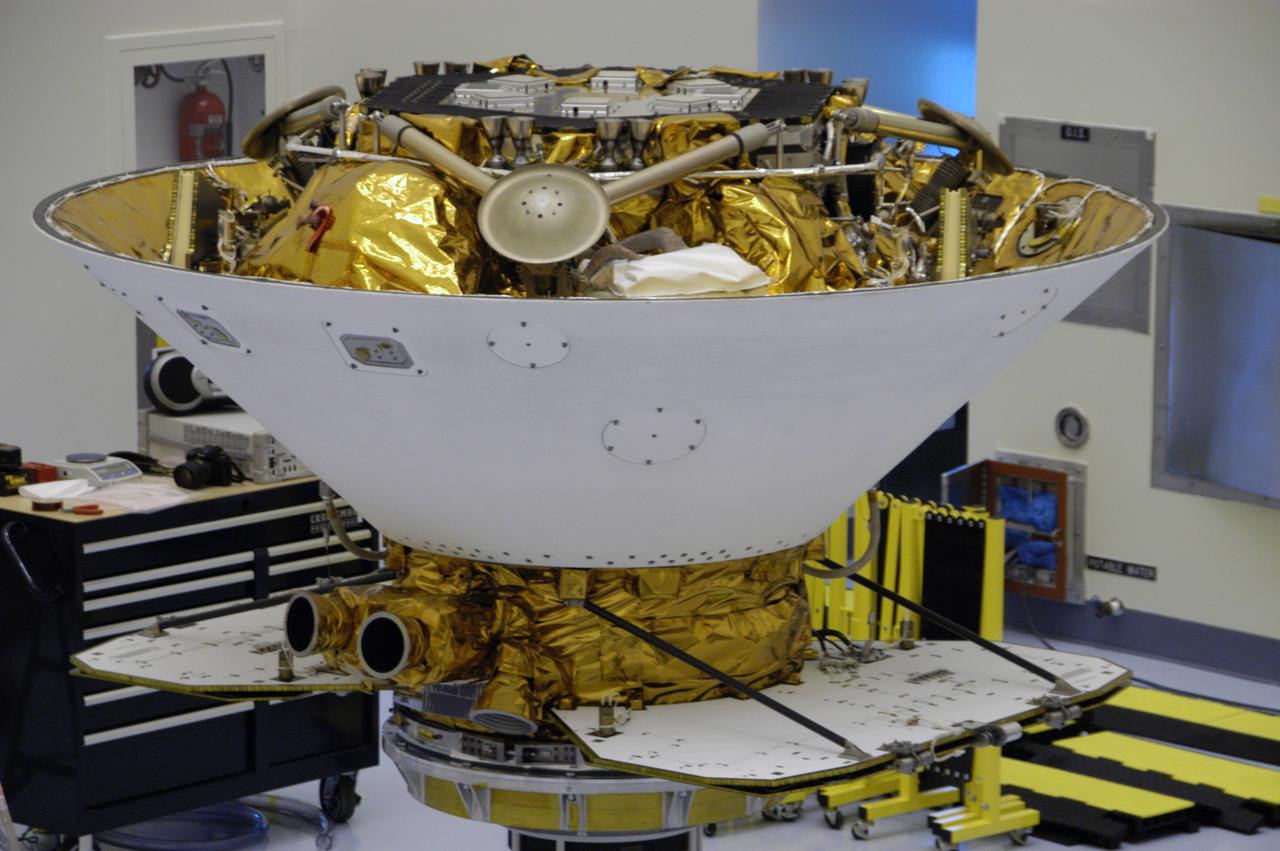
This closeup shows the Phoenix Mars Lander spacecraft nestled inside the backshell. The spacecraft is ready for spin testing on the spin table to which it is attached in the Payload Hazardous Servicing Facility. The Phoenix mission is the first project in NASA's first openly competed program of Mars Scout missions. Phoenix will land in icy soils near the north polar permanent ice cap of Mars and explore the history of the water in these soils and any associated rocks, while monitoring polar climate. Landing is planned in May 2008 on arctic ground where a mission currently in orbit, Mars Odyssey, has detected high concentrations of ice just beneath the top layer of soil. It will serve as NASA's first exploration of a potential modern habitat on Mars and open the door to a renewed search for carbon-bearing compounds, last attempted with NASA’s Viking missions in the 1970s. A stereo color camera and a weather station will study the surrounding environment while the other instruments check excavated soil samples for water, organic chemicals and conditions that could indicate whether the site was ever hospitable to life. Microscopes can reveal features as small as one one-thousandth the width of a human hair. Launch of Phoenix aboard a Delta II rocket is targeted for Aug. 3 from Cape Canaveral Air Force Station in Florida.
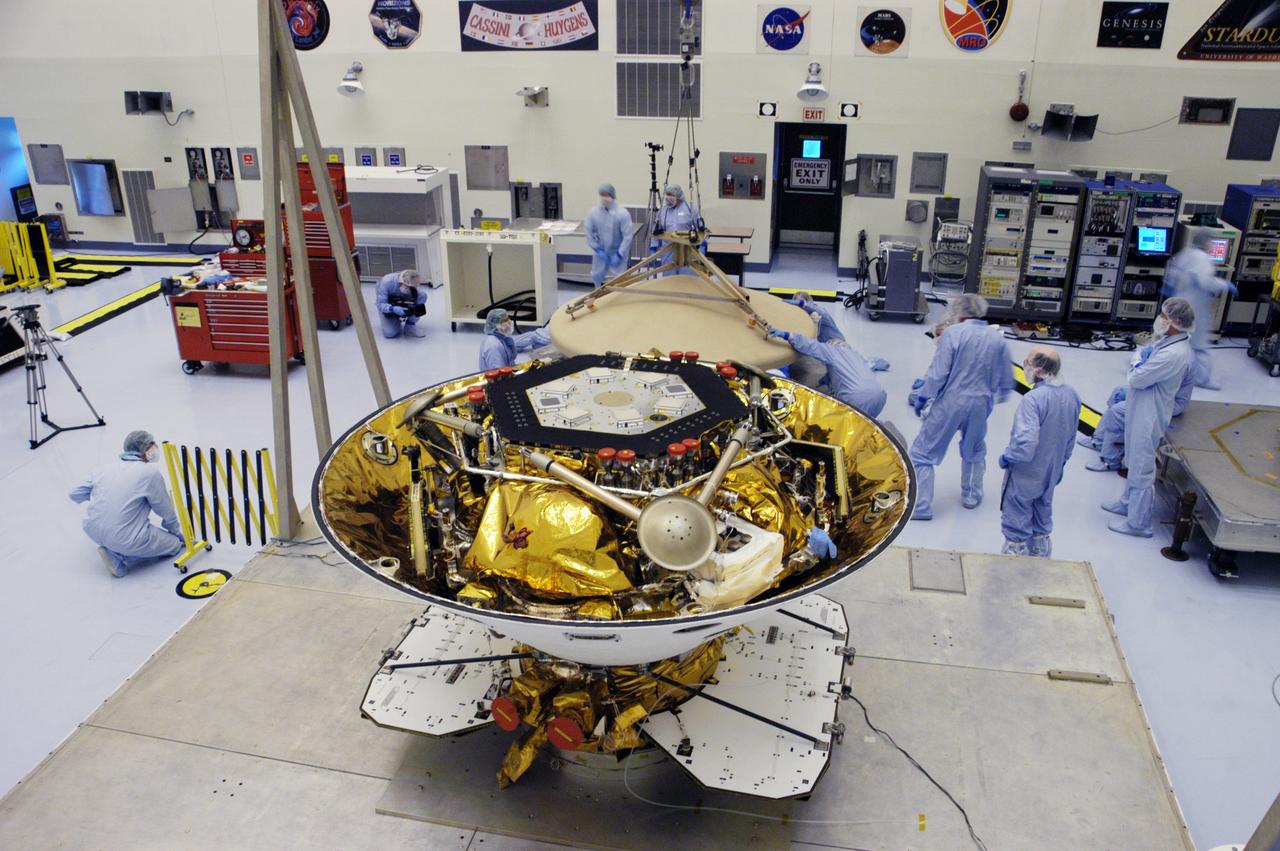
In the Payload Hazardous Servicing Facility, the Phoenix Mars Lander (foreground) can be seen inside the backshell. In the background, workers are helping place the heat shield, just removed from the Phoenix, onto a platform. The Phoenix mission is the first project in NASA's first openly competed program of Mars Scout missions. Phoenix will land in icy soils near the north polar permanent ice cap of Mars and explore the history of the water in these soils and any associated rocks, while monitoring polar climate. Landing is planned in May 2008 on arctic ground where a mission currently in orbit, Mars Odyssey, has detected high concentrations of ice just beneath the top layer of soil. It will serve as NASA's first exploration of a potential modern habitat on Mars and open the door to a renewed search for carbon-bearing compounds, last attempted with NASA’s Viking missions in the 1970s. A stereo color camera and a weather station will study the surrounding environment while the other instruments check excavated soil samples for water, organic chemicals and conditions that could indicate whether the site was ever hospitable to life. Microscopes can reveal features as small as one one-thousandth the width of a human hair. Launch of Phoenix aboard a Delta II rocket is targeted for Aug. 3 from Cape Canaveral Air Force Station in Florida.
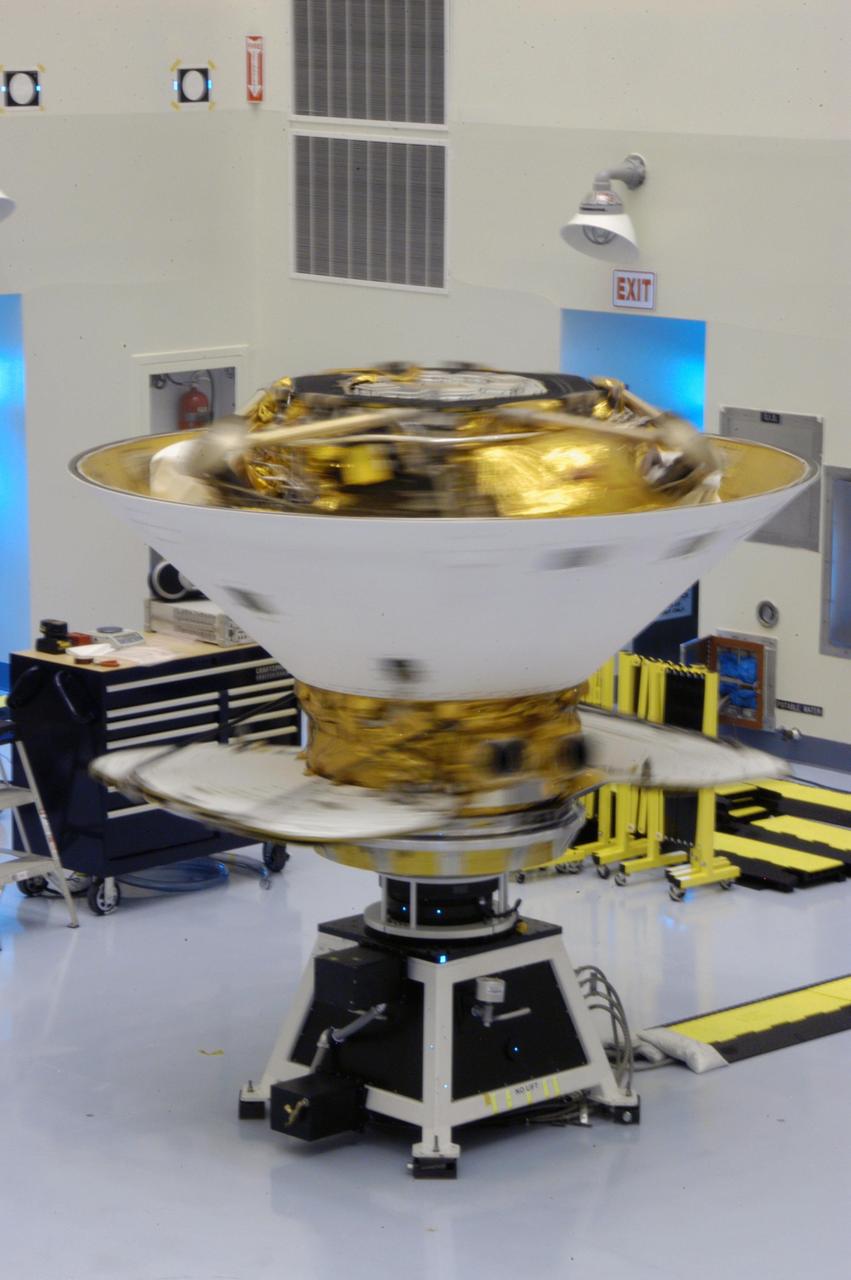
KENNEDY SPACE CENTER, FLA. -- In the Payload Hazardous Servicing Facility, the Phoenix Mars Lander spacecraft undergoes spin testing. The Phoenix mission is the first project in NASA's first openly competed program of Mars Scout missions. Phoenix will land in icy soils near the north polar permanent ice cap of Mars and explore the history of the water in these soils and any associated rocks, while monitoring polar climate. Landing is planned in May 2008 on arctic ground where a mission currently in orbit, Mars Odyssey, has detected high concentrations of ice just beneath the top layer of soil. It will serve as NASA's first exploration of a potential modern habitat on Mars and open the door to a renewed search for carbon-bearing compounds, last attempted with NASA’s Viking missions in the 1970s. A stereo color camera and a weather station will study the surrounding environment while the other instruments check excavated soil samples for water, organic chemicals and conditions that could indicate whether the site was ever hospitable to life. Microscopes can reveal features as small as one one-thousandth the width of a human hair. Launch of Phoenix aboard a Delta II rocket is targeted for Aug. 3 from Cape Canaveral Air Force Station in Florida. Photo credit: NASA/George Shelton
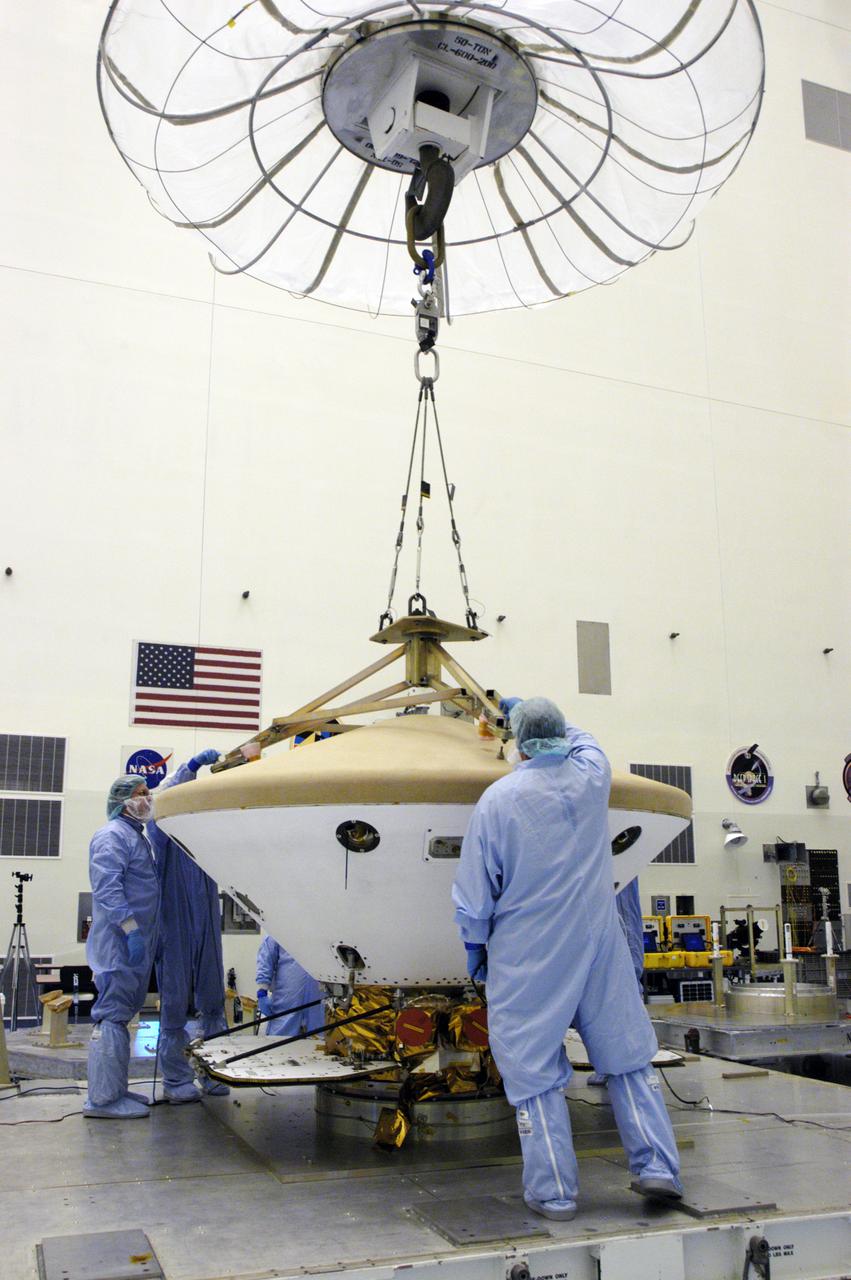
In the Payload Hazardous Servicing Facility, technicians attach a crane to the Phoenix Mars Lander spacecraft. The crane will be used to remove the heat shield from around the Phoenix. The Phoenix mission is the first project in NASA's first openly competed program of Mars Scout missions. Phoenix will land in icy soils near the north polar permanent ice cap of Mars and explore the history of the water in these soils and any associated rocks, while monitoring polar climate. Landing is planned in May 2008 on arctic ground where a mission currently in orbit, Mars Odyssey, has detected high concentrations of ice just beneath the top layer of soil. It will serve as NASA's first exploration of a potential modern habitat on Mars and open the door to a renewed search for carbon-bearing compounds, last attempted with NASA’s Viking missions in the 1970s. A stereo color camera and a weather station will study the surrounding environment while the other instruments check excavated soil samples for water, organic chemicals and conditions that could indicate whether the site was ever hospitable to life. Microscopes can reveal features as small as one one-thousandth the width of a human hair. Launch of Phoenix aboard a Delta II rocket is targeted for Aug. 3 from Cape Canaveral Air Force Station in Florida.
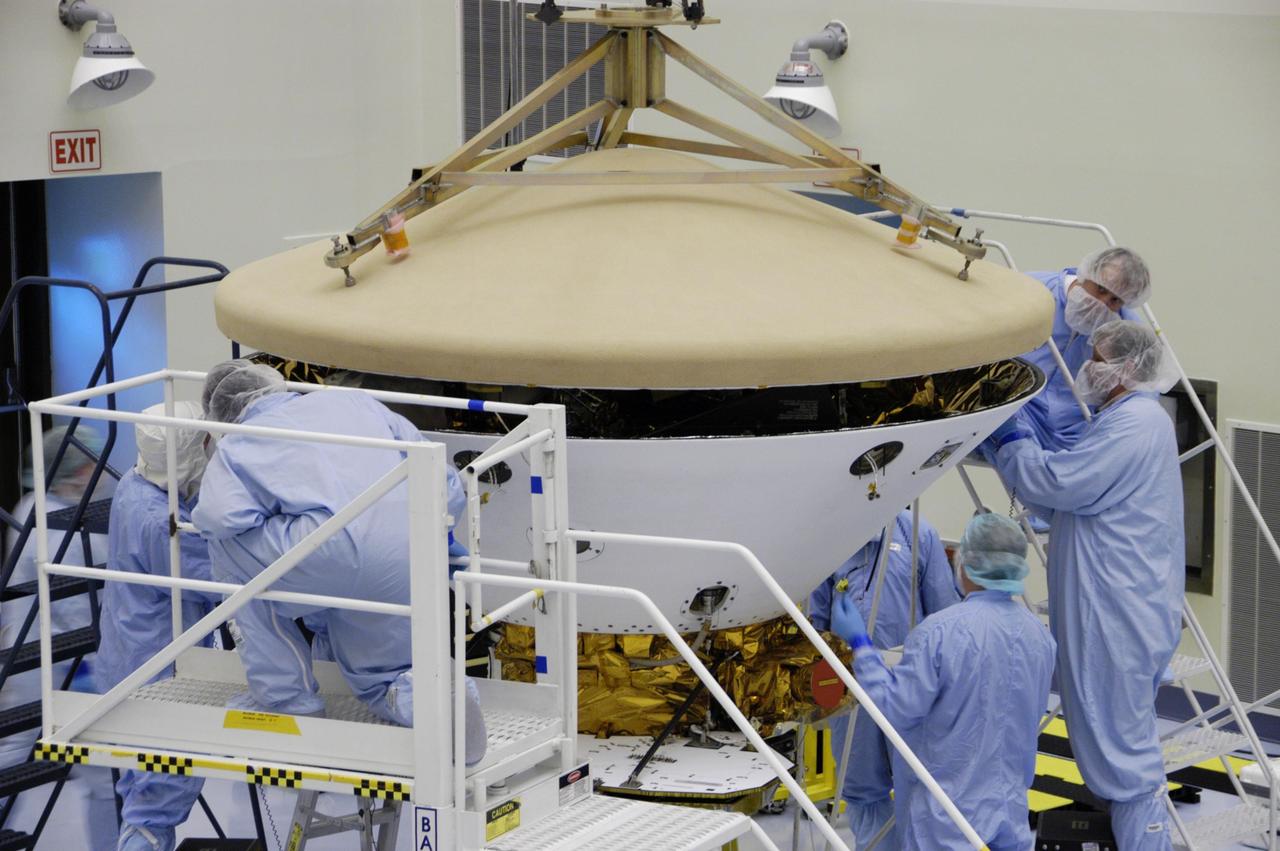
KENNEDY SPACE CENTER, FLA. -- In the Payload Hazardous Servicing Facility, technicians prepare to install the heat shield on the Phoenix Mars Lander spacecraft. The Phoenix mission is the first project in NASA's first openly competed program of Mars Scout missions. Phoenix will land in icy soils near the north polar permanent ice cap of Mars and explore the history of the water in these soils and any associated rocks, while monitoring polar climate. Landing is planned in May 2008 on arctic ground where a mission currently in orbit, Mars Odyssey, has detected high concentrations of ice just beneath the top layer of soil. It will serve as NASA's first exploration of a potential modern habitat on Mars and open the door to a renewed search for carbon-bearing compounds, last attempted with NASA's Viking missions in the 1970s. A stereo color camera and a weather station will study the surrounding environment while the other instruments check excavated soil samples for water, organic chemicals and conditions that could indicate whether the site was ever hospitable to life. Microscopes can reveal features as small as one one-thousandth the width of a human hair. Launch of Phoenix aboard a Delta II rocket is targeted for Aug. 3 from Cape Canaveral Air Force Station in Florida. Photo credit: NASA/George Shelton
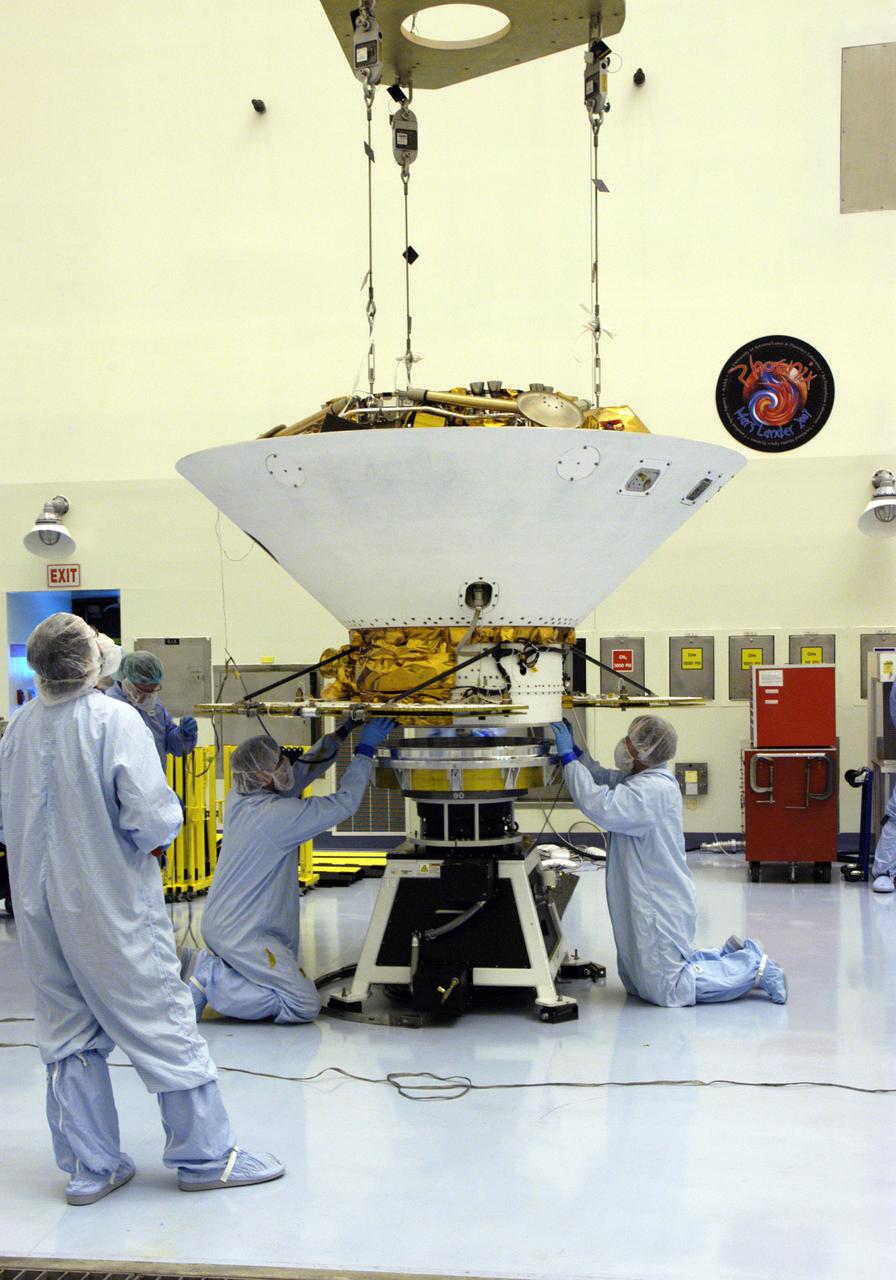
In the Payload Hazardous Servicing Facility, technicians secure the backshell with the Phoenix Mars Lander inside onto a spin table for spin testing. The Phoenix mission is the first project in NASA's first openly competed program of Mars Scout missions. Phoenix will land in icy soils near the north polar permanent ice cap of Mars and explore the history of the water in these soils and any associated rocks, while monitoring polar climate. Landing is planned in May 2008 on arctic ground where a mission currently in orbit, Mars Odyssey, has detected high concentrations of ice just beneath the top layer of soil. It will serve as NASA's first exploration of a potential modern habitat on Mars and open the door to a renewed search for carbon-bearing compounds, last attempted with NASA’s Viking missions in the 1970s. A stereo color camera and a weather station will study the surrounding environment while the other instruments check excavated soil samples for water, organic chemicals and conditions that could indicate whether the site was ever hospitable to life. Microscopes can reveal features as small as one one-thousandth the width of a human hair. Launch of Phoenix aboard a Delta II rocket is targeted for Aug. 3 from Cape Canaveral Air Force Station in Florida.
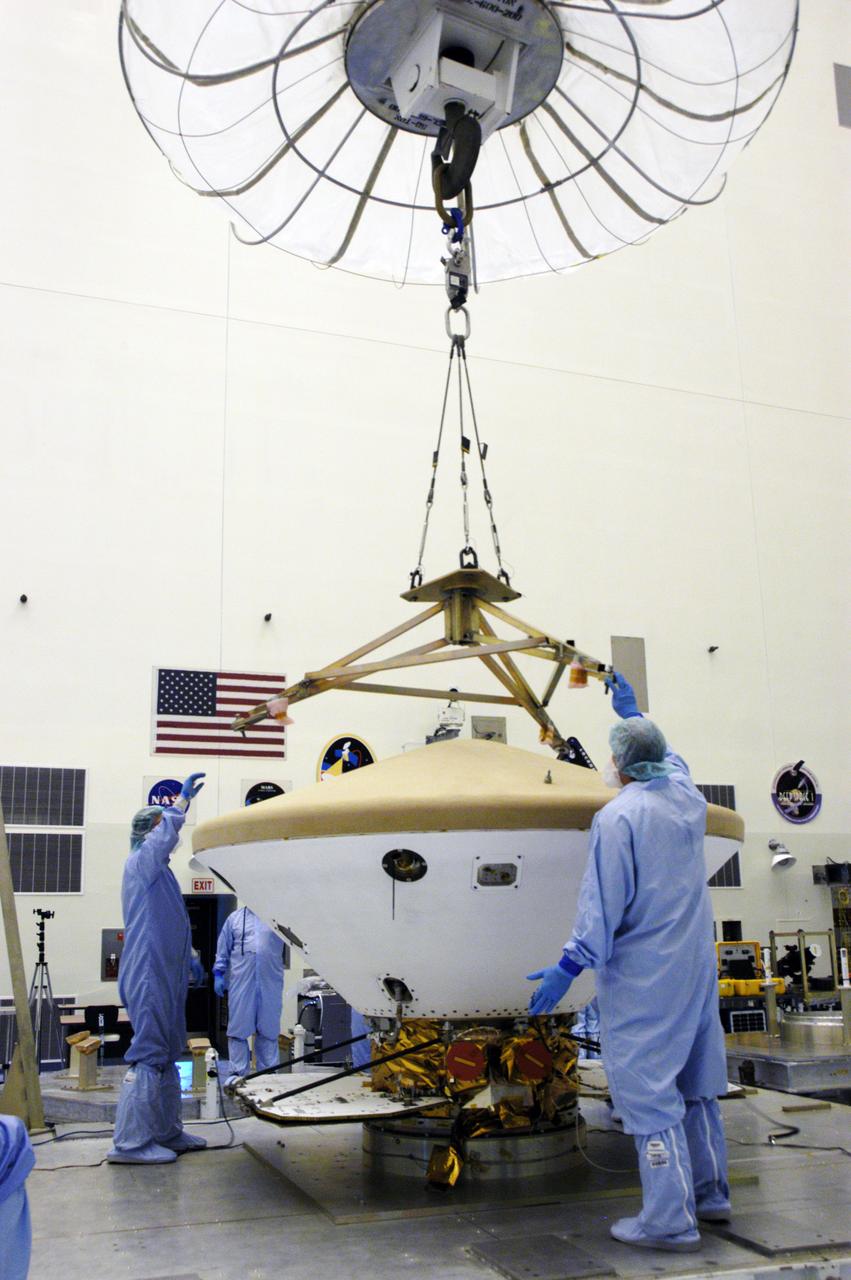
In the Payload Hazardous Servicing Facility, technicians lower a crane over the Phoenix Mars Lander spacecraft. The crane will be used to remove the heat shield from around the Phoenix. The Phoenix mission is the first project in NASA's first openly competed program of Mars Scout missions. Phoenix will land in icy soils near the north polar permanent ice cap of Mars and explore the history of the water in these soils and any associated rocks, while monitoring polar climate. Landing is planned in May 2008 on arctic ground where a mission currently in orbit, Mars Odyssey, has detected high concentrations of ice just beneath the top layer of soil. It will serve as NASA's first exploration of a potential modern habitat on Mars and open the door to a renewed search for carbon-bearing compounds, last attempted with NASA’s Viking missions in the 1970s. A stereo color camera and a weather station will study the surrounding environment while the other instruments check excavated soil samples for water, organic chemicals and conditions that could indicate whether the site was ever hospitable to life. Microscopes can reveal features as small as one one-thousandth the width of a human hair. Launch of Phoenix aboard a Delta II rocket is targeted for Aug. 3 from Cape Canaveral Air Force Station in Florida.
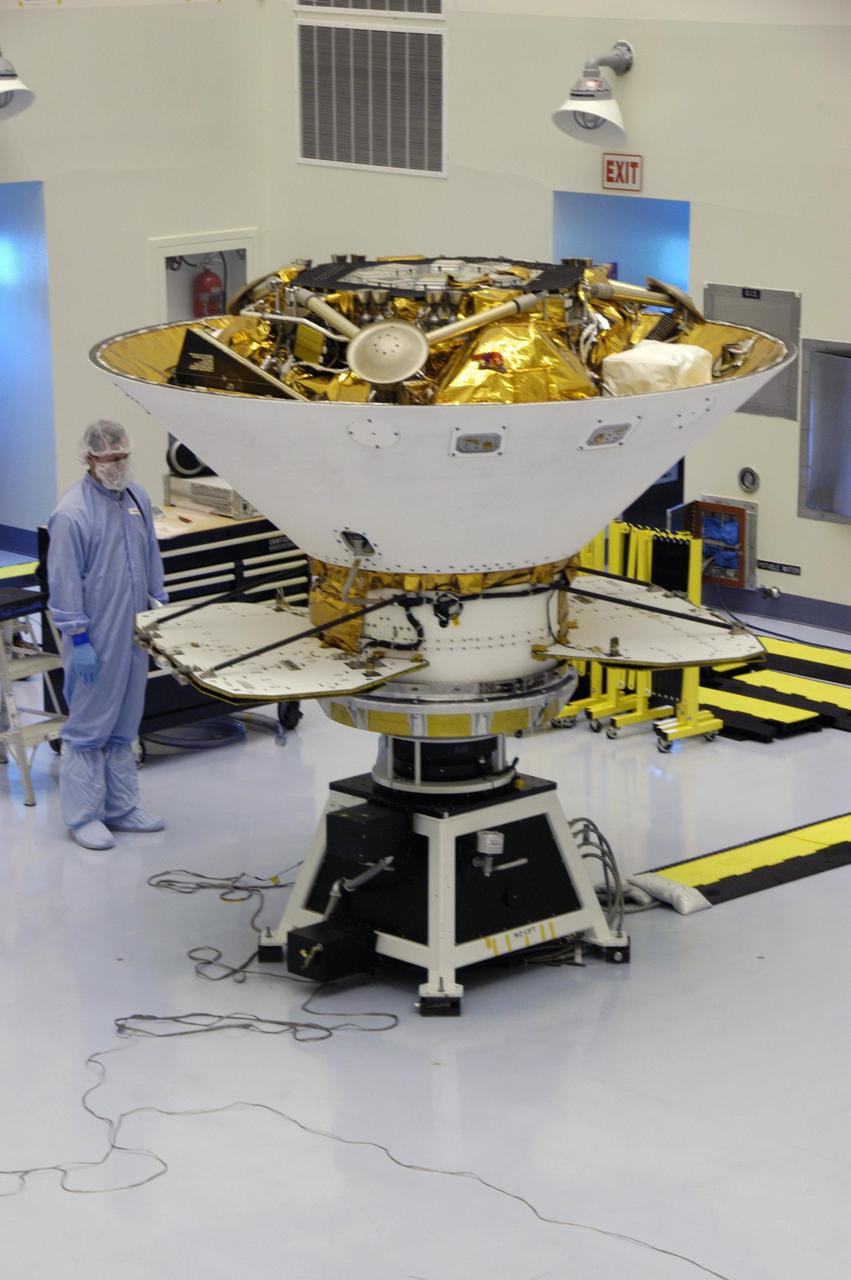
KENNEDY SPACE CENTER, FLA. -- Secured on the spin table, the backshell with the Phoenix Mars Lander inside is ready for spin testing in the Payload Hazardous Servicing Facility. The Phoenix mission is the first project in NASA's first openly competed program of Mars Scout missions. Phoenix will land in icy soils near the north polar permanent ice cap of Mars and explore the history of the water in these soils and any associated rocks, while monitoring polar climate. Landing is planned in May 2008 on arctic ground where a mission currently in orbit, Mars Odyssey, has detected high concentrations of ice just beneath the top layer of soil. It will serve as NASA's first exploration of a potential modern habitat on Mars and open the door to a renewed search for carbon-bearing compounds, last attempted with NASA’s Viking missions in the 1970s. A stereo color camera and a weather station will study the surrounding environment while the other instruments check excavated soil samples for water, organic chemicals and conditions that could indicate whether the site was ever hospitable to life. Microscopes can reveal features as small as one one-thousandth the width of a human hair. Launch of Phoenix aboard a Delta II rocket is targeted for Aug. 3 from Cape Canaveral Air Force Station in Florida. Photo credit: NASA/George Shelton
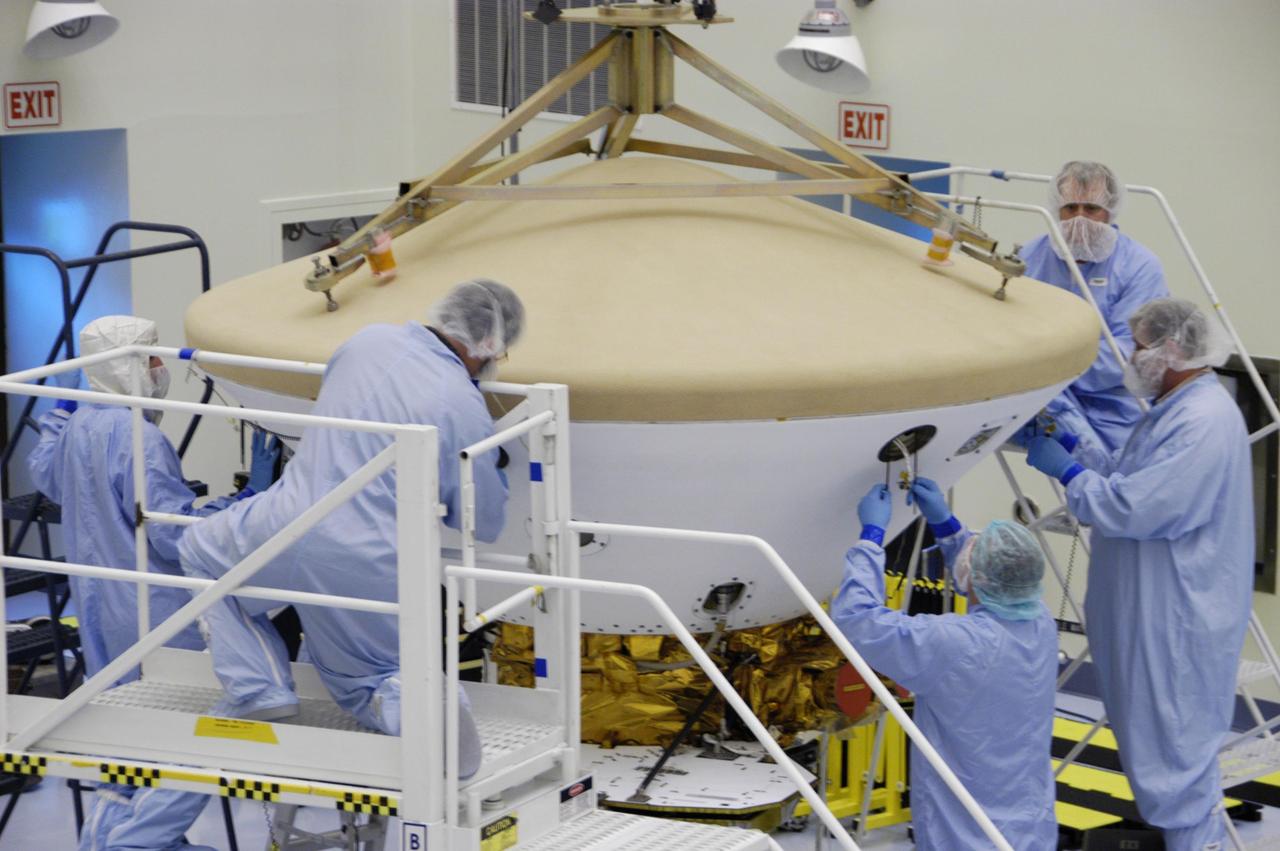
KENNEDY SPACE CENTER, FLA. -- In the Payload Hazardous Servicing Facility, technicians install the heat shield on the Phoenix Mars Lander spacecraft. The Phoenix mission is the first project in NASA's first openly competed program of Mars Scout missions. Phoenix will land in icy soils near the north polar permanent ice cap of Mars and explore the history of the water in these soils and any associated rocks, while monitoring polar climate. Landing is planned in May 2008 on arctic ground where a mission currently in orbit, Mars Odyssey, has detected high concentrations of ice just beneath the top layer of soil. It will serve as NASA's first exploration of a potential modern habitat on Mars and open the door to a renewed search for carbon-bearing compounds, last attempted with NASA's Viking missions in the 1970s. A stereo color camera and a weather station will study the surrounding environment while the other instruments check excavated soil samples for water, organic chemicals and conditions that could indicate whether the site was ever hospitable to life. Microscopes can reveal features as small as one one-thousandth the width of a human hair. Launch of Phoenix aboard a Delta II rocket is targeted for Aug. 3 from Cape Canaveral Air Force Station in Florida. Photo credit: NASA/George Shelton
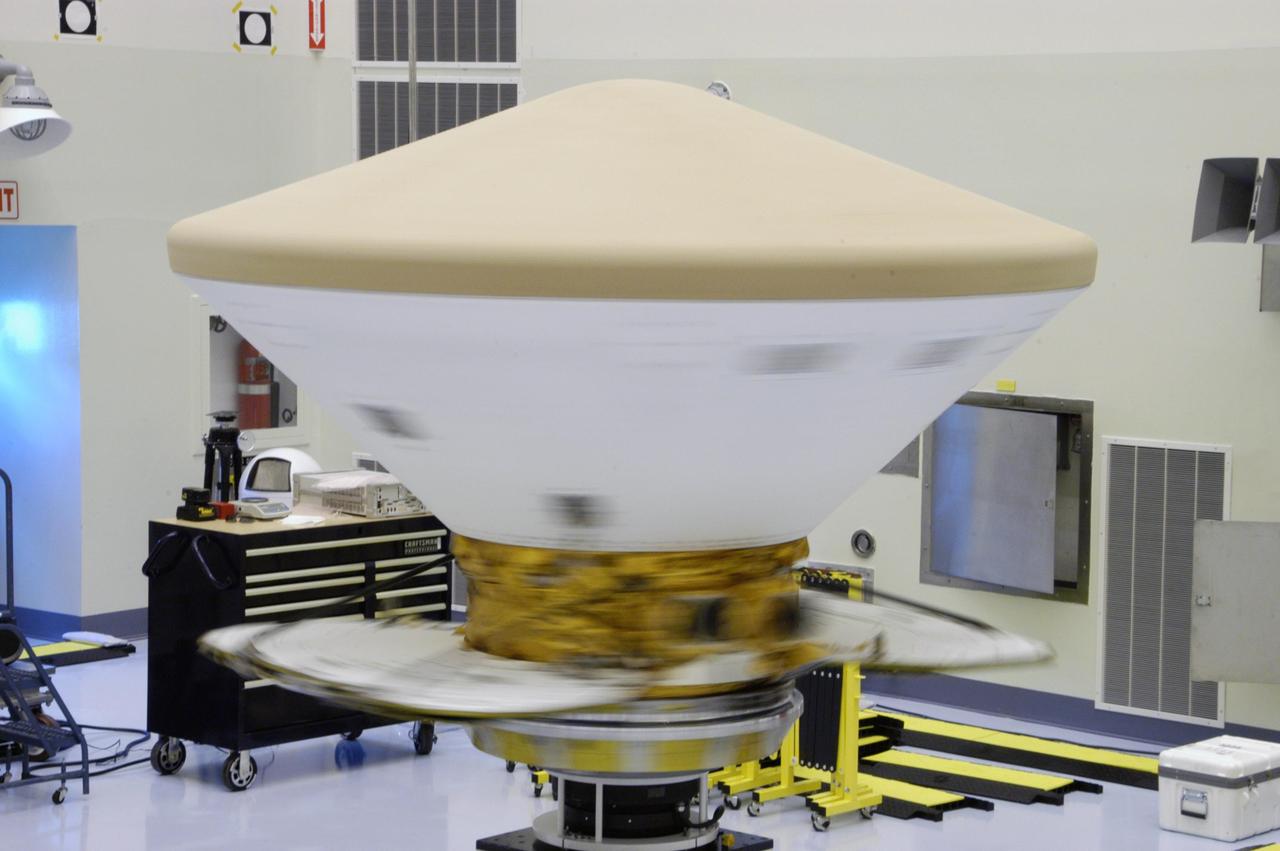
KENNEDY SPACE CENTER, FLA. -- In the Payload Hazardous Servicing Facility, the Phoenix Mars Lander spacecraft undergoes spin testing. The Phoenix mission is the first project in NASA's first openly competed program of Mars Scout missions. Phoenix will land in icy soils near the north polar permanent ice cap of Mars and explore the history of the water in these soils and any associated rocks, while monitoring polar climate. Landing is planned in May 2008 on arctic ground where a mission currently in orbit, Mars Odyssey, has detected high concentrations of ice just beneath the top layer of soil. It will serve as NASA's first exploration of a potential modern habitat on Mars and open the door to a renewed search for carbon-bearing compounds, last attempted with NASA's Viking missions in the 1970s. A stereo color camera and a weather station will study the surrounding environment while the other instruments check excavated soil samples for water, organic chemicals and conditions that could indicate whether the site was ever hospitable to life. Microscopes can reveal features as small as one one-thousandth the width of a human hair. Launch of Phoenix aboard a Delta II rocket is targeted for Aug. 3 from Cape Canaveral Air Force Station in Florida. Photo credit: NASA/George Shelton
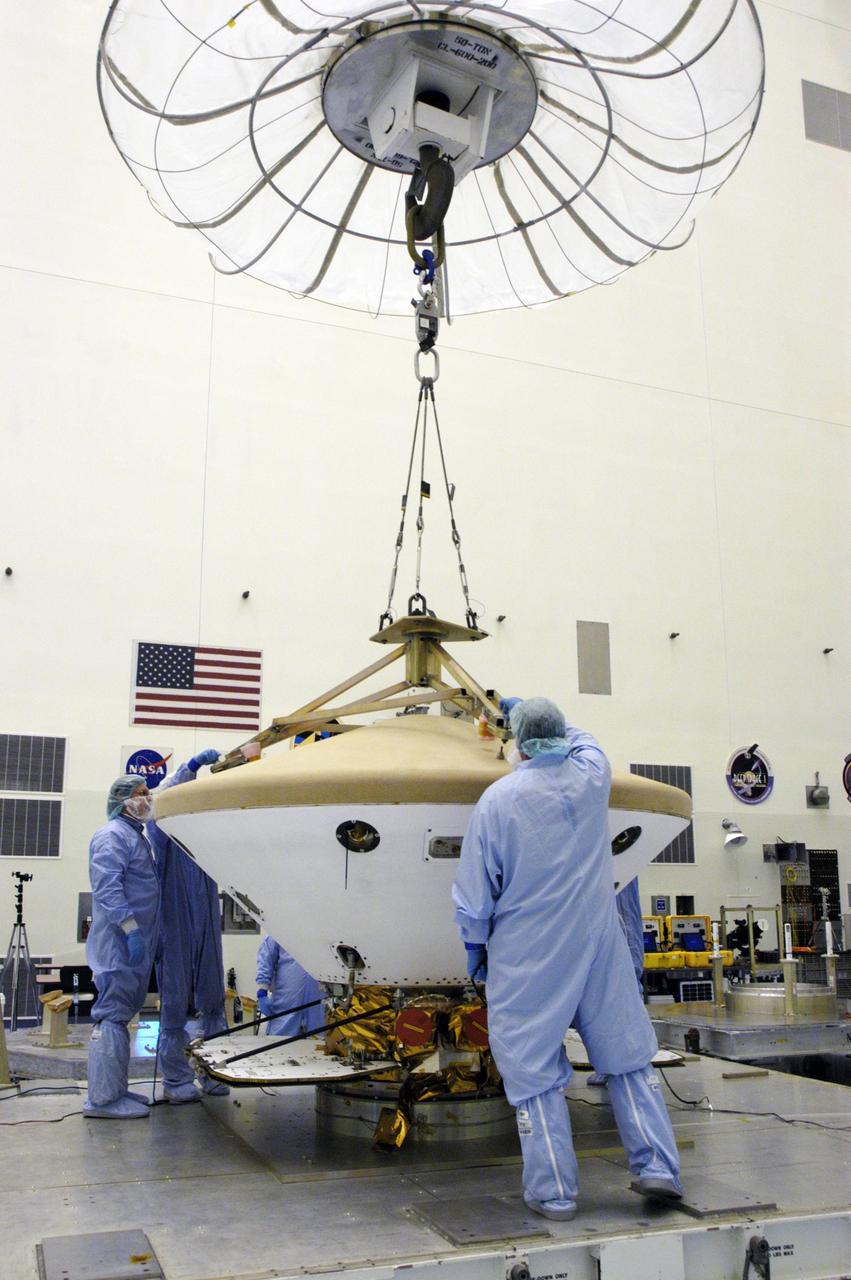
KENNEDY SPACE CENTER, FLA. -- In the Payload Hazardous Servicing Facility, technicians attach a crane to the Phoenix Mars Lander spacecraft. The crane will be used to remove the heat shield from around the Phoenix. The Phoenix mission is the first project in NASA's first openly competed program of Mars Scout missions. Phoenix will land in icy soils near the north polar permanent ice cap of Mars and explore the history of the water in these soils and any associated rocks, while monitoring polar climate. Landing is planned in May 2008 on arctic ground where a mission currently in orbit, Mars Odyssey, has detected high concentrations of ice just beneath the top layer of soil. It will serve as NASA's first exploration of a potential modern habitat on Mars and open the door to a renewed search for carbon-bearing compounds, last attempted with NASA’s Viking missions in the 1970s. A stereo color camera and a weather station will study the surrounding environment while the other instruments check excavated soil samples for water, organic chemicals and conditions that could indicate whether the site was ever hospitable to life. Microscopes can reveal features as small as one one-thousandth the width of a human hair. Launch of Phoenix aboard a Delta II rocket is targeted for Aug. 3 from Cape Canaveral Air Force Station in Florida. Photo credit: NASA/George Shelton
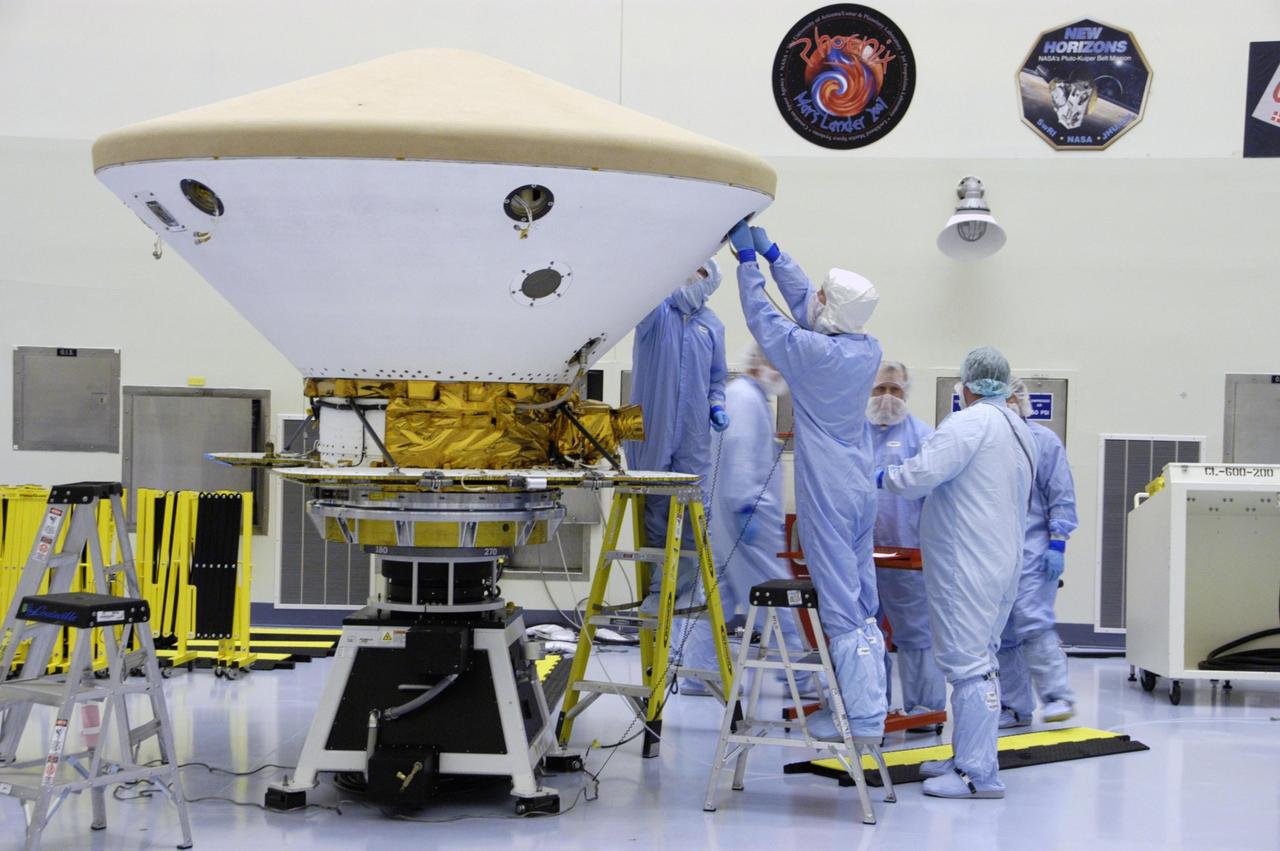
KENNEDY SPACE CENTER, FLA. -- In the Payload Hazardous Servicing Facility, technicians complete the installation of the heat shield on the Phoenix Mars Lander spacecraft. The Phoenix mission is the first project in NASA's first openly competed program of Mars Scout missions. Phoenix will land in icy soils near the north polar permanent ice cap of Mars and explore the history of the water in these soils and any associated rocks, while monitoring polar climate. Landing is planned in May 2008 on arctic ground where a mission currently in orbit, Mars Odyssey, has detected high concentrations of ice just beneath the top layer of soil. It will serve as NASA's first exploration of a potential modern habitat on Mars and open the door to a renewed search for carbon-bearing compounds, last attempted with NASA's Viking missions in the 1970s. A stereo color camera and a weather station will study the surrounding environment while the other instruments check excavated soil samples for water, organic chemicals and conditions that could indicate whether the site was ever hospitable to life. Microscopes can reveal features as small as one one-thousandth the width of a human hair. Launch of Phoenix aboard a Delta II rocket is targeted for Aug. 3 from Cape Canaveral Air Force Station in Florida. Photo credit: NASA/George Shelton
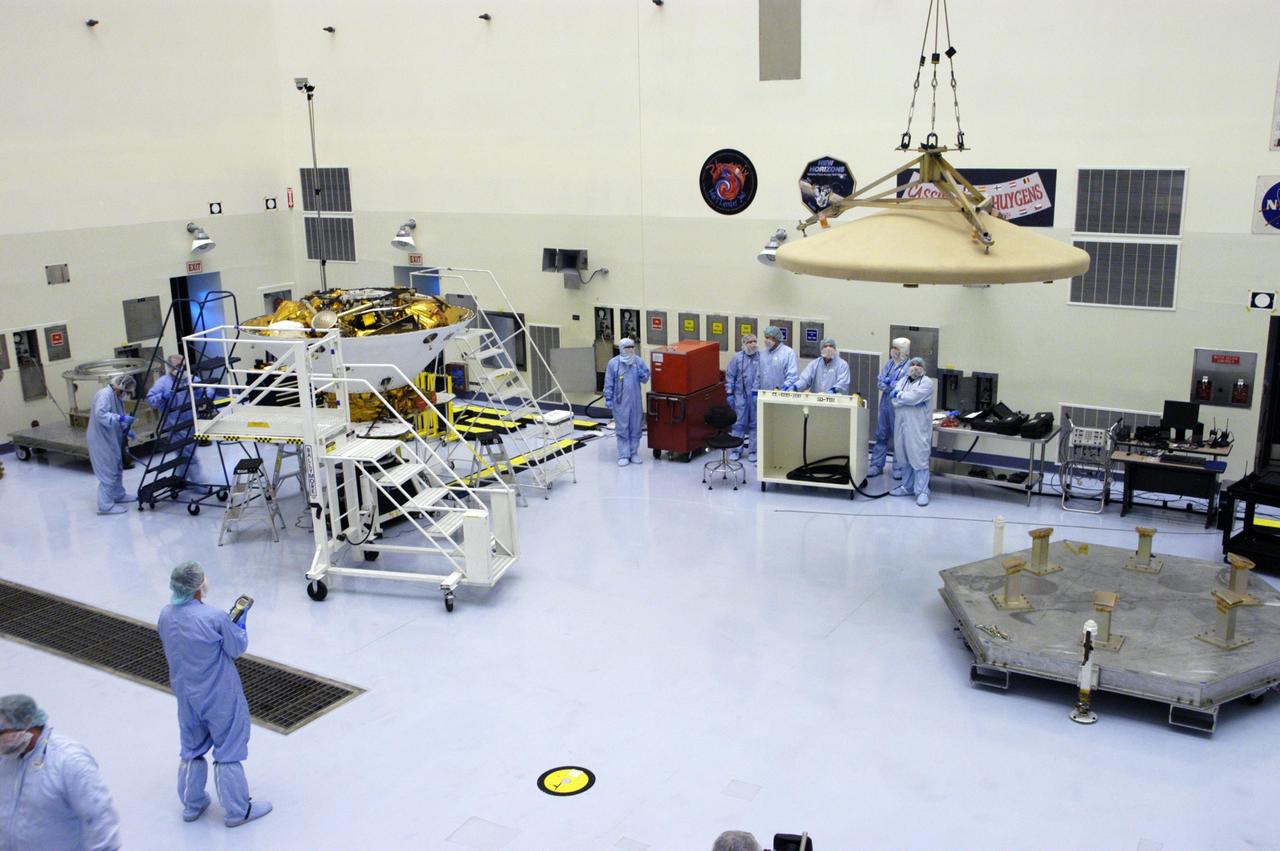
KENNEDY SPACE CENTER, FLA. -- In the Payload Hazardous Servicing Facility, the heat shield for the Phoenix Mars Lander is moved into position for installation on the spacecraft. The Phoenix mission is the first project in NASA's first openly competed program of Mars Scout missions. Phoenix will land in icy soils near the north polar permanent ice cap of Mars and explore the history of the water in these soils and any associated rocks, while monitoring polar climate. Landing is planned in May 2008 on arctic ground where a mission currently in orbit, Mars Odyssey, has detected high concentrations of ice just beneath the top layer of soil. It will serve as NASA's first exploration of a potential modern habitat on Mars and open the door to a renewed search for carbon-bearing compounds, last attempted with NASA's Viking missions in the 1970s. A stereo color camera and a weather station will study the surrounding environment while the other instruments check excavated soil samples for water, organic chemicals and conditions that could indicate whether the site was ever hospitable to life. Microscopes can reveal features as small as one one-thousandth the width of a human hair. Launch of Phoenix aboard a Delta II rocket is targeted for Aug. 3 from Cape Canaveral Air Force Station in Florida. Photo credit: NASA/George Shelton
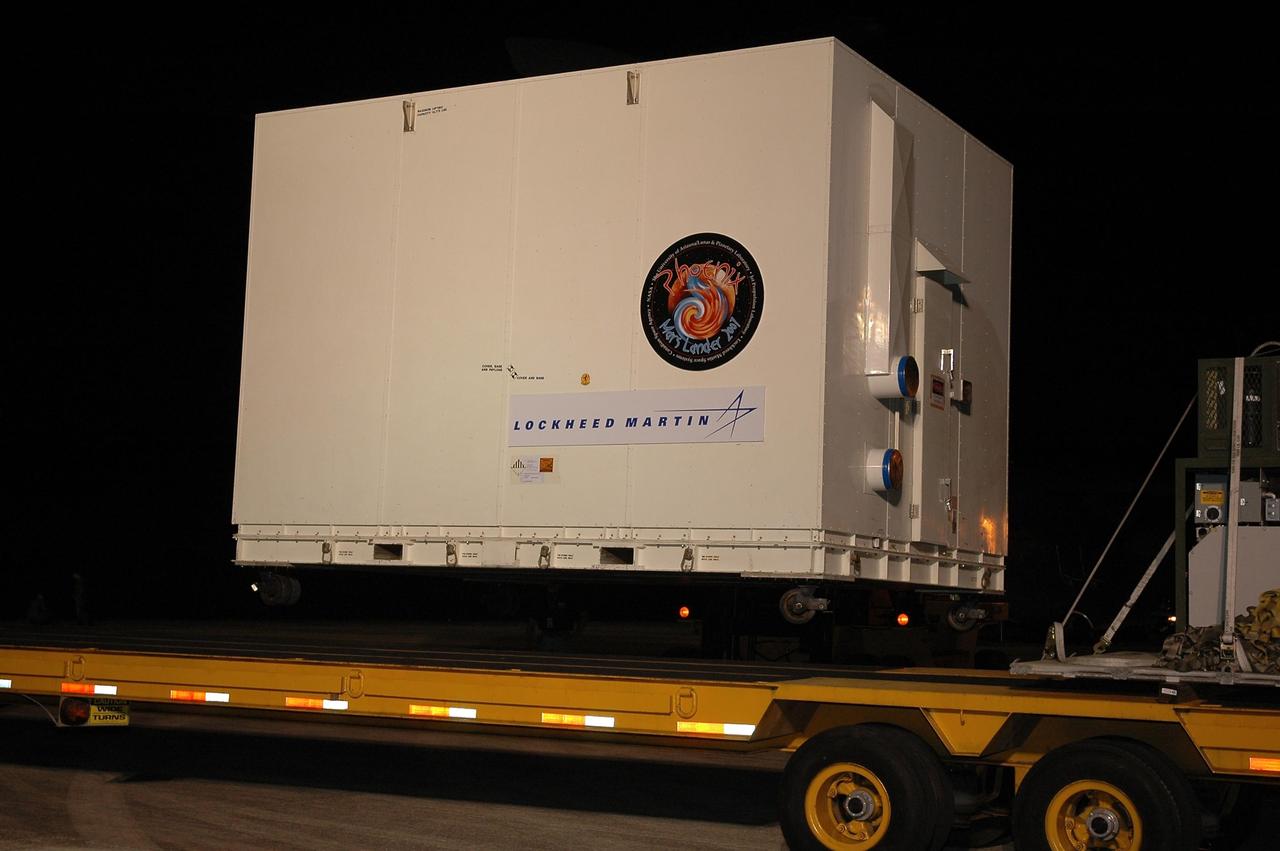
KENNEDY SPACE CENTER, FLA. -- After its arrival at Kennedy Space Center's Shuttle Landing Facility, the crated Phoenix spacecraft has been placed on a flat bed truck for transportation to the Payload Hazardous Servicing Facility. The Phoenix mission is the first project in NASA's first openly competed program of Mars Scout missions. Phoenix will land in icy soils near the north polar permanent ice cap of Mars and explore the history of the water in these soils and any associated rocks, while monitoring polar climate. Landing is planned in May 2008 on arctic ground where a mission currently in orbit, Mars Odyssey, has detected high concentrations of ice just beneath the top layer of soil. It will serve as NASA's first exploration of a potential modern habitat on Mars and open the door to a renewed search for carbon-bearing compounds, last attempted with NASA’s Viking missions in the 1970s. A stereo color camera and a weather station will study the surrounding environment while the other instruments check excavated soil samples for water, organic chemicals and conditions that could indicate whether the site was ever hospitable to life. Microscopes can reveal features as small as one one-thousandth the width of a human hair. Launch of Phoenix aboard a Delta II rocket is targeted for Aug. 3 from Cape Canaveral Air Force Station in Florida. Photo credit: NASA/Charisse Nahser
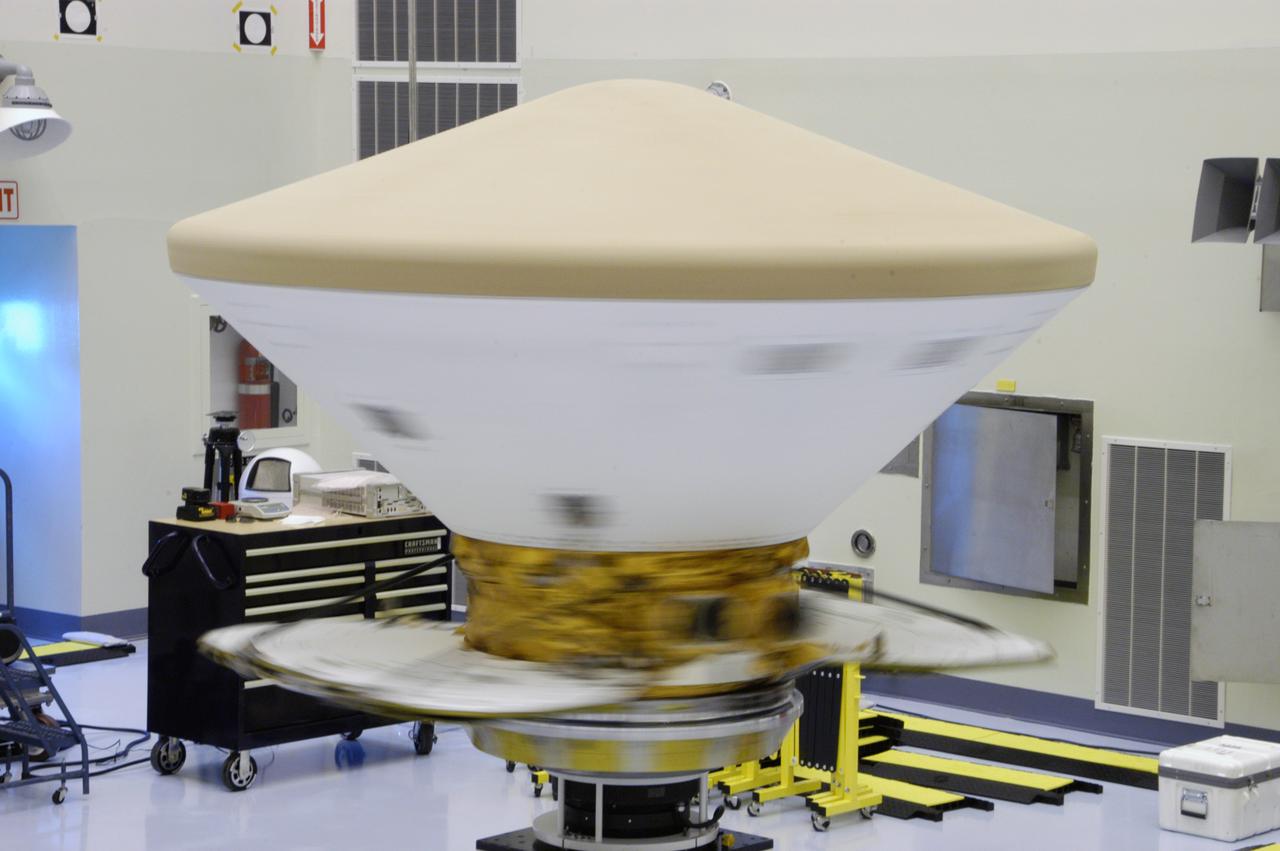
In the Payload Hazardous Servicing Facility, the Phoenix Mars Lander spacecraft undergoes spin testing. The Phoenix mission is the first project in NASA's first openly competed program of Mars Scout missions. Phoenix will land in icy soils near the north polar permanent ice cap of Mars and explore the history of the water in these soils and any associated rocks, while monitoring polar climate. Landing is planned in May 2008 on arctic ground where a mission currently in orbit, Mars Odyssey, has detected high concentrations of ice just beneath the top layer of soil. It will serve as NASA's first exploration of a potential modern habitat on Mars and open the door to a renewed search for carbon-bearing compounds, last attempted with NASA's Viking missions in the 1970s. A stereo color camera and a weather station will study the surrounding environment while the other instruments check excavated soil samples for water, organic chemicals and conditions that could indicate whether the site was ever hospitable to life. Microscopes can reveal features as small as one one-thousandth the width of a human hair. Launch of Phoenix aboard a Delta II rocket is targeted for Aug. 3 from Cape Canaveral Air Force Station in Florida.
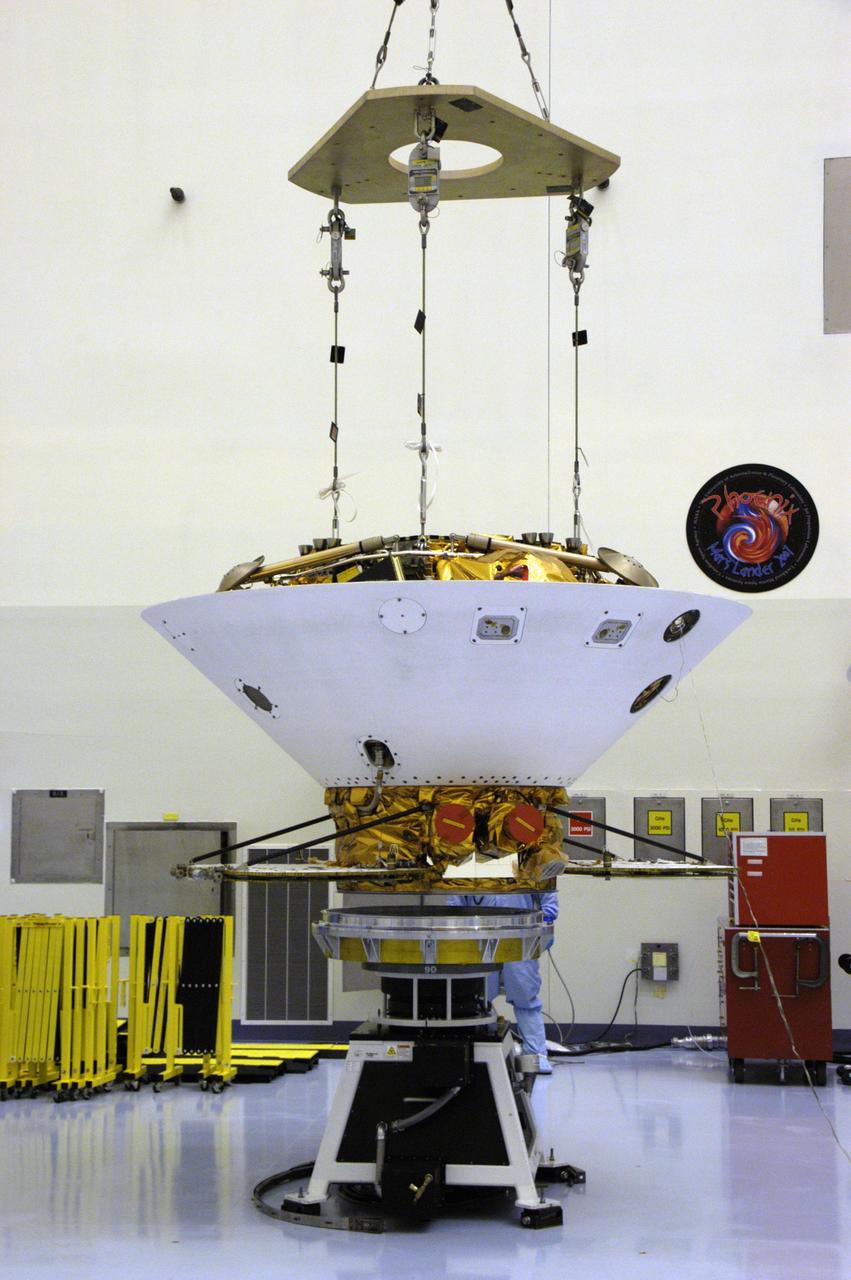
KENNEDY SPACE CENTER, FLA. -- An overhead crane lowers the backshell with the Phoenix Mars Lander inside onto a spin table for spin testing in the Payload Hazardous Servicing Facility. The Phoenix mission is the first project in NASA's first openly competed program of Mars Scout missions. Phoenix will land in icy soils near the north polar permanent ice cap of Mars and explore the history of the water in these soils and any associated rocks, while monitoring polar climate. Landing is planned in May 2008 on arctic ground where a mission currently in orbit, Mars Odyssey, has detected high concentrations of ice just beneath the top layer of soil. It will serve as NASA's first exploration of a potential modern habitat on Mars and open the door to a renewed search for carbon-bearing compounds, last attempted with NASA’s Viking missions in the 1970s. A stereo color camera and a weather station will study the surrounding environment while the other instruments check excavated soil samples for water, organic chemicals and conditions that could indicate whether the site was ever hospitable to life. Microscopes can reveal features as small as one one-thousandth the width of a human hair. Launch of Phoenix aboard a Delta II rocket is targeted for Aug. 3 from Cape Canaveral Air Force Station in Florida. Photo credit: NASA/George Shelton
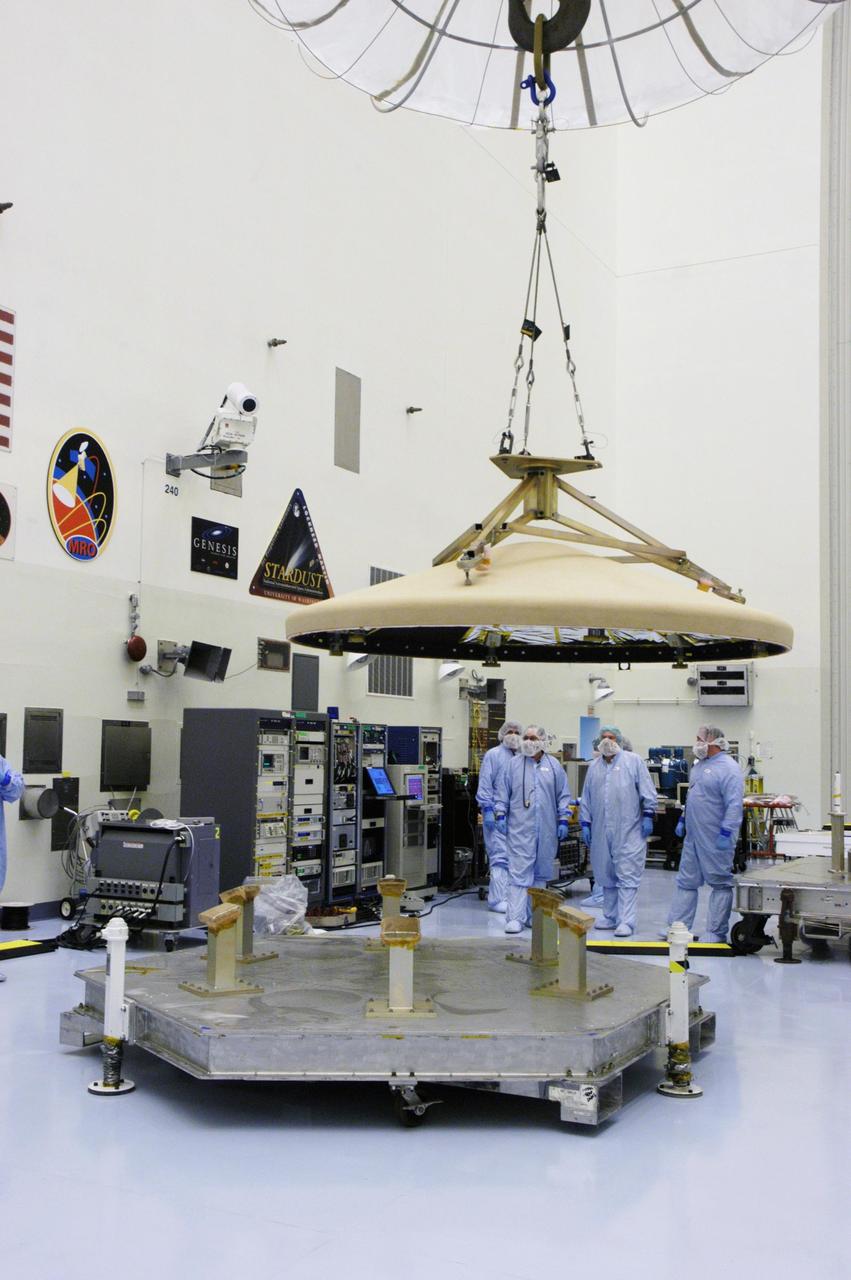
KENNEDY SPACE CENTER, FLA. -- In the Payload Hazardous Servicing Facility, workers watch as an overhead crane lowers the heat shield toward a platform. The heat shield was removed from the Phoenix Mars Lander spacecraft. The Phoenix mission is the first project in NASA's first openly competed program of Mars Scout missions. Phoenix will land in icy soils near the north polar permanent ice cap of Mars and explore the history of the water in these soils and any associated rocks, while monitoring polar climate. Landing is planned in May 2008 on arctic ground where a mission currently in orbit, Mars Odyssey, has detected high concentrations of ice just beneath the top layer of soil. It will serve as NASA's first exploration of a potential modern habitat on Mars and open the door to a renewed search for carbon-bearing compounds, last attempted with NASA’s Viking missions in the 1970s. A stereo color camera and a weather station will study the surrounding environment while the other instruments check excavated soil samples for water, organic chemicals and conditions that could indicate whether the site was ever hospitable to life. Microscopes can reveal features as small as one one-thousandth the width of a human hair. Launch of Phoenix aboard a Delta II rocket is targeted for Aug. 3 from Cape Canaveral Air Force Station in Florida. Photo credit: NASA/George Shelton
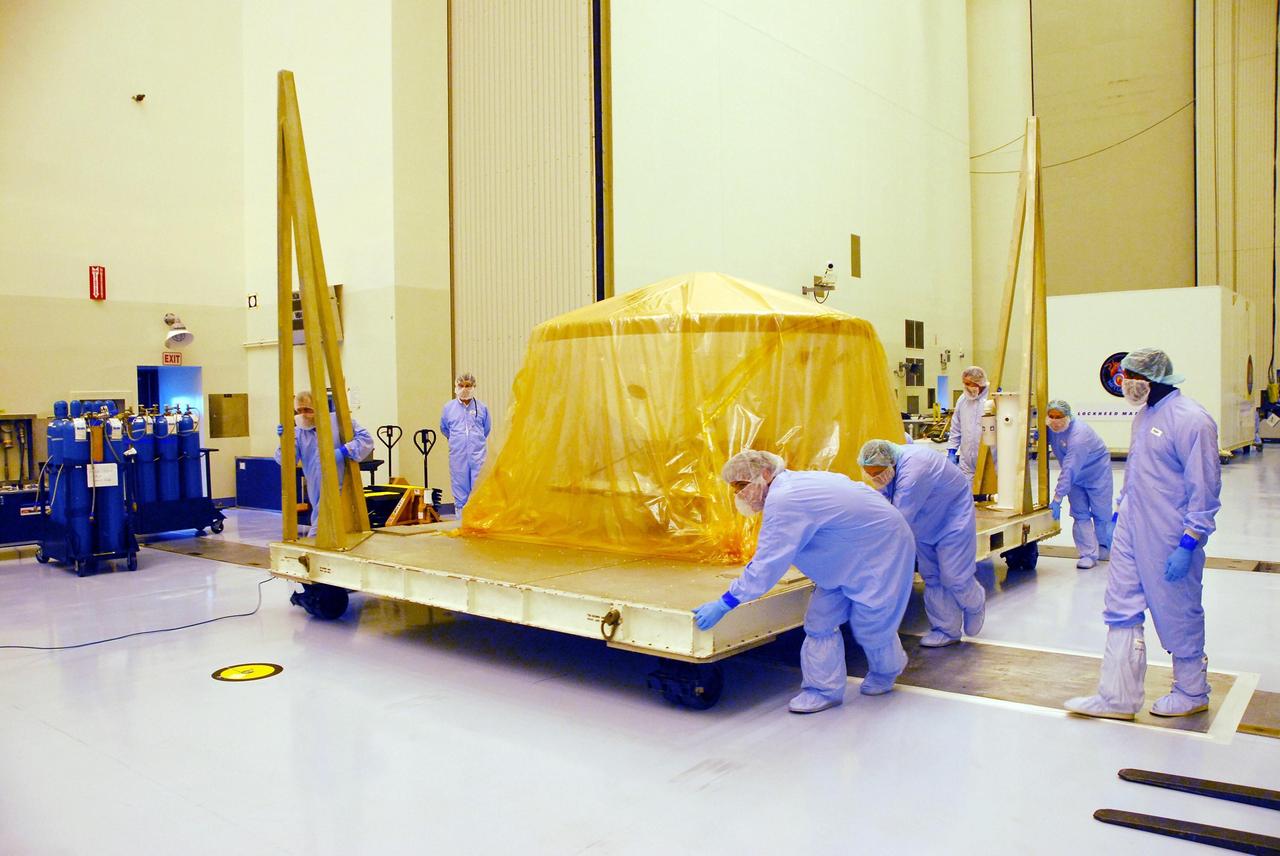
KENNEDY SPACE CENTER, FLA. -- In the Payload Hazardous Servicing Facility at Kennedy Space Center, workers move the platform with the Phoenix spacecraft into another room. The Phoenix mission is the first project in NASA's first openly competed program of Mars Scout missions. Phoenix will land in icy soils near the north polar permanent ice cap of Mars and explore the history of the water in these soils and any associated rocks, while monitoring polar climate. Landing is planned in May 2008 on arctic ground where a mission currently in orbit, Mars Odyssey, has detected high concentrations of ice just beneath the top layer of soil. It will serve as NASA's first exploration of a potential modern habitat on Mars and open the door to a renewed search for carbon-bearing compounds, last attempted with NASA’s Viking missions in the 1970s. A stereo color camera and a weather station will study the surrounding environment while the other instruments check excavated soil samples for water, organic chemicals and conditions that could indicate whether the site was ever hospitable to life. Microscopes can reveal features as small as one one-thousandth the width of a human hair. Launch of Phoenix aboard a Delta II rocket is targeted for Aug. 3 from Cape Canaveral Air Force Station in Florida. Photo credit: NASA/George Shelton

KENNEDY SPACE CENTER, FLA. -- This U.S. Air Force C-17 Globemaster III lands at the Kennedy Space Center's Shuttle Landing Facility carrying the Phoenix spacecraft. The Phoenix mission is the first project in NASA's first openly competed program of Mars Scout missions. Phoenix will land in icy soils near the north polar permanent ice cap of Mars and explore the history of the water in these soils and any associated rocks, while monitoring polar climate. Landing is planned in May 2008 on arctic ground where a mission currently in orbit, Mars Odyssey, has detected high concentrations of ice just beneath the top layer of soil. It will serve as NASA's first exploration of a potential modern habitat on Mars and open the door to a renewed search for carbon-bearing compounds, last attempted with NASA’s Viking missions in the 1970s. A stereo color camera and a weather station will study the surrounding environment while the other instruments check excavated soil samples for water, organic chemicals and conditions that could indicate whether the site was ever hospitable to life. Microscopes can reveal features as small as one one-thousandth the width of a human hair. Launch of Phoenix aboard a Delta II rocket is targeted for Aug. 3 from Cape Canaveral Air Force Station in Florida. Photo credit: NASA/Charisse Nahser
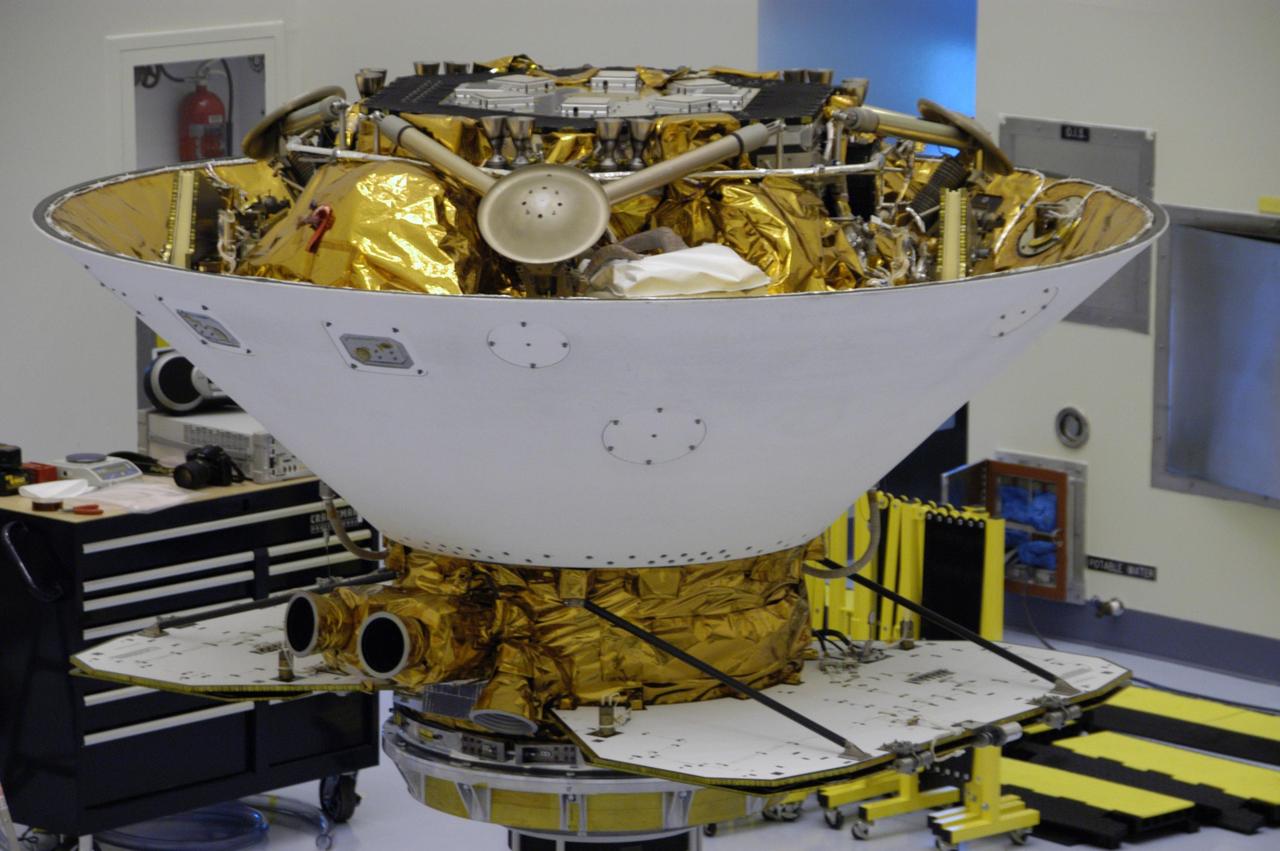
KENNEDY SPACE CENTER, FLA. -- This closeup shows the Phoenix Mars Lander spacecraft nestled inside the backshell. The spacecraft is ready for spin testing on the spin table to which it is attached in the Payload Hazardous Servicing Facility. The Phoenix mission is the first project in NASA's first openly competed program of Mars Scout missions. Phoenix will land in icy soils near the north polar permanent ice cap of Mars and explore the history of the water in these soils and any associated rocks, while monitoring polar climate. Landing is planned in May 2008 on arctic ground where a mission currently in orbit, Mars Odyssey, has detected high concentrations of ice just beneath the top layer of soil. It will serve as NASA's first exploration of a potential modern habitat on Mars and open the door to a renewed search for carbon-bearing compounds, last attempted with NASA’s Viking missions in the 1970s. A stereo color camera and a weather station will study the surrounding environment while the other instruments check excavated soil samples for water, organic chemicals and conditions that could indicate whether the site was ever hospitable to life. Microscopes can reveal features as small as one one-thousandth the width of a human hair. Launch of Phoenix aboard a Delta II rocket is targeted for Aug. 3 from Cape Canaveral Air Force Station in Florida. Photo credit: NASA/George Shelton
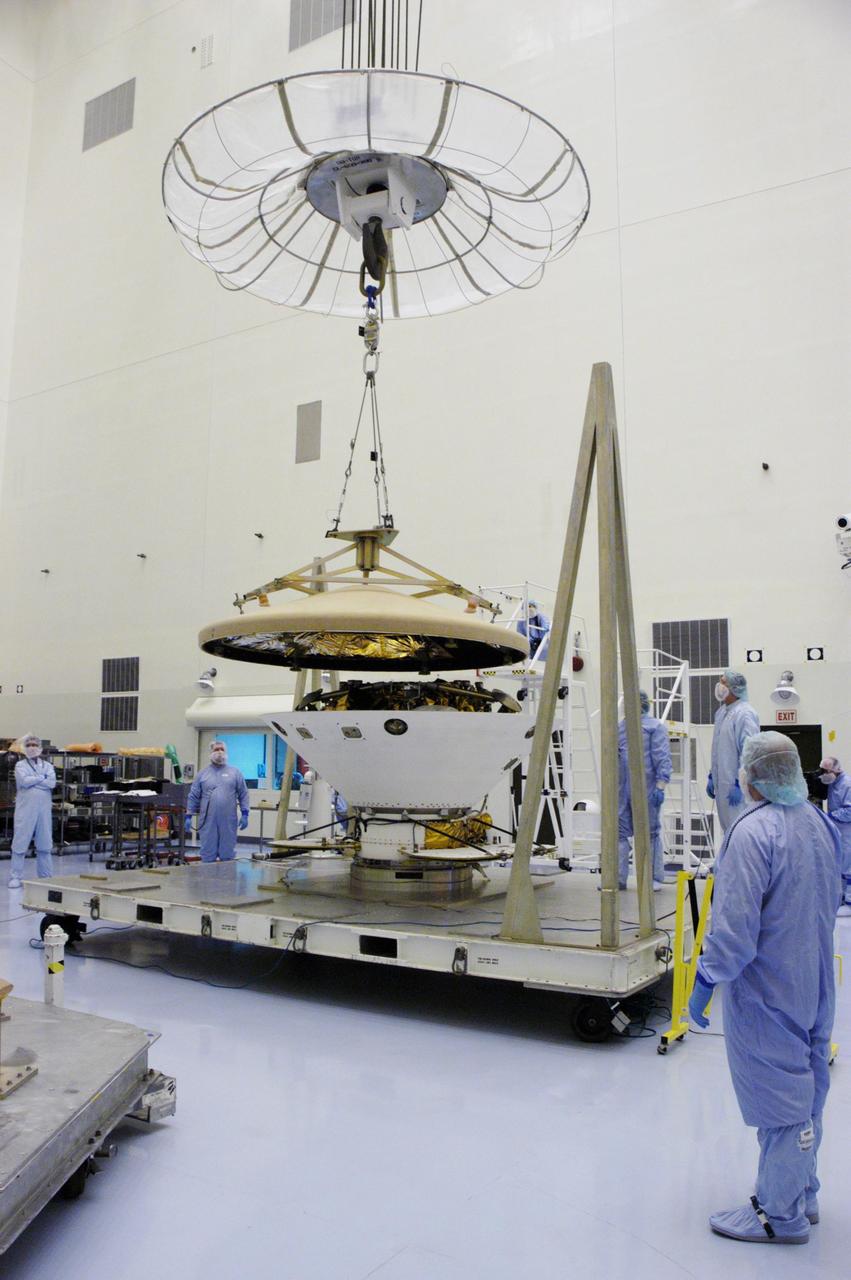
KENNEDY SPACE CENTER, FLA. -- In the Payload Hazardous Servicing Facility, an overhead crane lifts the heat shield from the Phoenix Mars Lander spacecraft. The Phoenix mission is the first project in NASA's first openly competed program of Mars Scout missions. Phoenix will land in icy soils near the north polar permanent ice cap of Mars and explore the history of the water in these soils and any associated rocks, while monitoring polar climate. Landing is planned in May 2008 on arctic ground where a mission currently in orbit, Mars Odyssey, has detected high concentrations of ice just beneath the top layer of soil. It will serve as NASA's first exploration of a potential modern habitat on Mars and open the door to a renewed search for carbon-bearing compounds, last attempted with NASA’s Viking missions in the 1970s. A stereo color camera and a weather station will study the surrounding environment while the other instruments check excavated soil samples for water, organic chemicals and conditions that could indicate whether the site was ever hospitable to life. Microscopes can reveal features as small as one one-thousandth the width of a human hair. Launch of Phoenix aboard a Delta II rocket is targeted for Aug. 3 from Cape Canaveral Air Force Station in Florida. Photo credit: NASA/George Shelton
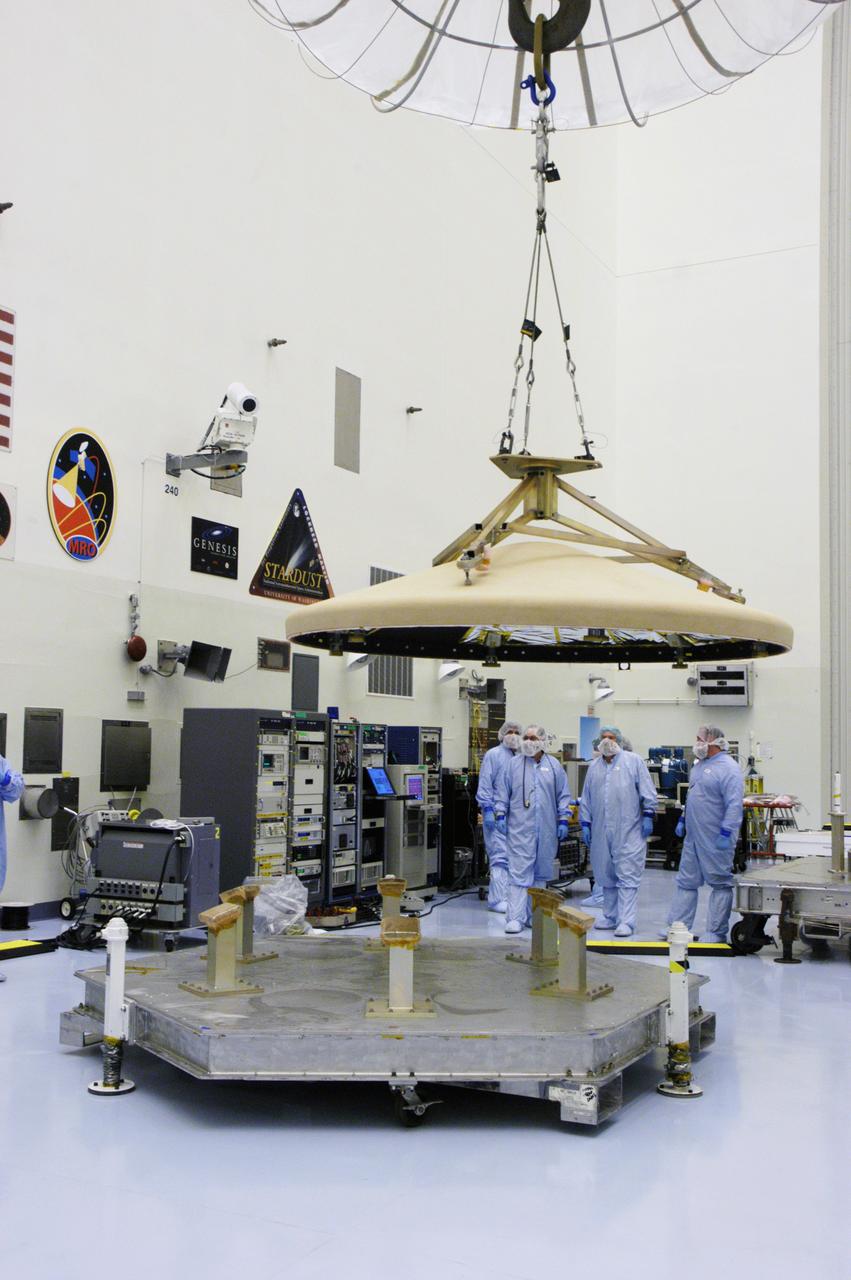
In the Payload Hazardous Servicing Facility, workers watch as an overhead crane lowers the heat shield toward a platform. The heat shield was removed from the Phoenix Mars Lander spacecraft. The Phoenix mission is the first project in NASA's first openly competed program of Mars Scout missions. Phoenix will land in icy soils near the north polar permanent ice cap of Mars and explore the history of the water in these soils and any associated rocks, while monitoring polar climate. Landing is planned in May 2008 on arctic ground where a mission currently in orbit, Mars Odyssey, has detected high concentrations of ice just beneath the top layer of soil. It will serve as NASA's first exploration of a potential modern habitat on Mars and open the door to a renewed search for carbon-bearing compounds, last attempted with NASA’s Viking missions in the 1970s. A stereo color camera and a weather station will study the surrounding environment while the other instruments check excavated soil samples for water, organic chemicals and conditions that could indicate whether the site was ever hospitable to life. Microscopes can reveal features as small as one one-thousandth the width of a human hair. Launch of Phoenix aboard a Delta II rocket is targeted for Aug. 3 from Cape Canaveral Air Force Station in Florida.
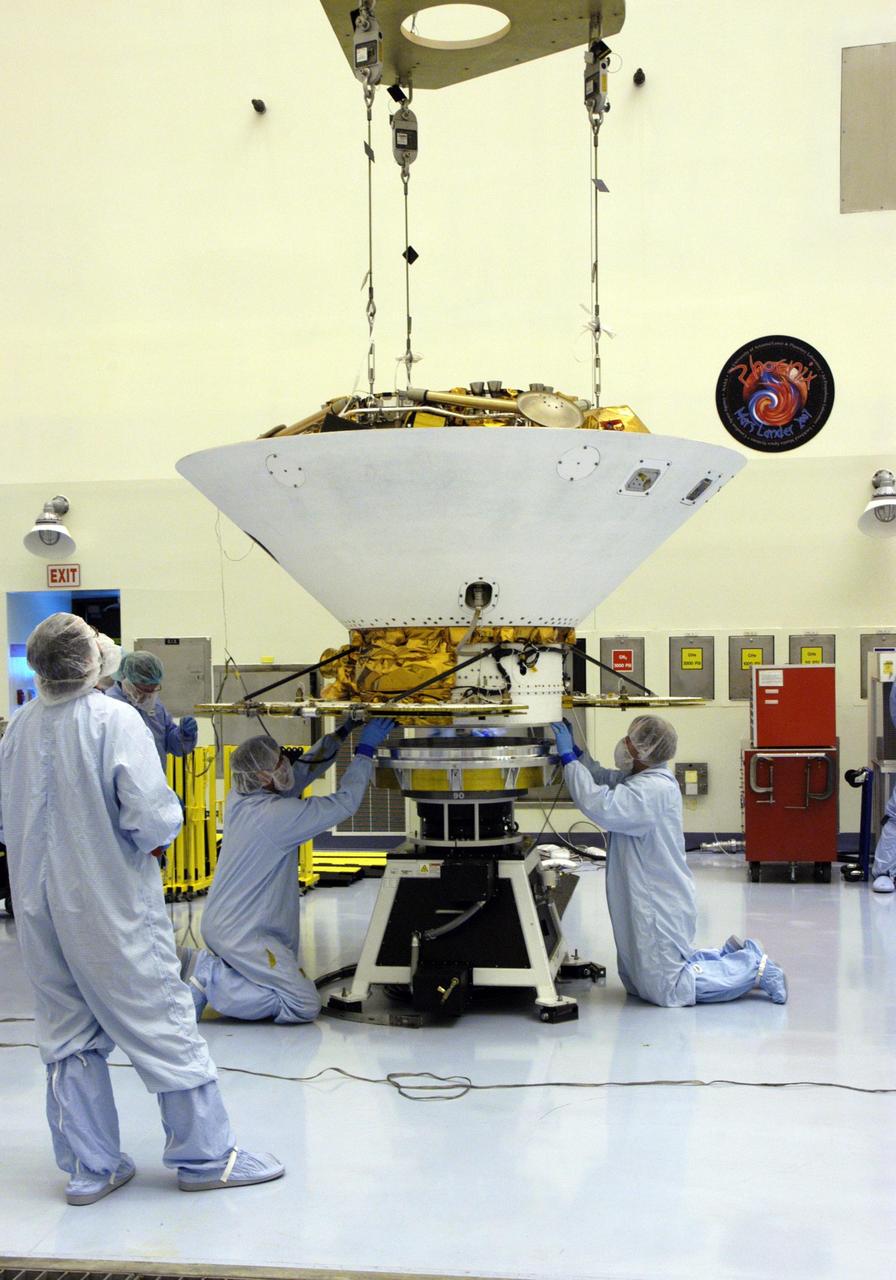
KENNEDY SPACE CENTER, FLA. -- In the Payload Hazardous Servicing Facility, technicians secure the backshell with the Phoenix Mars Lander inside onto a spin table for spin testing. The Phoenix mission is the first project in NASA's first openly competed program of Mars Scout missions. Phoenix will land in icy soils near the north polar permanent ice cap of Mars and explore the history of the water in these soils and any associated rocks, while monitoring polar climate. Landing is planned in May 2008 on arctic ground where a mission currently in orbit, Mars Odyssey, has detected high concentrations of ice just beneath the top layer of soil. It will serve as NASA's first exploration of a potential modern habitat on Mars and open the door to a renewed search for carbon-bearing compounds, last attempted with NASA’s Viking missions in the 1970s. A stereo color camera and a weather station will study the surrounding environment while the other instruments check excavated soil samples for water, organic chemicals and conditions that could indicate whether the site was ever hospitable to life. Microscopes can reveal features as small as one one-thousandth the width of a human hair. Launch of Phoenix aboard a Delta II rocket is targeted for Aug. 3 from Cape Canaveral Air Force Station in Florida. Photo credit: NASA/George Shelton
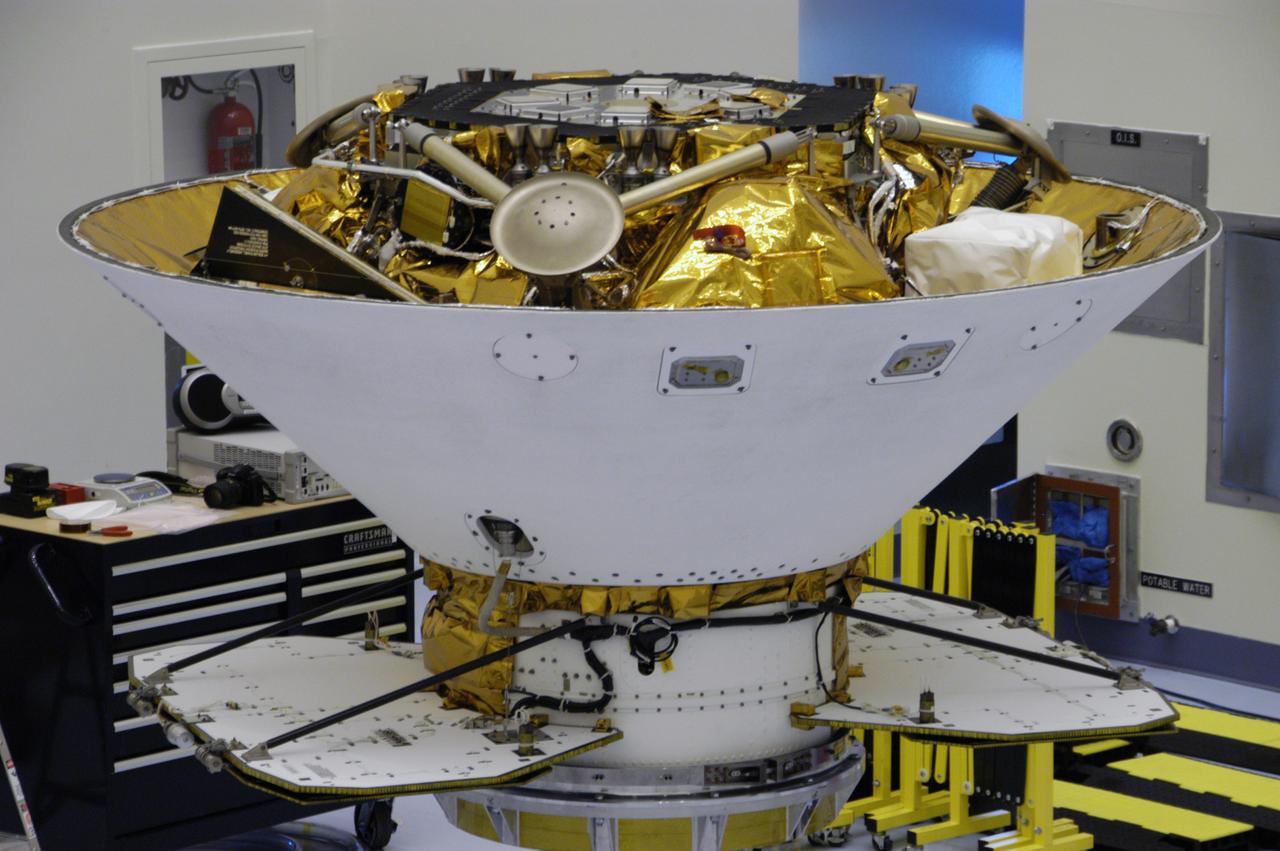
This closeup shows the Phoenix Mars Lander spacecraft nestled inside the backshell. The spacecraft will undergo spin testing on the spin table to which it is attached in the Payload Hazardous Servicing Facility. The Phoenix mission is the first project in NASA's first openly competed program of Mars Scout missions. Phoenix will land in icy soils near the north polar permanent ice cap of Mars and explore the history of the water in these soils and any associated rocks, while monitoring polar climate. Landing is planned in May 2008 on arctic ground where a mission currently in orbit, Mars Odyssey, has detected high concentrations of ice just beneath the top layer of soil. It will serve as NASA's first exploration of a potential modern habitat on Mars and open the door to a renewed search for carbon-bearing compounds, last attempted with NASA’s Viking missions in the 1970s. A stereo color camera and a weather station will study the surrounding environment while the other instruments check excavated soil samples for water, organic chemicals and conditions that could indicate whether the site was ever hospitable to life. Microscopes can reveal features as small as one one-thousandth the width of a human hair. Launch of Phoenix aboard a Delta II rocket is targeted for Aug. 3 from Cape Canaveral Air Force Station in Florida.
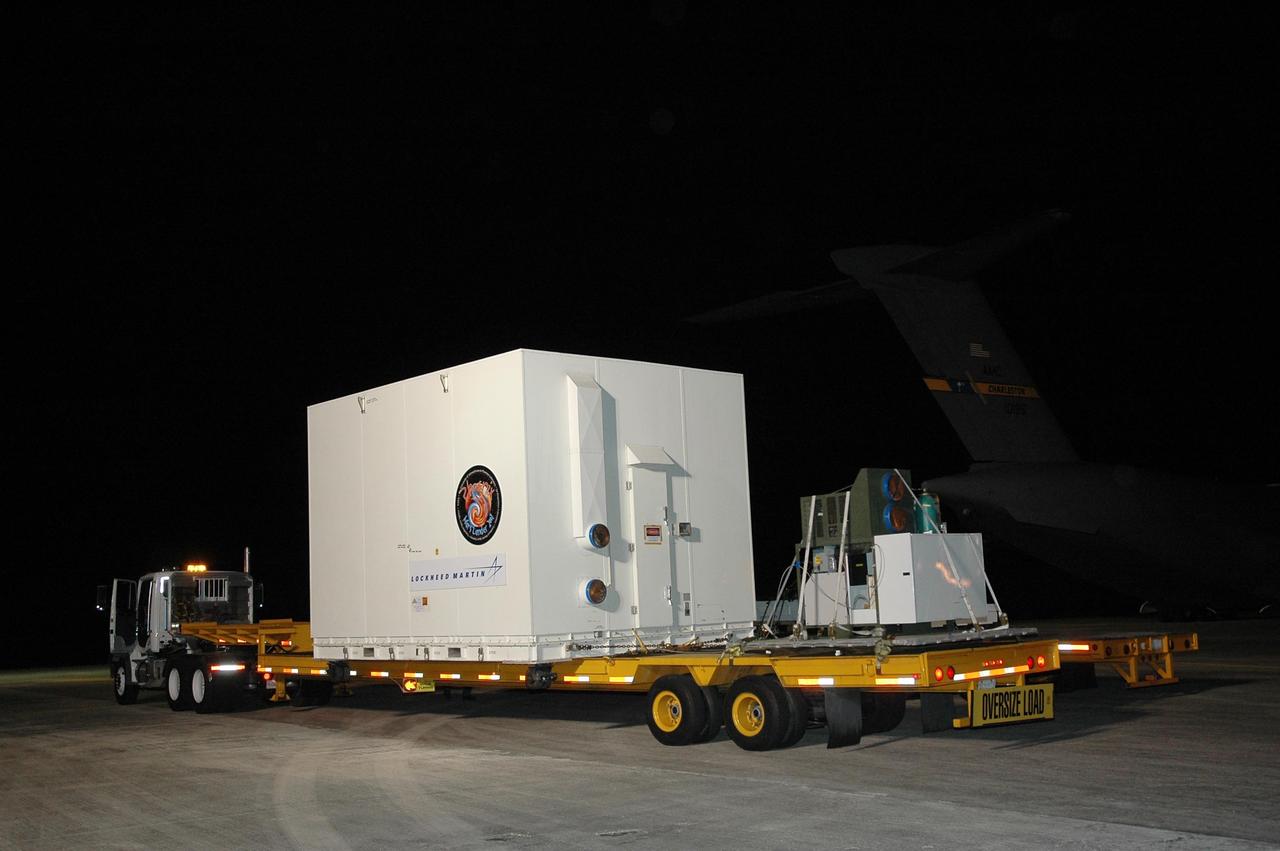
KENNEDY SPACE CENTER, FLA. -- After its arrival at Kennedy Space Center's Shuttle Landing Facility, the crated Phoenix spacecraft is secure on a flat bed truck for transportation to the Payload Hazardous Servicing Facility. The Phoenix mission is the first project in NASA's first openly competed program of Mars Scout missions. Phoenix will land in icy soils near the north polar permanent ice cap of Mars and explore the history of the water in these soils and any associated rocks, while monitoring polar climate. Landing is planned in May 2008 on arctic ground where a mission currently in orbit, Mars Odyssey, has detected high concentrations of ice just beneath the top layer of soil. It will serve as NASA's first exploration of a potential modern habitat on Mars and open the door to a renewed search for carbon-bearing compounds, last attempted with NASA’s Viking missions in the 1970s. A stereo color camera and a weather station will study the surrounding environment while the other instruments check excavated soil samples for water, organic chemicals and conditions that could indicate whether the site was ever hospitable to life. Microscopes can reveal features as small as one one-thousandth the width of a human hair. Launch of Phoenix aboard a Delta II rocket is targeted for Aug. 3 from Cape Canaveral Air Force Station in Florida. Photo credit: NASA/Charisse Nahser
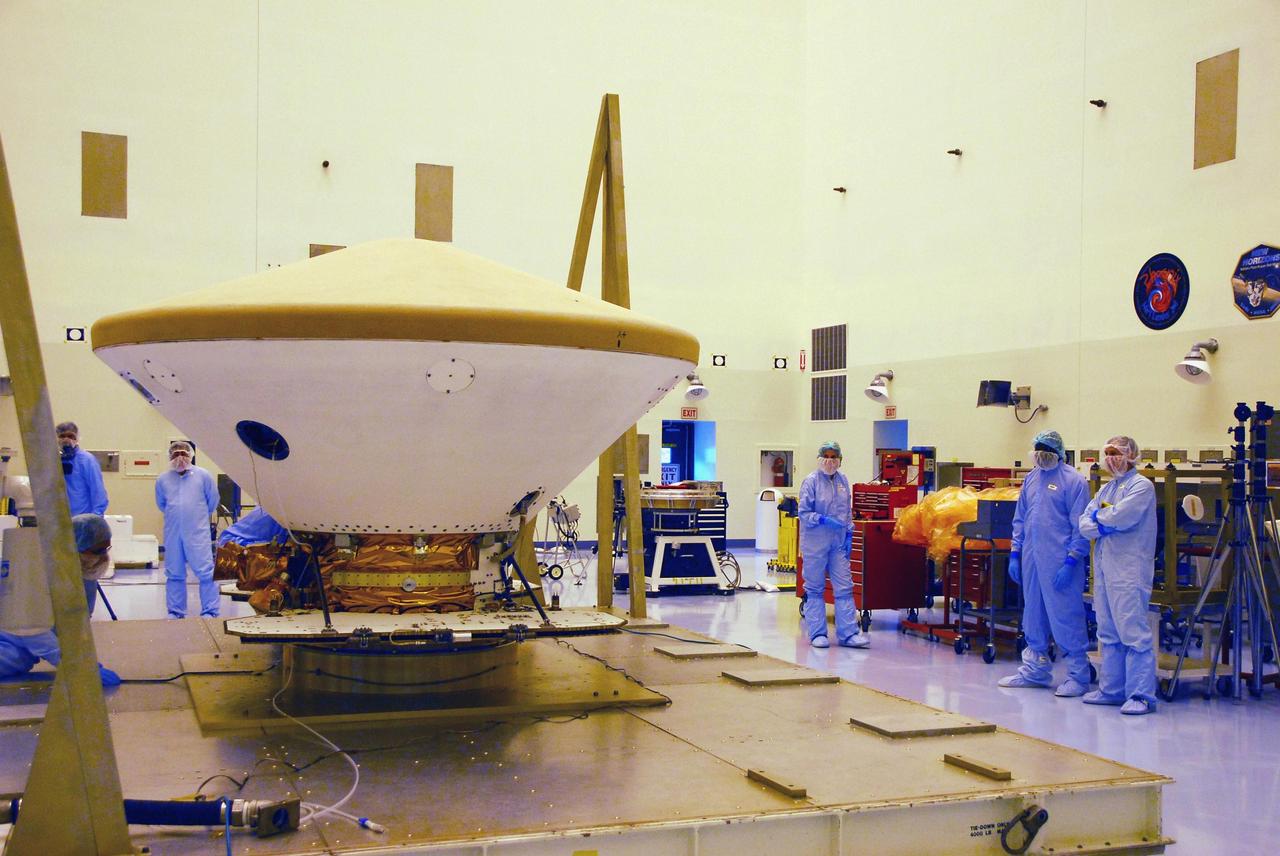
KENNEDY SPACE CENTER, FLA. -- The unwrapped Phoenix spacecraft is on display in the Payload Hazardous Servicing Facility. The Phoenix mission is the first project in NASA's first openly competed program of Mars Scout missions. Phoenix will land in icy soils near the north polar permanent ice cap of Mars and explore the history of the water in these soils and any associated rocks, while monitoring polar climate. Landing is planned in May 2008 on arctic ground where a mission currently in orbit, Mars Odyssey, has detected high concentrations of ice just beneath the top layer of soil. It will serve as NASA's first exploration of a potential modern habitat on Mars and open the door to a renewed search for carbon-bearing compounds, last attempted with NASA’s Viking missions in the 1970s. A stereo color camera and a weather station will study the surrounding environment while the other instruments check excavated soil samples for water, organic chemicals and conditions that could indicate whether the site was ever hospitable to life. Microscopes can reveal features as small as one one-thousandth the width of a human hair. Launch of Phoenix aboard a Delta II rocket is targeted for Aug. 3 from Cape Canaveral Air Force Station in Florida. Photo credit: NASA/George Shelton
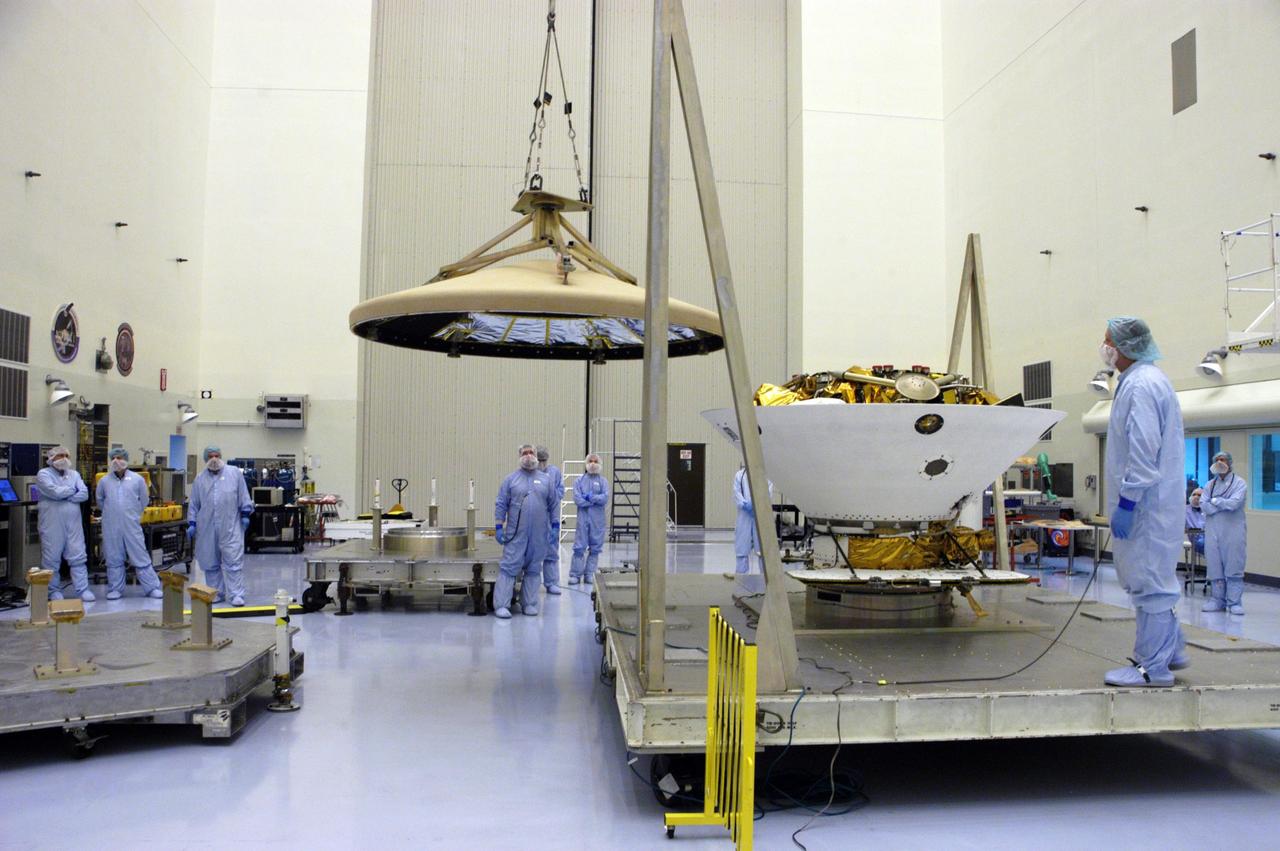
KENNEDY SPACE CENTER, FLA. -- In the Payload Hazardous Servicing Facility, an overhead crane moves the heat shield toward a platform at left. The heat shield was removed from the Phoenix Mars Lander spacecraft at right. The Phoenix mission is the first project in NASA's first openly competed program of Mars Scout missions. Phoenix will land in icy soils near the north polar permanent ice cap of Mars and explore the history of the water in these soils and any associated rocks, while monitoring polar climate. Landing is planned in May 2008 on arctic ground where a mission currently in orbit, Mars Odyssey, has detected high concentrations of ice just beneath the top layer of soil. It will serve as NASA's first exploration of a potential modern habitat on Mars and open the door to a renewed search for carbon-bearing compounds, last attempted with NASA’s Viking missions in the 1970s. A stereo color camera and a weather station will study the surrounding environment while the other instruments check excavated soil samples for water, organic chemicals and conditions that could indicate whether the site was ever hospitable to life. Microscopes can reveal features as small as one one-thousandth the width of a human hair. Launch of Phoenix aboard a Delta II rocket is targeted for Aug. 3 from Cape Canaveral Air Force Station in Florida. Photo credit: NASA/George Shelton
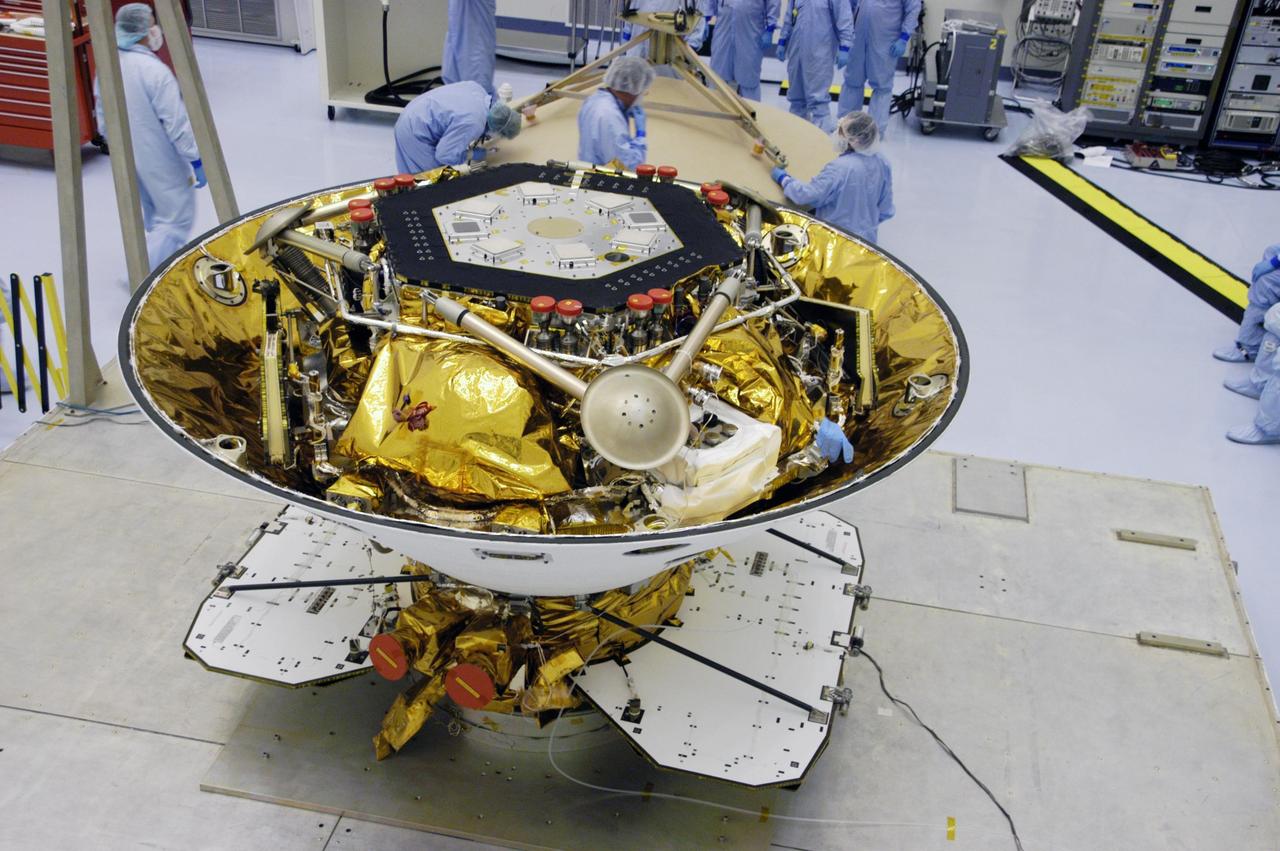
KENNEDY SPACE CENTER, FLA. -- In the Payload Hazardous Servicing Facility, the Phoenix Mars Lander (foreground) can be seen inside the backshell. In the background, workers are helping place the heat shield, just removed from the Phoenix, onto a platform. The Phoenix mission is the first project in NASA's first openly competed program of Mars Scout missions. Phoenix will land in icy soils near the north polar permanent ice cap of Mars and explore the history of the water in these soils and any associated rocks, while monitoring polar climate. Landing is planned in May 2008 on arctic ground where a mission currently in orbit, Mars Odyssey, has detected high concentrations of ice just beneath the top layer of soil. It will serve as NASA's first exploration of a potential modern habitat on Mars and open the door to a renewed search for carbon-bearing compounds, last attempted with NASA’s Viking missions in the 1970s. A stereo color camera and a weather station will study the surrounding environment while the other instruments check excavated soil samples for water, organic chemicals and conditions that could indicate whether the site was ever hospitable to life. Microscopes can reveal features as small as one one-thousandth the width of a human hair. Launch of Phoenix aboard a Delta II rocket is targeted for Aug. 3 from Cape Canaveral Air Force Station in Florida. Photo credit: NASA/George Shelton
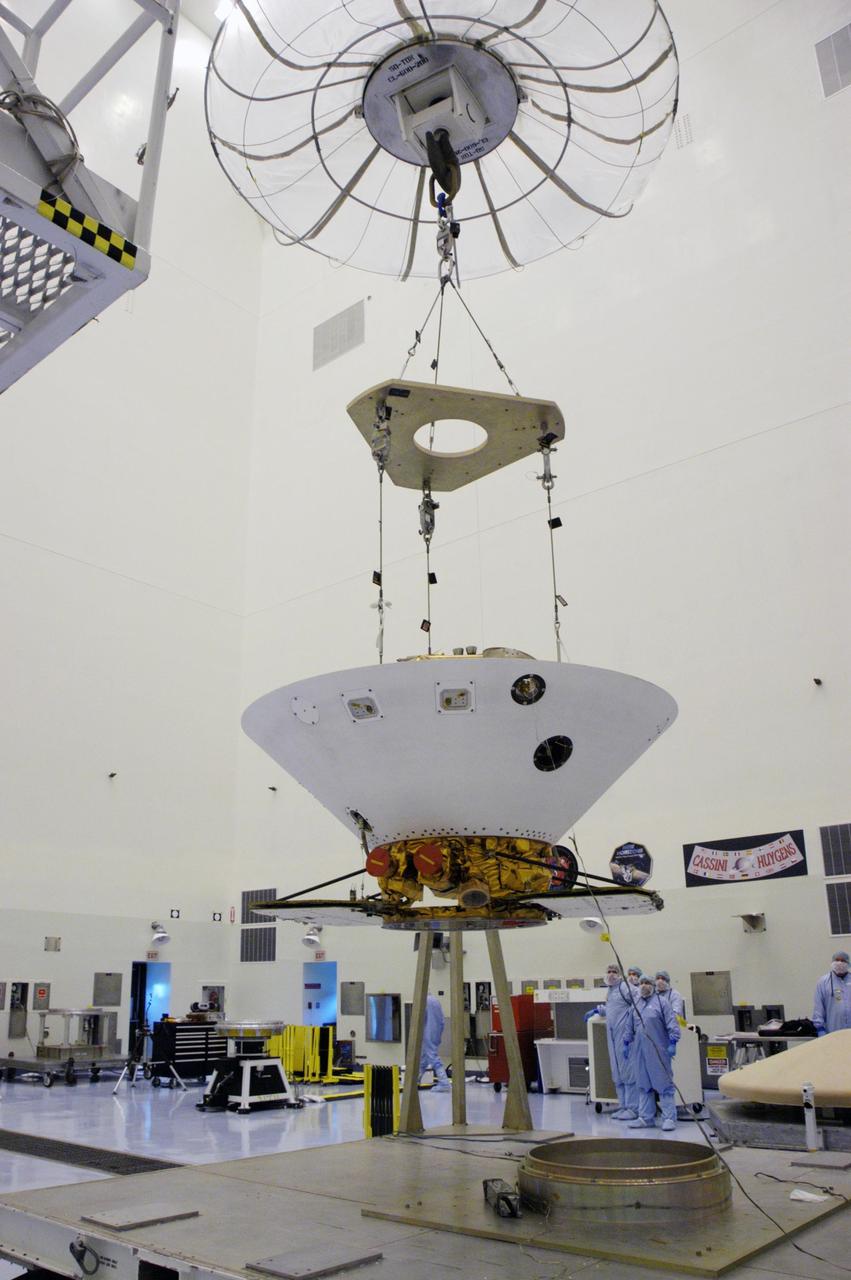
KENNEDY SPACE CENTER, FLA. -- An overhead crane lifts the backshell with the Phoenix Mars Lander inside off its work stand in the Payload Hazardous Servicing Facility. The spacecraft is being moved to a spin table (back left) for spin testing. The Phoenix mission is the first project in NASA's first openly competed program of Mars Scout missions. Phoenix will land in icy soils near the north polar permanent ice cap of Mars and explore the history of the water in these soils and any associated rocks, while monitoring polar climate. Landing is planned in May 2008 on arctic ground where a mission currently in orbit, Mars Odyssey, has detected high concentrations of ice just beneath the top layer of soil. It will serve as NASA's first exploration of a potential modern habitat on Mars and open the door to a renewed search for carbon-bearing compounds, last attempted with NASA’s Viking missions in the 1970s. A stereo color camera and a weather station will study the surrounding environment while the other instruments check excavated soil samples for water, organic chemicals and conditions that could indicate whether the site was ever hospitable to life. Microscopes can reveal features as small as one one-thousandth the width of a human hair. Launch of Phoenix aboard a Delta II rocket is targeted for Aug. 3 from Cape Canaveral Air Force Station in Florida. Photo credit: NASA/George Shelton
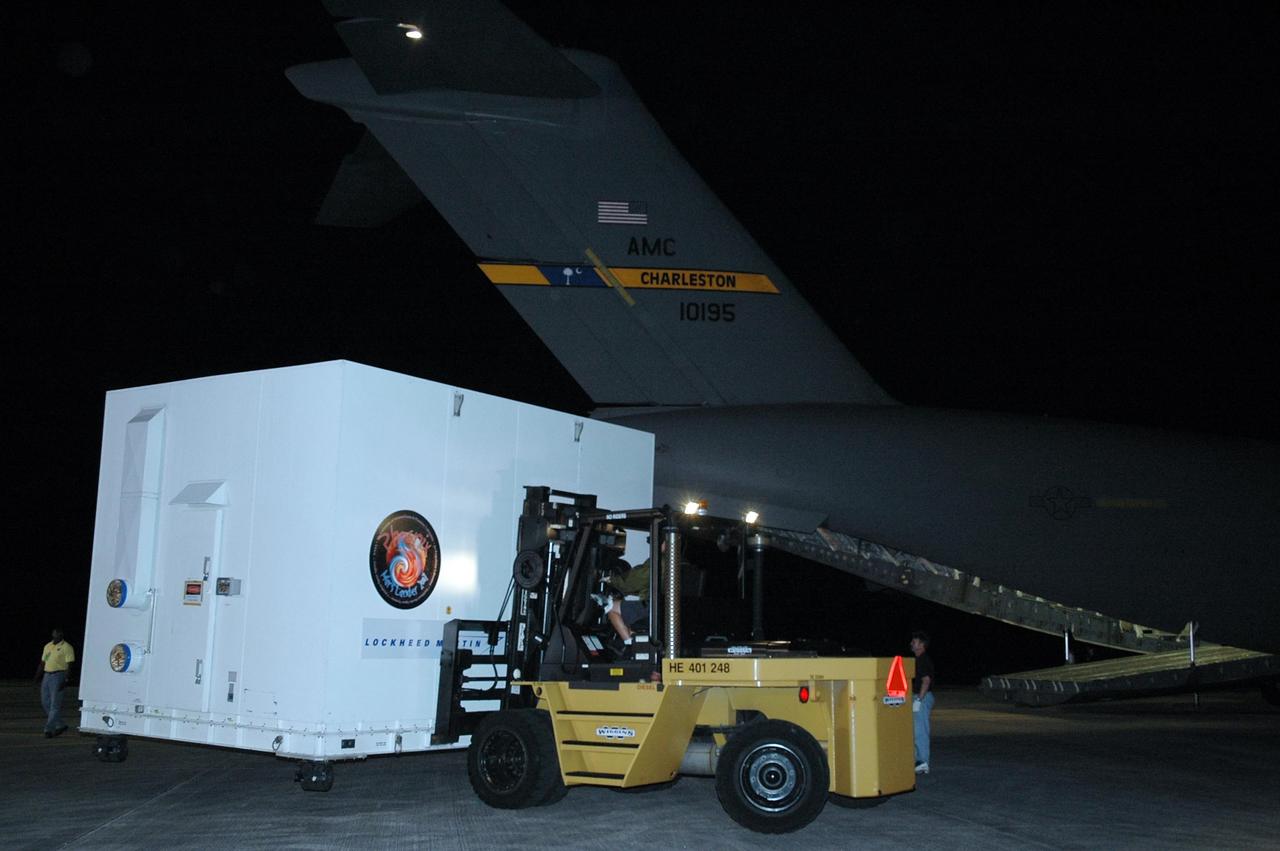
KENNEDY SPACE CENTER, FLA. -- On Kennedy Space Center's Shuttle Landing Facility, the crated Phoenix spacecraft is maneuvered away from the U.S. Air Force C-17 Globemaster III that delivered it. The crate will be transported to the Payload Hazardous Servicing Facility. The Phoenix mission is the first project in NASA's first openly competed program of Mars Scout missions. Phoenix will land in icy soils near the north polar permanent ice cap of Mars and explore the history of the water in these soils and any associated rocks, while monitoring polar climate. Landing is planned in May 2008 on arctic ground where a mission currently in orbit, Mars Odyssey, has detected high concentrations of ice just beneath the top layer of soil. It will serve as NASA's first exploration of a potential modern habitat on Mars and open the door to a renewed search for carbon-bearing compounds, last attempted with NASA’s Viking missions in the 1970s. A stereo color camera and a weather station will study the surrounding environment while the other instruments check excavated soil samples for water, organic chemicals and conditions that could indicate whether the site was ever hospitable to life. Microscopes can reveal features as small as one one-thousandth the width of a human hair. Launch of Phoenix aboard a Delta II rocket is targeted for Aug. 3 from Cape Canaveral Air Force Station in Florida. Photo credit: NASA/Charisse Nahser
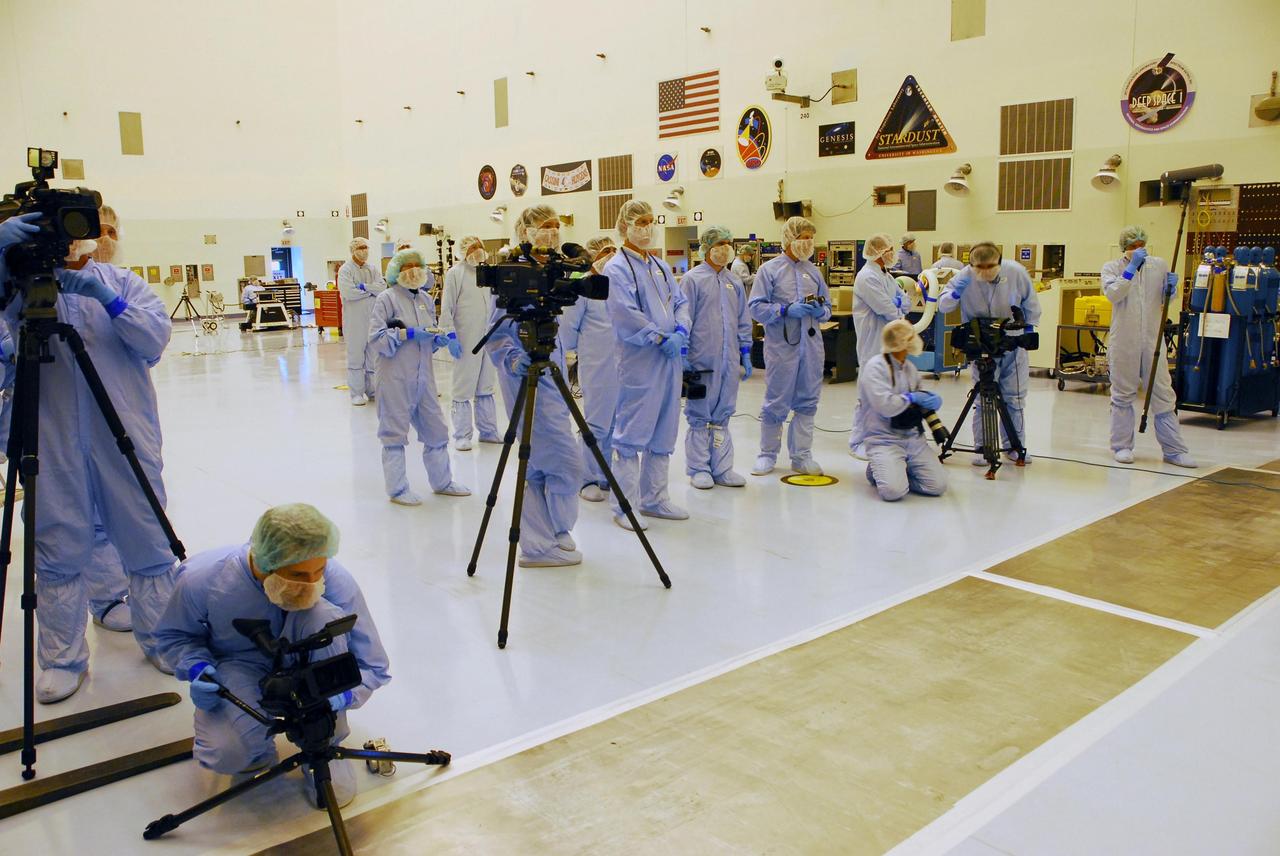
KENNEDY SPACE CENTER, FLA. -- In the Payload Hazardous Servicing Facility at Kennedy Space Center, media dressed in clean-room garb document the arrival of the Phoenix spacecraft. The spacecraft arrived May 7 via a U.S. Air Force C-17 Globemaster III at the Shuttle Landing Facility. The Phoenix mission is the first project in NASA's first openly competed program of Mars Scout missions. Phoenix will land in icy soils near the north polar permanent ice cap of Mars and explore the history of the water in these soils and any associated rocks, while monitoring polar climate. Landing is planned in May 2008 on arctic ground where a mission currently in orbit, Mars Odyssey, has detected high concentrations of ice just beneath the top layer of soil. It will serve as NASA's first exploration of a potential modern habitat on Mars and open the door to a renewed search for carbon-bearing compounds, last attempted with NASA’s Viking missions in the 1970s. A stereo color camera and a weather station will study the surrounding environment while the other instruments check excavated soil samples for water, organic chemicals and conditions that could indicate whether the site was ever hospitable to life. Microscopes can reveal features as small as one one-thousandth the width of a human hair. Launch of Phoenix aboard a Delta II rocket is targeted for Aug. 3 from Cape Canaveral Air Force Station in Florida. Photo credit: NASA/George Shelton
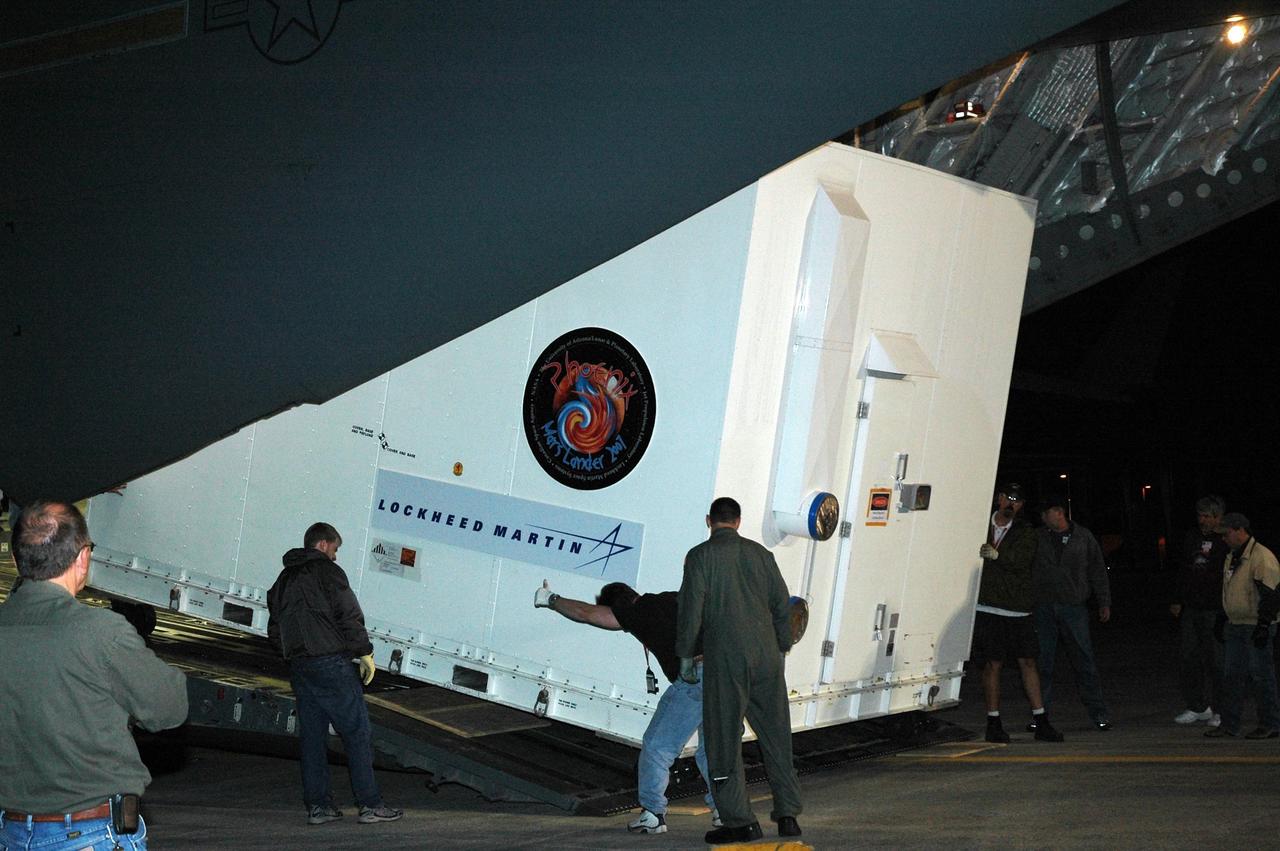
KENNEDY SPACE CENTER, FLA. -- On Kennedy Space Center's Shuttle Landing Facility, workers oversee the offloading of the crated Phoenix spacecraft inside the cargo hold of a U.S. Air Force C-17 Globemaster III. The crate will be transported to the Payload Hazardous Servicing Facility. The Phoenix mission is the first project in NASA's first openly competed program of Mars Scout missions. Phoenix will land in icy soils near the north polar permanent ice cap of Mars and explore the history of the water in these soils and any associated rocks, while monitoring polar climate. Landing is planned in May 2008 on arctic ground where a mission currently in orbit, Mars Odyssey, has detected high concentrations of ice just beneath the top layer of soil. It will serve as NASA's first exploration of a potential modern habitat on Mars and open the door to a renewed search for carbon-bearing compounds, last attempted with NASA’s Viking missions in the 1970s. A stereo color camera and a weather station will study the surrounding environment while the other instruments check excavated soil samples for water, organic chemicals and conditions that could indicate whether the site was ever hospitable to life. Microscopes can reveal features as small as one one-thousandth the width of a human hair. Launch of Phoenix aboard a Delta II rocket is targeted for Aug. 3 from Cape Canaveral Air Force Station in Florida. Photo credit: NASA/Charisse Nahser
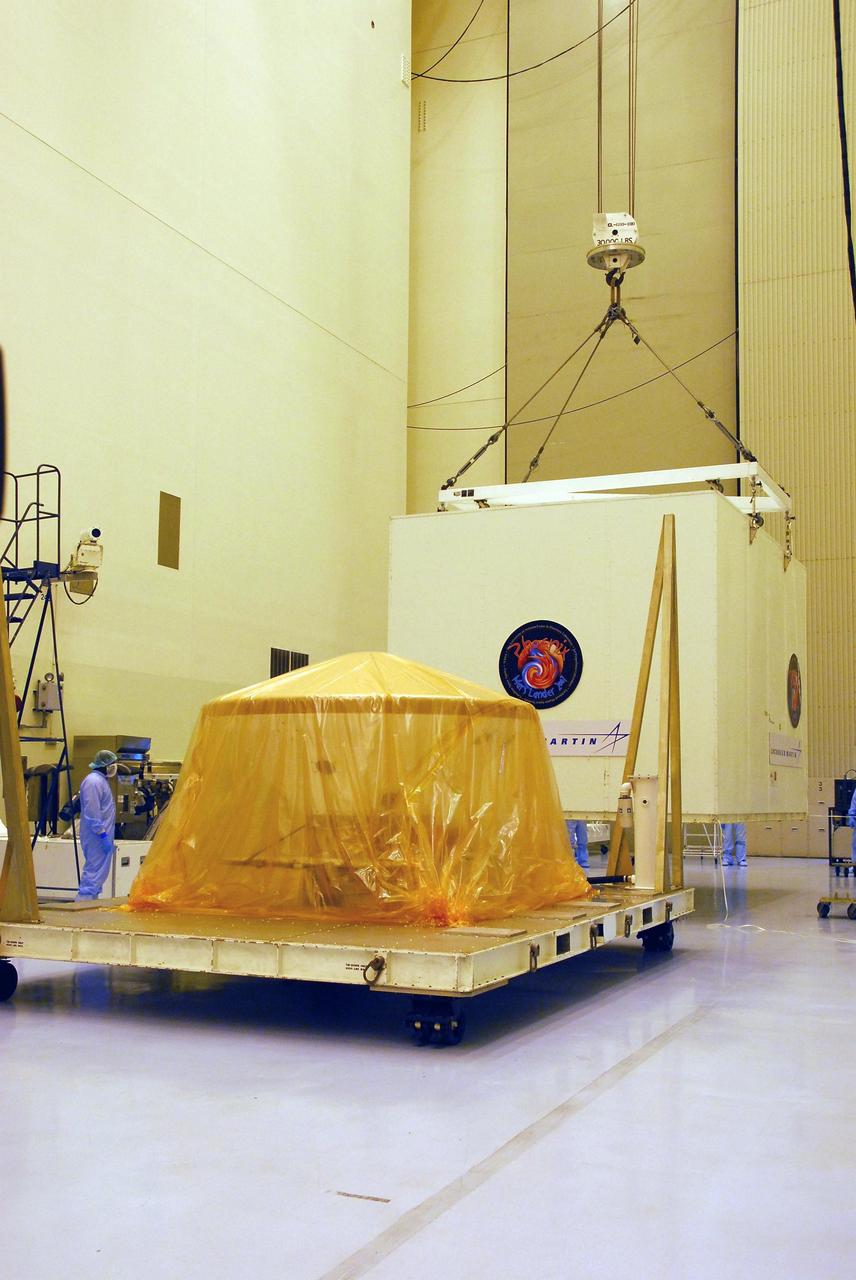
KENNEDY SPACE CENTER, FLA. -- In the Payload Hazardous Servicing Facility at Kennedy Space Center, a crane lifts the shipping crate from around the Phoenix spacecraft. The spacecraft arrived May 7 via a U.S. Air Force C-17 Globemaster III at the Shuttle Landing Facility. The Phoenix mission is the first project in NASA's first openly competed program of Mars Scout missions. Phoenix will land in icy soils near the north polar permanent ice cap of Mars and explore the history of the water in these soils and any associated rocks, while monitoring polar climate. Landing is planned in May 2008 on arctic ground where a mission currently in orbit, Mars Odyssey, has detected high concentrations of ice just beneath the top layer of soil. It will serve as NASA's first exploration of a potential modern habitat on Mars and open the door to a renewed search for carbon-bearing compounds, last attempted with NASA’s Viking missions in the 1970s. A stereo color camera and a weather station will study the surrounding environment while the other instruments check excavated soil samples for water, organic chemicals and conditions that could indicate whether the site was ever hospitable to life. Microscopes can reveal features as small as one one-thousandth the width of a human hair. Launch of Phoenix aboard a Delta II rocket is targeted for Aug. 3 from Cape Canaveral Air Force Station in Florida. Photo credit: NASA/George Shelton
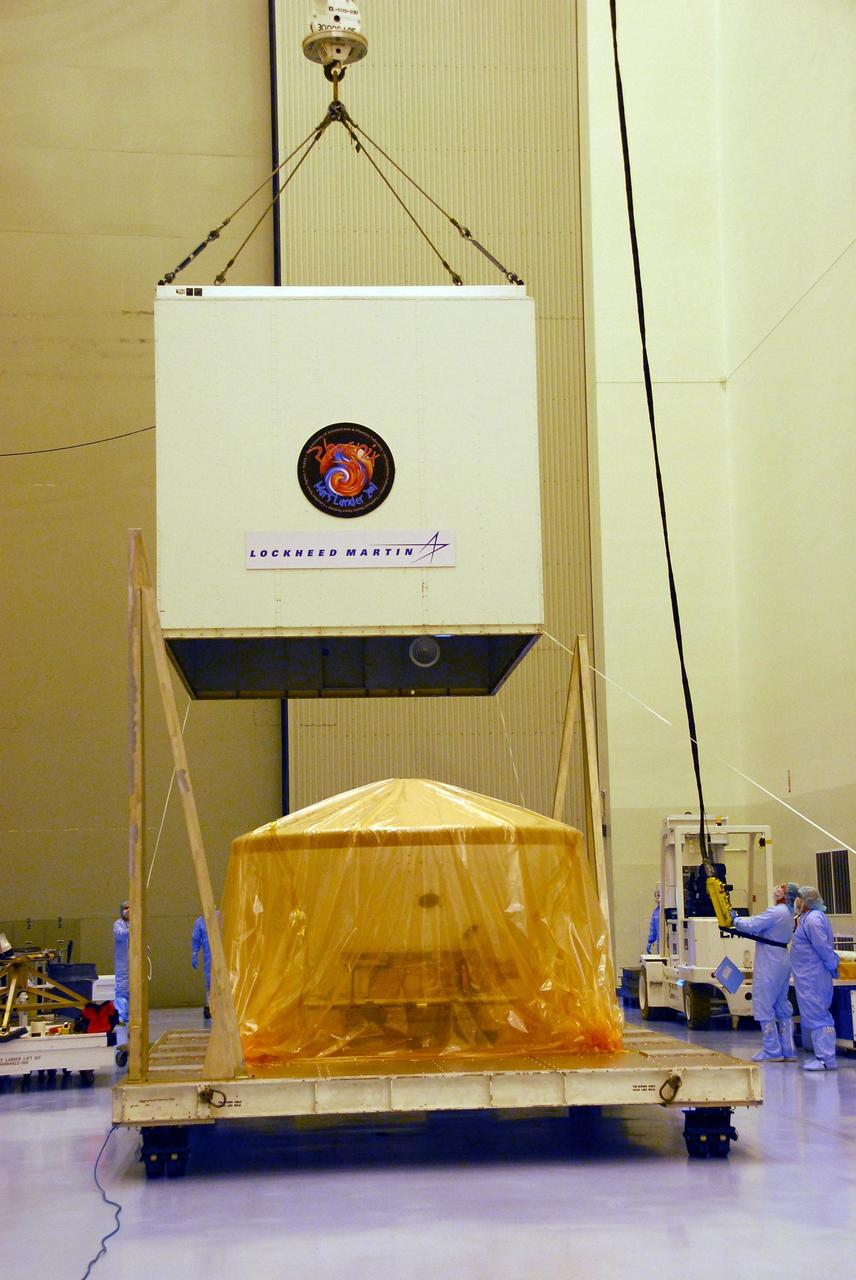
KENNEDY SPACE CENTER, FLA. -- In the Payload Hazardous Servicing Facility at Kennedy Space Center, a crane lifts the shipping crate from around the Phoenix spacecraft. The spacecraft arrived May 7 via a U.S. Air Force C-17 Globemaster III at the Shuttle Landing Facility. The Phoenix mission is the first project in NASA's first openly competed program of Mars Scout missions. Phoenix will land in icy soils near the north polar permanent ice cap of Mars and explore the history of the water in these soils and any associated rocks, while monitoring polar climate. Landing is planned in May 2008 on arctic ground where a mission currently in orbit, Mars Odyssey, has detected high concentrations of ice just beneath the top layer of soil. It will serve as NASA's first exploration of a potential modern habitat on Mars and open the door to a renewed search for carbon-bearing compounds, last attempted with NASA’s Viking missions in the 1970s. A stereo color camera and a weather station will study the surrounding environment while the other instruments check excavated soil samples for water, organic chemicals and conditions that could indicate whether the site was ever hospitable to life. Microscopes can reveal features as small as one one-thousandth the width of a human hair. Launch of Phoenix aboard a Delta II rocket is targeted for Aug. 3 from Cape Canaveral Air Force Station in Florida. Photo credit: NASA/George Shelton