
A Florida scrub jay flies over shrubbery at NASA’s Kennedy Space Center in Florida. Kennedy shares a border with the Merritt Island National Wildlife Refuge, consisting of 140,000 acres of land, water, and marshes. The scrub jay is one of more than 330 species of bird, 117 species of fish, 68 amphibians and reptiles, and 31 different mammals that call Kennedy and its surrounding borders home.
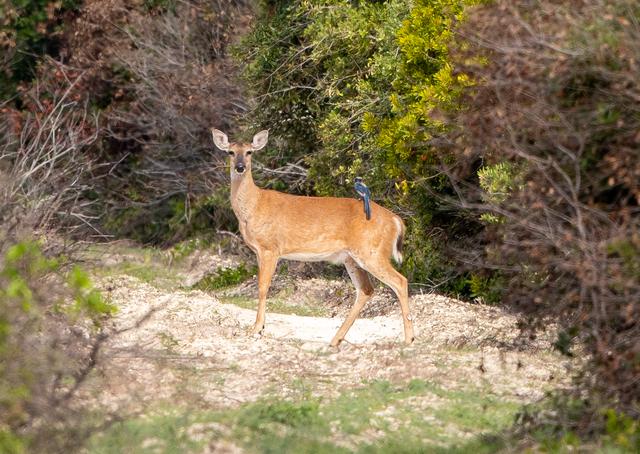
A Florida Scrub-Jay perches on the back of a white-tailed deer in the woods at NASA’s Kennedy Space Center in Florida on June 15, 2021. The Florida Scrub-Jay is one of the species of scrub-jay native to North America. The center shares a border with the Merritt Island National Wildlife Refuge. More than 330 native and migratory bird species, along with 25 mammal, 117 fish, and 65 amphibian and reptile species call Kennedy and the wildlife refuge home.
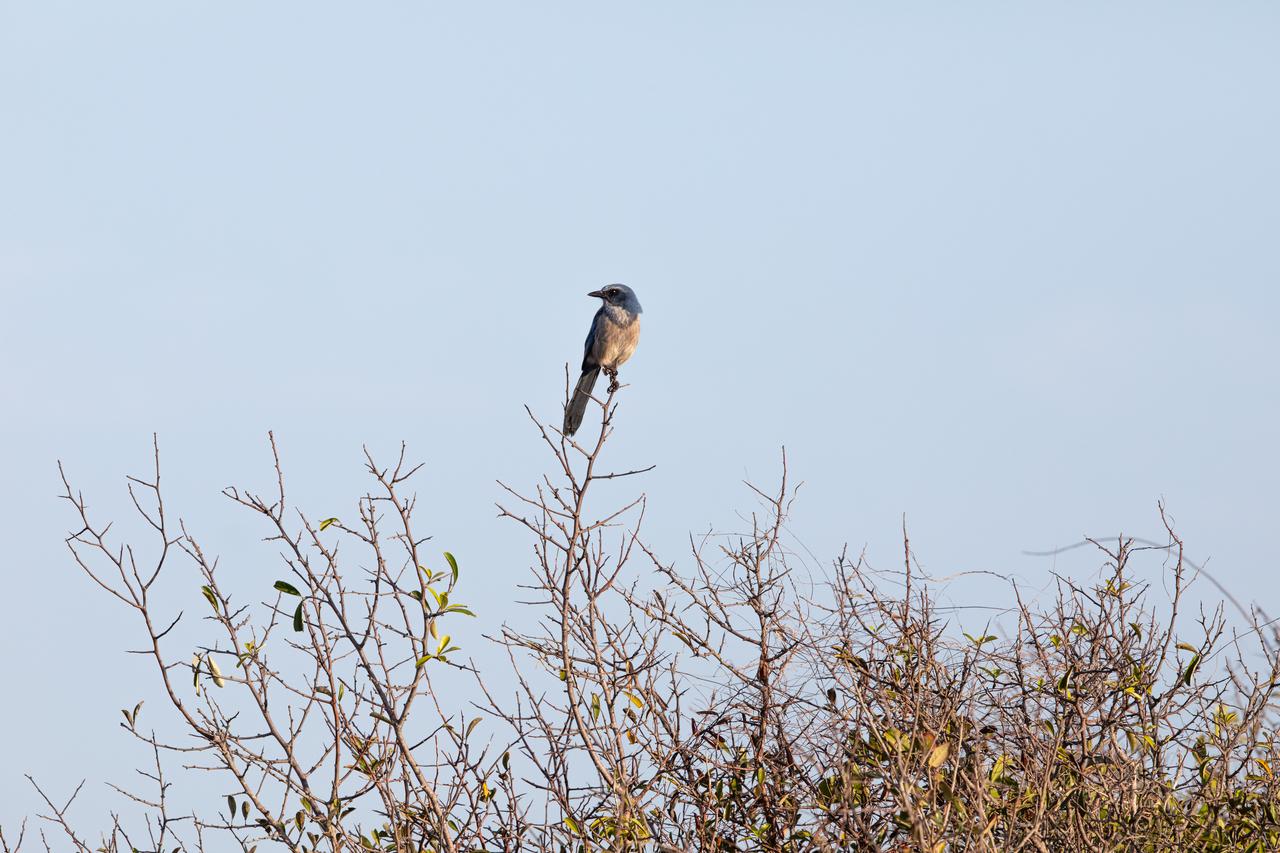
A Florida Scrub-Jay perches on the branch of a tree at NASA's Kennedy Space Center in Florida on Jan. 8, 2021. The center shares a border with the Merritt Island National Wildlife Refuge. More than 330 native and migratory bird species, along with 25 mammal, 117 fish, and 65 amphibian and reptile species call Kennedy and the wildlife refuge home.

A Florida Scrub-Jay flies near a tree at NASA's Kennedy Space Center in Florida on Jan. 8, 2021. The center shares a border with the Merritt Island National Wildlife Refuge. More than 330 native and migratory bird species, along with 25 mammal, 117 fish, and 65 amphibian and reptile species call Kennedy and the wildlife refuge home.

A Florida Scrub-Jay flies near a tree at NASA's Kennedy Space Center in Florida on Jan. 8, 2021. The center shares a border with the Merritt Island National Wildlife Refuge. More than 330 native and migratory bird species, along with 25 mammal, 117 fish, and 65 amphibian and reptile species call Kennedy and the wildlife refuge home.
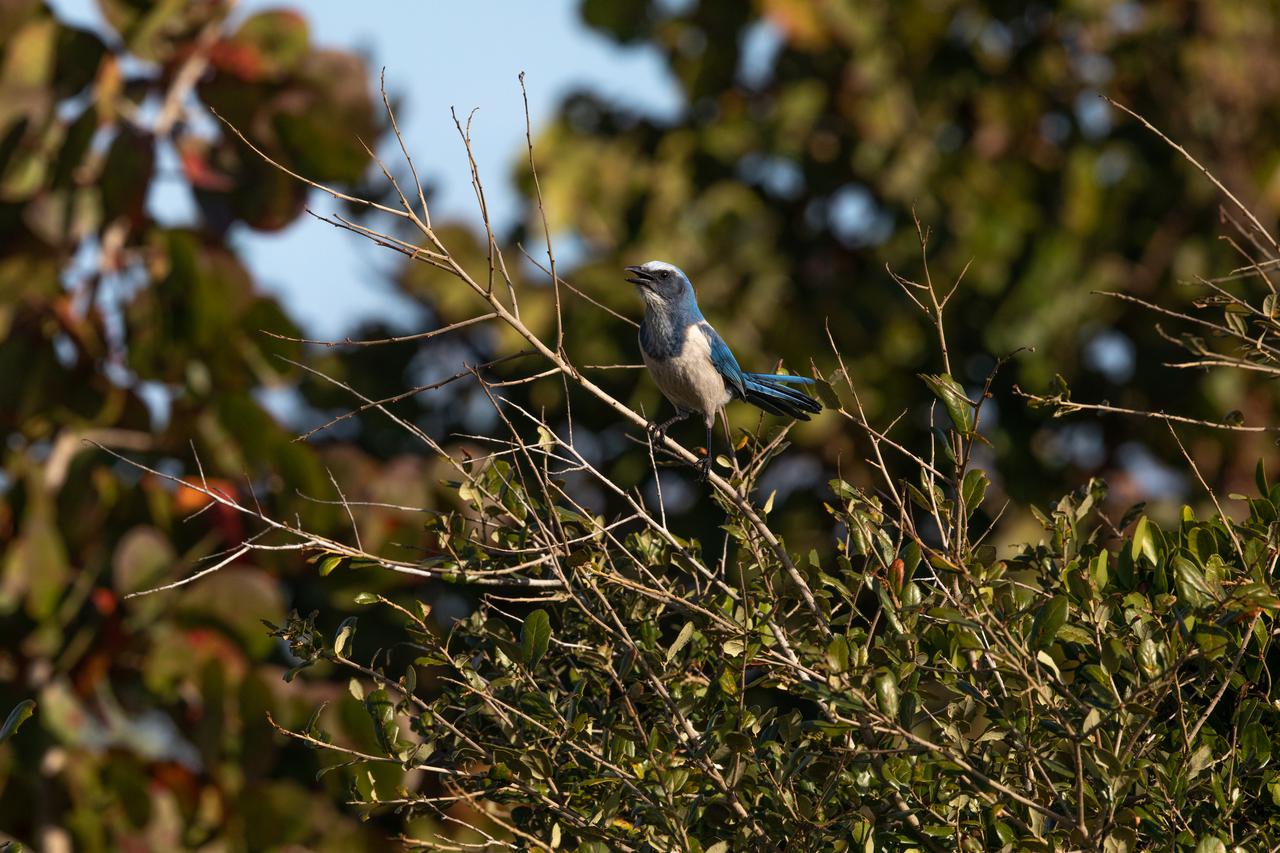
A Florida Scrub-Jay perches on the branch of a tree at NASA's Kennedy Space Center in Florida on Jan. 8, 2021. The center shares a border with the Merritt Island National Wildlife Refuge. More than 330 native and migratory bird species, along with 25 mammal, 117 fish, and 65 amphibian and reptile species call Kennedy and the wildlife refuge home.
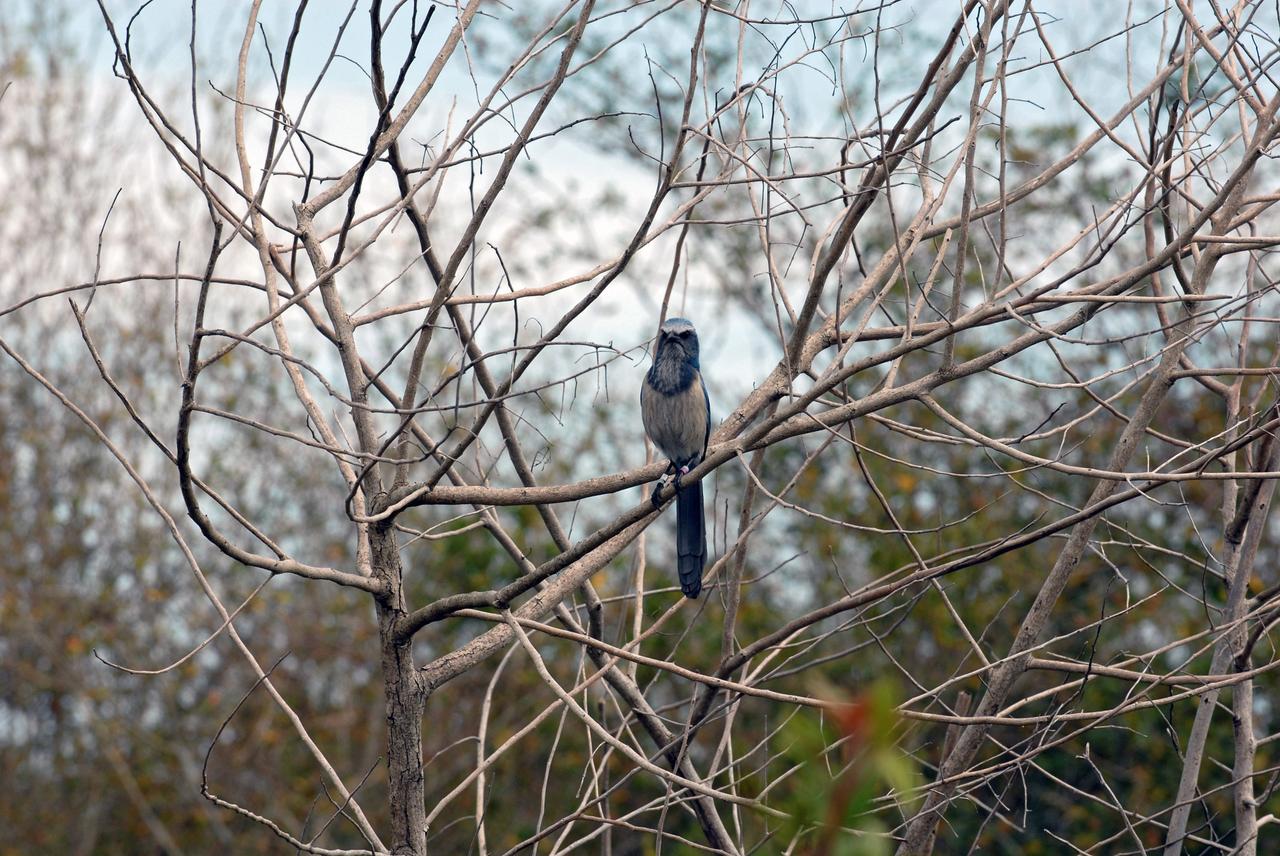
CAPE CANAVERAL, Fla. – A Florida scrub jay perches on a branch in a wooded area at NASA's Kennedy Space Center in Florida. As the name implies, the Florida scrub jay thrives in a scrub, which is an extremely dry habitat. Their ideal environment is a relatively open flatwoods of oak or sand pine scrub with trees less than 10 feet tall, wide apart and providing minimal canopy cover. The last recorded population count of Florida scrub jays is just a little over 2,000, mostly located at Kennedy but also in some scattered scrubs all over central and southern Florida. Photo credit: NASA/Ben Smegelsky
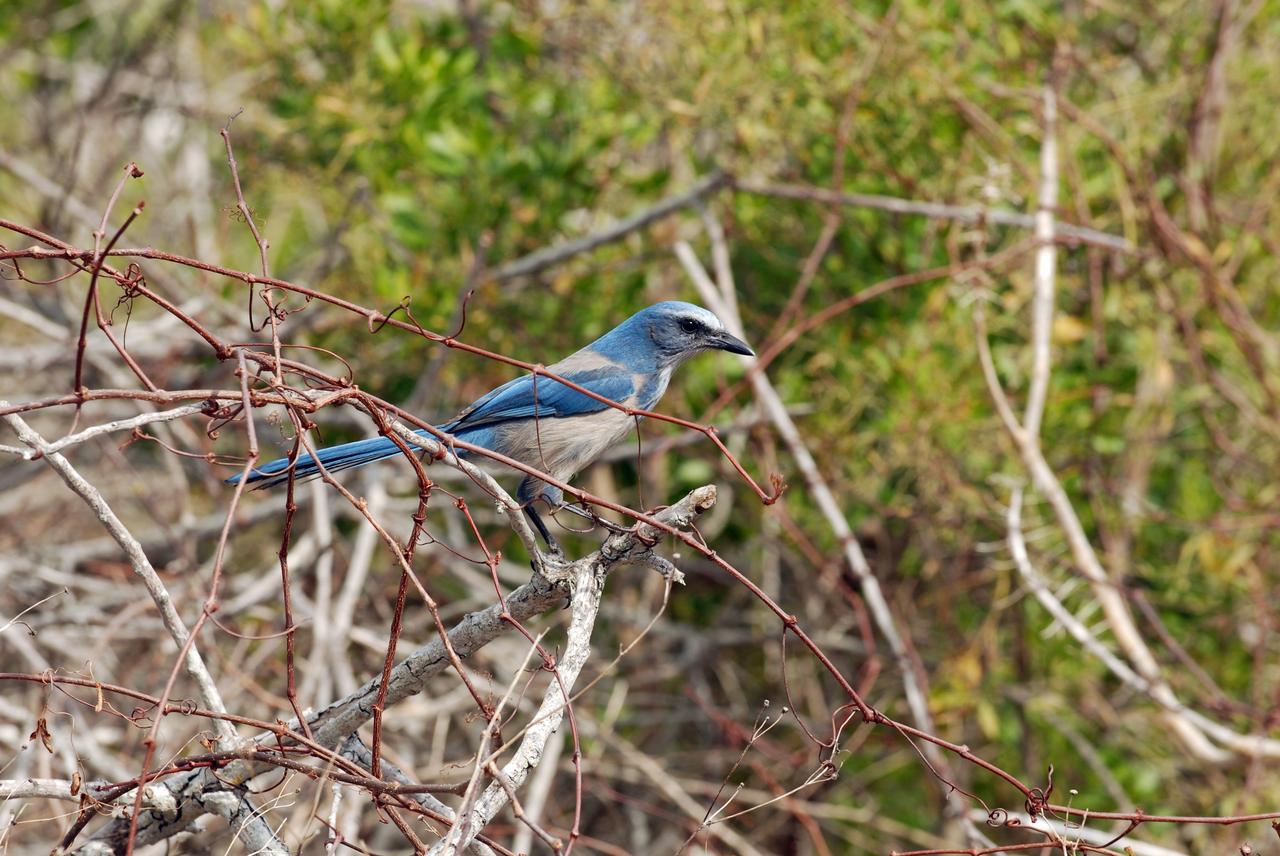
CAPE CANAVERAL, Fla. – Close-up of a Florida scrub jay in the woods near NASA's Kennedy Space Center in Florida. As the name implies, the Florida scrub jay thrives in a scrub, which is an extremely dry habitat. Their ideal environment is a relatively open flatwoods of oak or sand pine scrub with trees less than 10 feet tall, wide apart and providing minimal canopy cover. The last recorded population count of Florida scrub jays is just a little over 2,000, mostly located at Kennedy but also in some scattered scrubs all over central and southern Florida. Photo credit: NASA/Ben Smegelsky
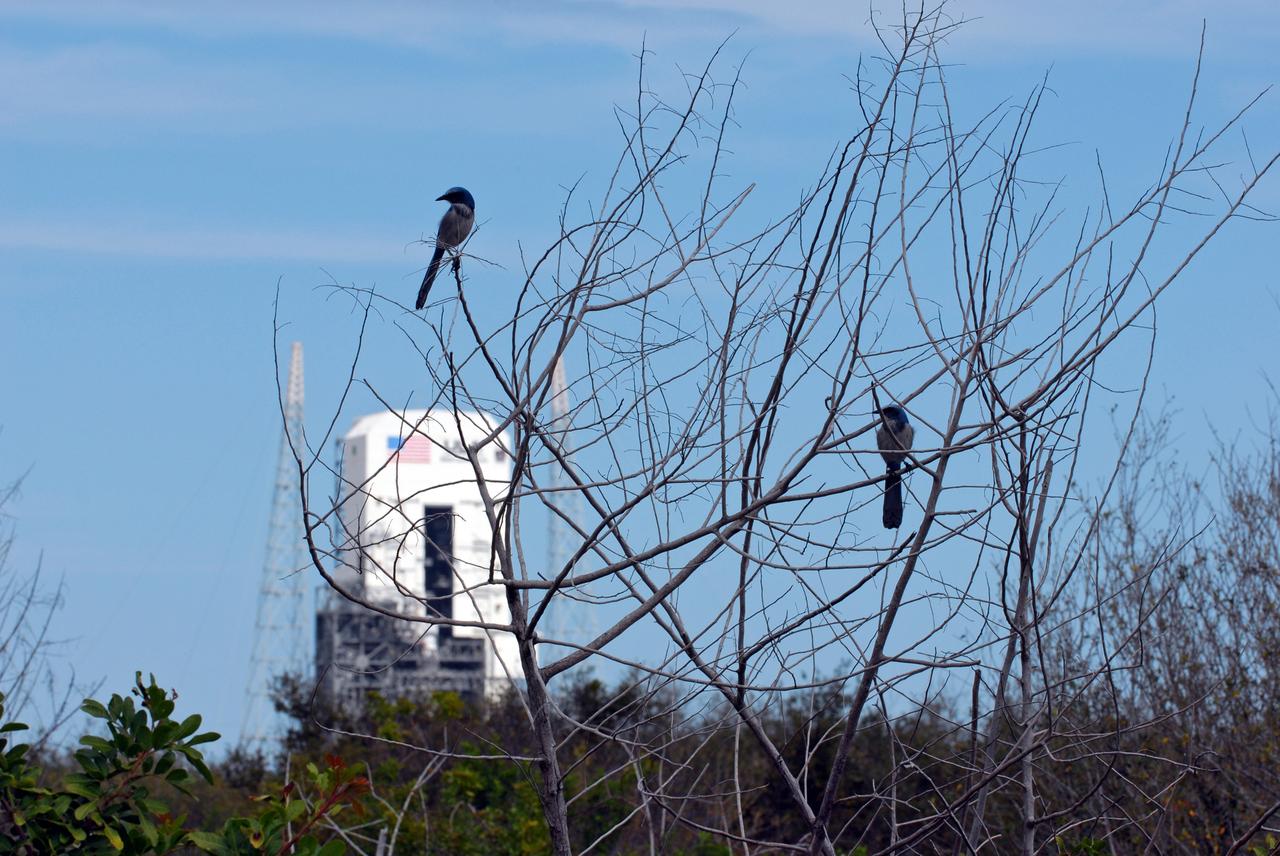
CAPE CANAVERAL, Fla. – Florida scrub jays scan their territory from a bush at NASA's Kennedy Space Center in Florida. As the name implies, the Florida scrub jay thrives in a scrub, which is an extremely dry habitat. Their ideal environment is a relatively open flatwoods of oak or sand pine scrub with trees less than 10 feet tall, wide apart and providing minimal canopy cover. The last recorded population count of Florida scrub jays is just a little over 2,000, mostly located at Kennedy but also in some scattered scrubs all over central and southern Florida. Photo credit: NASA/Ben Smegelsky

CAPE CANAVERAL, Fla. – Florida scrub jays scan their territory from a bush at NASA's Kennedy Space Center in Florida. As the name implies, the Florida scrub jay thrives in a scrub, which is an extremely dry habitat. Their ideal environment is a relatively open flatwoods of oak or sand pine scrub with trees less than 10 feet tall, wide apart and providing minimal canopy cover. The last recorded population count of Florida scrub jays is just a little over 2,000, mostly located at Kennedy but also in some scattered scrubs all over central and southern Florida. Photo credit: NASA/Ben Smegelsky

CAPE CANAVERAL, Fla. - At NASA's Kennedy Space Center in Florida, a Florida scrub jay is caught taking a break from his daily routine. The birds are one of several threatened species that reside on the Merritt Island National Wildlife Refuge which coexists with Kennedy Space Center. Scrub is a habitat unique to Florida, and one of the most important habitats for endangered species in the state. Species like the scrub jay, gopher tortoise and indigo snake rely on this habitat for food and shelter. The scrub oak acorn, for example, is a primary food source for the Florida scrub jay. Photo credit: NASA_Jim Grossmann
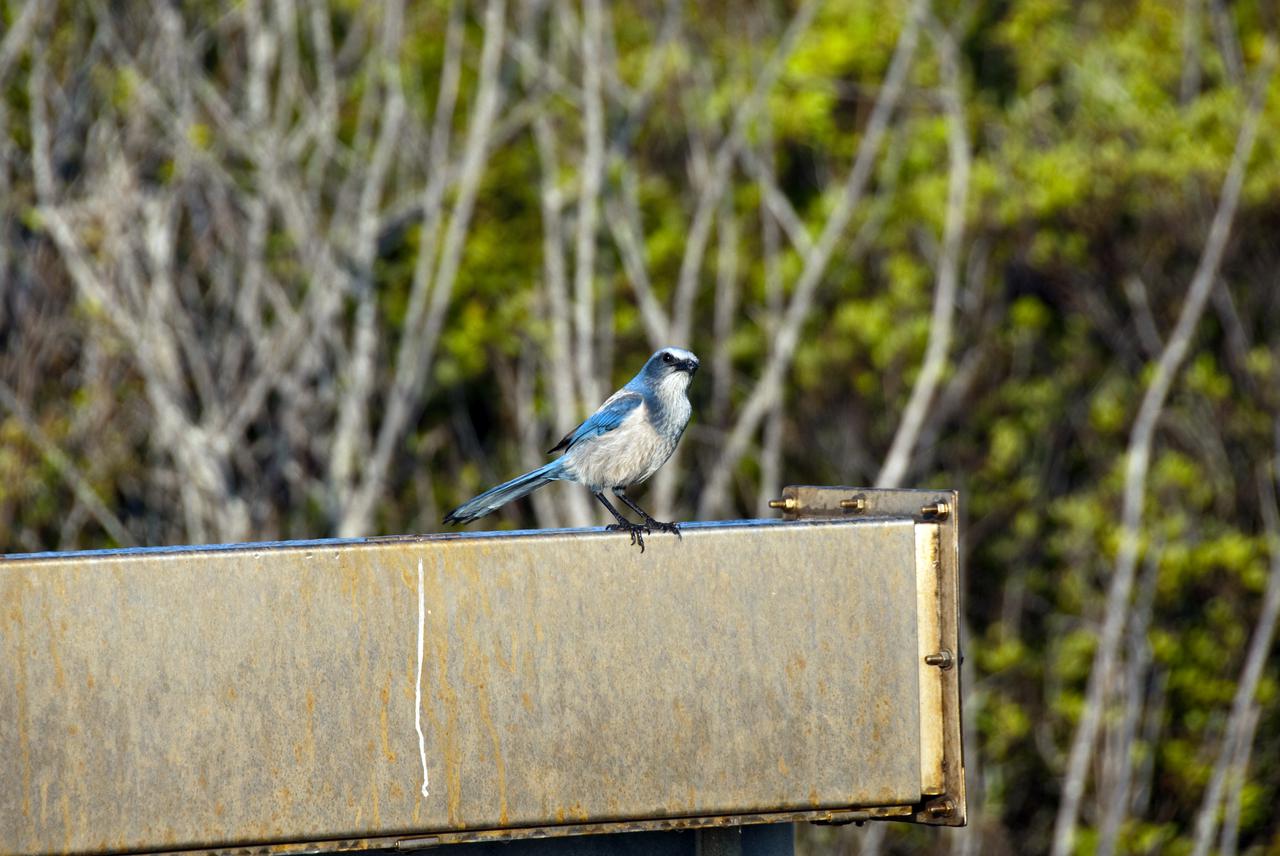
CAPE CANAVERAL, Fla. - At NASA's Kennedy Space Center in Florida, curiosity motivates a Florida scrub jay to investigate the activities of a NASA cameraman. The birds are one of several threatened species that reside on the Merritt Island National Wildlife Refuge which coexists with Kennedy Space Center. Scrub is a habitat unique to Florida, and one of the most important habitats for endangered species in the state. Species like the scrub jay, gopher tortoise and indigo snake rely on this habitat for food and shelter. The scrub oak acorn, for example, is a primary food source for the Florida scrub jay. Photo credit: NASA_Jim Grossmann

KENNEDY SPACE CENTER, FLA. -- Two fledgling eagles bear the regal look of their parents as they rest in their nest at the north end of S.R. 3 near Kennedy Space Center. This year-old nest is one of a dozen eagle nests both in KSC and in the Merritt Island National Wildlife Refuge, which surrounds KSC. The refuge includes several wading bird rookeries, many osprey nests, up to 400 manatees during the spring, and approximately 2,500 Florida scrub jays. It also is a major wintering area for migratory birds. More than 500 species of wildlife inhabit the refuge, with 15 considered federally threatened or endangered. Photo credit: NASA/Ken Thornsley
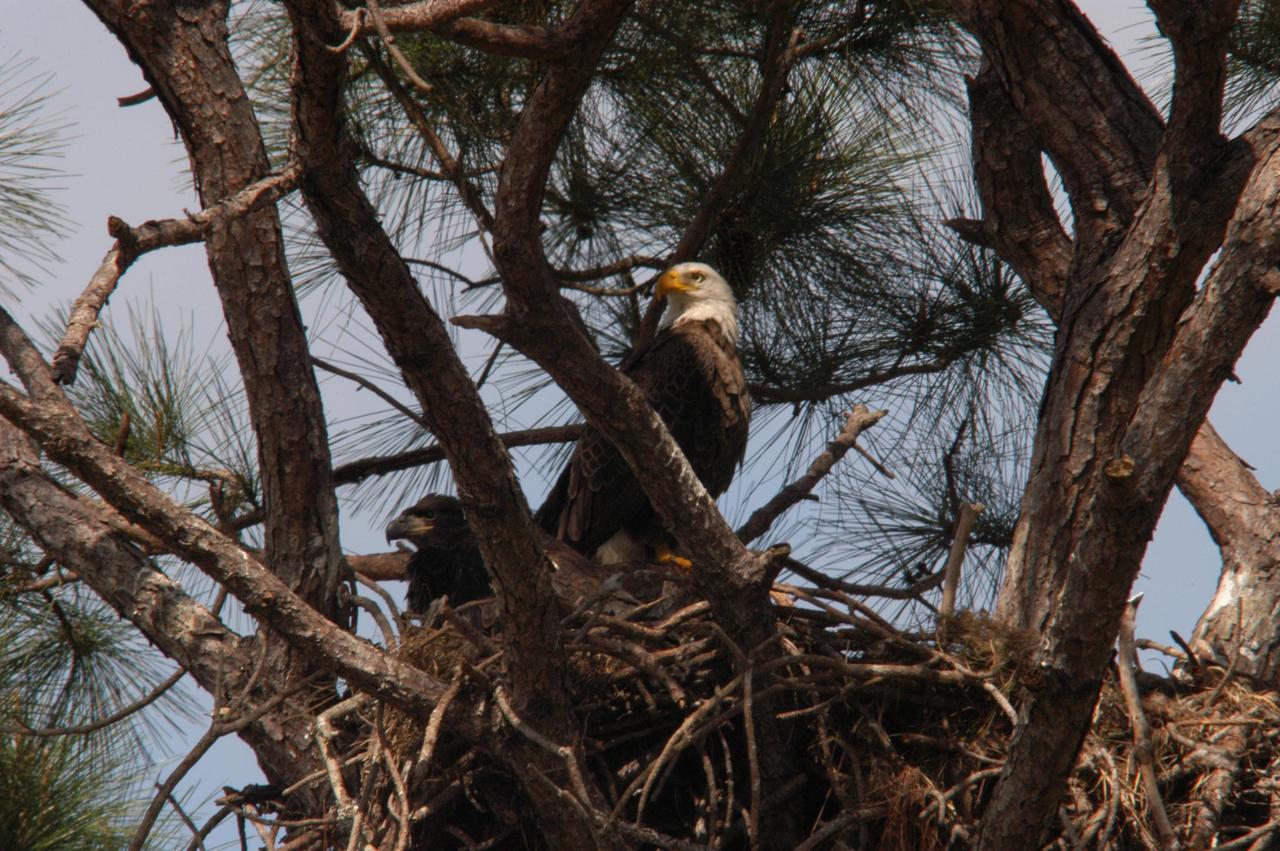
KENNEDY SPACE CENTER, FLA. -- High in a pine tree at NASA's Kennedy Space Center, an adult bald eagle (right) and a fledgling keep watch from their nest. There are approximately a dozen active bald eagle nests both in KSC and in the Merritt Island National Wildlife Refuge, which surrounds KSC. The refuge includes several wading bird rookeries, many osprey nests, up to 400 manatees during the spring, and approximately 2,500 Florida scrub jays. It also is a major wintering area for migratory birds. More than 500 species of wildlife inhabit the refuge, with 15 considered federally threatened or endangered. Photo credit: NASA/George Shelton
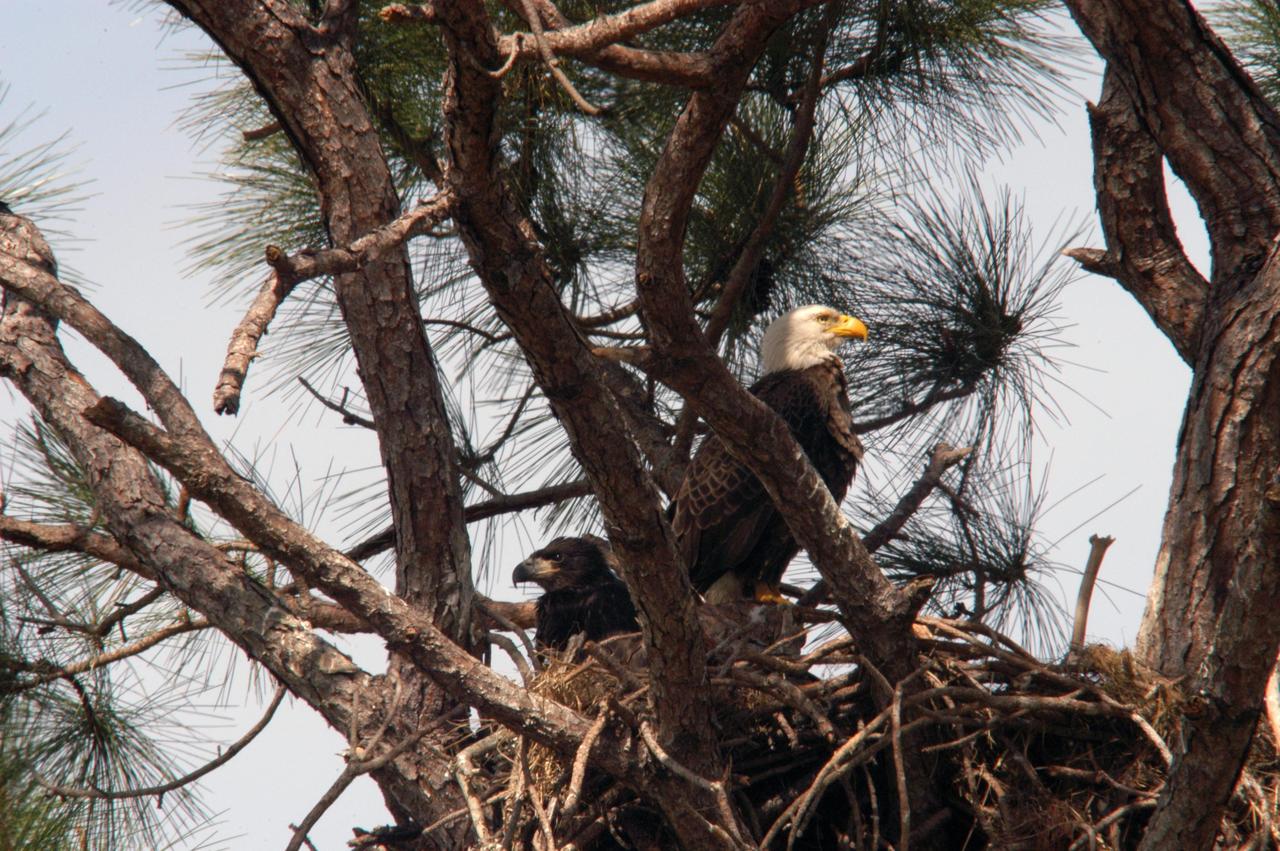
KENNEDY SPACE CENTER, FLA. -- High in a pine tree at NASA's Kennedy Space Center, an adult bald eagle (right) and a fledgling keep watch from their nest. There are approximately a dozen active bald eagle nests both in KSC and in the Merritt Island National Wildlife Refuge, which surrounds KSC. The refuge includes several wading bird rookeries, many osprey nests, up to 400 manatees during the spring, and approximately 2,500 Florida scrub jays. It also is a major wintering area for migratory birds. More than 500 species of wildlife inhabit the refuge, with 15 considered federally threatened or endangered. Photo credit: NASA/George Shelton
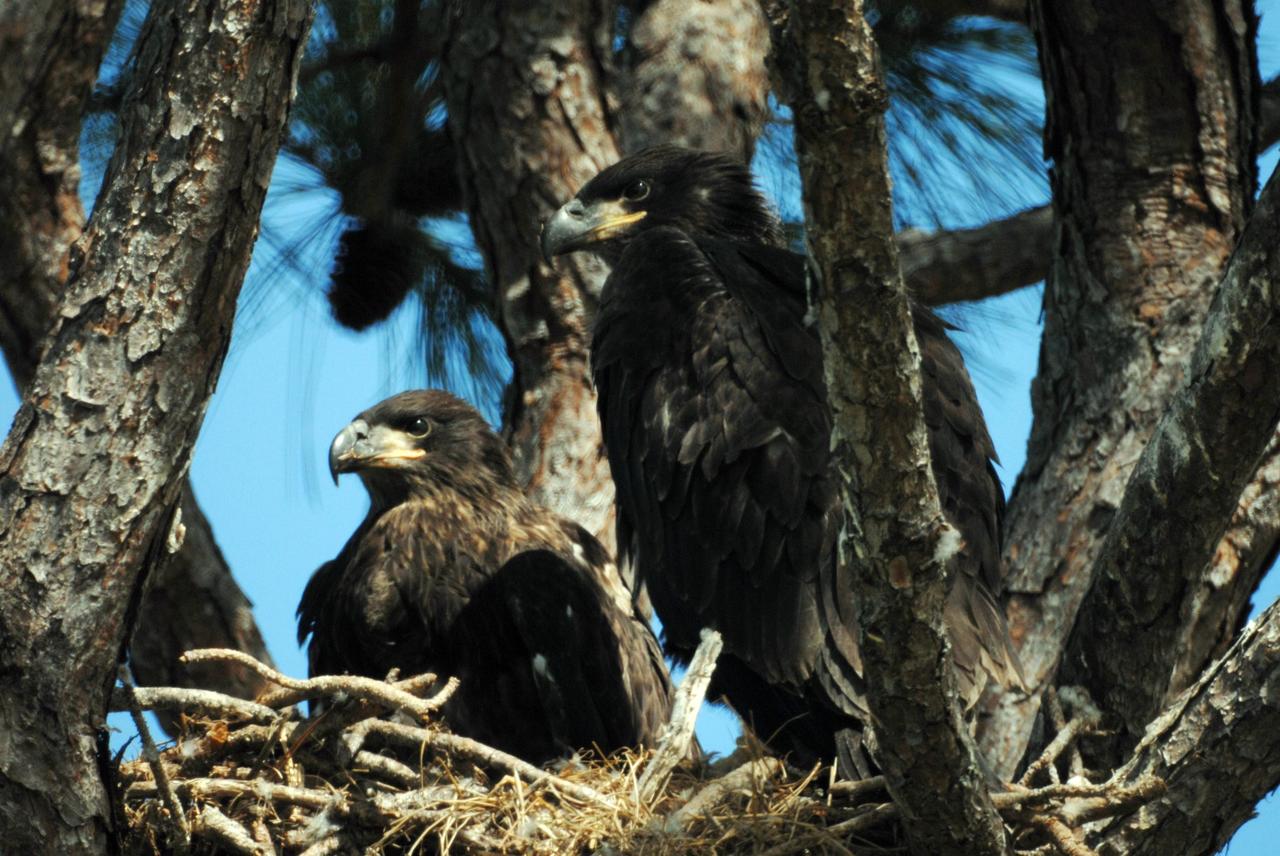
KENNEDY SPACE CENTER, FLA. -- Two fledgling eagles bear the regal look of their parents as they rest in their nest at the north end of S.R. 3 near Kennedy Space Center. This year-old nest is one of a dozen eagle nests both in KSC and in the Merritt Island National Wildlife Refuge, which surrounds KSC. The refuge includes several wading bird rookeries, many osprey nests, up to 400 manatees during the spring, and approximately 2,500 Florida scrub jays. It also is a major wintering area for migratory birds. More than 500 species of wildlife inhabit the refuge, with 15 considered federally threatened or endangered. Photo credit: NASA/Ken Thornsley
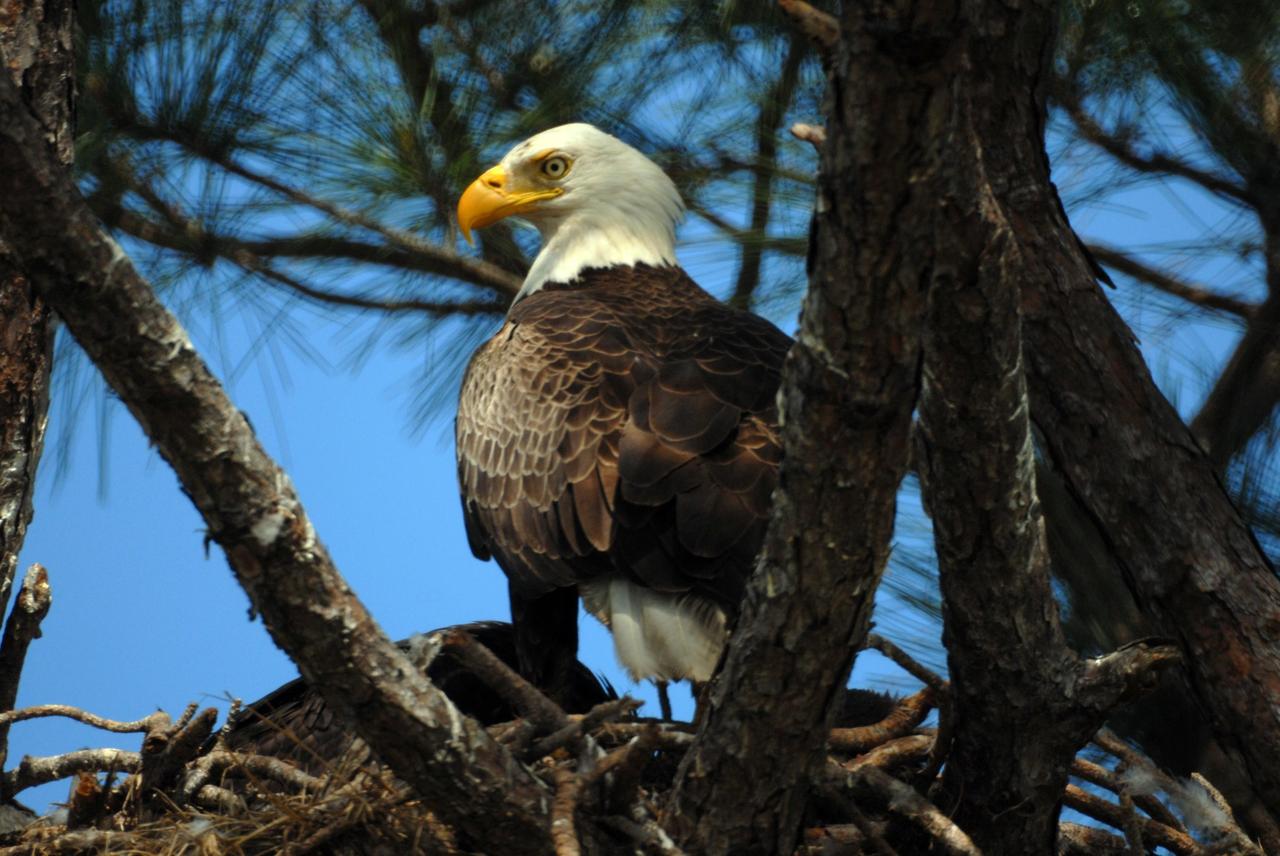
KENNEDY SPACE CENTER, FLA. -- This mother eagle appears wary as she stands in her nest at the north end of S.R. 3 near Kennedy Space Center. The resident eagle parents are raising two offspring. It is one of a dozen eagle nests both in KSC and in the Merritt Island National Wildlife Refuge, which surrounds KSC. The refuge includes several wading bird rookeries, many osprey nests, up to 400 manatees during the spring, and approximately 2,500 Florida scrub jays. It also is a major wintering area for migratory birds. More than 500 species of wildlife inhabit the refuge, with 15 considered federally threatened or endangered. Photo credit: NASA/Ken Thornsley
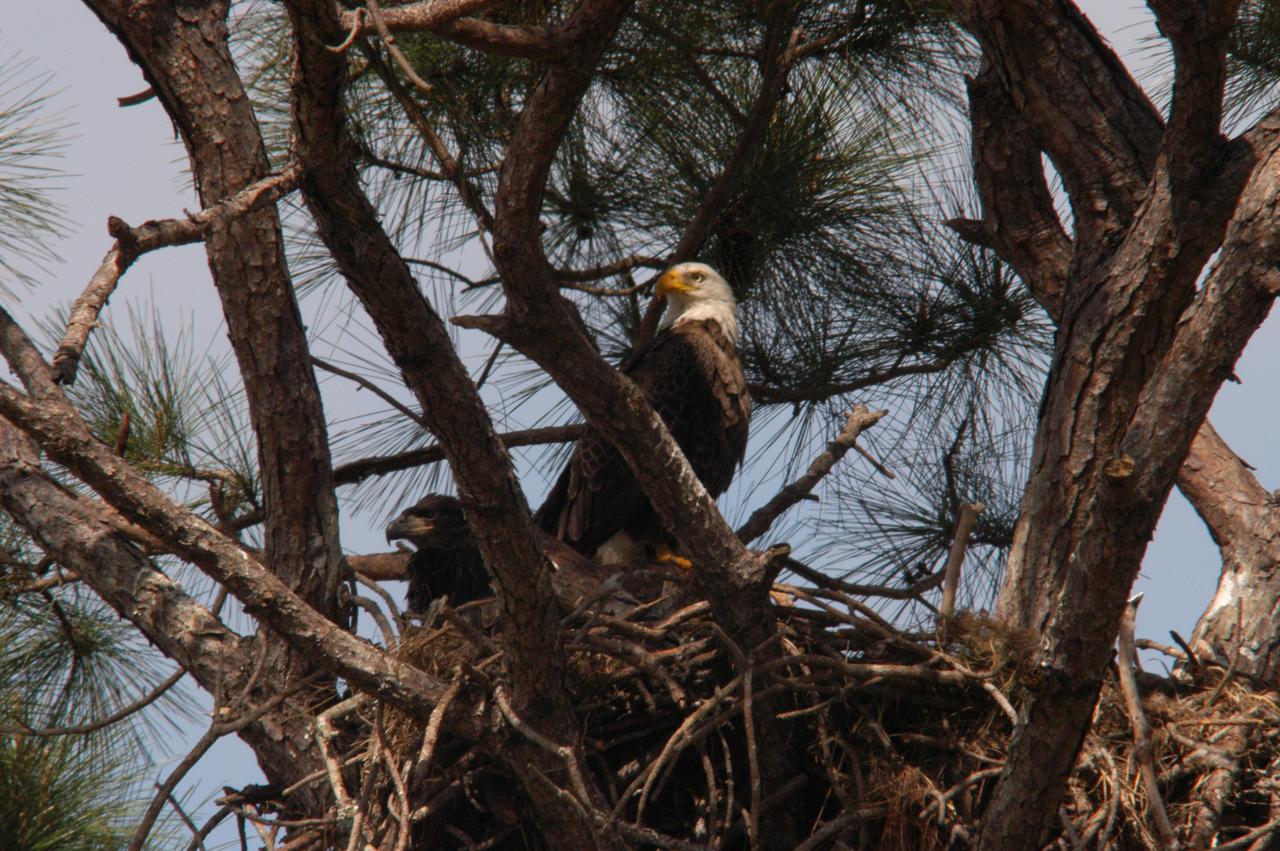
High in a pine tree at NASA's Kennedy Space Center, an adult bald eagle (right) and a fledgling keep watch from their nest. There are approximately a dozen active bald eagle nests both in KSC and in the Merritt Island National Wildlife Refuge, which surrounds KSC. The refuge includes several wading bird rookeries, many osprey nests, up to 400 manatees during the spring, and approximately 2,500 Florida scrub jays. It also is a major wintering area for migratory birds. More than 500 species of wildlife inhabit the refuge, with 15 considered federally threatened or endangered.
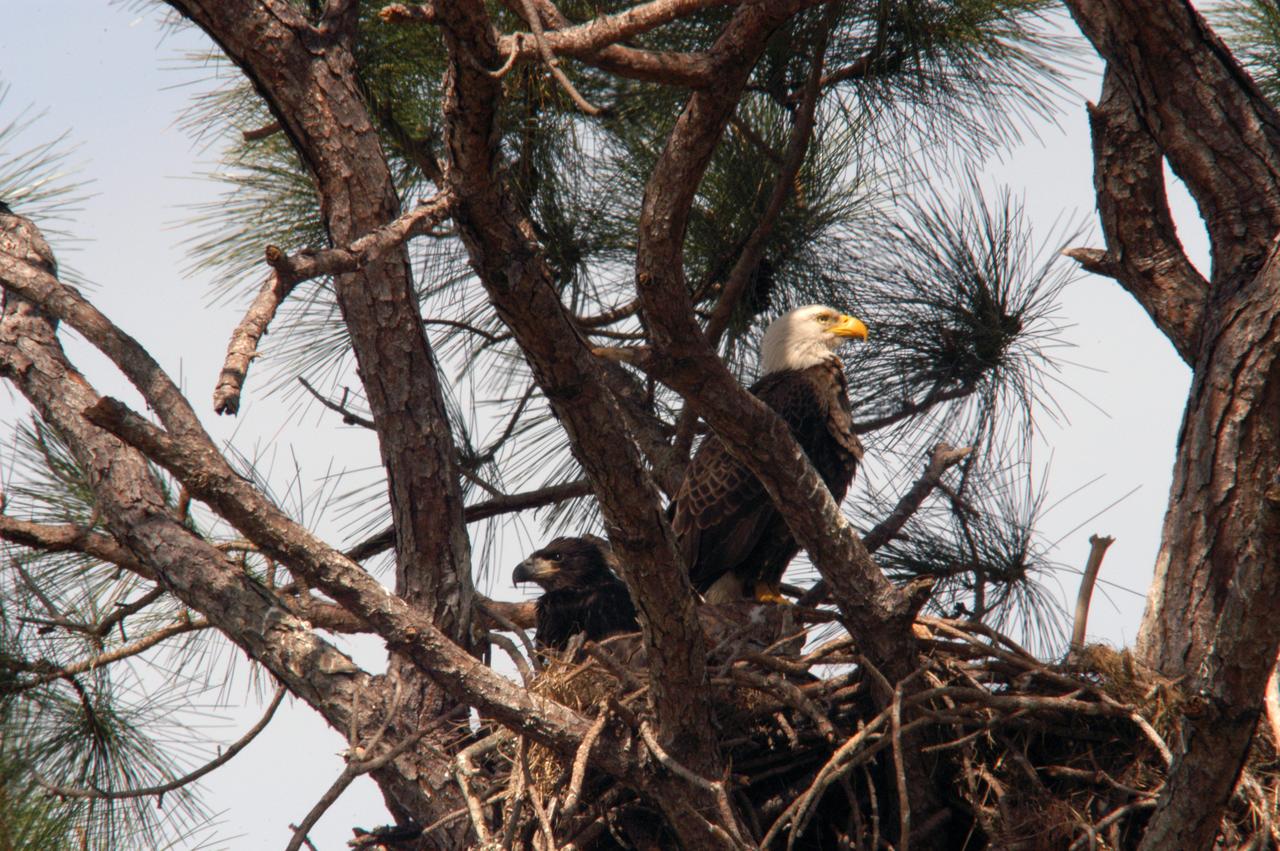
High in a pine tree at NASA's Kennedy Space Center, an adult bald eagle (right) and a fledgling keep watch from their nest. There are approximately a dozen active bald eagle nests both in KSC and in the Merritt Island National Wildlife Refuge, which surrounds KSC. The refuge includes several wading bird rookeries, many osprey nests, up to 400 manatees during the spring, and approximately 2,500 Florida scrub jays. It also is a major wintering area for migratory birds. More than 500 species of wildlife inhabit the refuge, with 15 considered federally threatened or endangered.
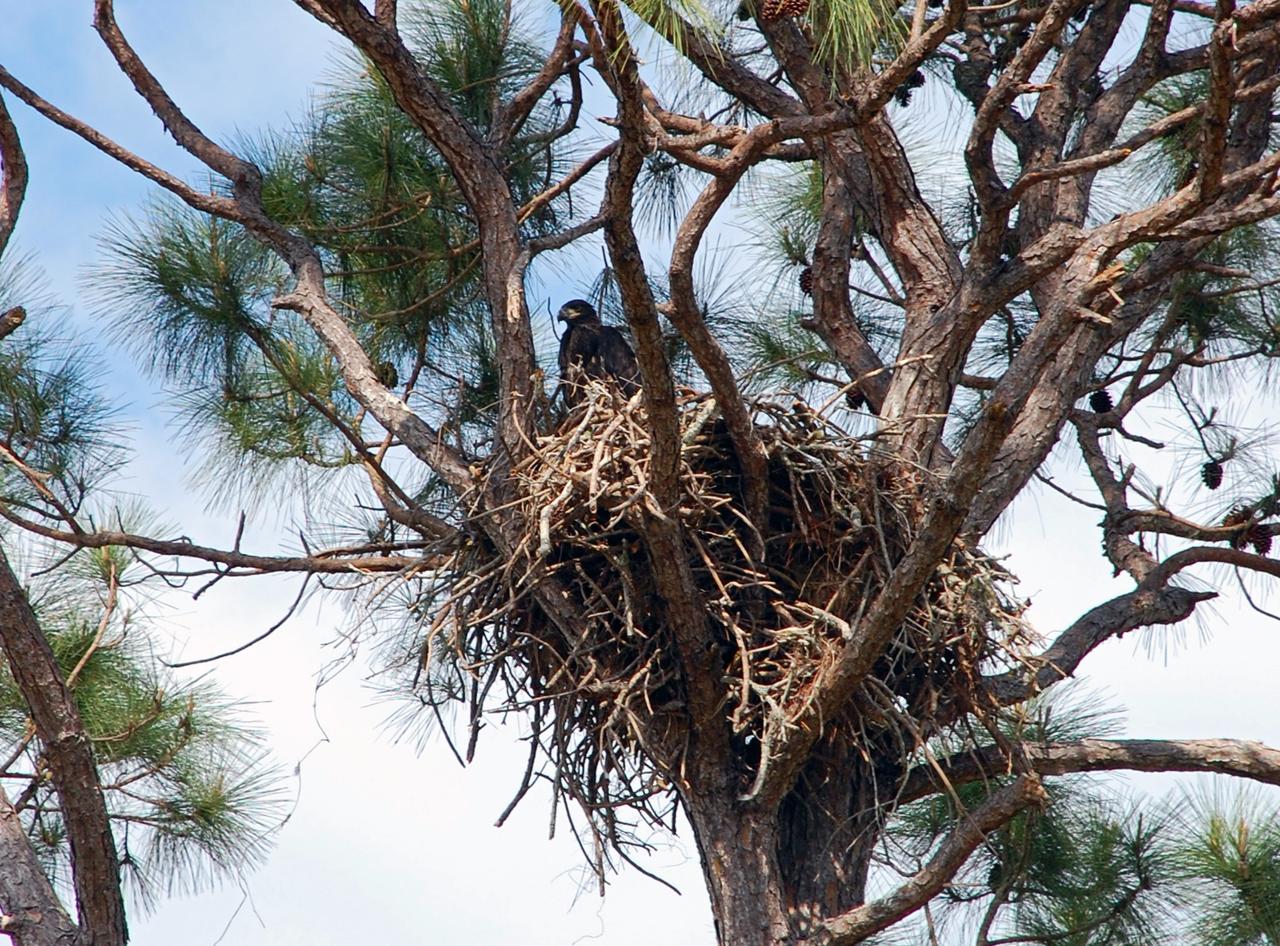
CAPE CANAVERAL, Fla. – At NASA's Kennedy Space Center in Florida, a young eagle shows itself in its nest in a pine tree on S.R. 3. There are a dozen eagle nests within Kennedy and in the surrounding Merritt Island National Wildlife Refuge. Bald eagles use a specific territory for nesting (they mate for life), winter feeding or a year-round residence. Its natural domain is from Alaska to Baja, California, and from Maine to Florida. The Merritt Island refuge also includes several wading bird rookeries, many osprey nests, up to 400 manatees during the spring, and approximately 2,500 Florida scrub jays. It also is a major wintering area for migratory birds. More than 500 species of wildlife inhabit the refuge, with 15 considered federally threatened or endangered. Photo credit: NASA/Ben Smegelsky
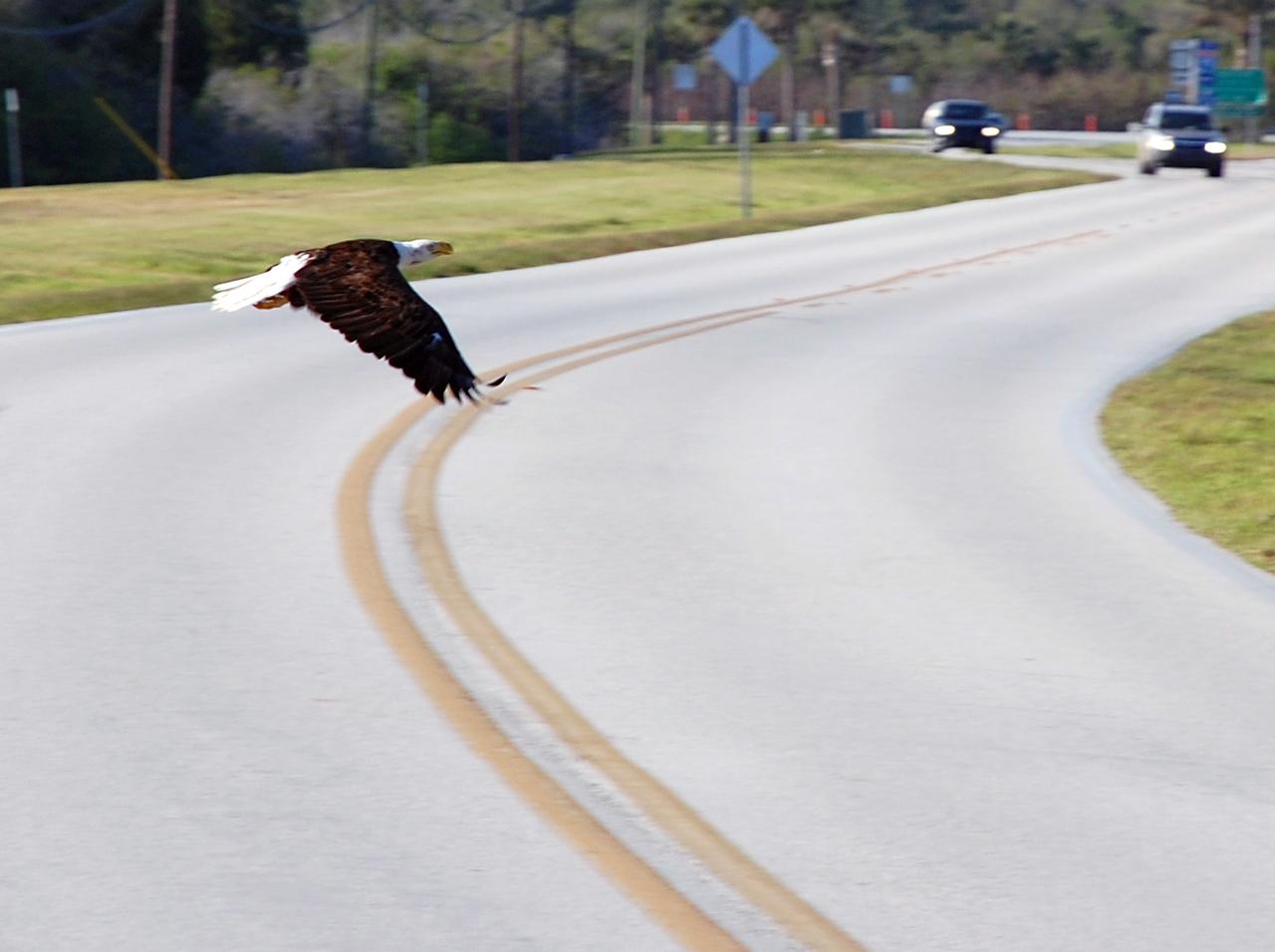
CAPE CANAVERAL, Fla. – At NASA's Kennedy Space Center in Florida, a bald eagle flies across the road in front of vehicles on the road. There are a dozen eagle nests within Kennedy and in the surrounding Merritt Island National Wildlife Refuge, some of them close to roads through the center. Bald eagles use a specific territory for nesting (they mate for life), winter feeding or a year-round residence. Eagles' natural domain is from Alaska to Baja, California, and from Maine to Florida. The Merritt Island refuge also includes several wading bird rookeries, many osprey nests, up to 400 manatees during the spring, and approximately 2,500 Florida scrub jays. It also is a major wintering area for migratory birds. More than 500 species of wildlife inhabit the refuge, with 15 considered federally threatened or endangered. Photo credit: NASA/Ben Smegelsky
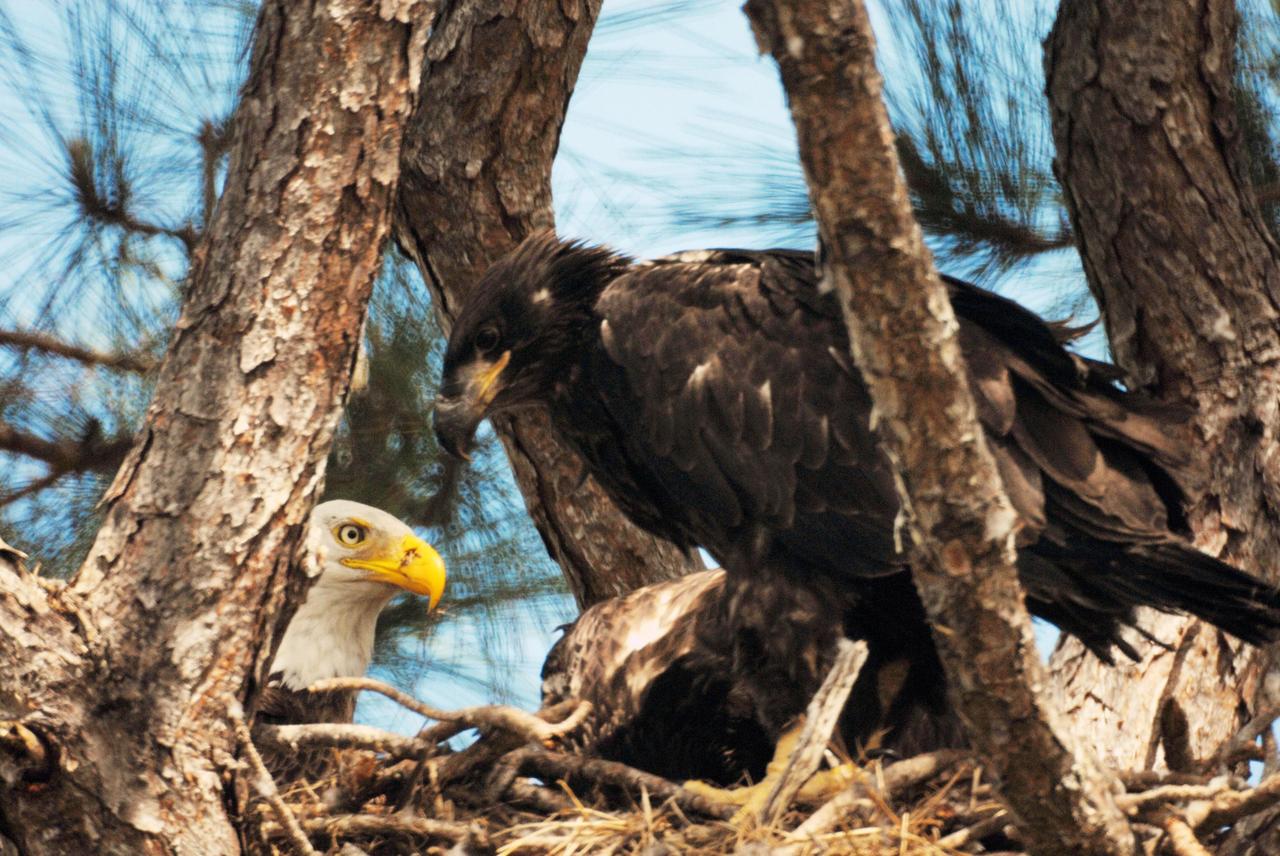
KENNEDY SPACE CENTER, FLA. -- This fledgling eagle, at right, stares at his mother, at left, in their nest at the north end of S.R. 3 near Kennedy Space Center. The resident eagle parents are raising two offspring. This year-old nest is one of a dozen eagle nests both in KSC and in the Merritt Island National Wildlife Refuge, which surrounds KSC. The refuge includes several wading bird rookeries, many osprey nests, up to 400 manatees during the spring, and approximately 2,500 Florida scrub jays. It also is a major wintering area for migratory birds. More than 500 species of wildlife inhabit the refuge, with 15 considered federally threatened or endangered. Photo credit: NASA/Ken Thornsley
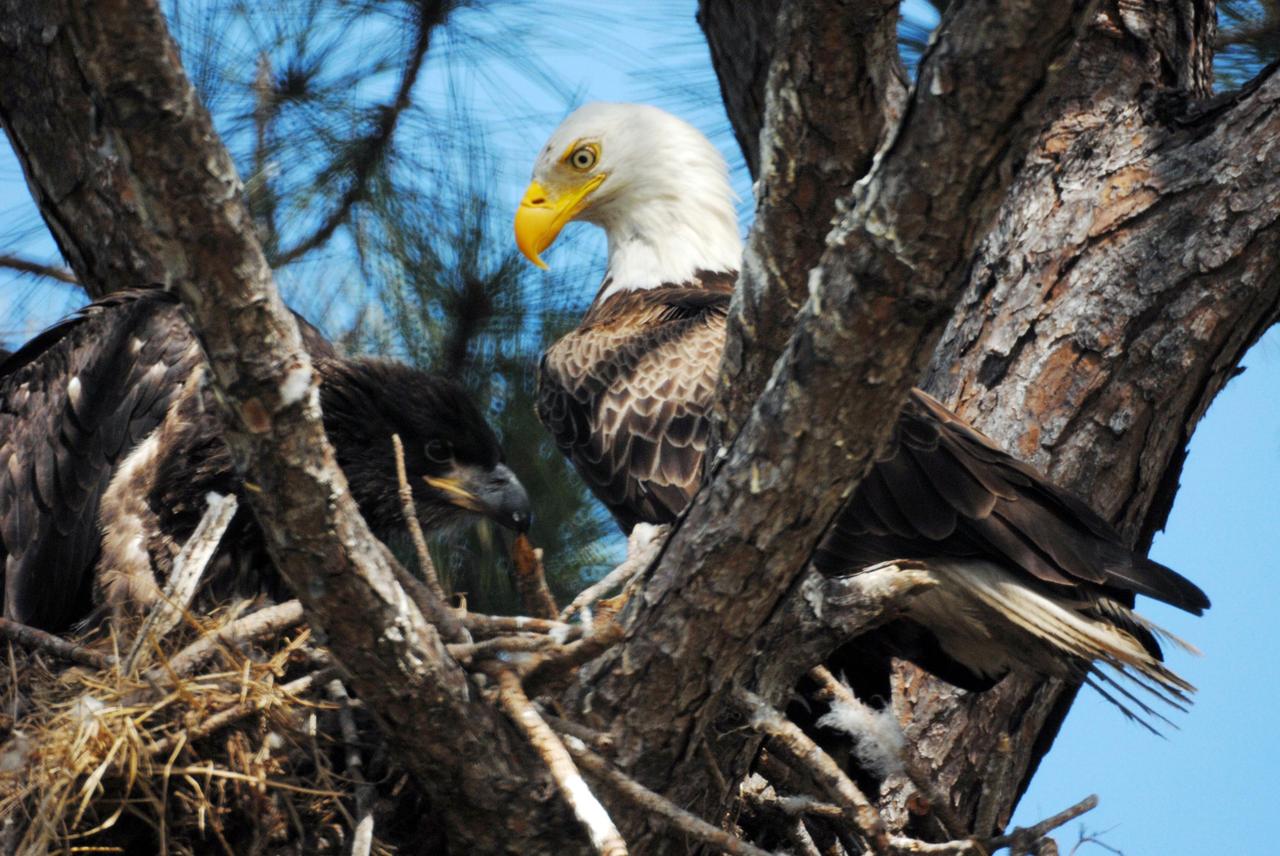
KENNEDY SPACE CENTER, FLA. -- This mother eagle looks at one of her offspring, at left, in their nest at the north end of S.R. 3 near Kennedy Space Center. The resident eagle parents are raising two offspring. This year-old nest is one of a dozen eagle nests both in KSC and in the Merritt Island National Wildlife Refuge, which surrounds KSC. The refuge includes several wading bird rookeries, many osprey nests, up to 400 manatees during the spring, and approximately 2,500 Florida scrub jays. It also is a major wintering area for migratory birds. More than 500 species of wildlife inhabit the refuge, with 15 considered federally threatened or endangered. Photo credit: NASA/Ken Thornsley
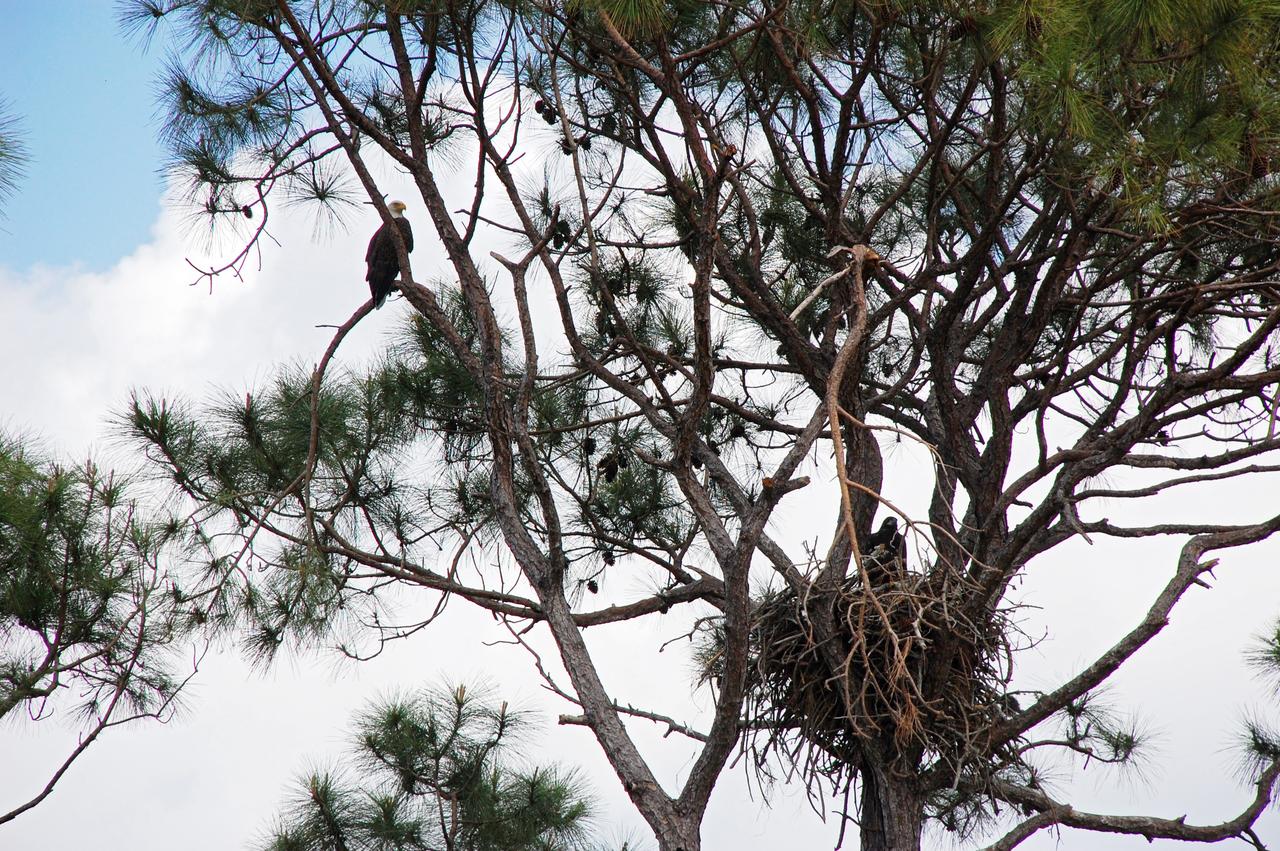
CAPE CANAVERAL, Fla. – On a road through NASA's Kennedy Space Center in Florida, an eagle's nest in a pine tree holds a young eagle while its parent watches on a nearby branch. There are a dozen eagle nests within Kennedy and in the surrounding Merritt Island National Wildlife Refuge. Bald eagles use a specific territory for nesting (they mate for life), winter feeding or a year-round residence. Its natural domain is from Alaska to Baja, California, and from Maine to Florida. The Merritt Island refuge also includes several wading bird rookeries, many osprey nests, up to 400 manatees during the spring, and approximately 2,500 Florida scrub jays. It also is a major wintering area for migratory birds. More than 500 species of wildlife inhabit the refuge, with 15 considered federally threatened or endangered. Photo credit: NASA/Ben Smegelsky
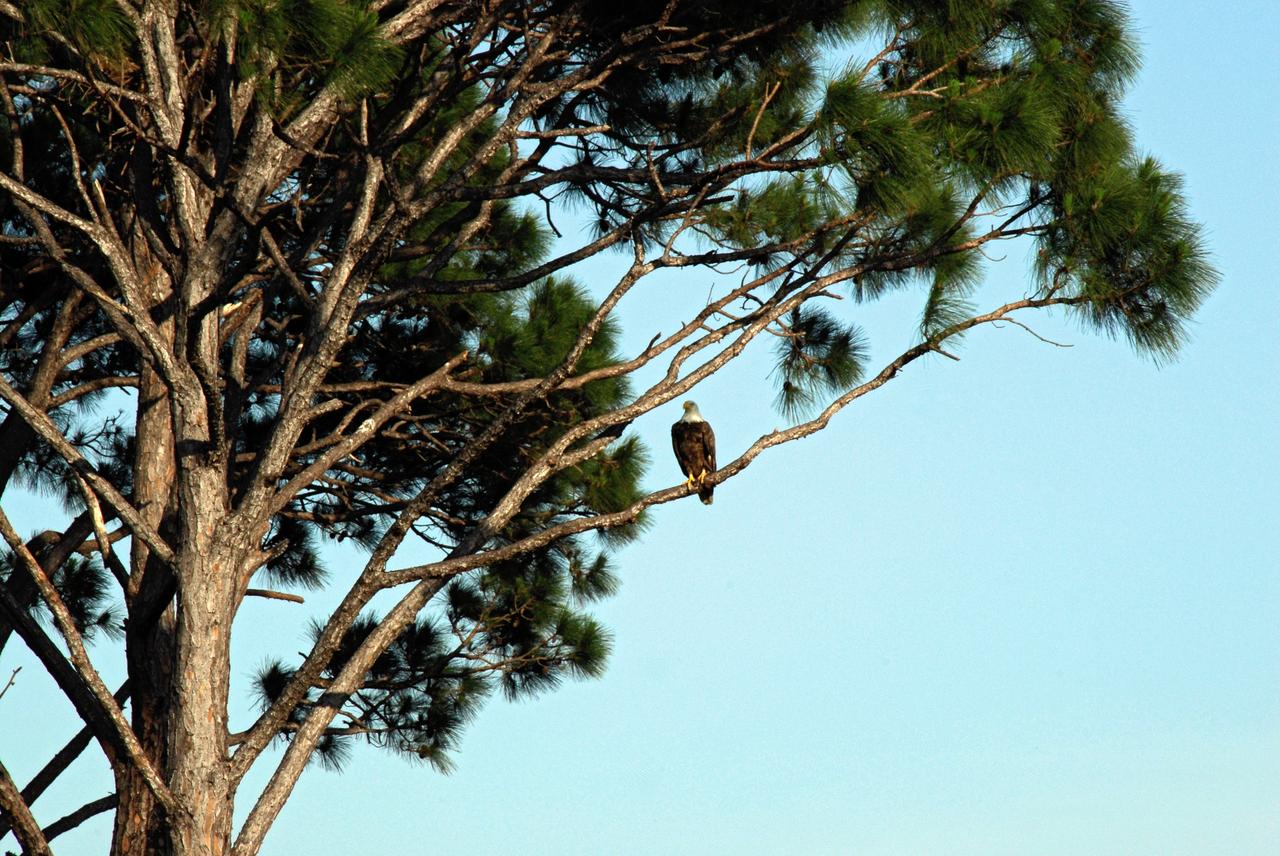
CAPE CANAVERAL, Fla. -- Near NASA Kennedy Space Center's Shuttle Landing Facility, this bald eagle is spotted sitting in a tall pine tree. There are a dozen eagle nests within Kennedy and in the surrounding Merritt Island National Wildlife Refuge. Bald eagles use a specific territory for nesting (they mate for life), winter feeding or a year-round residence. Its natural domain is from Alaska to Baja, California, and from Maine to Florida. The Merritt Island refuge also includes several wading bird rookeries, many osprey nests, up to 400 manatees during the spring, and approximately 2,500 Florida scrub jays. It also is a major wintering area for migratory birds. More than 500 species of wildlife inhabit the refuge, with 15 considered federally threatened or endangered. Photo credit: NASA/Kim Shiflett
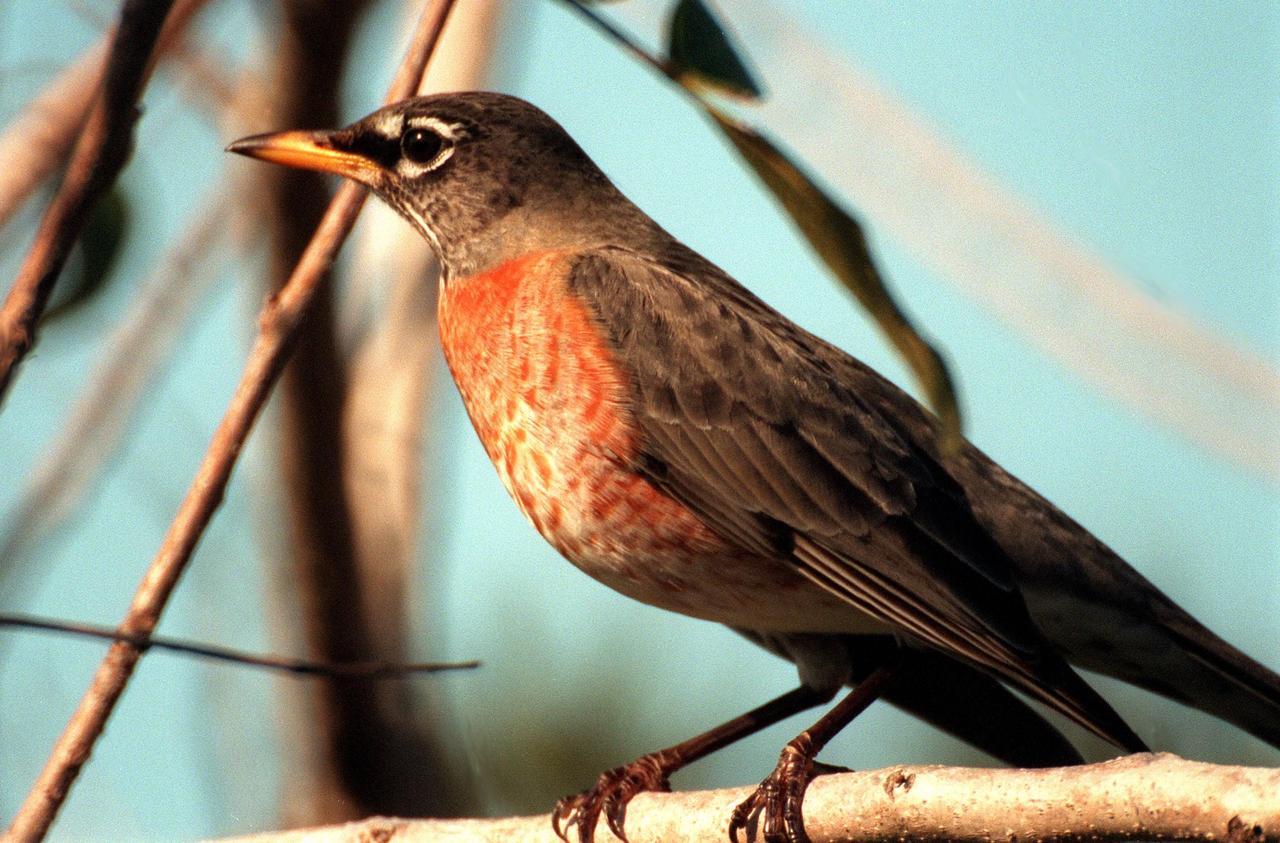
KENNEDY SPACE CENTER, FLA. -- A robin perches on a branch in the Merritt Island National <a href="http://www-pao.ksc.nasa.gov/kscpao/captions/subjects/wildlife.htm">Wildlife </a>Refuge, which shares a boundary with the space center. Robins range throughout North America, from Alaska to Florida. Although considered a harbinger of spring, they do winter in northern states, frequenting cedar bogs and swamps. They also winter in Florida, where they often can be seen in flocks of hundreds near KSC and the wildlife refuge, which comprises 92,000 acres, ranging from hardwood hammocks and pine flatwoods to fresh-water impoundments, salt-water estuaries and brackish marshes. The diverse landscape provides habitat for more than 310 species of birds, 25 mammals, 117 fishes, and 65 amphibians and reptiles, including such endangered species as Southern bald eagles, wood storks, Florida scrub jays, Atlantic loggerhead and leatherback turtles, osprey, and nearly 5,000 alligators
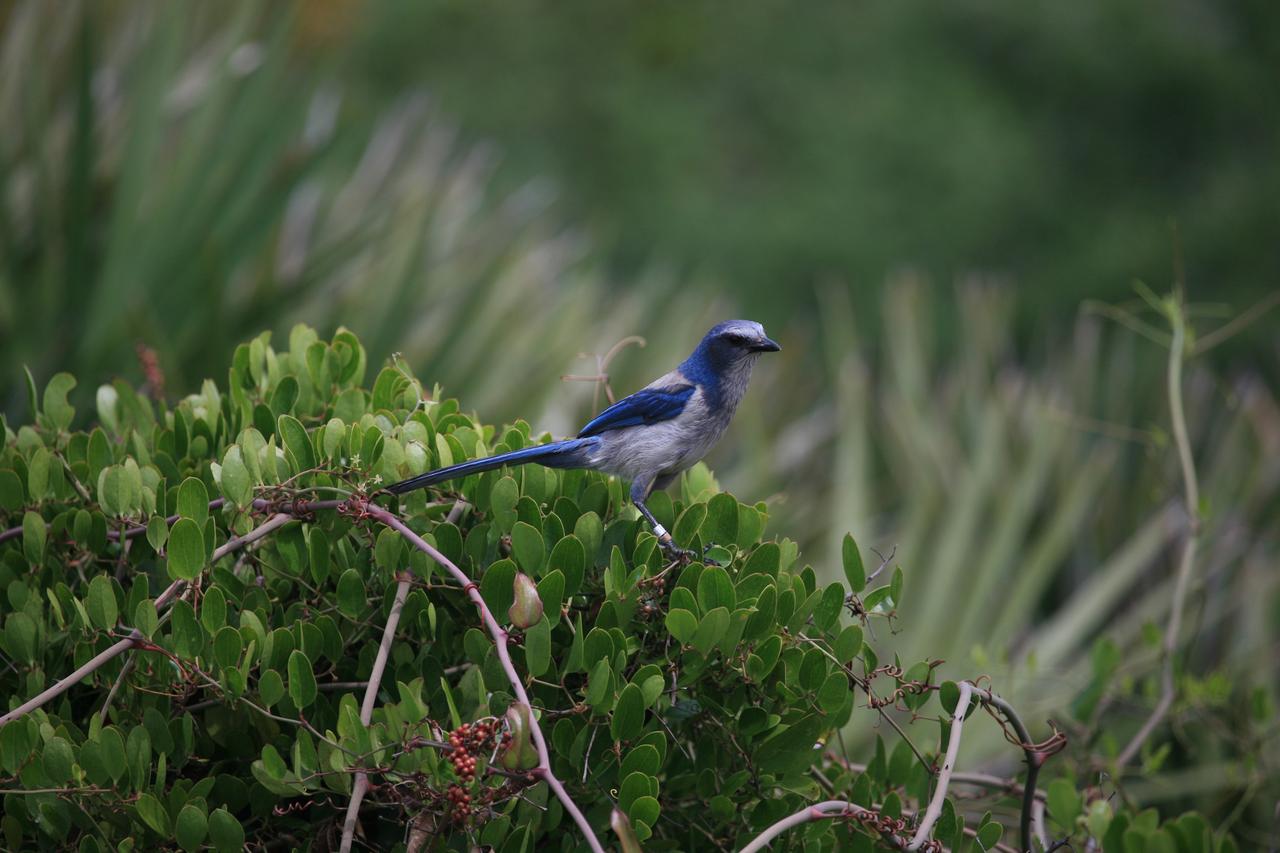
CAPE CANAVERAL, Fla. – Near Launch Complex-41 on Cape Canaveral Air Force Station in Florida, a scrub jay keeps watch of activity. On the pad, the Atlas V/Centaur is undergoing a wet dress rehearsal, or countdown test. The Atlas V is being fully loaded with propellants including liquid hydrogen, liquid oxygen and RP-1 fuel. Following the rehearsal, the launch vehicle will be rolled off the pad and returned to the Vertical Integration Facility on May 16. The Atlas V/Centaur is the launch vehicle for NASA's Lunar Reconnaissance Orbiter, or LRO, and NASA's Lunar CRater Observation and Sensing Satellite, known as LCROSS. They will be mated with the Atlas in late May. LCROSS and LRO are the first missions in NASA's plan to return humans to the moon and begin establishing a lunar outpost by 2020. Launch is scheduled for no earlier than June 17. Photo credit: NASA/Dimitri Gerondidakis
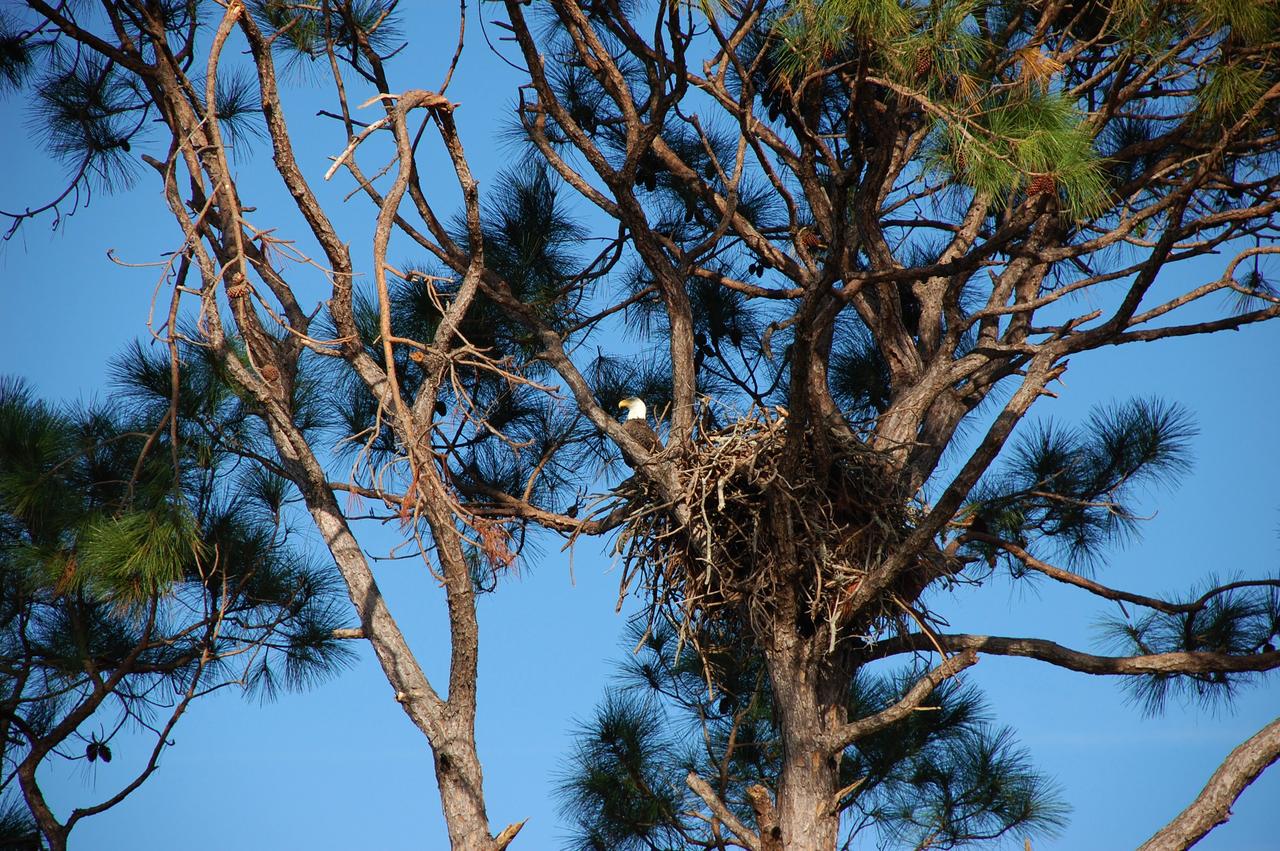
CAPE CANAVERAL, Fla. – A bald eagle appears to keep watch in its nest near the top of a pine tree near the Shuttle Landing Facility at NASA's Kennedy Space Center in Florida. There are a dozen eagle nests within Kennedy and in the surrounding Merritt Island National Wildlife Refuge. Bald eagles use a specific territory for nesting (they mate for life), winter feeding or a year-round residence. Its natural domain is from Alaska to Baja, California, and from Maine to Florida. The Merritt Island Refuge also includes several wading bird rookeries, many osprey nests, up to 400 manatees during the spring, and approximately 2,500 Florida scrub jays. It also is a major wintering area for migratory birds. More than 500 species of wildlife inhabit the refuge, with 15 considered federally threatened or endangered. Photo credit: NASA/Ben Smegelsky

A scrub jay perches on a branch near the Vehicle Assembly Building (VAB) at NASA’s Kennedy Space Center in Florida on June 22, 2020. Painting of the NASA logo, also called the meatball, continues on the 525-foot-tall building. HM2 and H.I.S. Painting of Titusville, Florida, are repainting the meatball and the American Flag on the iconic building. The VAB was last painted in 2007, when repairs were completed after the 2004 Hurricanes Frances and Jeanne tore 845 panels off the building. It will take over 500 gallons of paint to paint the 209-by-110-foot flag and the 110-by-132-foot meatball. Exploration Ground Systems is overseeing upgrades to the VAB to support the launch of the SLS and Orion for Artemis missions. Under the Artemis program, NASA will send the first woman and next man to the Moon.
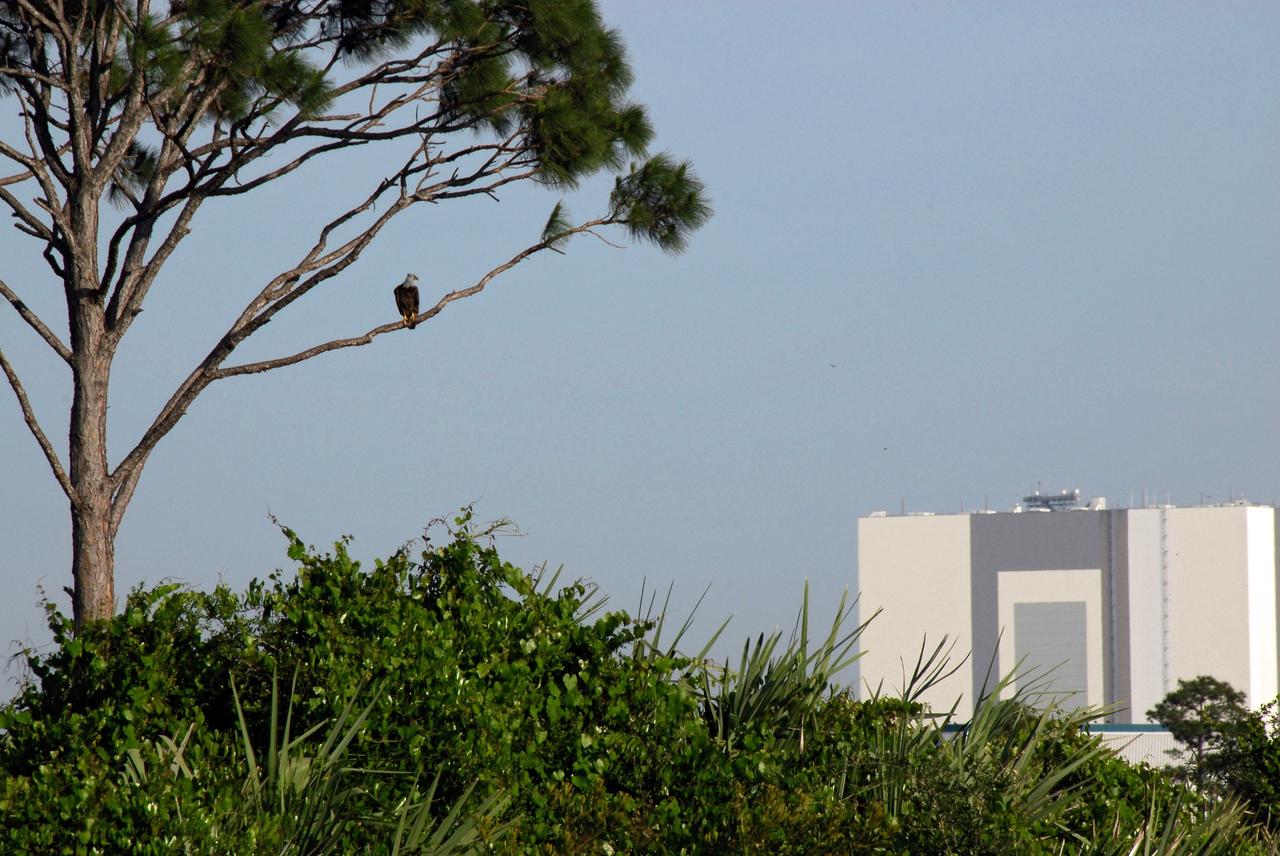
CAPE CANAVERAL, Fla. -- Near NASA Kennedy Space Center's Shuttle Landing Facility, this bald eagle is spotted in a tall pine tree. At right is the Vehicle Assembly Building. There are a dozen eagle nests within Kennedy and in the surrounding Merritt Island National Wildlife Refuge. Bald eagles use a specific territory for nesting (they mate for life), winter feeding or a year-round residence. Its natural domain is from Alaska to Baja, California, and from Maine to Florida. The Merritt Island refuge also includes several wading bird rookeries, many osprey nests, up to 400 manatees during the spring, and approximately 2,500 Florida scrub jays. It also is a major wintering area for migratory birds. More than 500 species of wildlife inhabit the refuge, with 15 considered federally threatened or endangered. Photo credit: NASA/Kim Shiflett
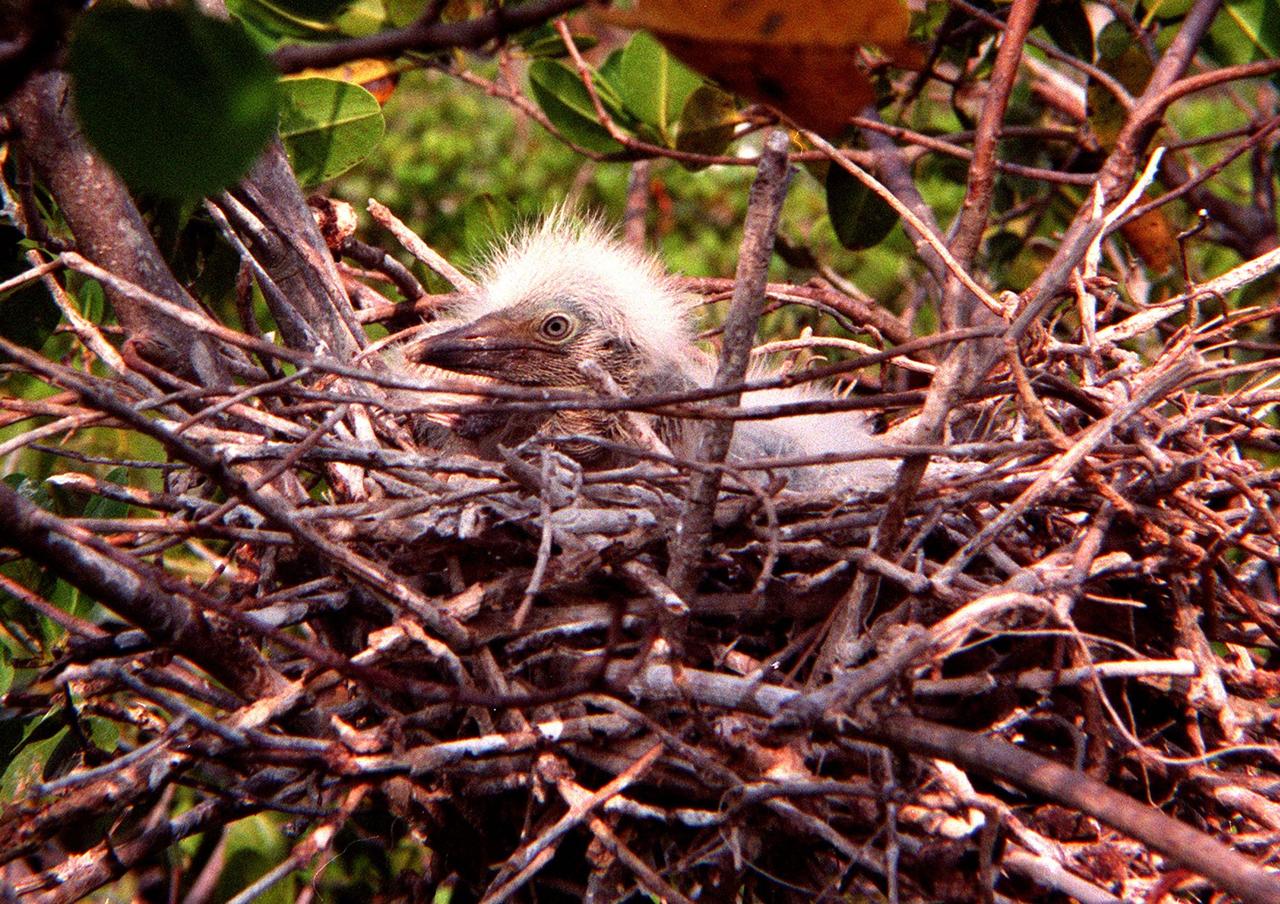
KENNEDY SPACE CENTER, FLA. -- Its newly grown, wispy feathers reflecting light like a halo, an unidentified baby bird waits, probably for its next meal, in its stick-assembled nest. The nest is in the Merritt Island National Wildlife Refuge, which shares a boundary with KSC. Hardwood hammocks and pine flatwoods share the 92,000-acre refuge with fresh-water impoundments, salt-water estuaries and brackish marshes. The diverse landscape provides habitat for more than 310 species of birds, 25 mammals, 117 fishes, and 65 amphibians and reptiles, including such endangered species as Southern bald eagles, wood storks, Florida scrub jays, Atlantic loggerhead and leatherback turtles, osprey, and nearly 5,000 alligators
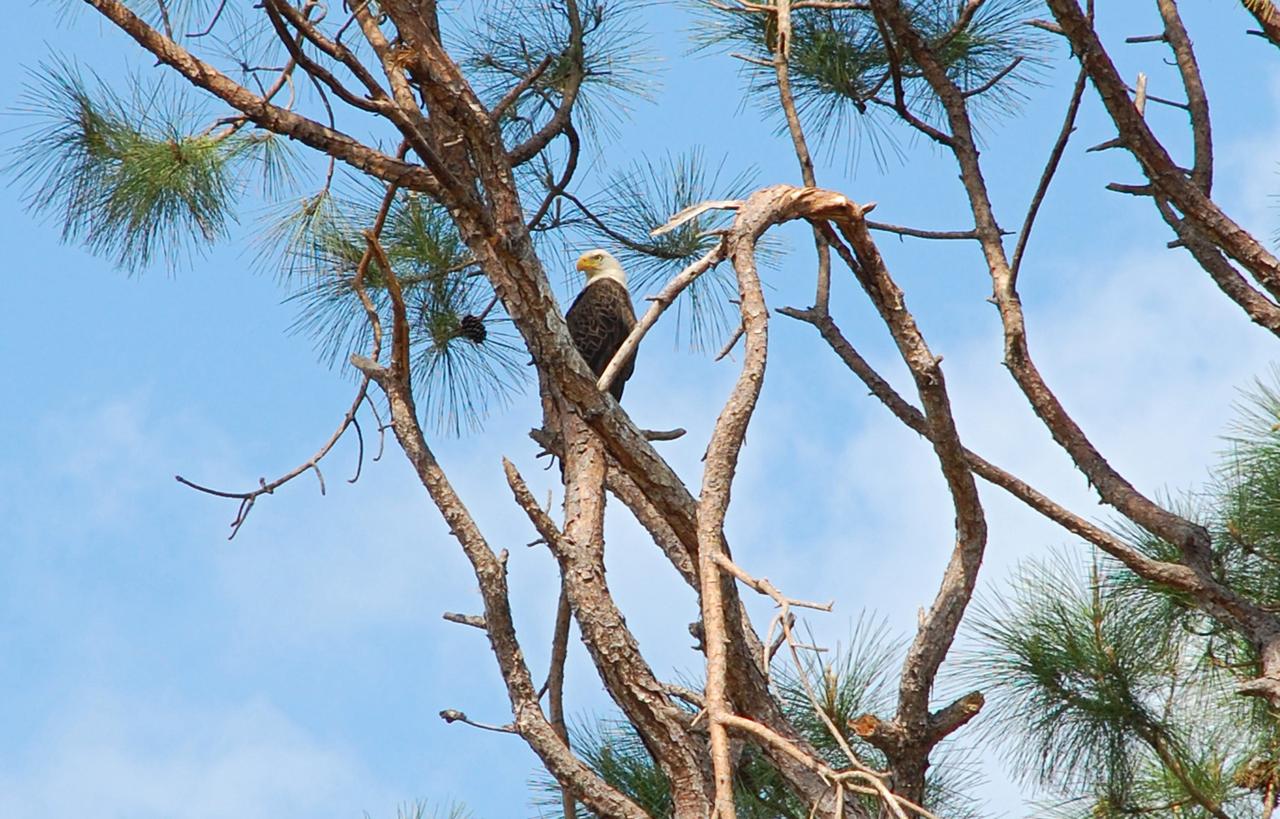
CAPE CANAVERAL, Fla. – A mature eagle stands watch near its nest, out of sight, which holds a young eagle. The nest is in a pine tree on S.R. 3 that runs through NASA's Kennedy Space Center in Florida. There are a dozen eagle nests within Kennedy and in the surrounding Merritt Island National Wildlife Refuge. Bald eagles use a specific territory for nesting (they mate for life), winter feeding or a year-round residence. Its natural domain is from Alaska to Baja, California, and from Maine to Florida. The Merritt Island refuge also includes several wading bird rookeries, many osprey nests, up to 400 manatees during the spring, and approximately 2,500 Florida scrub jays. It also is a major wintering area for migratory birds. More than 500 species of wildlife inhabit the refuge, with 15 considered federally threatened or endangered. Photo credit: NASA/Ben Smegelsky
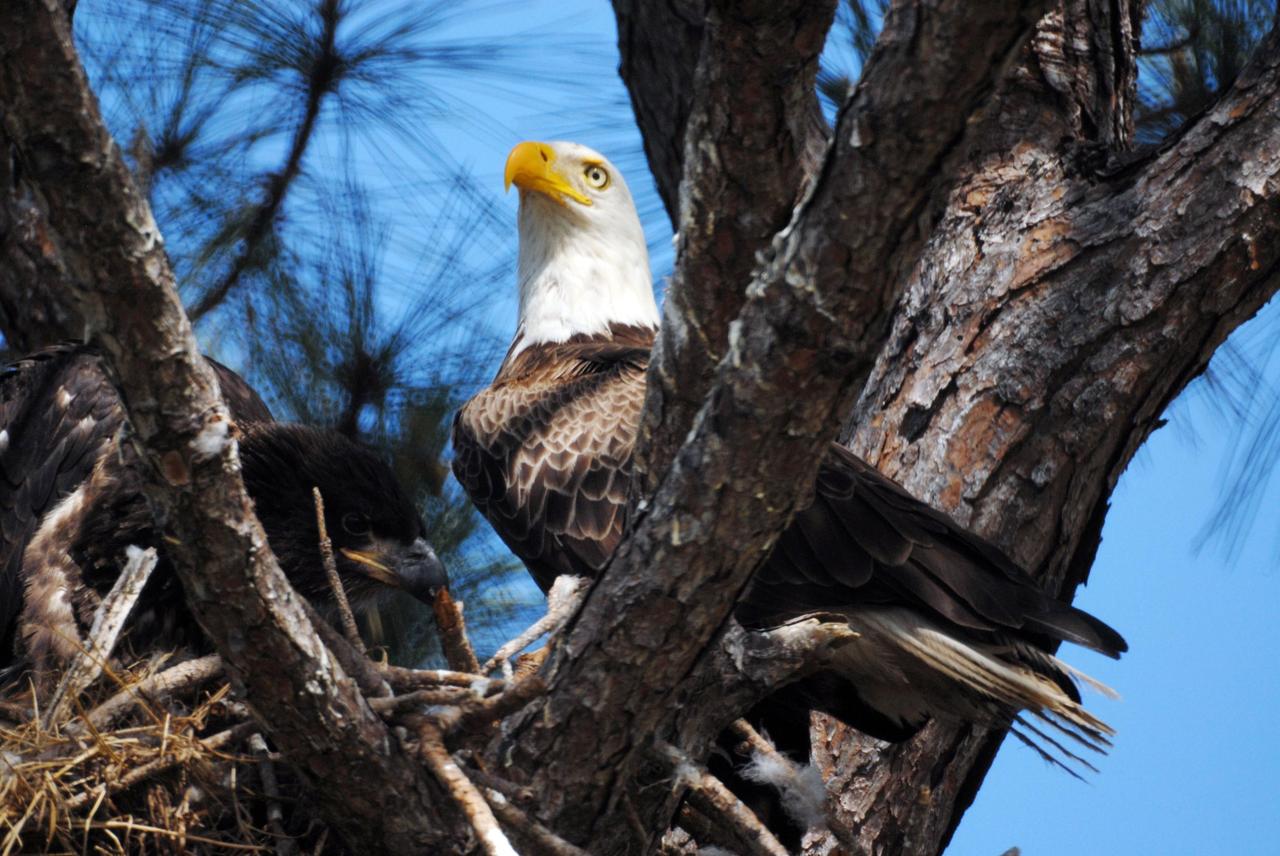
KENNEDY SPACE CENTER, FLA. -- This mother eagle turns away from one of her offspring, at left, in their nest at the north end of S.R. 3 near Kennedy Space Center. The resident eagle parents are raising two offspring. This year-old nest is one of a dozen eagle nests both in KSC and in the Merritt Island National Wildlife Refuge, which surrounds KSC. The refuge includes several wading bird rookeries, many osprey nests, up to 400 manatees during the spring, and approximately 2,500 Florida scrub jays. It also is a major wintering area for migratory birds. More than 500 species of wildlife inhabit the refuge, with 15 considered federally threatened or endangered. Photo credit: NASA/Ken Thornsley
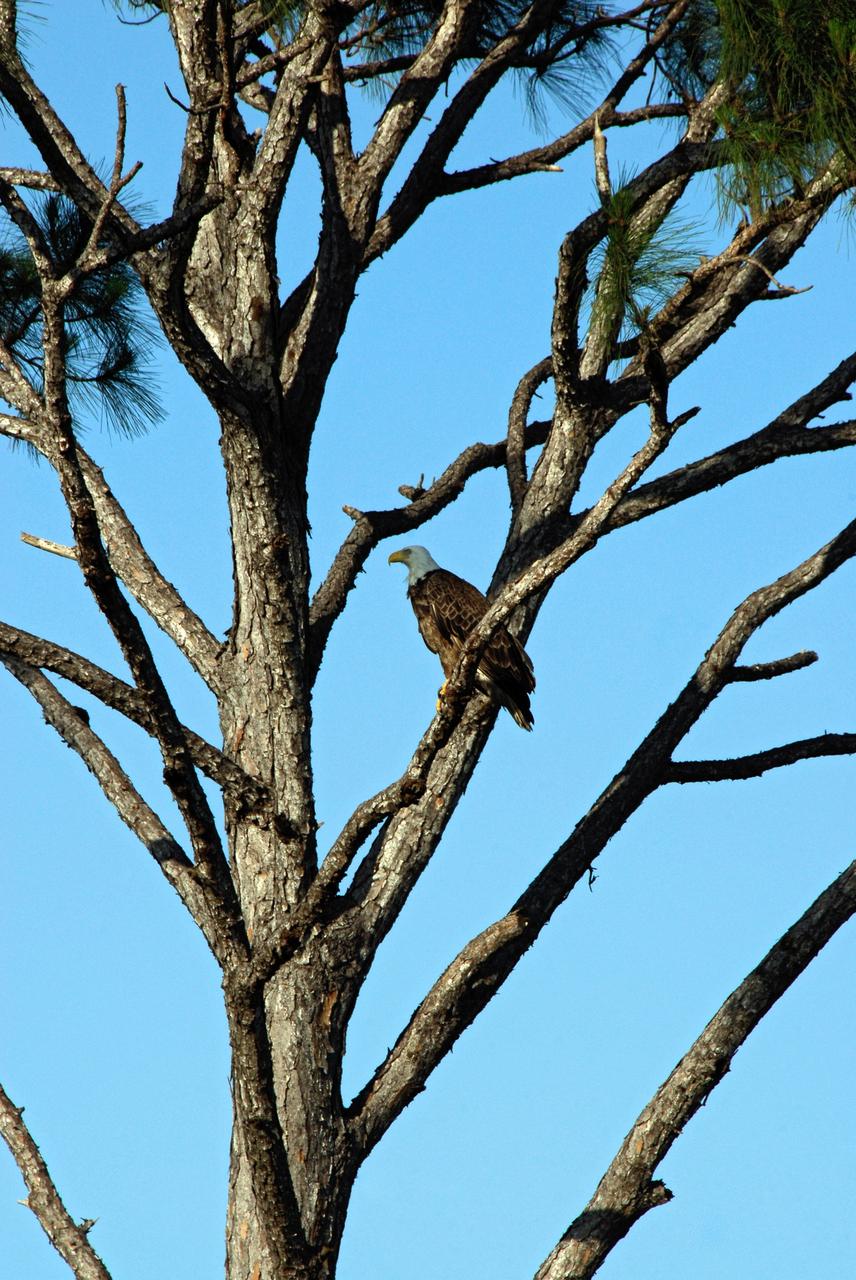
CAPE CANAVERAL, Fla. -- Near NASA Kennedy Space Center's Shuttle Landing Facility, this bald eagle is spotted sitting in a tall pine tree. There are a dozen eagle nests within Kennedy and in the surrounding Merritt Island National Wildlife Refuge. Bald eagles use a specific territory for nesting (they mate for life), winter feeding or a year-round residence. Its natural domain is from Alaska to Baja, California, and from Maine to Florida. The Merritt Island refuge also includes several wading bird rookeries, many osprey nests, up to 400 manatees during the spring, and approximately 2,500 Florida scrub jays. It also is a major wintering area for migratory birds. More than 500 species of wildlife inhabit the refuge, with 15 considered federally threatened or endangered. Photo credit: NASA/Kim Shiflett

KENNEDY SPACE CENTER, FLA. -- A sandpiper wades the water in the Merritt Island National <a href="http://www-pao.ksc.nasa.gov/kscpao/captions/subjects/wildlife.htm">Wildlife </a> Refuge, which shares a boundary with the space center. Sandpipers are usually seen foraging on the beach or margins of lakes, ponds, marshes or streams. The open waters of the Wildlife Refuge provide wintering areas for 23 species of migratory waterfowl as well as a year-round home for great blue herons, great egrets, wood storks, cormorants, brown pelicans and other species of marsh and shore birds. The refuge comprises 92,000 acres, ranging from fresh-water impoundments, salt-water estuaries and brackish marshes to hardwood hammocks and pine flatwoods. The diverse landscape provides habitat for more than 310 species of birds, 25 mammals, 117 fishes, and 65 amphibians and reptiles, including such endangered species as Southern bald eagles, wood storks, Florida scrub jays, Atlantic loggerhead and leatherback turtles, osprey, and nearly 5,000 alligators
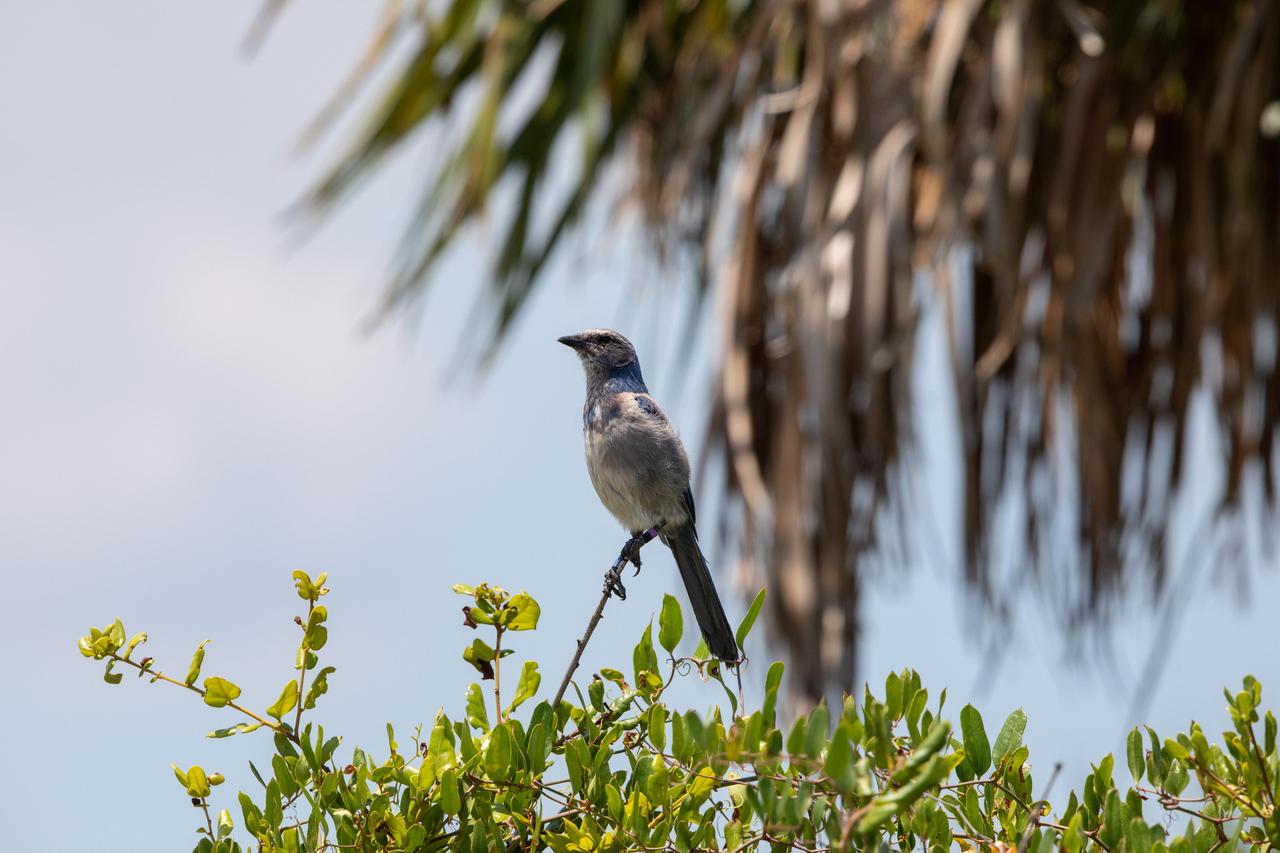
A scrub jay perches on a branch near the Vehicle Assembly Building (VAB) at NASA’s Kennedy Space Center in Florida on June 22, 2020. Painting of the NASA logo, also called the meatball, continues on the 525-foot-tall building. HM2 and H.I.S. Painting of Titusville, Florida, are repainting the meatball and the American Flag on the iconic building. The VAB was last painted in 2007, when repairs were completed after the 2004 Hurricanes Frances and Jeanne tore 845 panels off the building. It will take over 500 gallons of paint to paint the 209-by-110-foot flag and the 110-by-132-foot meatball. High Bay 3 inside the VAB has been upgraded with 10 new levels of work platforms that will surround and provide access for service and processing of NASA's Space Launch System (SLS) rocket and Orion spacecraft. Exploration Ground Systems is overseeing upgrades to the VAB to support the launch of the SLS and Orion for Artemis missions. Under the Artemis program, NASA will send the first woman and next man to the Moon.
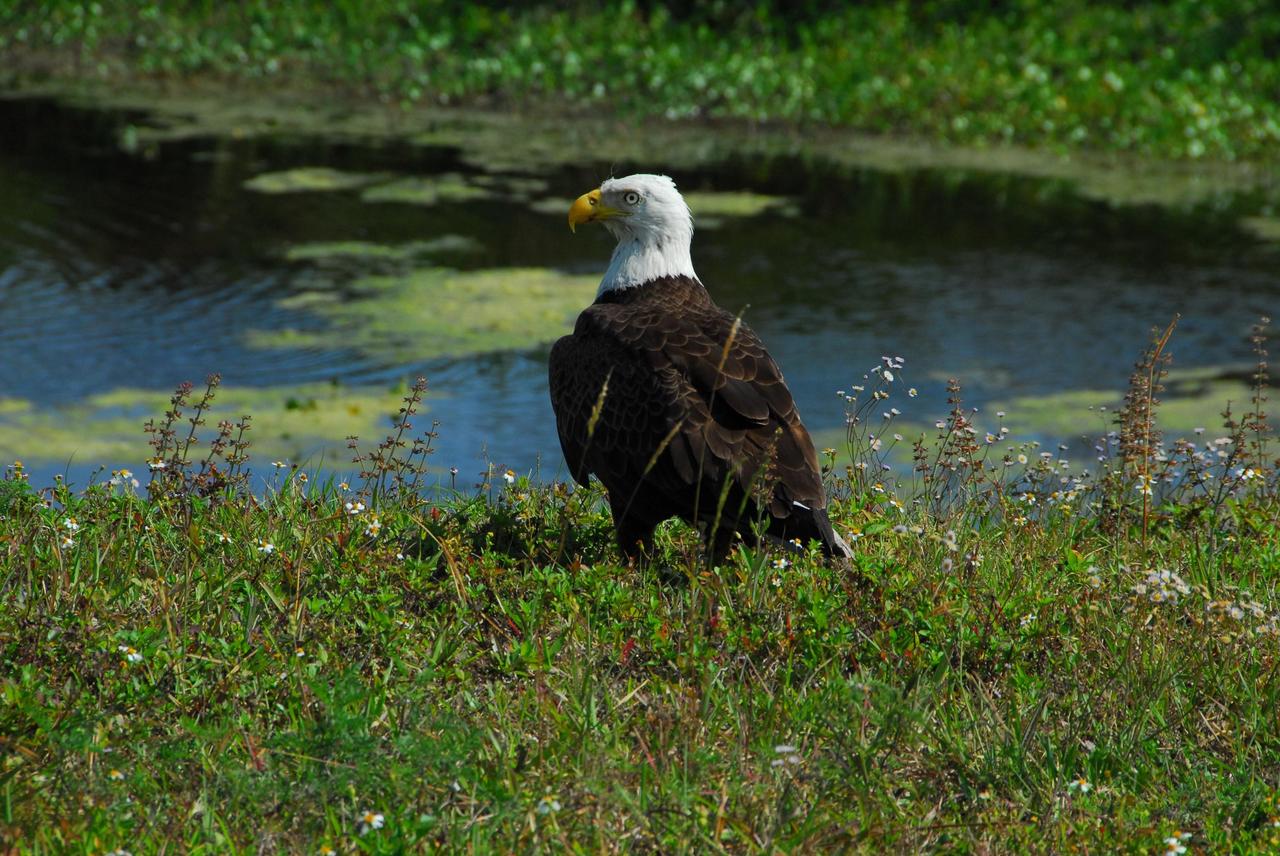
KENNEDY SPACE CENTER, FLA. -- This adult bald eagle rests on the ground near a pond close to S.R. 3 in NASA's Kennedy Space Center. Bald eagles live near large bodies of open water such as lakes, marshes, seacoasts and rivers, where there are plenty of fish to eat and tall trees for nesting and roosting. Bald eagles feed primarily on fish, but also eat small animals (ducks, coots, muskrats, turtles, rabbits, snakes, etc.) and occasional carrion (dead animals). They are sometimes seen among a gathering of vultures at the site of a fresh meal. Bald eagles have a presence in every U. S. state except Hawaii. Bald eagles use a specific territory for nesting (they mate for life), winter feeding or a year-round residence. Its natural domain is from Alaska to Baja, California, and from Maine to Florida. There are a dozen eagle nests both in KSC and in the Merritt Island National Wildlife Refuge, which surrounds KSC. The refuge includes several wading bird rookeries, many osprey nests, up to 400 manatees during the spring, and approximately 2,500 Florida scrub jays. It also is a major wintering area for migratory birds. More than 500 species of wildlife inhabit the refuge, with 15 considered federally threatened or endangered. Photo credit: NASA/George Shelton
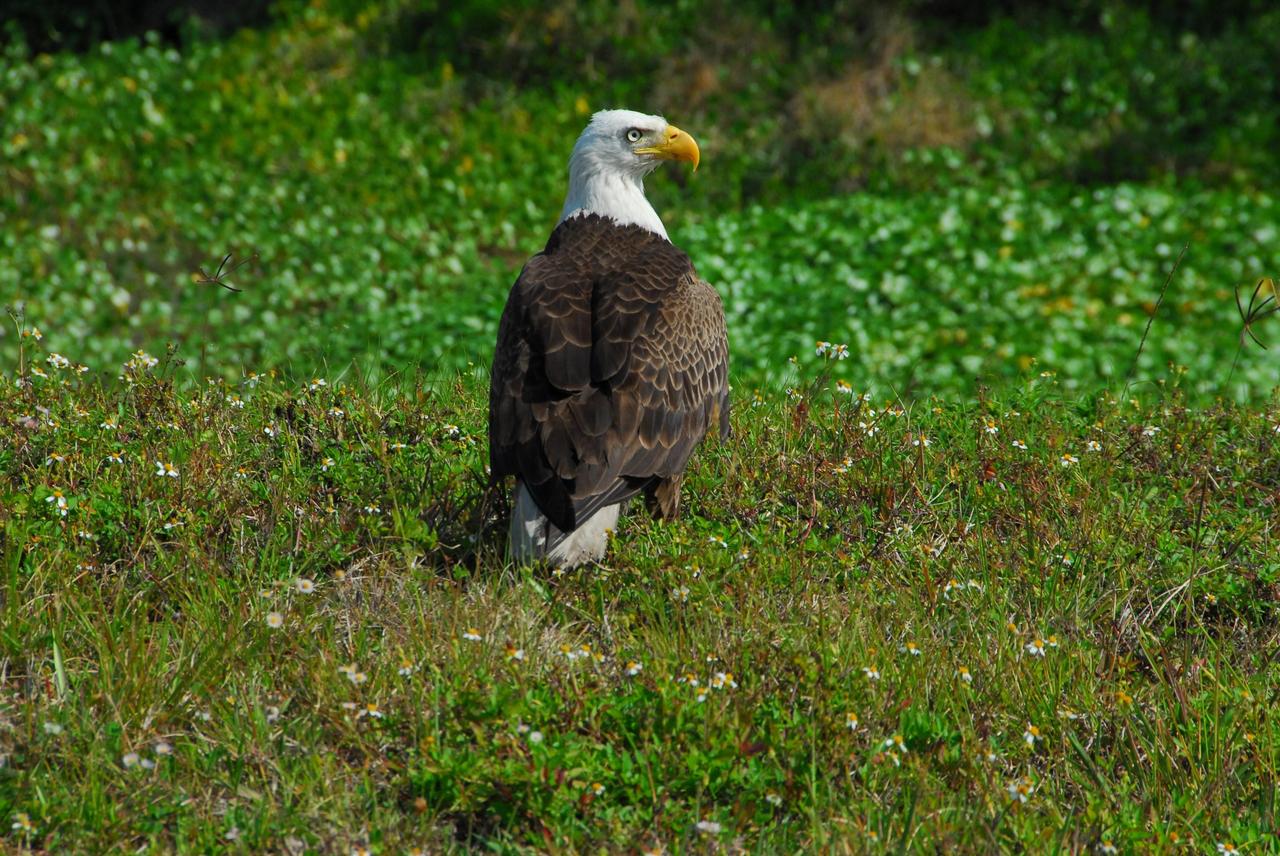
KENNEDY SPACE CENTER, FLA. -- This adult bald eagle rests on the ground near a pond close to S.R. 3 in NASA's Kennedy Space Center. Bald eagles live near large bodies of open water such as lakes, marshes, seacoasts and rivers, where there are plenty of fish to eat and tall trees for nesting and roosting. Bald eagles feed primarily on fish, but also eat small animals (ducks, coots, muskrats, turtles, rabbits, snakes, etc.) and occasional carrion (dead animals). They are sometimes seen among a gathering of vultures at the site of a fresh meal. Bald eagles have a presence in every U. S. state except Hawaii. Bald eagles use a specific territory for nesting (they mate for life), winter feeding or a year-round residence. Its natural domain is from Alaska to Baja, California, and from Maine to Florida. There are a dozen eagle nests both in KSC and in the Merritt Island National Wildlife Refuge, which surrounds KSC. The refuge includes several wading bird rookeries, many osprey nests, up to 400 manatees during the spring, and approximately 2,500 Florida scrub jays. It also is a major wintering area for migratory birds. More than 500 species of wildlife inhabit the refuge, with 15 considered federally threatened or endangered. Photo credit: NASA/George Shelton
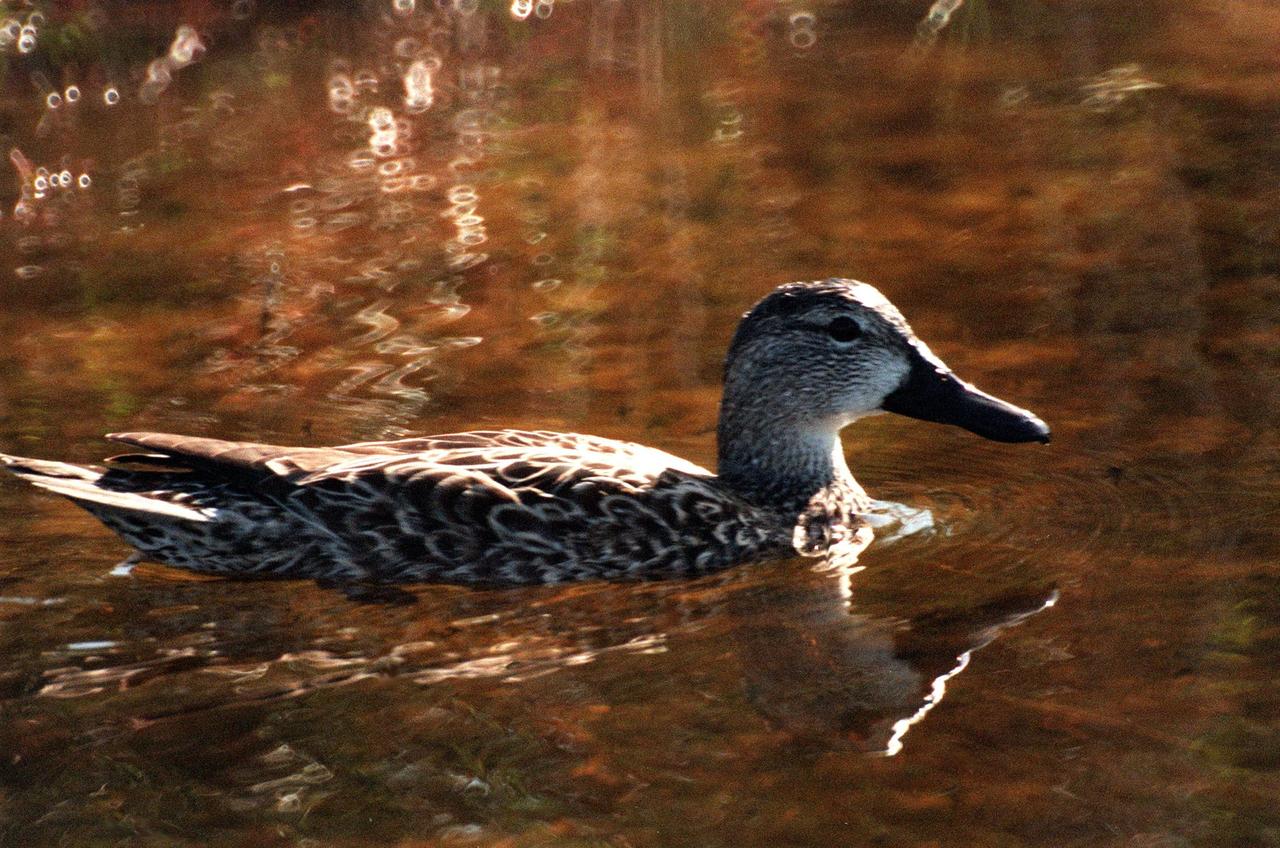
KENNEDY SPACE CENTER, FLA. -- A pintail duck swims calmly in the waters of the Merritt Island National <a href="http://www-pao.ksc.nasa.gov/kscpao/captions/subjects/wildlife.htm">Wildlife </a>Refuge, which shares a boundary with the space center. The pintail can be found in marshes, prairie ponds and tundra, and salt marshes in winter. They range from Alaska and Greenland south to Central America and the West Indies. The open waters of the Wildlife Refuge provide wintering areas for 23 species of migratory waterfowl as well as a year-round home for great blue herons, great egrets, wood storks, cormorants, brown pelicans and other species of marsh and shore birds. The refuge comprises 92,000 acres, ranging from fresh-water impoundments, salt-water estuaries and brackish marshes to hardwood hammocks and pine flatwoods. The diverse landscape provides habitat for more than 310 species of birds, 25 mammals, 117 fishes, and 65 amphibians and reptiles, including such endangered species as Southern bald eagles, wood storks, Florida scrub jays, Atlantic loggerhead and leatherback turtles, osprey, and nearly 5,000 alligators