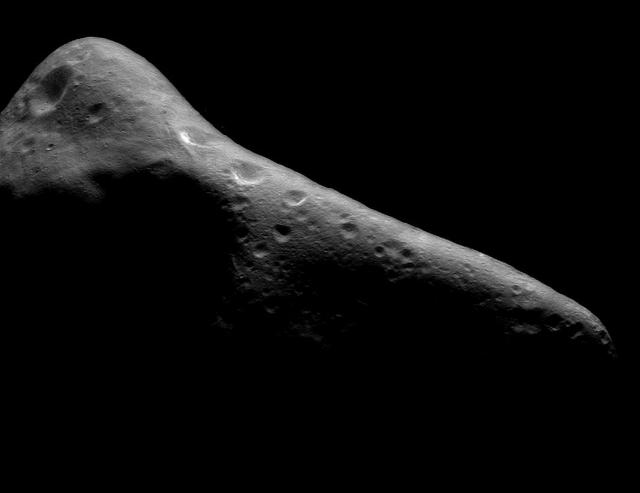
The Sculptured Surface of Eros
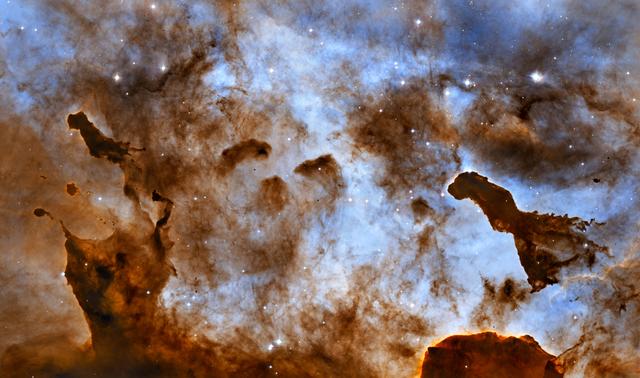
NASA image release September 16, 2010 Enjoying a frozen treat on a hot summer day can leave a sticky mess as it melts in the Sun and deforms. In the cold vacuum of space, there is no edible ice cream, but there is radiation from massive stars that is carving away at cold molecular clouds, creating bizarre, fantasy-like structures. These one-light-year-tall pillars of cold hydrogen and dust, imaged by the Hubble Space Telescope, are located in the Carina Nebula. Violent stellar winds and powerful radiation from massive stars are sculpting the surrounding nebula. Inside the dense structures, new stars may be born. This image of dust pillars in the Carina Nebula is a composite of 2005 observations taken of the region in hydrogen light (light emitted by hydrogen atoms) along with 2010 observations taken in oxygen light (light emitted by oxygen atoms), both times with Hubble's Advanced Camera for Surveys. The immense Carina Nebula is an estimated 7,500 light-years away in the southern constellation Carina. The Hubble Space Telescope is a project of international cooperation between NASA and the European Space Agency. NASA's Goddard Space Flight Center manages the telescope. The Space Telescope Science Institute (STScI) conducts Hubble science operations. STScI is operated for NASA by the Association of Universities for Research in Astronomy, Inc. in Washington, D.C. <b><a href="http://www.nasa.gov/centers/goddard/home/index.html" rel="nofollow">NASA Goddard Space Flight Center</a></b> is home to the nation's largest organization of combined scientists, engineers and technologists that build spacecraft, instruments and new technology to study the Earth, the sun, our solar system, and the universe. <b>Follow us on <a href="http://twitter.com/NASA_GoddardPix" rel="nofollow">Twitter</a></b> <b>Join us on <a href="http://www.facebook.com/pages/Greenbelt-MD/NASA-Goddard/395013845897?ref=tsd" rel="nofollow">Facebook</a></b>
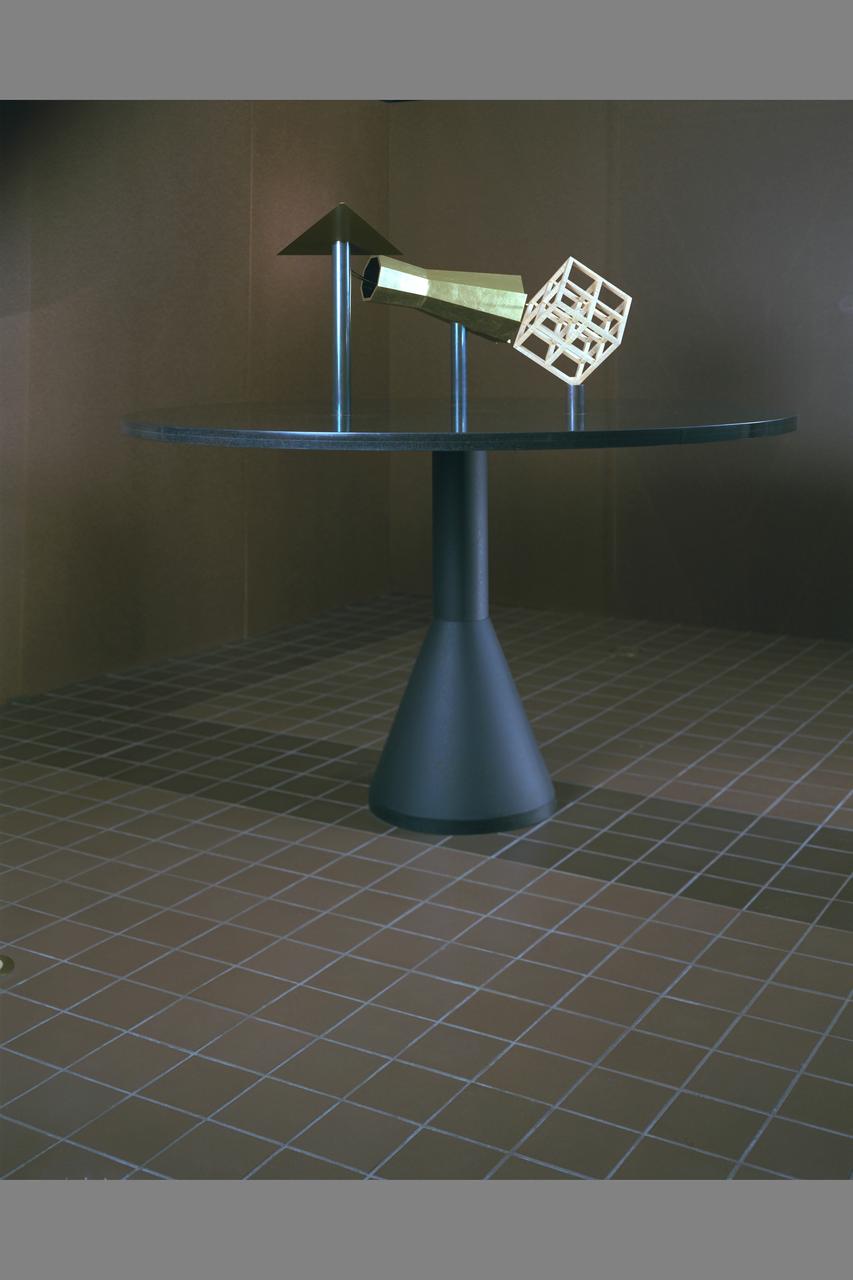
NAS (Numerical Aerodynamic Simulaiton) theme sculpture model: - Ames Triad of Aeronautical Research Exhibit in lobby of building N-258. The sculpture was commissioned from Peter Gutkin by Ames for the dedication of N-258.

A sculpture resembling the Roman god Neptune is seen dockside of the Woods Hole Oceanographic Institution research vessel Knorr on Tuesday, Sept. 4, 2012, in Woods Hole, Mass. Knorr is scheduled to depart on Sept. 6 to take part in the Salinity Processes in the Upper Ocean Regional Study (SPURS). The NASA-sponsored expedition will sail to the North Atlantic's saltiest spot to get a detailed, 3-D picture of how salt content fluctuates in the ocean's upper layers and how these variations are related to shifts in rainfall patterns around the planet. Photo Credit: (NASA/Bill Ingalls)

A sculpture created out of non-perishable canned and boxed foods is on display at NASA’s Kennedy Space Center in Florida as part of the 2019 Feds Feeds Families campaign. Kennedy employees had the opportunity to work in teams to construct sculptures reflecting this year’s theme – The Moon Lights the Way – to pay tribute to the 50th anniversary of the first Apollo Moon landing. As part of the theme, the can sculptures highlighted the accomplishments of the Apollo Program while incorporating aspects of NASA’s aim to return to the Moon and beyond to Mars. On Aug. 2, 2019, all sculptures will be deconstructed and boxed for donation.

A sculpture created out of non-perishable canned and boxed foods is on display at NASA’s Kennedy Space Center in Florida as part of the 2019 Feds Feeds Families campaign. Kennedy employees had the opportunity to work in teams to construct sculptures reflecting this year’s theme – The Moon Lights the Way – to pay tribute to the 50th anniversary of the first Apollo Moon landing. As part of the theme, the can sculptures highlighted the accomplishments of the Apollo Program while incorporating aspects of NASA’s aim to return to the Moon and beyond to Mars. On Aug. 2, 2019, all sculptures will be deconstructed and boxed for donation.
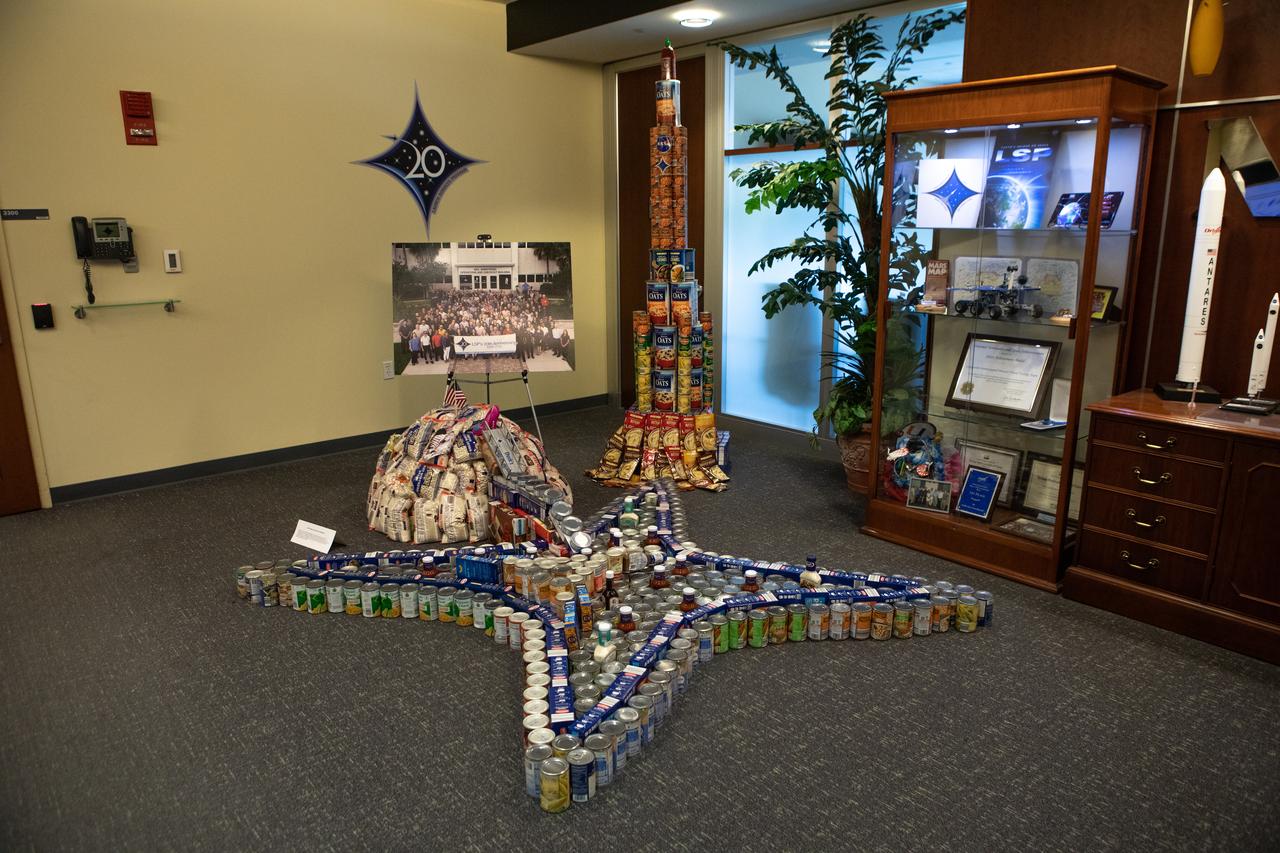
A sculpture created out of non-perishable canned and boxed foods by NASA’s Launch Services Program is on display at Kennedy Space Center in Florida as part of the 2019 Feds Feeds Families campaign. Kennedy employees had the opportunity to work in teams to construct sculptures reflecting this year’s theme – The Moon Lights the Way – to pay tribute to the 50th anniversary of the first Apollo Moon landing. As part of the theme, the can sculptures highlighted the accomplishments of the Apollo Program while incorporating aspects of NASA’s aim to return to the Moon and beyond to Mars. On Aug. 2, 2019, all sculptures will be deconstructed and boxed for donation.

A sculpture created out of non-perishable canned and boxed foods is on display at NASA’s Kennedy Space Center in Florida as part of the 2019 Feds Feeds Families campaign. Kennedy employees had the opportunity to work in teams to construct sculptures reflecting this year’s theme – The Moon Lights the Way – to pay tribute to the 50th anniversary of the first Apollo Moon landing. As part of the theme, the can sculptures highlighted the accomplishments of the Apollo Program while incorporating aspects of NASA’s aim to return to the Moon and beyond to Mars. On Aug. 2, 2019, all sculptures will be deconstructed and boxed for donation.
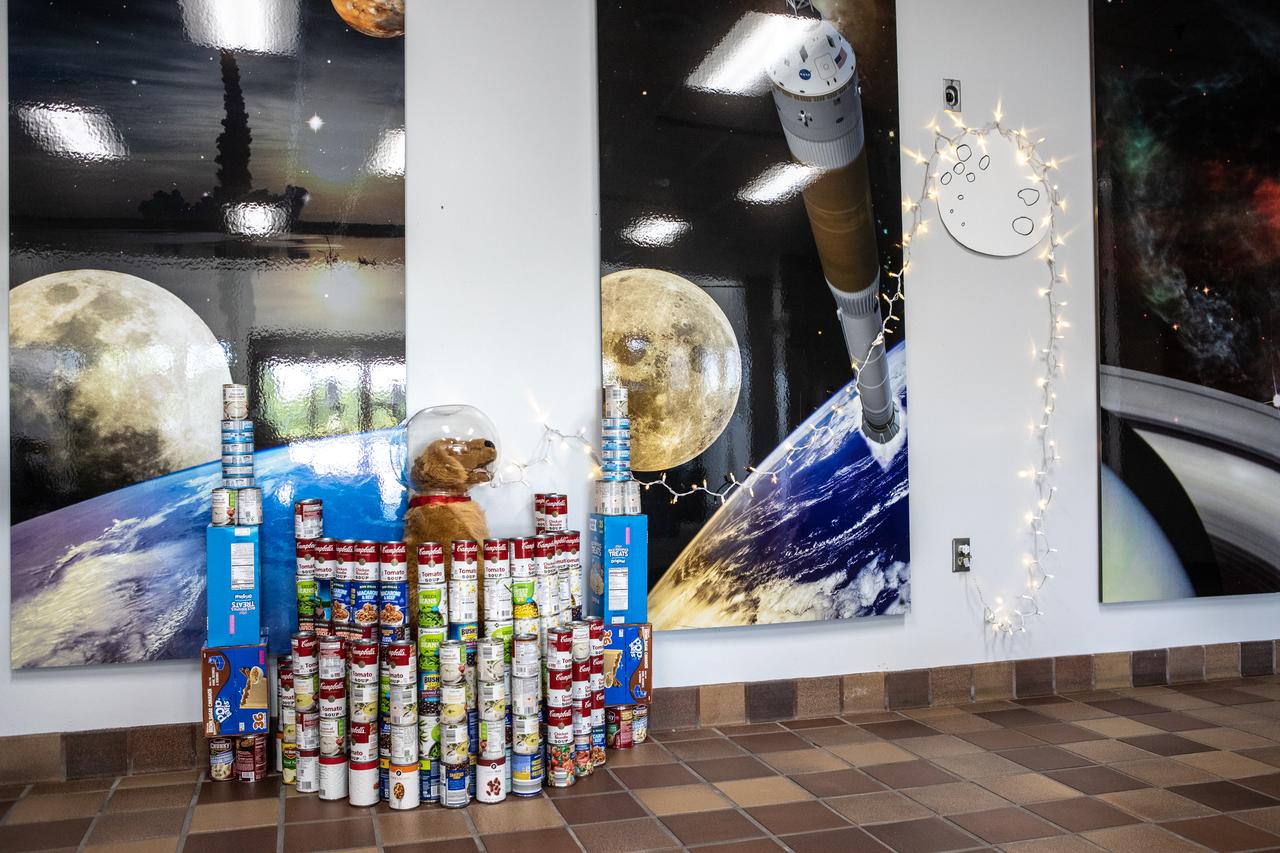
A sculpture created out of non-perishable canned and boxed foods is on display at NASA’s Kennedy Space Center in Florida as part of the 2019 Feds Feeds Families campaign. Kennedy employees had the opportunity to work in teams to construct sculptures reflecting this year’s theme – The Moon Lights the Way – to pay tribute to the 50th anniversary of the first Apollo Moon landing. As part of the theme, the can sculptures highlighted the accomplishments of the Apollo Program while incorporating aspects of NASA’s aim to return to the Moon and beyond to Mars. On Aug. 2, 2019, all sculptures will be deconstructed and boxed for donation.
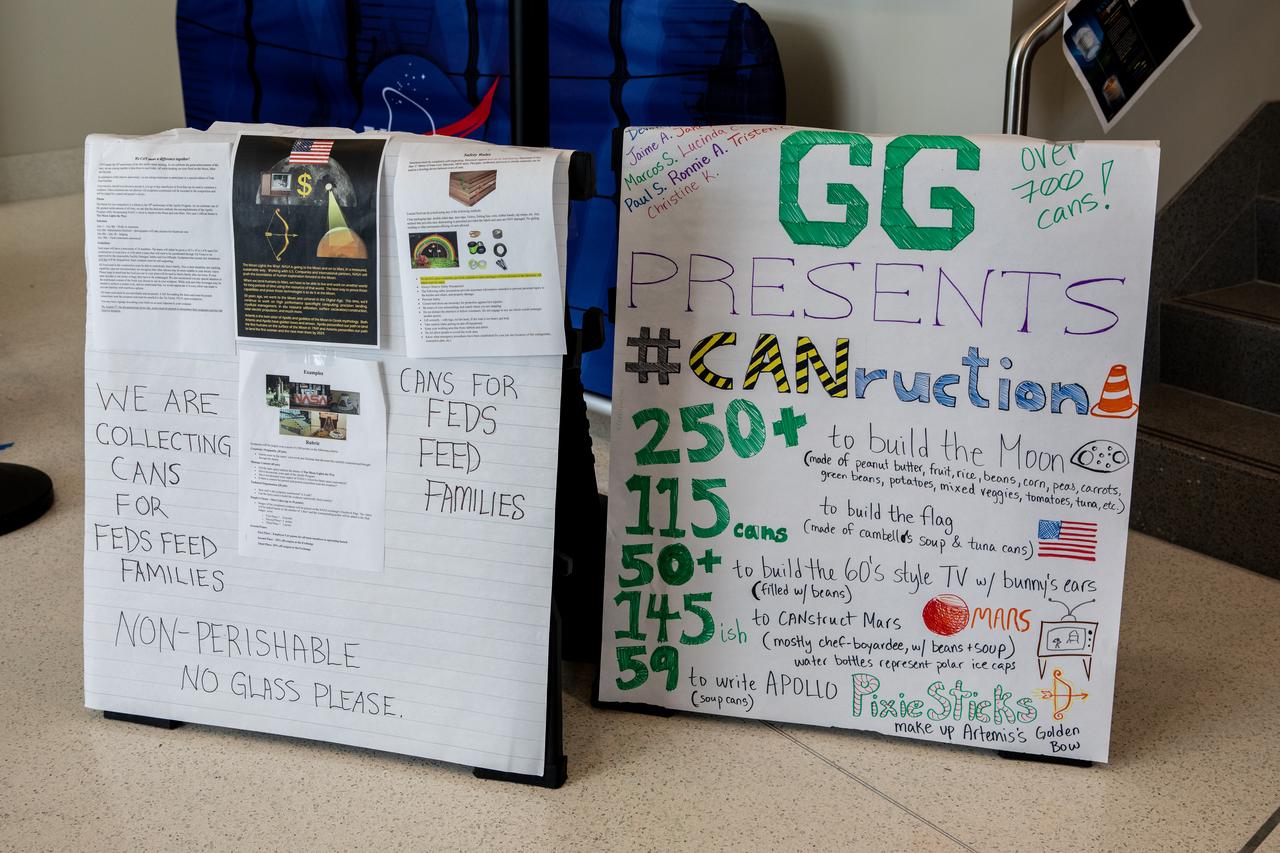
A sign explaining the construction of a sculpture created out of non-perishable canned and boxed foods is on display at NASA’s Kennedy Space Center in Florida as part of the 2019 Feds Feeds Families campaign. Kennedy employees had the opportunity to work in teams to construct sculptures reflecting this year’s theme – The Moon Lights the Way – to pay tribute to the 50th anniversary of the first Apollo Moon landing. As part of the theme, the can sculptures highlighted the accomplishments of the Apollo Program while incorporating aspects of NASA’s aim to return to the Moon and beyond to Mars. On Aug. 2, 2019, all sculptures will be deconstructed and boxed for donation.
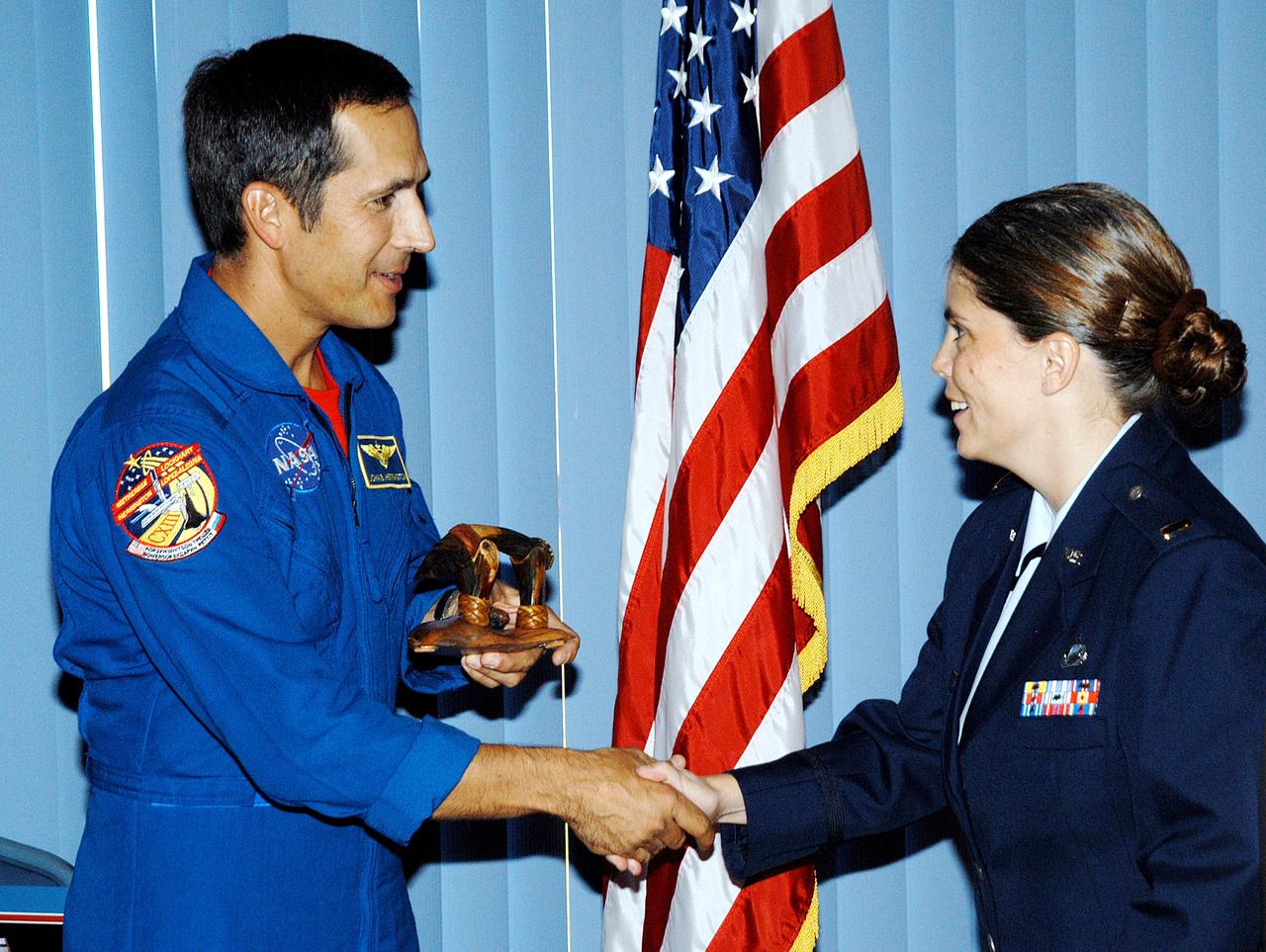
KENNEDY SPACE CENTER, FLA. - Astronaut John Herrington (left) accepts a carved sculpture from 2nd Lt. Bernice Zollner, 45th Space Wing, during a luncheon celebrating Native American Heritage Month held at the Patrick Air Force Base NCO Club. Zollner was emcee of the event. Herrington is a tribally enrolled Chickasaw and the world’s first Native American astronaut, who last flew on mission STS-113 in 2002.
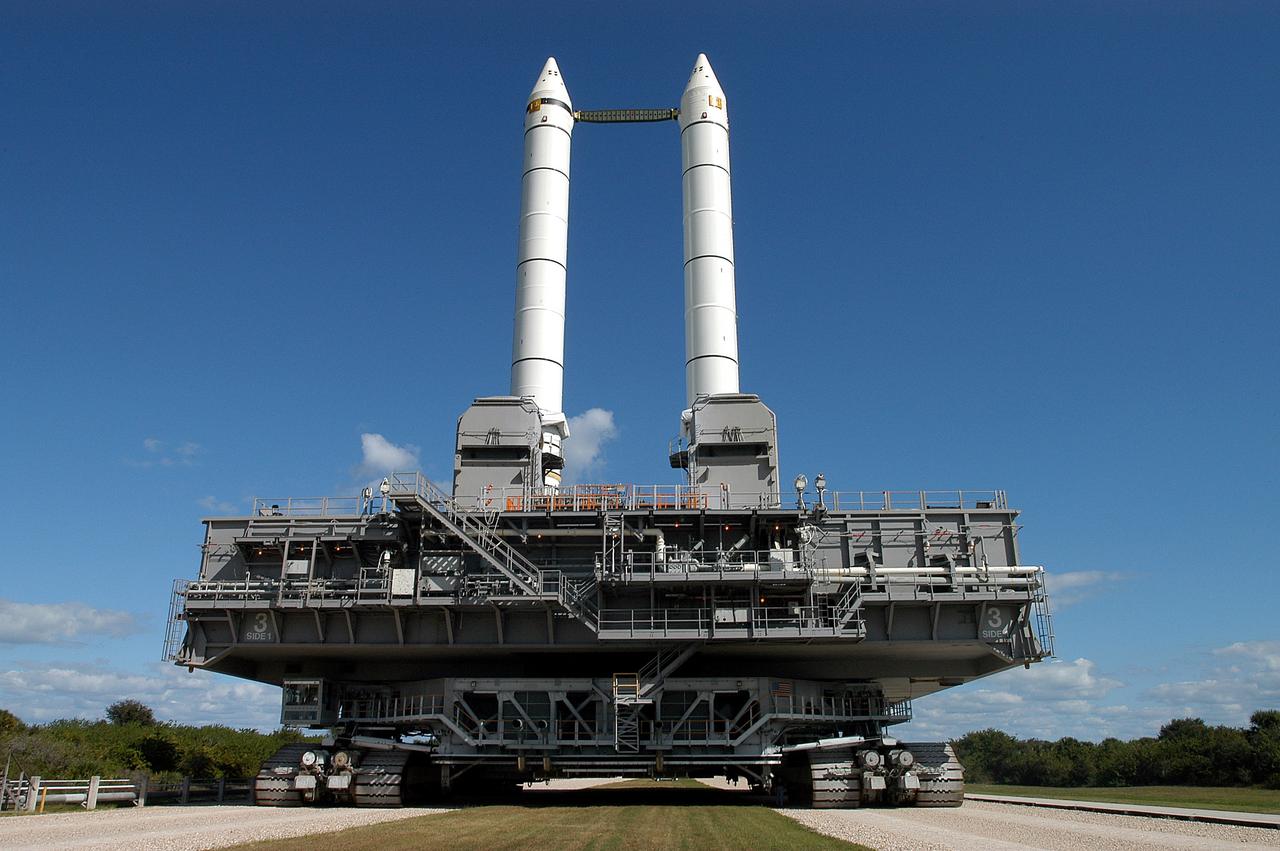
KENNEDY SPACE CENTER, FLA. - Like candles embedded in a sculptured “cake,” the Mobile Launcher Platform (MLP) number 3 with twin solid rocket boosters bolted to it inches along the crawlerway at various speeds up to 1 mph in an effort to achieve vibration data gathering goals. The boosters are braced at the top for stability. The primary purpose of these rollout tests is to gather data to develop future maintenance requirements on the transport equipment and the flight hardware. Various parts of the MLP and crawler transporter have been instrumented with vibration data collection equipment.
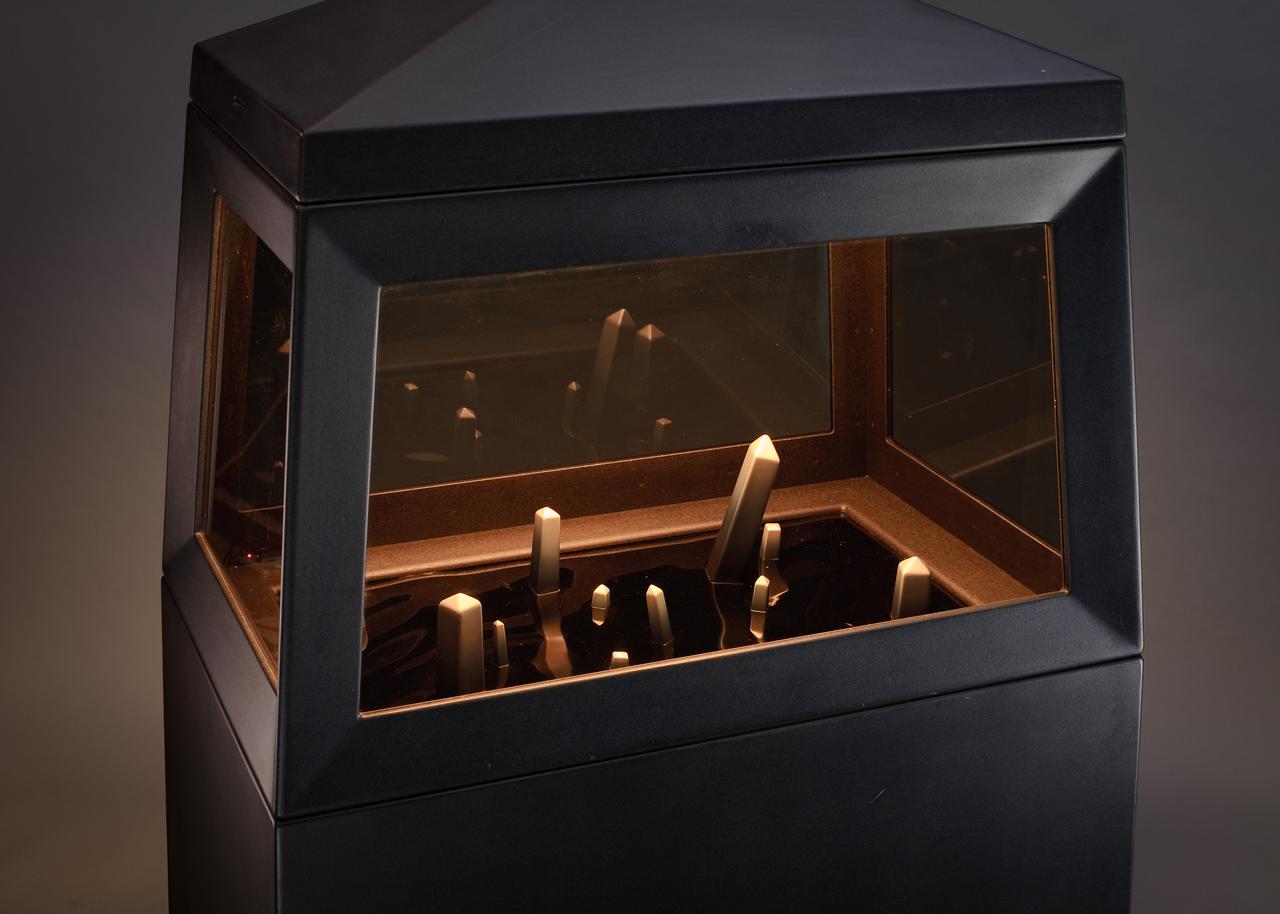
ARC Sculpture by Peter Gutkin 'Nice Ice in New York' circa 1970's. This sculputre was donated to Ames Research Center by the artist. Peter Gutkin has designed special interiors, exhibits, and display furniture for Ames since 1979. He currently maintains an office in San Francisco, CA.
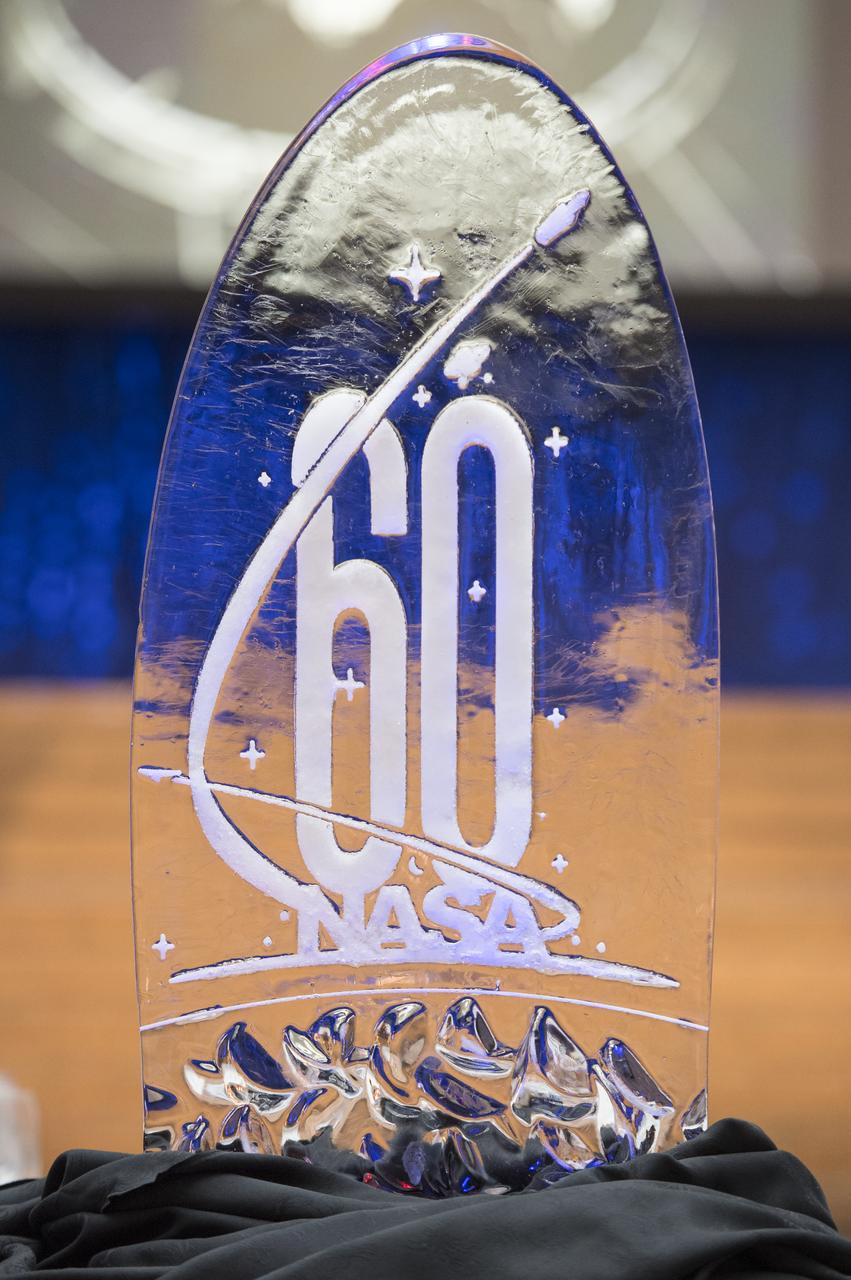
An ice sculpture of NASA's 60th anniversary logo is seen during a reception hosted by the American Institute of Aeronautics and Astronautics (AIAA) to celebrate NASA's 60th anniversary, Thursday, Sept. 20, 2018 at the Ronald Reagan Building and International Trade Center in Washington, DC. Photo Credit: (NASA/Joel Kowsky)
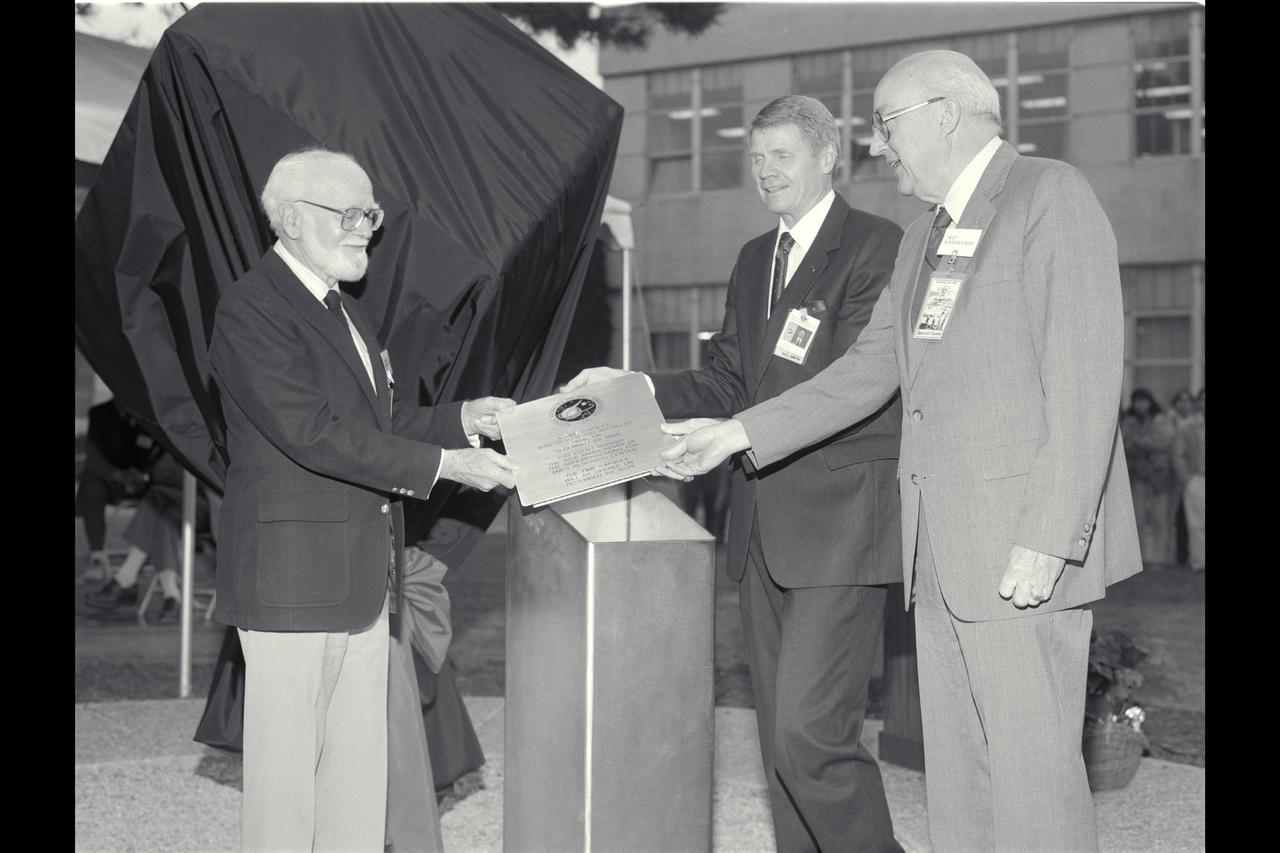
On 20 December 1989, Ames buried a time capsule and unveiled a sculpture at the spot where, fifty years earlier, Russel Robinson had turned the first spade of dirt for the Ames construction shack: Robinson (left) Ames Director Dale Compton (center) and retired Ames Director Sy Syvertson (right)
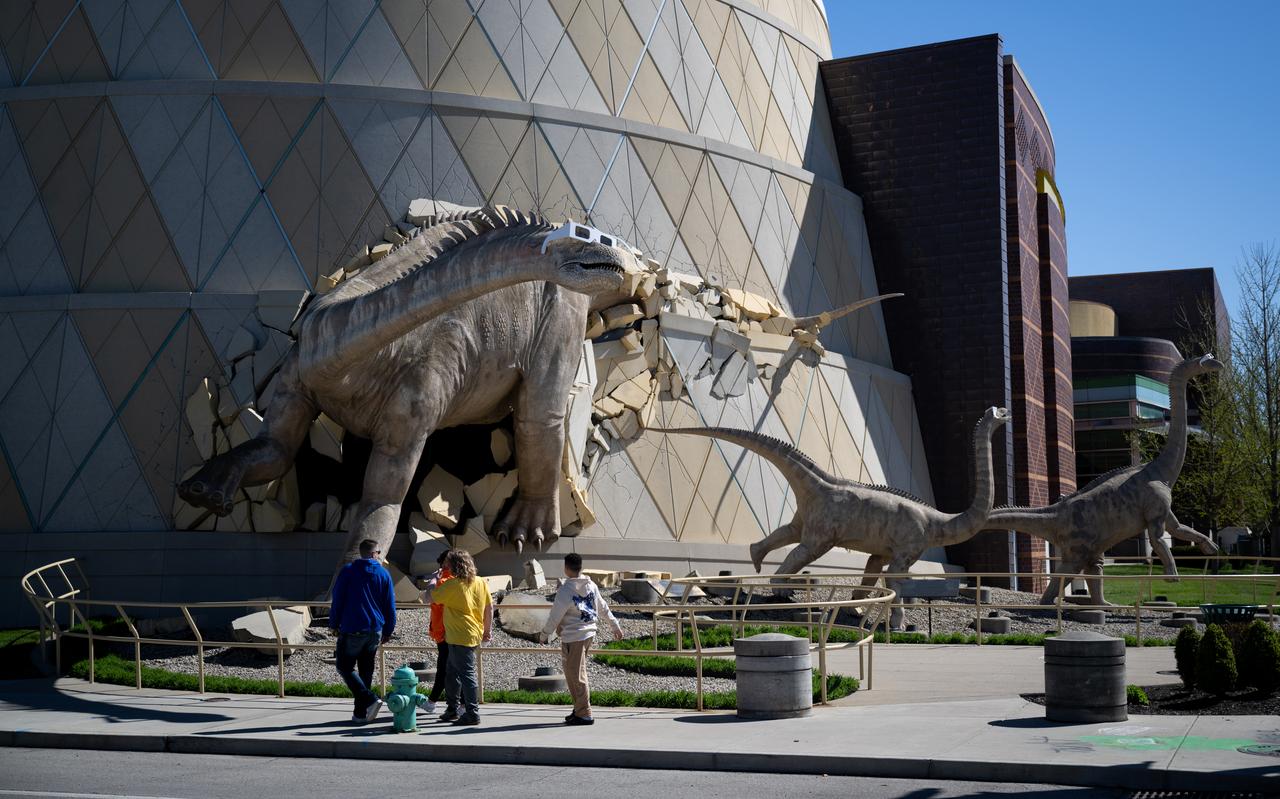
Visitors walk past sculptures of an adult and two juvenile Alamosaurs wearing solar glasses outside of The Children’s Museum of Indianapolis, Saturday, April 6, 2024, in Indianapolis, Ind. On Monday, April 8, a total solar eclipse will sweep across a narrow portion of the North American continent from Mexico’s Pacific coast to the Atlantic coast of Newfoundland, Canada, while a partial solar eclipse will be visible across the entire North American continent along with parts of Central America and Europe. Photo Credit: (NASA/Joel Kowsky)
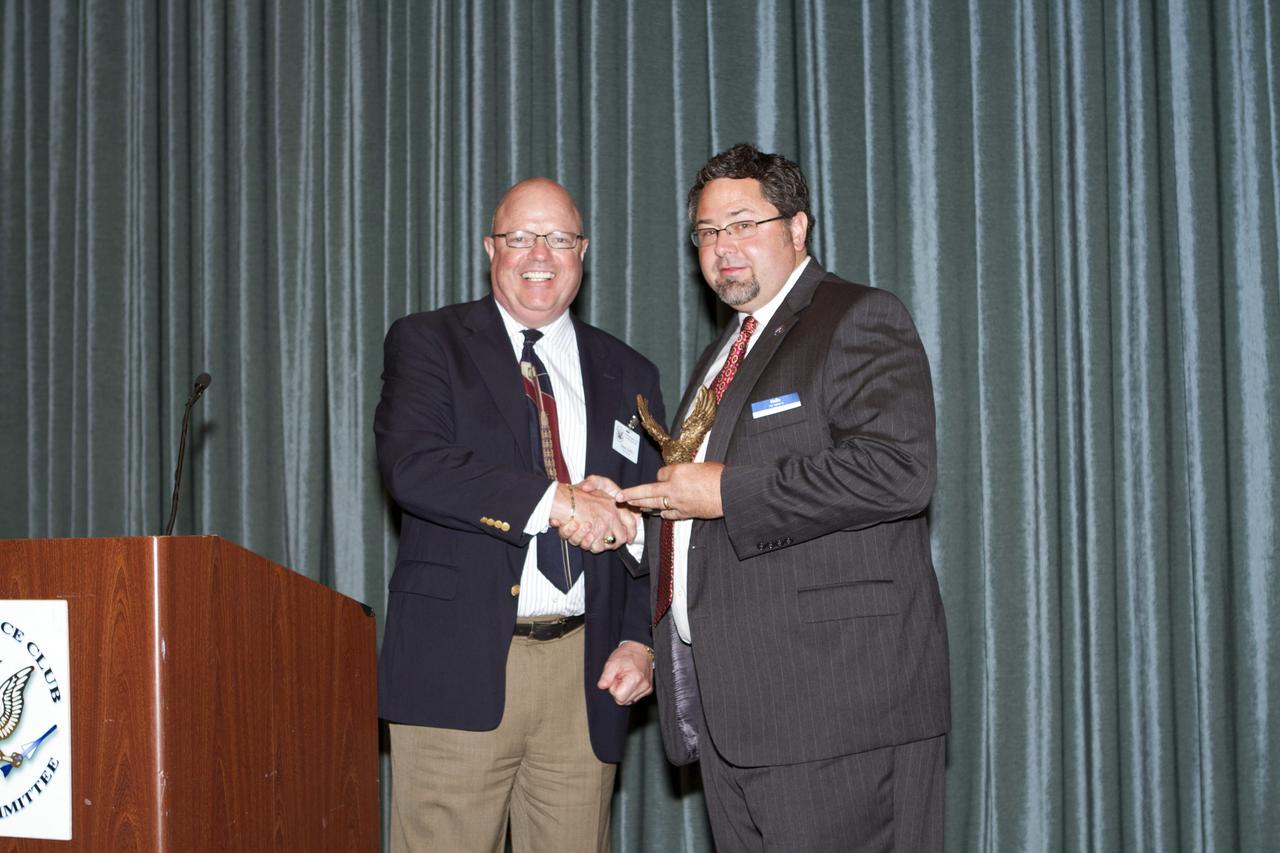
COCOA BEACH, Fla.. -- Todd May, program manager of the Space Launch System, receives a sculpture from the National Space Club after his address to the National Space Club's Florida Committee during the organization's monthly luncheon in Cocoa Beach, Fla. May, who works at NASA's Marshall Space Flight Center in Huntsville, Ala., discussed the status of the SLS program. Photo credit: NASA/Kim Shiflett
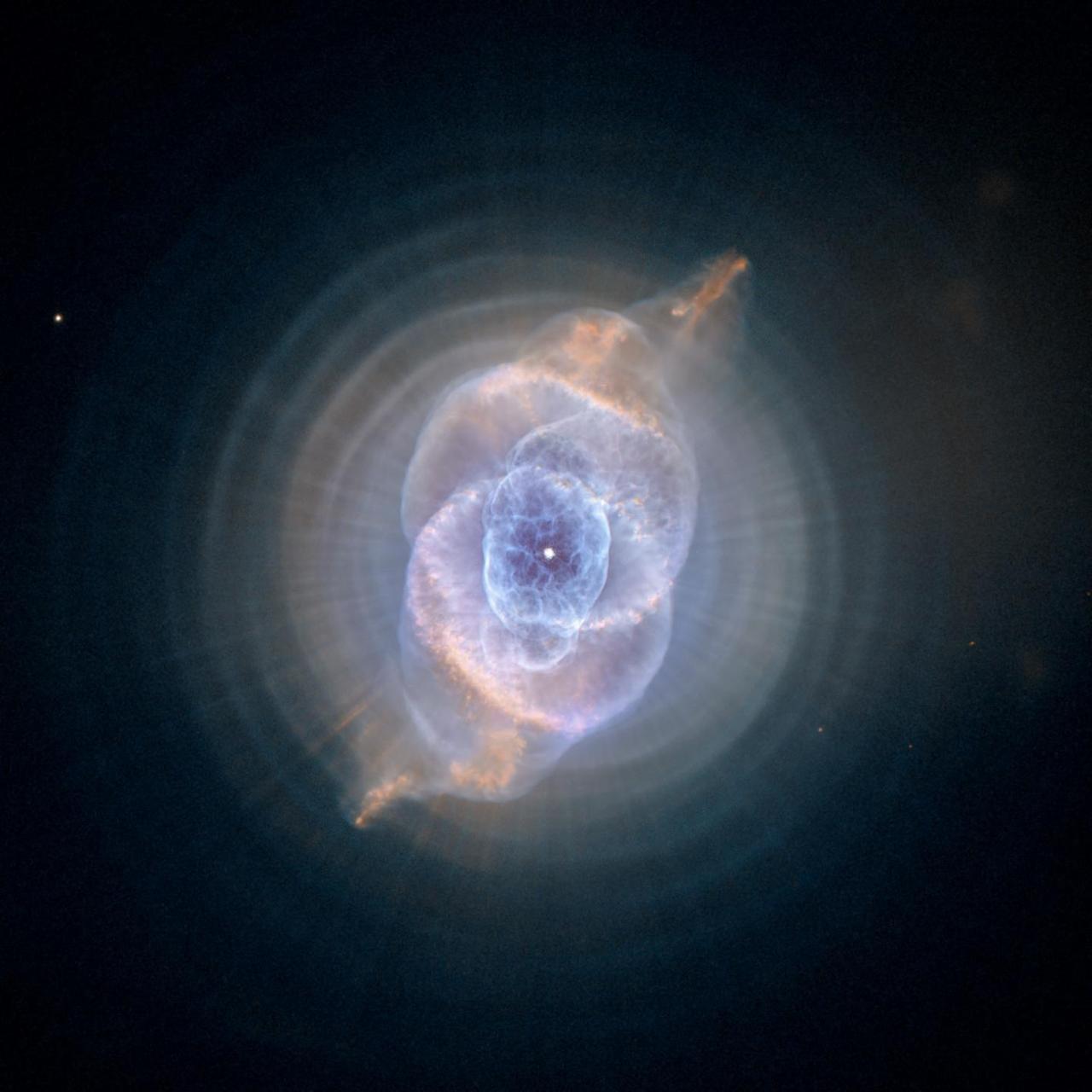
This detailed view of NGC 6543, the Cat Eye Nebula, from NASA Hubble Space Telescope includes intricate structures, including concentric gas shells, jets of high-speed gas, and unusual shock-induced knots of gas.
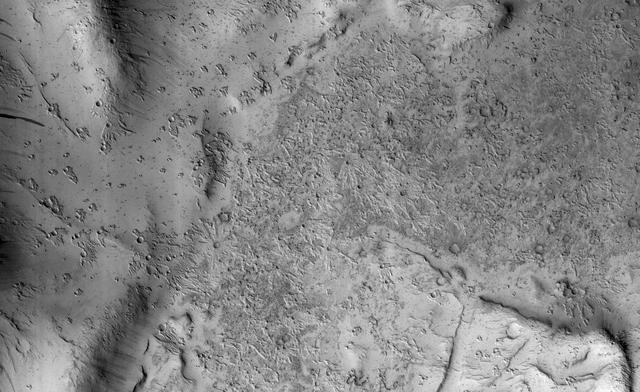
NASA's Mars Reconnaissance Orbiter (MRO) captured this region of Mars, sprayed with secondary craters from 10-kilometer Zunil Crater to the northwest. Secondary craters form from rocks ejected at high speed from the primary crater, which then impact the ground at sufficiently high speed to make huge numbers of much smaller craters over a large region. In this scene, however, the secondary crater ejecta has an unusual raised-relief appearance like bas-relief sculpture. How did that happen? One idea is that the region was covered with a layer of fine-grained materials like dust or pyroclastics about 1 to 2 meters thick when the Zunil impact occurred (about a million years ago), and the ejecta served to harden or otherwise protect the fine-grained layer from later erosion by the wind. https://photojournal.jpl.nasa.gov/catalog/PIA21591
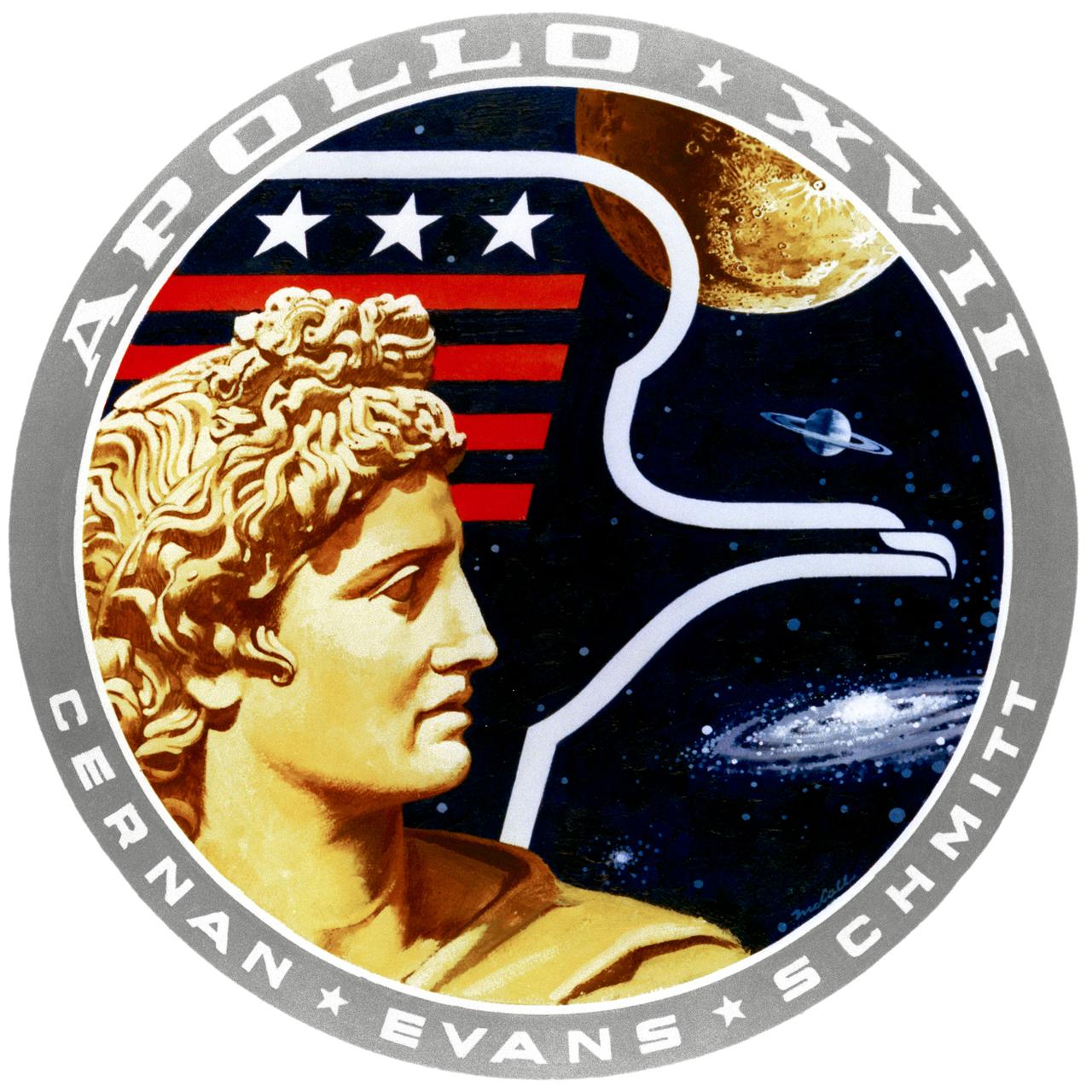
S72-49079 (8 Sept. 1972) --- This is the official emblem of the Apollo 17 lunar landing mission which will be flown by astronauts Eugene A. Cernan, Ronald E. Evans and Harrison H. Schmitt. The insignia is dominated by the image of Apollo, the Greek sun god. Suspended in space behind the head of Apollo is an American eagle of contemporary design, the red bars of the eagle's wing represent the bars in the United States flag; the three white stars symbolize the three astronaut crewmen. The background is deep blue space and within it are the moon, the planet Saturn and a spiral galaxy or nebula. The moon is partially overlaid by the eagle's wing suggesting that this is a celestial body that man has visited and in that sense conquered. The thrust of the eagle and the gaze of Apollo to the right and toward Saturn and the galaxy is meant to imply that man's goals in space will someday include the planets and perhaps the stars. The colors of the emblem are red, white and blue, the colors of our flag; with the addition of gold, to symbolize the golden age of space flight that will begin with this Apollo 17 lunar landing. The Apollo image used in this emblem was the famous Apollo of Belvedere sculpture now in the Vatican Gallery in Rome. This emblem was designed by artist Robert T. McCall in collaboration with the astronauts. This is the official Apollo 17 emblem, a property of the government of the United States. It has been authorized only for use by the astronauts. Its reproduction in any form other than in news, information and education media is not authorized without approval. Unauthorized use is subject to the provisions of Title 18, U.S. Code, Section 701.
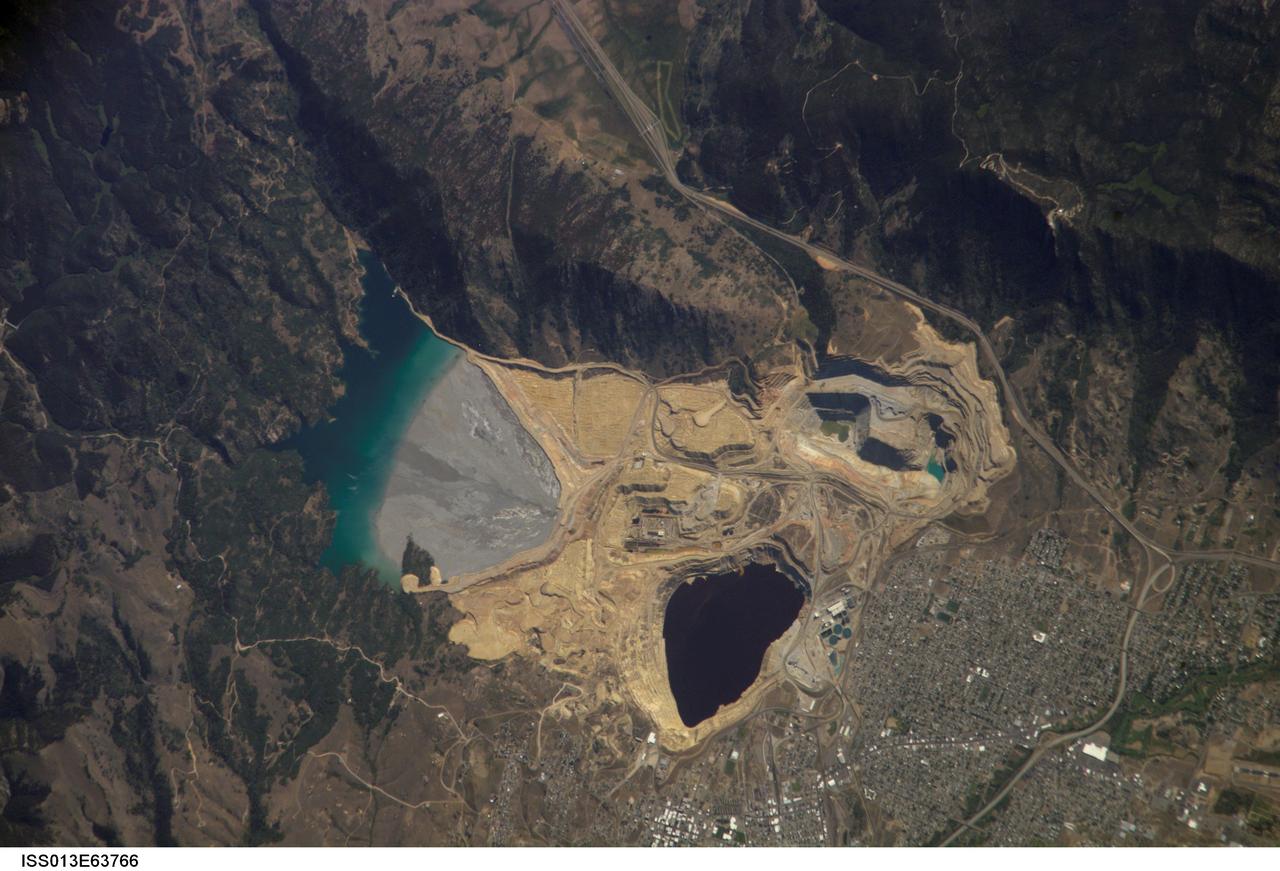
ISS013-E-63766 (2 Aug. 2006) --- Berkeley Pit and Butte, Montana are featured in this image photographed by an Expedition 13 crewmember on the International Space Station. The city of Butte, Montana has long been a center of mining activity. Underground mining of copper began in Butte in the 1870s, and by 1901 underground workings had extended to the groundwater table. Thus began the creation of an intricate complex of underground drains and pumps to lower the groundwater level and continue the extraction of copper. Water extracted from the mines was so rich in dissolved copper sulfate that it was also "mined" (by chemical precipitation) for the copper it contained. In 1955, the Anaconda Copper Mining Company began open-pit mining for copper in what is now know as the Berkeley Pit (dark oblong area in center). The mine took advantage of the existing subterranean drainage and pump network to lower groundwater until 1982, when the new owner ARCO suspended operations at the mine. The groundwater level swiftly rose, and today water in the Pit is more than 900 feet deep. Many features of the mine workings are visible in this image such as the many terraced levels and access roadways of the open mine pits (gray and tan sculptured surfaces). A large gray tailings pile of waste rock and an adjacent tailings pond are visible to the north of the Berkeley Pit. Color changes in the tailings pond are due primarily to changing water depth. The Berkeley Pit is listed as a federal Superfund site due to its highly acidic water, which contains high concentrations of metals such as copper and zinc. The Berkeley Pit receives groundwater flowing through the surrounding bedrock and acts as a "terminal pit" or sink for these heavy metal-laden waters. Ongoing efforts include regulation of water flow into the pit to reduce filling of the Pit and potential release of contaminated water into local aquifers or surface streams.