The NEA Scout and Lunar IceCube secondary payloads are the first to be installed in the Space Launch System (SLS) rocket’s Orion stage adapter for the Artemis I mission on July 14 at NASA’s Kennedy Space Center in Florida.

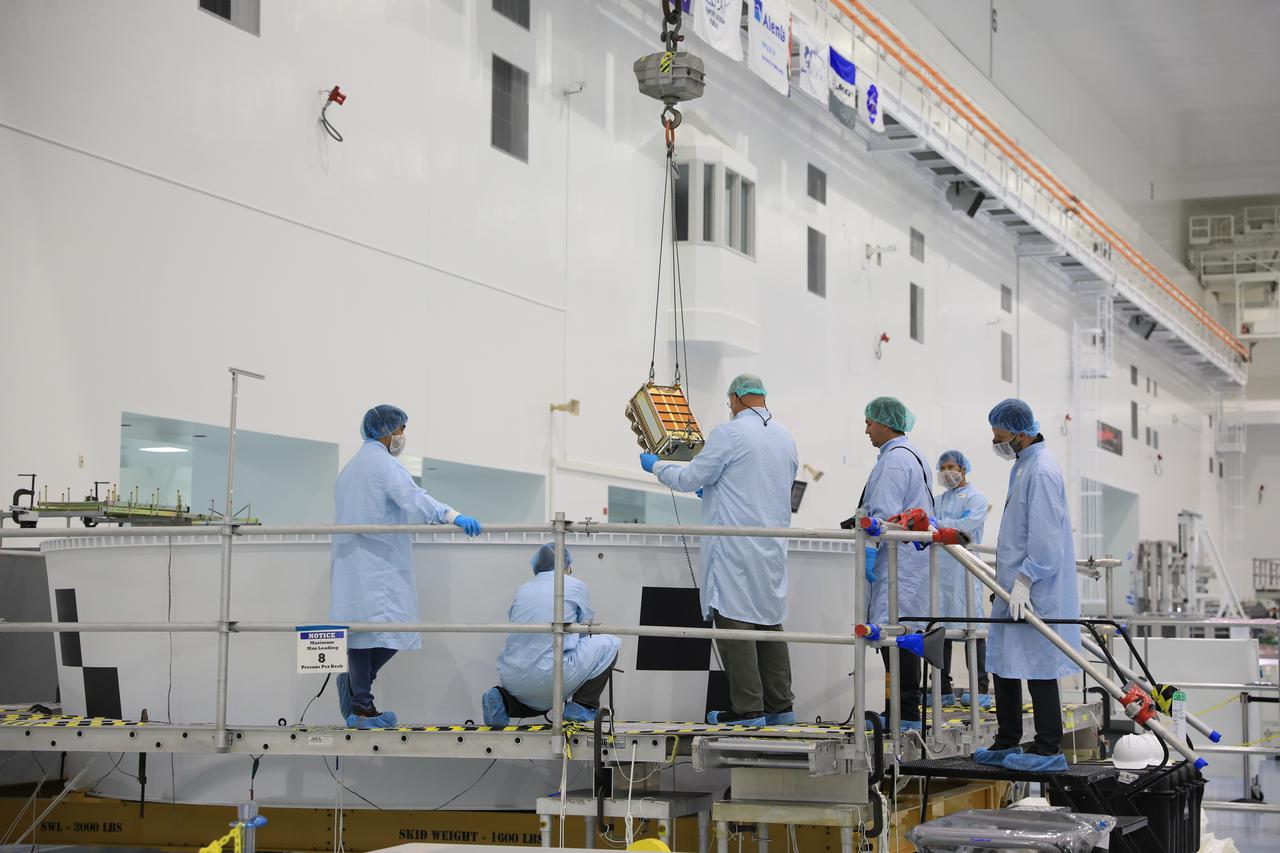
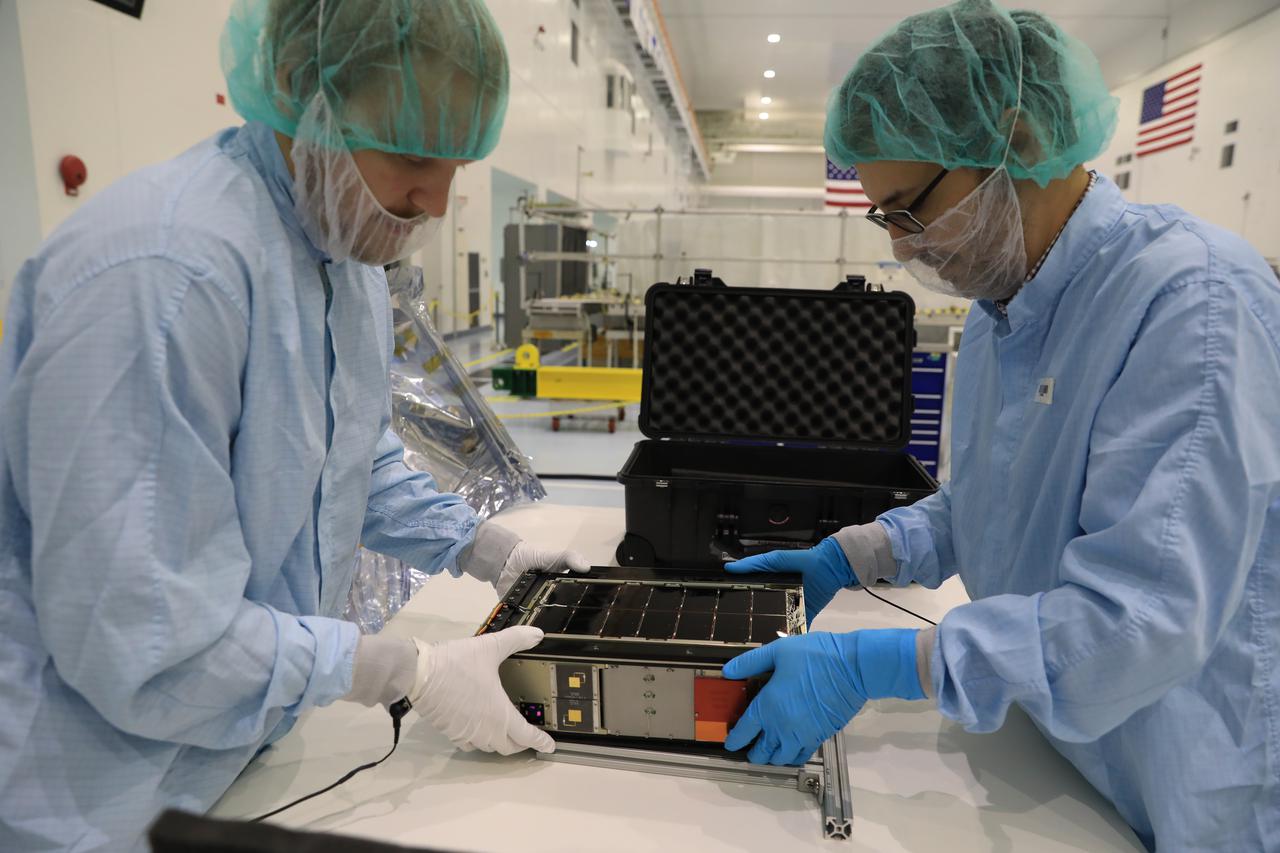
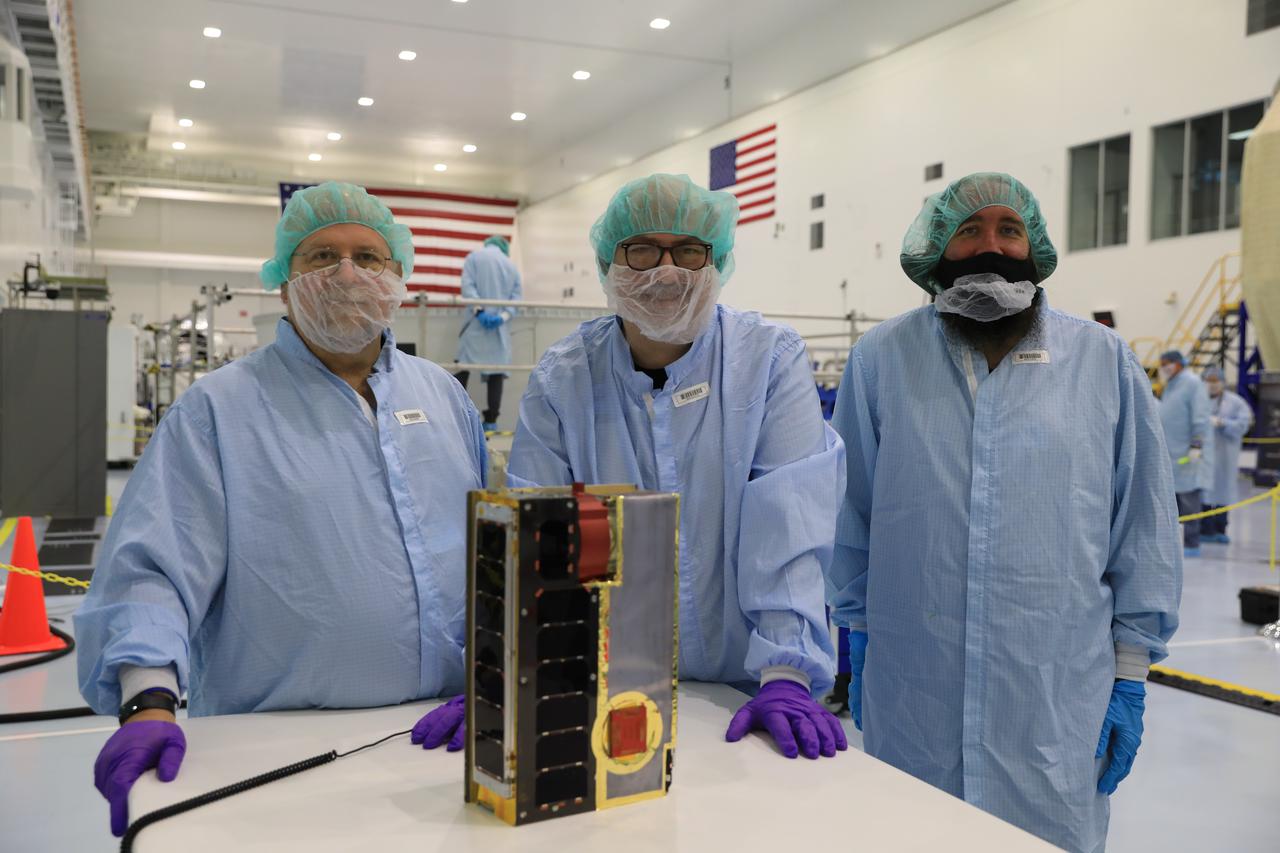
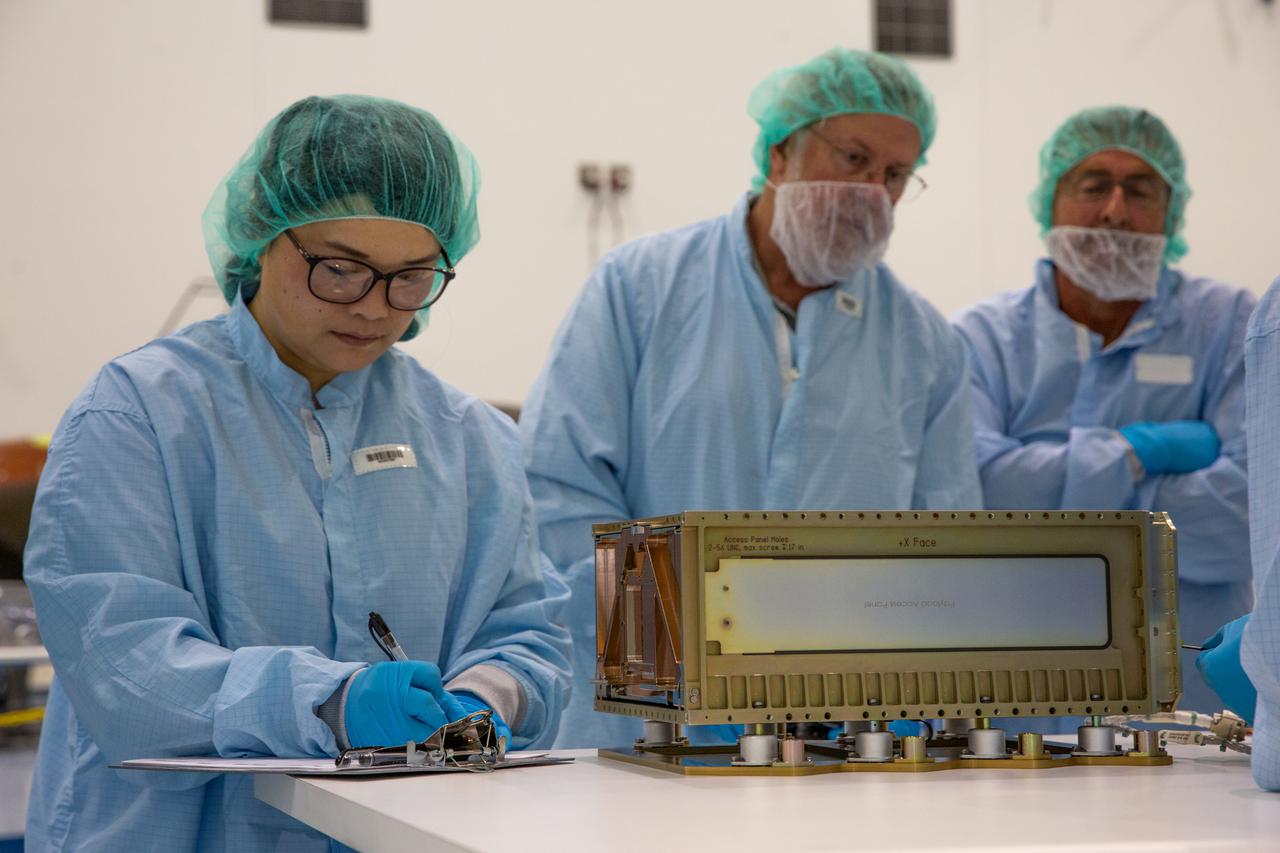
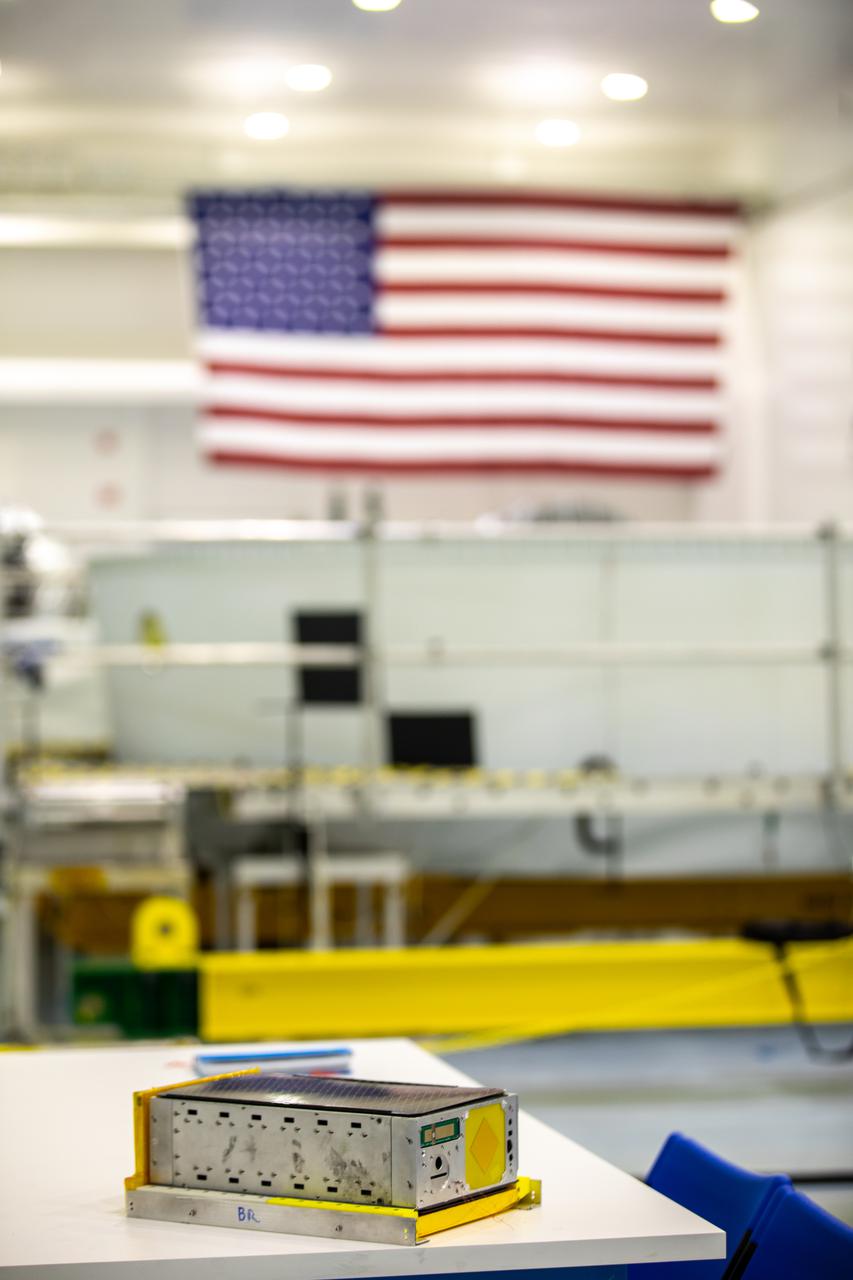
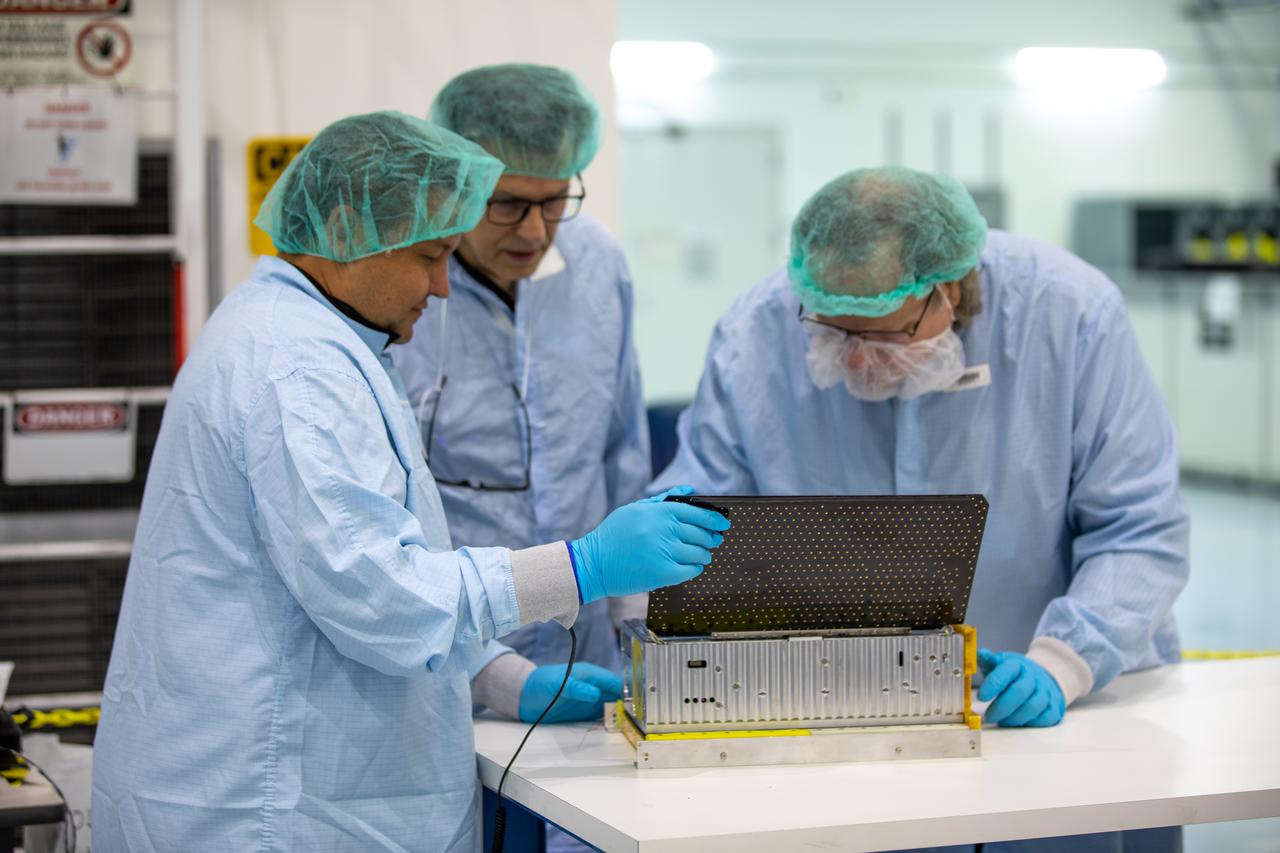
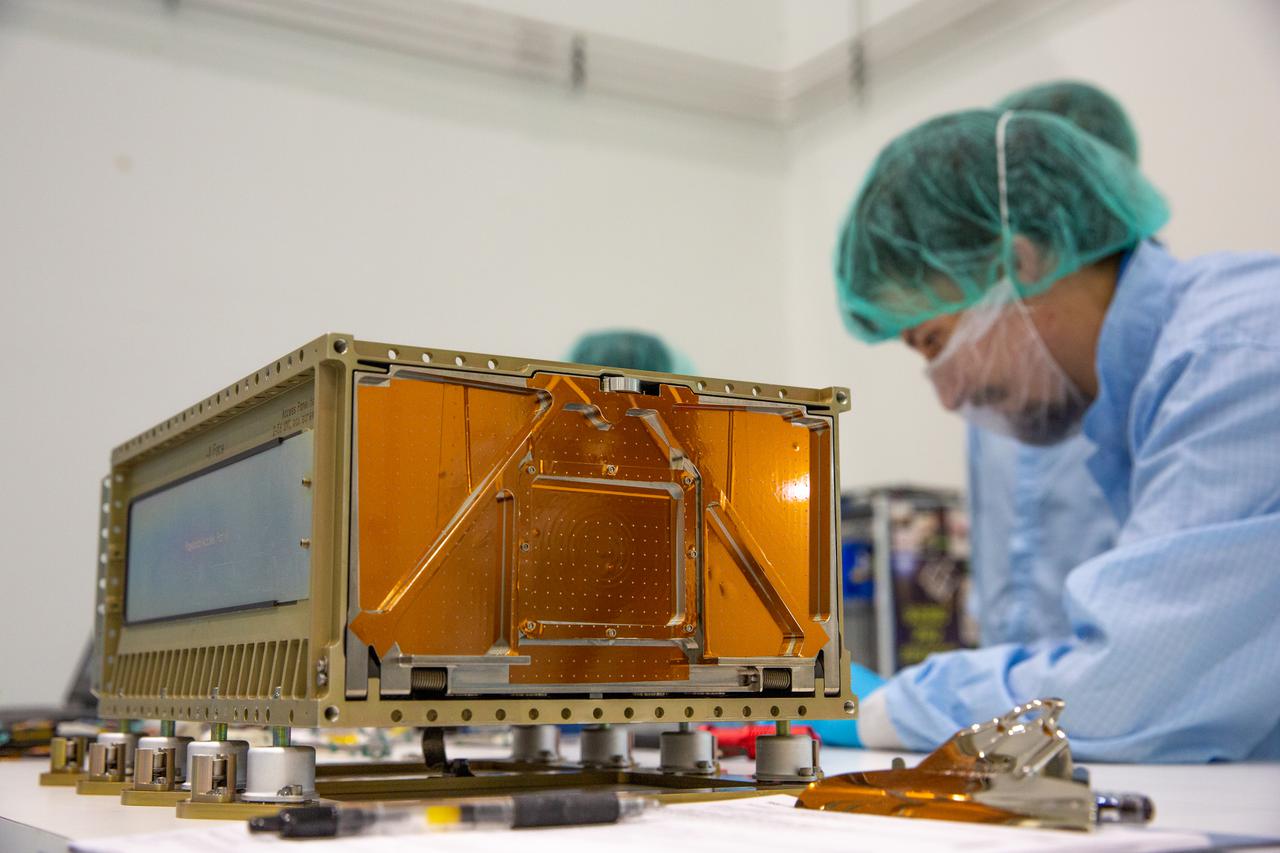
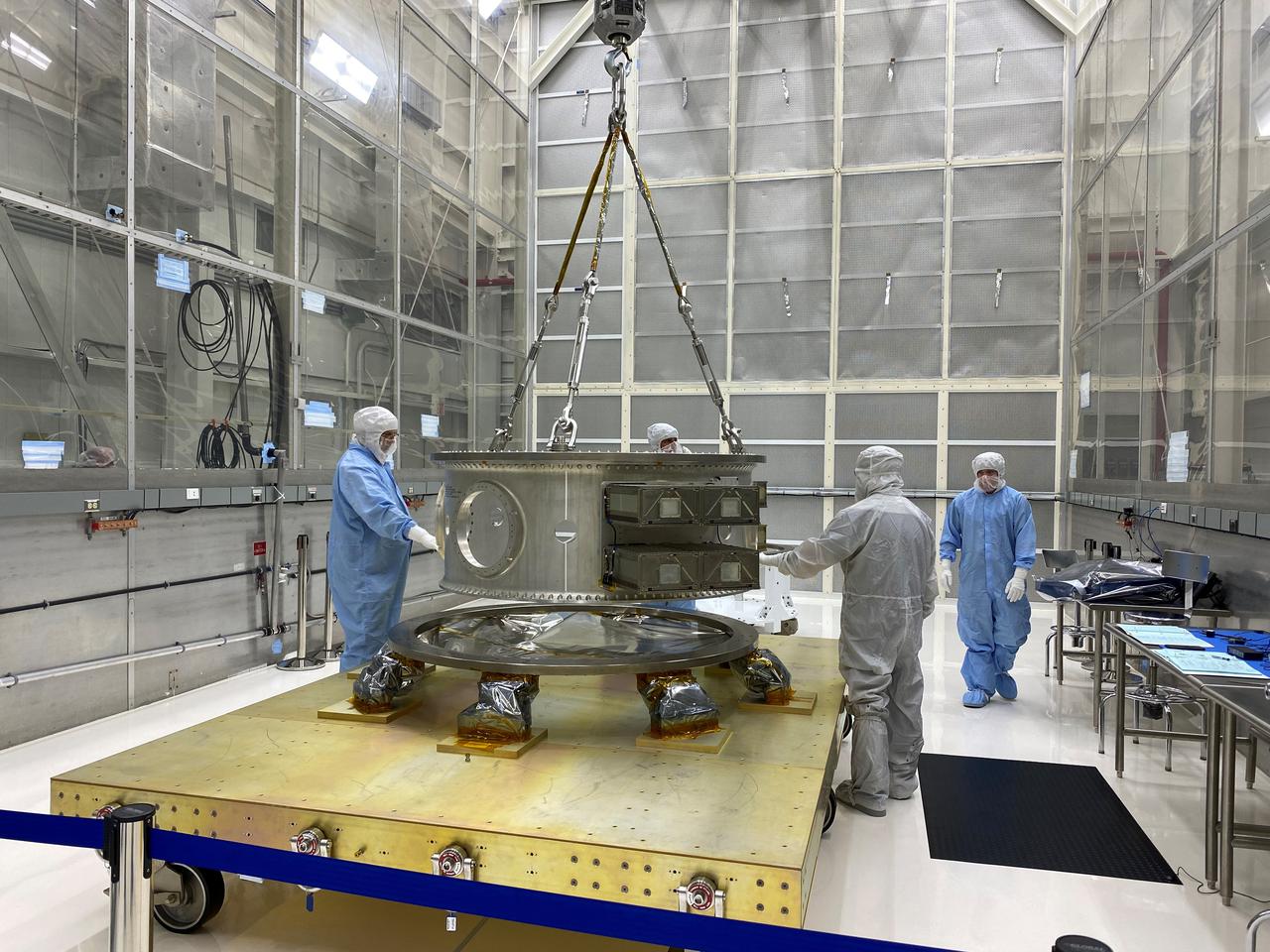
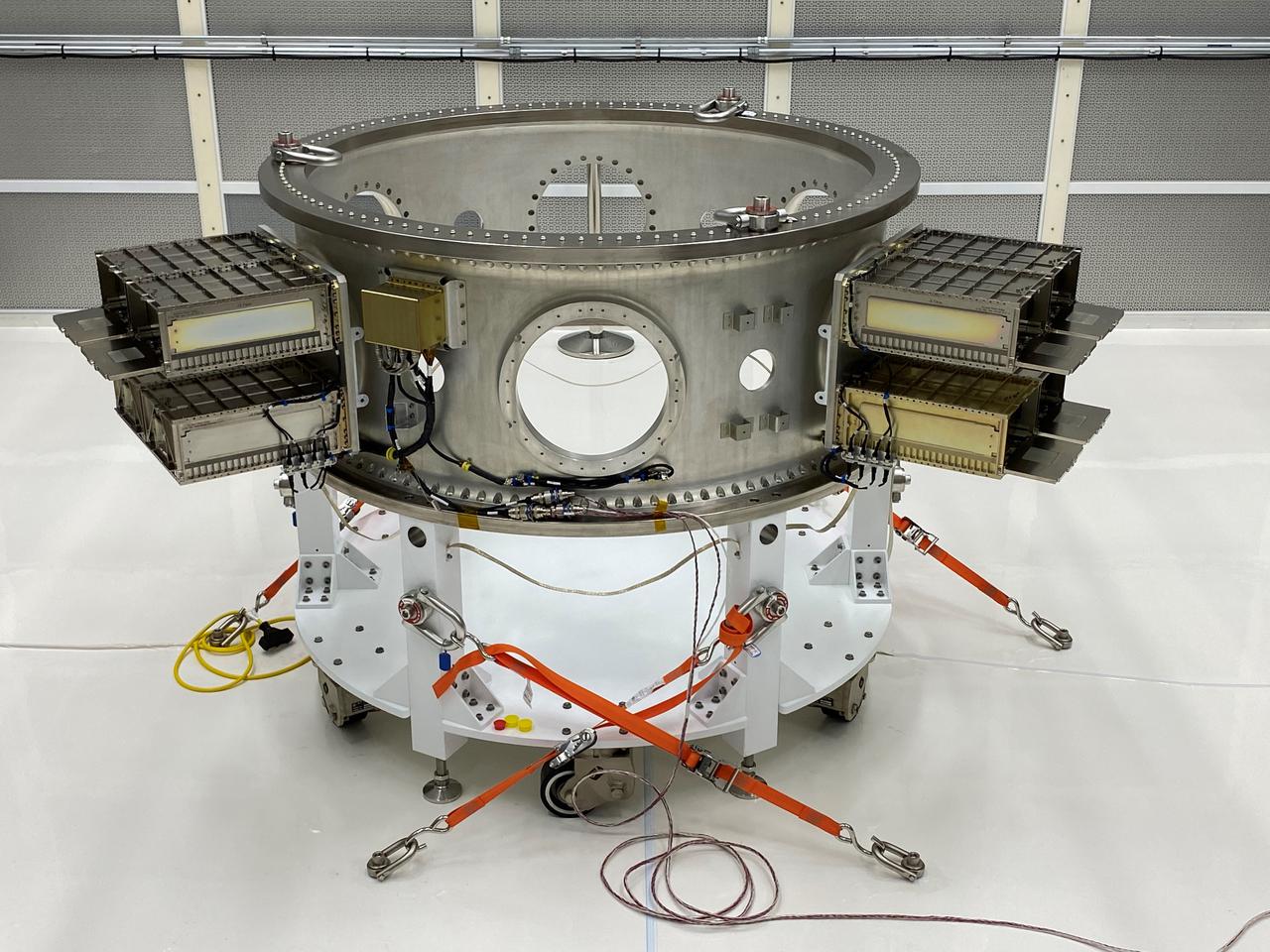
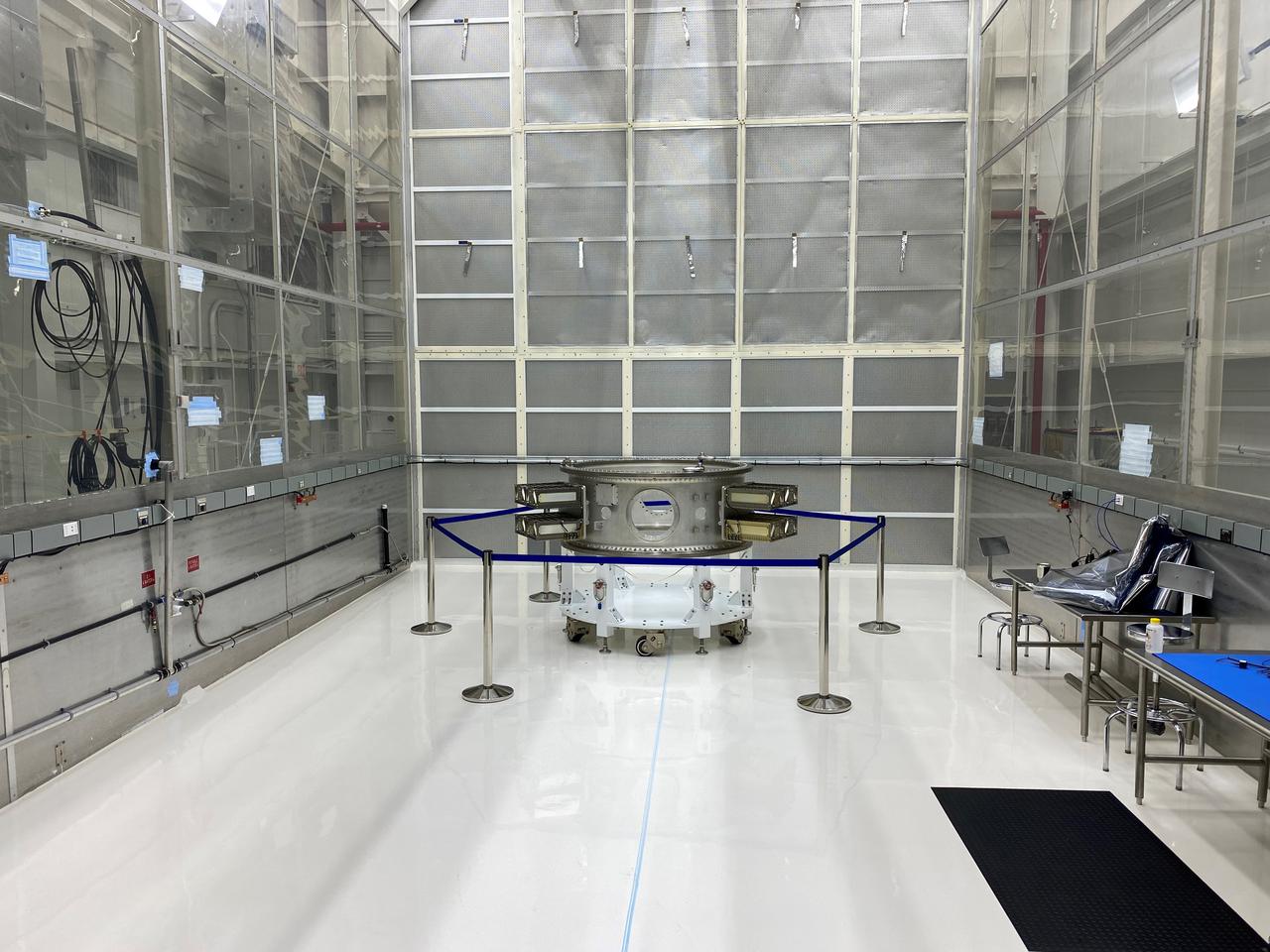
Technicians install the Korea AeroSpace Administration (KASA) K-Rad Cube within the Orion stage adapter inside the Multi-Payload Processing Facility at NASA’s Kennedy Space Center in Florida on Tuesday, Sept. 2, 2025. The K-Rad Cube, about the size of a shoebox, is one of the CubeSats slated to fly on NASA’s Artemis II test flight in 2026. Deploying in high Earth orbit from a spacecraft adapter on NASA’s SLS (Space Launch System) rocket after Orion is safely flying on its own with its crew of four astronauts, K-Rad Cube will use a dosimeter made of material designed to mimic human tissue to measure space radiation and assess biological effects at various altitudes across the Van Allen radiation belts, a critical area of research for human presence at the Moon and Mars.
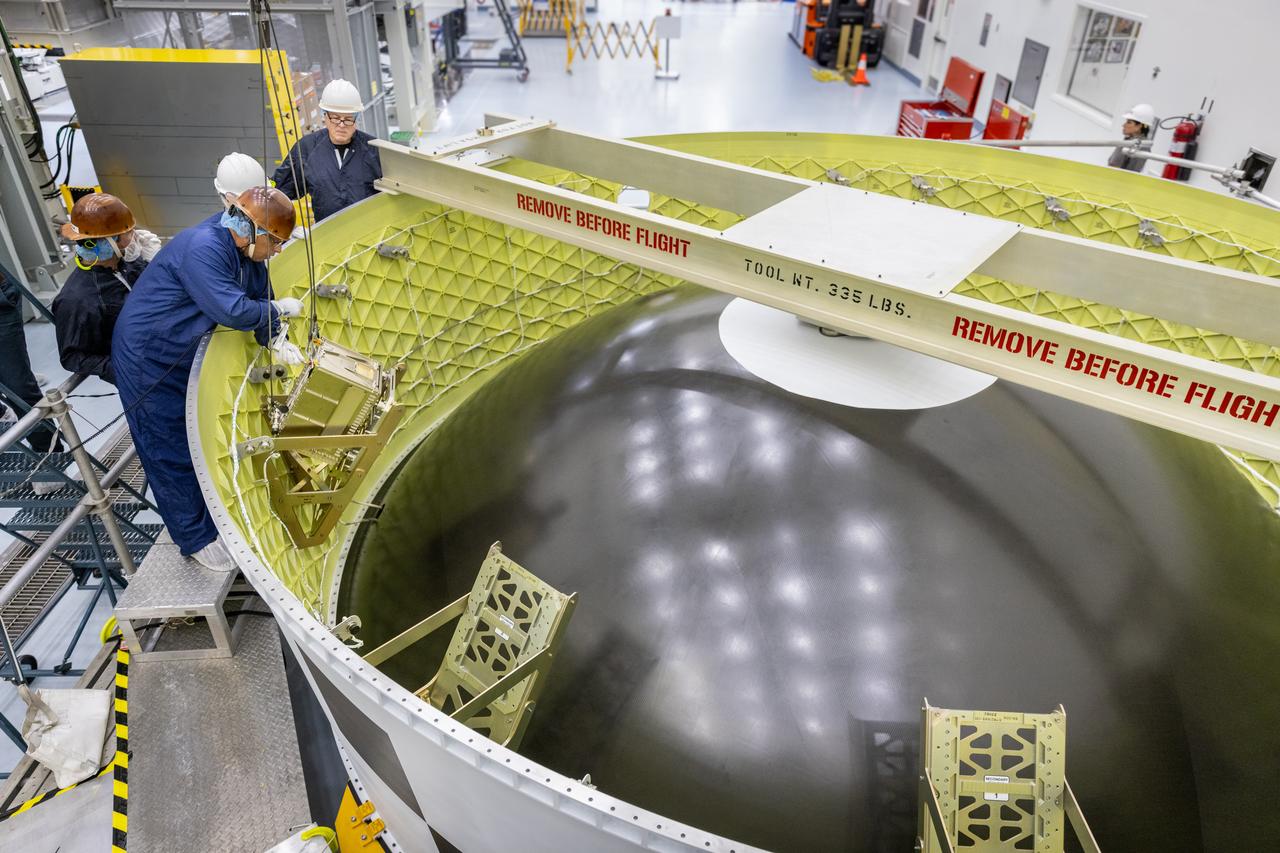
Technicians install the Korea AeroSpace Administration (KASA) K-Rad Cube within the Orion stage adapter inside the Multi-Payload Processing Facility at NASA’s Kennedy Space Center in Florida on Tuesday, Sept. 2, 2025. The K-Rad Cube, about the size of a shoebox, is one of the CubeSats slated to fly on NASA’s Artemis II test flight in 2026. Deploying in high Earth orbit from a spacecraft adapter on NASA’s SLS (Space Launch System) rocket after Orion is safely flying on its own with its crew of four astronauts, K-Rad Cube will use a dosimeter made of material designed to mimic human tissue to measure space radiation and assess biological effects at various altitudes across the Van Allen radiation belts, a critical area of research for human presence at the Moon and Mars.
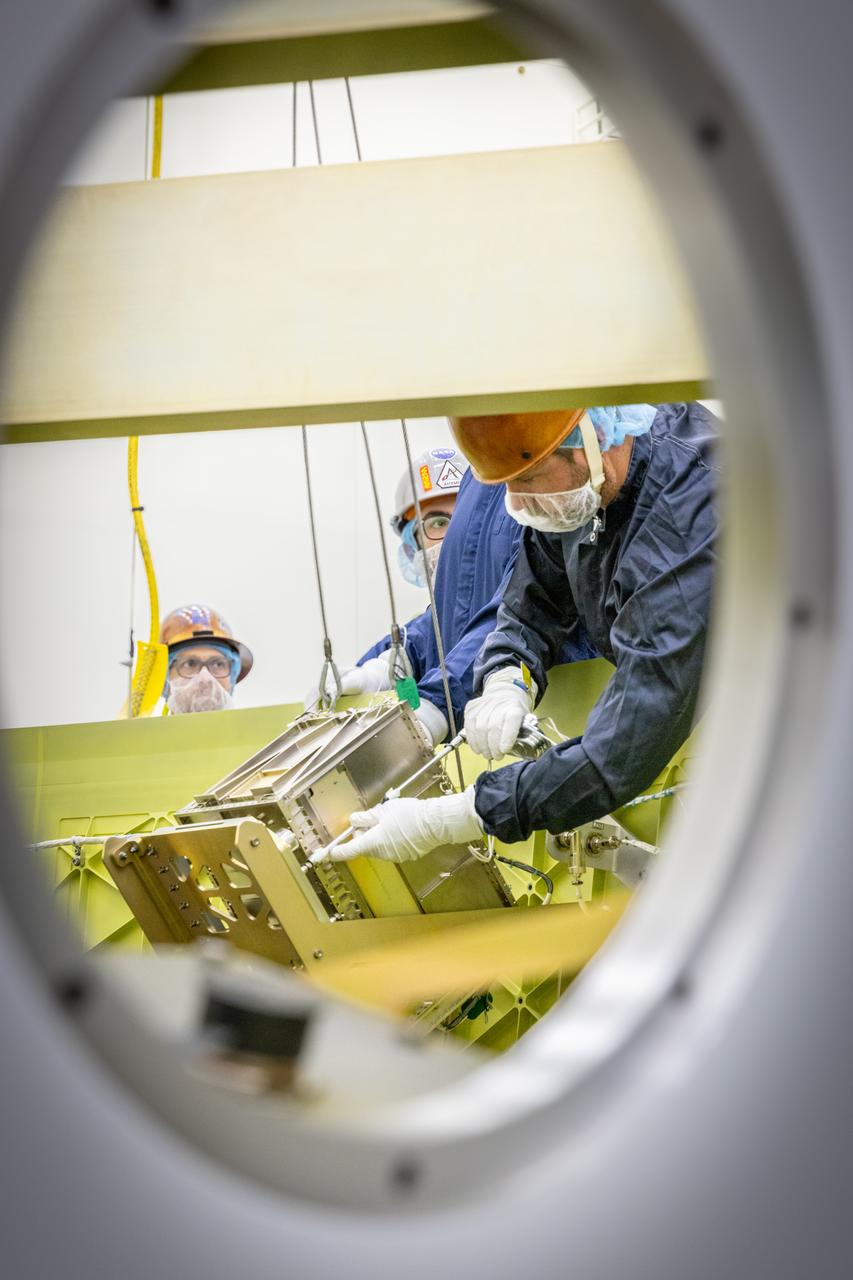
Technicians install the Korea AeroSpace Administration (KASA) K-Rad Cube within the Orion stage adapter inside the Multi-Payload Processing Facility at NASA’s Kennedy Space Center in Florida on Tuesday, Sept. 2, 2025. The K-Rad Cube, about the size of a shoebox, is one of the CubeSats slated to fly on NASA’s Artemis II test flight in 2026. Deploying in high Earth orbit from a spacecraft adapter on NASA’s SLS (Space Launch System) rocket after Orion is safely flying on its own with its crew of four astronauts, K-Rad Cube will use a dosimeter made of material designed to mimic human tissue to measure space radiation and assess biological effects at various altitudes across the Van Allen radiation belts, a critical area of research for human presence at the Moon and Mars.
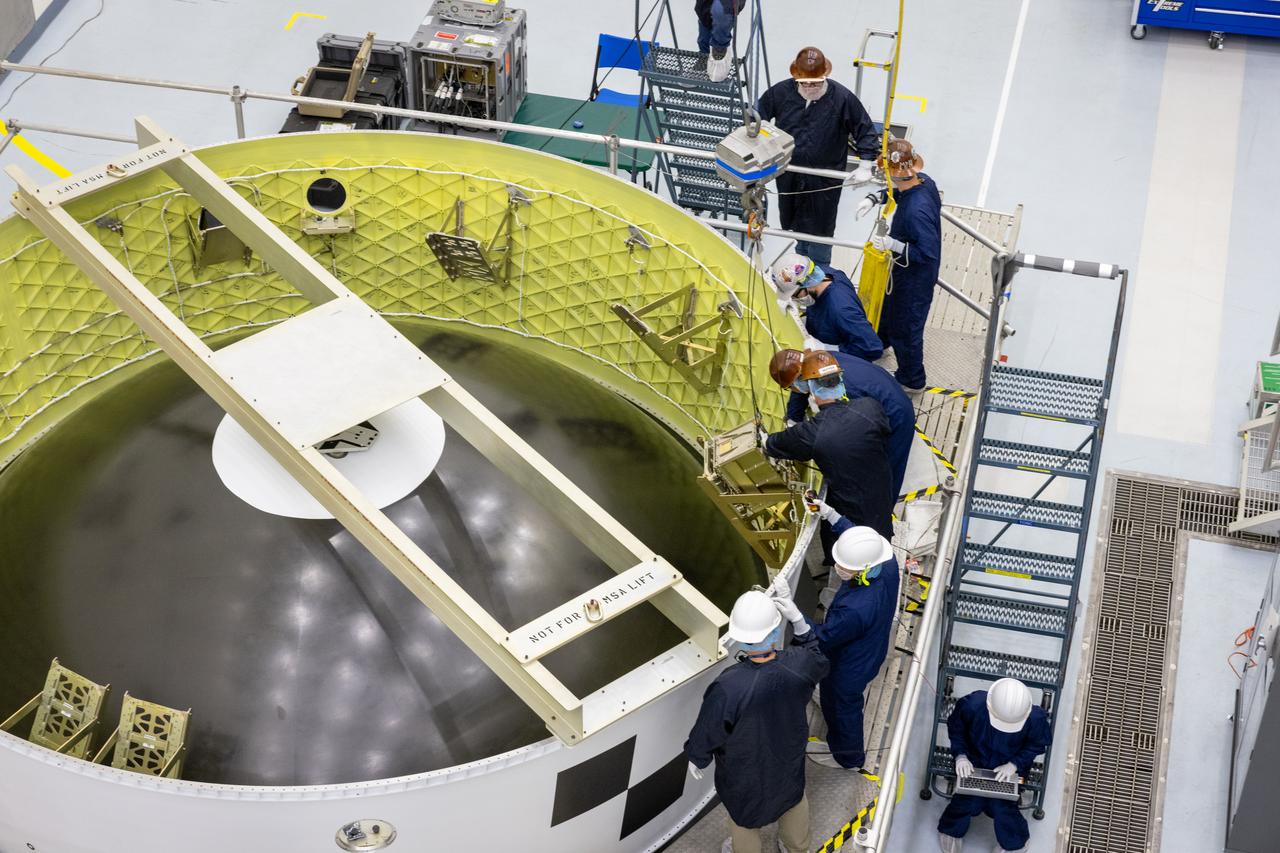
Technicians install the Korea AeroSpace Administration (KASA) K-Rad Cube within the Orion stage adapter inside the Multi-Payload Processing Facility at NASA’s Kennedy Space Center in Florida on Tuesday, Sept. 2, 2025. The K-Rad Cube, about the size of a shoebox, is one of the CubeSats slated to fly on NASA’s Artemis II test flight in 2026. Deploying in high Earth orbit from a spacecraft adapter on NASA’s SLS (Space Launch System) rocket after Orion is safely flying on its own with its crew of four astronauts, K-Rad Cube will use a dosimeter made of material designed to mimic human tissue to measure space radiation and assess biological effects at various altitudes across the Van Allen radiation belts, a critical area of research for human presence at the Moon and Mars.

Small satellites, called CubeSats, are shown secured inside NASA’s Orion stage adapter at NASA’s Kennedy Space Center in Florida on Aug. 5, 2021. Technicians from Exploration Ground Systems and Jacobs teams are working with developers of the shoebox-sized secondary payloads as they undergo final processing. The ring-shaped stage adapter will be connected to the Space Launch System’s Interim Cryogenic Propulsion Stage, and the Orion spacecraft will be secured on top. The CubeSats will conduct a variety of science experiments and technology demonstrations that will expand our knowledge of the lunar surface during the Artemis I mission.
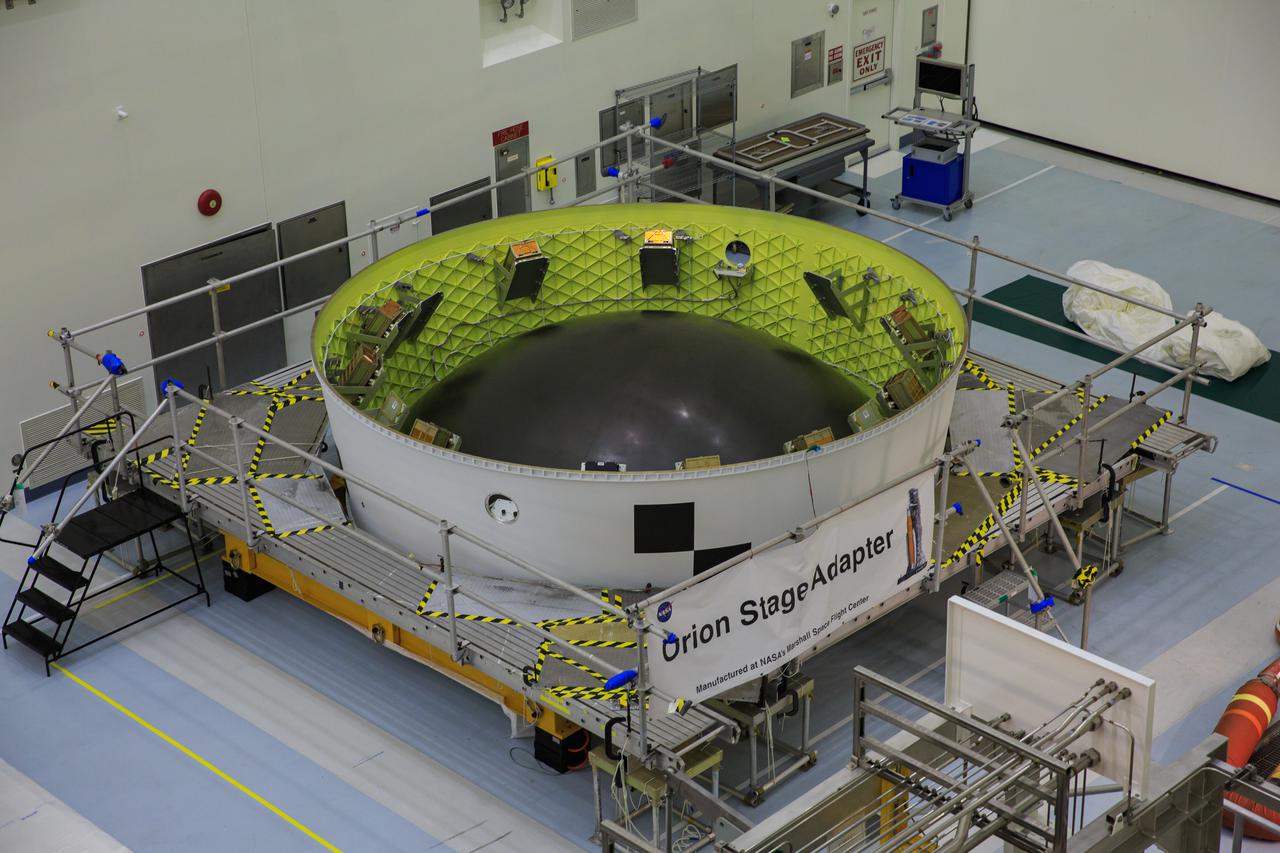
Small satellites, called CubeSats, are shown secured inside NASA’s Orion stage adapter at NASA’s Kennedy Space Center in Florida on Aug. 5, 2021. Technicians from Exploration Ground Systems and Jacobs teams are working with developers of the shoebox-sized secondary payloads as they undergo final processing. The ring-shaped stage adapter will be connected to the Space Launch System’s Interim Cryogenic Propulsion Stage, and the Orion spacecraft will be secured on top. The CubeSats will conduct a variety of science experiments and technology demonstrations that will expand our knowledge of the lunar surface during the Artemis I mission.
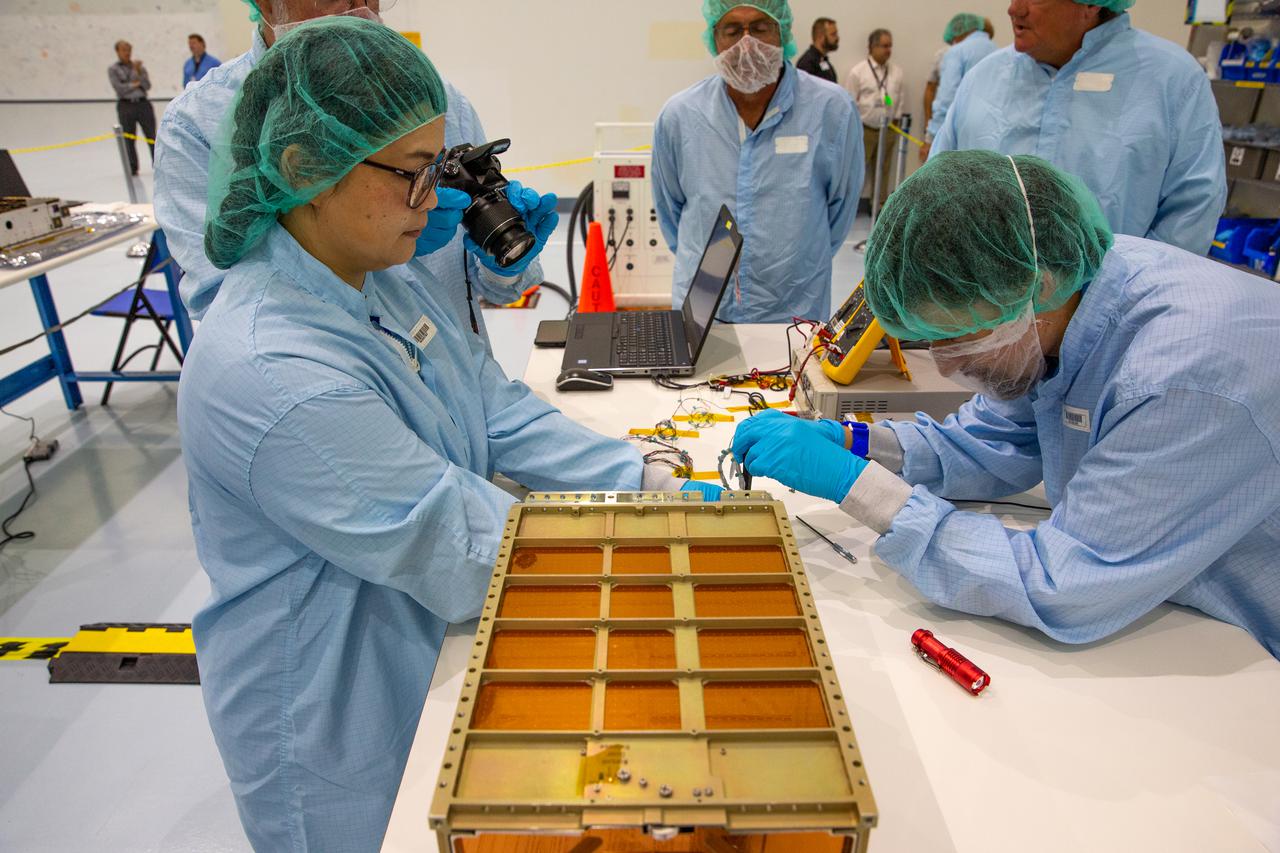
The Near-Earth Asteroid Scout team prepares their secondary payload for installation in the Space Launch System rocket’s Orion stage adapter at NASA’s Kennedy Space Center in Florida. NEA Scout will be deployed and go to an asteroid after the Orion spacecraft separates from the Space Launch System rocket and heads to the Moon during the Artemis I mission.
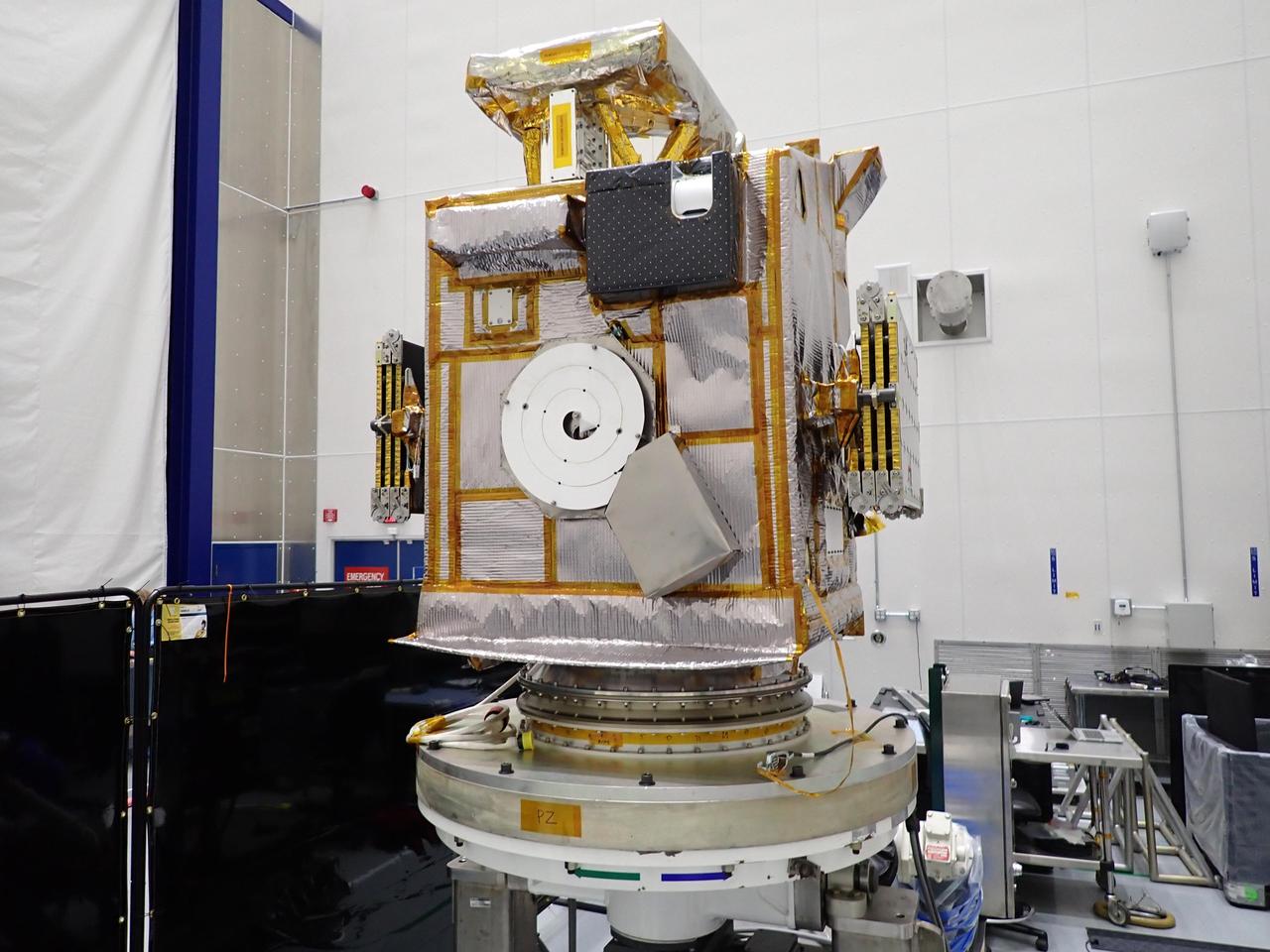
NASA's Lunar Trailblazer sits on its rotation fixture after being fueled and prior to being installed to the EELV Secondary Payload Adapter (ESPA) ring at SpaceX's payload processing facility in NASA's Kennedy Space Center in Florida in early February 2025. The ESPA ring is an adaptor used for launching secondary payloads on launch vehicles. Figure A shows the spacecraft mounted horizontally, in its launch configuration, to the ESPA ring. The mission's two science instruments are visible. The High-resolution Volatiles and Minerals Moon Mapper (HVM³) is the angular structure atop the spacecraft; the Lunar Thermal Mapper (LTM) is the black square on the upper right of the front facing panel. https://photojournal.jpl.nasa.gov/catalog/PIA26460
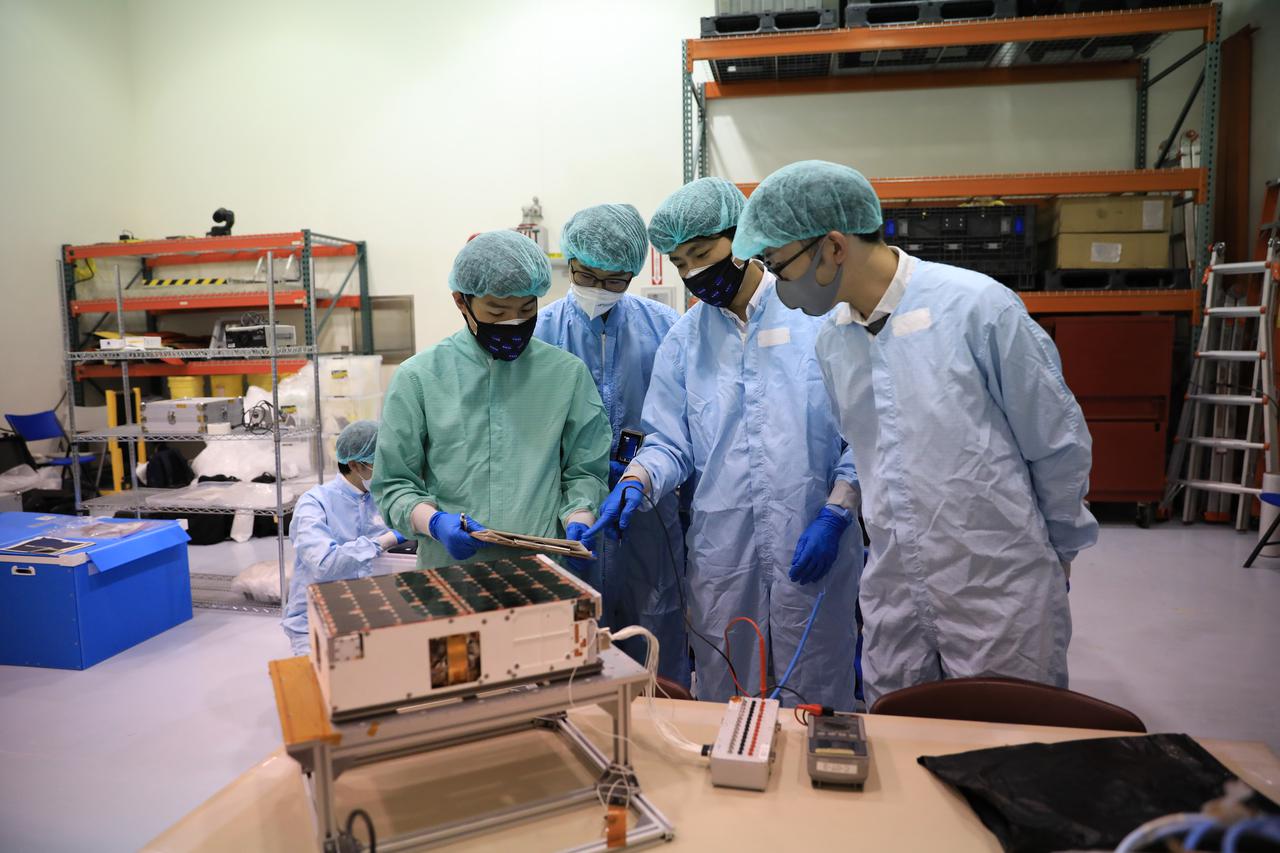
Teams worked on the final processing of their payloads that will fly aboard Artemis I. Housed within the Orion stage adapter, the satellites – called CubeSats – are roughly the size of a large shoe box and weigh no more than 30 pounds. Despite their small size, they enable science and technology experiments that may enhance our understanding of the deep space environment, expand our knowledge of the Moon, and demonstrate new technologies that could be used on future missions.
A team prepares the LunaH-Map before its installation in the Space Launch System rocket Orion stage adapter at NASA’s Kennedy Space Center in Florida. Once deployed from the rocket, the CubeSat will orbit the Moon for two months while searching for water deposits near the South Pole.

Teams worked on the final processing of their payloads that will fly aboard Artemis I. Housed within the Orion stage adapter, the satellites – called CubeSats – are roughly the size of a large shoe box and weigh no more than 30 pounds. Despite their small size, they enable science and technology experiments that may enhance our understanding of the deep space environment, expand our knowledge of the Moon, and demonstrate new technologies that could be used on future missions.
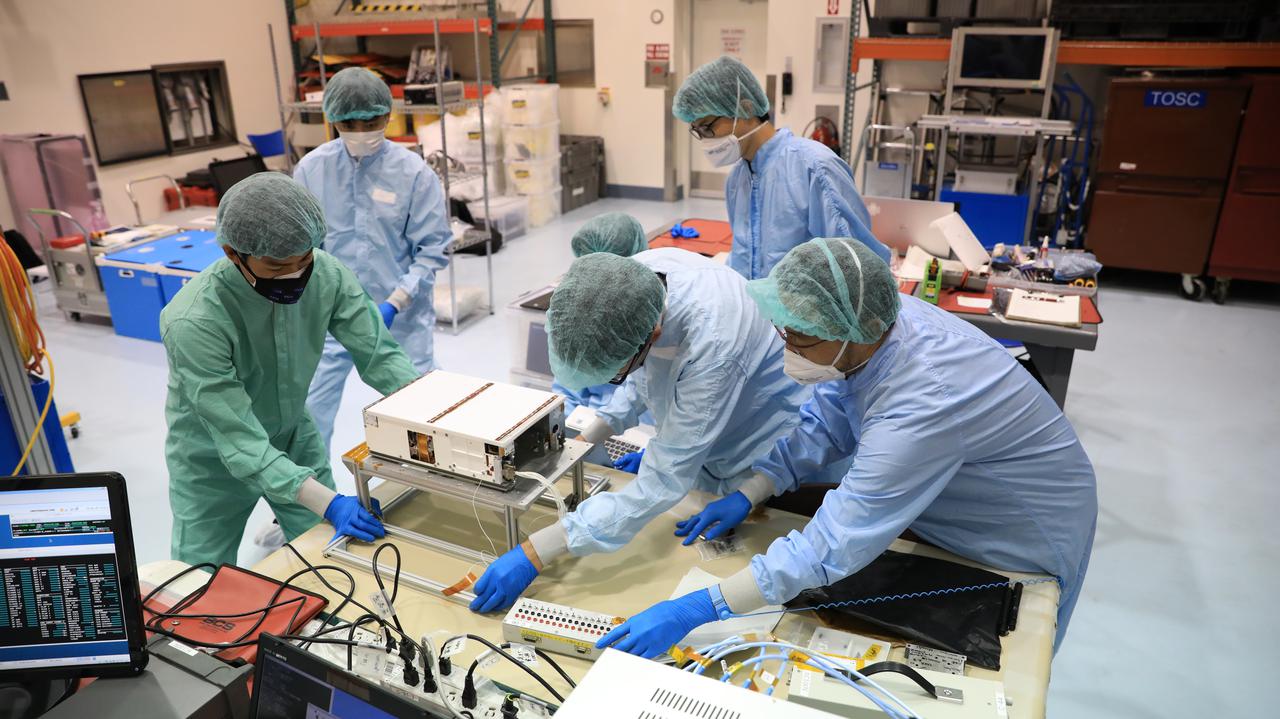
Teams worked on the final processing of their payloads that will fly aboard Artemis I. Housed within the Orion stage adapter, the satellites – called CubeSats – are roughly the size of a large shoe box and weigh no more than 30 pounds. Despite their small size, they enable science and technology experiments that may enhance our understanding of the deep space environment, expand our knowledge of the Moon, and demonstrate new technologies that could be used on future missions.
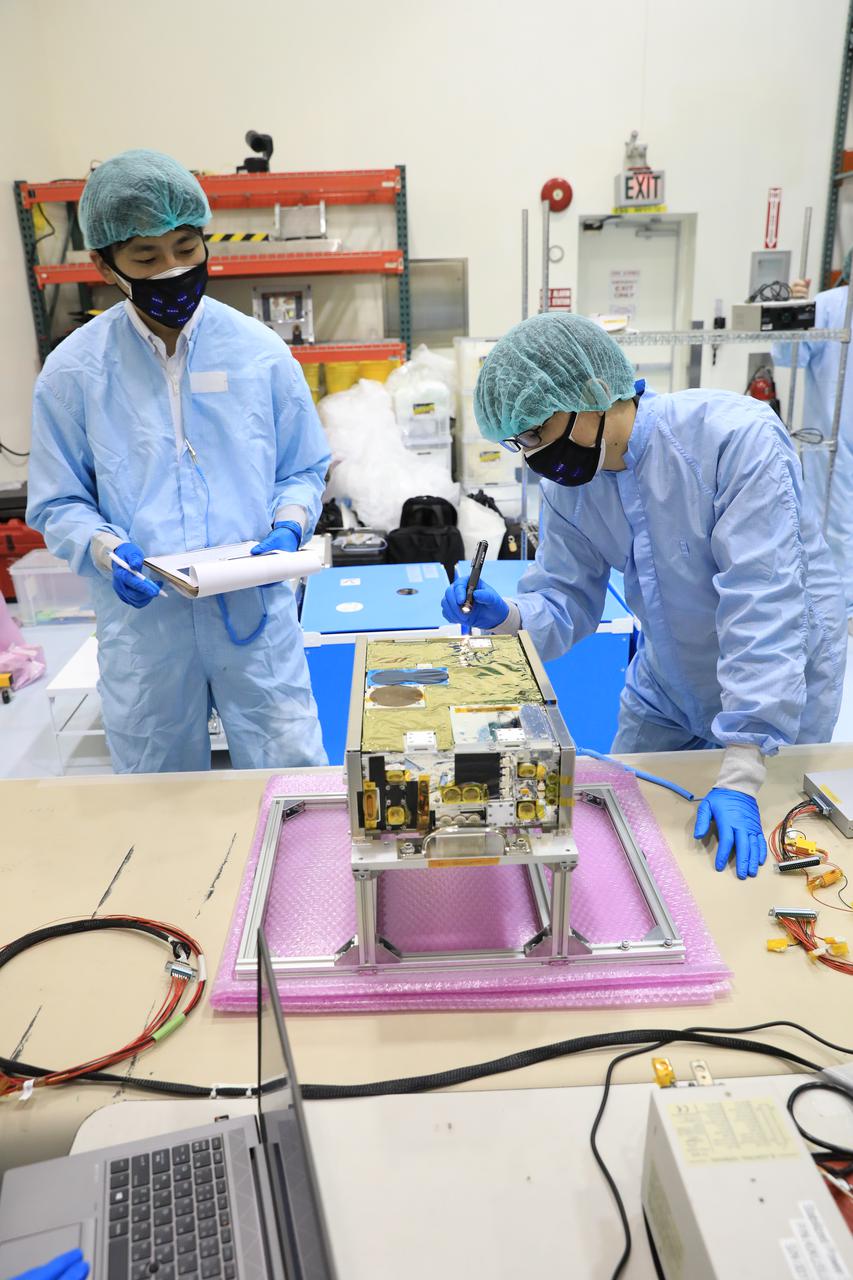
Teams worked on the final processing of their payloads that will fly aboard Artemis I. Housed within the Orion stage adapter, the satellites – called CubeSats – are roughly the size of a large shoe box and weigh no more than 30 pounds. Despite their small size, they enable science and technology experiments that may enhance our understanding of the deep space environment, expand our knowledge of the Moon, and demonstrate new technologies that could be used on future missions.
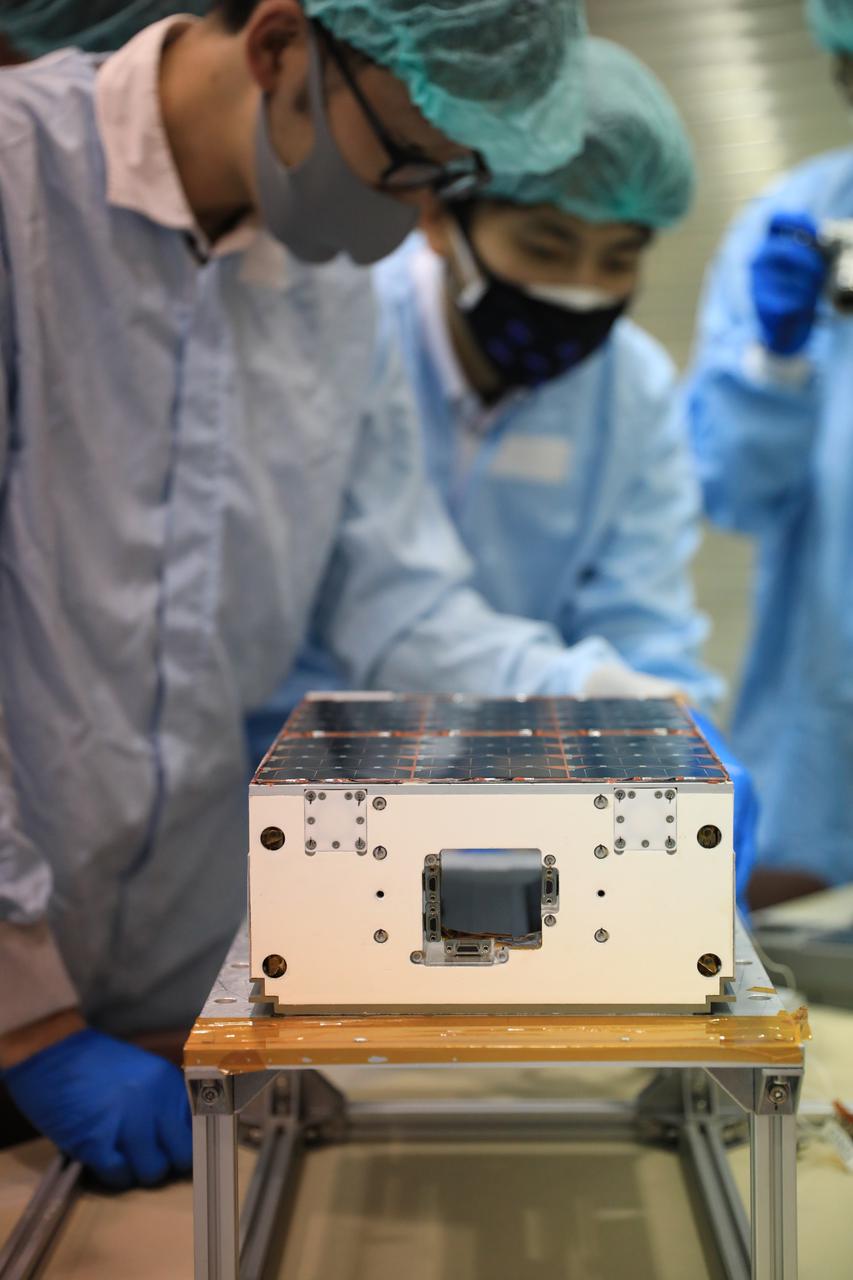
Teams worked on the final processing of their payloads that will fly aboard Artemis I. Housed within the Orion stage adapter, the satellites – called CubeSats – are roughly the size of a large shoe box and weigh no more than 30 pounds. Despite their small size, they enable science and technology experiments that may enhance our understanding of the deep space environment, expand our knowledge of the Moon, and demonstrate new technologies that could be used on future missions.
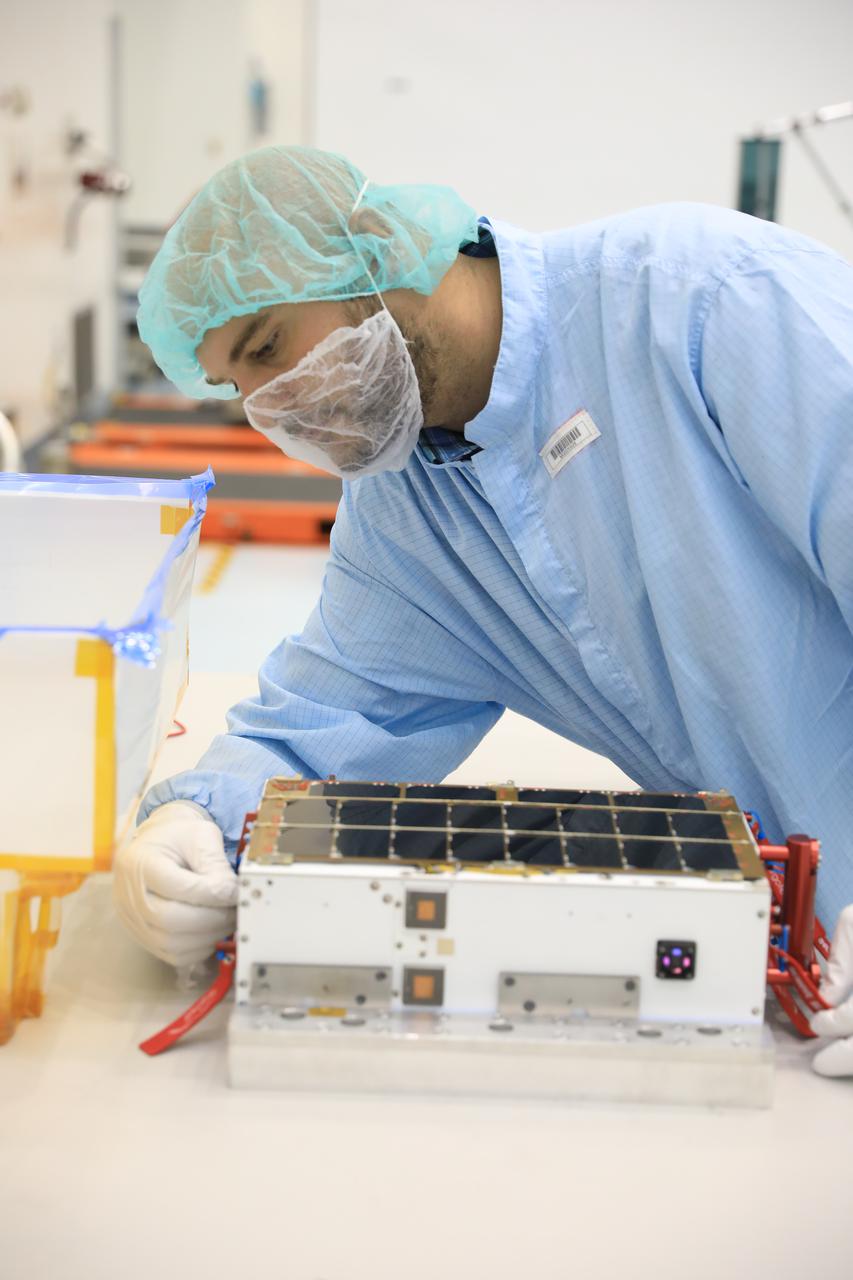
Teams worked on the final processing of their payloads that will fly aboard Artemis I. Housed within the Orion stage adapter, the satellites – called CubeSats – are roughly the size of a large shoe box and weigh no more than 30 pounds. Despite their small size, they enable science and technology experiments that may enhance our understanding of the deep space environment, expand our knowledge of the Moon, and demonstrate new technologies that could be used on future missions.
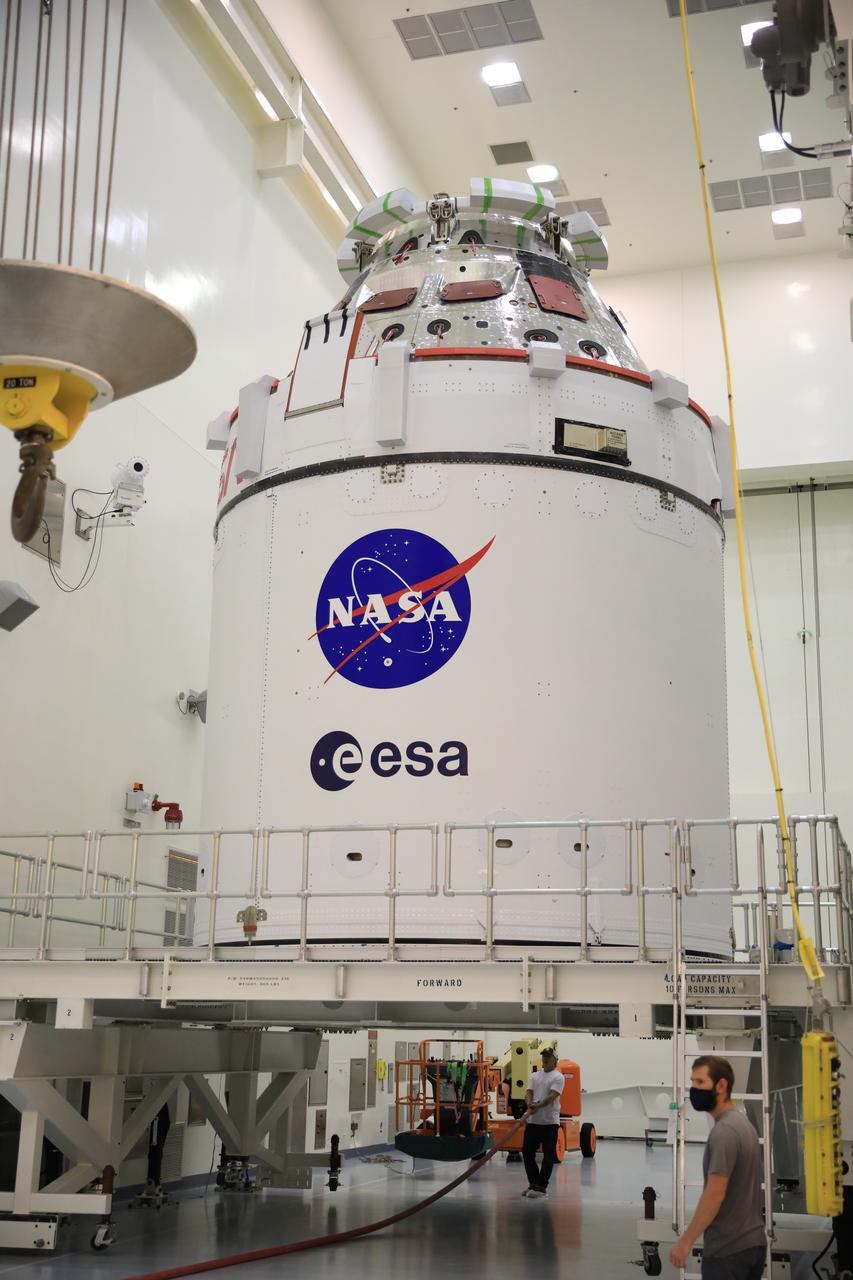
Fueling and servicing checks on the Orion spacecraft for the Artemis I mission are completed inside Kennedy Space Center’s Multi-Payload Processing Facility on July 8, 2021. The capsule will be transported to the Florida spaceport’s Launch Abort System Facility, where teams with Exploration Ground Systems and contractor Jacobs will work to add parts of the launch abort system onto the spacecraft. Launching later this year, Artemis I will be a test of the Orion spacecraft and SLS rocket as an integrated system ahead of crewed flights to the Moon.
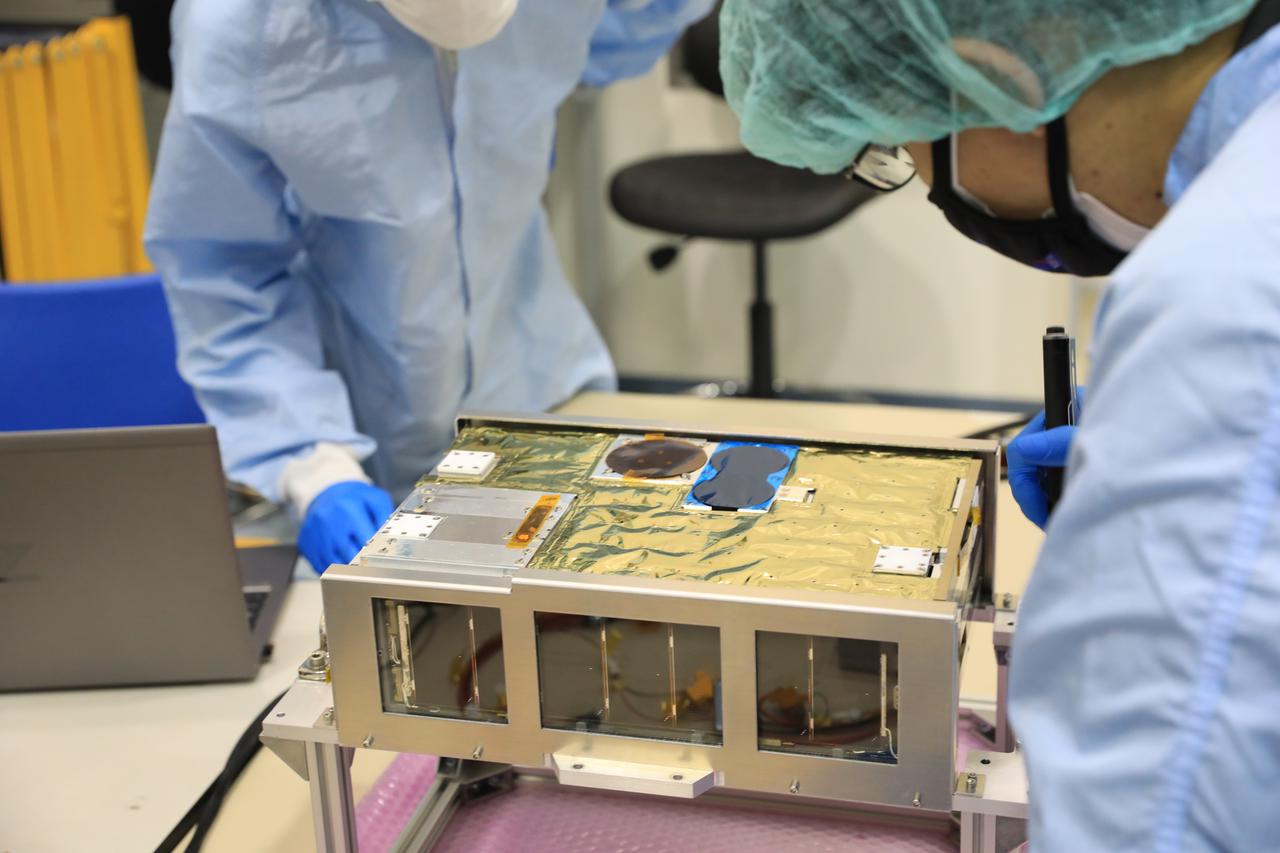
Teams worked on the final processing of their payloads that will fly aboard Artemis I. Housed within the Orion stage adapter, the satellites – called CubeSats – are roughly the size of a large shoe box and weigh no more than 30 pounds. Despite their small size, they enable science and technology experiments that may enhance our understanding of the deep space environment, expand our knowledge of the Moon, and demonstrate new technologies that could be used on future missions.
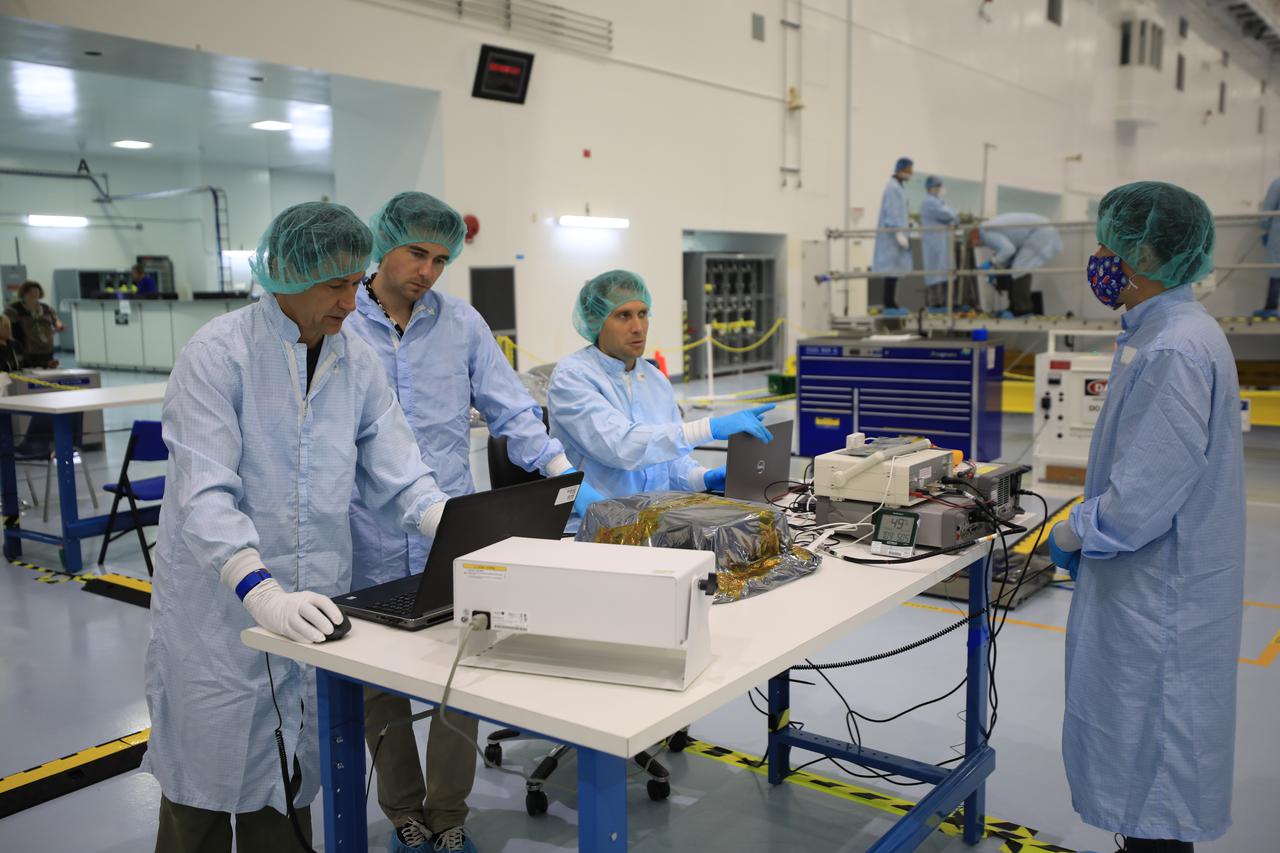
Teams worked on the final processing of their payloads that will fly aboard Artemis I. Housed within the Orion stage adapter, the satellites – called CubeSats – are roughly the size of a large shoe box and weigh no more than 30 pounds. Despite their small size, they enable science and technology experiments that may enhance our understanding of the deep space environment, expand our knowledge of the Moon, and demonstrate new technologies that could be used on future missions.
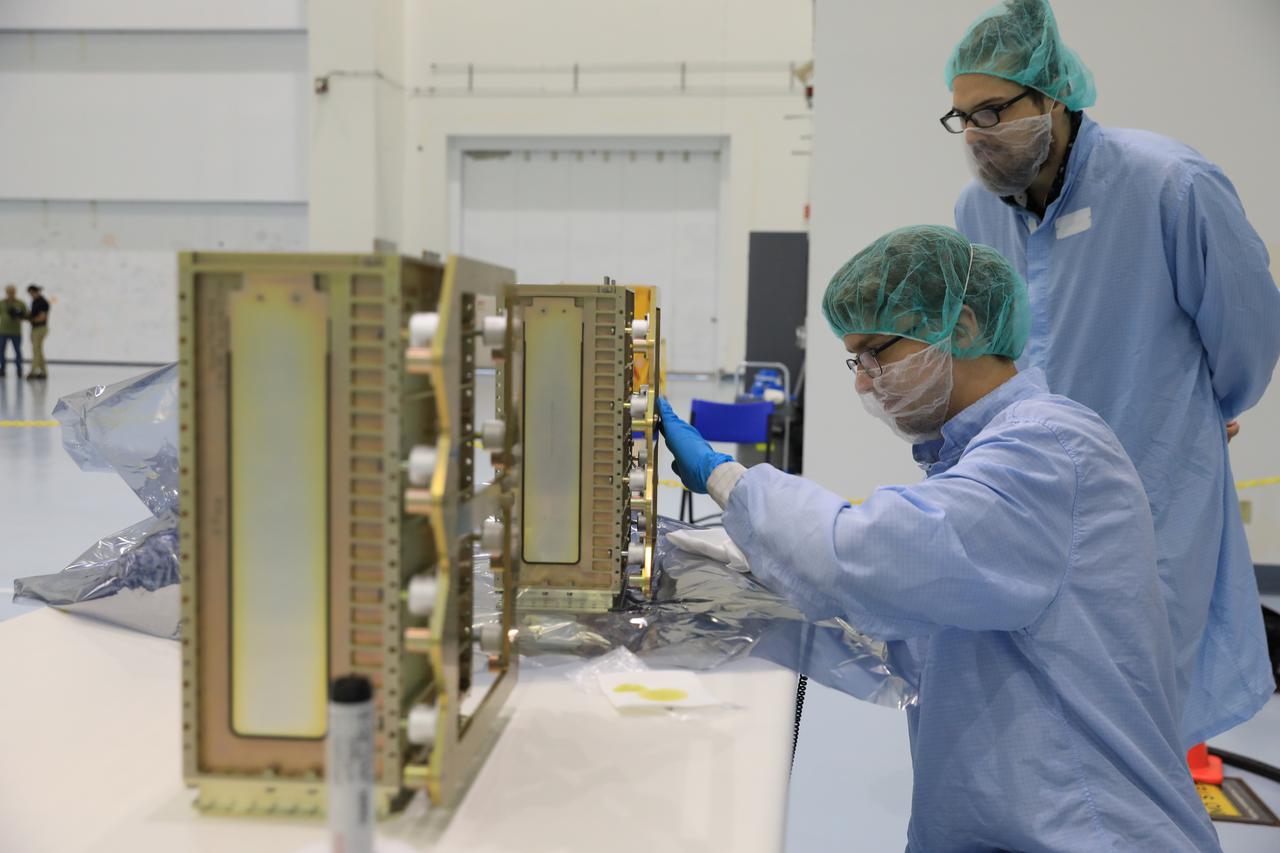
Teams worked on the final processing of their payloads that will fly aboard Artemis I. Housed within the Orion stage adapter, the satellites – called CubeSats – are roughly the size of a large shoe box and weigh no more than 30 pounds. Despite their small size, they enable science and technology experiments that may enhance our understanding of the deep space environment, expand our knowledge of the Moon, and demonstrate new technologies that could be used on future missions.
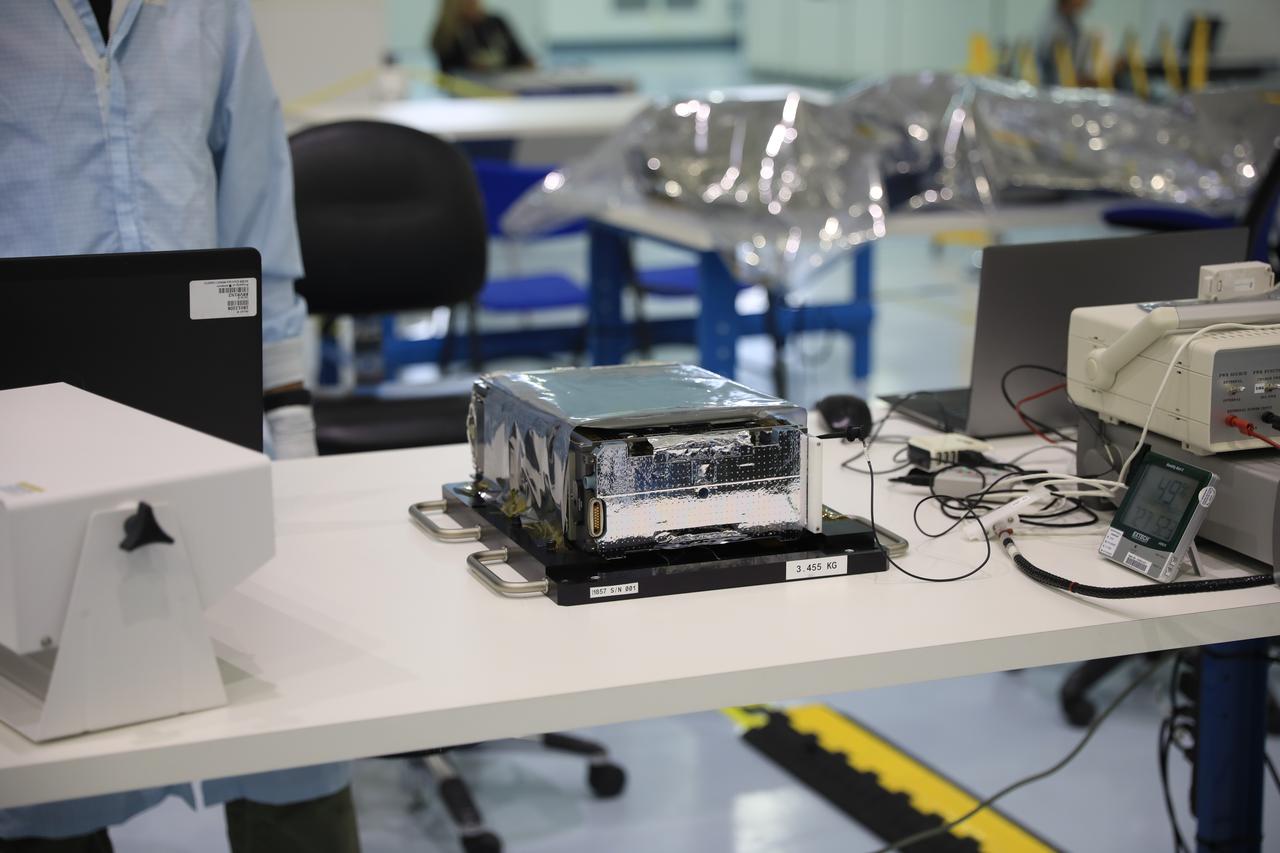
Teams worked on the final processing of their payloads that will fly aboard Artemis I. Housed within the Orion stage adapter, the satellites – called CubeSats – are roughly the size of a large shoe box and weigh no more than 30 pounds. Despite their small size, they enable science and technology experiments that may enhance our understanding of the deep space environment, expand our knowledge of the Moon, and demonstrate new technologies that could be used on future missions.
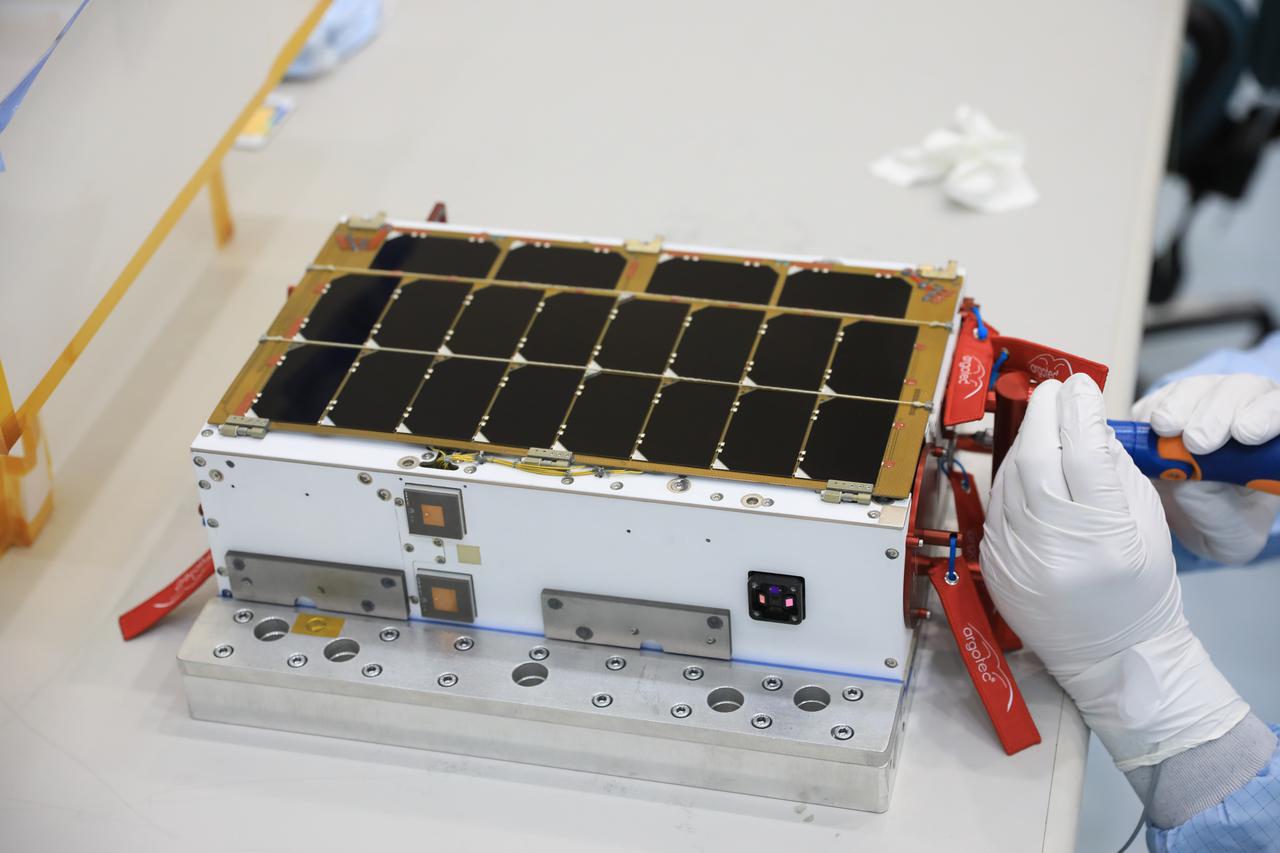
Teams worked on the final processing of their payloads that will fly aboard Artemis I. Housed within the Orion stage adapter, the satellites – called CubeSats – are roughly the size of a large shoe box and weigh no more than 30 pounds. Despite their small size, they enable science and technology experiments that may enhance our understanding of the deep space environment, expand our knowledge of the Moon, and demonstrate new technologies that could be used on future missions.
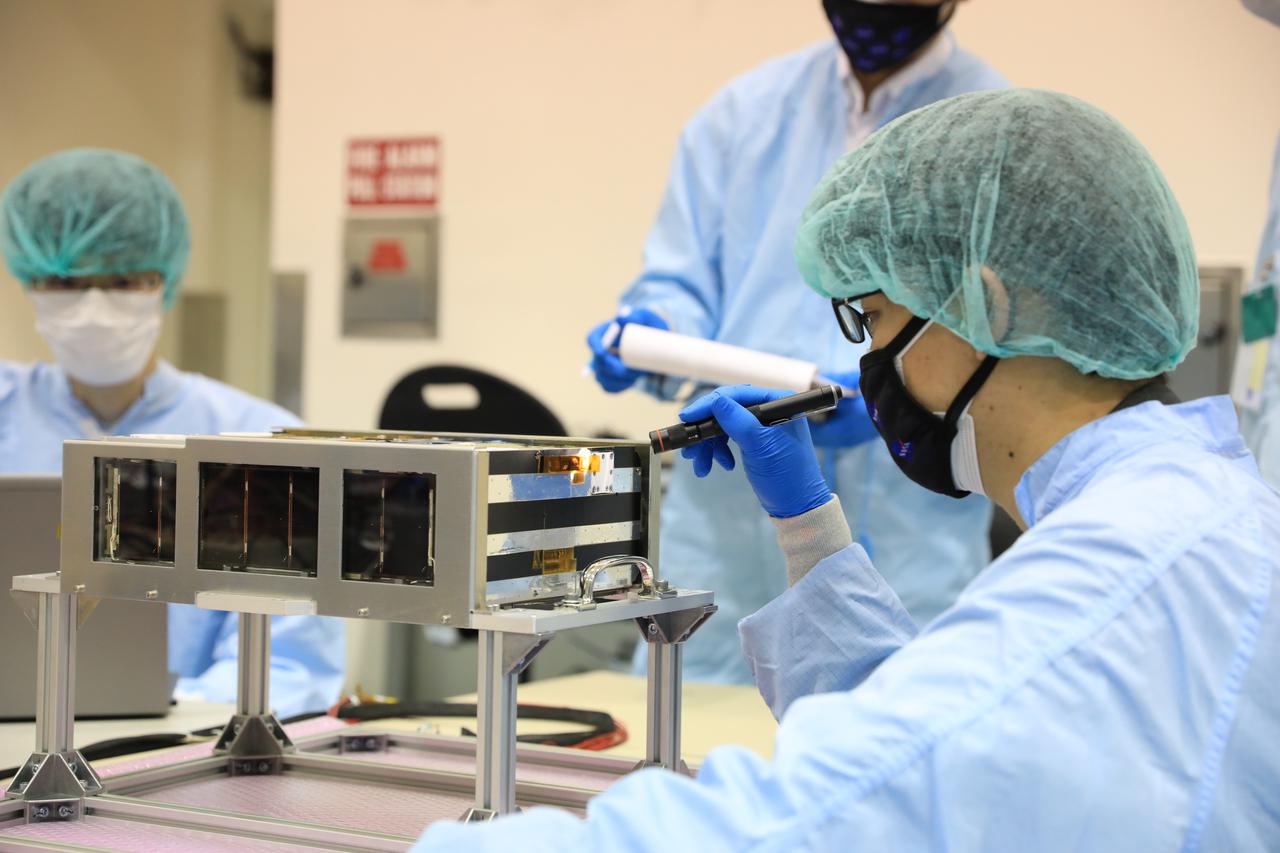
Teams worked on the final processing of their payloads that will fly aboard Artemis I. Housed within the Orion stage adapter, the satellites – called CubeSats – are roughly the size of a large shoe box and weigh no more than 30 pounds. Despite their small size, they enable science and technology experiments that may enhance our understanding of the deep space environment, expand our knowledge of the Moon, and demonstrate new technologies that could be used on future missions.
Team CuSP cheers on the solar CubeSat prior to loading it in the Space Launch System rocket Orion stage adapter at NASA’s Kennedy Space Center in Florida.
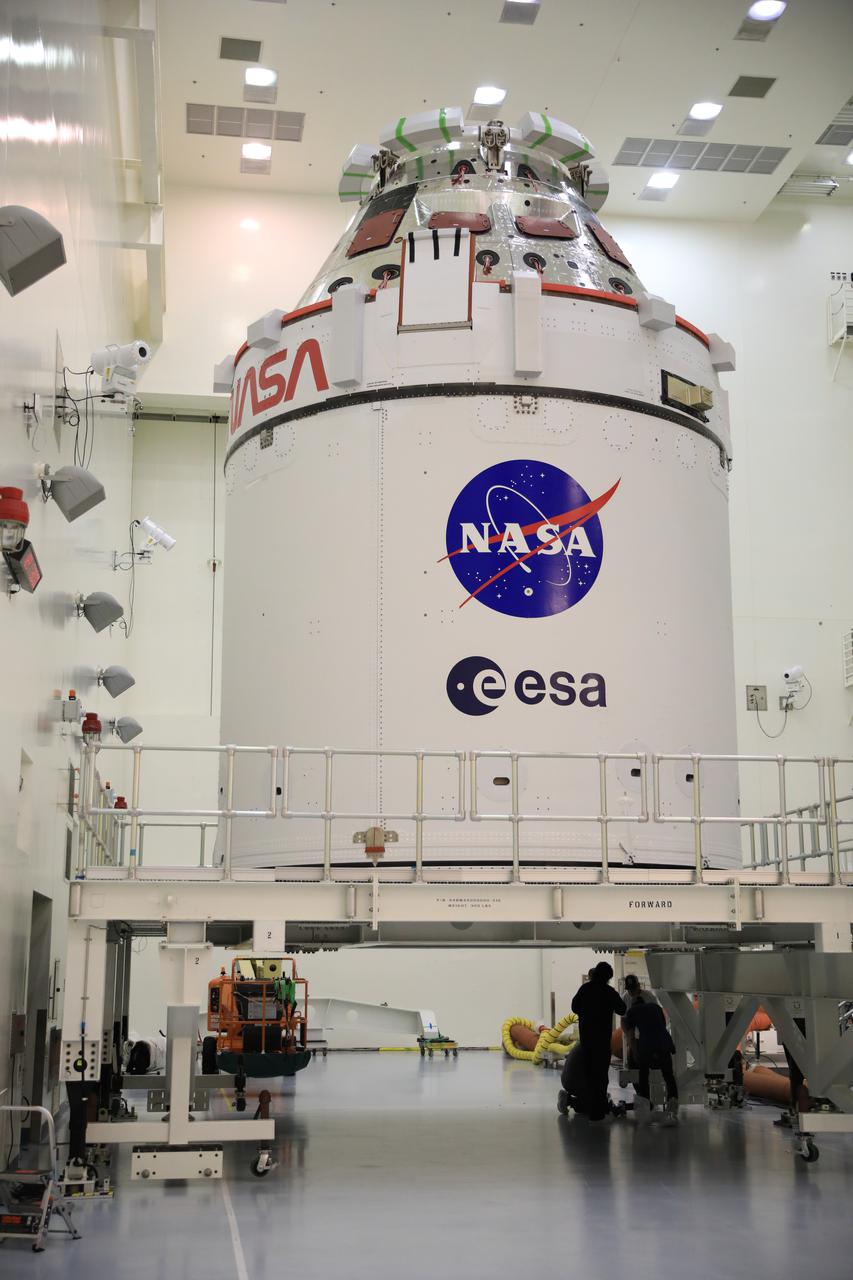
Fueling and servicing checks on the Orion spacecraft for the Artemis I mission are completed inside Kennedy Space Center’s Multi-Payload Processing Facility on July 8, 2021. The capsule will be transported to the Florida spaceport’s Launch Abort System Facility, where teams with Exploration Ground Systems and contractor Jacobs will work to add parts of the launch abort system onto the spacecraft. Launching later this year, Artemis I will be a test of the Orion spacecraft and SLS rocket as an integrated system ahead of crewed flights to the Moon.
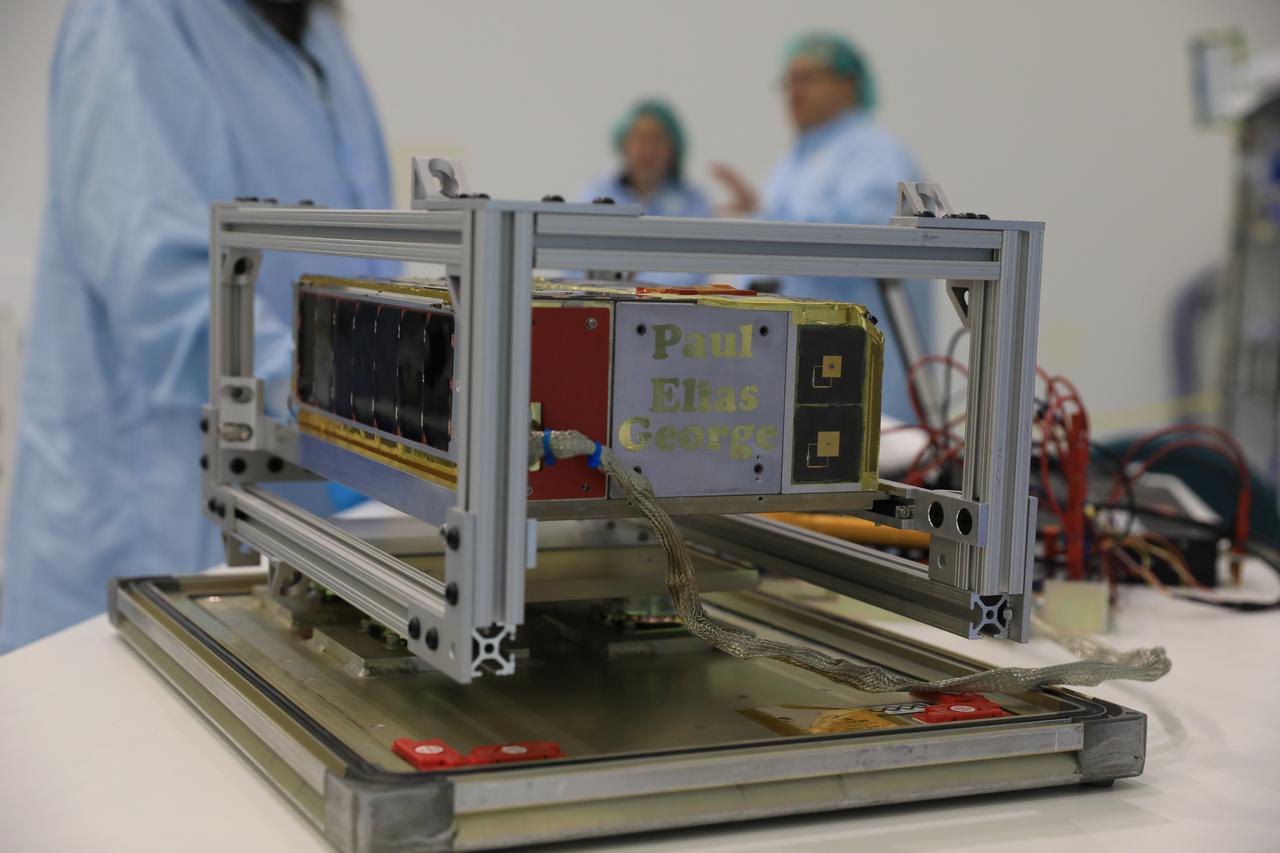
Teams worked on the final processing of their payloads that will fly aboard Artemis I. Housed within the Orion stage adapter, the satellites – called CubeSats – are roughly the size of a large shoe box and weigh no more than 30 pounds. Despite their small size, they enable science and technology experiments that may enhance our understanding of the deep space environment, expand our knowledge of the Moon, and demonstrate new technologies that could be used on future missions.
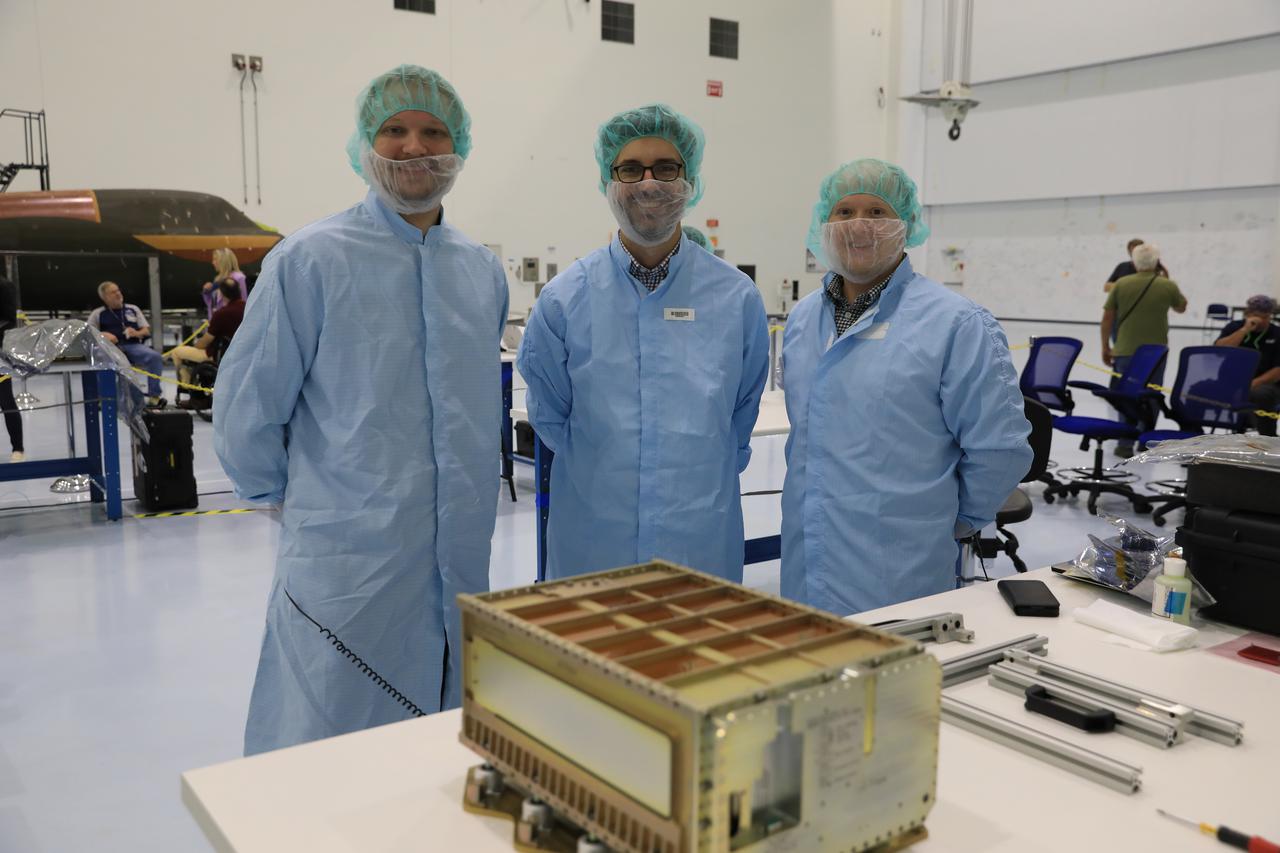
Teams worked on the final processing of their payloads that will fly aboard Artemis I. Housed within the Orion stage adapter, the satellites – called CubeSats – are roughly the size of a large shoe box and weigh no more than 30 pounds. Despite their small size, they enable science and technology experiments that may enhance our understanding of the deep space environment, expand our knowledge of the Moon, and demonstrate new technologies that could be used on future missions.
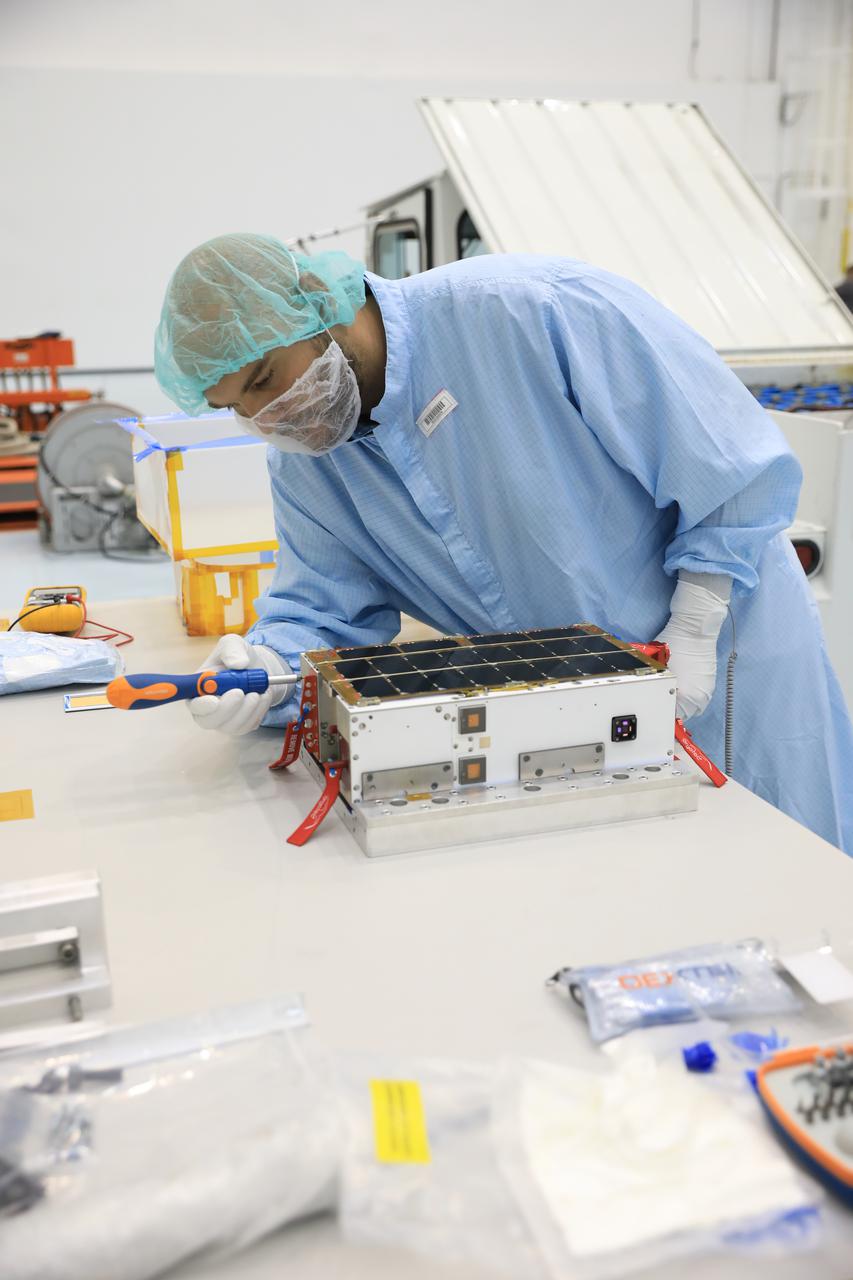
Teams worked on the final processing of their payloads that will fly aboard Artemis I. Housed within the Orion stage adapter, the satellites – called CubeSats – are roughly the size of a large shoe box and weigh no more than 30 pounds. Despite their small size, they enable science and technology experiments that may enhance our understanding of the deep space environment, expand our knowledge of the Moon, and demonstrate new technologies that could be used on future missions.
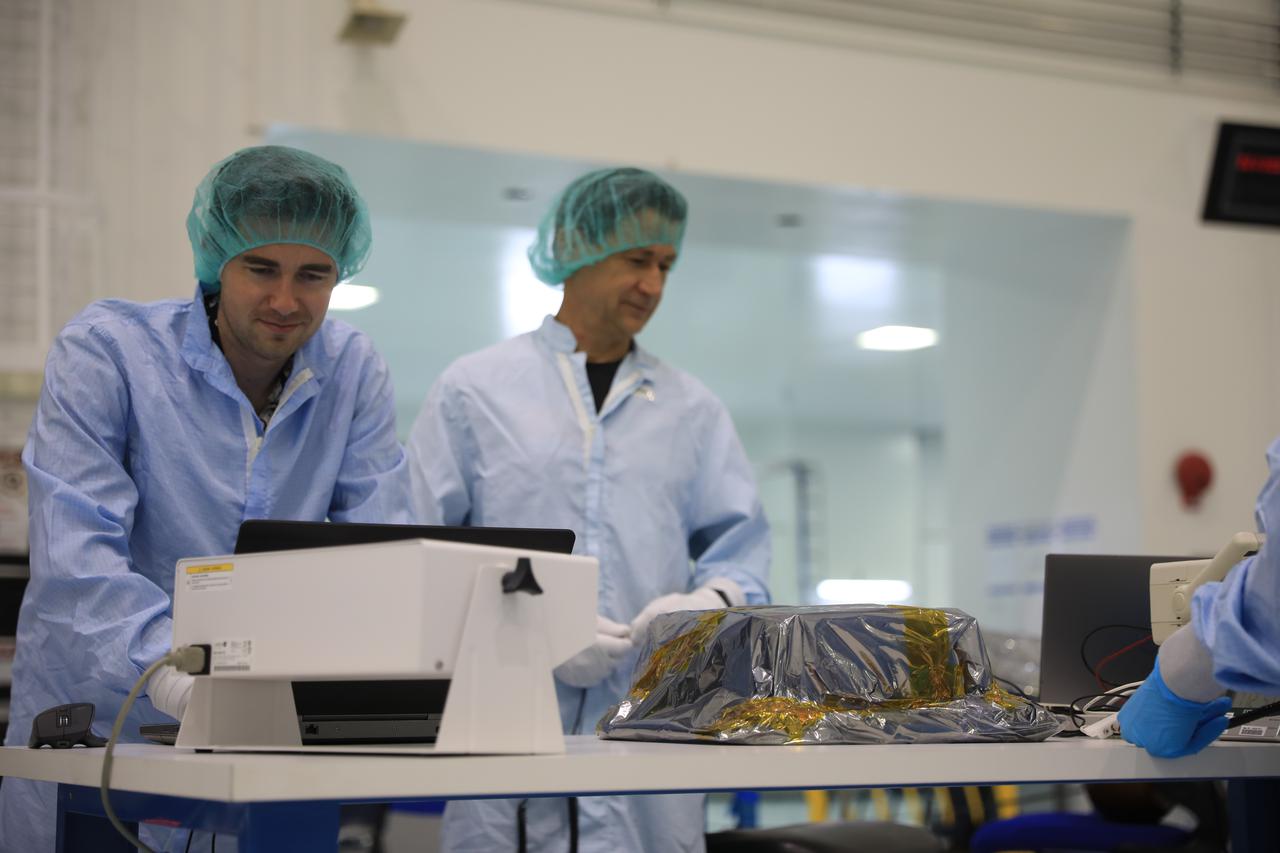
Teams worked on the final processing of their payloads that will fly aboard Artemis I. Housed within the Orion stage adapter, the satellites – called CubeSats – are roughly the size of a large shoe box and weigh no more than 30 pounds. Despite their small size, they enable science and technology experiments that may enhance our understanding of the deep space environment, expand our knowledge of the Moon, and demonstrate new technologies that could be used on future missions.
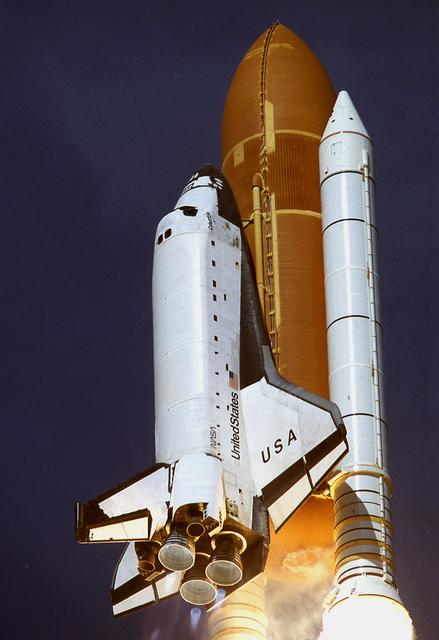
With a veteran crew aboard, the Space Shuttle Columbia (STS-62) roars off Launch Pad 39B to begin a 14-day extended duration stay in space. The two primary payloads for Columbia's 16th spaceflight are the US Microgravity Payload 2 (USMP-2) and the Office of Aeronautics and Space Technology 2 (OAST-2). A diversified variety of secondary payloads are located in the payload bay as well as the middeck.
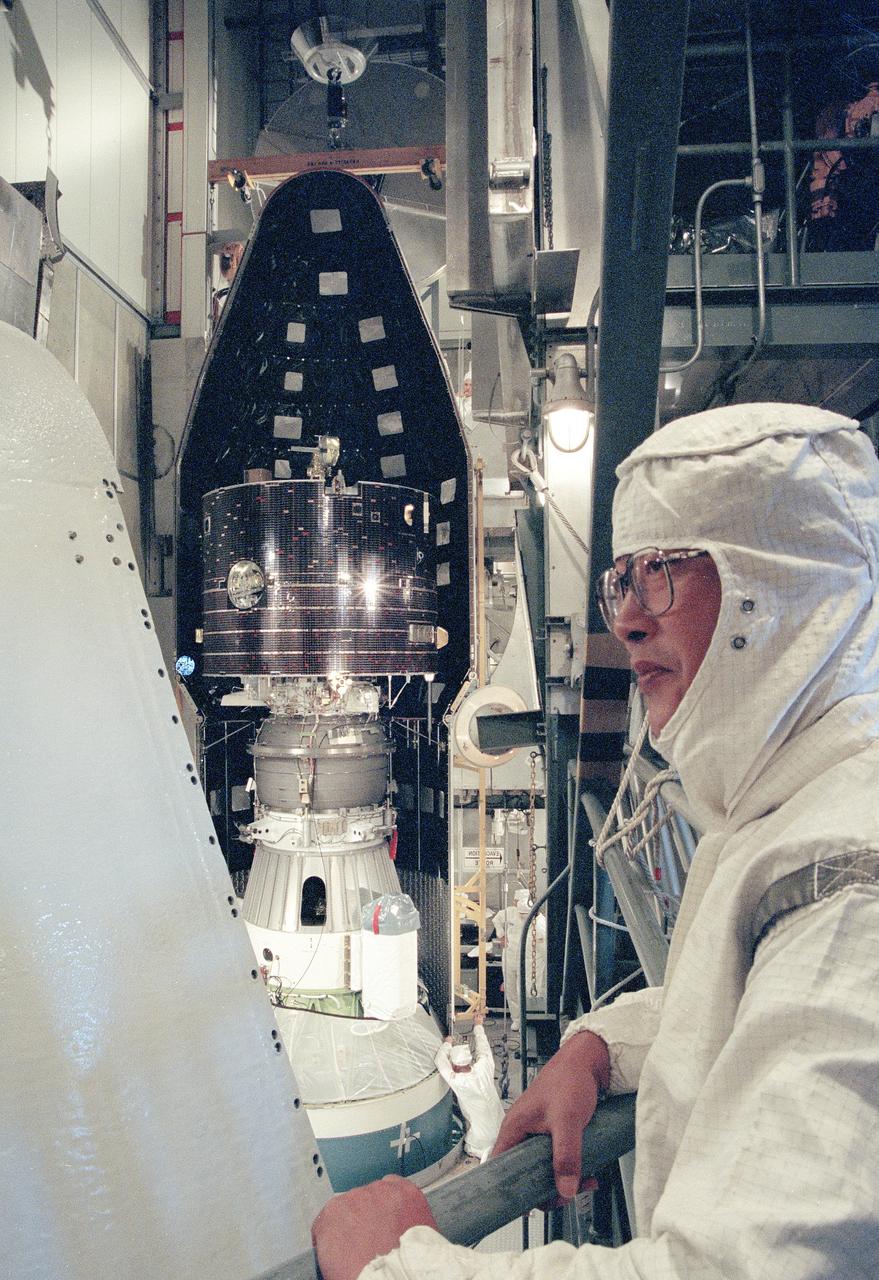
CAPE CANAVERAL, Fla. -- At Cape Canaveral Air Force Station's Launch Complex 17, Pad A, technicians encapsulate the Geotail spacecraft upper and attached Payload Assist Module-D upper stage lower in the protective payload fairing. Geotail and secondary payload Diffuse Ultraviolet Experiment DUVE are scheduled for launch about the Delta II rocket on July 24. The GEOTAIL mission is a collaborative project undertaken by the Institute of Space and Astronautical Science ISAS, Japan Aerospace Exploration Agency JAXA and NASA. Photo Credit: NASA
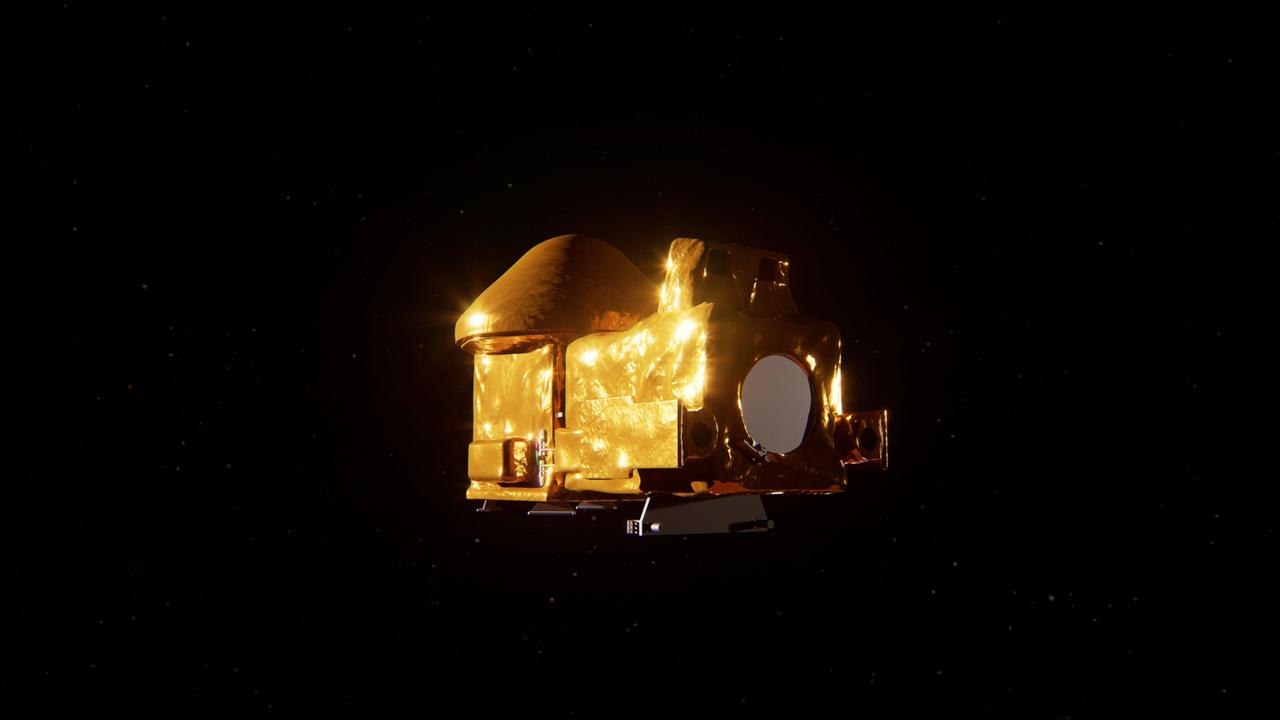
This artist's concept shows the proposed Capture, Containment, and Return System, a NASA payload on the European Space Agency's Earth Return Orbiter. The payload is tasked with capturing the Orbiting Sample container, orienting it, sterilizing its exterior, and transferring it into a clean zone for secondary containment, toward safe return to Earth. The Capture, Containment, and Return System is part of the multi-mission Mars Sample Return program being planned by NASA and European Space Agency (ESA). https://photojournal.jpl.nasa.gov/catalog/PIA25894

KENNEDY SPACE CENTER, FLA. - STS-107 Commander Rick Husband checks the window in Columbia during Crew Equipment Interface Test activities at KSC. The CEIT includes equipment and payload familiarization. STS-107 is a research mission, with the SHI Research Double Module (SHI/RDM), also known as SPACEHAB, as the primary payload, plus the Fast Reaction Experiments Enabling Science, Technology, Applications and Research (FREESTAR) that incorporates eight high priority secondary attached shuttle experiments. STS-107 is scheduled to launch July 19, 2002
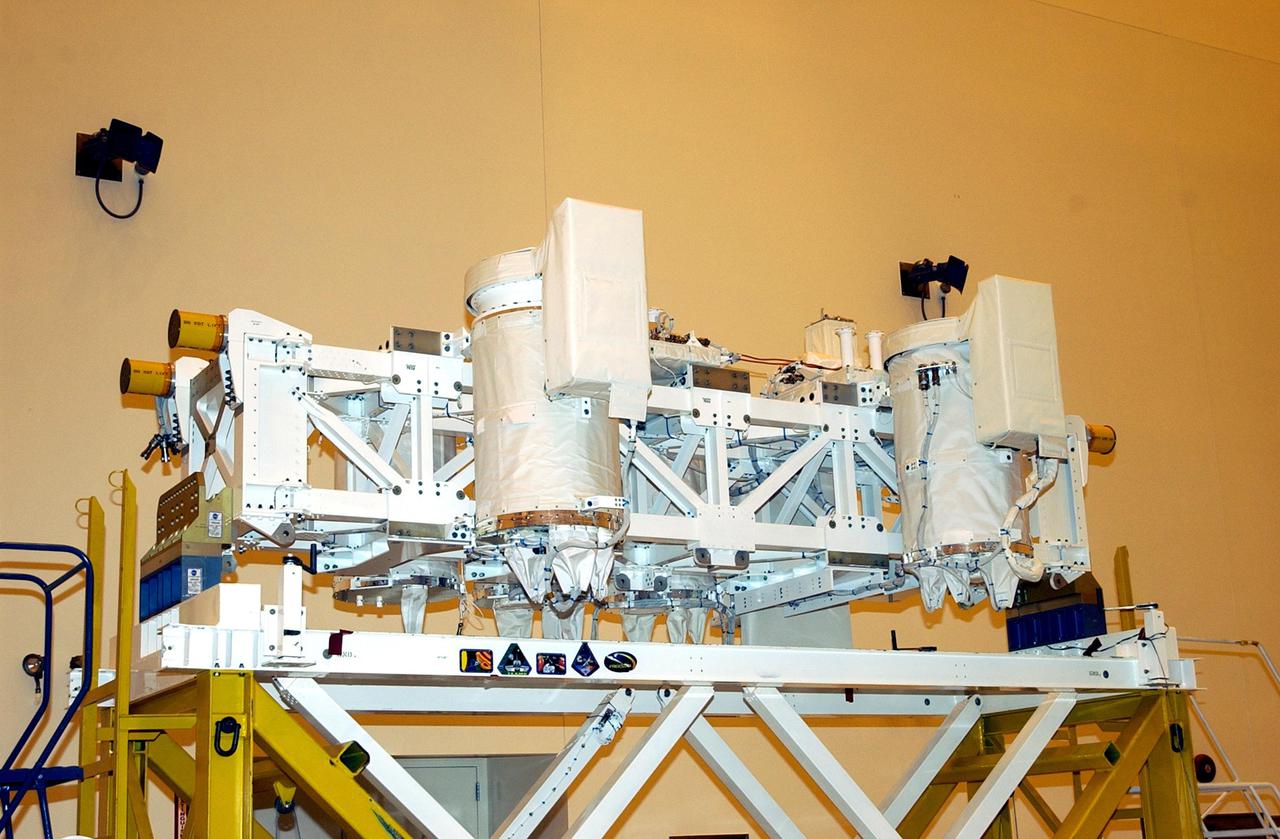
KENNEDY SPACE CENTER, FLA. -- The Hitchhiker Bridge rests on a workstand in the Multi-Payload Processing Facility (MPPF). The bridge is a carrier for the Fast Reaction Experiments Enabling Science, Technology, Applications and Research (FREESTAR) that incorporates eight high priority secondary attached shuttle experiments on mission STS-107. A research mission, the primary payload is the first flight of the SHI Research Double Module (SHI_RDM), also known as SPACEHAB. The experiments range from material sciences to life sciences. STS-107 is scheduled to launch July 11, 2002
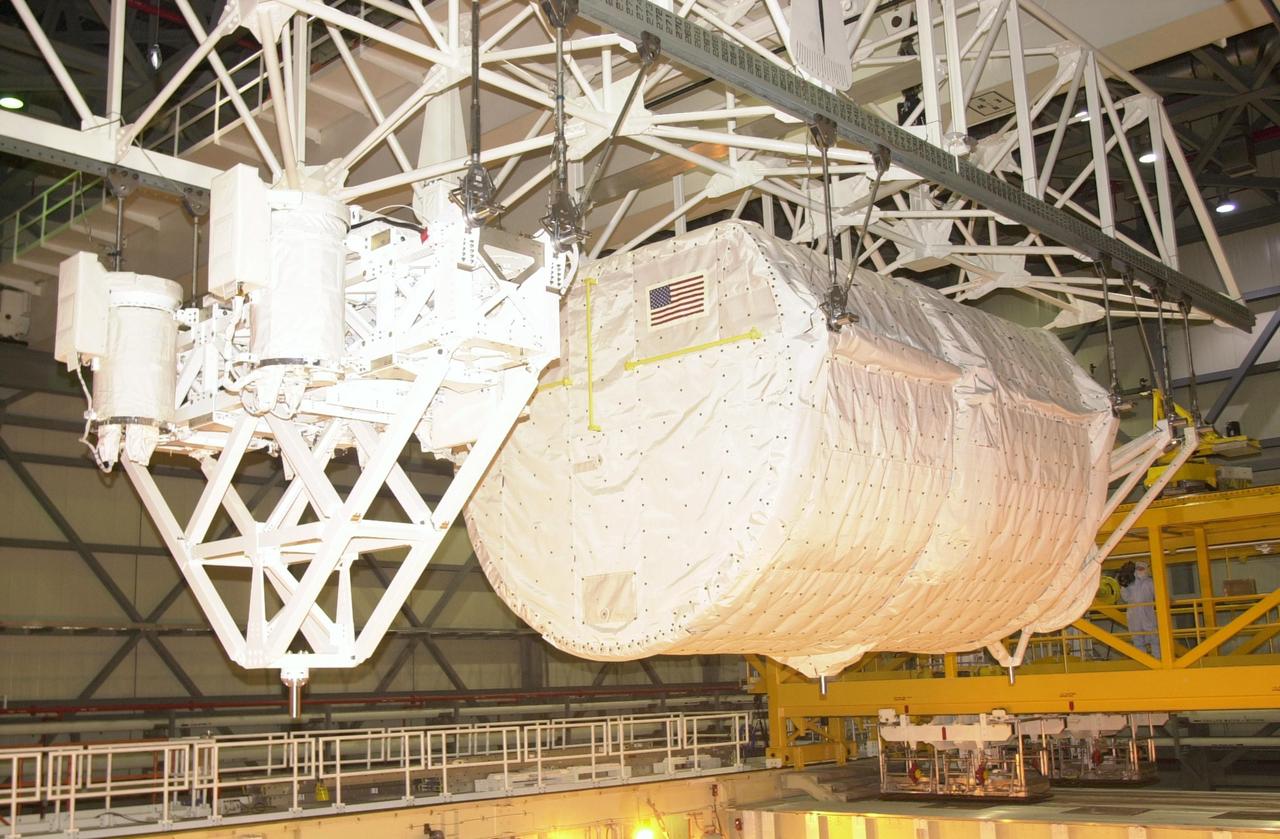
KENNEDY SPACE CENTER, FLA. -- The SHI Research Double Module (SHI/RDM) (right) and Hitchhiker Carrier (left) are lowered toward Columbia's payload bay. The two payloads will be installed in the payload bay for mission STS-107, a research mission. SHI/RDM is the primary payload, with experiments ranging from material sciences to life sciences (many rats). Also, the Fast Reaction Experiments Enabling Science, Technology, Applications and Research (FREESTAR) that is on the Hitchhiker Carrier incorporates eight high priority secondary attached shuttle experiments. STS-107 is scheduled to launch July 19, 2002
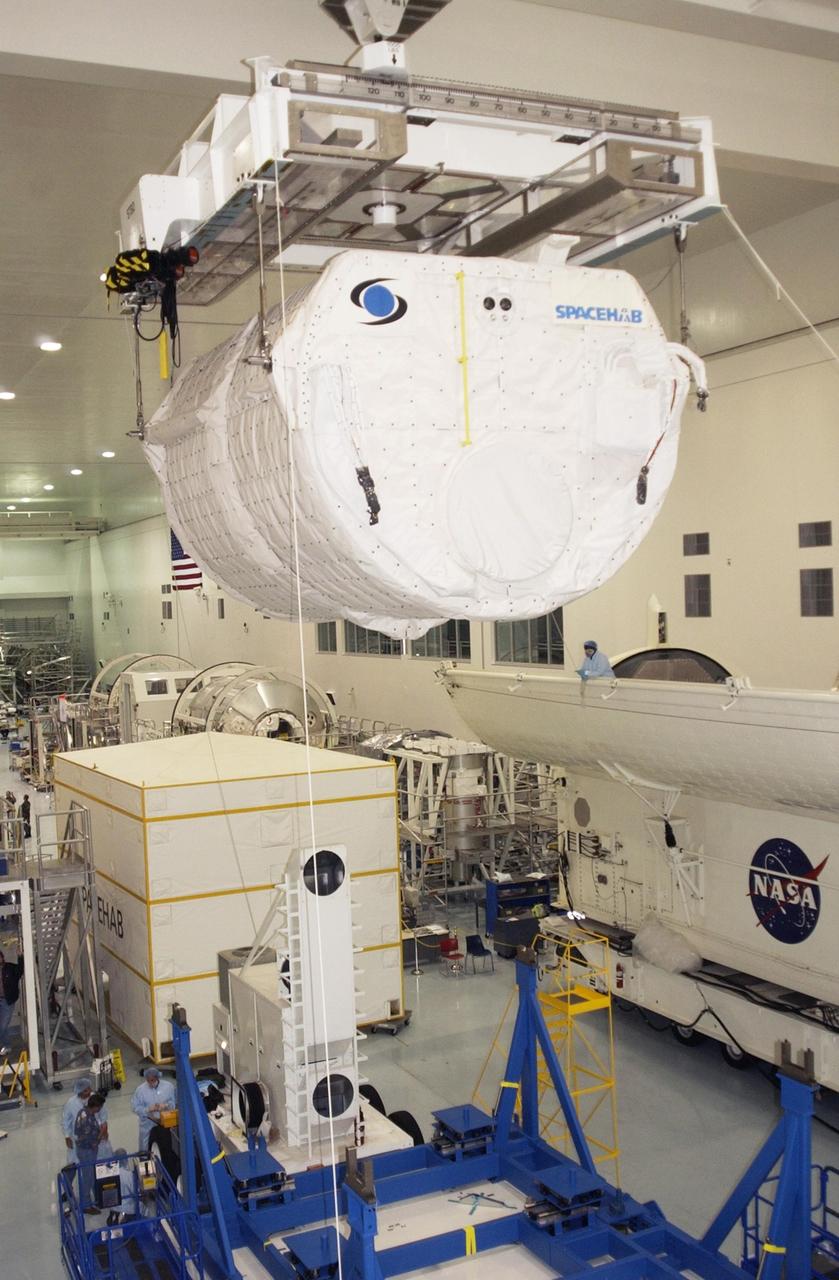
KENNEDY SPACE CENTER, FLA. - Suspended from the overhead crane, the SHI Research Double Module (SHI/RDM) travels across the Space Station Processing Facility to the payload canister waiting at right. The module will be placed in the canister for transport to the Orbiter Processing Facility where it will be installed in Columbia's payload bay for mission STS-107. SHI/RDM is the primary payload of the research mission, with experiments ranging from material sciences to life sciences (many rats). Also part of the payload is the Fast Reaction Experiments Enabling Science, Technology, Applications and Research (FREESTAR) that incorporates eight high priority secondary attached shuttle experiments. STS-107 is scheduled to launch July 19, 2002
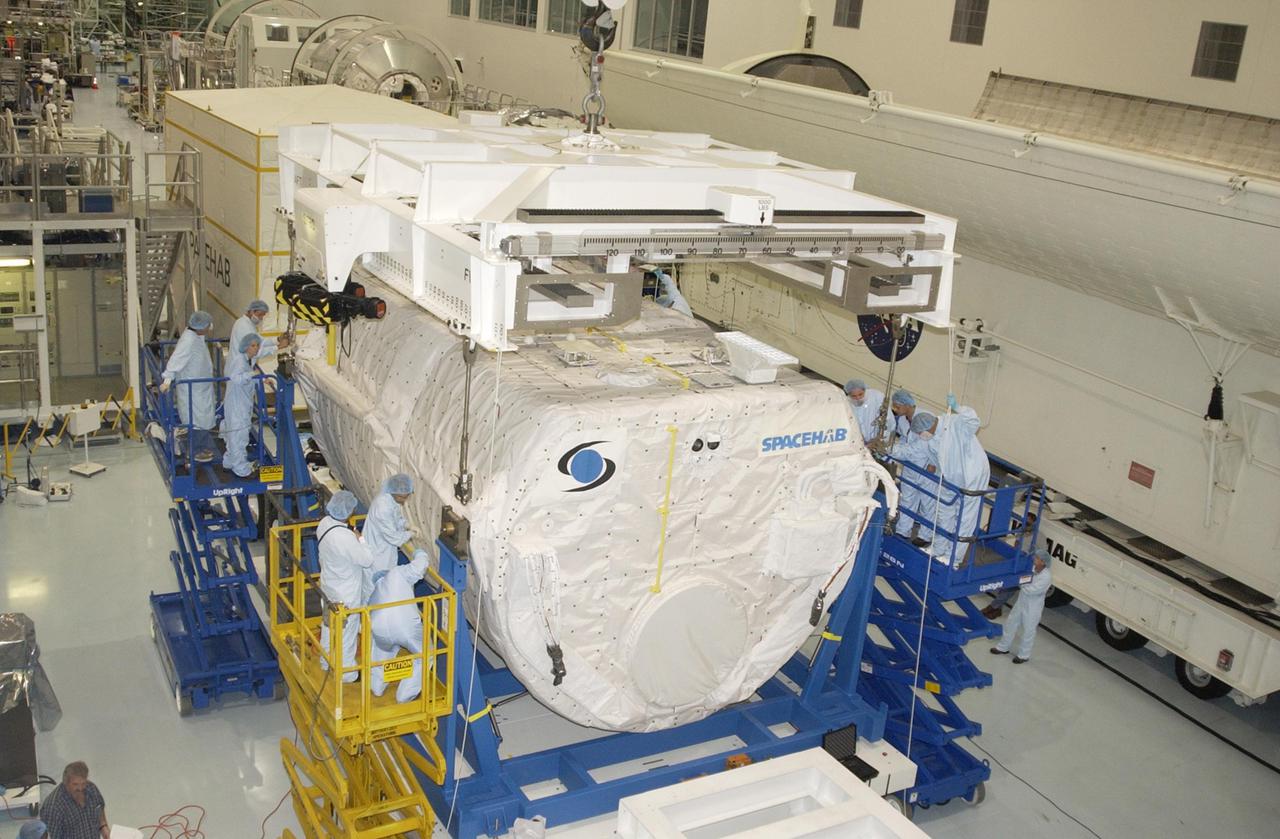
KENNEDY SPACE CENTER, FLA. - In the Space Station Processing Facility, the overhead crane lifts the SHI Research Double Module (SHI_RDM) from its workstand. The module is being transferred to the payload canister for transport to the Orbiter Processing Facility where it will be installed in Columbia's payload bay for mission STS-107. SHI_RDM is the primary payload of the research mission, with experiments ranging from material sciences to life sciences (many rats). Also part of the payload is the Fast Reaction Experiments Enabling Science, Technology, Applications and Research (FREESTAR) that incorporates eight high priority secondary attached shuttle experiments. STS-107 is scheduled to launch July 19, 2002
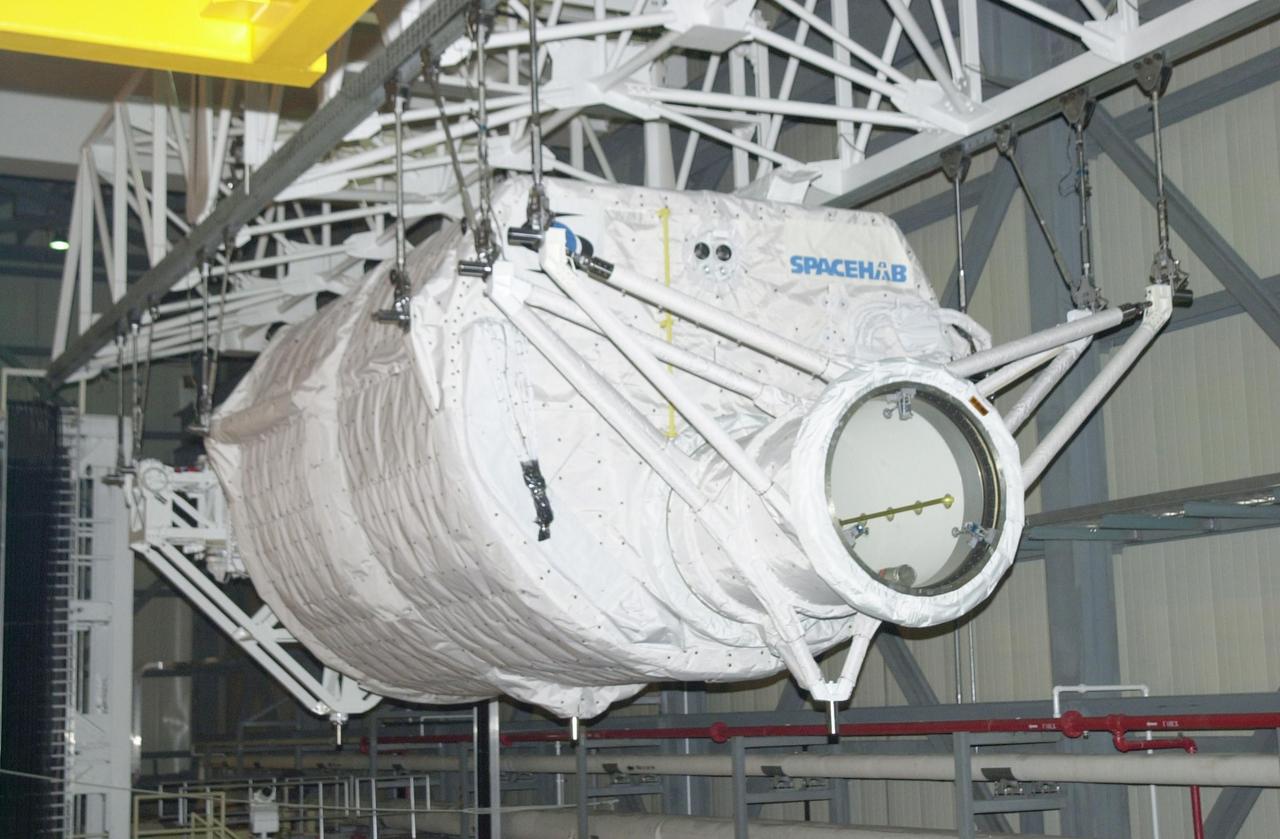
KENNEDY SPACE CENTER, FLA. -- In the Orbiter Processing Facility, the Hitchhiker Carrier (front) and the SHI Research Double Module (SHI/RDM) behind it are suspended over Columbia's payload bay. The two payloads will be installed in the payload bay for mission STS-107, a research mission. SHI/RDM is the primary payload, with experiments ranging from material sciences to life sciences (many rats). Also, the Fast Reaction Experiments Enabling Science, Technology, Applications and Research (FREESTAR) that is on the Hitchhiker Carrier incorporates eight high priority secondary attached shuttle experiments. STS-107 is scheduled to launch July 19, 2002
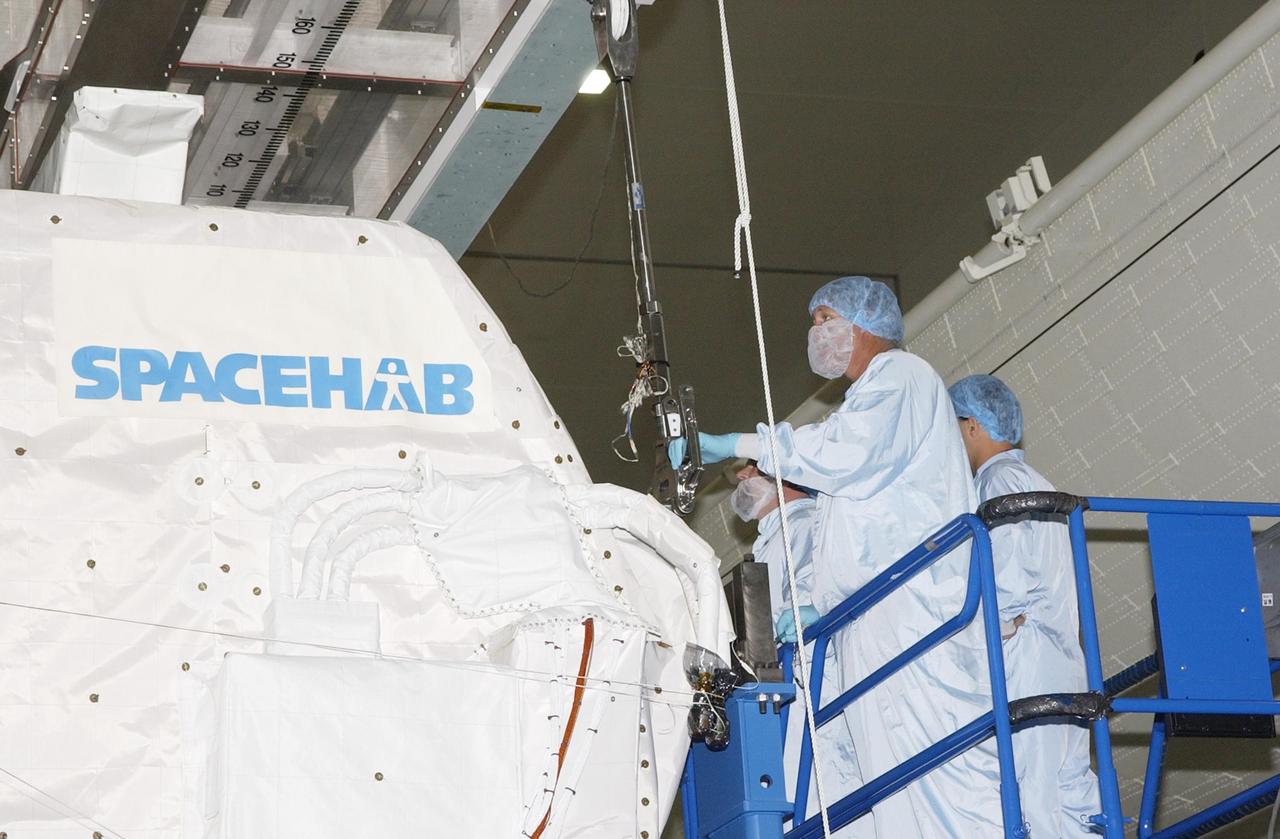
KENNEDY SPACE CENTER, FLA. - Workers in the Space Station Processing Facility attach the overhead crane to the SHI Research Double Module (SHI/RDM) to lift it off the workstand. The module is being transferred to the payload canister for transport to the Orbiter Processing Facility where it will be installed in Columbia's payload bay for mission STS-107. SHI/RDM is the primary payload of the research mission, with experiments ranging from material sciences to life sciences (many rats). Also part of the payload is the Fast Reaction Experiments Enabling Science, Technology, Applications and Research (FREESTAR) that incorporates eight high priority secondary attached shuttle experiments. STS-107 is scheduled to launch July 19, 2002

KENNEDY SPACE CENTER, FLA. -- The SHI Research Double Module (SHI_RDM) (right) and Hitchhiker Carrier (left) are ready to be lowered into Columbia's payload bay. The two payloads will be installed in the payload bay for mission STS-107, a research mission. SHI_RDM is the primary payload, with experiments ranging from material sciences to life sciences (many rats). Also, the Fast Reaction Experiments Enabling Science, Technology, Applications and Research (FREESTAR) that is on the Hitchhiker Carrier incorporates eight high priority secondary attached shuttle experiments. STS-107 is scheduled to launch July 19, 2002
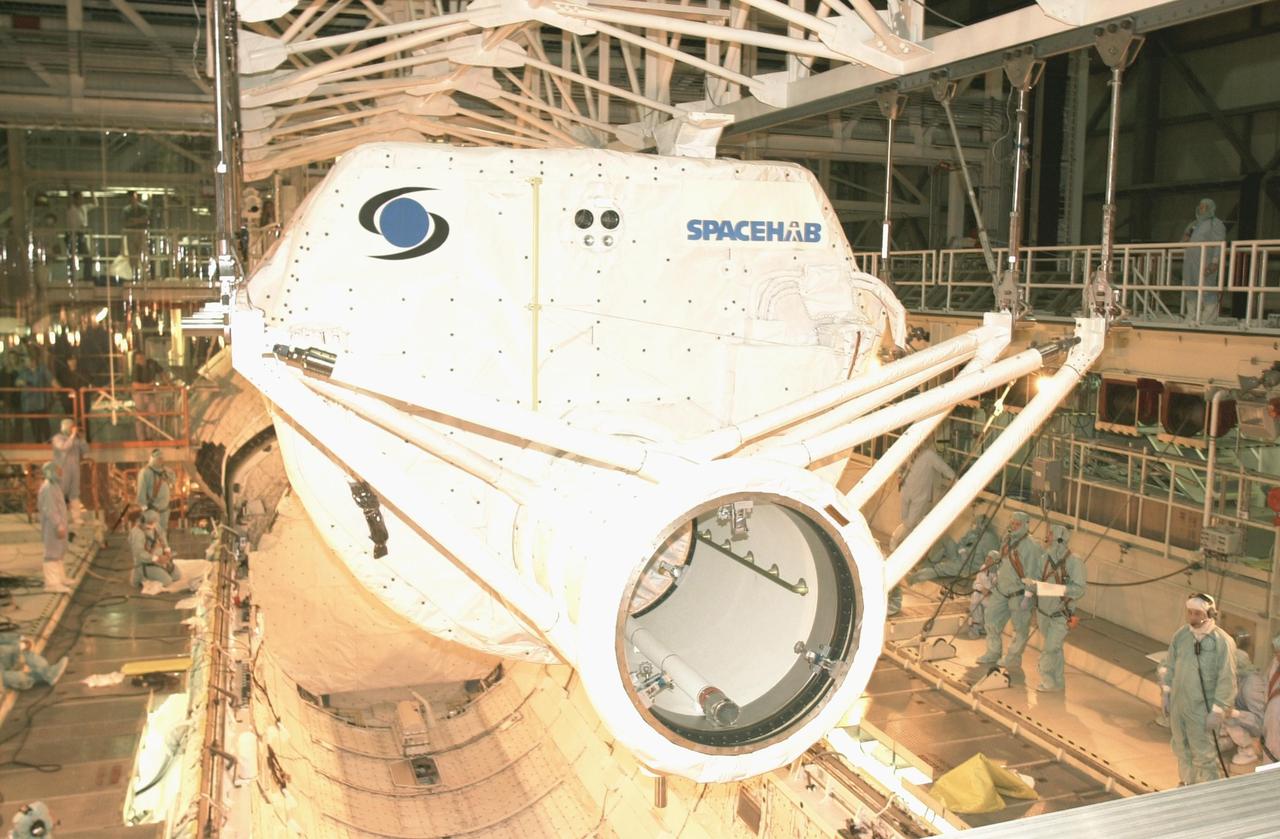
KENNEDY SPACE CENTER, FLA. -- The SHI Research Double Module (SHI/RDM) (right) and Hitchhiker Carrier (left) are lowered toward Columbia's payload bay. The two payloads will be installed in the payload bay for mission STS-107, a research mission. SHI/RDM is the primary payload, with experiments ranging from material sciences to life sciences (many rats). Also, the Fast Reaction Experiments Enabling Science, Technology, Applications and Research (FREESTAR) that is on the Hitchhiker Carrier incorporates eight high priority secondary attached shuttle experiments. STS-107 is scheduled to launch July 19, 2002
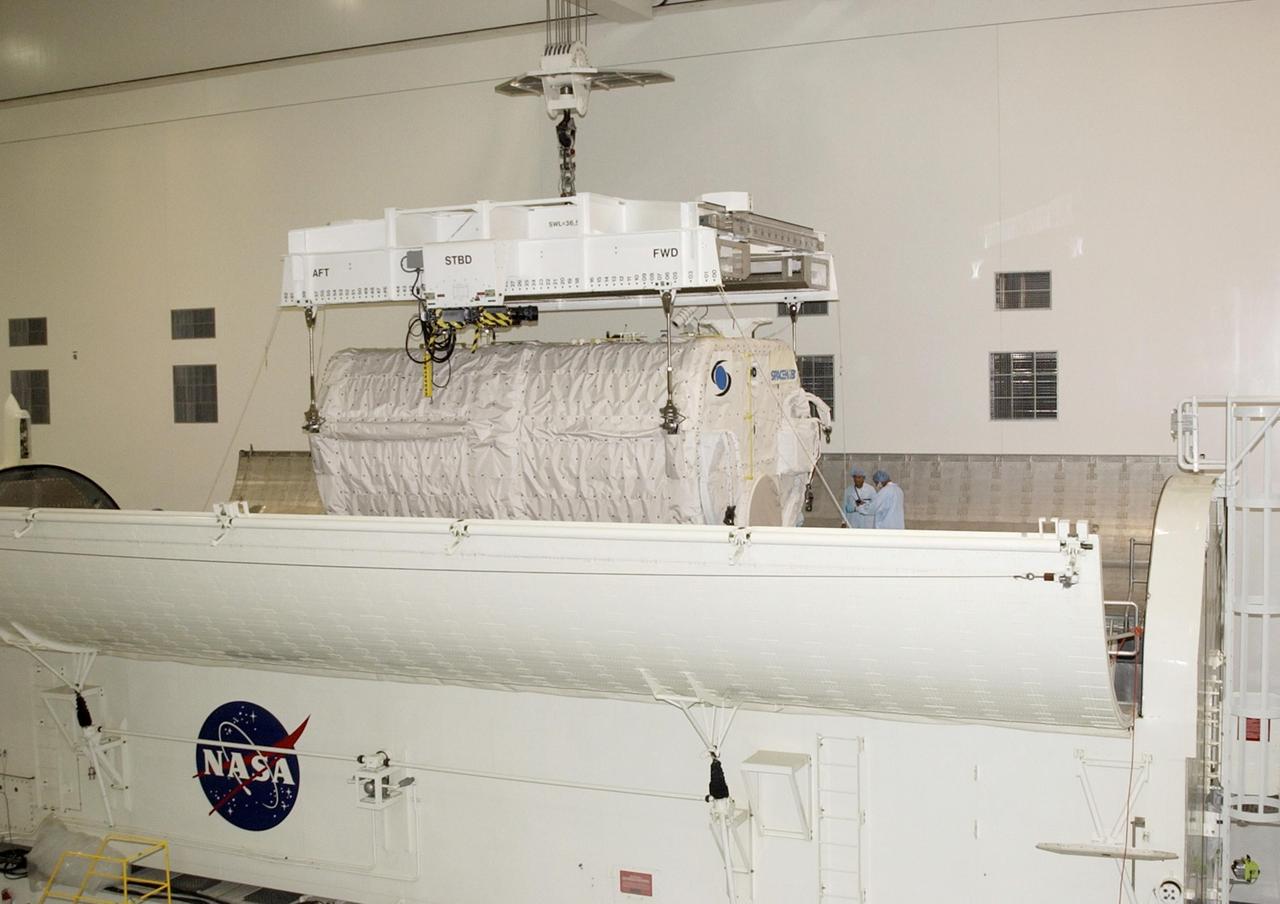
KENNEDY SPACE CENTER, FLA. -- In the Space Station Processing Facility, the overhead crane lowers the SHI Research Double Module (SHI/RDM) into the payload canister. The canister will transport it to the Orbiter Processing Facility where it will be installed in Columbia's payload bay for mission STS-107. SHI/RDM is the primary payload of the research mission, with experiments ranging from material sciences to life sciences (many rats). Also part of the payload is the Fast Reaction Experiments Enabling Science, Technology, Applications and Research (FREESTAR) that incorporates eight high priority secondary attached shuttle experiments. STS-107 is scheduled to launch July 19, 2002
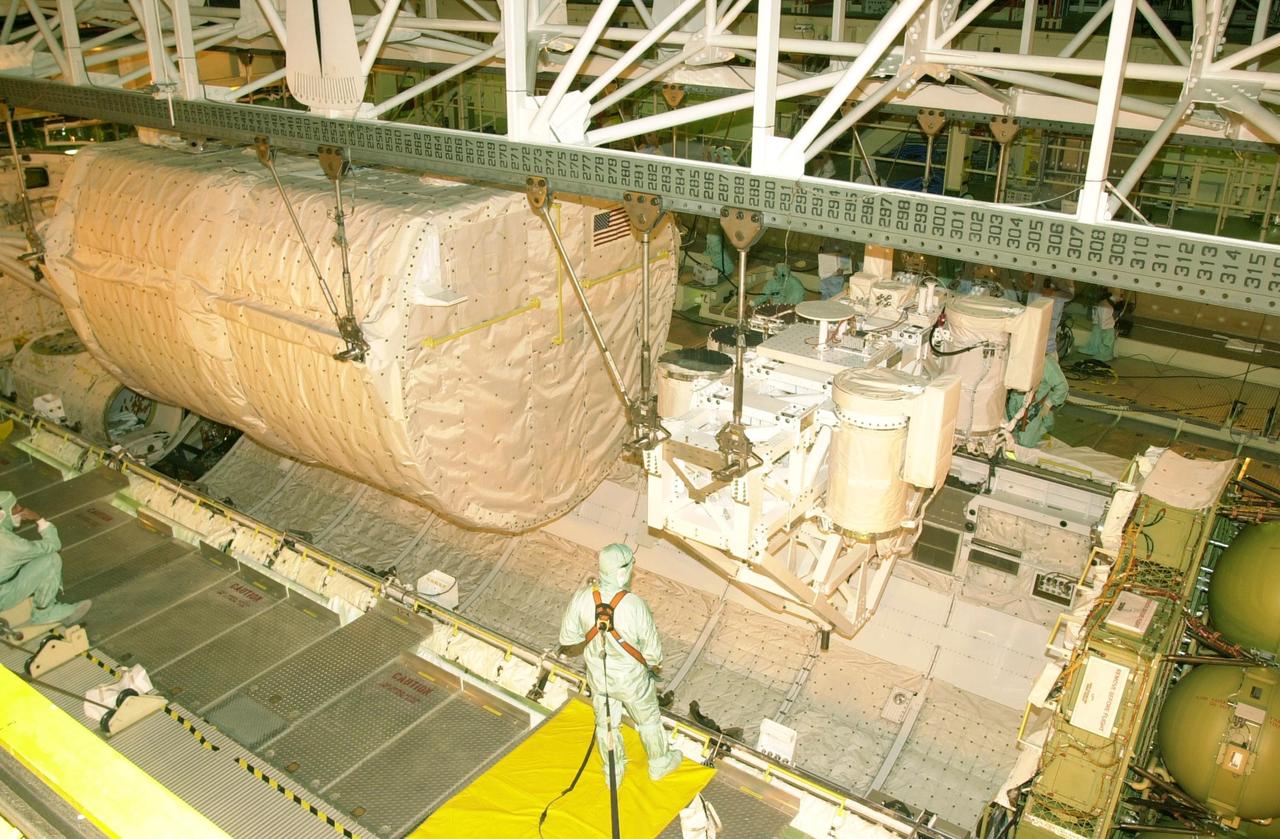
KENNEDY SPACE CENTER, FLA. -- The SHI Research Double Module (SHI/RDM) (left) and Hitchhiker Carrier (right) are lowered toward Columbia's payload bay. The two payloads will be installed in the payload bay for mission STS-107, a research mission. SHI/RDM is the primary payload, with experiments ranging from material sciences to life sciences (many rats). Also, the Fast Reaction Experiments Enabling Science, Technology, Applications and Research (FREESTAR) that is on the Hitchhiker Carrier incorporates eight high priority secondary attached shuttle experiments. STS-107 is scheduled to launch July 19, 2002
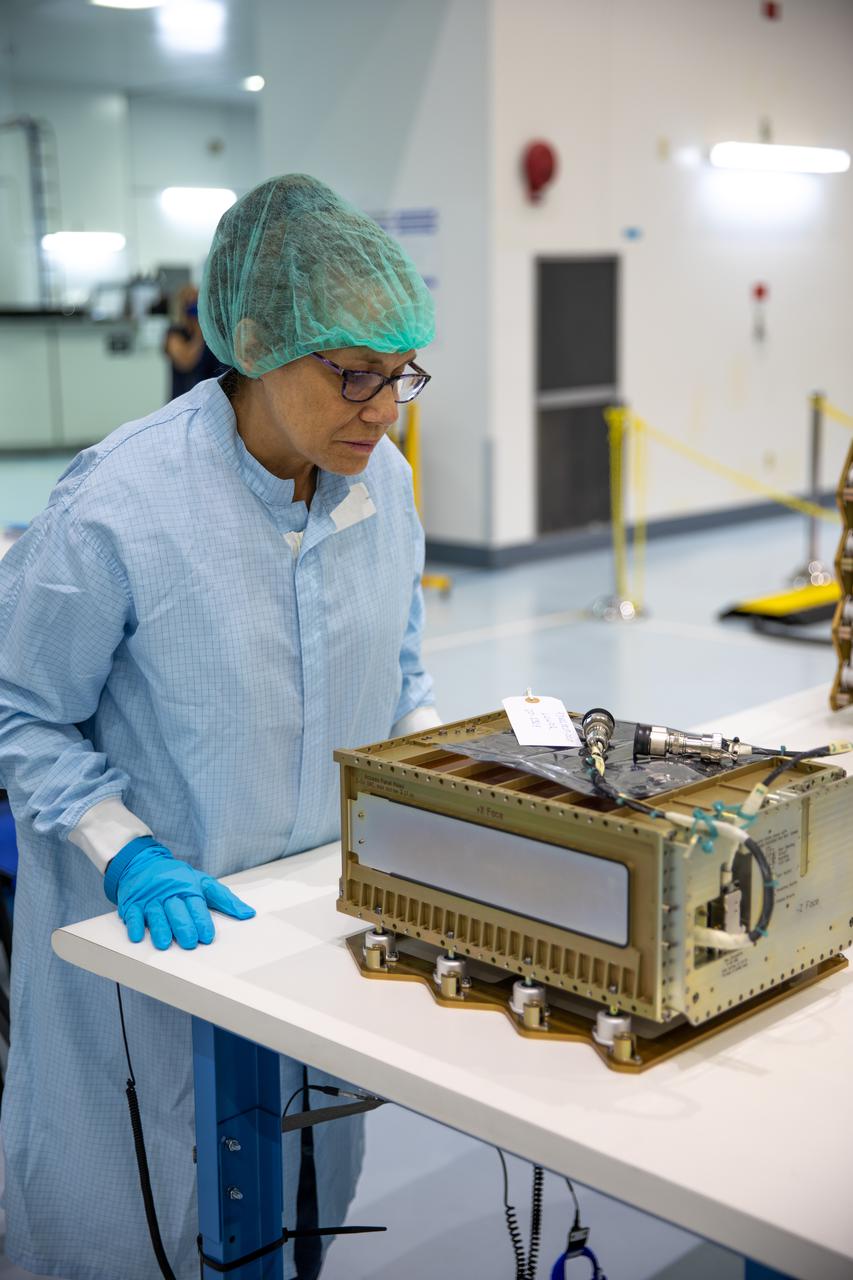
The LunIR undergoes inspection prior to being loaded in the Space Launch System (SLS) rocket’s Orion stage adapter for the Artemis I mission on July 14 at NASA’s Kennedy Space Center in Florida. During lunar orbit, the satellite will use an infrared sensor to map the Moon’s surface and search for potential landing sites and critical resources for future missions to Mars and beyond.
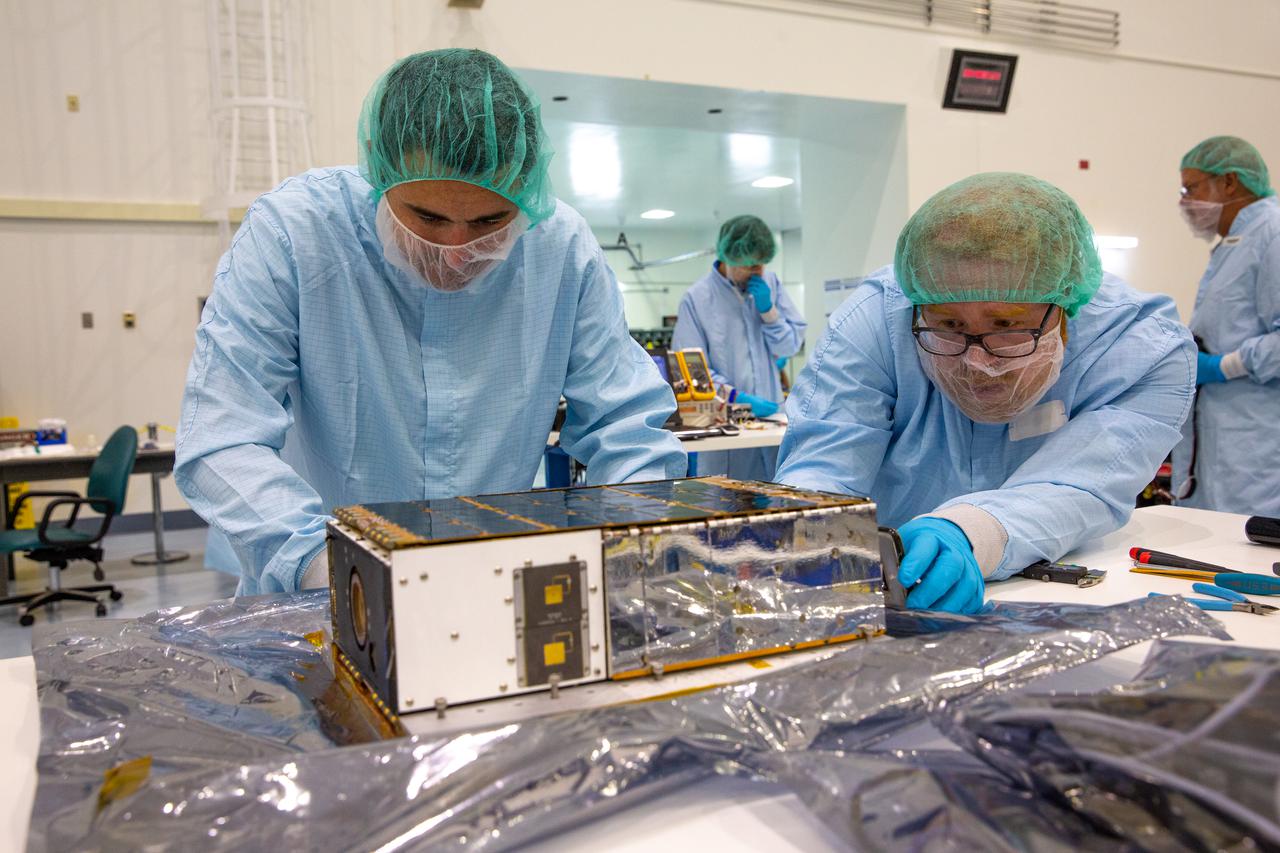
Teams worked on the final processing of their payloads that will fly aboard Artemis I. Housed within the Orion stage adapter, the satellites – called CubeSats – are roughly the size of a large shoe box and weigh no more than 30 pounds. Despite their small size, they enable science and technology experiments that may enhance our understanding of the deep space environment, expand our knowledge of the Moon, and demonstrate new technologies that could be used on future missions.
Teams worked on the final processing of their payloads that will fly aboard Artemis I. Housed within the Orion stage adapter, the satellites – called CubeSats – are roughly the size of a large shoe box and weigh no more than 30 pounds. Despite their small size, they enable science and technology experiments that may enhance our understanding of the deep space environment, expand our knowledge of the Moon, and demonstrate new technologies that could be used on future missions.
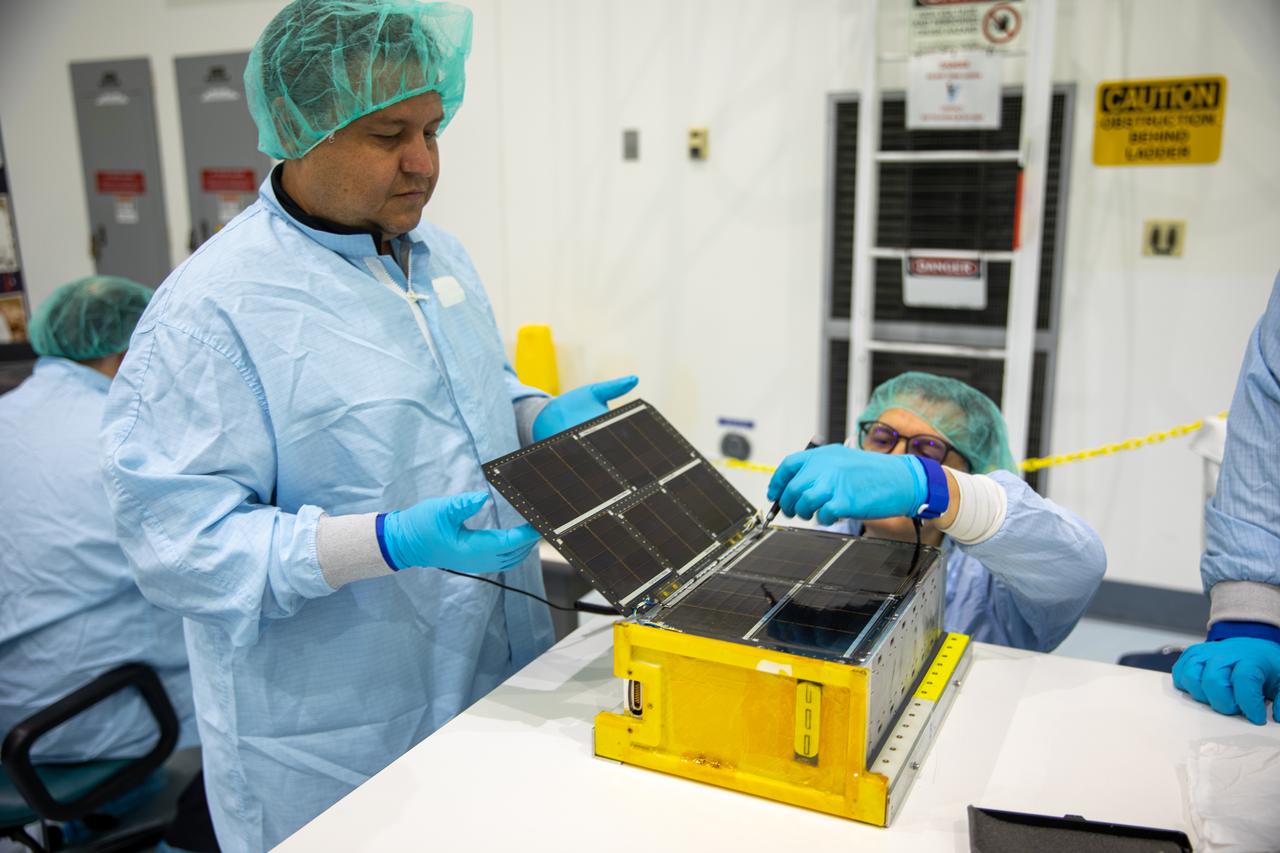
Teams worked on the final processing of their payloads that will fly aboard Artemis I. Housed within the Orion stage adapter, the satellites – called CubeSats – are roughly the size of a large shoe box and weigh no more than 30 pounds. Despite their small size, they enable science and technology experiments that may enhance our understanding of the deep space environment, expand our knowledge of the Moon, and demonstrate new technologies that could be used on future missions.
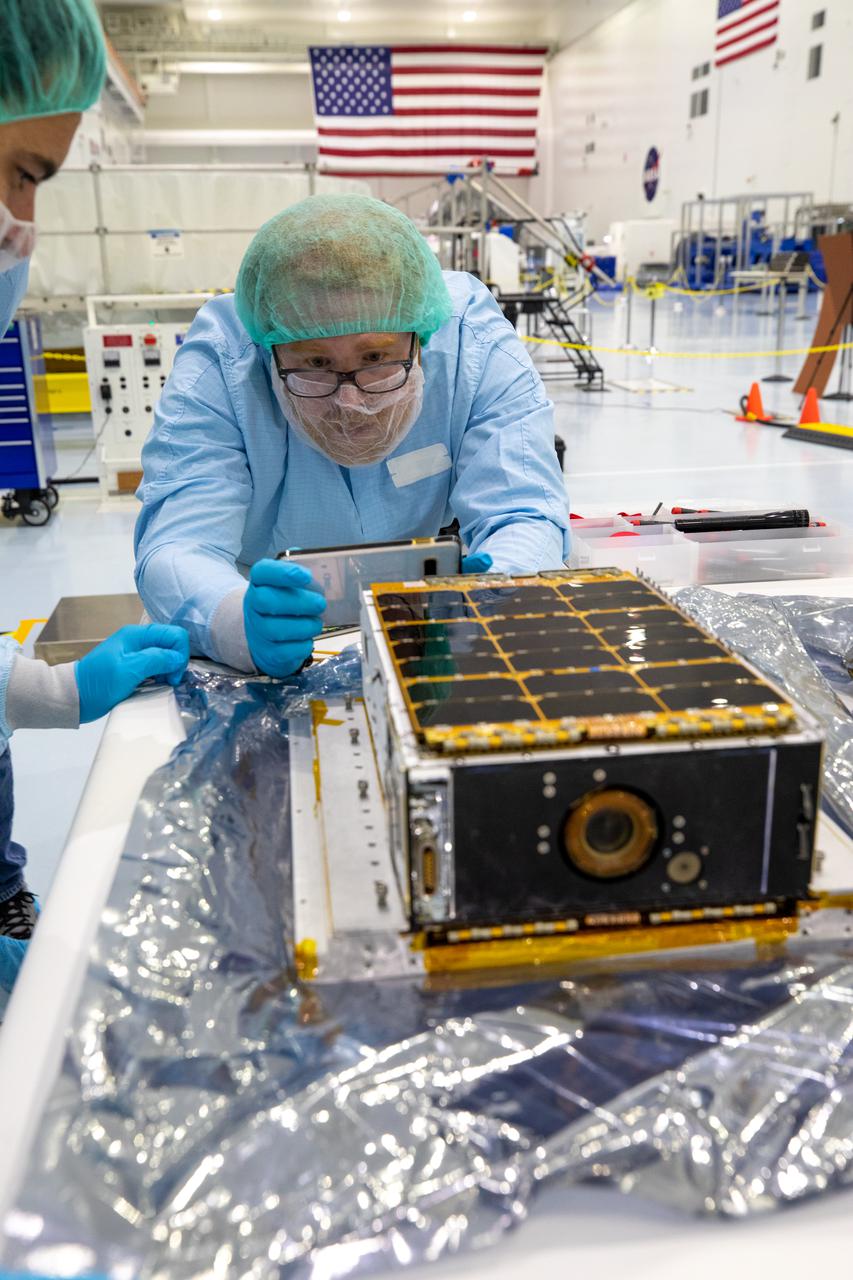
Teams prepare the Lunar IceCube before its installation in the Space Launch System rocket Orion stage adapter at NASA’s Kennedy Space Center in Florida. This small satellite will be deployed from the rocket and will orbit the Moon for six months and search for water and ice with an infrared spectrometer.
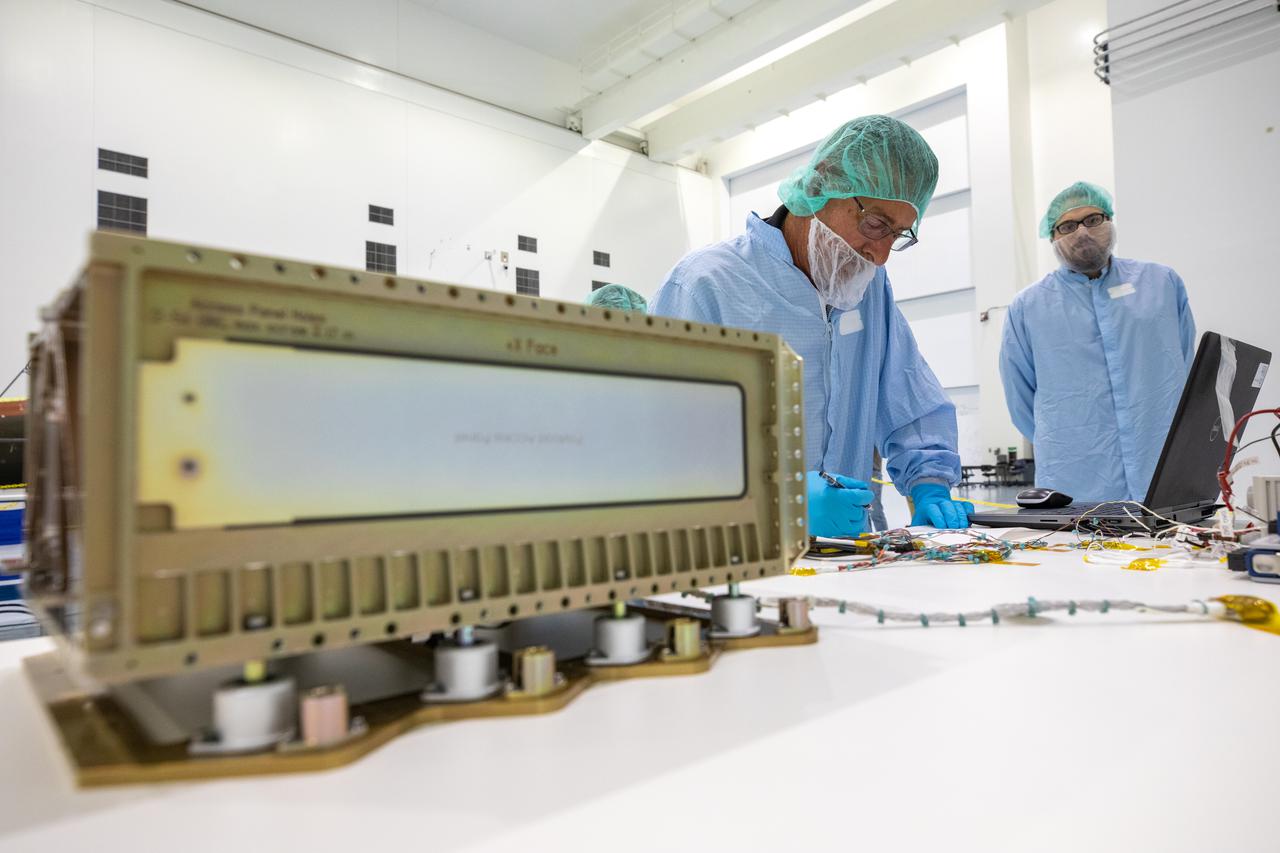
Teams worked on the final processing of their payloads that will fly aboard Artemis I. Housed within the Orion stage adapter, the satellites – called CubeSats – are roughly the size of a large shoe box and weigh no more than 30 pounds. Despite their small size, they enable science and technology experiments that may enhance our understanding of the deep space environment, expand our knowledge of the Moon, and demonstrate new technologies that could be used on future missions.
Teams worked on the final processing of their payloads that will fly aboard Artemis I. Housed within the Orion stage adapter, the satellites – called CubeSats – are roughly the size of a large shoe box and weigh no more than 30 pounds. Despite their small size, they enable science and technology experiments that may enhance our understanding of the deep space environment, expand our knowledge of the Moon, and demonstrate new technologies that could be used on future missions.
Teams worked on the final processing of their payloads that will fly aboard Artemis I. Housed within the Orion stage adapter, the satellites – called CubeSats – are roughly the size of a large shoe box and weigh no more than 30 pounds. Despite their small size, they enable science and technology experiments that may enhance our understanding of the deep space environment, expand our knowledge of the Moon, and demonstrate new technologies that could be used on future missions.
Teams worked on the final processing of their payloads that will fly aboard Artemis I. Housed within the Orion stage adapter, the satellites – called CubeSats – are roughly the size of a large shoe box and weigh no more than 30 pounds. Despite their small size, they enable science and technology experiments that may enhance our understanding of the deep space environment, expand our knowledge of the Moon, and demonstrate new technologies that could be used on future missions.
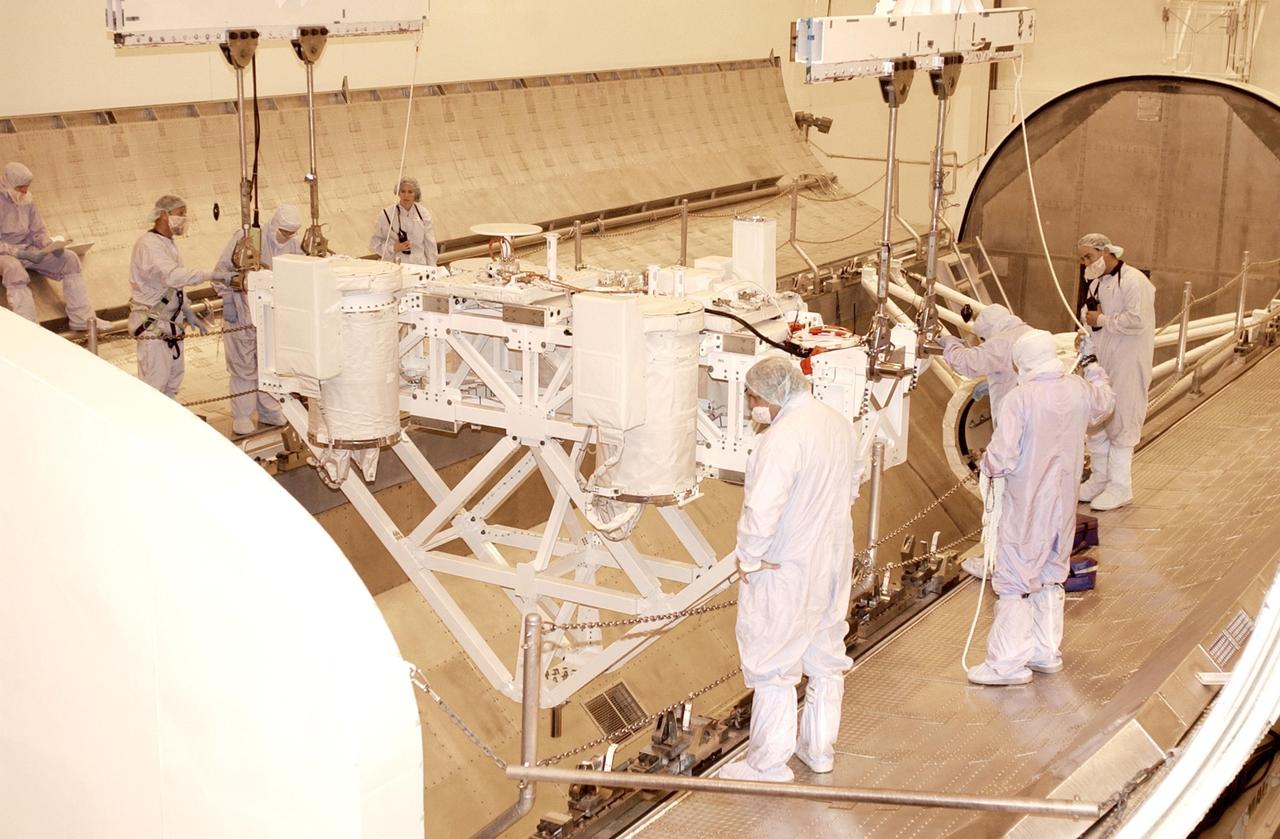
KENNEDY SPACE CENTER, FLA. -- The Hitchhiker Bridge with GetAway Special canisters (GAS cans) is placed into the payload canister. The bridge, a carrier for the Fast Reaction Experiments Enabling Science, Technology, Applications and Research (FREESTAR) that incorporates eight high priority secondary attached shuttle experiments, is being transferred to the payload canister below it. The bridge will be installed in Columbia's payload bay as part of mission STS-107. A research mission, STS-107 will also carry the SHI Research Double Module (SHI/RDM), known as SPACEHAB. Experiments on the module range from material sciences to life sciences (many rats). STS-107 is scheduled to launch July 19, 2002
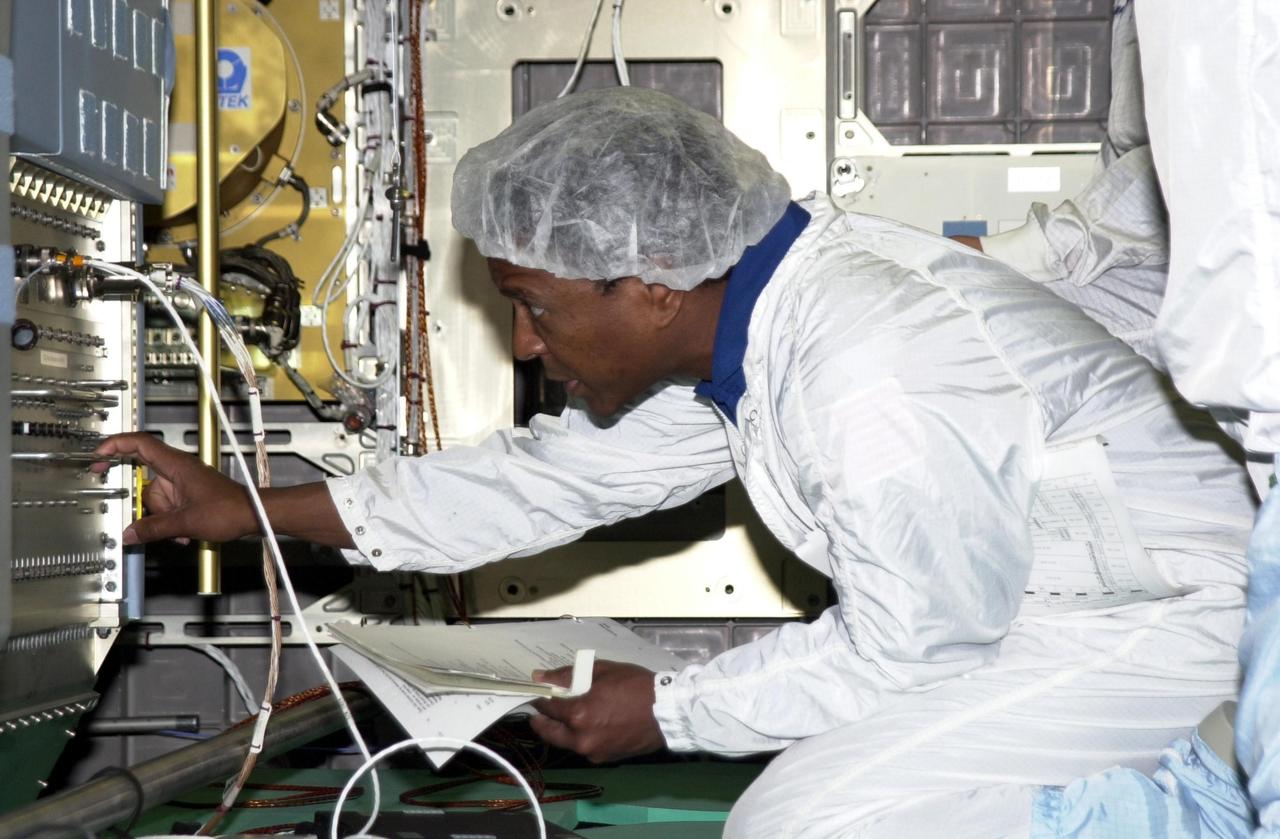
KENNEDY SPACE CENTER, FLA. -- STS-107 Payload Commander Michael Anderson checks equipment during training at SPACEHAB. STS-107 is a research mission. The primary payload is the first flight of the SHI Research Double Module (SHI/RDM). The experiments range from material sciences to life sciences (many rats). Also part of the payload is the Fast Reaction Experiments Enabling Science, Technology, Applications and Research (FREESTAR) that incorporates eight high priority secondary attached shuttle experiments. STS-107 is scheduled to launch July 11, 2002

KENNEDY SPACE CENTER, FLA. - An overhead crane lowers the Hitchhiker Bridge with GetAway Special canisters (GAS cans) into the payload canister below. The bridge, a carrier for the Fast Reaction Experiments Enabling Science, Technology, Applications and Research (FREESTAR) that incorporates eight high priority secondary attached shuttle experiments, is being transferred to the payload canister below it. The bridge will be installed in Columbia's payload bay as part of mission STS-107. A research mission, STS-107 will also carry the SHI Research Double Module (SHI_RDM), known as SPACEHAB. Experiments on the module range from material sciences to life sciences (many rats). STS-107 is scheduled to launch July 19, 2002
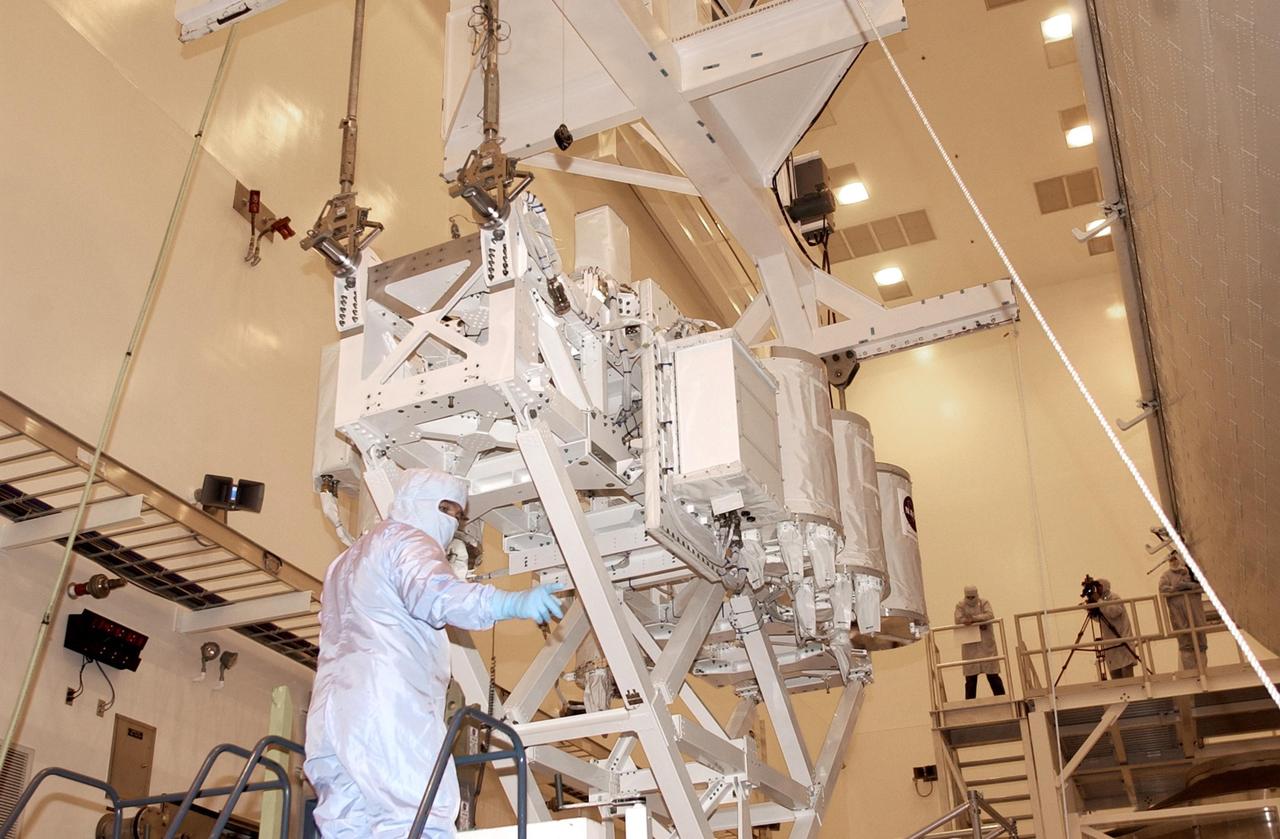
KENNEDY SPACE CENTER, FLA. -- In the Multi-Payload Processing Facility, an overhead crane is attached to the Hitchhiker Bridge with GetAway Special canisters (GAS cans). The bridge, a carrier for the Fast Reaction Experiments Enabling Science, Technology, Applications and Research (FREESTAR) that incorporates eight high priority secondary attached shuttle experiments, is being transferred to the payload canister. The bridge will be installed in Columbia's payload bay as part of mission STS-107. A research mission, STS-107 will also carry the SHI Research Double Module (SHI/RDM), known as SPACEHAB. Experiments on the module range from material sciences to life sciences (many rats). STS-107 is scheduled to launch July 19, 2002
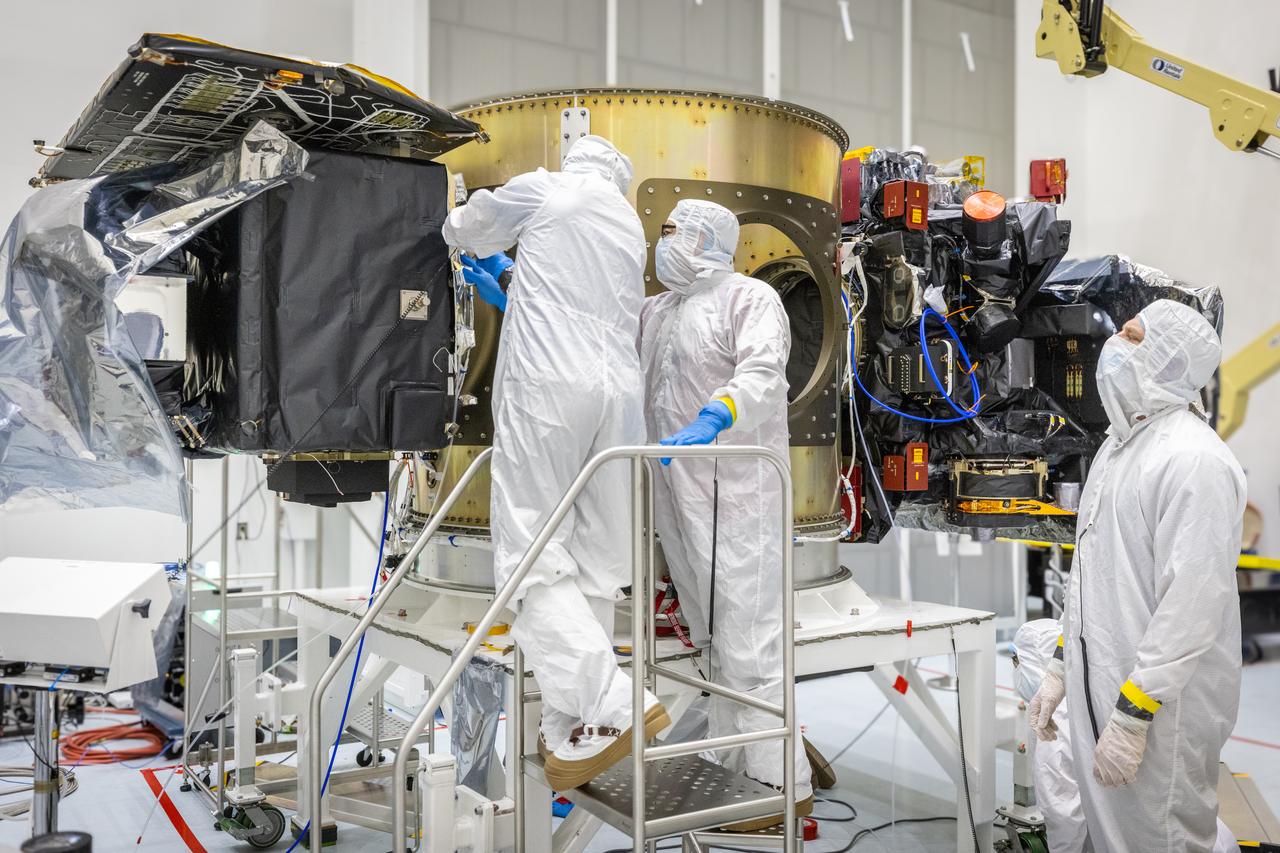
Technicians integrate NASA’s Carruthers Geocorona Observatory and the National Oceanic and Atmospheric Administration’s (NOAA) Space Weather Follow On Lagrange - 1 (SWFO-L1) satellite to the Evolved Expendable Launch Vehicle Secondary Payload Adapter Array Ring (ESPA) inside the Astrotech Space Operations Facility near NASA’s Kennedy Space Center in Florida on Friday, Sept. 5, 2025. The integration of the rideshares prepares for the next milestone of attaching NASA’s IMAP (Interstellar Mapping and Acceleration Probe) Sun mapping observatory to a payload adapter and stacking all three observatories together to prepare them for encapsulation in the payload fairing.
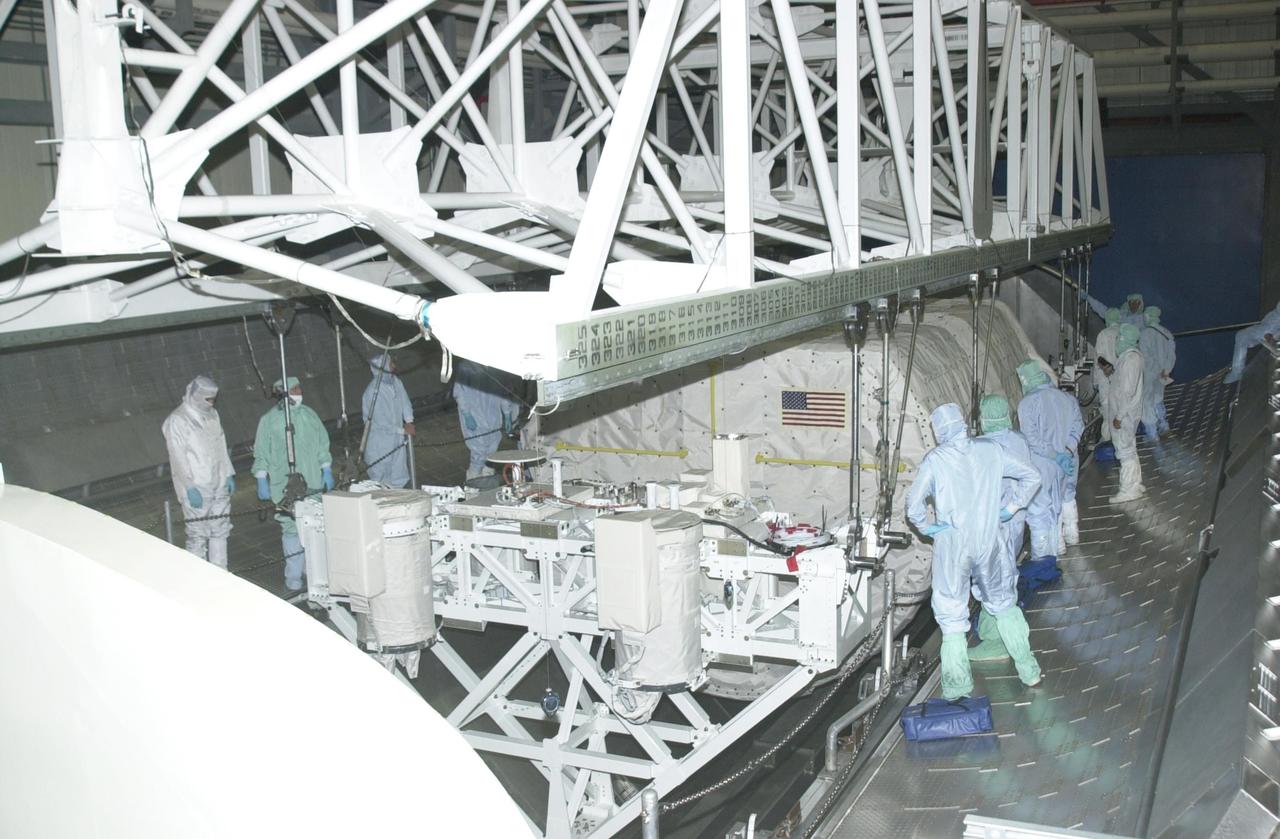
KENNEDY SPACE CENTER, FLA. - In the Orbiter Processing Facility, an overhead crane is attached to the SHI Research Double Module (SHI/RDM) (right) and Hitchhiker Carrier (left) to lift them out of the payload canister. They will be installed in Columbia's payload bay. SHI/RDM is the primary payload of the STS-107 research mission, with experiments ranging from material sciences to life sciences (many rats). Also, the Fast Reaction Experiments Enabling Science, Technology, Applications and Research (FREESTAR) that is on the Hitchhiker Carrier incorporates eight high priority secondary attached shuttle experiments. STS-107 is scheduled to launch July 19, 2002
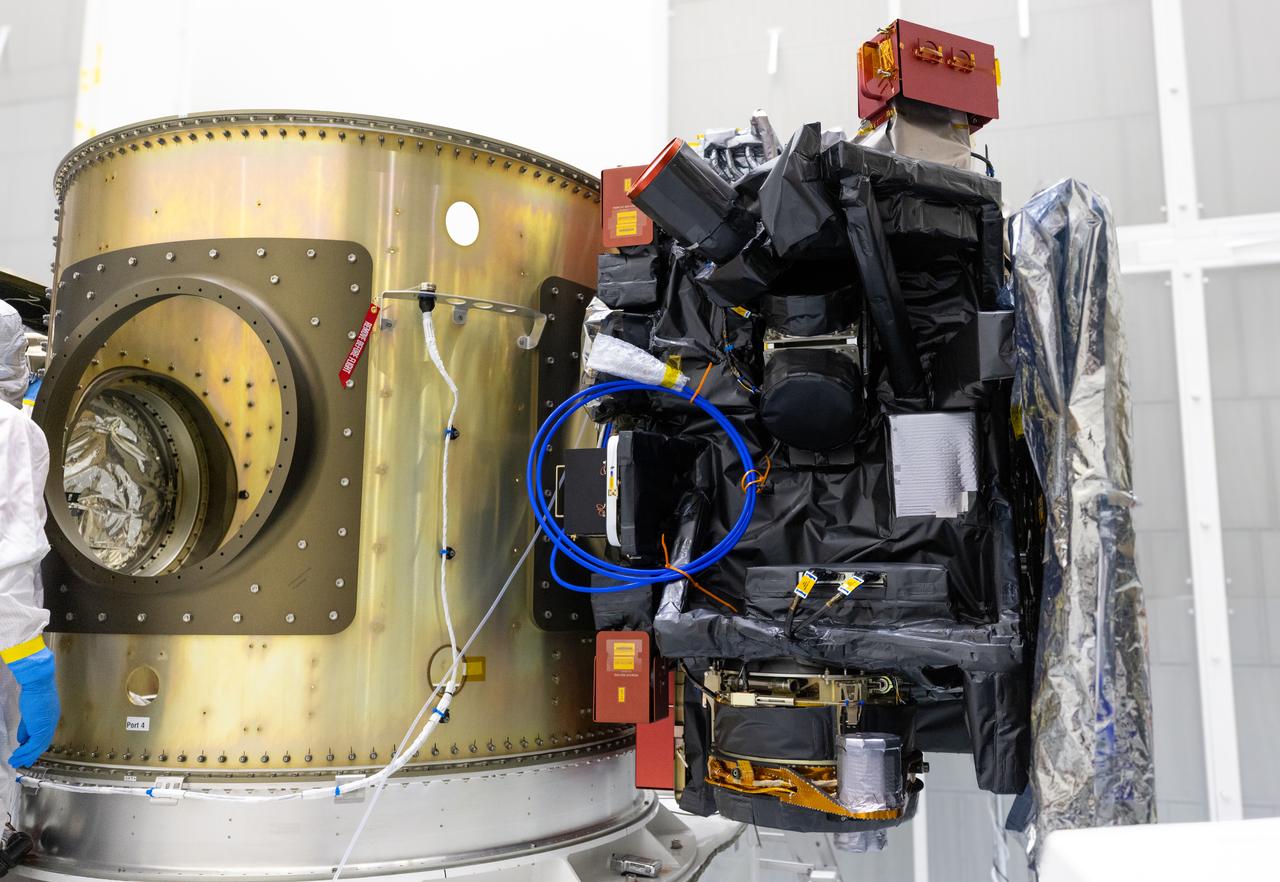
Technicians integrate NASA’s Carruthers Geocorona Observatory and the National Oceanic and Atmospheric Administration’s (NOAA) Space Weather Follow On Lagrange - 1 (SWFO-L1) satellite to the Evolved Expendable Launch Vehicle Secondary Payload Adapter Array Ring (ESPA) inside the Astrotech Space Operations Facility near NASA’s Kennedy Space Center in Florida on Friday, Sept. 5, 2025. The integration of the rideshares prepares for the next milestone of attaching NASA’s IMAP (Interstellar Mapping and Acceleration Probe) Sun mapping observatory to a payload adapter and stacking all three observatories together to prepare them for encapsulation in the payload fairing.
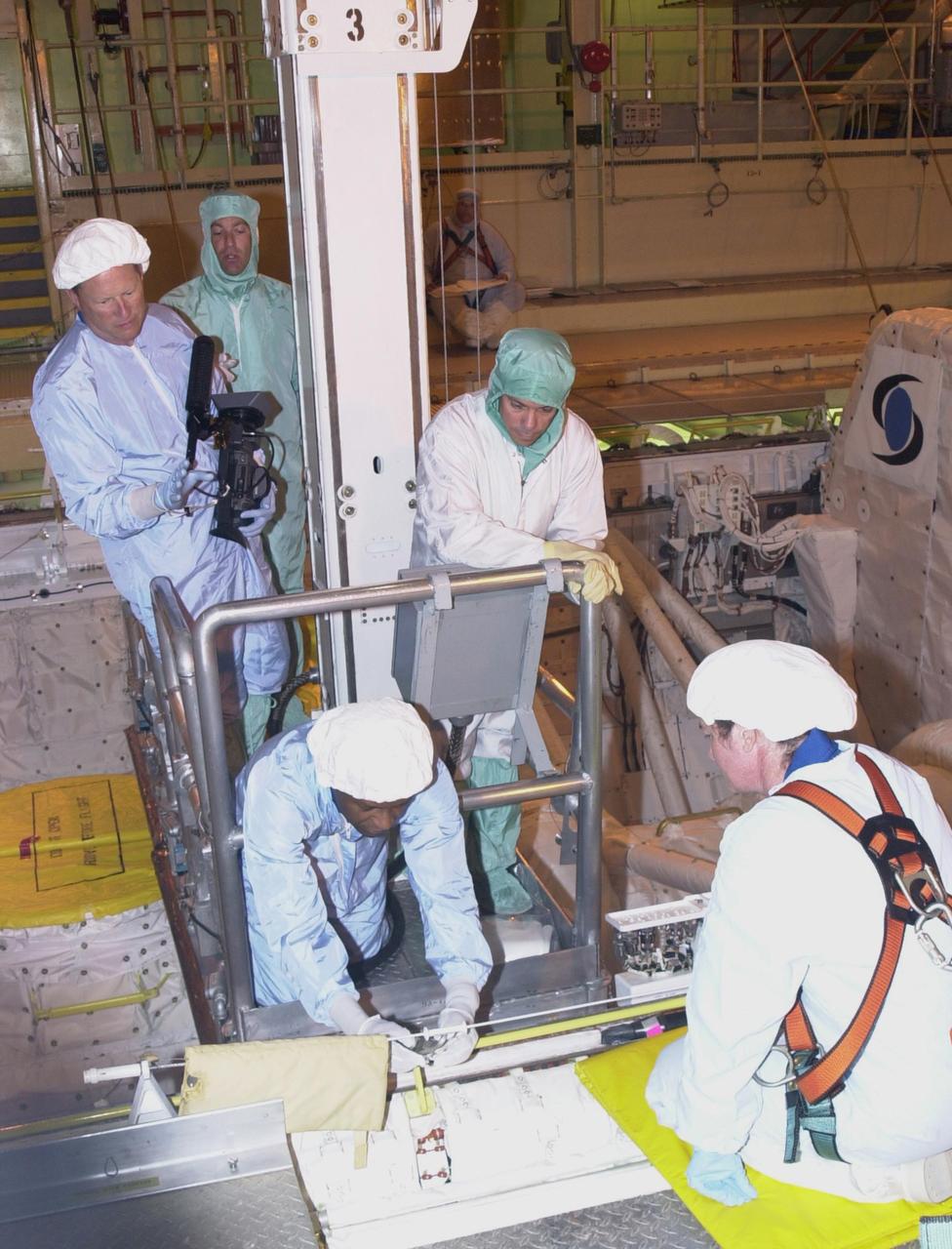
KENNEDY SPACE CENTER, FLA. -- During Crew Equipment Interface Test activities, STS-107 Payload Commander Michael Anderson looks over equipment from a lift in the payload bay of Columbia while technicians (right and rear) look on. Behind Anderson is Mission Specialist David Brown. STS-107 is a research mission, with the SHI Research Double Module (SHI/RDM), also known as SPACEHAB, as the primary payload, plus the Fast Reaction Experiments Enabling Science, Technology, Applications and Research (FREESTAR) that incorporates eight high priority secondary attached shuttle experiments. STS-107 is scheduled to launch July 19, 2002
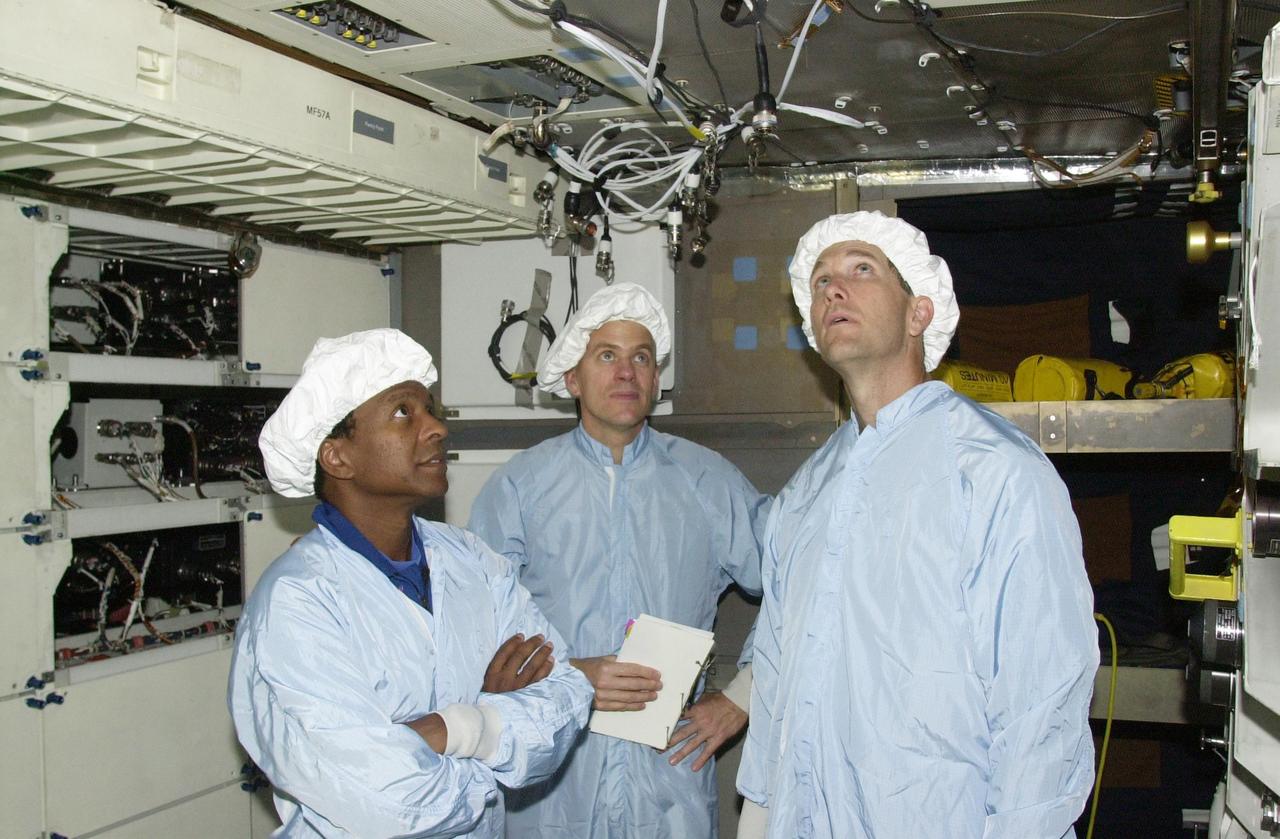
KENNEDY SPACE CENTER, FLA. -- STS-107 Payload Commander Michael Anderson (left), Pilot William "Willie" McCool (center) and Commander Rick Husband (right) look over equipment in the SHI Research Double Module (SHI/RDM), part of the payload on the mission. . They are taking part in Crew Equipment Interface Test activities, which include equipment and payload familiarization. A research mission, STS-107 also will carry the Fast Reaction Experiments Enabling Science, Technology, Applications and Research (FREESTAR) that incorporates eight high priority secondary attached shuttle experiments. STS-107 is scheduled to launch July 19, 2002
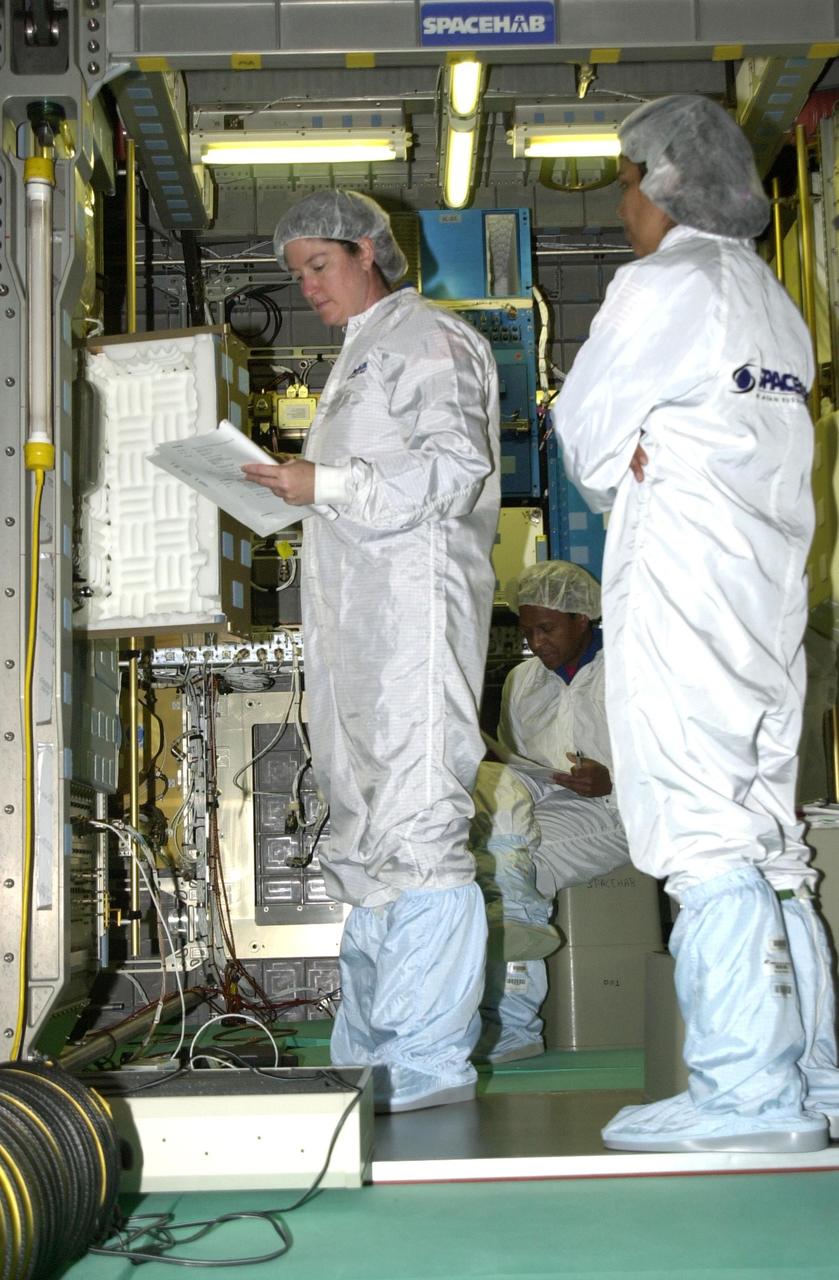
KENNEDY SPACE CENTER, FLA. -- At SPACEHAB, STS-107 crew members check equipment for their mission. From left are Mission Specialist Laurel Clark, Payload Commander Michael Anderson (seated) and Mission Specialist Kalpana Chawla. STS-107 is a research mission. The primary payload is the first flight of the SHI Research Double Module (SHI/RDM). The experiments range from material sciences to life sciences (many rats). Also part of the payload is the Fast Reaction Experiments Enabling Science, Technology, Applications and Research (FREESTAR) that incorporates eight high priority secondary attached shuttle experiments. STS-107 is scheduled to launch July 11, 2002
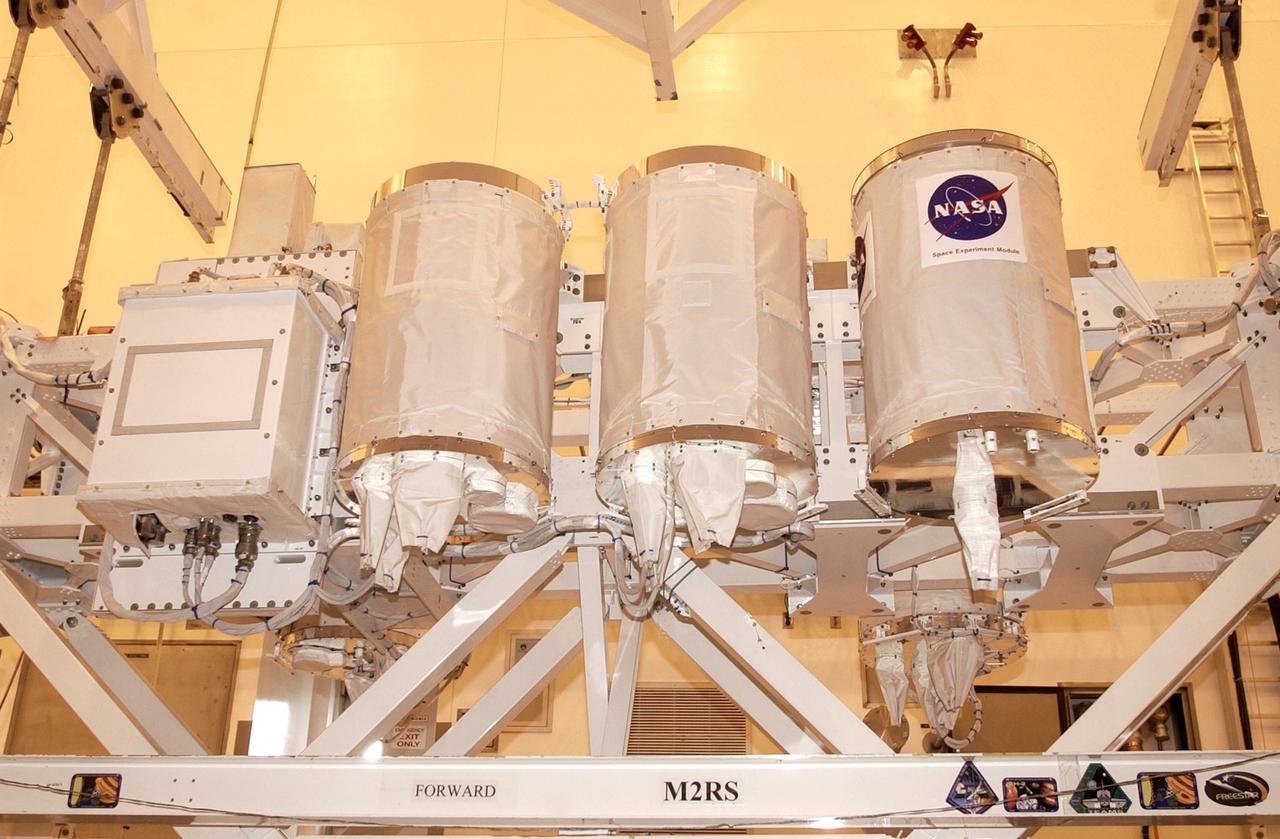
KENNEDY SPACE CENTER, FLA. - In the Multi-Payload Processing Facility, the Hitchhiker Bridge with GetAway Special canisters (GAS cans) are ready for transfer to the payload canister. The bridge is a carrier for the Fast Reaction Experiments Enabling Science, Technology, Applications and Research (FREESTAR) that incorporates eight high priority secondary attached shuttle experiments on mission STS-107. The bridge will be installed in Columbia's payload bay. A research mission, STS-107 will also carry the SHI Research Double Module (SHI/RDM), known as SPACEHAB. Experiments on the module range from material sciences to life sciences (many rats). STS-107 is scheduled to launch July 19, 2002
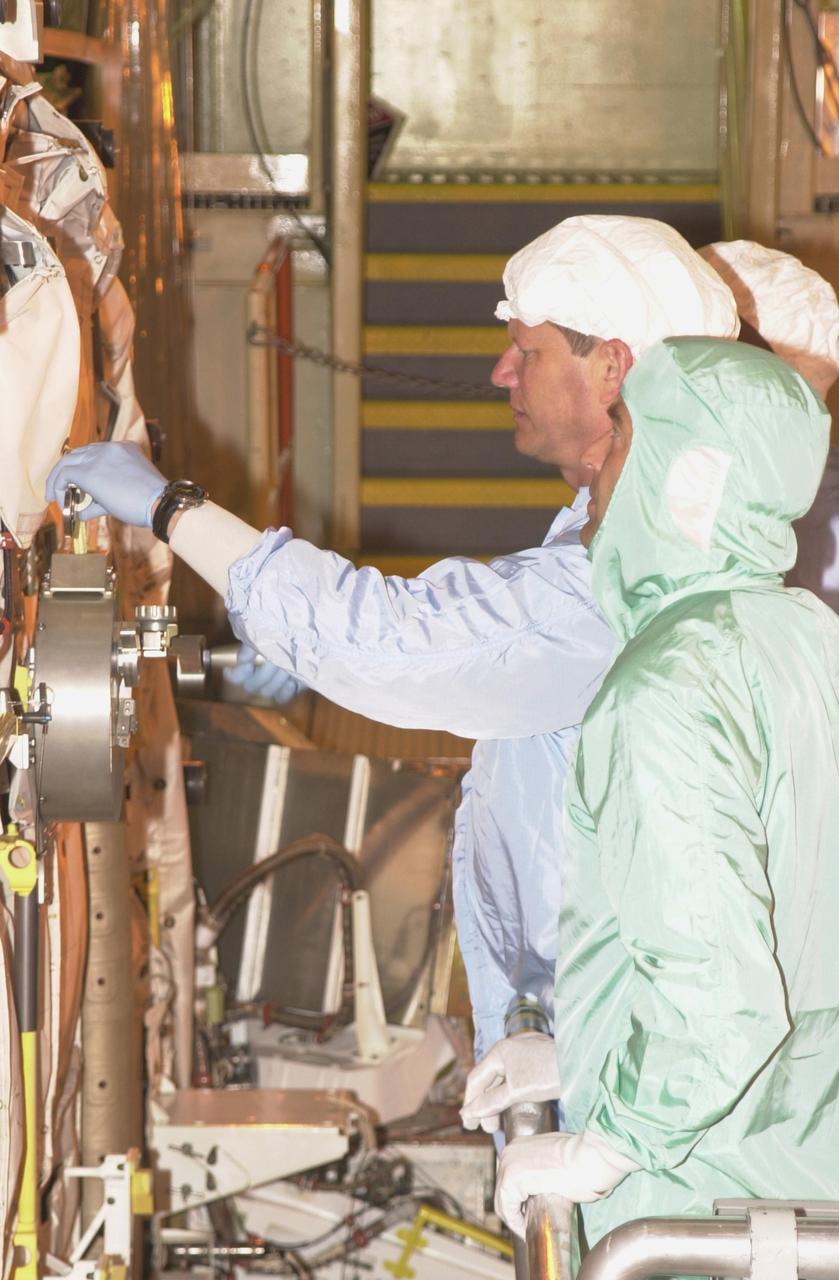
KENNEDY SPACE CENTER, FLA. - During Crew Equipment Interface Test activities, STS-107 Mission Specialist David Brown checks equipment in the payload bay of Columbia while a technician looks on. Behind Brown is Payload Commander Michael Anderson. STS-107 is a research mission, with the SHI Research Double Module (SHI/RDM), also known as SPACEHAB, as the primary payload, plus the Fast Reaction Experiments Enabling Science, Technology, Applications and Research (FREESTAR) that incorporates eight high priority secondary attached shuttle experiments. STS-107 is scheduled to launch July 19, 2002
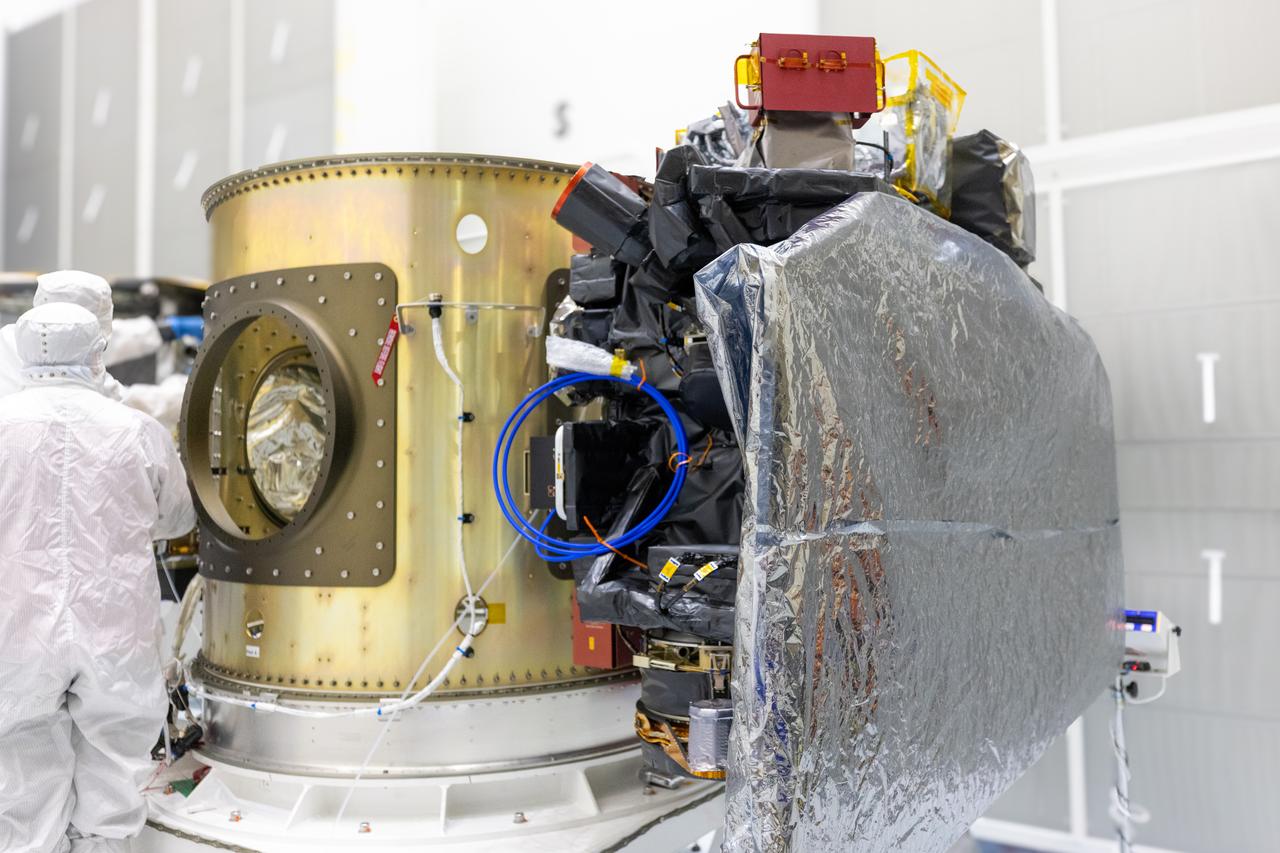
Technicians integrate NASA’s Carruthers Geocorona Observatory and the National Oceanic and Atmospheric Administration’s (NOAA) Space Weather Follow On Lagrange - 1 (SWFO-L1) satellite to the Evolved Expendable Launch Vehicle Secondary Payload Adapter Array Ring (ESPA) inside the Astrotech Space Operations Facility near NASA’s Kennedy Space Center in Florida on Friday, Sept. 5, 2025. The integration of the rideshares prepares for the next milestone of attaching NASA’s IMAP (Interstellar Mapping and Acceleration Probe) Sun mapping observatory to a payload adapter and stacking all three observatories together to prepare them for encapsulation in the payload fairing.
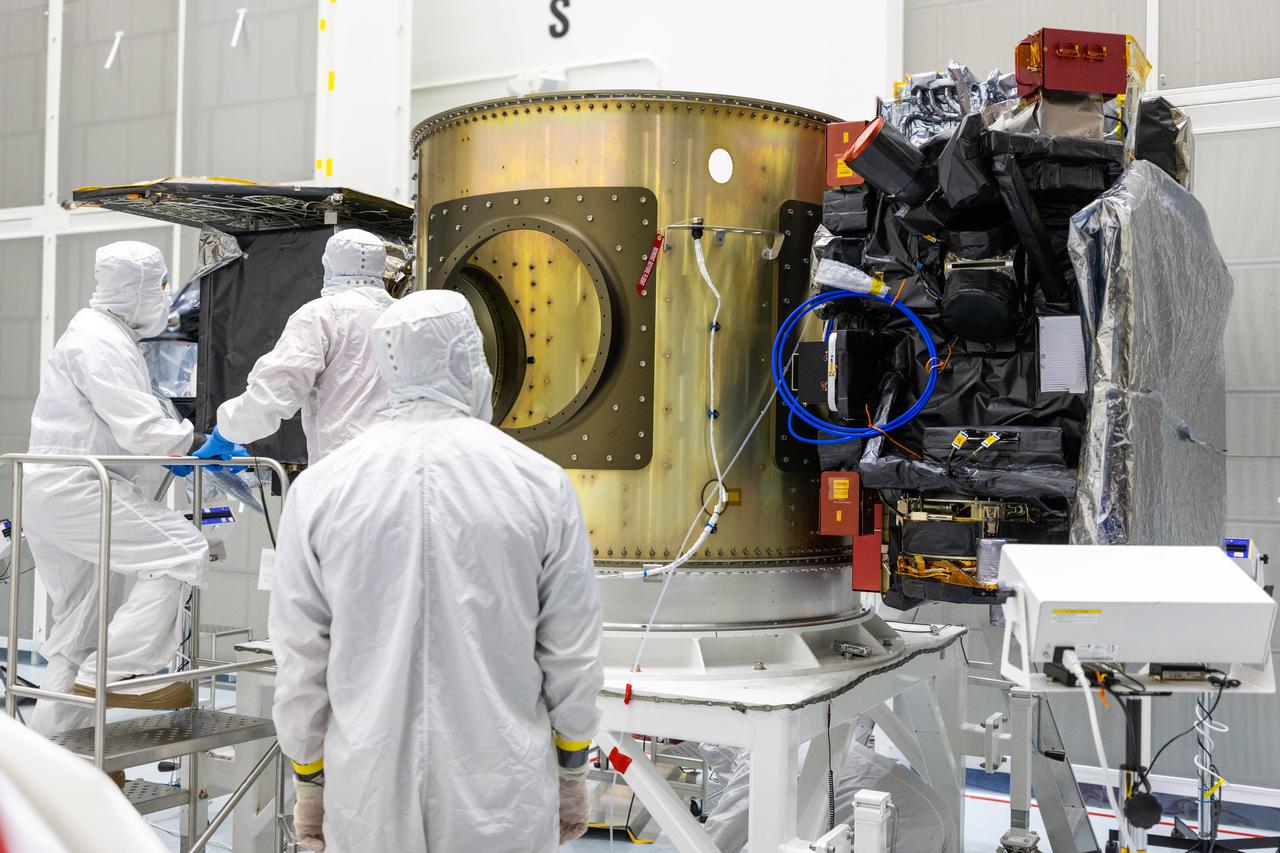
Technicians integrate NASA’s Carruthers Geocorona Observatory and the National Oceanic and Atmospheric Administration’s (NOAA) Space Weather Follow On Lagrange - 1 (SWFO-L1) satellite to the Evolved Expendable Launch Vehicle Secondary Payload Adapter Array Ring (ESPA) inside the Astrotech Space Operations Facility near NASA’s Kennedy Space Center in Florida on Friday, Sept. 5, 2025. The integration of the rideshares prepares for the next milestone of attaching NASA’s IMAP (Interstellar Mapping and Acceleration Probe) Sun mapping observatory to a payload adapter and stacking all three observatories together to prepare them for encapsulation in the payload fairing.
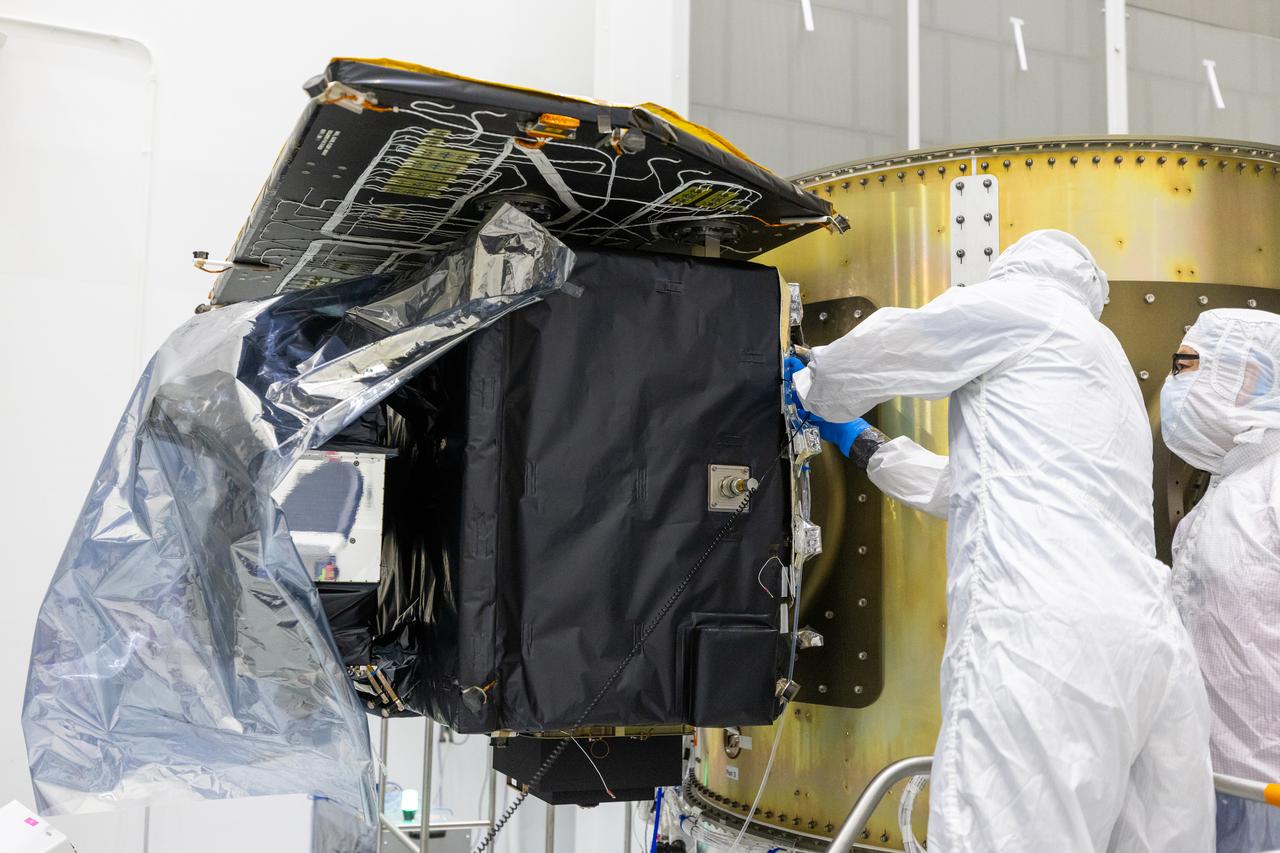
Technicians integrate NASA’s Carruthers Geocorona Observatory and the National Oceanic and Atmospheric Administration’s (NOAA) Space Weather Follow On Lagrange - 1 (SWFO-L1) satellite to the Evolved Expendable Launch Vehicle Secondary Payload Adapter Array Ring (ESPA) inside the Astrotech Space Operations Facility near NASA’s Kennedy Space Center in Florida on Friday, Sept. 5, 2025. The integration of the rideshares prepares for the next milestone of attaching NASA’s IMAP (Interstellar Mapping and Acceleration Probe) Sun mapping observatory to a payload adapter and stacking all three observatories together to prepare them for encapsulation in the payload fairing.
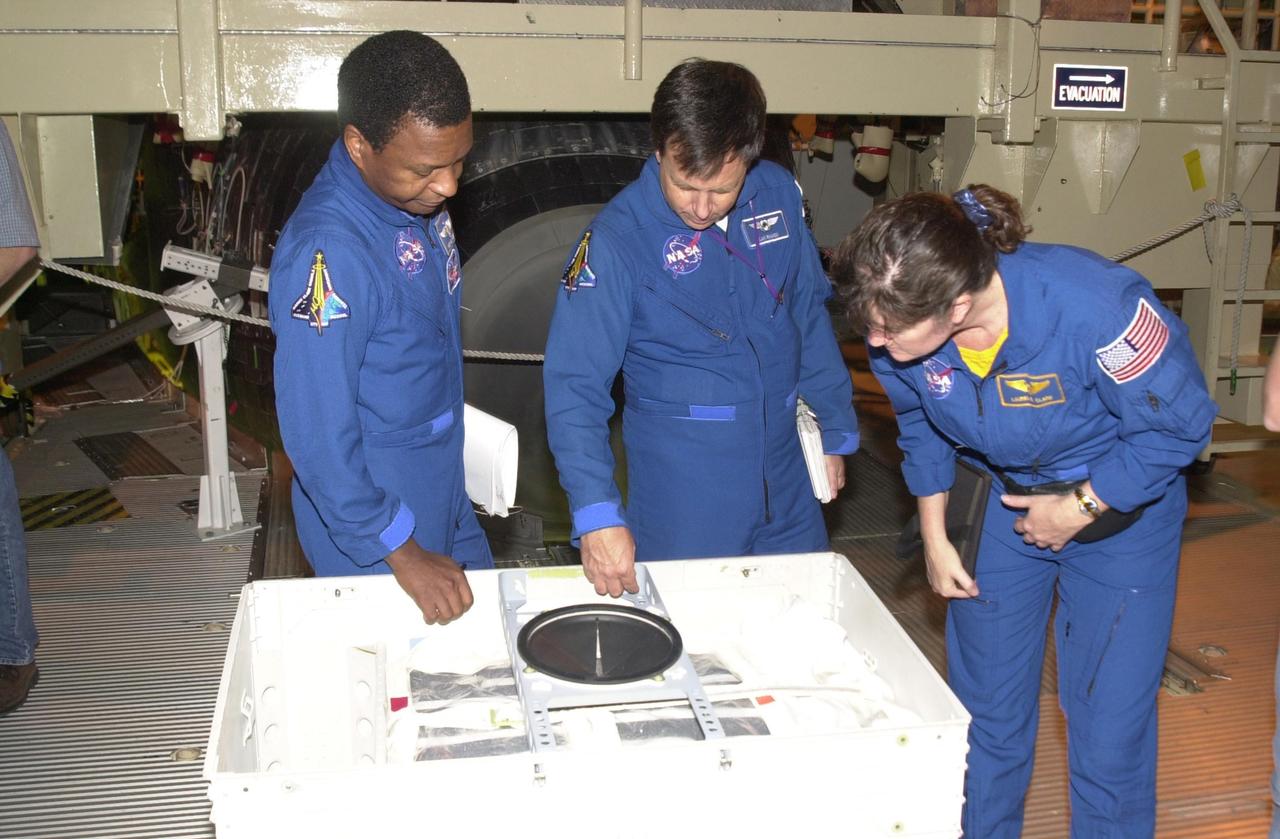
KENNEDY SPACE CENTER, FLA. -- During Crew Equipment Interface Test activities, the STS-107 crew looks at flight equipment in the Orbiter Processing Facility. From left are Payload Commander Michael Anderson, Payload Specialist Ilan Ramon (with the Israeli Space Agency), and Mission Specialist Laurel Clark. STS-107 is a research mission, with the SHI Research Double Module (SHI/RDM), also known as SPACEHAB, as the primary payload, plus the Fast Reaction Experiments Enabling Science, Technology, Applications and Research (FREESTAR) that incorporates eight high priority secondary attached shuttle experiments. STS-107 is scheduled to launch July 19, 2002
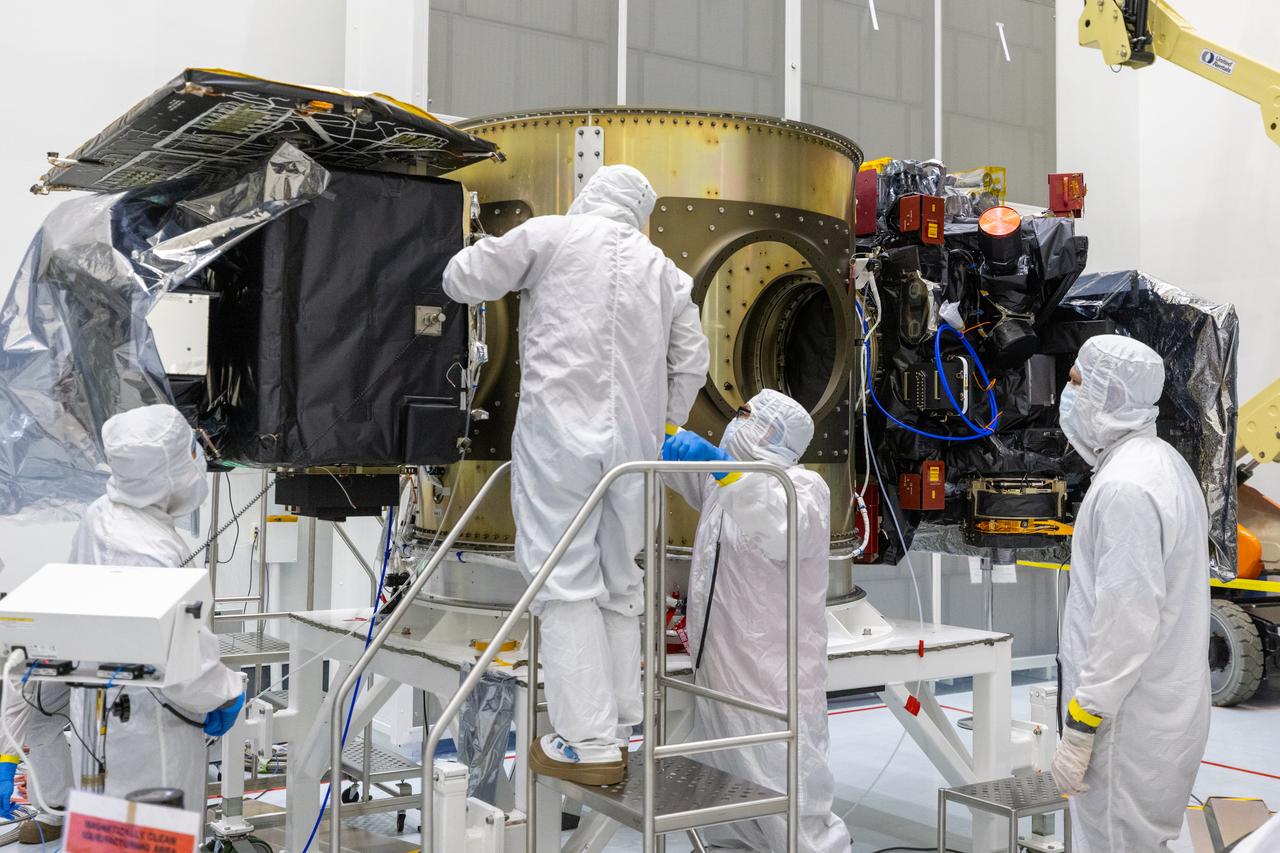
Technicians integrate NASA’s Carruthers Geocorona Observatory and the National Oceanic and Atmospheric Administration’s (NOAA) Space Weather Follow On Lagrange - 1 (SWFO-L1) satellite to the Evolved Expendable Launch Vehicle Secondary Payload Adapter Array Ring (ESPA) inside the Astrotech Space Operations Facility near NASA’s Kennedy Space Center in Florida on Friday, Sept. 5, 2025. The integration of the rideshares prepares for the next milestone of attaching NASA’s IMAP (Interstellar Mapping and Acceleration Probe) Sun mapping observatory to a payload adapter and stacking all three observatories together to prepare them for encapsulation in the payload fairing.
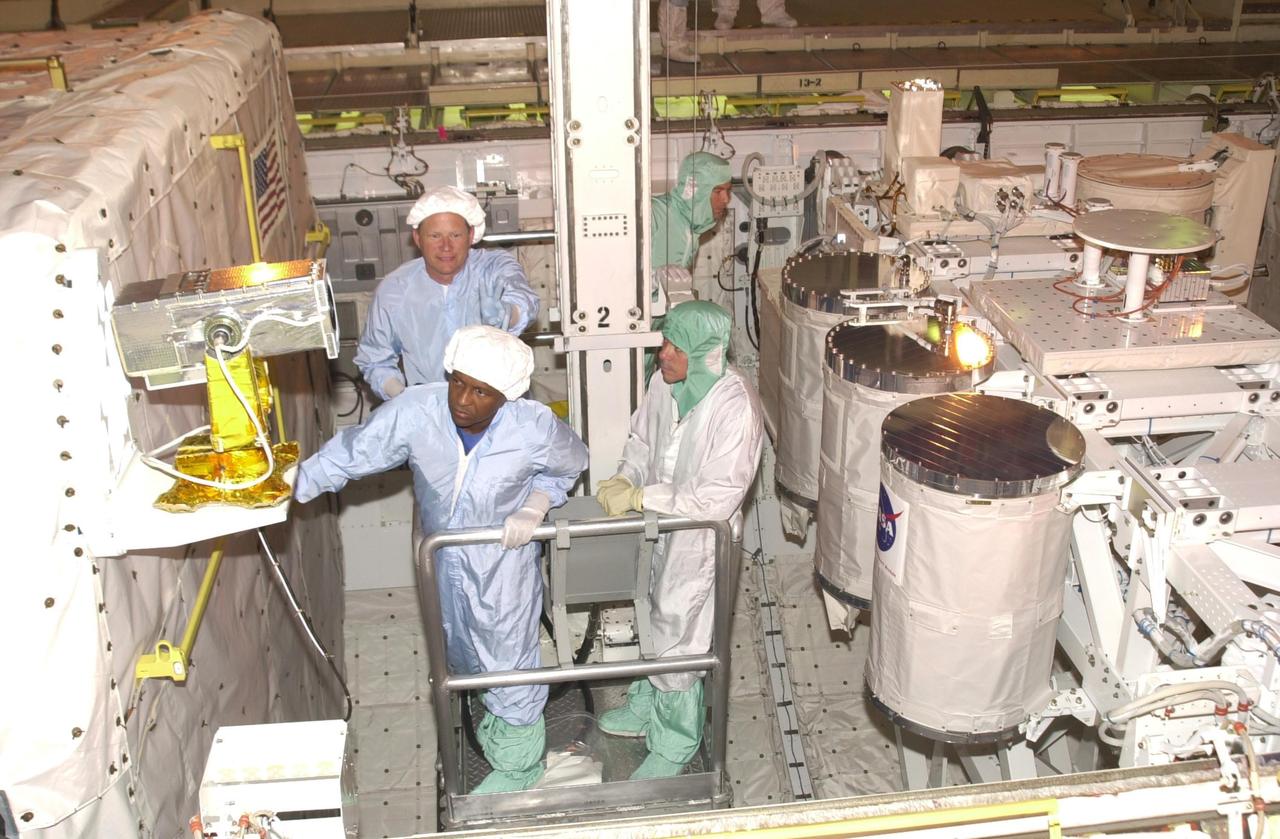
KENNEDY SPACE CENTER, FLA. -- During Crew Equipment Interface Test activities, STS-107 Payload Commander Michael Anderson looks over equipment in the payload bay of Columbia. Behind him is Mission Specialist David Brown. STS-107 is a research mission, with the SHI Research Double Module (SHI/RDM), also known as SPACEHAB, as the primary payload, plus the Fast Reaction Experiments Enabling Science, Technology, Applications and Research (FREESTAR) that incorporates eight high priority secondary attached shuttle experiments. STS-107 is scheduled to launch July 19, 2002
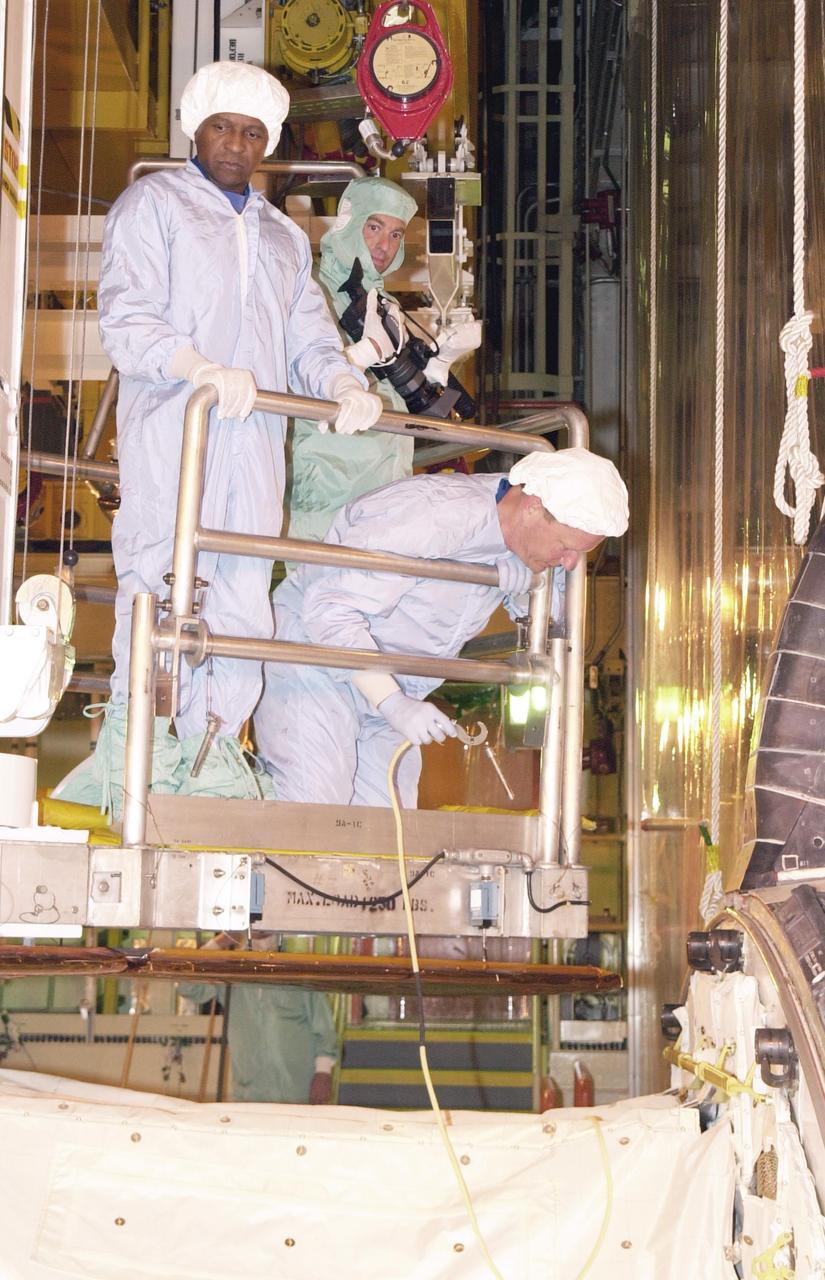
KENNEDY SPACE CENTER, FLA. -- - During Crew Equipment Interface Test activities, STS-107 Mission Specialist David Brown checks equipment in the payload bay of Columbia. At left is Payload Commander Michael Anderson. A technician holds a camera. STS-107 is a research mission, with the SHI Research Double Module (SHI/RDM), also known as SPACEHAB, as the primary payload, plus the Fast Reaction Experiments Enabling Science, Technology, Applications and Research (FREESTAR) that incorporates eight high priority secondary attached shuttle experiments. STS-107 is scheduled to launch July 19, 2002
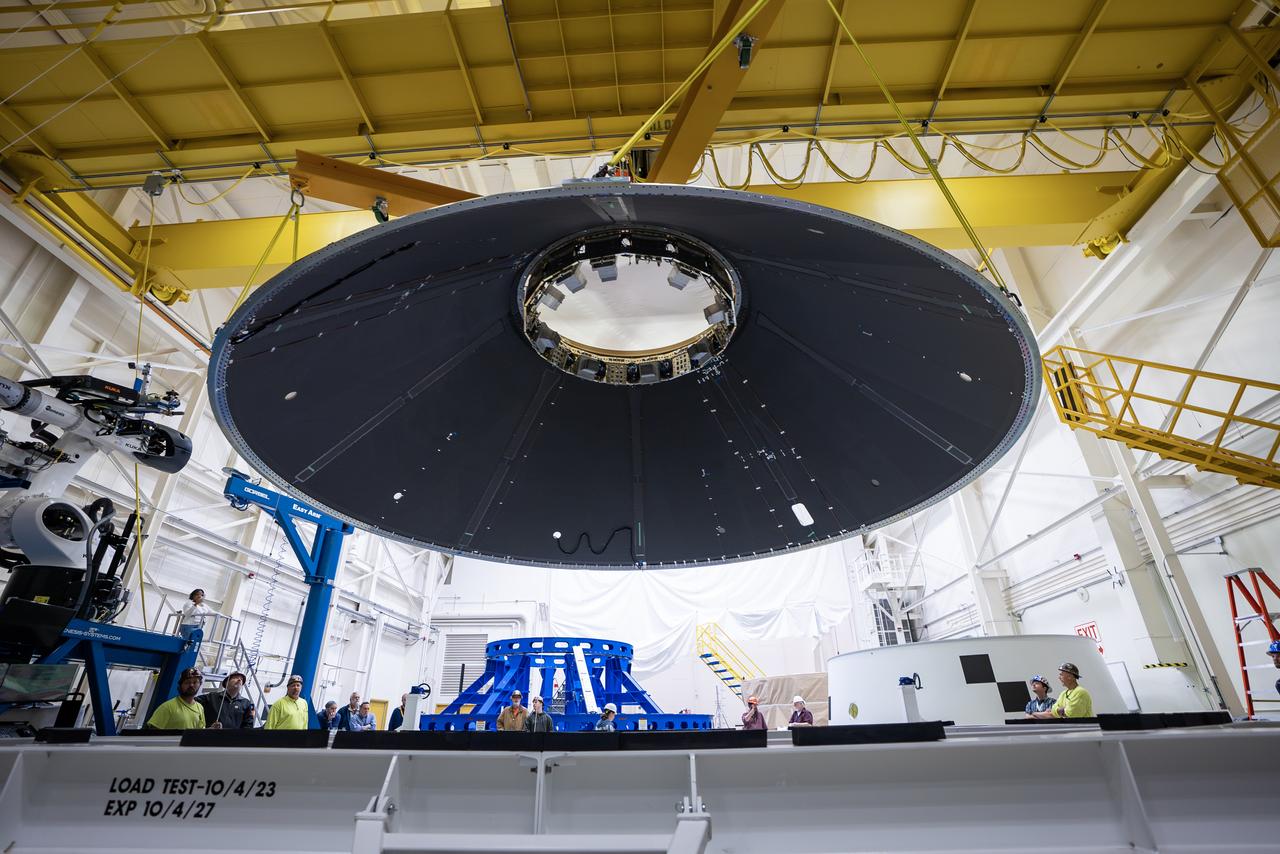
These photos and videos show how NASA manufactured and prepared to transport the payload adapter in February inside Building 4708 at NASA’s Marshall Space Flight Center in Huntsville, Alabama. Prior to moving the hardware for testing, teams installed the New Explorations Secondary Transport component, called the NEST, into the top of the engineering development unit. The NEST component will allow the hardware to hold a series of secondary payloads, or small satellites. The cone-shaped payload adapter is about 8.5 feet tall and features two metal rings and eight composite panels. The adapter, which will debut on NASA’s Artemis IV mission, is an evolution from the Orion stage adapter used in the Block 1 configuration of the rocket for the first three Artemis missions. It will be housed inside the universal stage adapter atop the rocket’s more powerful in-space stage, called the exploration upper stage. The payload adapter, like the launch vehicle stage adapter and the Orion stage adapter, is fully manufactured and tested at Marshall, which manages the SLS Program. NASA is working to land the first woman, first person of color, and its first international partner astronaut on the Moon under Artemis. SLS is part of NASA’s backbone for deep space exploration, along with the Orion spacecraft and Gateway in orbit around the Moon and commercial human landing systems, next-generational spacesuits, and rovers on the lunar surface. SLS is the only rocket that can send Orion, astronauts, and supplies to the Moon in a single launch.
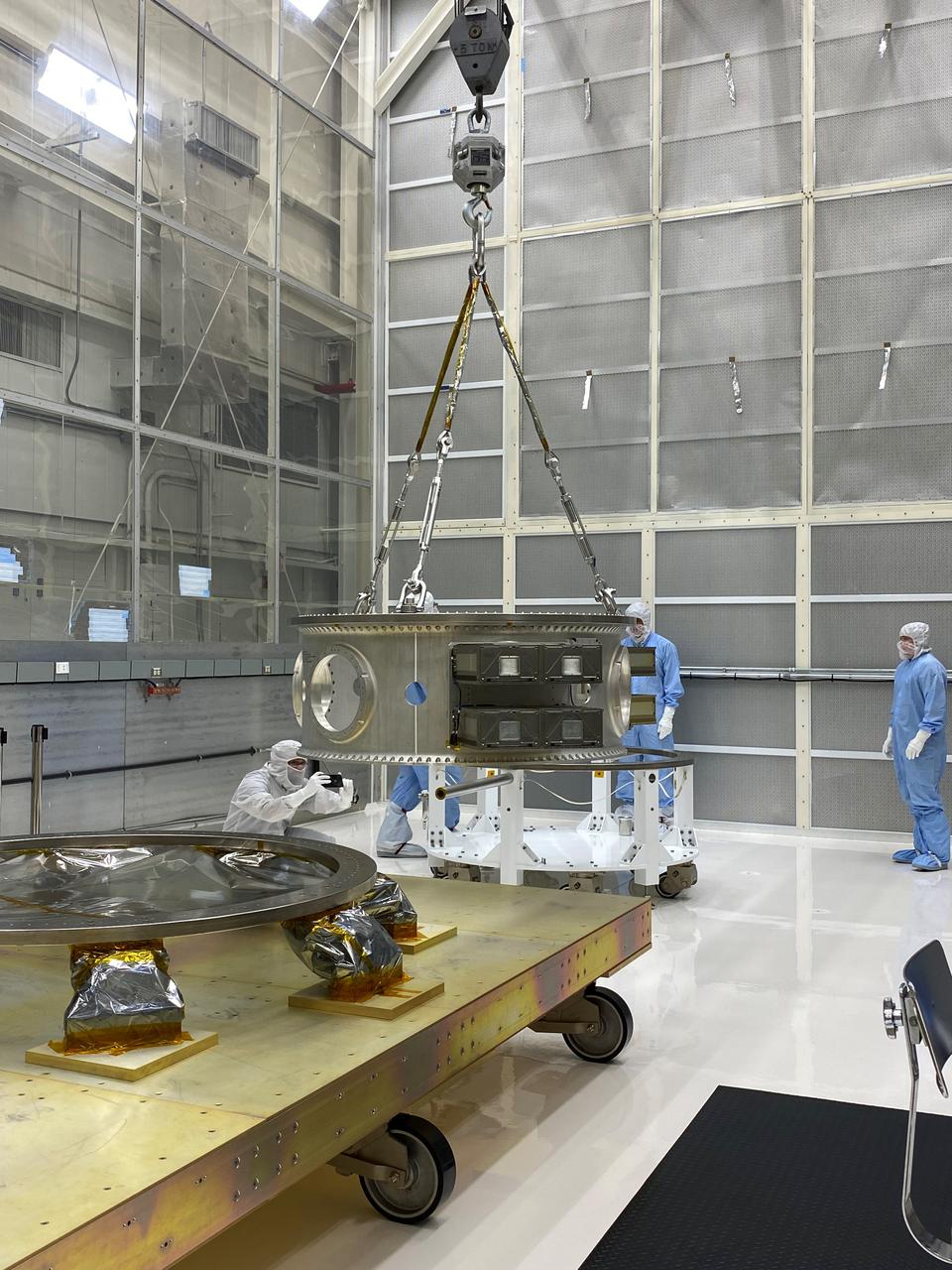
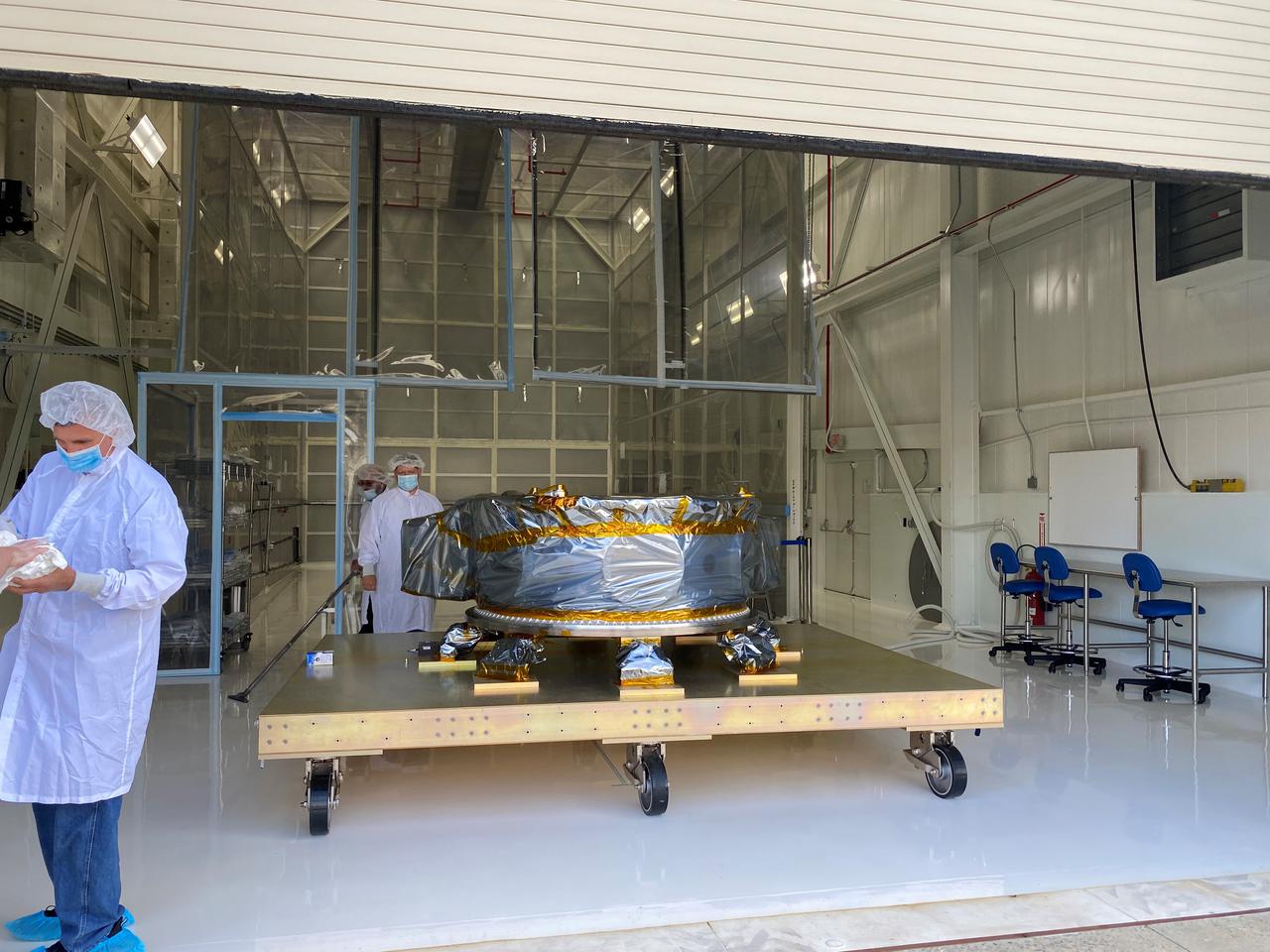
Technicians process mechanical and electrical support equipment for NASA’s Landsat 9 observatory inside the Integrated Processing Facility at Vandenberg Space Force Base in California, on June 16, 2021. The equipment includes a secondary payload adapter and flight system for a group of microsat payloads, called CubeSats, that will launch with Landsat 9 as secondary payloads. Landsat 9 will launch on a United Launch Alliance Atlas V rocket from Space Launch Complex 3 at Vandenberg in September 2021. The launch is being managed by NASA’s Launch Services Program based at Kennedy Space Center, America’s multiuser spaceport. The Landsat 9 satellite will continue the nearly 50-year legacy of previous Landsat missions. It will monitor key natural and economic resources from orbit. Landsat 9 is managed by the agency’s Goddard Space Flight Center in Greenbelt, Maryland. The satellite will carry two instruments: the Operational Land Imager 2, which collects images of Earth’s landscapes in visible, near infrared and shortwave infrared light, and the Thermal Infrared Sensor 2, which measures the temperature of land surfaces. Like its predecessors, Landsat 9 is a joint mission between NASA and the U.S. Geological Survey.
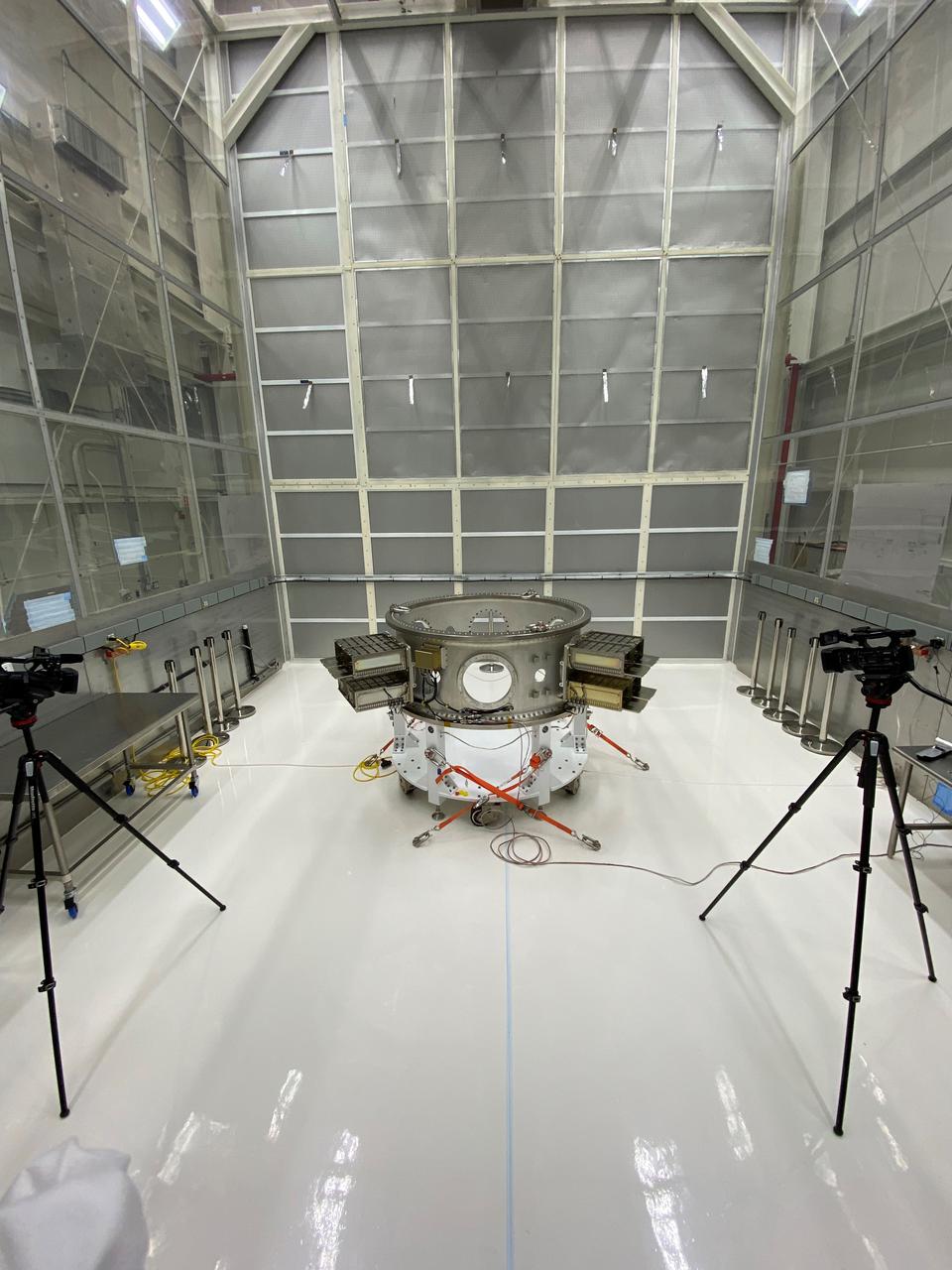
Mechanical and electrical support equipment for NASA’s Landsat 9 observatory are being processed inside the Integrated Processing Facility at Vandenberg Space Force Base in California, on June 24, 2021. The equipment includes a secondary payload adapter and flight system for a group of microsat payloads, called CubeSats, that will launch with Landsat 9 as secondary payloads. Landsat 9 will launch on a United Launch Alliance Atlas V rocket from Space Launch Complex 3 at Vandenberg in September 2021. The launch is being managed by NASA’s Launch Services Program based at Kennedy Space Center, America’s multiuser spaceport. The Landsat 9 satellite will continue the nearly 50-year legacy of previous Landsat missions. It will monitor key natural and economic resources from orbit. Landsat 9 is managed by the agency’s Goddard Space Flight Center in Greenbelt, Maryland. The satellite will carry two instruments: the Operational Land Imager 2, which collects images of Earth’s landscapes in visible, near infrared and shortwave infrared light, and the Thermal Infrared Sensor 2, which measures the temperature of land surfaces. Like its predecessors, Landsat 9 is a joint mission between NASA and the U.S. Geological Survey.
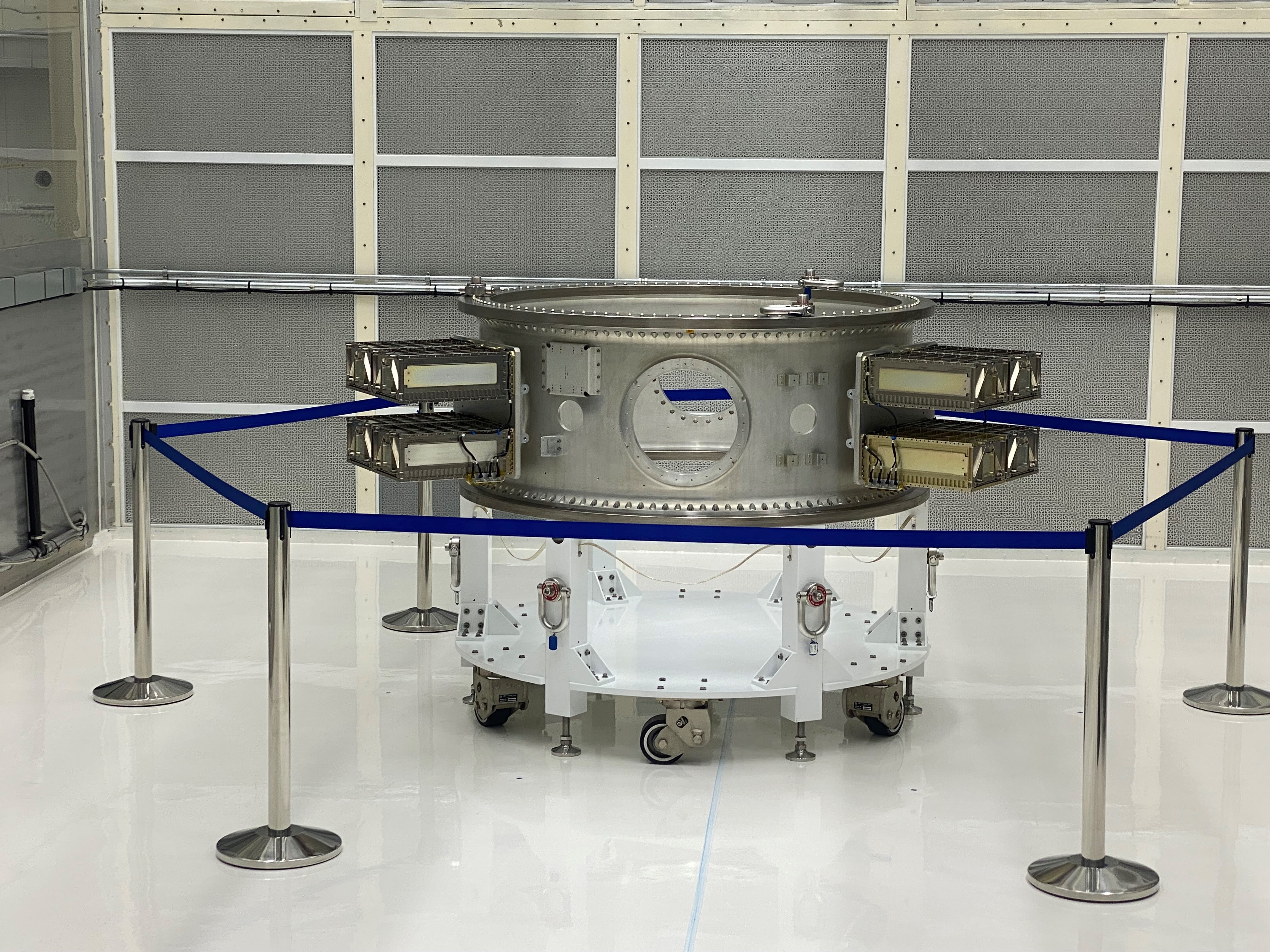
Mechanical and electrical support equipment for NASA’s Landsat 9 observatory are inside the Integrated Processing Facility at Vandenberg Space Force Base in California, on June 16, 2021. The equipment includes a secondary payload adapter and flight system for a group of microsat payloads, called CubeSats, that will launch with Landsat 9 as secondary payloads. Landsat 9 will launch on a United Launch Alliance Atlas V rocket from Space Launch Complex 3 at Vandenberg in September 2021. The launch is being managed by NASA’s Launch Services Program based at Kennedy Space Center, America’s multiuser spaceport. The Landsat 9 satellite will continue the nearly 50-year legacy of previous Landsat missions. It will monitor key natural and economic resources from orbit. Landsat 9 is managed by the agency’s Goddard Space Flight Center in Greenbelt, Maryland. The satellite will carry two instruments: the Operational Land Imager 2, which collects images of Earth’s landscapes in visible, near infrared and shortwave infrared light, and the Thermal Infrared Sensor 2, which measures the temperature of land surfaces. Like its predecessors, Landsat 9 is a joint mission between NASA and the U.S. Geological Survey.
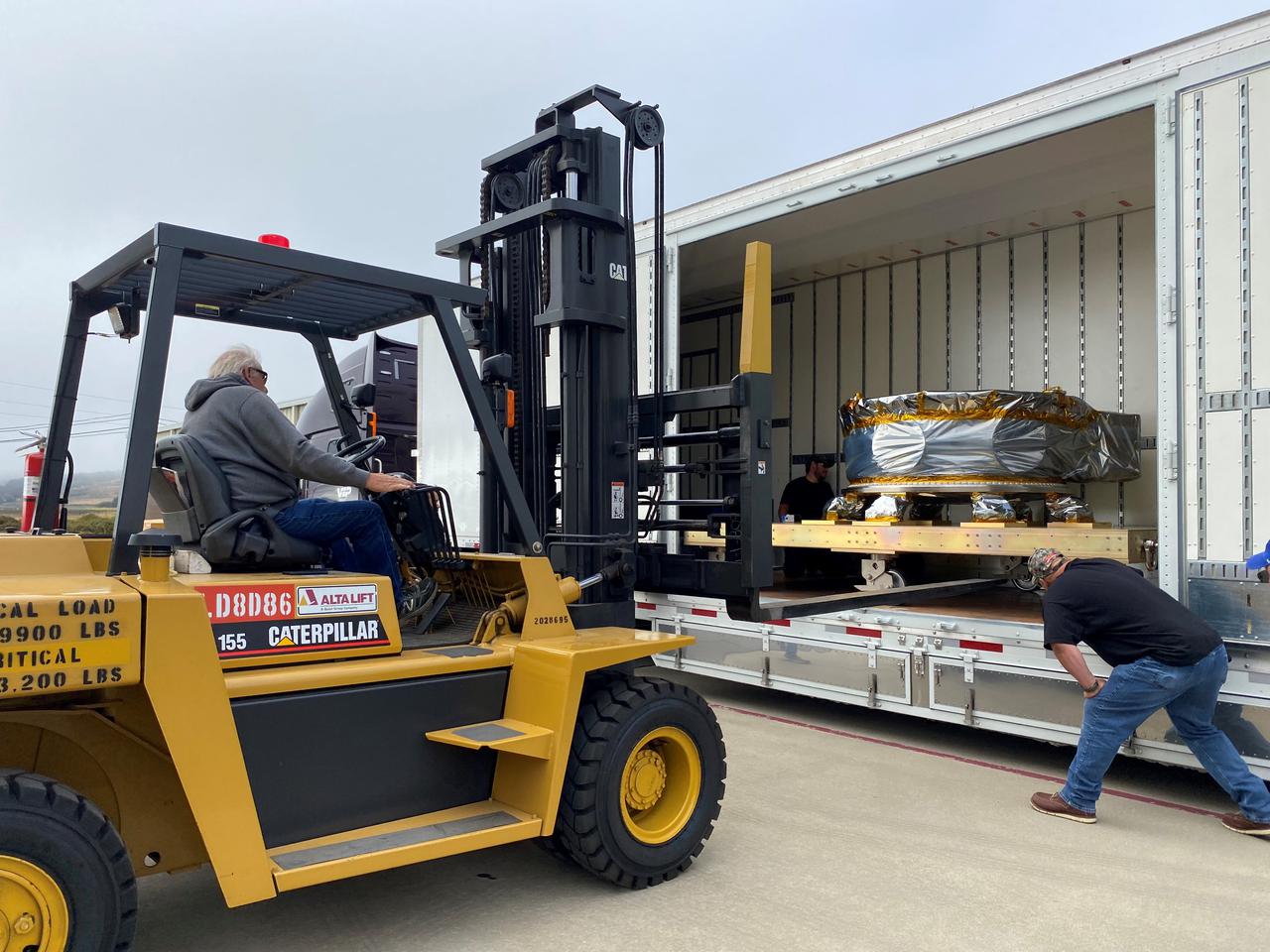
Mechanical and electrical support equipment for NASA’s Landsat 9 observatory arrive at the Integrated Processing Facility at Vandenberg Space Force Base in California, on June 14, 2021. The equipment includes a secondary payload adapter and flight system for a group of microsat payloads, called CubeSats, that will launch with Landsat 9 as secondary payloads. Landsat 9 will launch on a United Launch Alliance Atlas V rocket from Space Launch Complex 3 at Vandenberg in September 2021. The launch is being managed by NASA’s Launch Services Program based at Kennedy Space Center, America’s multiuser spaceport. The Landsat 9 satellite will continue the nearly 50-year legacy of previous Landsat missions. It will monitor key natural and economic resources from orbit. Landsat 9 is managed by the agency’s Goddard Space Flight Center in Greenbelt, Maryland. The satellite will carry two instruments: the Operational Land Imager 2, which collects images of Earth’s landscapes in visible, near infrared and shortwave infrared light, and the Thermal Infrared Sensor 2, which measures the temperature of land surfaces. Like its predecessors, Landsat 9 is a joint mission between NASA and the U.S. Geological Survey.
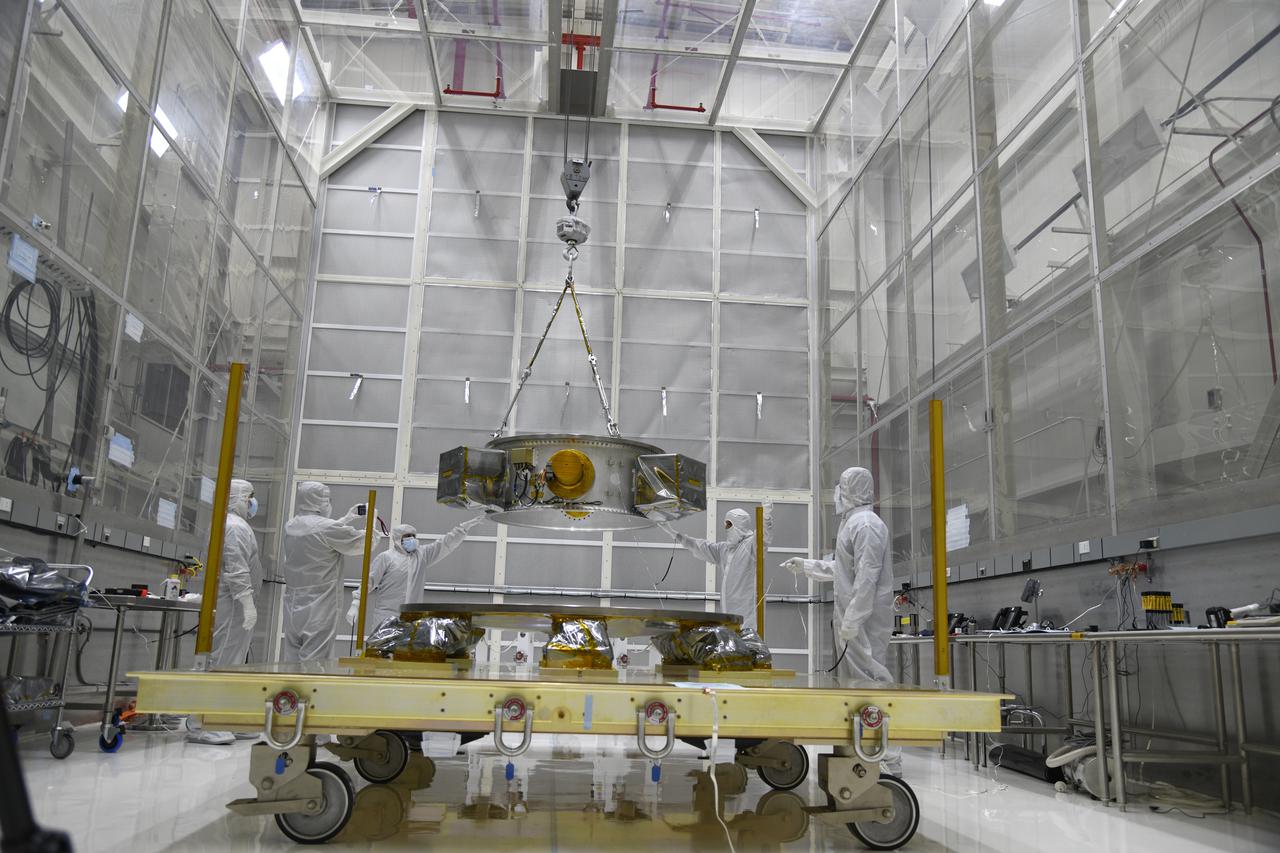
Technicians monitor the progress as a crane is used to lift the secondary payload adapter for NASA’s Landsat 9 mission onto a transporter stand at Vandenberg Space Force Base in California, on Aug. 4, 2021. The payload adapter will be transported to the Integrated Processing Facility. Several secondary payloads, called CubeSats, will launch with Landsat 9 atop a United Launch Alliance Atlas V rocket from Vandenberg in September 2021. The launch is being managed by NASA’s Launch Services Program based at Kennedy Space Center, America’s multi-user spaceport. The Landsat 9 satellite will continue the nearly 50-year legacy of previous Landsat missions. It will monitor key natural and economic resources from orbit. Landsat 9 is managed by the agency’s Goddard Space Flight Center in Greenbelt, Maryland. The satellite will carry two instruments: the Operational Land Imager 2, which collects images of Earth’s landscapes in visible, near infrared and shortwave infrared light, and the Thermal Infrared Sensor 2, which measures the temperature of land surfaces. Like its predecessors, Landsat 9 is a joint mission between NASA and the U.S. Geological Survey.
Mechanical and electrical support equipment for NASA’s Landsat 9 observatory arrive inside the Integrated Processing Facility at Vandenberg Space Force Base in California, on June 14, 2021. The equipment includes a secondary payload adapter and flight system for a group of microsat payloads, called CubeSats, that will launch with Landsat 9 as secondary payloads. Landsat 9 will launch on a United Launch Alliance Atlas V rocket from Space Launch Complex 3 at Vandenberg in September 2021. The launch is being managed by NASA’s Launch Services Program based at Kennedy Space Center, America’s multiuser spaceport. The Landsat 9 satellite will continue the nearly 50-year legacy of previous Landsat missions. It will monitor key natural and economic resources from orbit. Landsat 9 is managed by the agency’s Goddard Space Flight Center in Greenbelt, Maryland. The satellite will carry two instruments: the Operational Land Imager 2, which collects images of Earth’s landscapes in visible, near infrared and shortwave infrared light, and the Thermal Infrared Sensor 2, which measures the temperature of land surfaces. Like its predecessors, Landsat 9 is a joint mission between NASA and the U.S. Geological Survey.
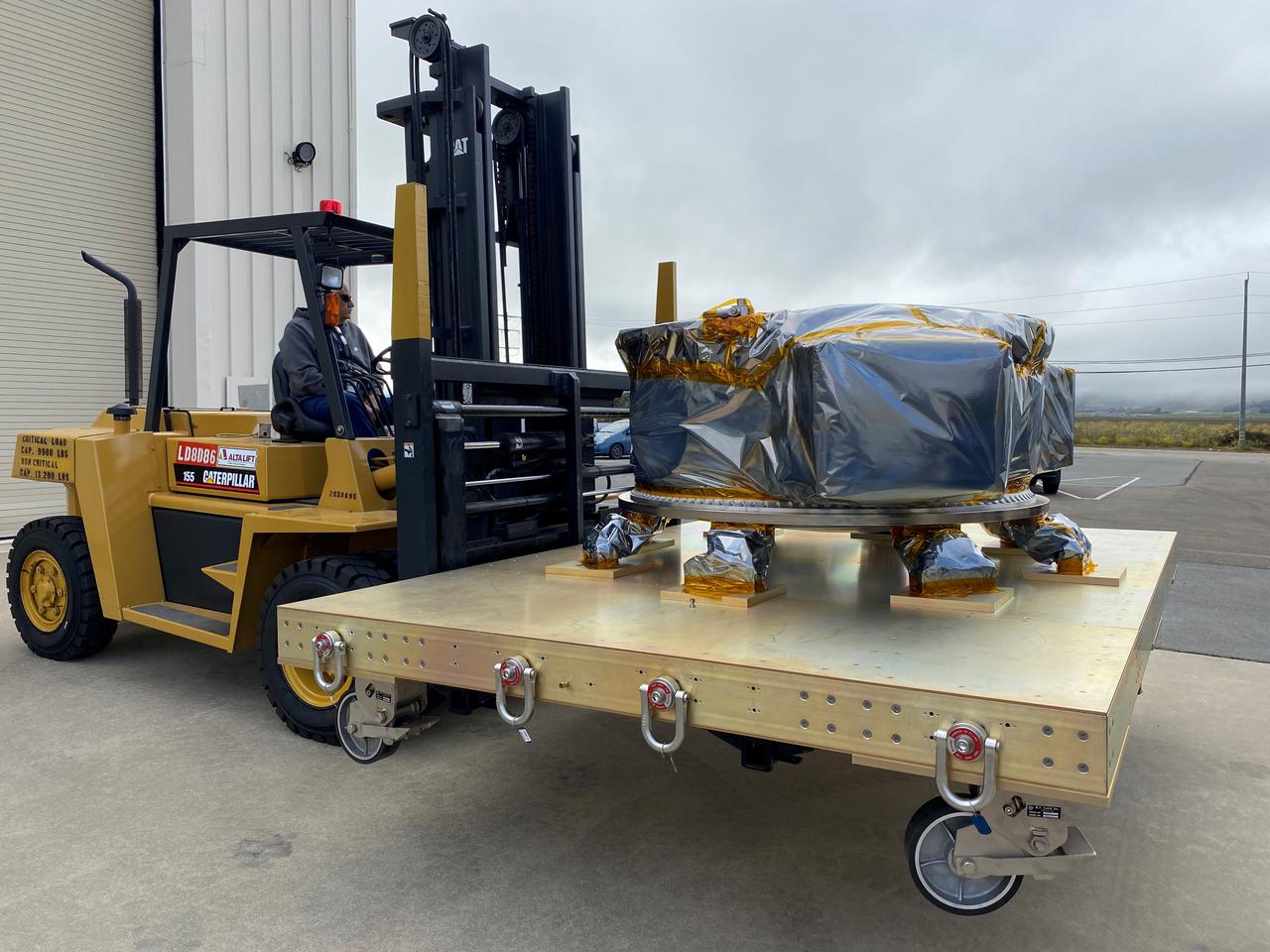
Mechanical and electrical support equipment for NASA’s Landsat 9 observatory arrive at the Integrated Processing Facility at Vandenberg Space Force Base in California, on June 14, 2021. The equipment includes a secondary payload adapter and flight system for a group of microsat payloads, called CubeSats, that will launch with Landsat 9 as secondary payloads. Landsat 9 will launch on a United Launch Alliance Atlas V rocket from Space Launch Complex 3 at Vandenberg in September 2021. The launch is being managed by NASA’s Launch Services Program based at Kennedy Space Center, America’s multiuser spaceport. The Landsat 9 satellite will continue the nearly 50-year legacy of previous Landsat missions. It will monitor key natural and economic resources from orbit. Landsat 9 is managed by the agency’s Goddard Space Flight Center in Greenbelt, Maryland. The satellite will carry two instruments: the Operational Land Imager 2, which collects images of Earth’s landscapes in visible, near infrared and shortwave infrared light, and the Thermal Infrared Sensor 2, which measures the temperature of land surfaces. Like its predecessors, Landsat 9 is a joint mission between NASA and the U.S. Geological Survey.
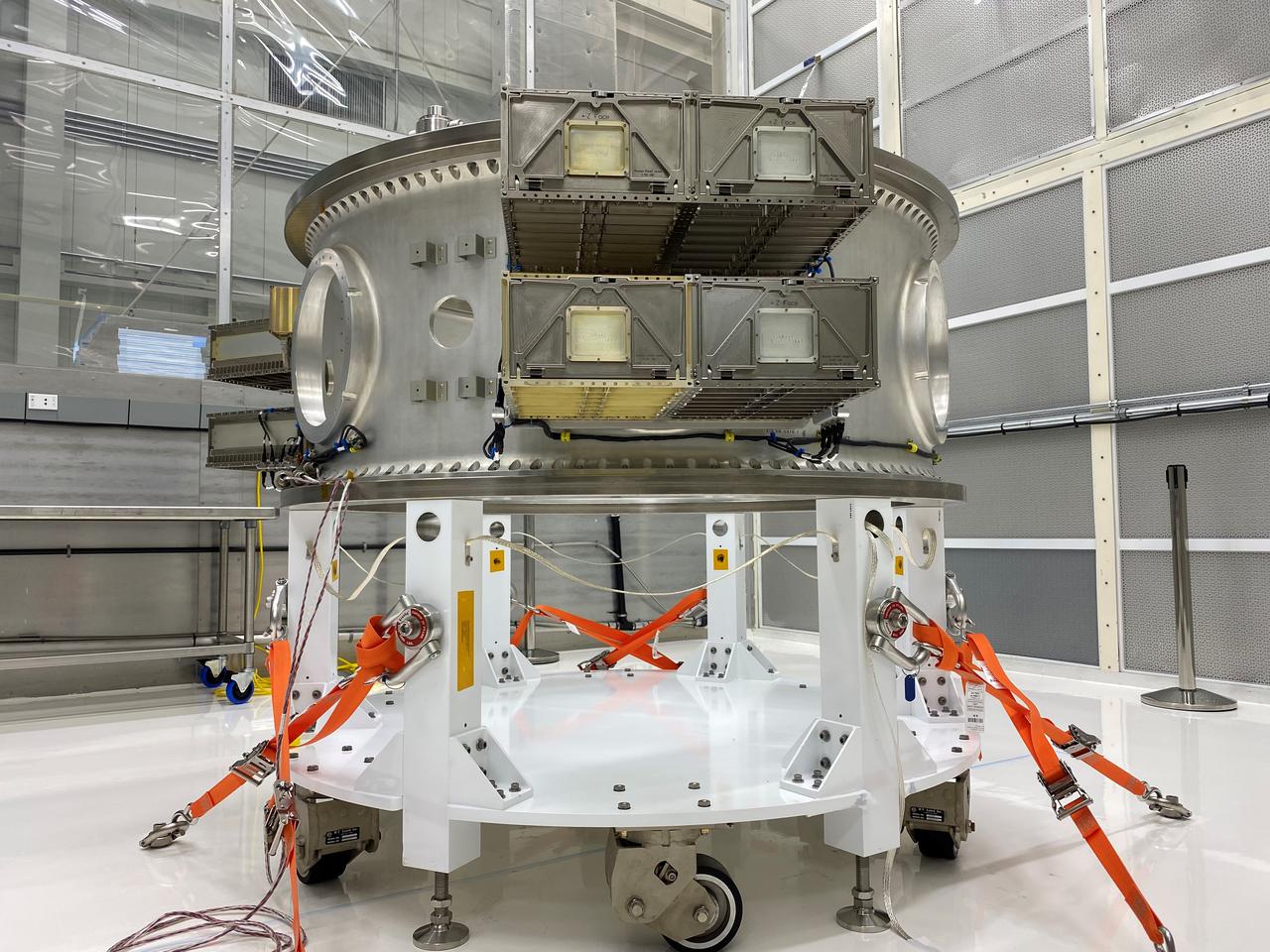
Mechanical and electrical support equipment for NASA’s Landsat 9 observatory are being processed inside the Integrated Processing Facility at Vandenberg Space Force Base in California, on June 24, 2021. The equipment includes a secondary payload adapter and flight system for a group of microsat payloads, called CubeSats, that will launch with Landsat 9 as secondary payloads. Landsat 9 will launch on a United Launch Alliance Atlas V rocket from Space Launch Complex 3 at Vandenberg in September 2021. The launch is being managed by NASA’s Launch Services Program based at Kennedy Space Center, America’s multiuser spaceport. The Landsat 9 satellite will continue the nearly 50-year legacy of previous Landsat missions. It will monitor key natural and economic resources from orbit. Landsat 9 is managed by the agency’s Goddard Space Flight Center in Greenbelt, Maryland. The satellite will carry two instruments: the Operational Land Imager 2, which collects images of Earth’s landscapes in visible, near infrared and shortwave infrared light, and the Thermal Infrared Sensor 2, which measures the temperature of land surfaces. Like its predecessors, Landsat 9 is a joint mission between NASA and the U.S. Geological Survey.
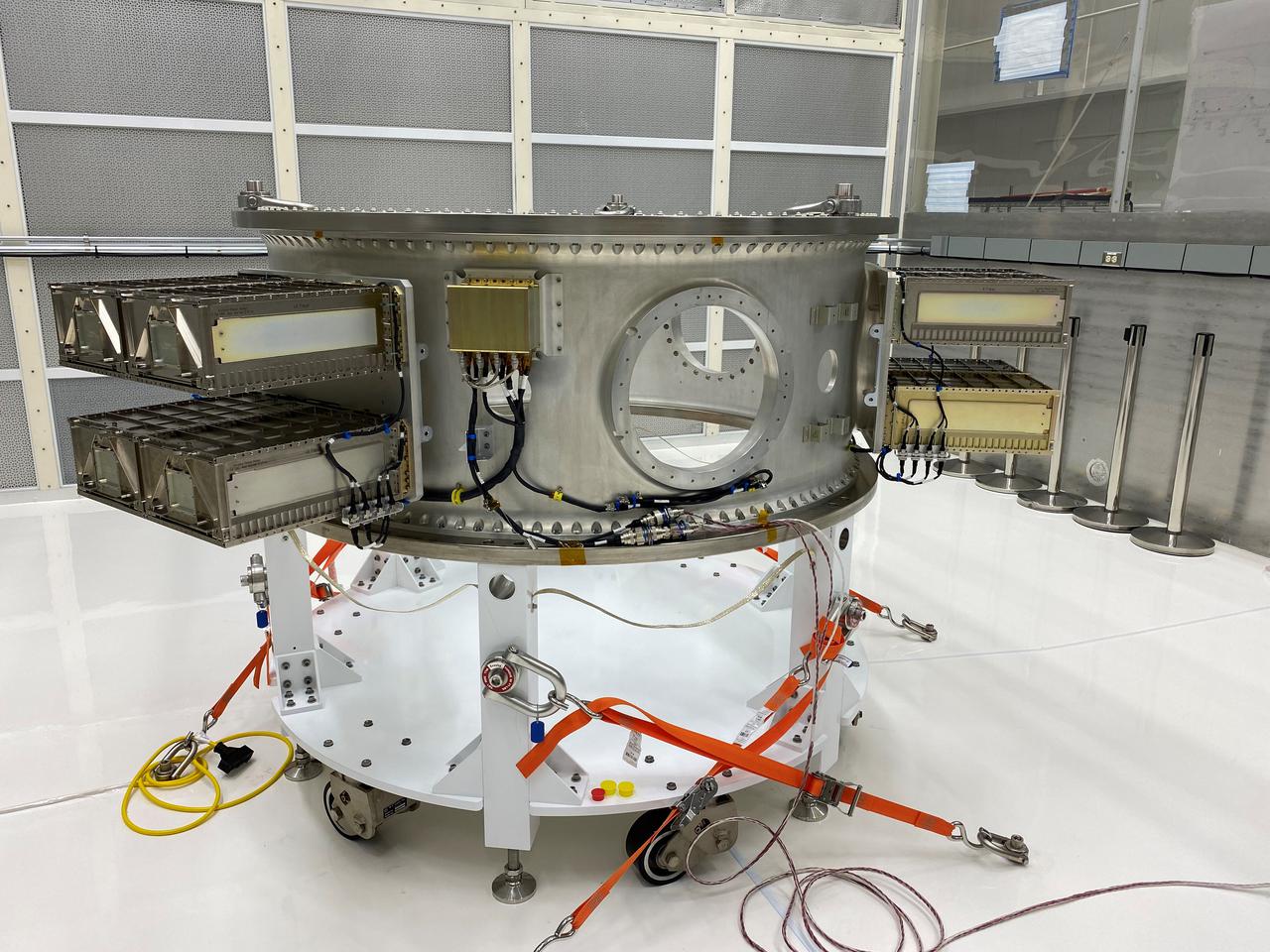
Mechanical and electrical support equipment for NASA’s Landsat 9 observatory are being processed inside the Integrated Processing Facility at Vandenberg Space Force Base in California, on June 24, 2021. The equipment includes a secondary payload adapter and flight system for a group of microsat payloads, called CubeSats, that will launch with Landsat 9 as secondary payloads. Landsat 9 will launch on a United Launch Alliance Atlas V rocket from Space Launch Complex 3 at Vandenberg in September 2021. The launch is being managed by NASA’s Launch Services Program based at Kennedy Space Center, America’s multiuser spaceport. The Landsat 9 satellite will continue the nearly 50-year legacy of previous Landsat missions. It will monitor key natural and economic resources from orbit. Landsat 9 is managed by the agency’s Goddard Space Flight Center in Greenbelt, Maryland. The satellite will carry two instruments: the Operational Land Imager 2, which collects images of Earth’s landscapes in visible, near infrared and shortwave infrared light, and the Thermal Infrared Sensor 2, which measures the temperature of land surfaces. Like its predecessors, Landsat 9 is a joint mission between NASA and the U.S. Geological Survey.
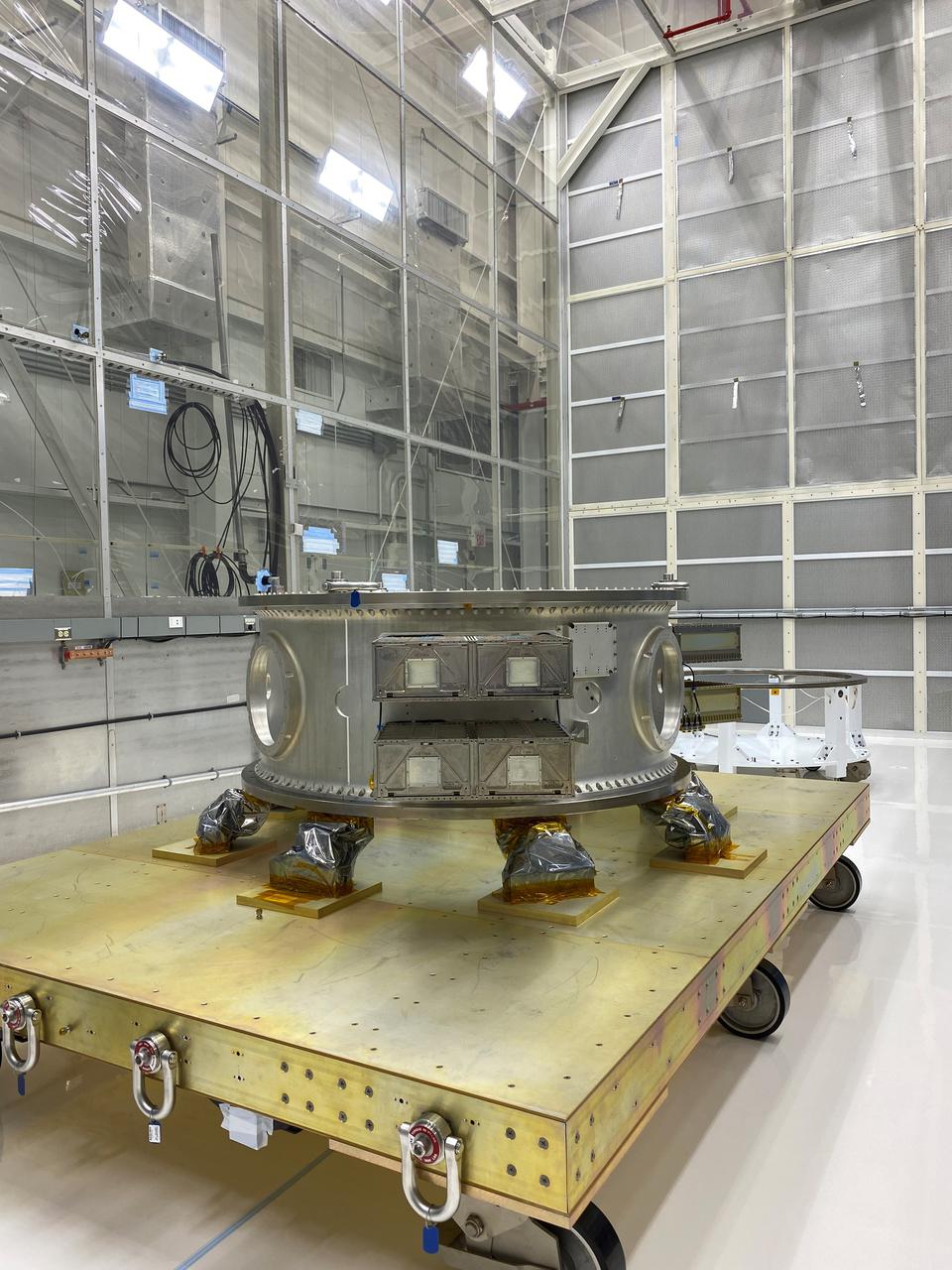
Mechanical and electrical support equipment for NASA’s Landsat 9 observatory arrive inside the Integrated Processing Facility at Vandenberg Space Force Base in California, on June 16, 2021. The equipment includes a secondary payload adapter and flight system for a group of microsat payloads, called CubeSats, that will launch with Landsat 9 as secondary payloads. Landsat 9 will launch on a United Launch Alliance Atlas V rocket from Space Launch Complex 3 at Vandenberg in September 2021. The launch is being managed by NASA’s Launch Services Program based at Kennedy Space Center, America’s multiuser spaceport. The Landsat 9 satellite will continue the nearly 50-year legacy of previous Landsat missions. It will monitor key natural and economic resources from orbit. Landsat 9 is managed by the agency’s Goddard Space Flight Center in Greenbelt, Maryland. The satellite will carry two instruments: the Operational Land Imager 2, which collects images of Earth’s landscapes in visible, near infrared and shortwave infrared light, and the Thermal Infrared Sensor 2, which measures the temperature of land surfaces. Like its predecessors, Landsat 9 is a joint mission between NASA and the U.S. Geological Survey.
Technicians process mechanical and electrical support equipment for NASA’s Landsat 9 observatory inside the Integrated Processing Facility at Vandenberg Space Force Base in California, on June 16, 2021. The equipment includes a secondary payload adapter and flight system for a group of microsat payloads, called CubeSats, that will launch with Landsat 9 as secondary payloads. Landsat 9 will launch on a United Launch Alliance Atlas V rocket from Space Launch Complex 3 at Vandenberg in September 2021. The launch is being managed by NASA’s Launch Services Program based at Kennedy Space Center, America’s multiuser spaceport. The Landsat 9 satellite will continue the nearly 50-year legacy of previous Landsat missions. It will monitor key natural and economic resources from orbit. Landsat 9 is managed by the agency’s Goddard Space Flight Center in Greenbelt, Maryland. The satellite will carry two instruments: the Operational Land Imager 2, which collects images of Earth’s landscapes in visible, near infrared and shortwave infrared light, and the Thermal Infrared Sensor 2, which measures the temperature of land surfaces. Like its predecessors, Landsat 9 is a joint mission between NASA and the U.S. Geological Survey.
Mechanical and electrical support equipment for NASA’s Landsat 9 observatory are being processed inside the Integrated Processing Facility at Vandenberg Space Force Base in California, on June 24, 2021. The equipment includes a secondary payload adapter and flight system for a group of microsat payloads, called CubeSats, that will launch with Landsat 9 as secondary payloads. Landsat 9 will launch on a United Launch Alliance Atlas V rocket from Space Launch Complex 3 at Vandenberg in September 2021. The launch is being managed by NASA’s Launch Services Program based at Kennedy Space Center, America’s multiuser spaceport. The Landsat 9 satellite will continue the nearly 50-year legacy of previous Landsat missions. It will monitor key natural and economic resources from orbit. Landsat 9 is managed by the agency’s Goddard Space Flight Center in Greenbelt, Maryland. The satellite will carry two instruments: the Operational Land Imager 2, which collects images of Earth’s landscapes in visible, near infrared and shortwave infrared light, and the Thermal Infrared Sensor 2, which measures the temperature of land surfaces. Like its predecessors, Landsat 9 is a joint mission between NASA and the U.S. Geological Survey.
Mechanical and electrical support equipment for NASA’s Landsat 9 observatory are inside the Integrated Processing Facility at Vandenberg Space Force Base in California, on June 16, 2021. The equipment includes a secondary payload adapter and flight system for a group of microsat payloads, called CubeSats, that will launch with Landsat 9 as secondary payloads. Landsat 9 will launch on a United Launch Alliance Atlas V rocket from Space Launch Complex 3 at Vandenberg in September 2021. The launch is being managed by NASA’s Launch Services Program based at Kennedy Space Center, America’s multiuser spaceport. The Landsat 9 satellite will continue the nearly 50-year legacy of previous Landsat missions. It will monitor key natural and economic resources from orbit. Landsat 9 is managed by the agency’s Goddard Space Flight Center in Greenbelt, Maryland. The satellite will carry two instruments: the Operational Land Imager 2, which collects images of Earth’s landscapes in visible, near infrared and shortwave infrared light, and the Thermal Infrared Sensor 2, which measures the temperature of land surfaces. Like its predecessors, Landsat 9 is a joint mission between NASA and the U.S. Geological Survey.
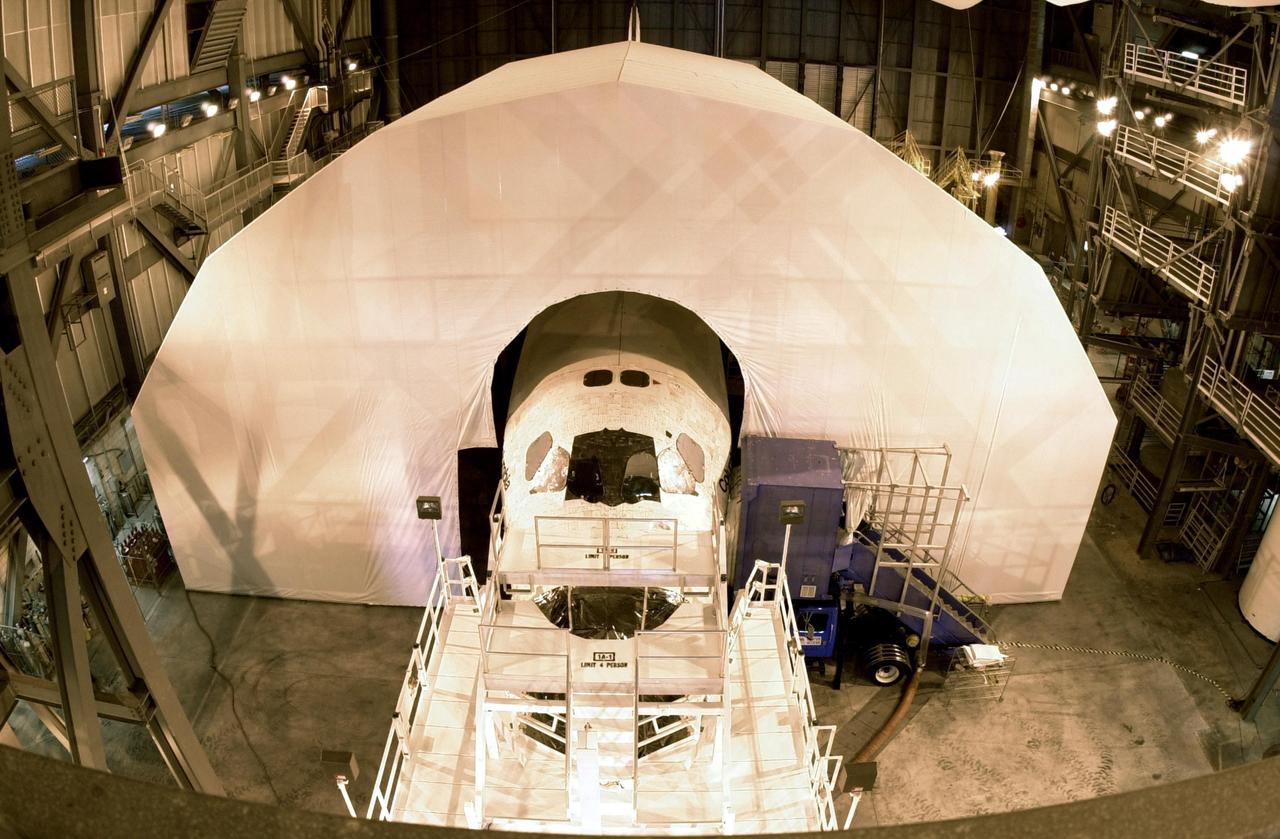
KENNEDY SPACE CENTER, FLA. -- Only the nose and tail of Columbia are visible as it sits inside an protective tent used to keep out moisture. The orbiter is next scheduled to fly on mission STS-107 no earlier than Nov. 29. STS-107 is a research mission. The payload includes the Hitchhiker Bridge, a carrier for the Fast Reaction Experiments Enabling Science, Technology, Applications and Research (FREESTAR) that incorporates eight high priority secondary attached shuttle experiments, plus the SHI Research Double Module (SHI/RDM), also known as SPACEHAB.
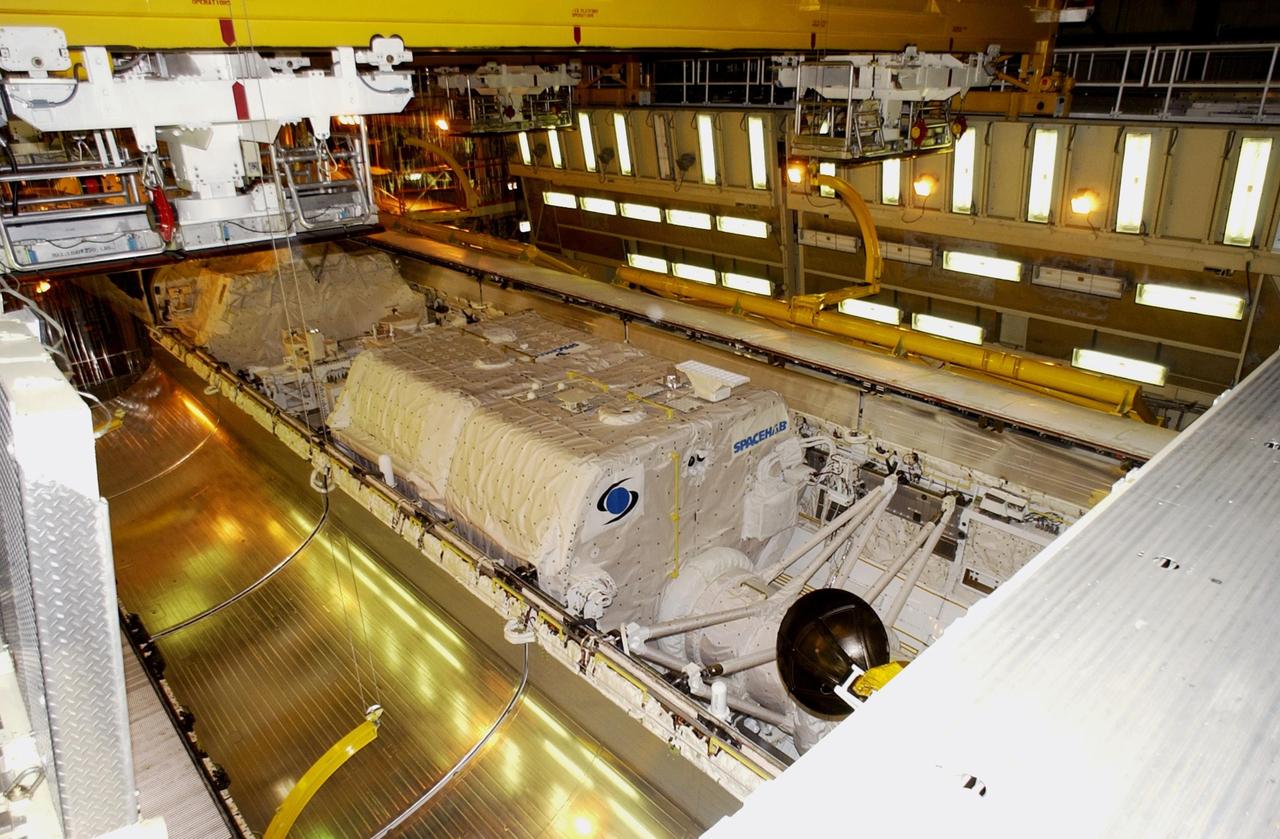
KENNEDY SPACE CENTER, FLA. -- Columbia's payload bay doors are ready to be closed for mission STS-107. Installed inside are the Hitchhiker Bridge, a carrier for the Fast Reaction Experiments Enabling Science, Technology, Applications and Research (FREESTAR) that incorporates eight high priority secondary attached shuttle experiments, plus the SHI Research Double Module (SHI/RDM), also known as SPACEHAB. STS-107 is scheduled for launch July 19, 2001
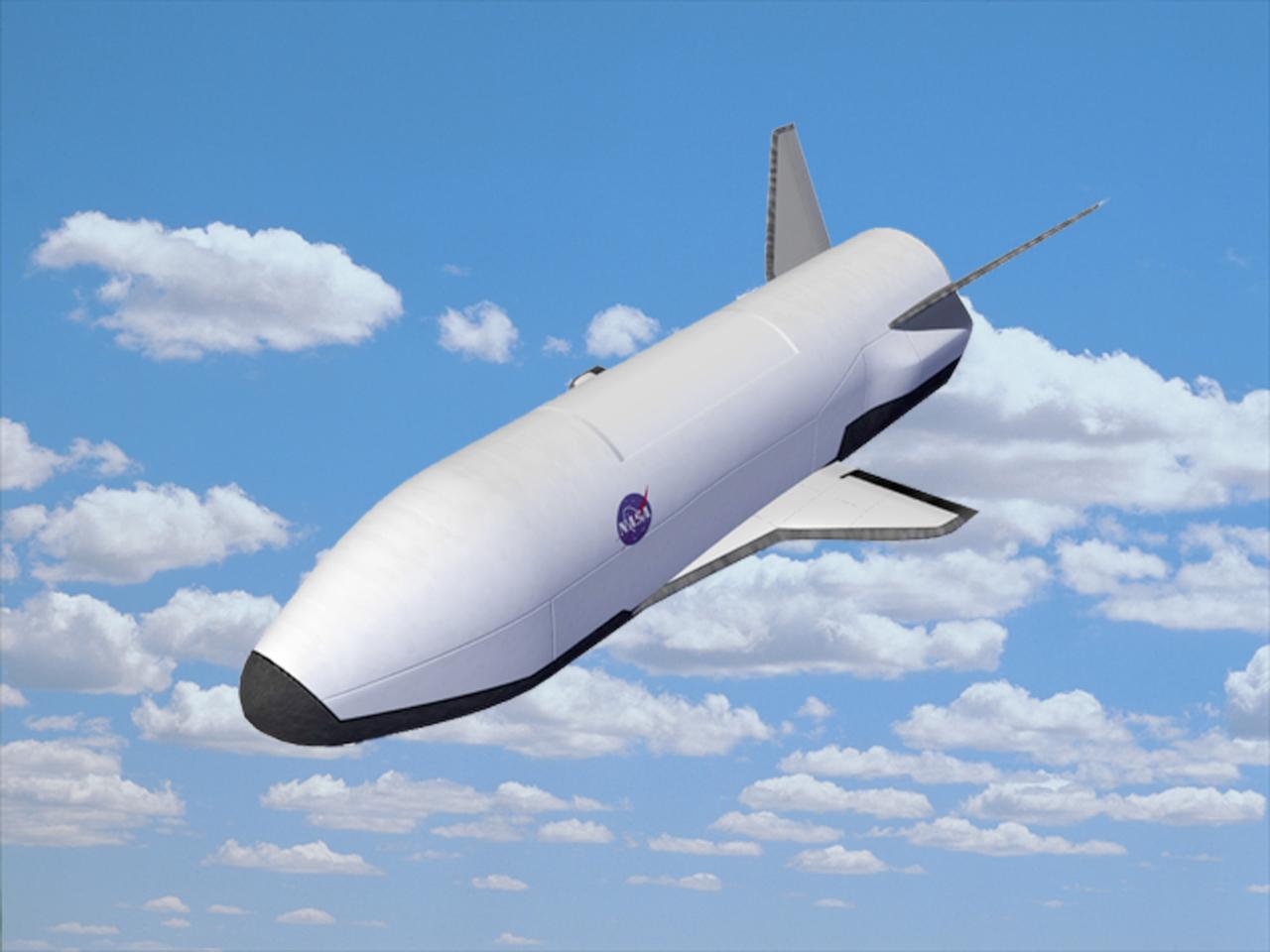
Pictured is an artist's concept of the X-37 Demonstrator re-entry. After being launched from the cargo bay of a Shuttle as a secondary payload, the X-37 remains on-orbit up to 21 days performing a variety of experiments before re-entering the Earth's atmosphere and landing. These vehicles supported the Agency's goal of dramatically reducing the cost of access to space in attempt to define the future of space transportation. The X-37 program was discontinued in 2003.
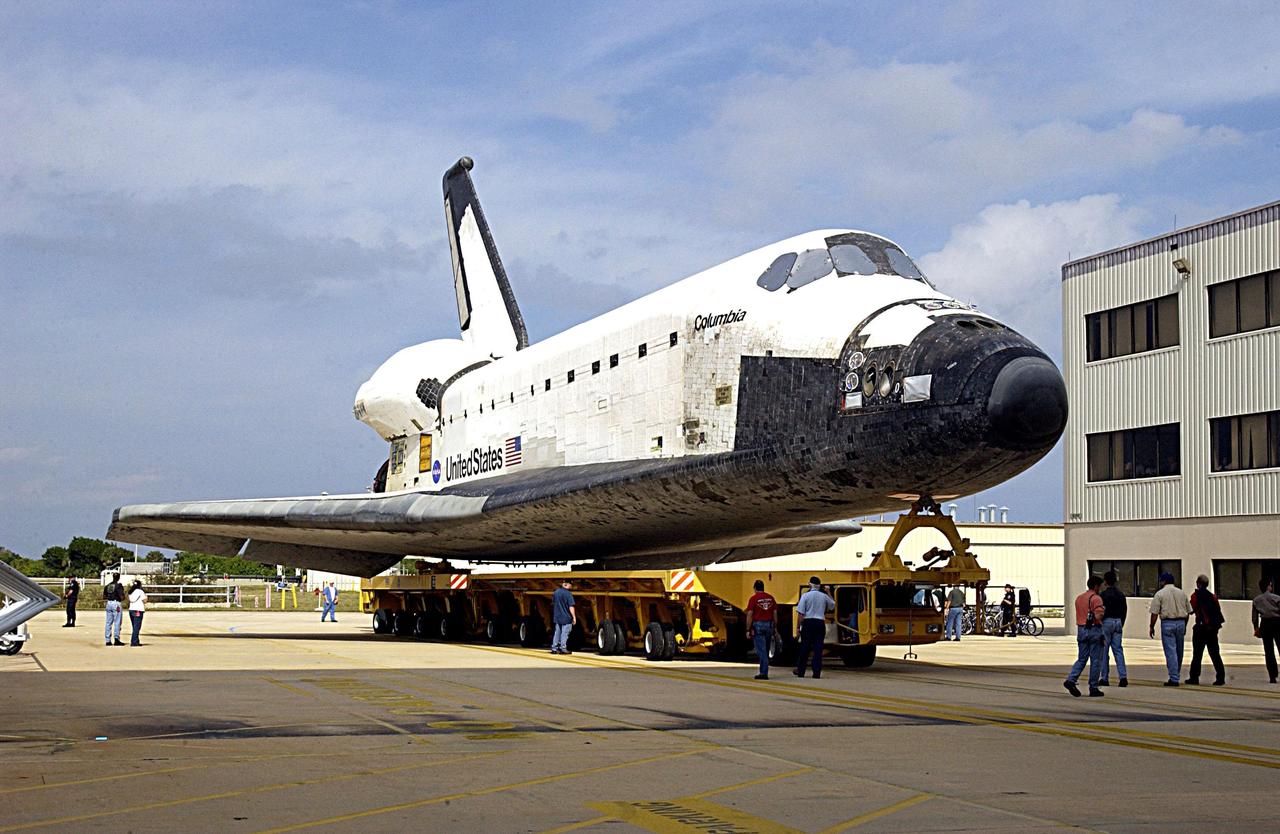
KENNEDY SPACE CENTER, FLA. -- Space Shuttle Columbia is being moved to the Vehicle Assembly Building where processing will continue for the flight of mission STS-107. Launch is now targeted for no earlier than Jan. 16, 2003. The STS-107 mission will be dedicated to microgravity research. The payloads include the Hitchhiker Bridge, a carrier for the Fast Reaction Experiments Enabling Science, Technology, Applications and Research (FREESTAR) incorporating eight high priority secondary attached Shuttle experiments, and the SHI Research Double Module (SHI/RDM), also known as SPACEHAB.
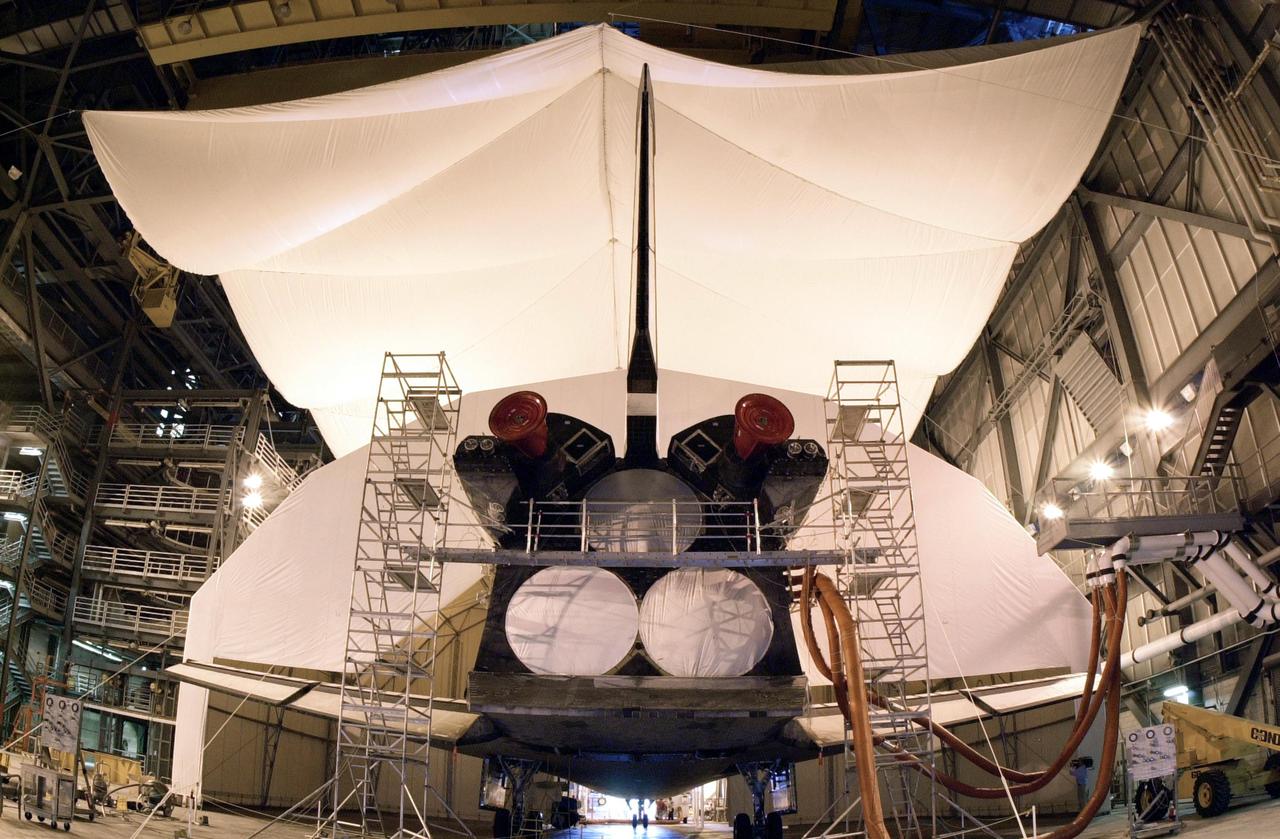
KENNEDY SPACE CENTER, FLA. -- Columbia sits inside an protective tent used to keep out moisture. The orbiter is next scheduled to fly on mission STS-107 no earlier than Nov. 29. STS-107 is a research mission. The payload includes the Hitchhiker Bridge, a carrier for the Fast Reaction Experiments Enabling Science, Technology, Applications and Research (FREESTAR) that incorporates eight high priority secondary attached shuttle experiments, plus the SHI Research Double Module (SHI/RDM), also known as SPACEHAB.
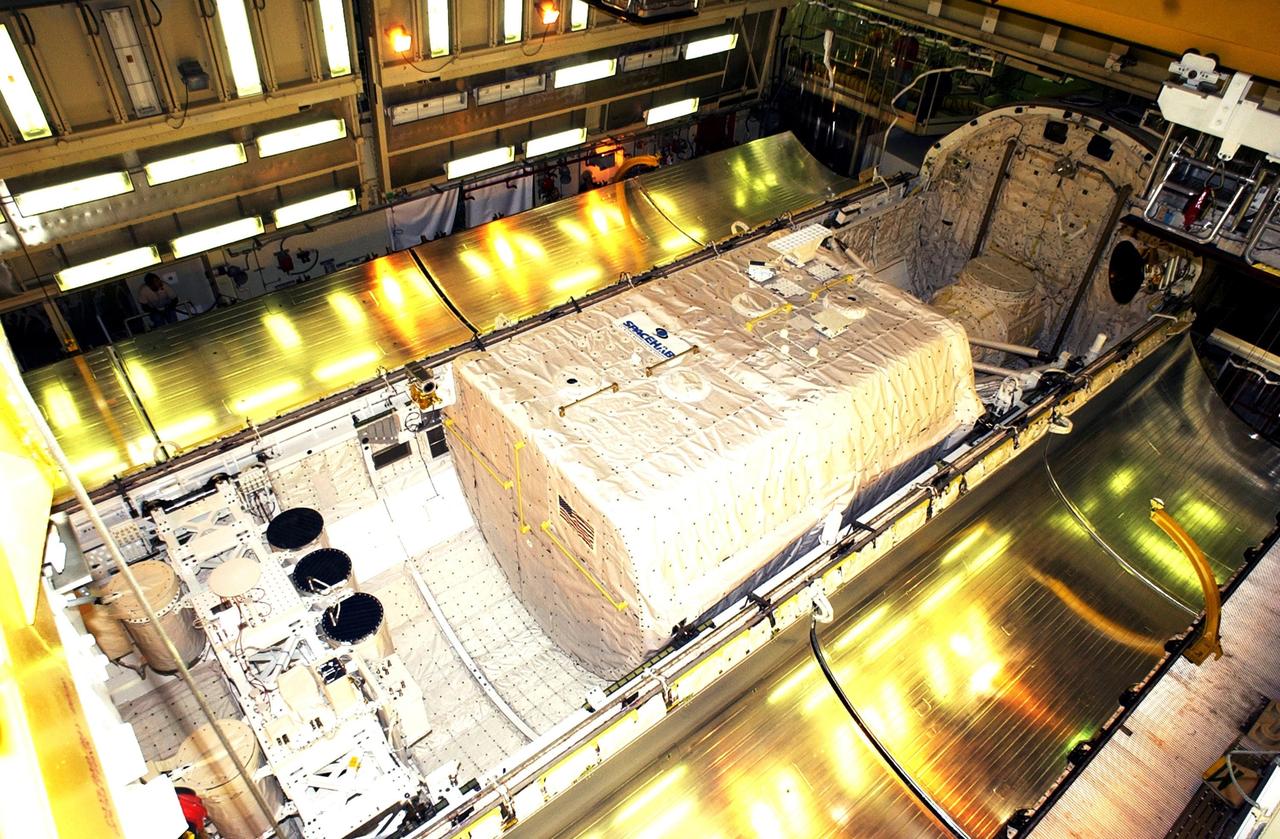
KENNEDY SPACE CENTER, FLA. - -- Columbia's payload bay doors are ready to be closed for mission STS-107. Installed inside are the Hitchhiker Bridge, a carrier for the Fast Reaction Experiments Enabling Science, Technology, Applications and Research (FREESTAR) that incorporates eight high priority secondary attached shuttle experiments, plus the SHI Research Double Module (SHI/RDM), also known as SPACEHAB. STS-107 is scheduled for launch July 19, 2001
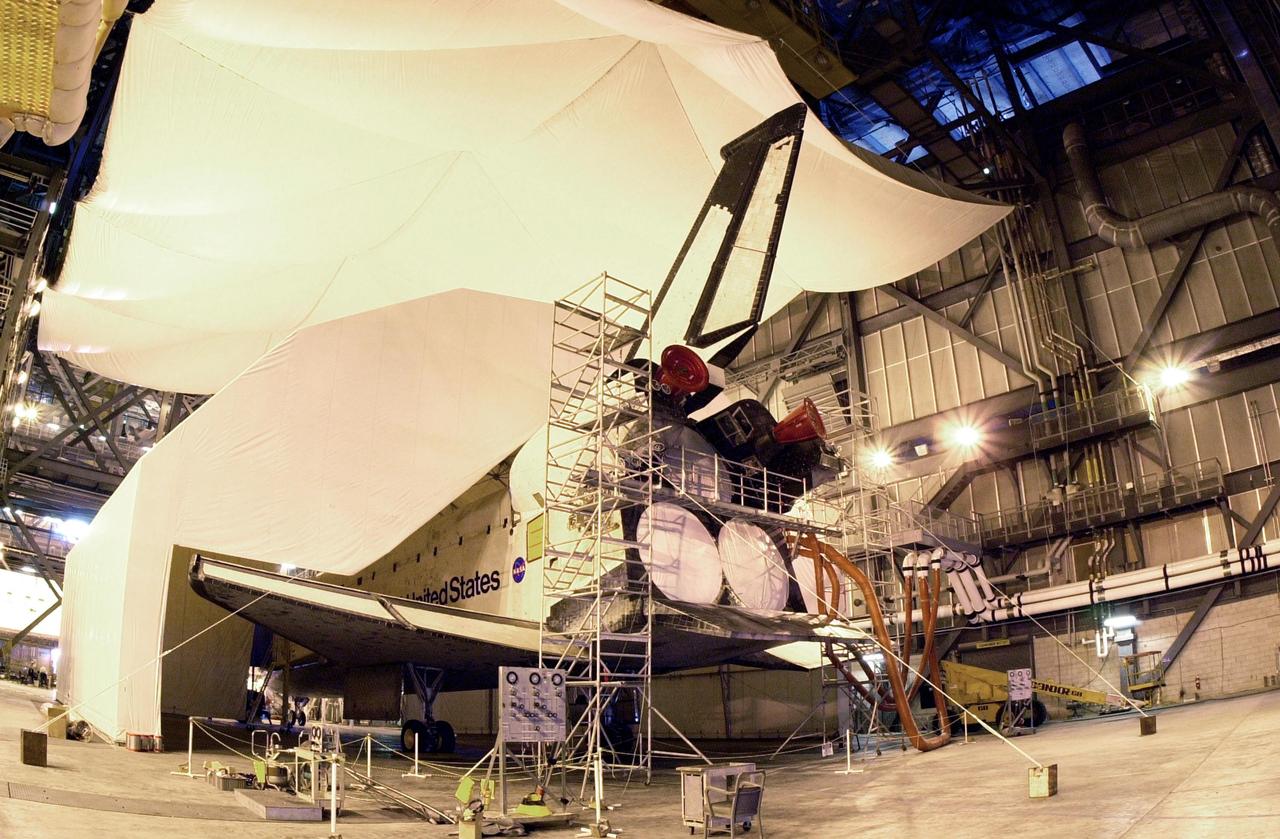
KENNEDY SPACE CENTER, FLA. -- Columbia sits inside an protective tent used to keep out moisture. The orbiter is next scheduled to fly on mission STS-107 no earlier than Nov. 29. STS-107 is a research mission. The payload includes the Hitchhiker Bridge, a carrier for the Fast Reaction Experiments Enabling Science, Technology, Applications and Research (FREESTAR) that incorporates eight high priority secondary attached shuttle experiments, plus the SHI Research Double Module (SHI/RDM), also known as SPACEHAB.
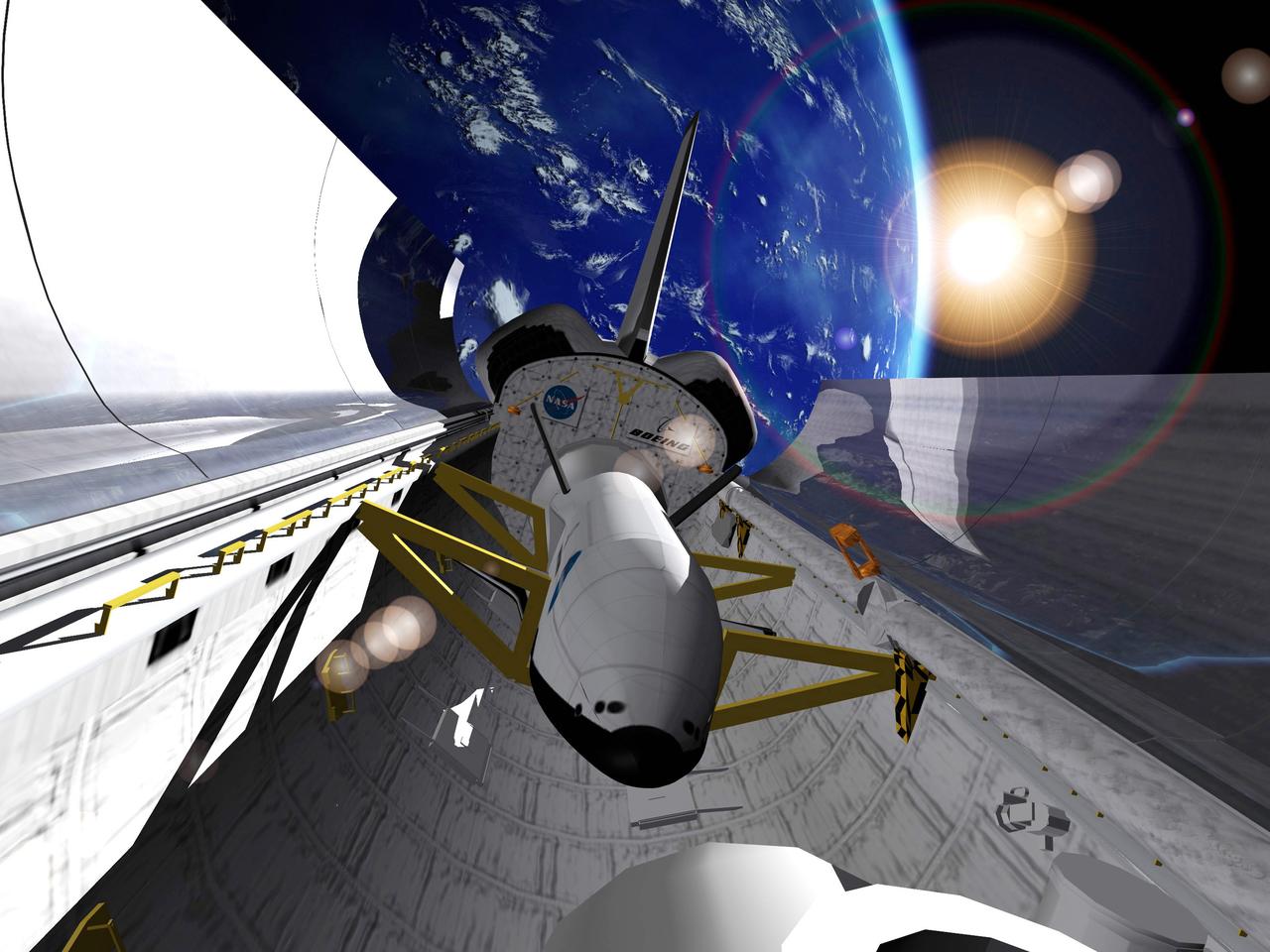
Pictured is an artist's concept of the experimental Reusable Launch Vehicle (RLV), the X-37 located in the cargo bay of a space shuttle with Earth in the background. The X-37 was designed to launch from the space shuttle's cargo bay as a secondary payload. Once deployed, the X-37 would remain on-orbit up to 21 days performing a variety of experiments before re-entering the Earth's atmosphere and landing. The X-37 program was discontinued in 2003.
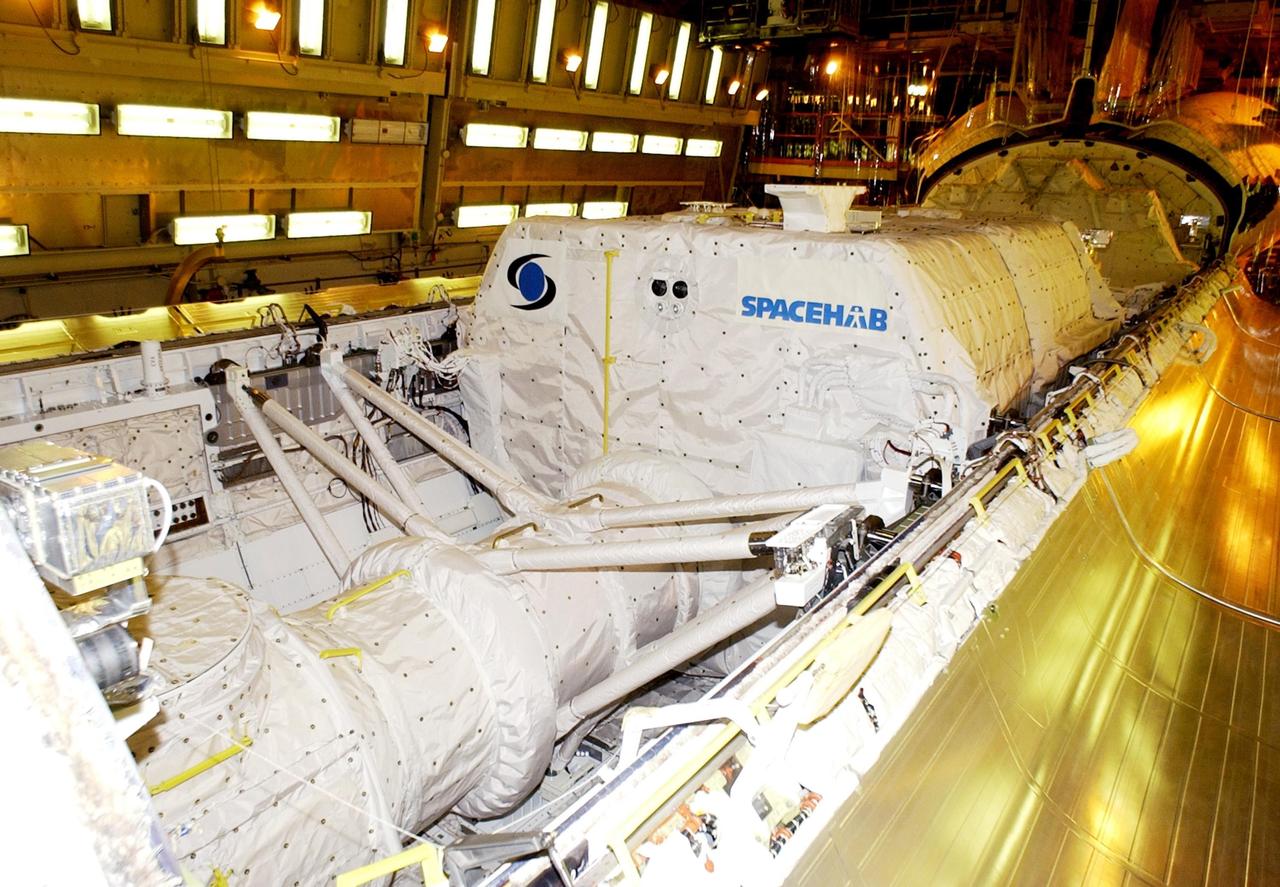
KENNEDY SPACE CENTER, FLA. -- Columbia's payload bay doors are ready to be closed for mission STS-107. Installed inside are the Hitchhiker Bridge, a carrier for the Fast Reaction Experiments Enabling Science, Technology, Applications and Research (FREESTAR) that incorporates eight high priority secondary attached shuttle experiments, plus the SHI Research Double Module (SHI/RDM), also known as SPACEHAB. STS-107 is scheduled for launch July 19, 2001
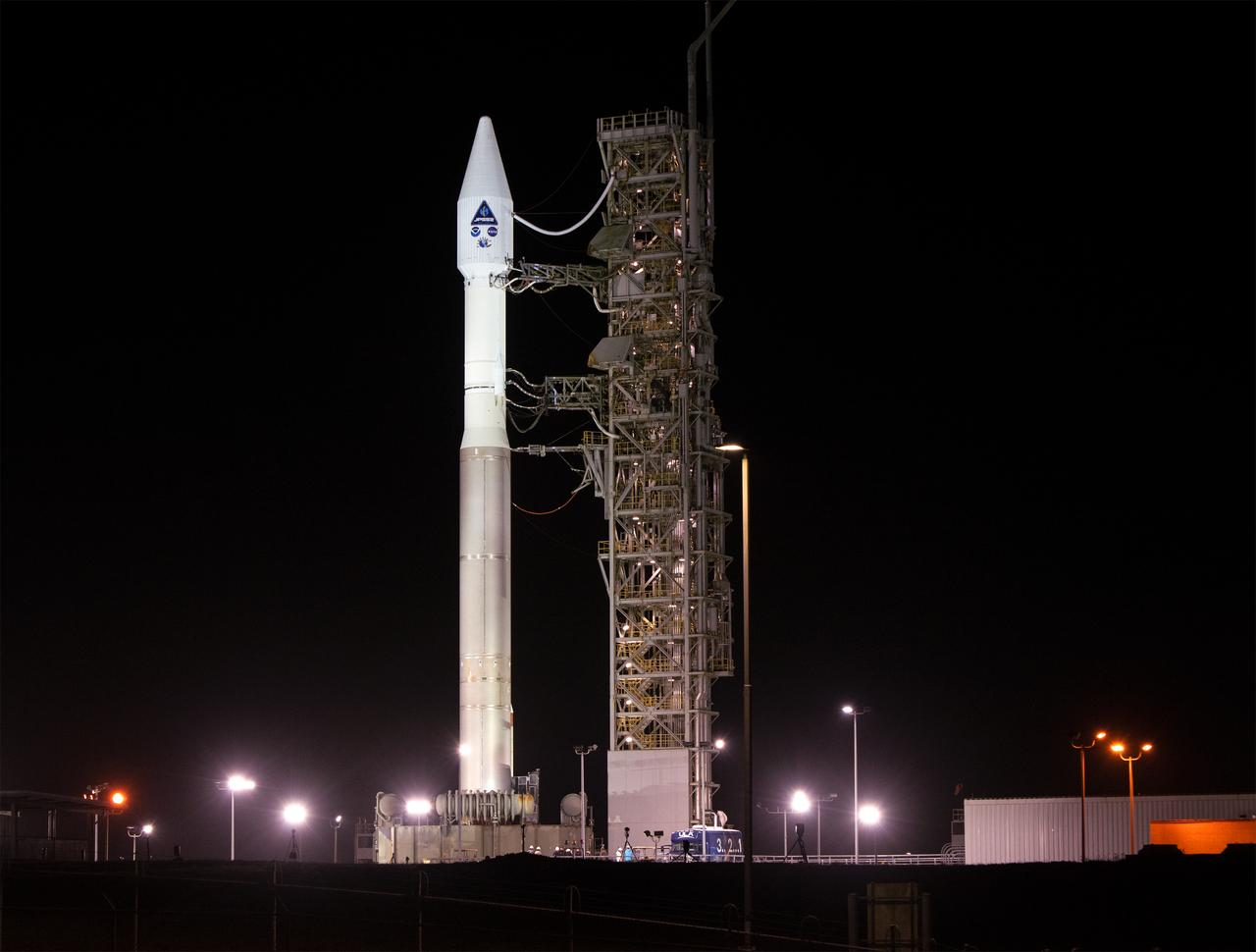
The National Oceanic and Atmospheric Administration’s (NOAA) Joint Polar Satellite System-2 (JPSS-2) satellite with NASA’s Low-Earth Orbit Flight Test of an Inflatable Decelerator (LOFTID) as a secondary payload, stand ready to lift off atop a United Launch Alliance (ULA) Atlas V rocket from Space Launch Complex-3 at Vandenberg Space Force Base in California on Nov. 10.
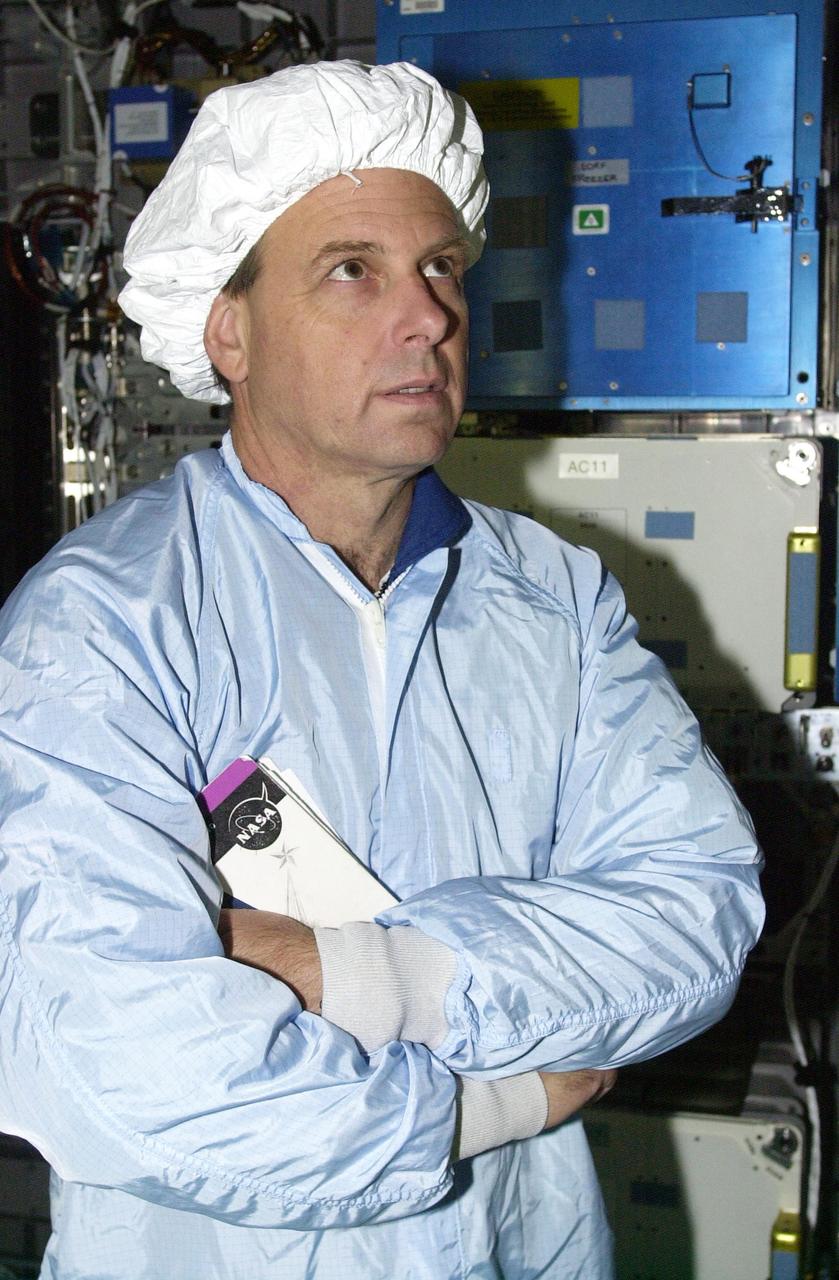
KENNEDY SPACE CENTER, FLA. - STS-107 Mission Specialist Ilan Ramon, with the Israeli Space Agency, looks at an experiment in the SHI Research Double Module (SHI/RDM), part of the payload on the mission. The crew is taking part in Crew Equipment Interface Test activities, which include equipment and payload familiarization. A research mission, STS-107 also will carry the Fast Reaction Experiments Enabling Science, Technology, Applications and Research (FREESTAR) that incorporates eight high priority secondary attached shuttle experiments. STS-107 is scheduled to launch July 19, 2002
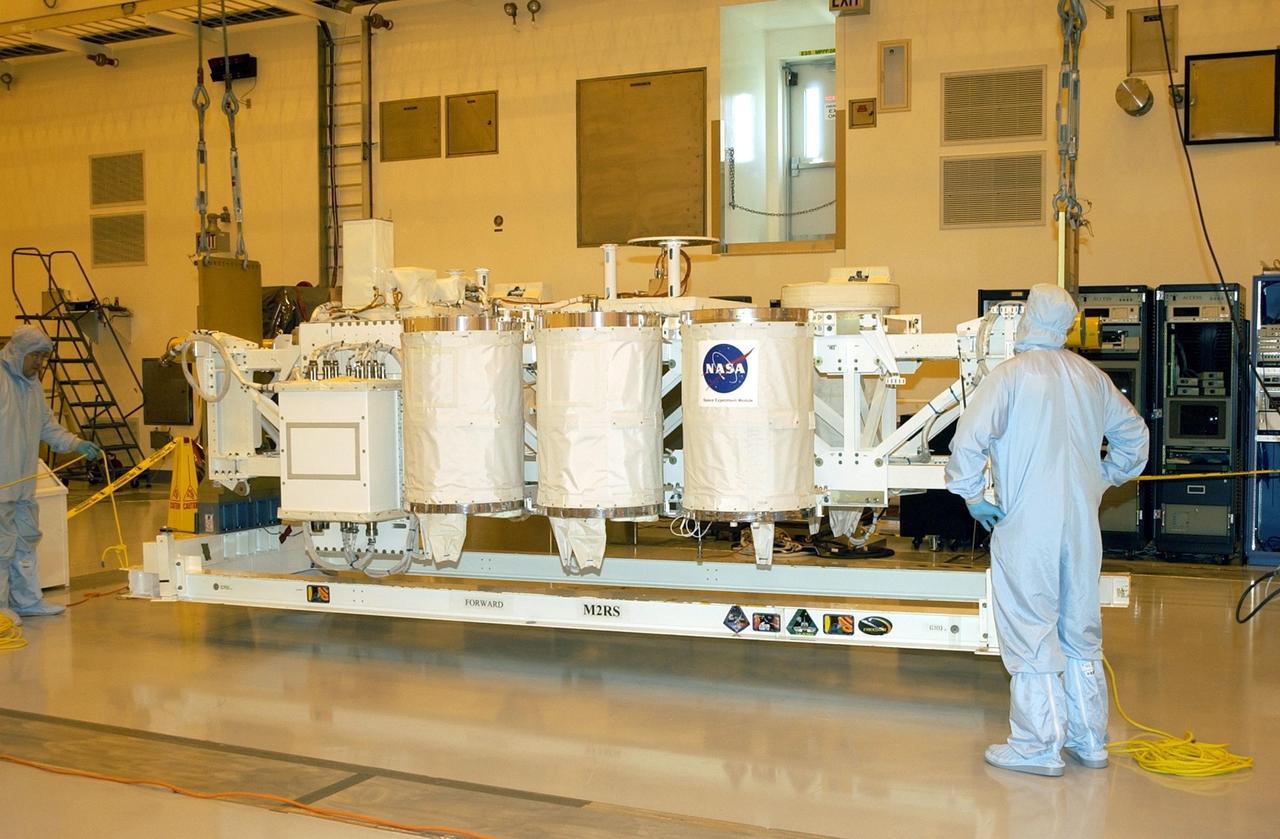
KENNEDY SPACE CENTER, FLA. -- In the Multi-Payload Processing Facility (MPPF), workers watch as the Hitchhiker Bridge, with several Get-Away Special canisters (GAS cans) for mission ST-107, is lifted off the ground. The bridge is being moved to a workstand in the MPPF. The bridge is a carrier for the Fast Reaction Experiments Enabling Science, Technology, Applications and Research (FREESTAR) that incorporates eight high priority secondary attached shuttle experiments on mission STS-107. A research mission, the primary payload is the first flight of the SHI Research Double Module (SHI/RDM), also known as SPACEHAB. The experiments range from material sciences to life sciences. STS-107 is scheduled to launch July 11, 2002
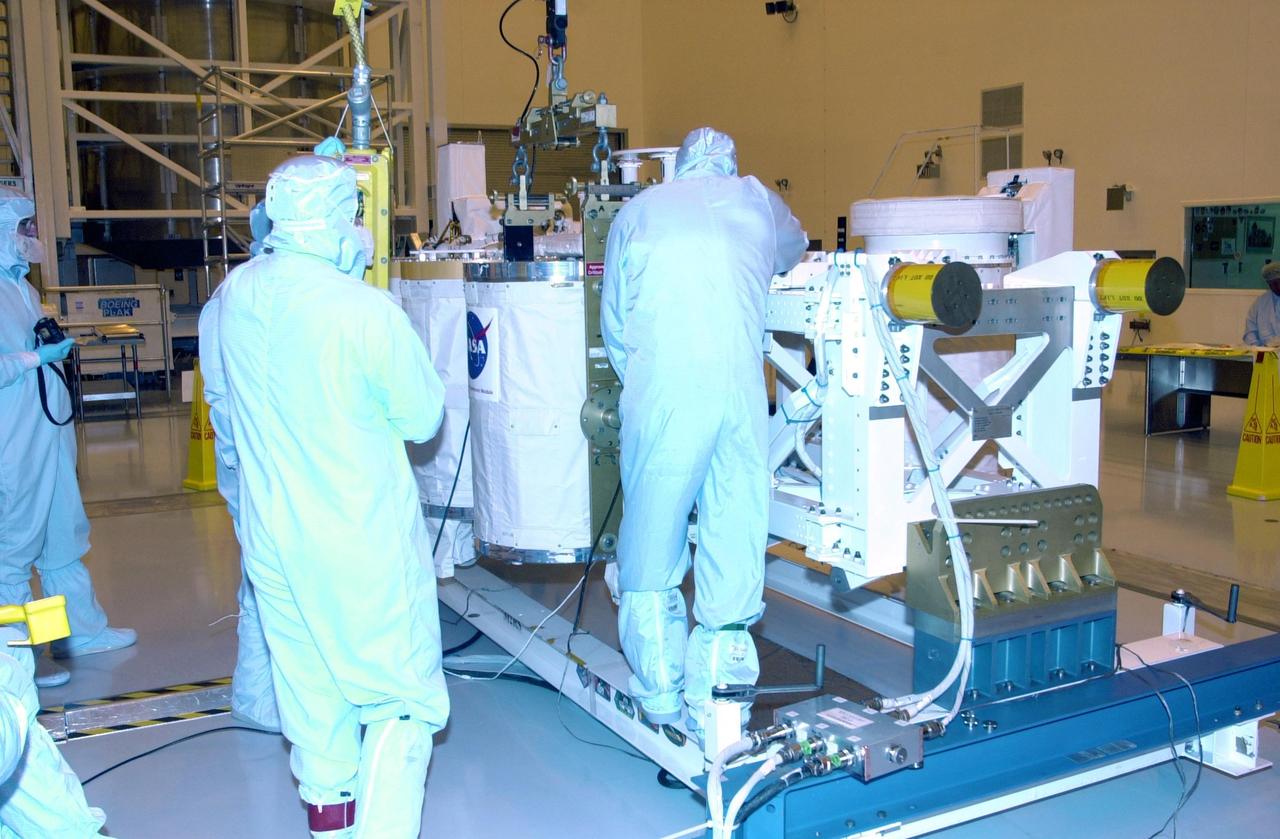
KENNEDY SPACE CENTER, FLA. -- In the Multi-Payload Processing Facility, workers check the movement of a GetAway Special canister (GAS can) being lowered onto the Hitchhiker Bridge. The bridge is a carrier for the Fast Reaction Experiments Enabling Science, Technology, Applications and Research (FREESTAR) that incorporates eight high priority secondary attached shuttle experiments on mission STS-107. A research mission, the primary payload is the first flight of the SHI Research Double Module (SHI/RDM), also known as SPACEHAB. The experiments range from material sciences to life sciences (many rats). STS-107 is scheduled to launch July 11, 2002
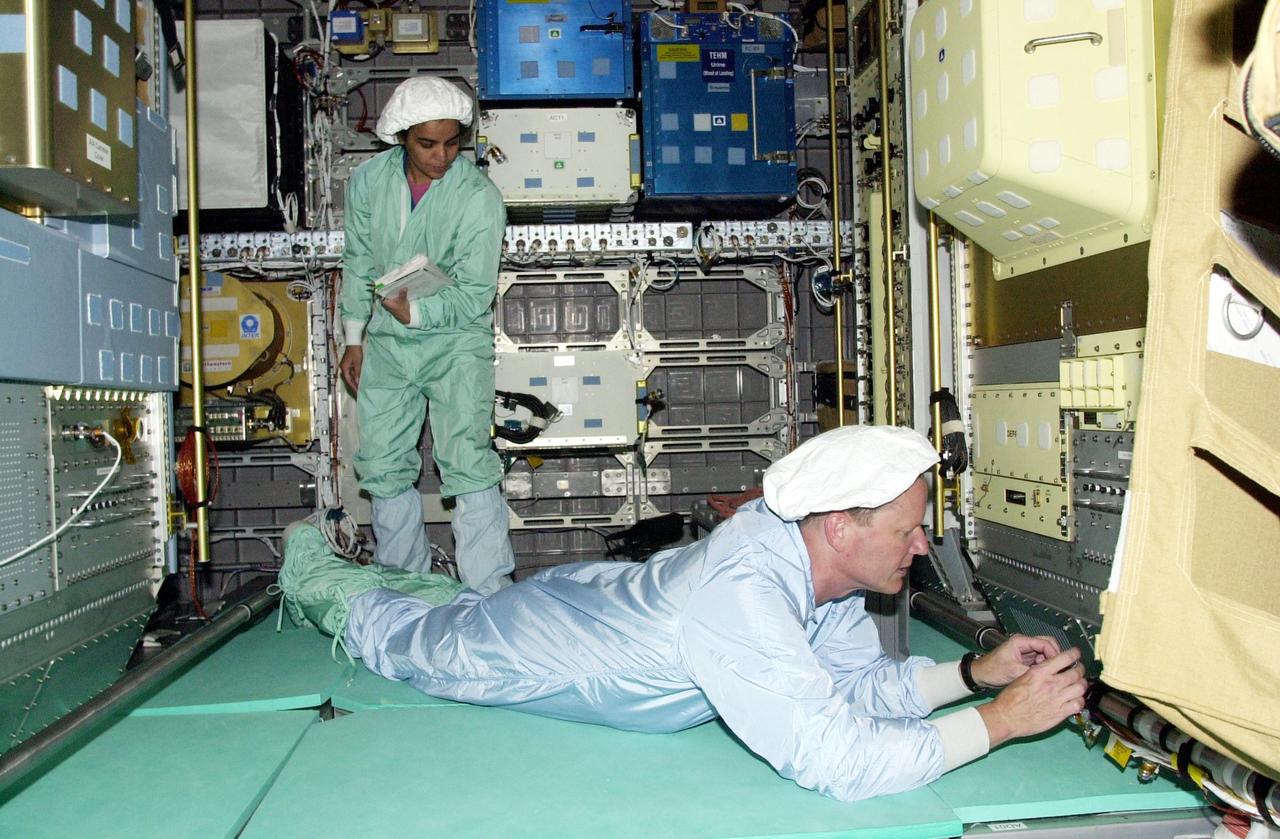
KENNEDY SPACE CENTER, FLA. -- STS-107 crew members check out equipment in the SHI Research Double Module (SHI/RDM), part of the payload on the mission. Mission Specialist Kalpana Chawla (left) holds a data manual while Mission Specialist David Brown stretches out on the floor to get a closer look. The crew is taking part in Crew Equipment Interface Test activities, which include equipment and payload familiarization. A research mission, STS-107 also will carry the Fast Reaction Experiments Enabling Science, Technology, Applications and Research (FREESTAR) that incorporates eight high priority secondary attached shuttle experiments. STS-107 is scheduled to launch July 19, 2002
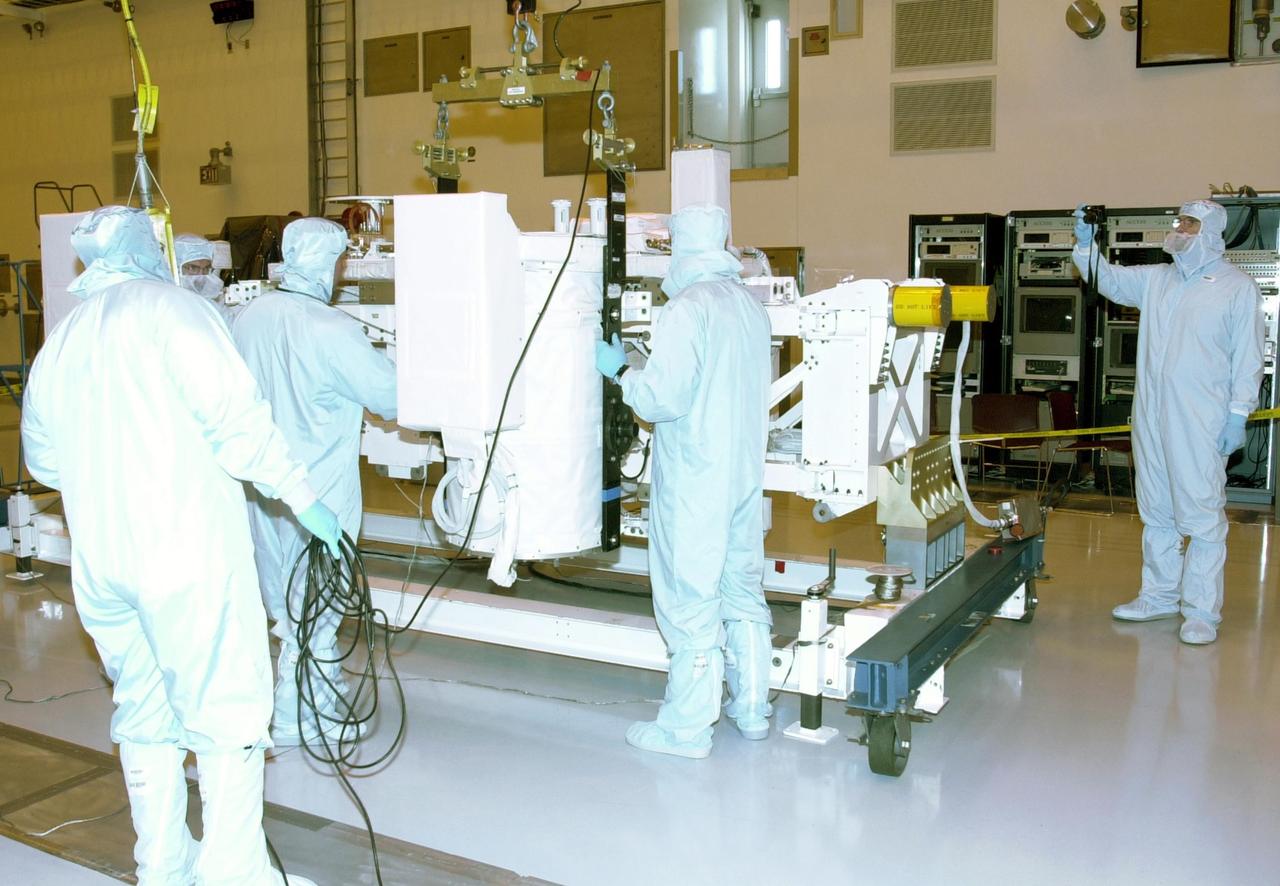
KENNEDY SPACE CENTER, FLA. -- In the Multi-Payload Processing Facility, workers check a GetAway Special canister (GAS can) being moved onto the Hitchhiker Bridge. The bridge is a carrier for the Fast Reaction Experiments Enabling Science, Technology, Applications and Research (FREESTAR) that incorporates eight high priority secondary attached shuttle experiments on mission STS-107. A research mission, the primary payload is the first flight of the SHI Research Double Module (SHI/RDM), also known as SPACEHAB. The experiments range from material sciences to life sciences (many rats). STS-107 is scheduled to launch July 11, 2002