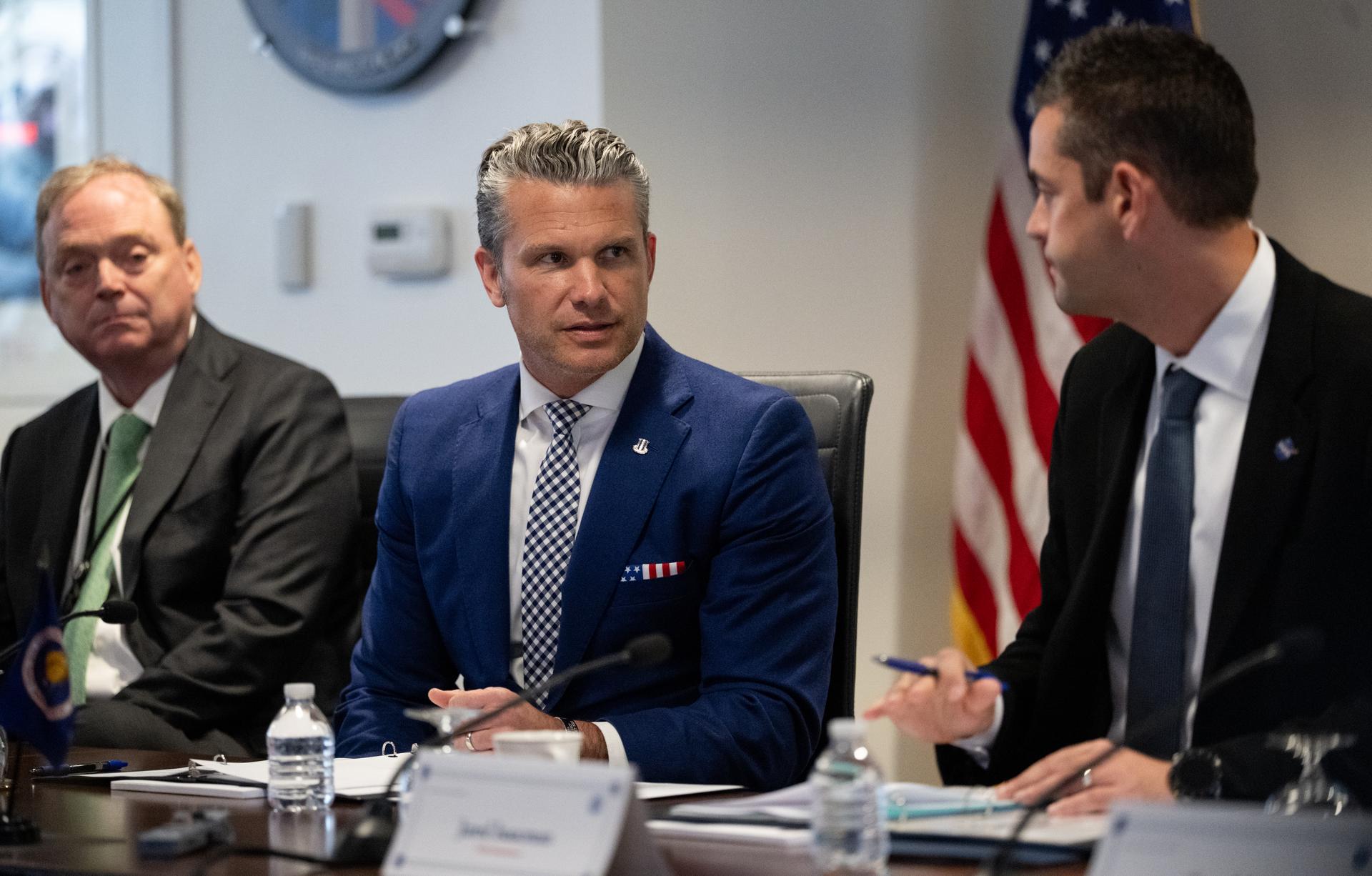
Secretary of War Pete Hegseth is seen during a meeting of the Presidential Commission on the United States Space Academy in the Space Operations Center, Wednesday, Sept. 9, 2026, at the Mary W. Jackson NASA Headquarters Building in Washington. The commission will meet and submit a report proposing recommendations for the establishment of the Space Academy. Photo Credit (NASA/Joel Kowsky)
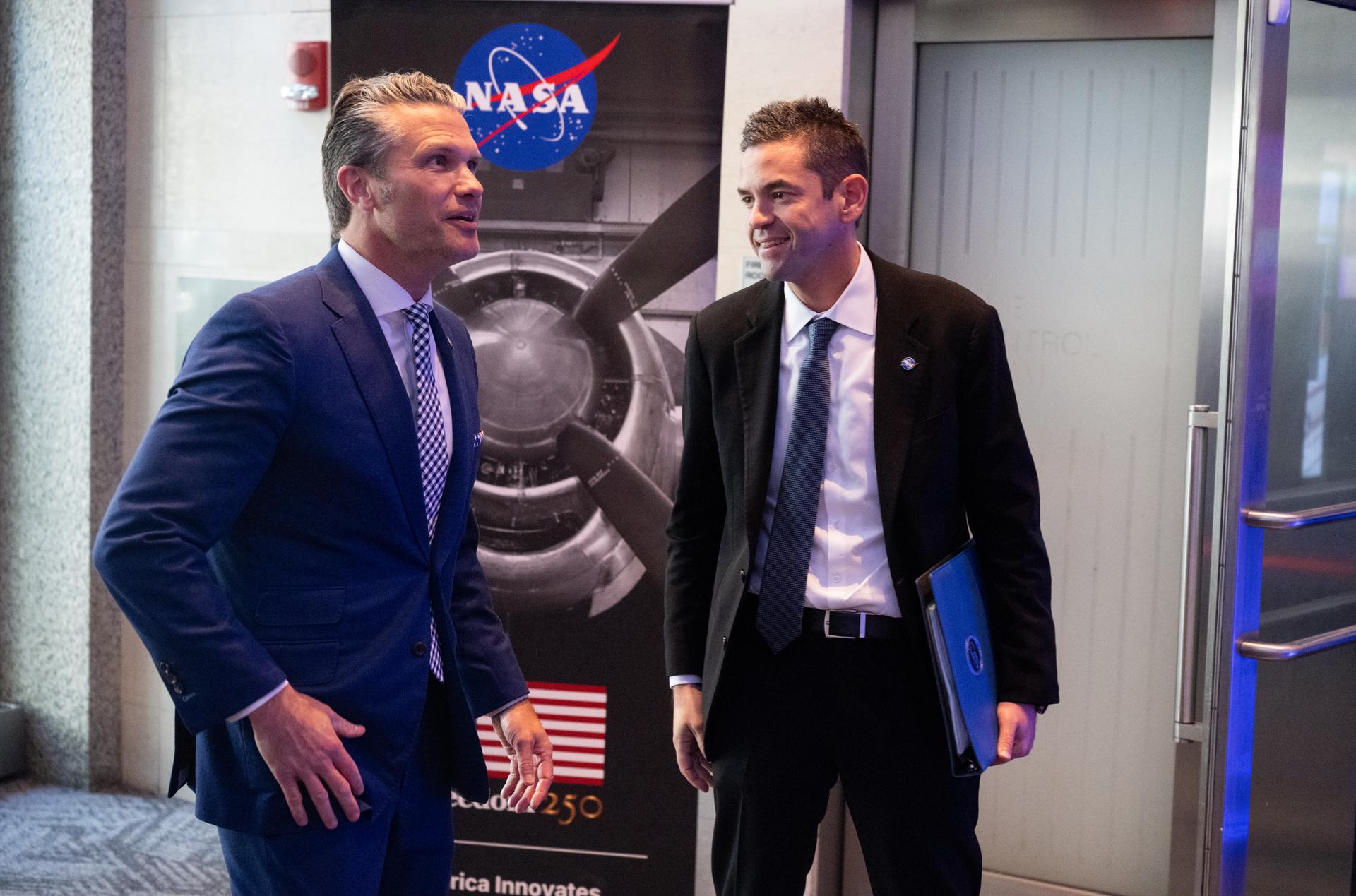
Secretary of War Pete Hegseth, left, is greeted by NASA Administrator Jared Isaacman as he arrives for a meeting of the Presidential Commission on the United States Space Academy at the Mary W. Jackson NASA Headquarters Building, Wednesday, Sept. 9, 2026, in Washington. The commission will meet and submit a report proposing recommendations for the establishment of the Space Academy. Photo Credit (NASA/Joel Kowsky)
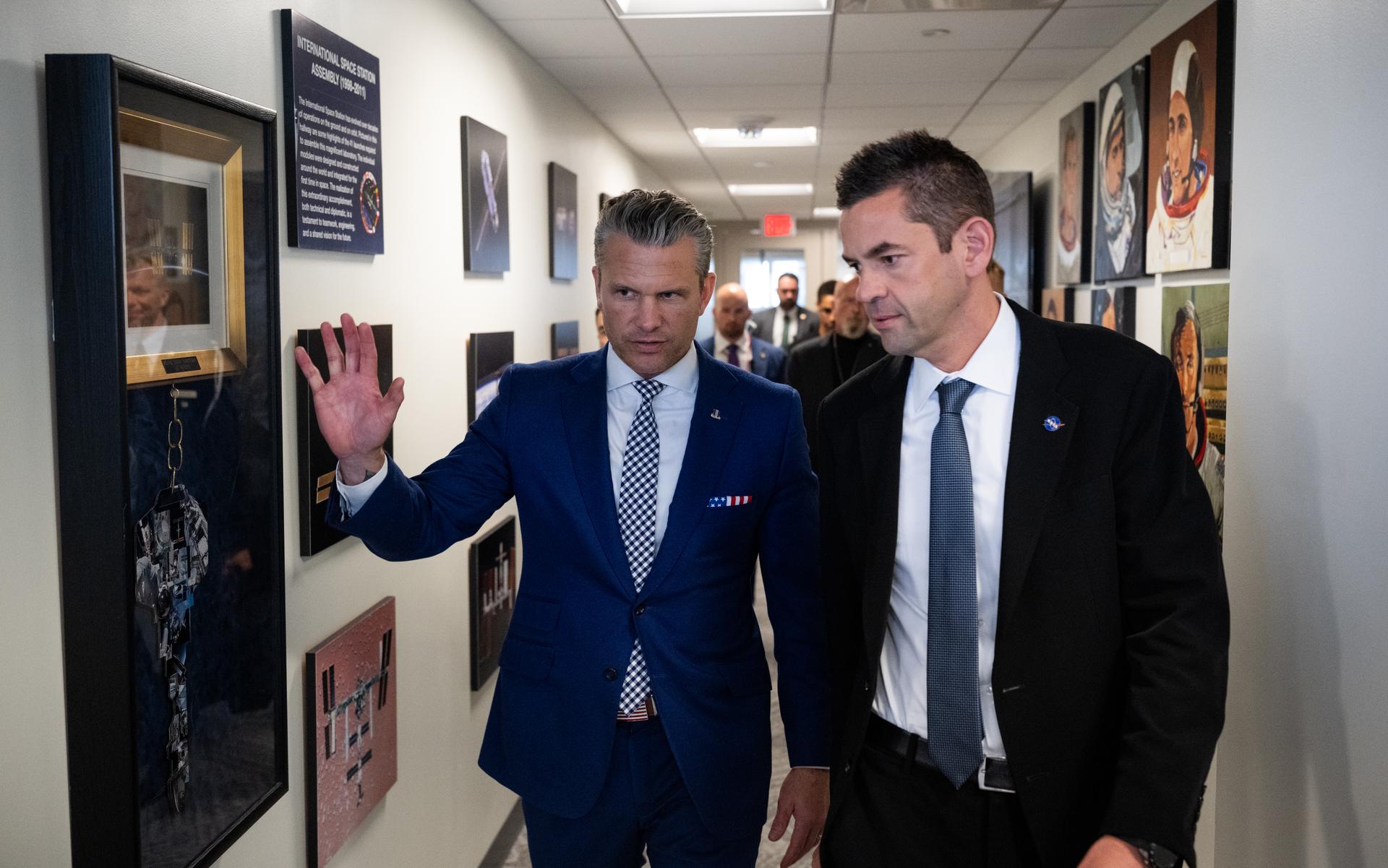
Secretary of War Pete Hegseth, left, and NASA Administrator Jared Isaacman are seen as they arrive at a meeting of the Presidential Commission on the United States Space Academy in the Space Operations Center, Wednesday, Sept. 9, 2026, at the Mary W. Jackson NASA Headquarters Building in Washington. The commission will meet and submit a report proposing recommendations for the establishment of the Space Academy. Photo Credit (NASA/Joel Kowsky)
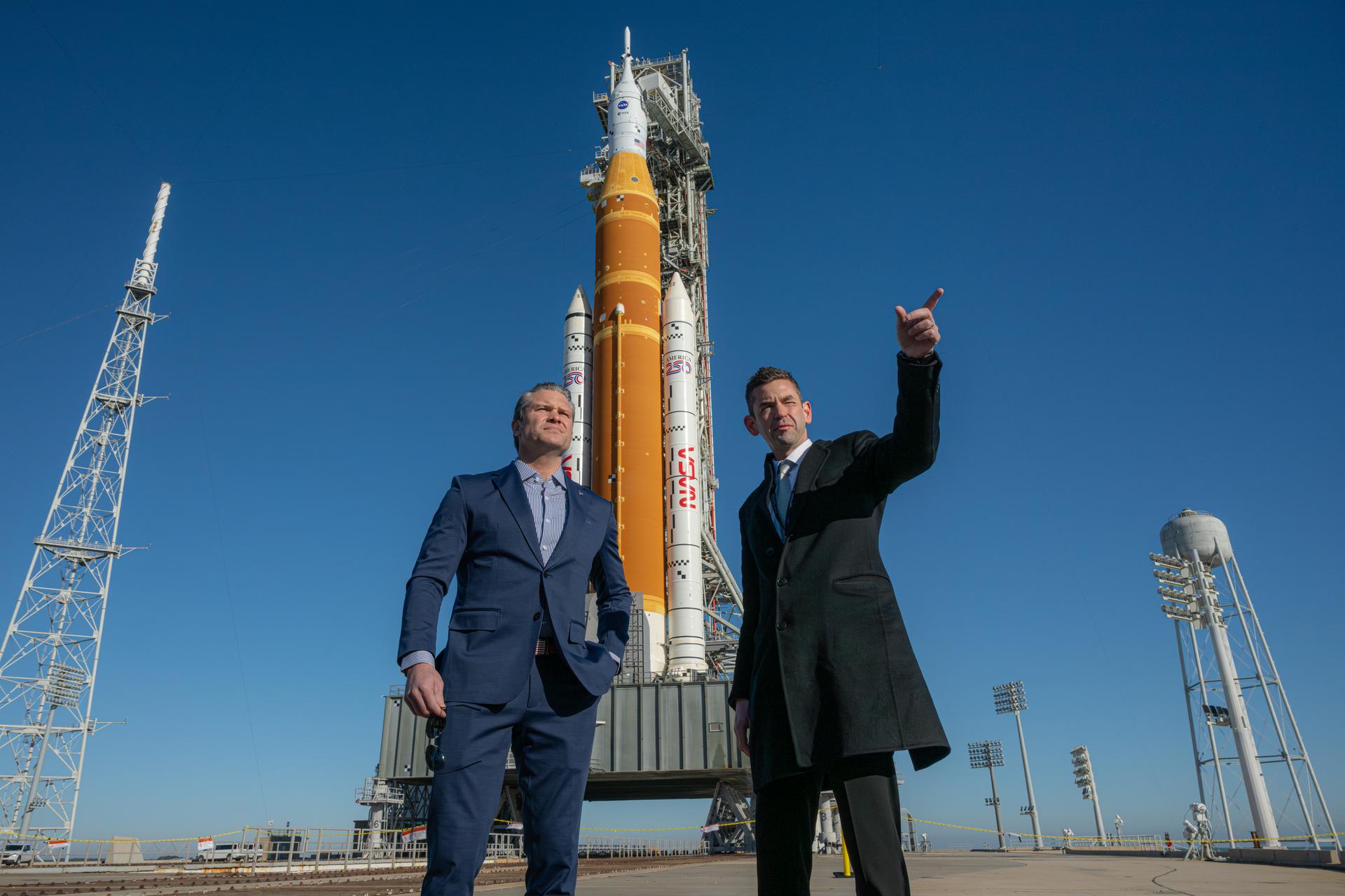
NASA Administrator Jared Isaacman, right, and Secretary of War Pete Hegseth, left, visit NASA’s Artemis II SLS (Space Launch System) rocket and Orion spacecraft at Launch Complex 39B, Monday, Feb. 2, 2026, at NASA’s Kennedy Space Center in Florida. Photo Credit: (NASA/John Kraus)
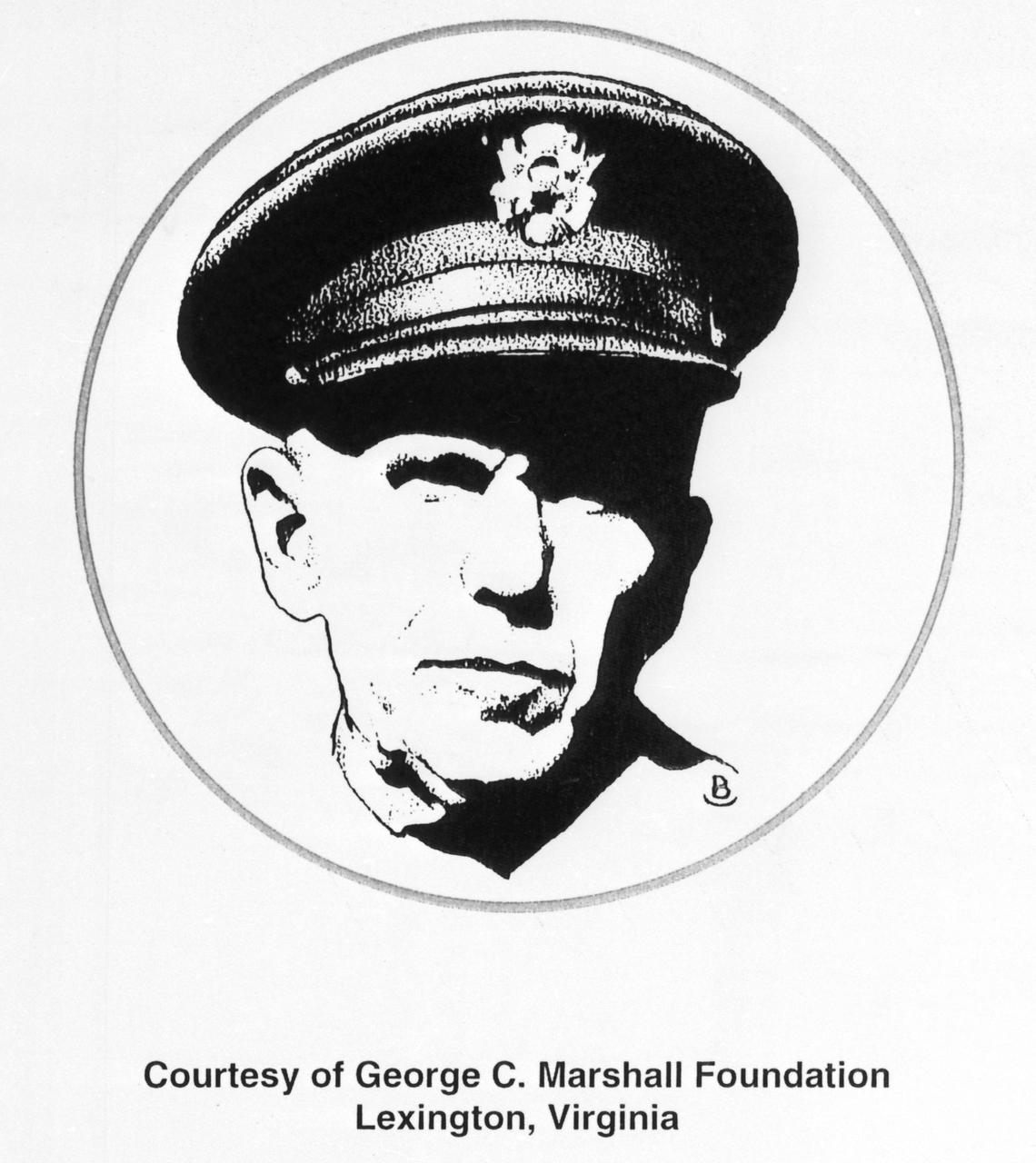
The Marshall Space Flight Center, a NASA field installation, was established at Huntsville, Alabama, in 1960. The Center was named in honor of General George C. Marshall, the Army Chief of Staff during World War II, Secretary of State, and Nobel Prize Wirner for his world-renowned Marshall Plan.
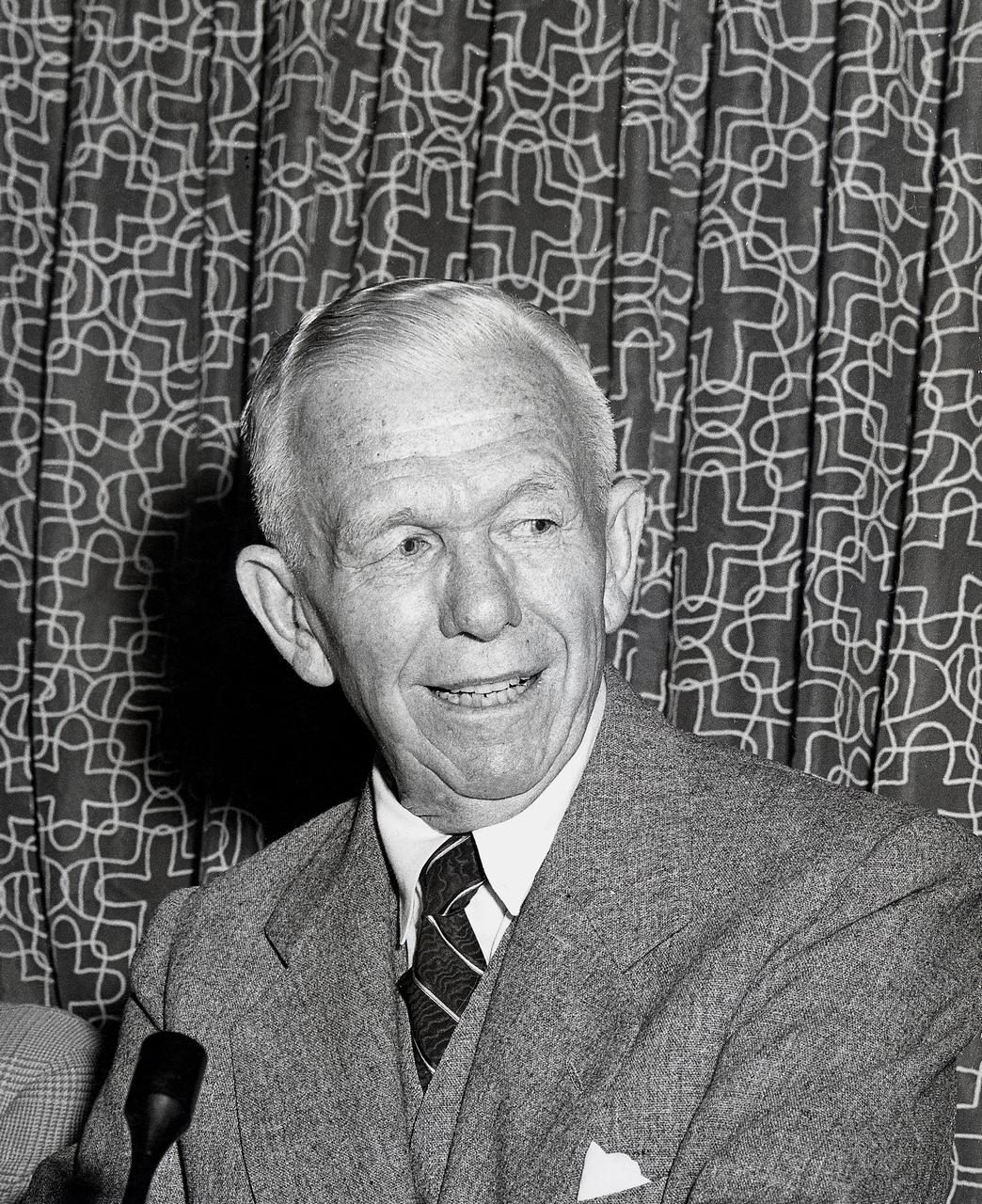
The Marshall Space Flight Center, a NASA field installation, was established at Huntsville, Alabama, in 1960. The Center was named in honor of General George C. Marshall, the Army Chief of Staff during World War II, Secretary of State, and Nobel Prize Wirner for his world-renowned Marshall Plan.
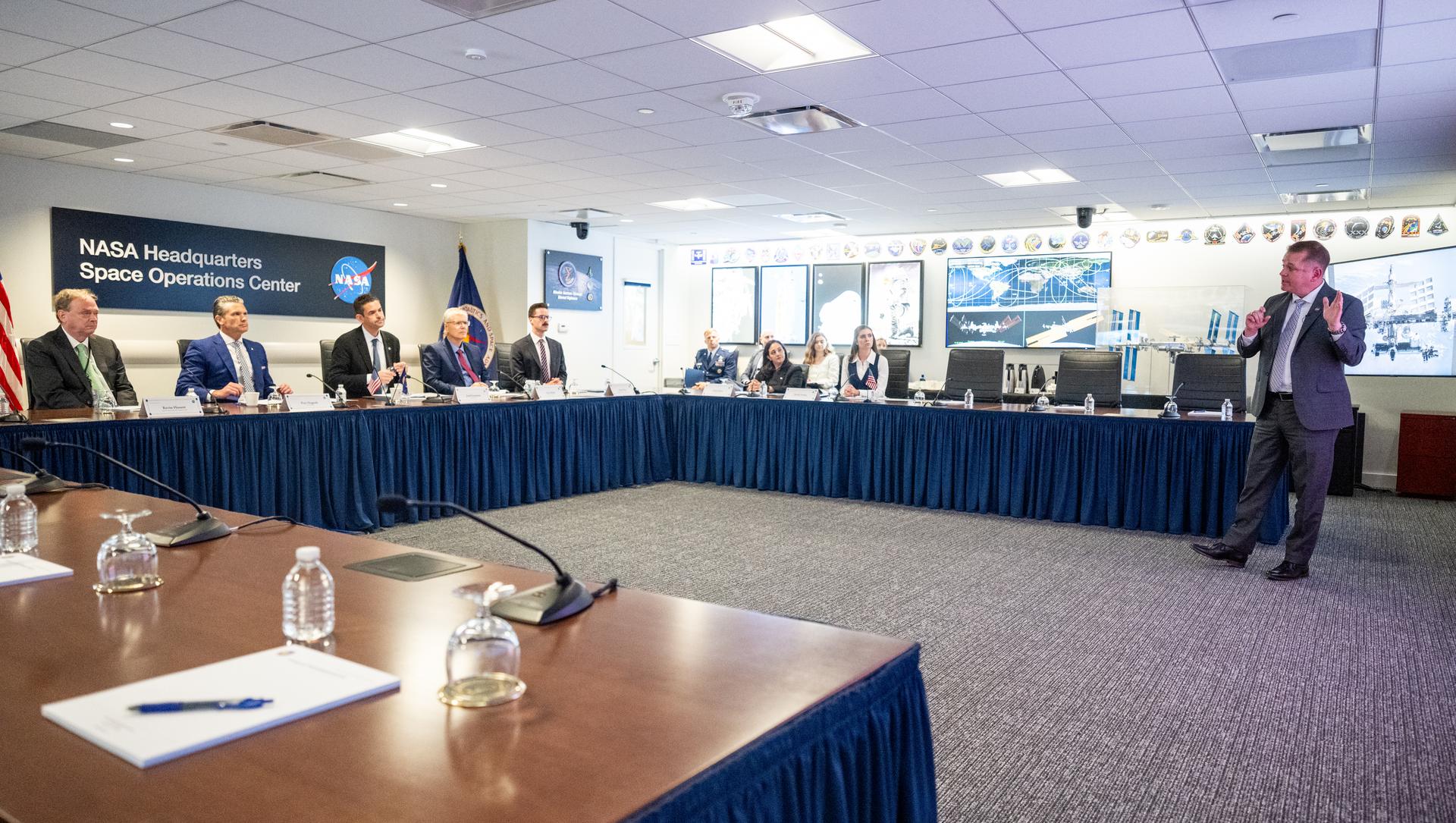
NASA Deputy Administrator Matt Anderson, right, presents to Kevin Hassett, Director of the National Economic Council, left, Secretary of War Pete Hegseth, second from left, NASA Administrator Jared Isaacman, center, Troy Meink, Secretary of the United States Air Force, second from right, and Ethan Klein, U.S. Chief Technology Officer, right, during a meeting of the Presidential Commission on the United States Space Academy in the Space Operations Center, Wednesday, Sept. 9, 2026, at the Mary W. Jackson NASA Headquarters Building in Washington. The commission will meet and submit a report proposing recommendations for the establishment of the Space Academy. Photo Credit (NASA/Joel Kowsky)
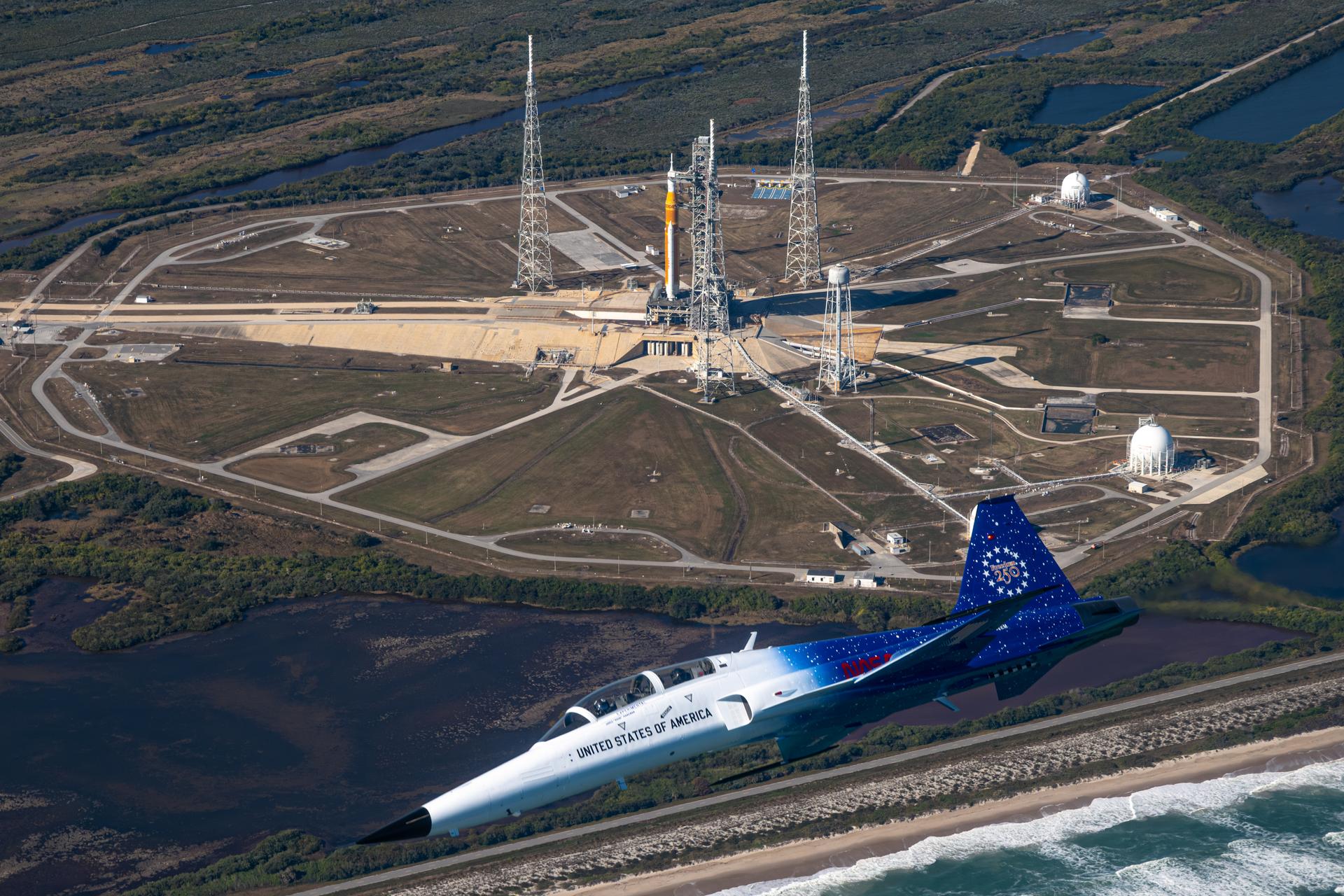
NASA Administrator Jared Isaacman flies in his personal F-5 aircraft, Monday, Feb. 2, 2026, at NASA’s Kennedy Space Center in Florida. Isaacman was joined by Secretary of War Pete Hegseth in the back seat for a flight around Launch Complex 39B, the Vehicle Assembly Building, and surrounding areas at Kennedy. Photo Credit: (NASA/John Kraus)
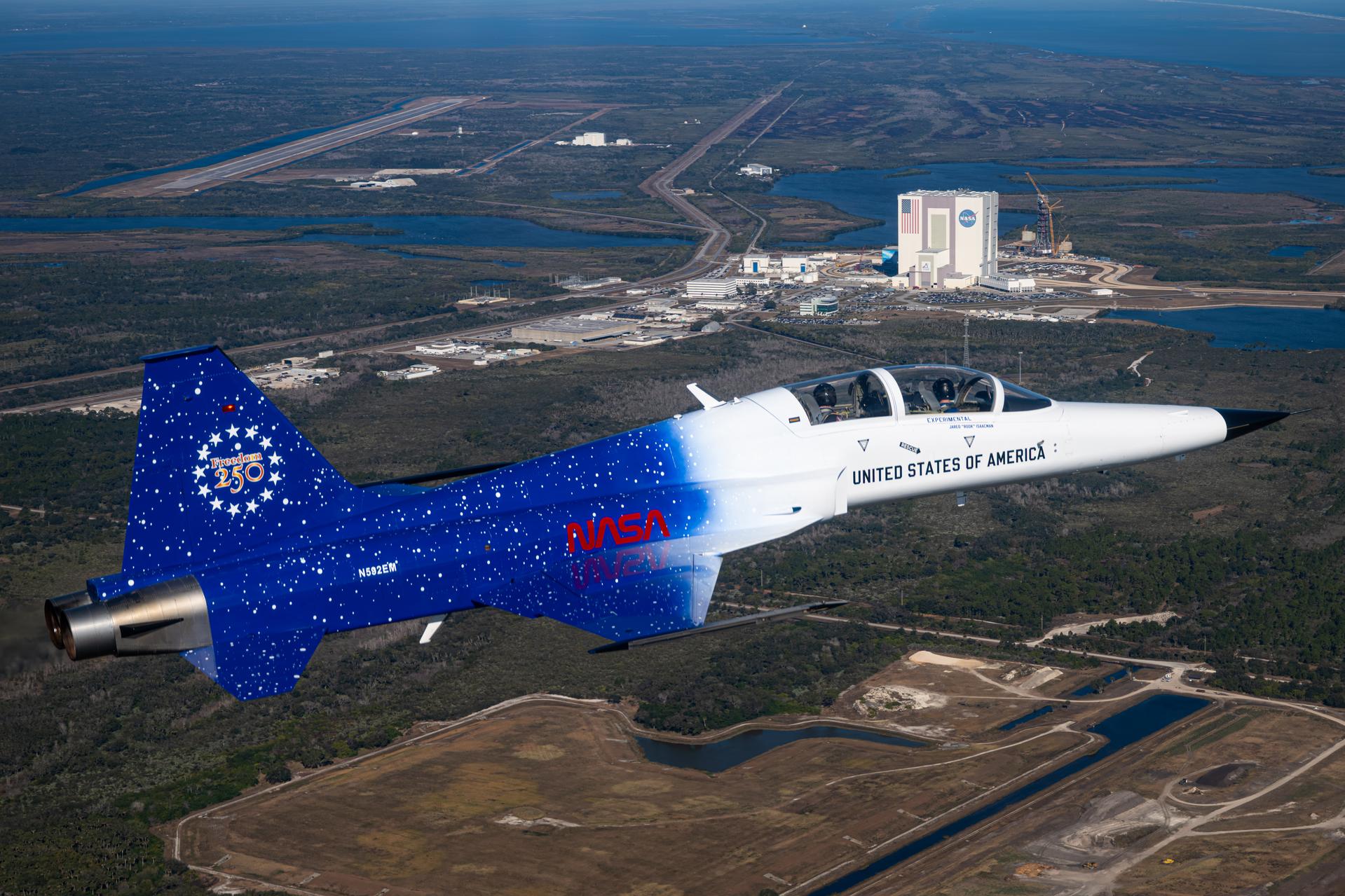
NASA Administrator Jared Isaacman flies in his personal F-5 aircraft, Monday, Feb. 2, 2026, at NASA’s Kennedy Space Center in Florida. Isaacman was joined by Secretary of War Pete Hegseth in the back seat for a flight around Launch Complex 39B, the Vehicle Assembly Building, and surrounding areas at Kennedy. Photo Credit: (NASA/John Kraus)
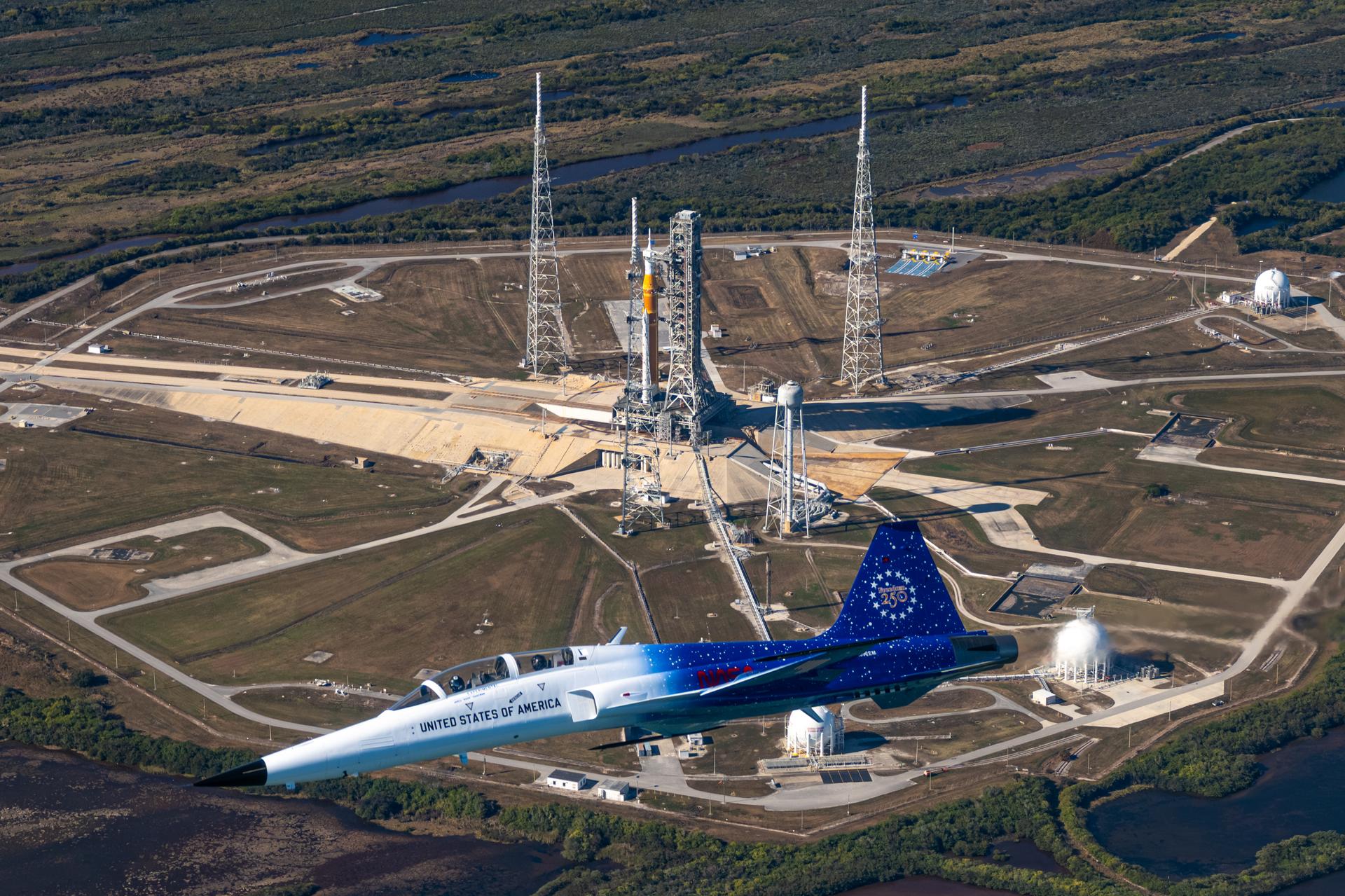
NASA Administrator Jared Isaacman flies in his personal F-5 aircraft, Monday, Feb. 2, 2026, at NASA’s Kennedy Space Center in Florida. Isaacman was joined by Secretary of War Pete Hegseth in the back seat for a flight around Launch Complex 39B, the Vehicle Assembly Building, and surrounding areas at Kennedy. Photo Credit: (NASA/John Kraus)
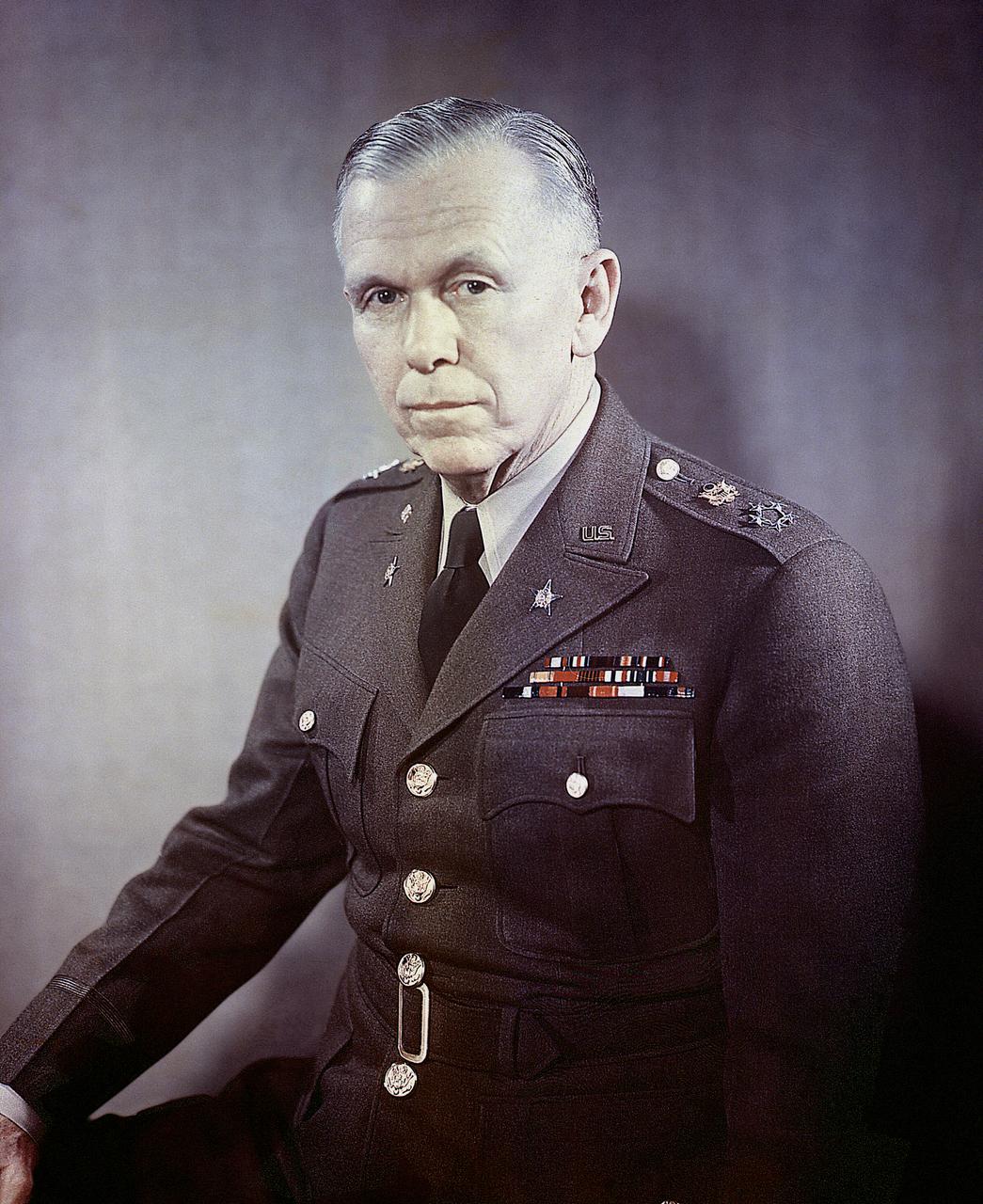
This is a portrait of General George C. Marshall in Army uniform. The Marshall Space Flight Center, a NASA field installation, was established in Huntsville, Alabama, in 1960. The Center was named in honor of General George C. Marshall, the Army Chief of Staff during World War II, Secretary of State, and Nobel Prize Winner for his world-renowned Marshall Plan.
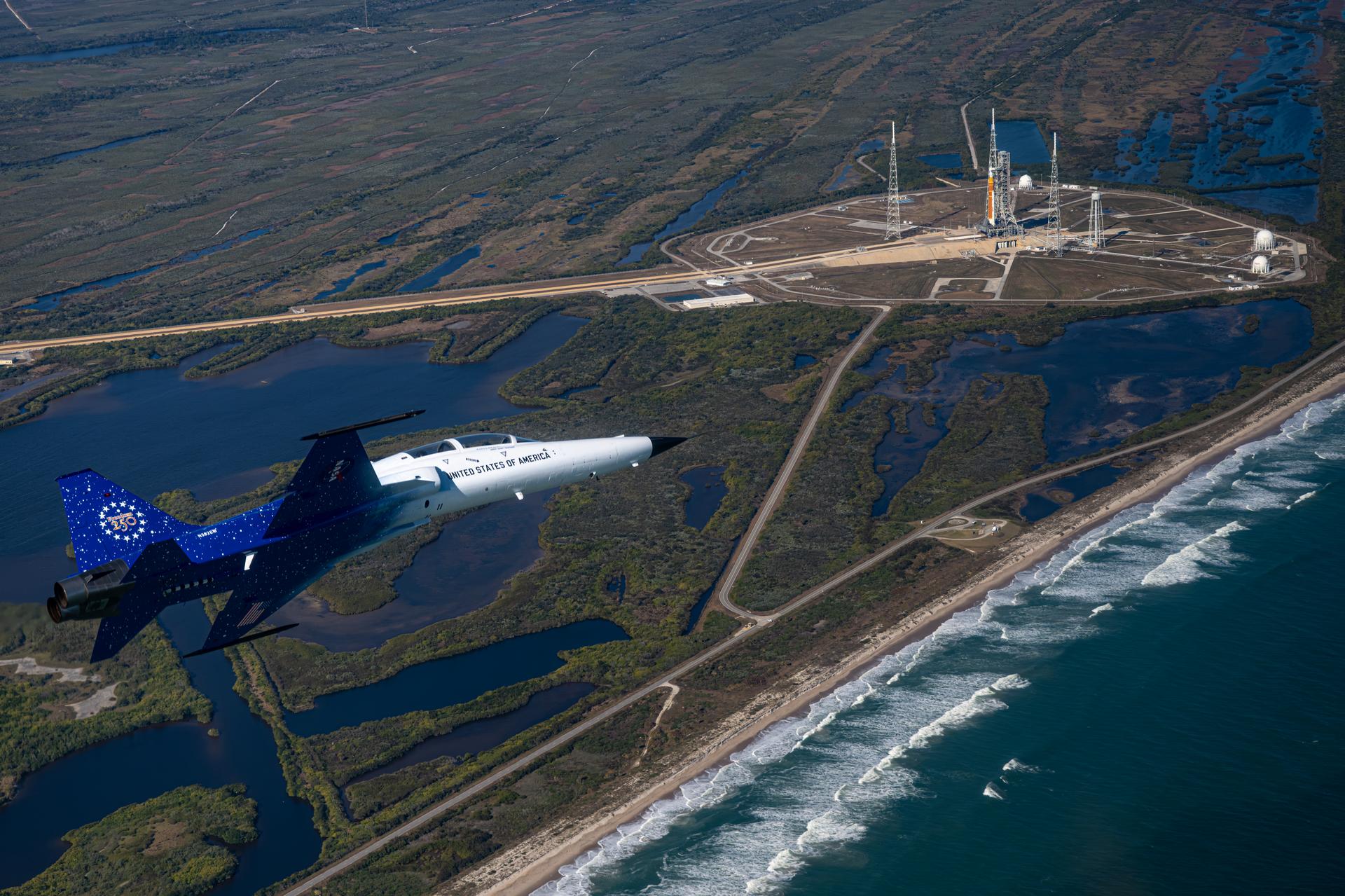
NASA Administrator Jared Isaacman flies in his personal F-5 aircraft, Monday, Feb. 2, 2026, at NASA’s Kennedy Space Center in Florida. Isaacman was joined by Secretary of War Pete Hegseth in the back seat for a flight around Launch Complex 39B, the Vehicle Assembly Building, and surrounding areas at Kennedy. Photo Credit: (NASA/John Kraus)
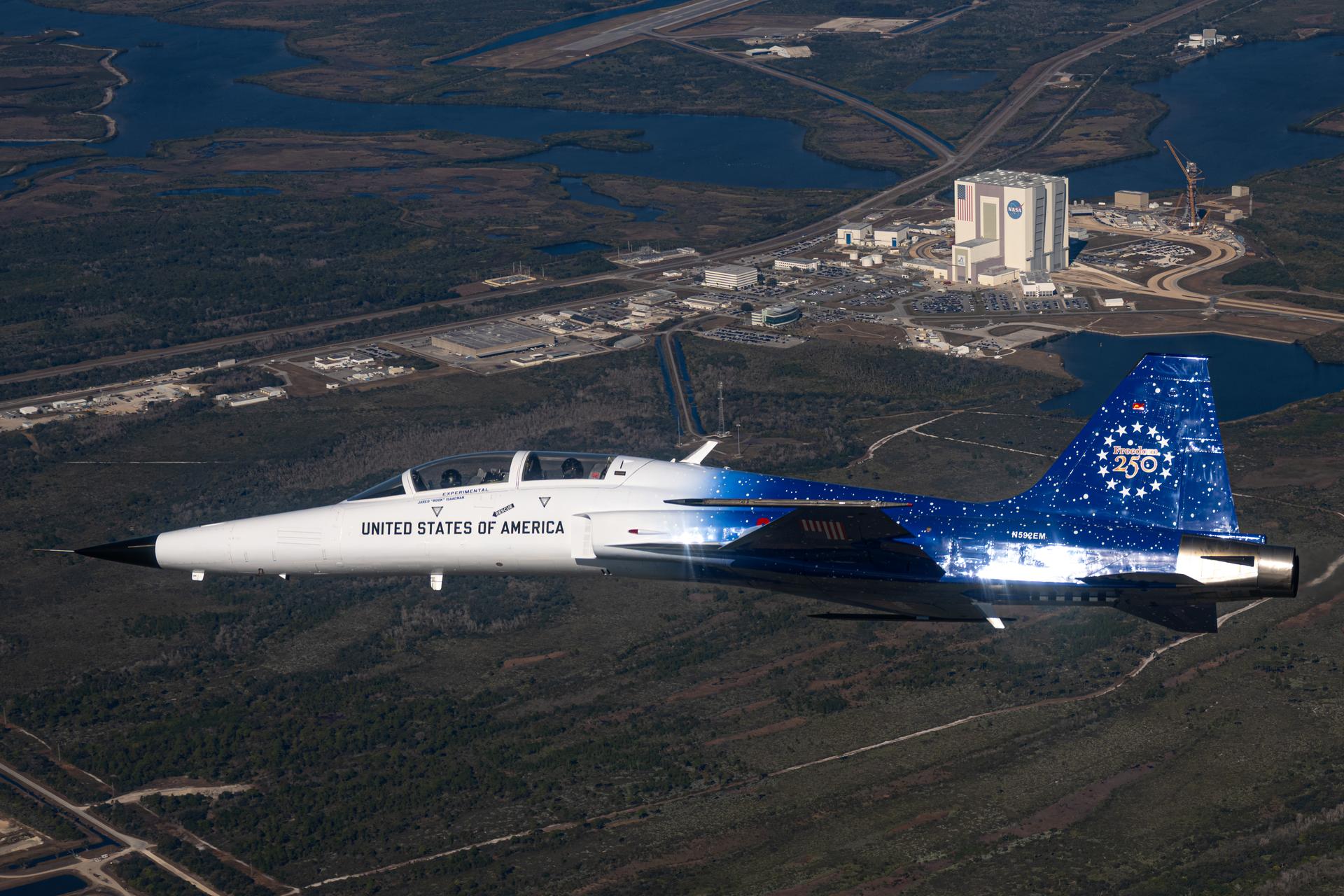
NASA Administrator Jared Isaacman flies in his personal F-5 aircraft, Monday, Feb. 2, 2026, at NASA’s Kennedy Space Center in Florida. Isaacman was joined by Secretary of War Pete Hegseth in the back seat for a flight around Launch Complex 39B, the Vehicle Assembly Building, and surrounding areas at Kennedy. Photo Credit: (NASA/John Kraus)
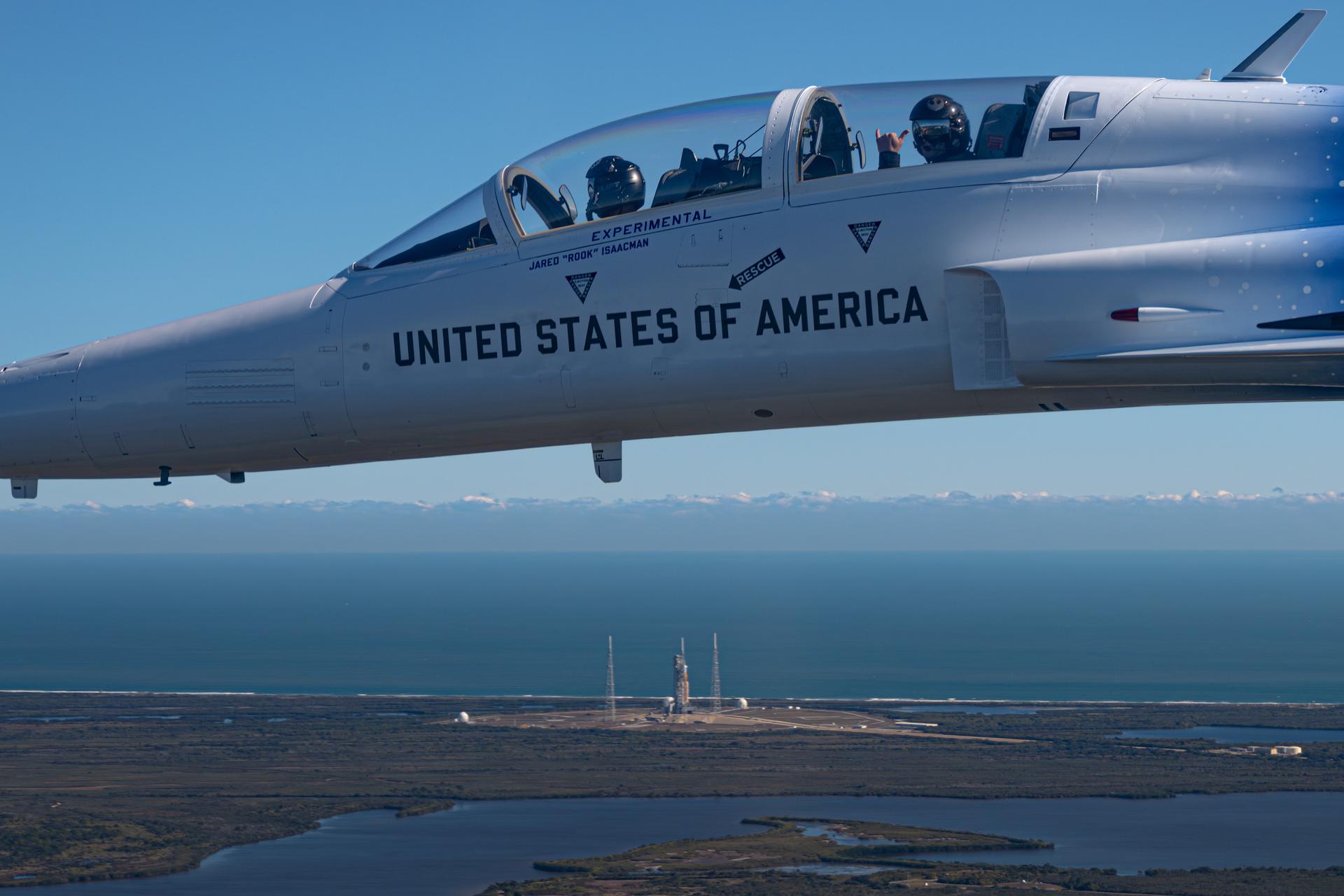
NASA Administrator Jared Isaacman flies in his personal F-5 aircraft, Monday, Feb. 2, 2026, at NASA’s Kennedy Space Center in Florida. Isaacman was joined by Secretary of War Pete Hegseth in the back seat for a flight around Launch Complex 39B, the Vehicle Assembly Building, and surrounding areas at Kennedy. Photo Credit: (NASA/John Kraus)
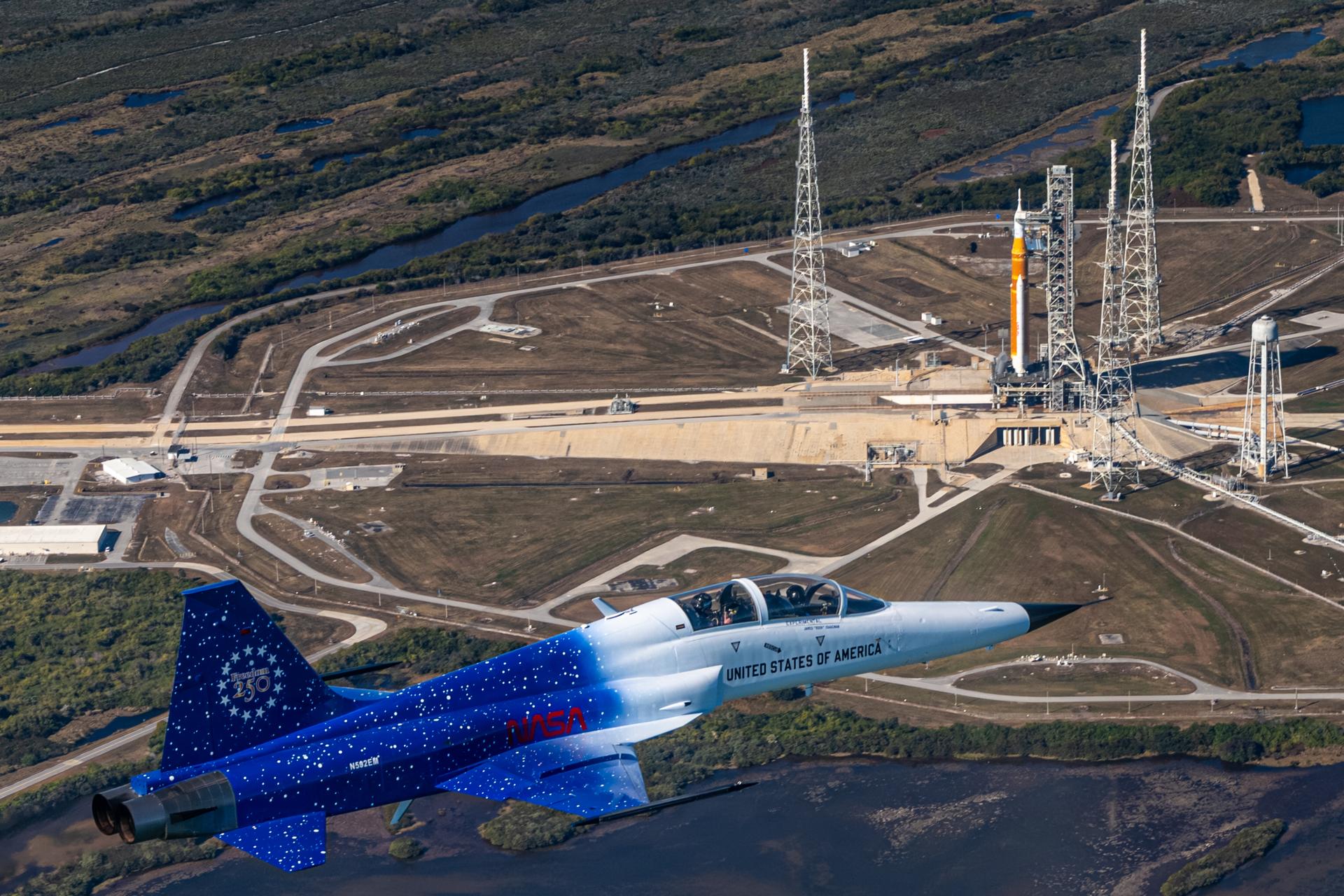
NASA Administrator Jared Isaacman flies in his personal F-5 aircraft, Monday, Feb. 2, 2026, at NASA’s Kennedy Space Center in Florida. Isaacman was joined by Secretary of War Pete Hegseth in the back seat for a flight around Launch Complex 39B, the Vehicle Assembly Building, and surrounding areas at Kennedy. Photo Credit: (NASA/John Kraus)
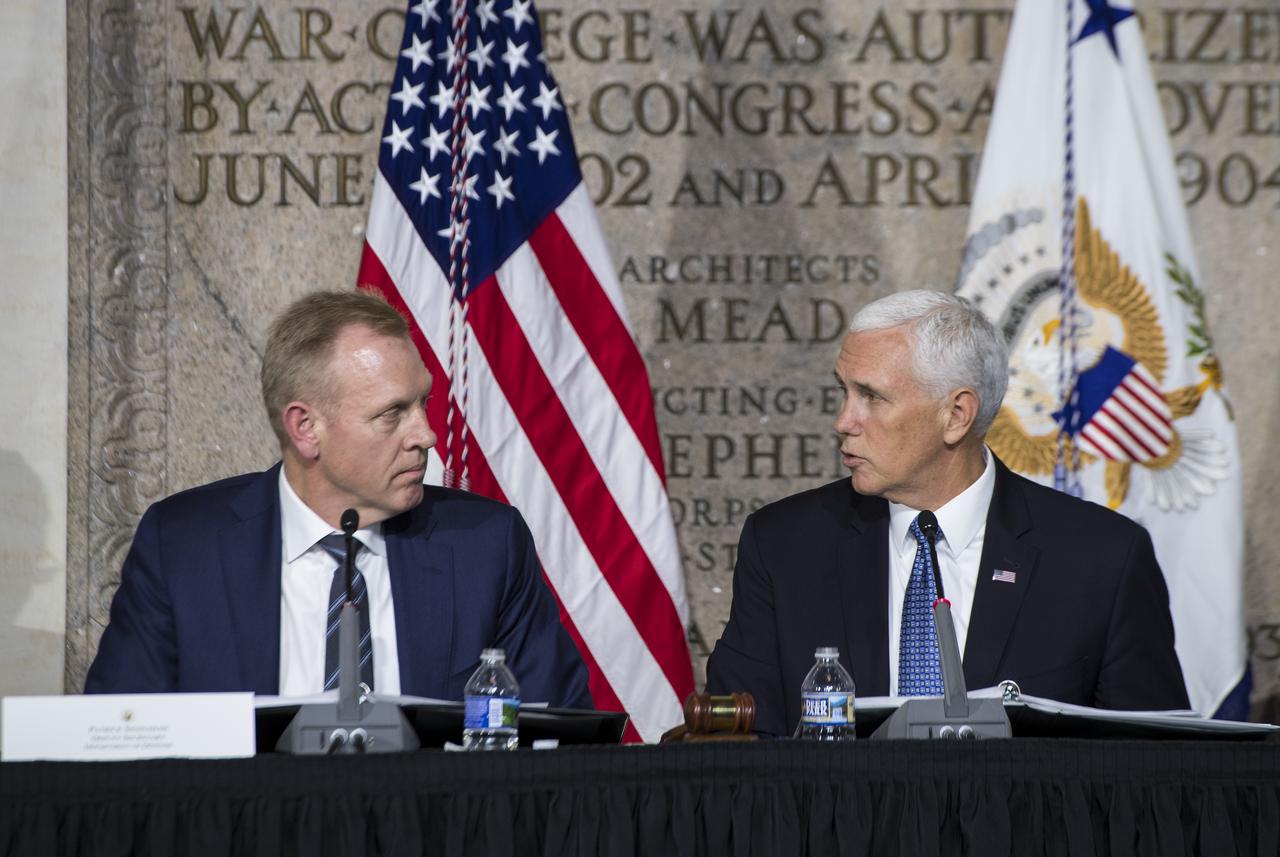
Vice President Mike Pence, right, speaks to Patrick Shanahan, deputy secretary, Department of Defense, during the National Space Council meeting titled, Moon, Mars, and Worlds Beyond, Winning the Next Frontier, Tuesday, Oct. 23, 2018 at the National War College at Fort Lesley J. McNair in Washington. Chaired by the Vice President, the council's role is to advise the President regarding national space policy and strategy, and review the nation's long-range goals for space activities.Photo Credit: (NASA/Aubrey Gemignani)
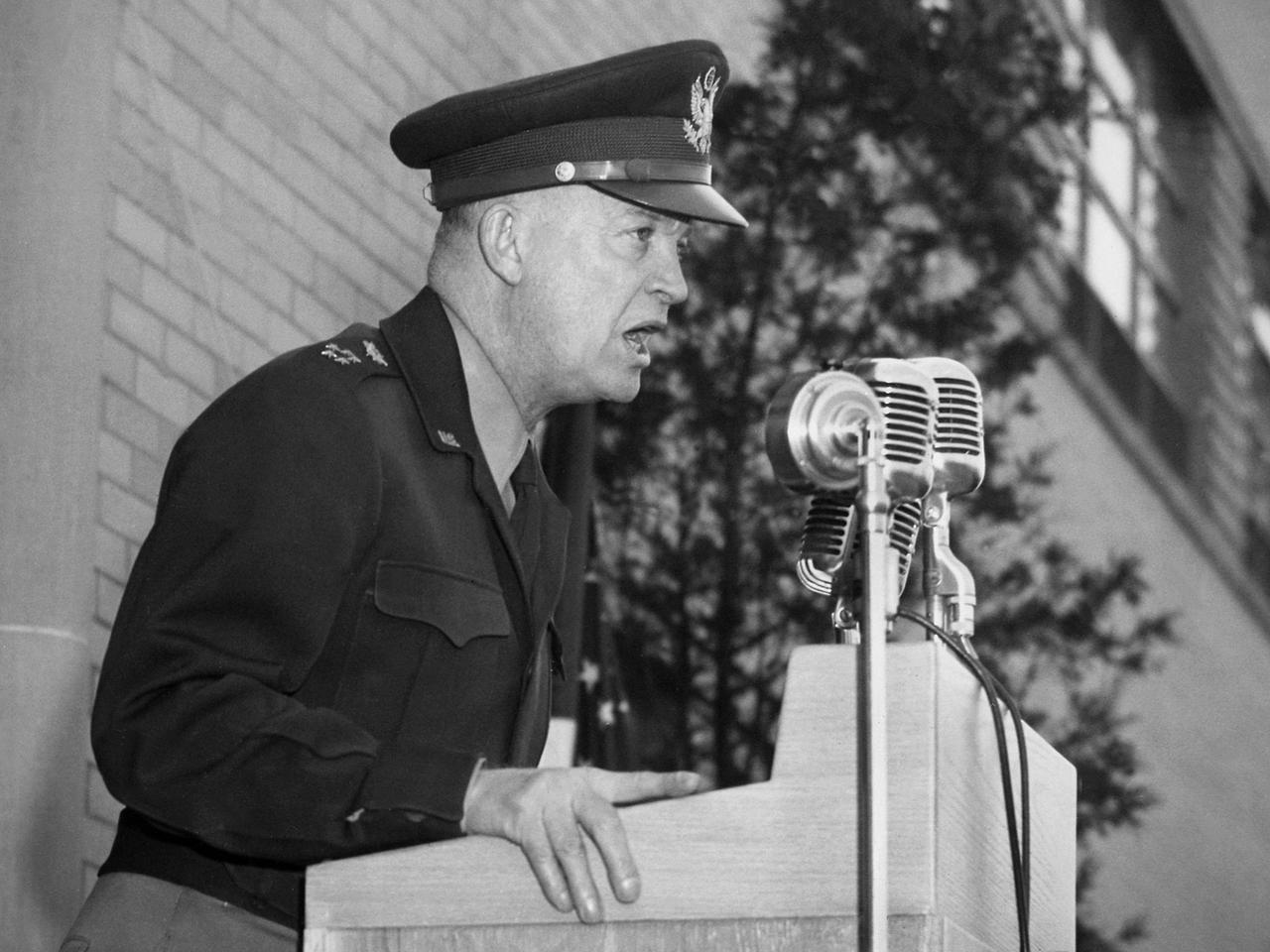
General Dwight Eisenhower addressed the staff of the National Advisory Committee for Aeronautics (NACA) Lewis Flight Propulsion Laboratory during an April 11, 1946 visit to Cleveland. The former supreme commander of Allied Expeditionary Forces in Europe was on a tour of several US cities in the months following the end of World War II. The general arrived in Cleveland on his Douglas C-54 Skymaster, the 'Sunflower II'. Eisenhower employed this aircraft while leading forces during the war. Skymasters, the military version of the DC–4 transport aircraft, were used extensively by both the army and navy throughout the war years. NACA Secretary John Victory, Lewis Director Raymond Sharp, and local politicians formally greeted Eisenhower as he deplaned at the NACA hangar. After patiently posing for the press photographers, Eisenhower accompanied Victory and Sharp to the Administration Building for a press conference. The general made a point of downplaying the prospects for another imminent war. Afterwards Eisenhower was given a tour of the laboratory and addressed the NACA Lewis staff assembled outside the Administration Building on the importance of research and development. Eisenhower left the laboratory in a motorcade for a banquet being held in his honor downtown with the Cleveland Aviation Club.
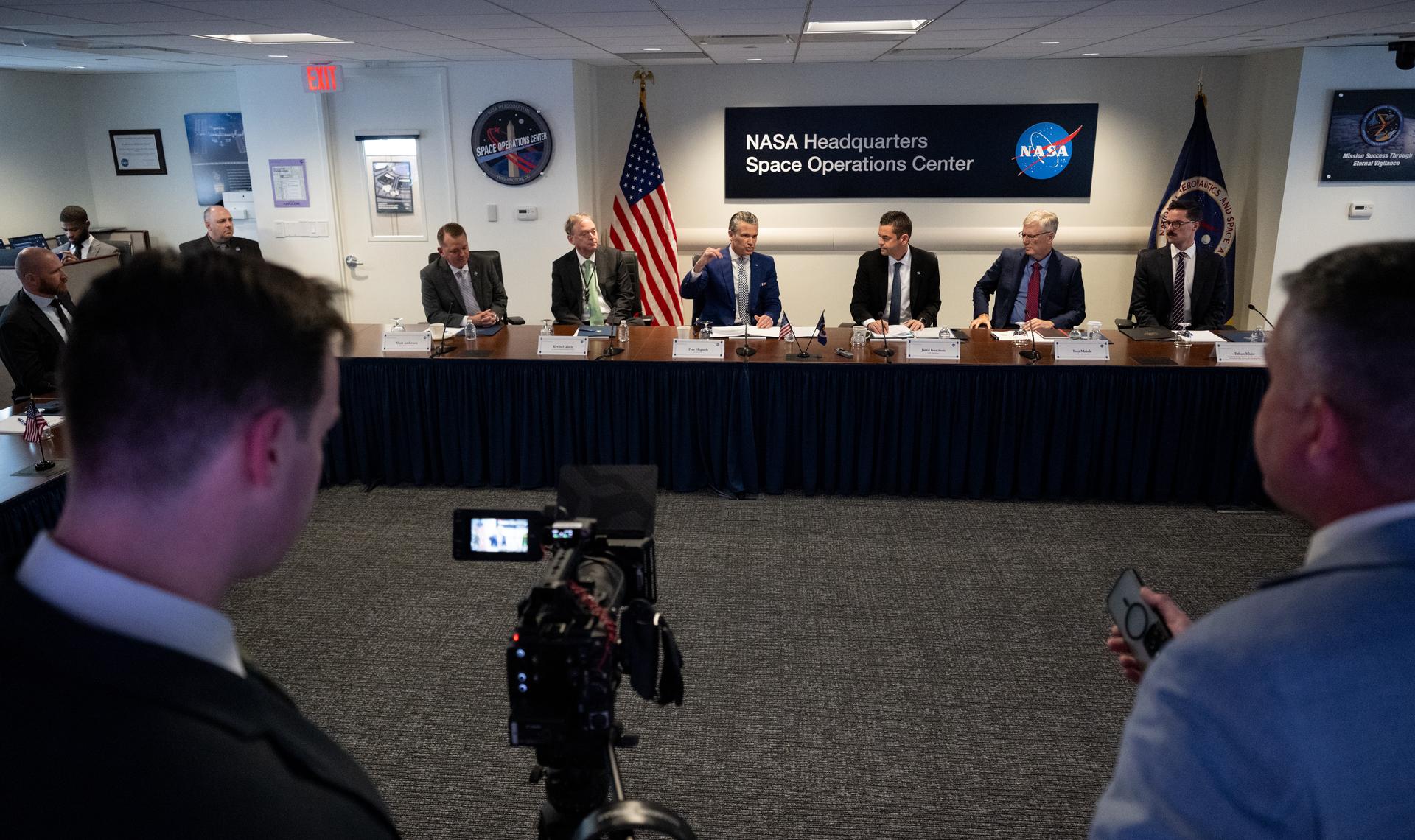
Secretary of War Pete Hegseth, third from left, gives opening remarks alongside NASA Deputy Administrator Matt Anderson, left, Kevin Hassett, Director of the National Economic Council, second from left, NASA Administrator Jared Isaacman, third from right, Troy Meink, Secretary of the United States Air Force, second from right, and Ethan Klein, U.S. Chief Technology Officer, right, during a meeting of the Presidential Commission on the United States Space Academy in the Space Operations Center, Wednesday, Sept. 9, 2026, at the Mary W. Jackson NASA Headquarters Building in Washington. The commission will meet and submit a report proposing recommendations for the establishment of the Space Academy. Photo Credit (NASA/Joel Kowsky)
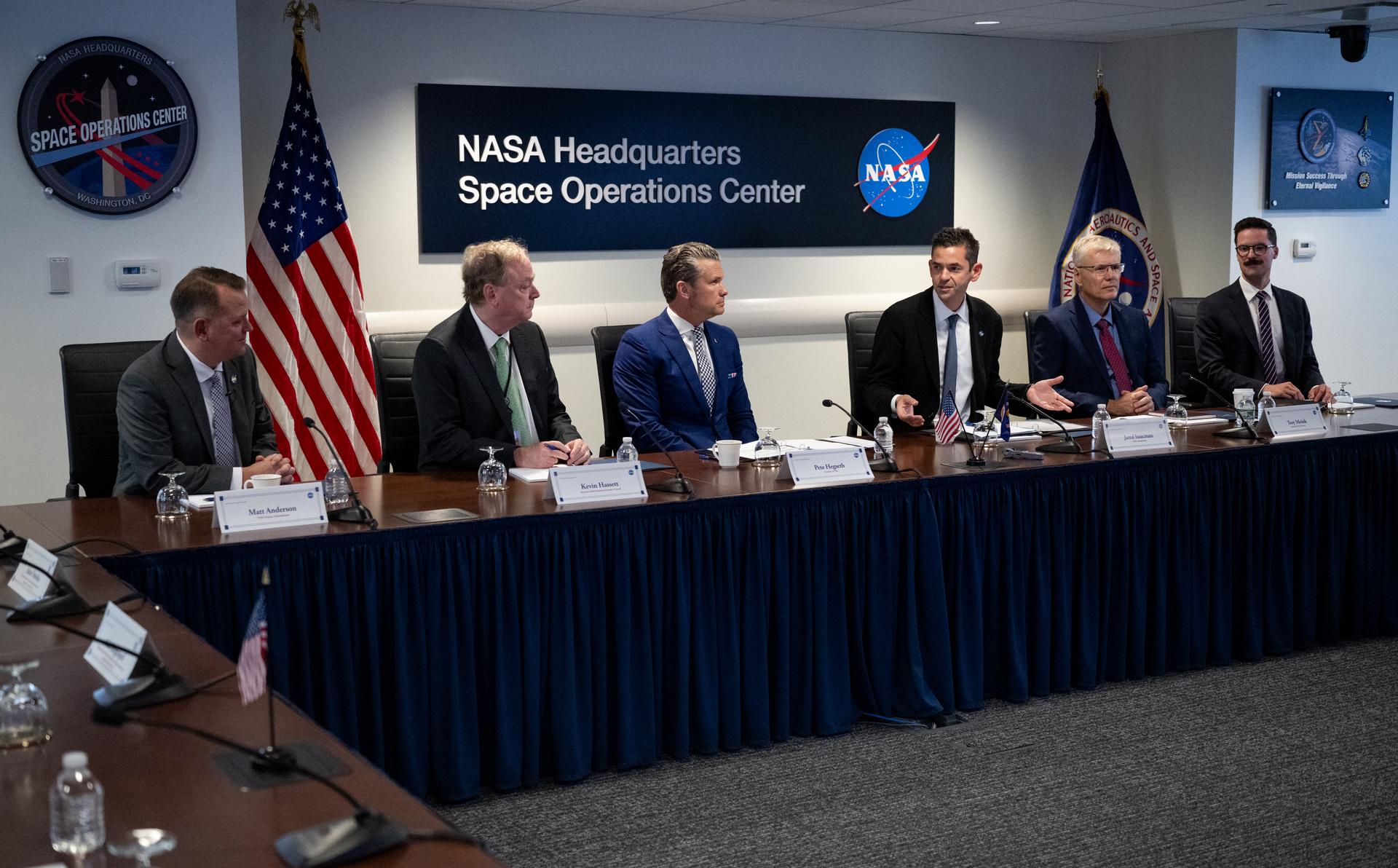
NASA Administrator Jared Isaacman, third from right, gives opening remarks alongside NASA Deputy Administrator Matt Anderson, left, Kevin Hassett, Director of the National Economic Council, second from left, Secretary of War Pete Hegseth, third from left, Troy Meink, Secretary of the United States Air Force, second from right, and Ethan Klein, U.S. Chief Technology Officer, right, during a meeting of the Presidential Commission on the United States Space Academy in the Space Operations Center, Wednesday, Sept. 9, 2026, at the Mary W. Jackson NASA Headquarters Building in Washington. The commission will meet and submit a report proposing recommendations for the establishment of the Space Academy. Photo Credit (NASA/Joel Kowsky)
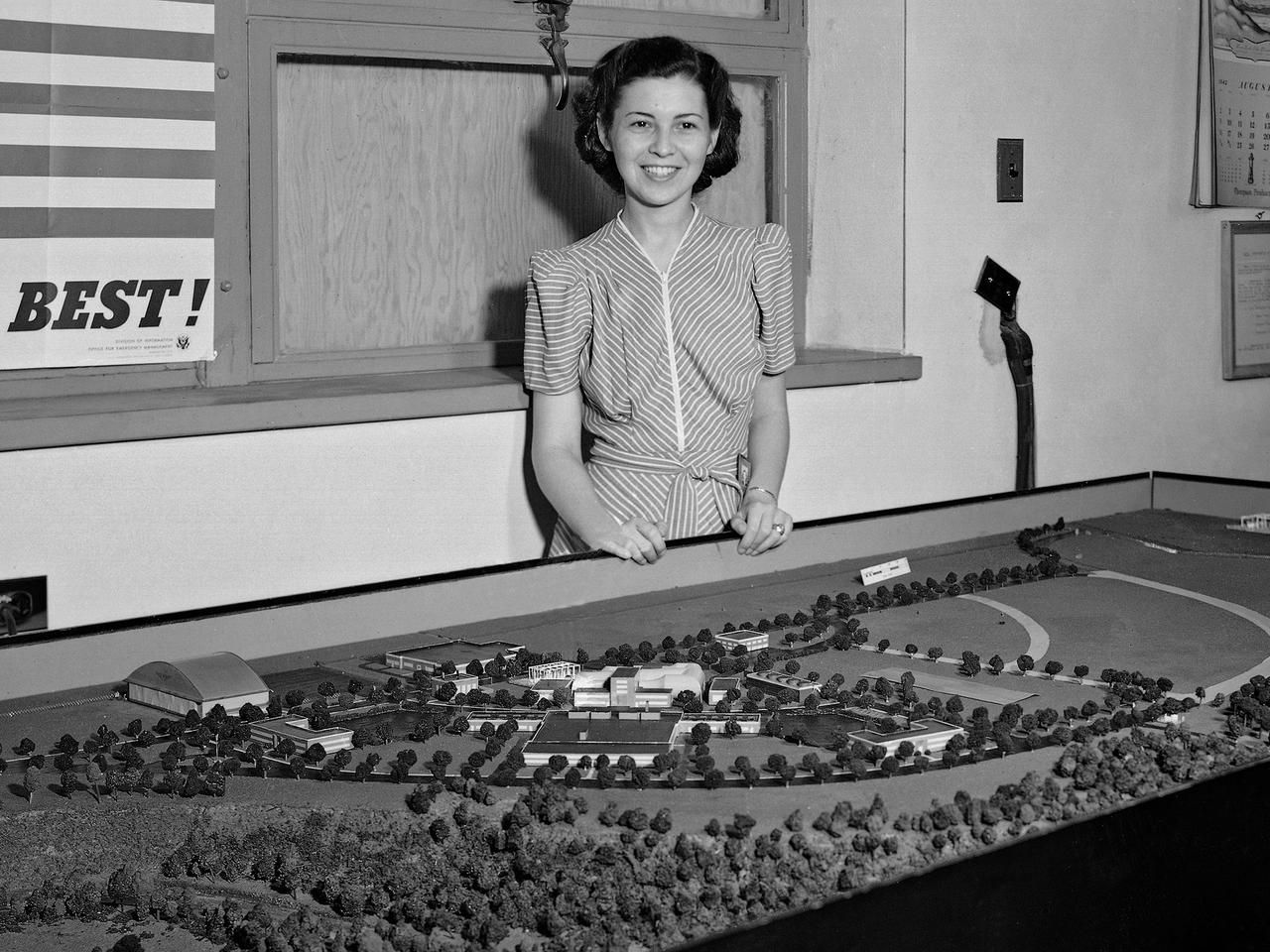
Zella Morewitz poses with a model of the National Advisory Committee for Aeronautics (NACA) Aircraft Engine Research Laboratory, currently the NASA Glenn Research Center. The model was displayed in the Administration Building during the construction of the laboratory in the early 1940s. Detailed models of the individual test facilities were also fabricated and displayed in the facilities. The laboratory was built on a wedge of land between the Cleveland Municipal Airport on the far side and the deep curving valley etched by the Rocky River on the near end. Roughly only a third of the laboratory's semicircle footprint was initially utilized. Additional facilities were added to the remaining areas in the years after World War II. In the late 1950s the site was supplemented by the acquisition of additional adjacent land. Morewitz joined the NACA in 1935 as a secretary in the main office at the Langley Memorial Aeronautical Laboratory. In September 1940 she took on the task of setting up and guiding an office dedicated to the design of the NACA’s new engine research laboratory. Morewitz and the others in the design office transferred to Cleveland in December 1941 to expedite the construction. Morewitz served as Manager Ray Sharp’s secretary for six years and was a popular figure at the new laboratory. In December 1947 Morewitz announced her engagement to Langley researcher Sidney Batterson and moved back to Virginia.
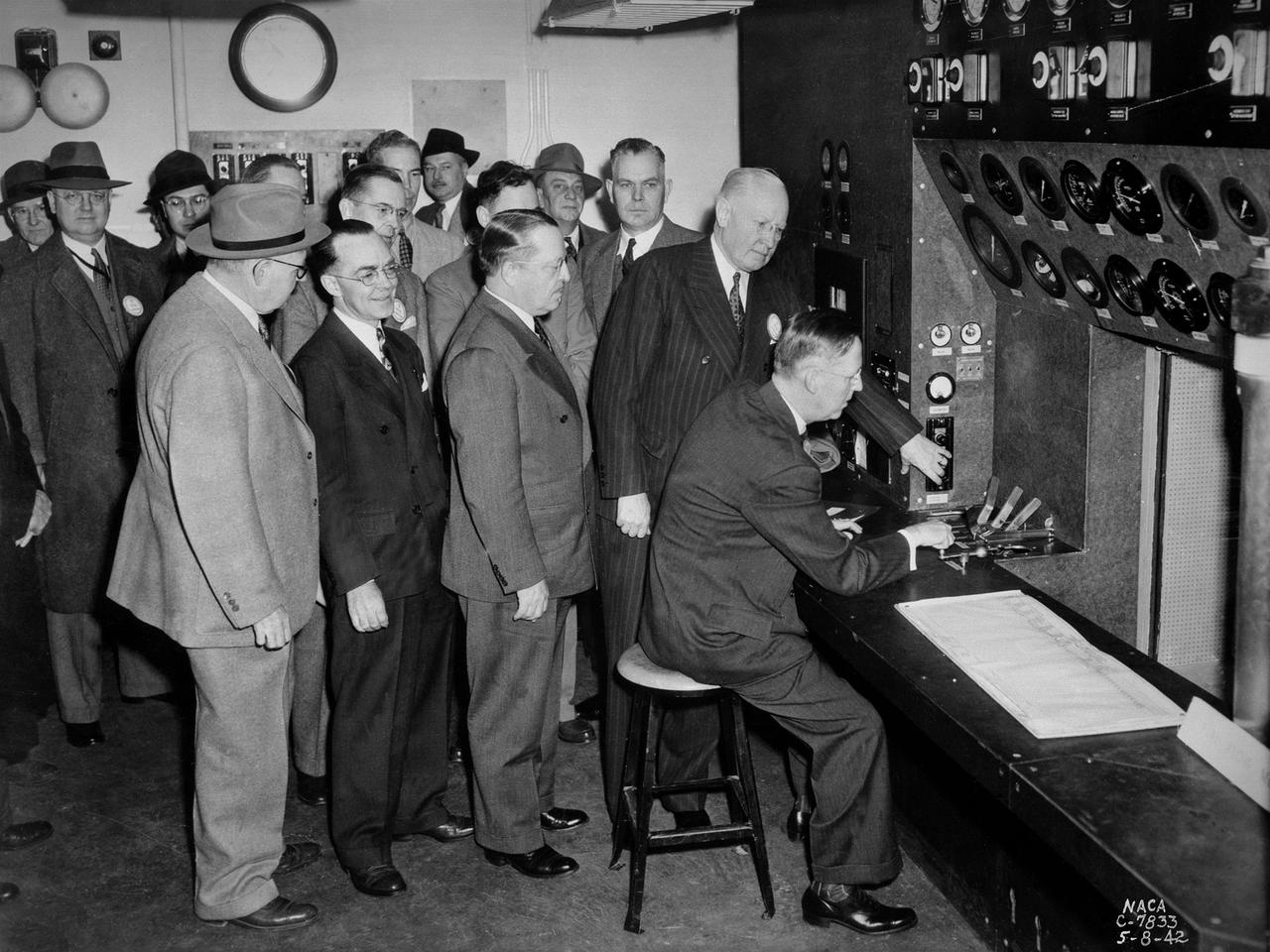
A group of National Advisory Committee for Aeronautics (NACA) officials and local dignitaries were on hand on May 8, 1942, to witness the Initiation of Research at the NACA's new Aircraft Engine Research Laboratory in Cleveland, Ohio. The group in this photograph was in the control room of the laboratory's first test facility, the Engine Propeller Research Building. The NACA press release that day noted, "First actual research activities in what is to be the largest aircraft engine research laboratory in the world was begun today at the National Advisory Committee for Aeronautics laboratory at the Cleveland Municipal Airport.” The ceremony, however, was largely symbolic since most of the laboratory was still under construction. Dr. George W. Lewis, the NACA's Director of Aeronautical Research, and John F. Victory, NACA Secretary, are at the controls in this photograph. Airport Manager John Berry, former City Manager William Hopkins, NACA Assistant Secretary Ed Chamberlain, Langley Engineer-in-Charge Henry Reid, Executive Engineer Carlton Kemper, and Construction Manager Raymond Sharp are also present. The propeller building contained two torque stands to test complete engines at ambient conditions. The facility was primarily used at the time to study engine lubrication and cooling systems for World War II aircraft, which were required to perform at higher altitudes and longer ranges than previous generations.

The Flight Operations crew stands before a Republic P-47G Thunderbolt at the National Advisory Committee for Aeronautics (NACA) Aircraft Engine Research Laboratory in Cleveland, Ohio. The laboratory’s Flight Research Section was responsible for conducting a variety of research flights. During World War II most of the test flights complemented the efforts in ground-based facilities to improve engine cooling systems or study advanced fuel mixtures. The Republic P–47G was loaned to the laboratory to test NACA modifications to the Wright R–2800 engine’s cooling system at higher altitudes. The laboratory has always maintained a fleet of aircraft so different research projects were often conducted concurrently. The flight research program requires an entire section of personnel to accomplish its work. This staff generally consists of a flight operations group, which includes the section chief, pilots and administrative staff; a flight maintenance group with technicians and mechanics responsible for inspecting aircraft, performing checkouts and installing and removing flight instruments; and a flight research group that integrates the researchers’ experiments into the aircraft. The staff at the time of this March 1944 photograph included 3 pilots, 16 planning and analysis engineers, 36 mechanics and technicians, 10 instrumentation specialists, 6 secretaries and 5 computers.
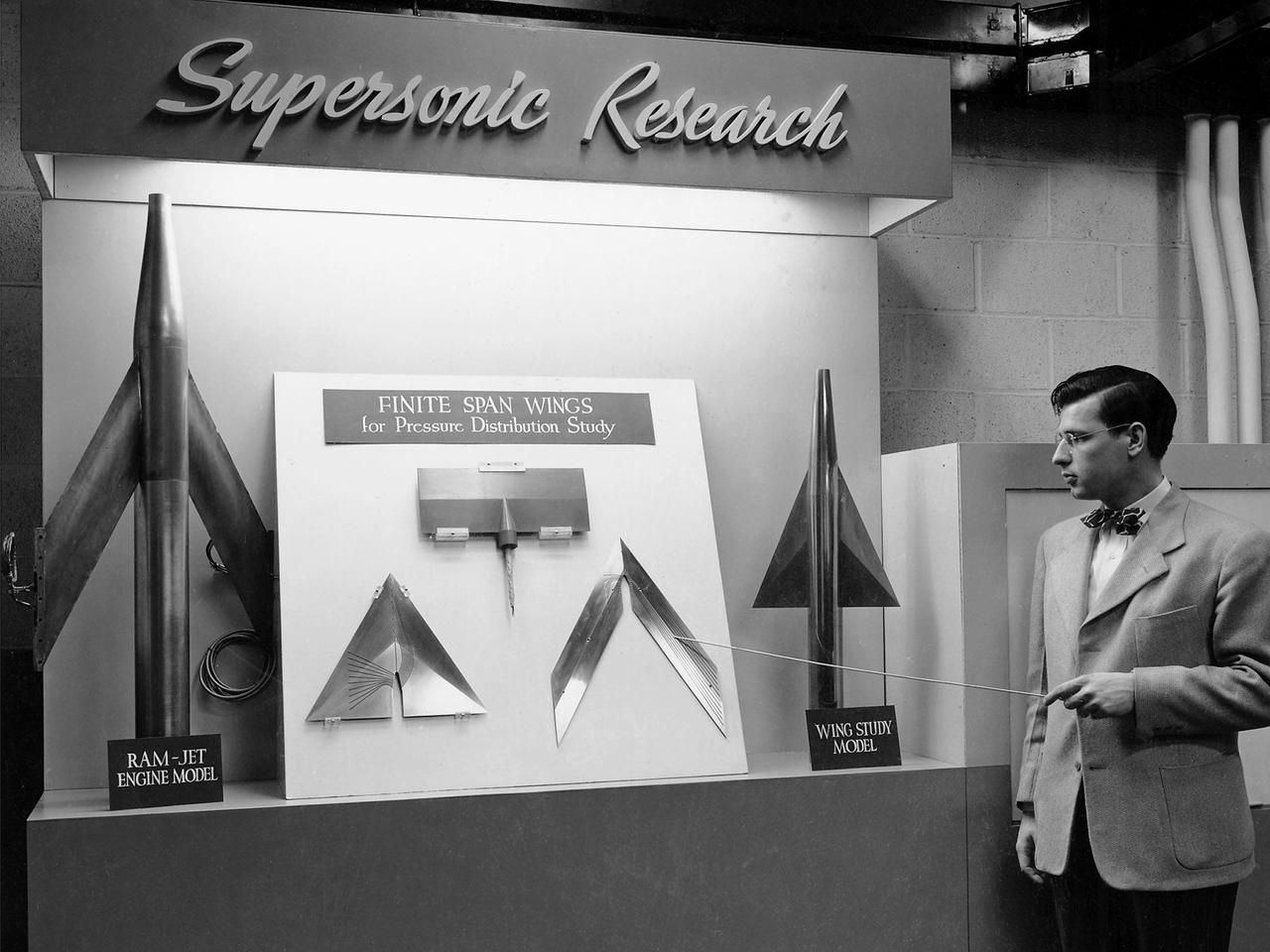
On March 22, 1946, 250 members of the Institute of Aeronautical Science toured the NACA’s Aircraft Engine Research Laboratory. NACA Chairman Jerome Hunsaker and Secretary John Victory were on hand to brief the attendees in the Administration Building before the visited the lab’s test facilities. At each of the twelve stops, researchers provided brief presentations on their work. Topics included axial flow combustors, materials for turbine blades, engine cooling, icing prevention, and supersonic flight. The laboratory reorganized itself in October 1945 as World War II came to an end to address newly emerging technologies such as the jet engine, rockets, and high-speed flight. While design work began on what would eventually become the 8- by 6-Foot Supersonic Wind Tunnel, NACA Lewis quickly built several small supersonic tunnels. These small facilities utilized the Altitude Wind Tunnel’s massive air handling equipment to generate high-speed airflow. The display seen in this photograph was set up in the building that housed the first of these wind tunnels. Eventually the building would contain three small supersonic tunnels, referred to as the “stack tunnels” because of the vertical alignment. The two other tunnels were added to this structure in 1949 and 1951. The small tunnels were used until the early 1960s to study the aerodynamic characteristics of supersonic inlets and exits.
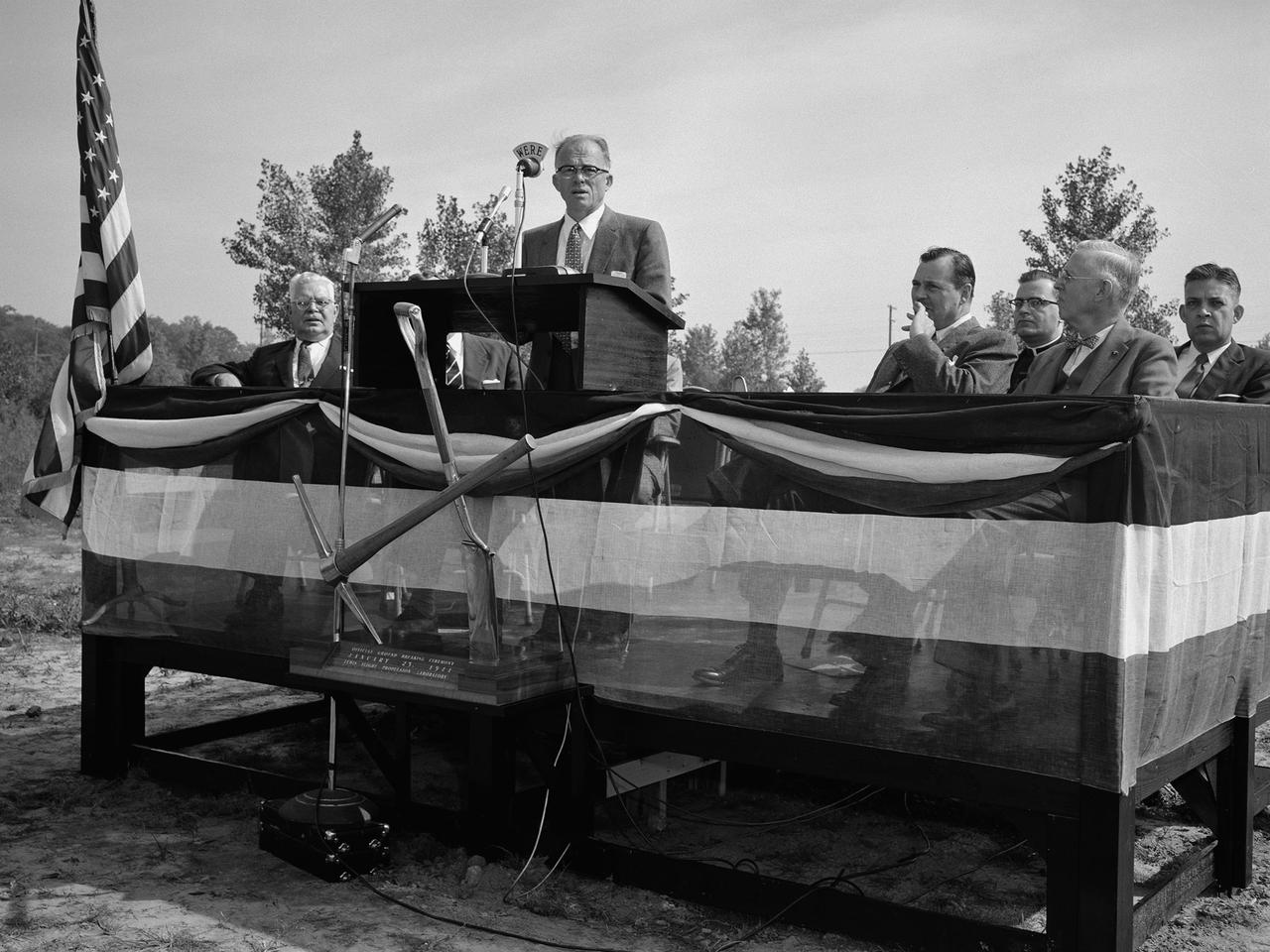
Addison Rothrock, the National Advisory Committee for Aeronautics’s (NACA) Assistant Director of Research, speaks at the groundbreaking ceremony for the Lewis Flight Propulsion Laboratory’s new test reactor at Plum Brook Station. This dedication event was held almost exactly one year after the NACA announced that it would build its $4.5 million nuclear reactor on 500 acres of the army’s 9000-acre Plum Brook Ordnance Works. The site was located in Sandusky, Ohio, approximately 60 miles west of the NACA Lewis laboratory in Cleveland. Lewis Director Raymond Sharp is seated to the left of Rothrock, Congressman Albert Baumhart and NACA Secretary John Victory are to the right. Many government and local officials were on hand for the press conference and ensuing luncheon. In the wake of World War II the military, the Atomic Energy Commission, and the NACA became interested in the use of atomic energy for propulsion and power. A Nuclear Division was established at NACA Lewis in the early 1950s. The division’s request for a 60-megawatt research reactor was approved in 1955. The semi-remote Plum Brook location was selected over 17 other possible sites. Construction of the Plum Brook Reactor Facility lasted five years. By the time of its first trial runs in 1961 the aircraft nuclear propulsion program had been cancelled. The space age had arrived, however, and the reactor would be used to study materials for a nuclear powered rocket.
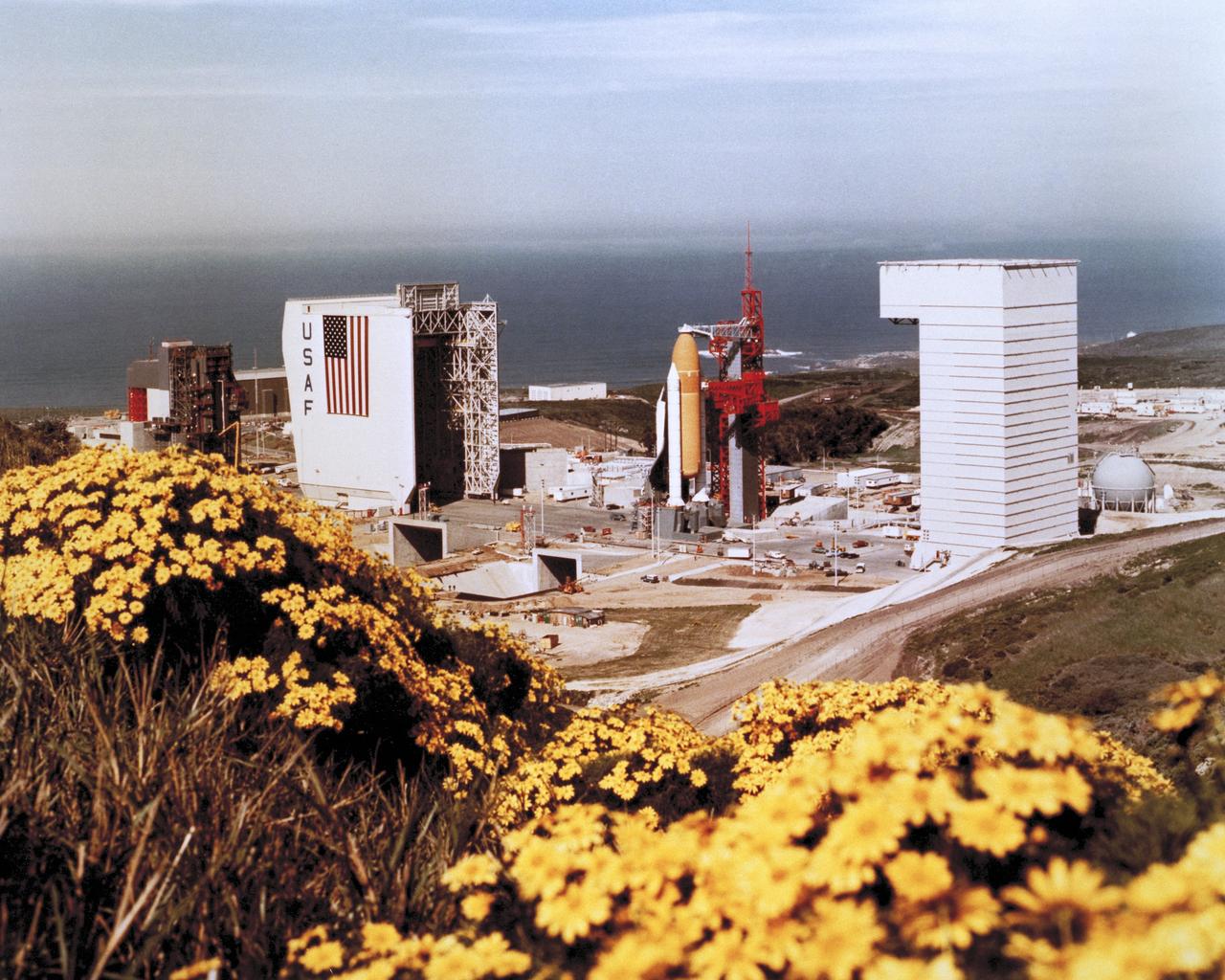
VANDENBERG AIR FORCE BASE, Calif. -- At Vandenberg Air Force Base in the early '80s, the Space Shuttle Enterprise undergoes Pathfinder fit checks at a tower. The Enterprise was built as a test vehicle and was not equipped for spaceflight. Enterprise eventually became the property of the Smithsonian Institution. Vandenberg AFB is located on the Central Coast of California about 150 miles northwest of Los Angeles. The property is comprised of parts of five Mexican land grants and a sixth grant that was transferred virtually intact to the Army. Vandenberg now is operated by the 30th Space Wing, and is the only military installation in the United States from which unmanned government and commercial satellites are launched into polar orbit. It is also the only site from which intercontinental ballistic missiles ICBMs are launched toward the Kwajalein Atoll to verify weapon systems performance. Vandenberg's military service dates back to 1941, when known as Camp Cooke it served as an Army training facility for armored and infantry troops. The main camp closed in June 1946 and was reactivated in August 1950 after the outbreak of the Korean War. The 13th and 20th Armored Divisions and the 40th, 44th, 86th, and 91st Infantry Divisions trained at Cooke. With the advent of the missile age in the 1950s, the Air Force persuaded Secretary of Defense Charles E. Wilson to direct the Army to transfer 64,000 acres of North Camp Cooke to the Air Force for use as a missile launch and training base. In 1958, Camp Cooke was renamed Vandenberg Air Force Base in honor of the late General Hoyt S. Vandenberg, second Air Force Chief of Staff of the United States Air Force and chief architect of today's modern Air Force. Photo Credit: NASA
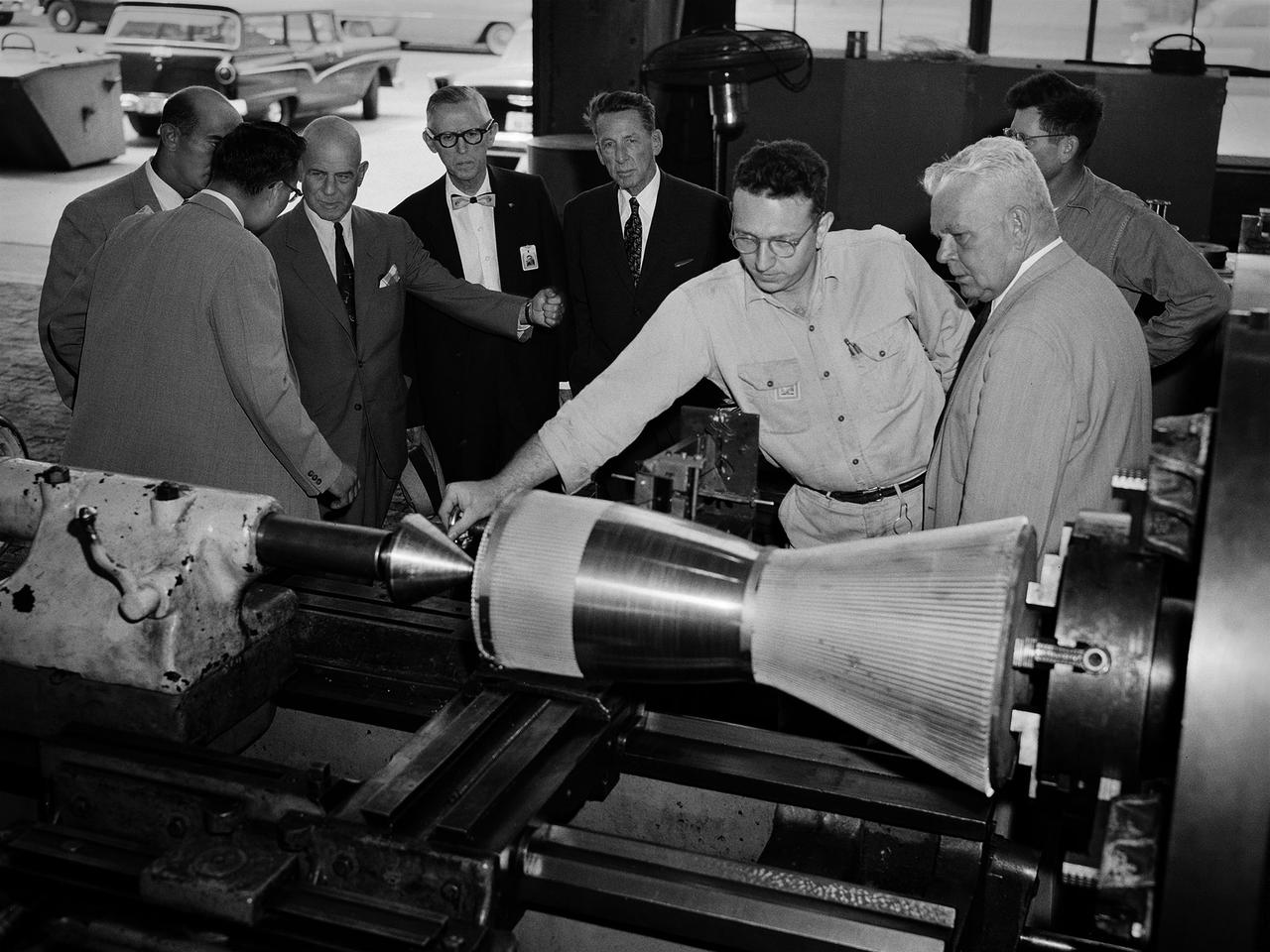
National Advisory Committee for Aeronautics (NACA) Chairman James Doolittle and Thompson Products Chairman of the Board Frederick Crawford receive a tour of the Lewis Flight Propulsion Laboratory during the last few months of the NACA. Lewis mechanic Leonard Tesar demonstrates the machining of a 20,000-pound thrust rocket engine for the group in the Fabrication Shop. From left to right, Associate Director Eugene Manganiello, researcher Edward Baehr, Doolittle, NACA Executive Secretary John Victory, Crawford, Tesar, Lewis Director Raymond Sharp, and mechanic Curtis Strawn. Doolittle began his career as a test pilot and air racer. In 1942 he famously flew a B-25 Mitchell on a daring raid over Tokyo. Doolittle also worked with the aviation industry on the development of aircraft fuels and instrumentation. After the war he served as vice president of Shell Oil and as a key government advisor. In this capacity he also served on the NACA’s Executive Committee for a number of years and served as its Chairman in 1957 and 1958. Tesar was a supervisor at the Sheet Metal Shop in the Fabrication Building. He joined the laboratory in 1948 and enrolled in their Apprentice Program. He graduated from the school three years later as an aviation metalsmith. The Fabrication Branch created a wide variety of hardware for the laboratory’s research projects. Requests from research divisions ranged from sheetmetal manufacturing for aircraft to fabrication of rocket engines. Tesar retired in 1982 after 37 years of service.