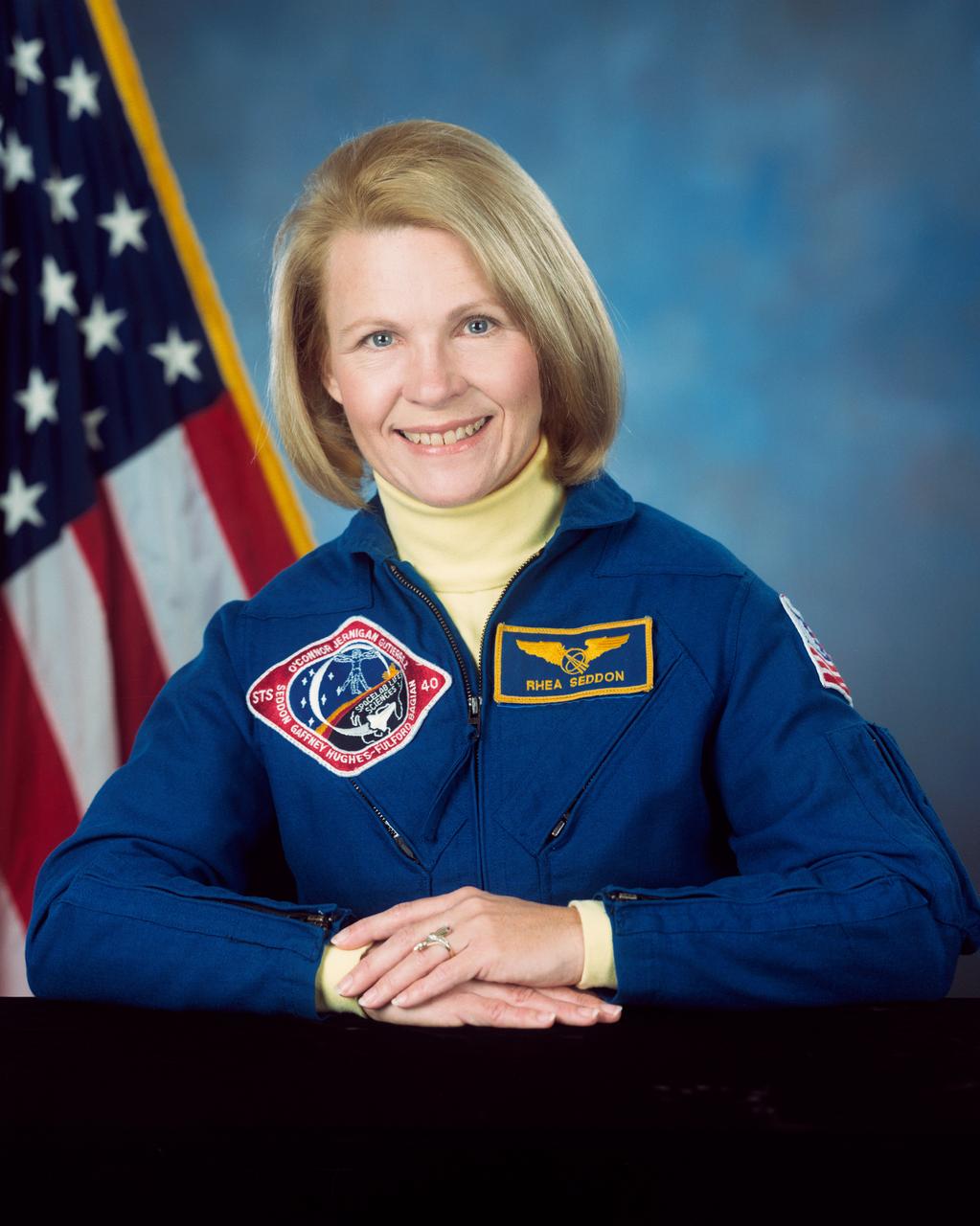
S92-36739 (22 May 1992) --- Astronaut Margaret Rhea Seddon, mission specialist.
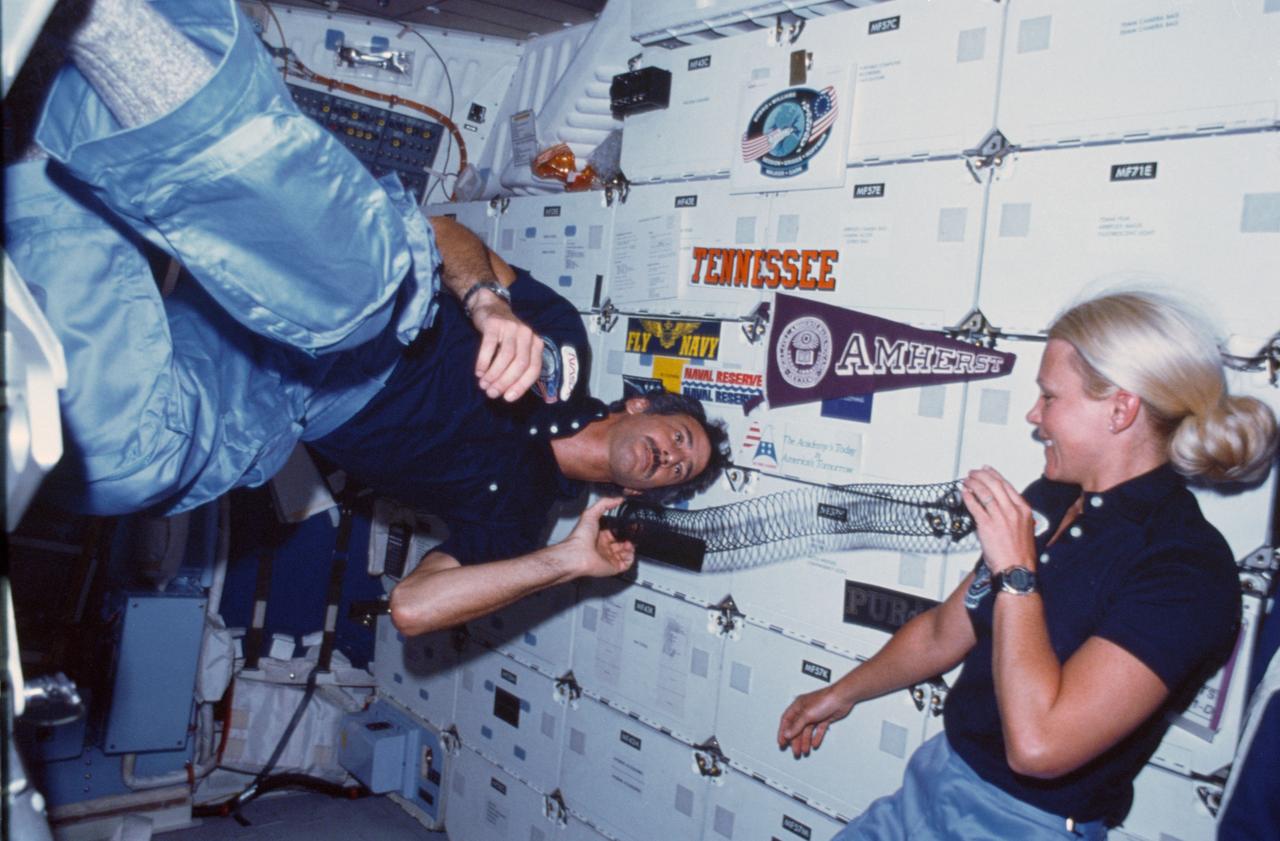
51D-06-015 (12-19 April 1985) --- Astronaut Jeffrey A. Hoffman and Rhea Seddon mission specialists, demonstrate the effect of weightlessness on a slinky toy in the mid-deck of the Space Shuttle Discovery.
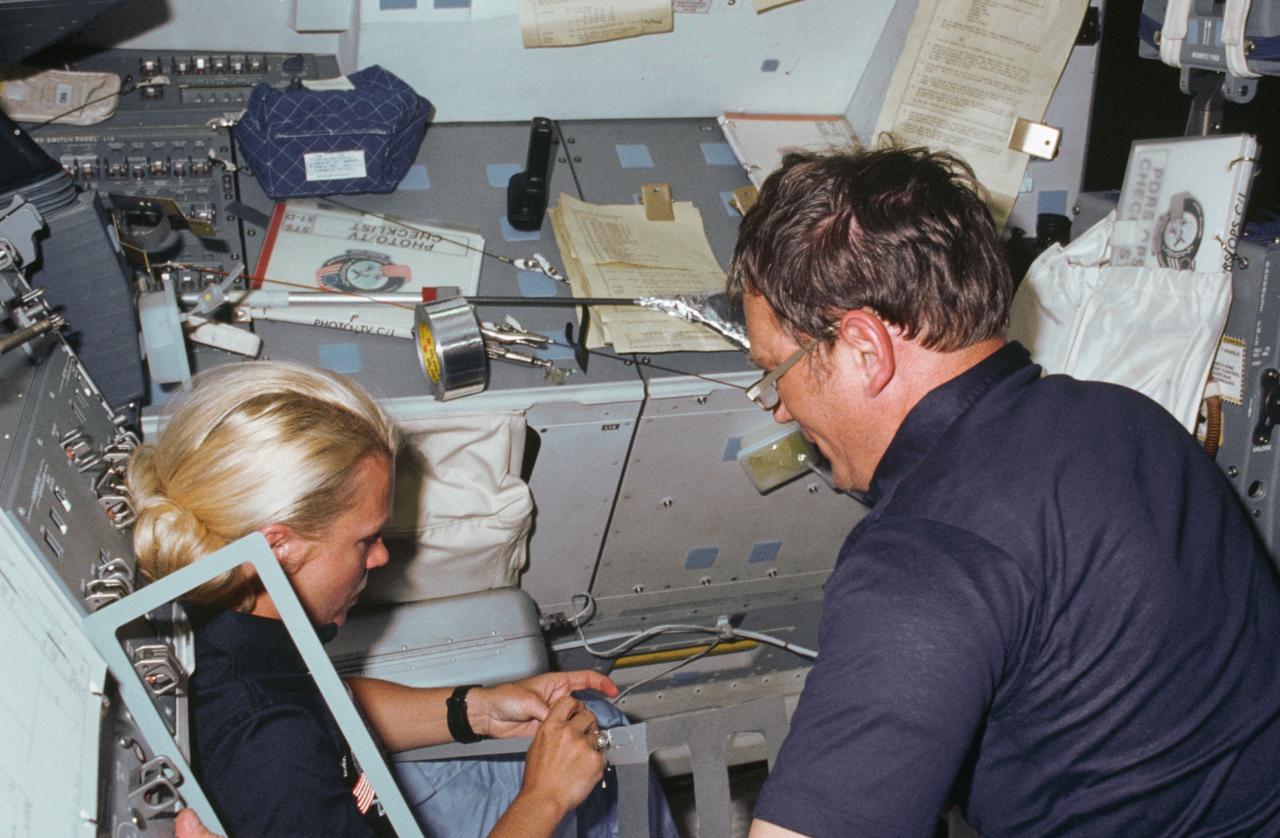
51D-04-015 (15 April 1985) --- Astronaut Rhea Seddon and Karol J. Bobko continue work on snag-type extension for the Remote Manipulator System (RMS) as part of an effort to activate a lever on a troubled communications satellite. Since the crew learned soon after deployment of the Syncom IV (LEASAT) spacecraft that it was not functioning properly plans were formulated for a rendezvous in space between the Discovery and the satellite. A fly swatter-like extension and another resembling a LaCrosse stick were fashioned from onboard supplies and furnishings. Stowage lockers nearby serve as a work bench for the two. At various times during the seven-day mission, the majority of the seven-member crew participated in the tool-making and preparations for an extravehicular activity (EVA) by the flights other two mission specialists -- Jeffrey A. Hoffman and S. David Griggs -- to connect the two tools to the RMS. Bobko is mission commander and Dr. Seddon, a mission specialist.
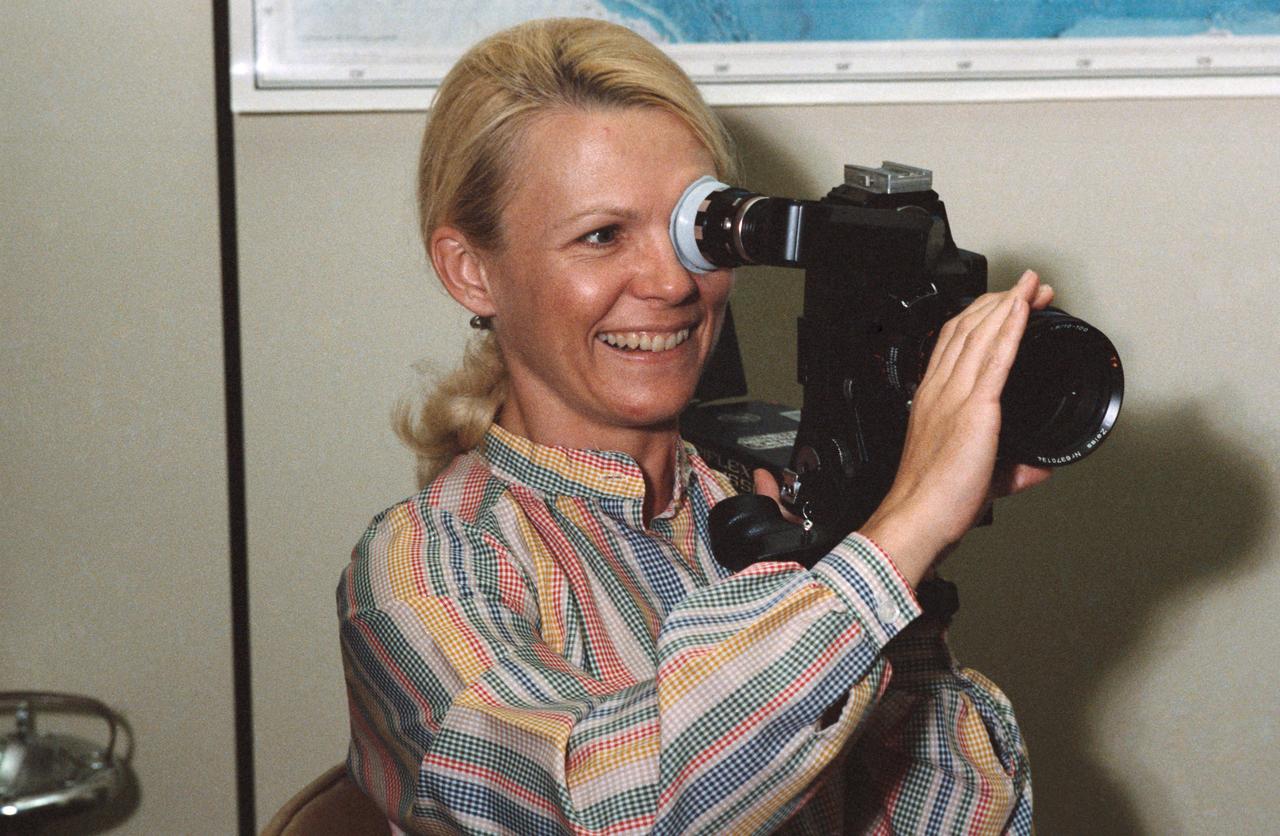
View of STS 51-D mission specialist Rhea Seddon training with the Arriflex 16mm camera.
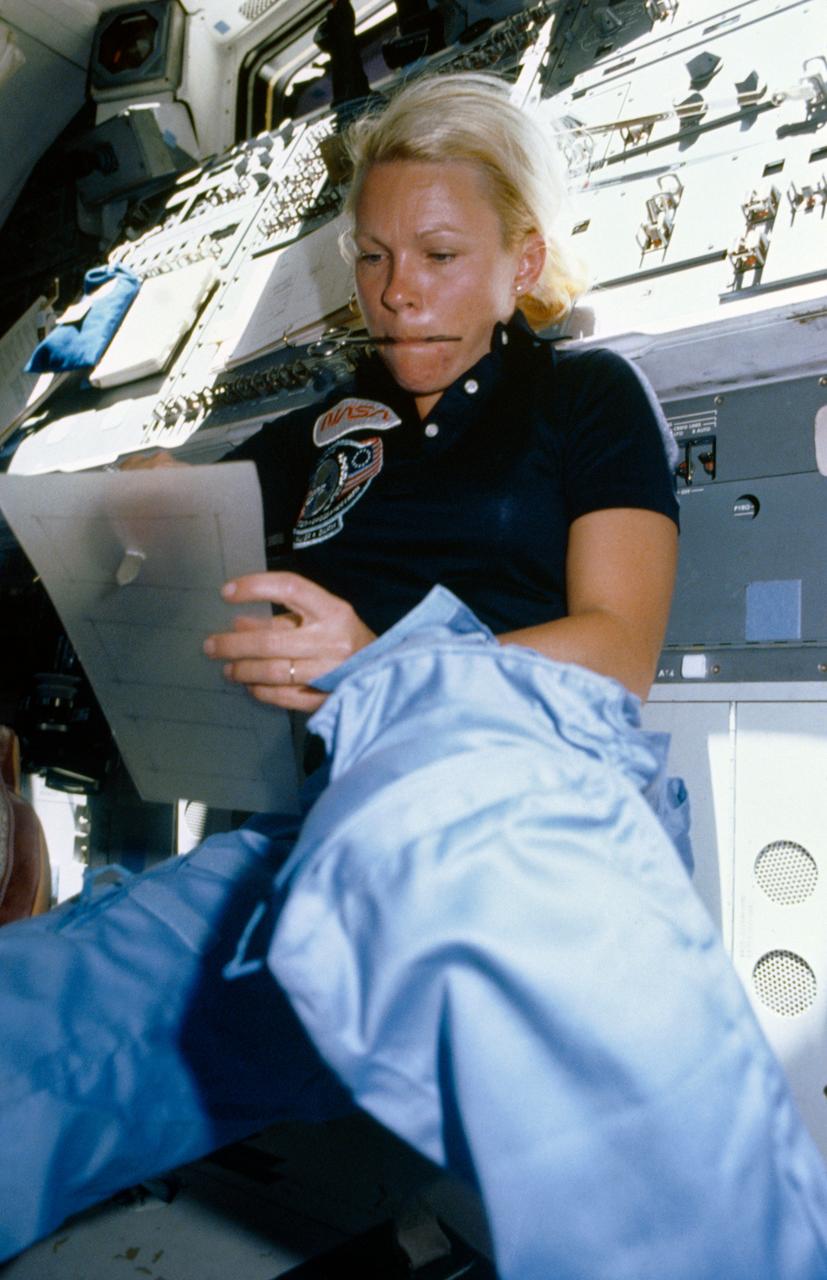
51D-07-003 (12-19 April 1985) --- Astronaut Rhea Seddon begins early work on a fly swatter-like snagging device to be used as an extension to the Remote Manipulator System (RMS) arm on Discovery for an April 17, 1985 attempt to trip a lever on the troubled Syncom-IV satellite.
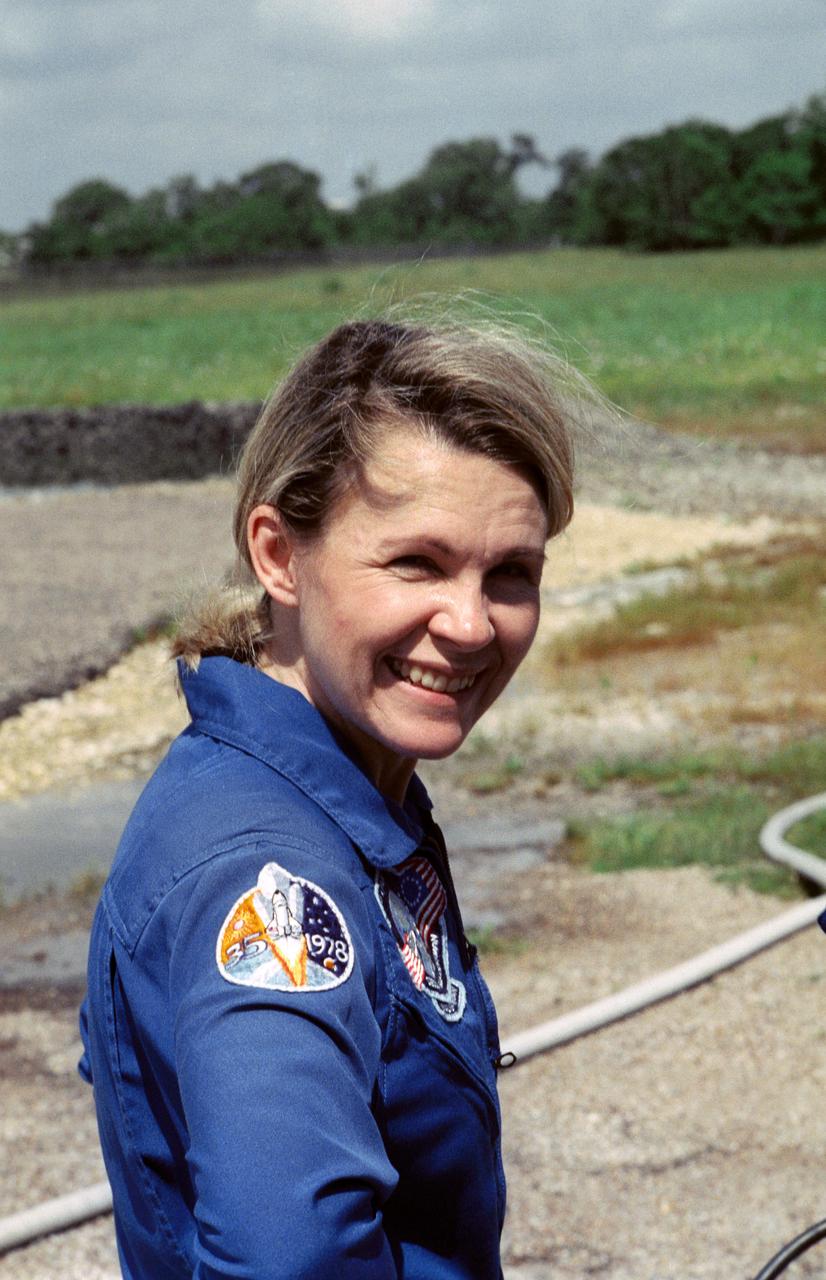
S90-46497 (18 Aug 1990) --- Astronaut Rhea Seddon, STS-40 mission specialist, takes a break from firefighting training at the Johnson Space Center (JSC). In less than a year Dr. Seddon will be joined by four NASA astronauts and two payload specialists for the Spacelab Life Sciences (SLS-1) mission aboard Columbia.
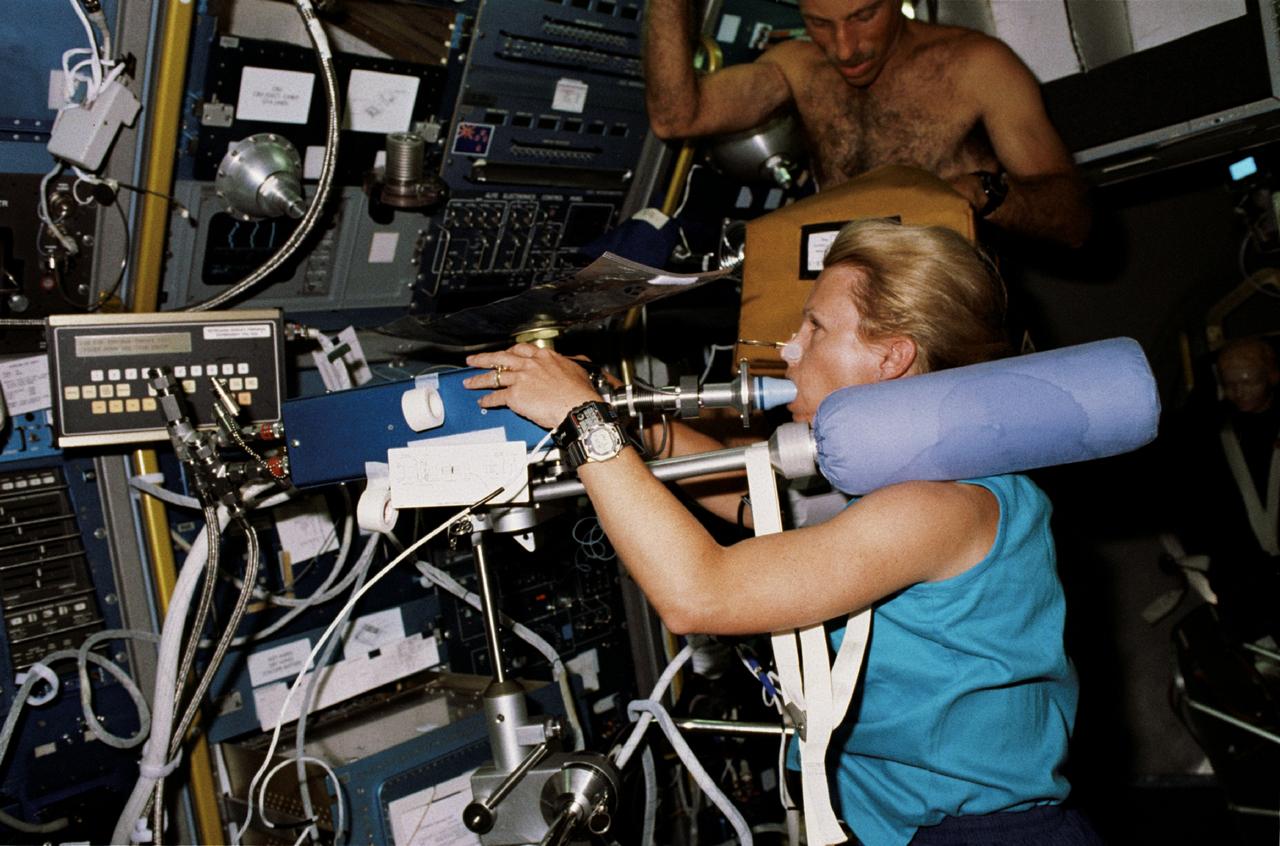
STS040-211-019 (5-14 June 1991) --- Astride the bicycle ergometer, astronaut Rhea Seddon, mission specialist, breathes into the cardiovascular re-breathing unit during the exercise phase of an experiment. The investigation, In-flight Study of Cardiovascular Deconditioning (Experiment 066), was developed by Dr. Leon E. Farhi of the State University of New York in Buffalo. It focuses on the deconditioning of the heart and lungs and changes in cardiopulmonary function that occur upon return to Earth. By using non-invasive techniques of prolonged expiration and re-breathing, investigators can determine the amount of blood pumped out of the heart (cardiac output), the ease with which blood flows through all the vessels (total peripheral resistance), oxygen used and carbon dioxide released by the body, and lung function and volume changes. Measurements are made both while crew members are resting and while they pedal the exercise bicycle, as Dr. Seddon is doing here. This scene was photographed with a 35mm camera.
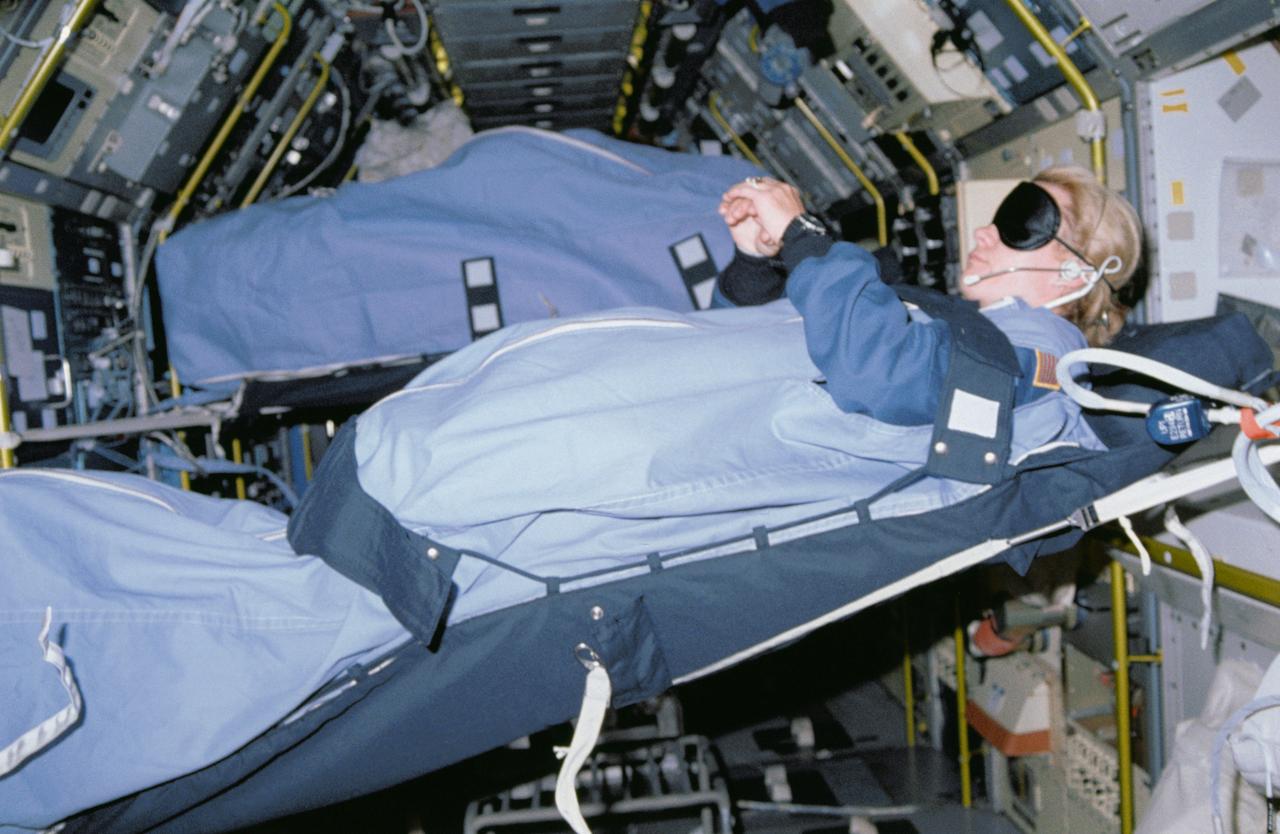
STS040-31-020 (5-14 June 1991) --- During the nine-day mission, some of the crew slept in the SLS-1 module. Astronaut Rhea Seddon, using various restraints, sleeps horizontally in this scene. The image was one of 25 visuals used by the STS-40 crew at its Post Flight Press Conference (PFPC) on June 28, 1991.
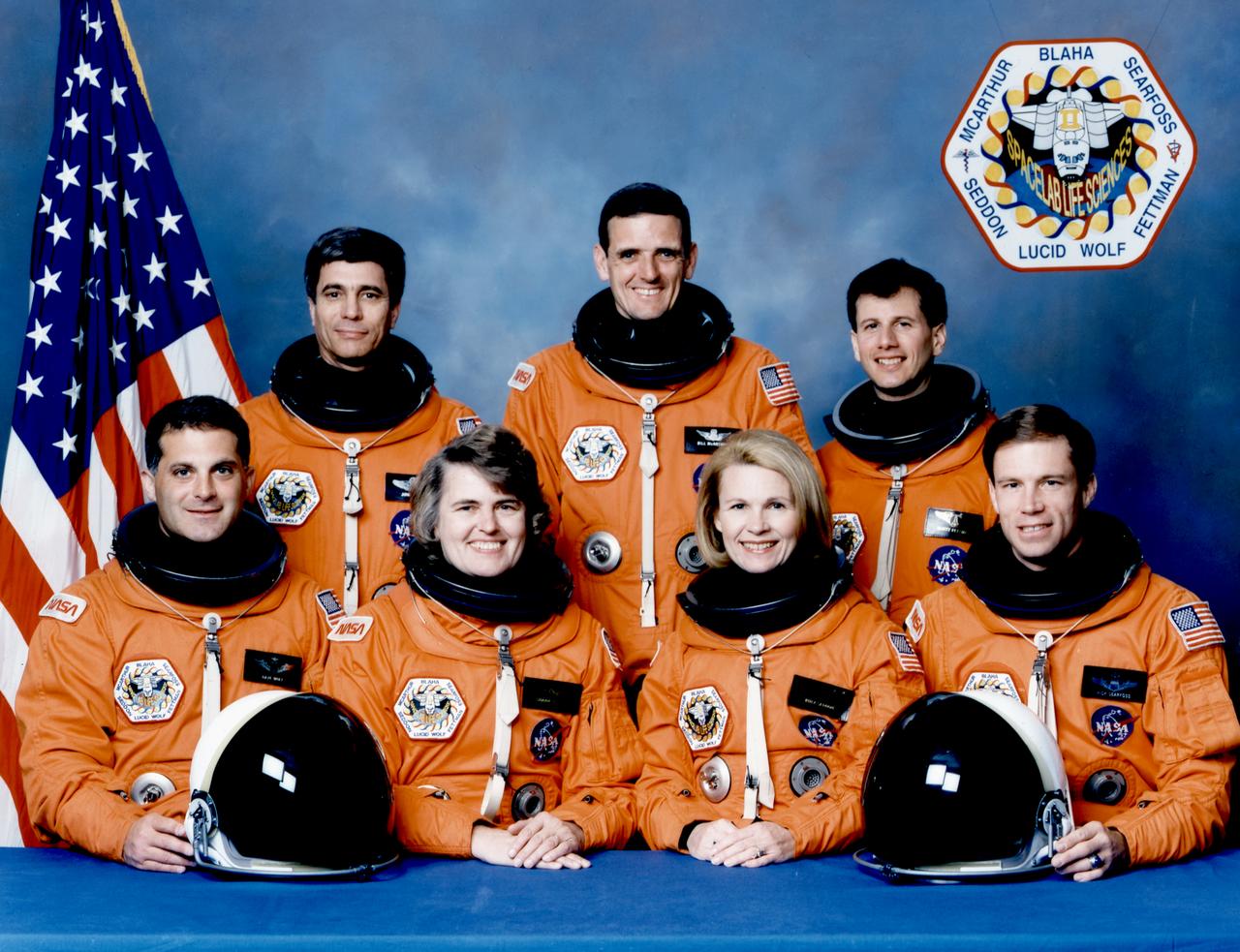
The STS-58 crew portrait includes astronauts (seated left to right) David A. Wolf, Shannon W. Lucid, and Rhea Seddon, all mission specialists; and Richard A. Searfoss, pilot. Standing in the rear, left to right, are John E. Blaha, commander; William S. McArthur, Jr., mission specialist; and Martin J. Fettmen, payload specialist. Launched aboard the Space Shuttle Columbia on October 18, 1993 at 10:53:10 a.m. (EDT), STS-58 served as the second dedicated Spacelab Life Sciences (SLS-2) mission.

The crew assigned to the STS-51D mission included (front left to right) Karol J. Bobko, commander; Donald E. Williams, pilot; M. Rhea Seddon, mission specialist; and Jeffrey A. Hoffman, mission specialist. On the back row, left to right, are S. David Griggs, mission specialist; and payload specialists Charles D. Walker, and E. Jake Garn (Republican Utah Senator). Launched aboard the Space Shuttle Discovery on April 12, 1985 at 8:59:05 am (EST), the STS-51D mission’s primary payloads were the TELESAT-1 (ANIK-C) communications satellite and the SYNCOM IV-3 (also known as LEASAT-3).
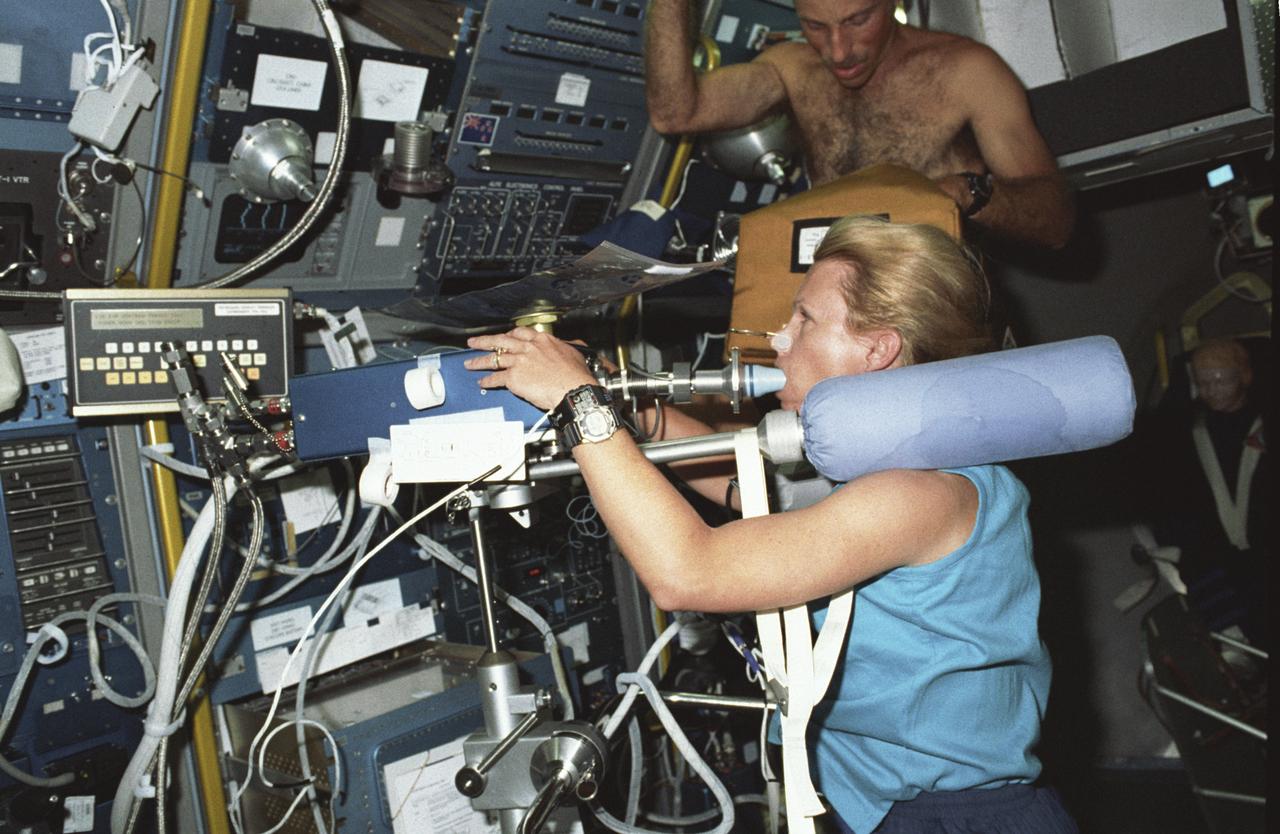
Spacelab Life Science -1 (SLS-1) was the first Spacelab mission dedicated solely to life sciences. The main purpose of the SLS-1 mission was to study the mechanisms, magnitudes, and time courses of certain physiological changes that occur during space flight, to investigate the consequences of the body's adaptation to microgravity and readjustment to Earth's gravity, and bring the benefits back home to Earth. The mission was designed to explore the responses of the heart, lungs, blood vessels, kidneys, and hormone-secreting glands to microgravity and related body fluid shifts; examine the causes of space motion sickness; and study changes in the muscles, bones, and cells. This photograph shows astronaut Rhea Seddon conducting an inflight study of the Cardiovascular Deconditioning experiment by breathing into the cardiovascular rebreathing unit. This experiment focused on the deconditioning of the heart and lungs and changes in cardiopulmonary function that occur upon return to Earth. By using noninvasive techniques of prolonged expiration and rebreathing, investigators can determine the amount of blood pumped out of the heart (cardiac output), the ease with which blood flows through all the vessels (total peripheral resistance), oxygen used and carbon dioxide released by the body, and lung function and volume changes. SLS-1 was launched aboard the Space Shuttle Orbiter Columbia (STS-40) on June 5, 1995.
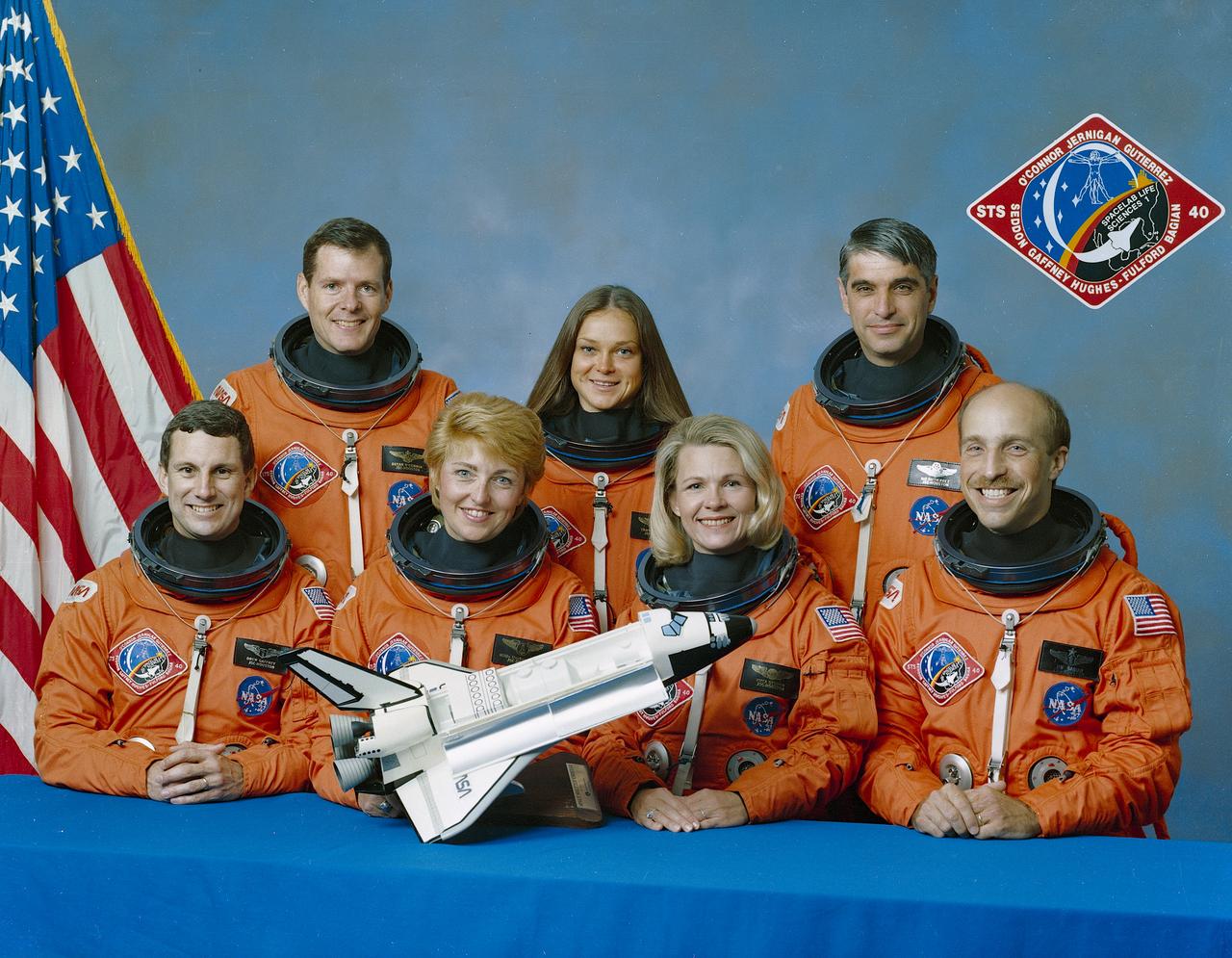
The STS-40 crew portrait includes 7 astronauts. Pictured on the front row from left to right are F. Drew Gaffney, payload specialist 1; Milli-Hughes Fulford, payload specialist 2; M. Rhea Seddon, mission specialist 3; and James P. Bagian, mission specialist 1. Standing in the rear, left to right, are Bryan D. O’Connor, commander; Tamara E. Jernigan, mission specialist 2; and Sidney M. Gutierrez, pilot. Launched aboard the Space Shuttle Columbia on June 5, 1991 at 9:24; am (EDT), the STS-40 mission was the fifth dedicated Spacelab Mission, Spacelab Life Sciences-1 (SLS-1), and the first mission dedicated solely to life sciences.
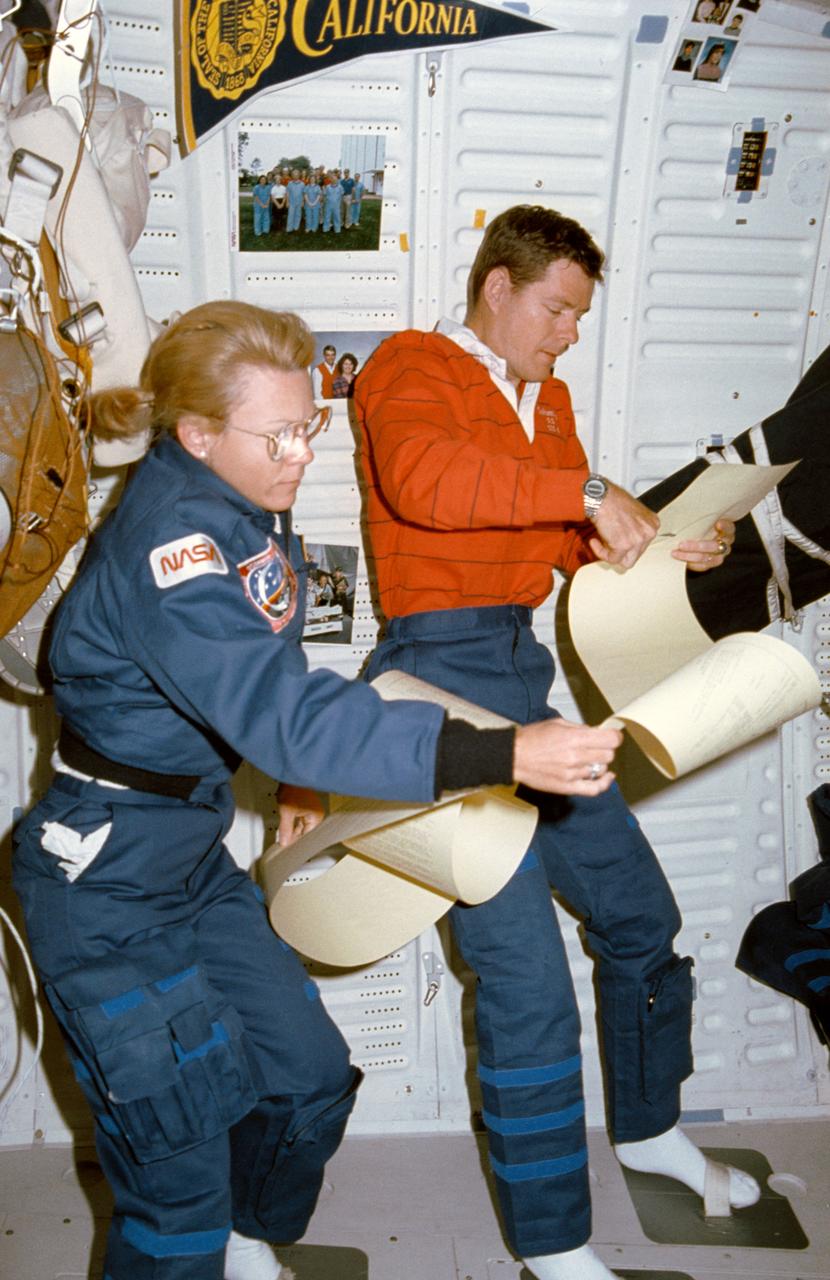
STS040-17-003 (5-14 June 1991) --- Astronauts Rhea Seddon and Bryan D. O'Connor share a 15 ft. length of teleprinter messages aboard Columbia. During the nine-day Spacelab Life Sciences (SLS-1) mission, the STS-40 crewmembers received a large volume of similar print-outs from ground controllers. Using foot restraints, the two obviously expect their perusing to take awhile. This middeck scene was photographed with a 35mm camera.
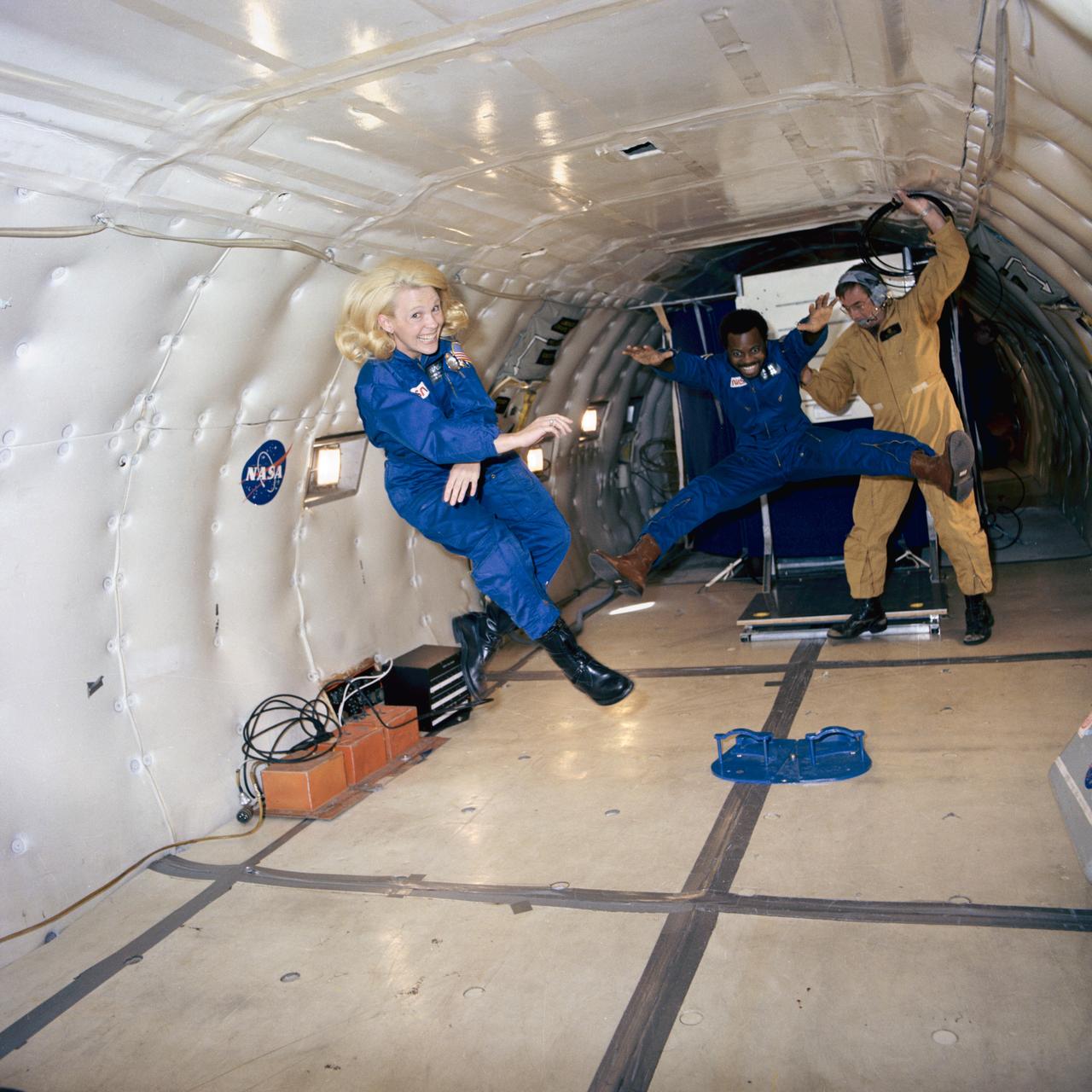
Zero-gravity experiments in KC-135 conducted by John Young, Robert L. Crippen, Joseph Kerwin, and Margaret Seddon. 1. Kerwin, Joseph - Zero-G 2. Seddon, Margaret - Zero-G 3. Young, John - Zero-G 4. Aircraft - KC-135
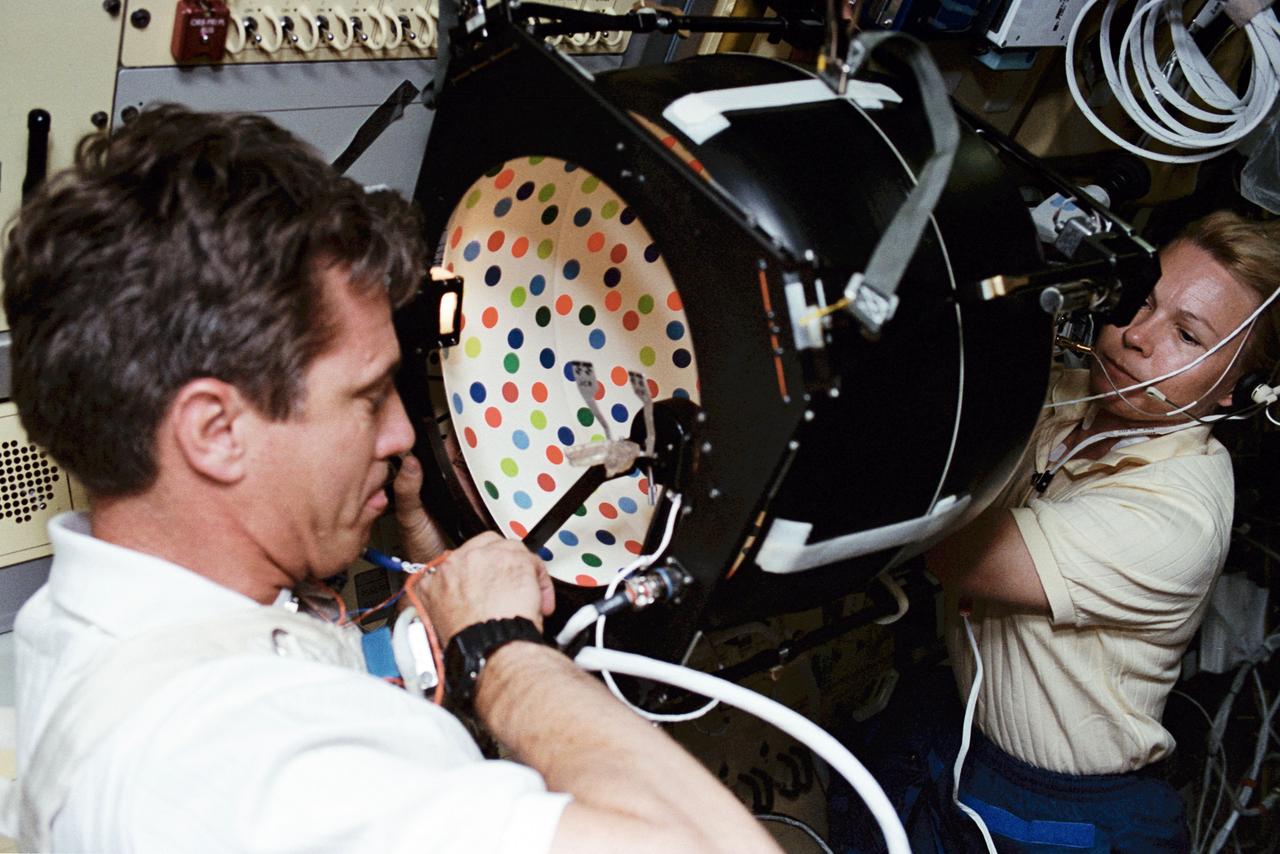
STS058-03-020 (18 Oct.-1 Nov. 1993) --- In the Spacelab onboard the space shuttle Columbia, STS-58 Commander John Blaha is positioned at the Rotating Dome vestibular experiment as Payload Commander Rhea Seddon sets up the experiment. Photo credit: NASA
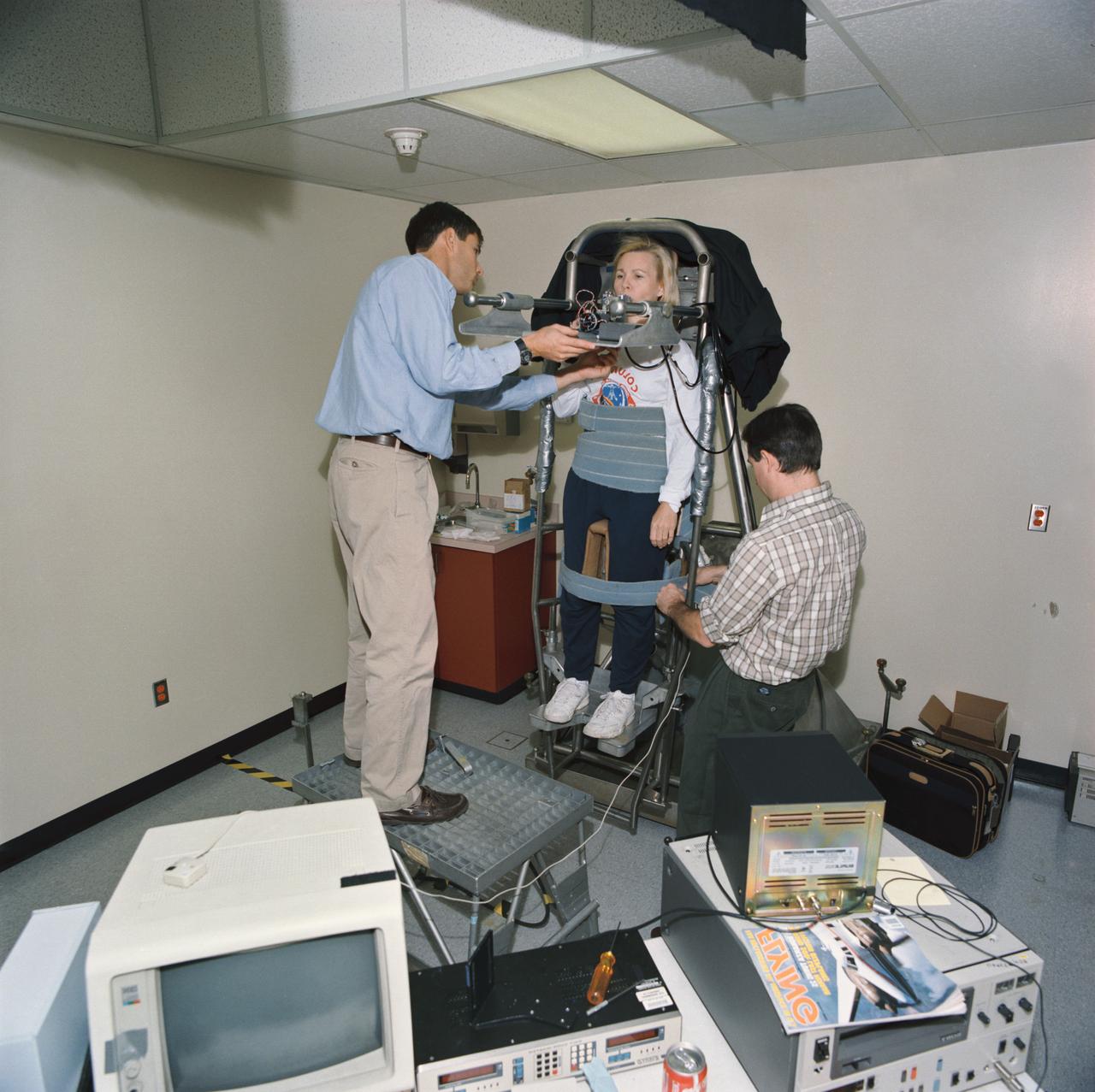
S93-45376 (29 Sept 1993) --- Astronaut Rhea Seddon, STS-58 payload commander, participates in data collection for neurovestibular functions. The data collection process was in preparation for the Spacelab Life Sciences (SLS-2) flight scheduled for next month.
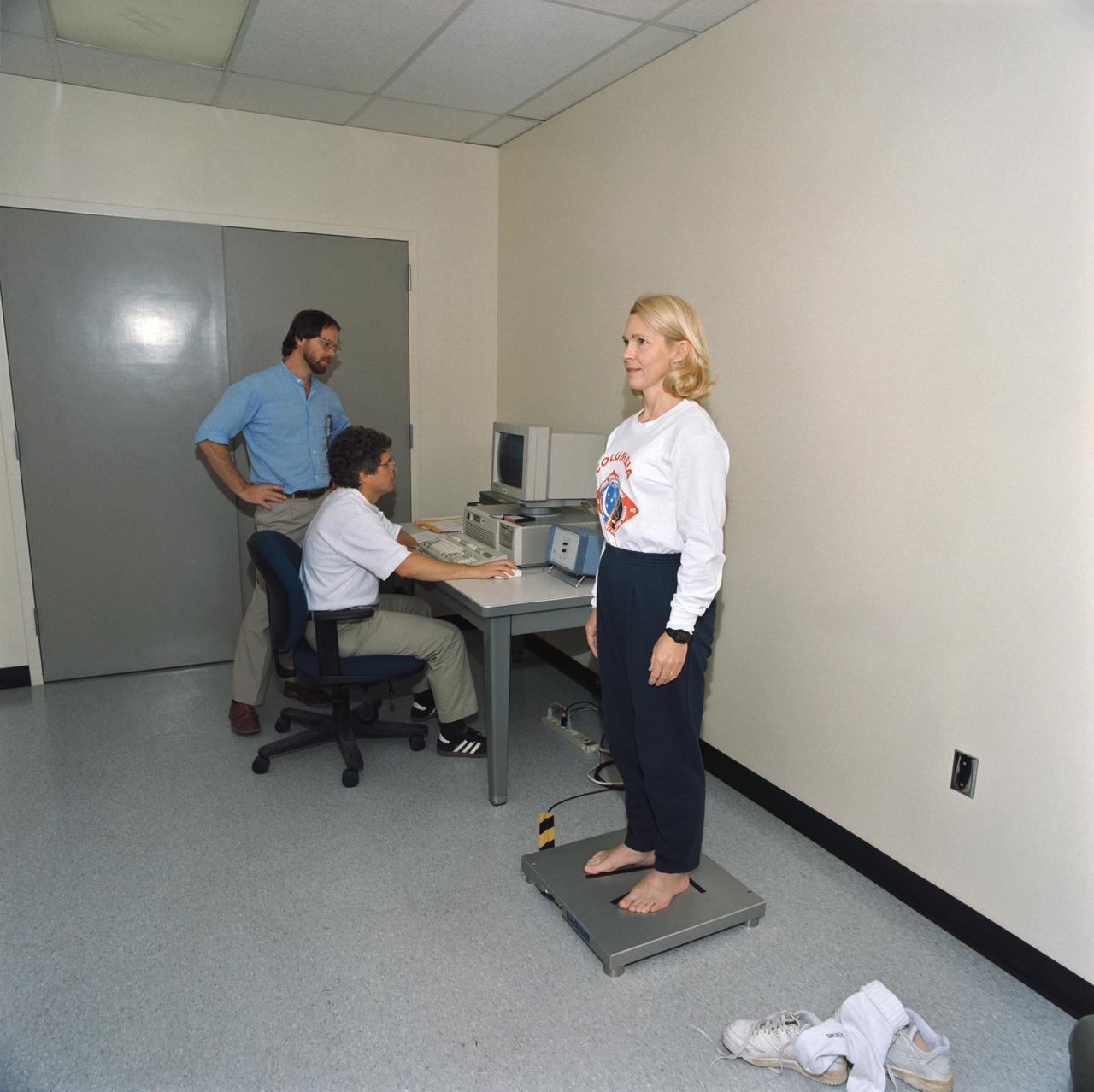
S93-45367 (29 Sept 1993) --- Astronaut Rhea Seddon, STS-58 payload commander, participates in biomedical data collection. The seven member crew spent an entire day recording important pre-flight data in preparation for the two week Spacelab Life Sciences (SLS-2) mission, scheduled for next month.

51D-09-034 (12-19 April 1985) --- The seven crew members of STS-51D take time, during a busy full week in space, to pose for a "star-burst" type in-space portrait. Hold picture with astronaut Rhea Seddon at bottom center. Counter-clockwise from the bottom left are Jeffrey A. Hoffman, mission specialist; Dr. Seddon, mission specialist; Charles D. Walker, payload specialist; U. S. Senator E. J. (Jake) Garn, payload specialist; S. David Griggs, mission specialist; Karol J. Bobko, mission commander; and Donald W. Williams, pilot. A pre-set 35mm camera exposed the frame in the mid-deck of the Earth-orbiting Space Shuttle Discovery. The crew launched at 8:59 a.m. (EST), April 12, 1985 and landed at 8:54 a.m. (EST), April 19, 1985 spending five minutes less than a full week on the busy mission.

S79-29592 (28 Feb 1979) --- Sporting their new Shuttle-type constant-wear garments, these six astronaut candidates pose for a picture in the crew systems laboratory at the Johnson Space Center (JSC) with the personnel rescue enclosure (PRE) or "rescue ball" and an unoccupied Apollo EMU. From left to right are Rhea Seddon, Kathryn D. Sullivan, Judith A. Resnik, Sally K. Ride, Anna L. Fisher and Shannon W. Lucid.

S79-29594 (28 Feb 1979) --- Sporting their new Shuttle-type constant-wear garments, these six astronaut candidates pose for a picture in the crew systems laboratory at the Johnson Space Center (JSC). From left to right are Rhea Seddon, Sally K. Ride, Kathryn D. Sullivan, Shannon W. Lucid, Anna L. Fisher and Judith A. Resnik.
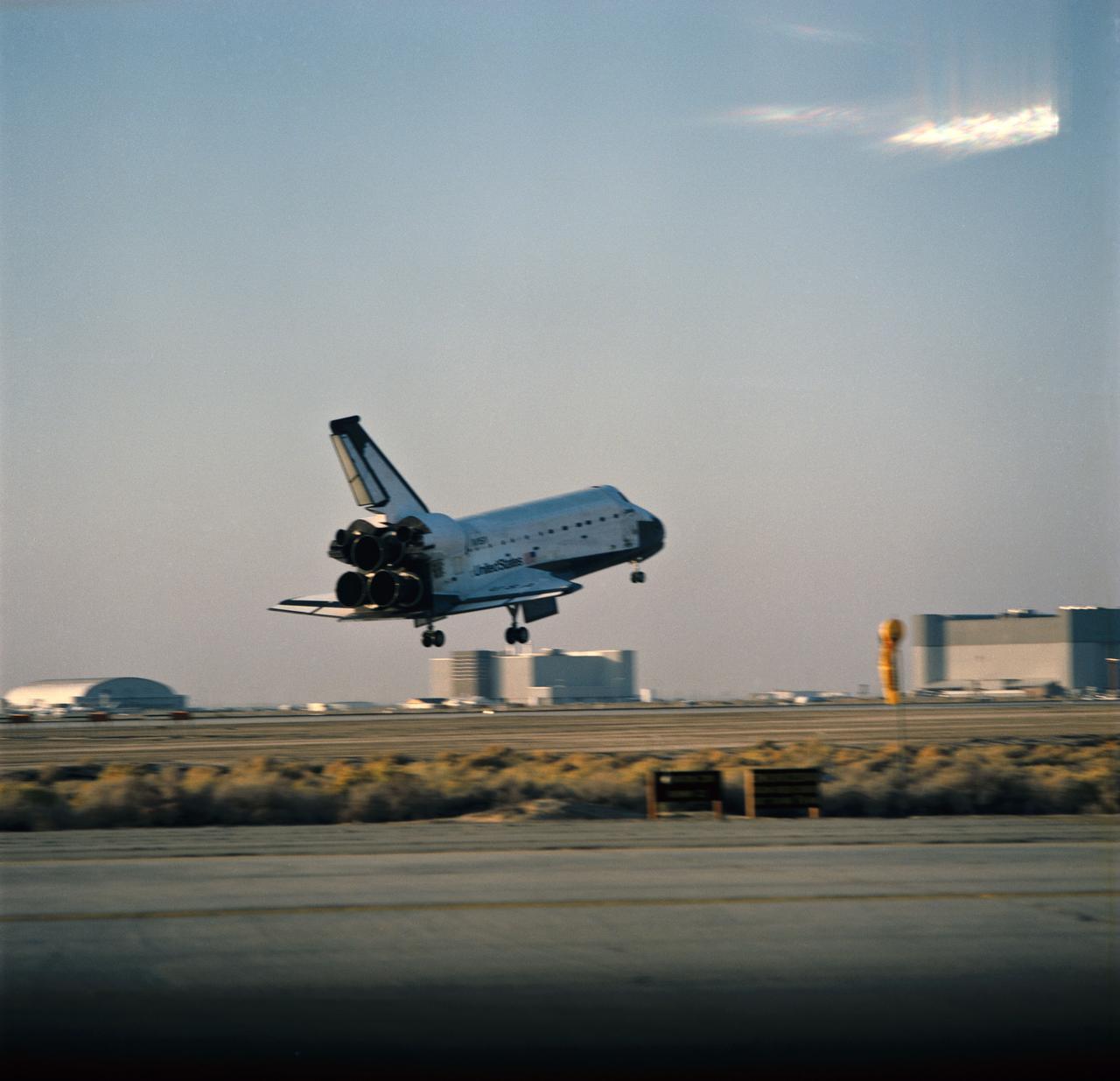
STS58-S-126 (1 Nov 1993) --- The Space Shuttle Columbia is about to touch down on the runway at Edwards Air Force Base (EAFB) in California. The landing, which occurred at 7:06 a.m. (PST), November 1, 1993, completed a two week mission in space devoted to medical research. Onboard the spacecraft were astronauts John E. Blaha, Richard A. Searfoss, Rhea Seddon, Shannon W. Lucid, David A. Wolf and William S. McArthur along with payload specialist Martin J. Fettman, DVM.

S79-29596 (28 Feb 1979) --- Contrasting the old with the new, six astronaut candidates pose for photographers in their new constant wear garments, ideal for the zero-gravity tasks in the pressurized environs of Space Shuttle. The "old" is an Apollo type spacesuit used for extravehicular activity (EVA). From left to right are Shannon W. Lucid, Rhea Seddon, Kathryn D. Sullivan, Judith A. Resnik, Anna L. Fisher and Sally K. Ride.
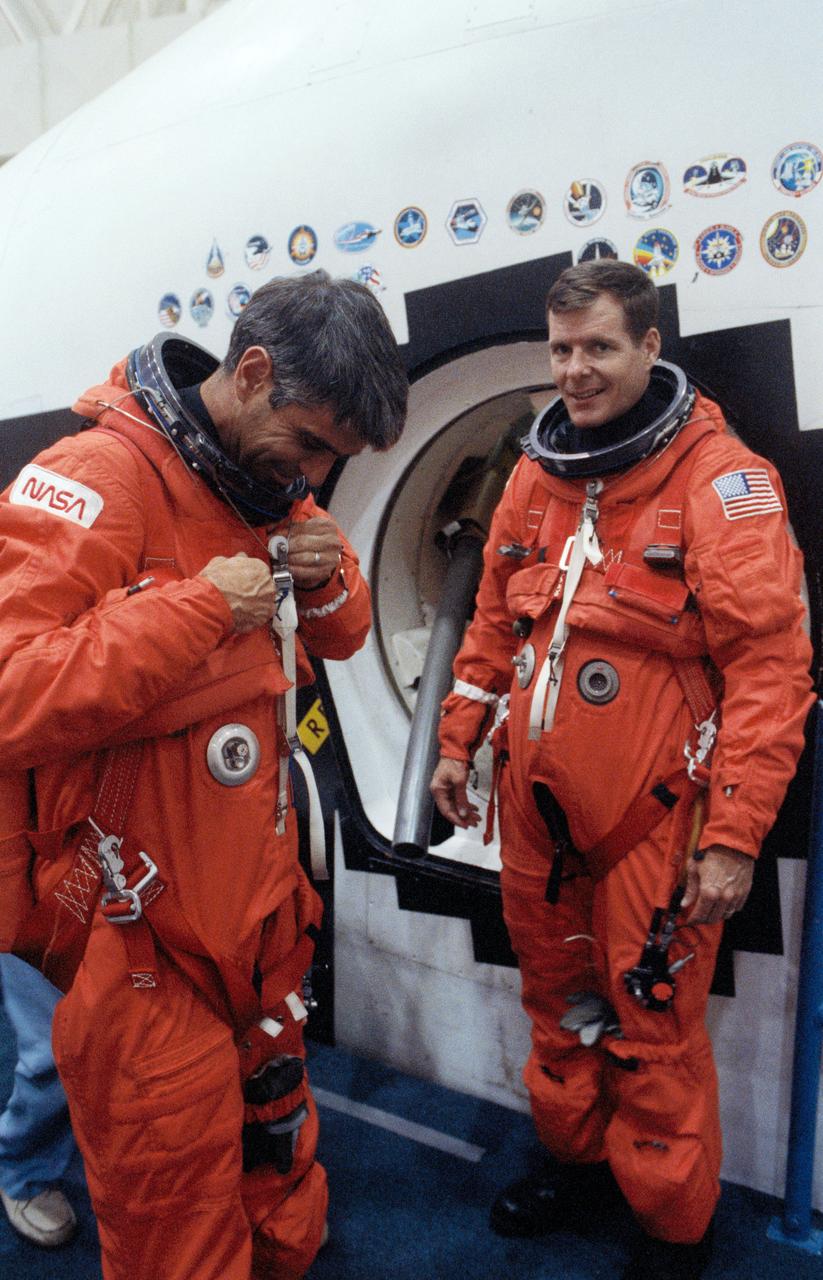
S90-41360 (11 June 1990) --- Two crewmembers assigned to NASA's Spacelab Life Sciences (SLS-1)/STS-40 mission are pictured during emergency egress training in the Shuttle mockup and integration laboratory at the Johnson Space Center (JSC). Seen are astronauts Sidney M. Gutierrez (left) pilot, and Bryan D. O'Connor, mission commander. Out of frame are astronauts Rhea Seddon, James P. Bagian, Tamara E. Jernigan, all mission specialists; and payload specialists Millie Hughes-Fulford and F. Drew Gaffney.
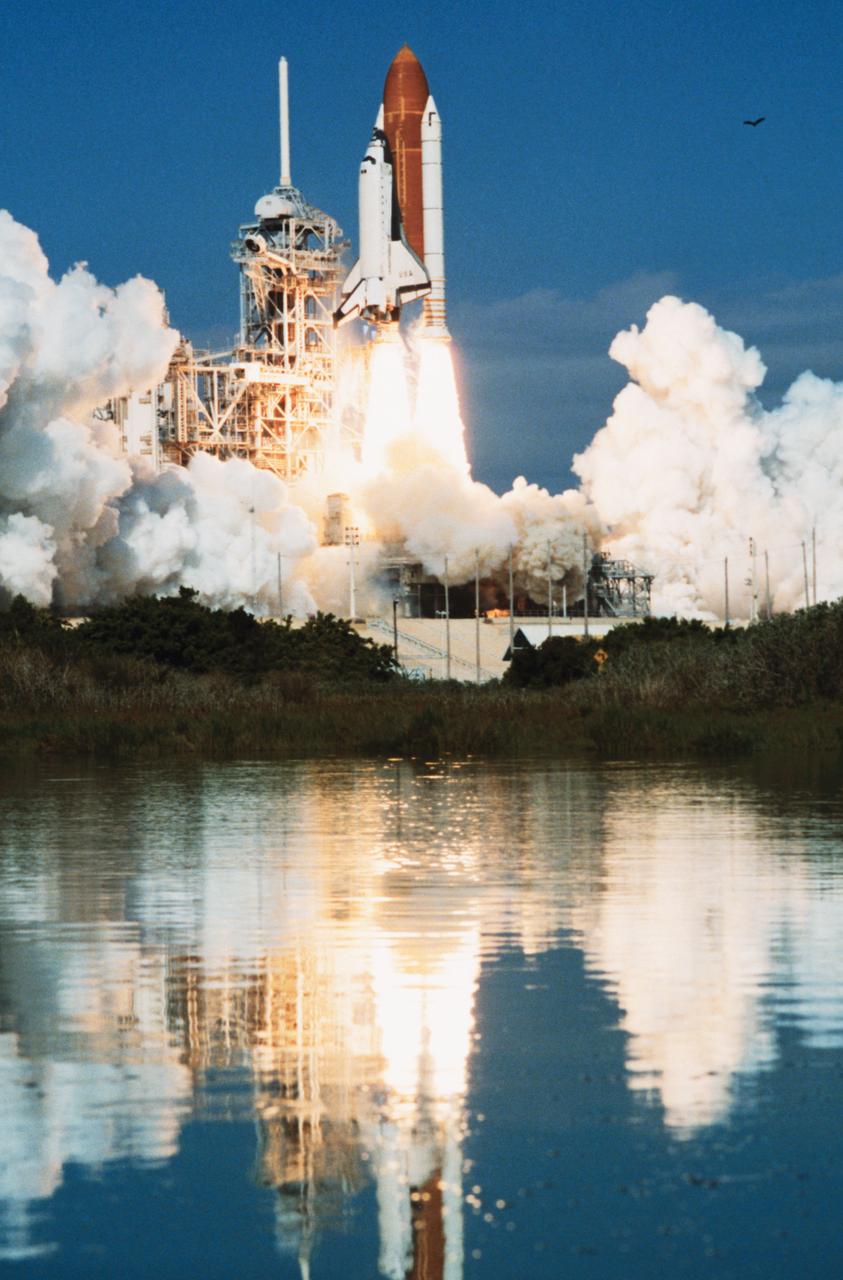
STS058-S-092 (18 Oct 1993) --- The Space Shuttle Columbia, with a crew of seven and a science module aboard, lifts off from Launch Complex 39 at Kennedy Space Center (KSC), leaving its reflection in nearby marsh. Launch occurred at 10:53 a.m. (EDT), October 18, 1993. Onboard were astronauts John E. Blaha, Richard A. Searfoss, Rhea Seddon, Shannon W. Lucid, David A. Wolf and William S. McArthur along with payload specialist Martin J. Fettman.
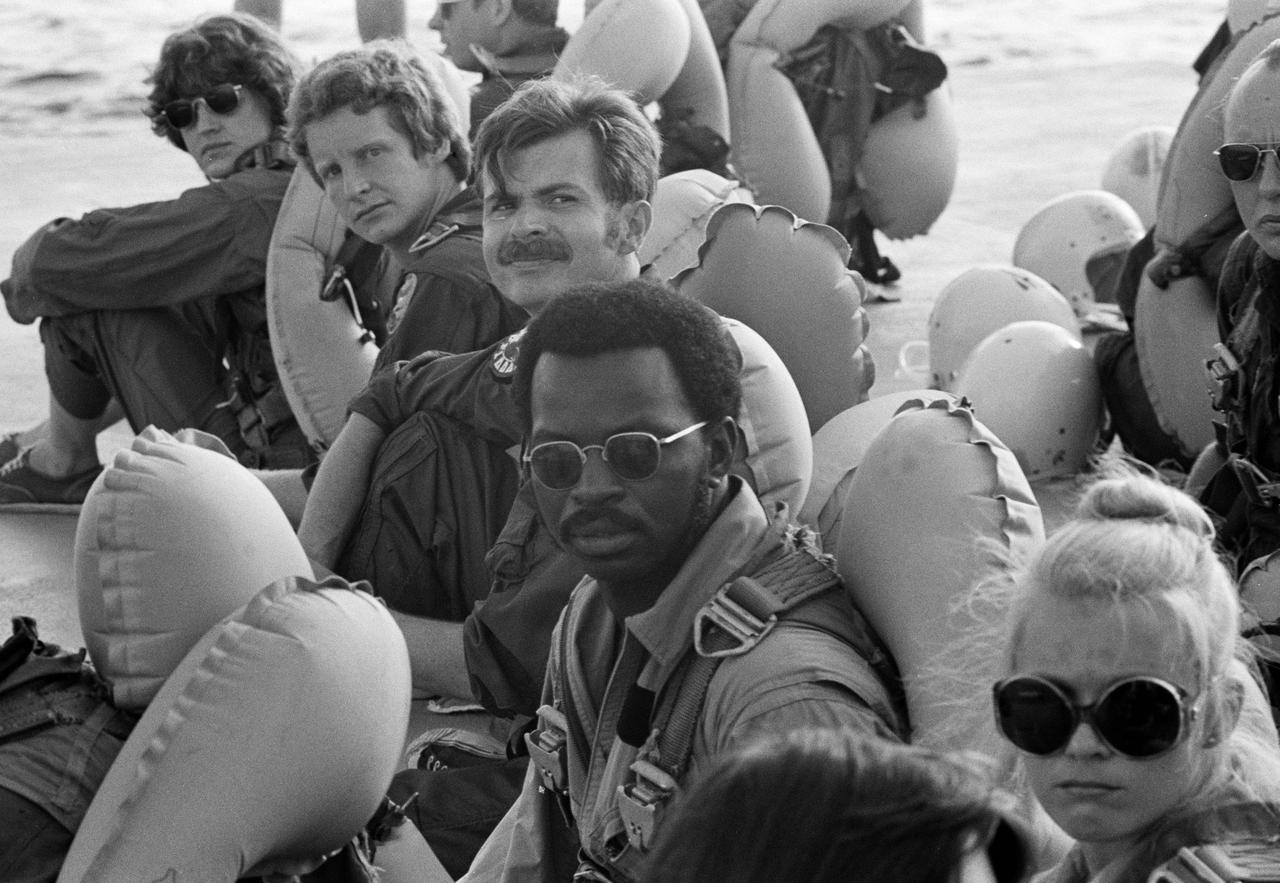
S78-33689 (1978) ASCAN WATER SURVIVAL SCHOOL TRAINING VIEW 1978. Several new astronaut trainees are seen prior to a training exercise at the water survival school in Florida attended by 16 of the candidates. From far left to right are Shannon W. Lucid, Steven A. Hawley, Jeffrey A. Hoffman, Ronald E. McNair and Rhea Seddon. The overall program, held at Homestead Air Force Base, was designed to prepare the trainees for proper measures to take in the event of ejection from an aircraft over water. NASA Photograph.
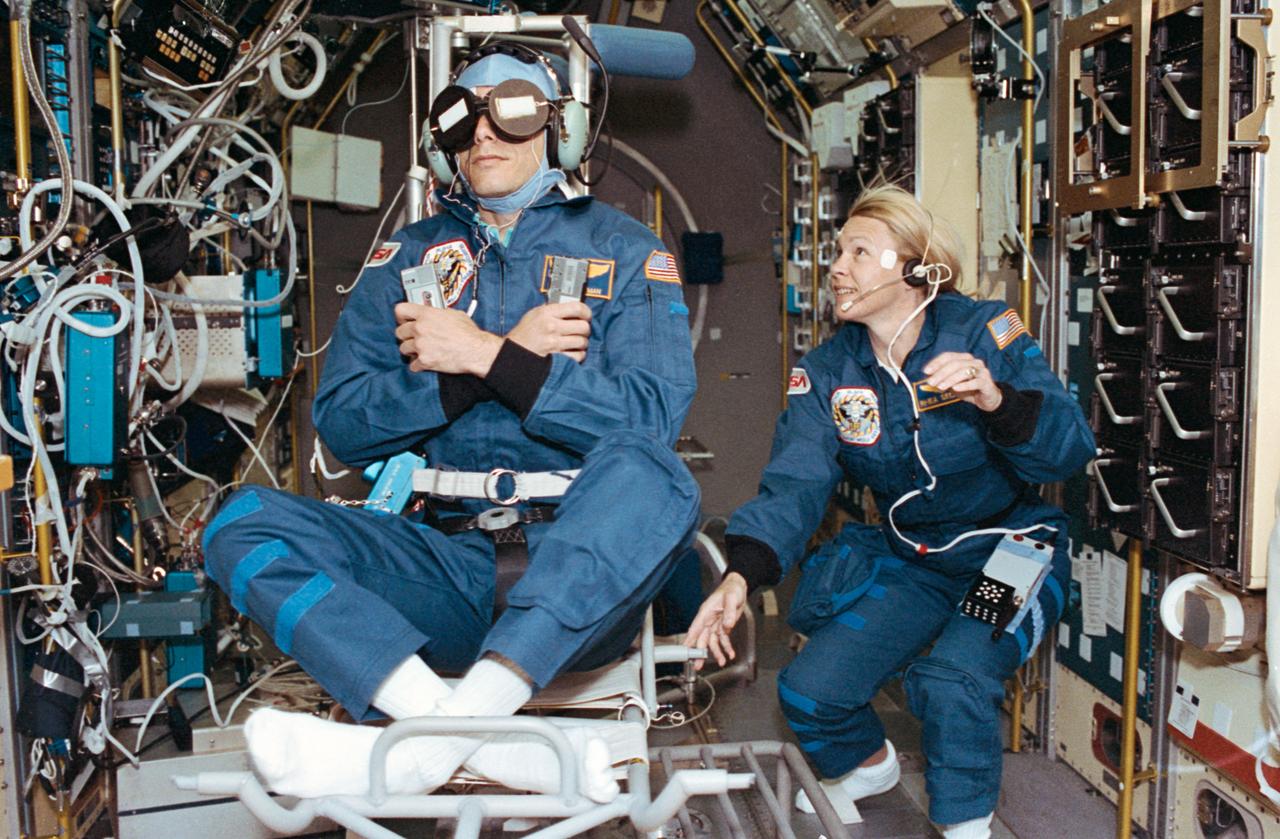
STS058-202-002 (18 Oct.-1 Nov. 1993) --- Astronaut Rhea Seddon, STS-58 payload commander, spins the Spacelab Life Sciences (SLS-2) rotating chair as payload specialist Martin J. Fettman serves as test subject. The two joined five NASA astronauts for fourteen days of medical research aboard the Earth-orbiting space shuttle Columbia. Photo credit: NASA
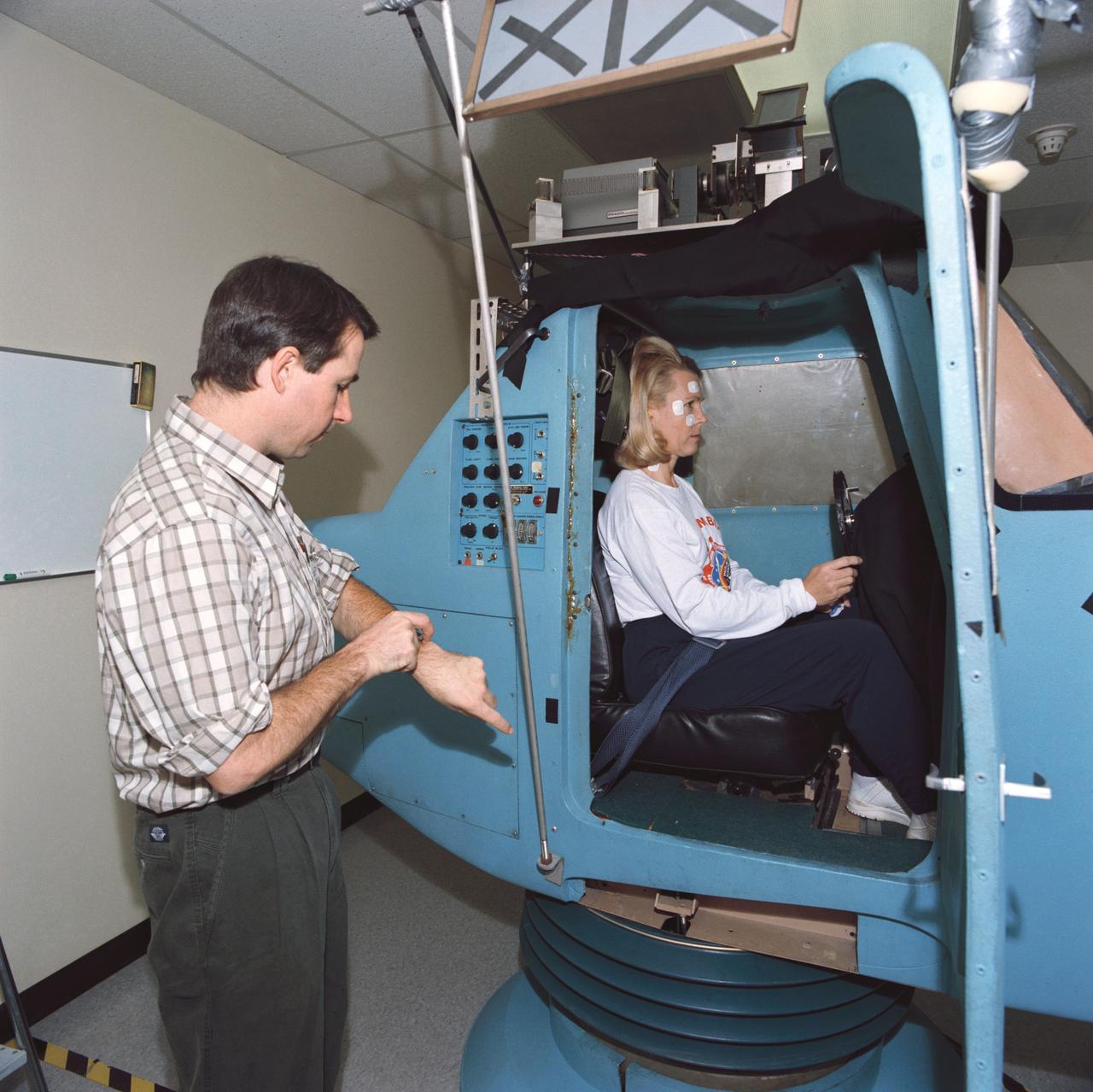
S93-45373 (29 Sept 1993) --- Astronaut Rhea Seddon, STS-58 payload commander, is in a piloting simulator as part of a pre-flight data collection project for neurovestibular functions. The seven Spacelab Life Sciences (SLS-2) crew members devoted a full day to miscellaneous biomedical data collection in preparation for next month's two week mission aboard Columbia.
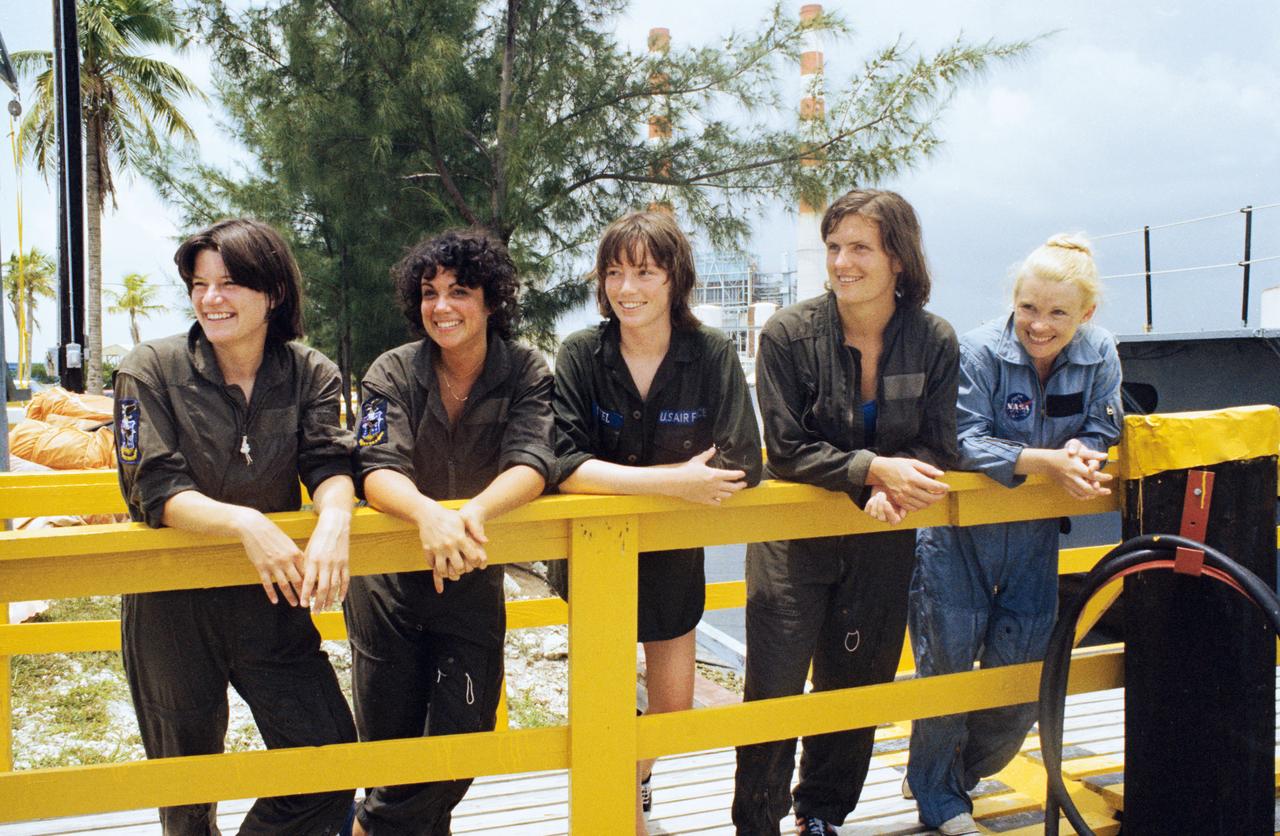
S78-33616 (31 July-2 Aug 1978) --- Taking a break from the various training exercises at a three-day water survival school held near Homestead Air Force Base, Florida are these five astronaut candidates left to right are Sally K. Ride, Judith A. Resnik, Anna L. Fisher; Kathryn D. Sullivan and Rhea Seddon. They were among fifteen mission specialist-astronaut candidates who joined one of the pilot astronaut candidates for the training.
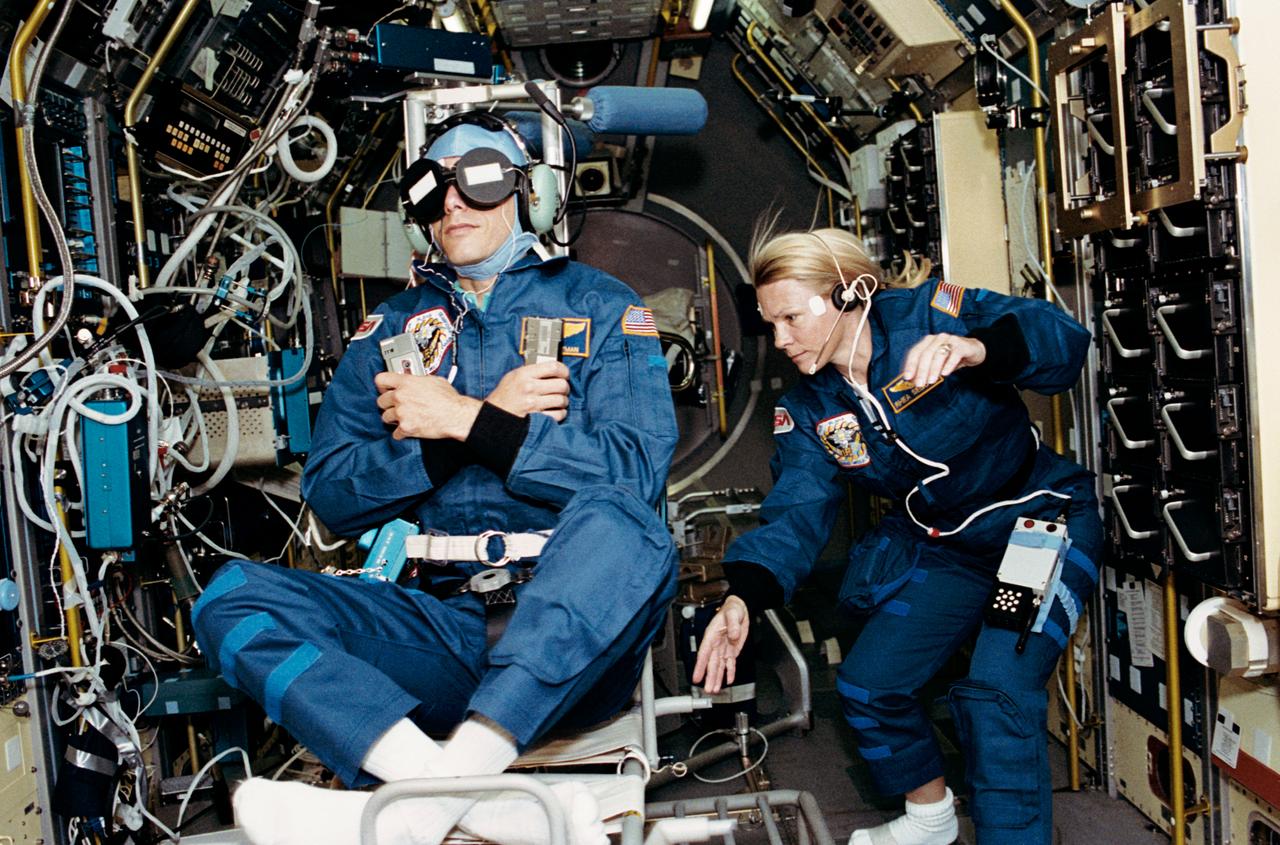
STS058-202-001 (18 Oct.-1 Nov. 1993) --- Astronaut Rhea Seddon, payload commander, spins the Spacelab Life Sciences (SLS-2) rotating chair as payload specialist Martin J. Fettman serves as test subject. The two joined five NASA astronauts for fourteen days of medical research aboard the Earth-orbiting space shuttle Columbia. Photo credit: NASA

51D-9089 (S23-9089) (12 April 1985) --- The Space Shuttle mission 51-D crewmembers gather to eat breakfast prior to leaving for the launch pad to climb aboard Discovery for liftoff. From left to right Rhea Seddon, Donald E. Williams, Charles D. Walker, Karol J. Bobko, Jeffrey A. Hoffman, S. David Griggs and U.S. Sen. E.J. (Jake) Garn discuss phases of the upcoming flight. Desert for the yet-to-be served breakfast is the pictured decorate 51-D cake.
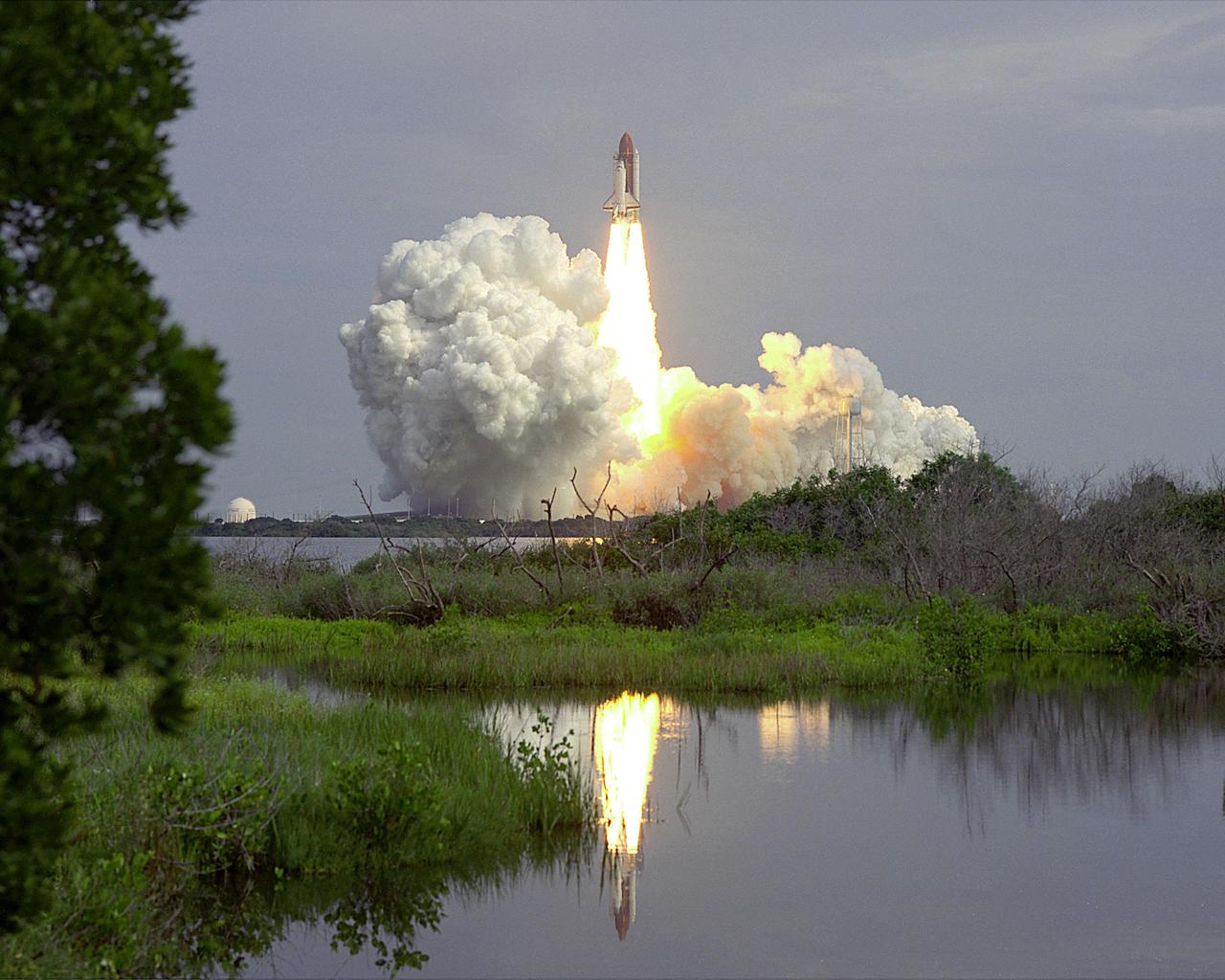
KENNEDY SPACE CENTER, FLA. -- Columbia launches on mission STS-40. Carrying Spacelab Life Sciences-1, it is the first dedicated solely to life sciences, using the habitable module. The crew of seven comprises Commander Bryan D. O'Connor, Pilot Sidney M. Gutierrez, Mission Specialists James P. Bagian, Tamara E. Jernigan and M. Rhea Seddon, and Payload Specialists F. Drew Gaffney and Millie Hughes-Fulford.
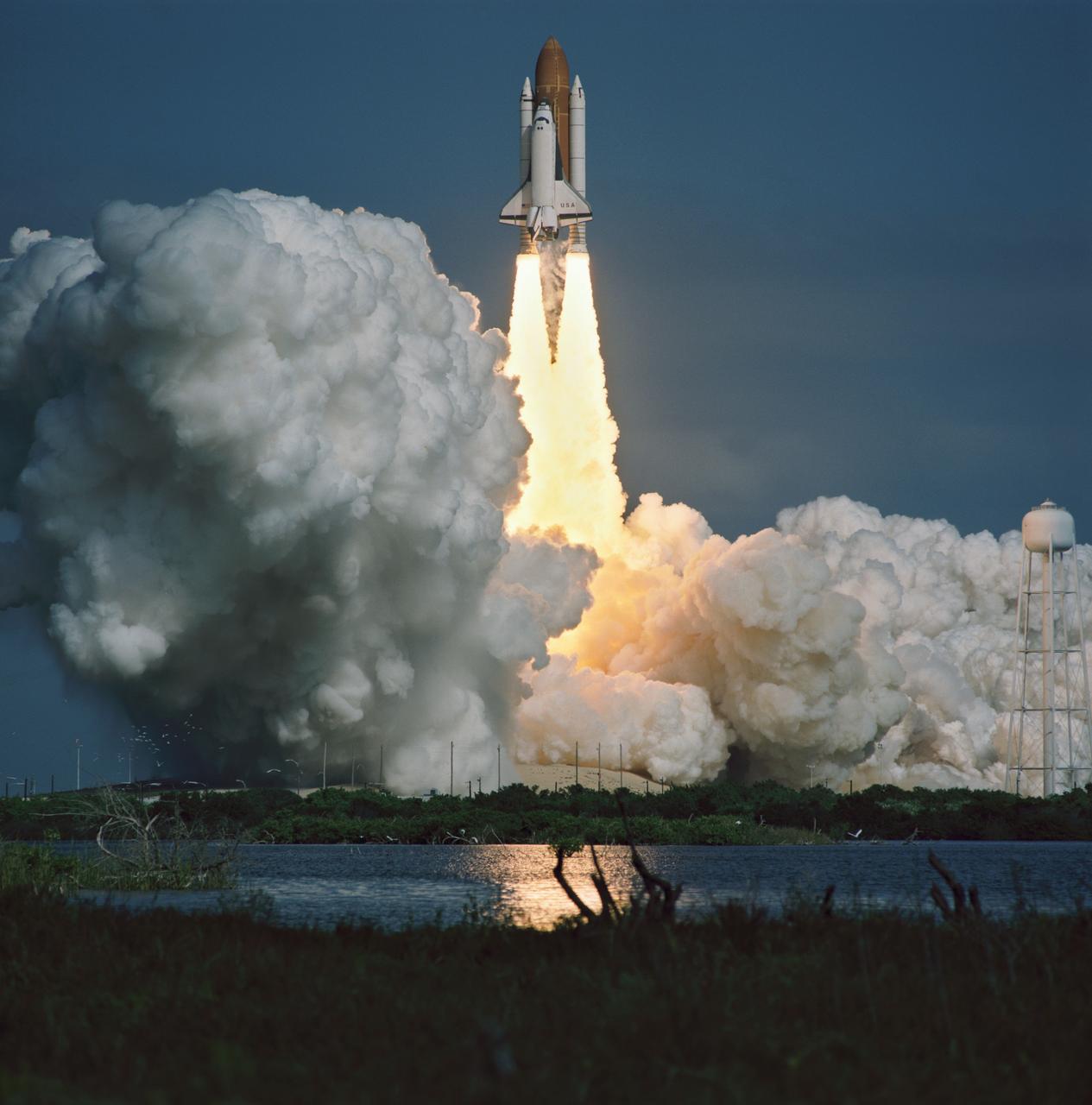
STS058-S-090 (18 Oct 1993) --- Creating large clouds of smoke the Space Shuttle Columbia lifts off from Launch Complex 39 at Kennedy Space Center (KSC). Liftoff occurred at 10:53 a.m. (EDT), October 18, 1993. Along with its Spacelab Life Sciences-2 payload, Columbia carries astronauts John E. Blaha, Richard A. Searfoss, Rhea Seddon, Shannon W. Lucid, David A. Wolf and William S. McArthur along with payload specialist Martin J. Fettman.
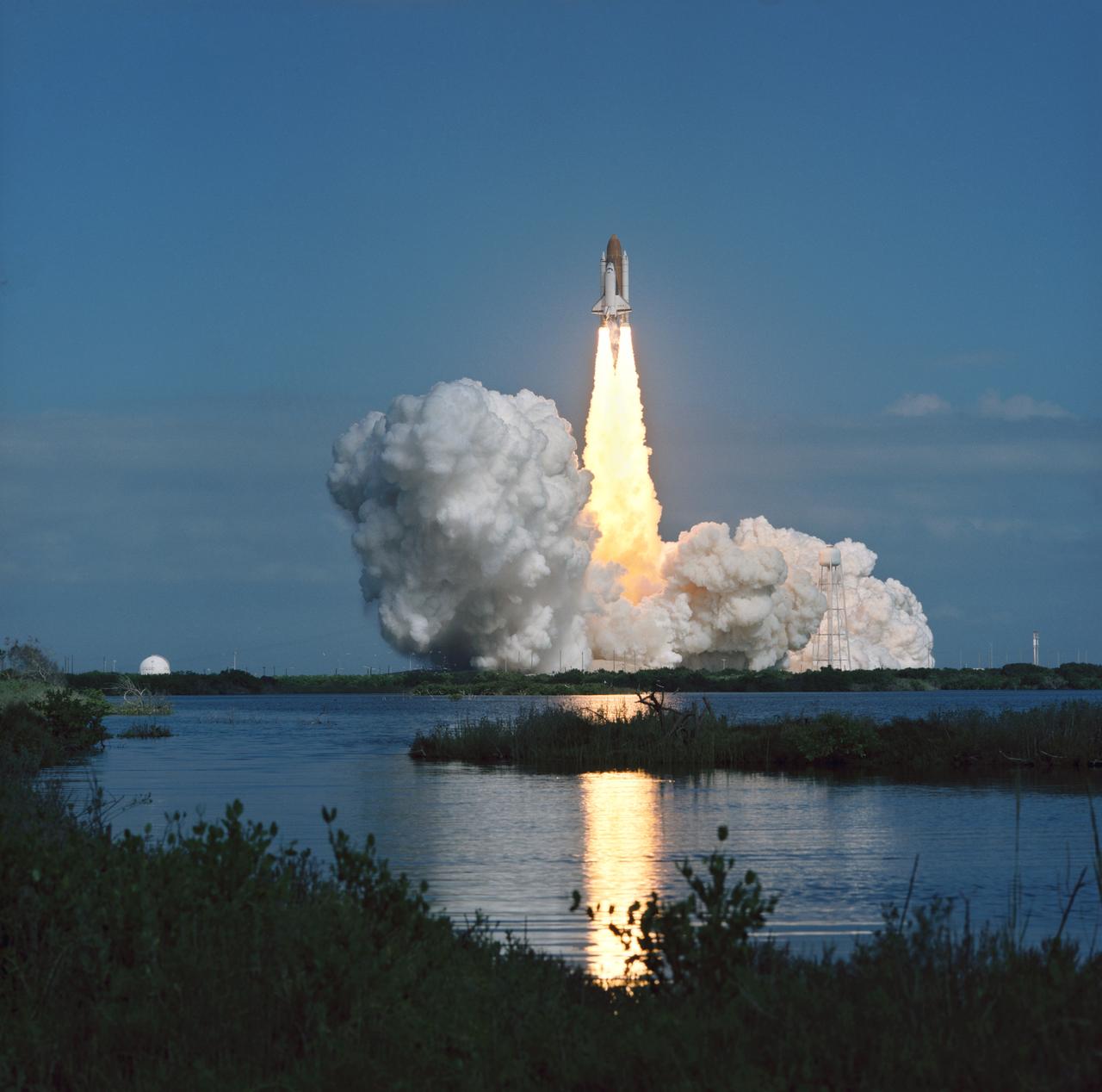
STS058-S-091 (18 Oct 1993) --- A distant shot shows the Space Shuttle Columbia, lifting off from Launch Complex 39 at Kennedy Space Center (KSC), reflecting its image in nearby marsh waters. Launch occurred at 10:53 a.m. (EDT), October 18, 1993. Along with six NASA astronauts and a veterinarian from the private sector, the Spacelab Life Sciences-2 (SLS-2) science module was aboard. Onboard were astronauts John E. Blaha, Richard A. Searfoss, Rhea Seddon, Shannon W. Lucid, David A. Wolf and William S. McArthur along with payload specialist Martin J. Fettman.
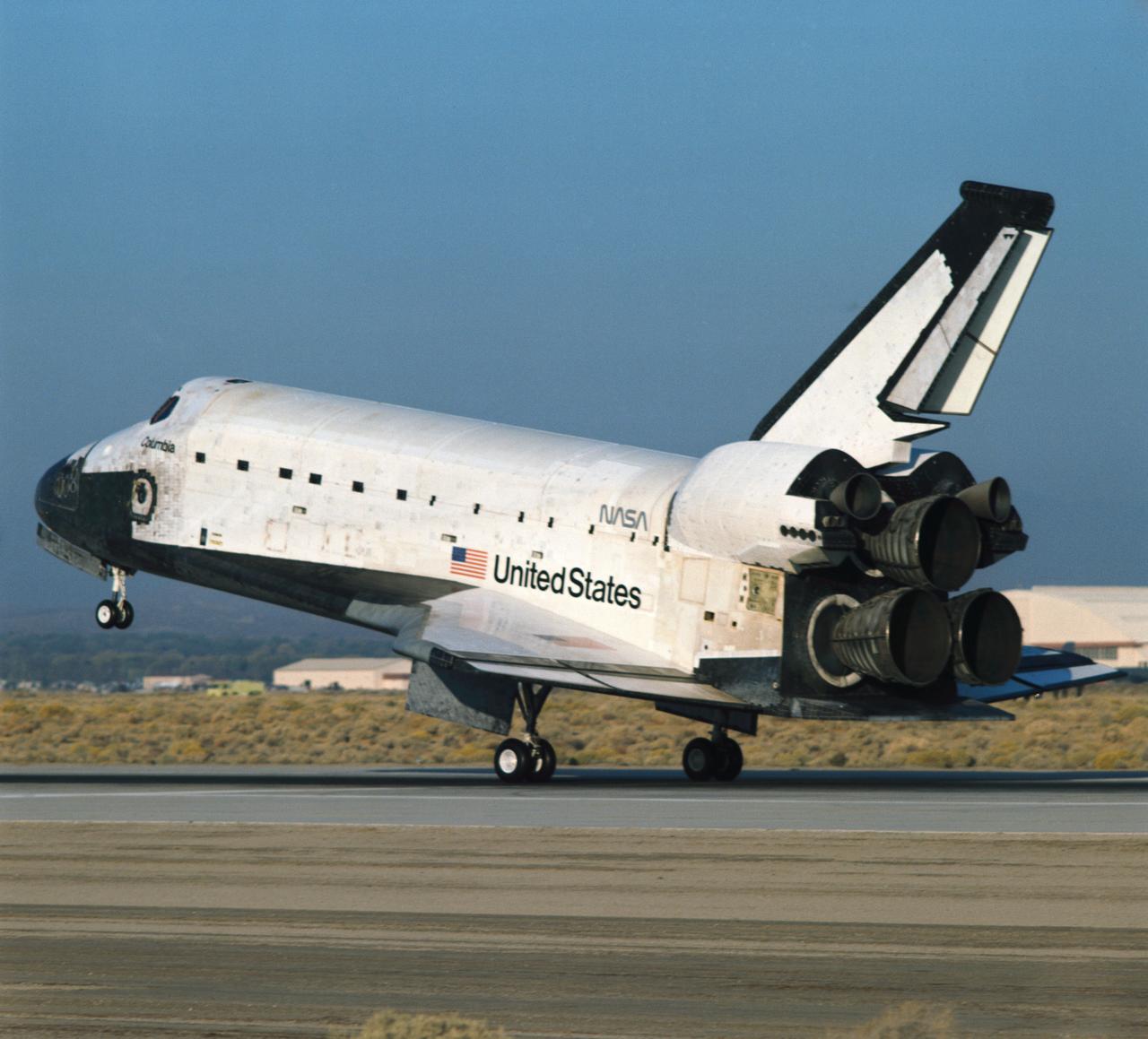
STS058-S-128 (1 Nov 1993) --- The nose gear of the Space Shuttle Columbia is about to touch down on the runway at Edwards Air Force Base (EAFB) in California. The landing, which occurred at 7:06 a.m. (PST), November 1, 1993, completed a two week mission in space devoted to medical research. Onboard the spacecraft were astronauts John E. Blaha, Richard A. Searfoss, Rhea Seddon, Shannon W. Lucid, David A. Wolf and William S. McArthur along with payload specialist Martin J. Fettman, DVM.
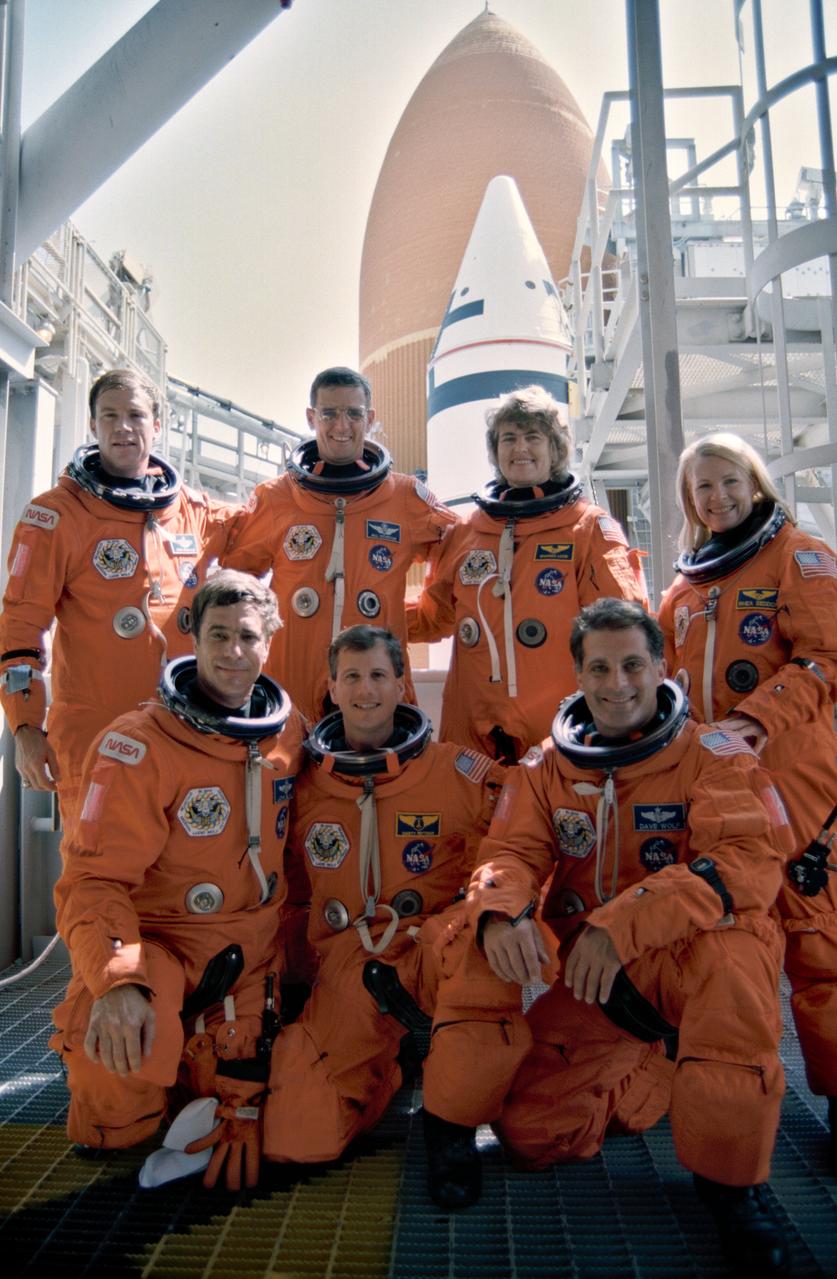
S93-45004 (20 Sept 1993) --- Posing for a crew portrait, with the Space Shuttle Columbia at Launch Pad 39B, are the seven STS-58 astronauts. They are, front row left to right, John E. Blaha, mission commander; Martin J. Fettman, payload specialist; and David A. Wolf, mission specialist. Back row, left to right, are Richard A. Searfoss, pilot; William S. McArthur and Shannon W. Lucid, mission specialists; and Rhea Seddon, payload commander. The crew was in Florida for the Terminal Countdown Demonstration Test (CDDT) in preparation for next month's launch aboard Columbia.
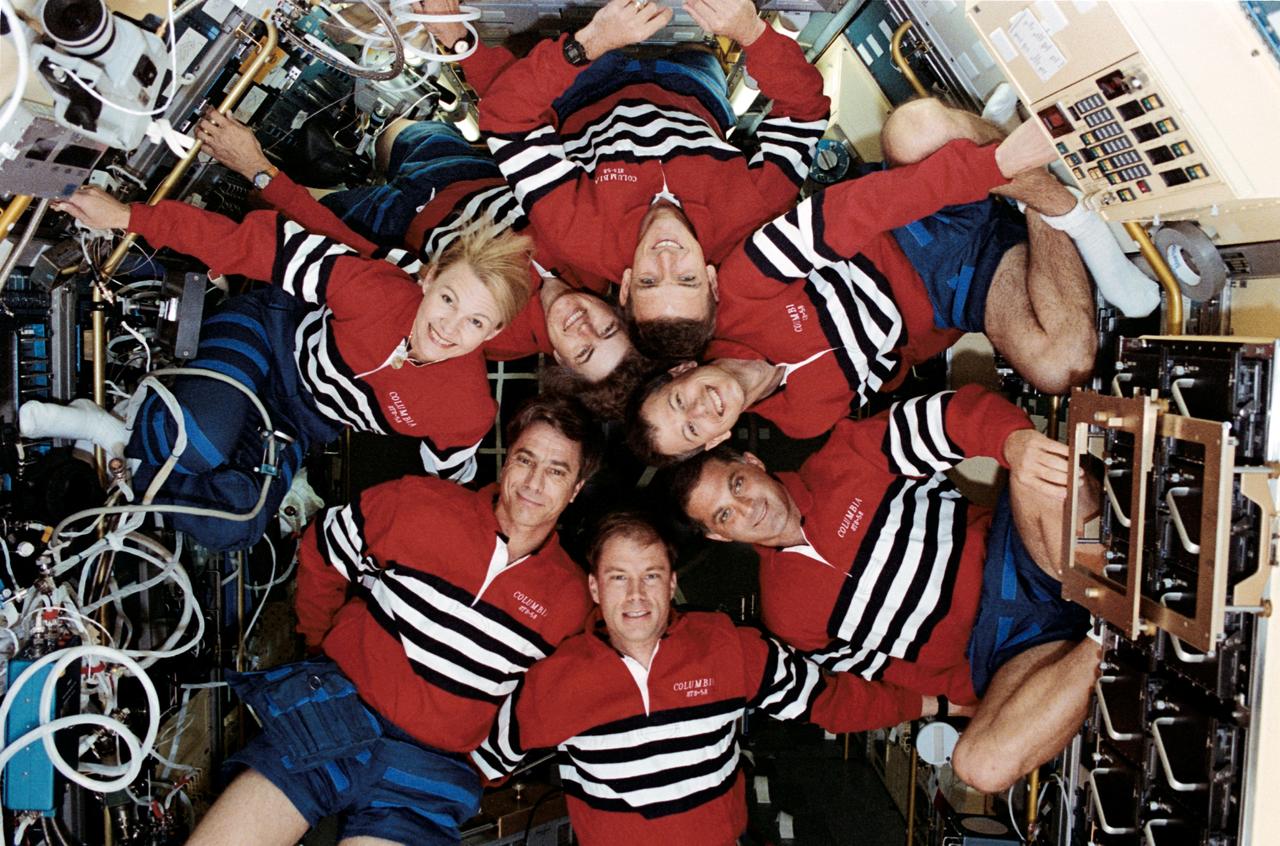
STS058-16-008 (18 Oct.-1 Nov. 1993) --- Inside the science module aboard the Earth-orbiting space shuttle Columbia, a pre-set 35mm camera recorded the traditional inflight portrait of the STS-58 crew. Pictured are (counter-clockwise from the roll of tape at upper right) payload specialist Martin J. Fettman, DVM; William S. McArthur and Shannon W. Lucid, mission specialists; Rhea Seddon, payload commander; John E. Blaha, mission commander; Richard A. Searfoss, pilot; and David A. Wolf, mission specialist. Photo credit: NASA
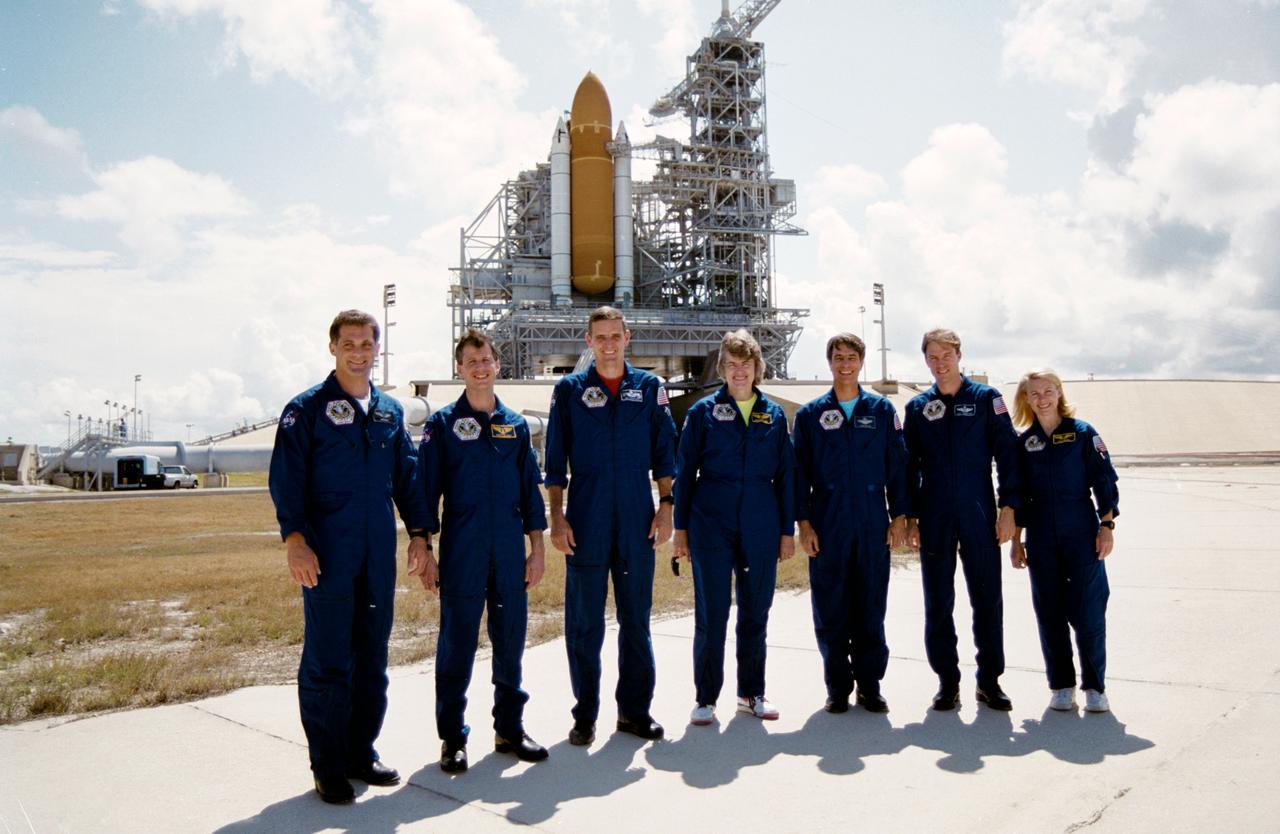
S93-45003 (20 Sept 1993) --- Posing for a crew portrait, in front of the Space Shuttle Columbia at Launch Pad 39B, are the seven STS-58 astronauts. They are, left to right, David A. Wolf, mission specialist; Martin J. Fettman, payload specialist; William S. McArthur and Shannon W. Lucid, mission specialists; John E. Blaha, mission commander; Richard A. Searfoss, pilot; and Rhea Seddon, payload commander. The crew was in Florida for the Terminal Countdown Demonstration Test (CDDT) in preparation for next month's launch aboard Columbia. (Kennedy Space Center Photo ID: KSC-93-PC-1253)
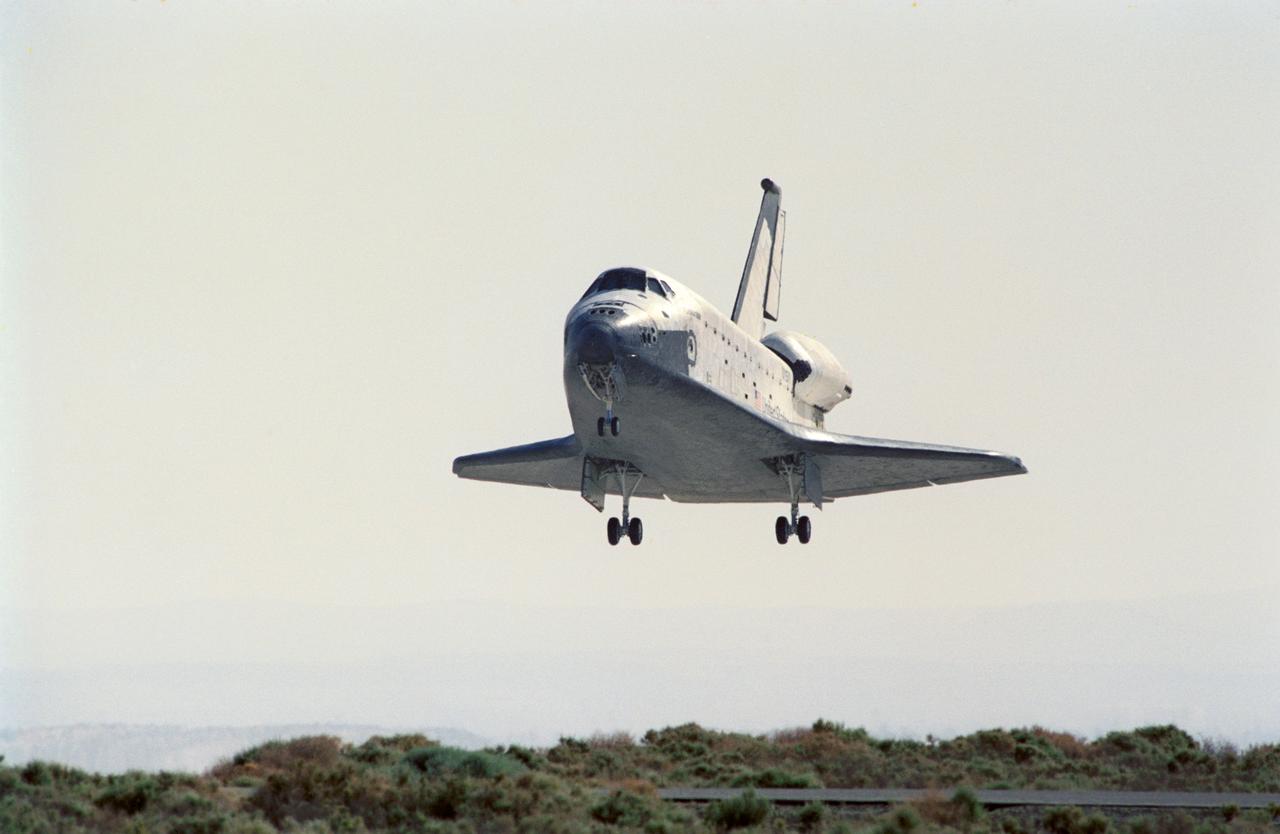
STS040-S-174 (14 June 1991) --- The Space Shuttle Columbia is only moments away from touchdown on Runway 22 at Edwards Air Force Base in California. The landing completes a successful nine-day Spacelab Life Sciences (SLS-1) mission, the first ever devoted exclusively to life sciences research. Onboard the spacecraft were astronauts Bryan D. O'Connor, Sidney M. Gutierrez, Rhea Seddon, James P. Bagian and Tamara E. Jernigan; and payload specialists F. Drew Gaffney and Millie Hughes-Fulford. Landing occurred at 8:39:11 a.m. (PDT), June 14, 1991.
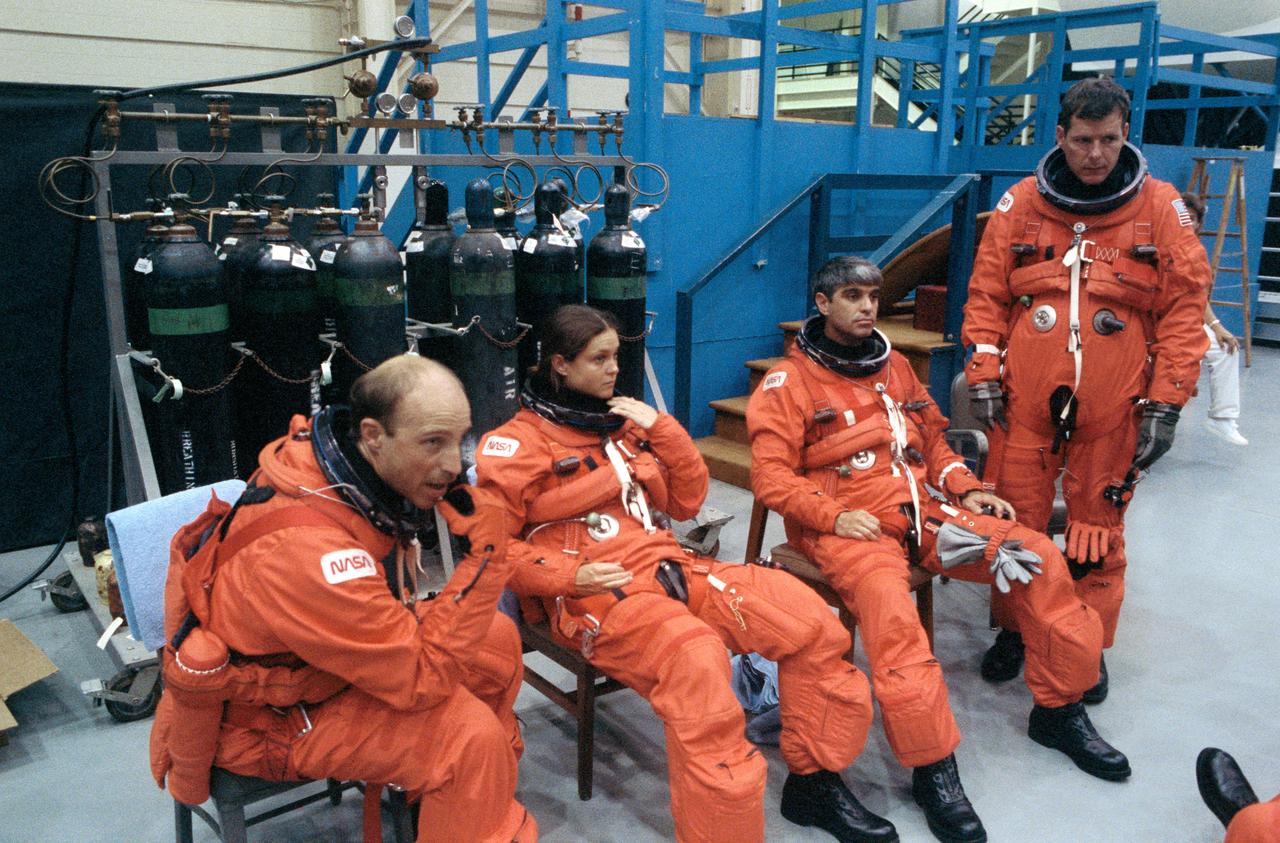
S90-41372 (11 June 1990) --- Crewmembers assigned to NASA's STS 40 Spacelab Life Sciences (SLS-1) mission take a brief break during emergency egress training in the Shuttle mockup and integration laboratory at the Johnson Space Center (JSC). Left to right are astronauts James P. Bagian, Tamara E. Jernigan, both mission specialists; and Sidney M. Gutierrez, pilot; and Bryan D. O'Connor, mission commander. Out of frame are astronaut Rhea Seddon, mission specialist, and payload specialists Millie Hughes-Fulford and Drew Gaffney.
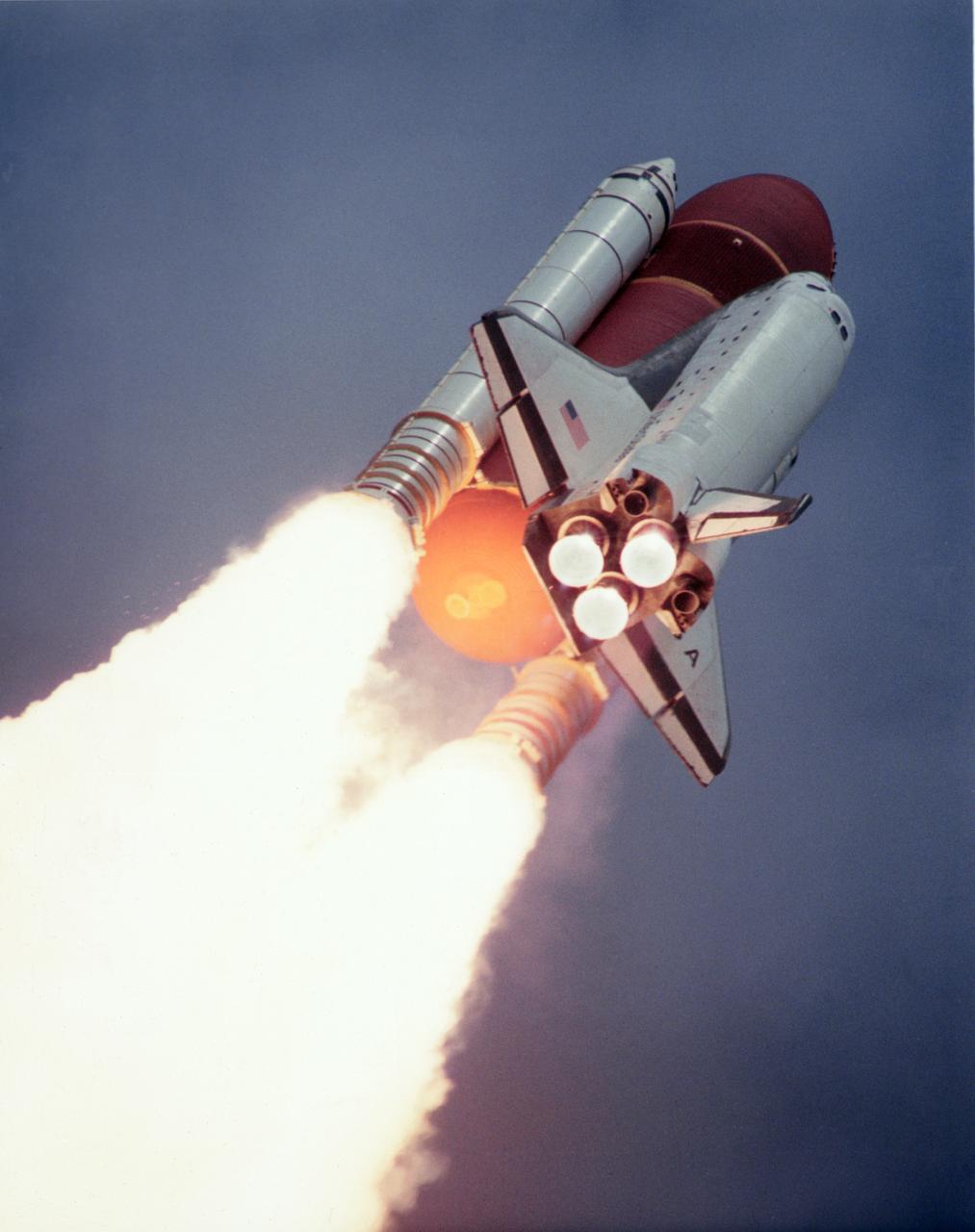
Launched aboard the Space Shuttle Columbia on June 5, 1991 at 9:24; am (EDT), the STS-40 mission was the fifth dedicated Spacelab Mission, Spacelab Life Sciences-1 (SLS-1), and the first mission dedicated solely to life sciences. The STS-40 crew included 7 astronauts: Bryan D. O’Connor, commander; Sidney M. Gutierrez, pilot; F. Drew Gaffney, payload specialist 1; Milli-Hughes Fulford, payload specialist 2; James P. Bagian, mission specialist 1; Tamara E. Jernigan, mission specialist 2; and M. Rhea Seddon, mission specialist 3.
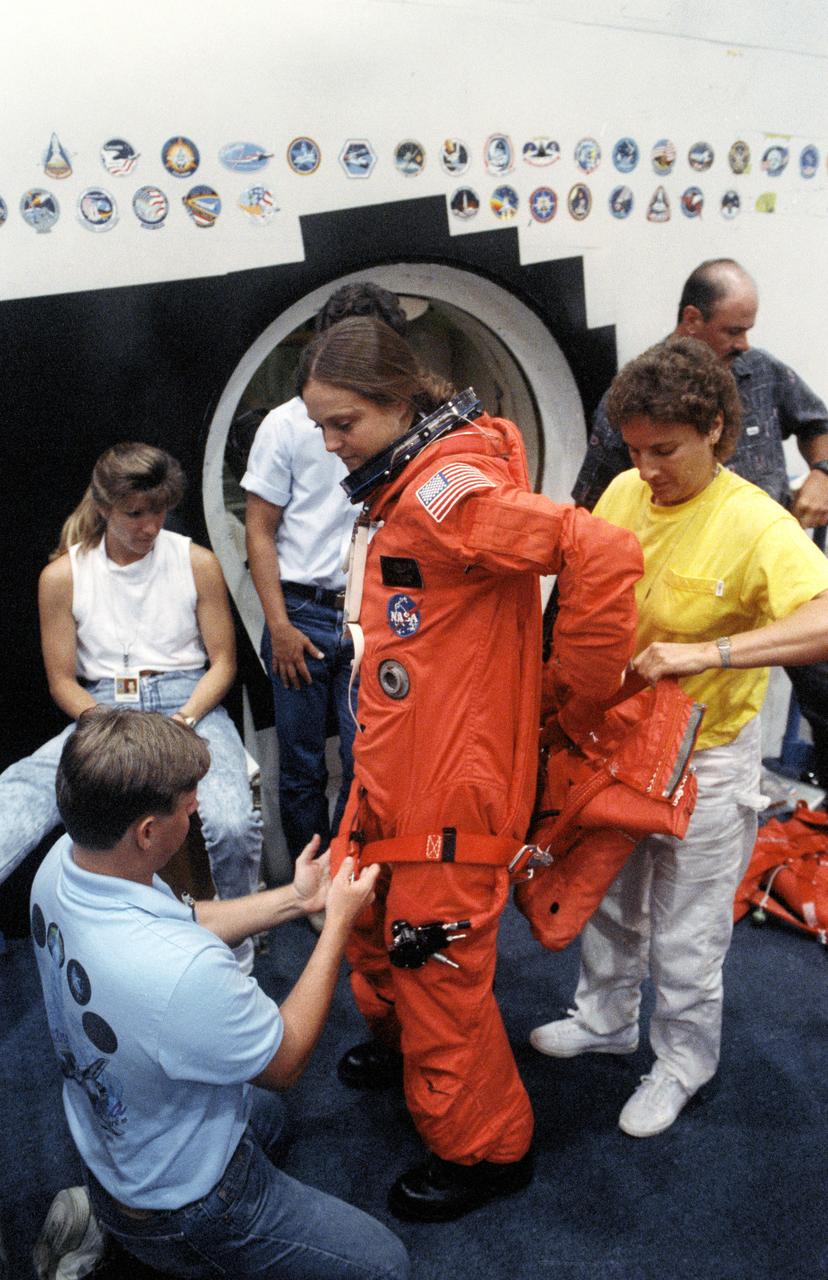
S90-41359 (11 June 1990) --- Astronaut James P. Bagian, STS-40 mission specialist, is seen in his partial pressure ascent/entry suit during a training exercise in the Johnson Space Center's Shuttle mockup and integration laboratory. Dr. Bagian will be joined on the Spacelab Life Sciences (SLS-1) mission, scheduled for launch in less than a year, by astronauts Bryan D. O'Connor, Sidney M. Gutierrez, Rhea Seddon and Tamara E. Jernigan, along with payload specialists F. Drew Gaffney and Millie Hughes-Fulford.

51D-9091 (S23-9091) (12 April 1985) --- The Space Shuttle mission 51-D crewmembers depart the Kennedy Space Center's operations and checkout building on their way to the launch pad for an early morning launch of Discovery. Leading the seven are Karol J. Bobko (center of frame), commander; and Donald E. Williams (right), pilot. Following are Rhea Seddon, Jeffrey A. Hoffman, S. David Griggs--all mission specialists--Charles D. Walker and U.S. Sen. E. J. (Jake) Garn (partly obscured behind Walker), both payload specialists. Partly visible in the doorway are Astronaut John W. Young and George W.S. Abbey, director of flight crew operations.
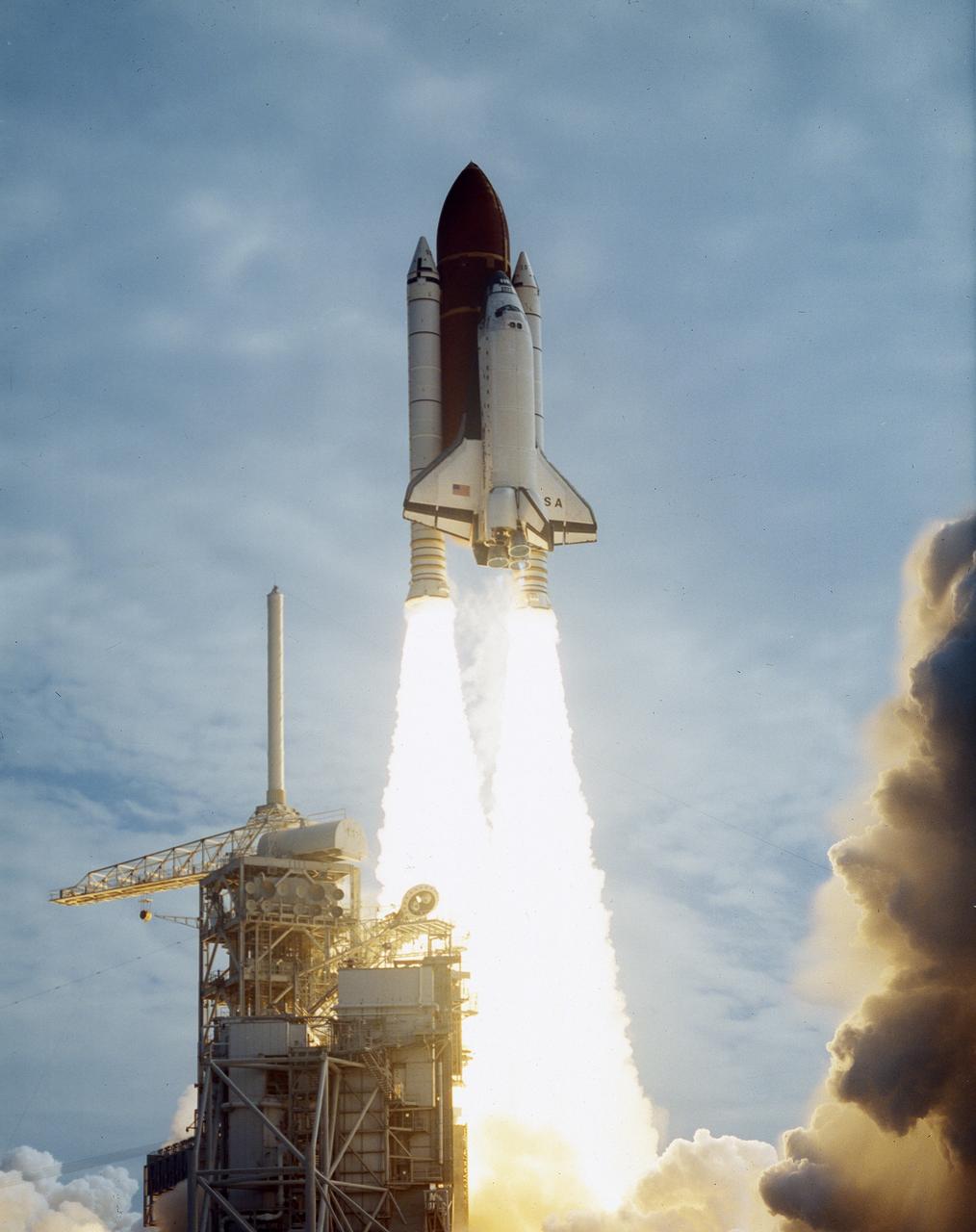
Launched aboard the Space Shuttle Columbia on June 5, 1991 at 9:24; am (EDT), the STS-40 mission was the fifth dedicated Spacelab Mission, Spacelab Life Sciences-1 (SLS-1), and the first mission dedicated solely to life sciences. The STS-40 crew included 7 astronauts: Bryan D. O’Connor, commander; Sidney M. Gutierrez, pilot; F. Drew Gaffney, payload specialist 1; Milli-Hughes Fulford, payload specialist 2; James P. Bagian, mission specialist 1; Tamara E. Jernigan, mission specialist 2; and M. Rhea Seddon, mission specialist 3.
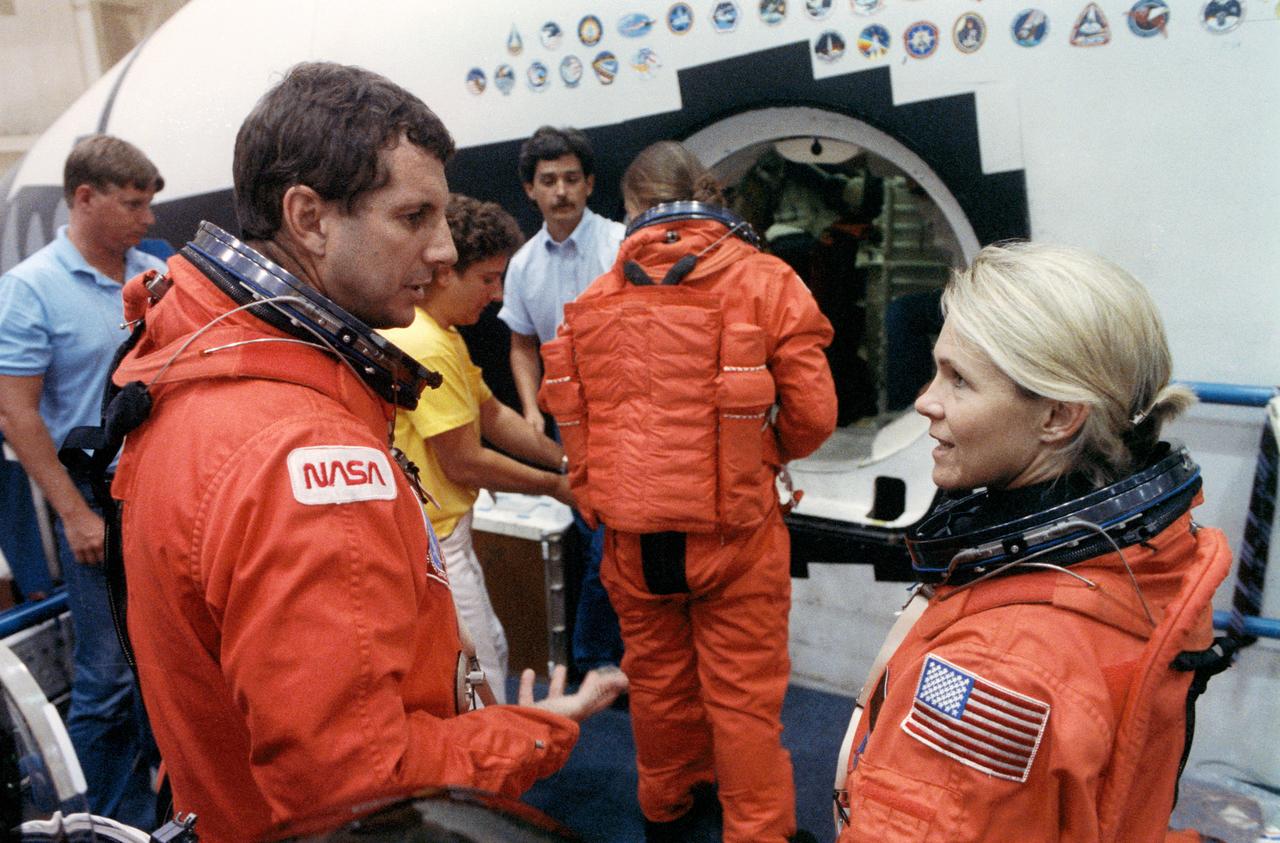
S90-41365 (11 June 1990) --- Crewmembers assigned to NASA's STS-40/Spacelab Life Sciences (SLS-1) mission take a brief break during emergency egress training in the Shuttle mockup and integration laboratory at the Johnson Space Center (JSC). In the foreground are astronauts Rhea Seddon and payload specialist F. Drew Gaffney. In the background, also wearing an orange partial pressure, ascent/entry suit is astronaut Tamara E. Jernigan, mission specialist. Not in the frame are astronauts Bryan D. O'Connor, mission commander; Sidney M. Gutierrez, pilot; James P. Bagian, mission specialist, and payload specialist Millie Fulford-Hughes.
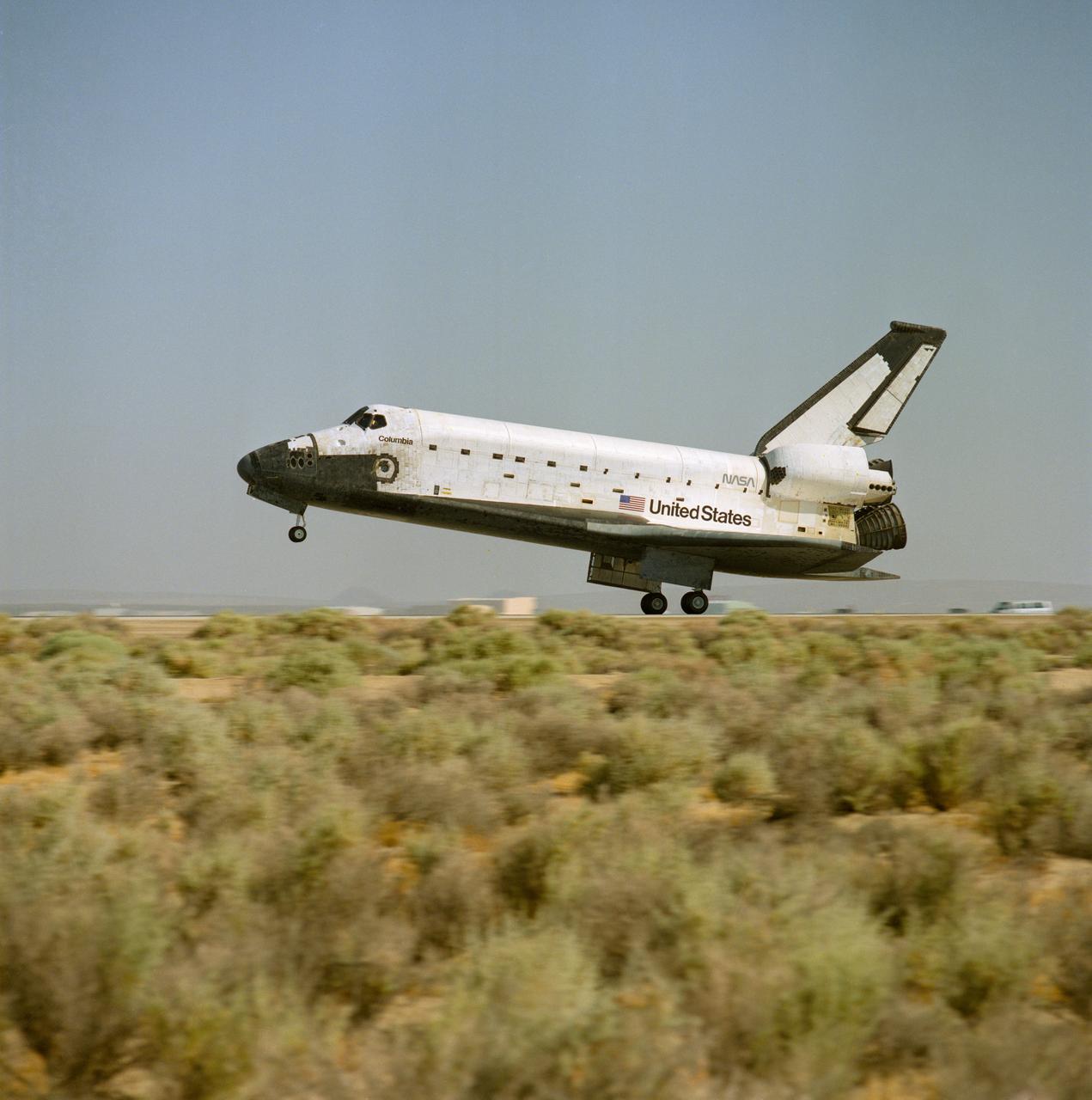
STS040-S-175 (14 June 1991) --- The main landing gear of the Space Shuttle Columbia touches down, on Runway 22 at Edwards Air Force Base in California, to complete a successful nine-day mission. The Spacelab Life Sciences (SLS-1) mission was the first ever devoted exclusively to life sciences research. Onboard the spacecraft were astronauts Bryan D. O'Connor, Sidney M. Gutierrez, Rhea Seddon, James P. Bagian and Tamara E. Jernigan; and payload specialists F. Drew Gaffney and Millie Hughes-Fulford. Landing occurred at 8:39:11 a.m. (PDT), June 14, 1991.
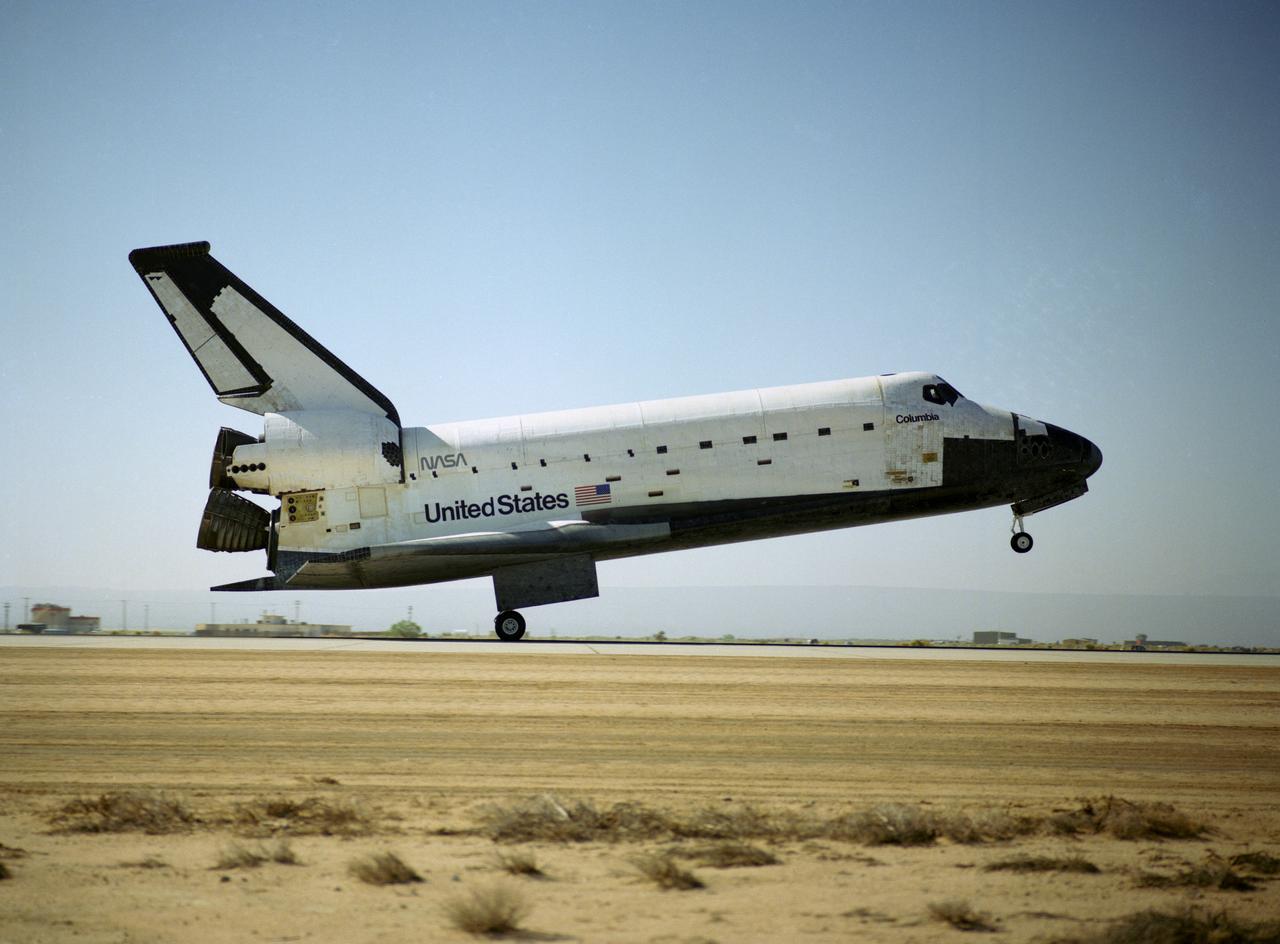
STS040-S-176 (14 June 1991) --- The main landing gear of the Space Shuttle Columbia touches down, on Runway 22 at Edwards Air Force Base in California, to complete a successful nine-day mission. The Spacelab Life Sciences (SLS-1) mission was the first ever devoted exclusively to life sciences research. Onboard the spacecraft were astronauts Bryan D. O'Connor, Sidney M. Gutierrez, Rhea Seddon, James P. Bagian and Tamara E. Jernigan; and payload specialists F. Drew Gaffney and Millie Hughes-Fulford. Landing occurred at 8:39:11 a.m. (PDT), June 14, 1991.

S78-25633 (31 Jan. 1978) --- These six mission specialist astronaut candidates are the first women ASCANs to be named by NASA. They are, left to right, Rhea Seddon, Anna L. Fisher, Judith A. Resnik, Shannon W. Lucid, Sally K. Ride and Kathryn D. Sullivan. Along with these candidates, 14 other mission specialist candidates and 15 pilot astronaut candidates were presented during a press conference at the Johnson Space Center on Jan. 31, 1978. All 35 met the press in the larger Teague Auditorium and the women greeted photographers and other media representatives in the Public Affairs Office briefing room. Photo credit: NASA
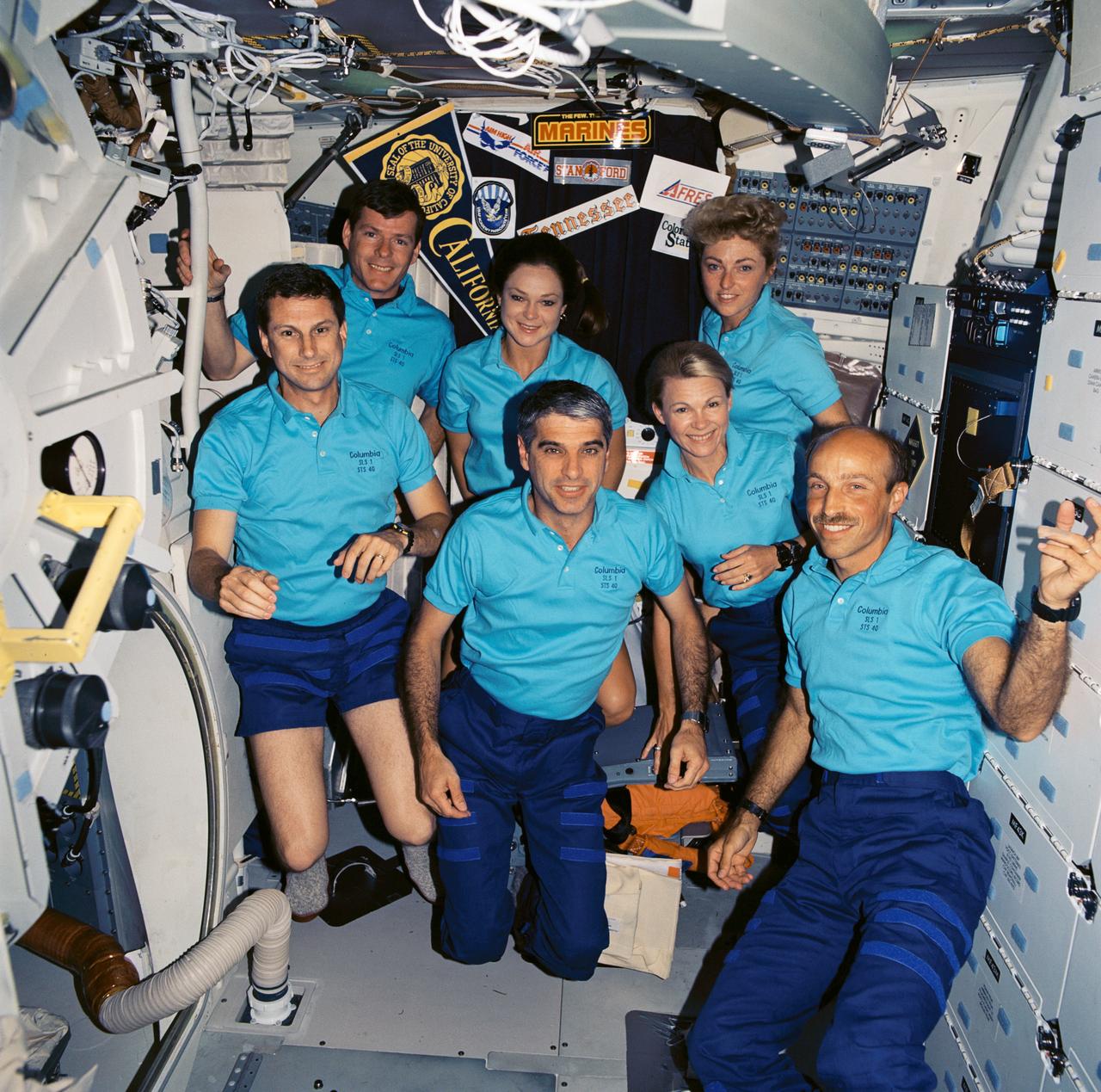
STS040-605-009 (5-14 June 1991) --- The seven crew members for STS-40 pose for an in-space portrait on the Space Shuttle Columbia's mid-deck. Left to right, in front are F. Andrew Gaffney, Sidney M. Gutierrez, Rhea Seddon and James P. Bagian; in back, Bryan D. O'Connor, Tamara E. Jernigan and Millie Hughes-Fulford. The five astronauts and two payload specialists are spending nine days in space in support of the Spacelab Life Sciences (SLS-1) mission. The image was one of 25 visuals used by the STS-40 crew at its Post Flight Press Conference (PFPC) on June 28, 1991.
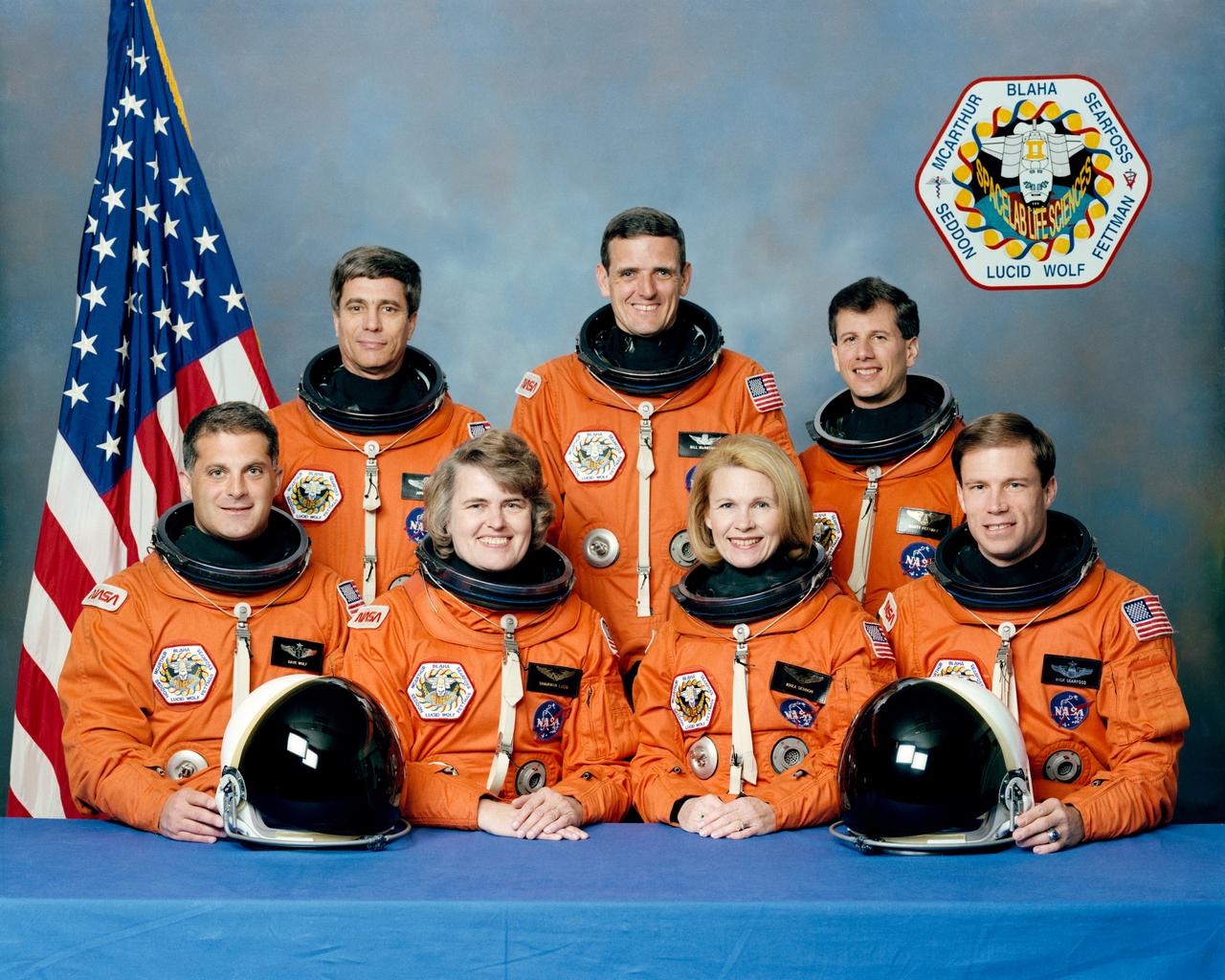
STS058-S-002 (May 1993) --- Wearing training versions of their launch and entry garments, the seven crew members assigned to the Spacelab Life Sciences (SLS-2) mission are pictured in the traditional pre-flight crew portrait. Left to right (front) are David A. Wolf, and Shannon W. Lucid, both mission specialists; Rhea Seddon, payload commander; and Richard A. Searfoss, pilot. Left to right (rear) are John E. Blaha, mission commander; William S. McArthur Jr., mission specialist; and payload specialist Martin J. Fettman, DVM.
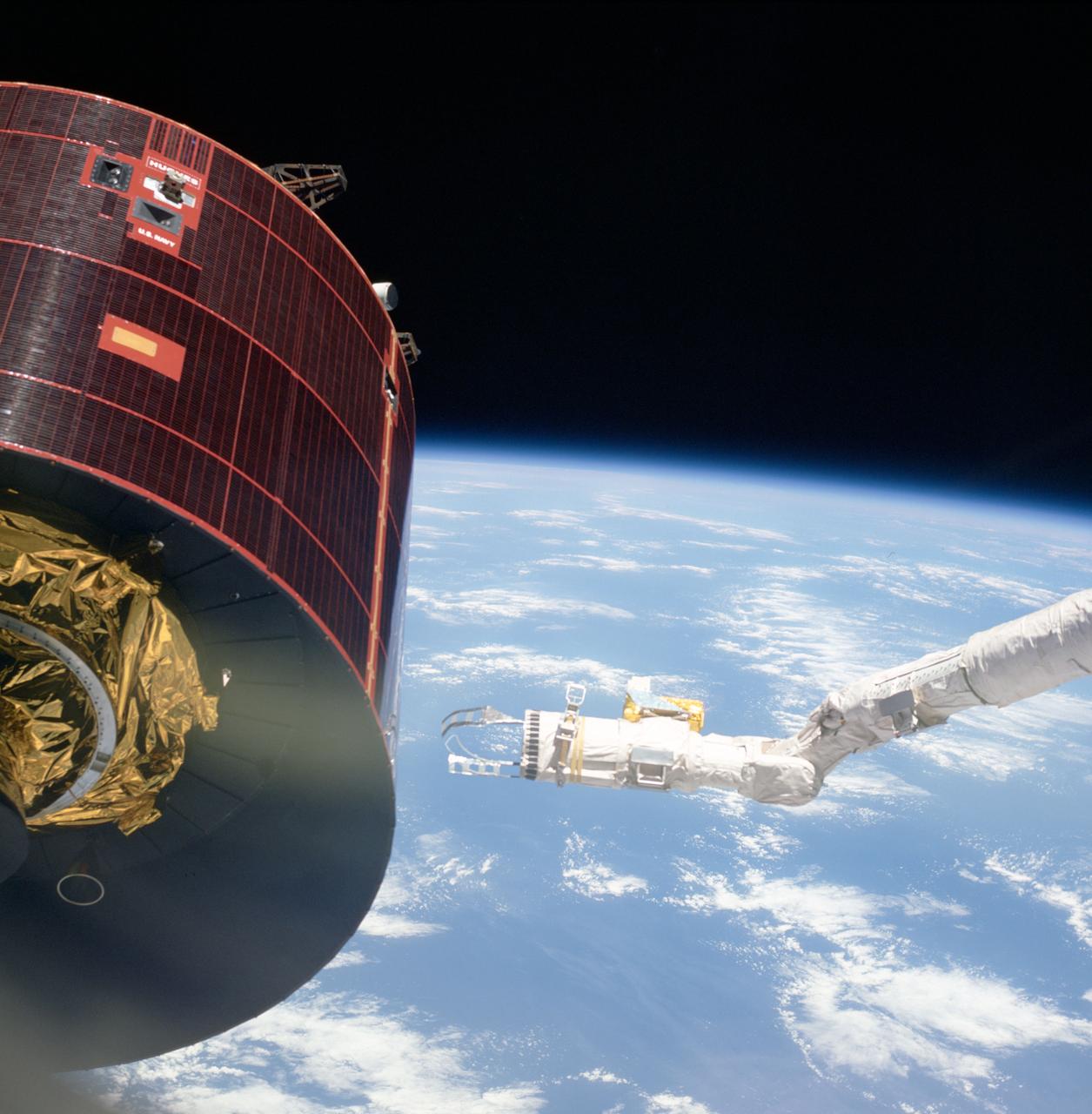
51D-44-046 (17 April 1985) --- The Space Shuttle Discovery's Remote Manipulator System (RMS) arm and two specially designed extensions move toward the troubled Syncom-IV (LEASAT) communications satellite during a station keeping mode of the two spacecraft in Earth orbit. Inside the Shuttle's cabin, astronaut Rhea Seddon, 51D mission specialist, controlled the Canadian-built arm in an attempt to move an external lever on the satellite. Crewmembers learned of the satellite's problems shortly after it was deployed from the cargo bay on April 13, 1985. The arm achieved physical contact with the lever as planned. However, the satellite did not respond to the contact as hoped. A 70mm handheld Hassellblad camera, aimed through Discovery's windows, recorded this frame -- one of the first to be released to news media following return of the seven-member crew on April 17, 1985.

S85-28647 (28 Feb 1985) --- The seven members of the STS-51D mission are pictured in the midst of a busy training schedule in preparation for NASA's 16th Space Shuttle flight, currently planned for April of this year. The crewmembers are (front row, left to right), Karol J. Bobko, commander; Donald E. Williams, pilot; Rhea Seddon and Jeffrey A. Hoffman, mission specialists; and (back row) S. David Griggs, mission specialist; and Charles D. Walker and United States Senator Jake Garn (Republican - Utah) both payload specialists. Walker represents McDonnell-Douglas Corporation. EDITOR'S NOTE: Mission specialist S. David Griggs died June 17, 1989, near Earle, Arkansas, in the crash of a World-War-II-era training plane.
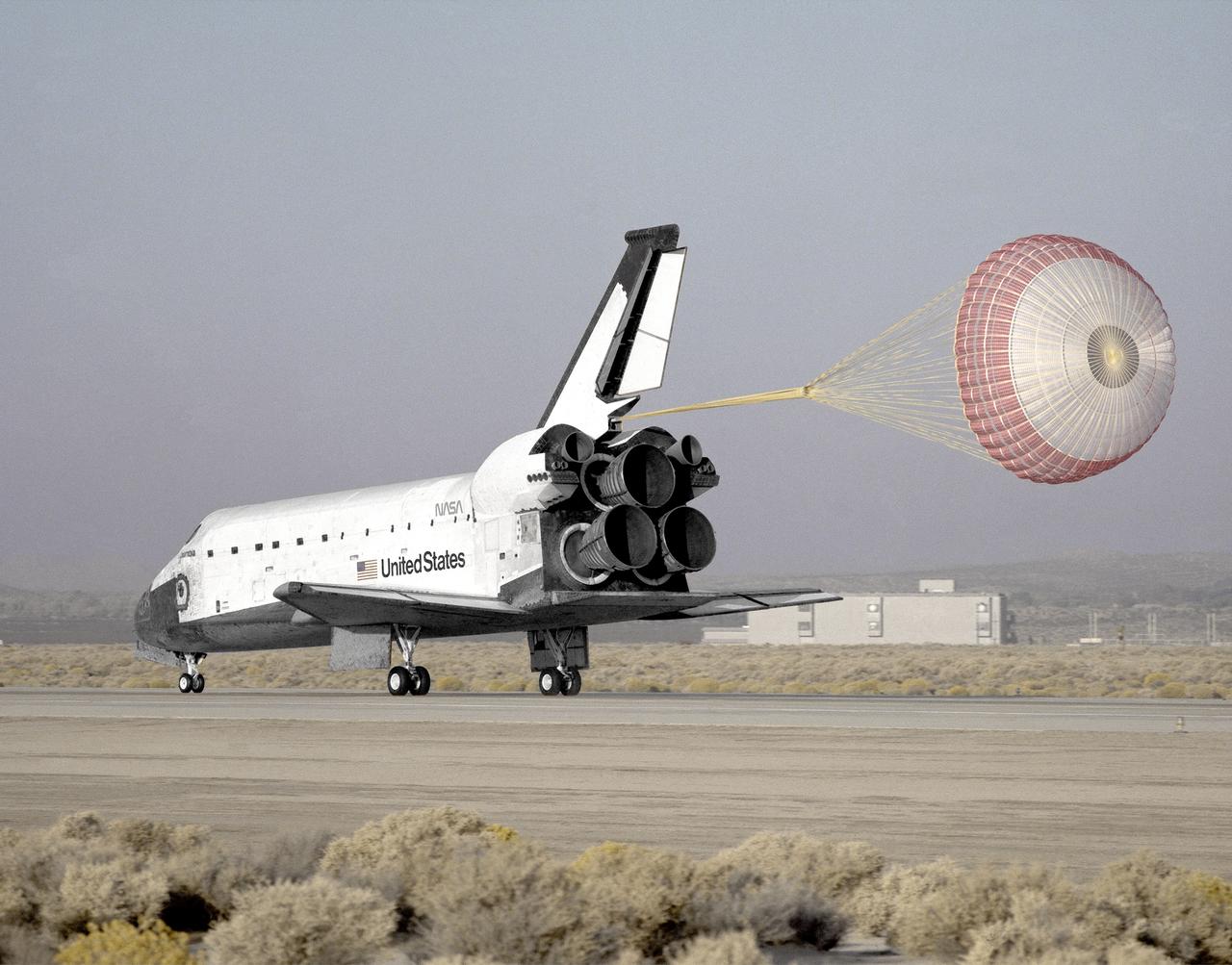
A drag chute slows the space shuttle Columbia as it rolls to a perfect landing concluding NASA's longest mission at that time, STS-58, at the Ames-Dryden Flight Research Facility (later redesignated the Dryden Flight Research Center), Edwards, California, with a 8:06 a.m. (PST) touchdown 1 November 1993 on Edward's concrete runway 22. The planned 14 day mission, which began with a launch from Kennedy Space Center, Florida, at 7:53 a.m. (PDT), October 18, was the second spacelab flight dedicated to life sciences research. Seven Columbia crewmembers performed a series of experiments to gain more knowledge on how the human body adapts to the weightless environment of space. Crewmembers on this flight included: John Blaha, commander; Rick Searfoss, pilot; payload commander Rhea Seddon; mission specialists Bill MacArthur, David Wolf, and Shannon Lucid; and payload specialist Martin Fettman.
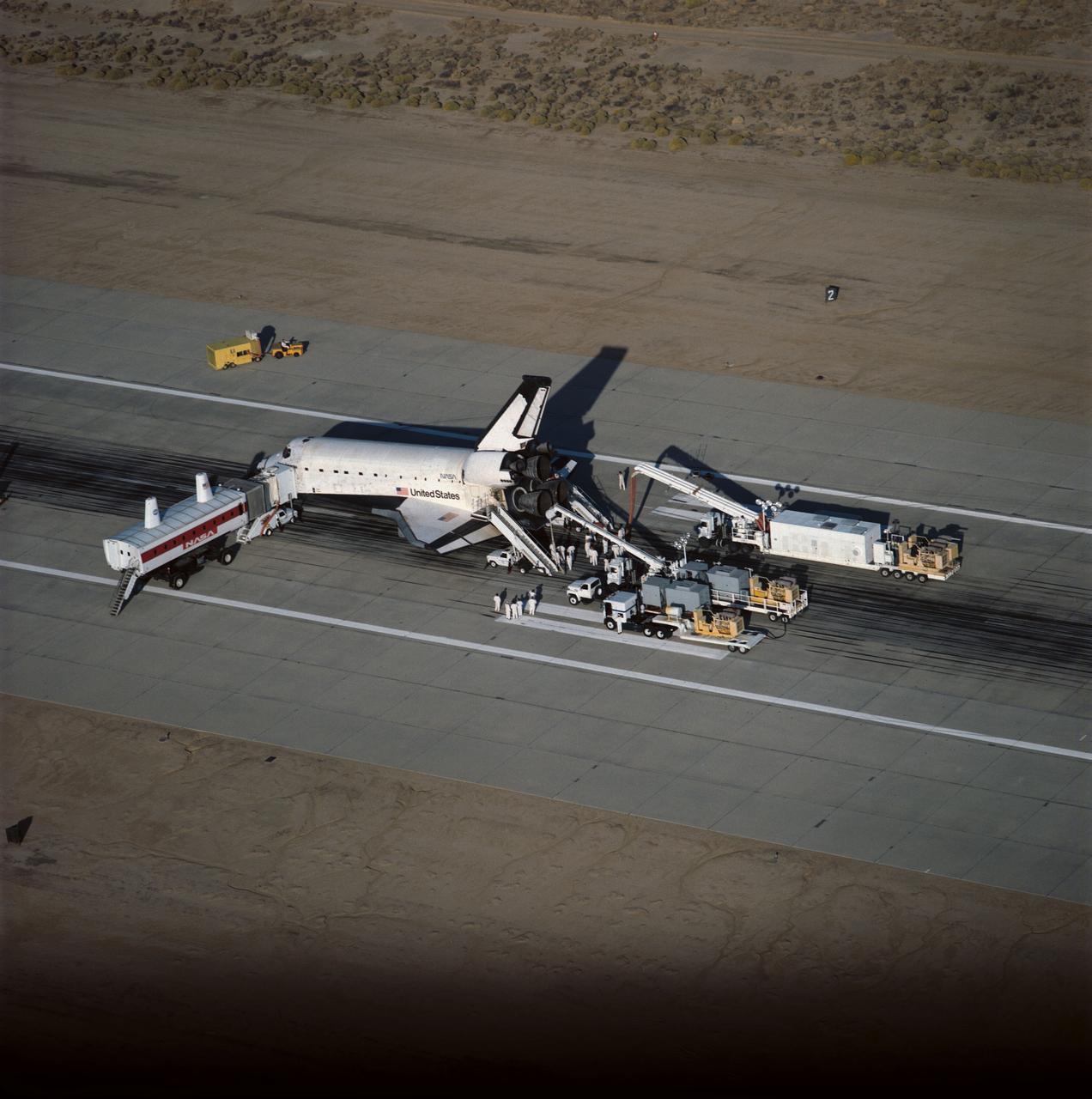
STS058-S-129 (1 Nov 1993) --- This busy scene on the runway at Edwards Air Force Base (EAFB) was taken less than an hour following the landing of the Space Shuttle Columbia. The touchdown, which had occurred at 7:06 a.m. (PST), November 1, 1993, completed a two week mission in space devoted to medical research. The array of hardware and workers includes personnel and equipment designed to make the area safe. At far left is the Crew Transport Vehicle (CTV). Still onboard the spacecraft were astronauts John E. Blaha, Richard A. Searfoss, Rhea Seddon, Shannon W. Lucid, David A. Wolf and William S. McArthur, along with payload specialist Martin J. Fettman, DVM.
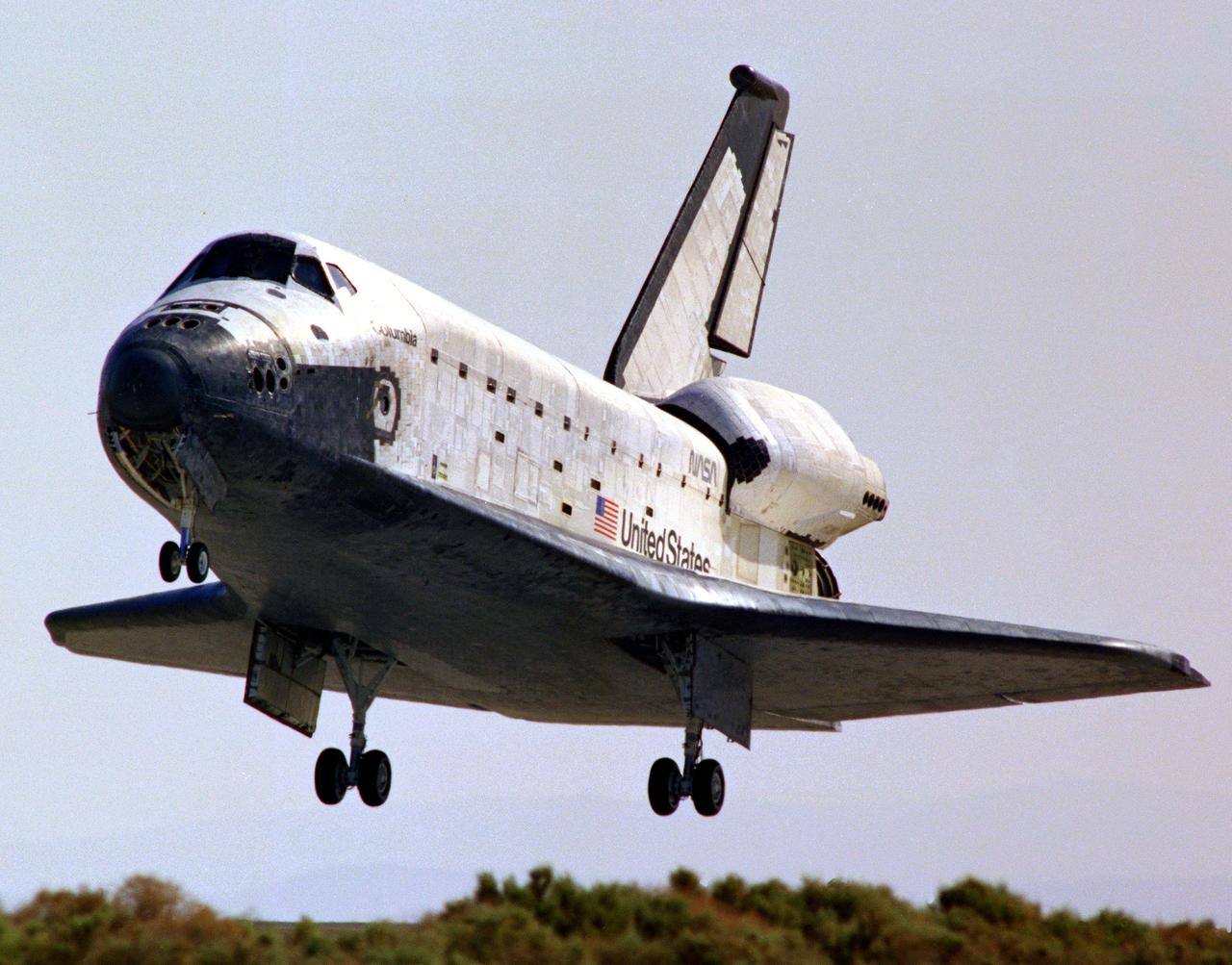
Space Shuttle Columbia nears its touchdown on Runway 22 at Edwards, California, at 8:39 a.m., 14 June 1991, as the STS-40 life sciences mission comes to an end at NASA's Ames-Dryden Flight Research Facility (later redesignated Dryden Flight Research Center) after nine days of orbital flight. Aboard Columbia during the extended mission were Bryan D. O'Connor, mission commander; Sidney M. Gutierrez, pilot; mission specialists James P. Bagian, Tamara E. Jernigan, and Margaret Rhea Seddon; and payload specialists Francis Andrew Gaffney and Millie Hughes-Fulford. STS-40 was the first space shuttle mission dedicated to life sciences research to explore how the body reacts to a weightless environment and how it readjusts to gravity on return to earth. Columbia was launched on the STS-40 mission 5 June 1991, from Kennedy Space Center in Florida.
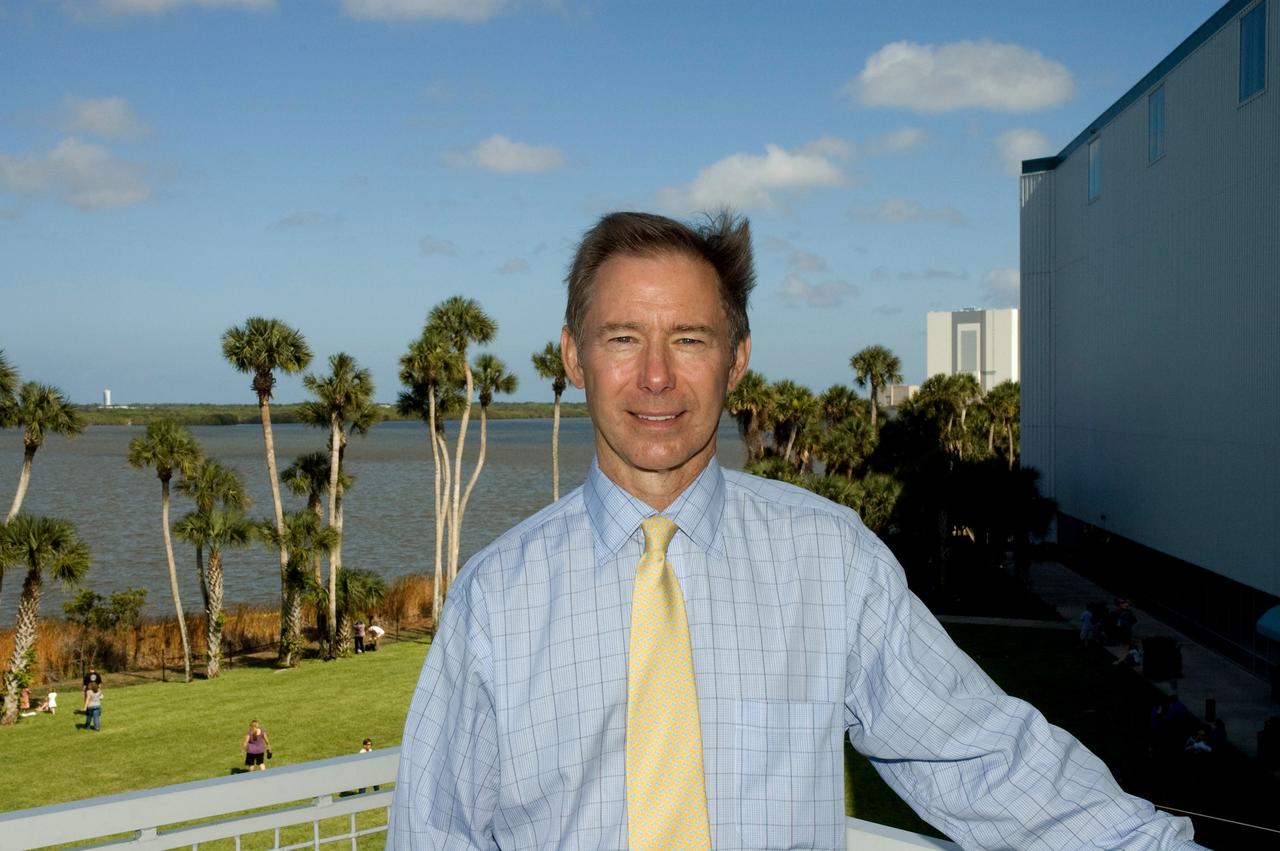
CAPE CANAVERAL, Fla. -- Brewster Shaw is a former astronaut from the first graduating class of astronauts after the Apollo program. He and others from the class were guests at NASA's Kennedy Space Center for the launch of space shuttle Discovery on its STS-124 mission. Shaw is Vice President and General Manager, Space Exploration, for Integrated Defense Systems, The Boeing Company. In 1978 a new group of 35 astronauts was selected after nine years without new astronauts. The pilots were Daniel Brandenstein, Michael Coats, Richard Covey, John Creighton, Robert Gibson, Frederick D. Gregory, Frederick Hauck, Jon McBride, Francis "Dick" Scobee, Brewster Shaw, Loren Shriver, David Walker and Donald Williams. The mission specialists were Guion Bluford, James Buchli, John Fabian, Anna Fisher, Dale Gardner, S. David Griggs, Terry Hart, Steven Hawley, Jeffrey Hoffman, Shannon Lucid, Ronald McNair, Richard Mullane, Steven Nagel, George Nelson, Ellison Onizuka, Judith Resnik, Sally Ride, Rhea Seddon, Robert Stewart, Kathryn D. Sullivan, Norman Thagard and James van Hoften. Since then, a new group has been selected roughly every two years. Photo credit: NASA/Jim Grossmann

CAPE CANAVERAL, Fla. -- A group from the first graduating class of astronauts after the Apollo program gathers at the Banana River viewing site at NASA's Kennedy Space Center before the launch of space shuttle Discovery on its STS-124 mission. In 1978 a new group of 35 astronauts was selected after nine years without new astronauts. The pilots were Daniel Brandenstein, Michael Coats, Richard Covey, John Creighton, Robert Gibson, Frederick D. Gregory, Frederick Hauck, Jon McBride, Francis "Dick" Scobee, Brewster Shaw, Loren Shriver, David Walker and Donald Williams. The mission specialists were Guion Bluford, James Buchli, John Fabian, Anna Fisher, Dale Gardner, S. David Griggs, Terry Hart, Steven Hawley, Jeffrey Hoffman, Shannon Lucid, Ronald McNair, Richard Mullane, Steven Nagel, George Nelson, Ellison Onizuka, Judith Resnik, Sally Ride, Rhea Seddon, Robert Stewart, Kathryn D. Sullivan, Norman Thagard and James van Hoften. Since then, a new group has been selected roughly every two years. Photo credit: NASA/Jim Grossmann

S78-26481 (January 1978) --- This is a montage of the individual portraits of the 35-member 1978 class of astronaut candidates. From left to right are Guion S. Bluford, Daniel C. Brandenstein, James F. Buchli, Michael L. Coats, Richard O. Covey, John O. Creighton, John M. Fabian, Anna L. Fisher, Dale A. Gardner, Robert L. Gibson, Frederick D. Gregory, S. David Griggs, Terry J. Hart, Frederick H. (Rick) Hauck, Steven A. Hawley, Jeffrey A. Hoffman, Shannon W. Lucid, Jon A. McBride, Ronald E. McNair, Richard M. (Mike) Mullane, Steven R. Nagel, George D. Nelson, Ellison S. Onizuka, Judith A. Resnik, Sally K. Ride, Francis R. (Dick) Scobee, Rhea Seddon, Brewster H. Shaw Jr., Loren J. Shriver, Robert L. Stewart, Kathryn D. Sullivan, Norman E. Thagard, James D. Van Hoften, David M. Walker and Donald E. Williams. Photo credit: NASA or National Aeronautics and Space Administration
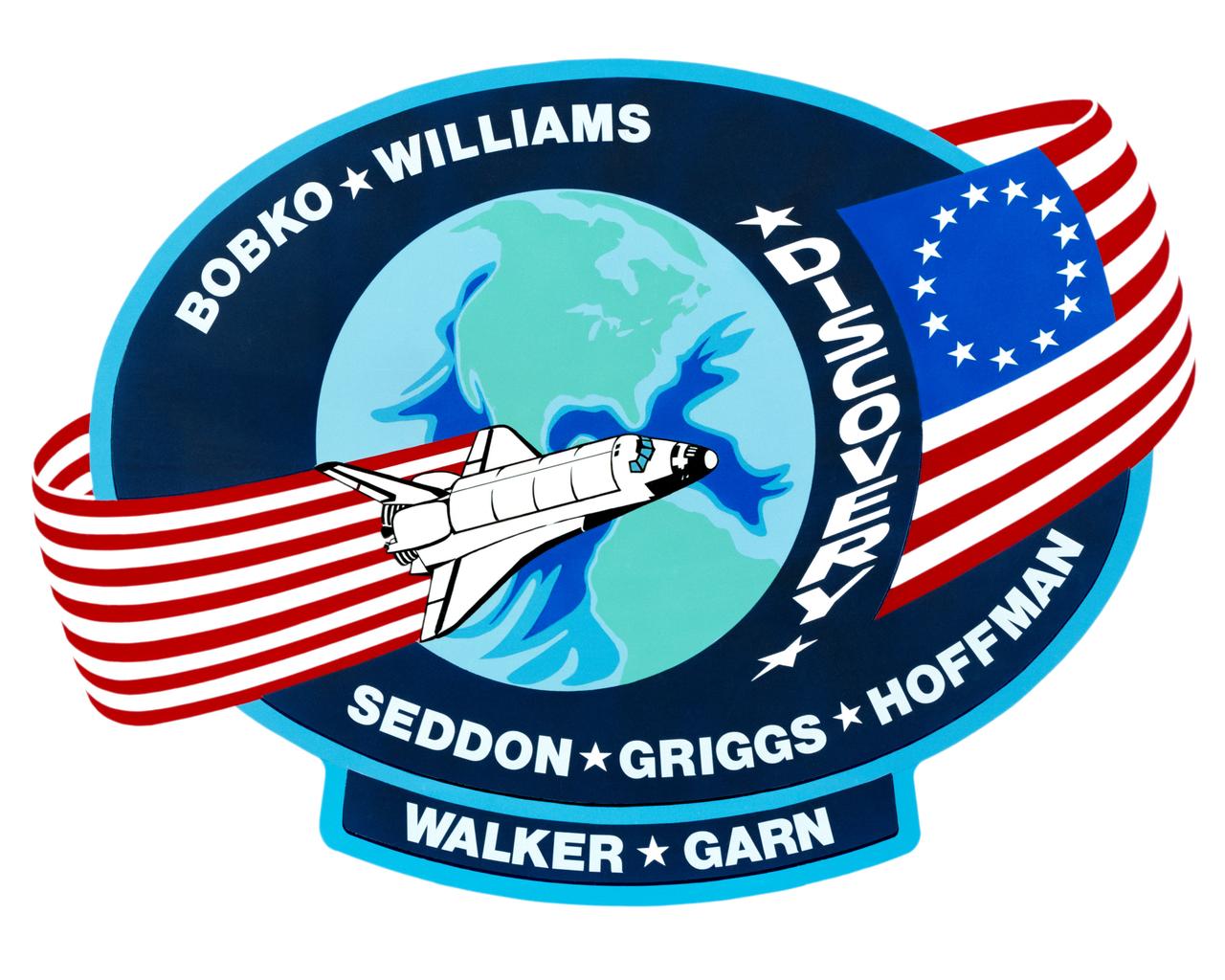
S85-28989 (March 1985) --- The dominant features of the STS-51D emblem are an orbit formed by a Colonial American flag and a space shuttle. The flag in orbit signifies the U.S. flag to indicate that it comes from this country and the American people. The original 13-star flag is used to symbolize a continuity of technical achievement and progress since colonial times. The name Discovery preceding the flag represents the spirit of Discovery and exploration of new frontiers which have been a hallmark of American people even before they were formed together as a nation. The crew members are Karol J. Bobko, Donald E. Williams, Rhea Seddon, S. David Griggs and Jeffrey A. Hoffman of NASA; and Charles D. Walker, representing McDonnell Douglas Corporation; and U. S. Senator Jake Garn. The NASA insignia design for space shuttle flights is reserved for use by the astronauts and for other official use as the NASA Administrator may authorize. Public availability has been approved only in the forms of illustrations by the various news media. When and if there is any change in this policy, which is not anticipated, the change will be publicly announced. Photo credit: NASA
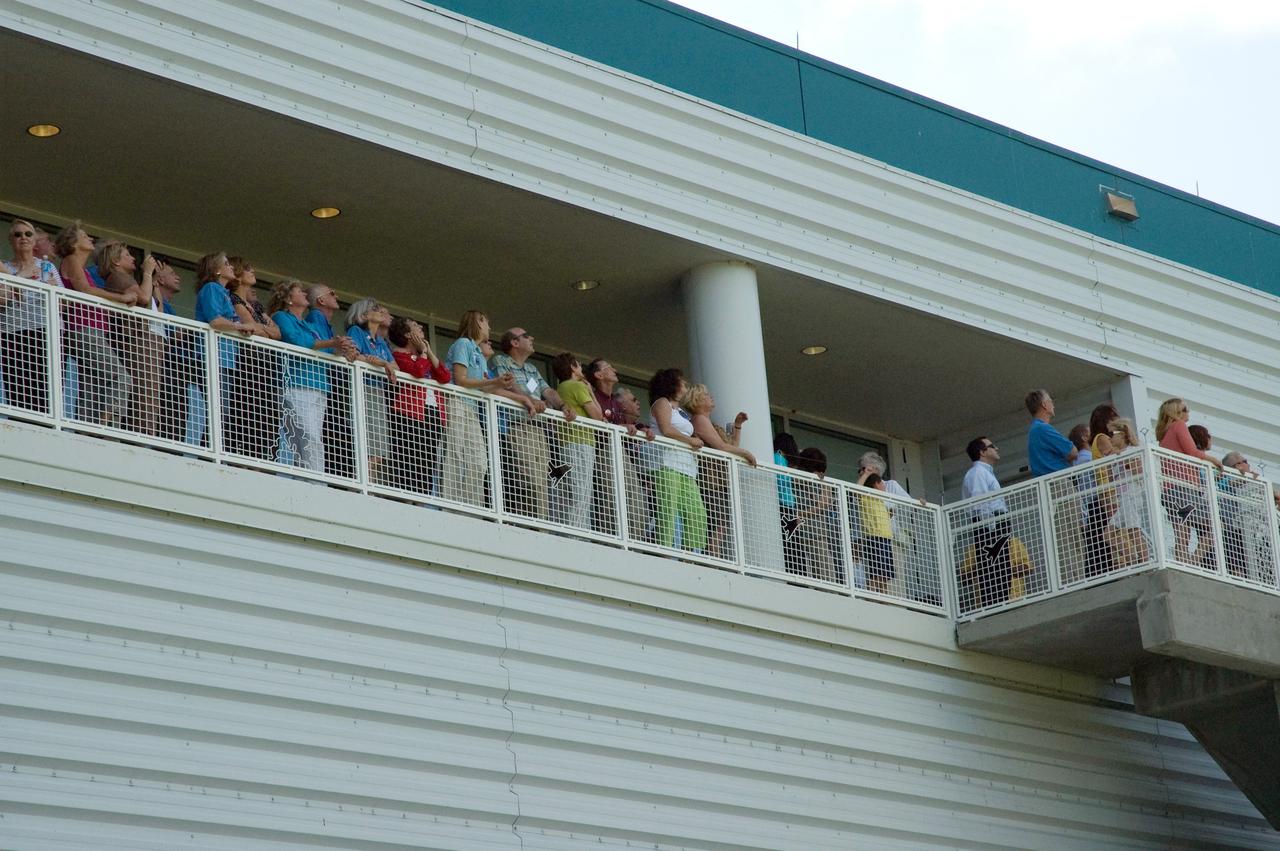
CAPE CANAVERAL, Fla. -- All eyes look skyward as space shuttle Discovery launches on its STS-124 mission. The group gathered here at the Banana River viewing site at NASA's Kennedy Space Center are members of the first graduating class of astronauts after the Apollo program. In 1978 a new group of 35 astronauts was selected after nine years without new astronauts. The pilots were Daniel Brandenstein, Michael Coats, Richard Covey, John Creighton, Robert Gibson, Frederick D. Gregory, Frederick Hauck, Jon McBride, Francis "Dick" Scobee, Brewster Shaw, Loren Shriver, David Walker and Donald Williams. The mission specialists were Guion Bluford, James Buchli, John Fabian, Anna Fisher, Dale Gardner, S. David Griggs, Terry Hart, Steven Hawley, Jeffrey Hoffman, Shannon Lucid, Ronald McNair, Richard Mullane, Steven Nagel, George Nelson, Ellison Onizuka, Judith Resnik, Sally Ride, Rhea Seddon, Robert Stewart, Kathryn D. Sullivan, Norman Thagard and James van Hoften. Since then, a new group has been selected roughly every two years. Photo credit: NASA/Jim Grossmann
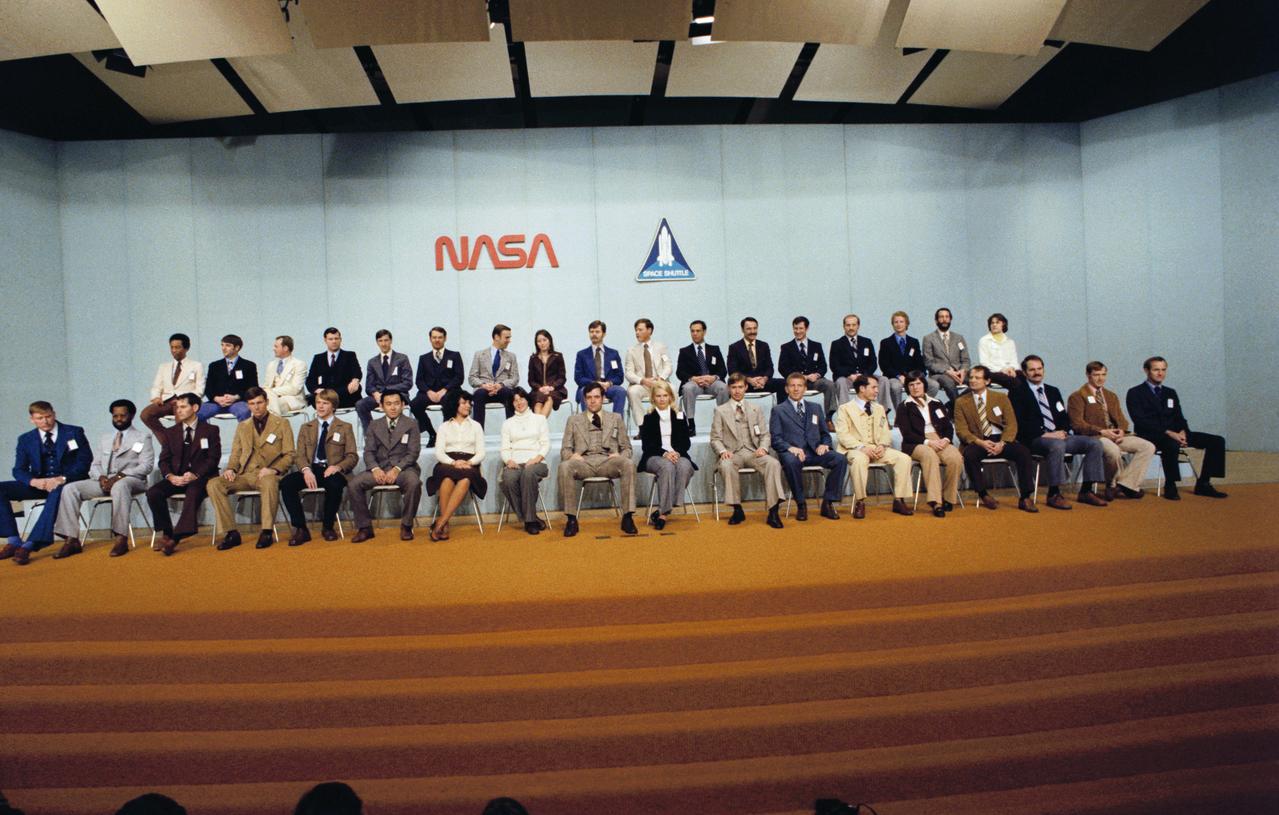
S78-26569 (31 Jan. 1978) --- The 35 new astronaut candidates, presented Jan. 31, 1978, in the Building 2 auditorium at NASA's Johnson Space Center, pose for photographers. They are arranged in alphabetical order with top left as beginning point and bottom right as stopping point. They are Guion S. Bluford, Daniel C. Brandenstein, James F. Buchli, Michael L. Coats, Richard O. Covey, John O. Creighton, John M. Fabian, Anna L. Fisher, Dale A. Gardner, Robert L. Gibson, Frederick D. Gregory, S. David Griggs, Terry J. Hart, Frederick H. (Rick) Hauck, Steven A. Hawley, Jeffrey A. Hoffman, Shannon W. Lucid, Jon A. McBride, Ronald E. McNair, Richard M. (Mike) Mullane, Steven R. Nagel, George D. Nelson, Ellison S. Onizuka, Judith A. Resnik, Sally K. Ride, Francis R. (Dick) Scobee, Rhea Seddon, Brewster H. Shaw Jr., Loren J. Shriver, Robert L. Stewart, Kathryn D. Sullivan, Norman E. Thagard, James D. van Hoften, David M. Walker and Donald E. Williams. Photo credit: NASA or National Aeronautics and Space Administration