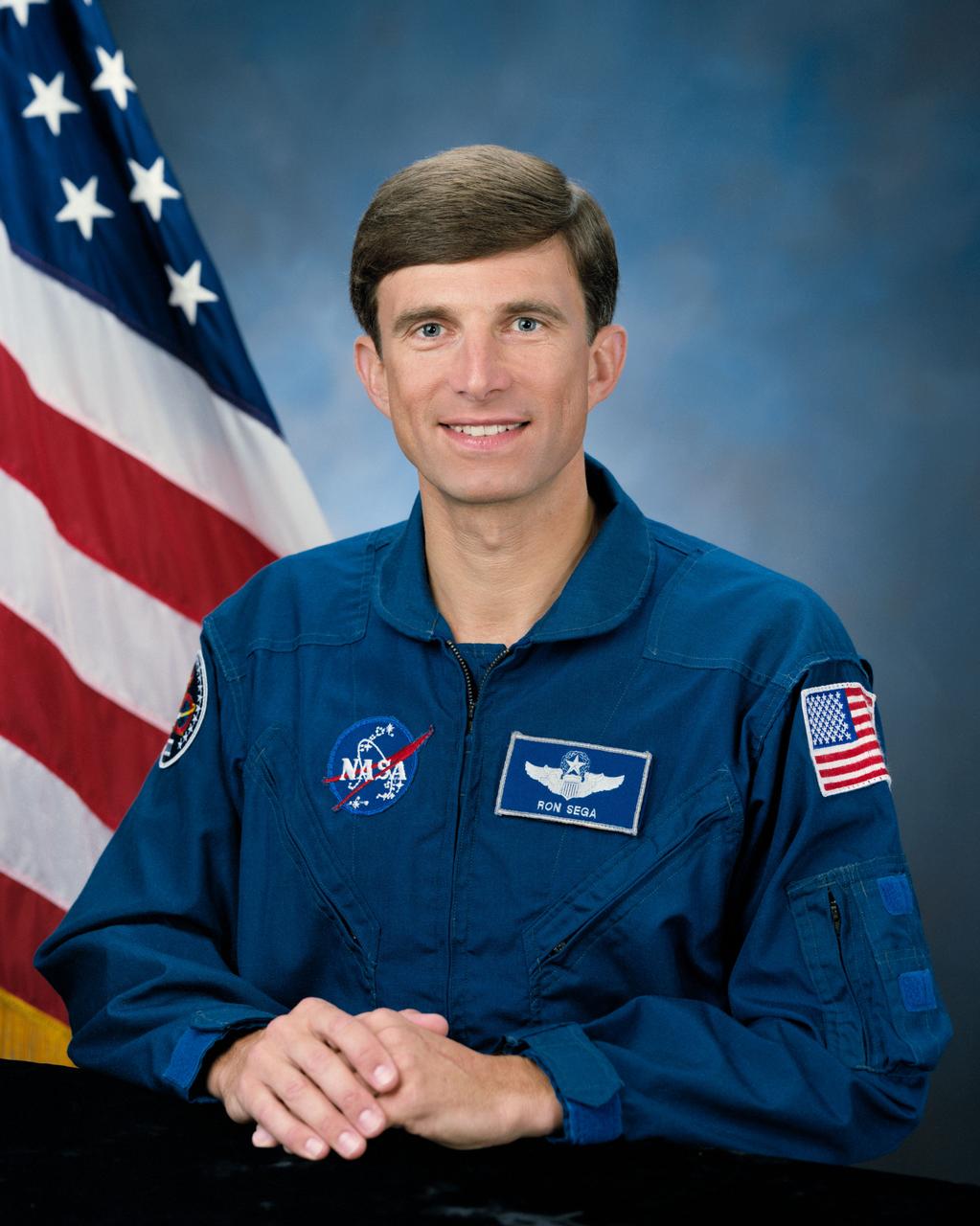
S92-45896 (21 Sept 1992) --- Astronaut Ronald M. Sega.
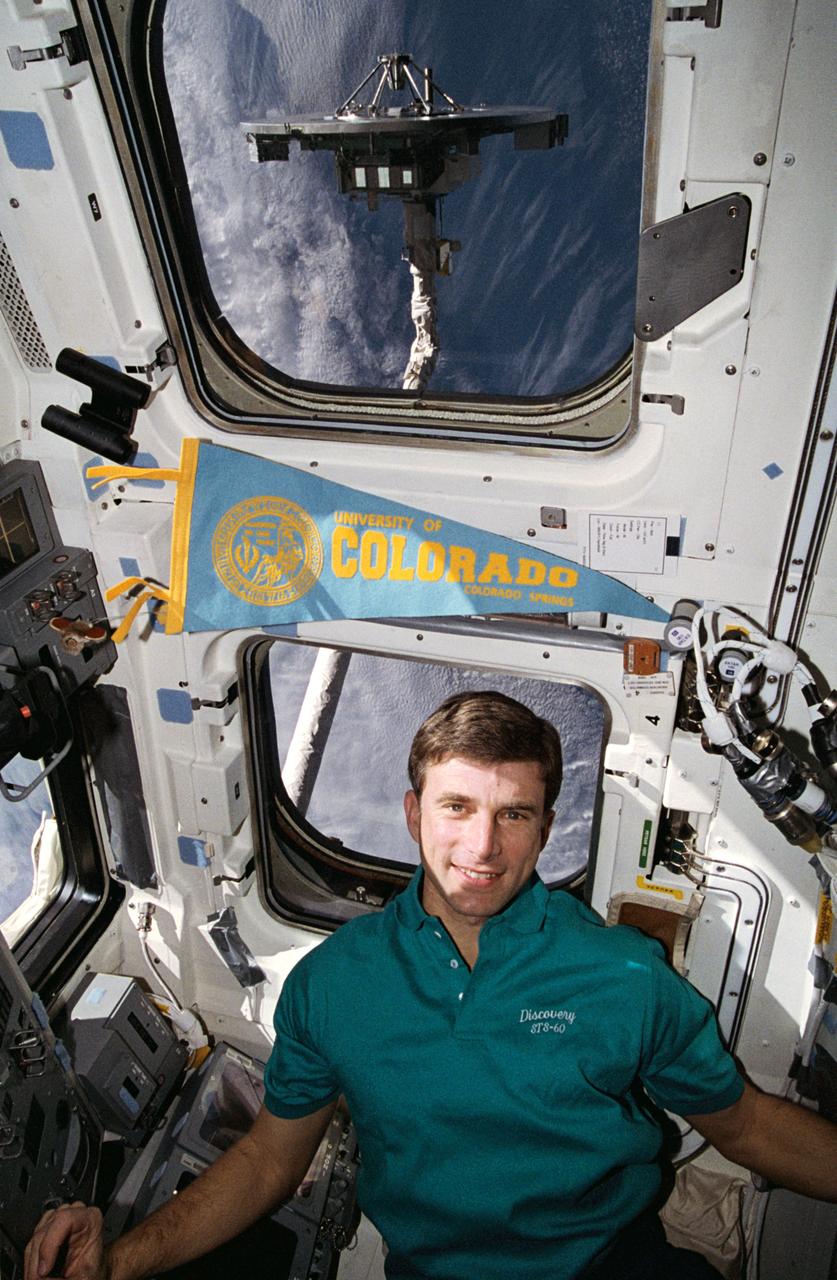
STS060-57-033 (3-11 Feb 1994) --- Astronaut Ronald M. Sega suspends himself in the weightlessness aboard the Space Shuttle Discovery's crew cabin, as the Remote Manipulator System (RMS) arm holds the Wake Shield Facility (WSF) aloft. The mission specialist is co-principal investigator on the WSF project.
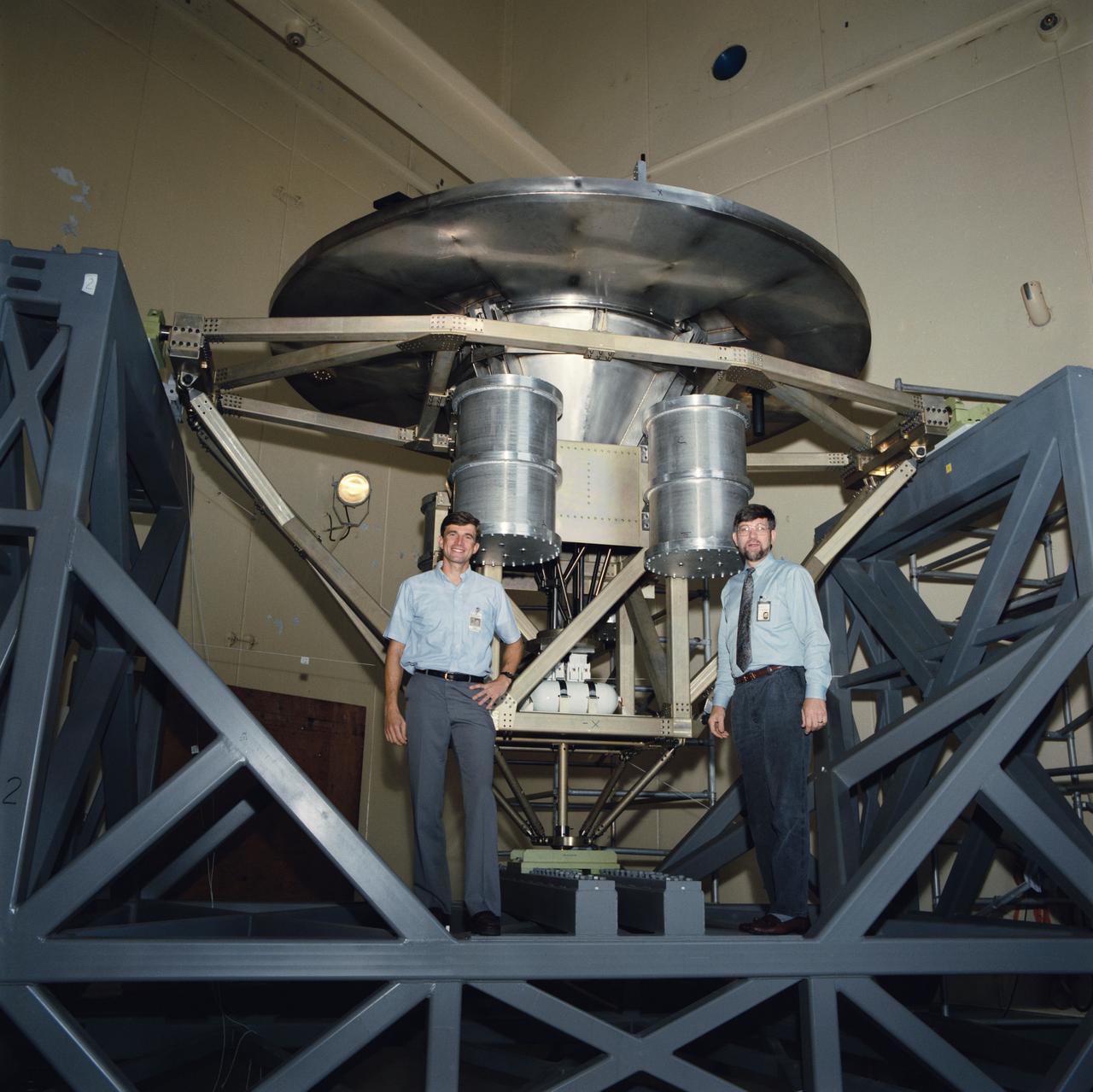
The Wake Shield Facility is displayed on a test stand at JSC. Astronaut Ronald M. Sega, mission specialist for STS-60, is seen with the facility during a break in testing in the acoustic and vibration facility at JSC.
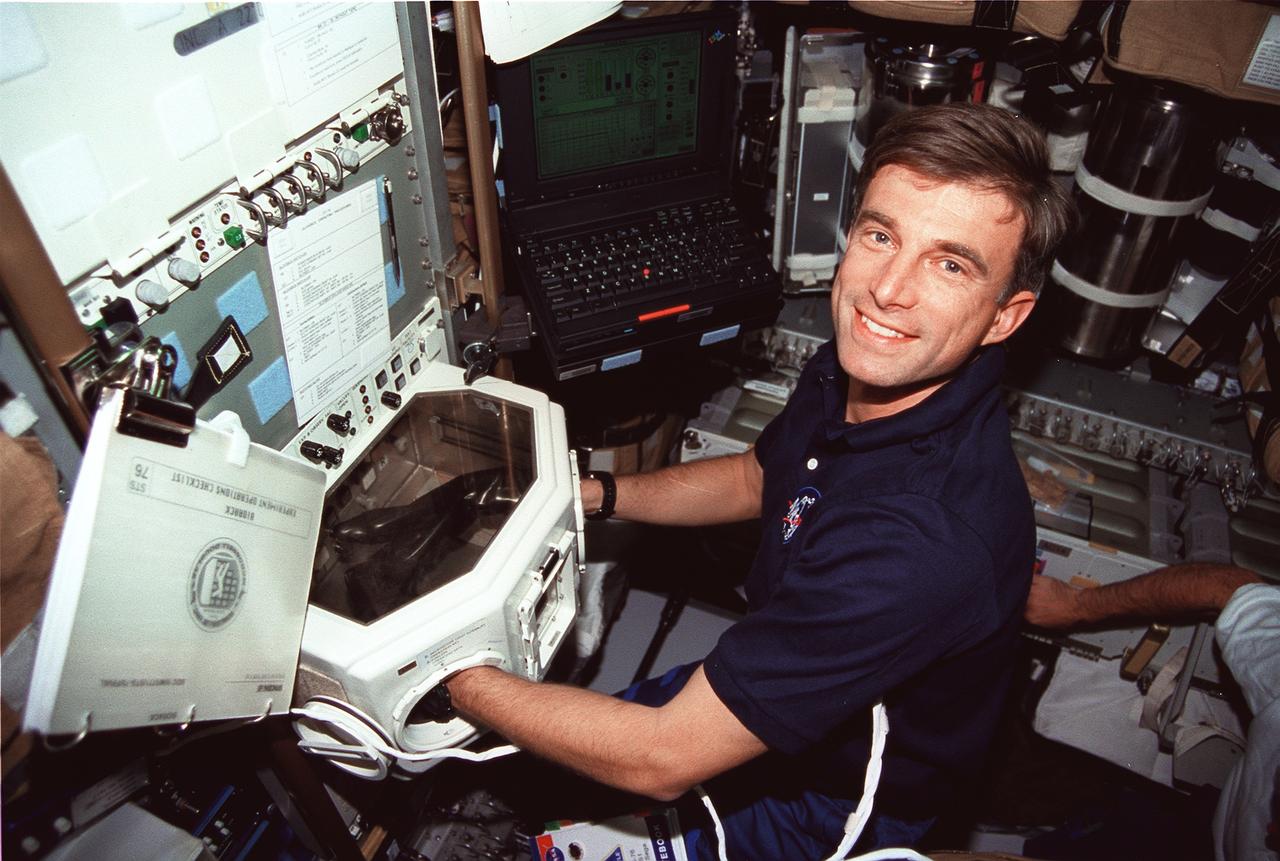
STS076-312-022 (22 - 31 March 1996) --- Astronaut Ronald M. Sega, payload commander, works in the glovebox facility in the Spacehab laboratory aboard the Earth-orbiting Space Shuttle Atlantis. The Spacehab facility was one of the busier research areas on Atlantis during the STS-76 mission. Also, some of the gear for transfer to Russia's Mir Space Station was stowed there prior to the March 23, 1996 docking of Atlantis and Mir.
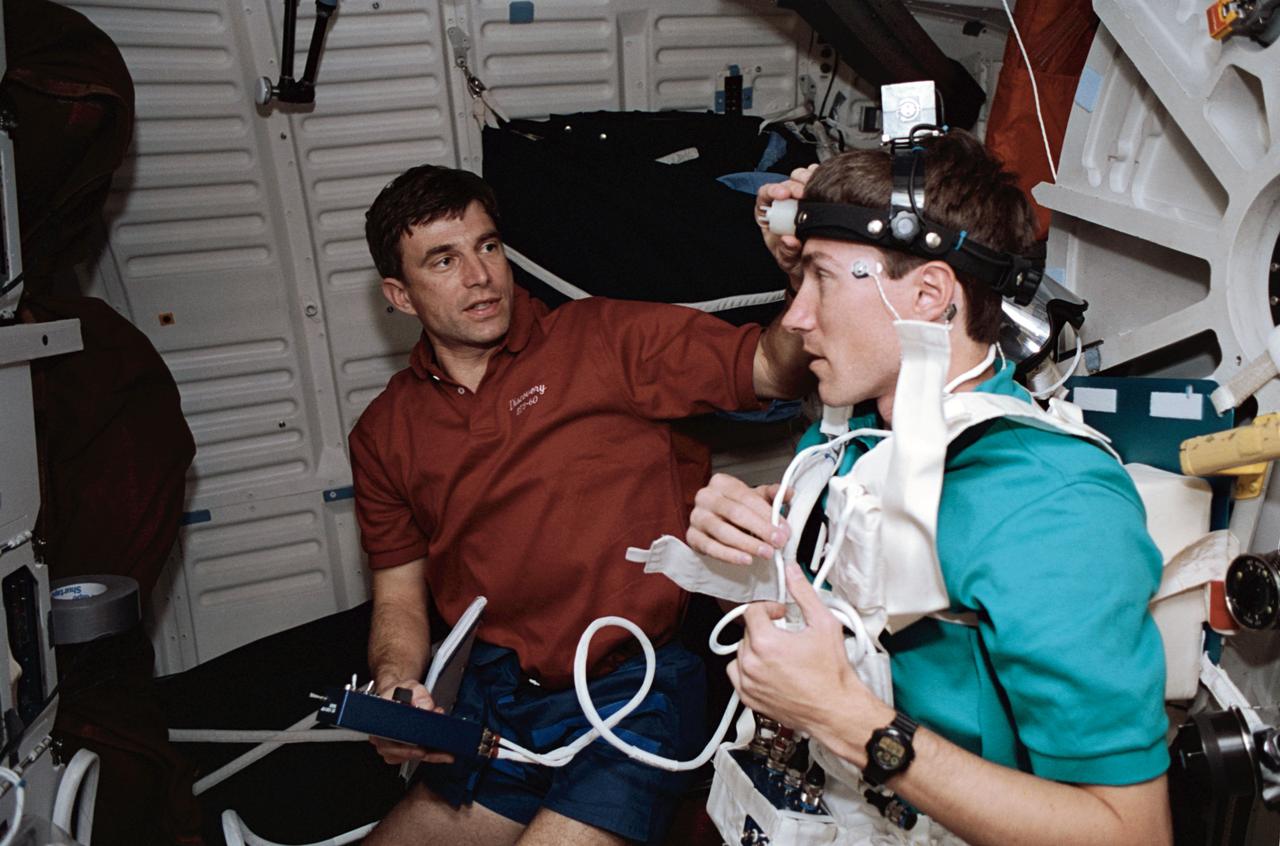
STS060-21-027 (3-11 Feb 1994) --- Astronaut Ronald M. Sega (left) and Russian cosmonaut Sergei K. Krikalev work on a joint U.S./Russian metabolic experiment on the Space Shuttle Discovery's middeck. A number of other U.S./Russian cooperative Detailed Supplementary Objectives (DSO) are included among the experiments conducted on the eight-day mission.
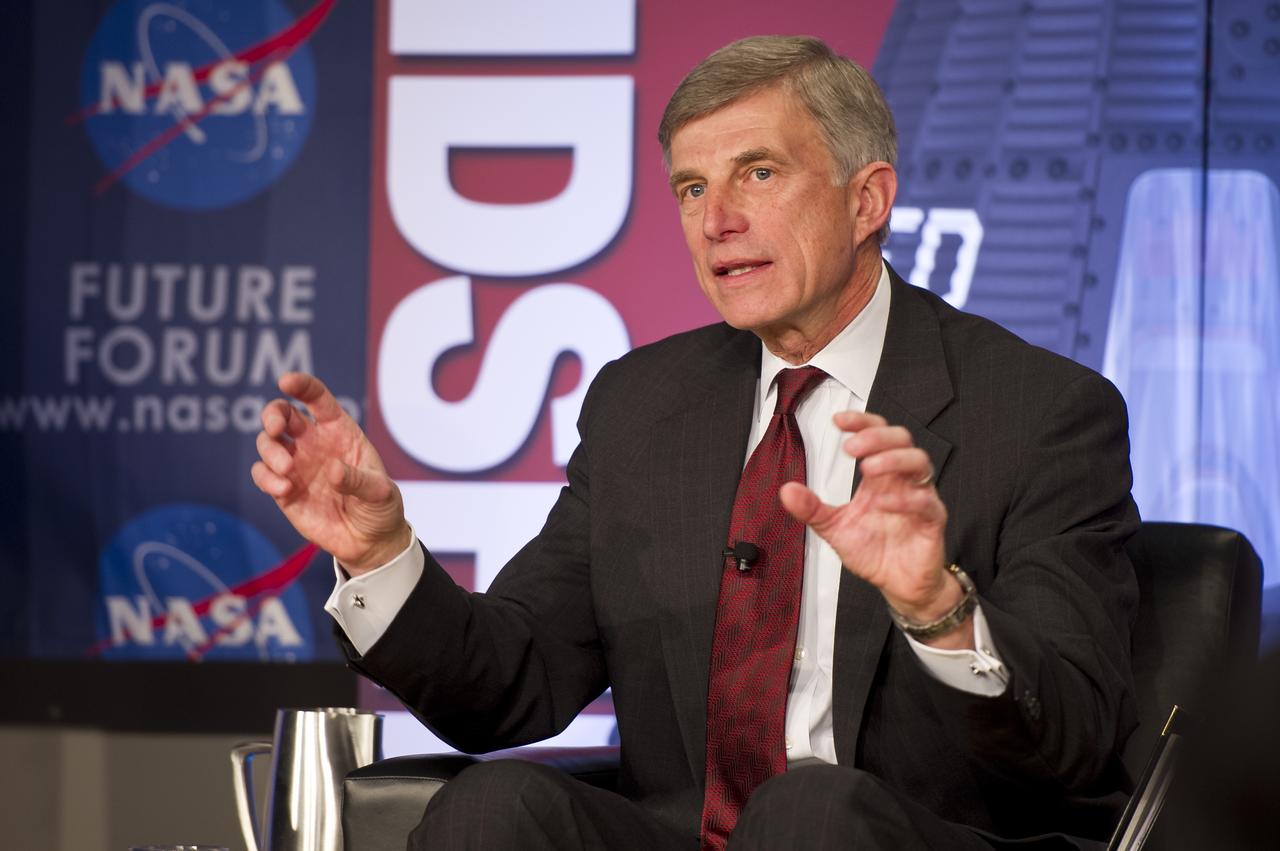
Ron Sega, Vice president and enterprise executive for Energy and the Environment, The Ohio State University and Colorado State University talks during the NASA Future Forum panel titled "Importance of Technology, Science and Innovation for our Economic Future" at The Ohio State University on Tuesday, Feb. 21, 2012 in Columbus, Ohio. The NASA Future Forum features panel discussions on the importance of education to our nation's future in space, the benefit of commercialized space technology to our economy and lives here on Earth, and the shifting roles for the public, commercial and international communities in space. Photo Credit: (NASA/Bill Ingalls)
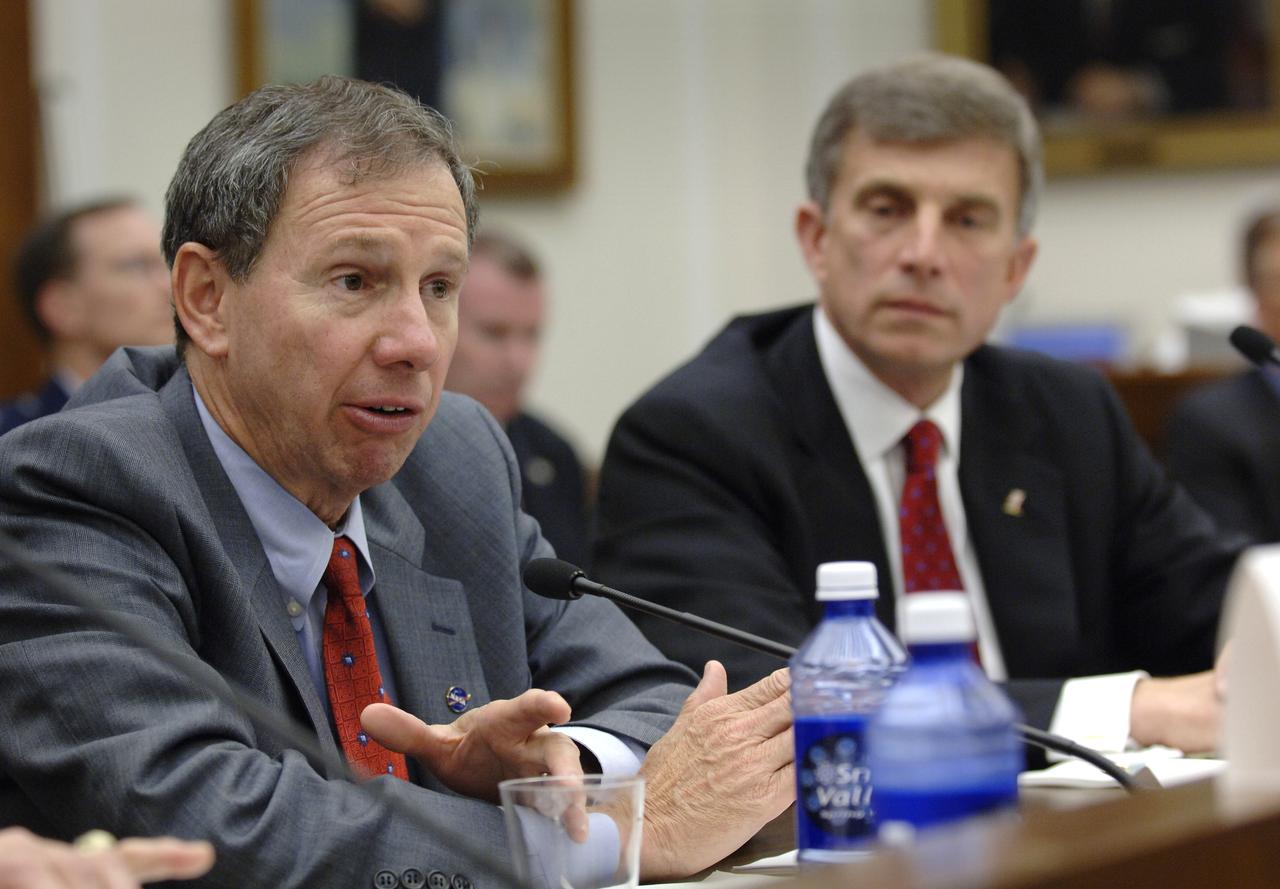
NASA Administrator Michael Griffin, left, testifies before the House Committee on Science and Technology regarding the future of the National Polar-orbiting Operational Environmental Satellite System (NPOESS) and results of the Nunn-McCurdy review of NOAA’s weather satellite program, as Under Secretary of the Air Force Dr. Ronald Sega looks on, Thursday, June 8, 2006, at the Rayburn House Office Building in Washington. Photo Credit: (NASA/Bill Ingalls)
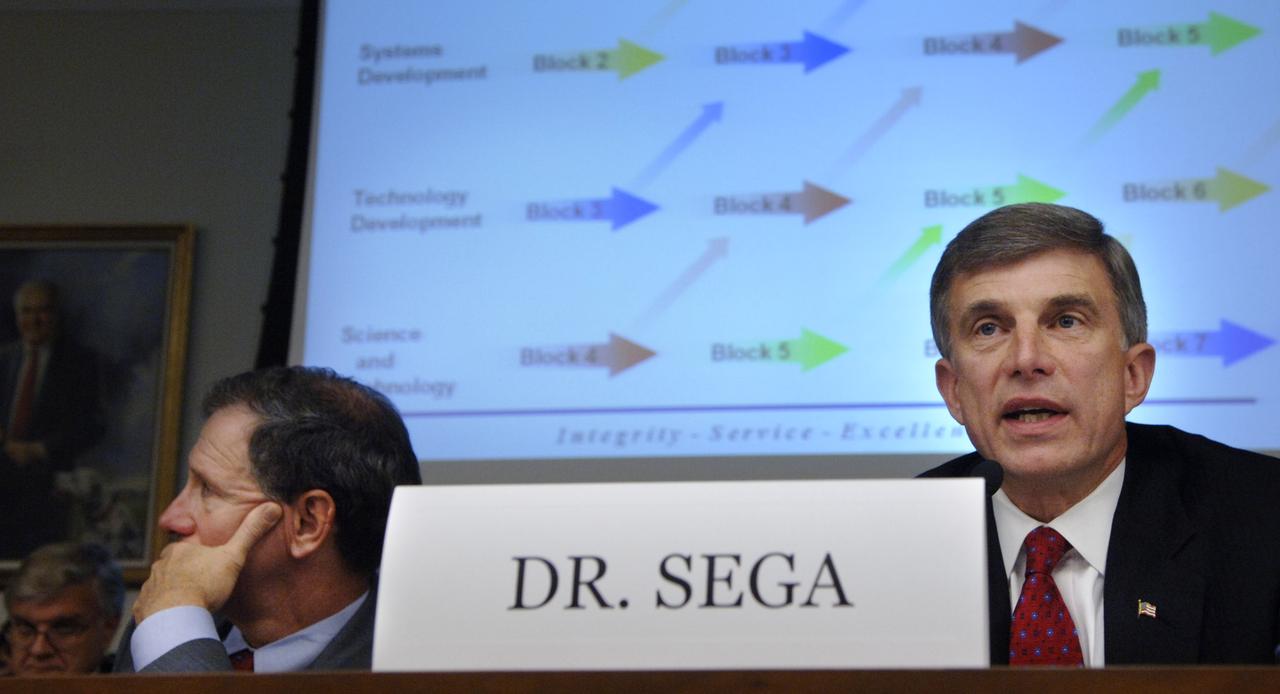
Under Secretary of the Air Force Dr. Ronald Sega, right, testifies before the House Committee on Science and Technology regarding the future of the National Polar-orbiting Operational Environmental Satellite System (NPOESS) and results of the Nunn-McCurdy review of NOAA’s weather satellite program as NASA Administrator Michael Griffin, left, looks at a television monitor, Thursday, June 8, 2006, at the Rayburn House Office Building in Washington. Photo Credit: (NASA/Bill Ingalls)
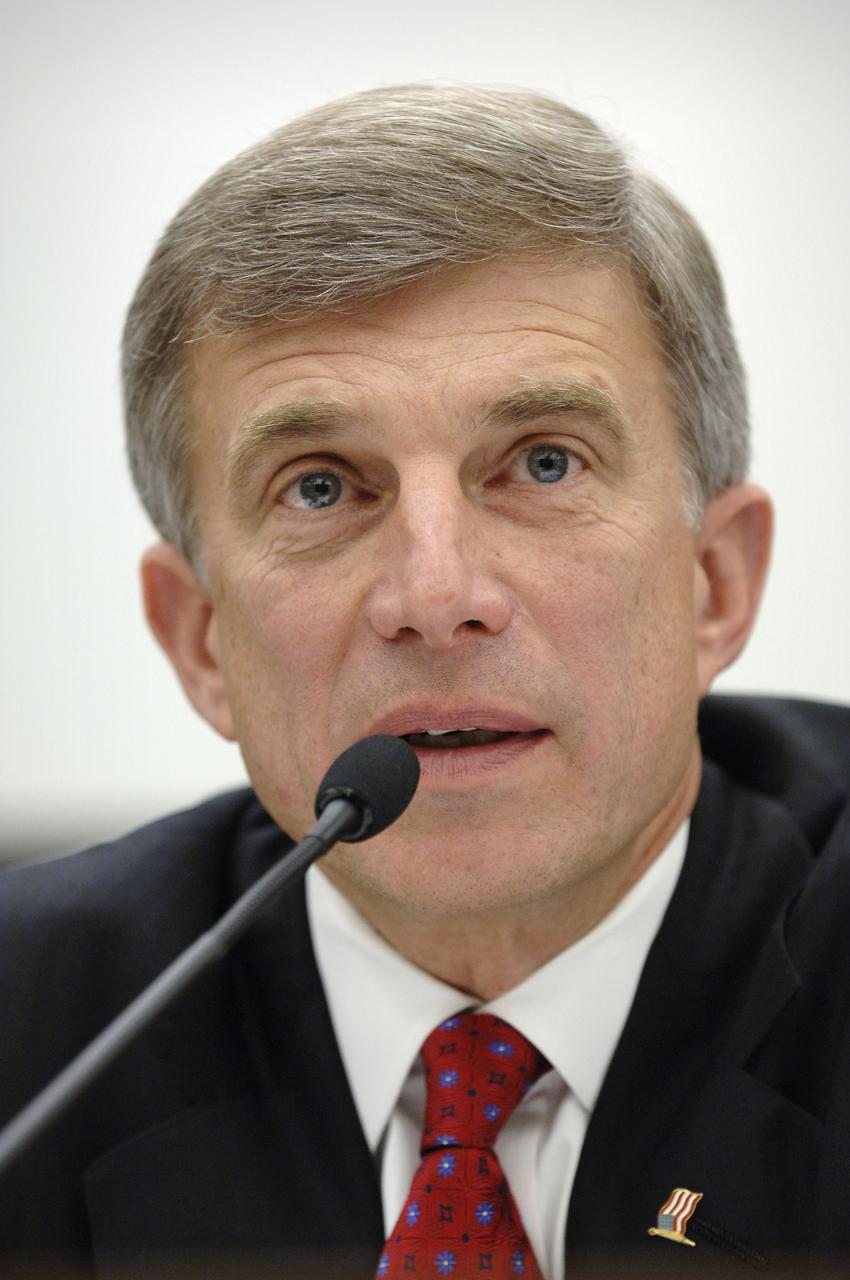
Under Secretary of the Air Force Dr. Ronald Sega, testifies before the House Committee on Science and Technology regarding the future of the National Polar-orbiting Operational Environmental Satellite System (NPOESS) and results of the Nunn-McCurdy review of NOAA’s weather satellite program, Thursday, June 8, 2006, at the Rayburn House Office Building in Washington. Photo Credit: (NASA/Bill Ingalls)
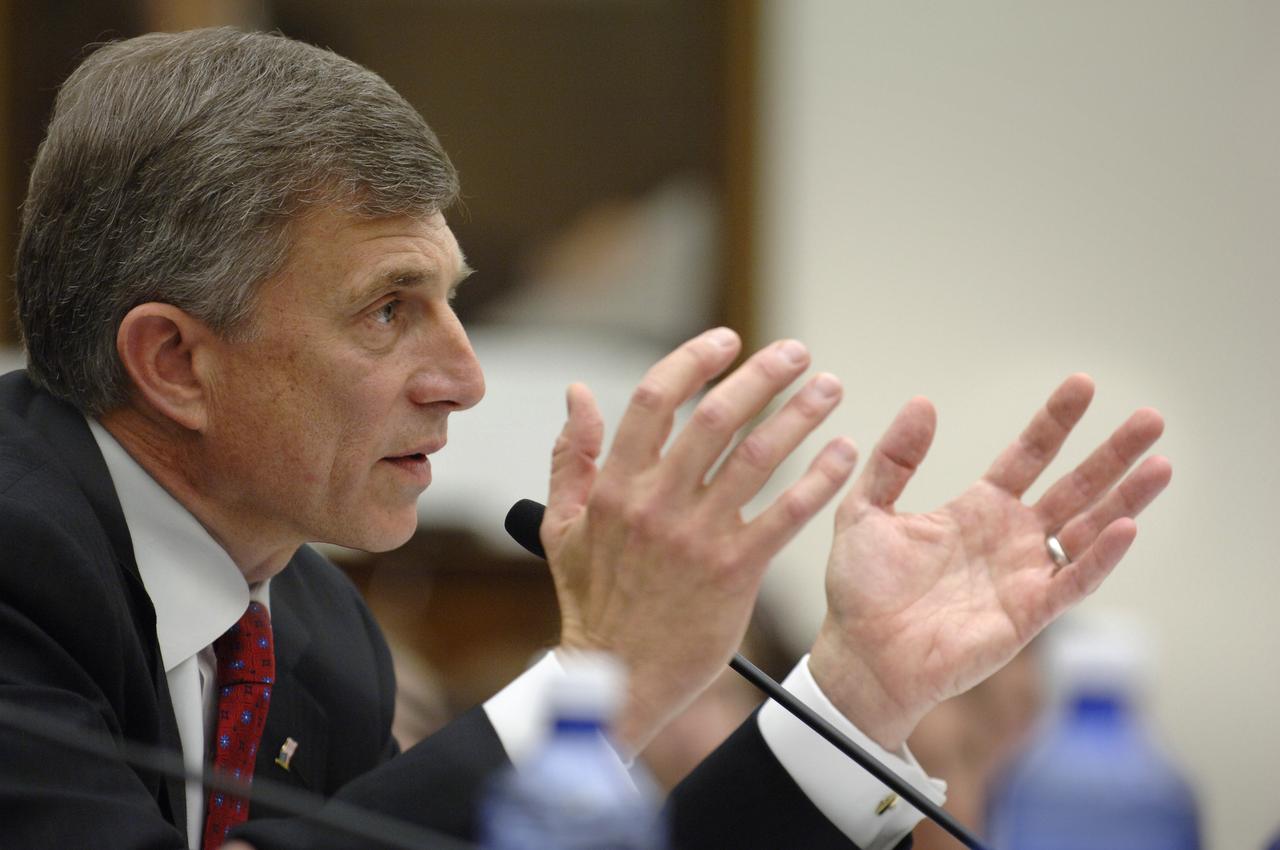
Under Secretary of the Air Force Dr. Ronald Sega, testifies before the House Committee on Science and Technology regarding the future of the National Polar-orbiting Operational Environmental Satellite System (NPOESS) and results of the Nunn-McCurdy review of NOAA’s weather satellite program, Thursday, June 8, 2006, at the Rayburn House Office Building in Washington. Photo Credit: (NASA/Bill Ingalls)
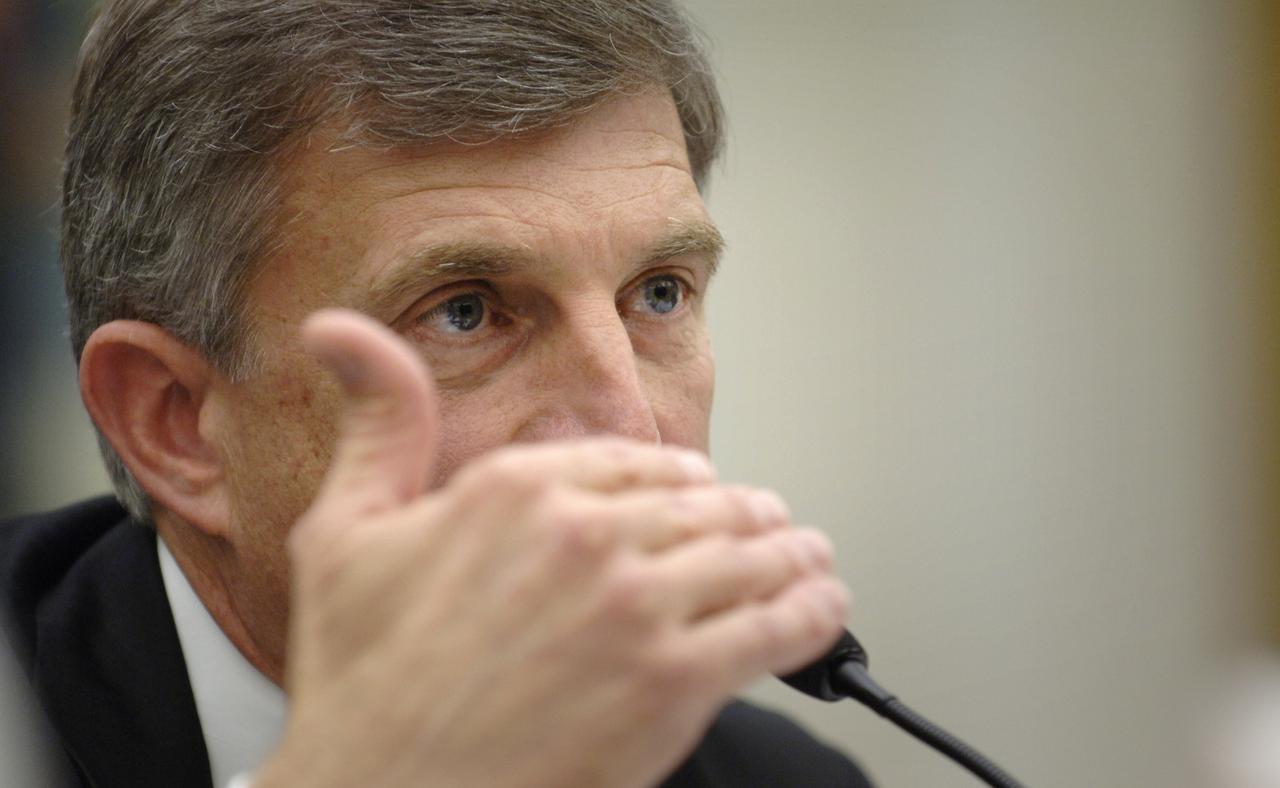
Under Secretary of the Air Force Dr. Ronald Sega, testifies before the House Committee on Science and Technology regarding the future of the National Polar-orbiting Operational Environmental Satellite System (NPOESS) and results of the Nunn-McCurdy review of NOAA’s weather satellite program, Thursday, June 8, 2006, at the Rayburn House Office Building in Washington. Photo Credit: (NASA/Bill Ingalls)
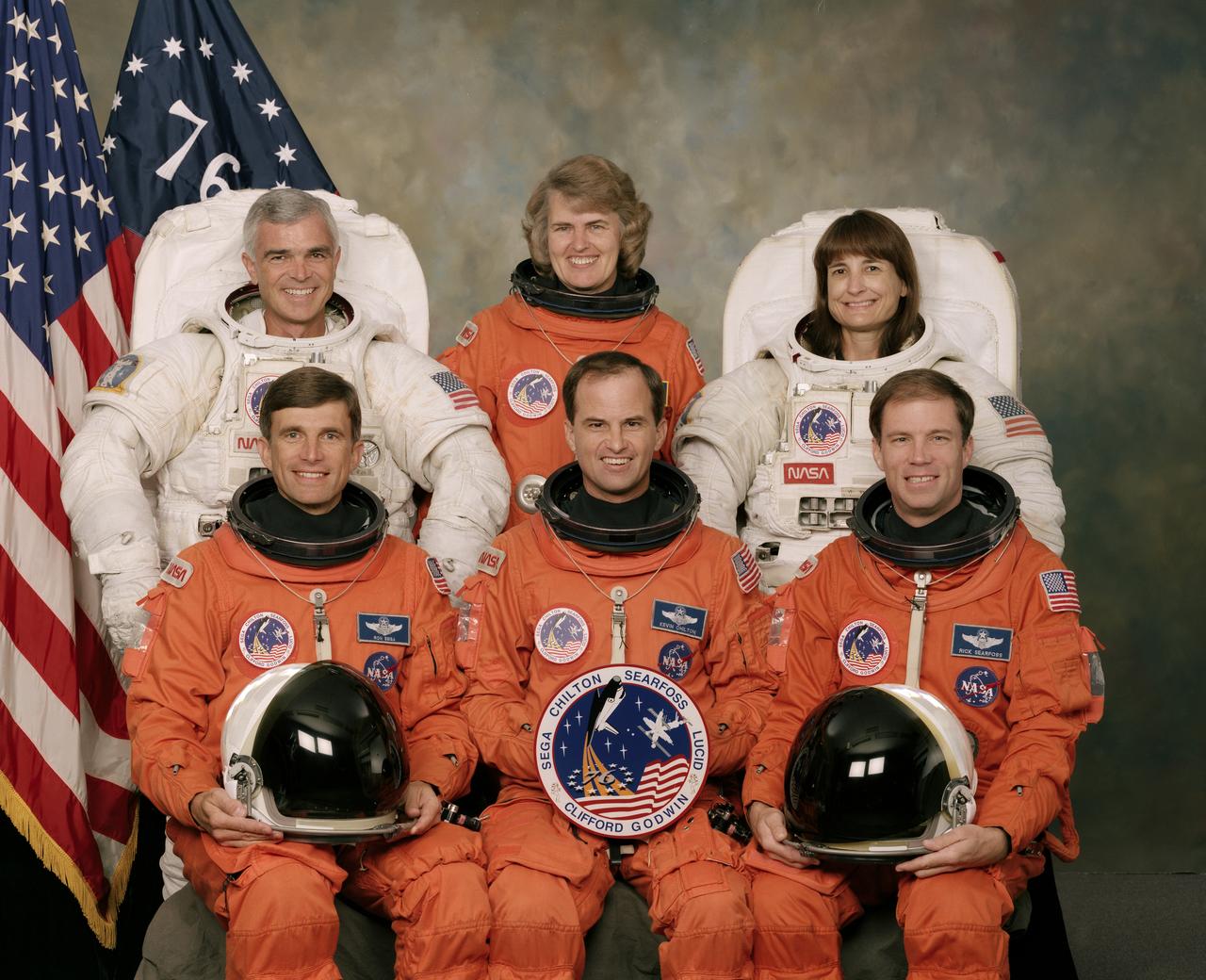
These six NASA astronauts launched into space aboard the Space Shuttle Atlantis on March 22, 1996 for the STS-76 mission. Pictured on the front row, left to right, are astronauts Ronald M. Sega, mission specialist; Kevin P. Chilton, mission commander; and Richard A. Searfoss, pilot. On the back row, left to right, are mission specialists Michael R. (Rich) Clifford, Shannon W. Lucid, and Linda M. Godwin. The third U.S. Shuttle-Mir docking, STS-76 began a new period of international cooperation in space exploration with the first Shuttle transport of a United States astronaut (Lucid) to Russia’s Mir Space Station for extended joint space research. Clifford and Godwin, pictured here in training versions of the Extravehicular Mobility Unit (EMU), performed the first Extravehicular Activity (EVA) during Mir-Shuttle docked operations.

The Ohio State University President E. Gordon Gee, left, Apollo 11 Astronaut Neil Armstrong, 2nd from left, Former space shuttle astronaut and former Under Secretary of the Air Force Dr. Ron Sega, and Captain Mark Kelly, commander of the space shuttle Endeavour’s final mission and husband of retired U.S. Representative Gabrielle Giffords, right, talk prior to a reception at Ohio State University honoring the 50th anniversary of John Glenn's historic flight aboard Friendship 7 Monday, Feb. 20, 2012, in Columbus, Ohio. Glenn was the first American to orbit Earth. Photo Credit: (NASA/Bill Ingalls)
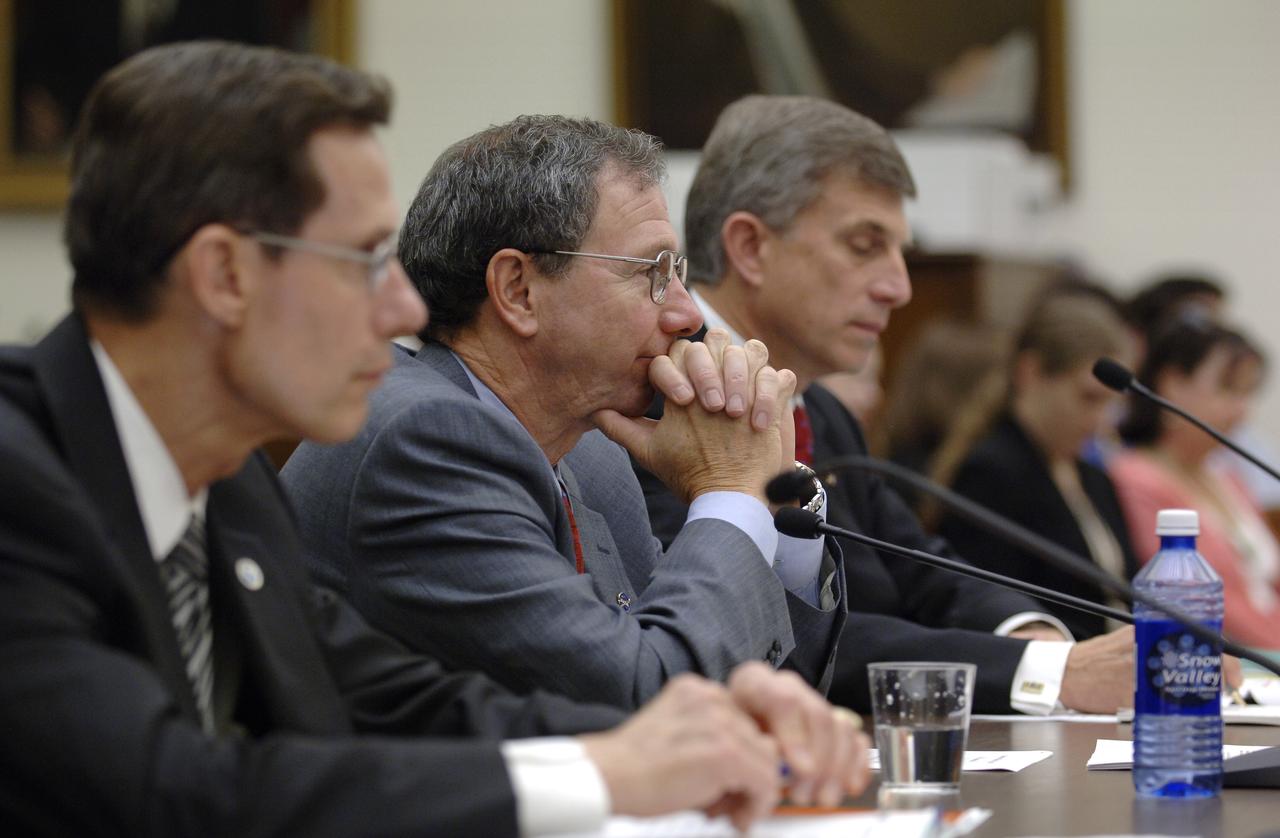
NOAA Administrator, Vice Admiral Conrad C. Lautenbacher, Jr., U.S. Navy (Ret.), left, NASA Administrator Michael Griffin and Under Secretary of the Air Force Dr. Ronald Sega, right, testify before the House Committee on Science and Technology regarding the future of the National Polar-orbiting Operational Environmental Satellite System (NPOESS) and results of the Nunn-McCurdy review of NOAA’s weather satellite program, Thursday, June 8, 2006, at the Rayburn House Office Building in Washington. Photo Credit: (NASA/Bill Ingalls)
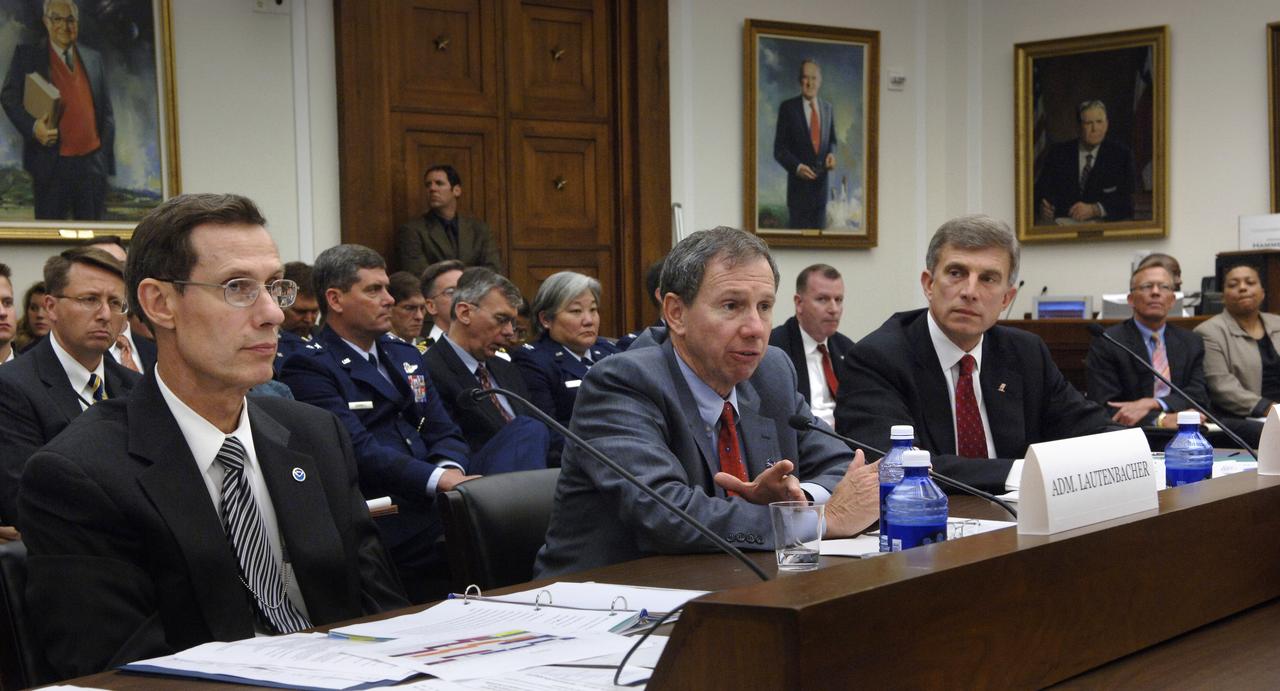
NOAA Administrator, Vice Admiral Conrad C. Lautenbacher, Jr., U.S. Navy (Ret.), left, NASA Administrator Michael Griffin and Under Secretary of the Air Force Dr. Ronald Sega, right, testify before the House Committee on Science and Technology regarding the future of the National Polar-orbiting Operational Environmental Satellite System (NPOESS) and results of the Nunn-McCurdy review of NOAA’s weather satellite program, Thursday, June 8, 2006, at the Rayburn House Office Building in Washington. Photo Credit: (NASA/Bill Ingalls)
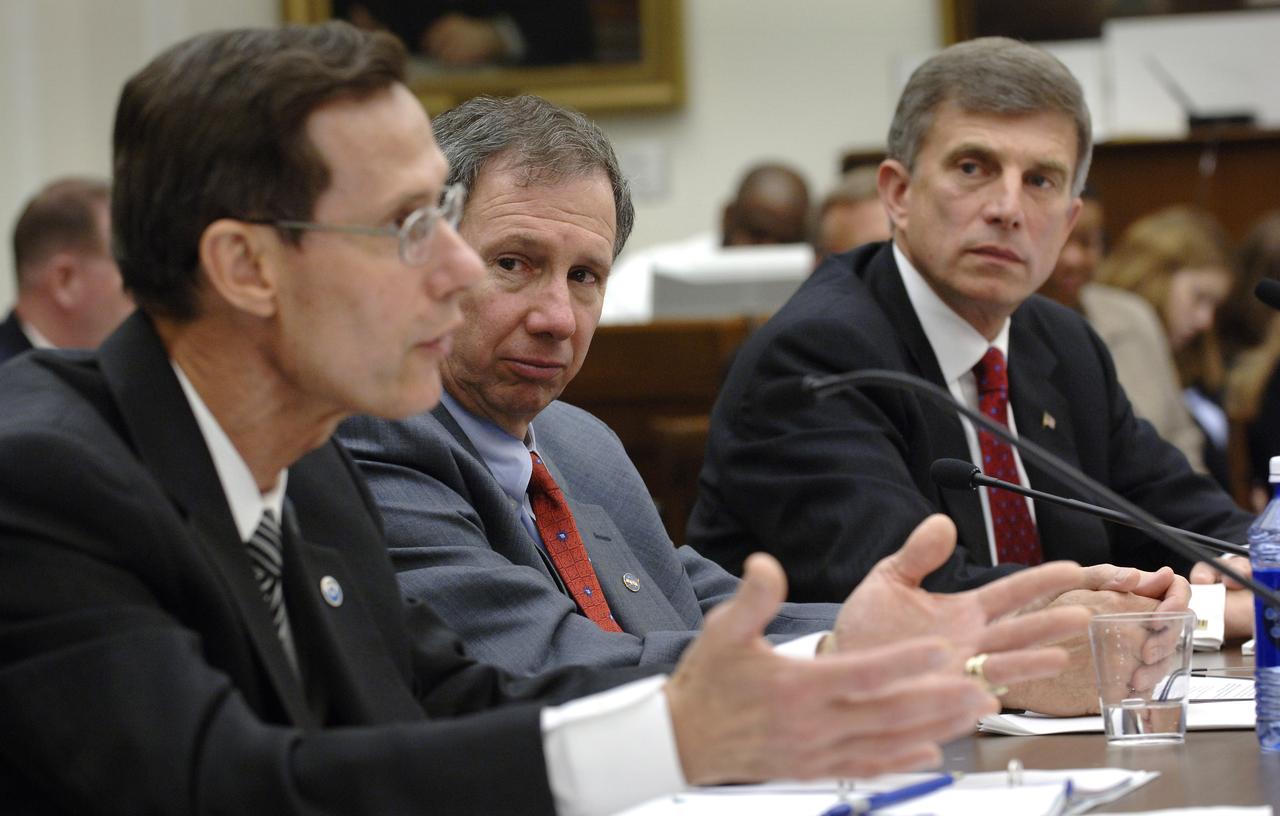
NOAA Administrator, Vice Admiral Conrad C. Lautenbacher, Jr., U.S. Navy (Ret.), left, NASA Administrator Michael Griffin and Under Secretary of the Air Force Dr. Ronald Sega, right, testify before the House Committee on Science and Technology regarding the future of the National Polar-orbiting Operational Environmental Satellite System (NPOESS) and results of the Nunn-McCurdy review of NOAA’s weather satellite program, Thursday, June 8, 2006, at the Rayburn House Office Building in Washington. Photo Credit: (NASA/Bill Ingalls)
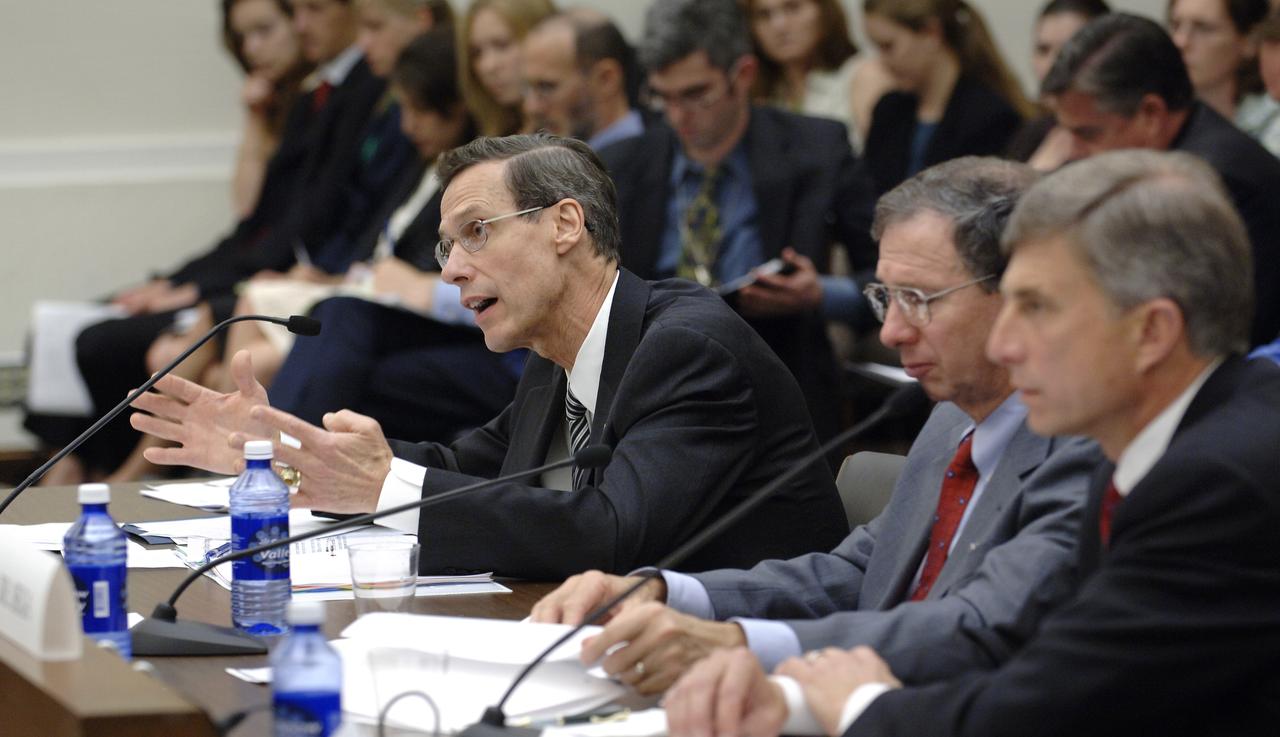
NOAA Administrator, Vice Admiral Conrad C. Lautenbacher, Jr., U.S. Navy (Ret.), left, NASA Administrator Michael Griffin and Under Secretary of the Air Force Dr. Ronald Sega, right, testify before the House Committee on Science and Technology regarding the future of the National Polar-orbiting Operational Environmental Satellite System (NPOESS) and results of the Nunn-McCurdy review of NOAA’s weather satellite program, Thursday, June 8, 2006, at the Rayburn House Office Building in Washington. Photo Credit: (NASA/Bill Ingalls)
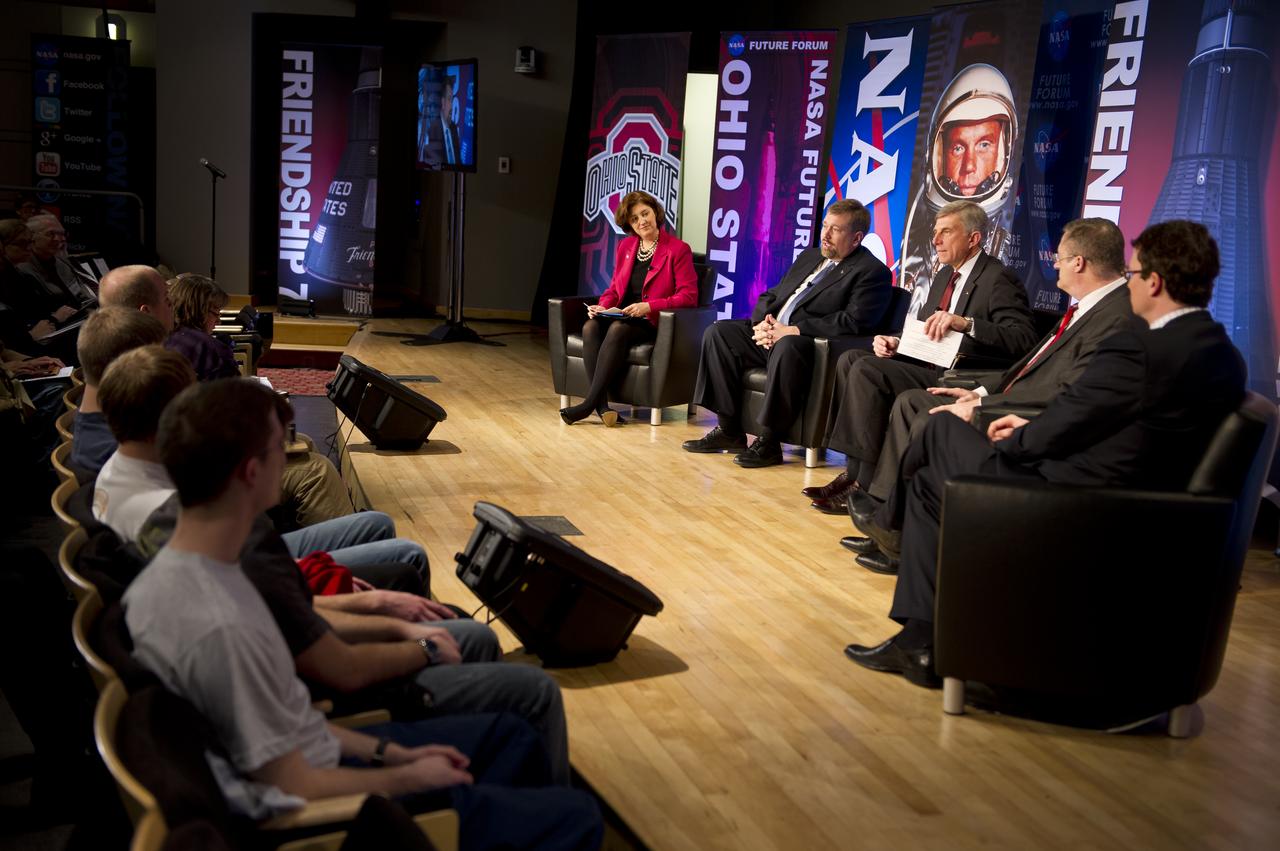
Laurie Leshin, dean of the School of Science, Rensselaer Polytechnic Institute, left, Mason Peck, NASA Chief Technologist, 2nd from left, Ron Sega, Vice president and enterprise executive for Energy and the Environment, The Ohio State University and Colorado State University, Michael Donovan, technology consultant, New Services Development, Hewlett-Packard Company, and, Jordan Hansell, chairman and CEO, NetJets Inc., right, participate in the NASA Future Forum panel titled "Importance of Technology, Science and Innovation for our Economic Future" at The Ohio State University on Tuesday, Feb. 21, 2012 in Columbus, Ohio. The NASA Future Forum features panel discussions on the importance of education to our nation's future in space, the benefit of commercialized space technology to our economy and lives here on Earth, and the shifting roles for the public, commercial and international communities in space. Photo Credit: (NASA/Bill Ingalls)
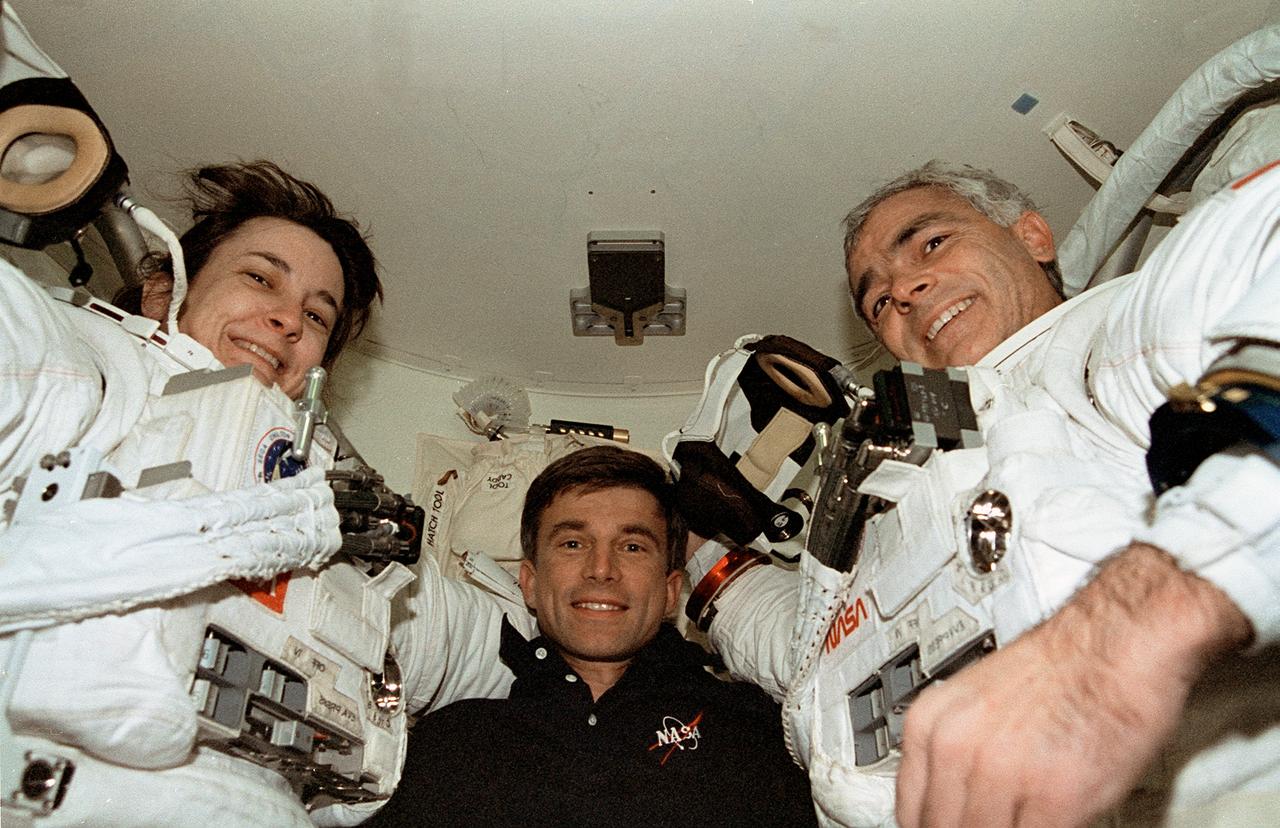
STS076-342-027 (27 March 1996) --- Astronaut Ronald M. Sega, center, shares the airlock of the Space Shuttle Atlantis with the two assigned space walkers for STS-76 - astronauts Linda M. Godwin and Michael R. (Rich) Clifford. Sega, the payload commander, assisted the two mission specialists in preparing for the first ever Extravehicular Activity (EVA) to take place while the Space Shuttle was docked with Russia's Mir Space Station.
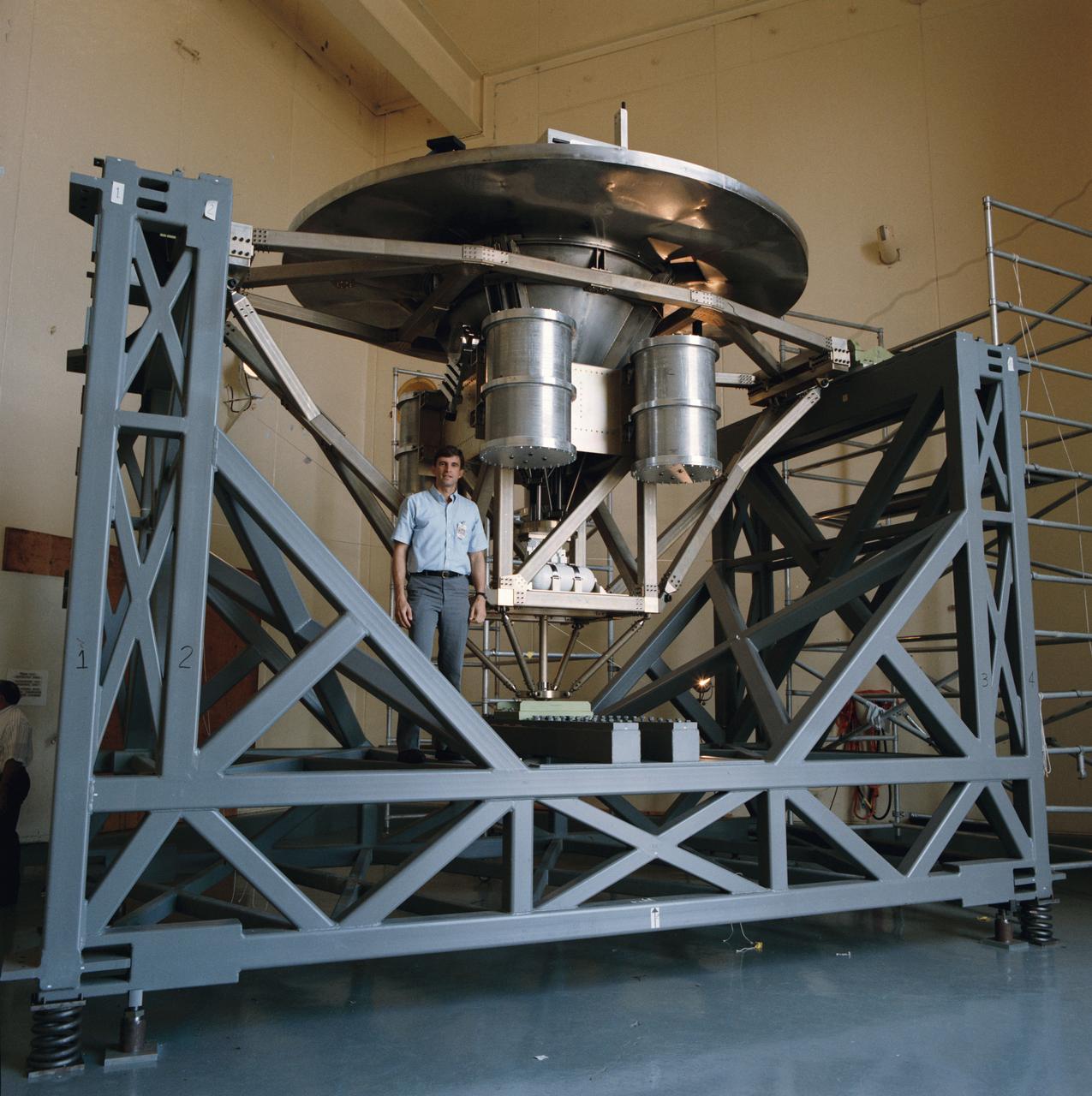
Astronaut Ronald M. Sega stands beside the University of Houston's Wake Shield Facility before it undergoes a Modal Survey Test in the Vibration and Acoustic Test Facility Building 49, prior to being flown on space shuttle mission STS-60.
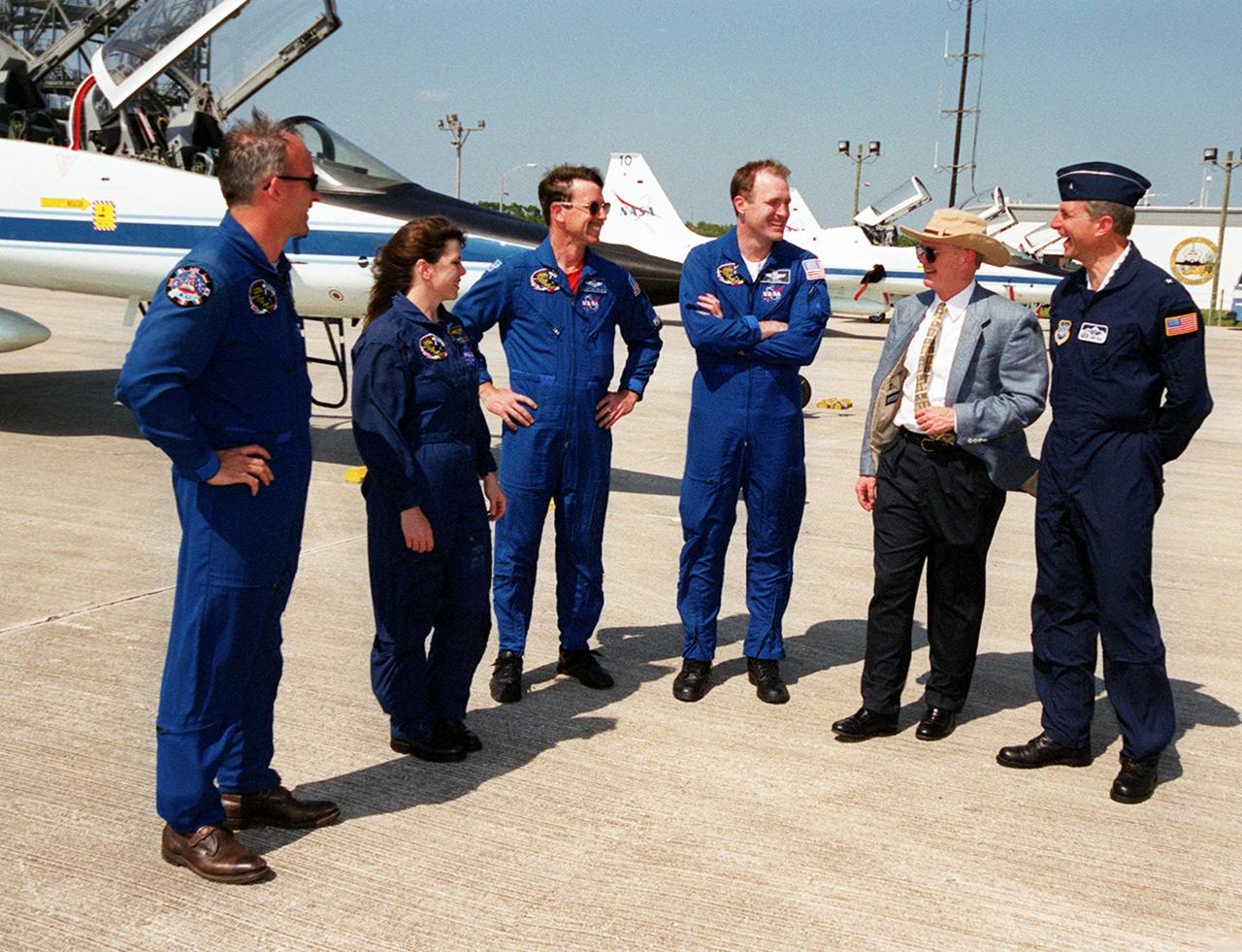
The STS-101 crew is greeted by Center Director Roy Bridges and USAF Brig. Gen. Ron Sega, after the crew's arrival at the Shuttle Landing Facility to get ready for launch. Standing (left to right) on the tarmac are Mission Specialists Jeffrey Williams and Mary Ellen Weber, Pilot Scott "Doc" Horowitz, Commander James Halsell, Bridges and Gen. Sega. Other crew members not shown are Mission Specialists James Voss, Susan Helms and Yury Usachev of Russia. The mission will take the crew to the International Space Station, delivering logistics and supplies, plus preparing the Station for the arrival of the Zvezda Service Module, expected to be launched by Russia in July 2000. Also, the crew will conduct one space walk to perform maintenance on the Space Station. This will be the third assembly flight for the Space Station. Launch is targeted for April 24 at about 4:15 p.m. EDT from Launch Pad 39A
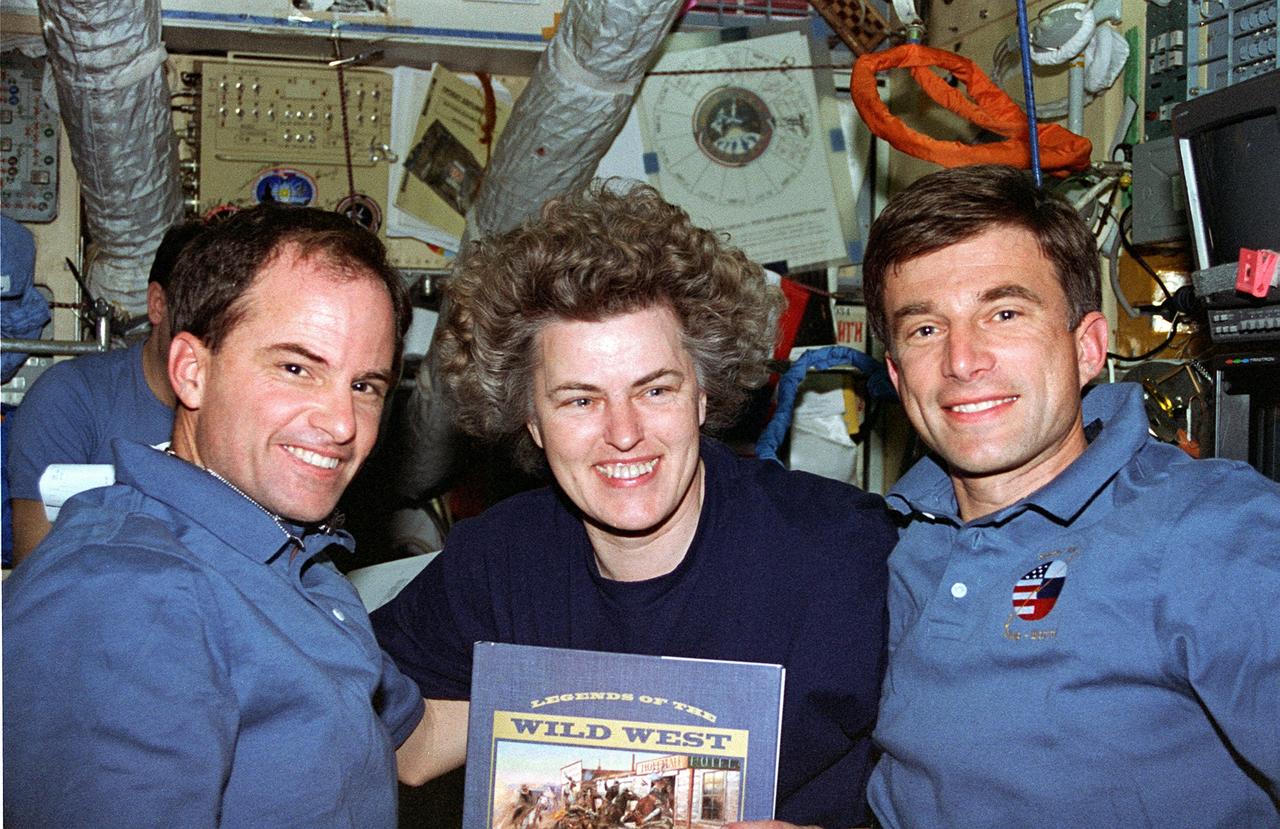
STS076-356-029 (22 - 31 March 1996) --- Astronaut Shannon W. Lucid, cosmonaut guest researcher, shows off a book which will occupy some of her off-duty time and that of her two Mir-21 crew mates aboard Russia's Mir Space Station during the next five months. Lucid was about to bid farewell to STS-76 crew mates Kevin P. Chilton (left), mission commander, and Ronald M. Sega, payload commander. The book was a gift from the STS-76 crew, given to the Mir-21 crew. This photograph was made onboard Mir's Base Block Module. After leaving Lucid to her duties onboard Mir, Chilton, Sega and three other astronauts later returned to Earth aboard the Space Shuttle Atlantis.
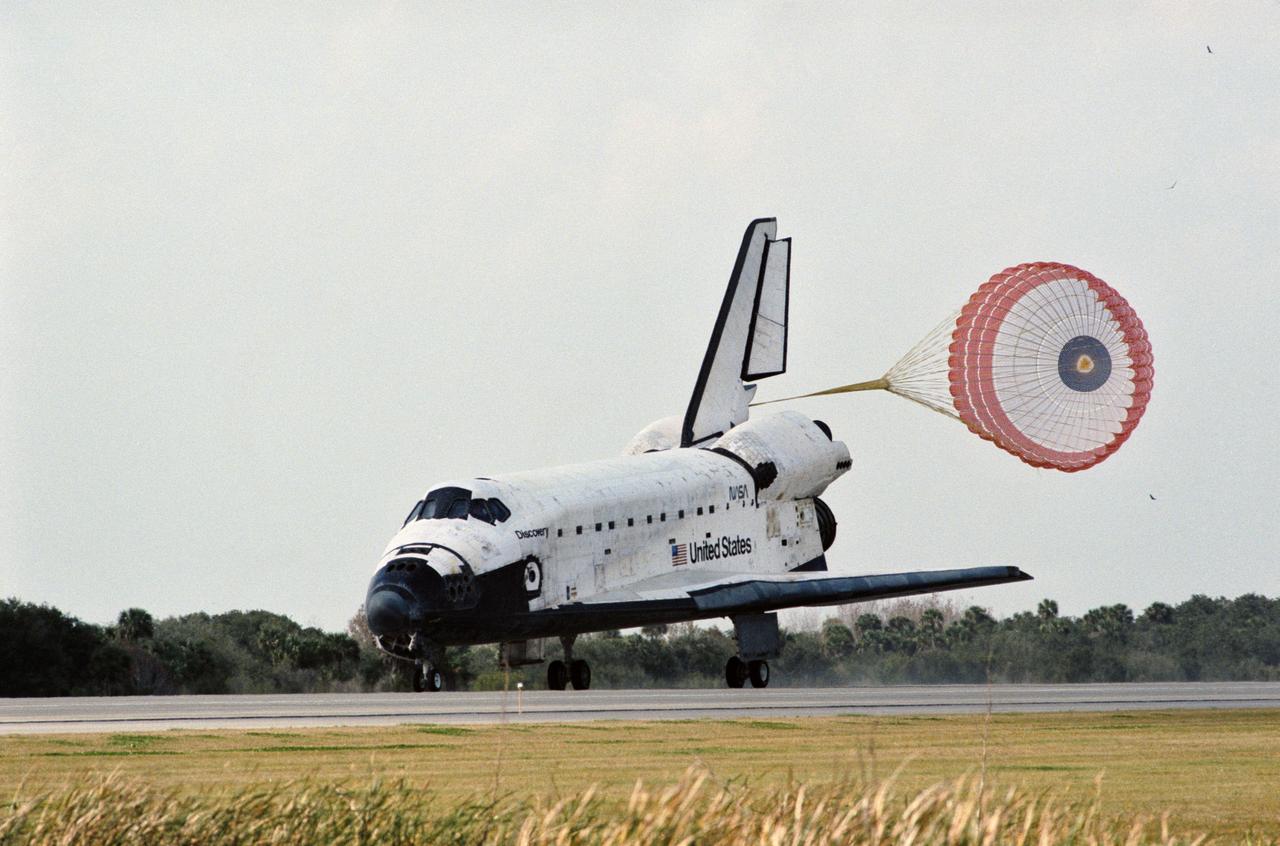
STS060-S-035 (11 Feb 1994) --- The drag chute for Space Shuttle Discovery is deployed on the Shuttle Landing Facility, marking an end to the eight-day STS-60 mission. Landing occurred at 2:19:22 p.m. (EST). Onboard were astronauts Charles F. Bolden Jr., Kenneth S. Reightler Jr., Franklin R. Chang-Diaz, N. Jan Davis and Ronald M. Sega along with Russian cosmonaut Sergei K. Krikalev.
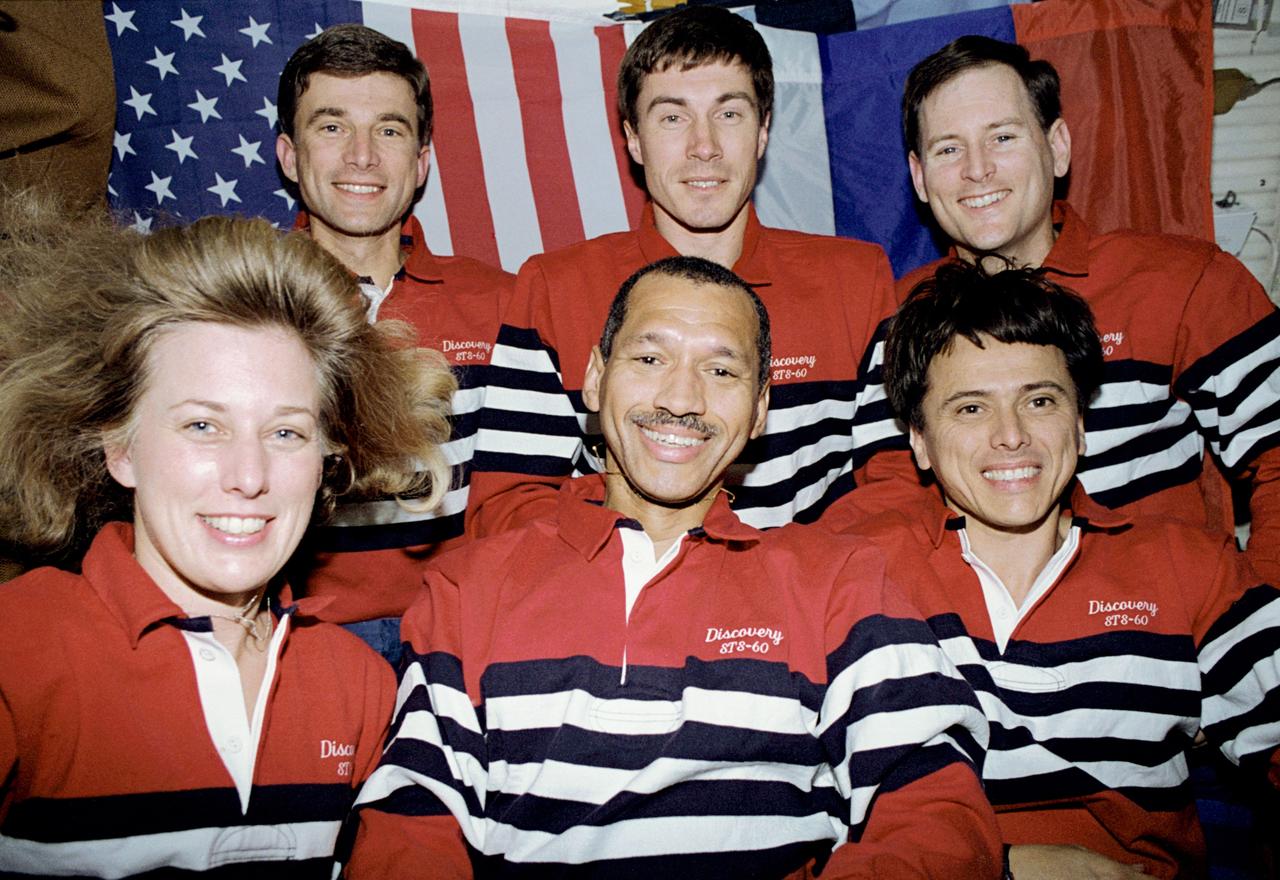
STS060-31-009 (3-11 Feb. 1994) --- The six-member STS-60 crew pose for the traditional in-flight crew portrait, with American and Russian flags forming the backdrop on the space shuttle Discovery’s middeck. Left to right (front row) are N. Jan Davis, Charles F. Bolden Jr. and Franklin R. Chang-Diaz; and (back row) Ronald M. Sega, Sergei K. Krikalev and Kenneth S. Reightler Jr. Photo credit: NASA or National Aeronautics and Space Administration
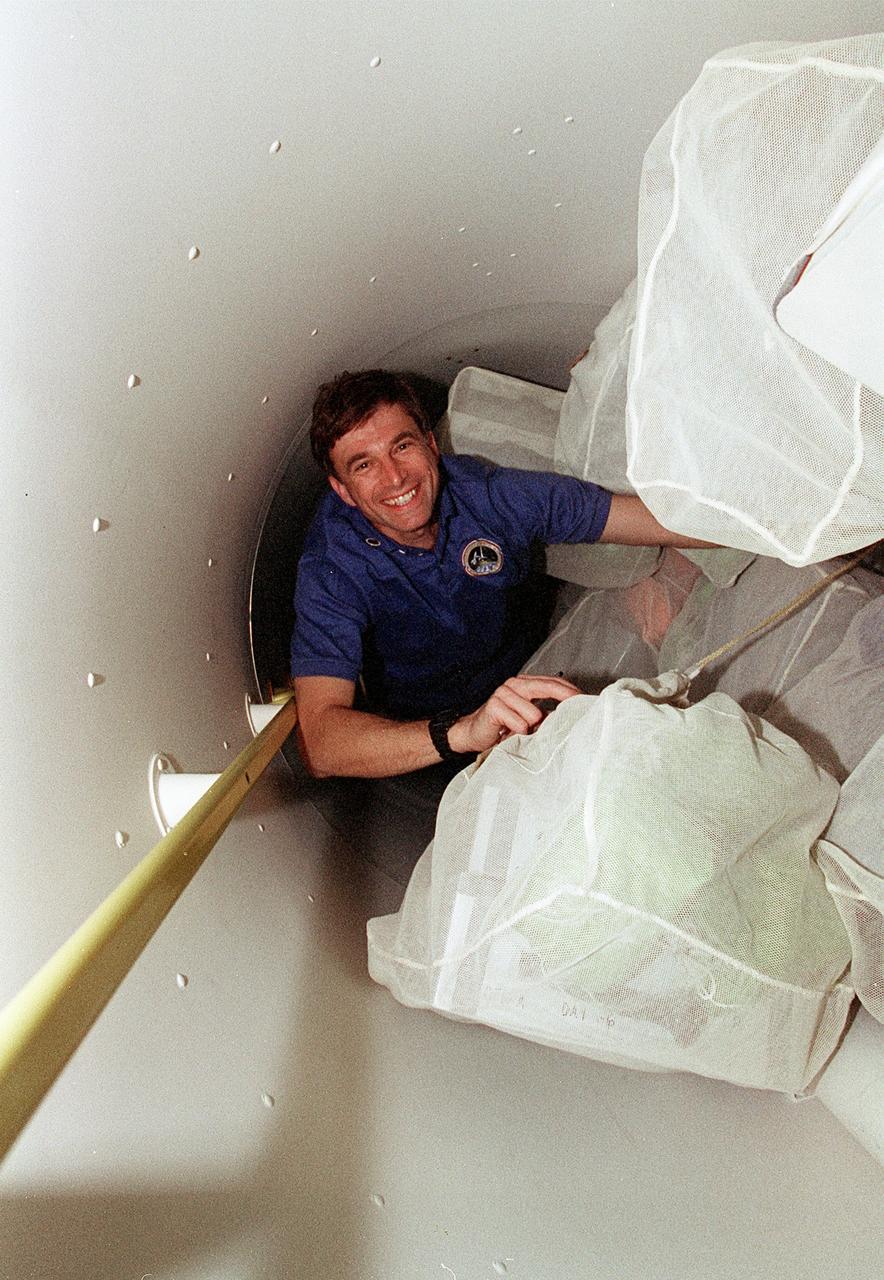
STS076-345-012 (22 - 31 March 1996) --- During the first few hours of the mission, astronaut Ronald M. Sega checks over stowed bags filled with food supplies in the STS-76 tunnel. The payload commander was one of six NASA astronauts aboard the Space Shuttle Atlantis, which later docked with Russia's Mir Space Station. The crew used a tunnel to commute to the Spacehab module and, later, to the Mir via its Docking Module (DM).
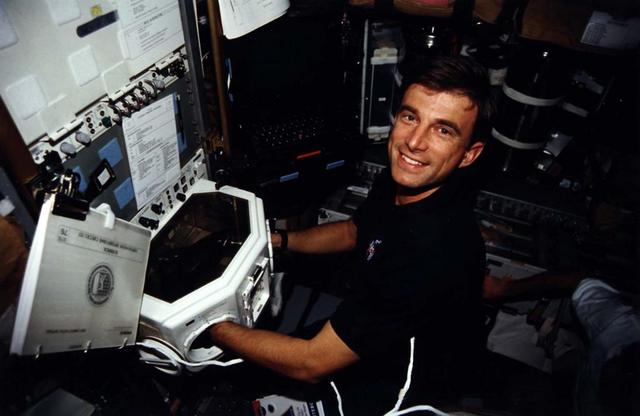
Astronaut Ronald M. Sega, payload commander, works in the glovebox facility in the Spacehab laboratory aboard the Earth-orbiting Space Shuttle Atlantis. The Spacehab facility was one f the busier research areas on Atlantis during the STS-76 mission. Also, some of the gear for transfer to Russia's Mir Space Station was stowed there prior to the March 23, 1996 docking of Atlantis.
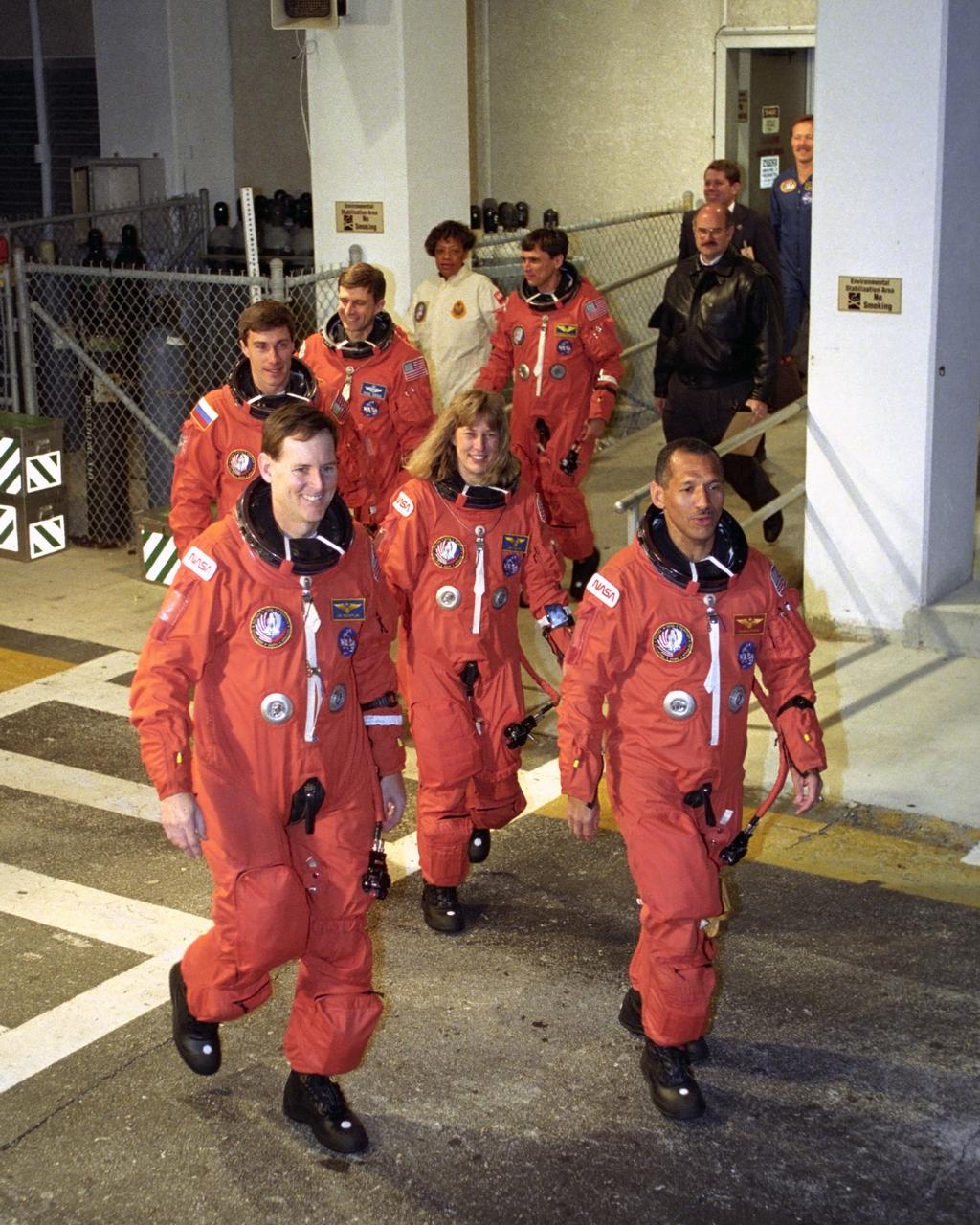
STS-60 pilot Ken Reightler (front left) and Mission Commander Charlie Bolden (front right) lead the way from the O&C bldg. enroute to Discovery at Pad 39A. Behidn are (from felt) Mission Specs Sega adn Krikalev: Payload Commander Chang-Diaz: and Misssion Spec Davis. (Op. No. D6022)(Item D-112C)
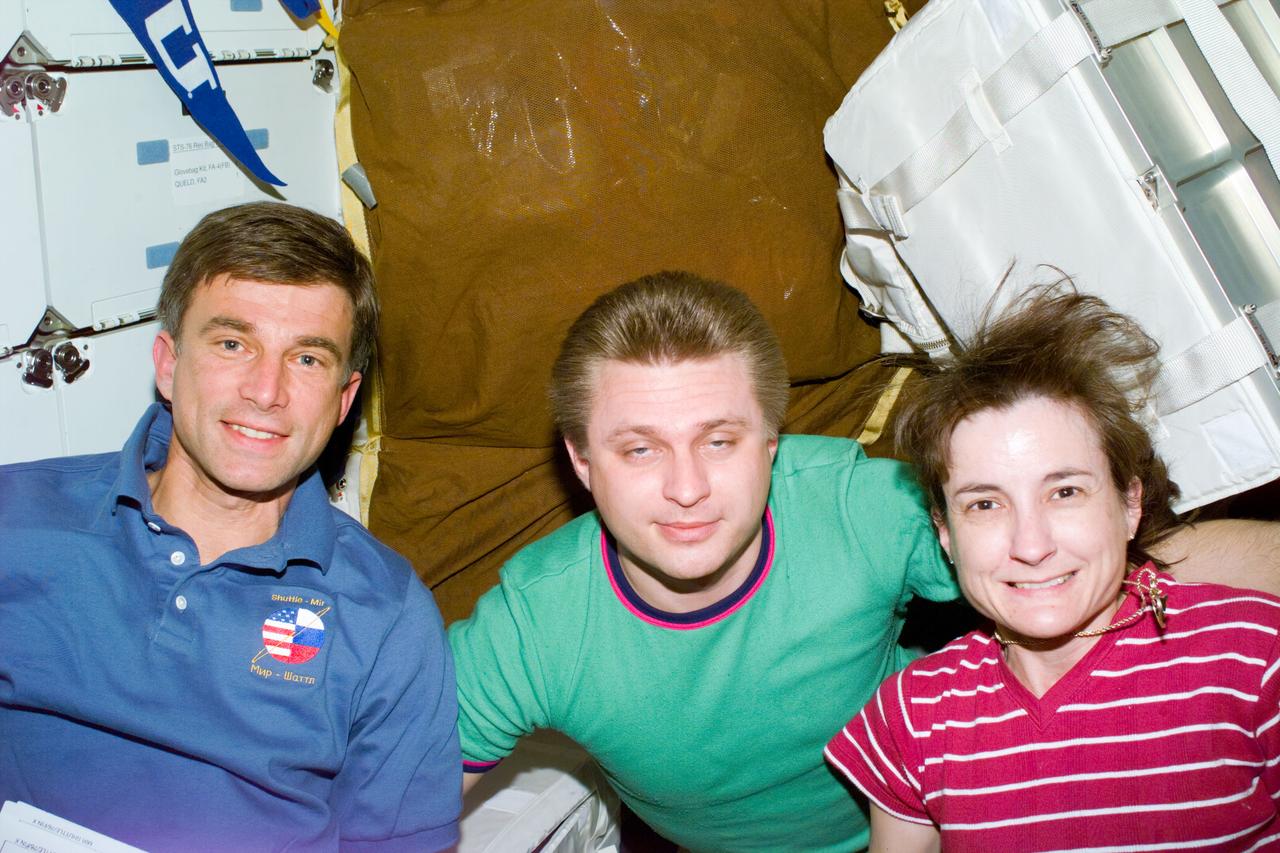
S76-E-5226 (28 March 1996) --- Astronauts Linda M. Godwin and Ronald M. Sega (left), mission specialists, pose for their final in-space photo with cosmonaut Yury I. Onufrienko, Mir-21 mission commander. The Space Shuttle Atlantis was within hours of its separation from its link with Russia's Mir Space Station. Onufrienko's crew has grown by one member, as the STS-76 crew leaves Shannon W. Lucid onboard Mir for the first leg of an almost-five-month stay.
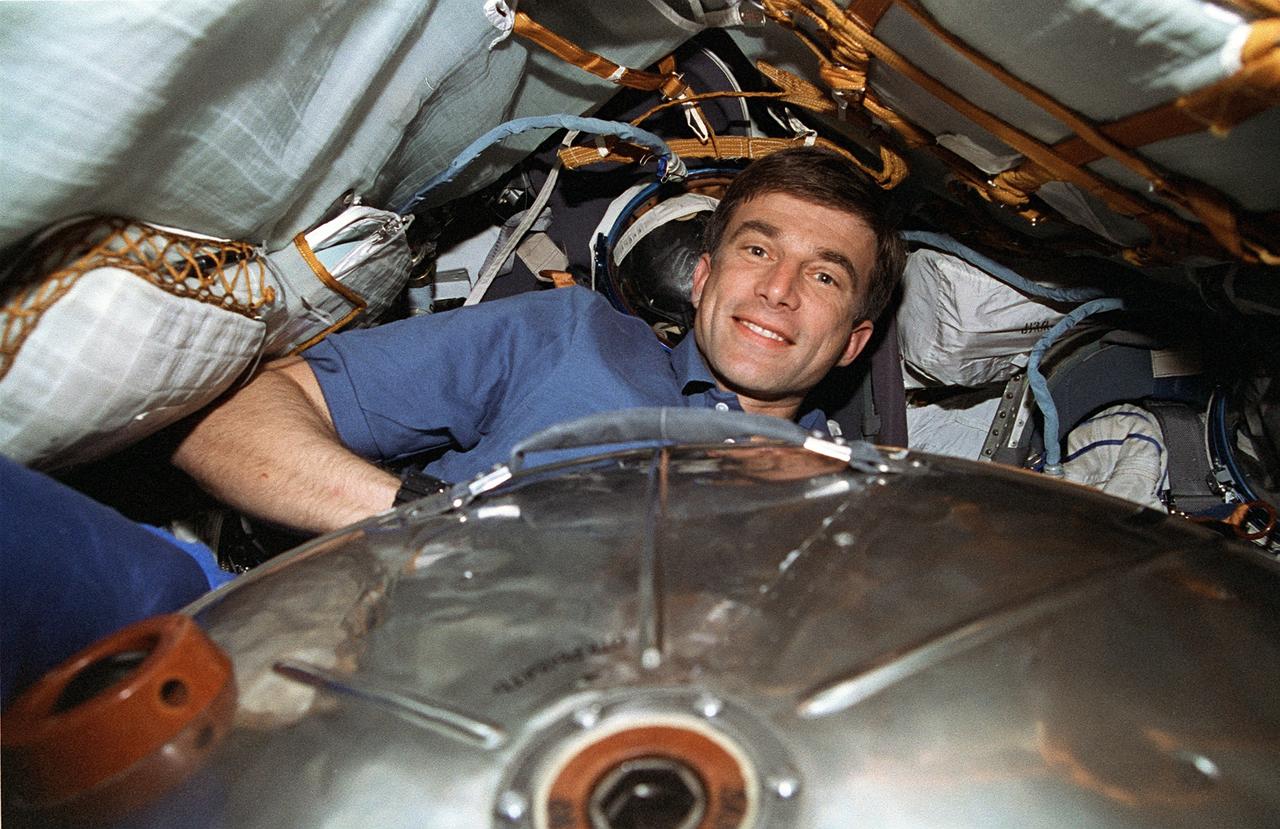
STS076-356-019 (22 - 31 March 1996) --- Astronaut Ronald M. Sega, payload commander, has removed a hatch and enters the Soyuz spacecraft, which is docked with Russia's Mir Space Station. The point of view is from the Kvant Module. The Space Shuttle Atlantis had docked, for the third time, with the Mir Space Station on March 23, 1996.
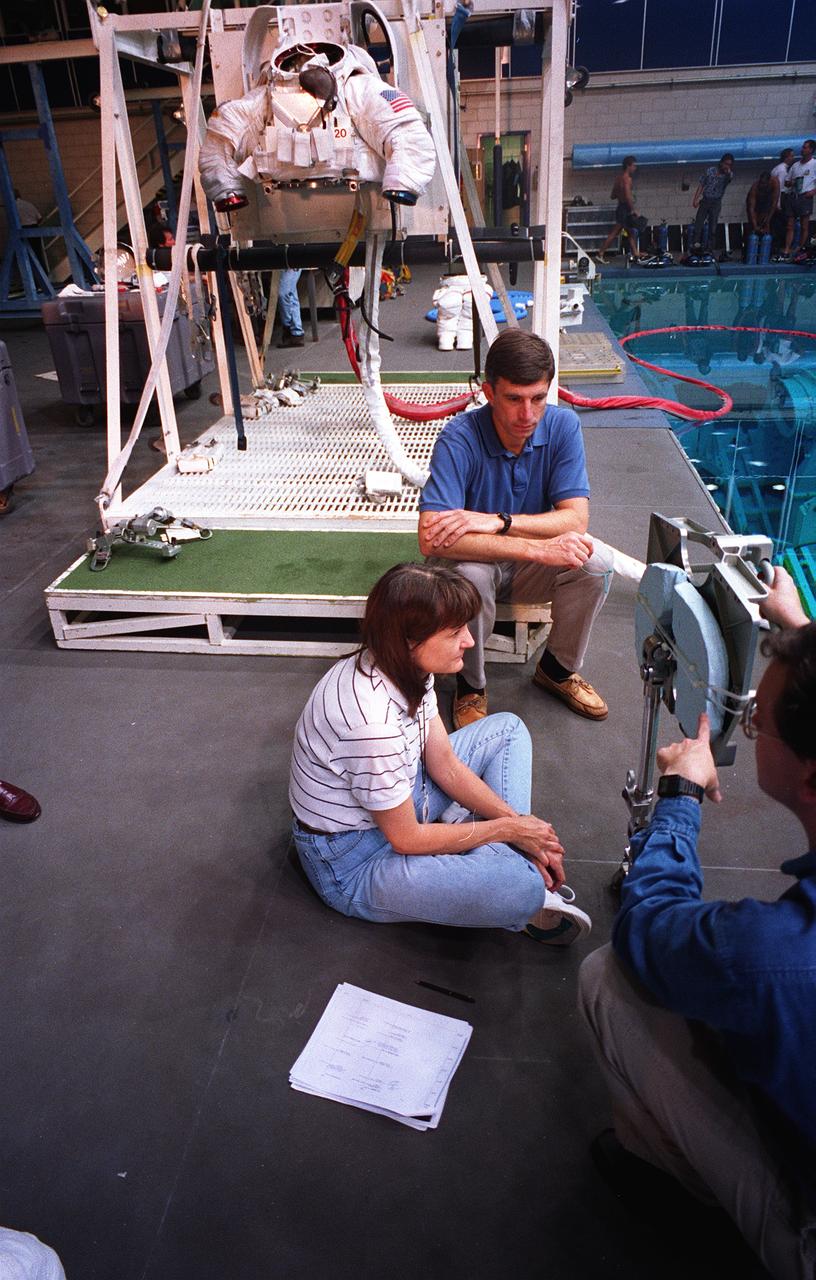
S95-21276 (September 1995) --- Astronaut Linda M. Godwin, mission specialist, is briefed on the Mobile Foot Restraint (MFR) to be used in a scheduled Extravehicular Activity (EVA) during the March mission. Astronaut Ronald M. Sega, mission specialist, looks on. Astronaut Michael R. (Rich) Clifford, mission specialist, who will join Godwin on the EVA, is out of frame. Godwin and Clifford checked out the hardware before donning training versions of the Extravehicular Mobility Unit (EMU) spacesuit (see torso piece in background) in preparation for being submerged in a 25-feet deep pool at the Johnson Space Center's (JSC) Weightless Environment Training Facility (WET-F).
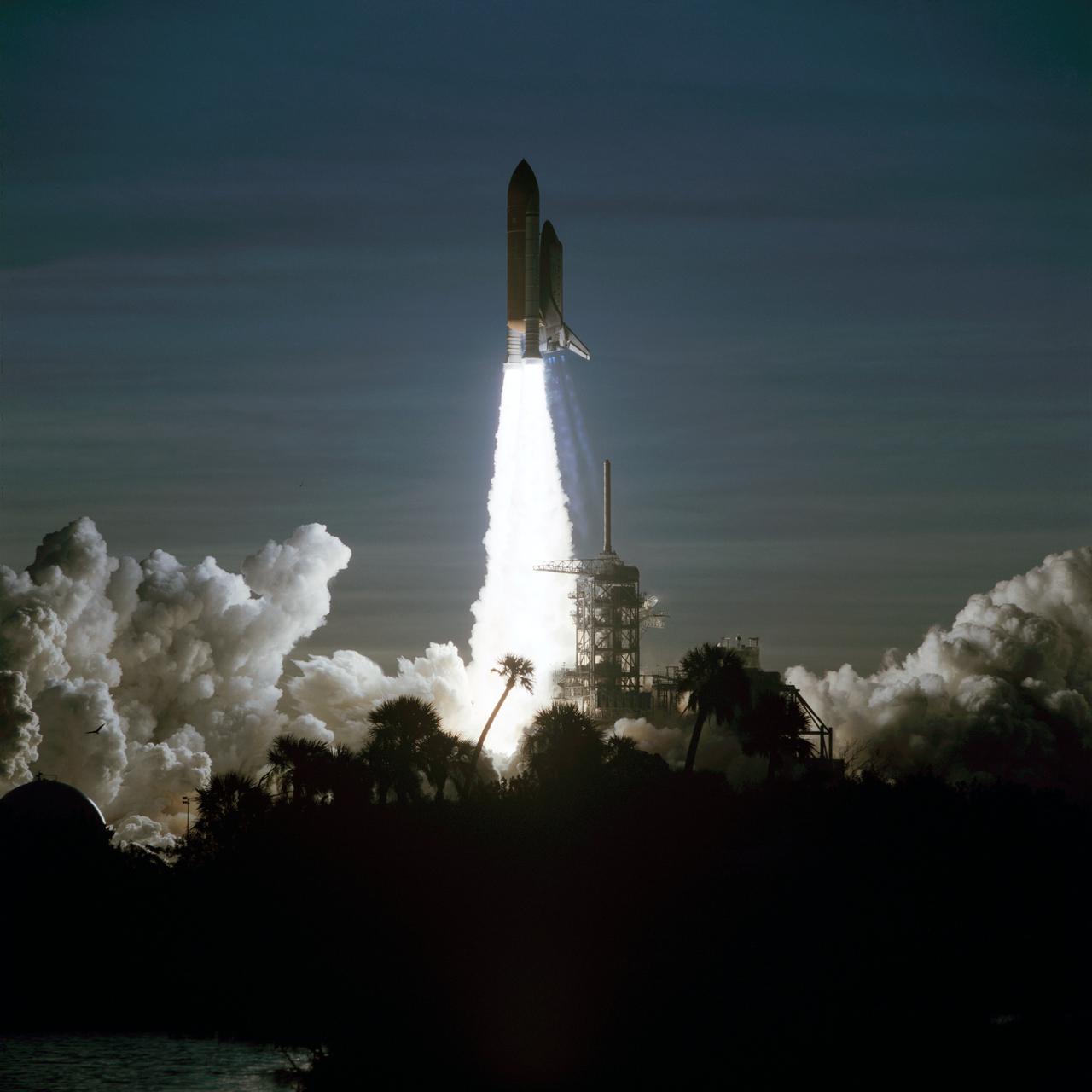
STS060-S-106 (3 Feb 1994) --- Palm trees are silhouetted in the foreground of this 70mm image as the Space Shuttle Discovery heads toward an eight-day mission in Earth orbit. Liftoff occurred as scheduled at 7:10 a.m. (EST), February 3, 1994. Aboard the spacecraft were astronauts Charles F. Bolden Jr., commander; Kenneth S. Reightler Jr., pilot; Franklin R. Chang-Diaz, payload commander; and N. Jan Davis and Ronald M. Sega, mission specialists, along with Russian cosmonaut Sergei K. Krikalev, also a mission specialist.
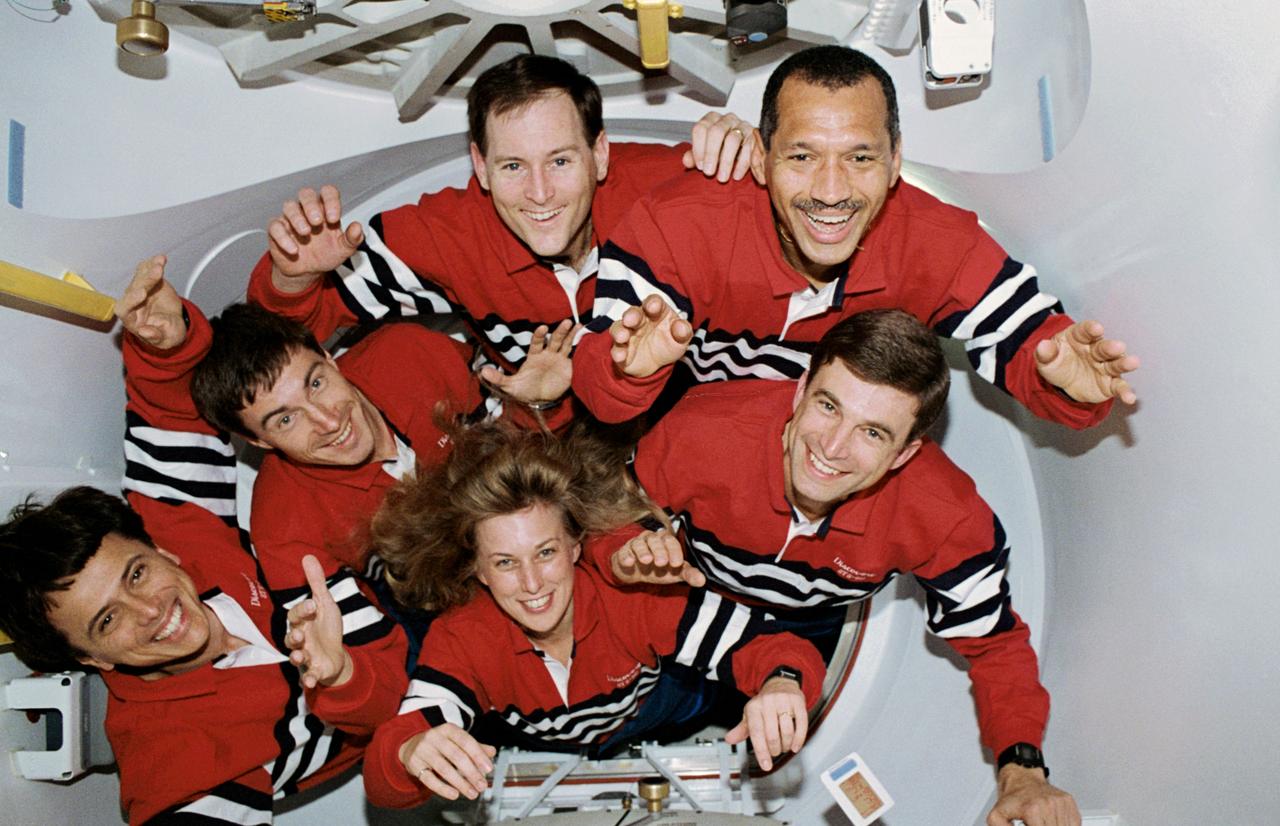
STS060-31-028 (3-11 Feb. 1994) --- Five NASA astronauts and a Russian cosmonaut squeeze through the tunnel which connects the shirt-sleeve environments of the space shuttle Discovery and the SPACEHAB module. SPACEHAB is located in the spacecraft’s payload bay. Charles F. Bolden Jr., mission commander, is at upper right. Others, clockwise from the commander, are Ronald M. Sega and N. Jan Davis, both mission specialists; Franklin R. Chang-Diaz, payload commander; cosmonaut Sergei K. Krikalev, mission specialist; and Kenneth S. Reightler Jr., pilot. The six spent eight days in Earth orbit. Photo credit: NASA
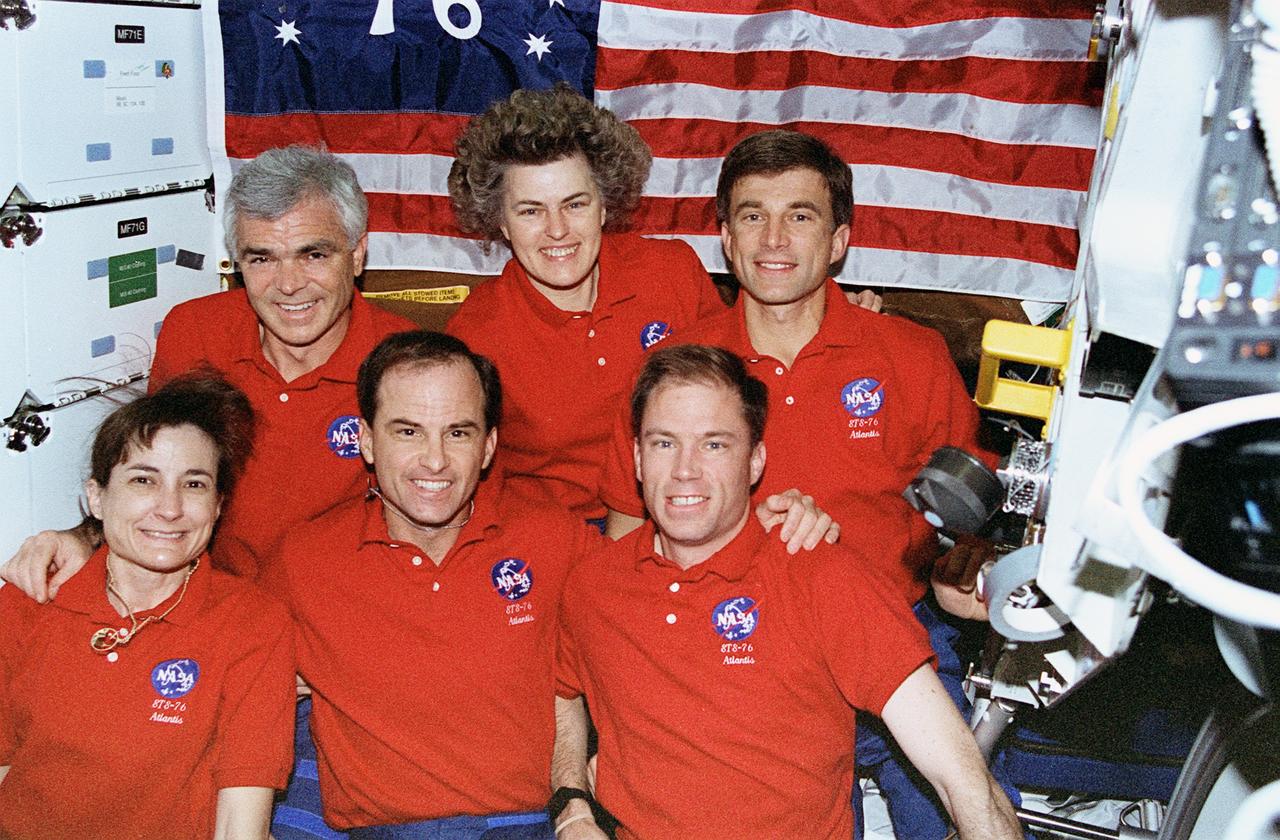
STS076-371-002 (25 March 1996) --- The crew of the Space Shuttle Atlantis poses for a traditional inflight portrait on the mid deck. Shannon W. Lucid (rear center) later joined the Mir-21 crew to begin the first leg of her five-month stay aboard Russia's Mir Space Station. From the left on front row are astronauts Linda M. Godwin, mission specialist; Kevin P. Chilton, mission commander; and Richard A. Searfoss, pilot. Left to right on the back row are astronauts Michael R. (Rich) Clifford, Lucid and payload commander Ronald M. Sega, all mission specialists.
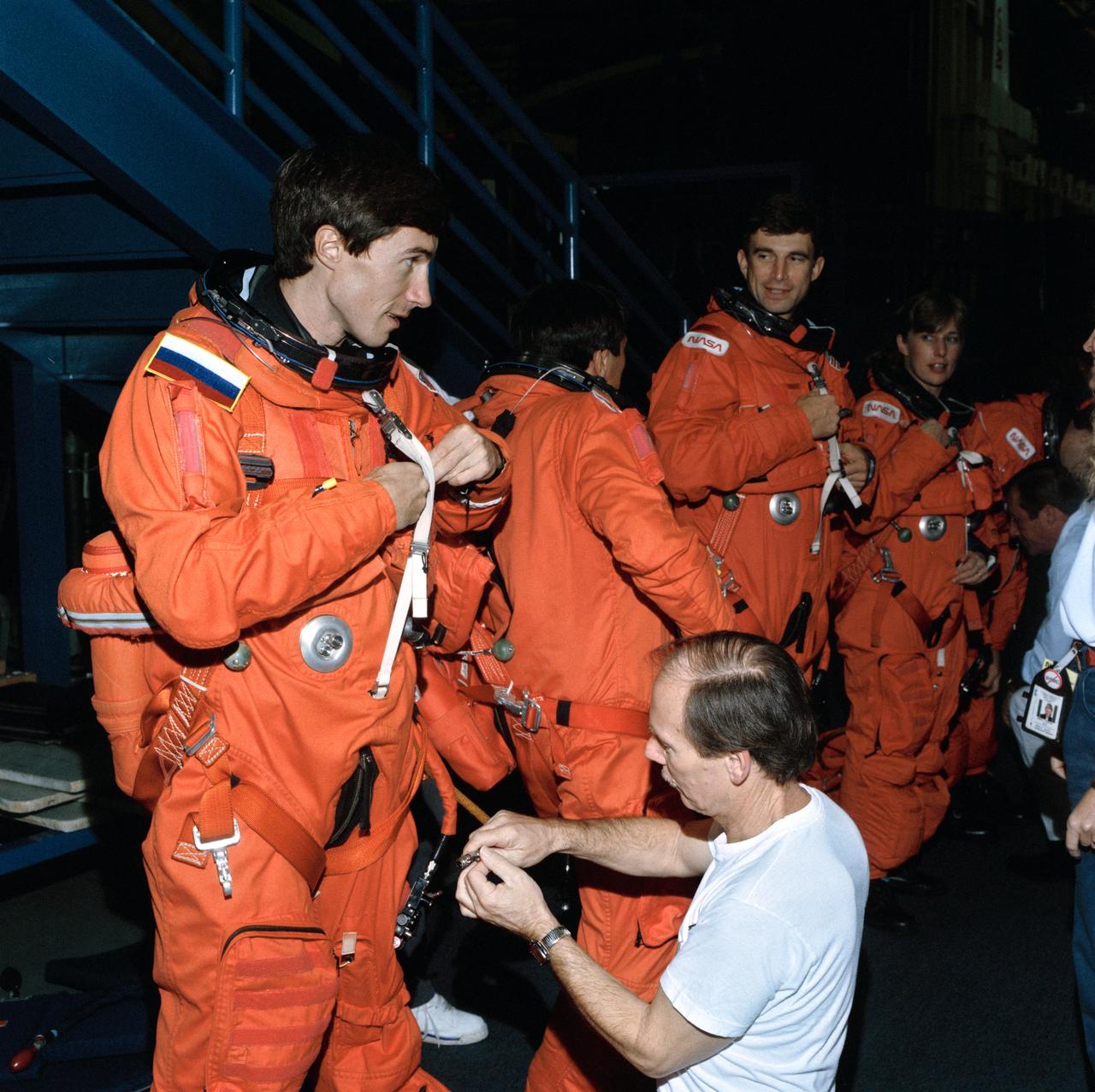
S93-50649 (Dec 1993) --- Cosmonaut Sergei Krikalev, mission specialist for the STS-60 mission, gets assistance with his launch and entry suit from Lockheed's Max Kandler during a training session at the Johnson Space Center (JSC). Others pictured, left to right, are astronauts Franklin R. Chang-Diaz, Ronald M. Sega and N. Jan Davis. This particular phase of training, conducted in the crew compartment trainer in the Shuttle mockup and integration laboratory, familiarizes the crew members with entry activities and launch countdown procedures, as well as emergency egress procedures.
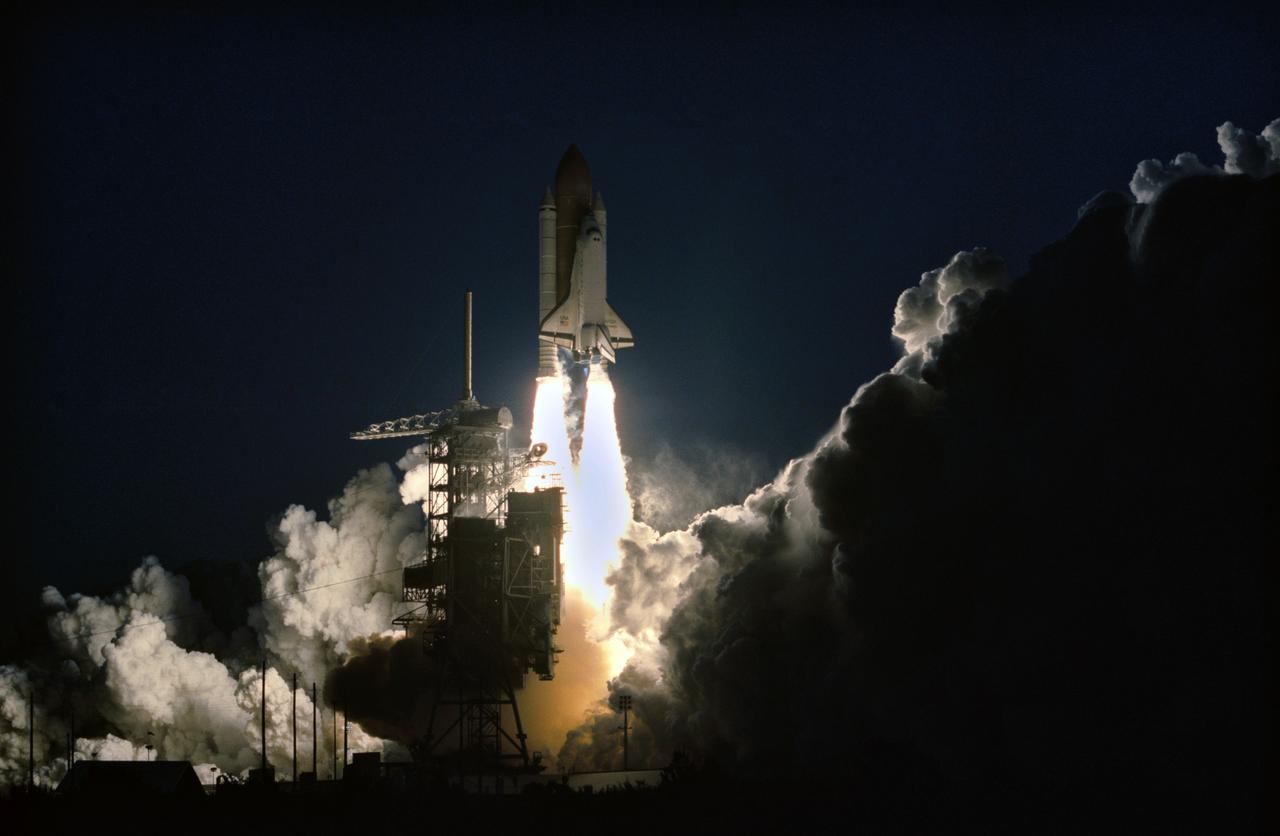
STS060-S-105 (3 Feb 1994) --- The Space Shuttle Discovery heads toward an eight-day mission in Earth orbit with five NASA astronauts and a Russian cosmonaut aboard. Liftoff occurred as scheduled at 7:10 a.m. (EST), February 3, 1994. Aboard the spacecraft were astronauts Charles F. Bolden Jr., commander; Kenneth S. Reightler Jr., pilot; Franklin R. Chang-Diaz, payload commander; and N. Jan Davis and Ronald M. Sega, mission specialists, along with Russian cosmonaut Sergei K. Krikalev, also a mission specialist.

NM21-401-012 (28 March 1996) --- The Space Shuttle Atlantis is backdropped over the darkness of space, and partially over clouds and open ocean waters on Earth, as it and Russia’s Mir Space Station begin their relative separation following several days of joint operations. This 35mm film was exposed by astronaut Shannon W. Lucid as she was beginning her record-setting stay aboard Mir, as a cosmonaut guest researcher. Onboard with Lucid were her Mir-21 crew mates, cosmonauts Yuriy I. Onufriyenko, commander; and Yuriy V. Usachov, flight engineer. Onboard Atlantis were Kevin P. Chilton, STS-76 mission commander; Richard A. Searfoss, pilot; along with Linda M. Godwin, Ronald M. Sega and Michael R. (Rich) Clifford, mission specialists.
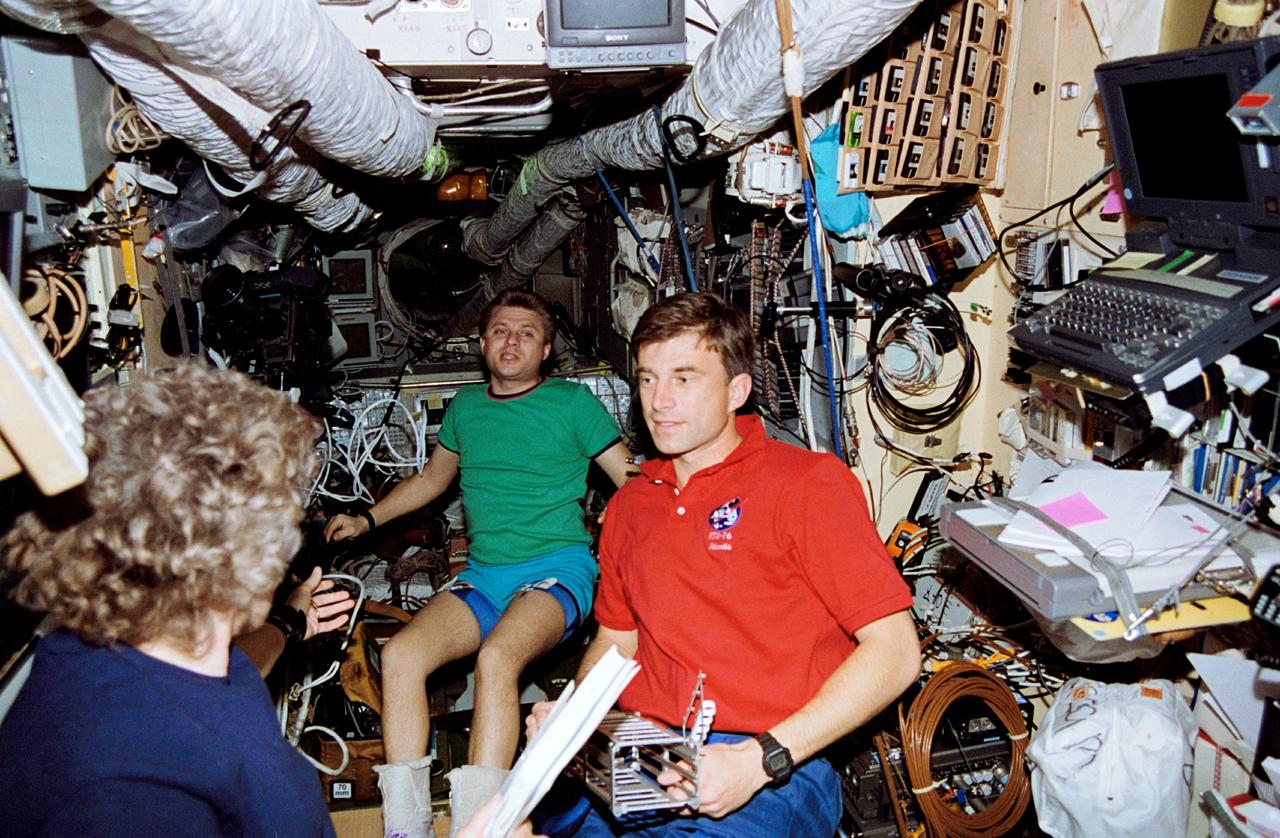
STS076-461-004 (22-31 March 1996) --- Onboard the Base Block Module of Russia's Mir Space Station, astronauts Shannon W. Lucid and Ronald M. Sega, payload commander, discuss final activities between the STS-76 and Mir-21 crews as cosmonaut Yury I. Onufrienko (center) listens. Yury V. Usachev (out of frame) is Mir-21 flight engineer. The Space Shuttle Atlantis docked with Mir on March 23, 1996, and remained linked until March 28, 1996. Lucid was in the process of transferring from STS-76 to the Mir-21 crew, which thereby grew from two to three members. She will remain aboard Mir for approximately 140 days.
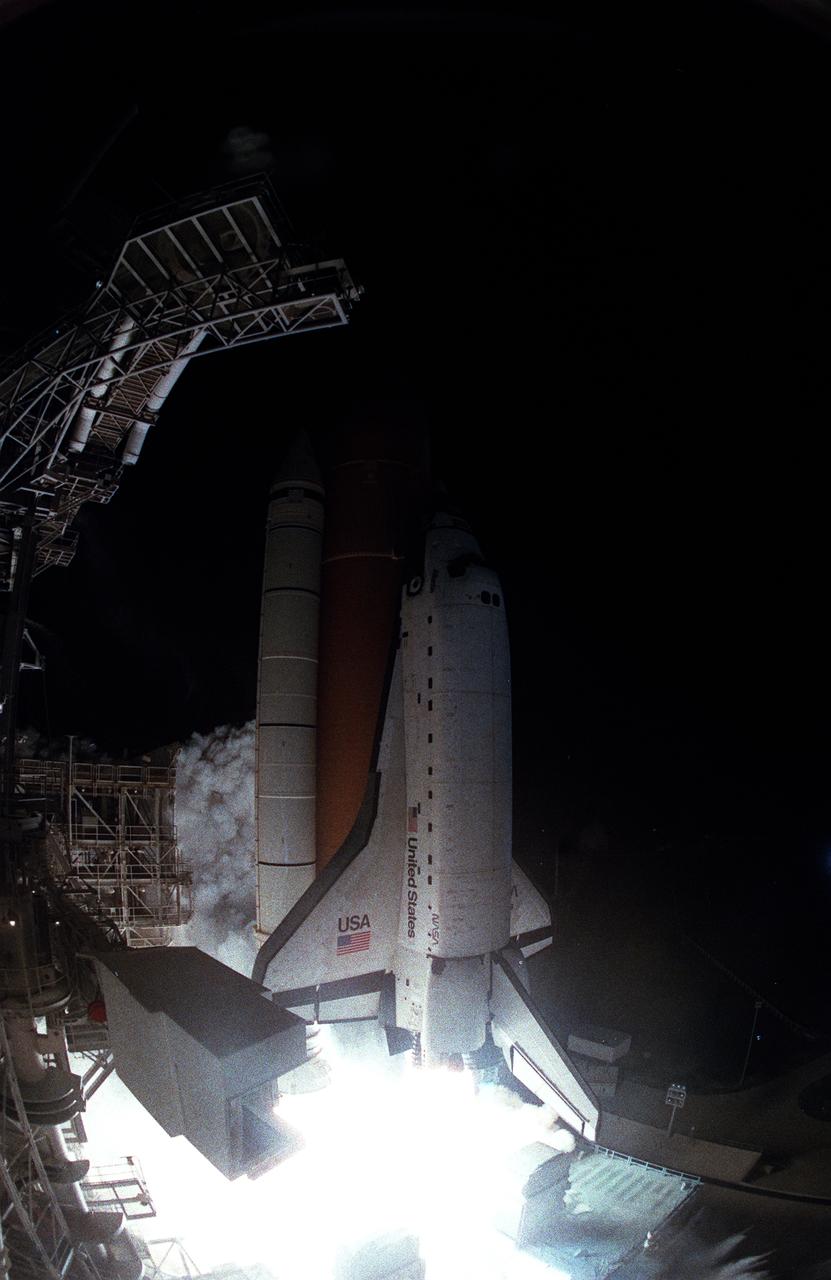
STS076-S-008 (22 March 1996) --- As represented in this fish-eye view from the Kennedy Space Center's (KSC) Launch Pad 39B, the space shuttle Atlantis heads toward Earth-orbit and an eventual docking with Russia's Mir Space Station. Mir has been in space for ten years and a two man crew (Mir-21) currently awaits the arrival of Atlantis. The on-time launch occurred at 3:13:04 a.m. (EST) on March 22, 1996. Onboard for STS-76 are astronauts Kevin P. Chilton, Richard A. Searfoss, Ronald M. Sega, Michael R. (Rich) Clifford, Linda M. Godwin and Shannon W. Lucid. Lucid will remain onboard Mir for just under five months time. Photo credit: NASA or National Aeronautics and Space Administration
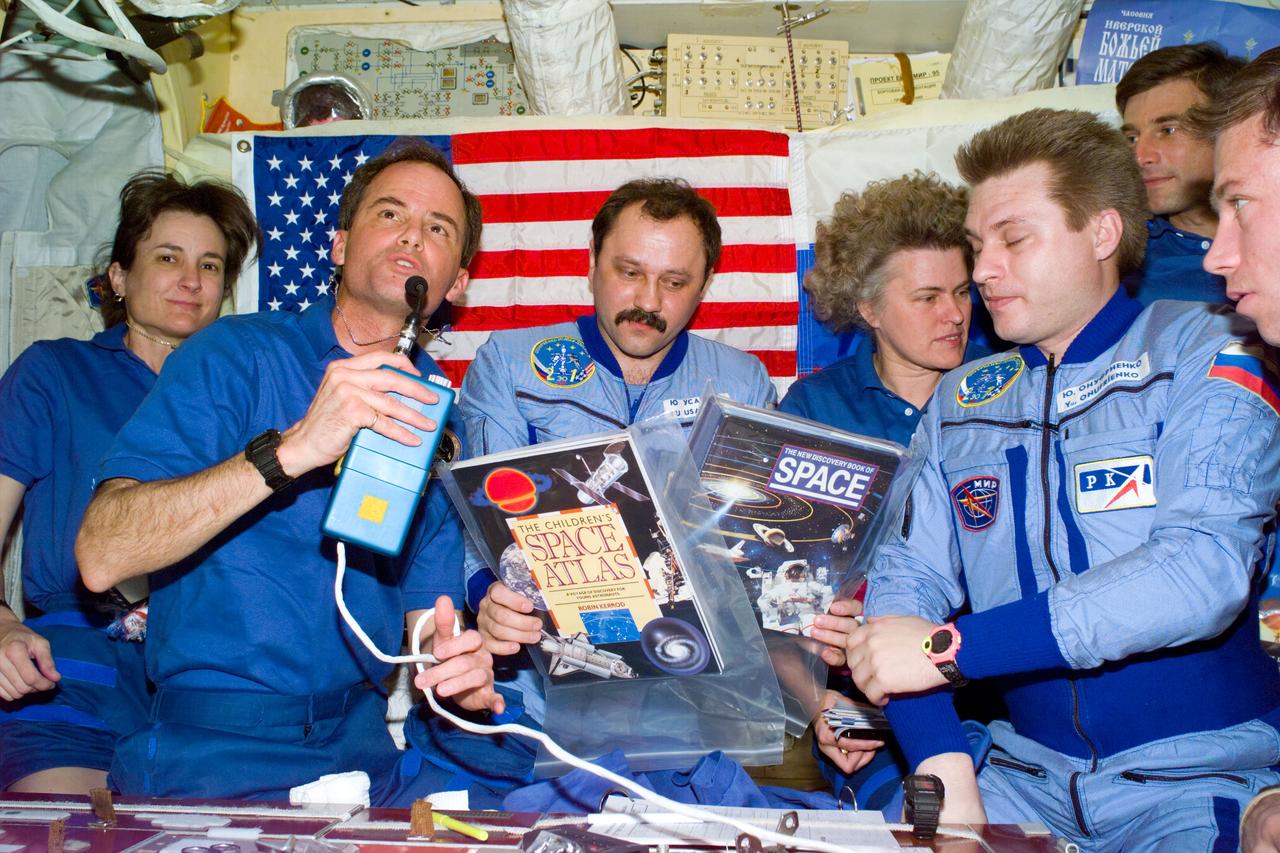
S76-E-5157 (24 March 1996) --- Two Russian cosmonauts and five of six NASA astronauts exchange gifts soon after reuniting in the Base Block Module of Russia's Mir Space Station. From the left are Linda M. Godwin, Kevin P. Chilton, Yury V. Usachev, Shannon W. Lucid, Yury I. Onufrienko, Ronald M. Sega and Richard A. Searfoss. Not pictured is astronaut Michael R. (Rich) Clifford. In a light moment around this time, ground controllers informed Chilton, the STS-76 mission commander, that Lucid, who will spend several months onboard Mir as a cosmonaut guest researcher, should now be considered a Mir-21 crew member, along with Onufrienko and Usachev, Mir-21 flight engineer. The image was recorded with a 35mm Electronic Still Camera (ESC) and downlinked at a later time to ground controllers in Houston, Texas.
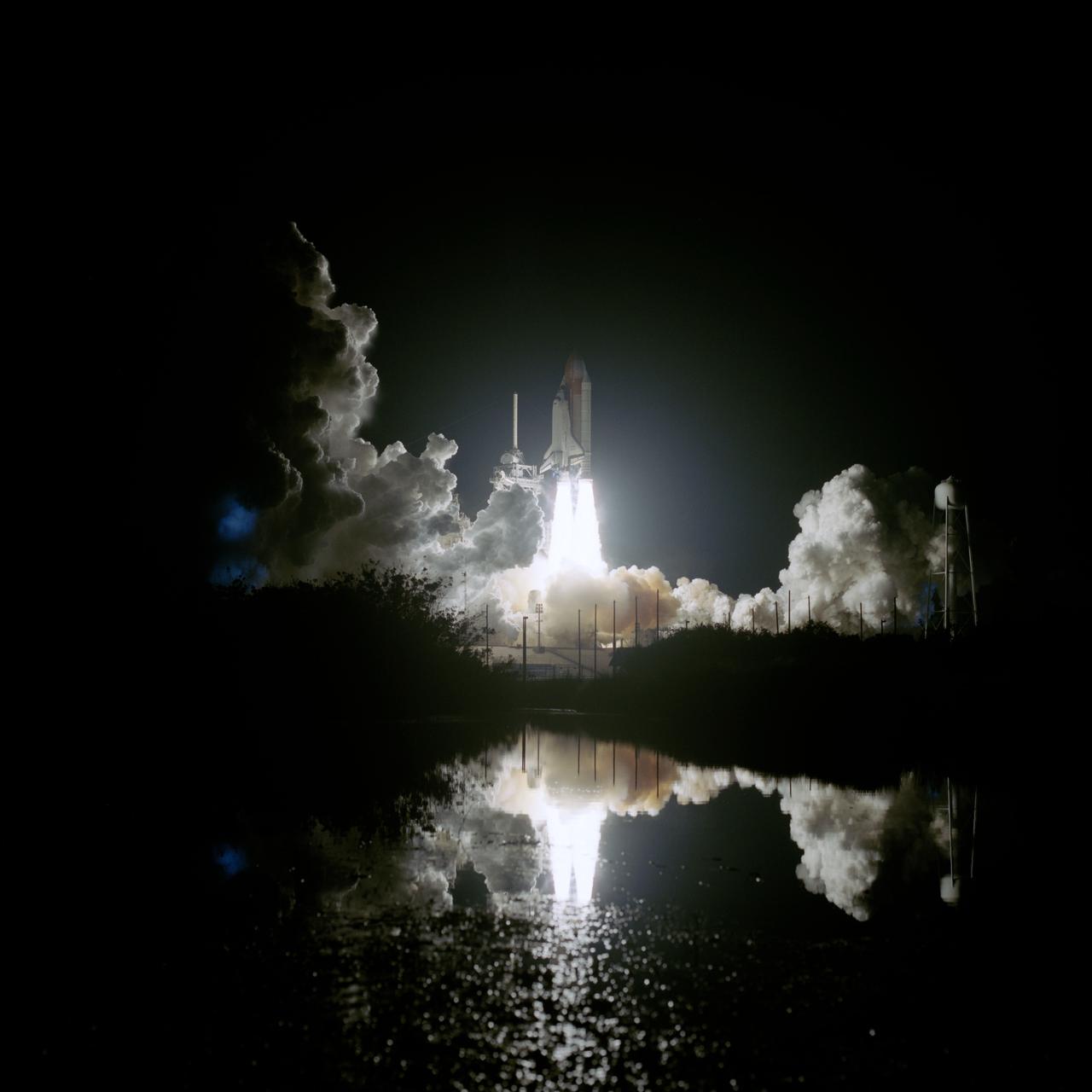
STS076-S-011 (22 March 1996) --- This wide view captures the nocturnal launch of the Space Shuttle Atlantis, as it heads toward Earth-orbit and an eventual docking with Russia?s Mir Space Station. Mir has been in space for ten years and a two-man crew (Mir-21) currently awaits the arrival of Atlantis. The on-time launch occurred at 3:13:04 a.m. (EST) on March 22, 1996. Onboard for STS-76 are astronauts Kevin P. Chilton, Richard A. Searfoss, Ronald M. Sega, Michael R. (Rich) Clifford, Linda M. Godwin and Shannon W. Lucid. Lucid will remain onboard Mir for just under five months? time, as a cosmonaut guest researcher. Photo credit: NASA or National Aeronautics and Space Administration
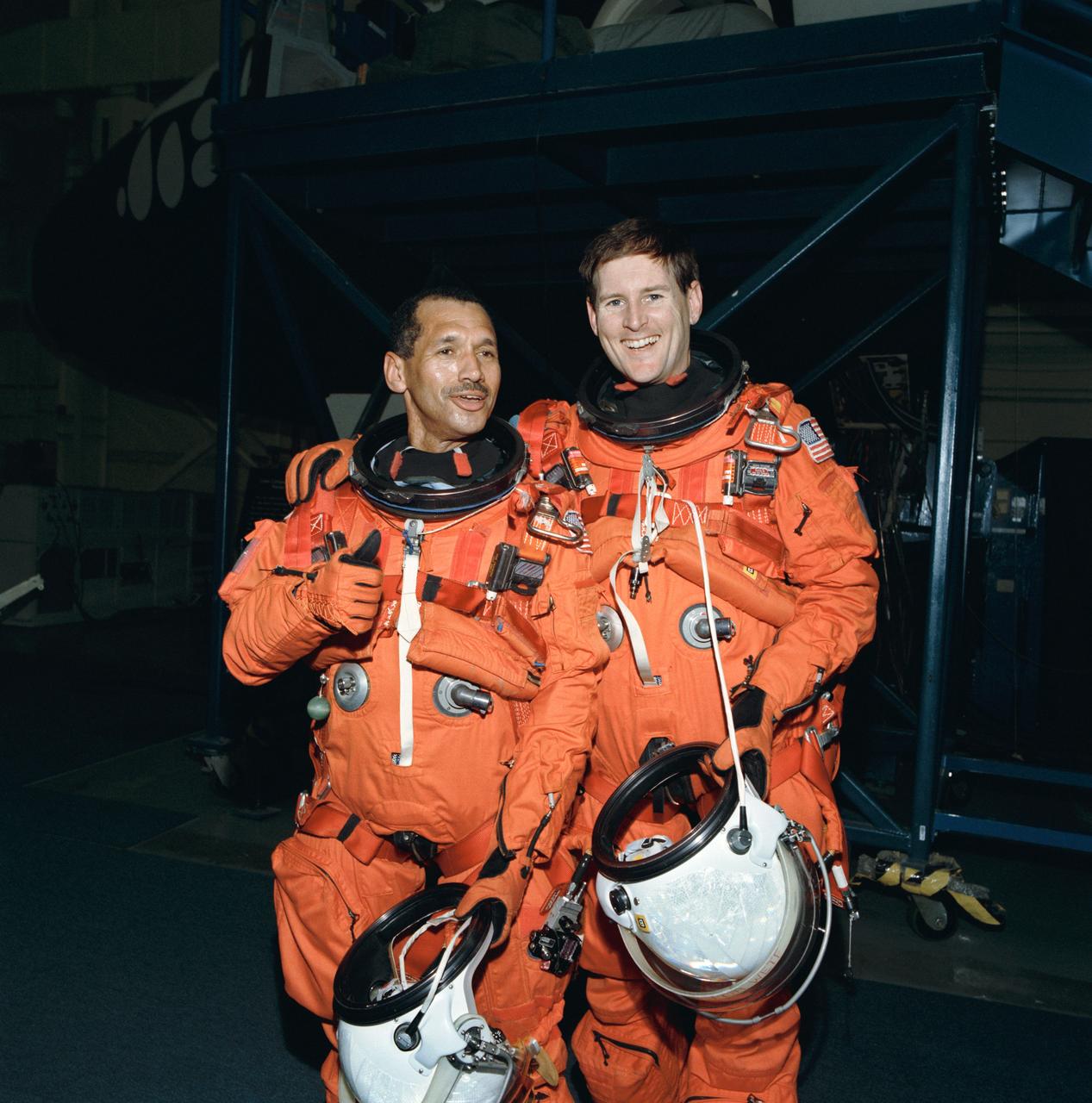
Astronauts Charles F. Bolden Jr. (left) and Kenneth S. Reightler, commander and pilot, respectively, for the STS-60 mission, take a break during rehearsal for some of their flight duties near the crew compartment trainer in JSC's Shuttle mock-up and integration laboratory (50648); Cosmonaut Sergei Krikalev, mission specialist for STS-60, gets assistance with his launch and entry suit from Lockheed's Max Kandloer during a training session. Others pictured, left to right, are Astronauts Franklin R. Chang-Diaz, Ronald M. Sega and N. Jan Davis (50649); Astronaut Kenneth S. Reightler, pilot for STS-60, gets assistance with his launch and entry suit (LES) from Boeing's William Todd during a training session (50650).
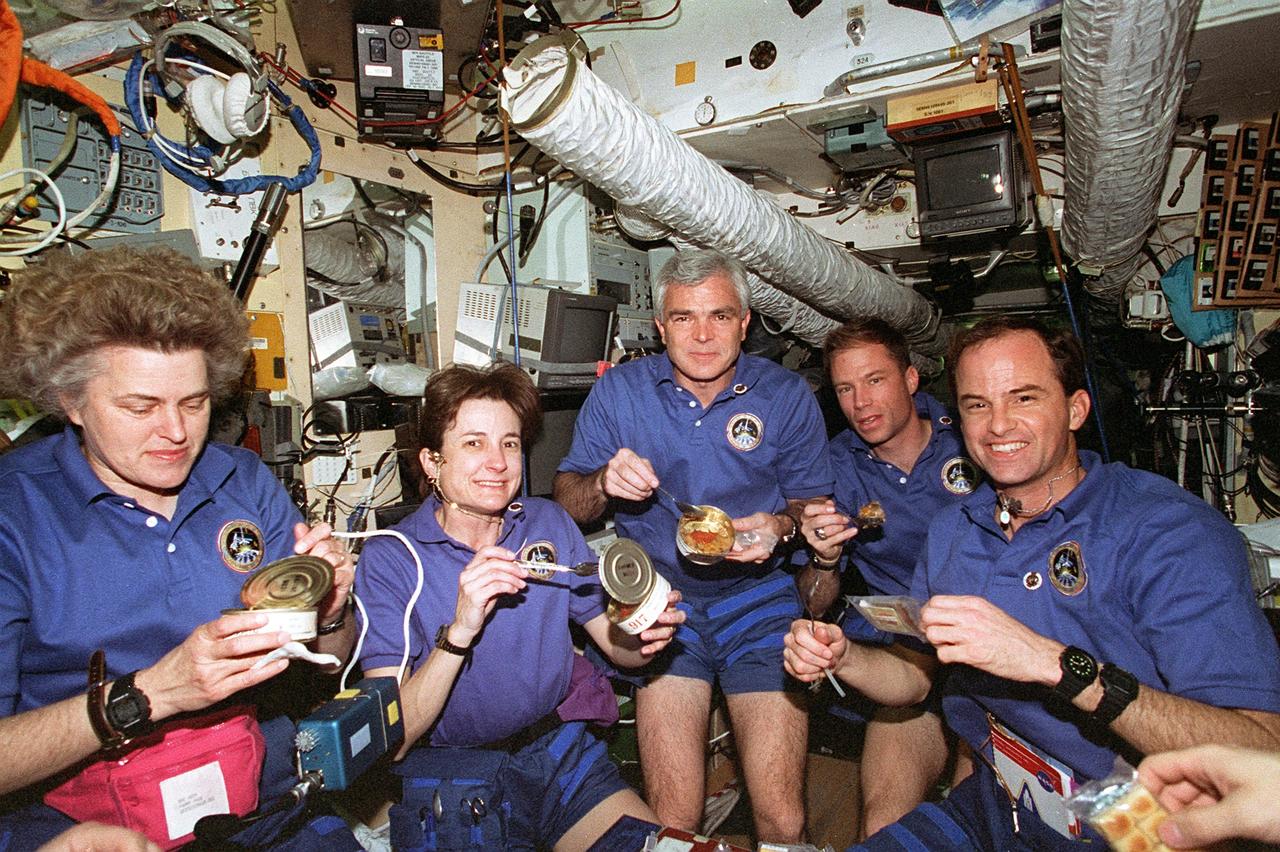
STS076-345-028 (22 - 31 March 1996) --- Onboard the Base Block Module of Russia's Mir Space Station the visiting STS-76 crew members enjoy Russian food. At right is astronaut Kevin P. Chilton, mission commander, who along with his crew mates docked with Mir on March 23, 1996, and remained linked until March 28, 1996. Left to right are astronauts Shannon W. Lucid, Linda M. Godwin and Michael R. (Rich) Clifford, all mission specialists, along with Richard A. Searfoss, pilot. The right hand of payload commander Ronald M. Sega is at right edge. Lucid was in the process of transferring from STS-76 to the Mir-21 crew, which thereby grew from two to three members. Lucid will remain aboard Mir for approximately 140 days, as a cosmonaut guest researcher.
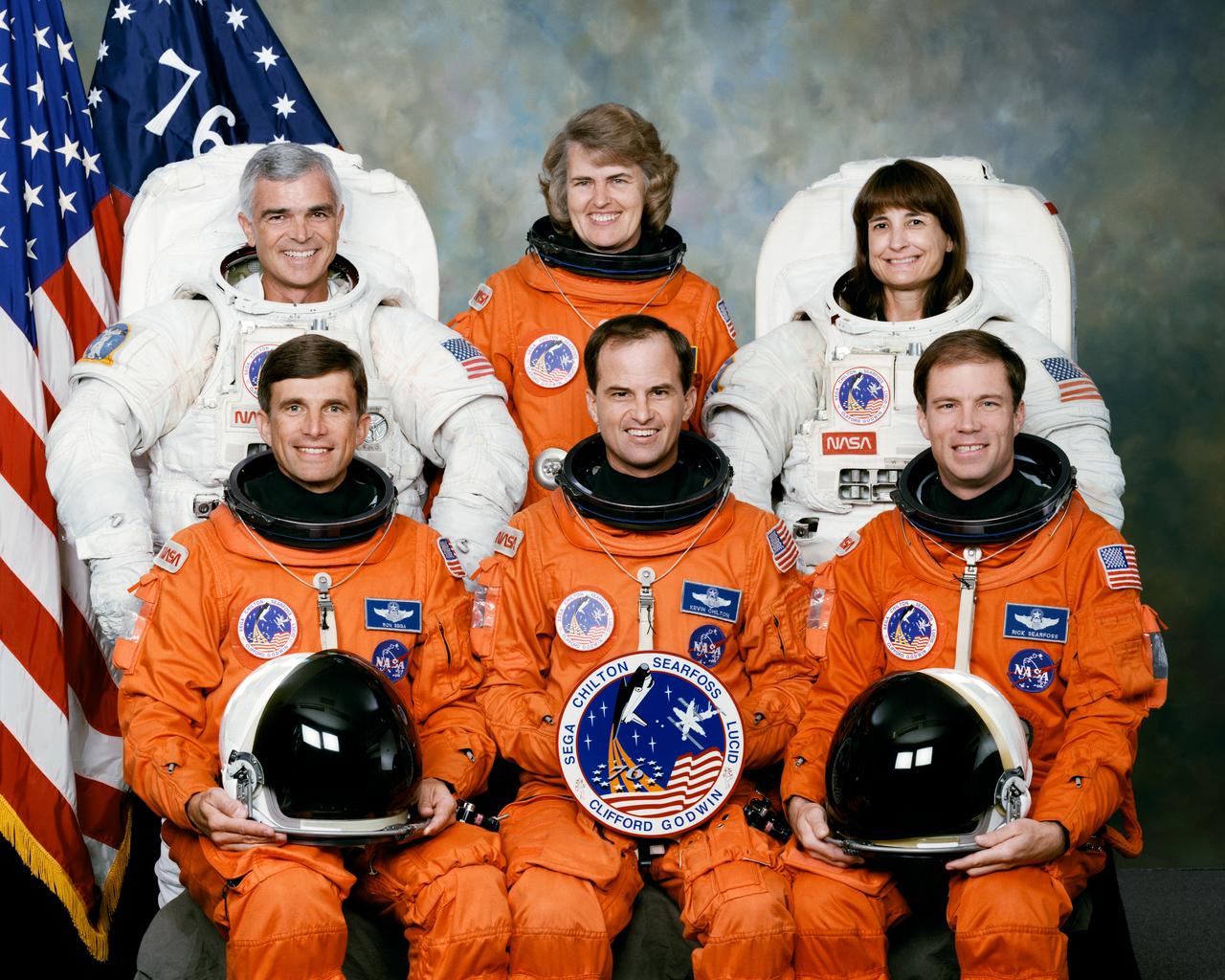
STS076-S-002 (November 1995) --- These six NASA astronauts will be launched into space aboard the Space Shuttle Atlantis early next year. Front row, left to right, are astronauts Ronald M. Sega, mission specialist; Kevin P. Chilton, mission commander; and Richard A. Searfoss, pilot. Back row, left to right, are mission specialists Michael R. (Rich) Clifford, Shannon W. Lucid and Linda M. Godwin. STS-76 begins a new period of international cooperation in space exploration with the first Shuttle transport of a United States astronaut (Lucid) to Russia’s Mir Space Station for extended joint space research. Clifford and Godwin, pictured here in training versions of the Extravehicular Mobility Unit (EMU), are scheduled to perform the first Extravehicular Activity (EVA) during Mir-Shuttle docked operations.
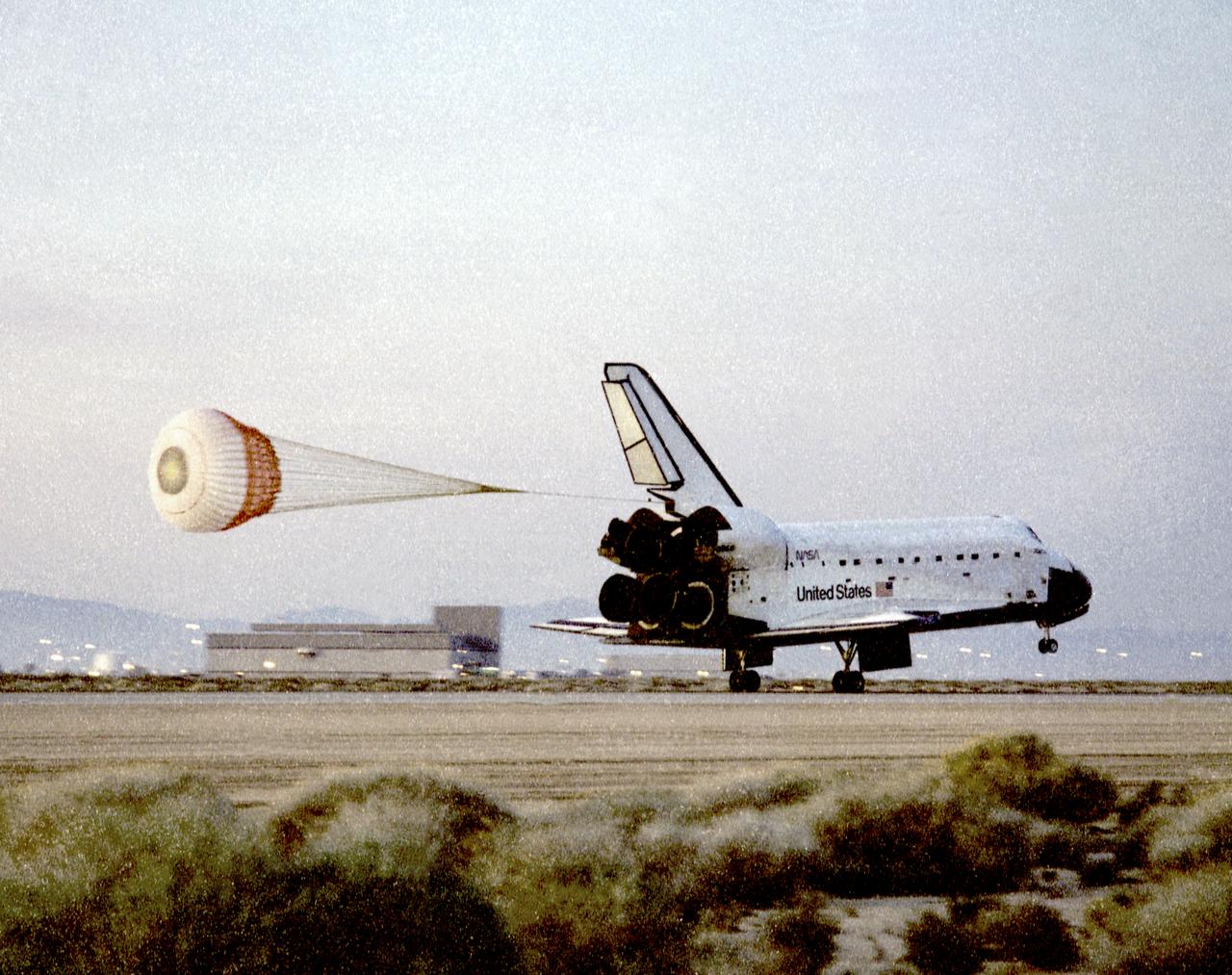
The space shuttle Atlantis touches down on the runway at Edwards, California, at approximately 5:29 a.m. Pacific Standard Time after completing the highly successful STS-76 mission to deliver Astronaut Shannon Lucid to the Russian Space Station Mir. She was the first American woman to serve as a Mir station researcher. Atlantis was originally scheduled to land at Kennedy Space Center, Florida, but bad weather there both 30 and 31 March necessitated a landing at the backup site at Edwards. This photo shows the drag chute deployed to help the shuttle roll to a stop. Mission commander for STS-76 was Kevin P. Chilton, and Richard A. Searfoss was the pilot. Ronald M. Sega was payload commander and mission specialist-1. Mission specialists were Richard Clifford, Linda Godwin and Shannon Lucid. The mission also featured a spacewalk while Atlantis was docked to Mir and experiments aboard the SPACEHAB module.
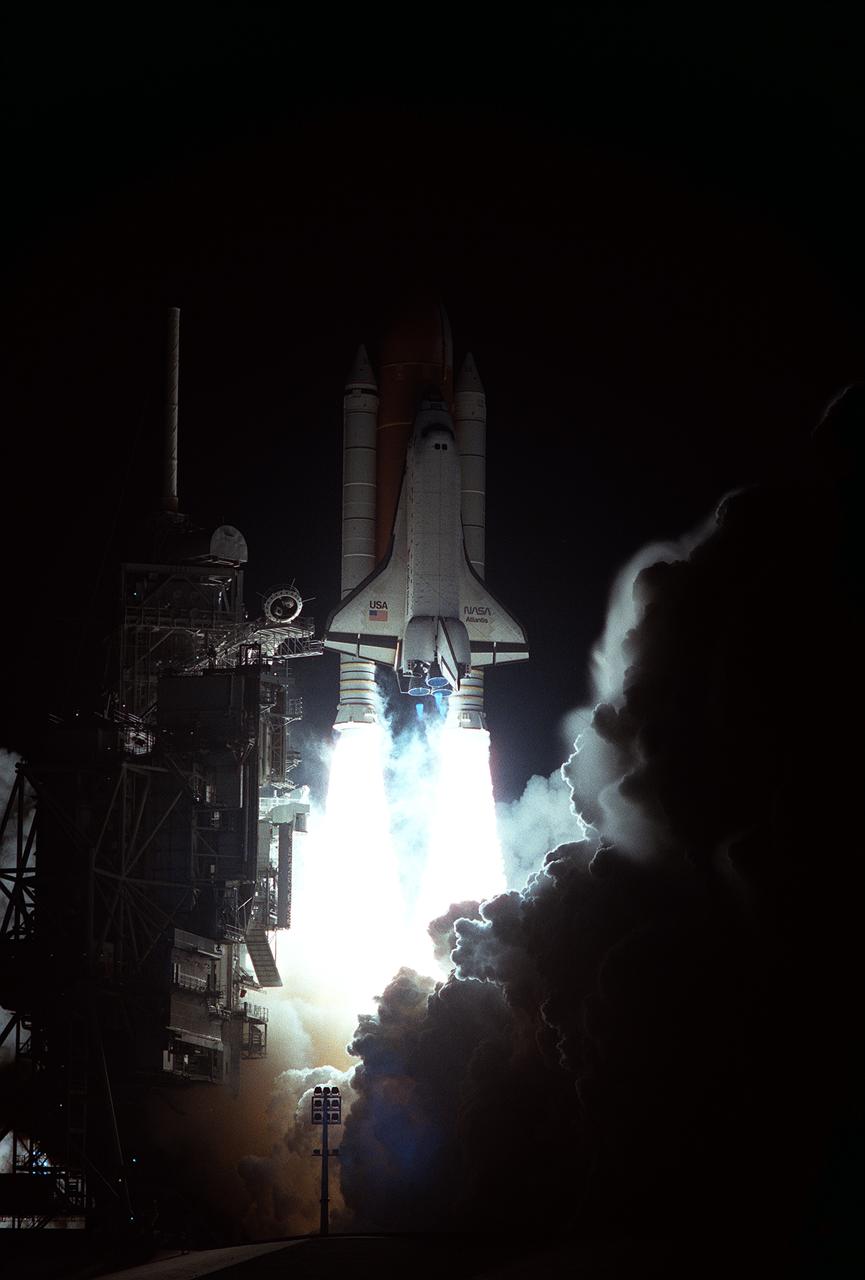
STS076-S-009 (22 March 1996) --- From the Kennedy Space Center's (KSC) Launch Pad 39B, the space shuttle Atlantis heads toward Earth orbit and an eventual docking with Russia's Mir Space Station. Mir has been in space for ten years and a two man crew (Mir-21) currently awaits the arrival of Atlantis. The on-time launch occurred at 3:13:04 a.m. (EST) on March 22, 1996. Onboard are astronauts Kevin P. Chilton, Richard A. Searfoss, Ronald M. Sega, Michael R. (Rich) Clifford, Linda M. Godwin and Shannon W. Lucid. Lucid will remain onboard Mir for just under five months' time, as a cosmonaut guest researcher. Photo credit: NASA or National Aeronautics and Space Administration
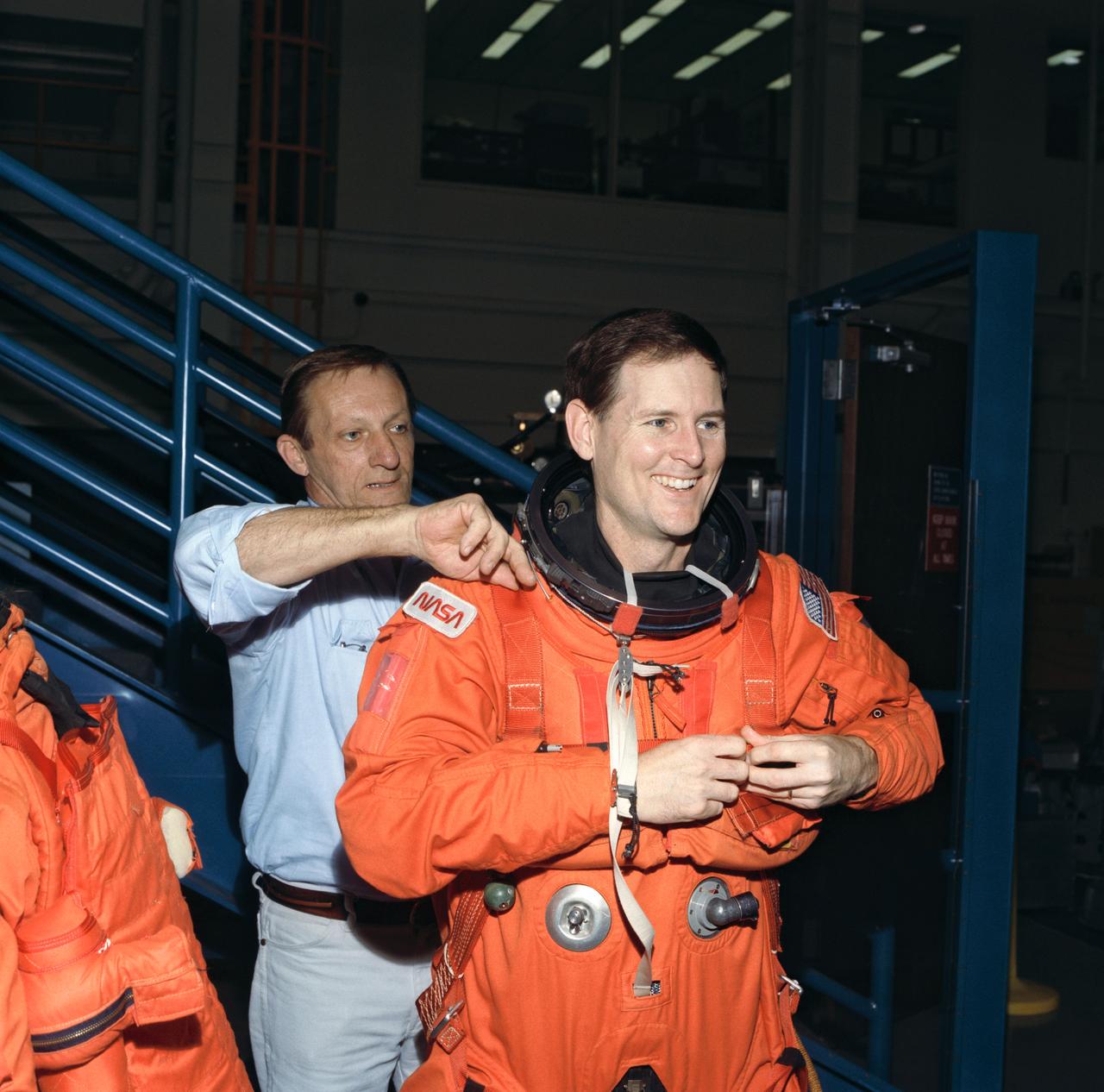
Astronauts Charles F. Bolden Jr. (left) and Kenneth S. Reightler, commander and pilot, respectively, for the STS-60 mission, take a break during rehearsal for some of their flight duties near the crew compartment trainer in JSC's Shuttle mock-up and integration laboratory (50648); Cosmonaut Sergei Krikalev, mission specialist for STS-60, gets assistance with his launch and entry suit from Lockheed's Max Kandloer during a training session. Others pictured, left to right, are Astronauts Franklin R. Chang-Diaz, Ronald M. Sega and N. Jan Davis (50649); Astronaut Kenneth S. Reightler, pilot for STS-60, gets assistance with his launch and entry suit (LES) from Boeing's William Todd during a training session (50650).
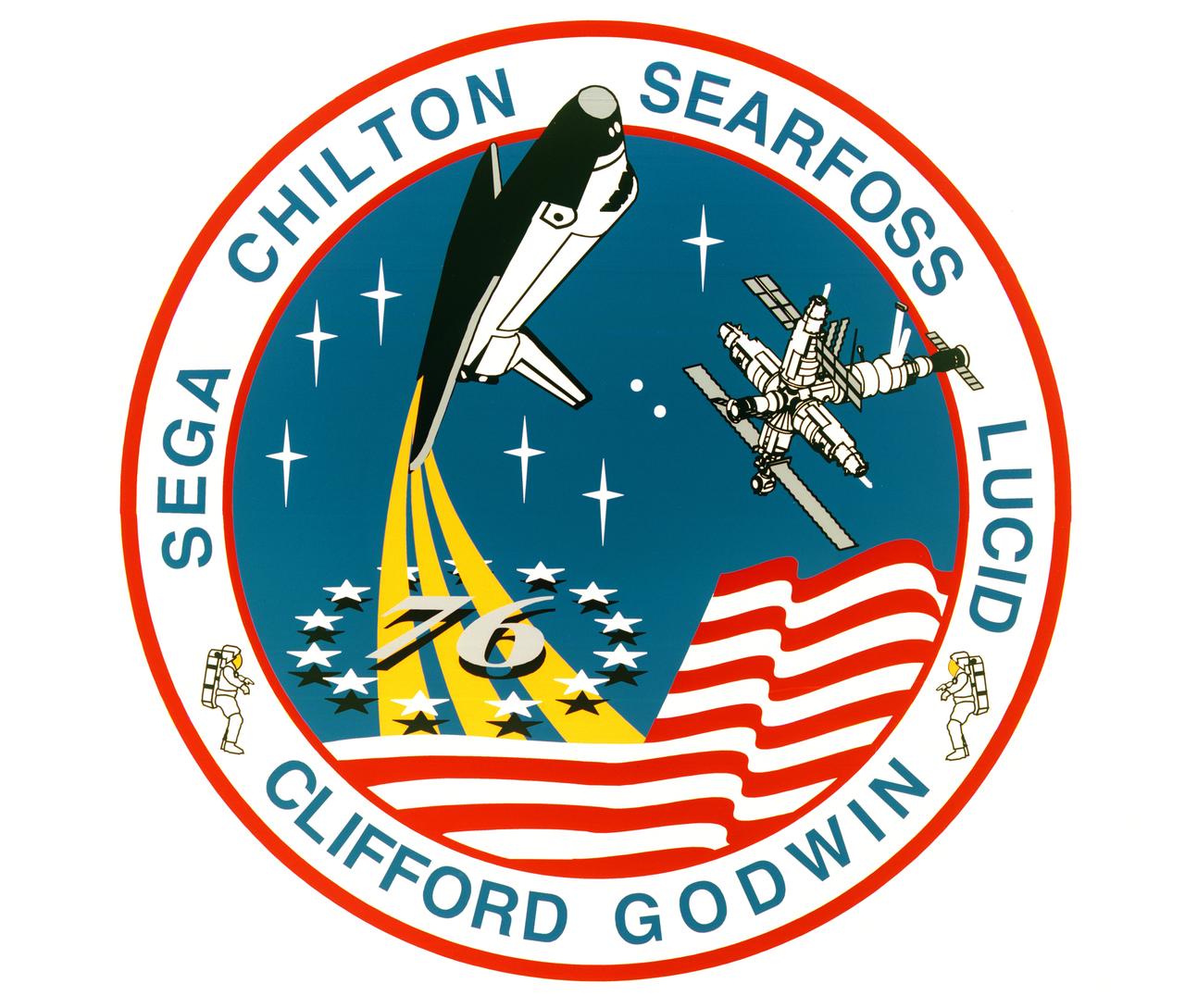
The STS-76 crew patch depicts the Space Shuttle Atlantis and Russia's Mir Space Station as the space ships prepare for a rendezvous and docking. The Spirit of 76, an era of new beginnings, is represented by the Space Shuttle rising through the circle of 13 stars in the Betsy Ross flag. STS-76 begins a new period of international cooperation in space exploration with the first Shuttle transport of a United States astronaut, Shannon W. Lucid, to the Mir Space Station for extended joint space research. Frontiers for future exploration are represented by stars and the planets. The three gold trails and the ring of stars in union form the astronaut logo. Two suited extravehicular activity (EVA) crew members in the outer ring represent the first EVA during Shuttle-Mir docked operations. The EVA objectives were to install science experiments on the Mir exterior and to develop procedures for future EVA's on the International Space Station. The surnames of the crew members encircle the patch: Kevin P. Chilton, mission commander; Richard A. Searfoss, pilot; Ronald M. Sega, Michael R. ( Rich) Clifford, Linda M. Godwin and Lucid, all mission specialists. This patch was designed by Brandon Clifford, age 12, and the crew members of STS-76.
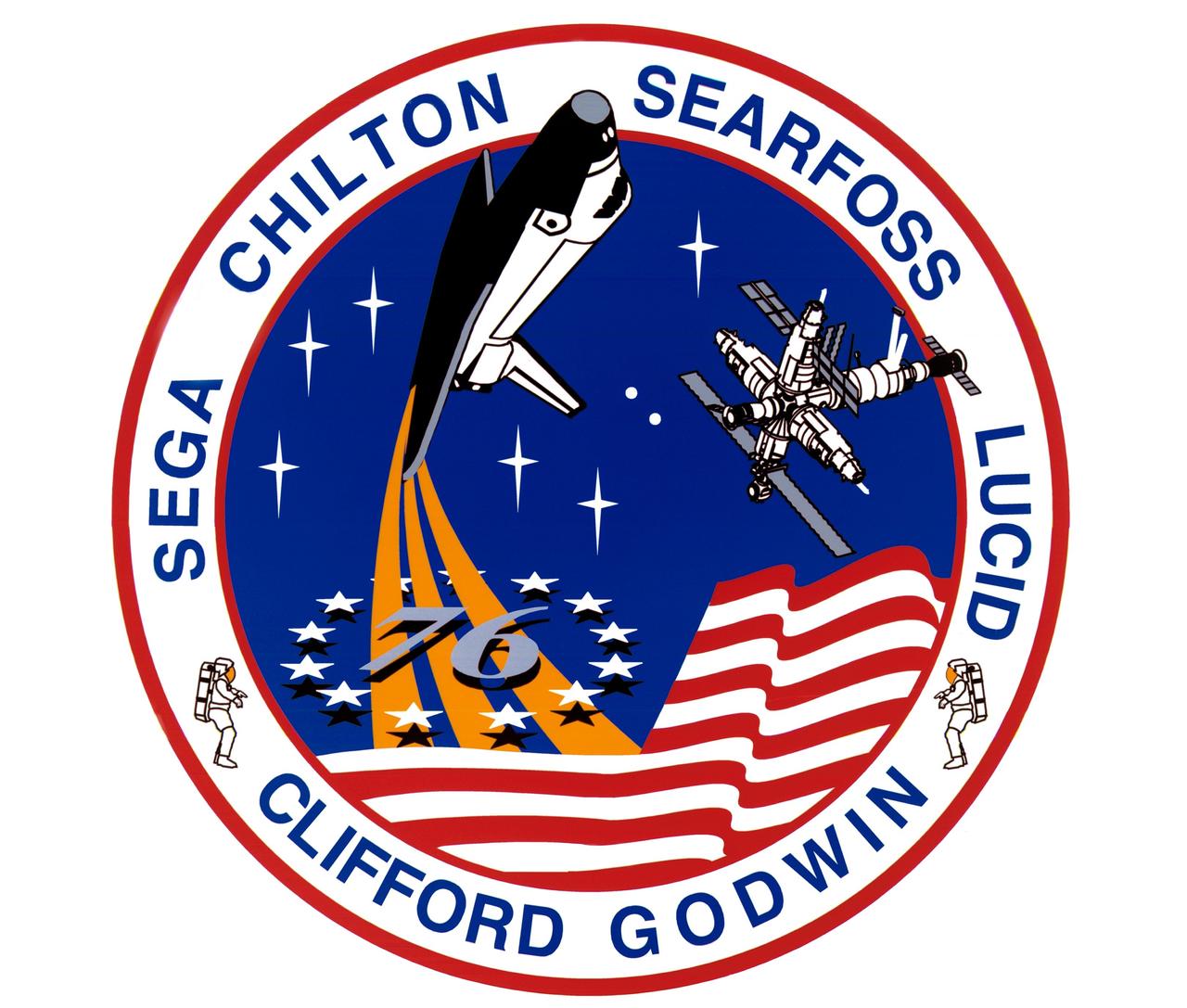
STS076-S-001 (November 1995) --- The STS-76 crew patch depicts the space shuttle Atlantis and Russia's Mir Space Station as the space ships prepare for a rendezvous and docking. The "Spirit of 76," an era of new beginnings, is represented by the space shuttle rising through the circle of 13 stars in the Betsy Ross flag. STS-76 begins a new period of international cooperation in space exploration with the first shuttle transport of a United States astronaut, Shannon W. Lucid, to the Mir Space Station for extended joint space research. Frontiers for future exploration are represented by stars and the planets. The three gold trails and the ring of stars in union form the astronaut logo. Two suited extravehicular activity (EVA) crew members in the outer ring represent the first EVA during Shuttle-Mir docked operations. The EVA objectives are to install science experiments on the Mir exterior and to develop procedures for future EVA's on the International Space Station. The surnames of the crew members encircle the patch: Kevin P. Chilton, mission commander; Richard A. Searfoss, pilot; Ronald M. Sega, Michael R. ( Rich) Clifford, Linda M. Godwin and Lucid, all mission specialists. This patch was designed by Brandon Clifford, age 12, and the crew members of STS-76. The NASA insignia design for space shuttle flights is reserved for use by the astronauts and for other official use as the NASA Administrator may authorize. Public availability has been approved only in the forms of illustrations by the various news media. When and if there is any change in this policy, which is not anticipated, the change will be publicly announced. Photo credit: NASA