
The flags of Senegal and the United States are seen during an Artemis Accords signing ceremony Thursday, July 24, 2025, at the Mary W. Jackson NASA Headquarters building in Washington. Senegal is the 56th country to sign the Artemis Accords, which establish a practical set of principles to guide space exploration cooperation among nations participating in NASA’s Artemis program. Photo Credit: (NASA/Keegan Barber)
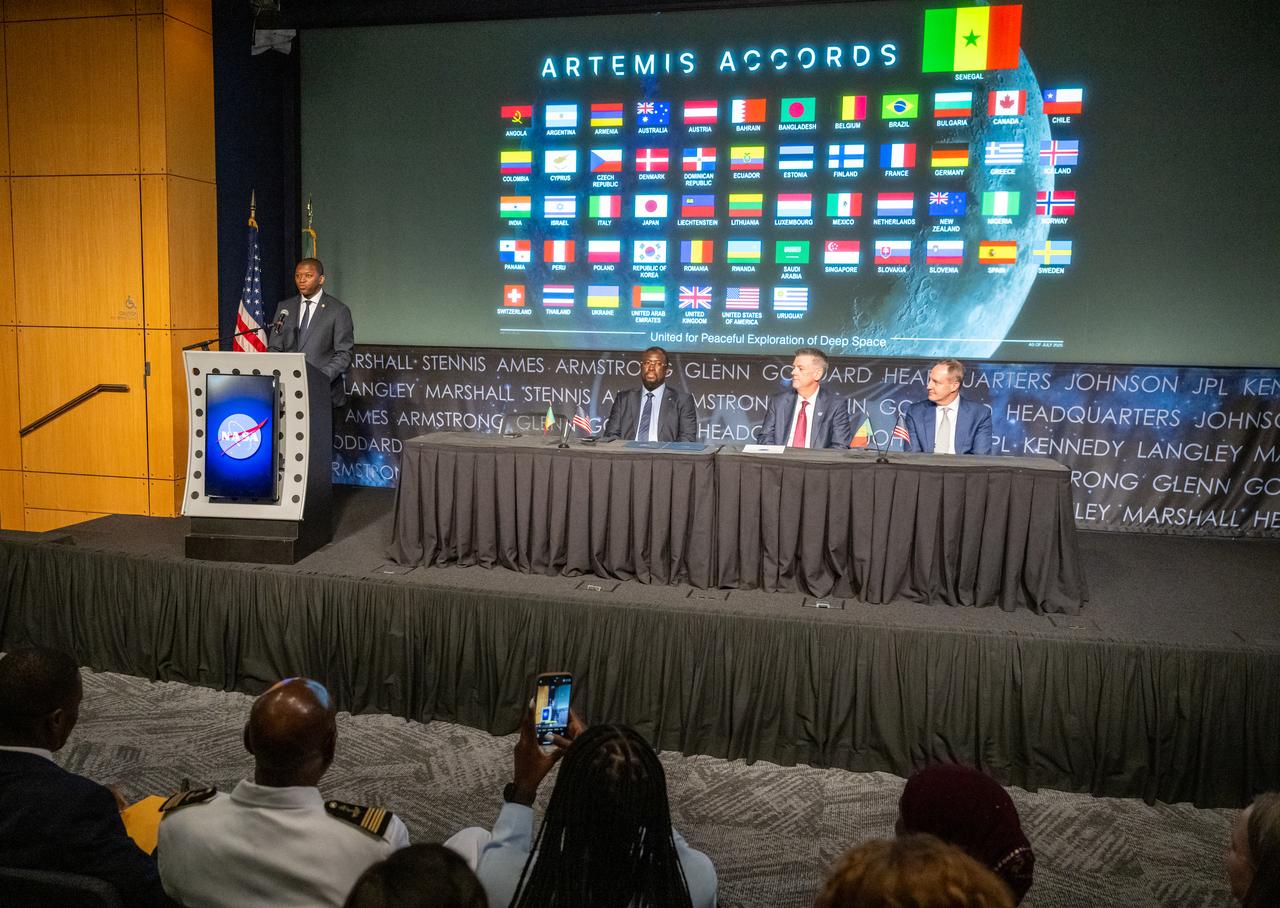
Ambassador of Senegal to the United States Abdoul Wahab Haidara delivers remarks during an Artemis Accords signing ceremony Thursday, July 24, 2025, at the Mary W. Jackson NASA Headquarters building in Washington. Senegal is the 56th country to sign the Artemis Accords, which establish a practical set of principles to guide space exploration cooperation among nations participating in NASA’s Artemis program. Photo Credit: (NASA/Keegan Barber)

Ambassador of Senegal to the United States Abdoul Wahab Haidara delivers remarks during an Artemis Accords signing ceremony Thursday, July 24, 2025, at the Mary W. Jackson NASA Headquarters building in Washington. Senegal is the 56th country to sign the Artemis Accords, which establish a practical set of principles to guide space exploration cooperation among nations participating in NASA’s Artemis program. Photo Credit: (NASA/Keegan Barber)
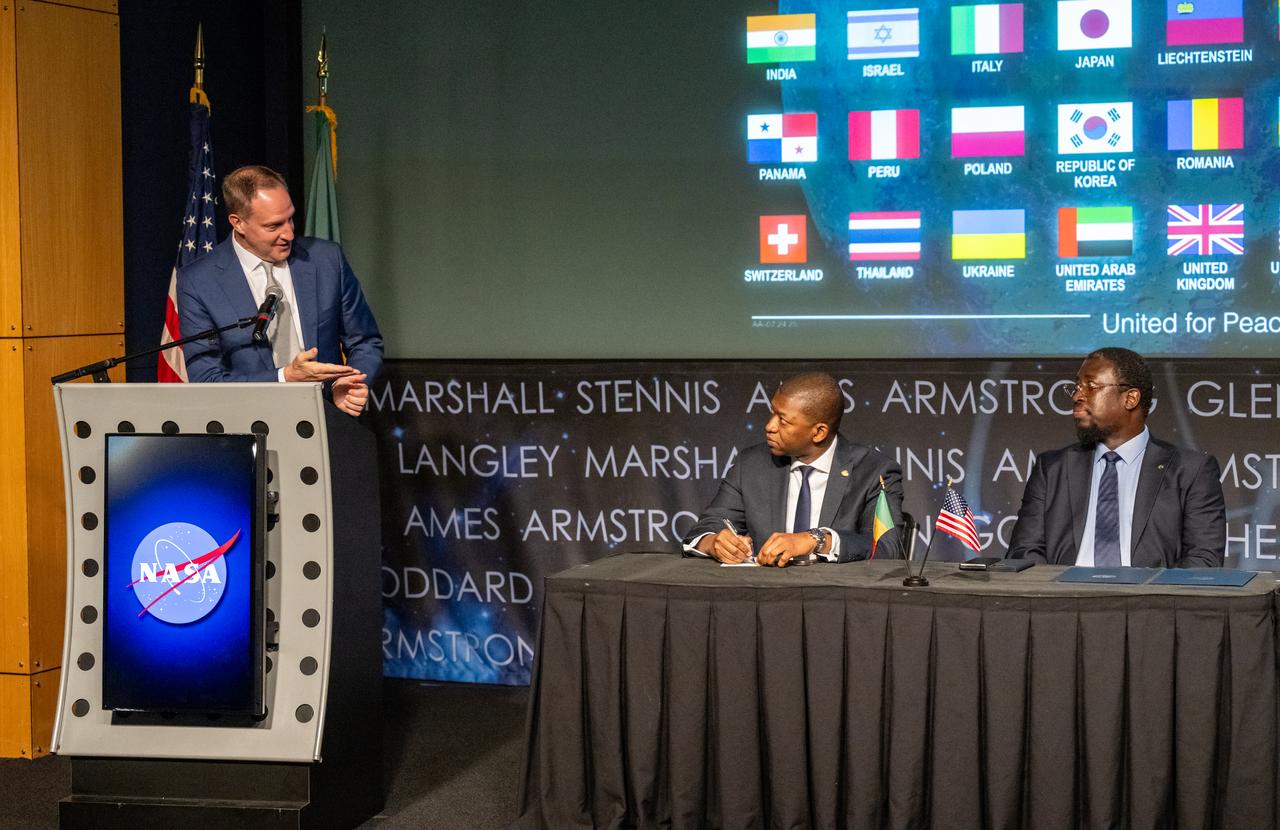
Department of State Bureau of African Affairs Senior Bureau Official Jonathan Pratt delivers remarks during an Artemis Accords signing ceremony Thursday, July 24, 2025, at the Mary W. Jackson NASA Headquarters building in Washington. Senegal is the 56th country to sign the Artemis Accords, which establish a practical set of principles to guide space exploration cooperation among nations participating in NASA’s Artemis program. Photo Credit: (NASA/Keegan Barber)
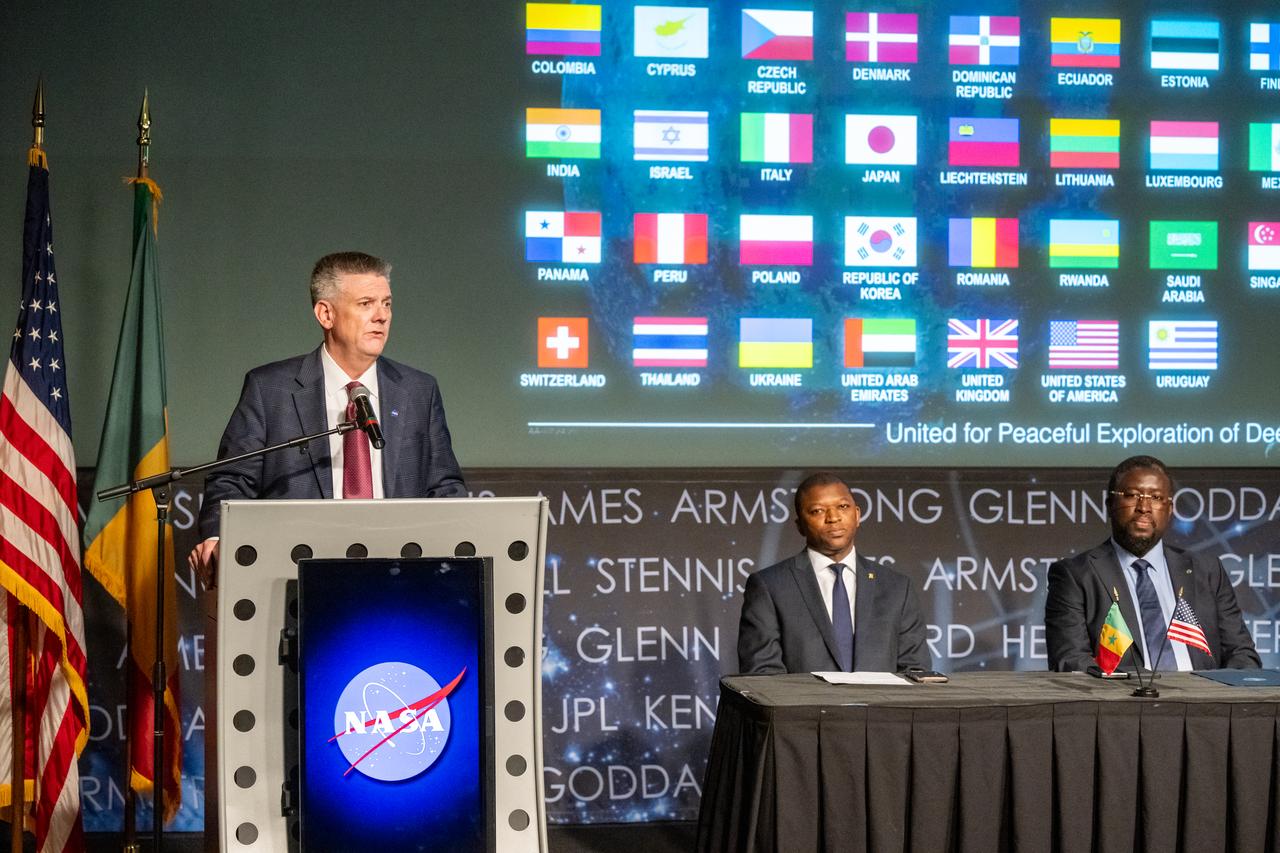
NASA Chief of Staff Brian Hughes delivers remarks during an Artemis Accords signing ceremony Thursday, July 24, 2025, at the Mary W. Jackson NASA Headquarters building in Washington. Senegal is the 56th country to sign the Artemis Accords, which establish a practical set of principles to guide space exploration cooperation among nations participating in NASA’s Artemis program. Photo Credit: (NASA/Keegan Barber)
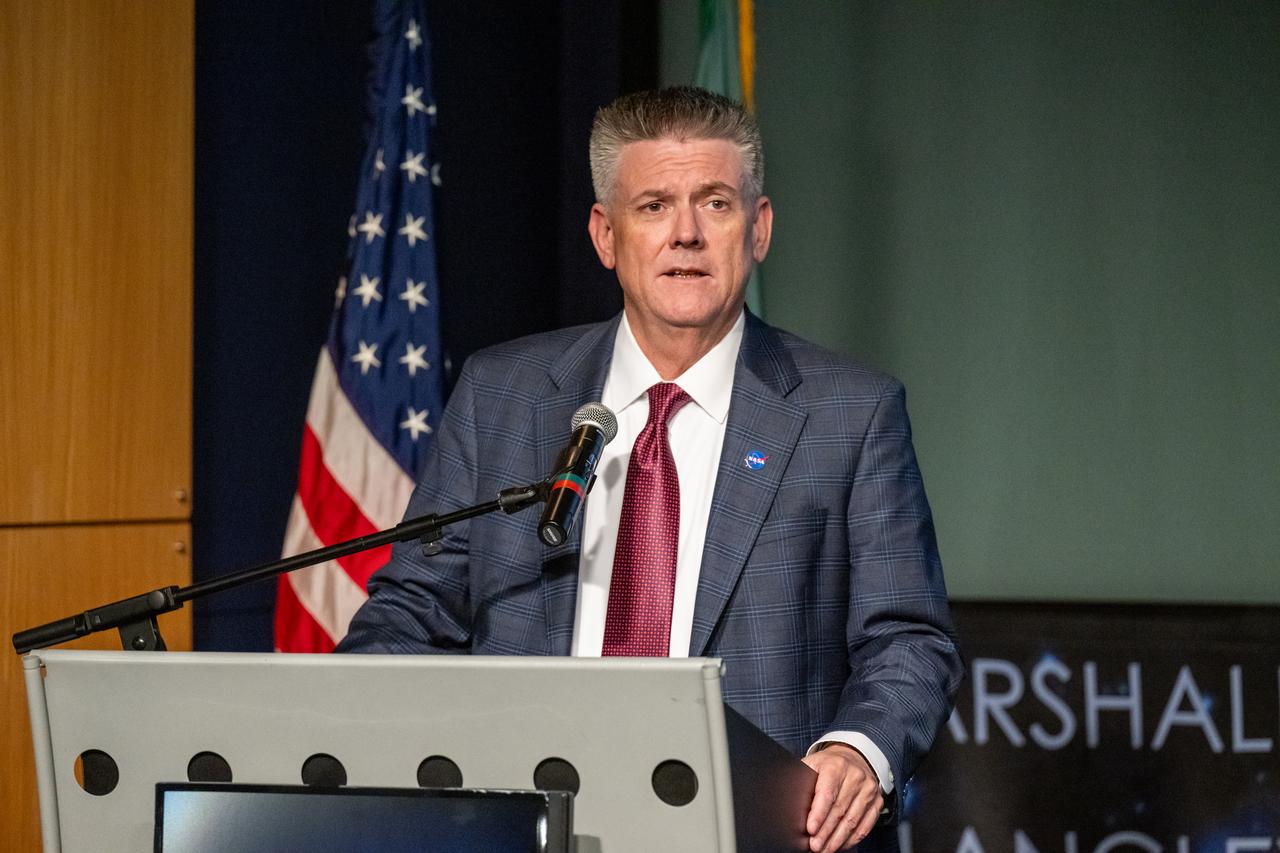
NASA Chief of Staff Brian Hughes delivers remarks during an Artemis Accords signing ceremony Thursday, July 24, 2025, at the Mary W. Jackson NASA Headquarters building in Washington. Senegal is the 56th country to sign the Artemis Accords, which establish a practical set of principles to guide space exploration cooperation among nations participating in NASA’s Artemis program. Photo Credit: (NASA/Keegan Barber)
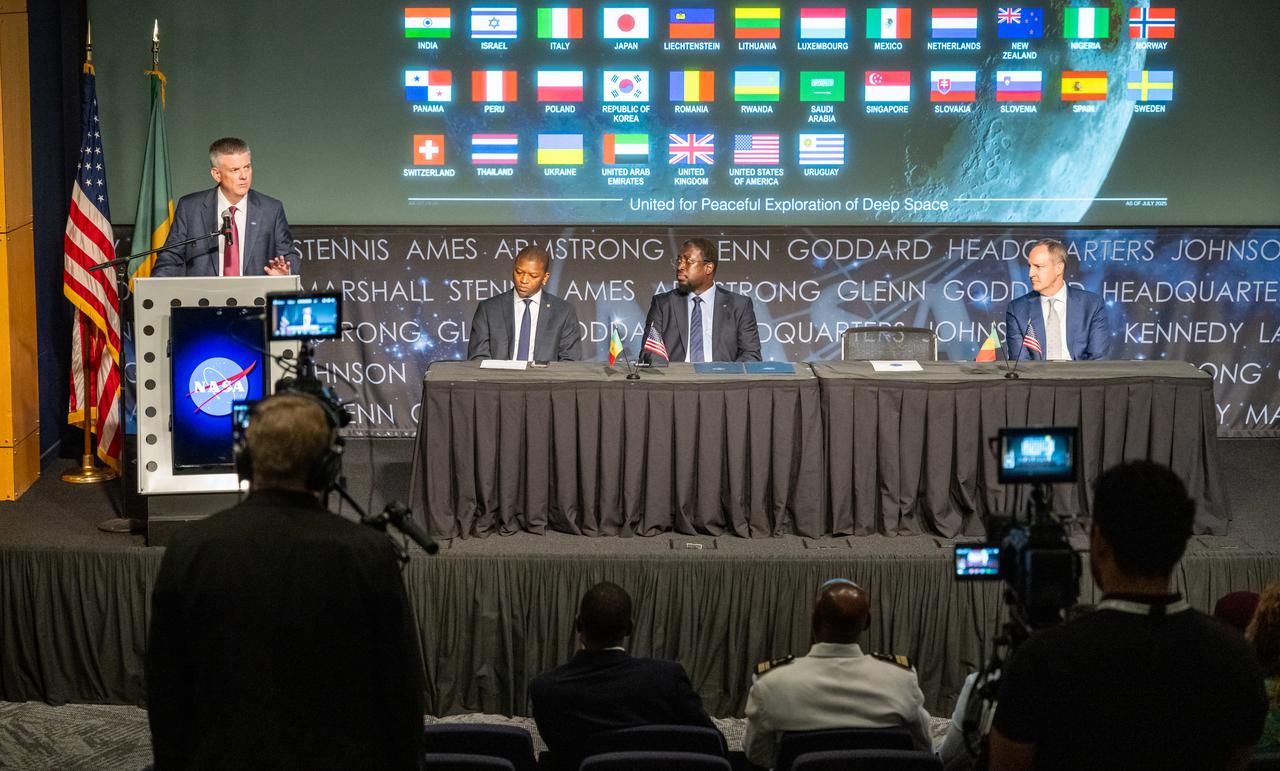
NASA Chief of Staff Brian Hughes delivers remarks during an Artemis Accords signing ceremony Thursday, July 24, 2025, at the Mary W. Jackson NASA Headquarters building in Washington. Senegal is the 56th country to sign the Artemis Accords, which establish a practical set of principles to guide space exploration cooperation among nations participating in NASA’s Artemis program. Photo Credit: (NASA/Keegan Barber)
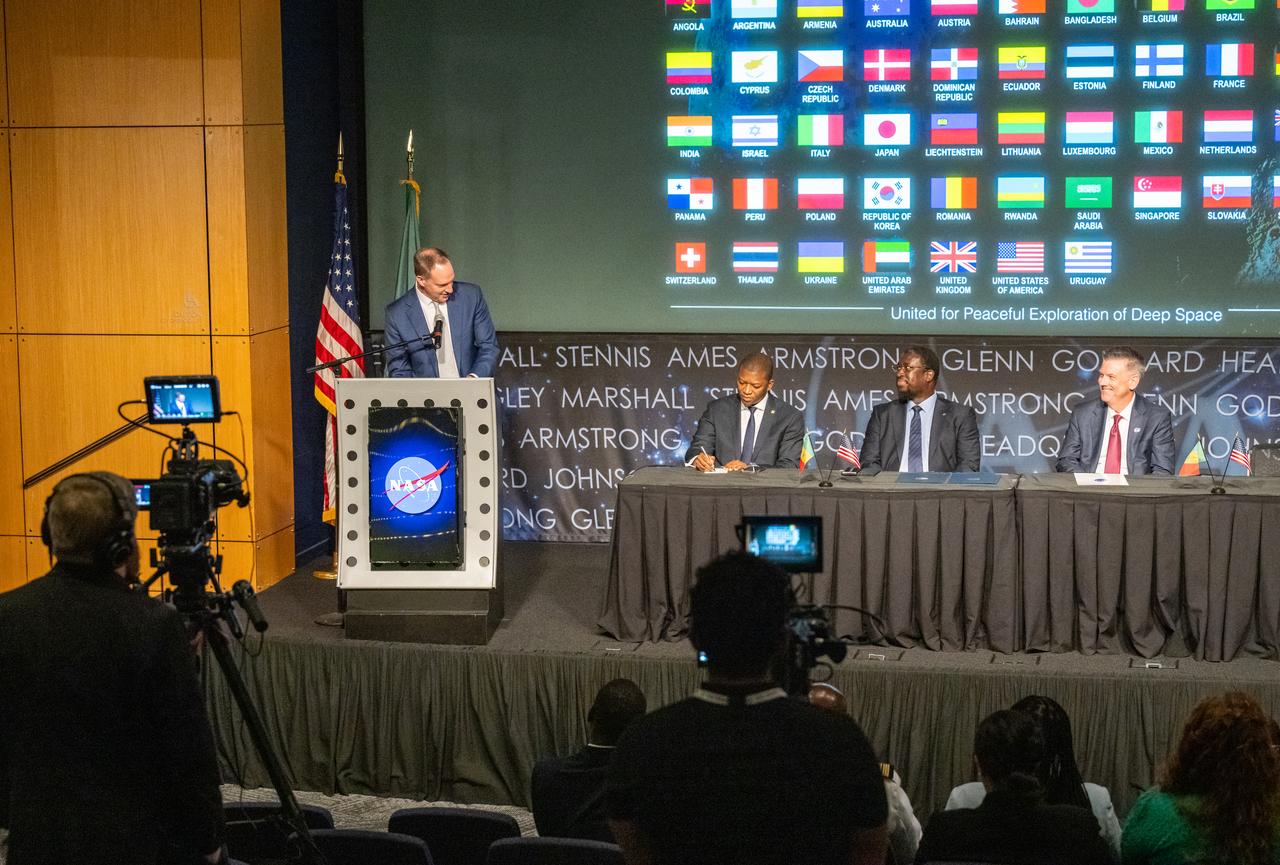
Department of State Bureau of African Affairs Senior Bureau Official Jonathan Pratt delivers remarks during an Artemis Accords signing ceremony Thursday, July 24, 2025, at the Mary W. Jackson NASA Headquarters building in Washington. Senegal is the 56th country to sign the Artemis Accords, which establish a practical set of principles to guide space exploration cooperation among nations participating in NASA’s Artemis program. Photo Credit: (NASA/Keegan Barber)
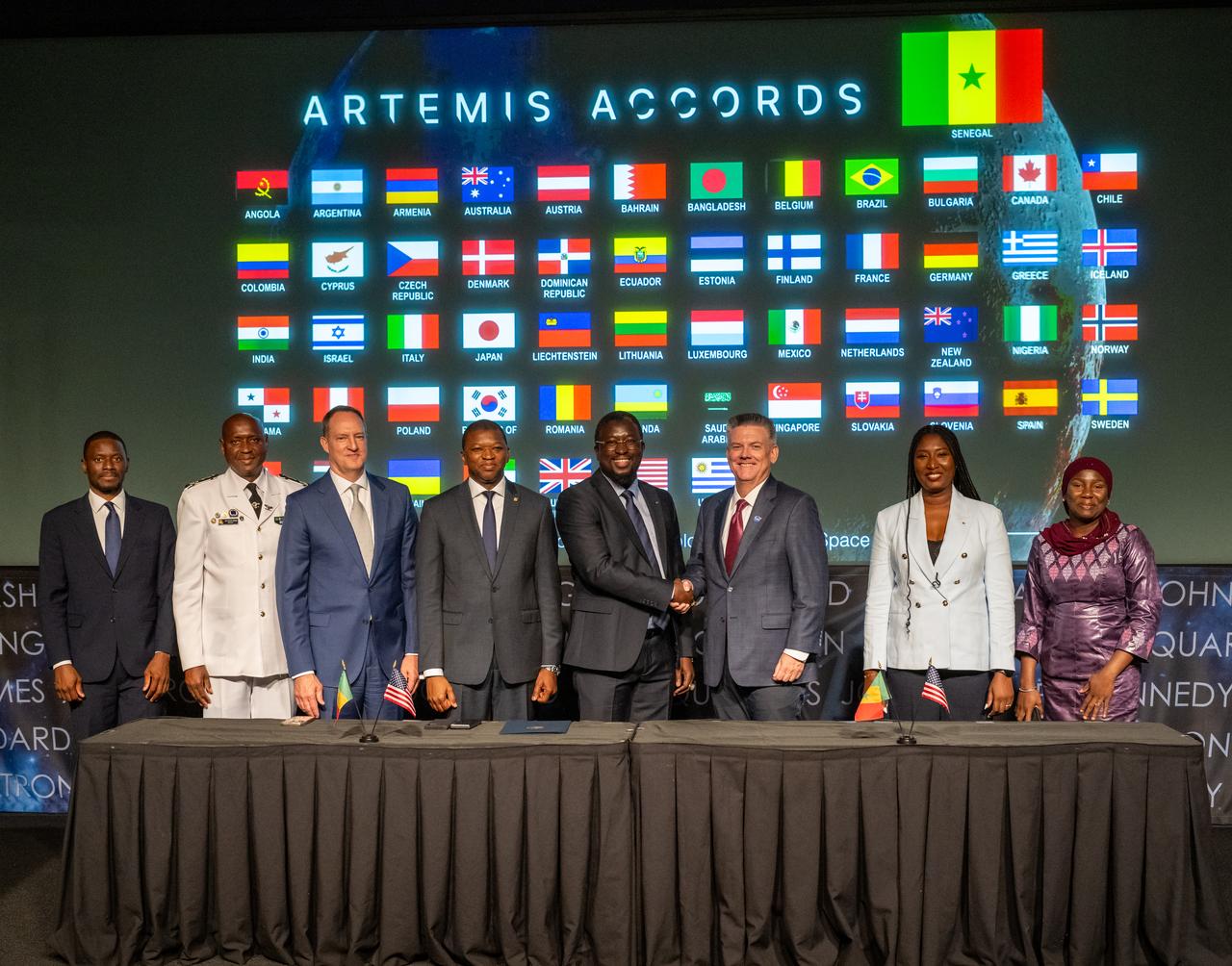
Third from left to right, Department of State Bureau of African Affairs Senior Bureau Official Jonathan Pratt, Ambassador of Senegal to the United States Abdoul Wahab Haidara, Director General of the Senegalese space agency (ASES) Maram Kairé, NASA Chief of Staff Brian Hughes, and members of the Senegalese delegation pose for a photo during an Artemis Accords signing ceremony Thursday, July 24, 2025, at the Mary W. Jackson NASA Headquarters building in Washington. Senegal is the 56th country to sign the Artemis Accords, which establish a practical set of principles to guide space exploration cooperation among nations participating in NASA’s Artemis program. Photo Credit: (NASA/Keegan Barber)
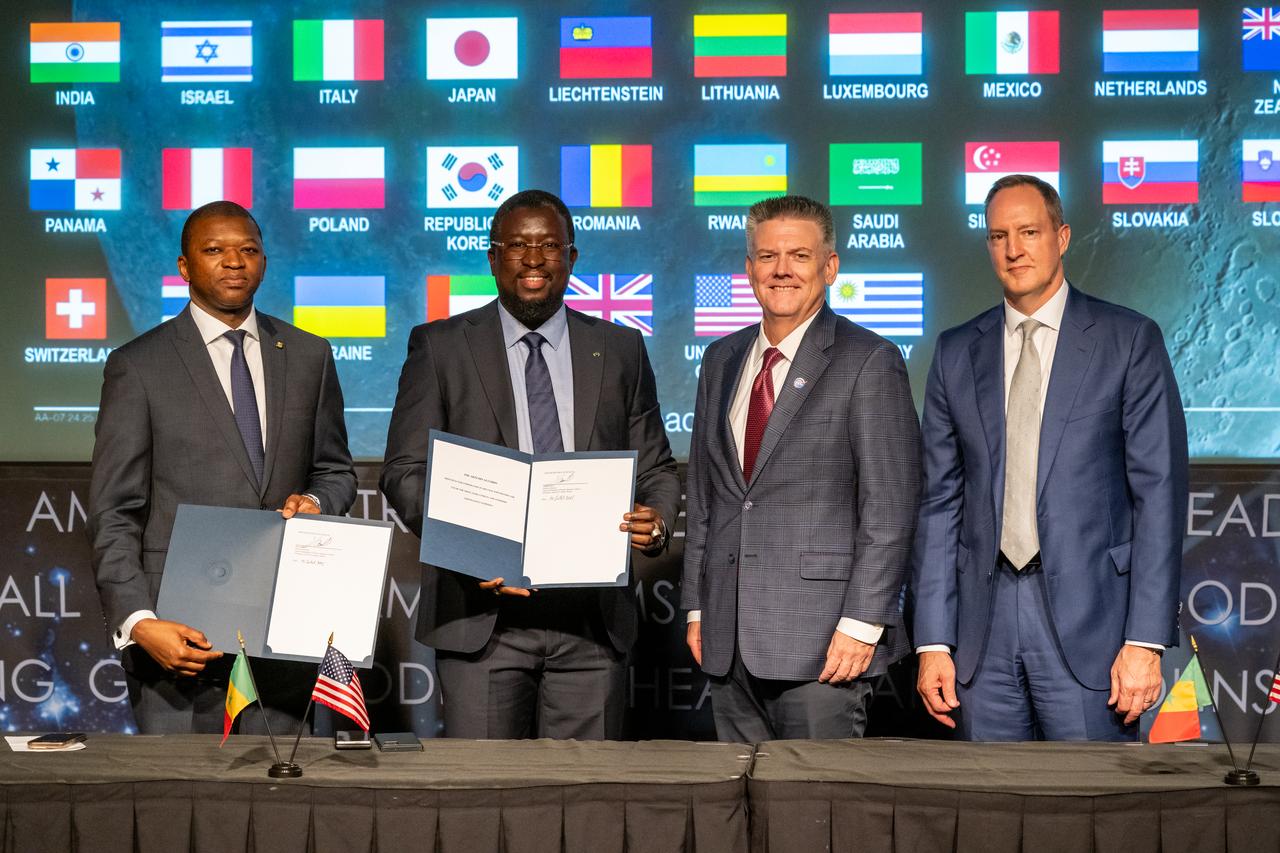
From left to right, Ambassador of Senegal to the United States Abdoul Wahab Haidara, Director General of the Senegalese space agency (ASES) Maram Kairé, NASA Chief of Staff Brian Hughes, and Department of State Bureau of African Affairs Senior Bureau Official Jonathan Pratt pose for a photo during an Artemis Accords signing ceremony Thursday, July 24, 2025, at the Mary W. Jackson NASA Headquarters building in Washington. Senegal is the 56th country to sign the Artemis Accords, which establish a practical set of principles to guide space exploration cooperation among nations participating in NASA’s Artemis program. Photo Credit: (NASA/Keegan Barber)
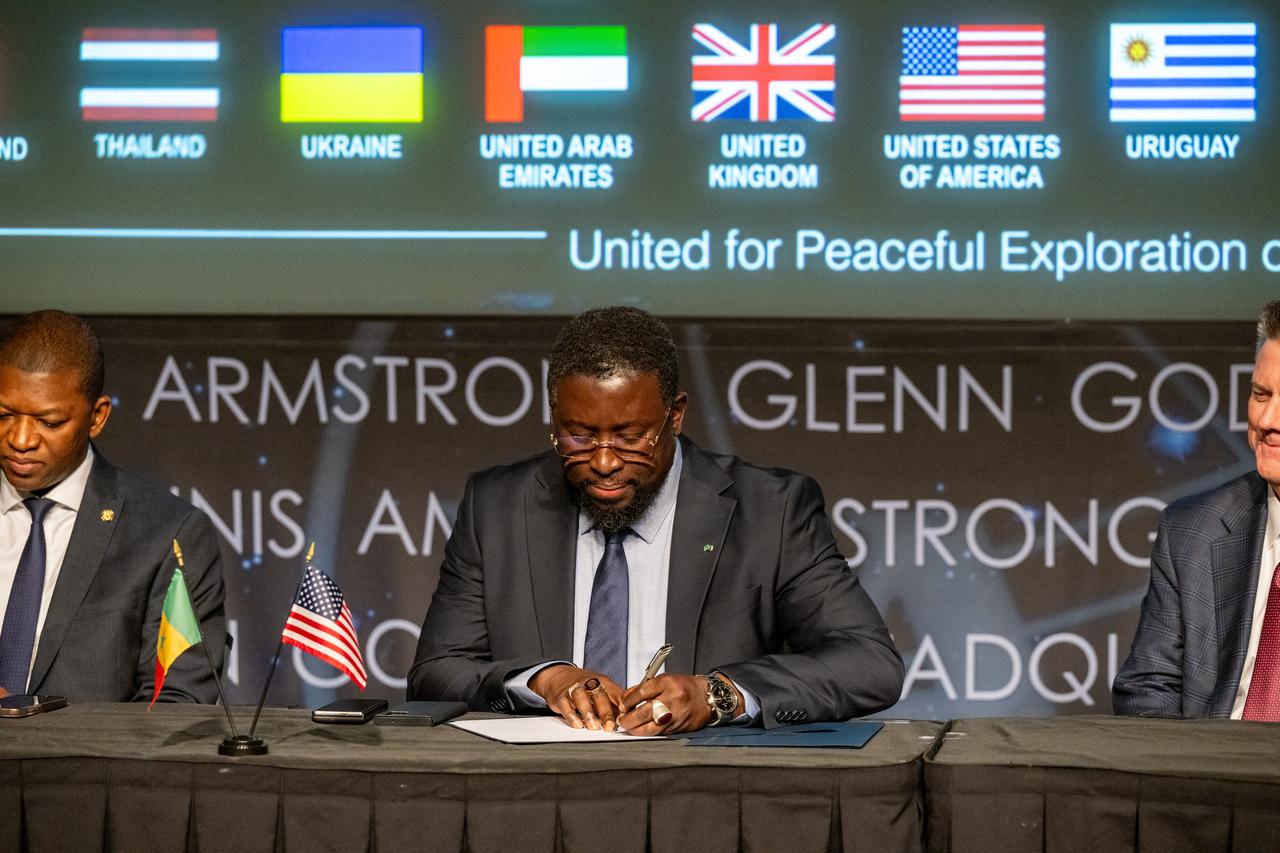
Director General of the Senegalese space agency (ASES) Maram Kairé, center, signs the Artemis Accords Thursday, July 24, 2025, at the Mary W. Jackson NASA Headquarters building in Washington. Senegal is the 56th country to sign the Artemis Accords, which establish a practical set of principles to guide space exploration cooperation among nations participating in NASA’s Artemis program. Photo Credit: (NASA/Keegan Barber)
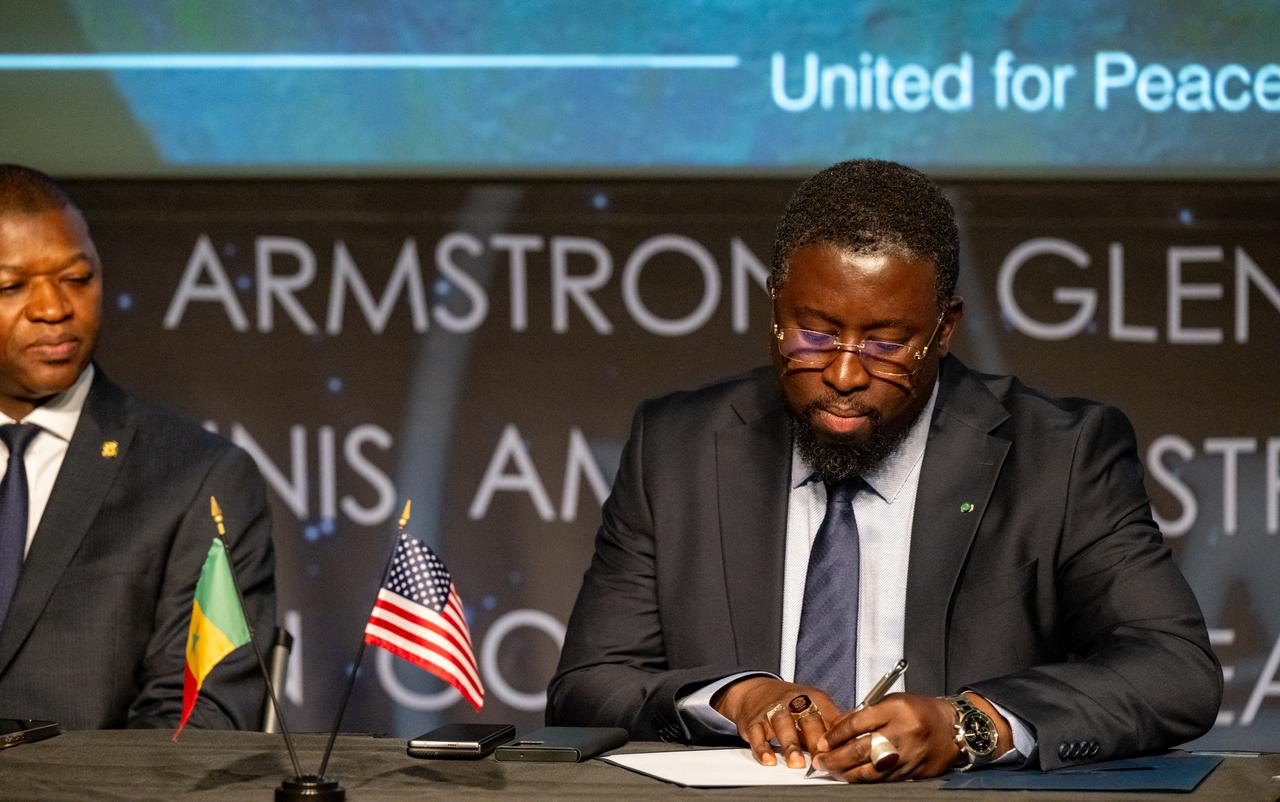
Director General of the Senegalese space agency (ASES) Maram Kairé, right, signs the Artemis Accords Thursday, July 24, 2025, at the Mary W. Jackson NASA Headquarters building in Washington. Senegal is the 56th country to sign the Artemis Accords, which establish a practical set of principles to guide space exploration cooperation among nations participating in NASA’s Artemis program. Photo Credit: (NASA/Keegan Barber)
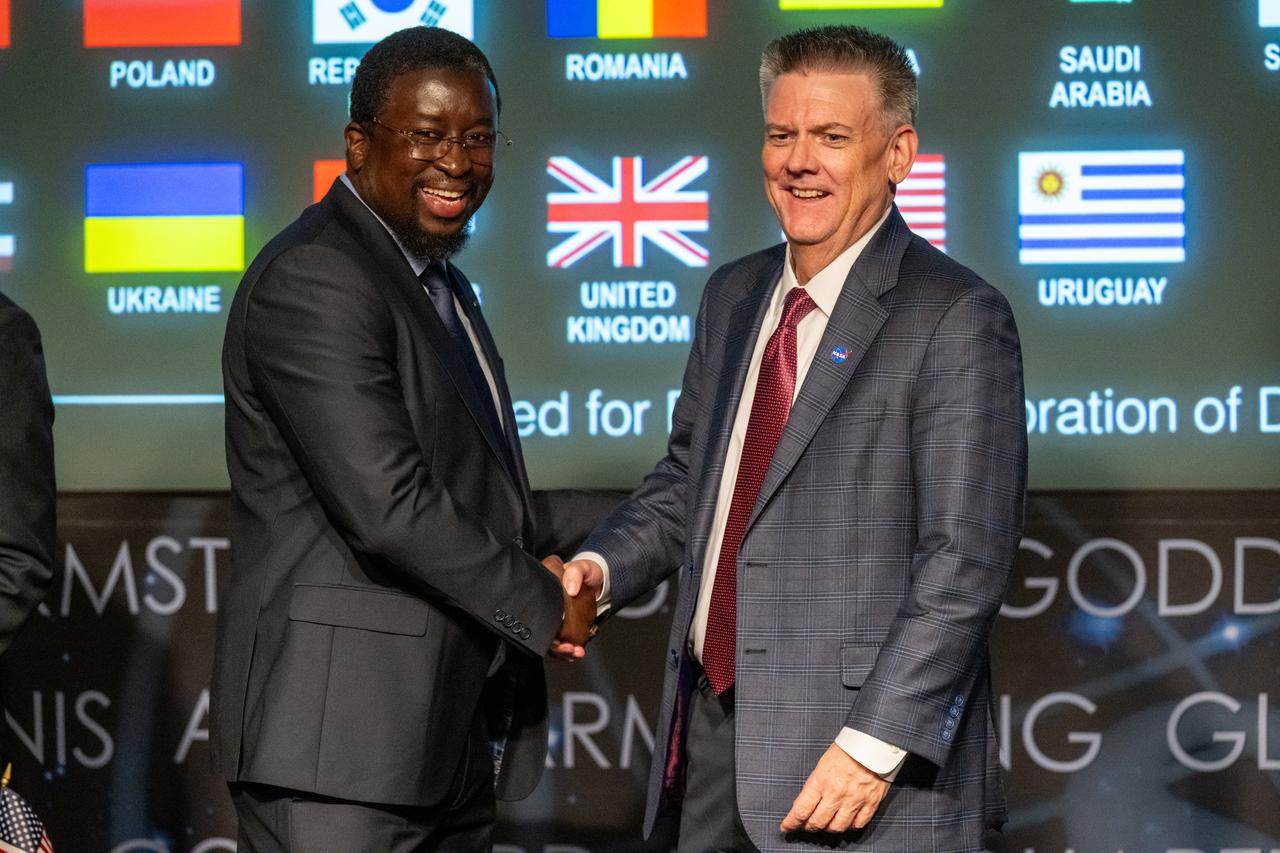
Director General of the Senegalese space agency (ASES) Maram Kairé, left, and NASA Chief of Staff Brian Hughes, right, shake hands during an Artemis Accords signing ceremony Thursday, July 24, 2025, at the Mary W. Jackson NASA Headquarters building in Washington. Senegal is the 56th country to sign the Artemis Accords, which establish a practical set of principles to guide space exploration cooperation among nations participating in NASA’s Artemis program. Photo Credit: (NASA/Keegan Barber)
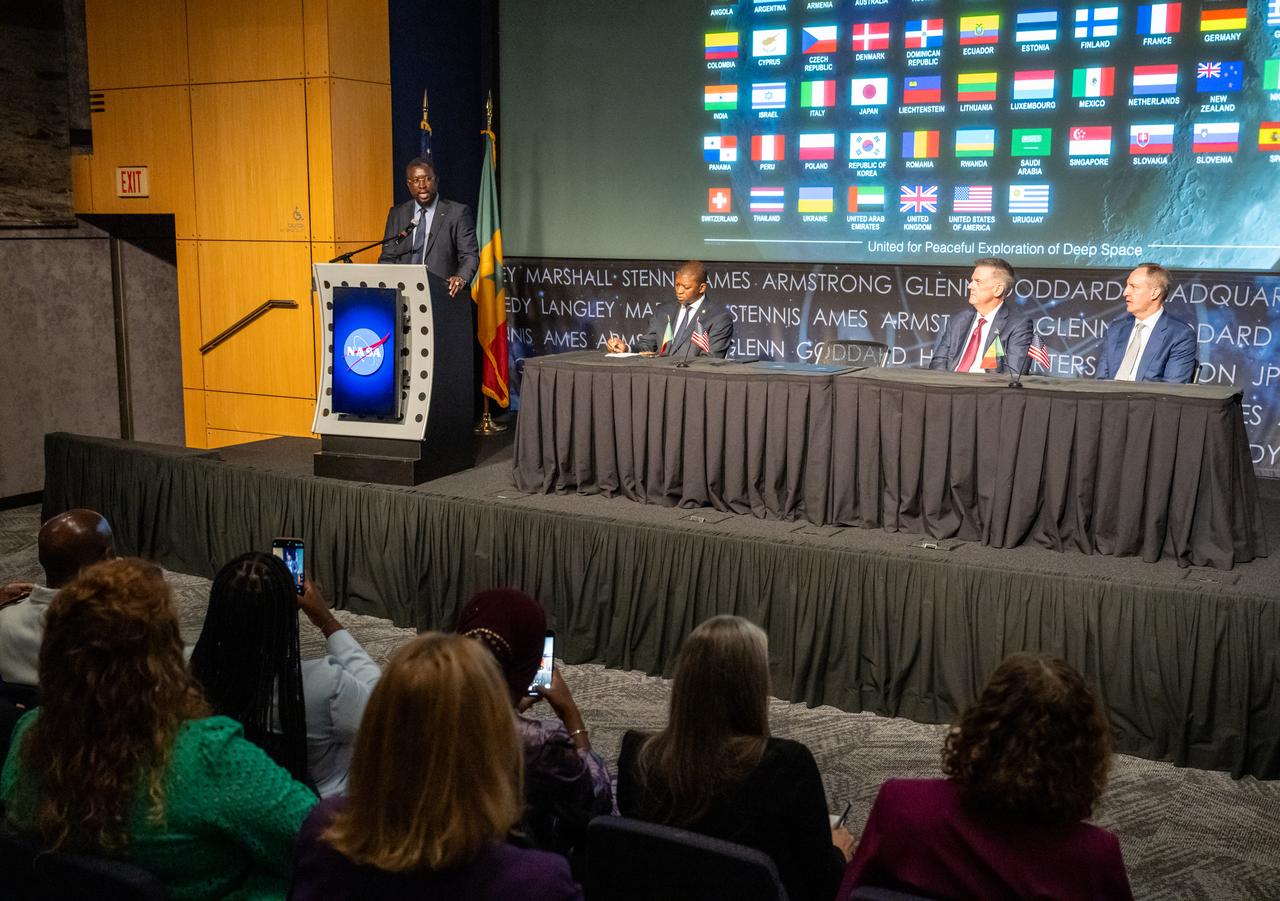
Director General of the Senegalese space agency (ASES) Maram Kairé delivers remarks during an Artemis Accords signing ceremony Thursday, July 24, 2025, at the Mary W. Jackson NASA Headquarters building in Washington. Senegal is the 56th country to sign the Artemis Accords, which establish a practical set of principles to guide space exploration cooperation among nations participating in NASA’s Artemis program. Photo Credit: (NASA/Keegan Barber)
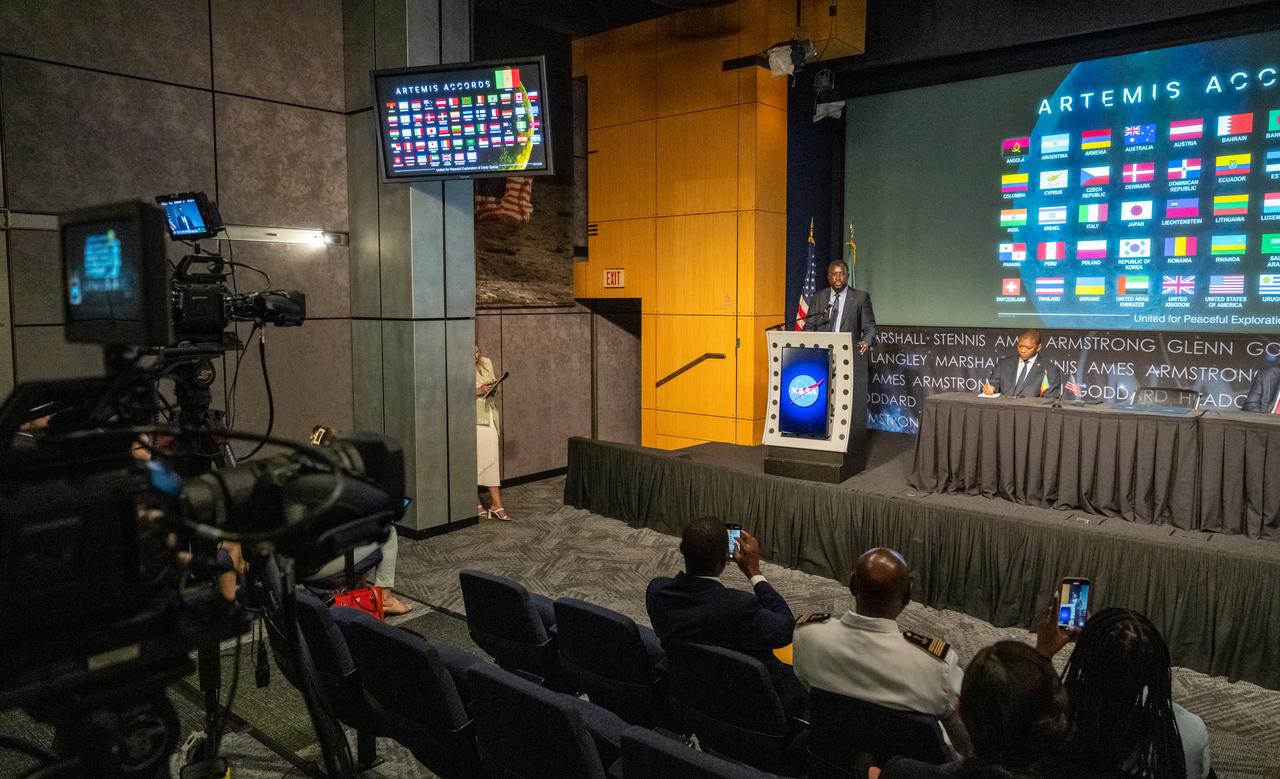
Director General of the Senegalese space agency (ASES) Maram Kairé delivers remarks during an Artemis Accords signing ceremony Thursday, July 24, 2025, at the Mary W. Jackson NASA Headquarters building in Washington. Senegal is the 56th country to sign the Artemis Accords, which establish a practical set of principles to guide space exploration cooperation among nations participating in NASA’s Artemis program. Photo Credit: (NASA/Keegan Barber)
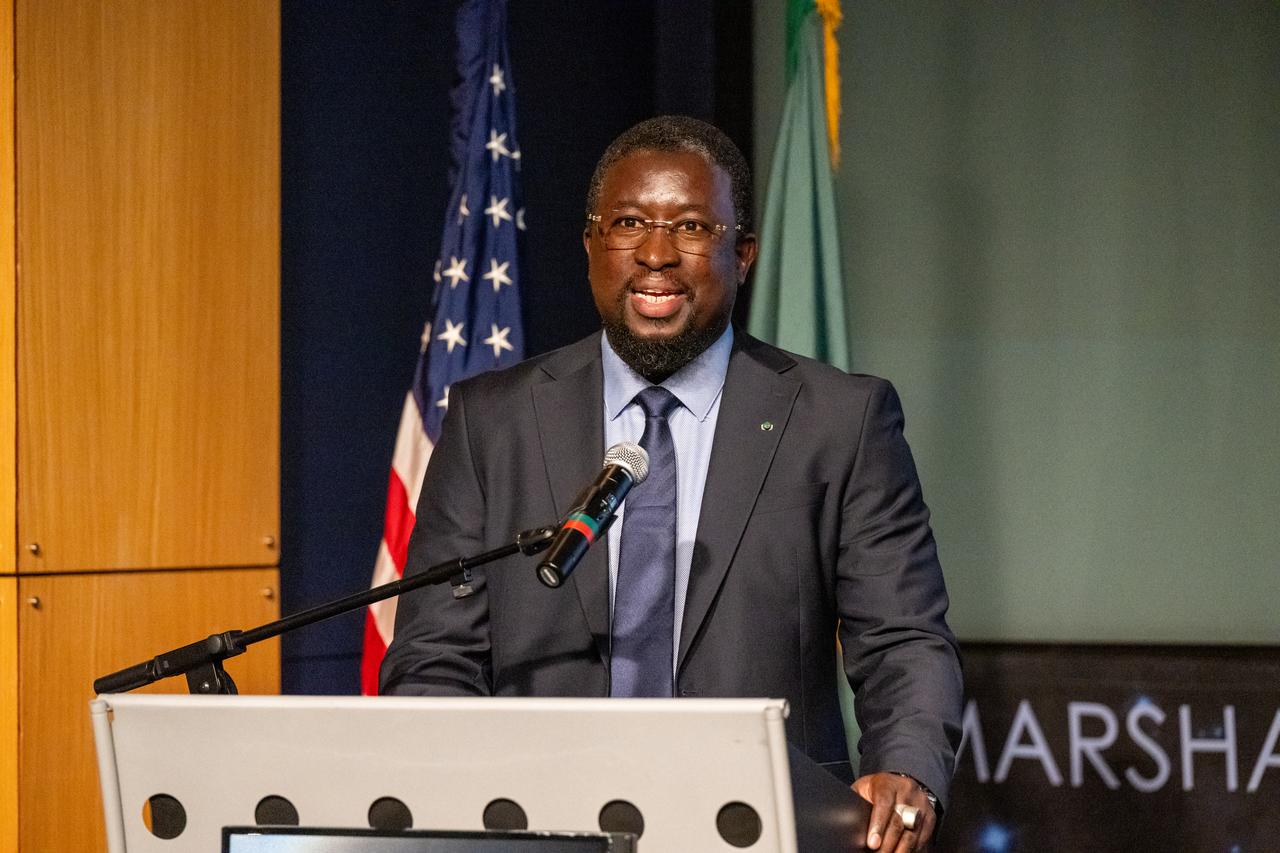
Director General of the Senegalese space agency (ASES) Maram Kairé delivers remarks during an Artemis Accords signing ceremony Thursday, July 24, 2025, at the Mary W. Jackson NASA Headquarters building in Washington. Senegal is the 56th country to sign the Artemis Accords, which establish a practical set of principles to guide space exploration cooperation among nations participating in NASA’s Artemis program. Photo Credit: (NASA/Keegan Barber)
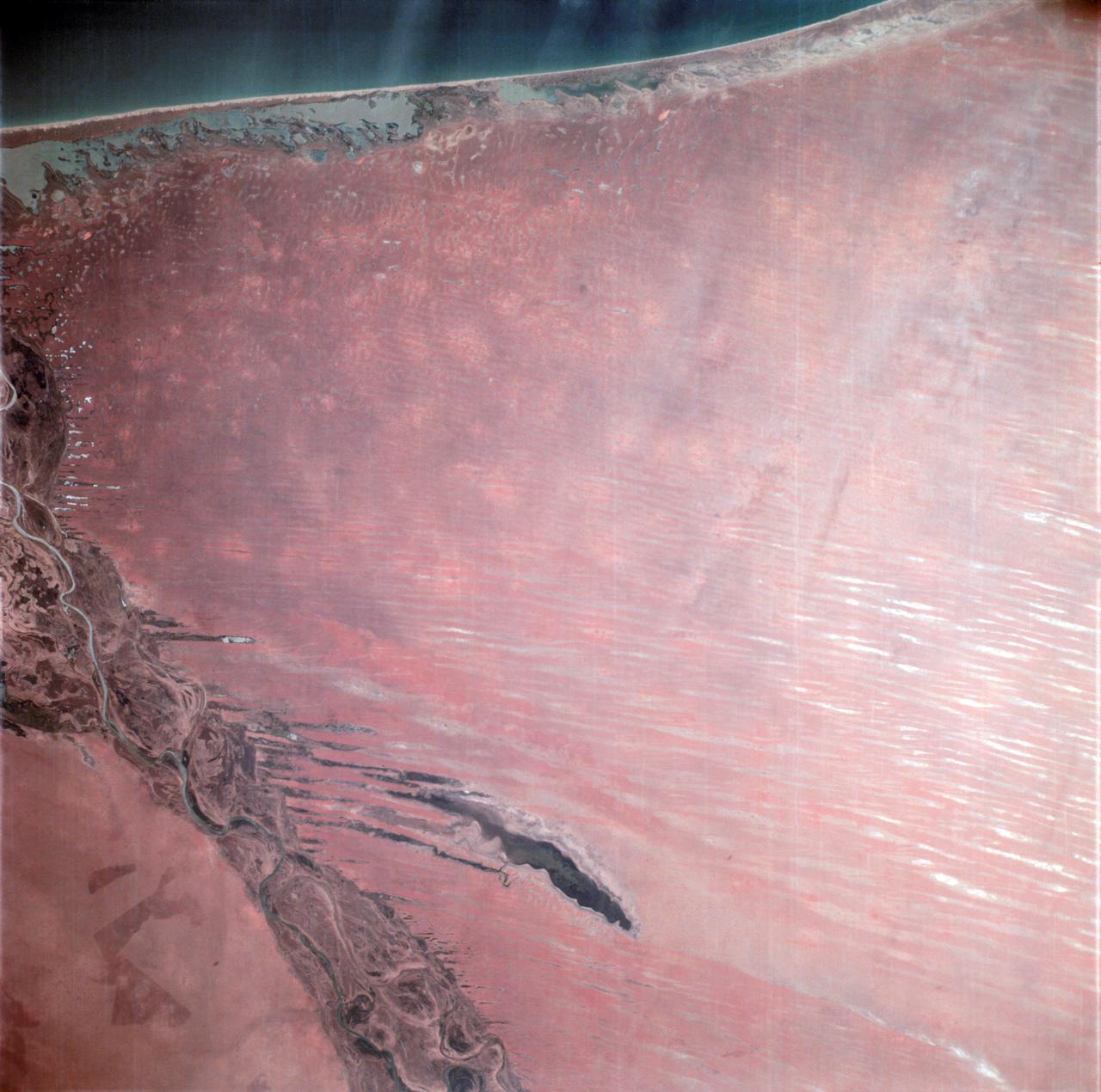
AS06-02-938 (6 April 1968) --- During the second revolution of the National Aeronautics and Space Administration's Apollo 6 spacecraft, this photograph of Senegal and Mauritania was taken at an altitude of 125 nautical miles. The predominant feature is the valley of the Senegal River (flowing to lower right). Lake Rkiz is to the left of the river in Mauritania. The Trarza Scrub Hills, a large area of elongated, fixed dunes, is in the lower left of the print. The land area seen in this photo is approximately 10,000 square miles or about the size of the state of Maryland. The photo was made one hour and fifty minutes after liftoff using a J.A. Maurer model 220G camera with Eastman Kodak SO-121 high resolution aerial Ektachrome film (exposure setting of f: 5.6 at 1/500 sec.).
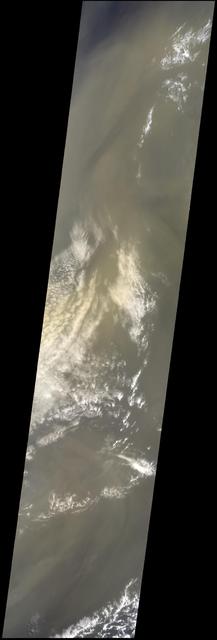
This image, captured by NASA Terra satellite on July 20, 2005, shows the dust cloud just off the west coast of Africa near Mauritania and Senegal.

iss074e0417599 (March 27, 2026) --- The West African coast, highlighting the nations of Senegal, The Gambia, and Guinea‑Bissau, transitions from arid plains to swampy coastal lowlands. The Gambia River (top center), which flows through the middle of the tiny nation of The Gambia, supports a wide array of wildlife including migratory birds, chimpanzees, hippos, crocodiles, and manatees. It is also important for transportation and agriculture throughout the Senegambia region. Credit: NASA
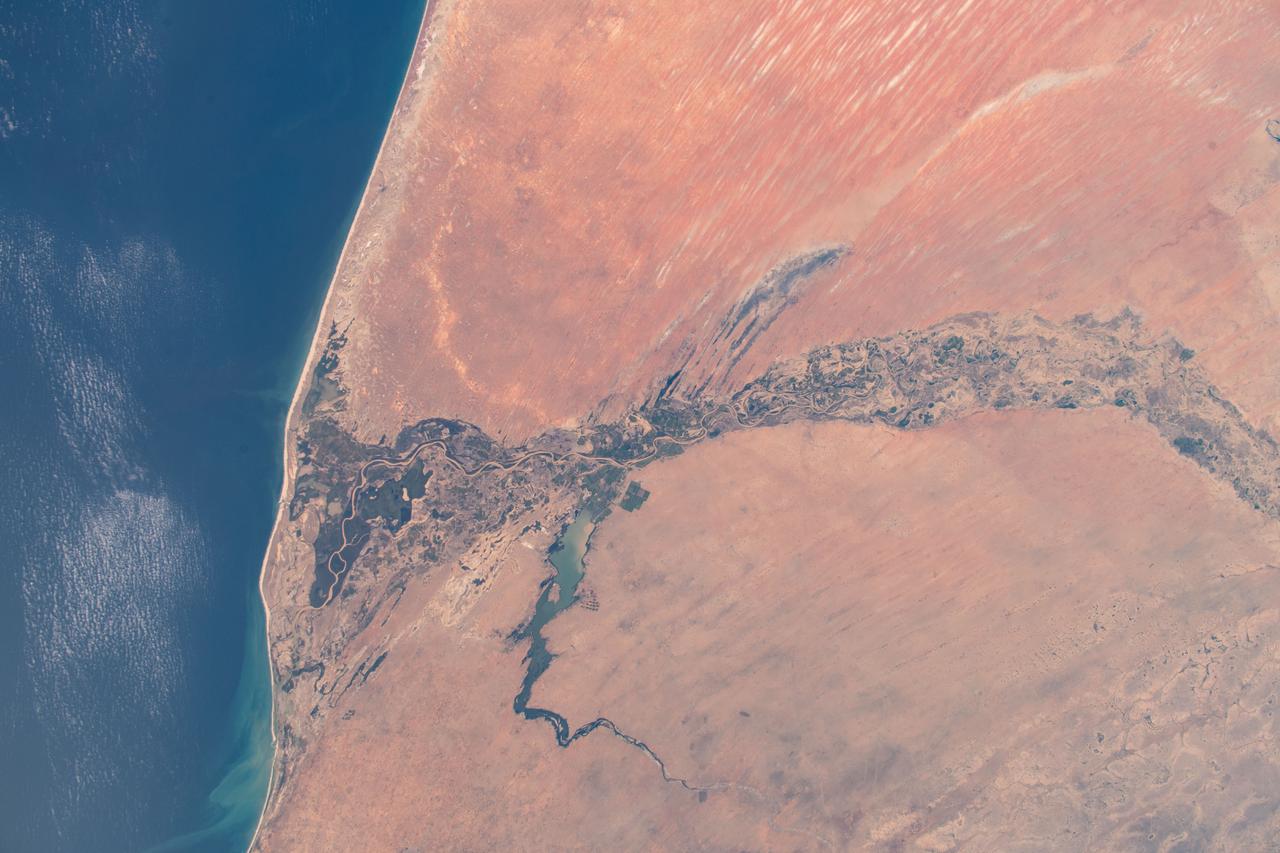
iss061e063348 (Nov. 29, 2019) -- Lake Guiers and the Senegal River separating the African nations of Senegal and Mauritania are pictured as the International Space Station orbited 257 miles in altitude off the Atlantic coast.
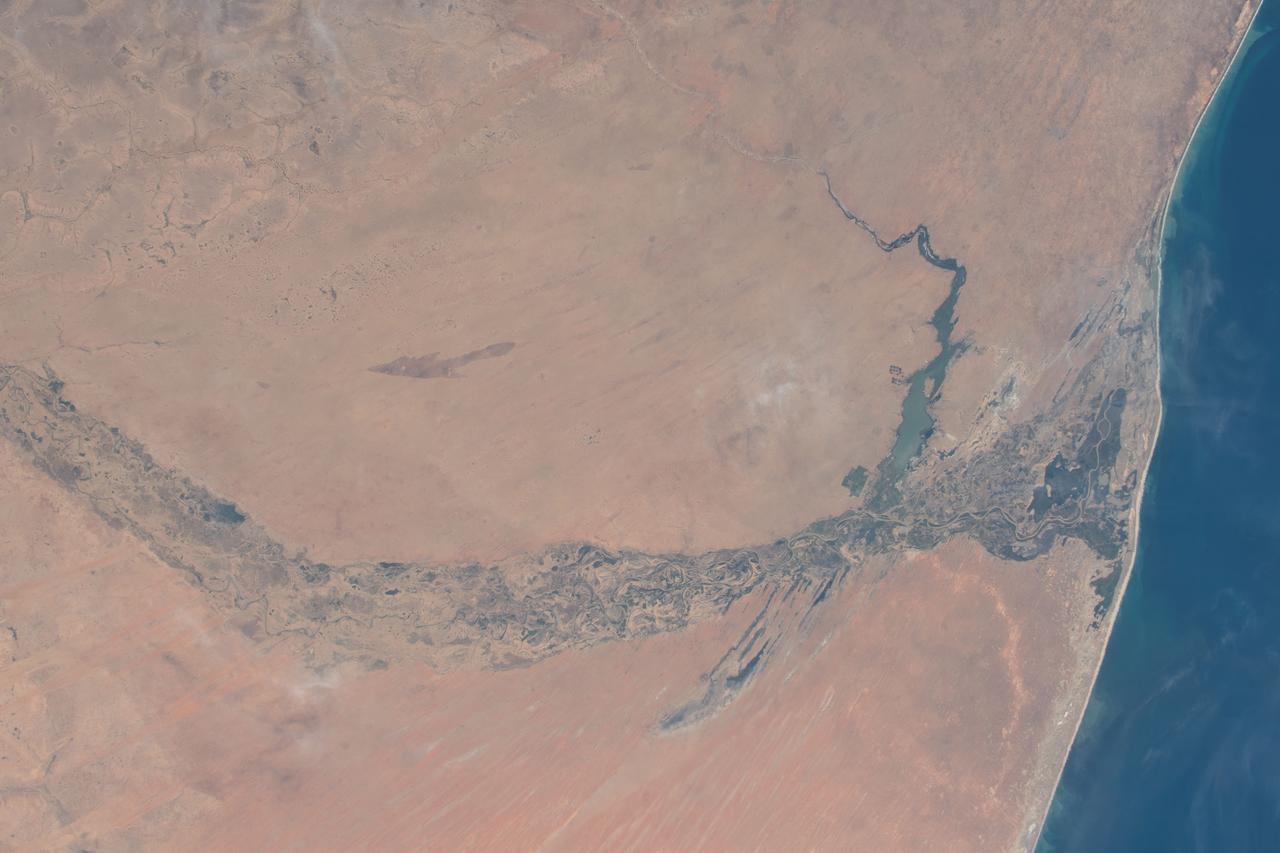
iss057e111395 (Dec. 4, 2018) --- The Senegal River valley that marks the border between the Atlantic coast nations of Senegal and Mauritania is pictured as the International Space Station orbited 252 miles above the African continent.
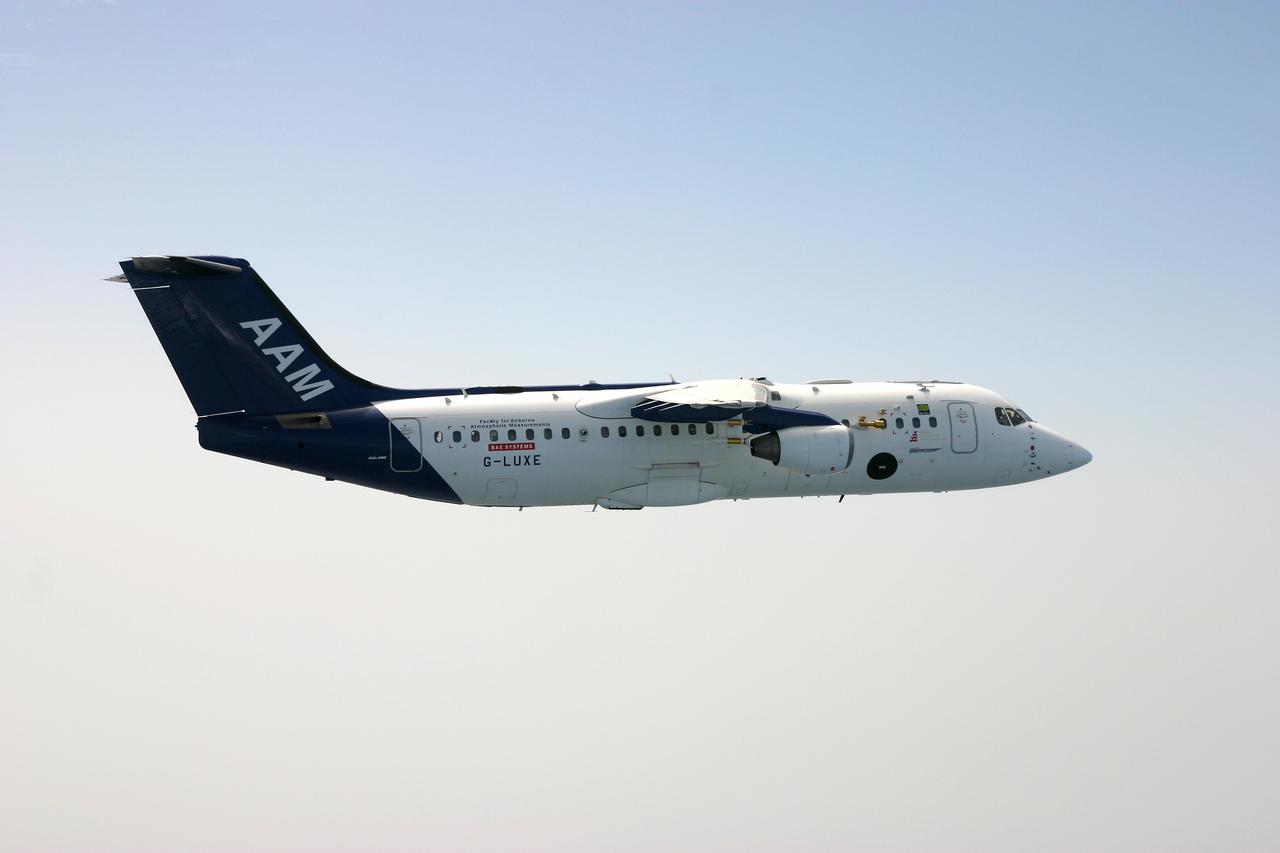
DC-8 NAMMA MISSION TO CAPE VERDE, AFRICA: U.K.'s Facility for Airborne Atmospheric Measurements (FAAM) aircraft, a BAE-146, over the Eastern Atlantic Ocean off the coast of Senegal, Africa
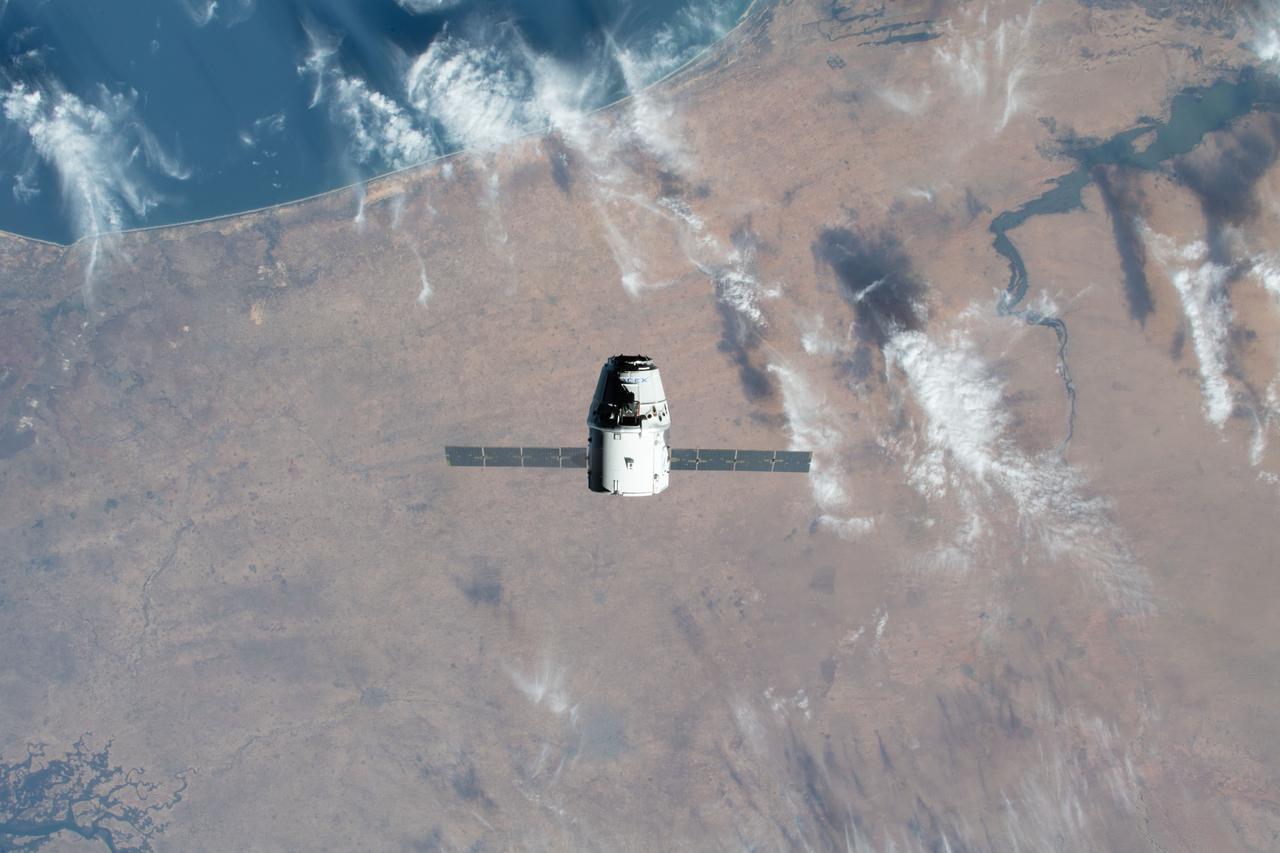
iss062e085644 (March 9, 2020) --- The SpaceX Dragon resupply ship is pictured approaching the International Space Station as both spacecraft were soaring 264 miles above the African nations of Mauritania and Senegal.

NASA Monsoon Multidisciplinary analysis (NAMMA) deployment, Sal Island, Cape Verde Africia DC-8 NAMMA MISSION TO CAPE VERDE, AFRICA: NASA Ames photographer Eric James videotapes the formaton flight with the U.K.'s FAAM aircrft BAE-146 off the coast of Senegal, Africa.
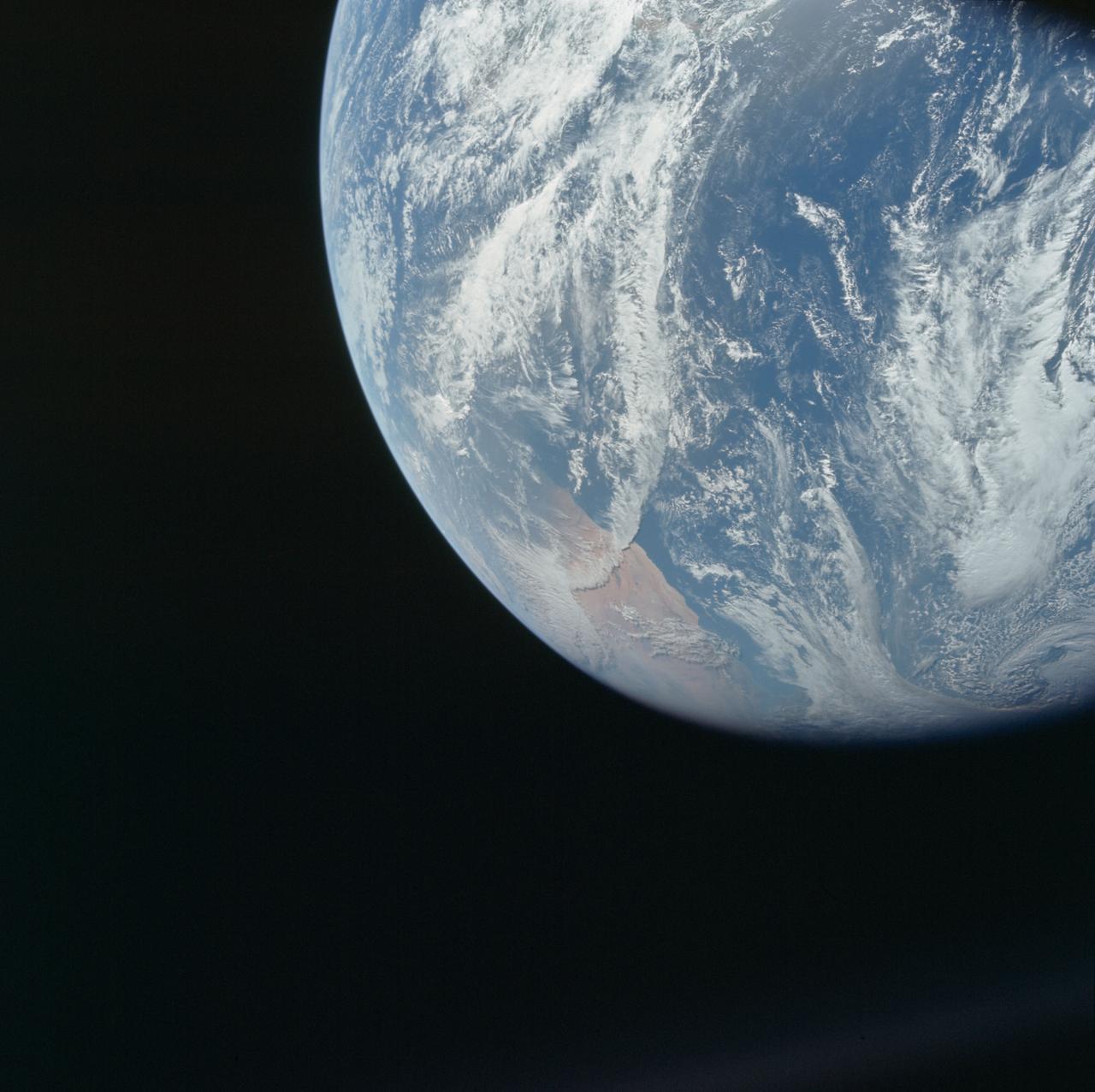
AS08-16-2588 (21-27 Dec. 1968) --- Both sides of the Atlantic Ocean are visible in this view from Apollo 8 spacecraft. (Hold picture with Earth at bottom left). The large, most prominent land mass is the bulge of West Africa. The portion of Africa near the equator is dark and cloudy, but the more northerly portions are clear, showing the prominent cape at Dakar and the Senegal River in Senegal; Cap Blanc; the Adrar Plateau in Mauretania; the wide expanse of desert in Algeria and Spanish Sahara; and the far edge, the Atlas and Anti-Atlas Mountains in Morocco. Clouds cover the eastern coast of South America, southward from Surinam and Guyana to near the city of Salvador, Brazil. The view was photographed following trans-lunar insertion.

iss067e006358 (April 9, 2022) --- The SpaceX Dragon Endeavour crew ship carrying four Axiom Mission 1 astronauts approaches the International Space Station less than a day after launching from NASA's Kennedy Space Center in Florida. Both spacecraft were orbiting 257 miles above the Atlantic Ocean northwest of the island country of The Republic of Cabo Verde, which is off the coast of Dakar, Senegal, in Africa.
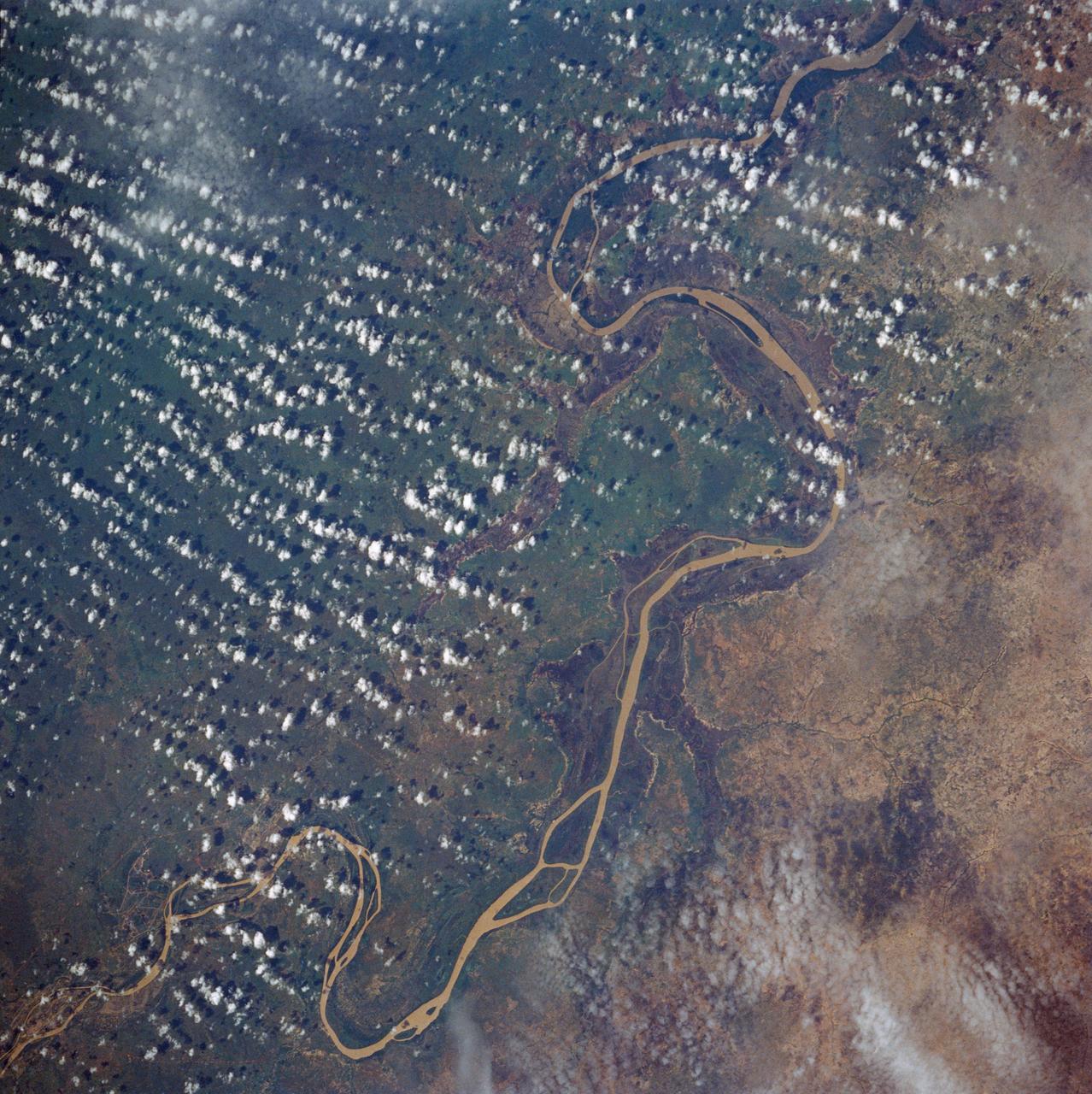
41D-34-099 (30 Aug-5 Sept 1984) --- The Gambia River, from Georgetown in the upper right corner of the photograph downstream to Mansa Konko, where it becomes an estuary about 60 miles above Banjul, the capital of The Gambia. The river is heavily silted from rain originating in the highlands of Guinea. This accounts for its bronze color as it passes from forest to drier savannah en route to the Sahara and across the nation of Senegal in west Africa. The Gambia itself is a long, narrow nation which follows the river for about 200 miles.

ISS016-E-027426 (5 Feb. 2008) --- Cumulonimbus Cloud over Africa is featured in this image photographed by an Expedition 16 crewmember on the International Space Station. Deemed by many meteorologists as one of the most impressive of cloud formations, cumulonimbus (from the Latin for "puffy" and "dark") clouds form due to vigorous convection of warm and moist unstable air. Surface air warmed by the Sun-heated ground surface rises, and if sufficient atmospheric moisture is present, water droplets will condense as the air mass encounters cooler air at higher altitudes. The air mass itself also expands and cools as it rises due to decreasing atmospheric pressure, a process known as adiabatic cooling. This type of convection is common in tropical latitudes year-round and during the summer season at higher latitudes. As water in the rising air mass condenses and changes from a gaseous to a liquid state, it releases energy to its surroundings, further heating the surrounding air and leading to more convection and rising of the cloud mass to higher altitudes. This leads to the characteristic vertical "towers" associated with cumulonimbus clouds, an excellent example of which is visible in this image (right). If enough moisture is present to condense and continue heating the cloud mass through several convective cycles, a tower can rise to altitudes of approximately 10 kilometers at high latitudes to 20 kilometers in the tropics -- before encountering a region of the atmosphere known as the tropopause. The tropopause is characterized by a strong temperature inversion where the atmosphere is dryer and no longer cools with altitude. This halts further vertical motion of the cloud mass, and causes flattening and spreading of the cloud tops into an anvil-shaped cloud as illustrated by this oblique photograph. The view direction is at an angle from the vertical, rather than straight "down" towards the Earth's surface. The image, photographed while the International Space Station was passing over western Africa near the Senegal-Mali border, shows a fully-formed anvil cloud with numerous smaller cumulonimbus towers rising near it. The high energetics of these storm systems typically make them hazardous due to associated heavy precipitation, lightning, high wind speeds and possible tornadoes.
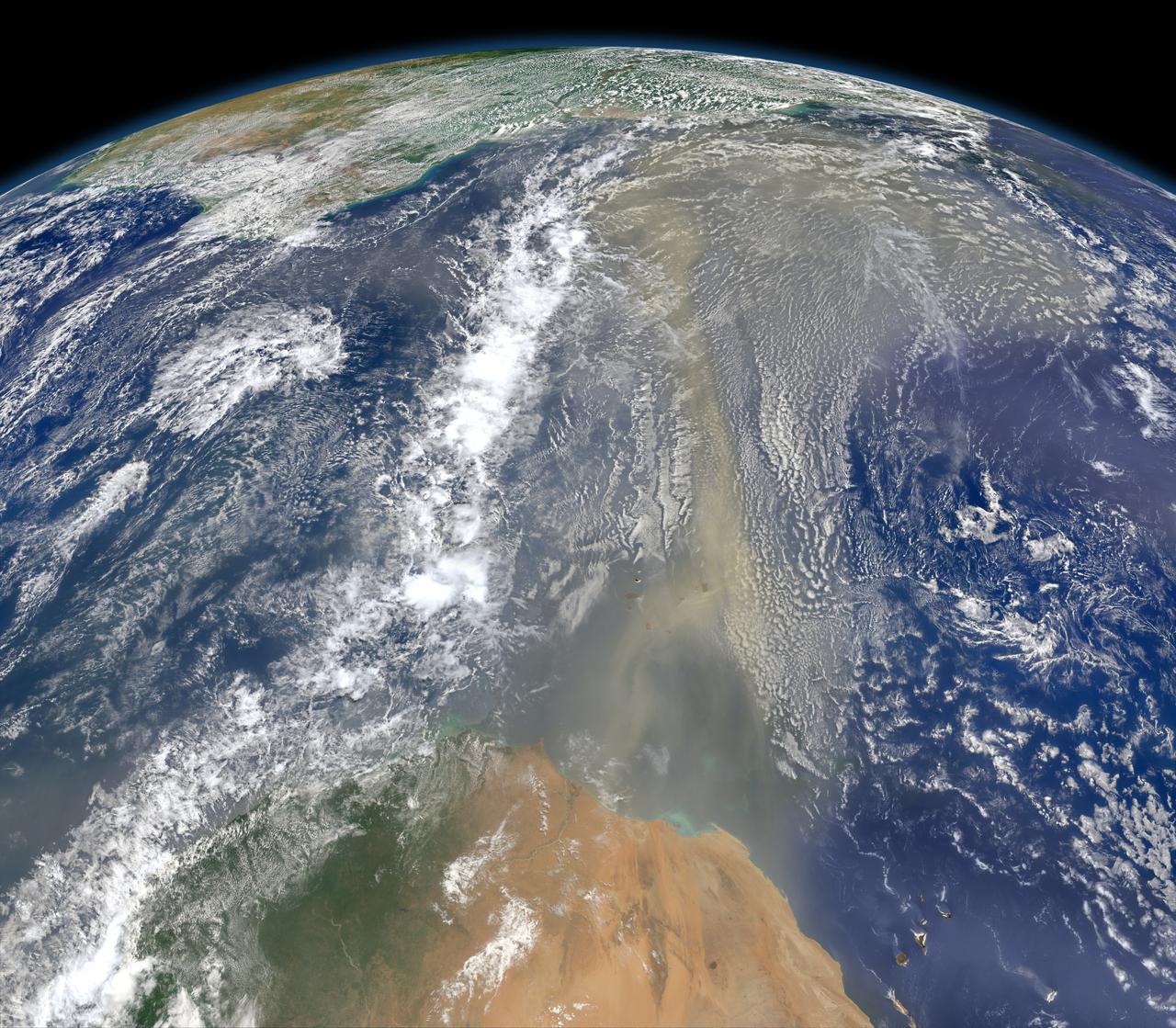
A piece of Africa—actually lots of them—began to arrive in the Americas in June 2014. On June 23, a lengthy river of dust from western Africa began to push across the Atlantic Ocean on easterly winds. A week later, the influx of dust was affecting air quality as far away as the southeastern United States. This composite image, made with data from the Visible Infrared Imaging Radiometer Suite (VIIRS) on Suomi NPP, shows dust heading west toward South America and the Gulf of Mexico on June 25, 2014. The dust flowed roughly parallel to a line of clouds in the intertropical convergence zone, an area near the equator where the trade winds come together and rain and clouds are common. In imagery captured by the Moderate Resolution Imaging Spectroradiometer (MODIS), the dust appeared to be streaming from Mauritania, Senegal, and Western Sahara, though some of it may have originated in countries farther to the east. Saharan dust has a range of impacts on ecosystems downwind. Each year, dust events like the one pictured here deliver about 40 million tons of dust from the Sahara to the Amazon River Basin. The minerals in the dust replenish nutrients in rainforest soils, which are continually depleted by drenching, tropical rains. Research focused on peat soils in the Everglades show that African dust has been arriving regularly in South Florida for thousands of years as well. In some instances, the impacts are harmful. Infusion of Saharan dust, for instance, can have a negative impact on air quality in the Americas. And scientists have linked African dust to outbreaks of certain types of toxic algal blooms in the Gulf of Mexico and southern Florida. Read more: <a href="http://1.usa.gov/1snkzmS" rel="nofollow">1.usa.gov/1snkzmS</a> NASA images by Norman Kuring, NASA’s Ocean Color web. Caption by Adam Voiland. Credit: <b><a href="http://www.earthobservatory.nasa.gov/" rel="nofollow"> NASA Earth Observatory</a></b> <b><a href="http://www.nasa.gov/audience/formedia/features/MP_Photo_Guidelines.html" rel="nofollow">NASA image use policy.</a></b> <b><a href="http://www.nasa.gov/centers/goddard/home/index.html" rel="nofollow">NASA Goddard Space Flight Center</a></b> enables NASA’s mission through four scientific endeavors: Earth Science, Heliophysics, Solar System Exploration, and Astrophysics. Goddard plays a leading role in NASA’s accomplishments by contributing compelling scientific knowledge to advance the Agency’s mission. <b>Follow us on <a href="http://twitter.com/NASAGoddardPix" rel="nofollow">Twitter</a></b> <b>Like us on <a href="http://www.facebook.com/pages/Greenbelt-MD/NASA-Goddard/395013845897?ref=tsd" rel="nofollow">Facebook</a></b> <b>Find us on <a href="http://instagram.com/nasagoddard?vm=grid" rel="nofollow">Instagram</a></b>