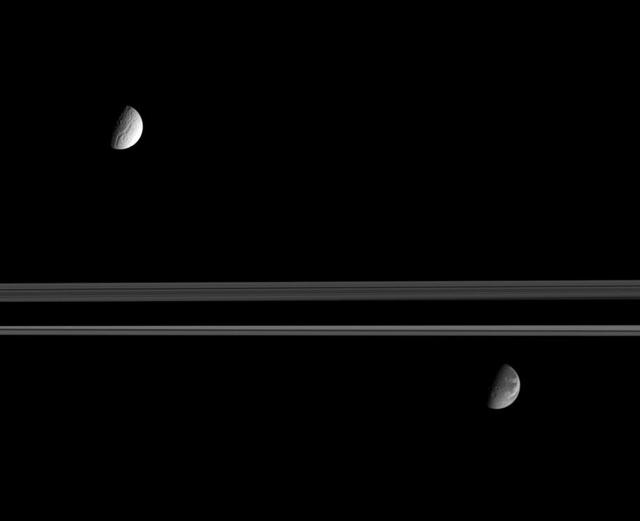
Moons with Separate Paths
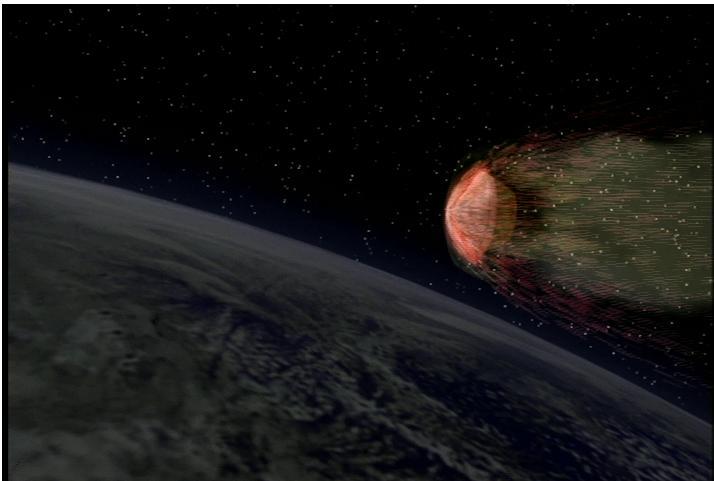
This animation shows the return capsule separating from the Stardust spacecraft.
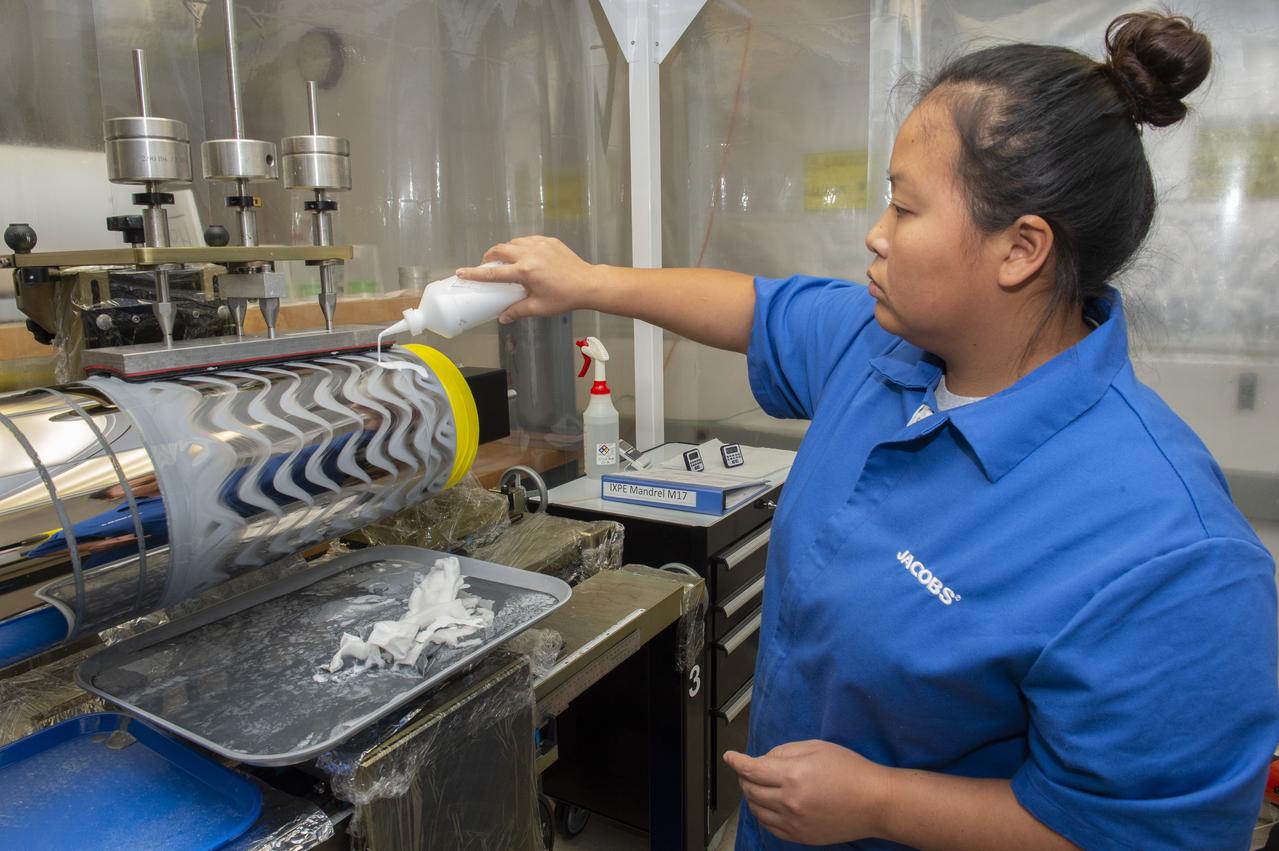
X-RAY MIRROR REPLICATION AND SHELL SEPARATION PROCESS: CHET SPEEGLE, JOHN HOOD, KEITH BOWEN, CARL WIDRIG, RATANA MEEKHAM, AMY MEEKHAM
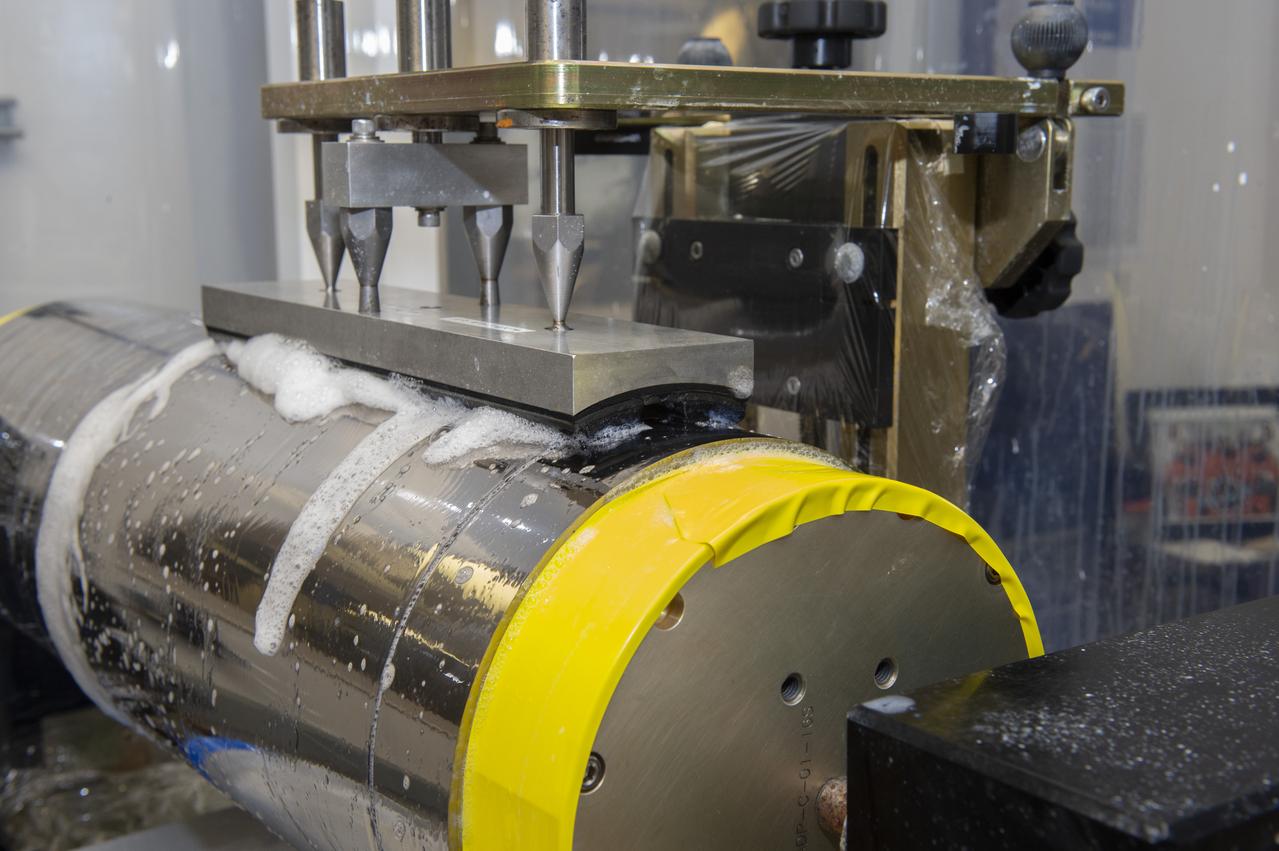
X-RAY MIRROR REPLICATION AND SHELL SEPARATION PROCESS: CHET SPEEGLE, JOHN HOOD, KEITH BOWEN, CARL WIDRIG, RATANA MEEKHAM, AMY MEEKHAM
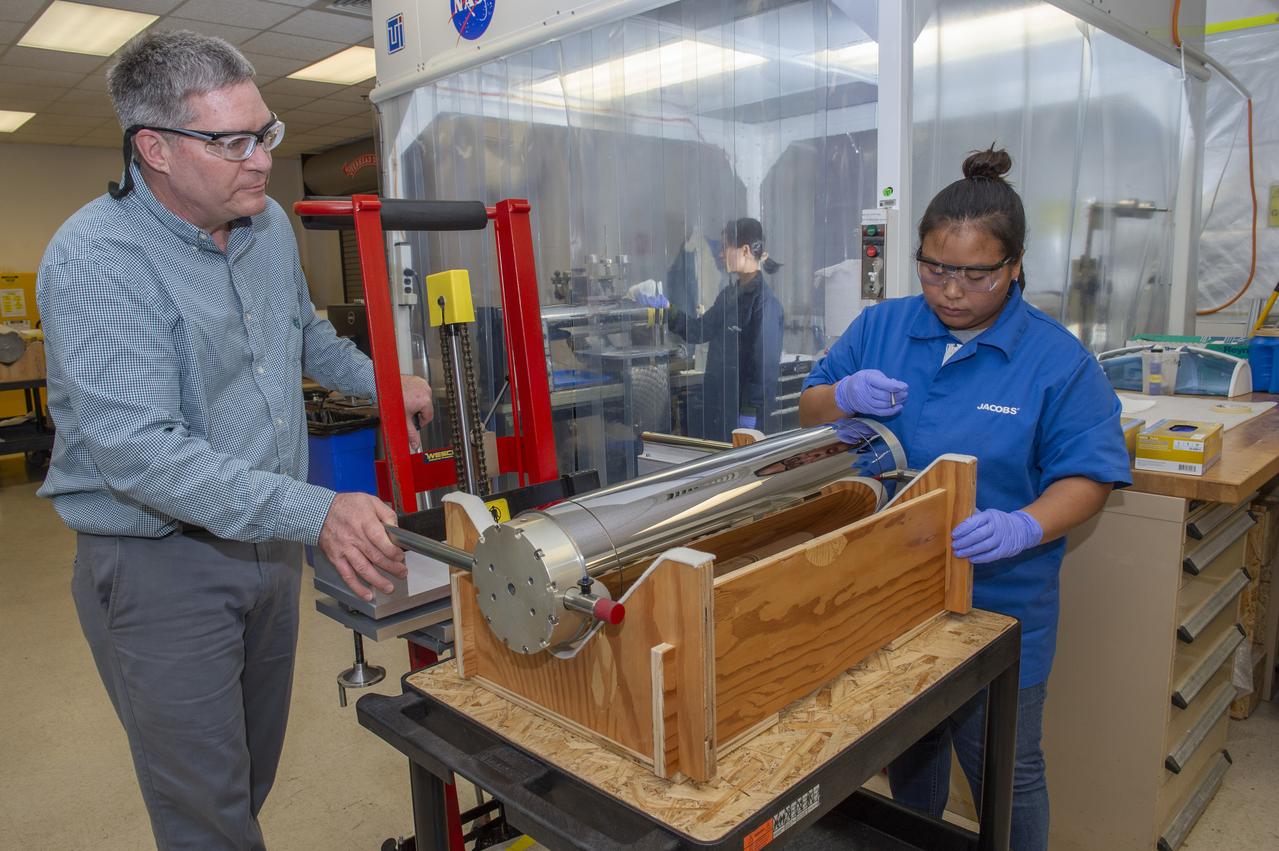
X-RAY MIRROR REPLICATION AND SHELL SEPARATION PROCESS: CHET SPEEGLE, JOHN HOOD, KEITH BOWEN, CARL WIDRIG, RATANA MEEKHAM, AMY MEEKHAM
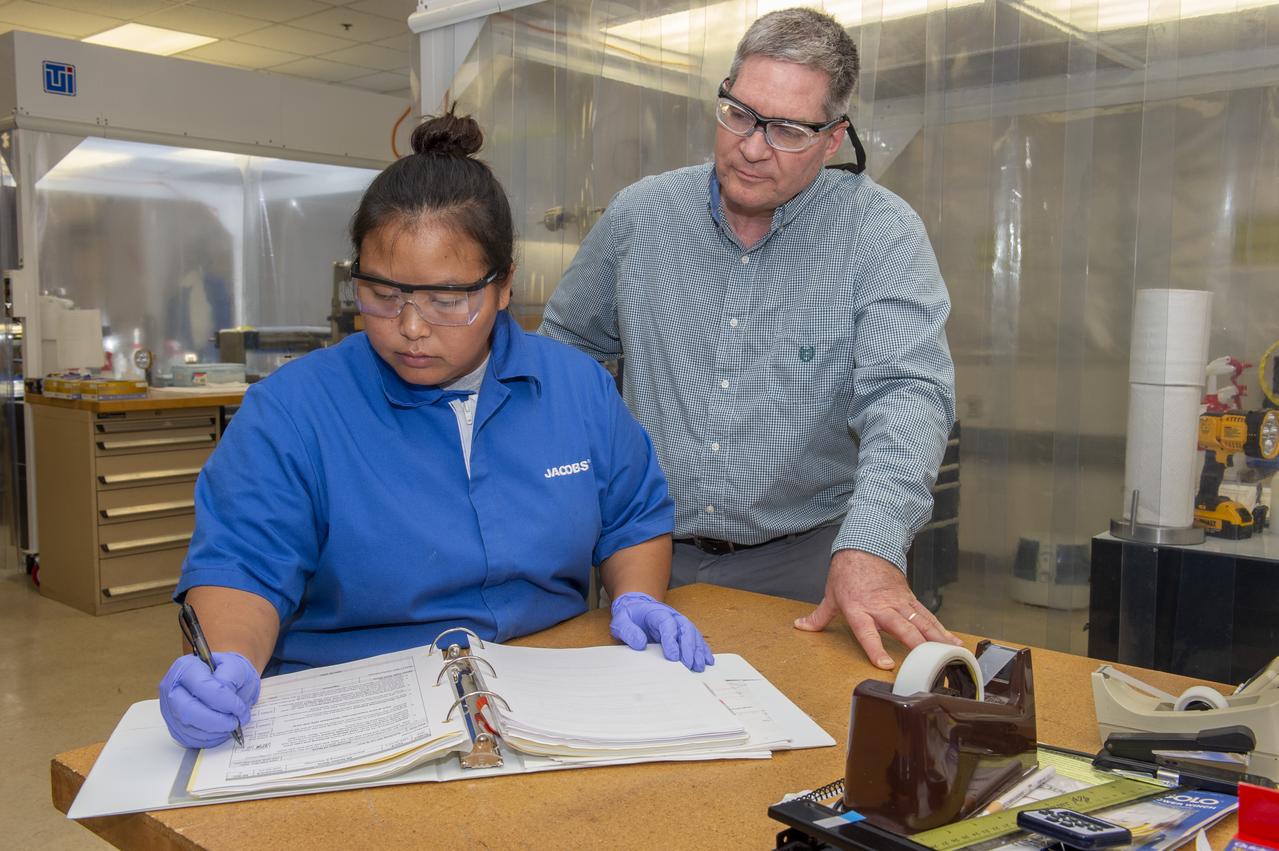
X-RAY MIRROR REPLICATION AND SHELL SEPARATION PROCESS: CHET SPEEGLE, JOHN HOOD, KEITH BOWEN, CARL WIDRIG, RATANA MEEKHAM, AMY MEEKHAM
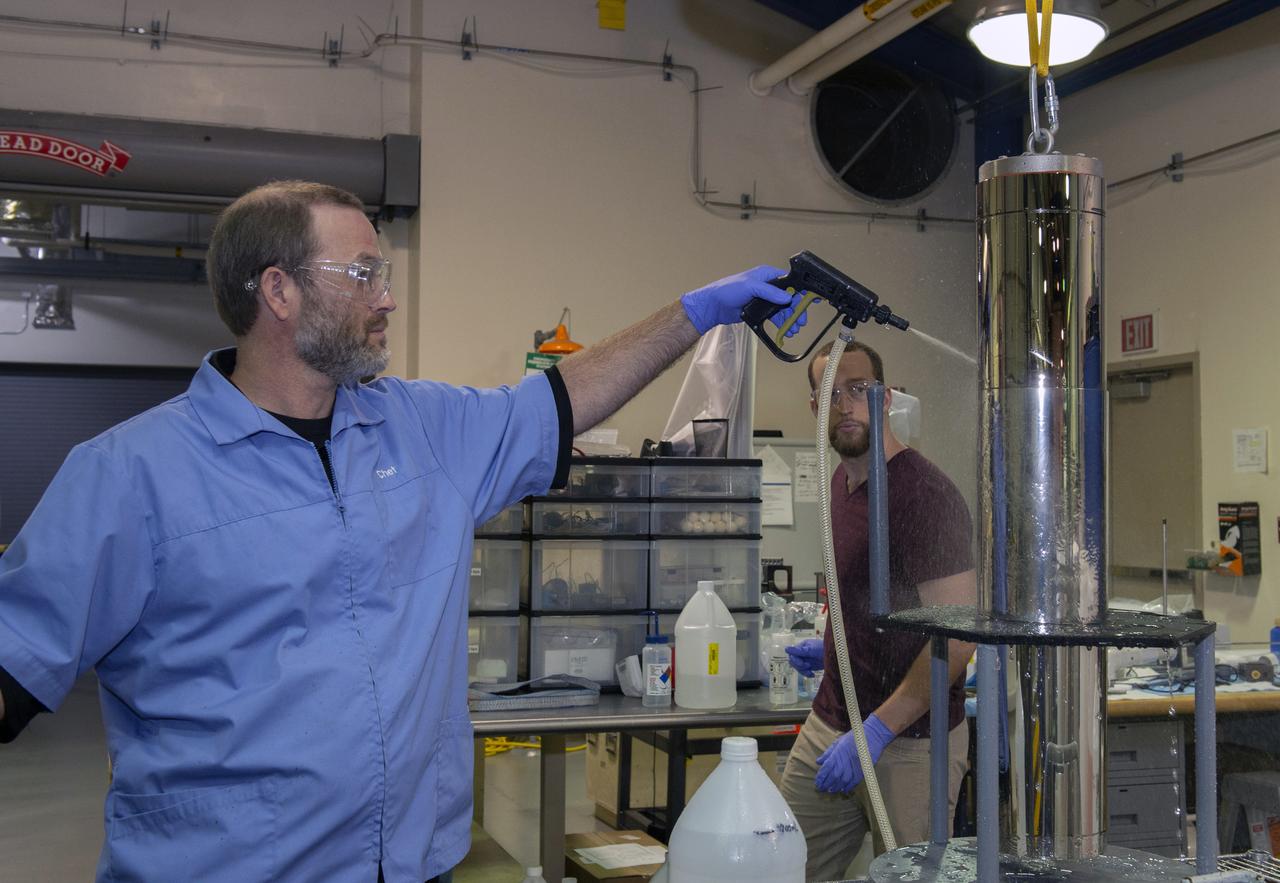
X-RAY MIRROR REPLICATION AND SHELL SEPARATION PROCESS: CHET SPEEGLE, JOHN HOOD, KEITH BOWEN, CARL WIDRIG, RATANA MEEKHAM, AMY MEEKHAM
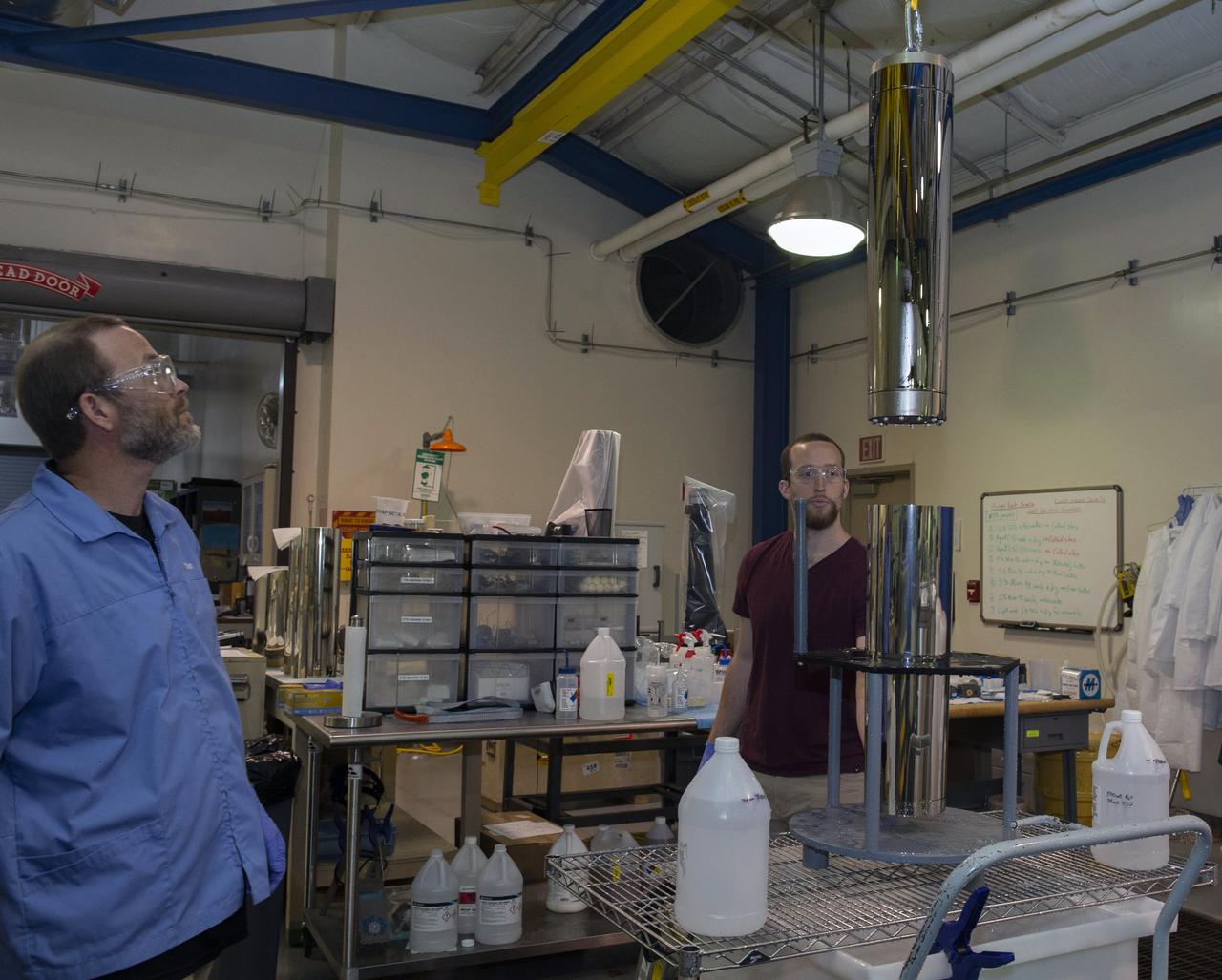
X-RAY MIRROR REPLICATION AND SHELL SEPARATION PROCESS: CHET SPEEGLE, JOHN HOOD, KEITH BOWEN, CARL WIDRIG, RATANA MEEKHAM, AMY MEEKHAM
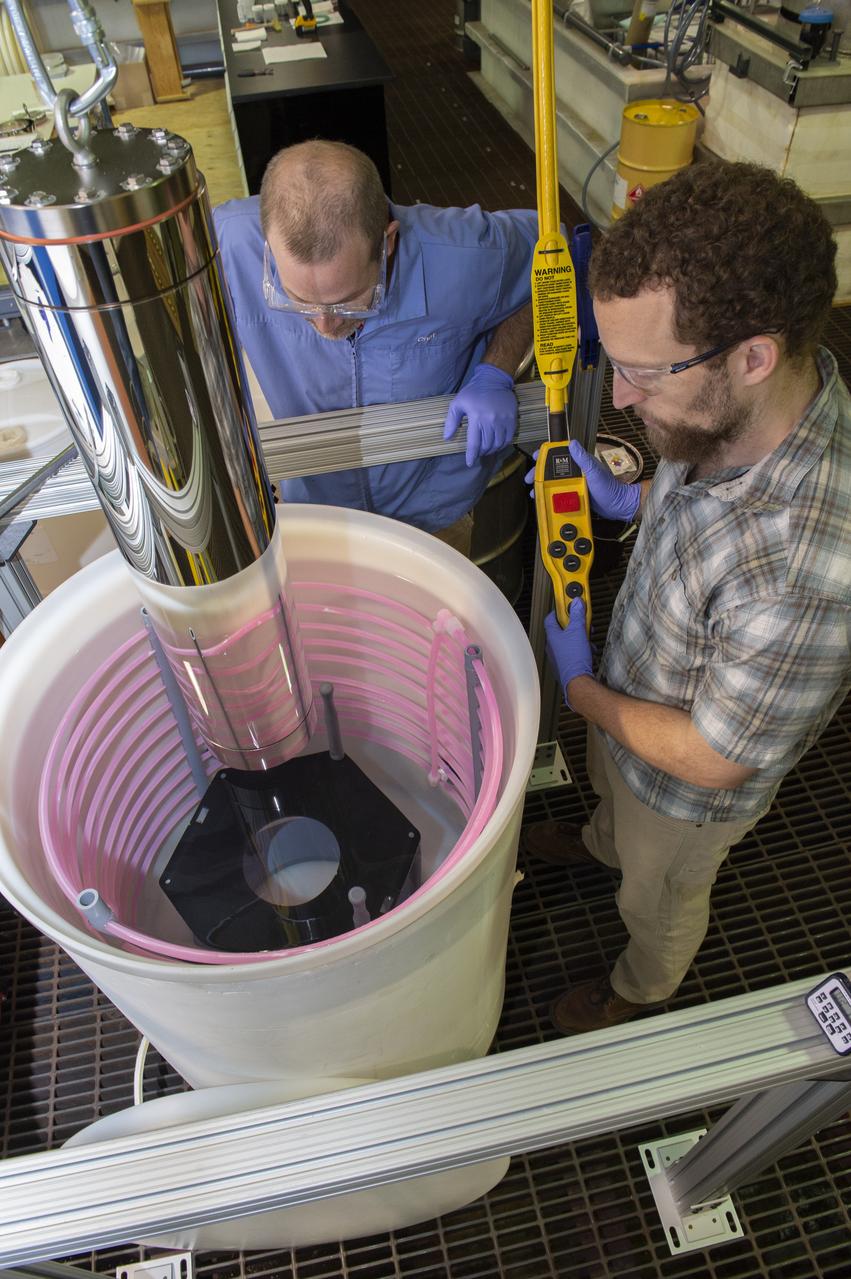
X-RAY MIRROR REPLICATION AND SHELL SEPARATION PROCESS: CHET SPEEGLE, JOHN HOOD, KEITH BOWEN, CARL WIDRIG, RATANA MEEKHAM, AMY MEEKHAM
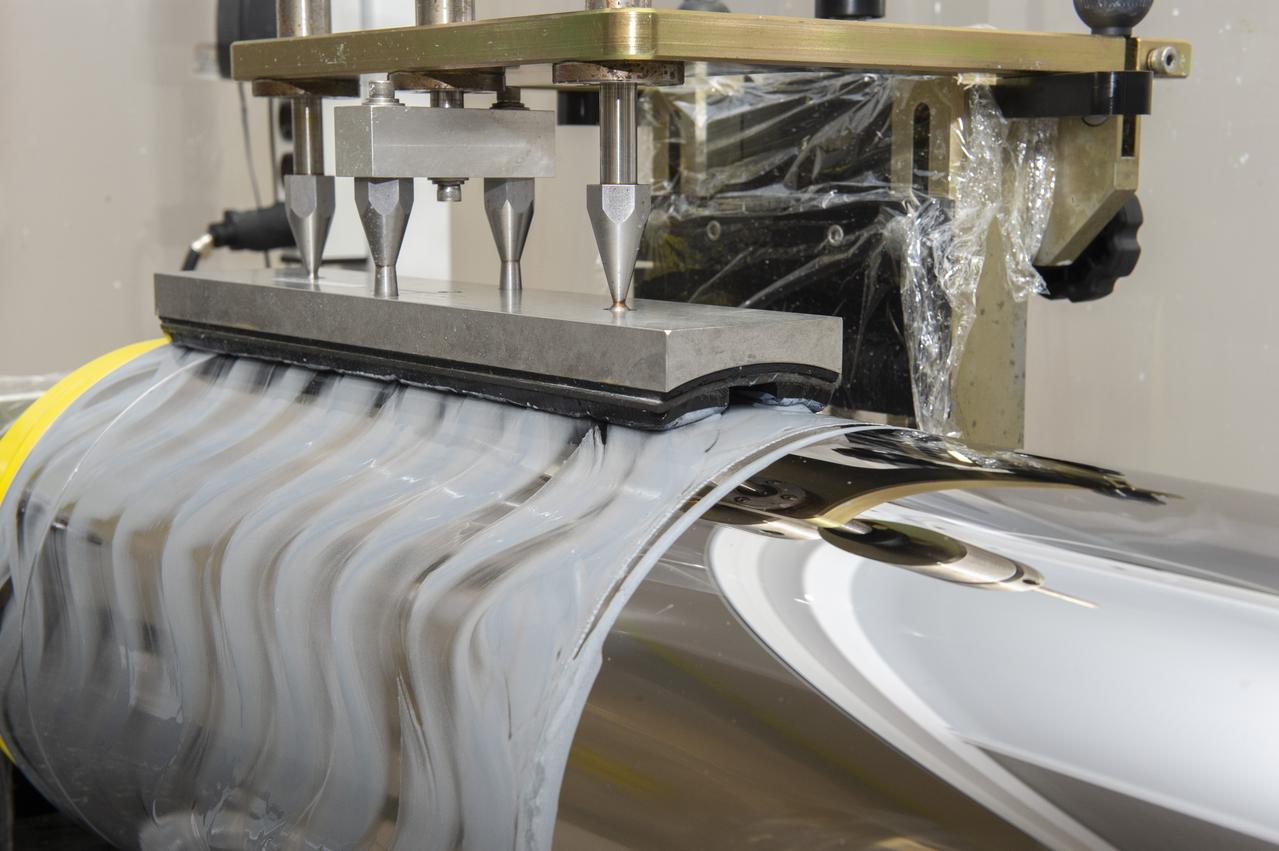
X-RAY MIRROR REPLICATION AND SHELL SEPARATION PROCESS: CHET SPEEGLE, JOHN HOOD, KEITH BOWEN, CARL WIDRIG, RATANA MEEKHAM, AMY MEEKHAM
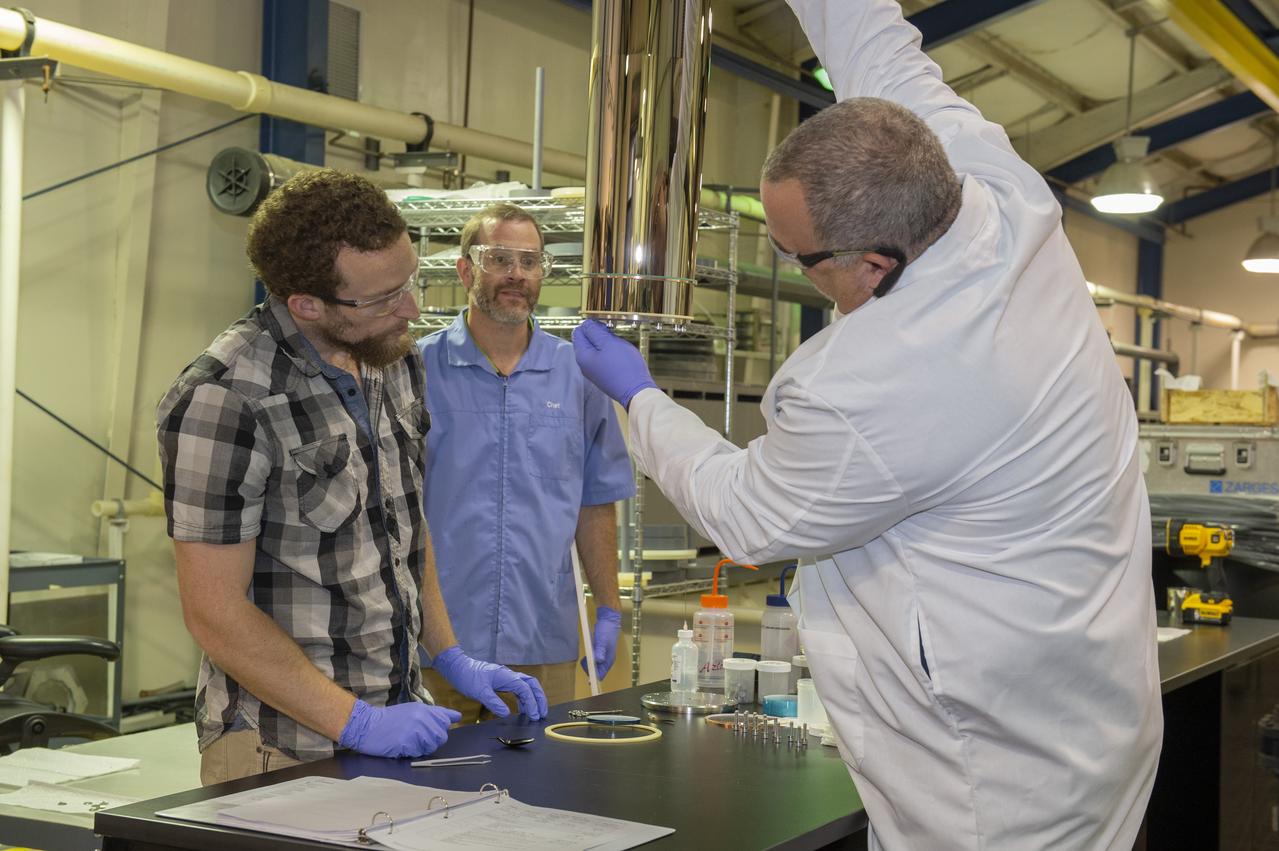
X-RAY MIRROR REPLICATION AND SHELL SEPARATION PROCESS: CHET SPEEGLE, JOHN HOOD, KEITH BOWEN, CARL WIDRIG, RATANA MEEKHAM, AMY MEEKHAM
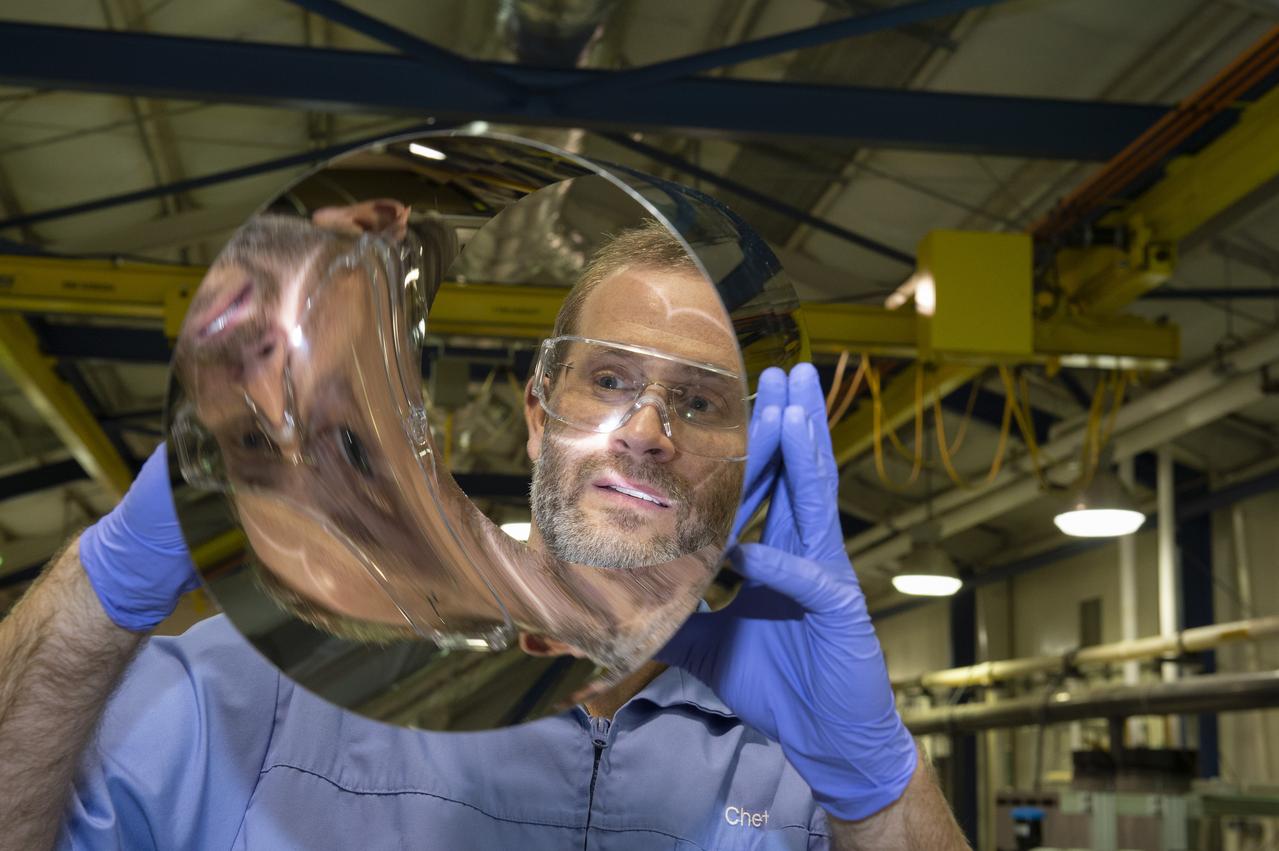
X-RAY MIRROR REPLICATION AND SHELL SEPARATION PROCESS: CHET SPEEGLE, JOHN HOOD, KEITH BOWEN, CARL WIDRIG, RATANA MEEKHAM, AMY MEEKHAM
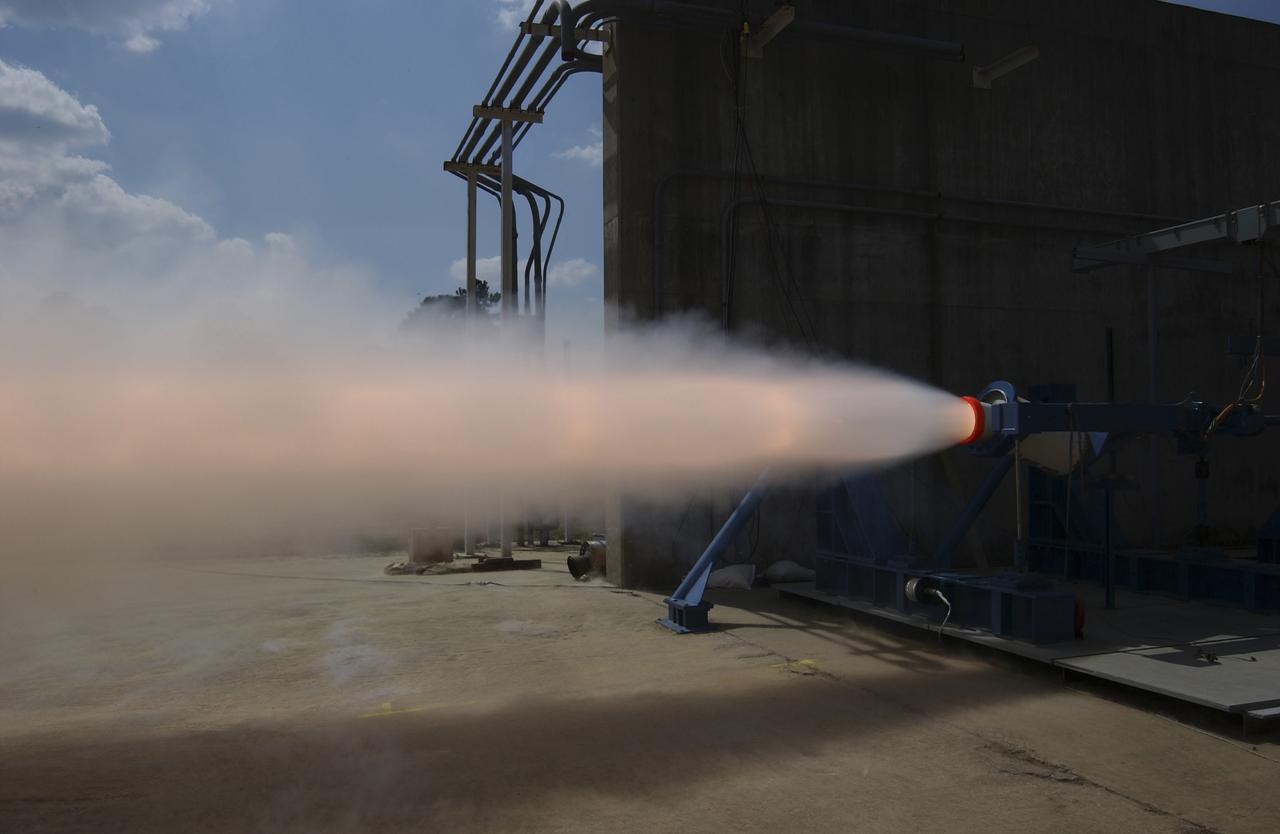
This photograph depicts a hot fire test of the Shuttle Booster Separation Motor (BSM) at the Marshall Space Flight Center (MSFC) test stand 116. The objective of the test was to test the aft heat seal in flight configuration. The function of the motor is to separate the Shuttle vehicle from the boosters that carry it into space.
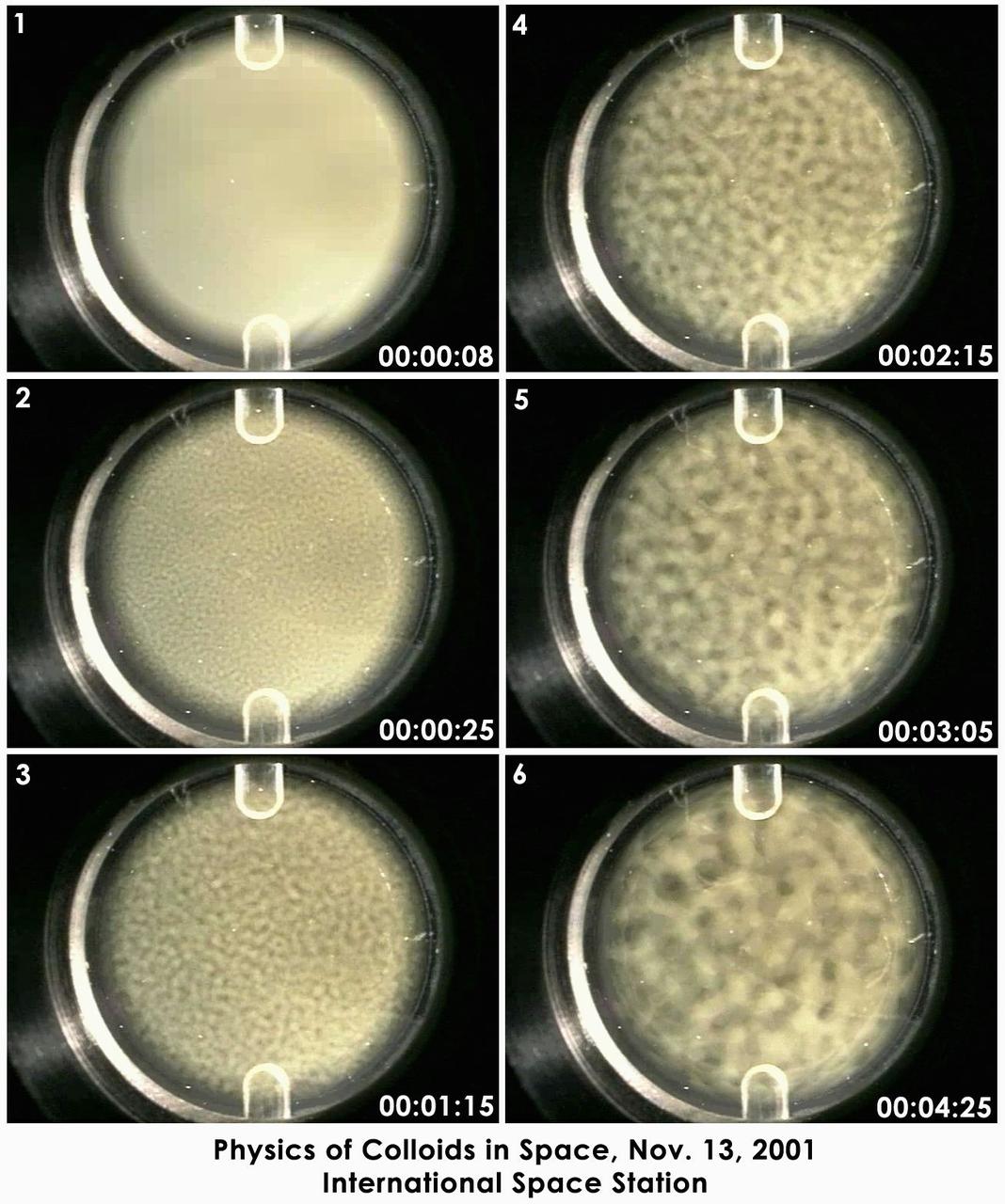
Still photographs taken over 16 hours on Nov. 13, 2001, on the International Space Station have been condensed into a few seconds to show the de-mixing -- or phase separation -- process studied by the Experiment on Physics of Colloids in Space. Commanded from the ground, dozens of similar tests have been conducted since the experiment arrived on ISS in 2000. The sample is a mix of polymethylmethacrylate (PMMA or acrylic) colloids, polystyrene polymers and solvents. The circular area is 2 cm (0.8 in.) in diameter. The phase separation process occurs spontaneously after the sample is mechanically mixed. The evolving lighter regions are rich in colloid and have the structure of a liquid. The dark regions are poor in colloids and have the structure of a gas. This behavior carnot be observed on Earth because gravity causes the particles to fall out of solution faster than the phase separation can occur. While similar to a gas-liquid phase transition, the growth rate observed in this test is different from any atomic gas-liquid or liquid-liquid phase transition ever measured experimentally. Ultimately, the sample separates into colloid-poor and colloid-rich areas, just as oil and vinegar separate. The fundamental science of de-mixing in this colloid-polymer sample is the same found in the annealing of metal alloys and plastic polymer blends. Improving the understanding of this process may lead to improving processing of these materials on Earth.
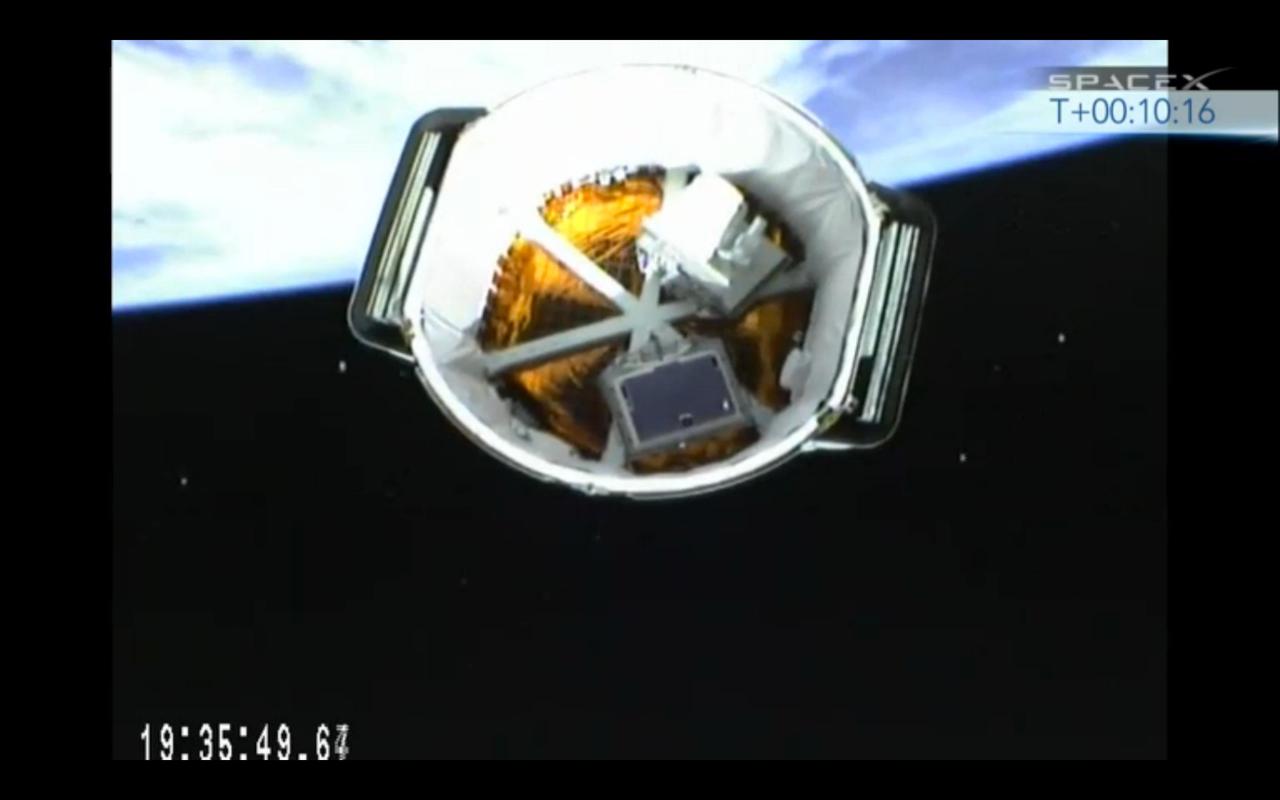
NASA Optical PAyload for Lasercomm Science OPALS is seen in the SpaceX Dragon trunk following second stage separation of the SpaceX Falcon 9 rocket on April 18, 2014.
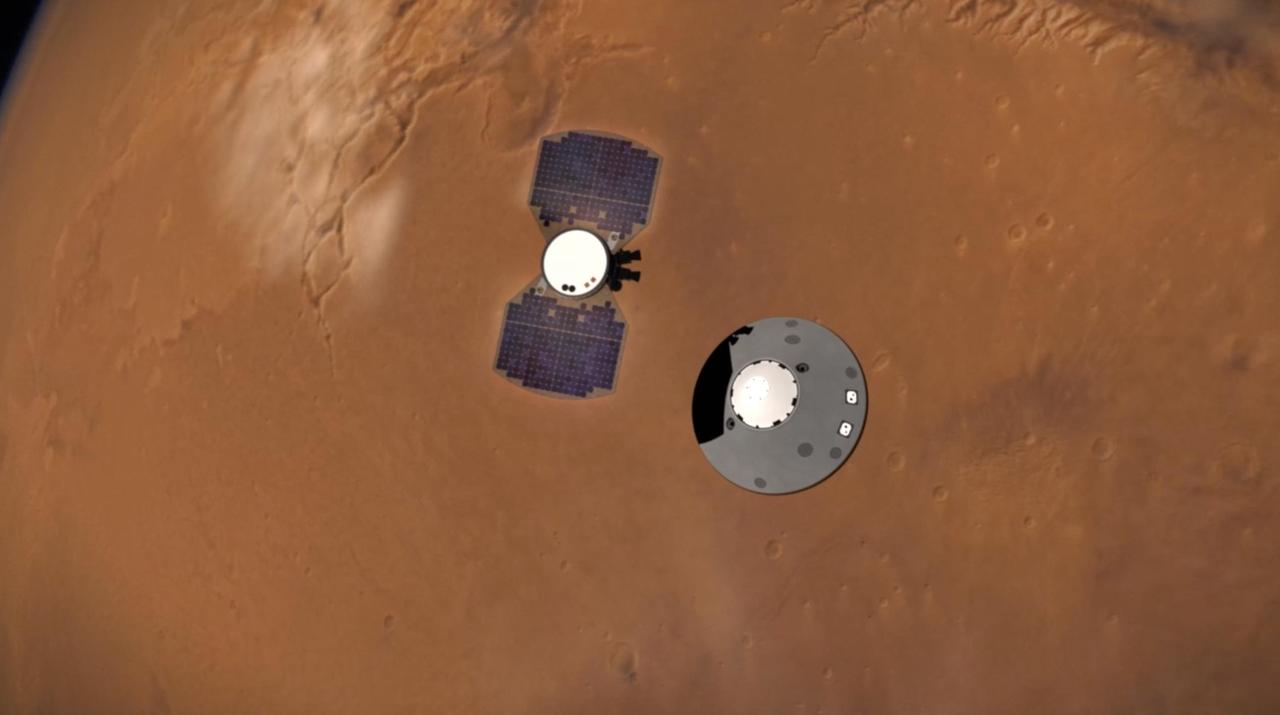
This illustration shows NASA's InSight lander separating from its cruise stage as it prepares to enter Mars' atmosphere. The InSight lander is on the right, tucked inside a protective heat shield and back shell. The cruise stage with solar panels is on the left. https://photojournal.jpl.nasa.gov/catalog/PIA22828
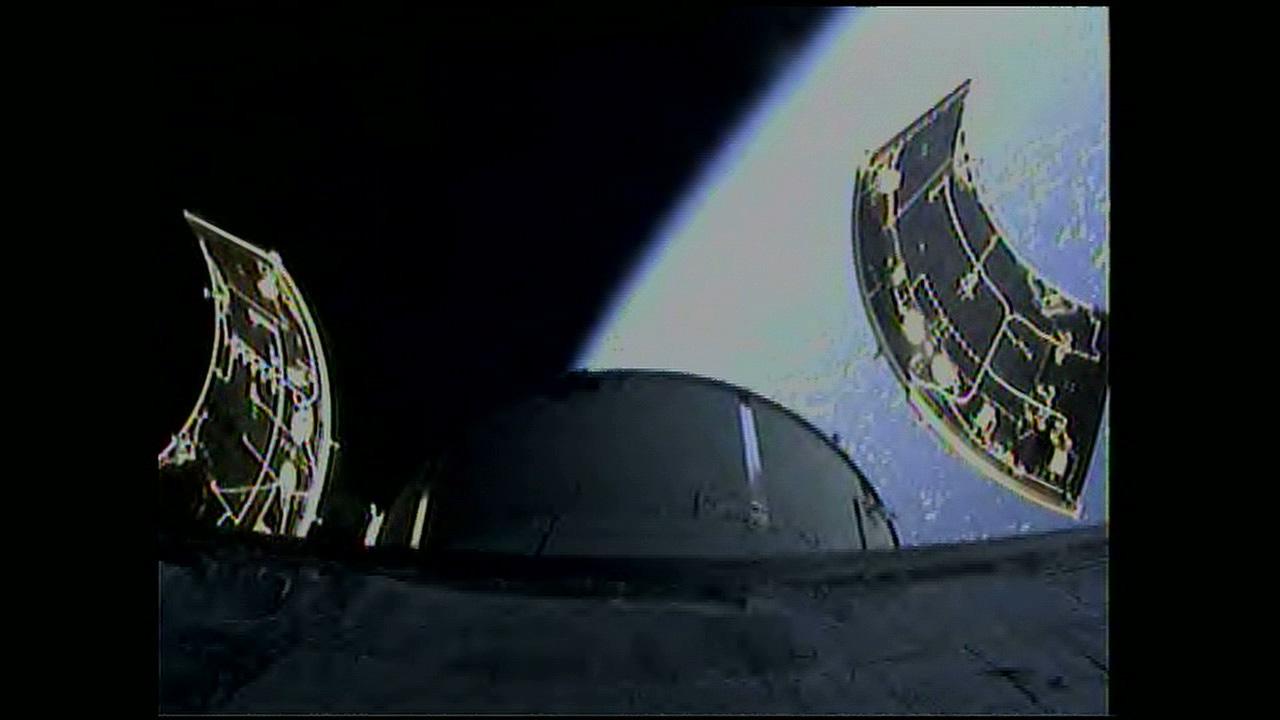
An onboard camera captures separation of the three 13 by 14-foot Orion service module fairings following lift off the Delta IV Heavy rocket from Space Launch Complex 37 at Cape Canaveral Air Force Station in Florida on Dec. 5, 2014. Exploration Flight Test-1 (EFT-1) also will validate systems such as Orion’s parachutes, avionics and attitude control, and demonstrate major separation events such as the launch abort system jettison and the service module fairing separation. Part of Batch image transfer from Flickr.
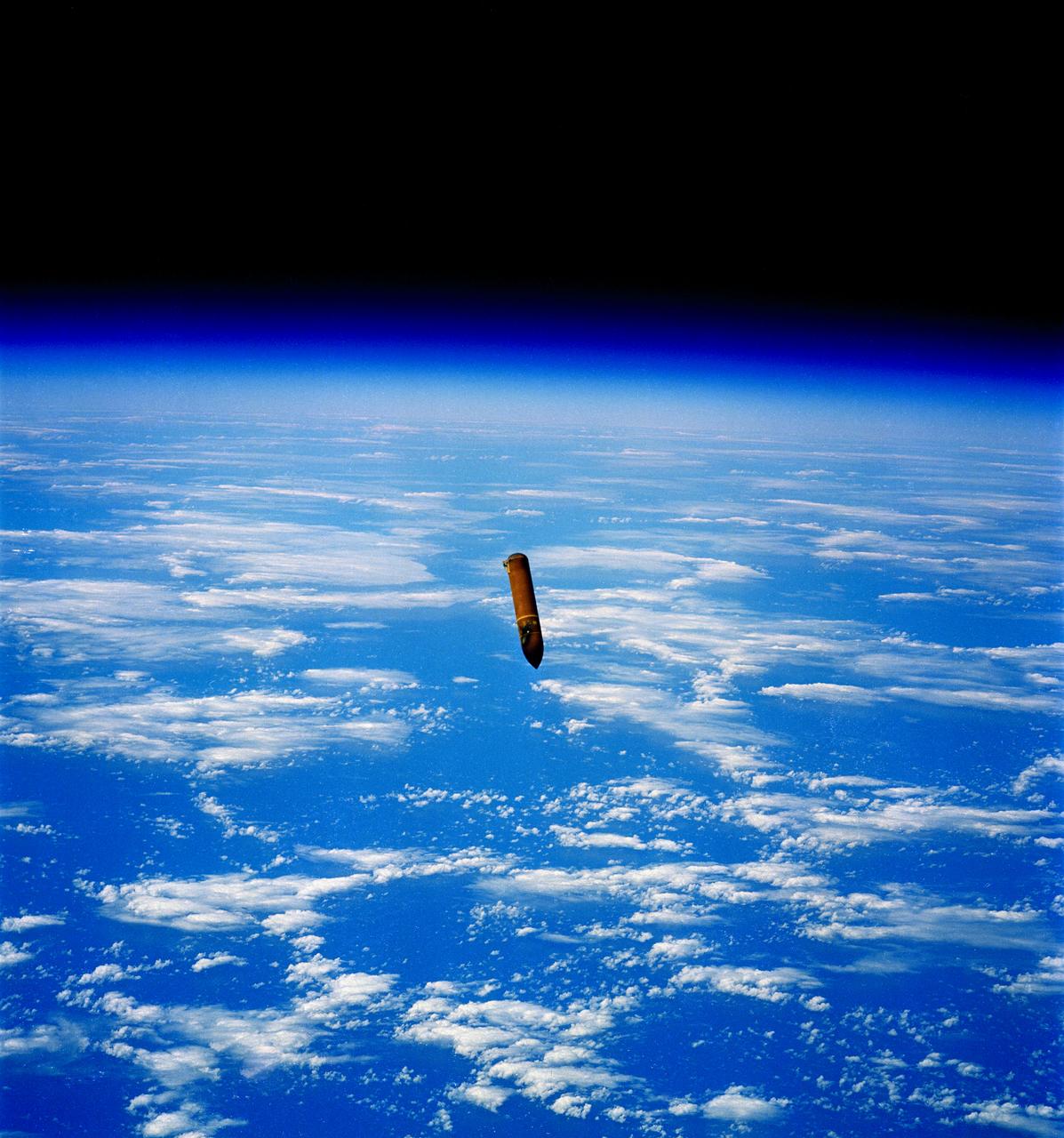
This STS-29 mission onboard photo depicts the External Tank (ET) falling toward the ocean after separation from the Shuttle orbiter Discovery. The giant cylinder, higher than a 15-story building, with a length of 154-feet (47-meters) and a diameter of 27,5-feet (8.4-meters), is the largest single piece of the Space Shuttle. During launch, the ET also acts as a backbone for the orbiter and solid rocket boosters. In separate, internal pressurized tank sections, the ET holds the liquid hydrogen fuel and liquid oxygen oxidizer for the Shuttle's three main engines. During launch, the ET feeds the fuel under pressure through 17-inch (43.2-centimeter) ducts which branch off into smaller lines that feed directly into the main engines. Some 64,000 gallons (242,260 liters) of fuel are consumed by the main engines each minute. Machined from aluminum alloys, the Space Shuttle's ET is the only part of the launch vehicle that currently is not reused. After its 526,000 gallons (1,991,071 liters) of propellants are consumed during the first 8.5 minutes of flight, it is jettisoned from the orbiter and breaks up in the upper atmosphere, its pieces falling into remote ocean waters. The Marshall Space Flight Center was responsible for developing the ET.
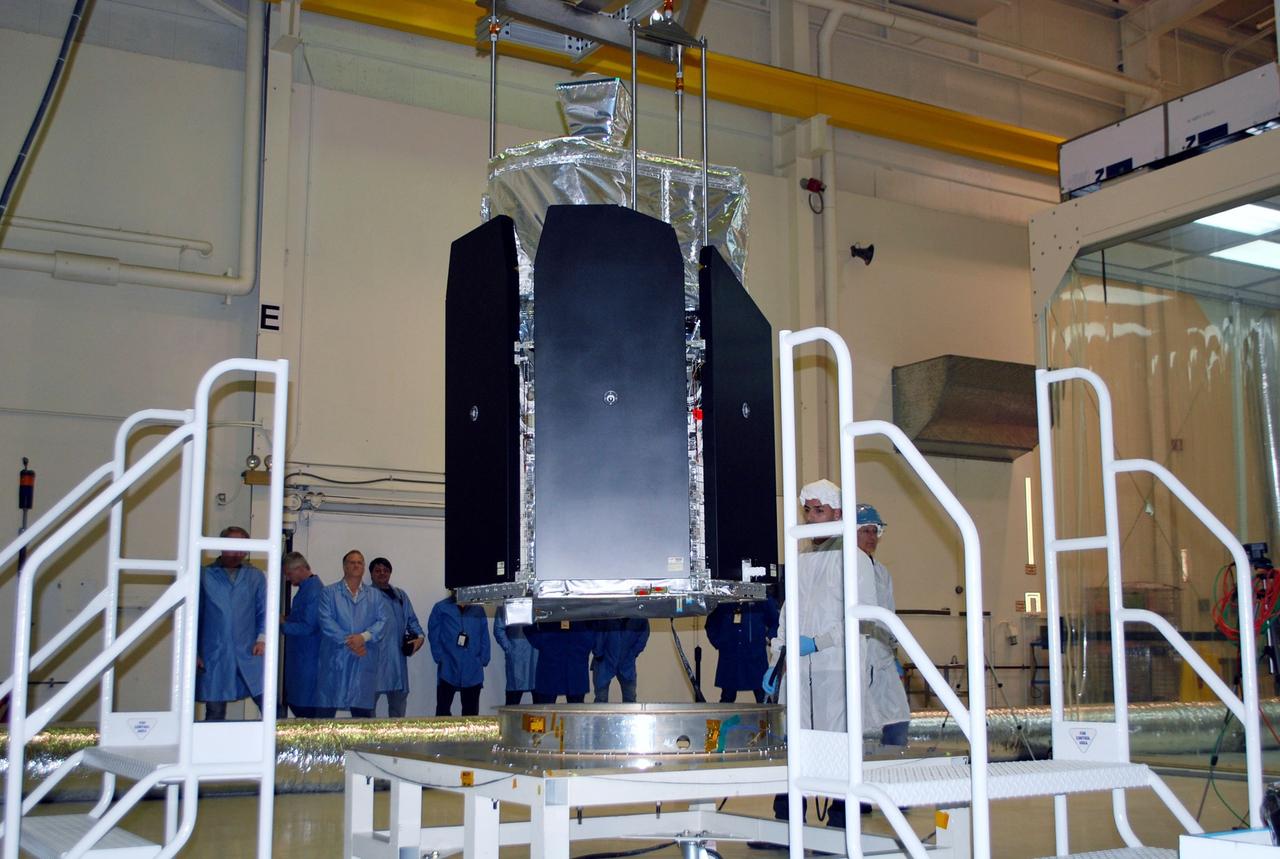
VANDENBERG AIR FORCE BASE, Calif. – In processing facility 1555 at Vandenberg Air Force Base in California, NASA's Nuclear Spectroscopic Telescope Array (NuSTAR) is lifted from its workstand during preparations to install it on a Pegasus fairing separation ring. A Pegasus XL rocket is being prepared to launch NuSTAR into space in March. Once processing of the rocket and spacecraft are completed at Vandenberg, they will be flown on the Orbital Sciences’ L-1011 carrier aircraft to the Ronald Reagan Ballistic Missile Defense Test Site at the Pacific Ocean’s Kwajalein Atoll for launch. NuSTAR, a high-energy x-ray telescope, will conduct a census for black holes, map radioactive material in young supernovae remnants, and study the origins of cosmic rays and the extreme physics around collapsed stars. For more information, visit http://www.nasa.gov/nustar. Photo credit: NASA/Randy Beaudoin, VAFB
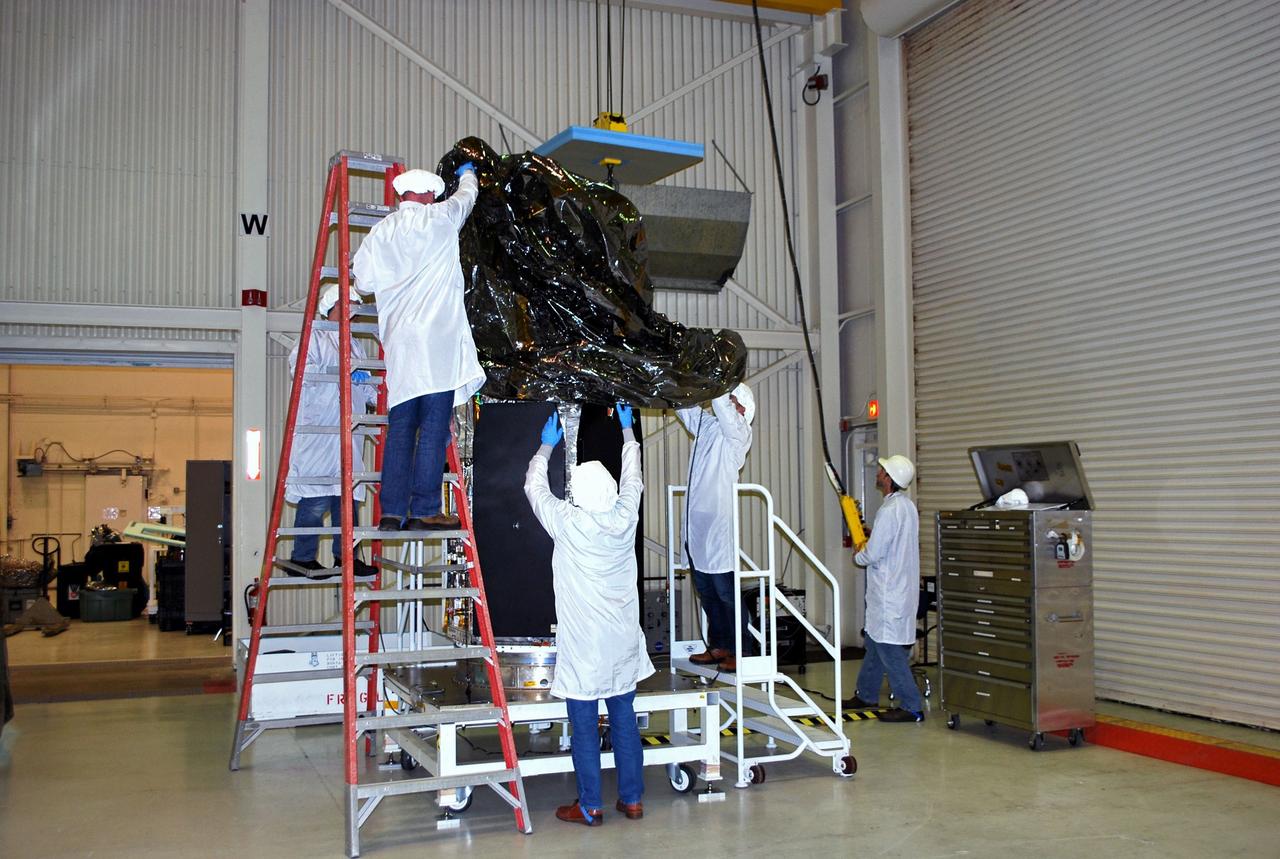
VANDENBERG AIR FORCE BASE, Calif. – In processing facility 1555 at Vandenberg Air Force Base in California, spacecraft technicians cover NASA's Nuclear Spectroscopic Telescope Array (NuSTAR) with a protective shroud following its installation on a Pegasus fairing separation ring. A Pegasus XL rocket is being prepared to launch NuSTAR into space in March. Once processing of the rocket and spacecraft are completed at Vandenberg, they will be flown on the Orbital Sciences’ L-1011 carrier aircraft to the Ronald Reagan Ballistic Missile Defense Test Site at the Pacific Ocean’s Kwajalein Atoll for launch. NuSTAR, a high-energy x-ray telescope, will conduct a census for black holes, map radioactive material in young supernovae remnants, and study the origins of cosmic rays and the extreme physics around collapsed stars. For more information, visit http://www.nasa.gov/nustar. Photo credit: NASA/Randy Beaudoin, VAFB

In Building 1555 on North Vandenberg Air Force Base in California, technicians carry the separation system, at left, toward the AIM spacecraft hovering above the stand at right. AIM, which stands for Aeronomy of Ice in the Mesosphere, is being prepared for integrated testing and a flight simulation. The AIM spacecraft will fly three instruments designed to study polar mesospheric clouds located at the edge of space, 50 miles above the Earth's surface in the coldest part of the planet's atmosphere. The mission's primary goal is to explain why these clouds form and what has caused them to become brighter and more numerous and appear at lower latitudes in recent years. AIM's results will provide the basis for the study of long-term variability in the mesospheric climate and its relationship to global climate change. AIM is scheduled to be mated to its launch vehicle, Orbital Sciences' Pegasus XL, during the second week of April, after which final inspections will be conducted. Launch is scheduled for April 25.
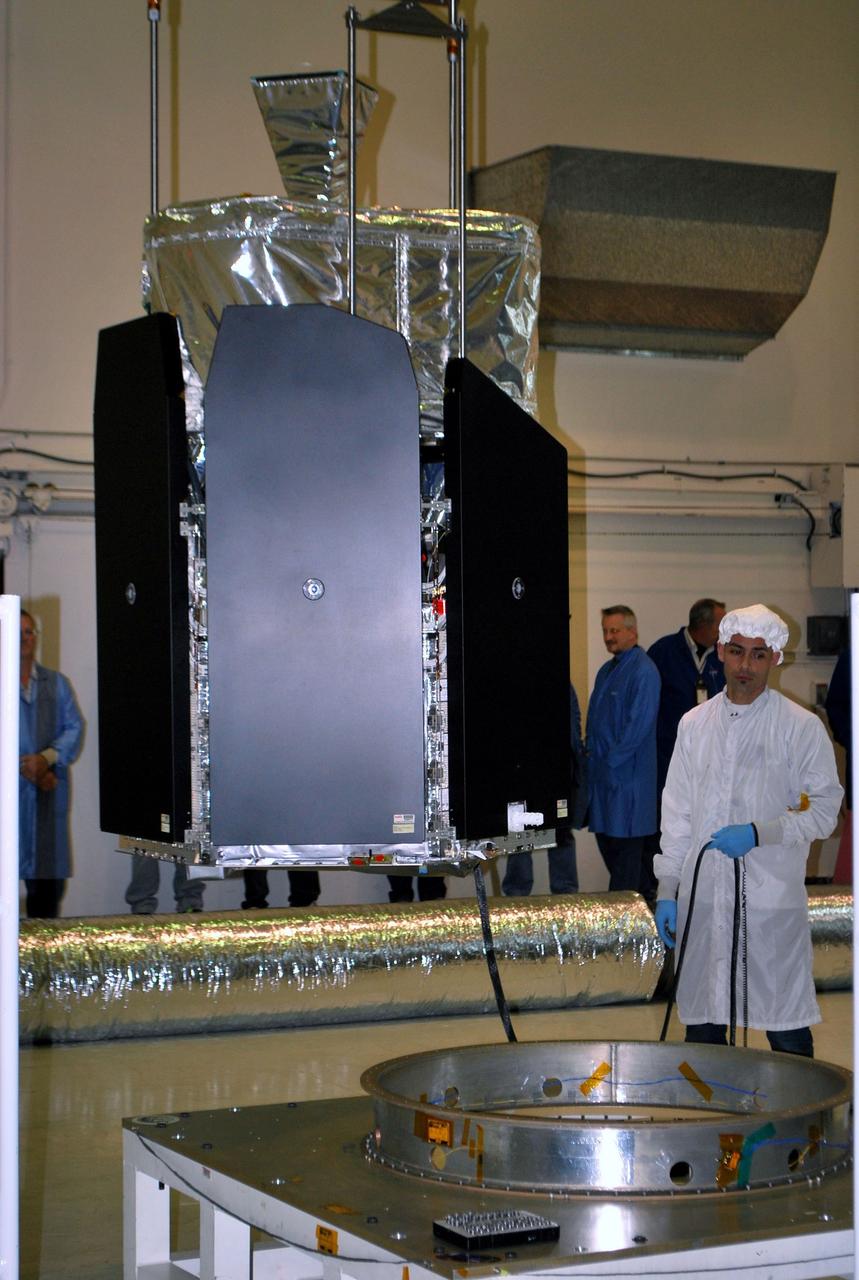
VANDENBERG AIR FORCE BASE, Calif. – In processing facility 1555 at Vandenberg Air Force Base in California, a spacecraft technician monitors NASA's Nuclear Spectroscopic Telescope Array (NuSTAR), suspended from the ceiling near its workstand, during preparations to install it on a Pegasus fairing separation ring. A Pegasus XL rocket is being prepared to launch NuSTAR into space in March. Once processing of the rocket and spacecraft are completed at Vandenberg, they will be flown on the Orbital Sciences’ L-1011 carrier aircraft to the Ronald Reagan Ballistic Missile Defense Test Site at the Pacific Ocean’s Kwajalein Atoll for launch. NuSTAR, a high-energy x-ray telescope, will conduct a census for black holes, map radioactive material in young supernovae remnants, and study the origins of cosmic rays and the extreme physics around collapsed stars. For more information, visit http://www.nasa.gov/nustar. Photo credit: NASA/Randy Beaudoin, VAFB
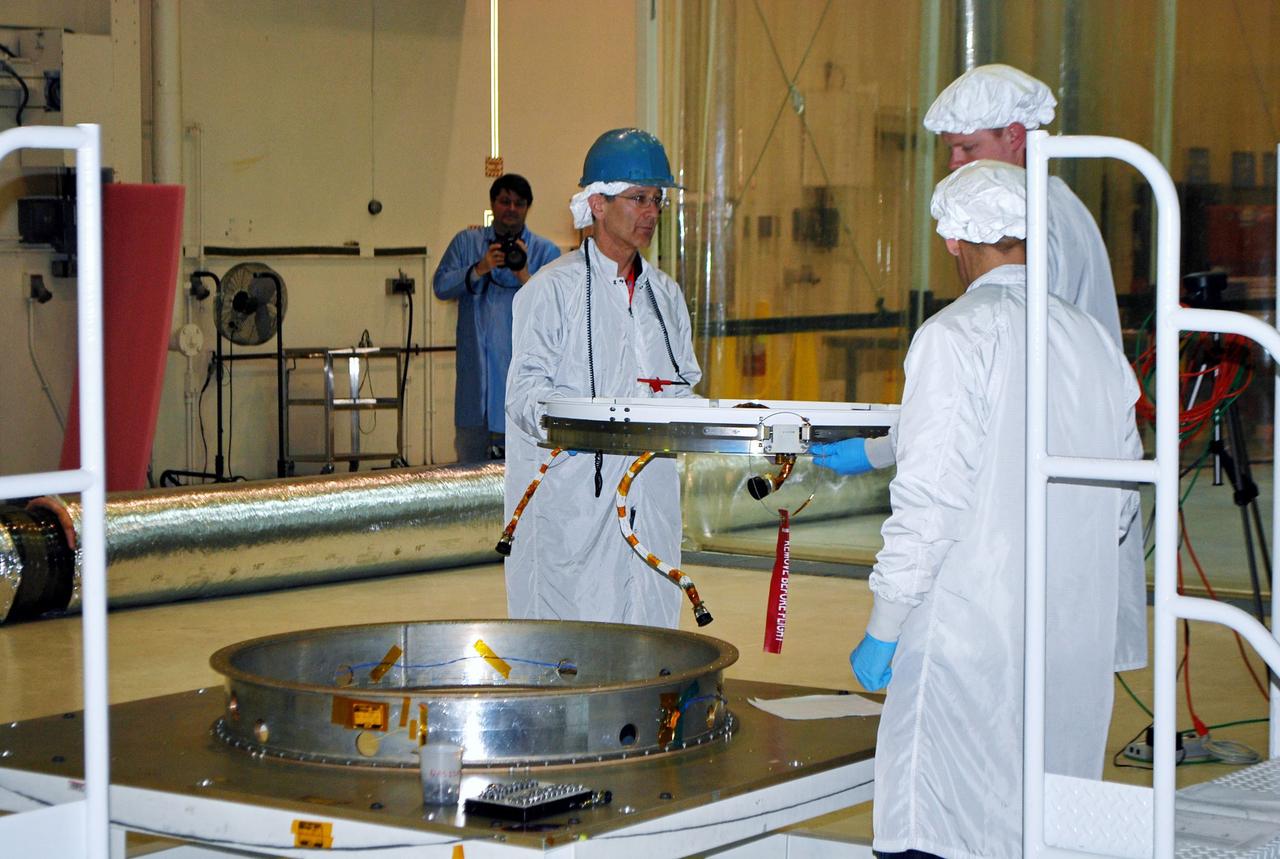
VANDENBERG AIR FORCE BASE, Calif. – In processing facility 1555 at Vandenberg Air Force Base in California, spacecraft technicians move a Pegasus fairing separation ring toward the workstand for NASA's Nuclear Spectroscopic Telescope Array (NuSTAR). A Pegasus XL rocket is being prepared to launch NuSTAR into space in March. Once processing of the rocket and spacecraft are completed at Vandenberg, they will be flown on the Orbital Sciences’ L-1011 carrier aircraft to the Ronald Reagan Ballistic Missile Defense Test Site at the Pacific Ocean’s Kwajalein Atoll for launch. NuSTAR, a high-energy x-ray telescope, will conduct a census for black holes, map radioactive material in young supernovae remnants, and study the origins of cosmic rays and the extreme physics around collapsed stars. For more information, visit http://www.nasa.gov/nustar. Photo credit: NASA/Randy Beaudoin, VAFB
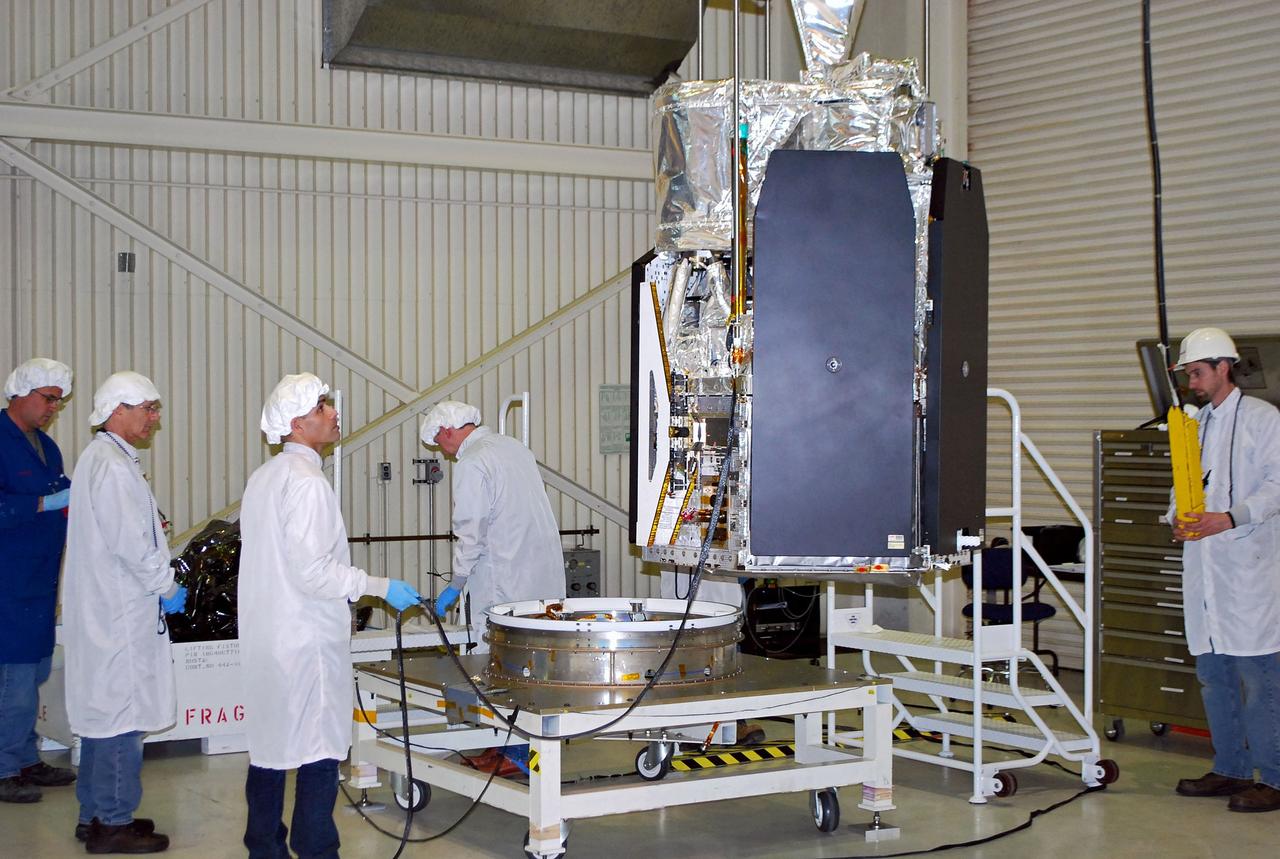
VANDENBERG AIR FORCE BASE, Calif. – In processing facility 1555 at Vandenberg Air Force Base in California, spacecraft technicians move NASA's Nuclear Spectroscopic Telescope Array (NuSTAR) toward the Pegasus fairing separation ring in place on its workstand. A Pegasus XL rocket is being prepared to launch NuSTAR into space in March. Once processing of the rocket and spacecraft are completed at Vandenberg, they will be flown on the Orbital Sciences’ L-1011 carrier aircraft to the Ronald Reagan Ballistic Missile Defense Test Site at the Pacific Ocean’s Kwajalein Atoll for launch. NuSTAR, a high-energy x-ray telescope, will conduct a census for black holes, map radioactive material in young supernovae remnants, and study the origins of cosmic rays and the extreme physics around collapsed stars. For more information, visit http://www.nasa.gov/nustar. Photo credit: NASA/Randy Beaudoin, VAFB
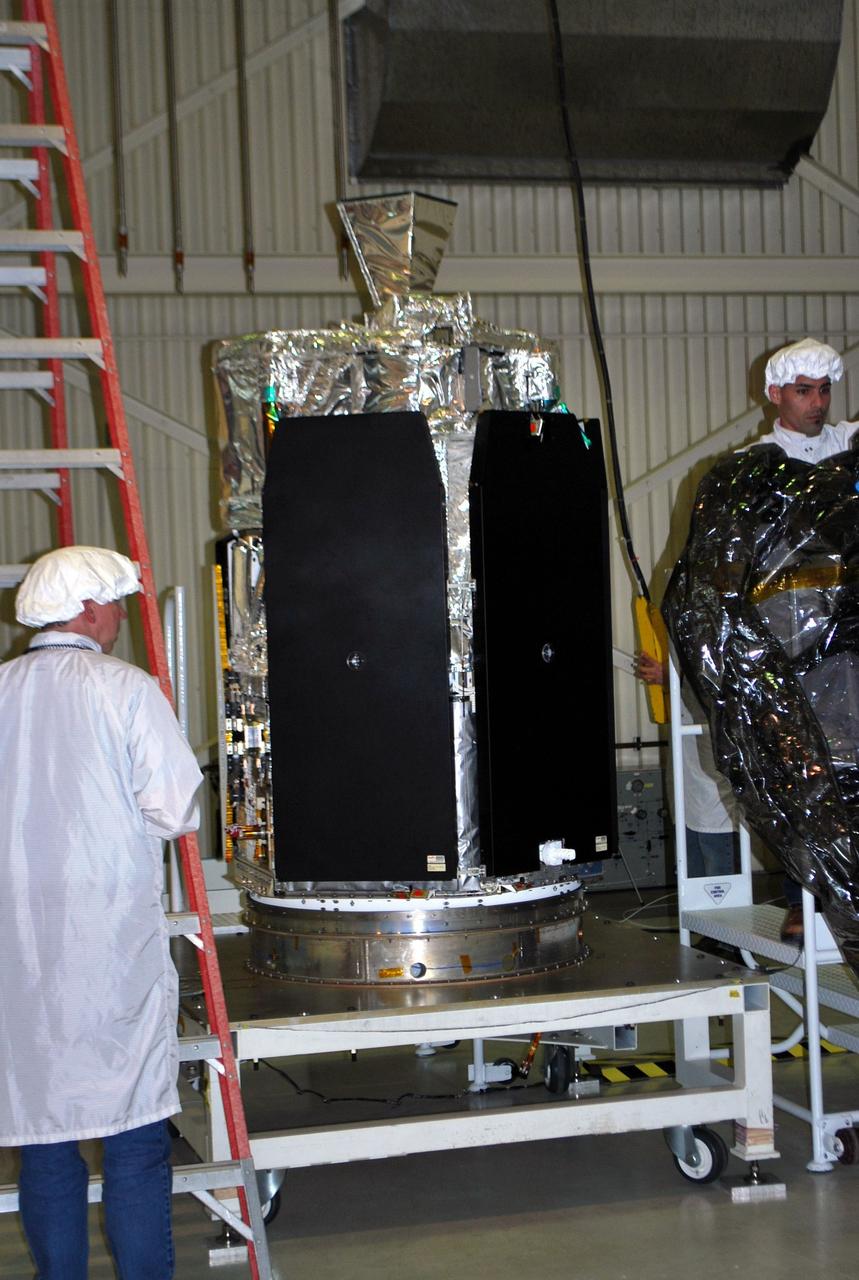
VANDENBERG AIR FORCE BASE, Calif. – In processing facility 1555 at Vandenberg Air Force Base in California, NASA's Nuclear Spectroscopic Telescope Array (NuSTAR) is secured to a Pegasus fairing separation ring, positioned on its workstand. A Pegasus XL rocket is being prepared to launch NuSTAR into space in March. Once processing of the rocket and spacecraft are completed at Vandenberg, they will be flown on the Orbital Sciences’ L-1011 carrier aircraft to the Ronald Reagan Ballistic Missile Defense Test Site at the Pacific Ocean’s Kwajalein Atoll for launch. NuSTAR, a high-energy x-ray telescope, will conduct a census for black holes, map radioactive material in young supernovae remnants, and study the origins of cosmic rays and the extreme physics around collapsed stars. For more information, visit http://www.nasa.gov/nustar. Photo credit: NASA/Randy Beaudoin, VAFB
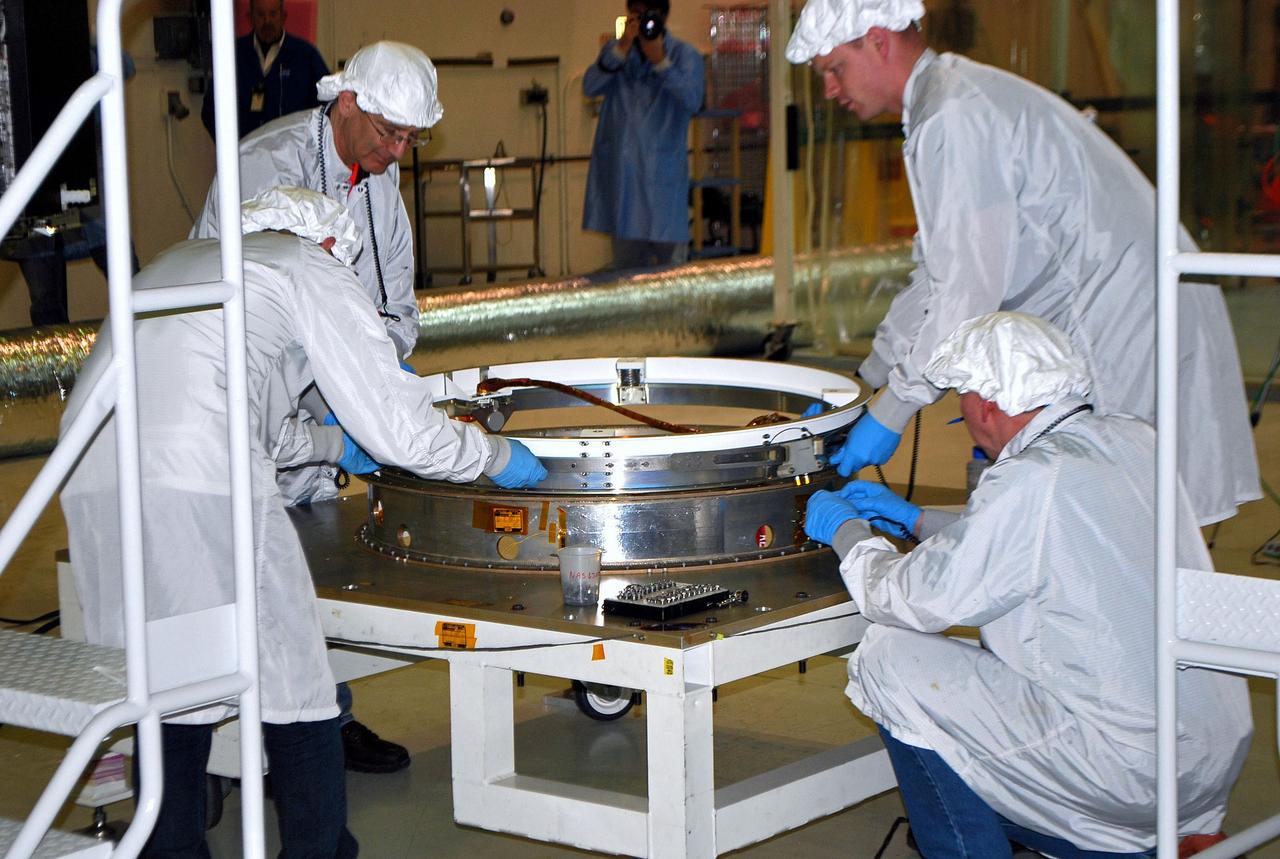
VANDENBERG AIR FORCE BASE, Calif. – In processing facility 1555 at Vandenberg Air Force Base in California, spacecraft technicians position a Pegasus fairing separation ring on the workstand for NASA's Nuclear Spectroscopic Telescope Array (NuSTAR). A Pegasus XL rocket is being prepared to launch NuSTAR into space in March. Once processing of the rocket and spacecraft are completed at Vandenberg, they will be flown on the Orbital Sciences’ L-1011 carrier aircraft to the Ronald Reagan Ballistic Missile Defense Test Site at the Pacific Ocean’s Kwajalein Atoll for launch. NuSTAR, a high-energy x-ray telescope, will conduct a census for black holes, map radioactive material in young supernovae remnants, and study the origins of cosmic rays and the extreme physics around collapsed stars. For more information, visit http://www.nasa.gov/nustar. Photo credit: NASA/Randy Beaudoin, VAFB
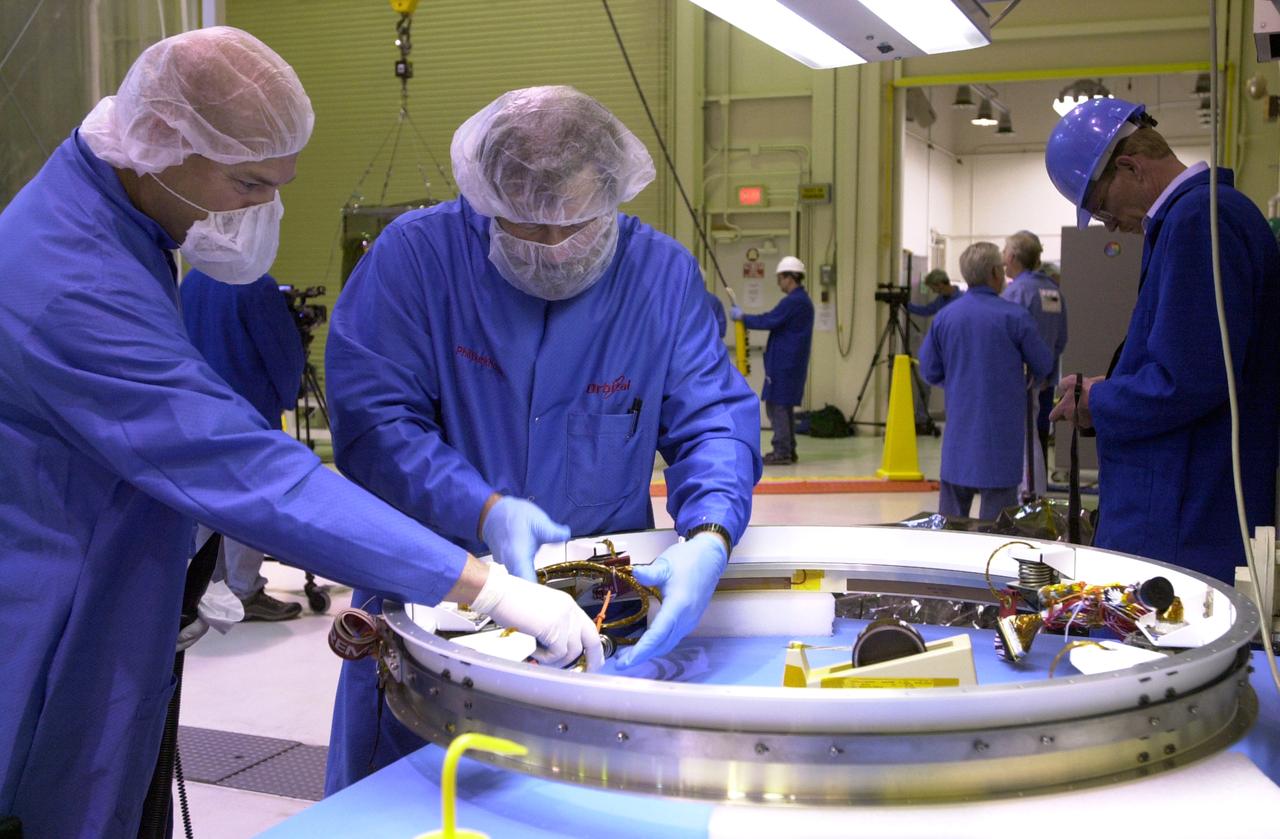
In Building 1555 on North Vandenberg Air Force Base in California, technicians work on the separation system to be mated to the AIM spacecraft. AIM, which stands for Aeronomy of Ice in the Mesosphere, is being prepared for integrated testing and a flight simulation. The AIM spacecraft will fly three instruments designed to study polar mesospheric clouds located at the edge of space, 50 miles above the Earth's surface in the coldest part of the planet's atmosphere. The mission's primary goal is to explain why these clouds form and what has caused them to become brighter and more numerous and appear at lower latitudes in recent years. AIM's results will provide the basis for the study of long-term variability in the mesospheric climate and its relationship to global climate change. AIM is scheduled to be mated to its launch vehicle, Orbital Sciences' Pegasus XL, during the second week of April, after which final inspections will be conducted. Launch is scheduled for April 25.
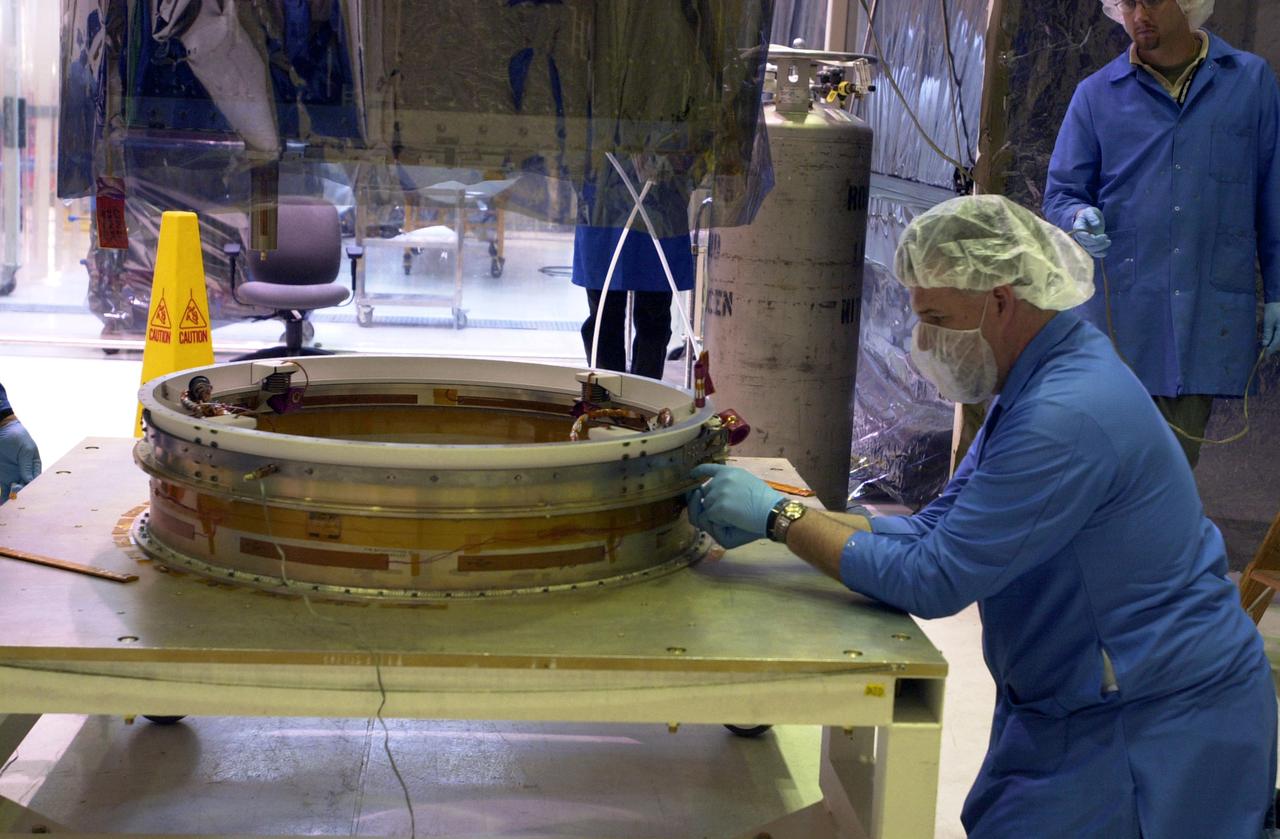
In Building 1555 on North Vandenberg Air Force Base in California, technicians work on the separation system to be mated to the AIM spacecraft, hovering above it. AIM, which stands for Aeronomy of Ice in the Mesosphere, is being prepared for integrated testing and a flight simulation. The AIM spacecraft will fly three instruments designed to study polar mesospheric clouds located at the edge of space, 50 miles above the Earth's surface in the coldest part of the planet's atmosphere. The mission's primary goal is to explain why these clouds form and what has caused them to become brighter and more numerous and appear at lower latitudes in recent years. AIM's results will provide the basis for the study of long-term variability in the mesospheric climate and its relationship to global climate change. AIM is scheduled to be mated to its launch vehicle, Orbital Sciences' Pegasus XL, during the second week of April, after which final inspections will be conducted. Launch is scheduled for April 25.
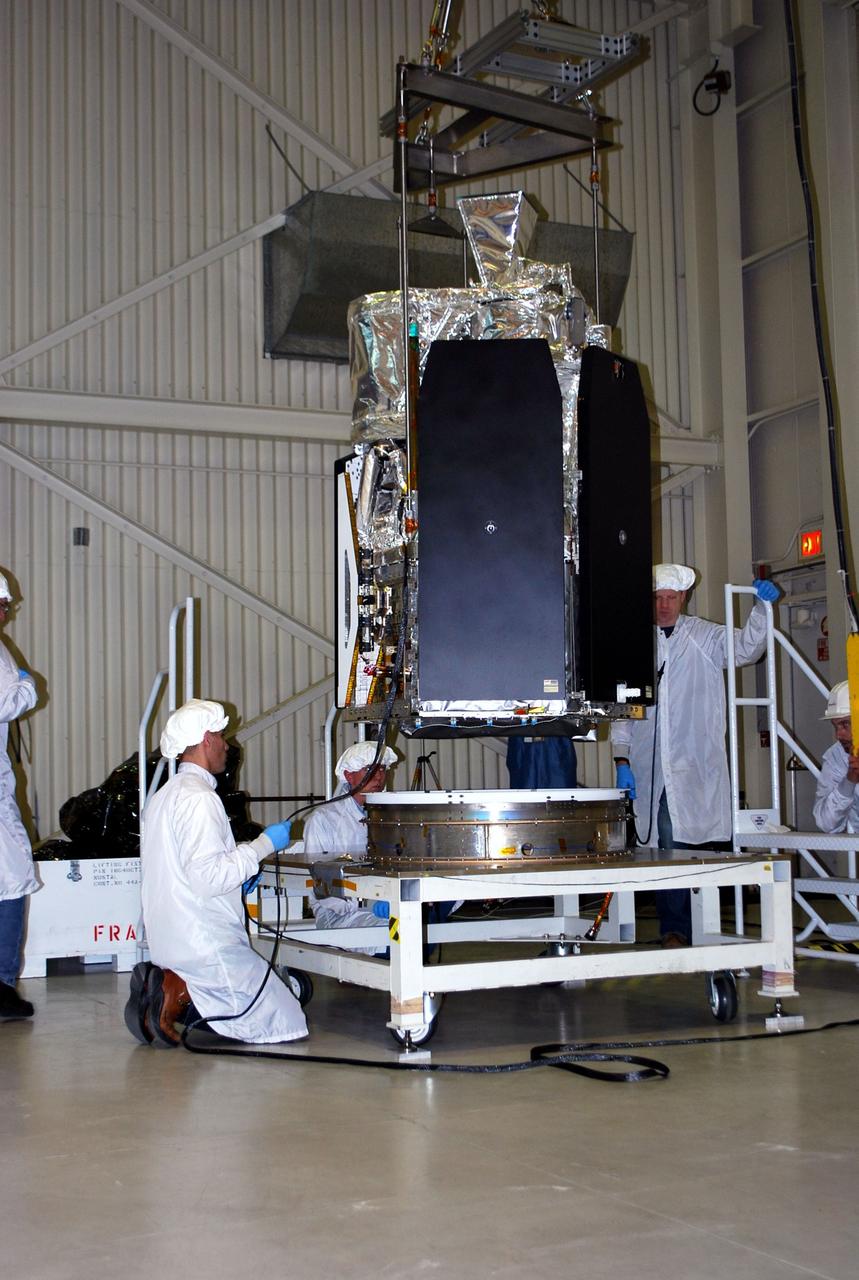
VANDENBERG AIR FORCE BASE, Calif. – In processing facility 1555 at Vandenberg Air Force Base in California, spacecraft technicians lower NASA's Nuclear Spectroscopic Telescope Array (NuSTAR) toward the Pegasus fairing separation ring positioned on its workstand. A Pegasus XL rocket is being prepared to launch NuSTAR into space in March. Once processing of the rocket and spacecraft are completed at Vandenberg, they will be flown on the Orbital Sciences’ L-1011 carrier aircraft to the Ronald Reagan Ballistic Missile Defense Test Site at the Pacific Ocean’s Kwajalein Atoll for launch. NuSTAR, a high-energy x-ray telescope, will conduct a census for black holes, map radioactive material in young supernovae remnants, and study the origins of cosmic rays and the extreme physics around collapsed stars. For more information, visit http://www.nasa.gov/nustar. Photo credit: NASA/Randy Beaudoin, VAFB
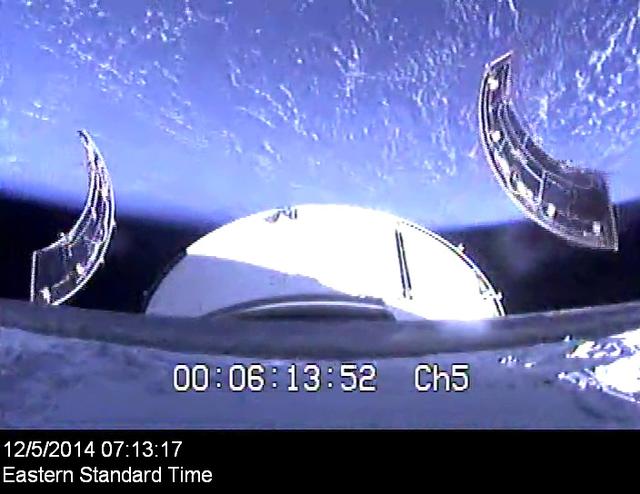
The service module panels separate during Orion's first flight test, Exploration Flight Test-1 (EFT-1), on December 5, 2014.
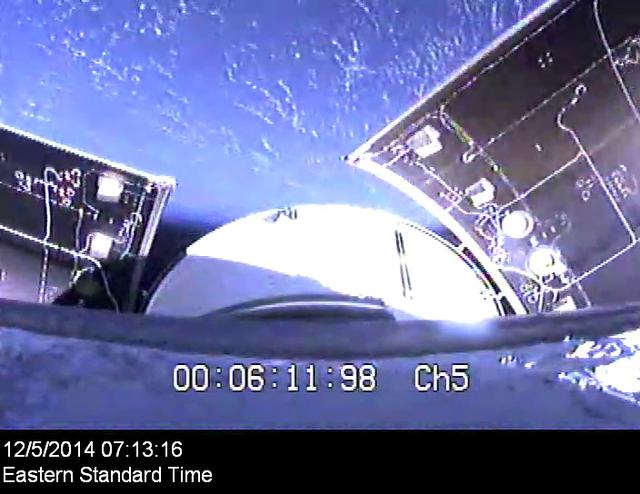
Orion's service module panels separate on its first flight test, Exploration Flight Test-1 (EFT-1), on December 5, 2014.
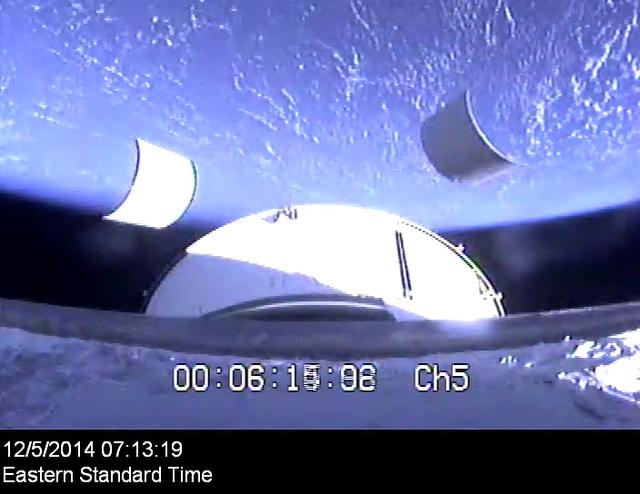
The service module panels separate during Orion's first flight test, Exploration Flight Test-1 (EFT-1), on December 5, 2014.
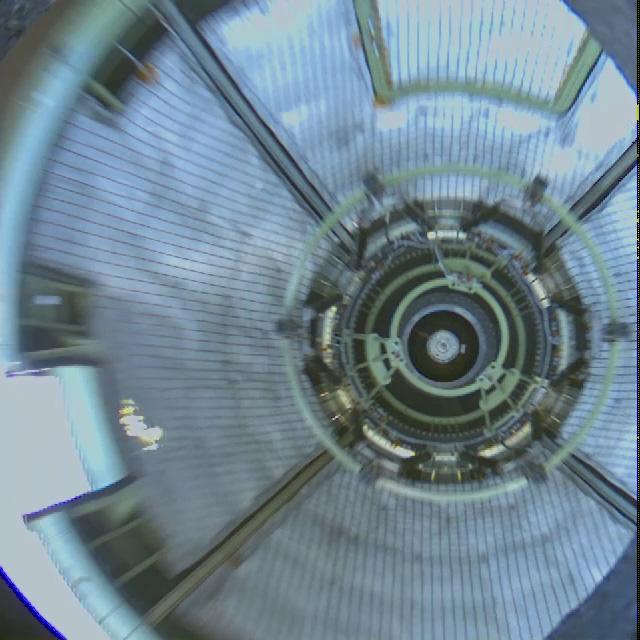
Orion's launch abort system separates on its first flight test, Exploration Flight Test-1 (EFT-1), on December 5, 2014.
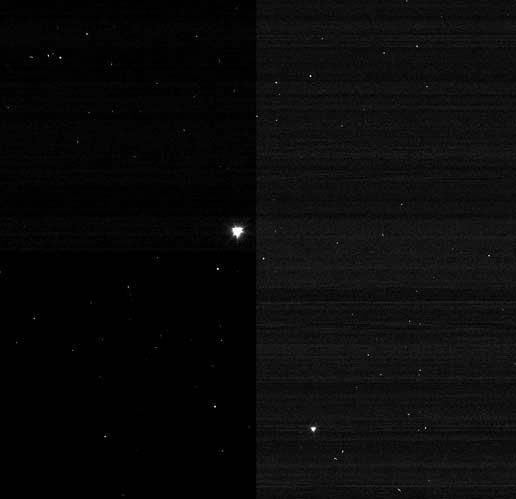
This image of NASA Deep Impact impactor probe was taken by the mission mother ship, or flyby spacecraft, after the two separated at 11:07 p.m. Pacific time, July 2 2:07 a.m. Eastern time, July 3, 2005.
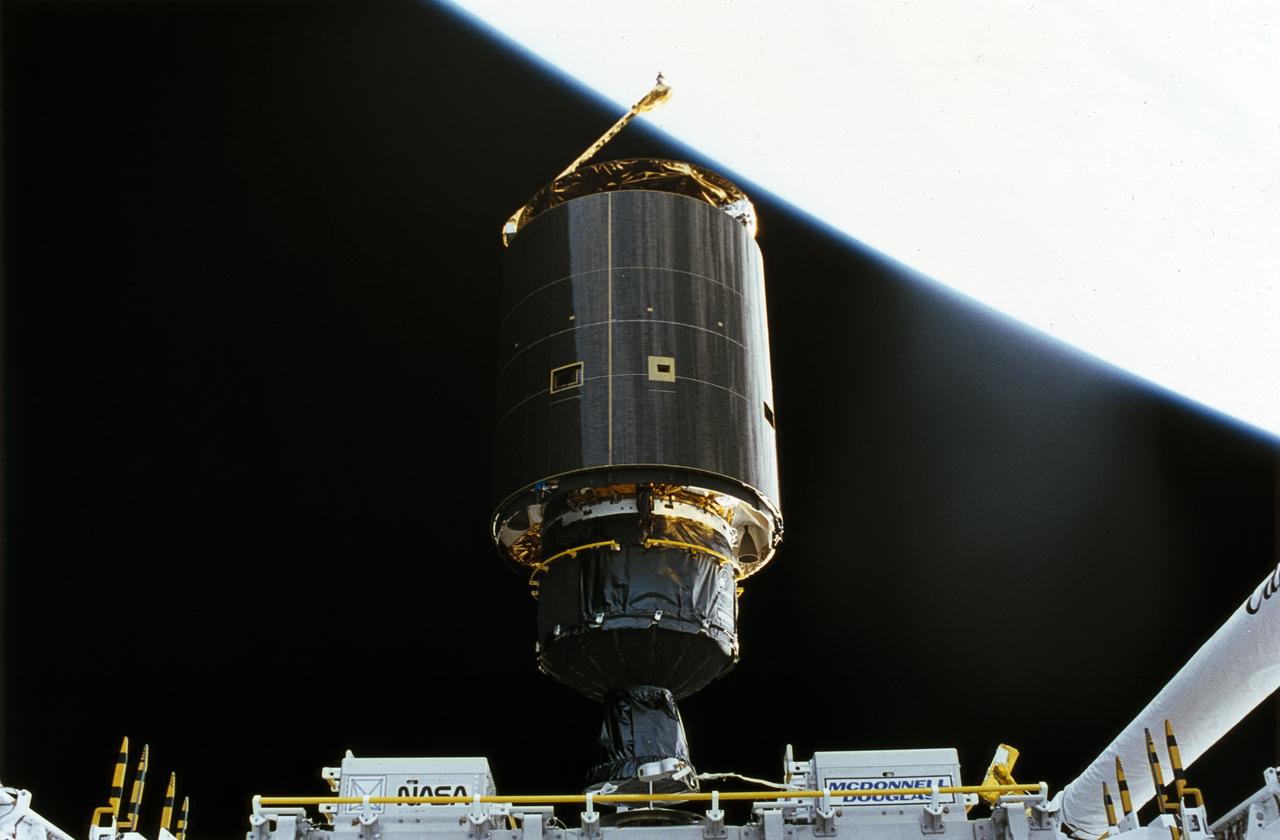
STS-49, the first flight of the Space Shuttle Orbiter Endeavour, lifted off from launch pad 39B on May 7, 1992 at 6:40 pm CDT. The STS-49 mission was the first U.S. orbital flight to feature 4 extravehicular activities (EVAs), and the first flight to involve 3 crew members working simultaneously outside of the spacecraft. The primary objective was the capture and redeployment of the INTELSAT VI (F-3), a communication satellite for the International Telecommunication Satellite organization, which was stranded in an unusable orbit since its launch aboard the Titan rocket in March 1990. The 4.5 ton INTELSAT VI was successfully snared by three astronauts on a third EVA. In this photo, the satellite, with its newly deployed perigee stage, begins its separation from the Shuttle.
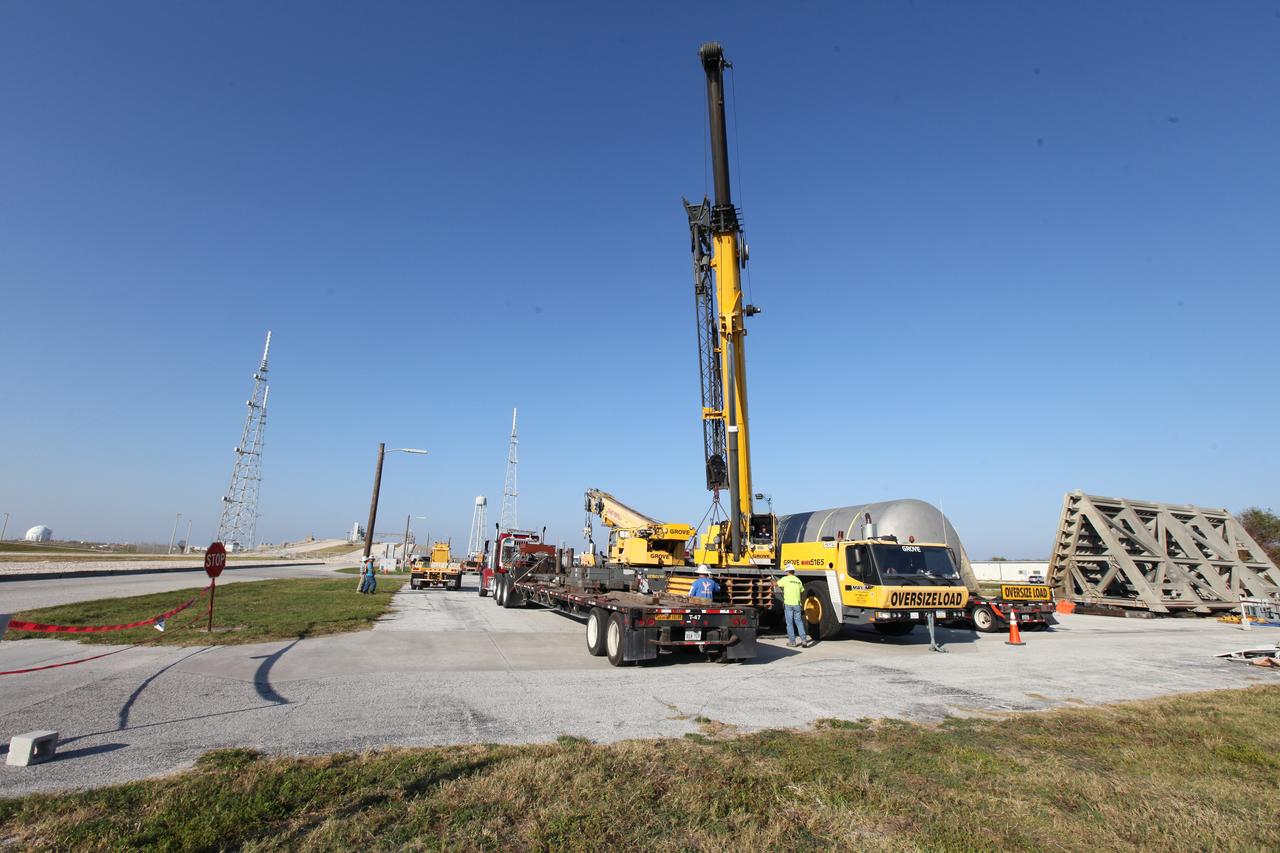
A new liquid hydrogen separator tank arrives at NASA's Kennedy Space Center in Florida. A crane will be used to lift and rotate the tank for delivery to Launch Pad 39B. The new separator/storage tank will be added to the pad's existing hydrogen vent system to assure gaseous hydrogen is delivered downstream to the flare stack. The 60,000 gallon tank was built by INOXCVA, in Baytown, Texas, a subcontractor of Precision Mechanical Inc. in Cocoa Florida. The new tank will support all future launches from the pad.
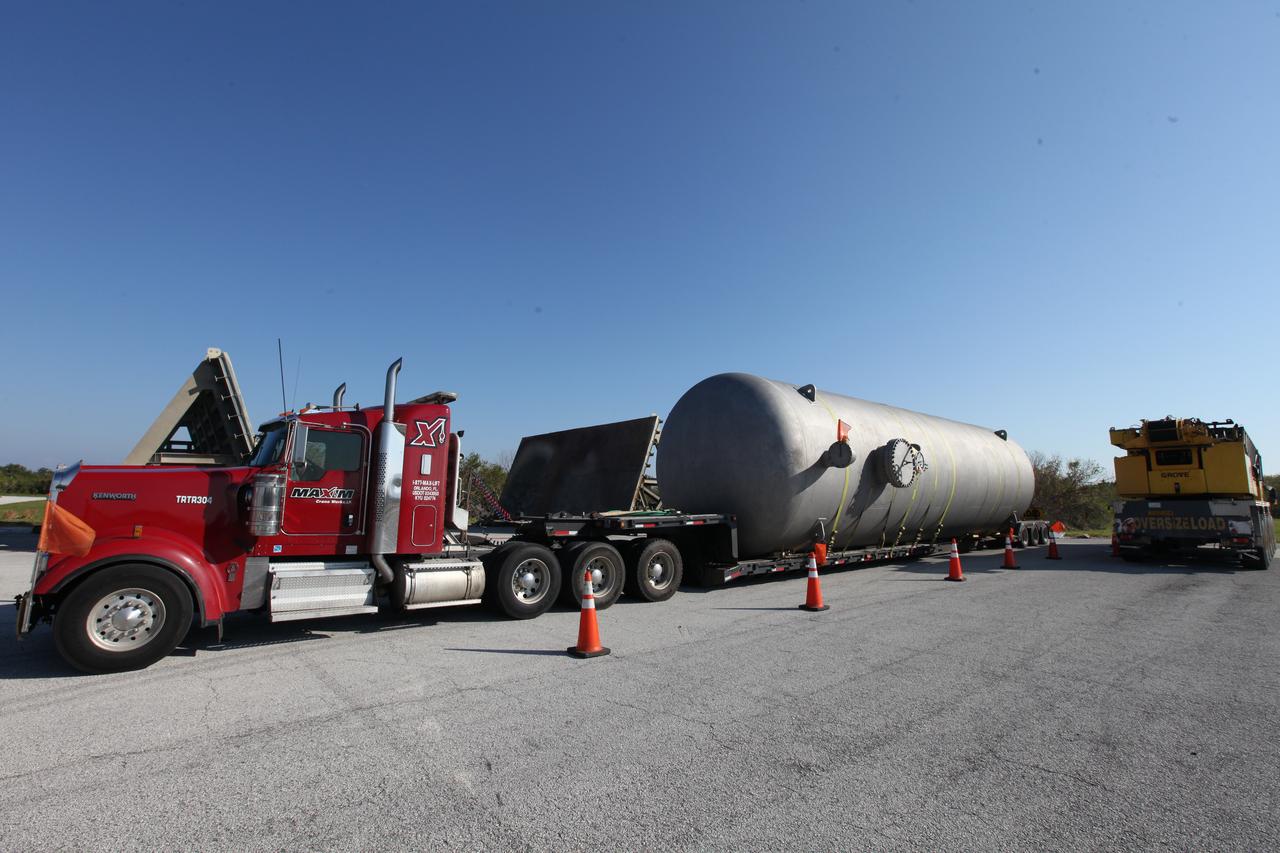
A new liquid hydrogen separator tank arrives at NASA's Kennedy Space Center in Florida. The tank will be lifted and rotated for delivery to Launch Pad 39B. The new separator/storage tank will be added to the pad's existing hydrogen vent system to assure gaseous hydrogen is delivered downstream to the flare stack. The 60,000 gallon tank was built by INOXCVA, in Baytown, Texas, a subcontractor of Precision Mechanical Inc. in Cocoa Florida. The new tank will support all future launches from the pad.
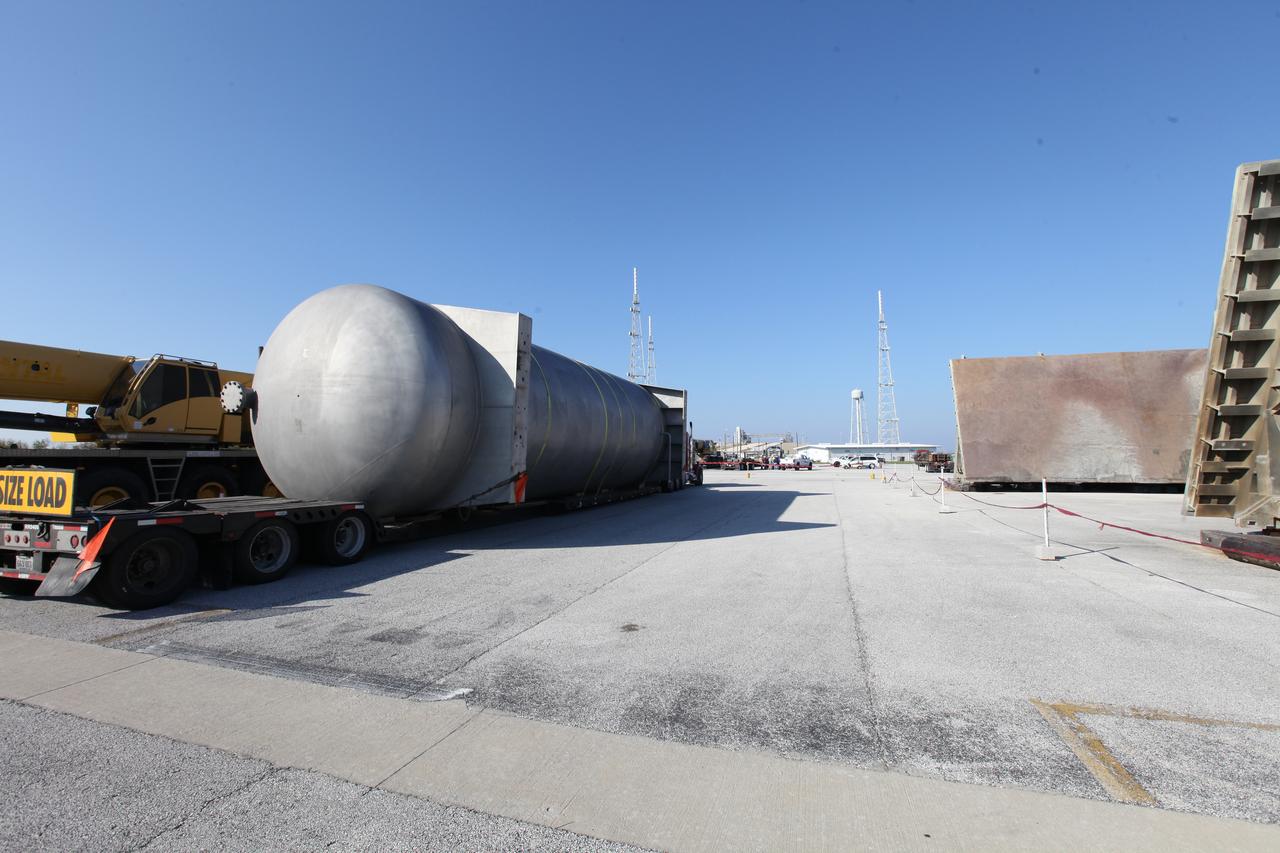
A new liquid hydrogen separator tank arrives at NASA's Kennedy Space Center in Florida. The tank will be lifted and rotated for delivery to Launch Pad 39B. The new separator/storage tank will be added to the pad's existing hydrogen vent system to assure gaseous hydrogen is delivered downstream to the flare stack. The 60,000 gallon tank was built by INOXCVA, in Baytown, Texas, a subcontractor of Precision Mechanical Inc. in Cocoa Florida. The new tank will support all future launches from the pad.
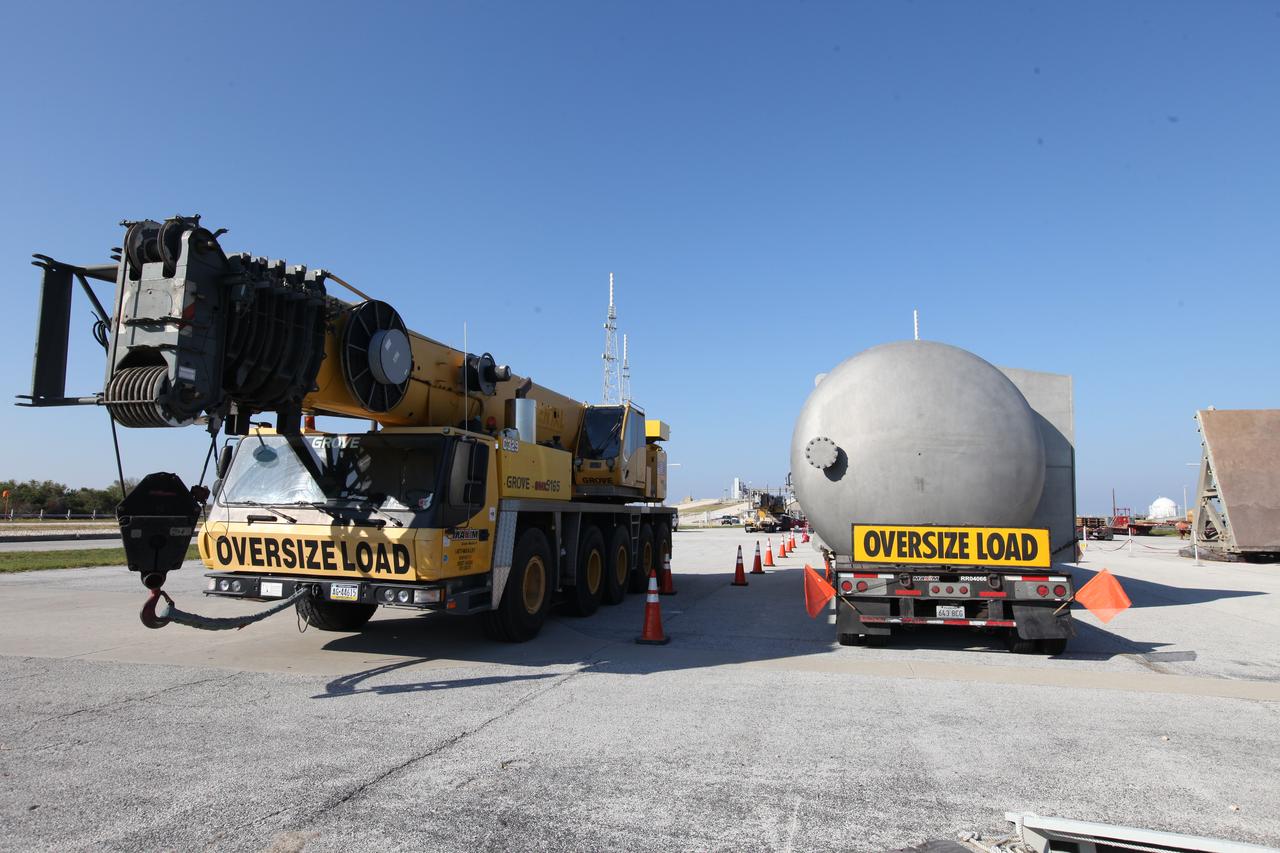
A new liquid hydrogen separator tank arrives at NASA's Kennedy Space Center in Florida. A crane will be used to lift and rotate the tank for delivery to Launch Pad 39B. The new separator/storage tank will be added to the pad's existing hydrogen vent system to assure gaseous hydrogen is delivered downstream to the flare stack. The 60,000 gallon tank was built by INOXCVA, in Baytown, Texas, a subcontractor of Precision Mechanical Inc. in Cocoa Florida. The new tank will support all future launches from the pad.
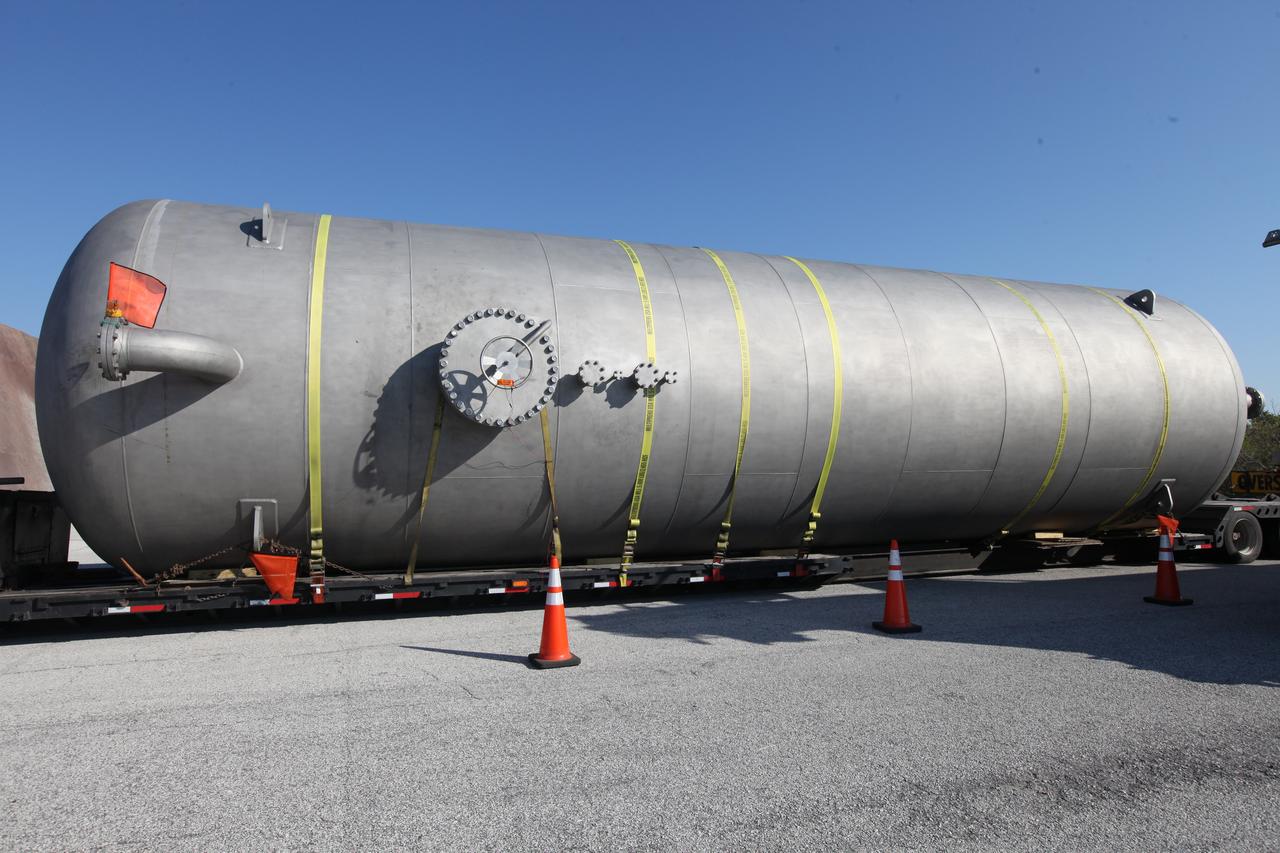
A new liquid hydrogen separator tank arrives at NASA's Kennedy Space Center in Florida. The tank will be lifted and rotated for delivery to Launch Pad 39B. The new separator/storage tank will be added to the pad's existing hydrogen vent system to assure gaseous hydrogen is delivered downstream to the flare stack. The 60,000 gallon tank was built by INOXCVA, in Baytown, Texas, a subcontractor of Precision Mechanical Inc. in Cocoa Florida. The new tank will support all future launches from the pad.
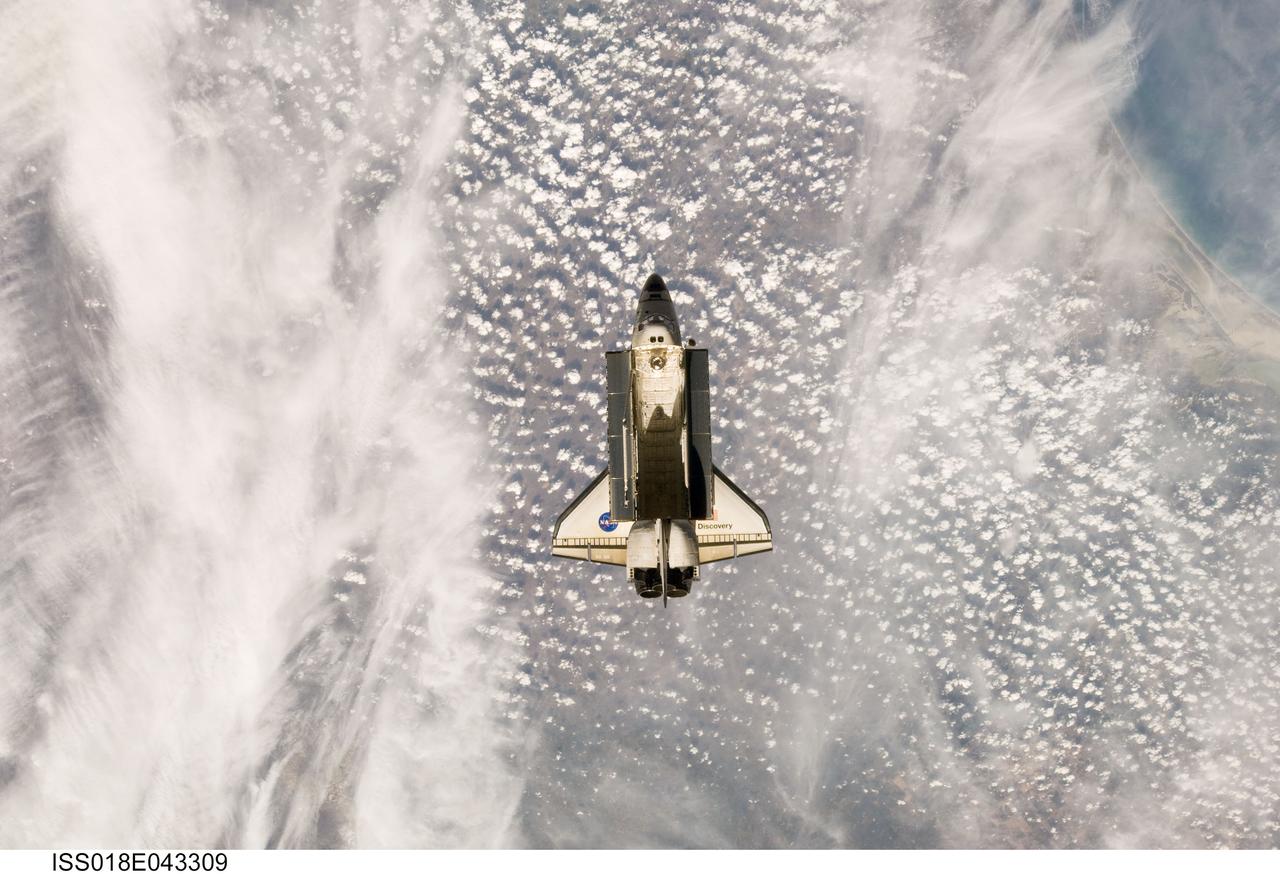
ISS018-E-043309 (25 March 2009) --- Backdropped by a blue and white part of Earth, Space Shuttle Discovery (STS-119) is featured in this image photographed by an Expedition 18 crew member on the International Space Station soon after the shuttle and station began their post-undocking relative separation on March 25, 2009.
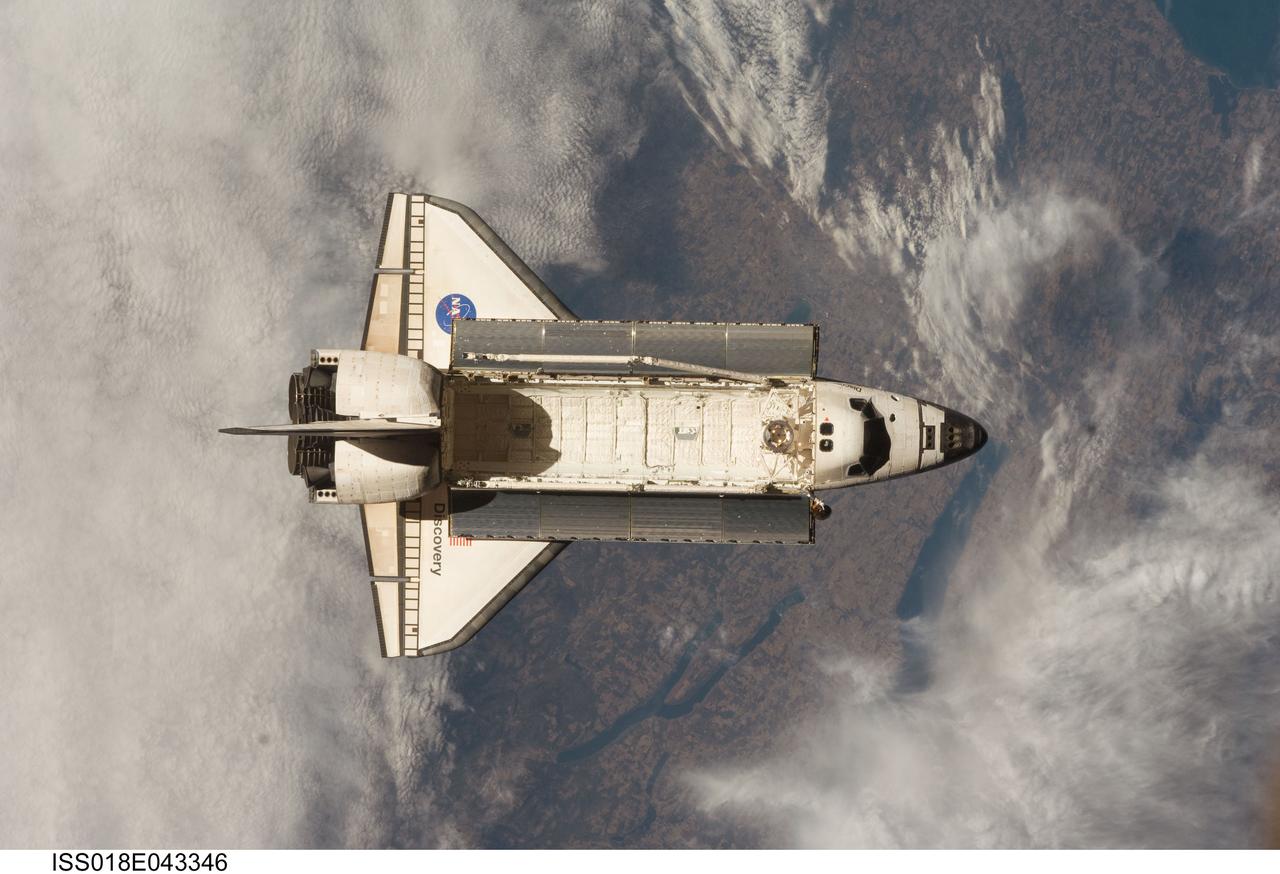
ISS018-E-043346 (25 March 2009) --- Backdropped by a colorful Earth, Space Shuttle Discovery (STS-119) is featured in this image photographed by an Expedition 18 crew member on the International Space Station soon after the shuttle and station began their post-undocking relative separation on March 25, 2009.
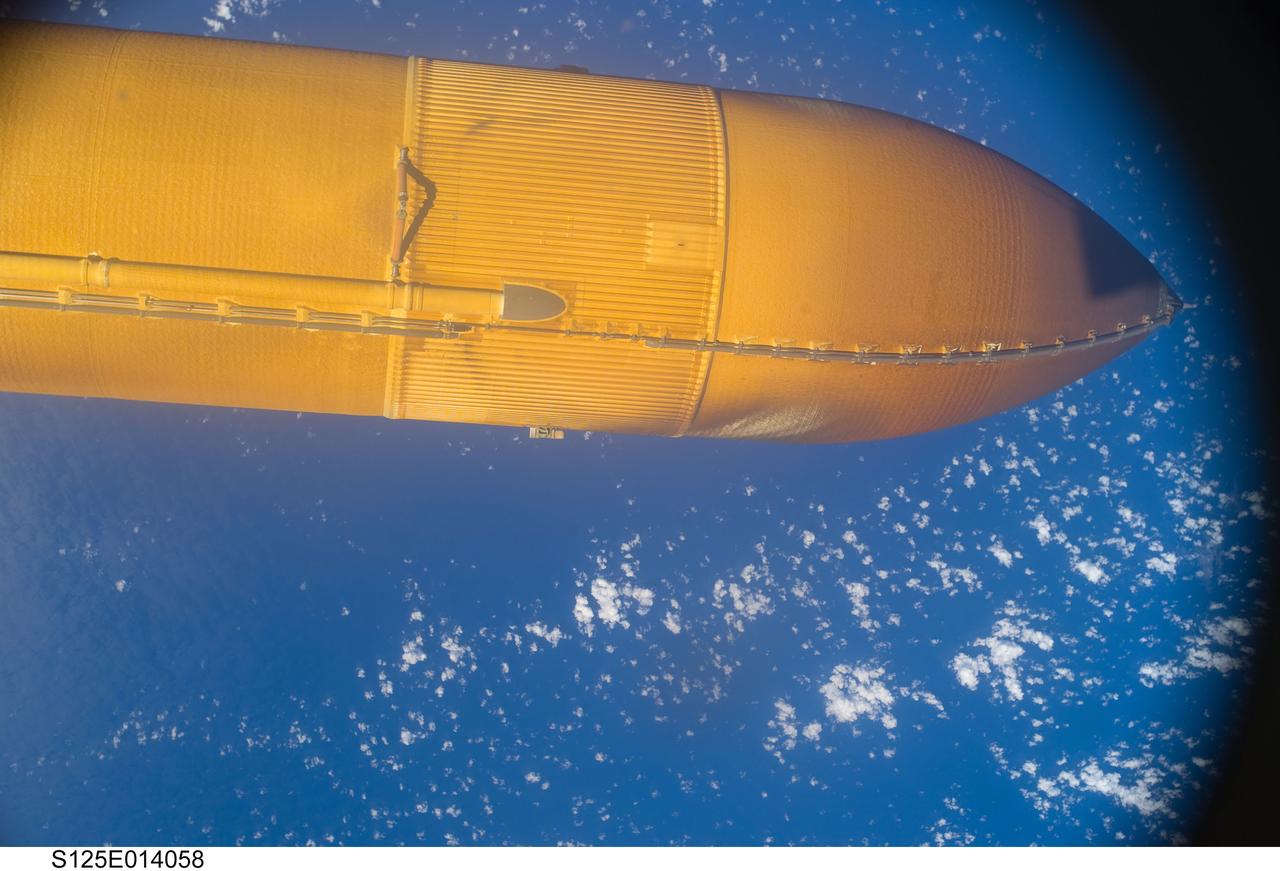
S125-E-014058 (11 May 2009) --- One of a series of photos taken by the umbilical well camera aboard the Space Shuttle Atlantis shortly after the shuttle's external fuel tank (ET) separated from Atlantis following launch.
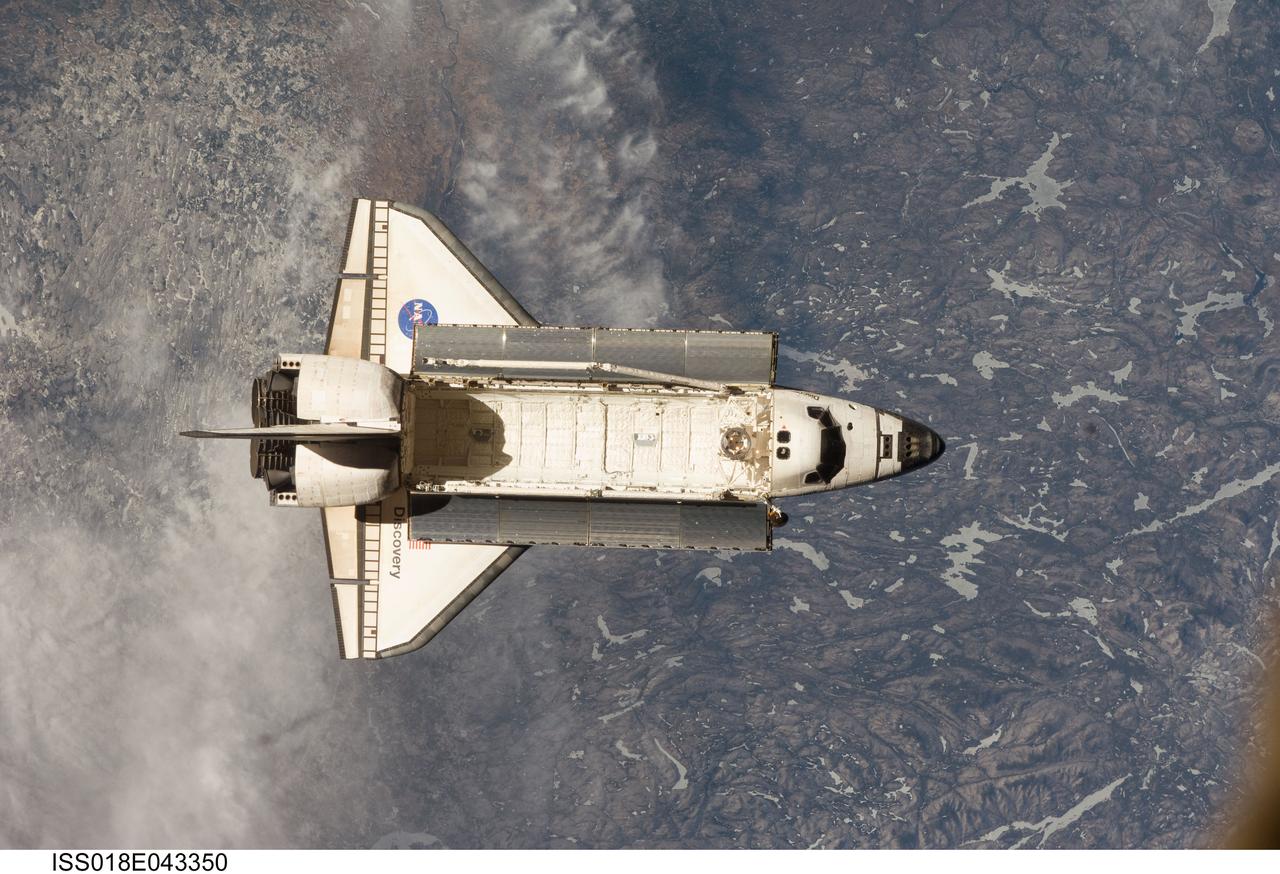
ISS018-E-043350 (25 March 2009) --- Backdropped by a colorful Earth, Space Shuttle Discovery (STS-119) is featured in this image photographed by an Expedition 18 crew member on the International Space Station soon after the shuttle and station began their post-undocking relative separation on March 25, 2009.
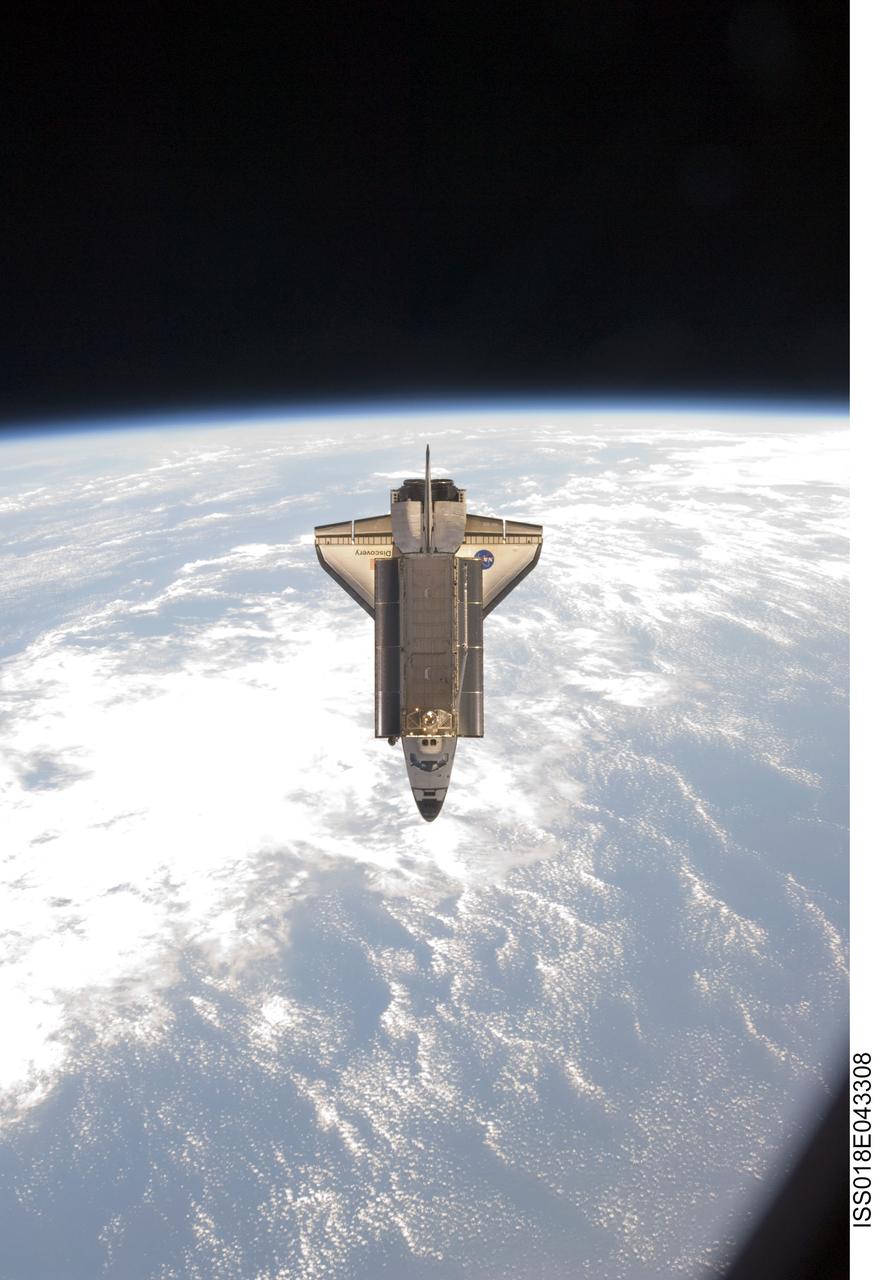
ISS018-E-043308 (25 March 2009) --- Backdropped by the blackness of space and Earth?s horizon, Space Shuttle Discovery (STS-119) is featured in this image photographed by an Expedition 18 crew member on the International Space Station soon after the shuttle and station began their post-undocking relative separation on March 25, 2009.
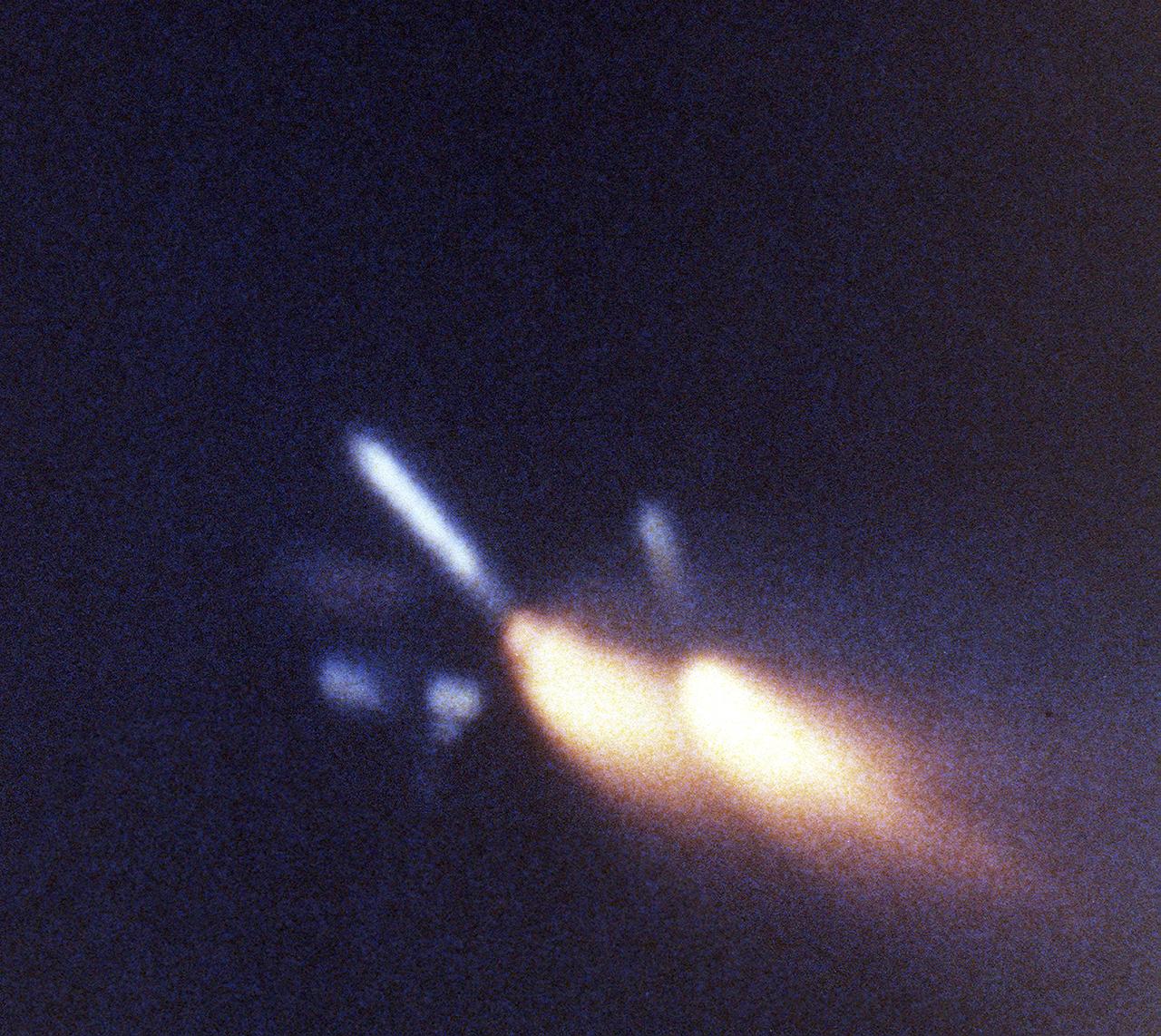
This view, taken by a motion picture tracking camera for the STS-3 mission, shows both left and right solid rocket boosters (SRB's) at the moment of separation from the external tank (ET). After impact to the ocean, they were retrieved and refurbished for reuse. The Shuttle's SRB's and solid rocket motors (SRM's) are the largest ever built and the first designed for refurbishment and reuse. Standing nearly 150-feet high, the twin boosters provide the majority of thrust for the first two minutes of flight, about 5.8 million pounds. That is equivalent to 44 million horsepower, or the combined power of 400,000 subcompact cars.
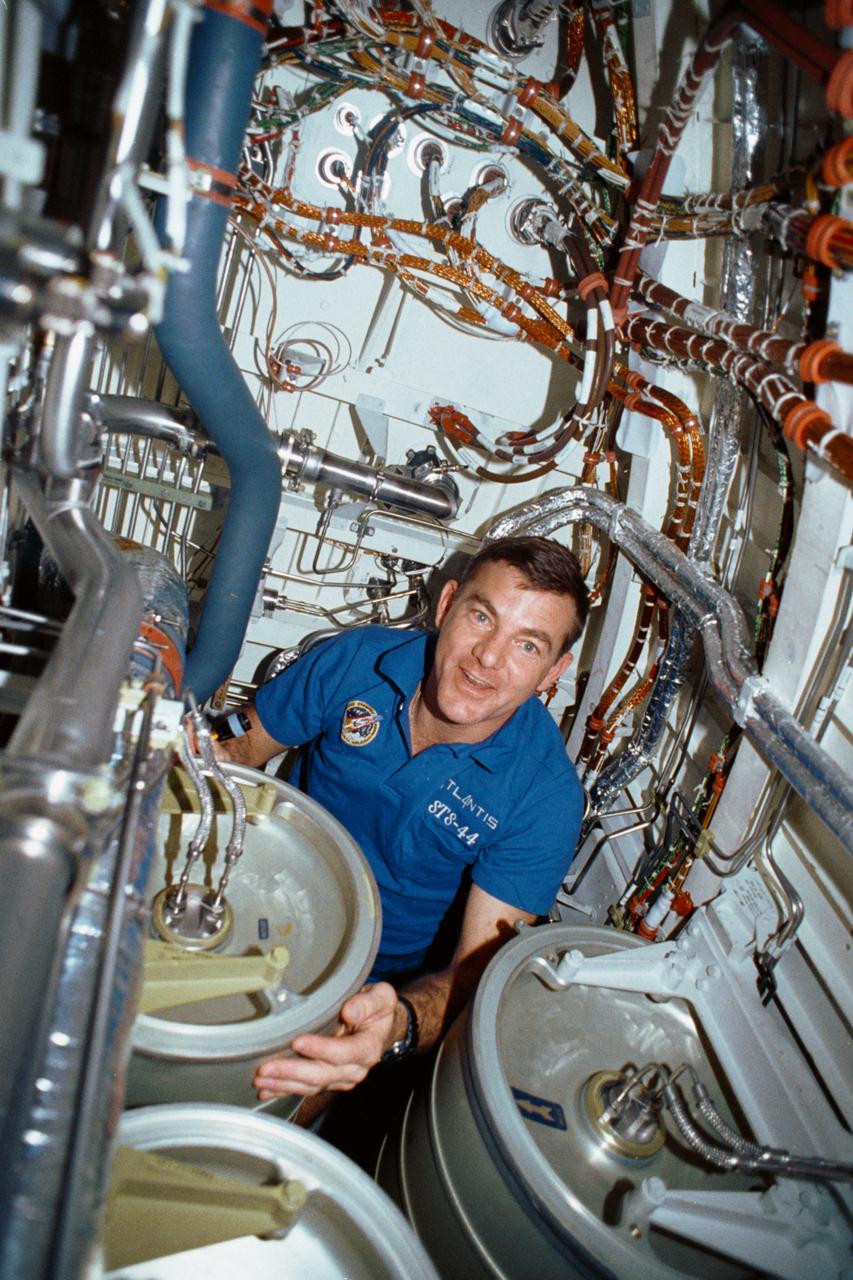
STS-44 Mission Specialist (MS) James S. Voss works under the middeck subfloor of Atlantis, Orbiter Vehicle (OV) 104, to repair humidity separator leakage problems. Voss is surrounded by several water tanks and a maze of shuttle wiring and plumbing. Voss earned the nickname of "Bilge Man" because of his time spent on the lower deck tending to the leakage problem. This is the first photo released of a crewmember in this area of the shuttle.

The crew module separates from service module on Orion's first flight test, Exploration Flight Test-1 (EFT-1), on December 5, 2014.
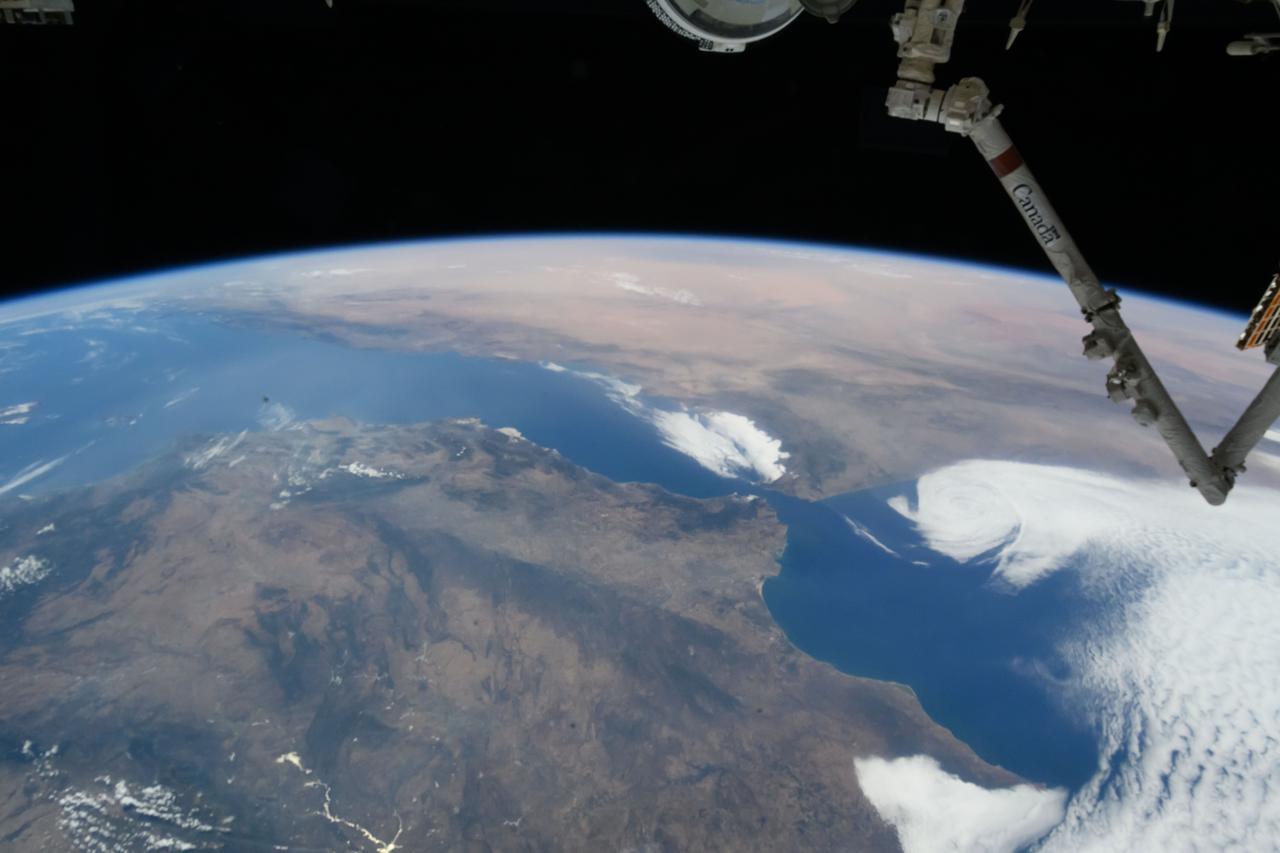
iss071e217183 (June 25, 2024) -- As the International Space Station orbited 263 miles above Earth, NASA astronaut Butch Wilmore captured this image of Spain and Morocco. The Strait of Gibraltar separates the two countries and connects the Atlantic Ocean to the Mediterranean Sea.

ISS019-E-016029 (14 May 2009) --- Japan Aerospace Exploration Agency (JAXA) astronaut Koichi Wakata, Expedition 19/20 flight engineer, performs in-flight maintenance on the Condensate Water Separator Assembly (CWSA) in the Columbus laboratory of the International Space Station.
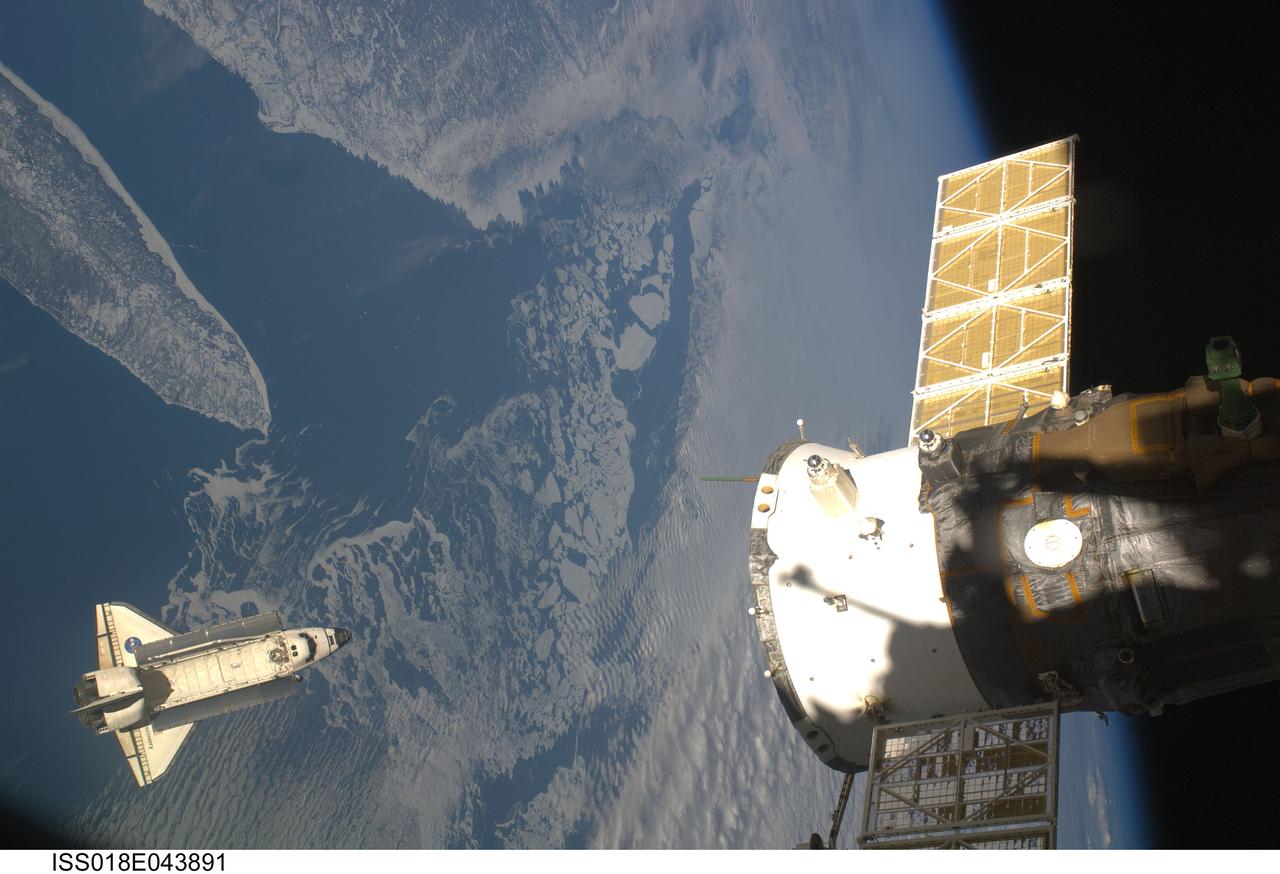
ISS018-E-043891 (25 March 2009) --- Backdropped by a colorful Earth, Space Shuttle Discovery (STS-119) is featured in this image photographed by an Expedition 18 crew member on the International Space Station soon after the shuttle and station began their post-undocking relative separation on March 25, 2009. The featured area is Anticosti Island, off the coast of Newfoundland.
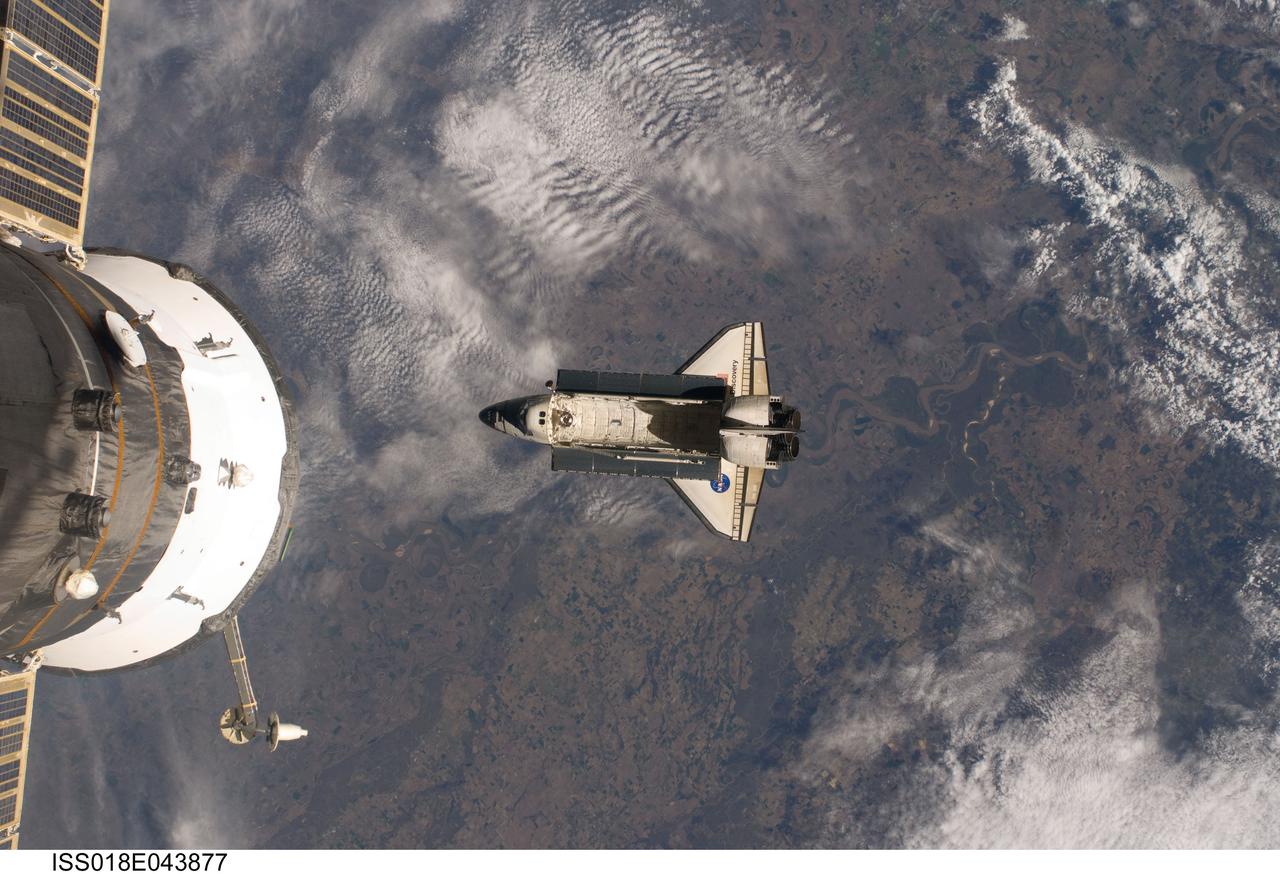
ISS018-E-043877 (25 March 2009) --- Backdropped by a colorful Earth, Space Shuttle Discovery (STS-119) is featured in this image photographed by an Expedition 18 crew member on the International Space Station soon after the shuttle and station began their post-undocking relative separation on March 25, 2009. A portion of a Russian spacecraft docked to the station is at left.
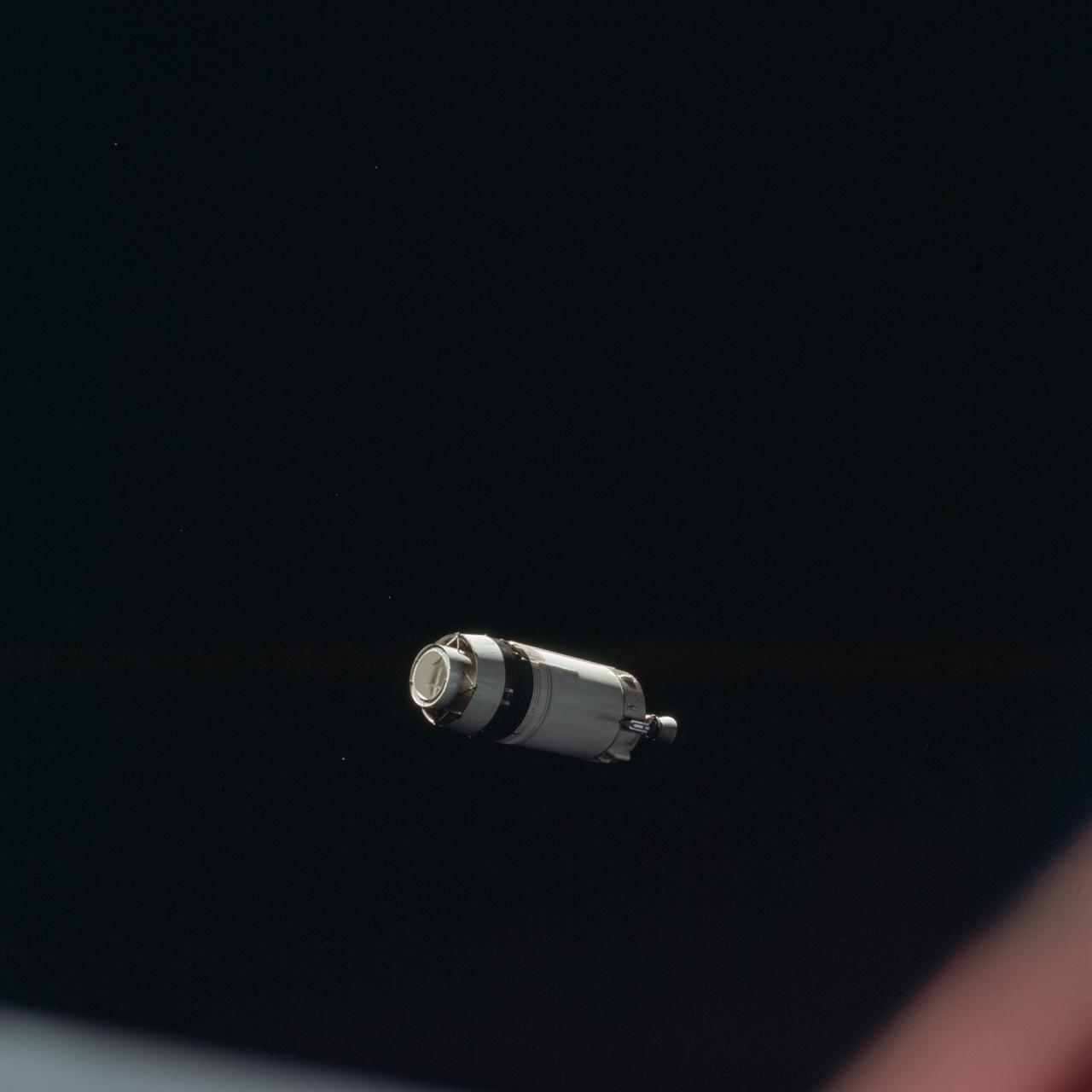
AS08-16-2584 (21 Dec. 1968) --- This is a photograph taken from the Apollo 8 spacecraft looking back at the Saturn V third (S-IVB) stage from which the spacecraft had just separated following trans-lunar injection. Attached to the S-IVB is the Lunar Module Test Article (LTA) which simulated the mass of a Lunar Module (LM) on the Apollo 8 lunar orbit mission. The 29-feet panels of the Spacecraft LM Adapter which enclosed the LTA during launch have already been jettisoned and are out of view. Sunlight reflected from small particles shows the "firefly" phenomenon which was reported by astronaut John H. Glenn Jr. during the first Earth-orbital flight, Mercury-Atlas 6 (MA-6) of the Mercury Program.
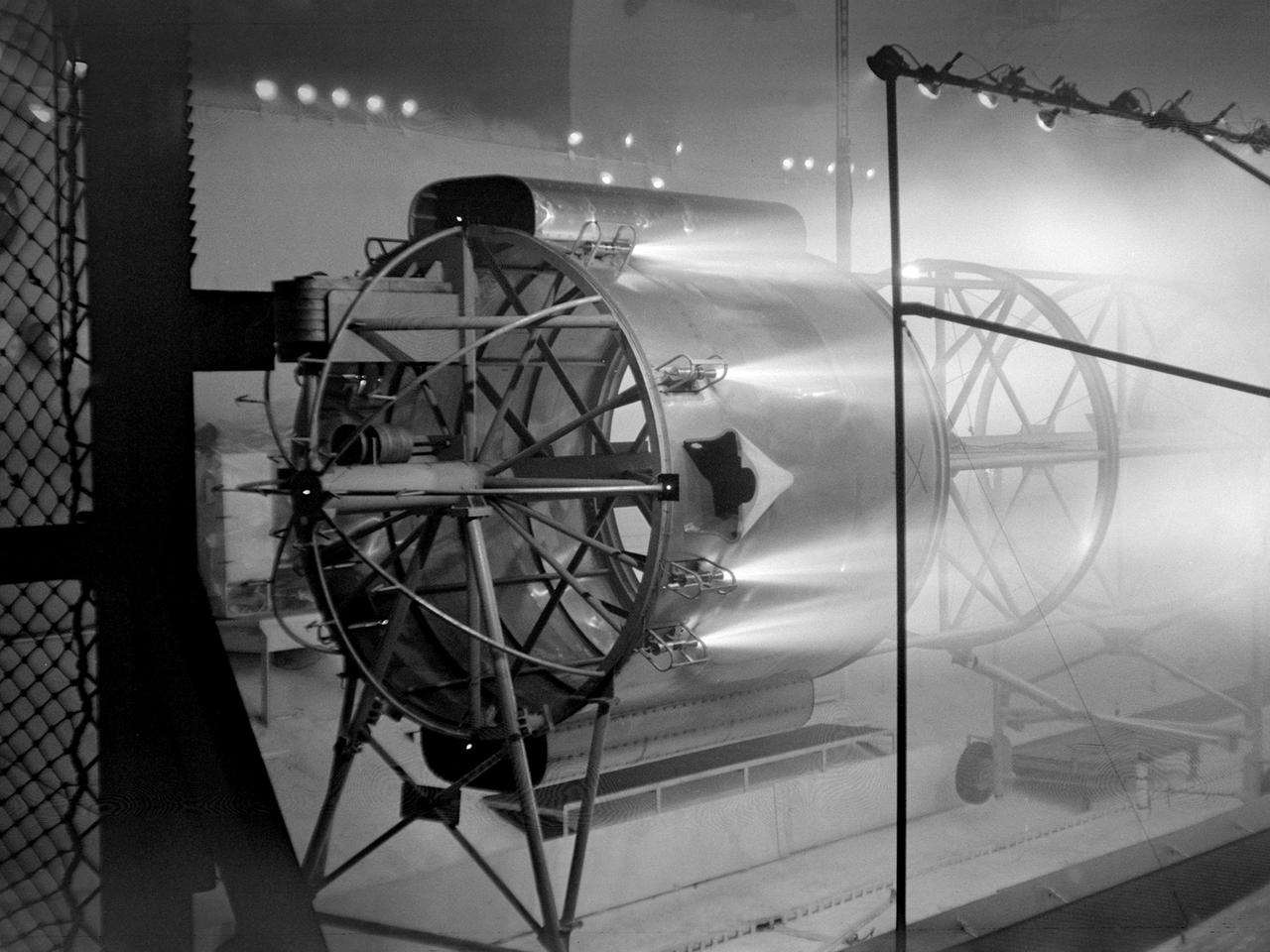
An Atlas/Centaur mass model undergoes a separation test inside the Space Power Chambers at NASA Lewis Research Center. Lewis was in the midst of an extensive effort to prepare the Centaur second-stage rocket for its missions to send the Surveyor spacecraft to the moon as a precursor to the Apollo missions. As part of these preparations, Lewis management decided to convert its Altitude Wind Tunnel into two large test chambers—the Space Power Chambers. The conversion included the removal of the tunnel’s internal components and the insertion of bulkheads to seal off the new chambers within the tunnel. One chamber could simulate conditions found at 100 miles altitude, while this larger chamber simulated the upper atmosphere. In this test series, researchers wanted to verify that the vehicle’s retrorockets would properly separate the Centaur from the Atlas. The model was suspended horizontally on a trolley system inside chamber. A net was hung at one end to catch the jettisoned Atlas model. The chamber atmosphere was reduced to a pressure altitude of 100,000 feet, and high-speed cameras were synchronized to the ignition of the retrorockets. The simulated Centaur is seen here jettisoning from the Atlas out of view to the right. The study resulted in a new jettison method that would significantly reduce the separation time and thus minimize the danger of collision between the two stages during separation.
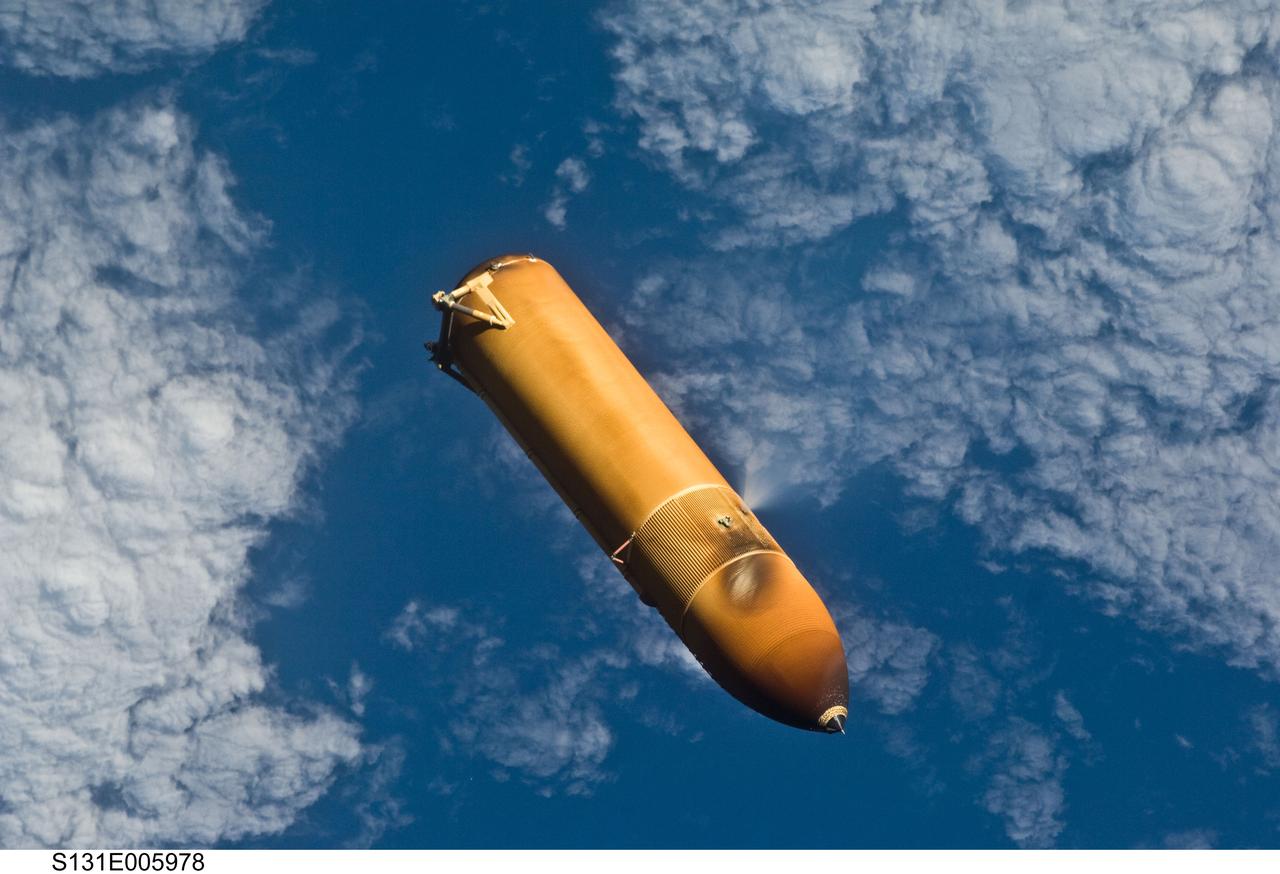
S131-E-005978 (5 April 2010) --- Backdropped by a blue and white part of Earth, the STS-131 external fuel tank (ET) begins its relative separation from the Space Shuttle Discovery following launch.
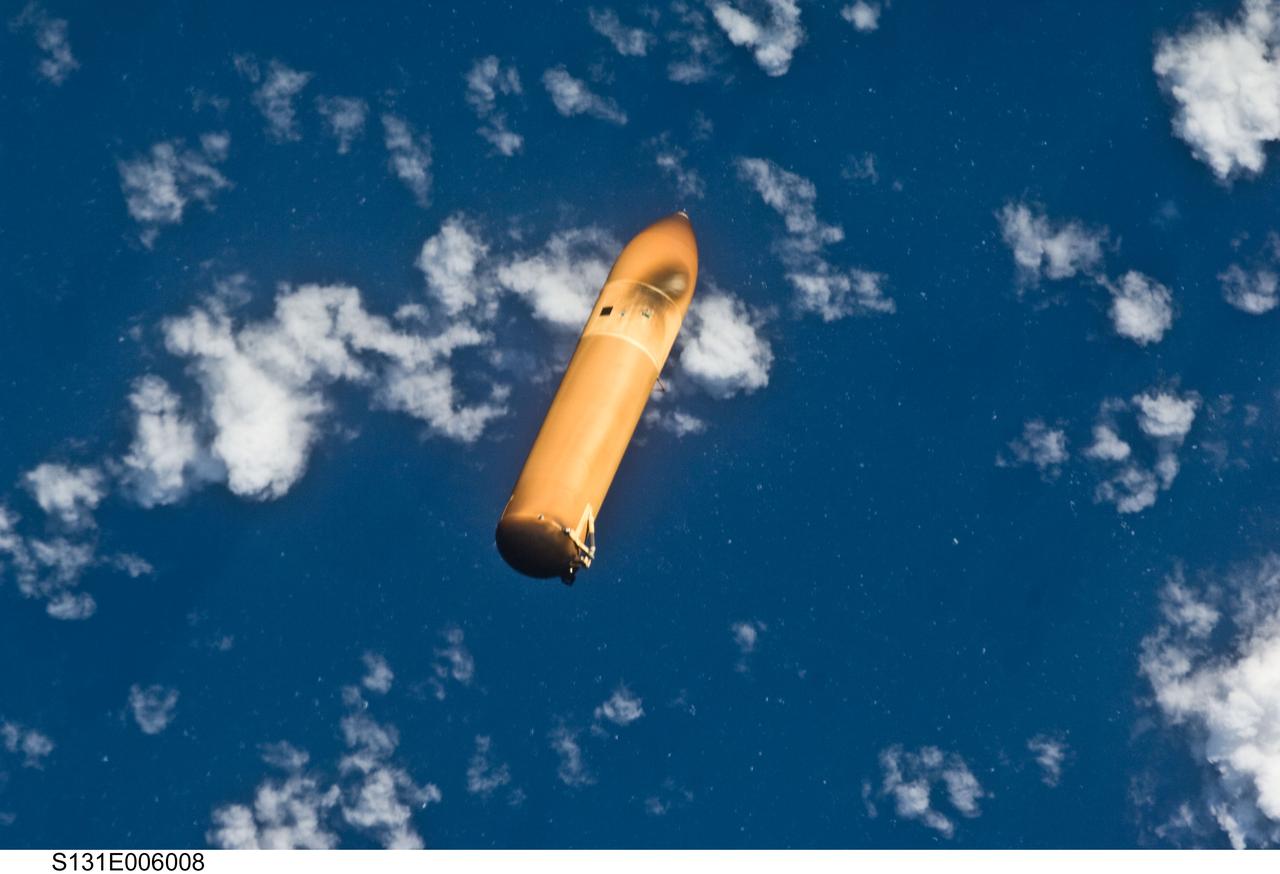
S131-E-006008 (5 April 2010) --- Backdropped by a blue and white part of Earth, the STS-131 external fuel tank (ET) begins its relative separation from the Space Shuttle Discovery following launch.
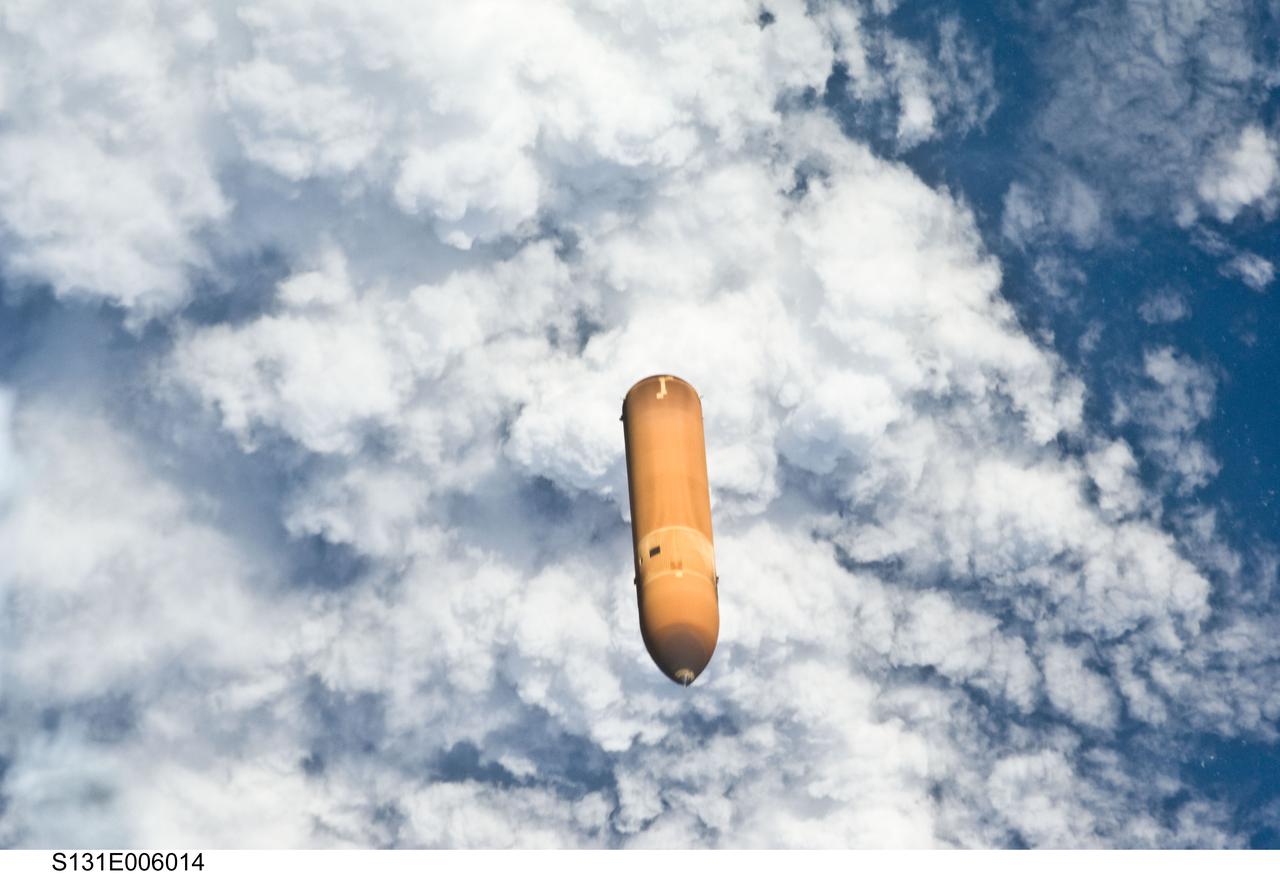
S131-E-006014 (5 April 2010) --- Backdropped by a cloud-covered part of Earth, the STS-131 external fuel tank (ET) begins its relative separation from the Space Shuttle Discovery following launch.
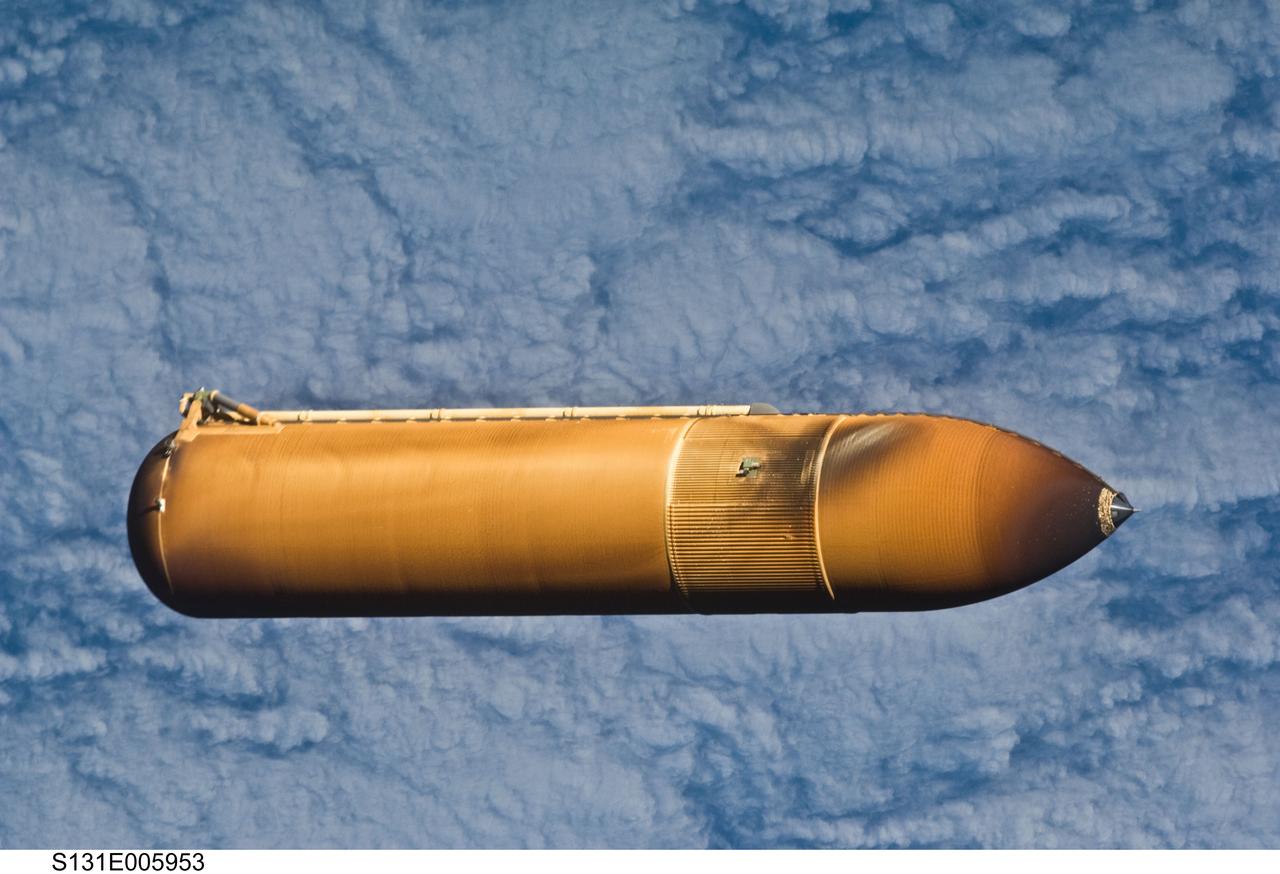
S131-E-005953 (5 April 2010) --- Backdropped by a cloud-covered part of Earth, the STS-131 external fuel tank (ET) begins its relative separation from the Space Shuttle Discovery following launch.
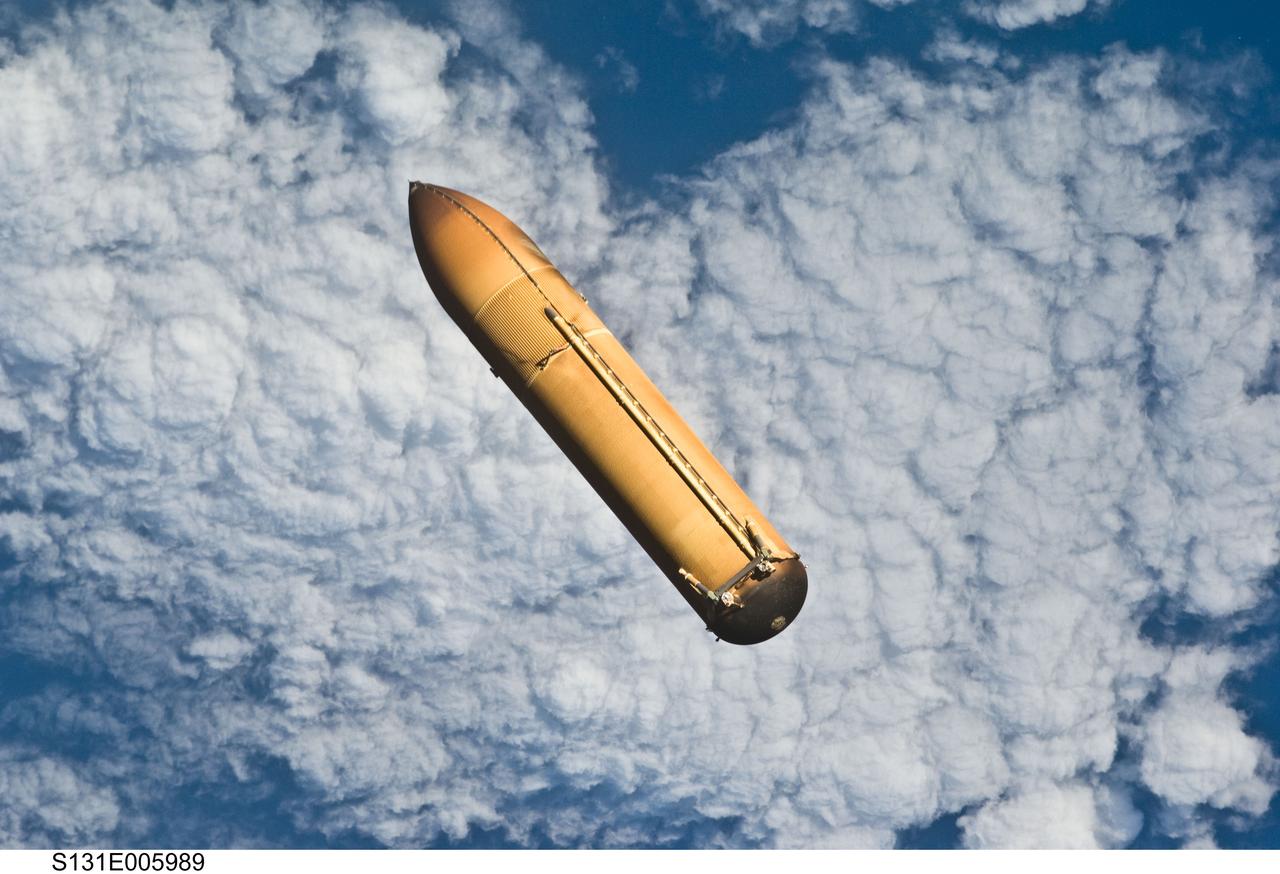
S131-E-005989 (5 April 2010) --- Backdropped by a blue and white part of Earth, the STS-131 external fuel tank (ET) begins its relative separation from the Space Shuttle Discovery following launch.

iss072e397138 (Dec. 19, 2024) --- The Himalayas separate the arid steppe of China's Tibetan Plateau from a cloudy Indian subcontinent in this photograph from the International Space Station as it soared 261 miles above Asia.
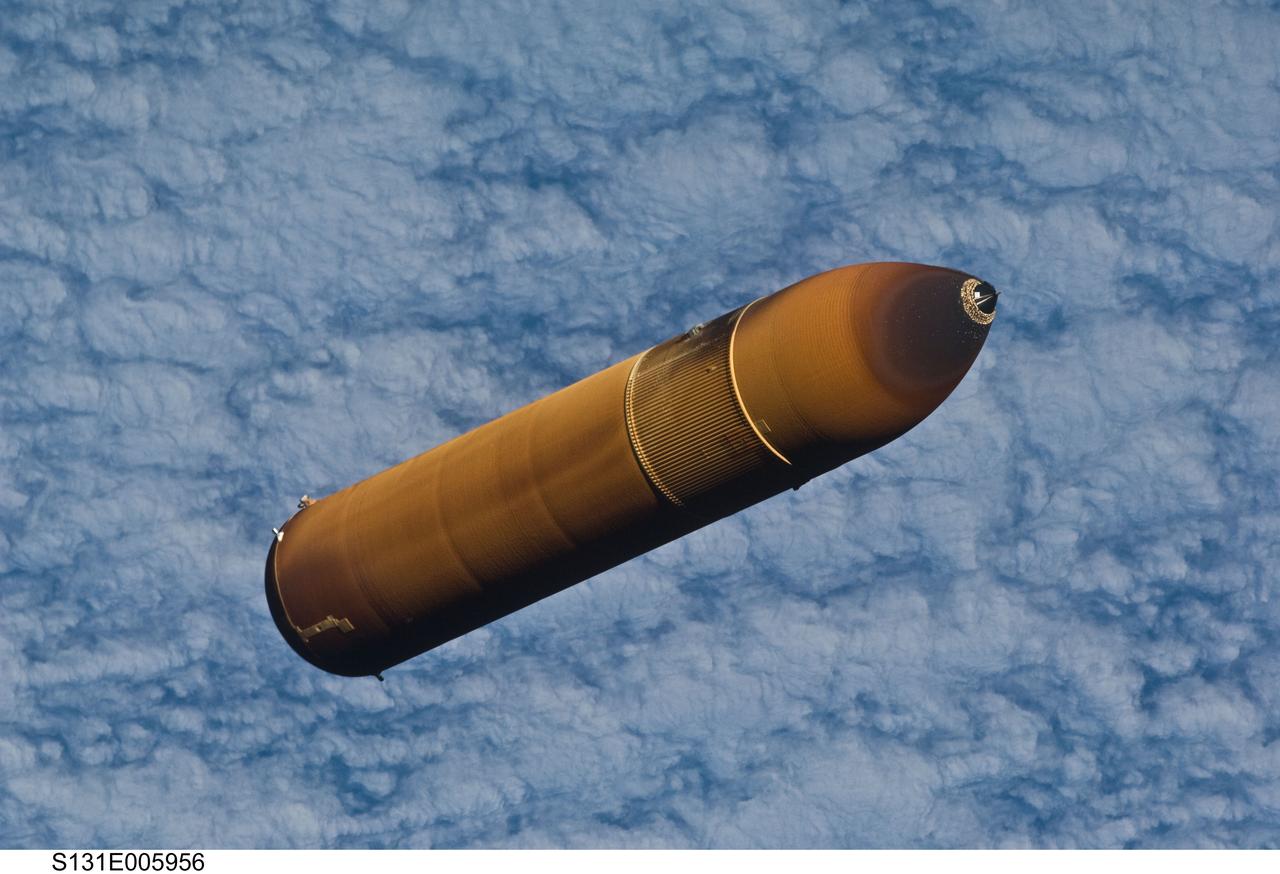
S131-E-005956 (5 April 2010) --- Backdropped by a cloud-covered part of Earth, the STS-131 external fuel tank (ET) begins its relative separation from the Space Shuttle Discovery following launch.
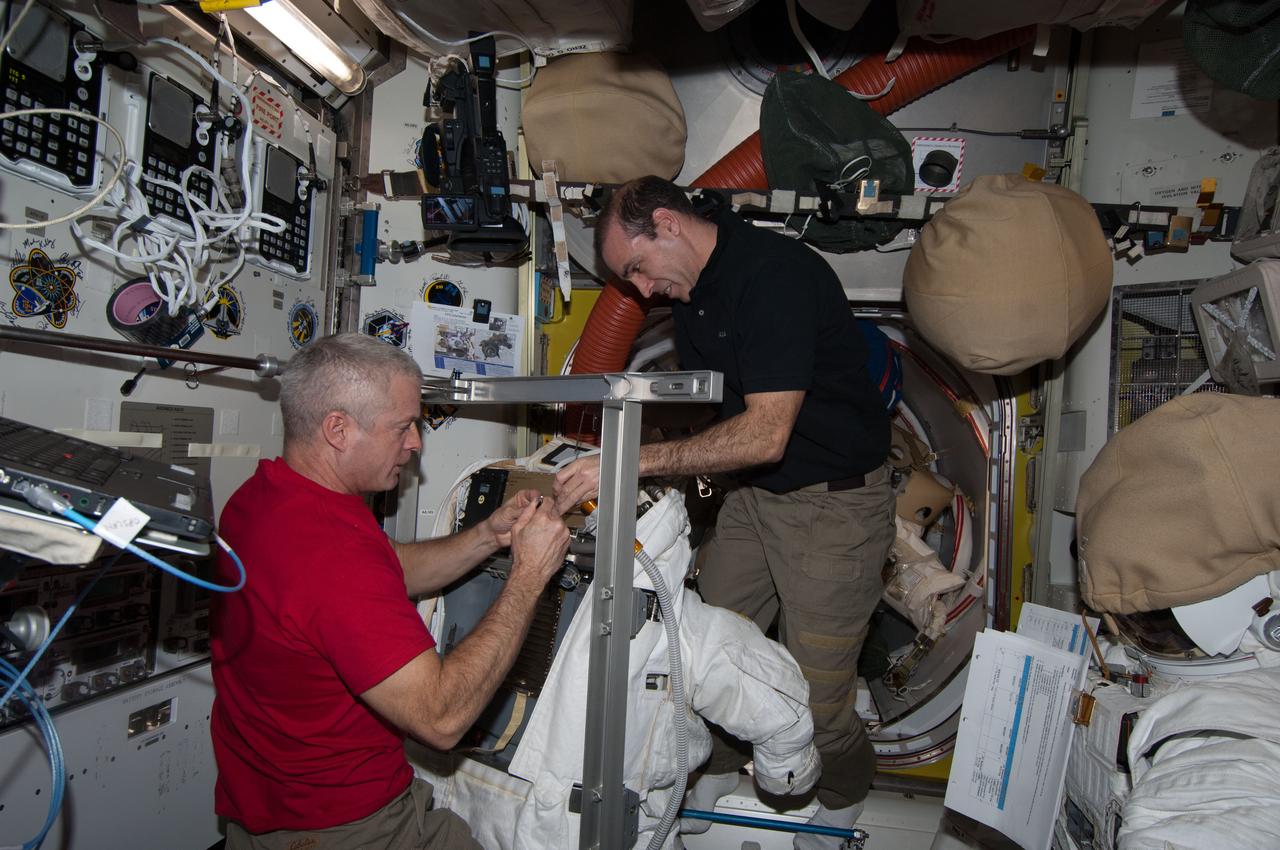
Expedition 39 flight engineers Steve Swanson and Rick Mastracchio work to remove and replace the Fan Pump Separator (FPS) on Extravehicular Mobility Unit (EMU) 3005. Image was taken in the Quest Airlock (A/L) and was released by Swanson on Instagram.
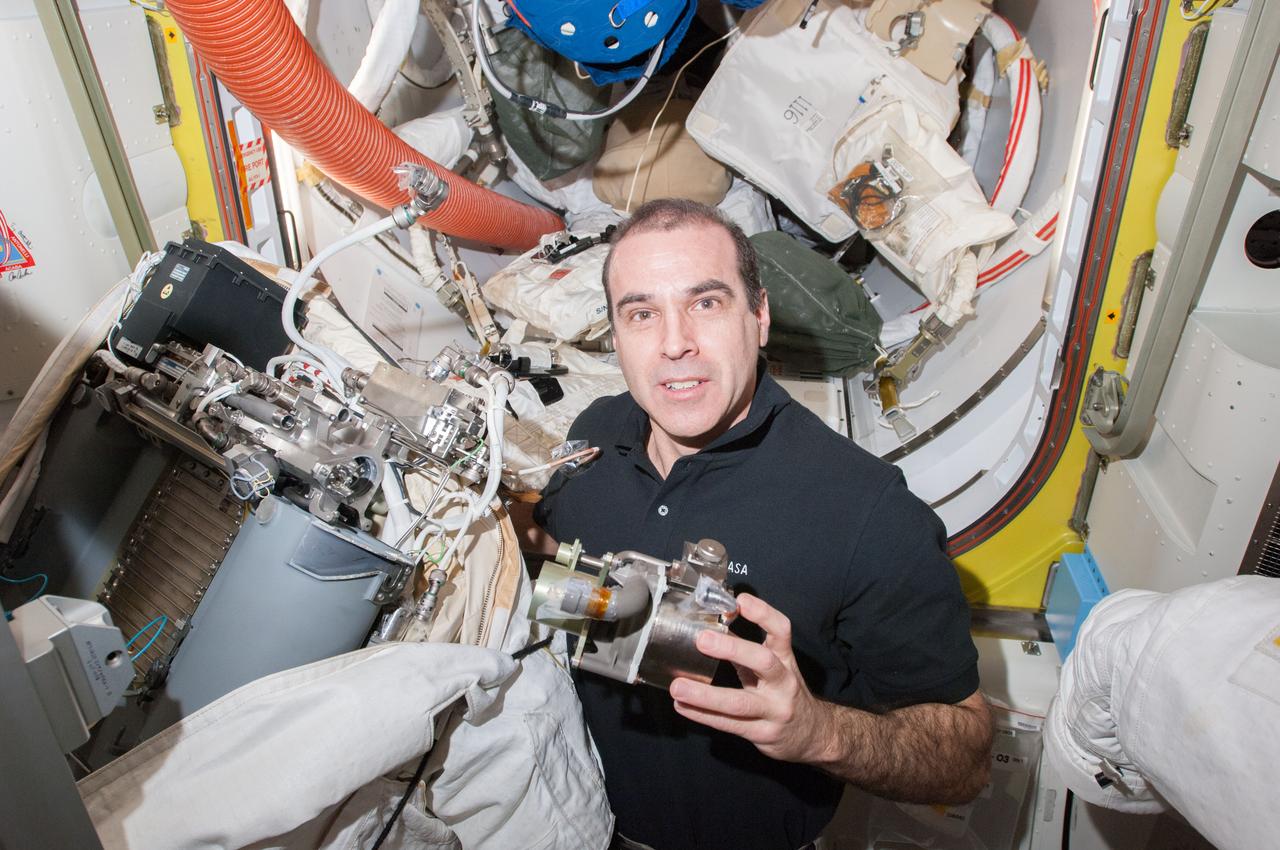
Expedition 39 flight engineer Rick Mastracchio poses for a photo with the replacement Fan Pump Separator (FPS) and Extravehicular Mobility Unit (EMU) 3005. Image was taken in the Quest Airlock (A/L) during FPS remove and replace operations.
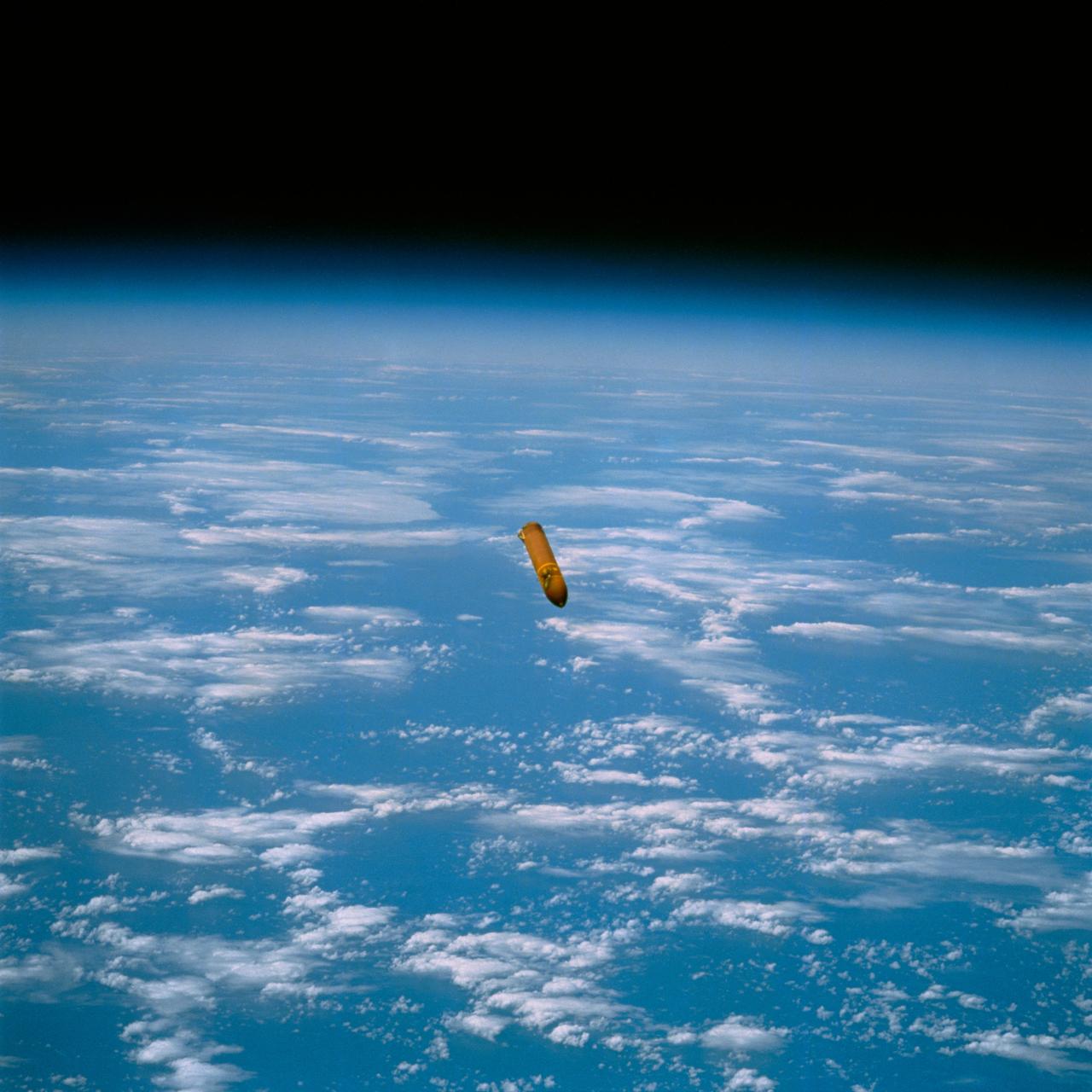
STS029-72-059 (13 March 1989) --- This 70mm photograph, taken by Astronaut James P. Bagian 16 minutes and 7 seconds after liftoff of Discovery, shows the external fuel tank (ET) against the background of Earth. The tank is falling away from the orbiter following ET separation. The left side shows the burn scar above the solid rocket booster (SRB) forward attach point. The burn is caused by the forward SRB separation motors firing during SRB separation. Post 51-L analysis of the thermal and pressure effects of the separation motor exhaust plume indicate that the scarring is not a safety hazard. However, photographs such as this one were requested for additional missions in order to document the phenomenon and corroborate this conclusion. The photo was made at 15:13:07 GMT, March 13, 1989. It was among the visuals used by the crew at its Mar. 28, 1989 post-flight press conference.
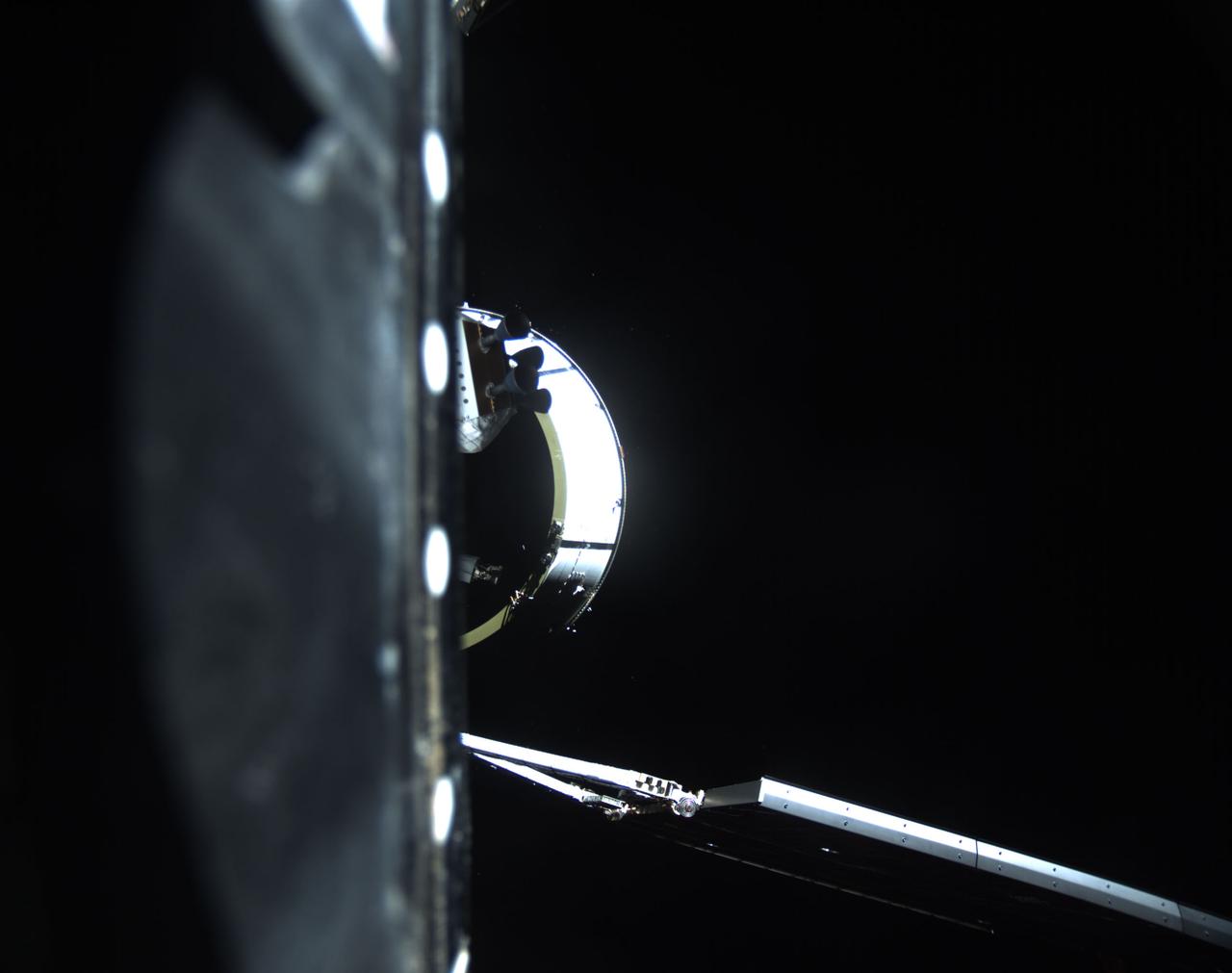
art001e001577 (Nov. 16, 2022) Approximately two hours after Artemis I launch on Nov. 16, 2022, the interim cryogenic propulsion stage separated from Orion after completing the translunar injection burn that put the spacecraft on course toward the Moon.
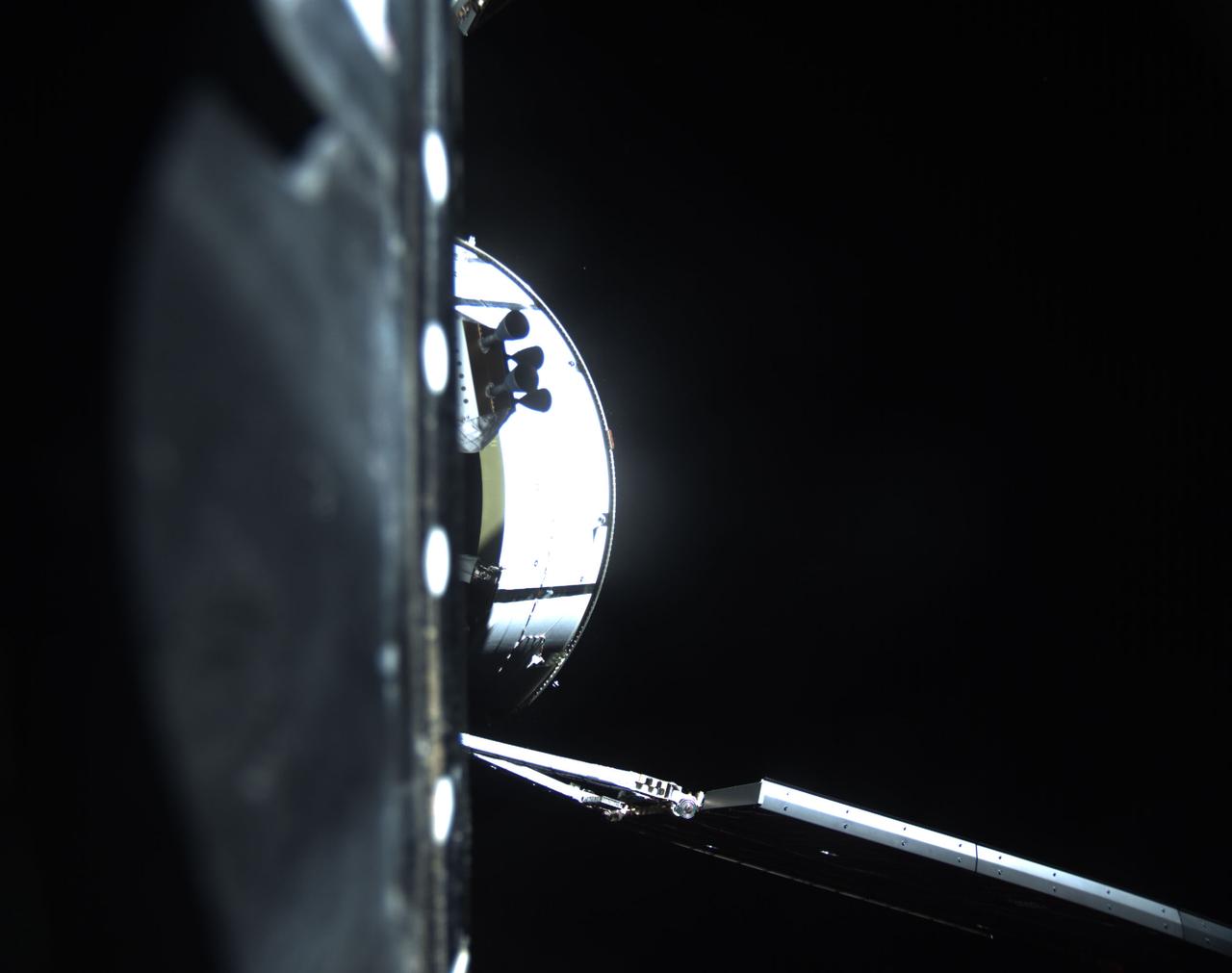
art001e001546 (Nov. 16, 2022) Approximately two hours after Artemis I launch on Nov. 16, 2022, the interim cryogenic propulsion stage separated from Orion after completing the translunar injection burn that put the spacecraft on course toward the Moon.
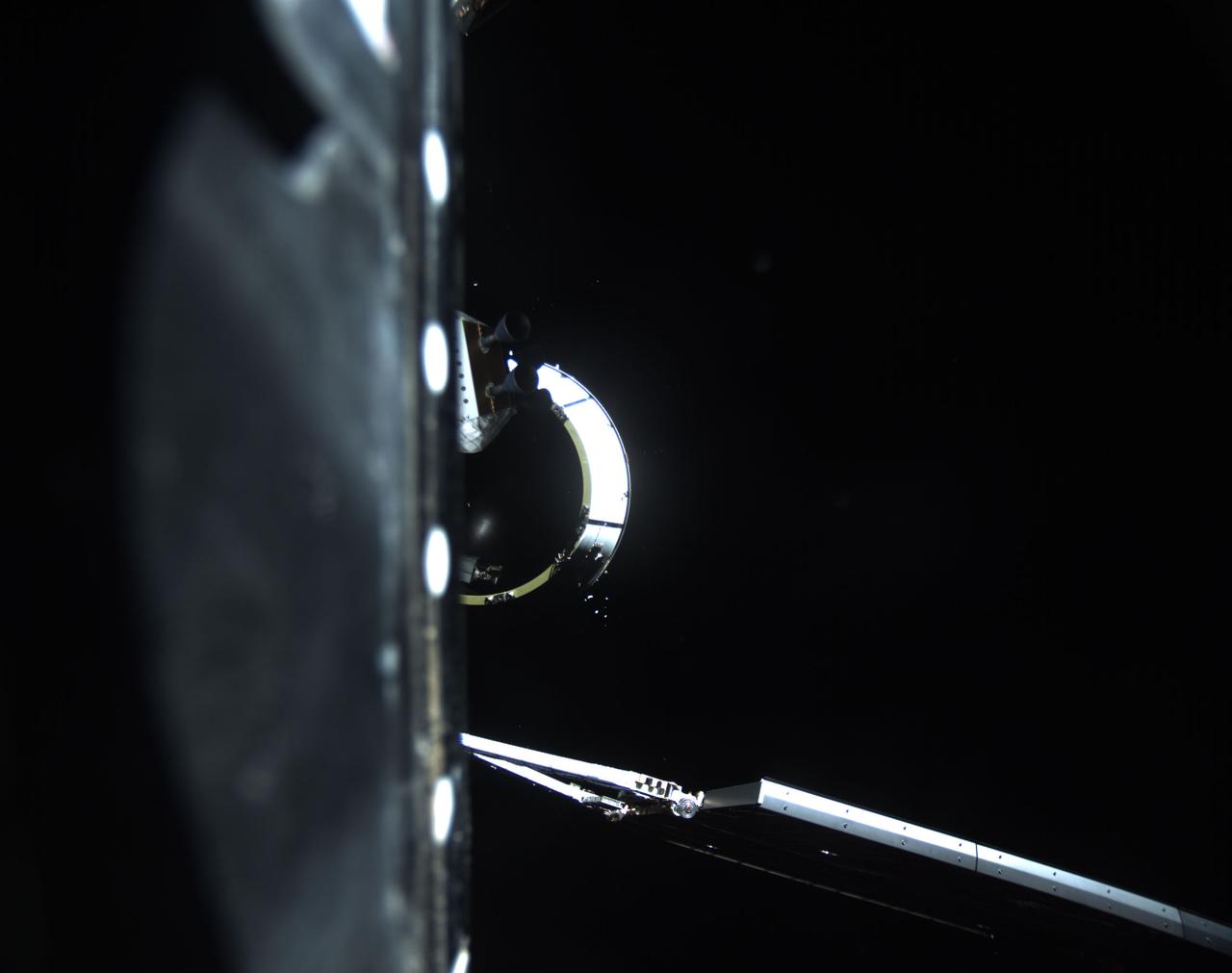
art001e001610 (Nov. 16, 2022) Approximately two hours after Artemis I launch on Nov. 16, 2022, the interim cryogenic propulsion stage separated from Orion after completing the translunar injection burn that put the spacecraft on course toward the Moon.
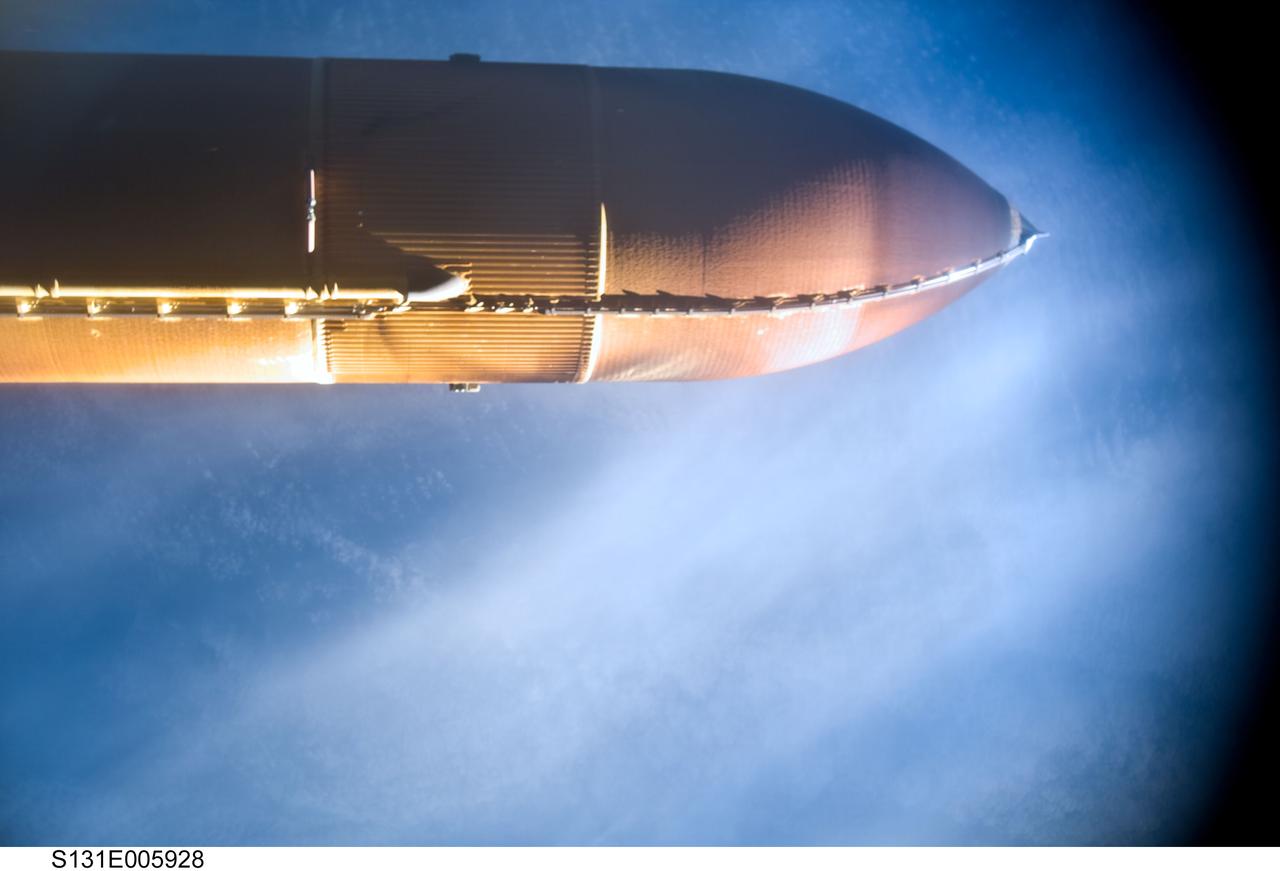
S131-E-005928 (5 April 2010) --- Space shuttle Discovery?s external fuel tank (ET) is featured in this image photographed by the umbilical well camera aboard Discovery shortly after separating from the shuttle following launch.
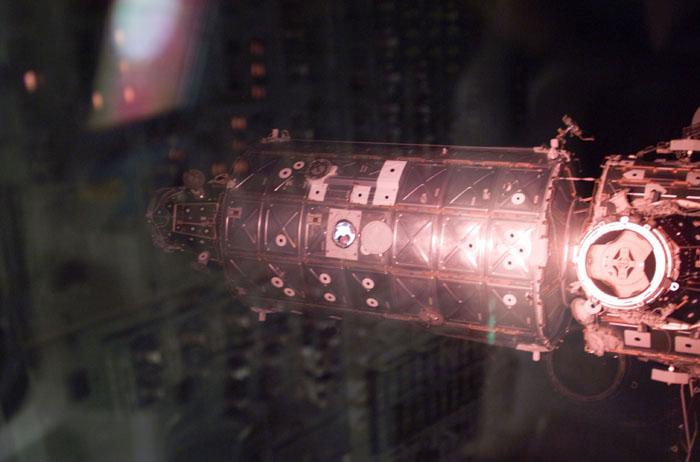
STS98-E-5304 (16 February 2001) --- The faces of some members of the Expedition One crew can be seen in the window of the newly attached Destiny laboratory as the International Space Station (ISS) and the Space Shuttle Atlantis (from which the digital still was taken) begin their relative separation.

iss072e436132 (Dec. 28, 2024) --- The Korea Strait separates Busan, Korea (bottom left), and Fukuoka, Japan, in this photograph taken approximately 12:55 a.m. local time from the International Space Station as it orbited 258 miles above the Korean coast. Toward the top right, are the city lights of Osaka, Nagoya, and Tokyo.
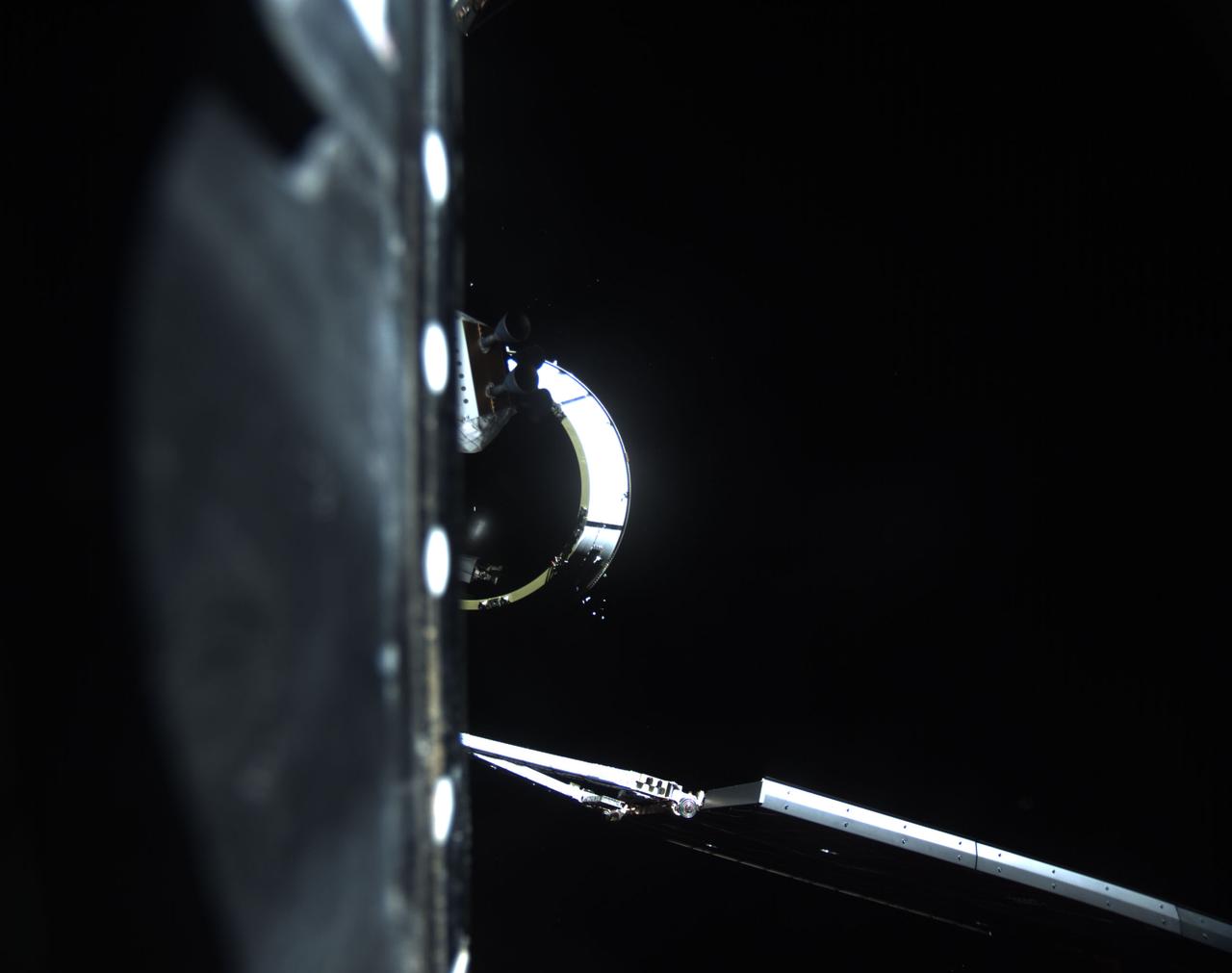
art001e001606 (Nov. 16, 2022) Approximately two hours after Artemis I launch on Nov. 16, 2022, the interim cryogenic propulsion stage separated from Orion after completing the translunar injection burn that put the spacecraft on course toward the Moon.
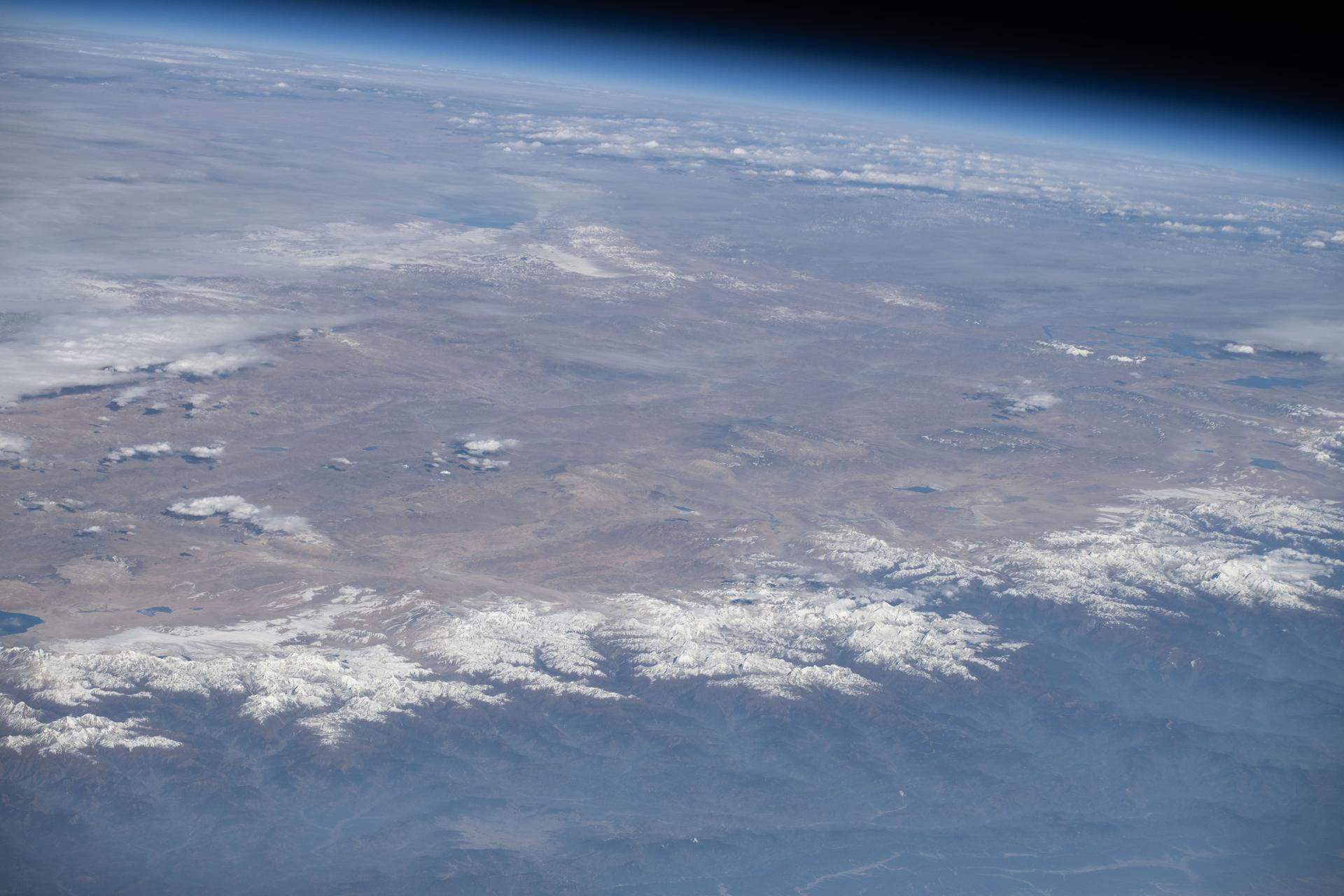
iss074e0002581 (Dec. 14, 2025) --- The International Space Station was orbiting 260 miles above Indravati National Park in central India when this photograph of the Himalayas—more than 700 miles away—was taken, showing the mountain range that separates the Indian subcontinent from Asia.
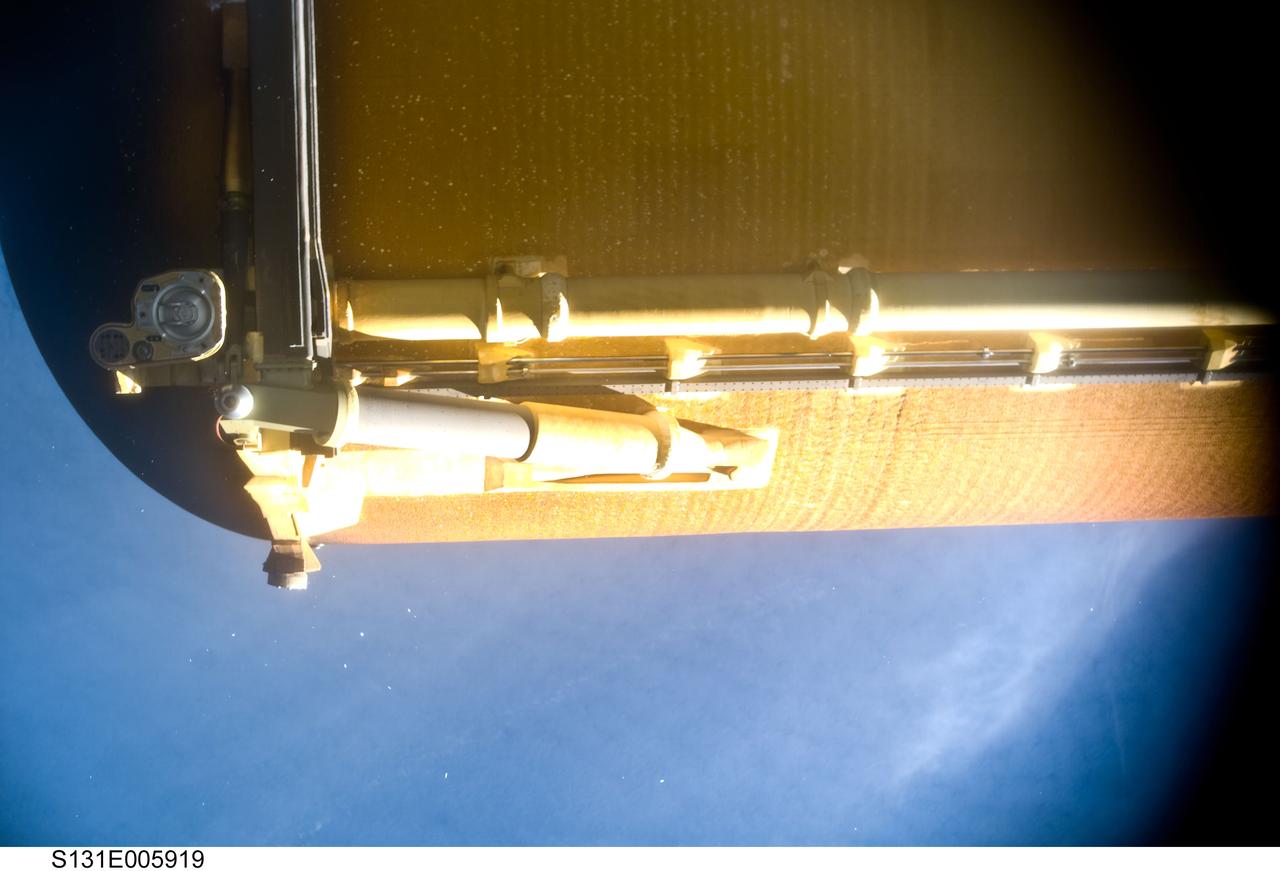
S131-E-005919 (5 April 2010) --- Space shuttle Discovery?s external fuel tank (ET) is featured in this image photographed by the umbilical well camera aboard Discovery shortly after separating from the shuttle following launch.
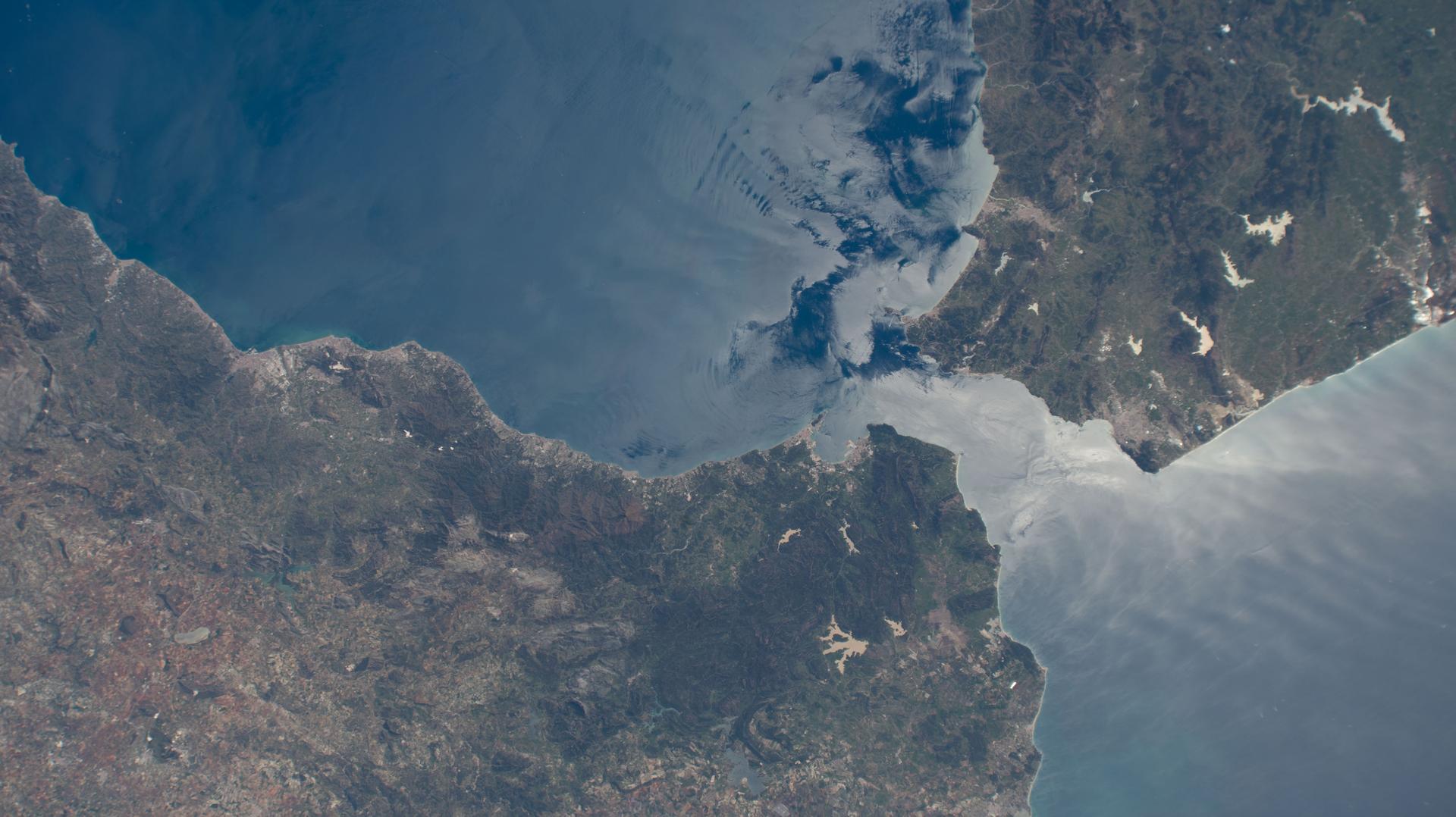
iss074e0425752 (March 29, 2026) --- The Strait of Gibraltar separates the European nation of Spain (left) from the African nation of Morocco (right) and connects the Atlantic Ocean to the Mediterranean Sea. The International Space Station was orbiting 266 miles above Spain at the time of this photograph. Credit: NASA
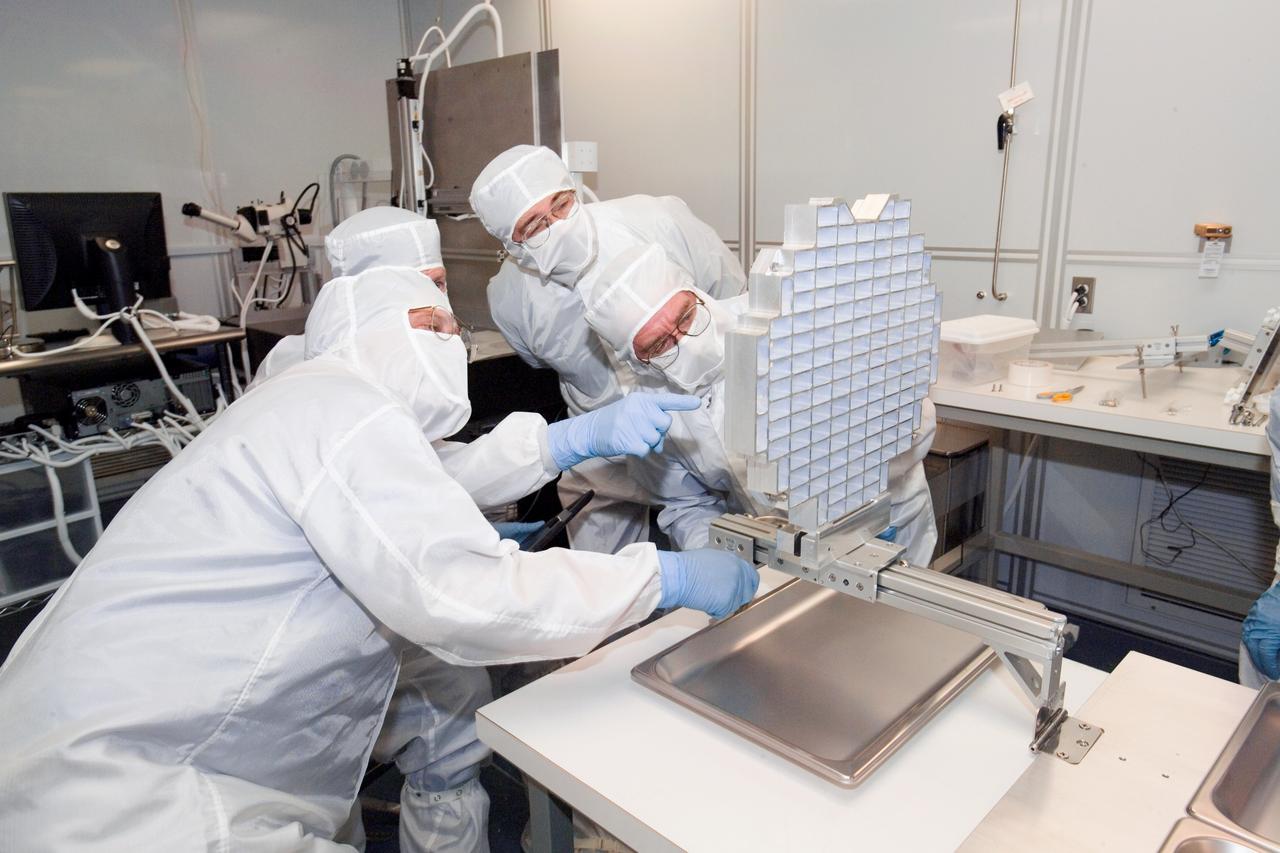
Stardust Photo documentation of Stardust Sample Return and Tray Separation at bldg 31, Stardust laboratory at JSC. The JSC Curation Team begins work with sample containers.
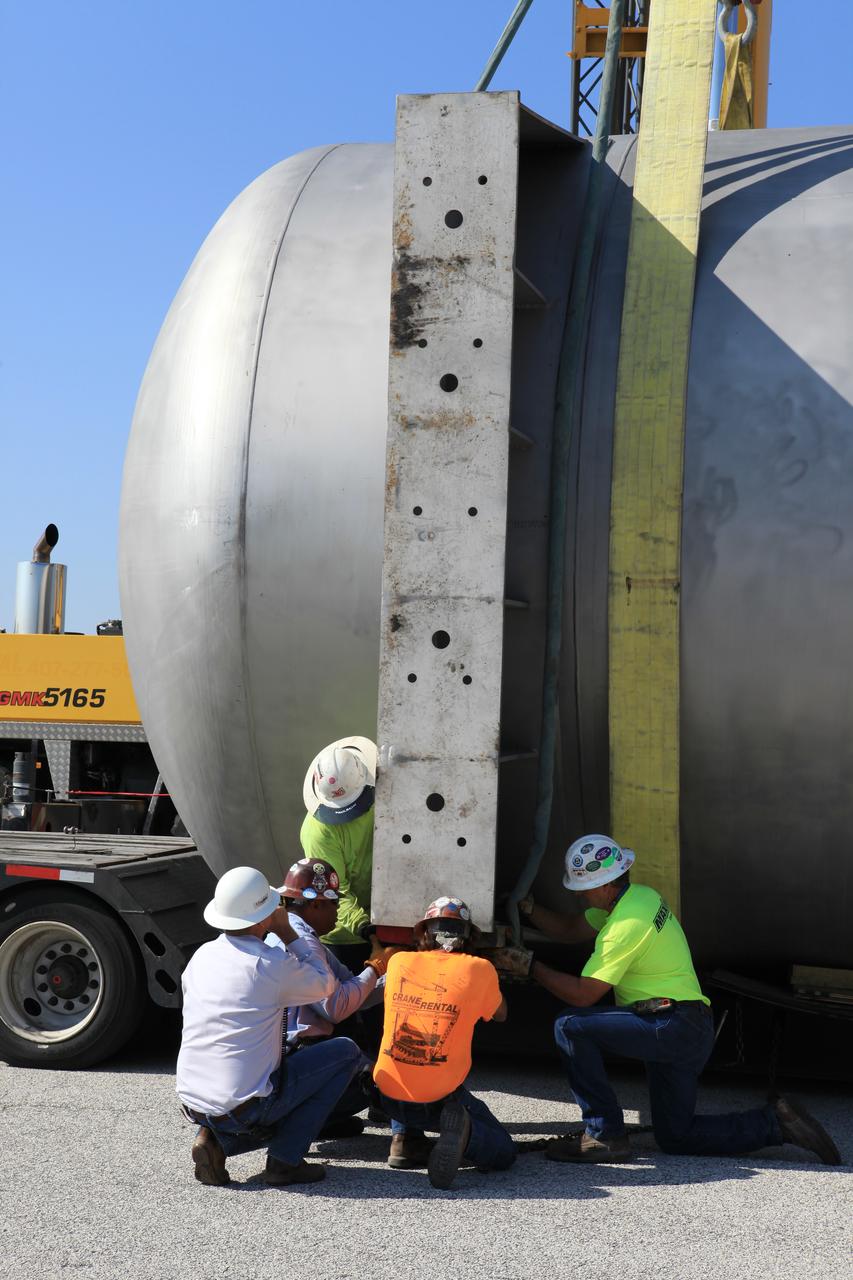
A new liquid hydrogen separator tank arrives at NASA's Kennedy Space Center in Florida. Construction workers check lines as a crane is attached to the tank to lift and rotate it before it is delivered to Launch Pad 39B. The new separator/storage tank will be added to the pad's existing hydrogen vent system to assure gaseous hydrogen is delivered downstream to the flare stack. The 60,000 gallon tank was built by INOXCVA, in Baytown, Texas, a subcontractor of Precision Mechanical Inc. in Cocoa Florida. The new tank will support all future launches from the pad.
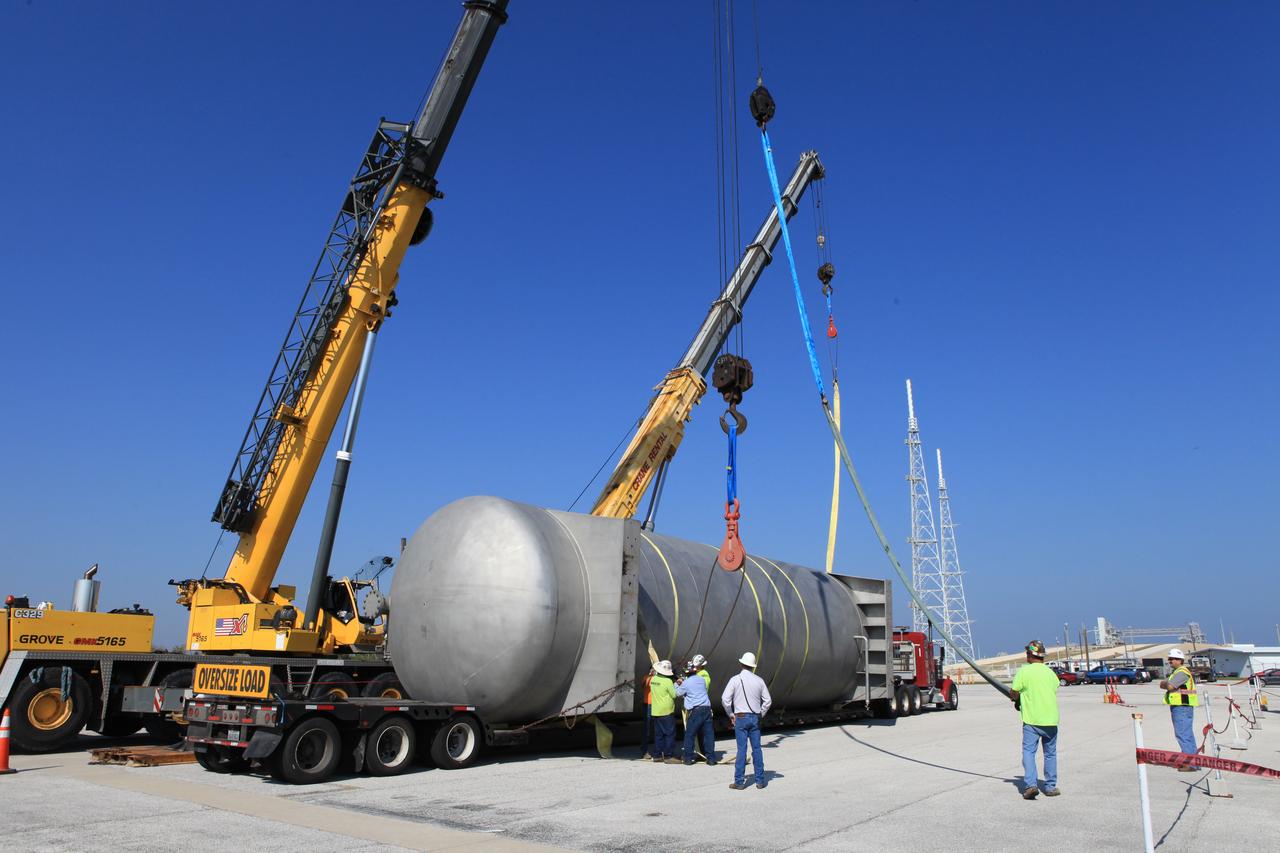
A new liquid hydrogen separator tank arrives at NASA's Kennedy Space Center in Florida. A crane is used to lift and rotate the tank before delivery to Launch Pad 39B. The new separator/storage tank will be added to the pad's existing hydrogen vent system to assure gaseous hydrogen is delivered downstream to the flare stack. The 60,000 gallon tank was built by INOXCVA, in Baytown, Texas, a subcontractor of Precision Mechanical Inc. in Cocoa Florida. The new tank will support all future launches from the pad.
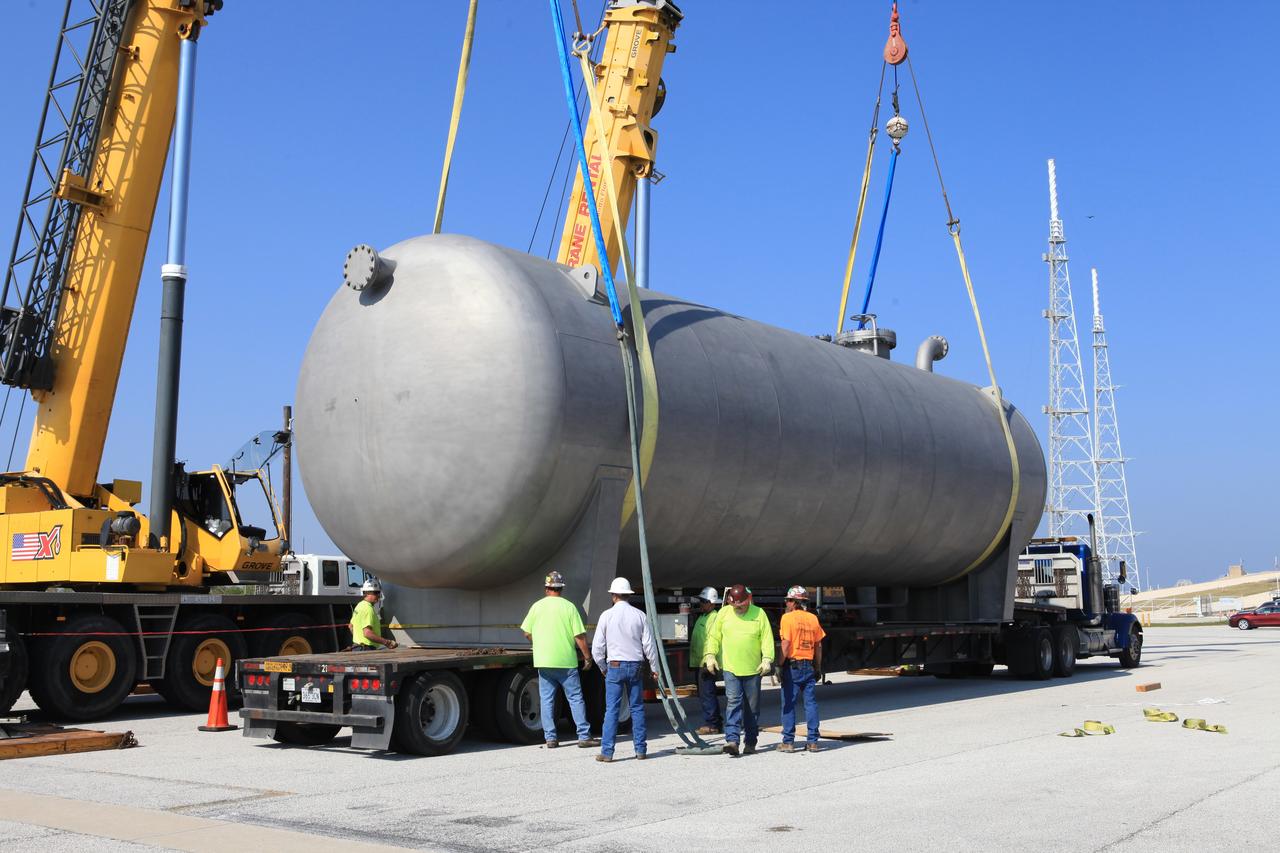
A new liquid hydrogen separator tank arrives at NASA's Kennedy Space Center in Florida. The tank has been lifted and rotated by crane and lowered back onto the flatbed truck for transport to Launch Pad 39B. The new separator/storage tank will be added to the pad's existing hydrogen vent system to assure gaseous hydrogen is delivered downstream to the flare stack. The 60,000 gallon tank was built by INOXCVA, in Baytown, Texas, a subcontractor of Precision Mechanical Inc. in Cocoa Florida. The new tank will support all future launches from the pad.
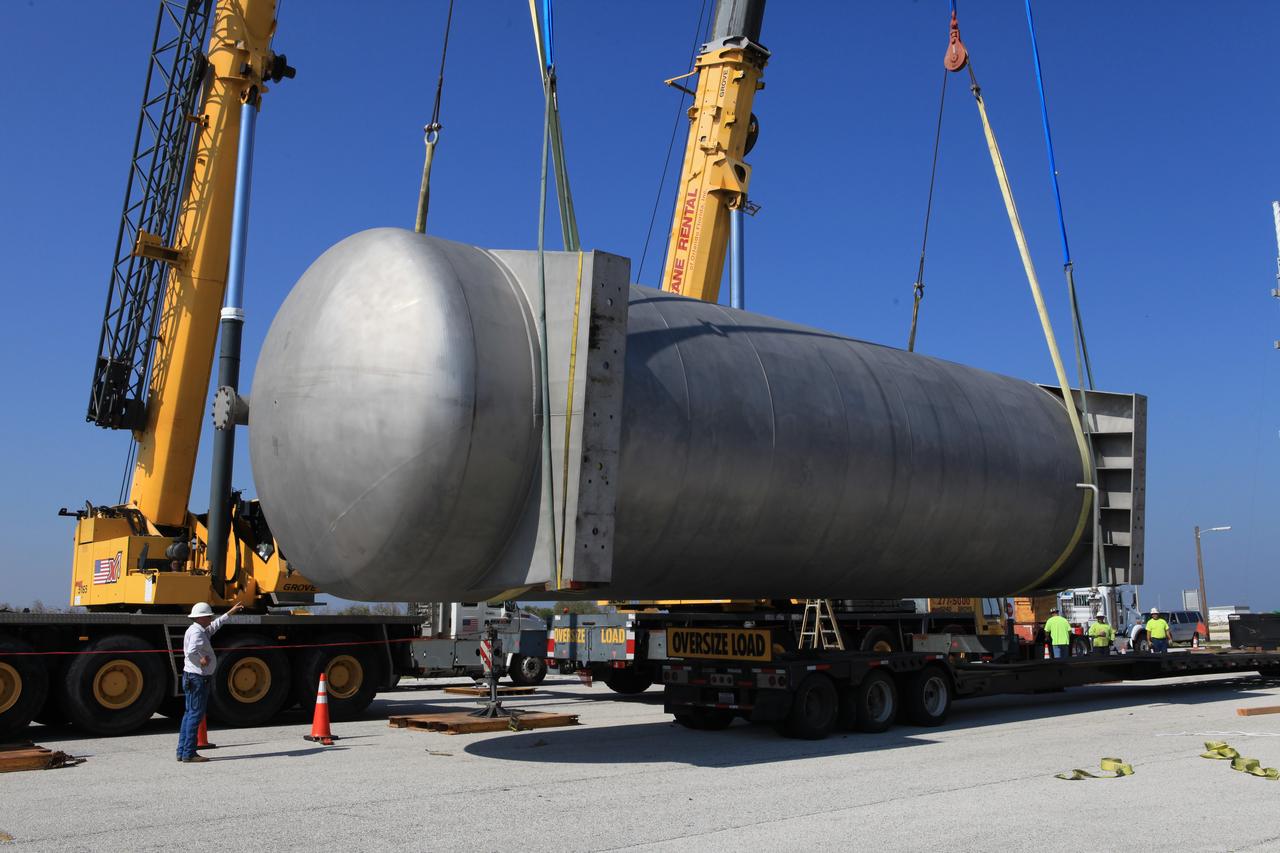
A new liquid hydrogen separator tank arrives at NASA's Kennedy Space Center in Florida. A crane has been attached to the tank to lift and rotate it before it is delivered to Launch Pad 39B. The new separator/storage tank will be added to the pad's existing hydrogen vent system to assure gaseous hydrogen is delivered downstream to the flare stack. The 60,000 gallon tank was built by INOXCVA, in Baytown, Texas, a subcontractor of Precision Mechanical Inc. in Cocoa Florida. The new tank will support all future launches from the pad.
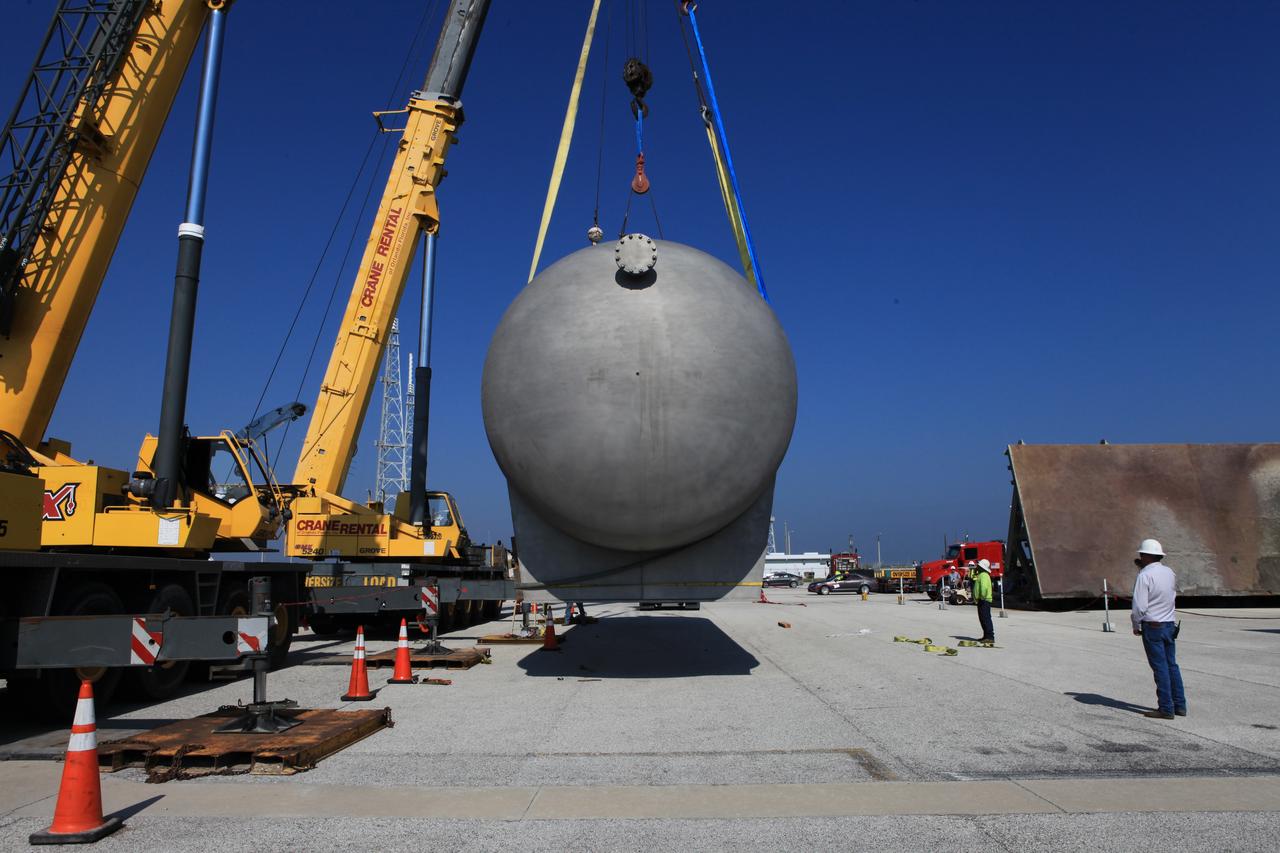
A new liquid hydrogen separator tank arrives at NASA's Kennedy Space Center in Florida. A crane is used to lift and rotate the tank before it is delivered to Launch Pad 39B. The new separator/storage tank will be added to the pad's existing hydrogen vent system to assure gaseous hydrogen is delivered downstream to the flare stack. The 60,000 gallon tank was built by INOXCVA, in Baytown, Texas, a subcontractor of Precision Mechanical Inc. in Cocoa Florida. The new tank will support all future launches from the pad.
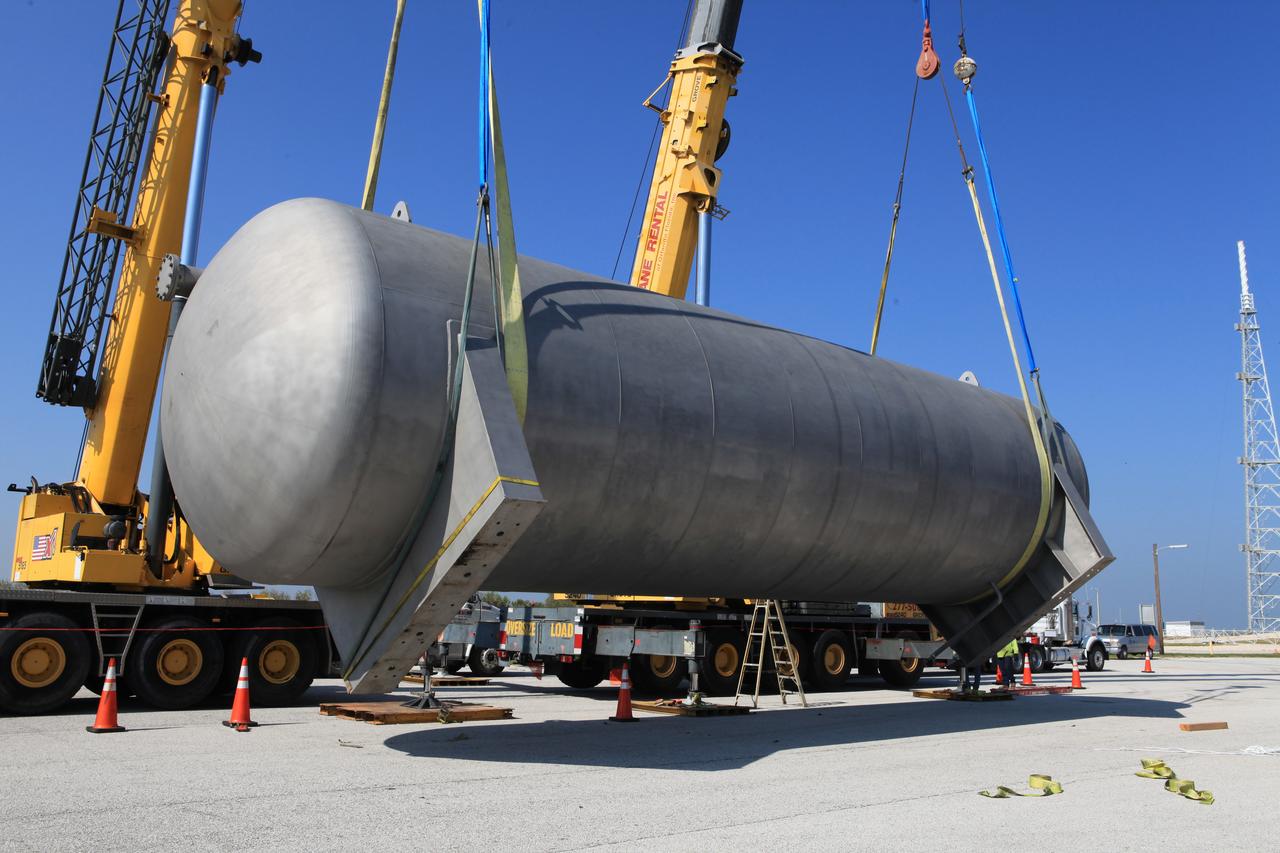
A new liquid hydrogen separator tank arrives at NASA's Kennedy Space Center in Florida. A crane is used to lift the tank and rotate it before it is delivered to Launch Pad 39B. The new separator/storage tank will be added to the pad's existing hydrogen vent system to assure gaseous hydrogen is delivered downstream to the flare stack. The 60,000 gallon tank was built by INOXCVA, in Baytown, Texas, a subcontractor of Precision Mechanical Inc. in Cocoa Florida. The new tank will support all future launches from the pad.
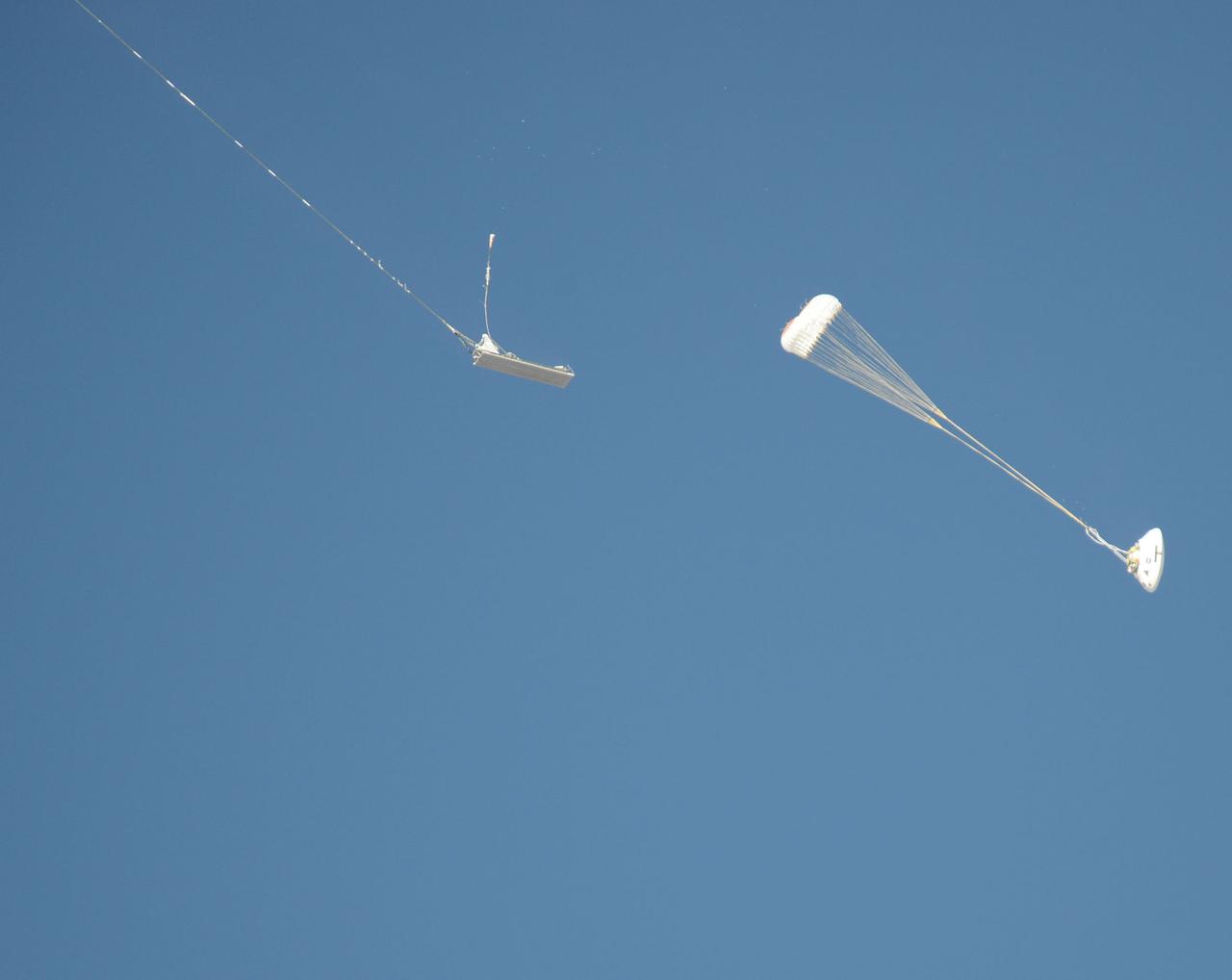
An Orion parachute test enters a new phase following separation from a platform.
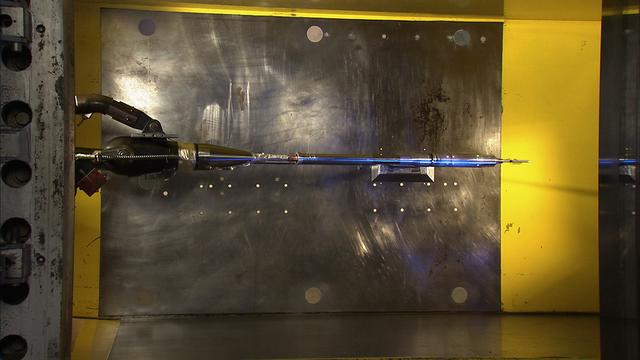
Under the goals of the Vision for Space Exploration, Ares I is a chief component of the cost-effective space transportation infrastructure being developed by NASA's Constellation Program. This transportation system will safely and reliably carry human explorers back to the moon, and then onward to Mars and other destinations in the solar system. The Ares I effort includes multiple project element teams at NASA centers and contract organizations around the nation, and is managed by the Exploration Launch Projects Office at NASA's Marshall Space Flight Center (MFSC). ATK Launch Systems near Brigham City, Utah, is the prime contractor for the first stage booster. ATK's subcontractor, United Space Alliance of Houston, is designing, developing and testing the parachutes at its facilities at NASA's Kennedy Space Center in Florida. NASA's Johnson Space Center in Houston hosts the Constellation Program and Orion Crew Capsule Project Office and provides test instrumentation and support personnel. Together, these teams are developing vehicle hardware, evolving proven technologies, and testing components and systems. Their work builds on powerful, reliable space shuttle propulsion elements and nearly a half-century of NASA space flight experience and technological advances. Ares I is an inline, two-stage rocket configuration topped by the Crew Exploration Vehicle, its service module, and a launch abort system. In this HD video image, an Ares I x-test involves the upper stage separating from the first stage. This particular test was conducted at the NASA Langley Research Center in July 2007. (Highest resolution available)
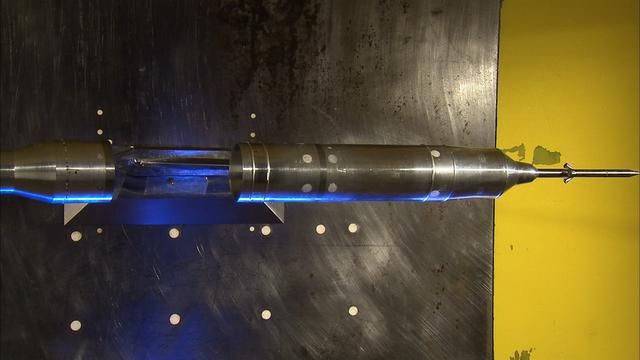
Under the goals of the Vision for Space Exploration, Ares I is a chief component of the cost-effective space transportation infrastructure being developed by NASA's Constellation Program. This transportation system will safely and reliably carry human explorers back to the moon, and then onward to Mars and other destinations in the solar system. The Ares I effort includes multiple project element teams at NASA centers and contract organizations around the nation, and is managed by the Exploration Launch Projects Office at NASA's Marshall Space Flight Center (MFSC). ATK Launch Systems near Brigham City, Utah, is the prime contractor for the first stage booster. ATK's subcontractor, United Space Alliance of Houston, is designing, developing and testing the parachutes at its facilities at NASA's Kennedy Space Center in Florida. NASA's Johnson Space Center in Houston hosts the Constellation Program and Orion Crew Capsule Project Office and provides test instrumentation and support personnel. Together, these teams are developing vehicle hardware, evolving proven technologies, and testing components and systems. Their work builds on powerful, reliable space shuttle propulsion elements and nearly a half-century of NASA space flight experience and technological advances. Ares I is an inline, two-stage rocket configuration topped by the Crew Exploration Vehicle, its service module, and a launch abort system. In this HD video image, an Ares I x-test involves the upper stage separating from the first stage. This particular test was conducted at the NASA Langley Research Center in July 2007. (Highest resolution available)
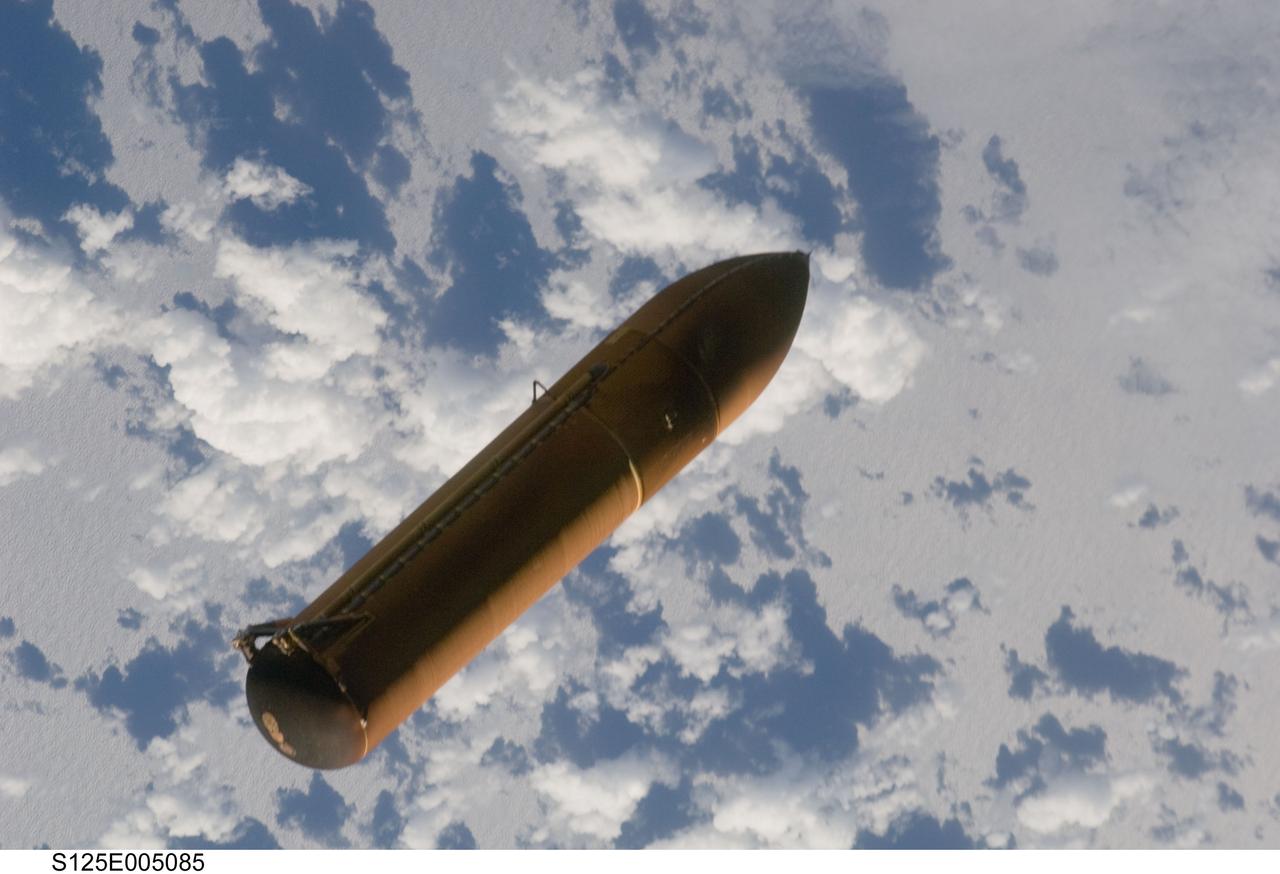
S125-E-005085 (11 May 2009) --- Backdropped by a blue and white part of Earth, the STS-125 external fuel tank (ET) begins its relative separation from the Space Shuttle Atlantis following launch.
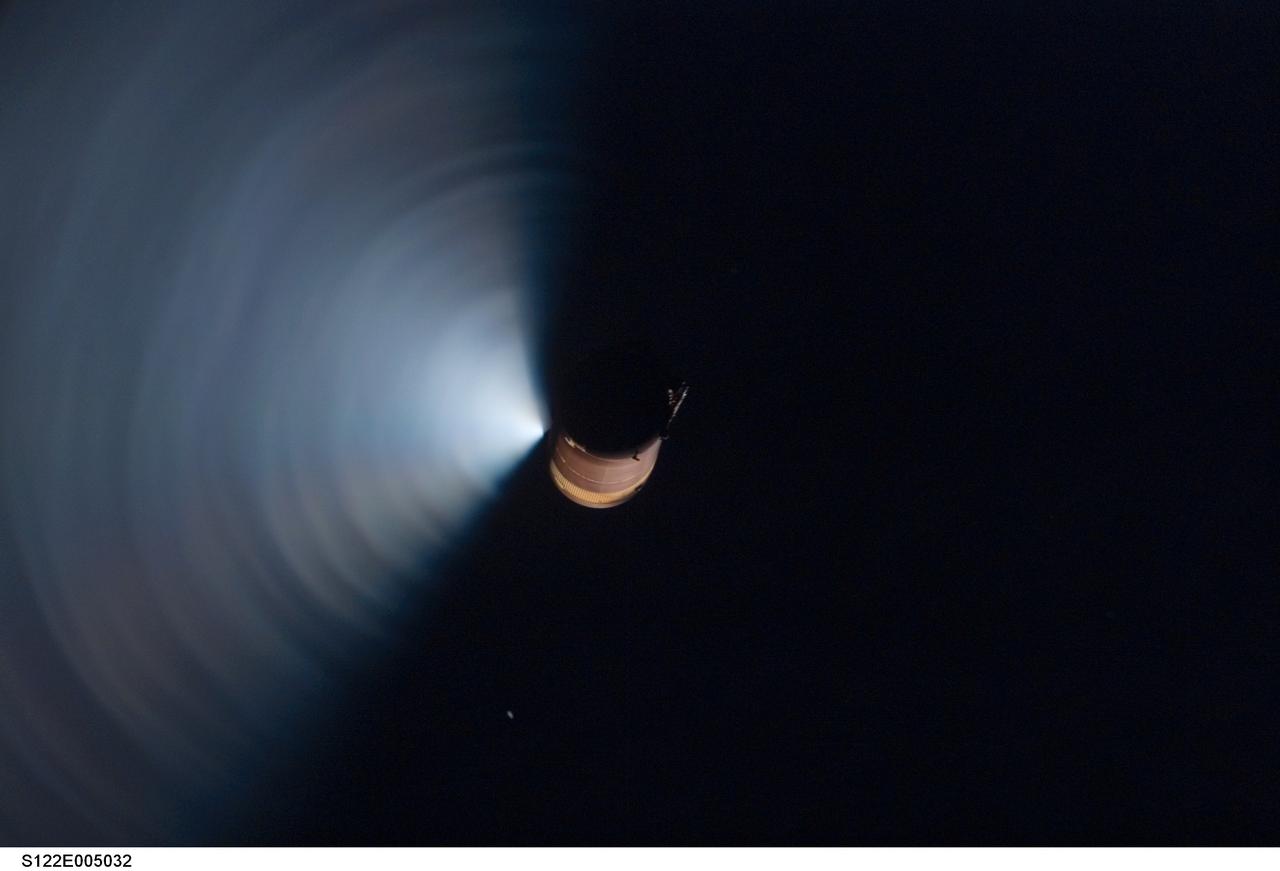
S122-E-005032 (7 Feb. 2008) --- Backdropped against the blackness of space, the STS-122 external fuel tank (ET) begins its relative separation from the Space Shuttle Atlantis. An STS-122 crewmember recorded the scene with a digital still camera. The fan-shaped bright area is the result of ET venting after orbiter separation. What happens in this nominal occurence is that the residual cryogenics in the tank heat up to some extent and the pressure increases, popping the relief valve. The residual LOX and LH2 spray out of the tank and are quite noticeable with the light reflection.
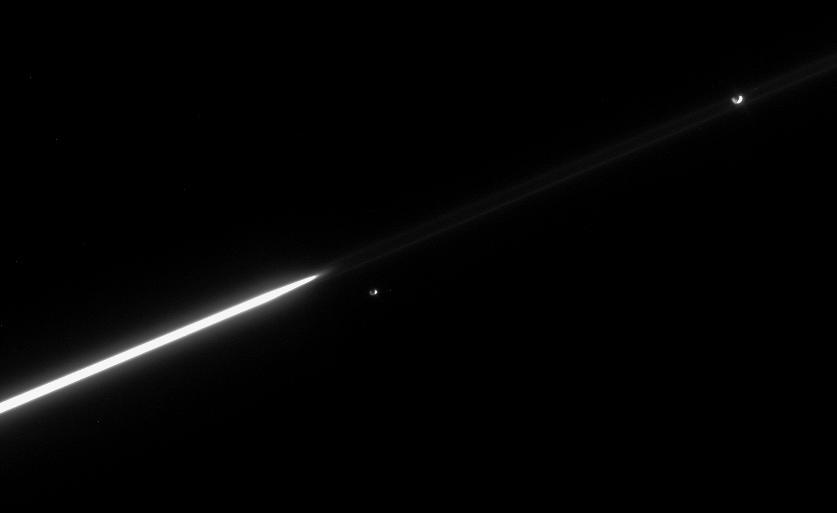
Janus and Epimetheus continue to separate, following their orbital swap in January 2006. Until 2010, Janus will remain the innermost of the pair, whose orbits around Saturn are separated by only about 50 kilometers 31 miles on average
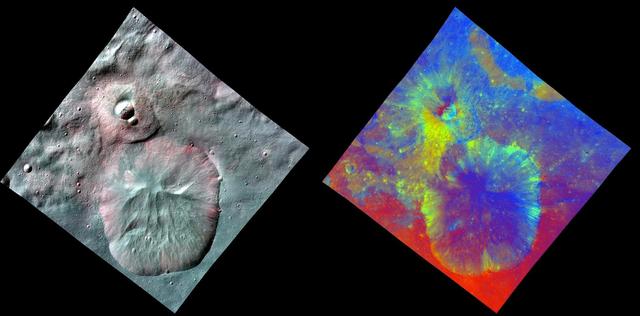
This image combines two separate views of the giant asteroid Vesta obtained by NASA Dawn spacecraft. The data reveal a world of many varied, well-separated layers and ingredients.
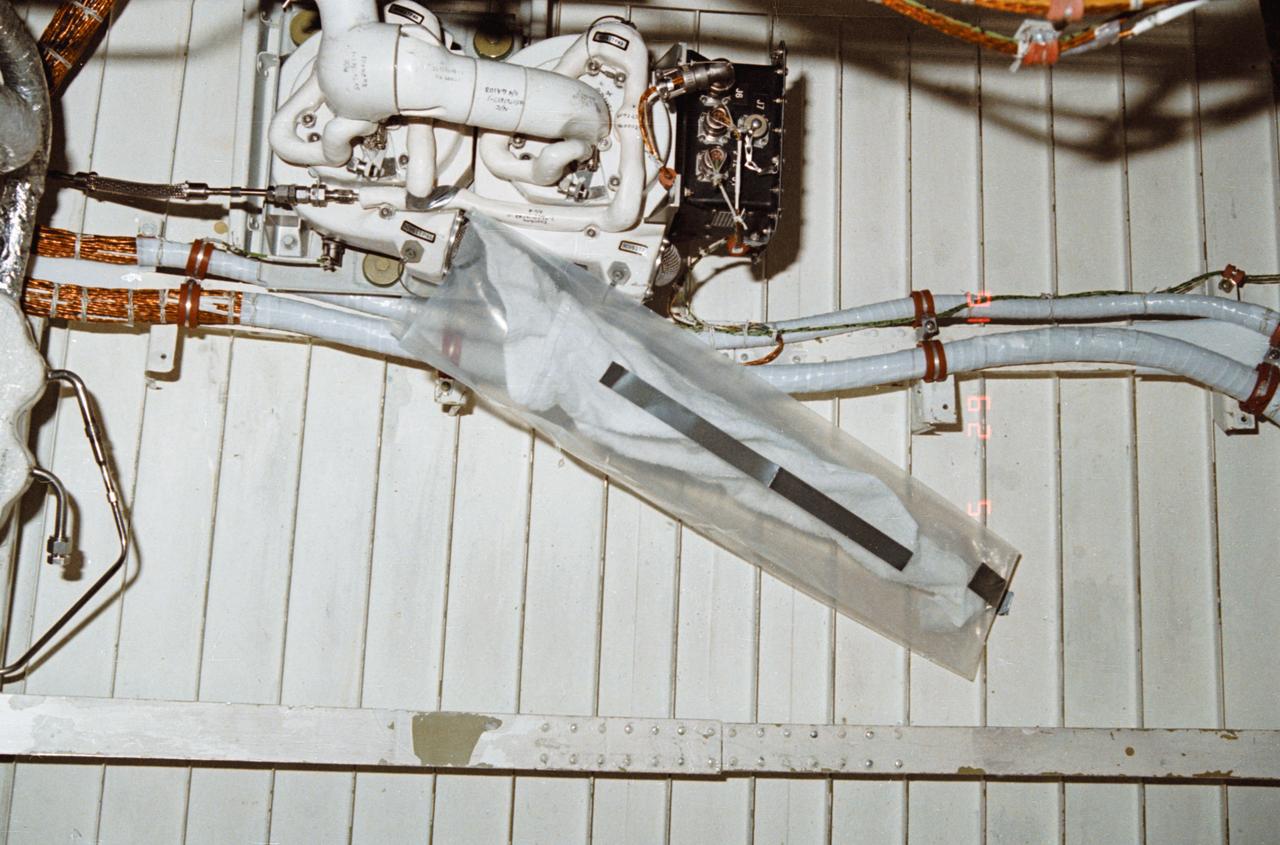
During STS-32, onboard Columbia, Orbiter Vehicle (OV) 102, a leakage problem at environmental control and life support system (ECLSS) air revitalization system (ARS) humidity separator A below the middeck is solved with a plastic bag and a towel. The towel inserted inside a plastic bag absorbed the water that had collected at the separator inlet.
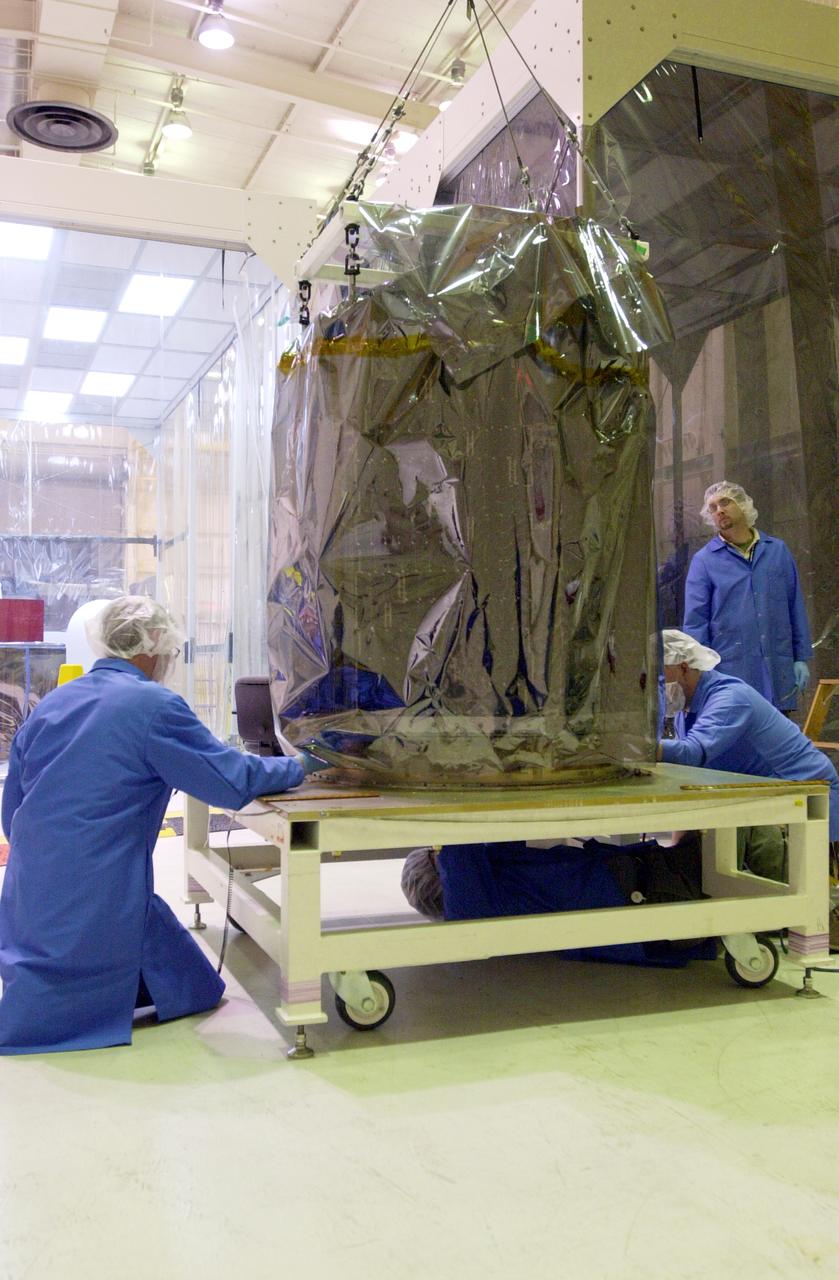
In Building 1555 on North Vandenberg Air Force Base in California, technicians prepare the AIM spacecraft for integrated testing and a flight simulation. The AIM spacecraft will fly three instruments designed to study polar mesospheric clouds located at the edge of space, 50 miles above the Earth's surface in the coldest part of the planet's atmosphere. The mission's primary goal is to explain why these clouds form and what has caused them to become brighter and more numerous and appear at lower latitudes in recent years. AIM's results will provide the basis for the study of long-term variability in the mesospheric climate and its relationship to global climate change. AIM is scheduled to be mated to its launch vehicle, Orbital Sciences' Pegasus XL, during the second week of April, after which final inspections will be conducted. Launch is scheduled for April 25.
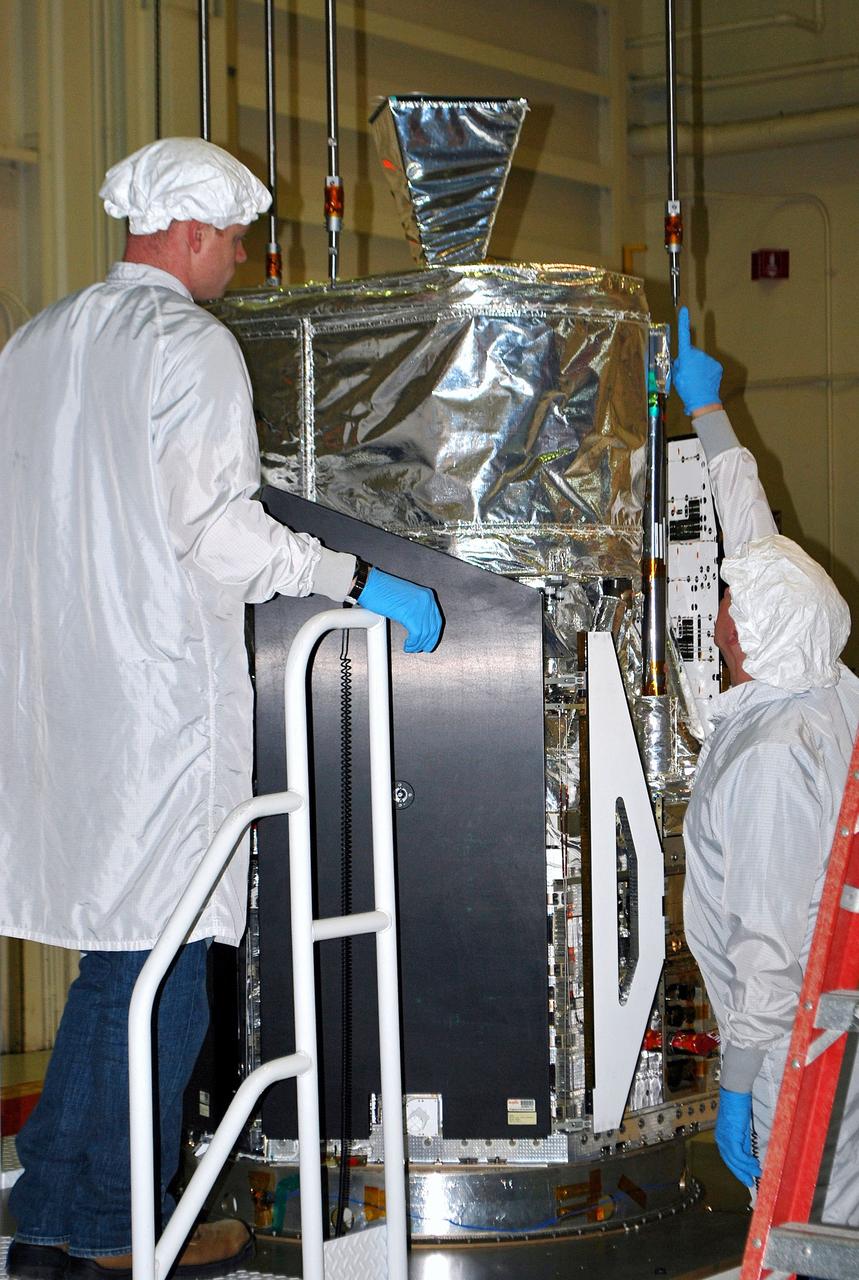
VANDENBERG AIR FORCE BASE, Calif. – In processing facility 1555 at Vandenberg Air Force Base in California, spacecraft technicians attach NASA's Nuclear Spectroscopic Telescope Array (NuSTAR) to a lifting device during preparations to raise it from its workstand. A Pegasus XL rocket is being prepared to launch NuSTAR into space in March. Once processing of the rocket and spacecraft are completed at Vandenberg, they will be flown on the Orbital Sciences’ L-1011 carrier aircraft to the Ronald Reagan Ballistic Missile Defense Test Site at the Pacific Ocean’s Kwajalein Atoll for launch. NuSTAR, a high-energy x-ray telescope, will conduct a census for black holes, map radioactive material in young supernovae remnants, and study the origins of cosmic rays and the extreme physics around collapsed stars. For more information, visit http://www.nasa.gov/nustar. Photo credit: NASA/Randy Beaudoin, VAFB
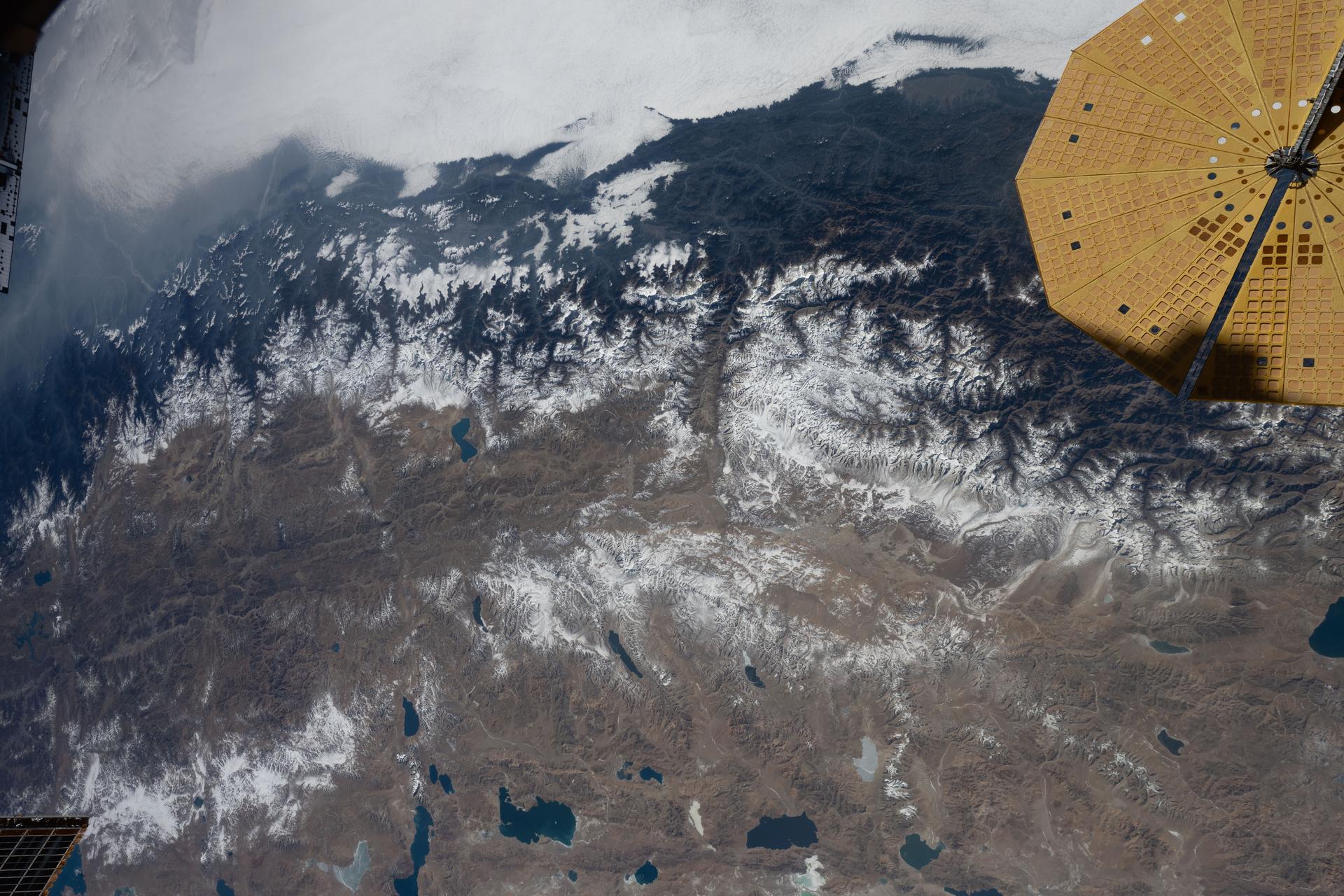
iss074e0002506 (Dec. 13, 2025) --- The Himalayas—separating the moisture-laden portion of the Indian subcontinent from the arid geography of Tibet, China—are pictured from the International Space Station as it orbited 261 miles above Nepal. At upper right is one of two UltraFlex solar arrays that power the Cygnus XL cargo craft from Northrop Grumman.

iss073e0880658 (Oct. 15, 2025) --- The Mississippi River separates Arkansas (left) from Mississippi in this view, with the St. Francis National Forest visible on the Arkansas side. Although not a true delta, the Mississippi Delta is a broad floodplain stretching from southern Illinois to Louisiana, with deep cultural roots in northern Mississippi. The International Space Station was orbiting 261 miles above Earth when this photograph was taken.
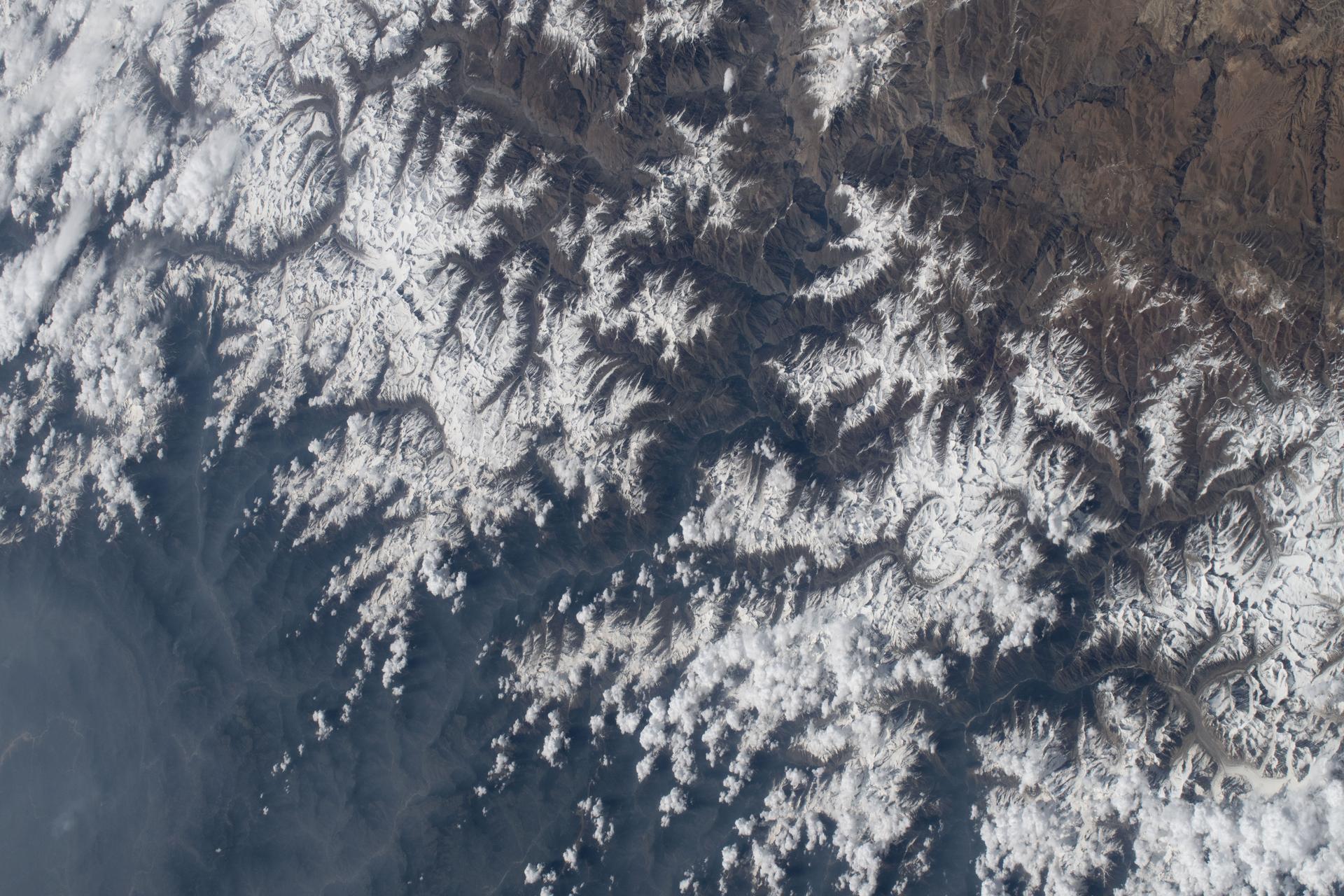
iss074e0603570 (May 20, 2026) --- The snow‑capped Himalayas separate Nepal from China in this photograph from the International Space Station as it orbited 259 miles above the Asian mountain range. The range acts as a climate barrier, trapping cooler, moisture‑laden air on the Nepal side and creating a sharp contrast between Nepal’s lush forests and the much drier Tibetan Plateau to the north. Credit: NASA/Jessica Meir
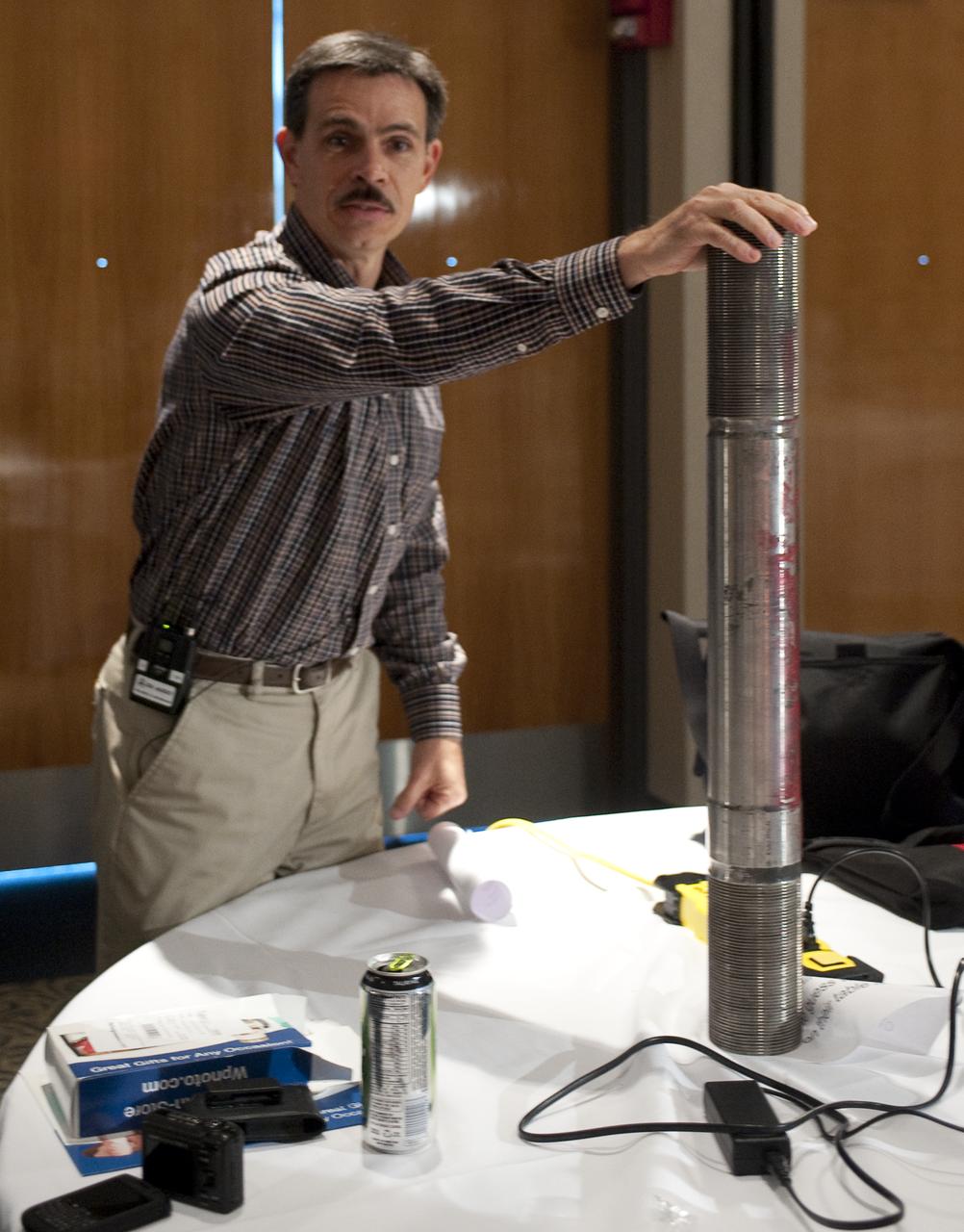
Ares I-X Deputy Mission Manager Jon Cowart shows a space shuttle solid rocket booster (SRB) separation bolt during a two-day NASA Tweetup event held at NASA's Kennedy Space Center in Cape Canaveral, Fla, Sunday, Nov. 15, 2009. NASA Twitter followers in attendance will have the opportunity to take a tour of NASA's Kennedy Space Center, view the STS-129 space shuttle launch and speak with shuttle technicians, engineers, astronauts and managers. Photo Credit: (NASA/Carla Cioffi)
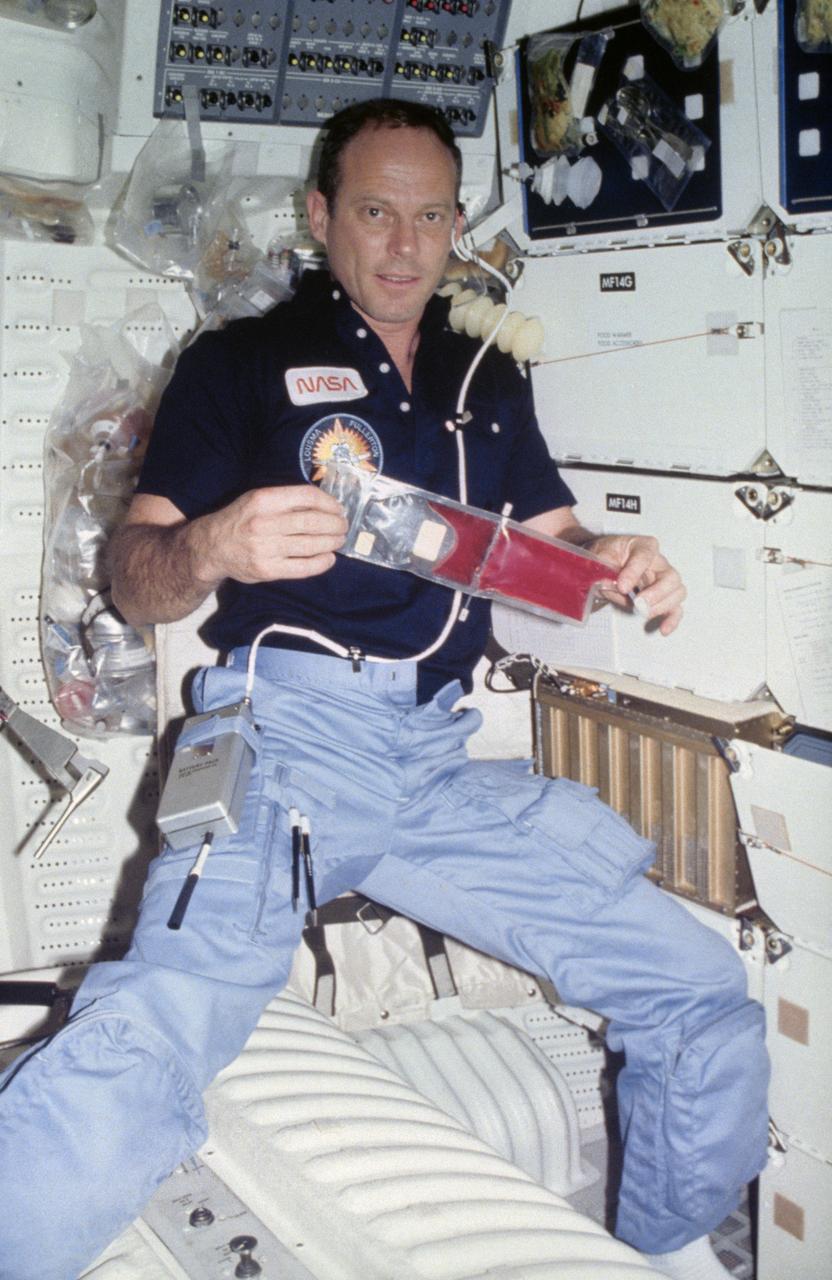
S82-28914 (26 March 1982) --- Astronaut Jack R. Lousma, STS-3 commander, spins a package of colored liquid in zero-gravity aboard the Earth-orbiting space shuttle Columbia. He was actually creating a centrifuge to conduct a test involving the separation of bubbles from the liquid rehydrated strawberry powder for visible clarity. The gas from liquid experiment is a test devised by scientist-astronaut William E. Thornton. The gun-like device at center of left edge is a water-dispenser which the astronauts use in rehydrating food packets, many of which can be seen in the background of this middeck area of the Columbia. Astronaut C. Gordon Fullerton, pilot, exposed this frame with a 35mm camera. Photo credit: NASA
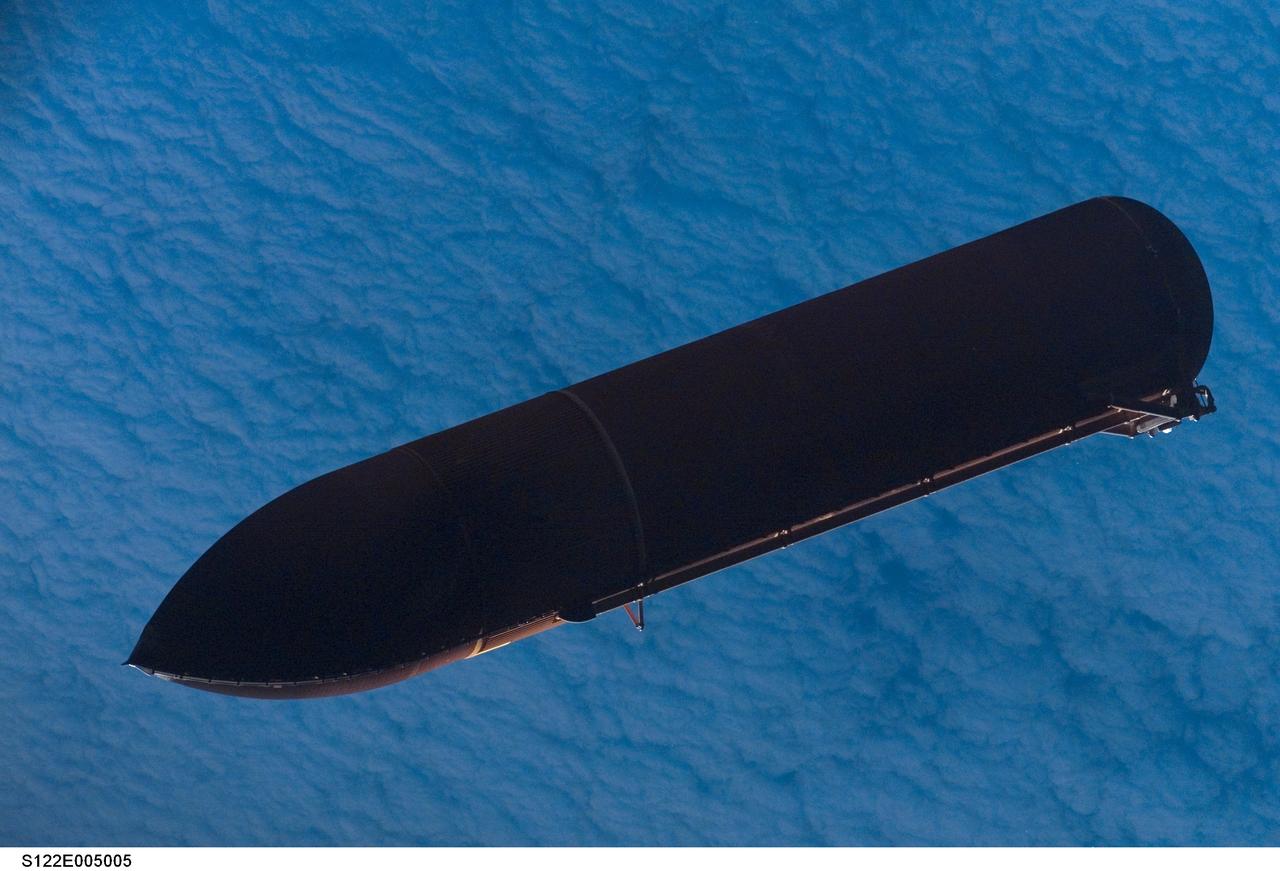
S122-E-005005 (7 Feb. 2008) --- Backdropped against a blanket of clouds, the STS-122 external fuel tank (ET) begins its relative separation from the Space Shuttle Atlantis. An STS-122 crewmember recorded the scene with a digital still camera.
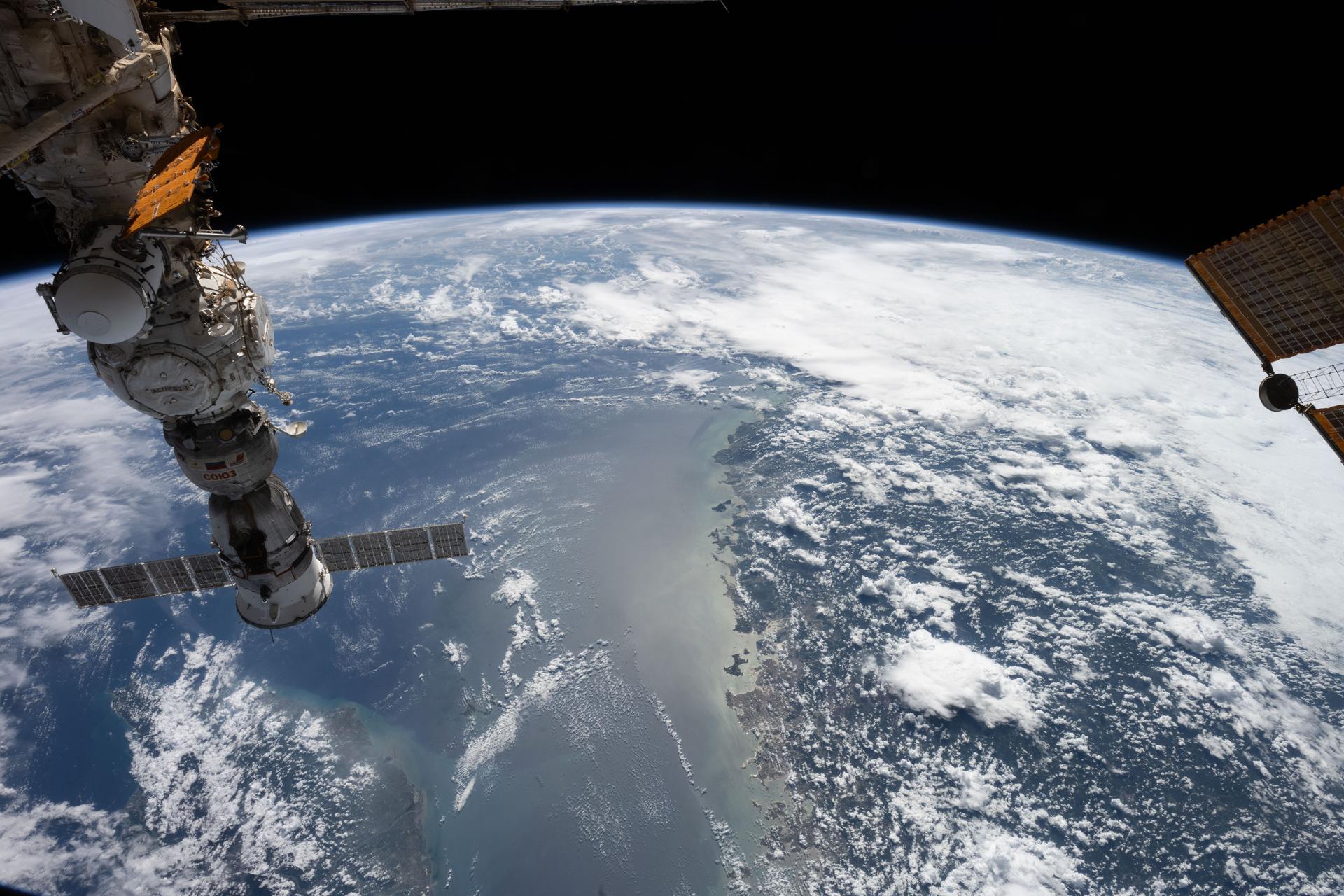
iss073e0983013 (Oct. 21, 2025) --- The Taiwan Strait separates the eastern coast of China’s Fujian Province (right) from the island nation of Taiwan (lower left) in this photograph taken from the International Space Station as it orbited 257 miles above Earth. The strait is a vital waterway in East Asia, supporting the fishing, shipping, and communications industries.
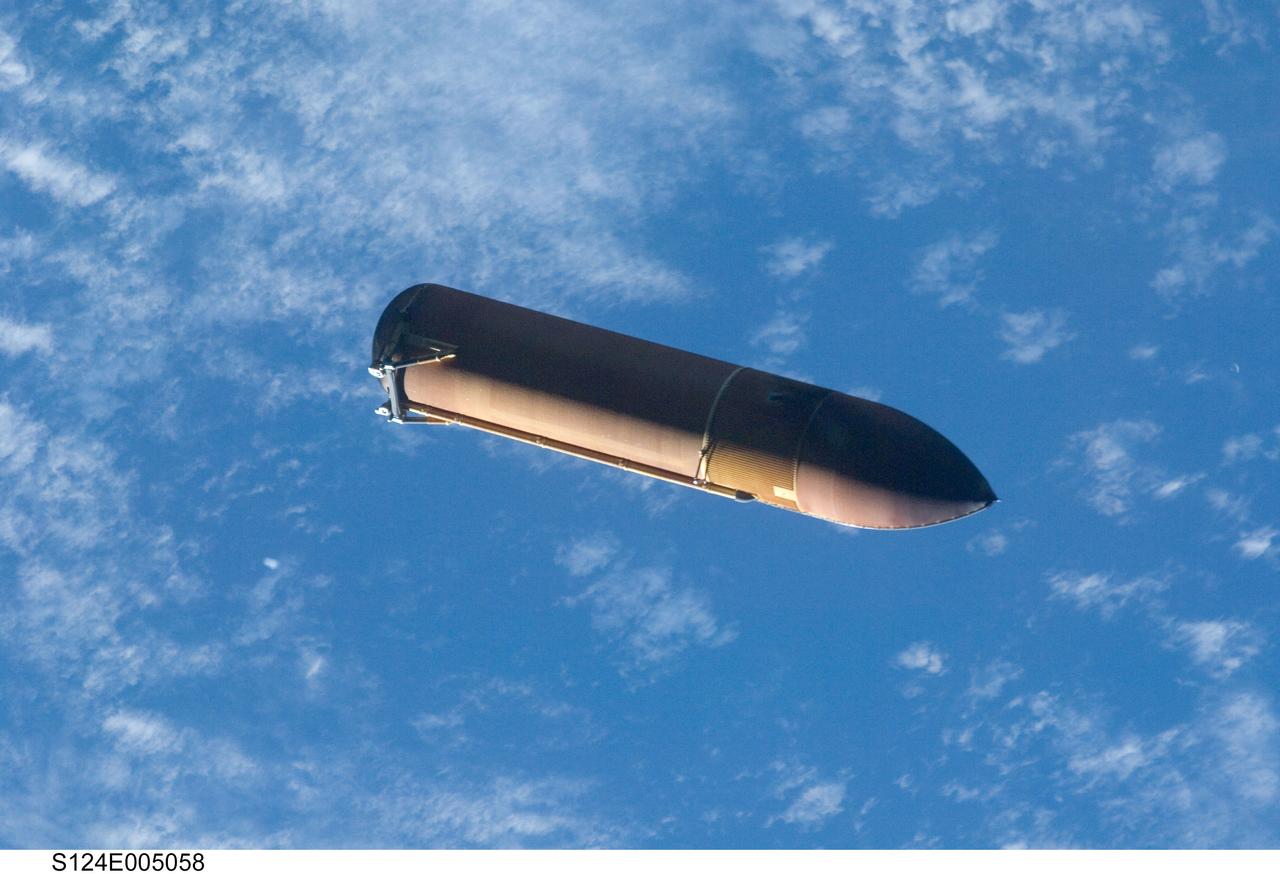
S124-E-005058 (31 May 2008) --- Backdropped by a blue and white part of Earth, the STS-124 external fuel tank (ET) begins its relative separation from the Space Shuttle Discovery. An STS-124 crewmember recorded the scene with a digital still camera.

iss072e572361 (Jan. 28, 2025) --- The Andes mountain range separates the South American nations of Chile and Argentina significantly impacting the climate of both countries. The elevation of the Andes creates a dry climate to the west and a rainy climate to the east. The International Space Station was orbiting 266 miles above Los Ángeles, Chile, at the time of this photograph.