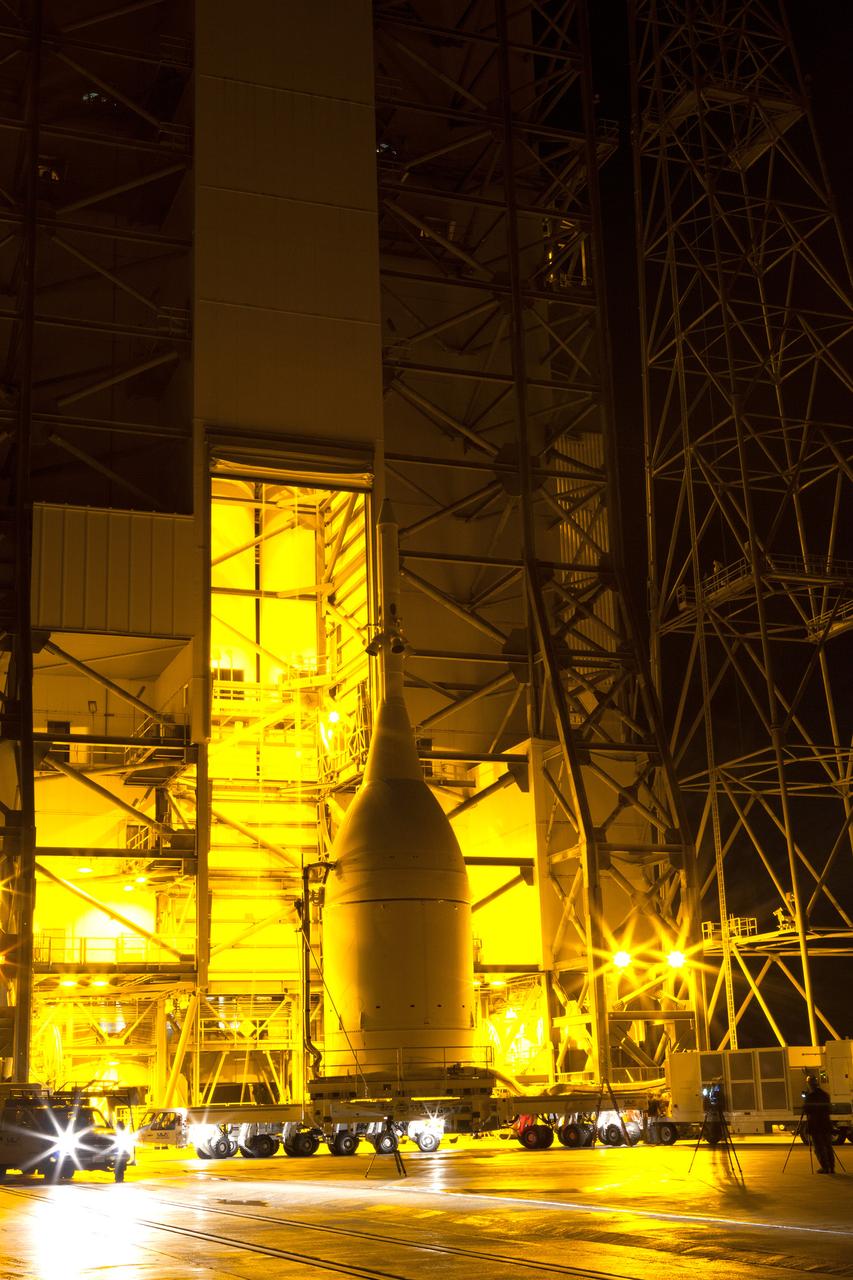
The Orion spacecraft and its transporter stand at the base of the service structure at Space Launch Complex 37 on Nov. 12, 2014. A crane inside the structure will lift Orion off its transporter to hoist it into place atop the Delta IV Heavy rocket that is already assembled at the pad. Part of Batch image transfer from Flickr.
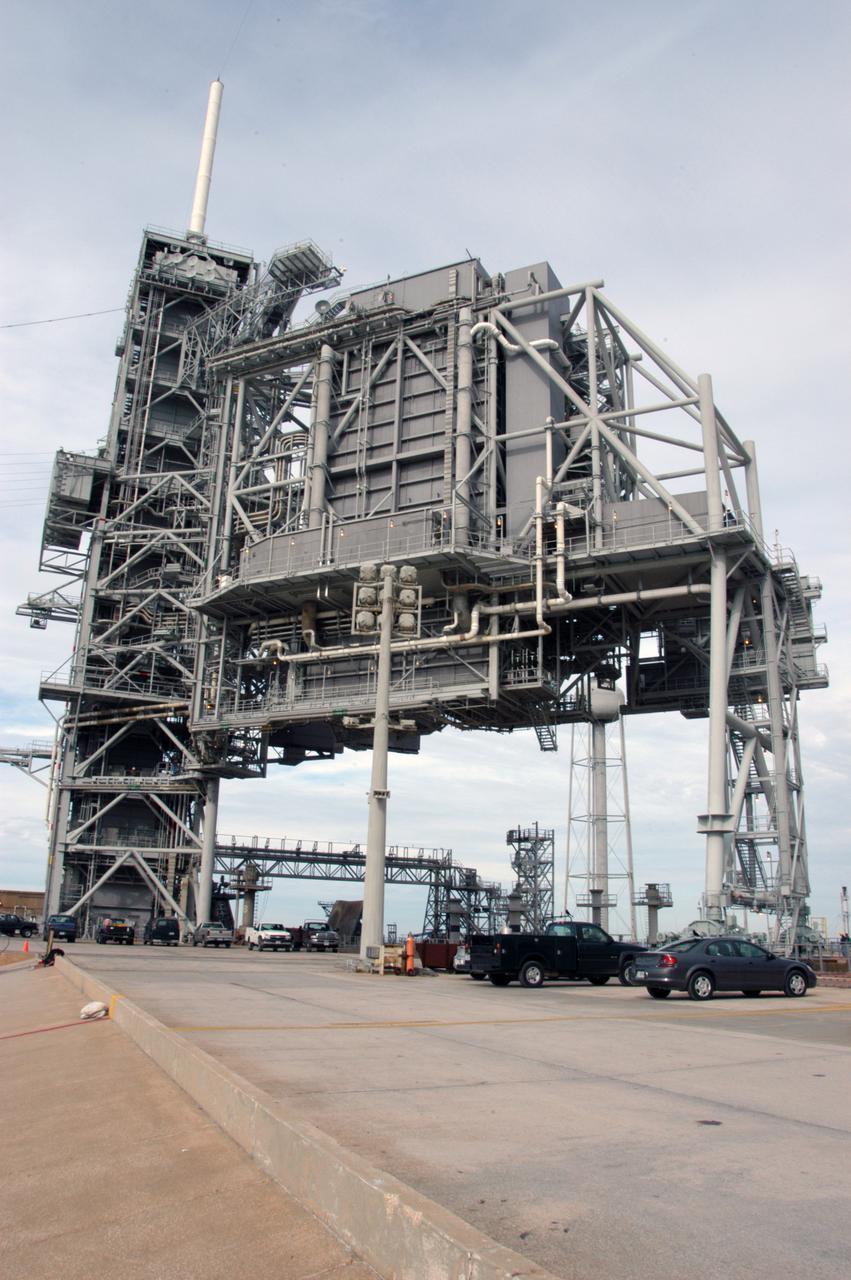
The rotating service structure on Launch Pad 39A is being moved for the first time in more than a year due to maintenance and upgrades on the pad. Some of the work included sandblasting the structure to remove rust and repainting. In addition, the RSS was jacked up and a new upper-bearing race assembly installed where the RSS pivots against the fixed service structure and a half-inch steel plate added. Pad 39A is being made ready for its first launch in four years, the upcoming STS-117 on March 15.
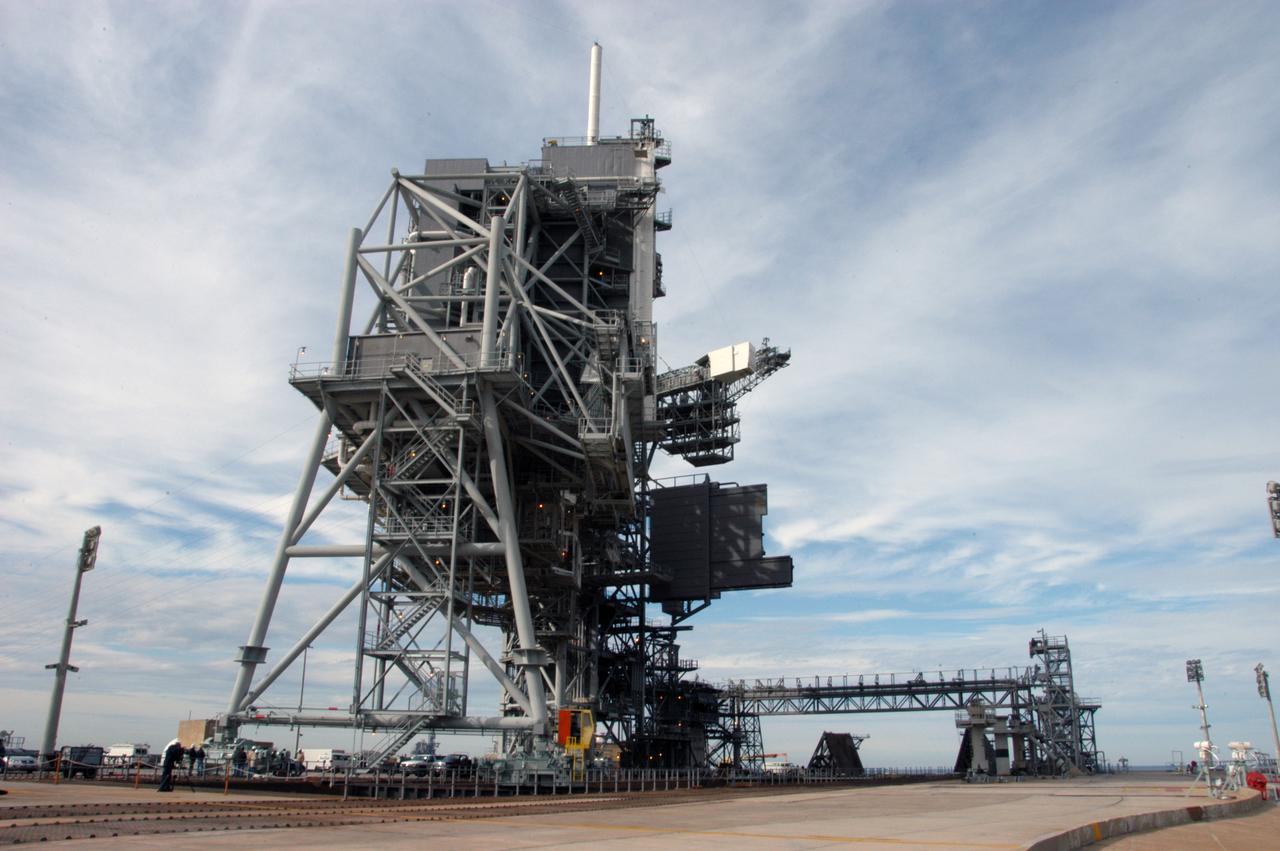
The rotating service structure on Launch Pad 39A is being moved for the first time in more than a year due to maintenance and upgrades on the pad. Some of the work included sandblasting the structure to remove rust and repainting. In addition, the RSS was jacked up and a new upper-bearing race assembly installed where the RSS pivots against the fixed service structure and a half-inch steel plate added. Pad 39A is being made ready for its first launch in four years, the upcoming STS-117 on March 15.
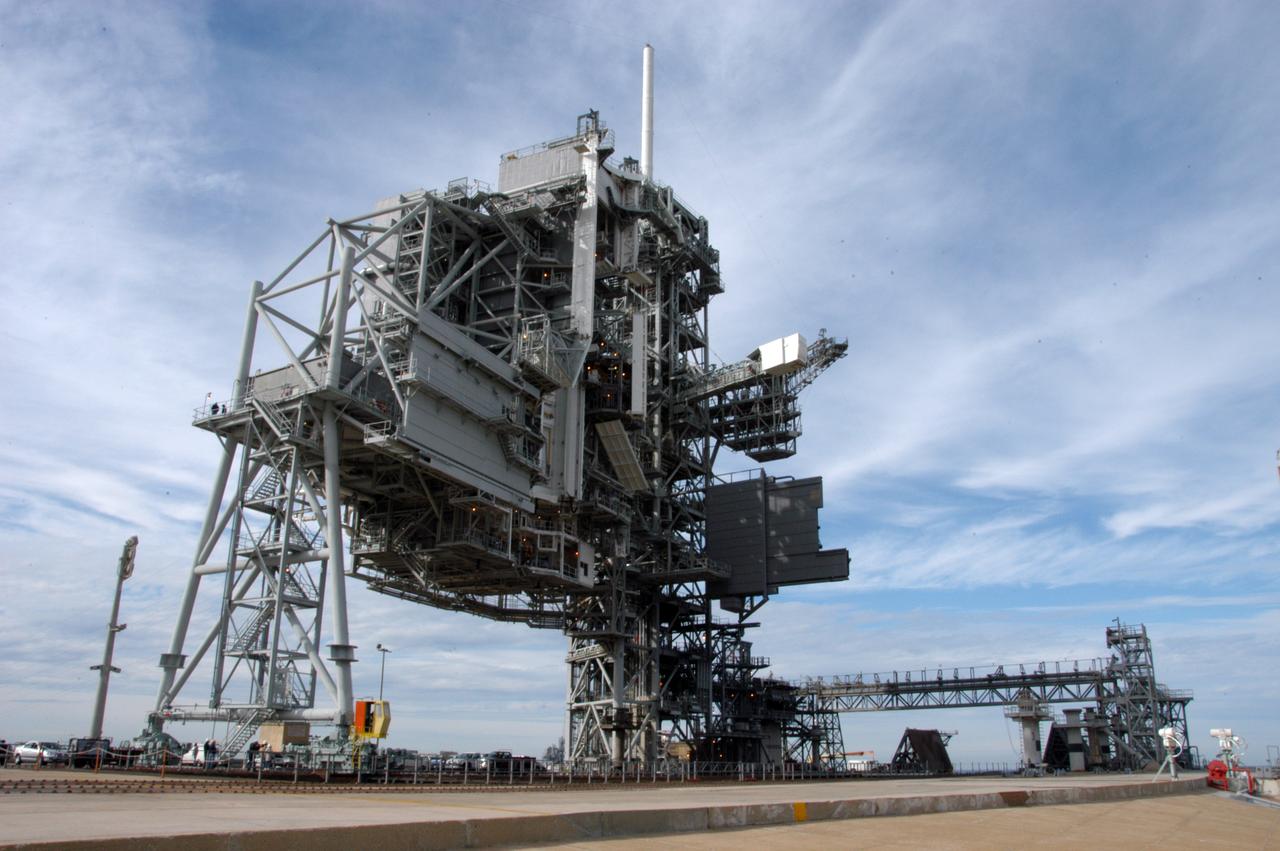
The rotating service structure on Launch Pad 39A has moved for the first time in more than a year due to maintenance and upgrades on the pad. Some of the work included sandblasting the structure to remove rust and repainting. In addition, the RSS was jacked up and a new upper-bearing race assembly installed where the RSS pivots against the fixed service structure and a half-inch steel plate added. Pad 39A is being made ready for its first launch in four years, the upcoming STS-117 on March 15.
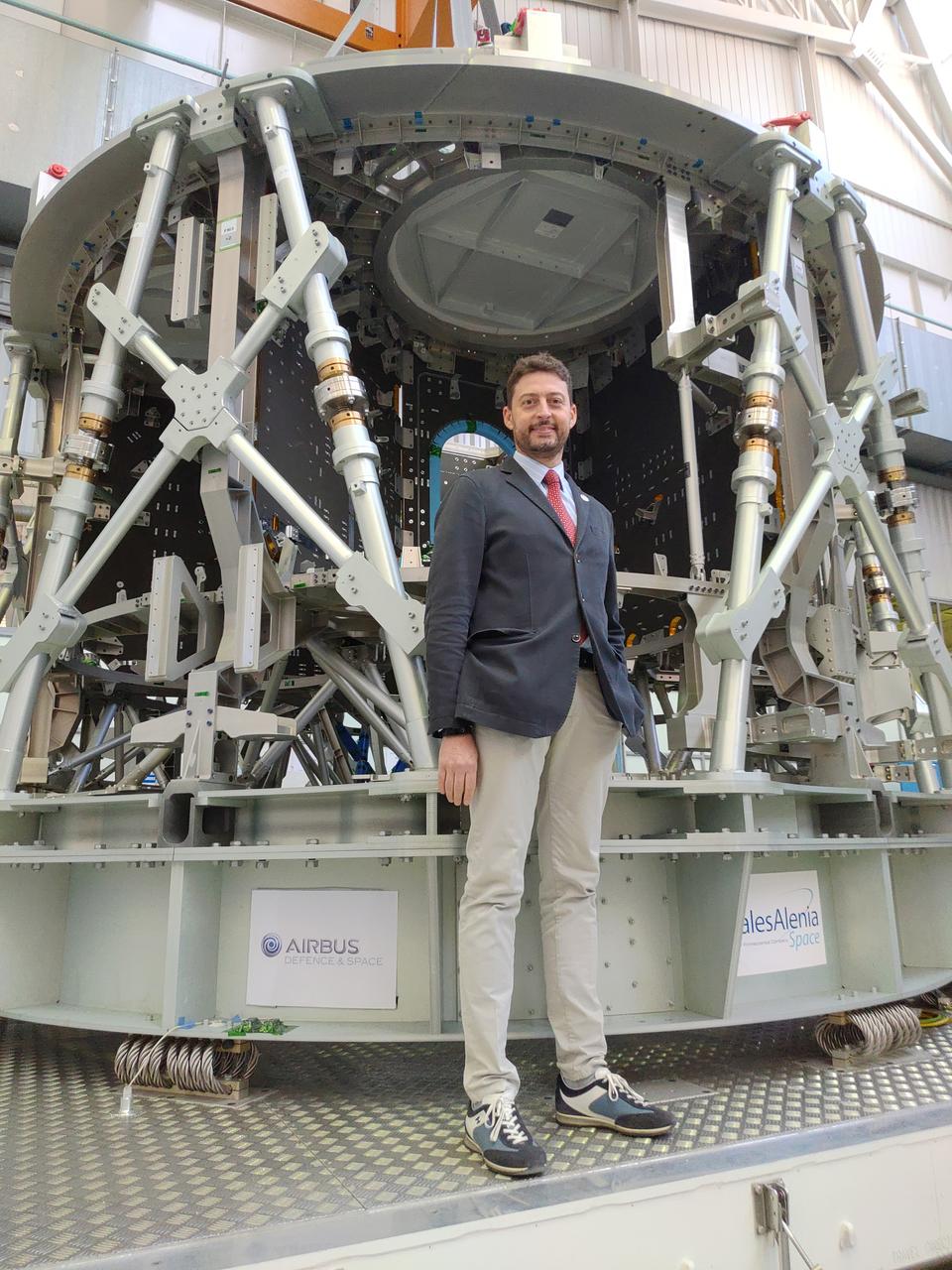
The ESA service module primary structure, which will propel Orion on the Artemis III flight carrying astronauts to land on the surface of the Moon, is ready to ship from Thales Alenia Space in Turin, Italy to Airbus in Bremen, Germany. Stefano Rossi, Thales Alenia Space Manufacturing Manager, leads the operation of the transfer of the service module structure to the transportation container on Sept. 30, 2020. Airbus will perform final assembly on the service module ahead of shipment to Kennedy Space Center where it will be integrated with the rest of the Orion spacecraft.
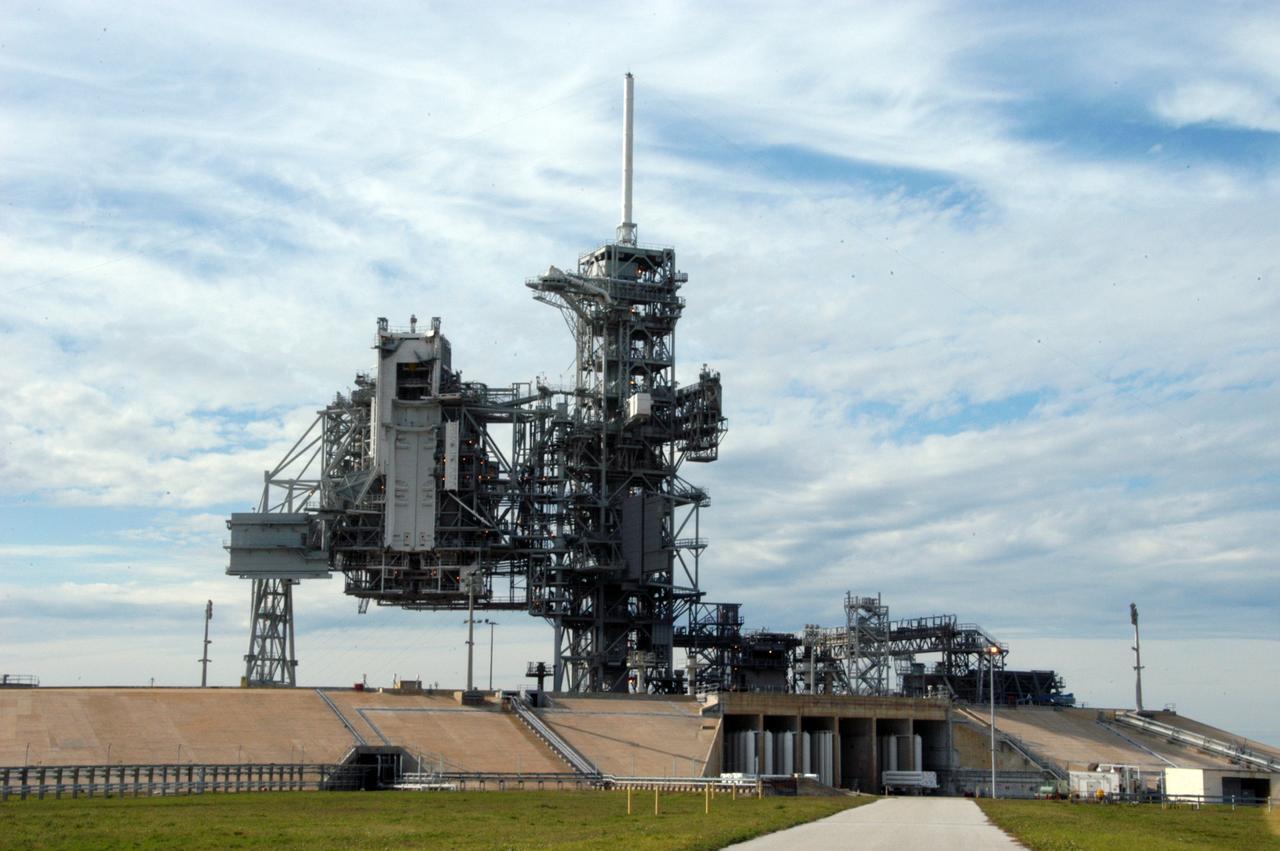
The rotating service structure on Launch Pad 39A has been fully opened for the first time in more than a year due to maintenance and upgrades on the pad. Some of the work included sandblasting the structure to remove rust and repainting. In addition, the RSS was jacked up and a new upper-bearing race assembly installed where the RSS pivots against the fixed service structure and a half-inch steel plate added. Pad 39A is being made ready for its first launch in four years, the upcoming STS-117 on March 15. Photo credit: NASA/George Shelton
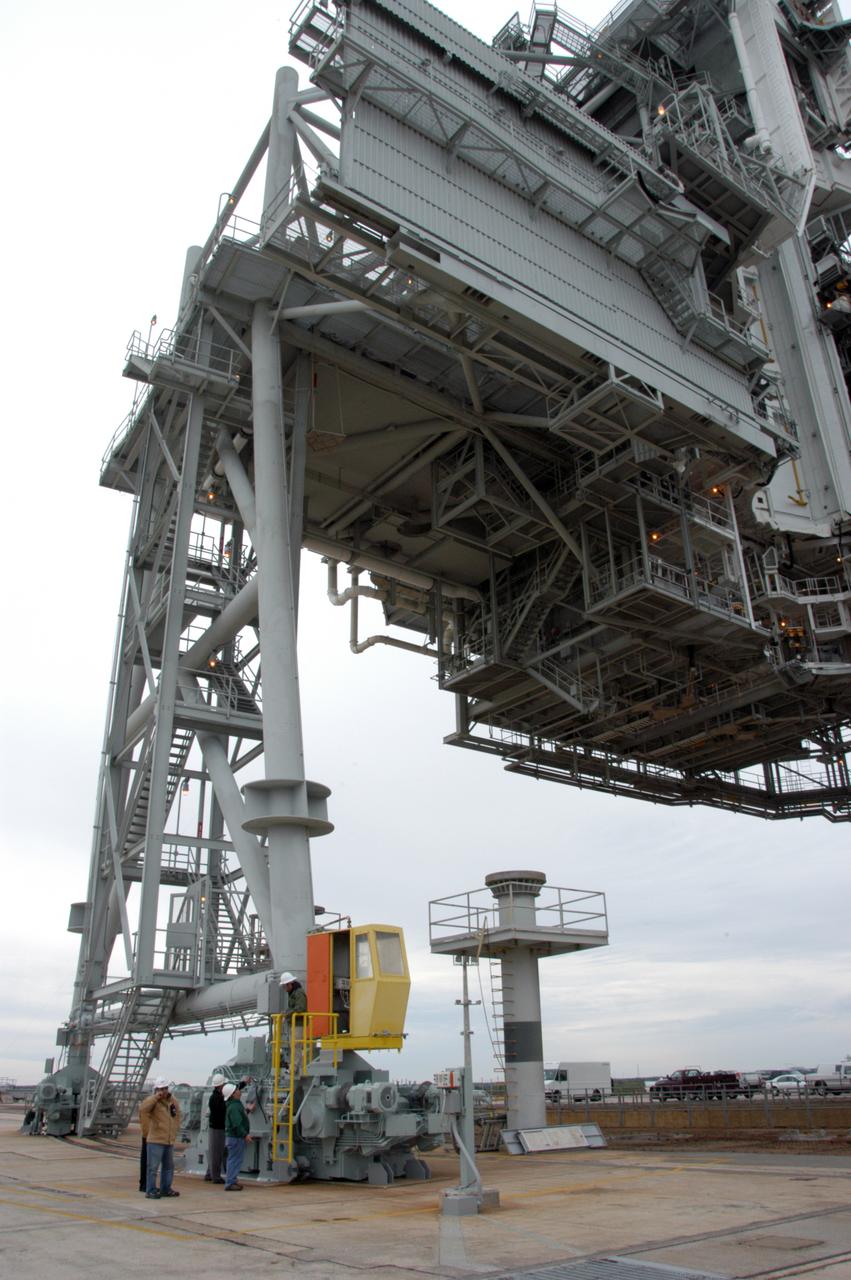
Workers on Launch Pad 39A get ready to begin the movement of the rotating service structure above them. The RSS has not been rotated for more than a year during the maintenance and upgrades on the pad. Some of the work included sandblasting the structure to remove rust and repainting. In addition, the RSS was jacked up and a new upper-bearing race assembly installed where the RSS pivots against the fixed service structure and a half-inch steel plate added. Pad 39A is being made ready for its first launch in four years, the upcoming STS-117 on March 15.
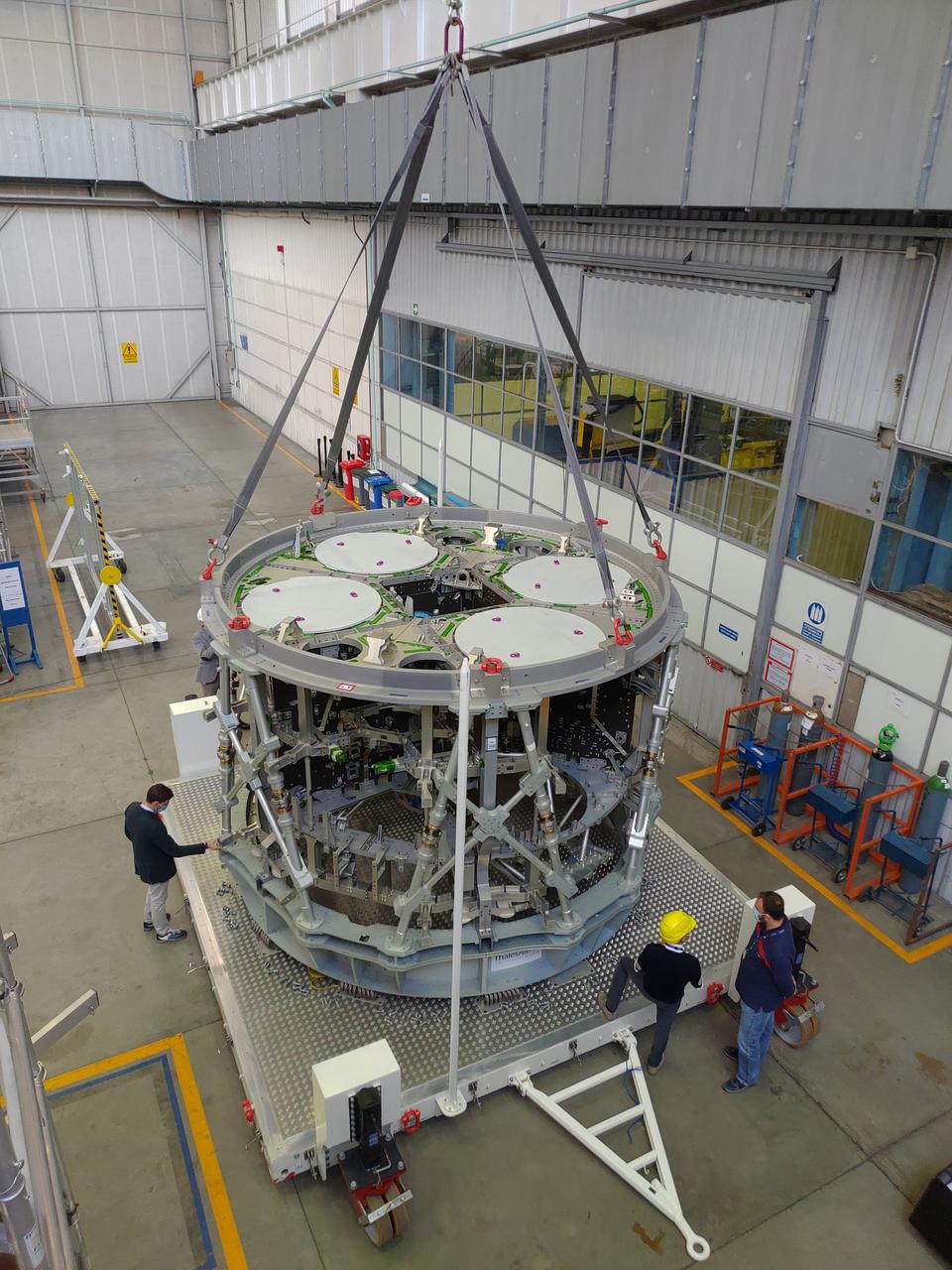
The ESA service module primary structure, which will propel Orion on the Artemis III flight carrying astronauts to land on the surface of the Moon, is ready to ship from Thales Alenia Space in Turin, Italy to Airbus in Bremen, Germany. Giorgio (Gios) Borello, Thales Alenia Space AIT (Assembly, Integration & Testing) mechanical expert, guides the service module structure to the base of the transportation container on Sept. 30, 2020. Airbus will perform final assembly on the service module ahead of shipment to Kennedy Space Center where it will be integrated with the rest of the Orion spacecraft.
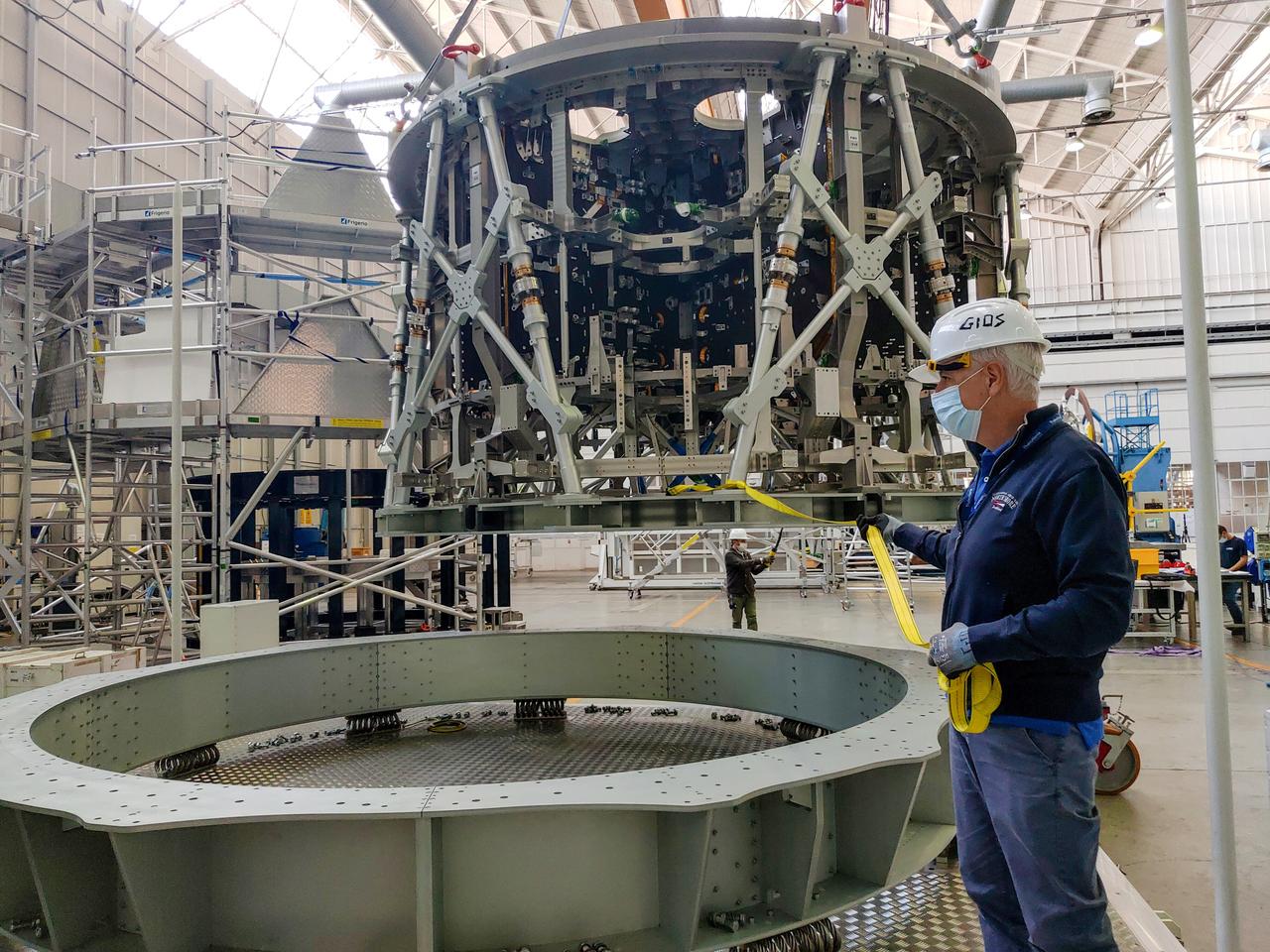
The ESA service module primary structure, which will propel Orion on the Artemis III flight carrying astronauts to land on the surface of the Moon, is ready to ship from Thales Alenia Space in Turin, Italy to Airbus in Bremen, Germany. Giorgio (Gios) Borello, Thales Alenia Space AIT (Assembly, Integration & Testing) mechanical expert, guides the service module structure to the base of the transportation container on Sept. 30, 2020. Airbus will perform final assembly on the service module ahead of shipment to Kennedy Space Center where it will be integrated with the rest of the Orion spacecraft.
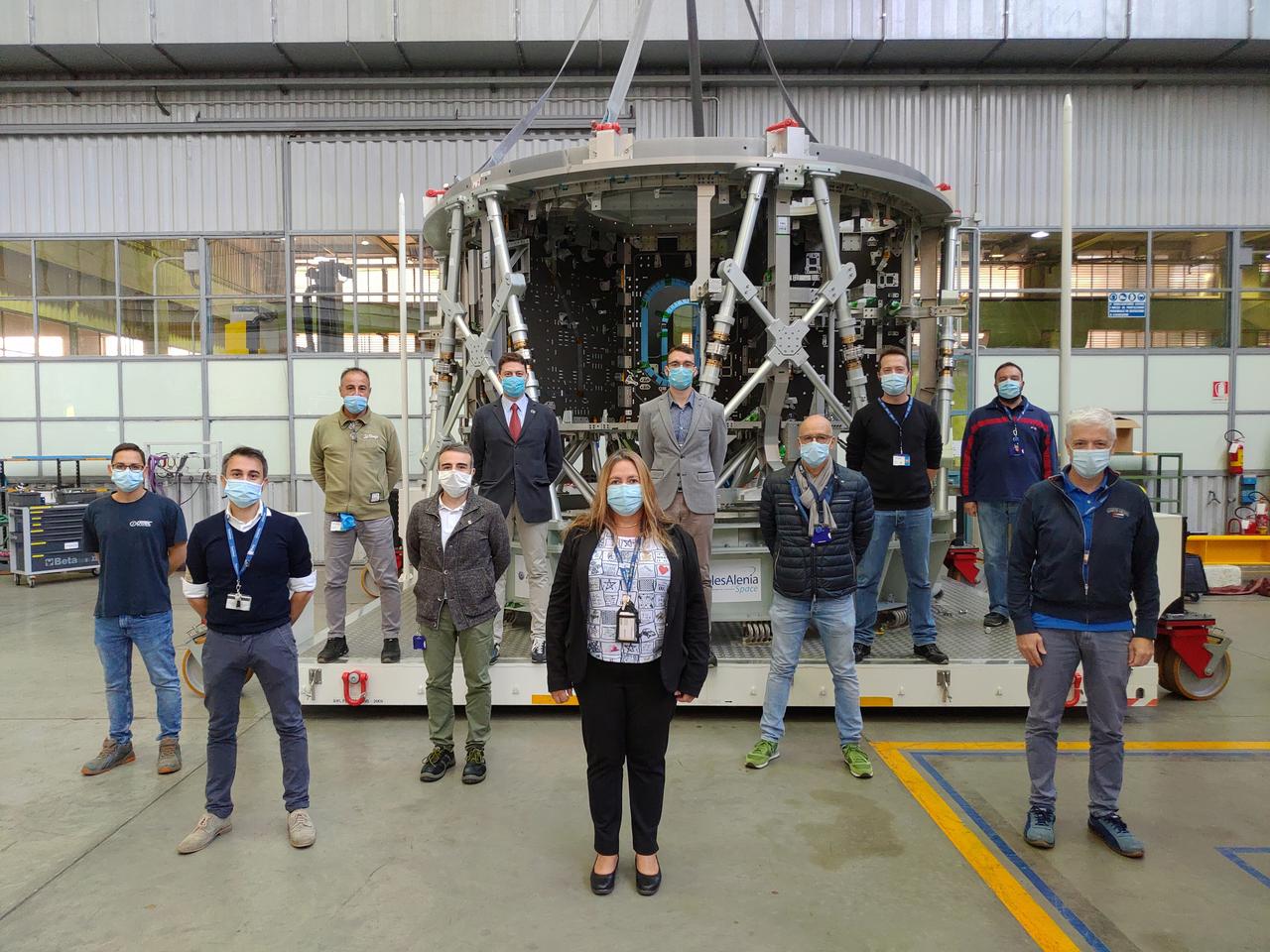
The ESA service module primary structure, which will propel Orion on the Artemis III flight carrying astronauts to land on the surface of the Moon, is ready to ship from Thales Alenia Space in Turin, Italy to Airbus in Bremen, Germany. Giorgio (Gios) Borello, Thales Alenia Space AIT (Assembly, Integration & Testing) mechanical expert, guides the service module structure to the base of the transportation container on Sept. 30, 2020. Airbus will perform final assembly on the service module ahead of shipment to Kennedy Space Center where it will be integrated with the rest of the Orion spacecraft.
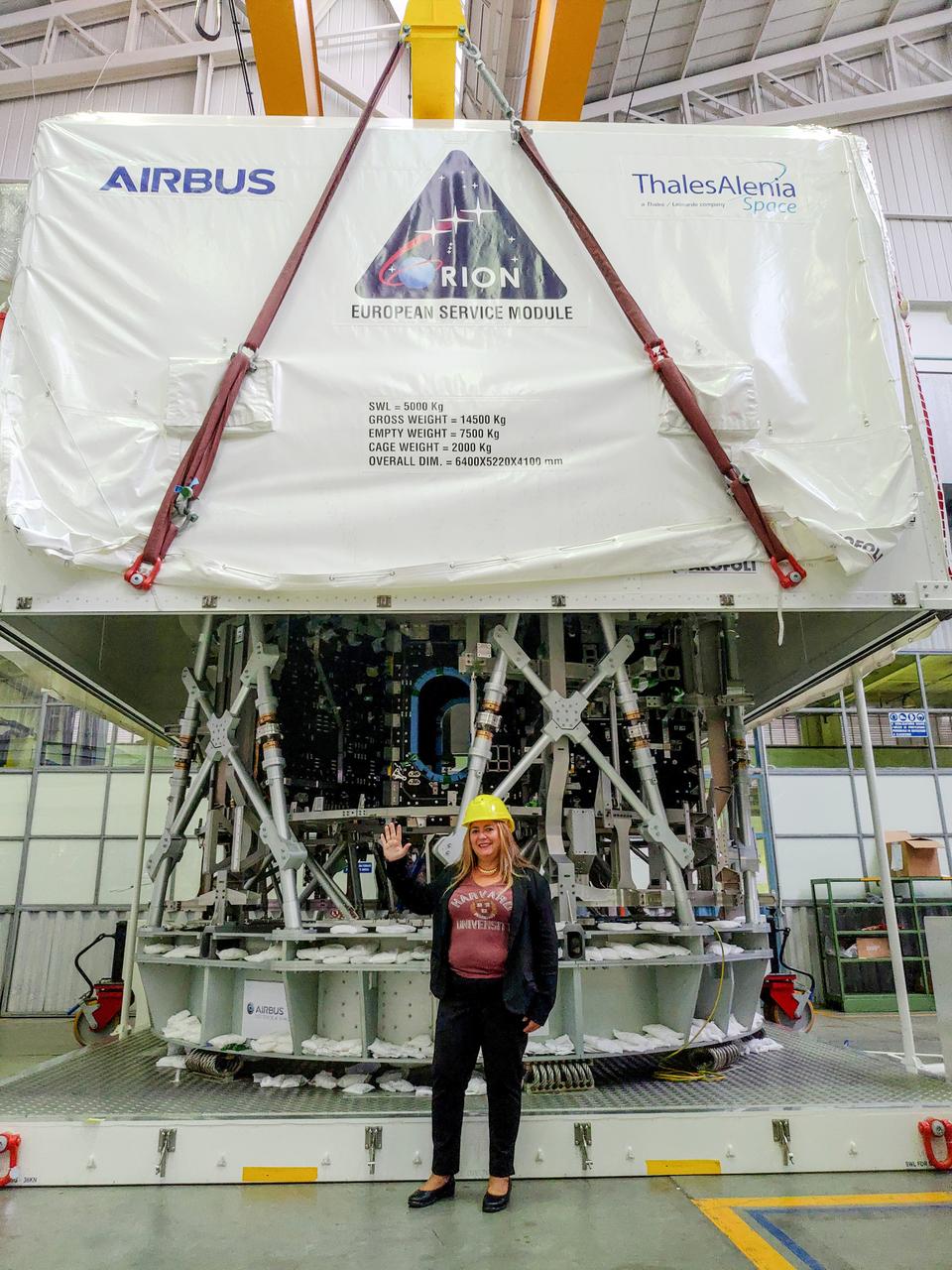
The ESA service module primary structure, which will propel Orion on the Artemis III flight carrying astronauts to land on the surface of the Moon, is ready to ship from Thales Alenia Space in Turin, Italy to Airbus in Bremen, Germany. Annamaria Piras, Thales Alenia Space Orion Program Manager, saying goodbye to the Artemis III service module structure as the lid lowers on the transportation container on Oct 2, 2020. Next stop, Airbus in Bremen, Germany. Airbus will perform final assembly on the service module ahead of shipment to Kennedy Space Center where it will be integrated with the rest of the Orion spacecraft.
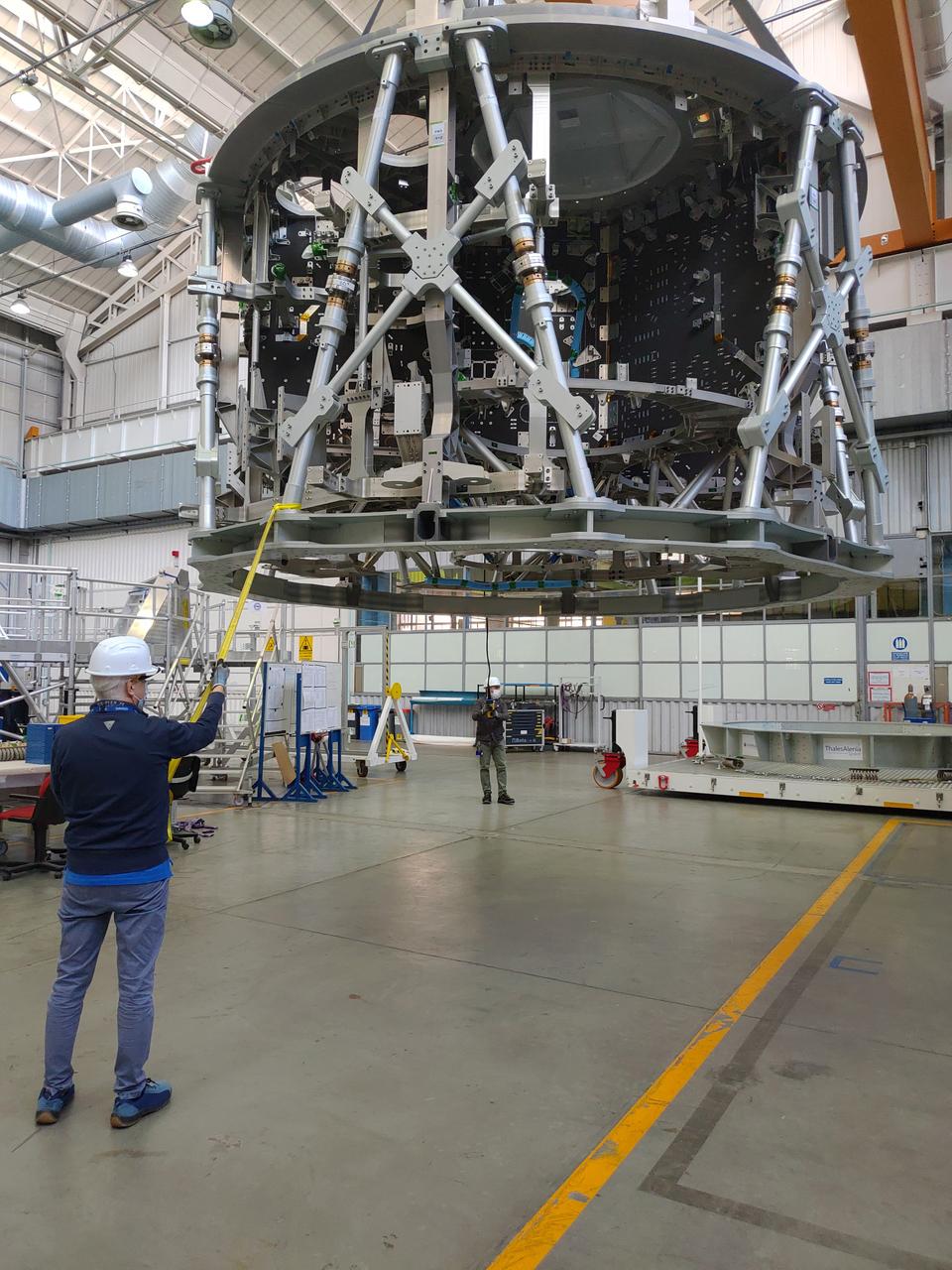
The ESA service module primary structure, which will propel Orion on the Artemis III flight carrying astronauts to land on the surface of the Moon, is ready to ship from Thales Alenia Space in Turin, Italy to Airbus in Bremen, Germany on Sept. 30, 2020. Airbus will perform final assembly on the service module ahead of shipment to Kennedy Space Center where it will be integrated with the rest of the Orion spacecraft.
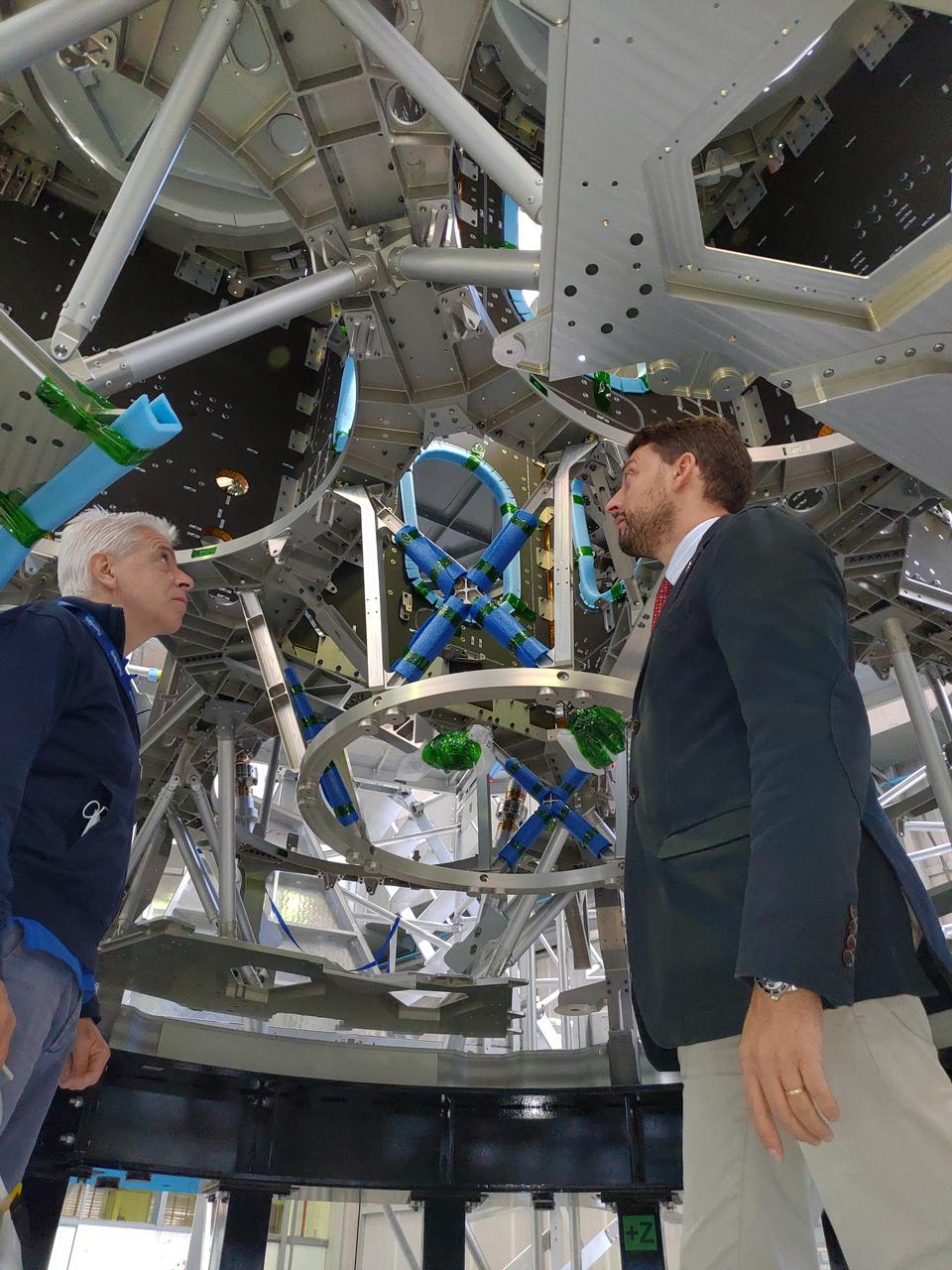
The ESA service module primary structure, which will propel Orion on the Artemis III flight carrying astronauts to land on the surface of the Moon, is ready to ship from Thales Alenia Space in Turin, Italy to Airbus in Bremen, Germany on Sept. 30, 2020. Airbus will perform final assembly on the service module ahead of shipment to Kennedy Space Center where it will be integrated with the rest of the Orion spacecraft.

KENNEDY SPACE CENTER, FLA. -- Space Shuttle Atlantis, surrounded by the Rotating Service Structure, sits on Launch Pad 39B as it undergoes pre-launch preparations for mission STS-112, scheduled to launch Oct. 2, 2002. The sky above the Shuttle is filled with dark clouds sweeping over Florida from Hurricane Isidore.
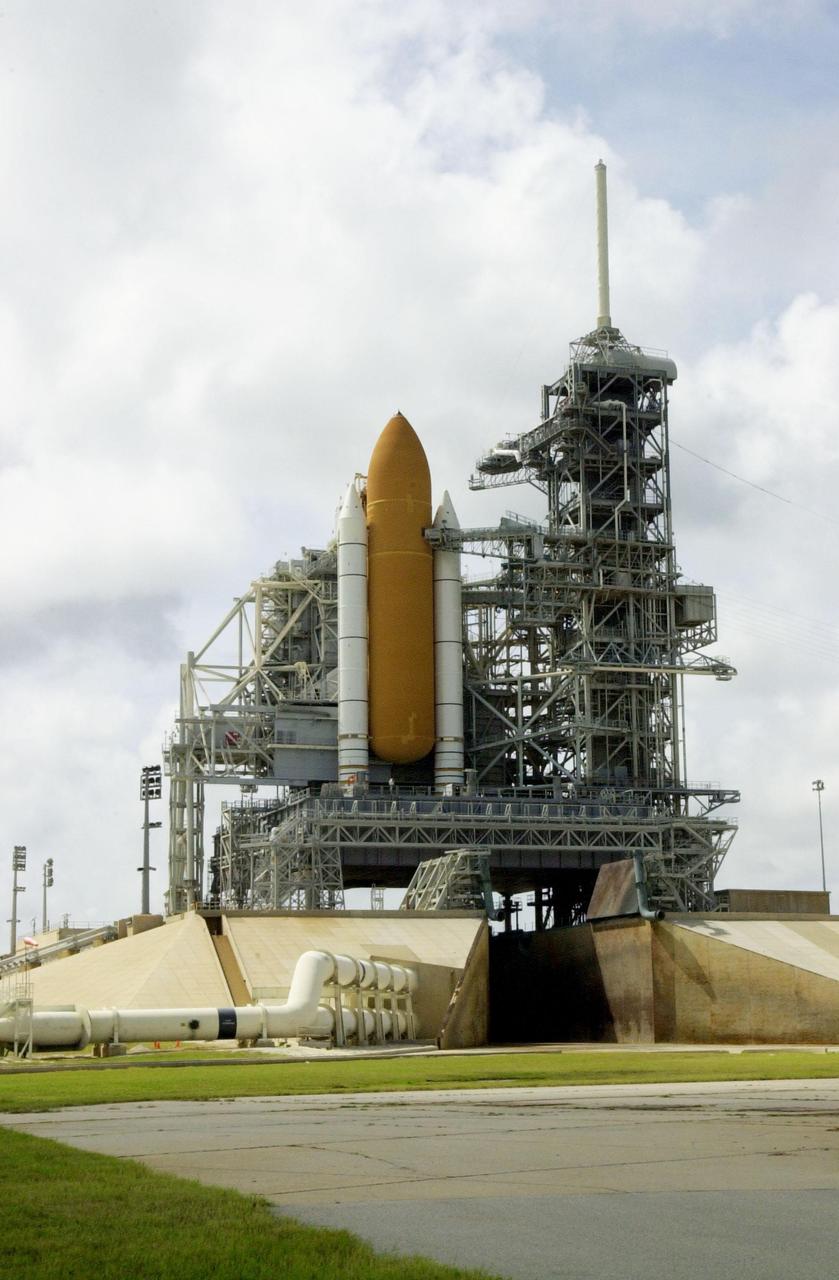
KENNEDY SPACE CENTER, FLA. - With the Rotating Service Structure in place on Launch Pad 39B, all that is visible on Space Shuttle Atlantis is the orange external tank flanked by white solid rocket boosters. The Shuttle is undergoing pre-launch preparations for mission STS-112, scheduled to launch Oct. 2, 2002. The sky above the Shuttle is filled with dark clouds sweeping over Florida from Hurricane Isidore.
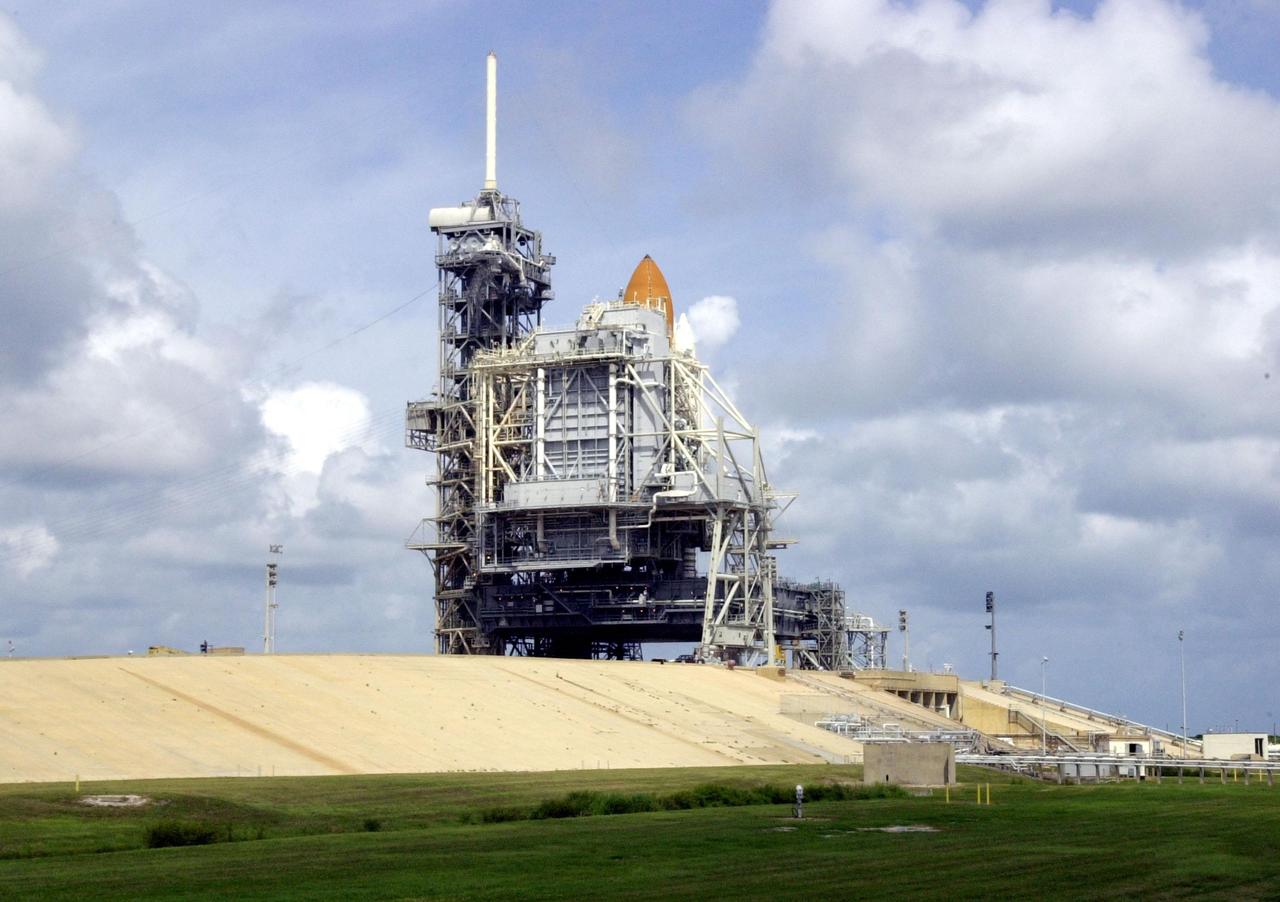
KENNEDY SPACE CENTER, FLA. - Only the tip of the orange external tank on Space Shuttle Atlantis is visible above the Rotating Service Structure surrounding Atlantis on Launch Pad 39B. The Shuttle is undergoing pre-launch preparations for mission STS-112, scheduled to launch Oct. 2, 2002. The sky above the Shuttle is filled with dark clouds sweeping over Florida from Hurricane Isidore.
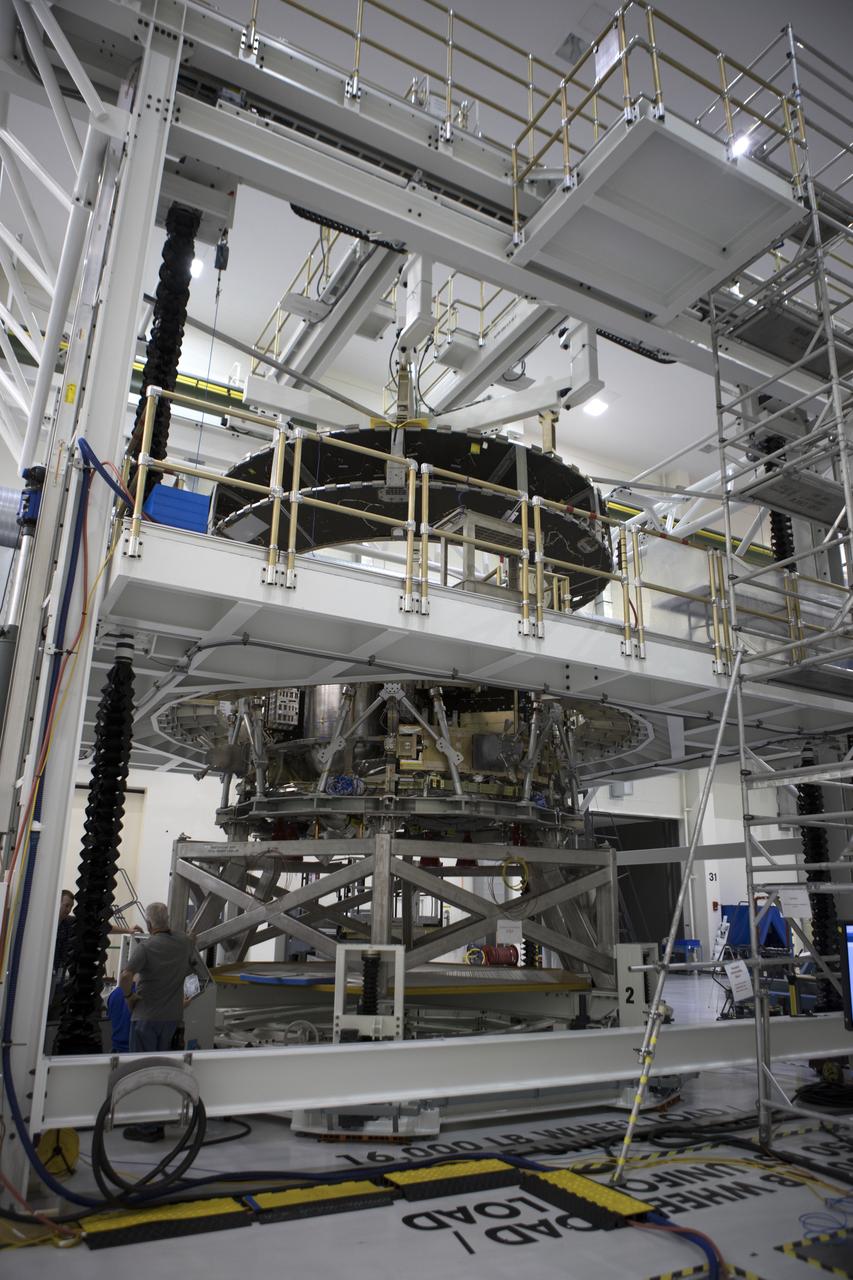
Inside the Neil Armstrong Operations and Checkout Building high bay at NASA's Kennedy Space Center in Florida, operations are underway to lower the Orion crew module adapter structural test article onto the European Space Agency's service module structural test article. After the hardware is attached, the structure will be packed and shipped to Lockheed Martin's Denver facility to undergo testing. The Orion spacecraft will launch atop the agency's Space Launch System rocket on Exploration Mission-1 in 2019.
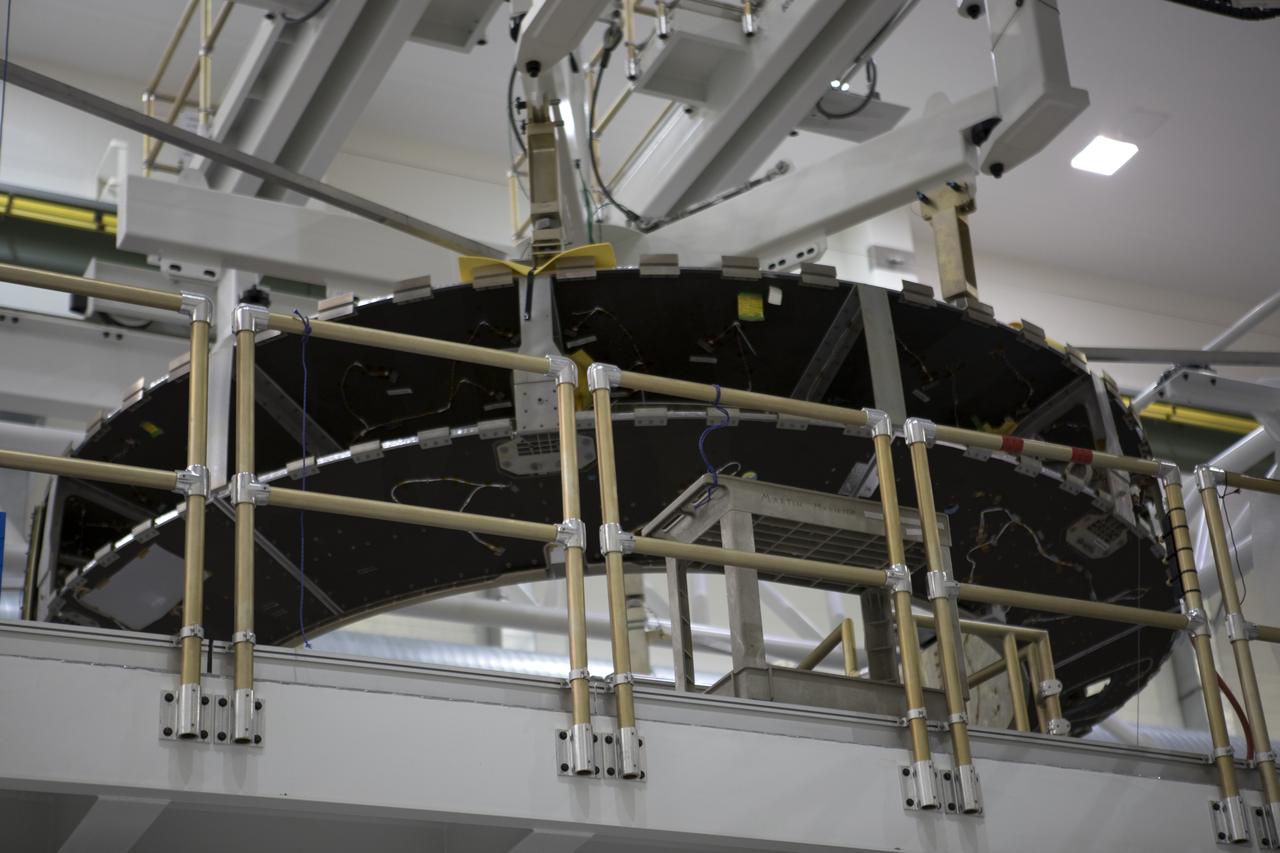
Inside the Neil Armstrong Operations and Checkout Building high bay at NASA's Kennedy Space Center in Florida, operations are underway to lower the Orion crew module adapter structural test article onto the European Space Agency's service module structural test article. After the hardware is attached, the structure will be packed and shipped to Lockheed Martin's Denver facility to undergo testing. The Orion spacecraft will launch atop the agency's Space Launch System rocket on Exploration Mission-1 in 2019.
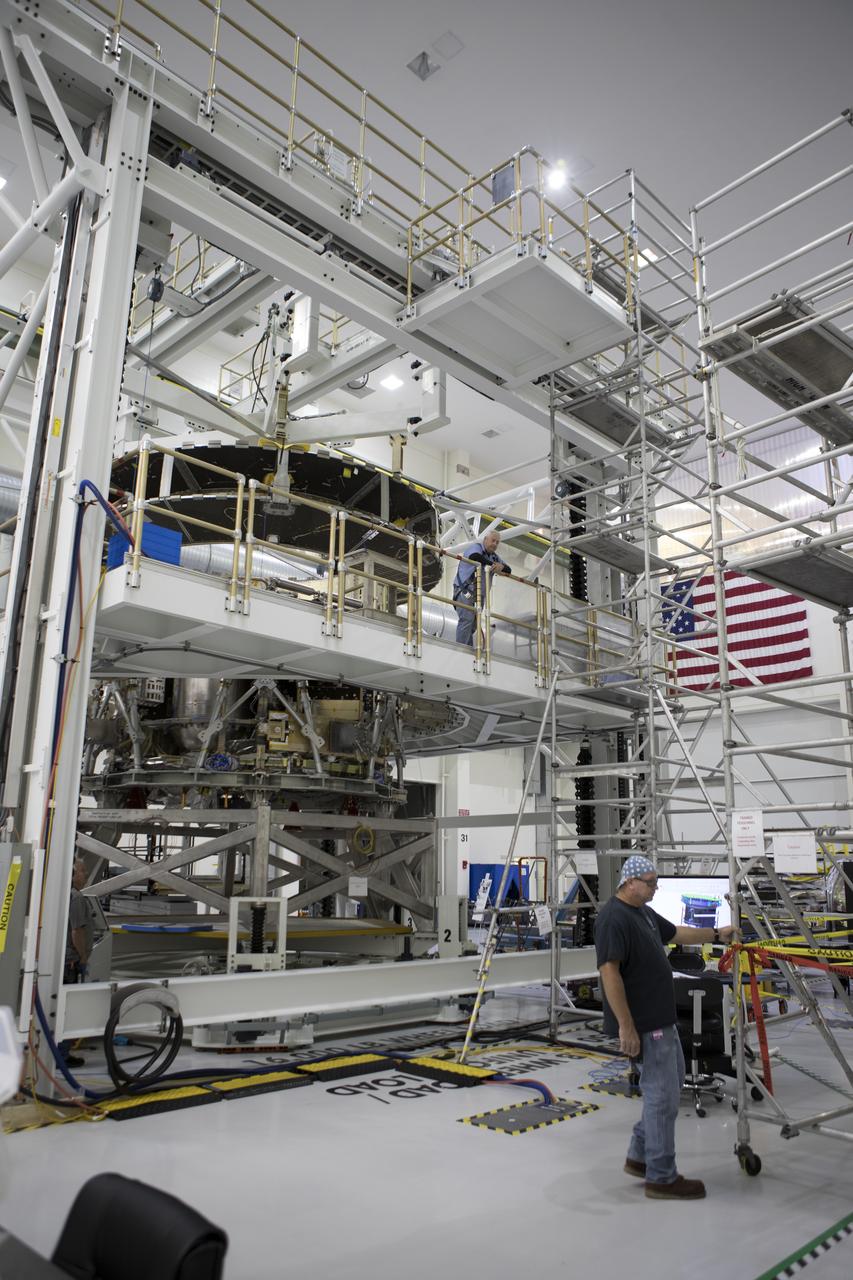
Inside the Neil Armstrong Operations and Checkout Building high bay at NASA's Kennedy Space Center in Florida, operations are underway to lower the Orion crew module adapter structural test article onto the European Space Agency's service module structural test article. After the hardware is attached, the structure will be packed and shipped to Lockheed Martin's Denver facility to undergo testing. The Orion spacecraft will launch atop the agency's Space Launch System rocket on Exploration Mission-1 in 2019.
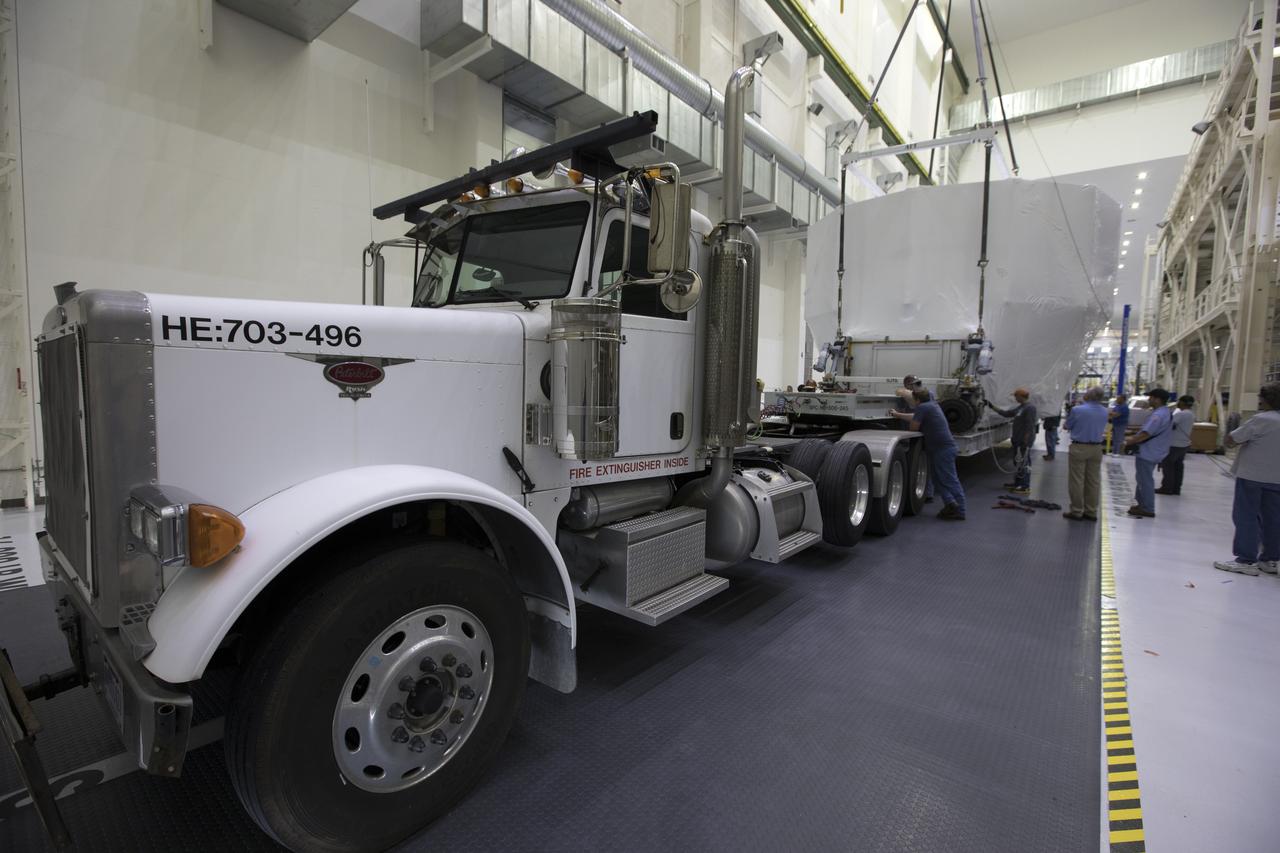
Inside the Neil Armstrong Operations and Checkout Building high bay, the Orion service module structural test article for Exploration Mission-1 (EM-1), built by the European Space Agency, is secured on the flatbed of a transport truck. The service module will be shipped to Lockheed Martin's Denver facility to undergo testing. The Orion spacecraft will launch atop the agency's Space Launch System rocket on EM-1 in 2019.
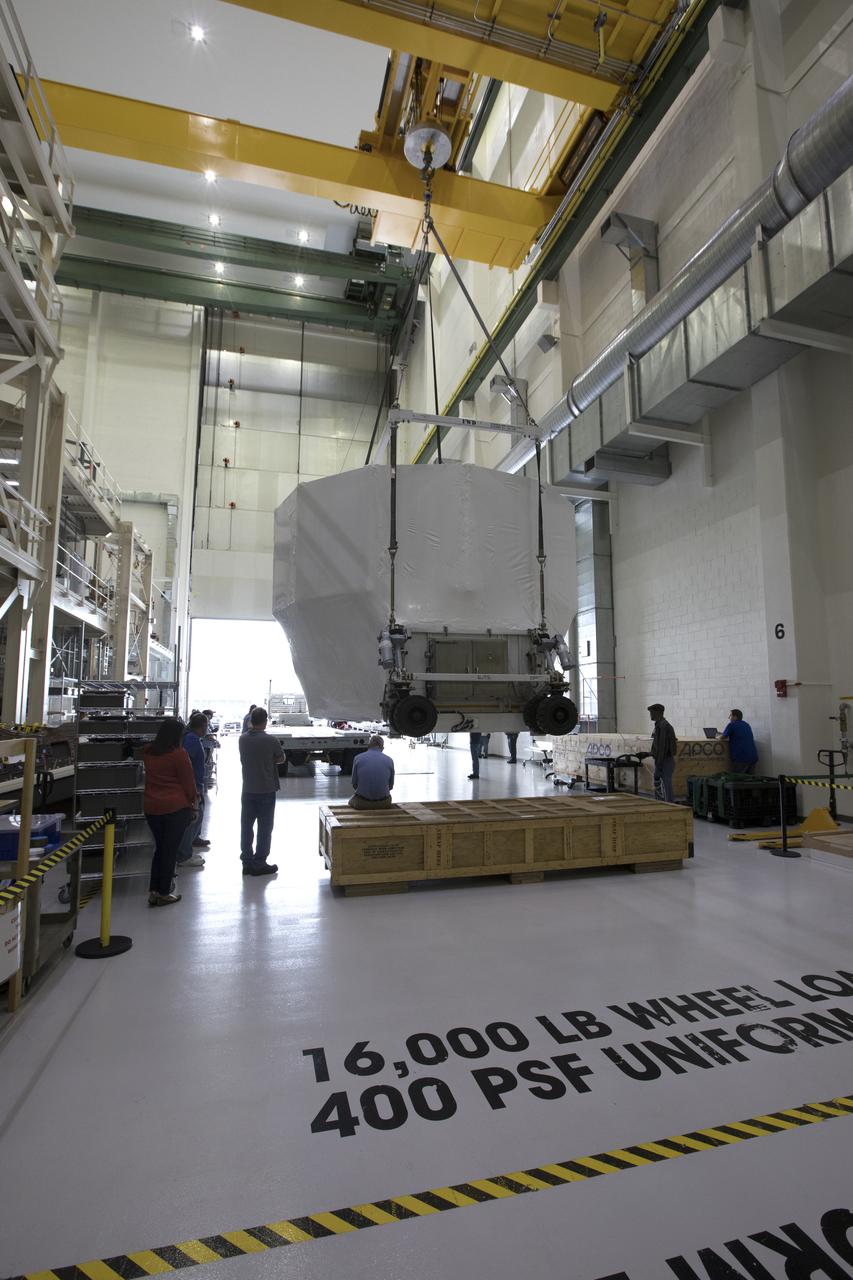
The Orion service module structural test article for Exploration Mission-1 (EM-1), built by the European Space Agency, is prepared for shipment to Lockheed Martin's Denver facility to undergo testing. Inside the Neil Armstrong Operations and Checkout Building high bay at NASA's Kennedy Space Center in Florida, a crane lifts the module, secured on a stand, for the move to the transport truck. The Orion spacecraft will launch atop the agency's Space Launch System rocket on EM-1 in 2019.
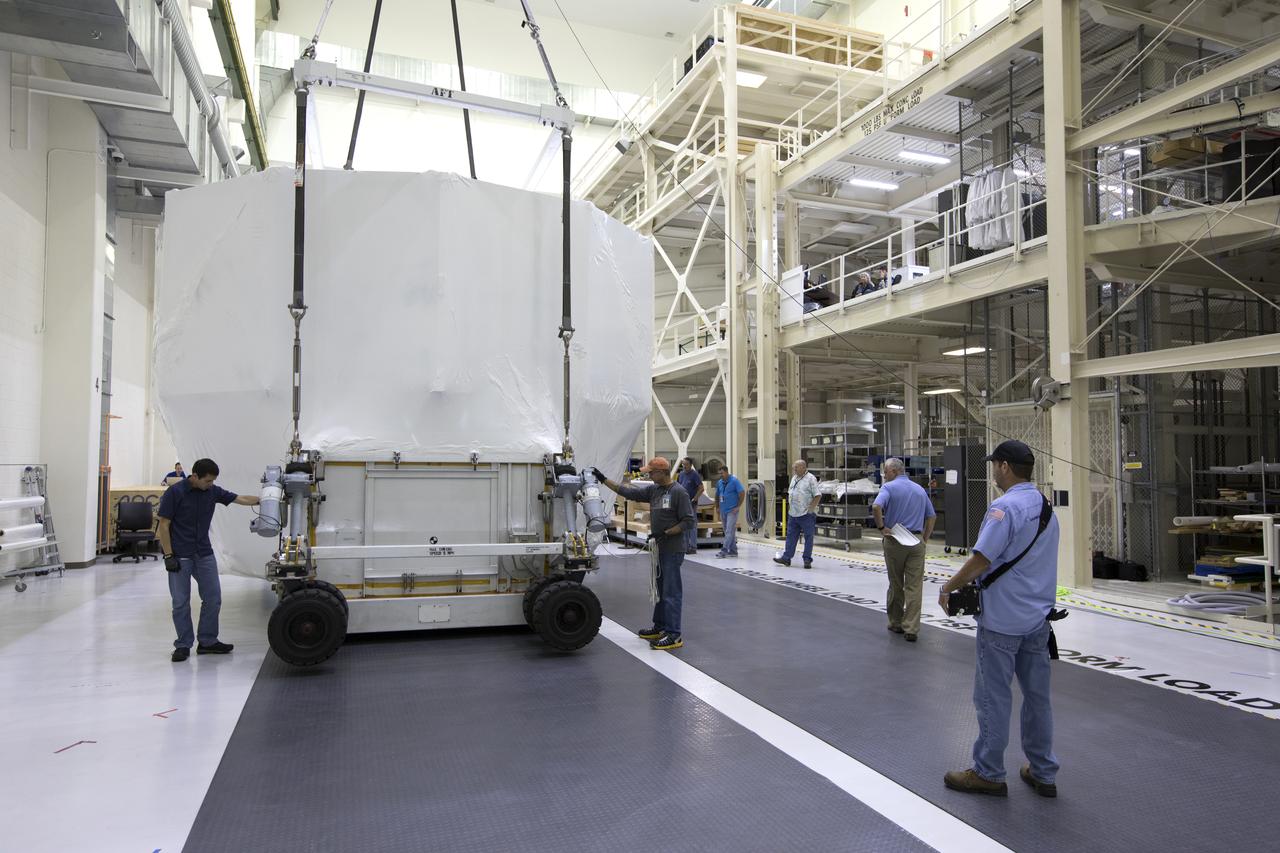
The Orion service module structural test article for Exploration Mission-1 (EM-1), built by the European Space Agency, is prepared for shipment to Lockheed Martin's Denver facility to undergo testing. Inside the Neil Armstrong Operations and Checkout Building high bay at NASA's Kennedy Space Center in Florida, workers secure the protective covering around the module and a crane lifts the module, secured on stand, for the move to the transport truck. The Orion spacecraft will launch atop the agency's Space Launch System rocket on EM-1 in 2019.
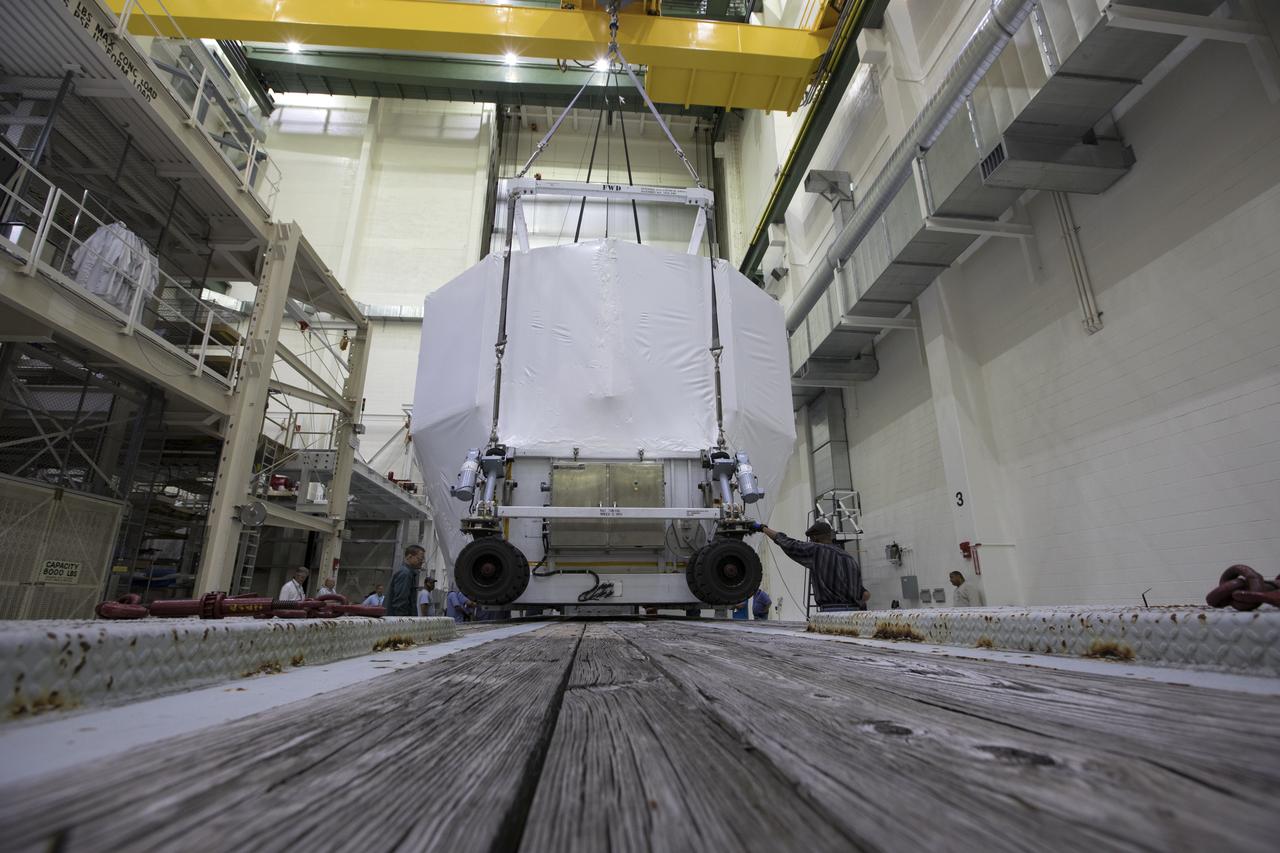
The Orion service module structural test article for Exploration Mission-1 (EM-1), built by the European Space Agency, is prepared for shipment to Lockheed Martin's Denver facility to undergo testing. Inside the Neil Armstrong Operations and Checkout Building high bay at NASA's Kennedy Space Center in Florida, a crane lifts the module, secured on a stand, for the move to the transport truck. The Orion spacecraft will launch atop the agency's Space Launch System rocket on EM-1 in 2019.
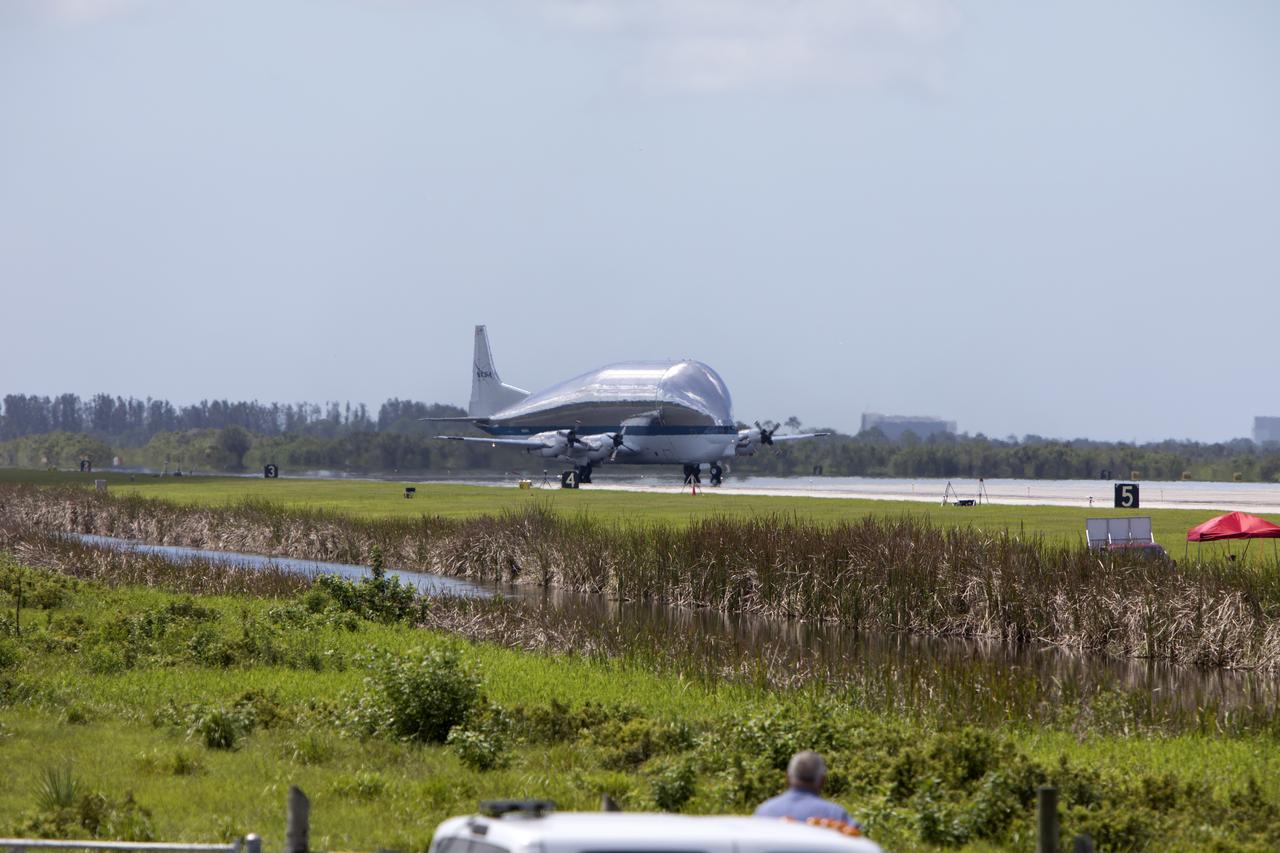
NASA's Super Guppy aircraft touches down at the Shuttle Landing Facility, managed and operated by Space Florida, at Kennedy Space Center in Florida. The Orion service module structural test article for Exploration Mission-1 (EM-1), built by the European Space Agency, will be loaded into the Guppy for shipment to Lockheed Martin's Denver facility to undergo testing. The Orion spacecraft will launch atop the agency's Space Launch System rocket on EM-1 in 2019.
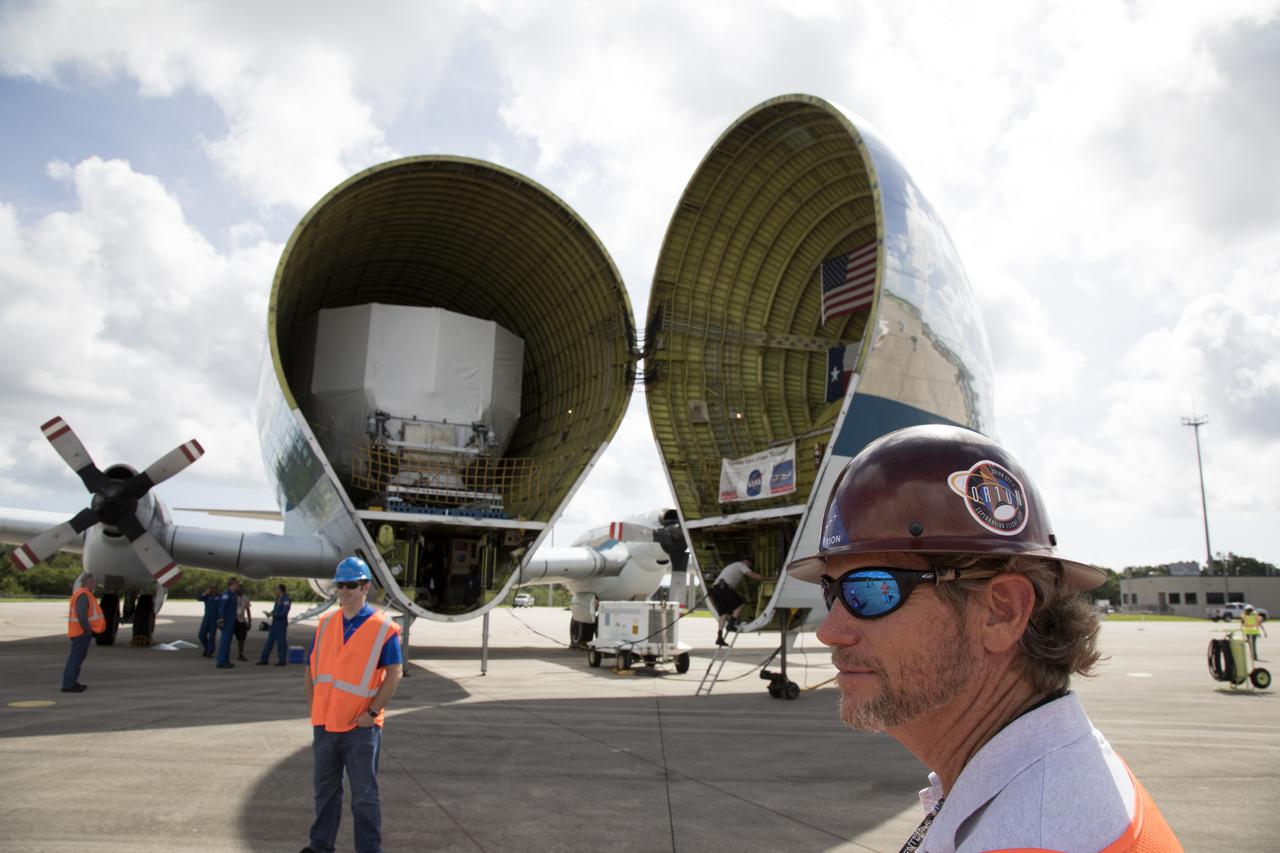
The Orion service module structural test article for Exploration Mission-1 (EM-1), built by the European Space Agency, is secured inside NASA's Super Guppy aircraft at Kennedy Space Center's Shuttle Landing Facility, managed by Space Florida. The module will be shipped to Lockheed Martin's Denver facility to undergo testing. The Orion spacecraft will launch atop the agency's Space Launch System rocket on EM-1 in 2019.
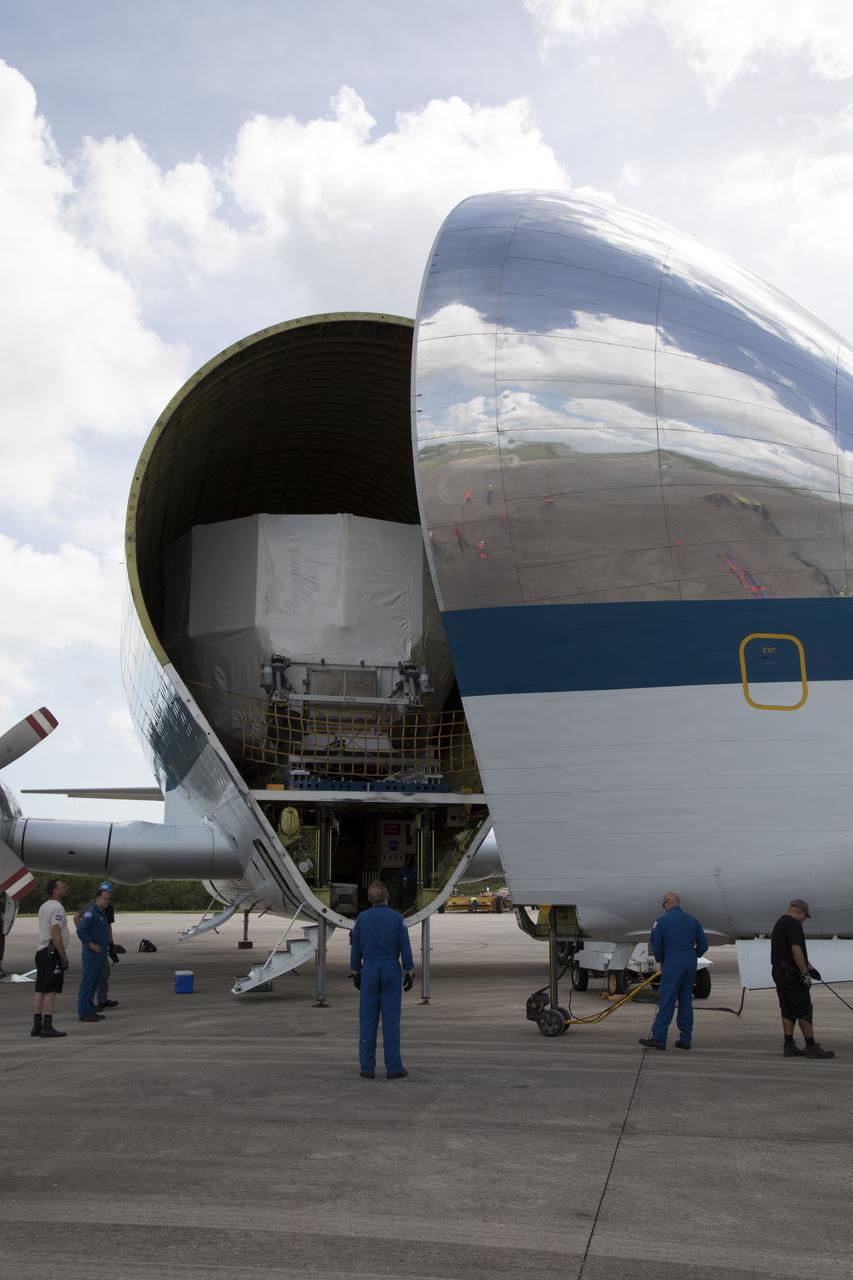
The Orion service module structural test article for Exploration Mission-1 (EM-1), built by the European Space Agency, is secured inside NASA's Super Guppy aircraft at Kennedy Space Center's Shuttle Landing Facility, managed by Space Florida. The module will be shipped to Lockheed Martin's Denver facility to undergo testing. The Orion spacecraft will launch atop the agency's Space Launch System rocket on EM-1 in 2019.
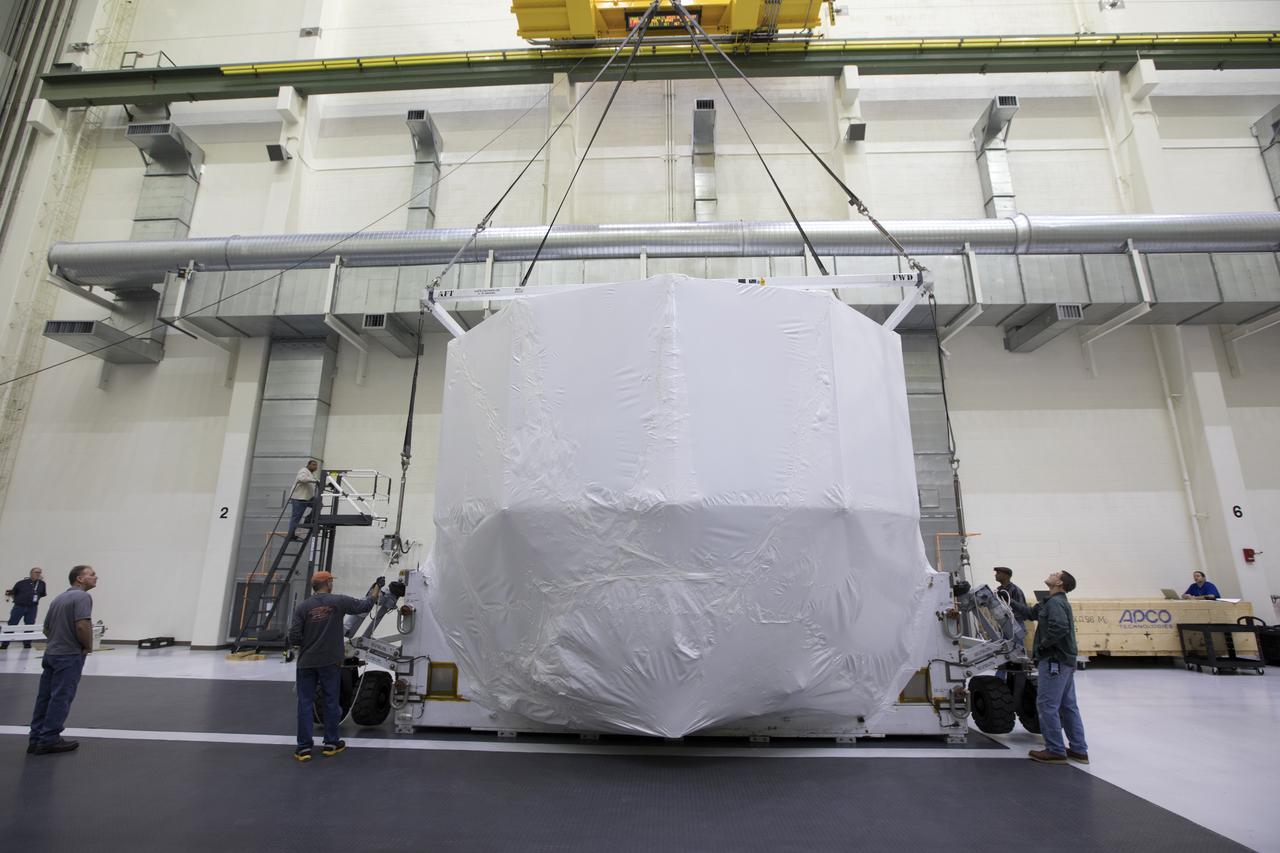
The Orion service module structural test article for Exploration Mission-1 (EM-1), built by the European Space Agency, is prepared for shipment to Lockheed Martin's Denver facility to undergo testing. Inside the Neil Armstrong Operations and Checkout Building high bay at NASA's Kennedy Space Center in Florida, workers secure the protective covering around the module and a crane is used to lower it onto a stand. The Orion spacecraft will launch atop the agency's Space Launch System rocket on EM-1 in 2019.
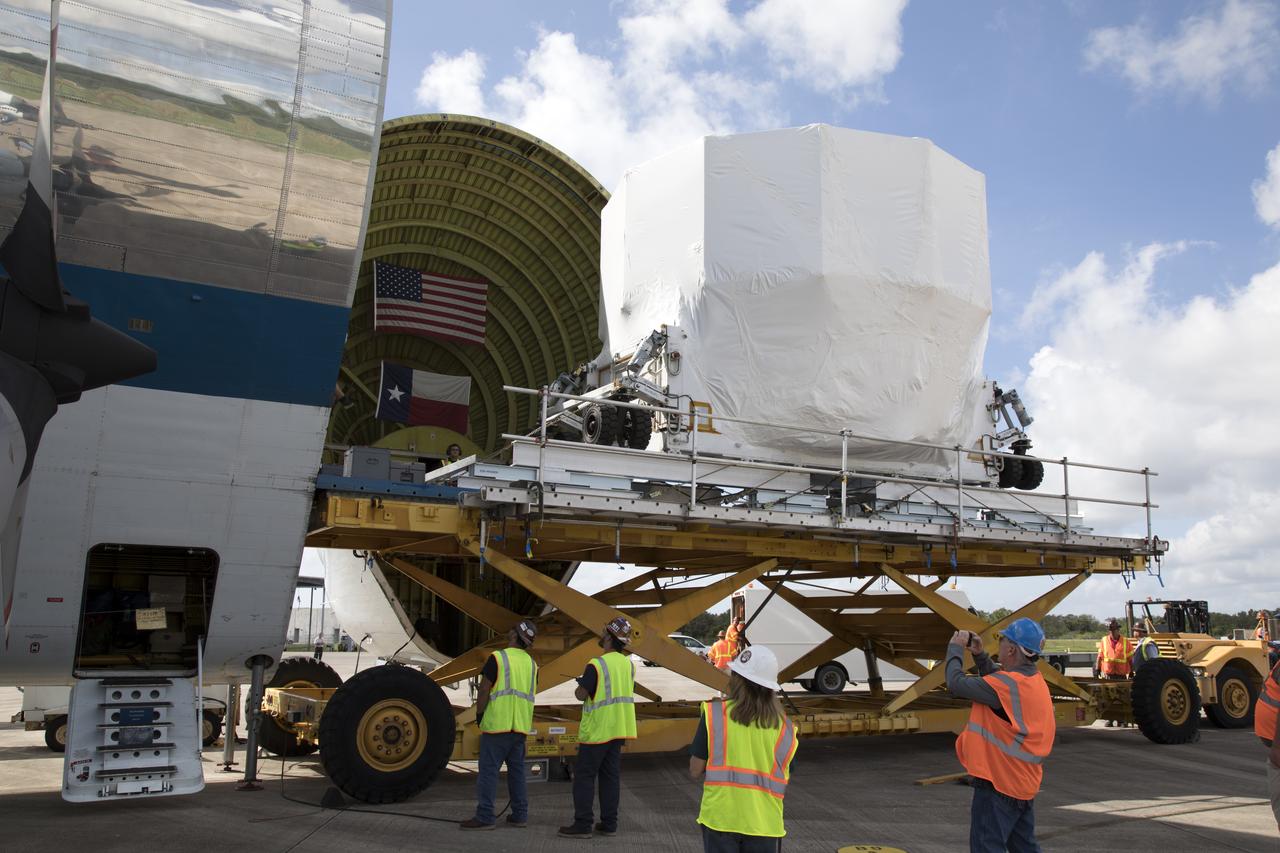
At Kennedy Space Center's Shuttle Landing Facility in Florida, workers prepare to move the Orion service module structural test article for Exploration Mission-1 (EM-1), built by the European Space Agency, inside NASA's Super Guppy aircraft. The module will be secured inside the aircraft and shipped to Lockheed Martin's Denver facility to undergo testing. The Orion spacecraft will launch atop the agency's Space Launch System rocket on EM-1 in 2019.
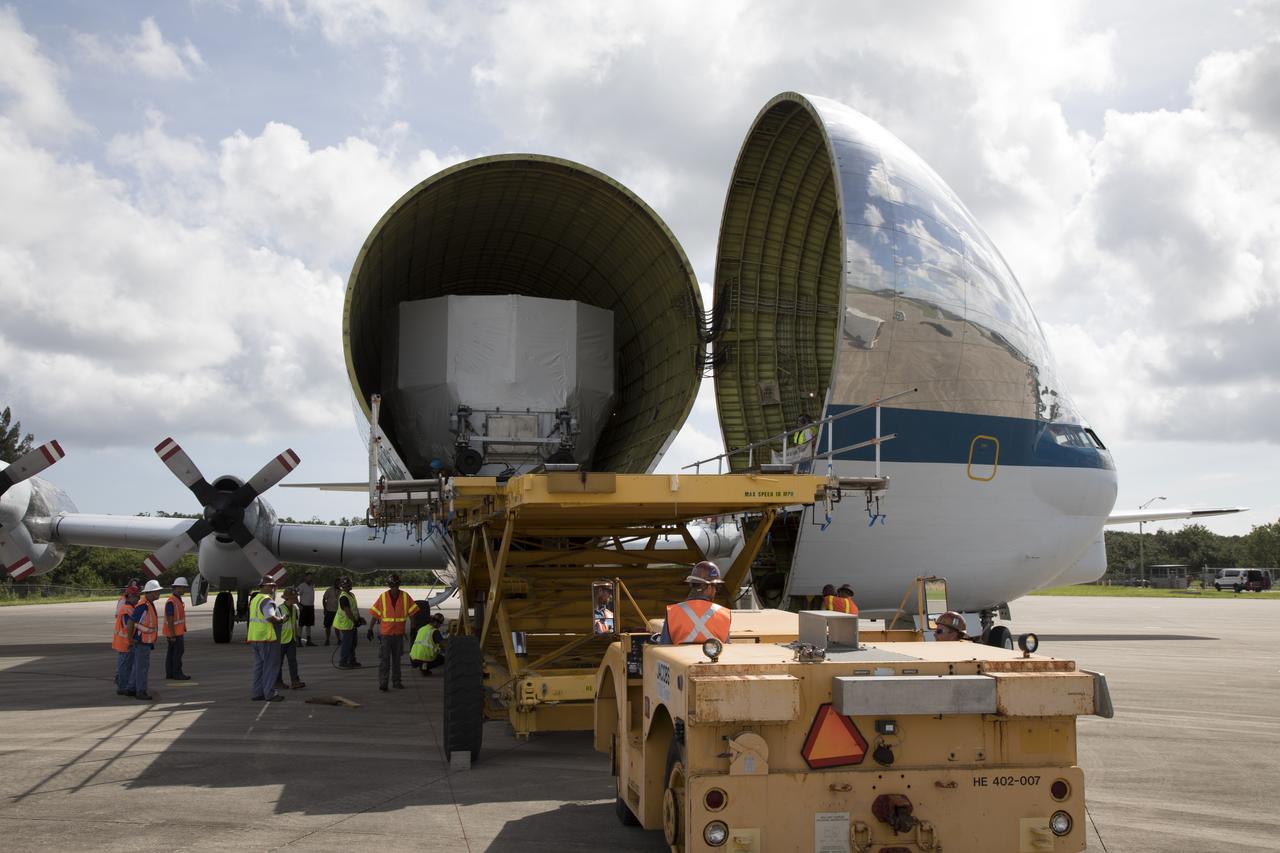
The Orion service module structural test article for Exploration Mission-1 (EM-1), built by the European Space Agency, is moved inside NASA's Super Guppy aircraft at Kennedy Space Center's Shuttle Landing Facility, managed by Space Florida. The module will be secured inside the aircraft and shipped to Lockheed Martin's Denver facility to undergo testing. The Orion spacecraft will launch atop the agency's Space Launch System rocket on EM-1 in 2019.
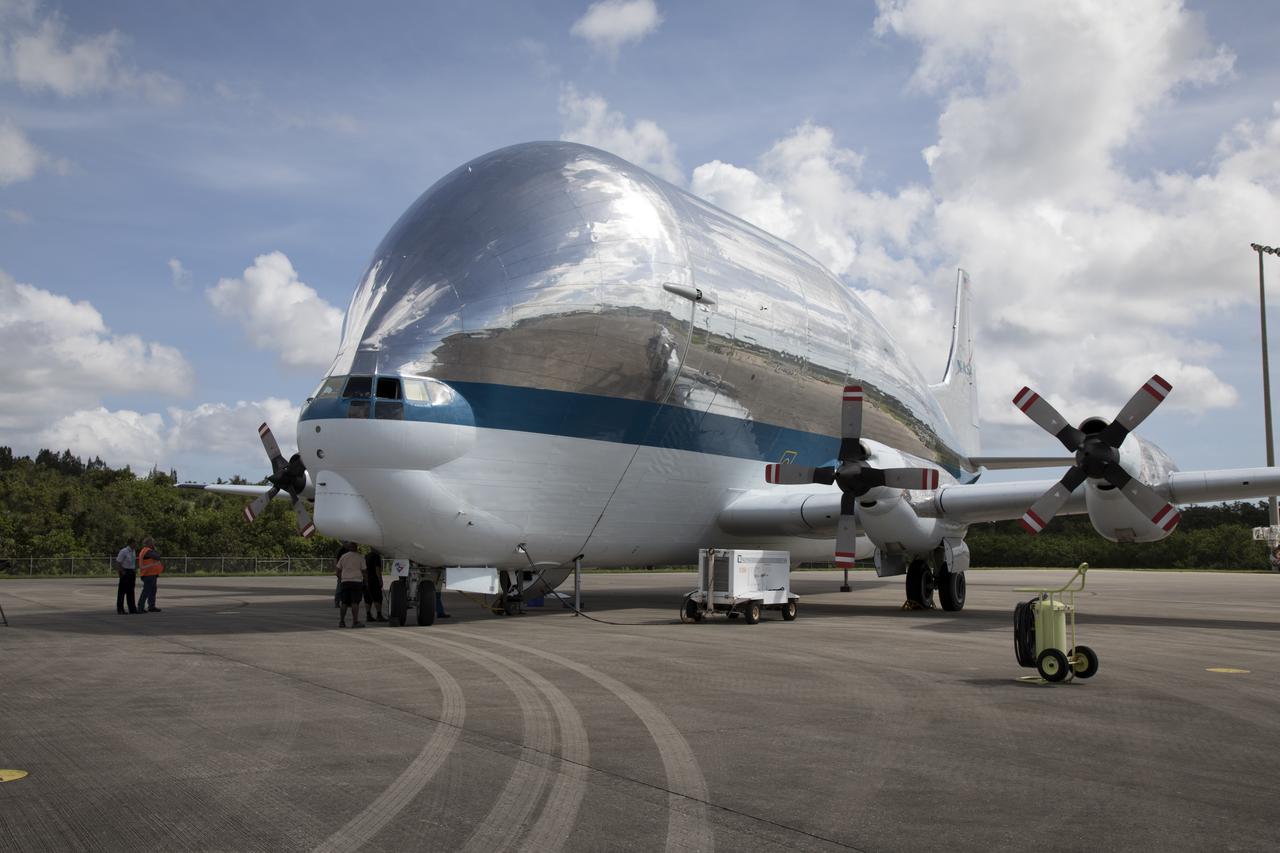
NASA's Super Guppy aircraft has arrived on the tarmac at the Shuttle Landing Facility, managed and operated by Space Florida, at Kennedy Space Center in Florida. The Orion service module structural test article for Exploration Mission-1 (EM-1), built by the European Space Agency, will be loaded into the Guppy for shipment to Lockheed Martin's Denver facility to undergo testing. The Orion spacecraft will launch atop the agency's Space Launch System rocket on EM-1 in 2019.
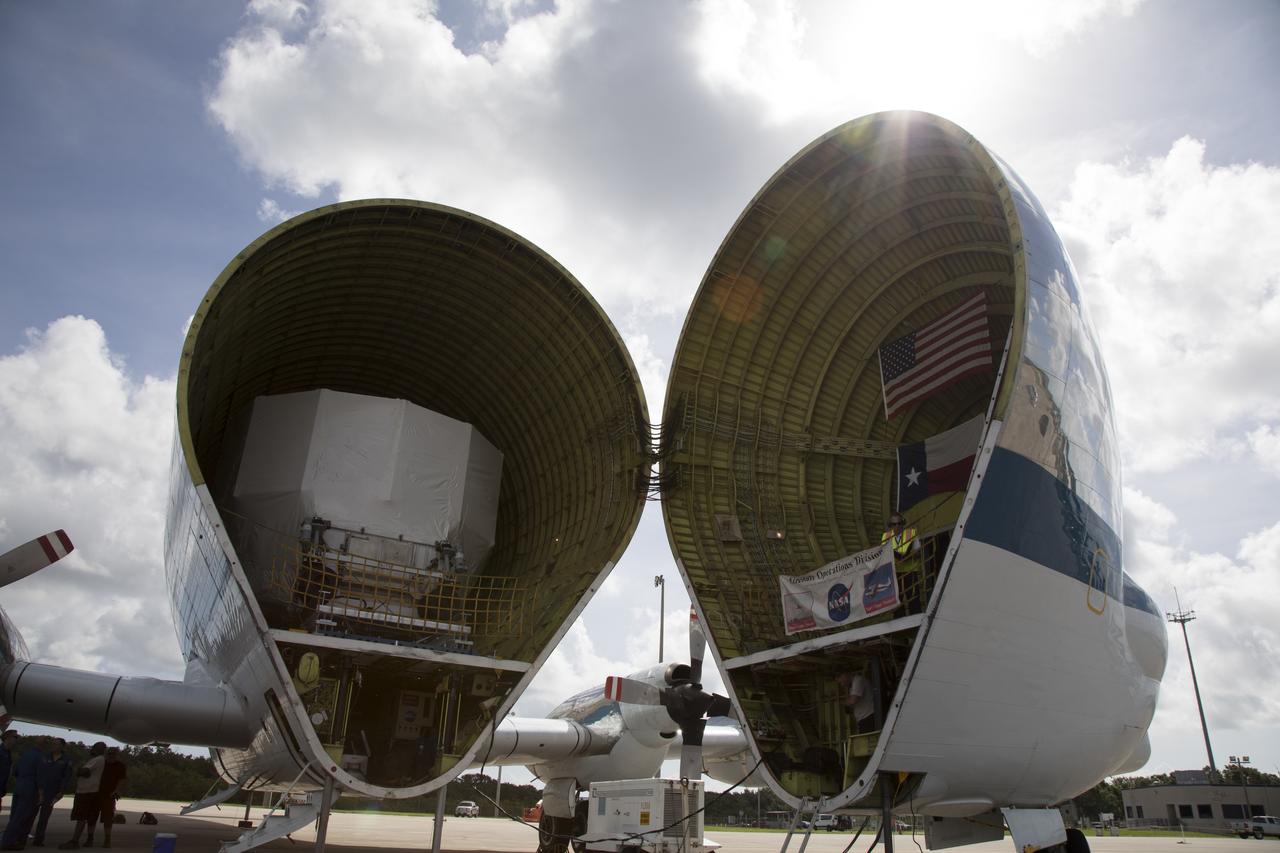
The Orion service module structural test article for Exploration Mission-1 (EM-1), built by the European Space Agency, is secured inside NASA's Super Guppy aircraft at Kennedy Space Center's Shuttle Landing Facility, managed by Space Florida. The module will be shipped to Lockheed Martin's Denver facility to undergo testing. The Orion spacecraft will launch atop the agency's Space Launch System rocket on EM-1 in 2019.
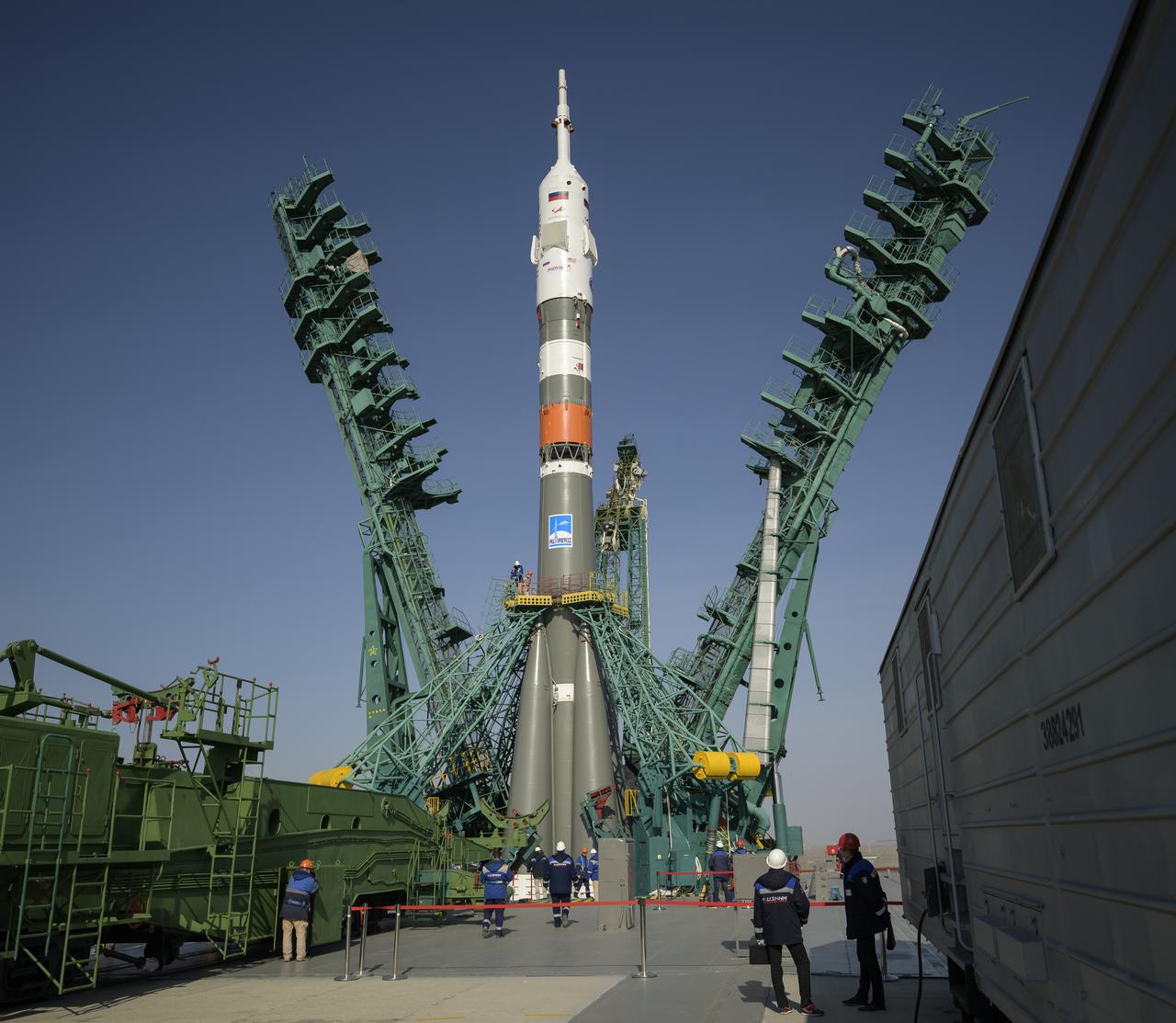
The service structure is lifted into position around the Soyuz rocket, Tuesday, April 6, 2021, at site 31 of the Baikonur Cosmodrome in Kazakhstan. Expedition 65 NASA astronaut Mark Vande Hei, Roscosmos cosmonauts Pyotr Dubrov and Oleg Novitskiy are scheduled to launch aboard their Soyuz MS-18 spacecraft on April 9. Photo Credit: (NASA/Bill Ingalls)

The service structure is raised into position around the Soyuz rocket, Sunday, Sept. 18, 2022, at site 31 of the Baikonur Cosmodrome in Kazakhstan. Expedition 68 astronaut Frank Rubio of NASA, and cosmonauts Sergey Prokopyev and Dmitri Petelin of Roscosmos are scheduled to launch aboard their Soyuz MS-22 spacecraft on Sept. 21. Photo Credit: (NASA/Victor Zelentsov)

The service structure is raised into position around the Soyuz rocket, Sunday, Sept. 18, 2022, at site 31 of the Baikonur Cosmodrome in Kazakhstan. Expedition 68 astronaut Frank Rubio of NASA, and cosmonauts Sergey Prokopyev and Dmitri Petelin of Roscosmos are scheduled to launch aboard their Soyuz MS-22 spacecraft on Sept. 21. Photo Credit: (NASA/Bill Ingalls)
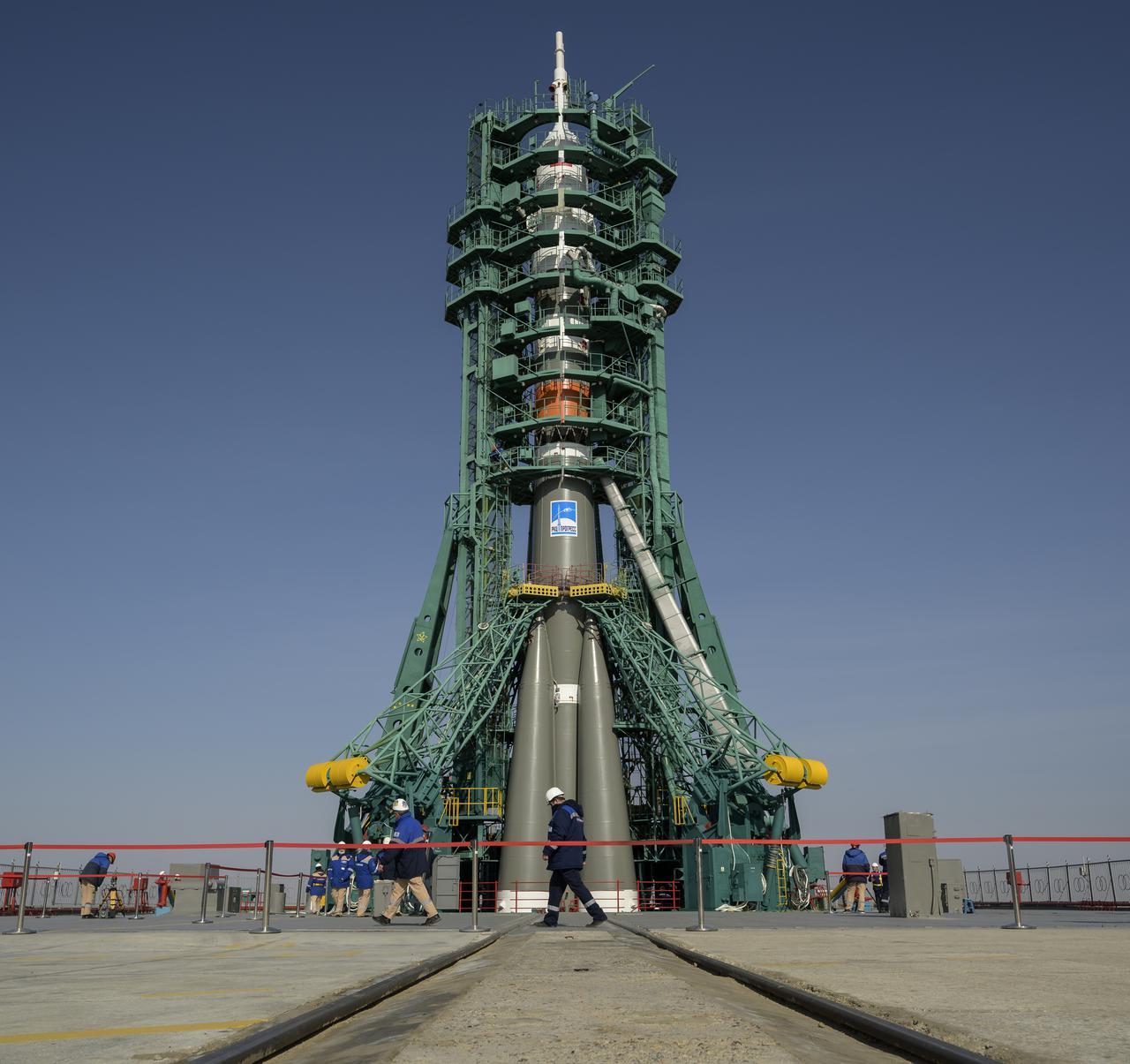
The service structure is raised into position around the Soyuz rocket, Tuesday, April 6, 2021, at site 31 of the Baikonur Cosmodrome in Kazakhstan. Expedition 65 NASA astronaut Mark Vande Hei, Roscosmos cosmonauts Pyotr Dubrov and Oleg Novitskiy are scheduled to launch aboard their Soyuz MS-18 spacecraft on April 9. Photo Credit: (NASA/Bill Ingalls)
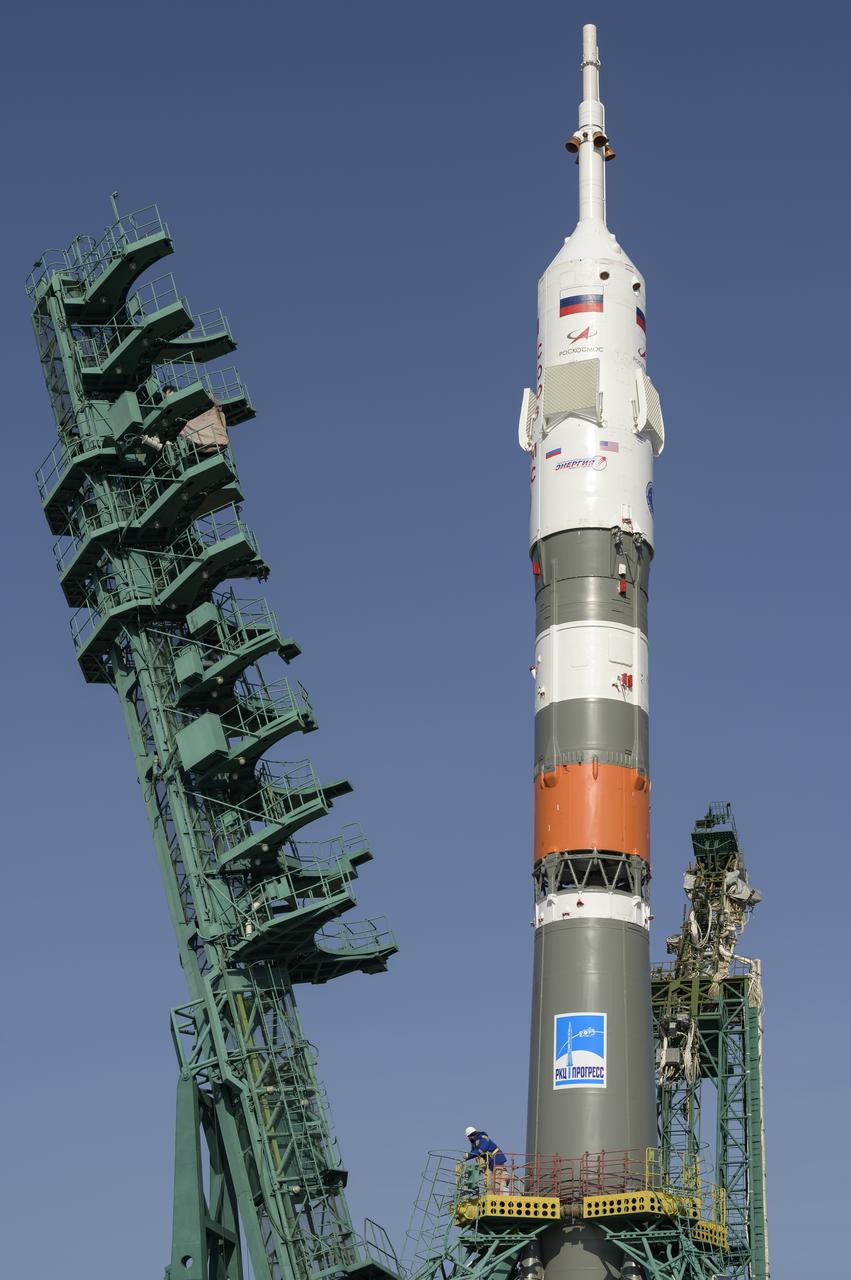
The service structure is lifted into position around the Soyuz rocket, Tuesday, April 6, 2021, at site 31 of the Baikonur Cosmodrome in Kazakhstan. Expedition 65 NASA astronaut Mark Vande Hei, Roscosmos cosmonauts Pyotr Dubrov and Oleg Novitskiy are scheduled to launch aboard their Soyuz MS-18 spacecraft on April 9. Photo Credit: (NASA/Bill Ingalls)

The service structure is raised into position around the Soyuz rocket, Sunday, Sept. 18, 2022, at site 31 of the Baikonur Cosmodrome in Kazakhstan. Expedition 68 astronaut Frank Rubio of NASA, and cosmonauts Sergey Prokopyev and Dmitri Petelin of Roscosmos are scheduled to launch aboard their Soyuz MS-22 spacecraft on Sept. 21. Photo Credit: (NASA/Bill Ingalls)
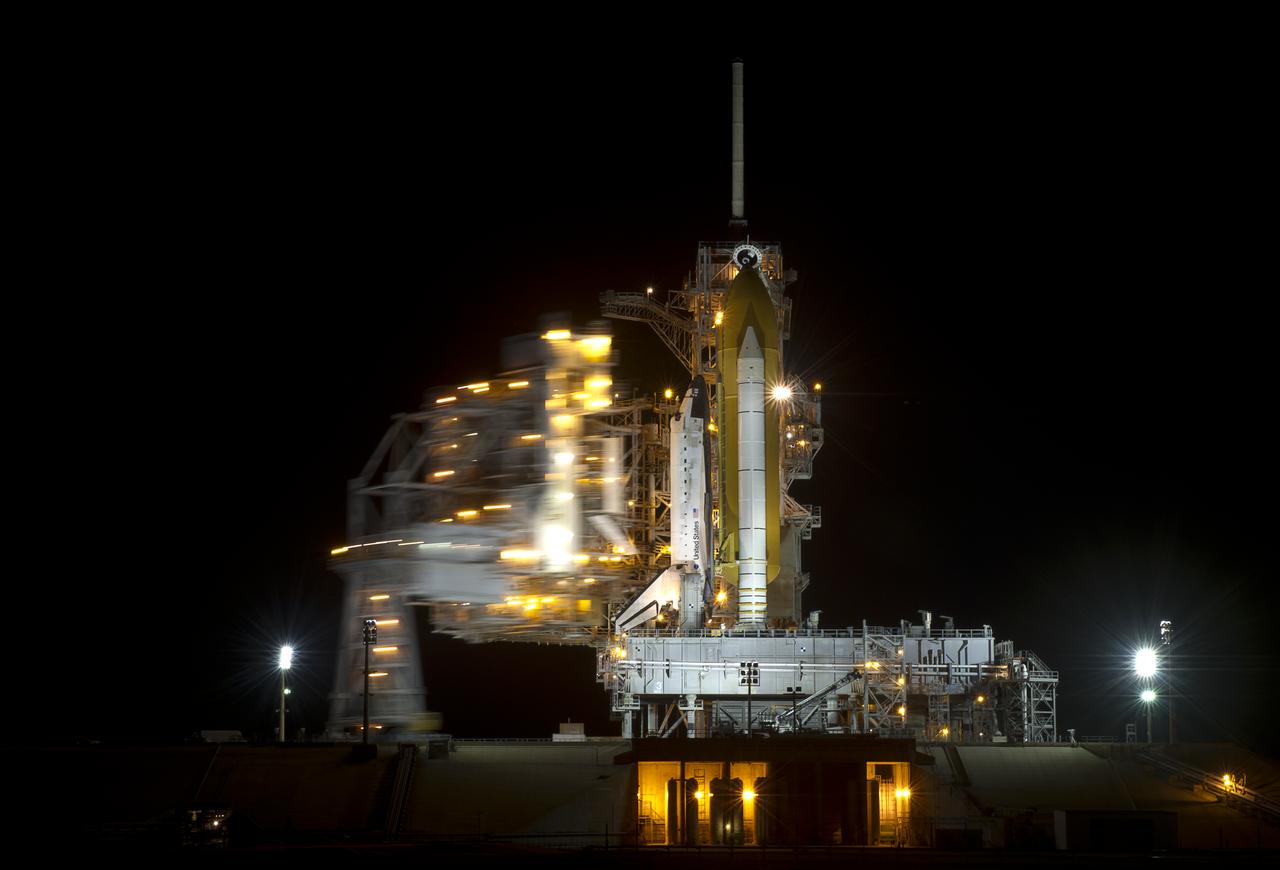
The space shuttle Discovery is seen on launch Pad 39a as the Rotating Service Structure (RSS) is rolled back on Wednesday, Nov. 3, 2010 at the NASA Kennedy Space Center in Cape Canaveral, Fla. During space shuttle Discovery's final spaceflight, the STS-133 crew members will take important spare parts to the International Space Station along with the Express Logistics Carrier-4. Photo Credit: (NASA/Bill Ingalls)
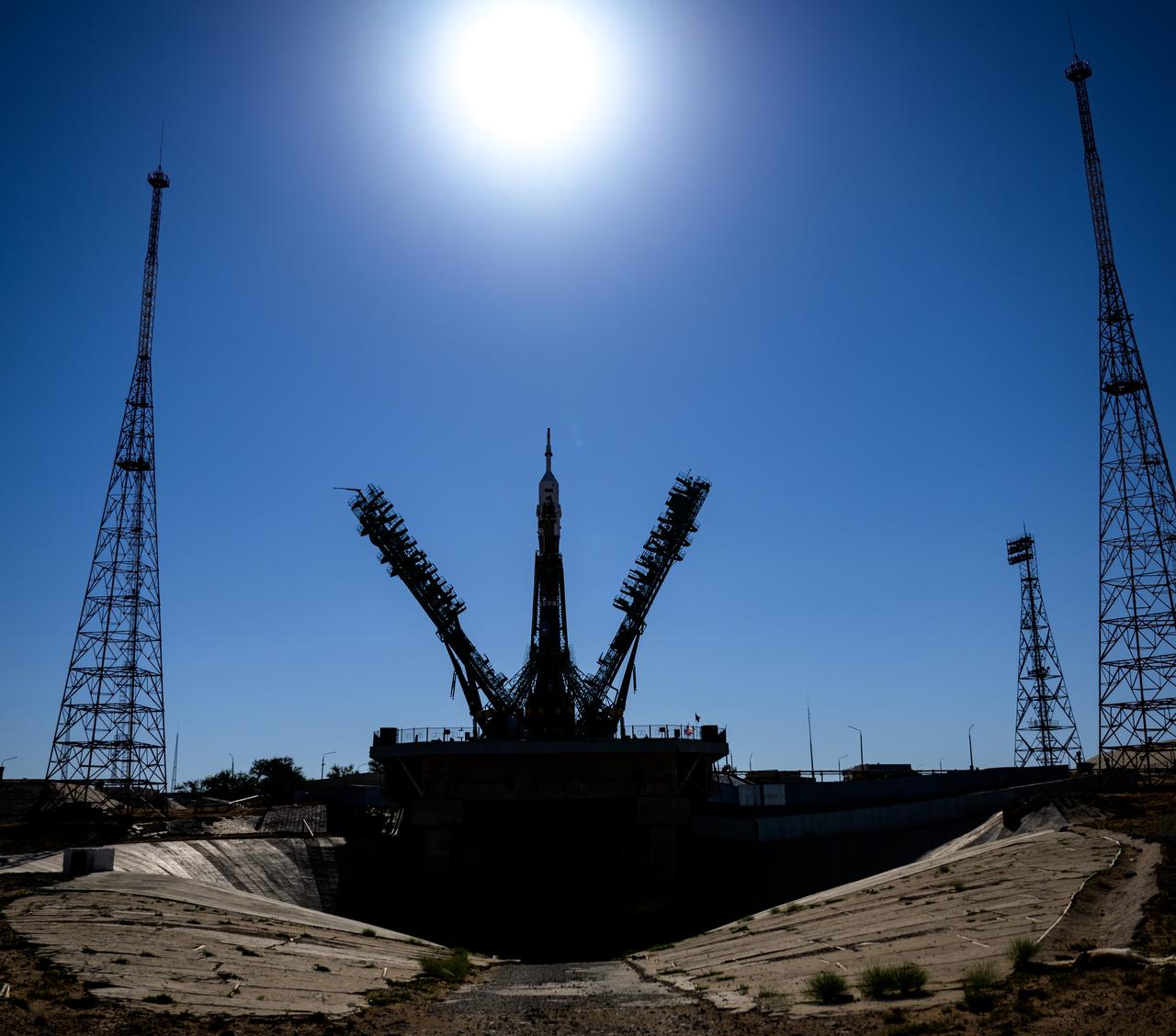
The service structure is raised into position around the Soyuz rocket, Sunday, Sept. 18, 2022, at site 31 of the Baikonur Cosmodrome in Kazakhstan. Expedition 68 astronaut Frank Rubio of NASA, and cosmonauts Sergey Prokopyev and Dmitri Petelin of Roscosmos are scheduled to launch aboard their Soyuz MS-22 spacecraft on Sept. 21. Photo Credit: (NASA/Bill Ingalls)
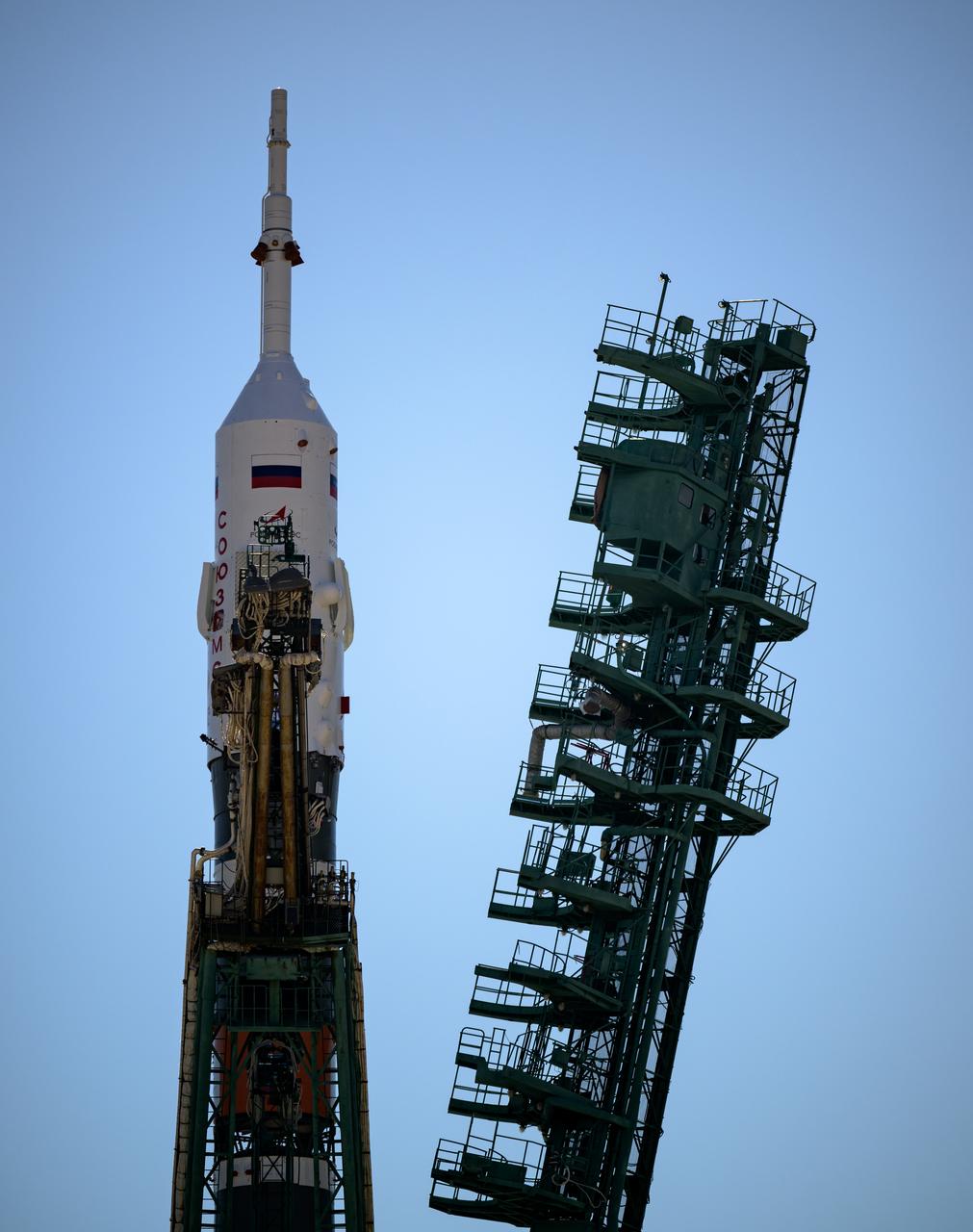
The service structure is raised into position around the Soyuz rocket, Sunday, Sept. 18, 2022, at site 31 of the Baikonur Cosmodrome in Kazakhstan. Expedition 68 astronaut Frank Rubio of NASA, and cosmonauts Sergey Prokopyev and Dmitri Petelin of Roscosmos are scheduled to launch aboard their Soyuz MS-22 spacecraft on Sept. 21. Photo Credit: (NASA/Bill Ingalls)
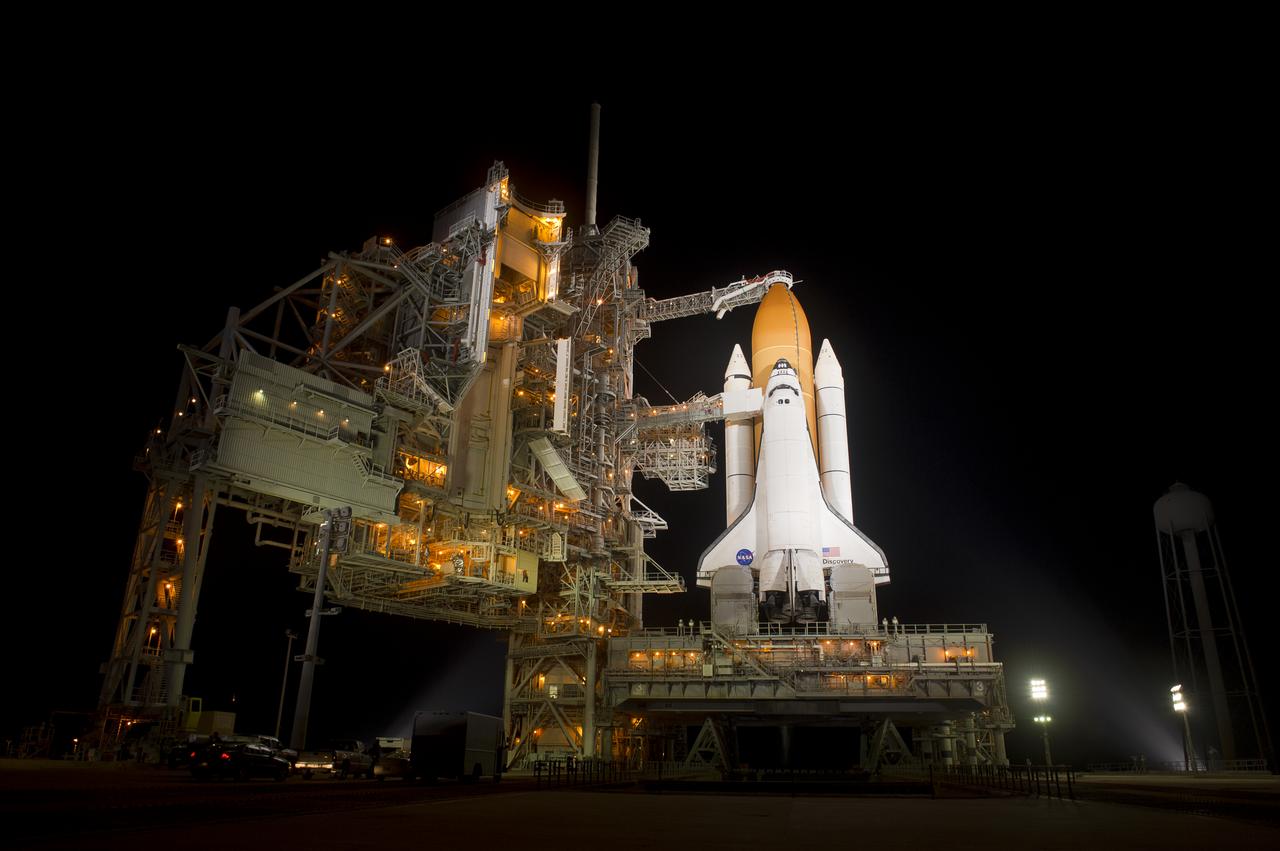
The space shuttle Discovery is seen on launch Pad 39a after the Rotating Service Structure (RSS) is rolled back on Wednesday, Nov. 3, 2010 at the NASA Kennedy Space Center in Cape Canaveral, Fla. During space shuttle Discovery's final spaceflight, the STS-133 crew members will take important spare parts to the International Space Station along with the Express Logistics Carrier-4. Photo Credit: (NASA/Bill Ingalls)
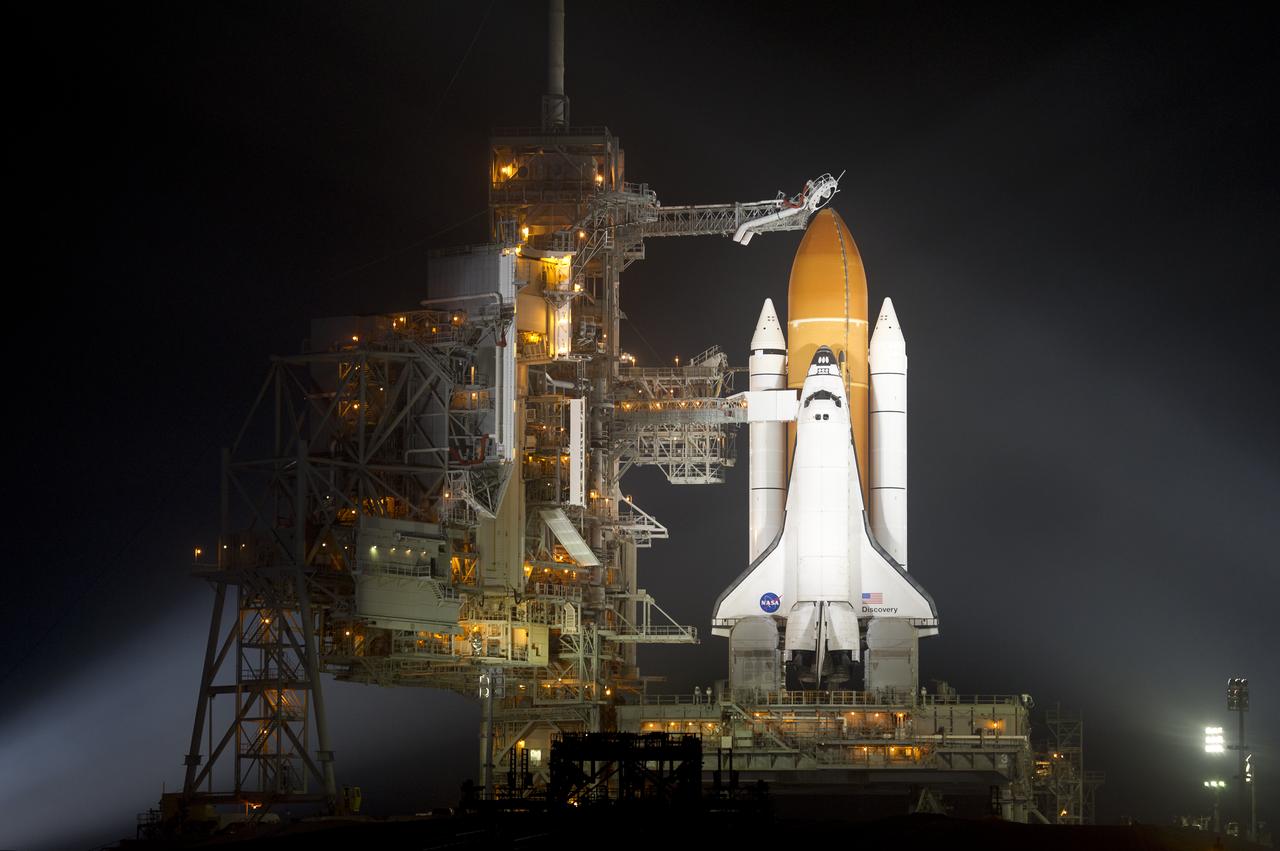
The space shuttle Discovery is seen shortly after the Rotating Service Structure was rolled back at launch pad 39A, at the Kennedy Space Center in Cape Canaveral, Florida, on Wednesday, Feb. 23, 2011. Discovery, on its 39th and final flight, will carry the Italian-built Permanent Multipurpose Module (PMM), Express Logistics Carrier 4 (ELC4) and Robonaut 2, the first humanoid robot in space to the International Space Station. Photo Credit: (NASA/Bill Ingalls)
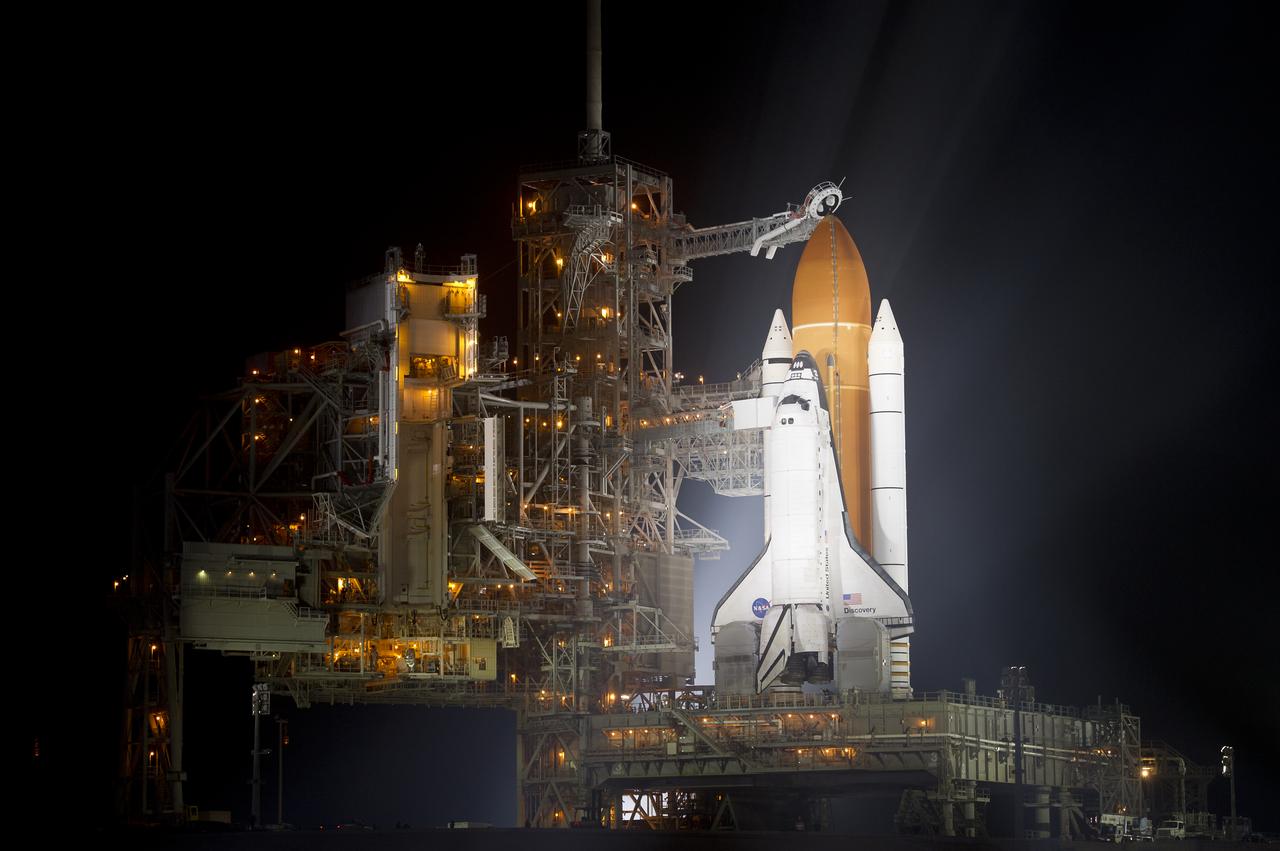
The space shuttle Discovery is seen shortly after the Rotating Service Structure was rolled back at launch pad 39A, at the Kennedy Space Center in Cape Canaveral, Florida, on Wednesday, Feb. 23, 2011. Discovery, on its 39th and final flight, will carry the Italian-built Permanent Multipurpose Module (PMM), Express Logistics Carrier 4 (ELC4) and Robonaut 2, the first humanoid robot in space to the International Space Station. Photo Credit: (NASA/Bill Ingalls)
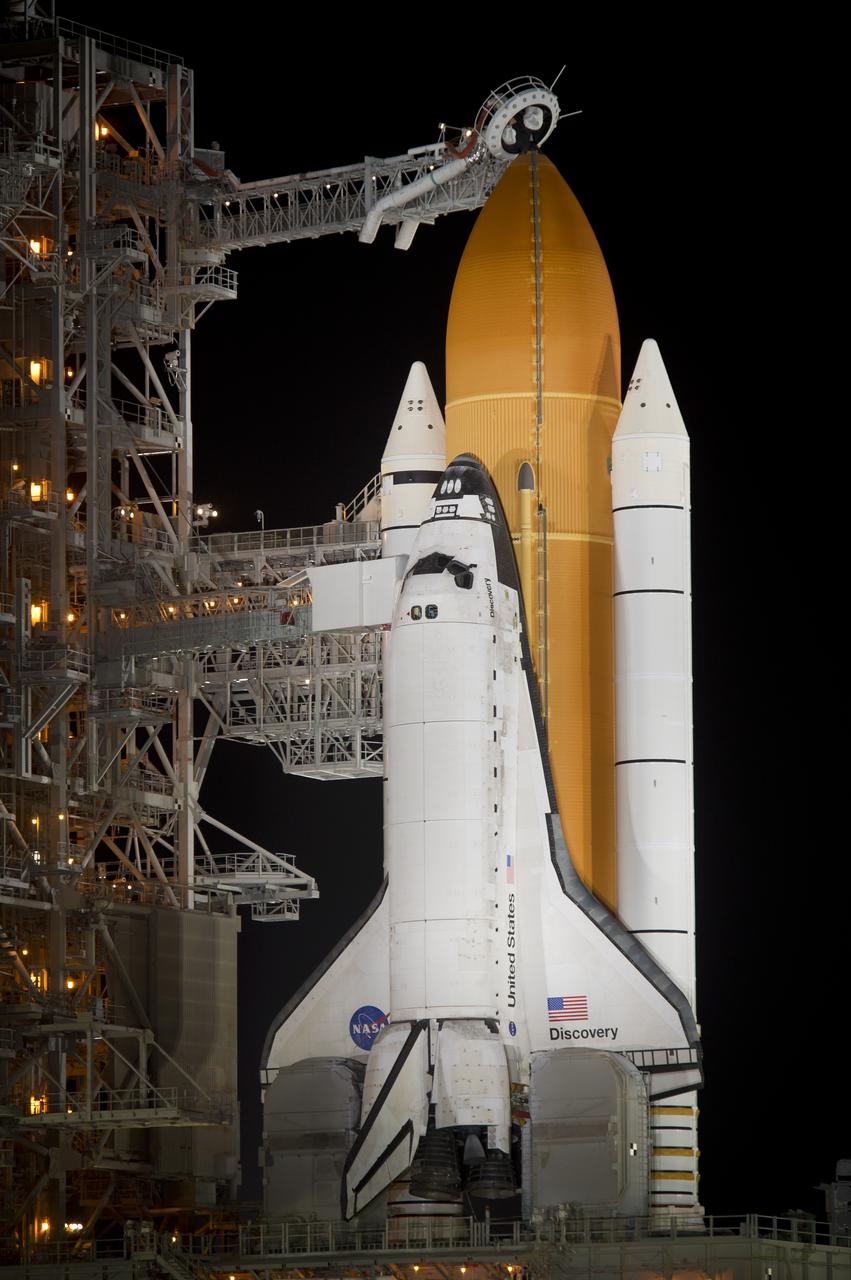
The space shuttle Discovery is seen on launch Pad 39a after the Rotating Service Structure (RSS) is rolled back on Wednesday, Nov. 3, 2010 at the NASA Kennedy Space Center in Cape Canaveral, Fla. During space shuttle Discovery's final spaceflight, the STS-133 crew members will take important spare parts to the International Space Station along with the Express Logistics Carrier-4. Photo Credit: (NASA/Bill Ingalls)
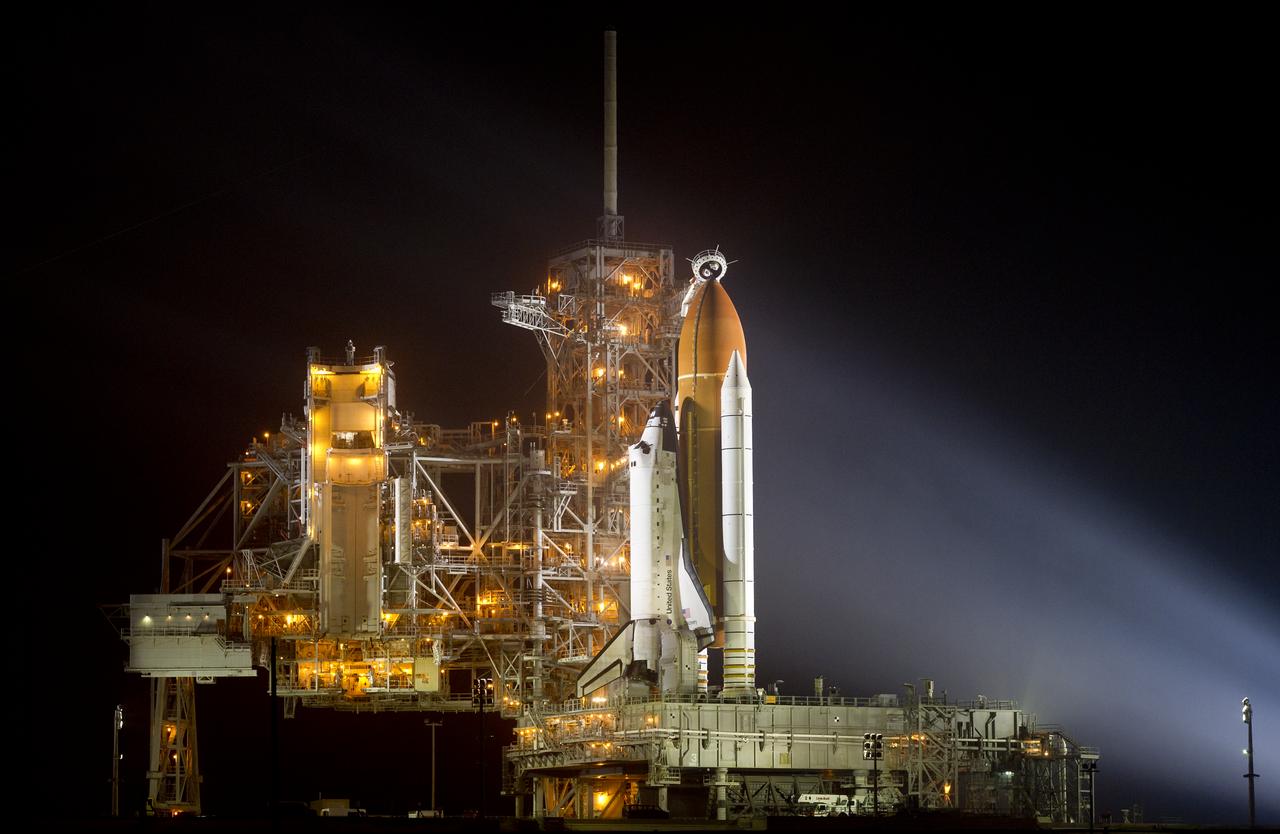
The space shuttle Discovery is seen shortly after the Rotating Service Structure was rolled back at launch pad 39A, at the Kennedy Space Center in Cape Canaveral, Florida, on Wednesday, Feb. 23, 2011. Discovery, on its 39th and final flight, will carry the Italian-built Permanent Multipurpose Module (PMM), Express Logistics Carrier 4 (ELC4) and Robonaut 2, the first humanoid robot in space to the International Space Station. Photo Credit: (NASA/Bill Ingalls)
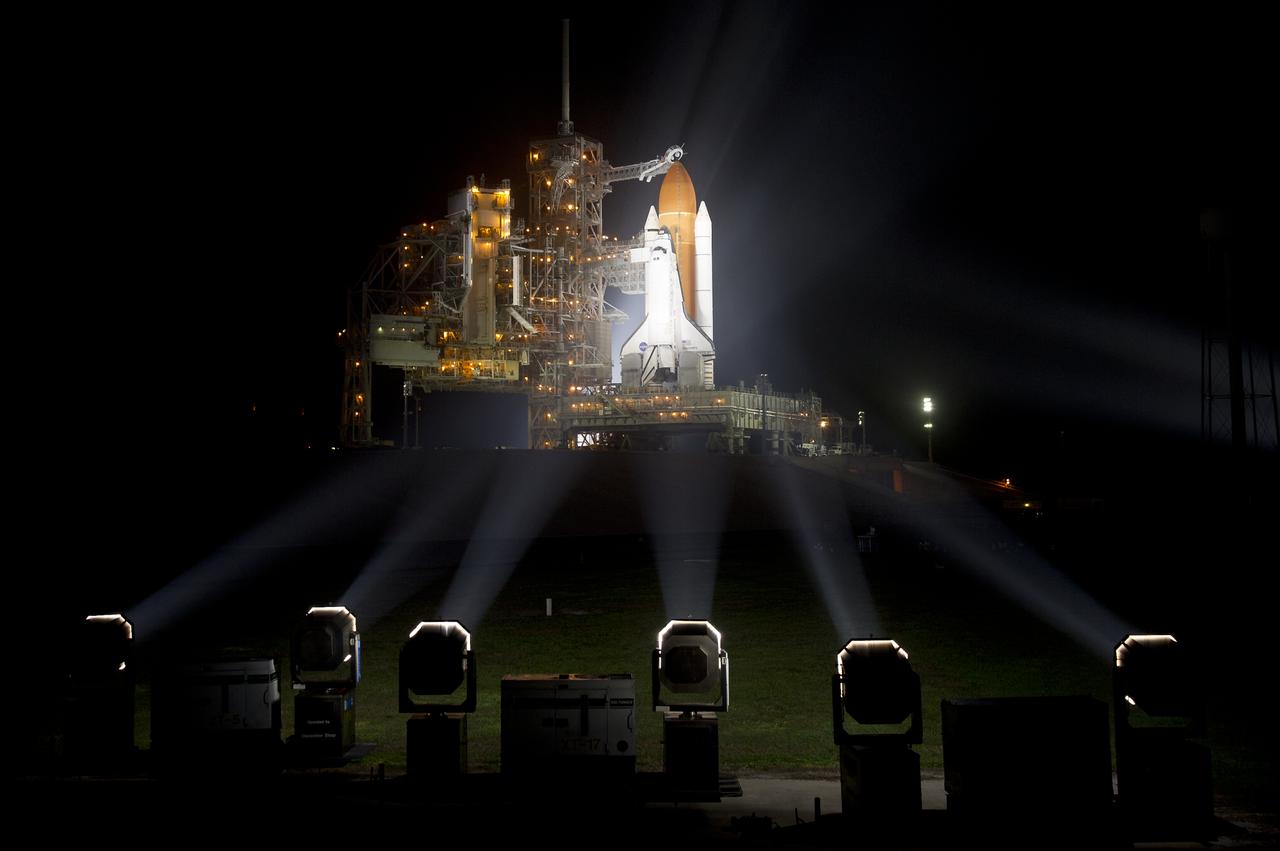
The space shuttle Discovery is seen shortly after the Rotating Service Structure was rolled back at launch pad 39A, at the Kennedy Space Center in Cape Canaveral, Florida, on Wednesday, Feb. 23, 2011. Discovery, on its 39th and final flight, will carry the Italian-built Permanent Multipurpose Module (PMM), Express Logistics Carrier 4 (ELC4) and Robonaut 2, the first humanoid robot in space to the International Space Station. Photo Credit: (NASA/Bill Ingalls)
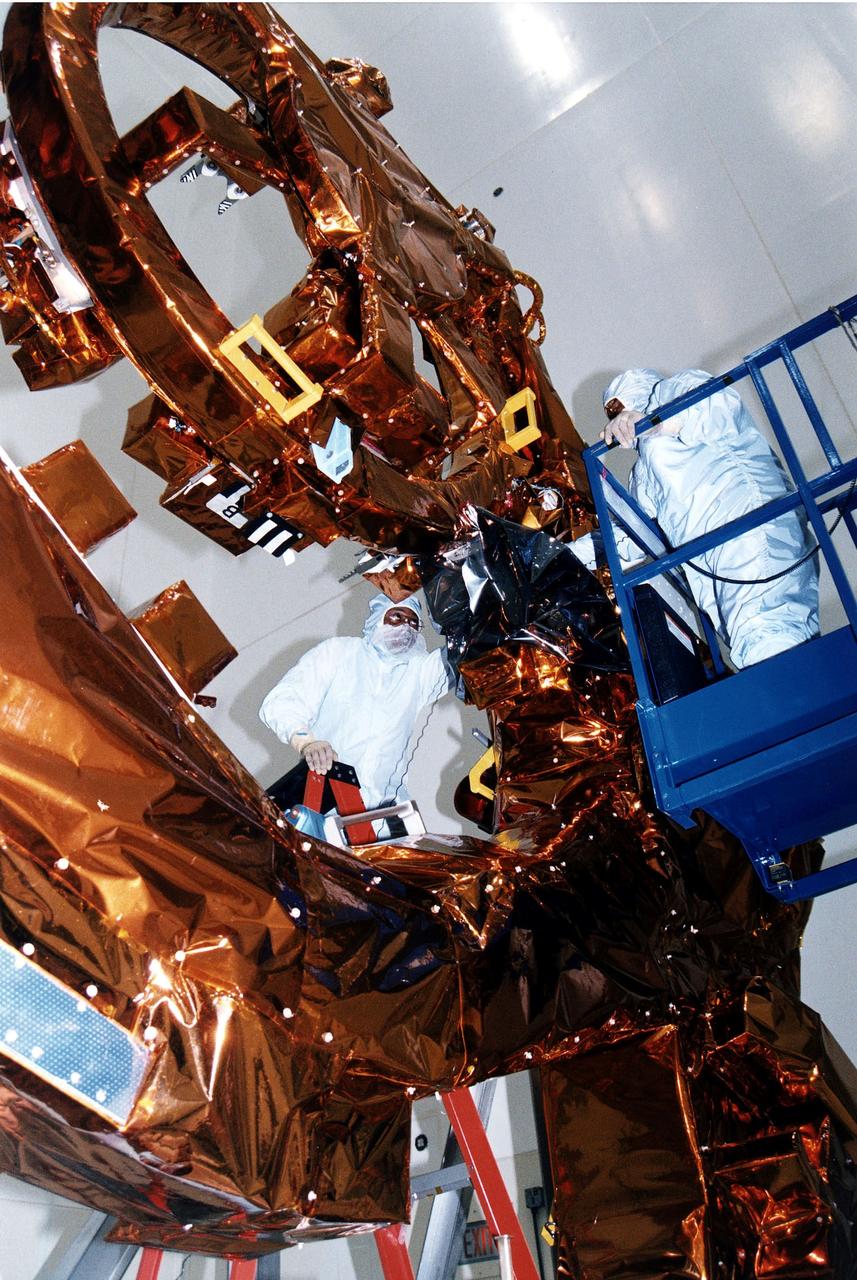
KENNEDY SPACE CENTER, FLA. - Workers in KSC's Vertical Processing Facility make final adjustments to the Flight Support System (FSS) for STS-82, the second Hubble Space Telescope servicing mission. The FSS is reusable flight hardware that provides the mechanical, structural and electrical interfaces between HST, the space support equipment and the orbiter for payload retrieval and on-orbit servicing. Liftoff aboard Discovery is targeted Feb. 11 with a crew of seven.
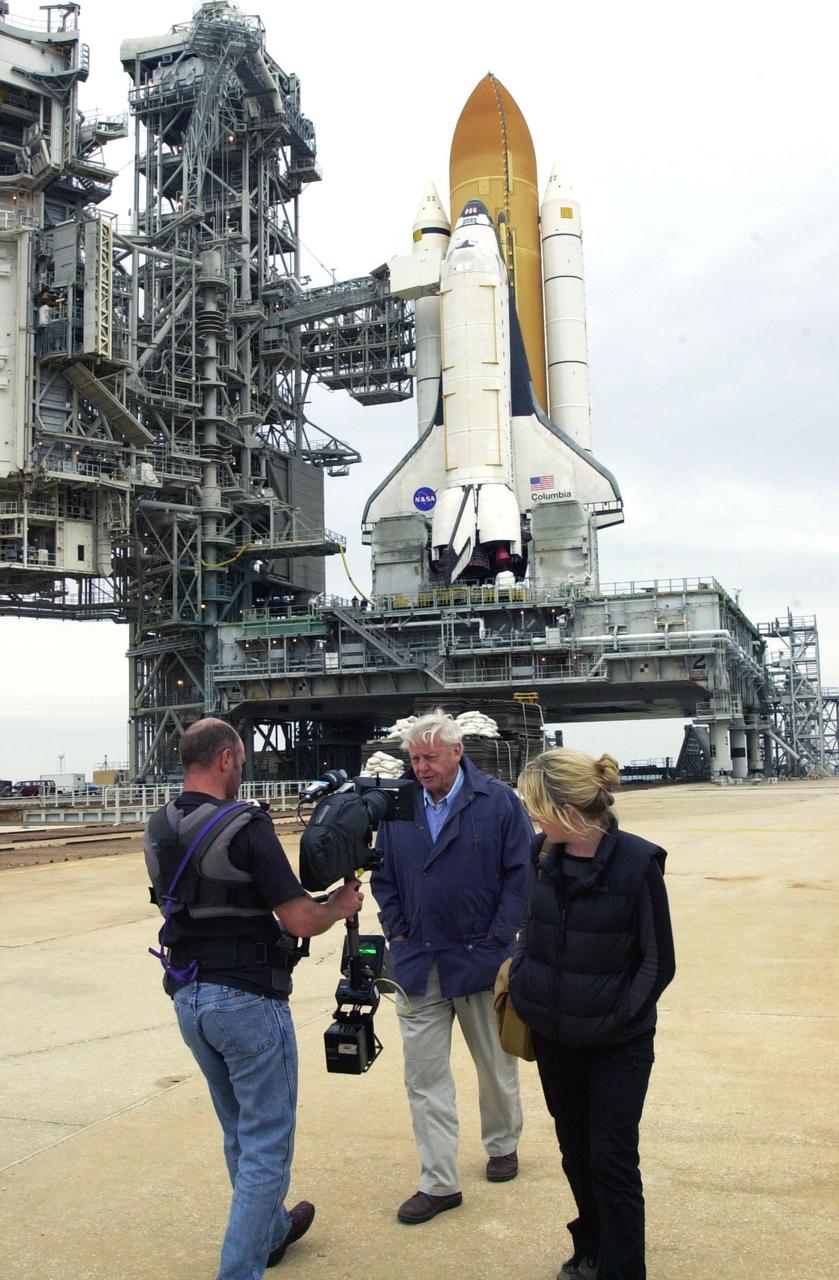
KENNEDY SPACE CENTER, FLA. - Sir David Attenborough (center) works with a film crew on Launch Pad 39A. Space Shuttle Columbia, atop the Mobile Launcher Platform, is seen in the background. At left are the Rotating Service Structure, which is open, and the Fixed Service Structure. Attenborough is filming commentary for a documentary
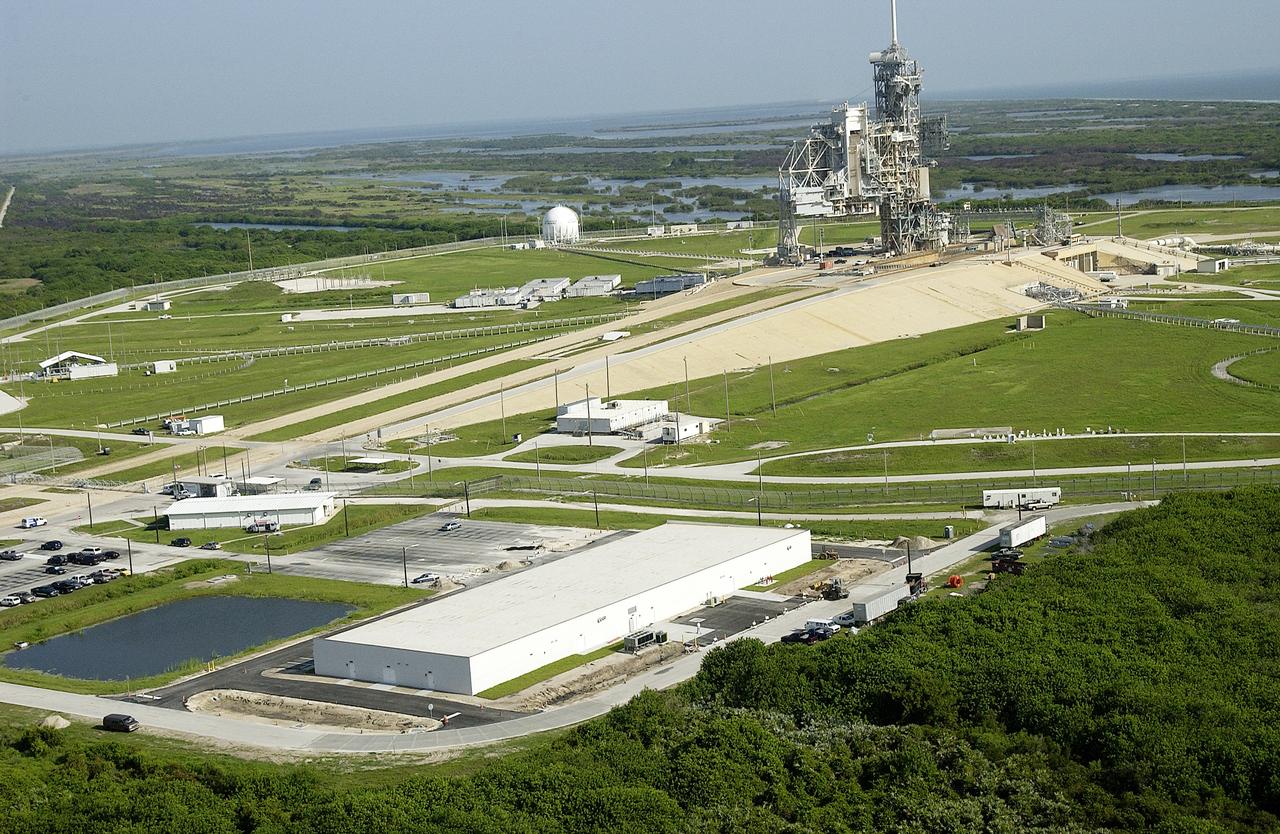
KENNEDY SPACE CENTER, FLA. – This aerial view of Launch Pad 39A shows the Rotating Service Structure in open position and the Fixed Service Structure; the crawler way leading away from them, and various facilities buildings. In the foreground is the new facilities building that provides both office and shop space.
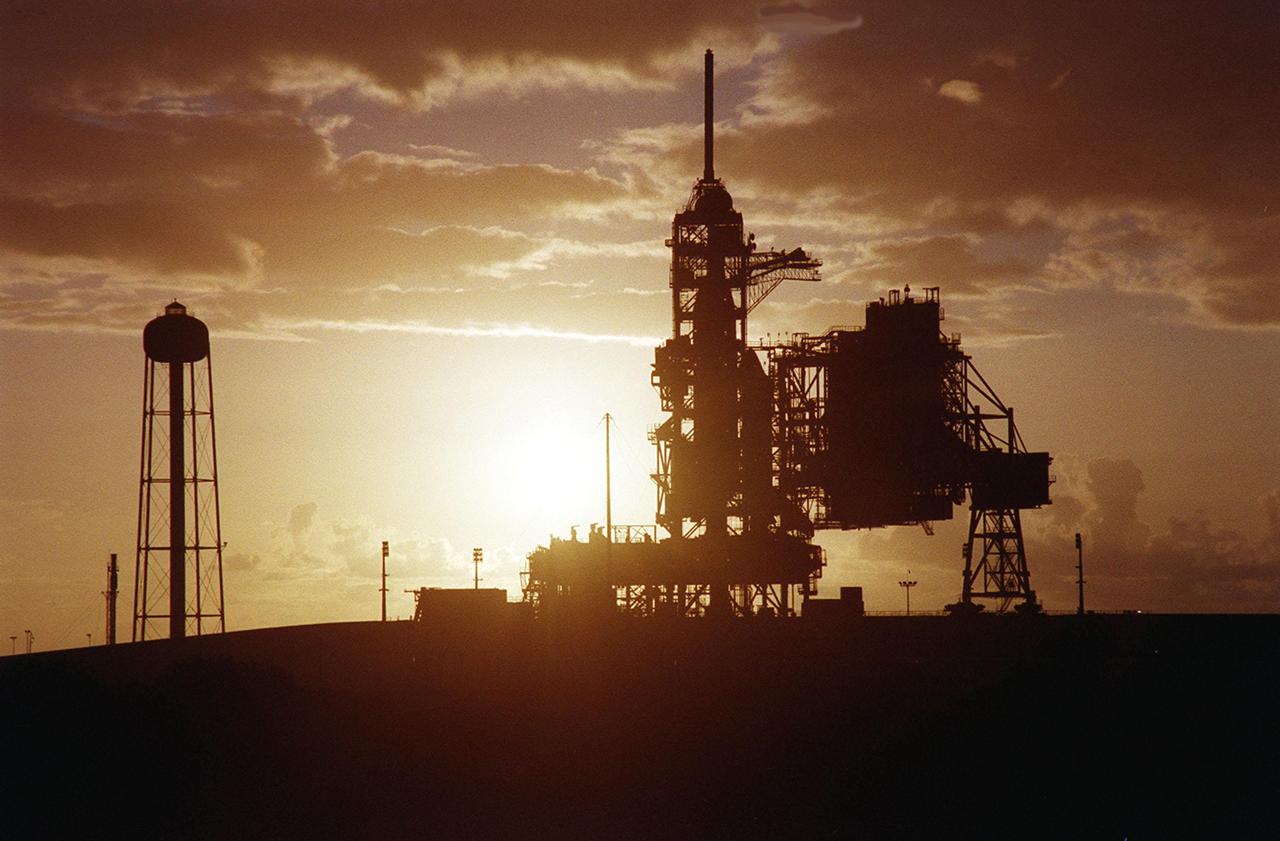
KENNEDY SPACE CENTER, Fla. -- While the morning sun paints the sky pale gold, the structures on Launch Pad 39A are silhouetted in brown. Space Shuttle Discovery can be seen on the other side of the Fixed Service Structure; the Rotating Service Structure at right is still open. At left is the 300,000-gallon water tank that is part of the sound suppression system during launches. Discovery will launch on mission STS-92 Oct. 5, 2000
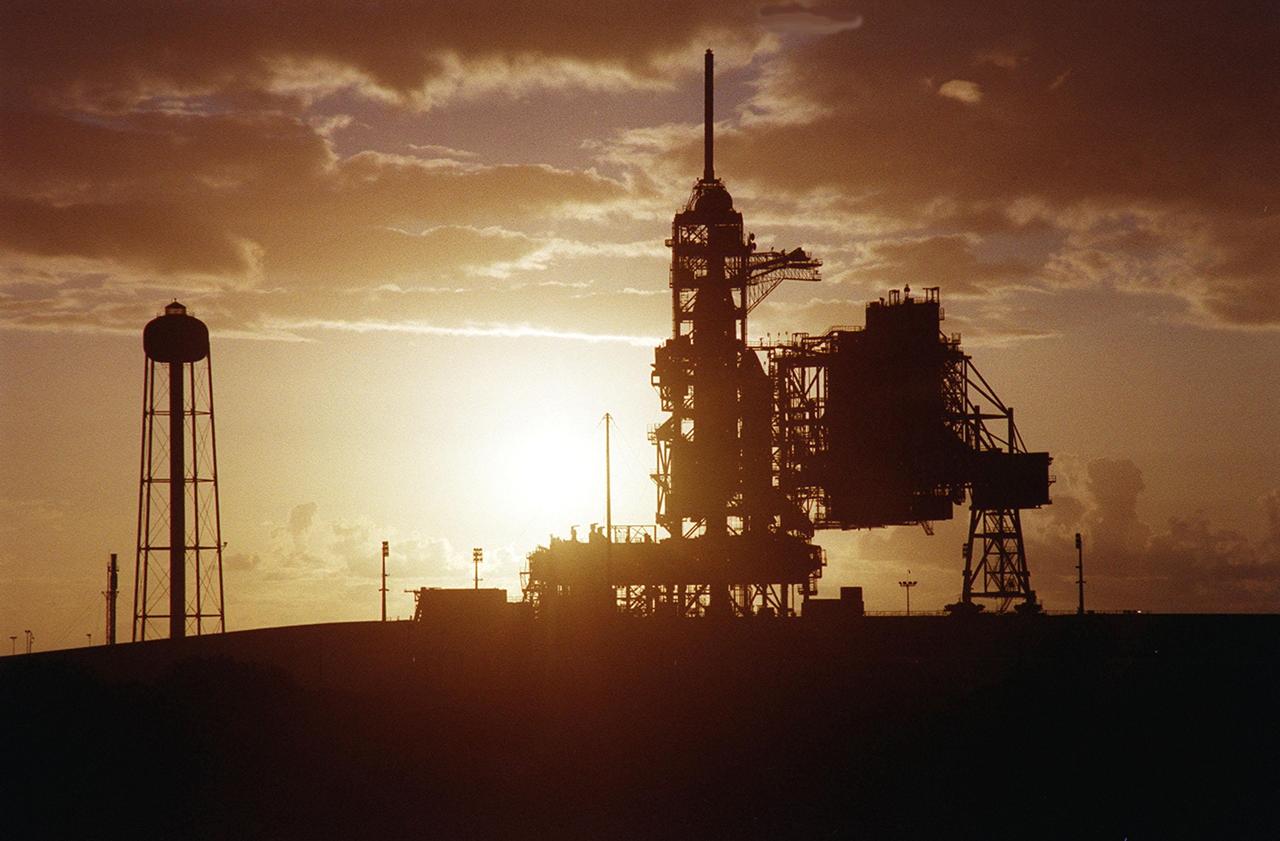
KENNEDY SPACE CENTER, Fla. -- While the morning sun paints the sky pale gold, the structures on Launch Pad 39A are silhouetted in brown. Space Shuttle Discovery can be seen on the other side of the Fixed Service Structure; the Rotating Service Structure at right is still open. At left is the 300,000-gallon water tank that is part of the sound suppression system during launches. Discovery will launch on mission STS-92 Oct. 5, 2000
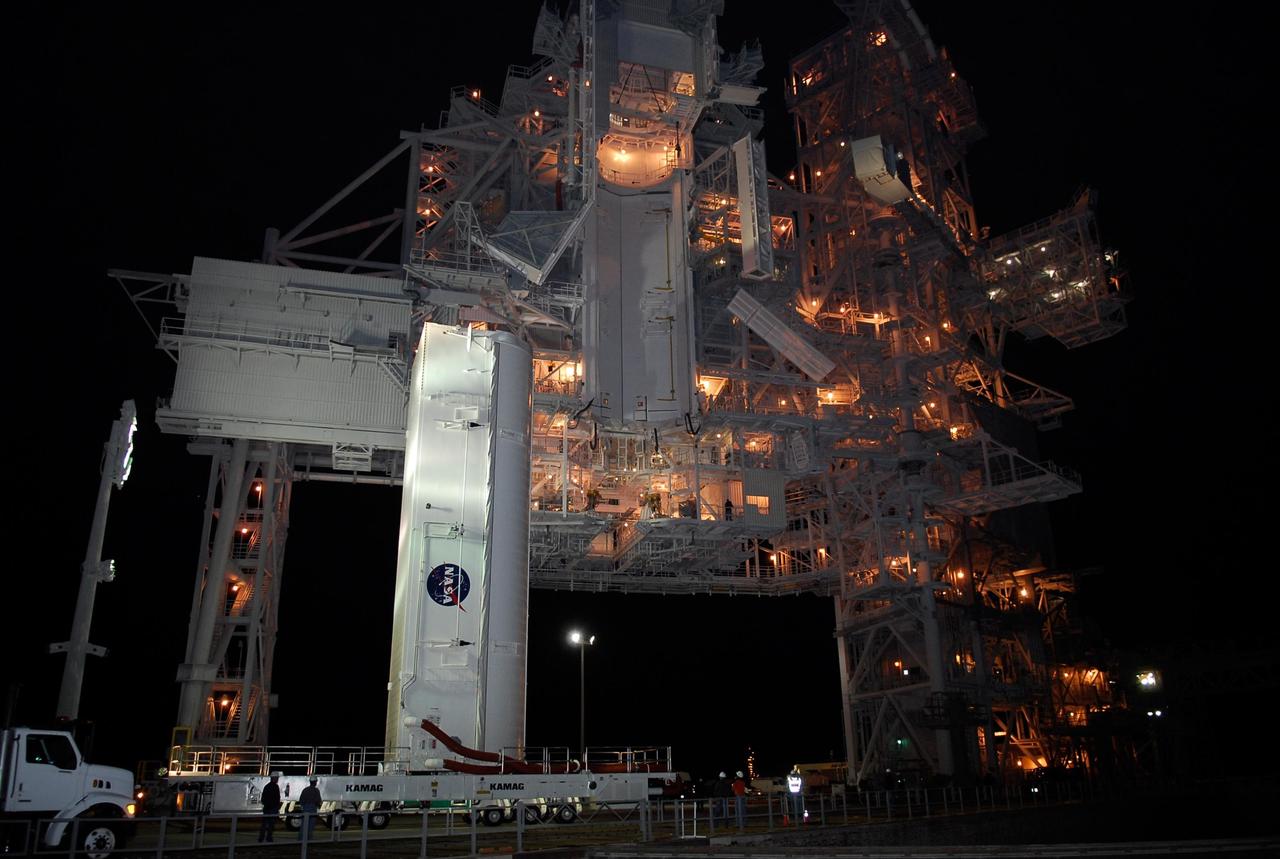
KENNEDY SPACE CENTER, FLA. -- The payload canister containing the first section of the Japan Aerospace Exploration Agency's Kibo laboratory and the Canadian Space Agency's two-armed robotic system, Dextre, nears the rotating service structure on Launch Pad 39A at NASA's Kennedy Space Center. The payload will be transferred to the payload changeout room on the service structure. The changeout room is the enclosed, environmentally controlled portion of the rotating service structure that supports cargo delivery to the pad and subsequent vertical installation into an orbiter's payload bay. The payload will be installed into Endeavour for launch on the STS-123 mission targeted for March 11. Photo credit: NASA/Kim Shiflett
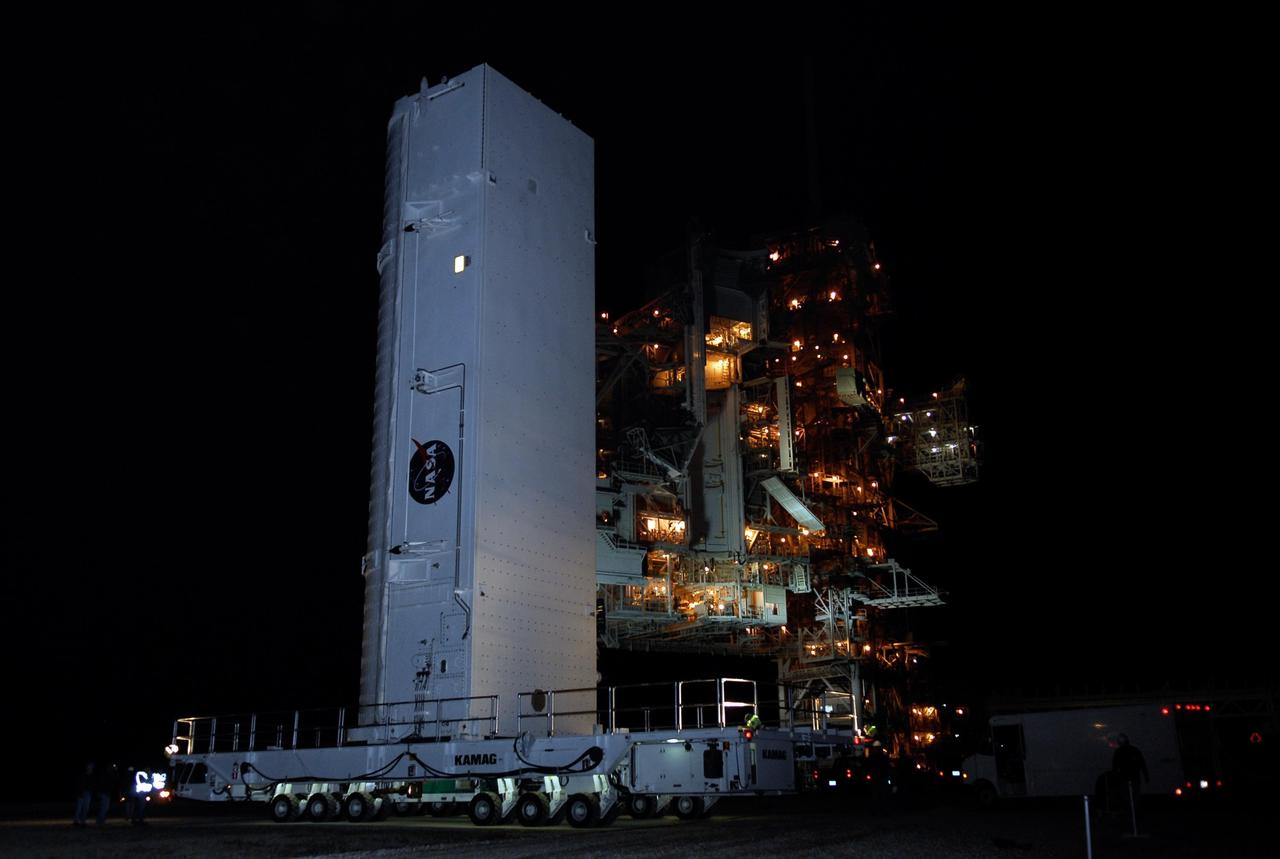
KENNEDY SPACE CENTER, FLA. -- The payload canister containing the first section of the Japan Aerospace Exploration Agency's Kibo laboratory and the Canadian Space Agency's two-armed robotic system, Dextre, nears the rotating service structure on Launch Pad 39A at NASA's Kennedy Space Center. The payload will be transferred to the payload changeout room on the service structure. The changeout room is the enclosed, environmentally controlled portion of the rotating service structure that supports cargo delivery to the pad and subsequent vertical installation into an orbiter's payload bay. The payload will be installed into Endeavour for launch on the STS-123 mission targeted for March 11. Photo credit: NASA/Kim Shiflett
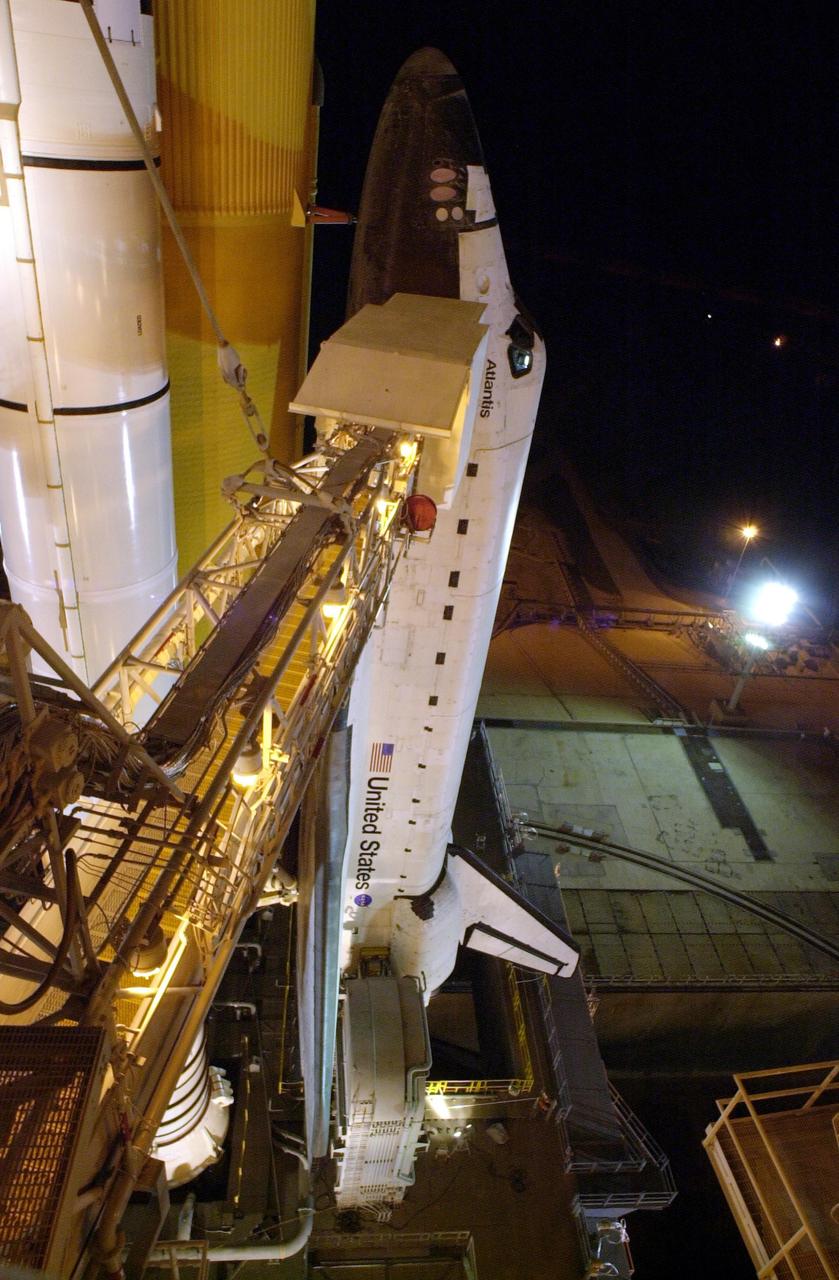
KENNEDY SPACE CENTER, FLA. -- With the Rotating Service Structure rolled back, Space Shuttle Atlantis stands ready for launch on mission STS-110. The Orbiter Access Arm extends from the Fixed Service Structure (FSS) to the crew compartment hatch, through which the STS-110 crew will enter Atlantis. The RSS provides protected access to the orbiter for changeout and servicing of payloads at the pad. The structure has access platforms at five levels to provide access to the payload bay. The FSS provides access to the orbiter and the RSS. . Mission STS-110 is scheduled to launch April 4 on its 11-day mission to the International Space Station
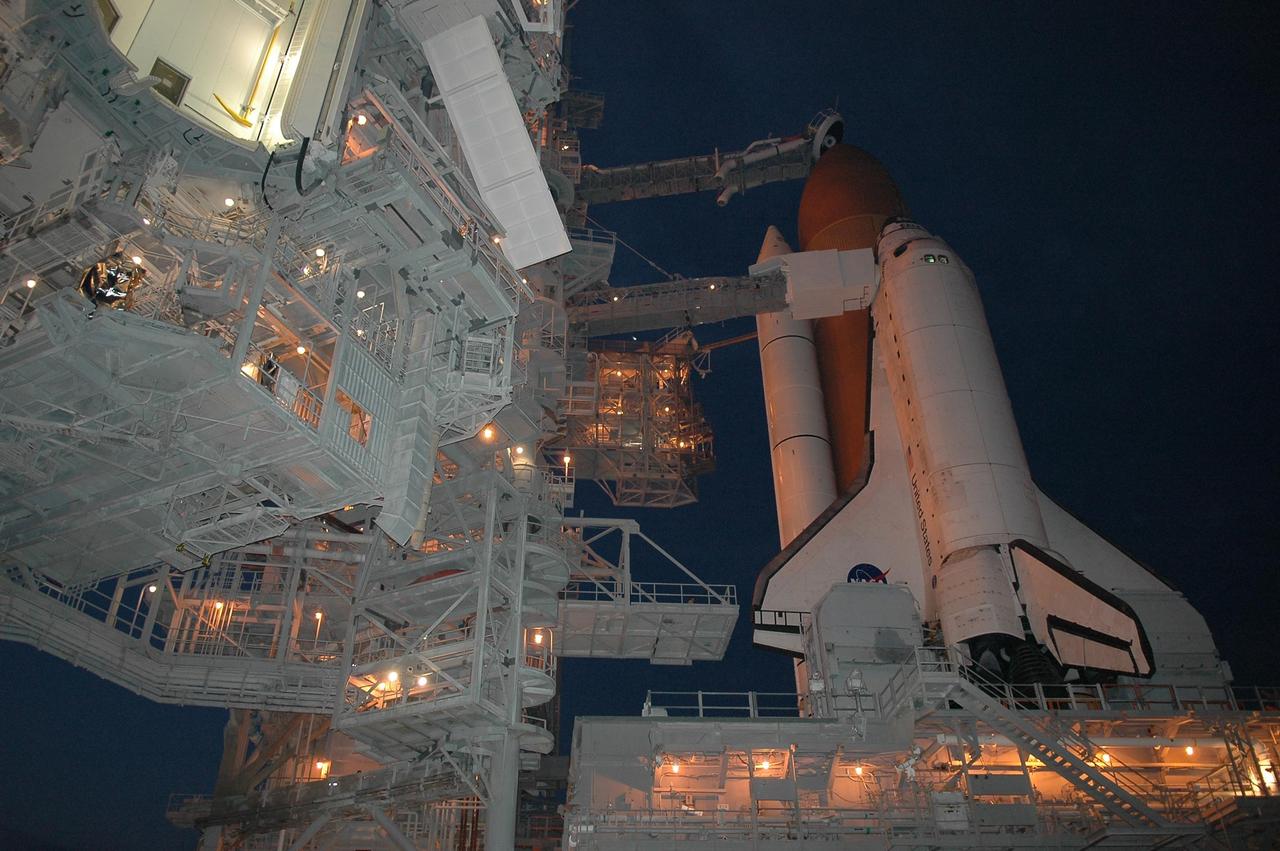
KENNEDY SPACE CENTER, FLA. - After rollback of the rotating service structure (RSS) on Launch Pad 39B, Space Shuttle Discovery stands bathed in lights from the RSS and fixed service structure. The rollback was in preparation for launch July 1 on mission STS-121. Extending toward the cockpit of the shuttle is the orbiter access arm with the White Room extended. The White Room provides access into the orbiter for the astronauts. The RSS provides protected access to the orbiter for changeout and servicing of payloads at the pad. The structure is supported by a rotating bridge that pivots about a vertical axis on the west side of the pad's flame trench. The hinge column rests on the pad surface and is braced to the fixed service structure. Support for the outer end of the bridge is provided by two eight-wheel, motor-driven trucks that move along circular twin rails installed flush with the pad surface. The track crosses the flame trench on a permanent bridge. The RSS is 102 feet long, 50 feet wide and 130 feet high. The structure has orbiter access platforms at five levels to provide access to the payload bay while the orbiter is being serviced in the RSS. Each platform has independent extendable planks that can be arranged to conform to a payload's configuration. This mission is the 115th shuttle flight and the 18th U.S. flight to the International Space Station. Photo credit: NASA/Kim Shiflett
KENNEDY SPACE CENTER, FLA. - After rollback of the rotating service structure (RSS) on Launch Pad 39B, Space Shuttle Discovery stands bathed in lights from the RSS and fixed service structure. The rollback was in preparation for launch July 1 on mission STS-121. Extending toward the cockpit of the shuttle is the orbiter access arm with the White Room extended. The White Room provides access into the orbiter for the astronauts. The RSS provides protected access to the orbiter for changeout and servicing of payloads at the pad. The structure is supported by a rotating bridge that pivots about a vertical axis on the west side of the pad's flame trench. The hinge column rests on the pad surface and is braced to the fixed service structure. Support for the outer end of the bridge is provided by two eight-wheel, motor-driven trucks that move along circular twin rails installed flush with the pad surface. The track crosses the flame trench on a permanent bridge. The RSS is 102 feet long, 50 feet wide and 130 feet high. The structure has orbiter access platforms at five levels to provide access to the payload bay while the orbiter is being serviced in the RSS. Each platform has independent extendable planks that can be arranged to conform to a payload's configuration. This mission is the 115th shuttle flight and the 18th U.S. flight to the International Space Station. Photo credit: NASA/Kim Shiflett
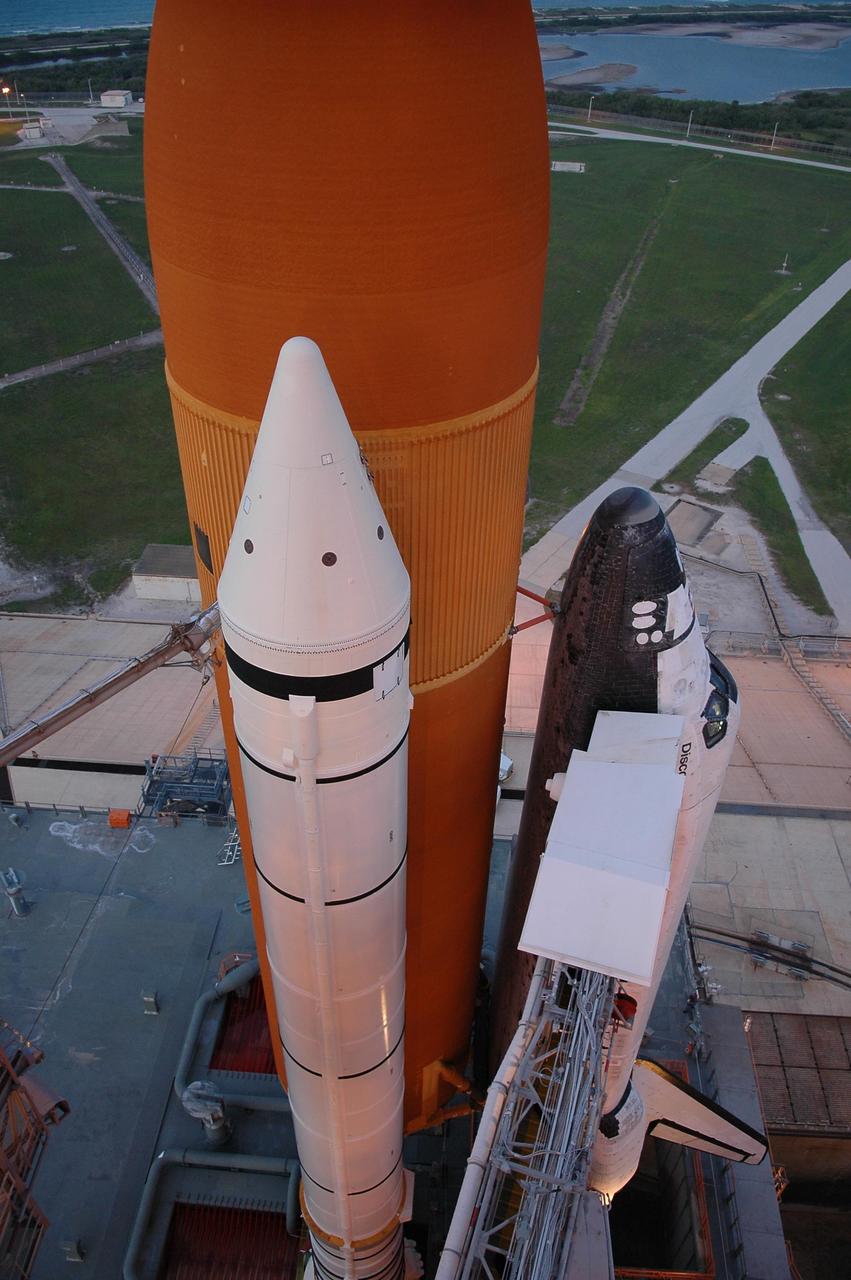
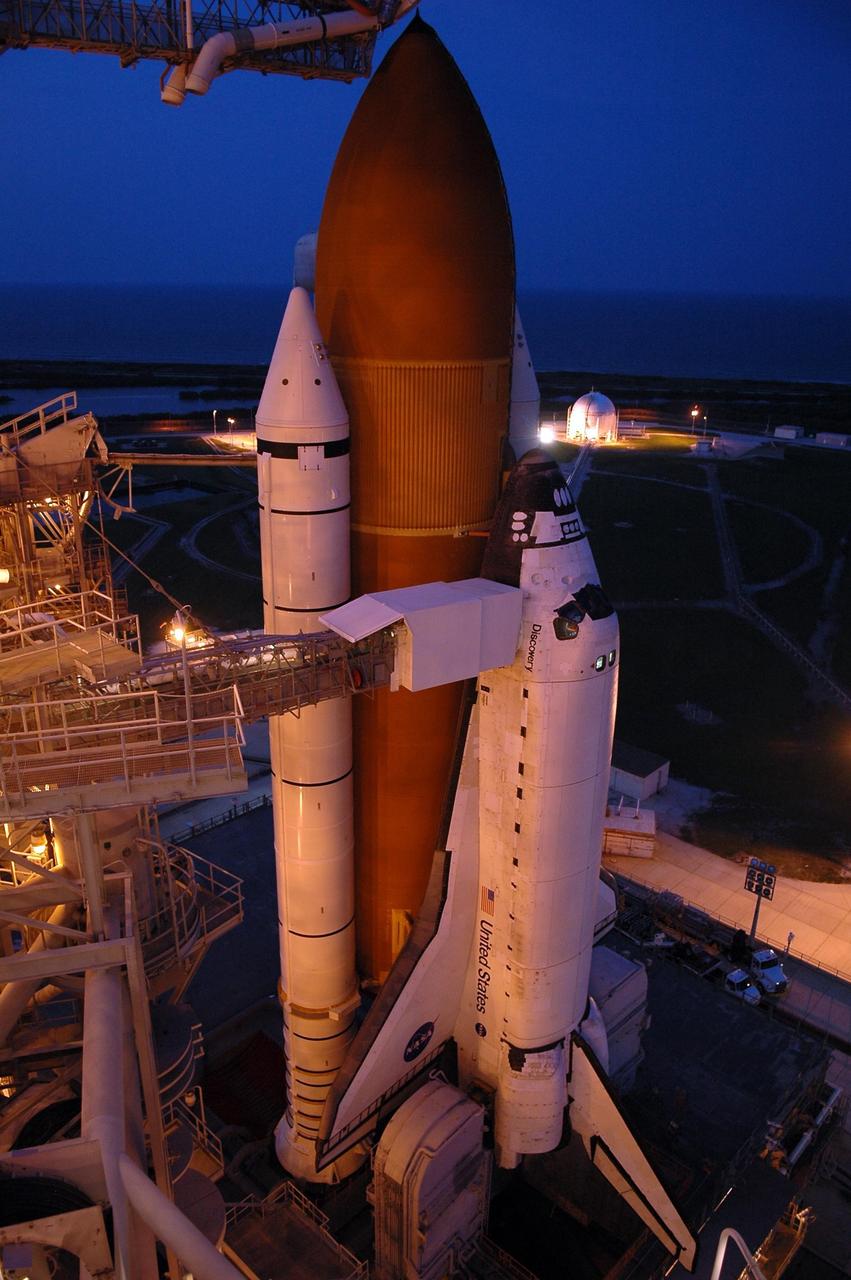
KENNEDY SPACE CENTER, FLA. - Viewed from an upper level of the fixed service structure on Launch Pad 39B, Space Shuttle Discovery looms over the pad and surrounding area after rollback of the rotating service structure (RSS). The rollback was in preparation for launch July 1 on mission STS-121. Extending toward the cockpit of the shuttle is the orbiter access arm with the White Room extended. The White Room provides access into the orbiter for the astronauts. The RSS provides protected access to the orbiter for changeout and servicing of payloads at the pad. The structure is supported by a rotating bridge that pivots about a vertical axis on the west side of the pad's flame trench. The hinge column rests on the pad surface and is braced to the fixed service structure. Support for the outer end of the bridge is provided by two eight-wheel, motor-driven trucks that move along circular twin rails installed flush with the pad surface. The track crosses the flame trench on a permanent bridge. The RSS is 102 feet long, 50 feet wide and 130 feet high. The structure has orbiter access platforms at five levels to provide access to the payload bay while the orbiter is being serviced in the RSS. Each platform has independent extendable planks that can be arranged to conform to a payload's configuration. This mission is the 115th shuttle flight and the 18th U.S. flight to the International Space Station. Photo credit: NASA/Kim Shiflett
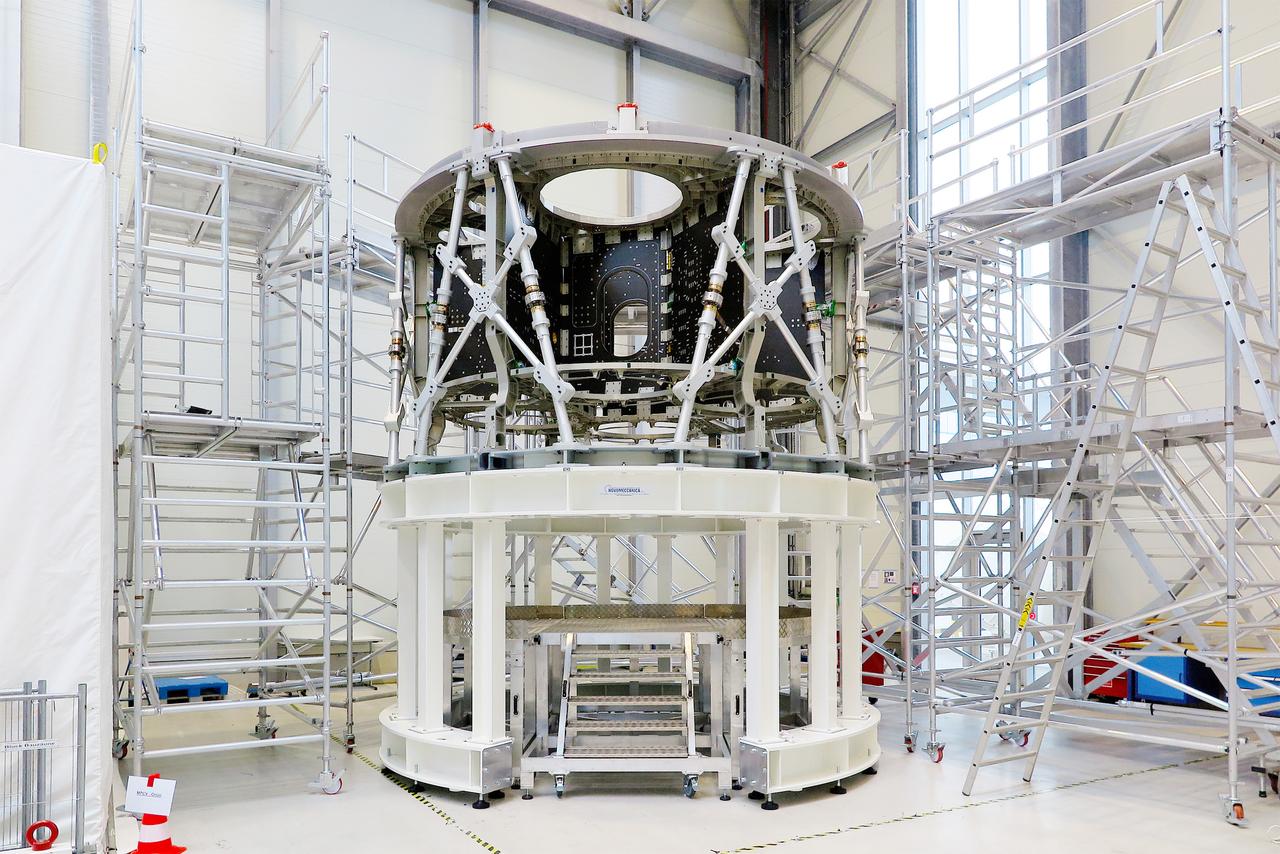
The Artemis I Service Module primary structure arrives at the Airbus Defence and Space facility in Bremen, Germany on April 25, 2016.
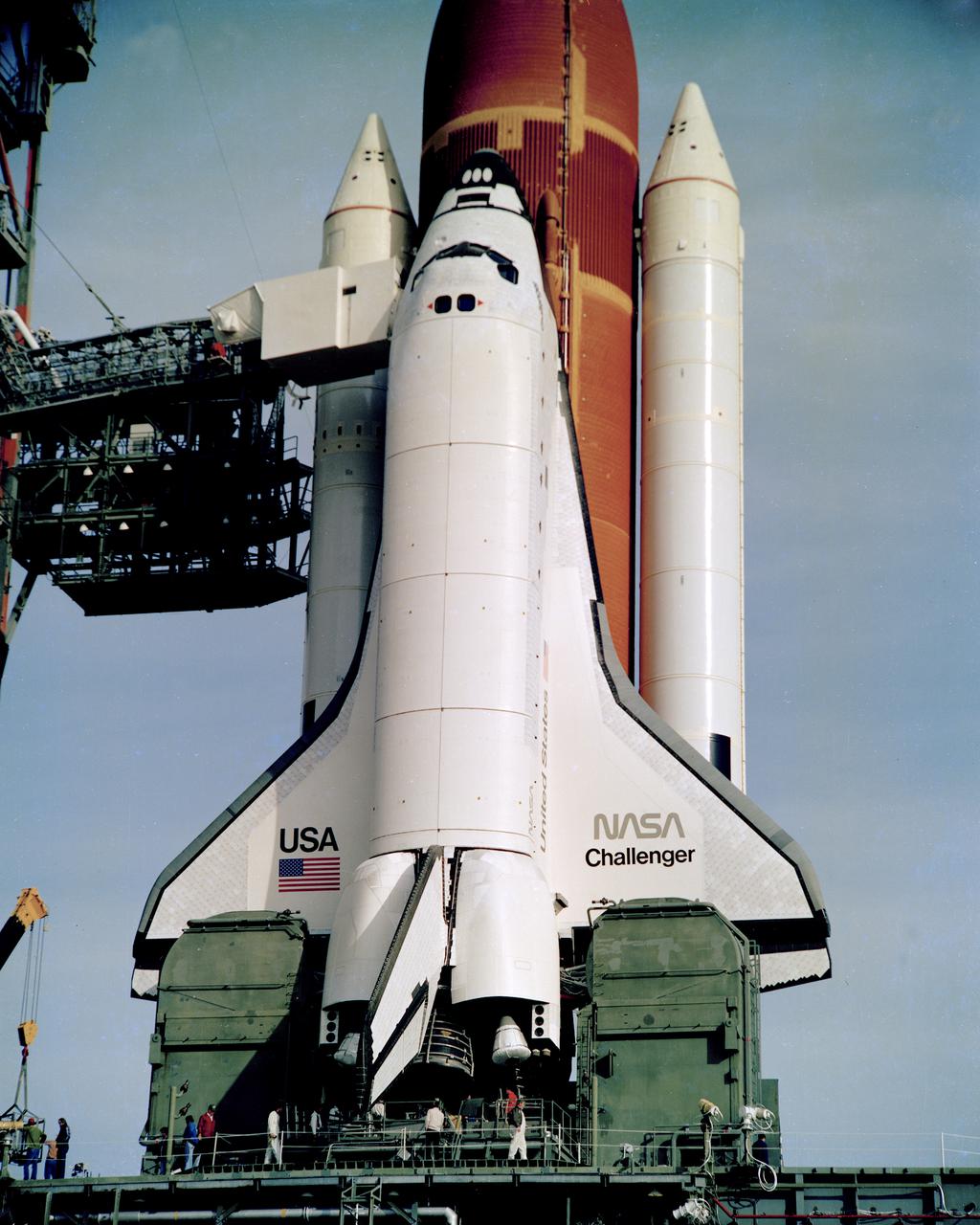
CAPE CANAVERAL, Fla. – STS-6 orbiter Challenger on Complex 39A with rotating service structure retracted. Photo credit: NASA
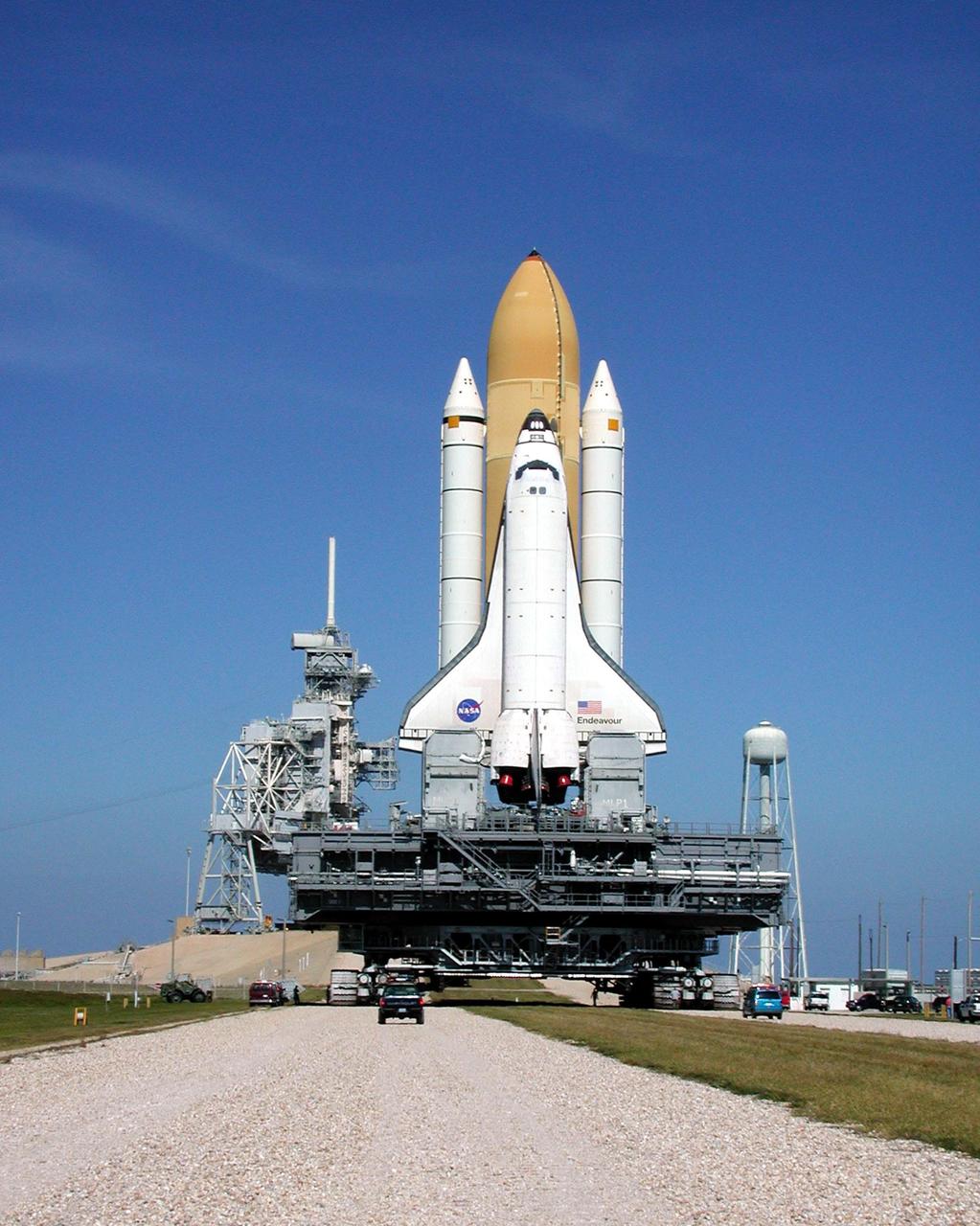
KENNEDY SPACE CENTER, Fla. -- Perched atop the Mobile Launcher Platform, Space Shuttle Endeavour is nearly through the gate to Launch Pad 39B. To the right of the pad is a 290-foot tall water tower. To the left is the Fixed Service Structure and Rotating Service Structure. Endeavour is scheduled to be launched Nov. 30 at 10:01 p.m. EST on mission STS-97, the sixth construction flight to the International Space Station. Its payload includes the P6 Integrated Truss Structure and a photovoltaic (PV) module, with giant solar arrays that will provide power to the Station. The mission includes two spacewalks to complete the solar array connections
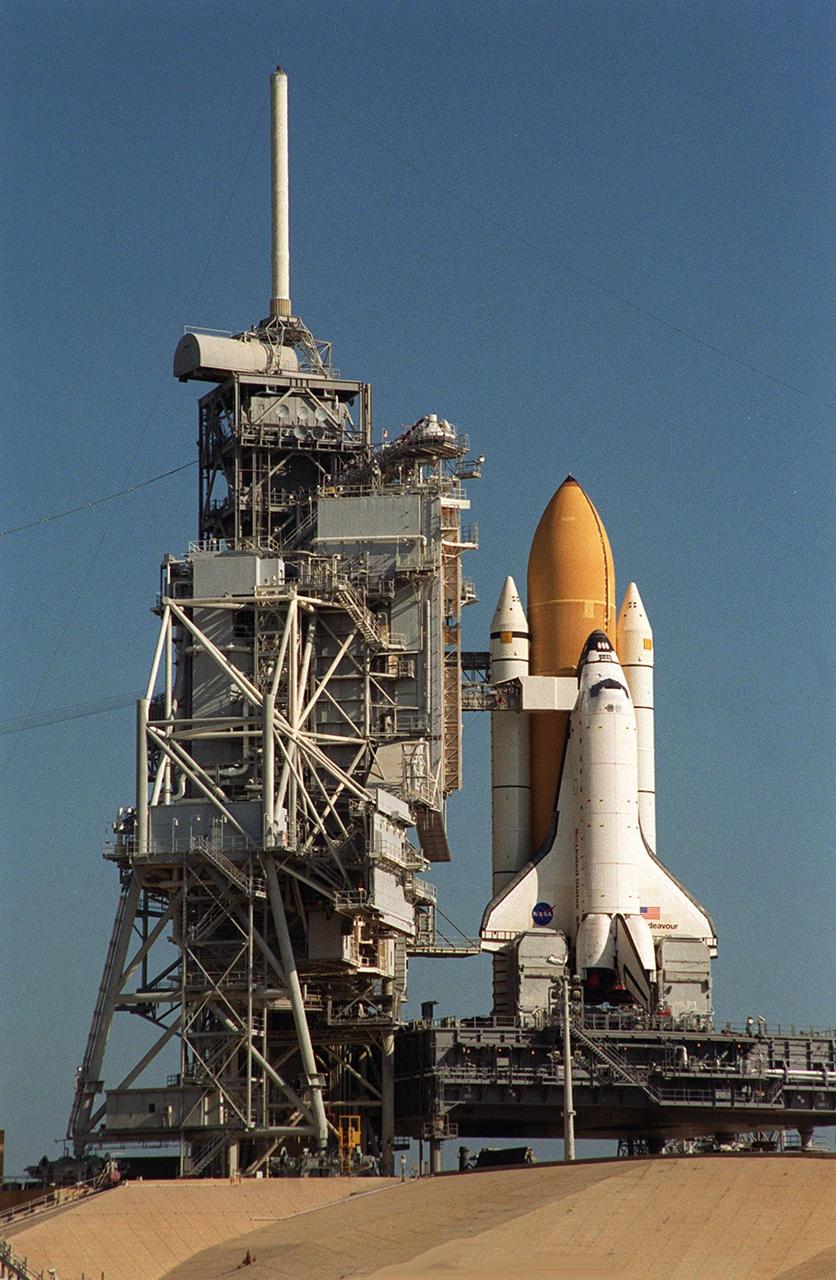
KENNEDY SPACE CENTER, FLA. -- Space Shuttle Endeavour finally rests on Launch Pad 39B after its rollout was delayed several hours to fix a broken cleat on the crawler-transporter. At the far left is the Rotating Service Structure. From the Fixed Service Structure, the Orbiter Access Arm is already extended to the orbiter. Endeavour is scheduled to be launched Nov. 30 at 10:01 p.m. EST on mission STS-97, the sixth construction flight to the International Space Station. Its payload includes the P6 Integrated Truss Structure and a photovoltaic (PV) module, with giant solar arrays that will provide power to the Station. The mission includes two spacewalks to complete the solar array connections
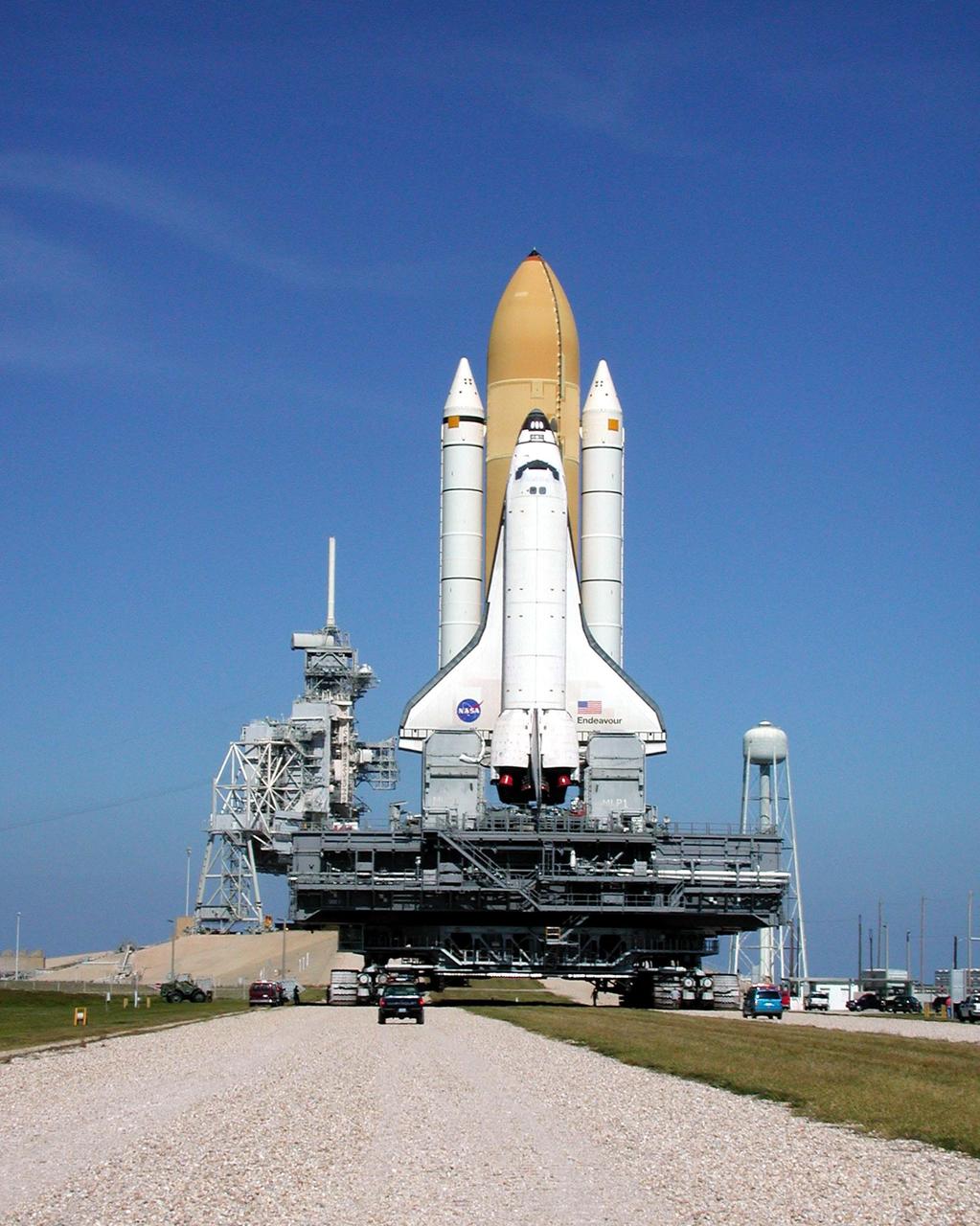
KENNEDY SPACE CENTER, Fla. -- Perched atop the Mobile Launcher Platform, Space Shuttle Endeavour is nearly through the gate to Launch Pad 39B. To the right of the pad is a 290-foot tall water tower. To the left is the Fixed Service Structure and Rotating Service Structure. Endeavour is scheduled to be launched Nov. 30 at 10:01 p.m. EST on mission STS-97, the sixth construction flight to the International Space Station. Its payload includes the P6 Integrated Truss Structure and a photovoltaic (PV) module, with giant solar arrays that will provide power to the Station. The mission includes two spacewalks to complete the solar array connections
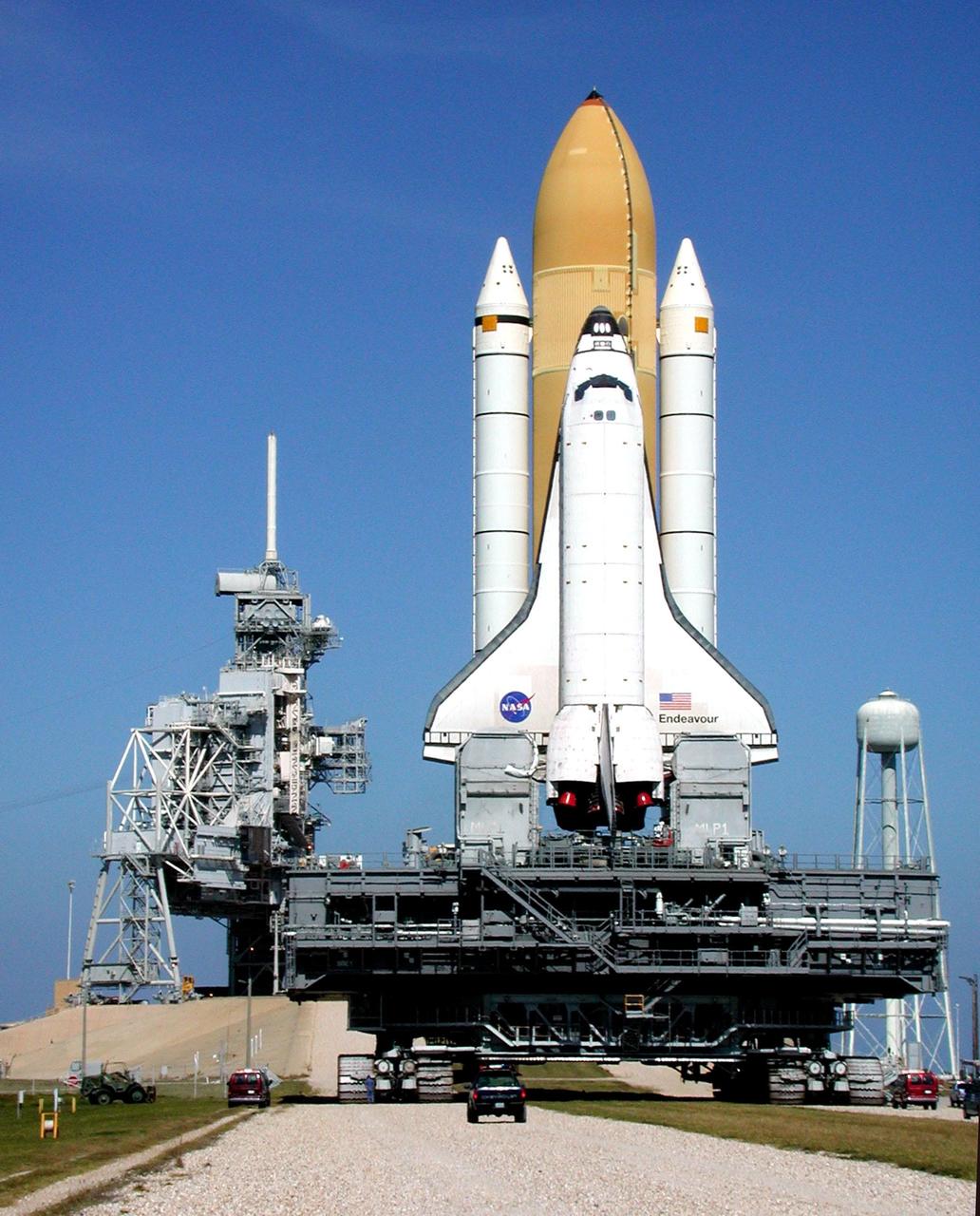
KENNEDY SPACE CENTER, Fla. -- Perched atop the Mobile Launcher Platform, Space Shuttle Endeavour passes through the gate to Launch Pad 39B. To the right of the pad is a 290-foot tall water tower. To the left is the Fixed Service Structure and Rotating Service Structure. Endeavour is scheduled to be launched Nov. 30 at 10:01 p.m. EST on mission STS-97, the sixth construction flight to the International Space Station. Its payload includes the P6 Integrated Truss Structure and a photovoltaic (PV) module, with giant solar arrays that will provide power to the Station. The mission includes two spacewalks to complete the solar array connections
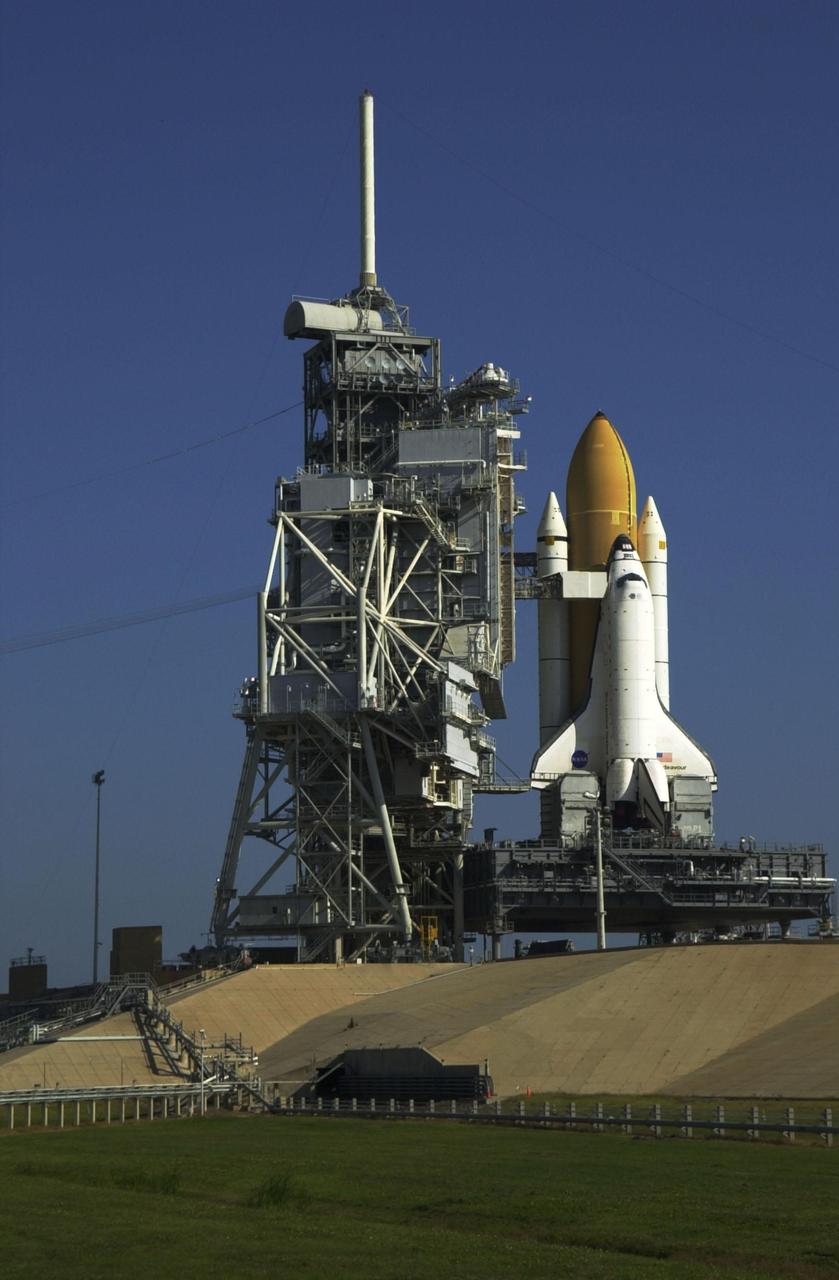
Space Shuttle Endeavour finally rests on Launch Pad 39B after its rollout was stalled several hours to fix a broken cleat on the crawler-transporter. To the left is the Rotating Service Structure. The Orbiter Access Arm is already extended from the Fixed Service Structure to the orbiter. Endeavour is scheduled to be launched Nov. 30 at 10:01 p.m. EST on mission STS-97, the sixth construction flight to the International Space Station. Its payload includes the P6 Integrated Truss Structure and a photovoltaic (PV) module, with giant solar arrays that will provide power to the Station. The mission includes two spacewalks to complete the solar array connections

KENNEDY SPACE CENTER, FLA. -- The rotating service structure on Launch Pad 39A has been fully opened for the first time in more than a year due to maintenance and upgrades on the pad. Some of the work included sandblasting the structure to remove rust and repainting. In addition, the RSS was jacked up and a new upper-bearing race assembly installed where the RSS pivots against the fixed service structure and a half-inch steel plate added. Pad 39A is being made ready for its first launch in four years, the upcoming STS-117 on March 15. Photo credit: NASA/George Shelton
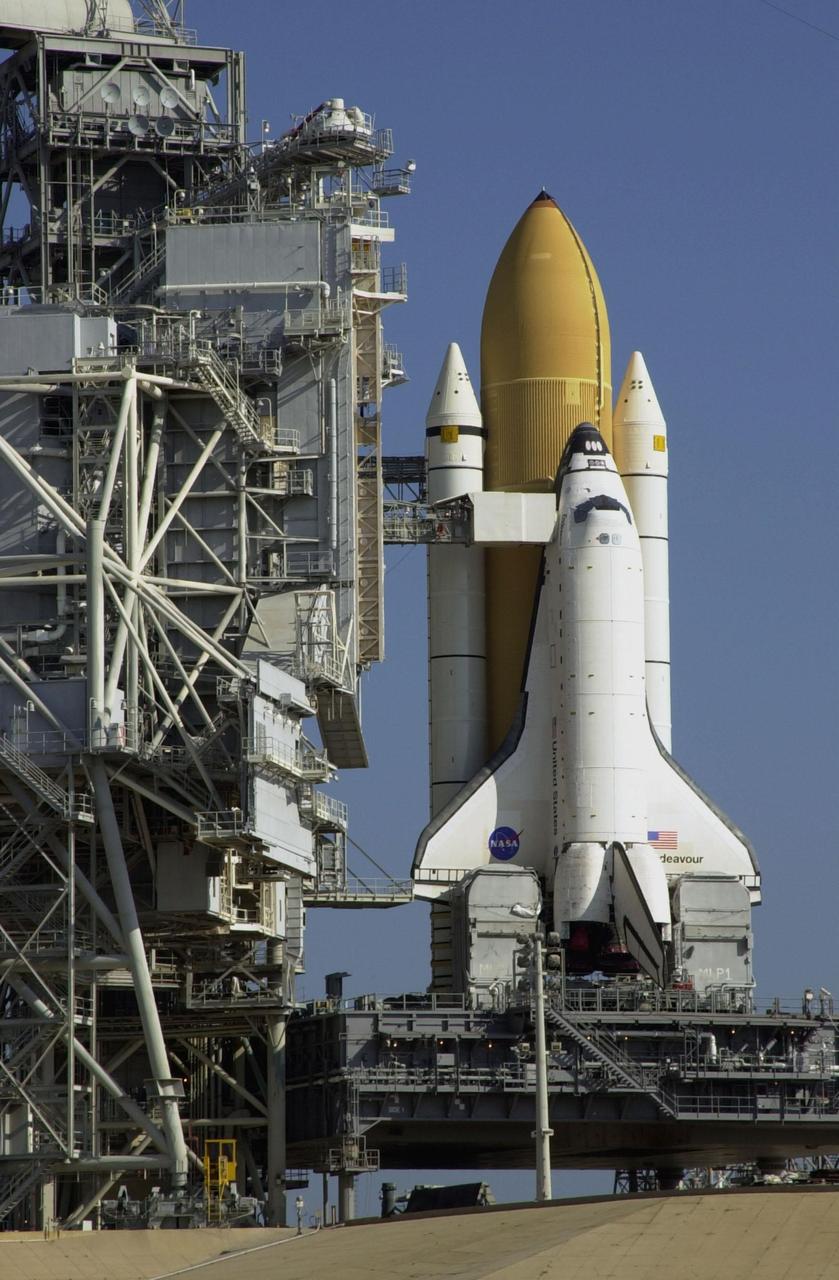
Space Shuttle Endeavour finally rests on Launch Pad 39B after its rollout was stalled several hours to fix a broken cleat on the crawler-transporter. At the far left is the Rotating Service Structure. From the Fixed Service Structure, the Orbiter Access Arm is already extended to the orbiter. Endeavour is scheduled to be launched Nov. 30 at 10:01 p.m. EST on mission STS-97, the sixth construction flight to the International Space Station. Its payload includes the P6 Integrated Truss Structure and a photovoltaic (PV) module, with giant solar arrays that will provide power to the Station. The mission includes two spacewalks to complete the solar array connections
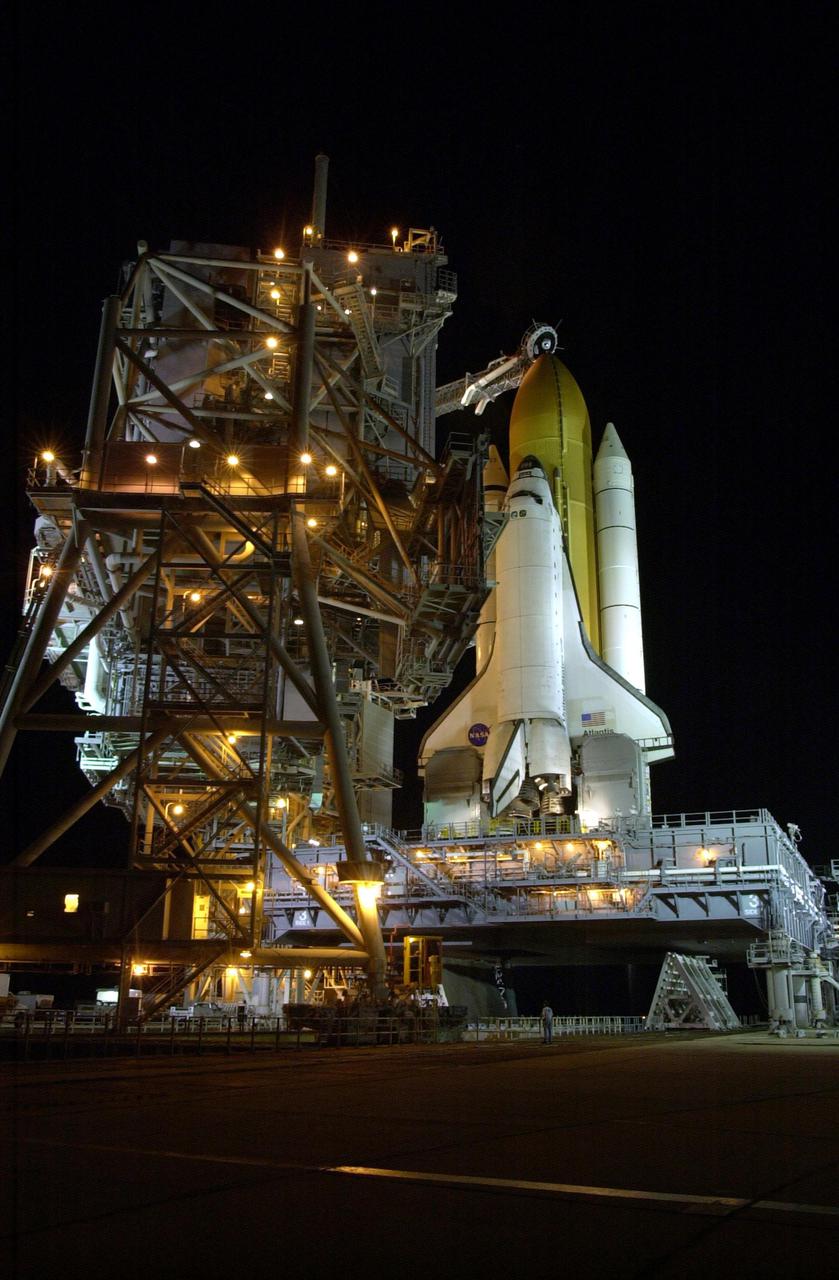
KENNEDY SPACE CENTER, FLA. -- In preparation for launch of Space Shuttle Atlantis on mission STS-110, the Rotating Service Structure (RSS) rolls back into launch position. The RSS provides protected access to the orbiter for changeout and servicing of payloads at the pad. The structure has access platforms at five levels to provide access to the payload bay. The Shuttle rests on the Mobile Launcher Platform (MLP), which straddles the flame trench below. The flame trench is part of the Flame Deflector System that insulates pad structures from the intense heat of a launch. Mission STS-110 is scheduled to launch April 4 on its 11-day mission to the International Space Station
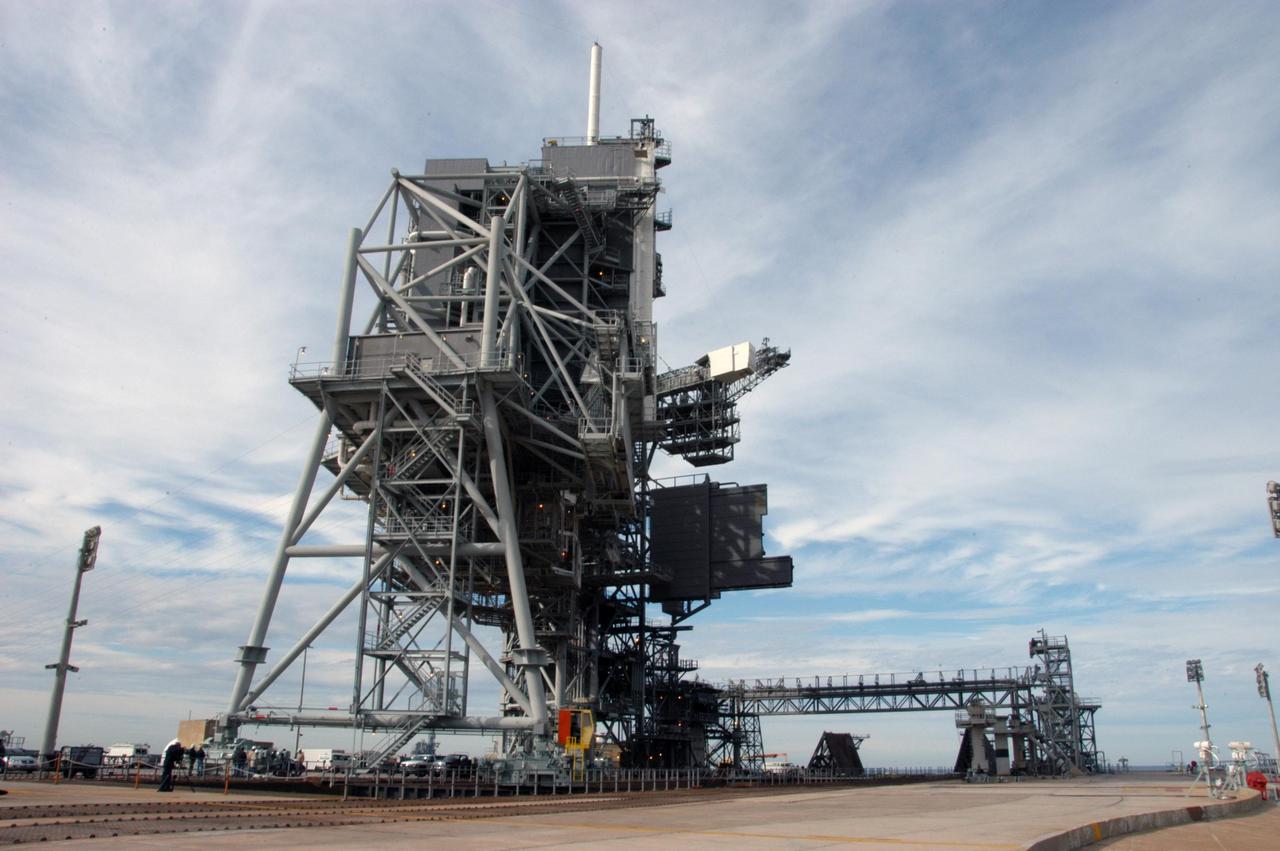
KENNEDY SPACE CENTER, FLA. -- The rotating service structure on Launch Pad 39A is being moved for the first time in more than a year due to maintenance and upgrades on the pad. Some of the work included sandblasting the structure to remove rust and repainting. In addition, the RSS was jacked up and a new upper-bearing race assembly installed where the RSS pivots against the fixed service structure and a half-inch steel plate added. Pad 39A is being made ready for its first launch in four years, the upcoming STS-117 on March 15. Photo credit: NASA/George Shelton
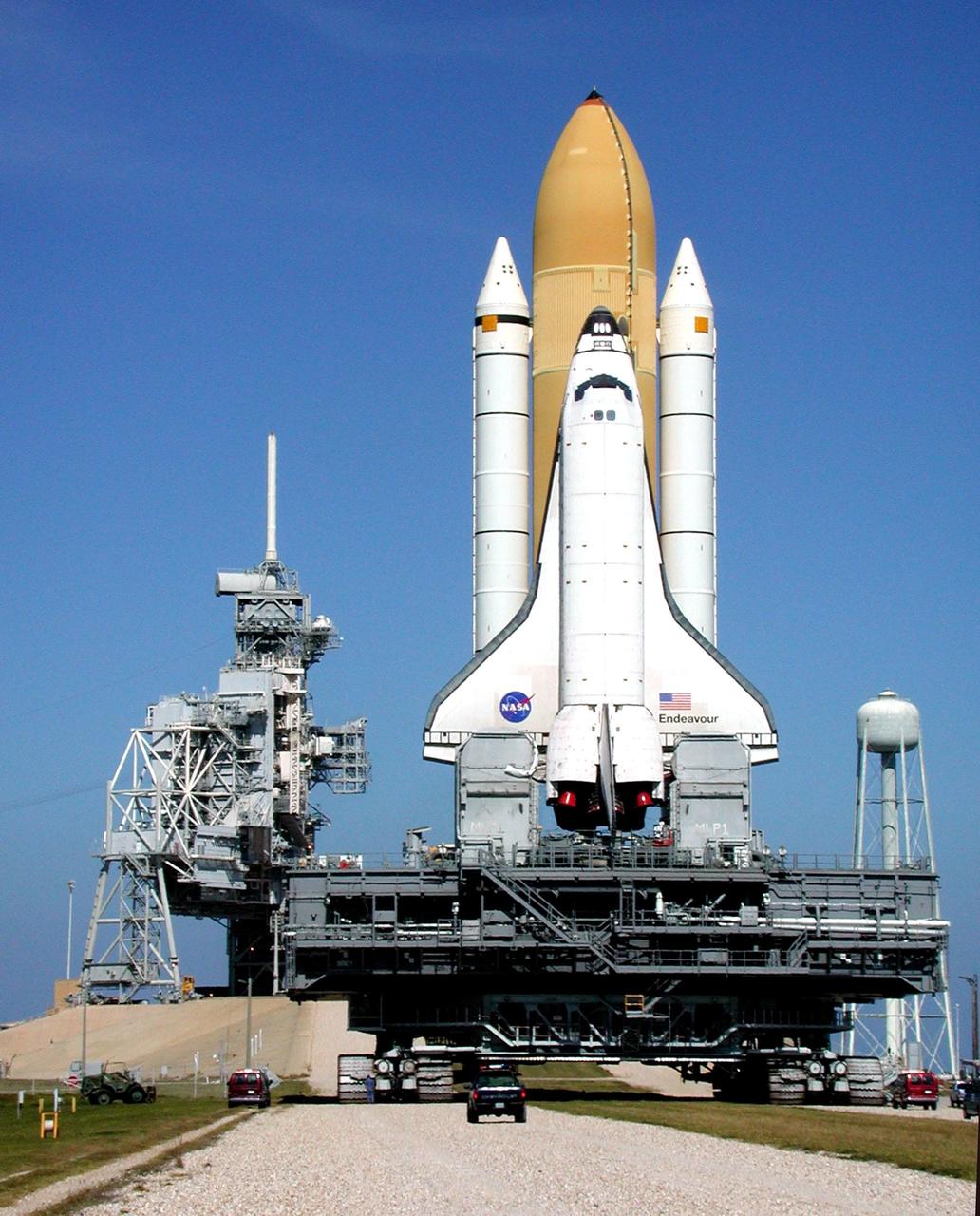
KENNEDY SPACE CENTER, Fla. -- Perched atop the Mobile Launcher Platform, Space Shuttle Endeavour passes through the gate to Launch Pad 39B. To the right of the pad is a 290-foot tall water tower. To the left is the Fixed Service Structure and Rotating Service Structure. Endeavour is scheduled to be launched Nov. 30 at 10:01 p.m. EST on mission STS-97, the sixth construction flight to the International Space Station. Its payload includes the P6 Integrated Truss Structure and a photovoltaic (PV) module, with giant solar arrays that will provide power to the Station. The mission includes two spacewalks to complete the solar array connections
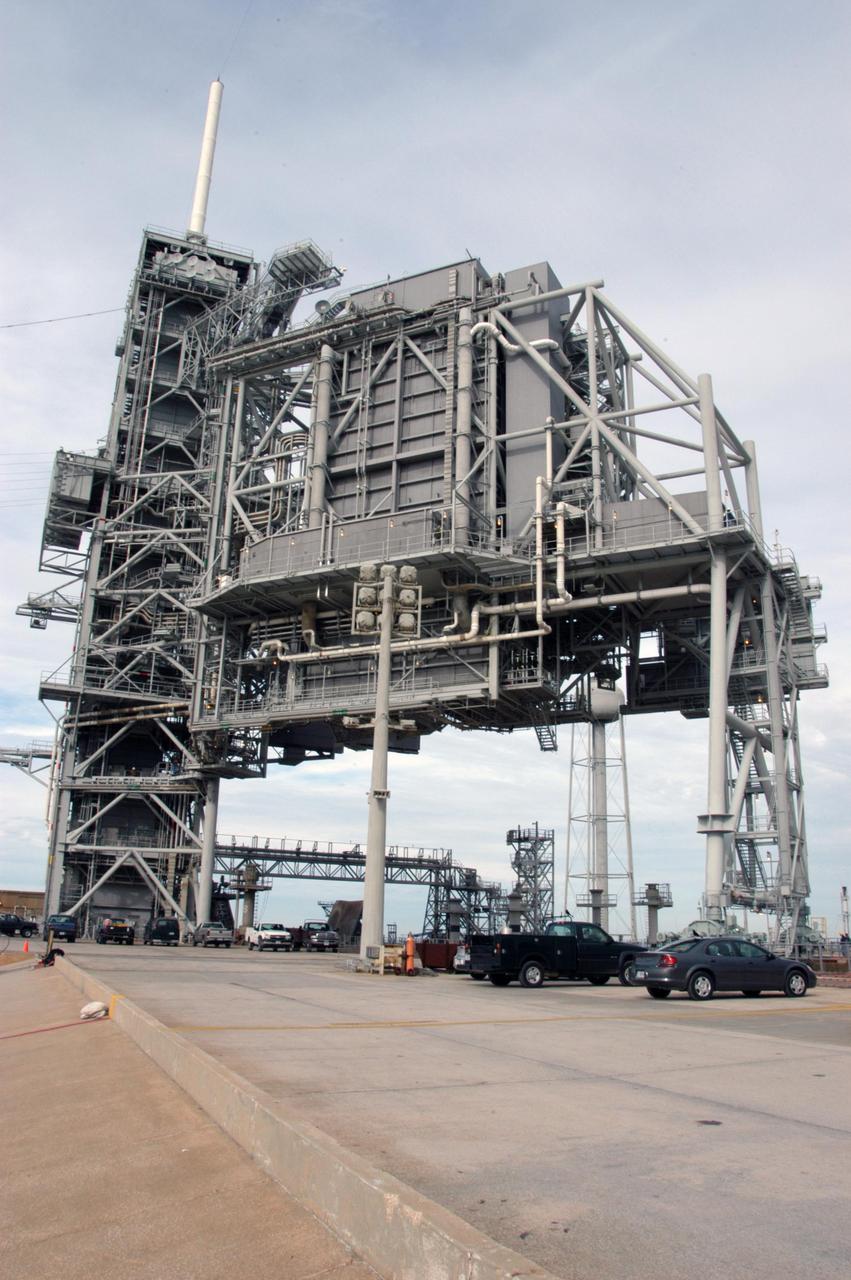
KENNEDY SPACE CENTER, FLA. -- The rotating service structure on Launch Pad 39A is being moved for the first time in more than a year due to maintenance and upgrades on the pad. Some of the work included sandblasting the structure to remove rust and repainting. In addition, the RSS was jacked up and a new upper-bearing race assembly installed where the RSS pivots against the fixed service structure and a half-inch steel plate added. Pad 39A is being made ready for its first launch in four years, the upcoming STS-117 on March 15. Photo credit: NASA/George Shelton
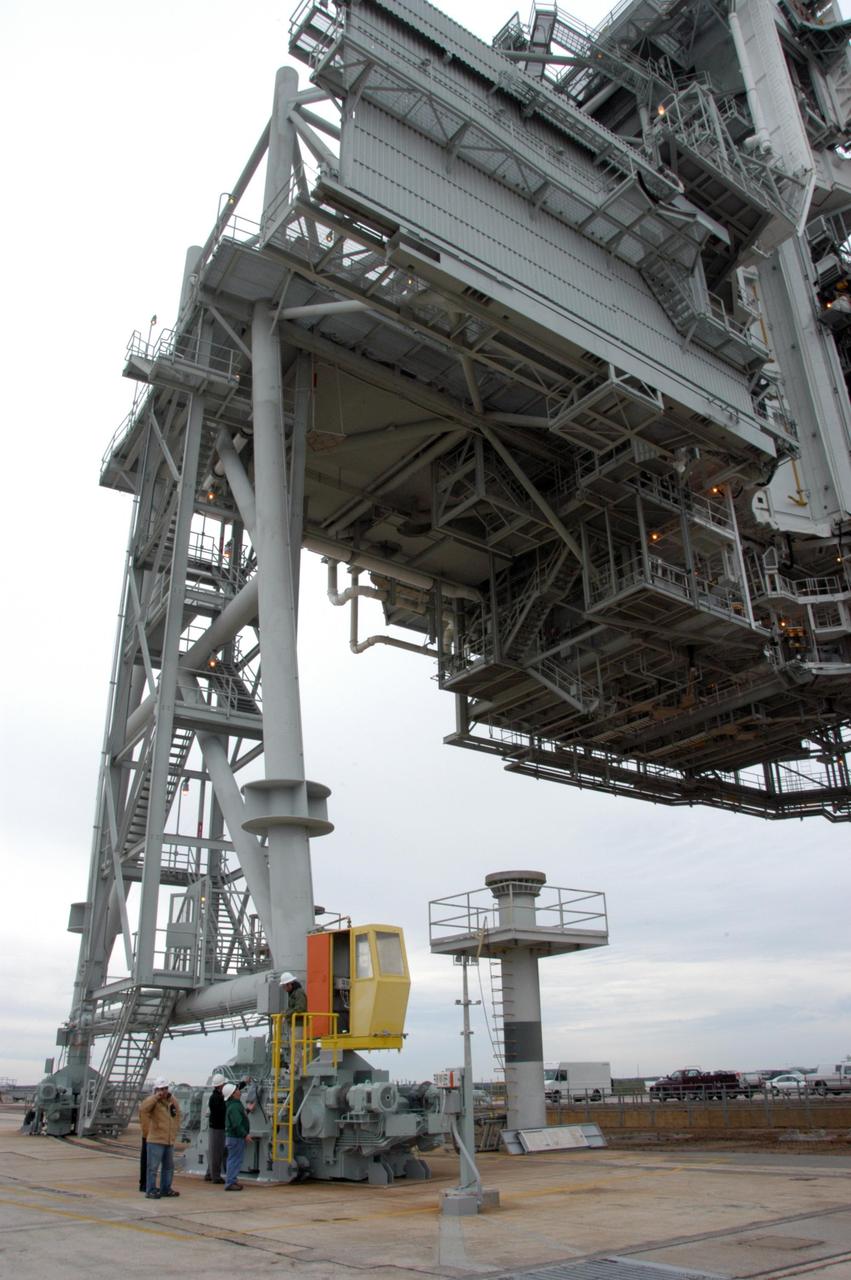
KENNEDY SPACE CENTER, FLA. -- Workers on Launch Pad 39A get ready to begin the movement of the rotating service structure above them. The RSS has not been rotated for more than a year during the maintenance and upgrades on the pad. Some of the work included sandblasting the structure to remove rust and repainting. In addition, the RSS was jacked up and a new upper-bearing race assembly installed where the RSS pivots against the fixed service structure and a half-inch steel plate added. Pad 39A is being made ready for its first launch in four years, the upcoming STS-117 on March 15. Photo credit: NASA/George Shelton
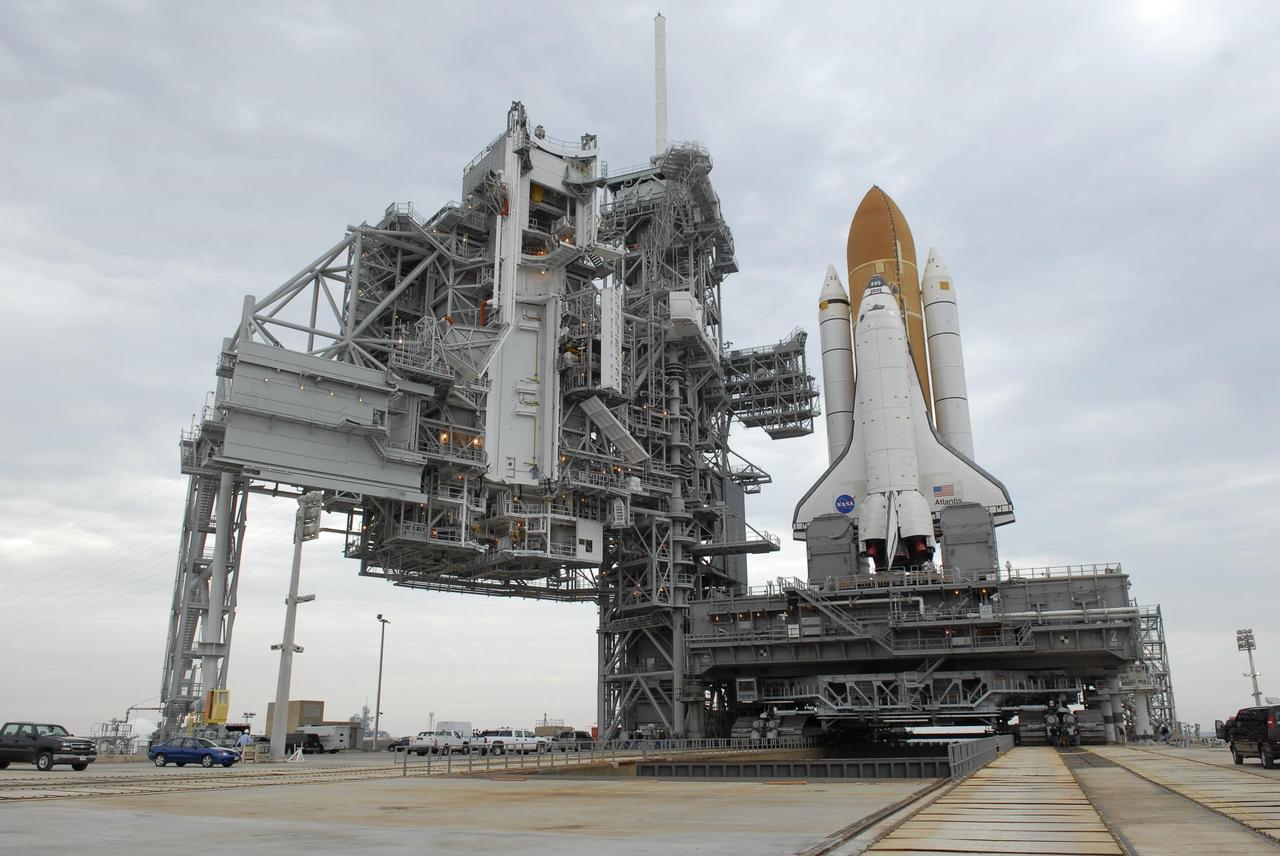
KENNEDY SPACE CENTER, FLA. -- Space Shuttle Atlantis arrives on the hardstand on Launch Pad 39A after a six-hour trek, via the crawler-transporter, from the Vehicle Assembly Building. The first motion out of the assembly building was at 8:19 a.m. At left is the open rotating service structure that will be rolled to enclose the shuttle for protection. Next to the shuttle is the fixed service structure. The mission payload aboard Space Shuttle Atlantis is the S3/S4 integrated truss structure, along with a third set of solar arrays and batteries. The crew of six astronauts will install the truss to continue assembly of the International Space Station. Launch is targeted for March 15. Photo credit: NASA/Kim Shiflett
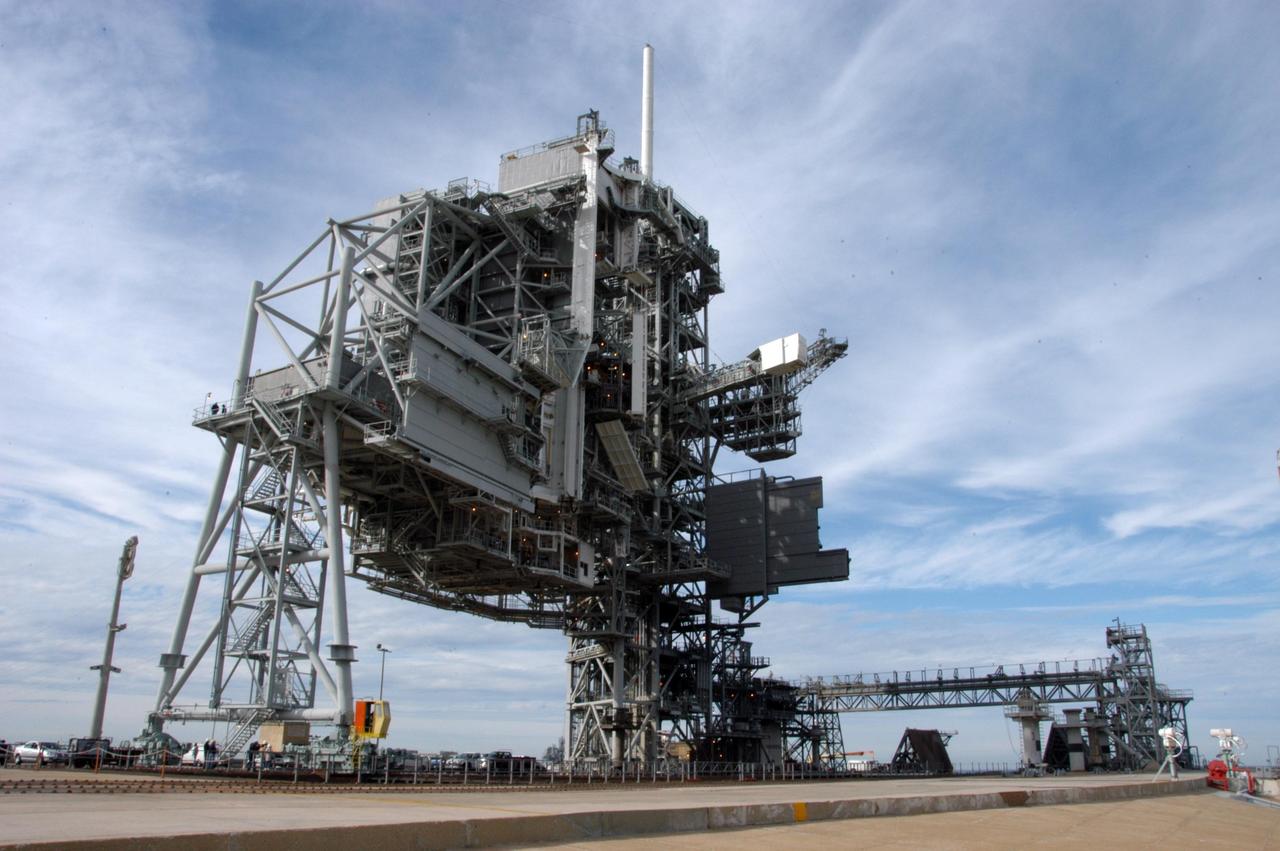
KENNEDY SPACE CENTER, FLA. -- The rotating service structure on Launch Pad 39A has moved for the first time in more than a year due to maintenance and upgrades on the pad. Some of the work included sandblasting the structure to remove rust and repainting. In addition, the RSS was jacked up and a new upper-bearing race assembly installed where the RSS pivots against the fixed service structure and a half-inch steel plate added. Pad 39A is being made ready for its first launch in four years, the upcoming STS-117 on March 15. Photo credit: NASA/George Shelton
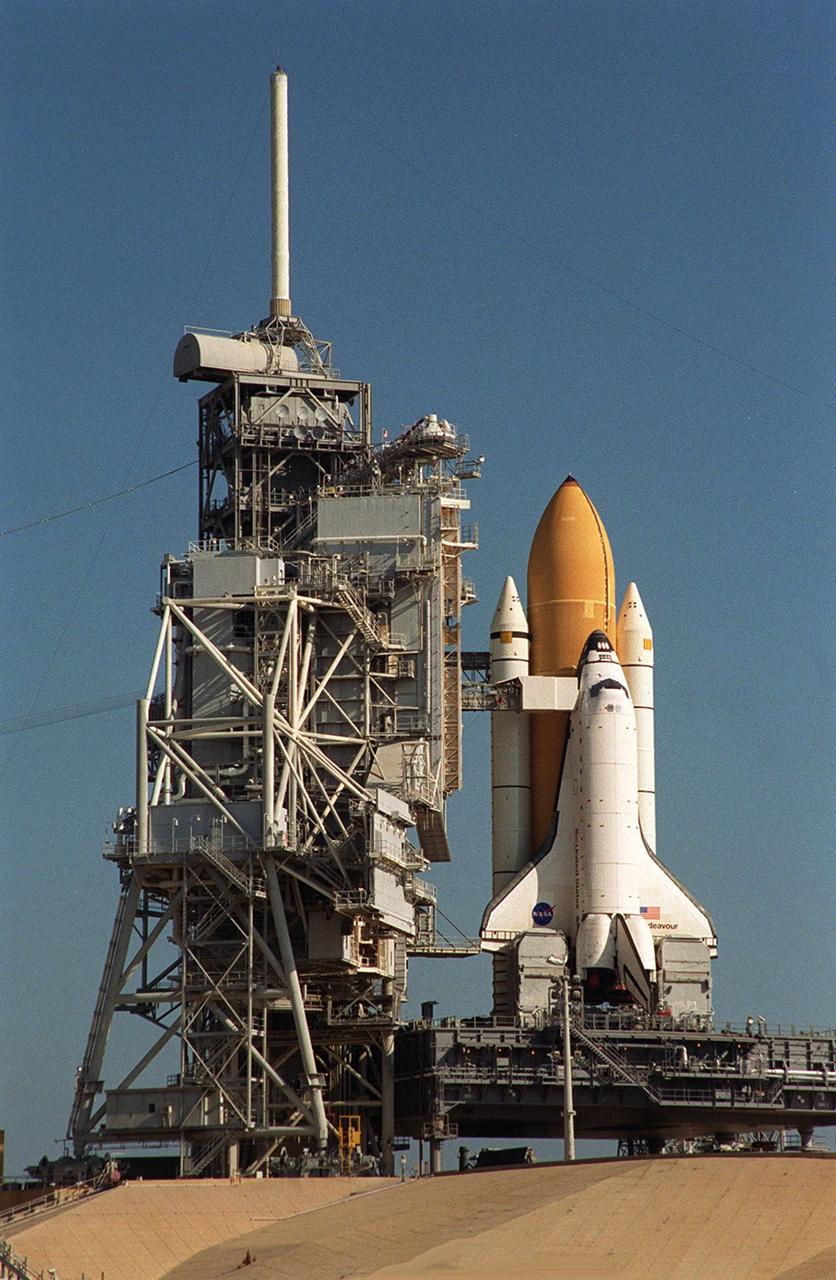
KENNEDY SPACE CENTER, FLA. -- Space Shuttle Endeavour finally rests on Launch Pad 39B after its rollout was delayed several hours to fix a broken cleat on the crawler-transporter. At the far left is the Rotating Service Structure. From the Fixed Service Structure, the Orbiter Access Arm is already extended to the orbiter. Endeavour is scheduled to be launched Nov. 30 at 10:01 p.m. EST on mission STS-97, the sixth construction flight to the International Space Station. Its payload includes the P6 Integrated Truss Structure and a photovoltaic (PV) module, with giant solar arrays that will provide power to the Station. The mission includes two spacewalks to complete the solar array connections

KENNEDY SPACE CENTER, FLA. - The White Room is seen at the upper left where the astronauts enter the Space Shuttle for flight. The Rotating Service Structure has been retracted at KSC's Launch Pad 39A. Discovery, the orbiter for the STS-82 mission, is ready for the launch of the second Hubble Space Telescope service mission. The payload consists of the Near Infrared Camera and Multi-Object Spectrometer (NICMOS) that will be installed, Fine Guidance Sensor #1 (FGS-1), and the Space Telescope Imaging Spectrograph (STIS) to be installed. The STS-82 will launch with a crew of seven at 3:54 a.m. EST, Feb. 11, 1997. The launch window is 65 minutes in duration. The Mission Commander for STS-82 is Ken Bowersox. The purpose of the mission is to upgrade the scientific capabilities, service or replace aging components on the Telescope, and provide a reboost to the optimum altitude.
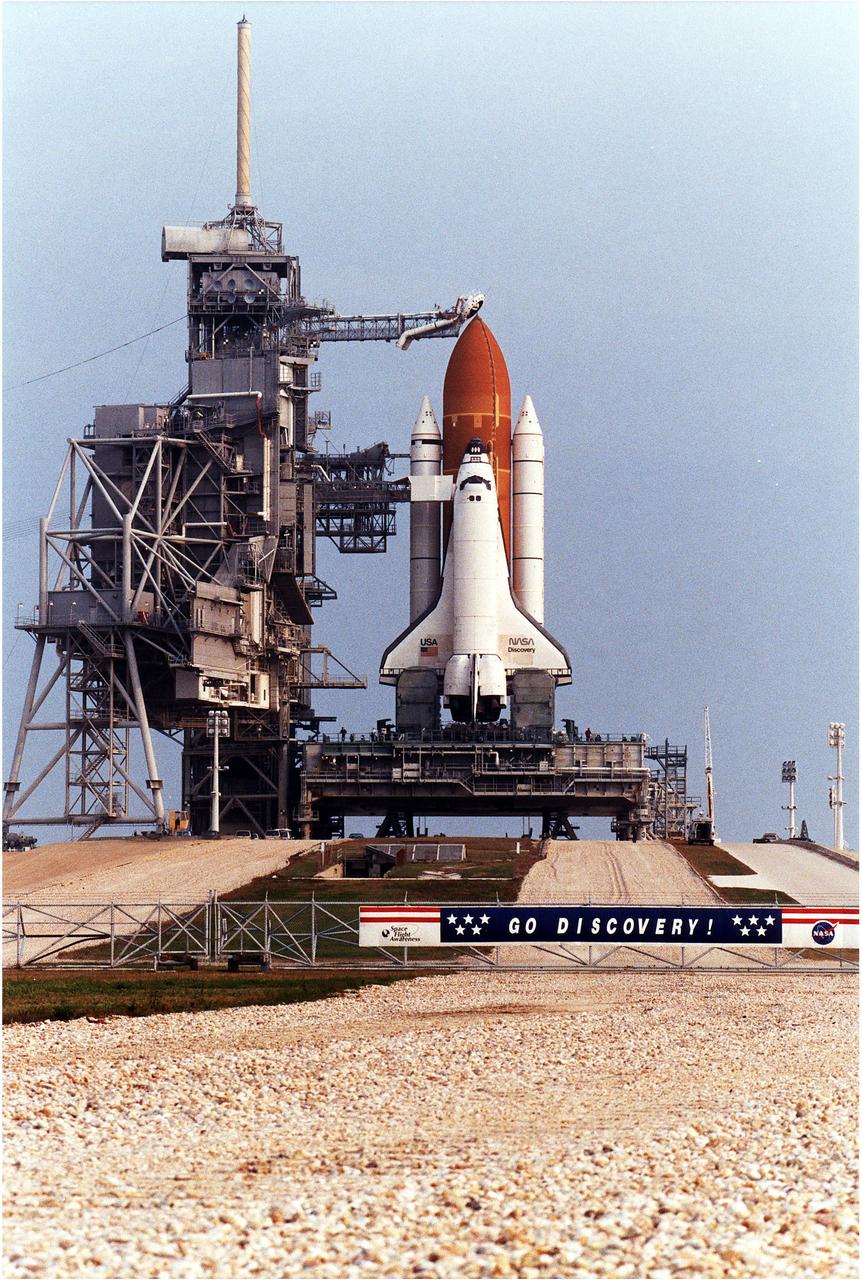
KENNEDY SPACE CENTER, FLA. - The Rotating Service Structure has been retracted at KSC's Launch Pad 39A. Discovery, the orbiter for the STS-82 mission, is ready for the launch of the second Hubble Space Telescope service mission. The payload consists of the Near Infrared Camera and Multi-Object Spectrometer (NICMOS) that will be installed, Fine Guidance Sensor #1 (FGS-1), and the Space Telescope Imaging Spectrograph (STIS) to be installed. The STS-82 will launch with a crew of seven at 3:54 a.m. EST, Feb. 11, 1997. The launch window is 65 minutes in duration. The Mission Commander for STS-82 is Ken Bowersox. The purpose of the mission is to upgrade the scientific capabilities, service or replace aging components on the Telescope, and provide a reboost to the optimum altitude.
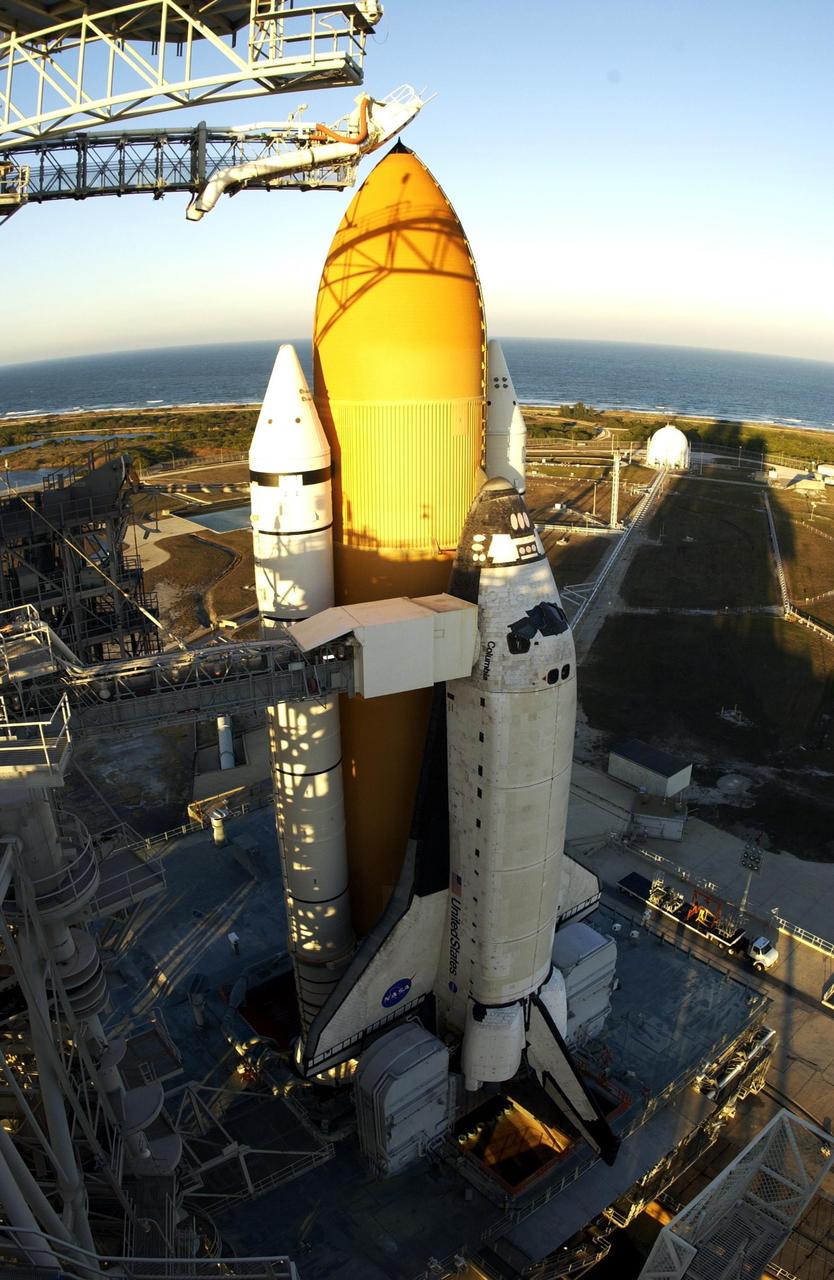
KENNEDY SPACE CENTER, FLA. -- After rollback of the Rotating Service Structure on Launch Pad 39A, the top of Space Shuttle Columbia's external tank and solid rocket booster are bathed in sunlight. Shadows from the Fixed Service Structure stretch across the Shuttle and landscape. Visible are the orbiter access arm with the White Room extended to Columbia's cockpit, and at the top, the gaseous oxygen vent arm and cap, called the "beanie cap." Columbia is scheduled for launch Jan. 16 at 10:39 a.m. EST on mission STS-107, a research mission.
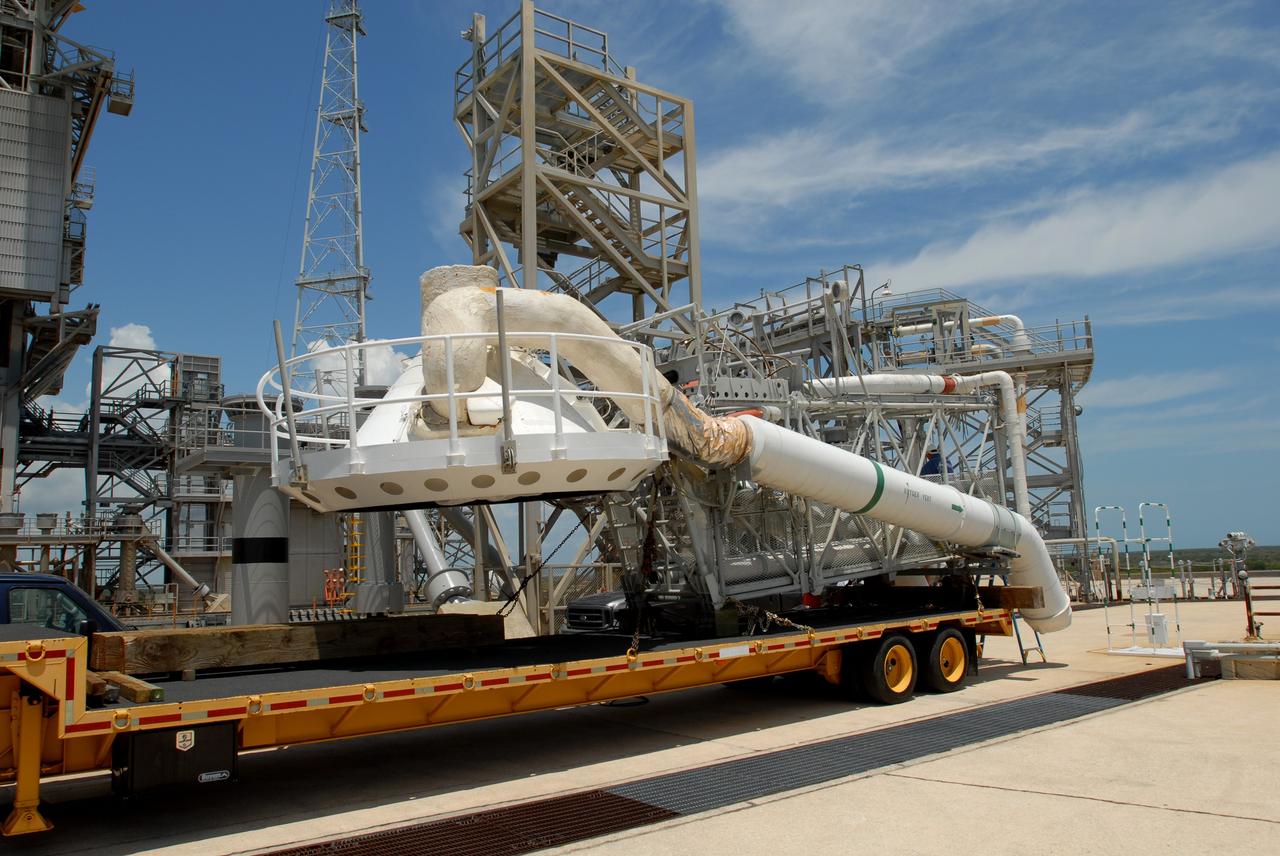
CAPE CANAVERAL, Fla. – At NASA's Kennedy Space Center in Florida, the oxygen vent hood, called the "beanie cap," and the gaseous oxygen vent arm removed from Launch Pad 39B's fixed service structure are lowered onto a transporter. A portion of the service structure is being removed for the pad's conversion as launch site for the Constellation Program's Ares I-X. The launch of the Ares I-X flight test is targeted for August 2009. Photo credit: NASA/Jim Grossmann
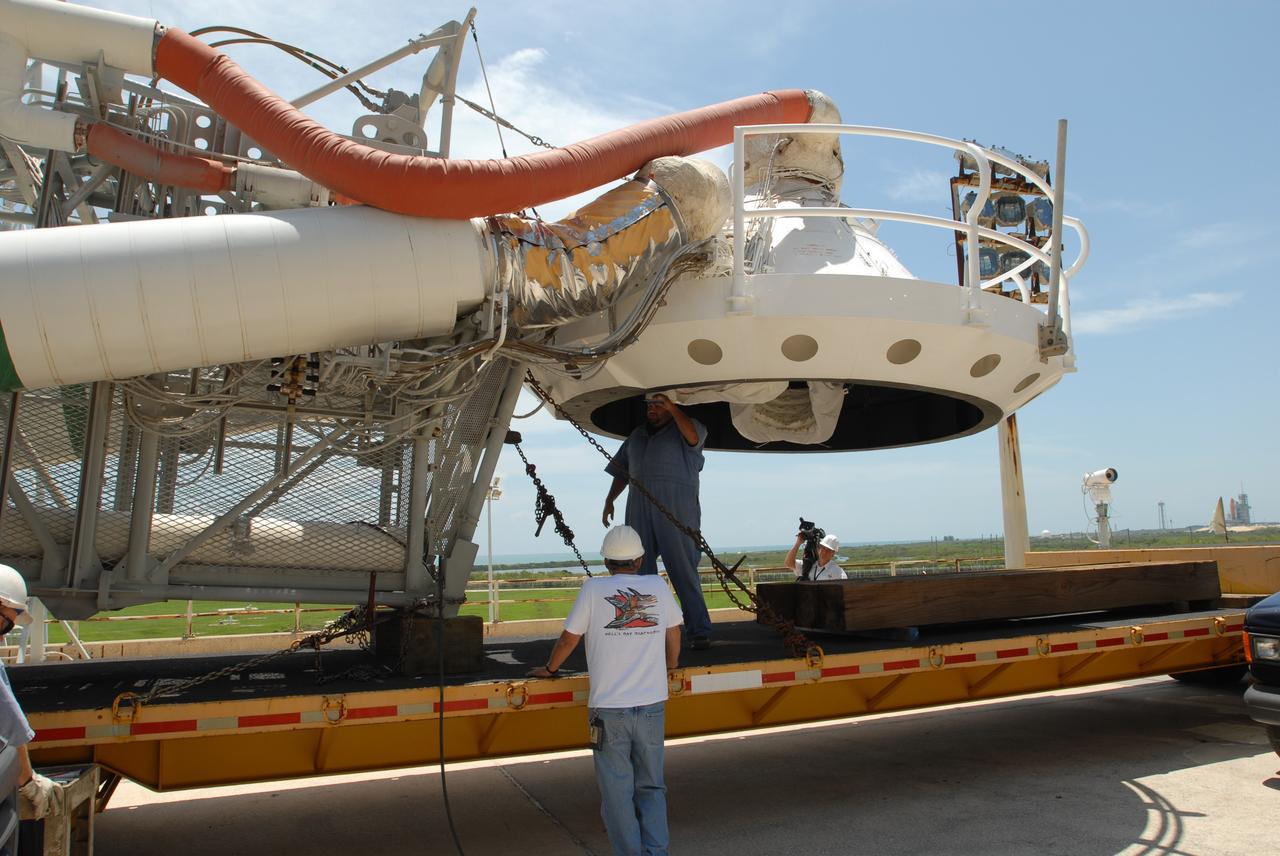
CAPE CANAVERAL, Fla. – At NASA's Kennedy Space Center in Florida, workers check the "beanie cap" and the gaseous oxygen vent arm removed from Launch Pad 39B's fixed service structure. A portion of the service structure is being removed for the pad's conversion as launch site for the Constellation Program's Ares I-X. The launch of the Ares I-X flight test is targeted for August 2009. Photo credit: NASA/Jim Grossmann
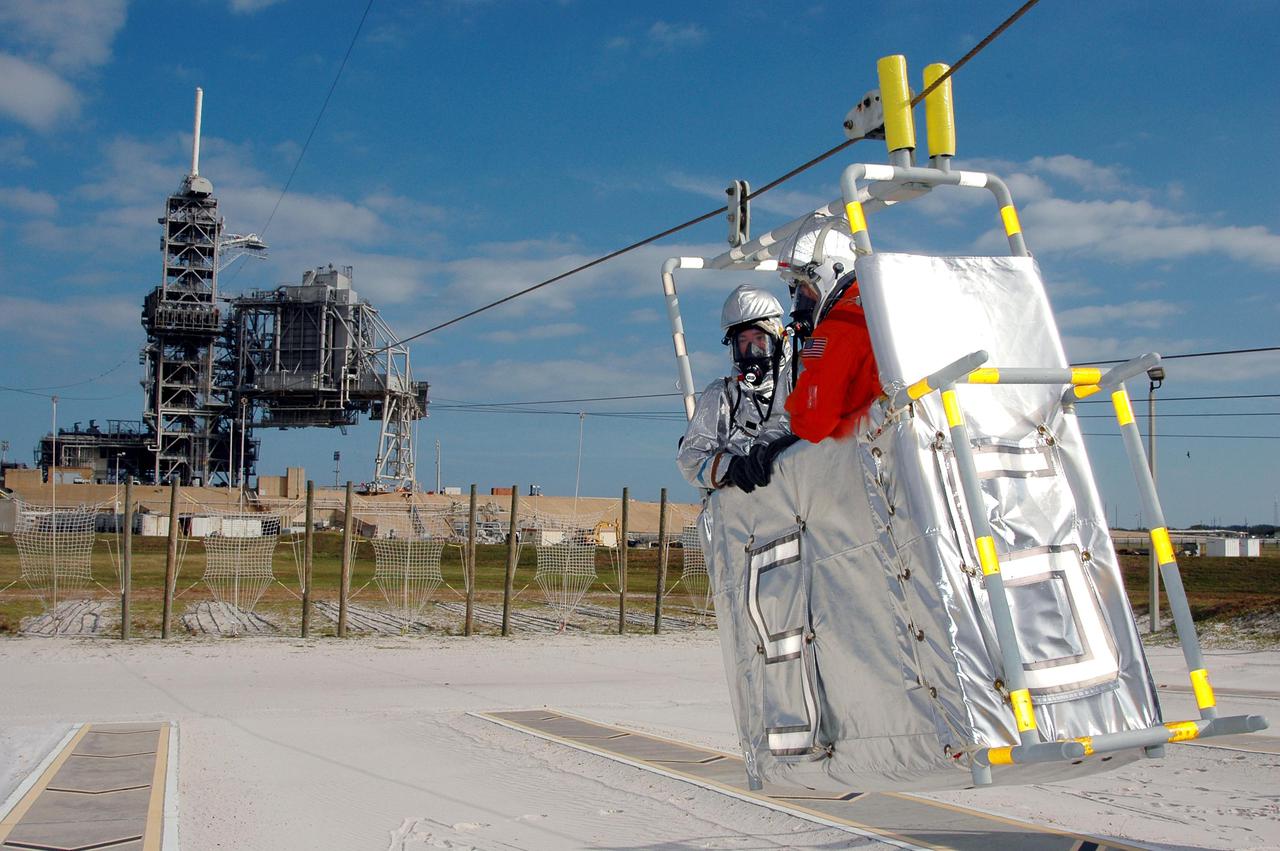
KENNEDY SPACE CENTER, FLA. - On Launch Pad 39A, a rescue team member and astronaut-suited worker approach landing in a slidewire basket reaching from the Fixed Service Structure in the background during an emergency egress scenario. The four-hour exercise simulated normal launch countdown operations, with the added challenge of a fictitious event causing an evacuation of the vehicle and launch pad. It tested the team’s rescue approaches on the Fixed Service Structure, slidewire basket evacuation, triage care and transportation of injured personnel to hospitals, as well as communications and coordination.
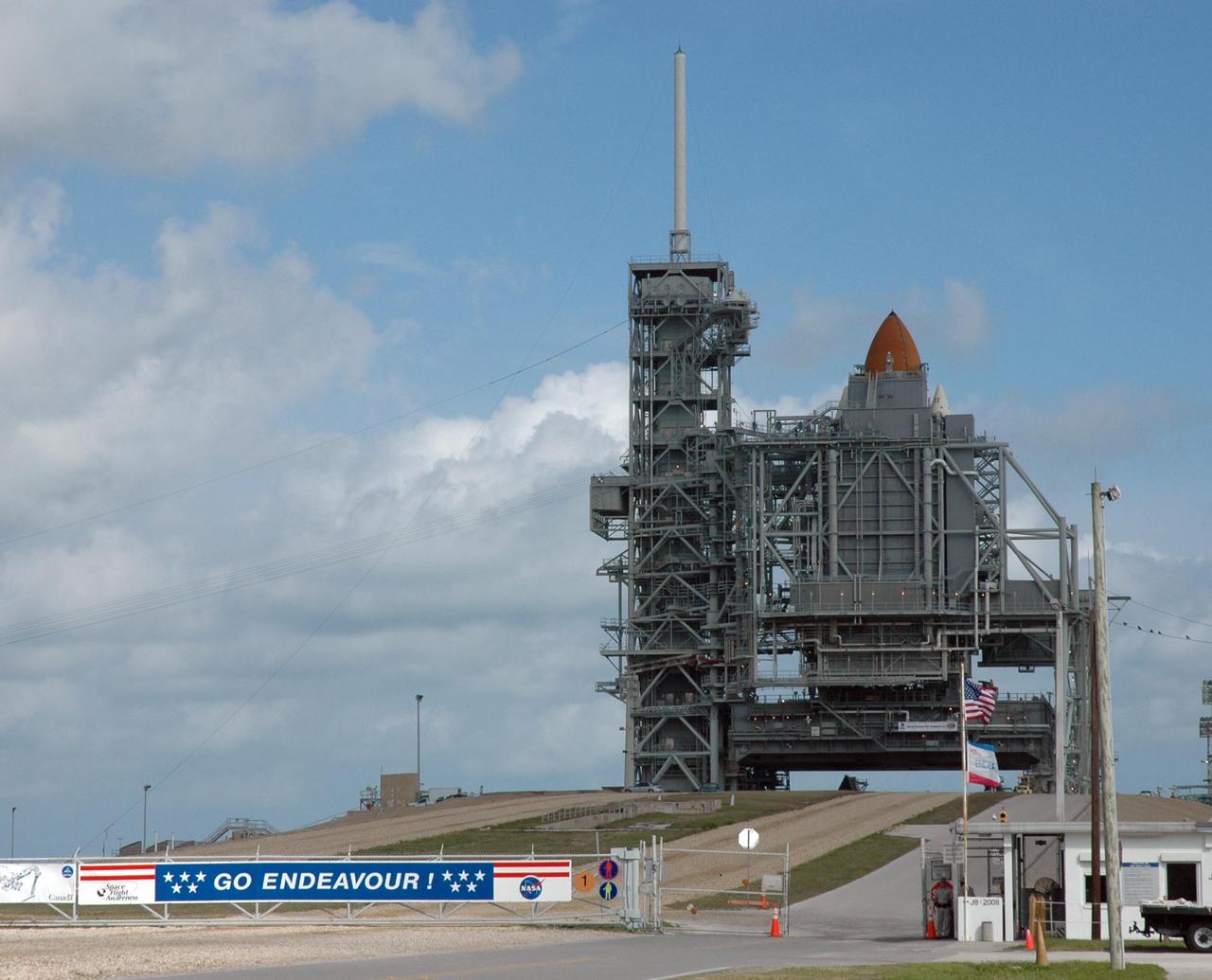
KENNEDY SPACE CENTER, FLA. -- The rotating service structure has closed around space shuttle Endeavour, with only the tip of the external tank showing in this view. To its left is the fixed service structure with the lightning mast on top. Endeavour is being prepared for launch on the STS-123 mission targeted for March 11. Photo credit: NASA/Jack Pfaller
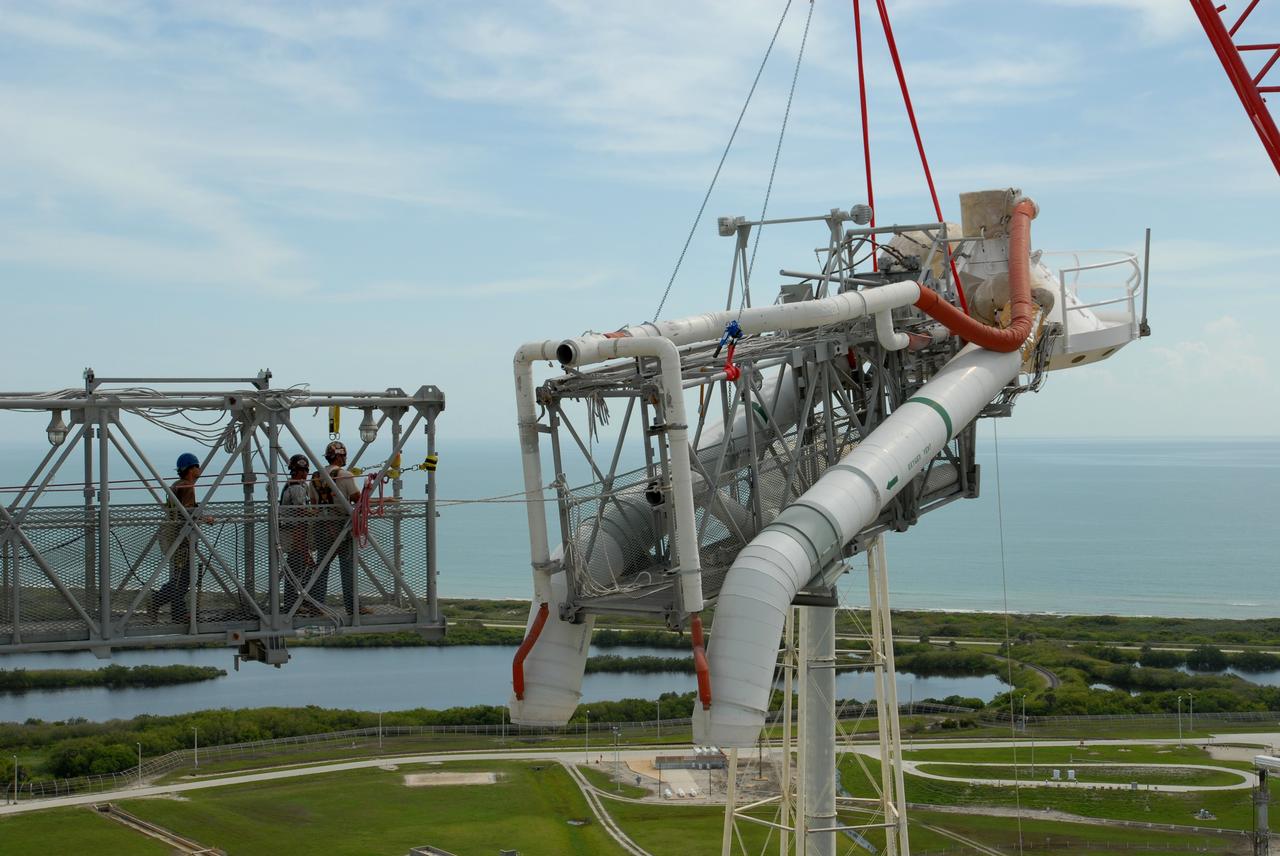
CAPE CANAVERAL, Fla. – On Launch Pad 39B at NASA's Kennedy Space Center in Florida, a crane removes the oxygen vent hood, called the "beanie cap," and the gaseous oxygen vent arm from the fixed service structure. A portion of the service structure is being removed for the pad's conversion as launch site for the Constellation Program's Ares I-X. The launch of the Ares I-X flight test is targeted for August 2009. Photo credit: NASA/Jim Grossmann
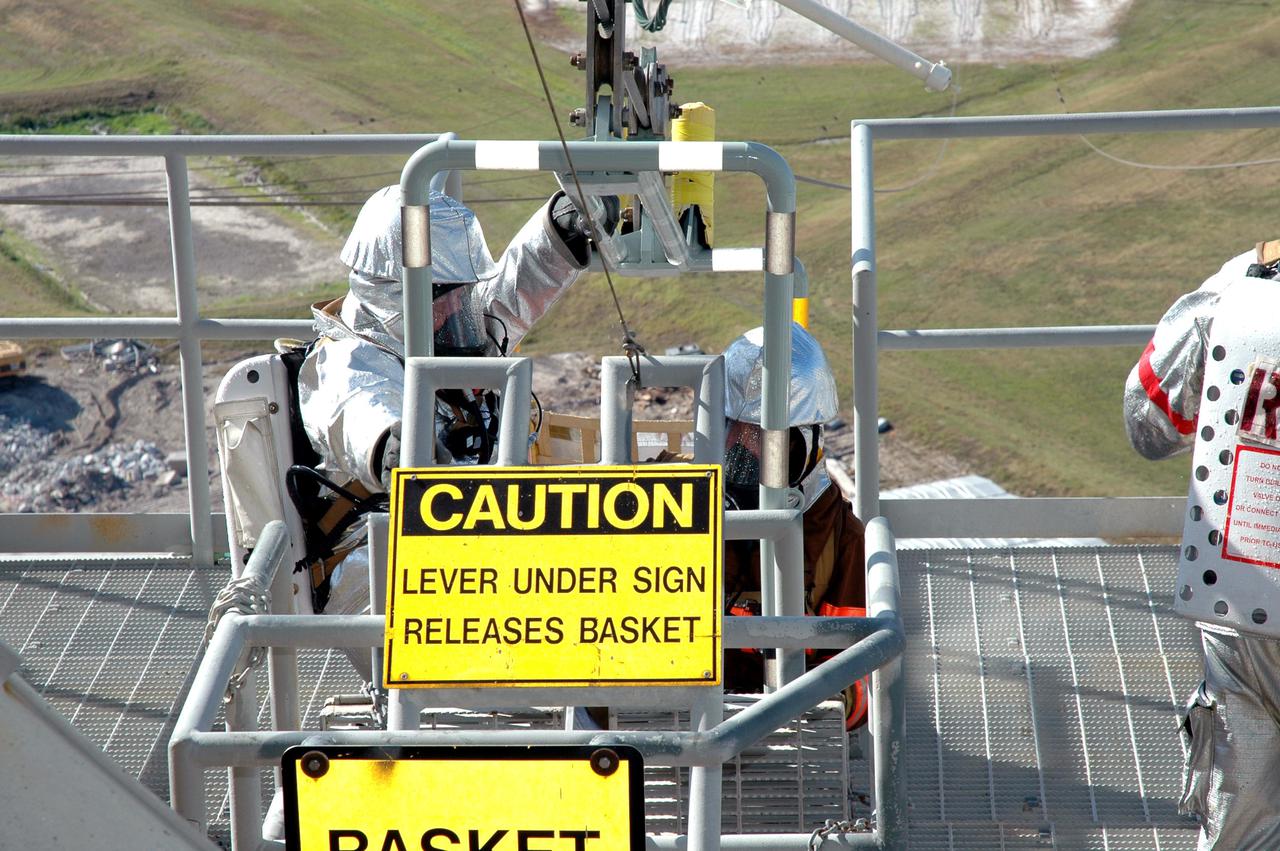
KENNEDY SPACE CENTER, FLA. - On Launch Pad 39A, a rescue force climbs into slidewire baskets on the Fixed Service Structure during an emergency egress scenario. The four-hour exercise simulated normal launch countdown operations, with the added challenge of a fictitious event causing an evacuation of the vehicle and launch pad. It tested the team’s rescue approaches on the Fixed Service Structure, slidewire basket evacuation, triage care and transportation of injured personnel to hospitals, as well as communications and coordination.
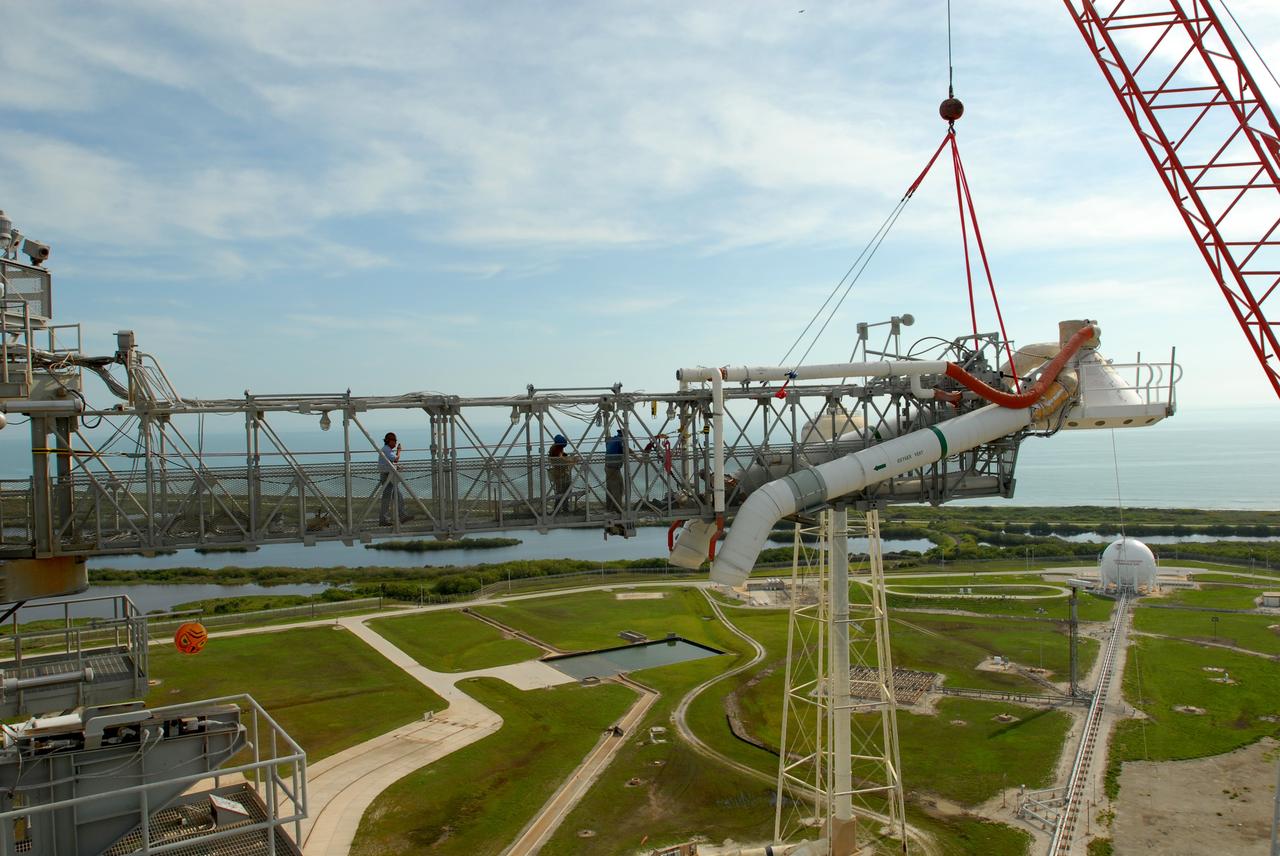
CAPE CANAVERAL, Fla. – On Launch Pad 39B at NASA's Kennedy Space Center in Florida, a crane removes the oxygen vent hood, called the "beanie cap," and the gaseous oxygen vent arm from the fixed service structure. A portion of the service structure is being removed for the pad's conversion as launch site for the Constellation Program's Ares I-X. The launch of the Ares I-X flight test is targeted for August 2009. Photo credit: NASA/Jim Grossmann
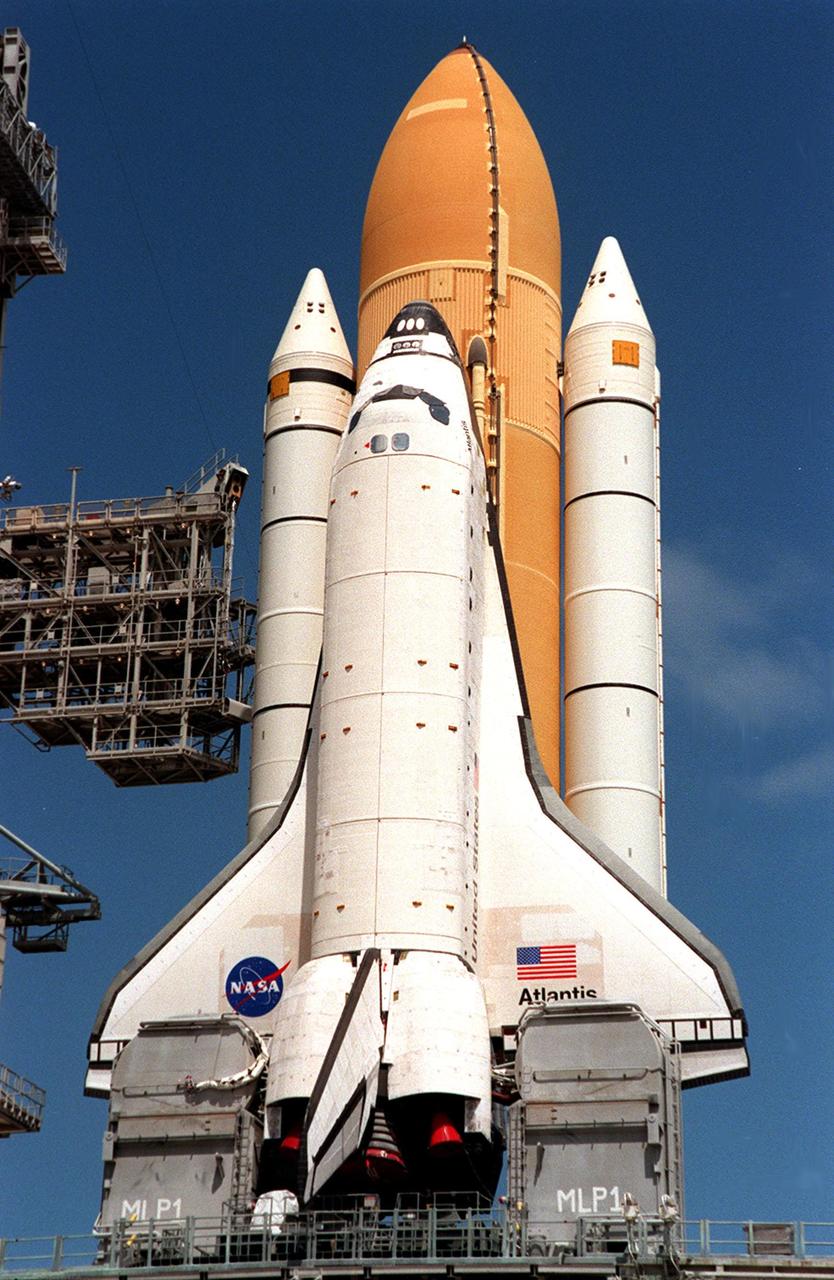
KENNEDY SPACE CENTER, FLA. -- Space Shuttle Atlantis sits on launch Pad 39A waiting for the rotating service structure to be moved into place for final launch preparations. A small section of the fixed service structure is seen on the left. Liftoff of Atlantis on mission STS-101 is scheduled for April 17 at 7:03 p.m. EDT. STS-101 is a logistics and resupply mission for the International Space Station, to restore full redundancy to the International Space Station power system in preparation for the arrival of the next pressurized module, the Russian-built Zvezda
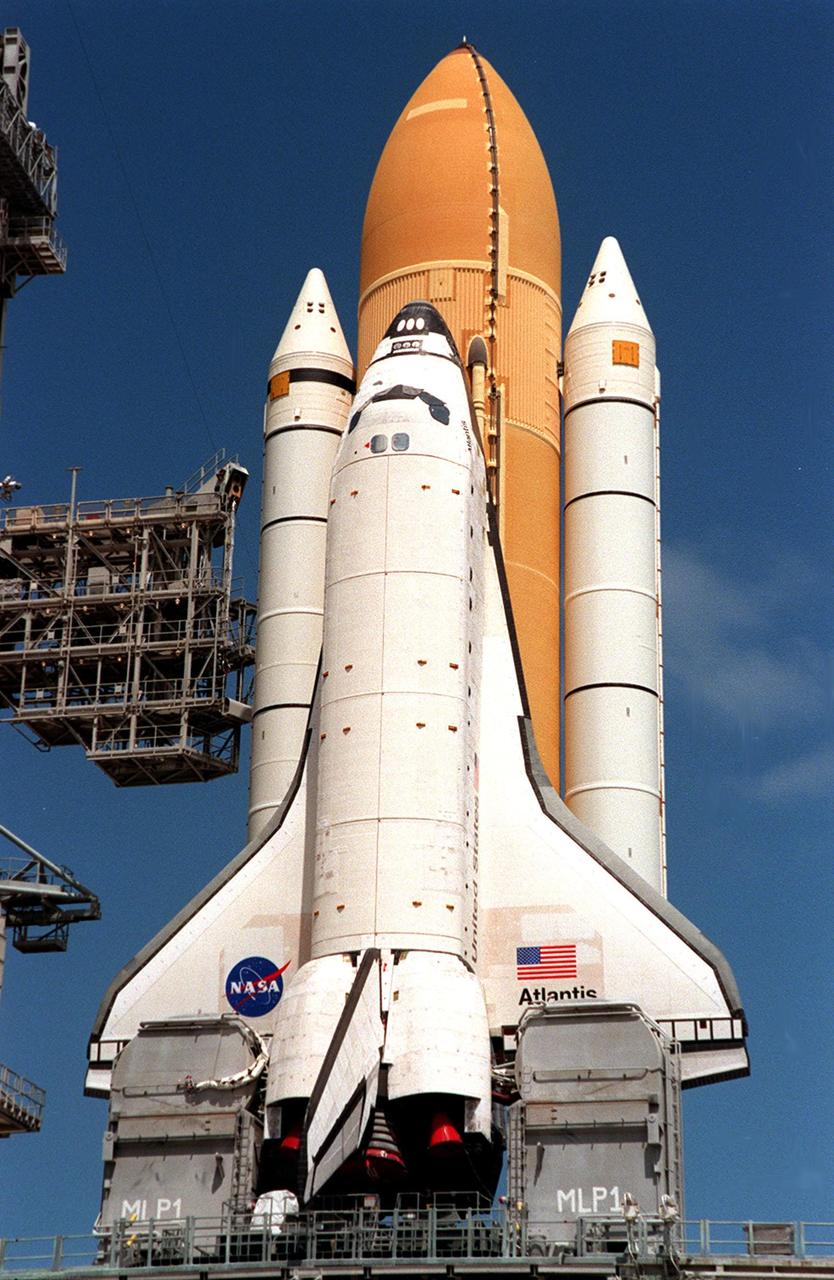
KENNEDY SPACE CENTER, FLA. -- Space Shuttle Atlantis sits on launch Pad 39A waiting for the rotating service structure to be moved into place for final launch preparations. A small section of the fixed service structure is seen on the left. Liftoff of Atlantis on mission STS-101 is scheduled for April 17 at 7:03 p.m. EDT. STS-101 is a logistics and resupply mission for the International Space Station, to restore full redundancy to the International Space Station power system in preparation for the arrival of the next pressurized module, the Russian-built Zvezda
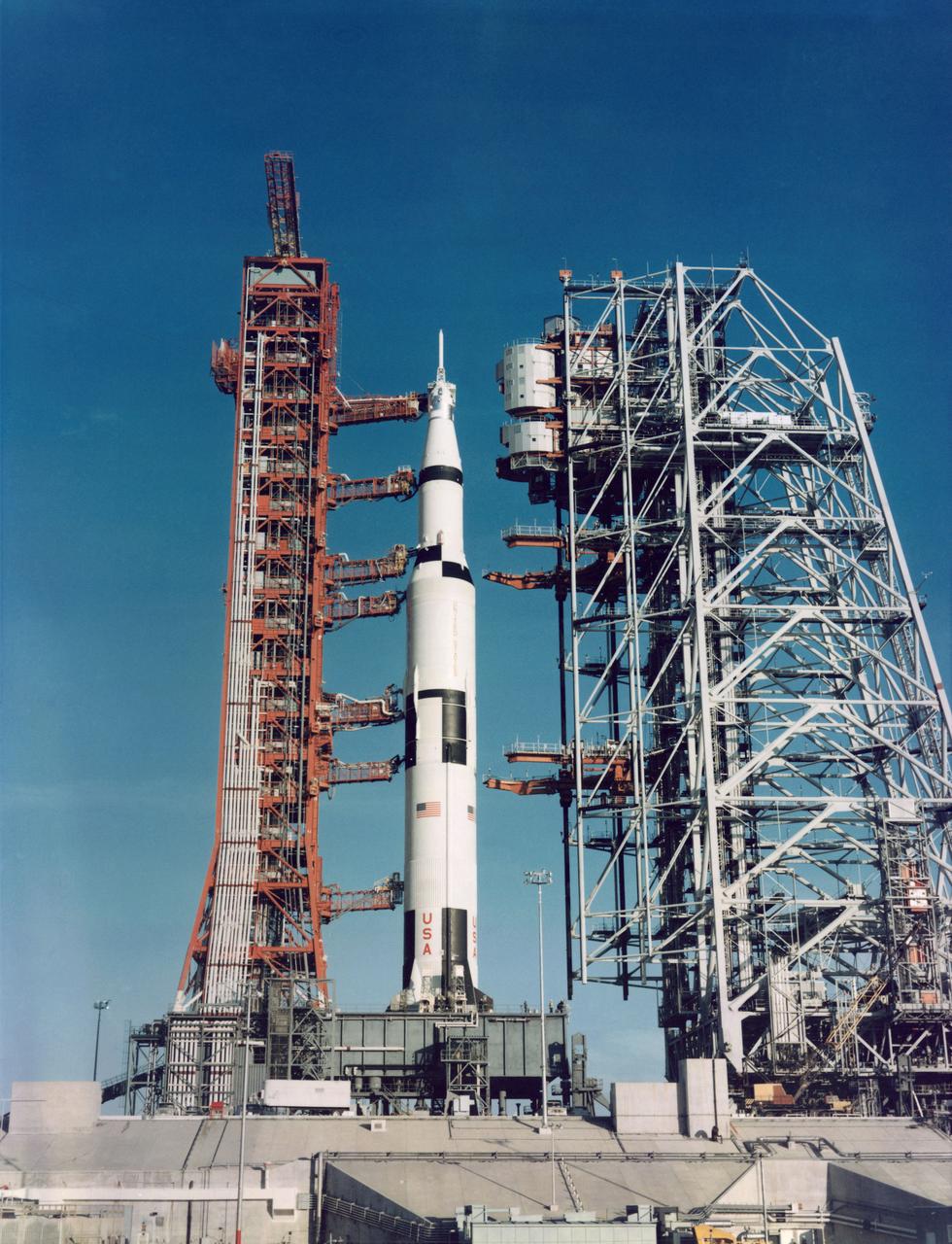
S68-55424 (17 Dec. 1968) --- Ground-level view of the Apollo 8 (Spacecraft 103/Saturn 503) space vehicle at Pad A, Launch Complex 39, Kennedy Space Center (KSC). The Apollo 8 stack was photographed during a prelaunch alert-mobile service structure pull back. (Mobile launch tower on left and mobile service structure on right.)
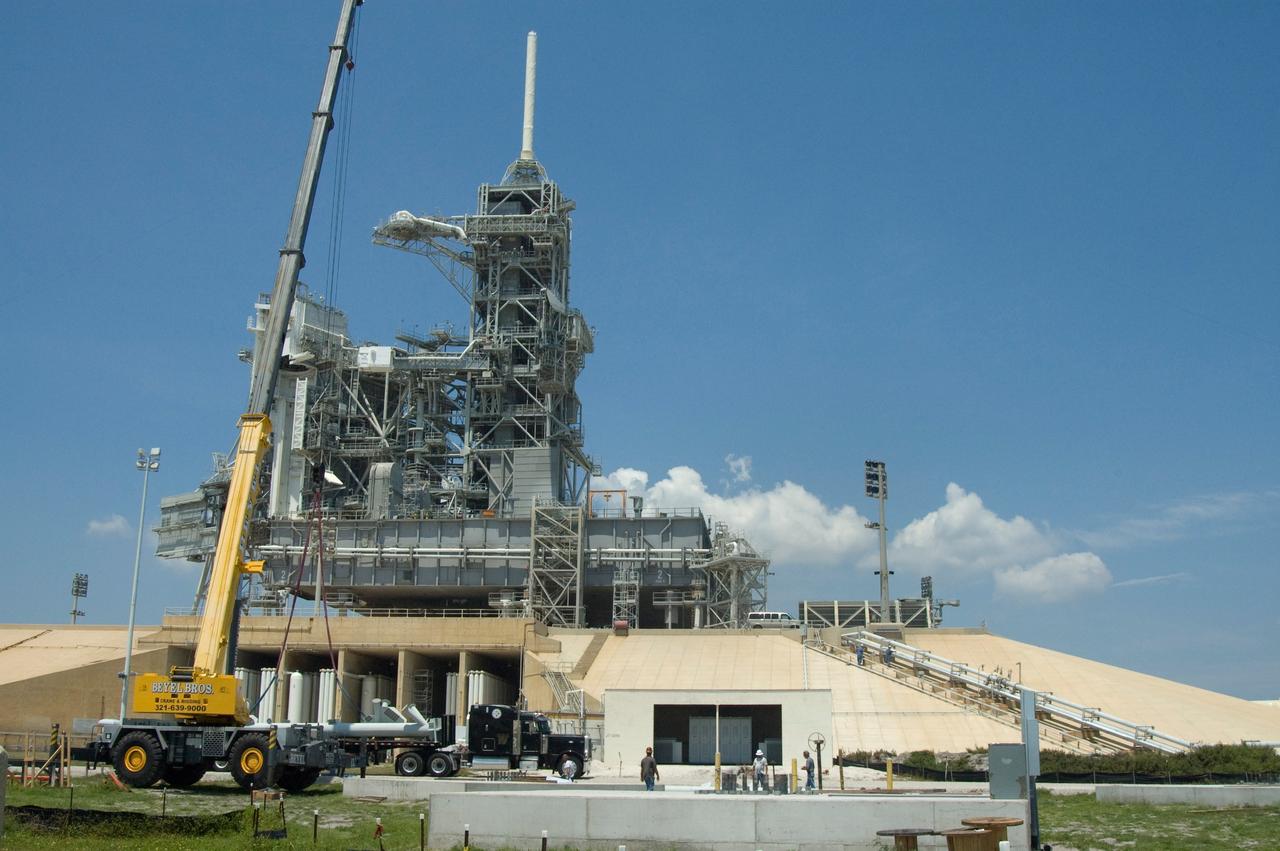
CAPE CANAVERAL, Fla. -- On Launch Pad 39B at NASA's Kennedy Space Center, a crane is removing parts of the lightning mast to be erected on towers being built for the Constellation Program and Ares/Orion launches. Behind it are the fixed and rotating service structures on top of the pad. An 80-foot lightning mast is on top of the fixed service structure as part of the former lightning protection system. Pad B will be the site of the first Ares vehicle launch, including Ares I-X which is scheduled for April 2009. Photo credit: NASA/Jim Grossmann
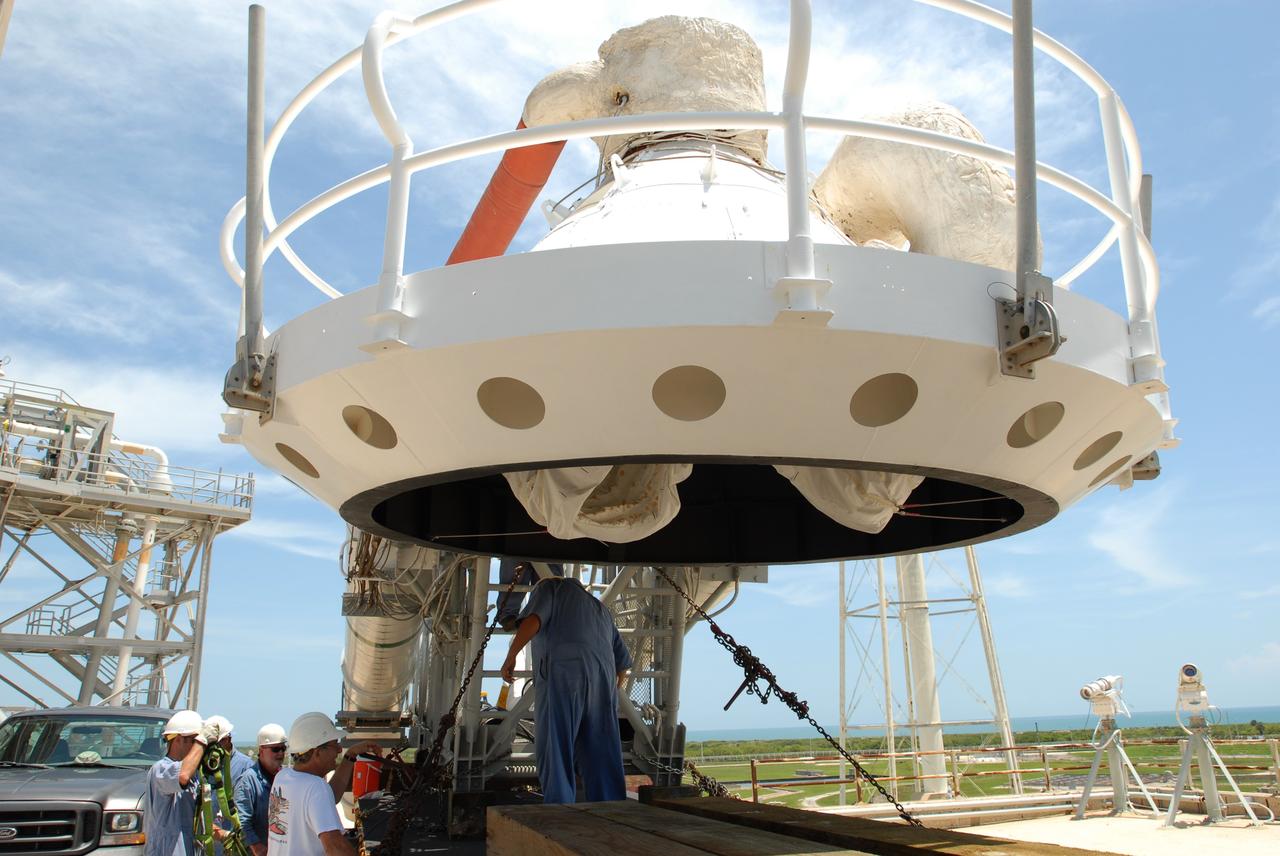
CAPE CANAVERAL, Fla. – At NASA's Kennedy Space Center in Florida, workers check the "beanie cap" and the gaseous oxygen vent arm removed from Launch Pad 39B's fixed service structure before they are taken away on the transporter. A portion of the service structure is being removed for the pad's conversion as launch site for the Constellation Program's Ares I-X. The launch of the Ares I-X flight test is targeted for August 2009. Photo credit: NASA/Jim Grossmann
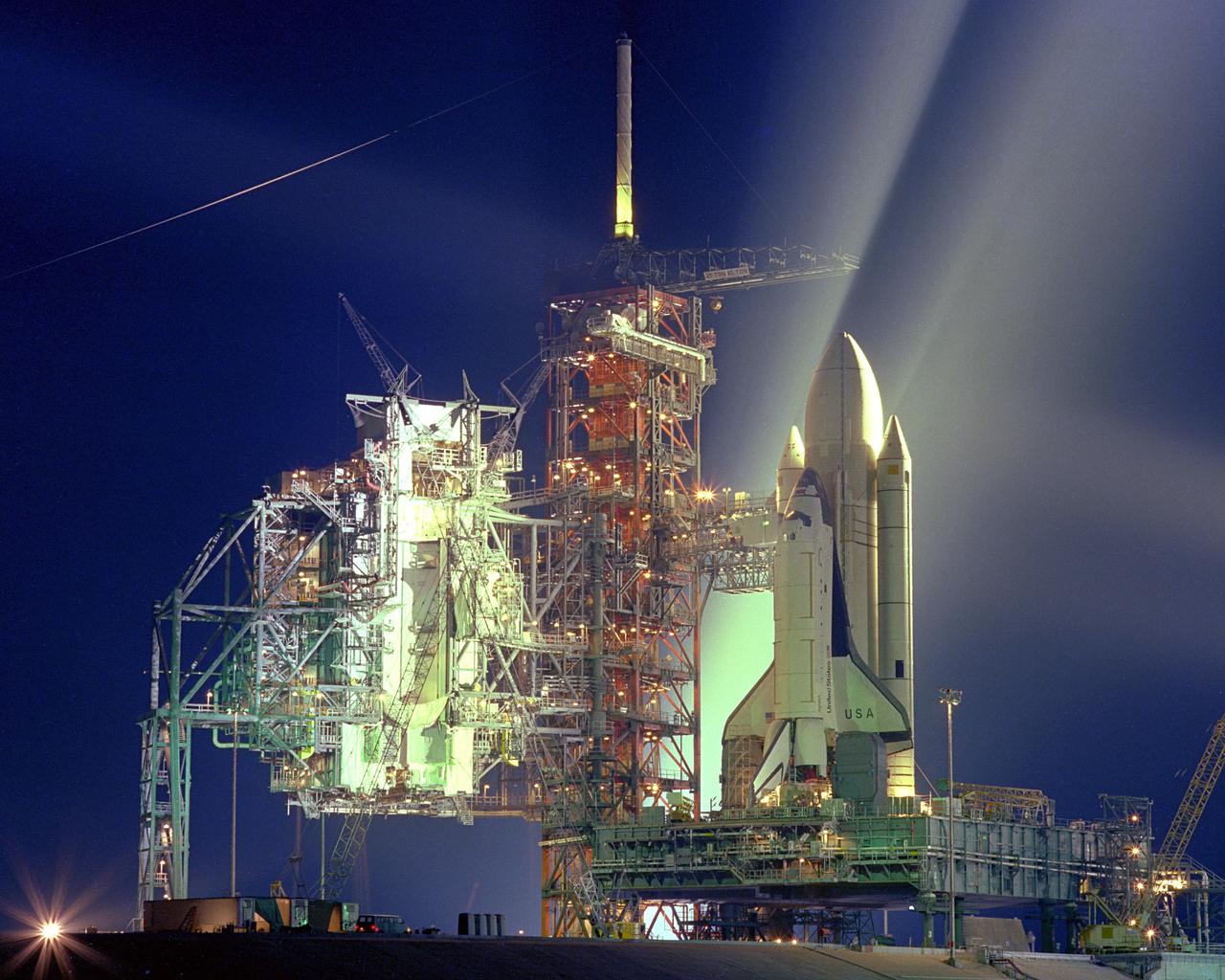
KENNEDY SPACE CENTER, FLA. - A timed exposure of the Space Shuttle, STS-1, at Launch Pad A, Complex 39, turns the space vehicle and support facilities into a night-time fantasy of light. Structures to the left of the Shuttle are the fixed and the rotating service structure.

S87-26113 (5 March 1981) --- A timed exposure of the space shuttle Columbia at Launch Pad A, Complex 39, turns the space vehicle and support facilities into a night-time fantasy of light. Structures to the left of the shuttle are the fixed and the rotating service structure. Photo credit: NASA or National Aeronautics and Space Administration
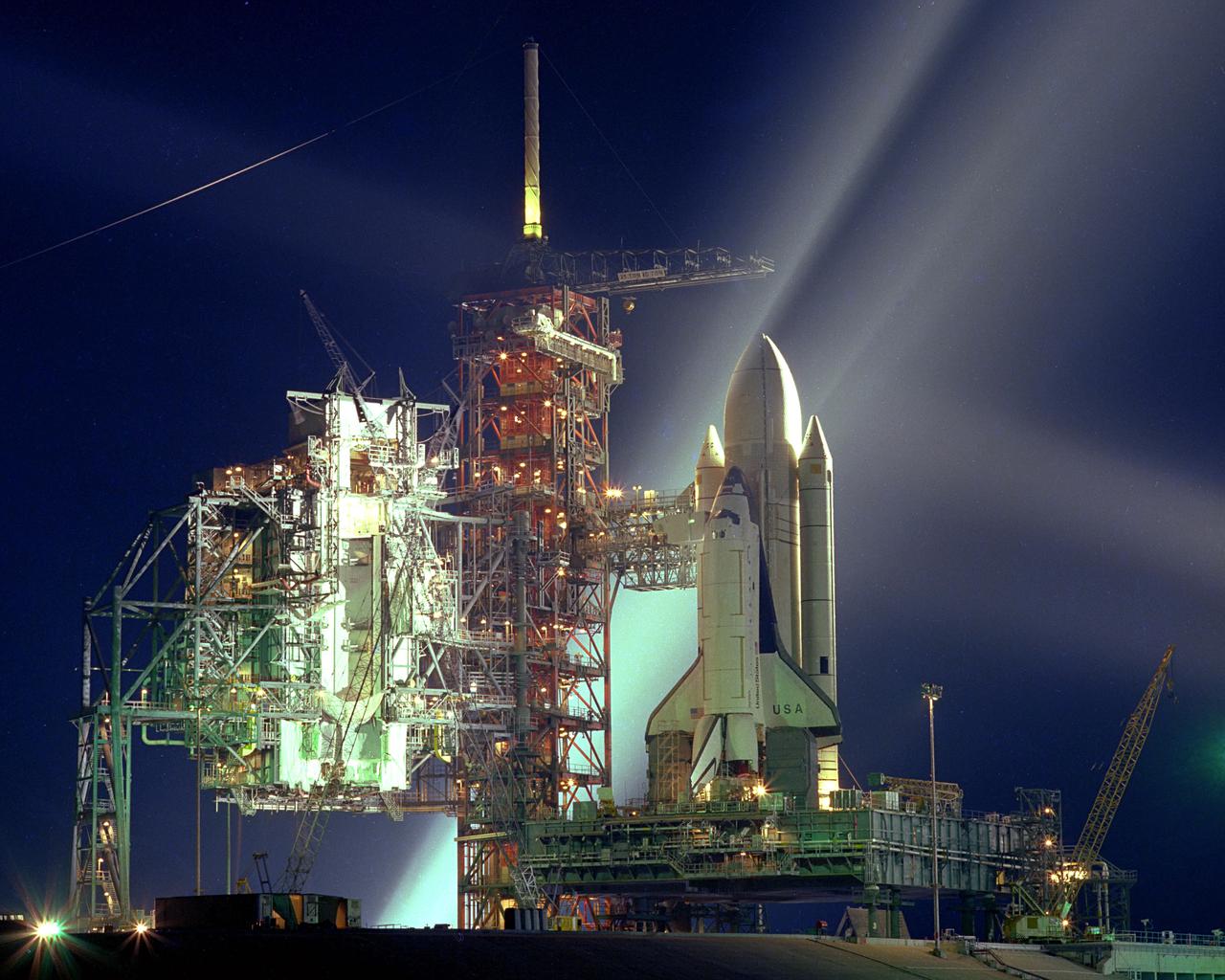
KENNEDY SPACE CENTER, FLA. - A timed exposure of the Space Shuttle, STS-1, at Launch Pad A, Complex 39, turns the space vehicle and support facilities into a night-time fantasy of light. Structures to the left of the Shuttle are the fixed and the rotating service structure.
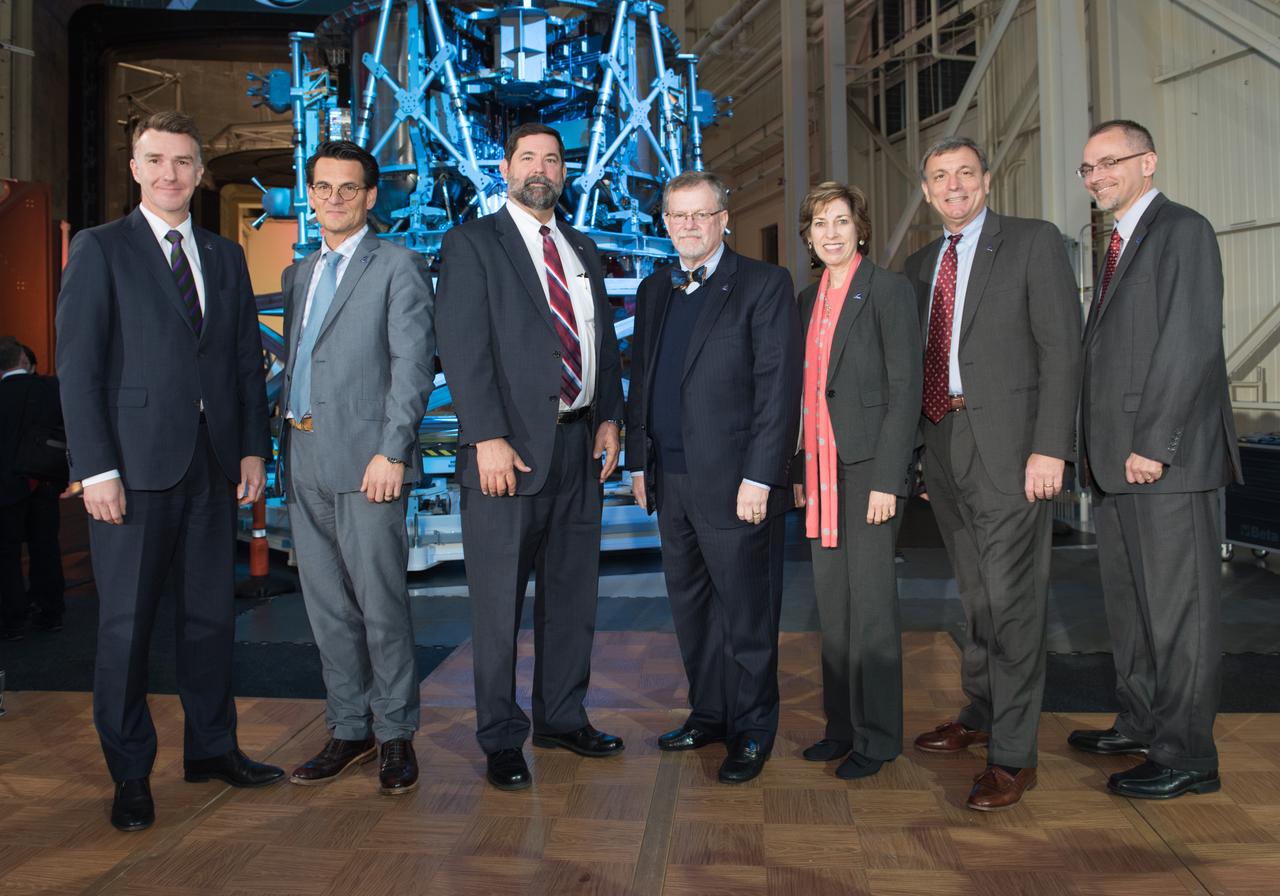
The European Service Module Structural Test Article (in the background) photographed at the Space Power Facility at NASA Glenn Research Center's Plum Brook Station in Sandusky, Ohio on Nov. 30, 2015. Group photo (including JSC Director Ellen Ochoa) taken in front of structure. Part of Batch image transfer from Flickr.
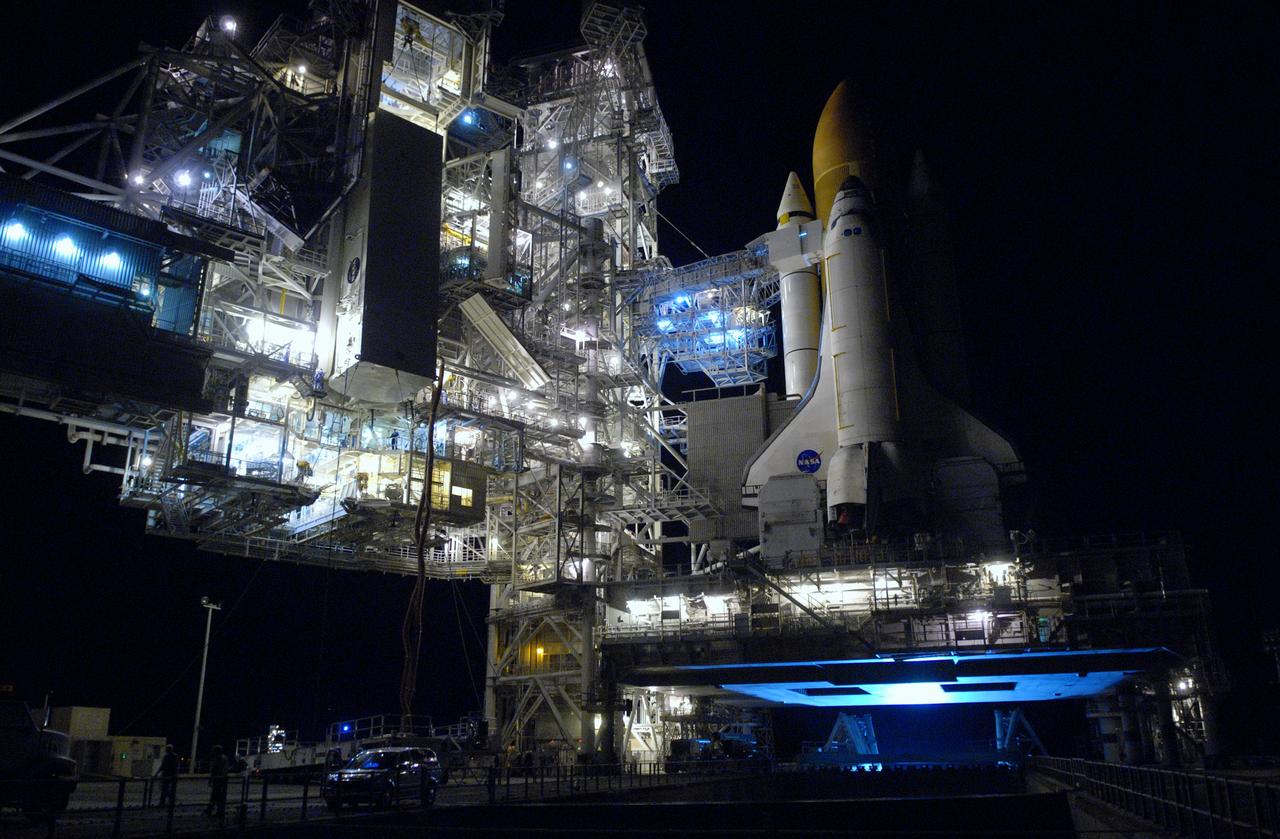
CAPE CANAVERAL, Fla. - On Launch Pad 39A at NASA's Kennedy Space Center, the payload canister is in place at the payload changeout room on the rotating service structure. The canister contains four carriers holding various equipment for the STS-125 mission aboard space shuttle Atlantis to service NASA’s Hubble Space Telescope. At right is Atlantis, atop the mobile launcher platform. The changeout room is the enclosed, environmentally controlled portion of the rotating service structure that supports cargo delivery to the pad and subsequent vertical installation into the shuttle’s payload bay. Launch of Atlantis is targeted for Oct. 10. Photo credit: NASA/Jack Pfaller
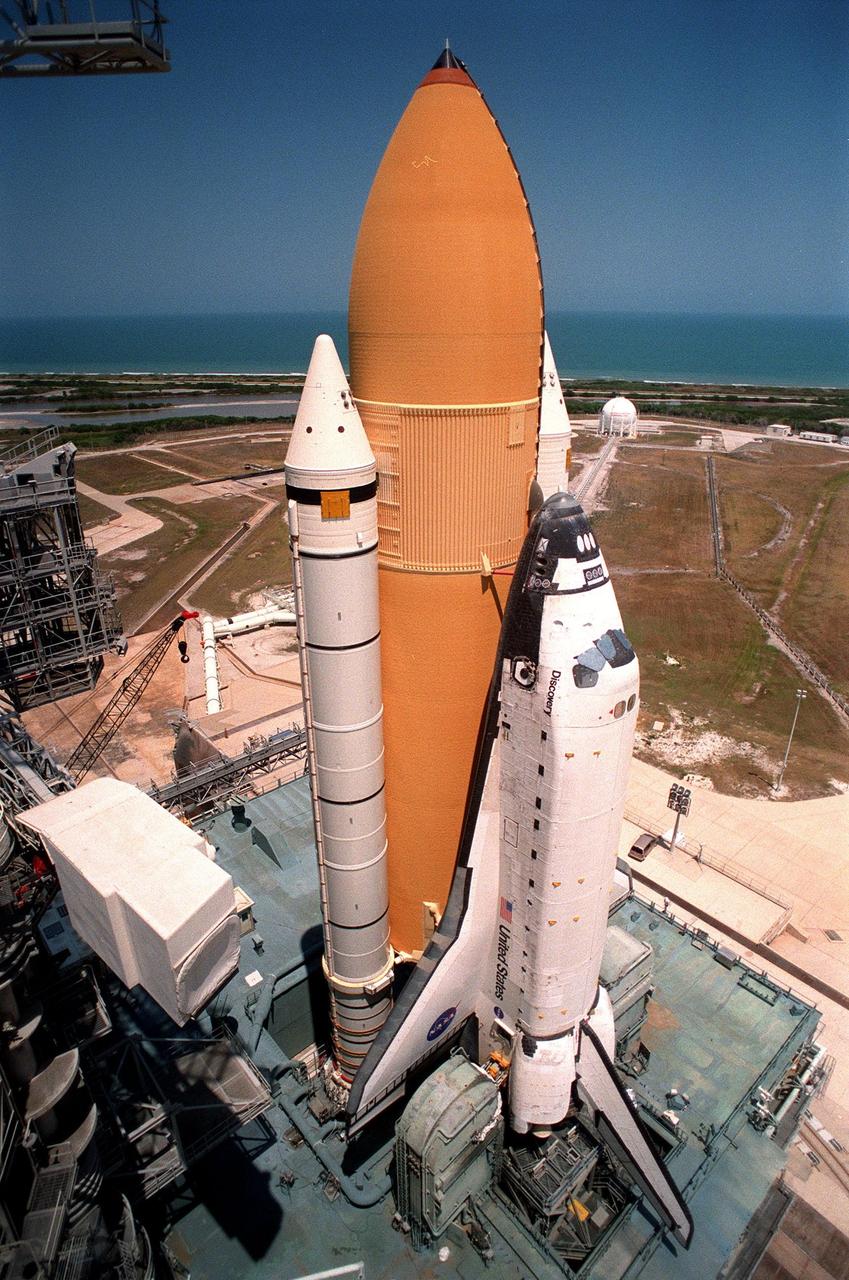
KENNEDY SPACE CENTER, FLA. -- Space Shuttle Discovery sits on launch Pad 39B, waiting for the rotating service structure to be moved into place for final launch preparations. At the top left of the photo is the end of the hammerhead crane, on the fixed service structure, that provides hoisting services required in pad operations. Liftoff of Discovery on mission STS-96 is targeted for May 20 at 9:32 a.m. EDT. STS-96 is a logistics and resupply mission for the International Space Station, carrying such payloads as a Russian crane, the Strela; a U.S.-built crane; the Spacehab Oceaneering Space System Box (SHOSS), a logistics items carrier; and STARSHINE, a student-led experiment

KENNEDY SPACE CENTER, FLA. -- Space Shuttle Discovery sits on Launch Pad 39B for launch of mission STS-116. On the left can be seen the rotating service structure, which will be rolled to enclose the shuttle for servicing and payload transfer. Above the shuttle on the fixed service structure is the 80-foot tall lightning mast. The shuttle was harddown on the pad at 9:03 a.m. The rollout from the Vehicle Assembly Building began at 12:29 a.m. The mission is No. 20 to the International Space Station and construction flight 12A.1. The mission payload is the SPACEHAB module, the P5 integrated truss structure and other key components. The launch window for mission STS-116 opens Dec. 7. Photo credit: NASA/George Shelton
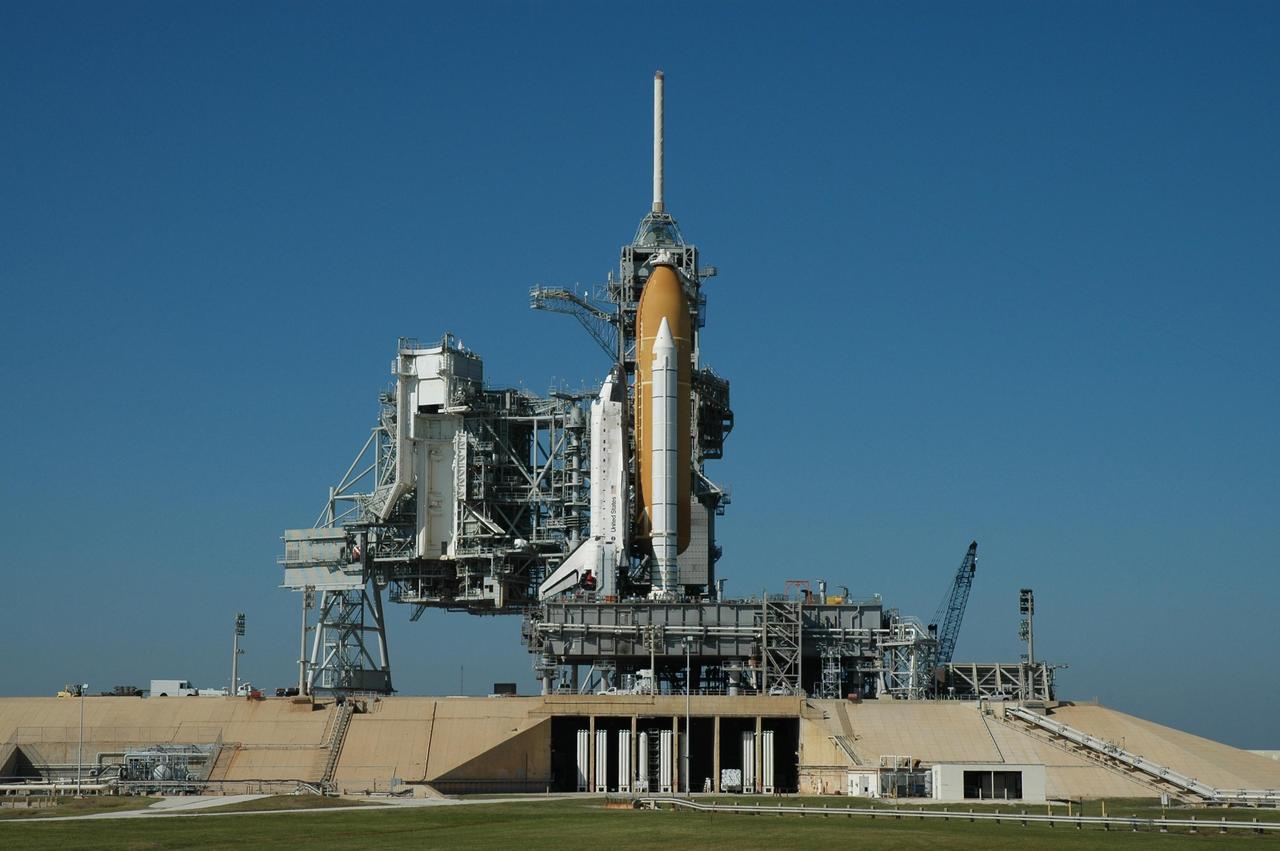
KENNEDY SPACE CENTER, FLA. -- Space Shuttle Discovery sits on Launch Pad 39B for launch of mission STS-116. On the left can be seen the rotating service structure, which will be rolled to enclose the shuttle for servicing and payload transfer. Above the shuttle on the fixed service structure is the 80-foot tall lightning mast. The shuttle was harddown on the pad at 9:03 a.m. The rollout from the Vehicle Assembly Building began at 12:29 a.m. The mission is No. 20 to the International Space Station and construction flight 12A.1. The mission payload is the SPACEHAB module, the P5 integrated truss structure and other key components. The launch window for mission STS-116 opens Dec. 7. Photo credit: NASA/Jim Grossmann
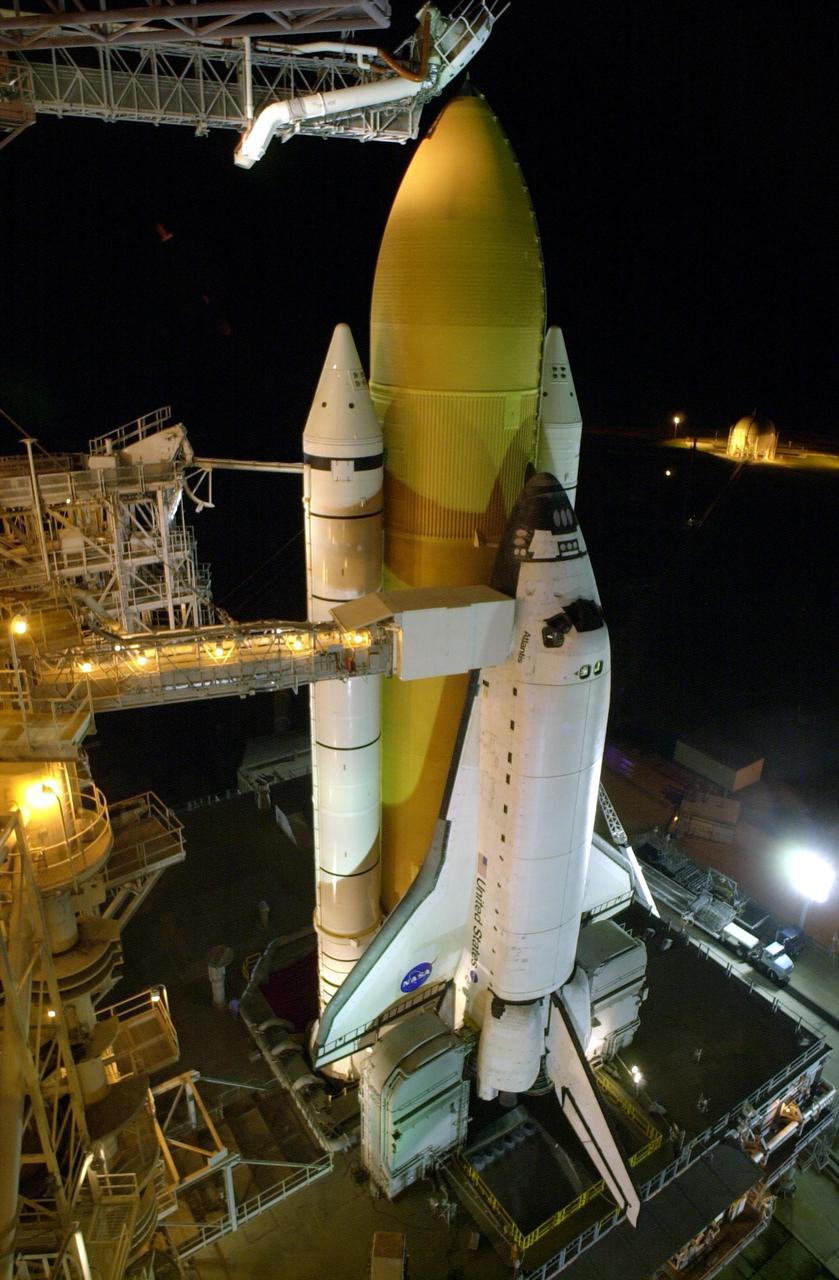
KENNEDY SPACE CENTER, FLA. -- With the Rotating Service Structure rolled back, Space Shuttle Atlantis stands ready for launch on mission STS-110. The Orbiter Access Arm extends from the Fixed Service Structure (FSS) to the crew compartment hatch, through which the STS-110 crew will enter Atlantis. Above the golden external tank is the vent hood (known as the "beanie cap") at the end of the gaseous oxygen vent arm. Vapors are created as the liquid oxygen in the external tank boil off. The hood vents the gaseous oxygen vapors away from the Space Shuttle vehicle. The RSS provides protected access to the orbiter for changeout and servicing of payloads at the pad. The structure has access platforms at five levels to provide access to the payload bay. The FSS provides access to the orbiter and the RSS. Mission STS-110 is scheduled to launch April 4 on its 11-day mission to the International Space Station
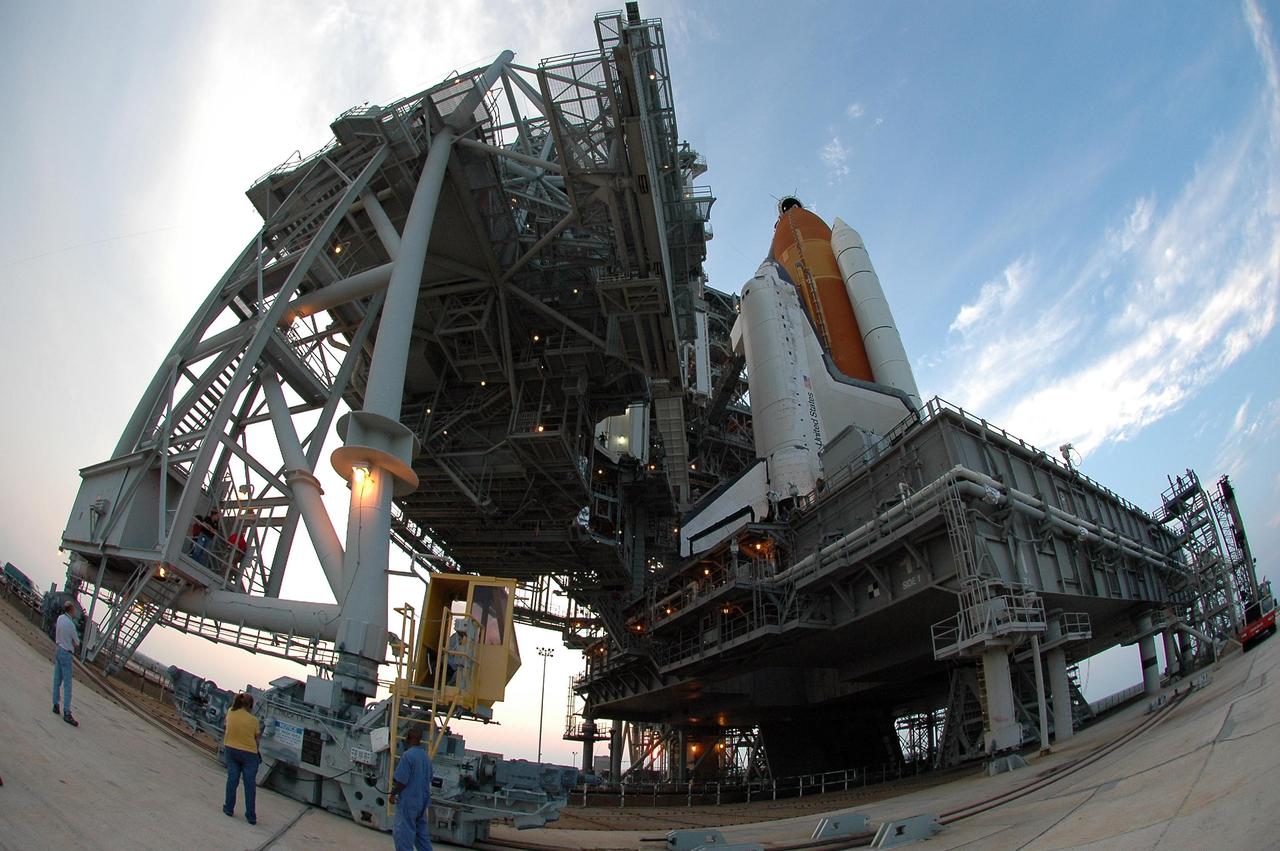
KENNEDY SPACE CENTER, FLA. - A fish-eye camera lens captures the movement of the rotating service structure (RSS) at left as it moves away from Space Shuttle Discovery in preparation for the July 1 launch from Launch Pad 39B. The RSS provides protected access to the orbiter for changeout and servicing of payloads at the pad. The structure is supported by a rotating bridge that pivots about a vertical axis on the west side of the pad's flame trench. The hinge column rests on the pad surface and is braced to the fixed service structure. Support for the outer end of the bridge is provided by two eight-wheel, motor-driven trucks that move along circular twin rails installed flush with the pad surface. The track crosses the flame trench on a permanent bridge. The RSS is 102 feet long, 50 feet wide and 130 feet high. The structure has orbiter access platforms at five levels to provide access to the payload bay while the orbiter is being serviced in the RSS. Each platform has independent extendable planks that can be arranged to conform to a payload's configuration. This mission is the 115th shuttle flight and the 18th U.S. flight to the International Space Station. Photo credit: NASA/Kim Shiflett
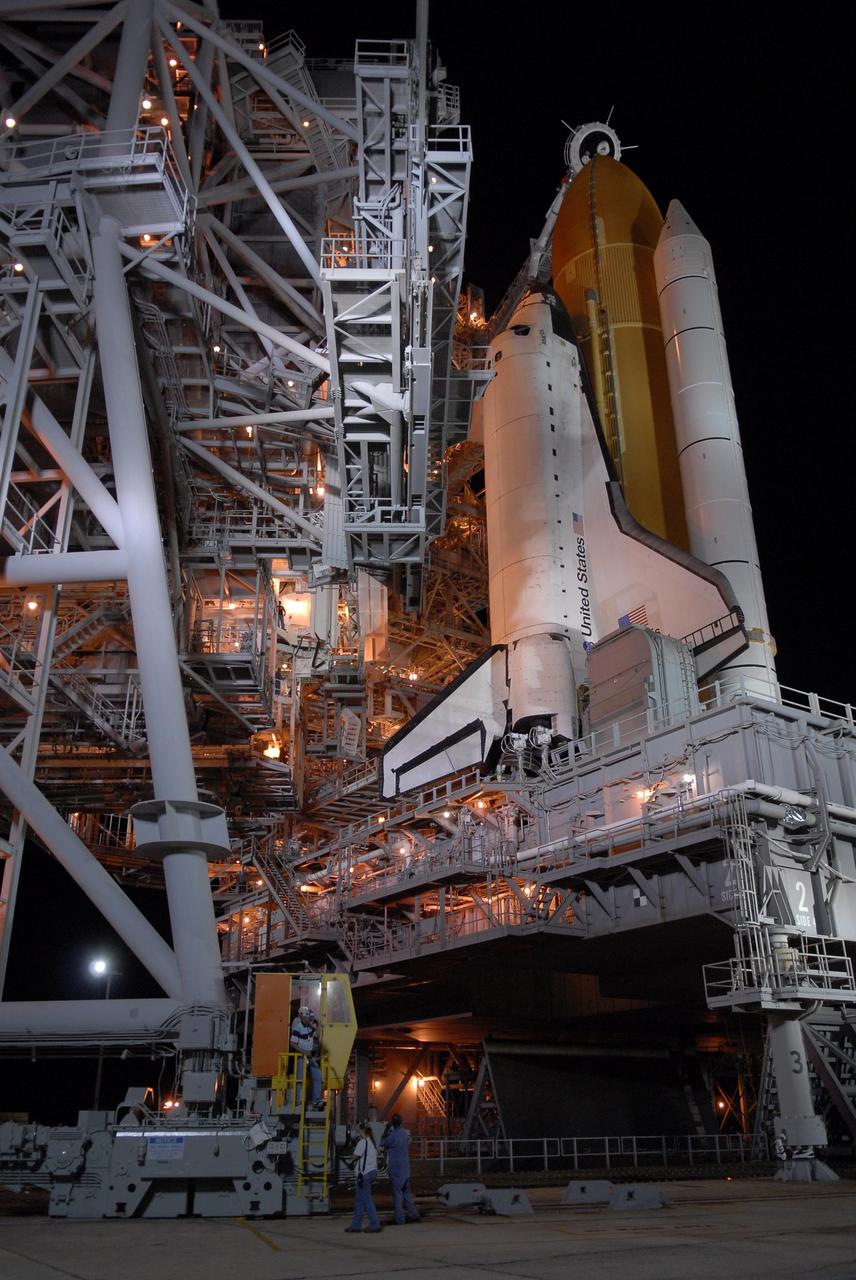
KENNEDY SPACE CENTER, FLA. -- Rollback of the rotating service structure, or RSS, begins on Launch Pad 39A, revealing Space Shuttle Atlantis, bathed in lights. Rollback is one of the milestones in preparation for the launch of mission STS-117 on June 8 and started at 10:56 p.m. EDT. The RSS provides protected access to the orbiter for changeout and servicing of payloads at the pad. The structure is supported by a rotating bridge that pivots about a vertical axis on the side of the pad's flame trench. The hinge column rests on the pad surface and is braced to the fixed service structure. Support for the outer end of the bridge is provided by two eight-wheel, motor-driven trucks that move along circular twin rails installed flush with the pad surface. The track crosses the flame trench on a permanent bridge. The RSS is 102 feet long, 50 feet wide and 130 feet high. The structure has orbiter access platforms at five levels to provide access to the payload bay while the orbiter is being serviced in the RSS. Each platform has independent extendable planks that can be arranged to conform to a payload's configuration. This mission is the 118th shuttle flight and the 21st U.S. flight to the International Space Station and will deliver and install the S3/S4 truss segment, deploy a set of solar arrays and prepare them for operation. Photo credit: NASA/Kim Shiflett