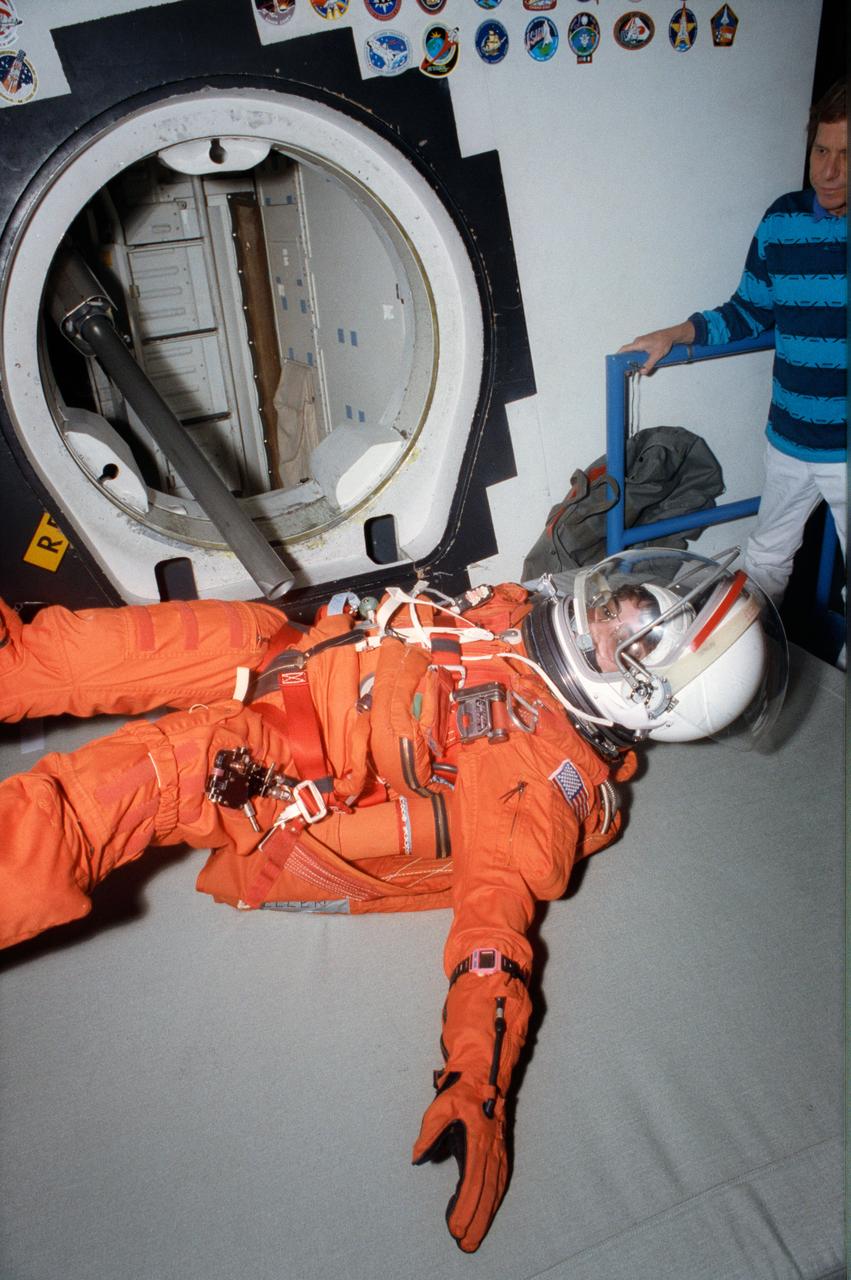
S93-31980 (April 1993) --- Attired in a training version of the Shuttle launch and entry garment, astronaut Nancy J. Sherlock participates in a bailout training session at the Johnson Space Center's (JSC) systems integration facility. Training as a mission specialist for the STS-57 mission, Sherlock was rehearsing using the slide pole escape device. EDITOR'S NOTE: Nancy J. Currie (formerly Sherlock) has been assigned as a mission specialist for the STS-70 mission, scheduled for launch in spring of 1995.
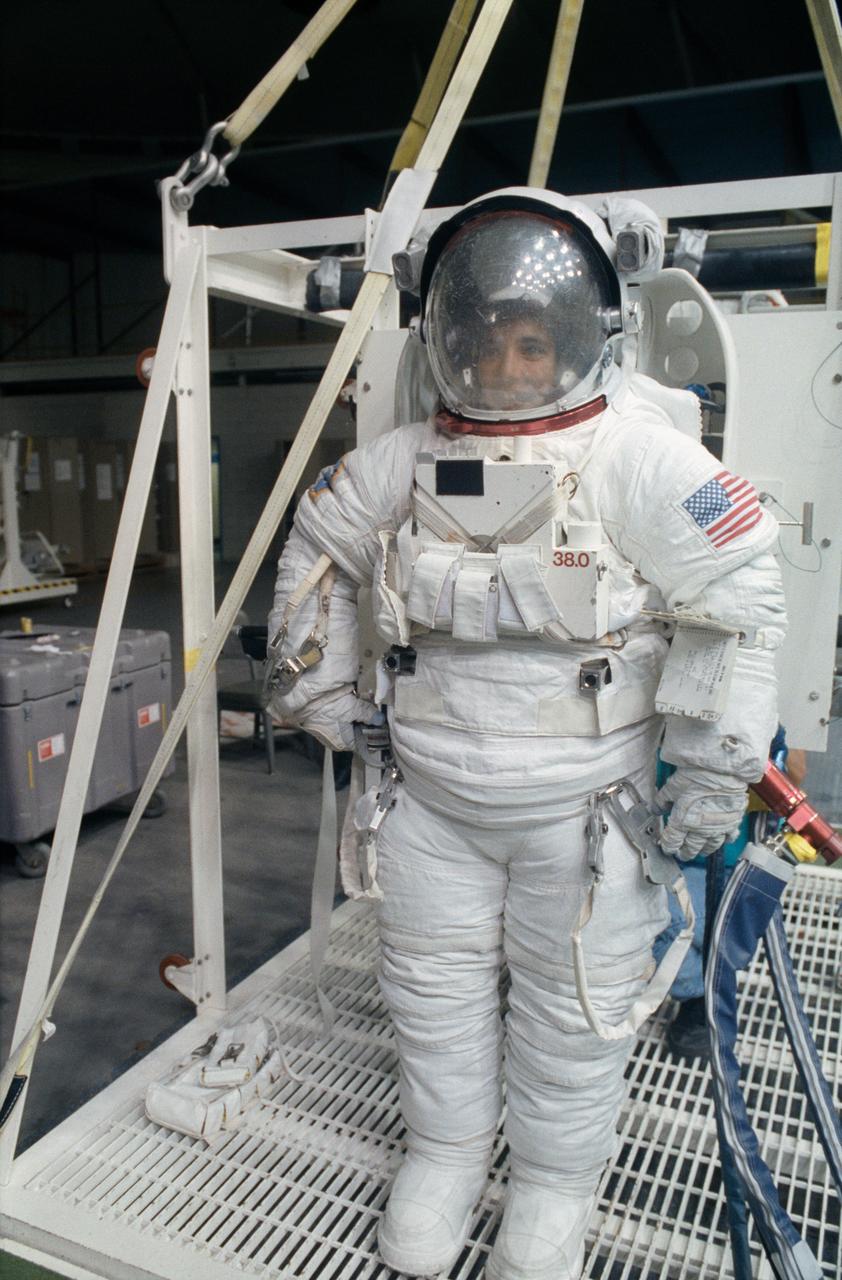
S92-40376 (March 1992) --- Attired in a training version of the Extravehicular Mobility Unit (EMU), astronaut Nancy J. Sherlock participates in a training session at the Johnson Space Center's (JSC) Weightless Environment Training Facility (WET-F). Training as a mission specialist for the STS-57 mission, Sherlock was rehearsing a contingency space walk. Astronauts scheduled for Extravehicular Activity (EVA) duty and those who might be called upon for unscheduled space walk duty use a nearby 25 feet deep pool to practice various chores. The suits used in the training are equipped with communications gear, pressurized and weighted to create a neutral buoyancy in the water tank. EDITOR'S NOTE: Nancy J. Currie (formerly Sherlock) has been assigned as a mission specialist for the STS-70 mission, scheduled for launch in spring of 1995.
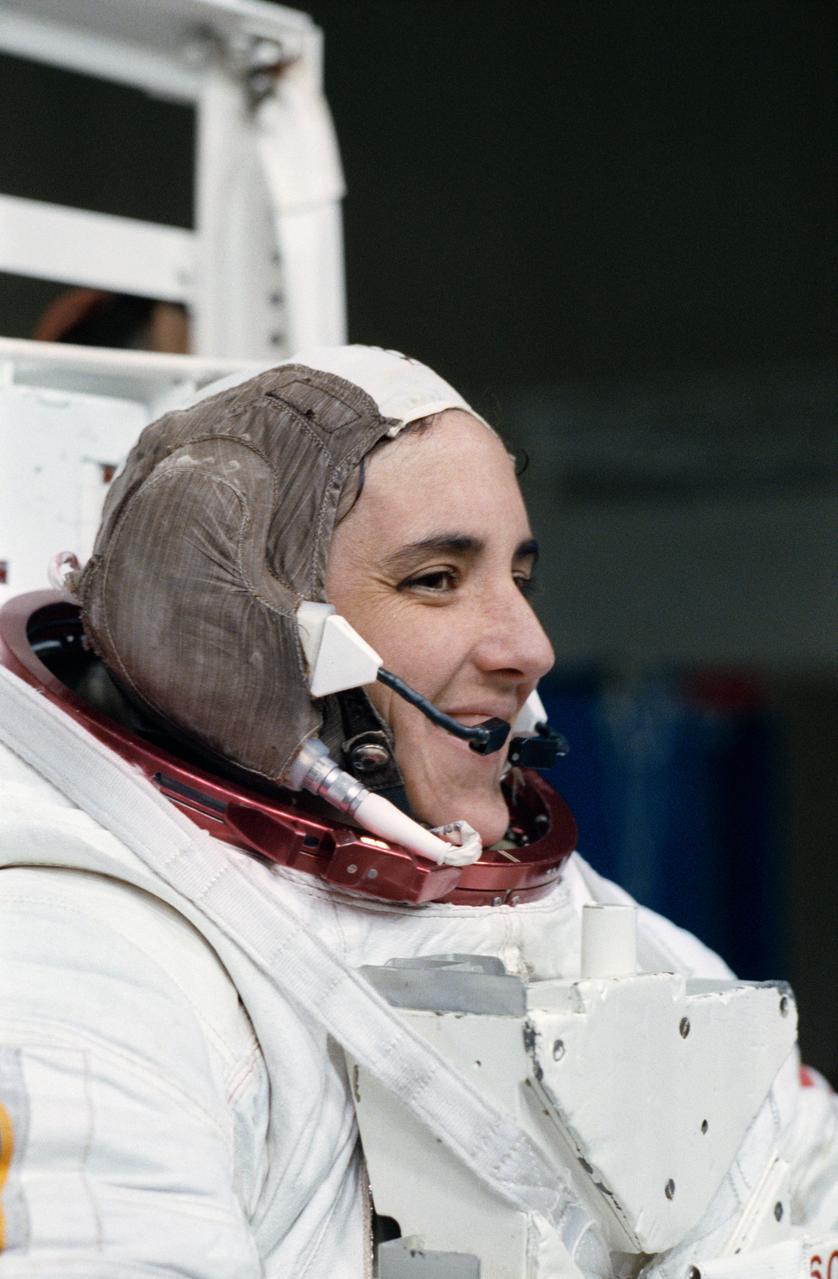
S92-29546 (March 1992) --- Attired in a training version of the Extravehicular Mobility Unit (EMU), astronaut Nancy J. Sherlock checks her communications link during a training session at the Johnson Space Center's (JSC) Weightless Environment Training Facility (WET-F). Training as a mission specialist for the STS-57 mission, Sherlock was rehearsing a contingency spacewalk. Astronauts scheduled for Extravehicular Activity (EVA) duty and those who might be called upon for unscheduled space walk duty frequently use a nearby 25 feet deep pool to practice various chores. The suits used in the training are equipped with communications gear, pressurized and weighted to create a neutral buoyancy in the water tank. EDITOR'S NOTE: Nancy J. Currie (formerly Sherlock) has been assigned as a mission specialist for the STS-70 mission, scheduled for launch in spring of 1995.
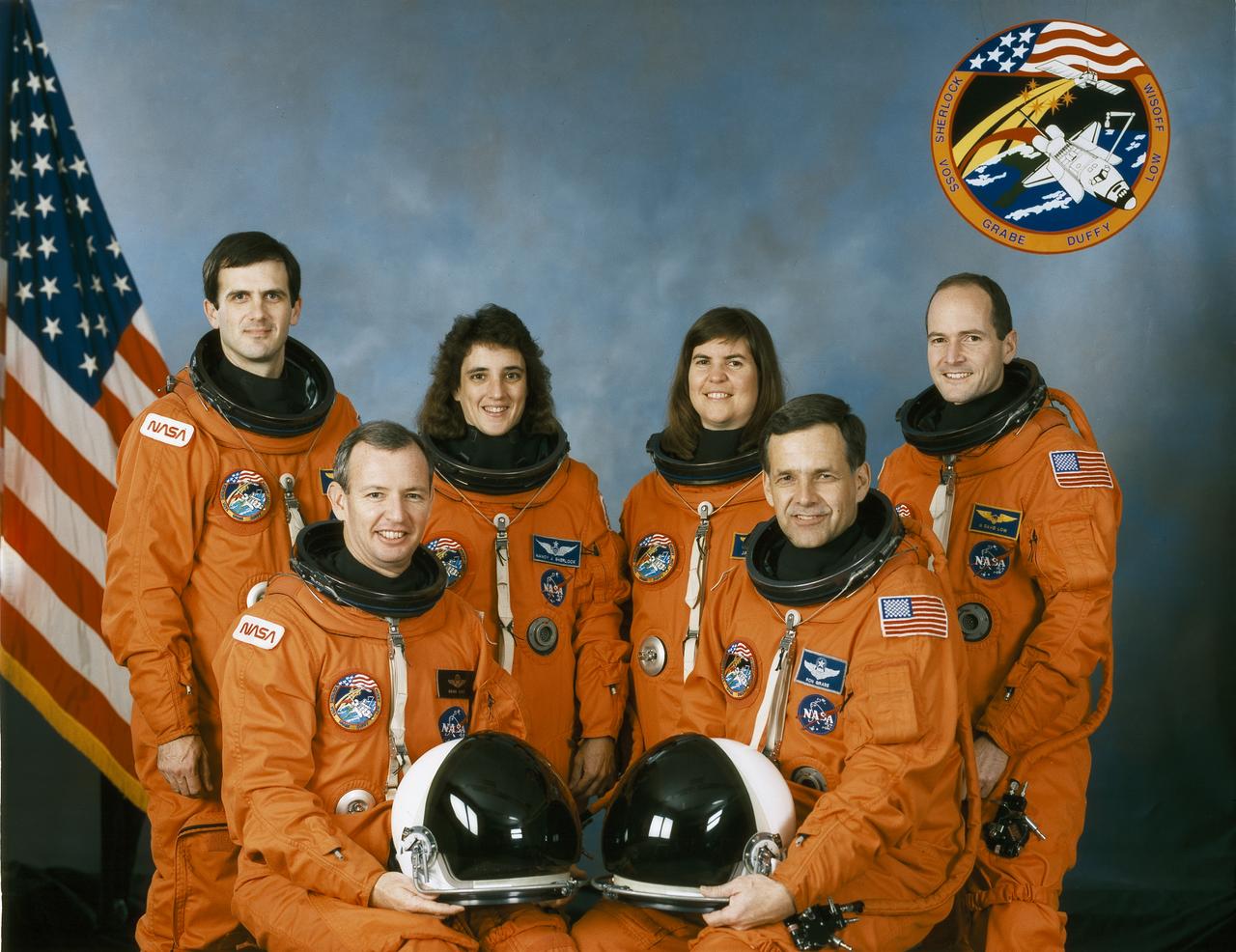
Pictured in the STS-57 crew portrait (front left to right) are Brian Duffy, pilot; and Ronald J. Grabe, commander. On the back row (left to right) are Peter J. Wisoff, Nancy J. Sherlock, and Janice E. Voss, all mission specialists; and G. David Low, payload commander. Launched aboard the Space Shuttle Endeavour on June 21, 1993 at 9:07:00 am (EDT), the STS-57 mission marked the first flight of the commercially developed SPACEHAB pressurized laboratory.
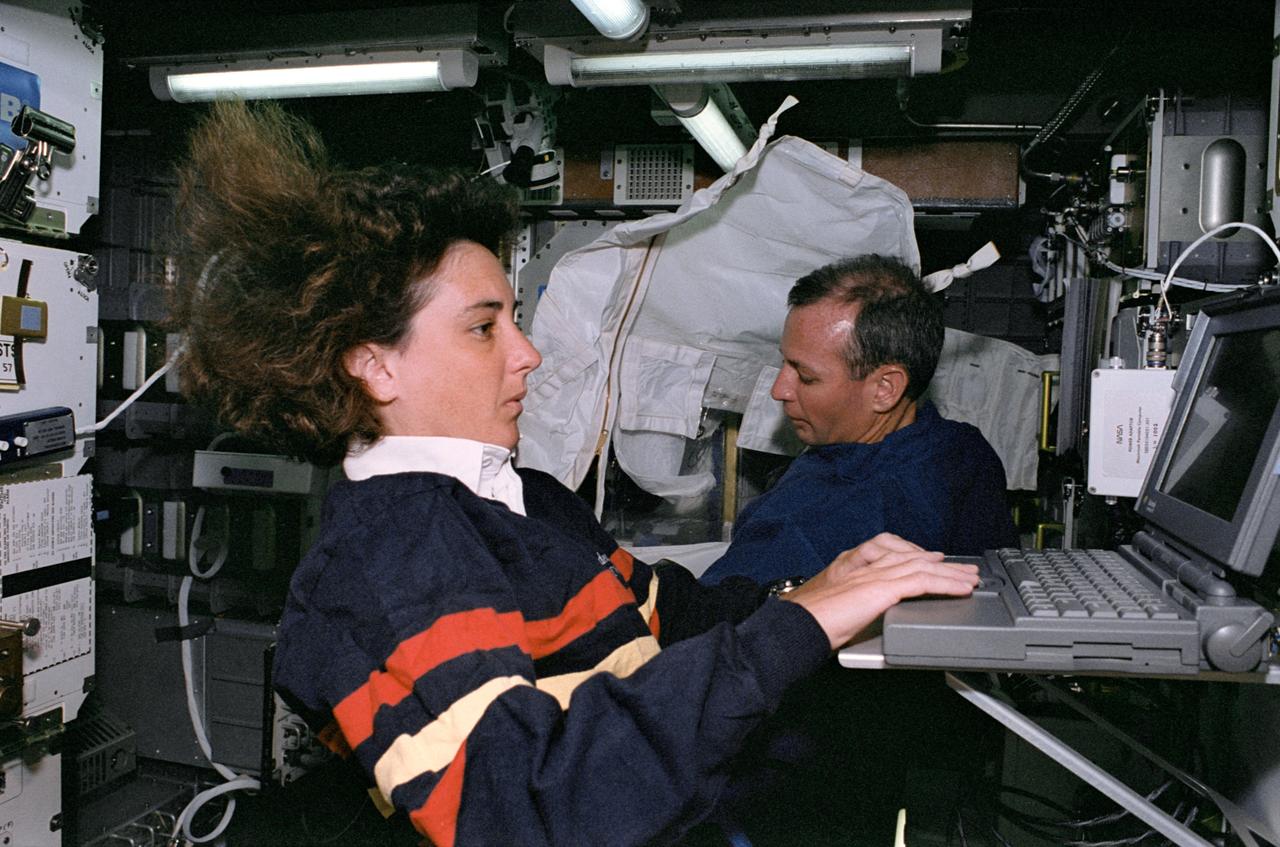
STS057-34-029 (21 June-1 July 1993) --- Astronaut Nancy J. Sherlock works on the Electronic Procedures Portion (EPROC) of the Human Factors Assessment (HFA) experiment. Astronaut Brian Duffy works nearby. The computer portion of HFA-EPROC simulated a space station propulsion system task. Sherlock, Duffy and four other astronauts spent almost ten days aboard the Space Shuttle Endeavour for the STS-57 mission.
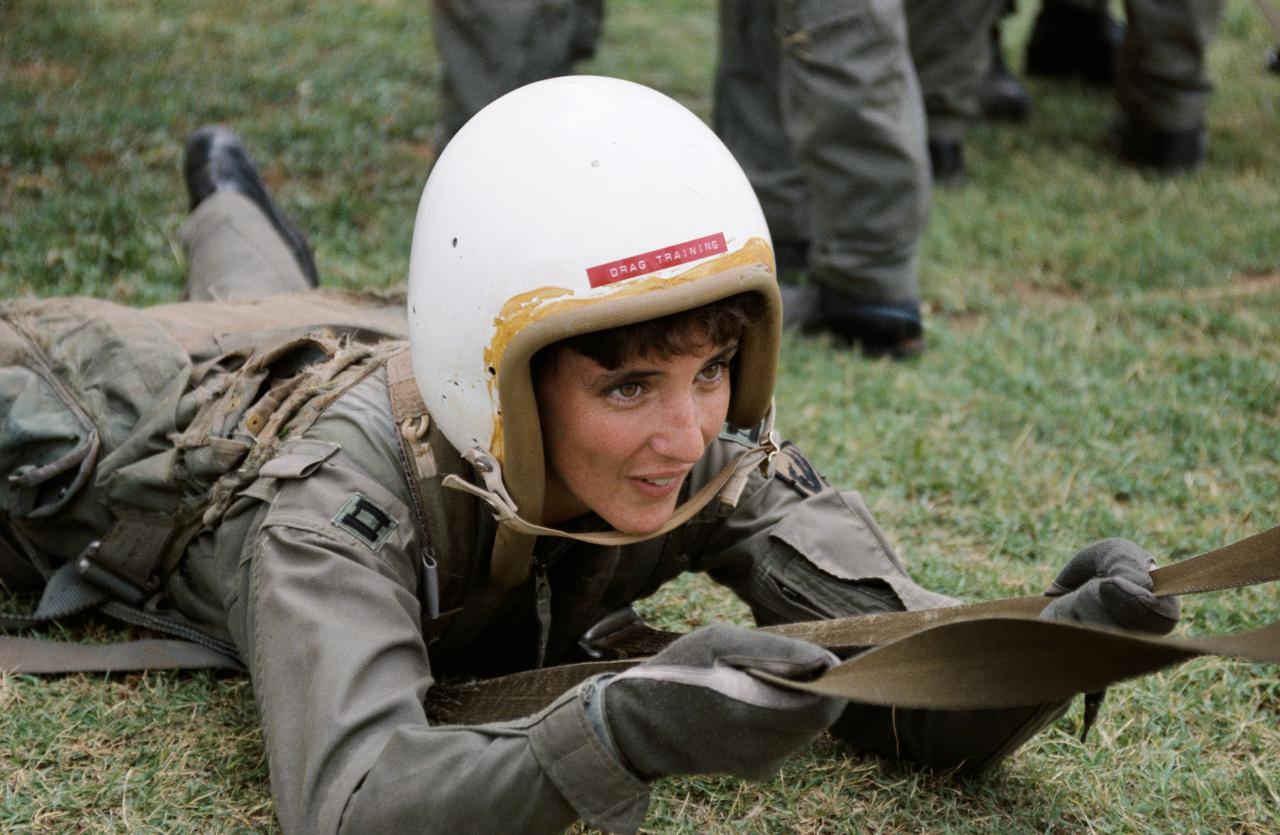
S90-45883 (29-31 July 1990) --- Nancy J. Sherlock, one of 23 astronaut candidates who began a year's training and evaluation in July, participates in one of many sessions at a survival training course at Vance Air Force Base. Sherlock is about to take part in parachute drag training. The overall course is designed to familiarize the trainees with procedures to follow in the event of an emergency ejection from a jet aircraft.
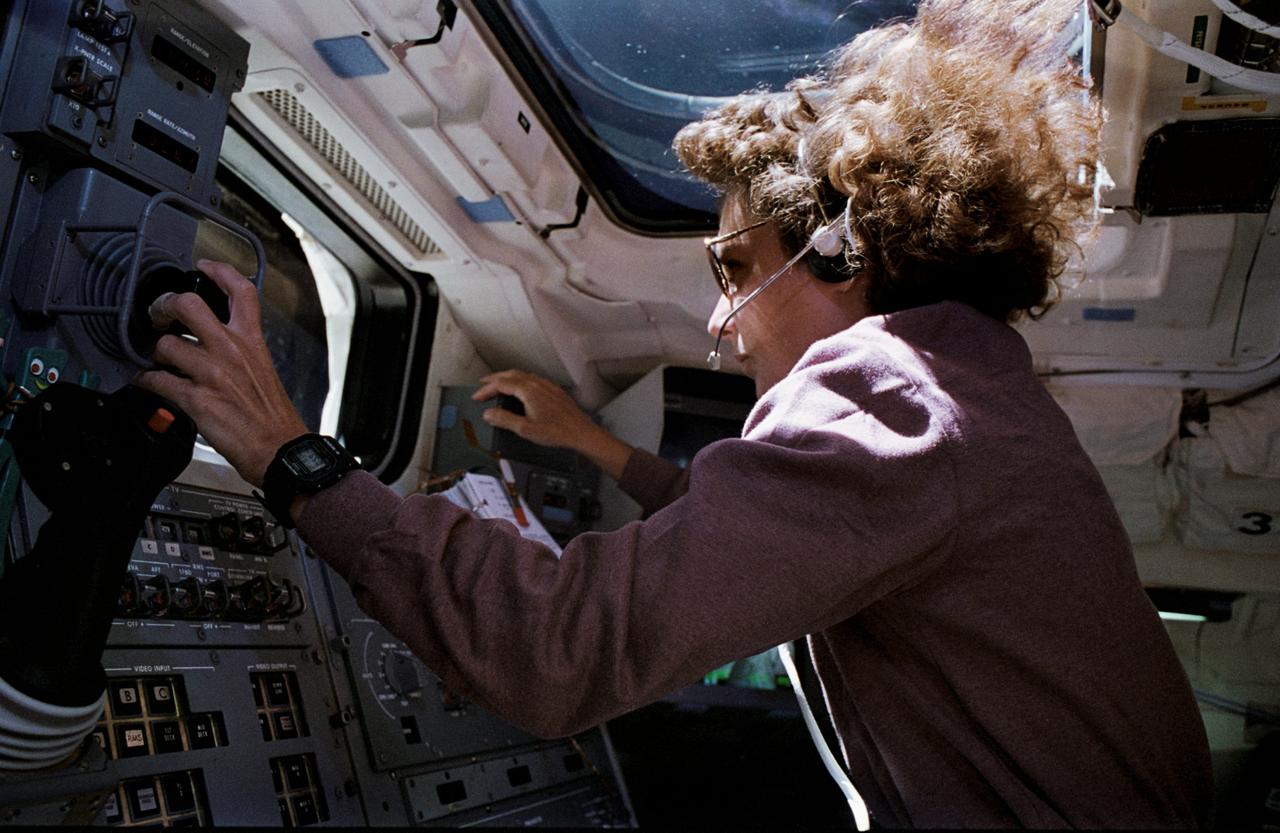
STS057-31-030 (25 June 1993) --- Astronaut Nancy J. Sherlock operates Endeavour's remote manipulator system (RMS) during the June 25 extravehicular activity of two crewmates. At one point, astronaut G. David Low, while his feet were anchored to a special restraint device on the end of the RMS arm, moved about, with Sherlock's aid, while holding astronaut Peter J. K. (Jeff) Wisoff. The activity represented an evaluation of techniques which might be used on planned future missions -- a 1993 servicing visit to the Hubble Space Telescope and later space station work -- which will require astronauts to frequently lift objects of similar sized bulk.
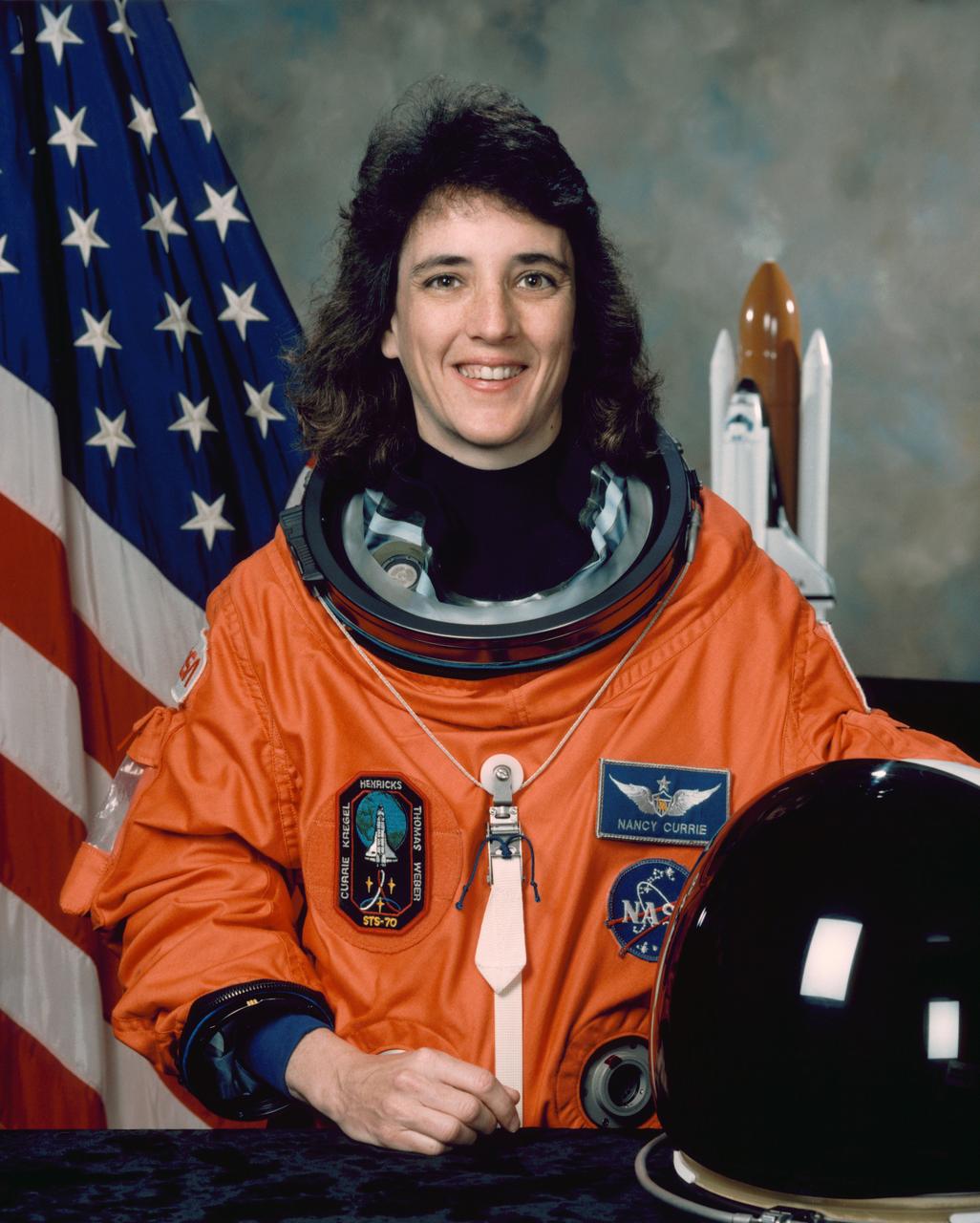
S95-06514 (14 March 1995) --- Astronaut Nancy J. Currie, mission specialist.
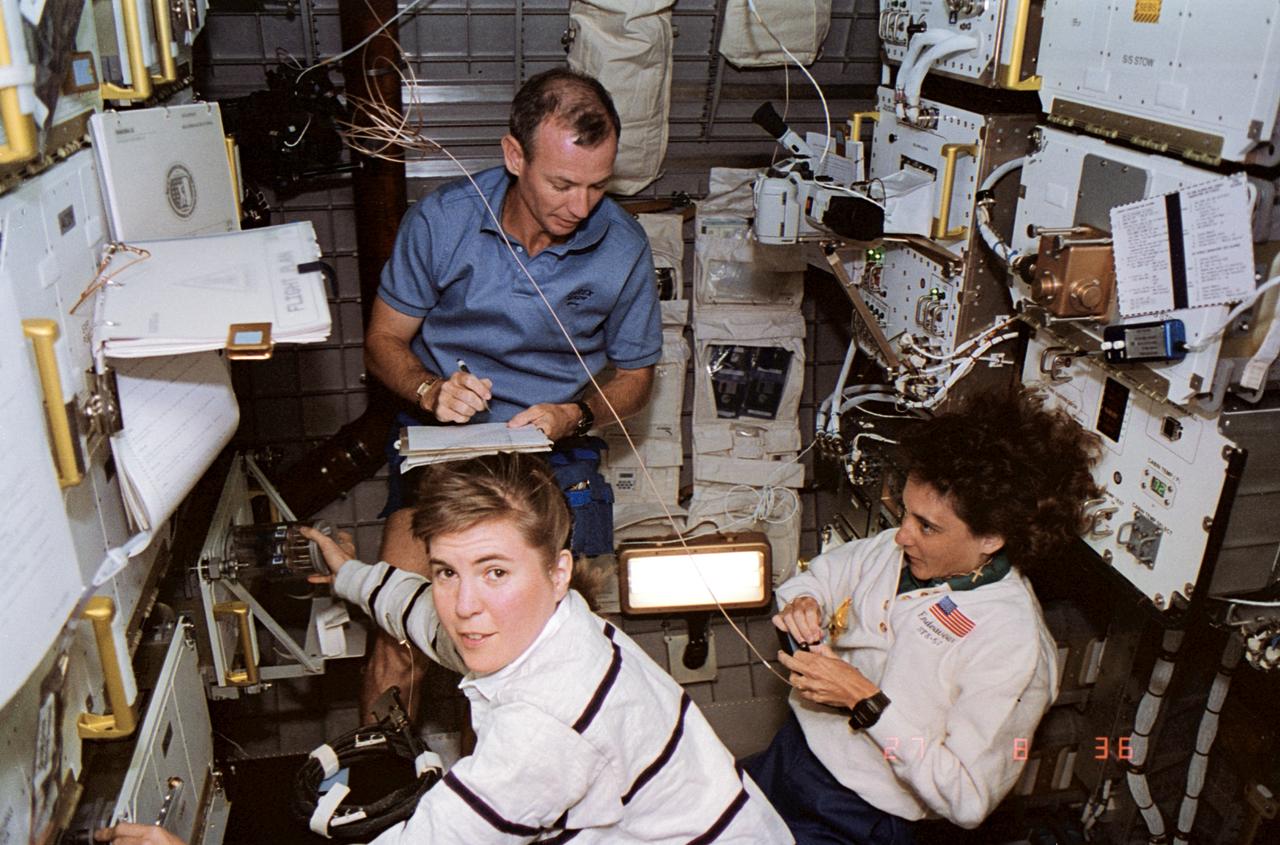
STS057-39-001 (27 June 1993) --- This high angle shot inside the SPACEHAB module, onboard the Space Shuttle Endeavour, typifies the pace of activity conducted there during the ten-day STS-57 mission. Astronaut Janice E. Voss (foreground), mission specialist, works with biomaterials products, while astronauts Brian Duffy, pilot, and Nancy J. Sherlock, mission specialist, participate in other tasks.
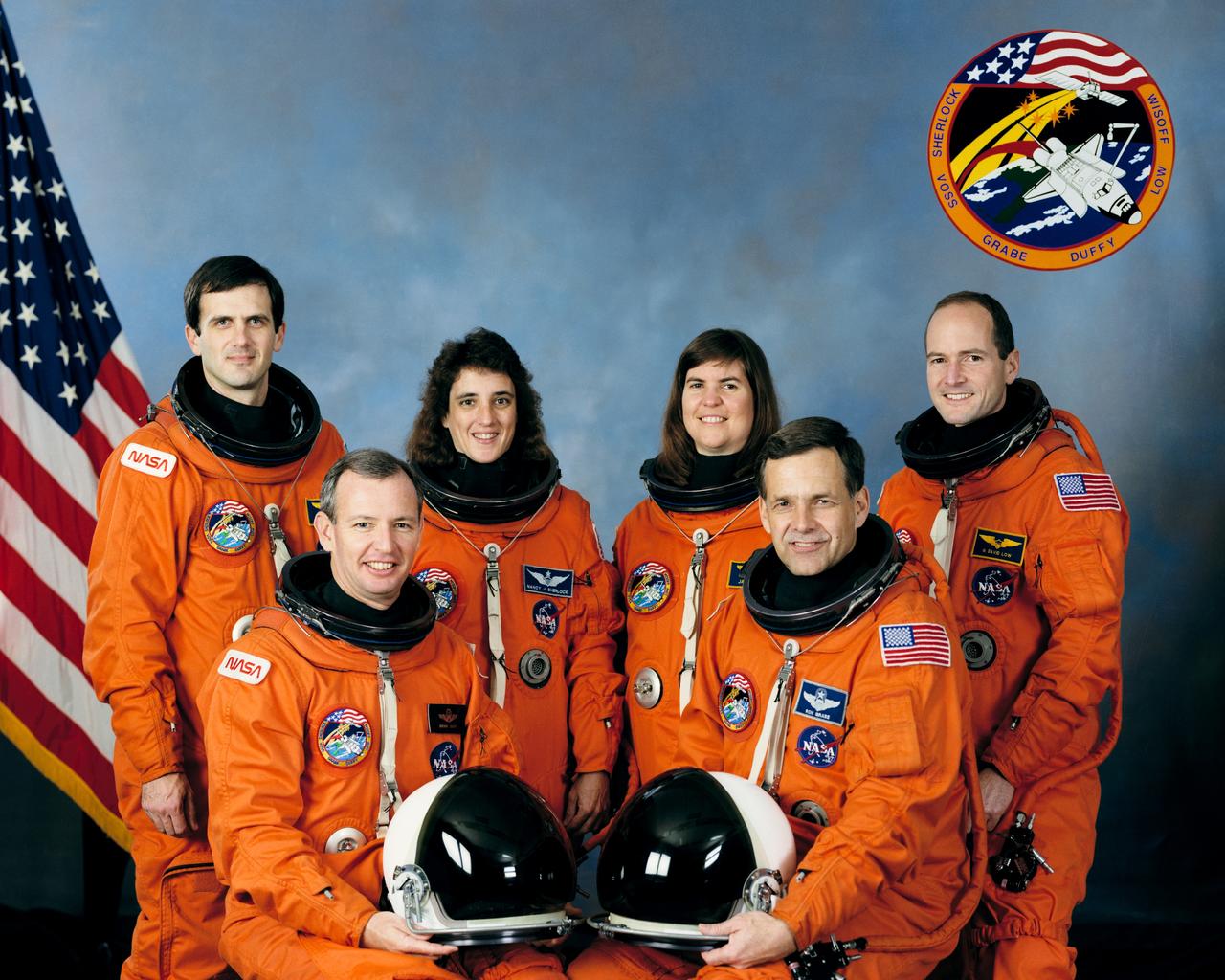
STS057-S-002 (February 1993) --- These seven astronauts are in training for NASA's mission scheduled for spring of this year. In front are astronauts Brian Duffy (left) and Ronald J. Grabe, pilot and commander, respectively. In back are (left to right) astronauts Peter J. Wisoff, Nancy J. Sherlock, Janice E. Voss, all mission specialists; and G. David Low, payload commander.
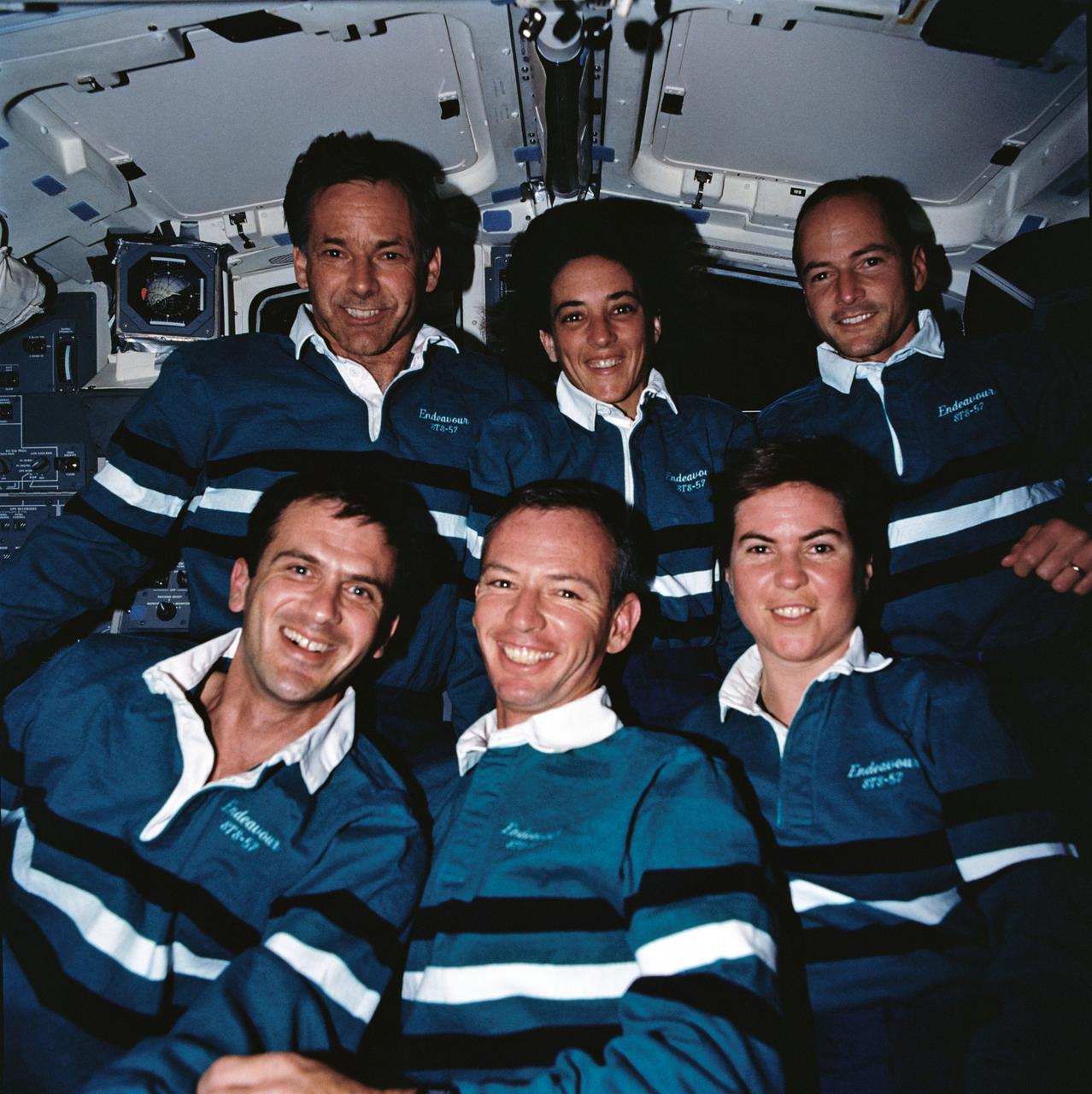
STS057-94-017 (21 June - 1 July 1993) --- Six astronauts onboard the Space Shuttle Endeavour pose for the traditional inflight crew portrait on the aft flight deck. In the rear (left to right) are astronauts Ronald J. Grabe, mission commander; Nancy J. Sherlock, mission specialist; and G. David Low, payload commander; in front (left to right), Peter J. K. (Jeff) Wisoff, mission specialist; Brian Duffy, pilot; and Janice E. Voss, mission specialist.
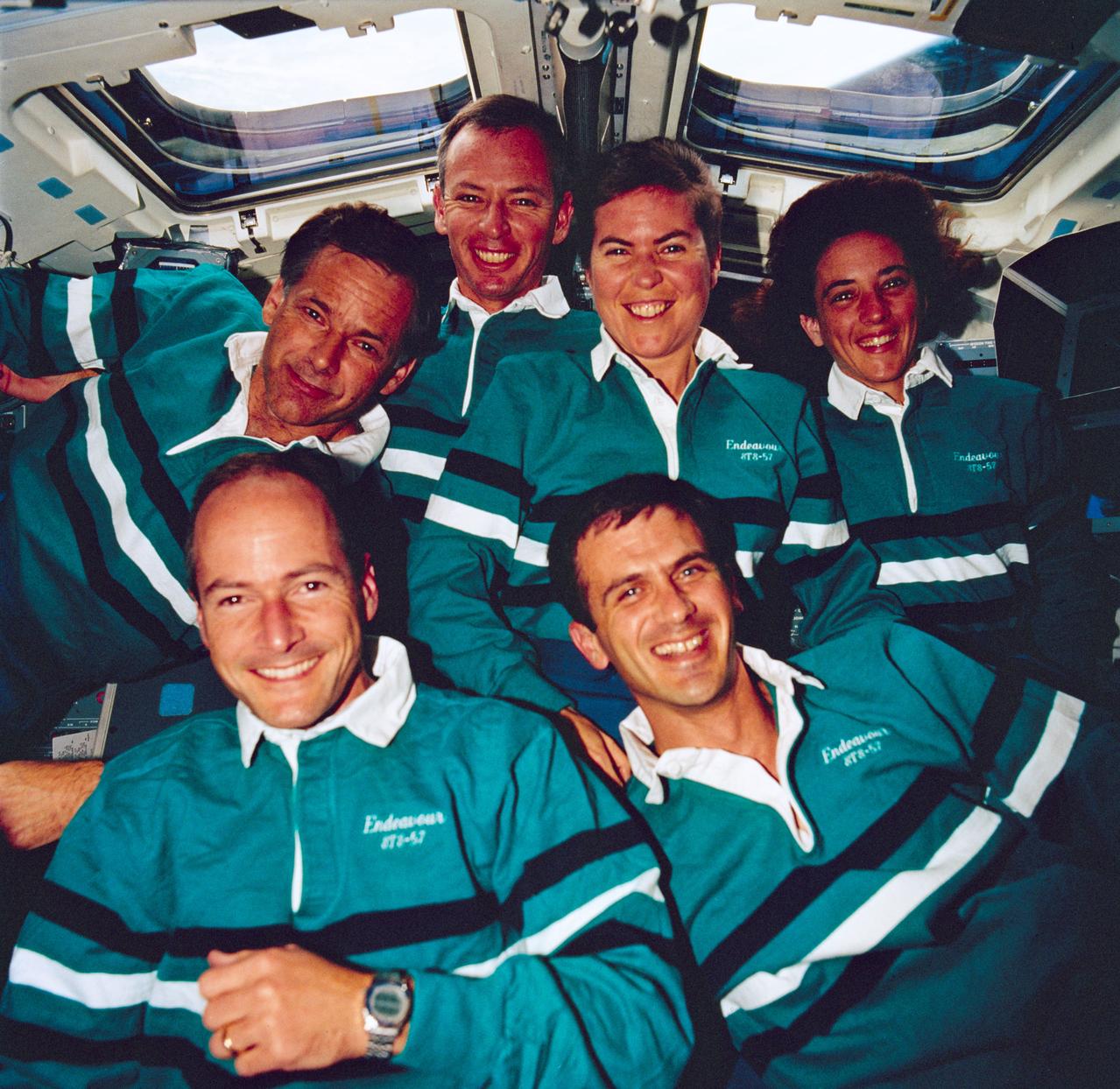
STS057-94-007 (21 June-1 July 1993) --- The six STS-57 crewmembers used a pre-set 70mm camera to record the traditional in-space crew portrait on Endeavour's aft flight deck. In front are astronauts G. David Low, payload commander; and Peter J. K. (Jeff) Wisoff, mission specialist. In the back are astronauts Ronald J. Grabe, mission commander; Brian Duffy, pilot; Janice E. Voss and Nancy J. Sherlock, mission specialists.
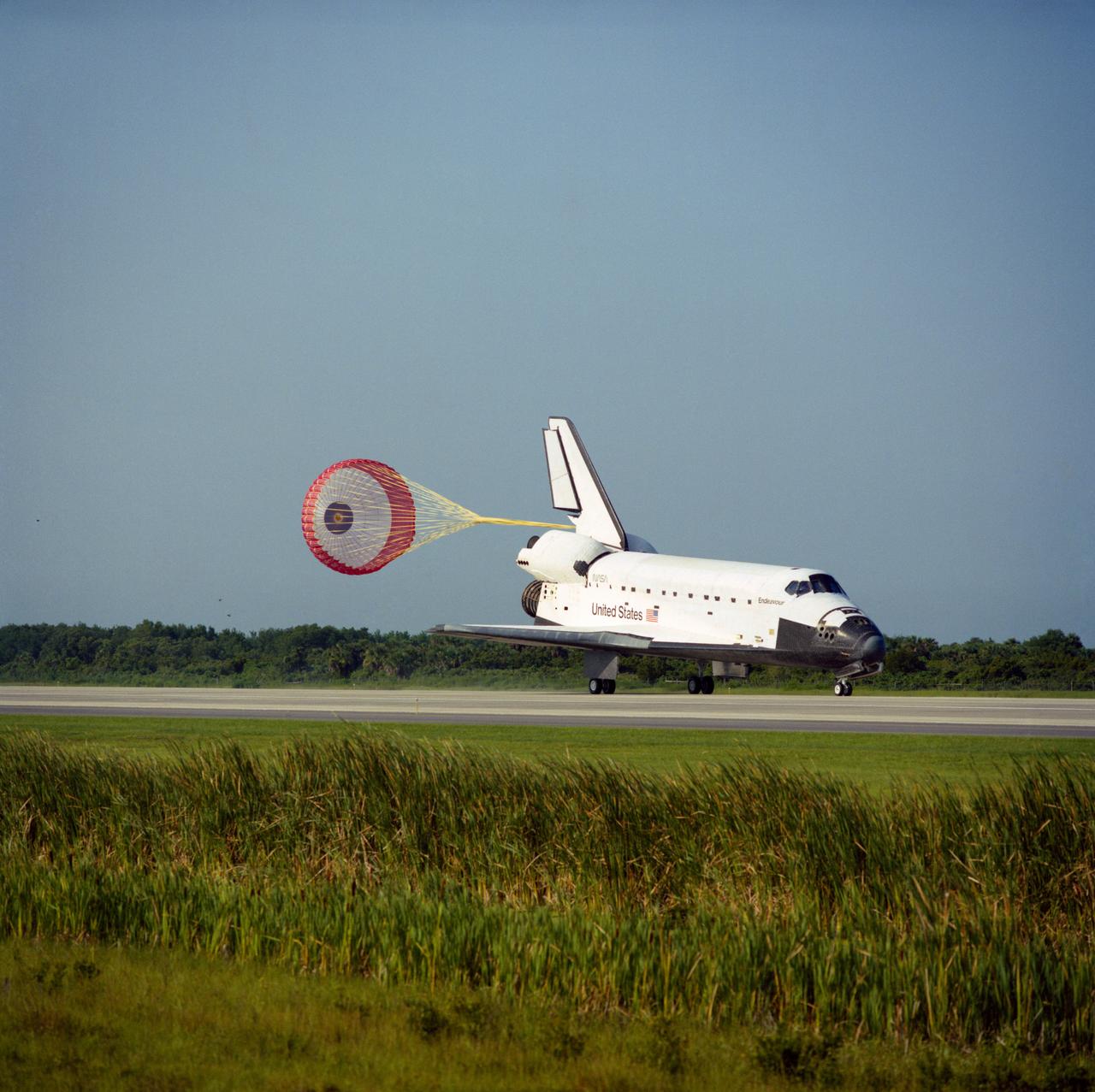
STS057-S-082 (1 July 1993) --- The drag chute on the Space Shuttle Endeavour is fully deployed in this scene on Runway 33 (KSC's Shuttle Landing Facility) as the spacecraft successfully completes a ten-day mission in Earth orbit. Official mission duration was nine days, twenty-three hours, forty-four minutes and fifty-five seconds. Main gear touchdown occurred at 8:52:16 (EDT), July 1, 1993. Onboard Endeavour for the landing were six NASA astronauts and the European Retrievable Carrier (EURECA) spacecraft. Crewmembers were astronauts Ronald J. Grabe, Brian Duffy, G. David Low, Nancy J. Sherlock, Peter J. K. (Jeff) Wisoff and Janice E. Voss.
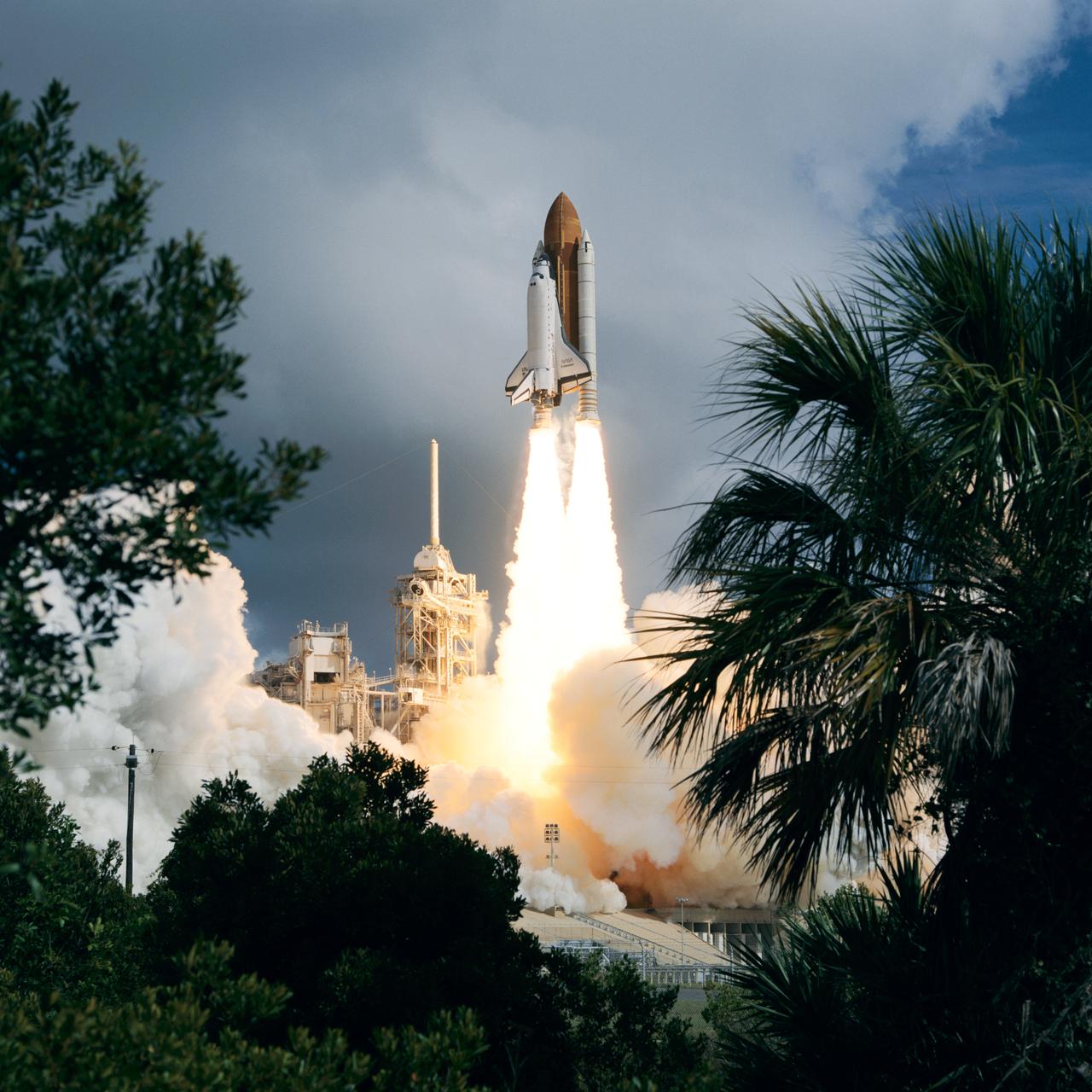
STS057-S-055 (21 June 1993) --- Framed by a variety of flora types, the Space Shuttle Endeavour lifts off Launch Pad 39B to begin the STS-57 mission. Launch occurred at 9:07:22 a.m. (EDT), June 21, 1993. The mission represents the first flight of the commercially developed SPACEHAB laboratory module and also will feature a retrieval of the European Retrievable Carrier (EURECA). Onboard for Endeavour's fourth flight are a crew of six - Ronald J. Grabe, mission commander; Brian Duffy, pilot; G. David Low, payload commander; and Nancy J. Sherlock, Peter J.K. (Jeff) Wisoff and Janice E. Voss, all mission specialists. An earlier launch attempt was scrubbed due to unacceptable weather conditions both at KSC and the overseas contingency landing sites.

This labyrinth – with a silhouette of the fictional detective Sherlock Holmes at its center – is used as a calibration target for the cameras and laser that are part of SHERLOC (Scanning Habitable Environments with Raman & Luminescence for Organics and Chemicals), one of the instruments aboard NASA's Perseverance Mars rover. The image was captured by the Autofocus and Context Imager on SHERLOC on May 11, 2024, the 1,147th day, or sol, of the mission, as the rover team sought to confirm it had successfully addressed an issue with a stuck lens cover. A key objective for Perseverance's mission on Mars is astrobiology, including the search for signs of ancient microbial life. The rover is also characterizing the planet's geology and past climate, which paves the way for human exploration of the Red Planet. JPL, which is managed for NASA by Caltech in Pasadena, California, built and manages operations of the Perseverance rover. https://photojournal.jpl.nasa.gov/catalog/PIA26337
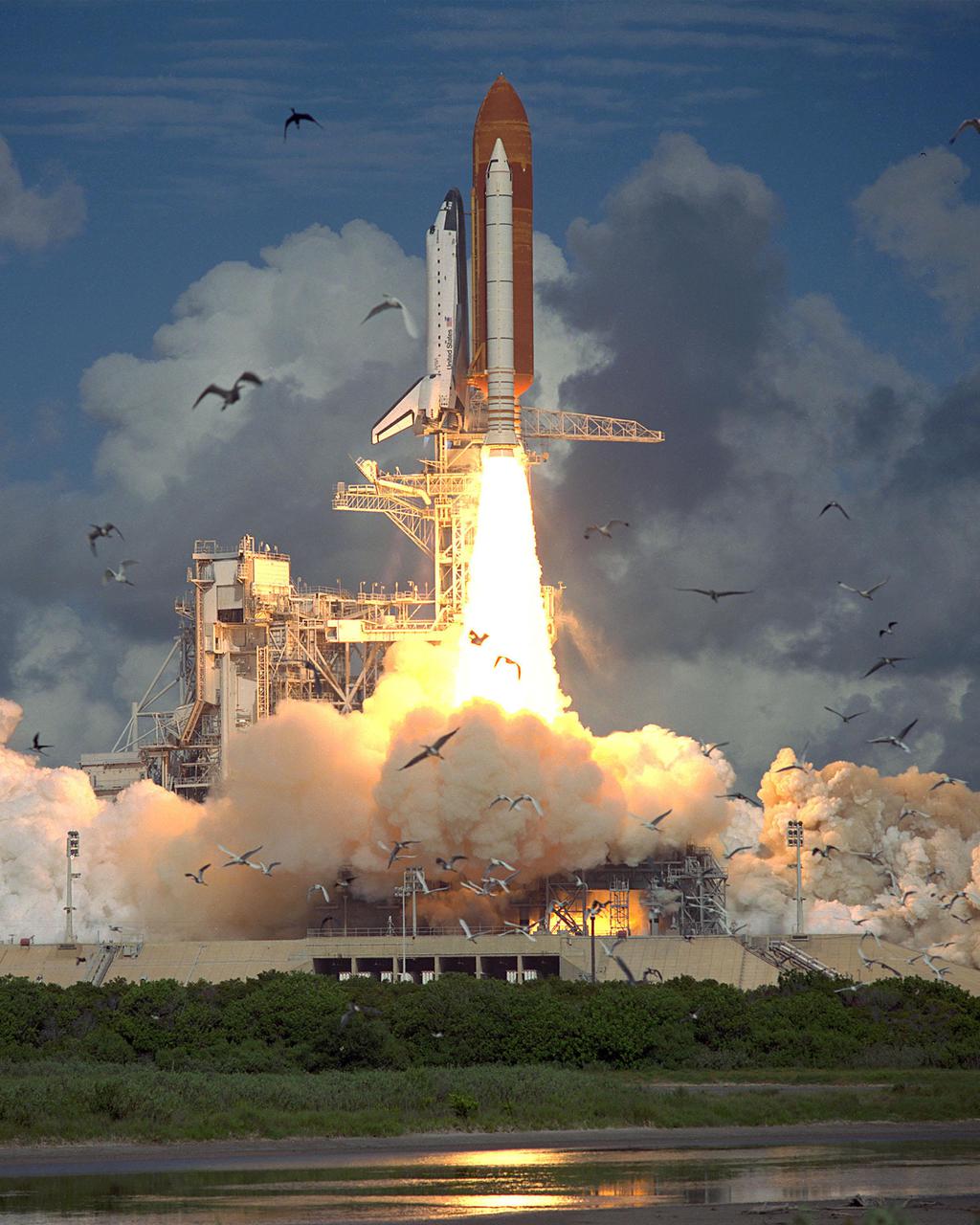
KENNEDY SPACE CENTER, FLA. -- The first flight of the commercially developed SPACEHAB laboratory module begins with the flawless liftoff of the Space Shuttle Endeavour from Launch Pad 39B at 9:07:22 a.m. EDT, June 21. Also planned for the eight-day flight of Mission STS-57 is the retrieval of the European Retrievable Carrier (EURECA). Onboard for the fourth flight of Endeavour are a crew of six: Mission Commander Ronald J. Grabe, Pilot Brian Duffy, Payload Commander G. David Low, and Mission Specialists Nancy Jane Sherlock, Peter J.K. 'Jeff' Wisoff, and Janice E. Voss. A first launch attempt on June 20 was scrubbed due to unacceptable weather conditions both at KSC and the overseas contingency landing sites.
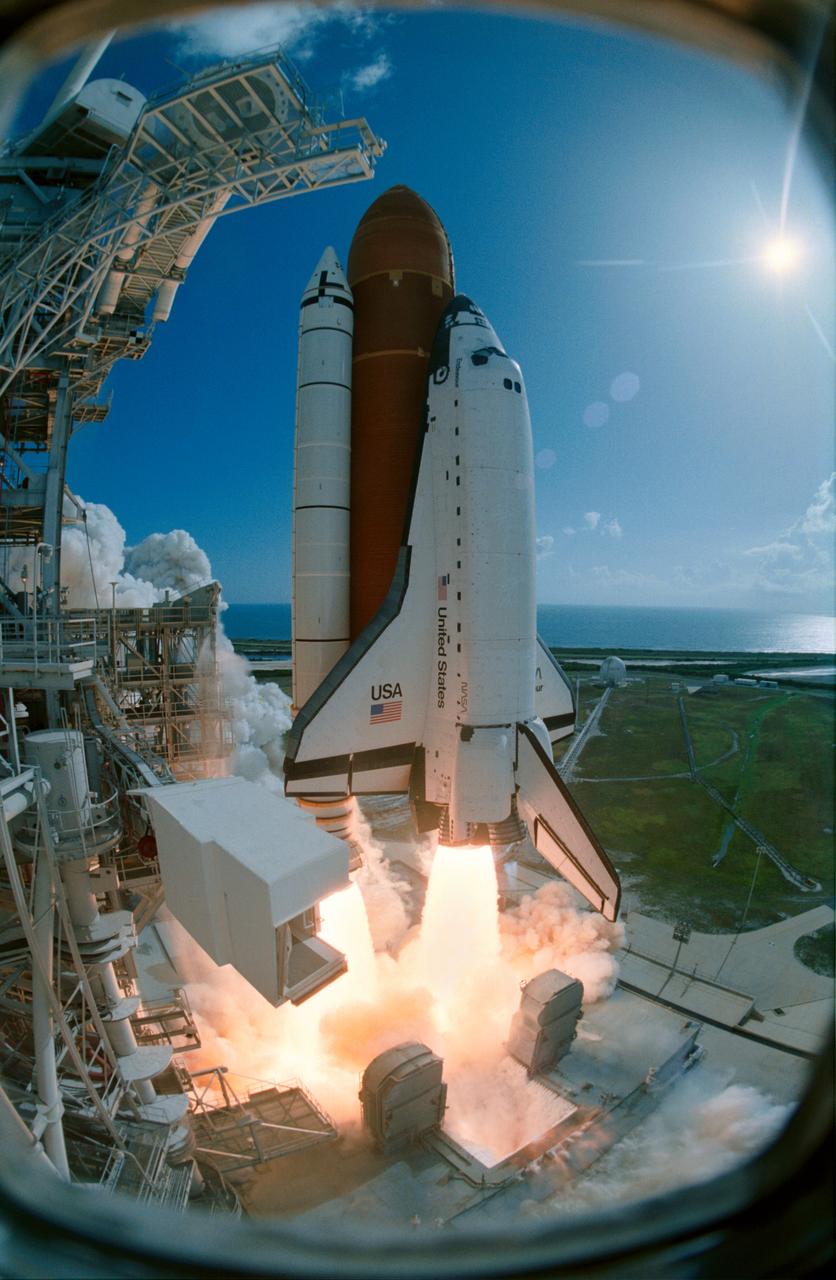
STS057-S-053 (21 June 1993) --- The Space Shuttle Endeavour lifts off Launch Pad 39B as captured on film by an audio-activated camera positioned at the 270-feet level on the Rotating Service Structure (RSS) at Launch Pad 39B. STS-57 launch occurred at 9:07:22 a.m. (EDT), June 21, 1993. The mission represents the first flight of the commercially developed SpaceHab laboratory module and also will feature a retrieval of the European Retrievable Carrier (EURECA). Onboard for Endeavour's fourth flight are a crew of six NASA astronauts; Ronald J. Grabe, mission commander; Brian Duffy, pilot; G. David Low, payload commander; and Nancy J. Sherlock, Peter J. K. (Jeff) Wisoff and Janice E. Voss, all mission specialists. An earlier launch attempt was scrubbed due to unacceptable weather conditions both at the Kennedy Space Center (KSC) and the overseas contingency landing sites.
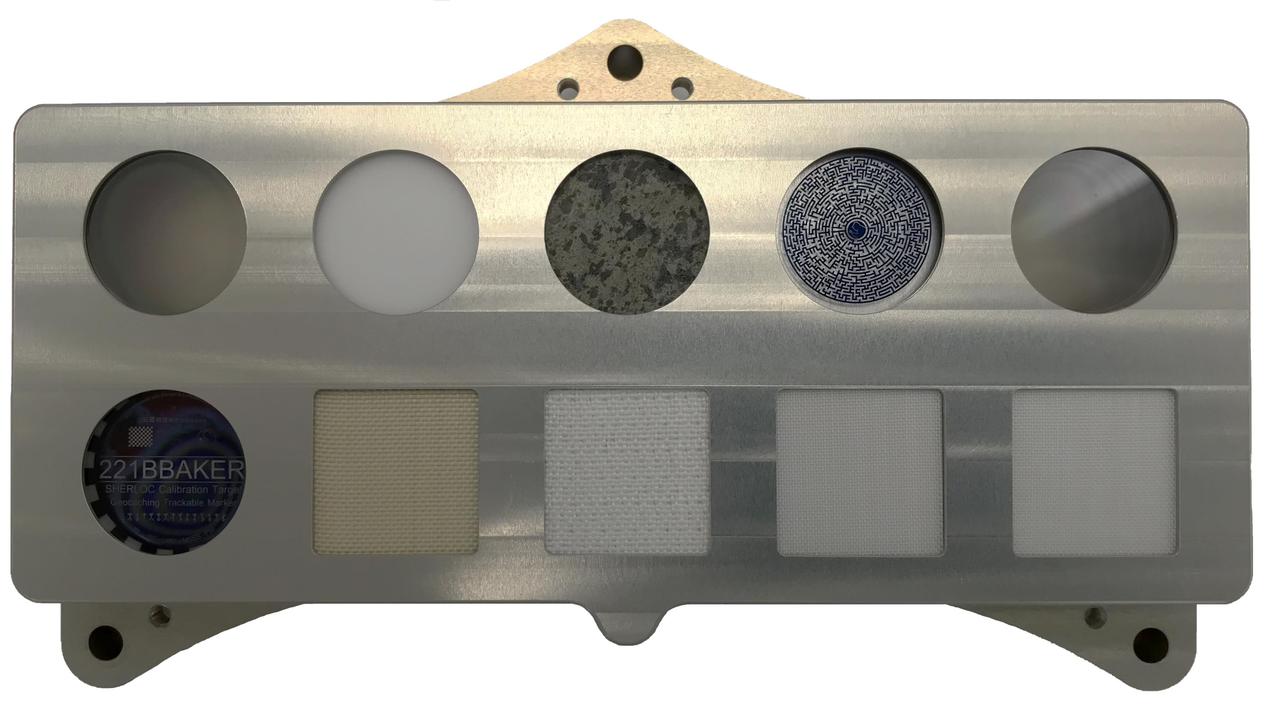
The calibration target for SHERLOC (Scanning Habitable Environments with Raman & Luminescence for Organics & Chemicals) an instrument on the end of the Perseverance Mars rover's 7-foot-long (3-meter-long) robotic arm, includes a geocaching target, spacesuit materials, and a slice of a Martian meteorite. Scientists rely on calibration targets to fine-tune instrument settings using materials with known properties. The bottom row of this target features spacesuit materials that scientists will observe to see how they react over time to the irradiated Martian atmosphere. The first sample at left is polycarbonate for use in a helmet visor; inscribed with the address of the fictional detective Sherlock Holmes, it doubles as a geochache for the public. Other materials in the bottom row, from left: Vectran; Ortho-Fabric; Teflon; coated Teflon. Top row, from left: aluminum gallium nitride on sapphire; a quartz diffuser; a slice of Martian meteorite; a maze for testing laser intensity; a separate aluminum gallium nitride on sapphire with different properties. https://photojournal.jpl.nasa.gov/catalog/PIA24261