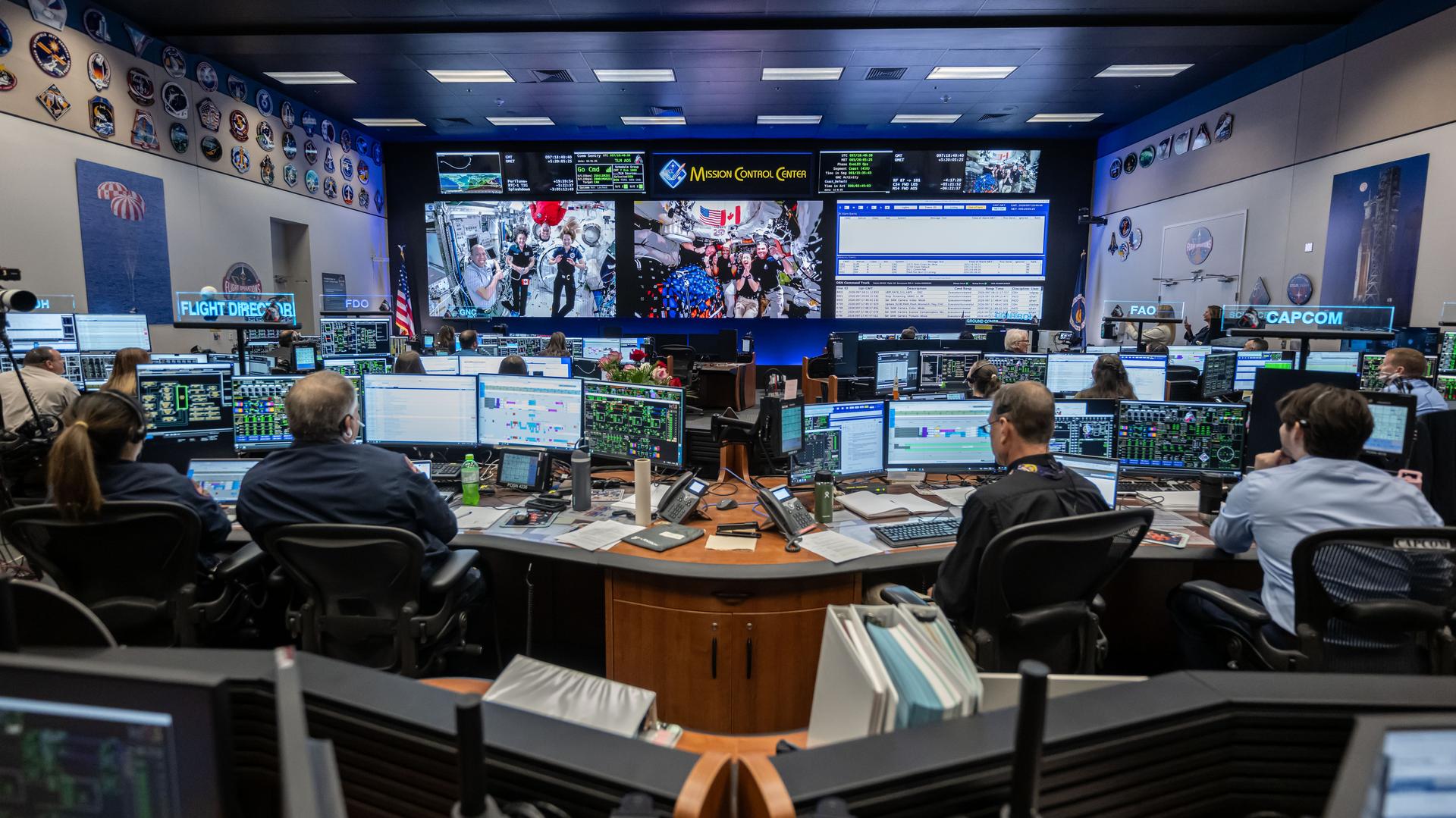
jsc2026e021201 (April 7, 2026) - Members of the International Space Station Expedition 74 (left) and Artemis II (right) crews are seen at once on the screens inside the International Space Station flight control room in Mission Control at NASA's Johnson Space Center in Houston. The two crews connected in a 15-minute ship-to-ship call on April 7, 2026, while the Artemis II crew was on its way back from the Moon.
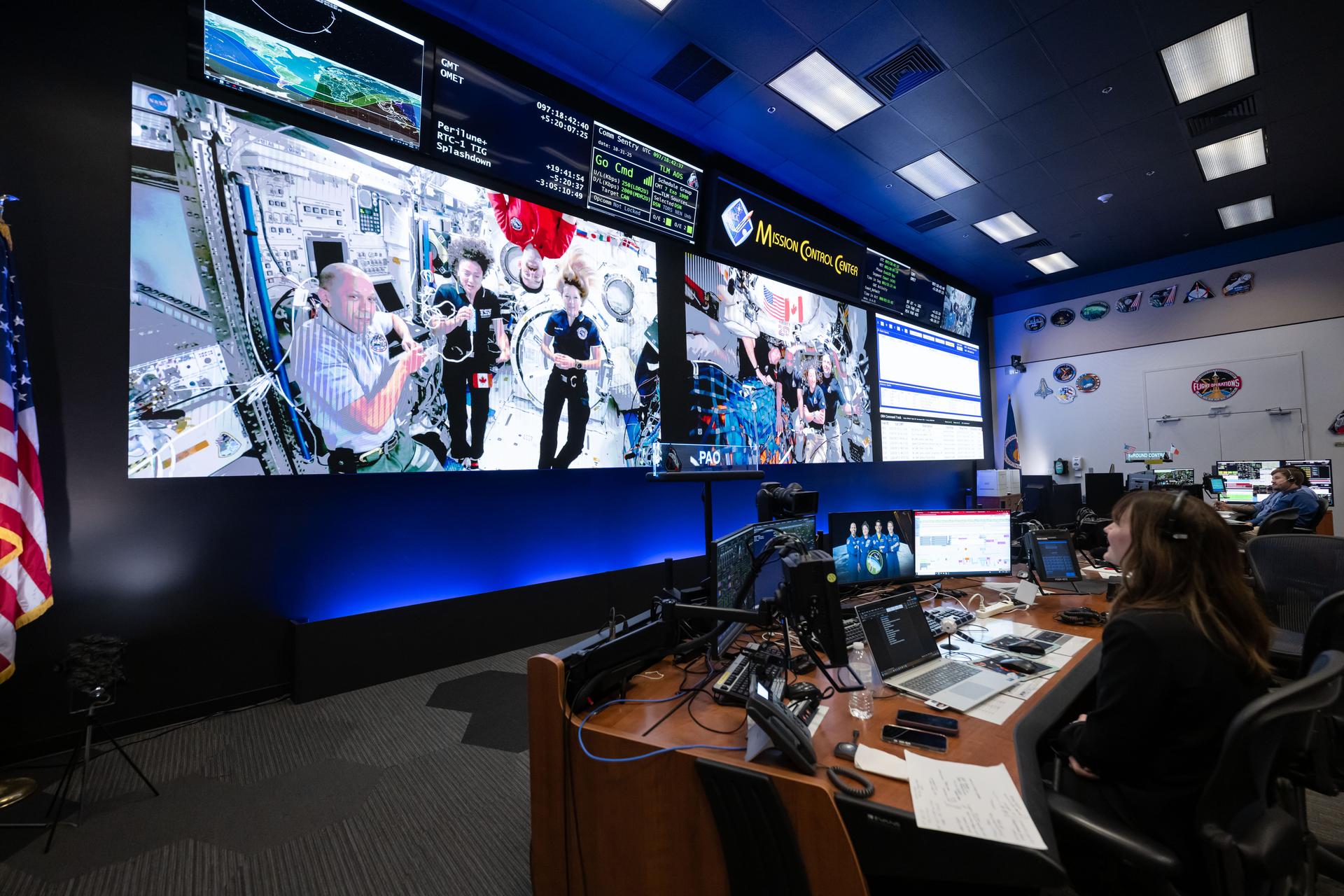
jsc2026e021206 (April 7, 2026) - Members of the International Space Station Expedition 74 (left) and Artemis II (right) crews are seen at once on the screens inside the International Space Station flight control room in Mission Control at NASA's Johnson Space Center in Houston. The two crews connected in a 15-minute ship-to-ship call on April 7, 2026, while the Artemis II crew was on its way back from the Moon.
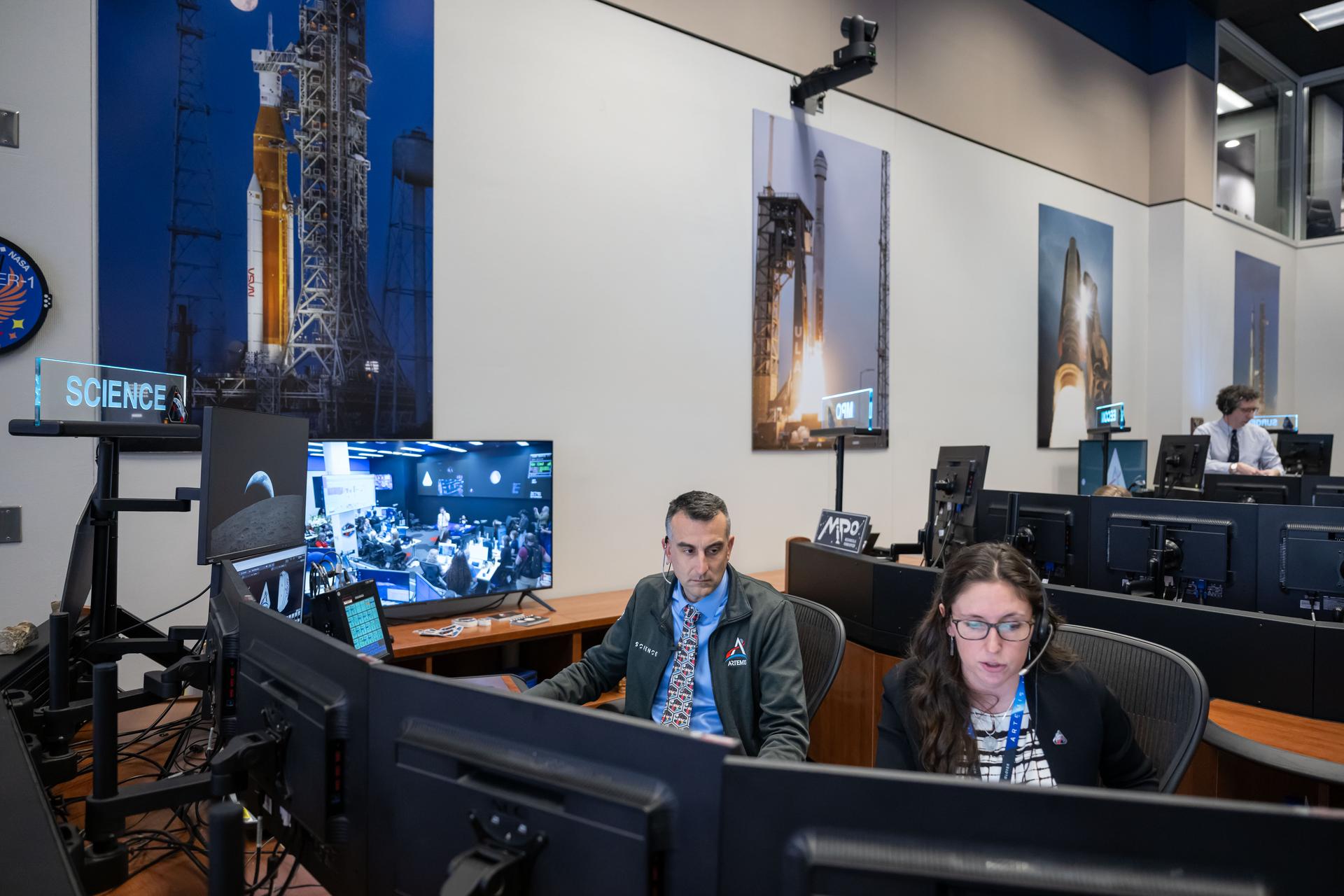
Artemis II Flight Control Team in White Flight Control Room (WFCR) during ISS Ship-to-Ship Call & Post Flyby Crew Debrief with Science Officer. Photo Date: April 7, 2026. Location: Building 30s, WFCR. Photo Credit: NASA/Robert Markowitz

Jules Verne published his first science fiction novel in 1865 called "From the Earth to the Moon." As shown here in an illustration, passengers in Verne's space ship enjoy their first taste of weightlessness.
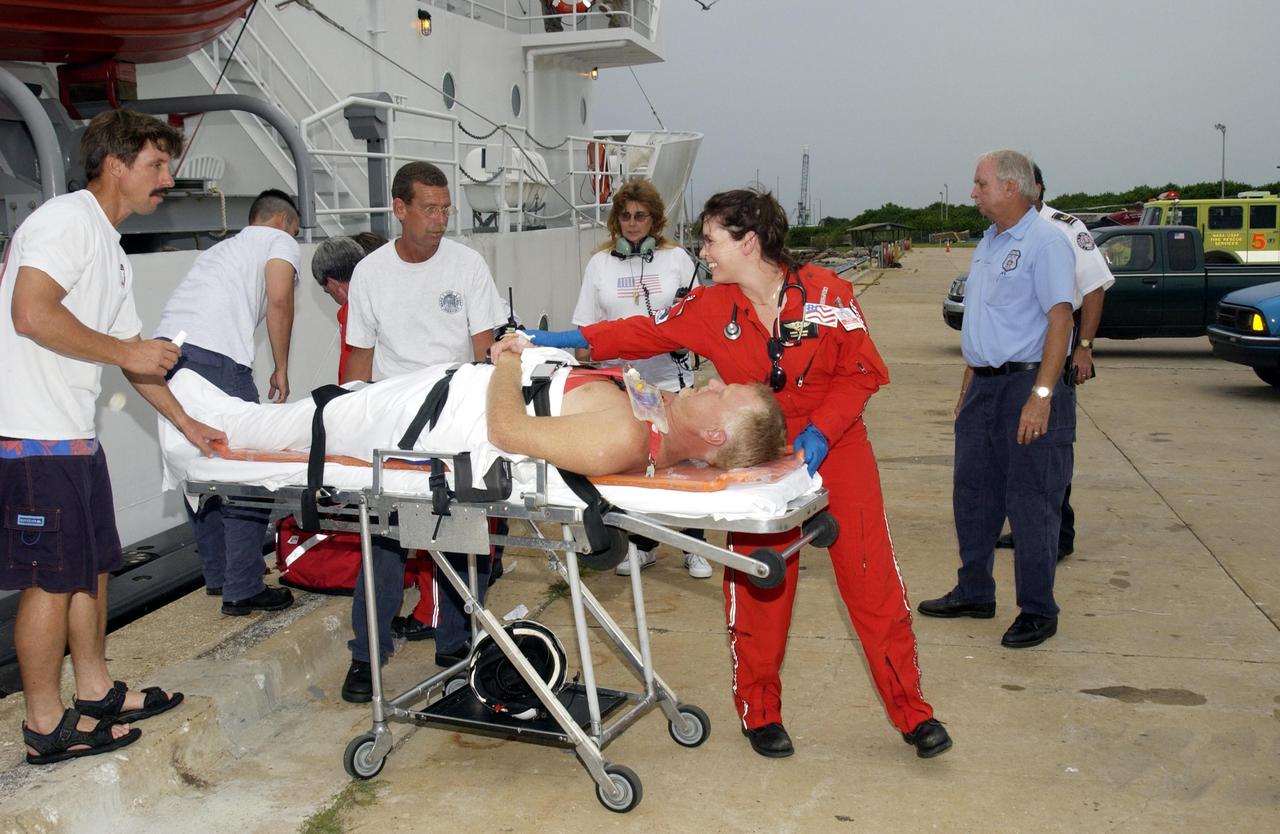
KENNEDY SPACE CENTER, FLA. - United Space Alliance workers on board the Freedom Star, one of the Shuttle Rocket Booster retrieval ships, release a distressed lobster diver to an Air Care Team from Orlando for transfer to a hospital. The ship and its dive team, including a diver medical technician, Andy Fish, were instrumental in rescuing the diver off Cape Canaveral Sept. 11. The ship was on a certification exercise and near the location of a lobster diving boat that radioed the U.S. Coast Guard for help when one of the divers experienced difficulty breathing on his return to the surface. Hearing the call for help, the captain of the Freedom Star offered to help. Fish stayed with the diver in the recompression chamber aboard the Freedom Star until the ship reached Port Canaveral where a KSC Occupational Health doctor waited. The diver was stabilized and then taken to Florida Hospital.

KENNEDY SPACE CENTER, FLA. -- United Space Alliance workers on board the Freedom Star, one of the Shuttle Rocket Booster retrieval ships, check the controls on the recompression chamber at right. The ship and its dive team, including a diver medical technician, Andy Fish, were instrumental in rescuing a lobster diver in distress off Cape Canaveral Sept. 11. The ship was on a certification exercise and near the location of a lobster diving boat that radioed the U.S. Coast Guard for help when one of the divers experienced difficulty breathing on his return to the surface. Hearing the call for help, the captain of the Freedom Star offered to help. Fish stayed with the diver in the recompression chamber aboard the Freedom Star until the ship reached Port Canaveral where a KSC Occupational Health doctor waited. The diver was stabilized and taken to Florida Hospital.
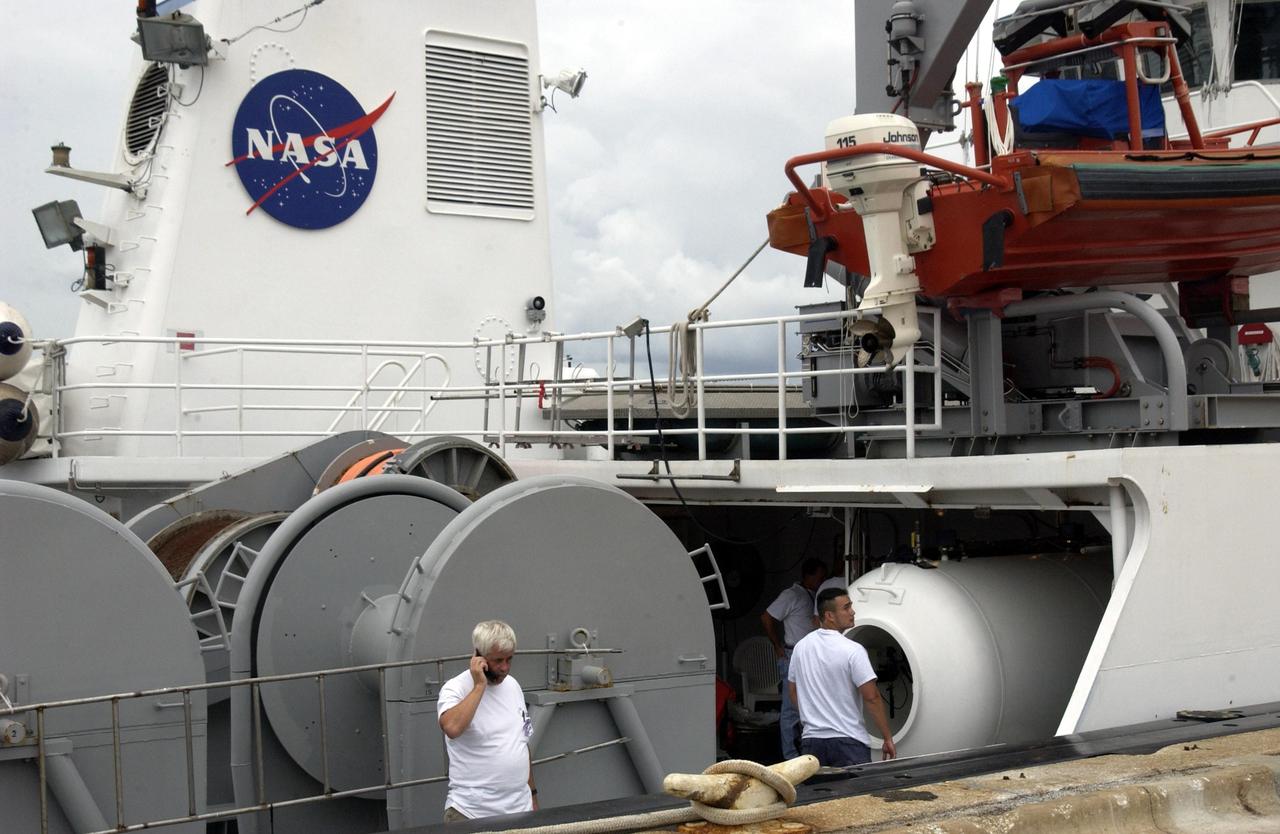
KENNEDY SPACE CENTER, FLA. - On board the Freedom Star, one of the Shuttle Rocket Booster retrieval ships, workers with United Space Alliance help finalize the rescue of a lobster diver in distress after their return to port Sept. 11. The ship was on a certification exercise and near the location of a lobster diving boat that radioed the U.S. Coast Guard for help when one of the divers experienced difficulty breathing on his return to the surface. Hearing the call for help, the captain of the Freedom Star offered to help. On board the ship was a dive team, including a diver medical technician, Andy Fish, who are trained to assist in case of a dive accident during a retrieval mission. Fish stayed with the diver in the recompression chamber aboard the Freedom Star until the ship reached Port Canaveral where a KSC Occupational Health doctor waited. The diver was stabilized and taken to Florida Hospital.

NASA Artwork By: Don Davis Space Colony: Torus Wheel - Large assemblies can be put together in space. On this part of the rim panels of a colony are being fitted in place. The small vehicles are called ANTS for Assembly non-thethered ships
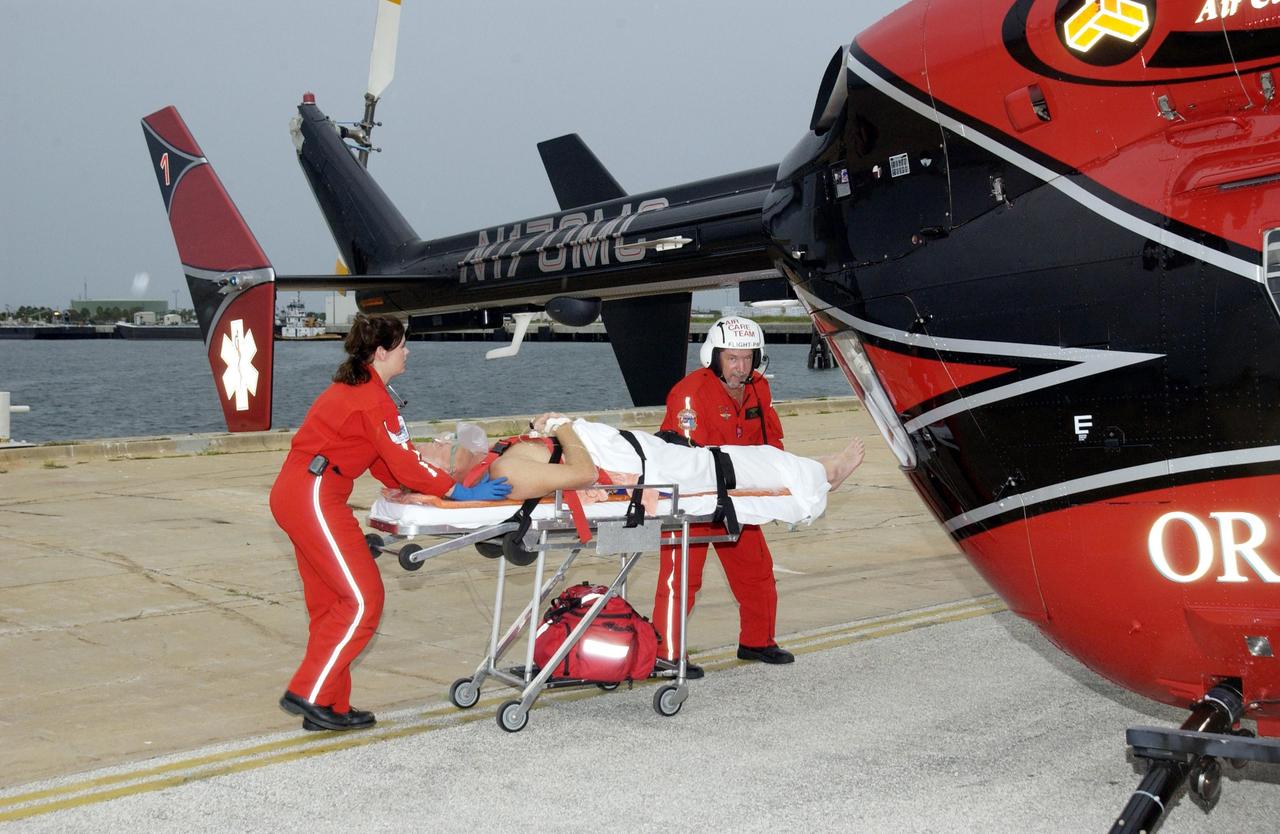
KENNEDY SPACE CENTER, FLA. -- An Air Care team from Orlando take a distressed lobster diver to the helicopter to take him to Florida Hospital. The diver was picked up by the Freedom Star, one of the Shuttle Rocket Booster retrieval ships, on a certification exercise and near the location of a lobster diving boat that radioed the U.S. Coast Guard for help when one of the divers experienced difficulty breathing on his return to the surface. Hearing the call for help, the captain of the Freedom Star offered to help. The ship had a dive team on board, including a diver medical technician, Andy Fish, as well as a hyperbaric chamber. Fish stayed with the diver in the recompression chamber aboard the Freedom Star until the ship reached Port Canaveral where a KSC Occupational Health doctor waited. The diver was stabilized and then taken to Florida Hospital.

KENNEDY SPACE CENTER, FLA. -- Andy Fish, an SRB retrieval diver and diver medical technician with United Space Alliance, is in the spotlight for helping rescue a diver in distress off Cape Canaveral Sept. 11. Fish and others were on a certification exercise on board Freedom Star, one of the Shuttle Rocket Booster retrieval ships, manned by USA workers. The ship was near the location of a lobster diving boat that radioed the U.S. Coast Guard for help when one of the divers experienced difficulty breathing on his return to the surface. Hearing the call for help, the captain of the Freedom Star offered to help. Fish had experience with distressed divers. He stayed with the diver in the recompression chamber aboard the Freedom Star until the ship reached Port Canaveral where a KSC Occupational Health doctor waited. The diver was stabilized and taken to Florida Hospital. .
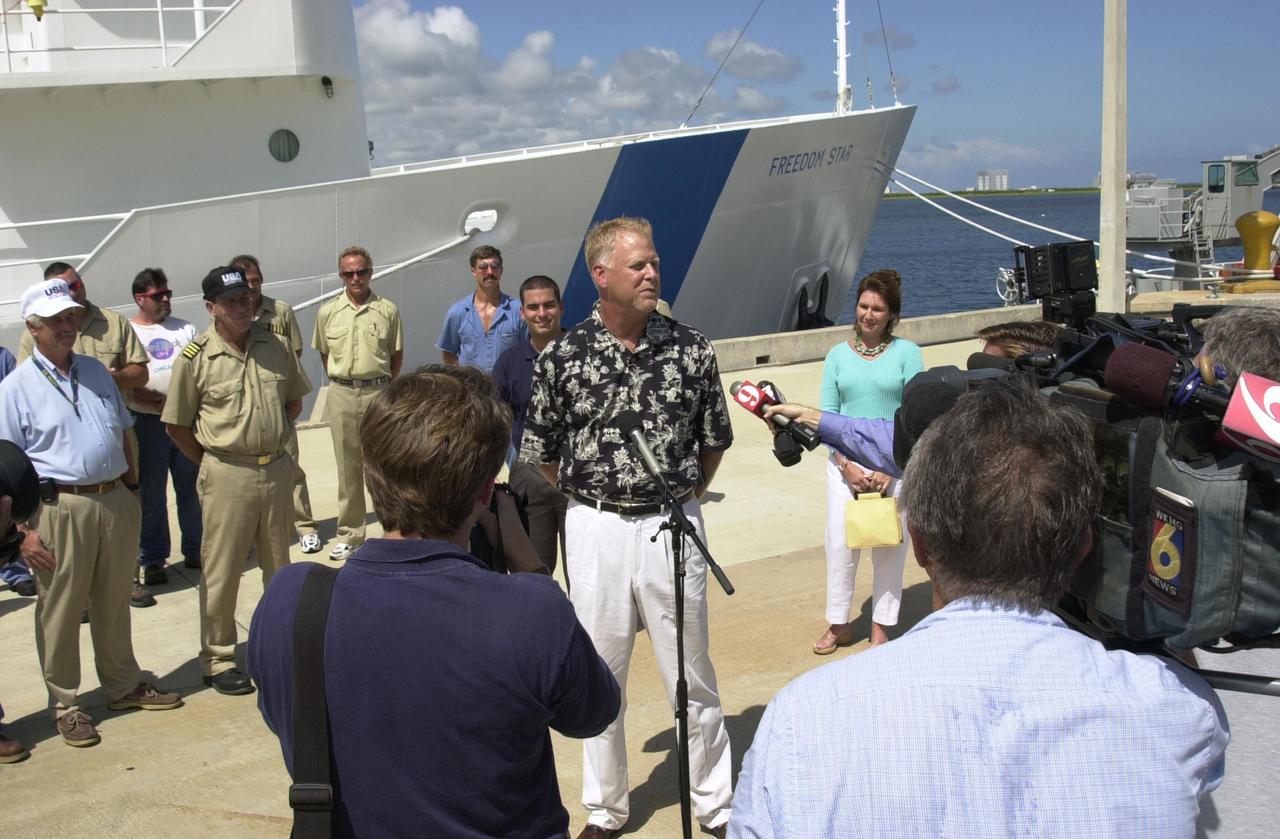
KENNEDY SPACE CENTER, FLA. - Jack Wilcox (at the microphone) answers questions from the media during a reunion with his rescuers at the Hangar AF docks, Cape Canaveral Air Force Station. At right is his wife, Patty. Wilcox reunited with the men aboard KSC's Freedom Star SRB retrieval ship that was in the vicinity when Wilcox suffered decompression sickness on a diving expedition 20 miles off shore in the Atlantic Ocean. When the Freedom Star team heard the call for help, they asked the Coast Guard if they could assist. The ship was out on a crane certification exercise and coincidentally had a diver medical technician and other divers training on the crane. The ship's divers were trained for the hyperbaric chamber on board. Upon reaching the Army dock, KSC Occupational Health physician Skip Beeler entered the chamber and continued the process of helping to stabilize Wilcox. After several hours in the chamber, Wilcox, who lives in Orlando, was airlifted to Florida Hospital Orlando.

KENNEDY SPACE CENTER, FLA. - At the Hangar AF docks, Cape Canaveral Air Force Station, the captain of the Freedom Star, David Fraine, addresses those attending a reunion of a diver, Jack Wilcox, and his rescuers: the crew of KSC's Freedom Star Solid Rocket Booster (SRB) retrieval ship and a medical team. The diver suffered decompression sickness on a diving expedition 20 miles offshore in the Atlantic Ocean. When the Freedom Star team heard the call for help, they asked the Coast Guard if they could assist. The ship was out on a crane certification exercise and coincidentally had a diver medical technician and other divers training on the crane. The ship's divers were trained for the hyperbaric chamber on board. Upon reaching the Army dock, KSC Occupational Health physician Skip Beeler entered the chamber and continued the process of helping to stabilize Wilcox. After several hours in the chamber, Wilcox, who lives in Orlando, was airlifted to Florida Hospital Orlando.
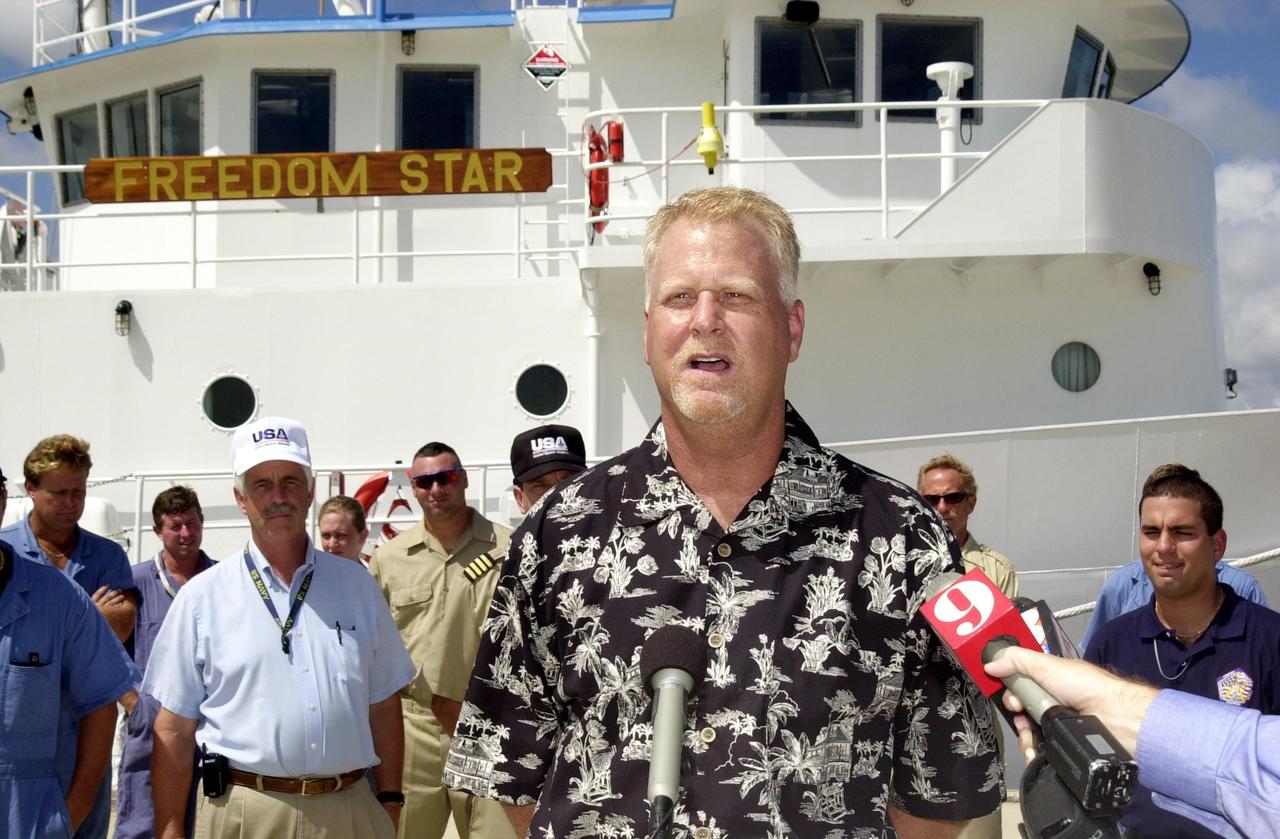
KENNEDY SPACE CENTER, FLA. - Jack Wilcox answers questions from the media during a reunion at the Hangar AF docks, Cape Canaveral Air Force Station, with his rescuers. Wilcox reunited with the men aboard KSC's Freedom Star SRB retrieval ship that was in the vicinity when Wilcox suffered decompression sickness on a diving expedition 20 miles off shore in the Atlantic Ocean. When the Freedom Star team heard the call for help, they asked the Coast Guard if they could assist. The ship was out on a crane certification exercise and coincidentally had a diver medical technician and other divers training on the crane. The ship's divers were trained for the hyperbaric chamber on board. Upon reaching the Army dock, KSC Occupational Health physician Skip Beeler entered the chamber and continued the process of helping to stabilize Wilcox. After several hours in the chamber, Wilcox, who lives in Orlando, was airlifted to Florida Hospital Orlando.
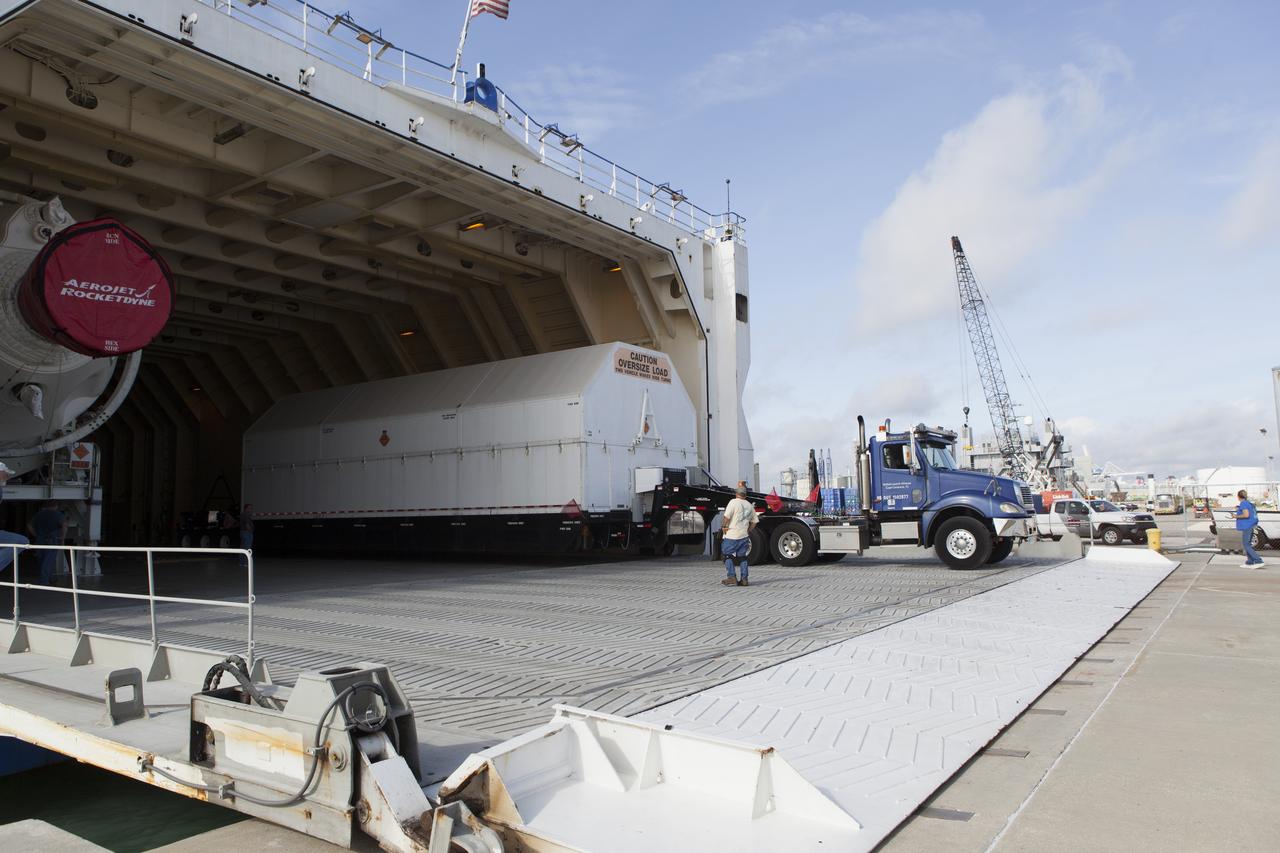
A United Launch Alliance Delta IV Heavy second stage, packaged in its shipping container, is offloaded from the company's Mariner ship at Port Canaveral in Florida. The Delta IV Heavy will launch NASA's upcoming Parker Solar Probe mission. The mission will perform the closest-ever observations of a star when it travels through the Sun's atmosphere, called the corona. The probe will rely on measurements and imaging to revolutionize our understanding of the corona and the Sun-Earth connection. Liftoff atop the Delta IV Heavy rocket is scheduled to take place from Cape Canaveral's Space Launch Complex 37 in summer 2018.
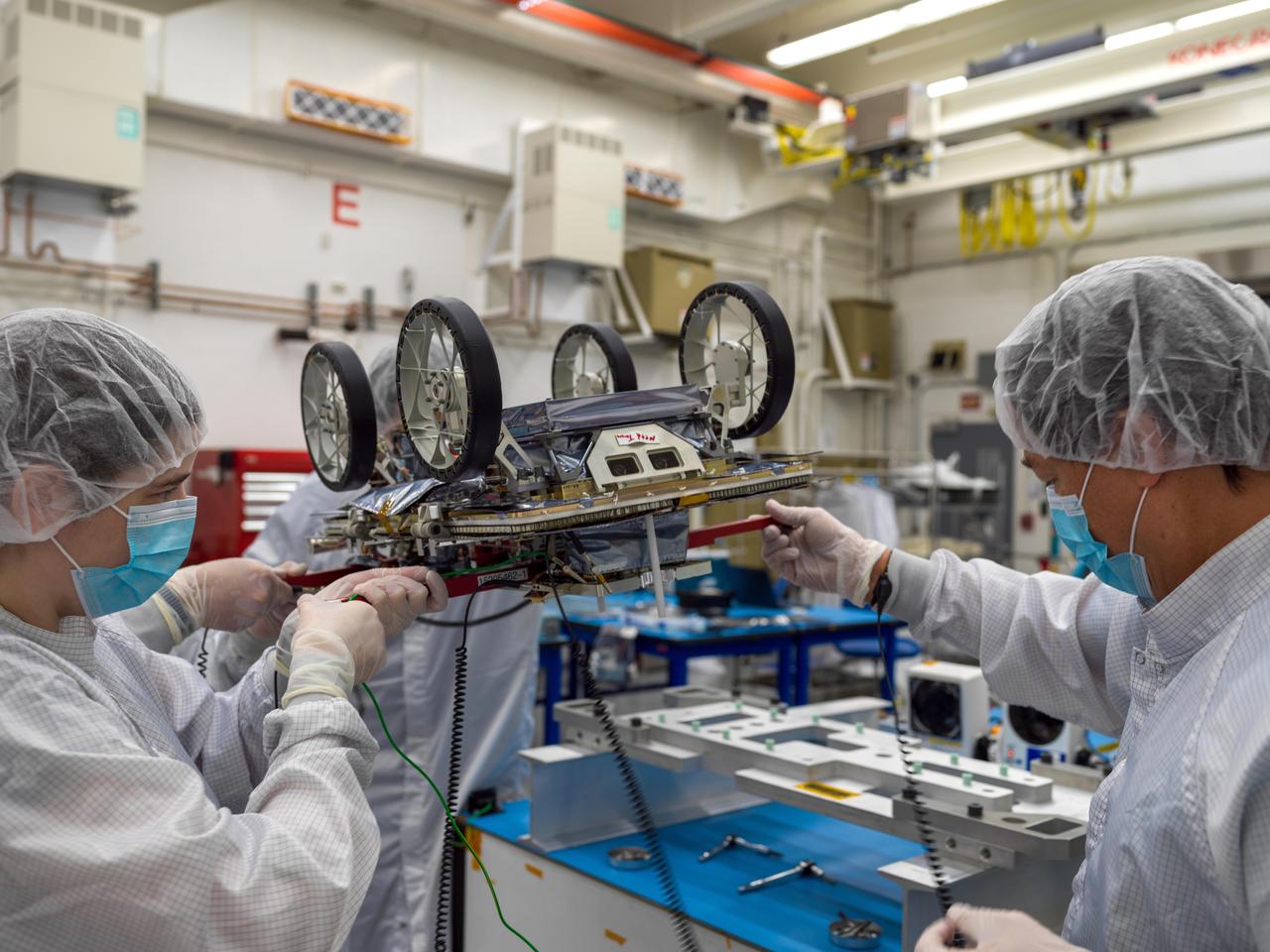
One of three small lunar rovers that are part of a NASA technology demonstration called CADRE (Cooperative Autonomous Distributed Robotic Exploration) is prepared for shipping in a clean room at the agency's Jet Propulsion Laboratory in Southern California on Jan. 29, 2025. CADRE aims to prove that a group of robots can collaborate to gather data without receiving direct commands from mission controllers on Earth. Its trio of rovers will use their cameras and ground-penetrating radars to send back imagery of the lunar surface and subsurface while testing out the novel software systems that enable them to work together as a team autonomously. Before embarking on the first leg of a multistage journey to the Moon, each rover was mated to its deployer system, which will lower it via tether from an Intuitive Machines lander onto the dusty lunar surface. Engineers flipped each rover-deployer pair over and attached it to an aluminum plate for safe transit. The rovers were then sealed into protective metal-frame enclosures that were fitted snuggly into metal shipping containers and loaded onto a truck for the drive to Intuitive Machines' Houston facility. Here, members of the project's assembly, test, and launch operations team hold the upside-down rover by temporary red handles in order to move it to a table where they'll attach it to the aluminum plate. A division of Caltech in Pasadena, California, JPL manages CADRE for the Game Changing Development program within NASA's Space Technology Mission Directorate in Washington. The technology demonstration was selected under the agency's Lunar Surface Innovation Initiative, which was established to expedite the development of technologies for sustained presence on the lunar surface. CADRE will launch as a payload on the third lunar lander mission by Intuitive Machines, called IM-3, under NASA's CLPS (Commercial Lunar Payload Services) initiative, which is managed by the agency's Science Mission Directorate, also in Washington. The agency's Glenn Research Center in Cleveland and its Ames Research Center in Silicon Valley, California, both supported the project. Motiv Space Systems designed and built key hardware elements at the company's Pasadena facility. Clemson University in South Carolina contributed research in support of the project. For more about CADRE, go to: https://go.nasa.gov/cadre https://photojournal.jpl.nasa.gov/catalog/PIA26427
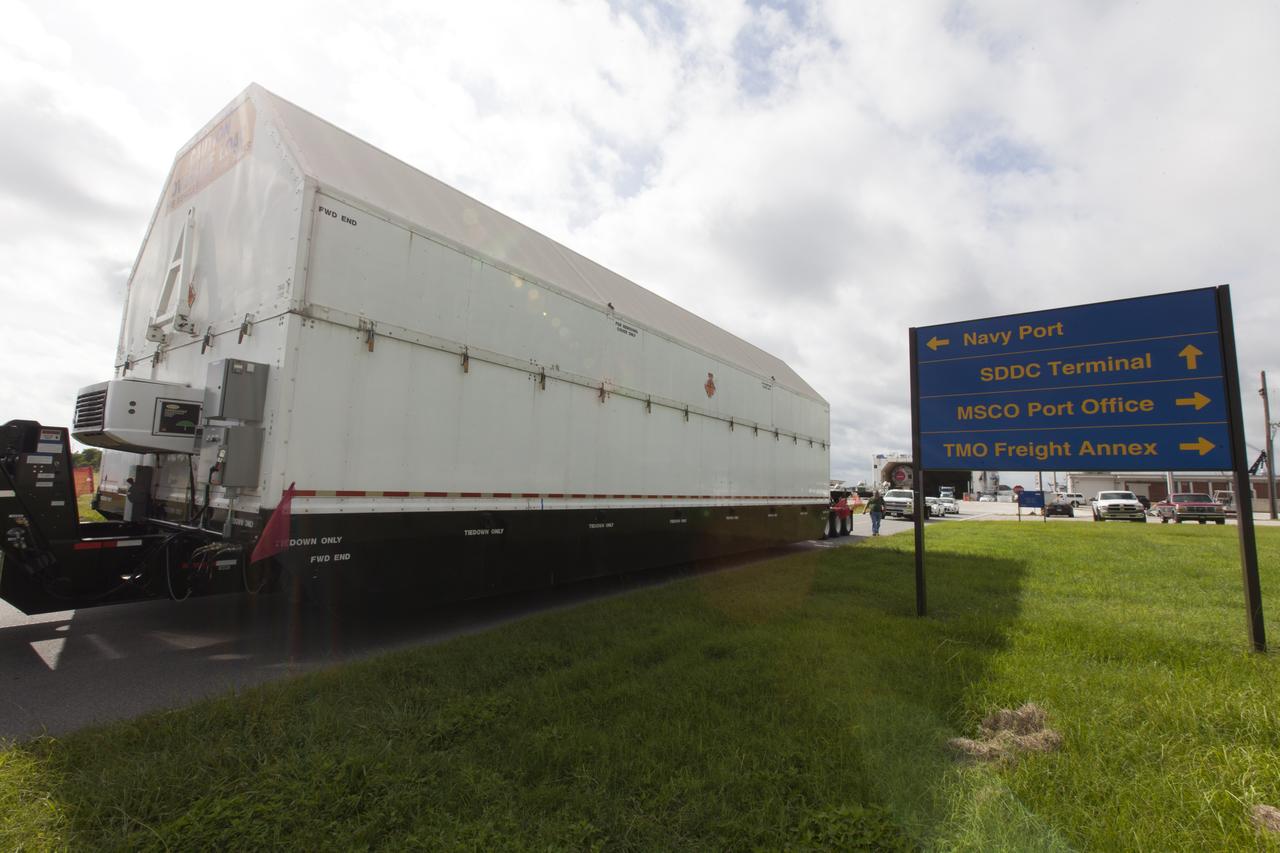
A United Launch Alliance Delta IV Heavy second stage, packaged in its shipping container, has been offloaded from the company's Mariner ship at Port Canaveral in Florida. It will be transported to the Horizontal Integration Facility at Cape Canaveral Air Force Station for preflight processing. The Delta IV Heavy will launch NASA's upcoming Parker Solar Probe mission. The mission will perform the closest-ever observations of a star when it travels through the Sun's atmosphere, called the corona. The probe will rely on measurements and imaging to revolutionize our understanding of the corona and the Sun-Earth connection. Liftoff atop the Delta IV Heavy rocket is scheduled to take place from Cape Canaveral's Space Launch Complex 37 in summer 2018.
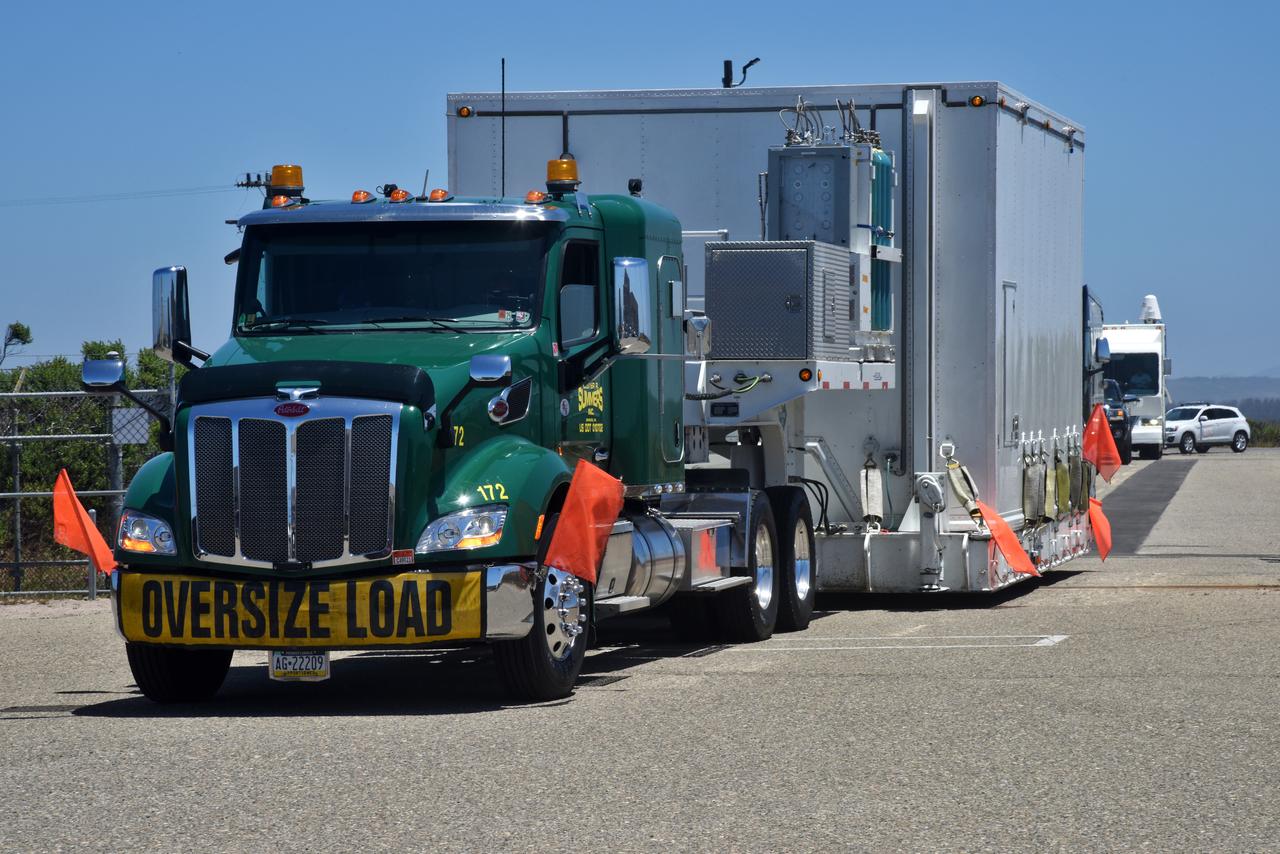
NASA's Ice, Cloud and land Elevation Satellite-2 (ICESat-2) arrives in its shipping container aboard a heavy transport truck on June 12, 2018, at Vandenberg Air Force Base in California. ICESat-2 was shipped from the Northrop Grumman facility in Gilbert, Arizona, where it was built and tested. The satellite is scheduled to launch Sept. 12, 2018, on the final United Launch Alliance Delta II rocket from Space Launch Complex-2 at Vandenberg. ICESat-2 will measure the height of a changing Earth, one laser pulse at a time, 10,000 laser pulses a second. The satellite will carry the Advanced Topographic Laser Altimeter System. ICESat-2 will help scientists investigate why, and how much our planet's frozen and icy areas, called the cryosphere, is changing in a warming climate.
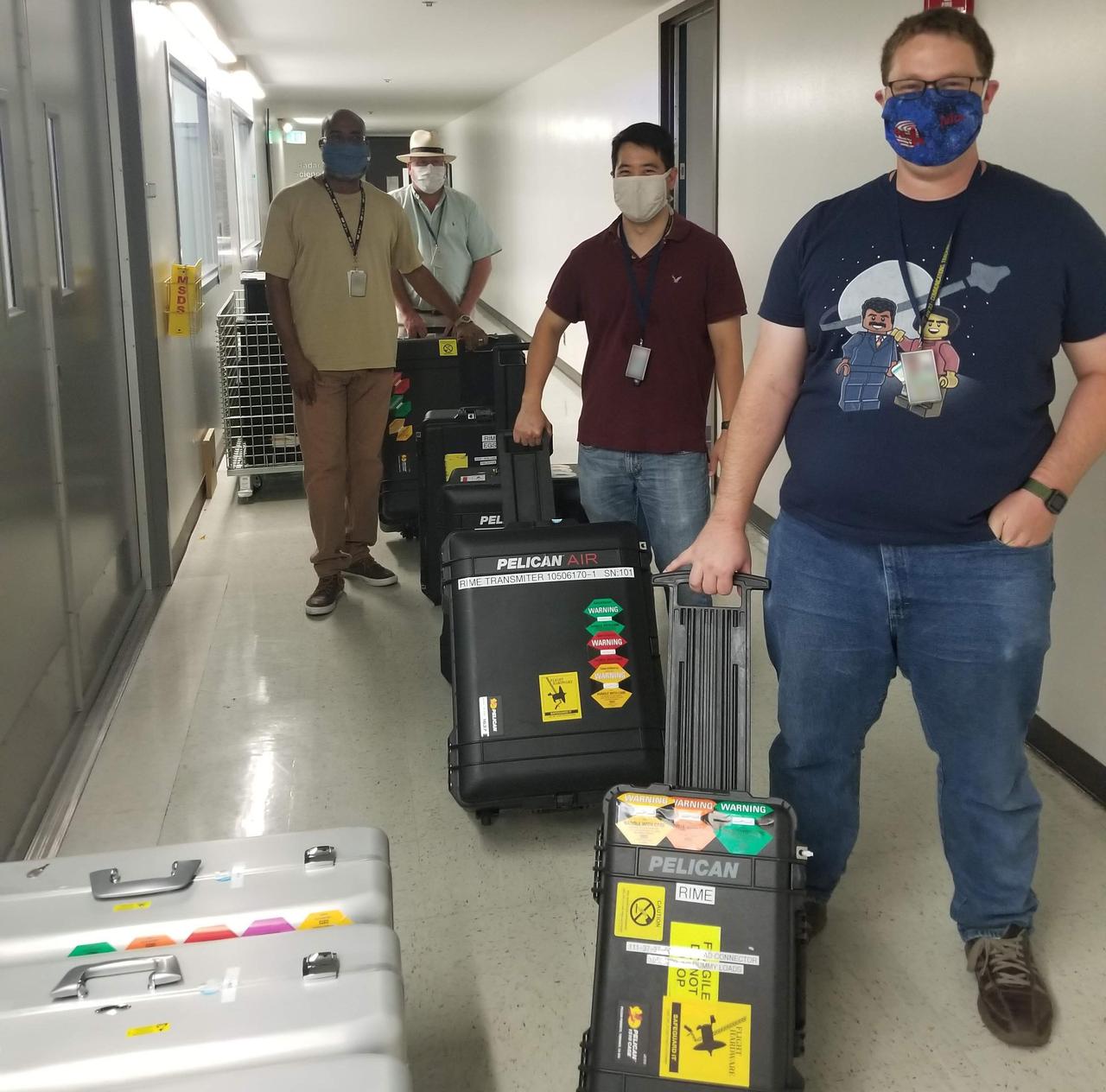
NASA's Jet Propulsion Laboratory built and shipped the receiver, transmitter and electronics necessary to complete the radar instrument for the Jupiter Icy Moons Explorer (JUICE) mission. Set to launch in 2022, JUICE is the ESA (European Space Agency) mission to explore Jupiter and its three large icy moons. From front: JPL engineers and technicians Jeremy Steinert, Jordan Tanabe, Glenn Jeffery, and Robert Johnson follow COVID-19 Safe-at-Work guidelines as they transport the transmitter and electronics on Aug. 19, 2020, for shipping to the Italian Space Agency (ASI). ASI is collaborating with JPL to build the instrument, called Radar for Icy Moon Exploration (RIME). It is one of 10 instruments that will fly aboard JUICE. https://photojournal.jpl.nasa.gov/catalog/PIA24026
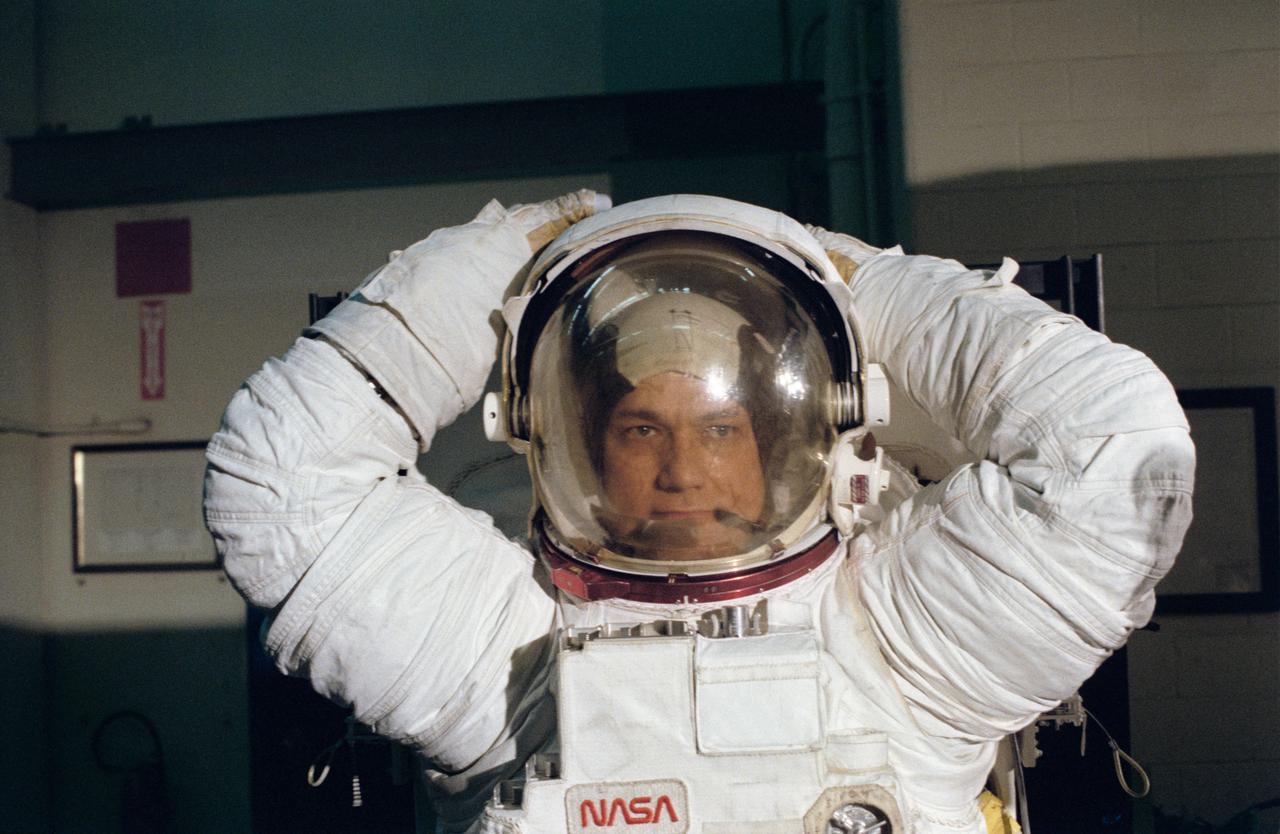
S82-27594 (25 Feb 1982) --- Astronaut Bruce McCandless II models NASA?s extravehicular mobility unit (EMU) spacesuit for Shuttle and the backpack unit (called a manned maneuvering unit) that will give future STS crewmembers extended mobility in space. A forerunner version of the MMU?called an astronaut maneuvering unit?was tested internally on Skylab. The MMU will allow astronauts for the first time in history to move about in the vicinity of their spacecraft without being tethered to the ship. McCandless was giving a demonstration of the EMU/MMU in JSC?s laboratory support facility.
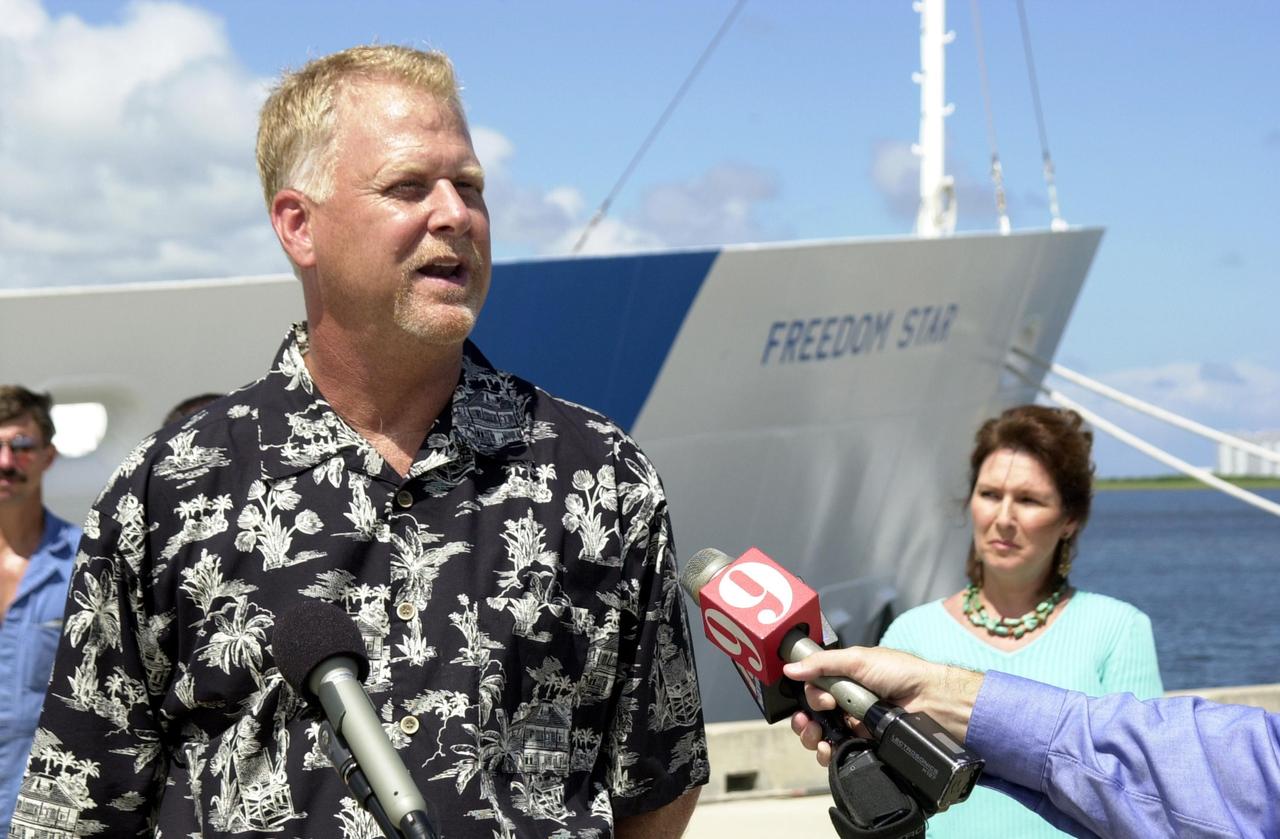
KENNEDY SPACE CENTER, FLA. - KENNEDY SPACE CENTER, FLA. - Jack Wilcox answers questions from the media during a reunion at the Hangar AF docks, Cape Canaveral Air Force Station, with his rescuers. At right is his wife, Patty. Wilcox reunited with the men aboard KSC's Freedom Star SRB retrieval ship that was in the vicinity when Wilcox suffered decompression sickness on a diving expedition 20 miles off shore in the Atlantic Ocean. When the Freedom Star team heard the call for help, they asked the Coast Guard if they could assist. The ship was out on a crane certification exercise and coincidentally had a diver medical technician and other divers training on the crane. The ship's divers were trained for the hyperbaric chamber on board. Upon reaching the Army dock, KSC Occupational Health physician Skip Beeler entered the chamber and continued the process of helping to stabilize Wilcox. After several hours in the chamber, Wilcox, who lives in Orlando, was airlifted to Florida Hospital Orlando.
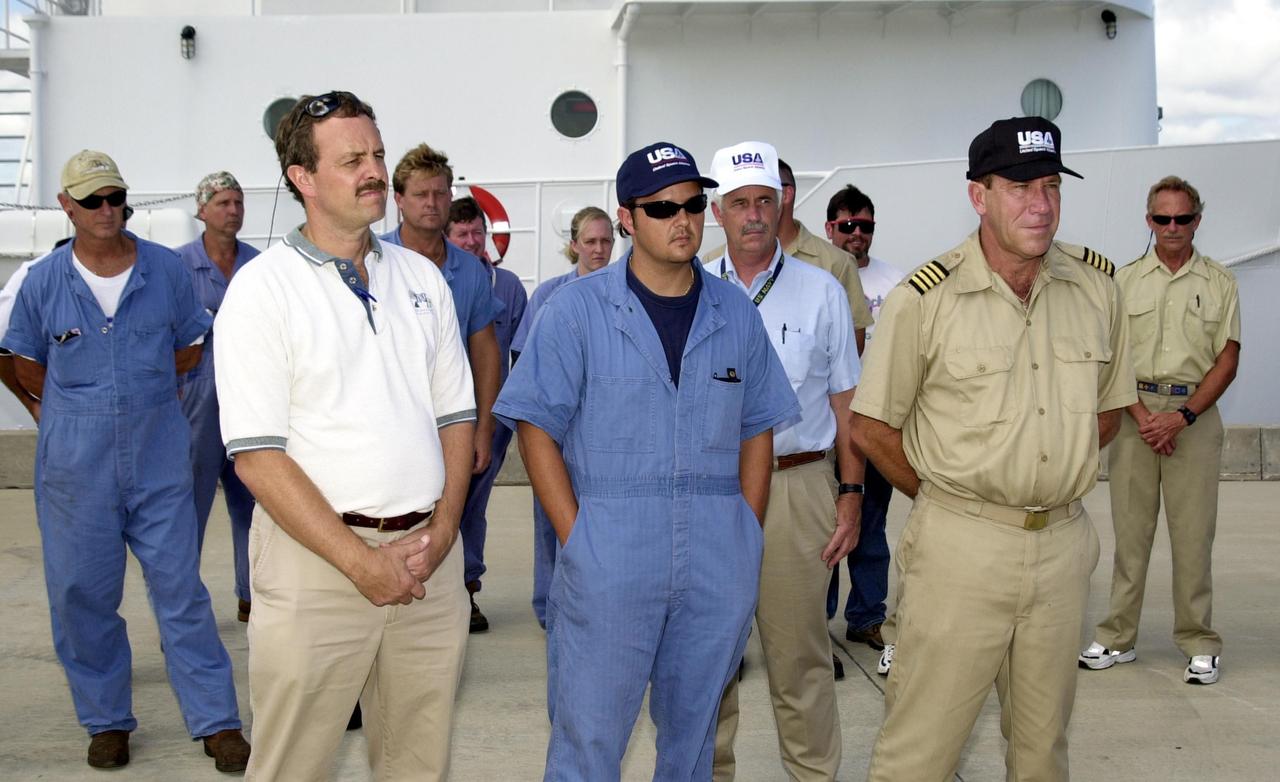
KENNEDY SPACE CENTER, FLA. - A reunion at the Hangar AF docks, Cape Canaveral Air Force Station, brought together a diver and his rescuers, the crew of KSC's Freedom Star SRB retrieval ship and a medical team. In the photo are (foreground, left to right) KSC Occupational Health physician Skip Beeler, retrieval diver and diver medical technician Andy Fish, and Freedom Star's Captain, Dave Fraine. The diver, Jack Wilcox, suffered decompression sickness on a diving expedition 20 miles off shore in the Atlantic Ocean. When the Freedom Star team heard the call for help, they asked the Coast Guard if they could assist. The ship was out on a crane certification exercise and coincidentally had a diver medical technician and other divers training on the crane. The ship's divers were trained for the hyperbaric chamber on board. Upon reaching the Army dock, KSC Occupational Health physician Skip Beeler entered the chamber and continued the process of helping to stabilize Wilcox. After several hours in the chamber, Wilcox, who lives in Orlando, was airlifted to Florida Hospital Orlando
NASA Kennedy Space Center's Engineering Directorate held a banner signing event in the Prototype Development Laboratory to mark the successful delivery of a liquid oxygen test tank, called Tardis. Engineers and technicians worked together to develop the tank and build it to support cryogenic testing at Johnson Space Center's White Stands Test Facility in Las Cruces, New Mexico. The 12-foot-tall, 3,810-pound aluminum tank will be shipped to White Sands for testing.
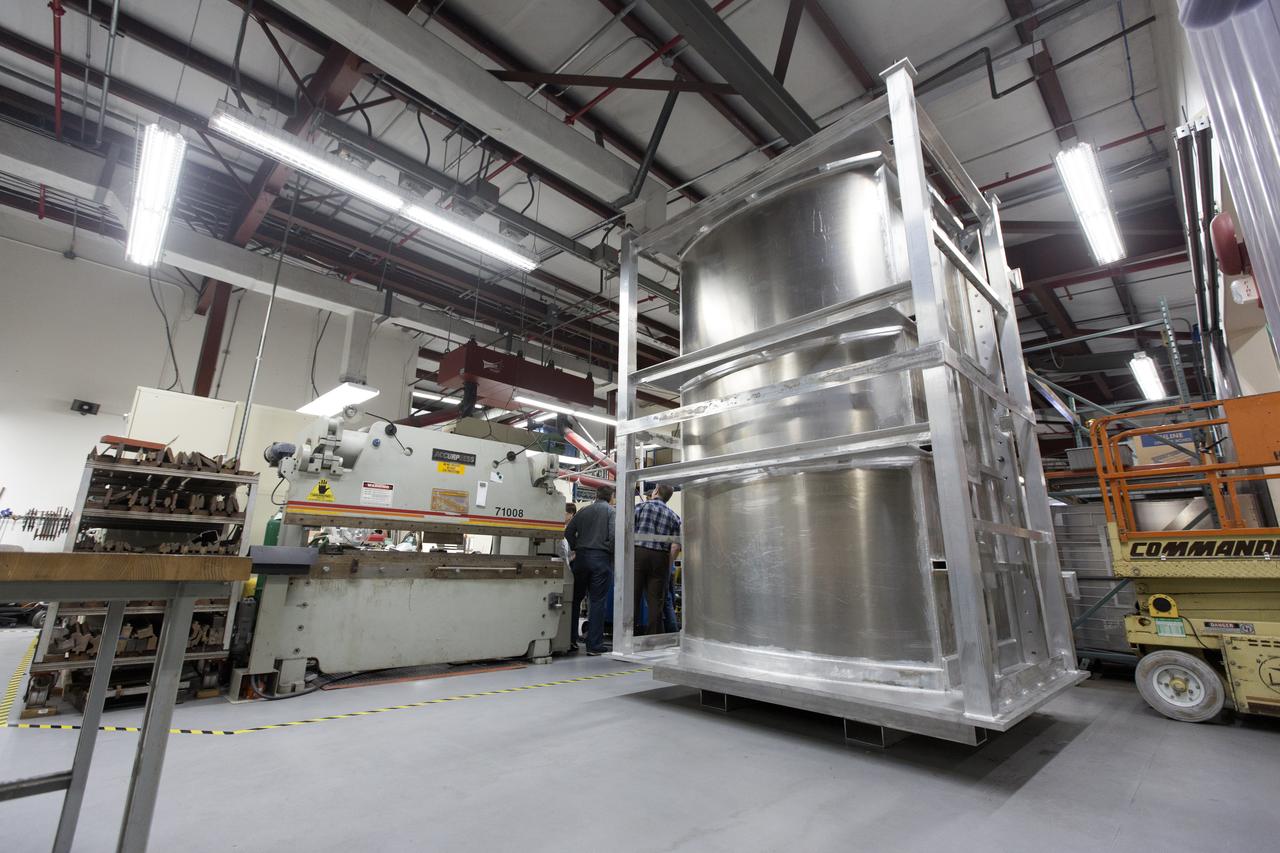
A liquid oxygen test tank was completed in the Prototype Development Laboratory at NASA's Kennedy Space Center in Florida. A banner signing event marked the successful delivery of the tank called Tardis. Engineers and technicians worked together to develop the tank and build it at the lab to support cryogenic testing at Johnson Space Center's White Sands Test Facility in Las Cruces, New Mexico. The 12-foot-tall, 3,810-pound aluminum tank will be shipped to White Sands for testing.
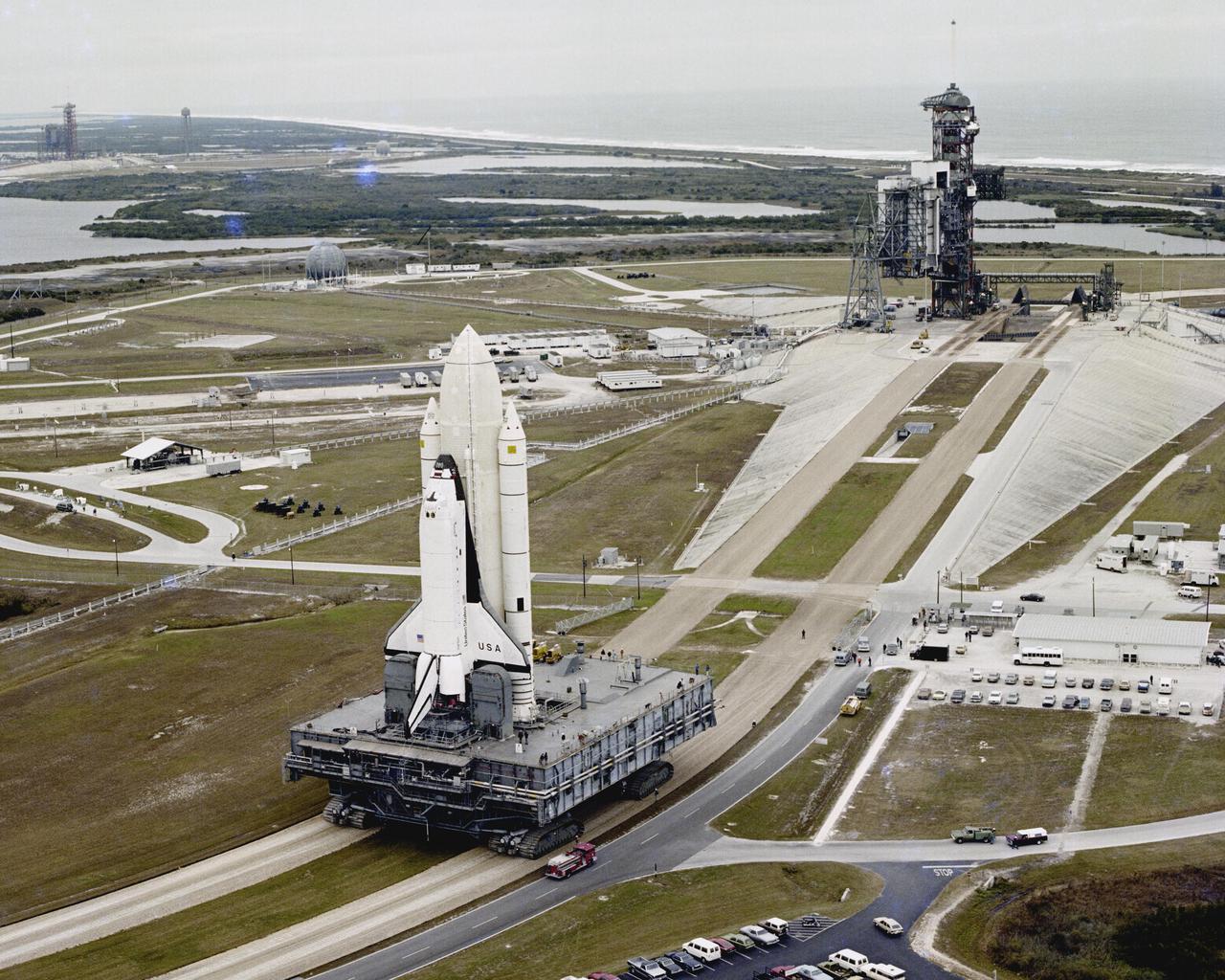
KENNEDY SPACE CENTER, FLA. - The first Space Shuttle vehicle destined to fly in space moves toward Launch Complex 39A where it will be launched. The STS-1 vehicle, consisting of America’s first reusable space ship - the orbiter Columbia, an external propellant tank and two solid rocket boosters, was assembled on a Mobile Launcher Platform in the Vehicle Assembly Building. A six-million pound tractor, called the Crawler-Transporter, is used to carry the Space Shuttle from the VAB to the launch pad, some 3.5 miles away.

Inside the Prototype Development Laboratory at NASA's Kennedy Space Center in Florida, workers in the lab hold a banner marking the successful delivery of a liquid oxygen test tank called Tardis. Engineers and technicians worked together to develop the tank to build it at the lab to support cryogenic testing at Johnson Space Center's White Sands Test Facility in Las Cruces, New Mexico. The 12-foot-tall, 3,810-pound aluminum tank will be shipped to White Sands for testing.
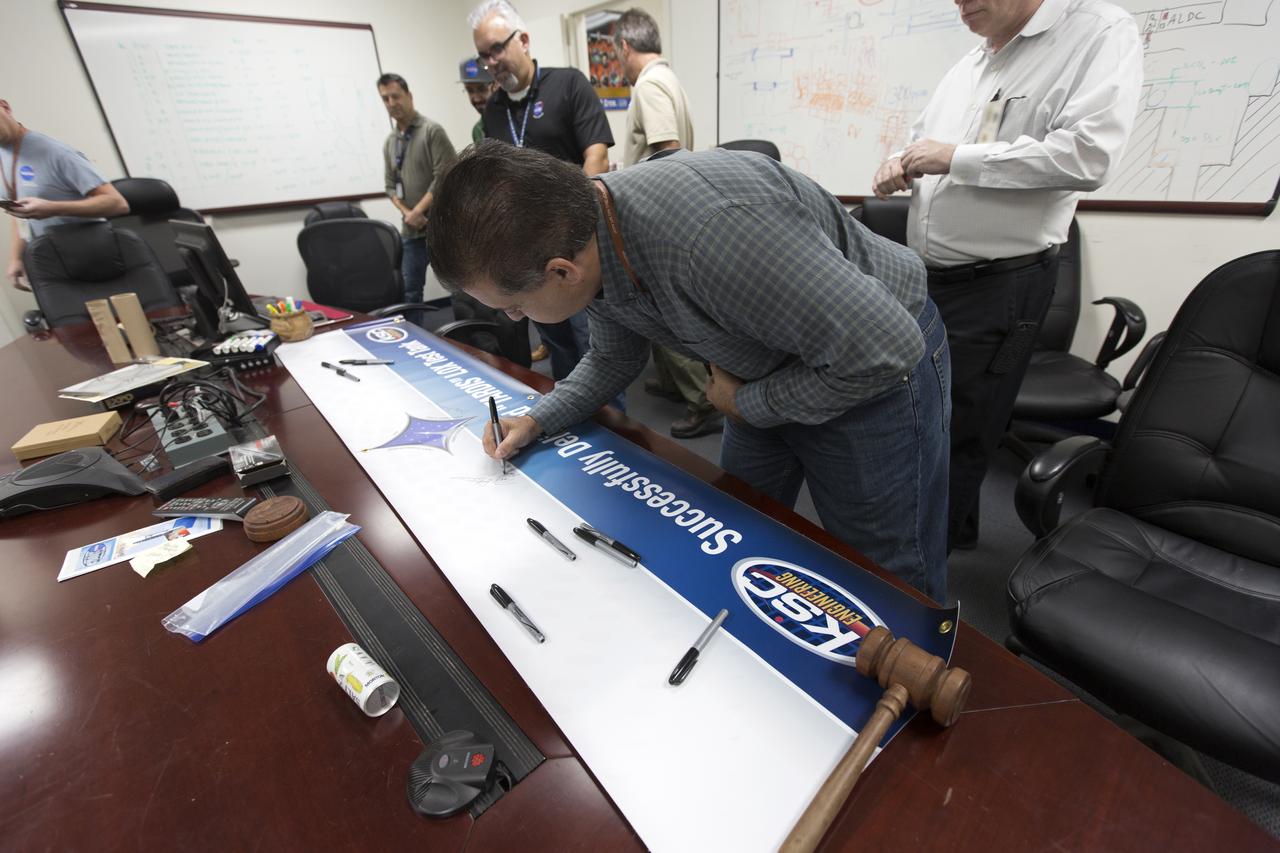
Workers sign the banner marking the successful delivery of a liquid oxygen test tank, called Tardis, in the Prototype Development Laboratory at NASA's Kennedy Space Center in Florida. Engineers and technicians worked together to develop the tank and build it at the lab to support cryogenic testing at Johnson Space Center's White Sands Test Facility in Las Cruces, New Mexico. The 12-foot-tall, 3,810-pound aluminum tank will be shipped to White Sands for testing.
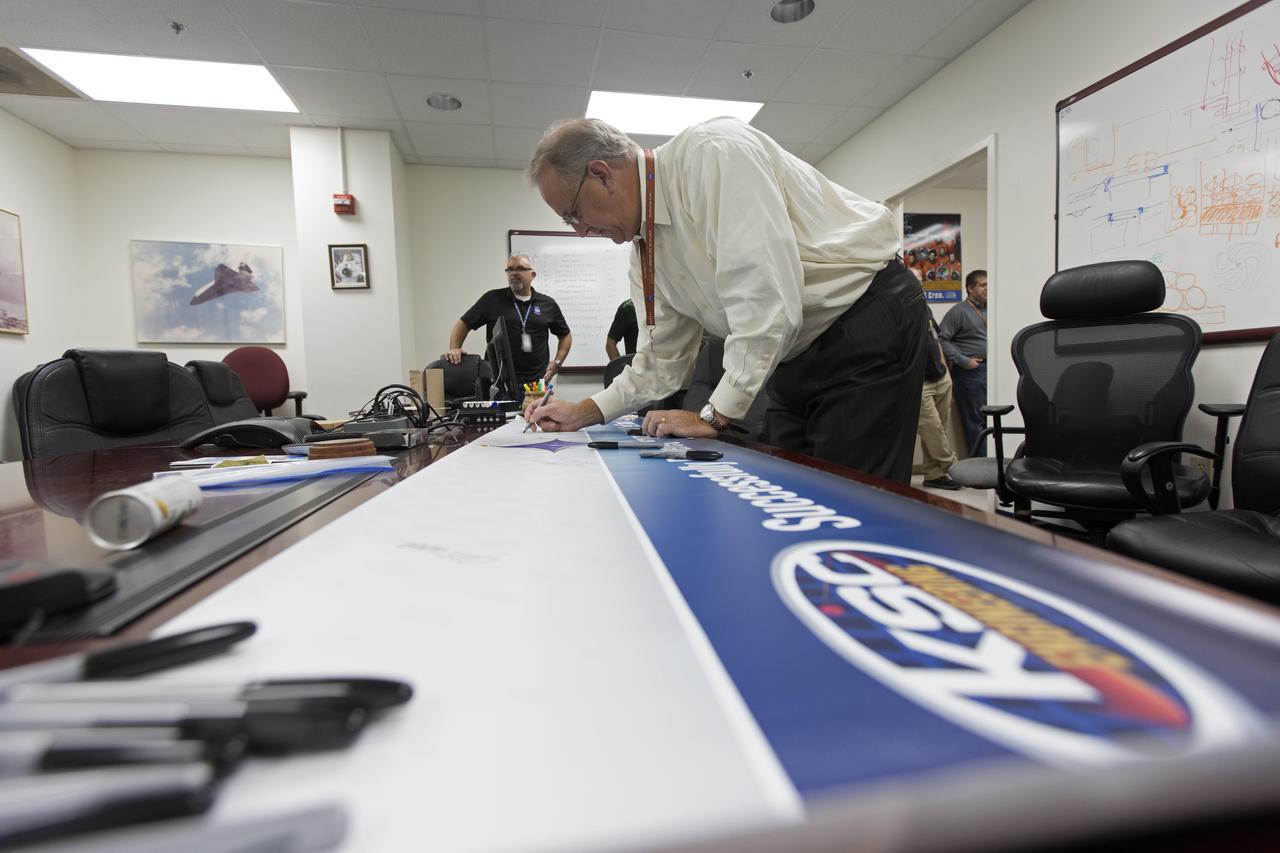
NASA Kennedy Space Center's Engineering Director Pat Simpkins signs the banner marking the successful delivery of a liquid oxygen test tank, called Tardis, in the Prototype Development Laboratory at NASA's Kennedy Space Center in Florida. Engineers and technicians worked together to develop the tank and build it to support cryogenic testing at Johnson Space Center's White Stands Test Facility in Las Cruces, New Mexico. The 12-foot-tall, 3,810-pound aluminum tank will be shipped to White Sands for testing.
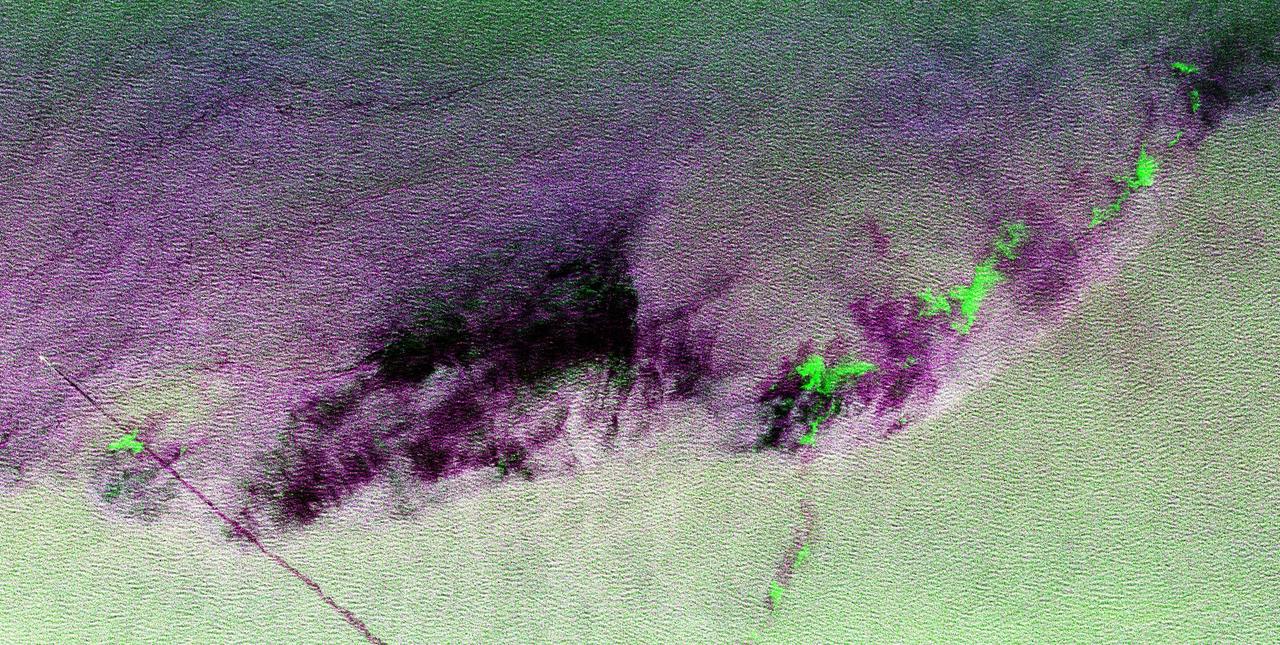
This is a radar image showing surface features on the open ocean in the northeast Atlantic Ocean. There is no land mass in this image. The purple line in the lower left of the image is the stern wake of a ship. The ship creating the wake is the bright white spot on the middle, left side of the image. The ship's wake is about 28 kilometers (17 miles) long in this image and investigators believe that is because the ship may be discharging oil. The oil makes the wake last longer and causes it to stand out in this radar image. A fairly sharp boundary or front extends from the lower left to the upper right corner of the image and separates two distinct water masses that have different temperatures. The different water temperature affects the wind patterns on the ocean. In this image, the light green area depicts rougher water with more wind, while the purple area is calmer water with less wind. The dark patches are smooth areas of low wind, probably related to clouds along the front, and the bright green patches are likely due to ice crystals in the clouds that scatter the radar waves. The overall "fuzzy" look of this image is caused by long ocean waves, also called swells. Ocean radar imagery allows the fine detail of ocean features and interactions to be seen, such as the wake, swell, ocean front and cloud effects, which can then be used to enhance the understanding of ocean dynamics on smaller and smaller scales. The image is centered at 42.8 degrees north latitude, 26.2 degrees west longitude and shows an area approximately 35 kilometers by 65 kilometers (22 by 40 miles). The colors in the image are assigned to different frequencies and polarizations of the radar as follows: red is L-band horizontally transmitted, horizontally received; green is C-band horizontally transmitted, horizontally received; blue is L-band vertically transmitted, vertically received. This image was acquired by the Spaceborne Imaging Radar-C/X-band Synthetic Aperture Radar (SIR-C/X-SAR) imaging radar when it flew aboard the space shuttle Endeavour on April 11, 1994. SIR-C/X-SAR, a joint mission of the German, Italian and United States space agencies, is part of NASA's Mission to Planet Earth. http://photojournal.jpl.nasa.gov/catalog/PIA01799
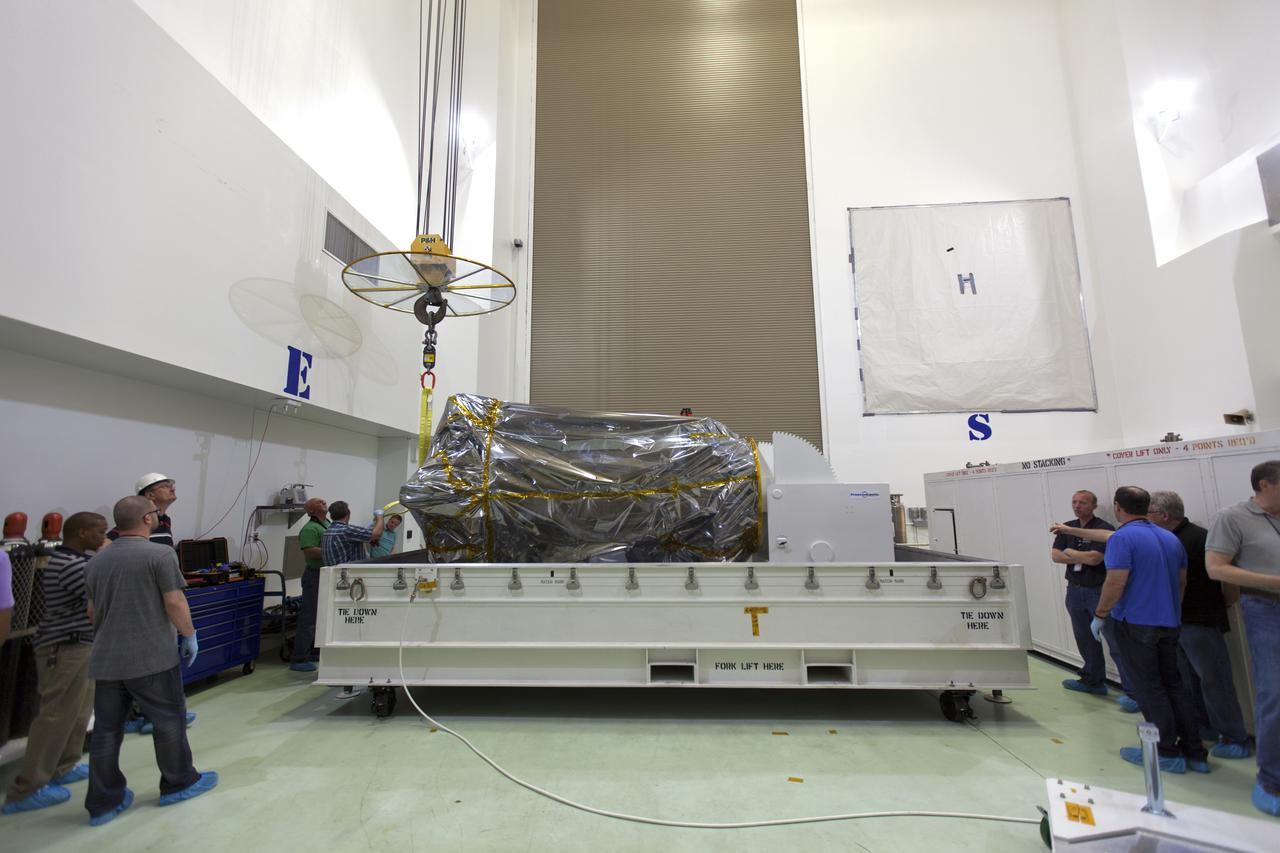
At the Astrotech processing facility in Titusville, Florida, near NASA's Kennedy Space Center, technicians and engineers remove NASA's Parker Solar Probe from its shipping container on Wednesday, April 4, 2018. The Parker Solar Probe will launch on a United Launch Alliance Delta IV Heavy rocket from Space Launch Complex 37 at Cape Canaveral Air Force Station in Florida no earlier than Aug. 4, 2018. The mission will perform the closest-ever observations of a star when it travels through the Sun's atmosphere, called the corona. The probe will rely on measurements and imaging to revolutionize our understanding of the corona and the Sun-Earth connection.
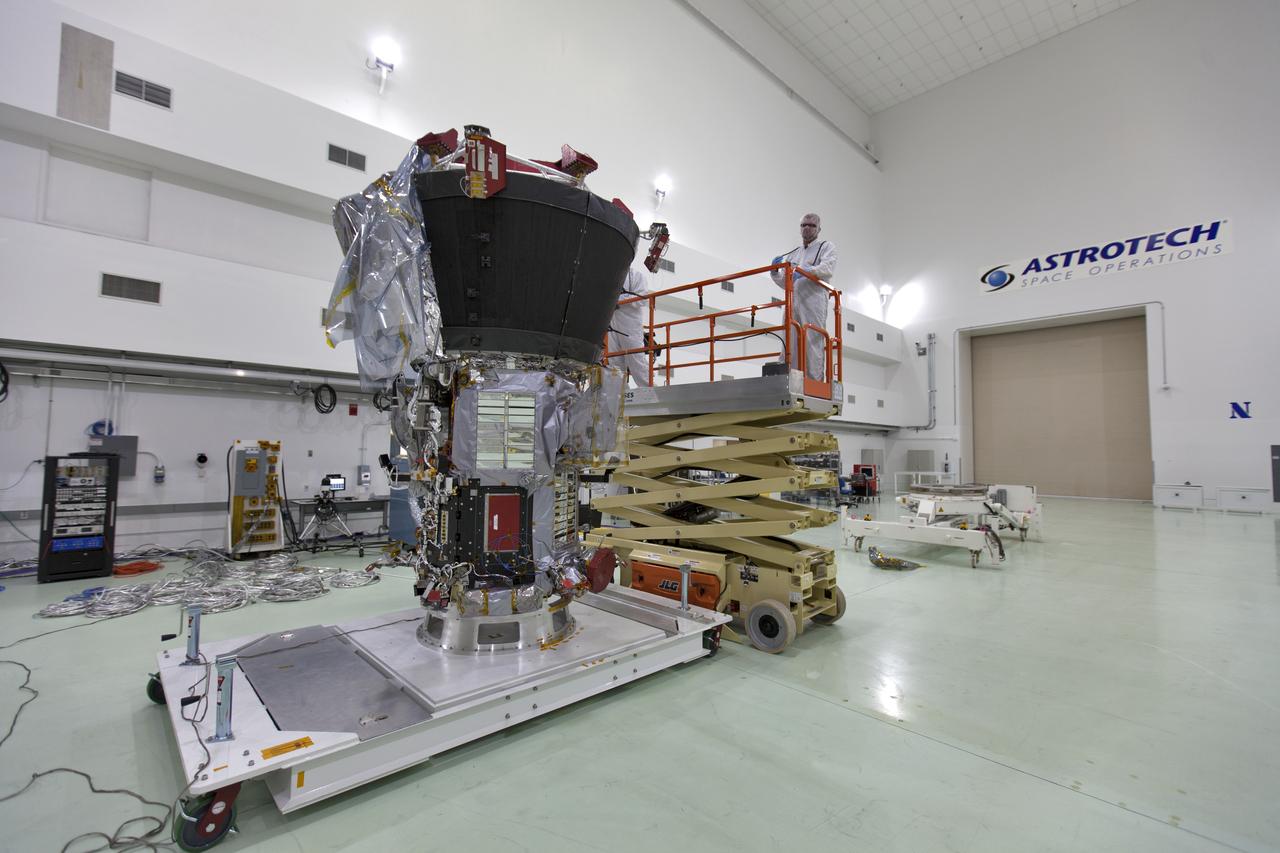
At the Astrotech processing facility in Titusville, Florida, near NASA's Kennedy Space Center, technicians and engineers remove NASA's Parker Solar Probe from its shipping bag on Wednesday, April 4, 2018. The Parker Solar Probe will launch on a United Launch Alliance Delta IV Heavy rocket from Space Launch Complex 37 at Cape Canaveral Air Force Station in Florida no earlier than Aug. 4, 2018. The mission will perform the closest-ever observations of a star when it travels through the Sun's atmosphere, called the corona. The probe will rely on measurements and imaging to revolutionize our understanding of the corona and the Sun-Earth connection.
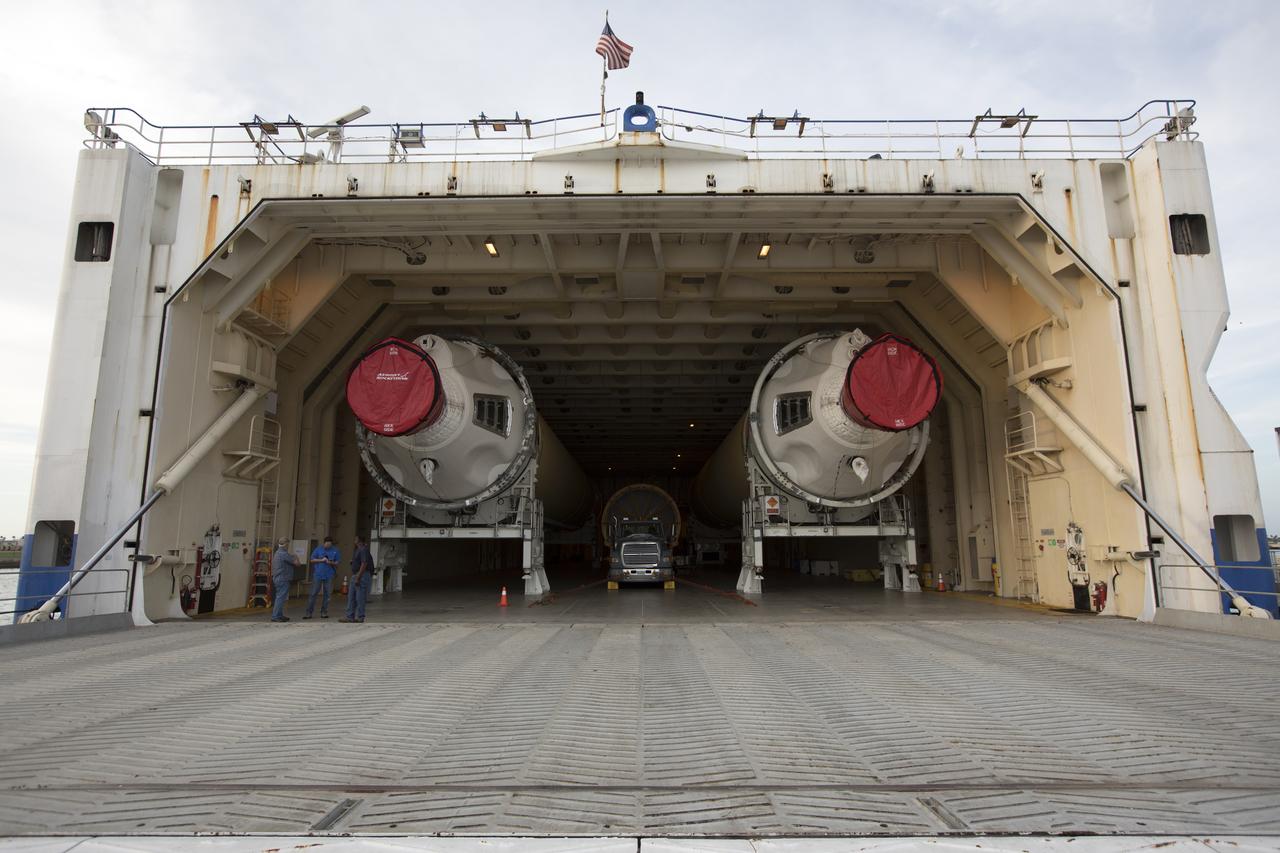
The United Launch Alliance Delta IV Heavy common booster core arrives aboard the company's Mariner ship and prepared for offload at Port Canaveral in Florida. The Delta IV Heavy will launch NASA's upcoming Parker Solar Probe mission. The mission will perform the closest-ever observations of a star when it travels through the Sun's atmosphere, called the corona. The probe will rely on measurements and imaging to revolutionize our understanding of the corona and the Sun-Earth connection. Liftoff atop the Delta IV Heavy rocket is scheduled to take place from Cape Canaveral's Space Launch Complex 37 in summer 2018.
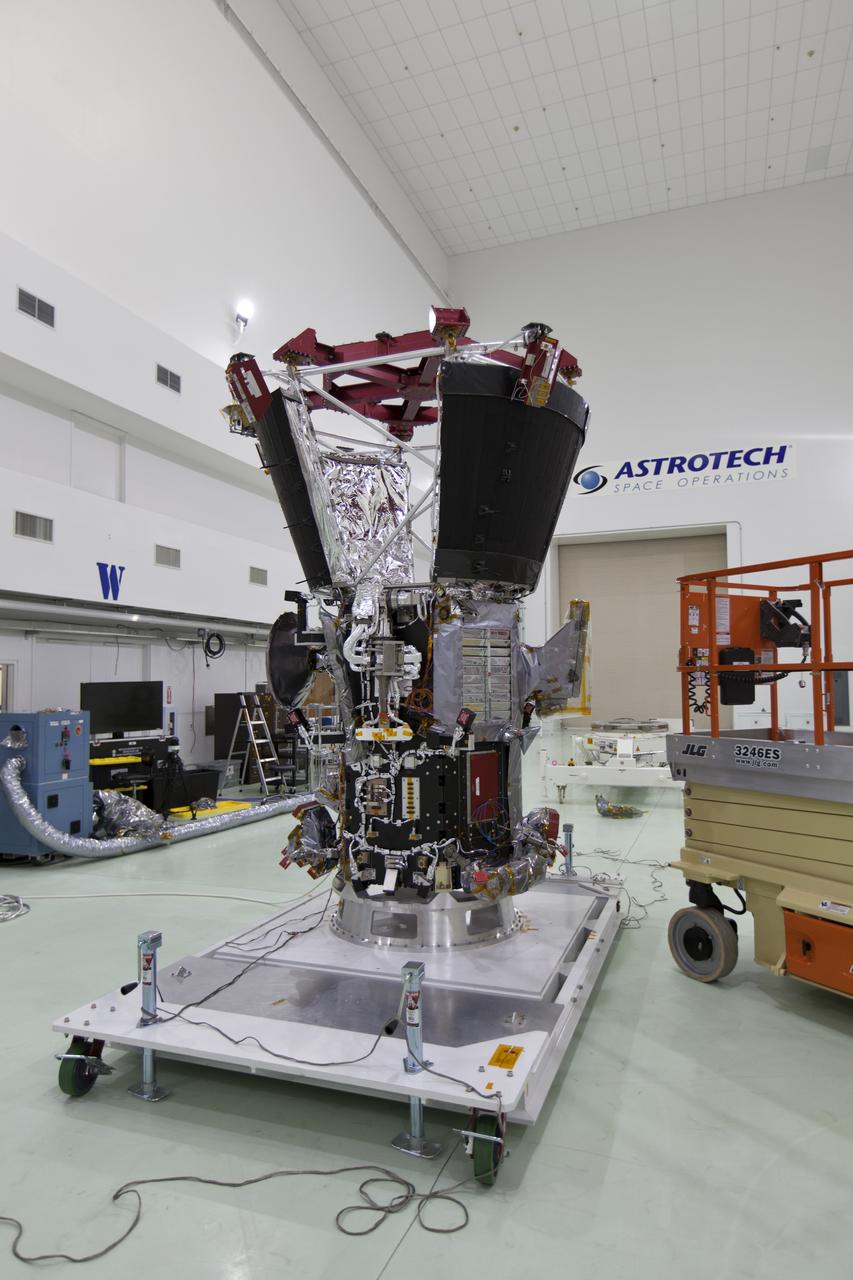
At the Astrotech processing facility in Titusville, Florida, near NASA's Kennedy Space Center, NASA's Parker Solar Probe has been removed from its shipping bag on Wednesday, April 4, 2018. The Parker Solar Probe will launch on a United Launch Alliance Delta IV Heavy rocket from Space Launch Complex 37 at Cape Canaveral Air Force Station in Florida no earlier than Aug. 4, 2018. The mission will perform the closest-ever observations of a star when it travels through the Sun's atmosphere, called the corona. The probe will rely on measurements and imaging to revolutionize our understanding of the corona and the Sun-Earth connection.
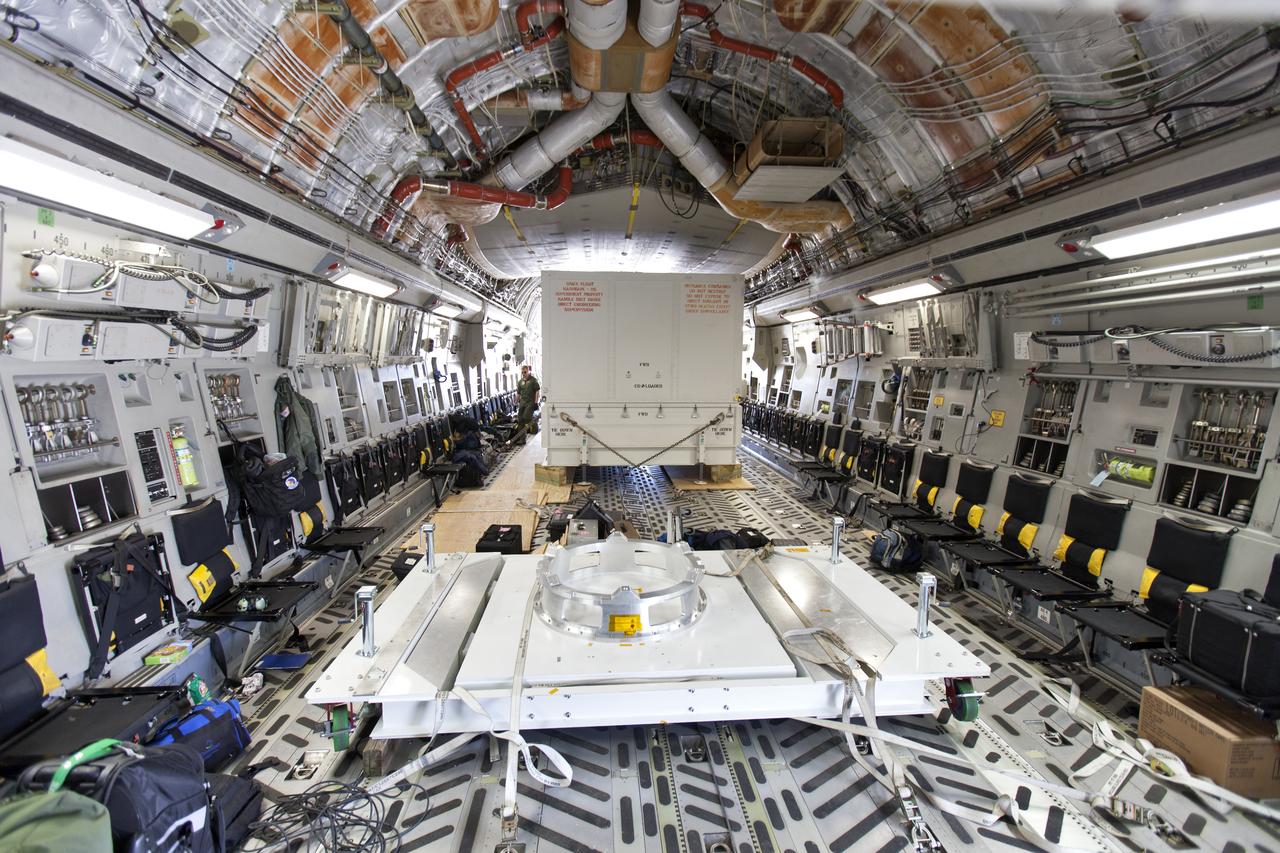
NASA's Parker Solar Probe, secured in its shipping container, arrives aboard a U.S. Air Force C-5 transport aircraft at Space Coast Regional Airport in Titusville, Florida. The spacecraft will be offloaded and transported to the Astrotech processing facility near the agency's Kennedy Space Center. The Parker Solar Probe will launch on a United Launch Alliance Delta IV Heavy rocket from Space Launch Complex 37 at Cape Canaveral Air Force Station in Florida in July 2018. The mission will perform the closest-ever observations of a star when it travels through the Sun's atmosphere, called the corona. The probe will rely on measurements and imaging to revolutionize our understanding of the corona and the Sun-Earth connection.
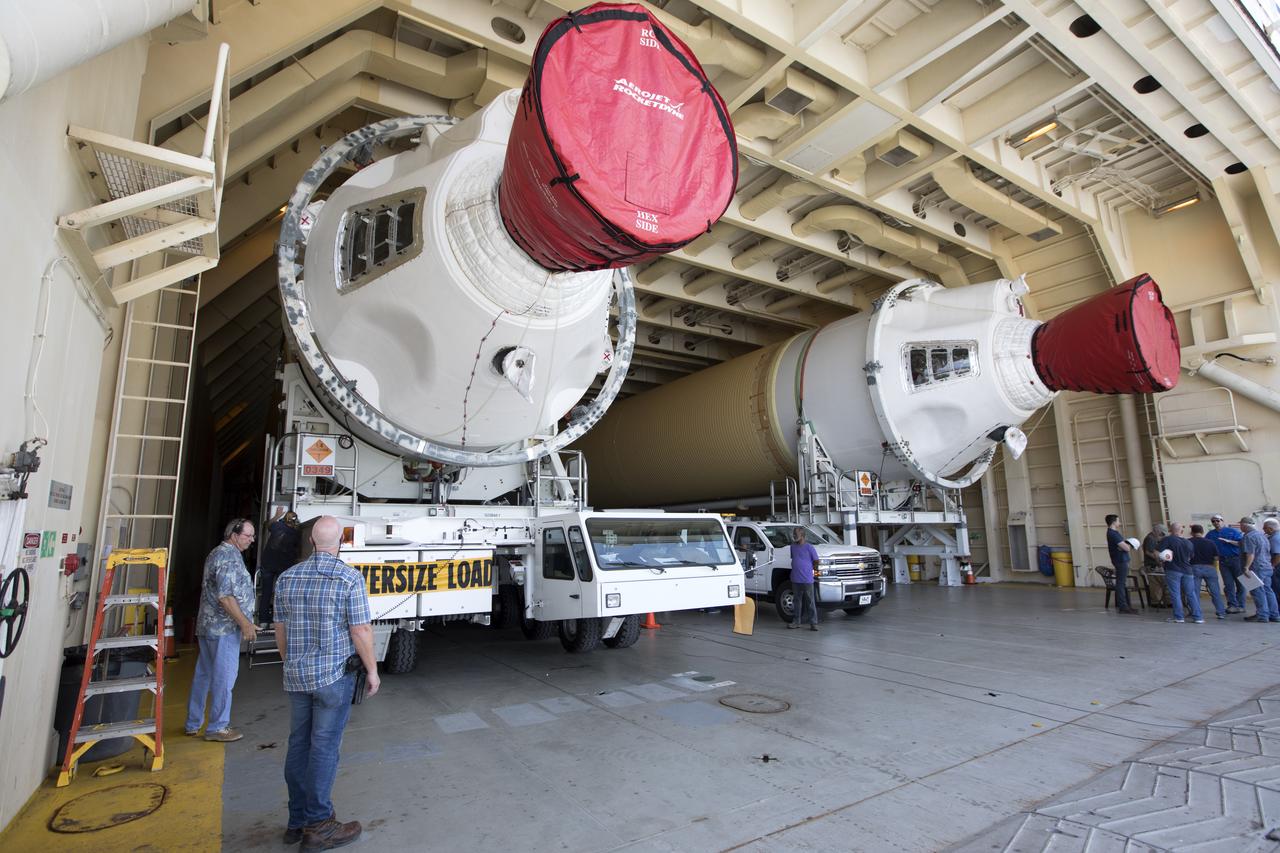
Preparations are underway to offload the United Launch Alliance Delta IV Heavy common booster core from the company's Mariner ship at Port Canaveral in Florida. The Delta IV Heavy will launch NASA's upcoming Parker Solar Probe mission. The mission will perform the closest-ever observations of a star when it travels through the Sun's atmosphere, called the corona. The probe will rely on measurements and imaging to revolutionize our understanding of the corona and the Sun-Earth connection. Liftoff atop the Delta IV Heavy rocket is scheduled to take place from Cape Canaveral's Space Launch Complex 37 in summer 2018.
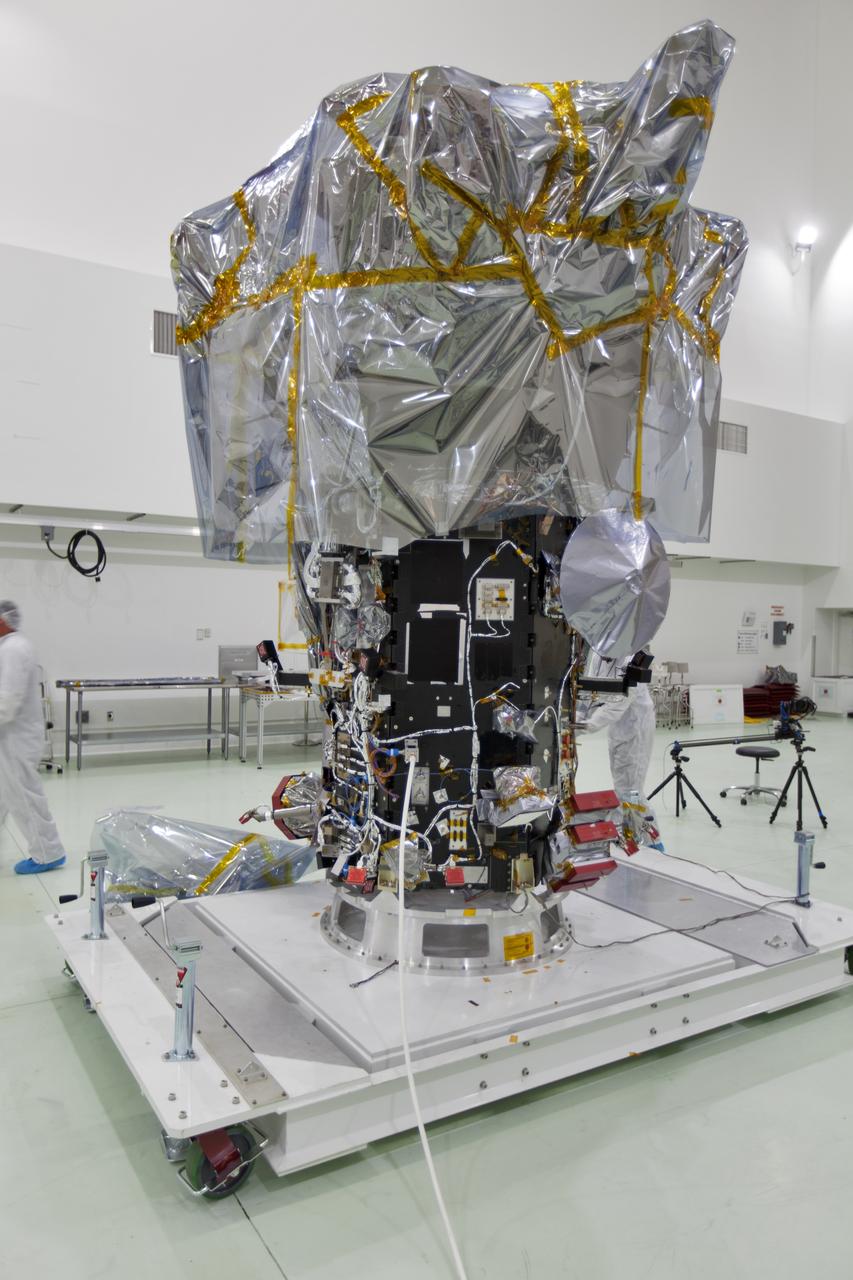
At the Astrotech processing facility in Titusville, Florida, near NASA's Kennedy Space Center, NASA's Parker Solar Probe is removed from its shipping bag on Wednesday, April 4, 2018. The Parker Solar Probe will launch on a United Launch Alliance Delta IV Heavy rocket from Space Launch Complex 37 at Cape Canaveral Air Force Station in Florida no earlier than Aug. 4, 2018. The mission will perform the closest-ever observations of a star when it travels through the Sun's atmosphere, called the corona. The probe will rely on measurements and imaging to revolutionize our understanding of the corona and the Sun-Earth connection.
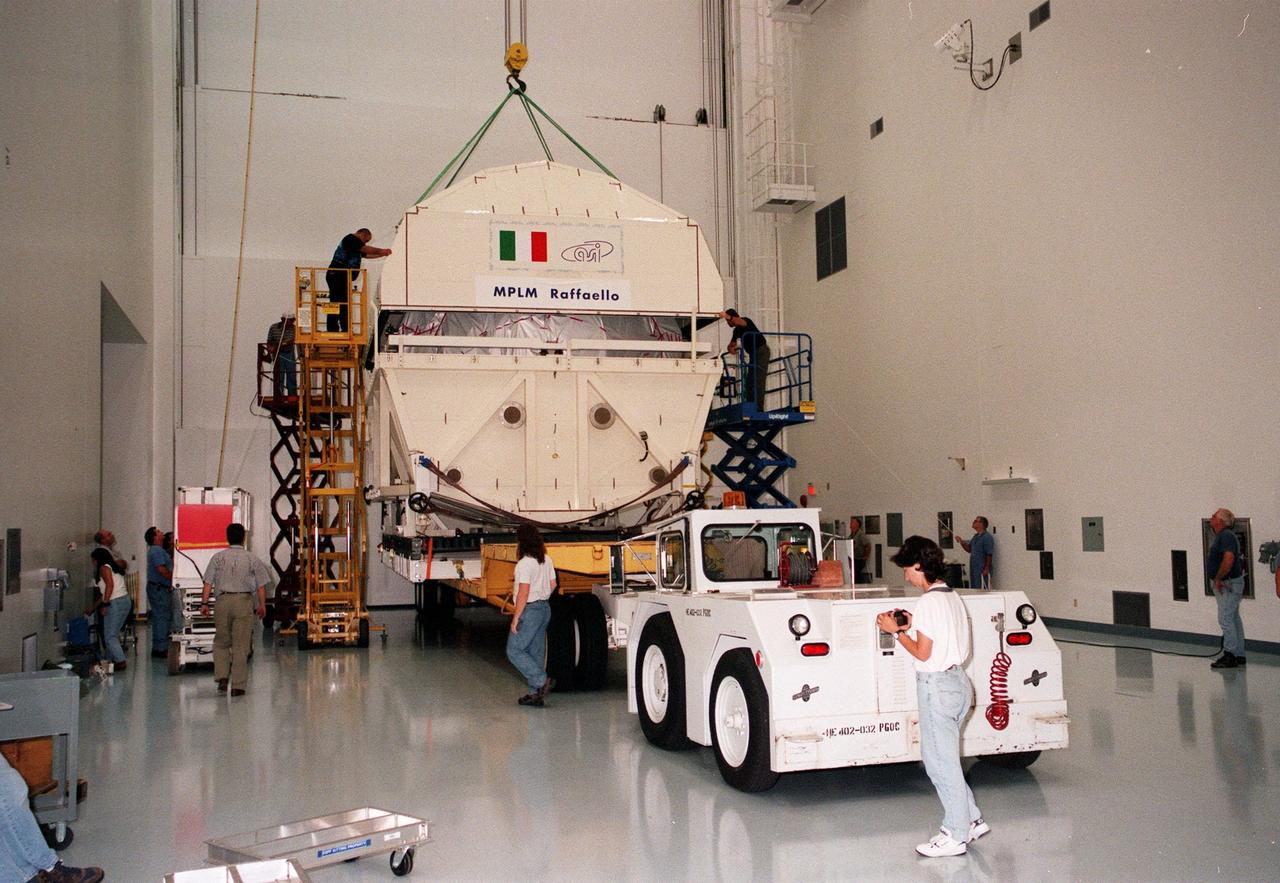
KENNEDY SPACE CENTER, FLA. -- Inside a high bay of the Space Station Processing Facility (SSPF), workers begin removing the shipping canister from around the Multi-Purpose Logistics Module (MPLM) called Raffaello. After transfer to a workstand, the MPLM will undergo testing, joining the first Italian-built MPLM, Leonardo, in the SSPF. One of Italy's major contributions to the ISS program, the MPLM is a reusable logistics carrier and the primary delivery system used to resupply and return station cargo requiring a pressurized environment. Weighing nearly 4.5 tons, the Raffaello measures 21 feet long and 15 feet in diameter. Raffaello is scheduled to be launched on mission STS-100 July 27, 2000
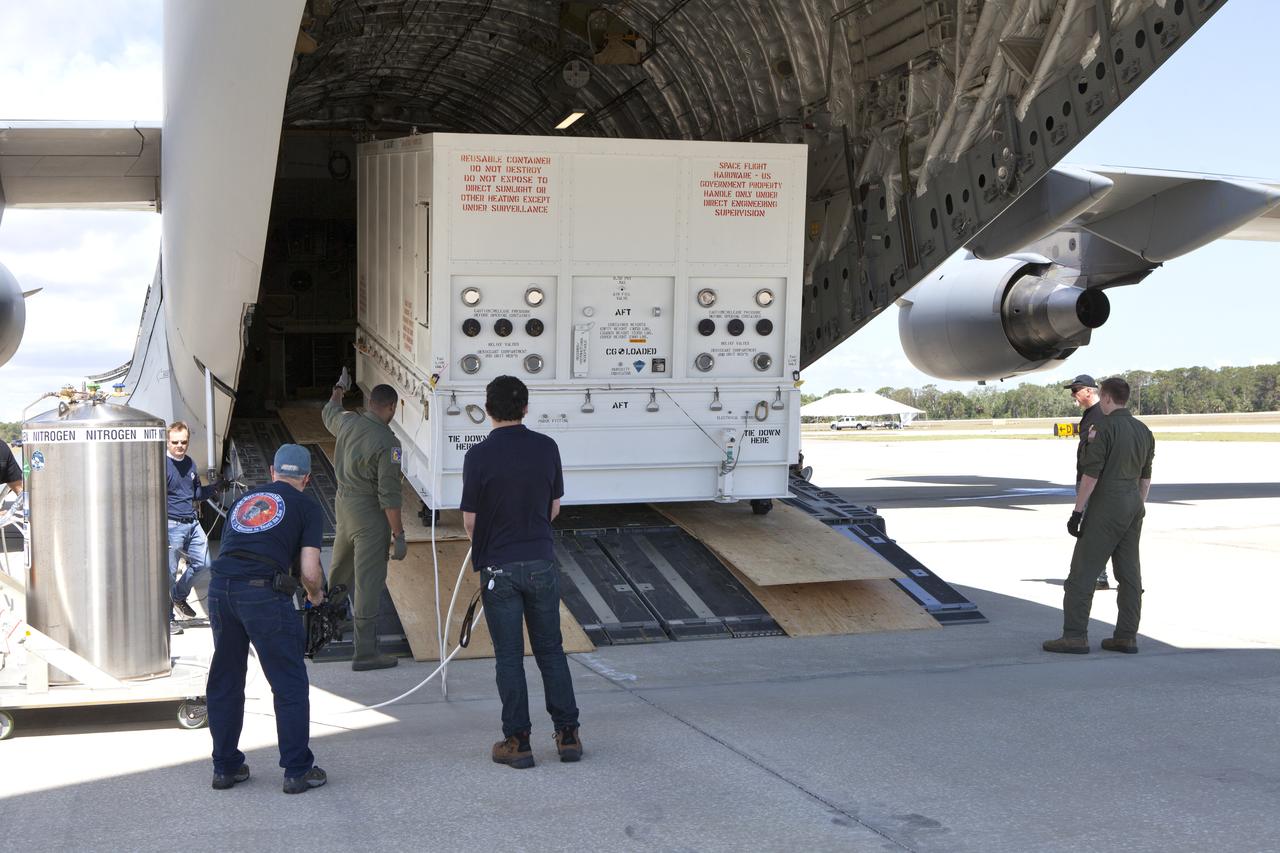
NASA's Parker Solar Probe, secured in its shipping container, is offloaded from a U.S. Air Force C-5 transport aircraft at Space Coast Regional Airport in Titusville, Florida. The spacecraft will be transported to the Astrotech processing facility near the agency's Kennedy Space Center. The Parker Solar Probe will launch on a United Launch Alliance Delta IV Heavy rocket from Space Launch Complex 37 at Cape Canaveral Air Force Station in Florida in July 2018. The mission will perform the closest-ever observations of a star when it travels through the Sun's atmosphere, called the corona. The probe will rely on measurements and imaging to revolutionize our understanding of the corona and the Sun-Earth connection.
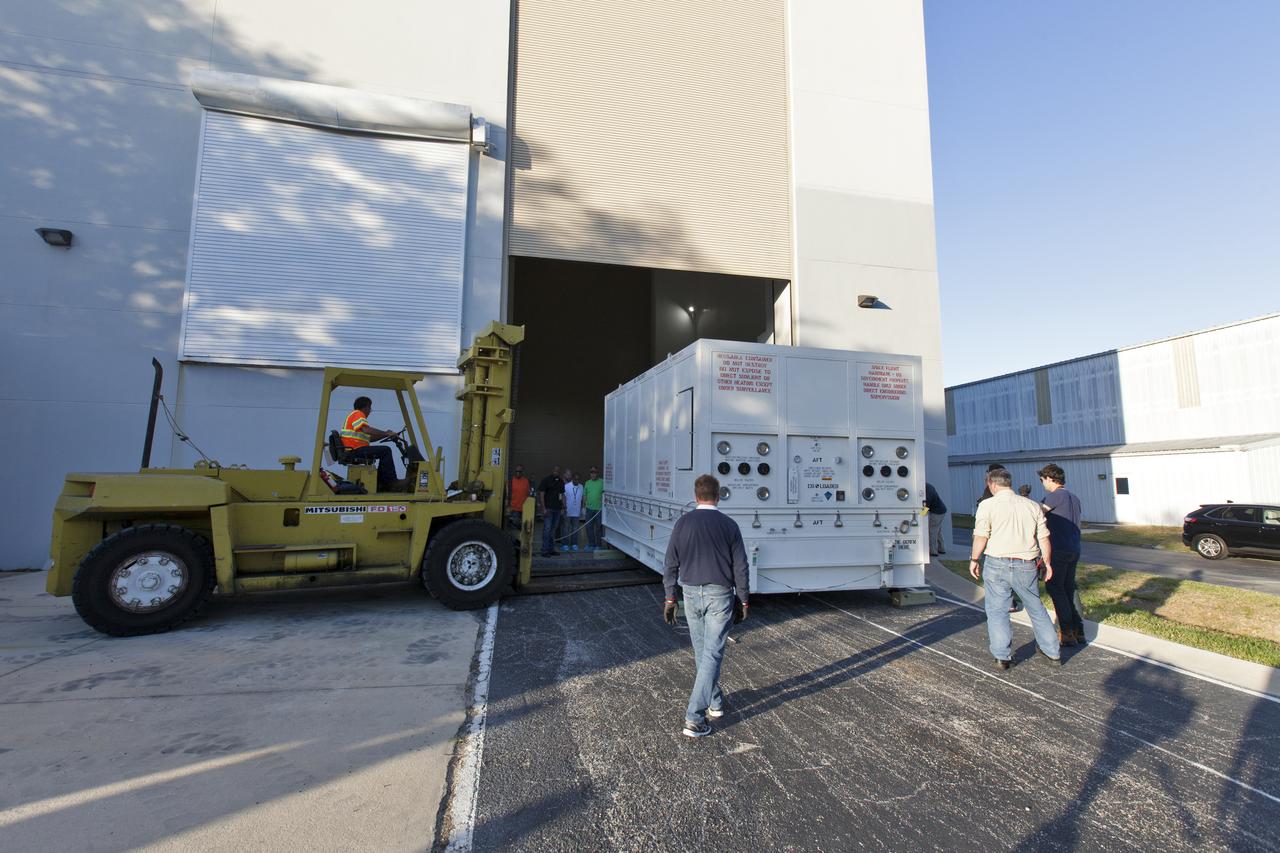
NASA's Parker Solar Probe, secured in its shipping container, arrives at the Astrotech processing facility near the agency's Kennedy Space Center in Florida. The spacecraft arrived aboard a U.S. Air Force C-5 transport aircraft at Space Coast Regional Airport in Titusville, Florida. The Parker Solar Probe will launch on a United Launch Alliance Delta IV Heavy rocket from Space Launch Complex 37 at Cape Canaveral Air Force Station in Florida in July 2018. The mission will perform the closest-ever observations of a star when it travels through the Sun's atmosphere, called the corona. The probe will rely on measurements and imaging to revolutionize our understanding of the corona and the Sun-Earth connection.
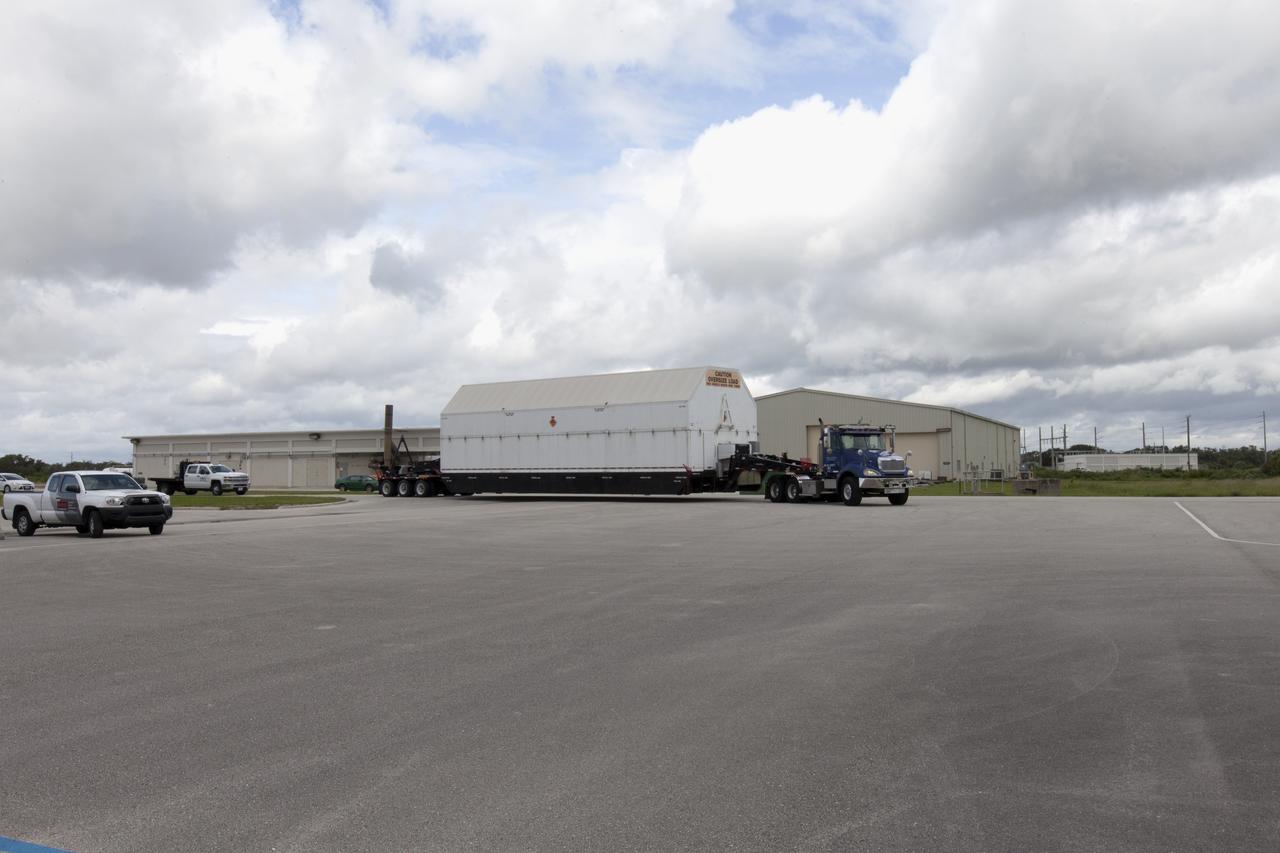
A United Launch Alliance Delta IV Heavy second stage, packaged in its shipping container, arrives at the Horizontal Integration Facility at Cape Canaveral Air Force Station for preflight processing. The Delta IV Heavy will launch NASA's upcoming Parker Solar Probe mission. The mission will perform the closest-ever observations of a star when it travels through the Sun's atmosphere, called the corona. The probe will rely on measurements and imaging to revolutionize our understanding of the corona and the Sun-Earth connection. Liftoff atop the Delta IV Heavy rocket is scheduled to take place from Cape Canaveral's Space Launch Complex 37 in summer 2018.
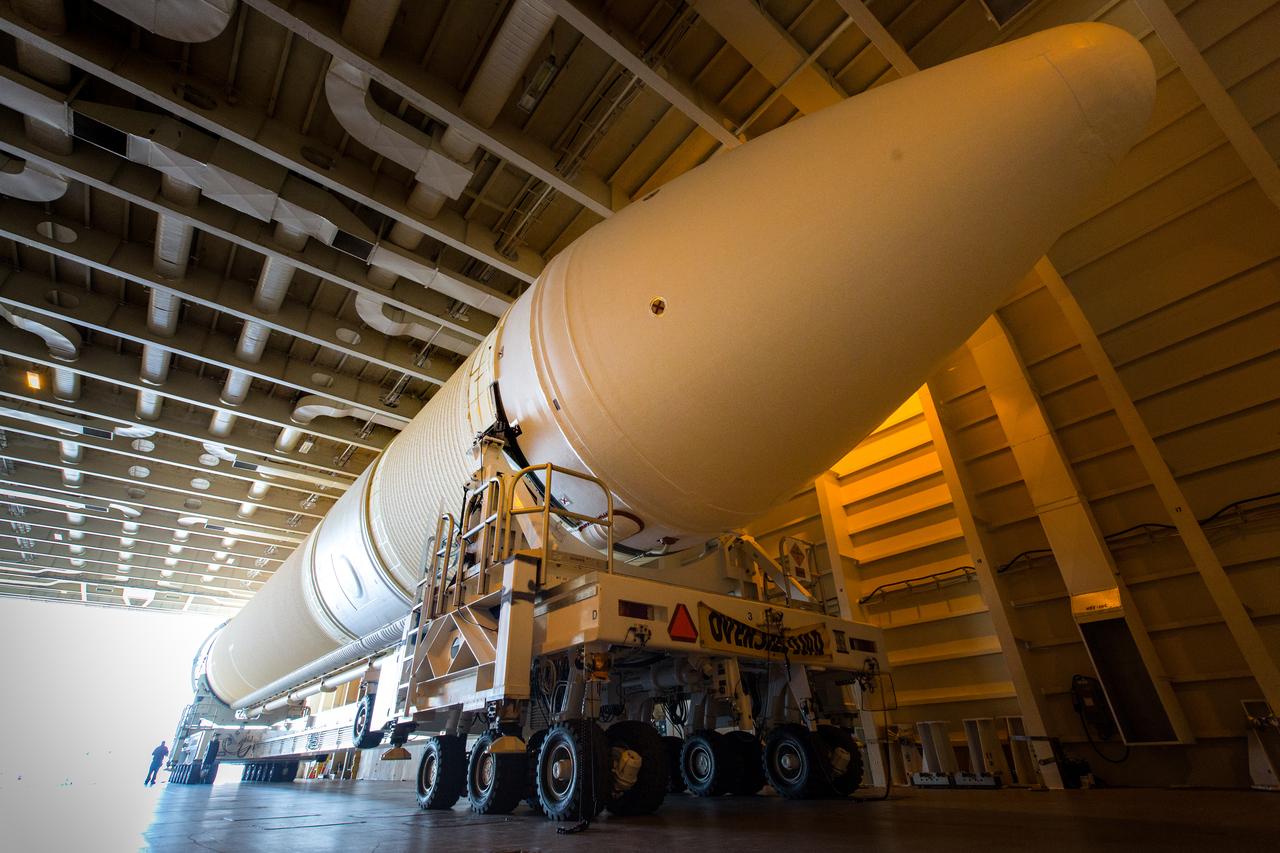
A United Launch Alliance Delta IV Heavy common booster core is about to be offloaded from the company's Mariner ship at Port Canaveral in Florida. The Delta IV Heavy will launch NASA's upcoming Parker Solar Probe mission. The mission will perform the closest-ever observations of a star when it travels through the Sun's atmosphere, called the corona. The probe will rely on measurements and imaging to revolutionize our understanding of the corona and the Sun-Earth connection. Liftoff atop the Delta IV Heavy rocket is scheduled to take place from Cape Canaveral's Space Launch Complex 37 in summer 2018.
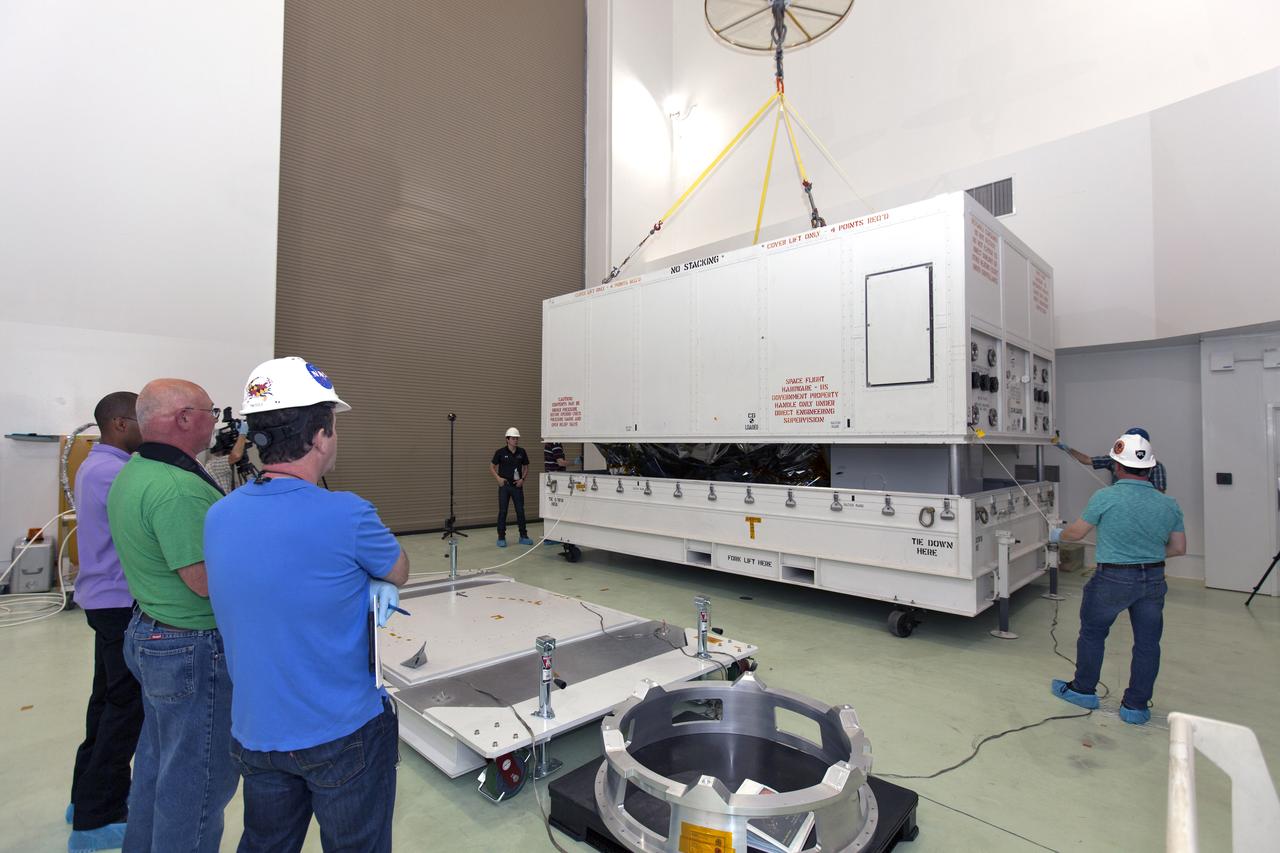
At the Astrotech processing facility in Titusville, Florida, near NASA's Kennedy Space Center, technicians and engineers remove NASA's Parker Solar Probe from its shipping container on Wednesday, April 4, 2018. The Parker Solar Probe will launch on a United Launch Alliance Delta IV Heavy rocket from Space Launch Complex 37 at Cape Canaveral Air Force Station in Florida no earlier than Aug. 4, 2018. The mission will perform the closest-ever observations of a star when it travels through the Sun's atmosphere, called the corona. The probe will rely on measurements and imaging to revolutionize our understanding of the corona and the Sun-Earth connection.
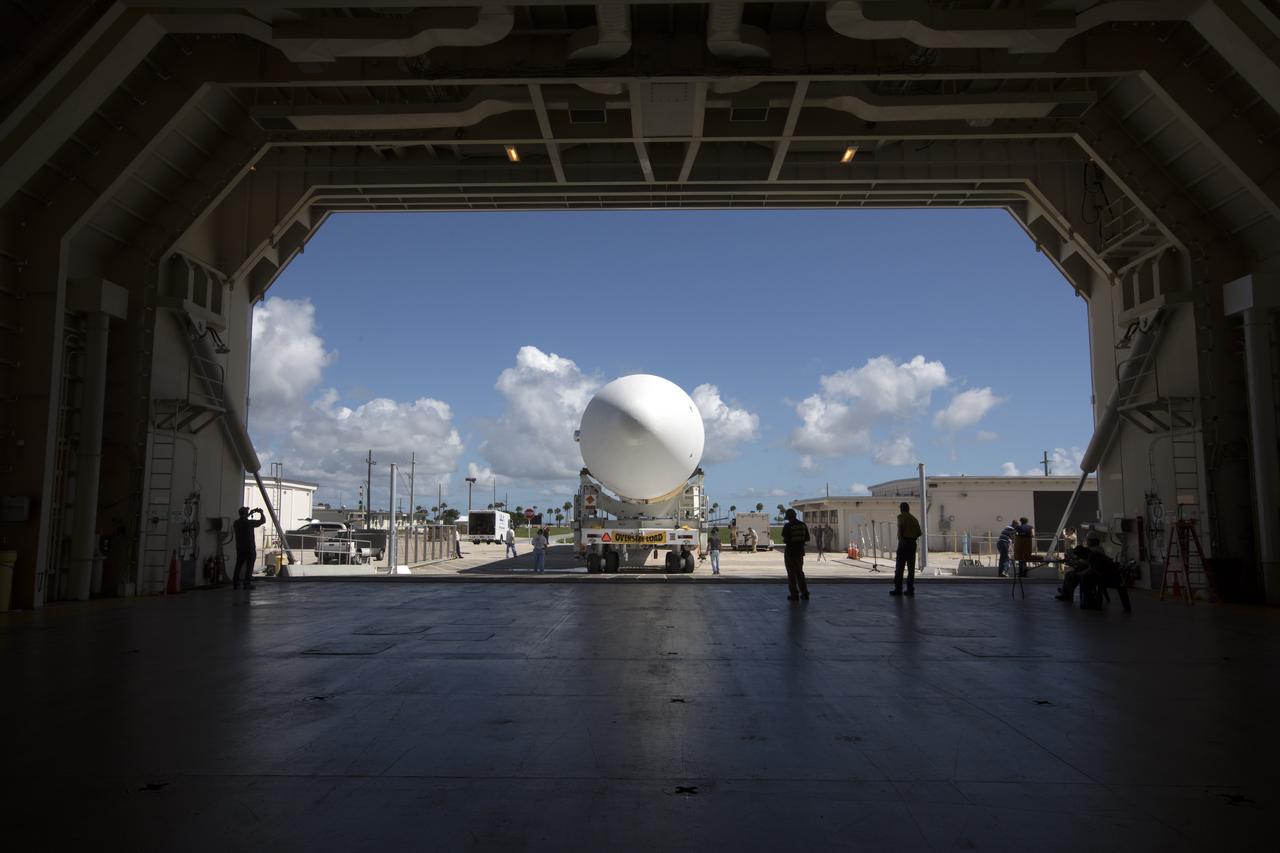
A United Launch Alliance Delta IV Heavy common booster core is offloaded from the company's Mariner ship at Port Canaveral in Florida. The Delta IV Heavy will launch NASA's upcoming Parker Solar Probe mission. The mission will perform the closest-ever observations of a star when it travels through the Sun's atmosphere, called the corona. The probe will rely on measurements and imaging to revolutionize our understanding of the corona and the Sun-Earth connection. Liftoff atop the Delta IV Heavy rocket is scheduled to take place from Cape Canaveral's Space Launch Complex 37 in summer 2018.
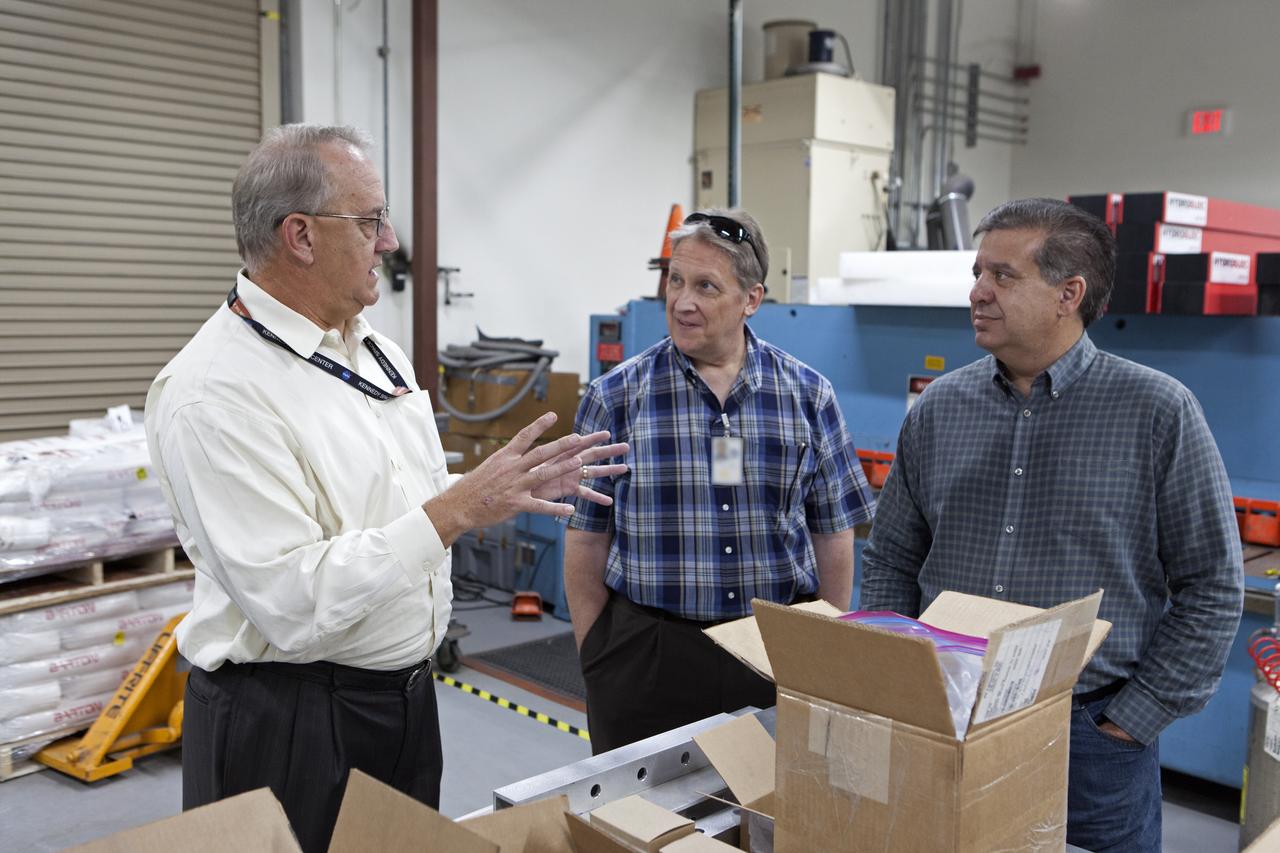
NASA Kennedy Space Center's Engineering Director Pat Simpkins, at left, talks with Michael E. Johnson, a project engineer; and Emilio Cruz, deputy division chief in the Laboratories, Development and Testing Division, inside the Prototype Development Laboratory. A banner signing event was held to mark the successful delivery of a liquid oxygen test tank, called Tardis. Engineers and technicians worked together to develop the tank and build it at the lab to support cryogenic testing at Johnson Space Center's White Sands Test Facility in Las Cruces, New Mexico. The 12-foot-tall, 3,810-pound aluminum tank will be shipped to White Sands for testing.
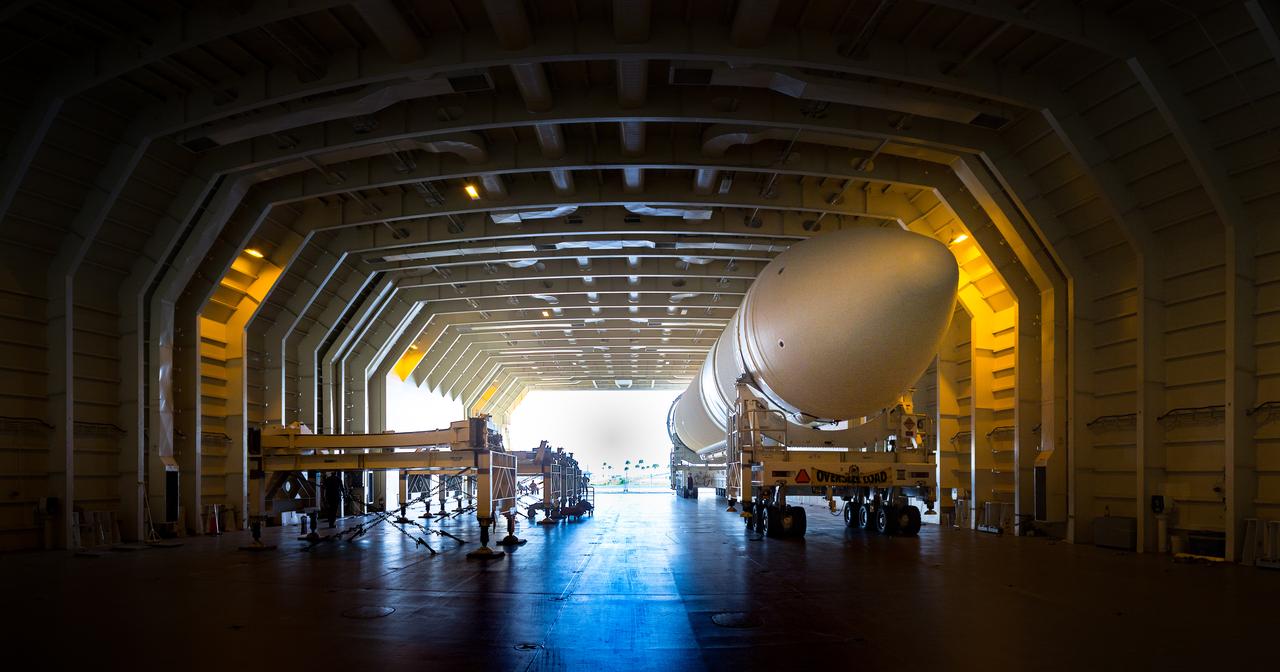
A United Launch Alliance Delta IV Heavy common booster core is about to be offloaded from the company's Mariner ship at Port Canaveral in Florida. The Delta IV Heavy will launch NASA's upcoming Parker Solar Probe mission. The mission will perform the closest-ever observations of a star when it travels through the Sun's atmosphere, called the corona. The probe will rely on measurements and imaging to revolutionize our understanding of the corona and the Sun-Earth connection. Liftoff atop the Delta IV Heavy rocket is scheduled to take place from Cape Canaveral's Space Launch Complex 37 in summer 2018.
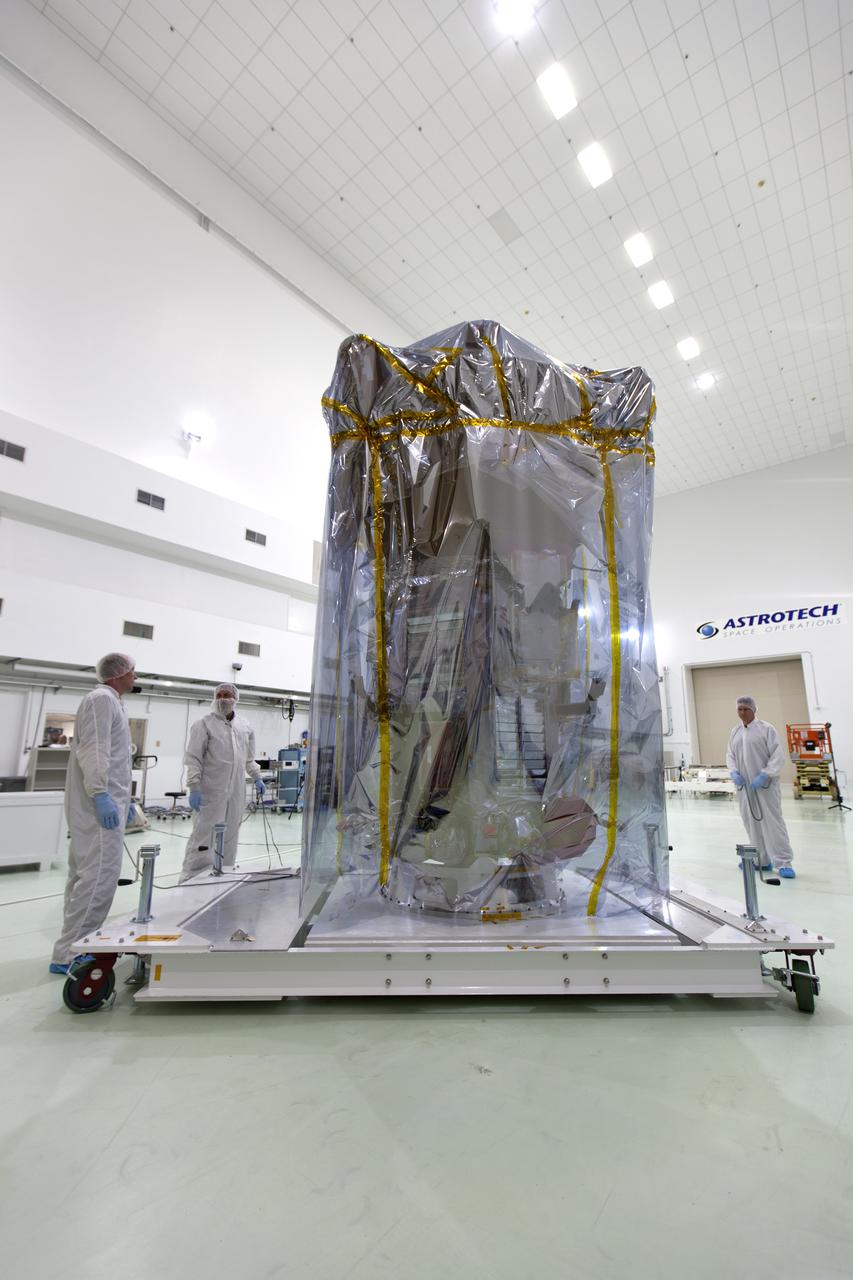
At the Astrotech processing facility in Titusville, Florida, near NASA's Kennedy Space Center, technicians and engineers remove NASA's Parker Solar Probe from its shipping bag on Wednesday, April 4, 2018. The Parker Solar Probe will launch on a United Launch Alliance Delta IV Heavy rocket from Space Launch Complex 37 at Cape Canaveral Air Force Station in Florida no earlier than Aug. 4, 2018. The mission will perform the closest-ever observations of a star when it travels through the Sun's atmosphere, called the corona. The probe will rely on measurements and imaging to revolutionize our understanding of the corona and the Sun-Earth connection.

Inside Building 836 at Vandenberg Air Force Base in California, the first half of the payload fairing for the United Launch Alliance (ULA) Delta II rocket is lifted out of its shipping container. NASA's Ice, Cloud and land Elevation Satellite-2 (ICESat-2) is scheduled to launch on the final ULA Delta II rocket later this year. ICESat-2 will measure the height of a changing Earth, one laser pulse at a time, 10,000 laser pulses a second. The satellite will carry a single instrument, the Advanced Topographic Laser Altimeter System. ICESat-2 will help scientists investigate why, and how much our planet's frozen and icy areas, called the cryosphere, is changing in a warming climate.
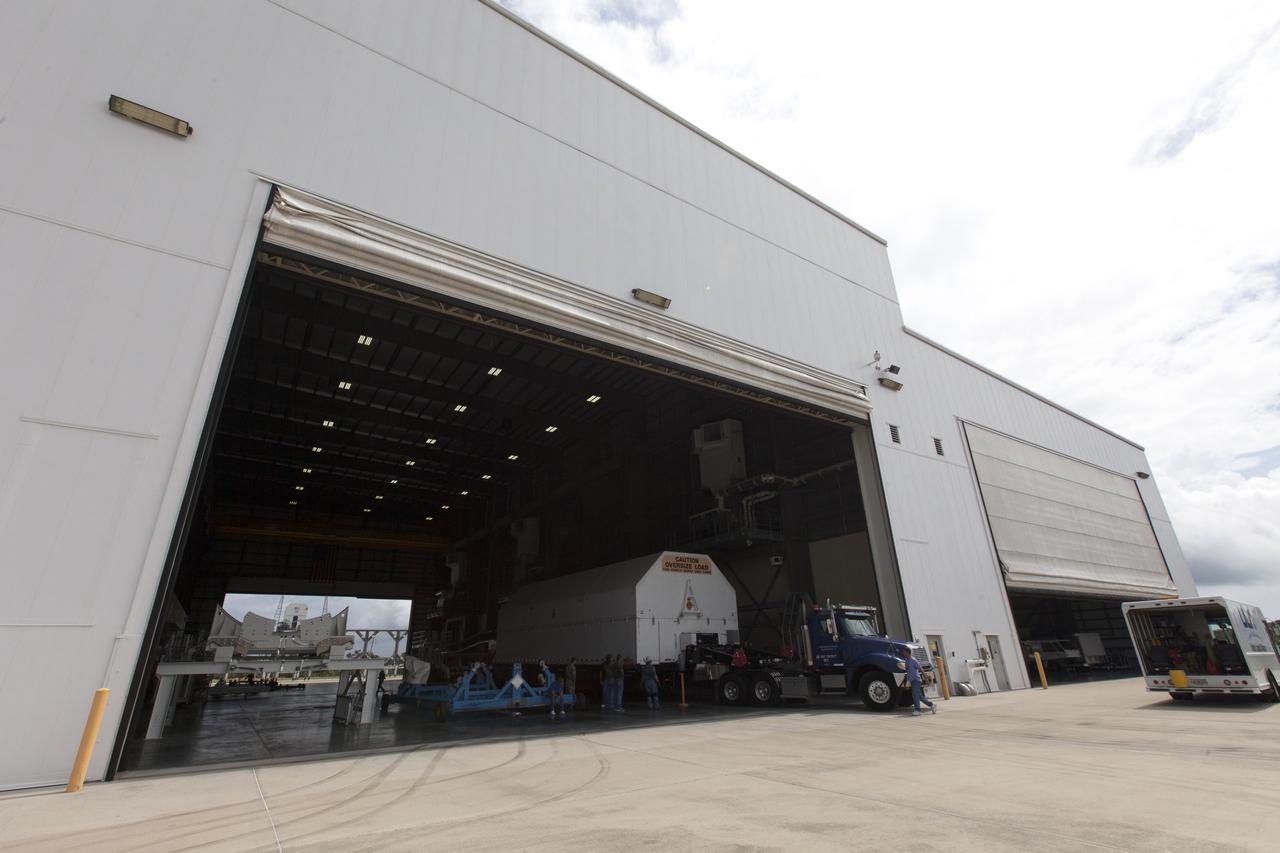
A United Launch Alliance Delta IV Heavy second stage, packaged in its shipping container, arrives at the Horizontal Integration Facility at Cape Canaveral Air Force Station for preflight processing. The Delta IV Heavy will launch NASA's upcoming Parker Solar Probe mission. The mission will perform the closest-ever observations of a star when it travels through the Sun's atmosphere, called the corona. The probe will rely on measurements and imaging to revolutionize our understanding of the corona and the Sun-Earth connection. Liftoff atop the Delta IV Heavy rocket is scheduled to take place from Cape Canaveral's Space Launch Complex 37 in summer 2018.
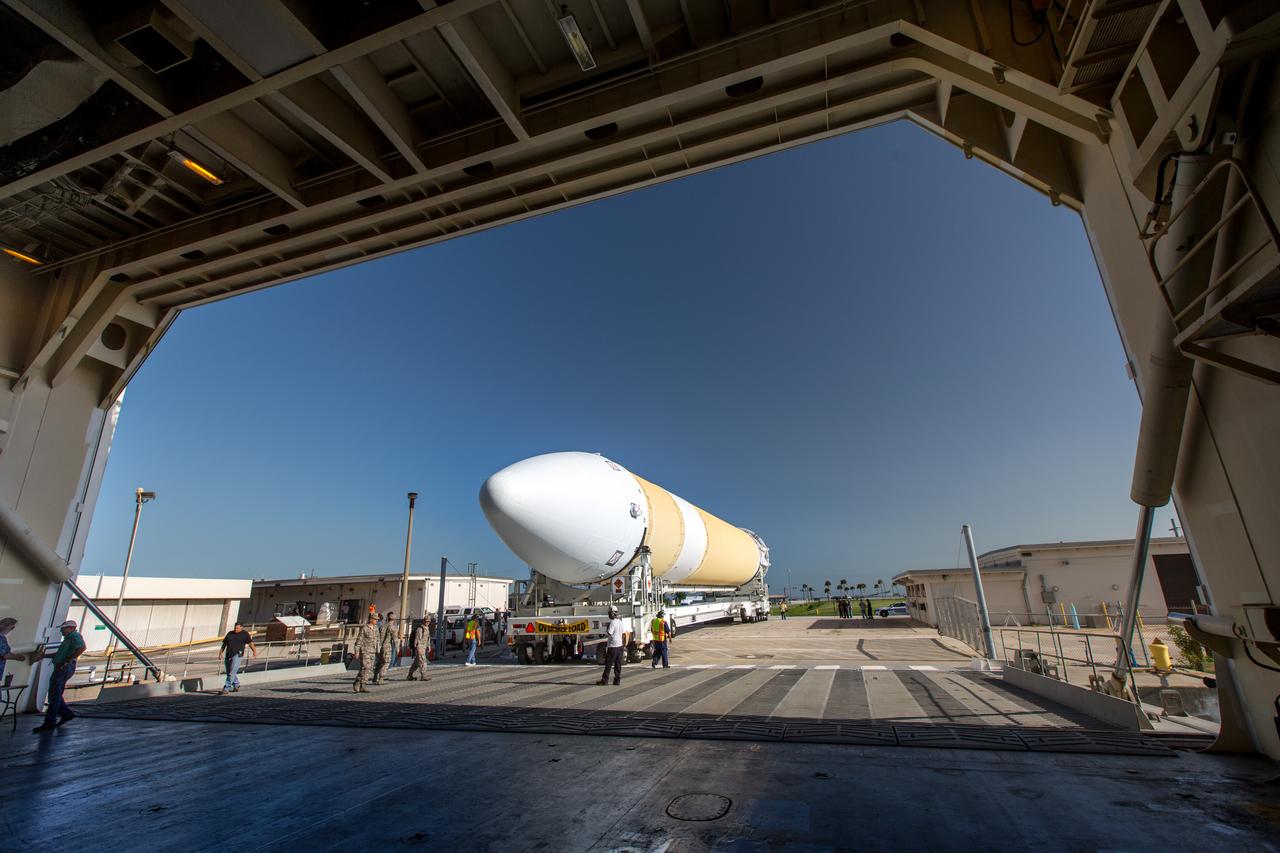
A United Launch Alliance Delta IV Heavy common booster core is offloaded from the company's Mariner ship at Port Canaveral in Florida. The Delta IV Heavy will launch NASA's upcoming Parker Solar Probe mission. The mission will perform the closest-ever observations of a star when it travels through the Sun's atmosphere, called the corona. The probe will rely on measurements and imaging to revolutionize our understanding of the corona and the Sun-Earth connection. Liftoff atop the Delta IV Heavy rocket is scheduled to take place from Cape Canaveral's Space Launch Complex 37 in summer 2018.
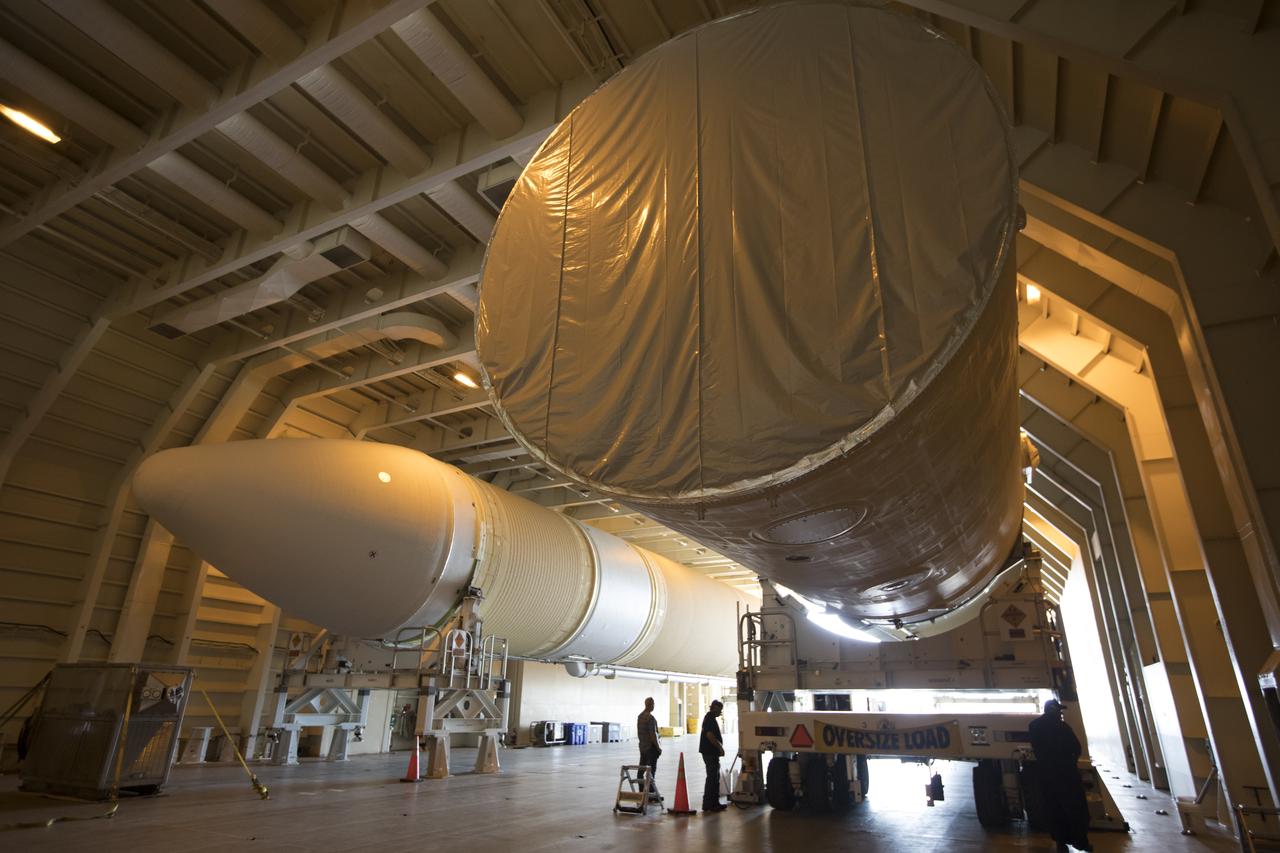
Preparations are underway to offload the United Launch Alliance Delta IV Heavy common booster core from the company's Mariner ship at Port Canaveral in Florida. The Delta IV Heavy will launch NASA's upcoming Parker Solar Probe mission. The mission will perform the closest-ever observations of a star when it travels through the Sun's atmosphere, called the corona. The probe will rely on measurements and imaging to revolutionize our understanding of the corona and the Sun-Earth connection. Liftoff atop the Delta IV Heavy rocket is scheduled to take place from Cape Canaveral's Space Launch Complex 37 in summer 2018.
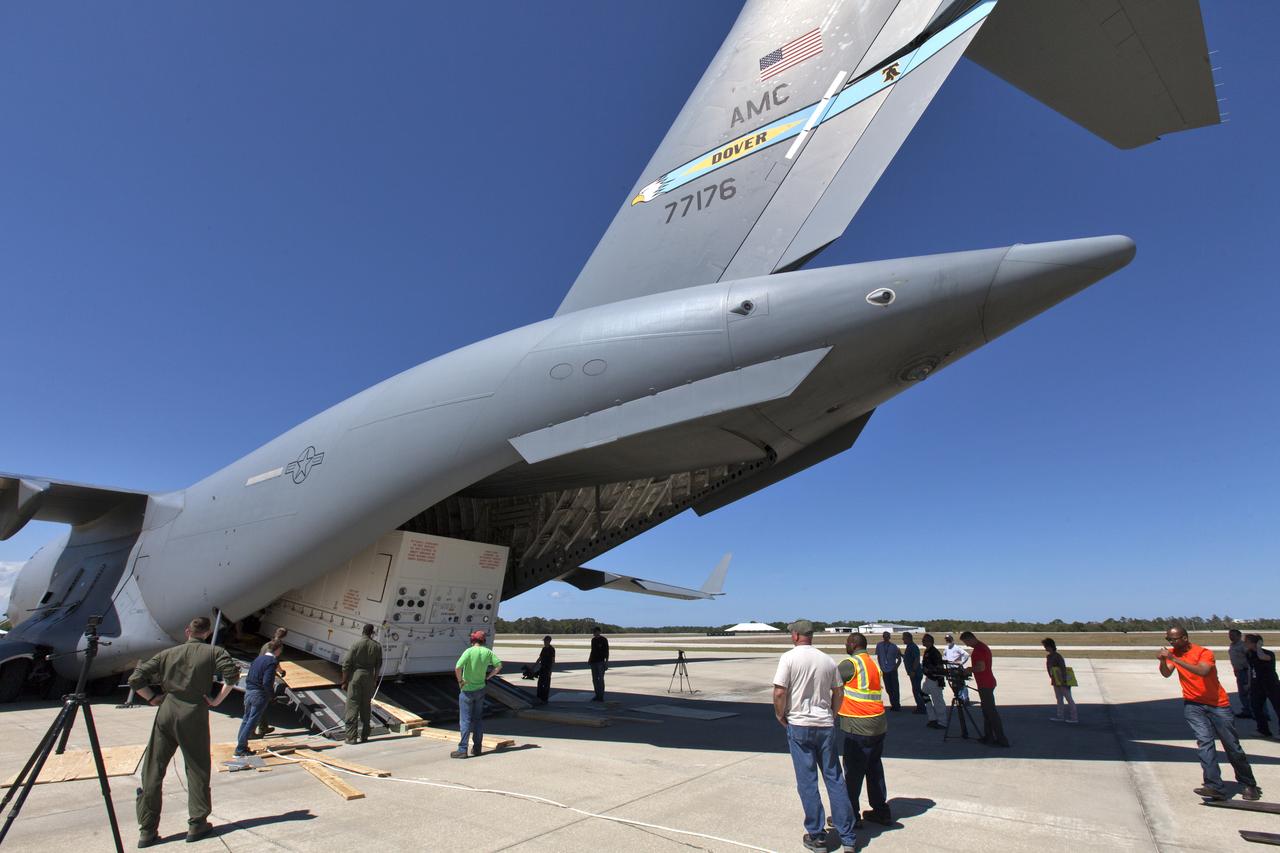
NASA's Parker Solar Probe, secured in its shipping container, is offloaded from a U.S. Air Force C-5 transport aircraft at Space Coast Regional Airport in Titusville, Florida. The spacecraft will be transported to the Astrotech processing facility near the agency's Kennedy Space Center. The Parker Solar Probe will launch on a United Launch Alliance Delta IV Heavy rocket from Space Launch Complex 37 at Cape Canaveral Air Force Station in Florida in July 2018. The mission will perform the closest-ever observations of a star when it travels through the Sun's atmosphere, called the corona. The probe will rely on measurements and imaging to revolutionize our understanding of the corona and the Sun-Earth connection.
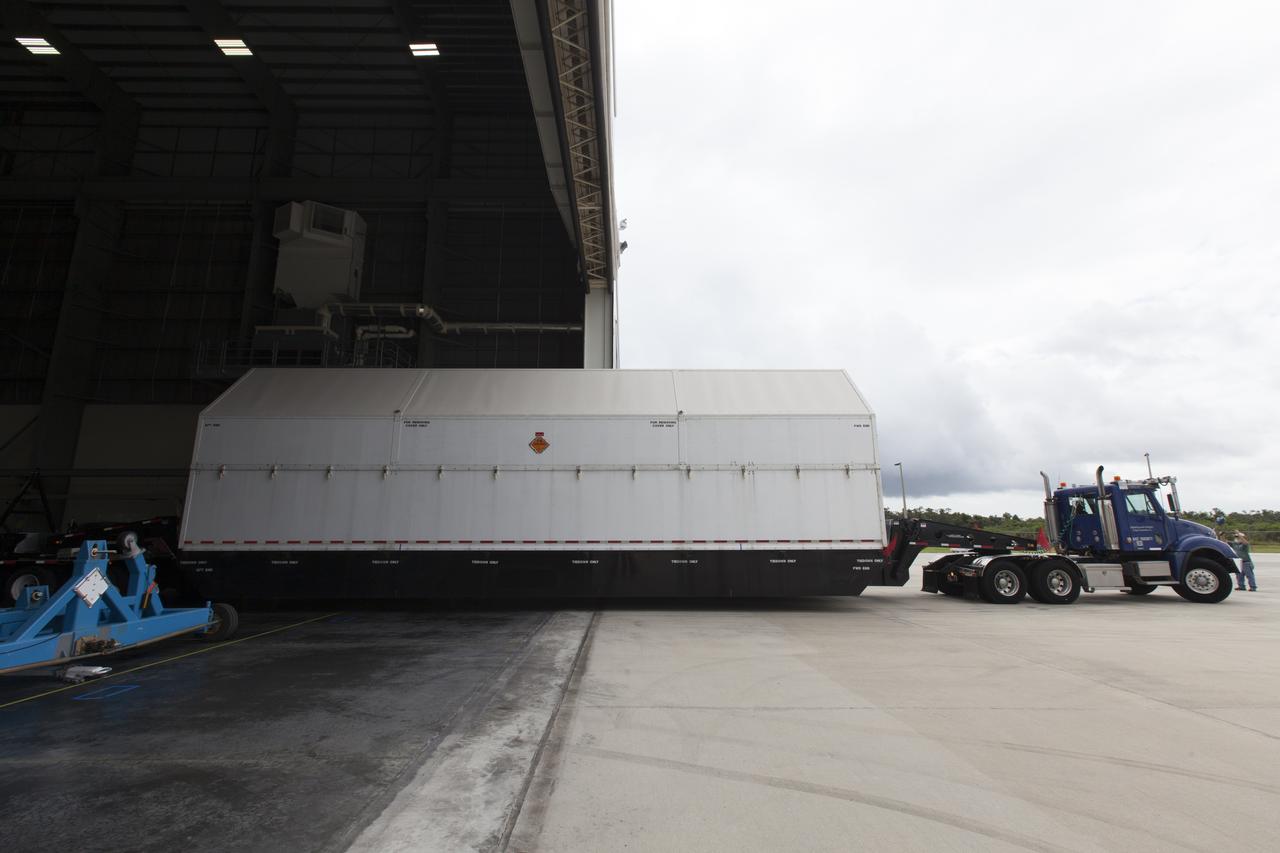
A United Launch Alliance Delta IV Heavy second stage, packaged in its shipping container, arrives at the Horizontal Integration Facility at Cape Canaveral Air Force Station for preflight processing. The Delta IV Heavy will launch NASA's upcoming Parker Solar Probe mission. The mission will perform the closest-ever observations of a star when it travels through the Sun's atmosphere, called the corona. The probe will rely on measurements and imaging to revolutionize our understanding of the corona and the Sun-Earth connection. Liftoff atop the Delta IV Heavy rocket is scheduled to take place from Cape Canaveral's Space Launch Complex 37 in summer 2018.
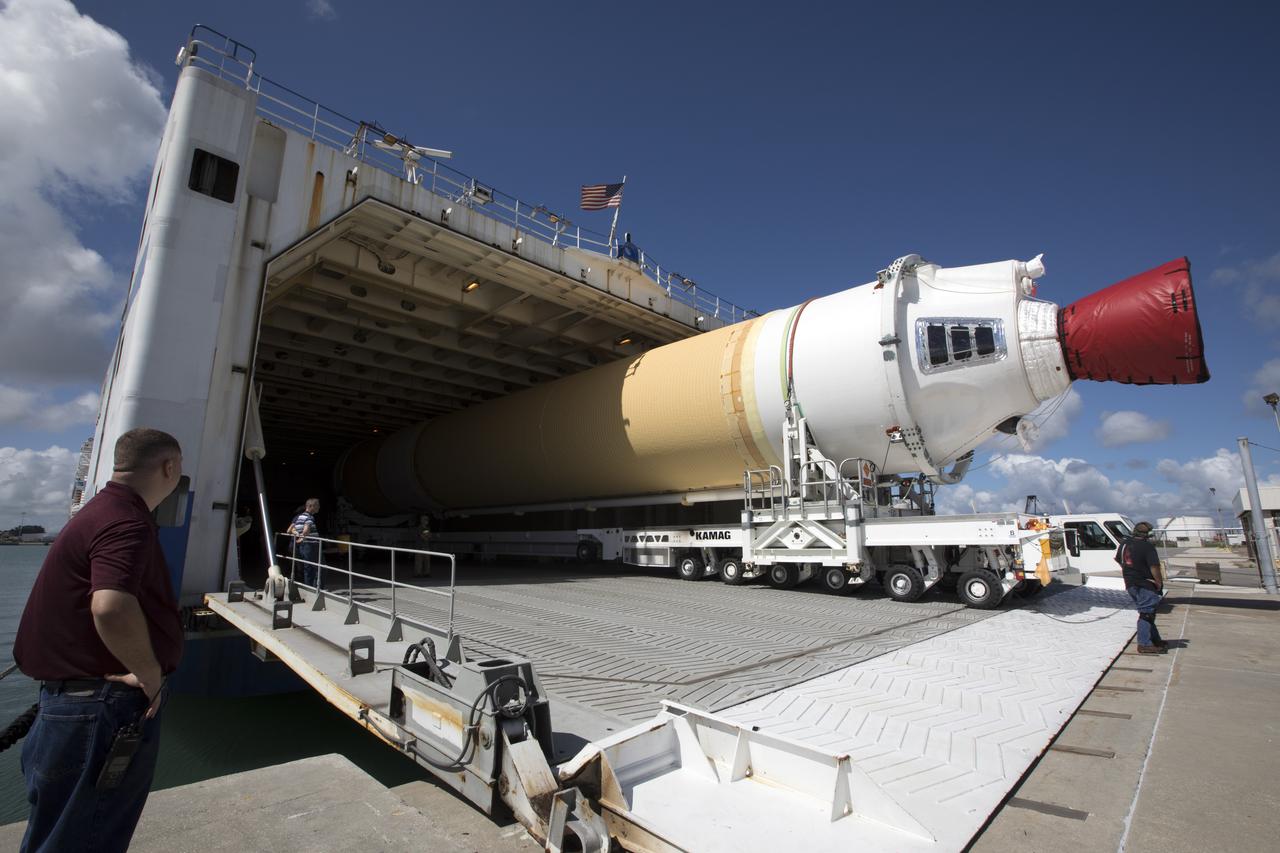
A United Launch Alliance Delta IV Heavy common booster core is offloaded from the company's Mariner ship at Port Canaveral in Florida. The Delta IV Heavy will launch NASA's upcoming Parker Solar Probe mission. The mission will perform the closest-ever observations of a star when it travels through the Sun's atmosphere, called the corona. The probe will rely on measurements and imaging to revolutionize our understanding of the corona and the Sun-Earth connection. Liftoff atop the Delta IV Heavy rocket is scheduled to take place from Cape Canaveral's Space Launch Complex 37 in summer 2018.
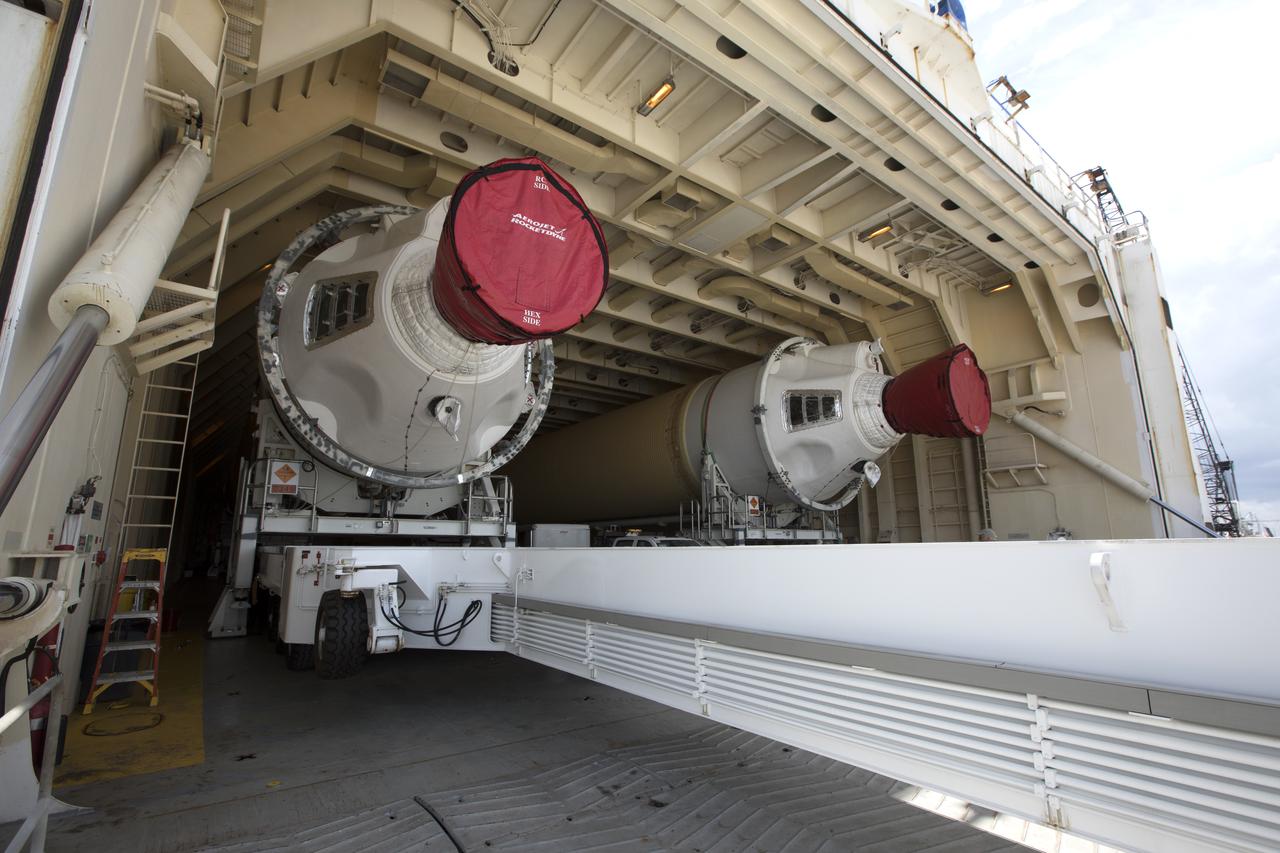
The United Launch Alliance Delta IV Heavy common booster core is being offloaded from the company's Mariner ship at Port Canaveral in Florida. The Delta IV Heavy will launch NASA's upcoming Parker Solar Probe mission. The mission will perform the closest-ever observations of a star when it travels through the Sun's atmosphere, called the corona. The probe will rely on measurements and imaging to revolutionize our understanding of the corona and the Sun-Earth connection. Liftoff atop the Delta IV Heavy rocket is scheduled to take place from Cape Canaveral's Space Launch Complex 37 in summer 2018.
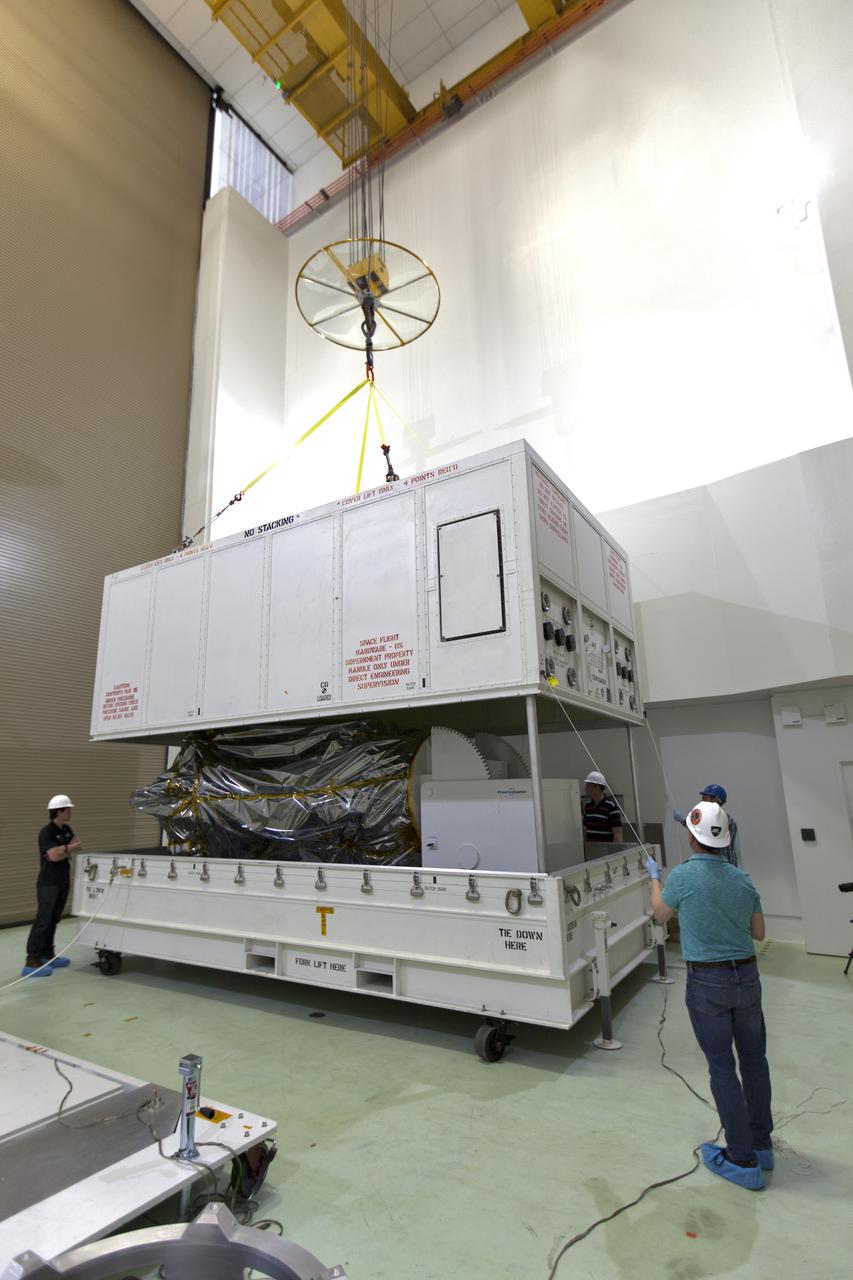
At the Astrotech processing facility in Titusville, Florida, near NASA's Kennedy Space Center, technicians and engineers remove NASA's Parker Solar Probe from its shipping container on Wednesday, April 4, 2018. The Parker Solar Probe will launch on a United Launch Alliance Delta IV Heavy rocket from Space Launch Complex 37 at Cape Canaveral Air Force Station in Florida no earlier than Aug. 4, 2018. The mission will perform the closest-ever observations of a star when it travels through the Sun's atmosphere, called the corona. The probe will rely on measurements and imaging to revolutionize our understanding of the corona and the Sun-Earth connection.
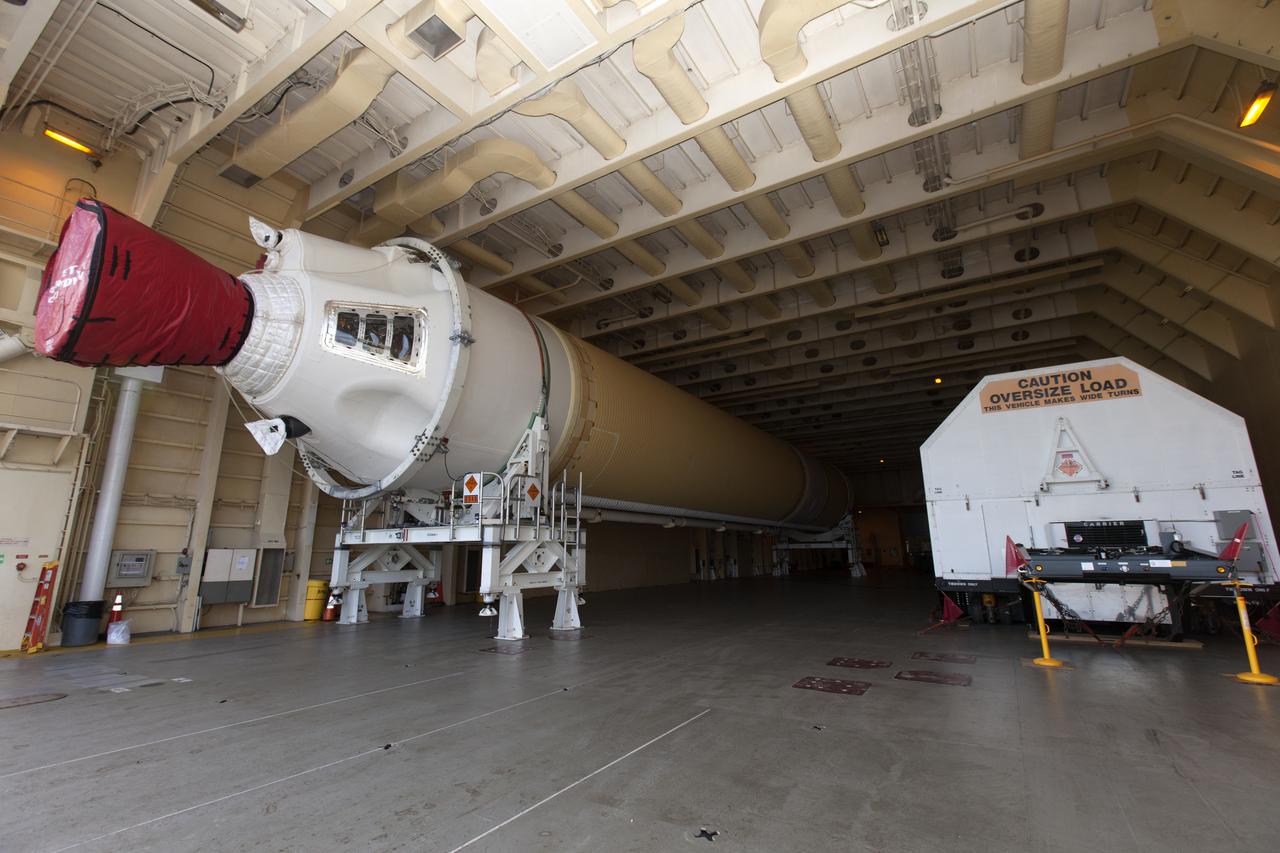
A United Launch Alliance Delta IV Heavy common booster core is offloaded from the company's Mariner ship at Port Canaveral in Florida. The Delta IV Heavy will launch NASA's upcoming Parker Solar Probe mission. The mission will perform the closest-ever observations of a star when it travels through the Sun's atmosphere, called the corona. The probe will rely on measurements and imaging to revolutionize our understanding of the corona and the Sun-Earth connection. Liftoff atop the Delta IV Heavy rocket is scheduled to take place from Cape Canaveral's Space Launch Complex 37 in summer 2018.
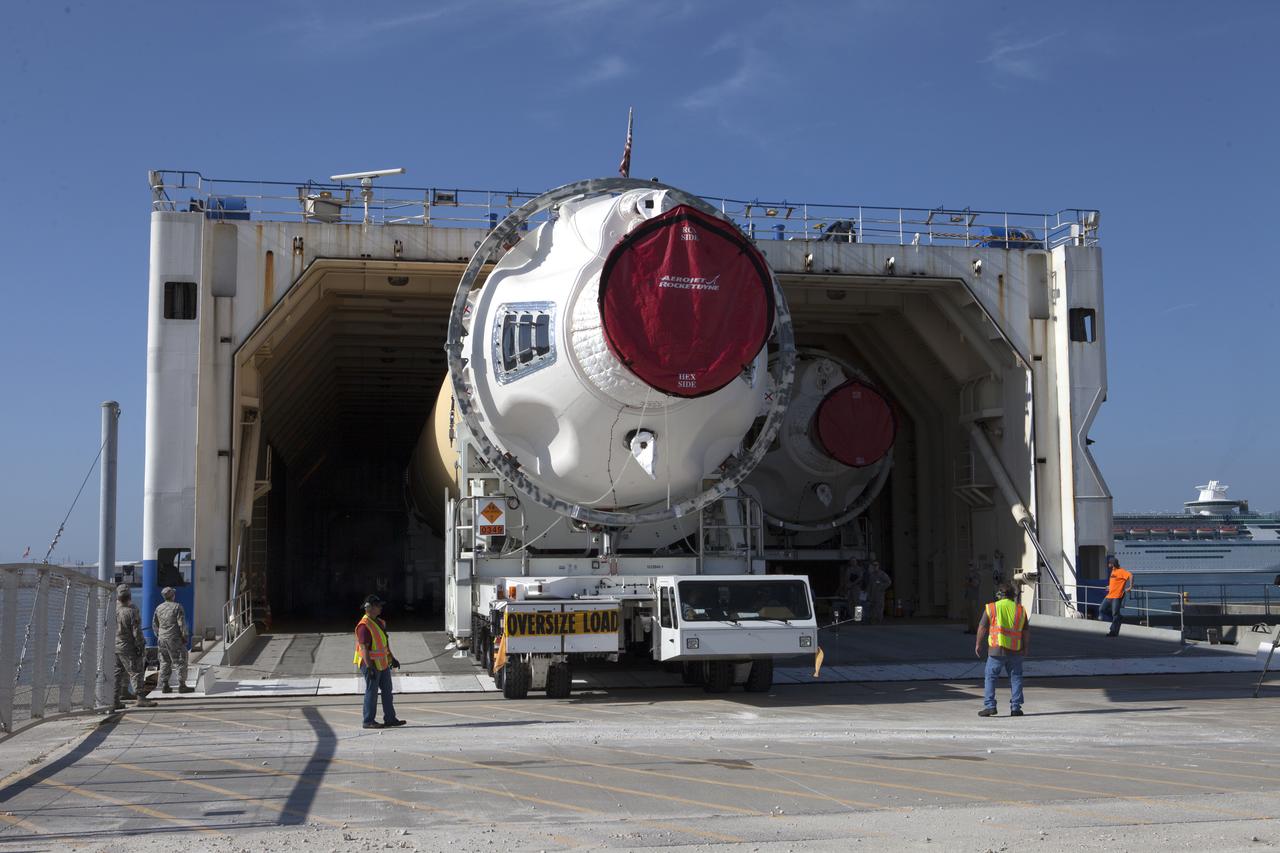
A United Launch Alliance Delta IV Heavy common booster core is offloaded from the company's Mariner ship at Port Canaveral in Florida. The Delta IV Heavy will launch NASA's upcoming Parker Solar Probe mission. The mission will perform the closest-ever observations of a star when it travels through the Sun's atmosphere, called the corona. The probe will rely on measurements and imaging to revolutionize our understanding of the corona and the Sun-Earth connection. Liftoff atop the Delta IV Heavy rocket is scheduled to take place from Cape Canaveral's Space Launch Complex 37 in summer 2018.
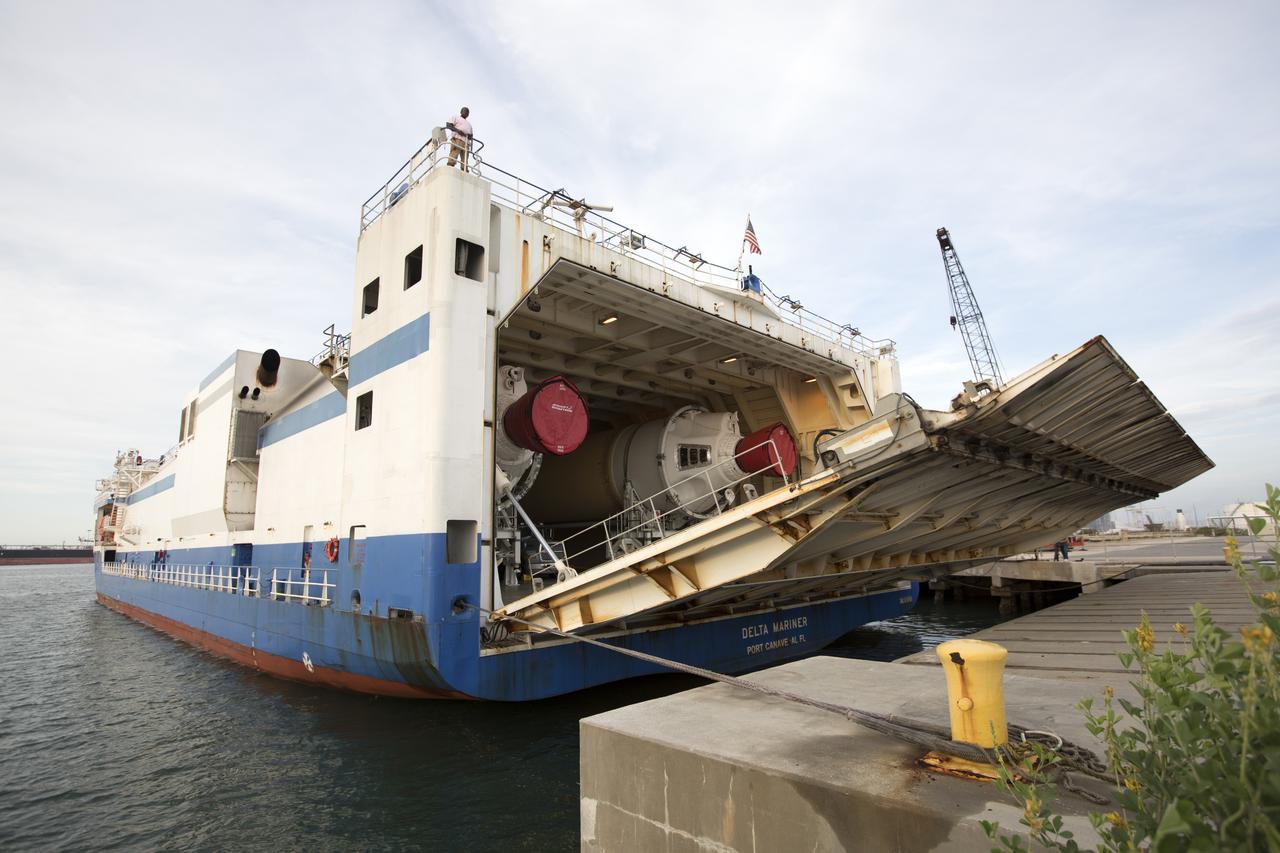
The United Launch Alliance Delta IV Heavy common booster core arrives aboard the company's Mariner ship at Port Canaveral in Florida. The Delta IV Heavy will launch NASA's upcoming Parker Solar Probe mission. The mission will perform the closest-ever observations of a star when it travels through the Sun's atmosphere, called the corona. The probe will rely on measurements and imaging to revolutionize our understanding of the corona and the Sun-Earth connection. Liftoff atop the Delta IV Heavy rocket is scheduled to take place from Cape Canaveral's Space Launch Complex 37 in summer 2018.
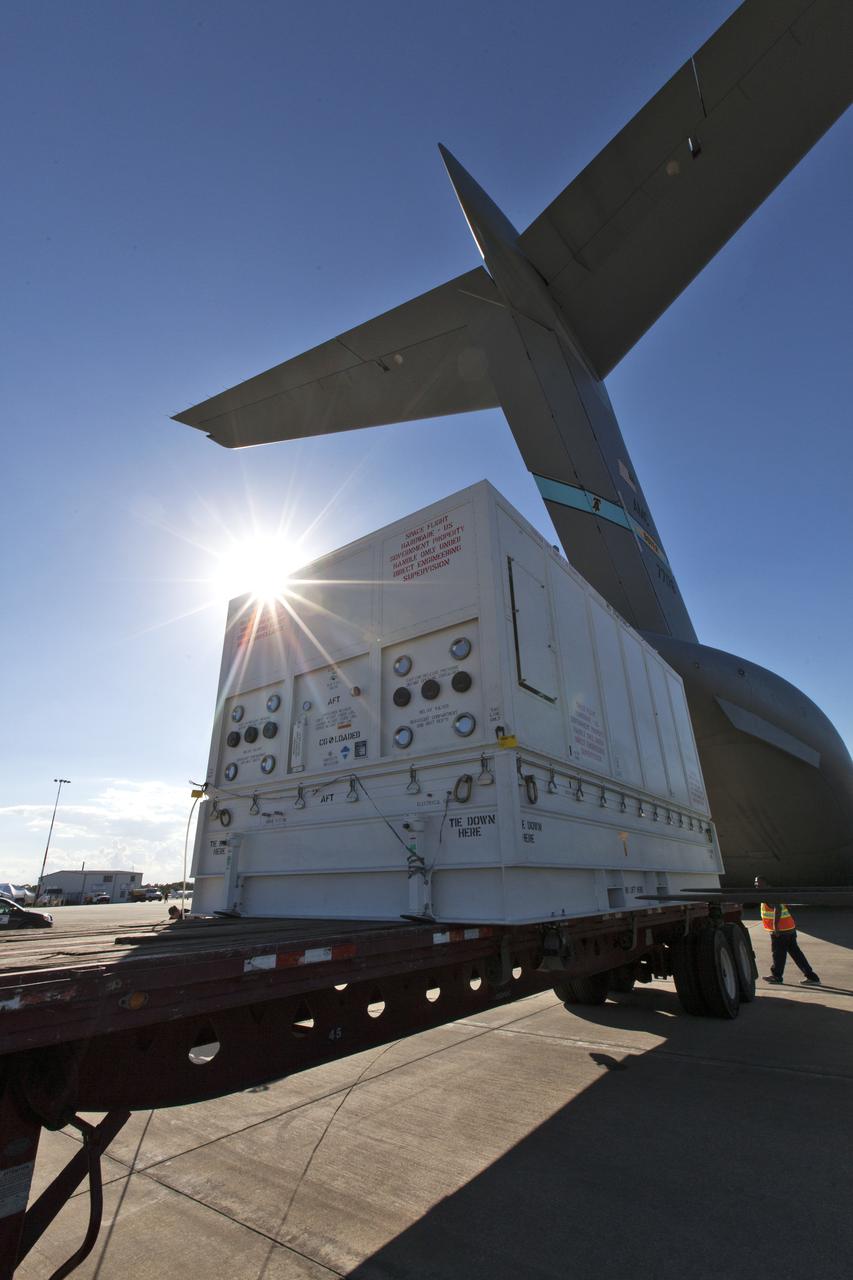
NASA's Parker Solar Probe, secured in its shipping container, has been offloaded from a U.S. Air Force C-5 transport aircraft at Space Coast Regional Airport in Titusville, Florida. The spacecraft will be transported to the Astrotech processing facility near the agency's Kennedy Space Center. The Parker Solar Probe will launch on a United Launch Alliance Delta IV Heavy rocket from Space Launch Complex 37 at Cape Canaveral Air Force Station in Florida in July 2018. The mission will perform the closest-ever observations of a star when it travels through the Sun's atmosphere, called the corona. The probe will rely on measurements and imaging to revolutionize our understanding of the corona and the Sun-Earth connection.
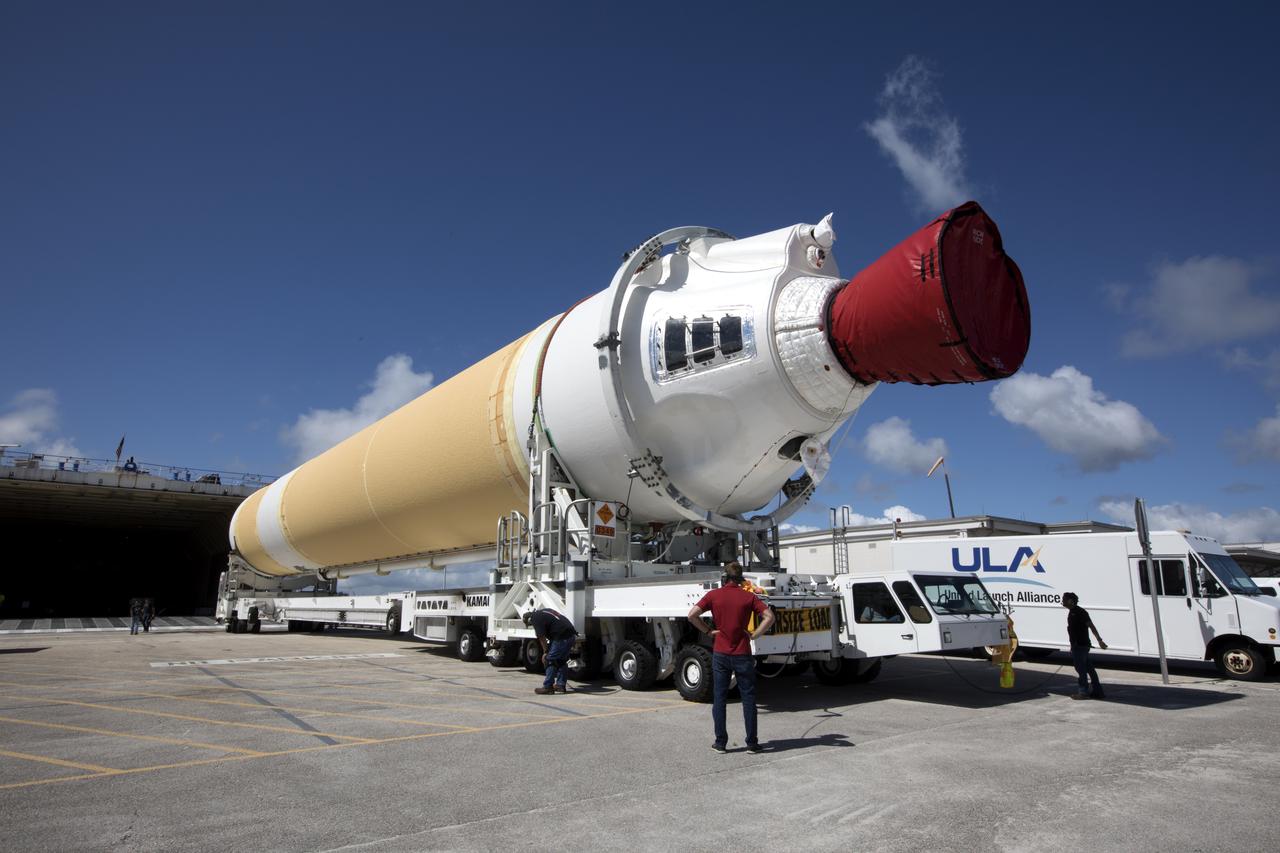
A United Launch Alliance Delta IV Heavy common booster core is offloaded from the company's Mariner ship at Port Canaveral in Florida. The Delta IV Heavy will launch NASA's upcoming Parker Solar Probe mission. The mission will perform the closest-ever observations of a star when it travels through the Sun's atmosphere, called the corona. The probe will rely on measurements and imaging to revolutionize our understanding of the corona and the Sun-Earth connection. Liftoff atop the Delta IV Heavy rocket is scheduled to take place from Cape Canaveral's Space Launch Complex 37 in summer 2018.

Inside Building 836 at Vandenberg Air Force Base in California, the top of the shipping container is lifted up from the payload fairings for the United Launch Alliance (ULA) Delta II rocket. NASA's Ice, Cloud and land Elevation Satellite-2 (ICESat-2) is scheduled to launch on the final ULA Delta II rocket later this year. ICESat-2 will measure the height of a changing Earth, one laser pulse at a time, 10,000 laser pulses a second. The satellite will carry a single instrument, the Advanced Topographic Laser Altimeter System. ICESat-2 will help scientists investigate why, and how much our planet's frozen and icy areas, called the cryosphere, is changing in a warming climate.
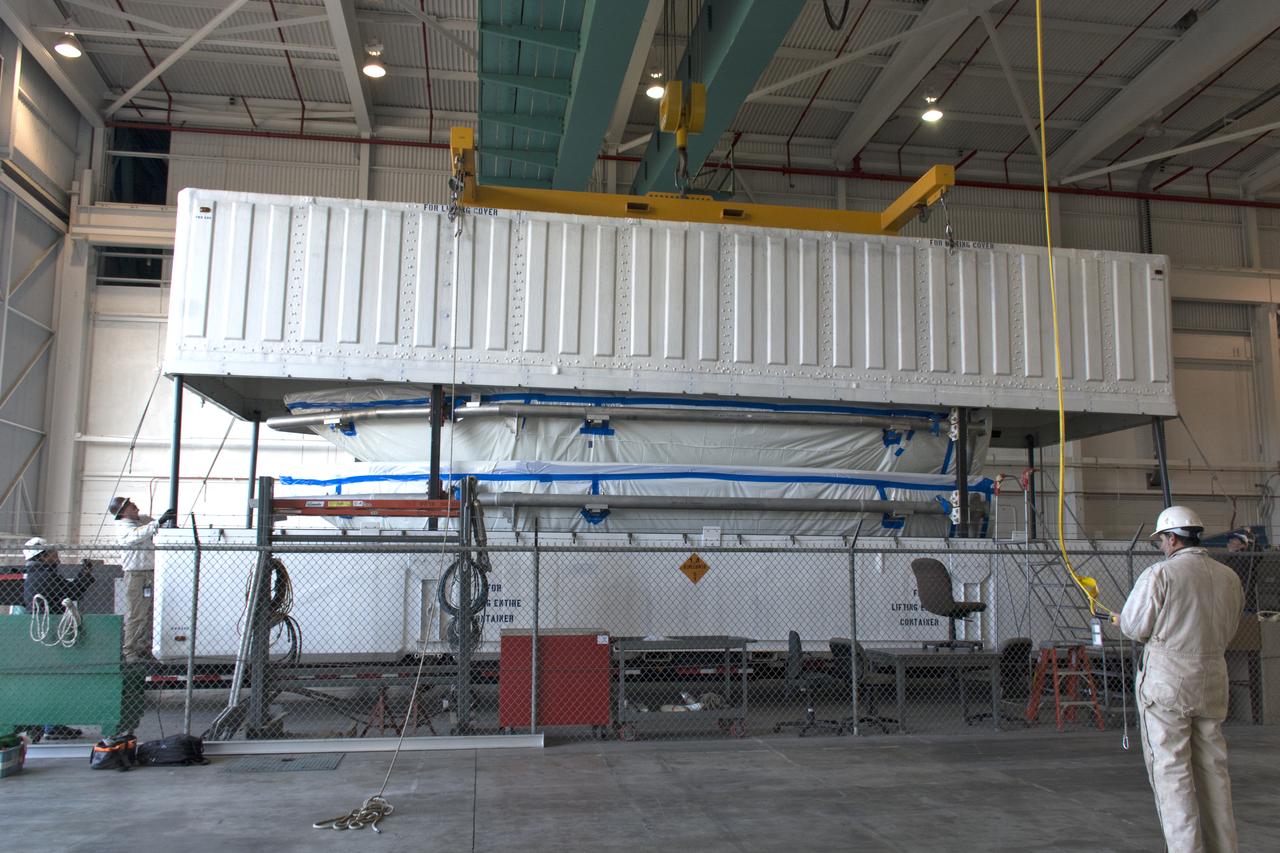
Inside Building 836 at Vandenberg Air Force Base in California, the top of the shipping container is lifted up from the payload fairings for the United Launch Alliance (ULA) Delta II rocket. NASA's Ice, Cloud and land Elevation Satellite-2 (ICESat-2) is scheduled to launch on the final ULA Delta II rocket later this year. ICESat-2 will measure the height of a changing Earth, one laser pulse at a time, 10,000 laser pulses a second. The satellite will carry a single instrument, the Advanced Topographic Laser Altimeter System. ICESat-2 will help scientists investigate why, and how much our planet's frozen and icy areas, called the cryosphere, is changing in a warming climate.
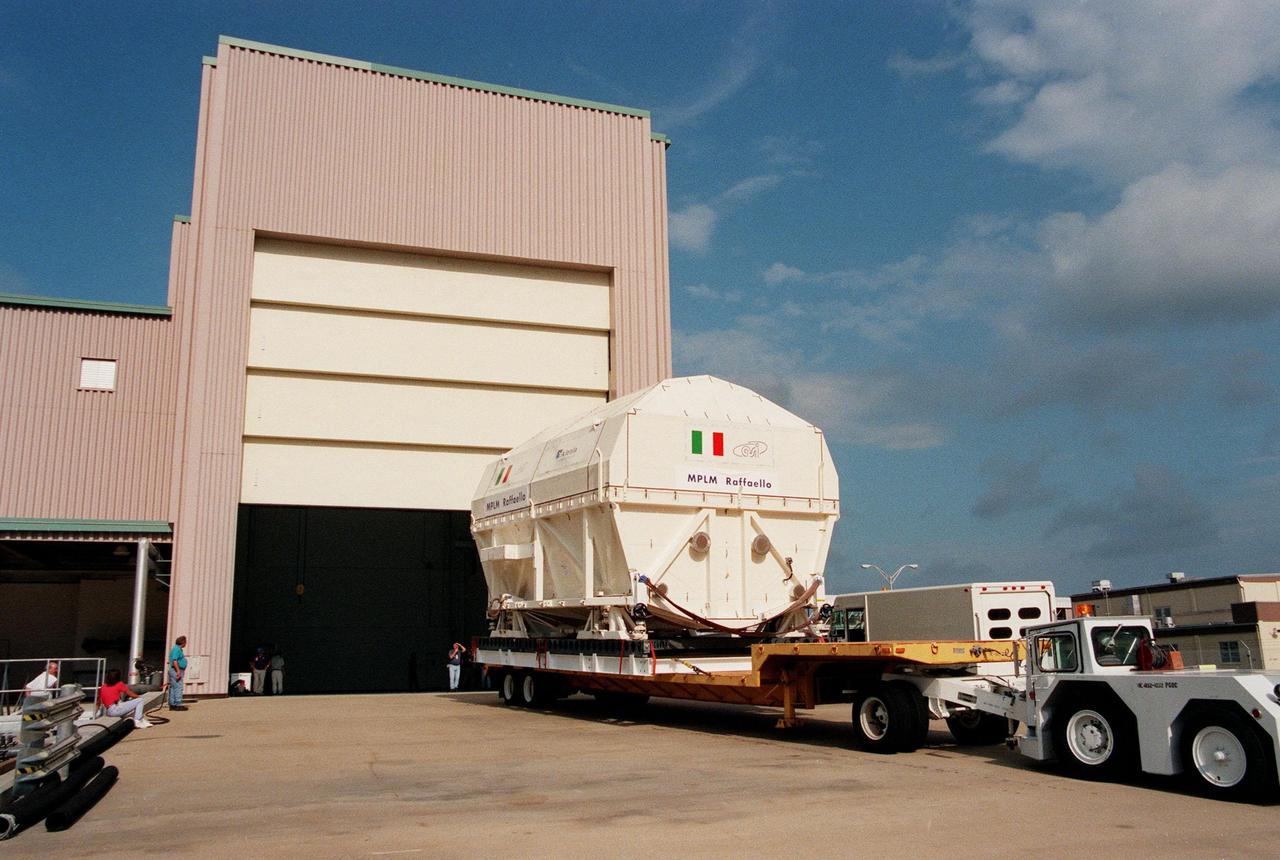
KENNEDY SPACE CENTER, FLA. -- The Multi-Purpose Logistics Module (MPLM) called Raffaello arrives in its shipping canister at the Space Station Processing Facility (SSPF). There it will undergo testing, joining the first Italian-built MPLM, Leonardo, in the SSPF. One of Italy's major contributions to the ISS program, the MPLM is a reusable logistics carrier and the primary delivery system used to resupply and return station cargo requiring a pressurized environment. Weighing nearly 4.5 tons, the Raffaello measures 21 feet long and 15 feet in diameter. Raffaello is scheduled to be launched on mission STS-100 July 27, 2000
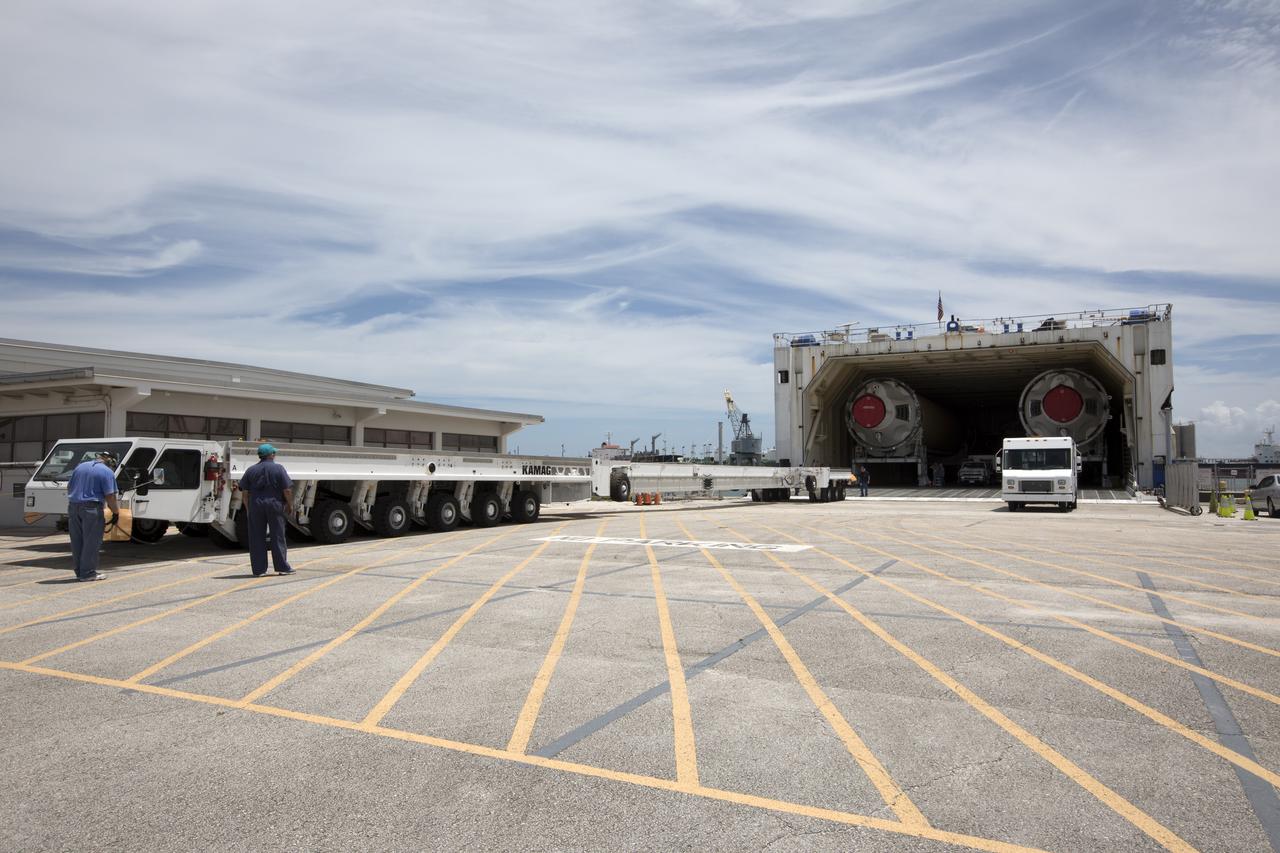
The United Launch Alliance Delta IV Heavy common booster core arrives aboard the company's Mariner ship at Port Canaveral in Florida. Preparations are underway to offload the booster onto a transporter. The Delta IV Heavy will launch NASA's upcoming Parker Solar Probe mission. The mission will perform the closest-ever observations of a star when it travels through the Sun's atmosphere, called the corona. The probe will rely on measurements and imaging to revolutionize our understanding of the corona and the Sun-Earth connection. Liftoff atop the Delta IV Heavy rocket is scheduled to take place from Cape Canaveral's Space Launch Complex 37 in summer 2018.
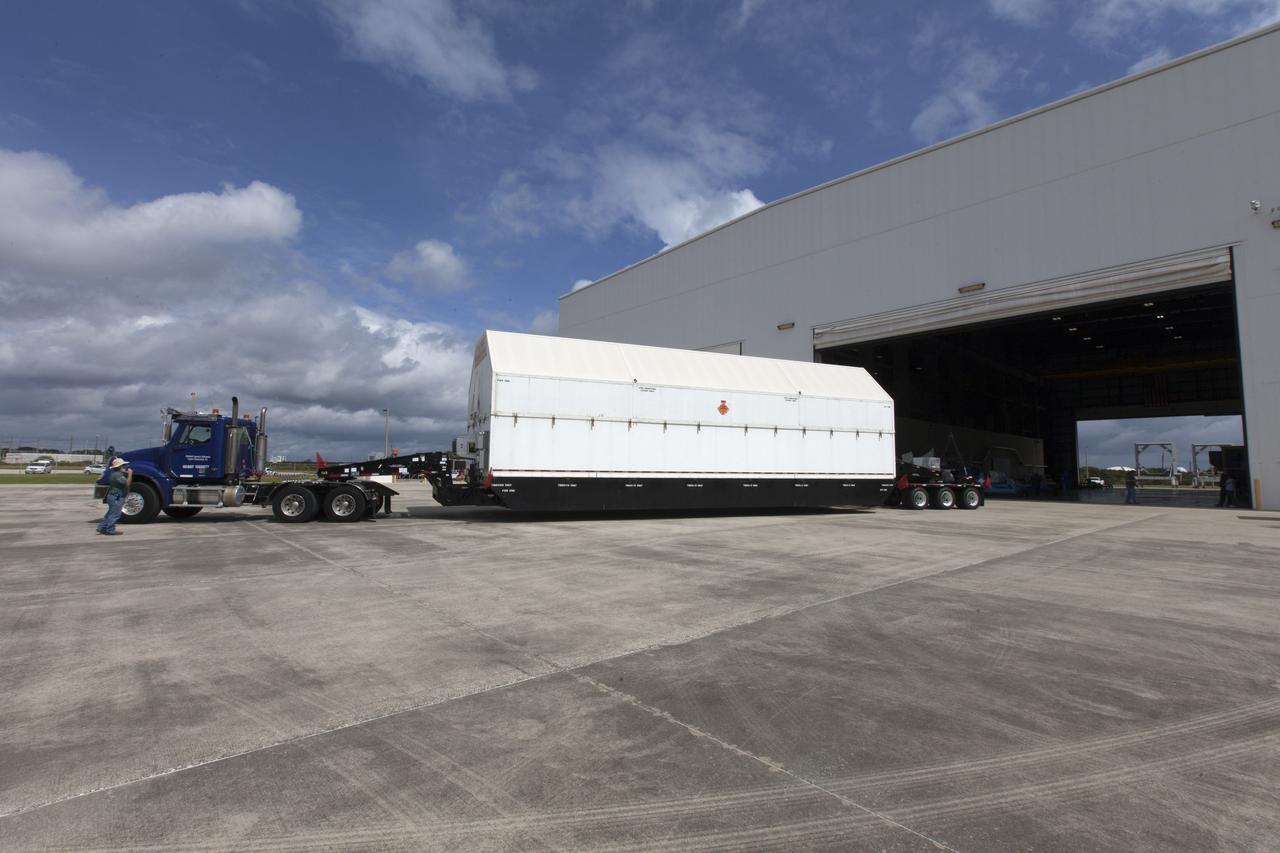
A United Launch Alliance Delta IV Heavy second stage, packaged in its shipping container, arrives at the Horizontal Integration Facility at Cape Canaveral Air Force Station for preflight processing. The Delta IV Heavy will launch NASA's upcoming Parker Solar Probe mission. The mission will perform the closest-ever observations of a star when it travels through the Sun's atmosphere, called the corona. The probe will rely on measurements and imaging to revolutionize our understanding of the corona and the Sun-Earth connection. Liftoff atop the Delta IV Heavy rocket is scheduled to take place from Cape Canaveral's Space Launch Complex 37 in summer 2018.
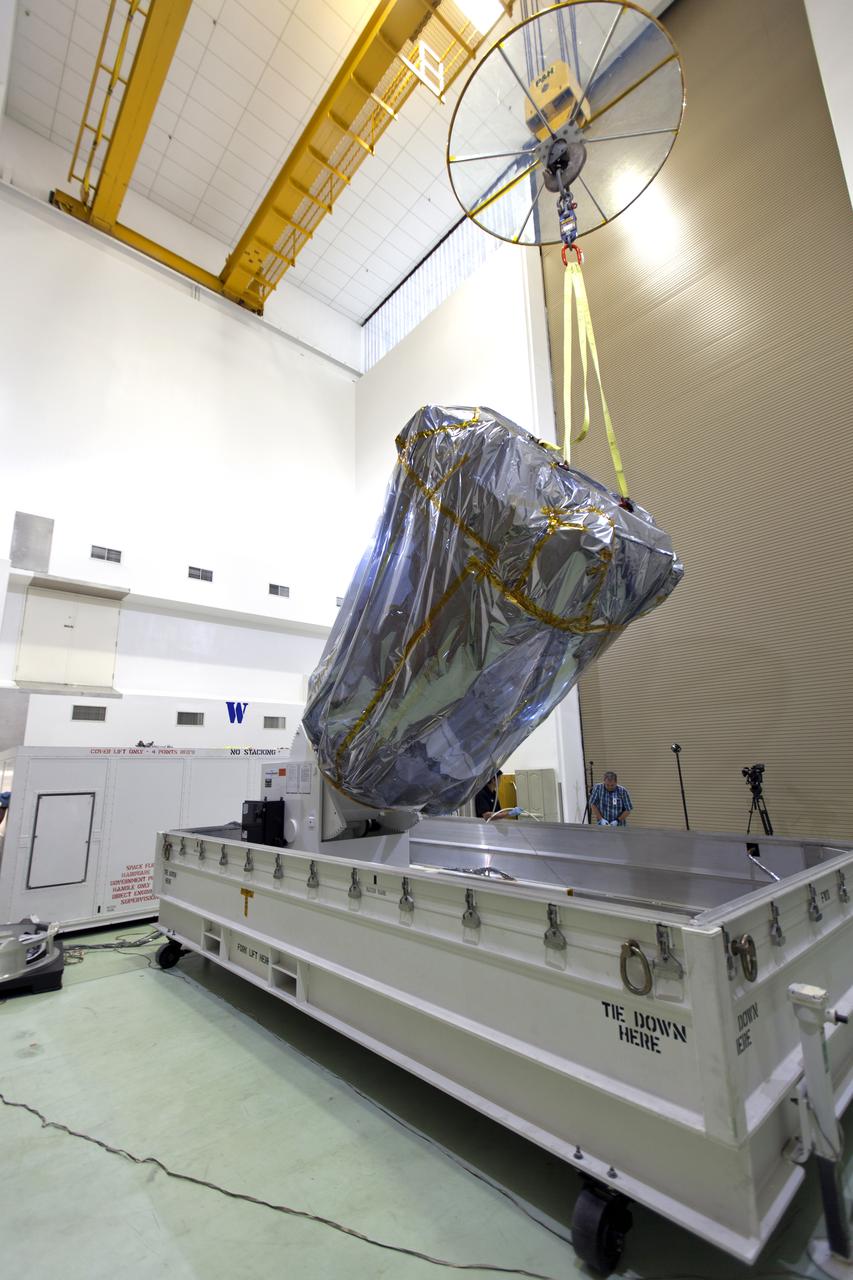
At the Astrotech processing facility in Titusville, Florida, near NASA's Kennedy Space Center, NASA's Parker Solar Probe is removed from its shipping container on Wednesday, April 4, 2018. The Parker Solar Probe will launch on a United Launch Alliance Delta IV Heavy rocket from Space Launch Complex 37 at Cape Canaveral Air Force Station in Florida no earlier than Aug. 4, 2018. The mission will perform the closest-ever observations of a star when it travels through the Sun's atmosphere, called the corona. The probe will rely on measurements and imaging to revolutionize our understanding of the corona and the Sun-Earth connection.
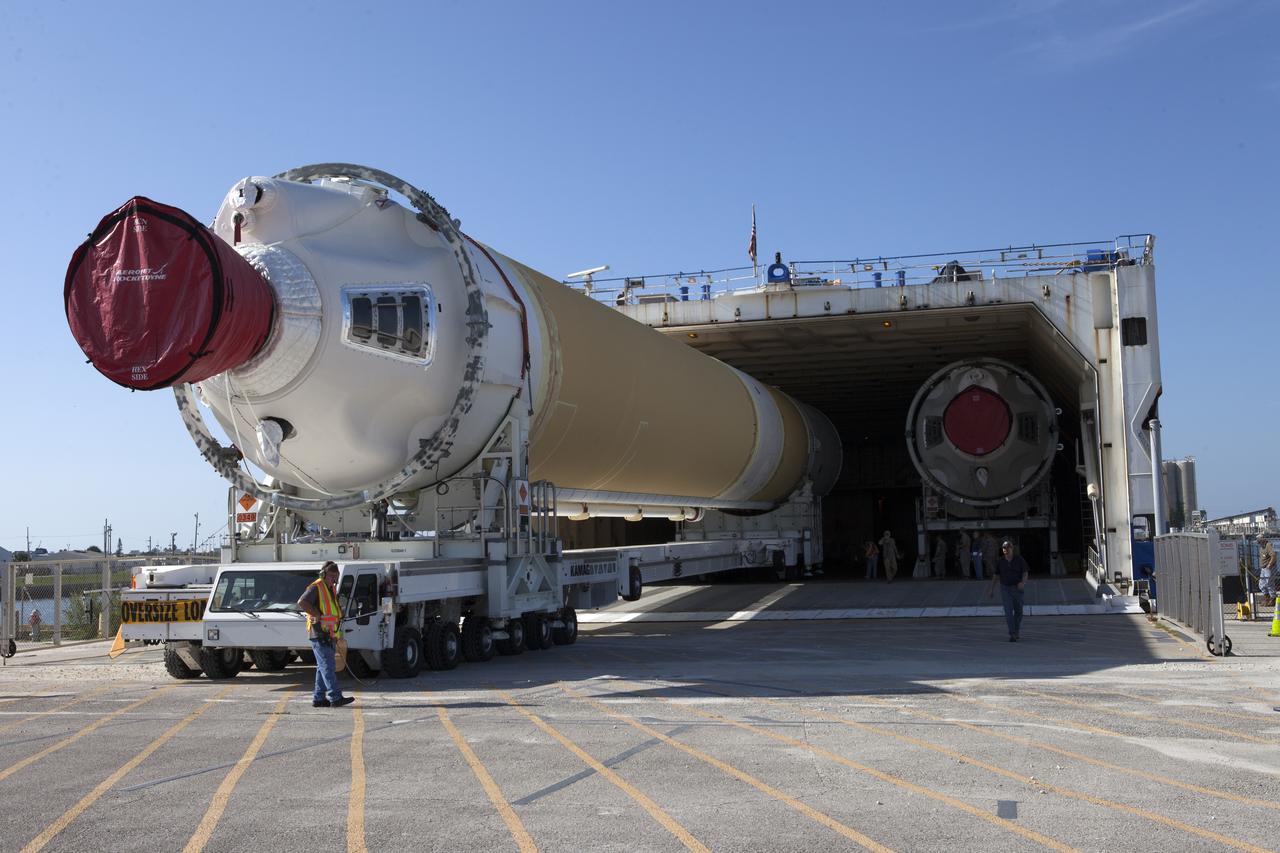
A United Launch Alliance Delta IV Heavy common booster core is offloaded from the company's Mariner ship at Port Canaveral in Florida. The Delta IV Heavy will launch NASA's upcoming Parker Solar Probe mission. The mission will perform the closest-ever observations of a star when it travels through the Sun's atmosphere, called the corona. The probe will rely on measurements and imaging to revolutionize our understanding of the corona and the Sun-Earth connection. Liftoff atop the Delta IV Heavy rocket is scheduled to take place from Cape Canaveral's Space Launch Complex 37 in summer 2018.
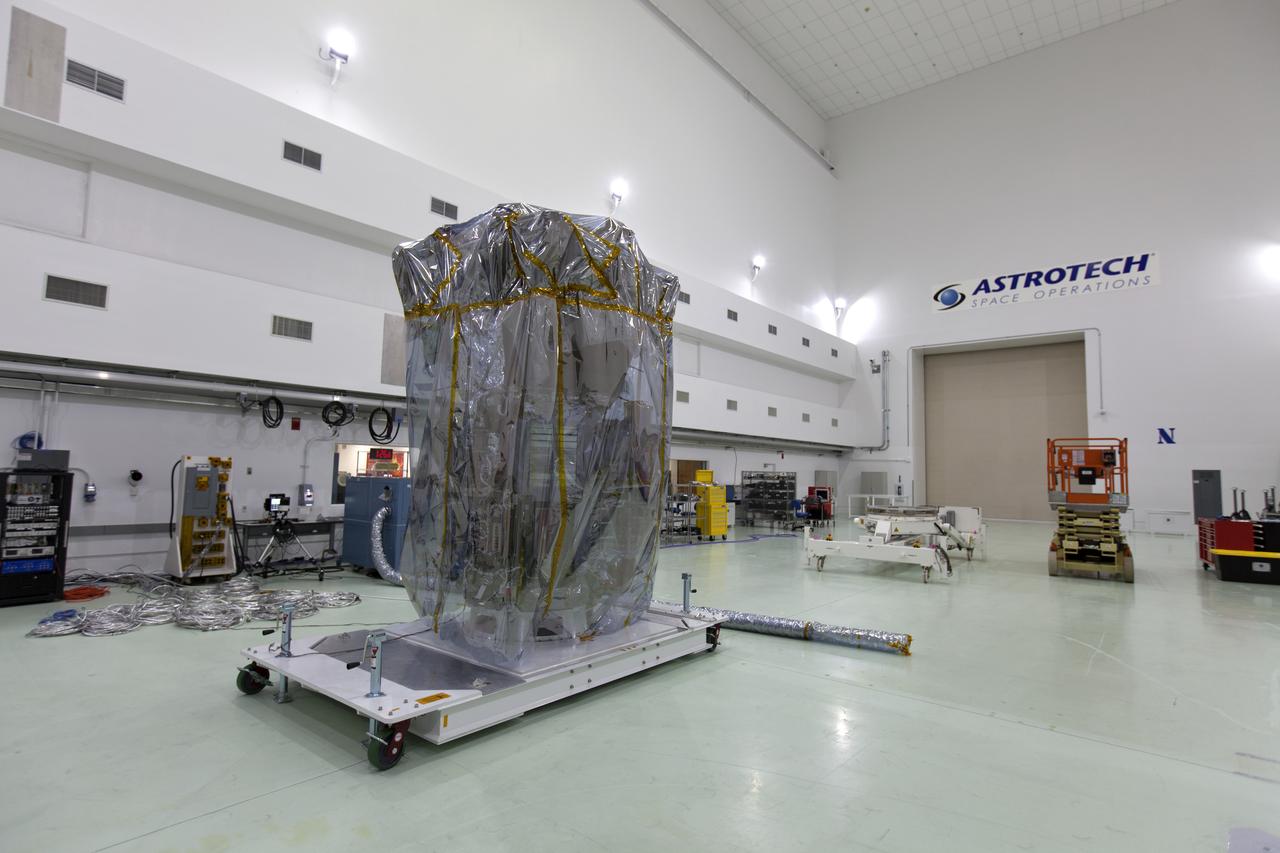
At the Astrotech processing facility in Titusville, Florida, near NASA's Kennedy Space Center, NASA's Parker Solar Probe is removed from its shipping bag on Wednesday, April 4, 2018. The Parker Solar Probe will launch on a United Launch Alliance Delta IV Heavy rocket from Space Launch Complex 37 at Cape Canaveral Air Force Station in Florida no earlier than Aug. 4, 2018. The mission will perform the closest-ever observations of a star when it travels through the Sun's atmosphere, called the corona. The probe will rely on measurements and imaging to revolutionize our understanding of the corona and the Sun-Earth connection.
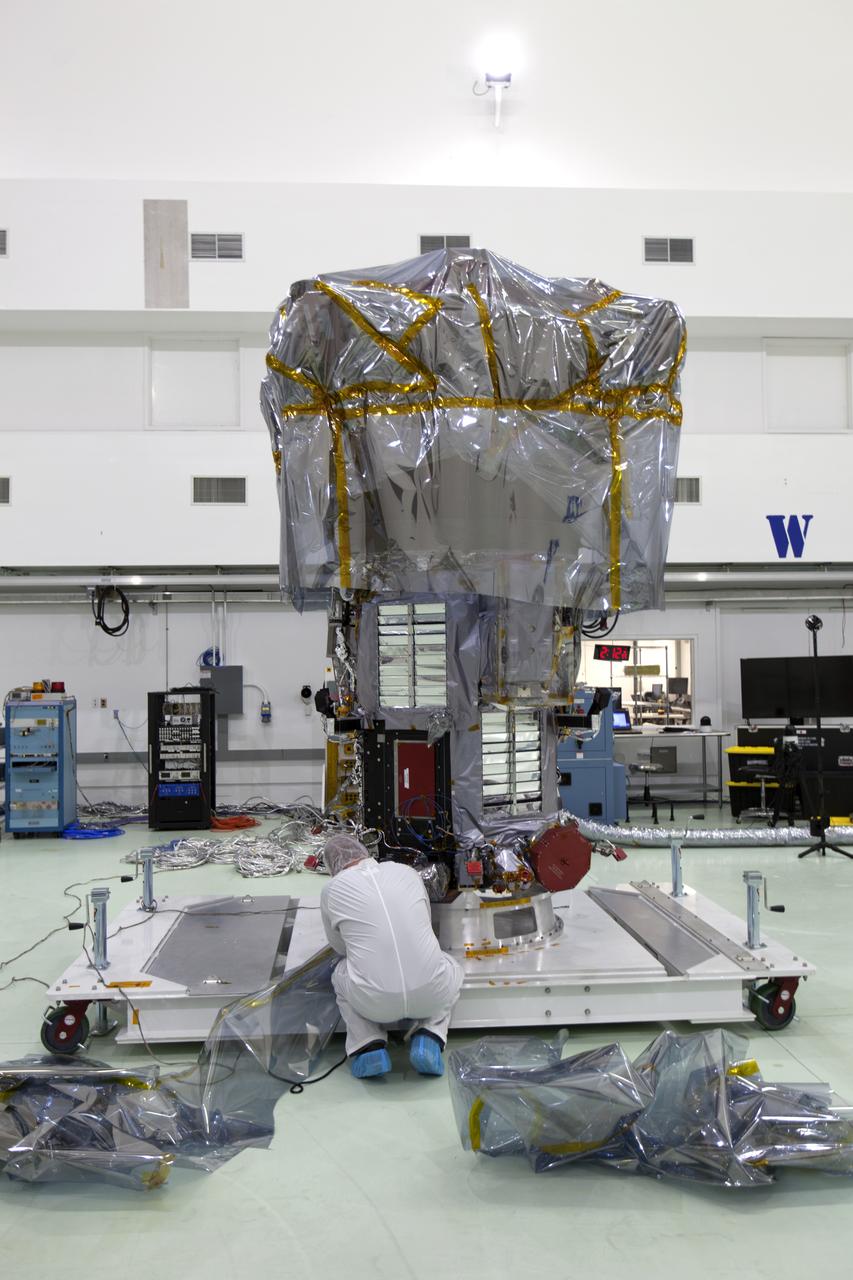
At the Astrotech processing facility in Titusville, Florida, near NASA's Kennedy Space Center, technicians and engineers remove NASA's Parker Solar Probe from its shipping bag on Wednesday, April 4, 2018. The Parker Solar Probe will launch on a United Launch Alliance Delta IV Heavy rocket from Space Launch Complex 37 at Cape Canaveral Air Force Station in Florida no earlier than Aug. 4, 2018. The mission will perform the closest-ever observations of a star when it travels through the Sun's atmosphere, called the corona. The probe will rely on measurements and imaging to revolutionize our understanding of the corona and the Sun-Earth connection.
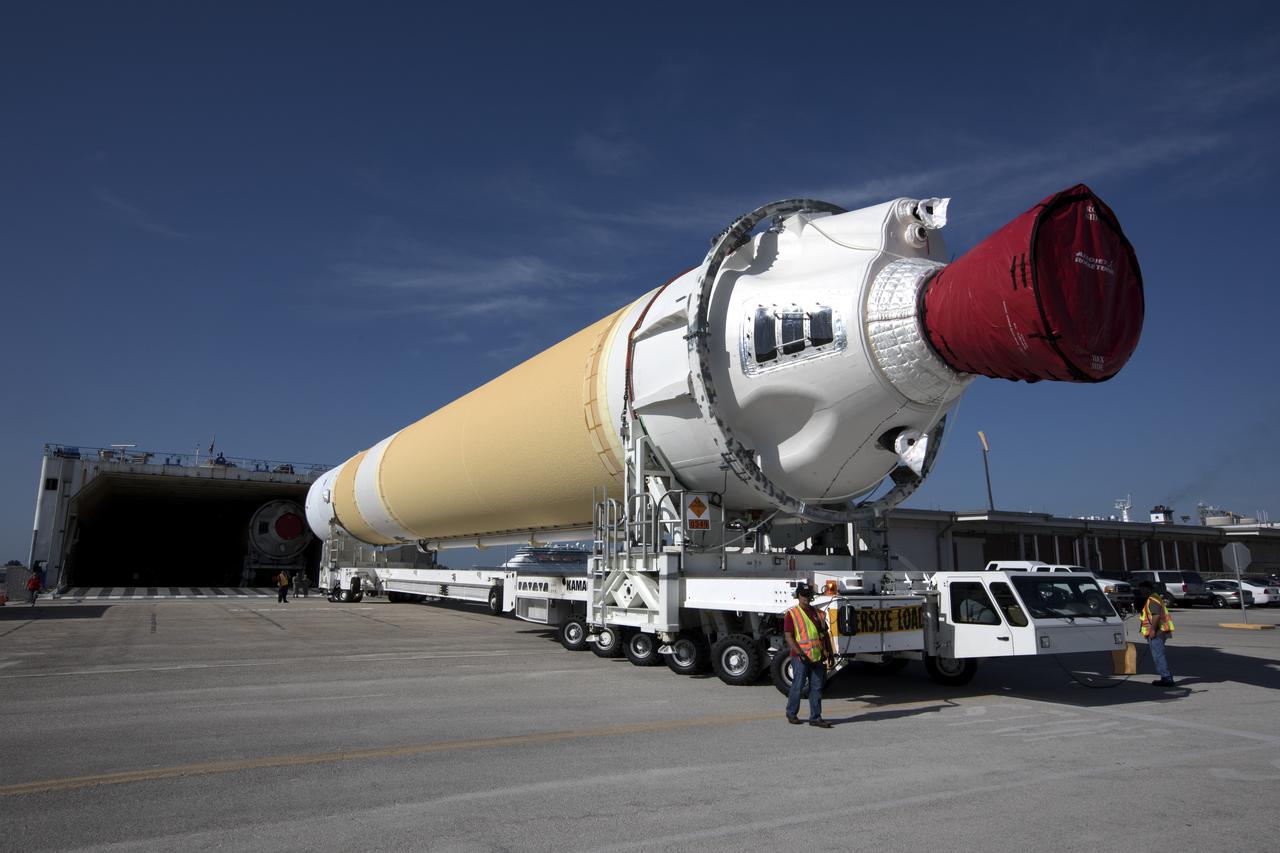
A United Launch Alliance Delta IV Heavy common booster core is offloaded from the company's Mariner ship at Port Canaveral in Florida. The Delta IV Heavy will launch NASA's upcoming Parker Solar Probe mission. The mission will perform the closest-ever observations of a star when it travels through the Sun's atmosphere, called the corona. The probe will rely on measurements and imaging to revolutionize our understanding of the corona and the Sun-Earth connection. Liftoff atop the Delta IV Heavy rocket is scheduled to take place from Cape Canaveral's Space Launch Complex 37 in summer 2018.
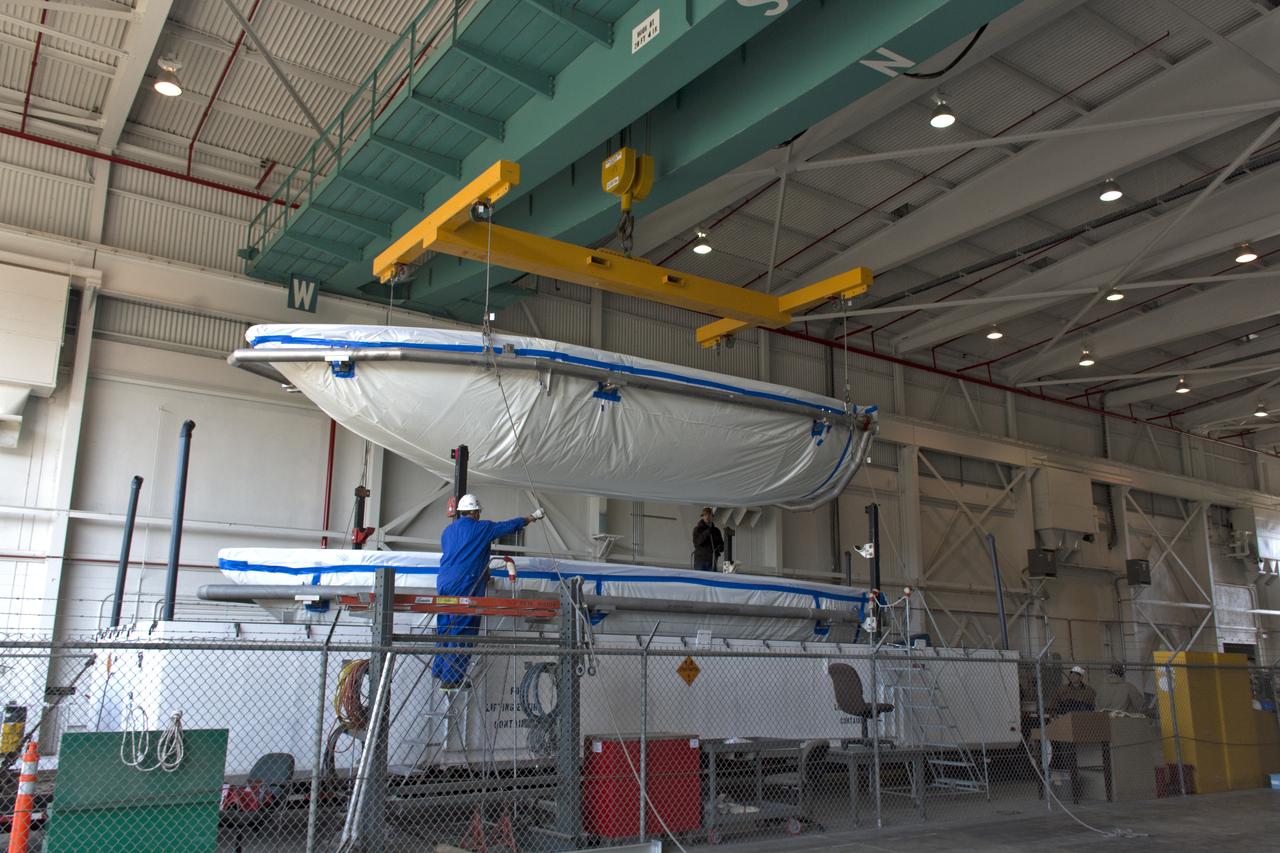
Inside Building 836 at Vandenberg Air Force Base in California, the payload fairing halves for the United Launch Alliance (ULA) Delta II rocket are lifted up from the base of their shipping container. NASA's Ice, Cloud and land Elevation Satellite-2 (ICESat-2) is scheduled to launch on the final ULA Delta II rocket later this year. ICESat-2 will measure the height of a changing Earth, one laser pulse at a time, 10,000 laser pulses a second. The satellite will carry a single instrument, the Advanced Topographic Laser Altimeter System. ICESat-2 will help scientists investigate why, and how much our planet's frozen and icy areas, called the cryosphere, is changing in a warming climate.
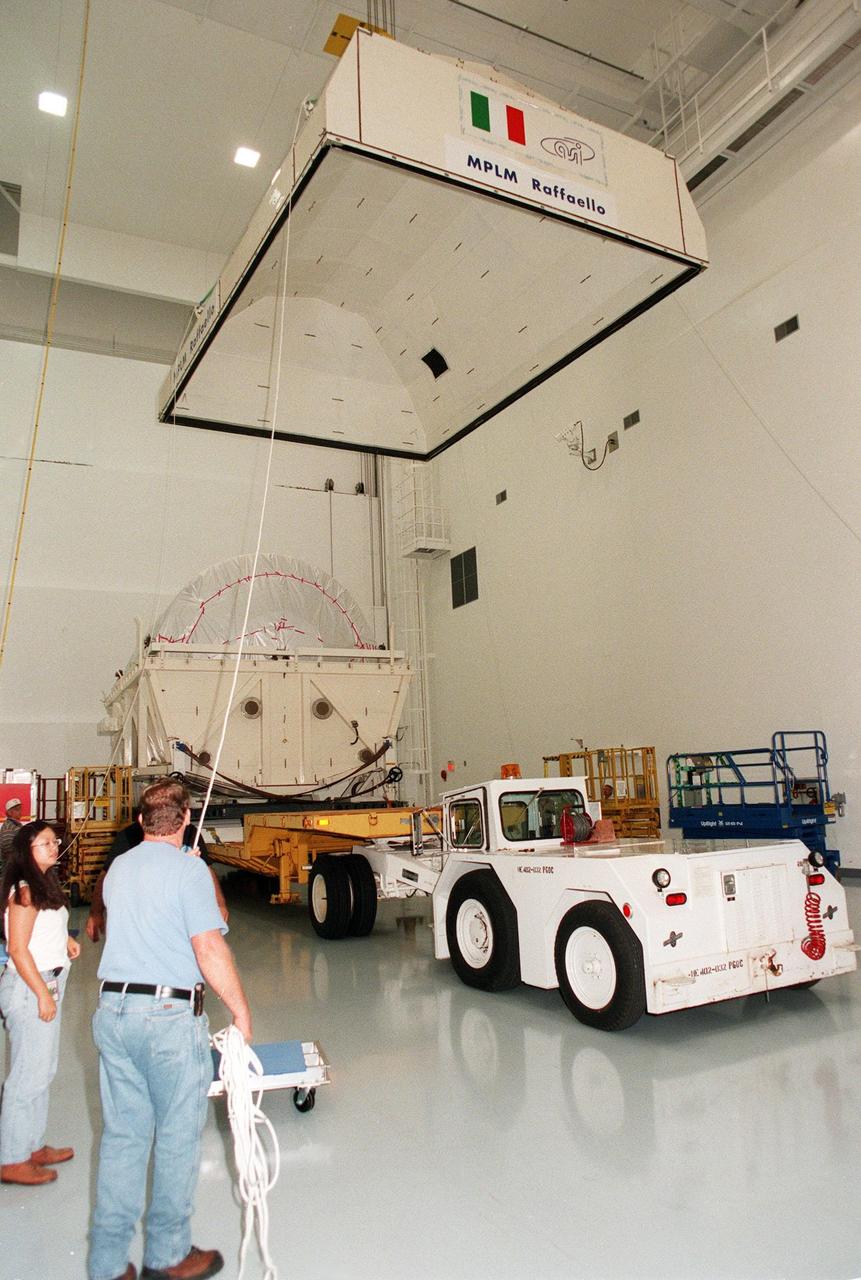
KENNEDY SPACE CENTER, FLA. -- Inside a high bay of the Space Station Processing Facility (SSPF), workers remove the top of the shipping canister from the Multi-Purpose Logistics Module (MPLM) called Raffaello. After transfer to a workstand, the MPLM will undergo testing, joining the first Italian-built MPLM, Leonardo, in the SSPF. One of Italy's major contributions to the ISS program, the MPLM is a reusable logistics carrier and the primary delivery system used to resupply and return station cargo requiring a pressurized environment. Weighing nearly 4.5 tons, the Raffaello measures 21 feet long and 15 feet in diameter. Raffaello is scheduled to be launched on mission STS-100 July 27, 2000
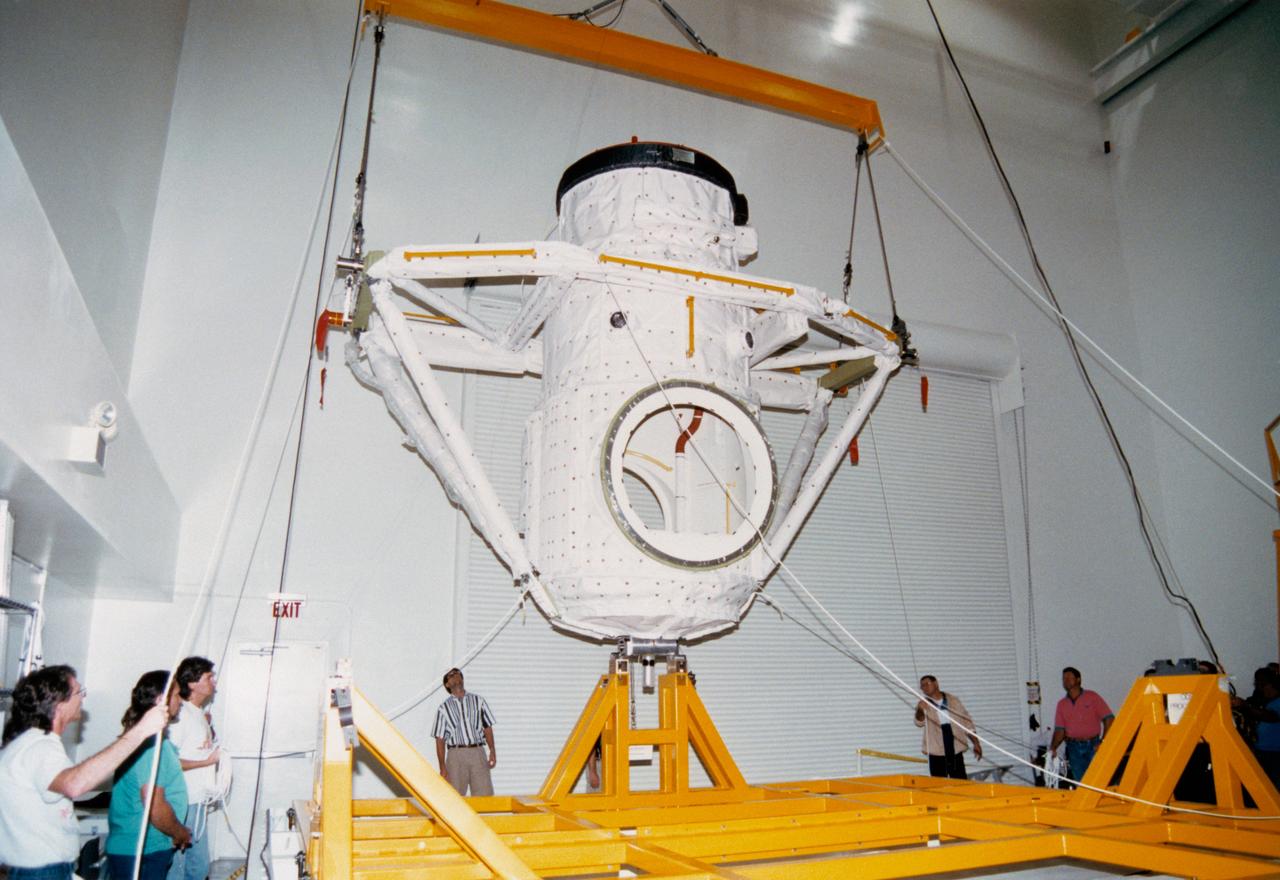
S94-47810 (2 Dec. 1994) --- Lockheed Space Operations Company workers in the Extended Duration Orbiter (EDO) Facility, located inside the Vehicle Assembly Building (VAB), carefully hoist the Orbiter Docking System (ODS) from its shipping container into a test stand. The ODS was shipped in a horizontal position to the Kennedy Space Center (KSC) from contractor Rockwell Aerospace's Downey plant. Once the ODS is upright, work can continue to prepare the hardware for the first docking of the United States Space Shuttle and Russian Space Station MIR in 1995. The ODS contains both United States-made and Russian-made hardware. The black band is Russian-made thermal insulation protecting part of the docking mechanism, also Russian-made, called the Androgynous Peripheral Docking System (APDS). A red protective cap covers the APDS itself. Other elements of the ODS, most of it protected by white United States-made thermal insulation, were developed by Rockwell, which also integrated and checked out the assembled Russian-United States system.
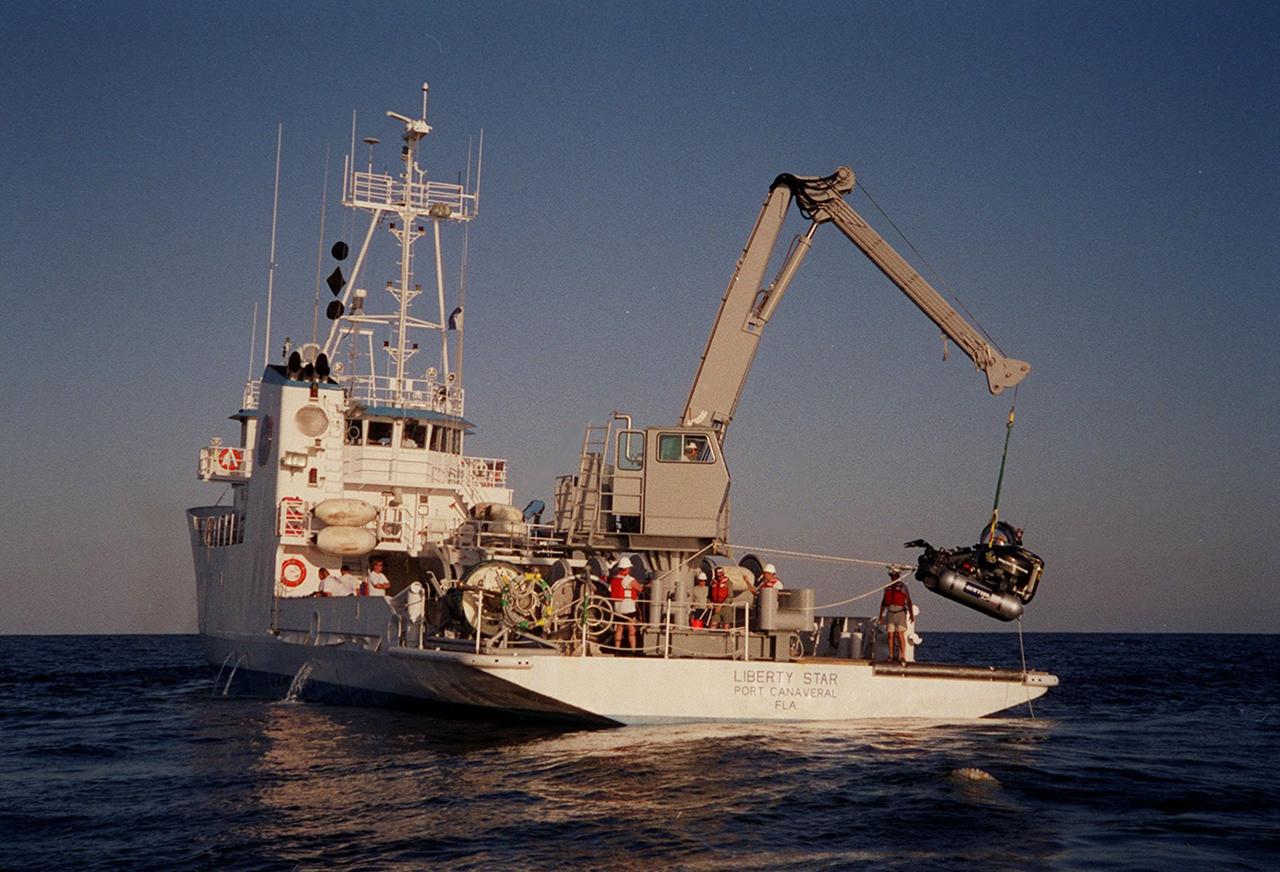
KENNEDY SPACE CENTER, FLA. -- From the deck of Liberty Star, one of two KSC solid rocket booster recovery ships, a crane lowers a one-man submarine into the ocean near Cape Canaveral, Fla. Called DeepWorker 2000, the sub is being tested on its ability to duplicate the sometimes hazardous job United Space Alliance (USA) divers perform to recover the expended boosters in the ocean after a launch. The boosters splash down in an impact area about 140 miles east of Jacksonville and after recovery are towed back to KSC for refurbishment by the specially rigged recovery ships. DeepWorker 2000 will be used in a demonstration during retrieval operations after the upcoming STS-101 launch. The submarine pilot will demonstrate capabilities to cut tangled parachute riser lines using a manipulator arm and attach a Diver Operator Plug to extract water and provide flotation for the booster. DeepWorker 2000 was built by Nuytco Research Ltd., North Vancouver, British Columbia. It is 8.25 feet long, 5.75 feet high, and weighs 3,800 pounds. USA is a prime contractor to NASA for the Space Shuttle program
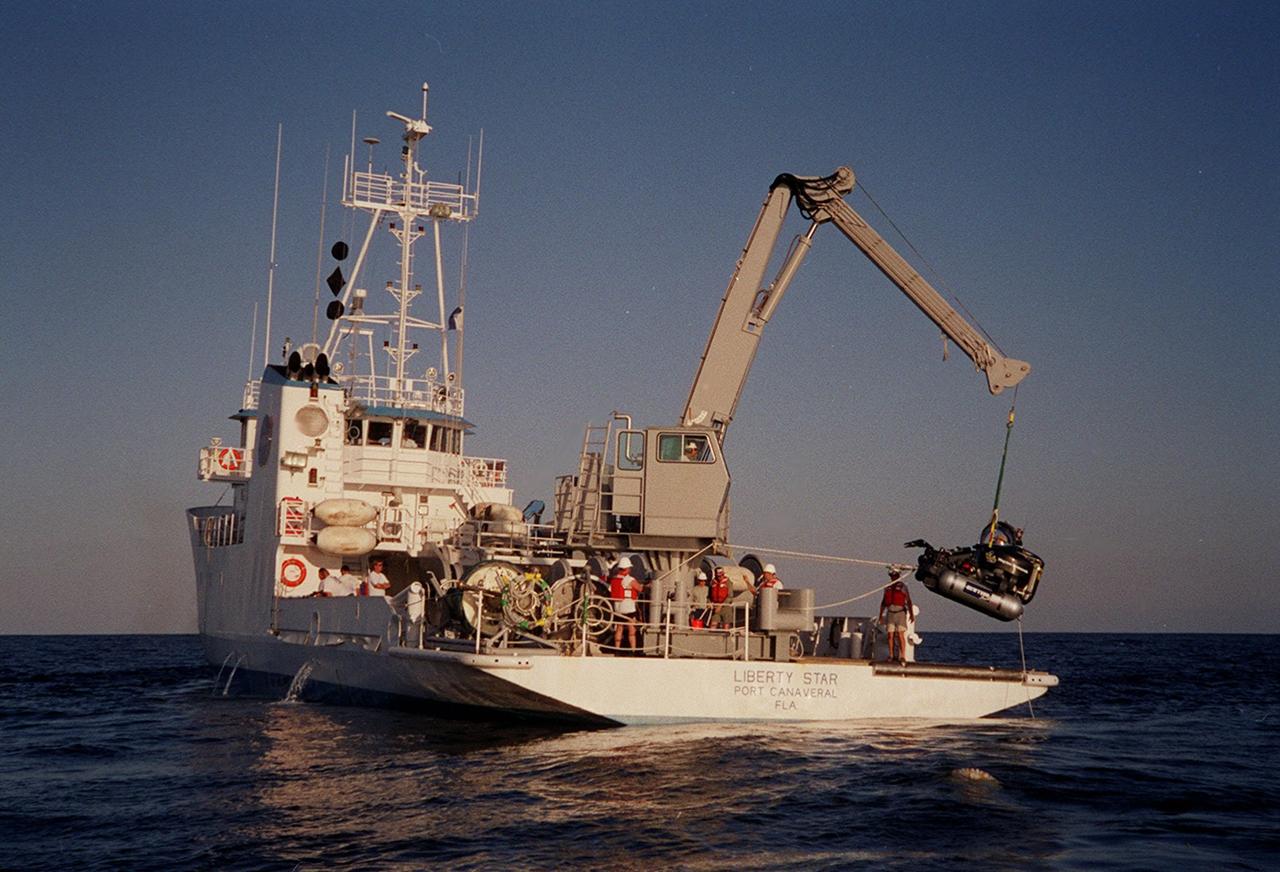
KENNEDY SPACE CENTER, FLA. -- From the deck of Liberty Star, one of two KSC solid rocket booster recovery ships, a crane lowers a one-man submarine into the ocean near Cape Canaveral, Fla. Called DeepWorker 2000, the sub is being tested on its ability to duplicate the sometimes hazardous job United Space Alliance (USA) divers perform to recover the expended boosters in the ocean after a launch. The boosters splash down in an impact area about 140 miles east of Jacksonville and after recovery are towed back to KSC for refurbishment by the specially rigged recovery ships. DeepWorker 2000 will be used in a demonstration during retrieval operations after the upcoming STS-101 launch. The submarine pilot will demonstrate capabilities to cut tangled parachute riser lines using a manipulator arm and attach a Diver Operator Plug to extract water and provide flotation for the booster. DeepWorker 2000 was built by Nuytco Research Ltd., North Vancouver, British Columbia. It is 8.25 feet long, 5.75 feet high, and weighs 3,800 pounds. USA is a prime contractor to NASA for the Space Shuttle program
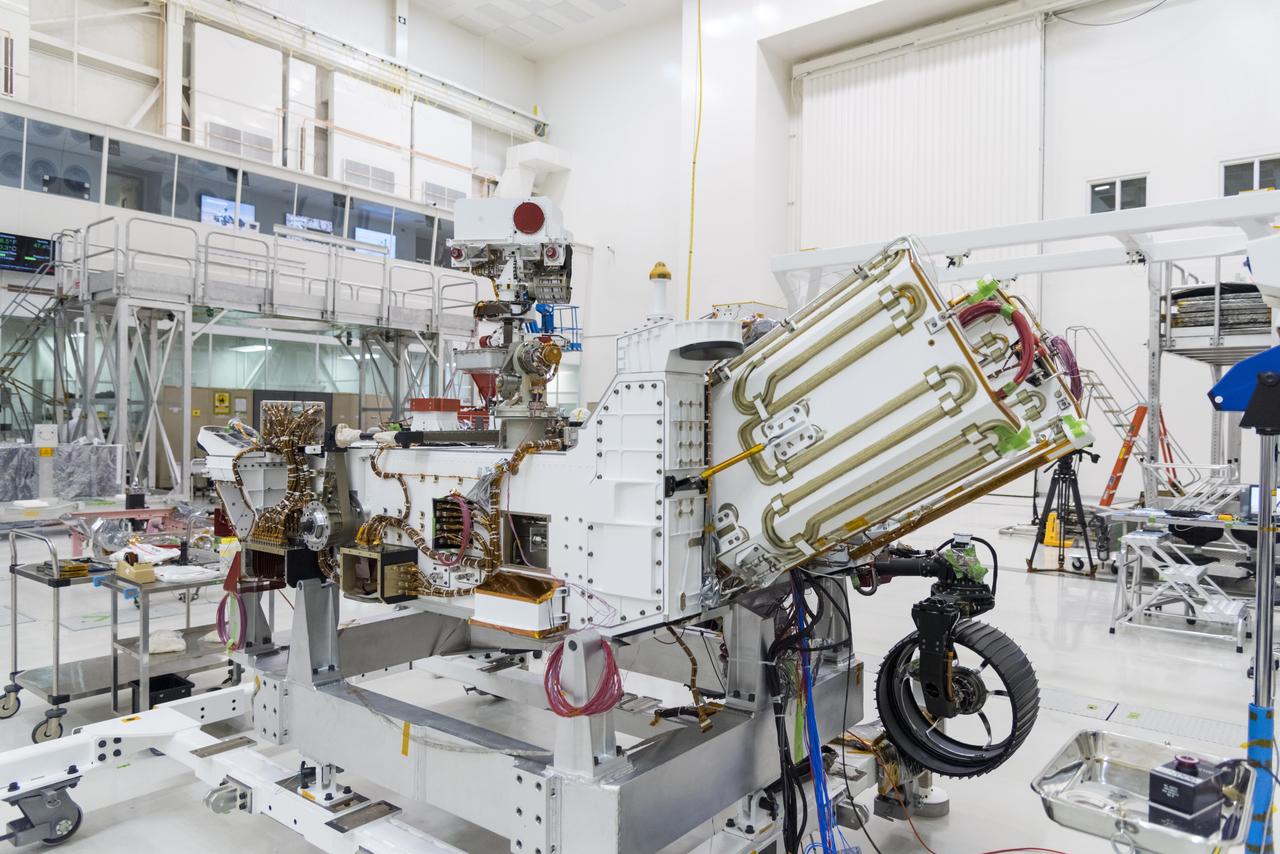
The electricity needed to operate NASA's Mars 2020 rover is provided by a power system called a Multi-Mission Radioisotope Thermoelectric Generator, or MMRTG. The MMRTG will be inserted into the aft end of the rover between the panels with gold tubing visible at the rear, which are called heat exchangers. Essentially a nuclear battery, an MMRTG uses the heat from the natural radioactive decay of plutonium-238 to generate about 110 watts of electricity at the start of a mission. Besides generating useful electrical power, the MMRTG produces heat. Some of this heat can be used to maintain the rover's systems at the proper operating temperatures in the frigid cold of space and on the surface of Mars. Some of it is rejected into space via the rover's Heat Rejection System. The gold-colored tubing on the heat exchangers form part of the cooling loops of that system. The tubes carry a fluid coolant called Trichlorofluoromethane (CFC-11) that helps dissipate the excess heat. The same tubes are used to pipe some of the heat back into the belly of the rover. MMRTGs are provided to NASA for civil space applications by the U.S. Department of Energy (DOE). The radioisotope fuel is inserted into the MMRTG at the DOE's Idaho National Laboratory before the MMRTG is shipped to the launch site. Electrically heated versions of the MMRTG are used at JPL to verify and practice integration of the power system with the rover. https://photojournal.jpl.nasa.gov/catalog/PIA23305
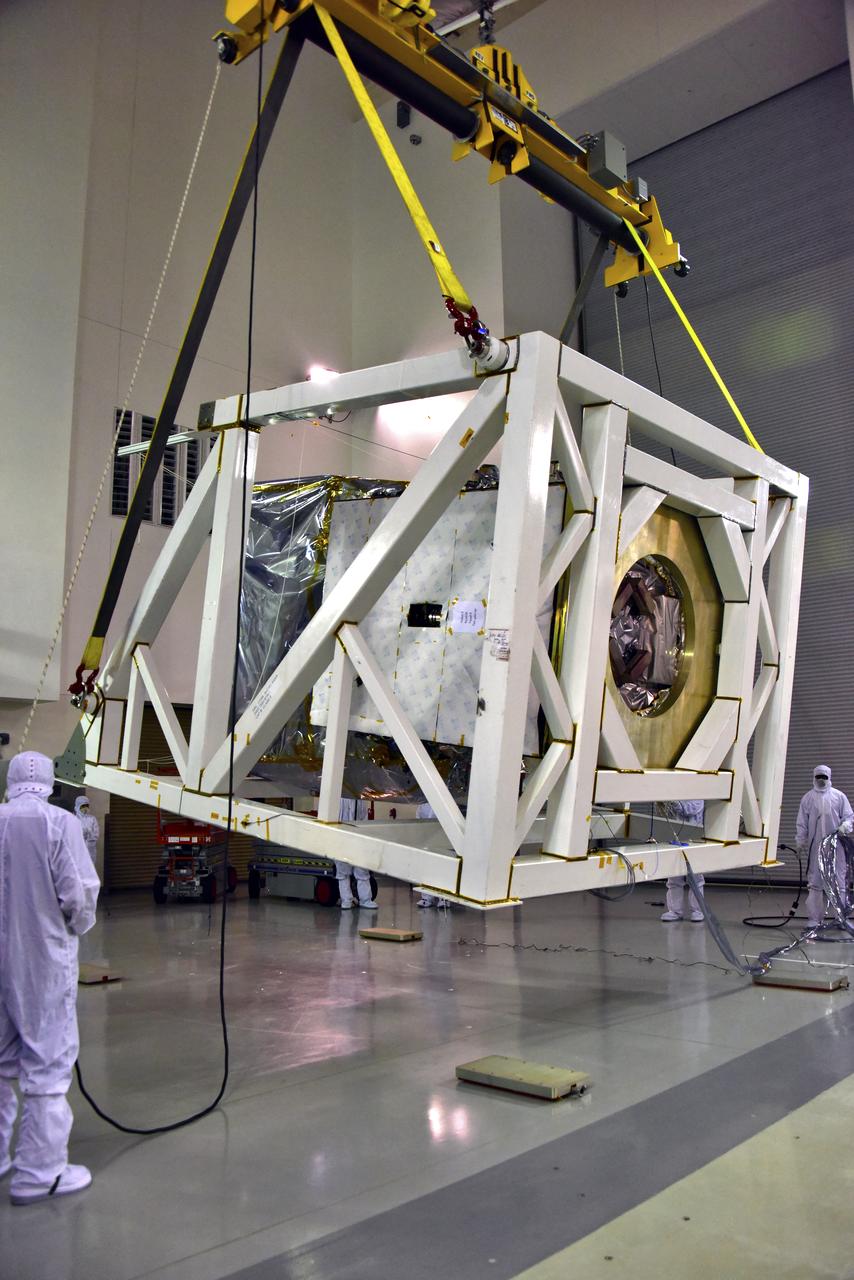
NASA's Ice, Cloud and land Elevation Satellite-2 (ICESat-2) is lifted in its fixture inside the high bay of the Astrotech Space Operations facility on June 14, 2018, at Vandenberg Air Force Base in California. ICESat-2 was shipped from the Northrop Grumman facility in Gilbert, Arizona, where it was built and tested. The satellite is scheduled to launch from Space Launch Complex-2 at Vandenberg on the final United Launch Alliance Delta II rocket. ICESat-2 will measure the height of a changing Earth, one laser pulse at a time, 10,000 laser pulses a second. The satellite will carry the Advanced Topographic Laser Altimeter System. ICESat-2 will help scientists investigate why, and how much our planet's frozen and icy areas, called the cryosphere, is changing in a warming climate.
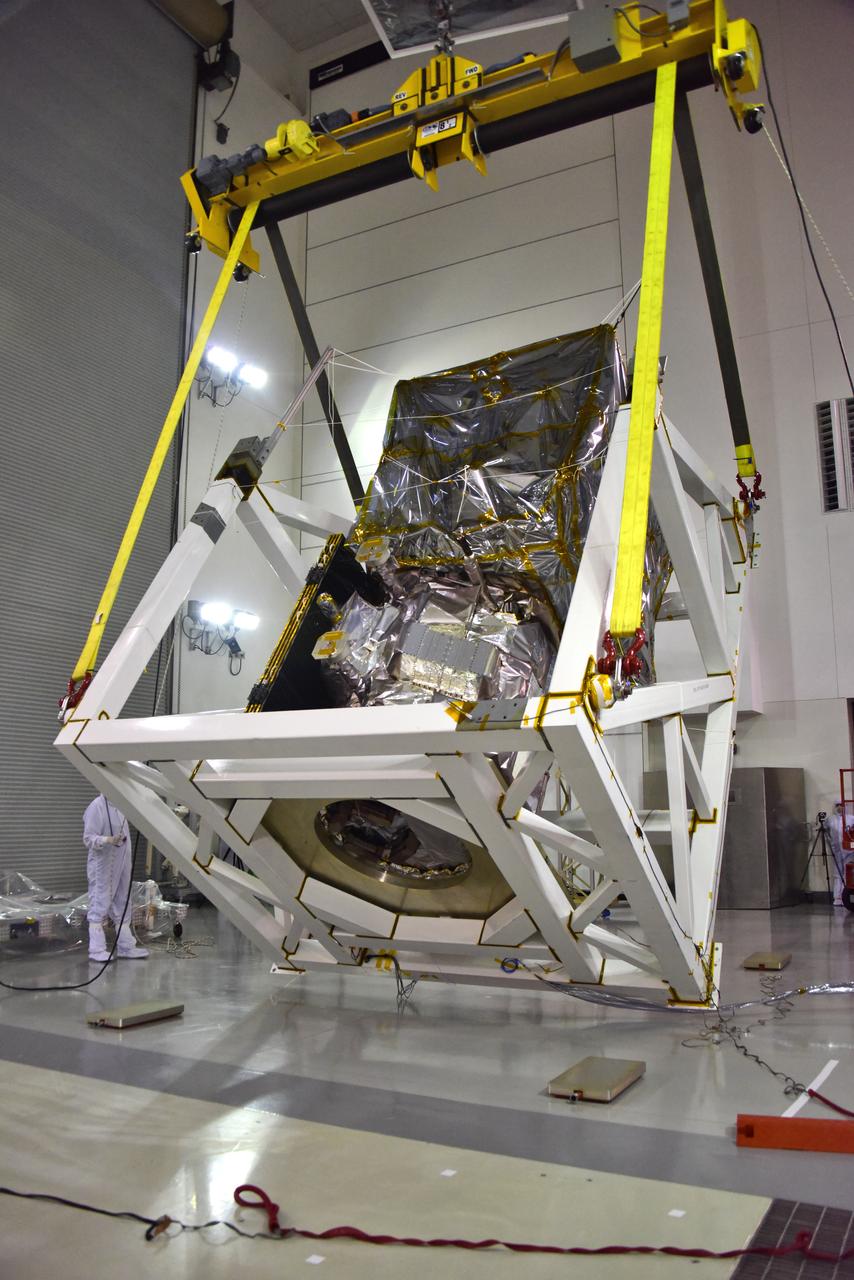
A crane is used to rotate NASA's Ice, Cloud and land Elevation Satellite-2 (ICESat-2) in its fixture inside the high bay of the Astrotech Space Operations facility on June 14, 2018, at Vandenberg Air Force Base in California. ICESat-2 was shipped from the Northrop Grumman facility in Gilbert, Arizona, where it was built and tested. The satellite is scheduled to launch from Space Launch Complex-2 at Vandenberg on the final United Launch Alliance Delta II rocket. ICESat-2 will measure the height of a changing Earth, one laser pulse at a time, 10,000 laser pulses a second. The satellite will carry the Advanced Topographic Laser Altimeter System. ICESat-2 will help scientists investigate why, and how much our planet's frozen and icy areas, called the cryosphere, is changing in a warming climate.
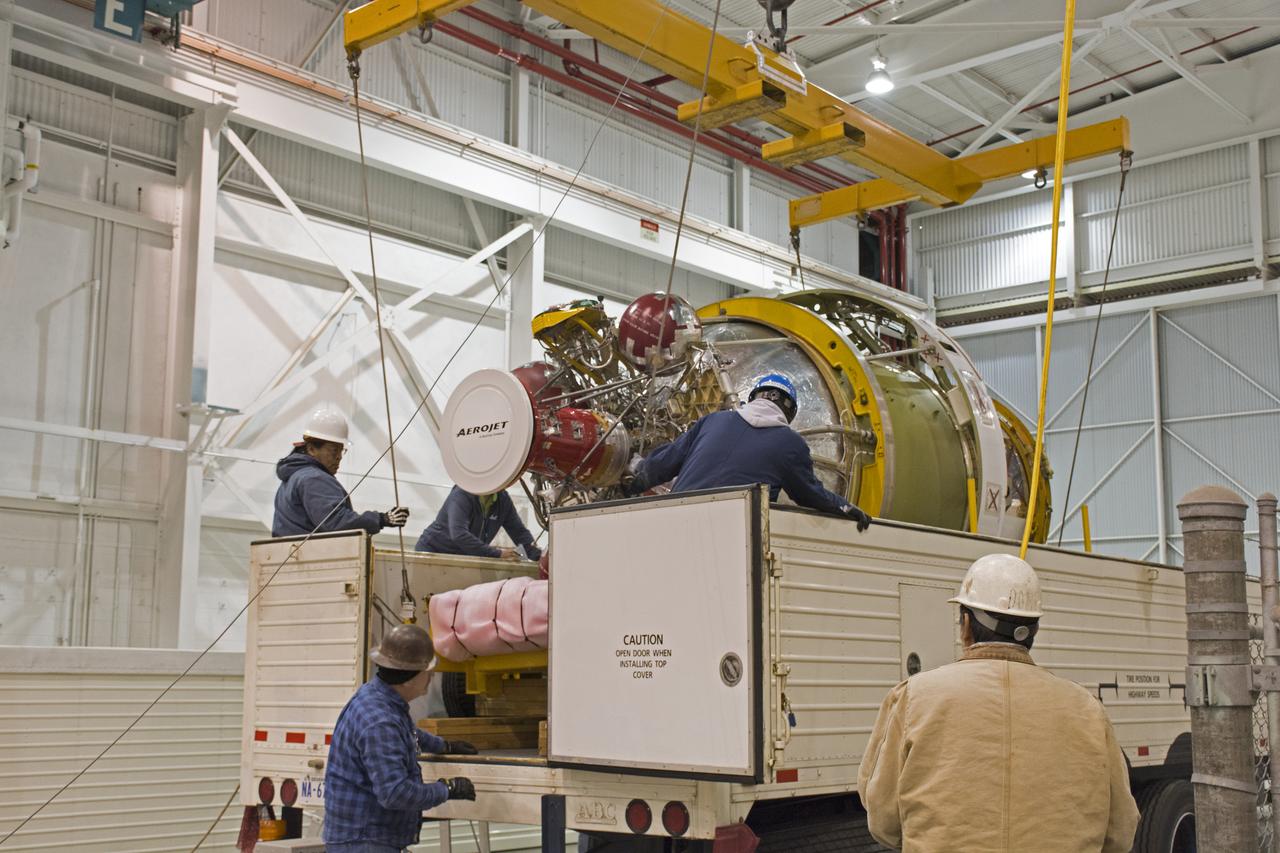
The United Launch Alliance Delta II second stage arrived at NASA's Building 1555 at Vandenberg Air Force Base in California. Technicians assist as a crane lifts the second stage up from the base of its shipping container. It will be prepared for transport to the horizontal processing facility at Space Launch Complex-2. NASA's Ice, Cloud and land Elevation Satellite-2 (ICESat-2) will launch later this year on the final Delta II rocket. ICESat-2 will measure the height of a changing Earth, one laser pulse at a time, 10,000 laser pulses a second. The satellite will carry a single instrument, the Advanced Topographic Laser Altimeter System. ICESat-2 will help scientists investigate why, and how much our planet's frozen and icy areas, called the cryosphere, is changing in a warming climate.
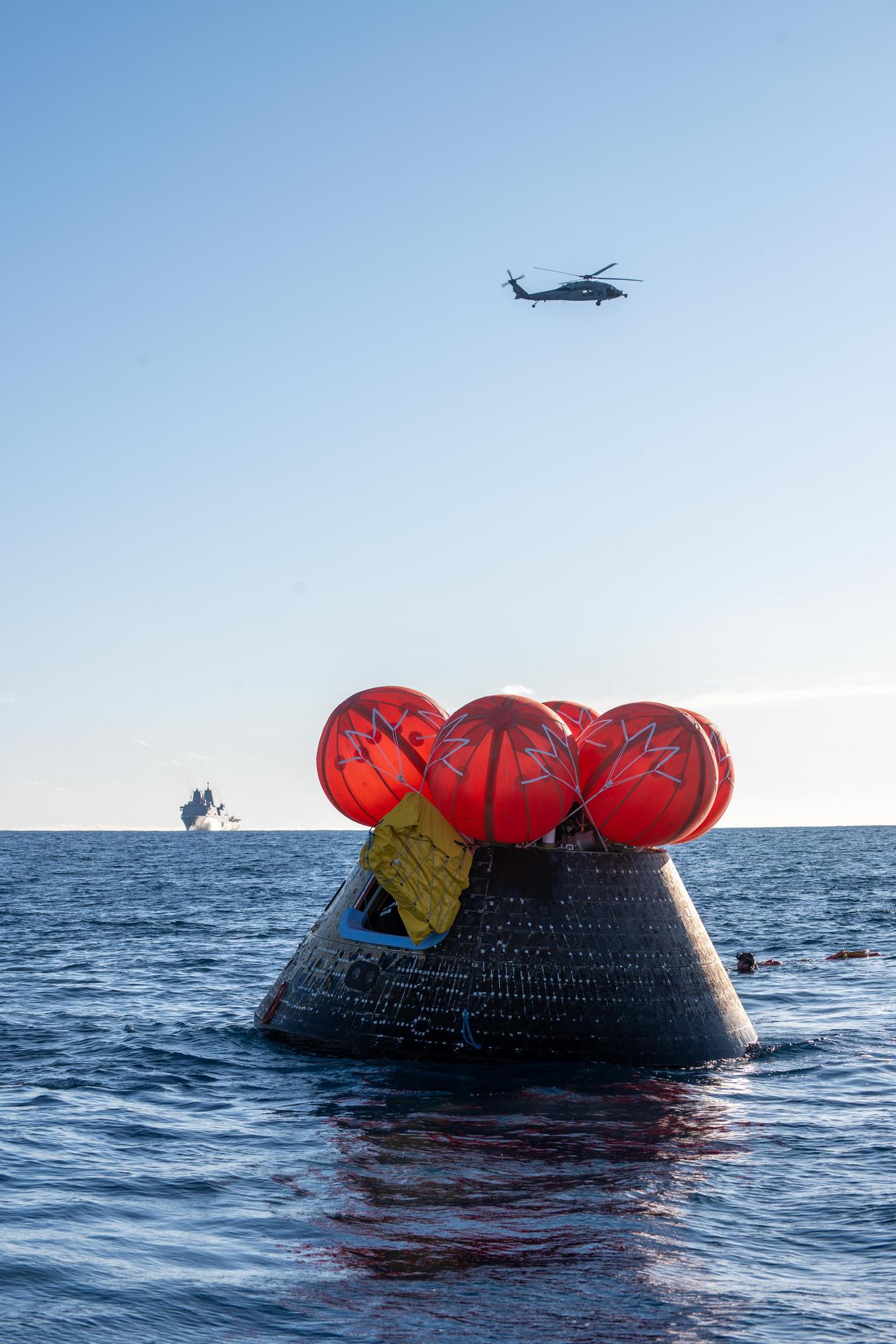
NASA's Orion spacecraft carrying Artemis II Commander Reid Wiseman, Pilot Victor Glover, and Mission Specialist Christina Koch from NASA, along with Mission Specialist Jeremy Hansen from the CSA (Canadian Space Agency), floats in the Pacific Ocean near San Diego, California, at 5:07 p.m. PDT, (8:07 p.m. EDT) on Friday, April 10, 2026. NASA’s Landing and Recovery team and U.S. Navy personnel aboard an inflatable raft, called the front porch, and a H60-S Seahawk helicopter hovers above to communicate Orion’s location back to USS John P. Murtha to coordinate efforts to secure the spacecraft in the well deck of the ship. The Artemis II test flight launched on Wednesday, April 1, from NASA’s Kennedy Space Center in Florida to begin its 10-day journey around the Moon for scientific discovery, economic benefits, and to build on our foundation for the first crewed missions to Mars.
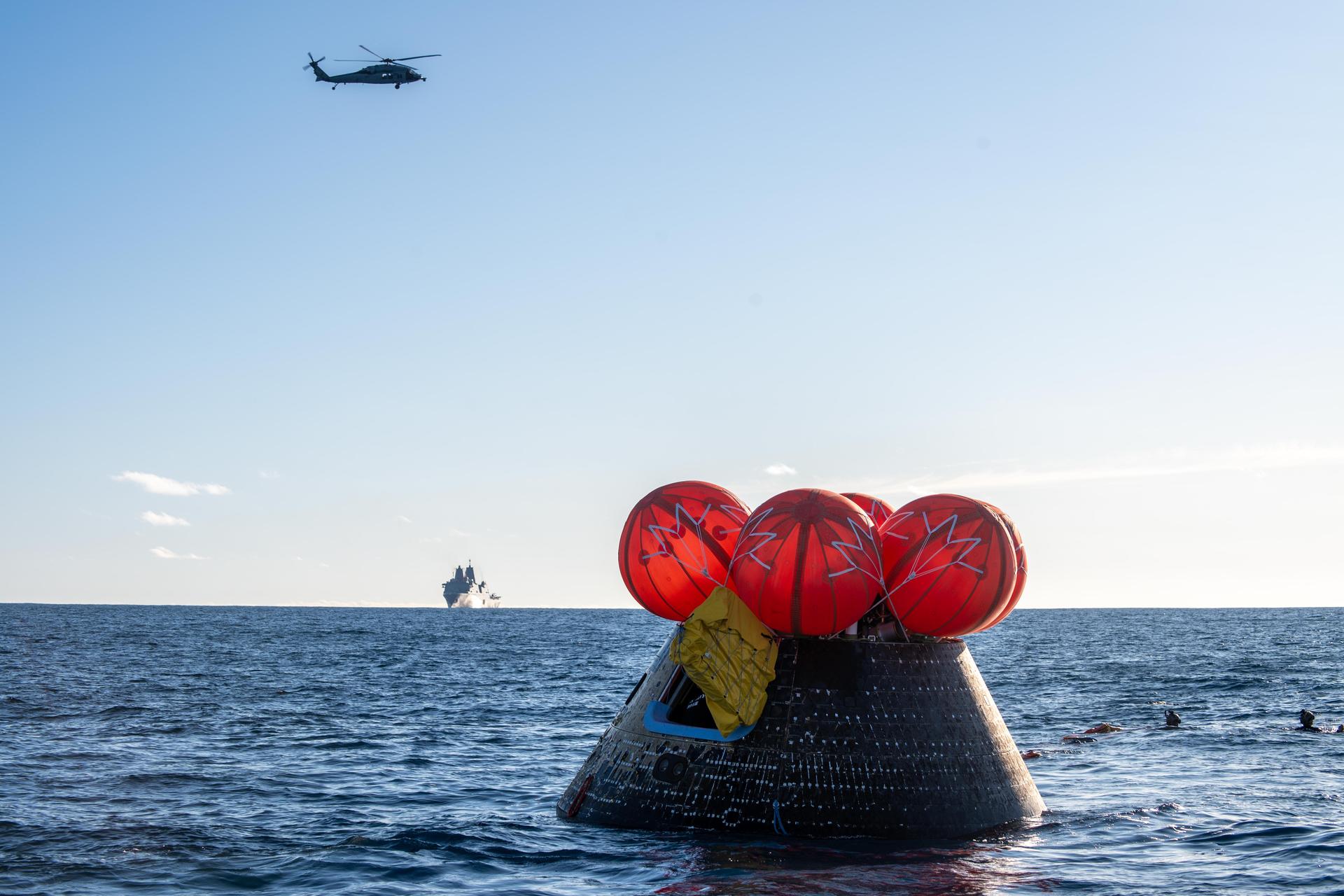
NASA's Orion spacecraft carrying Artemis II Commander Reid Wiseman, Pilot Victor Glover, and Mission Specialist Christina Koch from NASA, along with Mission Specialist Jeremy Hansen from the CSA (Canadian Space Agency), floats in the Pacific Ocean near San Diego, California, at 5:07 p.m. PDT, (8:07 p.m. EDT) on Friday, April 10, 2026. NASA’s Landing and Recovery team and U.S. Navy personnel aboard an inflatable raft, called the front porch, and a H60-S Seahawk helicopter hovers above to communicate Orion’s location back to USS John P. Murtha to coordinate efforts to secure the spacecraft in the well deck of the ship. The Artemis II test flight launched on Wednesday, April 1, from NASA’s Kennedy Space Center in Florida to begin its 10-day journey around the Moon for scientific discovery, economic benefits, and to build on our foundation for the first crewed missions to Mars.
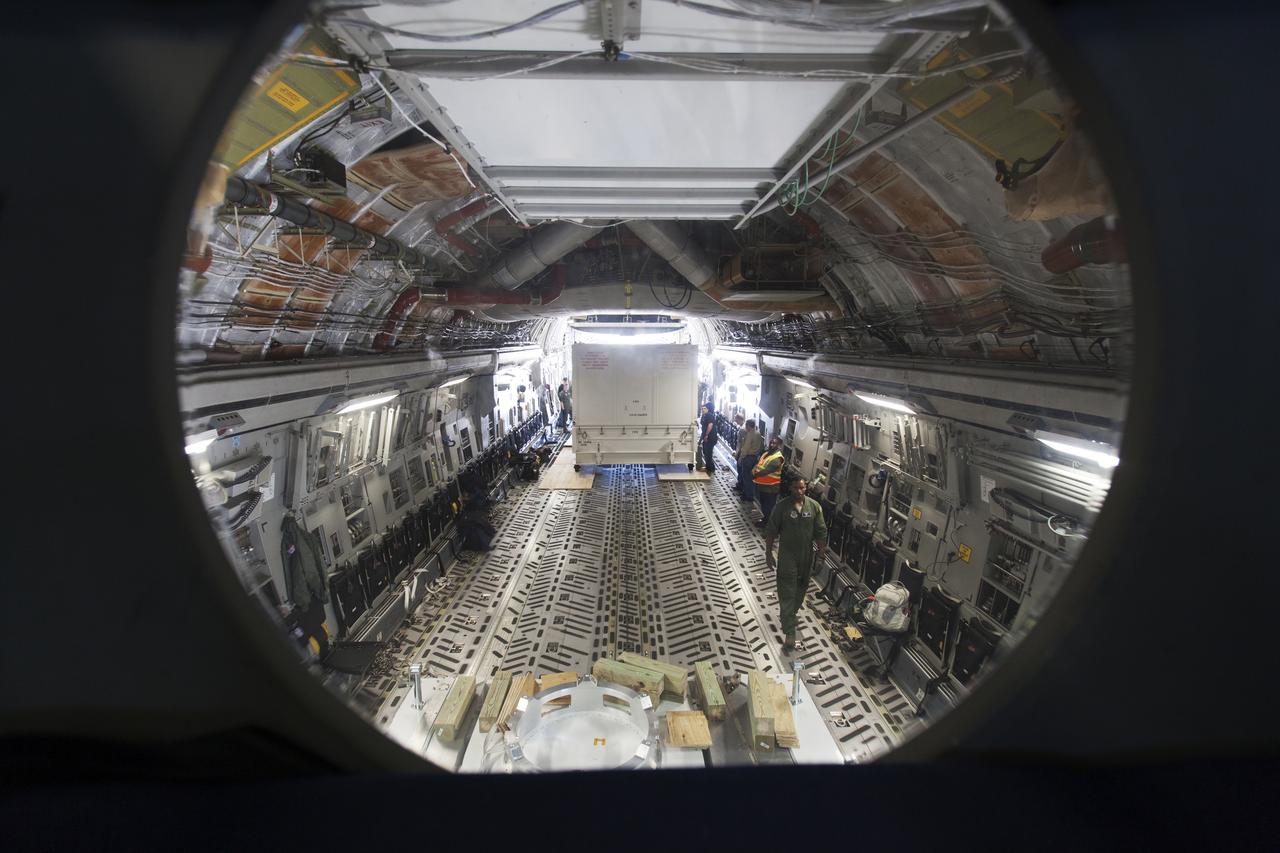
Preparations are underway to offload NASA's Parker Solar Probe spacecraft, secured in its shipping container, from a U.S. Air Force C-5 transport aircraft at Space Coast Regional Airport in Titusville, Florida. The spacecraft will be transported to the Astrotech processing facility near the agency's Kennedy Space Center. The Parker Solar Probe will launch on a United Launch Alliance Delta IV Heavy rocket from Space Launch Complex 37 at Cape Canaveral Air Force Station in Florida in July 2018. The mission will perform the closest-ever observations of a star when it travels through the Sun's atmosphere, called the corona. The probe will rely on measurements and imaging to revolutionize our understanding of the corona and the Sun-Earth connection.
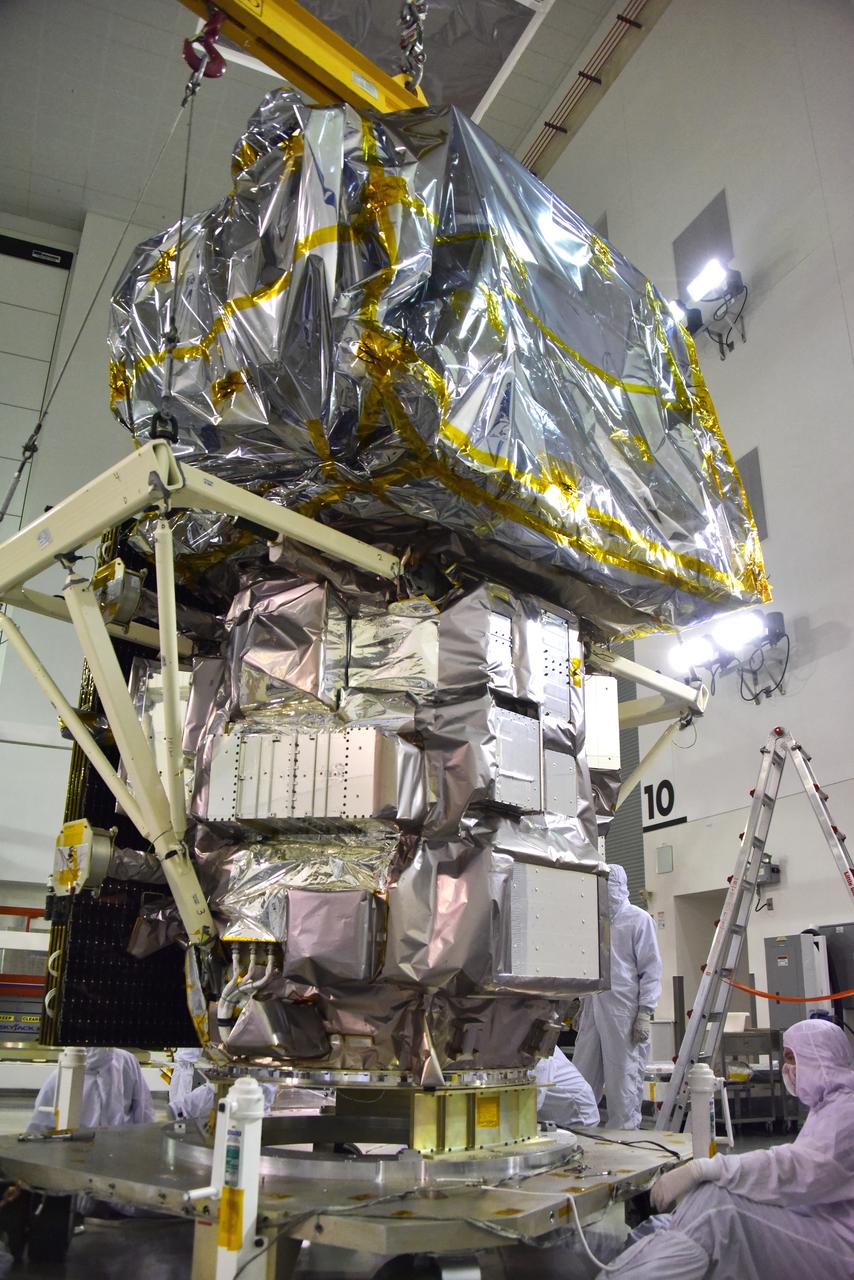
Technicians assist as a crane lowers NASA's Ice, Cloud and land Elevation Satellite-2 (ICESat-2) onto a work stand in the high bay of the Astrotech Space Operations facility on June 14, 2018, at Vandenberg Air Force Base in California. ICESat-2 was shipped from the Northrop Grumman facility in Gilbert, Arizona, where it was built and tested. The satellite is scheduled to launch from Space Launch Complex-2 at Vandenberg on the final United Launch Alliance Delta II rocket. ICESat-2 will measure the height of a changing Earth, one laser pulse at a time, 10,000 laser pulses a second. The satellite will carry the Advanced Topographic Laser Altimeter System. ICESat-2 will help scientists investigate why, and how much our planet's frozen and icy areas, called the cryosphere, is changing in a warming climate.
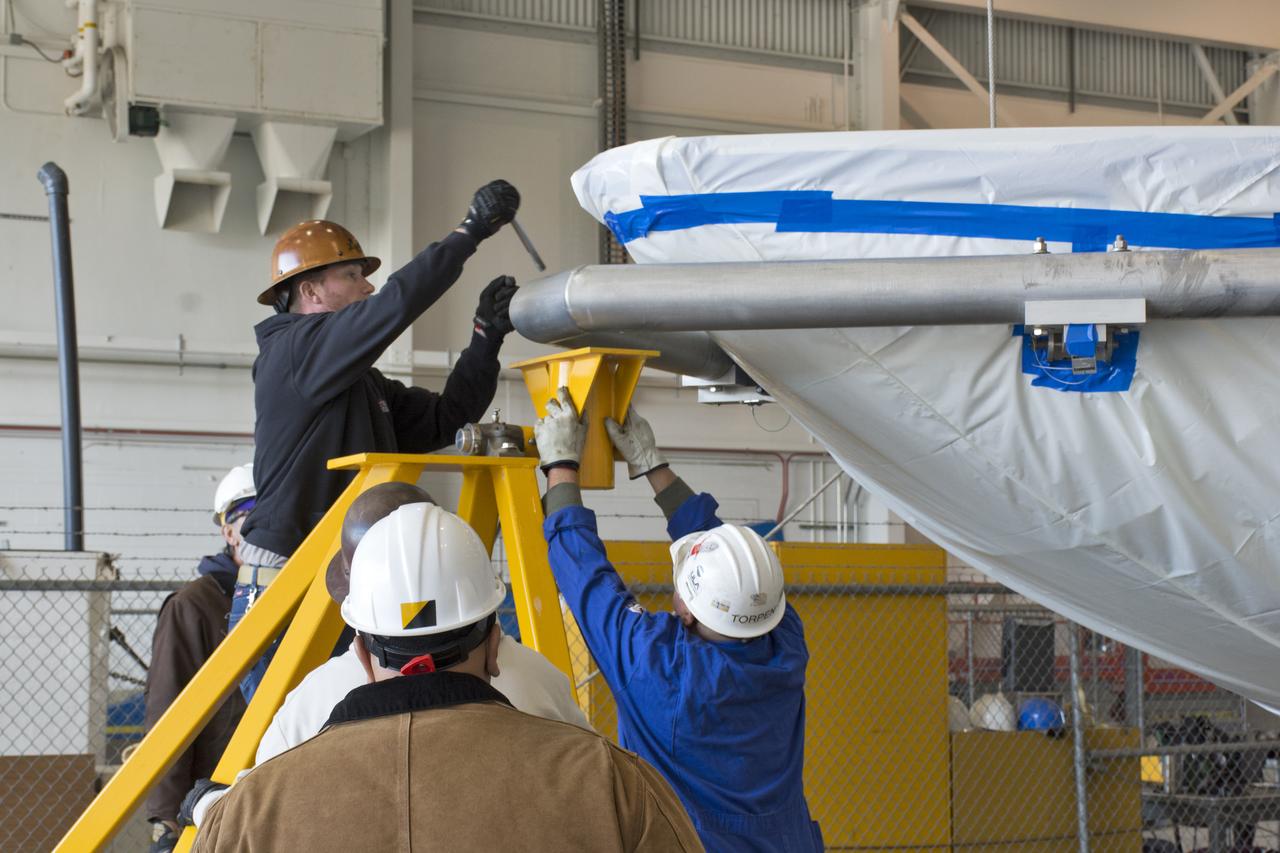
Inside Building 836 at Vandenberg Air Force Base in California, the first half of the payload fairing for the United Launch Alliance (ULA) Delta II rocket has been lifted out of its shipping container. The metal framing around it is being secured on a stand. NASA's Ice, Cloud and land Elevation Satellite-2 (ICESat-2) is scheduled to launch on the final ULA Delta II rocket later this year. ICESat-2 will measure the height of a changing Earth, one laser pulse at a time, 10,000 laser pulses a second. The satellite will carry a single instrument, the Advanced Topographic Laser Altimeter System. ICESat-2 will help scientists investigate why, and how much our planet's frozen and icy areas, called the cryosphere, is changing in a warming climate.
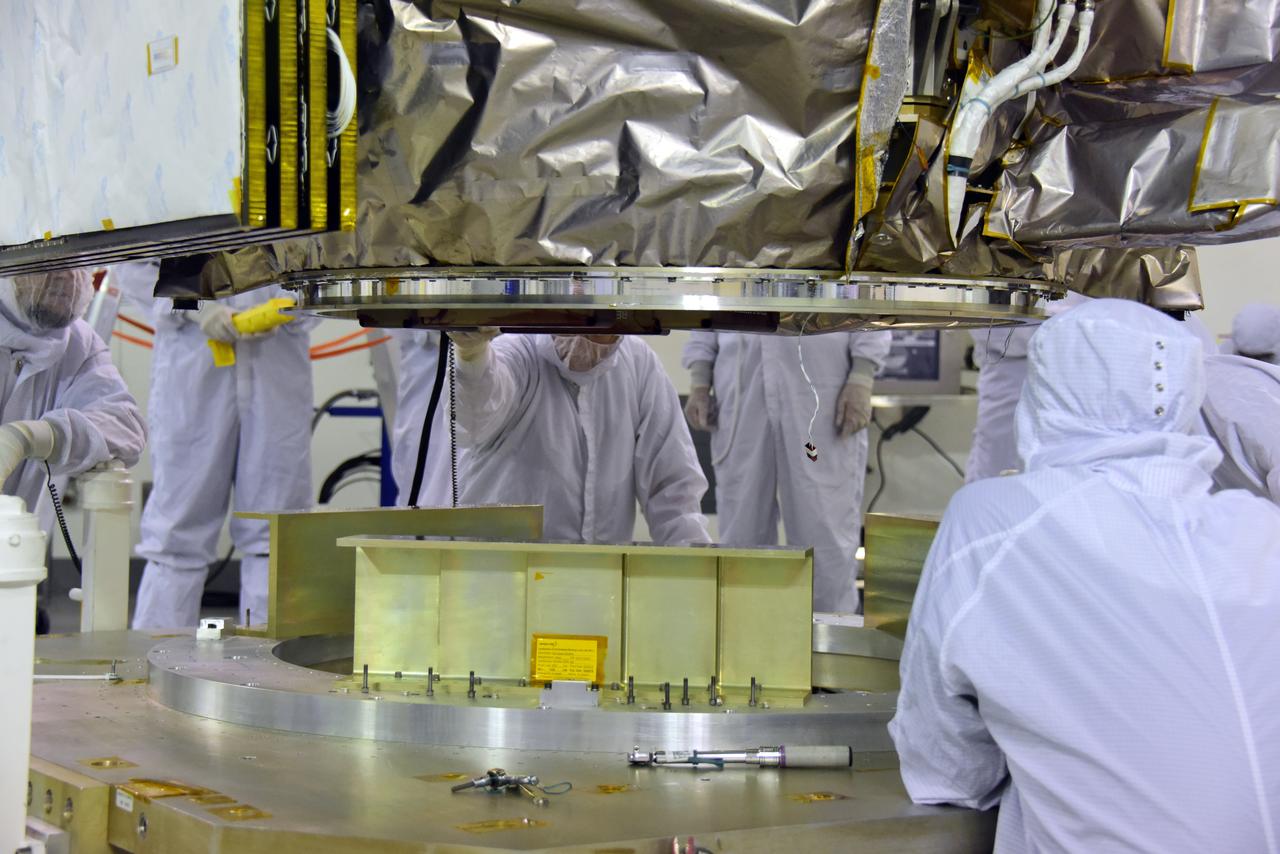
Technicians assist as a crane lowers NASA's Ice, Cloud and land Elevation Satellite-2 (ICESat-2) onto a work stand in the high bay of the Astrotech Space Operations facility on June 14, 2018, at Vandenberg Air Force Base in California. ICESat-2 was shipped from the Northrop Grumman facility in Gilbert, Arizona, where it was built and tested. The satellite is scheduled to launch from Space Launch Complex-2 at Vandenberg on the final United Launch Alliance Delta II rocket. ICESat-2 will measure the height of a changing Earth, one laser pulse at a time, 10,000 laser pulses a second. The satellite will carry the Advanced Topographic Laser Altimeter System. ICESat-2 will help scientists investigate why, and how much our planet's frozen and icy areas, called the cryosphere, is changing in a warming climate.
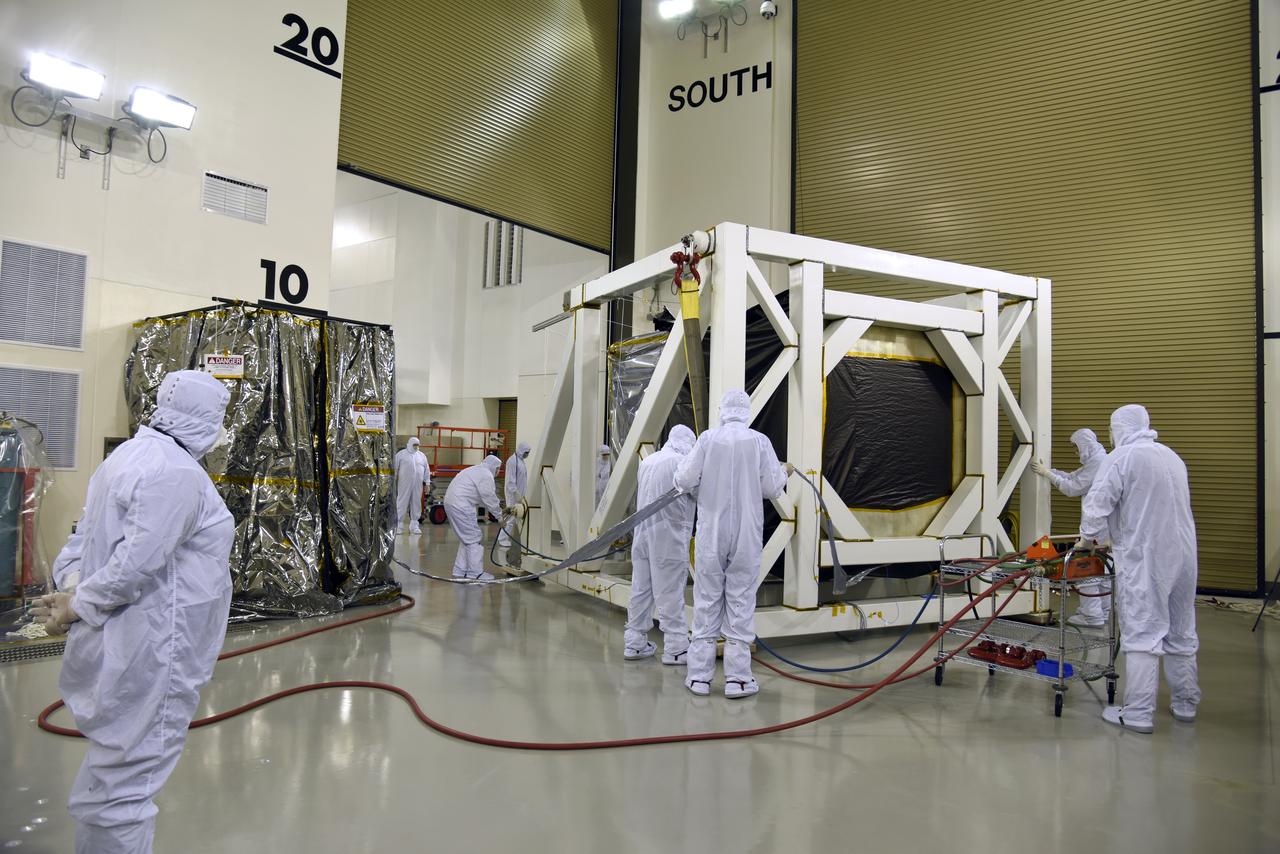
NASA's Ice, Cloud and land Elevation Satellite-2 (ICESat-2) is moved into the high bay of the Astrotech processing facility on June 13, 2018, at Vandenberg Air Force Base in California. ICESat-2 was shipped from the Northrop Grumman facility in Gilbert, Arizona, where it was built and tested. The satellite is scheduled to launch from Space Launch Complex-2 at Vandenberg on the final United Launch Alliance Delta II rocket. ICESat-2 will measure the height of a changing Earth, one laser pulse at a time, 10,000 laser pulses a second. The satellite will carry the Advanced Topographic Laser Altimeter System. ICESat-2 will help scientists investigate why, and how much our planet's frozen and icy areas, called the cryosphere, is changing in a warming climate.
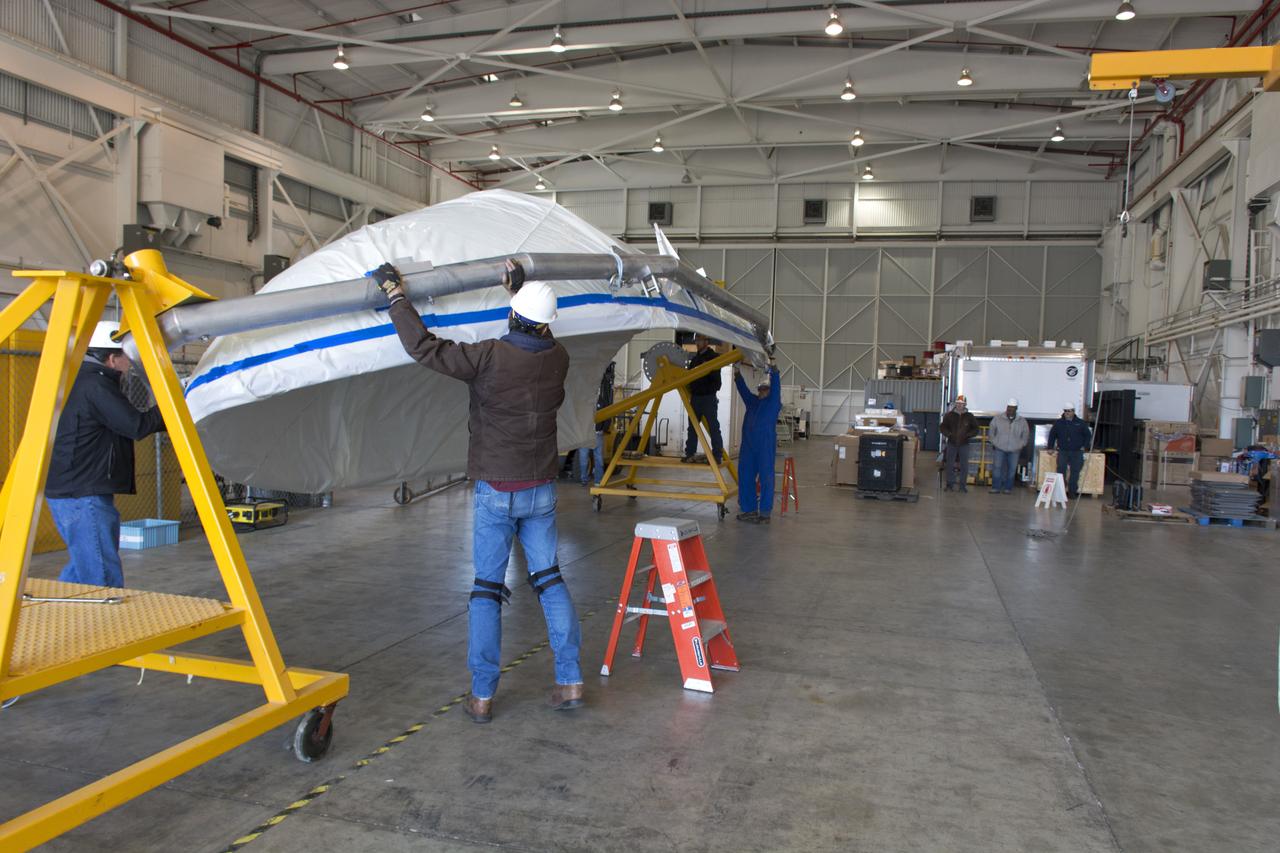
Inside Building 836 at Vandenberg Air Force Base in California, the first half of the payload fairing for the United Launch Alliance (ULA) Delta II rocket has been lifted out of its shipping container. The metal framing around it is being secured on a stand that allows the fairing to be rotated. NASA's Ice, Cloud and land Elevation Satellite-2 (ICESat-2) is scheduled to launch on the final ULA Delta II rocket later this year. ICESat-2 will measure the height of a changing Earth, one laser pulse at a time, 10,000 laser pulses a second. The satellite will carry a single instrument, the Advanced Topographic Laser Altimeter System. ICESat-2 will help scientists investigate why, and how much our planet's frozen and icy areas, called the cryosphere, is changing in a warming climate.
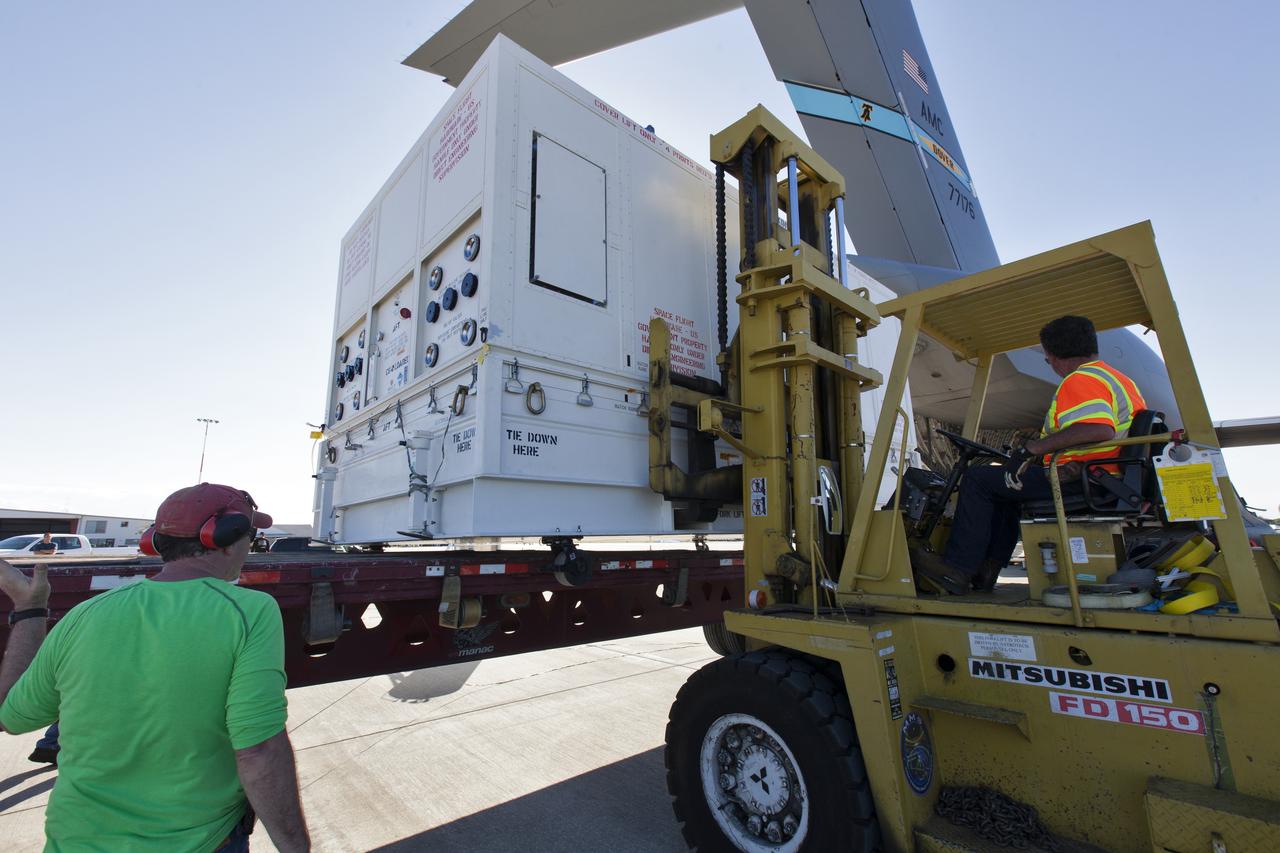
A forklift operator latches onto the shipping container with NASA's Parker Solar Probe inside, after it was offloaded from a U.S. Air Force C-5 transport aircraft at Space Coast Regional Airport in Titusville, Florida. The spacecraft will be transported to the Astrotech processing facility near the agency's Kennedy Space Center. The Parker Solar Probe will launch on a United Launch Alliance Delta IV Heavy rocket from Space Launch Complex 37 at Cape Canaveral Air Force Station in Florida in July 2018. The mission will perform the closest-ever observations of a star when it travels through the Sun's atmosphere, called the corona. The probe will rely on measurements and imaging to revolutionize our understanding of the corona and the Sun-Earth connection.
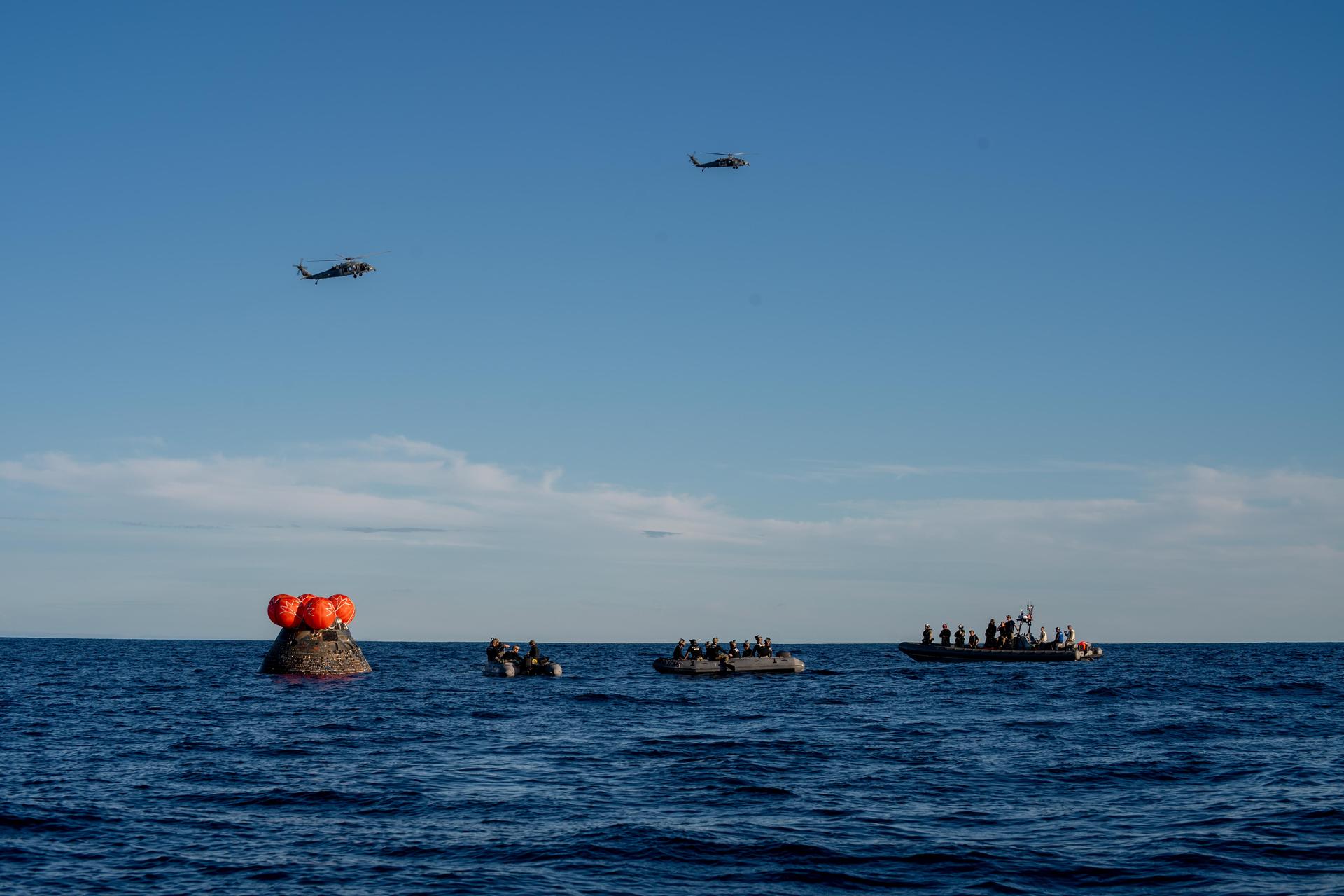
NASA's Orion spacecraft carrying Artemis II Commander Reid Wiseman, Pilot Victor Glover, and Mission Specialist Christina Koch from NASA, along with Mission Specialist Jeremy Hansen from the CSA (Canadian Space Agency), floats in the Pacific Ocean near San Diego, California, at 5:07 p.m. PDT, (8:07 p.m. EDT) on Friday, April 10, 2026. NASA’s Landing and Recovery team and U.S. Navy personnel aboard an inflatable raft, called the front porch, and a H60-S Seahawk helicopter hovers above to communicate Orion’s location back to USS John P. Murtha to coordinate efforts to secure the spacecraft in the well deck of the ship. The Artemis II test flight launched on Wednesday, April 1, from NASA’s Kennedy Space Center in Florida to begin its 10-day journey around the Moon for scientific discovery, economic benefits, and to build on our foundation for the first crewed missions to Mars.
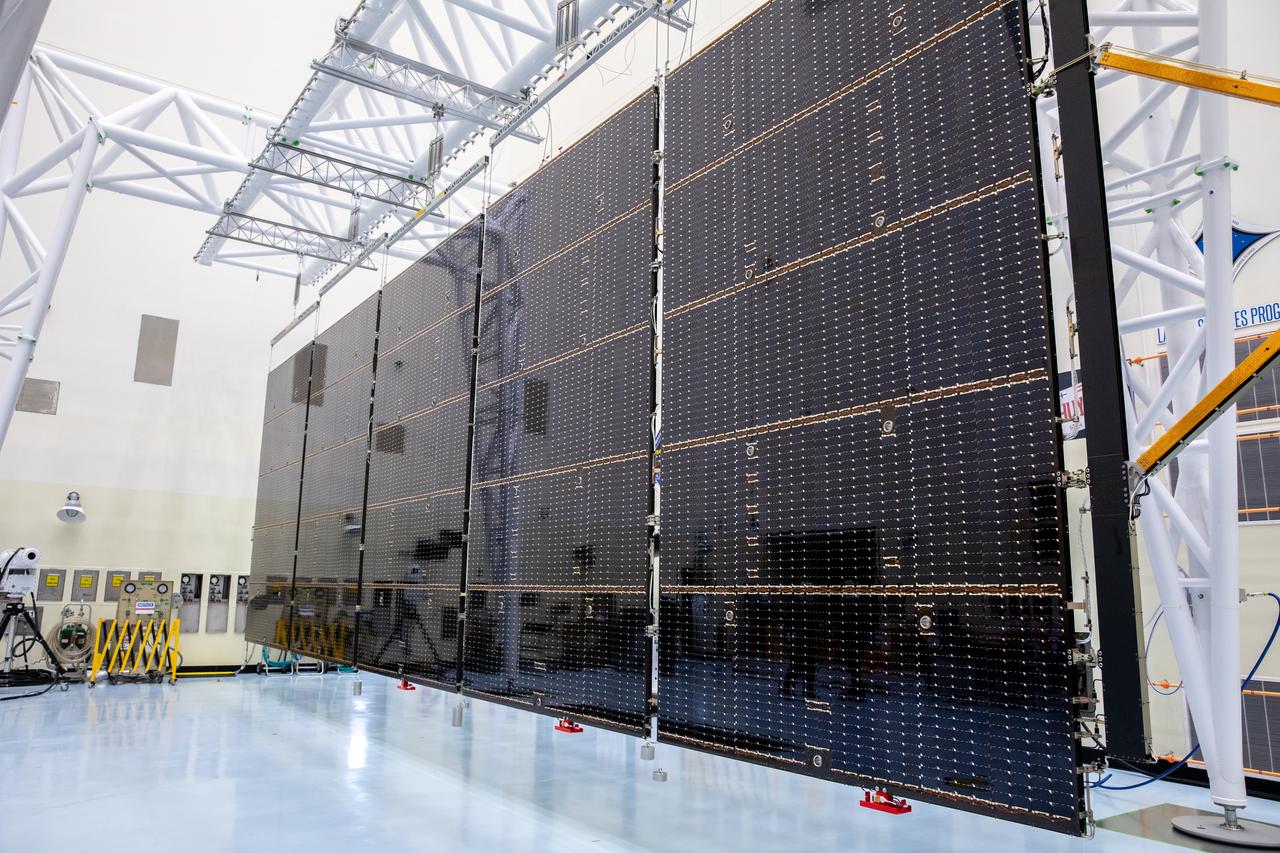
The first of two five-panel solar arrays built for NASA’s Europa Clipper is fully extended from a shipping configuration and suspended on a support system called a gravity offload fixture to begin inspection and cleaning as part of assembly, test, and launch operations inside the Payload Hazardous Servicing Facility at the agency’s Kennedy Space Center in Florida on Wednesday, March 6, 2024. Another name for the gravity offload fixture is the Transportable Large Envelope Deployment Facility (T-LEDF). When both solar arrays are installed and deployed on Europa Clipper – the agency’s largest spacecraft ever developed for a planetary mission – the spacecraft will span a total length of more than 100 feet and weigh 7,145 pounds without the inclusion of propellants.
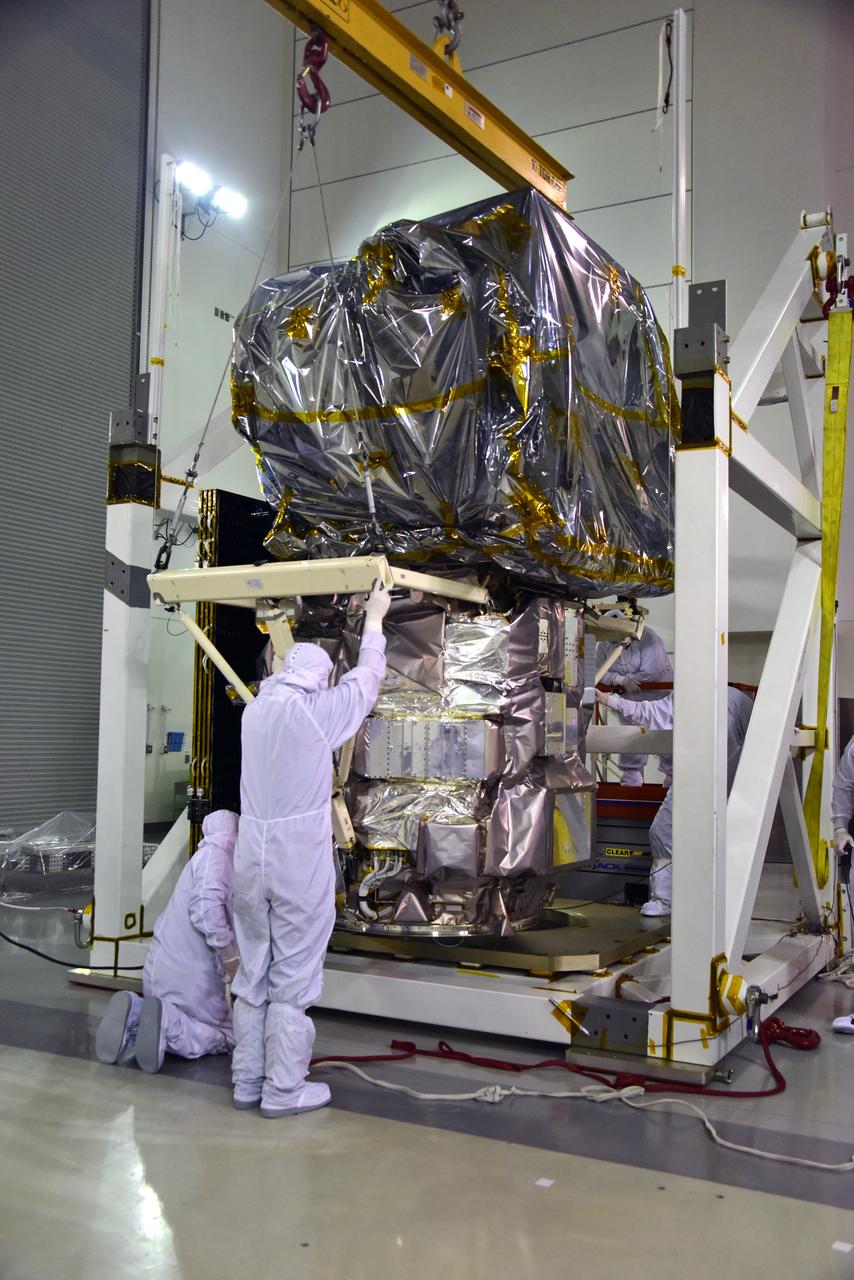
Technicians assist as a crane rotates NASA's Ice, Cloud and land Elevation Satellite-2 (ICESat-2) into position for removal and lift to a work stand in the high bay of the Astrotech Space Operations facility on June 14, 2018, at Vandenberg Air Force Base in California. ICESat-2 was shipped from the Northrop Grumman facility in Gilbert, Arizona, where it was built and tested. The satellite is scheduled to launch from Space Launch Complex-2 at Vandenberg on the final United Launch Alliance Delta II rocket. ICESat-2 will measure the height of a changing Earth, one laser pulse at a time, 10,000 laser pulses a second. The satellite will carry the Advanced Topographic Laser Altimeter System. ICESat-2 will help scientists investigate why, and how much our planet's frozen and icy areas, called the cryosphere, is changing in a warming climate.
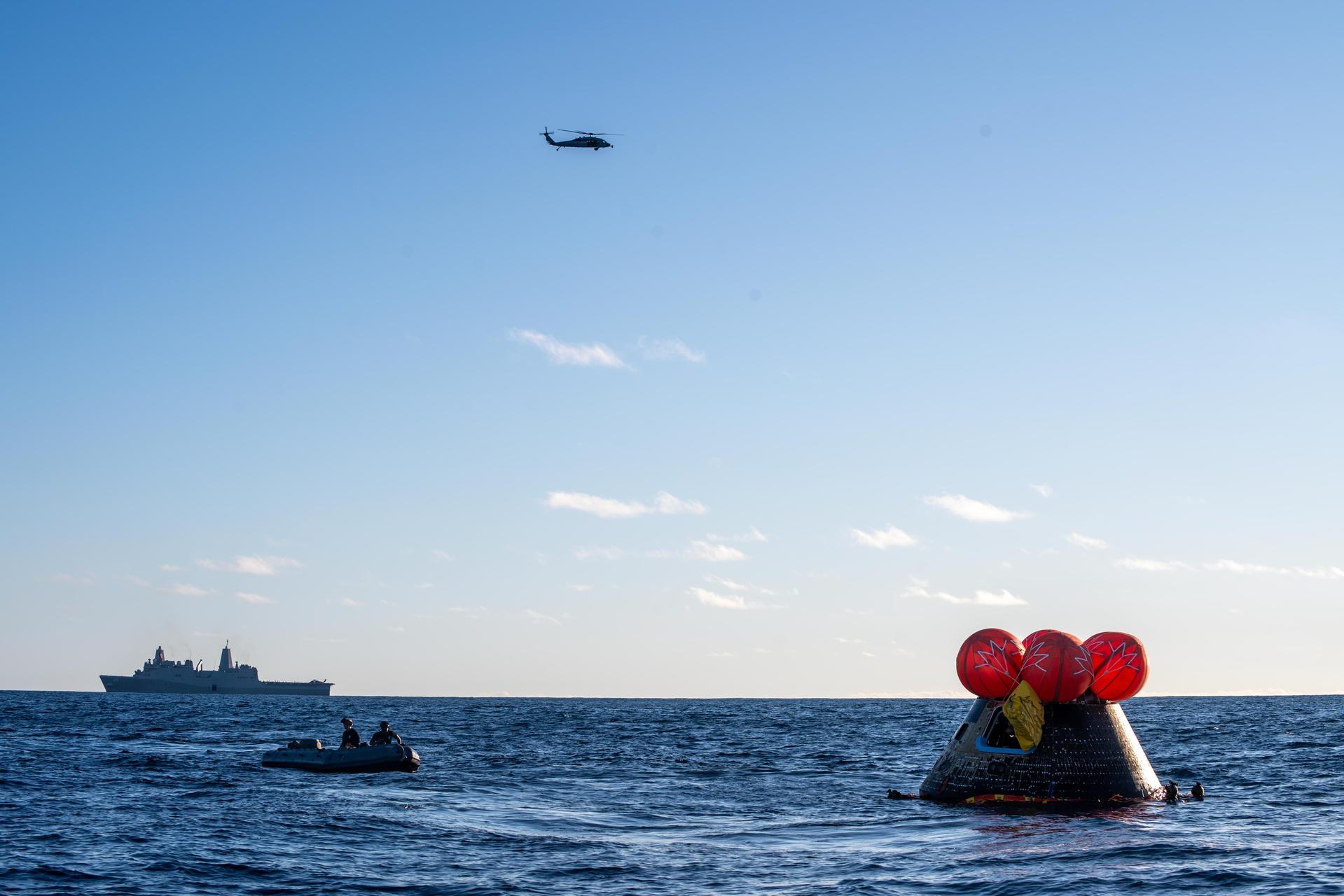
NASA's Orion spacecraft carrying Artemis II Commander Reid Wiseman, Pilot Victor Glover, and Mission Specialist Christina Koch from NASA, along with Mission Specialist Jeremy Hansen from the CSA (Canadian Space Agency), floats in the Pacific Ocean near San Diego, California, at 5:07 p.m. PDT, (8:07 p.m. EDT) on Friday, April 10, 2026. NASA’s Landing and Recovery team and U.S. Navy personnel aboard an inflatable raft, called the front porch, and a H60-S Seahawk helicopter hovers above to communicate Orion’s location back to USS John P. Murtha to coordinate efforts to secure the spacecraft in the well deck of the ship. The Artemis II test flight launched on Wednesday, April 1, from NASA’s Kennedy Space Center in Florida to begin its 10-day journey around the Moon for scientific discovery, economic benefits, and to build on our foundation for the first crewed missions to Mars.
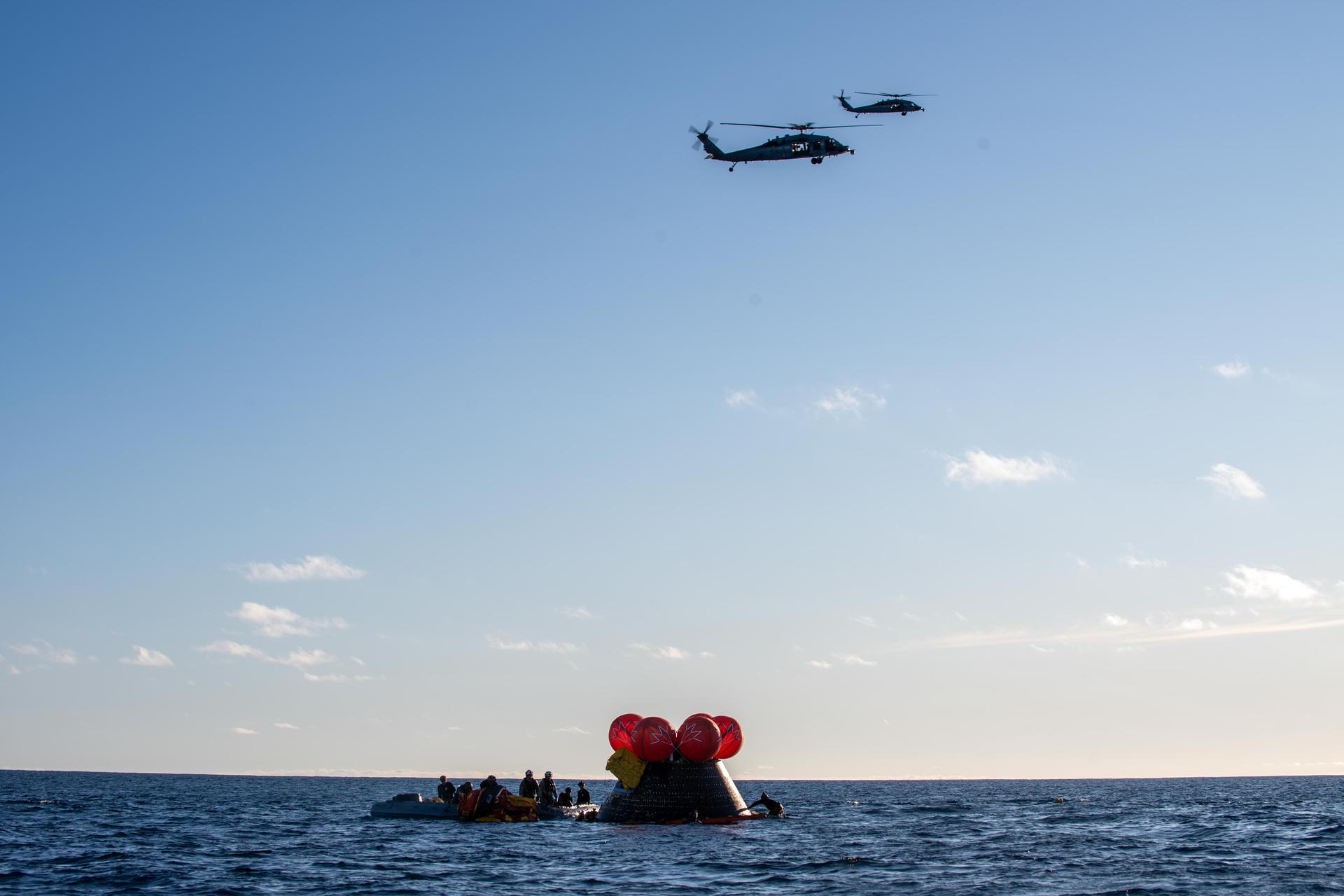
NASA's Orion spacecraft carrying Artemis II Commander Reid Wiseman, Pilot Victor Glover, and Mission Specialist Christina Koch from NASA, along with Mission Specialist Jeremy Hansen from the CSA (Canadian Space Agency), floats in the Pacific Ocean near San Diego, California, at 5:07 p.m. PDT, (8:07 p.m. EDT) on Friday, April 10, 2026. NASA’s Landing and Recovery team and U.S. Navy personnel aboard an inflatable raft, called the front porch, and a H60-S Seahawk helicopter hovers above to communicate Orion’s location back to USS John P. Murtha to coordinate efforts to secure the spacecraft in the well deck of the ship. The Artemis II test flight launched on Wednesday, April 1, from NASA’s Kennedy Space Center in Florida to begin its 10-day journey around the Moon for scientific discovery, economic benefits, and to build on our foundation for the first crewed missions to Mars.
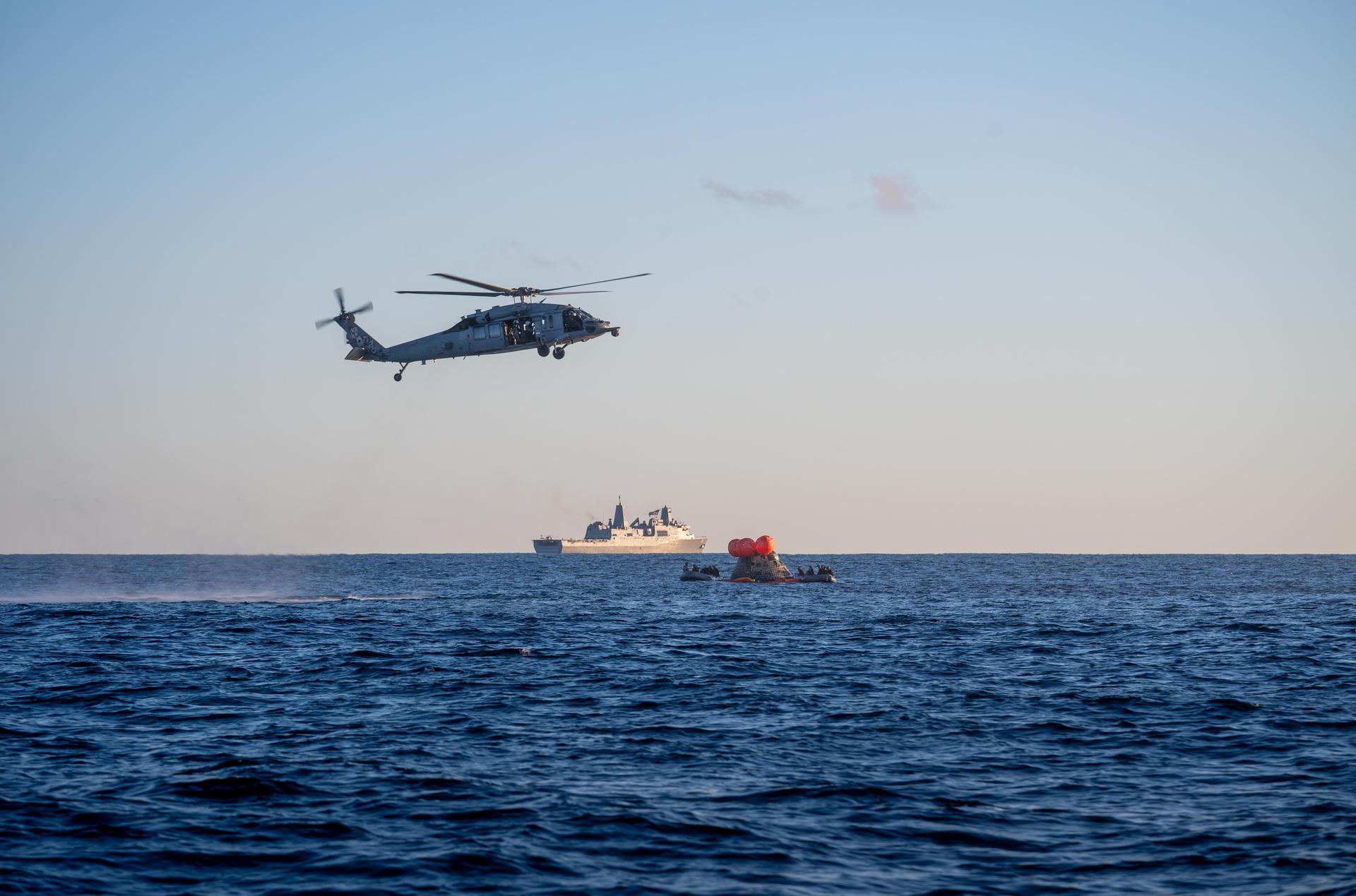
NASA's Orion spacecraft carrying Artemis II Commander Reid Wiseman, Pilot Victor Glover, and Mission Specialist Christina Koch from NASA, along with Mission Specialist Jeremy Hansen from the CSA (Canadian Space Agency), floats in the Pacific Ocean near San Diego, California, at 5:07 p.m. PDT, (8:07 p.m. EDT) on Friday, April 10, 2026. NASA’s Landing and Recovery team and U.S. Navy personnel aboard an inflatable raft, called the front porch, and a H60-S Seahawk helicopter hovers above to communicate Orion’s location back to USS John P. Murtha to coordinate efforts to secure the spacecraft in the well deck of the ship. The Artemis II test flight launched on Wednesday, April 1, from NASA’s Kennedy Space Center in Florida to begin its 10-day journey around the Moon for scientific discovery, economic benefits, and to build on our foundation for the first crewed missions to Mars.
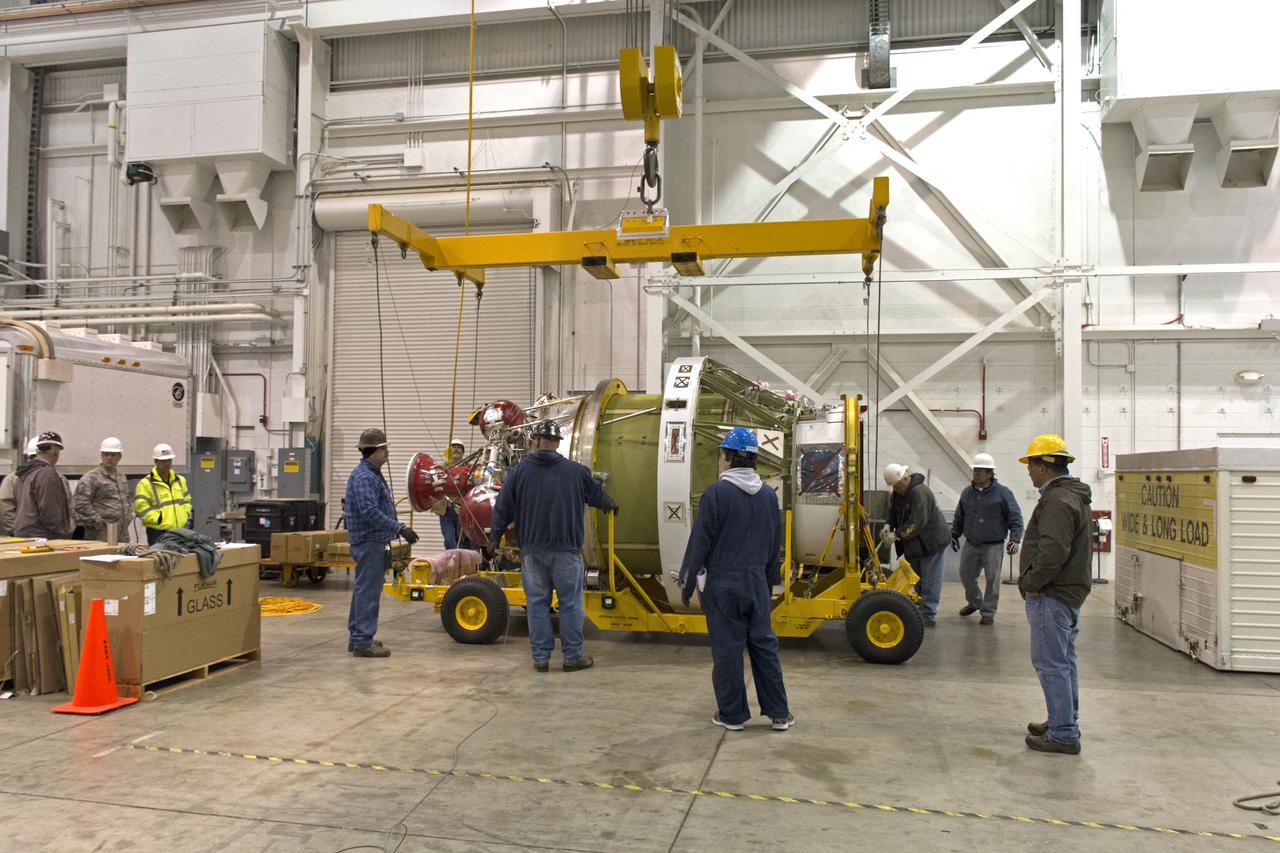
Inside NASA's Building 1555 at Vandenberg Air Force Base in California, the United Launch Alliance Delta II second stage was lifted out of its shipping container and a crane is being used to lower it onto the base of a transporter. The second stage will be moved to the horizontal processing facility at Space Launch Complex-2. NASA's Ice, Cloud and land Elevation Satellite-2 (ICESat-2) will launch later this year on the final Delta II rocket. ICESat-2 will measure the height of a changing Earth, one laser pulse at a time, 10,000 laser pulses a second. The satellite will carry a single instrument, the Advanced Topographic Laser Altimeter System. ICESat-2 will help scientists investigate why, and how much our planet's frozen and icy areas, called the cryosphere, is changing in a warming climate.
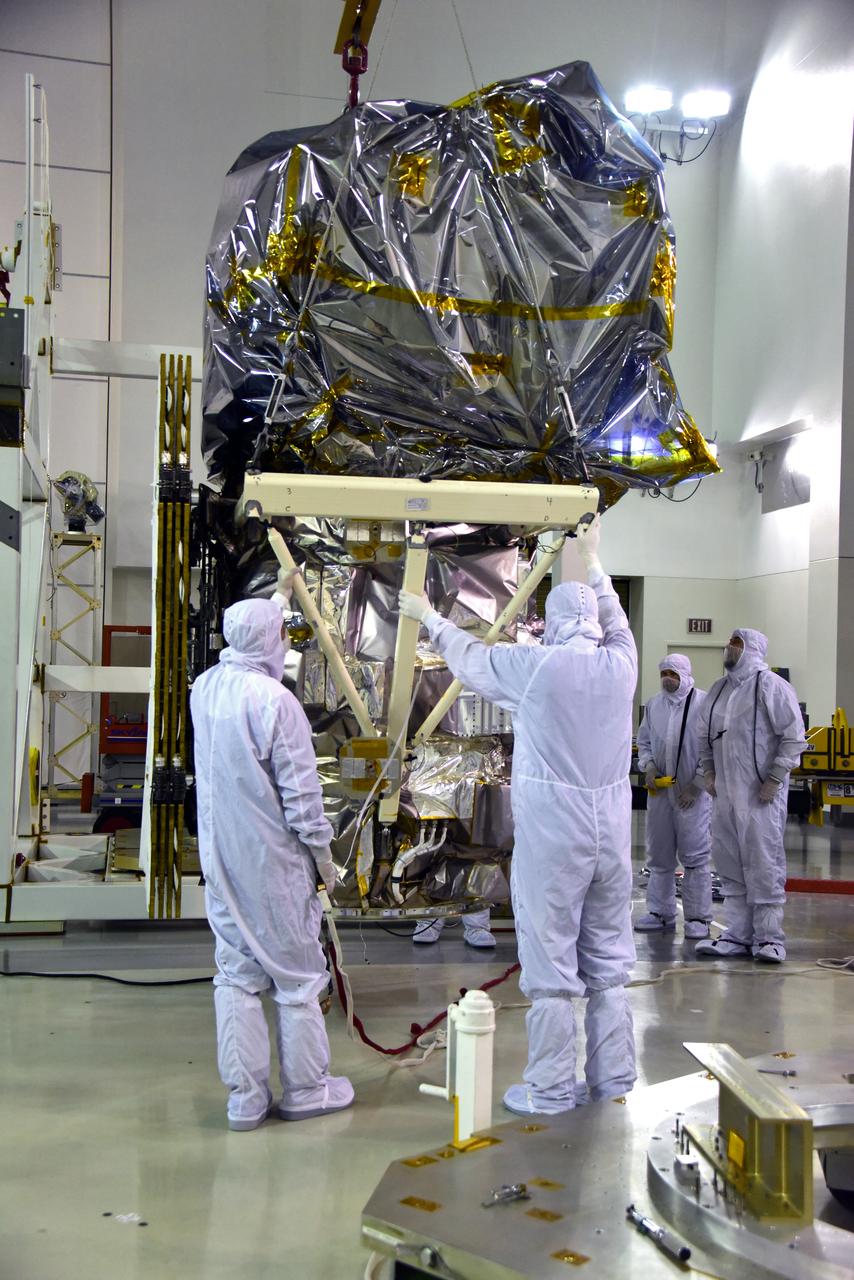
Technicians remove NASA's Ice, Cloud and land Elevation Satellite-2 (ICESat-2) from its fixture inside the high bay of the Astrotech Space Operations facility on June 14, 2018, at Vandenberg Air Force Base in California. The satellite will be secured on a work stand for processing. ICESat-2 was shipped from the Northrop Grumman facility in Gilbert, Arizona, where it was built and tested. The satellite is scheduled to launch from Space Launch Complex-2 at Vandenberg on the final United Launch Alliance Delta II rocket. ICESat-2 will measure the height of a changing Earth, one laser pulse at a time, 10,000 laser pulses a second. The satellite will carry the Advanced Topographic Laser Altimeter System. ICESat-2 will help scientists investigate why, and how much our planet's frozen and icy areas, called the cryosphere, is changing in a warming climate.
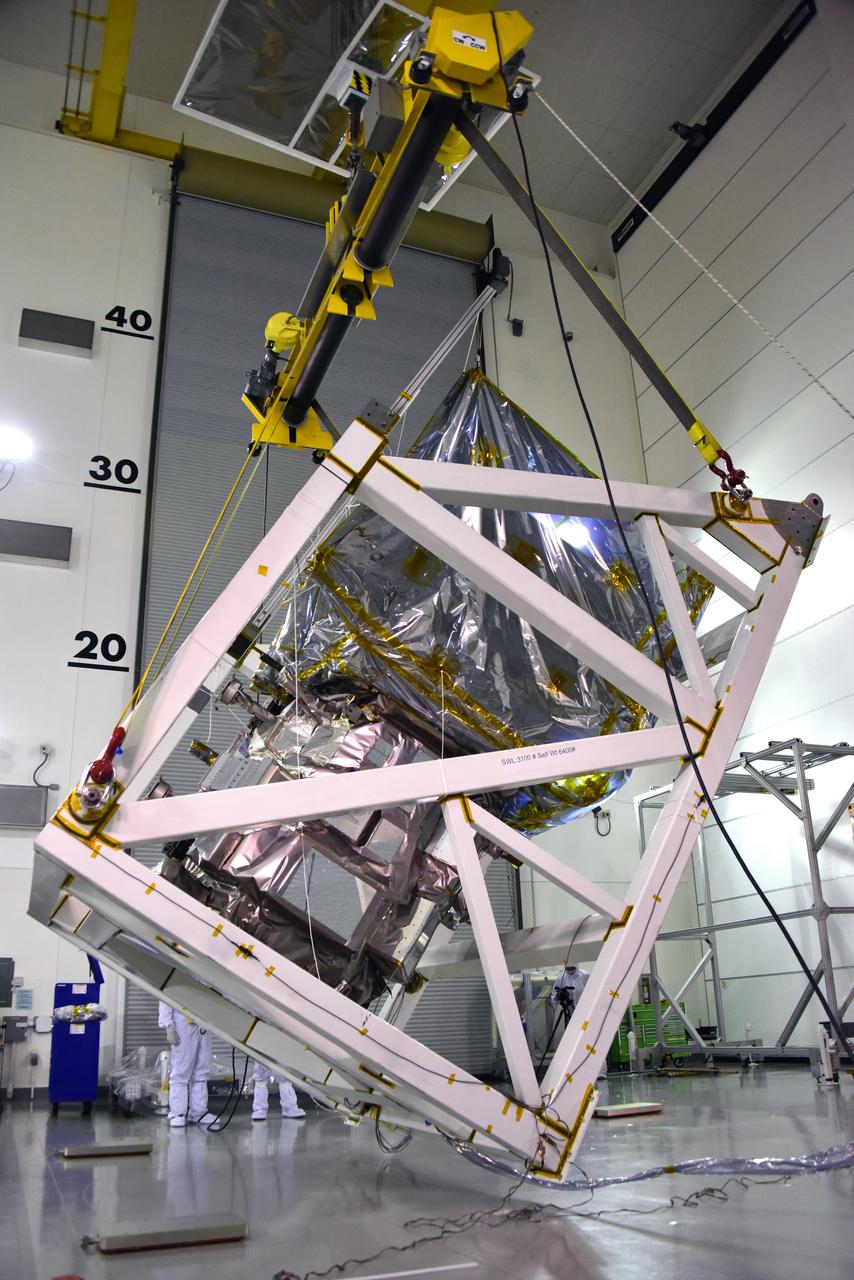
A crane is used to rotate NASA's Ice, Cloud and land Elevation Satellite-2 (ICESat-2) in its fixture inside the high bay of the Astrotech Space Operations facility on June 14, 2018, at Vandenberg Air Force Base in California. ICESat-2 was shipped from the Northrop Grumman facility in Gilbert, Arizona, where it was built and tested. The satellite is scheduled to launch from Space Launch Complex-2 at Vandenberg on the final United Launch Alliance Delta II rocket. ICESat-2 will measure the height of a changing Earth, one laser pulse at a time, 10,000 laser pulses a second. The satellite will carry the Advanced Topographic Laser Altimeter System. ICESat-2 will help scientists investigate why, and how much our planet's frozen and icy areas, called the cryosphere, is changing in a warming climate.
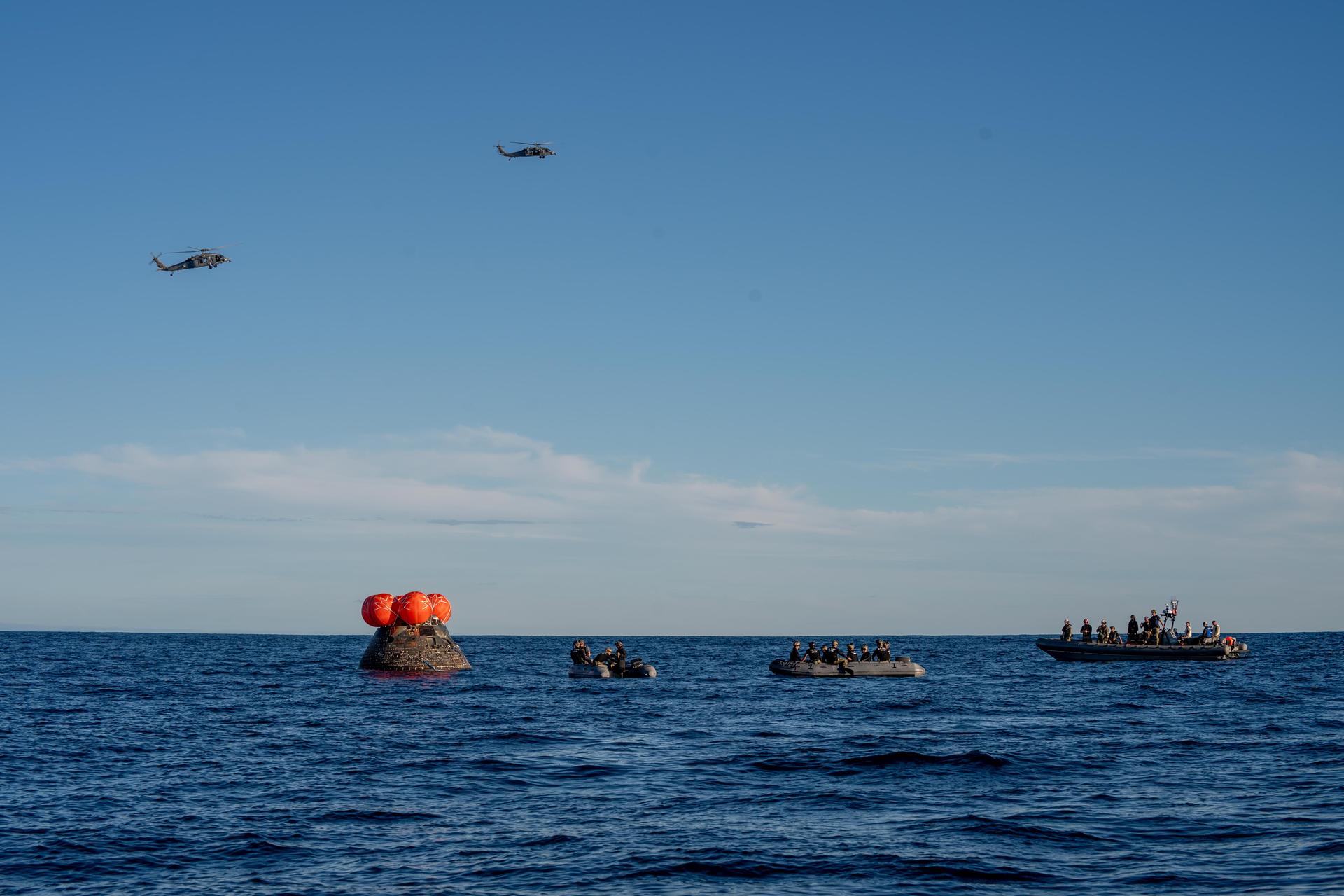
NASA's Orion spacecraft carrying Artemis II Commander Reid Wiseman, Pilot Victor Glover, and Mission Specialist Christina Koch from NASA, along with Mission Specialist Jeremy Hansen from the CSA (Canadian Space Agency), floats in the Pacific Ocean near San Diego, California, at 5:07 p.m. PDT, (8:07 p.m. EDT) on Friday, April 10, 2026. NASA’s Landing and Recovery team and U.S. Navy personnel aboard an inflatable raft, called the front porch, and a H60-S Seahawk helicopter hovers above to communicate Orion’s location back to USS John P. Murtha to coordinate efforts to secure the spacecraft in the well deck of the ship. The Artemis II test flight launched on Wednesday, April 1, from NASA’s Kennedy Space Center in Florida to begin its 10-day journey around the Moon for scientific discovery, economic benefits, and to build on our foundation for the first crewed missions to Mars.
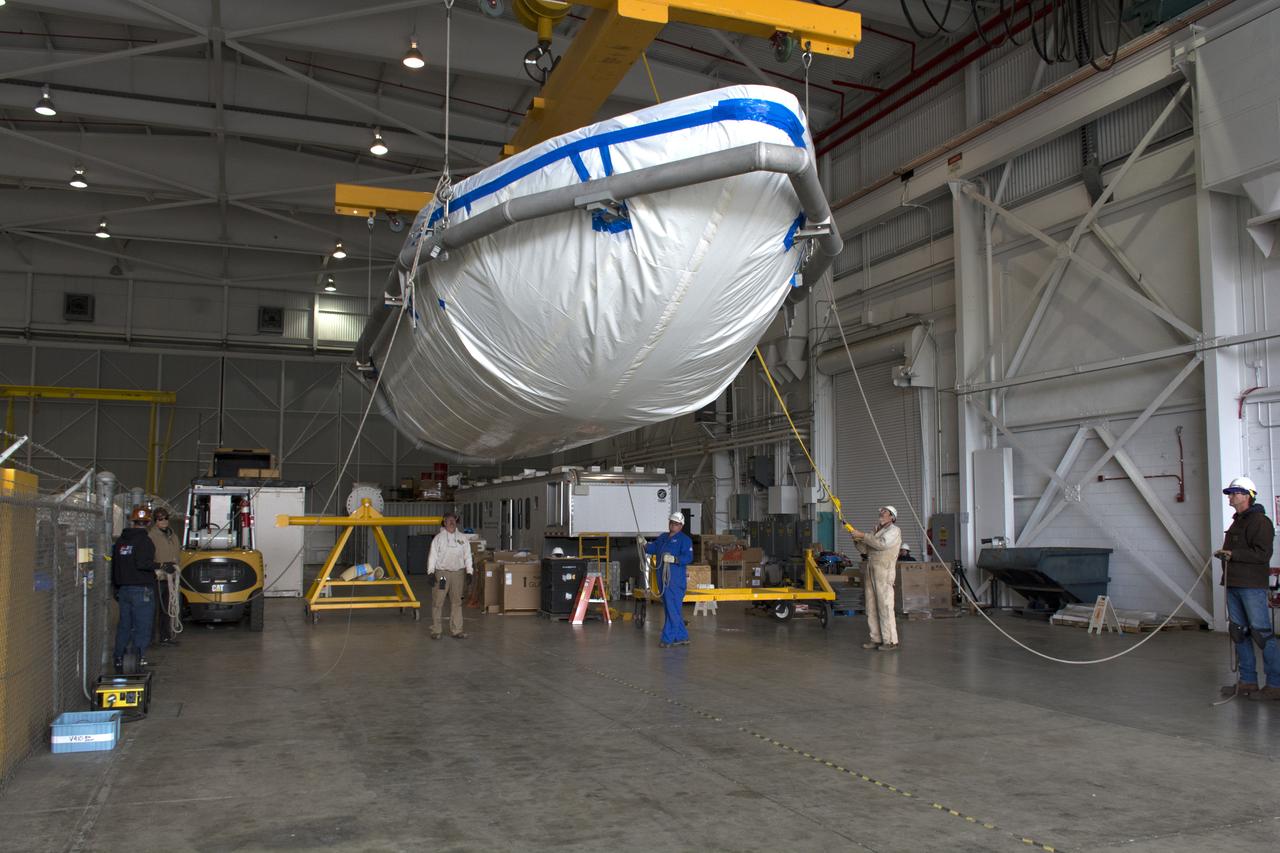
Inside Building 836 at Vandenberg Air Force Base in California, one of the payload fairing halves for the United Launch Alliance (ULA) Delta II rocket has been lifted out of its shipping container and is being moved by crane for lowering and attachment to a work stand. NASA's Ice, Cloud and land Elevation Satellite-2 (ICESat-2) is scheduled to launch on the final ULA Delta II rocket later this year. ICESat-2 will measure the height of a changing Earth, one laser pulse at a time, 10,000 laser pulses a second. The satellite will carry a single instrument, the Advanced Topographic Laser Altimeter System. ICESat-2 will help scientists investigate why, and how much our planet's frozen and icy areas, called the cryosphere, is changing in a warming climate.
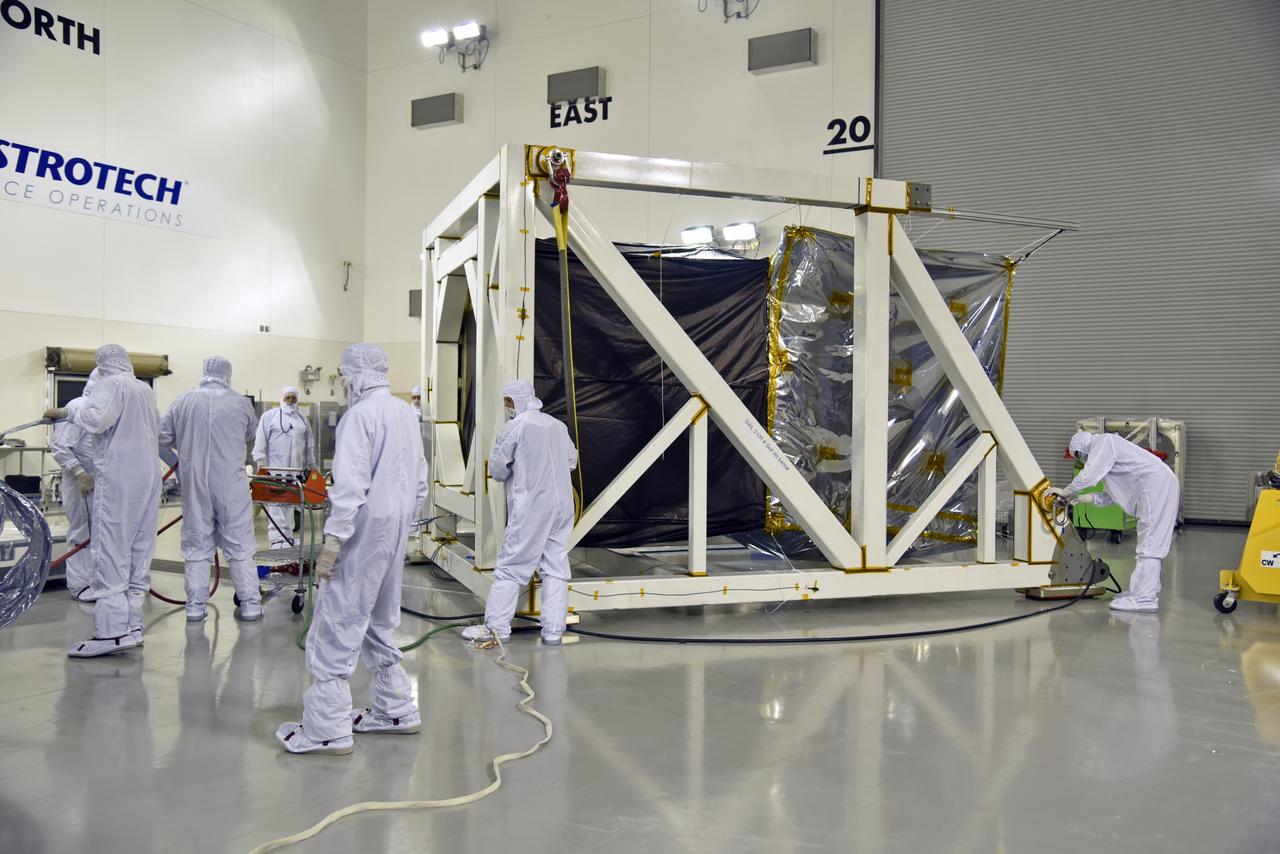
NASA's Ice, Cloud and land Elevation Satellite-2 (ICESat-2) is being secured in the high bay of the Astrotech processing facility on June 13, 2018, at Vandenberg Air Force Base in California. ICESat-2 was shipped from the Northrop Grumman facility in Gilbert, Arizona, where it was built and tested. The satellite is scheduled to launch from Space Launch Complex-2 at Vandenberg on the final United Launch Alliance Delta II rocket. ICESat-2 will measure the height of a changing Earth, one laser pulse at a time, 10,000 laser pulses a second. The satellite will carry the Advanced Topographic Laser Altimeter System. ICESat-2 will help scientists investigate why, and how much our planet's frozen and icy areas, called the cryosphere, is changing in a warming climate.
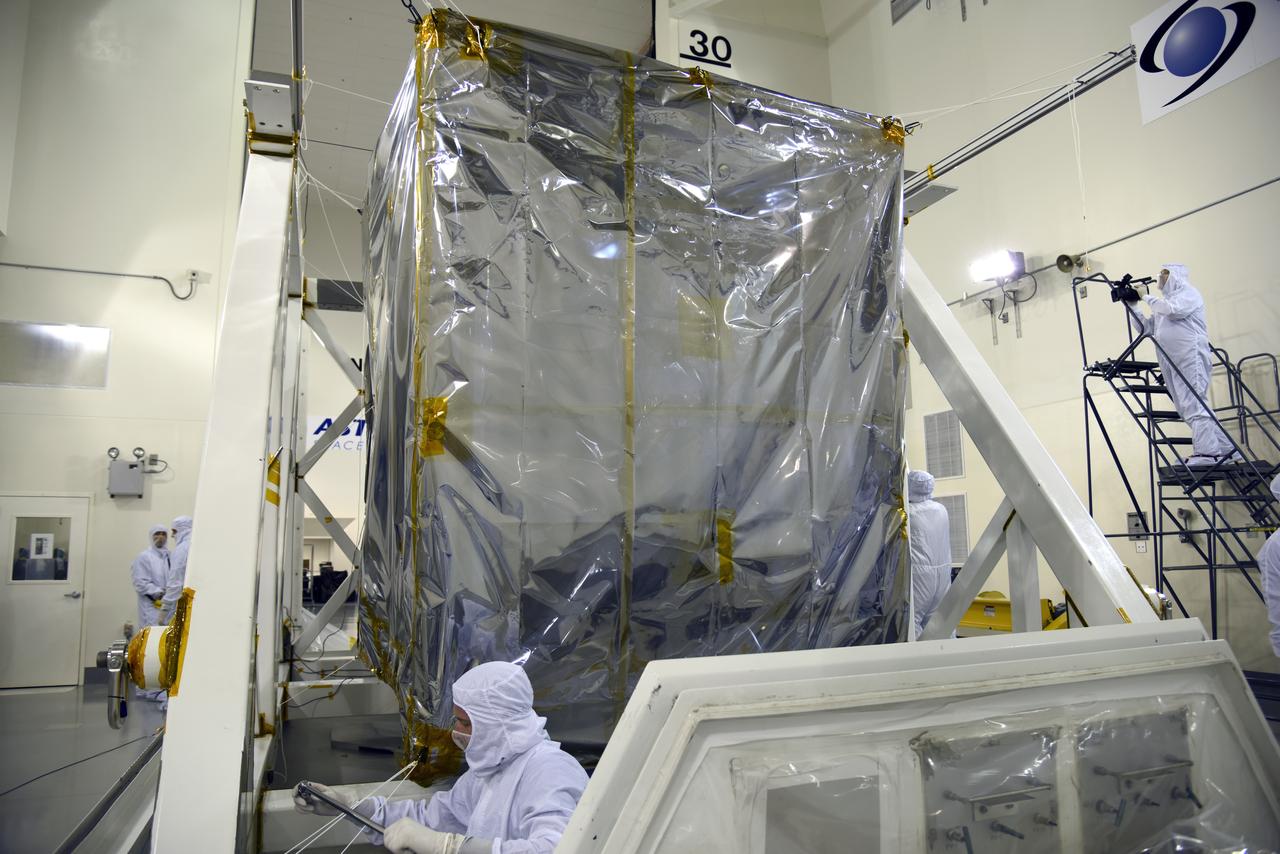
NASA's Ice, Cloud and land Elevation Satellite-2 (ICESat-2) is uncrated inside the airlock of the Astrotech processing facility on June 13, 2018, at Vandenberg Air Force Base in California. ICESat-2 was shipped from the Northrop Grumman facility in Gilbert, Arizona, where it was built and tested. The satellite is scheduled to launch from Space Launch Complex-2 at Vandenberg on the final United Launch Alliance Delta II rocket. ICESat-2 will measure the height of a changing Earth, one laser pulse at a time, 10,000 laser pulses a second. The satellite will carry the Advanced Topographic Laser Altimeter System. ICESat-2 will help scientists investigate why, and how much our planet's frozen and icy areas, called the cryosphere, is changing in a warming climate.