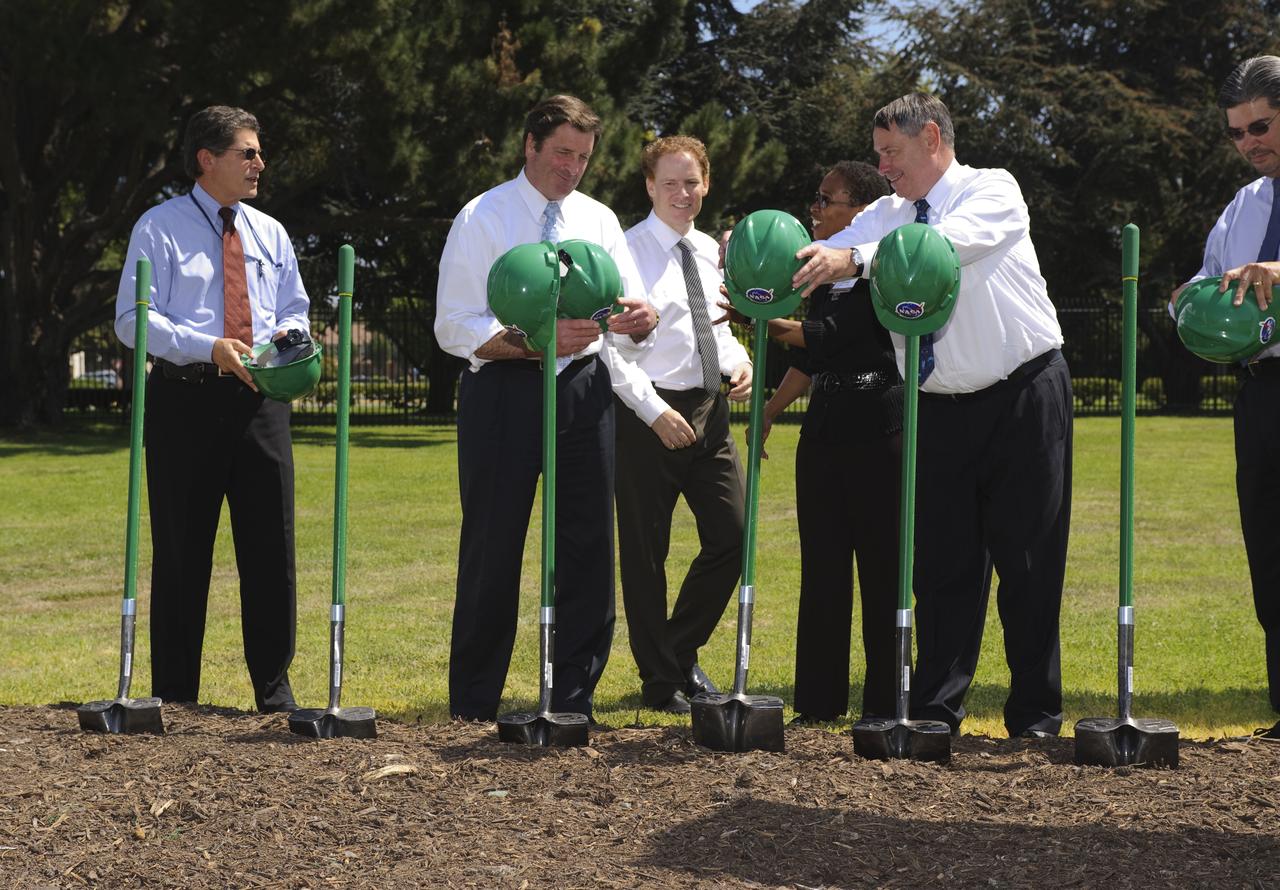
Sustainability Base Ground Breaking ceremony with Steve Zornetzer, Associate Director Ames Research Center, Lt. Governor John Garamendi of California, Kenvin Burke, Jane Grant, Architect AECOM, Pete Worden, Director Ames Research Center, Swinerton Builders Rep. ready to turn the first shovel.
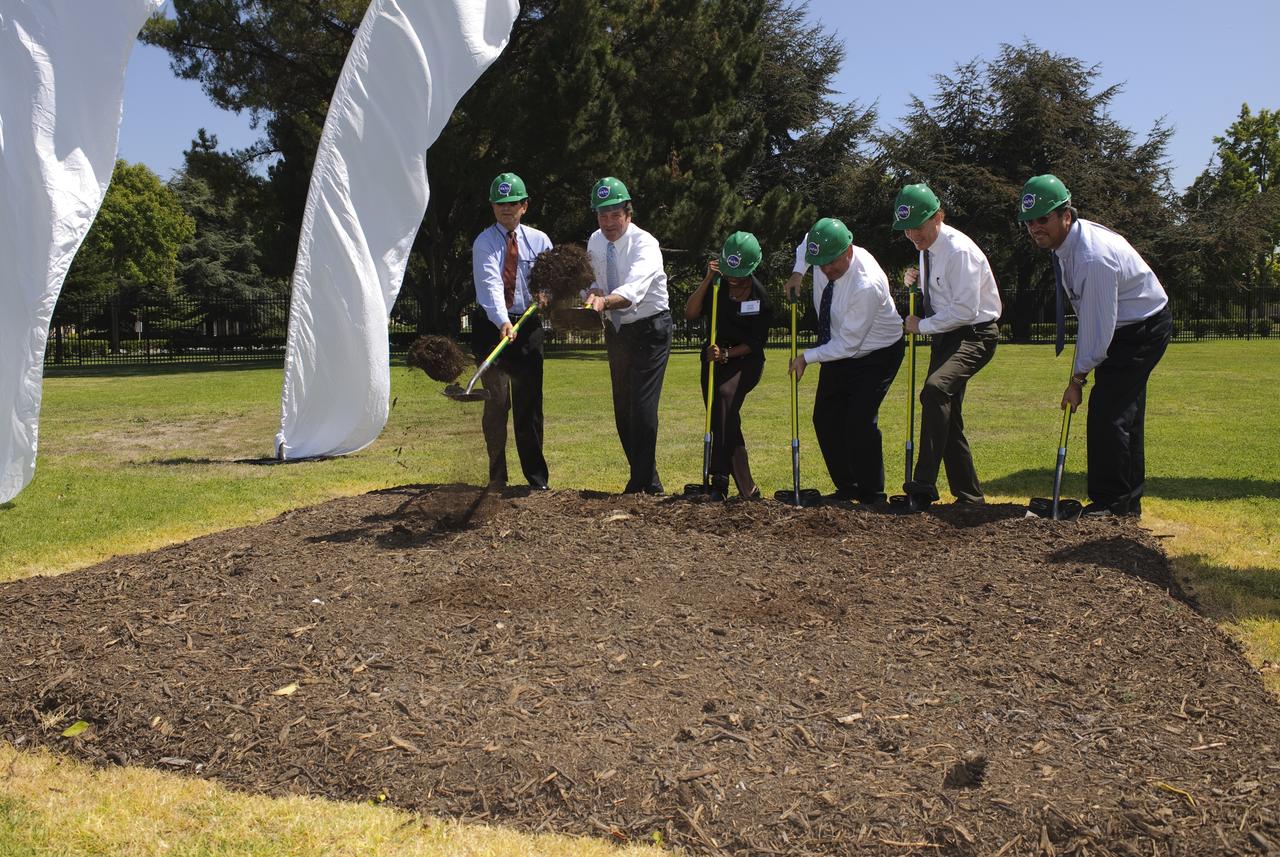
Sustainability Base Ground Breaking ceremony with Steve Zornetzer, Associate Director Ames Research Center, Lt. Governor John Garamendi of California, Jane Grant, Architect AECOM, Pete Worden, Director Ames Research Center, Kenvin Burke, Swinerton Builders Rep. ready to turn the first shovel.
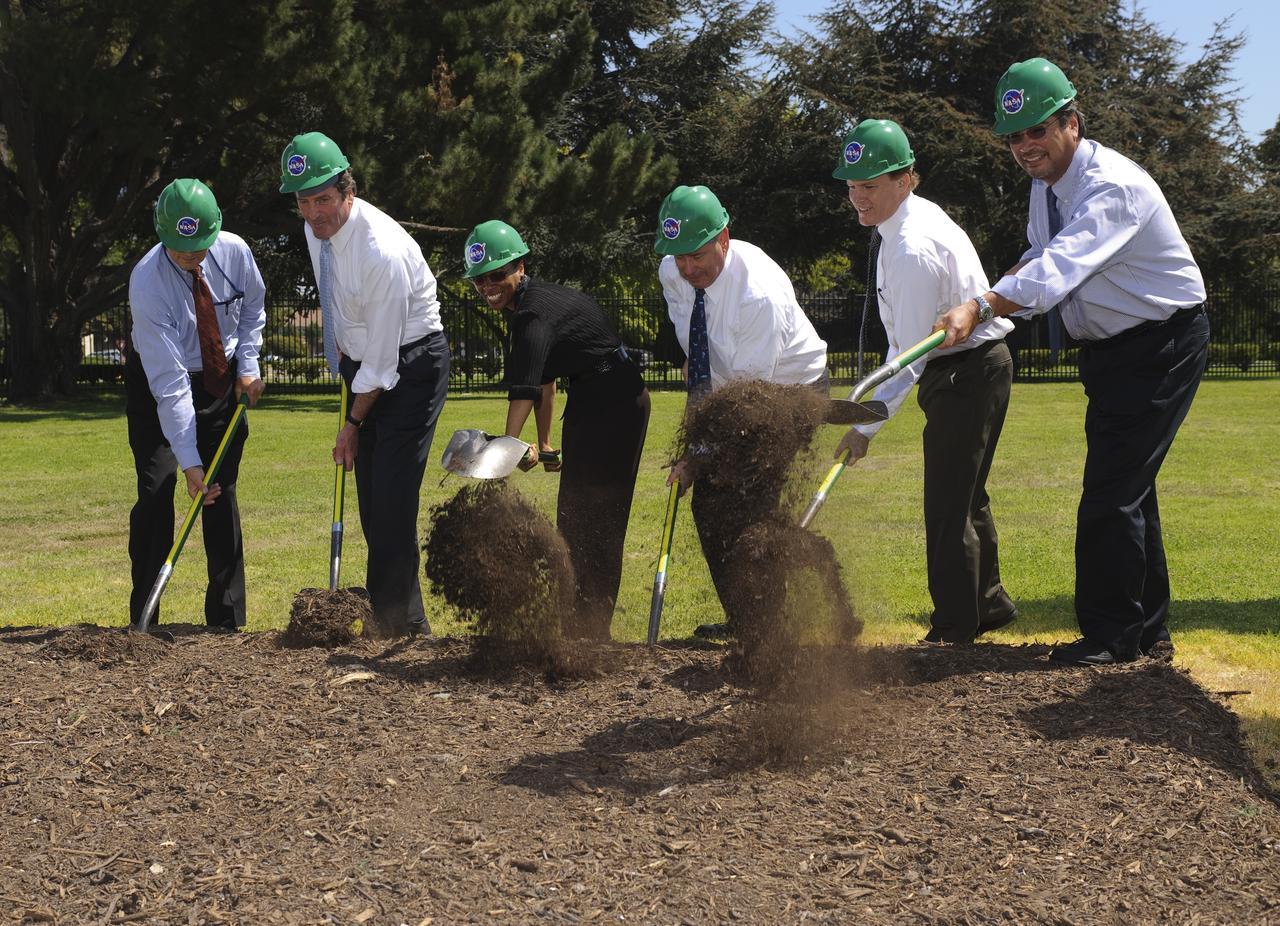
Sustainability Base Ground Breaking ceremony with Steve Zornetzer, Associate Director Ames Research Center, Lt. Governor John Garamendi of California, Jane Grant, Architect AECOM, Pete Worden, Director Ames Research Center, Kenvin Burke, Swinerton Builders Rep. ready to turn the first shovel.
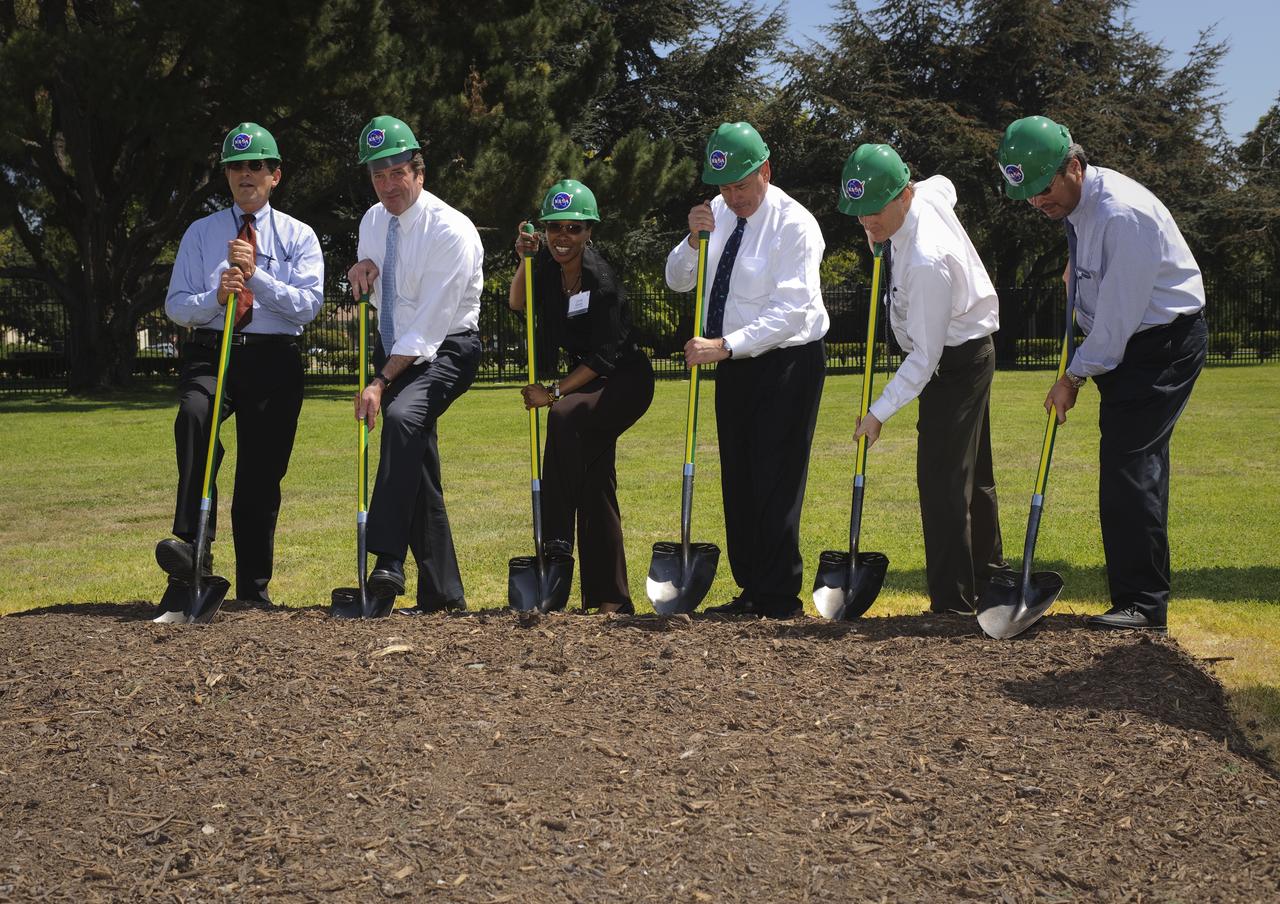
Sustainability Base Ground Breaking ceremony with Steve Zornetzer, Associate Director Ames Research Center, Lt. Governor John Garamendi of California, Jane Grant, Architect AECOM, Pete Worden, Director Ames Research Center, Kenvin Burke, Swinerton Builders Rep. ready to turn the first shovel.
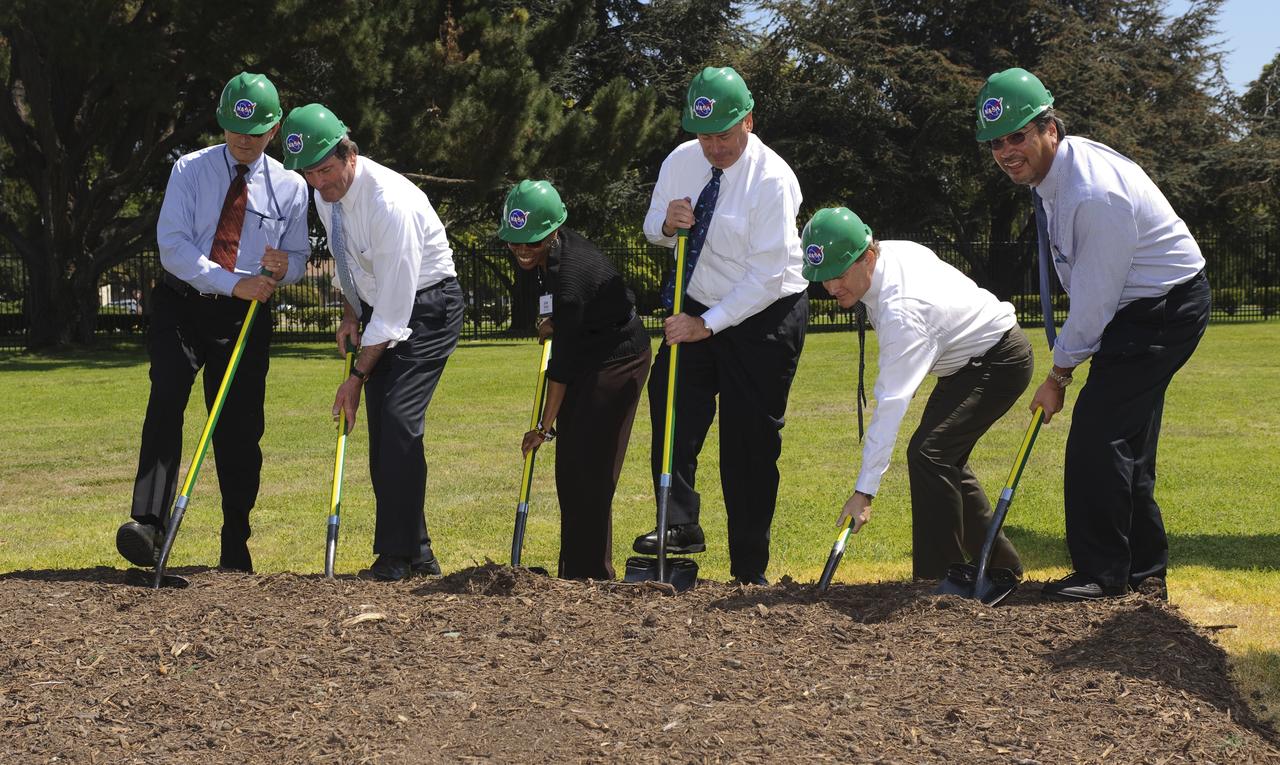
Sustainability Base Ground Breaking ceremony with Steve Zornetzer, Associate Director Ames Research Center, Lt. Governor John Garamendi of California, Jane Grant, Architect AECOM, Pete Worden, Director Ames Research Center, Kenvin Burke, Swinerton Builders Rep. ready to turn the first shovel.

Stennis Space Center Director Patrick Scheuermann (right) and Naval Meteorology and Oceanography Command Chief of Staff James Pettigrew drop the first shovelfuls of dirt on a time capsule to be opened on the rocket engine test facility's 100th anniversary in 2061. The time capsule was placed in front of the Roy S. Estess Building on Oct. 25 as Stennis concluded celebrations of its 50th anniversary. NASA publicly announced plans to build the rocket engine test site Oct. 25, 1961.
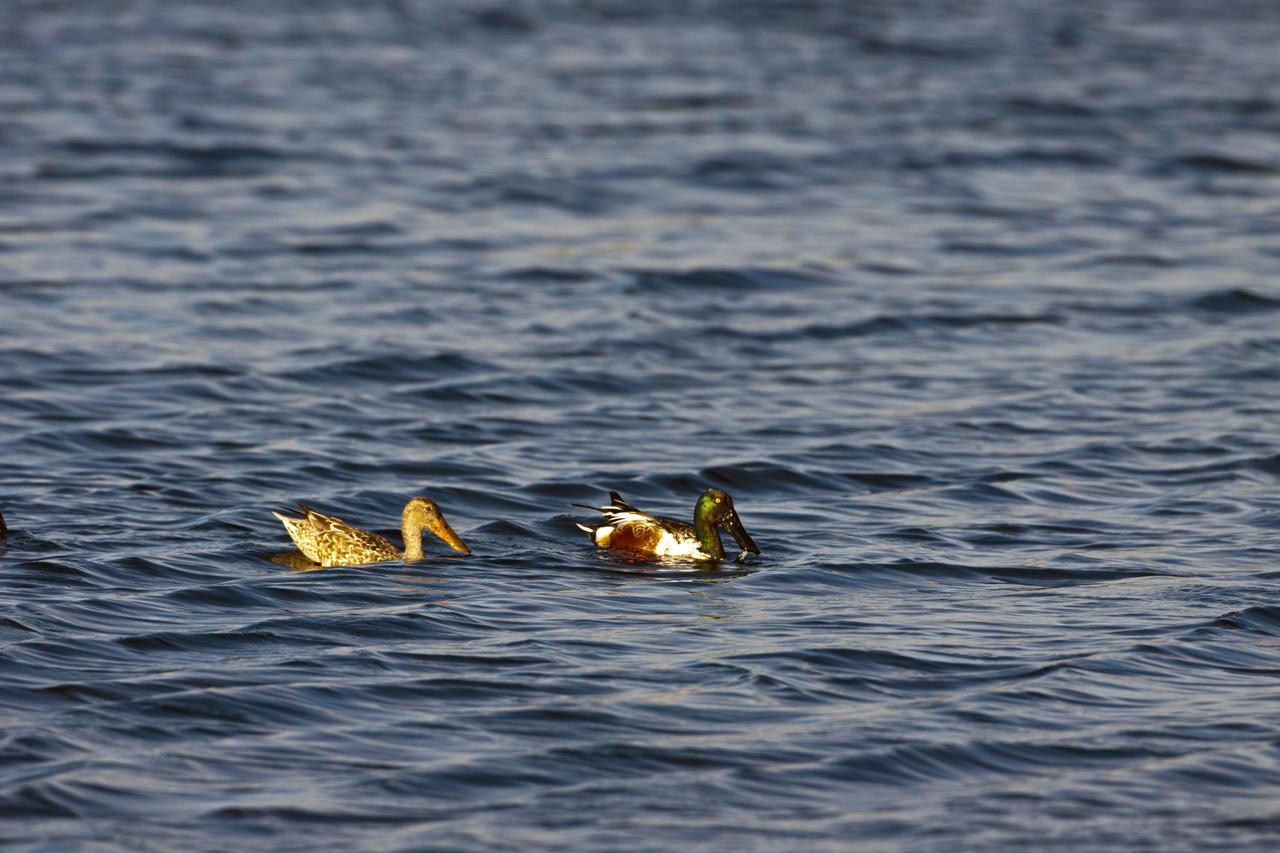
CAPE CANAVERAL, Fla. -- Male and female northern shovelers swim in a pond at NASA's Kennedy Space Center in Florida. The center shares a boundary with the Merritt Island National Wildlife Refuge, consisting of 140,000 acres. The refuge provides a wide variety of habitats -- coastal dunes, saltwater estuaries and marshes, freshwater impoundments, scrub, pine flatwoods, and hardwood hammocks -- that provide sanctuary for more than 1,500 species of plants and animals, including about 331 species of birds. Photo credit: NASA/Jim Grossmann

Stennis Space Center Director Patrick Scheuermann (right) and Naval Meteorology and Oceanography Command Chief of Staff James Pettigrew drop the first shovelfuls of dirt on a time capsule to be opened on the rocket engine test facility's 100th anniversary in 2061. The time capsule was placed in front of the Roy S. Estess Building on Oct. 25 as Stennis concluded celebrations of its 50th anniversary.
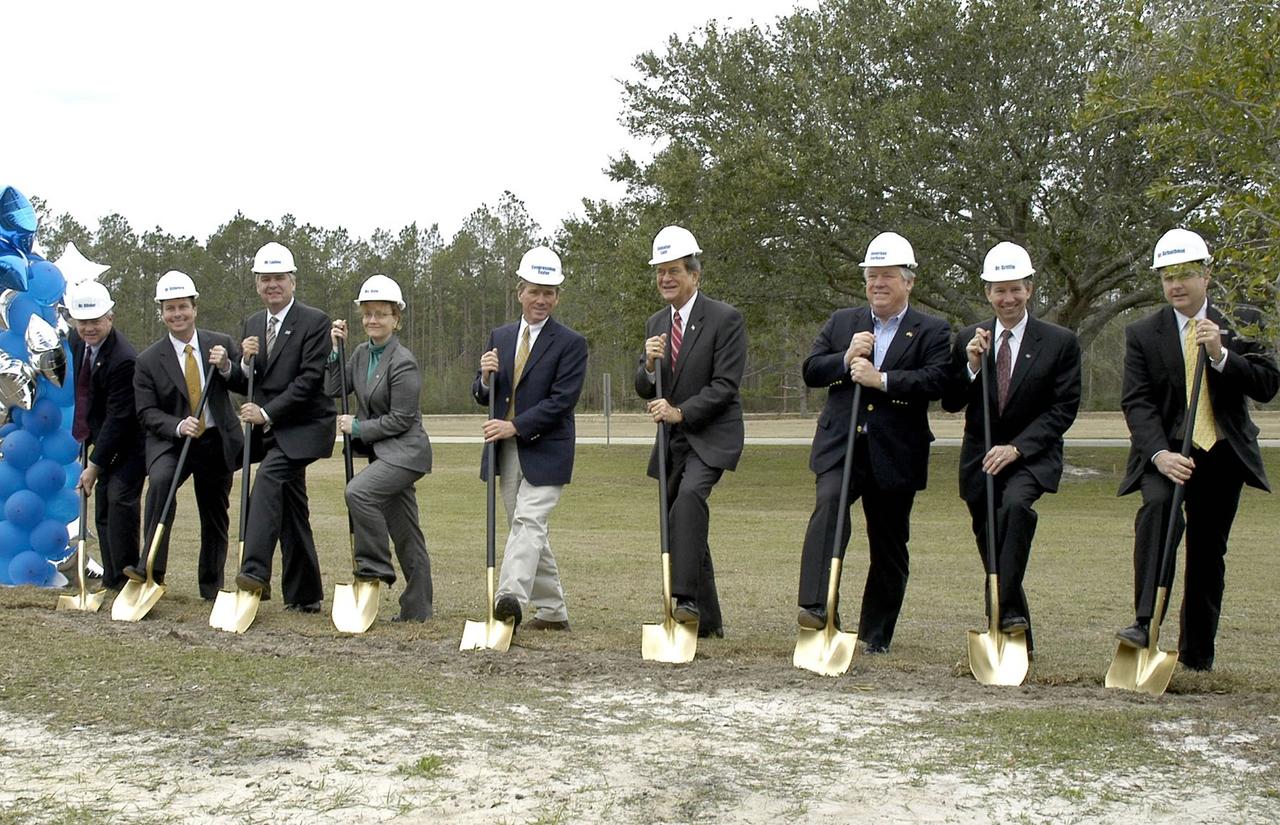
NASA officials and elected leaders were on hand for the groundbreaking ceremony of the NASA Shared Services Center Feb. 24, 2006, on the grounds of Stennis Space Center. The NSSC provides agency centralized administrative processing, human resources, procurement and financial services. From left, Louisiana Economic Development Secretary Mike Olivier, Stennis Space Center Director Rick Gilbrech, Computer Sciences Corp. President Michael Laphen, NASA Deputy Administrator Shana Dale, Rep. Gene Taylor, Sen. Trent Lott, Mississippi Gov. Haley Barbour, NASA Administrator Mike Griffin and Shared Services Center Executive Director Arbuthnot use golden shovels to break ground at the site.
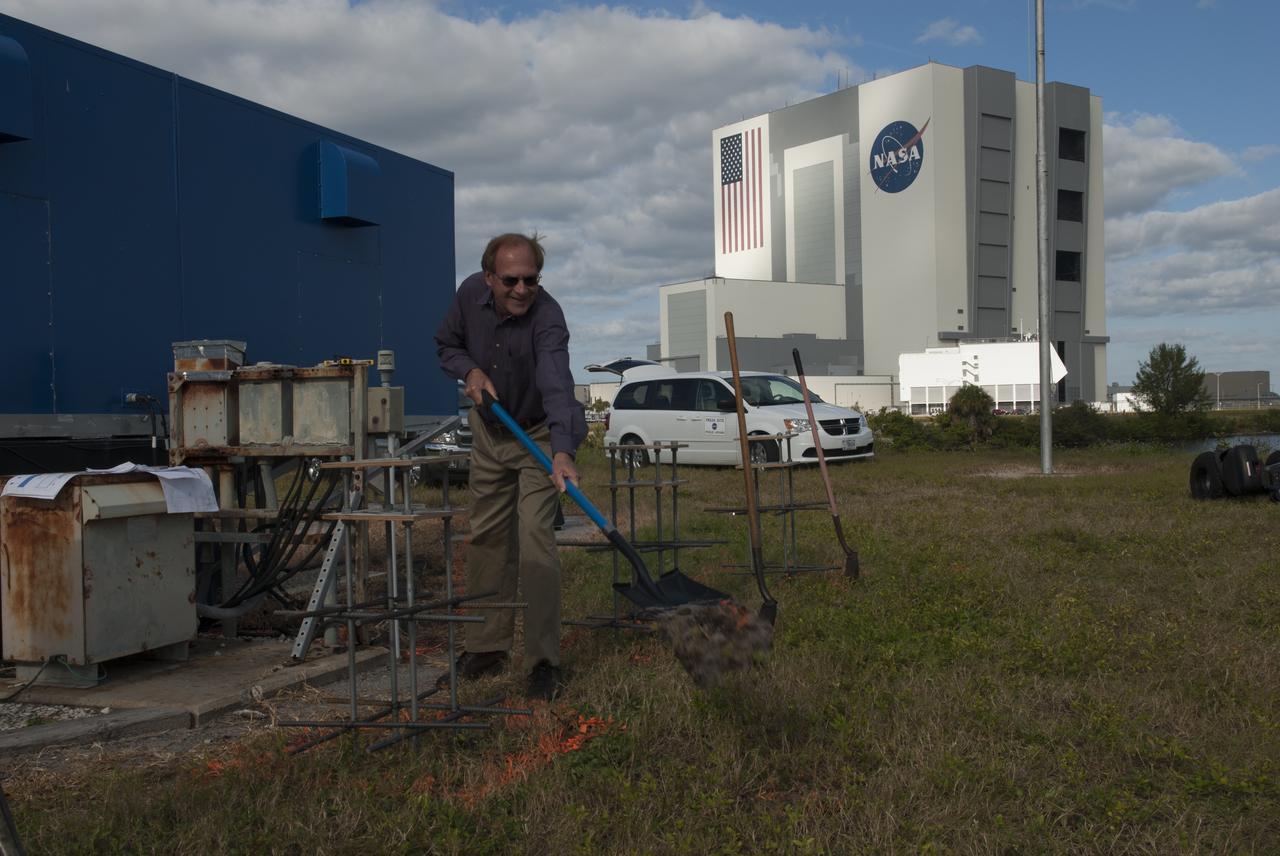
At NASA's Kennedy Space Center in Florida, Public Affairs Officer George Diller shovels the first scoop of soil behind the current countdown clock during the groundbreaking ceremony for the new countdown clock. The old timepiece was designed by Kennedy engineers and built by Kennedy technicians in 1969. Not including the triangular concrete and aluminum base, the famous landmark is nearly 6 feet 70 inches high, 26 feet 315 inches wide and 3 feet deep. The new display will be similar in size, with the screen being nearly 26 feet wide by 7 feet high.
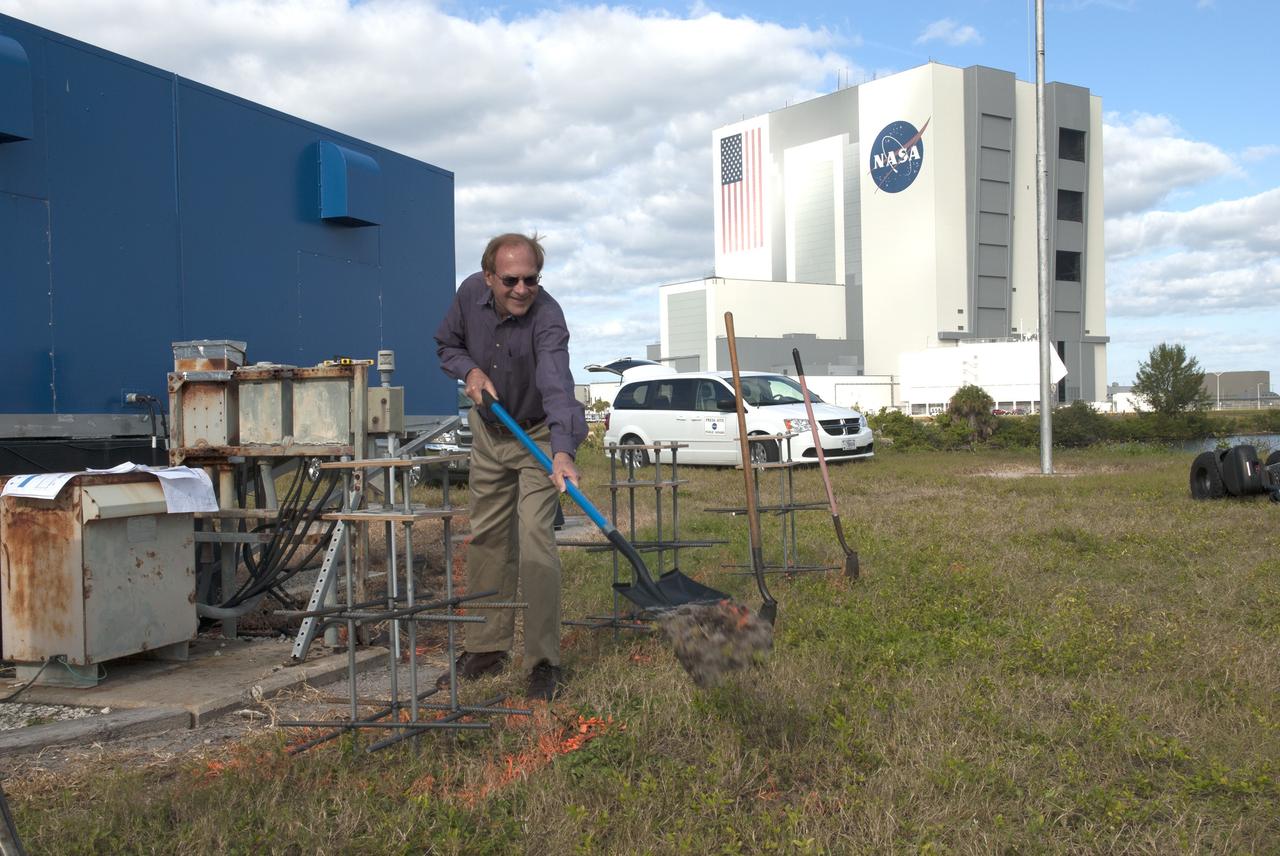
CAPE CANAVERAL, Fla. -- At NASA's Kennedy Space Center in Florida, Public Affairs Officer George Diller shovels the first scoop of soil behind the current countdown clock during the groundbreaking ceremony for the new countdown clock. The old timepiece was designed by Kennedy engineers and built by Kennedy technicians in 1969. Not including the triangular concrete and aluminum base, the famous landmark is nearly 6 feet 70 inches high, 26 feet 315 inches wide and 3 feet deep. The new display will be similar in size, with the screen being nearly 26 feet wide by 7 feet high. For more information on the countdown clock, go to http://go.nasa.gov/10Zku10. Photo credit: NASA/Jim Grossmann
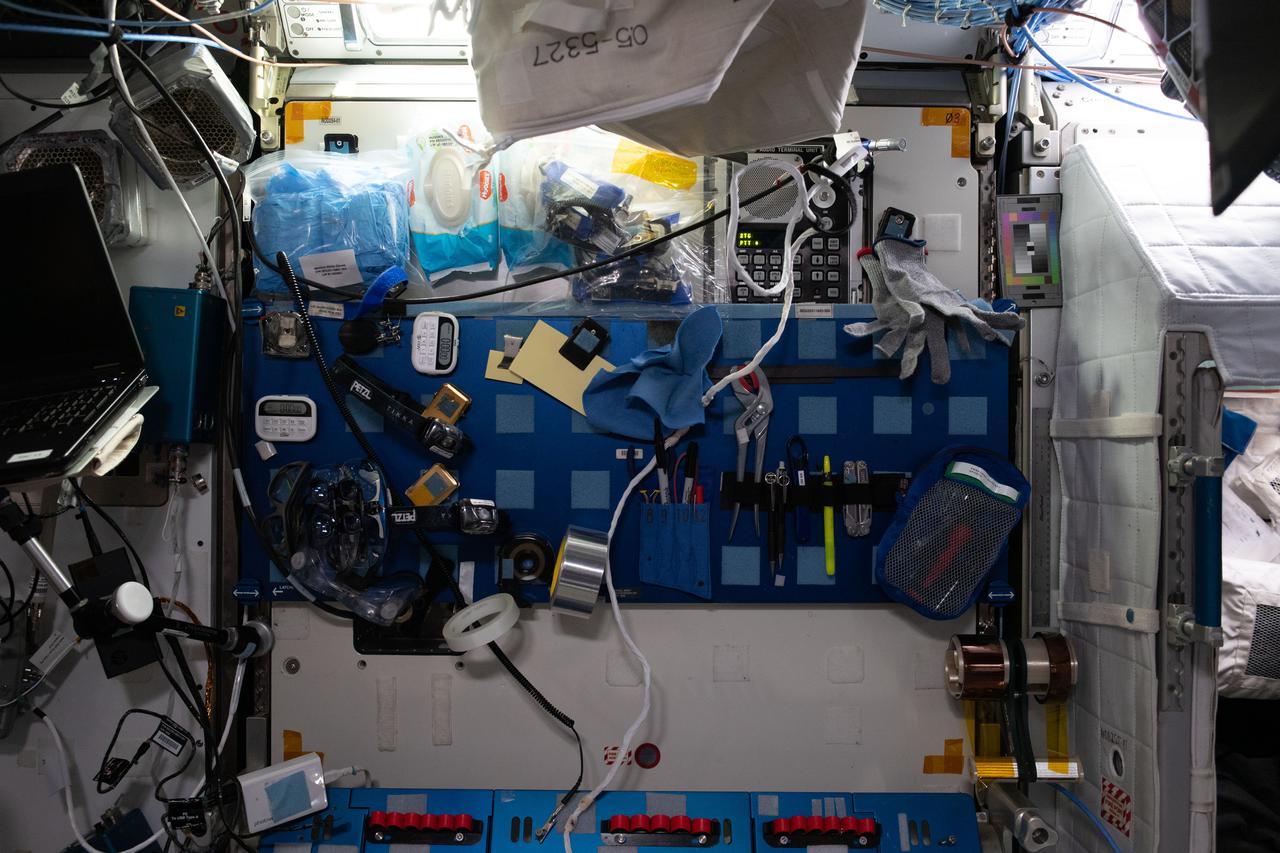
iss066e113865 (Jan. 15, 2022) --- A sample site is denoted for the SQuARE archaeological investigation with pieces of Kapton tape. This investigation studies how astronauts use objects in space over an extended period of time in space. The experiment adapts the standard archaeological technique on Earth called the “shovel test pit” by having crew members mark out square sample sites throughout the orbiting laboratory. Astronauts took picture of these sites at the same time every day, and then at randomly selected times. What we learn could inform design of future space habitats. Credits: International Space Station Archeological Project.
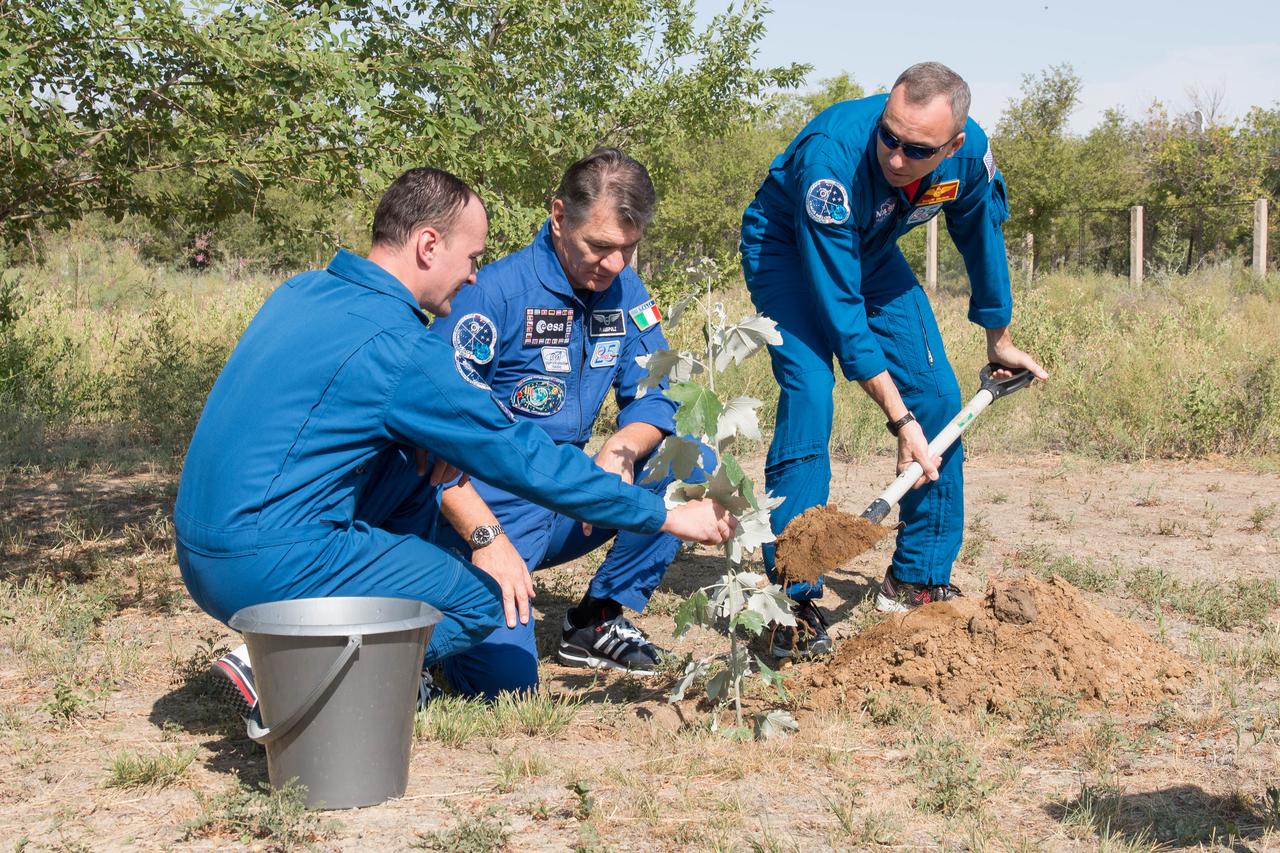
jsc2017e101932 (July 22, 2017) --- At the Cosmonaut Hotel crew quarters in Baikonur, Kazakhstan, Expedition 52-53 Flight Engineer Randy Bresnik (right) pitches in with a shovel full of dirt July 22 and he and his crewmates, Sergey Ryazanskiy of the Russian Federal Space Agency (Roscosmos, left) and Paolo Nespoli of the European Space Agency (center) plant a tree in Bresnik’s name in traditional pre-launch ceremonies. The trio will launch July 28 on the Soyuz MS-05 spacecraft from the Baikonur Cosmodrome for a five-month mission on the International Space Station. Credit: NASA/Victor Zelentsov
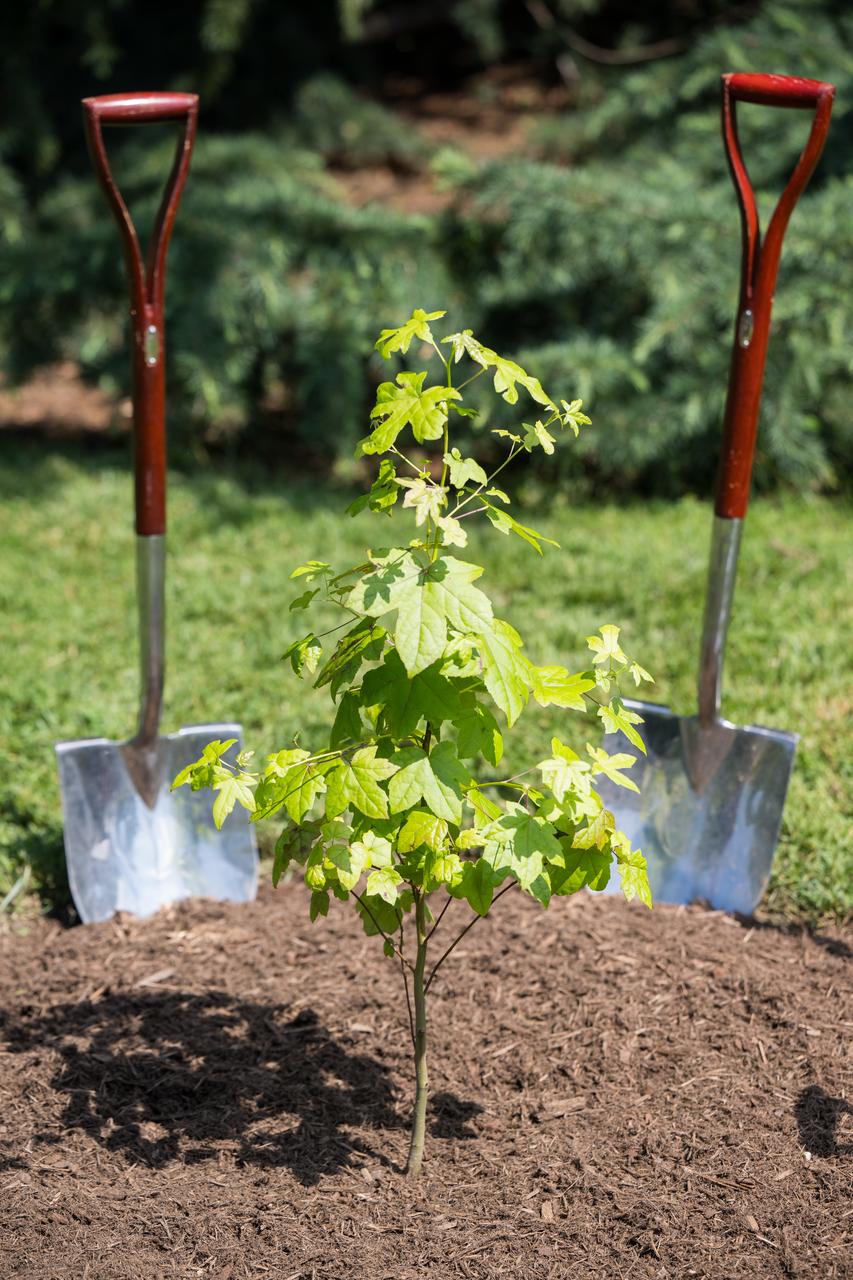
An American Sweetgum sapling grown from a seed that was flown around the Moon during the Artemis I mission is seen before a Moon tree dedication ceremony, Tuesday, June 4, 2024 at the United States Capitol in Washington. Photo Credit: (NASA/Aubrey Gemignani)
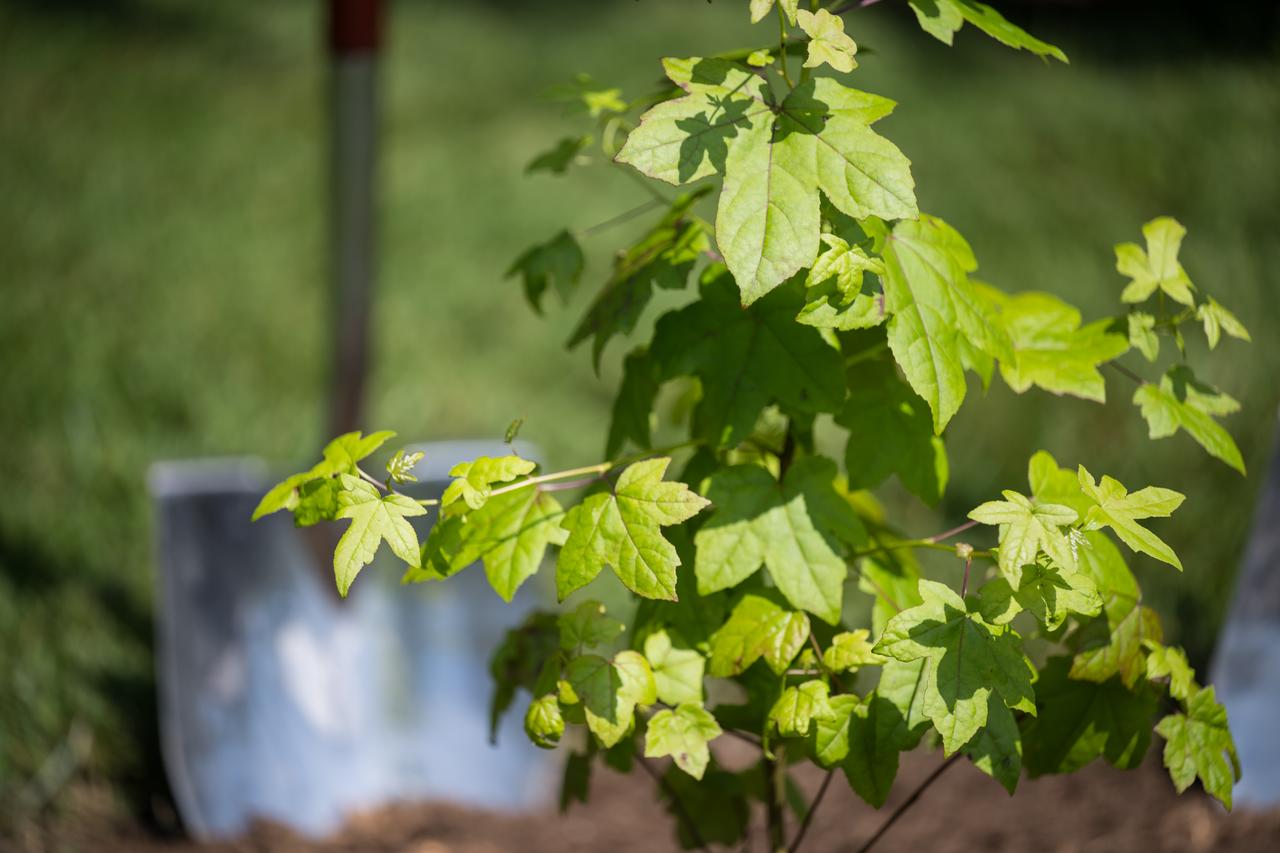
The leaves of an American Sweetgum sapling grown from a seed that was flown around the Moon during the Artemis I mission is seen before a Moon tree dedication ceremony, Tuesday, June 4, 2024 at the United States Capitol in Washington. Photo Credit: (NASA/Aubrey Gemignani)
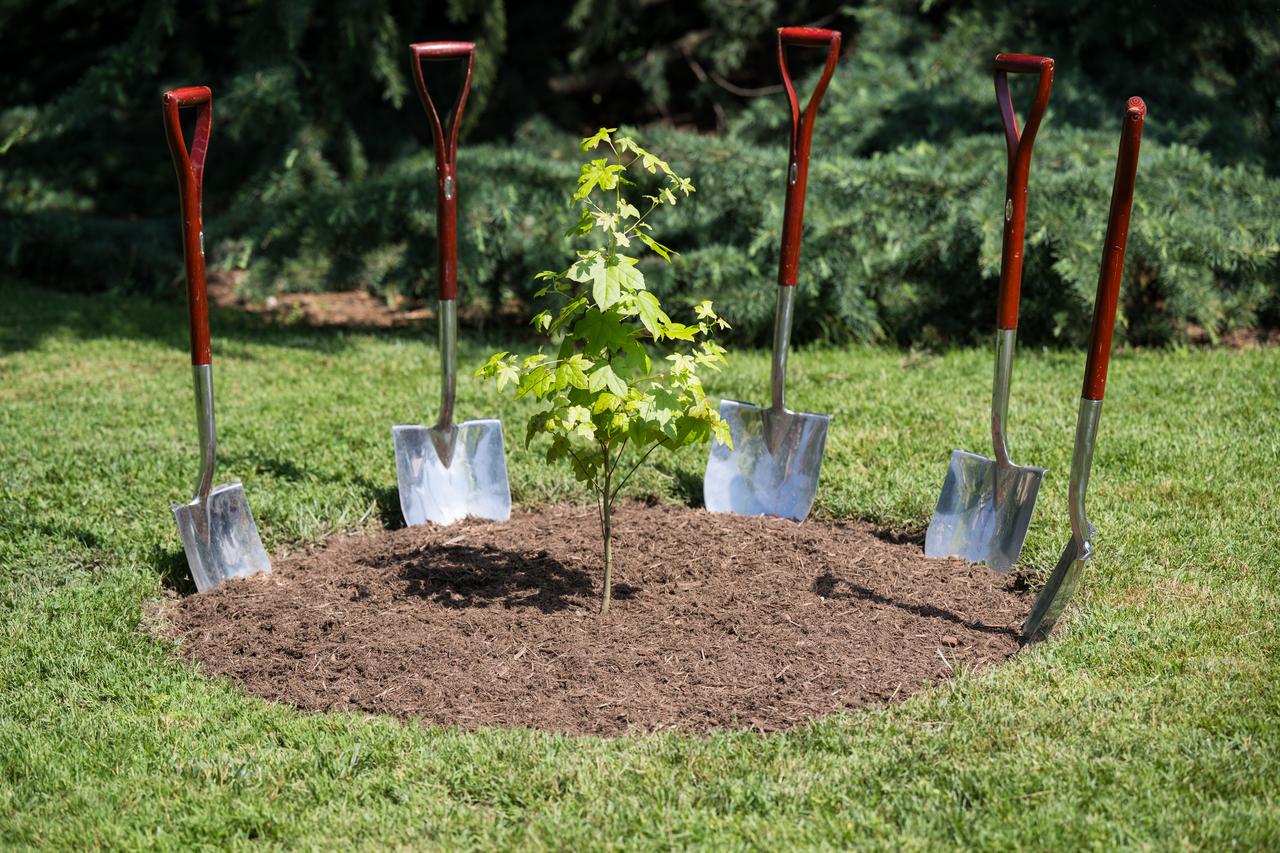
An American Sweetgum sapling grown from a seed that was flown around the Moon during the Artemis I mission is seen before a Moon tree dedication ceremony, Tuesday, June 4, 2024 at the United States Capitol in Washington. Photo Credit: (NASA/Aubrey Gemignani)
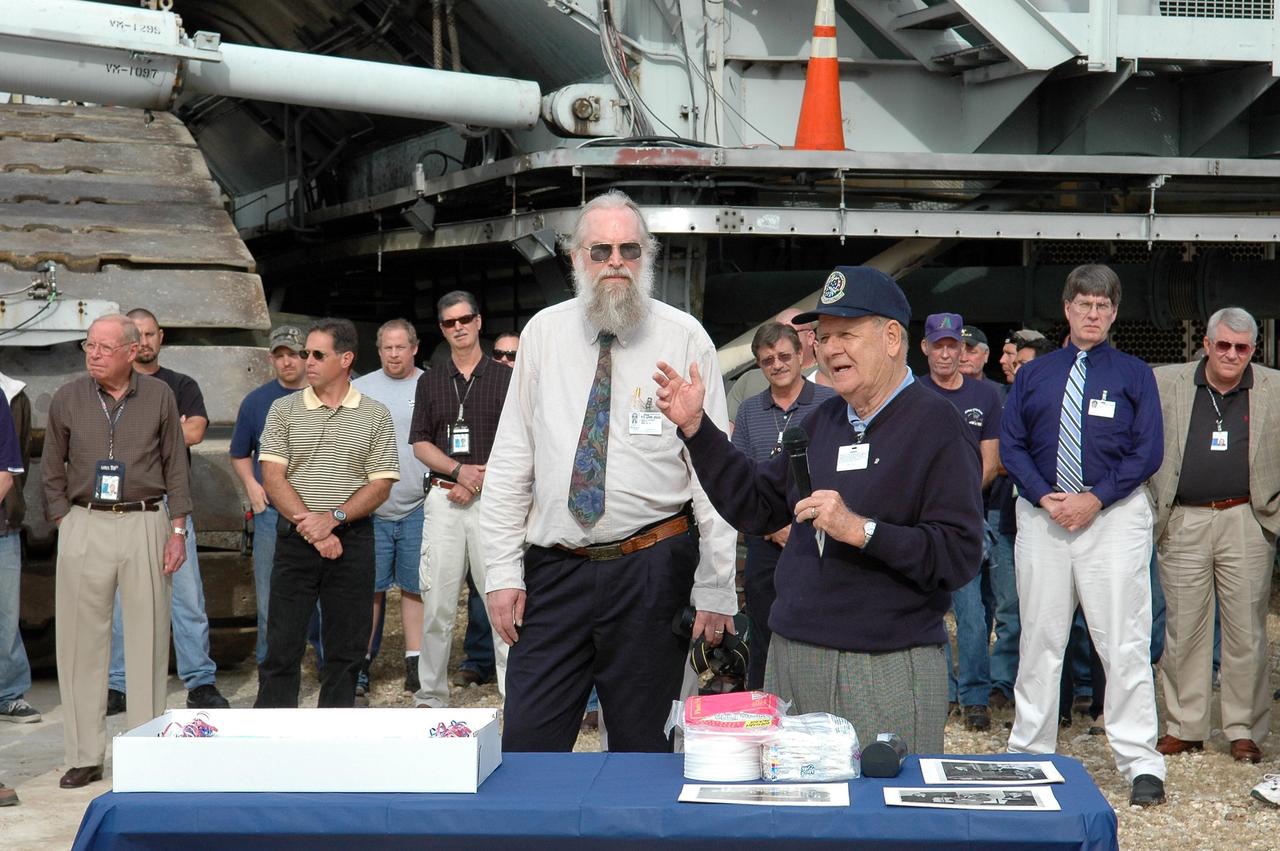
KENNEDY SPACE CENTER, FLA. - On the occasion of the 40th anniversary of the crawler transporter used for moving space shuttles to the NASA Kennedy Space Center’s launch pads, former crawler engineer Bill Clemens (right) introduces Philip Koehring Jr., whose father was project manager at the Marion Power Shovel Co. in Ohio where the crawlers were initially built in 1965. Media representatives and invited guests had the opportunity to tour one of NASA's two crawlers. This included the driver cab and engine room. Guests included current drivers and operators, as well as drivers from the Apollo Program. In January 1966, the crawler completed its first successful move with a 10.6-million-pound launch umbilical tower. It moved three-quarters of a mile in about nine hours. Throughout 40 years of service, the two crawlers have moved more than 3,500 miles and carried seven vehicles.
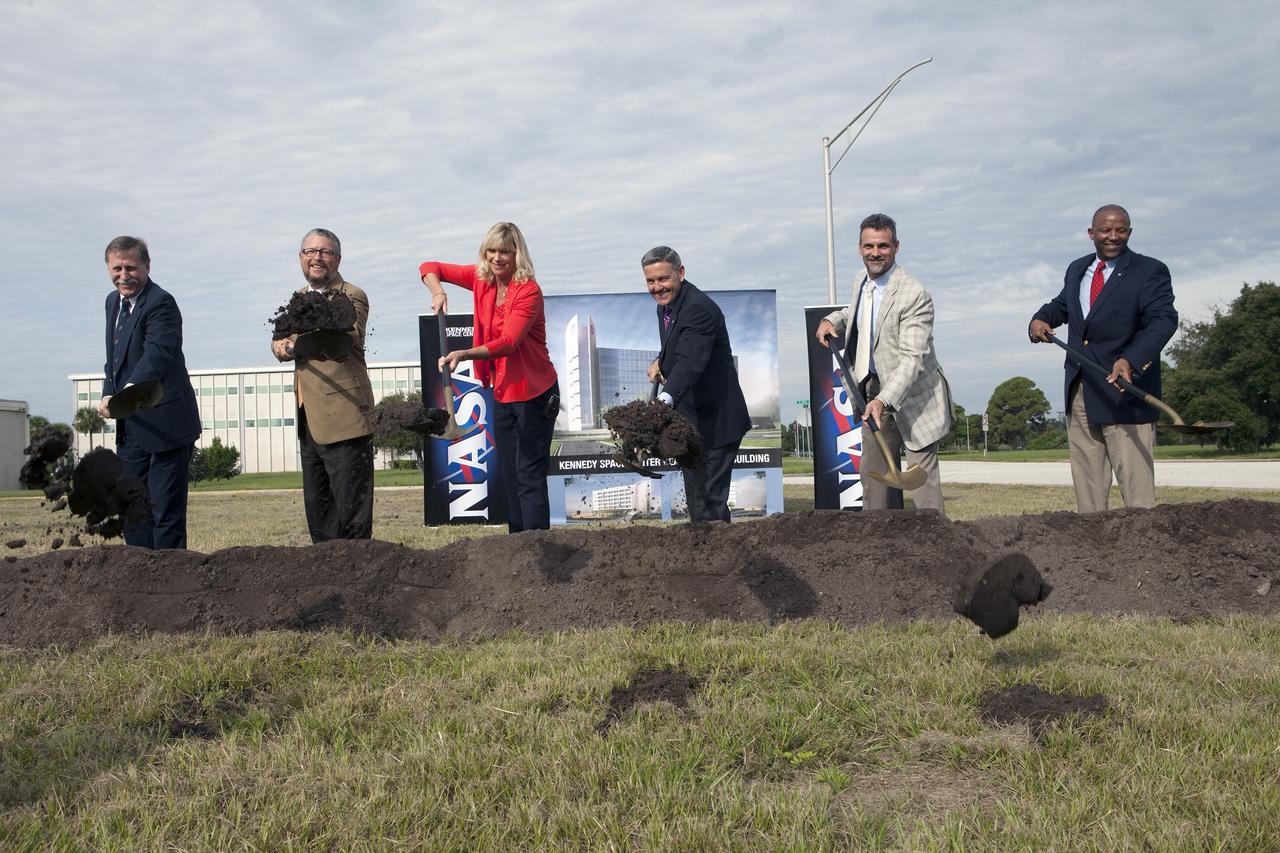
CAPE CANAVERAL, Fla. – Groundbreaking for the new Central Campus took place in the Industrial Area at NASA's Kennedy Space Center in Florida. Digging in with shovels during the groundbreaking ceremony, are Dan Tweed, associate director for Facilities at Kennedy Steve Belflower, vice president of HuntonBrady Architects of Orlando Nancy Bray, director of Kennedy's Center Operations Directorate Kennedy Center Director Bob Cabana Kirk Hazen, southeast district manager and vice president of Hensel Phelps, the construction contractor and Kelvin Manning, Kennedy's associate director. Kennedy is transforming into a multi-user, 21st century spaceport supporting both commercial and government users and operations. Central Campus Phase I includes construction of a new Headquarters Building as one of the major components of the strategy. The new Headquarters Building will be a seven-story, 200,000-square-foot facility that will house about 500 NASA civil service and contractor employees. Photo credit: NASA/Kim Shiflett
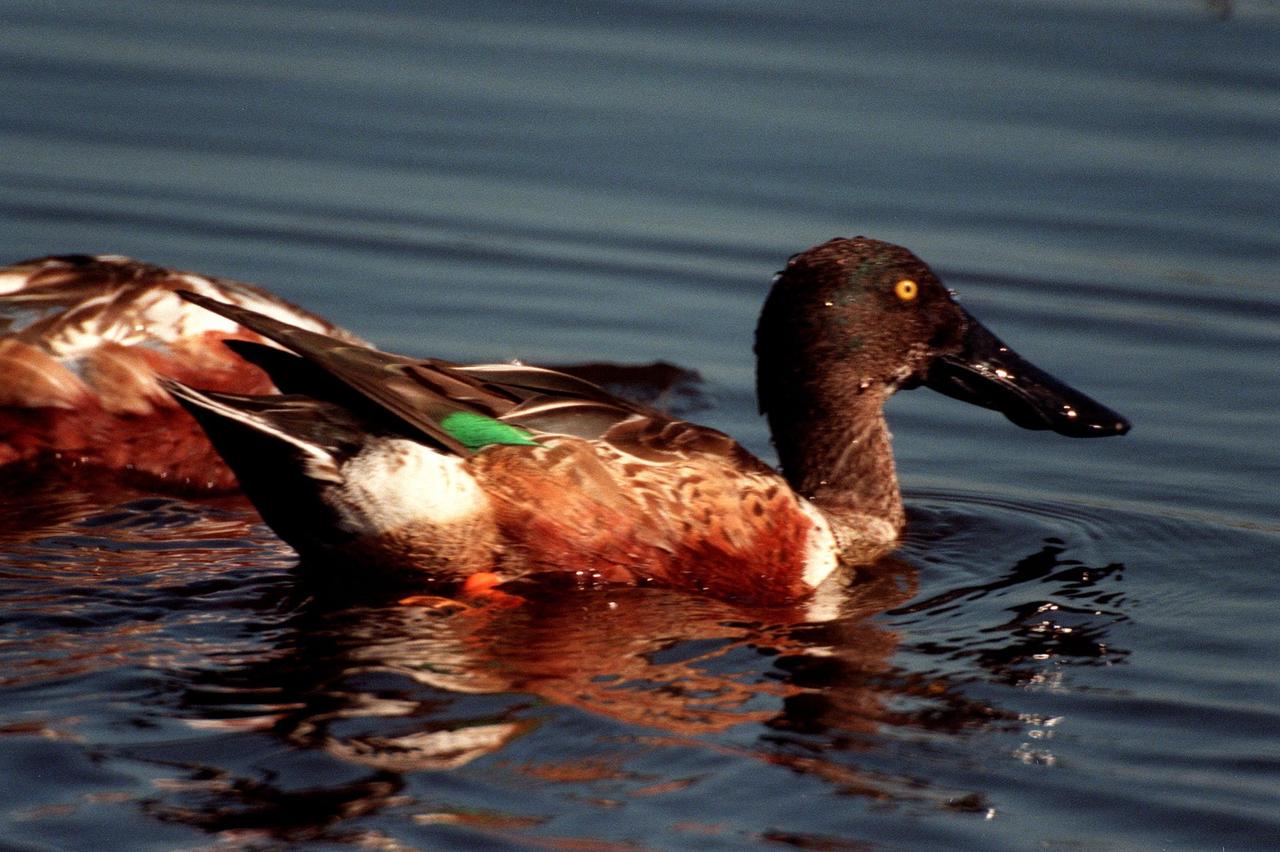
KENNEDY SPACE CENTER, FLA. -- The broad, distinctive bill is a primary feature of this northern shoveler, paddling in the waters of the Merritt Island National Wildlife Refuge at Kennedy Space Center. Typically found in western Canada, Alaska, Colorado and Southern California, it can also be found farther east and south, wintering in the United States along the southeast coast. The marshes and open water of the refuge provide wintering areas for 23 species of migratory waterfowl, as well as a year-round home for great blue herons, great egrets, wood storks, cormorants, brown pelicans and other species of marsh and shore birds. The 92,000-acre refuge is also habitat for more than 310 species of birds, 25 mammals, 117 fishes and 65 amphibians and reptiles
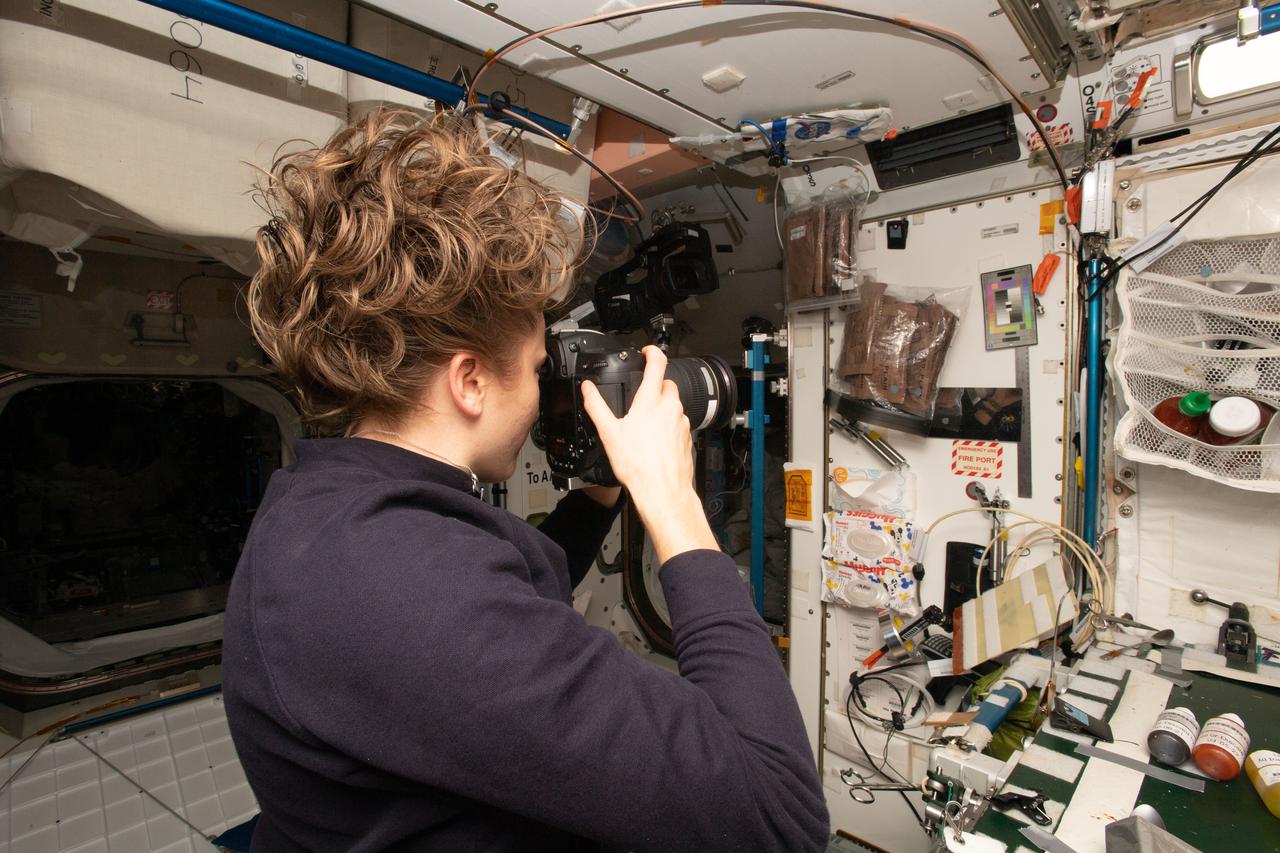
iss066e114158 (Jan. 15, 2022) --- NASA astronaut and expedition 66 Flight Engineer Kayla Barron snaps pictures of a sample “pit” aboard the International Space Station as part of the SQuARE experiment. This study is adapted from the standard archaeological technique on Earth called the “shovel test pit” and tracks the use and movement of objects in several sample sites throughout the orbiting laboratory. Crew members marked off the sample sites and took pictures at approximately the same every day, and then at randomly selected times. Scientists on the ground will analyze the images to understand how astronauts use objects and spaces over an extended period of time. What we learn could inform design of future space habitats. Credits: International Space Station Archeological Project/NASA
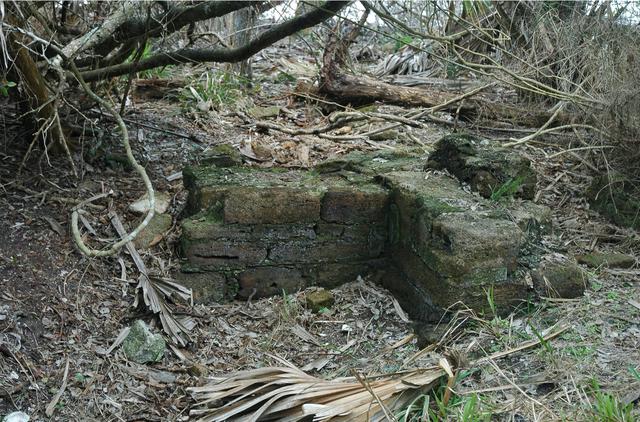
Archeological ruins of Elliot Plantation are revealed through the oak hammock on NASA’s Kennedy Space Center in Florida in 2008. Pictured is a structure composed of coquina blocks from a hearth of a large dwelling, determined to be that of the plantation overseer. The use of coquina is consistent with high-status building materials of the period. The ruins of Elliot Plantation date from the 1760s and represent the largest, earliest, and southernmost British period sugar plantation in the U.S., as well as one of the most intact and best examples of a completely preserved enslaved landscape. In interagency cooperation between the National Park Service, the U.S. Fish and Wildlife Service, and NASA, and with the assistance of volunteers from the Indian River Anthropological Society, and historic preservation offices of Brevard and Volusia counties, approximately 200 shovel tests and 20 excavation units were completed in three areas of the plantation complex from 2008 to 2009.
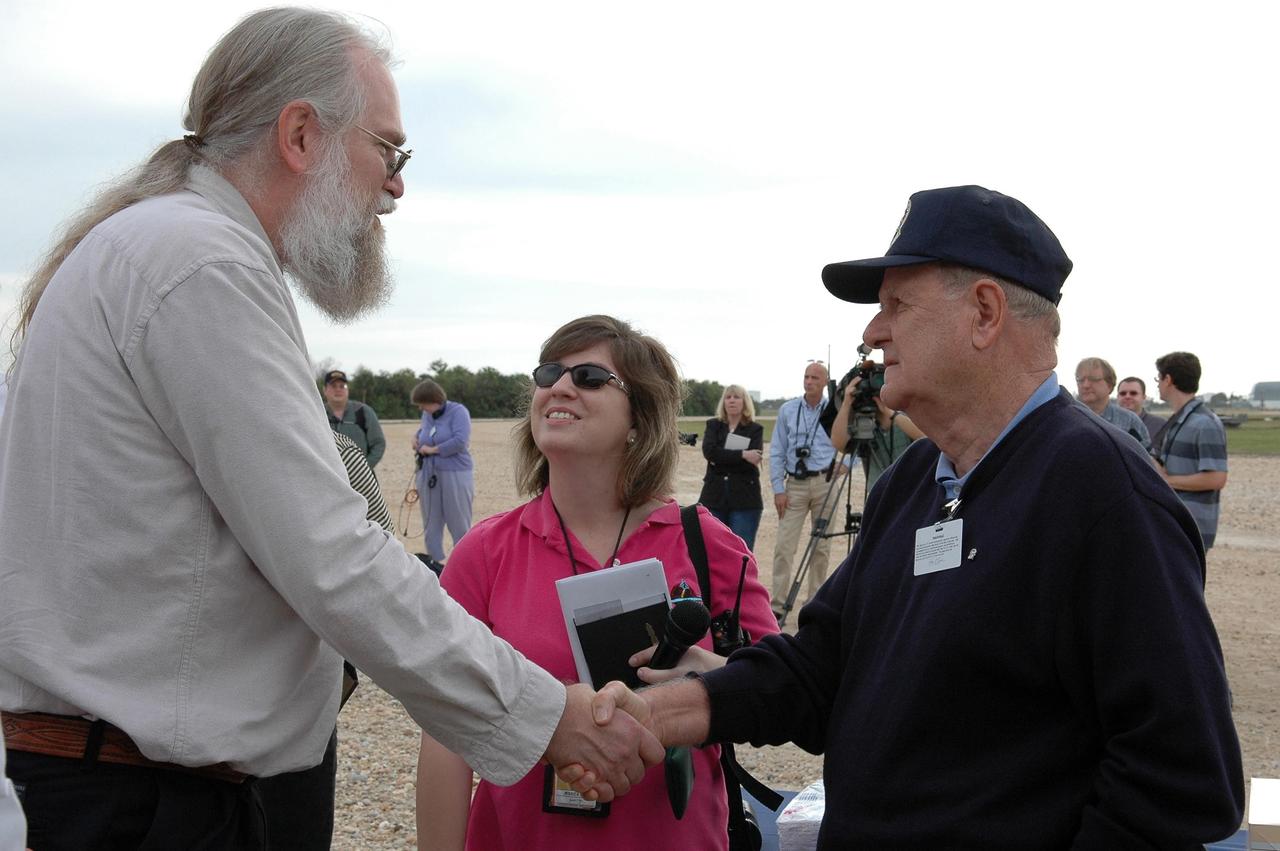
KENNEDY SPACE CENTER, FLA. - On the occasion of the 40th anniversary of the crawler transporter used for moving space shuttles to the NASA Kennedy Space Center’s launch pads, Philip Koehring Jr. (left) meets Bill Clemens. Koehring represented his father, who was project manager at Marion Power Shovel Co. in Ohio where the crawlers were initially built in 1965. Media representatives and invited guests had the opportunity to tour one of NASA's two crawlers. This included the driver cab and engine room. Guests included current drivers and operators, as well as drivers from the Apollo Program. In January 1966, the crawler completed its first successful move with a 10.6-million-pound launch umbilical tower. It moved three-quarters of a mile in about nine hours. Throughout 40 years of service, the two crawlers have moved more than 3,500 miles and carried seven vehicles.
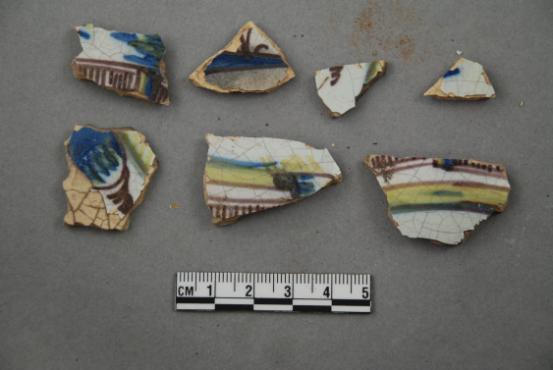
Artifacts retrieved from the ruins of Elliot Plantation on NASA’s Kennedy Space Center in Florida include Spanish majolica fragments, likely produced between the 1730s to the 1750s and imported to the plantation from England. Ceramic fragments of majolica, delftware, and other high-status domestic wares were retrieved from ruins determined to be the dwelling of the plantation overseer. The ruins of Elliot Plantation date from the 1760s and represent the largest, earliest, and southernmost British period sugar plantation in the U.S., as well as one of the most intact and best examples of a completely preserved enslaved landscape. In interagency cooperation between the National Park Service, the U.S. Fish and Wildlife Service, and NASA, and with the assistance of volunteers from the Indian River Anthropological Society, and historic preservation offices of Brevard and Volusia counties, approximately 200 shovel tests and 20 excavation units were completed in three areas of the plantation complex from 2008 to 2009.
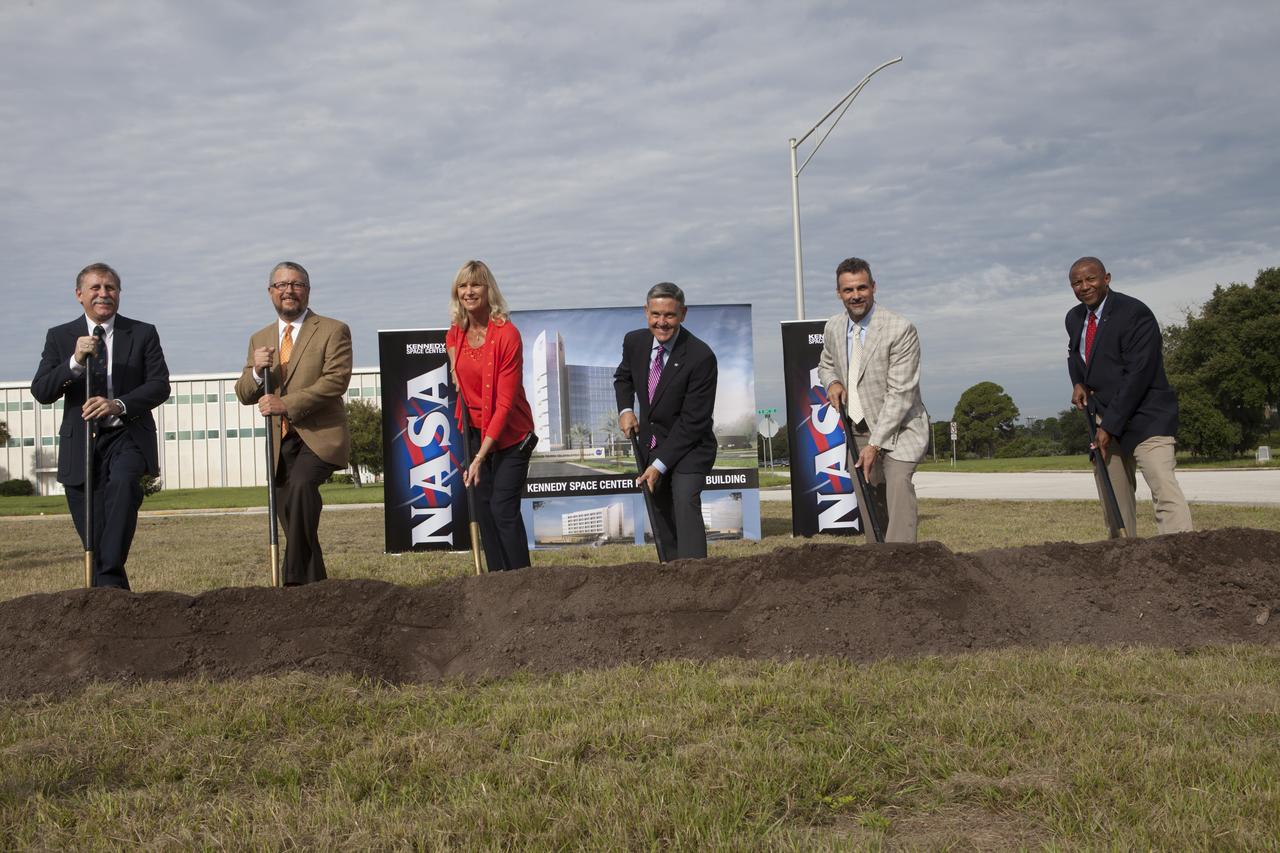
Groundbreaking for the new Central Campus took place in the Industrial Area at NASA's Kennedy Space Center in Florida. Digging in with shovels during the groundbreaking ceremony, are Dan Tweed, associate director for Facilities at Kennedy Steve Belflower, vice president of HuntonBrady Architects of Orlando Nancy Bray, director of Kennedy's Center Operations Directorate Kennedy Center Director Bob Cabana Kirk Hazen, southeast district manager and vice president of Hensel Phelps, the construction contractor and Kelvin Manning, Kennedy's associate director. Kennedy is transforming into a multi-user, 21st century spaceport supporting both commercial and government users and operations. Central Campus Phase I includes construction of a new Headquarters Building as one of the major components of the strategy. The new Headquarters Building will be a seven-story, 200,000-square-foot facility that will house about 500 NASA civil service and contractor employees.
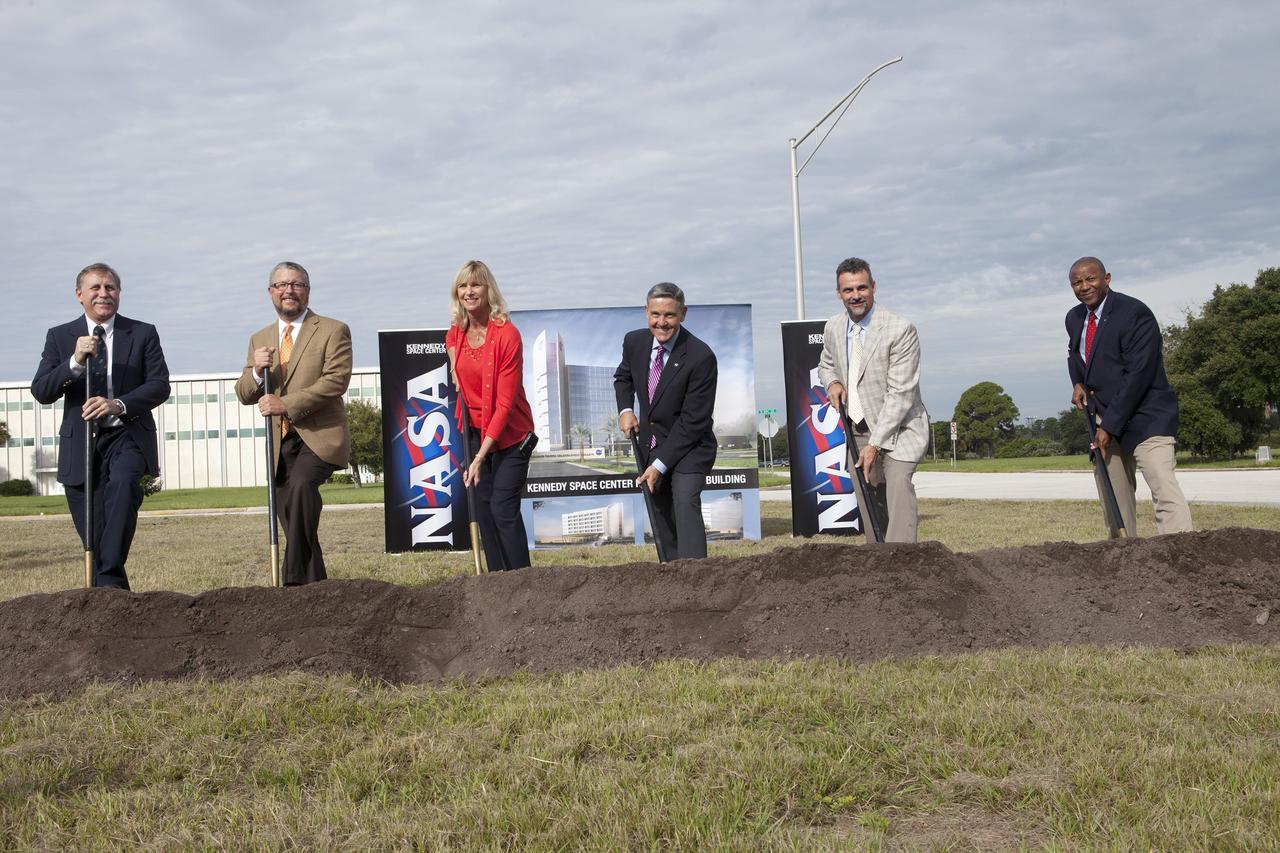
CAPE CANAVERAL, Fla. – Groundbreaking for the new Central Campus took place in the Industrial Area at NASA's Kennedy Space Center in Florida. Digging in with shovels during the groundbreaking ceremony, are Dan Tweed, associate director for Facilities at Kennedy Steve Belflower, vice president of HuntonBrady Architects of Orlando Nancy Bray, director of Kennedy's Center Operations Directorate Kennedy Center Director Bob Cabana Kirk Hazen, southeast district manager and vice president of Hensel Phelps, the construction contractor and Kelvin Manning, Kennedy's associate director. Kennedy is transforming into a multi-user, 21st century spaceport supporting both commercial and government users and operations. Central Campus Phase I includes construction of a new Headquarters Building as one of the major components of the strategy. The new Headquarters Building will be a seven-story, 200,000-square-foot facility that will house about 500 NASA civil service and contractor employees. Photo credit: NASA/Kim Shiflett
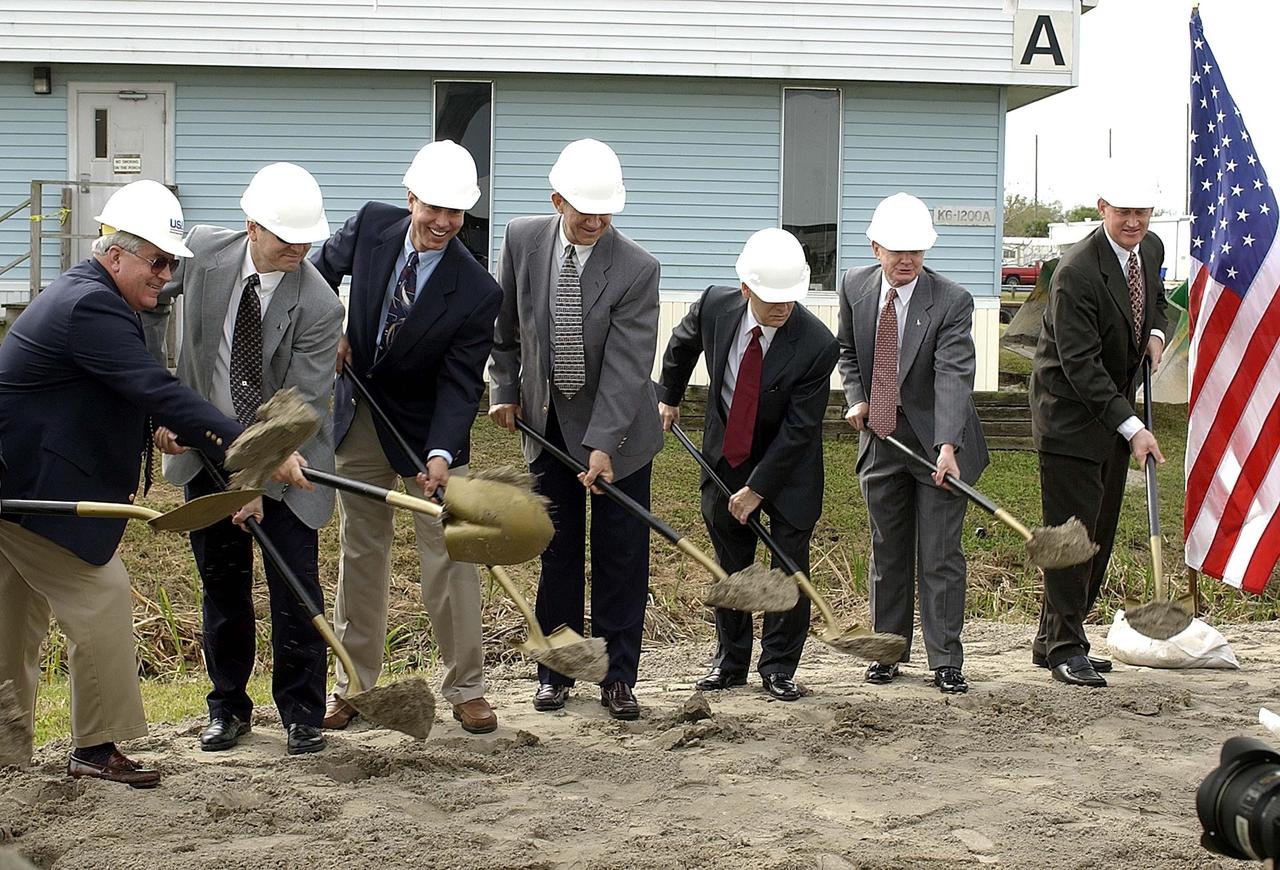
KENNEDY SPACE CENTER, FLA. -- -- Lifting their shovels for the groundbreaking of the Operations Support Building II are (left to right) Bill Pickavance, Vice President & Deputy Program Manager Florida Operations, United Space Alliance; Mike Wetmore, director of Shuttle Processing; Miguel Morales, chief, Facilities Division, Spaceport Services; Mike Sumner, chief of operations, Spaceport Services; David Wolfberg, designer of the facility, with Architect and Engineers Wolfberg, Alvarez and Partners of Coral Gables; Roy Bridges, KSC director; and Don Minderman, OSB II project manager, Spaceport Services. Not shown: David Boland, David Boland Inc.(construction company). The new building will replace modular housing constructed more than 20 years ago and house NASA and contractor support staff for shuttle operations. The demolition of the modular buildings has begun and construction will immediately follow. The new structure is projected to be ready in April 2005.
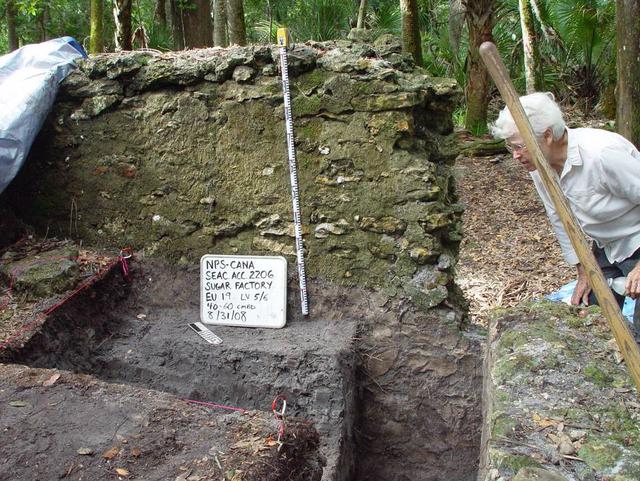
Preservationist Dot Moore views the ruins of Elliot Plantation sugar factory during an excavation in 2008 on NASA’s Kennedy Space Center. The sugar factory structure, or sugar train, was built from fieldstone and is where sugar cane juice would be boiled during processing in graduated copper kettles until the liquid reduced into a thick syrup. The ruins of Elliot Plantation date from the 1760s and represent the largest, earliest, and southernmost British period sugar plantation in the U.S., as well as one of the most intact and best examples of a completely preserved enslaved landscape. In interagency cooperation between the National Park Service, the U.S. Fish and Wildlife Service, and NASA, and with the assistance of volunteers from the Indian River Anthropological Society, and historic preservation offices of Brevard and Volusia counties, approximately 200 shovel tests and 20 excavation units were completed in three areas of the plantation complex from 2008 to 2009.
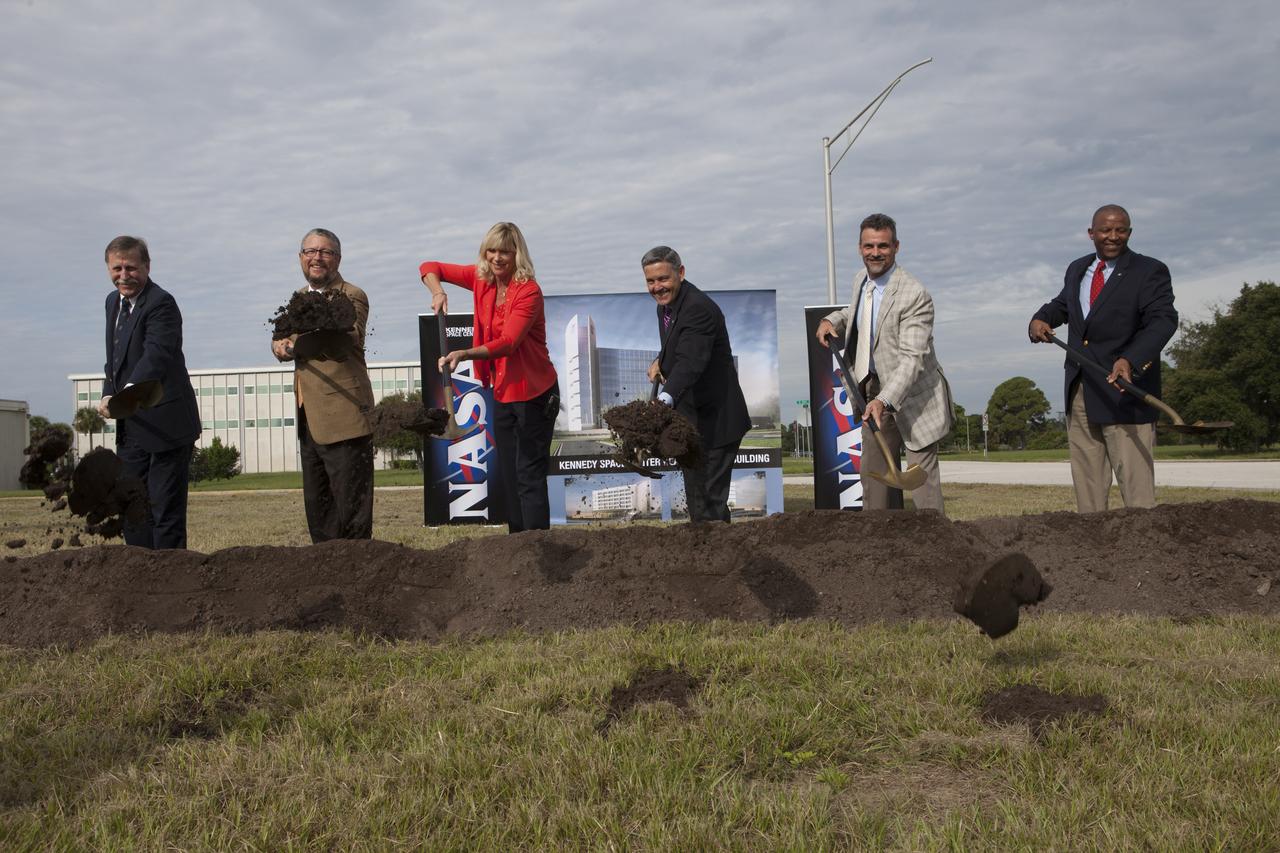
Groundbreaking for the new Central Campus took place in the Industrial Area at NASA's Kennedy Space Center in Florida. Digging in with shovels during the groundbreaking ceremony, are Dan Tweed, associate director for Facilities at Kennedy Steve Belflower, vice president of HuntonBrady Architects of Orlando Nancy Bray, director of Kennedy's Center Operations Directorate Kennedy Center Director Bob Cabana Kirk Hazen, southeast district manager and vice president of Hensel Phelps, the construction contractor and Kelvin Manning, Kennedy's associate director. Kennedy is transforming into a multi-user, 21st century spaceport supporting both commercial and government users and operations. Central Campus Phase I includes construction of a new Headquarters Building as one of the major components of the strategy. The new Headquarters Building will be a seven-story, 200,000-square-foot facility that will house about 500 NASA civil service and contractor employees.
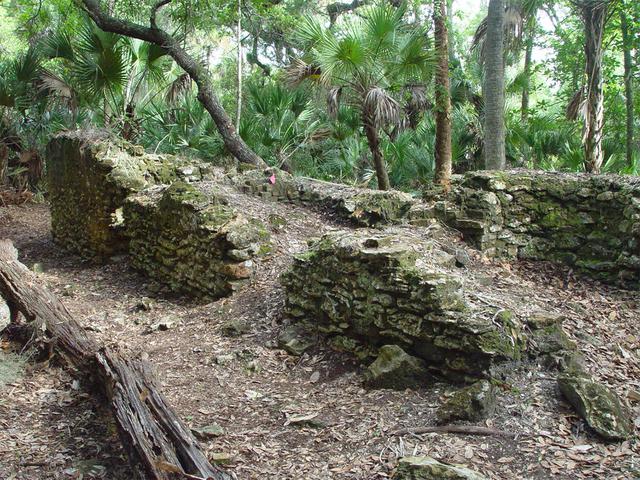
Archeological ruins of the Elliot Plantation sugar factory are revealed through the oak hammock on NASA’s Kennedy Space Center in Florida in 2008. The sugar factory structure, or sugar train, was built from fieldstone and is where sugar cane juice would be boiled during processing in graduated copper kettles until the liquid reduced into a thick syrup. The ruins of Elliot Plantation date from the 1760s and represent the largest, earliest, and southernmost British period sugar plantation in the U.S., as well as one of the most intact and best examples of a completely preserved enslaved landscape. In interagency cooperation between the National Park Service, the U.S. Fish and Wildlife Service, and NASA, and with the assistance of volunteers from the Indian River Anthropological Society, and historic preservation offices of Brevard and Volusia counties, approximately 200 shovel tests and 20 excavation units were completed in three areas of the plantation complex from 2008 to 2009.
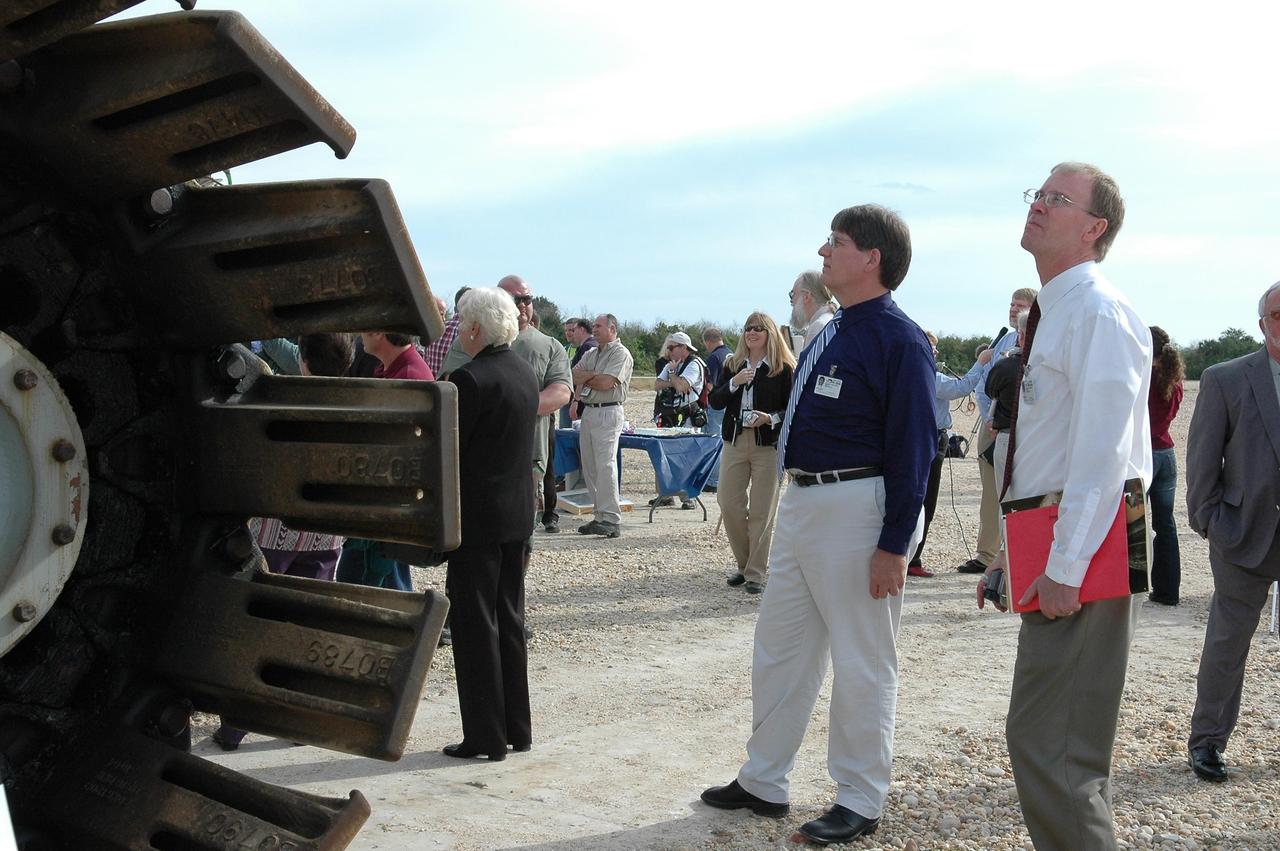
KENNEDY SPACE CENTER, FLA. - On the occasion of the 40th anniversary of the crawler transporter used for moving space shuttles to the NASA Kennedy Space Center’s launch pads, Rick Drollinger (center) and John Koehring get a close look at one of the crawlers still in use. Drollinger’s father, Richard, was director of engineering at Marion Power Shovel Co. in Ohio where the crawlers were initially built in 1965. Koehring is the son of Philip Koehring Sr., who was project manager at Marion. Media representatives and invited guests had the opportunity to tour one of NASA's two crawlers. This included the driver cab and engine room. Guests included current drivers and operators, as well as drivers from the Apollo Program. In January 1966, the crawler completed its first successful move with a 10.6-million-pound launch umbilical tower. It moved three-quarters of a mile in about nine hours. Throughout 40 years of service, the two crawlers have moved more than 3,500 miles and carried seven vehicles.
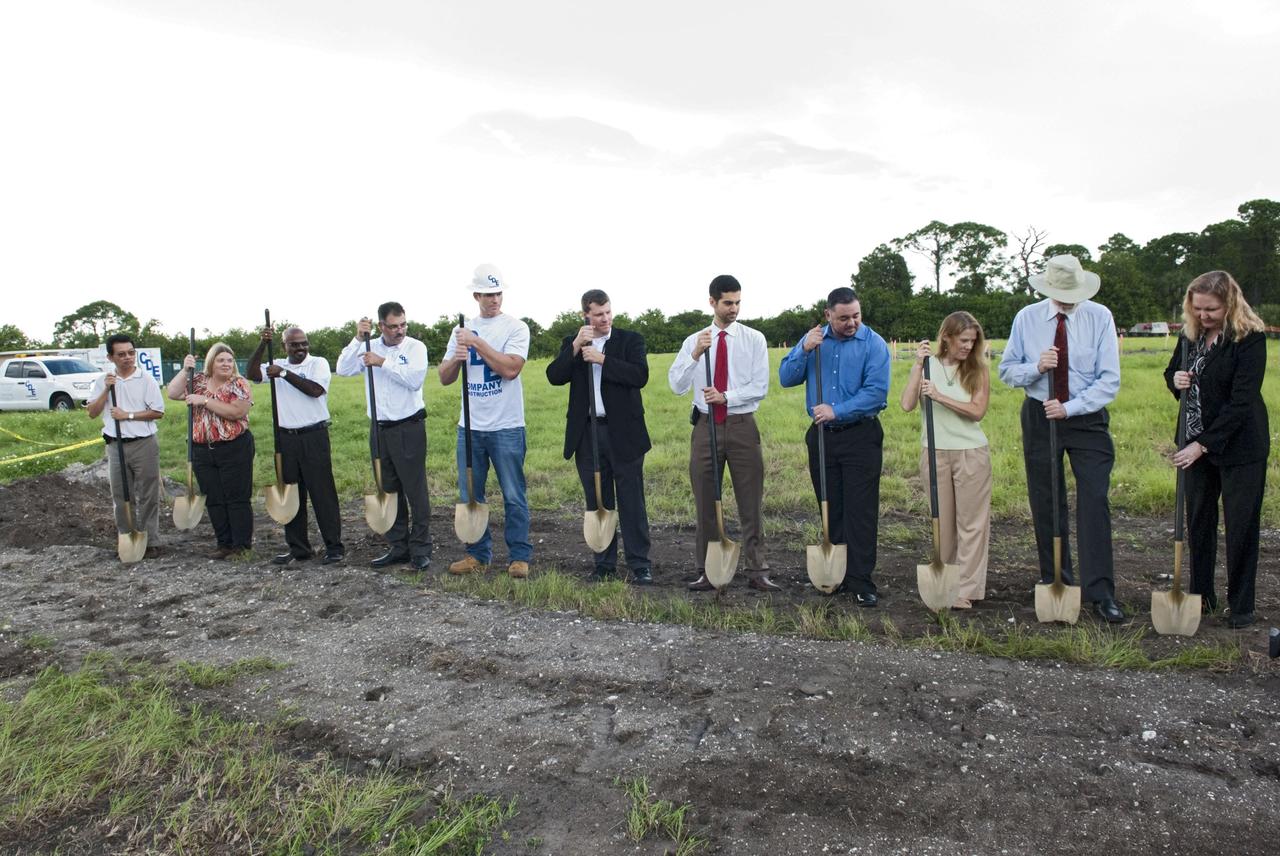
CAPE CANAVERAL, Fla. -- At NASA’s Kennedy Space Center in Florida, a groundbreaking was held to mark the start of construction on the Antenna Test Bed Array for the Ka-Band Objects Observation and Monitoring, or Ka-BOOM system. Holding ceremonial shovels, from left are Michael Le, lead design engineer and construction manager Sue Vingris, Cape Design Engineer Co. project manager Kannan Rengarajan, chief executive officer of Cape Design Engineer Co. Lutfi Mized, president of Cape Design Engineer Co. David Roelandt, construction site superintendent with Cape Design Engineer Co. Marc Seibert, NASA project manager Michael Miller, NASA project manager Peter Aragona, KSC’s Electromagnetic Lab manager Stacy Hopper, KSCs master planning supervisor Dr. Bary Geldzabler, NASA chief scientist and KSC’s Chief Technologist Karen Thompson. The construction site is near the former Vertical Processing Facility, which has been demolished. Workers will begin construction on the pile foundations for the 40-foot-diameter dish antenna arrays and their associated utilities, and prepare the site for the operations command center facility. Photo credit: NASA/Charisse Nahser
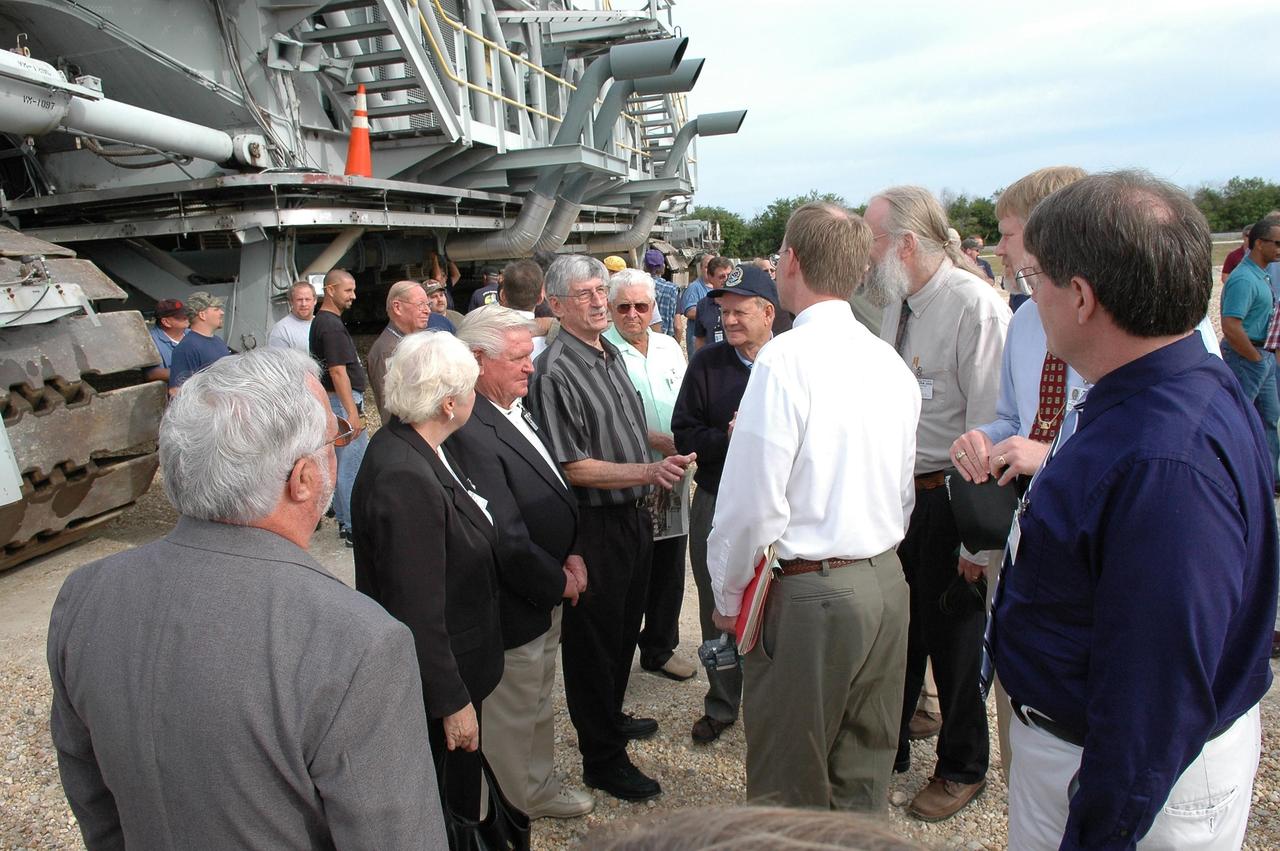
KENNEDY SPACE CENTER, FLA. - On the occasion of the 40th anniversary of the crawler transporter used for moving space shuttles to the NASA Kennedy Space Center’s launch pads, invited guests mingle in front of one of the crawlers still in use. From left are Sylvan “Skip” Montagna, Patricia and Fred Renaud, Fred Wallace and Bill Clemens. Philip Koehring and his brothers Doug(white shirt) and John (light blue shirt) and Rick Drollinger are on the right. Philip Koehring Sr. was project manager at the Marion Power Shovel Co. in Ohio where the crawlers were initially built in 1965. Drollinger’s father, Richard, was director of engineering at Marion. Media representatives and invited guests had the opportunity to tour one of NASA's two crawlers. This included the driver cab and engine room. Guests included current drivers and operators, as well as drivers from the Apollo Program. In January 1966, the crawler completed its first successful move with a 10.6-million-pound launch umbilical tower. It moved three-quarters of a mile in about nine hours. Throughout 40 years of service, the two crawlers have moved more than 3,500 miles and carried seven vehicles.

KENNEDY SPACE CENTER, FLA. - On the occasion of the 40th anniversary of the crawler transporter used for moving space shuttles to the NASA Kennedy Space Center’s launch pads, former crawler engineer Bill Clemens talks to the media and invited guests (behind him) Rick Drollinger (blue shirt), whose father Richard was director of engineering at Marion Power Shovel Co. in Ohio where the crawlers were initially built in 1965; Philip Koehring Jr. (on right), whose father was project manager at Marion; and Koehring’s sons Doug and John. Media representatives and invited guests had the opportunity to tour one of NASA's two crawlers. This included the driver cab and engine room. Guests included current drivers and operators, as well as drivers from the Apollo Program. In January 1966, the crawler completed its first successful move with a 10.6-million-pound launch umbilical tower. It moved three-quarters of a mile in about nine hours. Throughout 40 years of service, the two crawlers have moved more than 3,500 miles and carried seven vehicles.
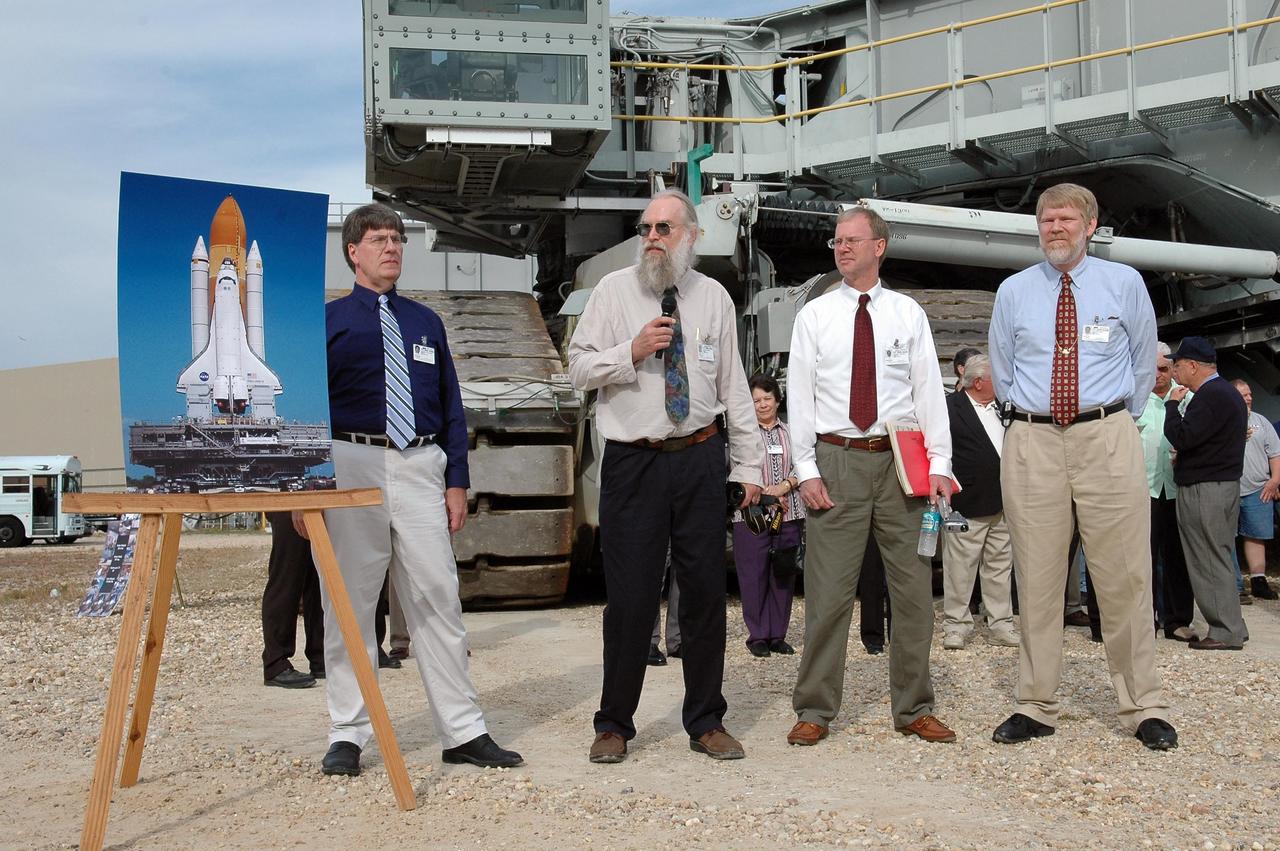
KENNEDY SPACE CENTER, FLA. - Standing in front of one of NASA Kennedy Space Center’s crawler transporters are Rick Drollinger (left) and Phllip Koehring Jr., who both represent their fathers for their roles in the development of the crawlers. The occasion was the 40th anniversary of the crawlers. Drollinger’s father, Richard, was director of engineering at Marion Power Shovel Co. in Ohio where the crawlers were initially built in 1965. Koehring’s father, Philip Sr., was project manager at Marion. Alongside Koehring are his brothers Doug and John. Media representatives and invited guests had the opportunity to tour one of NASA's two crawlers. This included the driver cab and engine room. Guests included current drivers and operators, as well as drivers from the Apollo Program. In January 1966, the crawler completed its first successful move with a 10.6-million-pound launch umbilical tower. It moved three-quarters of a mile in about nine hours. Throughout 40 years of service, the two crawlers have moved more than 3,500 miles and carried seven vehicles.
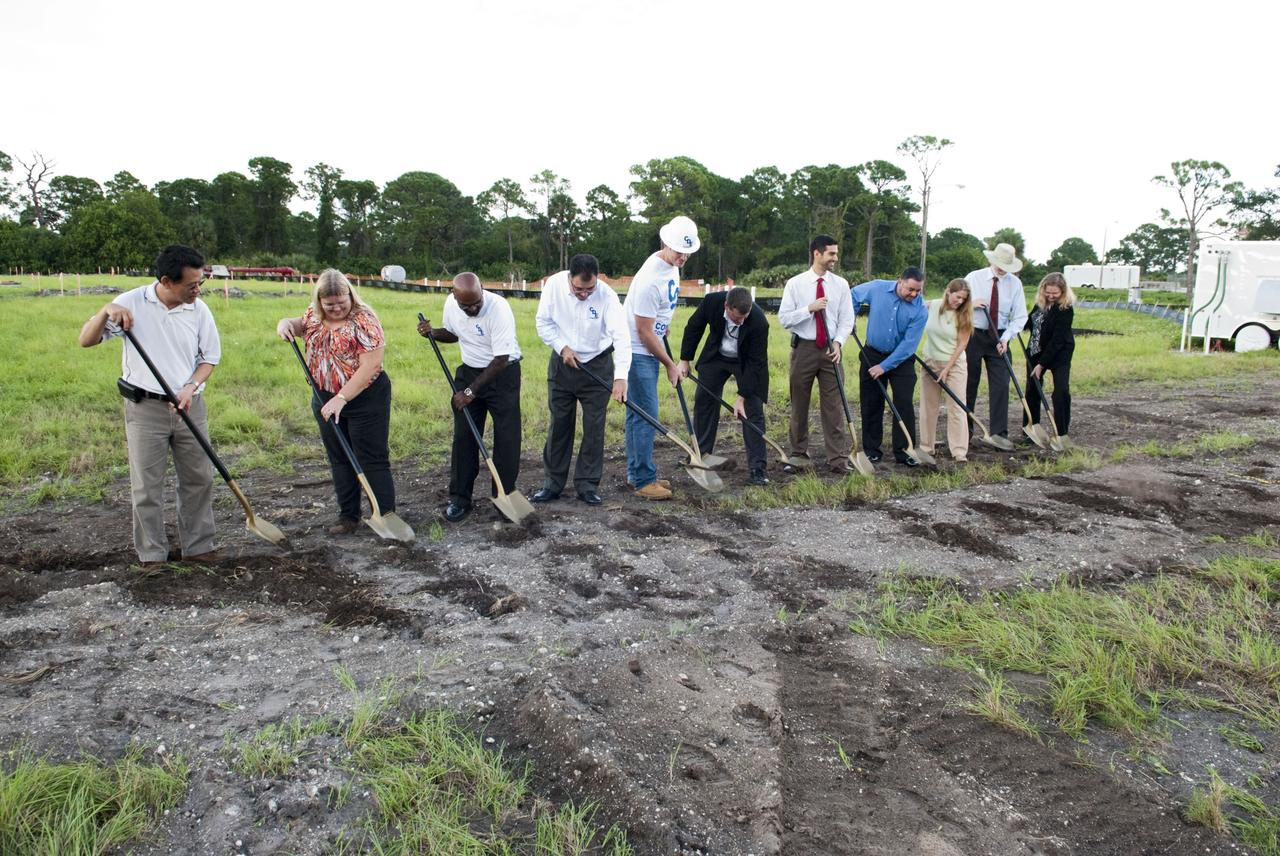
CAPE CANAVERAL, Fla. -- At NASA’s Kennedy Space Center in Florida, a groundbreaking was held to mark the start of construction on the Antenna Test Bed Array for the Ka-Band Objects Observation and Monitoring, or Ka-BOOM system. Using ceremonial shovels to mark the site, from left are Michael Le, lead design engineer and construction manager Sue Vingris, Cape Design Engineer Co. project manager Kannan Rengarajan, chief executive officer of Cape Design Engineer Co. Lutfi Mized, president of Cape Design Engineer Co. David Roelandt, construction site superintendent with Cape Design Engineer Co. Marc Seibert, NASA project manager Michael Miller, NASA project manager Peter Aragona, KSC’s Electromagnetic Lab manager Stacy Hopper, KSCs master planning supervisor Dr. Bary Geldzabler, NASA chief scientist and KSC’s Chief Technologist Karen Thompson. The construction site is near the former Vertical Processing Facility, which has been demolished. Workers will begin construction on the pile foundations for the 40-foot-diameter dish antenna arrays and their associated utilities, and prepare the site for the operations command center facility. Photo credit: NASA/Charisse Nahser
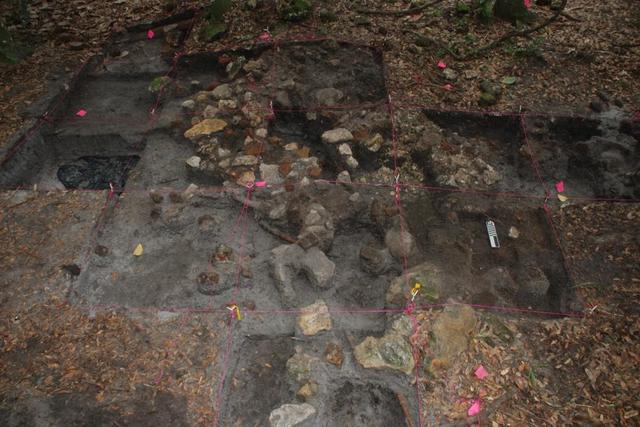
Archeological ruins of Elliot Plantation are revealed through the oak hammock on NASA’s Kennedy Space Center in Florida in 2009. Pictured is a structure composed of coquina blocks from a hearth of a large dwelling, determined to be that of the plantation overseer. The use of coquina is consistent with high-status building materials of the period. Mapped in this photo are the remnants of a chimney collapse from a detached kitchen in the overseer’s house. An enormous scatter of architectural debris, including coquina, fieldstone, brick and mortar, as well as substantial food remains, broken dishes, bottle glass, and other kitchen wares, were recovered and documented during investigations of the ruins. The ruins of Elliot Plantation date from the 1760s and represent the largest, earliest, and southernmost British period sugar plantation in the U.S., as well as one of the most intact and best examples of a completely preserved enslaved landscape. In interagency cooperation between the National Park Service, the U.S. Fish and Wildlife Service, and NASA, and with the assistance of volunteers from the Indian River Anthropological Society, and historic preservation offices of Brevard and Volusia counties, approximately 200 shovel tests and 20 excavation units were completed in three areas of the plantation complex from 2008 to 2009.
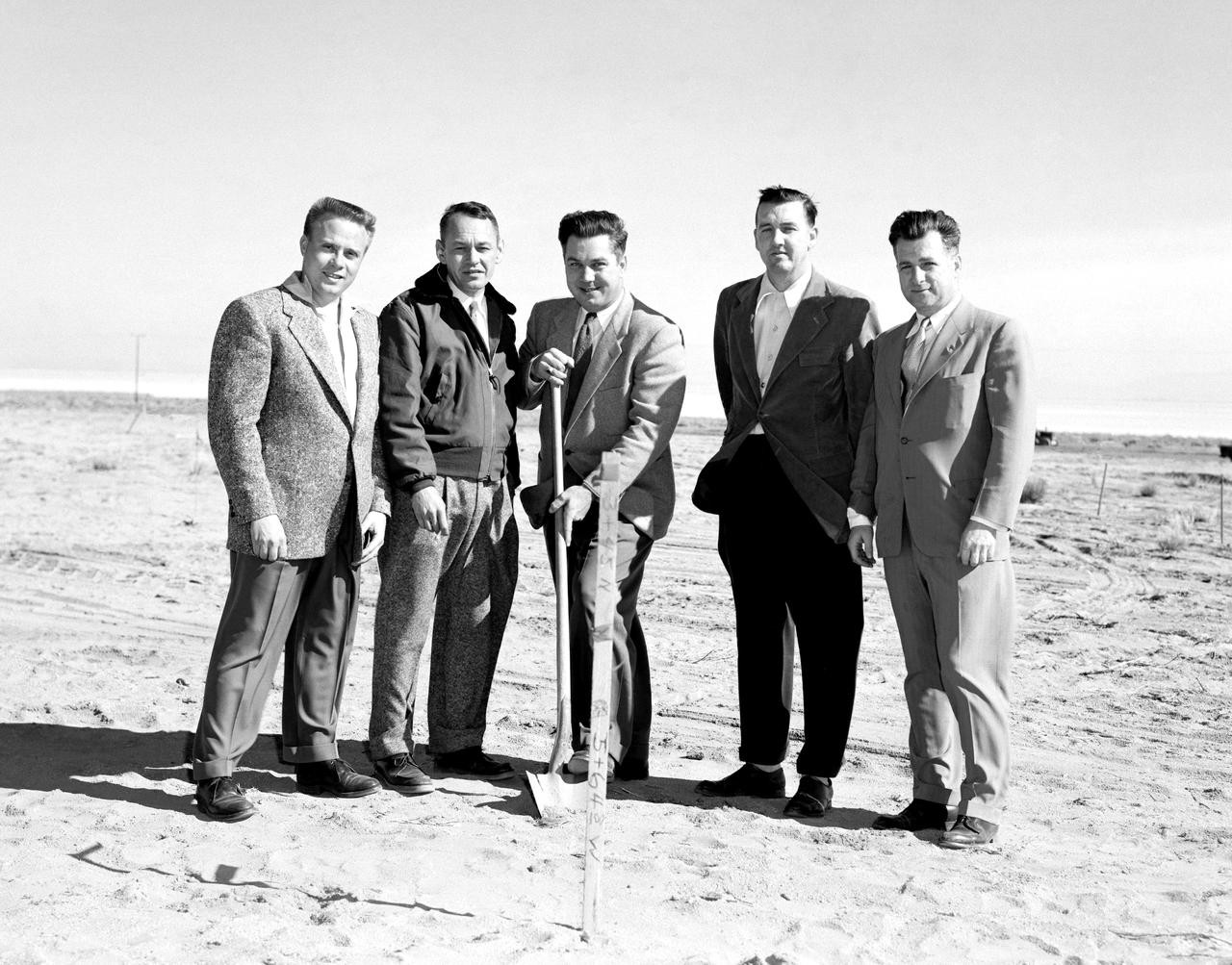
The NACA High-Speed Flight Research Station, had initially been subordinate to the Langley Memorial Aeronautical Laboratory near Hampton, Virginia, but as the flight research in the Mojave Desert increasingly proved its worth after 1946, it made sense to make the Flight Research Station a separate entity reporting directly to the headquarters of the National Advisory Committee for Aeronautics. But an autonomous center required all the trappings of a major research facility, including good quarters. With the adoption of the Edwards “Master Plan,” the Air Force had committed itself to moving from its old South Base to a new location midway between the South and North Bases. The NACA would have to move also--so why not take advantage of the situation and move into a full-blown research facility. The Air Force issued a lease to NACA for a location on the northwestern shore of the Roger Dry Lake. Construction started on the NACA station in early February 1953. On a windy day, January 27, 1953, at a groundbreaking ceremony stood left to right: Gerald Truszynski, Head of Instrumentation Division; Joseph Vensel, Head of the Operations Branch; Walter Williams, Head of the Station, scooping the first shovel full of dirt; Marion Kent, Head of Personnel; and California state official Arthur Samet.
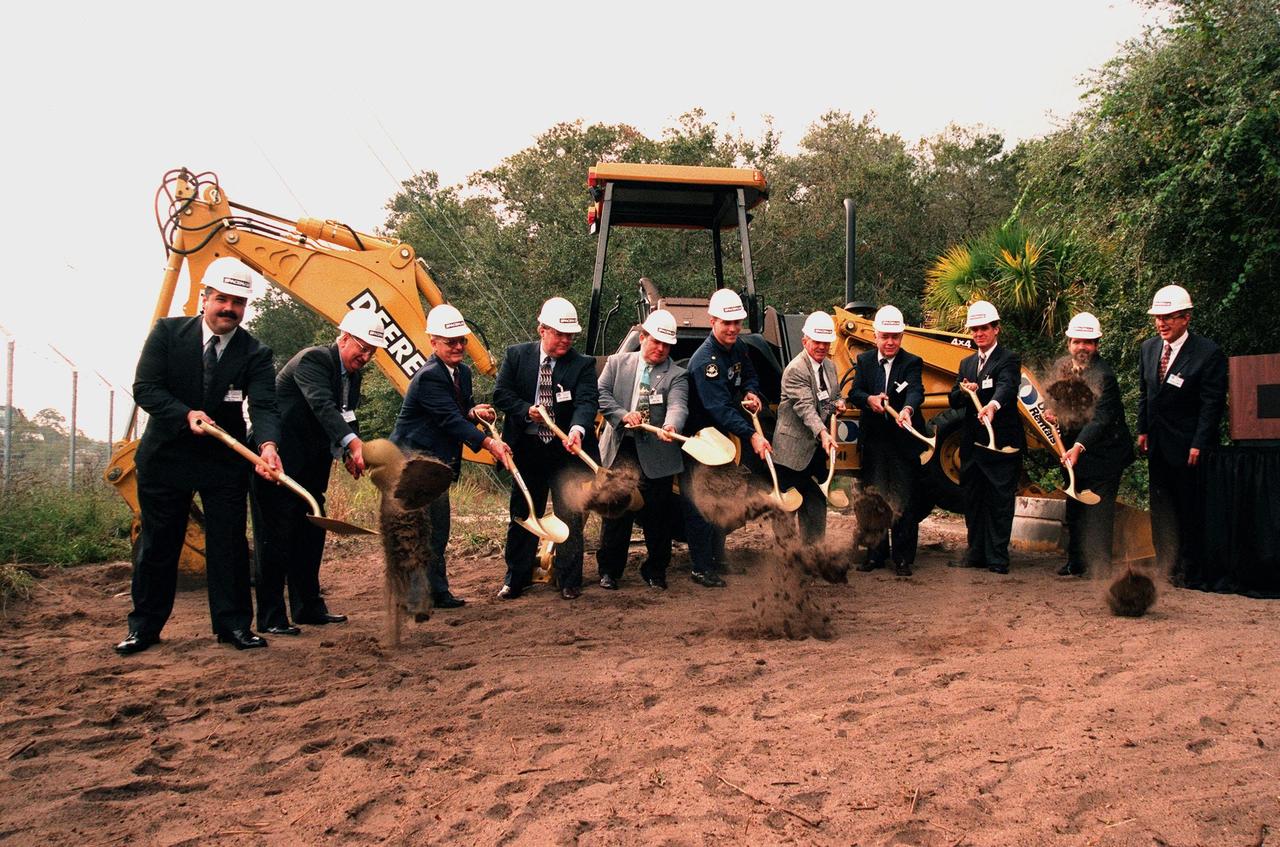
Dirt flies during a ground-breaking ceremony to kick off Astrotech Space Operations' construction of a new satellite preparation facility to support the Delta IV, Boeing's winning entrant in the Air Force Evolved Expendable Launch Vehicle (EELV) Program. Wielding shovels are (from left to right) Tom Alexico; Chet Lee, chairman, Astrotech Space Operations; Gen. Forrest McCartney, vice president, Launch Operations, Lockheed Martin; Richard Murphy, director, Delta Launch Operations, The Boeing Company; Keith Wendt; Toby Voltz; Loren Shriver, deputy director, Launch & Payload Processing, Kennedy Space Center; Truman Scarborough, Brevard County commissioner; U.S. Representative 15th Congressional District David Weldon; Ron Swank; and watching the action at right is George Baker, president, Astrotech Space Operations. Astrotech is located in Titusville, Fla. It is a wholly owned subsidiary of SPACEHAB, Inc., and has been awarded a 10-year contract to provide payload processing services for The Boeing Company. The facility will enable Astrotech to support the full range of satellite sizes planned for launch aboard Delta II, III and IV launch vehicles, as well as the Atlas V, Lockheed Martin's entrant in the EELV Program. The Atlas V will be used to launch satellites for government, including NASA, and commercial customers
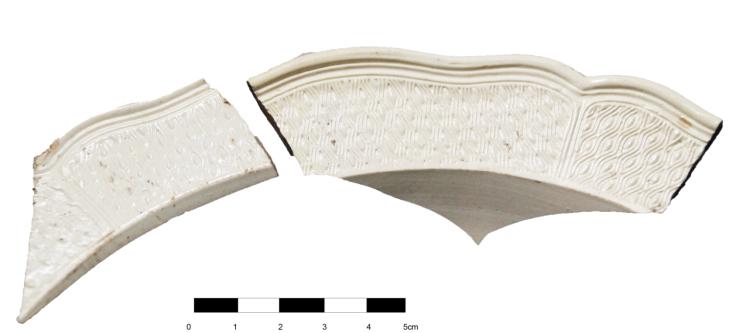
Artifacts retrieved from the ruins of Elliot Plantation on NASA’s Kennedy Space Center in Florida show high-status fine dining wares imported from 18th century England. The white salt-glazed stoneware and creamware dining wares were found scattered near a large structure, determined by archeologists to be the dwelling of the plantation overseer. The dining wares have known dates of time for manufacturing and use during the 1760s through the 1770s and helped archeologists confirm the site was from the same period. The ruins of Elliot Plantation date from the 1760s and represent the largest, earliest, and southernmost British period sugar plantation in the U.S., as well as one of the most intact and best examples of a completely preserved enslaved landscape. In interagency cooperation between the National Park Service, the U.S. Fish and Wildlife Service, and NASA, and with the assistance of volunteers from the Indian River Anthropological Society, and historic preservation offices of Brevard and Volusia counties, approximately 200 shovel tests and 20 excavation units were completed in three areas of the plantation complex from 2008 to 2009.
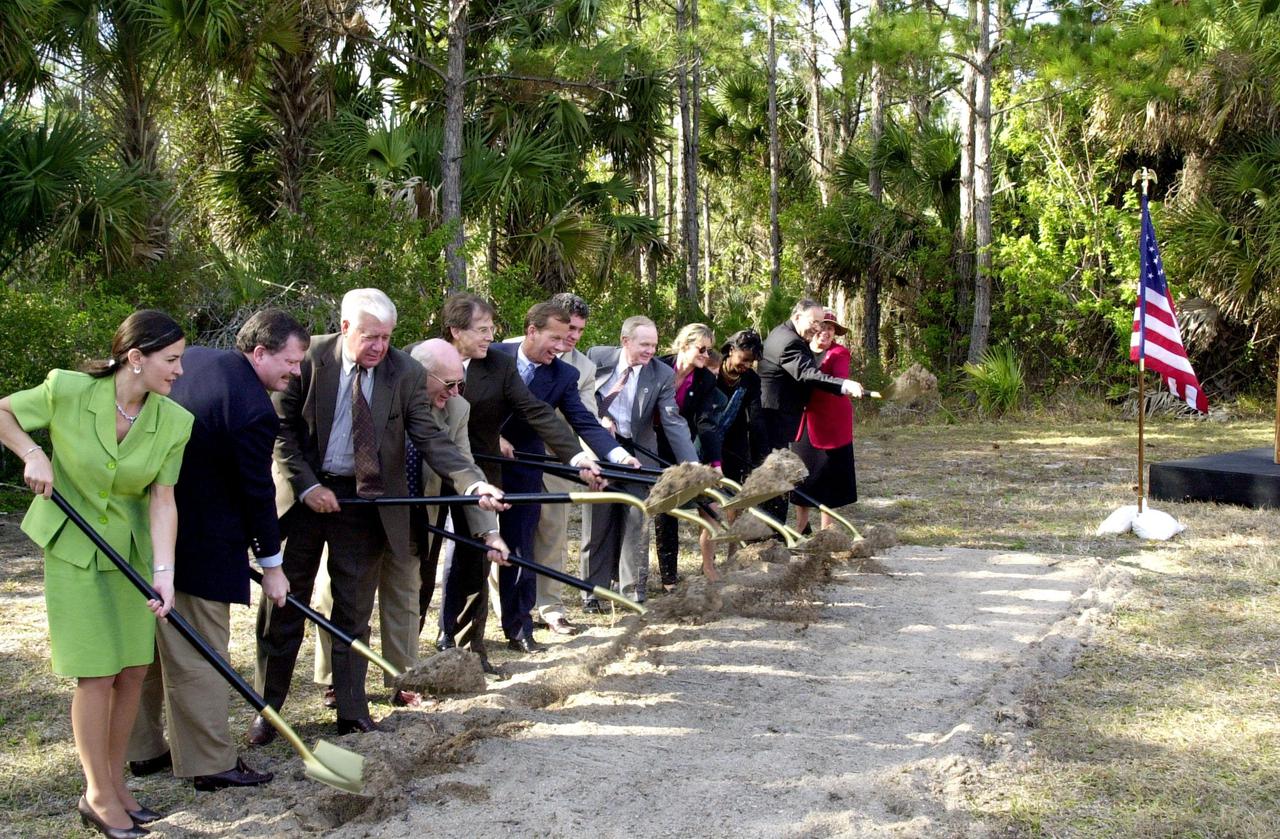
At a groundbreaking ceremony, participants and guests toss their shovelfuls of dirt, signifying the start of construction on a new roadway through KSC. From left are Dr. Pamella J. Dana, from the executive office of Florida’s governor, Jeb Bush; Deputy Associate Administrator Michael Hawes, NASA; Sen. George Kirkpatrick; Spaceport Florida Authority Executive Director Ed Gormel; Executive Director Dr. Samuel T. Durrance, Florida Space Research Institute; Florida’s Lt. Gov. Frank Brogan; Congressman Dave Weldon; Center Director Roy Bridges Jr.; SFA SERPL Program Manager Debra Holliday; KSC SERPL Program Manager Jan Heuser; District Manager Cheryl Harrison-Lee, Florida Department of Transportation; State Senator Jim Sebesta; and KSC Director JoAnn H. Morgan, External Relations and Business Development The roadway, to be known as Space Commerce Way, will serve the public by providing a 24-hour access route through KSC from S.R. 3 to the NASA Causeway and KSC Visitor Complex. It is the start of a construction project that includes the Space Experiment Research and Processing Laboratory (SERPL). Considered a magnet facility, the laboratory will support the development and processing of life sciences experiments destined for the International Space Station and accommodate NASA, industry and academic researchers performing associated biological research.. The project is enabled by a partnership and collaboration between NASA and the State of Florida to create a vital resource for international and commercial space customers