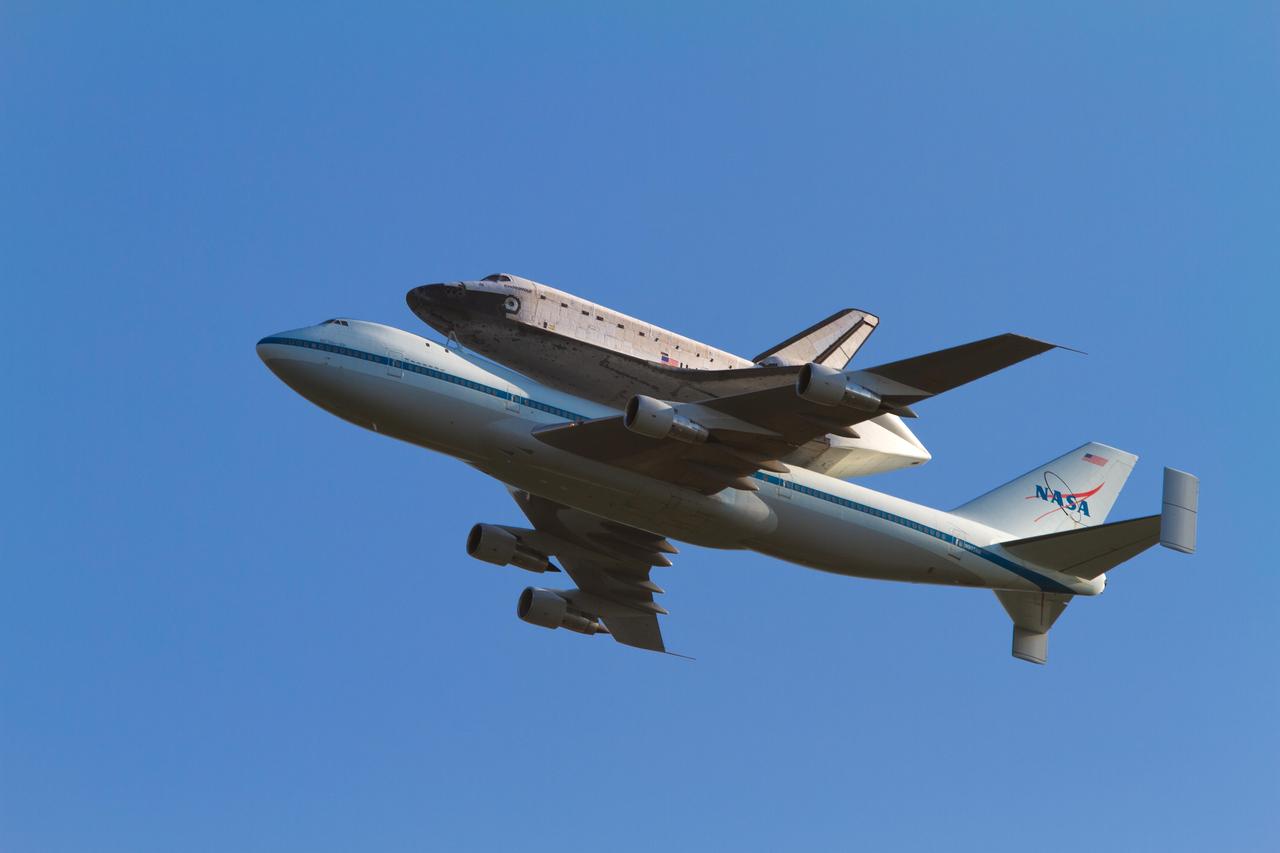
Space shuttle Endeavour embarked on the first leg of its final flight Sept. 19, departing Kennedy Space Center in Florida and making early-morning flyover visits to Stennis Space Center in Mississippi and nearby Michoud Assembly Facility in Louisiana. The shuttle flew atop the 747 Shuttle Carrier Aircraft, headed west, where it will go on display at the California Science Center in Los Angeles. The flight crew coordinated with the Federal Aviation Administration to conduct low-level flyovers at about 1,500 feet above Stennis and Michoud.
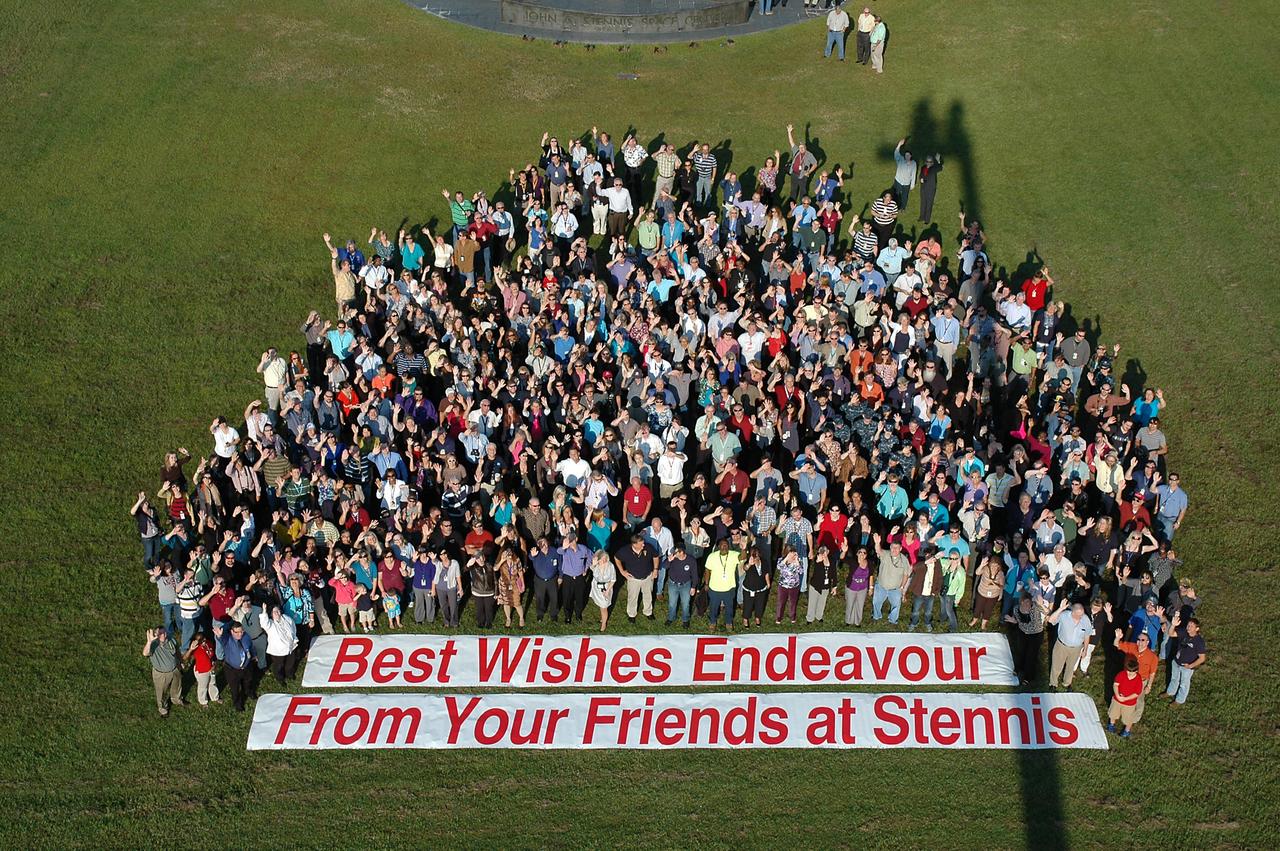
Stennis Space Center employees turned out in force to cheer space shuttle Endeavour as it flew low over the rocket engine test facility early on the morning of Sept. 19. The shuttle is headed to Los Angeles, where it will be on display at the California Science Center. Stennis employees applauded and cheered as the retired shuttle passed low overhead. In addition to those gathered on the lawn in front of the Roy S. Estess Building, many congregated on building rooftops and on facility test stands to view the flyover.
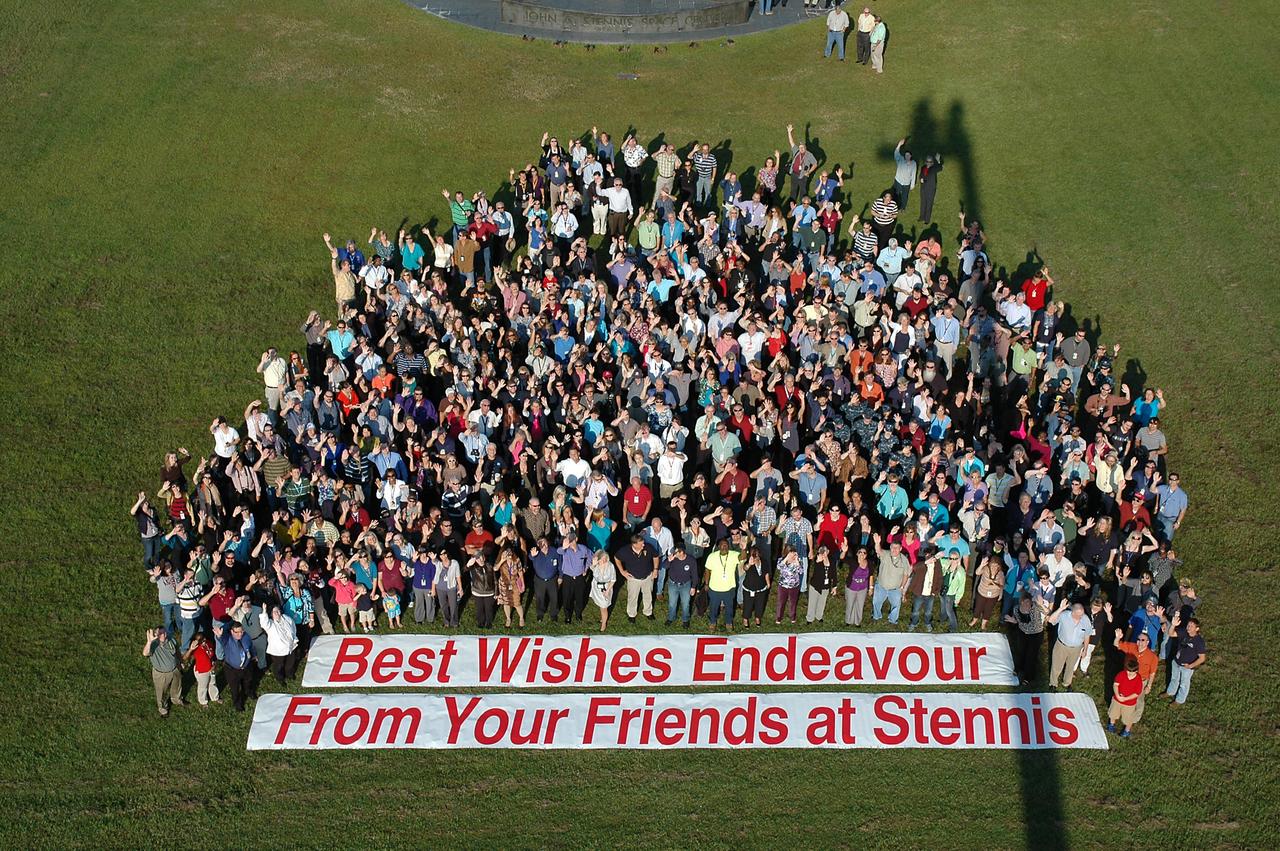
Stennis Space Center employees turned out in force to cheer space shuttle Endeavour as it flew low over the rocket engine test facility early on the morning of Sept. 19. The shuttle is headed to Los Angeles, where it will be on display at the California Science Center. Stennis employees applauded and cheered as the retired shuttle passed low overhead. In addition to those gathered on the lawn in front of the Roy S. Estess Building, many congregated on building rooftops and on facility test stands to view the flyover.
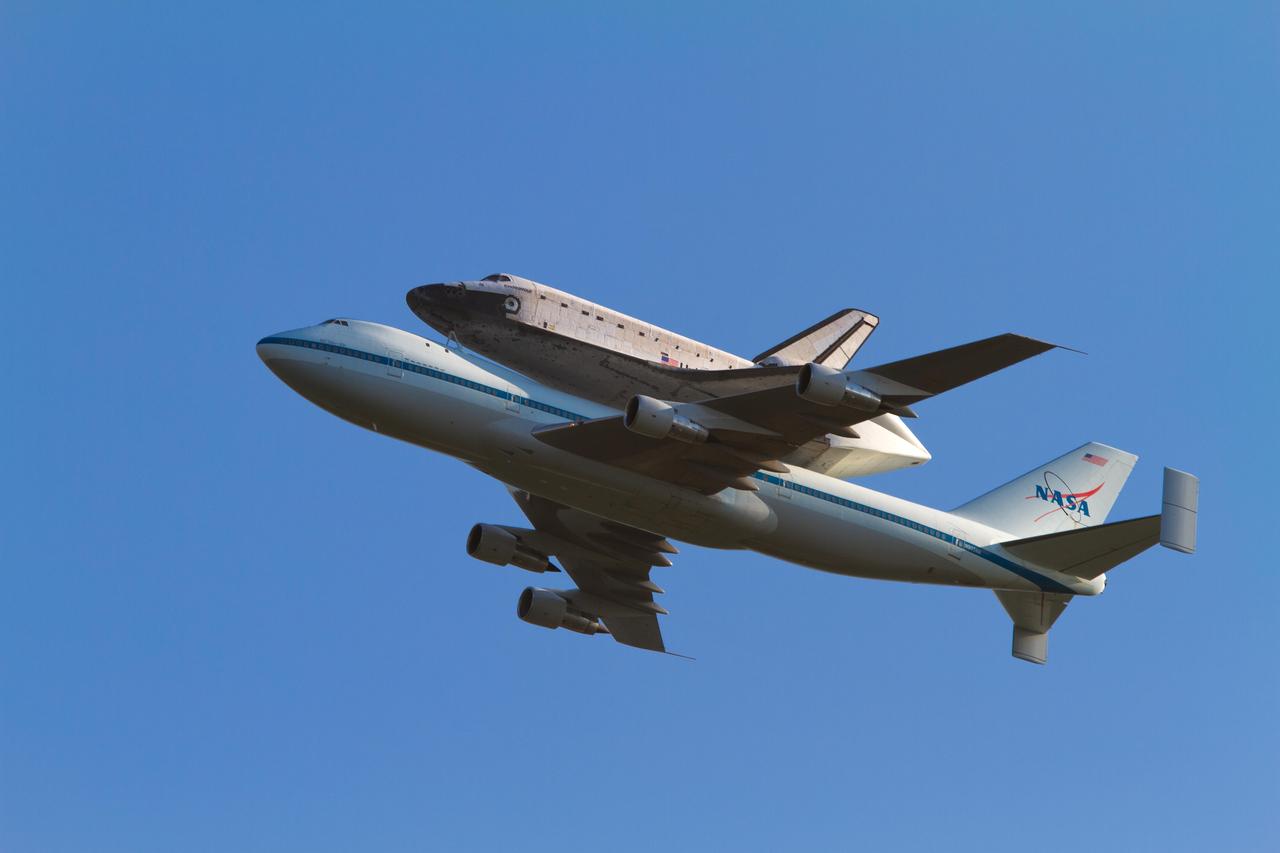
Space shuttle Endeavour embarked on the first leg of its final flight Sept. 19, departing Kennedy Space Center in Florida and making early-morning flyover visits to Stennis Space Center in Mississippi and nearby Michoud Assembly Facility in Louisiana. The shuttle flew atop the 747 Shuttle Carrier Aircraft, headed west, where it will go on display at the California Science Center in Los Angeles. The flight crew coordinated with the Federal Aviation Administration to conduct low-level flyovers at about 1,500 feet above Stennis and Michoud.
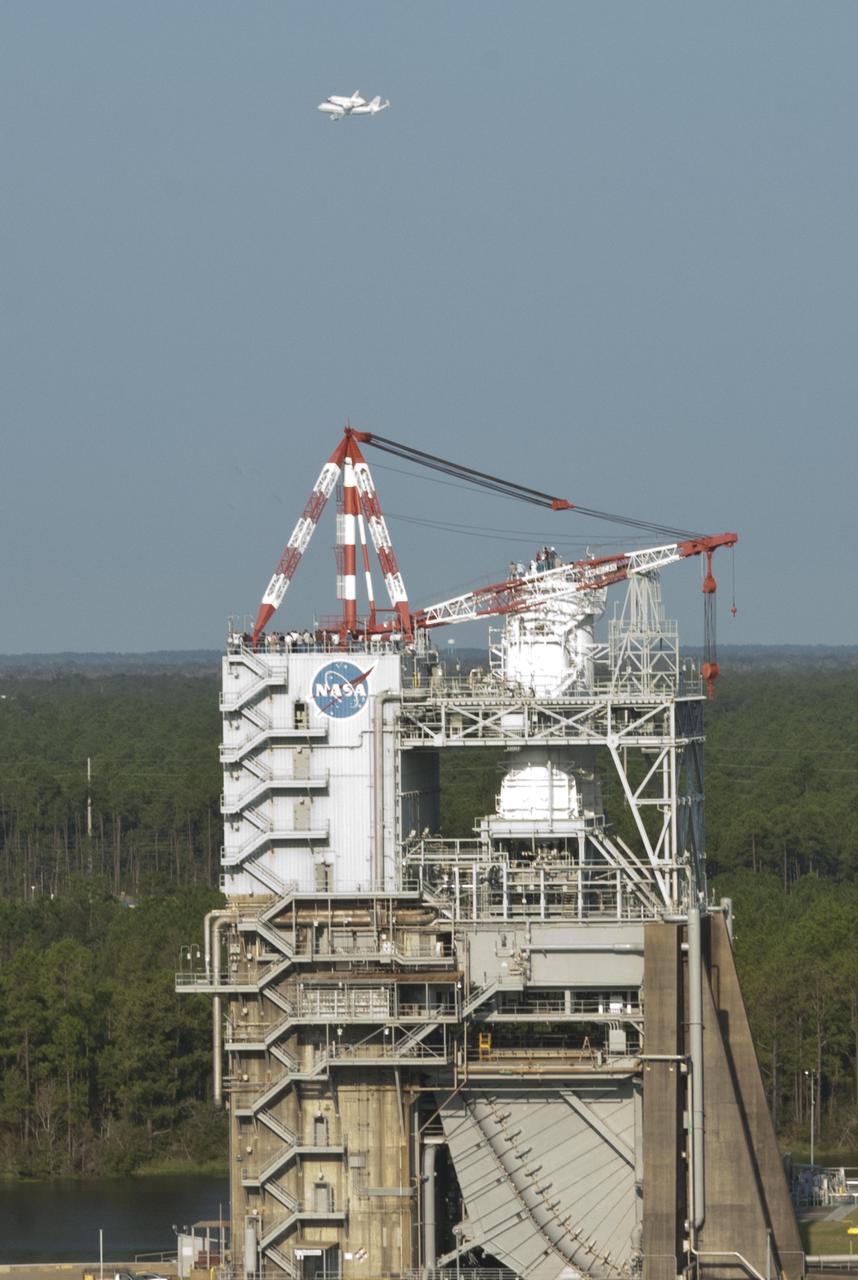
Space shuttle Endeavour made an early-morning flyover Stennis space Center on Sept. 19, en route to Los Angeles, where it will be displayed at the California Science Center. Employees viewed the low-level flyover from various locations, including atop the facility test stands. In this photo, employees watch as the shuttle is ferried above the A-1 Test Stand.
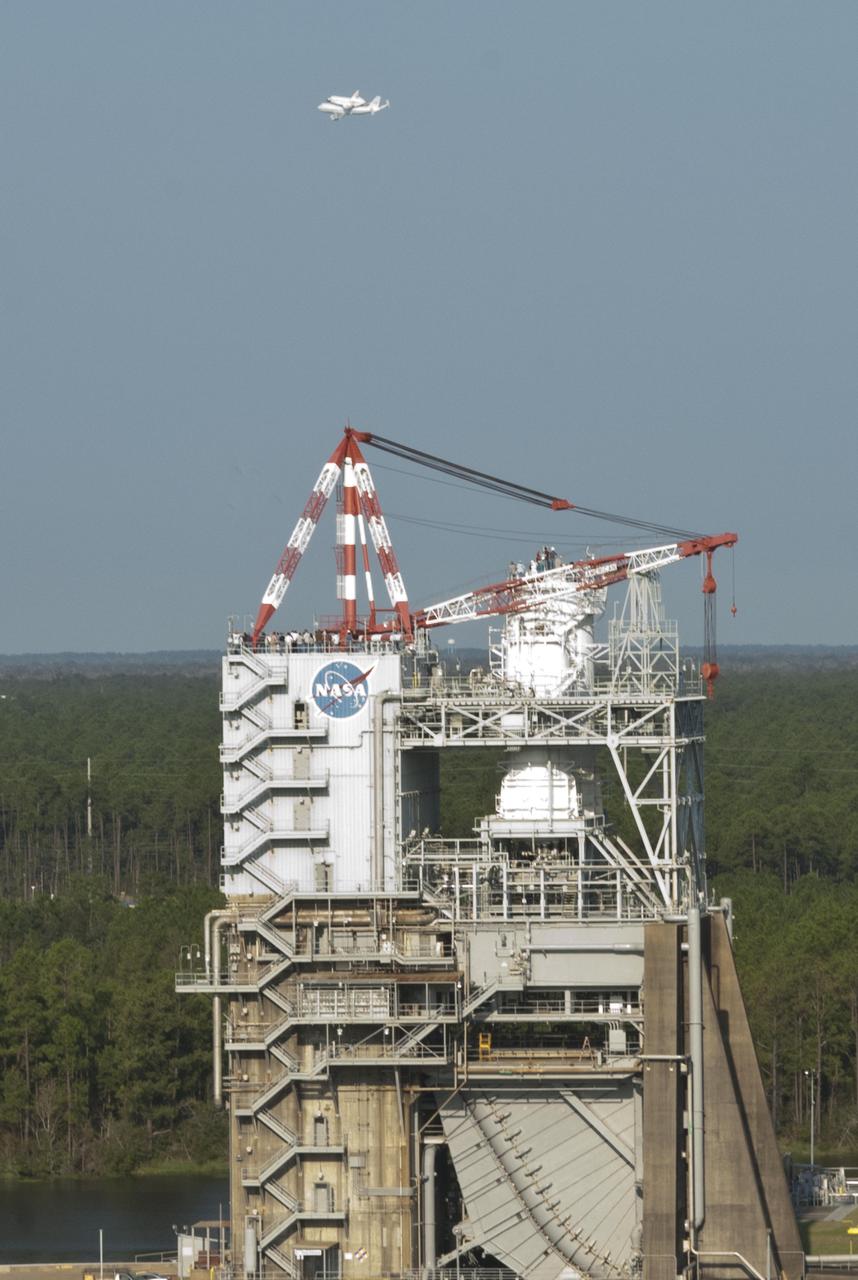
Space shuttle Endeavour made an early-morning flyover Stennis space Center on Sept. 19, en route to Los Angeles, where it will be displayed at the California Science Center. Employees viewed the low-level flyover from various locations, including atop the facility test stands. In this photo, employees watch as the shuttle is ferried above the A-1 Test Stand.
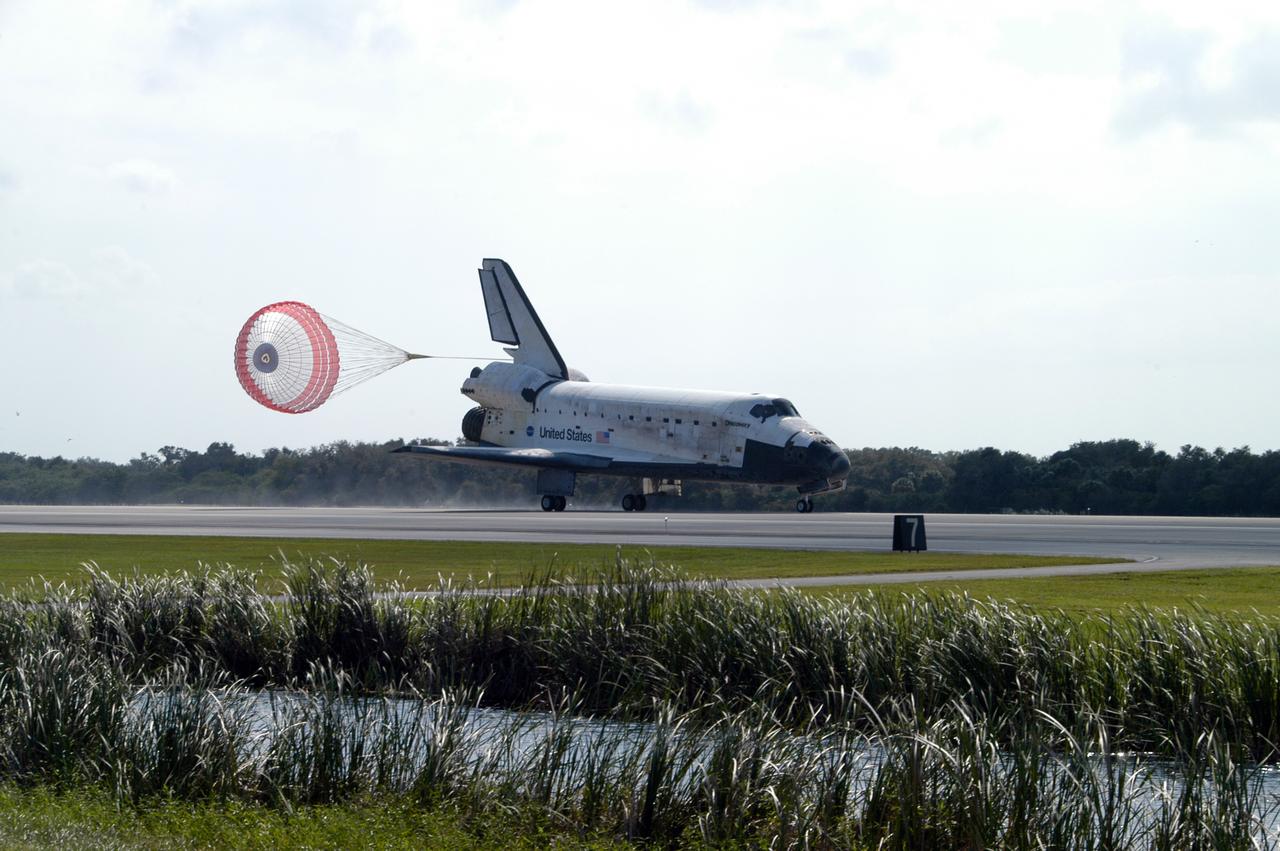
The drag chute deployed behind space shuttle Discovery helps slow its smooth landing on Runway 33 of the Shuttle Landing Facility at NASA's Kennedy Space Center, completing the 15-day mission STS-120. Main gear touchdown was 1:01:16 p.m. Wheel stop was at 1:02:07 p.m. Mission elapsed time was 15 days, 2 hours, 24 minutes and 2 seconds. The STS-120 crew continued the construction of the station with the installation of the Harmony Node 2 module and the relocation of the P6 truss.

The Space Shuttle represented an entirely new generation of space vehicle, the world's first reusable spacecraft. Unlike earlier expendable rockets, the Shuttle was designed to be launched over and over again and would serve as a system for ferrying payloads and persornel to and from Earth orbit. The Shuttle's major components are the orbiter spacecraft; the three main engines, with a combined thrust of more than 1.2 million pounds; the huge external tank (ET) that feeds the liquid hydrogen fuel and liquid oxygen oxidizer to the three main engines; and the two solid rocket boosters (SRB's), with their combined thrust of some 5.8 million pounds. The SRB's provide most of the power for the first two minutes of flight. Crucially involved with the Space Shuttle program virtually from its inception, the Marshall Space Flight Center (MSFC) played a leading role in the design, development, testing, and fabrication of many major Shuttle propulsion components. The MSFC was assigned responsibility for developing the Shuttle orbiter's high-performance main engines, the most complex rocket engines ever built. The MSFC was also responsible for developing the Shuttle's massive ET and the solid rocket motors and boosters.

The Space Shuttle represented an entirely new generation of space vehicles, the world's first reusable spacecraft. Unlike earlier expendable rockets, the Shuttle was designed to be launched over and over again and would serve as a system for ferrying payloads and persornel to and from Earth orbit. The Shuttle's major components are the orbiter spacecraft; the three main engines, with a combined thrust of more than 1.2 million pounds; the huge external tank (ET) that feeds the liquid hydrogen fuel and liquid oxygen oxidizer to the three main engines; and the two solid rocket boosters (SRB's), with their combined thrust of some 5.8 million pounds, that provide most of the power for the first two minutes of flight. Crucially involved with the Space Shuttle program virtually from its inception, the Marshall Space Flight Center (MSFC) played a leading role in the design, development, testing, and fabrication of many major Shuttle propulsion components. The MSFC was assigned responsibility for developing the Shuttle orbiter's high-performance main engines, the most complex rocket engines ever built. The MSFC was also responsible for developing the Shuttle's massive ET and the solid rocket motors and boosters.

Space Shuttle Simulator cockpit

Space Shuttle Discovery mounted atop a NASA 747 Shuttle Carrier Aircraft at Washington Dulles Airport the first orbiter retired from NASA's shuttle fleet

Space Shuttle Discovery mounted atop a NASA 747 Shuttle Carrier Aircraft at Washington Dulles Airport the first orbiter retired from NASA's shuttle fleet

Space Shuttle Discovery mounted atop a NASA 747 Shuttle Carrier Aircraft at Washington Dulles Airport the first orbiter retired from NASA's shuttle fleet

Space Shuttle Discovery mounted atop a NASA 747 Shuttle Carrier Aircraft at Washington Dulles Airport the first orbiter retired from NASA's shuttle fleet

Space Shuttle Discovery mounted atop a NASA 747 Shuttle Carrier Aircraft at Washington Dulles Airport the first orbiter retired from NASA's shuttle fleet

Space Shuttle Discovery mounted atop a NASA 747 Shuttle Carrier Aircraft at Washington Dulles Airport the first orbiter retired from NASA's shuttle fleet

The Apollo program demonstrated that men could travel into space, perform useful tasks there, and return safely to Earth. But space had to be more accessible. This led to the development of the Space Shuttle. The Shuttle's major components are the orbiter spacecraft; the three main engines, with a combined thrust of more than 1.2 million pounds; the huge external tank (ET) that feeds the liquid hydrogen fuel and liquid oxygen oxidizer to the three main engines; and the two solid rocket boosters (SRBs), with their combined thrust of some 5.8 million pounds, that provide most of the power for the first two minutes of flight. Crucially involved with the Space Shuttle program virtually from its inception, the Marshall Space Flight Center (MSFC) played a leading role in the design, development, testing, and fabrication of many major Shuttle propulsion components.

Ronnie Rigney (r), chief of the Propulsion Test Office in the Project Directorate at Stennis Space Center, stands with agency colleagues to receive the prestigious American Institute of Aeronautics and Astronautics George M. Low Space Transportation Award on Sept. 12. Rigney accepted the award on behalf of the NASA and contractor team at Stennis for their support of the Space Shuttle Program that ended last summer. From 1975 to 2009, Stennis Space Center tested every main engine used to power 135 space shuttle missions. Stennis continued to provide flight support services through the end of the Space Shuttle Program in July 2011. The center also supported transition and retirement of shuttle hardware and assets through September 2012. The 2012 award was presented to the space shuttle team 'for excellence in the conception, development, test, operation and retirement of the world's first and only reusable space transportation system.' Joining Rigney for the award ceremony at the 2012 AIAA Conference in Pasadena, Calif., were: (l to r) Allison Zuniga, NASA Headquarters; Michael Griffin, former NASA administrator; Don Noah, Johnson Space Center in Houston; Steve Cash, Marshall Space Flight Center in Huntsville, Ala.; and Pete Nickolenko, Kennedy Space Center in Florida.

Ronnie Rigney (r), chief of the Propulsion Test Office in the Project Directorate at Stennis Space Center, stands with agency colleagues to receive the prestigious American Institute of Aeronautics and Astronautics George M. Low Space Transportation Award on Sept. 12. Rigney accepted the award on behalf of the NASA and contractor team at Stennis for their support of the Space Shuttle Program that ended last summer. From 1975 to 2009, Stennis Space Center tested every main engine used to power 135 space shuttle missions. Stennis continued to provide flight support services through the end of the Space Shuttle Program in July 2011. The center also supported transition and retirement of shuttle hardware and assets through September 2012. The 2012 award was presented to the space shuttle team 'for excellence in the conception, development, test, operation and retirement of the world's first and only reusable space transportation system.' Joining Rigney for the award ceremony at the 2012 AIAA Conference in Pasadena, Calif., were: (l to r) Allison Zuniga, NASA Headquarters; Michael Griffin, former NASA administrator; Don Noah, Johnson Space Center in Houston; Steve Cash, Marshall Space Flight Center in Huntsville, Ala.; and Pete Nickolenko, Kennedy Space Center in Florida.
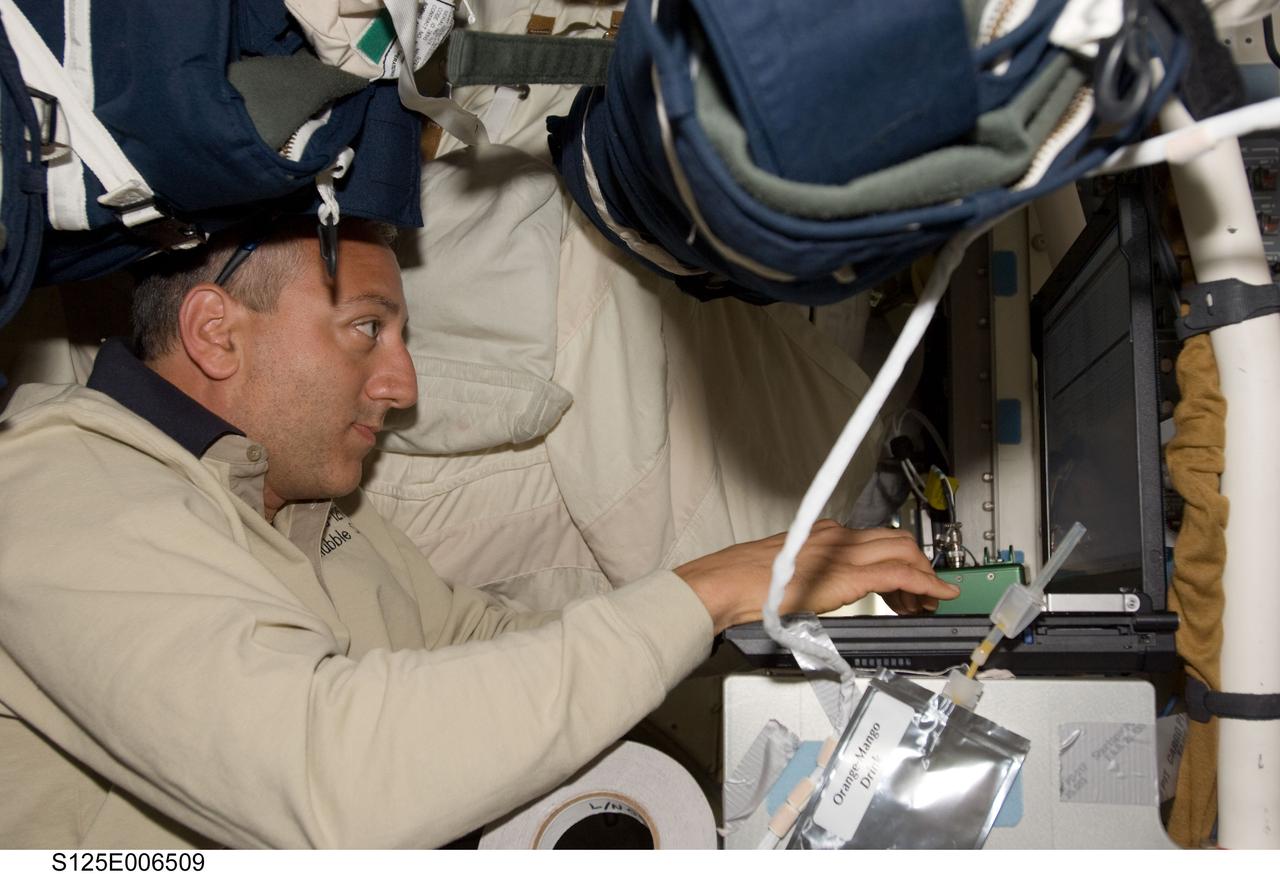
S125-E-006509 (12 May 2009) --- Astronaut Mike Massimino, STS-125 mission specialist, uses a computer on the middeck of the Earth-orbiting Space Shuttle Atlantis during flight day two activities.
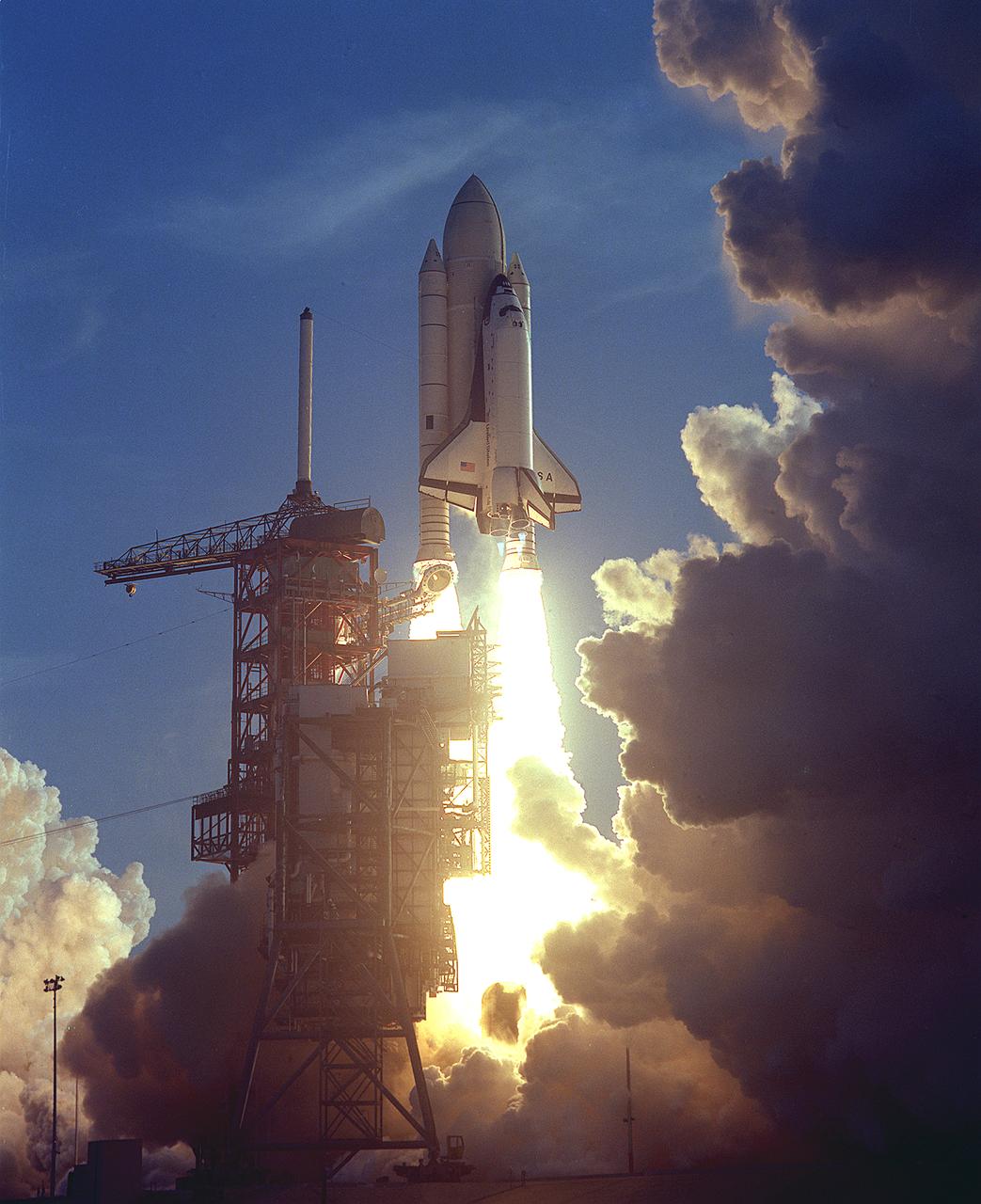
The new era in space flight began on April 12, 1981. That is when the first Space Shuttle mission (STS-1) was launched. The Marshall Space Flight Center developed the propulsion system for the Space Shuttle. This photograph depicts the launch of the Space Shuttle Orbiter Columbia marned with two astronauts, John Young and Robert Crippen.

This is a cutaway illustration of the Space Shuttle external tank (ET) with callouts. The giant cylinder, higher than a 15-story building, with a length of 154-feet (47-meters) and a diameter of 27.5-feet (8.4-meters), is the largest single piece of the Space Shuttle. During launch, the ET also acts as a backbone for the orbiter and solid rocket boosters. Separate pressurized tank sections within the external tank hold the liquid hydrogen fuel and liquid oxygen oxidizer for the Shuttle's three main engines. During launch, the ET feeds the fuel under pressure through 17-inch (43.2-centimeter) ducts that branch off into smaller lines that feed directly into the main engines. The main engines consume 64,000 gallons (242,260 liters) of fuel each minute. Machined from aluminum alloys, the Space Shuttle's external tank is currently the only part of the launch vehicle that is not reused. After its 526,000-gallons (1,991,071 liters) of propellants are consumed during the first 8.5-minutes of flight, it is jettisoned from the orbiter and breaks up in the upper atmosphere, its pieces falling into remote ocean waters. The Marshall Space Flight Center was responsible for developing the ET.

This illustration is an orbiter cutaway view with callouts. The orbiter is both the brains and heart of the Space Transportation System (STS). About the same size and weight as a DC-9 aircraft, the orbiter contains the pressurized crew compartment (which can normally carry up to seven crew members), the huge cargo bay, and the three main engines mounted on its aft end. There are three levels to the crew cabin. Uppermost is the flight deck where the commander and the pilot control the mission. The middeck is where the gallery, toilet, sleep stations, and storage and experiment lockers are found for the basic needs of weightless daily living. Also located in the middeck is the airlock hatch into the cargo bay and space beyond. It is through this hatch and airlock that astronauts go to don their spacesuits and marned maneuvering units in preparation for extravehicular activities, more popularly known as spacewalks. The Space Shuttle's cargo bay is adaptable to hundreds of tasks. Large enough to accommodate a tour bus (60 x 15 feet or 18.3 x 4.6 meters), the cargo bay carries satellites, spacecraft, and spacelab scientific laboratories to and from Earth orbit. It is also a work station for astronauts to repair satellites, a foundation from which to erect space structures, and a hold for retrieved satellites to be returned to Earth. Thermal tile insulation and blankets (also known as the thermal protection system or TPS) cover the underbelly, bottom of the wings, and other heat-bearing surfaces of the orbiter to protect it during its fiery reentry into the Earth's atmosphere. The Shuttle's 24,000 individual tiles are made primarily of pure-sand silicate fibers, mixed with a ceramic binder. The solid rocket boosters (SRB's) are designed as an in-house Marshall Space Flight Center project, with United Space Boosters as the assembly and refurbishment contractor. The solid rocket motor (SRM) is provided by the Morton Thiokol Corporation.

A spectator is seen photographing the space shuttle Endeavour as it is moved to its new home at the California Science Center in Los Angeles, Friday, Oct. 12, 2012. Endeavour, built as a replacement for space shuttle Challenger, completed 25 missions, spent 299 days in orbit, and orbited Earth 4,671 times while traveling 122,883,151 miles. Beginning Oct. 30, the shuttle will be on display in the CSC’s Samuel Oschin Space Shuttle Endeavour Display Pavilion, embarking on its new mission to commemorate past achievements in space and educate and inspire future generations of explorers. Photo Credit: (NASA/Bill Ingalls)

NASA's Pegasus barge arrived at Stennis Space Center on Nov. 16, delivering space shuttle main engine ground support equipment to the south Mississippi facility. Stennis tested every main engine used on all 135 space shuttle flights.
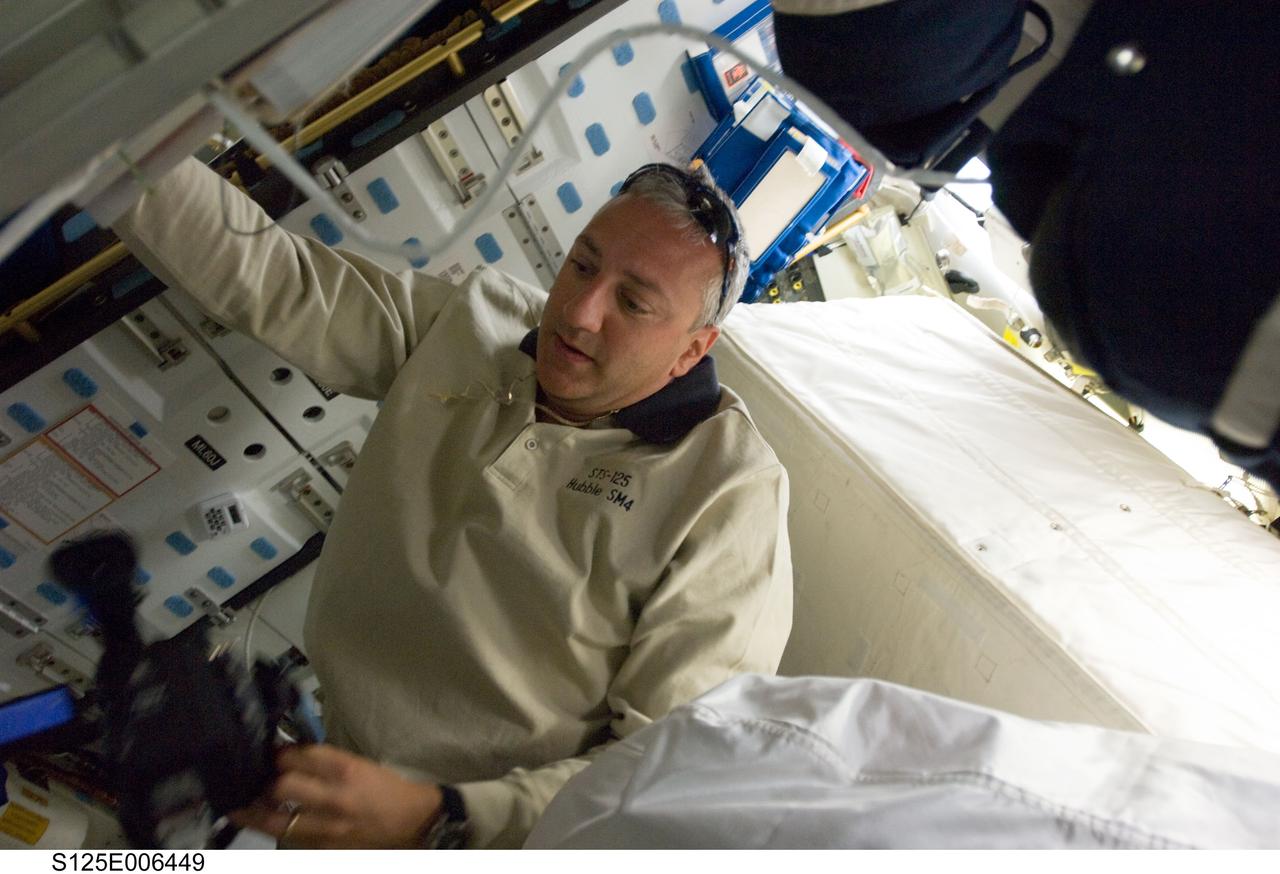
S125-E-006449 (12 May 2009) --- Astronaut Mike Massimino, mission specialist, holds a camera on Atlantis? mid deck during the STS-125 flight?s second day in space. The next several days prove to be very busy for the entire crew, as five spacewalks, two of which will have Massimino leaving the shirt sleeved environment of the shuttle to perform work on the Hubble Space Telescope, are in the offing.
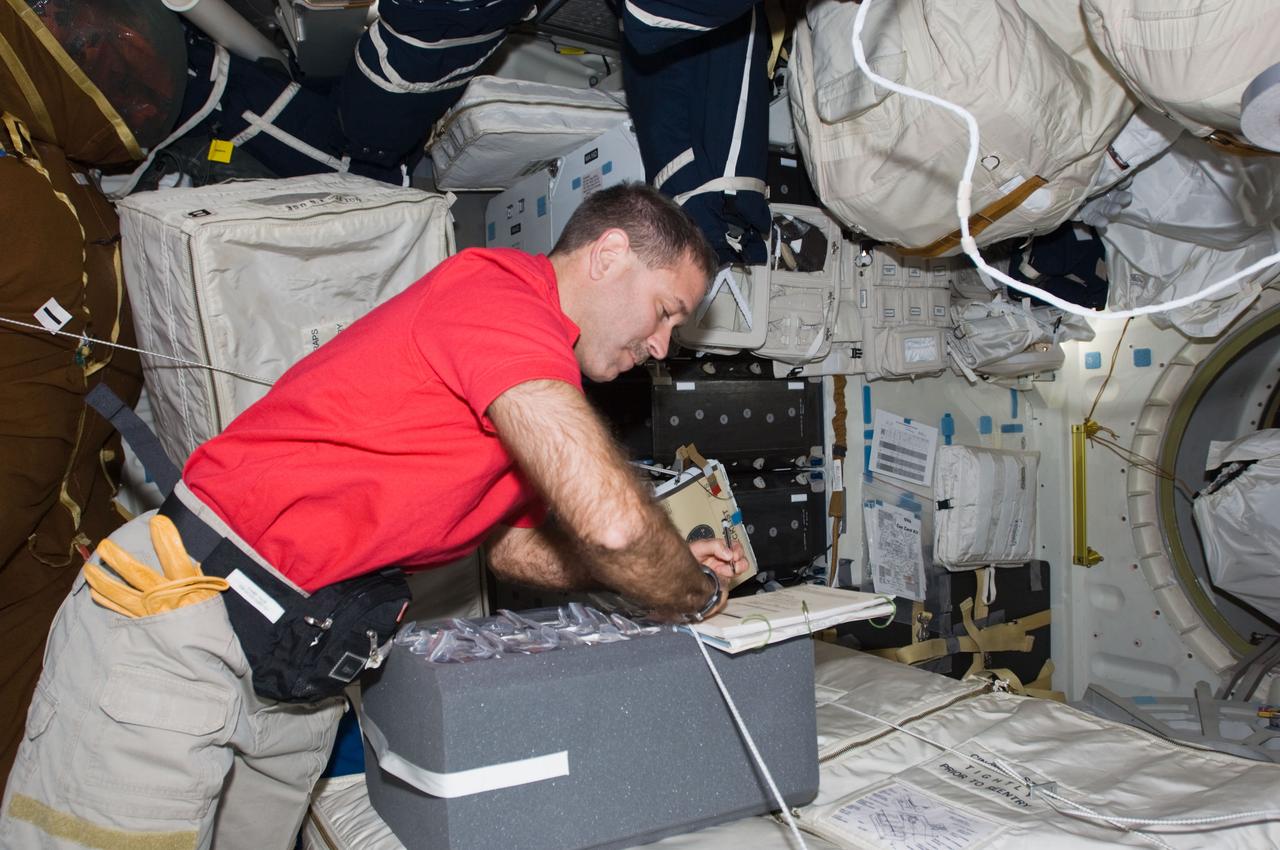
S125-E-006501 (12 May 2009) --- Astronaut John Grunsfeld, mission specialist, helps with unpacking chores on Atlantis? mid deck during the STS-125 flight?s second day in space. The next several days prove to be very busy for the entire crew, as five spacewalks, three of which will have the veteran Grunsfeld leaving the shirt sleeved environment of the shuttle, are in the offing.

Want to sit in the cockpit of the Space Shuttle and watch astronauts work in outer space? At StenniSphere, you can do that and much more. StenniSphere, the visitor center at John C. Stennis space Center in Hancock County, Miss., presents 14,000-square-feet of interactive exhibits that depict America's race for space as well as a glimpse of the future. Stennisphere is open free of charge from 9 a.m. to 5 p.m. daily.
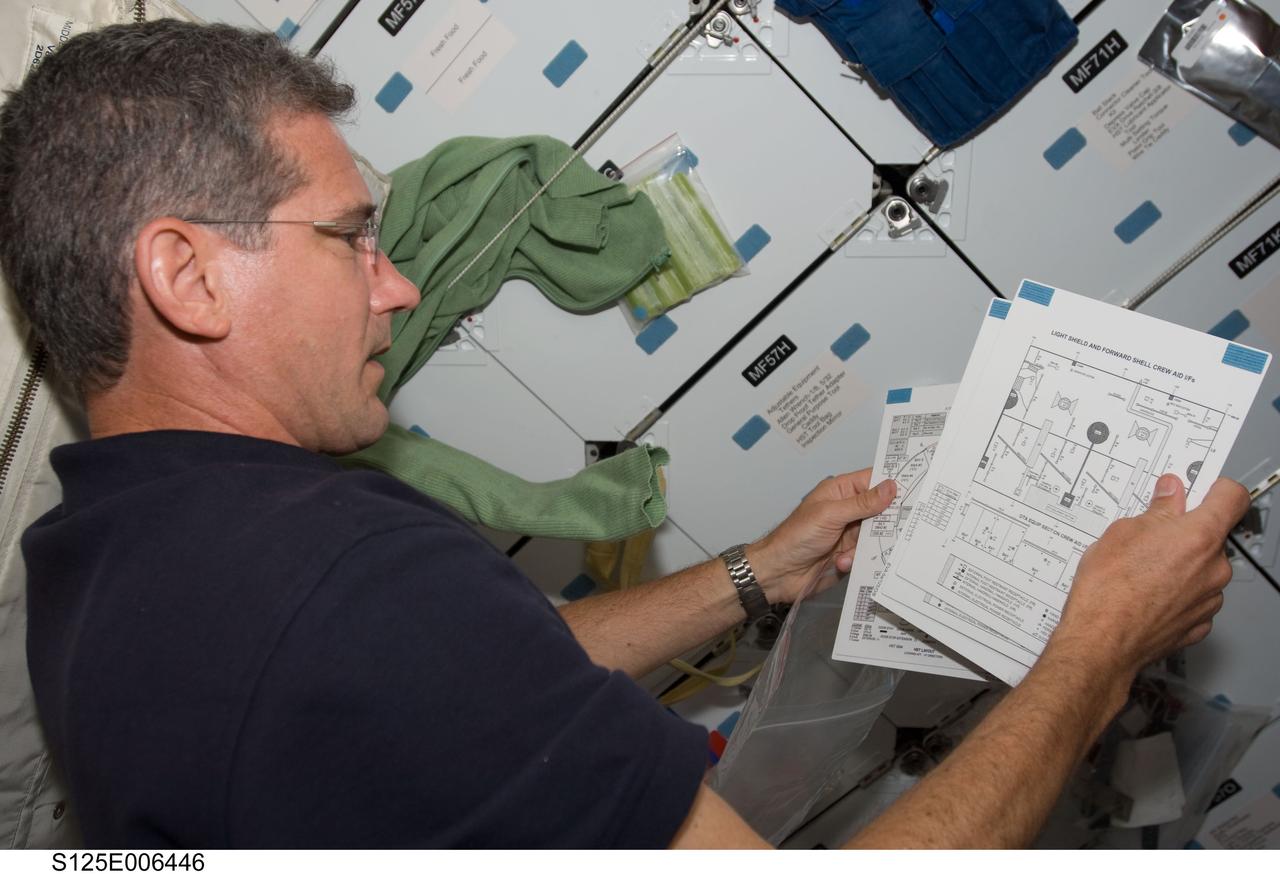
S125-E-006446 (12 May 2009) --- Astronaut Michael Good, STS-125 mission specialist, looks over charts on Atlantis? mid deck during his second day in space. The next several days prove to be very busy for the entire crew, as five spacewalks, two of which will have Good leaving the shirt sleeved environment of the shuttle to perform work on the Hubble Space Telescope, are in the offing.
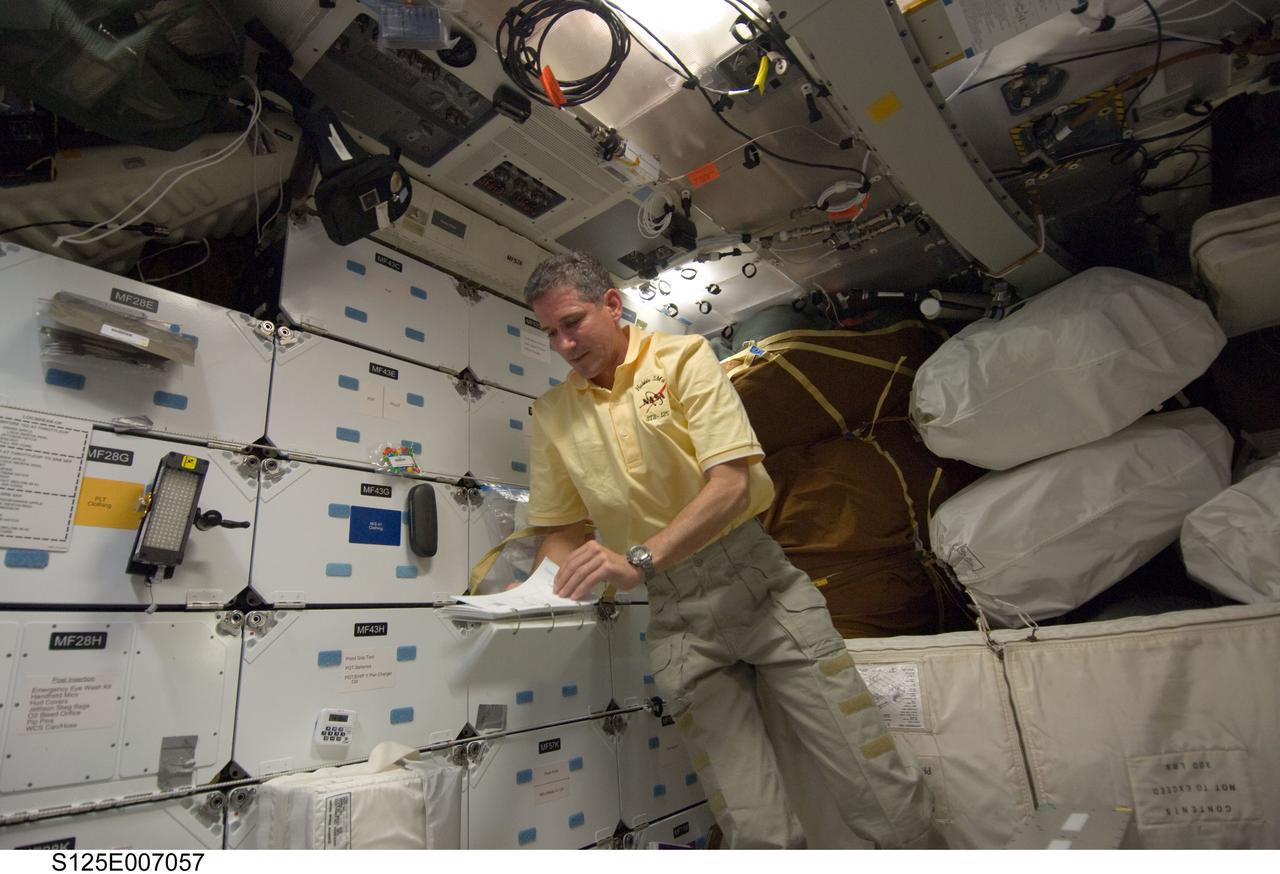
S125-E-007057 (13 May 2009) --- Astronaut Michael Good, STS-125 mission specialist, looks over checklists on the middeck of Space Shuttle Atlantis during flight day three activities.

Space Shuttle Discovery mounted atop a 747 Shuttle Carrier Aircraft (SCA) approaches the runway for landing at Washington Dulles International Airport, Tuesday April 17, 2012, in Sterling, Va. Discovery, the first orbiter retired from NASA’s shuttle fleet, completed 39 missions, spent 365 days in space, orbited the Earth 5,830 times, and traveled 148,221,675 miles. NASA will transfer Discovery to the National Air and Space Museum to begin its new mission to commemorate past achievements in space and to educate and inspire future generations of explorers. Photo Credit: (NASA/Paul E. Alers)

Space shuttle Discovery, mounted atop a NASA 747 Shuttle Carrier Aircraft (SCA) lands at Washington Dulles International Airport, Tuesday, April 17, 2012, in Sterling, Va. Discovery, the first orbiter retired from NASA’s shuttle fleet, completed 39 missions, spent 365 days in space, orbited the Earth 5,830 times, and traveled 148,221,675 miles. NASA will transfer Discovery to the National Air and Space Museum to begin its new mission to commemorate past achievements in space and to educate and inspire future generations of explorers. Photo Credit: (NASA/Smithsonian Institution/Eric Long)

Space shuttle Discovery, mounted atop a NASA 747 Shuttle Carrier Aircraft (SCA) taxis in front of the main terminal at Washington Dulles International Airport, Tuesday, April 17, 2012, in Sterling, Va. Discovery, the first orbiter retired from NASA’s shuttle fleet, completed 39 missions, spent 365 days in space, orbited the Earth 5,830 times, and traveled 148,221,675 miles. NASA will transfer Discovery to the National Air and Space Museum to begin its new mission to commemorate past achievements in space and to educate and inspire future generations of explorers. Photo Credit: (NASA/Smithsonian Institution/Eric Long)

Space shuttle Discovery, mounted atop a NASA 747 Shuttle Carrier Aircraft (SCA) lands at Washington Dulles International Airport, Tuesday, April 17, 2012, in Sterling, Va. Discovery, the first orbiter retired from NASA’s shuttle fleet, completed 39 missions, spent 365 days in space, orbited the Earth 5,830 times, and traveled 148,221,675 miles. NASA will transfer Discovery to the National Air and Space Museum to begin its new mission to commemorate past achievements in space and to educate and inspire future generations of explorers. Photo Credit: (NASA/Smithsonian Institution/Eric Long)

Space shuttle Discovery, mounted atop a NASA 747 Shuttle Carrier Aircraft (SCA) lands at Washington Dulles International Airport, Tuesday, April 17, 2012, in Sterling, Va. The Steven F. Udvar-Hazy Center is seen in the background. Discovery, the first orbiter retired from NASA’s shuttle fleet, completed 39 missions, spent 365 days in space, orbited the Earth 5,830 times, and traveled 148,221,675 miles. NASA will transfer Discovery to the National Air and Space Museum to begin its new mission to commemorate past achievements in space and to educate and inspire future generations of explorers. Photo Credit: (NASA/Smithsonian Institution/Eric Long)

A Space Shuttle Main Engine undergoes test-firing at the National Space Technology Laboratories (now the Sternis Space Center) in Mississippi. The Marshall Space Flight Center had management responsibility of Space Shuttle propulsion elements, including the Main Engines.
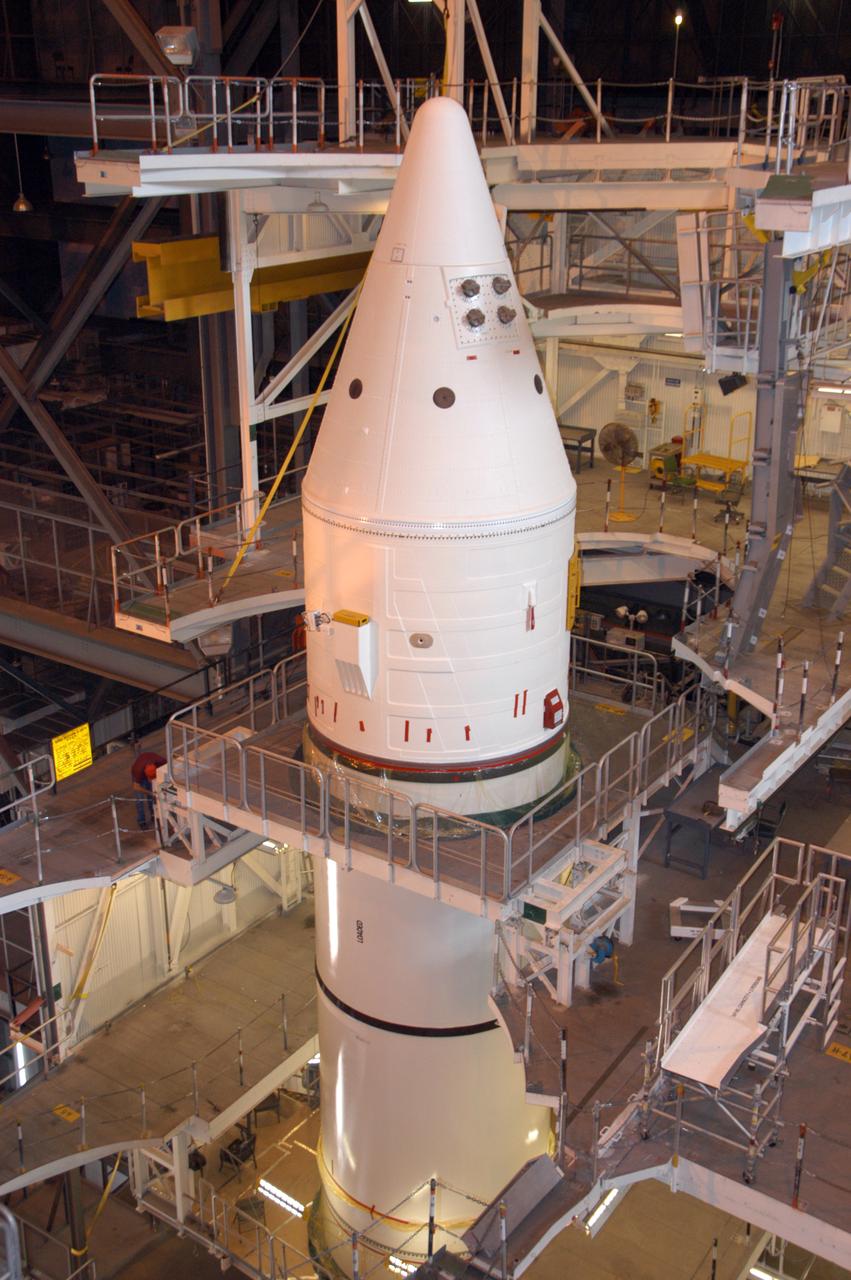
Workers continue stacking the solid rocket boosters in highbay 1 inside Kennedy Space Center's Vehicle Assembly Building. The solid rocket boosters are being prepared for NASA's next Space Shuttle launch, mission STS-117. The mission is scheduled to launch aboard Atlantis no earlier than March 16, 2007.
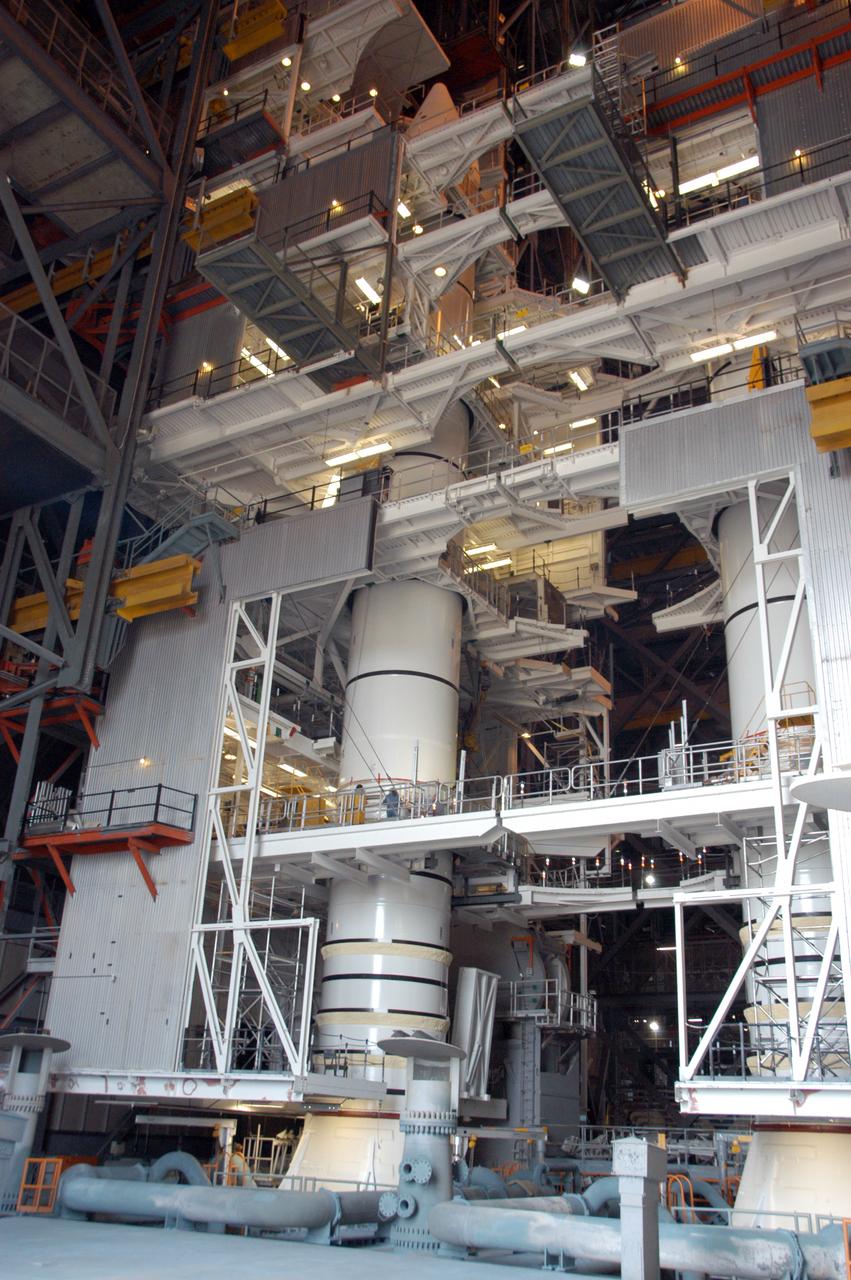
Workers continue stacking the twin solid rocket boosters in highbay 1 inside Kennedy Space Center's Vehicle Assembly Building. The solid rocket boosters are being prepared for NASA's next Space Shuttle launch, mission STS-117. The mission is scheduled to launch aboard Atlantis no earlier than March 16, 2007.

The Space Shuttle main propulsion system includes three major elements. One of those elements is the External Tank (ET). The ET holds over one-half million gallons of liquid oxygen and liquid hydrogen that fuel the main engines.

A Space Shuttle Main Engine (SSME) - hot and cold cycles turbine blade test firing.

A modified Space Shuttle Main Engine is static fired at Marshall's Technology Test Bed.

A modified Space Shuttle Main Engine is static fired at Marshall's Technology Test Bed.
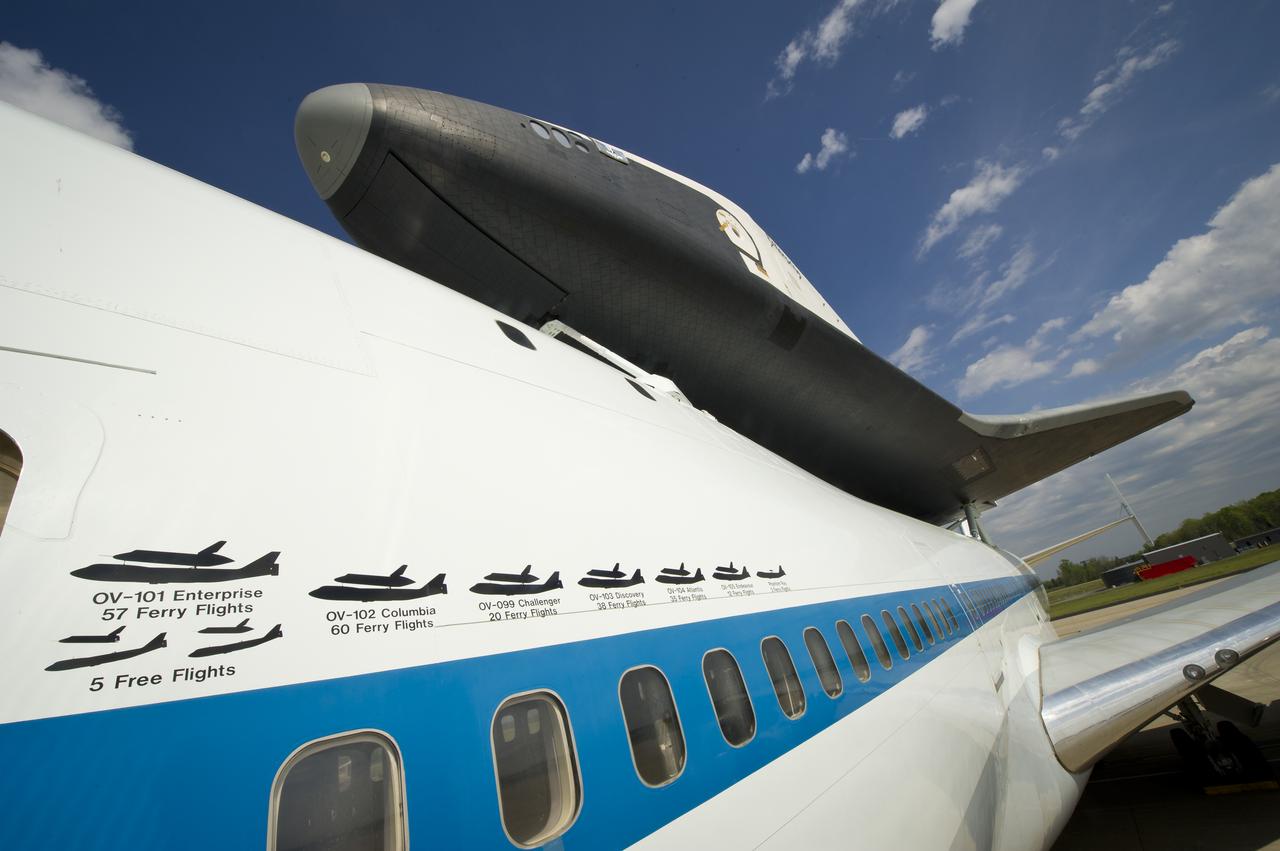
The space shuttle Enterprise is seen mated on top of the NASA 747 Shuttle Carrier Aircraft (SCA) at Washington Dulles International Airport, Saturday, April 21, 2012, in Sterling, Va. Painted graphics line the side of NASA 905 depicting the various ferry flights the Shuttle Carrier Aircraft has supported during the Space Shuttle Program, including the tests using the space shuttle prototype Enterprise. Space Shuttle Transition and Retirement engineers Saturday completed the final steps to ready Space Shuttle Enterprise for its flight to New York’s John F. Kennedy International Airport while managers continue to evaluate the expected weather that has postponed delivery past Monday. Enterprise, the first orbiter built for the Space Shuttle Program, was used primarily for ground and flight tests within the atmosphere. The initial testing period named Approach and Landing Test (ALT) included a flight on February 18, 1977 atop a Shuttle Carrier Aircraft (SCA) to measure structural loads and ground handling and braking characteristics of the mated system. Enterprise will go on permanent display at the Intrepid Sea Air and Space Museum in New York in June. Photo Credit: (NASA/Bill Ingalls)

The space shuttle Enterprise hangs from a sling after being demated from the NASA 747 Shuttle Carrier Aircraft (SCA) at John F. Kennedy (JFK) International Airport in Jamica, New York, Sunday, May 13, 2012. The shuttle will be placed on a barge that will move by tugboat up the Hudson River to the Intrepid Sea, Air & Space Museum in June. The shuttle will be lifted by crane and placed on the flight deck of the Intrepid, where it will be on exhibit to the public starting this summer in a temporary climate-controlled pavilion. Photo Credit: (NASA/Kim Shiflet)
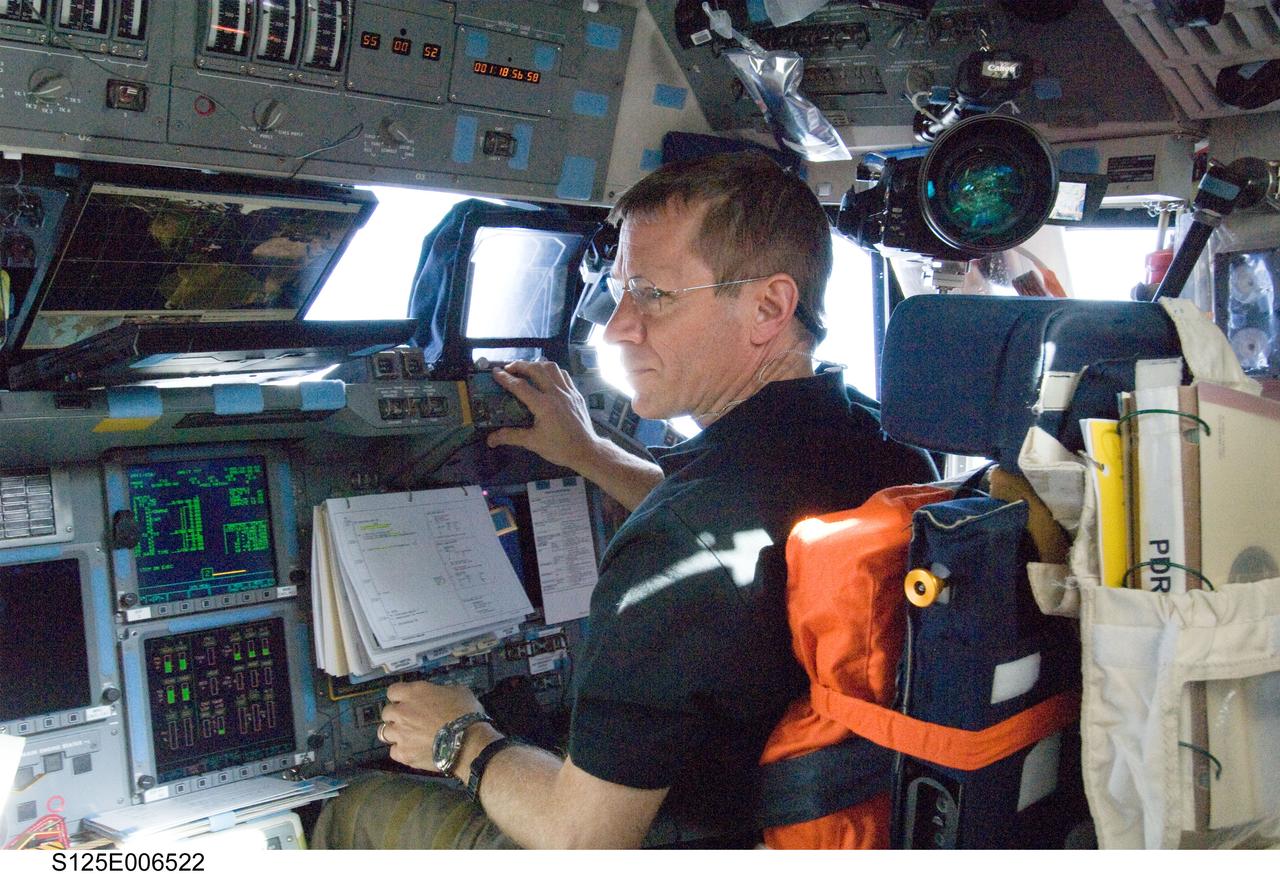
S125-E-006522 (13 May 2009) --- Astronaut Gregory C. Johnson, STS-125 pilot, occupies the pilot?s station on the flight deck of the Earth-orbiting Space Shuttle Atlantis during flight day three activities.
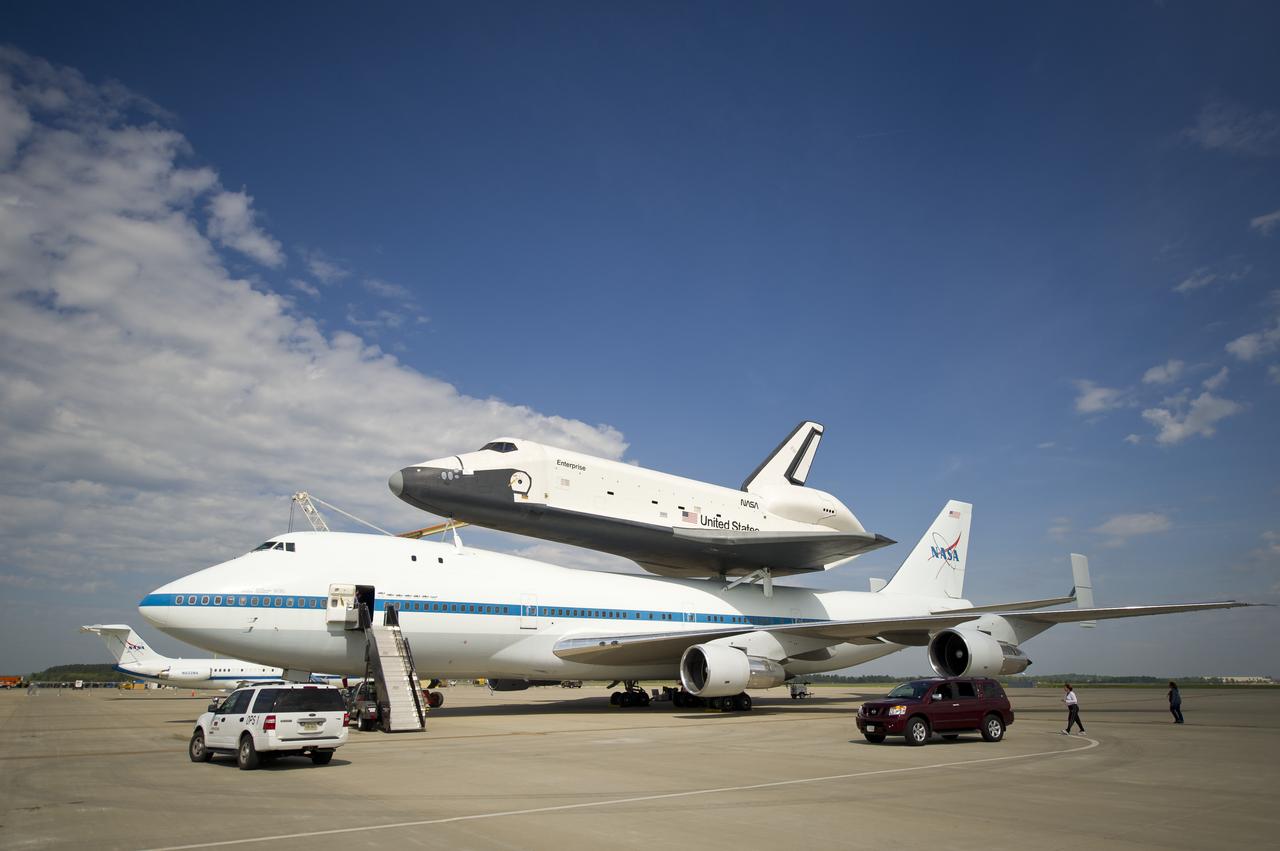
The space shuttle Enterprise is seen mated on top of the NASA 747 Shuttle Carrier Aircraft (SCA) at Washington Dulles International Airport, Saturday, April 21, 2012, in Sterling, Va. Space Shuttle Transition and Retirement engineers Saturday completed the final steps to ready Space Shuttle Enterprise for its flight to New York’s John F. Kennedy International Airport while managers continue to evaluate the expected weather that has postponed delivery past Monday. Enterprise, the first orbiter built for the Space Shuttle Program, was used primarily for ground and flight tests within the atmosphere. The initial testing period named Approach and Landing Test (ALT) included a flight on February 18, 1977 atop a Shuttle Carrier Aircraft (SCA) to measure structural loads and ground handling and braking characteristics of the mated system. Enterprise will go on permanent display at the Intrepid Sea Air and Space Museum in New York in June. Photo Credit: (NASA/Bill Ingalls)

SSME Hardware Simulation Laboratory at Marshall Space Flight Center is the facility that verifies the software which controls SSME prior to each Space Shuttle flight
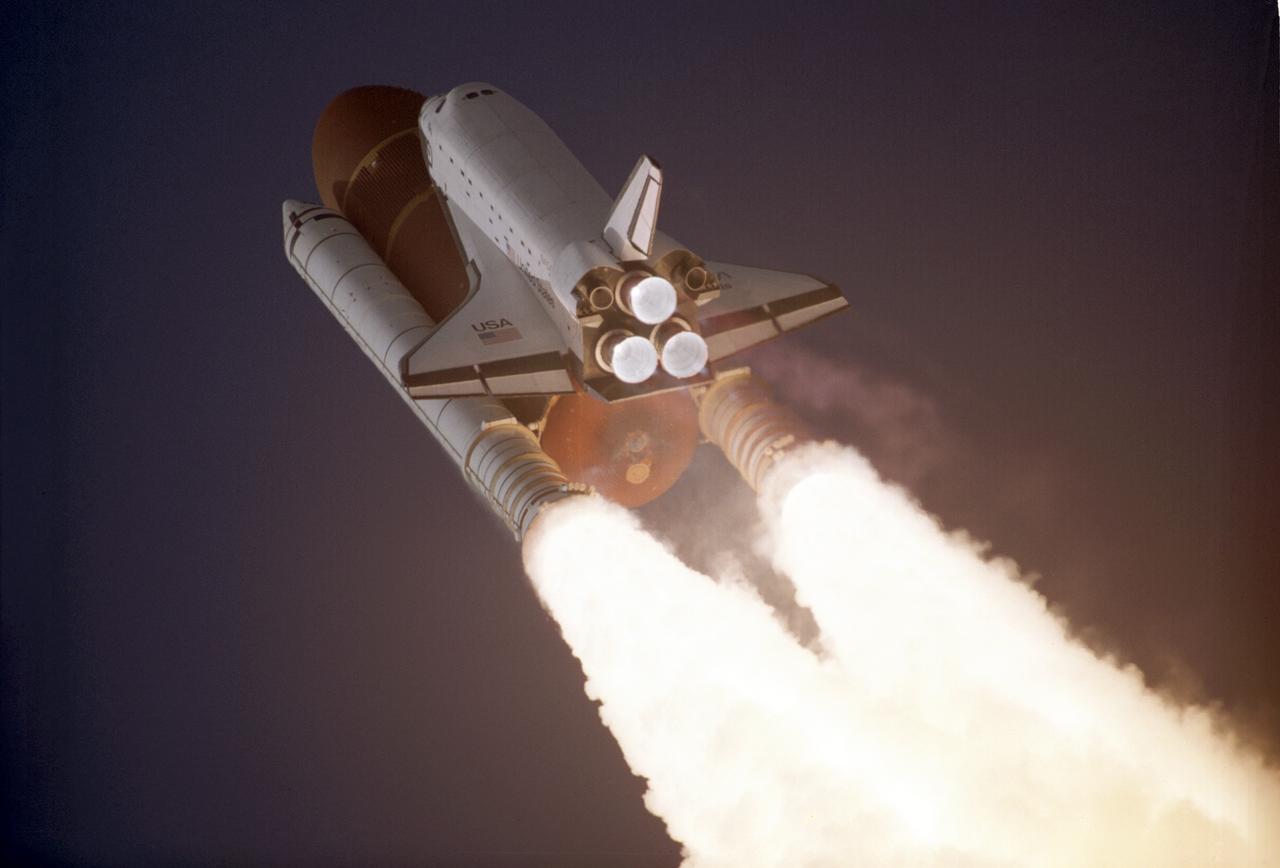
Space Shuttle Atlantis takes flight on its STS-27 mission, December 2, 1988, utilizing 375,000 pounds of thrust produced by its three main engines. The engines start in 3.9 seconds of ignition and go to static pump speeds of approximately 35,000 revolutions per minute during that time. The Marshall Space Flight Center had management responsibility of Space Shuttle propulsion elements, including the Main Engines.

NASA's 747 Shuttle Carrier Aircraft (SCA), with space shuttle Enterprise latched on its back, is towed from the hangar at John F. Kennedy (JFK) International Airport in New York late in the night on Saturday, May 12, 2012. Early Sunday morning, Enterprise was removed from the SCA. The shuttle will be placed on a barge that will move by tugboat up the Hudson River to Intrepid in June. The shuttle will be lifted by crane and placed on the flight deck of the Intrepid, where it will be on exhibit to the public starting this summer in a temporary climate-controlled pavilion. Photo Credit: (NASA/Kim Shiflet)

NASA and United Space Alliance workers lower a yellow sling onto space shuttle Enterprise, which sits atop NASA's 747 Shuttle Carrier Aircraft (SCA) prior to it being demated a few hours later at John F. Kennedy (JFK) International Airport in New York, Saturday, May 12, 2012. Once the sling was firmly attached early Sunday morning, Enterprise was lifted from the SCA. The shuttle will be placed on a barge that will move by tugboat up the Hudson River to Intrepid in June. The shuttle will be lifted by crane and placed on the flight deck of the Intrepid, where it will be on exhibit to the public starting this summer in a temporary climate-controlled pavilion. Photo Credit: (NASA/Kim Shiflet)

A yellow sling is lowered onto space shuttle Enterprise, which sits atop NASA's 747 Shuttle Carrier Aircraft (SCA) prior to it being demated a few hours later at John F. Kennedy (JFK) International Airport in New York, Saturday, May 12, 2012. The shuttle will be placed on a barge that will move by tugboat up the Hudson River to Intrepid in June. The shuttle will be lifted by crane and placed on the flight deck of the Intrepid, where it will be on exhibit to the public starting this summer in a temporary climate-controlled pavilion. Photo Credit: (NASA/Kim Shiflet)

The space shuttle Enterprise is lowered onto a transport vehicle after being demated from the NASA 747 Shuttle Carrier Aircraft (SCA) at John F. Kennedy (JFK) International Airport in Jamica, New York, Sunday, May 13, 2012. The shuttle will be placed on a barge that will move by tugboat up the Hudson River to the Intrepid Sea, Air & Space Museum in June. The shuttle will be lifted by crane and placed on the flight deck of the Intrepid, where it will be on exhibit to the public starting this summer in a temporary climate-controlled pavilion. Photo Credit: (NASA/Kim Shiflet)

Space shuttle Enterprise is held aloft by a yellow sling and a set of cranes after it was removed from the top of NASA's 747 Shuttle Carrier Aircraft early Sunday morning at John F. Kennedy (JFK) International Airport in New York, Sunday, May 13, 2012 .The 747 was towed backwards so that Enterprise could be lowered. The shuttle will be placed on a barge that will move by tugboat up the Hudson River to the Intrepid Sea, Air & Space Museum in June. The shuttle will be lifted by crane and placed on the flight deck of the Intrepid, where it will be on exhibit to the public starting this summer in a temporary climate-controlled pavilion. Photo Credit: (NASA/Kim Shiflet)

A set of cranes and wind restraints constructed to remove space shuttle Enterprise from atop NASA's 747 Shuttle Carrier Aircraft are being put into place at John F. Kennedy (JFK) International Airport in New York, Saturday, May 12, 2012. Enterprise will be placed on a barge that will move by tugboat up the Hudson River to Intrepid in June. The shuttle will be lifted by crane and placed on the flight deck of the Intrepid, where it will be on exhibit to the public starting this summer in a temporary climate-controlled pavilion. Photo Credit: (NASA/Kim Shiflet)
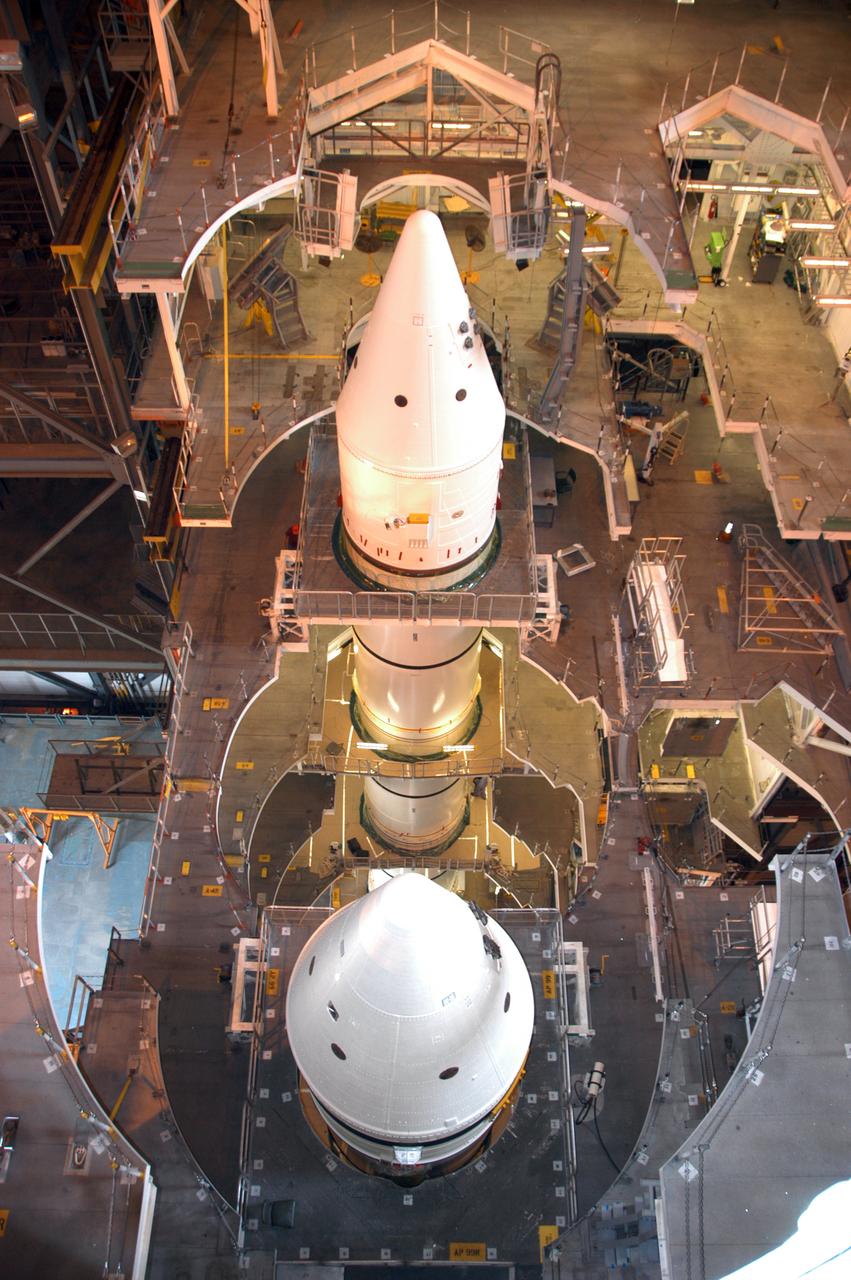
Lighting inside Kennedy Space Center's Vehicle Assembly Building seems to bathe the highbay 1 area in a golden hue as workers continue stacking the twin solid rocket boosters. The solid rocket boosters are being prepared for NASA's next Space Shuttle launch, mission STS-117. The mission is scheduled to launch aboard Atlantis no earlier than March 16, 2007.
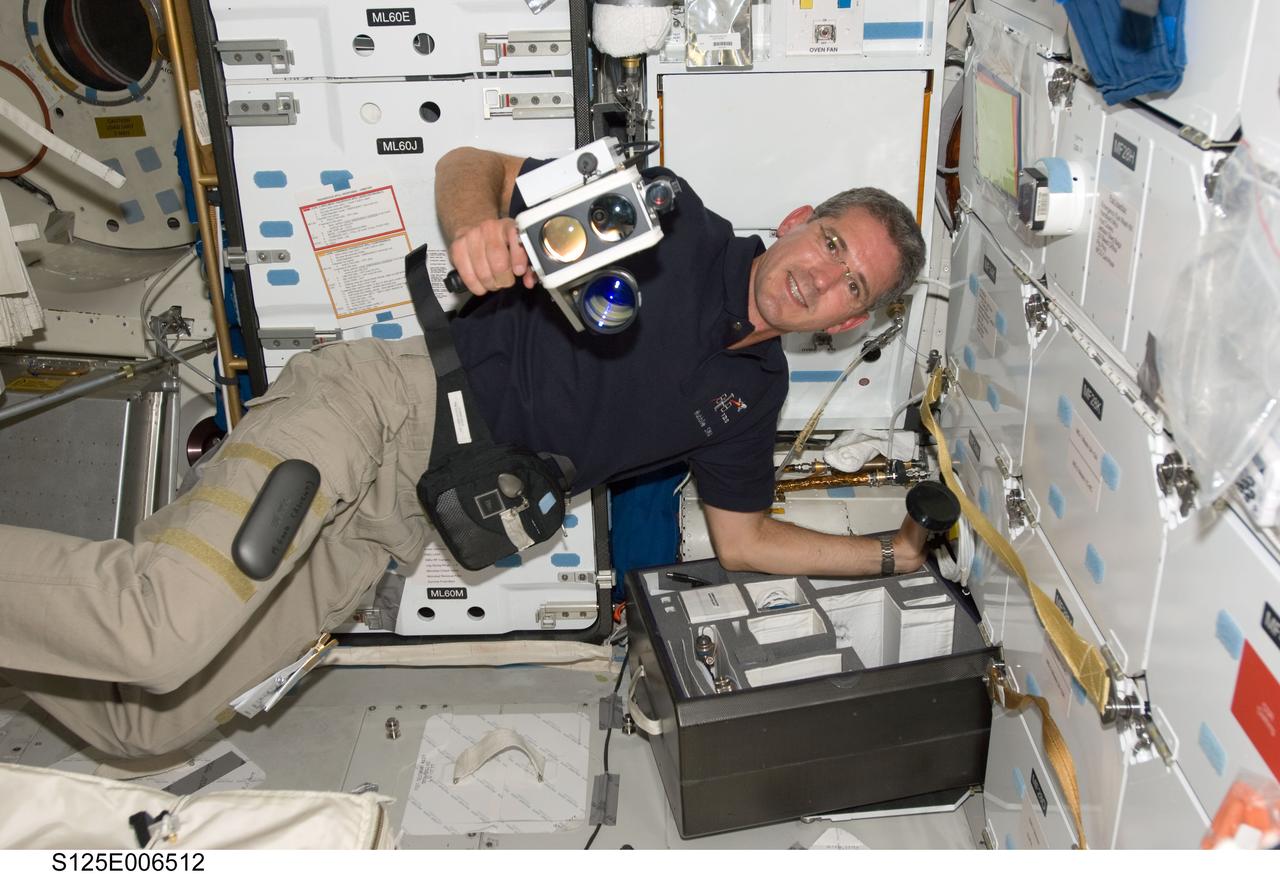
S125-E-006512 (12 May 2009) --- Astronaut Michael Good, STS-125 mission specialist, is busy unpacking equipment on Atlantis? mid deck during his second day in space. The next several days prove to be very busy for the entire crew, as five spacewalks, two of which will have Good leaving the shirt sleeved environment of the shuttle to perform work on the Hubble Space Telescope, are in the offing.

Space shuttle Enterprise, mounted atop a NASA 747 Shuttle Carrier Aircraft (SCA), is seen as it flies over the Manhattan Skyline with Freedom Tower in the background, Friday, April 27, 2012, in New York. Enterprise was the first shuttle orbiter built for NASA performing test flights in the atmosphere and was incapable of spaceflight. Originally housed at the Smithsonian's Steven F. Udvar-Hazy Center, Enterprise will be demated from the SCA and placed on a barge that will eventually be moved by tugboat up the Hudson River to the Intrepid Sea, Air & Space Museum in June. Photo Credit: (NASA/Robert Markowitz)
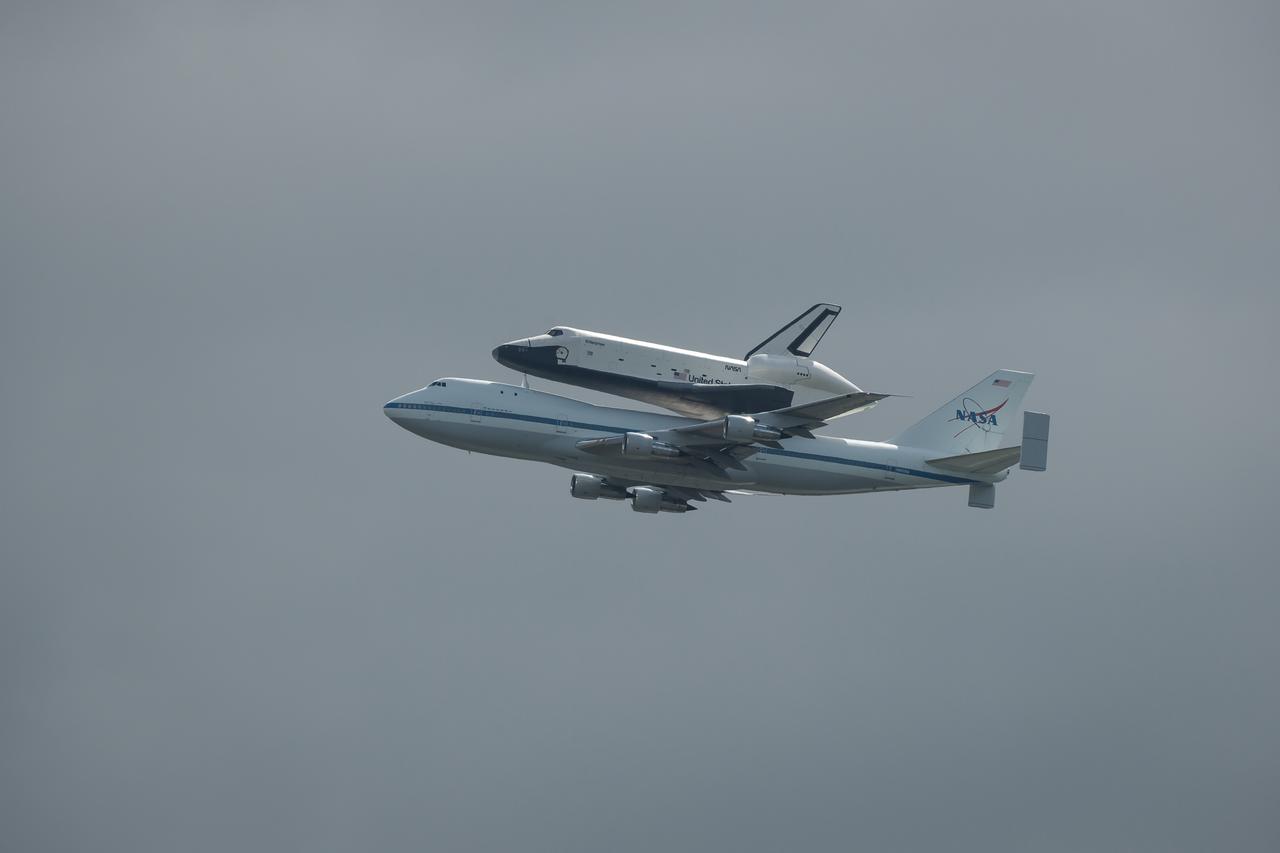
Space shuttle Enterprise, mounted atop a NASA 747 Shuttle Carrier Aircraft (SCA), is seen as it flies over the Hudson River, Friday, April 27, 2012, in New York. Enterprise was the first shuttle orbiter built for NASA performing test flights in the atmosphere and was incapable of spaceflight. Originally housed at the Smithsonian's Steven F. Udvar-Hazy Center, Enterprise will be demated from the SCA and placed on a barge that will eventually be moved by tugboat up the Hudson River to the Intrepid Sea, Air & Space Museum in June. Photo Credit: (NASA/Bill Ingalls)

Space shuttle Enterprise, mounted atop a NASA 747 Shuttle Carrier Aircraft (SCA), is seen as it flies over the Hudson River, Friday, April 27, 2012, in New York. Enterprise was the first shuttle orbiter built for NASA performing test flights in the atmosphere and was incapable of spaceflight. Originally housed at the Smithsonian's Steven F. Udvar-Hazy Center, Enterprise will be demated from the SCA and placed on a barge that will eventually be moved by tugboat up the Hudson River to the Intrepid Sea, Air & Space Museum in June. Photo Credit: (NASA/Matt Hedges)

Space shuttle Enterprise, mounted atop a NASA 747 Shuttle Carrier Aircraft (SCA), is seen as it flies near the Statue of Liberty and the Manhattan skyline, Friday, April 27, 2012, in New York. Enterprise was the first shuttle orbiter built for NASA performing test flights in the atmosphere and was incapable of spaceflight. Originally housed at the Smithsonian's Steven F. Udvar-Hazy Center, Enterprise will be demated from the SCA and placed on a barge that will eventually be moved by tugboat up the Hudson River to the Intrepid Sea, Air & Space Museum in June. Photo Credit: (NASA/Robert Markowitz)

Spectators are seen as they watch space shuttle Endeavour as it passes by on its way to its new home at the California Science Center in Los Angeles, Saturday, Oct. 13, 2012. Endeavour, built as a replacement for space shuttle Challenger, completed 25 missions, spent 299 days in orbit, and orbited Earth 4,671 times while traveling 122,883,151 miles. Beginning Oct. 30, the shuttle will be on display in the CSC’s Samuel Oschin Space Shuttle Endeavour Display Pavilion, embarking on its new mission to commemorate past achievements in space and educate and inspire future generations of explorers. Photo Credit: (NASA/Carla Cioffi)

Spectators are seen photographing space shuttle Endeavour as it passes by on its way to its new home at the California Science Center, Friday, Oct. 12, 2012, in Inglewood. Endeavour, built as a replacement for space shuttle Challenger, completed 25 missions, spent 299 days in orbit, and orbited Earth 4,671 times while traveling 122,883,151 miles. Beginning Oct. 30, the shuttle will be on display in the CSC’s Samuel Oschin Space Shuttle Endeavour Display Pavilion, embarking on its new mission to commemorate past achievements in space and educate and inspire future generations of explorers. Photo Credit: (NASA/Carla Cioffi)

The space shuttle Enterprise, mounted on transport vehicle, is backed into a temporary hangar after being demated from the NASA 747 Shuttle Carrier Aircraft (SCA) at John F. Kennedy (JFK) International Airport in Jamica, New York, Sunday, May 13, 2012. Enterprise will be placed on a barge that will move by tugboat up the Hudson River to the Intrepid Sea, Air & Space Museum in June. The shuttle will be lifted by crane and placed on the flight deck of the Intrepid, where it will be on exhibit to the public starting this summer in a temporary climate-controlled pavilion. Photo Credit: (NASA/Kim Shiflet)

NASA Deputy Administrator Lori Garver, at podium, speaks to those in attendance at Apron W after the 747 Shuttle Carrier Aircraft (SCA) with space shuttle Discovery mounted on top rolled to a halt at Washington Dulles International Airport, Tuesday, April 17, 2012 in Sterling, Va. Discovery, the first orbiter retired from NASA’s shuttle fleet, completed 39 missions, spent 365 days in space, orbited the Earth 5,830 times, and traveled 148,221,675 miles. NASA will transfer Discovery to the National Air and Space Museum to begin its new mission to commemorate past achievements in space and to educate and inspire future generations of explorers. Photo Credit: (NASA/Smithsonian Institution/Dane Penland)

Space shuttle Discovery, mounted atop a NASA 747 Shuttle Carrier Aircraft (SCA) flies over the Steven F. Udvar-Hazy Center, Tuesday, April 17, 2012, in Washington. Discovery, the first orbiter retired from NASA’s shuttle fleet, completed 39 missions, spent 365 days in space, orbited the Earth 5,830 times, and traveled 148,221,675 miles. NASA will transfer Discovery to the National Air and Space Museum to begin its new mission to commemorate past achievements in space and to educate and inspire future generations of explorers. Photo Credit: (NASA/Smithsonian Institution/Eric Long)

The space shuttle Enterprise, mounted on transport vehicle, is backed into a temporary hangar after being demated from the NASA 747 Shuttle Carrier Aircraft (SCA) at John F. Kennedy (JFK) International Airport in Jamica, New York, Sunday, May 13, 2012. Enterprise will be placed on a barge that will move by tugboat up the Hudson River to the Intrepid Sea, Air & Space Museum in June. The shuttle will be lifted by crane and placed on the flight deck of the Intrepid, where it will be on exhibit to the public starting this summer in a temporary climate-controlled pavilion. Photo Credit: (NASA/Kim Shiflet)
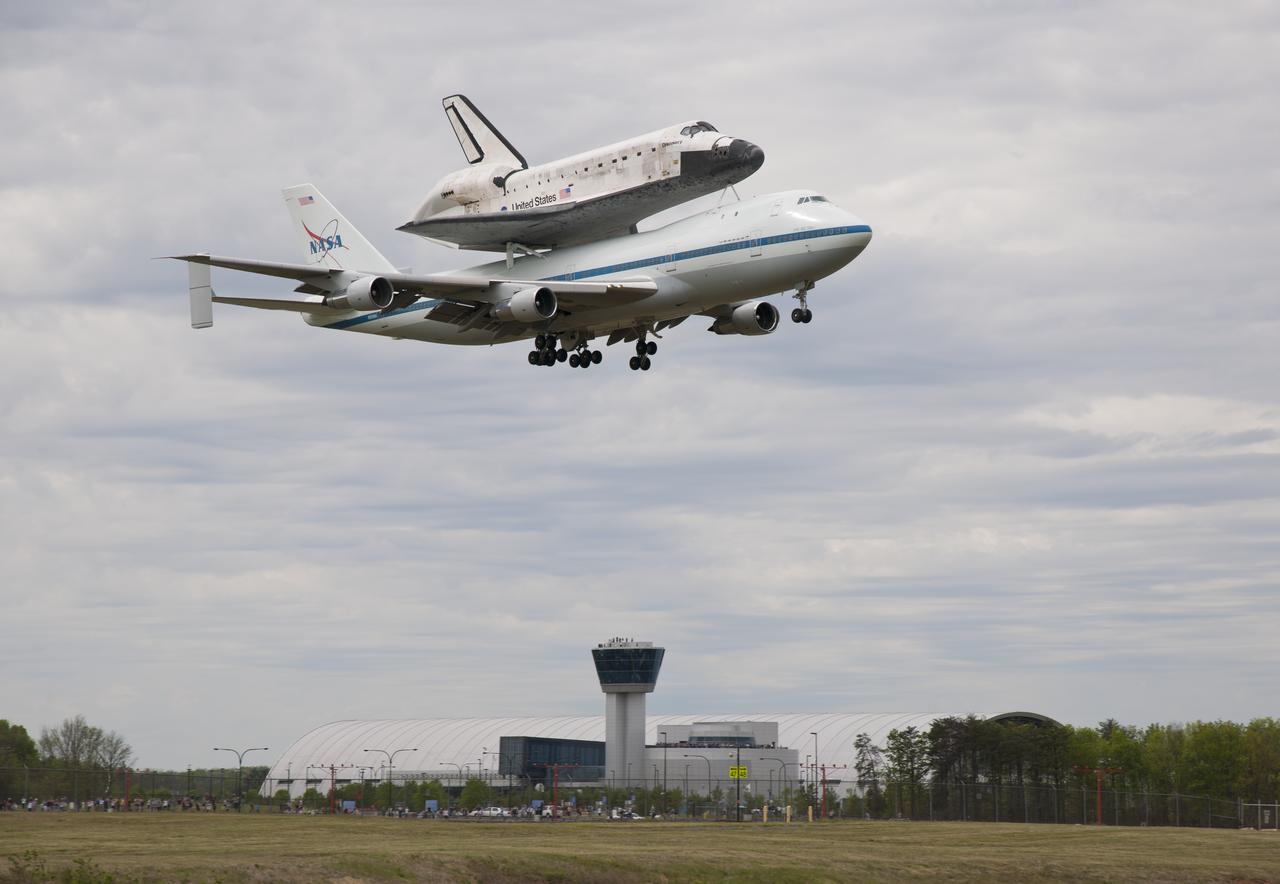
Space shuttle Discovery, mounted atop a NASA 747 Shuttle Carrier Aircraft (SCA) flies over the Steven F. Udvar-Hazy Center, Tuesday, April 17, 2012, in Washington. Discovery, the first orbiter retired from NASA’s shuttle fleet, completed 39 missions, spent 365 days in space, orbited the Earth 5,830 times, and traveled 148,221,675 miles. NASA will transfer Discovery to the National Air and Space Museum to begin its new mission to commemorate past achievements in space and to educate and inspire future generations of explorers. Photo Credit: (NASA/Smithsonian Institution/Dane Penland)
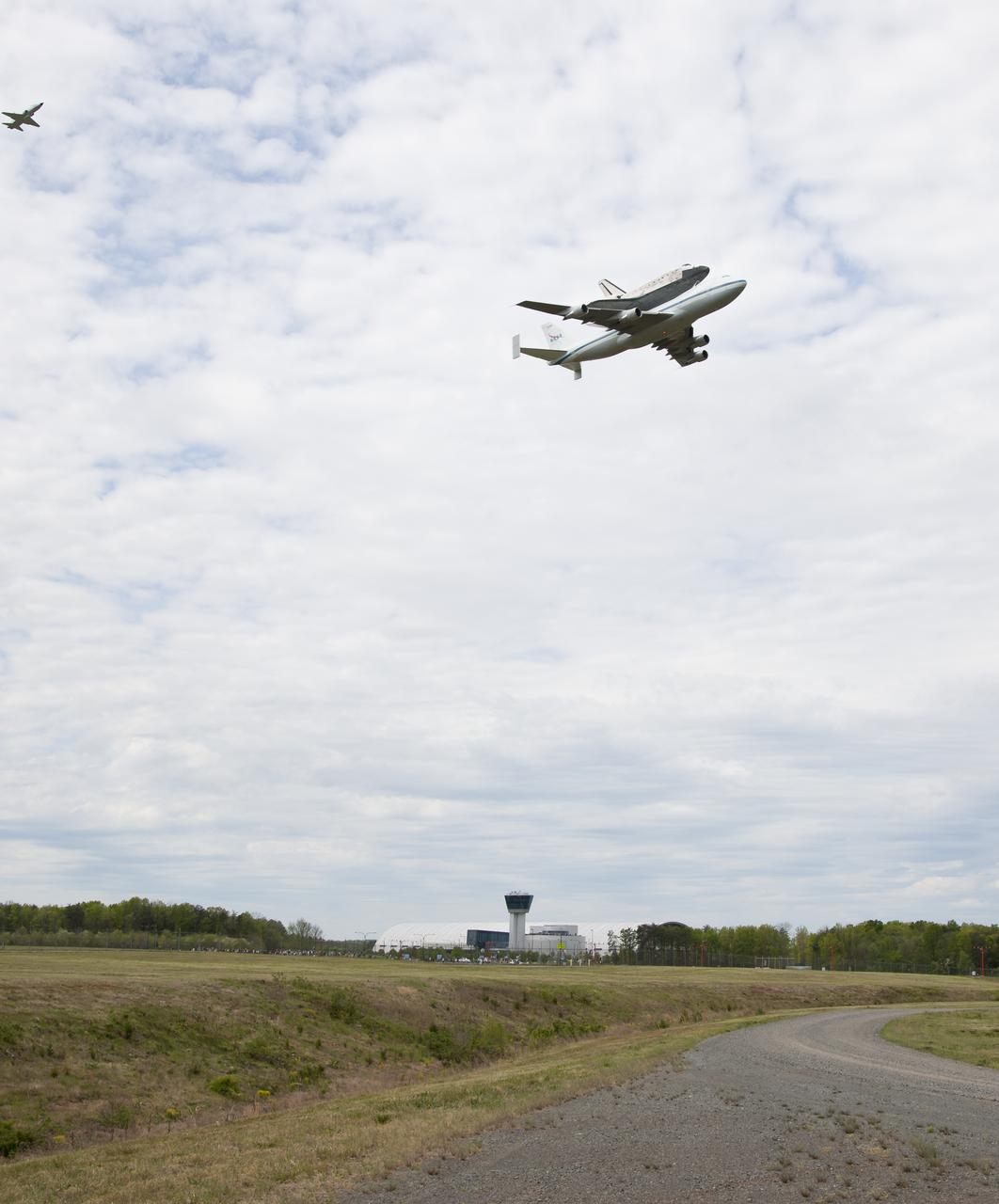
Space shuttle Discovery, mounted atop a NASA 747 Shuttle Carrier Aircraft (SCA) flies over the Steven F. Udvar-Hazy Center, Tuesday, April 17, 2012, in Washington. Discovery, the first orbiter retired from NASA’s shuttle fleet, completed 39 missions, spent 365 days in space, orbited the Earth 5,830 times, and traveled 148,221,675 miles. NASA will transfer Discovery to the National Air and Space Museum to begin its new mission to commemorate past achievements in space and to educate and inspire future generations of explorers. Photo Credit: (NASA/Smithsonian Institution/Dane Penland)
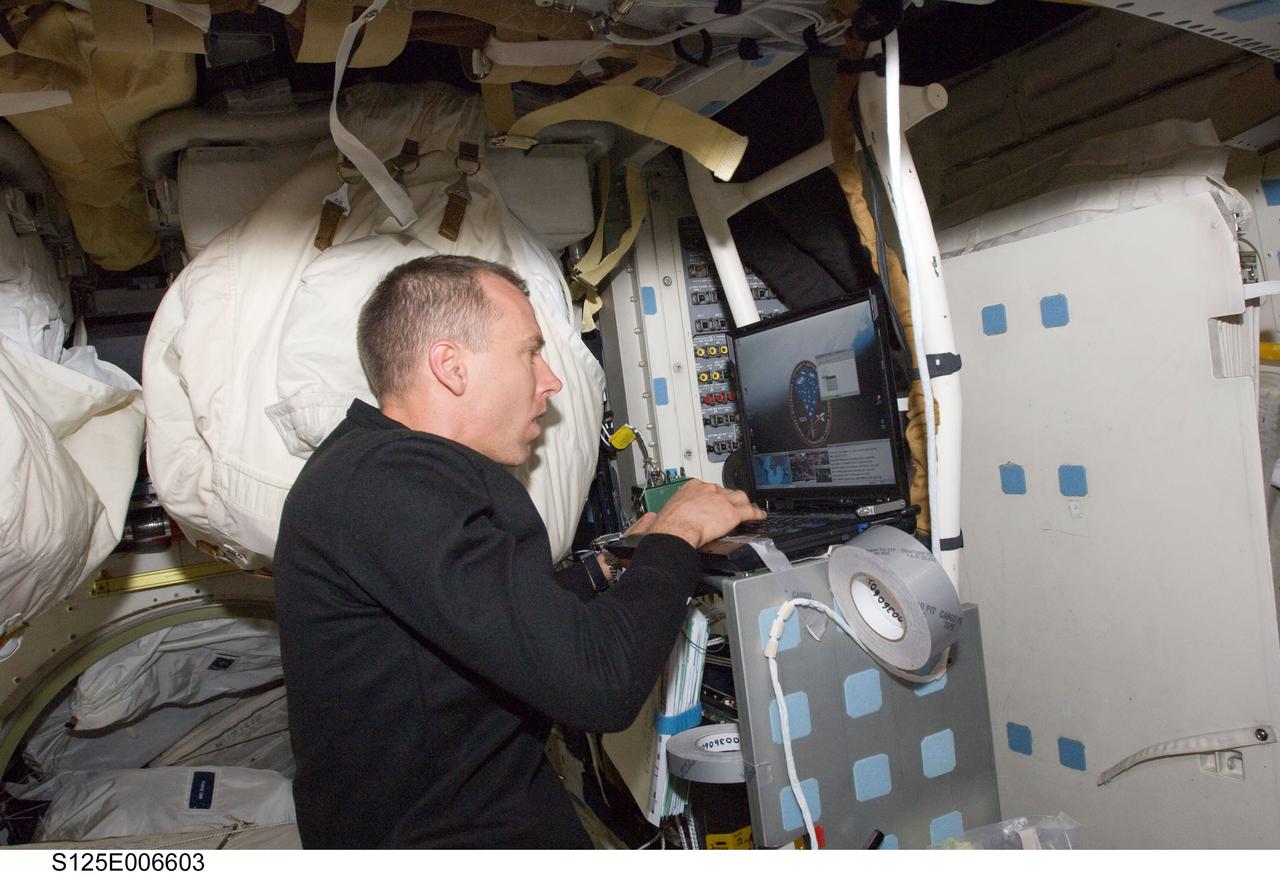
S125-E-006603 (13 May 2009) --- Astronaut Andrew Feustel, STS-125 mission specialist, uses a computer on the middeck of Space Shuttle Atlantis during flight day three activities.
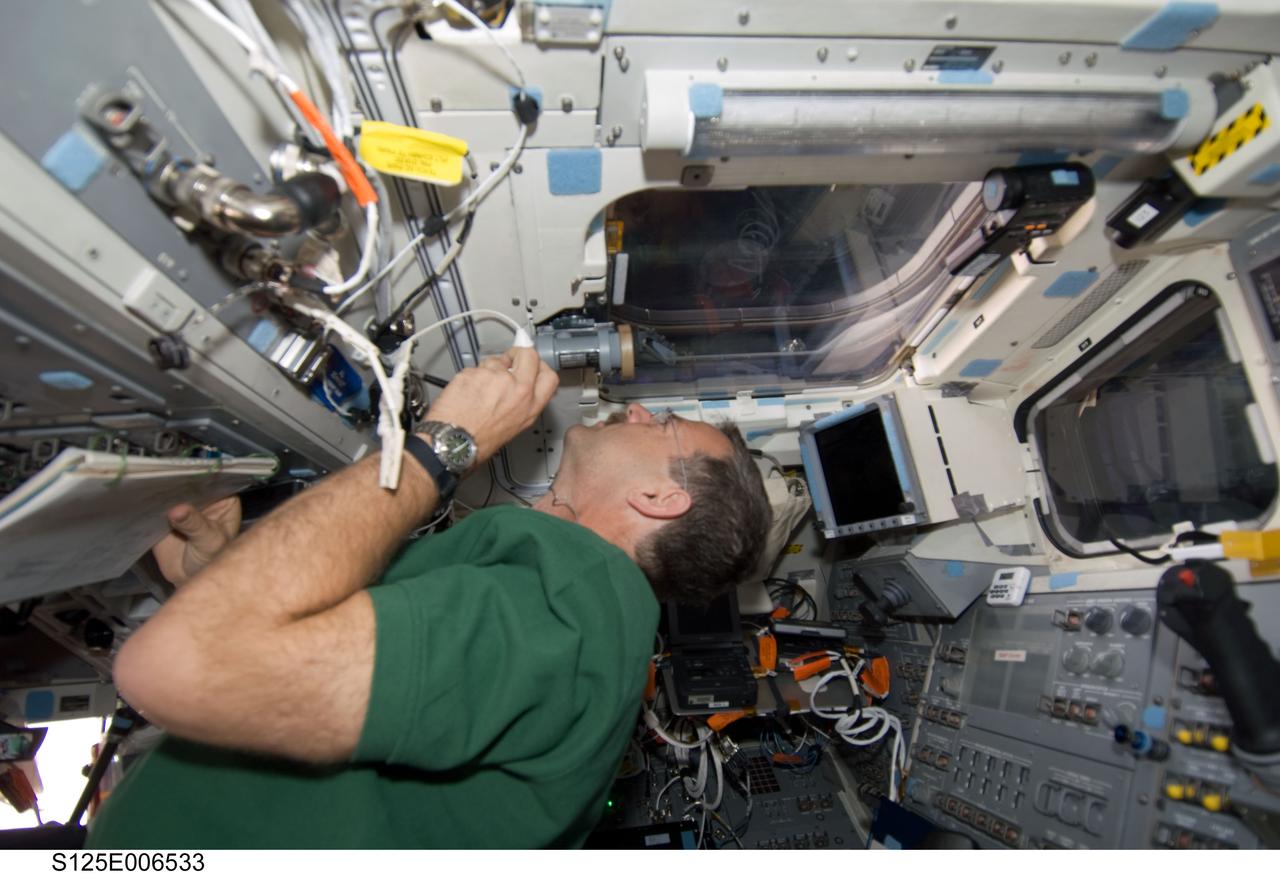
S125-E-006533 (13 May 2009) --- Astronaut Scott Altman, STS-125 commander, looks through an overhead window on the aft flight deck of Space Shuttle Atlantis during flight day three activities.
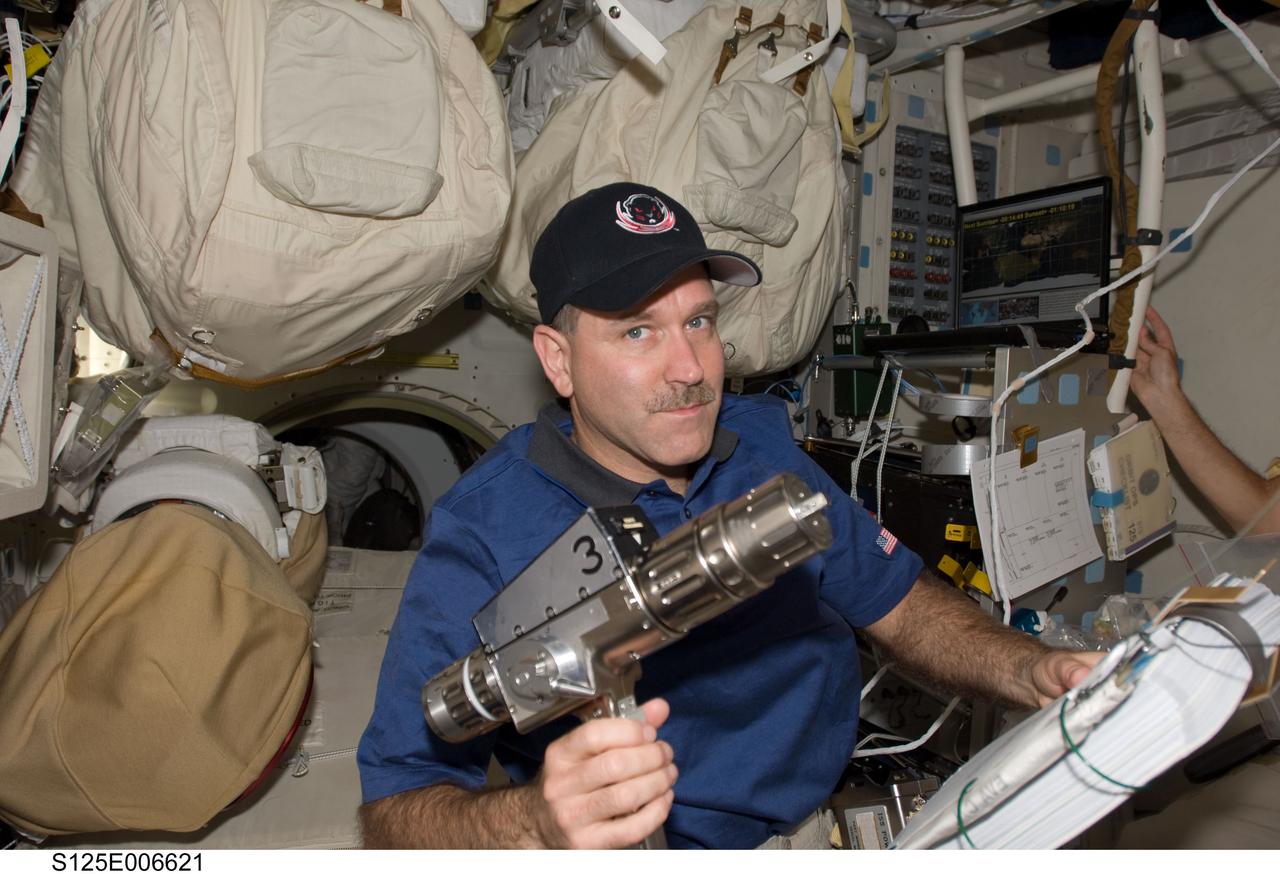
S125-E-006621 (13 May 2009) --- Astronaut John Grunsfeld, STS-125 mission specialist, works with a power tool on the middeck of Space Shuttle Atlantis as he prepares for upcoming spacewalks to repair the Hubble Space Telescope.
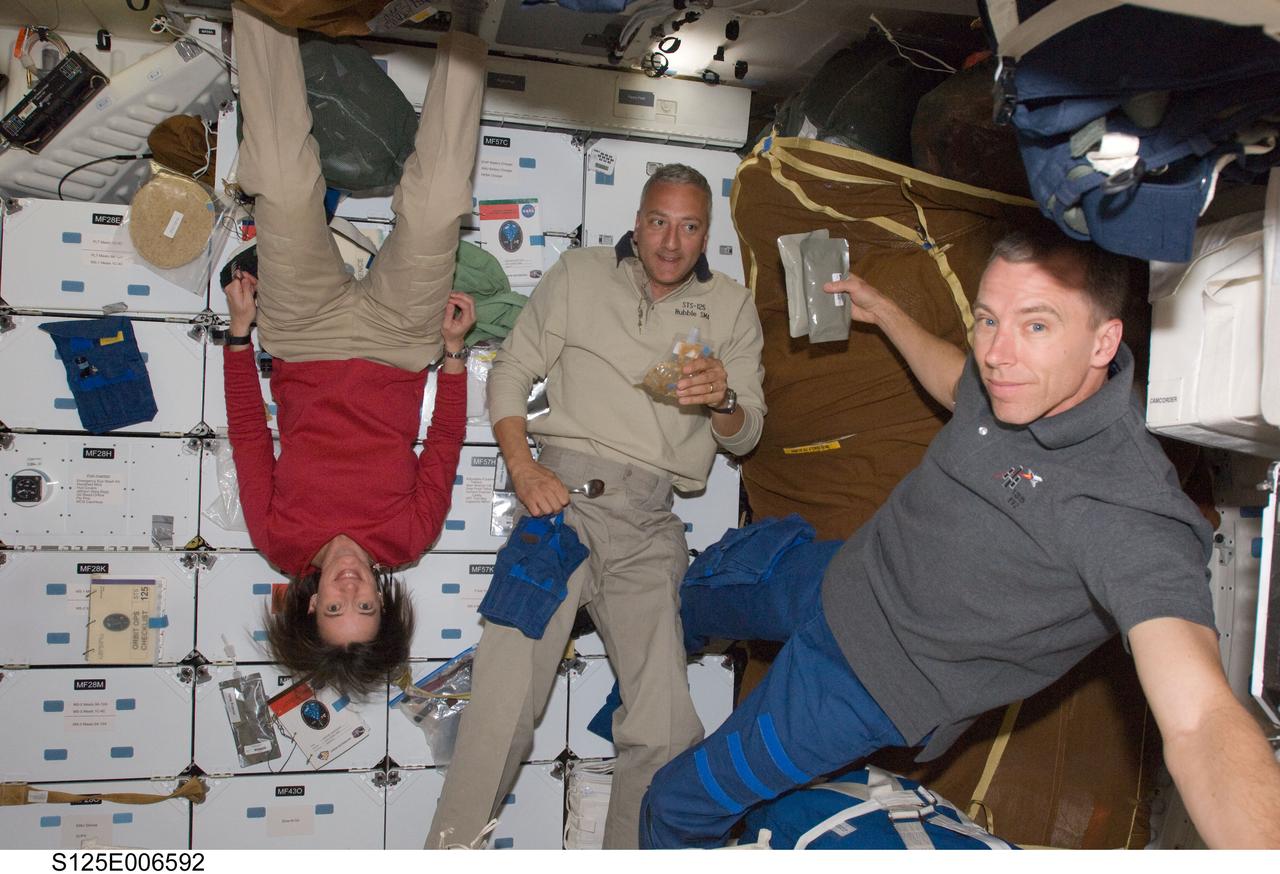
S125-E-006592 (12 May 2009) --- Astronauts Megan McArthur, Mike Massimino (center) and Andrew Feustel, all STS-125 mission specialists, prepare to eat a meal on the middeck of the Earth-orbiting Space Shuttle Atlantis.

Employees watch the last planned space shuttle main engine test firing.

A workman reams holes to the proper size and aligment in the Space Shuttle Main Engine's main injector body, through which propellants will pass through on their way into the engine's combustion chamber. Rockwell International's Rocketdyne Division plant produced the engines under contract to the Marshall Space Flight Center.

The last planned space shuttle main engine test firing takes place on July 29, 2009.

California Congresswoman Maxine Waters, 35th Congressional District, waves to the crowds as she is introduced at the Endeavour Kick-Off Ceremony at The Forum in Inglewood, Saturday, Oct. 13, 2012. Endeavour, built as a replacement for space shuttle Challenger, completed 25 missions, spent 299 days in orbit, and orbited Earth 4,671 times while traveling 122,883,151 miles. Beginning Oct. 30, the shuttle will be on display in the CSC’s Samuel Oschin Space Shuttle Endeavour Display Pavilion, embarking on its new mission to commemorate past achievements in space and educate and inspire future generations of explorers. Photo Credit: (NASA/Carla Cioffi)

NASA Orbiter Transition & Retirement team member Tom Goebel monitors the installation of "rain covers" over space shuttle Enterprise’s vent door openings ahead of the expected rain at Washington Dulles International Airport, Saturday, April 21, 2012, in Sterling, Va. Enterprise, the first orbiter built for the Space Shuttle Program, was used primarily for ground and flight tests within the atmosphere. The initial testing period named Approach and Landing Test (ALT) included a flight on February 18, 1977 atop a Shuttle Carrier Aircraft (SCA) to measure structural loads and ground handling and braking characteristics of the mated system. Enterprise will go on permanent display at the Intrepid Sea Air and Space Museum in New York in June. Photo Credit: (NASA/Bill Ingalls)
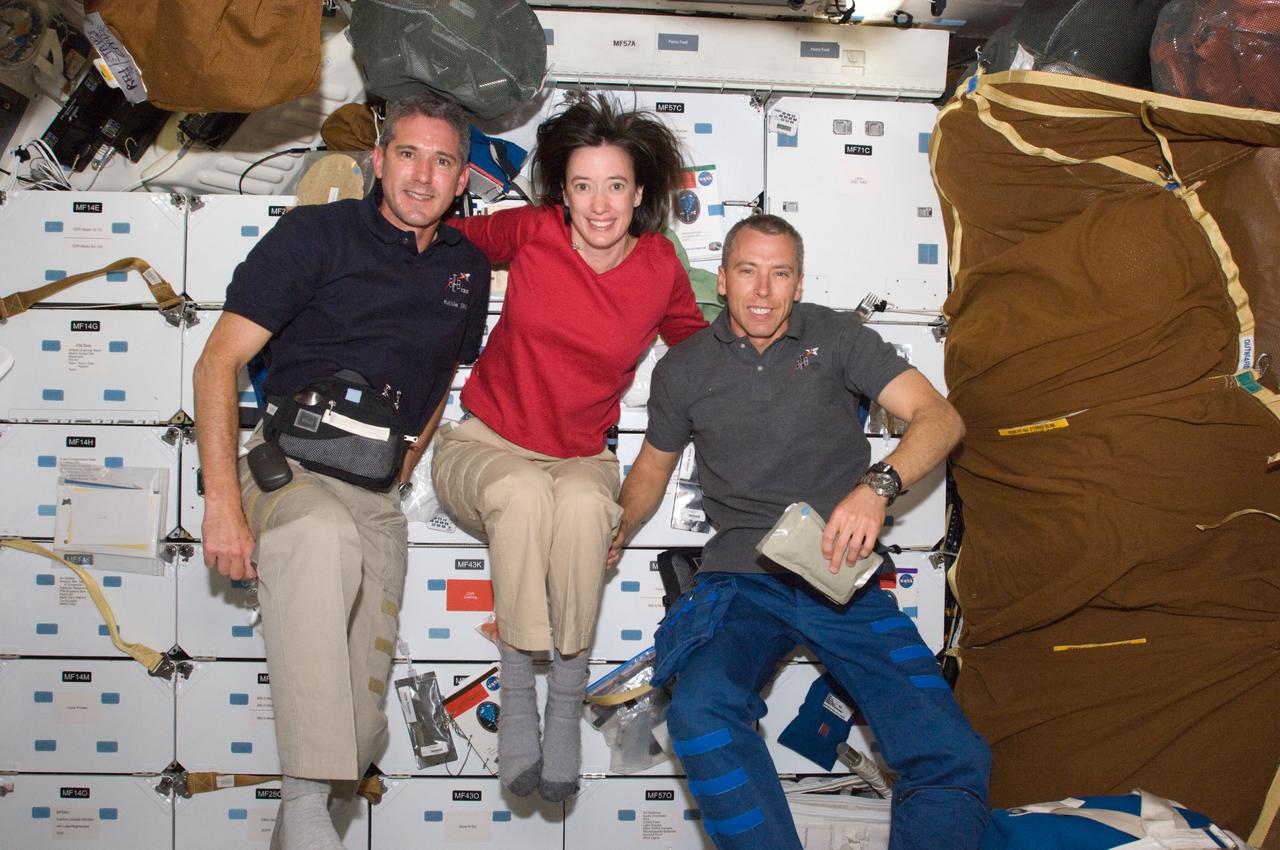
S125-E-006596 (12 May 2009) --- Astronauts Michael Good (left), Megan McArthur and Andrew Feustel, all STS-125 mission specialists, pose for a photo on the middeck of Space Shuttle Atlantis during flight day two activities.
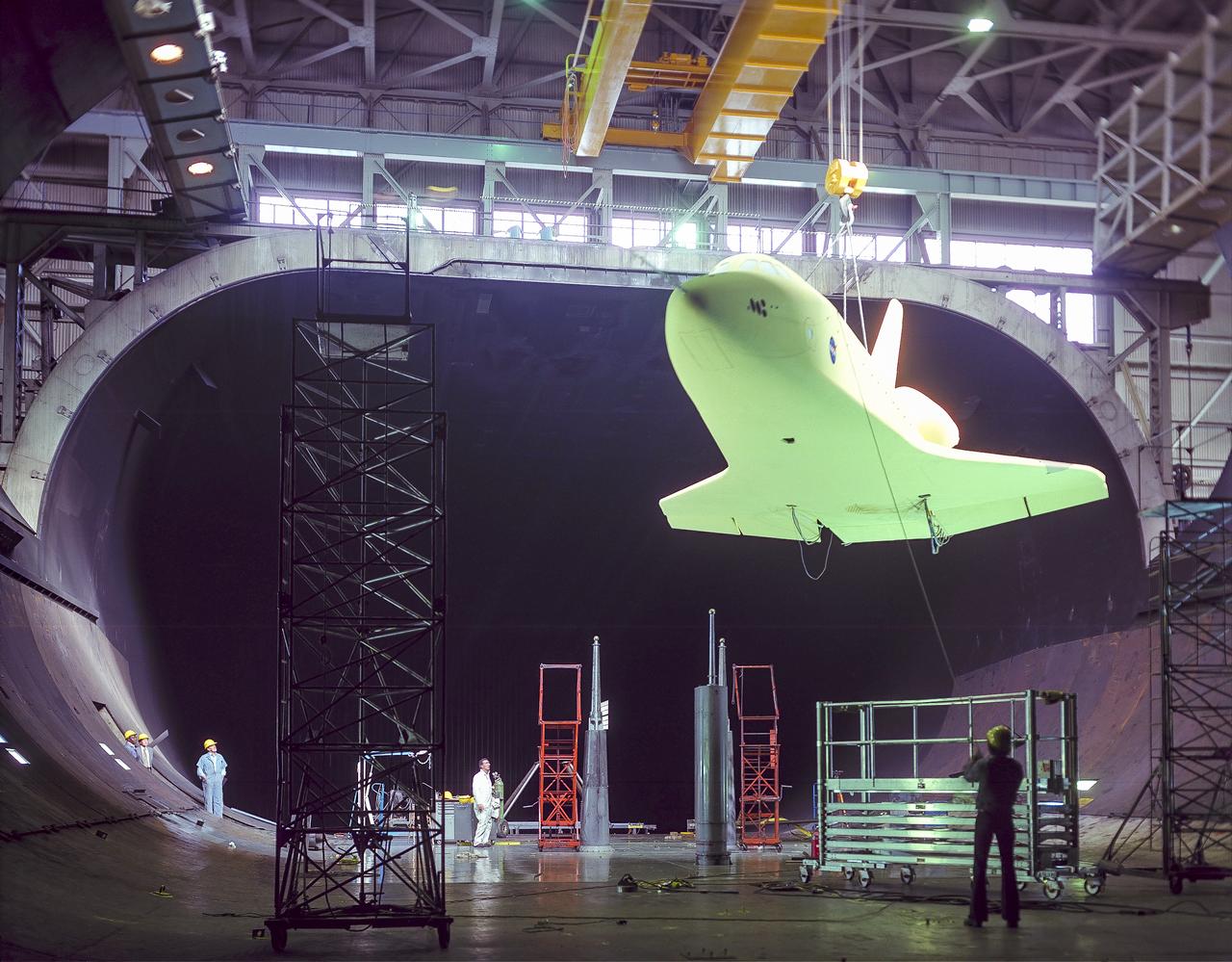
Installation of 1/3 scale model of space shuttle orbiter into the test section of the Ames 40x80 foot wind tunnel with overhead doors open.
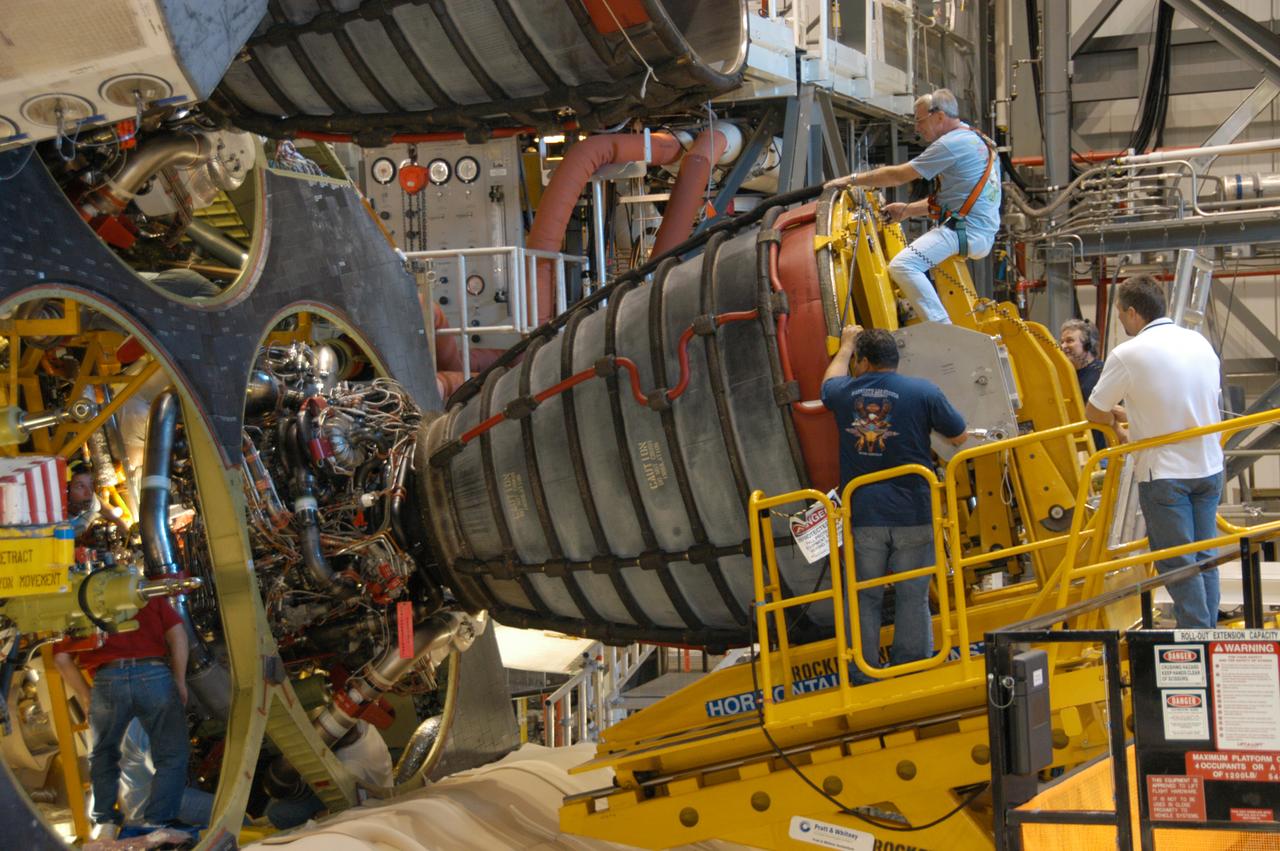
In Orbiter Processing Facility bay 2, technicians on a Hyster forklift maneuver space shuttle main engine no. 3 into place on Endeavour. Each space shuttle main engine is 14 feet long, weighs about 6,700 pounds, and is 7.5 feet in diameter at the end of the nozzle. The orbiter is scheduled for mission STS-118, targeted for launch on June 28. The mission will be the 22nd flight to the International Space Station, carrying another starboard array, S5, for installation.

In Orbiter Processing Facility bay 2, technicians on a Hyster forklift maneuver space shuttle main engine no. 3 into place on Endeavour. Each space shuttle main engine is 14 feet long, weighs about 6,700 pounds, and is 7.5 feet in diameter at the end of the nozzle. The orbiter is scheduled for mission STS-118, targeted for launch on June 28. The mission will be the 22nd flight to the International Space Station, carrying another starboard array, S5, for installation.
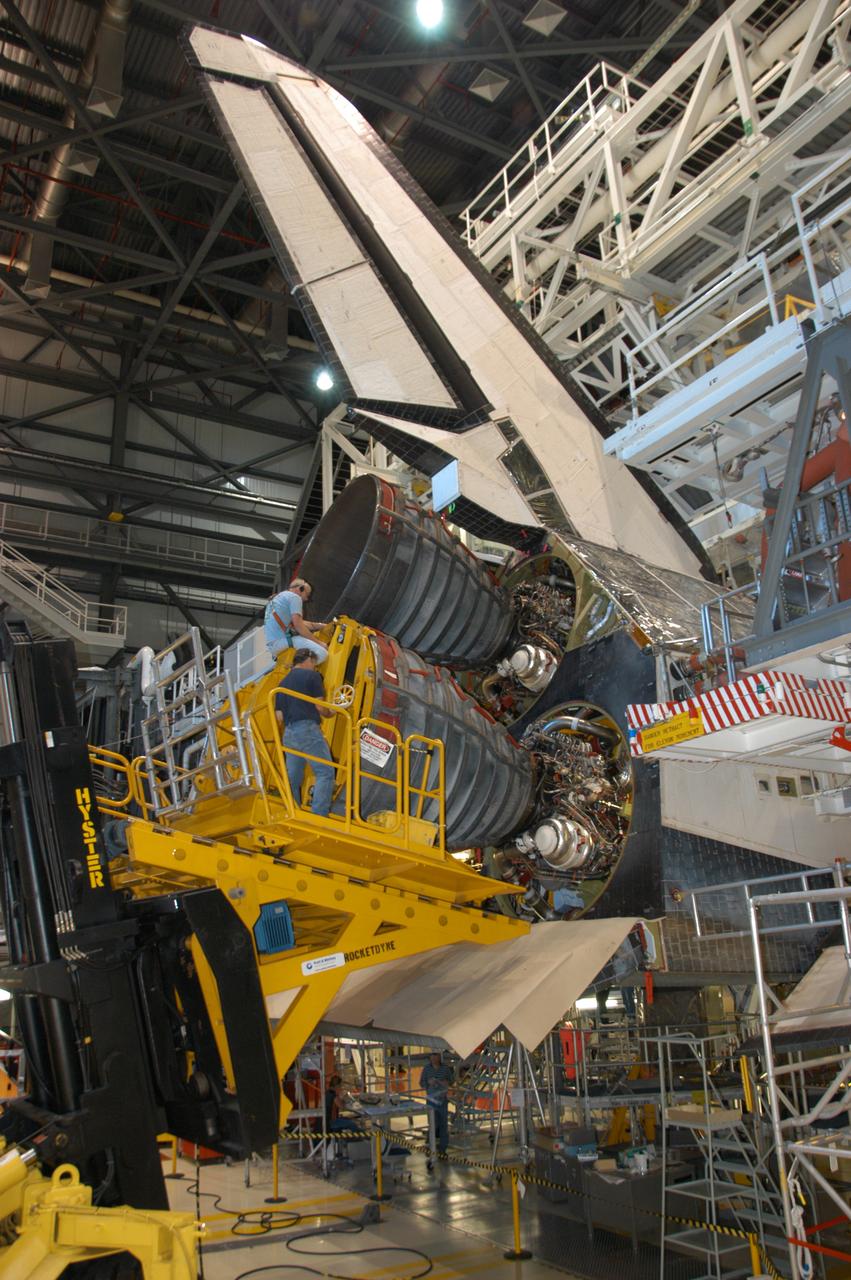
In Orbiter Processing Facility bay 2, technicians on a Hyster forklift install space shuttle main engine no. 3 into Endeavour. Each space shuttle main engine is 14 feet long, weighs about 6,700 pounds, and is 7.5 feet in diameter at the end of the nozzle. The orbiter is scheduled for mission STS-118, targeted for launch on June 28. The mission will be the 22nd flight to the International Space Station, carrying another starboard array, S5, for installation.
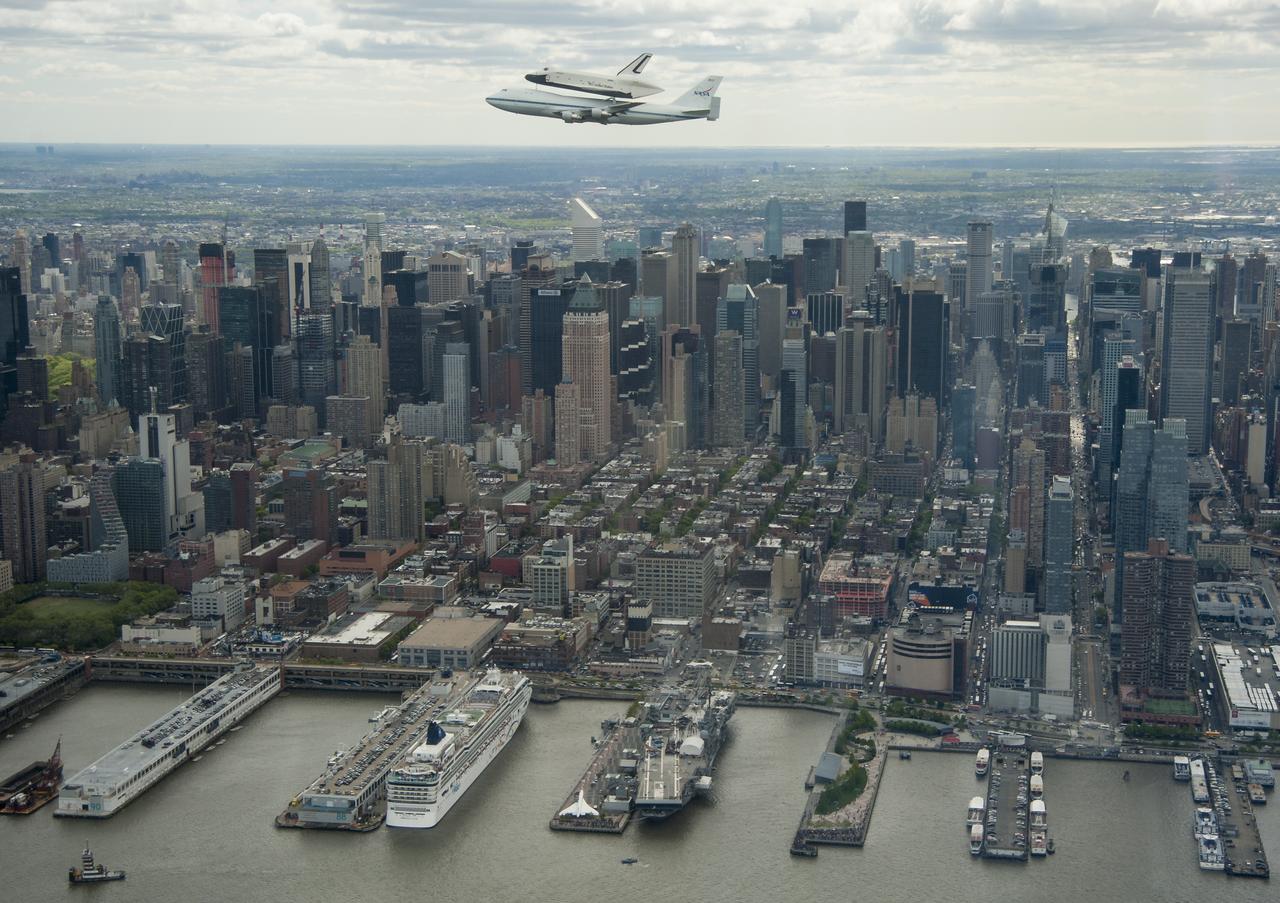
CAPTION: ---------------------------- Space shuttle Enterprise, mounted atop a NASA 747 Shuttle Carrier Aircraft (SCA), is seen as it flies near the Intrepid Sea, Air and Space Museum, Friday, April 27, 2012, in New York. Enterprise was the first shuttle orbiter built for NASA performing test flights in the atmosphere and was incapable of spaceflight. Originally housed at the Smithsonian's Steven F. Udvar-Hazy Center, Enterprise will be demated from the SCA and placed on a barge that will eventually be moved by tugboat up the Hudson River to the Intrepid Sea, Air & Space Museum in June. Photo Credit: (NASA/Robert Markowitz)
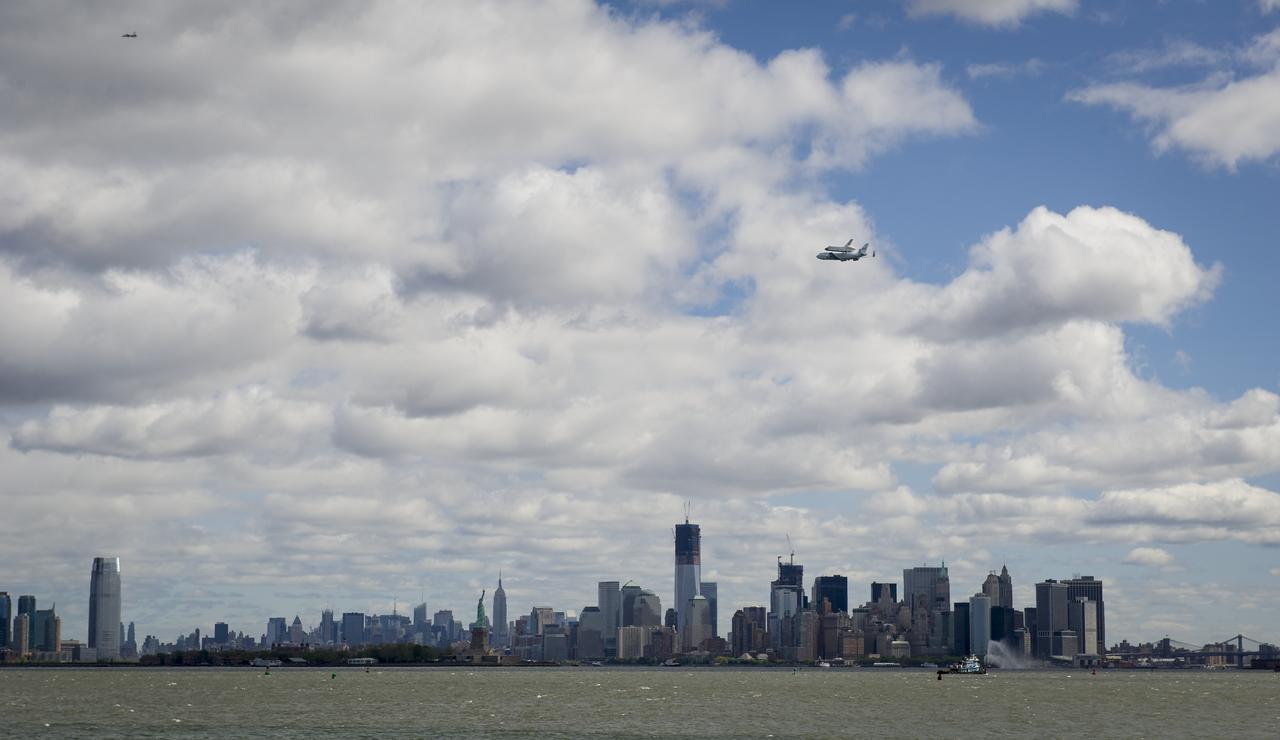
Space shuttle Enterprise, mounted atop a NASA 747 Shuttle Carrier Aircraft (SCA), is seen as it flies over the Hudson River, Friday, April 27, 2012, in New York. Enterprise was the first shuttle orbiter built for NASA performing test flights in the atmosphere and was incapable of spaceflight. Originally housed at the Smithsonian's Steven F. Udvar-Hazy Center, Enterprise will be demated from the SCA and placed on a barge that will eventually be moved by tugboat up the Hudson River to the Intrepid Sea, Air & Space Museum in June. Photo Credit: (NASA/Bill Ingalls)
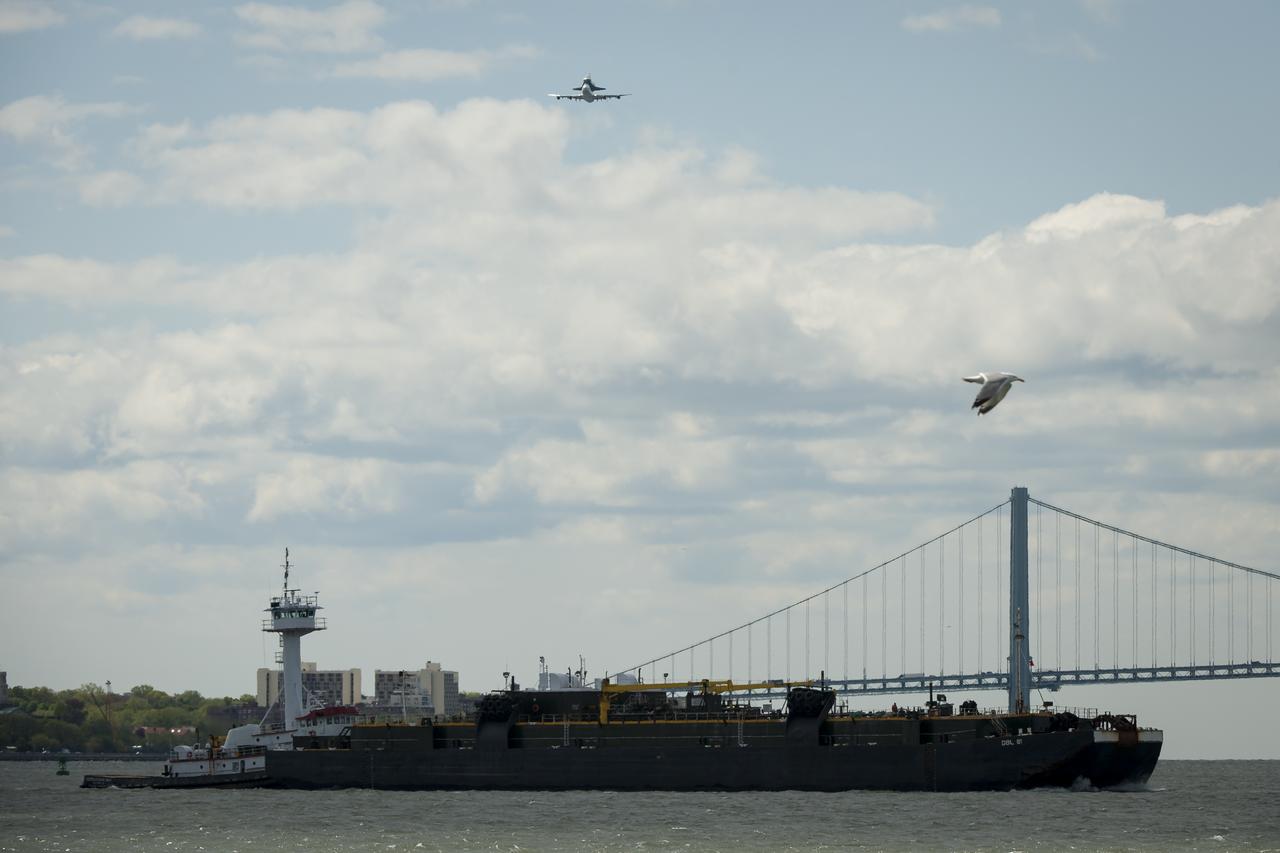
Space shuttle Enterprise, mounted atop a NASA 747 Shuttle Carrier Aircraft (SCA), is seen as it flies over the Verrazano Bridge, Friday, April 27, 2012, in New York. Enterprise was the first shuttle orbiter built for NASA performing test flights in the atmosphere and was incapable of spaceflight. Originally housed at the Smithsonian's Steven F. Udvar-Hazy Center, Enterprise will be demated from the SCA and placed on a barge that will eventually be moved by tugboat up the Hudson River to the Intrepid Sea, Air & Space Museum in June. Photo Credit: (NASA/Bill Ingalls)
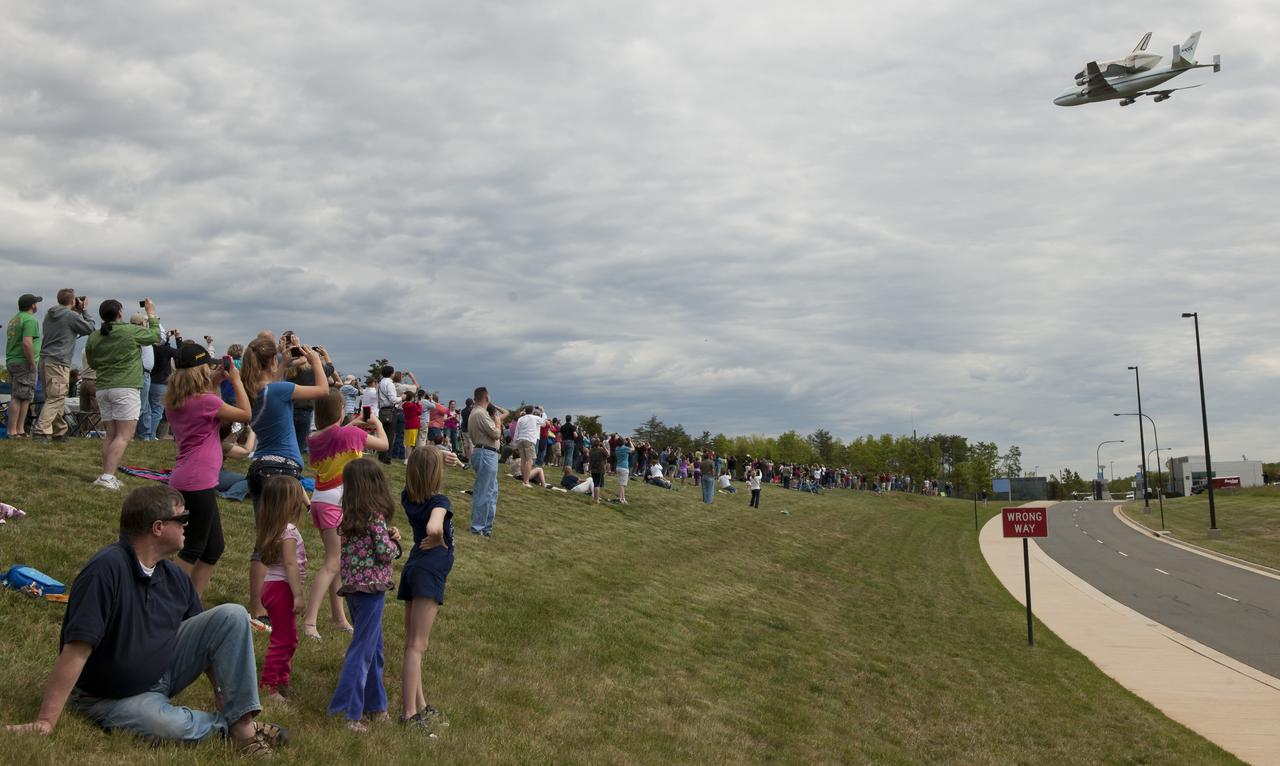
Spectators watch as space shuttle Discovery, mounted atop a NASA 747 Shuttle Carrier Aircraft (SCA) flies over the National Air and Space Museum’s Steven F. Udvar-Hazy Center, Tuesday, April 17, 2012, in Chantilly, Va. Discovery, the first orbiter retired from NASA’s shuttle fleet, completed 39 missions, spent 365 days in space, orbited the Earth 5,830 times, and traveled 148,221,675 miles. NASA will transfer Discovery to the National Air and Space Museum to begin its new mission to commemorate past achievements in space and to educate and inspire future generations of explorers. Photo Credit: (NASA/Carla Cioffi)
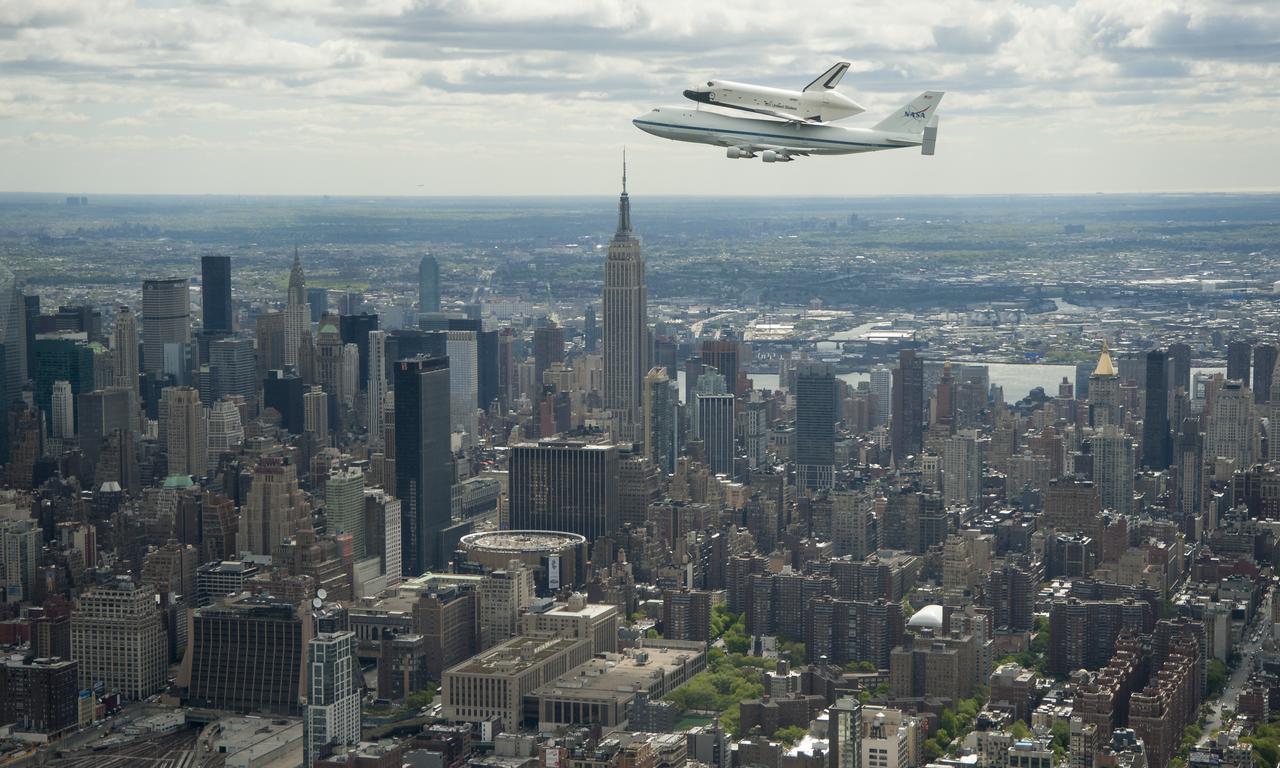
Space shuttle Enterprise, mounted atop a NASA 747 Shuttle Carrier Aircraft (SCA), is seen as it flies near the Empire State Building, Friday, April 27, 2012, in New York. Enterprise was the first shuttle orbiter built for NASA performing test flights in the atmosphere and was incapable of spaceflight. Originally housed at the Smithsonian's Steven F. Udvar-Hazy Center, Enterprise will be demated from the SCA and placed on a barge that will eventually be moved by tugboat up the Hudson River to the Intrepid Sea, Air & Space Museum in June. Photo Credit: (NASA/Robert Markowitz)
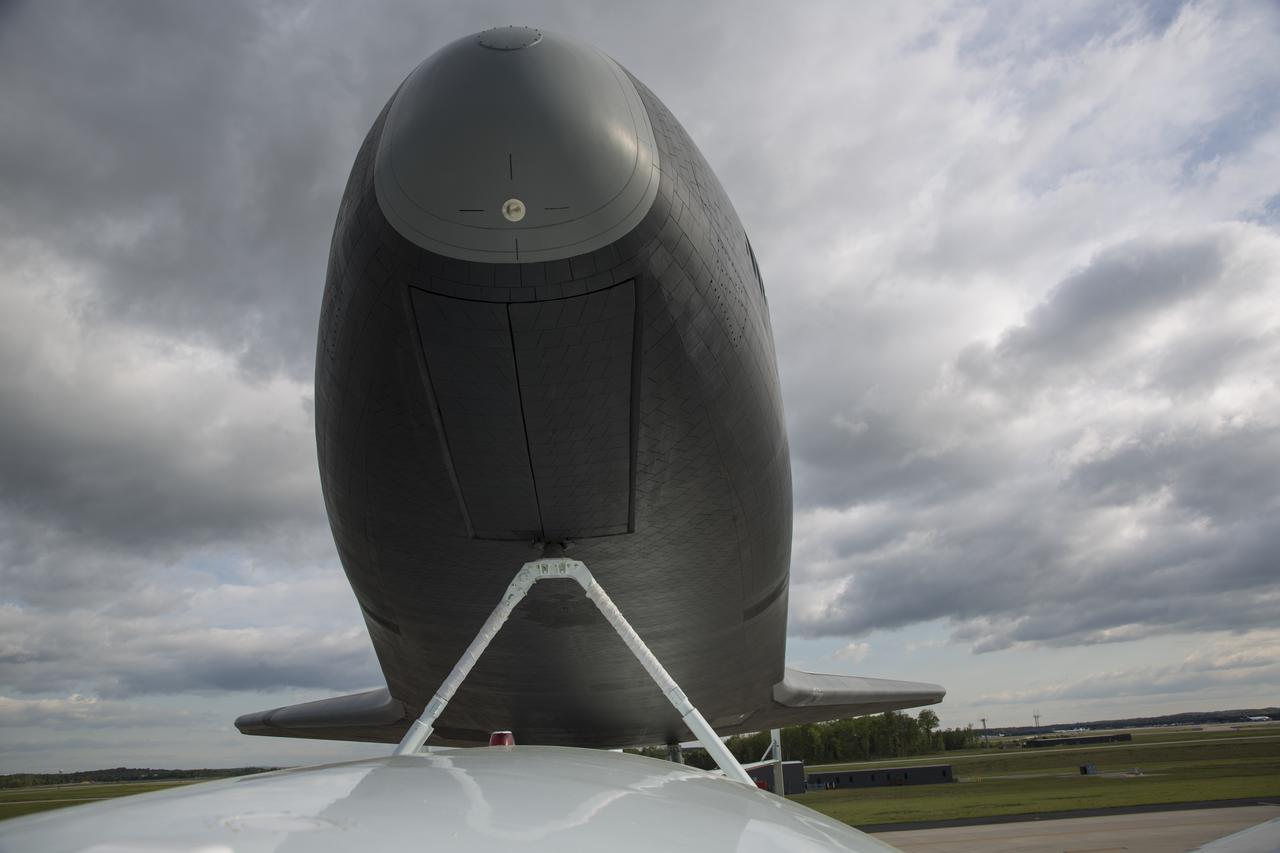
Space shuttle Enterprise, mounted atop a NASA 747 Shuttle Carrier Aircraft (SCA), is seen prior to taking off for New York from Washington Dulles International Airport, Friday, April 27, 2012, in Sterling, VA. Enterprise was the first shuttle orbiter built for NASA performing test flights in the atmosphere and was incapable of spaceflight. Originally housed at the Smithsonian's Steven F. Udvar-Hazy Center, Enterprise will be demated from the SCA and placed on a barge that will eventually be moved by tugboat up the Hudson River to the Intrepid Sea, Air & Space Museum in June. Photo Credit: (NASA/Scott Andrews)
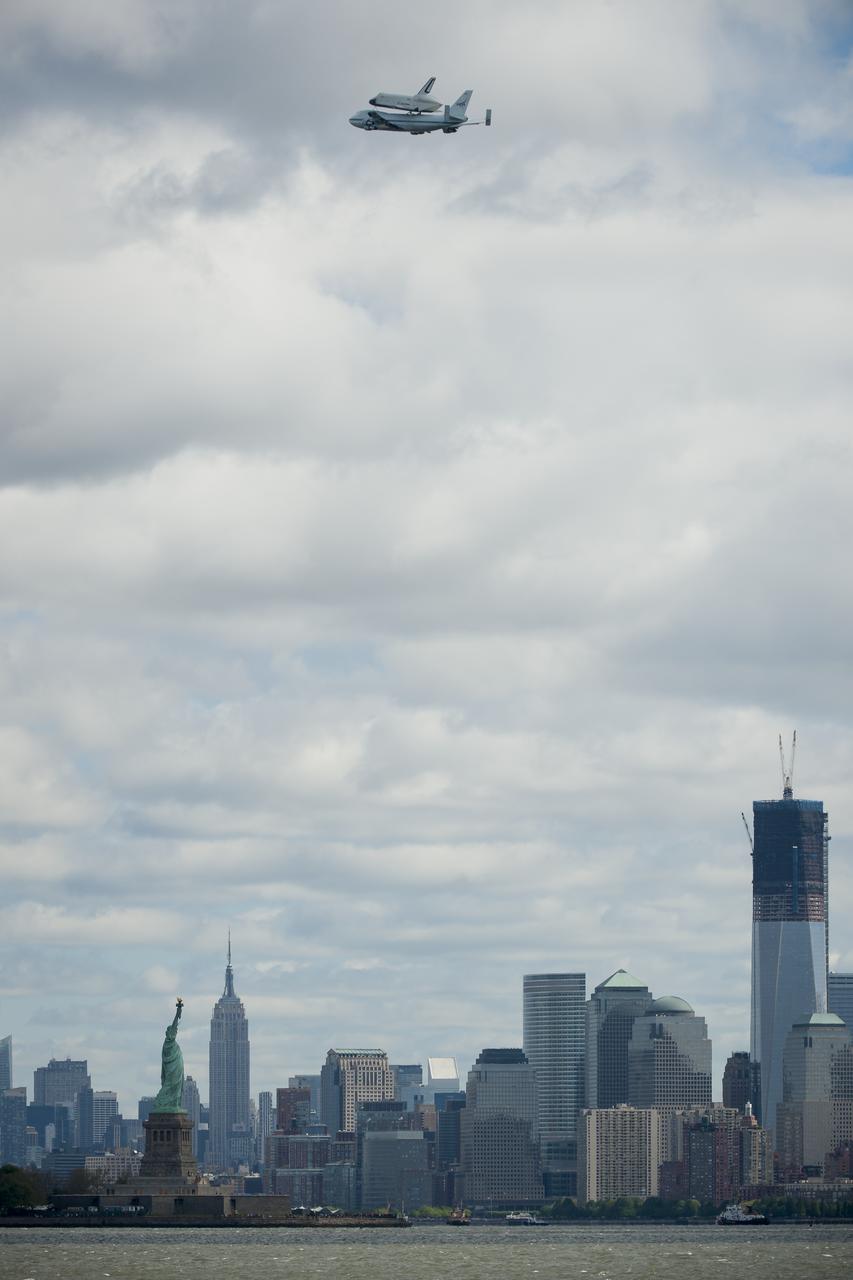
Space shuttle Enterprise, mounted atop a NASA 747 Shuttle Carrier Aircraft (SCA), is seen as it flies near the Statue of Liberty, Friday, April 27, 2012, in New York. Enterprise was the first shuttle orbiter built for NASA performing test flights in the atmosphere and was incapable of spaceflight. Originally housed at the Smithsonian's Steven F. Udvar-Hazy Center, Enterprise will be demated from the SCA and placed on a barge that will eventually be moved by tugboat up the Hudson River to the Intrepid Sea, Air & Space Museum in June. Photo Credit: (NASA/Bill Ingalls)
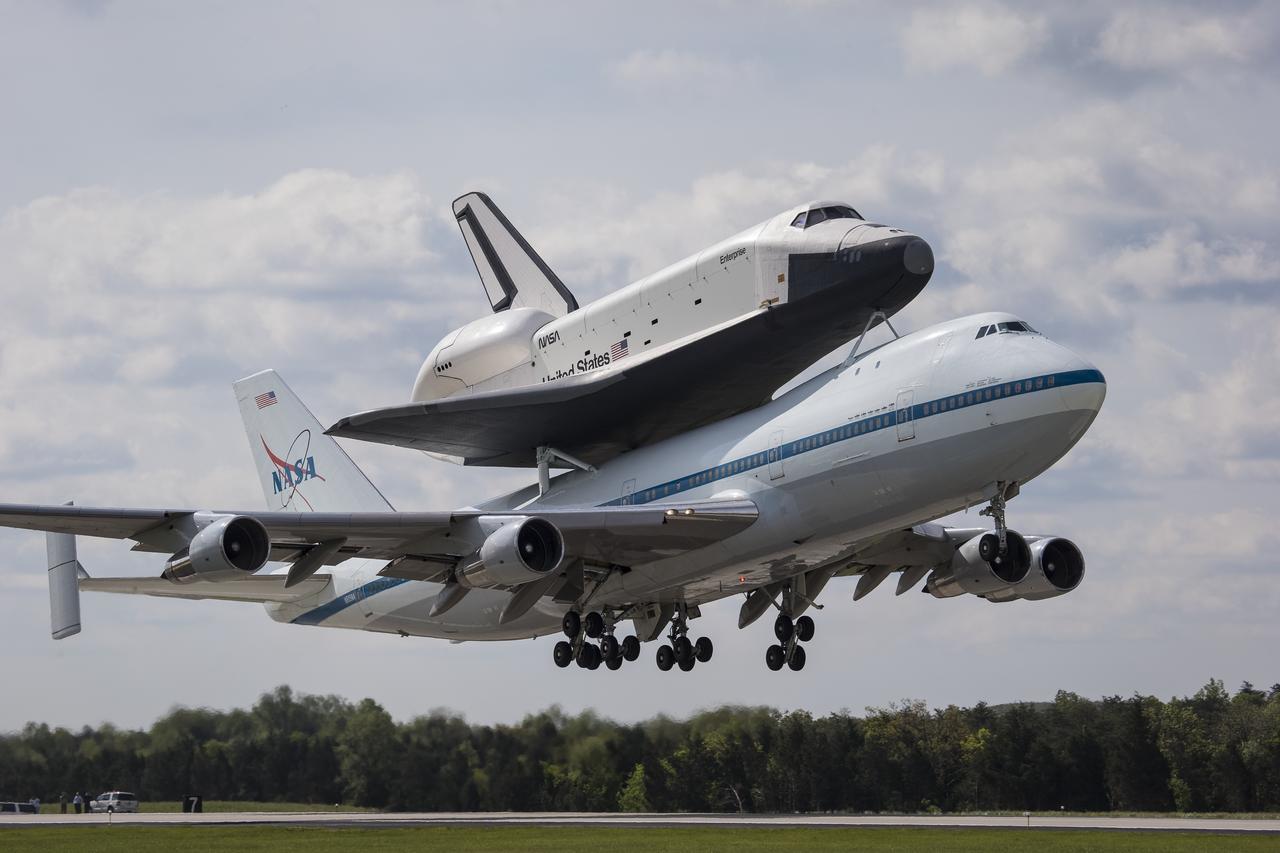
Space shuttle Enterprise, mounted atop a NASA 747 Shuttle Carrier Aircraft (SCA), is seen as it takes off for New York from Washington Dulles International Airport, Friday, April 27, 2012, in Sterling, VA. Enterprise was the first shuttle orbiter built for NASA performing test flights in the atmosphere and was incapable of spaceflight. Originally housed at the Smithsonian's Steven F. Udvar-Hazy Center, Enterprise will be demated from the SCA and placed on a barge that will eventually be moved by tugboat up the Hudson River to the Intrepid Sea, Air & Space Museum in June. Photo Credit: (NASA/Scott Andrews)
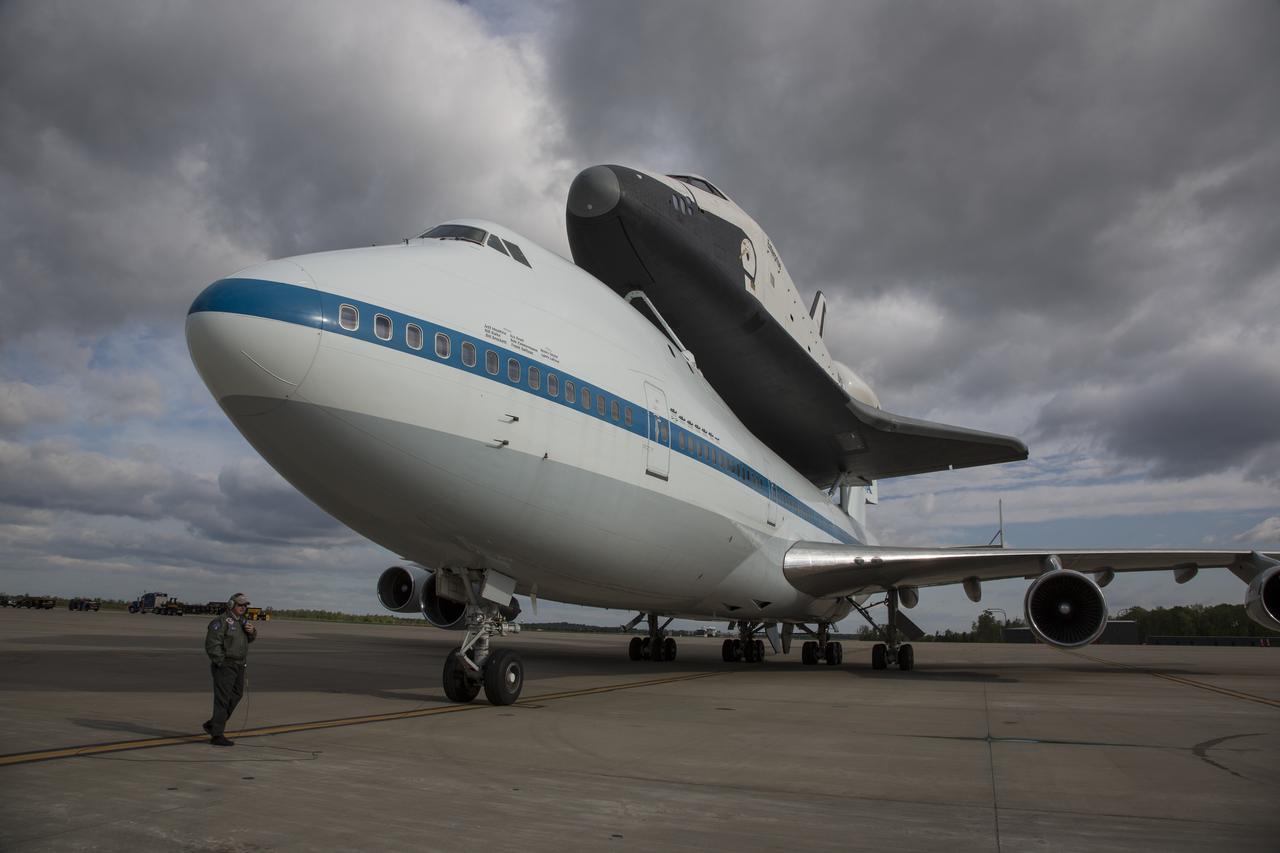
Space shuttle Enterprise, mounted atop a NASA 747 Shuttle Carrier Aircraft (SCA), is seen prior to taking off for New York from Washington Dulles International Airport, Friday, April 27, 2012, in Sterling, VA. Enterprise was the first shuttle orbiter built for NASA performing test flights in the atmosphere and was incapable of spaceflight. Originally housed at the Smithsonian's Steven F. Udvar-Hazy Center, Enterprise will be demated from the SCA and placed on a barge that will eventually be moved by tugboat up the Hudson River to the Intrepid Sea, Air & Space Museum in June. Photo Credit: (NASA/Scott Andrews)
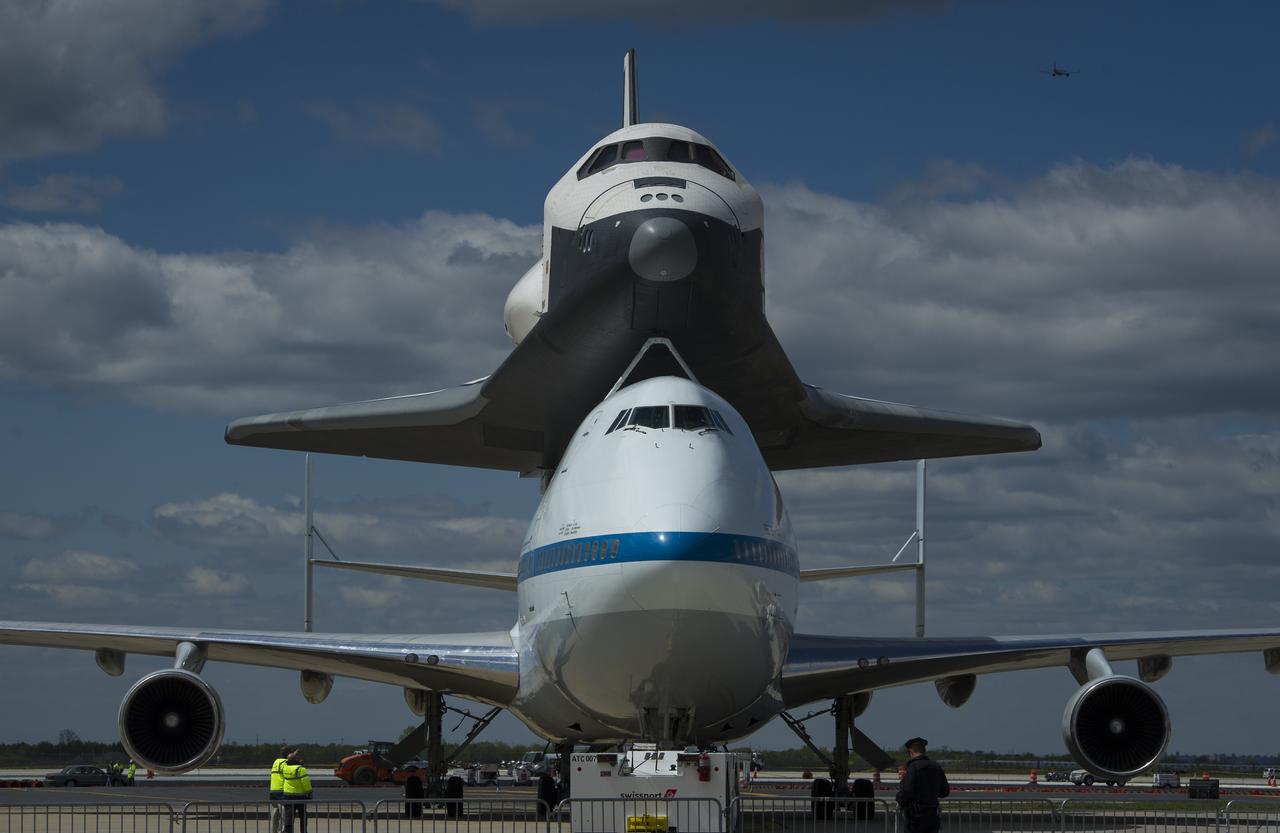
Space shuttle Enterprise, mounted atop a NASA 747 Shuttle Carrier Aircraft (SCA), is seen as it taxis at John F. Kennedy Airport, Friday, April 27, 2012, in New York. Enterprise was the first shuttle orbiter built for NASA performing test flights in the atmosphere and was incapable of spaceflight. Originally housed at the Smithsonian's Steven F. Udvar-Hazy Center, Enterprise will be demated from the SCA and placed on a barge that will eventually be moved by tugboat up the Hudson River to the Intrepid Sea, Air & Space Museum in June. Photo Credit: (NASA/Paul E. Alers)
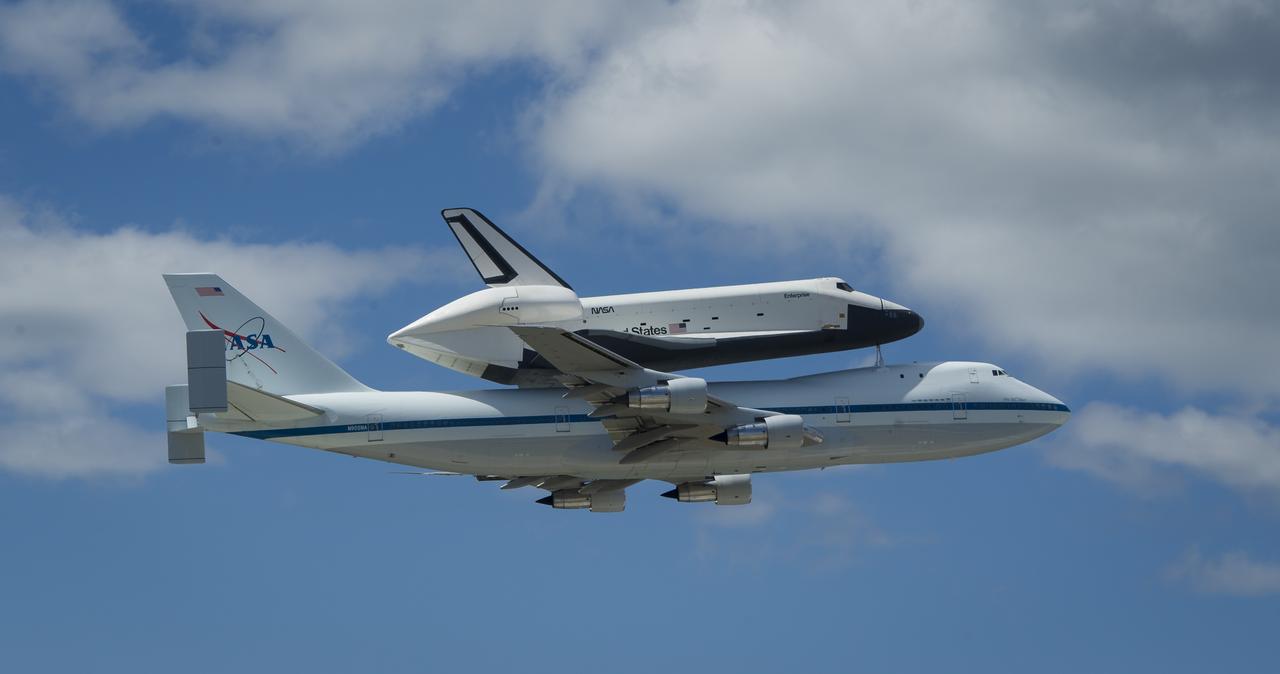
Space shuttle Enterprise, mounted atop a NASA 747 Shuttle Carrier Aircraft (SCA), is seen as it flies over John F. Kennedy Airport, Friday, April 27, 2012, in New York. Enterprise was the first shuttle orbiter built for NASA performing test flights in the atmosphere and was incapable of spaceflight. Originally housed at the Smithsonian's Steven F. Udvar-Hazy Center, Enterprise will be demated from the SCA and placed on a barge that will eventually be moved by tugboat up the Hudson River to the Intrepid Sea, Air & Space Museum in June. Photo Credit: (NASA/Paul E. Alers)
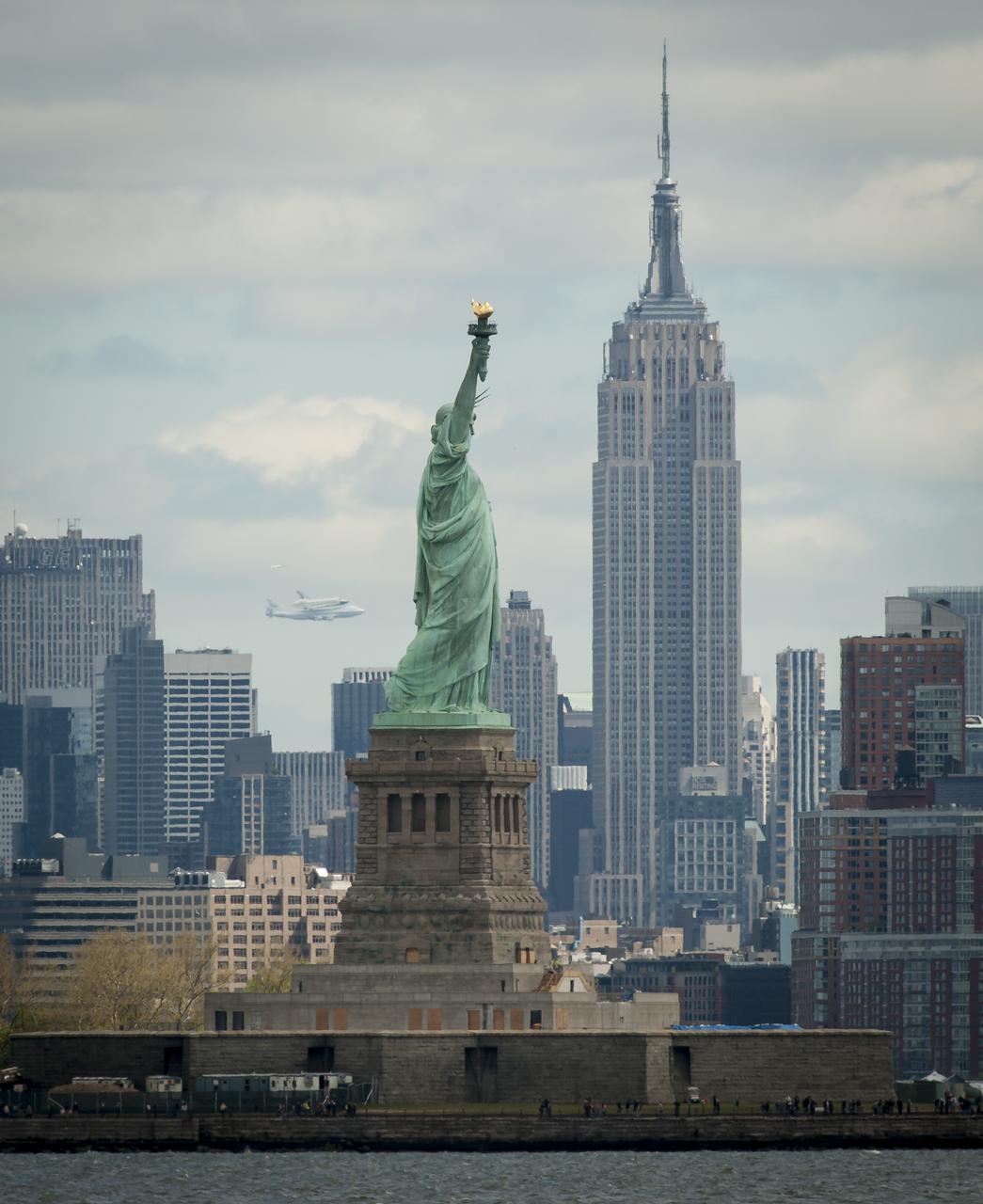
Space shuttle Enterprise, mounted atop a NASA 747 Shuttle Carrier Aircraft (SCA), is seen off in the distance behind the Statue of Liberty, Friday, April 27, 2012, in New York. Enterprise was the first shuttle orbiter built for NASA performing test flights in the atmosphere and was incapable of spaceflight. Originally housed at the Smithsonian's Steven F. Udvar-Hazy Center, Enterprise will be demated from the SCA and placed on a barge that will eventually be moved by tugboat up the Hudson River to the Intrepid Sea, Air & Space Museum in June. Photo Credit: (NASA/Bill Ingalls)

NM21-396-024 (23 March 1996) --- Backdropped against the blackness of space the Space Shuttle Atlantis was taken by the two Mir-21 cosmonaut crew members onboard Russia’s Mir Space Station, during rendezvous and docking operations on March 23, 1996. The Orbiter Docking System (ODS), the connective tunnel and the Spacehab Module can be seen in Atlantis’ cargo bay. With the subsequent delivery of astronaut Shannon W. Lucid to the Mir, the Mir-21 crew grew to three, as the mission specialist quickly becomes a cosmonaut guest researcher. She will spend approximately 140 days on Mir before returning to Earth.
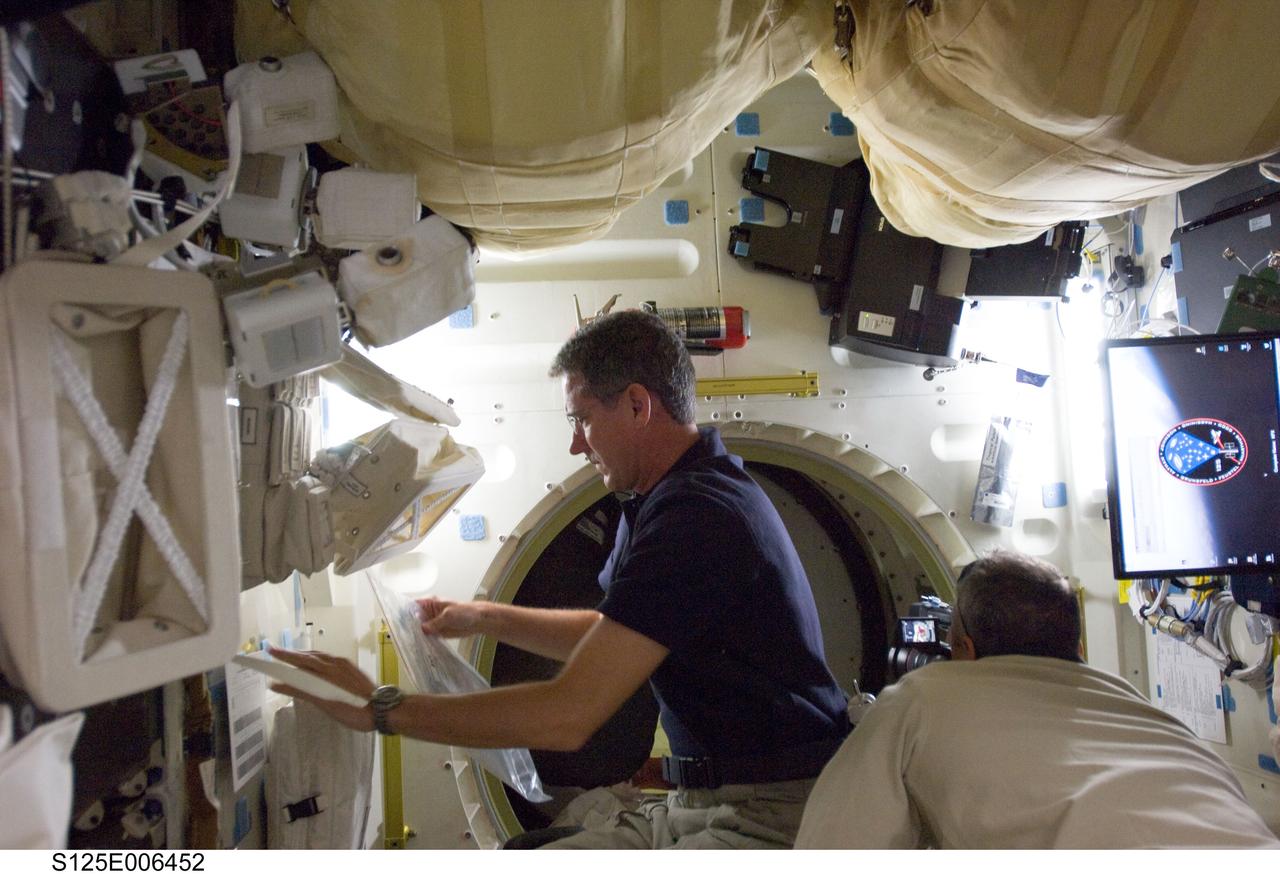
S125-E-006452 (12 May 2009) --- Astronaut Michael Good, STS-125 mission specialist, is busy on Atlantis? mid deck during his second day in space. Astronaut Mike Massimino, mission specialist, uses a camera to document Good's task. The next several days prove to be very busy for the entire crew, as five spacewalks, two of which will have Good leaving the shirt sleeved environment of the shuttle to perform work on the Hubble Space Telescope, are in the offing.

The Space Shuttle External Tank 120 is shown here in its vertical position in NASA’s Michoud Assembly Facility in New Orleans. Slated for launch on the Orbiter Discovery scheduled for next Spring, the tank is in position for its new foam application process on the liquid hydrogen tank-to-inter tank flange area, a tank structural connection point. The foam will be applied with an enhanced finishing procedure that requires two technicians, one for a new mold-injection procedure to the intertank’s ribbing and one for real-time videotaped surveillance of the process. Marshall Space Flight Center played a significant role in the development of the new application process designed to replace the possible debris shedding source previously used.

The Space Shuttle External Tank 120 is shown here during transfer in NASA’s Michoud Assembly Facility in New Orleans. Slated for launch on the Orbiter Discovery scheduled for next Spring, the tank will be erected vertically in preparation for its new foam application process on the liquid hydrogen tank-to-inter tank flange area, a tank structural connection point. The foam will be applied with an enhanced finishing procedure that requires two technicians, one for a new mold-injection procedure to the intertank’s ribbing and one for real-time videotaped surveillance of the process. Marshall Space Flight Center played a significant role in the development of the new application process designed to replace the possible debris shedding source previously used.
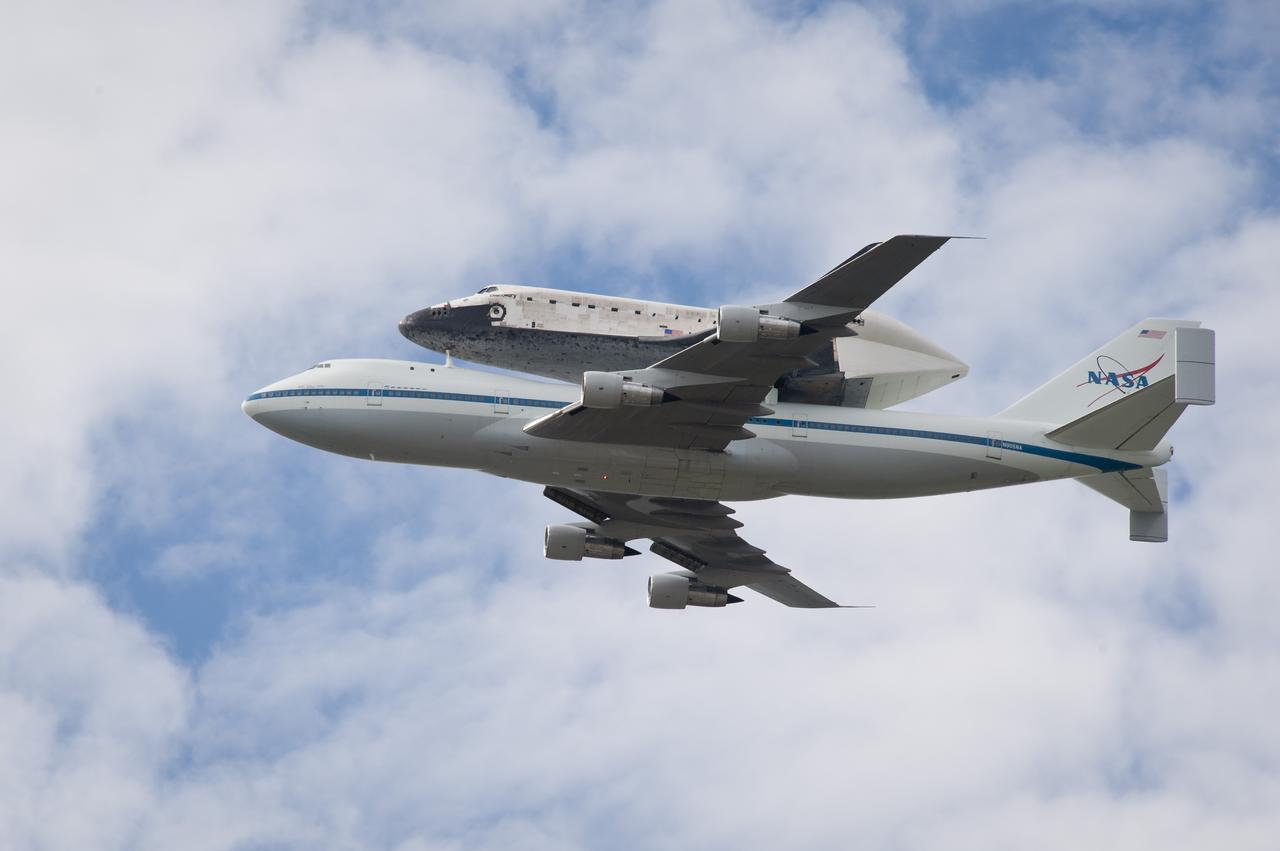
Space shuttle Discovery, mounted atop a NASA 747 Shuttle Carrier Aircraft (SCA) flies near the U.S. Capitol, Tuesday, April 17, 2012, in Washington. Discovery, the first orbiter retired from NASA’s shuttle fleet, completed 39 missions, spent 365 days in space, orbited the Earth 5,830 times, and traveled 148,221,675 miles. NASA will transfer Discovery to the National Air and Space Museum to begin its new mission to commemorate past achievements in space and to educate and inspire future generations of explorers. Photo Credit: (NASA/Michael Porterfield)
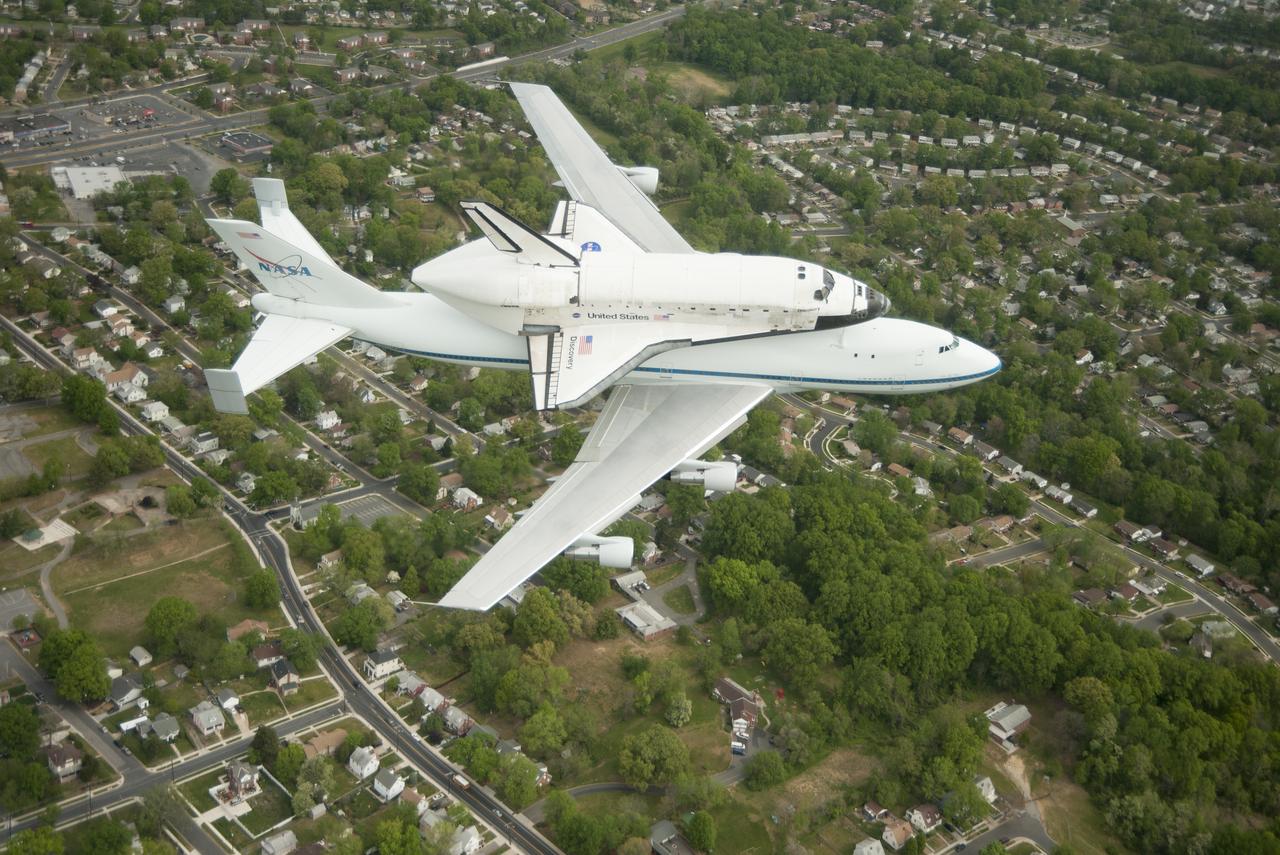
Space shuttle Discovery, mounted atop a NASA 747 Shuttle Carrier Aircraft (SCA), flies over the Washington skyline as seen from a NASA T-38 aircraft, Tuesday, April 17, 2012. Discovery, the first orbiter retired from NASA’s shuttle fleet, completed 39 missions, spent 365 days in space, orbited the Earth 5,830 times, and traveled 148,221,675 miles. NASA will transfer Discovery to the National Air and Space Museum to begin its new mission to commemorate past achievements in space and to educate and inspire future generations of explorers. Photo Credit: (NASA/Robert Markowitz)