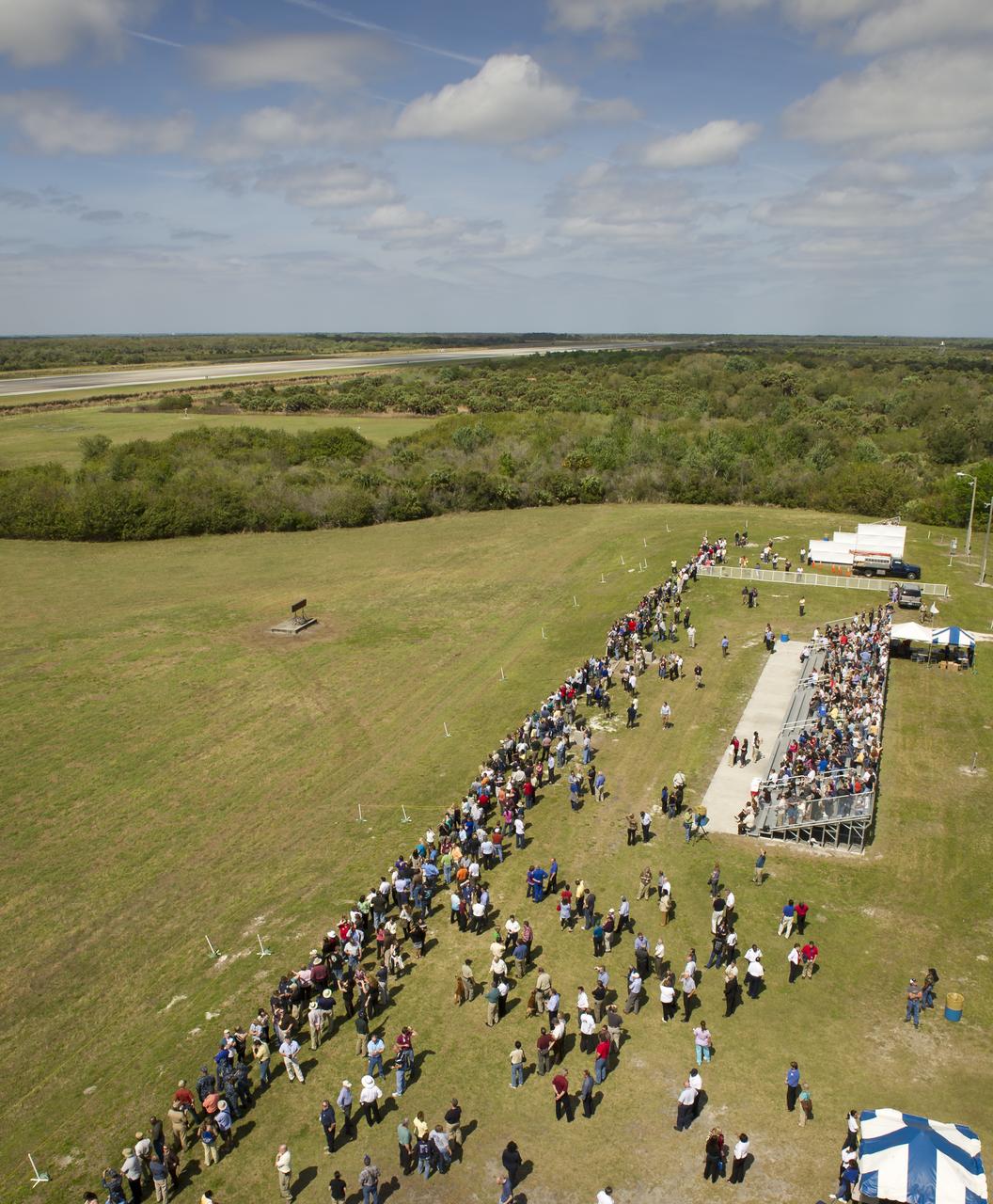
Crowds start to gather at the Shuttle Landing Facility (SLF) in preparation for the landing of the space shuttle Discovery, Wednesday, March 9, 2011, at Kennedy Space Center in Cape Canaveral, Fla. This was Discovery's final flight. Discovery flew 39 missions, spent 365 days in space, orbited Earth 5,830 times and traveled 148,221,675 miles. Photo credit: (NASA/Bill Ingalls)
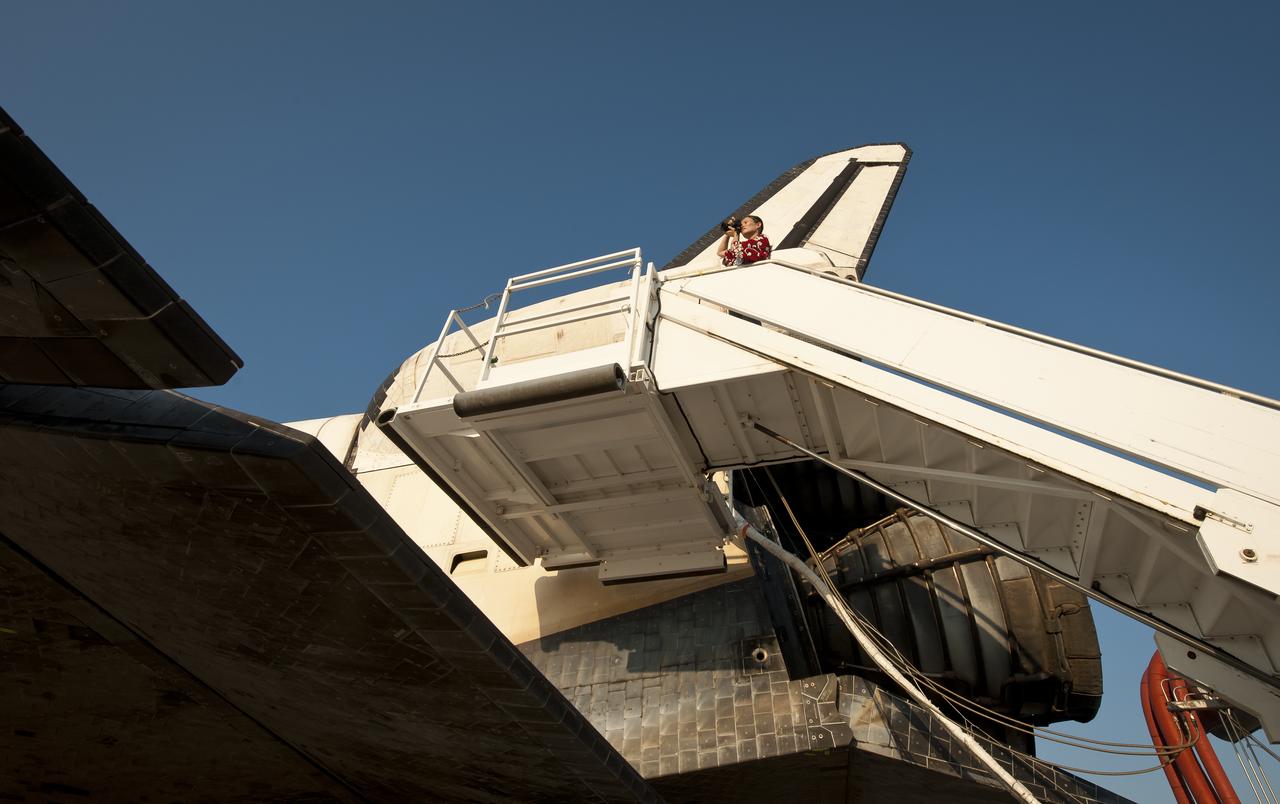
NASA and contractor personnel work on the space shuttle Atlantis at the Kennedy Space Center Shuttle Landing Facility (SLF) shortly after Atlantis (STS-135) landed early Thursday morning, July 21, 2011, in Cape Canaveral, Fla. Overall, Atlantis spent 307 days in space and traveled nearly 126 million miles during its 33 flights. Atlantis, the fourth orbiter built, launched on its first mission on Oct. 3, 1985. Photo Credit: (NASA/Bill Ingalls)
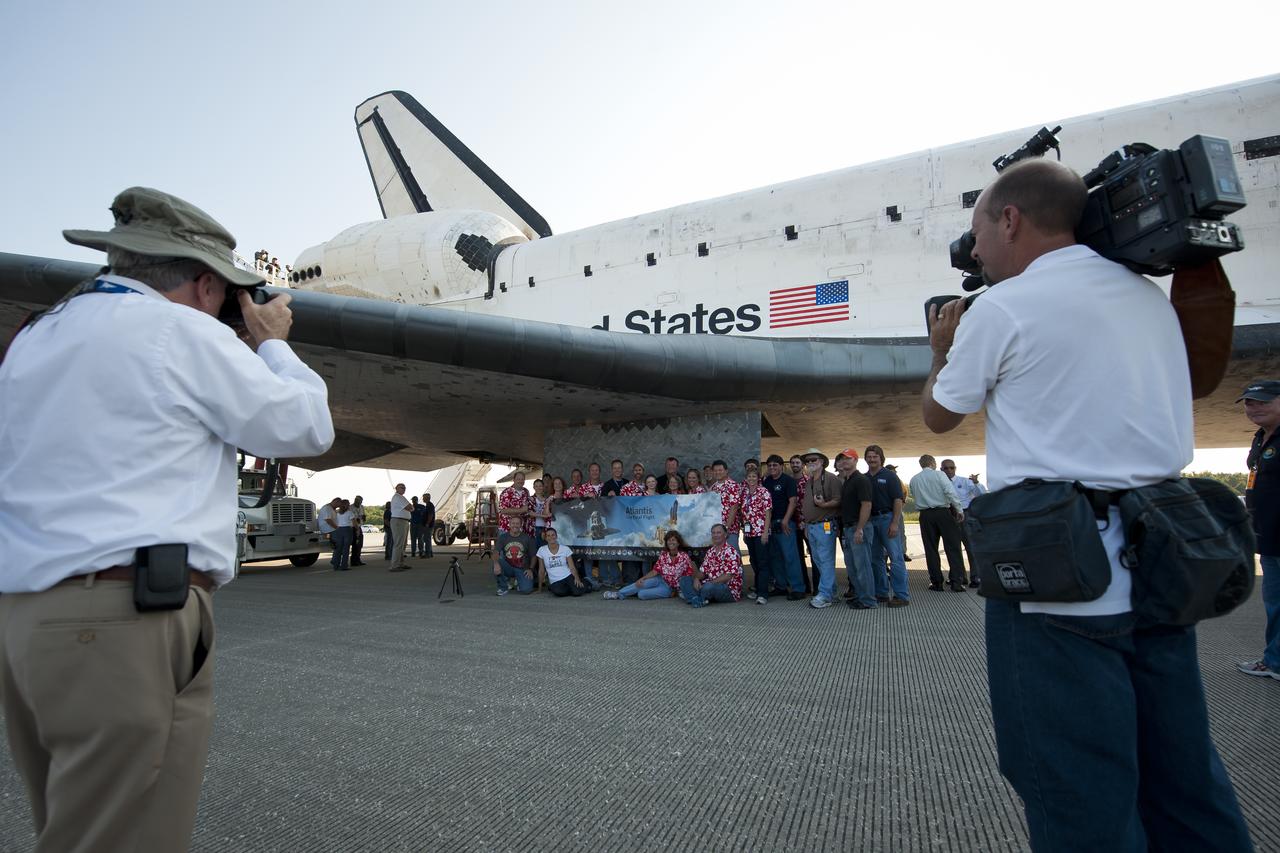
NASA and contractor personnel are photographed under the wing of the space shuttle Atlantis at the Kennedy Space Center Shuttle Landing Facility (SLF) shortly after Atlantis (STS-135) landed early Thursday morning, July 21, 2011, in Cape Canaveral, Fla. Overall, Atlantis spent 307 days in space and traveled nearly 126 million miles during its 33 flights. Atlantis, the fourth orbiter built, launched on its first mission on Oct. 3, 1985. Photo Credit: (NASA/Bill Ingalls)
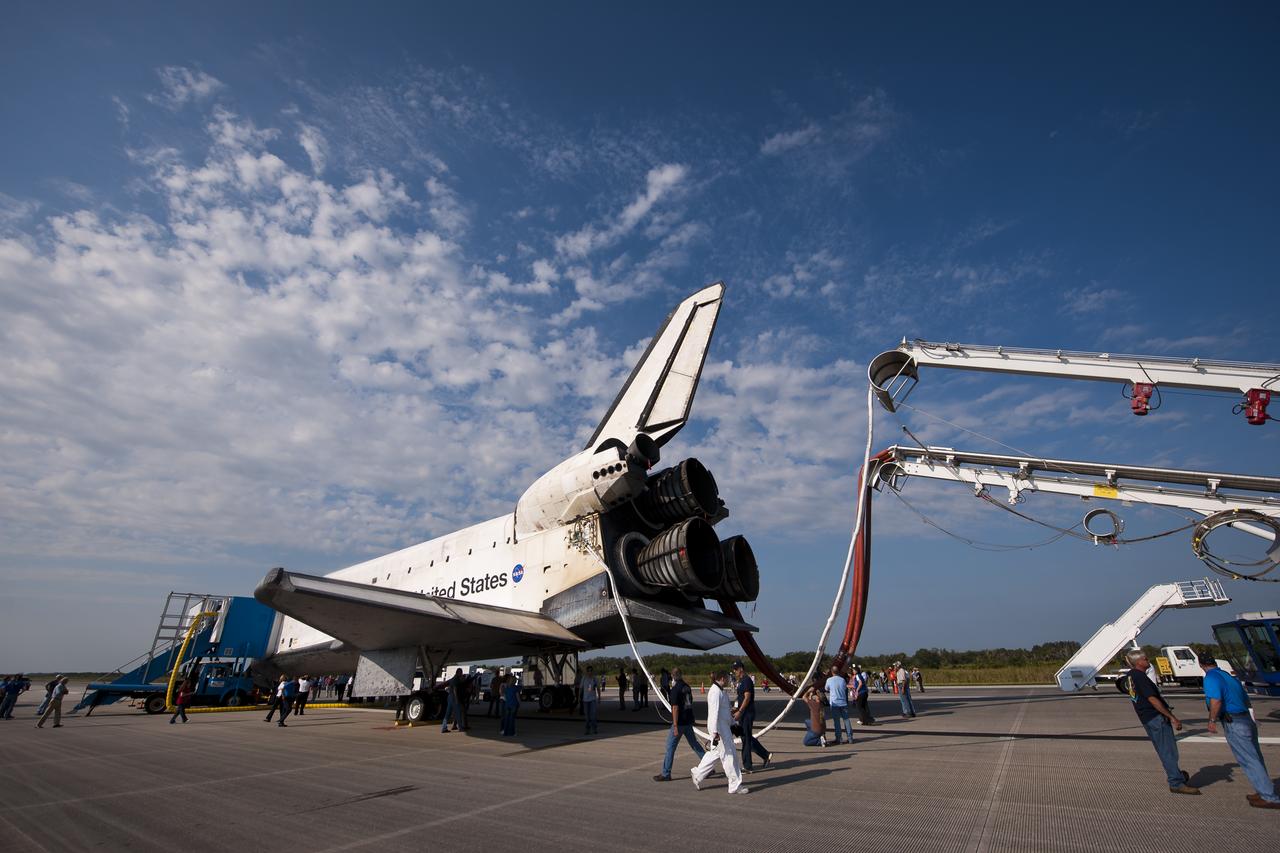
NASA and contractor personnel work on the space shuttle Atlantis at the Kennedy Space Center Shuttle Landing Facility (SLF) shortly after Atlantis (STS-135) landed early Thursday morning, July 21, 2011, in Cape Canaveral, Fla. Overall, Atlantis spent 307 days in space and traveled nearly 126 million miles during its 33 flights. Atlantis, the fourth orbiter built, launched on its first mission on Oct. 3, 1985. Photo Credit: (NASA/Bill Ingalls)
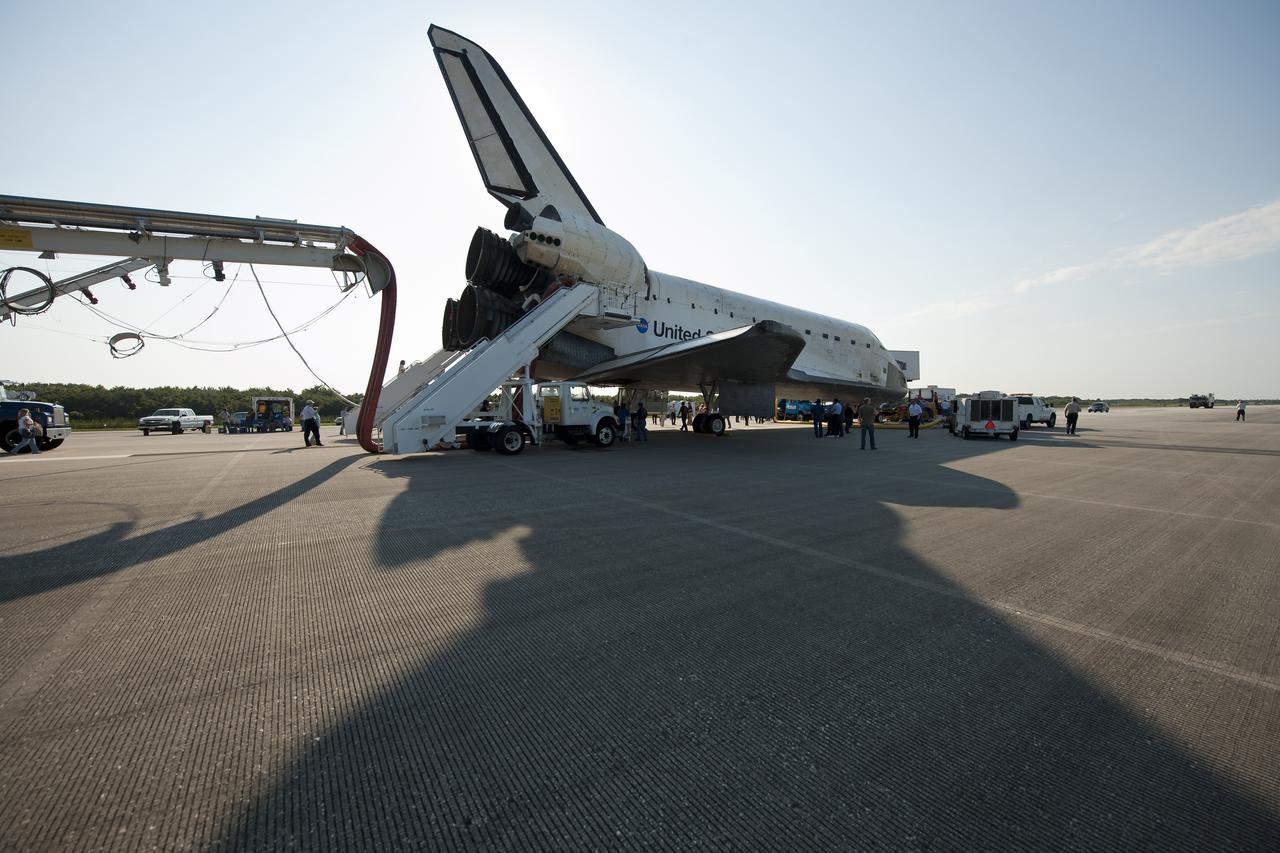
NASA and contractor personnel work on the space shuttle Atlantis at the Kennedy Space Center Shuttle Landing Facility (SLF) shortly after Atlantis (STS-135) landed early Thursday morning, July 21, 2011, in Cape Canaveral, Fla. Overall, Atlantis spent 307 days in space and traveled nearly 126 million miles during its 33 flights. Atlantis, the fourth orbiter built, launched on its first mission on Oct. 3, 1985. Photo Credit: (NASA/Bill Ingalls)
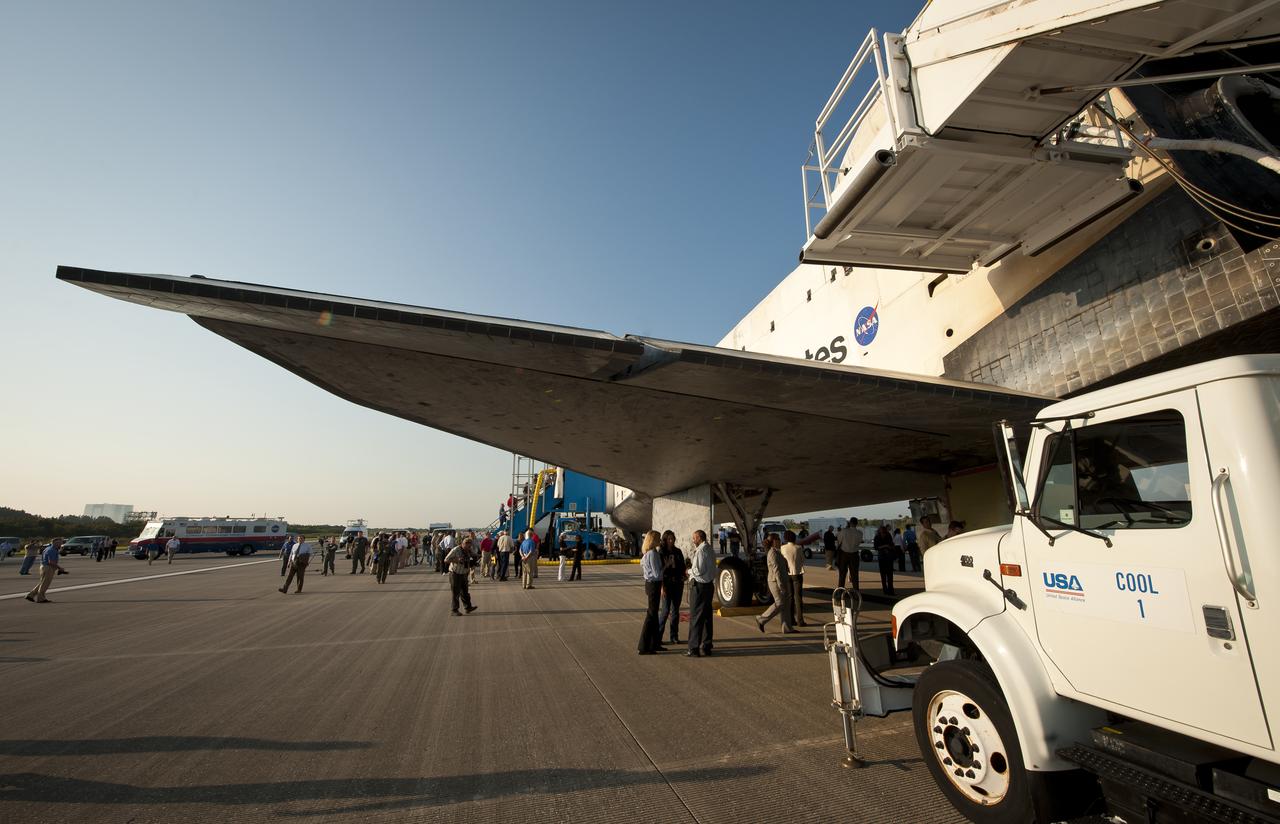
NASA and contractor personnel work on the space shuttle Atlantis at the Kennedy Space Center Shuttle Landing Facility (SLF) shortly after Atlantis (STS-135) landed early Thursday morning, July 21, 2011, in Cape Canaveral, Fla. Overall, Atlantis spent 307 days in space and traveled nearly 126 million miles during its 33 flights. Atlantis, the fourth orbiter built, launched on its first mission on Oct. 3, 1985. Photo Credit: (NASA/Bill Ingalls)
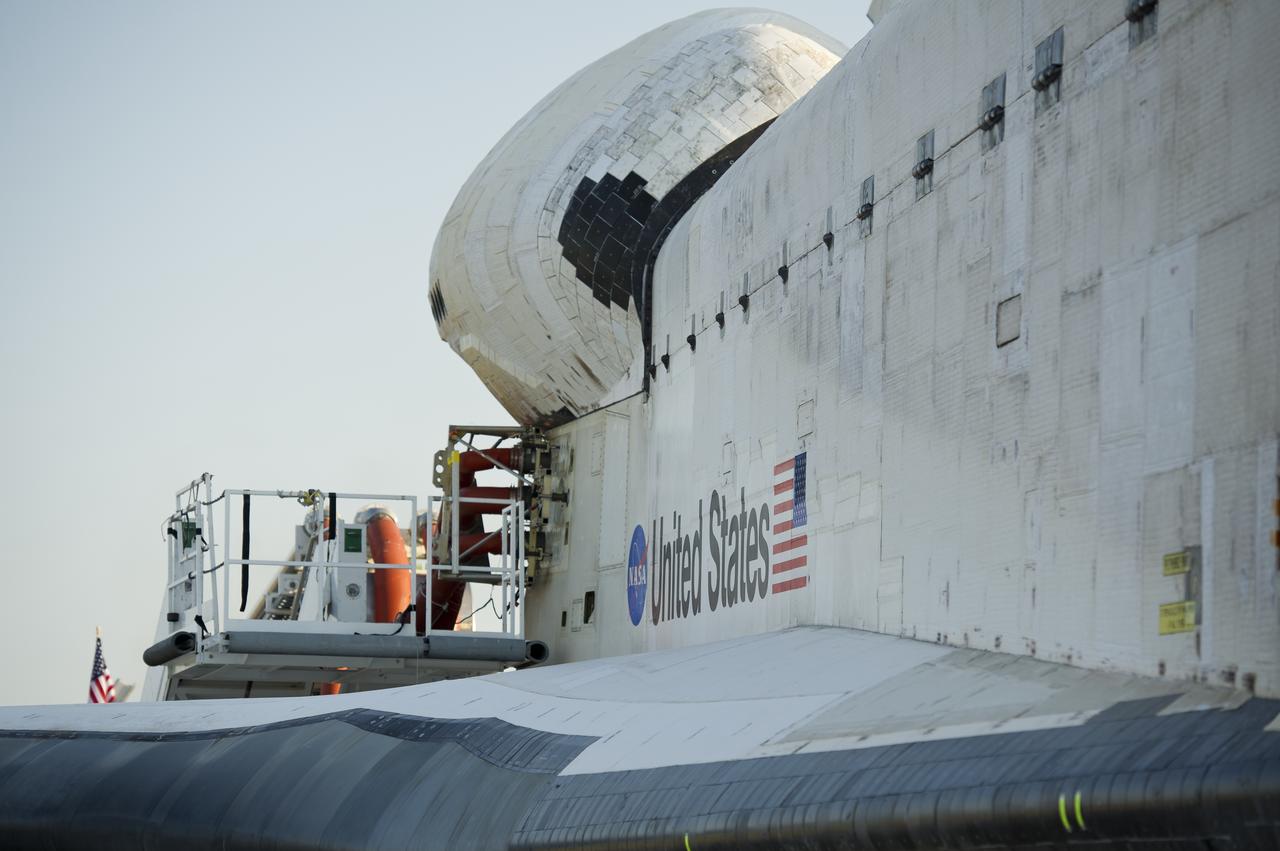
Close up view of the side the space shuttle Atlantis at the Kennedy Space Center Shuttle Landing Facility (SLF) shortly after Atlantis (STS-135) landed early Thursday morning, July 21, 2011, in Cape Canaveral, Fla. Overall, Atlantis spent 307 days in space and traveled nearly 126 million miles during its 33 flights. Atlantis, the fourth orbiter built, launched on its first mission on Oct. 3, 1985. Photo Credit: (NASA/Bill Ingalls)
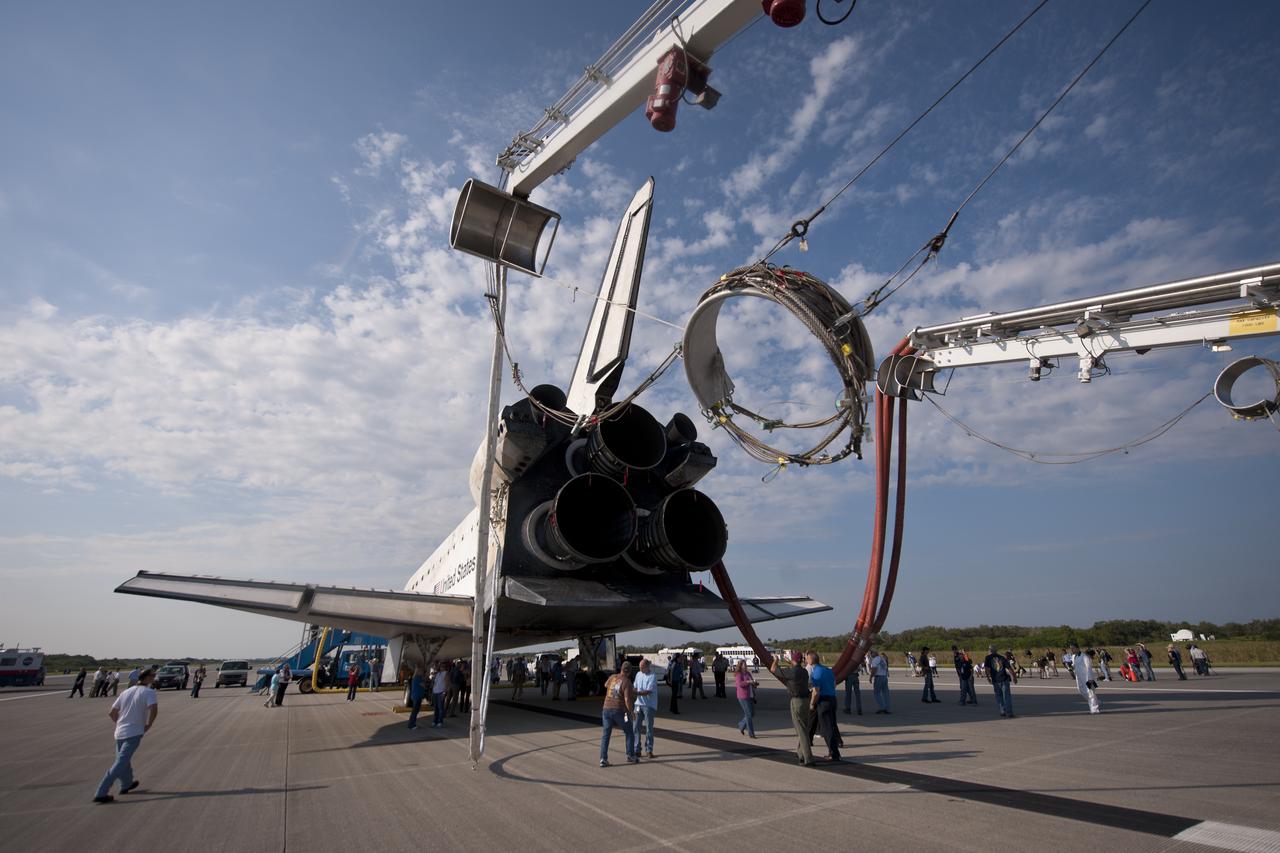
NASA and contractor personnel work on the space shuttle Atlantis at the Kennedy Space Center Shuttle Landing Facility (SLF) shortly after Atlantis (STS-135) landed early Thursday morning, July 21, 2011, in Cape Canaveral, Fla. Overall, Atlantis spent 307 days in space and traveled nearly 126 million miles during its 33 flights. Atlantis, the fourth orbiter built, launched on its first mission on Oct. 3, 1985. Photo Credit: (NASA/Bill Ingalls)
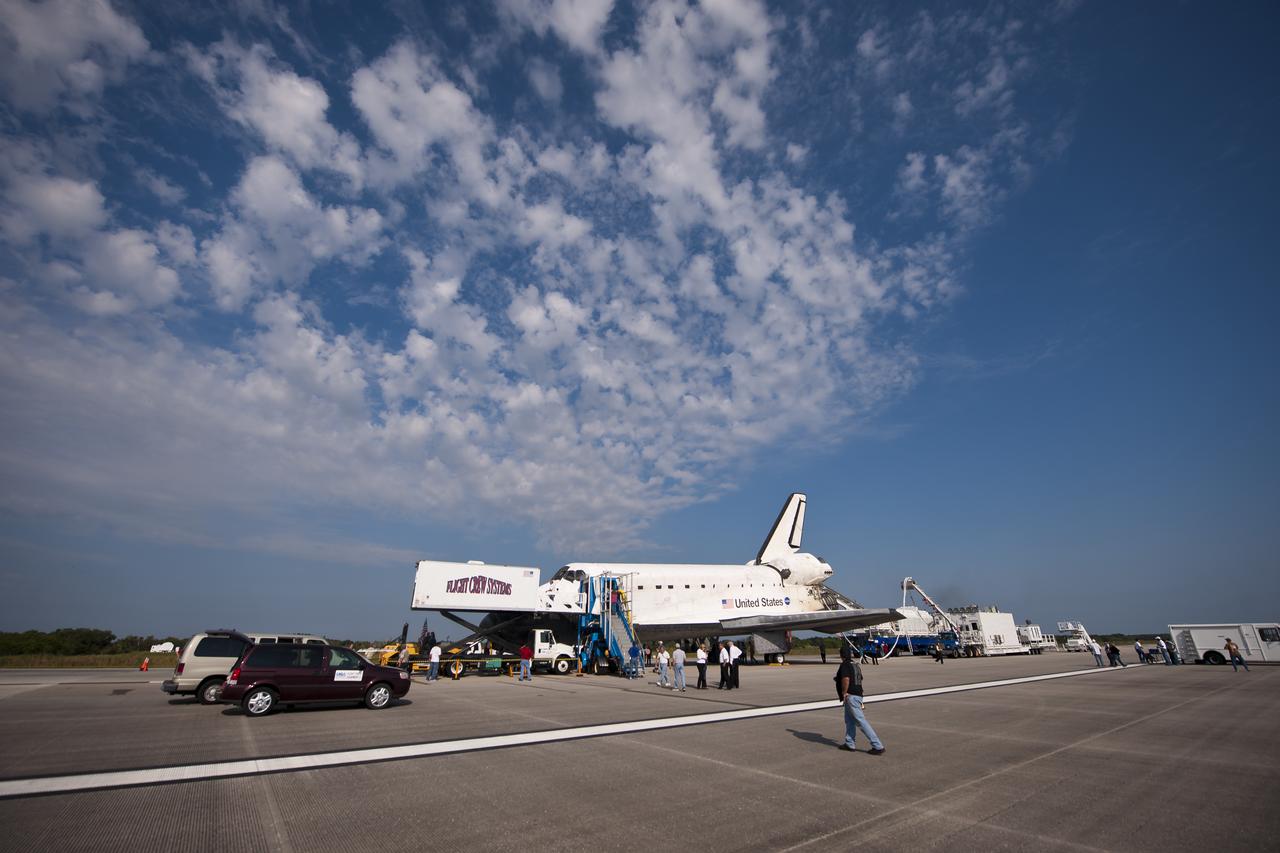
NASA and contractor personnel work on the space shuttle Atlantis at the Kennedy Space Center Shuttle Landing Facility (SLF) shortly after Atlantis (STS-135) landed early Thursday morning, July 21, 2011, in Cape Canaveral, Fla. Overall, Atlantis spent 307 days in space and traveled nearly 126 million miles during its 33 flights. Atlantis, the fourth orbiter built, launched on its first mission on Oct. 3, 1985. Photo Credit: (NASA/Bill Ingalls)
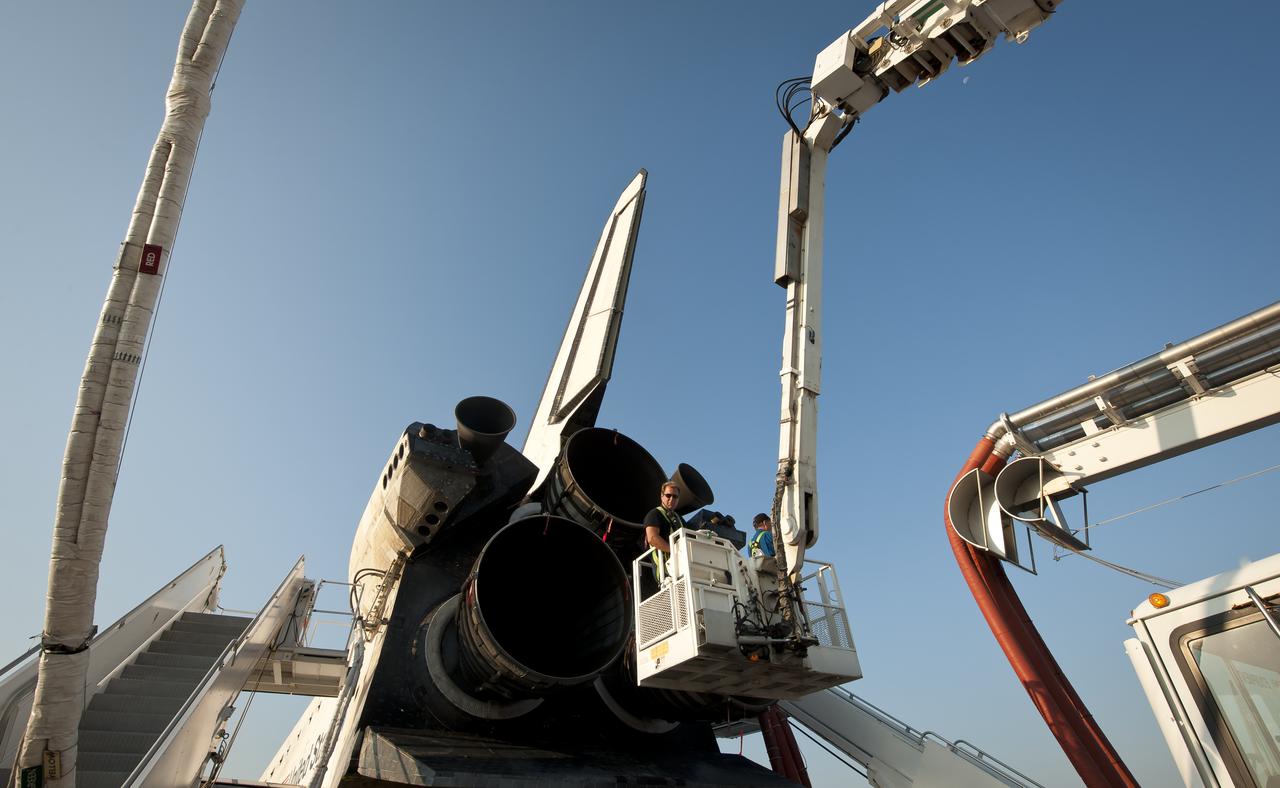
NASA and contractor personnel work on the space shuttle Atlantis at the Kennedy Space Center Shuttle Landing Facility (SLF) shortly after Atlantis (STS-135) landed early Thursday morning, July 21, 2011, in Cape Canaveral, Fla. Overall, Atlantis spent 307 days in space and traveled nearly 126 million miles during its 33 flights. Atlantis, the fourth orbiter built, launched on its first mission on Oct. 3, 1985. Photo Credit: (NASA/Bill Ingalls)
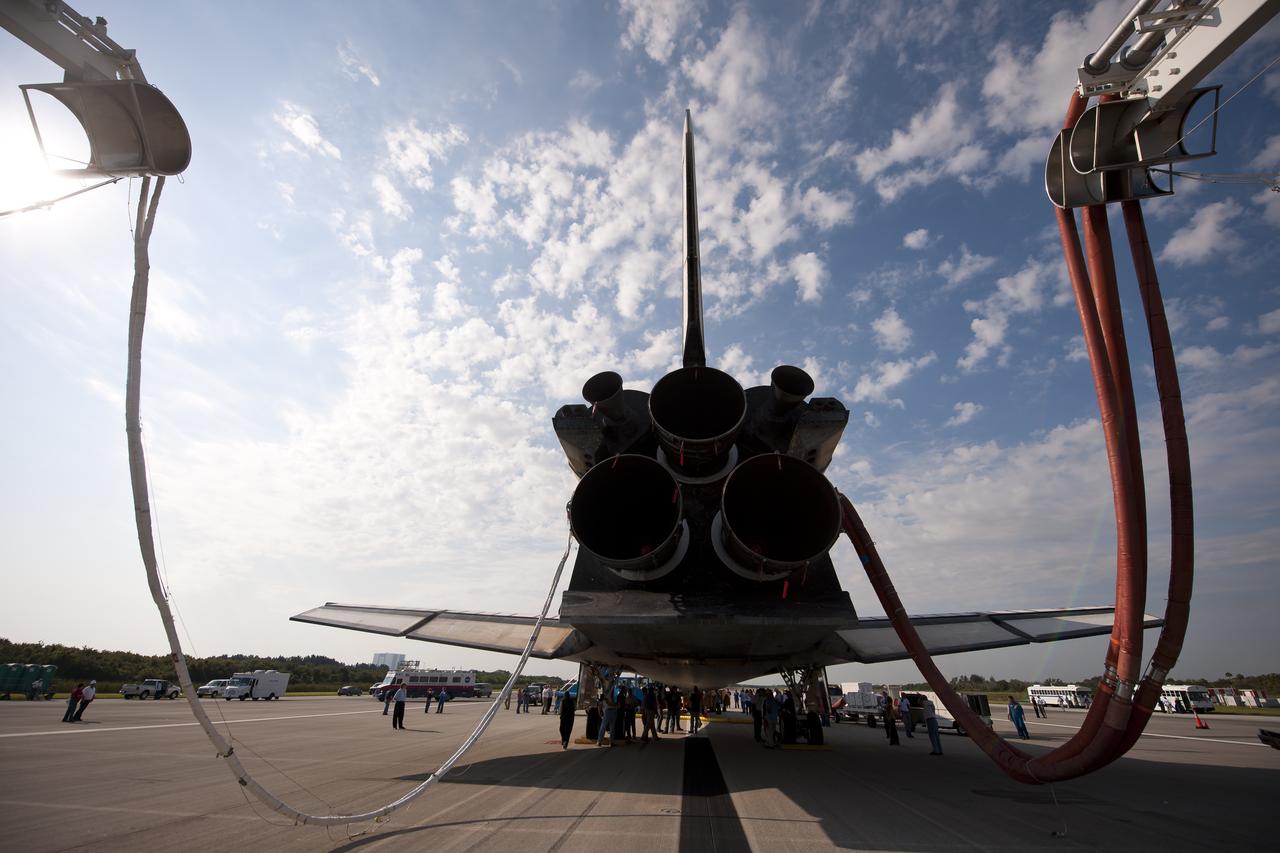
NASA and contractor personnel work on the space shuttle Atlantis at the Kennedy Space Center Shuttle Landing Facility (SLF) shortly after Atlantis (STS-135) landed early Thursday morning, July 21, 2011, in Cape Canaveral, Fla. Overall, Atlantis spent 307 days in space and traveled nearly 126 million miles during its 33 flights. Atlantis, the fourth orbiter built, launched on its first mission on Oct. 3, 1985. Photo Credit: (NASA/Bill Ingalls)
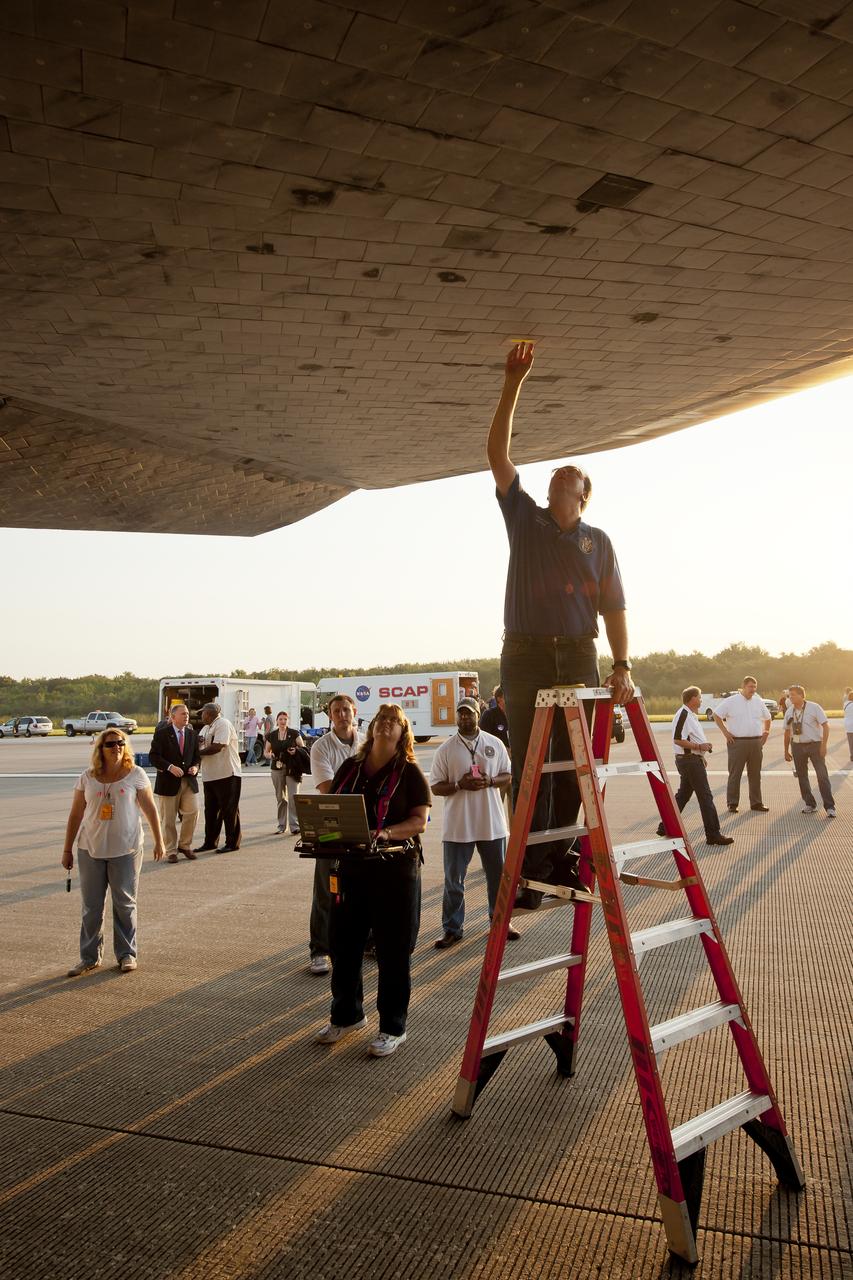
NASA and contractor personnel work under the space shuttle Atlantis at the Kennedy Space Center Shuttle Landing Facility (SLF) shortly after Atlantis (STS-135) landed early Thursday morning, July 21, 2011, in Cape Canaveral, Fla. Overall, Atlantis spent 307 days in space and traveled nearly 126 million miles during its 33 flights. Atlantis, the fourth orbiter built, launched on its first mission on Oct. 3, 1985. Photo Credit: (NASA/Bill Ingalls)
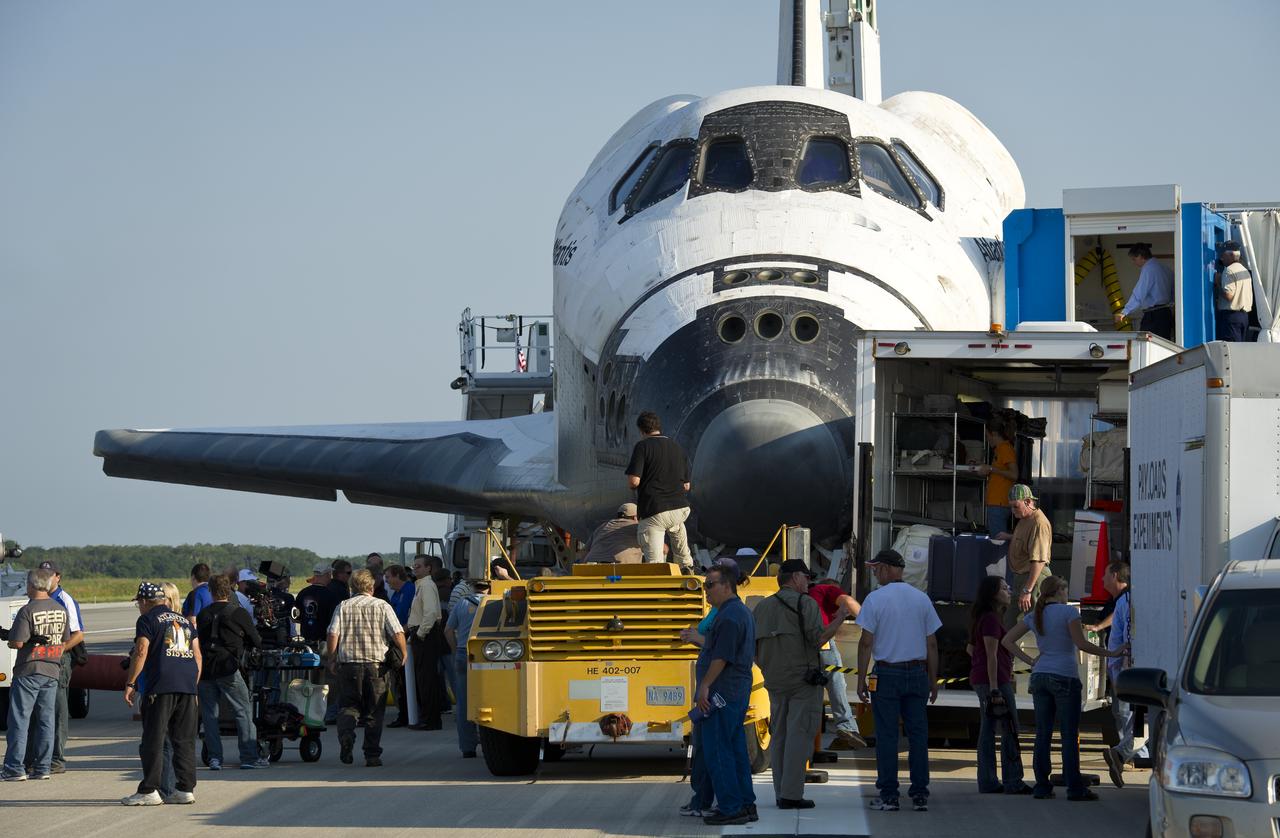
NASA and contractor personnel work on the space shuttle Atlantis at the Kennedy Space Center Shuttle Landing Facility (SLF) shortly after Atlantis (STS-135) landed early Thursday morning, July 21, 2011, in Cape Canaveral, Fla. Overall, Atlantis spent 307 days in space and traveled nearly 126 million miles during its 33 flights. Atlantis, the fourth orbiter built, launched on its first mission on Oct. 3, 1985. Photo Credit: (NASA/Bill Ingalls)
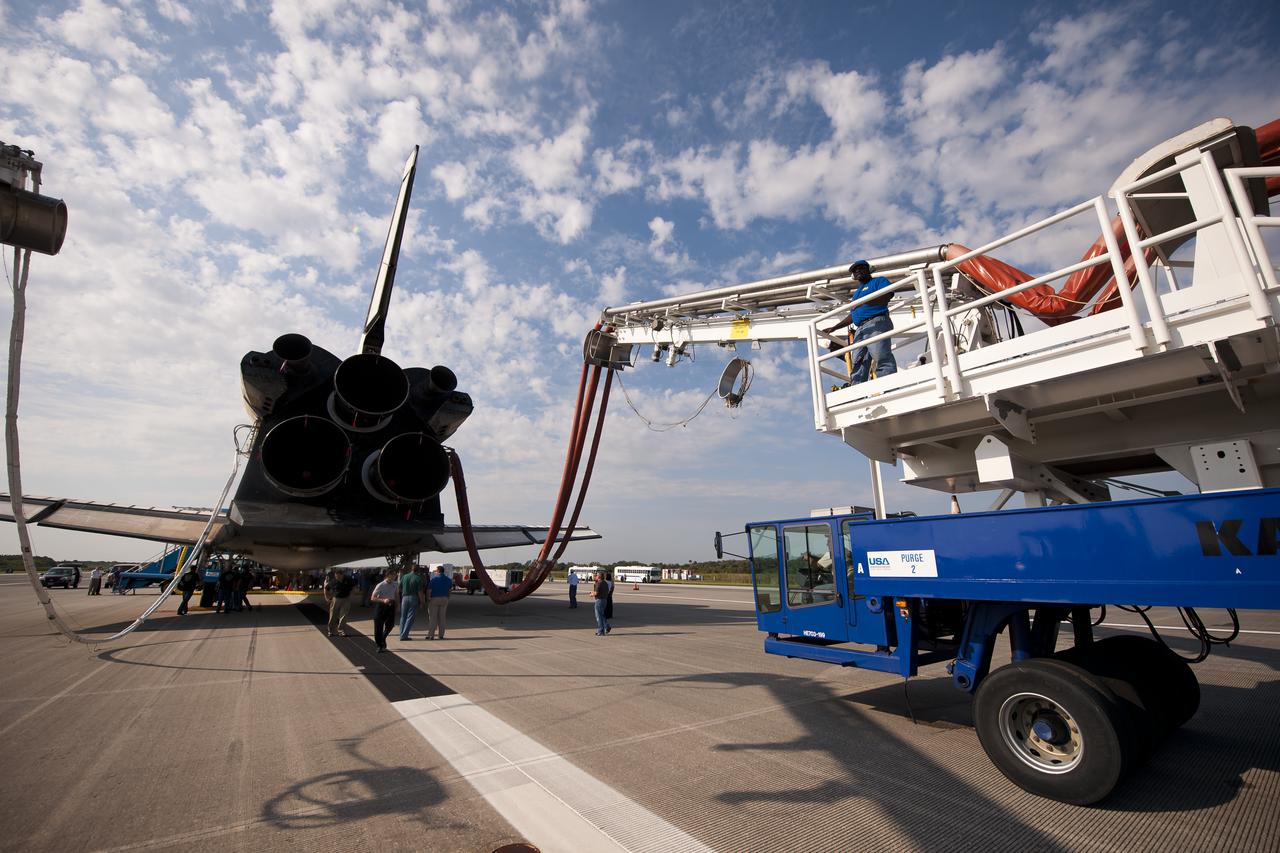
NASA and contractor personnel work on the space shuttle Atlantis at the Kennedy Space Center Shuttle Landing Facility (SLF) shortly after Atlantis (STS-135) landed early Thursday morning, July 21, 2011, in Cape Canaveral, Fla. Overall, Atlantis spent 307 days in space and traveled nearly 126 million miles during its 33 flights. Atlantis, the fourth orbiter built, launched on its first mission on Oct. 3, 1985. Photo Credit: (NASA/Bill Ingalls)
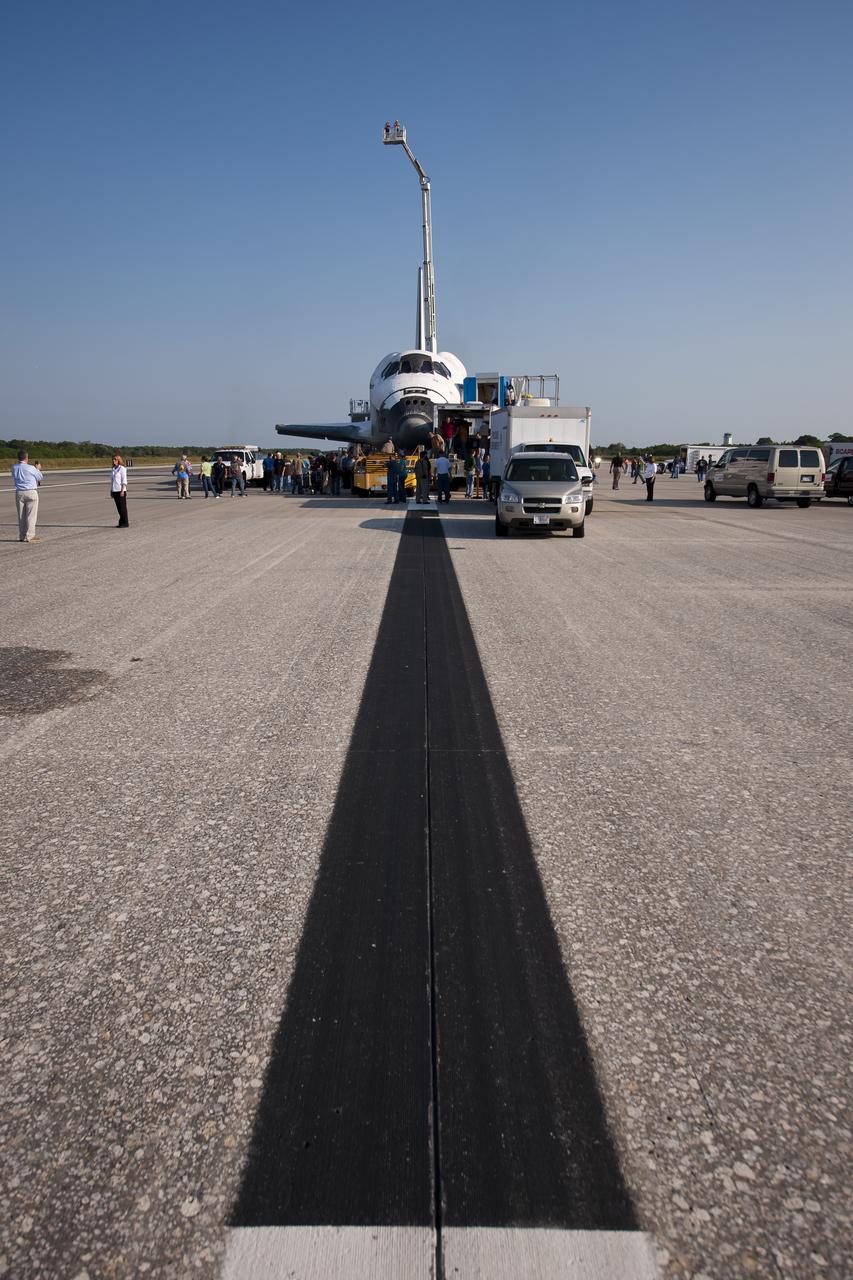
NASA and contractor personnel work on the space shuttle Atlantis at the Kennedy Space Center Shuttle Landing Facility (SLF) shortly after Atlantis (STS-135) landed early Thursday morning, July 21, 2011, in Cape Canaveral, Fla. Overall, Atlantis spent 307 days in space and traveled nearly 126 million miles during its 33 flights. Atlantis, the fourth orbiter built, launched on its first mission on Oct. 3, 1985. Photo Credit: (NASA/Bill Ingalls)
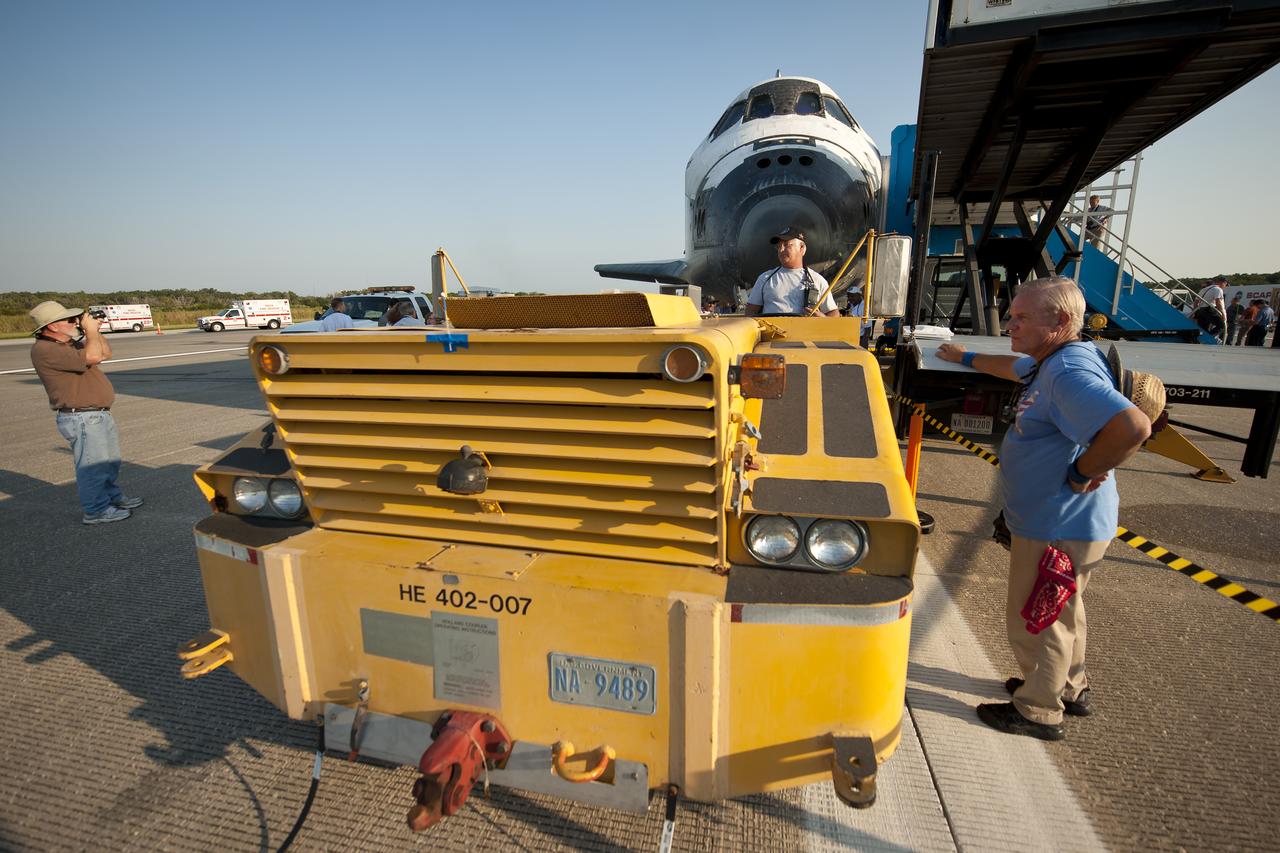
NASA and contractor personnel work on the space shuttle Atlantis at the Kennedy Space Center Shuttle Landing Facility (SLF) shortly after Atlantis (STS-135) landed early Thursday morning, July 21, 2011, in Cape Canaveral, Fla. Overall, Atlantis spent 307 days in space and traveled nearly 126 million miles during its 33 flights. Atlantis, the fourth orbiter built, launched on its first mission on Oct. 3, 1985. Photo Credit: (NASA/Bill Ingalls)
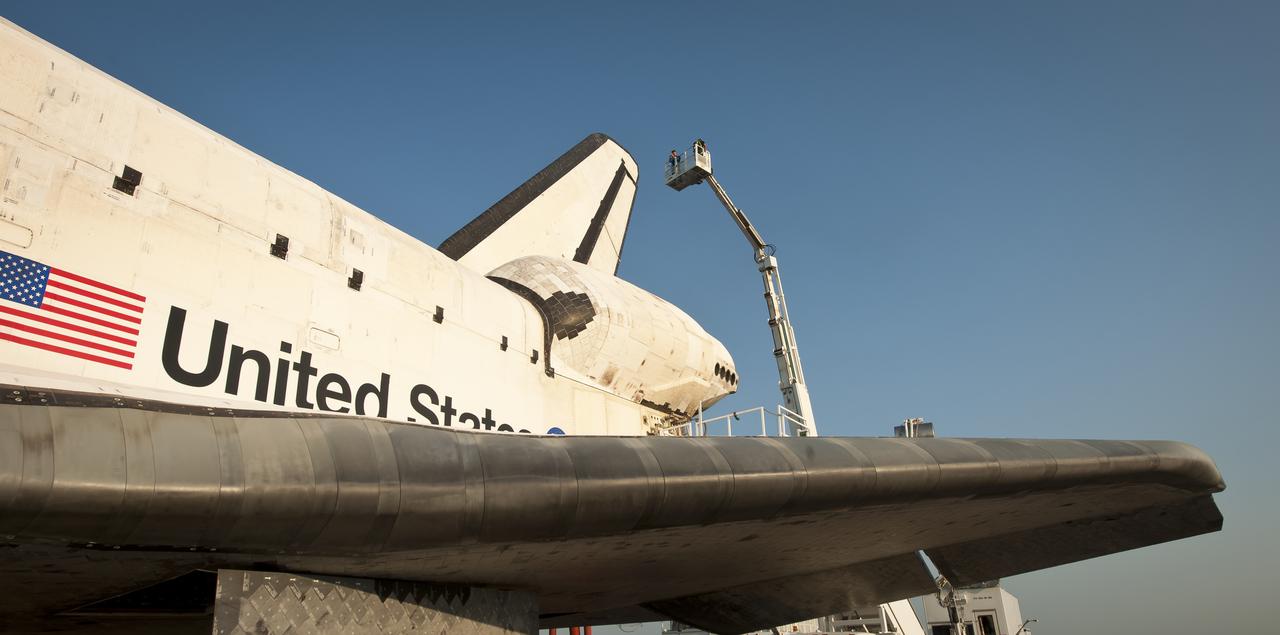
NASA and contractor personnel work on the space shuttle Atlantis at the Kennedy Space Center Shuttle Landing Facility (SLF) shortly after Atlantis (STS-135) landed early Thursday morning, July 21, 2011, in Cape Canaveral, Fla. Overall, Atlantis spent 307 days in space and traveled nearly 126 million miles during its 33 flights. Atlantis, the fourth orbiter built, launched on its first mission on Oct. 3, 1985. Photo Credit: (NASA/Bill Ingalls)
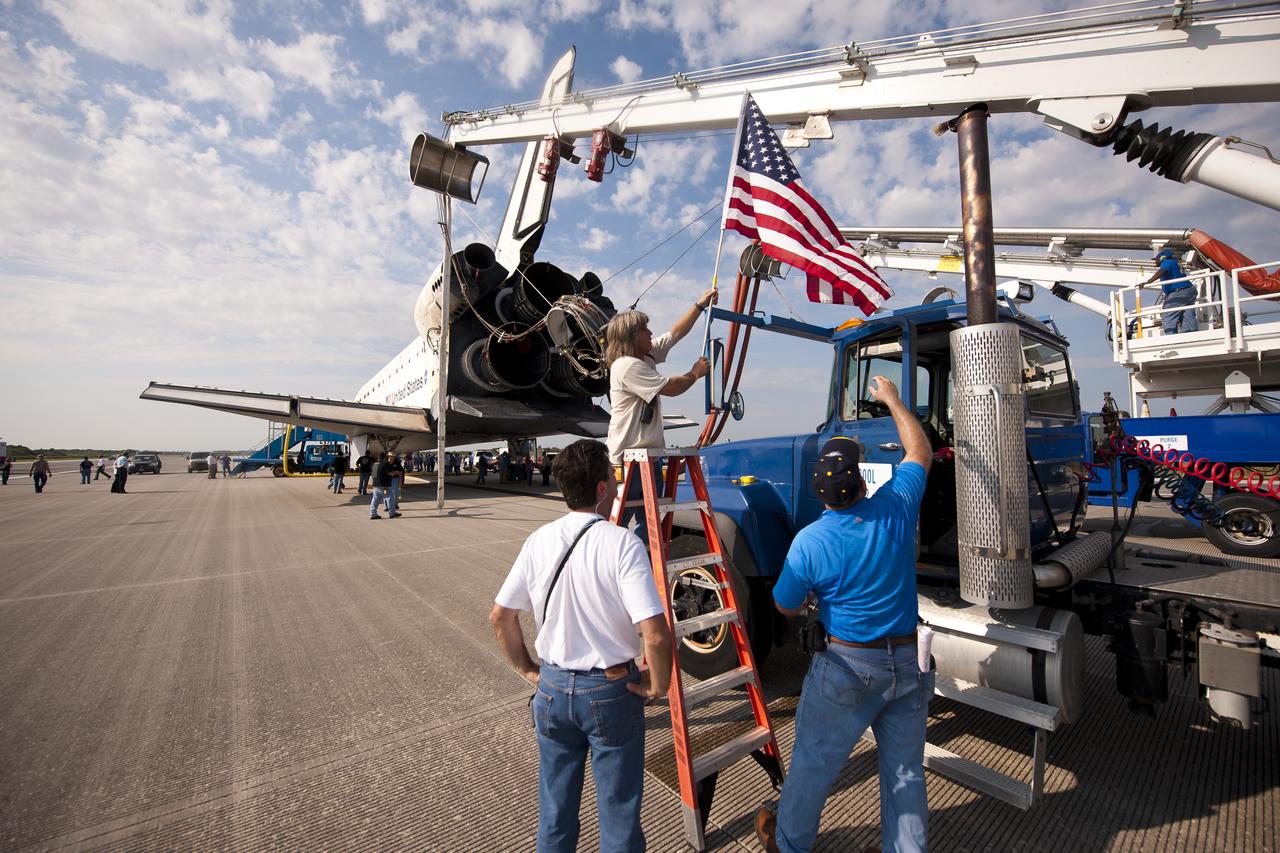
NASA and contractor personnel mount American flags to support vehicles near the space shuttle Atlantis at the Kennedy Space Center Shuttle Landing Facility (SLF) shortly after Atlantis (STS-135) landed early Thursday morning, July 21, 2011, in Cape Canaveral, Fla. The runway is marked to show where the nose landing gear wheels stopped. Overall, Atlantis spent 307 days in space and traveled nearly 126 million miles during its 33 flights. Atlantis, the fourth orbiter built, launched on its first mission on Oct. 3, 1985. Photo Credit: (NASA/Bill Ingalls)
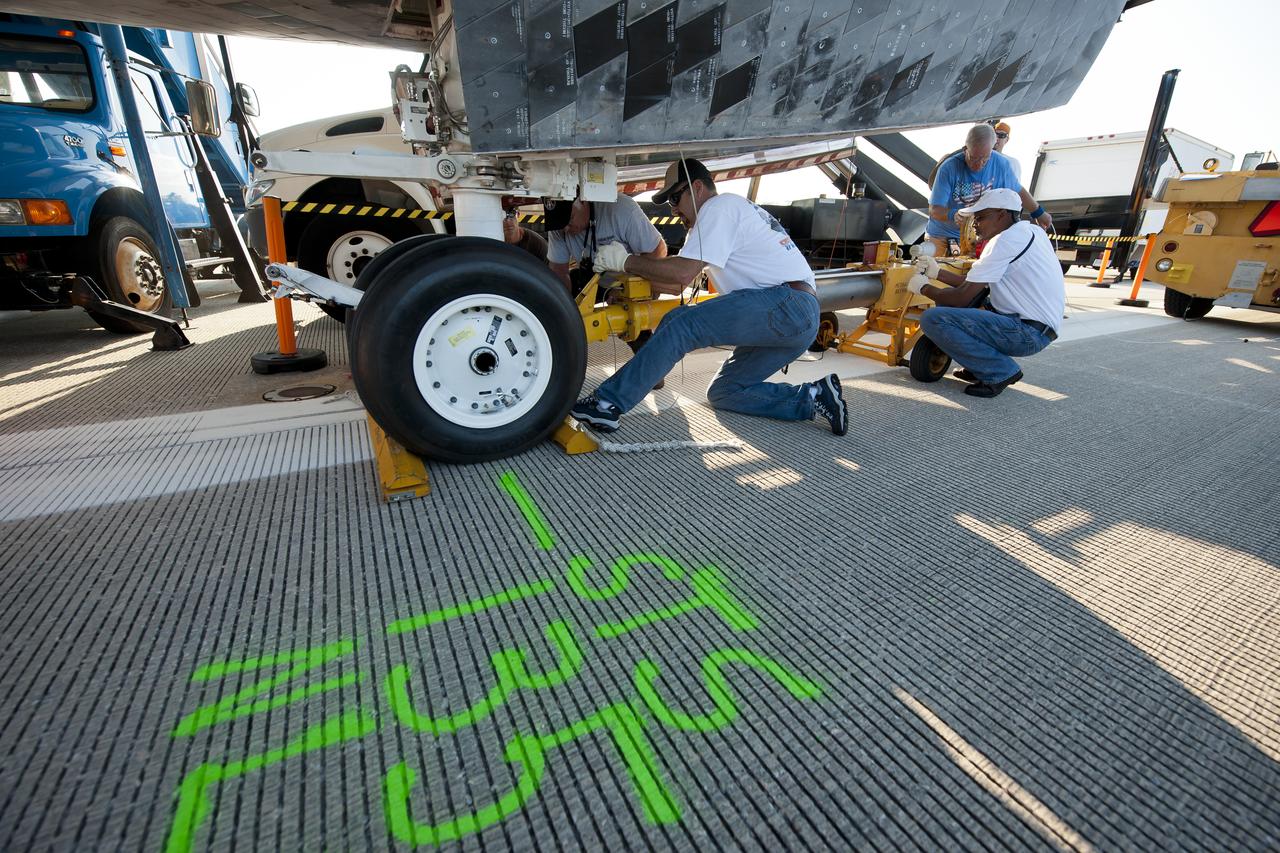
NASA and contractor personnel work to secure the tow bar onto the space shuttle Atlantis at the Kennedy Space Center Shuttle Landing Facility (SLF) shortly after Atlantis (STS-135) landed early Thursday morning, July 21, 2011, in Cape Canaveral, Fla. The runway is marked to show where the nose landing gear wheels stopped. Overall, Atlantis spent 307 days in space and traveled nearly 126 million miles during its 33 flights. Atlantis, the fourth orbiter built, launched on its first mission on Oct. 3, 1985. Photo Credit: (NASA/Bill Ingalls)
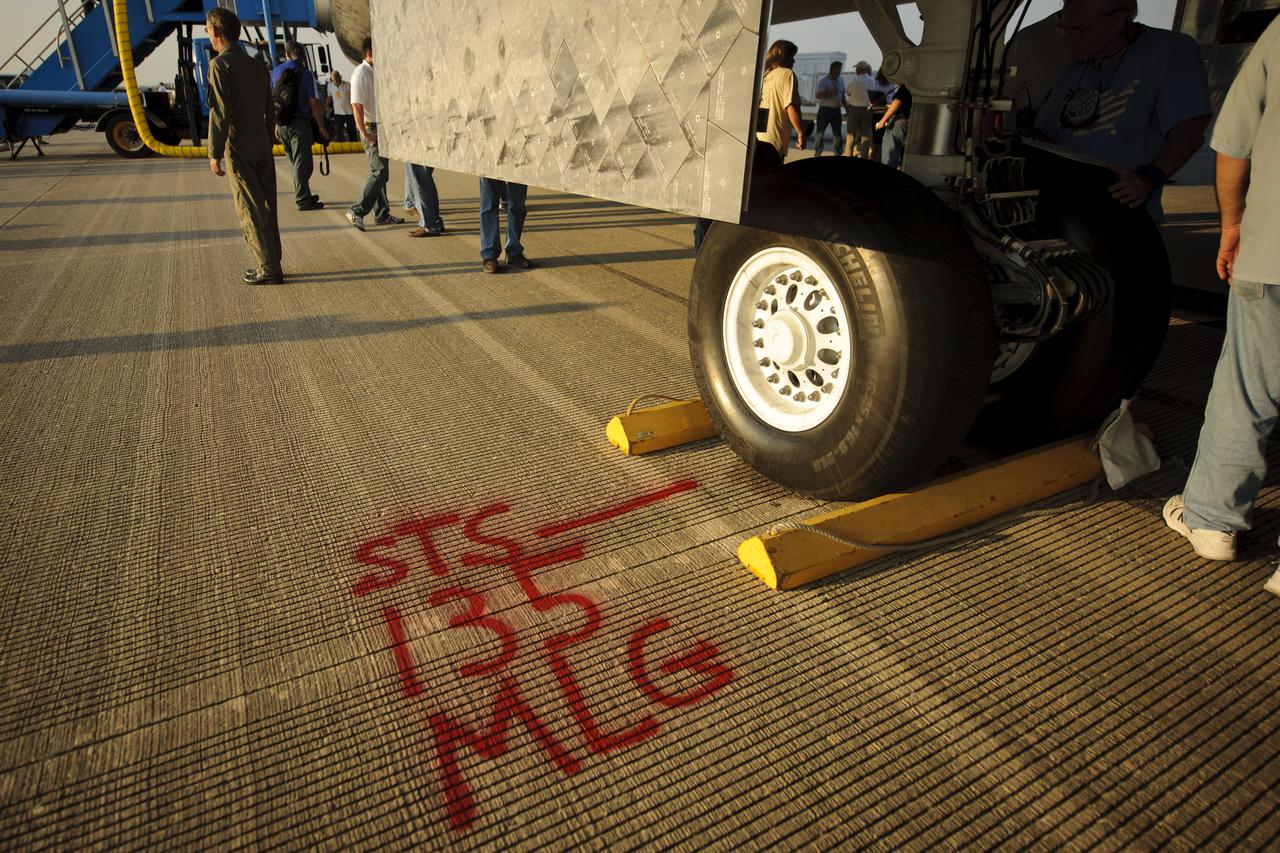
The runway of the Shuttle Landing Facility (SLF) is marked to show where the main landing gear wheels stopped for the space shuttle Atlantis (STS-135) shortly after it landed early Thursday morning, July 21, 2011, in Cape Canaveral, Fla. Overall, Atlantis spent 307 days in space and traveled nearly 126 million miles during its 33 flights. Atlantis, the fourth orbiter built, launched on its first mission on Oct. 3, 1985. Photo Credit: (NASA/Bill Ingalls)
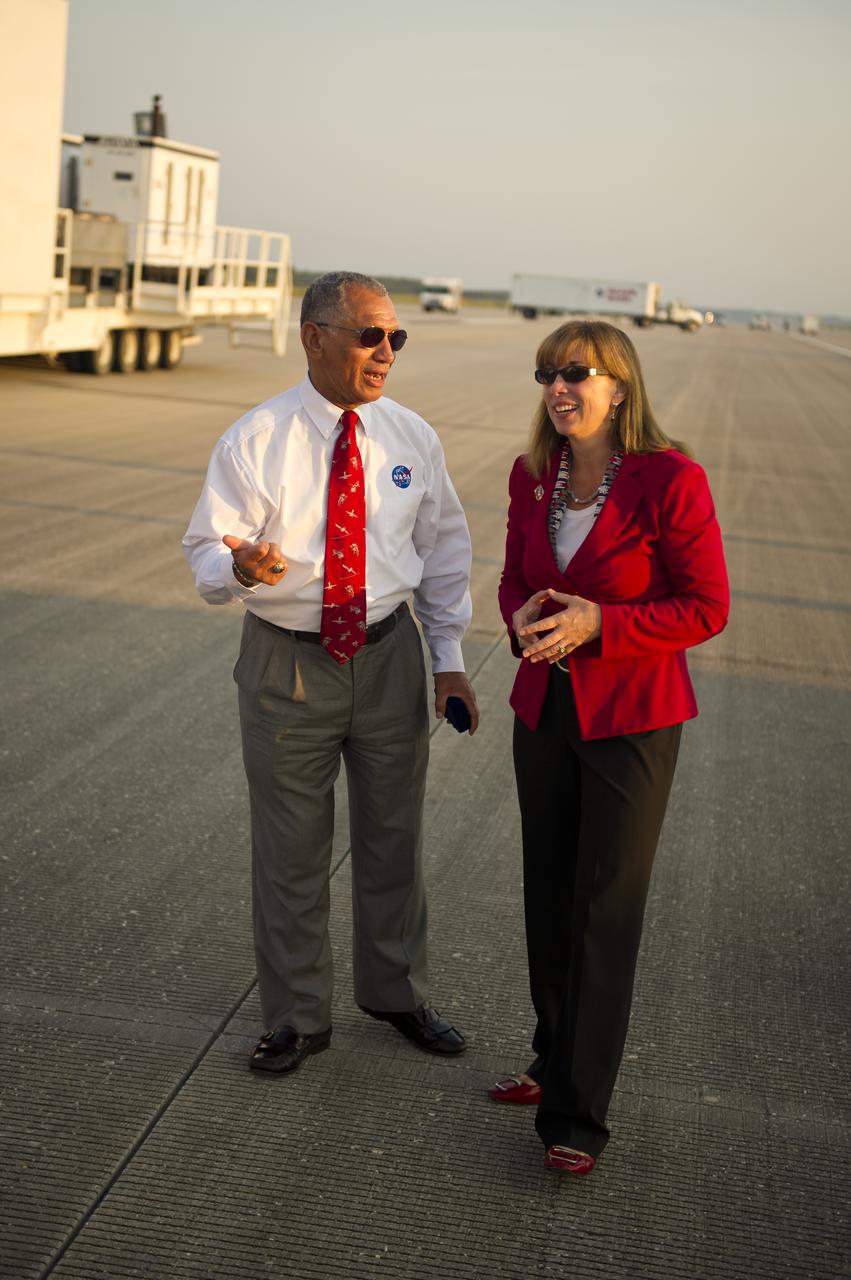
NASA Administrator Charles Bolden and Deputy Administrator Lori Garver talk at the Kennedy Space Center Shuttle Landing Facility (SLF) shortly after the space shuttle Atlantis (STS-135) landed early Thursday morning, July 21, 2011, in Cape Canaveral, Fla. Overall, Atlantis spent 307 days in space and traveled nearly 126 million miles during its 33 flights. Atlantis, the fourth orbiter built, launched on its first mission on Oct. 3, 1985. Photo Credit: (NASA/Bill Ingalls)
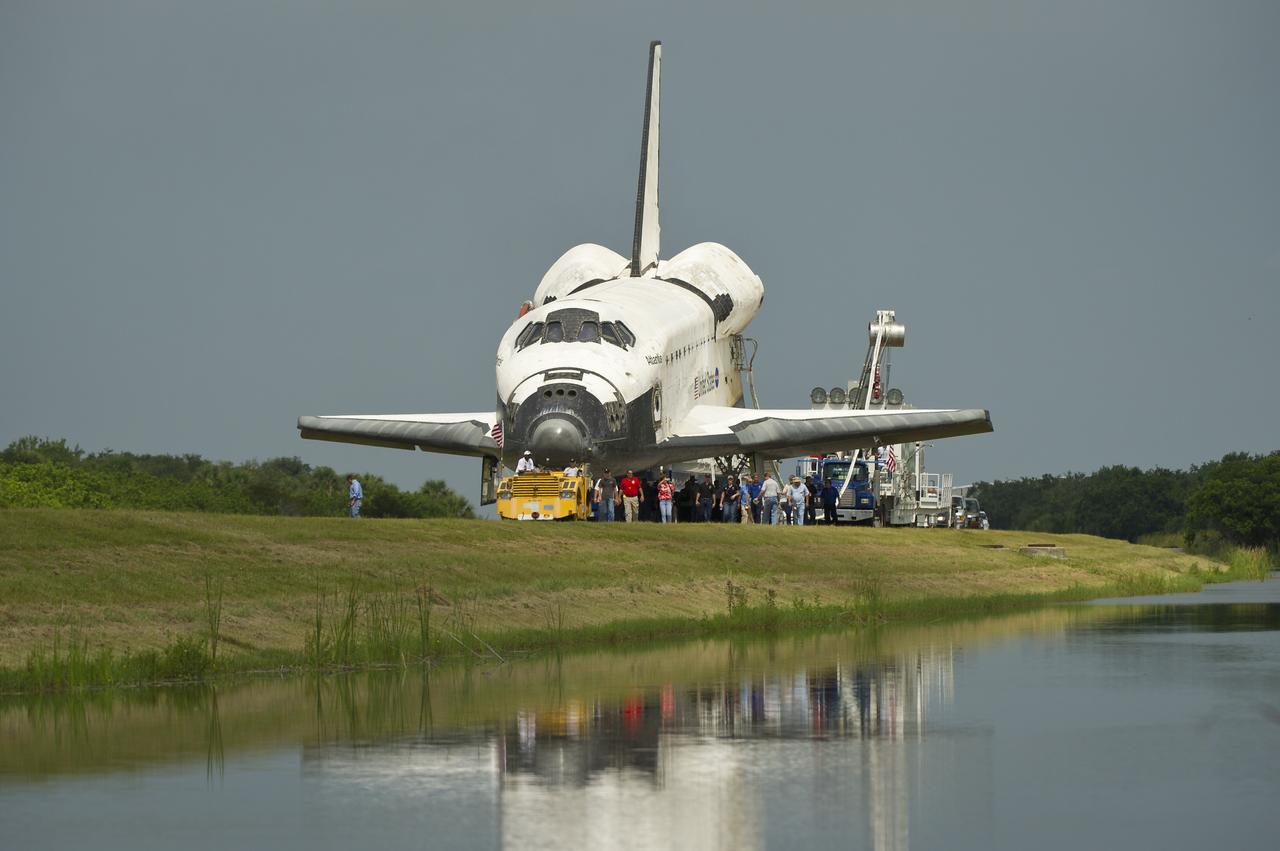
Space shuttle Atlantis (STS-135) is rolled over to the Orbiter Processing Facility (OPF) shortly after landing at NASA's Kennedy Space Center Shuttle Landing Facility (SLF), completing its 13-day mission to the International Space Station (ISS) and the final flight of the Space Shuttle Program, early Thursday morning, July 21, 2011, in Cape Canaveral, Fla. Overall, Atlantis spent 307 days in space and traveled nearly 126 million miles during its 33 flights. Atlantis, the fourth orbiter built, launched on its first mission on Oct. 3, 1985. Photo Credit: (NASA/Bill Ingalls)
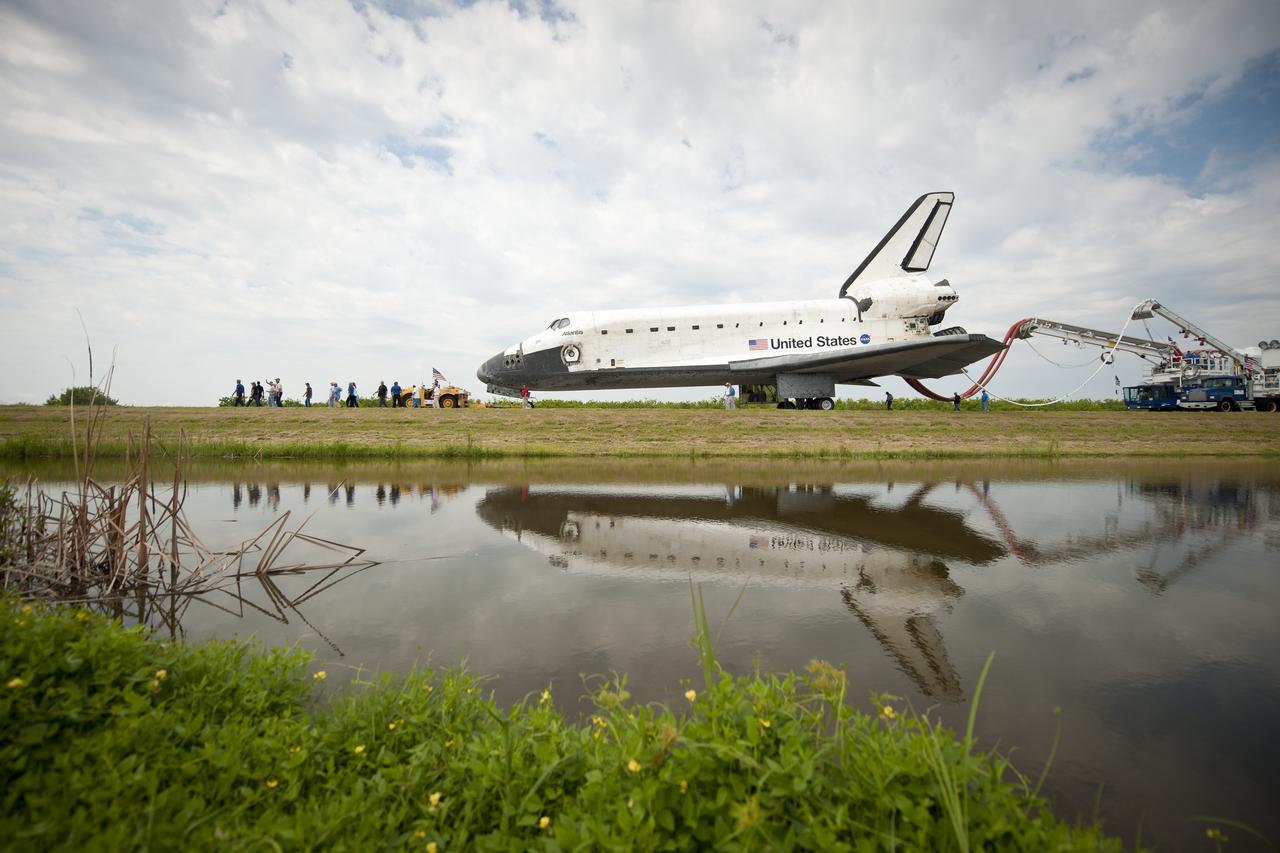
Space shuttle Atlantis (STS-135) is rolled over to the Orbiter Processing Facility (OPF) shortly after landing at NASA's Kennedy Space Center Shuttle Landing Facility (SLF), completing its 13-day mission to the International Space Station (ISS) and the final flight of the Space Shuttle Program, early Thursday morning, July 21, 2011, in Cape Canaveral, Fla. Overall, Atlantis spent 307 days in space and traveled nearly 126 million miles during its 33 flights. Atlantis, the fourth orbiter built, launched on its first mission on Oct. 3, 1985. Photo Credit: (NASA/Bill Ingalls)
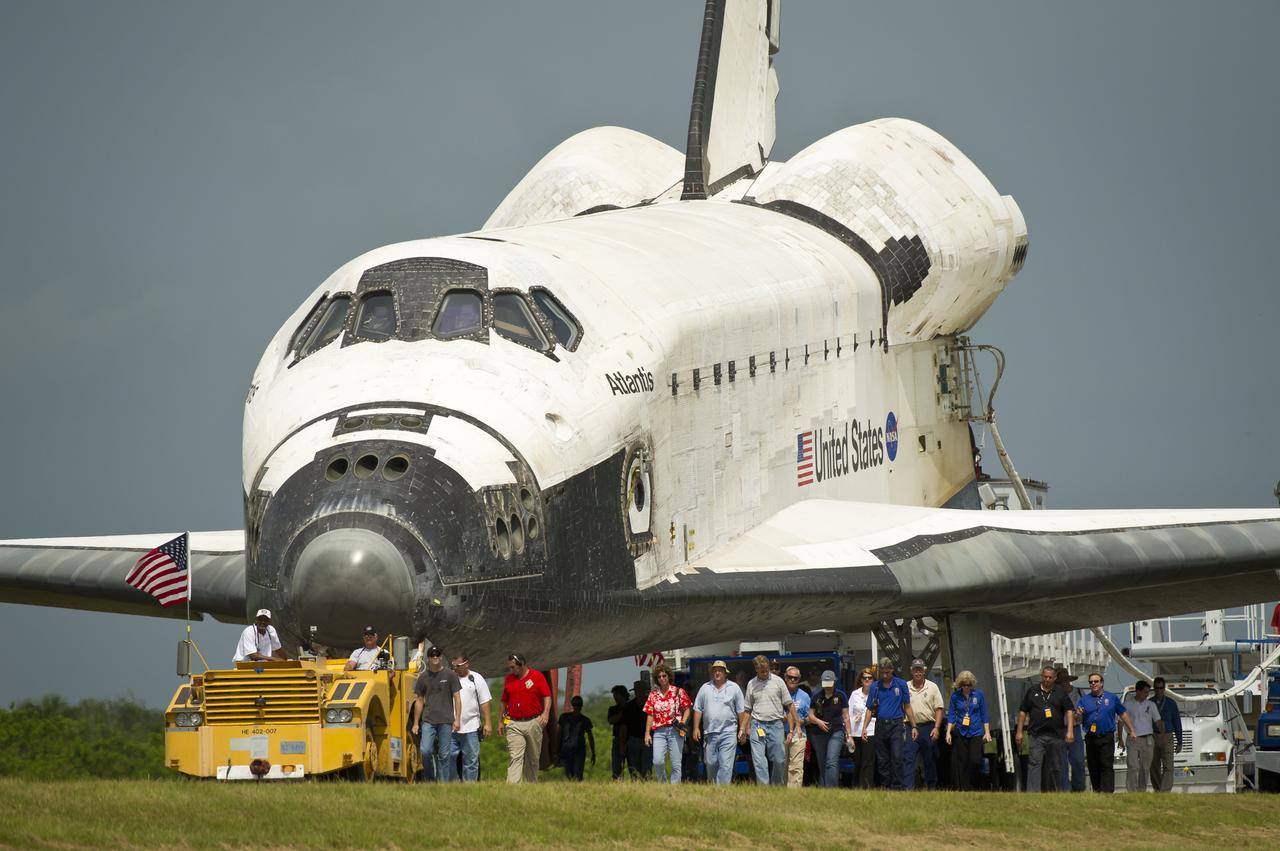
Space shuttle Atlantis (STS-135) is rolled over to the Orbiter Processing Facility (OPF) shortly after landing at NASA's Kennedy Space Center Shuttle Landing Facility (SLF), completing its 13-day mission to the International Space Station (ISS) and the final flight of the Space Shuttle Program, early Thursday morning, July 21, 2011, in Cape Canaveral, Fla. Overall, Atlantis spent 307 days in space and traveled nearly 126 million miles during its 33 flights. Atlantis, the fourth orbiter built, launched on its first mission on Oct. 3, 1985. Photo Credit: (NASA/Bill Ingalls)
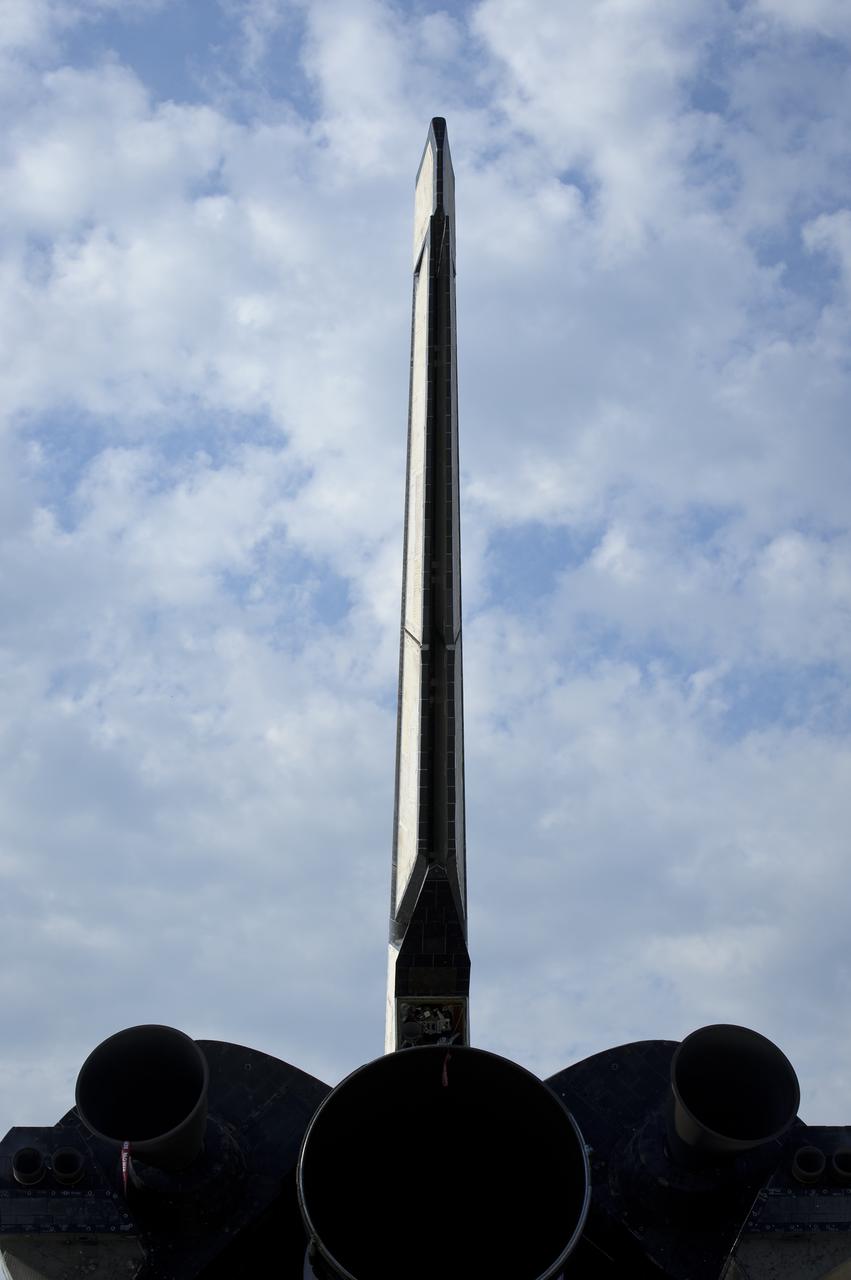
The vertical tail of the space shuttle Atlantis is seen at the Kennedy Space Center Shuttle Landing Facility (SLF) shortly after Atlantis (STS-135) landed early Thursday morning, July 21, 2011, in Cape Canaveral, Fla. Overall, Atlantis spent 307 days in space and traveled nearly 126 million miles during its 33 flights. Atlantis, the fourth orbiter built, launched on its first mission on Oct. 3, 1985. Photo Credit: (NASA/Bill Ingalls)
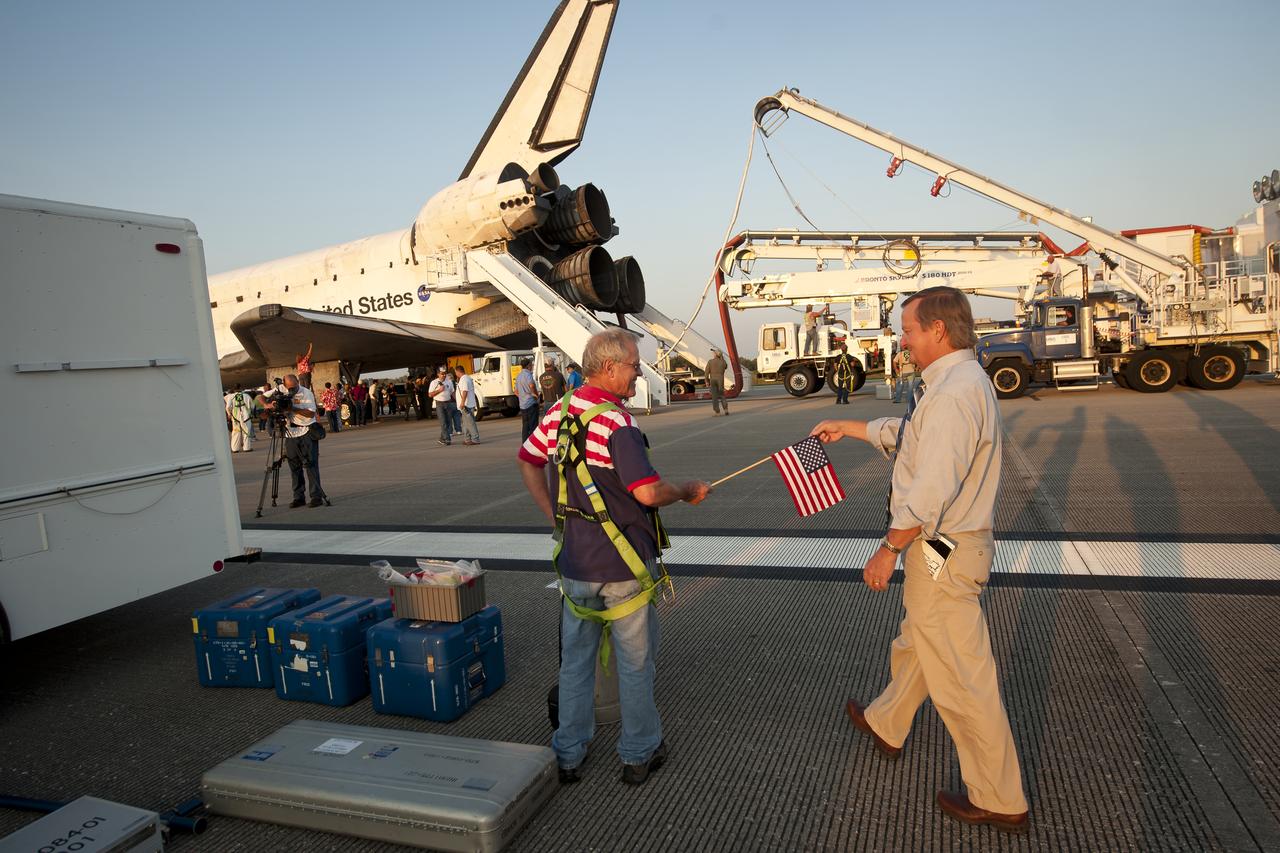
NASA Launch Director Michael Leinbach, right, hands an American flag to a worker on the runway of the Shuttle Landing Facility (SLF) shortly after the space shuttle Atlantis (STS-135) landed early Thursday morning, July 21, 2011, in Cape Canaveral, Fla. Overall, Atlantis spent 307 days in space and traveled nearly 126 million miles during its 33 flights. Atlantis, the fourth orbiter built, launched on its first mission on Oct. 3, 1985. Photo Credit: (NASA/Bill Ingalls)
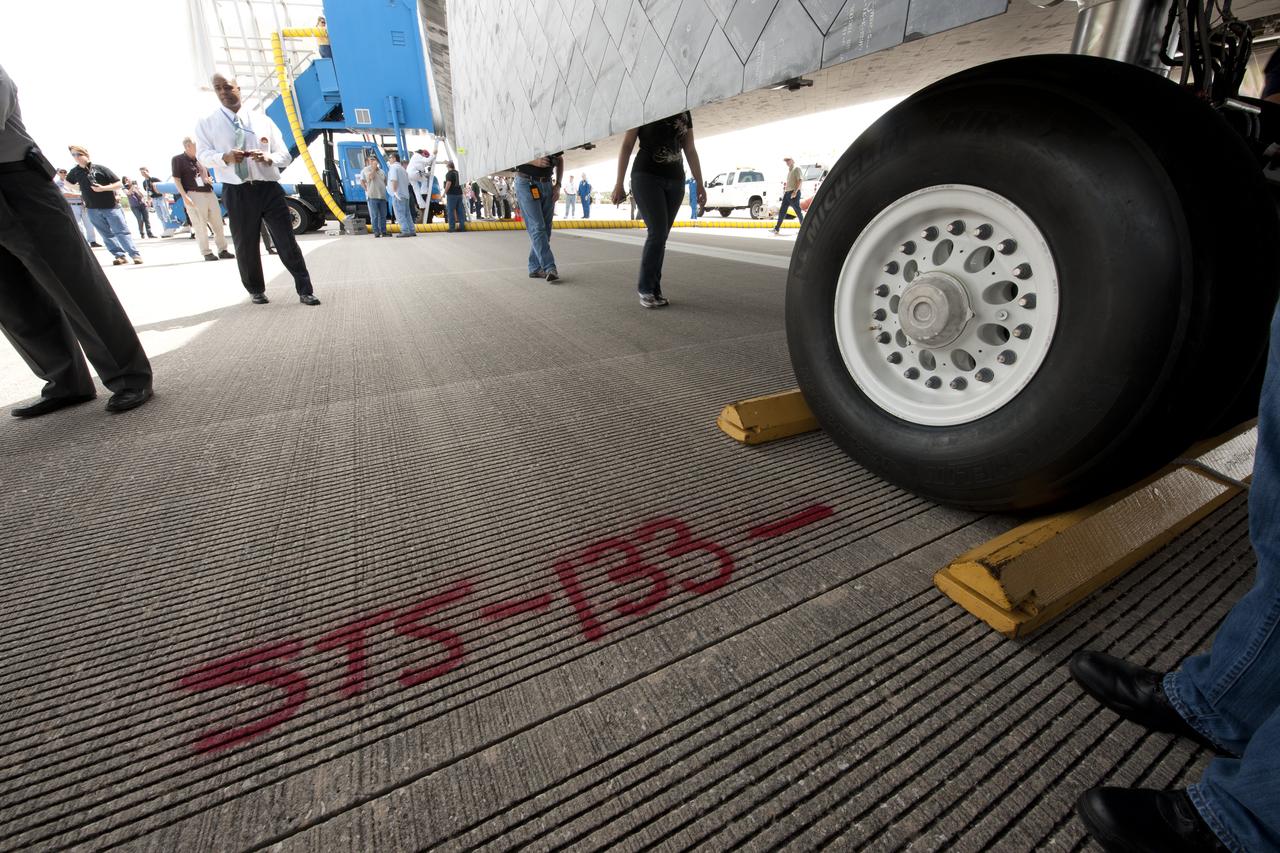
The runway of the Shuttle Landing Facility (SLF) is marked to show where the wheels stopped for the space shuttle Discovery (STS-133) shortly after it landed, Wednesday, March 9, 2011, at Kennedy Space Center in Cape Canaveral, Fla., completing its 39th and final flight. Since 1984, Discovery flew 39 missions, spent 365 days in space, orbited Earth 5,830 times and traveled 148,221,675 miles. Photo credit: (NASA/Bill Ingalls)
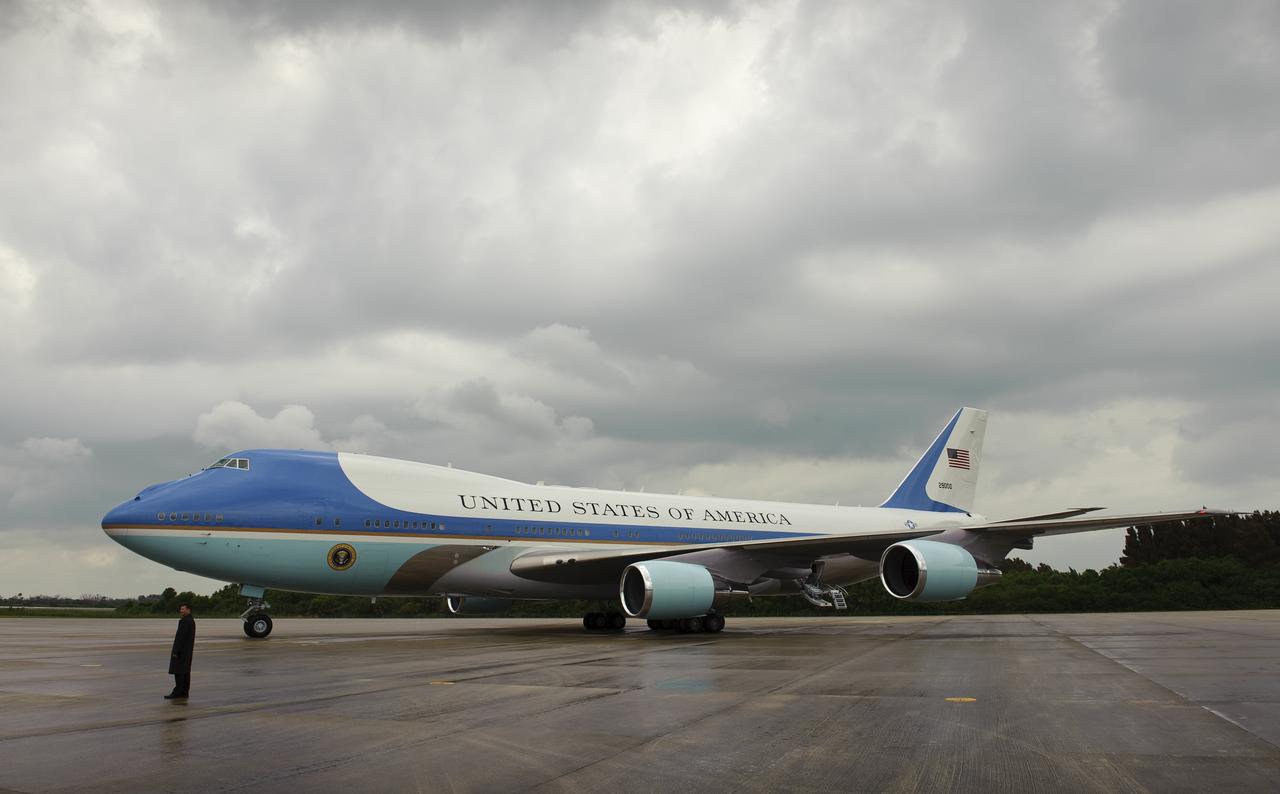
Air Force One is seen as it prepares to depart from the NASA SHuttle Landing Facility (SLF) after President Barack Obama delivered a speech at the NASA Kennedy Space Center in Cape Canaveral, Fla. on Thursday, April 15, 2010. Obama visited Kennedy Space Center to deliver remarks on the bold new course the Administration is charting for NASA and the future of U.S. leadership in human space flight. Photo Credit: (NASA/Bill Ingalls)
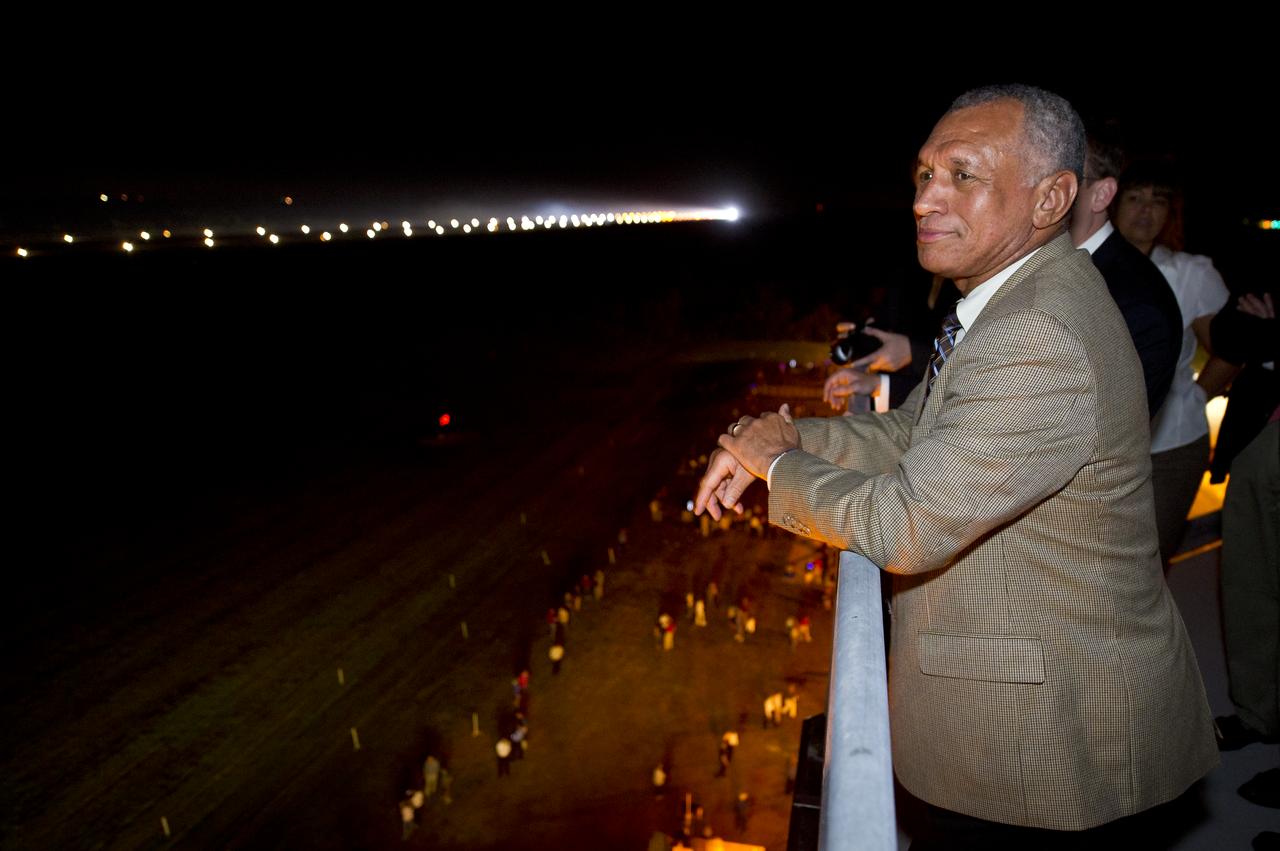
NASA Administrator Charles Bolden looks at the Space Shuttle Endeavour (STS-134) from the air traffic control tower at the Shuttle Landing Facility (SLF) shortly after Endeavour made its final landing at the Kennedy Space Center, Wednesday, June 1, 2011, in Cape Canaveral, Fla. Endeavour, after completing a 16-day mission to outfit the International Space Station, spent 299 days in space and traveled more than 122.8 million miles during its 25 flights. It launched on its first mission on May 7, 1992. Photo Credit: (NASA/Bill Ingalls)
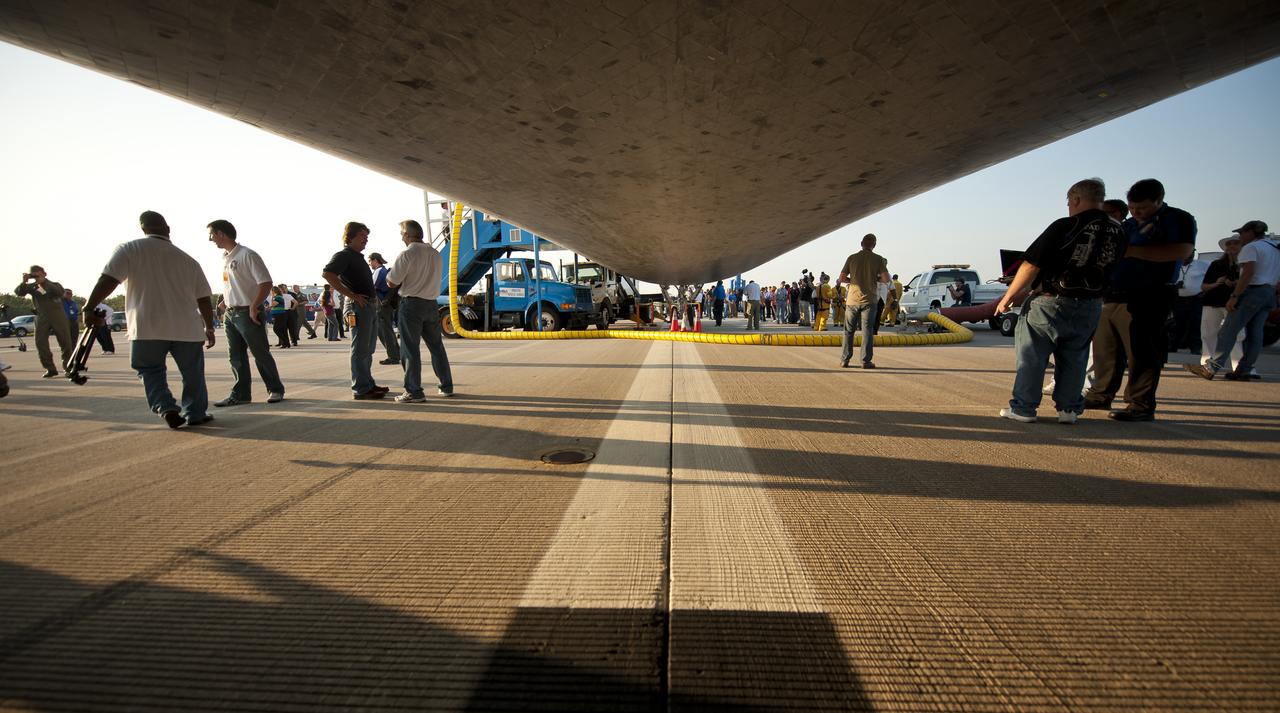
A view looking forward underneath the space shuttle Atlantis on the Shuttle Landing Facility (SLF) runway at NASA Kennedy Space Center shortly after it landed with the STS-135 crew, completing its 13-day mission to the International Space Station (ISS) and the final flight of the Space Shuttle Program, early Thursday morning, July 21, 2011, in Cape Canaveral, Fla. Overall, Atlantis spent 307 days in space and traveled nearly 126 million miles during its 33 flights. Atlantis, the fourth orbiter built, launched on its first mission on Oct. 3, 1985. Photo Credit: (NASA/Bill Ingalls)
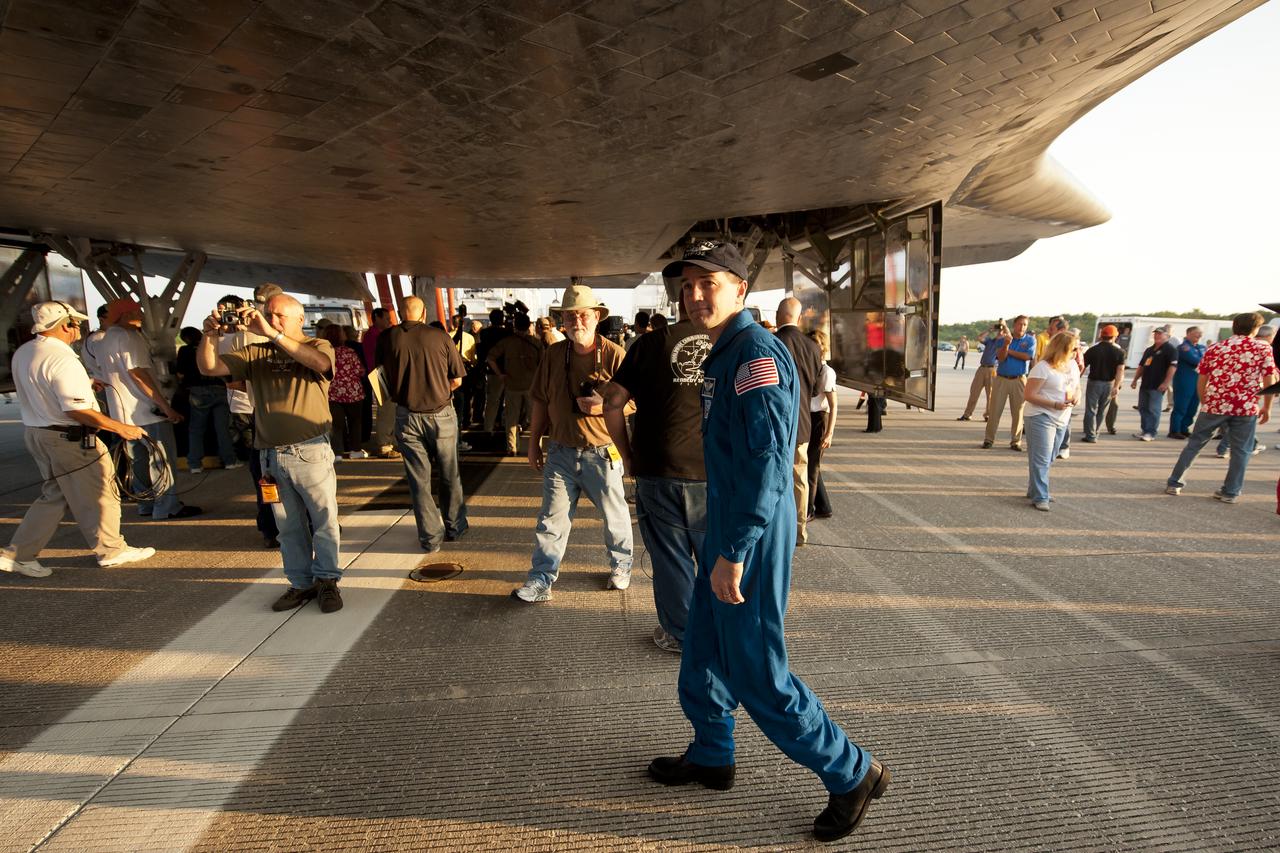
STS-135 Mission Specialist Rex Walheim walks under the space shuttle Atlantis shortly after he and the rest of the STS-135 crew landed at NASA's Kennedy Space Center Shuttle Landing Facility (SLF), completing a 13-day mission to the International Space Station (ISS) and the final flight of the Space Shuttle Program, early Thursday morning, July 21, 2011, in Cape Canaveral, Fla. Overall, Atlantis spent 307 days in space and traveled nearly 126 million miles during its 33 flights. Atlantis, the fourth orbiter built, launched on its first mission on Oct. 3, 1985. Photo Credit: (NASA/Bill Ingalls)
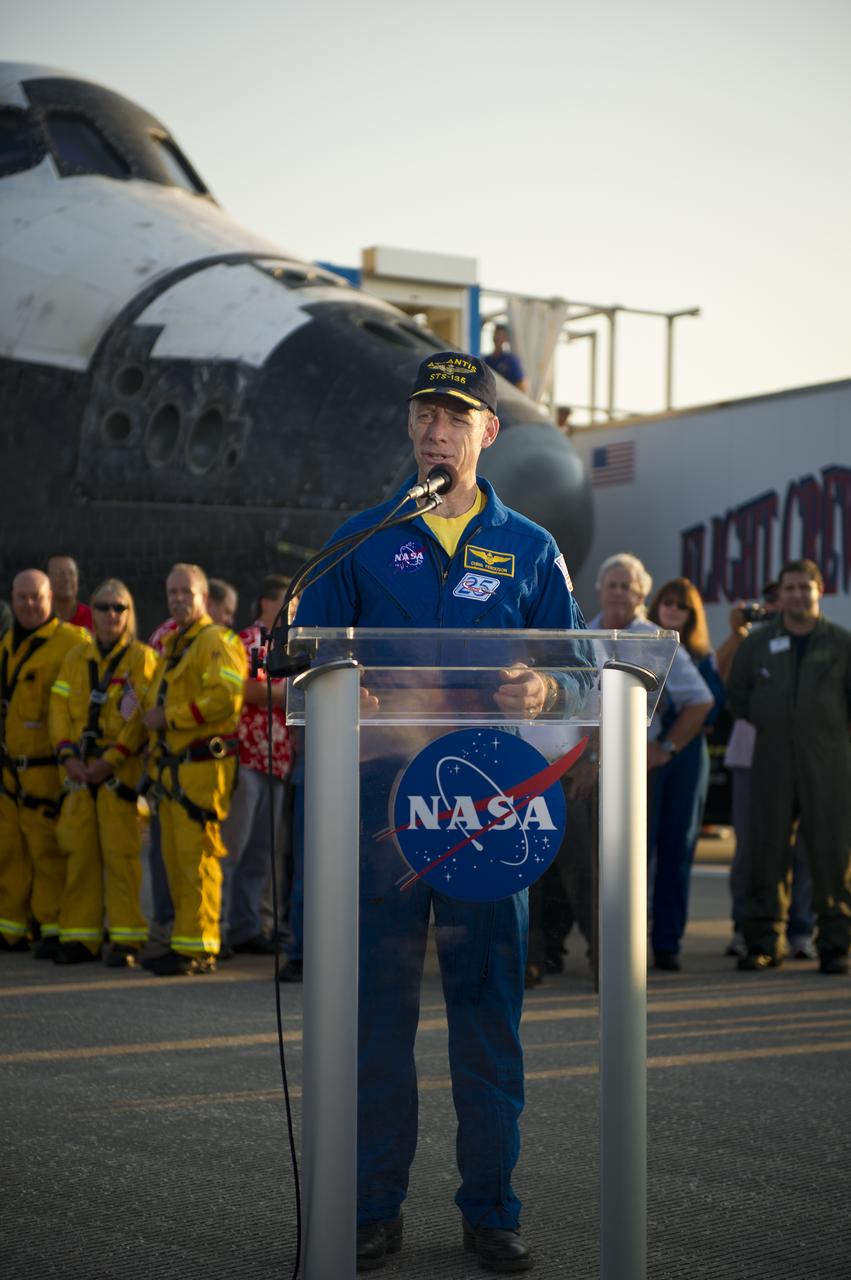
STS-135 Commander Chris Ferguson talks to NASA Television and the news media in front of the space shuttle Atlantis shortly after he and the rest of the STS-135 crew landed at NASA's Kennedy Space Center Shuttle Landing Facility (SLF), completing a 13-day mission to the International Space Station (ISS) and the final flight of the Space Shuttle Program, early Thursday morning, July 21, 2011, in Cape Canaveral, Fla. Overall, Atlantis spent 307 days in space and traveled nearly 126 million miles during its 33 flights. Atlantis, the fourth orbiter built, launched on its first mission on Oct. 3, 1985. Photo Credit: (NASA/Bill Ingalls)
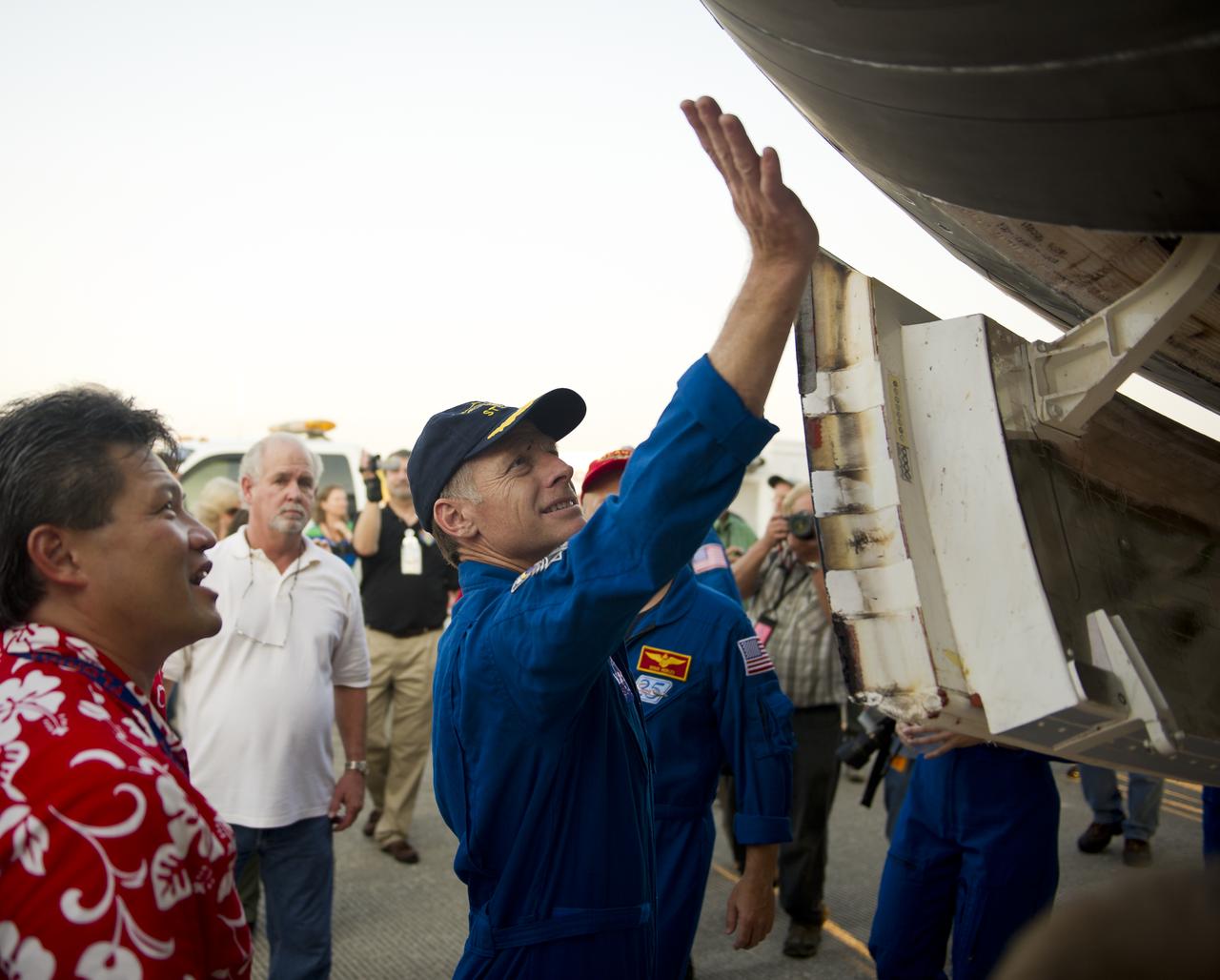
NASA Astronaut and STS-135 Commander Chris Ferguson walks underneath the space shuttle Atlantis shortly after he and the rest of the STS-135 crew landed at NASA's Kennedy Space Center Shuttle Landing Facility (SLF), completing a 13-day mission to the International Space Station (ISS) and the final flight of the Space Shuttle Program, early Thursday morning, July 21, 2011, in Cape Canaveral, Fla. Overall, Atlantis spent 307 days in space and traveled nearly 126 million miles during its 33 flights. Atlantis, the fourth orbiter built, launched on its first mission on Oct. 3, 1985. Photo Credit: (NASA/Bill Ingalls)
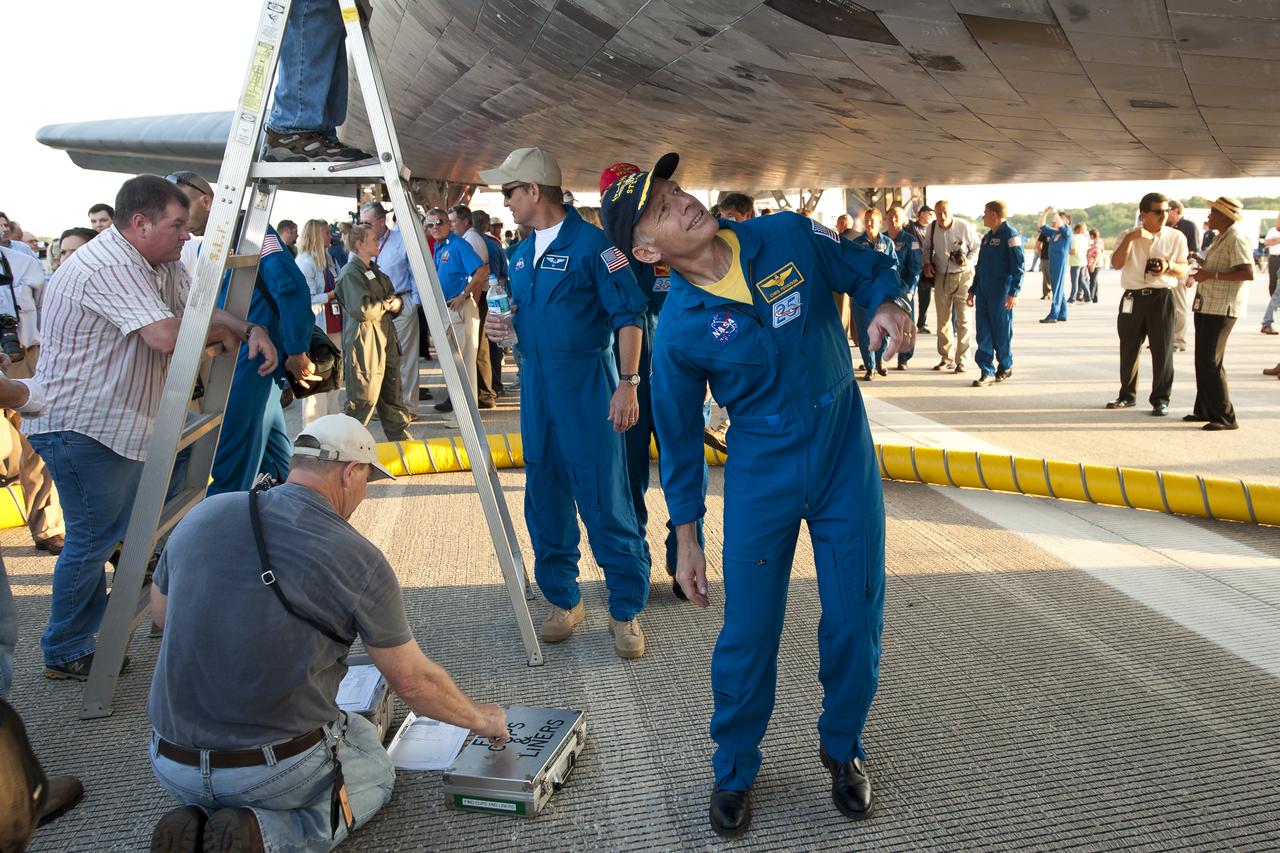
NASA Astronaut and STS-135 Commander Chris Ferguson walks underneath the space shuttle Atlantis shortly after he and the rest of the STS-135 crew landed at NASA's Kennedy Space Center Shuttle Landing Facility (SLF), completing a 13-day mission to the International Space Station (ISS) and the final flight of the Space Shuttle Program, early Thursday morning, July 21, 2011, in Cape Canaveral, Fla. Overall, Atlantis spent 307 days in space and traveled nearly 126 million miles during its 33 flights. Atlantis, the fourth orbiter built, launched on its first mission on Oct. 3, 1985. Photo Credit: (NASA/Bill Ingalls)
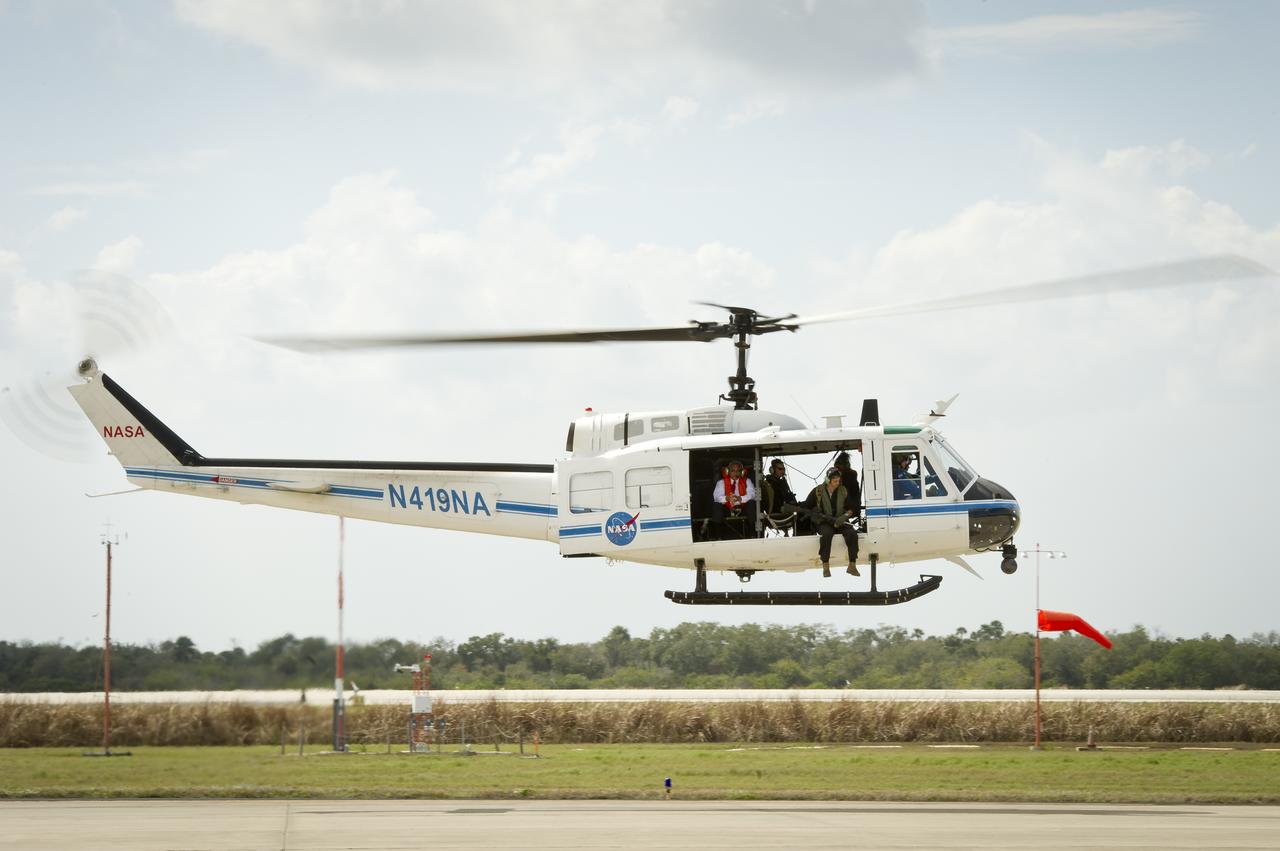
NASA Administrator Charles Bolden, seated left, takes off from the Shuttle Landing Facility (SLF) in a helicopter that will escort the crew of the space shuttle Discovery (STS-133) to launch pad 39a at the Kennedy Space Center, Thursday, Feb. 24, 2011, in Cape Canaveral, Fla. Discovery, on its 39th and final flight, is carrying the Italian-built Permanent Multipurpose Module (PMM), Express Logistics Carrier 4 (ELC4) and Robonaut 2, the first humanoid robot in space to the International Space Station. Photo Credit: (NASA/Bill Ingalls)
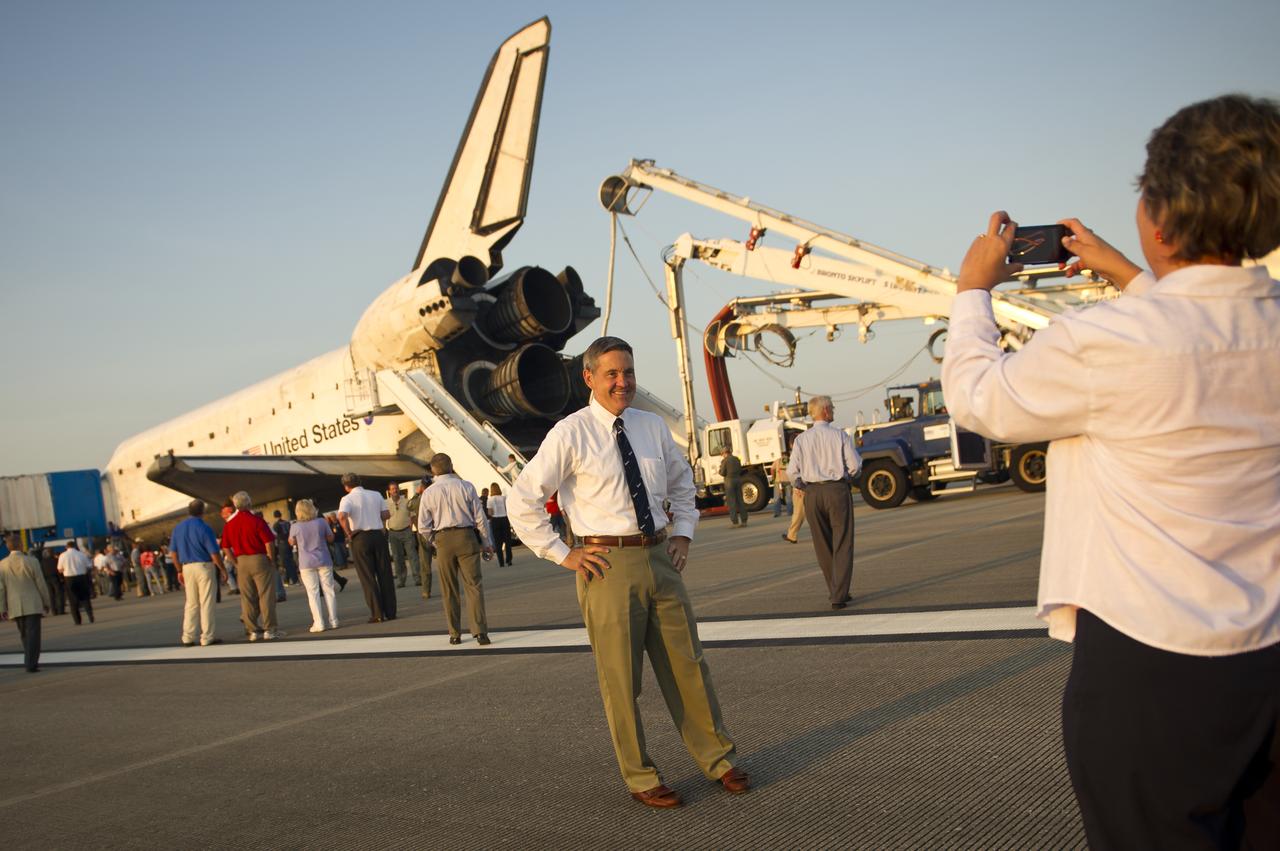
NASA Kennedy Space center Director Robert Cabana stops to have his photograph made by a colleague at the Shuttle Landing Facility (SLF) shortly after the space shuttle Atlantis (STS-135) landed early Thursday morning, July 21, 2011, in Cape Canaveral, Fla. Overall, Atlantis spent 307 days in space and traveled nearly 126 million miles during its 33 flights. Atlantis, the fourth orbiter built, launched on its first mission on Oct. 3, 1985. Photo Credit: (NASA/Bill Ingalls)
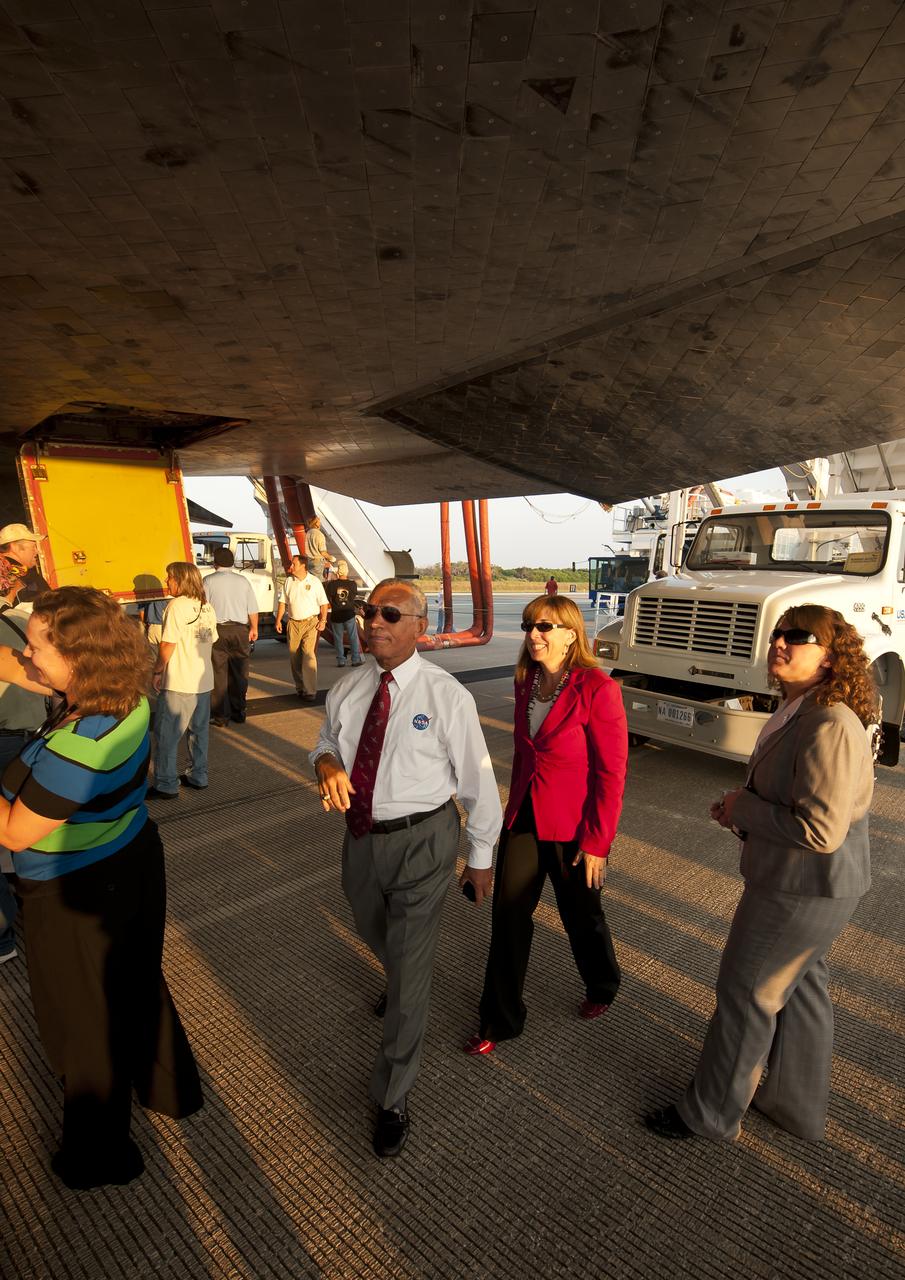
NASA Administrator Charles Bolden and Deputy Administrator Lori Garver walk under the space shuttle Atlantis at the Kennedy Space Center Shuttle Landing Facility (SLF) shortly after Atlantis (STS-135) landed early Thursday morning, July 21, 2011, in Cape Canaveral, Fla. Overall, Atlantis spent 307 days in space and traveled nearly 126 million miles during its 33 flights. Atlantis, the fourth orbiter built, launched on its first mission on Oct. 3, 1985. Photo Credit: (NASA/Bill Ingalls)
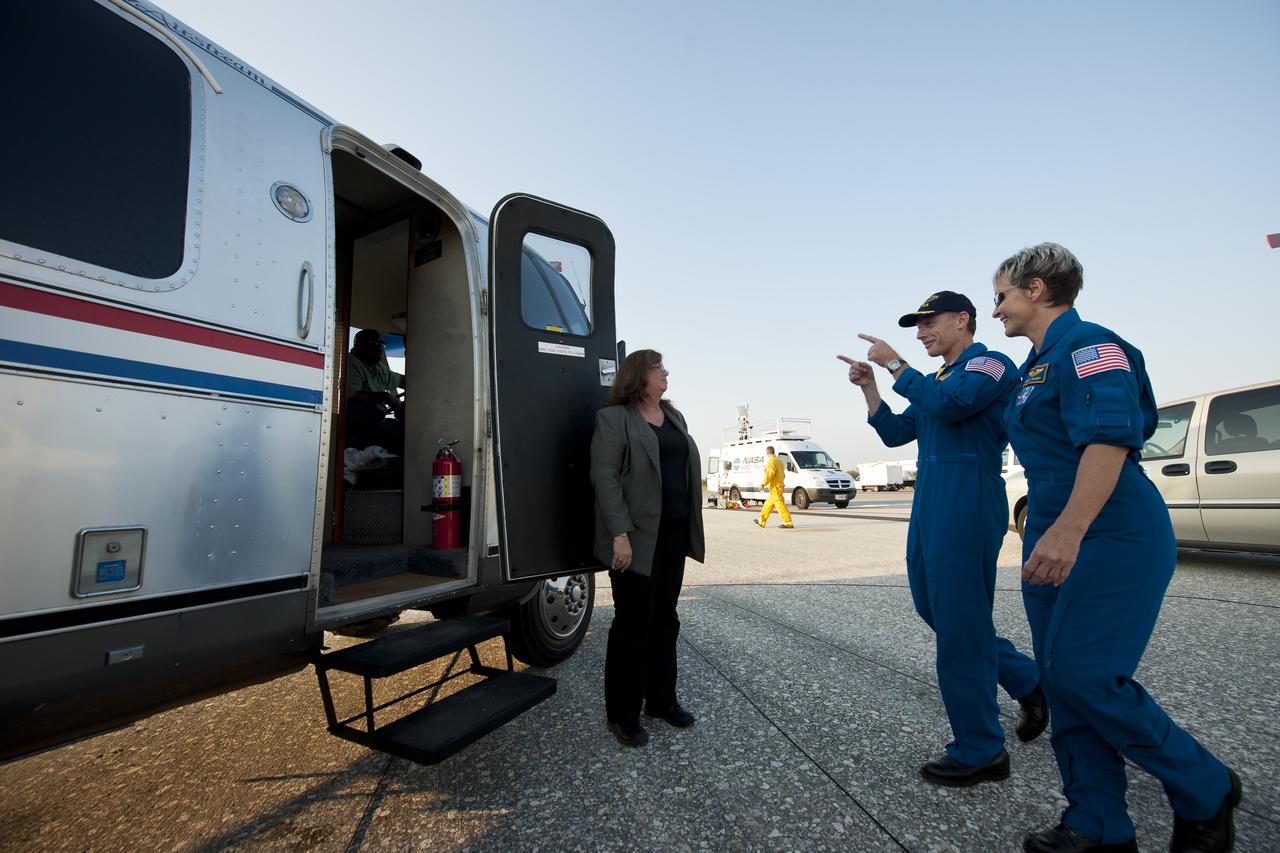
NASA Chief of the Astronaut Office Peggy Whitson, right, walks with STS-135 Commander Chris Ferguson as he prepares to board the astrovan at the NASA's Kennedy Space Center Shuttle Landing Facility (SLF) shortly after he and the rest of the STS-135 crew landed in space shuttle Atlantis, completing a 13-day mission to the International Space Station (ISS) and the final flight of the Space Shuttle Program, early Thursday morning, July 21, 2011, in Cape Canaveral, Fla. Overall, Atlantis spent 307 days in space and traveled nearly 126 million miles during its 33 flights. Atlantis, the fourth orbiter built, launched on its first mission on Oct. 3, 1985. Photo Credit: (NASA/Bill Ingalls)

Space shuttle Atlantis (STS-135) touches down at NASA's Kennedy Space Center Shuttle Landing Facility (SLF), completing its 13-day mission to the International Space Station (ISS) and the final flight of the Space Shuttle Program, early Thursday morning, July 21, 2011, in Cape Canaveral, Fla. Overall, Atlantis spent 307 days in space and traveled nearly 126 million miles during its 33 flights. Atlantis, the fourth orbiter built, launched on its first mission on Oct. 3, 1985. Photo Credit: (NASA/Bill Ingalls)
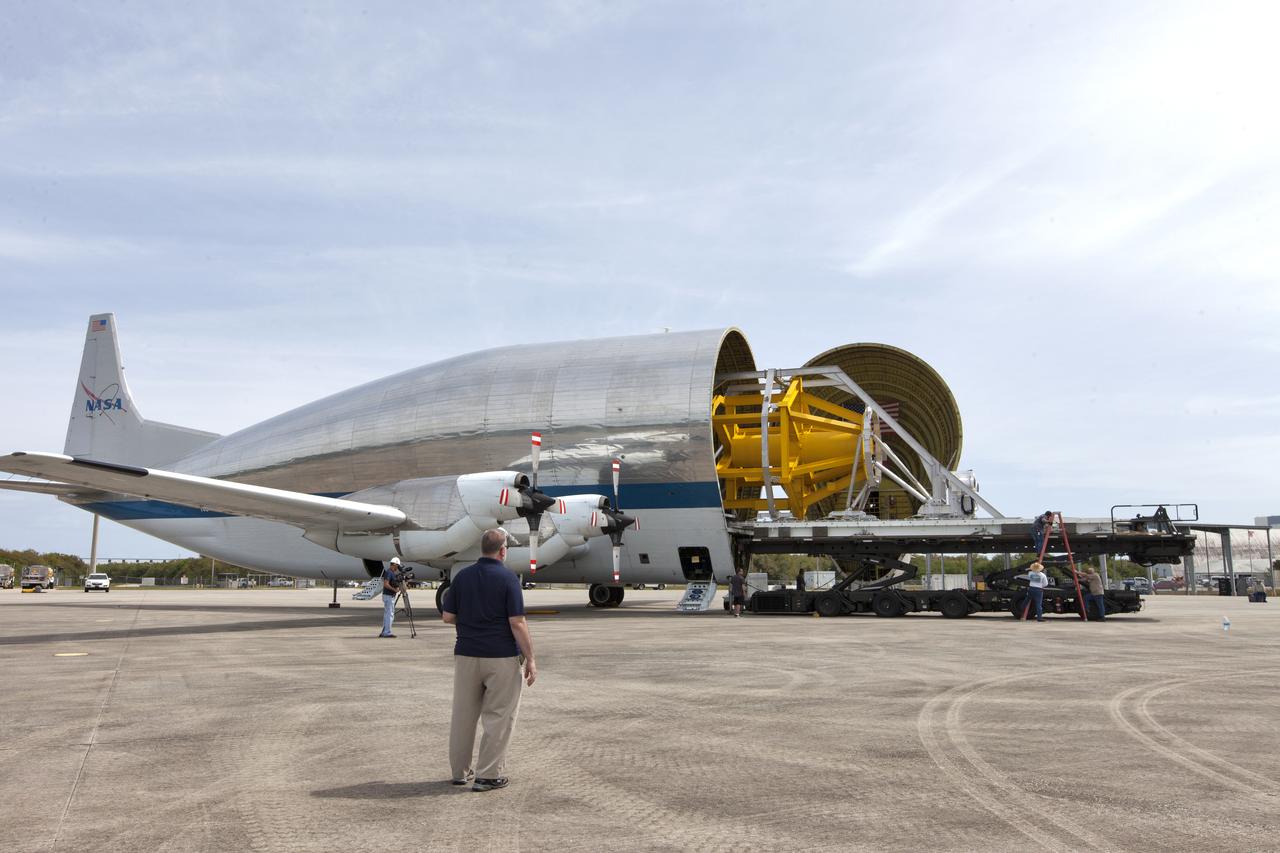
A fit check of the Orion Crew and Service Module Horizontal Transporter (CHT) with NASA's Super Guppy aircraft is underway March 13, 2019, at NASA Kennedy Space Center’s Shuttle Landing Facility in Florida, operated by Space Florida. In this photo, the CHT, secured on the U.S. Air Force aircraft loader, is moved inside the aircraft’s payload bay. The fit check is being performed to confirm loading operations, ensure that the CHT fits inside the Super Guppy and test the electrical interface to aircraft power. The Orion crew and service modules will be readied for a trip to NASA’s Plum Brook Station in Sandusky, Ohio, for full thermal vacuum testing. In this unique facility, the crew and service modules will be put through extensive testing to ensure they can survive the rigors of launch, space travel, re-entry and splashdown. The Orion spacecraft will launch atop the agency's Space Launch System rocket on Exploration Mission-1.
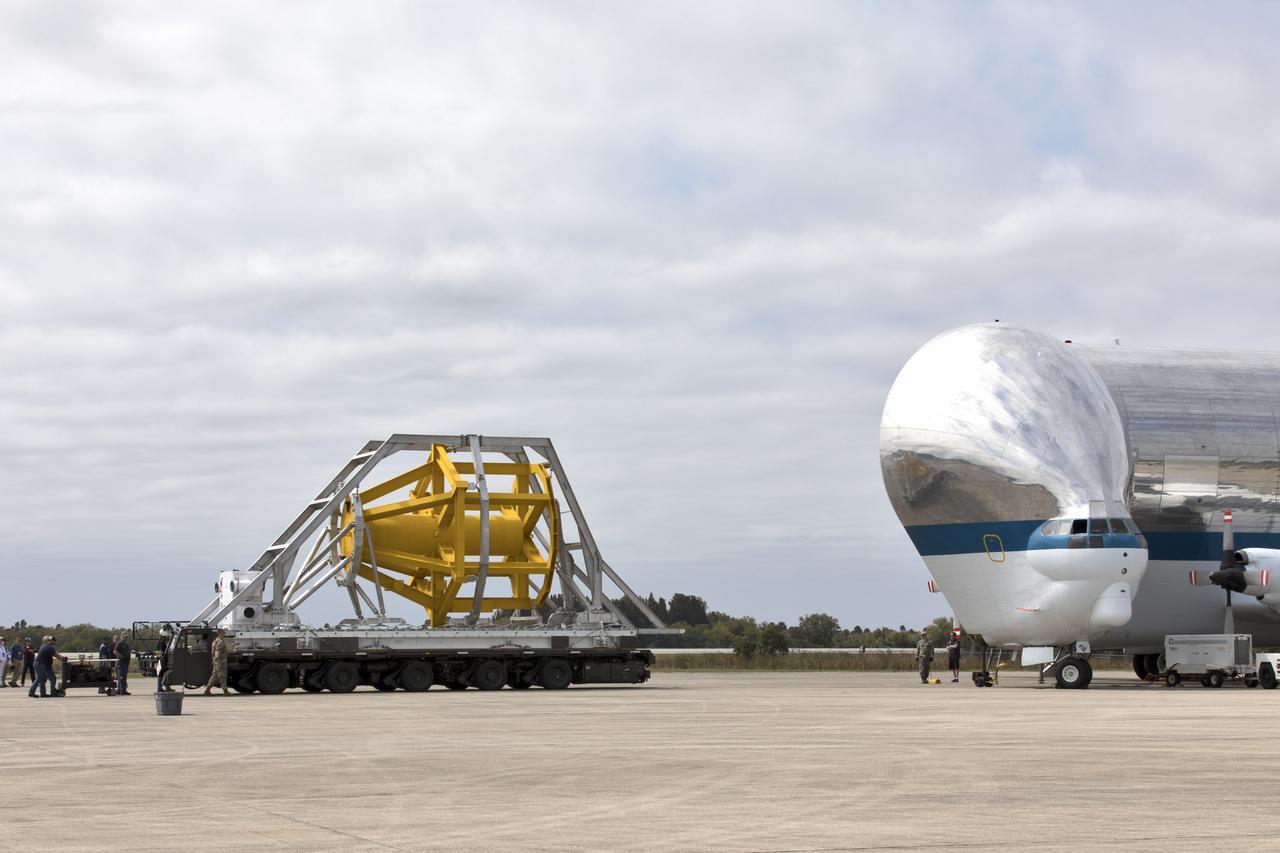
A fit check of the Orion Crew and Service Module Horizontal Transporter (CHT) with NASA's Super Guppy aircraft began March 12, 2019, at NASA Kennedy Space Center’s Shuttle Landing Facility in Florida, operated by Space Florida. In this photo, the U.S. Air Force aircraft loader with the CHT is moved toward the Super Guppy. The fit check is being performed to confirm loading operations, ensure that the CHT fits inside the Super Guppy and test the electrical interface to aircraft power. The Orion crew and service modules will be readied for a trip to NASA’s Plum Brook Station in Sandusky, Ohio, for full thermal vacuum testing. In this unique facility, the crew and service modules will be put through extensive testing to ensure they can survive the rigors of launch, space travel, re-entry and splashdown. The Orion spacecraft will launch atop the agency's Space Launch System rocket on Exploration Mission-1.

A fit check of the Orion Crew and Service Module Horizontal Transporter (CHT) with NASA's Super Guppy aircraft began March 12, 2019, at NASA Kennedy Space Center’s Shuttle Landing Facility in Florida, operated by Space Florida. In this photo, the CHT is secured on the U.S. Air Force aircraft loader. The fit check is being performed to confirm loading operations, ensure that the CHT fits inside the Super Guppy and test the electrical interface to aircraft power. The Orion crew and service modules will be readied for a trip to NASA’s Plum Brook Station in Sandusky, Ohio, for full thermal vacuum testing. In this unique facility, the crew and service modules will be put through extensive testing to ensure they can survive the rigors of launch, space travel, re-entry and splashdown. The Orion spacecraft will launch atop the agency's Space Launch System rocket on Exploration Mission-1.
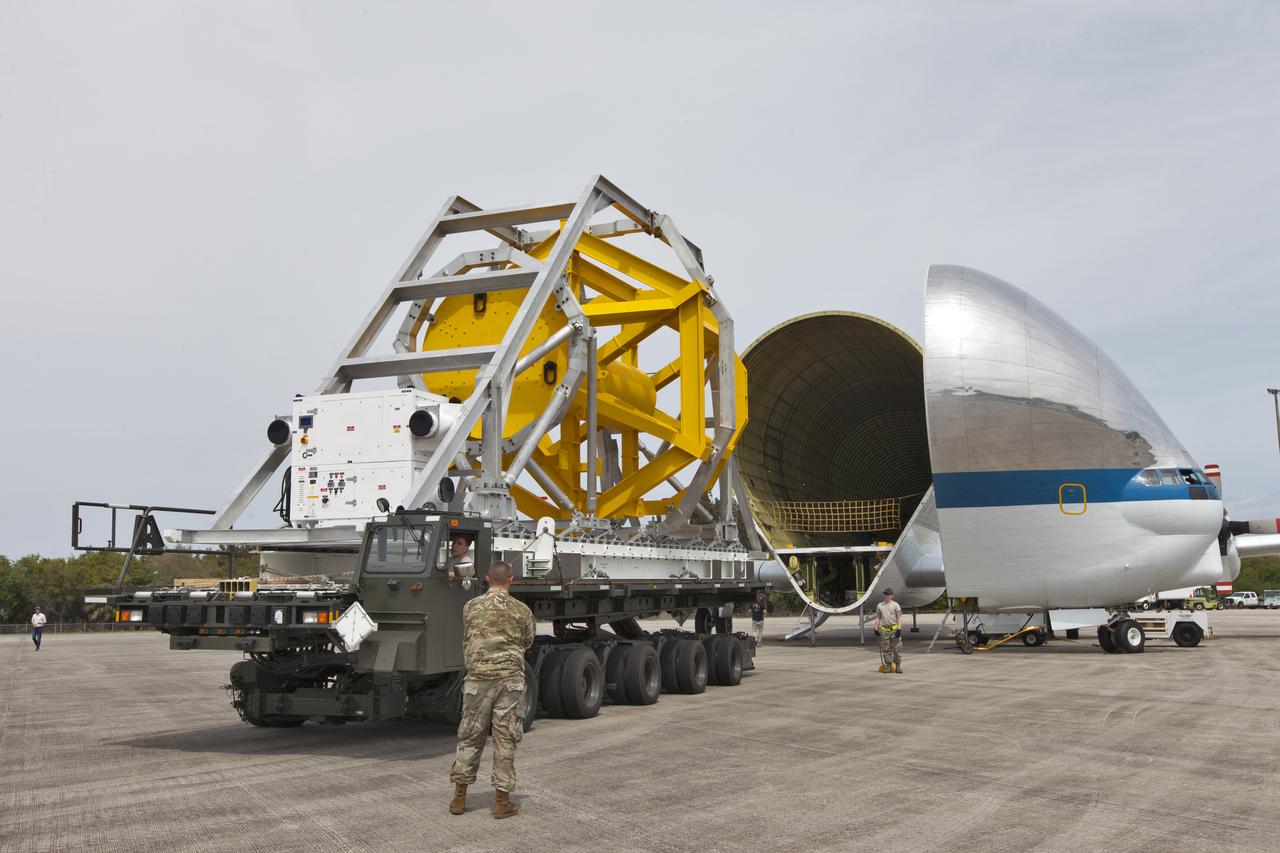
A fit check of the Orion Crew and Service Module Horizontal Transporter (CHT) with NASA's Super Guppy aircraft is underway March 13, 2019, at NASA Kennedy Space Center’s Shuttle Landing Facility in Florida, operated by Space Florida. In this photo, the CHT, secured on the U.S. Air Force aircraft loader, is moved toward the Super Guppy’s open payload bay. The fit check is being performed to confirm loading operations, ensure that the CHT fits inside the Super Guppy and test the electrical interface to aircraft power. The Orion crew and service modules will be readied for a trip to NASA’s Plum Brook Station in Sandusky, Ohio, for full thermal vacuum testing. In this unique facility, the crew and service modules will be put through extensive testing to ensure they can survive the rigors of launch, space travel, re-entry and splashdown. The Orion spacecraft will launch atop the agency's Space Launch System rocket on Exploration Mission-1.
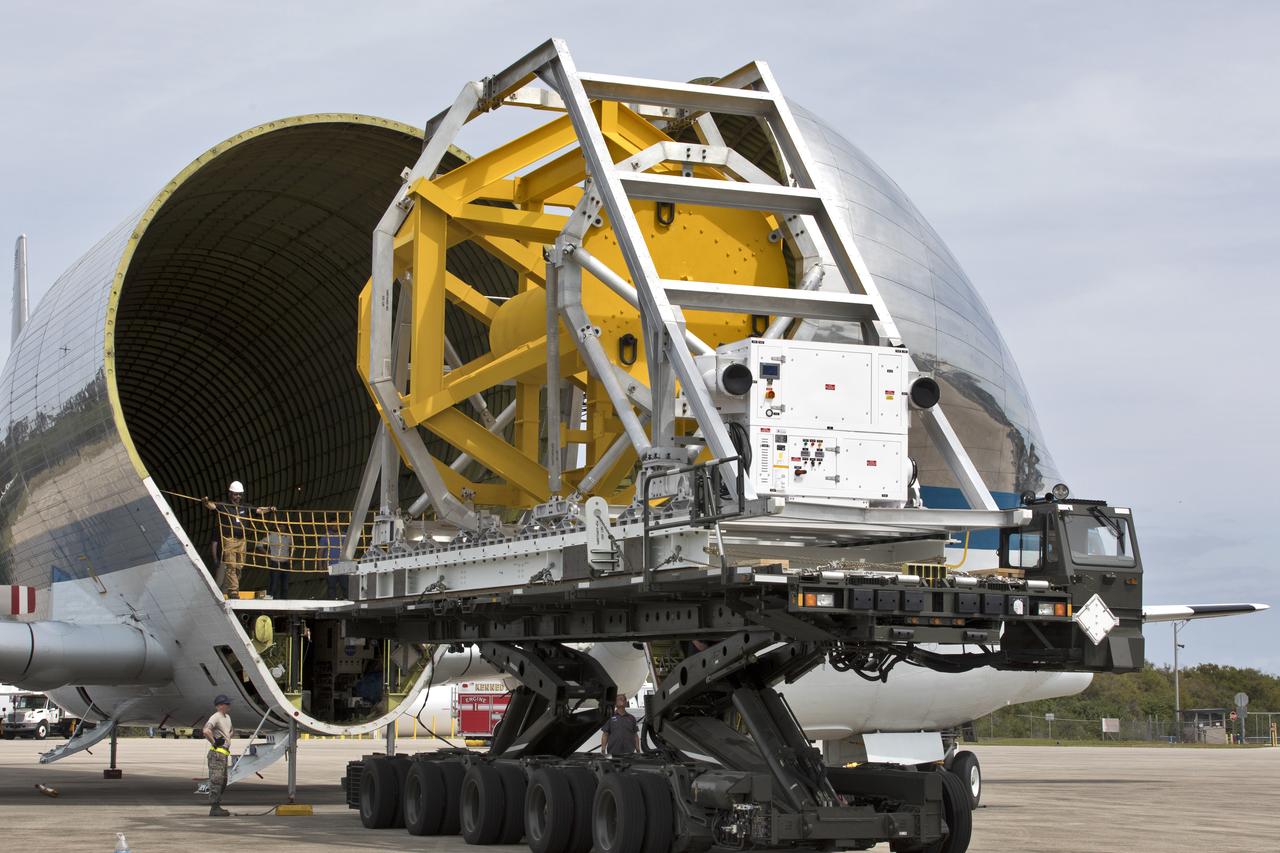
A fit check of the Orion Crew and Service Module Horizontal Transporter (CHT) with NASA's Super Guppy aircraft is underway March 13, 2019, at NASA Kennedy Space Center’s Shuttle Landing Facility in Florida, operated by Space Florida. In this photo, the Super Guppy’s payload bay has been opened and the CHT, secured on the U.S. Air Force aircraft loader, is moved inside the aircraft’s payload bay. The fit check is being performed to confirm loading operations, ensure that the CHT fits inside the Super Guppy and test the electrical interface to aircraft power. The Orion crew and service modules will be readied for a trip to NASA’s Plum Brook Station in Sandusky, Ohio, for full thermal vacuum testing. In this unique facility, the crew and service modules will be put through extensive testing to ensure they can survive the rigors of launch, space travel, re-entry and splashdown. The Orion spacecraft will launch atop the agency's Space Launch System rocket on Exploration Mission-1.
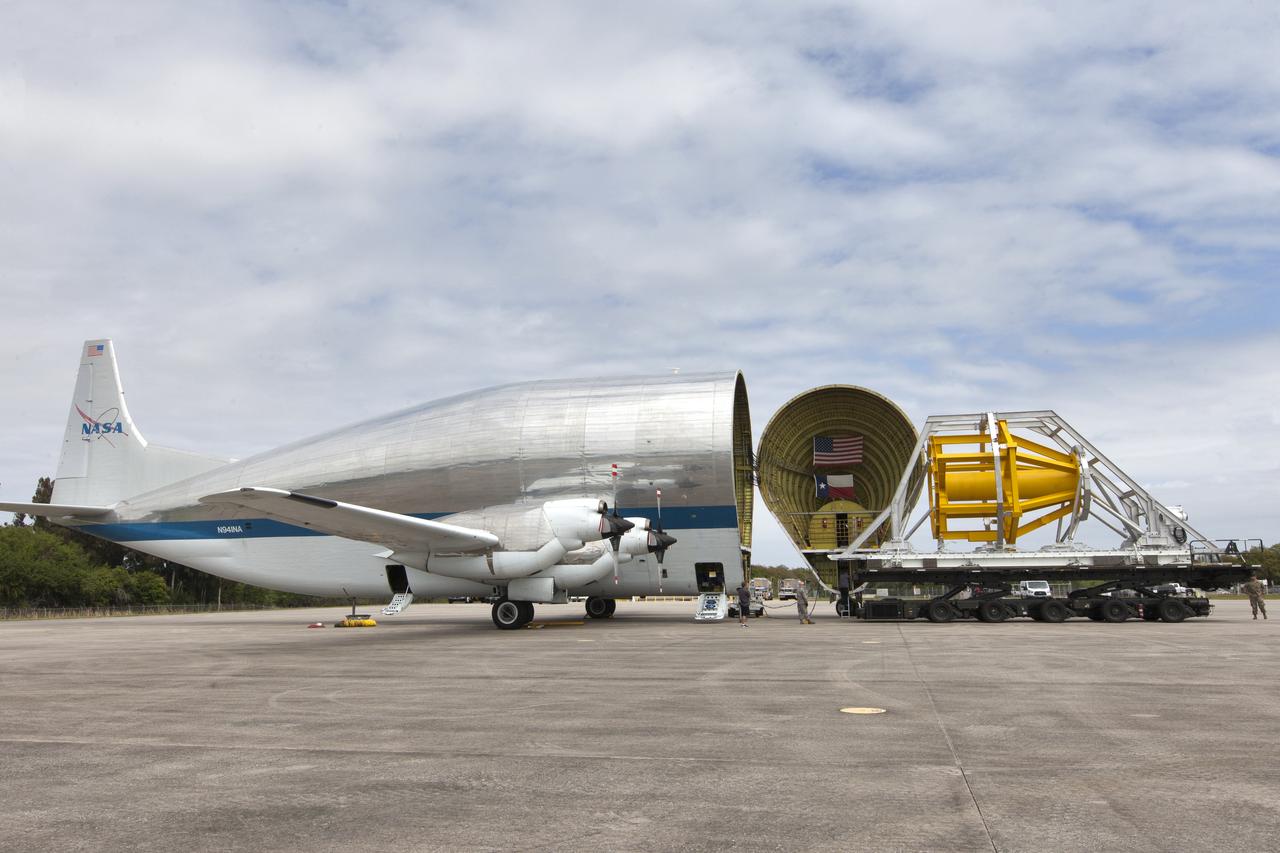
A fit check of the Orion Crew and Service Module Horizontal Transporter (CHT) with NASA's Super Guppy aircraft began March 12, 2019, at NASA Kennedy Space Center’s Shuttle Landing Facility in Florida, operated by Space Florida. In this photo, the Super Guppy’s payload bay is opened as the CHT, secured on the U.S. Air Force aircraft loader, is moved toward the aircraft. The fit check is being performed to confirm loading operations, ensure that the CHT fits inside the Super Guppy and test the electrical interface to aircraft power. The Orion crew and service modules will be readied for a trip to NASA’s Plum Brook Station in Sandusky, Ohio, for full thermal vacuum testing. In this unique facility, the crew and service modules will be put through extensive testing to ensure they can survive the rigors of launch, space travel, re-entry and splashdown. The Orion spacecraft will launch atop the agency's Space Launch System rocket on Exploration Mission-1.
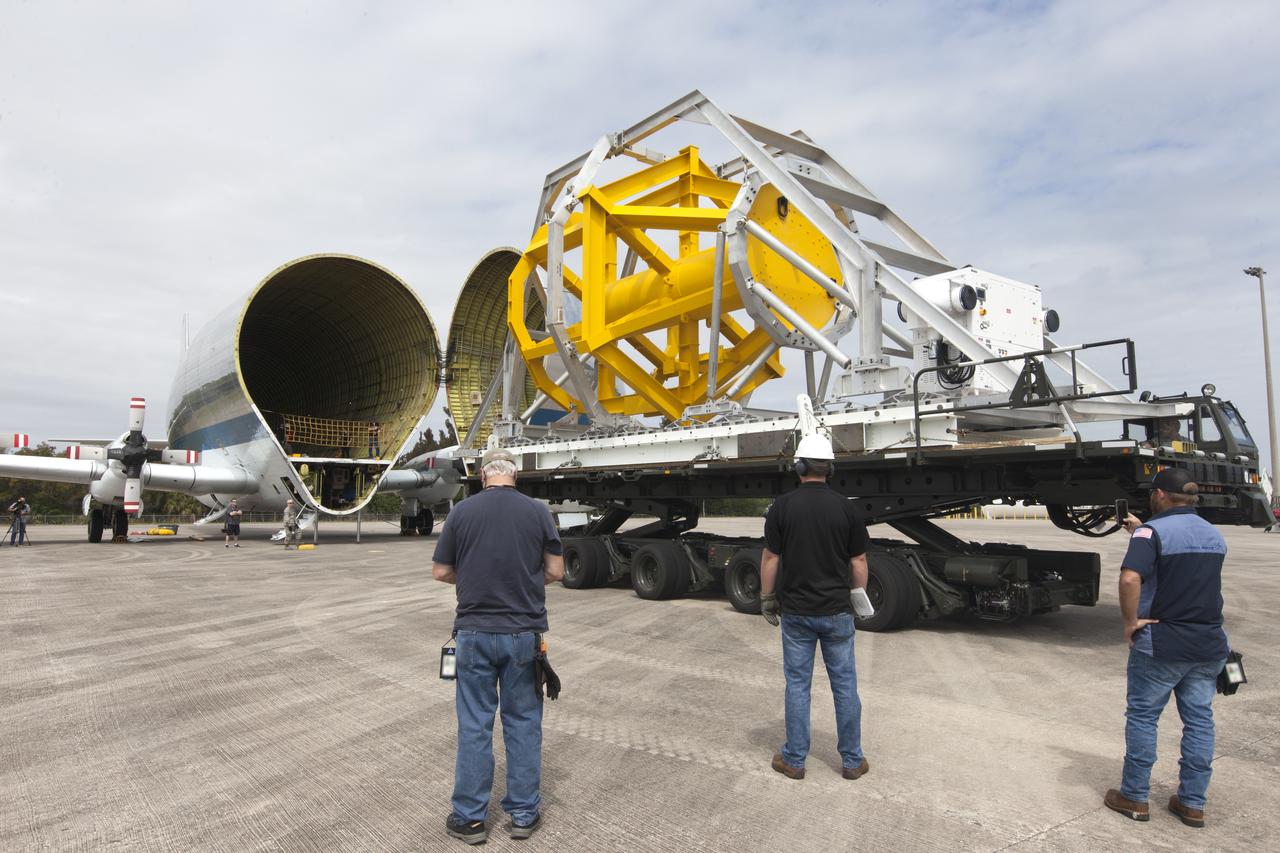
A fit check of the Orion Crew and Service Module Horizontal Transporter (CHT) with NASA's Super Guppy aircraft began March 12, 2019, at NASA Kennedy Space Center’s Shuttle Landing Facility in Florida, operated by Space Florida. In this photo, the Super Guppy’s payload bay is opened as the CHT, secured on the U.S. Air Force aircraft loader, is moved toward the aircraft. The fit check is being performed to confirm loading operations, ensure that the CHT fits inside the Super Guppy and test the electrical interface to aircraft power. The Orion crew and service modules will be readied for a trip to NASA’s Plum Brook Station in Sandusky, Ohio, for full thermal vacuum testing. In this unique facility, the crew and service modules will be put through extensive testing to ensure they can survive the rigors of launch, space travel, re-entry and splashdown. The Orion spacecraft will launch atop the agency's Space Launch System rocket on Exploration Mission-1.

A fit check of the Orion Crew and Service Module Horizontal Transporter (CHT) with NASA's Super Guppy aircraft began March 12, 2019, at NASA Kennedy Space Center’s Shuttle Landing Facility in Florida, operated by Space Florida. In this photo, the Super Guppy’s payload bay is opened as the CHT, secured on the U.S. Air Force aircraft loader, is moved inside the aircraft’s payload bay. The fit check is being performed to confirm loading operations, ensure that the CHT fits inside the Super Guppy and test the electrical interface to aircraft power. The Orion crew and service modules will be readied for a trip to NASA’s Plum Brook Station in Sandusky, Ohio, for full thermal vacuum testing. In this unique facility, the crew and service modules will be put through extensive testing to ensure they can survive the rigors of launch, space travel, re-entry and splashdown. The Orion spacecraft will launch atop the agency's Space Launch System rocket on Exploration Mission-1.

A fit check of the Orion Crew and Service Module Horizontal Transporter (CHT) with NASA's Super Guppy aircraft is underway March 13, 2019, at NASA Kennedy Space Center’s Shuttle Landing Facility in Florida, operated by Space Florida. In this photo, the CHT, secured on the U.S. Air Force aircraft loader, is moved inside the aircraft’s payload bay. The fit check is being performed to confirm loading operations, ensure that the CHT fits inside the Super Guppy and test the electrical interface to aircraft power. The Orion crew and service modules will be readied for a trip to NASA’s Plum Brook Station in Sandusky, Ohio, for full thermal vacuum testing. In this unique facility, the crew and service modules will be put through extensive testing to ensure they can survive the rigors of launch, space travel, re-entry and splashdown. The Orion spacecraft will launch atop the agency's Space Launch System rocket on Exploration Mission-1.
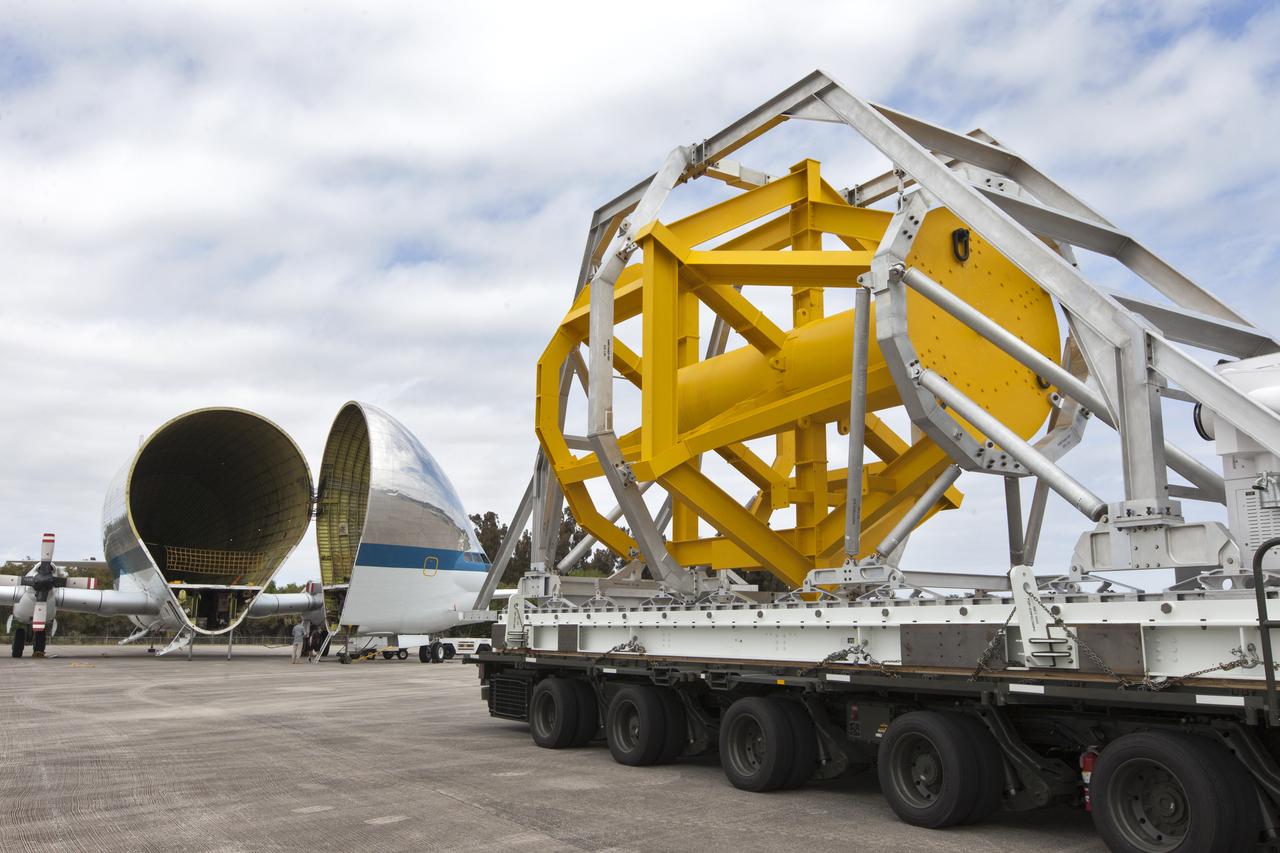
A fit check of the Orion Crew and Service Module Horizontal Transporter (CHT) with NASA's Super Guppy aircraft began March 12, 2019, at NASA Kennedy Space Center’s Shuttle Landing Facility in Florida, operated by Space Florida. In this photo, the Super Guppy’s payload bay is opened as the CHT, secured on the U.S. Air Force aircraft loader, is moved toward the aircraft. The fit check is being performed to confirm loading operations, ensure that the CHT fits inside the Super Guppy and test the electrical interface to aircraft power. The Orion crew and service modules will be readied for a trip to NASA’s Plum Brook Station in Sandusky, Ohio, for full thermal vacuum testing. In this unique facility, the crew and service modules will be put through extensive testing to ensure they can survive the rigors of launch, space travel, re-entry and splashdown. The Orion spacecraft will launch atop the agency's Space Launch System rocket on Exploration Mission-1.
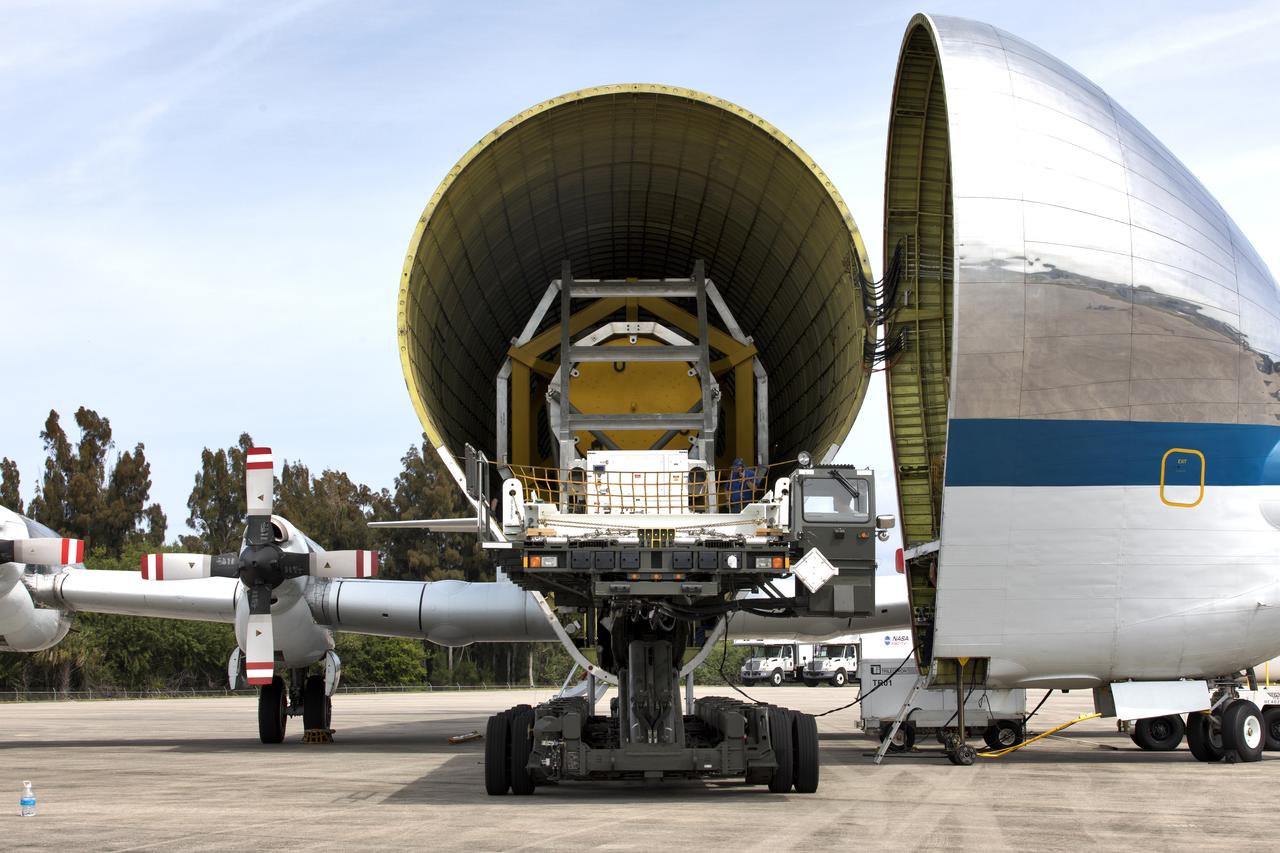
A fit check of the Orion Crew and Service Module Horizontal Transporter (CHT) with NASA's Super Guppy aircraft is underway March 13, 2019, at NASA Kennedy Space Center’s Shuttle Landing Facility in Florida, operated by Space Florida. In this photo, the CHT, secured on the U.S. Air Force aircraft loader, is moved inside the aircraft’s payload bay. The fit check is being performed to confirm loading operations, ensure that the CHT fits inside the Super Guppy and test the electrical interface to aircraft power. The Orion crew and service modules will be readied for a trip to NASA’s Plum Brook Station in Sandusky, Ohio, for full thermal vacuum testing. In this unique facility, the crew and service modules will be put through extensive testing to ensure they can survive the rigors of launch, space travel, re-entry and splashdown. The Orion spacecraft will launch atop the agency's Space Launch System rocket on Exploration Mission-1.
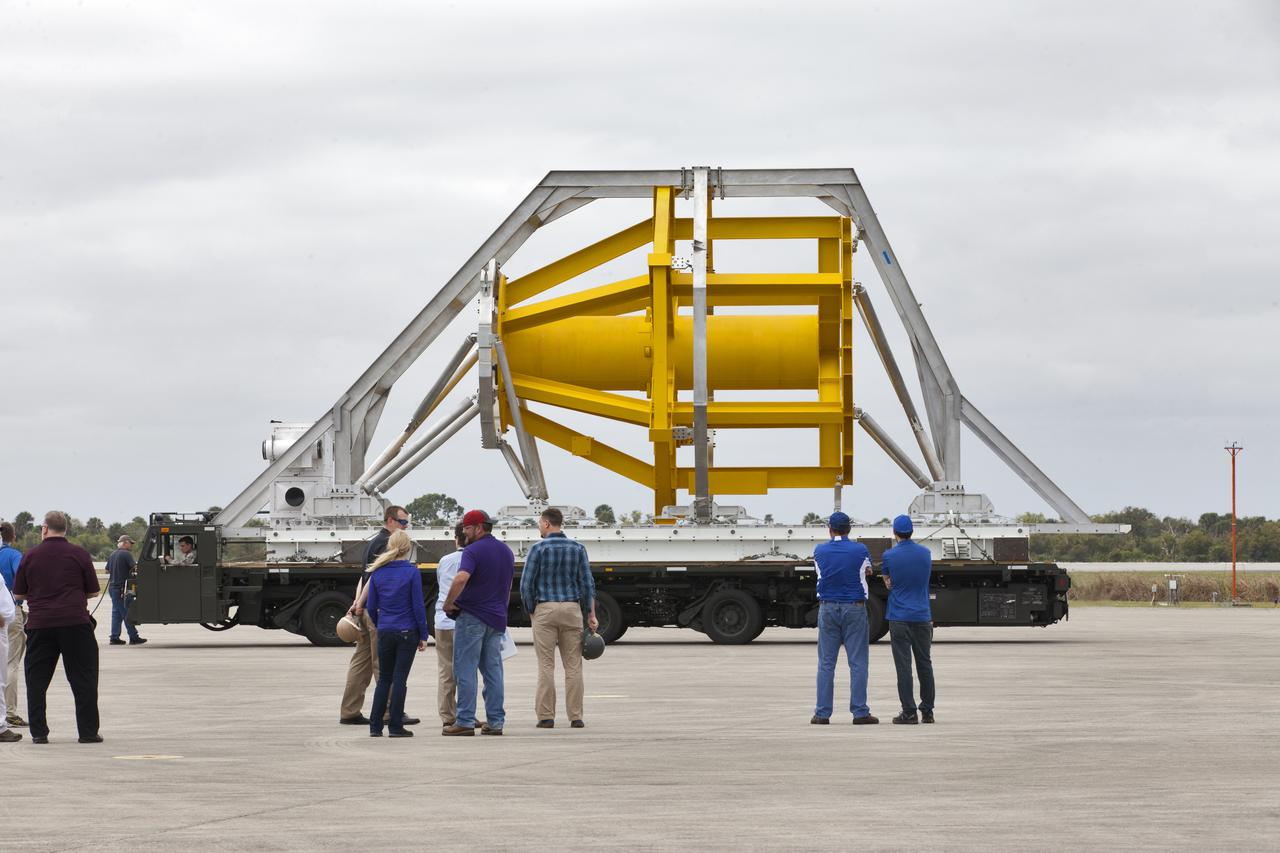
A fit check of the Orion Crew and Service Module Horizontal Transporter (CHT) with NASA's Super Guppy aircraft began March 12, 2019, at NASA Kennedy Space Center’s Shuttle Landing Facility in Florida, operated by Space Florida. In this photo, the CHT is secured on the U.S. Air Force aircraft loader. The fit check is being performed to confirm loading operations, ensure that the CHT fits inside the Super Guppy and test the electrical interface to aircraft power. The Orion crew and service modules will be readied for a trip to NASA’s Plum Brook Station in Sandusky, Ohio, for full thermal vacuum testing. In this unique facility, the crew and service modules will be put through extensive testing to ensure they can survive the rigors of launch, space travel, re-entry and splashdown. The Orion spacecraft will launch atop the agency's Space Launch System rocket on Exploration Mission-1.
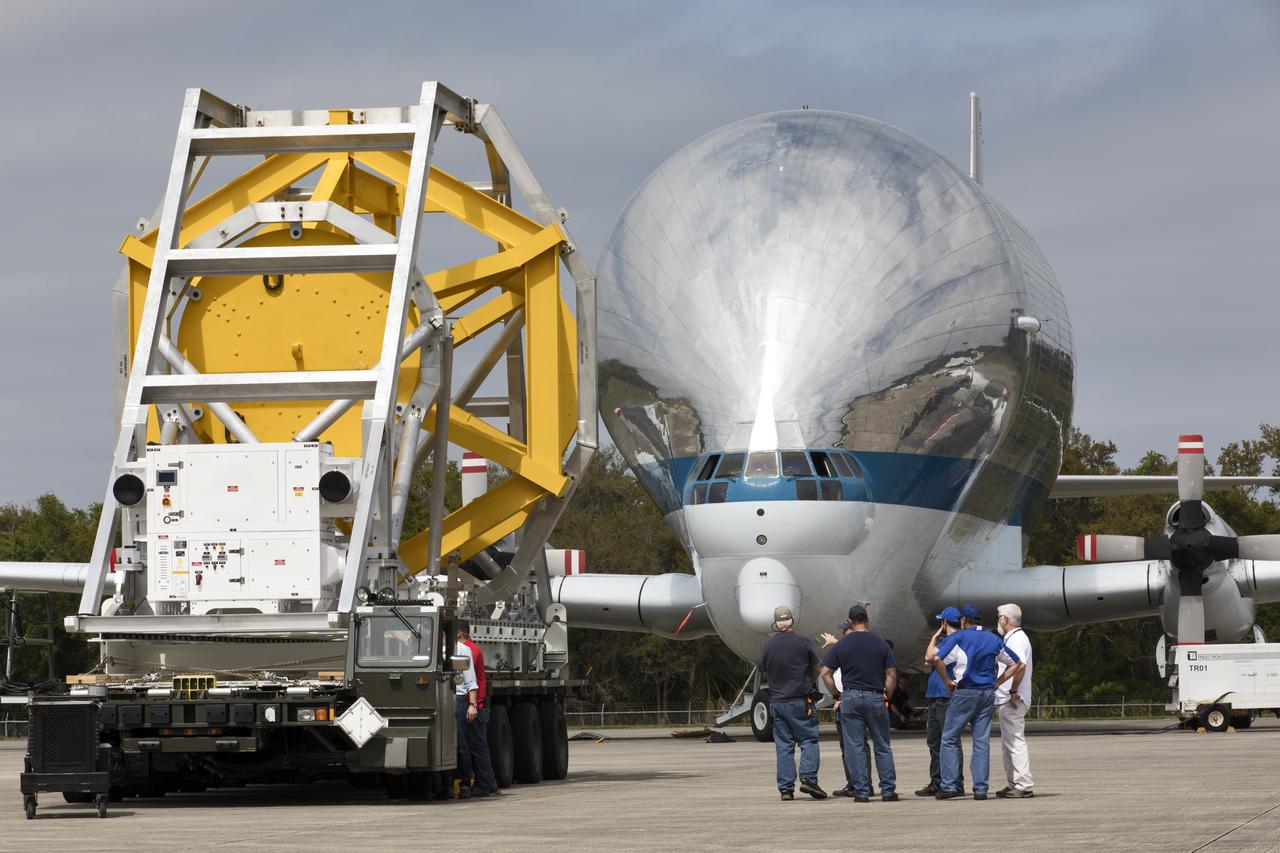
A fit check of the Orion Crew and Service Module Horizontal Transporter (CHT) with NASA's Super Guppy aircraft began March 12, 2019, at NASA Kennedy Space Center’s Shuttle Landing Facility in Florida, operated by Space Florida. In this photo, the CHT is secured on the U.S. Air Force aircraft loader and is moved toward the Super Guppy. The fit check is being performed to confirm loading operations, ensure that the CHT fits inside the Super Guppy and test the electrical interface to aircraft power. The Orion crew and service modules will be readied for a trip to NASA’s Plum Brook Station in Sandusky, Ohio, for full thermal vacuum testing. In this unique facility, the crew and service modules will be put through extensive testing to ensure they can survive the rigors of launch, space travel, re-entry and splashdown. The Orion spacecraft will launch atop the agency's Space Launch System rocket on Exploration Mission-1.
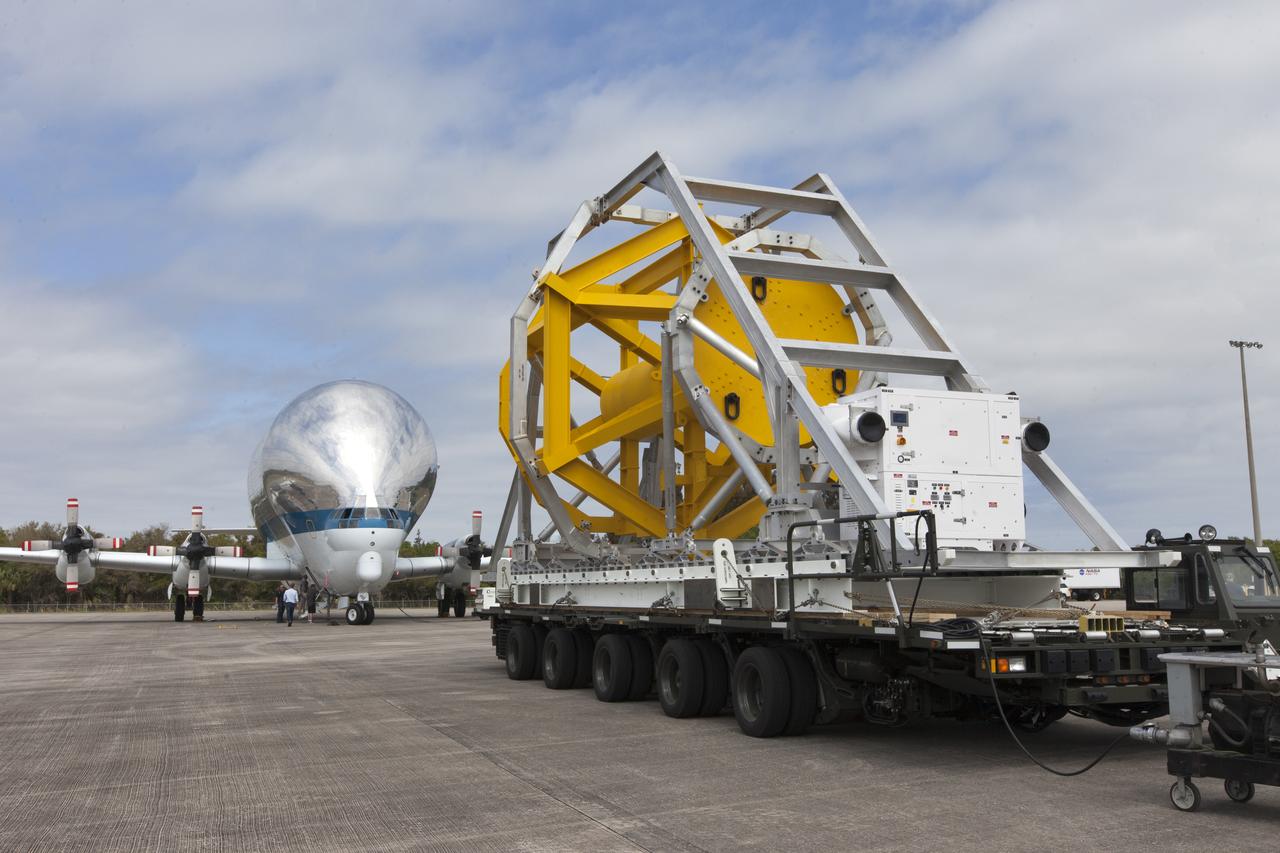
A fit check of the Orion Crew and Service Module Horizontal Transporter (CHT) with NASA's Super Guppy aircraft began March 12, 2019, at NASA Kennedy Space Center’s Shuttle Landing Facility in Florida, operated by Space Florida. In this photo, the CHT is secured on the U.S. Air Force aircraft loader. The fit check is being performed to confirm loading operations, ensure that the CHT fits inside the Super Guppy and test the electrical interface to aircraft power. The Orion crew and service modules will be readied for a trip to NASA’s Plum Brook Station in Sandusky, Ohio, for full thermal vacuum testing. In this unique facility, the crew and service modules will be put through extensive testing to ensure they can survive the rigors of launch, space travel, re-entry and splashdown. The Orion spacecraft will launch atop the agency's Space Launch System rocket on Exploration Mission-1.
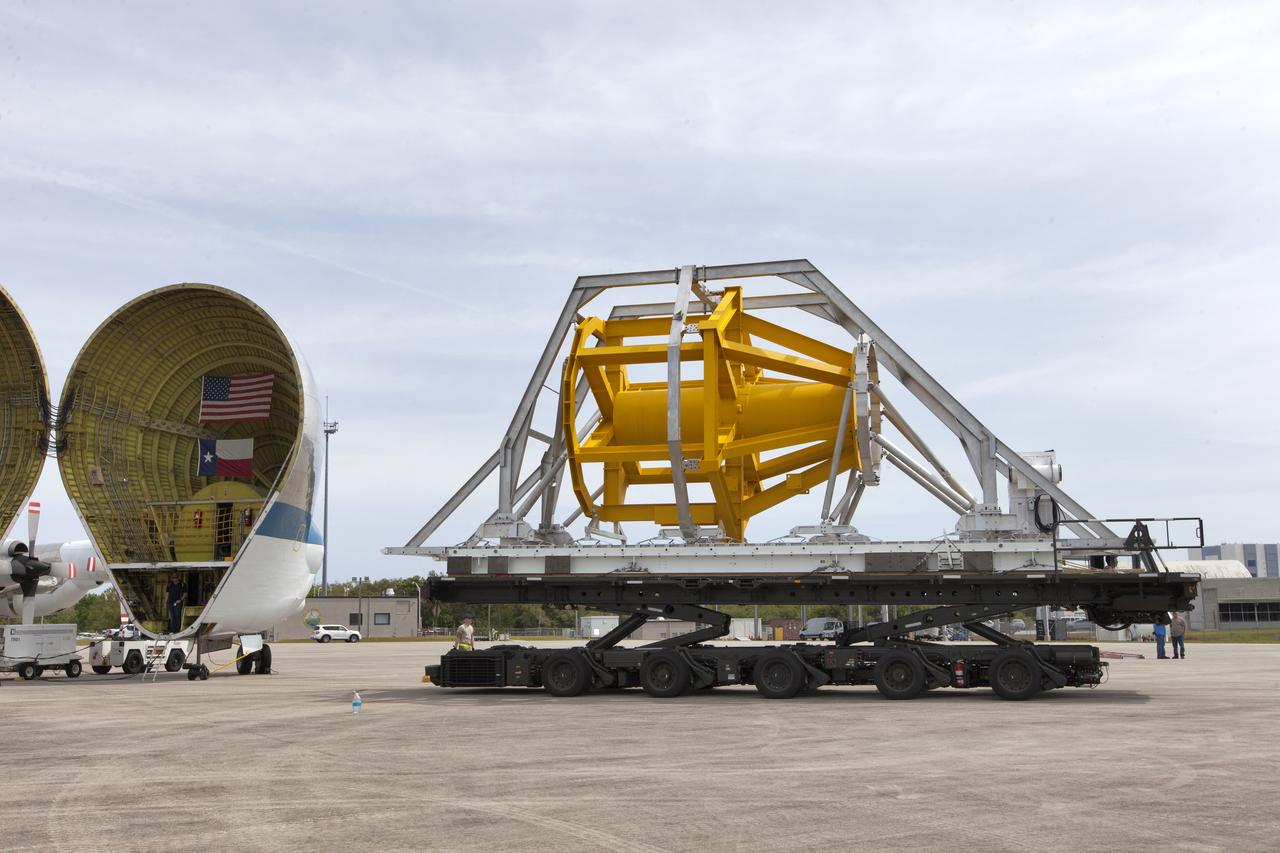
A fit check of the Orion Crew and Service Module Horizontal Transporter (CHT) with NASA's Super Guppy aircraft is underway March 13, 2019, at NASA Kennedy Space Center’s Shuttle Landing Facility in Florida, operated by Space Florida. In this photo, the CHT is secured on the U.S. Air Force aircraft loader and is being moved toward the Super Guppy. The fit check is being performed to confirm loading operations, ensure that the CHT fits inside the Super Guppy and test the electrical interface to aircraft power. The Orion crew and service modules will be readied for a trip to NASA’s Plum Brook Station in Sandusky, Ohio, for full thermal vacuum testing. In this unique facility, the crew and service modules will be put through extensive testing to ensure they can survive the rigors of launch, space travel, re-entry and splashdown. The Orion spacecraft will launch atop the agency's Space Launch System rocket on Exploration Mission-1.
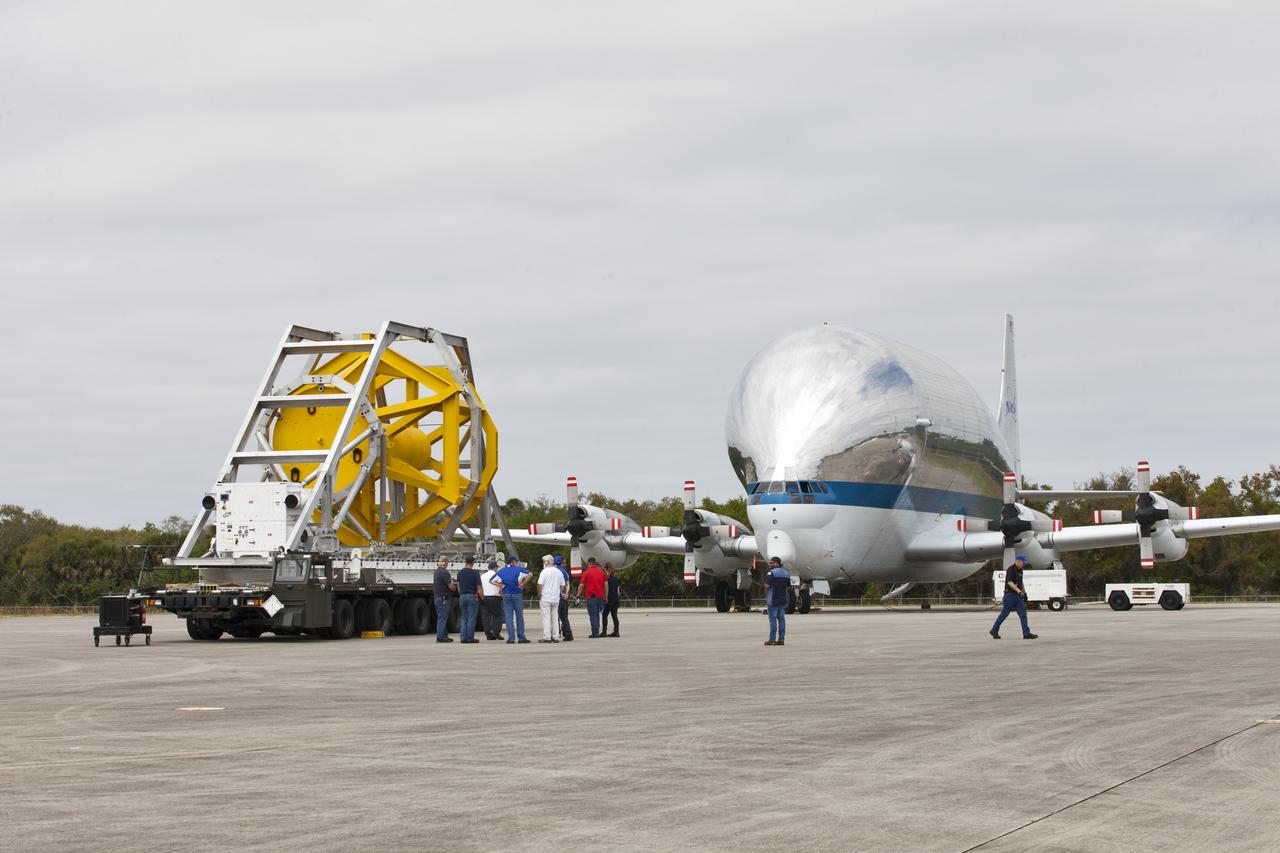
A fit check of the Orion Crew and Service Module Horizontal Transporter (CHT) with NASA's Super Guppy aircraft began March 12, 2019, at NASA Kennedy Space Center’s Shuttle Landing Facility in Florida, operated by Space Florida. In this photo, the CHT is secured on the U.S. Air Force aircraft loader. The fit check is being performed to confirm loading operations, ensure that the CHT fits inside the Super Guppy and test the electrical interface to aircraft power. The Orion crew and service modules will be readied for a trip to NASA’s Plum Brook Station in Sandusky, Ohio, for full thermal vacuum testing. In this unique facility, the crew and service modules will be put through extensive testing to ensure they can survive the rigors of launch, space travel, re-entry and splashdown. The Orion spacecraft will launch atop the agency's Space Launch System rocket on Exploration Mission-1.
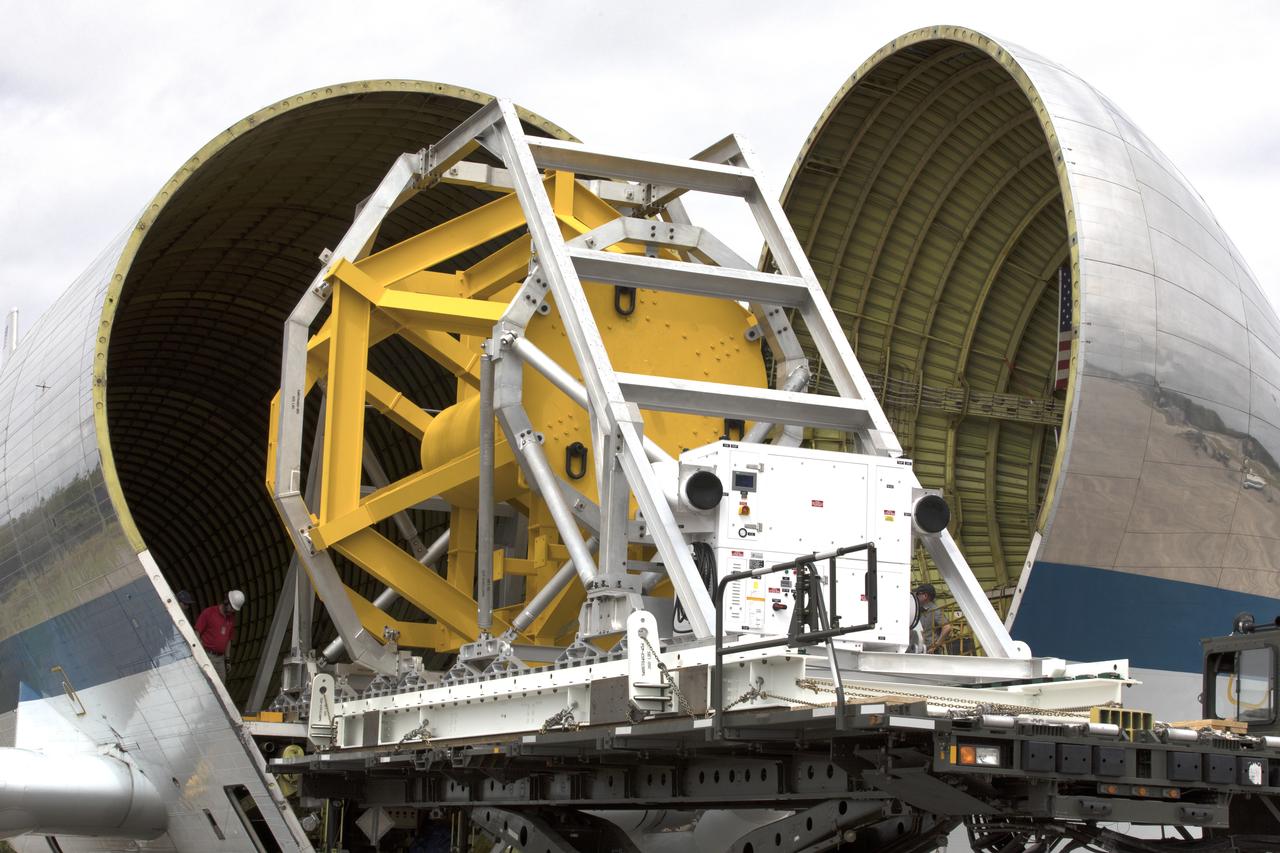
A fit check of the Orion Crew and Service Module Horizontal Transporter (CHT) with NASA's Super Guppy aircraft began March 12, 2019, at NASA Kennedy Space Center’s Shuttle Landing Facility in Florida, operated by Space Florida. In this photo, the Super Guppy’s payload bay is opened as the CHT, secured on the U.S. Air Force aircraft loader, is moved inside the aircraft’s payload bay. The fit check is being performed to confirm loading operations, ensure that the CHT fits inside the Super Guppy and test the electrical interface to aircraft power. The Orion crew and service modules will be readied for a trip to NASA’s Plum Brook Station in Sandusky, Ohio, for full thermal vacuum testing. In this unique facility, the crew and service modules will be put through extensive testing to ensure they can survive the rigors of launch, space travel, re-entry and splashdown. The Orion spacecraft will launch atop the agency's Space Launch System rocket on Exploration Mission-1.
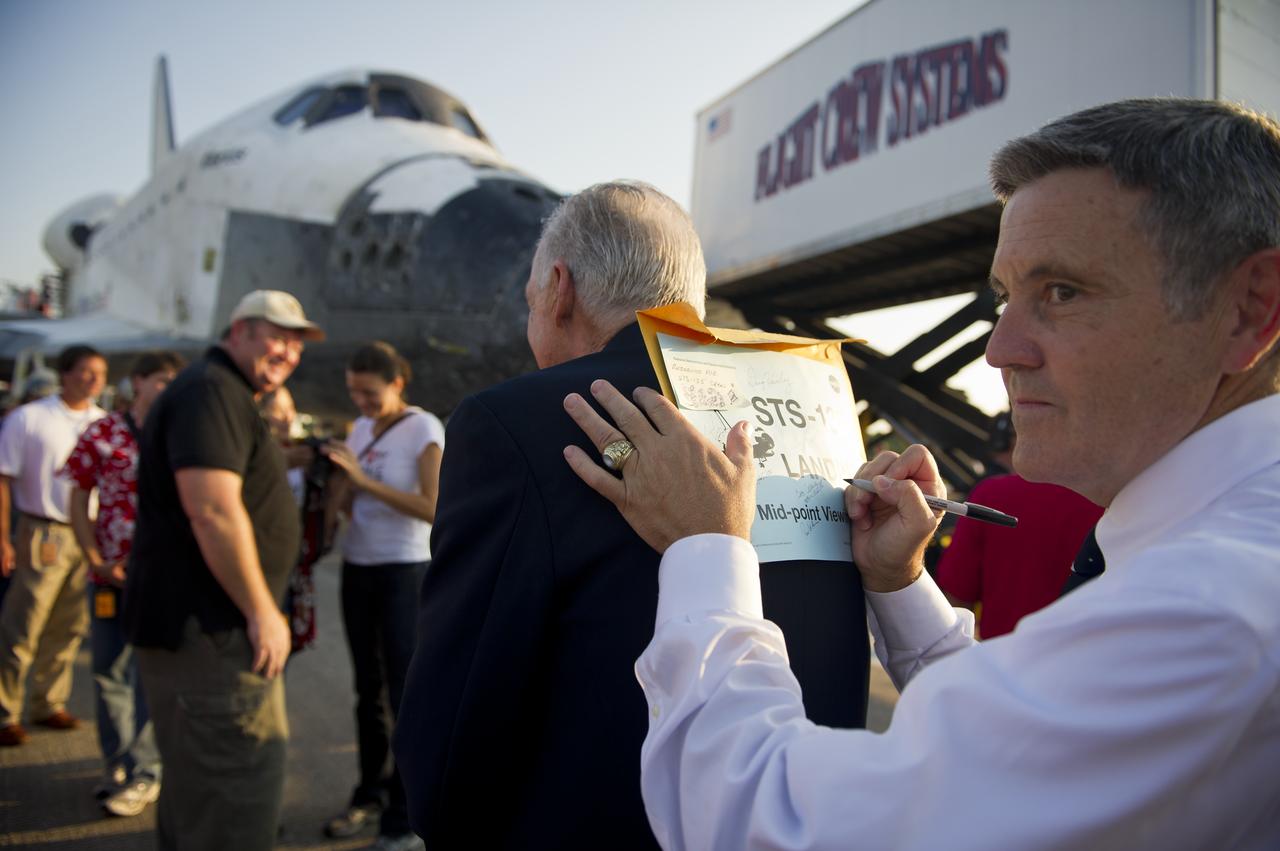
NASA Kennedy Space center Director Robert Cabana sings an STS-135 landing car placard at the Shuttle Landing Facility (SLF) runway at NASA Kennedy Space Center shortly after the space shuttle Atlantis (STS-135) landed, completing its 13-day mission to the International Space Station (ISS) and the final flight of the Space Shuttle Program, early Thursday morning, July 21, 2011, in Cape Canaveral, Fla. Overall, Atlantis spent 307 days in space and traveled nearly 126 million miles during its 33 flights. Atlantis, the fourth orbiter built, launched on its first mission on Oct. 3, 1985. Photo Credit: (NASA/Bill Ingalls)
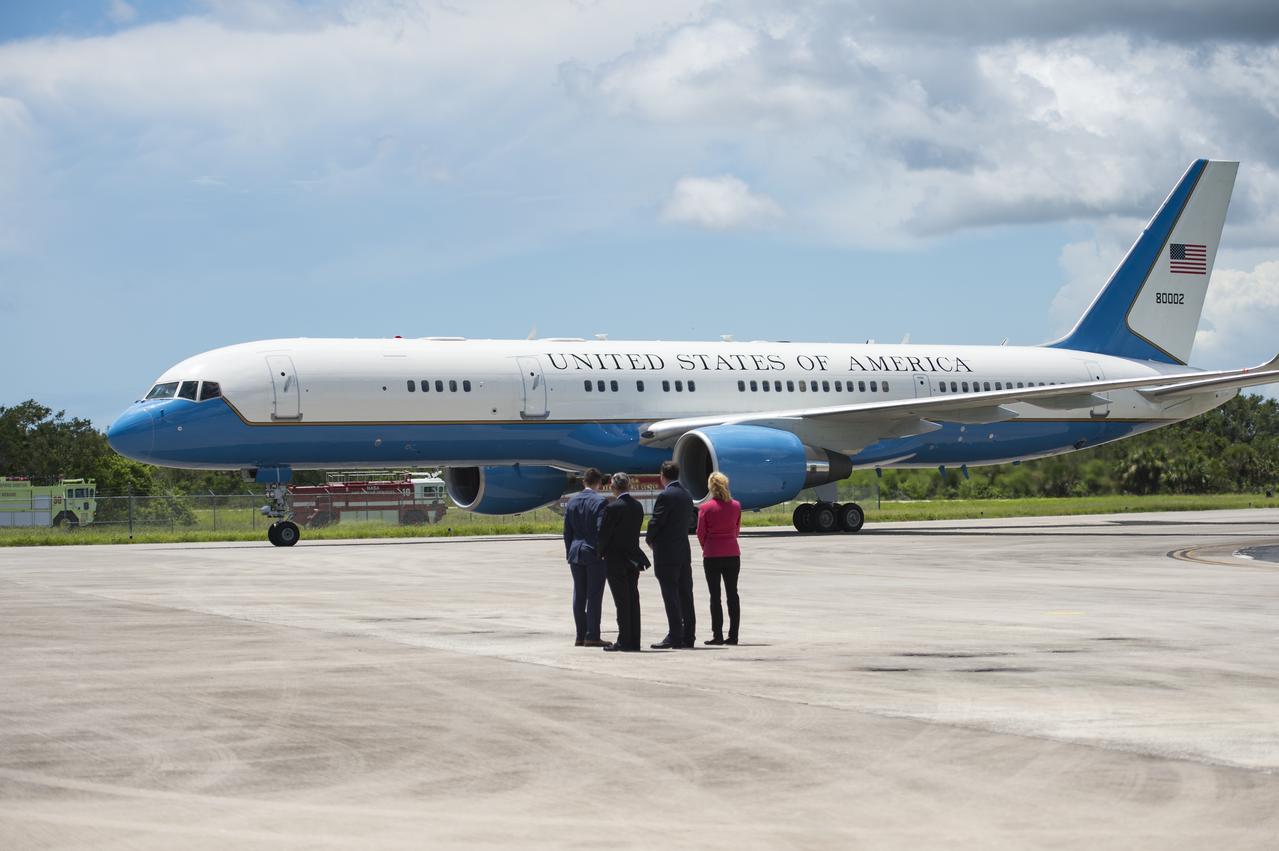
Vice President Mike Pence arrives in Air Force Two as NASA Leadership looks on, at the Shuttle Landing Facility (SLF) to highlight innovations made in America and tour some of the public/private partnership work that is helping to transform Kennedy Space Center (KSC) into a multi-user spaceport on Thursday, July 6, 2017 in Cape Canaveral, Florida. Photo Credit: (NASA/Aubrey Gemignani)
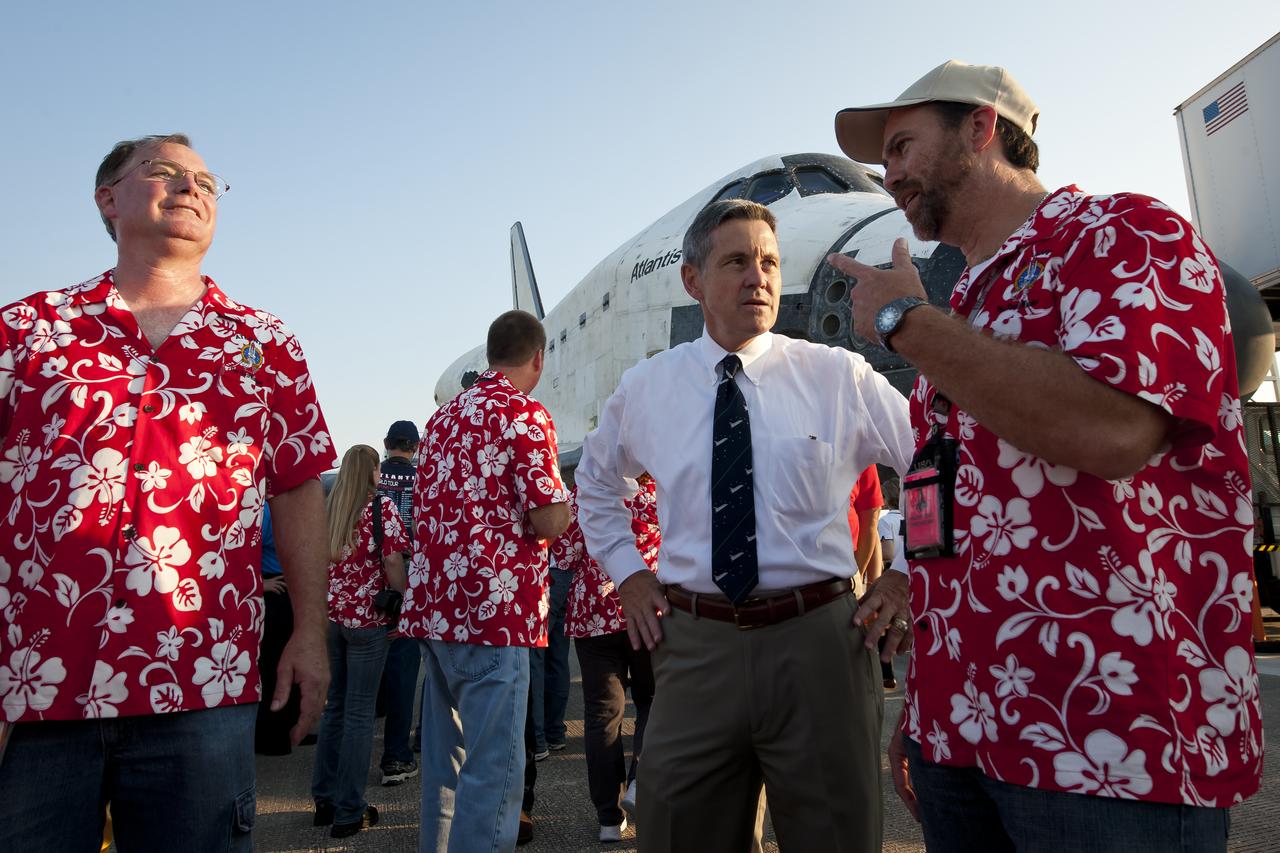
NASA Kennedy Space center Director Robert Cabana talks with members of the shuttle tile team which are wearing flowered shirts together at the Shuttle Landing Facility (SLF) runway at NASA Kennedy Space Center shortly after the space shuttle Atlantis (STS-135) landed, completing its 13-day mission to the International Space Station (ISS) and the final flight of the Space Shuttle Program, early Thursday morning, July 21, 2011, in Cape Canaveral, Fla. Overall, Atlantis spent 307 days in space and traveled nearly 126 million miles during its 33 flights. Atlantis, the fourth orbiter built, launched on its first mission on Oct. 3, 1985. Photo Credit: (NASA/Bill Ingalls)
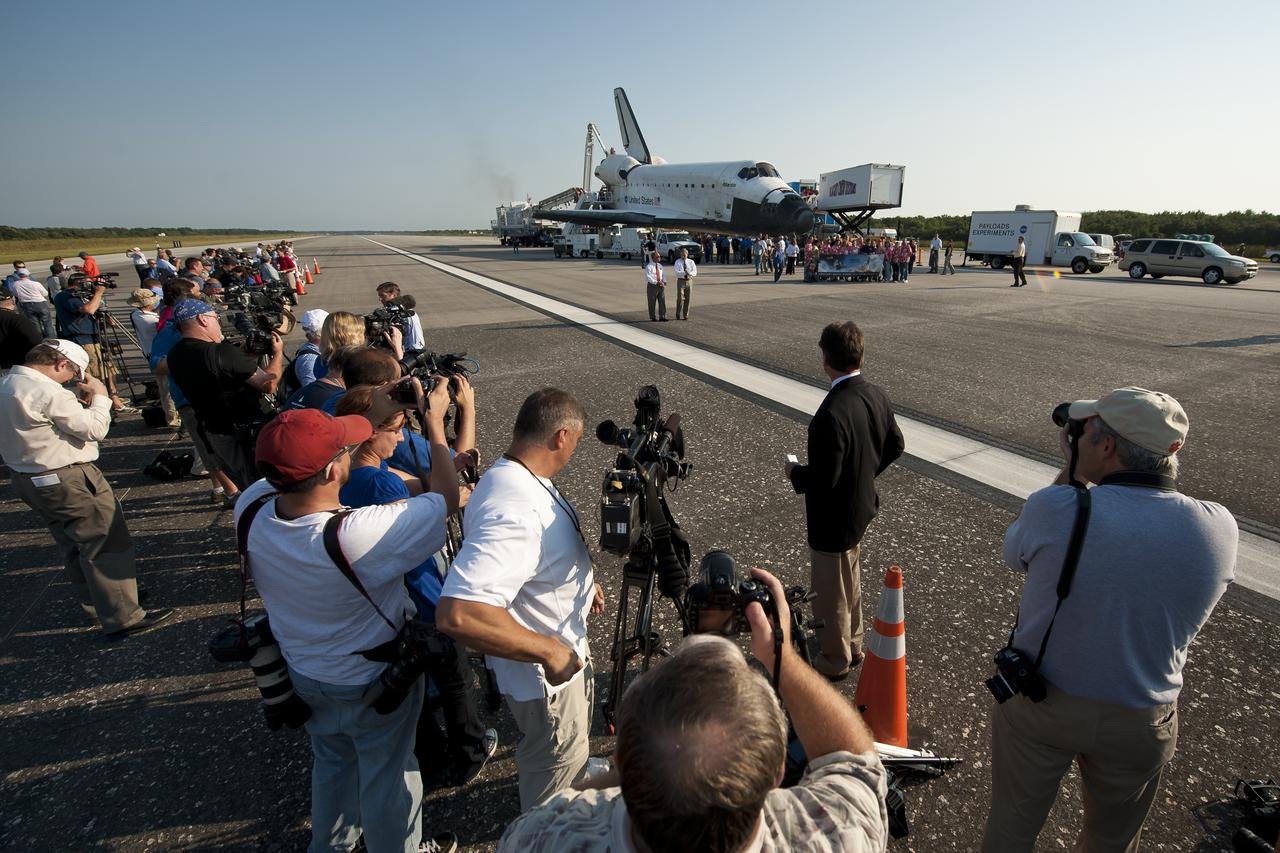
NASA Administrator Charles Bolden, left, and NASA Kennedy Space center Director Robert Cabana walk along the Shuttle Landing Facility (SLF) runway at NASA Kennedy Space Center as members of teh media prepare to ask them questions shortly after the space shuttle Atlantis (STS-135) landed, completing its 13-day mission to the International Space Station (ISS) and the final flight of the Space Shuttle Program, early Thursday morning, July 21, 2011, in Cape Canaveral, Fla. Overall, Atlantis spent 307 days in space and traveled nearly 126 million miles during its 33 flights. Atlantis, the fourth orbiter built, launched on its first mission on Oct. 3, 1985. Photo Credit: (NASA/Bill Ingalls)
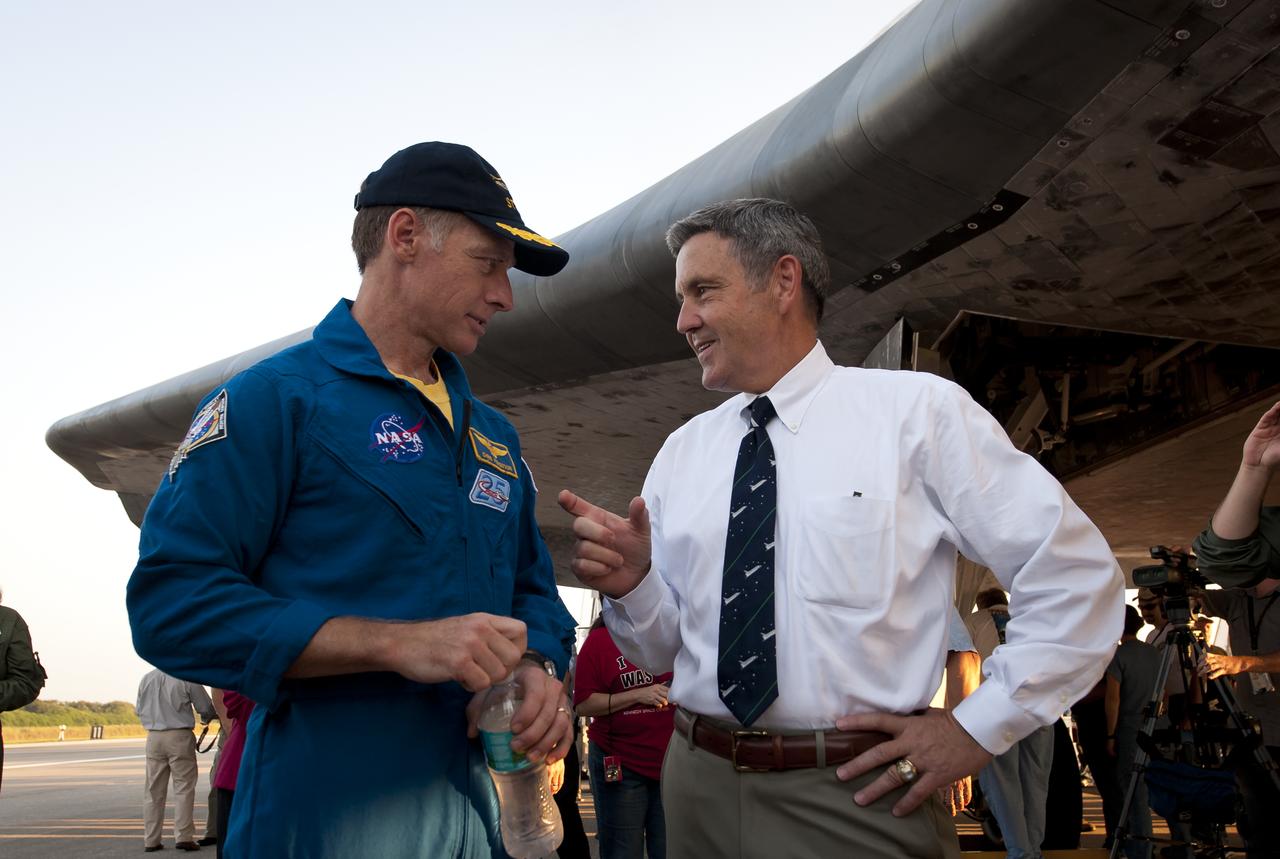
NASA Kennedy Space Center Director Bob Cabana, right, and Commander Chris Ferguson talk underneath the space shuttle Atlantis shortly after Ferguson and the rest of the STS-135 crew landed at NASA's Kennedy Space Center Shuttle Landing Facility (SLF), completing a 13-day mission to the International Space Station (ISS) and the final flight of the Space Shuttle Program, early Thursday morning, July 21, 2011, in Cape Canaveral, Fla. Overall, Atlantis spent 307 days in space and traveled nearly 126 million miles during its 33 flights. Atlantis, the fourth orbiter built, launched on its first mission on Oct. 3, 1985. Photo Credit: (NASA/Bill Ingalls)
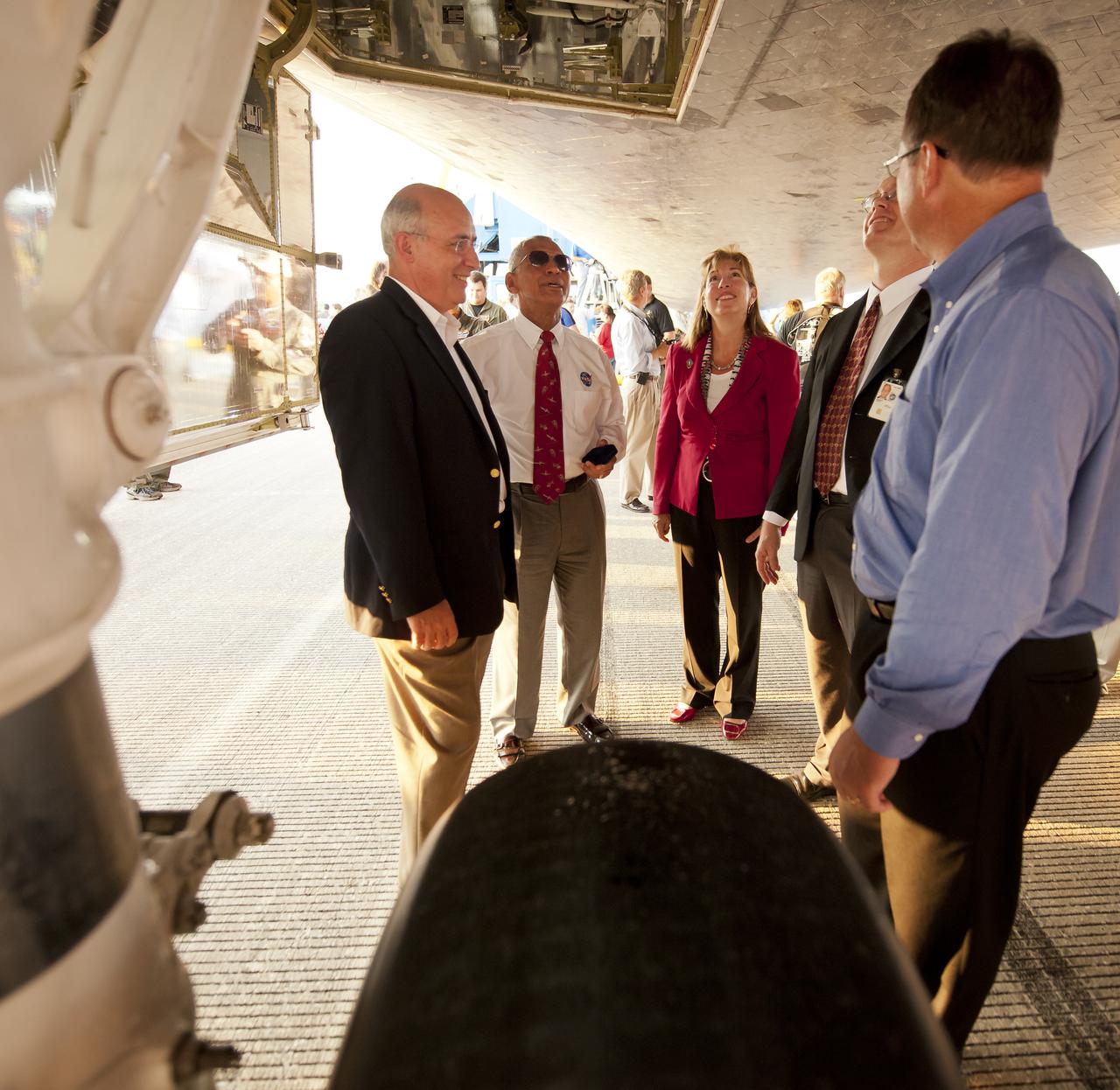
NASA International Space Station Program Office Manager Michael Suffredini, left, NASA Administrator Charles Bolden, second from left, Deputy Administrator Lori Garver, Manager, Space Shuttle Program Office John Shannon, third from left, and an unidentified colleague, talk under the space shuttle Atlantis at the Kennedy Space Center Shuttle Landing Facility (SLF) shortly after Atlantis (STS-135) landed early Thursday morning, July 21, 2011, in Cape Canaveral, Fla. Overall, Atlantis spent 307 days in space and traveled nearly 126 million miles during its 33 flights. Atlantis, the fourth orbiter built, launched on its first mission on Oct. 3, 1985. Photo Credit: (NASA/Bill Ingalls)
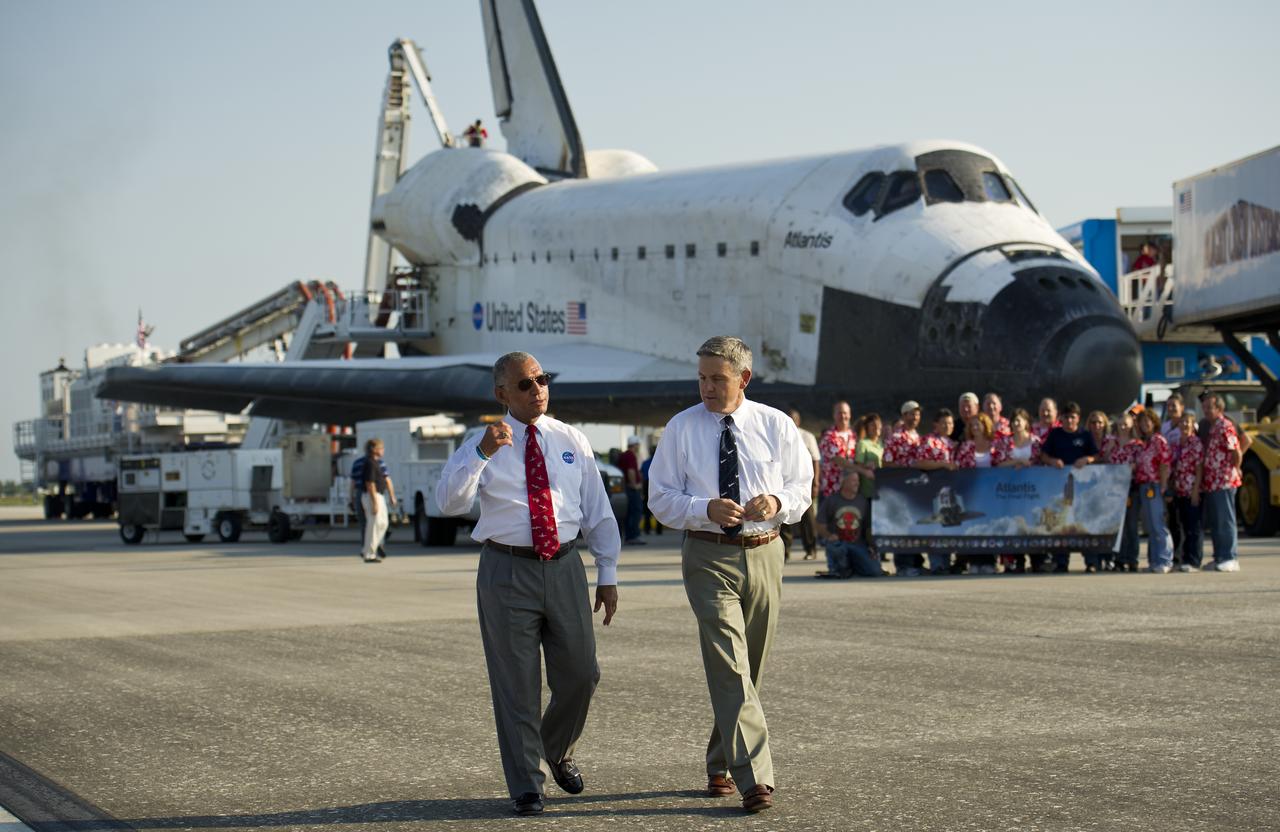
NASA Administrator Charles Bolden, left, and NASA Kennedy Space center Director Robert Cabana walk along the Shuttle Landing Facility (SLF) runway at NASA Kennedy Space Center shortly after the space shuttle Atlantis (STS-135) landed, completing its 13-day mission to the International Space Station (ISS) and the final flight of the Space Shuttle Program, early Thursday morning, July 21, 2011, in Cape Canaveral, Fla. Overall, Atlantis spent 307 days in space and traveled nearly 126 million miles during its 33 flights. Atlantis, the fourth orbiter built, launched on its first mission on Oct. 3, 1985. Photo Credit: (NASA/Bill Ingalls)

NASA Administrator Charles Bolden, right, and NASA Kennedy Space center Director Robert Cabana pose for a photograph together at the Shuttle Landing Facility (SLF) runway at NASA Kennedy Space Center shortly after the space shuttle Atlantis (STS-135) landed, completing its 13-day mission to the International Space Station (ISS) and the final flight of the Space Shuttle Program, early Thursday morning, July 21, 2011, in Cape Canaveral, Fla. Overall, Atlantis spent 307 days in space and traveled nearly 126 million miles during its 33 flights. Atlantis, the fourth orbiter built, launched on its first mission on Oct. 3, 1985. Photo Credit: (NASA/Bill Ingalls)

NASA Chief of the Astronaut Office Peggy Whitson, left, STS-135 mission Pilot Doug Hurley, second from left, NASA Administrator Charles Bolden, and Deputy Chief of Flight Crew Operations Directorate Brian Kelly, right, talk under the space shuttle Atlantis at the Kennedy Space Center Shuttle Landing Facility (SLF) shortly after Hurley and the rest of the STS-135 crew landed in Atlantis early Thursday morning, July 21, 2011, in Cape Canaveral, Fla. Overall, Atlantis spent 307 days in space and traveled nearly 126 million miles during its 33 flights. Atlantis, the fourth orbiter built, launched on its first mission on Oct. 3, 1985. Photo Credit: (NASA/Bill Ingalls)
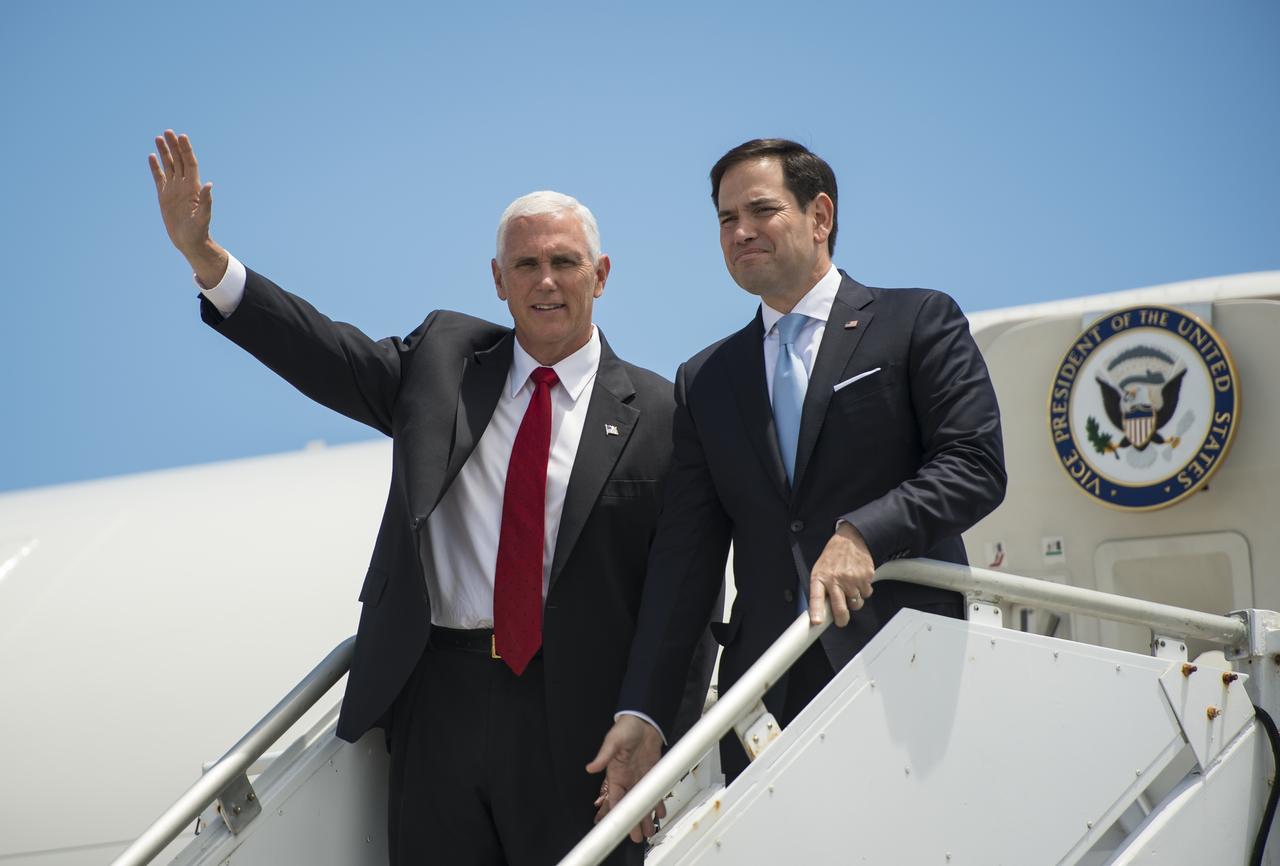
Vice President Mike Pence waves next to Sen. Marco Rubio, R-Fla., after they arrived on Air Force Two at the Shuttle Landing Facility (SLF) to highlight innovations made in America and tour some of the public/private partnership work that is helping to transform Kennedy Space Center (KSC) into a multi-user spaceport on Thursday, July 6, 2017 in Cape Canaveral, Florida. Photo Credit: (NASA/Aubrey Gemignani)

Vice President Mike Pence greets Acting NASA Administrator Robert Lightfoot, second from right, and Director, Kennedy Space Center, Robert Cabana, left, after arriving at the Shuttle Landing Facility (SLF) to highlight innovations made in America and tour some of the public/private partnership work that is helping to transform Kennedy Space Center (KSC) into a multi-user spaceport on Thursday, July 6, 2017 in Cape Canaveral, Florida. Photo Credit: (NASA/Aubrey Gemignani)

Vice President Mike Pence, left, greets Acting NASA Administrator Robert Lightfoot, right, and Director, Kennedy Space Center, Robert Cabana, second from left, with U.S. Senator Marco Rubio, center, after arriving at the Shuttle Landing Facility (SLF) to highlight innovations made in America and tour some of the public/private partnership work that is helping to transform Kennedy Space Center (KSC) into a multi-user spaceport on Thursday, July 6, 2017 in Cape Canaveral, Florida. Photo Credit: (NASA/Aubrey Gemignani)

Vice President Mike Pence greets Acting NASA Administrator Robert Lightfoot after arriving at the Shuttle Landing Facility (SLF) to highlight innovations made in America and tour some of the public/private partnership work that is helping to transform Kennedy Space Center (KSC) into a multi-user spaceport on Thursday, July 6, 2017 in Cape Canaveral, Florida. Photo Credit: (NASA/Aubrey Gemignani)
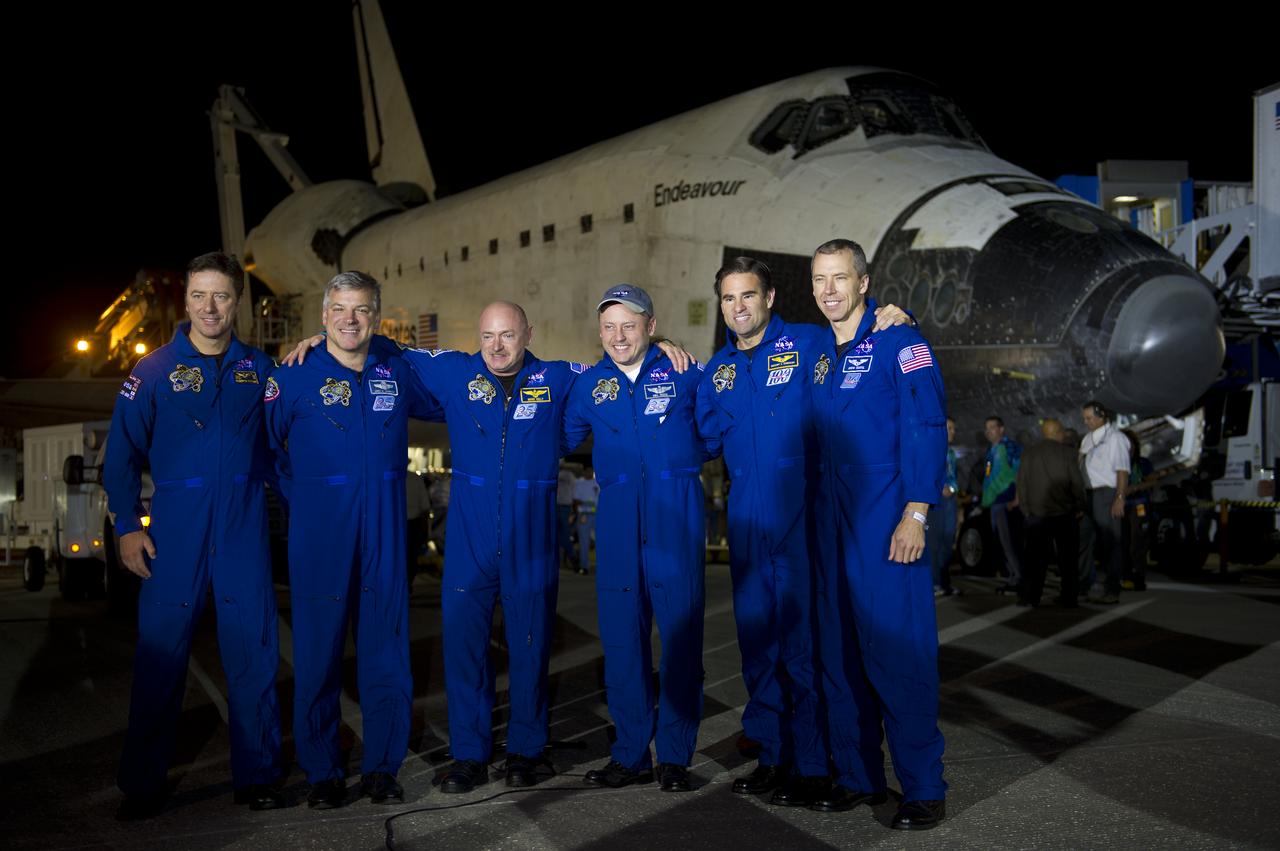
The STS-134 astronauts from left, European Space Agency's Roberto Vittori, Gregory H. Johnson, pilot; Mark Kelly, commander; Michael Fincke, Greg Chamitoff, and Andrew Feustel all mission specialists, pose for a group photograph shortly after landing onboard the space shuttle Endeavour at the Shuttle Landing Facility (SLF) at Kennedy Space Center, Wednesday, June 1, 2011, in Cape Canaveral, Fla. Endeavour, completing a 16-day mission to outfit the International Space Station, spent 299 days in space and traveled more than 122.8 million miles during its 25 flights. It launched on its first mission on May 7, 1992. Photo Credit: (NASA/Bill Ingalls)
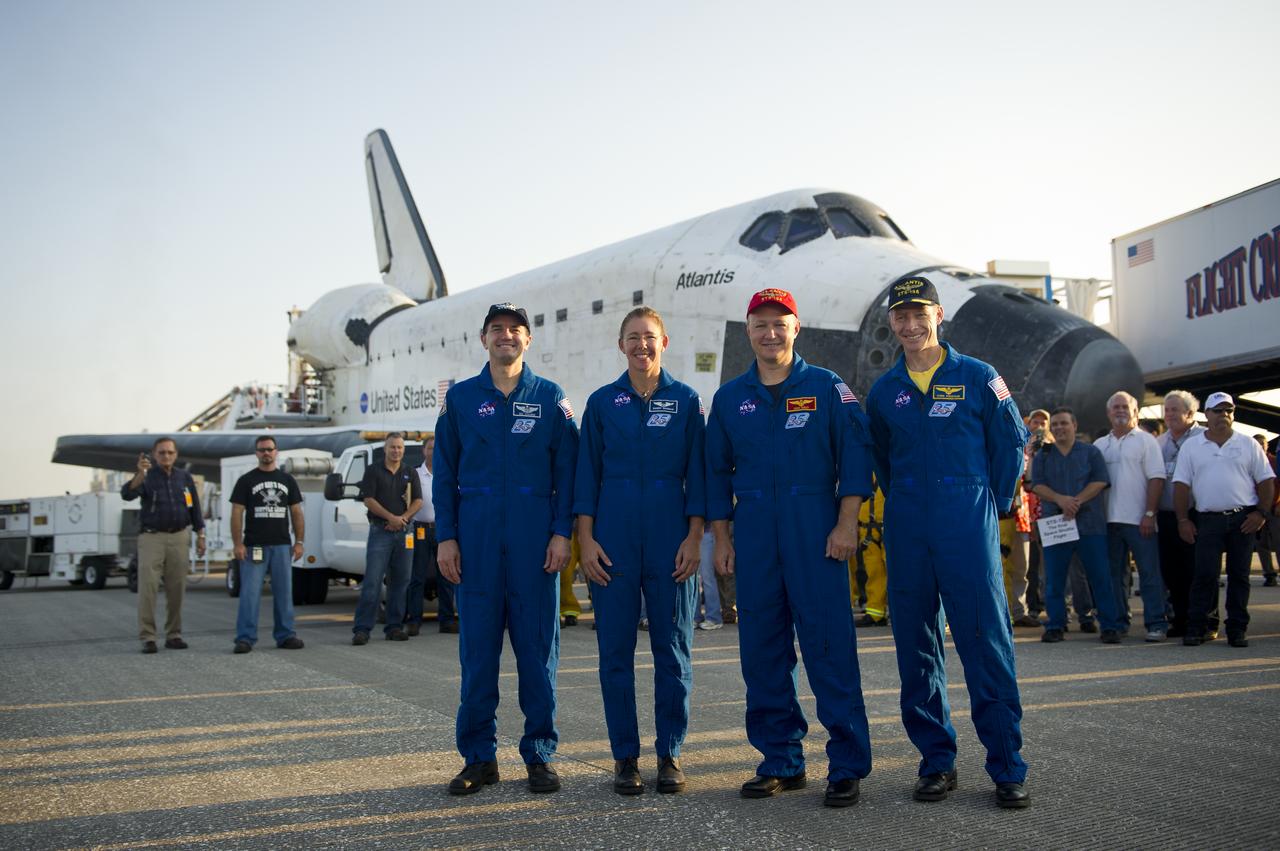
The STS-135 astronauts, from left, Mission Specialists Rex Walheim, Sandy Magnus, Pilot Doug Hurley and Commander Chris Ferguson all pose for photographers shortly after they touched down in the space shuttle Atlantis at NASA's Kennedy Space Center Shuttle Landing Facility (SLF), completing its 13-day mission to the International Space Station (ISS) and the final flight of the Space Shuttle Program, early Thursday morning, July 21, 2011, in Cape Canaveral, Fla. Overall, Atlantis spent 307 days in space and traveled nearly 126 million miles during its 33 flights. Atlantis, the fourth orbiter built, launched on its first mission on Oct. 3, 1985. Photo Credit: (NASA/Bill Ingalls)
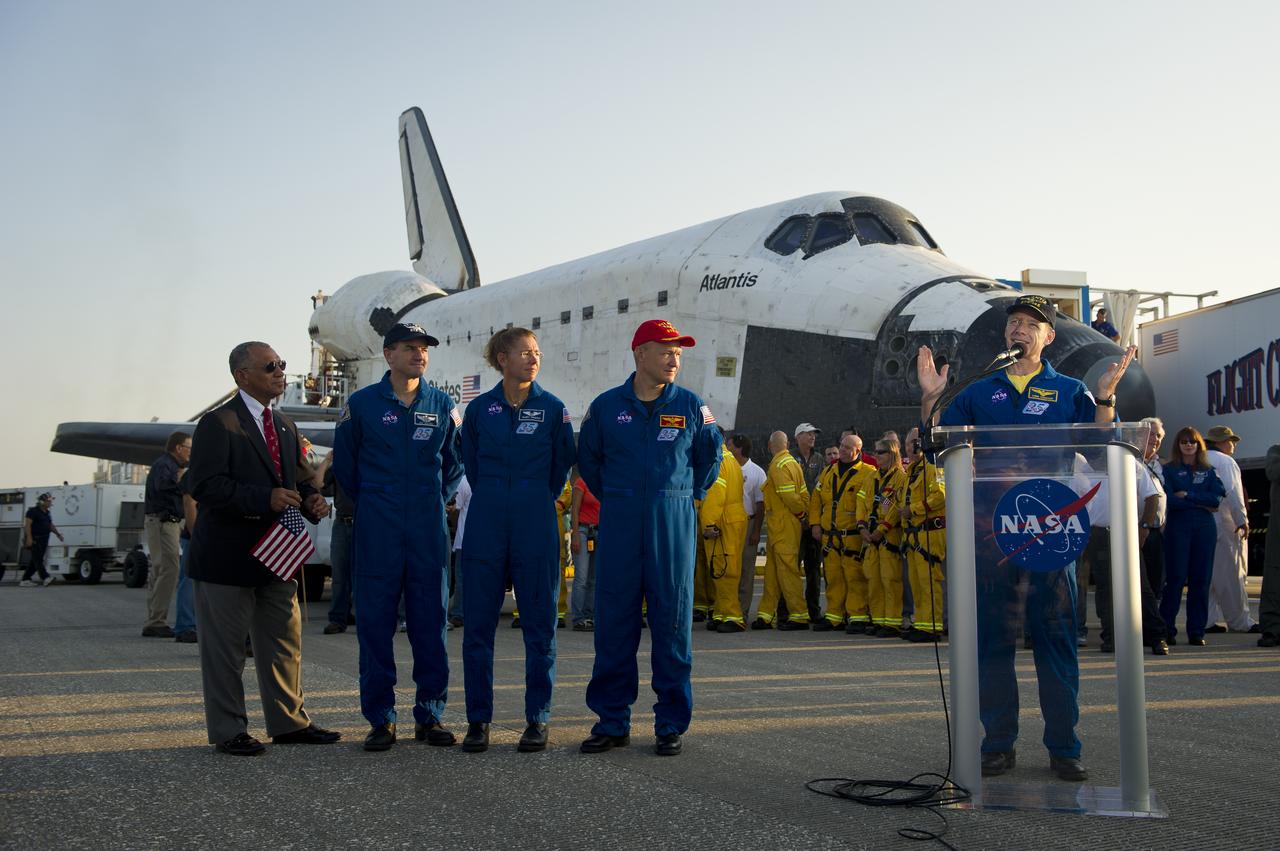
STS-135 Commander Chris Ferguson, right, talks to the media as NASA Administrator Charles Bolden, left, STS-135 Mission Specialists Rex Walheim, second from left, Sandy Magnus, third from left, and Pilot Doug Hurley look on shortly after the crew touched down in space shuttle Atlantis at NASA's Kennedy Space Center Shuttle Landing Facility (SLF), completing its 13-day mission to the International Space Station (ISS) and the final flight of the Space Shuttle Program, early Thursday morning, July 21, 2011, in Cape Canaveral, Fla. Overall, Atlantis spent 307 days in space and traveled nearly 126 million miles during its 33 flights. Atlantis, the fourth orbiter built, launched on its first mission on Oct. 3, 1985. Photo Credit: (NASA/Bill Ingalls)
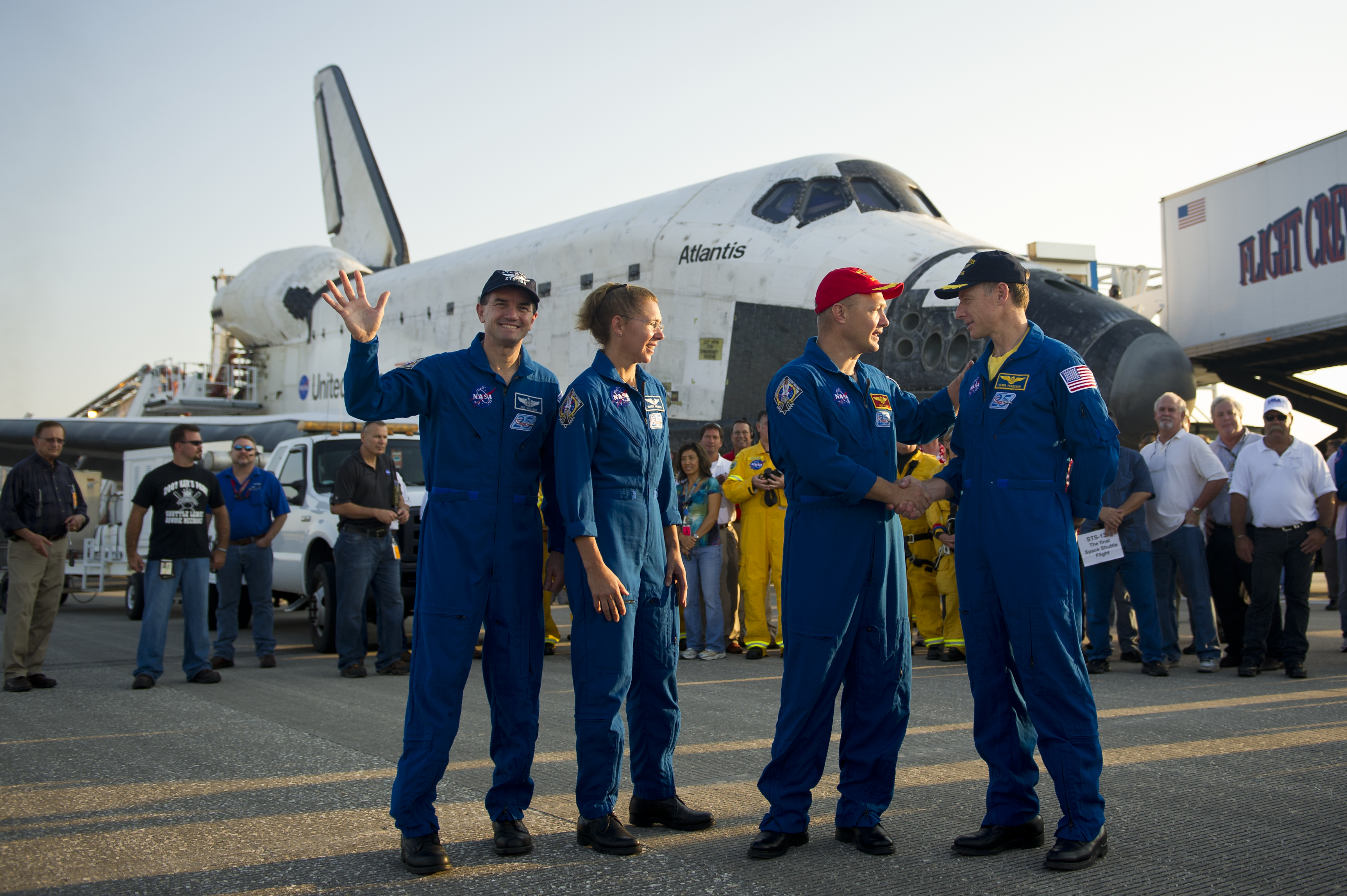
The STS-135 astronauts, from left, Mission Specialists Rex Walheim, Sandy Magnus, Pilot Doug Hurley and Commander Chris Ferguson all pose for photographers shortly after they touched down in the space shuttle Atlantis at NASA's Kennedy Space Center Shuttle Landing Facility (SLF), completing its 13-day mission to the International Space Station (ISS) and the final flight of the Space Shuttle Program, early Thursday morning, July 21, 2011, in Cape Canaveral, Fla. Overall, Atlantis spent 307 days in space and traveled nearly 126 million miles during its 33 flights. Atlantis, the fourth orbiter built, launched on its first mission on Oct. 3, 1985. Photo Credit: (NASA/Bill Ingalls)
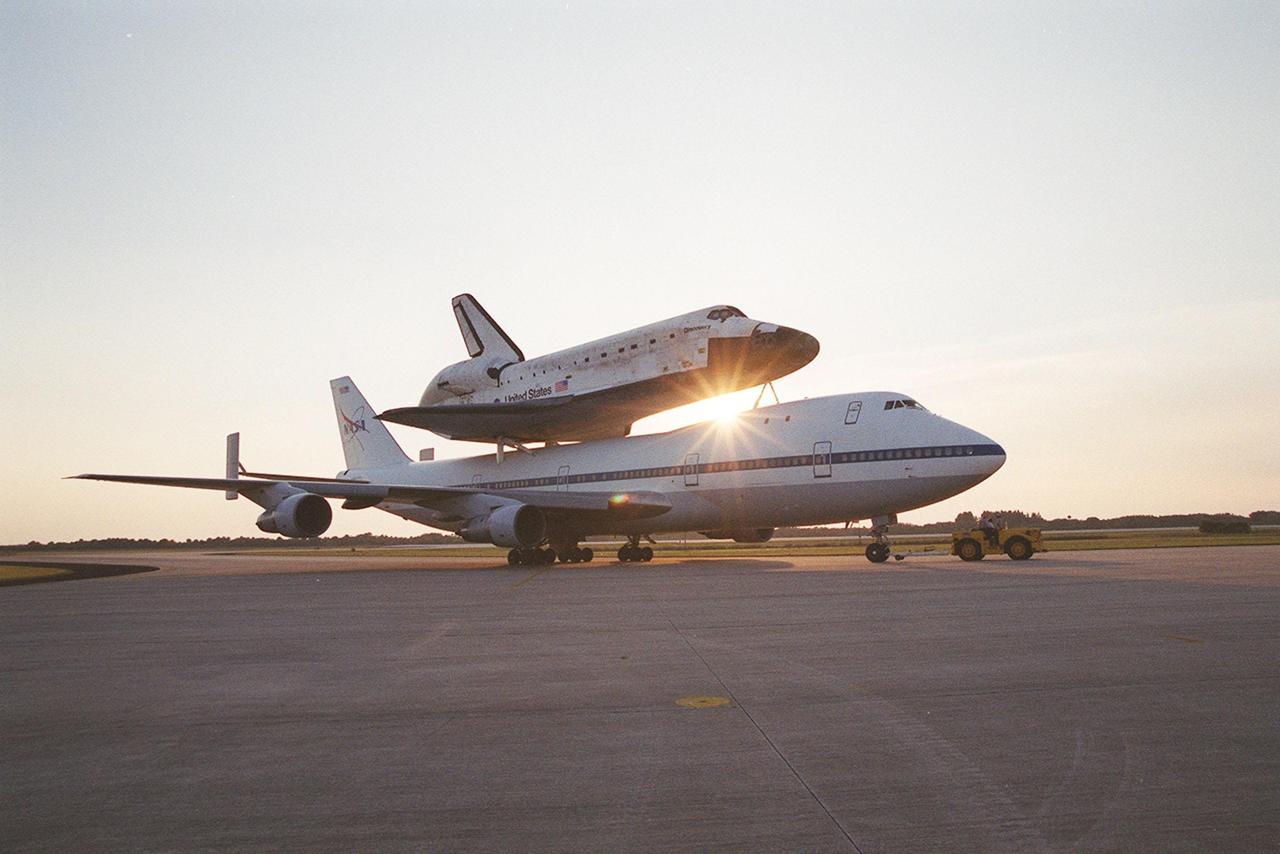
After landing at the Shuttle Landing Facility (SLF), the Shuttle Carrier Aircraft (SCA), with its unique cargo Discovery on top, is towed to the mate/demate device at the SLF. Discovery will be lifted off the SCA and transported to the Orbiter Processing Facility bay 1. There it will undergo preparations for its next launch, STS-102, scheduled for February 2001
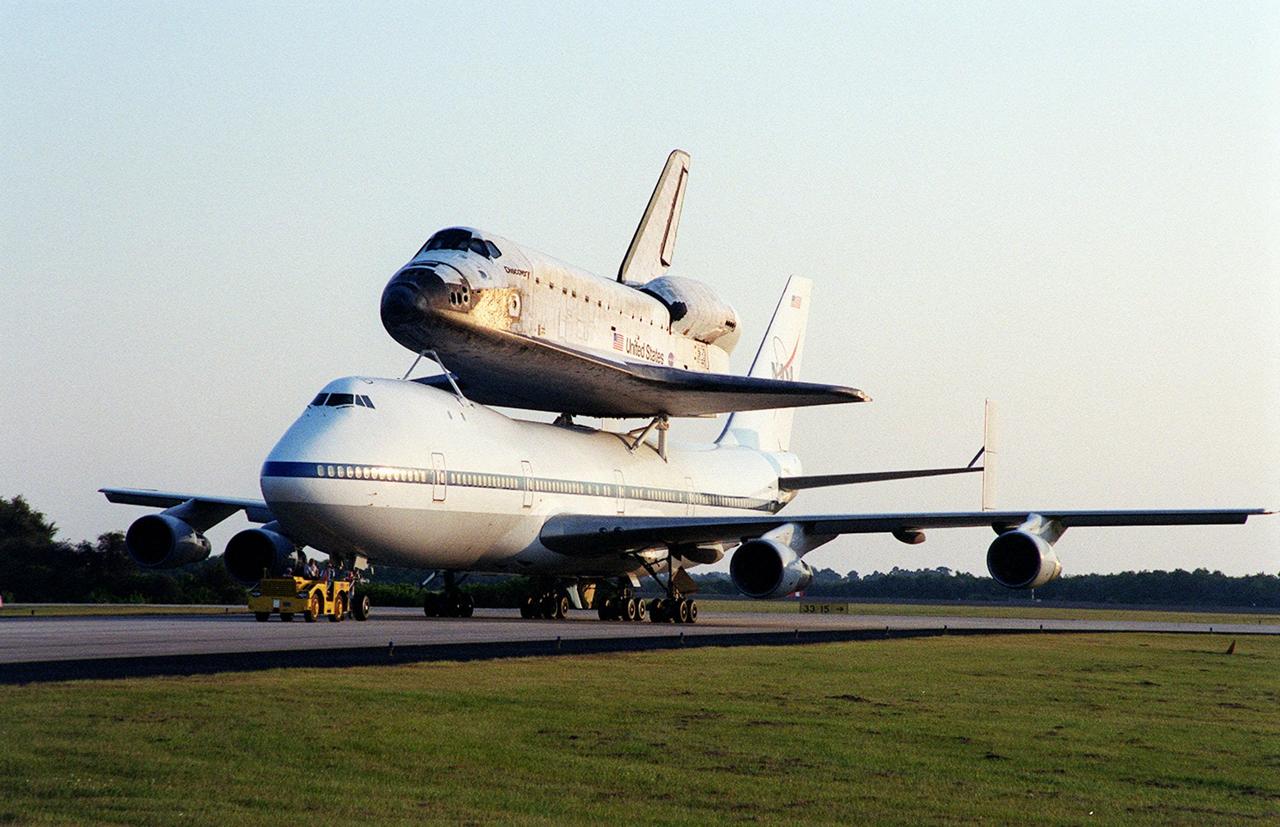
After landing at the Shuttle Landing Facility (SLF), the Shuttle Carrier Aircraft (SCA), with its unique cargo Discovery on top, is towed to the mate/demate device at the SLF. Discovery will be lifted off the SCA and transported to the Orbiter Processing Facility bay 1. There it will undergo preparations for its next launch, STS-102, scheduled for February 2001
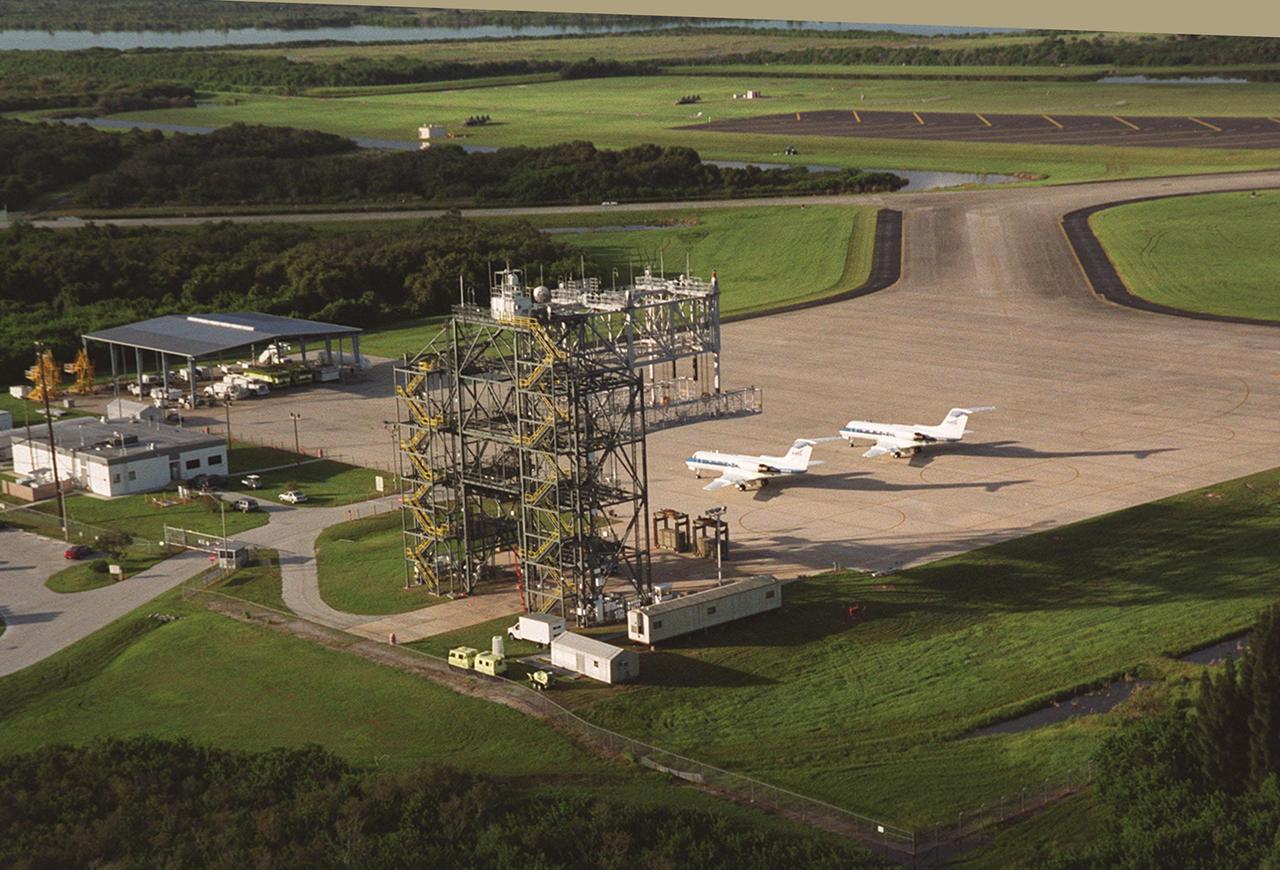
An aerial view of the Shuttle Landing Facility shows the Mate/Demate device in the foreground, with two Shuttle Training Aircraft (STA) on the ground behind it. Visible in the background is the runway and the taxi way leading from the SLF to the right. The STAs are Grumman Gulfstream 2 aircraft with converted cockpits that emulate those in the Shuttles for practice landings at the SLF.
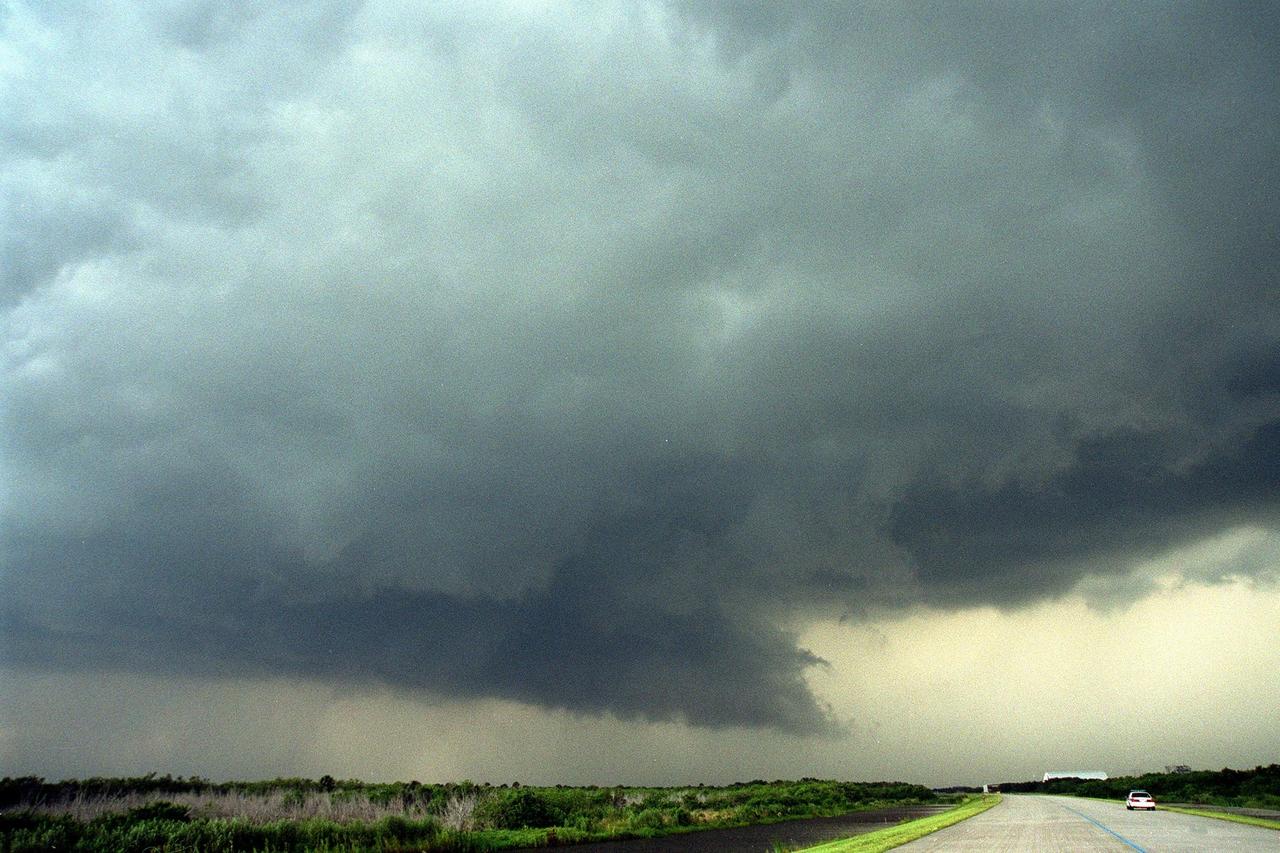
KENNEDY SPACE CENTER, Fla. -- Dark clouds and strong winds seem almost to touch the ground near the tow-way leading from the Shuttle Landing Facility (SLF). In the background (right) can be seen the new hangar at the SLF and the mate/demate device. The cloud formation is proceeding across the SLF towards the Vehicle Assembly Building
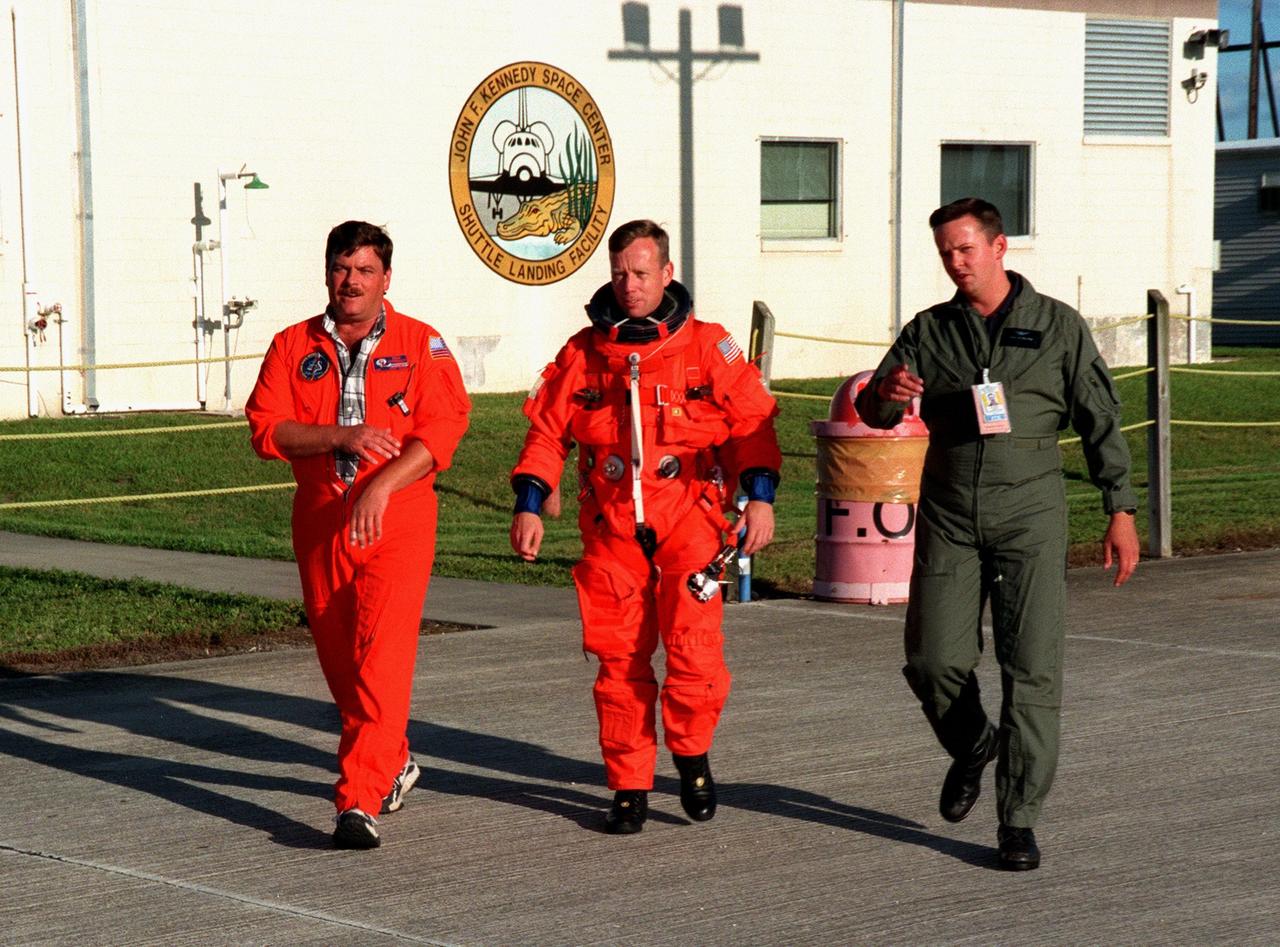
STS-95 Pilot Steven K. Lindsey leaves the Shuttle Landing Facility (SLF) enroute to the Shuttle Training Aircraft (STA). He is accompanied by two suit technicians, Mike Birkenseher (left) and Paul Reylea (right). Lindsey will be practicing Shuttle landing and takeoffs at the SLF on the STA, which is designed to fly like the Shuttle, prior to launch. STS-95 is expected to launch at 2 p.m. EST on Oct. 29, last 8 days, 21 hours and 49 minutes, and land at 11:49 a.m. EST on Nov. 7
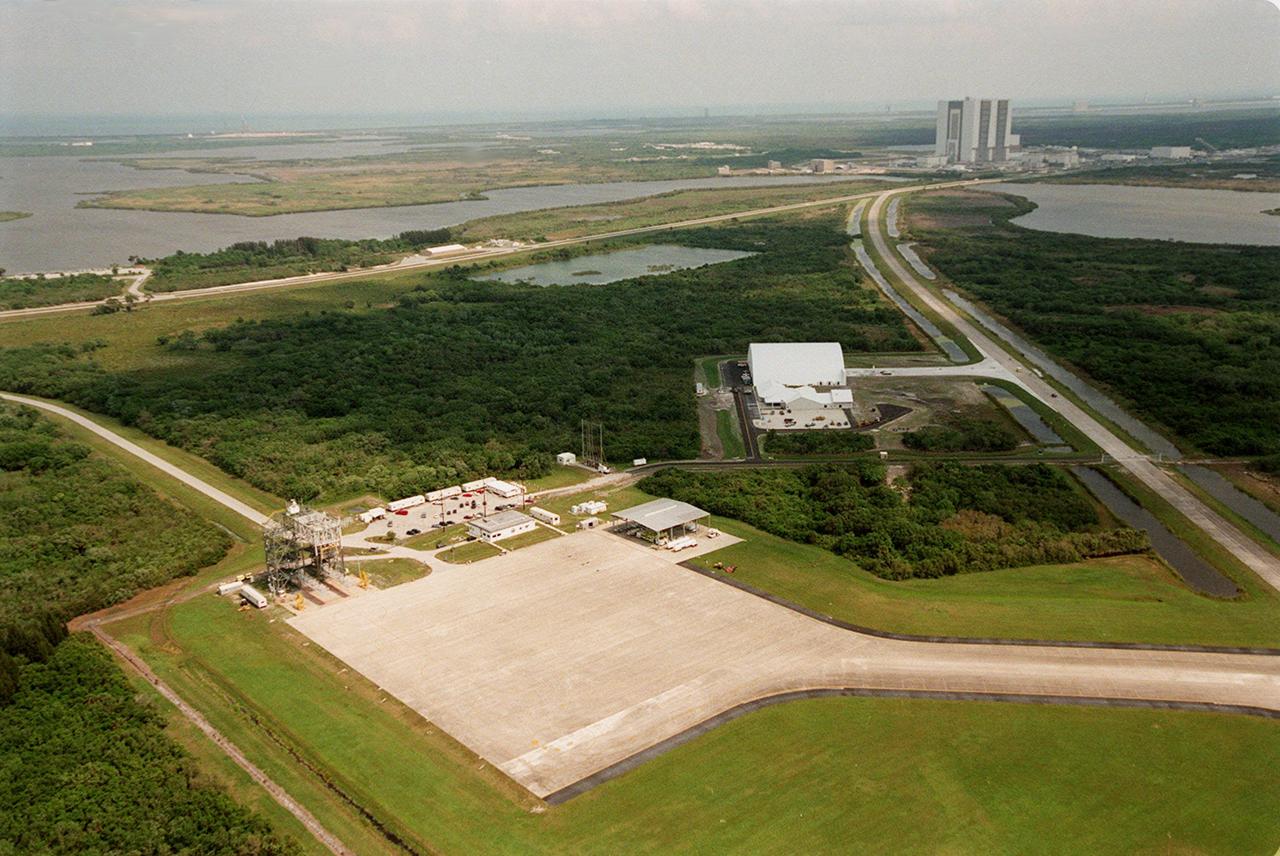
The water-surrounded expanse of KSC is obvious in this aerial photo. At the center front is the Shuttle Landing Facility's (SLF) parking facility with its mate/demate device on the left corner. Beyond it runs Kennedy Parkway North, a route that passes the Vehicle Assembly Building seen in the upper right corner. At right is the tow-way, connecting the Orbiter Processing Facility with the SLF. Between it and the SLF parking area is the remote launch vehicle hangar, still under construction. On the horizon, looking east, is seen the Atlantic Ocean.
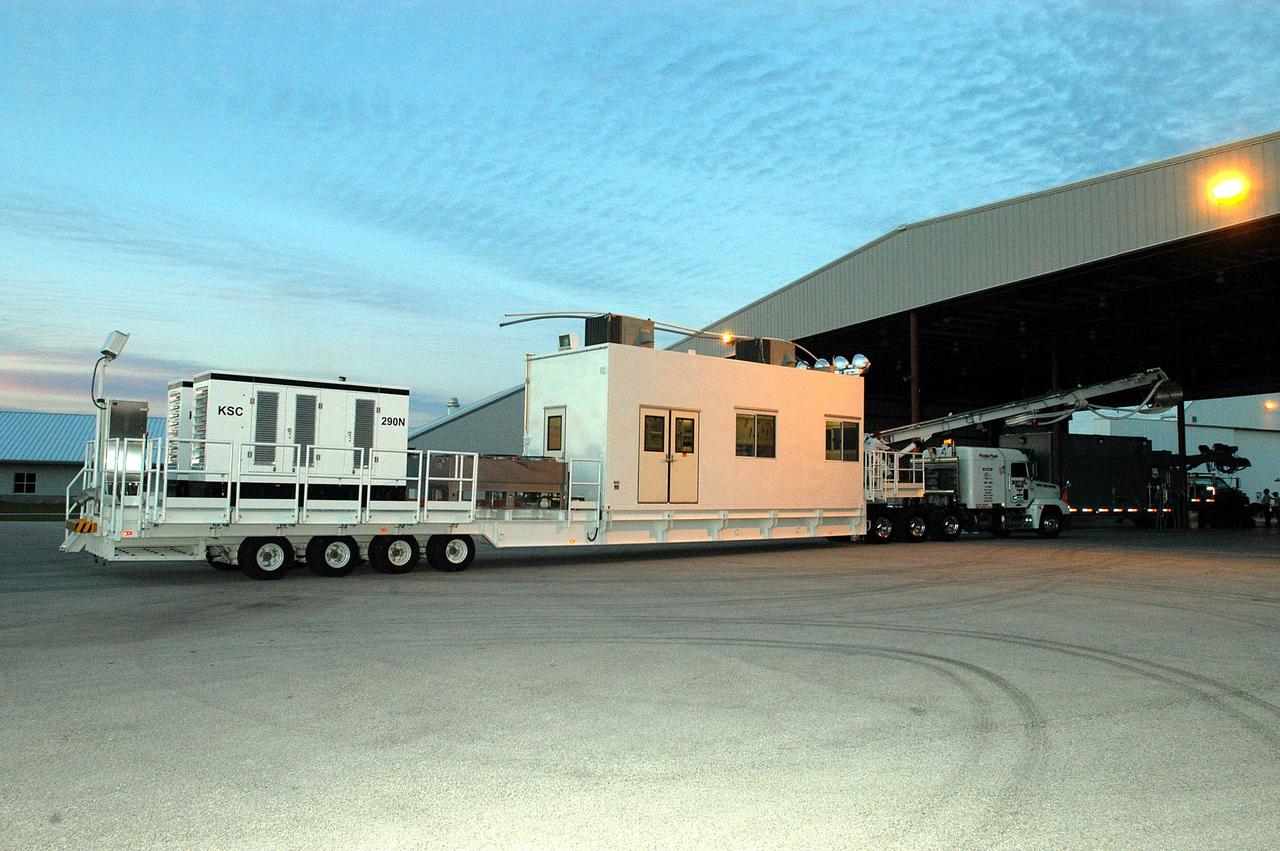
KENNEDY SPACE CENTER, FLA. - A Universal Coolant Transporter (UCT), manufactured in Sharpes, Fla., arrives at the hangar at the KSC Shuttle Landing Facility (SLF). Replacing the existing ground cooling unit, the UCT is designed to service payloads for the Space Shuttle and International Space Station, and may be capable of servicing space exploration vehicles of the future. It will provide ground cooling to the orbiter and returning payloads, such as science experiments requiring cold or freezing temperatures, during post-landing activities at the SLF and during transport of the payloads to other facilities.
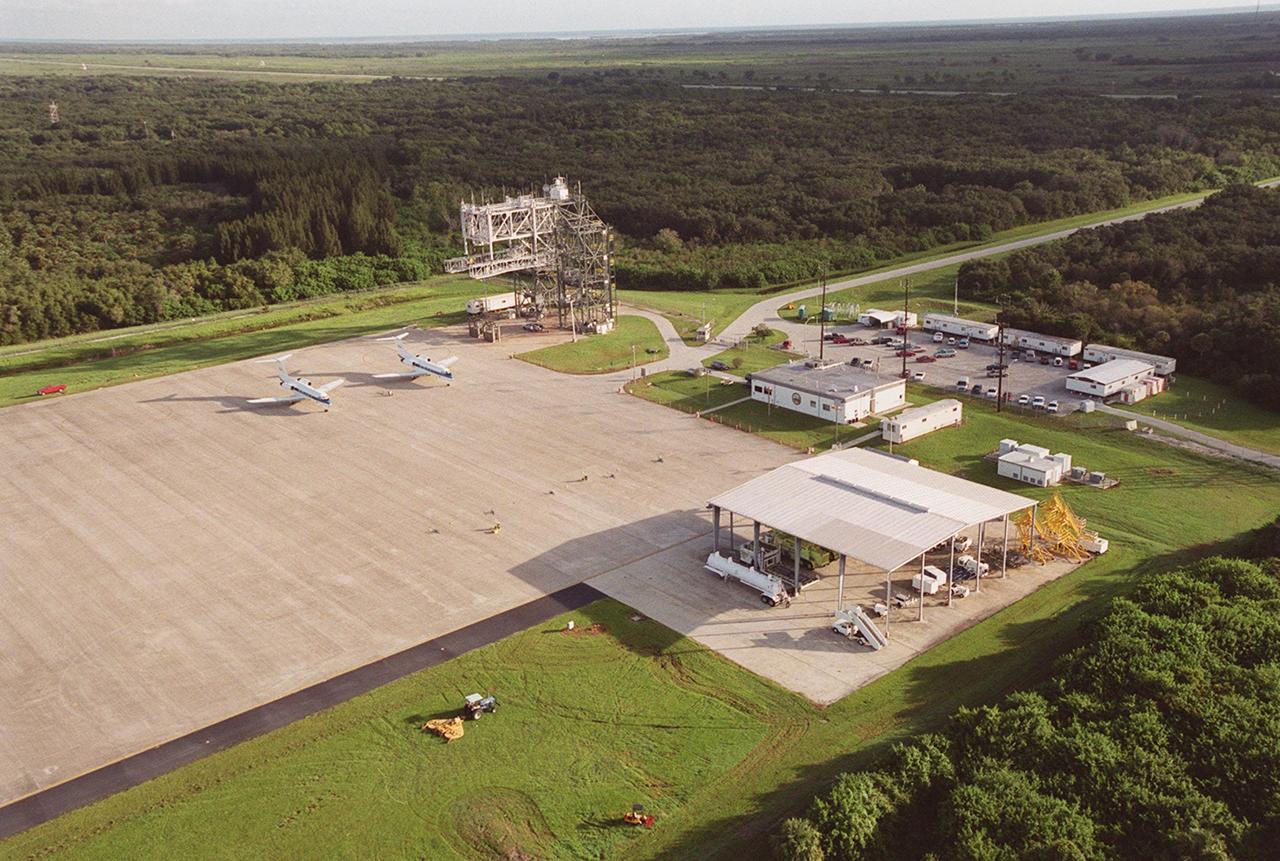
KENNEDY SPACE CENTER, FLA. -- This aerial view of the Shuttle Landing Facility (SLF) faces northeast, with the Atlantic Ocean in the distance. In the center is the apron of the SLF with two Shuttle Training Aircraft (STA) parked there, the mate/demate device behind them, a shelter for fuel trucks (foreground), and an administrative building between. The STAs are Grumman Gulfstream 2 aircraft with converted cockpits that emulate those in the Shuttles for practice landings at the SLF. The mate/demate device is used to lift the orbiter onto or off a Shuttle Carrier Aircraft when it has to be ferried to or from KSC
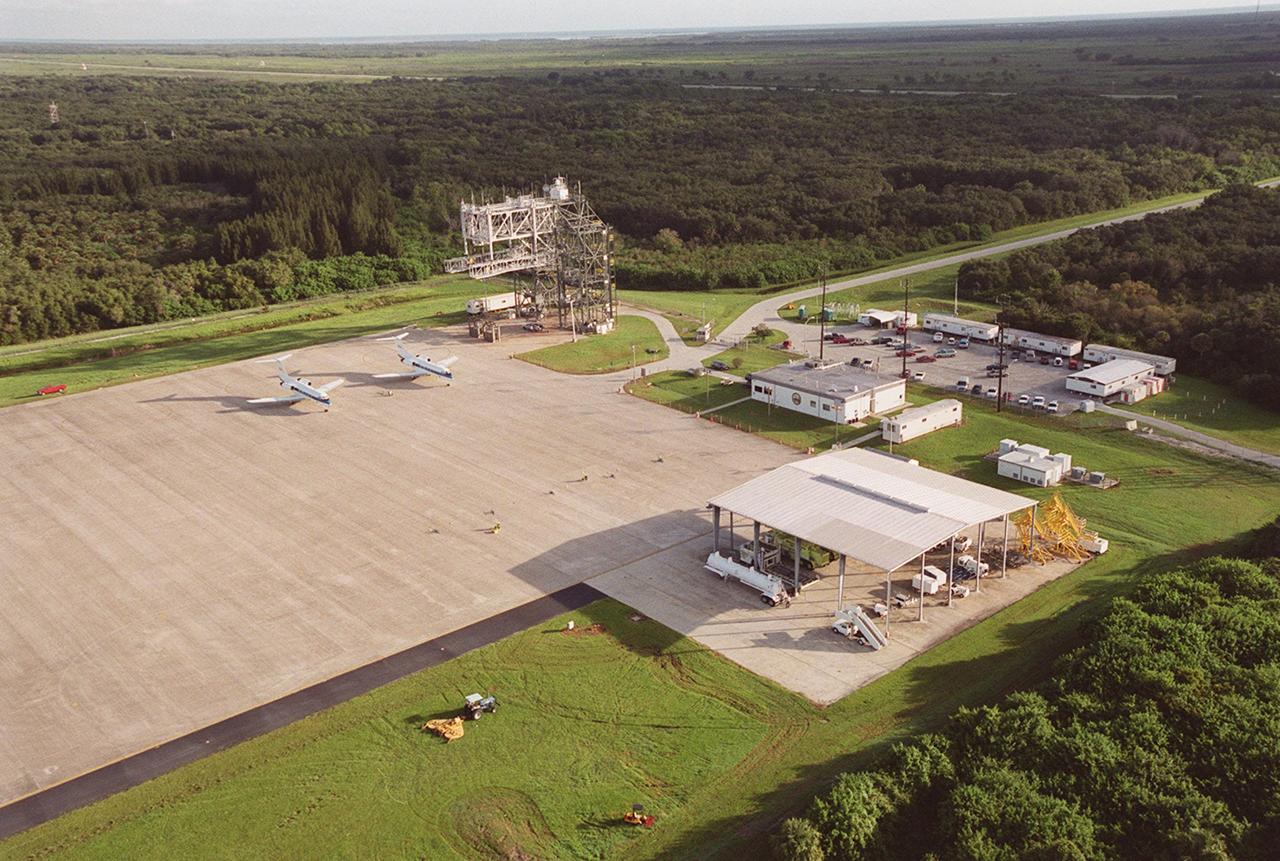
KENNEDY SPACE CENTER, FLA. -- This aerial view of the Shuttle Landing Facility (SLF) faces northeast, with the Atlantic Ocean in the distance. In the center is the apron of the SLF with two Shuttle Training Aircraft (STA) parked there, the mate/demate device behind them, a shelter for fuel trucks (foreground), and an administrative building between. The STAs are Grumman Gulfstream 2 aircraft with converted cockpits that emulate those in the Shuttles for practice landings at the SLF. The mate/demate device is used to lift the orbiter onto or off a Shuttle Carrier Aircraft when it has to be ferried to or from KSC
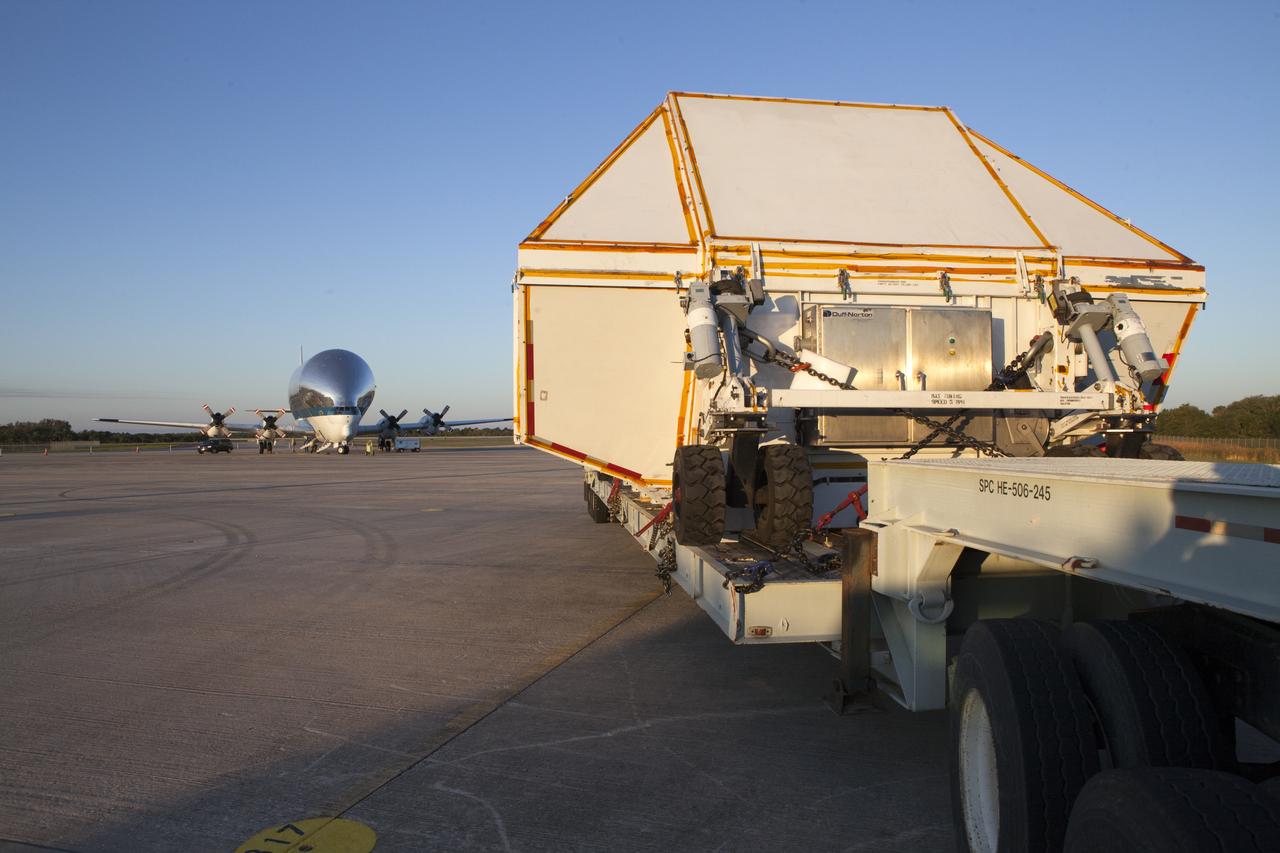
The Orion Exploration Mission-1 (EM-1) structural test article, secured inside its transport container, arrives at the Shuttle Landing Facility at NASA's Kennedy Space Center in Florida. The test article will be loaded into NASA's Super Guppy aircraft, in view at left, and transported to Lockheed Martin's Denver facility for testing. The Orion spacecraft will launch atop NASA’s Space Launch System rocket on EM-1, its first deep space mission.
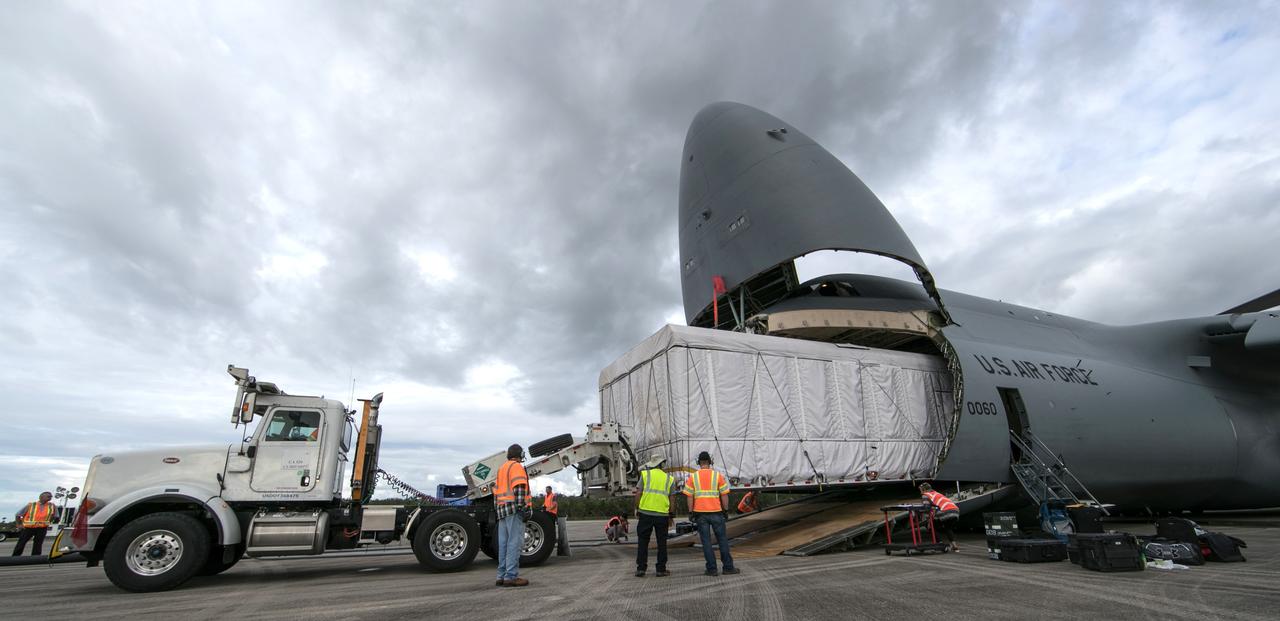
NOAA's Geostationary Operation Environmental Satellite-S (GOES-S) is being offloaded from a C-5 transport aircraft onto the flatbed of a heavy-lift truck at the Shuttle Landing Facility at NASA's Kennedy Space Center in Florida. The satellite will be transported to the Astrotech Space Operations facility in Titusville, Florida to prepare it for launch. GOES-S is the second in a series of four advanced geostationary weather satellites. The GOES-R series - consisting of the GOES-R, GOES-S, GOES-T and GOES-U spacecraft - will significantly improve the detection and observation of environmental phenomena that directly affect public safety, protection of property and the nation's economic health and prosperity. GOES-S is slated to launch March 1, 2018 aboard a United Launch Alliance Atlas V rocket from Cape Canaveral Air Force Station in Florida.

Vice President Pence arrives at Kennedy Space Center's Shuttle Landing Facility on July 20, 2019 and greets workers. At right is Apollo 11 Lunar Module Pilot Buzz Aldrin. Pence, who chairs the National Space Council, visited the Florida spaceport on the 50th anniversary of the Apollo 11 mission, which landed the first two humans on the Moon. He recognized the historic mission, while also addressing NASA’s future plans to travel to the Moon and on to Mars.
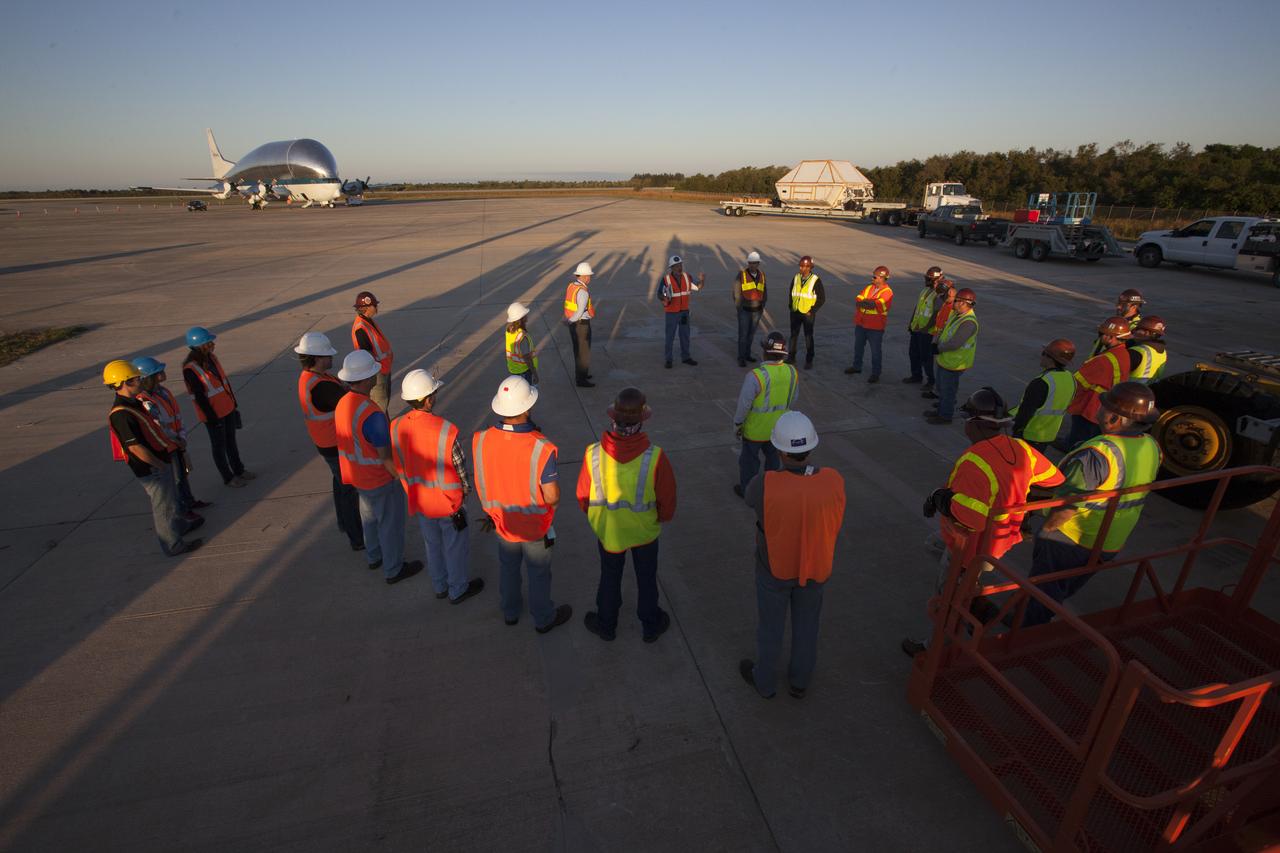
On the tarmac at the Shuttle Landing Facility at NASA's Kennedy Space Center in Florida, NASA and contractor workers review procedures before beginning loading of the Orion Exploration Mission-1 (EM-1) structural test article in its transport container into NASA's Super Guppy aircraft. The test article will be transported to Lockheed Martin's Denver facility for testing. The Orion spacecraft will launch atop NASA’s Space Launch System rocket on EM-1, its first deep space mission.
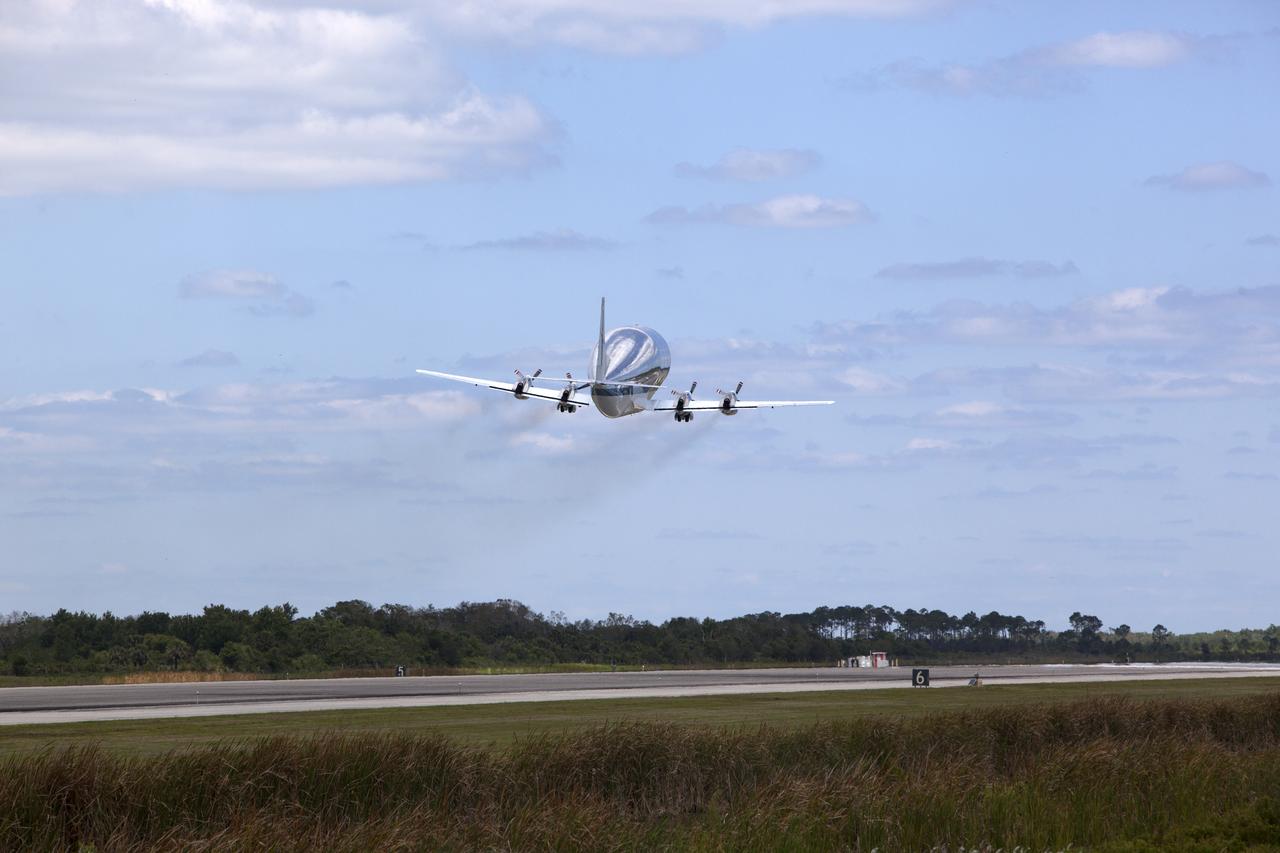
NASA's Super Guppy aircraft takes off from the runway at the Shuttle Landing Facility at NASA's Kennedy Space Center in Florida. The Orion Exploration Mission-1 (EM-1) structural test article, secured inside the Super Guppy, will be transported to Lockheed Martin's Denver facility for testing. The Orion spacecraft will launch atop NASA’s Space Launch System rocket on EM-1, its first deep space mission.
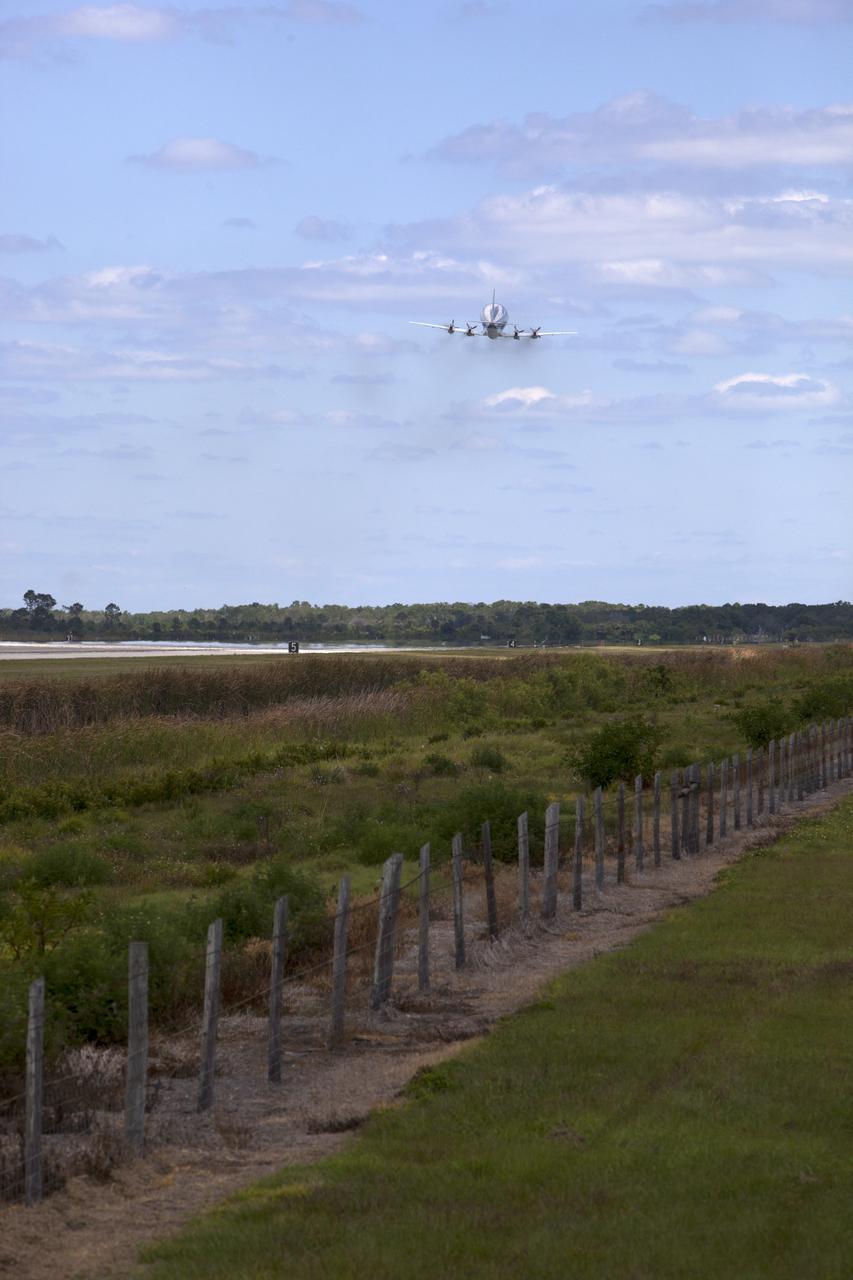
NASA's Super Guppy aircraft takes off from the runway at the Shuttle Landing Facility at NASA's Kennedy Space Center in Florida. The Orion Exploration Mission-1 (EM-1) structural test article, secured inside the Super Guppy, will be transported to Lockheed Martin's Denver facility for testing. The Orion spacecraft will launch atop NASA’s Space Launch System rocket on EM-1, its first deep space mission.

Vice President Pence arrives at Kennedy Space Center's Shuttle Landing Facility on July 20, 2019 and greets workers. Pence, who chairs the National Space Council, visited the Florida spaceport on the 50th anniversary of the Apollo 11 mission, which landed the first two humans on the Moon. He recognized the historic mission, while also addressing NASA’s future plans to travel to the Moon and on to Mars.
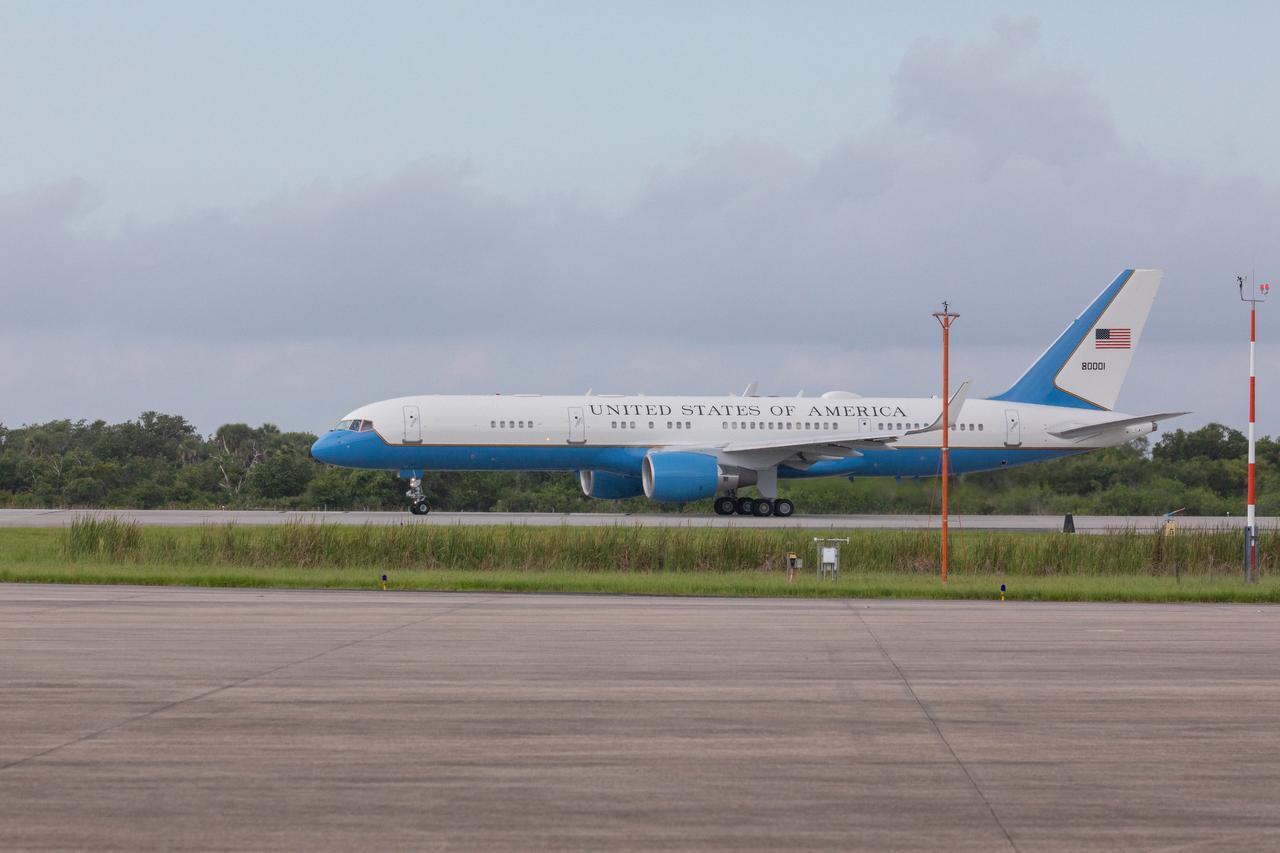
Vice President Mike Pence and second lady Karen Pence arrive aboard Air Force Two at Kennedy Space Center’s Shuttle Landing Facility on July 20, 2019. Pence, who chairs the National Space Council, visited the Florida spaceport on the 50th anniversary of the Apollo 11 mission, which landed the first two humans on the Moon. He recognized the historic mission, while also addressing NASA’s future plans to travel to the Moon and on to Mars.
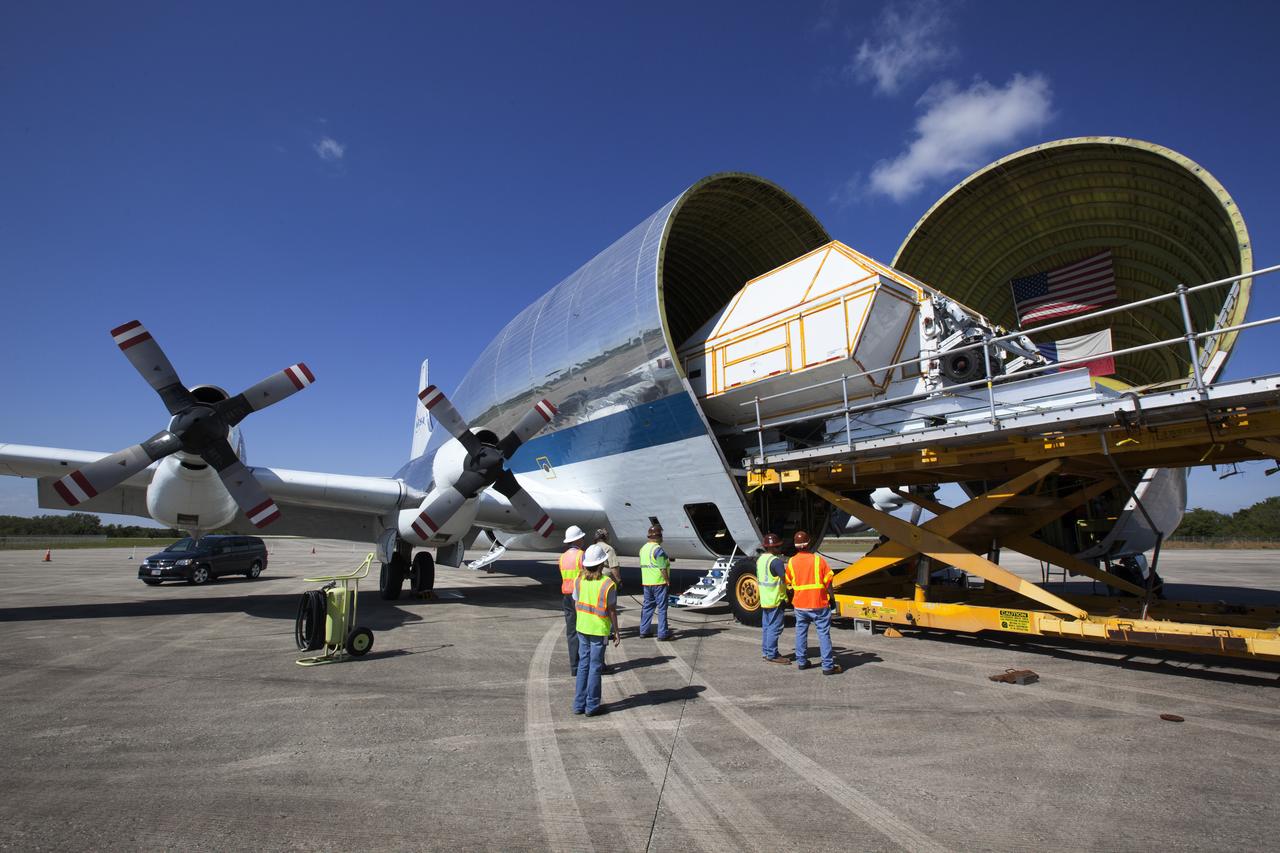
The Orion Exploration Mission-1 (EM-1) structural test article, secured inside its transport container, is loaded into NASA's Super Guppy aircraft at the Shuttle Landing Facility at NASA's Kennedy Space Center in Florida. The test article will be transported to Lockheed Martin's Denver facility for testing. The Orion spacecraft will launch atop NASA’s Space Launch System rocket on EM-1, its first deep space mission.
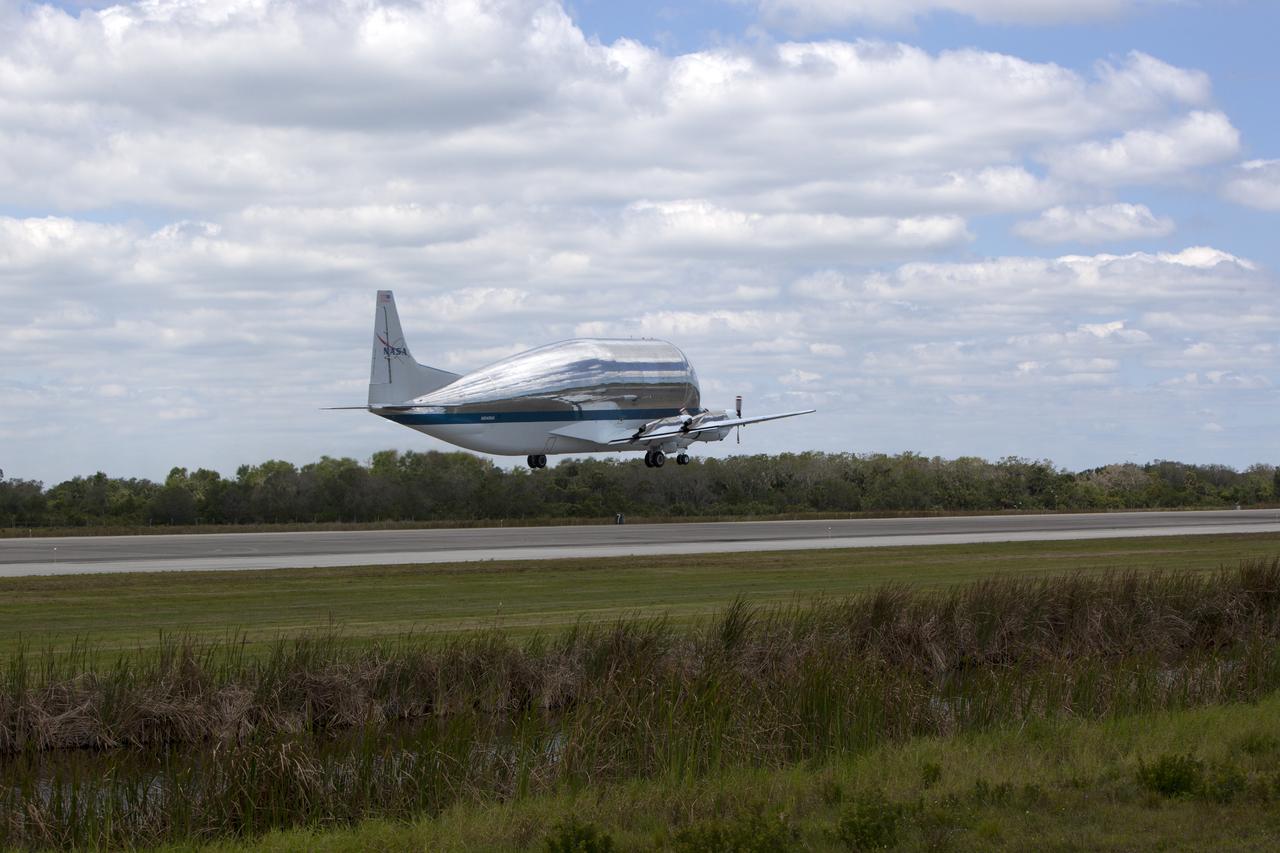
NASA's Super Guppy aircraft takes off from the runway at the Shuttle Landing Facility at NASA's Kennedy Space Center in Florida. The Orion Exploration Mission-1 (EM-1) structural test article, secured inside the Super Guppy, will be transported to Lockheed Martin's Denver facility for testing. The Orion spacecraft will launch atop NASA’s Space Launch System rocket on EM-1, its first deep space mission.
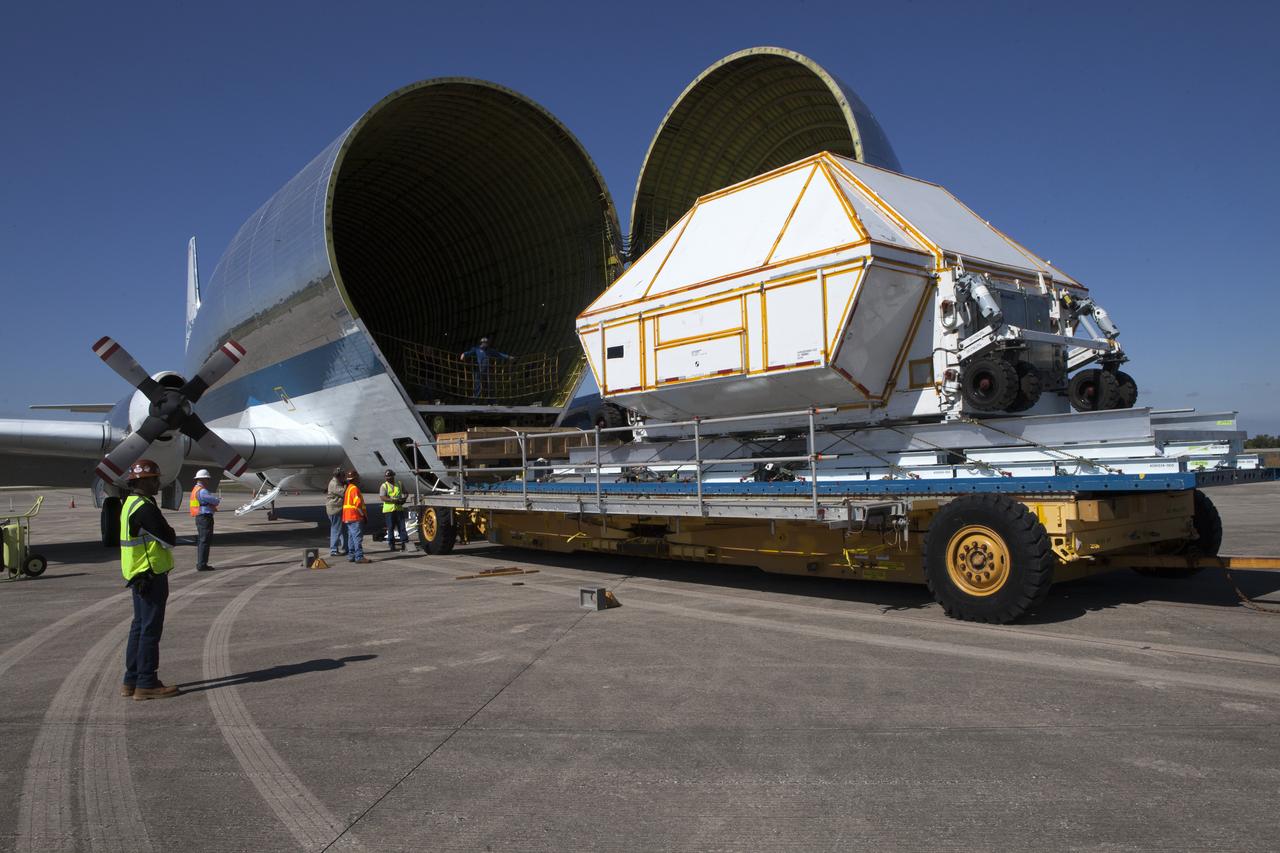
On the tarmac at the Shuttle Landing Facility at NASA's Kennedy Space Center in Florida, the Orion Exploration Mission-1 (EM-1) structural test article, secured in its transport container, is loaded into the agency's Super Guppy aircraft. The test article will be transported to Lockheed Martin's Denver facility for testing. The Orion spacecraft will launch atop NASA’s Space Launch System rocket on EM-1, its first deep space mission.
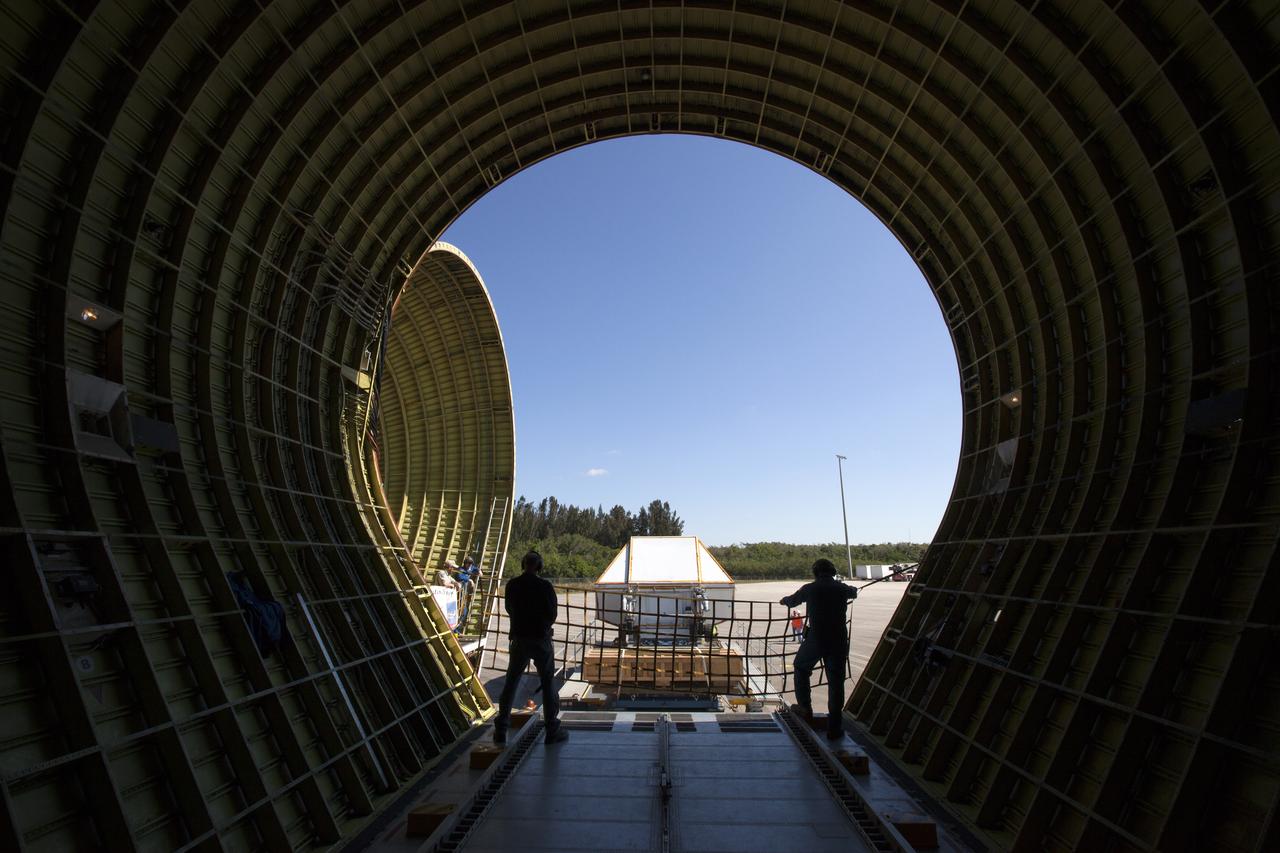
A view from inside NASA's Super Guppy aircraft at the Shuttle Landing Facility at NASA's Kennedy Space Center in Florida. The Orion Exploration Mission-1 (EM-1) structural test article, secured inside its transport container, will be loaded into the Super Guppy for transport to Lockheed Martin's Denver facility for testing. The Orion spacecraft will launch atop NASA’s Space Launch System rocket on EM-1, its first deep space mission.
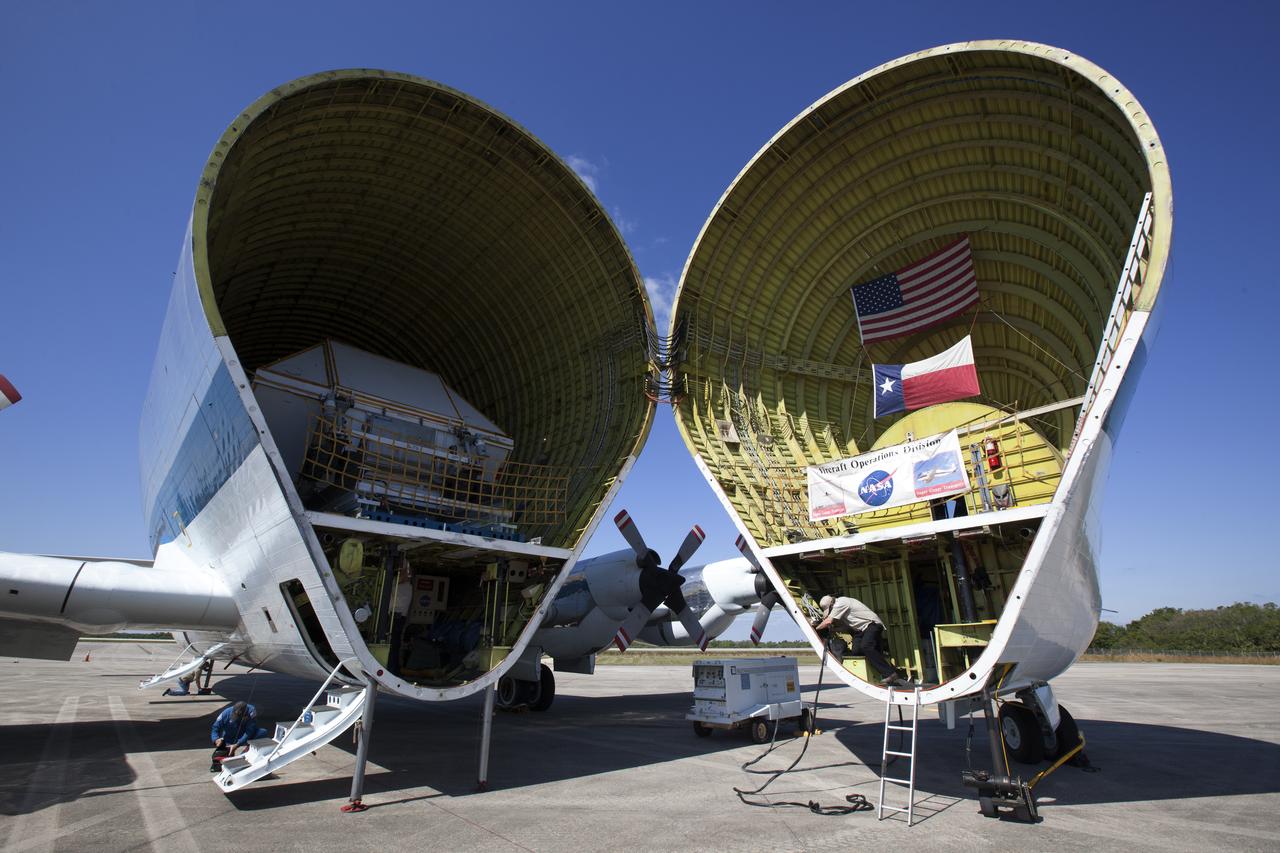
The Orion Exploration Mission-1 (EM-1) structural test article, inside its transport container, is secured in NASA's Super Guppy aircraft at the Shuttle Landing Facility at NASA's Kennedy Space Center in Florida. The test article will be transported to Lockheed Martin's Denver facility for testing. The Orion spacecraft will launch atop NASA’s Space Launch System rocket on EM-1, its first deep space mission.
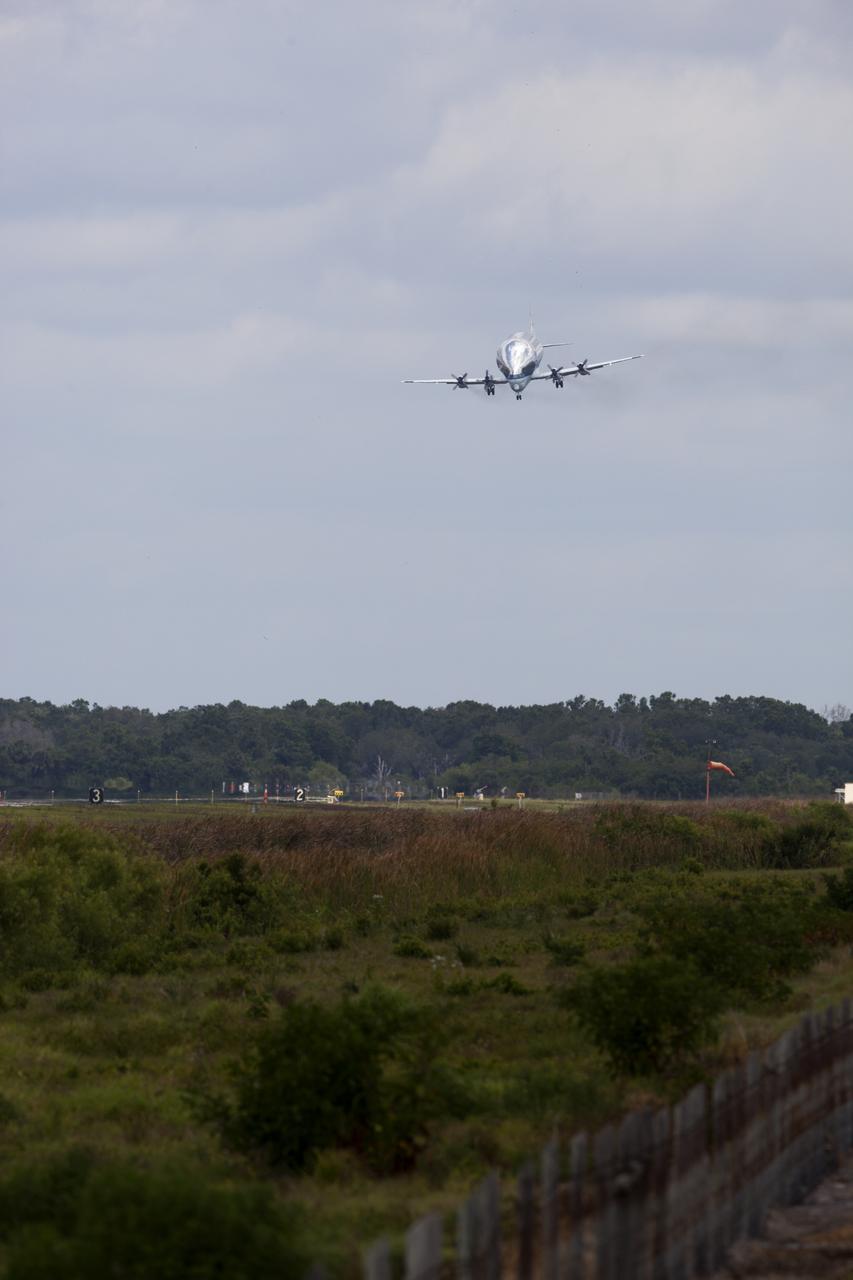
NASA's Super Guppy airplane descends toward the runway at the Shuttle Landing Facility at the agency's Kennedy Space Center in Florida. The Orion Exploration Mission-1 (EM-1) structural test article will be loaded in the Super Guppy and transported to Lockheed Martin's Denver facility for testing. The Orion spacecraft will launch atop NASA’s Space Launch System rocket on EM-1, its first deep space mission.
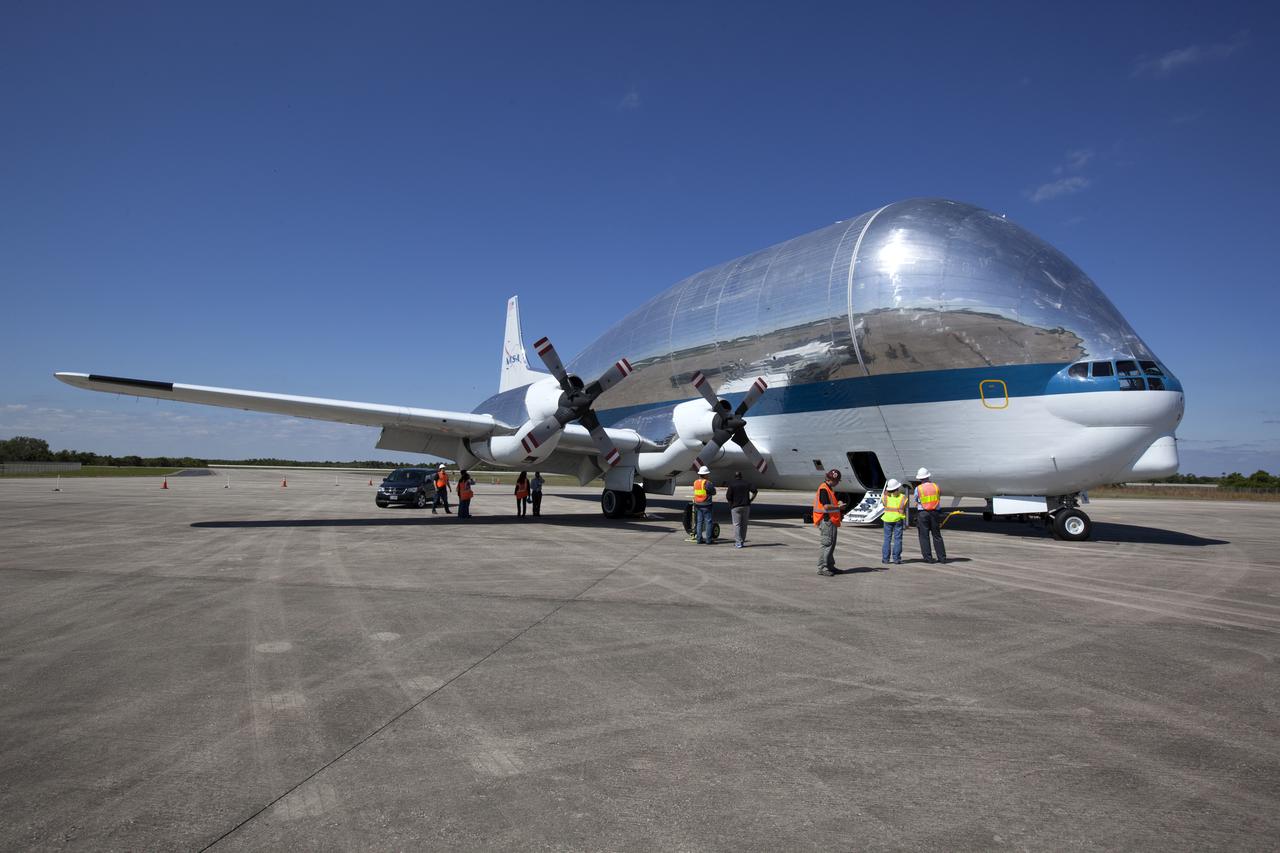
NASA's Super Guppy aircraft has been closed and secured at the Shuttle Landing Facility at NASA's Kennedy Space Center in Florida. The Orion Exploration Mission-1 (EM-1) structural test article is secured inside the Super Guppy and will be transported to Lockheed Martin's Denver facility for testing. The Orion spacecraft will launch atop NASA’s Space Launch System rocket on EM-1, its first deep space mission.
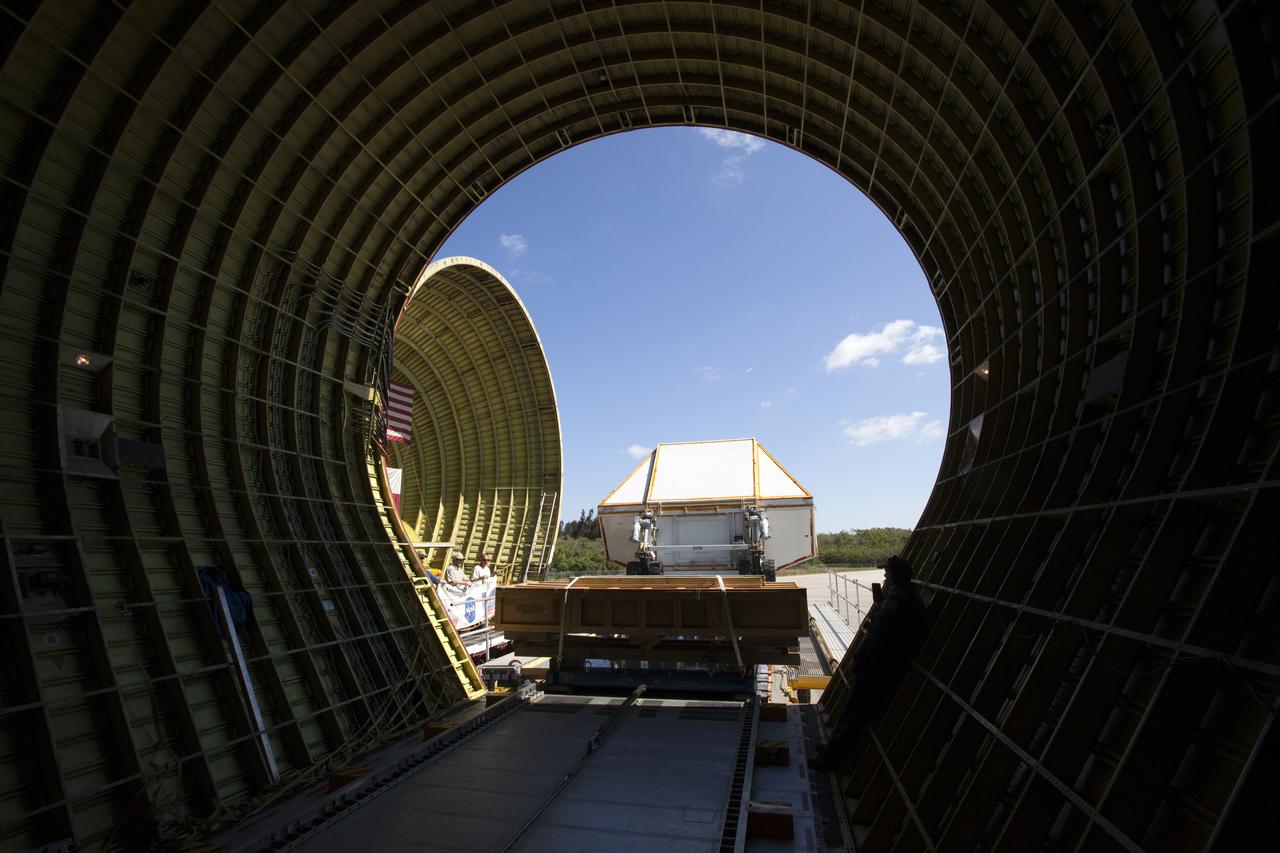
A view from inside NASA's Super Guppy aircraft at the Shuttle Landing Facility at NASA's Kennedy Space Center in Florida, as the Orion Exploration Mission-1 (EM-1) structural test article, secured inside its transport container, is loaded into the aircraft. The test article will be transported to Lockheed Martin's Denver facility for testing. The Orion spacecraft will launch atop NASA’s Space Launch System rocket on EM-1, its first deep space mission.
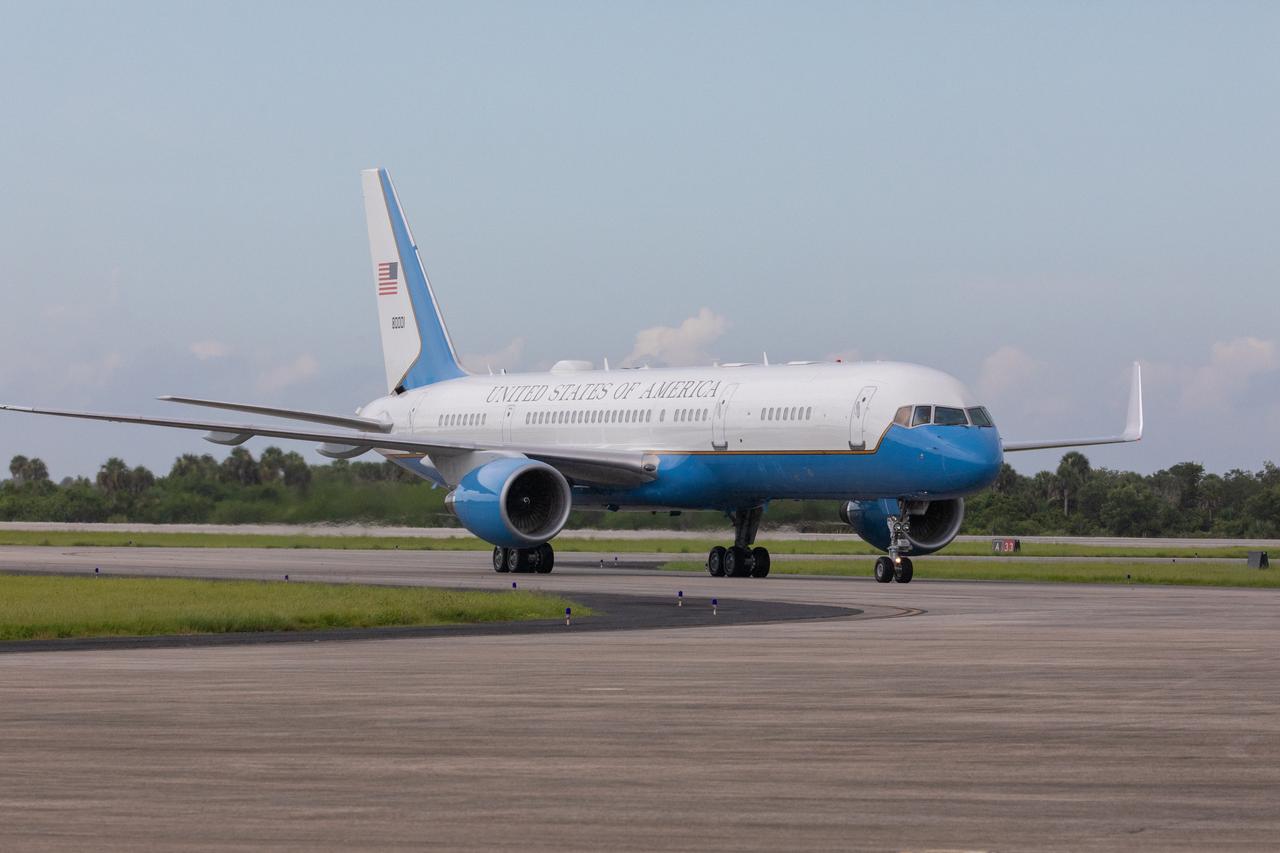
Vice President Pence arrives at Kennedy Space Center on July 20, 2019 in celebration of the Apollo 11 50th Anniversary. While at Kennedy, he recognized the historic mission, by visiting the mission’s launch site, pad 39a, and addressed NASA’s future plans to travel to the Moon and on to Mars.
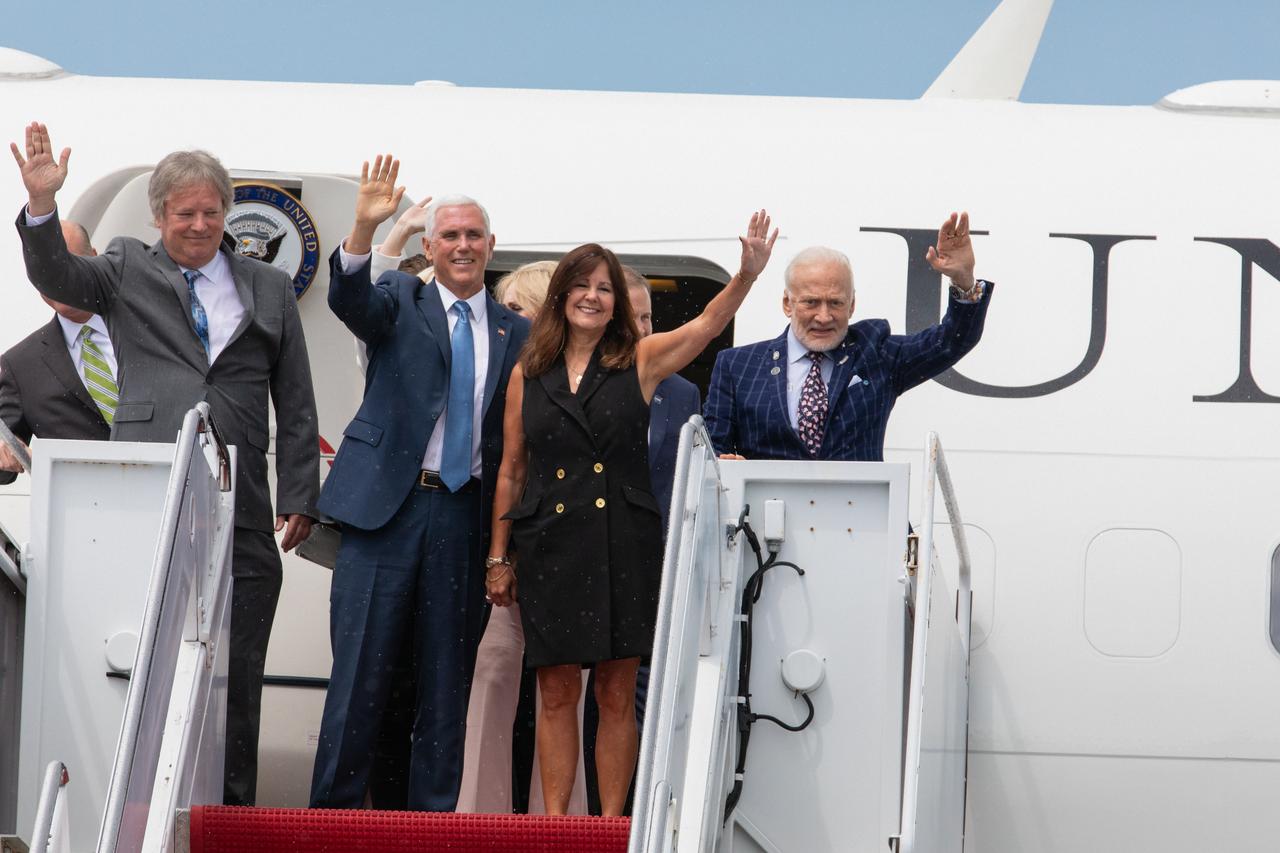
Vice President Mike Pence and second lady Karen Pence, center, arrive at Kennedy Space Center’s Shuttle Landing Facility on July 20, 2019. Pence, who chairs the National Space Council, visited the Florida spaceport on the 50th anniversary of the Apollo 11 mission, which landed the first two humans on the Moon. He recognized the historic mission, while also addressing NASA’s future plans to travel to the Moon and on to Mars. At far left is Rick Armstrong, son of Apollo 11 Commander Neil Armstrong. At far right is Apollo 11 Lunar Module Pilot Buzz Aldrin.