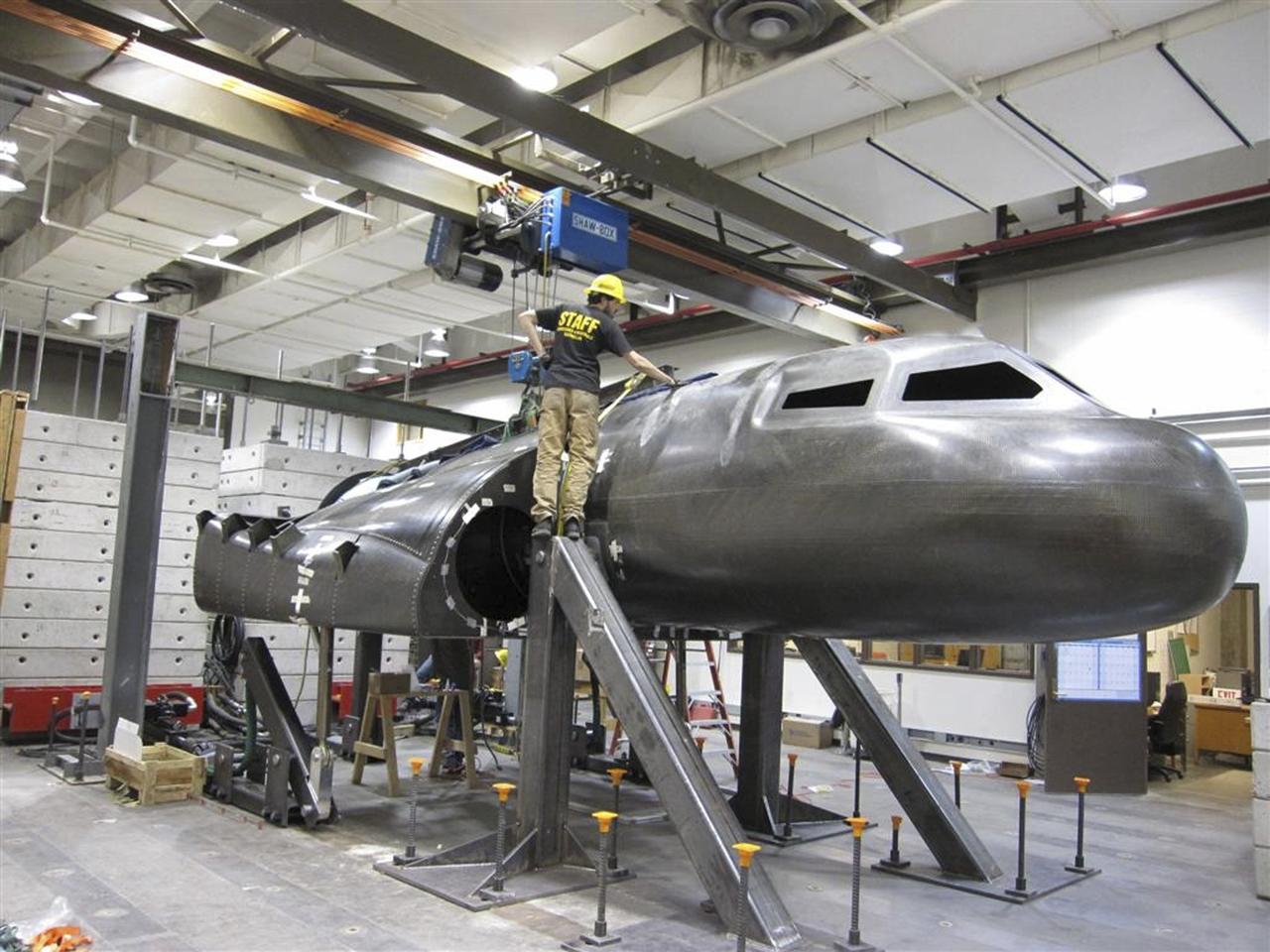
BOULDER, Colo. – A Sierra Nevada Corp. team member examines the company's structural test article for the Dream Chaser spacecraft in the University of Colorado at Boulder’s Facility for Advanced Spatial Technology. The university is one of Sierra Nevada’s partners on the design and development of the Dream Chaser orbital crew vehicle. Dream Chaser is one of five systems NASA invested in during Commercial Crew Development Round 1 CCDev1 activities in order to aid in the innovation and development of American-led commercial capabilities for crew transportation and rescue services to and from the International Space Station and other low Earth orbit destinations. In 2011, NASA's Commercial Crew Program CCP entered into another funded Space Act Agreement with Sierra Nevada for the second round of commercial crew development CCDev2) so the company could further develop its Dream Chaser spacecraft for NASA transportation services. For information about CCP, visit www.nasa.gov/commercialcrew. Photo credit: Sierra Nevada Corp.
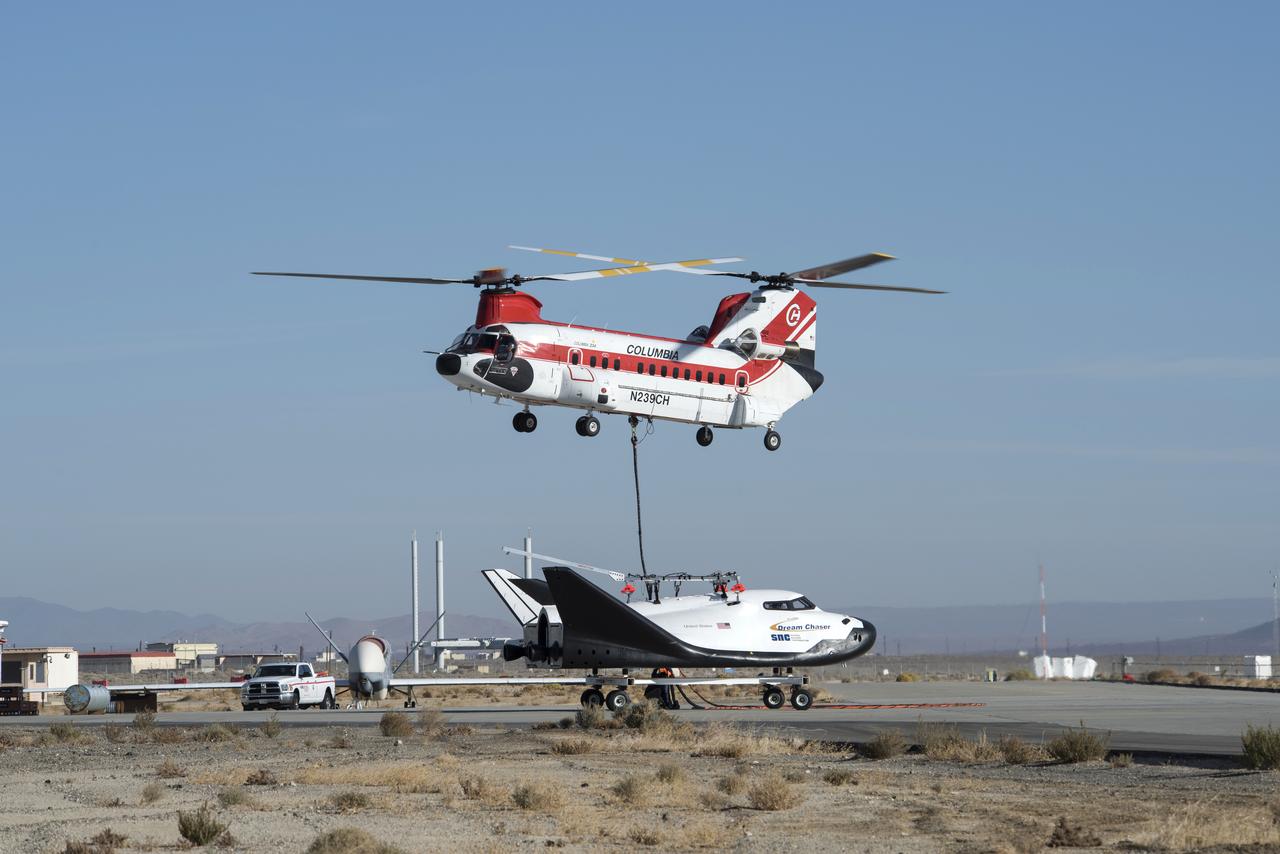
Sierra Nevada Corp’s Dream Chaser was lifted by helicopter from the ramp at NASA’s Armstrong Flight Research Center in Edwards, California, before its successful approach and landing flight test on Nov. 11, 2017.
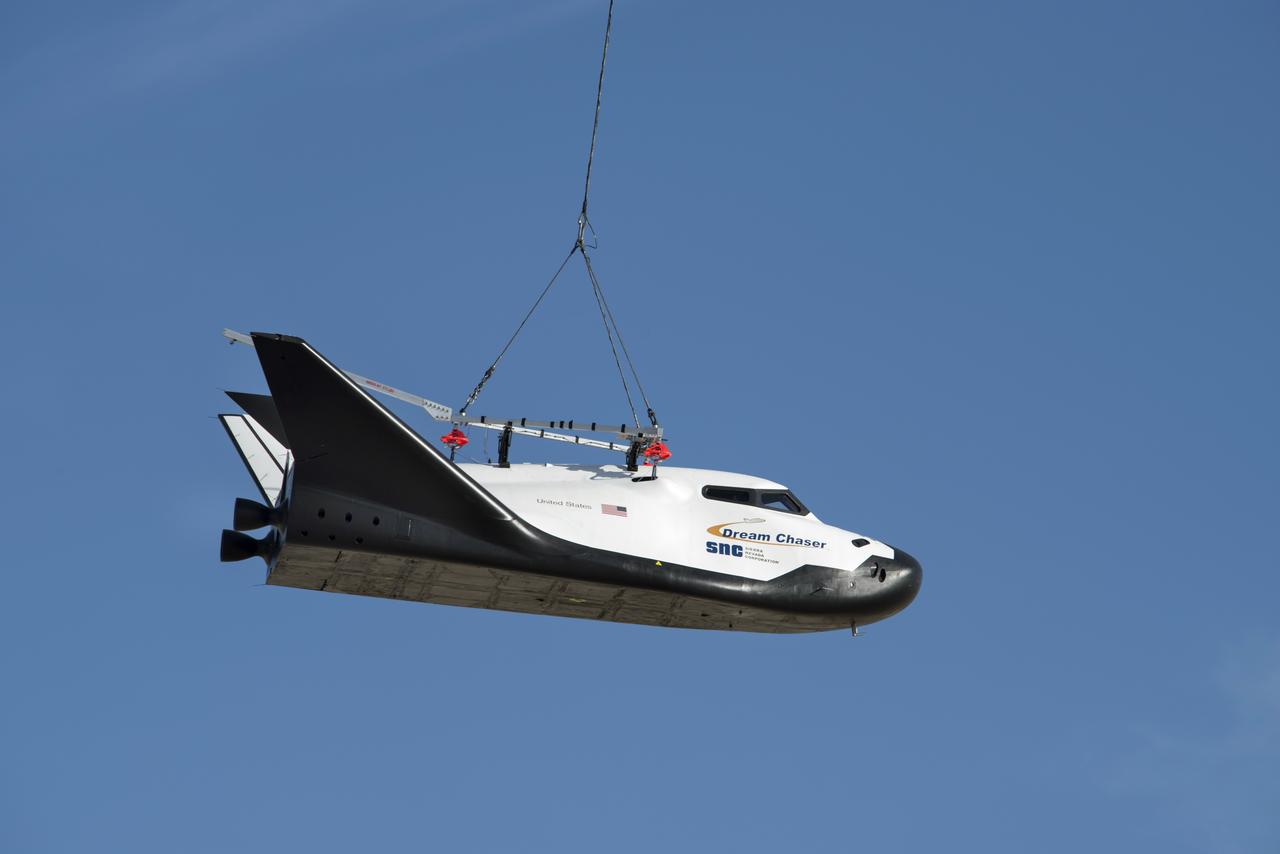
Sierra Nevada Corp’s Dream Chaser was lifted by helicopter from the ramp at NASA’s Armstrong Flight Research Center in Edwards, California, before its successful approach and landing flight test on Nov. 11, 2017.
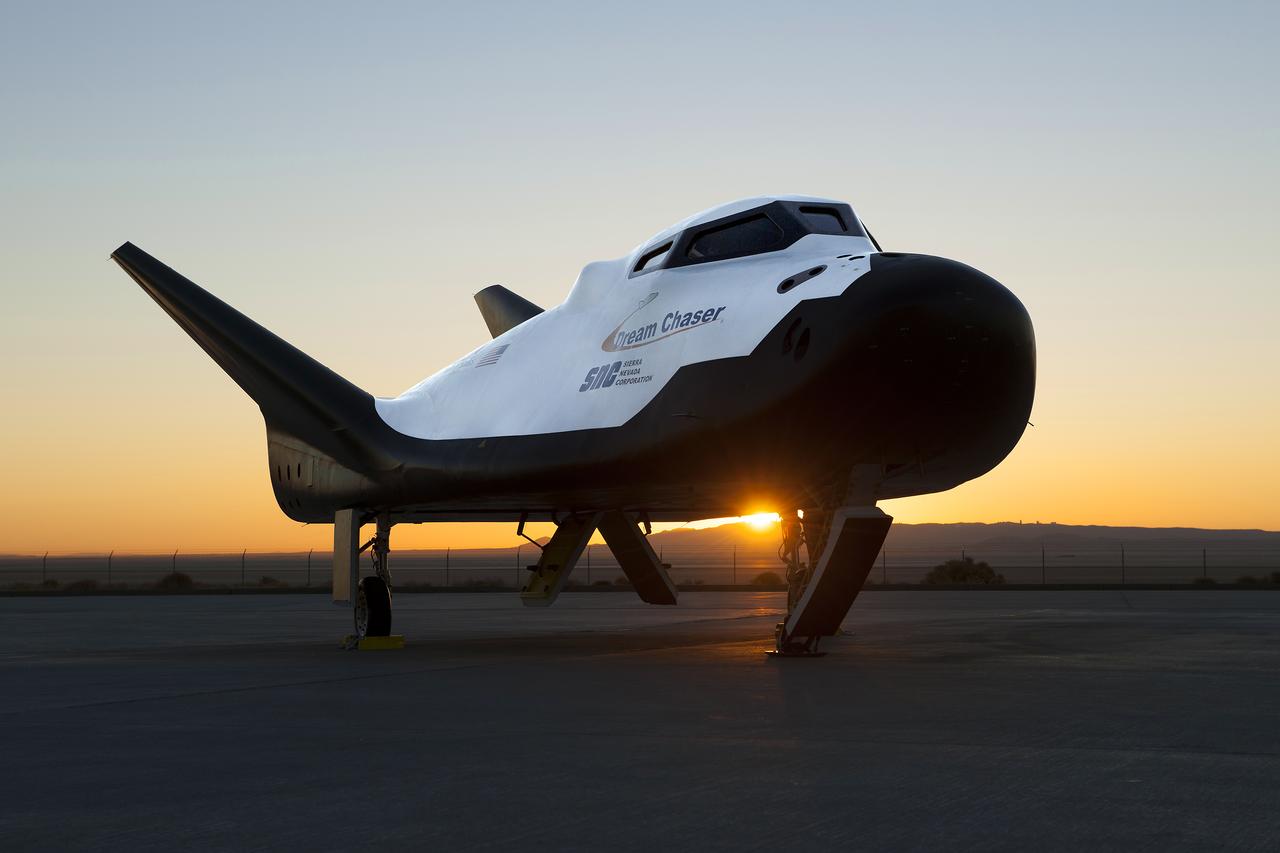
Sierra Nevada Corp’s Dream Chaser posed on ramp at sunrise at NASA Armstrong Flight Research Center in California where the aircraft has gone through a series of tests in preparation for flight.

Sierra Nevada Corp’s Dream Chaser crew prepared for helicopter lift off ramp at NASA’s Armstrong Flight Research Center in California, for its successful approach and landing flight test on Nov. 11, 2017.
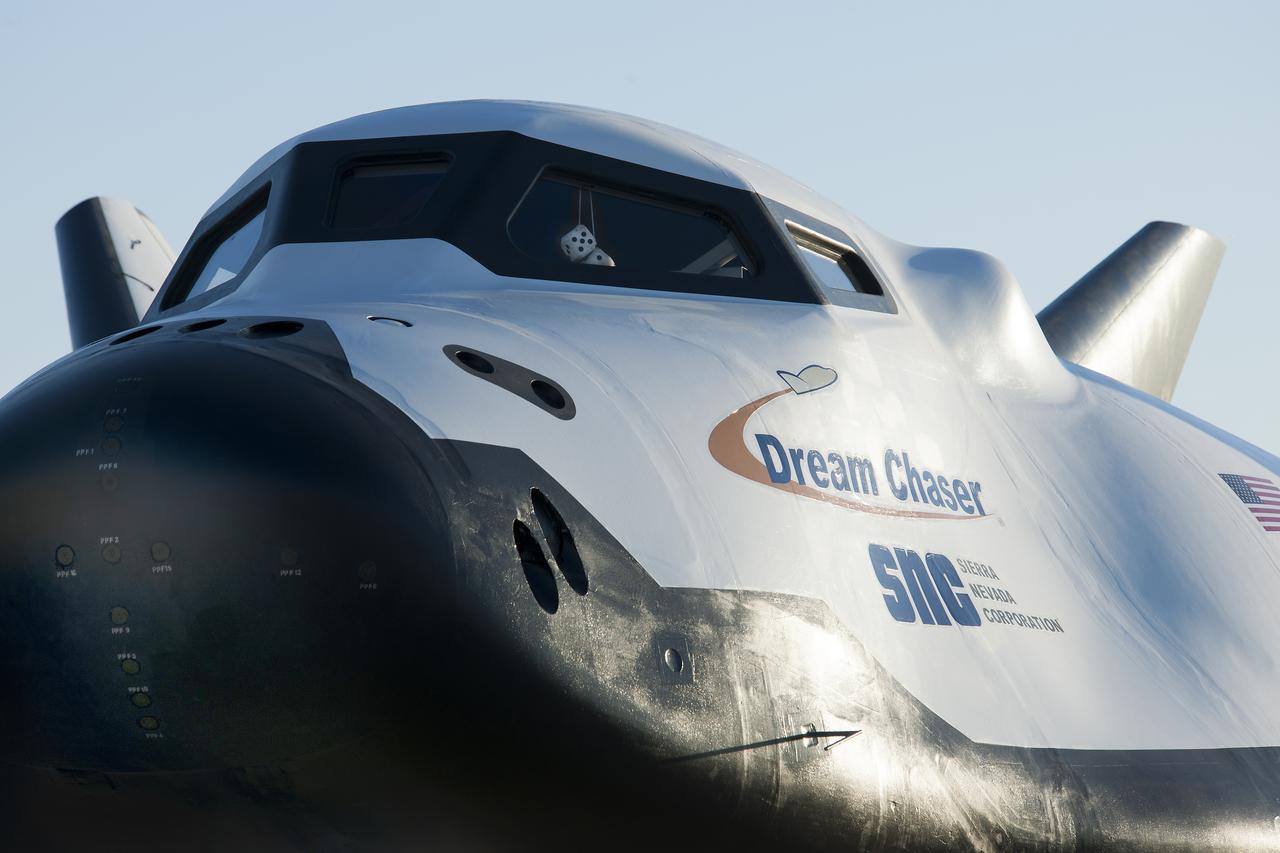
Sierra Nevada Corp’s Dream Chaser posed on ramp at sunrise at NASA Armstrong Flight Research Center in California where the aircraft has gone through a series of tests in preparation for flight.
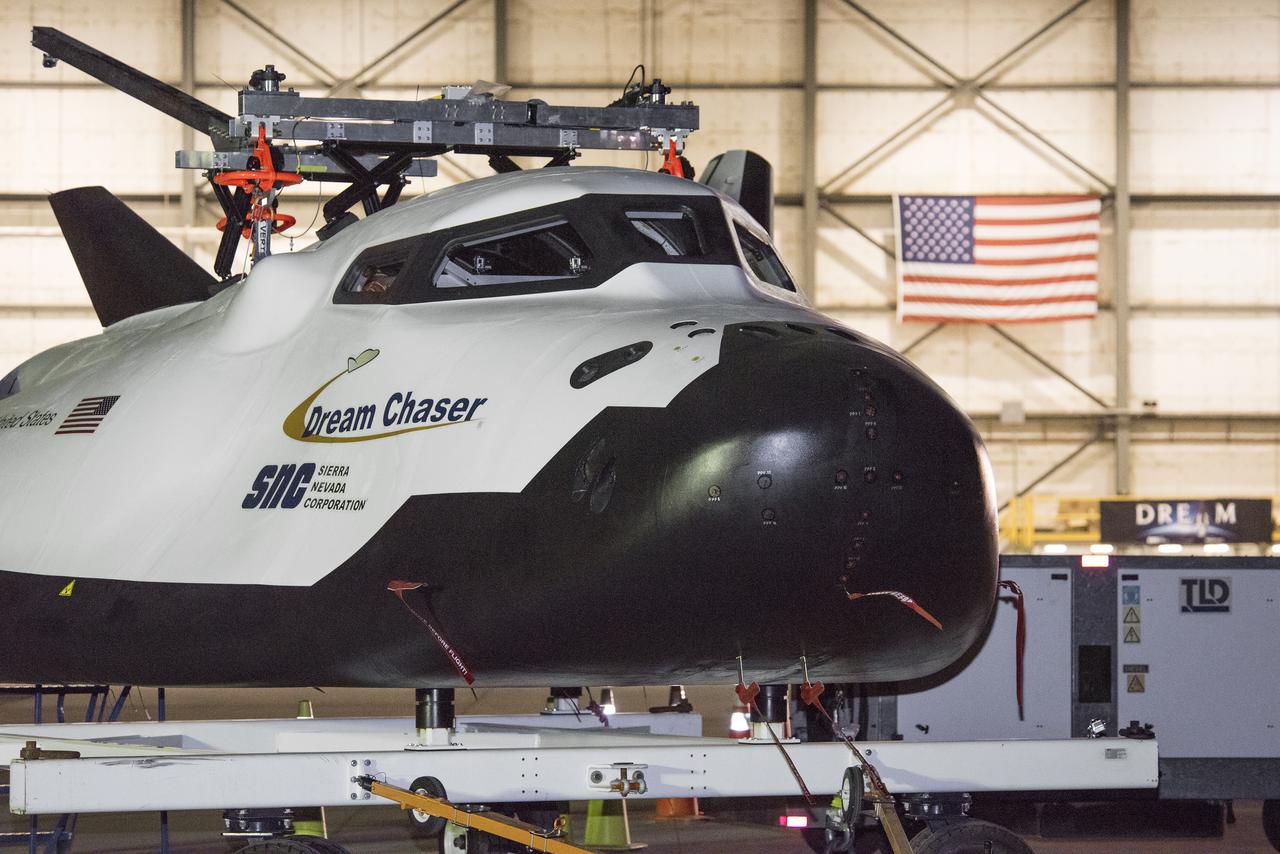
A lift device was attached to Sierra Nevada Corp’s Dream Chaser for a helicopter to pick it up to drop for its successful approach and landing test at NASA’s Armstrong Flight Research Center in California on Nov. 11, 2017.
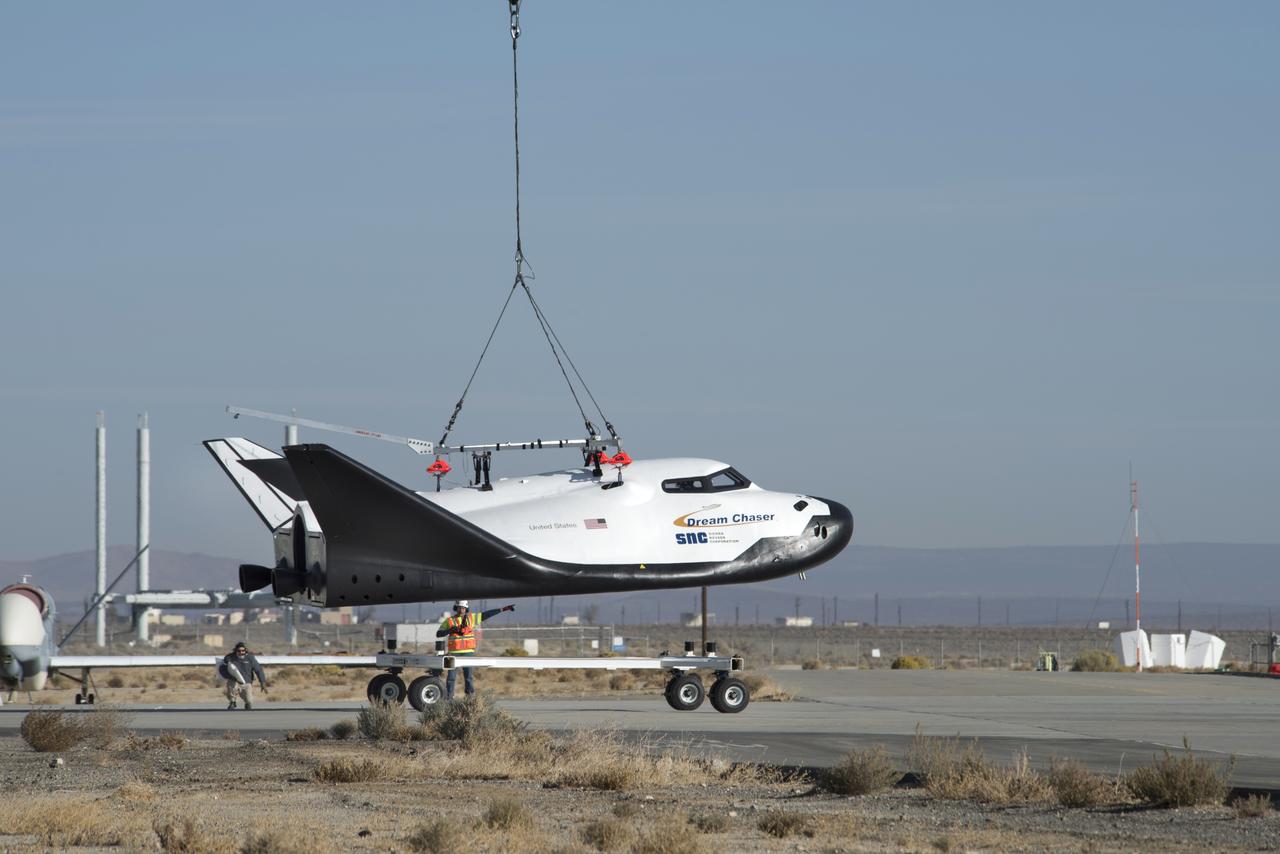
Sierra Nevada Corp’s Dream Chaser was lifted by helicopter from the ramp at NASA’s Armstrong Flight Research Center in Edwards, California, before its successful approach and landing flight test on Nov. 11, 2017.
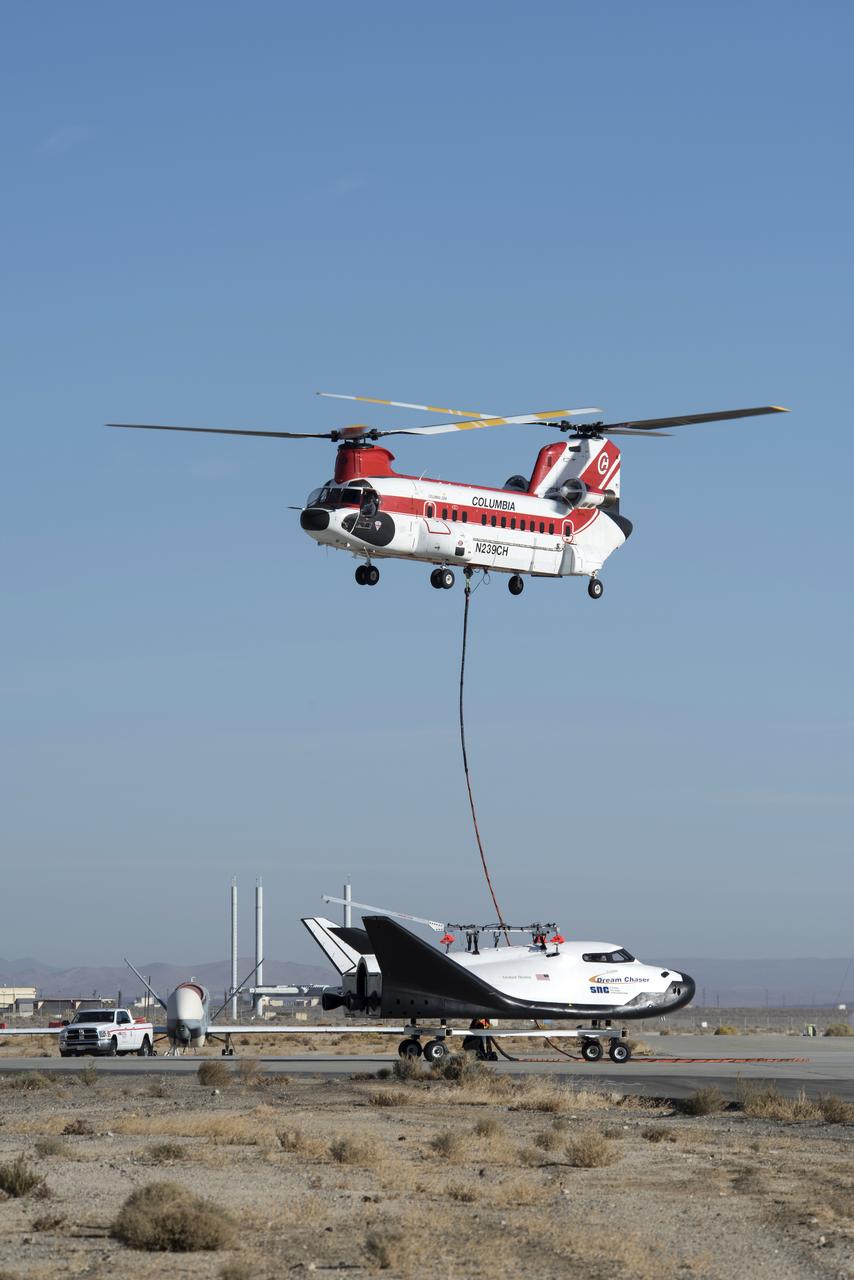
Sierra Nevada Corp’s Dream Chaser was lifted by helicopter from the ramp at NASA’s Armstrong Flight Research Center in Edwards, California, before its successful approach and landing flight test on Nov. 11, 2017.
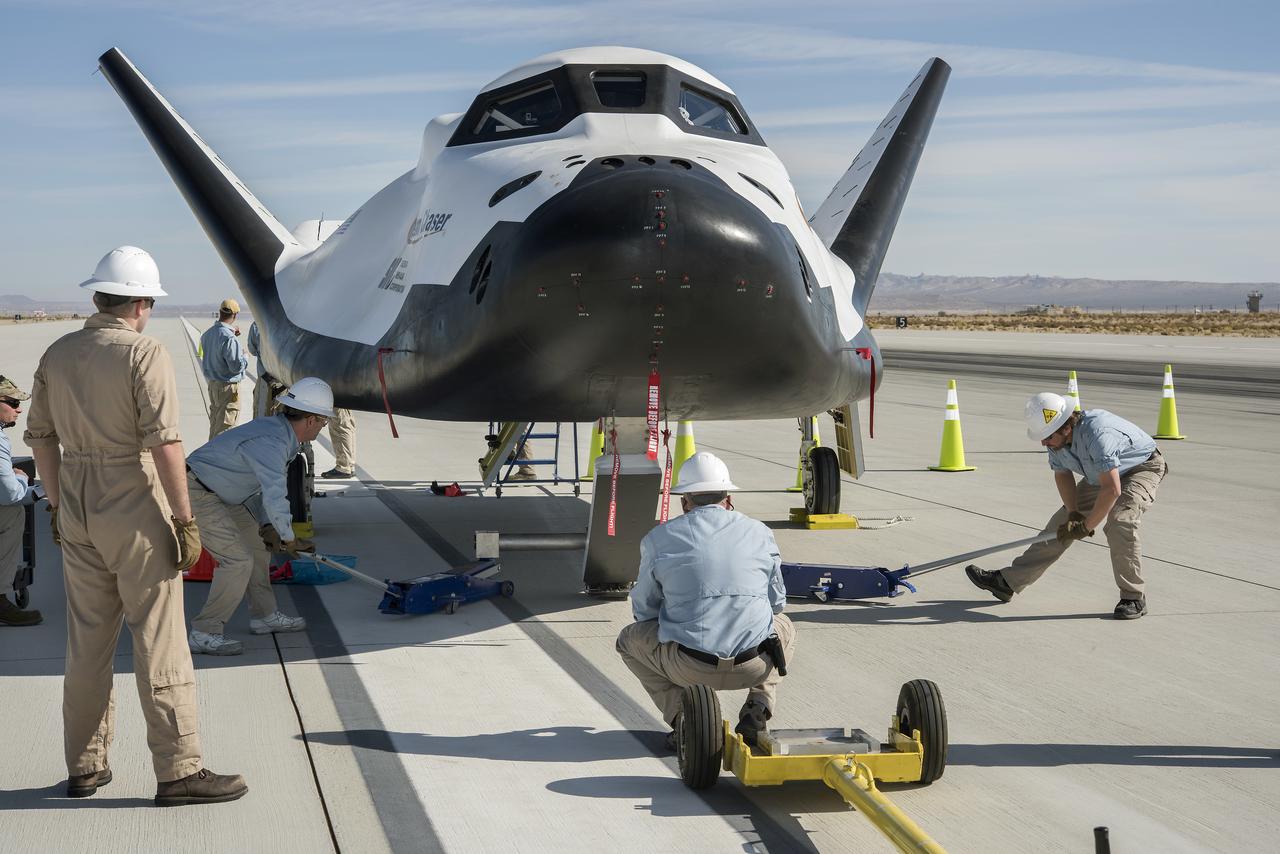
After successfully landing on an Edwards Air Force Base runway on Nov. 11, 2017, Sierra Nevada Corp’s Dream Chaser was prepared for its tow back to NASA Armstrong Flight Research Center in California.
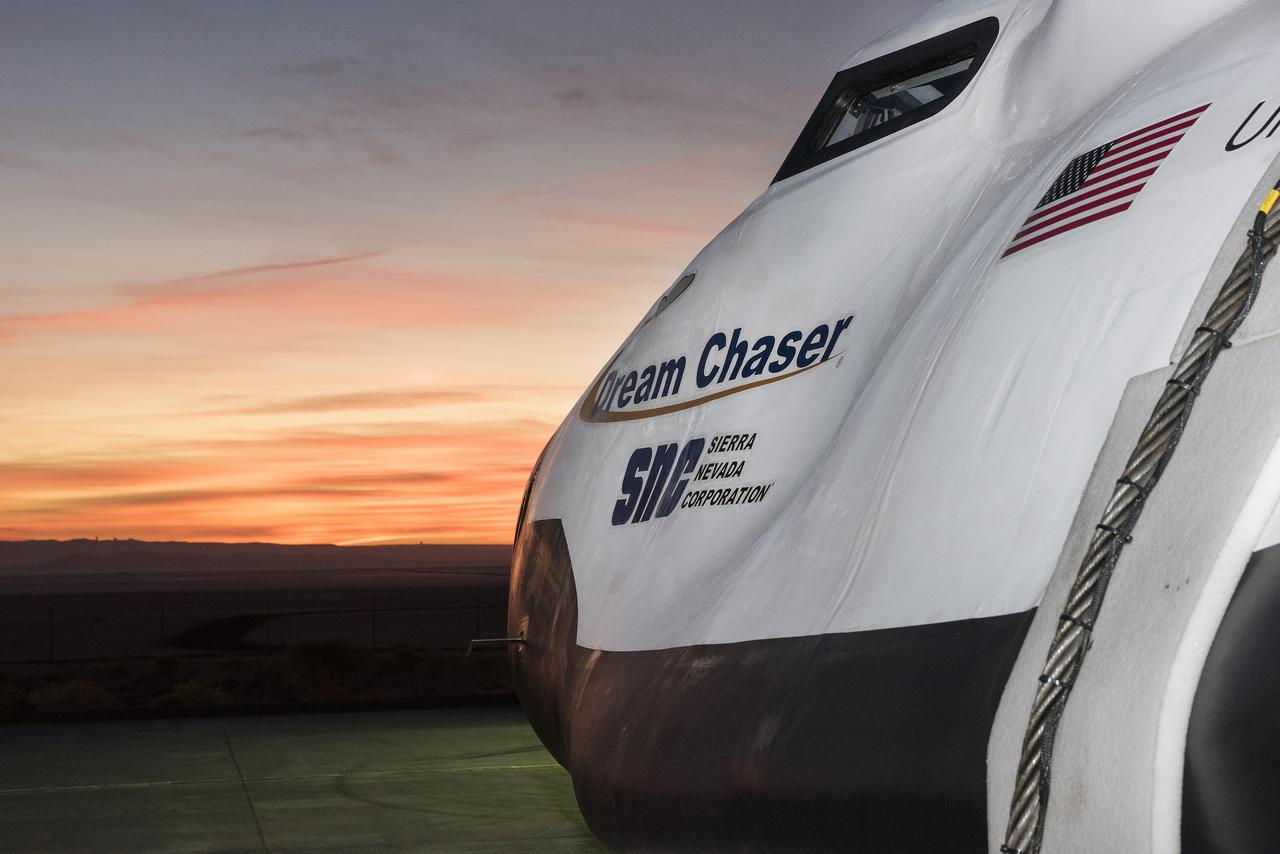
Sierra Nevada Corp’s Dream Chaser facing sunrise over Rogers Dry Lake by NASA Armstrong Flight Research Center in California where it was being prepared for a successful approach and landing test Nov. 11, 2017.
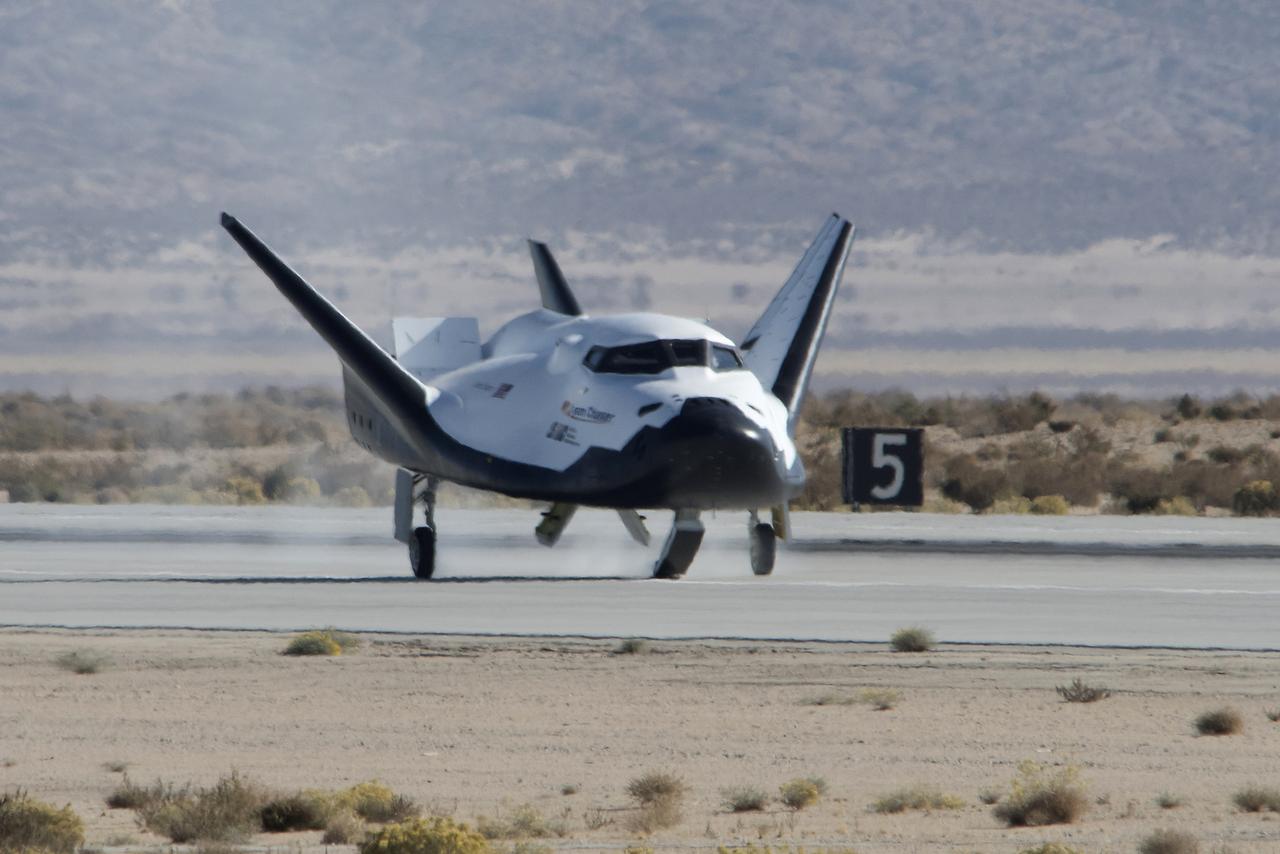
Sierra Nevada Corp’s Dream Chaser successfully landed on an Edwards Air Force Base runway on Nov. 11, 2017, after being lifted from the ramp at NASA Armstrong Flight Research Center in California.

Sierra Nevada Corp’s Dream Chaser posed on ramp at sunrise at NASA Armstrong Flight Research Center in California where the aircraft has gone through a series of tests in preparation for flight.
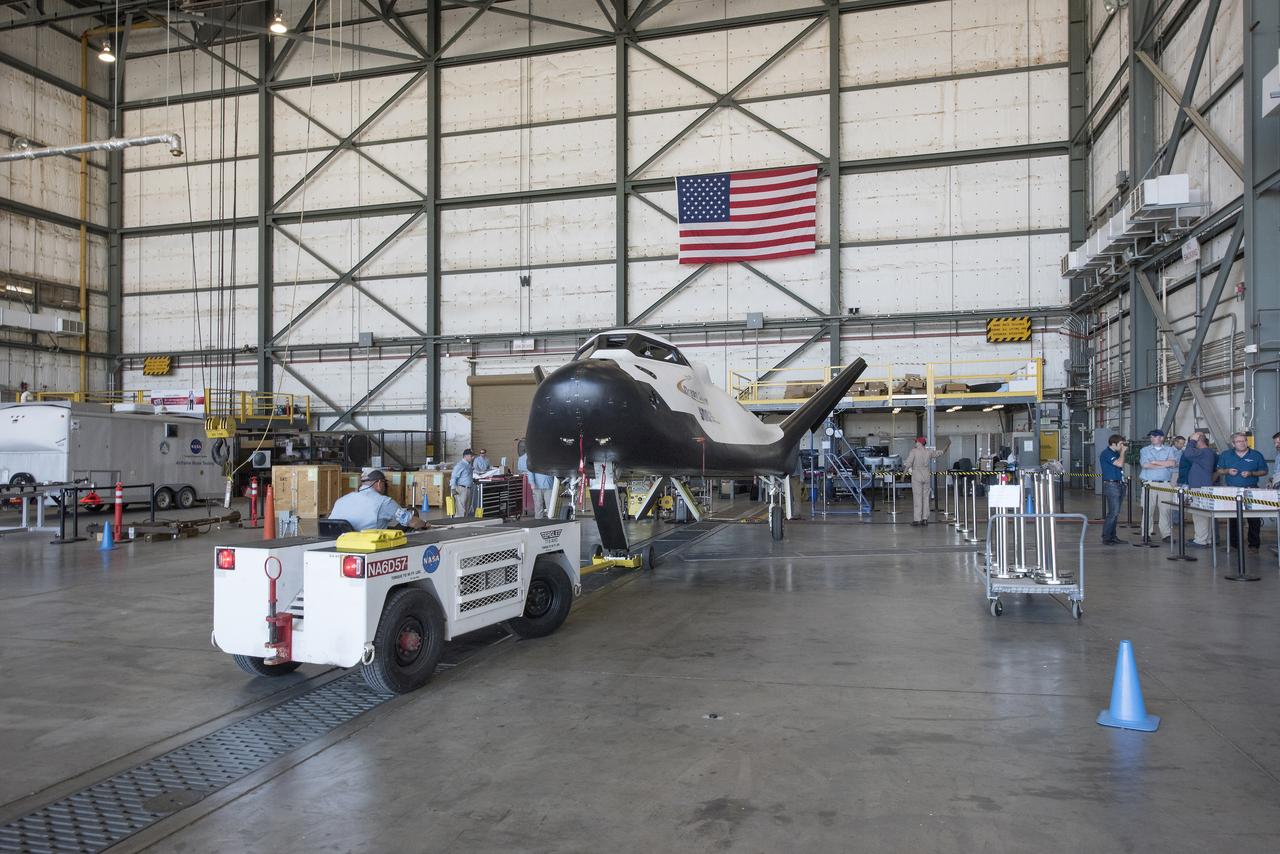
After a successful approach and landing flight test on Nov. 11, 2017, Sierra Nevada Corp’s Dream Chaser was towed back to NASA Armstrong Flight Research Center in California, and placed in the former space shuttle hangar.

LOUISVILLE, Colo. – During NASA's Commercial Crew Development Round 2 CCDev2) activities for the Commercial Crew Program CCP, Sierra Nevada Corp. SNC built a Simulator and Avionics Laboratory to help engineers evaluate the Dream Chaser's characteristics during the piloted phases of flight. Located at Sierra Nevada’s Space Systems facility in Louisville, Colo., it consists of a physical cockpit and integrated simulation hardware and software. The simulator is linked to the Vehicle Avionics Integration Laboratory, or VAIL, which serves as a platform for Dream Chaser avionics development, engineering testing and integration. VAIL also will also be used for verification and validation of avionics and software. Sierra Nevada is one of seven companies NASA entered into Space Act Agreements SAAs with during CCDev2 to aid in the innovation and development of American-led commercial capabilities for crew transportation and rescue services to and from the International Space Station and other low Earth orbit destinations. For information about CCP, visit www.nasa.gov/commercialcrew. Photo credit: Sierra Nevada Corp.
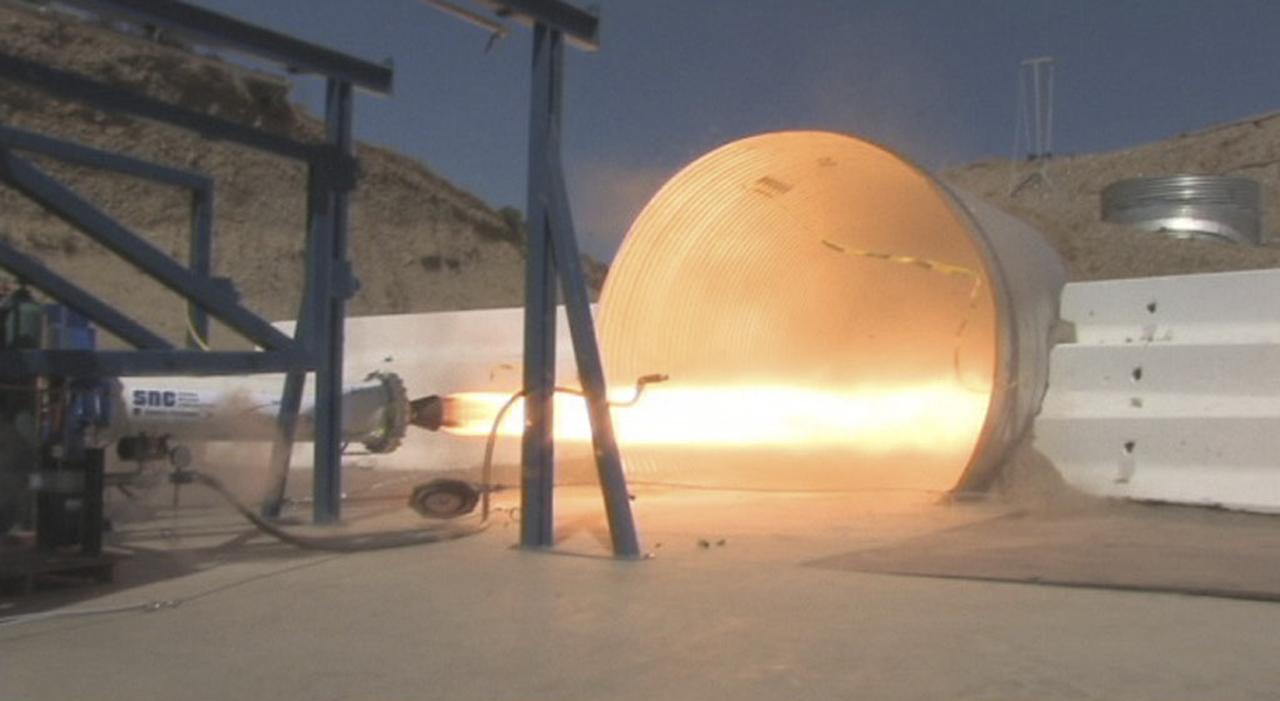
POWAY, Calif. – During NASA's Commercial Crew Development Round 1 CCDev1 activities, the rocket motor under development by Sierra Nevada Corp. for its Dream Chaser spacecraft successfully fires at the company's rocket test facility located near San Diego. NASA team members reviewed the motor's system and then watched it fire three times in one day, including one firing under vacuum ignition conditions. The tests, which simulated a complete nominal mission profile, demonstrated the multiple restart capability of Sierra Nevada's hybrid rocket. Two of the company's designed and developed hybrid rocket motors will be used as the main propulsion system on the Dream Chaser after launching aboard an Atlas V rocket. Dream Chaser is one of five systems NASA invested in during CCDev1 in order to aid in the innovation and development of American-led commercial capabilities for crew transportation and rescue services to and from the International Space Station and other low Earth orbit destinations. In 2011, NASA's Commercial Crew Program CCP entered into another funded Space Act Agreement with Sierra Nevada for the second round of commercial crew development CCDev2) so the company could further develop its Dream Chaser spacecraft for NASA transportation services. For information about CCP, visit www.nasa.gov/commercialcrew. Photo credit: Sierra Nevada Corp.
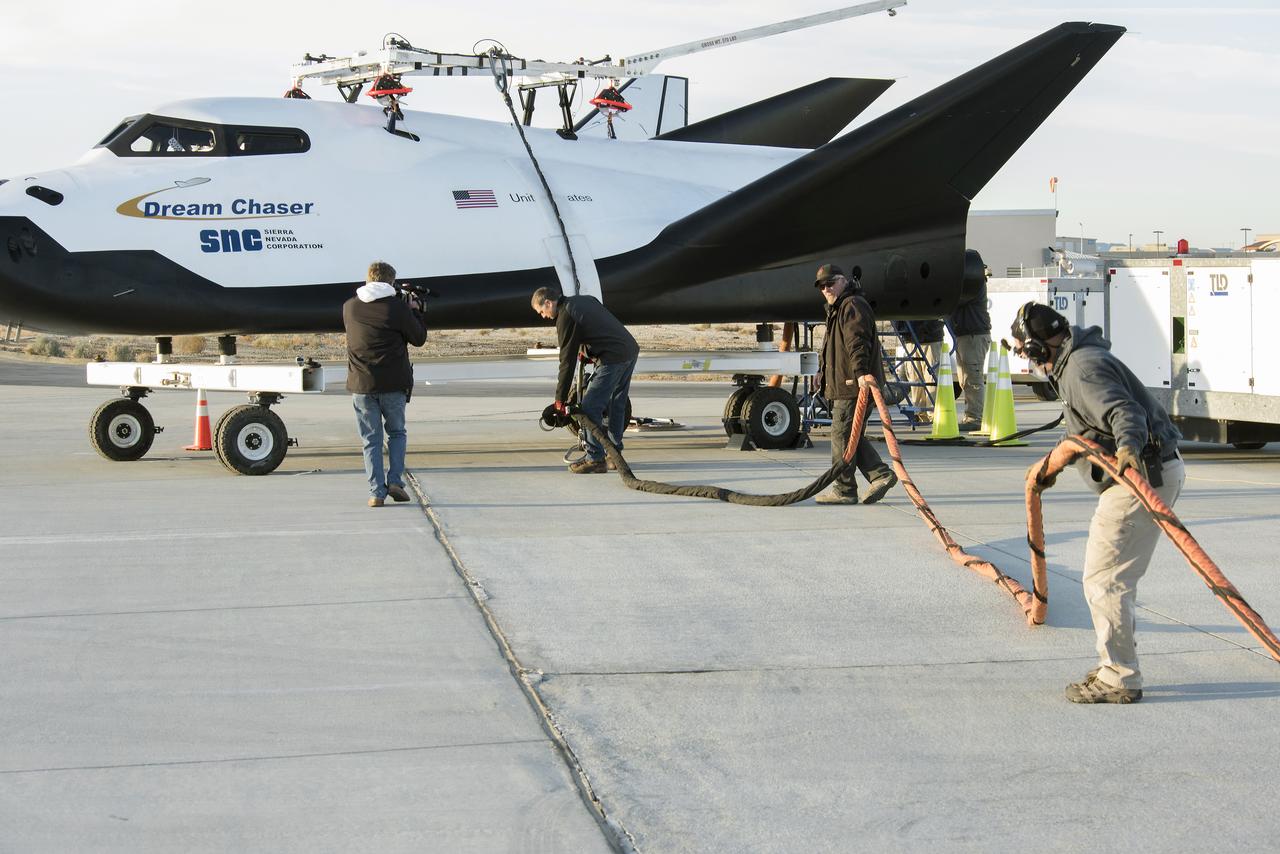
Sierra Nevada Corp’s Dream Chaser crew attached the wires that the helicopter would use to pick it up from NASA’s Armstrong Flight Research Center in California in preparation for its successful approach and landing test Nov. 11, 2017.

Sierra Nevada Corp’s Dream Chaser being towed from the former space shuttle hangar at NASA Armstrong Flight Research Center in California where it was housed and prepared for its successful Nov. 11, 2017 approach and landing test.
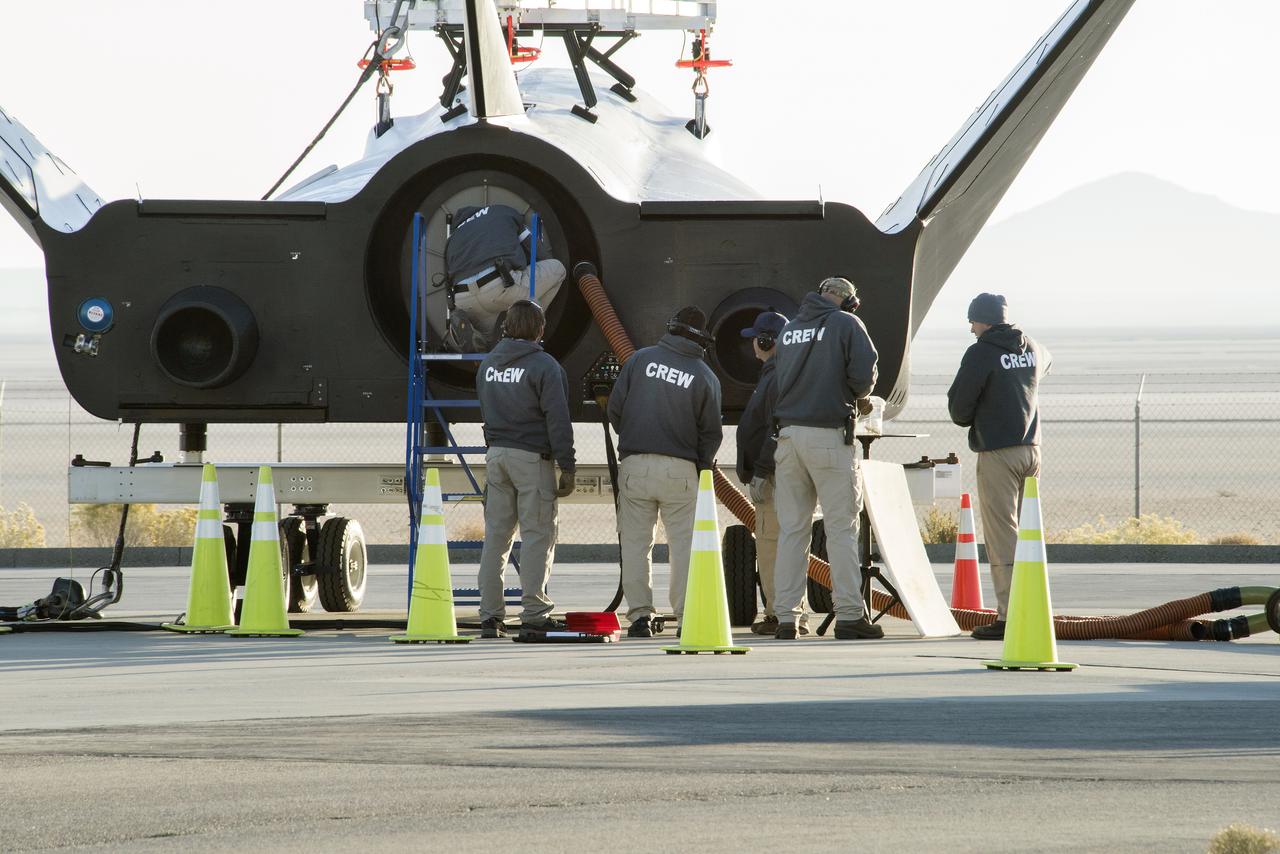
Sierra Nevada Corp’s Dream Chaser crew attached the wires that the helicopter would use to pick it up from NASA’s Armstrong Flight Research Center in California in preparation for its successful approach and landing test Nov. 11, 2017.
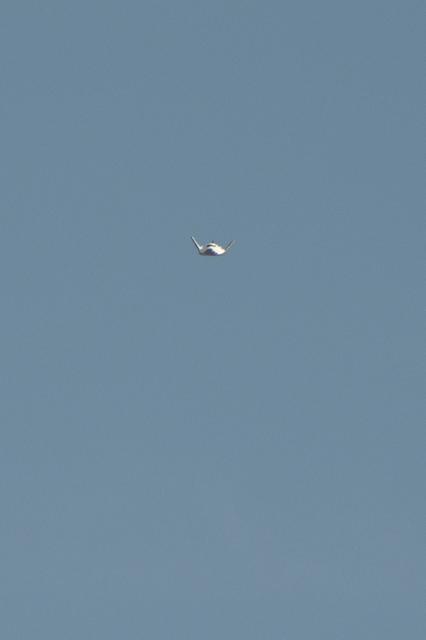
Sierra Nevada Corp’s Dream Chaser was released from a helicopter for a landing on an Edwards Air Force Base runway after it was lifted from the ramp at NASA’s Armstrong Flight Research Center in California, for its successful approach and landing flight test on Nov. 11, 2017.
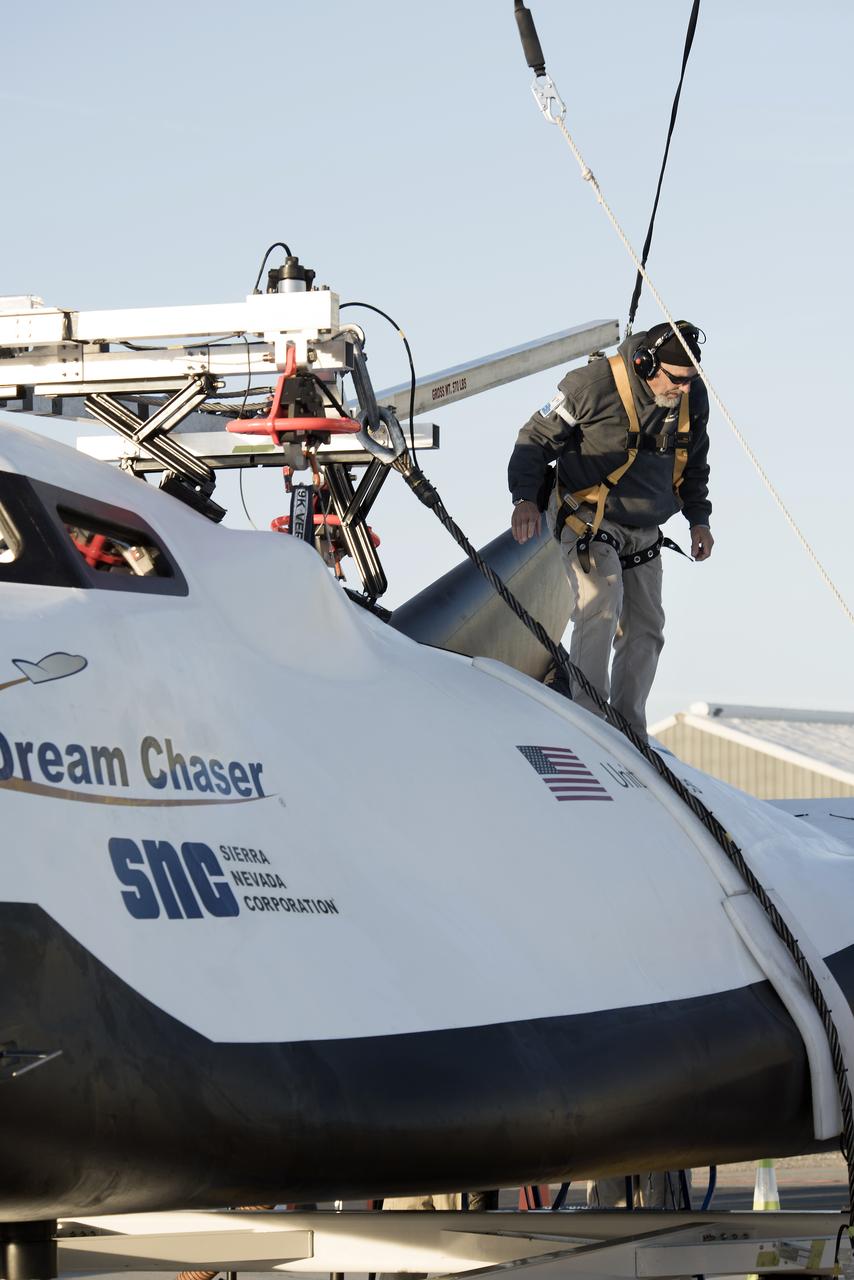
Sierra Nevada Corp’s Dream Chaser crew attached the wires that the helicopter would use to pick it up from NASA’s Armstrong Flight Research Center in California in preparation for its successful approach and landing test Nov. 11, 2017.
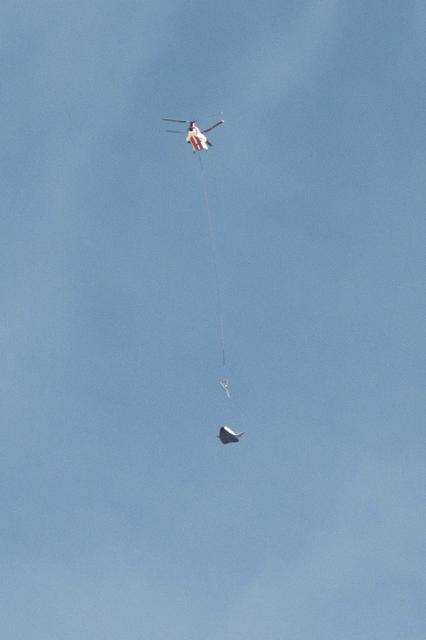
Sierra Nevada Corp’s Dream Chaser is released for a landing on Edwards Air Force Base runway after departing a ramp at NASA’s Armstrong Flight Research Center in California, for its successful approach and landing flight test on Nov. 11, 2017.
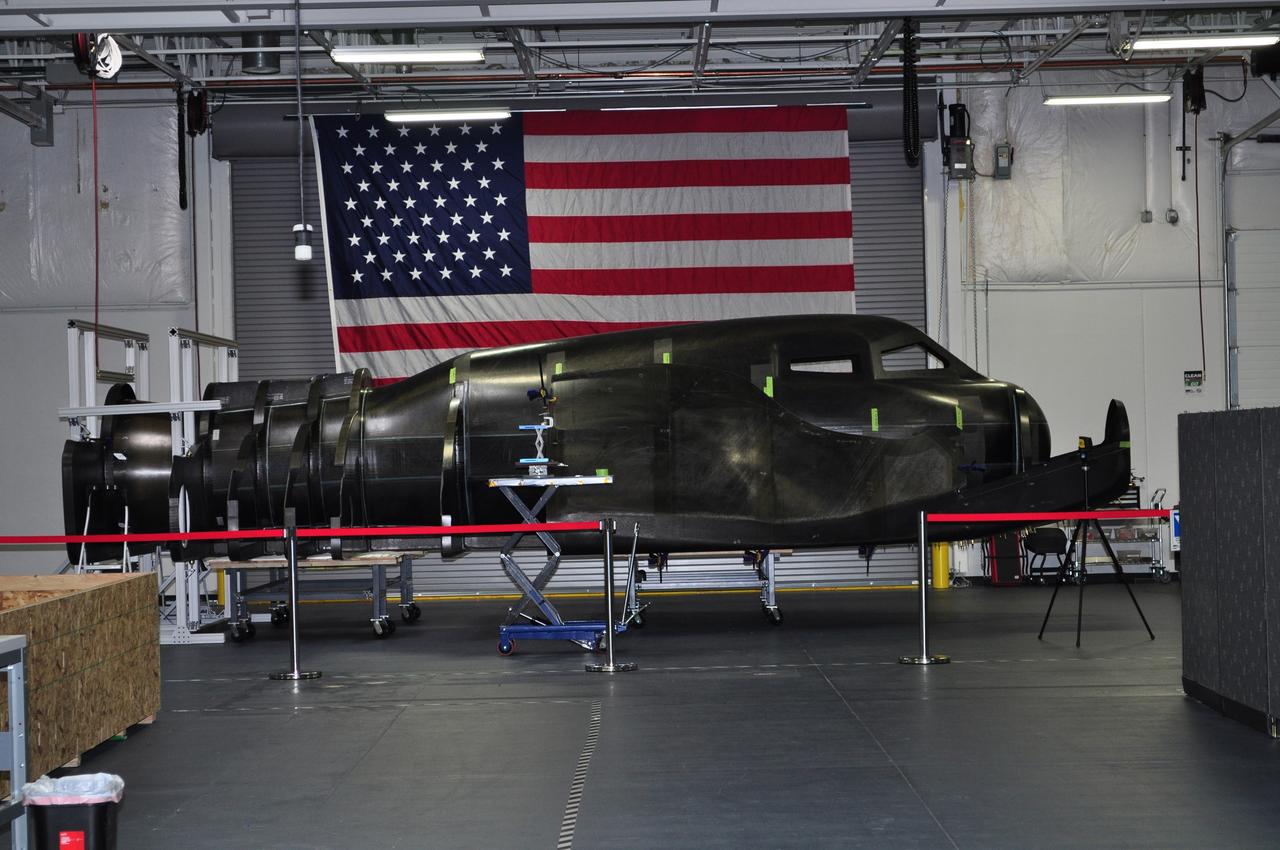
LOUISVILLE, Colo. – During NASA's Commercial Crew Development Round 2 CCDev2) activities for the Commercial Crew Program CCP, Sierra Nevada Corp. SNC delivered the primary structure of its Dream Chaser flight test vehicle to the company’s office in Louisville, Colo. SNC engineers currently are assembling the full-scale prototype, which includes the integration of secondary structures and subsystems. This all-composite structure of the company's planned winged spacecraft, the Dream Chaser, will be used to carry out several remaining CCDev2 milestones including a captive carry flight and the first approach and landing test of the spacecraft. During the captive carry flight, a carrier aircraft will the Dream Chaser vehicle over NASA's Dryden Flight Research Center in Edwards, Calif. Sierra Nevada is one of seven companies NASA entered into Space Act Agreements SAAs with during CCDev2 to aid in the innovation and development of American-led commercial capabilities for crew transportation and rescue services to and from the International Space Station and other low Earth orbit destinations. For information about CCP, visit www.nasa.gov/commercialcrew. Photo credit: Sierra Nevada Corp.
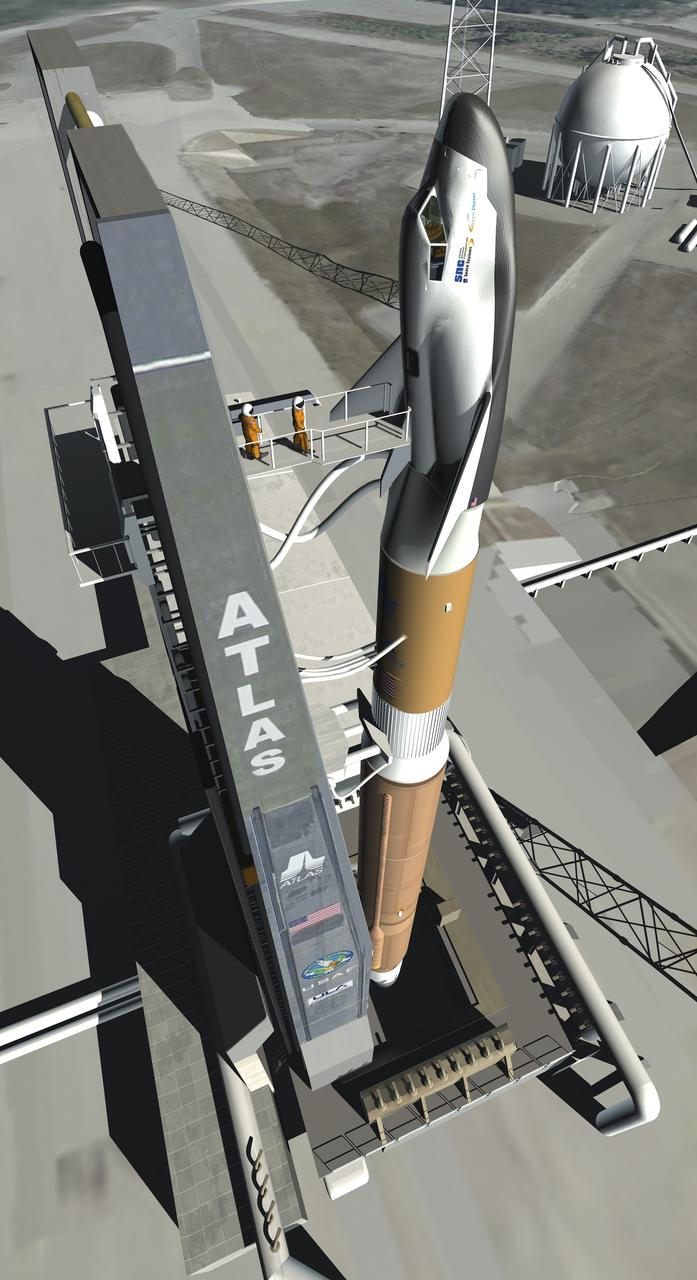
CAPE CANAVERAL, Fla. -- This is an artist's conception of the Dream Chaser spacecraft integrated with an Atlas V rocket. Dream Chaser is under development by Sierra Nevada of Centennial, Colo., for NASA's Commercial Crew Program (CCP). In 2011, NASA selected Sierra Nevada during Commercial Crew Development Round 2 (CCDev2) activities to mature the design and development of a crew transportation system with the overall goal of accelerating a United States-led capability to the International Space Station. United Launch Alliance's Atlas V also is being considered under CCDev2. The goal of CCP is to drive down the cost of space travel as well as open up space to more people than ever before by balancing industry’s own innovative capabilities with NASA's 50 years of human spaceflight experience. Five other aerospace companies also are maturing launch vehicle and spacecraft designs under CCDev2, including Alliant Techsystems Inc. (ATK), The Boeing Co., Excalibur Almaz Inc., Blue Origin, and Space Exploration Technologies (SpaceX). For more information, visit www.nasa.gov/commercialcrew. Image credit: Sierra Nevada Corp.
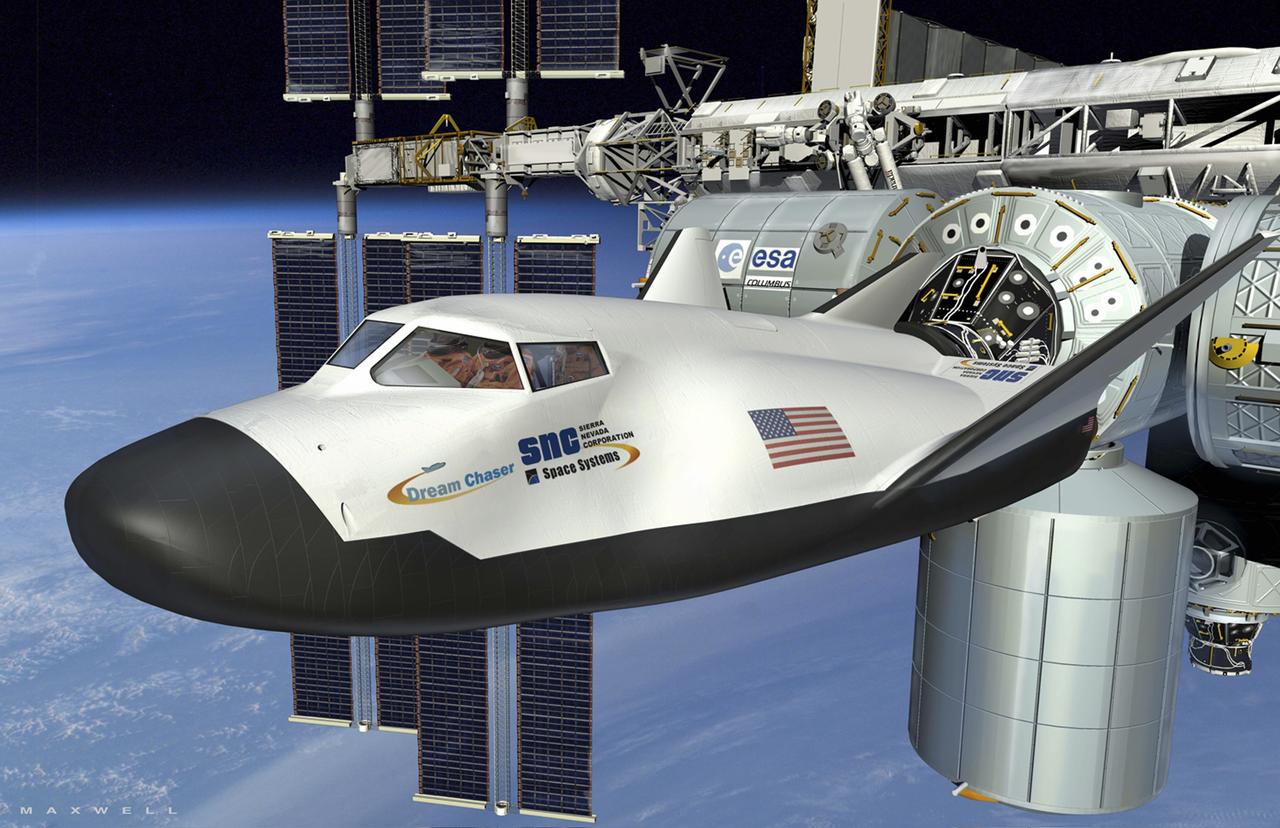
CAPE CANAVERAL, Fla. -- This is an artist's conception of the Dream Chaser spacecraft under development by Sierra Nevada of Centennial, Colo., for NASA's Commercial Crew Program (CCP). In 2011, NASA selected Sierra Nevada during Commercial Crew Development Round 2 (CCDev2) activities to mature the design and development of a crew transportation system with the overall goal of accelerating a United States-led capability to the International Space Station. The goal of CCP is to drive down the cost of space travel as well as open up space to more people than ever before by balancing industry’s own innovative capabilities with NASA's 50 years of human spaceflight experience. Six other aerospace companies also are maturing launch vehicle and spacecraft designs under CCDev2, including Alliant Techsystems Inc. (ATK), The Boeing Co., Excalibur Almaz Inc., Blue Origin, Space Exploration Technologies (SpaceX), and United Launch Alliance (ULA). For more information, visit www.nasa.gov/commercialcrew. Image credit: Sierra Nevada Corp.
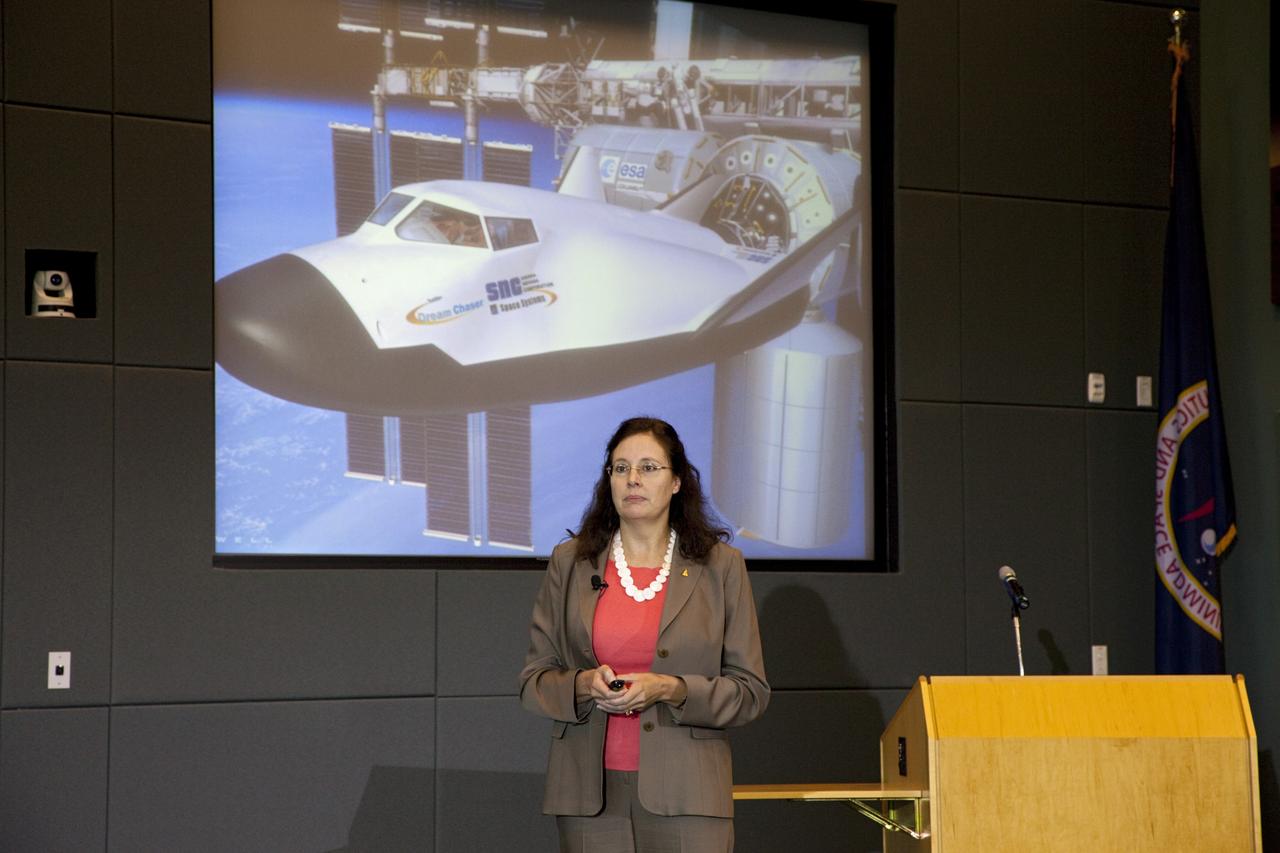
CAPE CANAVERAL, Fla. – Merri Sanchez of Sierra Nevada Corp. Space Systems speaks during the Kennedy Space Center's Innovation Expo in the Operations Support Building II. The center-wide event gave researchers a chance to show some of their work to others at the center and gave employees the opportunity to see facilities they hadn't viewed before. Photo credit: Gianni Woods
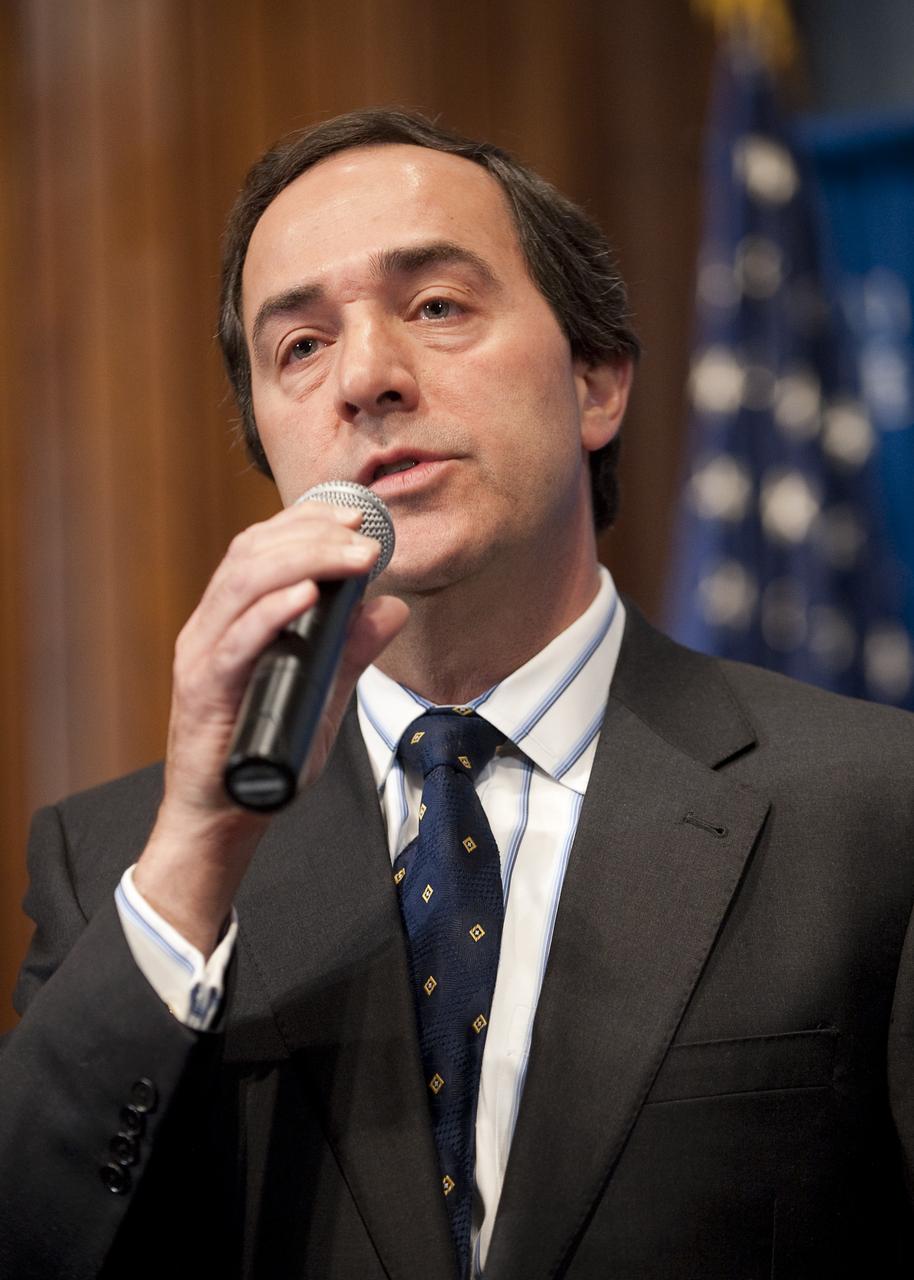
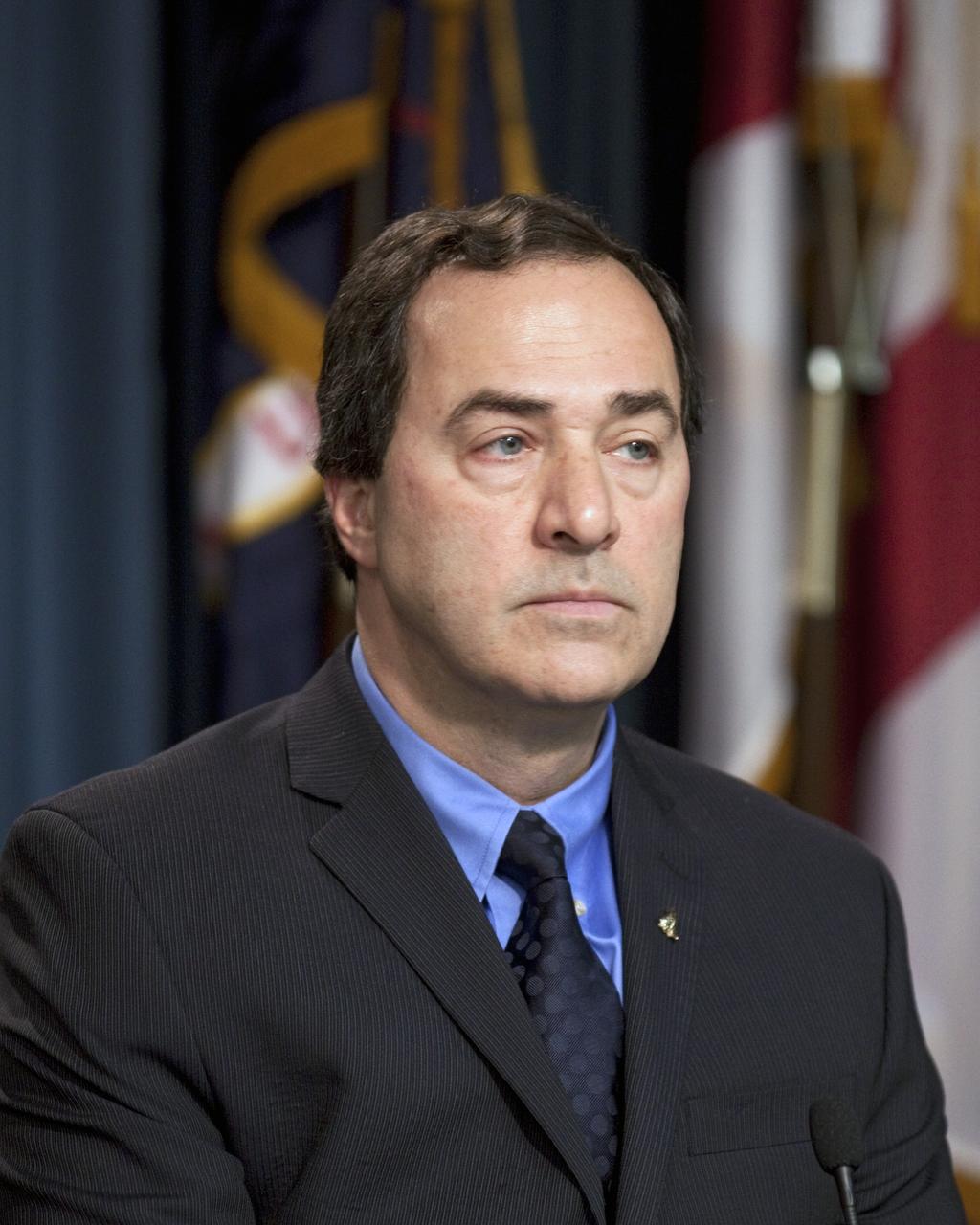
Mark Sirangelo, VP and Chair, SNC Space Systems Board, Sierra Nevada Corp. is seen during a press conference, Tuesday, Feb. 2, 2010, at the National Press Club in Washington, where it was announced that NASA has awarded $50 million through funded agreements to further the commercial sector's capability to support transport of crew to and from low Earth orbit. Photo Credit: (NASA/Bill Ingalls)
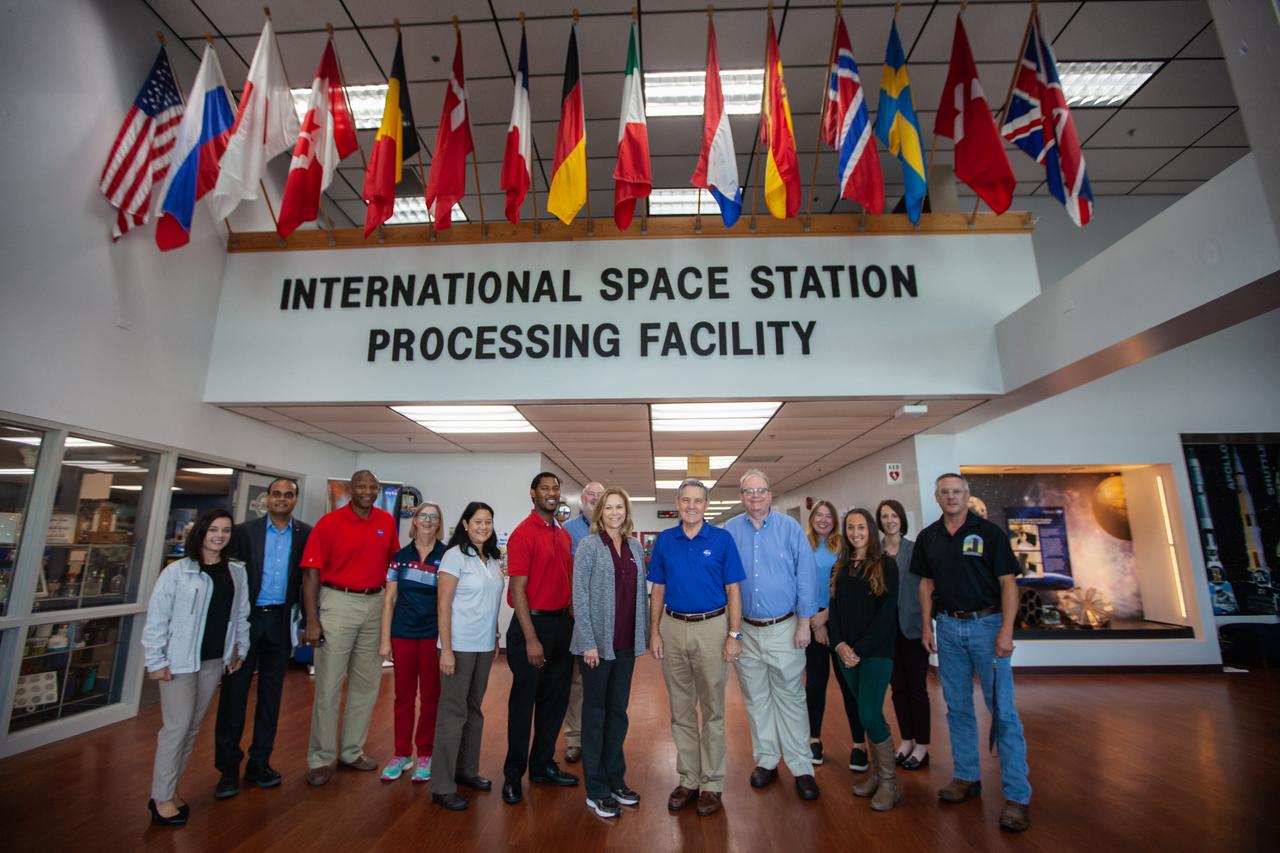
A mockup of the cargo logistics module for Sierra Nevada Corporation’s Dream Chaser, the company’s reusable spaceplane, arrived at the Space Station Processing Facility (SSPF) at NASA’s Kennedy Space Center in Florida in August. On Sept. 20, 2019, senior leadership had the opportunity to view the cargo module in the SSPF high bay. Third from left is Kelvin Manning, Kennedy associate director, technical; fifth from left is Josie Burnett, director of Exploration Research and Technology Programs. In the center are Kennedy Deputy Director Janet Petro and Kennedy Center Director Bob Cabana. Behind Petro is Ronnie Lawson, deputy director of Exploration Research and Technology Programs. To Cabana’s right is Burt Summerfield, associate director, management. At far right is James Wood, chief engineer for the Launch Services Program with the Engineering Directorate. The SSPF is providing support for current and future NASA and commercial provider programs, including Commercial Resupply Services, Artemis 1, sending the first woman and next man to the Moon, and deep space destinations including Mars.
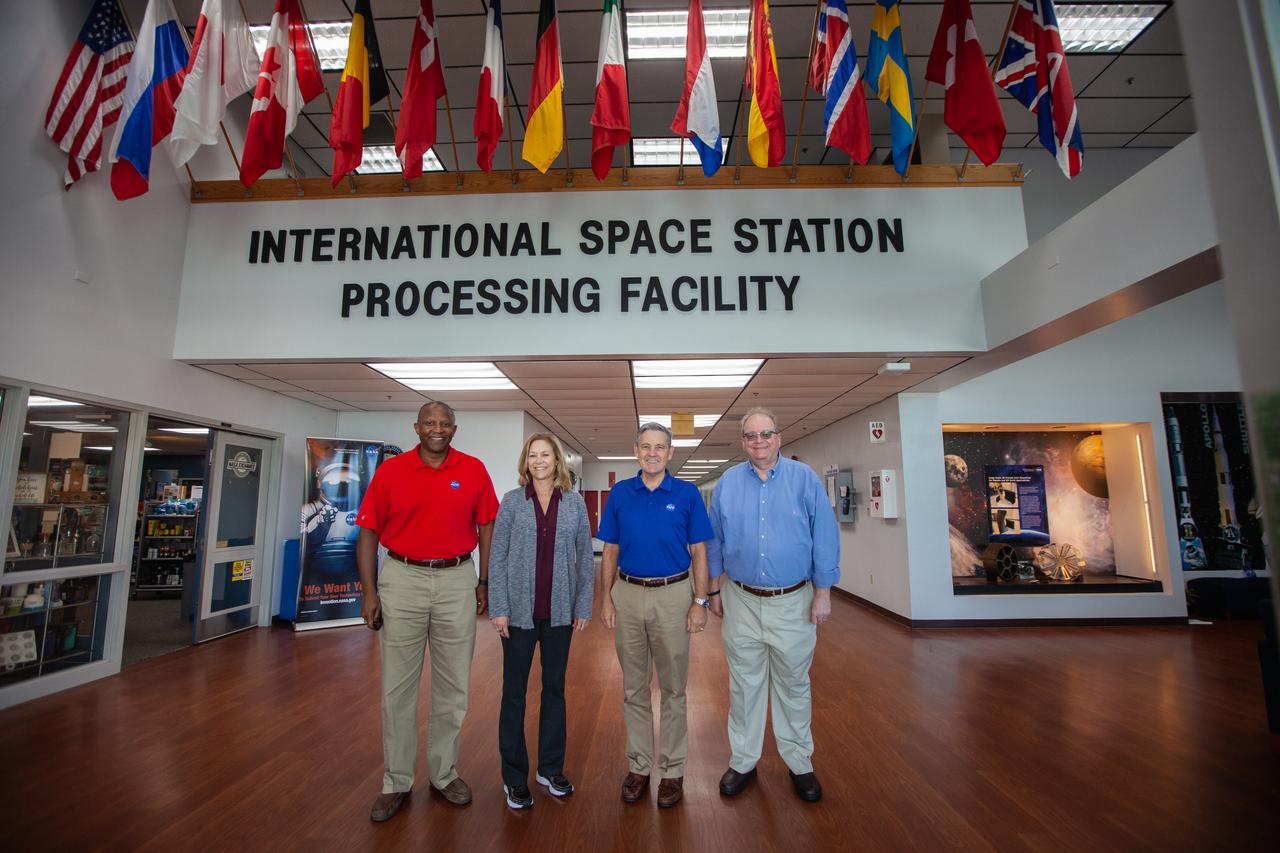
A mockup of the cargo logistics module for Sierra Nevada Corporation’s Dream Chaser, the company’s reusable spaceplane, arrived at the Space Station Processing Facility (SSPF) at NASA’s Kennedy Space Center in Florida in August. On Sept. 20, 2019, senior leadership had the opportunity to view the cargo module in the SSPF high bay. From left, are Kelvin Manning, Kennedy associate director, technical; Kennedy Deputy Director Janet Petro; Kennedy Center Director Bob Cabana; and Burt Summerfield, Kennedy associate director, management. The SSPF is providing support for current and future NASA and commercial provider programs, including Commercial Resupply Services, Artemis 1, sending the first woman and next man to the Moon, and deep space destinations including Mars.
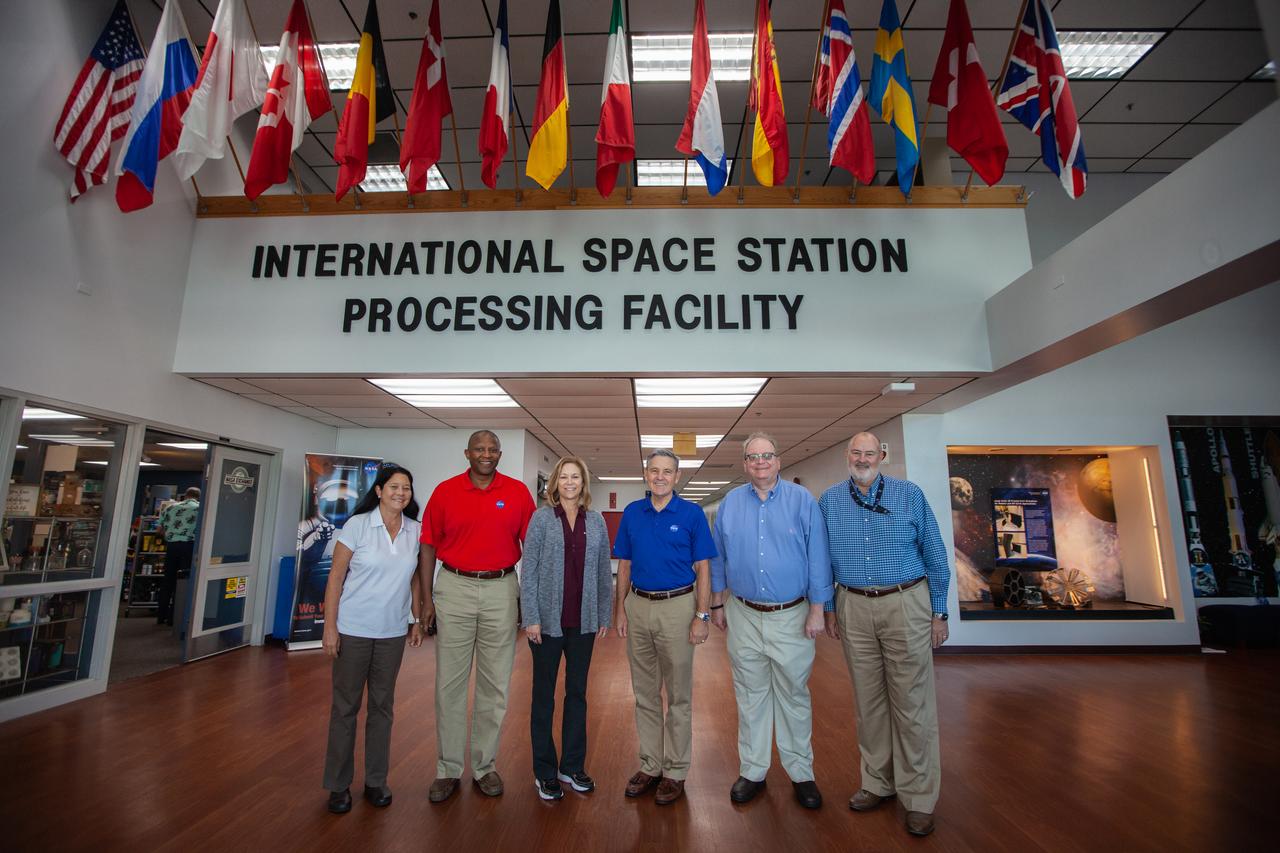
A mockup of the cargo logistics module for Sierra Nevada Corporation’s Dream Chaser, the company’s reusable spaceplane, arrived at the Space Station Processing Facility (SSPF) at NASA’s Kennedy Space Center in Florida in August. On Sept. 20, 2019, senior leadership had the opportunity to view the cargo module in the SSPF high bay. From left, are Josie Burnett, director of Exploration Research and Technology Programs; Kelvin Manning, Kennedy associate director, technical; Kennedy Deputy Director Janet Petro; Kennedy Center Director Bob Cabana; Burt Summerfield, Kennedy associate director, management; and Ronnie Lawson, deputy director of Exploration Research and Technology Programs. The SSPF is providing support for current and future NASA and commercial provider programs, including Commercial Resupply Services, Artemis 1, sending the first woman and next man to the Moon, and deep space destinations including Mars.
CAPE CANAVERAL, Fla. -- At a news conference NASA officials and industry partners discuss progress of the agency's Commercial Crew Program. Among those participating in the briefing is Mark Sirangelo, Sierra Nevada Corp. vice president and SNC Space Systems chairman. Through CCP, NASA is facilitating the development of U.S. commercial crew space transportation capabilities to achieve safe, reliable and cost-effective access to and from low-Earth orbit for potential future government and commercial customers. For more information, visit http://www.nasa.gov/commercialcrew Photo credit: NASA/Kim Shiflett
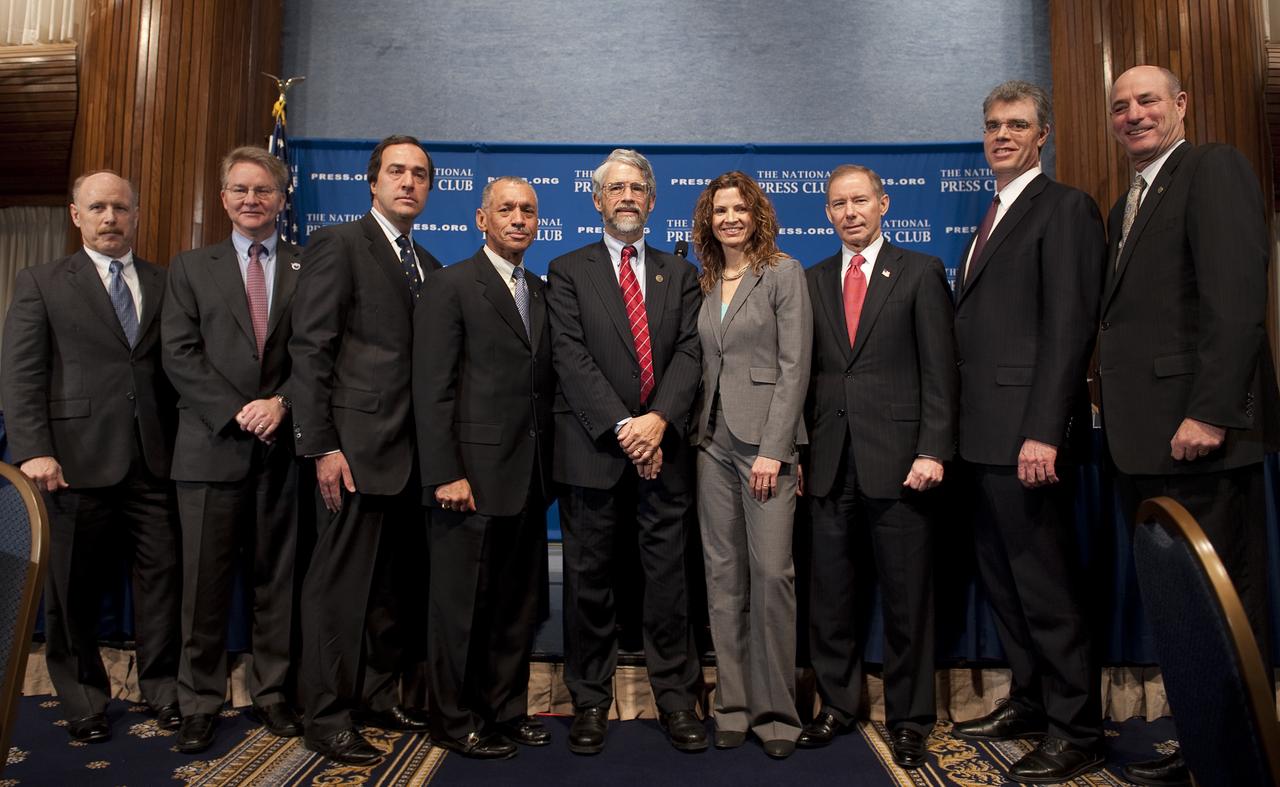
From left, Ken Bowersox, VP Astronaut Safety, SpaceX, David Thompson, CEO, Orbital Science Corporation, Mark Sirangelo, VP and Chair, SNC Space Systems Board, Sierra Nevada Corp., NASA Administrator Charles Bolden, Assistant to the President for Science and Technology and Director of the White House Office of Science and Technology Policy Dr. John P. Holdren, Jane Poynter, President and Chair, Paragon Space Development Corp., Brewster Shaw, VP and General Manager, NASA Systems, Boeing, Robert Millman of Blue Origin, and, Mike Gass, President and Chief Executive, United Launch Alliance, pose for a group photo during a press conference, Tuesday, Feb. 2, 2010, at the National Press Club in Washington, where it was announced that NASA has awarded $50 million through funded agreements to further the commercial sector's capability to support transport of crew to and from low Earth orbit. Photo Credit: (NASA/Bill Ingalls)
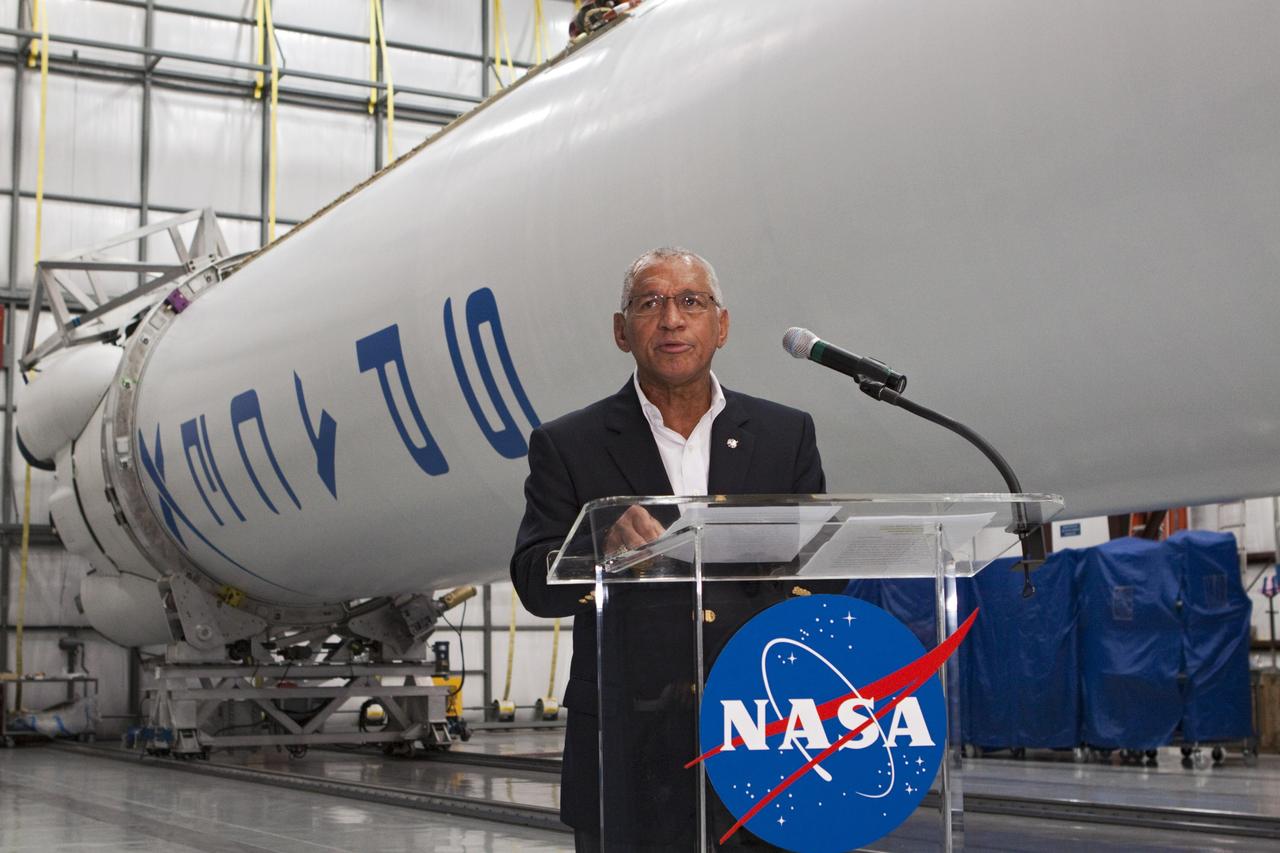
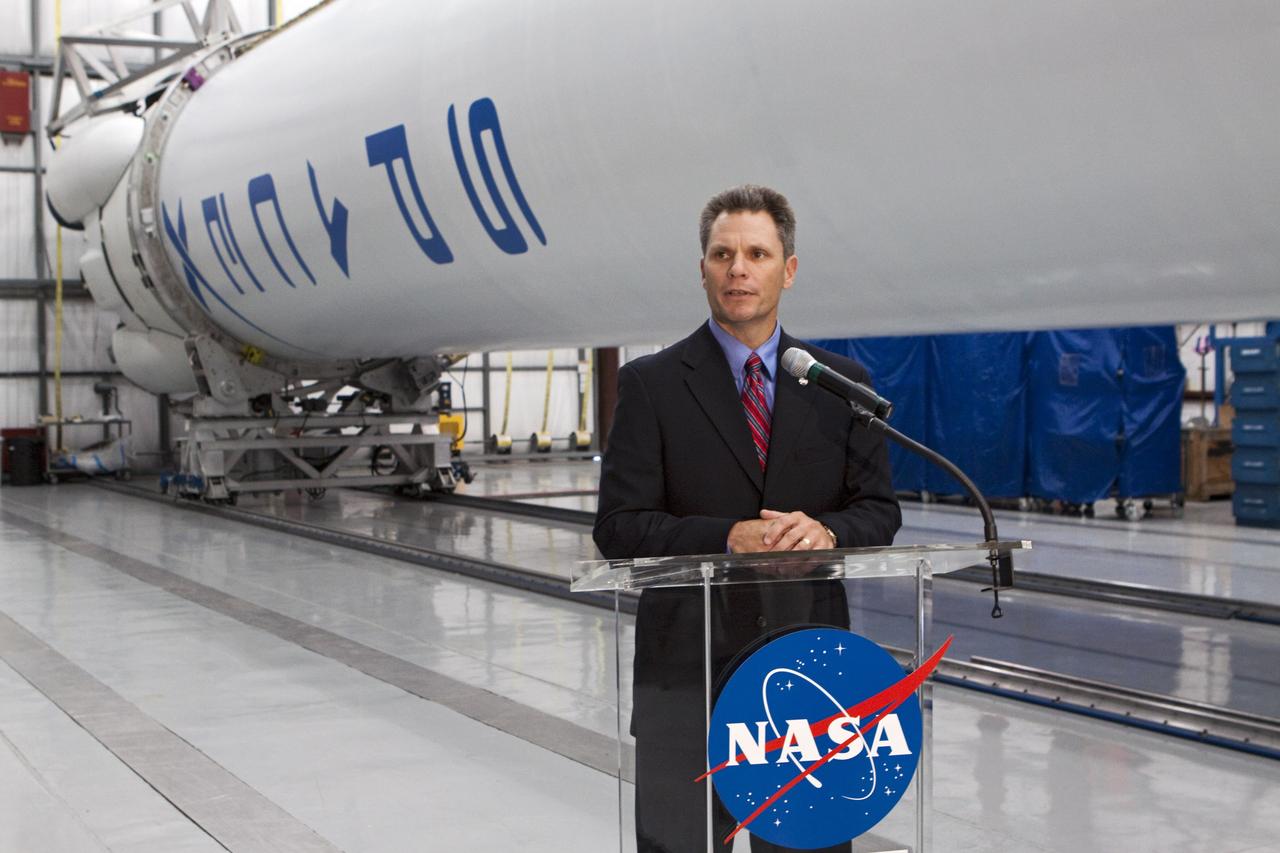
CAPE CANAVERAL, Fla. -- Inside the Space Exploration Technologies, or SpaceX, processing facility near NASA’s Kennedy Space Center in Florida, NASA Administrator Charlie Bolden announced new milestones in the nation’s commercial space initiatives. Bolden announced that SpaceX has completed its Space Act Agreement with NASA for Commercial Orbital Transportation Services. SpaceX is scheduled to launch the first of its 12 contracted cargo flights to the space station from Cape Canaveral this October, under NASA’s Commercial Resupply Services Program. Bolden also announced NASA partner Sierra Nevada Corp. has conducted its first milestone under the agency’s recently announced Commercial Crew Integrated Capability initiative. The milestone, a program implementation plan review, marks an important first step in Sierra Nevada’s efforts to develop a crew transportation system with its Dream Chaser spacecraft. Through NASA’s commercial space initiatives and programs, the agency is providing investments to stimulate the American commercial space industry. Photo credit: NASA/Kim Shiflett
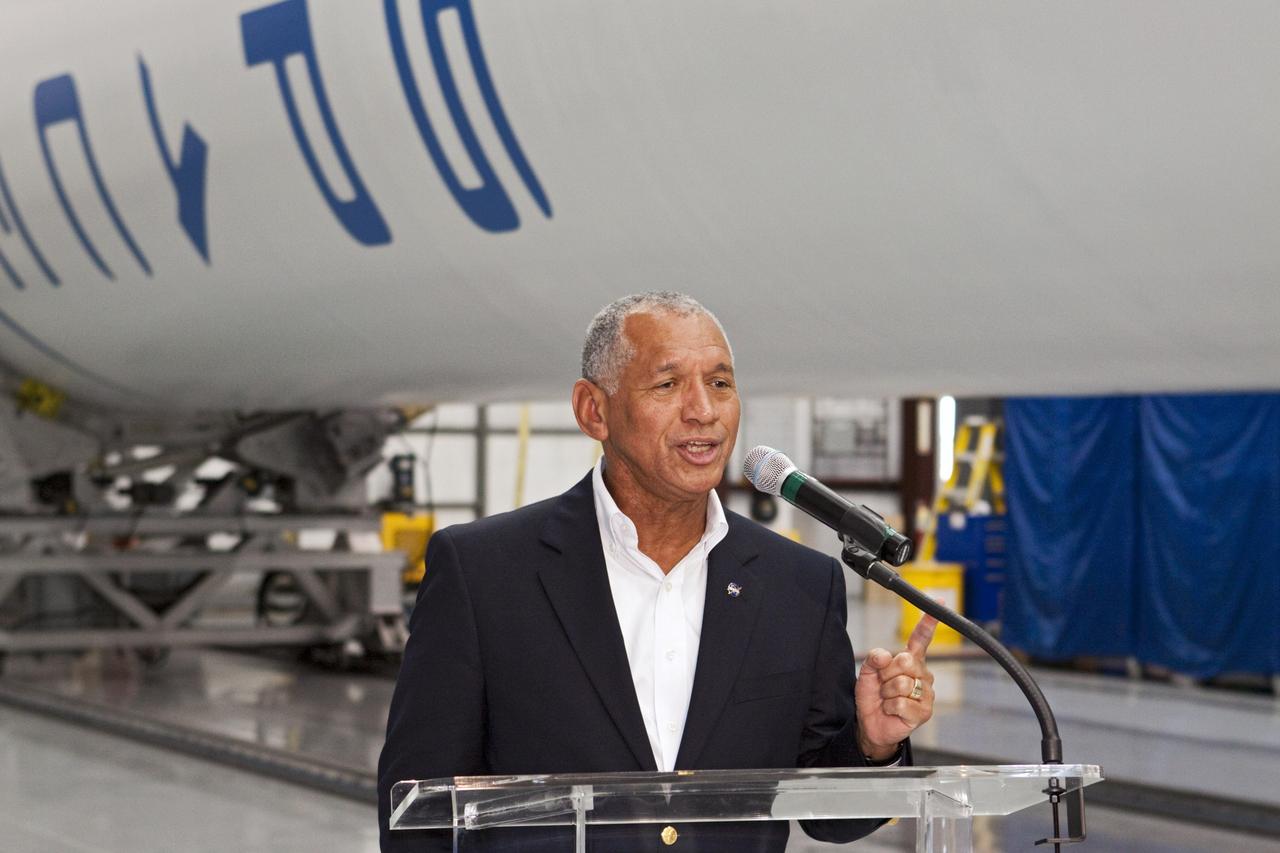
CAPE CANAVERAL, Fla. -- Inside the Space Exploration Technologies, or SpaceX, processing facility near NASA’s Kennedy Space Center in Florida, NASA Administrator Charlie Bolden announced new milestones in the nation’s commercial space initiatives. Bolden announced that SpaceX has completed its Space Act Agreement with NASA for Commercial Orbital Transportation Services. SpaceX is scheduled to launch the first of its 12 contracted cargo flights to the space station from Cape Canaveral this October, under NASA’s Commercial Resupply Services Program. Bolden also announced NASA partner Sierra Nevada Corp. has conducted its first milestone under the agency’s recently announced Commercial Crew Integrated Capability initiative. The milestone, a program implementation plan review, marks an important first step in Sierra Nevada’s efforts to develop a crew transportation system with its Dream Chaser spacecraft. Through NASA’s commercial space initiatives and programs, the agency is providing investments to stimulate the American commercial space industry. Photo credit: NASA/Kim Shiflett
CAPE CANAVERAL, Fla. -- Inside the Space Exploration Technologies, or SpaceX, processing facility near NASA’s Kennedy Space Center in Florida, NASA Administrator Charlie Bolden announced new milestones in the nation’s commercial space initiatives. Bolden announced that SpaceX has completed its Space Act Agreement with NASA for Commercial Orbital Transportation Services. SpaceX is scheduled to launch the first of its 12 contracted cargo flights to the space station from Cape Canaveral this October, under NASA’s Commercial Resupply Services Program. Bolden also announced NASA partner Sierra Nevada Corp. has conducted its first milestone under the agency’s recently announced Commercial Crew Integrated Capability initiative. The milestone, a program implementation plan review, marks an important first step in Sierra Nevada’s efforts to develop a crew transportation system with its Dream Chaser spacecraft. Through NASA’s commercial space initiatives and programs, the agency is providing investments to stimulate the American commercial space industry. Photo credit: NASA/Kim Shiflett
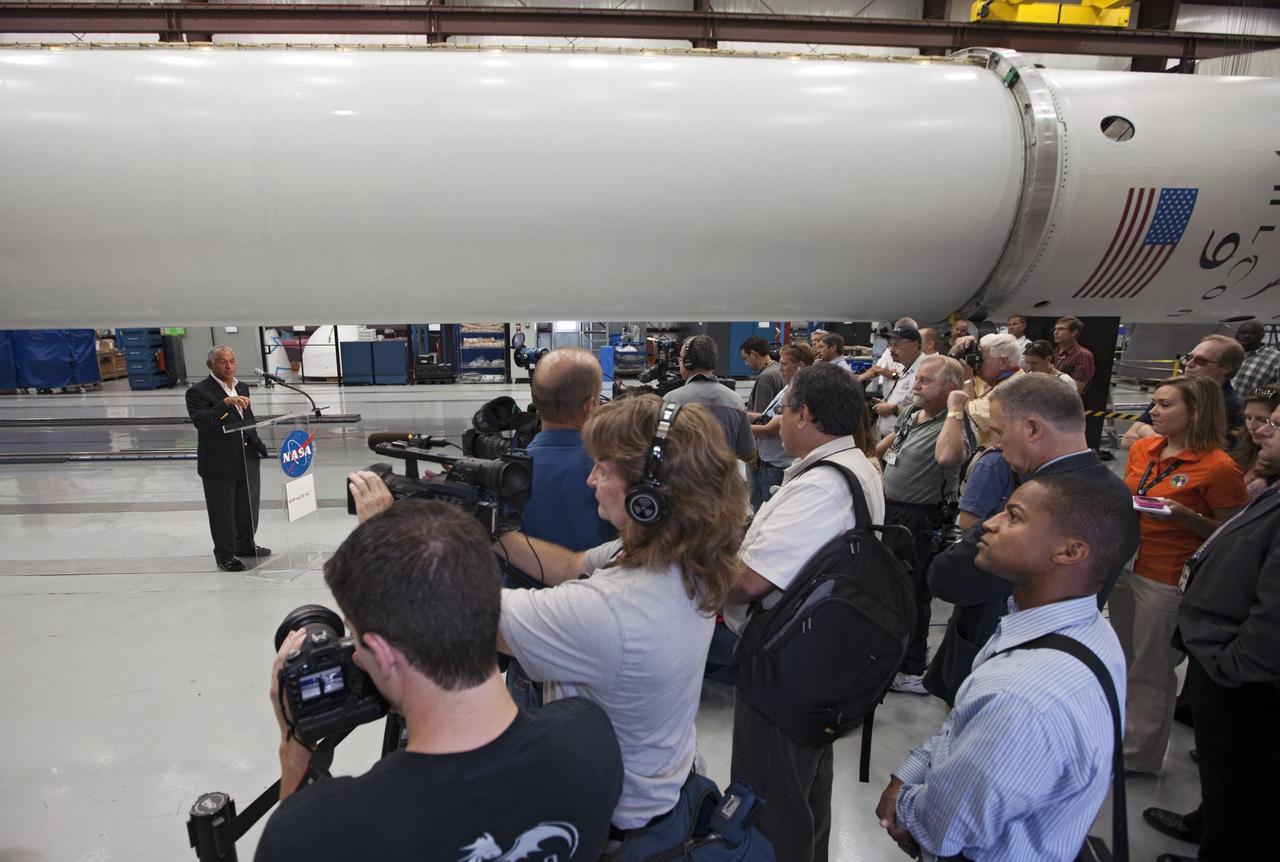
CAPE CANAVERAL, Fla. -- Inside the Space Exploration Technologies, or SpaceX, processing facility near NASA’s Kennedy Space Center in Florida, Scott Thurston, partner integration office manager with the Commercial Crew Program, talks to the media prior to an announcement from NASA Administrator Charles Bolden about new milestones in the nation’s commercial space initiatives. Bolden announced that SpaceX has completed its Space Act Agreement with NASA for Commercial Orbital Transportation Services. SpaceX is scheduled to launch the first of its 12 contracted cargo flights to the space station from Cape Canaveral this October, under NASA’s Commercial Resupply Services Program. Bolden also announced NASA partner Sierra Nevada Corp. has conducted its first milestone under the agency’s recently announced Commercial Crew Integrated Capability initiative. The milestone, a program implementation plan review, marks an important first step in Sierra Nevada’s efforts to develop a crew transportation system with its Dream Chaser spacecraft. Through NASA’s commercial space initiatives and programs, the agency is providing investments to stimulate the American commercial space industry. Photo credit: NASA/Kim Shiflett
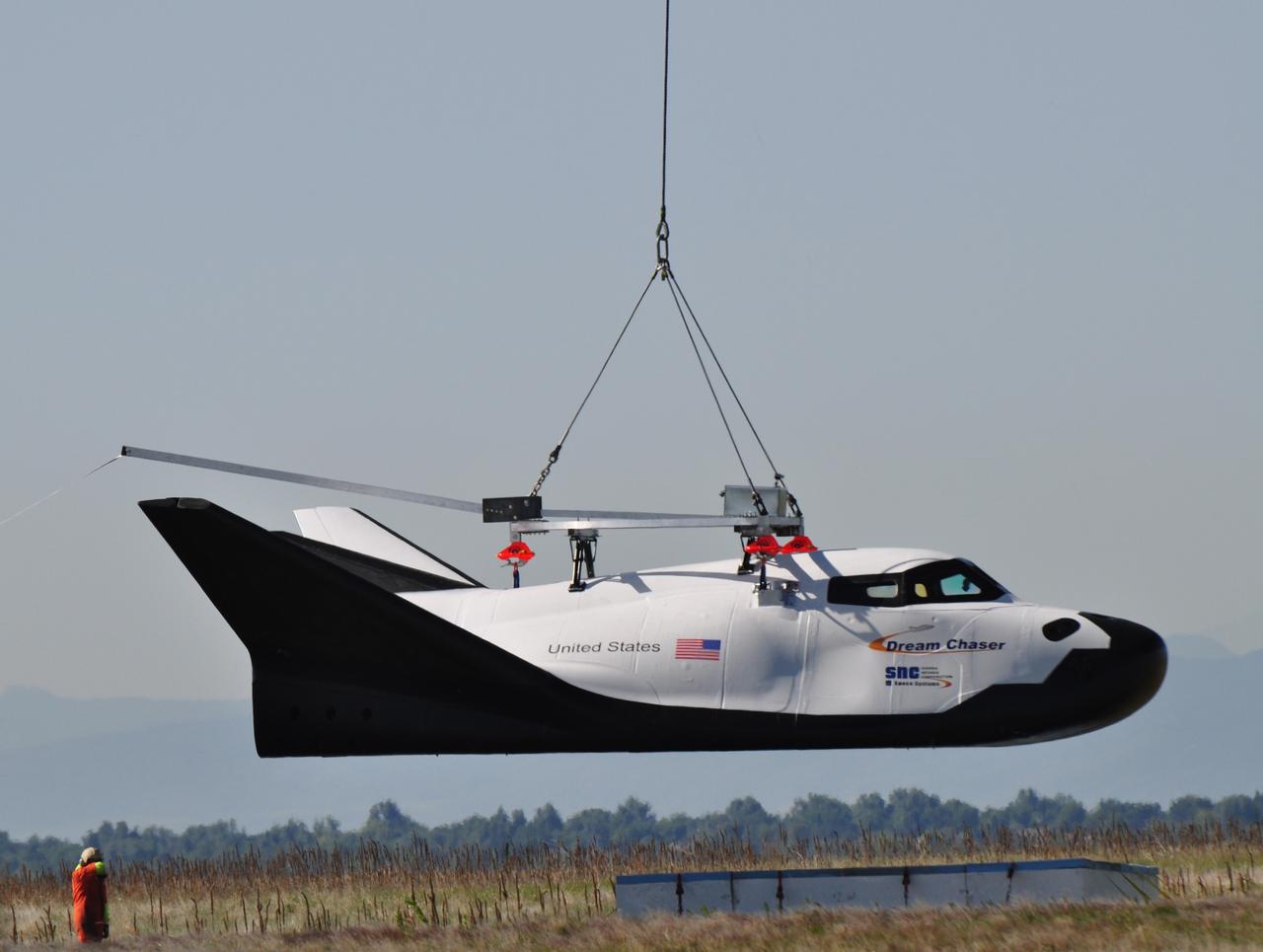
LOUISVILLE, Colo. – Sierra Nevada Corporation Space Systems’ Dream Chaser full-scale test vehicle is lifted by an Erickson Air-Crane helicopter to verify proper aerodynamic flight performance near the Rocky Mountain Metropolitan Airport in Jefferson County, Colo. This captive-carry test is one of several milestones the company is meeting during its partnership with NASA’s Commercial Crew Program CCP. Data from this test will provide SNC an early opportunity to evaluate and prove hardware, facilities and ground operations in preparation for approach and landing tests scheduled for later this year. In 2011, NASA selected Sierra Nevada during Commercial Crew Development Round 2 CCDev2) activities to mature the design and development of a crew transportation system with the overall goal of accelerating a United States-led capability to the International Space Station. The goal of CCP is to drive down the cost of space travel as well as open up space to more people than ever before by balancing industry’s own innovative capabilities with NASA's 50 years of human spaceflight experience. Six other aerospace companies also are maturing launch vehicle and spacecraft designs under CCDev2, including Alliant Techsystems Inc. ATK, The Boeing Co., Excalibur Almaz Inc., Blue Origin, Space Exploration Technologies SpaceX, and United Launch Alliance ULA. For more information, visit www.nasa.gov/commercialcrew. Image credit: Sierra Nevada Corp.
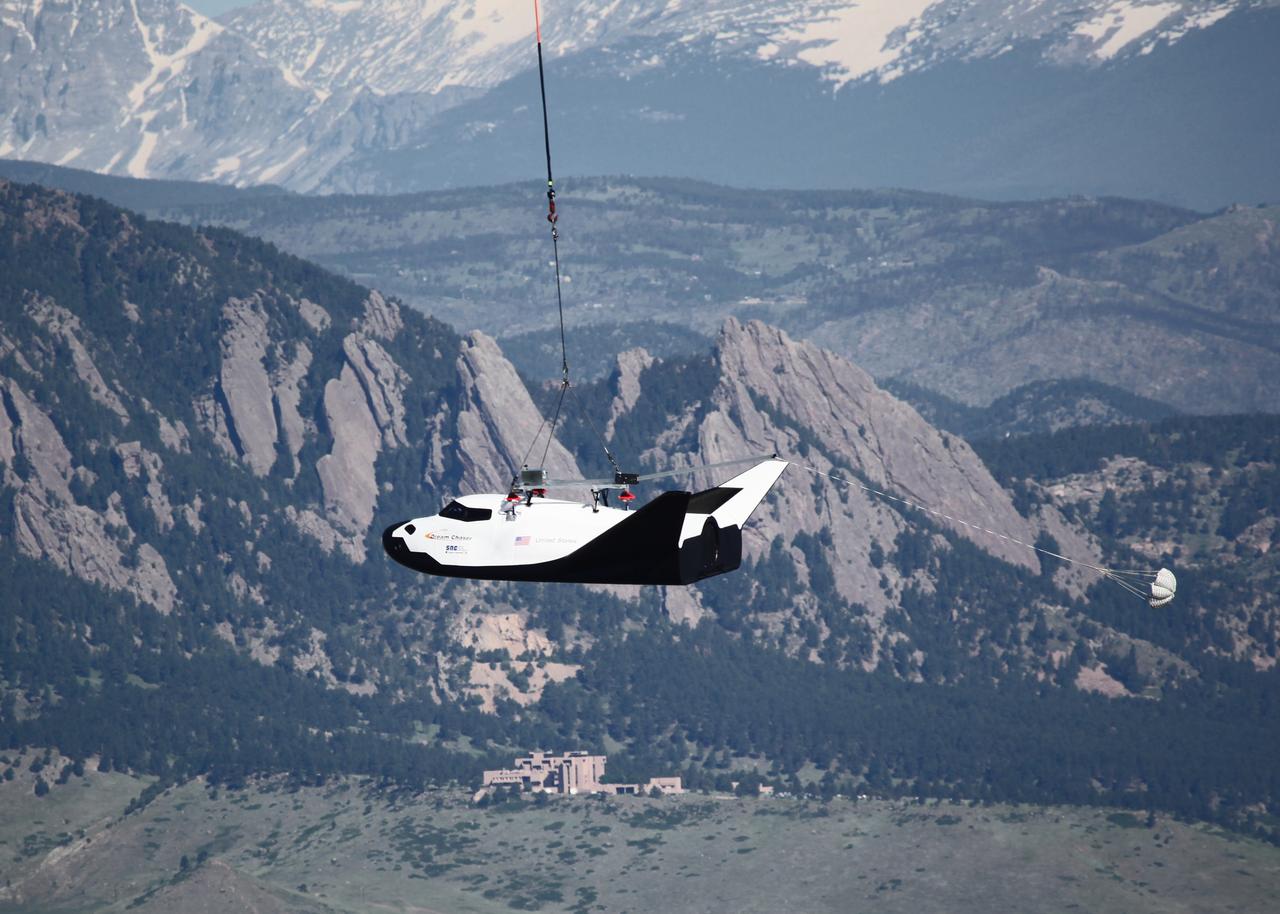
LOUISVILLE, Colo. – Sierra Nevada Corporation Space Systems’ Dream Chaser full-scale test vehicle is lifted by an Erickson Air-Crane helicopter to verify proper aerodynamic flight performance near the Rocky Mountain Metropolitan Airport in Jefferson County, Colo. This captive-carry test is one of several milestones the company is meeting during its partnership with NASA’s Commercial Crew Program CCP. Data from this test will provide SNC an early opportunity to evaluate and prove hardware, facilities and ground operations in preparation for approach and landing tests scheduled for later this year. In 2011, NASA selected Sierra Nevada during Commercial Crew Development Round 2 CCDev2) activities to mature the design and development of a crew transportation system with the overall goal of accelerating a United States-led capability to the International Space Station. The goal of CCP is to drive down the cost of space travel as well as open up space to more people than ever before by balancing industry’s own innovative capabilities with NASA's 50 years of human spaceflight experience. Six other aerospace companies also are maturing launch vehicle and spacecraft designs under CCDev2, including Alliant Techsystems Inc. ATK, The Boeing Co., Excalibur Almaz Inc., Blue Origin, Space Exploration Technologies SpaceX, and United Launch Alliance ULA. For more information, visit www.nasa.gov/commercialcrew. Image credit: Sierra Nevada Corp.
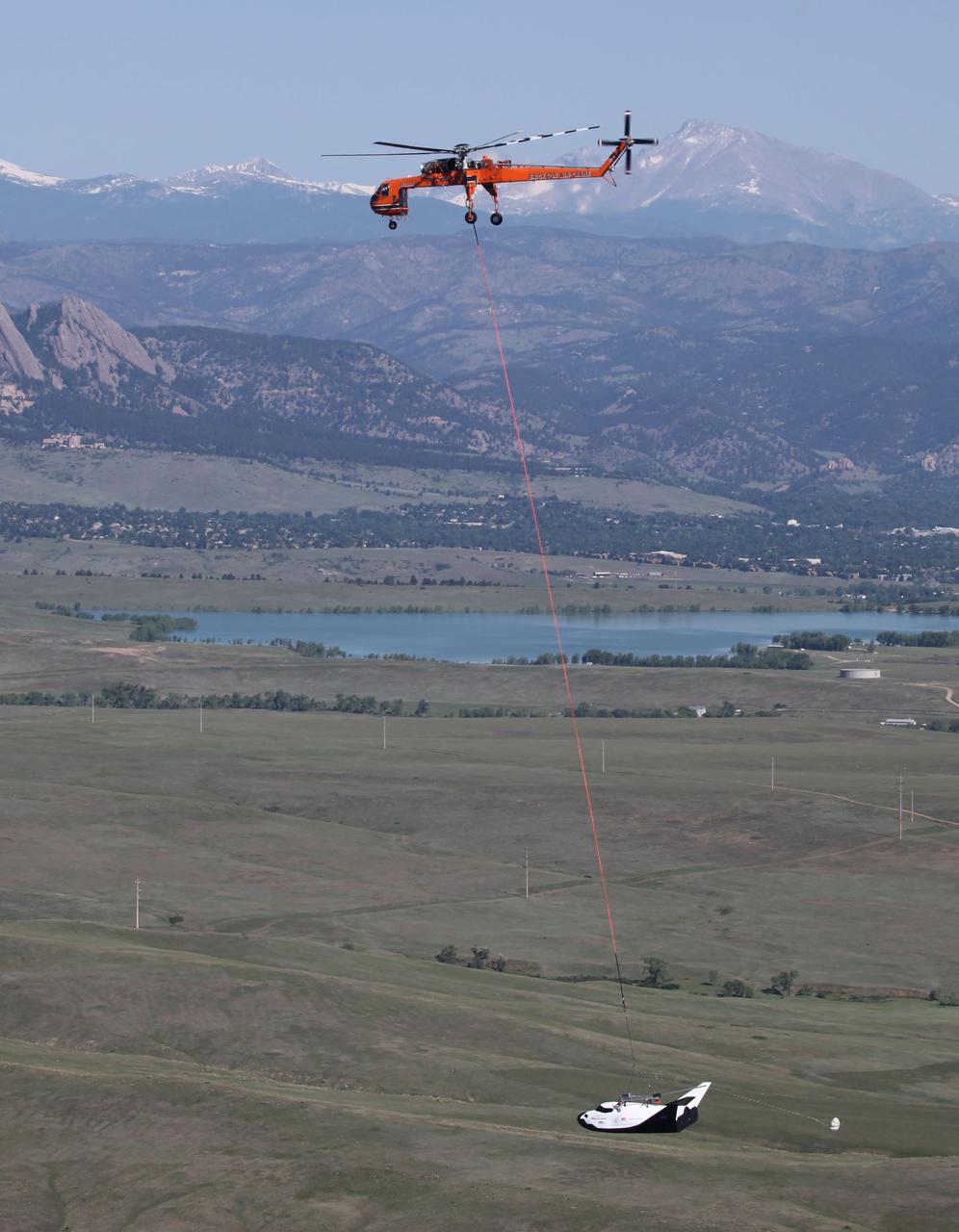
LOUISVILLE, Colo. – An Erickson Air-Crane helicopter lifts Sierra Nevada Corporation Space Systems’ Dream Chaser full-scale test vehicle to verify proper aerodynamic flight performance near the Rocky Mountain Metropolitan Airport in Jefferson County, Colo. This captive-carry test is one of several milestones the company is meeting during its partnership with NASA’s Commercial Crew Program CCP. Data from this test will provide SNC an early opportunity to evaluate and prove hardware, facilities and ground operations in preparation for approach and landing tests scheduled for later this year. In 2011, NASA selected Sierra Nevada during Commercial Crew Development Round 2 CCDev2) activities to mature the design and development of a crew transportation system with the overall goal of accelerating a United States-led capability to the International Space Station. The goal of CCP is to drive down the cost of space travel as well as open up space to more people than ever before by balancing industry’s own innovative capabilities with NASA's 50 years of human spaceflight experience. Six other aerospace companies also are maturing launch vehicle and spacecraft designs under CCDev2, including Alliant Techsystems Inc. ATK, The Boeing Co., Excalibur Almaz Inc., Blue Origin, Space Exploration Technologies SpaceX, and United Launch Alliance ULA. For more information, visit www.nasa.gov/commercialcrew. Image credit: Sierra Nevada Corp.
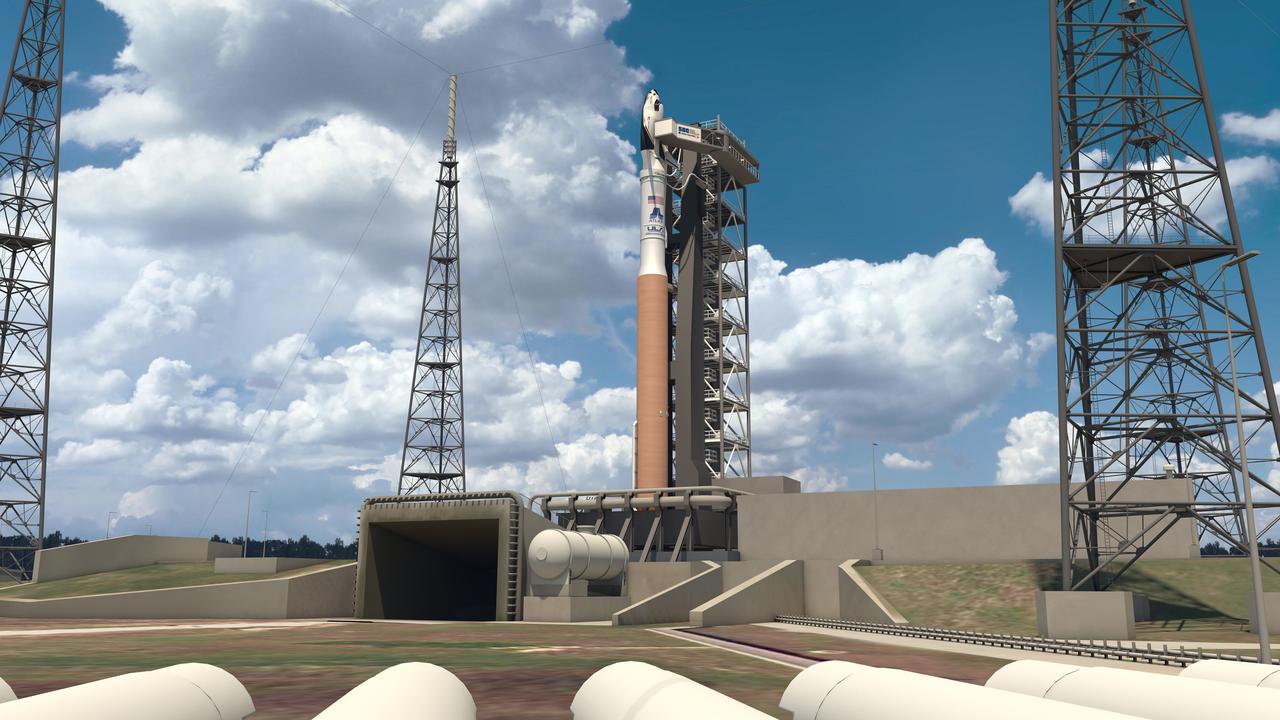
CAPE CANAVERAL, Fla. -- This is an artist's conception of Sierra Nevada Corp. SNC Space System's Dream Chaser spacecraft atop a United Launch Alliance ULA Atlas V rocket under development for NASA's Commercial Crew Program, or CCP. The integrated system was selected for CCP's Commercial Crew Integrated Capability, or CCiCap, initiative to propel America's next human space transportation system to low Earth orbit forward. Operating under a funded Space Act Agreement, or SAA, SNC will spend the next 21 months completing its design, conducting critical risk reduction testing on its spacecraft and launch vehicle, and showcasing how it would operate and manage missions from launch through orbit and landing, setting the stage for a future demonstration mission. To learn more about CCP, which is based at NASA's Kennedy Space Center in Florida and supported by NASA's Johnson Space Center in Houston, visit www.nasa.gov/commercialcrew. Image credit: SNC
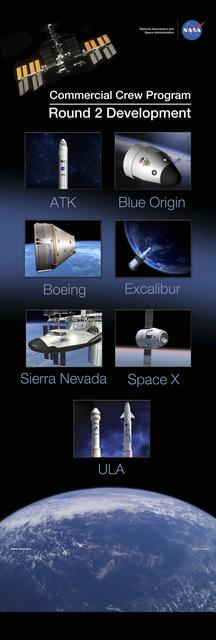
CAPE CANAVERAL, Fla. -- This is a printable banner of the aerospace companies NASA's Commercial Crew Program (CCP) entered into Space Act Agreements with during Commercial Crew Development Round 2 (CCDev2) activities in 2011 in order to mature the design and development of crew transportation systems with the overall goal of accelerating a United States-led capability to the International Space Station. CCDev2 companies are Alliant Techsystems (ATK), Blue Origin, The Boeing Co., Excalibur Almaz Inc., Sierra Nevada Corp., Space Exploration Technologies (SpaceX), and United Launch Alliance (ULA). The goal of CCP is to drive down the cost of space travel as well as open up space to more people than ever before by balancing industry’s own innovative capabilities with NASA's 50 years of human spaceflight experience. For more information, visit www.nasa.gov/commercialcrew
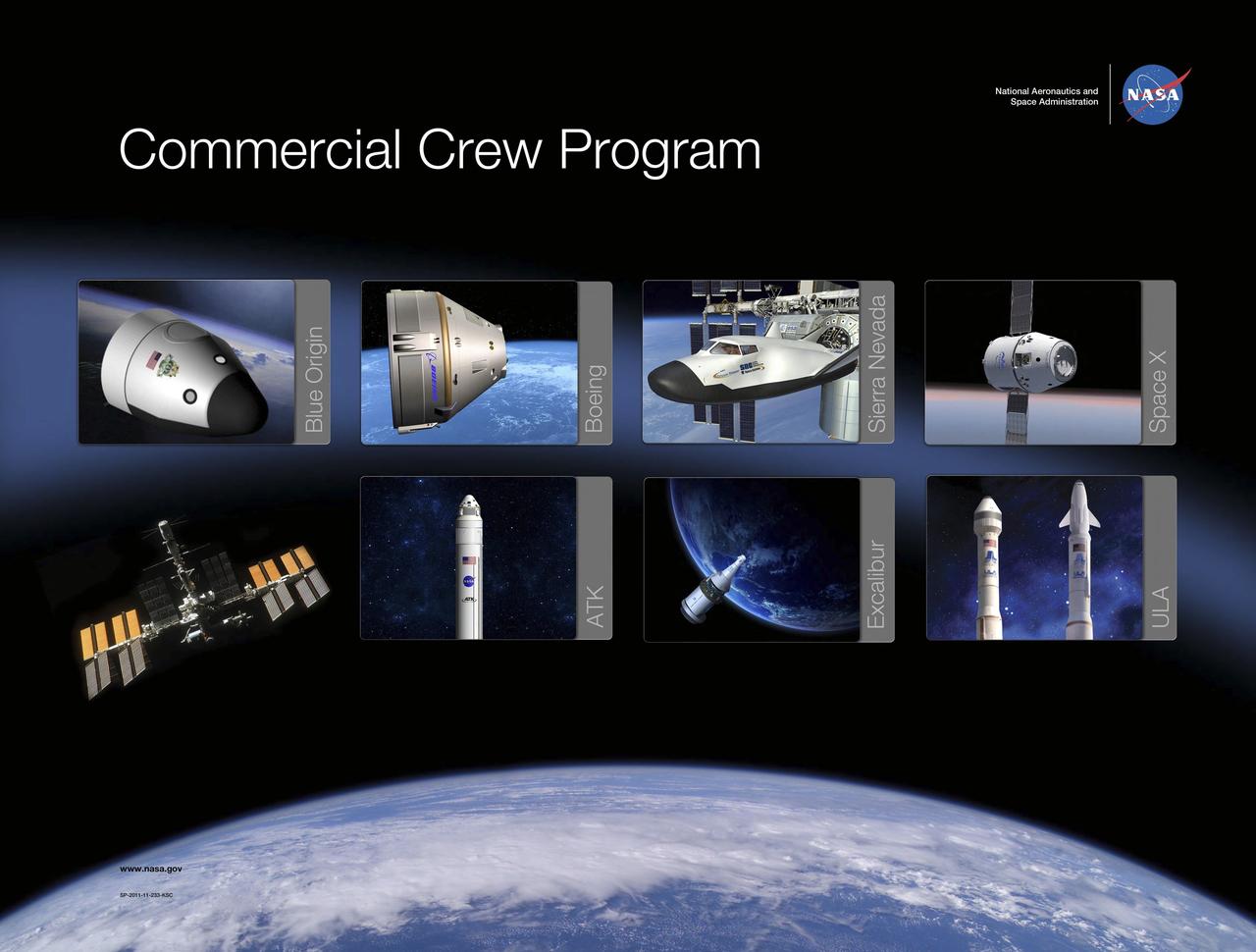
CAPE CANAVERAL, Fla. -- This is a printable poster of the aerospace companies NASA's Commercial Crew Program (CCP) entered into Space Act Agreements with during Commercial Crew Development Round 2 (CCDev2) activities in 2011 in order to mature the design and development of crew transportation systems with the overall goal of accelerating a United States-led capability to the International Space Station. CCDev2 companies are Alliant Techsystems (ATK), Blue Origin, The Boeing Co., Excalibur Almaz Inc., Sierra Nevada Corp., Space Exploration Technologies (SpaceX), and United Launch Alliance (ULA). The goal of CCP is to drive down the cost of space travel as well as open up space to more people than ever before by balancing industry’s own innovative capabilities with NASA's 50 years of human spaceflight experience. For more information, visit www.nasa.gov/commercialcrew
CAPE CANAVERAL, Fla. -- This is an artist's conception of NASA's Commercial Crew Program or CCP, logo and low Earth orbit. The program is entering its third phase of development, called Commercial Crew integrated Capability, or CCiCap, to propel America's next human space transportation system to low Earth orbit forward. Operating under funded Space Act Agreements, or SAAs, The Boeing Co. of Houston, Sierra Nevada Corp., or SNC, Space Systems of Louisville, Colo., and Space Exploration Technologies, or SpaceX, of Hawthorne, Calif., will spend the next 21 months completing their designs, conducting critical risk reduction testing on their spacecraft and launch vehicles, and showcasing how they would operate and manage missions from launch through orbit and landing, setting the stage for future demonstration missions. To learn more about CCP, which is based at Kennedy and supported by NASA's Johnson Space Center in Houston, visit www.nasa.gov/commercialcrew. Image credit: NASA/Matthew Young
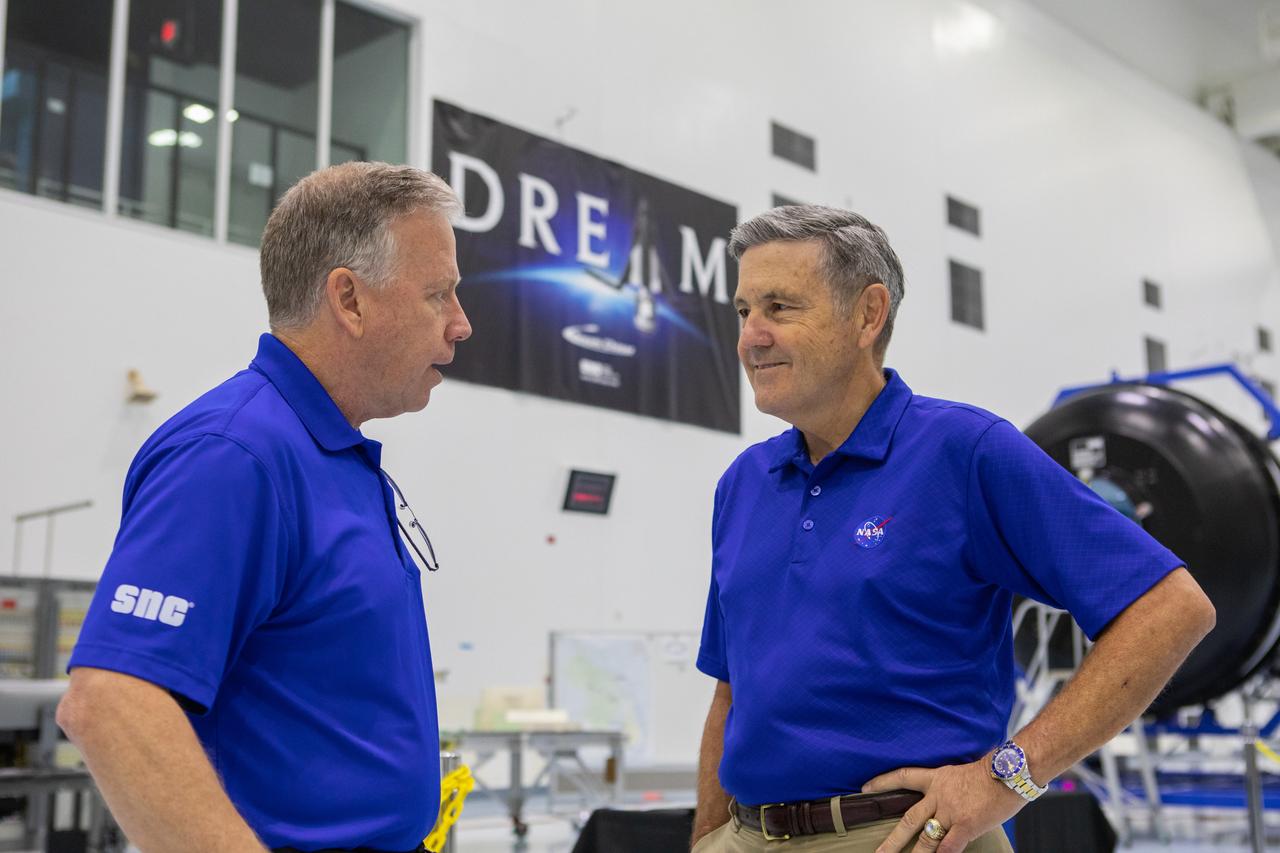
A mockup of the cargo logistics module for Sierra Nevada Corporation’s Dream Chaser, the company’s reusable spaceplane, arrived at the Space Station Processing Facility (SSPF) at NASA’s Kennedy Space Center in Florida in August. On Sept. 20, 2019, senior leadership had the opportunity to view the cargo module in the SSPF high bay. Kennedy Center Director Bob Cabana, at right, speaks with Steve Lindsey, vice president, Space Exploration Systems, Sierra Nevada Corporation. The SSPF is providing support for current and future NASA and commercial provider programs, including Commercial Resupply Services, Artemis 1, sending the first woman and next man to the Moon, and deep space destinations including Mars.
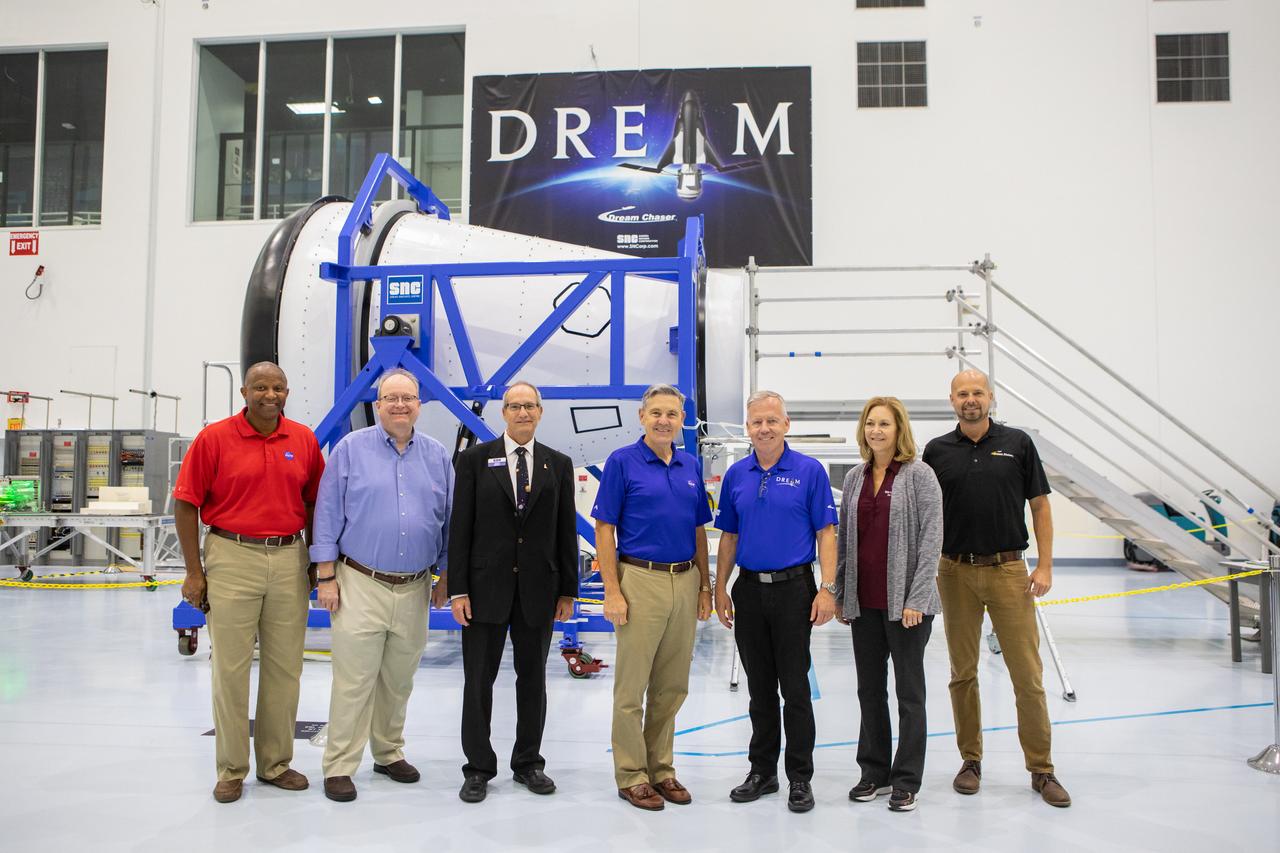
A mockup of the cargo logistics module for Sierra Nevada Corporation’s Dream Chaser, the company’s reusable spaceplane, arrived at the Space Station Processing Facility (SSPF) at NASA’s Kennedy Space Center in Florida in August. On Sept. 20, 2019, senior leadership had the opportunity to view the cargo module in the SSPF high bay. From left are Kelvin Manning, Kennedy associate director, technical; Burt Summerfield, associate director, management; John Roth, vice president, Business Development Space Systems, Sierra Nevada Corporation; Kennedy Center Director Bob Cabana; Steve Lindsey, vice president, Space Exploration Systems, Sierra Nevada Corporation; Kennedy Deputy Director Janet Petro; and Nate Wood, Sierra Nevada Corporation. The SSPF is providing support for current and future NASA and commercial provider programs, including Commercial Resupply Services, Artemis 1, sending the first woman and next man to the Moon, and deep space destinations including Mars.
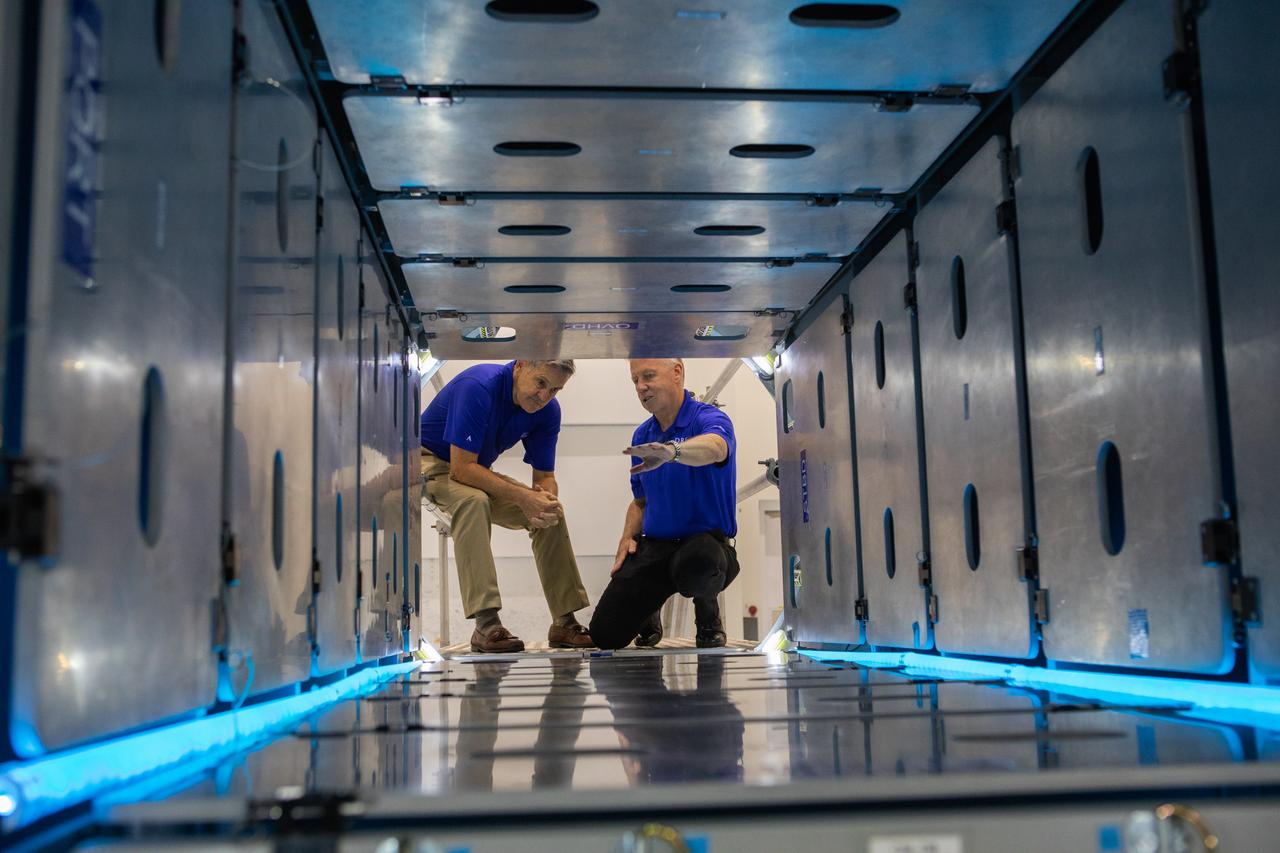
A mockup of the cargo logistics module for Sierra Nevada Corporation’s Dream Chaser, the company’s reusable spaceplane, arrived at the Space Station Processing Facility (SSPF) at NASA’s Kennedy Space Center in Florida in August. On Sept. 20, 2019, senior leadership had the opportunity to view the cargo module in the SSPF high bay. Kennedy Center Director Bob Cabana, views the interior of the cargo module with Steve Lindsey, vice president, Space Exploration Systems, Sierra Nevada Corporation. The SSPF is providing support for current and future NASA and commercial provider programs, including Commercial Resupply Services, Artemis 1, sending the first woman and next man to the Moon, and deep space destinations including Mars.
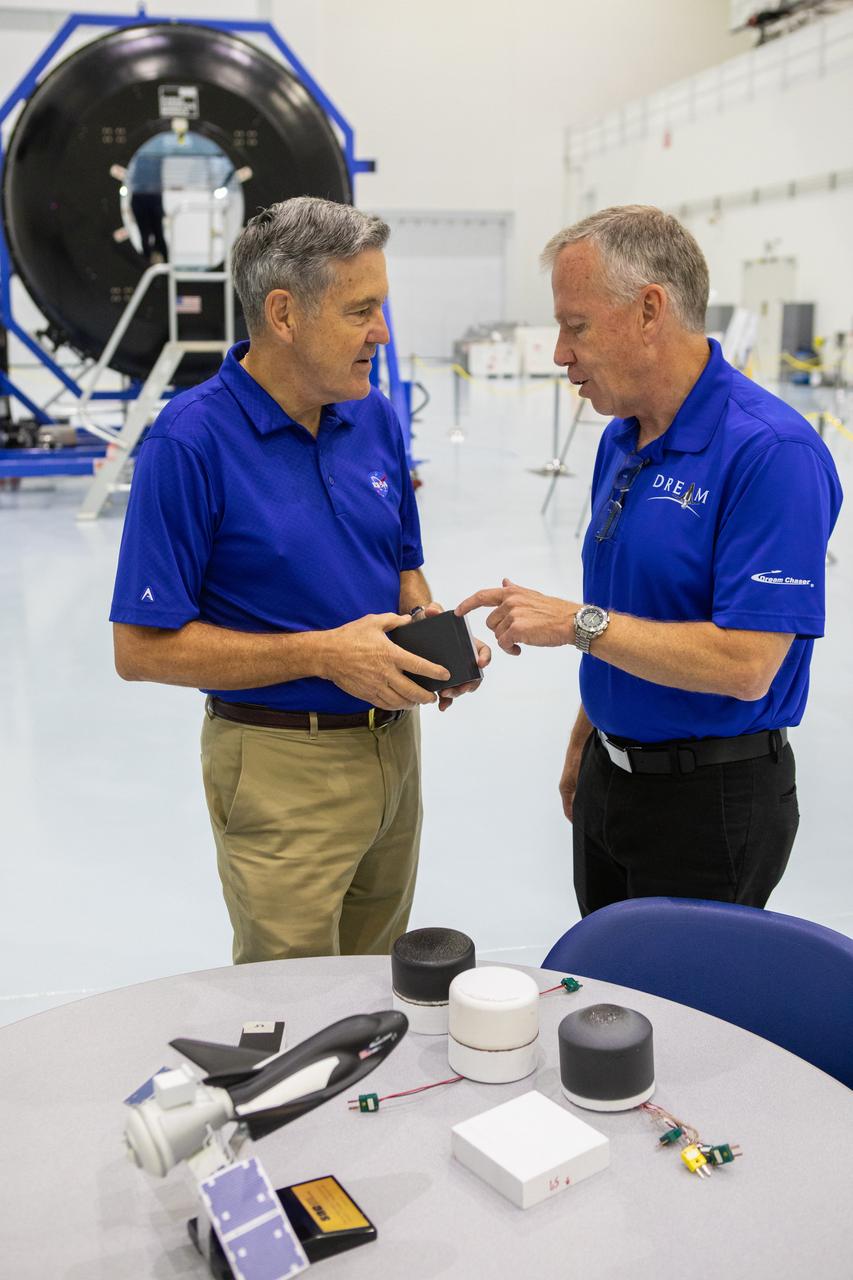
A mockup of the cargo logistics module for Sierra Nevada Corporation’s Dream Chaser, the company’s reusable spaceplane, arrived at the Space Station Processing Facility (SSPF) at NASA’s Kennedy Space Center in Florida in August. On Sept. 20, 2019, senior leadership had the opportunity to view the cargo module in the SSPF high bay. Kennedy Center Director Bob Cabana, left, speaks to Steve Lindsey, vice president, Space Exploration Systems, Sierra Nevada Corporation. The SSPF is providing support for current and future NASA and commercial provider programs, including Commercial Resupply Services, Artemis 1, sending the first woman and next man to the Moon, and deep space destinations including Mars.
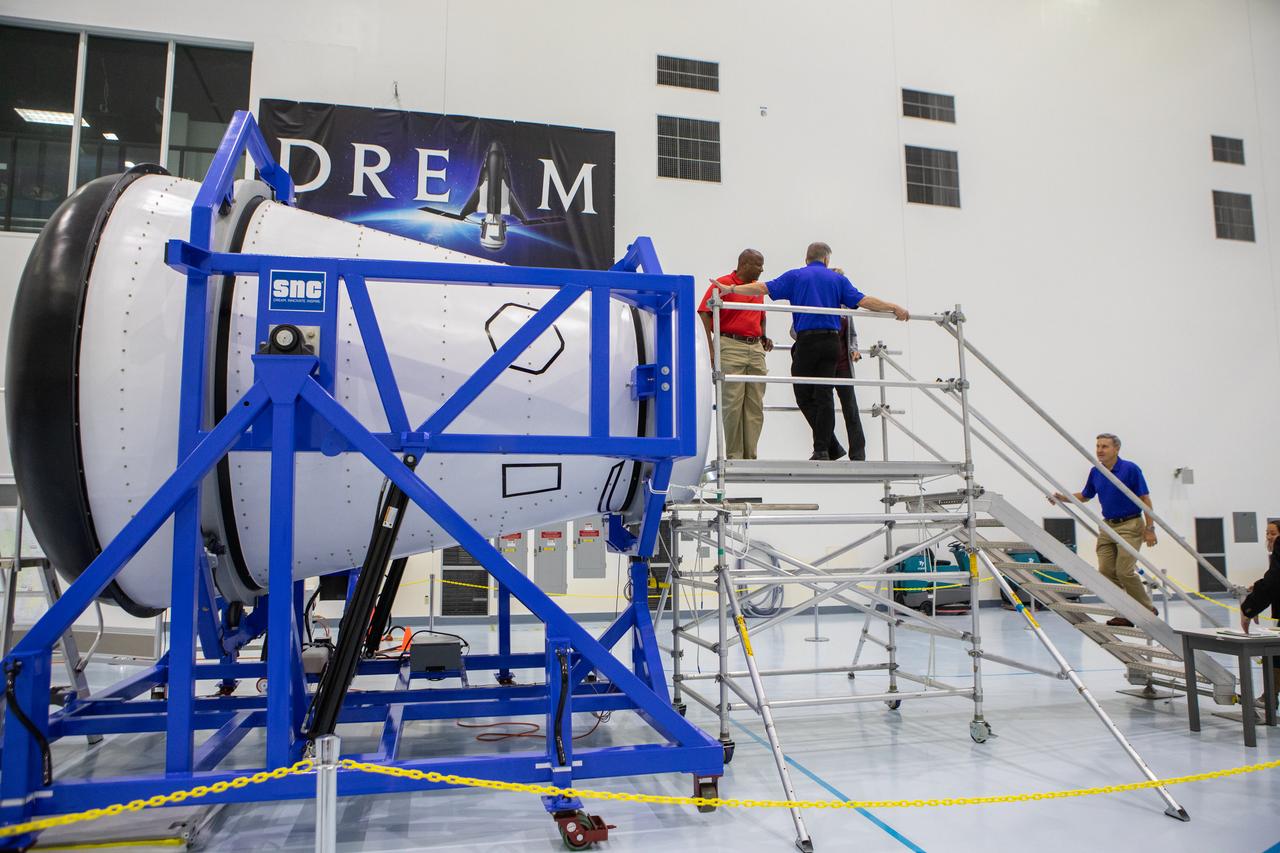
A mockup of the cargo logistics module for Sierra Nevada Corporation’s Dream Chaser, the company’s reusable spaceplane, arrived at the Space Station Processing Facility (SSPF) at NASA’s Kennedy Space Center in Florida in August. On Sept. 20, 2019, senior leadership had the opportunity to view the cargo module in the SSPF high bay. From left are Kelvin Manning, Kennedy associate director, technical; Steve Lindsey, vice president, Space Exploration Systems, Sierra Nevada Corporation; behind Lindsey is Kennedy Deputy Director Janet Petro; and ascending the stairs is Kennedy Center Director Bob Cabana. The SSPF is providing support for current and future NASA and commercial provider programs, including Commercial Resupply Services, Artemis 1, sending the first woman and next man to the Moon, and deep space destinations including Mars.
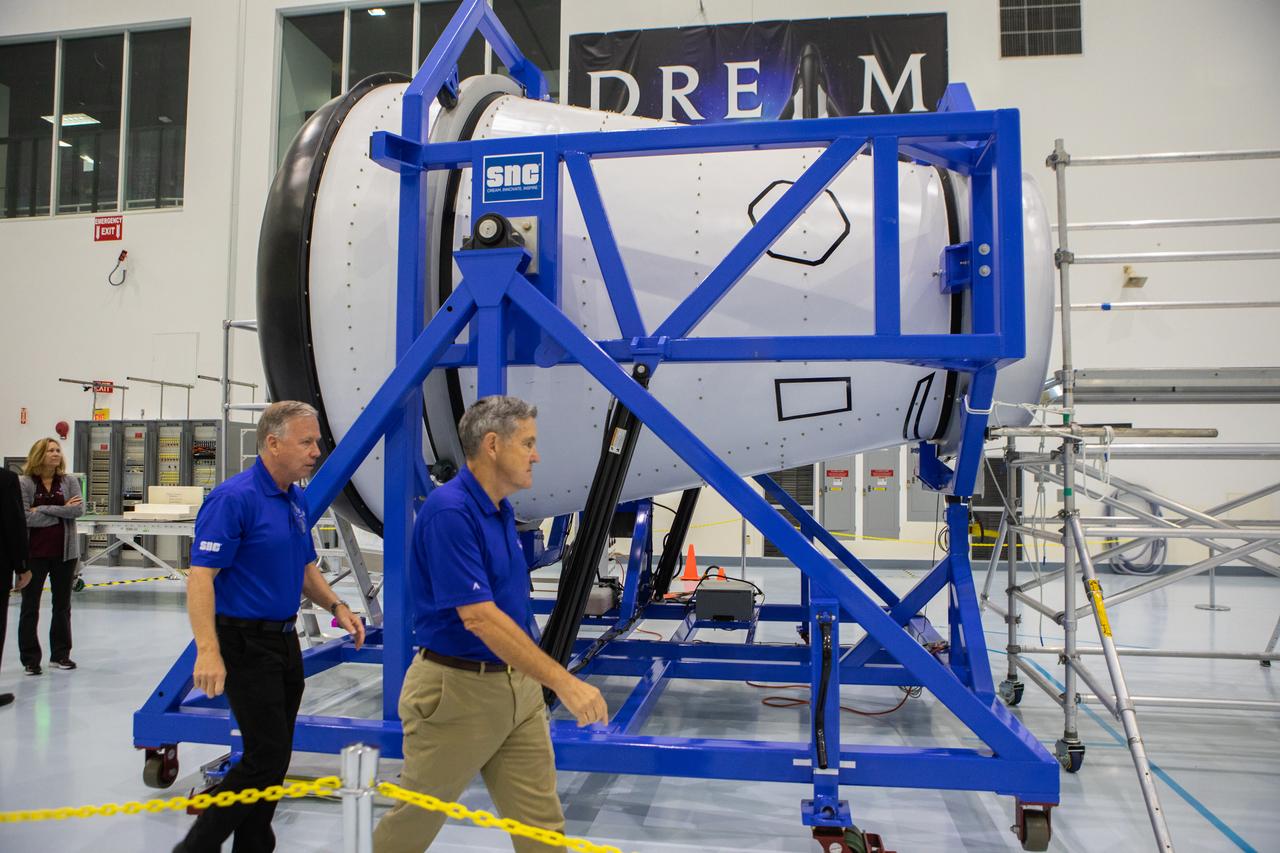
A mockup of the cargo logistics module for Sierra Nevada Corporation’s Dream Chaser, the company’s reusable spaceplane, arrived at the Space Station Processing Facility (SSPF) at NASA’s Kennedy Space Center in Florida in August. On Sept. 20, 2019, senior leadership had the opportunity to view the cargo module in the SSPF high bay. Kennedy Center Director Bob Cabana, at right, views the cargo module with Steve Lindsey, vice president, Space Exploration Systems, Sierra Nevada Corporation. The SSPF is providing support for current and future NASA and commercial provider programs, including Commercial Resupply Services, Artemis 1, sending the first woman and next man to the Moon, and deep space destinations including Mars.

A mockup of the cargo logistics module for Sierra Nevada Corporation’s Dream Chaser, the company’s reusable spaceplane, arrived at the Space Station Processing Facility (SSPF) at NASA’s Kennedy Space Center in Florida in August. On Sept. 20, 2019, senior leadership had the opportunity to view the cargo module in the SSPF high bay. From left are Kelvin Manning, Kennedy associate director, technical; Steve Lindsey, vice president, Space Exploration Systems, Sierra Nevada Corporation; Kennedy Deputy Director Janet Petro; and Kennedy Center Director Bob Cabana. The SSPF is providing support for current and future NASA and commercial provider programs, including Commercial Resupply Services, Artemis 1, sending the first woman and next man to the Moon, and deep space destinations including Mars.
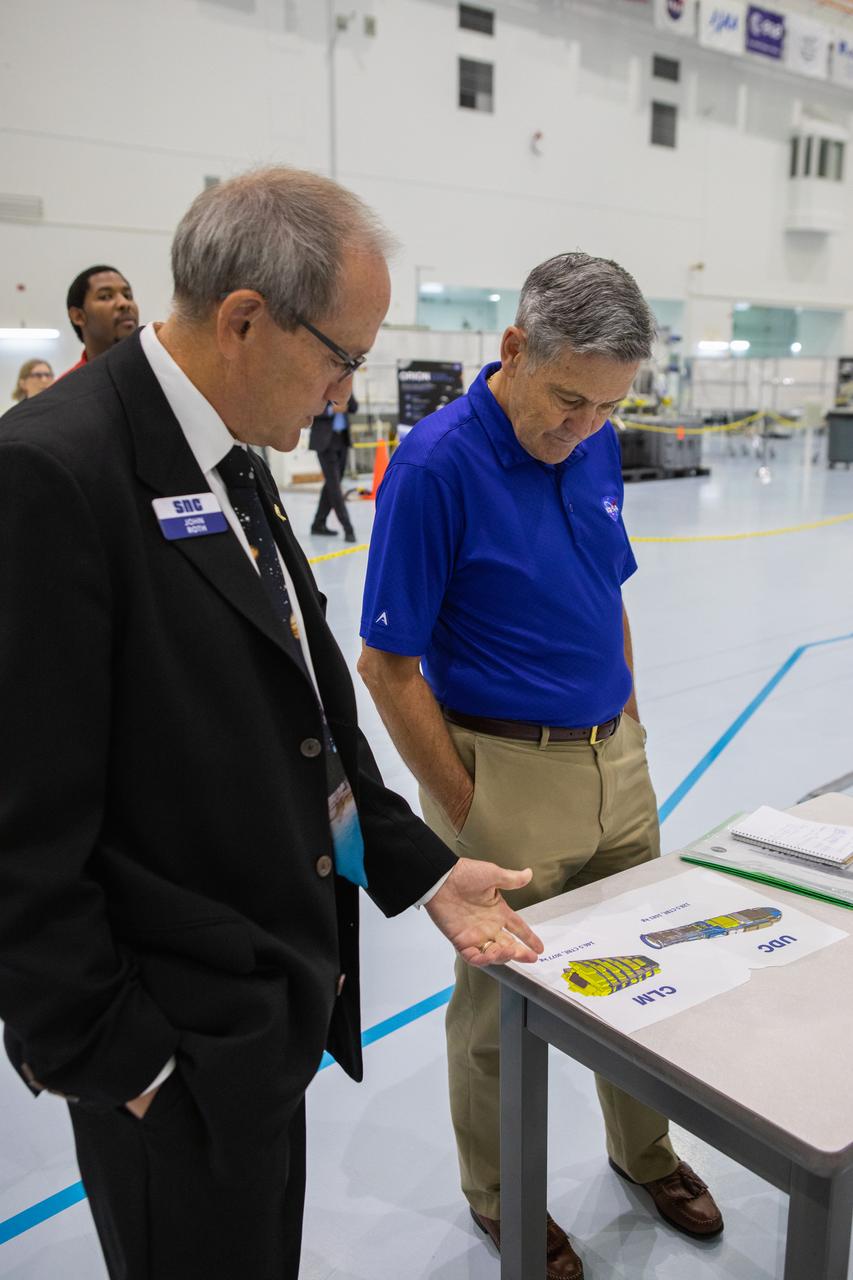
A mockup of the cargo logistics module for Sierra Nevada Corporation’s Dream Chaser, the company’s reusable spaceplane, arrived at the Space Station Processing Facility (SSPF) at NASA’s Kennedy Space Center in Florida in August. On Sept. 20, 2019, senior leadership had the opportunity to view the cargo module in the SSPF high bay. Kennedy Center Director Bob Cabana, at right, listens to John Roth, vice president, Business Development Space Systems, Sierra Nevada Corporation. The SSPF is providing support for current and future NASA and commercial provider programs, including Commercial Resupply Services, Artemis 1, sending the first woman and next man to the Moon, and deep space destinations including Mars.
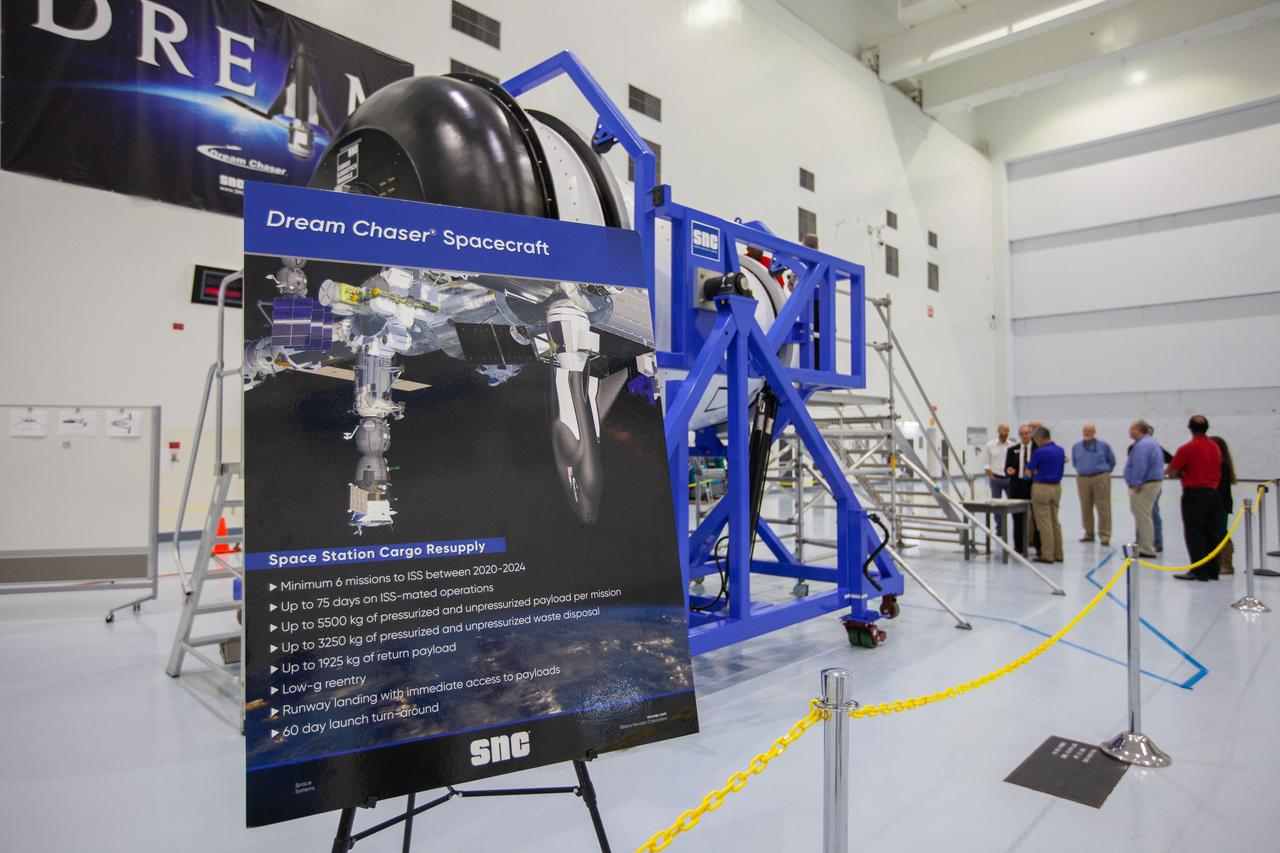
A mockup of the cargo logistics module for Sierra Nevada Corporation’s Dream Chaser, the company’s reusable spaceplane, arrived at the Space Station Processing Facility (SSPF) at NASA’s Kennedy Space Center in Florida in August. On Sept. 20, 2019, senior leadership had the opportunity to view the cargo module in the SSPF high bay. The SSPF is providing support for current and future NASA and commercial provider programs, including Commercial Resupply Services, Artemis 1, sending the first woman and next man to the Moon, and deep space destinations including Mars.
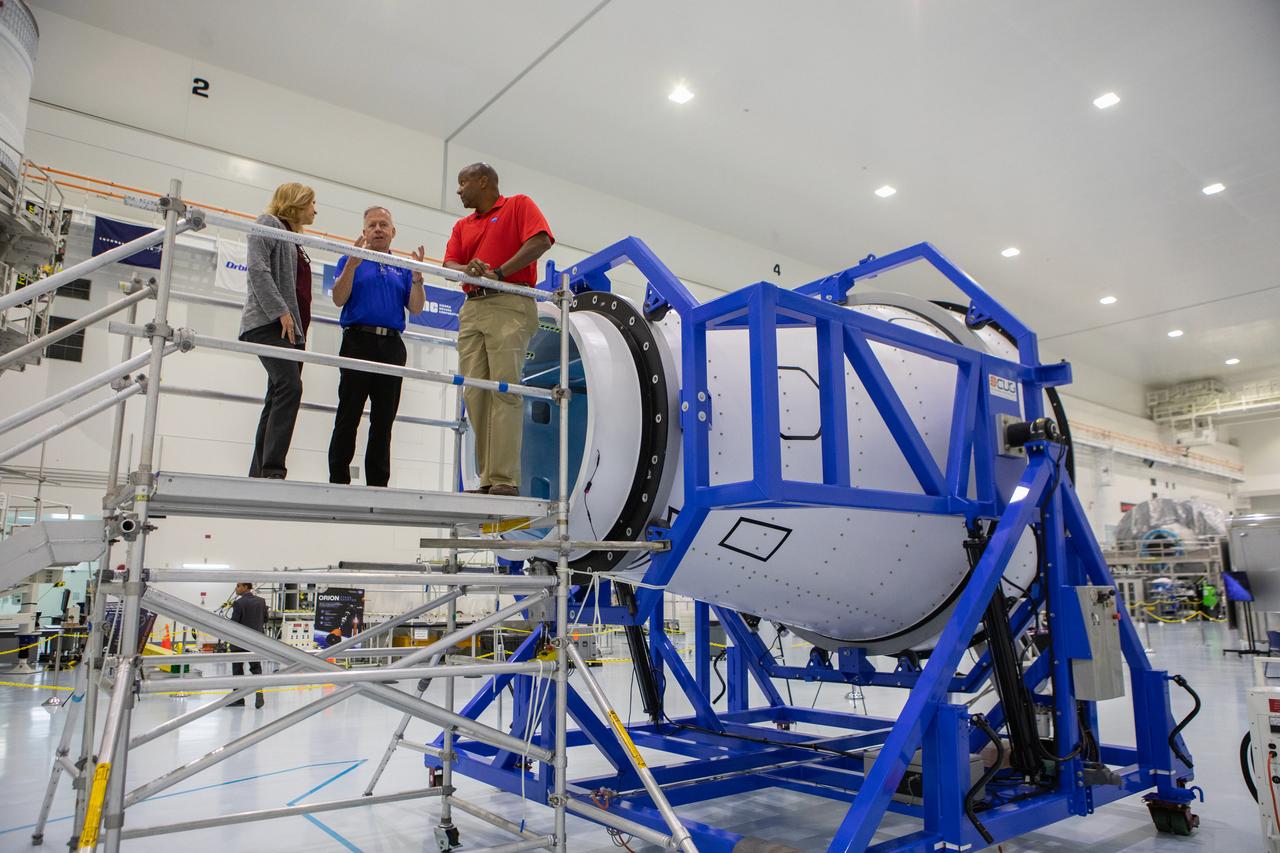
A mockup of the cargo logistics module for Sierra Nevada Corporation’s Dream Chaser, the company’s reusable spaceplane, arrived at the Space Station Processing Facility (SSPF) at NASA’s Kennedy Space Center in Florida in August. On Sept. 20, 2019, senior leadership had the opportunity to view the cargo module in the SSPF high bay. From left are Kennedy Deputy Director Janet Petro; Steve Lindsey, vice president, Space Exploration Systems, Sierra Nevada Corporation; and Kelvin Manning, Kennedy associate director, technical. The SSPF is providing support for current and future NASA and commercial provider programs, including Commercial Resupply Services, Artemis 1, sending the first woman and next man to the Moon, and deep space destinations including Mars.
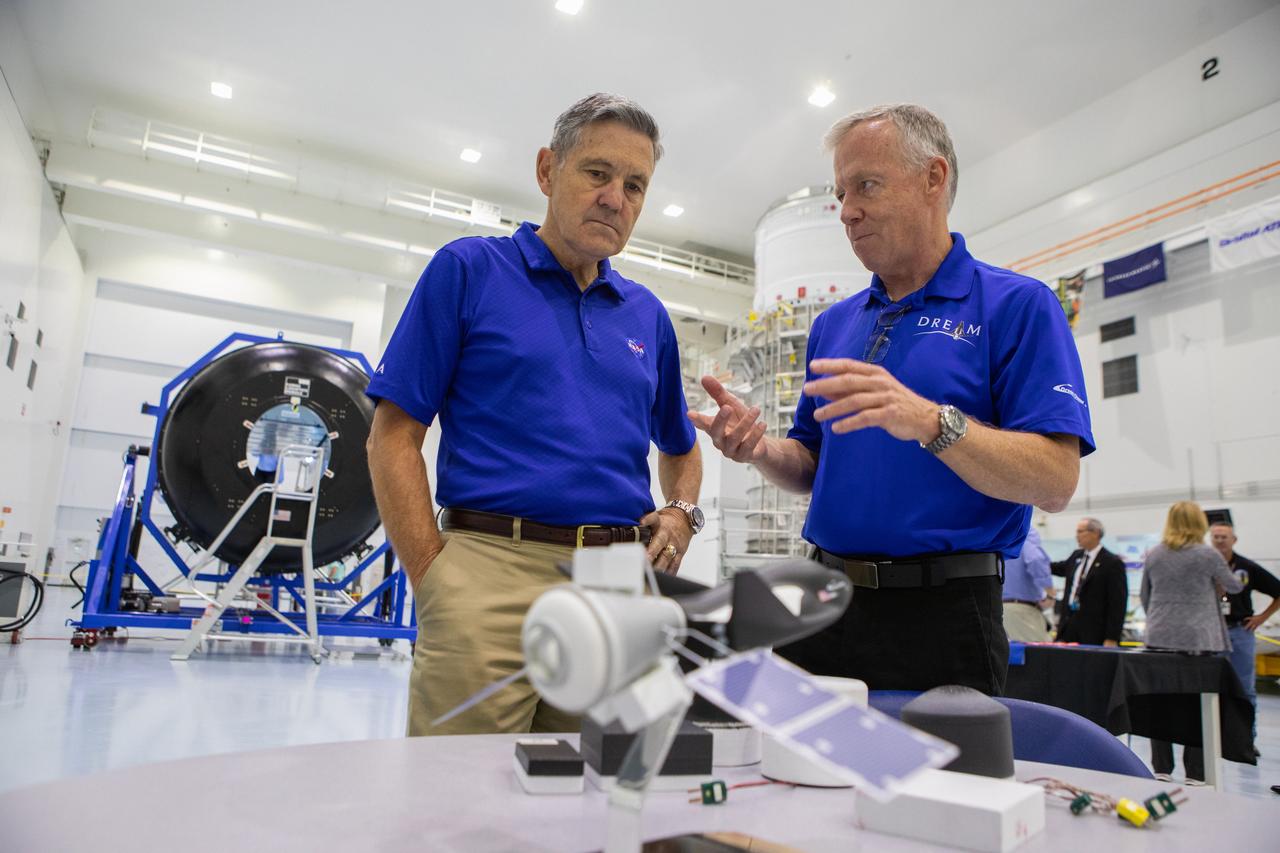
A mockup of the cargo logistics module for Sierra Nevada Corporation’s Dream Chaser, the company’s reusable spaceplane, arrived at the Space Station Processing Facility (SSPF) at NASA’s Kennedy Space Center in Florida in August. On Sept. 20, 2019, senior leadership had the opportunity to view the cargo module in the SSPF high bay. Kennedy Center Director Bob Cabana, left, speaks to Steve Lindsey, vice president, Space Exploration Systems, Sierra Nevada Corporation. The SSPF is providing support for current and future NASA and commercial provider programs, including Commercial Resupply Services, Artemis 1, sending the first woman and next man to the Moon, and deep space destinations including Mars.
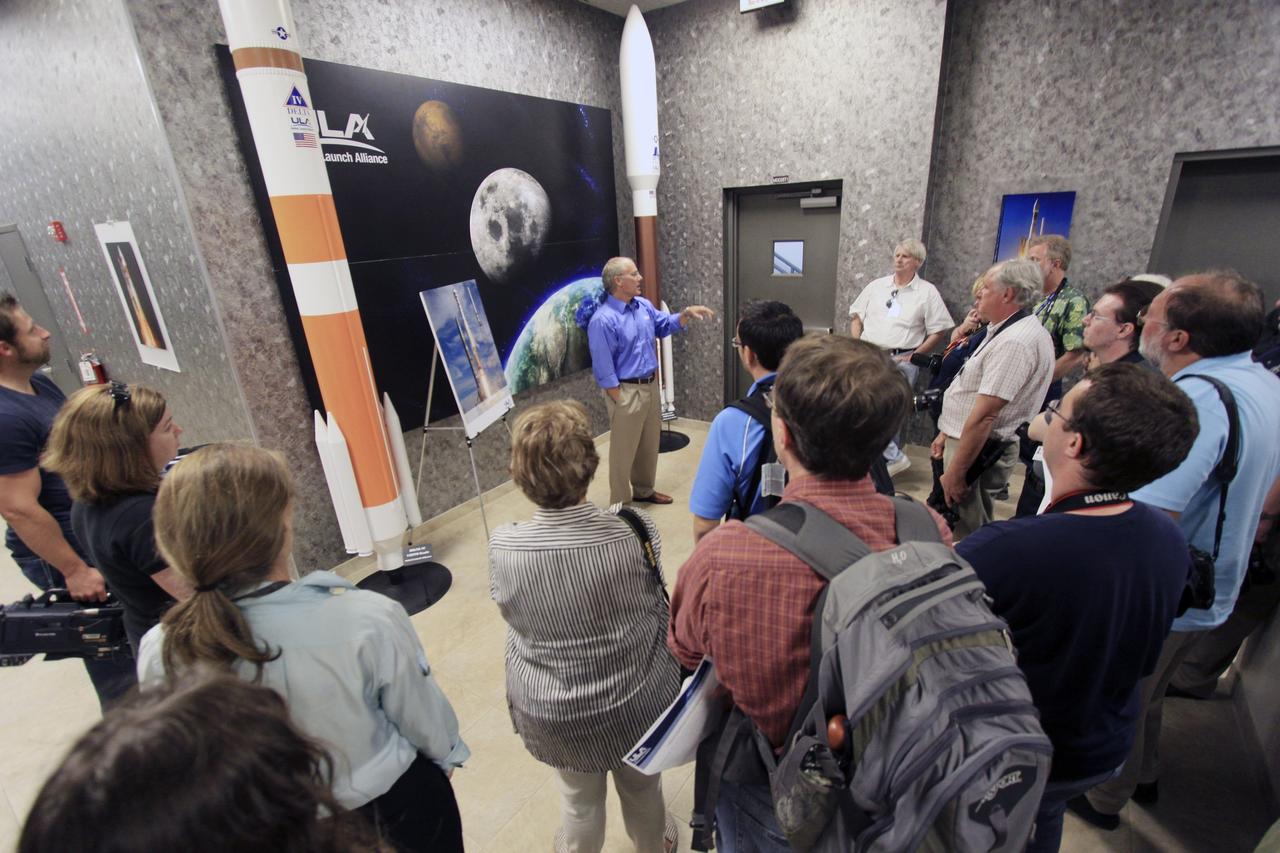
CAPE CANAVERAL, Fla. -- Andy Aldrin, director of business development for United Launch Alliance (ULA), talks to media about plans to launch NASA astronauts to the International Space Station in the Atlas Spaceflight Operations Center (ASOC) at Cape Canaveral Air Force Station in Florida. ULA is working to make its Atlas V rocket safe for humans for NASA's Commercial Crew Program (CCP) under the Commercial Crew Development Round 2 (CCDev2) activities. Part of those plans will be to design and test an emergency detection system and crew access capabilities. ULA also is working with other aerospace system providers developing spacecraft that would launch atop the company's Atlas V rocket, such as Blue Origin, Sierra Nevada and The Boeing Co. CCP, which is based at the adjacent NASA's Kennedy Space Center, is partnering with industry to take crews to the station or other low Earth orbit destinations. Aldrin explained that the goal of ULA will be to develop a human spaceflight capability without altering rocket's proven design and successful track record. It's the freedom to develop innovative solutions such as this that CCP hopes will drive down the cost of space travel as well as open up space to more people than ever before. Seven aerospace companies are maturing launch vehicle and spacecraft designs under CCDev2, including Alliant Techsystems Inc. (ATK) of Promontory, Utah, Blue Origin of Kent, Wash., The Boeing Co., of Houston, Excalibur Almaz Inc. of Houston, Sierra Nevada Corp. of Louisville, Colo., Space Exploration Technologies (SpaceX) of Hawthorne, Calif., and United Launch Alliance (ULA) of Centennial, Colo. For more information, visit www.nasa.gov/exploration/commercial Photo credit: Jim Grossmann
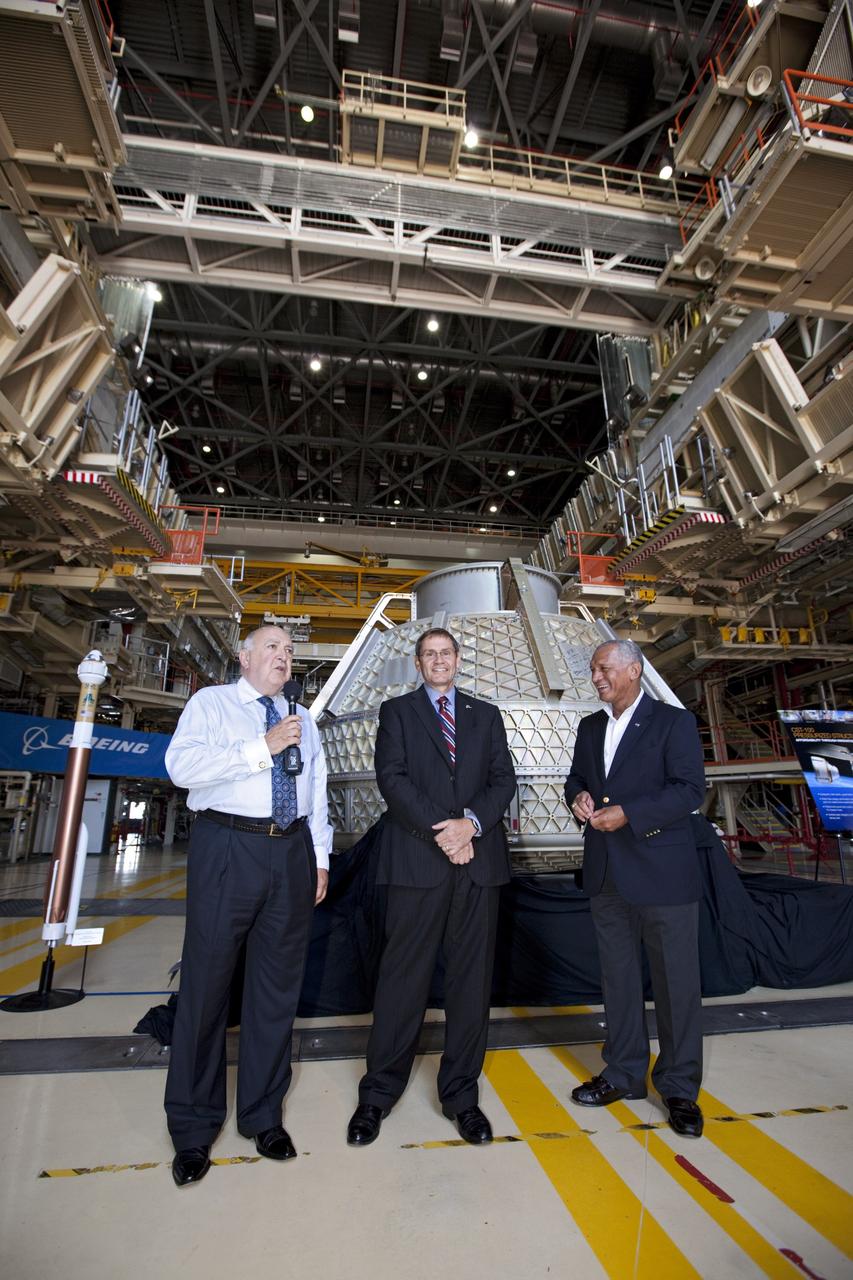
CAPE CANAVERAL, Fla. – Space Florida President Frank DiBello, NASA Administrator Charlie Bolden, and Boeing's Vice President and General Manager of Space Exploration John Elbon address the media inside Orbiter Processing Facility-3, or OPF-3, at NASA's Kennedy Space Center in Florida. Bolden took a few dozen media on a road show tour of the center and adjacent Cape Canaveral Air Force Station to show the progress being made for future government and commercial space endeavors that will begin from Florida's Space Coast. Boeing is leasing OPF-3 through an agreement with Space Florida for the manufacturing and assembly of its CST-100 spacecraft, which is under development in collaboration with NASA's Commercial Crew Program. During his tour, Bolden announced that Space Exploration Technologies, or SpaceX, has completed its Space Act Agreement with NASA for Commercial Orbital Transportation Services. SpaceX is scheduled to launch the first of its 12 contracted cargo flights to the space station from Cape Canaveral this October, under NASA’s Commercial Resupply Services Program. Bolden also announced NASA partner Sierra Nevada Corp. has conducted its first milestone under the agency’s recently announced Commercial Crew Integrated Capability CCiCap initiative. The milestone, a program implementation plan review, marks an important first step in Sierra Nevada’s efforts to develop a crew transportation system with its Dream Chaser spacecraft. Through NASA’s commercial space initiatives and programs, the agency is providing investments to stimulate the American commercial space industry. Photo credit: NASA/Kim Shiflett
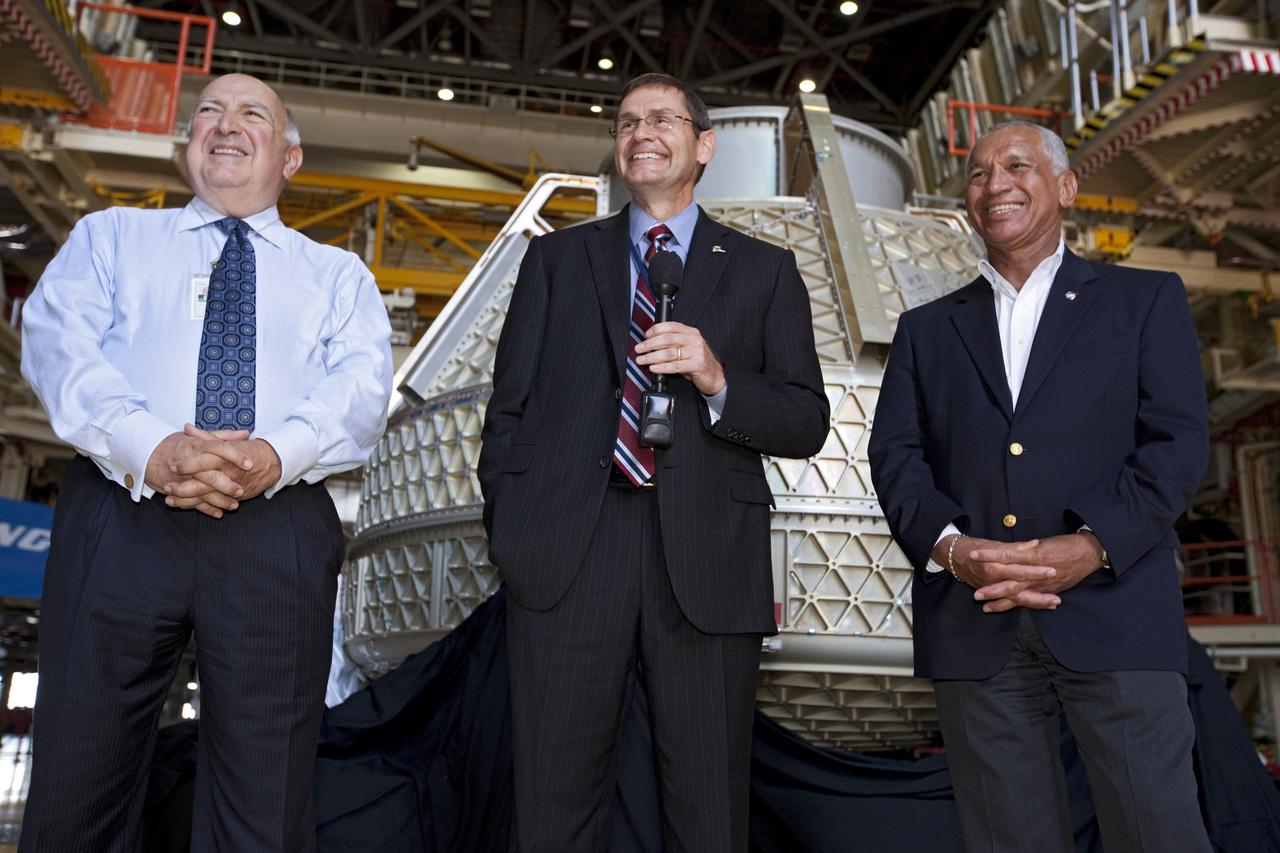
CAPE CANAVERAL, Fla. – Space Florida President Frank DiBello, NASA Administrator Charlie Bolden, and Boeing's Vice President and General Manager of Space Exploration John Elbon address the media inside Orbiter Processing Facility-3, or OPF-3, at NASA's Kennedy Space Center in Florida. Bolden took a few dozen media on a road show tour of the center and adjacent Cape Canaveral Air Force Station to show the progress being made for future government and commercial space endeavors that will begin from Florida's Space Coast. Boeing is leasing OPF-3 through an agreement with Space Florida for the manufacturing and assembly of its CST-100 spacecraft, which is under development in collaboration with NASA's Commercial Crew Program. During his tour, Bolden announced that Space Exploration Technologies, or SpaceX, has completed its Space Act Agreement with NASA for Commercial Orbital Transportation Services. SpaceX is scheduled to launch the first of its 12 contracted cargo flights to the space station from Cape Canaveral this October, under NASA’s Commercial Resupply Services Program. Bolden also announced NASA partner Sierra Nevada Corp. has conducted its first milestone under the agency’s recently announced Commercial Crew Integrated Capability CCiCap initiative. The milestone, a program implementation plan review, marks an important first step in Sierra Nevada’s efforts to develop a crew transportation system with its Dream Chaser spacecraft. Through NASA’s commercial space initiatives and programs, the agency is providing investments to stimulate the American commercial space industry. Photo credit: NASA/Kim Shiflett

CAPE CANAVERAL, Fla. – Space Florida President Frank DiBello, NASA Administrator Charlie Bolden, and Boeing's Vice President and General Manager of Space Exploration John Elbon address the media inside Orbiter Processing Facility-3, or OPF-3, at NASA's Kennedy Space Center in Florida. Bolden took a few dozen media on a road show tour of the center and adjacent Cape Canaveral Air Force Station to show the progress being made for future government and commercial space endeavors that will begin from Florida's Space Coast. Boeing is leasing OPF-3 through an agreement with Space Florida for the manufacturing and assembly of its CST-100 spacecraft, which is under development in collaboration with NASA's Commercial Crew Program. During his tour, Bolden announced that Space Exploration Technologies, or SpaceX, has completed its Space Act Agreement with NASA for Commercial Orbital Transportation Services. SpaceX is scheduled to launch the first of its 12 contracted cargo flights to the space station from Cape Canaveral this October, under NASA’s Commercial Resupply Services Program. Bolden also announced NASA partner Sierra Nevada Corp. has conducted its first milestone under the agency’s recently announced Commercial Crew Integrated Capability CCiCap initiative. The milestone, a program implementation plan review, marks an important first step in Sierra Nevada’s efforts to develop a crew transportation system with its Dream Chaser spacecraft. Through NASA’s commercial space initiatives and programs, the agency is providing investments to stimulate the American commercial space industry. Photo credit: NASA/Kim Shiflett
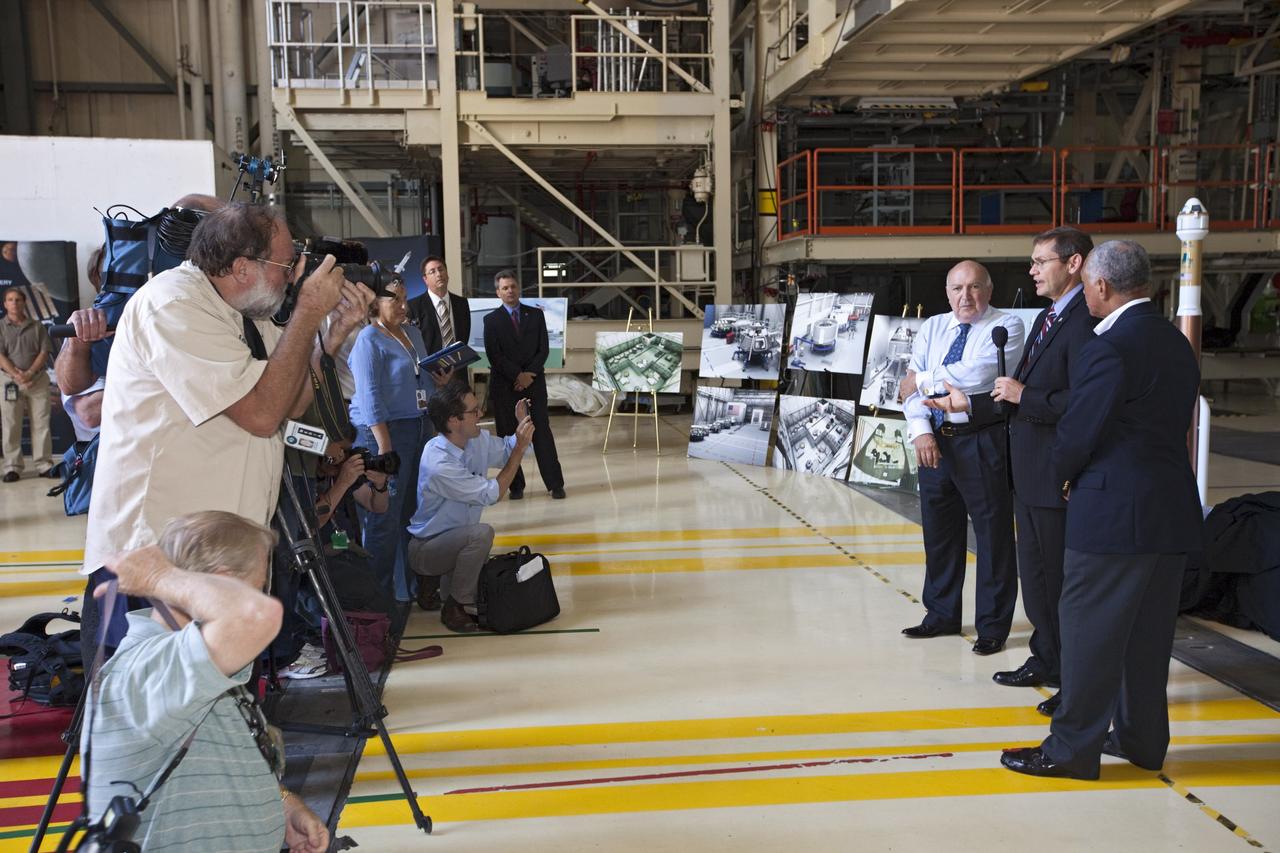
CAPE CANAVERAL, Fla. – Space Florida President Frank DiBello, NASA Administrator Charlie Bolden, and Boeing's Vice President and General Manager of Space Exploration John Elbon address the media inside Orbiter Processing Facility-3, or OPF-3, at NASA's Kennedy Space Center in Florida. Bolden took a few dozen media on a road show tour of the center and adjacent Cape Canaveral Air Force Station to show the progress being made for future government and commercial space endeavors that will begin from Florida's Space Coast. Boeing is leasing OPF-3 through an agreement with Space Florida for the manufacturing and assembly of its CST-100 spacecraft, which is under development in collaboration with NASA's Commercial Crew Program. During his tour, Bolden announced that Space Exploration Technologies, or SpaceX, has completed its Space Act Agreement with NASA for Commercial Orbital Transportation Services. SpaceX is scheduled to launch the first of its 12 contracted cargo flights to the space station from Cape Canaveral this October, under NASA’s Commercial Resupply Services Program. Bolden also announced NASA partner Sierra Nevada Corp. has conducted its first milestone under the agency’s recently announced Commercial Crew Integrated Capability CCiCap initiative. The milestone, a program implementation plan review, marks an important first step in Sierra Nevada’s efforts to develop a crew transportation system with its Dream Chaser spacecraft. Through NASA’s commercial space initiatives and programs, the agency is providing investments to stimulate the American commercial space industry. Photo credit: NASA/Kim Shiflett
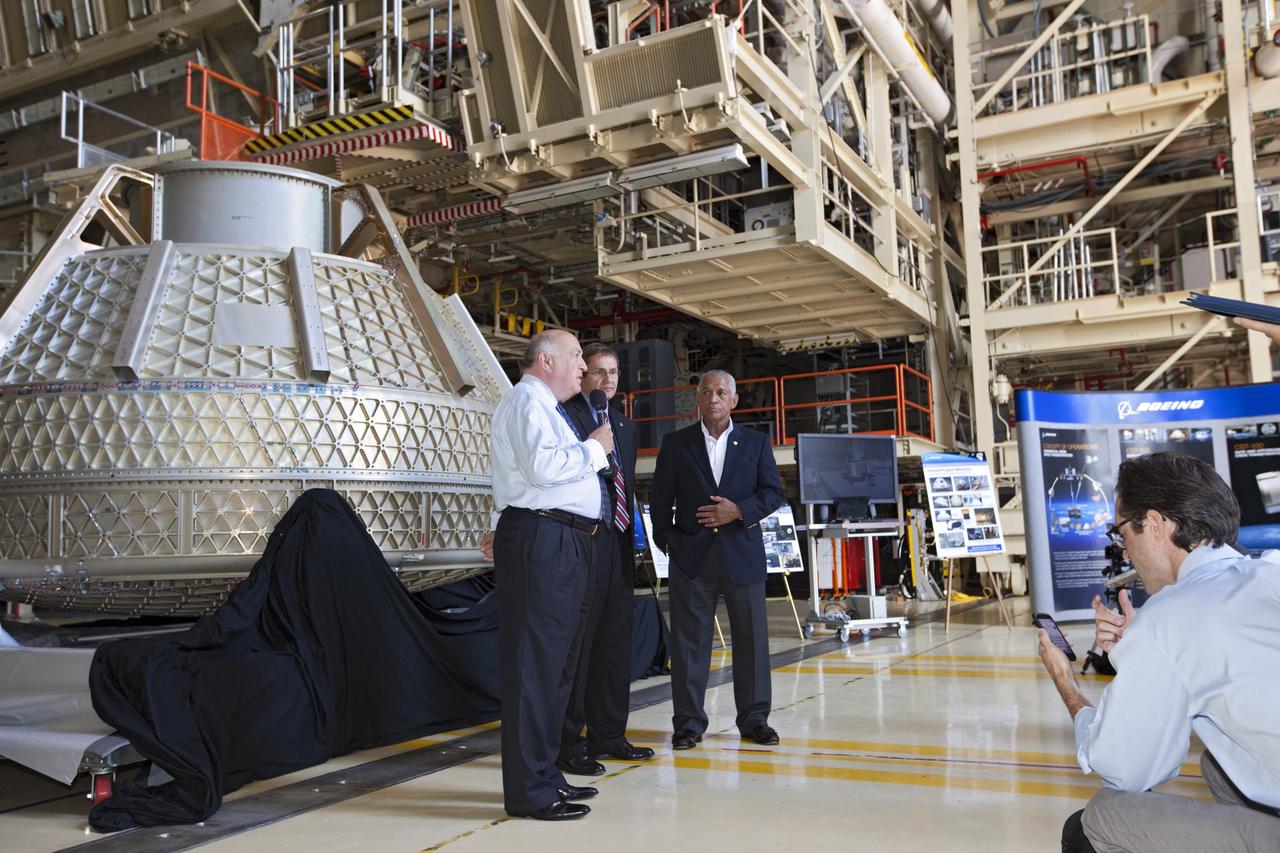
CAPE CANAVERAL, Fla. – Space Florida President Frank DiBello, NASA Administrator Charlie Bolden, and Boeing's Vice President and General Manager of Space Exploration John Elbon address the media inside Orbiter Processing Facility-3, or OPF-3, at NASA's Kennedy Space Center in Florida. Bolden took a few dozen media on a road show tour of the center and adjacent Cape Canaveral Air Force Station to show the progress being made for future government and commercial space endeavors that will begin from Florida's Space Coast. Boeing is leasing OPF-3 through an agreement with Space Florida for the manufacturing and assembly of its CST-100 spacecraft, which is under development in collaboration with NASA's Commercial Crew Program. During his tour, Bolden announced that Space Exploration Technologies, or SpaceX, has completed its Space Act Agreement with NASA for Commercial Orbital Transportation Services. SpaceX is scheduled to launch the first of its 12 contracted cargo flights to the space station from Cape Canaveral this October, under NASA’s Commercial Resupply Services Program. Bolden also announced NASA partner Sierra Nevada Corp. has conducted its first milestone under the agency’s recently announced Commercial Crew Integrated Capability CCiCap initiative. The milestone, a program implementation plan review, marks an important first step in Sierra Nevada’s efforts to develop a crew transportation system with its Dream Chaser spacecraft. Through NASA’s commercial space initiatives and programs, the agency is providing investments to stimulate the American commercial space industry. Photo credit: NASA/Kim Shiflett
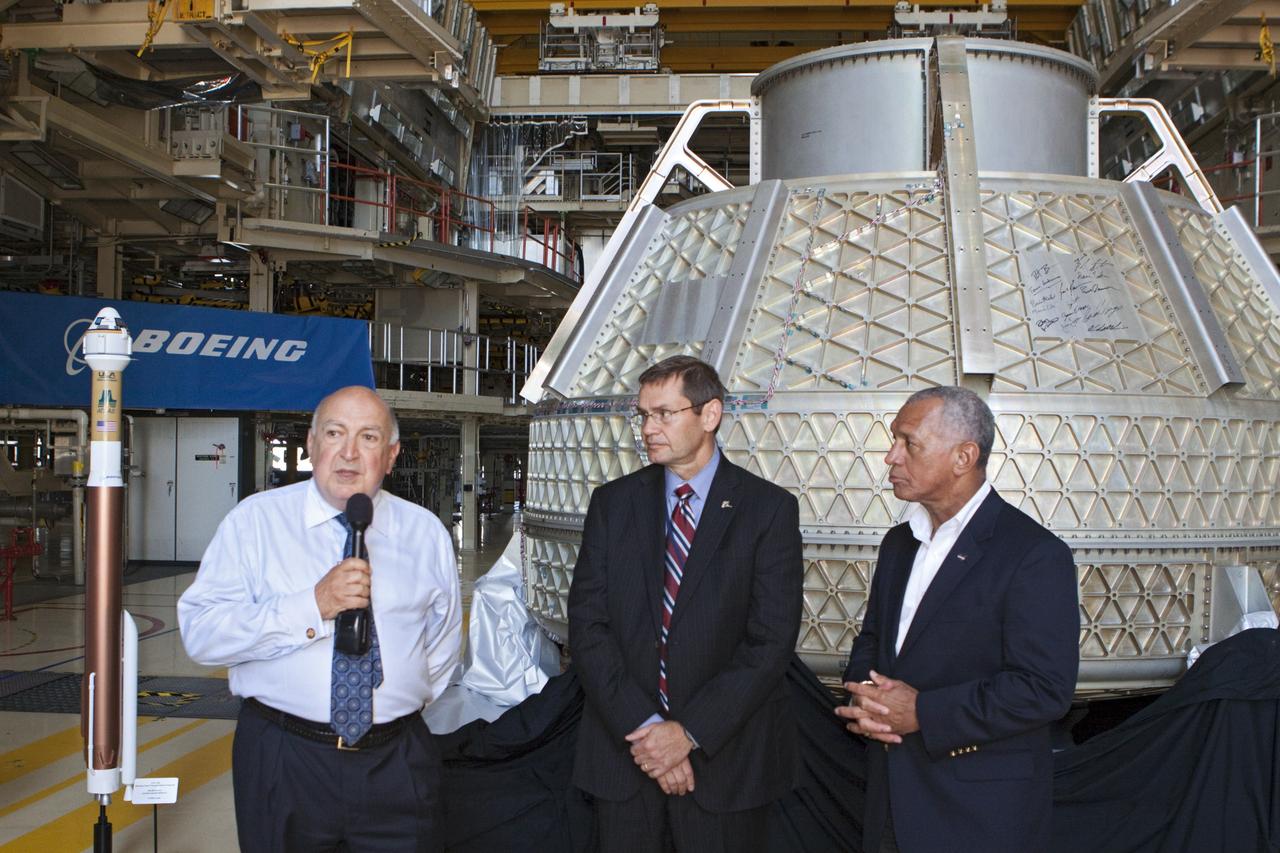
CAPE CANAVERAL, Fla. – Space Florida President Frank DiBello, NASA Administrator Charlie Bolden, and Boeing's Vice President and General Manager of Space Exploration John Elbon address the media inside Orbiter Processing Facility-3, or OPF-3, at NASA's Kennedy Space Center in Florida. Bolden took a few dozen media on a road show tour of the center and adjacent Cape Canaveral Air Force Station to show the progress being made for future government and commercial space endeavors that will begin from Florida's Space Coast. Boeing is leasing OPF-3 through an agreement with Space Florida for the manufacturing and assembly of its CST-100 spacecraft, which is under development in collaboration with NASA's Commercial Crew Program. During his tour, Bolden announced that Space Exploration Technologies, or SpaceX, has completed its Space Act Agreement with NASA for Commercial Orbital Transportation Services. SpaceX is scheduled to launch the first of its 12 contracted cargo flights to the space station from Cape Canaveral this October, under NASA’s Commercial Resupply Services Program. Bolden also announced NASA partner Sierra Nevada Corp. has conducted its first milestone under the agency’s recently announced Commercial Crew Integrated Capability CCiCap initiative. The milestone, a program implementation plan review, marks an important first step in Sierra Nevada’s efforts to develop a crew transportation system with its Dream Chaser spacecraft. Through NASA’s commercial space initiatives and programs, the agency is providing investments to stimulate the American commercial space industry. Photo credit: NASA/Kim Shiflett
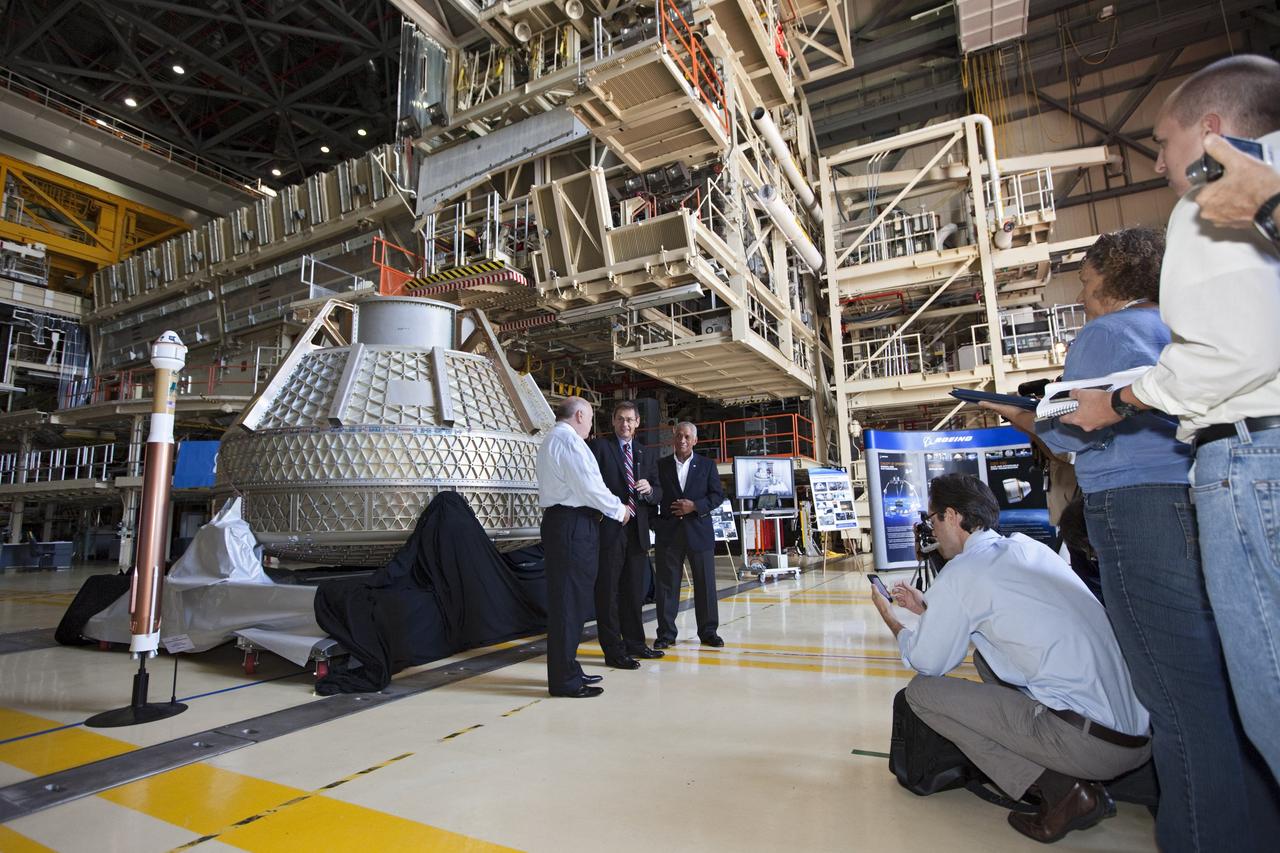
CAPE CANAVERAL, Fla. – Space Florida President Frank DiBello, NASA Administrator Charlie Bolden, and Boeing's Vice President and General Manager of Space Exploration John Elbon address the media inside Orbiter Processing Facility-3, or OPF-3, at NASA's Kennedy Space Center in Florida. Bolden took a few dozen media on a road show tour of the center and adjacent Cape Canaveral Air Force Station to show the progress being made for future government and commercial space endeavors that will begin from Florida's Space Coast. Boeing is leasing OPF-3 through an agreement with Space Florida for the manufacturing and assembly of its CST-100 spacecraft, which is under development in collaboration with NASA's Commercial Crew Program. During his tour, Bolden announced that Space Exploration Technologies, or SpaceX, has completed its Space Act Agreement with NASA for Commercial Orbital Transportation Services. SpaceX is scheduled to launch the first of its 12 contracted cargo flights to the space station from Cape Canaveral this October, under NASA’s Commercial Resupply Services Program. Bolden also announced NASA partner Sierra Nevada Corp. has conducted its first milestone under the agency’s recently announced Commercial Crew Integrated Capability CCiCap initiative. The milestone, a program implementation plan review, marks an important first step in Sierra Nevada’s efforts to develop a crew transportation system with its Dream Chaser spacecraft. Through NASA’s commercial space initiatives and programs, the agency is providing investments to stimulate the American commercial space industry. Photo credit: NASA/Kim Shiflett
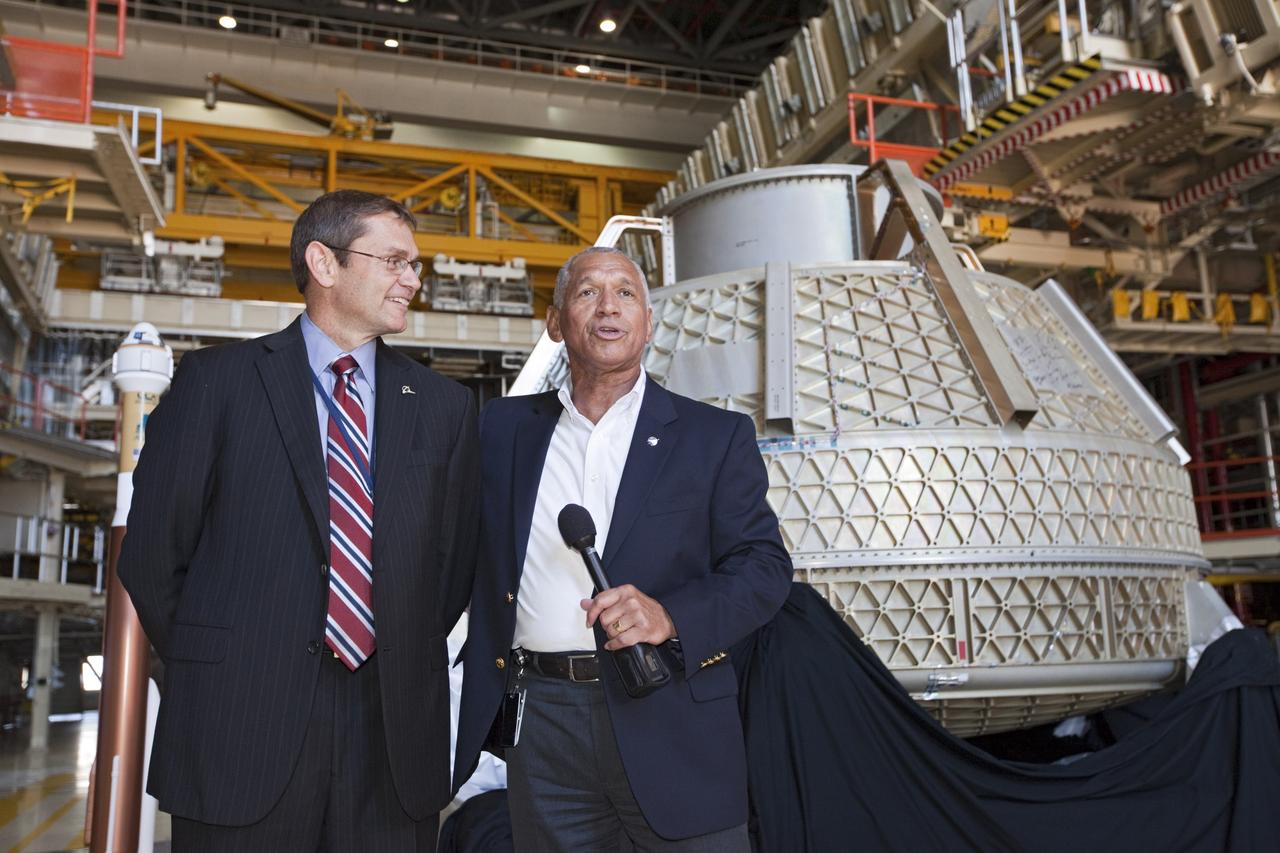
CAPE CANAVERAL, Fla. – NASA Administrator Charlie Bolden, right, and Boeing's Vice President and General Manager of Space Exploration John Elbon address the media inside Orbiter Processing Facility-3, or OPF-3, at NASA's Kennedy Space Center in Florida. Bolden took a few dozen media on a road show tour of the center and adjacent Cape Canaveral Air Force Station to show the progress being made for future government and commercial space endeavors that will begin from Florida's Space Coast. Boeing is leasing OPF-3 through an agreement with Space Florida for the manufacturing and assembly of its CST-100 spacecraft, which is under development in collaboration with NASA's Commercial Crew Program. During his tour, Bolden announced that Space Exploration Technologies, or SpaceX, has completed its Space Act Agreement with NASA for Commercial Orbital Transportation Services. SpaceX is scheduled to launch the first of its 12 contracted cargo flights to the space station from Cape Canaveral this October, under NASA’s Commercial Resupply Services Program. Bolden also announced NASA partner Sierra Nevada Corp. has conducted its first milestone under the agency’s recently announced Commercial Crew Integrated Capability CCiCap initiative. The milestone, a program implementation plan review, marks an important first step in Sierra Nevada’s efforts to develop a crew transportation system with its Dream Chaser spacecraft. Through NASA’s commercial space initiatives and programs, the agency is providing investments to stimulate the American commercial space industry. Photo credit: NASA/Kim Shiflett
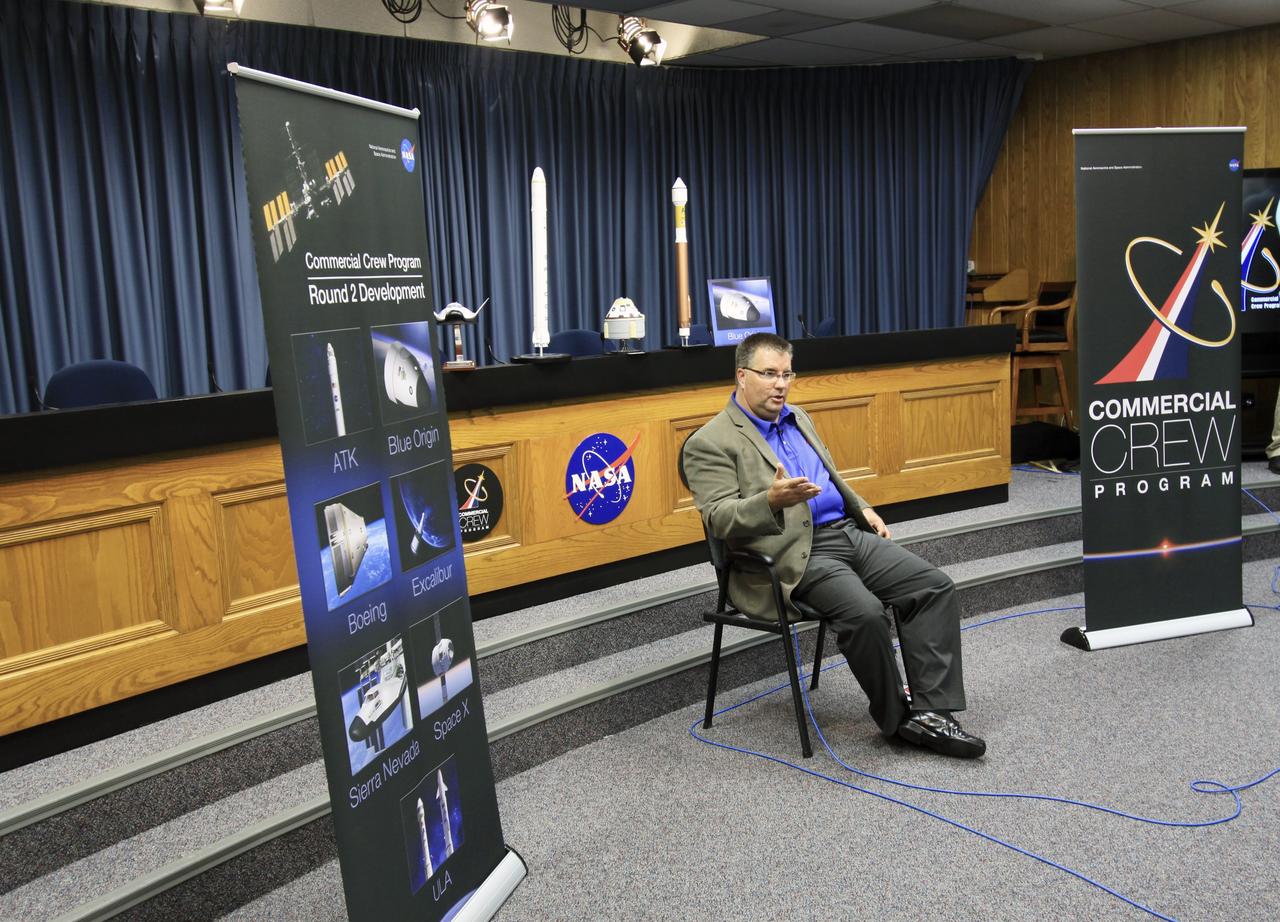
CAPE CANAVERAL, Fla. -- Ed Mango, program manager for NASA's Commercial Crew Program (CCP), updates media on the progress of Commercial Crew Development Round 2 (CCDev2) activities in which seven aerospace companies are maturing launch vehicle and spacecraft systems designed to take astronauts to the International Space Station. The goal of the program is to drive down the cost of space travel as well as open up space to more people than ever before by balancing industry’s own innovative capabilities with NASA's 50 years of human spaceflight experience. Seven aerospace companies are maturing launch vehicle and spacecraft designs under CCDev2, including Alliant Techsystems Inc. (ATK) of Promontory, Utah, Blue Origin of Kent, Wash., The Boeing Co., of Houston, Excalibur Almaz Inc. of Houston, Sierra Nevada Corp. of Louisville, Colo., Space Exploration Technologies (SpaceX) of Hawthorne, Calif., and United Launch Alliance (ULA) of Centennial, Colo. For more information, visit www.nasa.gov/exploration/commercial Photo credit: Jim Grossmann
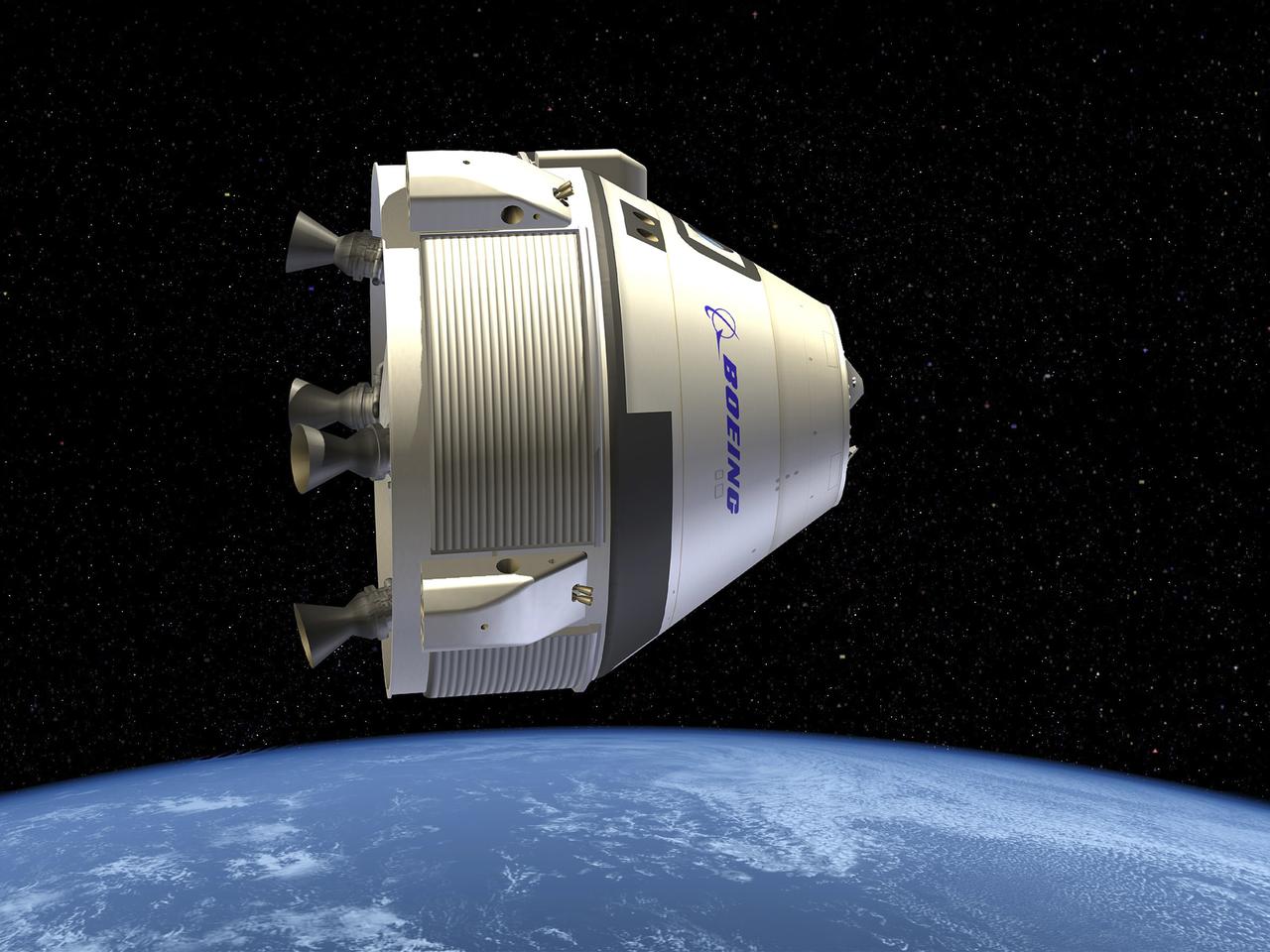
CAPE CANAVERAL, Fla. -- This is an artist's conception of the CST-100 under development by The Boeing Co. of Houston for NASA's Commercial Crew Program (CCP). In 2011, NASA selected Boeing during Commercial Crew Development Round 2 (CCDev2) activities to mature the design and development of a crew transportation system with the overall goal of accelerating a United States-led capability to the International Space Station. The goal of CCP is to drive down the cost of space travel as well as open up space to more people than ever before by balancing industry’s own innovative capabilities with NASA's 50 years of human spaceflight experience. Six other aerospace companies also are maturing launch vehicle and spacecraft designs under CCDev2, including Alliant Techsystems Inc. (ATK), Blue Origin, Excalibur Almaz Inc., Sierra Nevada Corp., Space Exploration Technologies (SpaceX), and United Launch Alliance (ULA). For more information, visit www.nasa.gov/commercialcrew. Image credit: The Boeing Co.
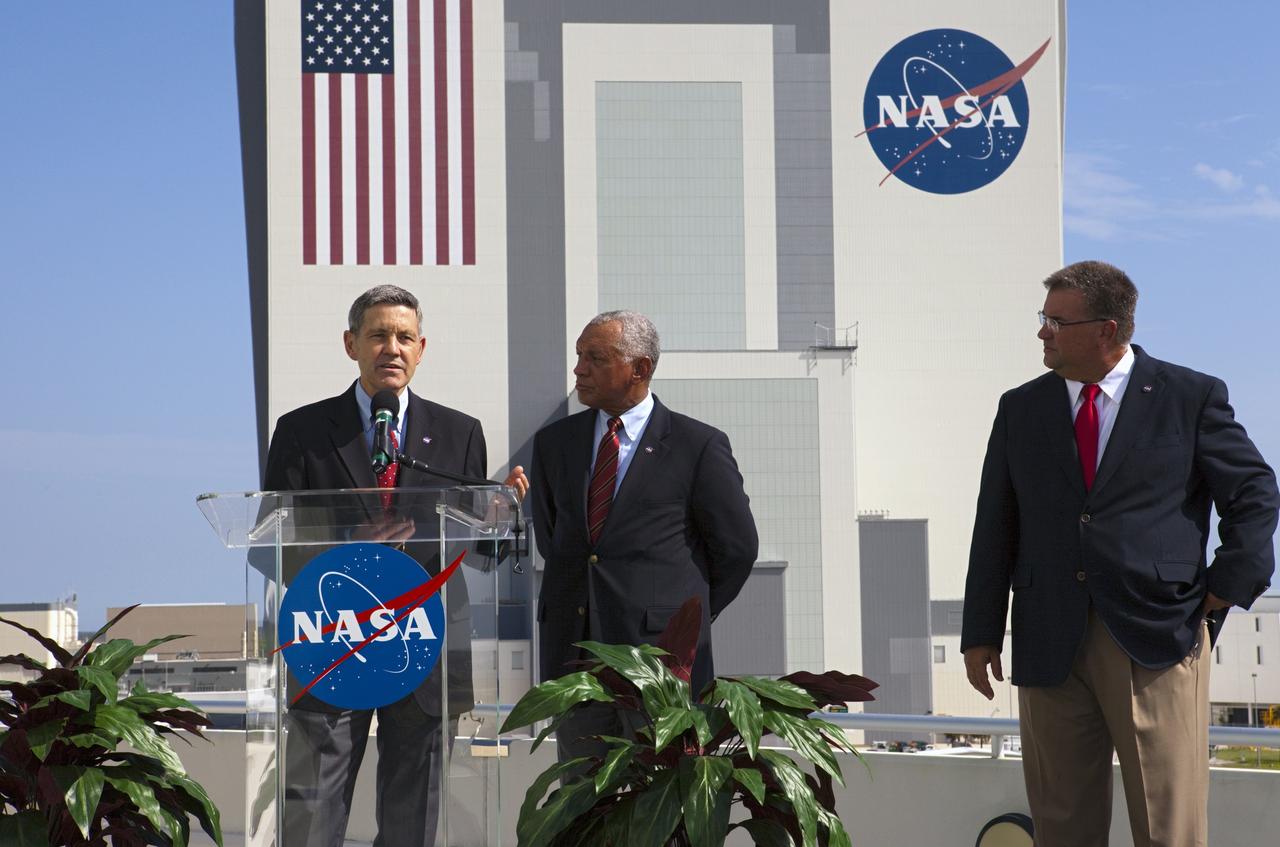
Cape Canaveral, Fla. -- NASA Kennedy Space Center Director Bob Cabana discusses the Commercial Crew Program's CCP newest partnerships from the center's Operations Support Building 2 OSB II. To his right, is NASA Administrator Charlie Bolden, and to his far right, is Commercial Crew Program Manager Ed Mango. Three integrated systems were selected for CCP's Commercial Crew Integrated Capability CCiCap initiative to propel America's next human space transportation system to low Earth orbit forward. Operating under funded Space Act Agreements SAAs, The Boeing Co. of Houston, Sierra Nevada Corp. SNC Space Systems of Louisville, Colo., and Space Exploration Technologies SpaceX of Hawthorne, Calif., will spend the next 21 months completing their designs, conducting critical risk reduction testing on their spacecraft and launch vehicles, and showcasing how they would operate and manage missions from launch through orbit and landing, setting the stage for future demonstration missions. To learn more about CCP, which is based at Kennedy and supported by NASA's Johnson Space Center in Houston, visit www.nasa.gov/commercialcrew. Photo credit: NASA/Kim Shiflett
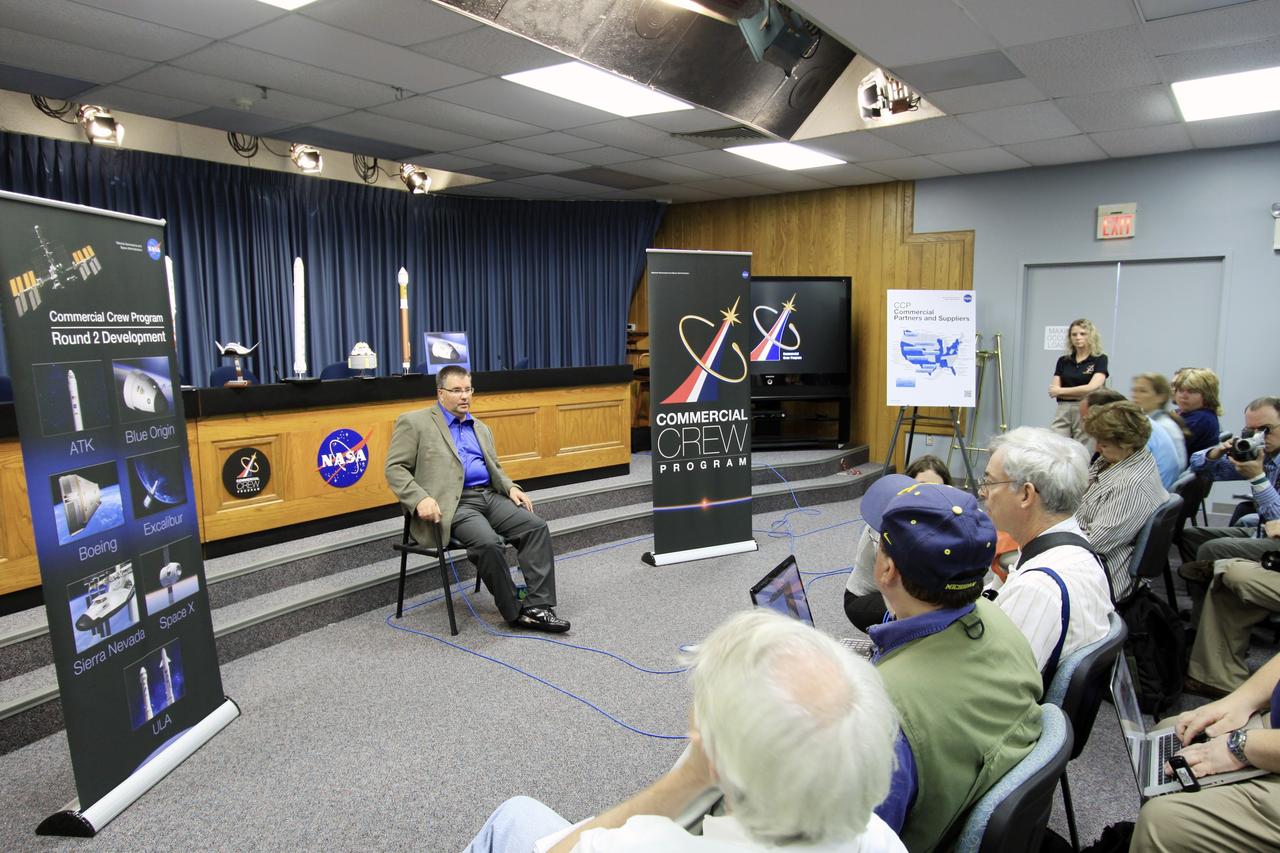
CAPE CANAVERAL, Fla. -- Ed Mango, program manager for NASA's Commercial Crew Program (CCP), updates media on the progress of Commercial Crew Development Round 2 (CCDev2) activities in which seven aerospace companies are maturing launch vehicle and spacecraft systems designed to take astronauts to the International Space Station. The goal of the program is to drive down the cost of space travel as well as open up space to more people than ever before by balancing industry’s own innovative capabilities with NASA's 50 years of human spaceflight experience. Seven aerospace companies are maturing launch vehicle and spacecraft designs under CCDev2, including Alliant Techsystems Inc. (ATK) of Promontory, Utah, Blue Origin of Kent, Wash., The Boeing Co., of Houston, Excalibur Almaz Inc. of Houston, Sierra Nevada Corp. of Louisville, Colo., Space Exploration Technologies (SpaceX) of Hawthorne, Calif., and United Launch Alliance (ULA) of Centennial, Colo. For more information, visit www.nasa.gov/exploration/commercial Photo credit: Jim Grossmann
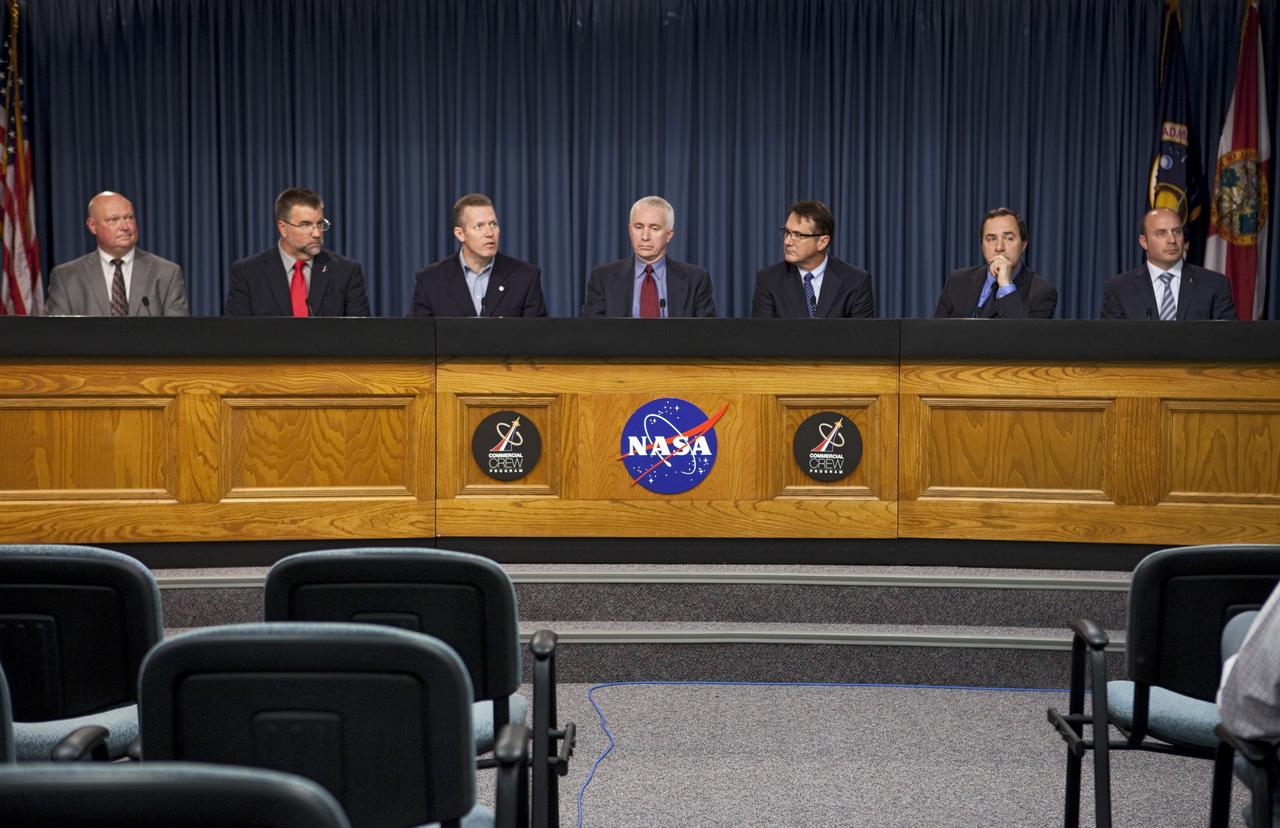
CAPE CANAVERAL, Fla. -- At a news conference NASA officials and industry partners discuss progress of the agency's Commercial Crew Program CCP. Participating in the briefing, from the left are, Mike Curie, NASA Public Affairs, Ed Mango, NASA Commercial Crew Program manager, Phil McAlister, NASA Commercial Spaceflight Development director, Rob Meyerson, Blue Origin president and program manager, John Mulholland, The Boeing Company Commercial Programs Space Exploration vice president and program manager, Mark Sirangelo, Sierra Nevada Corp. vice president and SNC Space Systems chairman and Garrett Reisman, Space Exploration Technologies SpaceX Commercial Crew project manager. Through CCP, NASA is facilitating the development of U.S. commercial crew space transportation capabilities to achieve safe, reliable and cost-effective access to and from low-Earth orbit for potential future government and commercial customers. For more information, visit http://www.nasa.gov/commercialcrew Photo credit: NASA/Kim Shiflett
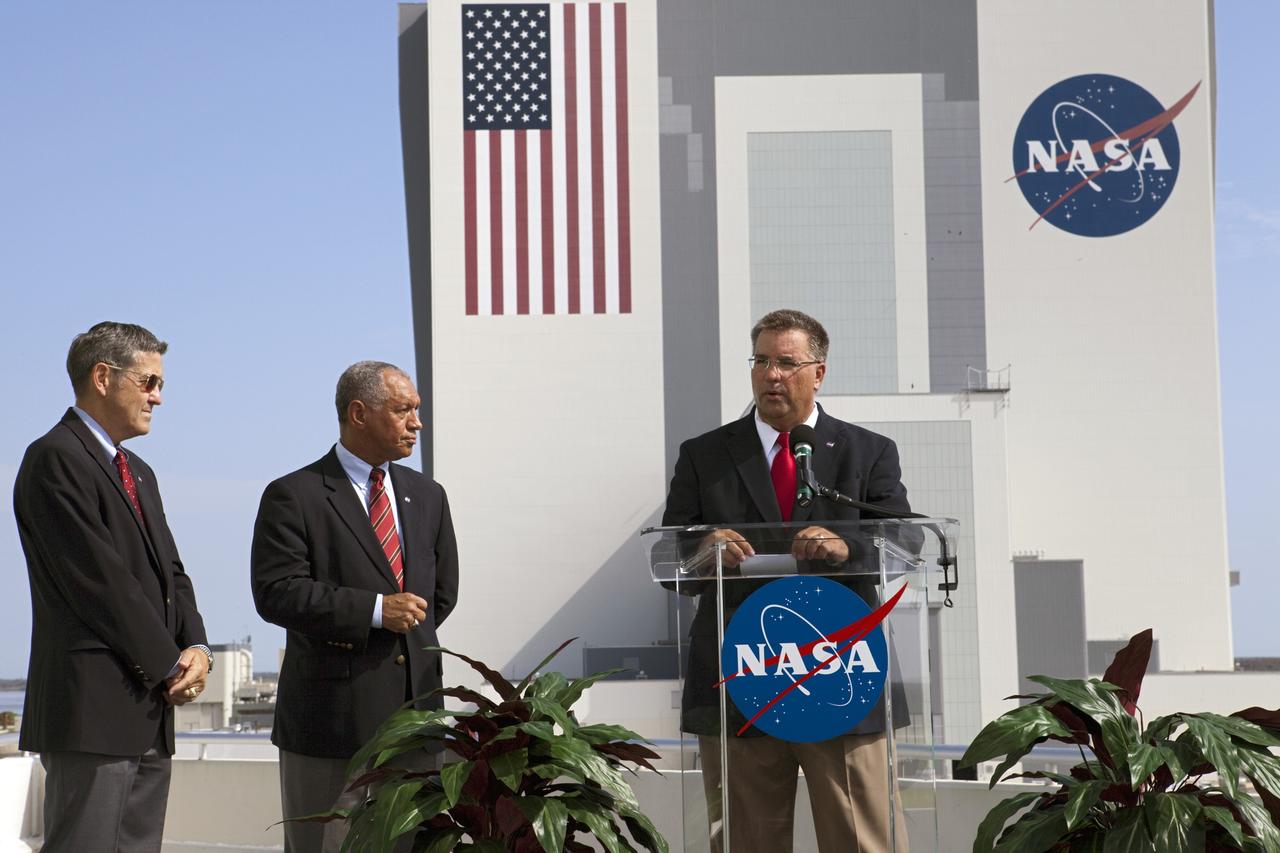
Cape Canaveral, Fla. -- NASA Commercial Crew Program CCP Manager Ed Mango discusses the program's newest partnerships from the Operations Support Building 2 OSB II at Kennedy Space Center in Florida. From left, are Kennedy Space Center Director Robert Cabana and NASA Administrator Charlie Bolden. Three integrated systems were selected for CCP's Commercial Crew Integrated Capability CCiCap initiative to propel America's next human space transportation system to low Earth orbit forward. Operating under funded Space Act Agreements SAAs, The Boeing Co. of Houston, Sierra Nevada Corp. SNC Space Systems of Louisville, Colo., and Space Exploration Technologies SpaceX of Hawthorne, Calif., will spend the next 21 months completing their designs, conducting critical risk reduction testing on their spacecraft and launch vehicles, and showcasing how they would operate and manage missions from launch through orbit and landing, setting the stage for future demonstration missions. To learn more about CCP, which is based at Kennedy and supported by NASA's Johnson Space Center in Houston, visit www.nasa.gov/commercialcrew. Photo credit: NASA/Kim Shiflett
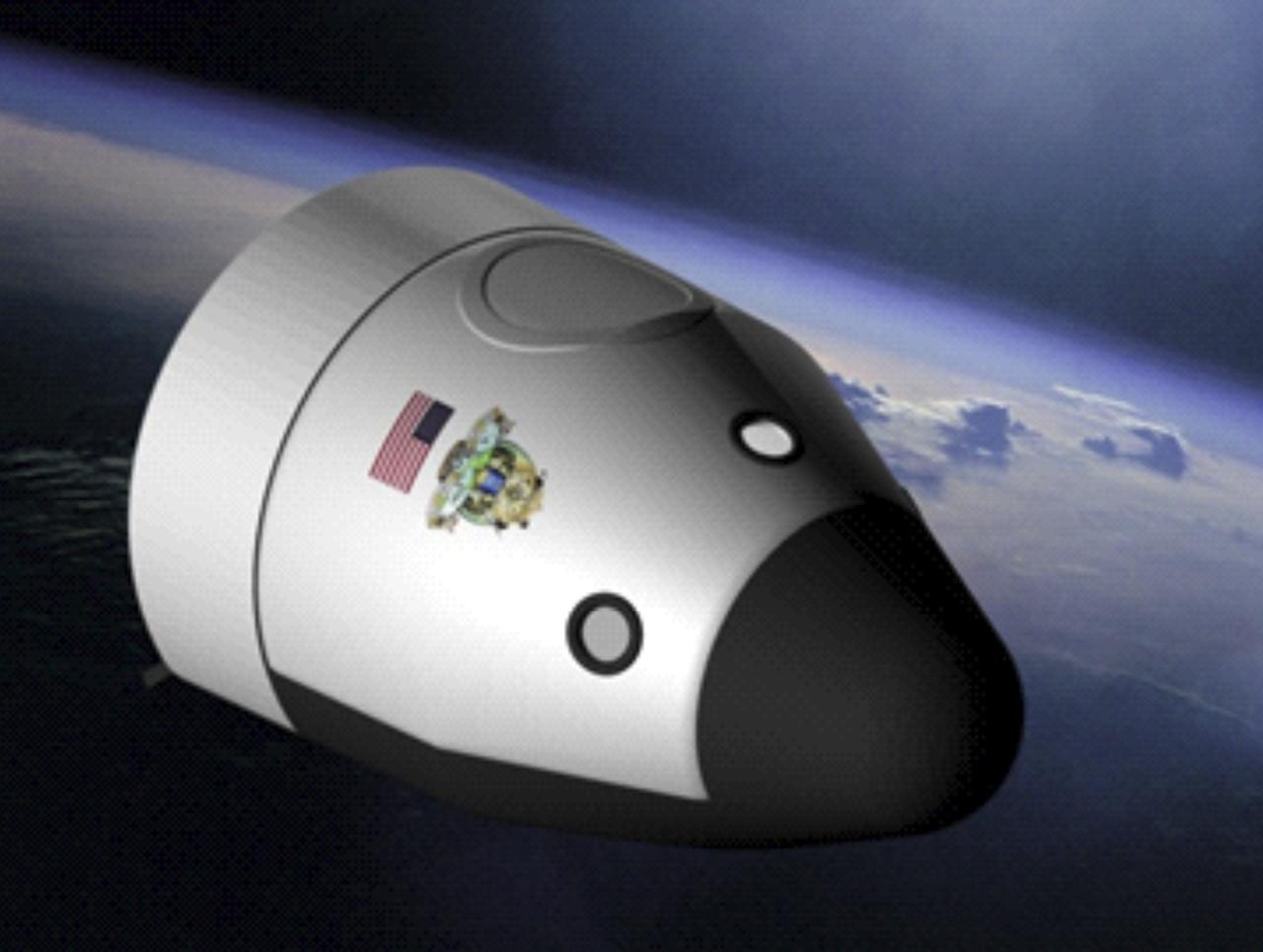
CAPE CANAVERAL, Fla. -- This is an artist's conception of the Space Vehicle under development by Blue Origin of Kent, Wash., for NASA's Commercial Crew Program (CCP). In 2011, NASA selected Blue Origin during Commercial Crew Development Round 2 (CCDev2) activities to mature the design and development of a crew transportation system with the overall goal of accelerating a United States-led capability to the International Space Station. The goal of CCP is to drive down the cost of space travel as well as open up space to more people than ever before by balancing industry’s own innovative capabilities with NASA's 50 years of human spaceflight experience. Six other aerospace companies also are maturing launch vehicle and spacecraft designs under CCDev2, including Alliant Techsystems Inc. (ATK), The Boeing Co., Excalibur Almaz Inc., Sierra Nevada Corp., Space Exploration Technologies (SpaceX), and United Launch Alliance (ULA). For more information, visit www.nasa.gov/commercialcrew. Image credit: Blue Origin
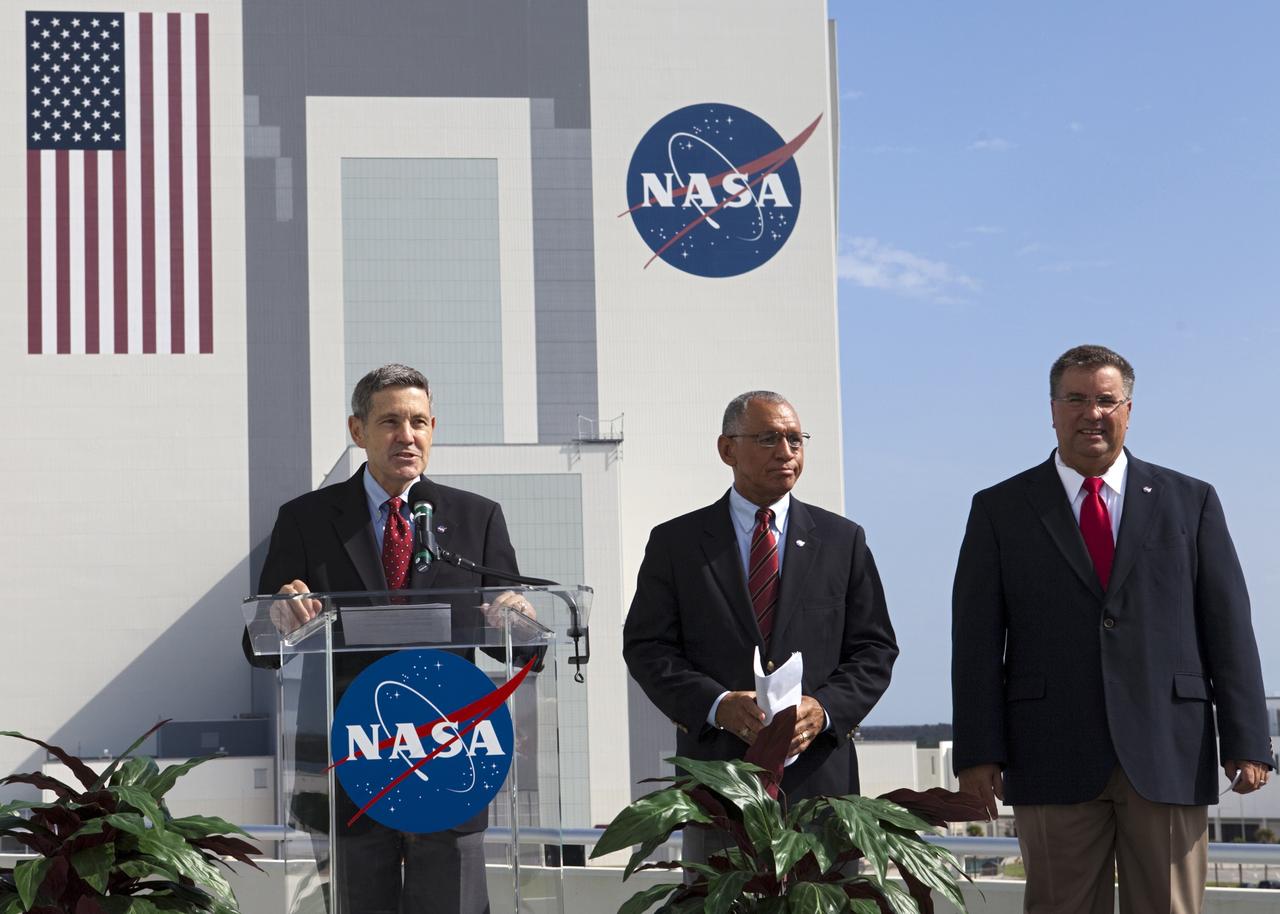
Cape Canaveral, Fla. -- From left, Kennedy Space Center Director Robert Cabana, NASA Administrator Charlie Bolden and Commercial Crew Program CCP, Manager Ed Mango announce the newest partners of NASA's Commercial Crew Program from Operations Support Building 2 OSB II at Kennedy Space Center in Florida. Three integrated systems were selected for CCP's Commercial Crew Integrated Capability CCiCap initiative to propel America's next human space transportation system to low Earth orbit forward. Operating under funded Space Act Agreements SAAs, The Boeing Co. of Houston, Sierra Nevada Corp. SNC Space Systems of Louisville, Colo., and Space Exploration Technologies SpaceX of Hawthorne, Calif., will spend the next 21 months completing their designs, conducting critical risk reduction testing on their spacecraft and launch vehicles, and showcasing how they would operate and manage missions from launch through orbit and landing, setting the stage for future demonstration missions. To learn more about CCP, which is based at Kennedy and supported by NASA's Johnson Space Center in Houston, visit www.nasa.gov/commercialcrew. Photo credit: NASA/Kim Shiflett
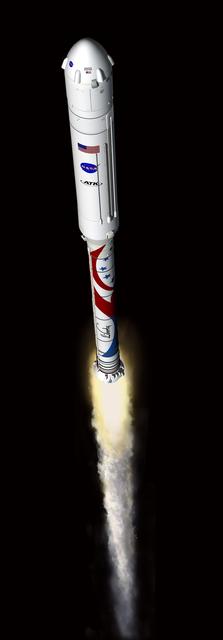
CAPE CANAVERAL, Fla. -- This is an artist's conception of the Liberty Launch Vehicle under development by Alliant Techsystems Inc. (ATK) of Promontory, Utah, for NASA's Commercial Crew Program (CCP). In 2011, NASA and ATK entered into an unfunded Space Act Agreement during Commercial Crew Development Round 2 (CCDev2) activities to mature the design and development of a crew transportation system with the overall goal of accelerating a United States-led capability to the International Space Station. The goal of CCP is to drive down the cost of space travel as well as open up space to more people than ever before by balancing industry’s own innovative capabilities with NASA's 50 years of human spaceflight experience. Six other aerospace companies also are maturing launch vehicle and spacecraft designs under CCDev2, including Blue Origin, The Boeing Co., Excalibur Almaz Inc., Sierra Nevada Corp., Space Exploration Technologies (SpaceX), and United Launch Alliance (ULA). For more information, visit www.nasa.gov/commercialcrew. Image credit: Alliant Techsystems Inc.
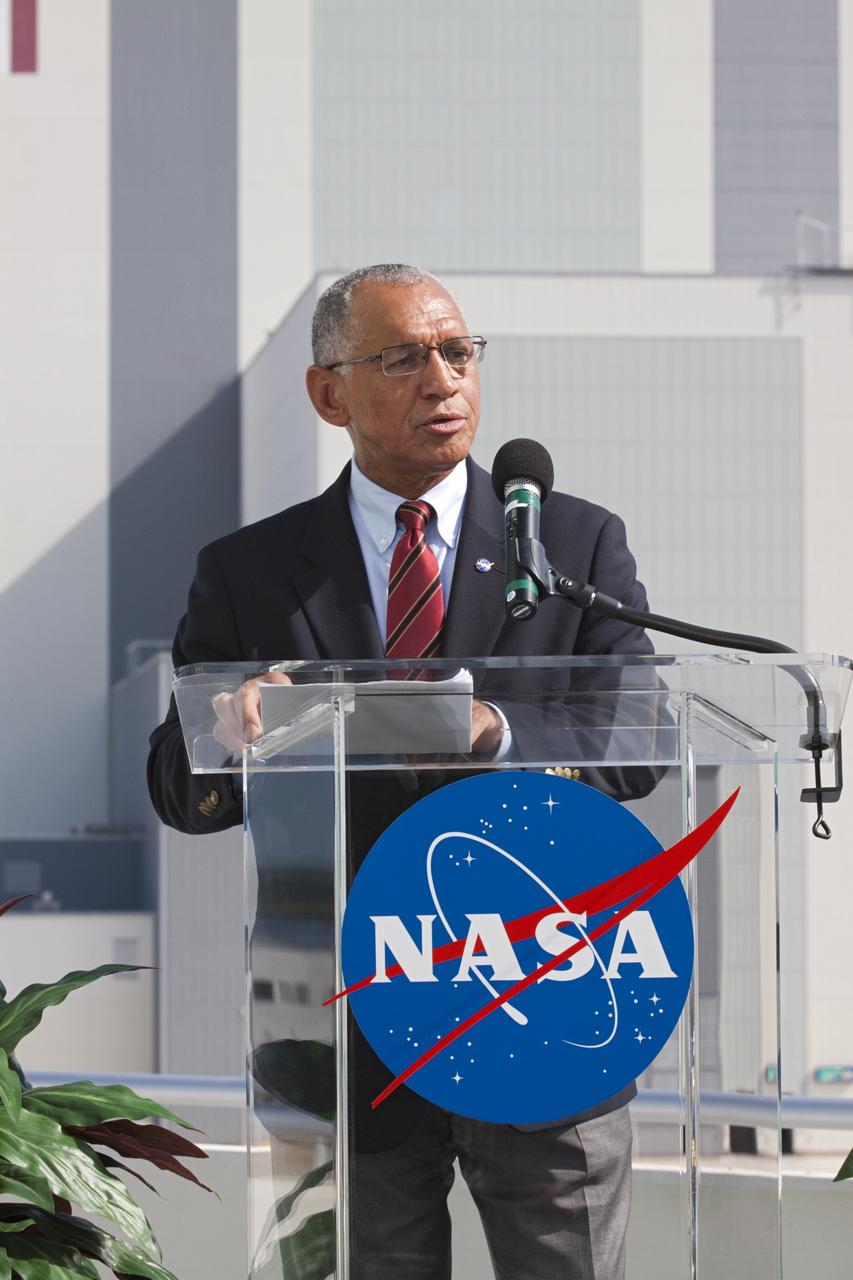
Cape Canaveral, Fla. -- NASA Administrator Charlie Bolden announces the newest partners of NASA's Commercial Crew Program CCP from Operations Support Building 2 OSB II at Kennedy Space Center in Florida. Three integrated systems were selected for CCP's Commercial Crew Integrated Capability CCiCap initiative to propel America's next human space transportation system to low Earth orbit forward. Operating under funded Space Act Agreements SAAs, The Boeing Co. of Houston, Sierra Nevada Corp. SNC Space Systems of Louisville, Colo., and Space Exploration Technologies SpaceX of Hawthorne, Calif., will spend the next 21 months completing their designs, conducting critical risk reduction testing on their spacecraft and launch vehicles, and showcasing how they would operate and manage missions from launch through orbit and landing, setting the stage for future demonstration missions. To learn more about CCP, which is based at Kennedy and supported by NASA's Johnson Space Center in Houston, visit www.nasa.gov/commercialcrew. Photo credit: NASA/Kim Shiflett
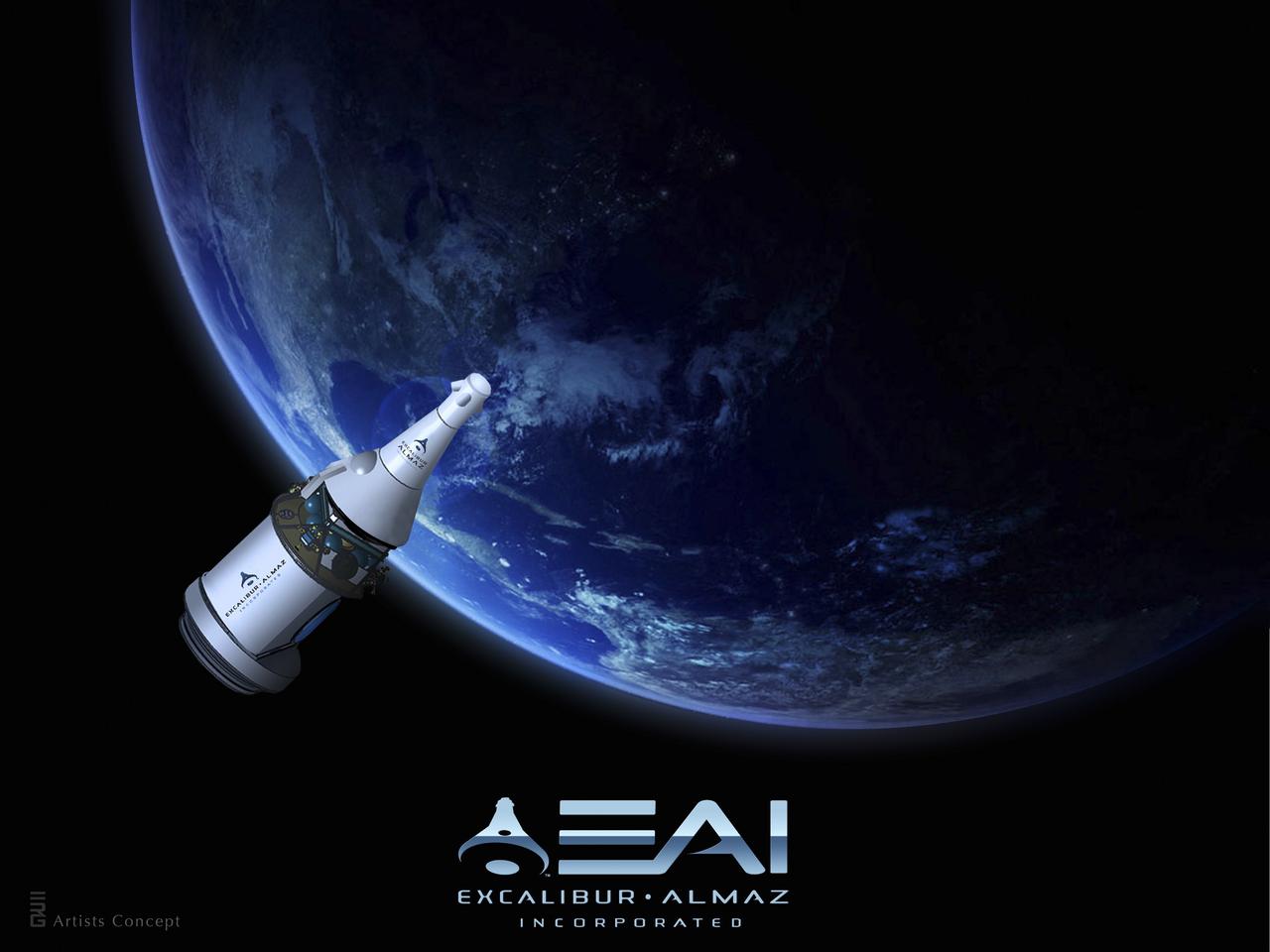
CAPE CANAVERAL, Fla. -- This is an artist's conception of the Human Spacecraft being considered for NASA's Commercial Crew Program CCP. In 2011, NASA and Excalibur Almaz Inc. of Houston entered into an unfunded Space Act Agreement during Commercial Crew Development Round 2 CCDev2) activities to mature the design and development of a crew transportation system with the overall goal of accelerating a United States-led capability to the International Space Station. The goal of CCP is to drive down the cost of space travel as well as open up space to more people than ever before by balancing industry’s own innovative capabilities with NASA's 50 years of human spaceflight experience. Six other aerospace companies also are maturing launch vehicle and spacecraft designs under CCDev2, including Alliant Techsystems Inc. ATK, Blue Origin, The Boeing Co., Sierra Nevada Corp., Space Exploration Technologies SpaceX, and United Launch Alliance ULA. For more information, visit www.nasa.gov/exploration/commercialcrew Image credit: Excalibur Almaz Inc.
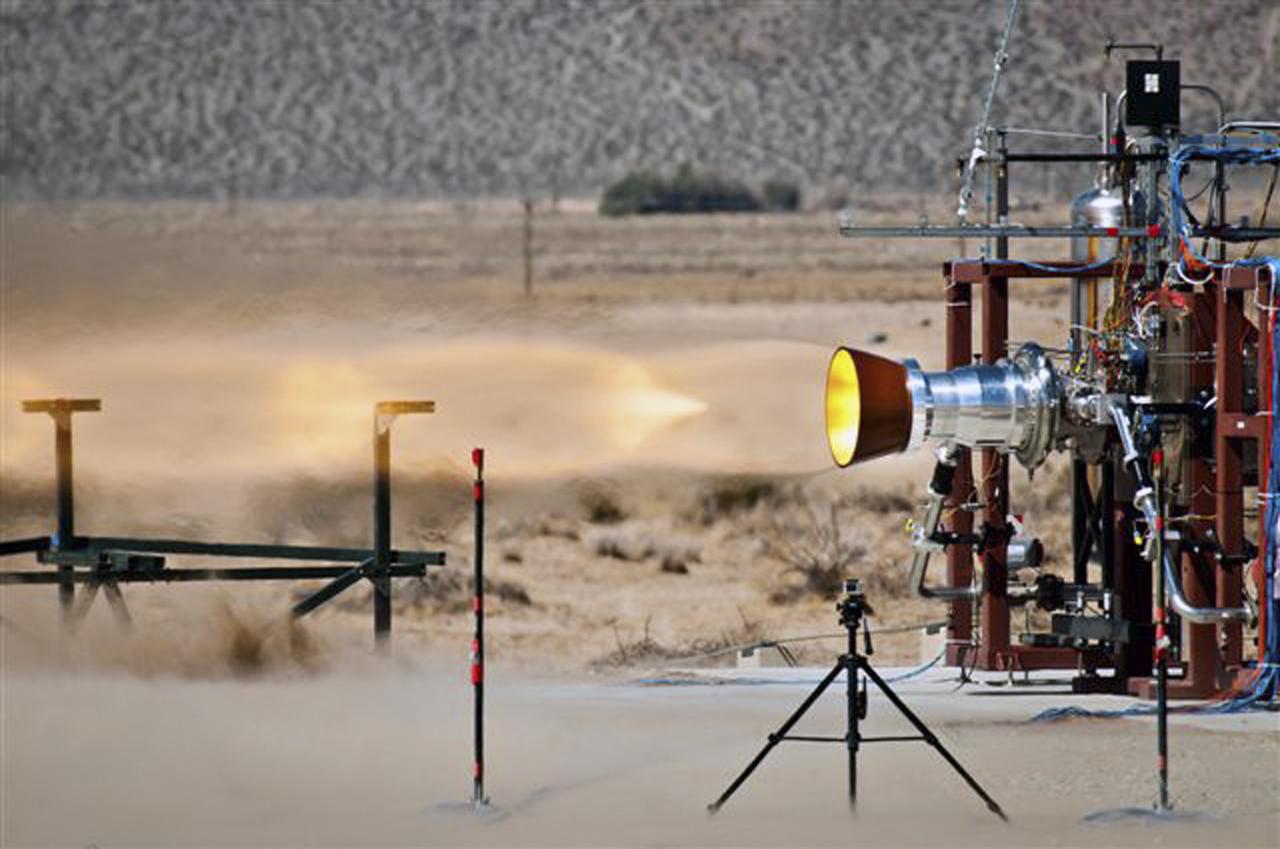
CANOGA PARK, Calif. -- Pratt & Whitney Rocketdyne hot-fires a launch abort engine for The Boeing Co., which is developing its CST-100 spacecraft for NASA's Commercial Crew Program. Under its fixed-price contract with Boeing, Pratt and Whitney Rocketdyne is combining its Attitude Control Propulsion System thrusters from heritage spaceflight programs, Bantam abort engine design and storable propellant engineering capabilities. In 2011, NASA selected Boeing of Houston during Commercial Crew Development Round 2 CCDev2) activities to mature the design and development of a crew transportation system with the overall goal of accelerating a United States-led capability to the International Space Station. The goal of CCP is to drive down the cost of space travel as well as open up space to more people than ever before by balancing industry’s own innovative capabilities with NASA's 50 years of human spaceflight experience. Six other aerospace companies also are maturing launch vehicle and spacecraft designs under CCDev2, including Alliant Techsystems Inc. ATK, Blue Origin, Excalibur Almaz Inc., Sierra Nevada Corp., Space Exploration Technologies SpaceX, and United Launch Alliance ULA. For more information, visit www.nasa.gov/commercialcrew. Image credit: Pratt & Whitney Rocketdyne
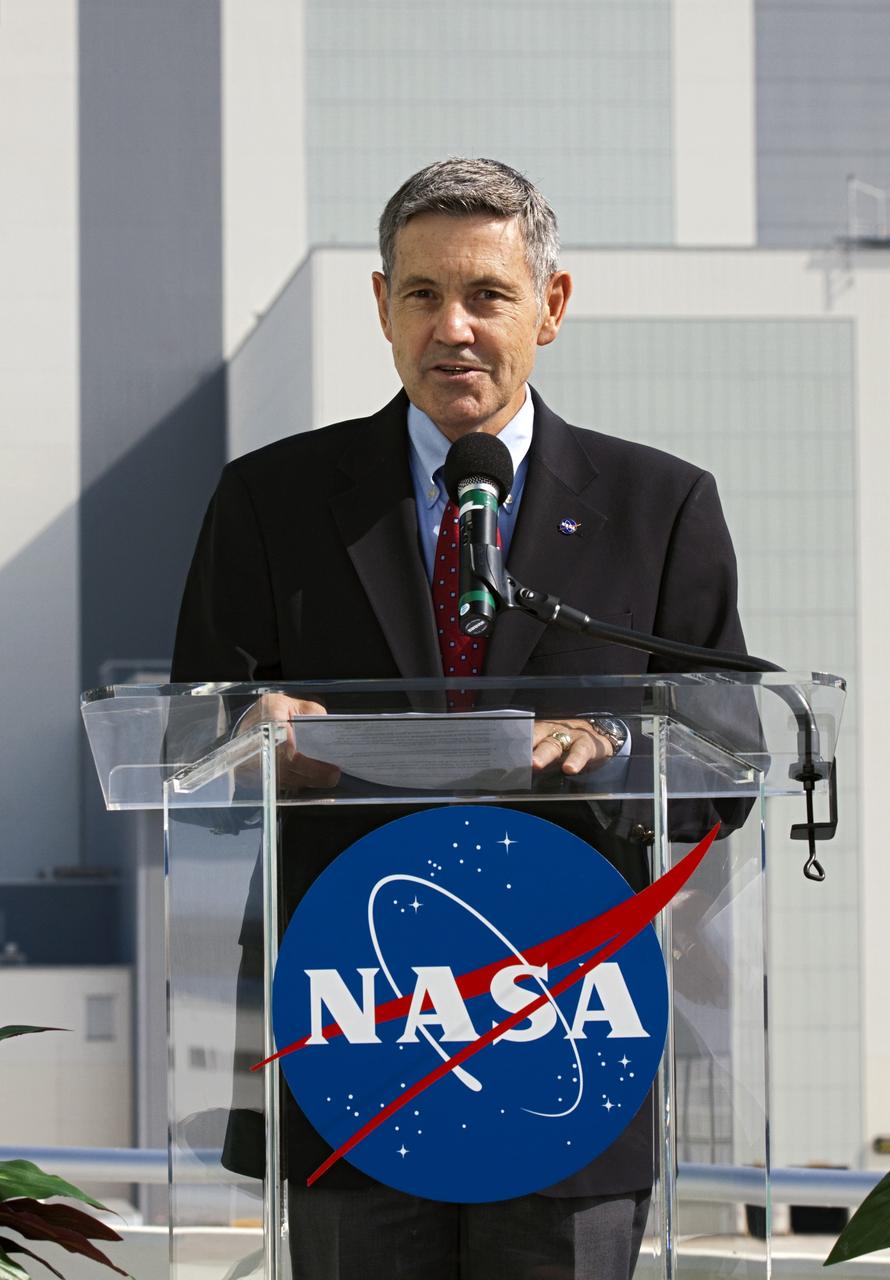
Cape Canaveral, Fla. -- NASA Kennedy Space Center Director Bob Cabana discusses the Commercial Crew Program's CCP newest partnerships from the center's Operations Support Building 2 OSB II. Three integrated systems were selected for CCP's Commercial Crew Integrated Capability CCiCap initiative to propel America's next human space transportation system to low Earth orbit forward. Operating under a funded Space Act Agreements SAAs, The Boeing Co. of Houston, Sierra Nevada Corp. SNC Space Systems of Louisville, Colo., and Space Exploration Technologies SpaceX of Hawthorne, Calif., will spend the next 21 months completing their designs, conducting critical risk reduction testing on their spacecraft and launch vehicles, and showcasing how they would operate and manage missions from launch through orbit and landing, setting the stage for future demonstration missions. To learn more about CCP, which is based at Kennedy and supported by NASA's Johnson Space Center in Houston, visit www.nasa.gov/commercialcrew. Photo credit: NASA/Kim Shiflett
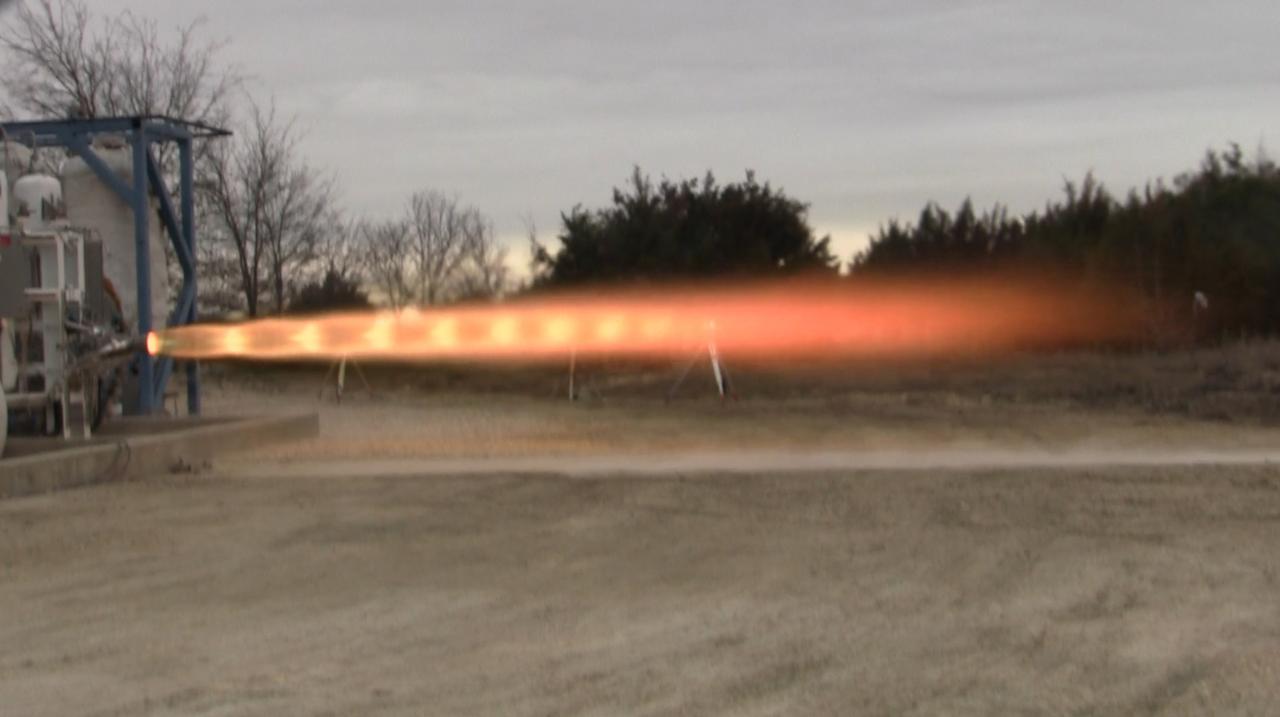
MCGREGOR, Texas -- Space Exploration Technologies (SpaceX) completes a full-duration, full-thrust firing of its new SuperDraco engine prototype at the company’s Rocket Development Facility in McGregor, Texas. The firing was in preparation for the ninth milestone to be completed under SpaceX's funded Space Act Agreement (SAA) with NASA's Commercial Crew Program (CCP). SpaceX is working with CCP during Commercial Crew Development Round 2 (CCDev2) in order to mature the design and development of its Dragon spacecraft with the overall goal of accelerating a United States-led capability to the International Space Station. Eight SuperDracos would be built into the sidewalls of the Dragon capsule to carry astronauts to safety should an emergency occur during launch or ascent. The goal of CCP is to drive down the cost of space travel as well as open up space to more people than ever before by balancing industry’s own innovative capabilities with NASA's 50 years of human spaceflight experience. Six other aerospace companies also are maturing launch vehicle and spacecraft designs under CCDev2, including Alliant Techsystems Inc. (ATK), Blue Origin, The Boeing Co., Excalibur Almaz Inc., Sierra Nevada Corp. and United Launch Alliance (ULA). For more information, visit www.nasa.gov/commercialcrew
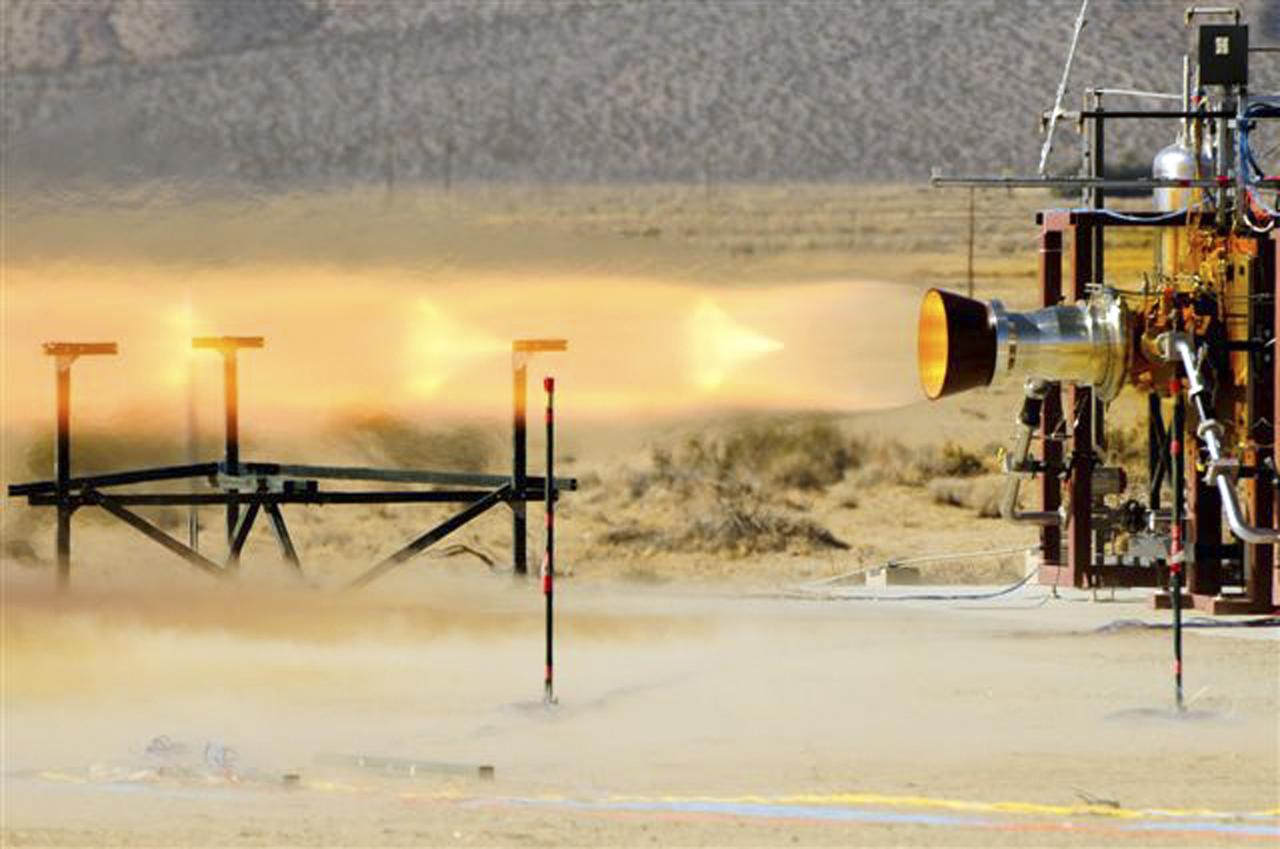
CANOGA PARK, Calif. -- Pratt & Whitney Rocketdyne hot-fires a launch abort engine for The Boeing Co., which is developing its CST-100 spacecraft for NASA's Commercial Crew Program. Under its fixed-price contract with Boeing, Pratt and Whitney Rocketdyne is combining its Attitude Control Propulsion System thrusters from heritage spaceflight programs, Bantam abort engine design and storable propellant engineering capabilities. In 2011, NASA selected Boeing of Houston during Commercial Crew Development Round 2 CCDev2) activities to mature the design and development of a crew transportation system with the overall goal of accelerating a United States-led capability to the International Space Station. The goal of CCP is to drive down the cost of space travel as well as open up space to more people than ever before by balancing industry’s own innovative capabilities with NASA's 50 years of human spaceflight experience. Six other aerospace companies also are maturing launch vehicle and spacecraft designs under CCDev2, including Alliant Techsystems Inc. ATK, Blue Origin, Excalibur Almaz Inc., Sierra Nevada Corp., Space Exploration Technologies SpaceX, and United Launch Alliance ULA. For more information, visit www.nasa.gov/commercialcrew. Image credit: Pratt & Whitney Rocketdyne
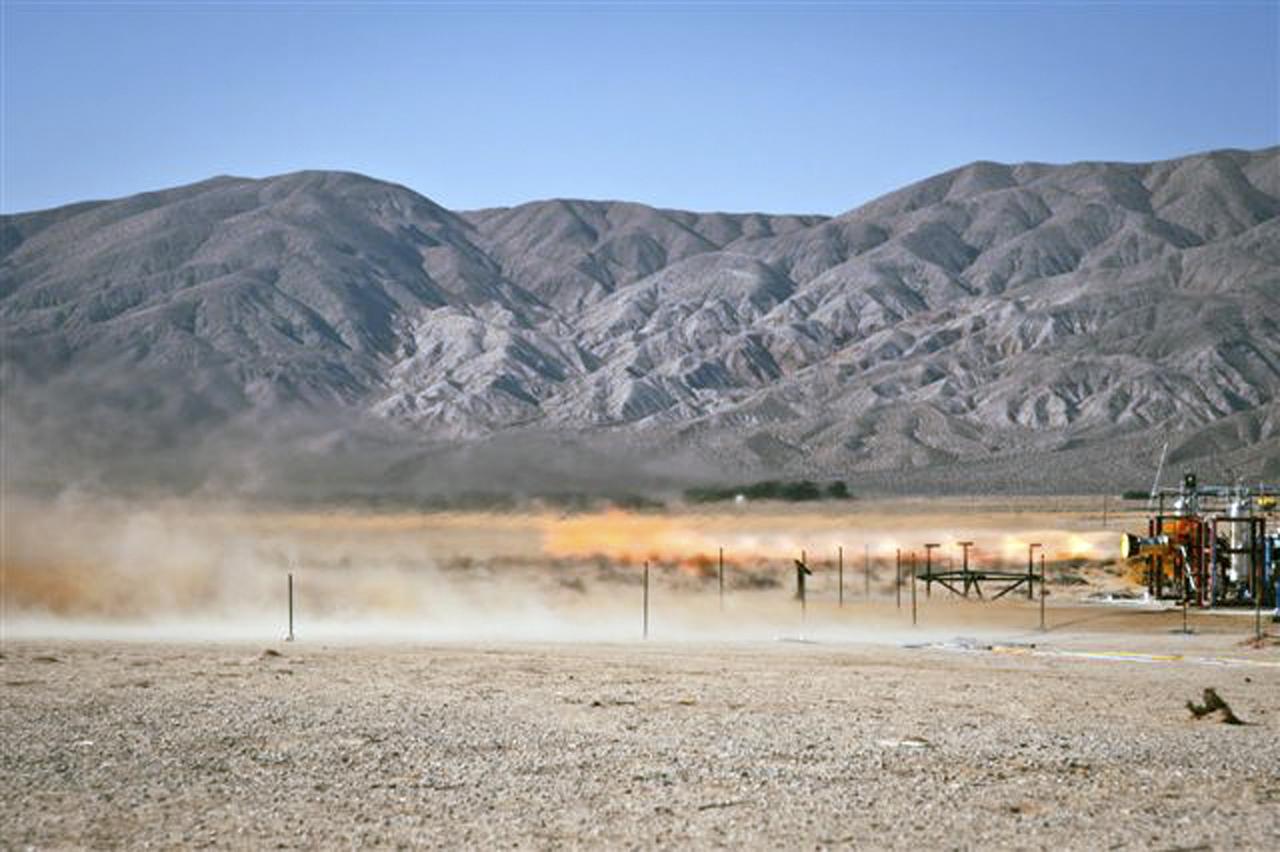
CANOGA PARK, Calif. -- Pratt & Whitney Rocketdyne hot-fires a launch abort engine for The Boeing Co., which is developing its CST-100 spacecraft for NASA's Commercial Crew Program. Under its fixed-price contract with Boeing, Pratt and Whitney Rocketdyne is combining its Attitude Control Propulsion System thrusters from heritage spaceflight programs, Bantam abort engine design and storable propellant engineering capabilities. In 2011, NASA selected Boeing of Houston during Commercial Crew Development Round 2 CCDev2) activities to mature the design and development of a crew transportation system with the overall goal of accelerating a United States-led capability to the International Space Station. The goal of CCP is to drive down the cost of space travel as well as open up space to more people than ever before by balancing industry’s own innovative capabilities with NASA's 50 years of human spaceflight experience. Six other aerospace companies also are maturing launch vehicle and spacecraft designs under CCDev2, including Alliant Techsystems Inc. ATK, Blue Origin, Excalibur Almaz Inc., Sierra Nevada Corp., Space Exploration Technologies SpaceX, and United Launch Alliance ULA. For more information, visit www.nasa.gov/commercialcrew. Image credit: Pratt & Whitney Rocketdyne
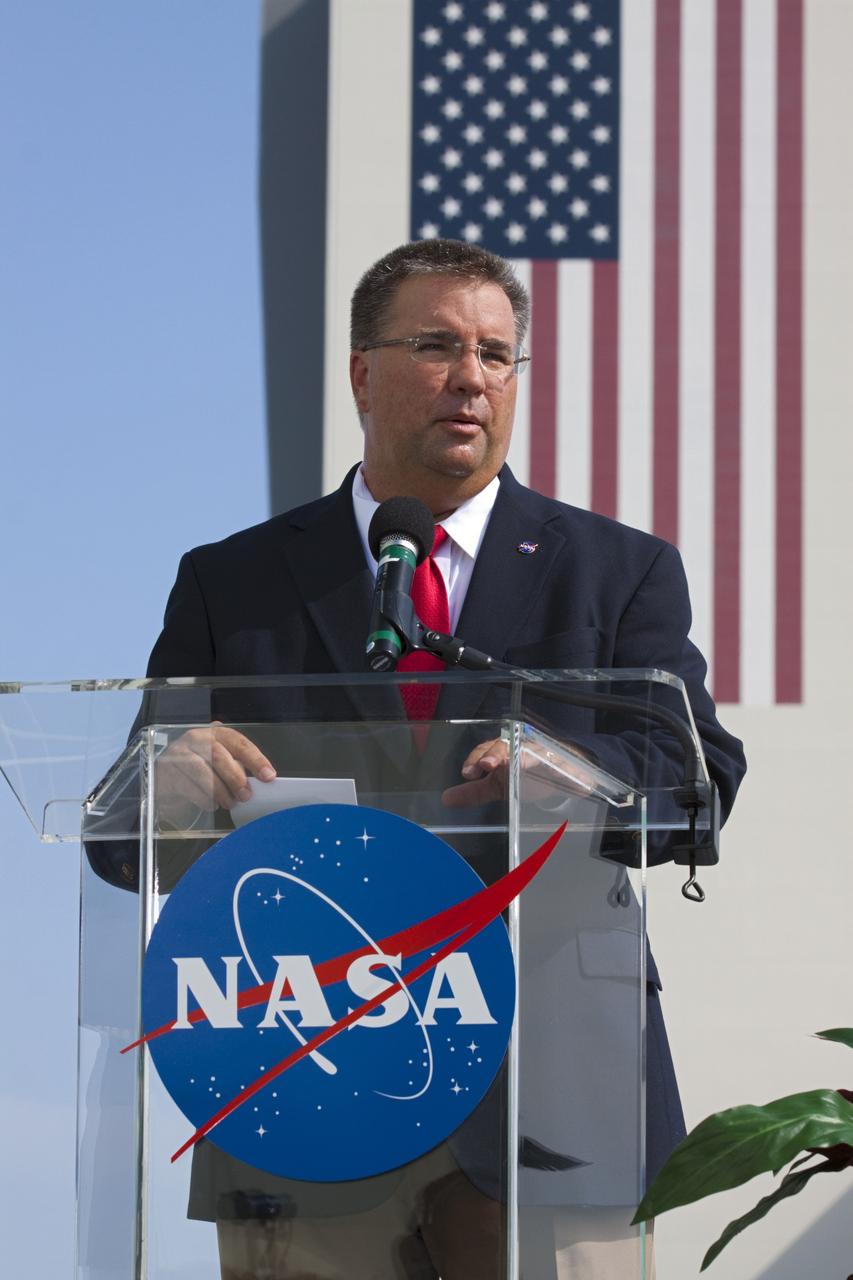
Cape Canaveral, Fla. -- NASA Commercial Crew Program CCP Manager Ed Mango discusses the program's newest partnerships from the Operations Support Building 2 OSB II at Kennedy Space Center in Florida. Three integrated systems were selected for CCP's Commercial Crew Integrated Capability CCiCap initiative to propel America's next human space transportation system to low Earth orbit forward. Operating under funded Space Act Agreements SAAs, The Boeing Co. of Houston, Sierra Nevada Corp. SNC Space Systems of Louisville, Colo., and Space Exploration Technologies SpaceX of Hawthorne, Calif., will spend the next 21 months completing their designs, conducting critical risk reduction testing on their spacecraft and launch vehicles, and showcasing how they would operate and manage missions from launch through orbit and landing, setting the stage for future demonstration missions. To learn more about CCP, which is based at Kennedy and supported by NASA's Johnson Space Center in Houston, visit www.nasa.gov/commercialcrew. Photo credit: NASA/Kim Shiflett
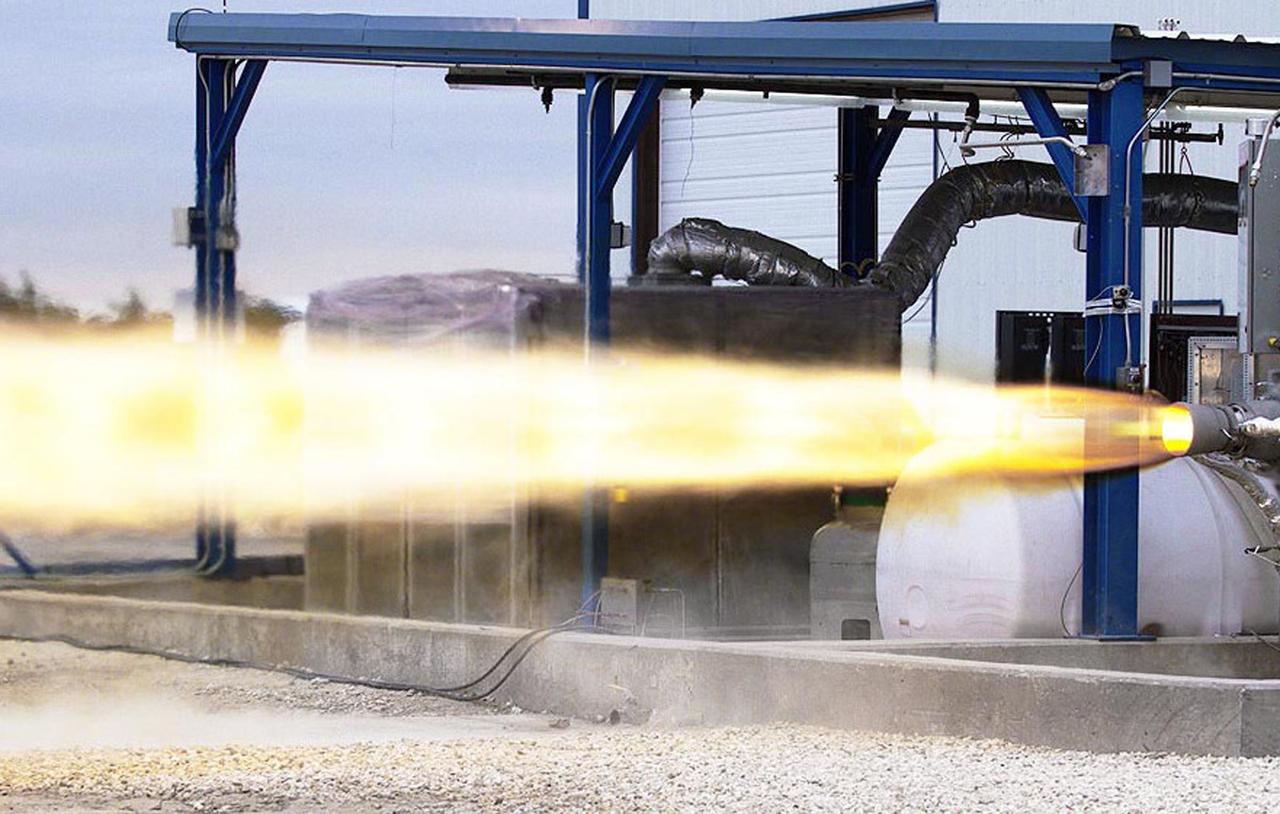
MCGREGOR, Texas -- Space Exploration Technologies (SpaceX) completes a full-duration, full-thrust firing of its new SuperDraco engine prototype at the company’s Rocket Development Facility in McGregor, Texas. The firing was in preparation for the ninth milestone to be completed under SpaceX's funded Space Act Agreement (SAA) with NASA's Commercial Crew Program (CCP). SpaceX is working with CCP during Commercial Crew Development Round 2 (CCDev2) in order to mature the design and development of its Dragon spacecraft with the overall goal of accelerating a United States-led capability to the International Space Station. Eight SuperDracos would be built into the sidewalls of the Dragon capsule to carry astronauts to safety should an emergency occur during launch or ascent. The goal of CCP is to drive down the cost of space travel as well as open up space to more people than ever before by balancing industry’s own innovative capabilities with NASA's 50 years of human spaceflight experience. Six other aerospace companies also are maturing launch vehicle and spacecraft designs under CCDev2, including Alliant Techsystems Inc. (ATK), Blue Origin, The Boeing Co., Excalibur Almaz Inc., Sierra Nevada Corp. and United Launch Alliance (ULA). For more information, visit www.nasa.gov/commercialcrew
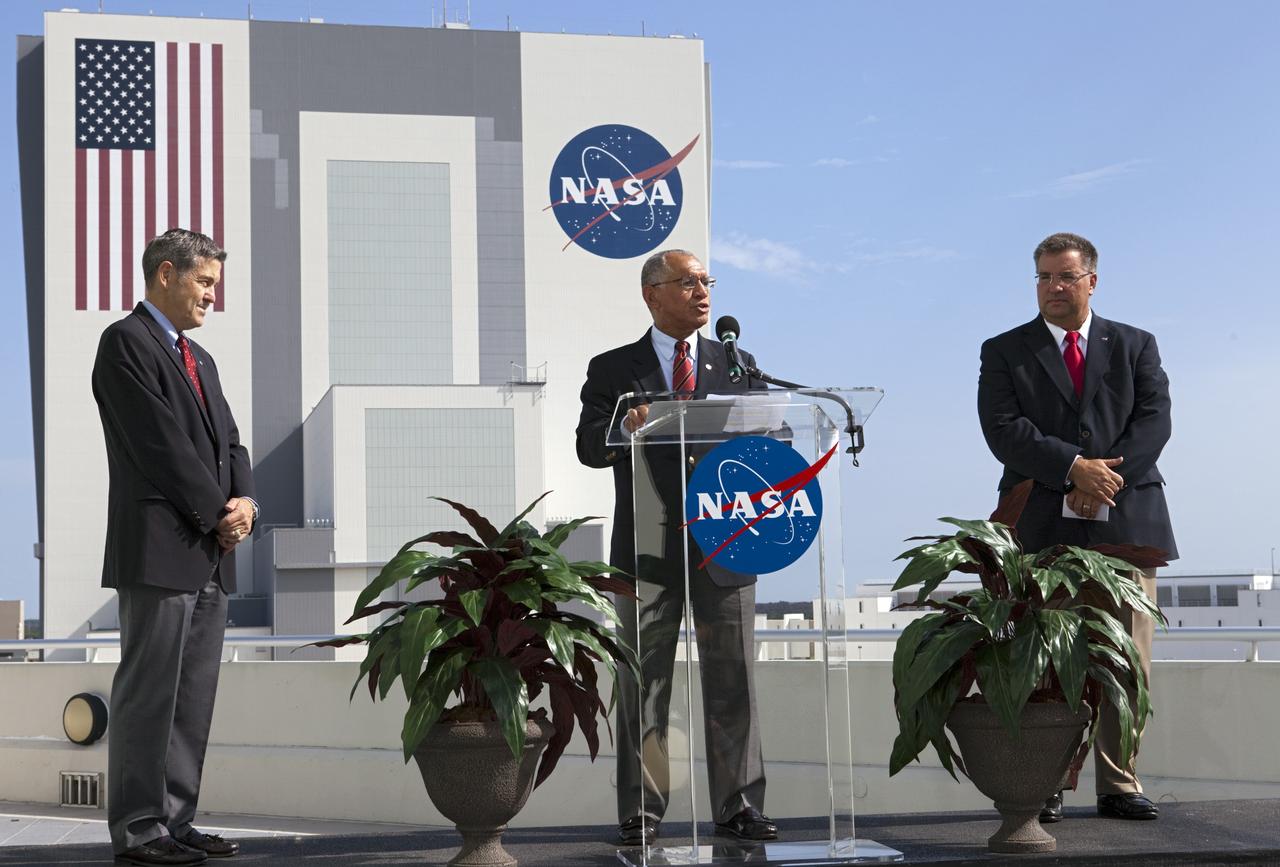
Cape Canaveral, Fla. -- NASA Administrator Charlie Bolden announces the newest partners of NASA's Commercial Crew Program CCP from Operations Support Building 2 OSB II at Kennedy Space Center in Florida. At left, is Kennedy Space Center Director Robert Cabana and at right, is Commercial Crew Program CCP Manager Ed Mango. Three integrated systems were selected for CCP's Commercial Crew Integrated Capability CCiCap initiative to propel America's next human space transportation system to low Earth orbit forward. Operating under funded Space Act Agreements SAAs, The Boeing Co. of Houston, Sierra Nevada Corp. SNC Space Systems of Louisville, Colo., and Space Exploration Technologies SpaceX of Hawthorne, Calif., will spend the next 21 months completing their designs, conducting critical risk reduction testing on their spacecraft and launch vehicles, and showcasing how they would operate and manage missions from launch through orbit and landing, setting the stage for future demonstration missions. To learn more about CCP, which is based at Kennedy and supported by NASA's Johnson Space Center in Houston, visit www.nasa.gov/commercialcrew. Photo credit: NASA/Kim Shiflett
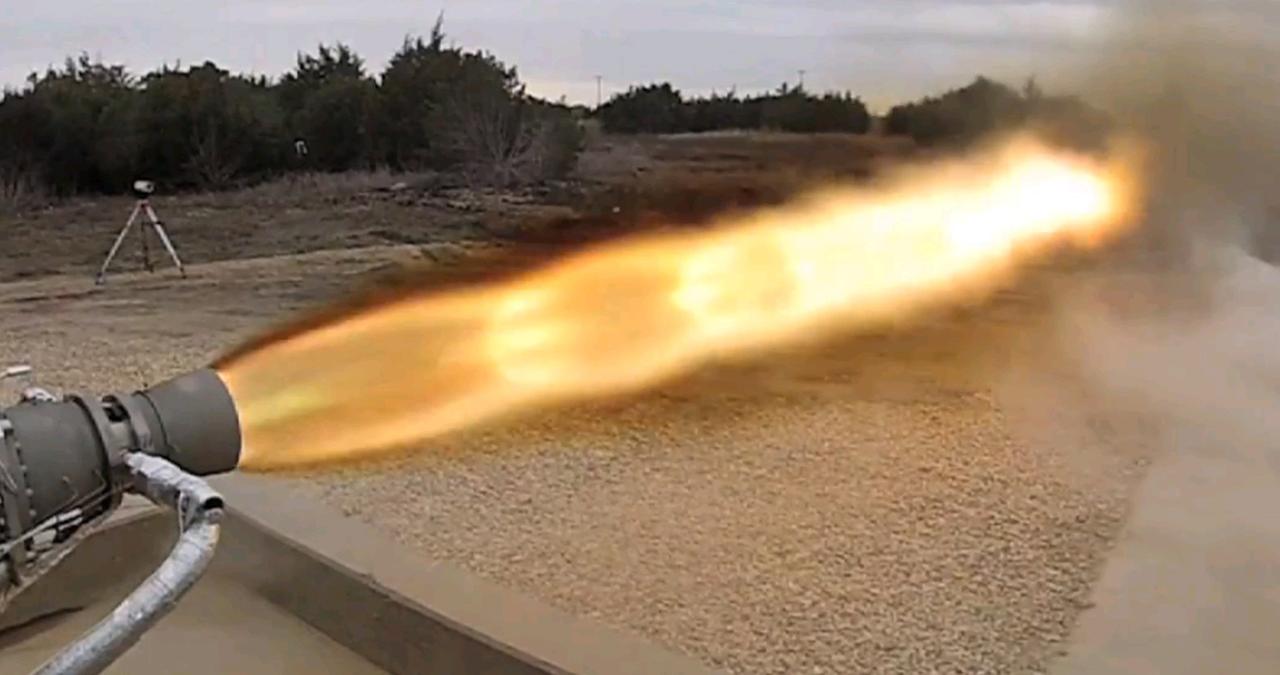
MCGREGOR, Texas -- Space Exploration Technologies (SpaceX) completes a full-duration, full-thrust firing of its new SuperDraco engine prototype at the company’s Rocket Development Facility in McGregor, Texas. The firing was in preparation for the ninth milestone to be completed under SpaceX's funded Space Act Agreement (SAA) with NASA's Commercial Crew Program (CCP). SpaceX is working with CCP during Commercial Crew Development Round 2 (CCDev2) in order to mature the design and development of its Dragon spacecraft with the overall goal of accelerating a United States-led capability to the International Space Station. Eight SuperDracos would be built into the sidewalls of the Dragon capsule to carry astronauts to safety should an emergency occur during launch or ascent. The goal of CCP is to drive down the cost of space travel as well as open up space to more people than ever before by balancing industry’s own innovative capabilities with NASA's 50 years of human spaceflight experience. Six other aerospace companies also are maturing launch vehicle and spacecraft designs under CCDev2, including Alliant Techsystems Inc. (ATK), Blue Origin, The Boeing Co., Excalibur Almaz Inc., Sierra Nevada Corp. and United Launch Alliance (ULA). For more information, visit www.nasa.gov/commercialcrew
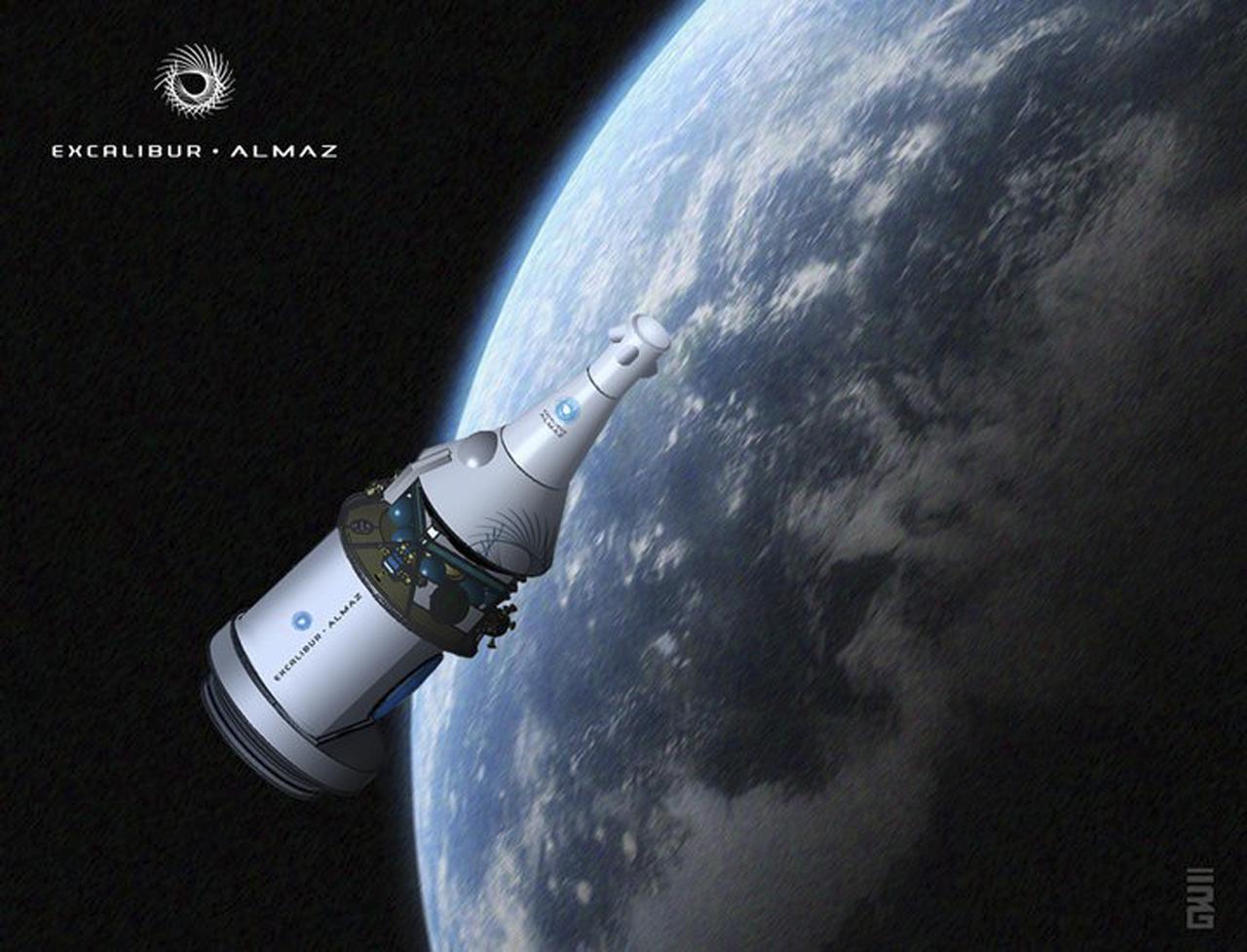
CAPE CANAVERAL, Fla. -- This is an artist's conception of an Almaz capsule, the basis of Excalibur Almaz Inc.'s Human Spacecraft design. In 2011, NASA's Commercial Crew Program CCP and the Houston-based company entered into an unfunded Space Act Agreement during Commercial Crew Development Round 2 CCDev2) activities to mature the design and development of a crew transportation system with the overall goal of accelerating a United States-led capability to the International Space Station. The goal of CCP is to drive down the cost of space travel as well as open up space to more people than ever before by balancing industry’s own innovative capabilities with NASA's 50 years of human spaceflight experience. Six other aerospace companies also are maturing launch vehicle and spacecraft designs under CCDev2, including Alliant Techsystems ATK, Blue Origin, The Boeing Co., Sierra Nevada Corp., Space Exploration Technologies SpaceX, and United Launch Alliance ULA. For more information, visit www.nasa.gov/commercialcrew. Image credit: Excalibur Almaz Limited
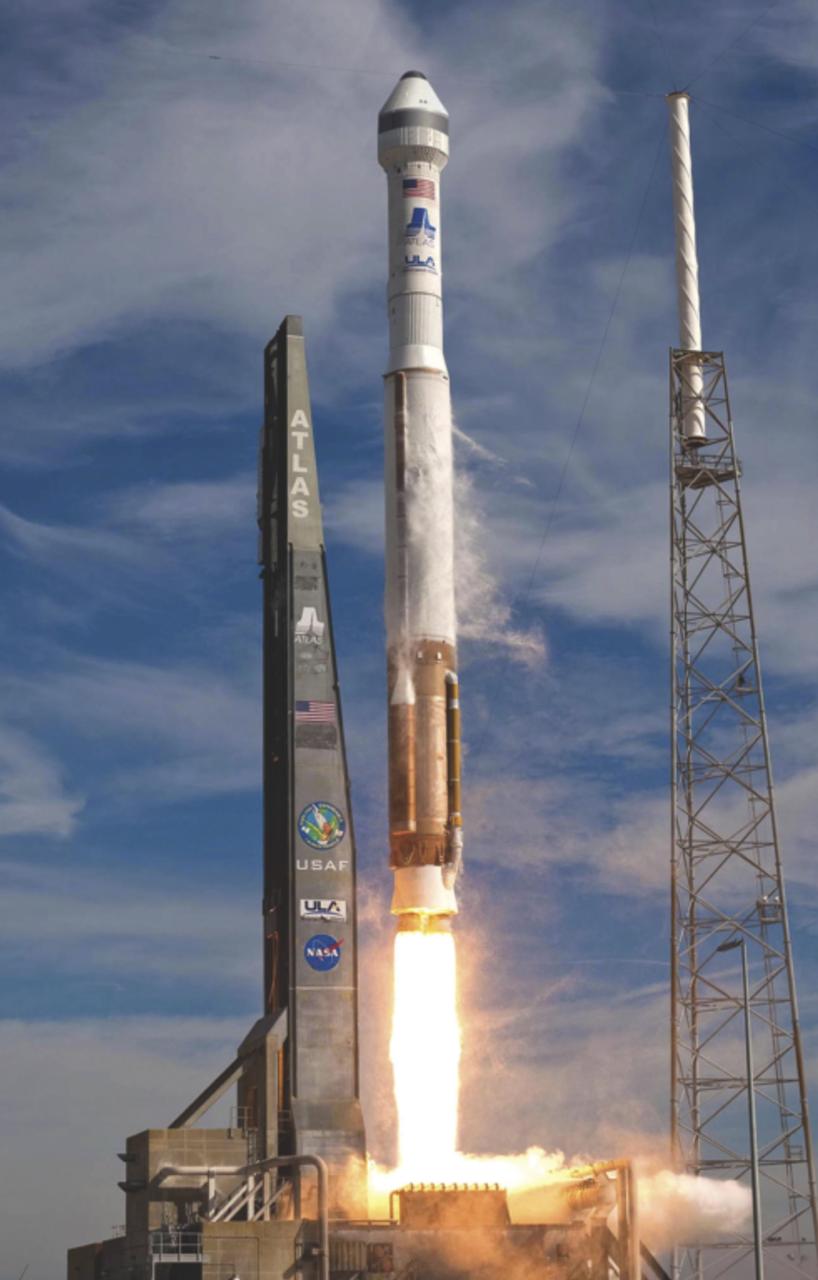
CAPE CANAVERAL, Fla. -- This is an artist's conception of a United Launch Alliance (ULA) Atlas V rocket being considered for NASA's Commercial Crew Program (CCP). In 2011, NASA and ULA of Englewood, Colo., entered into an unfunded Space Act Agreement during Commercial Crew Development Round 2 (CCDev2) activities to mature the design and development of a crew transportation system with the overall goal of accelerating a United States-led capability to the International Space Station. The goal of CCP is to drive down the cost of space travel as well as open up space to more people than ever before by balancing industry’s own innovative capabilities with NASA's 50 years of human spaceflight experience. Six other aerospace companies also are maturing launch vehicle and spacecraft designs under CCDev2, including Alliant Techsystems Inc. (ATK), Blue Origin, The Boeing Co., Excalibur Almaz Inc., Sierra Nevada Corp., and Space Exploration Technologies (SpaceX). For more information, visit www.nasa.gov/commercialcrew. Image credit: United Launch Alliance
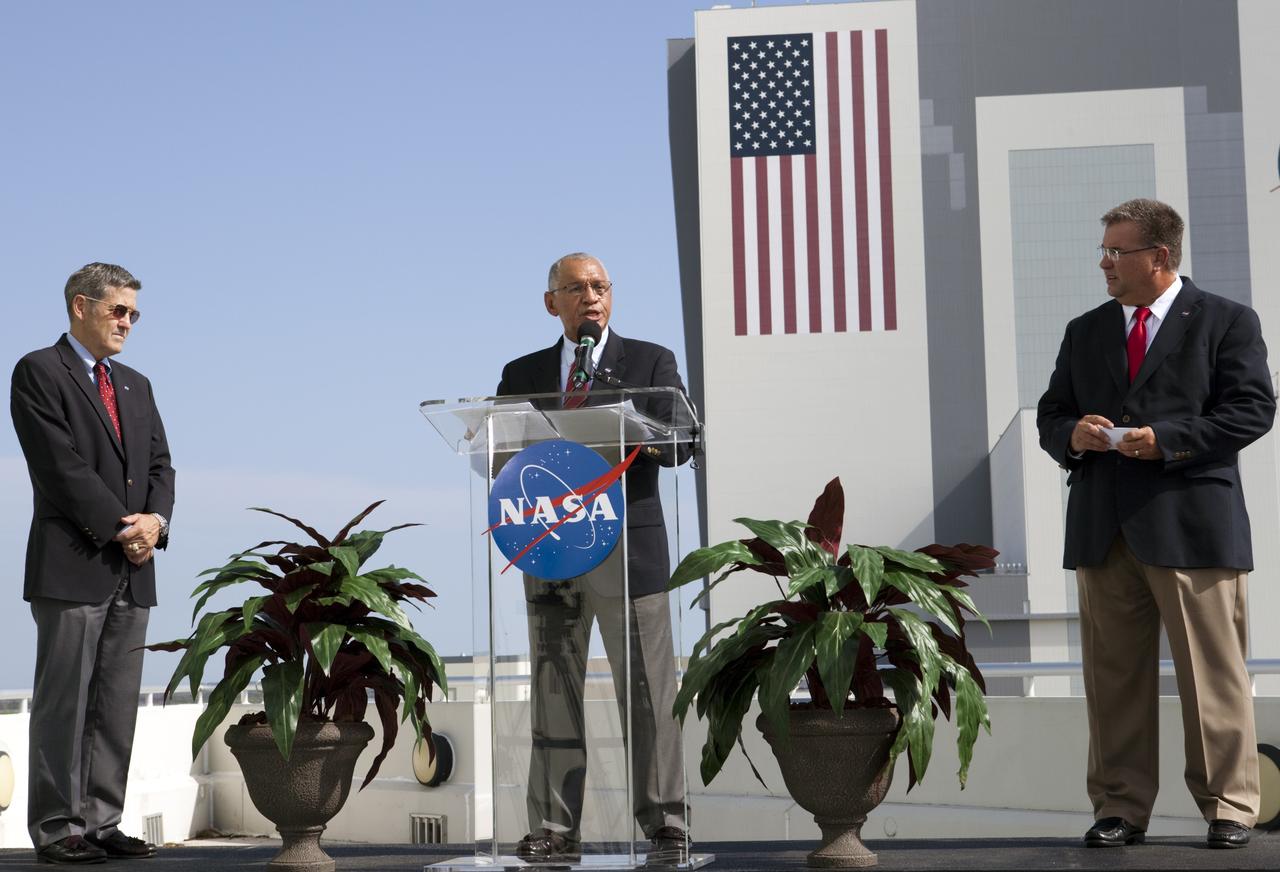
Cape Canaveral, Fla. -- NASA Administrator Charlie Bolden announces the newest partners of NASA's Commercial Crew Program CCP from Operations Support Building 2 OSB II at Kennedy Space Center in Florida. At left, is Kennedy Space Center Director Robert Cabana, and at right, is Commercial Crew Program CCP Manager Ed Mango. Three integrated systems were selected for CCP's Commercial Crew Integrated Capability CCiCap initiative to propel America's next human space transportation system to low Earth orbit forward. Operating under funded Space Act Agreements SAAs, The Boeing Co. of Houston, Sierra Nevada Corp. SNC Space Systems of Louisville, Colo., and Space Exploration Technologies SpaceX of Hawthorne, Calif., will spend the next 21 months completing their designs, conducting critical risk reduction testing on their spacecraft and launch vehicles, and showcasing how they would operate and manage missions from launch through orbit and landing, setting the stage for future demonstration missions. To learn more about CCP, which is based at Kennedy and supported by NASA's Johnson Space Center in Houston, visit www.nasa.gov/commercialcrew. Photo credit: NASA/Kim Shiflett
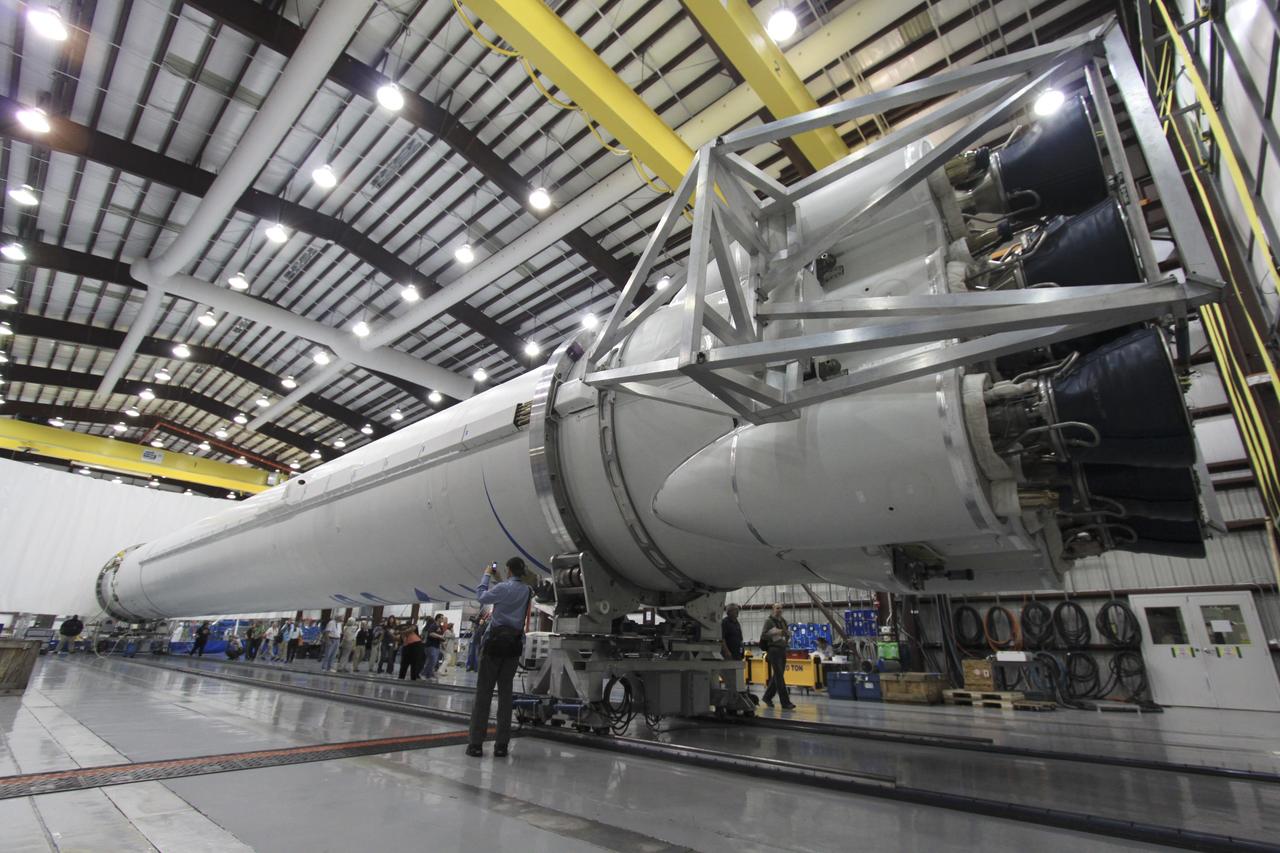
CAPE CANAVERAL, Fla. -- Media learn about the plans Space Exploration Technologies Corp. (SpaceX) has to take NASA astronauts to the International Space Station at Space Launch Complex-40 on Cape Canaveral Air Force Station. SpaceX is working to make its Falcon 9 rocket and Dragon capsule safe for humans for NASA's Commercial Crew Program (CCP) under the Commercial Crew Development Round 2 (CCDev2) activities. SpaceX already is developing these systems under NASA's Commercial Orbital Transportation System (COTS) Program to take supplies to the space station. Scott Henderson, director of SpaceX mission assurance, explained that the company is drafting designs to make the Dragon capsule crew-capable with life support systems while meeting CCP's safety requirements. One such option under discussion is a launch abort system that would push astronauts away from the launch pad in the event of an emergency, which is different than traditional pull systems. It's the freedom to develop innovative solutions such as this that CCP hopes will drive down the cost of space travel as well as open up space to more people than ever before. CCP, which is based at NASA's Kennedy Space Center in Florida, partnered with seven aerospace companies to mature launch vehicle and spacecraft designs under CCDev2, including Alliant Techsystems Inc. (ATK) of Promontory, Utah, Blue Origin of Kent, Wash., The Boeing Co., of Houston, Excalibur Almaz Inc. of Houston, Sierra Nevada Corp. of Louisville, Colo., Space Exploration Technologies (SpaceX) of Hawthorne, Calif., and United Launch Alliance (ULA) of Centennial, Colo. For more information, visit www.nasa.gov/exploration/commercial Photo credit: Jim Grossmann
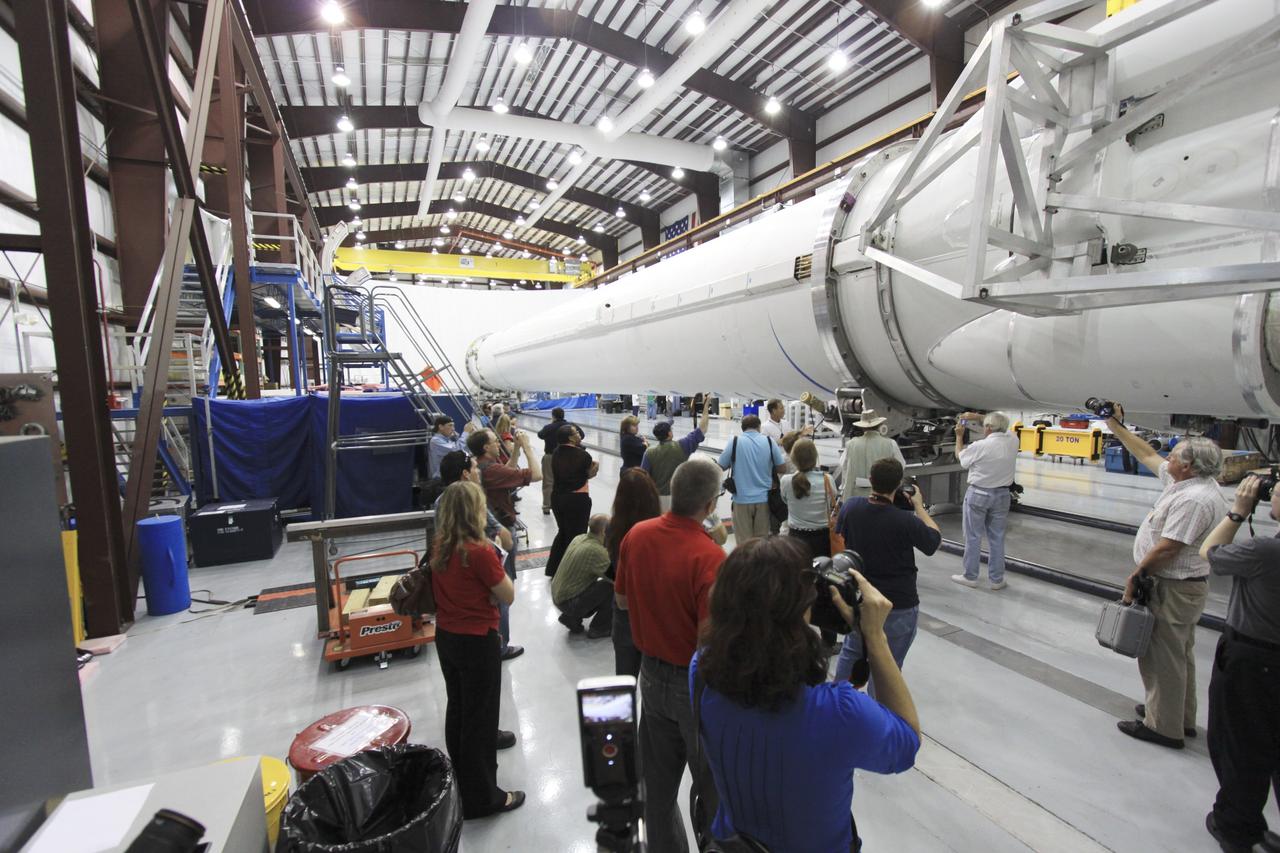
CAPE CANAVERAL, Fla. -- Media learn about the plans Space Exploration Technologies Corp. (SpaceX) has to take NASA astronauts to the International Space Station at Space Launch Complex-40 on Cape Canaveral Air Force Station. SpaceX is working to make its Falcon 9 rocket and Dragon capsule safe for humans for NASA's Commercial Crew Program (CCP) under the Commercial Crew Development Round 2 (CCDev2) activities. SpaceX already is developing these systems under NASA's Commercial Orbital Transportation System (COTS) Program to take supplies to the space station. Scott Henderson, director of SpaceX mission assurance, explained that the company is drafting designs to make the Dragon capsule crew-capable with life support systems while meeting CCP's safety requirements. One such option under discussion is a launch abort system that would push astronauts away from the launch pad in the event of an emergency, which is different than traditional pull systems. It's the freedom to develop innovative solutions such as this that CCP hopes will drive down the cost of space travel as well as open up space to more people than ever before. CCP, which is based at NASA's Kennedy Space Center in Florida, partnered with seven aerospace companies to mature launch vehicle and spacecraft designs under CCDev2, including Alliant Techsystems Inc. (ATK) of Promontory, Utah, Blue Origin of Kent, Wash., The Boeing Co., of Houston, Excalibur Almaz Inc. of Houston, Sierra Nevada Corp. of Louisville, Colo., Space Exploration Technologies (SpaceX) of Hawthorne, Calif., and United Launch Alliance (ULA) of Centennial, Colo. For more information, visit www.nasa.gov/exploration/commercial Photo credit: Jim Grossmann
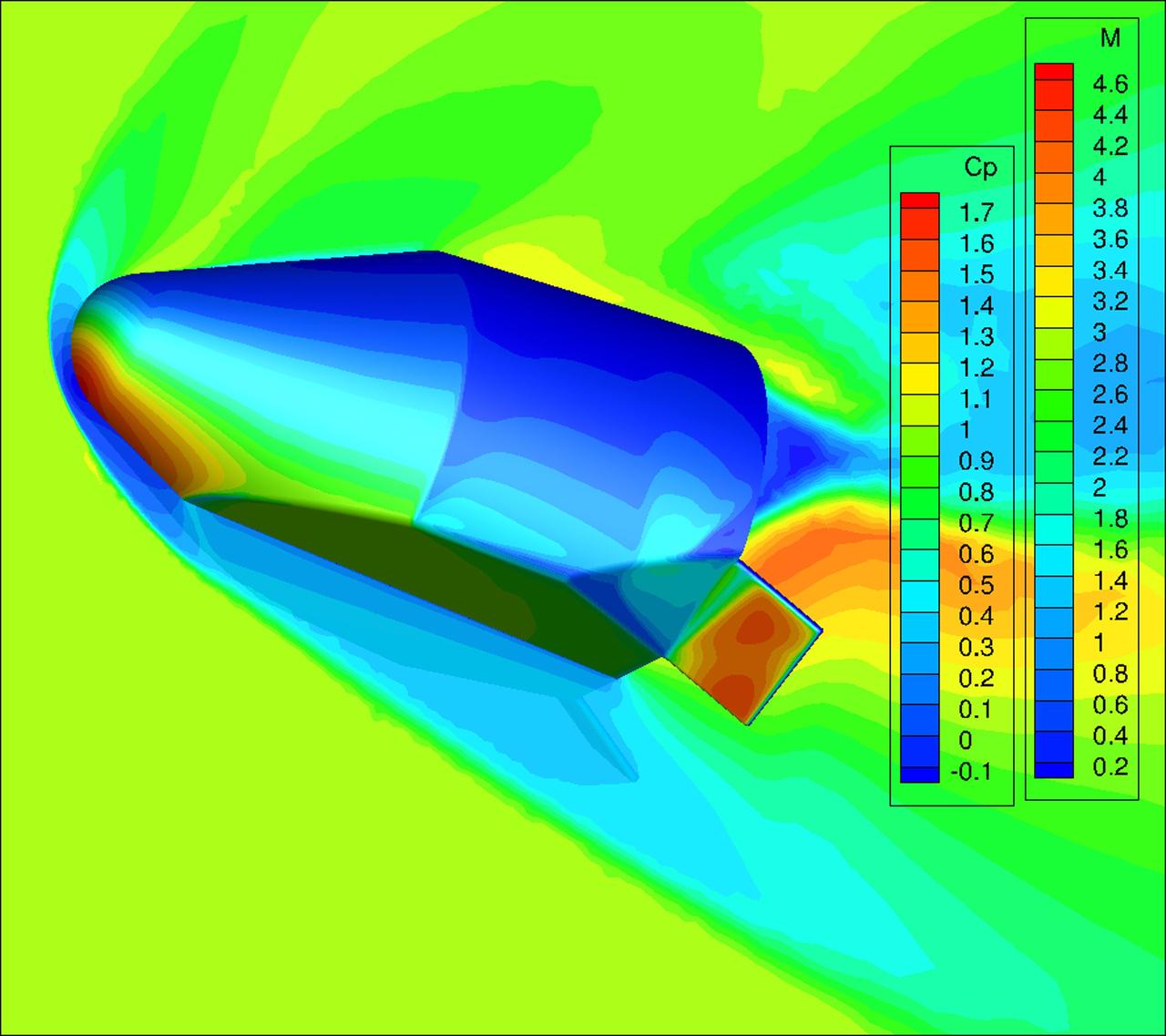
DALLAS – This computational fluid dynamics CFD image was taken during a series of wind tunnel tests for Blue Origin's next-generation Space Vehicle at Lockheed Martin's High Speed Wind Tunnel Facility in Dallas. The Space Vehicle's innovative biconic shape is designed to provide more cross-range and interior volume than a traditional capsule and weigh less than a winged vehicle. More than 180 wind tunnel tests validated the company's analysis of the Space Vehicle's aerodynamics during descent through the atmosphere and the ability to change its flight path, which could increase the number of available landing opportunities and enhance the vehicle's emergency return capability. In 2011, NASA selected Blue Origin during Commercial Crew Development Round 2 CCDev2) activities for NASA’s Commercial Crew Program to mature the design and development of a crew transportation system with the overall goal of accelerating a United States-led capability to the International Space Station. The goal of CCP is to drive down the cost of space travel as well as open up space to more people than ever before by balancing industry’s own innovative capabilities with NASA's 50 years of human spaceflight experience. Six other aerospace companies also are maturing launch vehicle and spacecraft designs under CCDev2, including Alliant Techsystems Inc. ATK, The Boeing Co., Excalibur Almaz Inc., Sierra Nevada Corp., Space Exploration Technologies SpaceX, and United Launch Alliance ULA. For more information, visit www.nasa.gov/commercialcrew. Image credit: Blue Origin
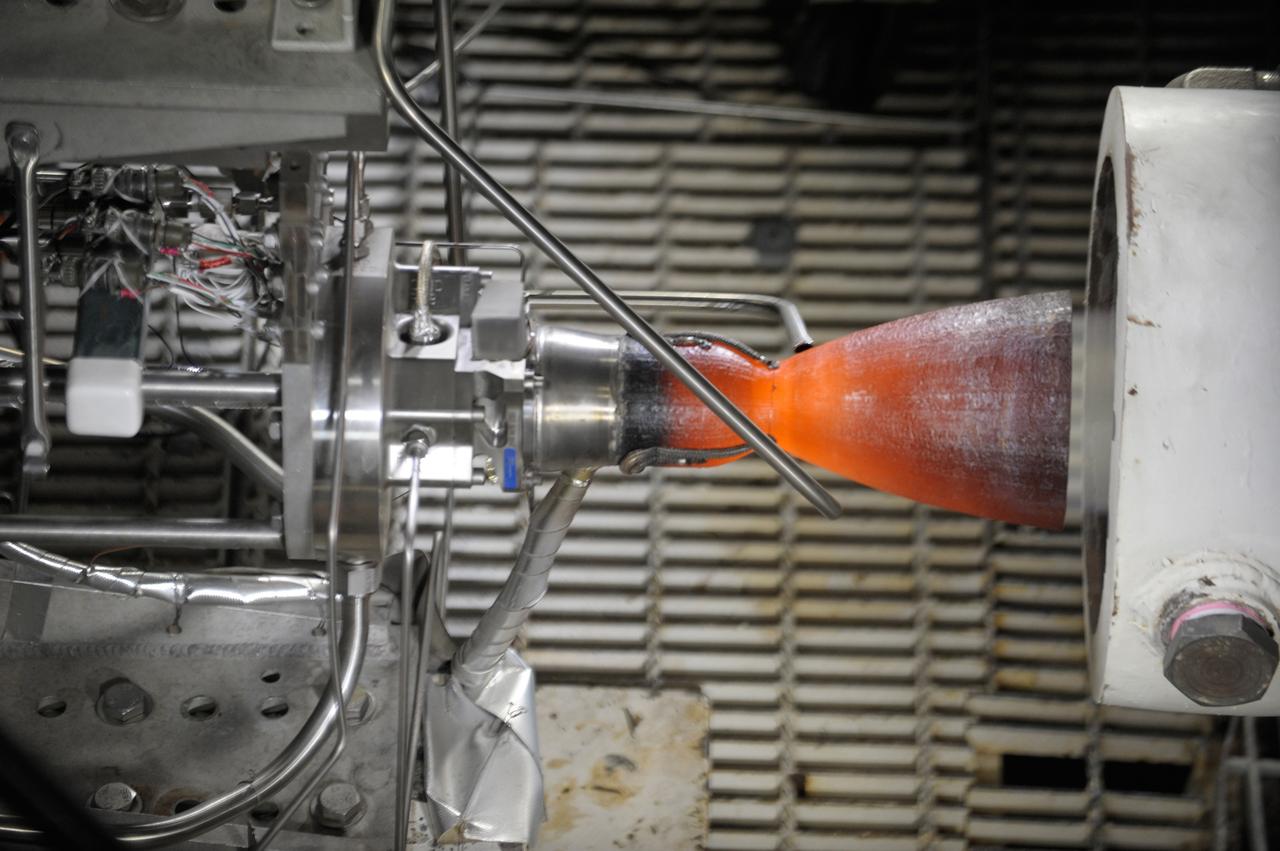
LAS CRUCES, N.M. -- Pratt & Whitney Rocketdyne tests a thruster destined for Boeing's CST-100 spacecraft. The thruster was fired in a vacuum chamber that simulated a space-like environment of 100,000 feet at NASA's White Sands Test Facility in Las Cruces, N.M., to verify its durability in extreme heat, evaluate the opening and closing of its valves and confirm continuous combustion and performance. Twenty-four thrusters will be part of the spacecraft's orbital maneuvering and attitude control system OMAC, giving the CST-100 the ability to maneuver in space and during re-entry. The thrusters also will allow the spacecraft to separate from its launch vehicle if an abort becomes necessary during launch or ascent. In 2011, NASA selected Boeing of Houston during Commercial Crew Development Round 2 CCDev2) activities to mature the design and development of a crew transportation system with the overall goal of accelerating a United States-led capability to the International Space Station. The goal of CCP is to drive down the cost of space travel as well as open up space to more people than ever before by balancing industry’s own innovative capabilities with NASA's 50 years of human spaceflight experience. Six other aerospace companies also are maturing launch vehicle and spacecraft designs under CCDev2, including Alliant Techsystems Inc. ATK, Blue Origin, Excalibur Almaz Inc., Sierra Nevada Corp., Space Exploration Technologies SpaceX, and United Launch Alliance ULA. For more information, visit www.nasa.gov/commercialcrew. Image credit: Pratt & Whitney Rocketdyne
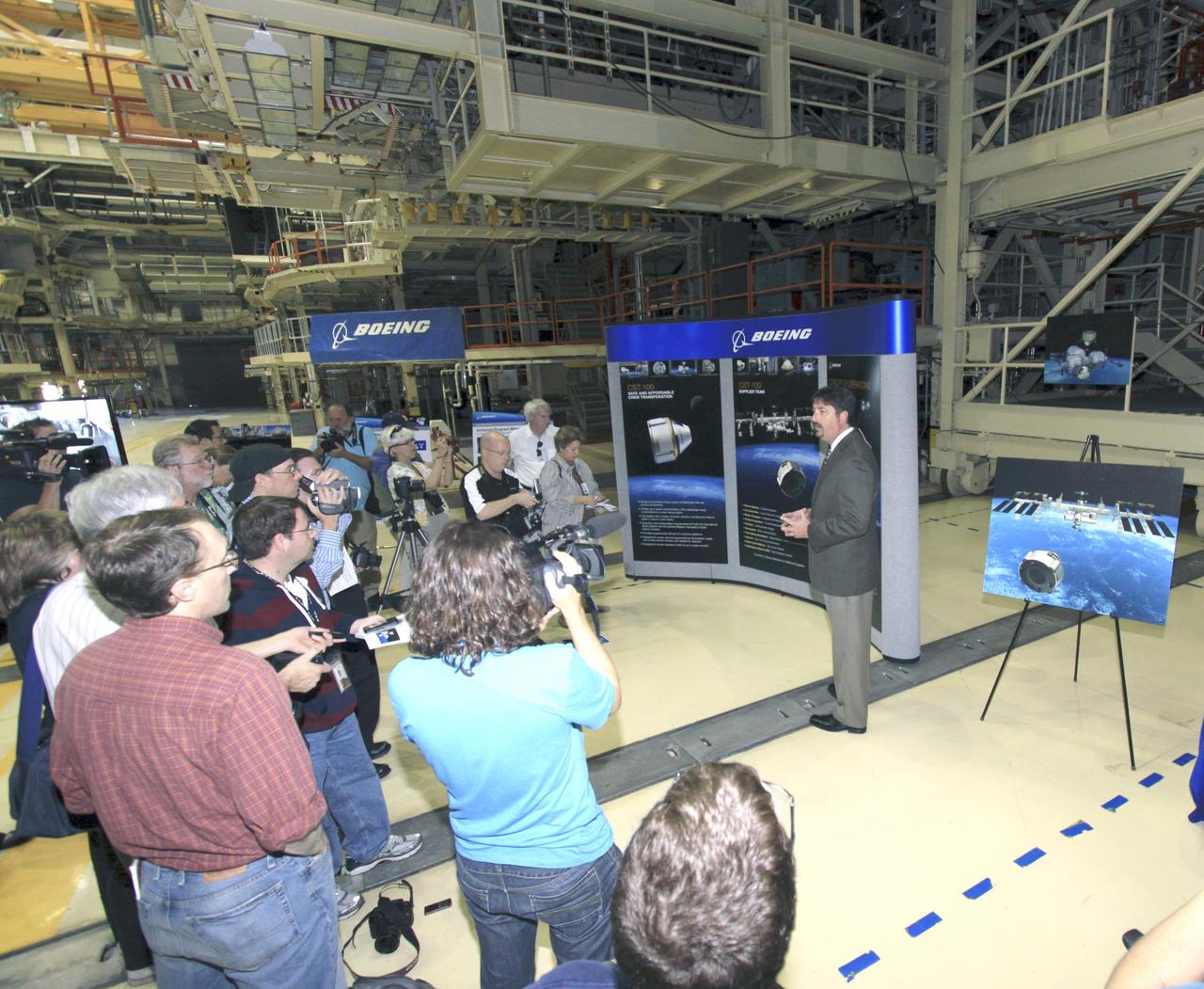
CAPE CANAVERAL, Fla. -- Chuck Hardison, the production and ground operations manager of The Boeing Co.'s Commercial Crew Transportation System, talks to media about plans to take NASA astronauts to the International Space Station in Orbiter Processing Facility-3 (OPF-3) at NASA's Kennedy Space Center in Florida. Boeing is maturing its CST-100 spacecraft design for NASA's Commercial Crew Program (CCP) under the Commercial Crew Development Round 2 (CCDev2) activities. Boeing's current design shows the CST-100 taking up to seven astronauts and cargo to the space station or other low Earth orbit destinations by the middle of the decade. Through an agreement with NASA and Space Florida, Boeing is leasing OPF-3, the Processing Control Facility (PCC) and Space Shuttle Main Engine Shop at Kennedy to design, manufacture, process and integrate the CST-100. This work is expected to generate up to 550 engineering and technical jobs for Florida's Space Coast. Hardison explained that the CST-100 will be manufactured using a spin-form technology, which is expected to bring down the cost and safety concerns of a traditional welded spacecraft. It's innovations such as this that CCP hopes will drive down the cost of space travel as well as open up space to more people than ever before. Seven aerospace companies are maturing launch vehicle and spacecraft designs under CCDev2, including Alliant Techsystems Inc. (ATK) of Promontory, Utah, Blue Origin of Kent, Wash., The Boeing Co., of Houston, Excalibur Almaz Inc. of Houston, Sierra Nevada Corp. of Louisville, Colo., Space Exploration Technologies (SpaceX) of Hawthorne, Calif., and United Launch Alliance (ULA) of Centennial, Colo. For more information, visit www.nasa.gov/exploration/commercial Photo credit: Jim Grossmann
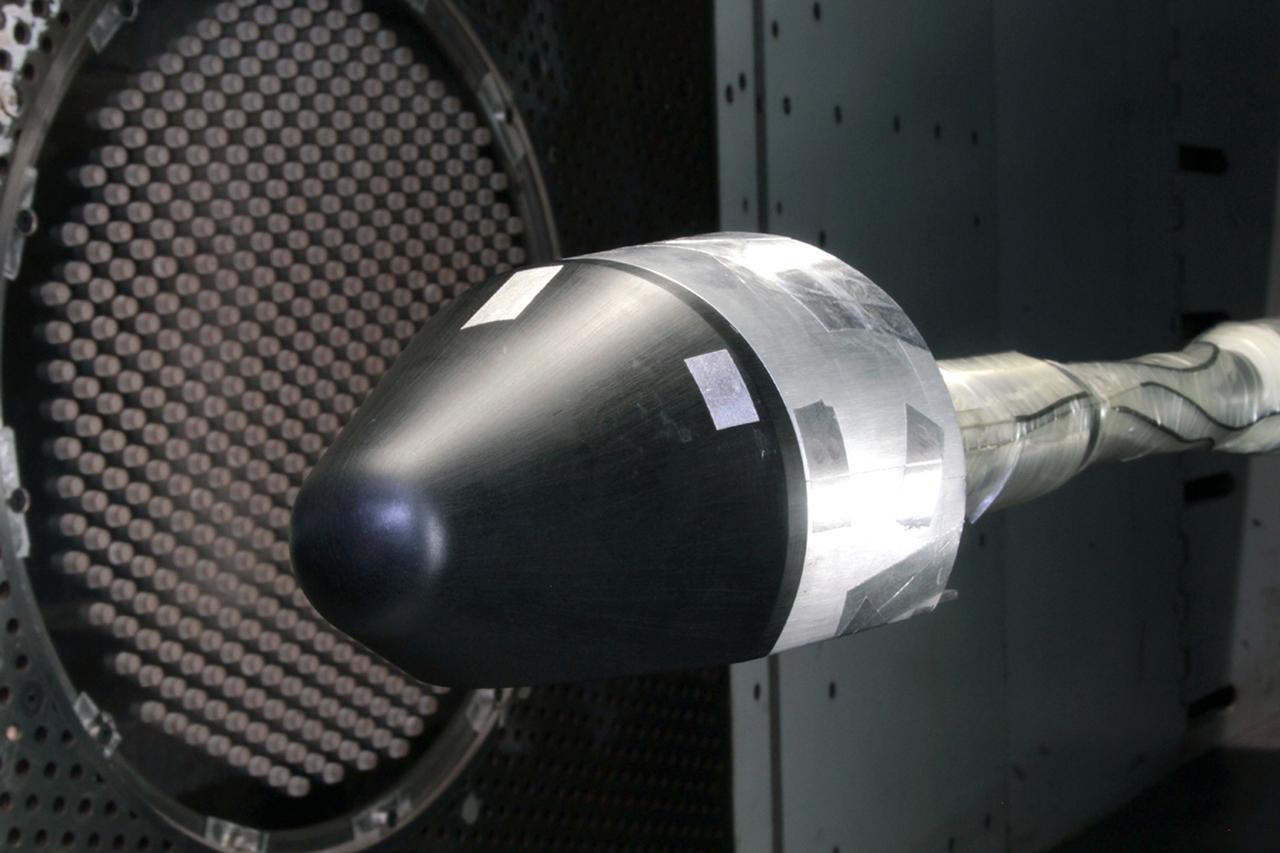
DALLAS – This image was taken during a series of wind tunnel tests for Blue Origin's Space Vehicle at Lockheed Martin's High Speed Wind Tunnel Facility in Dallas. The Space Vehicle's innovative biconic shape is designed to provide more cross-range and interior volume than a traditional capsule and weigh less than a winged vehicle. More than 180 wind tunnel tests validated the company's analysis of the Space Vehicle's aerodynamics during descent through the atmosphere and the ability to change its flight path, which could increase the number of available landing opportunities and enhance the vehicle's emergency return capability. In 2011, NASA selected Blue Origin during Commercial Crew Development Round 2 CCDev2) activities for NASA’s Commercial Crew Program to mature the design and development of a crew transportation system with the overall goal of accelerating a United States-led capability to the International Space Station. The goal of CCP is to drive down the cost of space travel as well as open up space to more people than ever before by balancing industry’s own innovative capabilities with NASA's 50 years of human spaceflight experience. Six other aerospace companies also are maturing launch vehicle and spacecraft designs under CCDev2, including Alliant Techsystems Inc. ATK, The Boeing Co., Excalibur Almaz Inc., Sierra Nevada Corp., Space Exploration Technologies SpaceX, and United Launch Alliance ULA. For more information, visit www.nasa.gov/commercialcrew. Image credit: Blue Origin
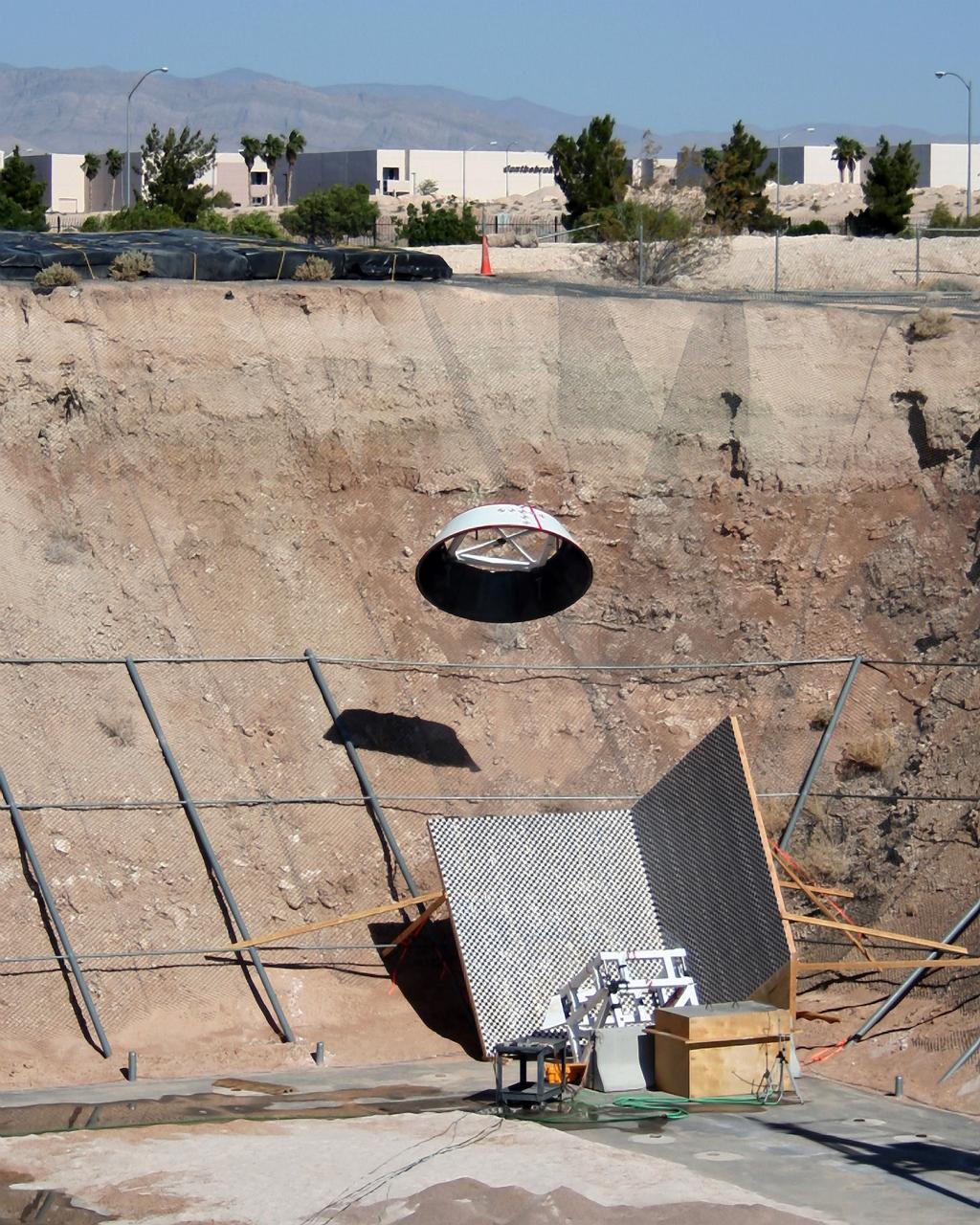
LAS VEGAS -- The Boeing Company tests the forward heat shield FHS jettison system of its CST-100 spacecraft at the Bigelow Aerospace facility in Las Vegas as part of an agreement with NASA's Commercial Crew Program CCP during Commercial Crew Development Round 2 CCDev2) activities. The FHS will protect the spacecraft's parachutes, rendezvous-and-docking sensor packages, and docking mechanism during ascent and re-entry. During a mission to low Earth orbit, the shield will be jettisoned after re-entry heating, allowing the spacecraft's air bags to deploy for a safe landing. In 2011, NASA selected Boeing for CCDev2 to mature the design and development of a crew transportation system with the overall goal of accelerating a United States-led capability to the International Space Station. The goal of CCP is to drive down the cost of space travel as well as open up space to more people than ever before by balancing industry’s own innovative capabilities with NASA's 50 years of human spaceflight experience. Six other aerospace companies also were selected to mature launch vehicle and spacecraft designs under CCDev2, including Alliant Techsystems Inc. ATK, Excalibur Almaz Inc., Blue Origin, Sierra Nevada Corp. SNC, Space Exploration Technologies SpaceX, and United Launch Alliance ULA. For more information, visit www.nasa.gov/commercialcrew. Image credit: Boeing The Ground Systems Development and Operations Program is developing the necessary ground systems, infrastructure and operational approaches required to safely process, assemble, transport and launch the next generation of rockets and spacecraft in support of NASA’s exploration objectives. Future work also will replace the antiquated communications, power and vehicle access resources with modern efficient systems. Some of the utilities and systems slated for replacement have been used since the VAB opened in 1965. For more information, visit http://www.nasa.gov/exploration/systems/ground/index.html Photo credit: Boeing