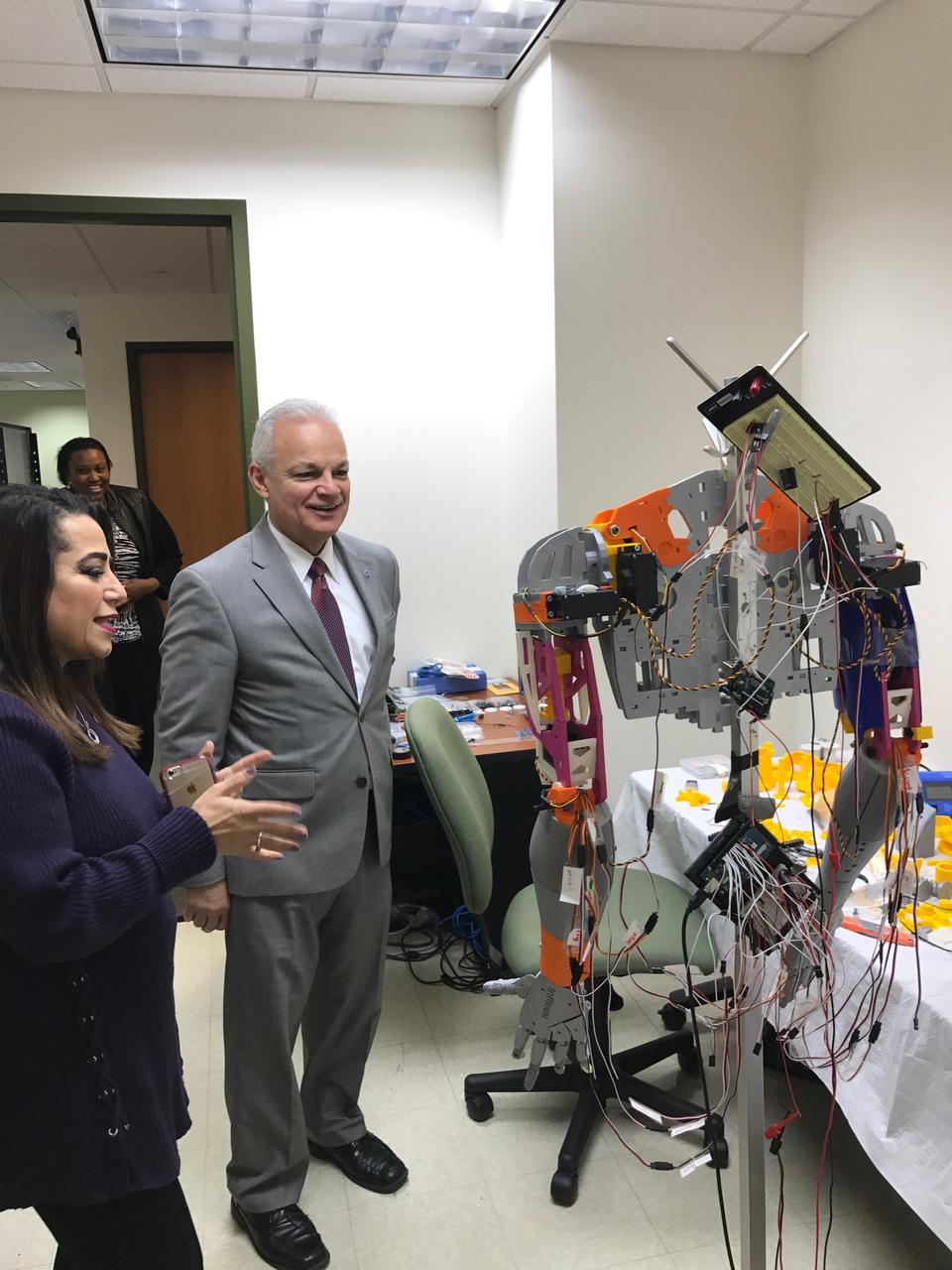
Norfolk State University Associate Professor Rasha Morsi showcases a phone operated, 3D-printed robot sign language interpreter to NASA Chief Technologist Douglas Terrier during a tour of the university’s Creative Gaming Simulation lab on February 6, 2018. (Credit: NASA)
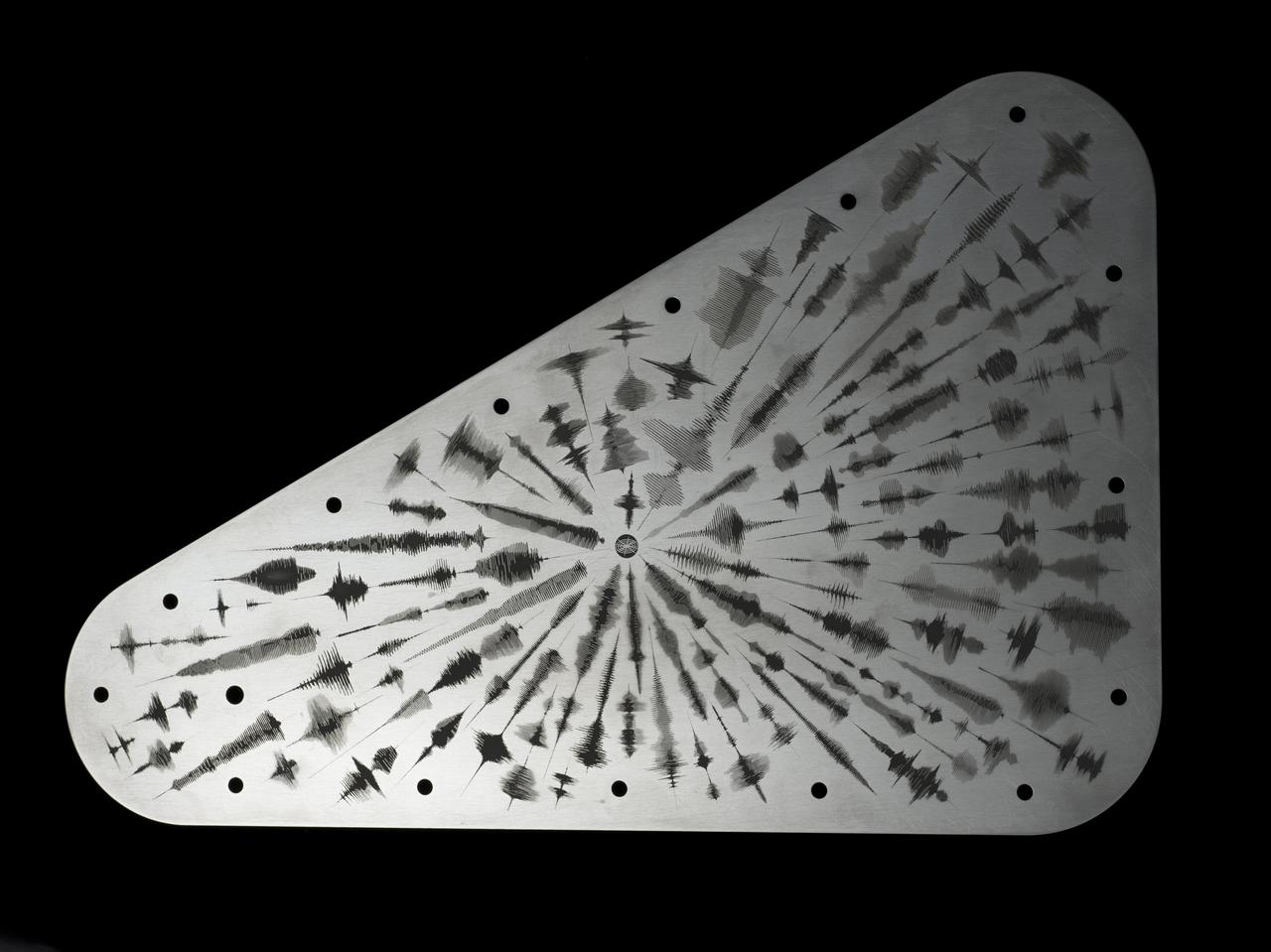
NASA's Europa Clipper spacecraft will carry a special message when it launches in October 2024 and heads toward Jupiter's moon Europa. The moon shows strong evidence of an ocean under its icy crust, with more than twice the amount of water of all of Earth's oceans combined. A triangular metal plate, seen here, will honor that connection to Earth. The plate is made of tantalum metal and is about 7 by 11 inches (18 by 28 centimeters). It is engraved on both sides and seals an opening in the electronics vault, which houses the spacecraft's sensitive electronics. The art on this side of the plate features waveforms that are visual representations of the sound waves formed by the word "water" in 103 languages. The waveforms radiate out from a symbol representing the American Sign Language sign for "water." In the spirit of the Voyager spacecraft's Golden Record, which carries sounds and images to convey the richness and diversity of life on Earth, the layered message on Europa Clipper aims to spark the imagination and offer a unifying vision. Europa Clipper, set to launch from Kennedy Space Center in Florida, will arrive at the Jupiter system in 2030 and conduct about 50 flybys of the moon Europa. The mission's main science goal is to determine whether there are places below Europa, that could support life. The mission's three main science objectives are to determine the thickness of the moon's icy shell and its surface interactions with the ocean below, to investigate its composition, and to characterize its geology. The mission's detailed exploration of Europa will help scientists better understand the astrobiological potential for habitable worlds beyond our planet. https://photojournal.jpl.nasa.gov/catalog/PIA26063
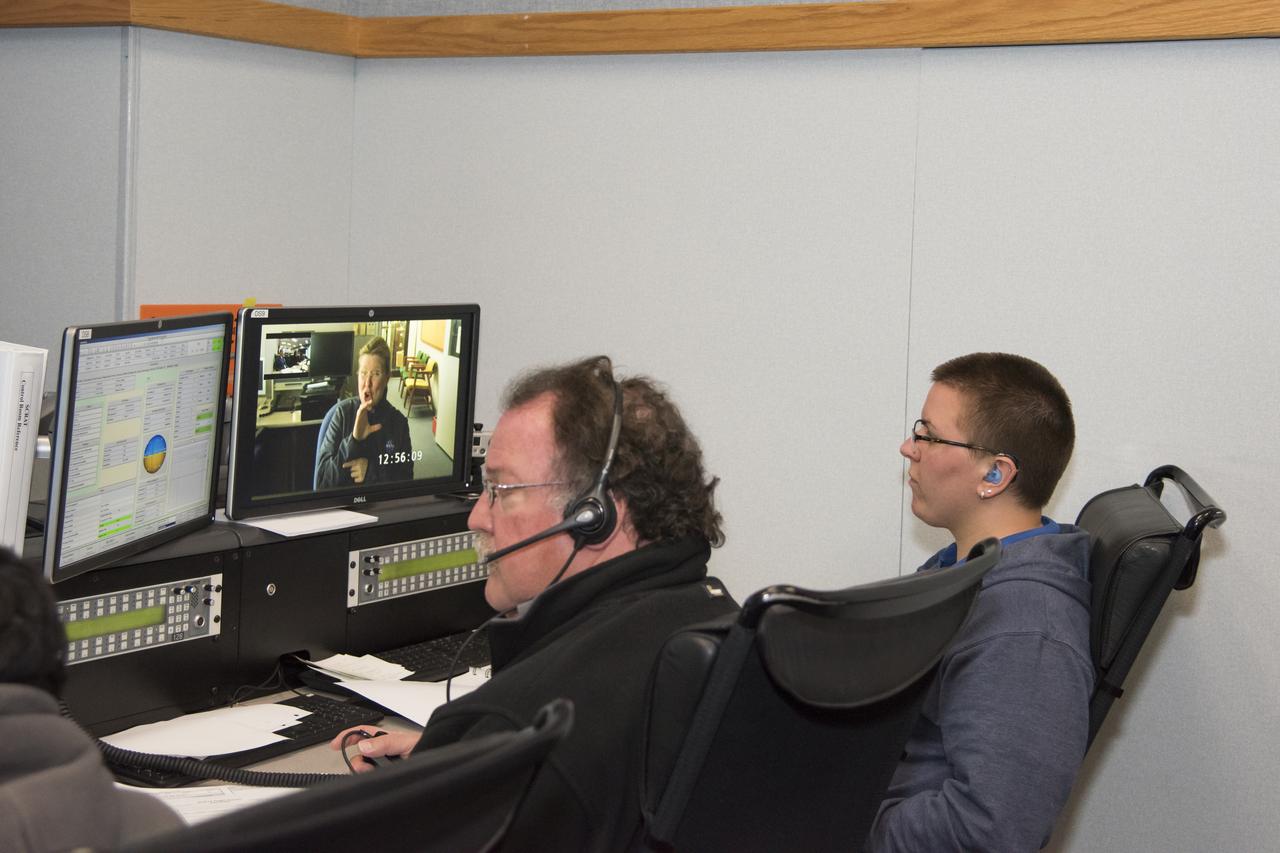
Johanna Lucht, observing data from the Mission Control Center at NASA’s Armstrong Flight Research Center in California, received flight communications from an interpreter, seen on Lucht’s monitor, through American Sign Language. Two-way visual communication was established between Lucht and the interpreter, located at NASA’s Langley Research Center in Virginia, for the flight. Interpreting technical terminology often requires cooperation to develop specific signs to ease communication. Using a familiar interpreter who is adept or practiced in the technical terminology of a NASA flight was beneficial, Lucht says.
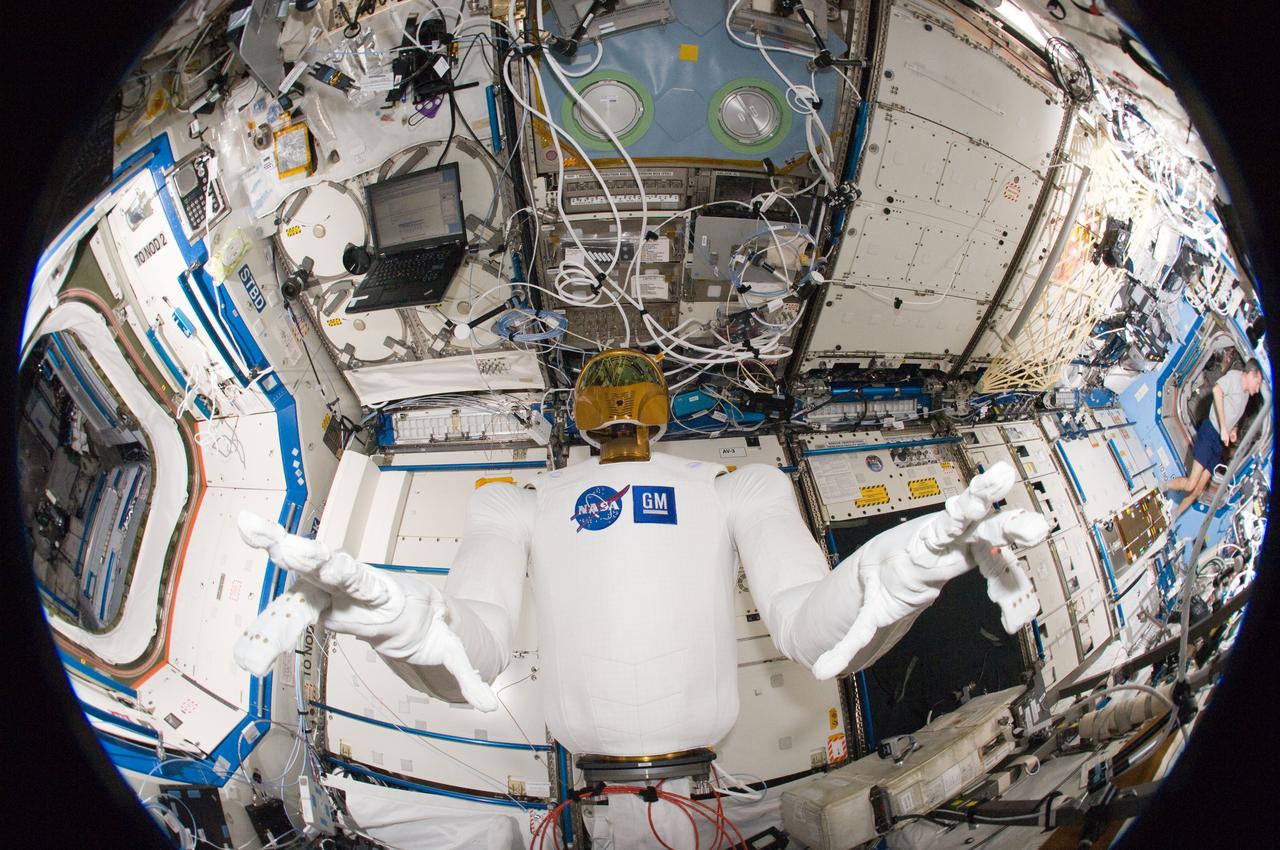
ISS030-E-135157 (13 March 2012) --- A fisheye lens attached to an electronic still camera was used to capture this image of Robonaut 2 humanoid robot during another system checkout in the Destiny laboratory of the International Space Station. Teams on the ground commanded Robonaut through a series of dexterity tests as it spelled out ?Hello world? in sign language.
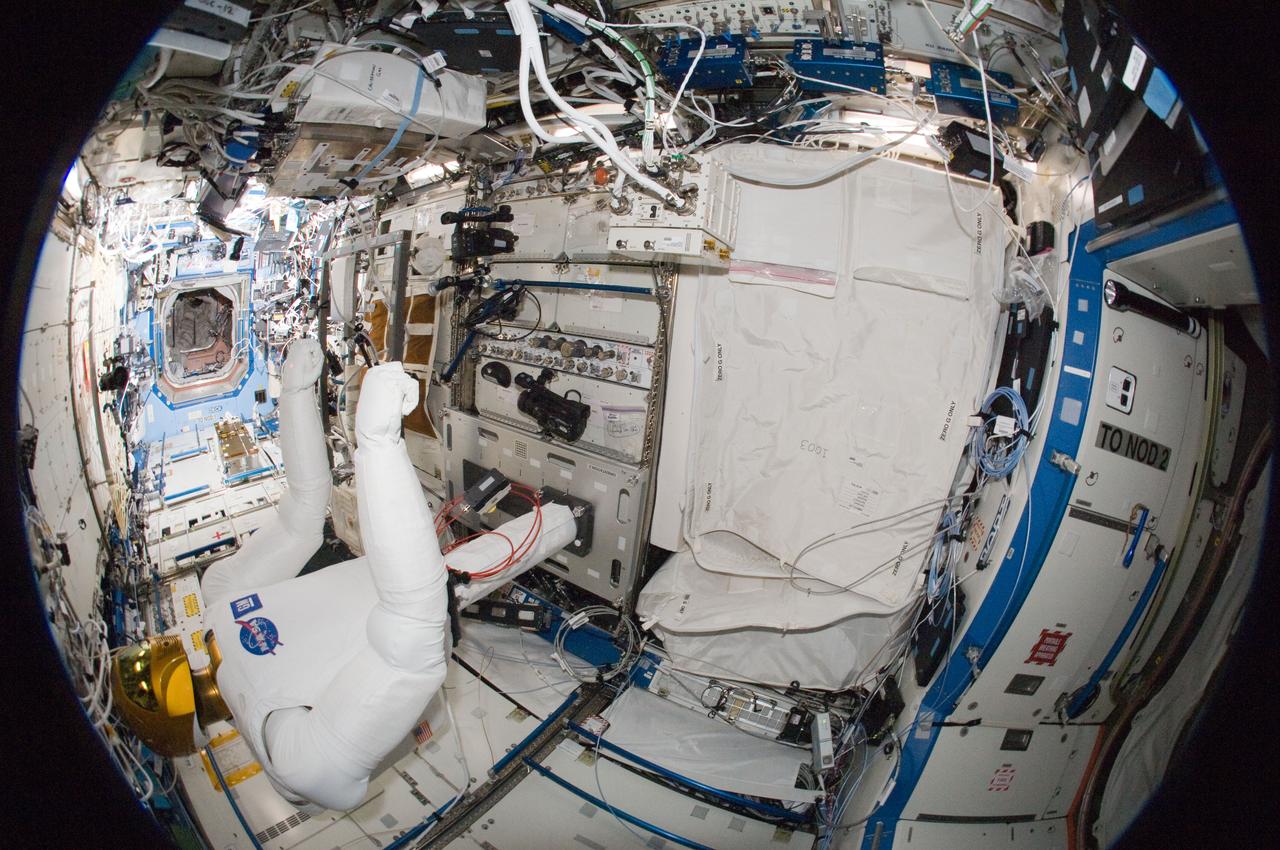
ISS030-E-135148 (13 March 2012) --- A fisheye lens attached to an electronic still camera was used to capture this image of Robonaut 2 humanoid robot during another system checkout in the Destiny laboratory of the International Space Station. Teams on the ground commanded Robonaut through a series of dexterity tests as it spelled out ?Hello world? in sign language.
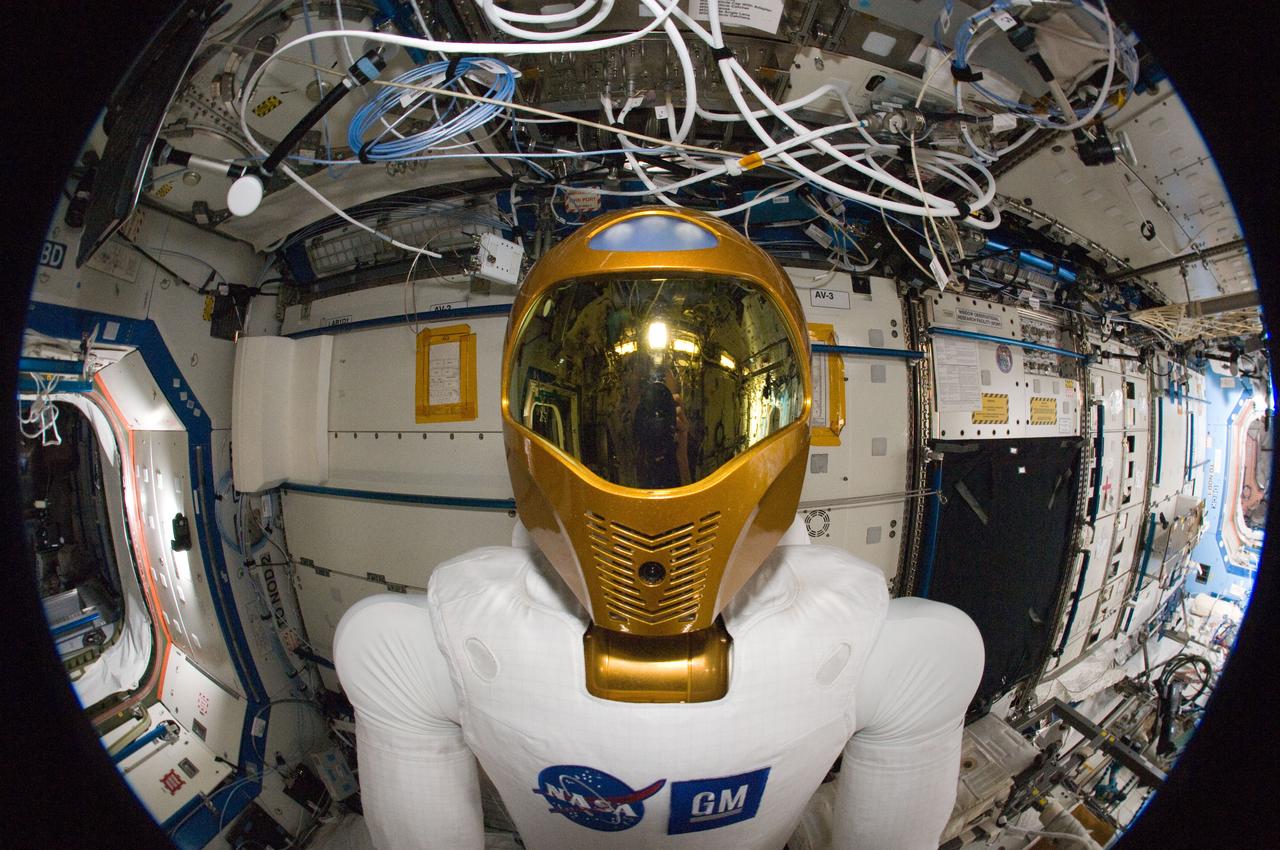
ISS030-E-135140 (13 March 2012) --- A fisheye lens attached to an electronic still camera was used to capture this image of Robonaut 2 humanoid robot during another system checkout in the Destiny laboratory of the International Space Station. Teams on the ground commanded Robonaut through a series of dexterity tests as it spelled out ?Hello world? in sign language.
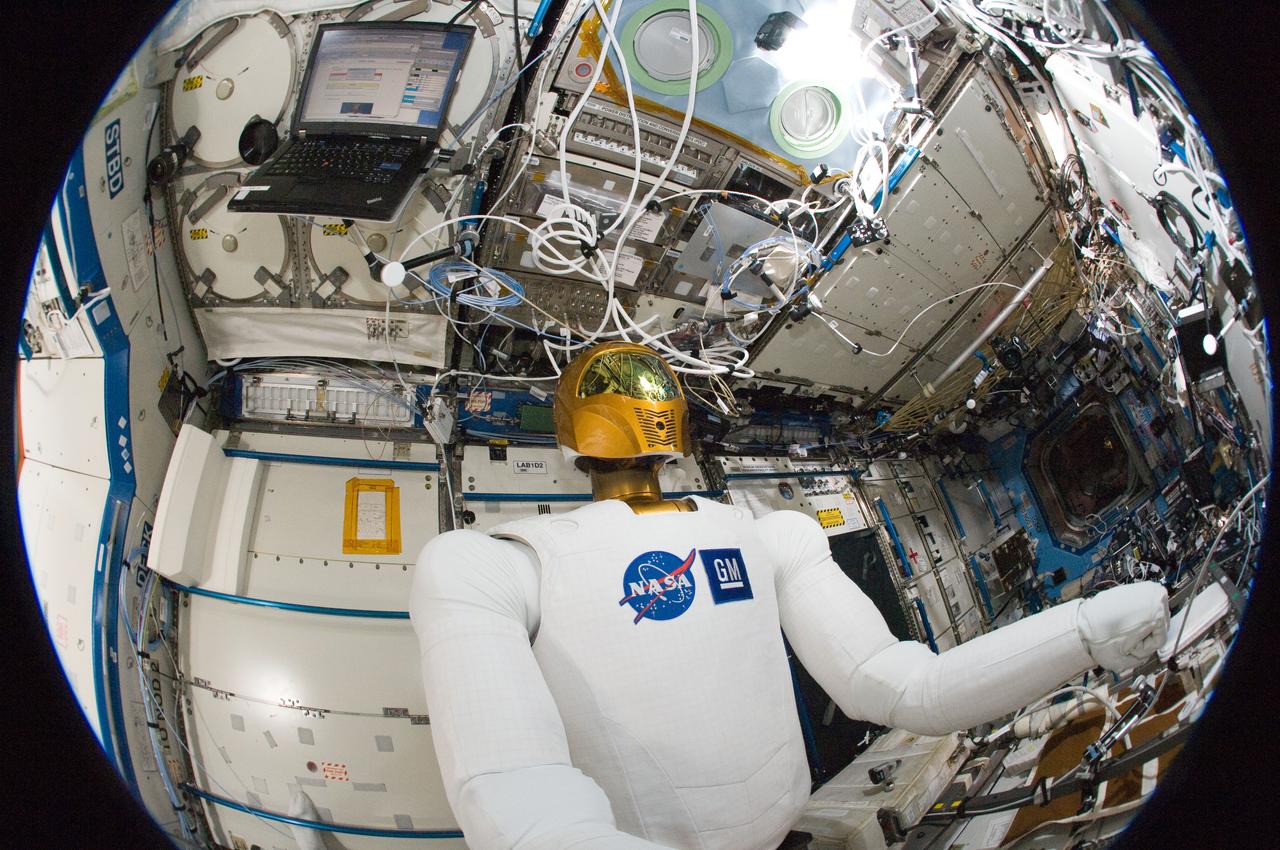
ISS030-E-135135 (13 March 2012) --- A fisheye lens attached to an electronic still camera was used to capture this image of Robonaut 2 humanoid robot during another system checkout in the Destiny laboratory of the International Space Station. Teams on the ground commanded Robonaut through a series of dexterity tests as it spelled out ?Hello world? in sign language.
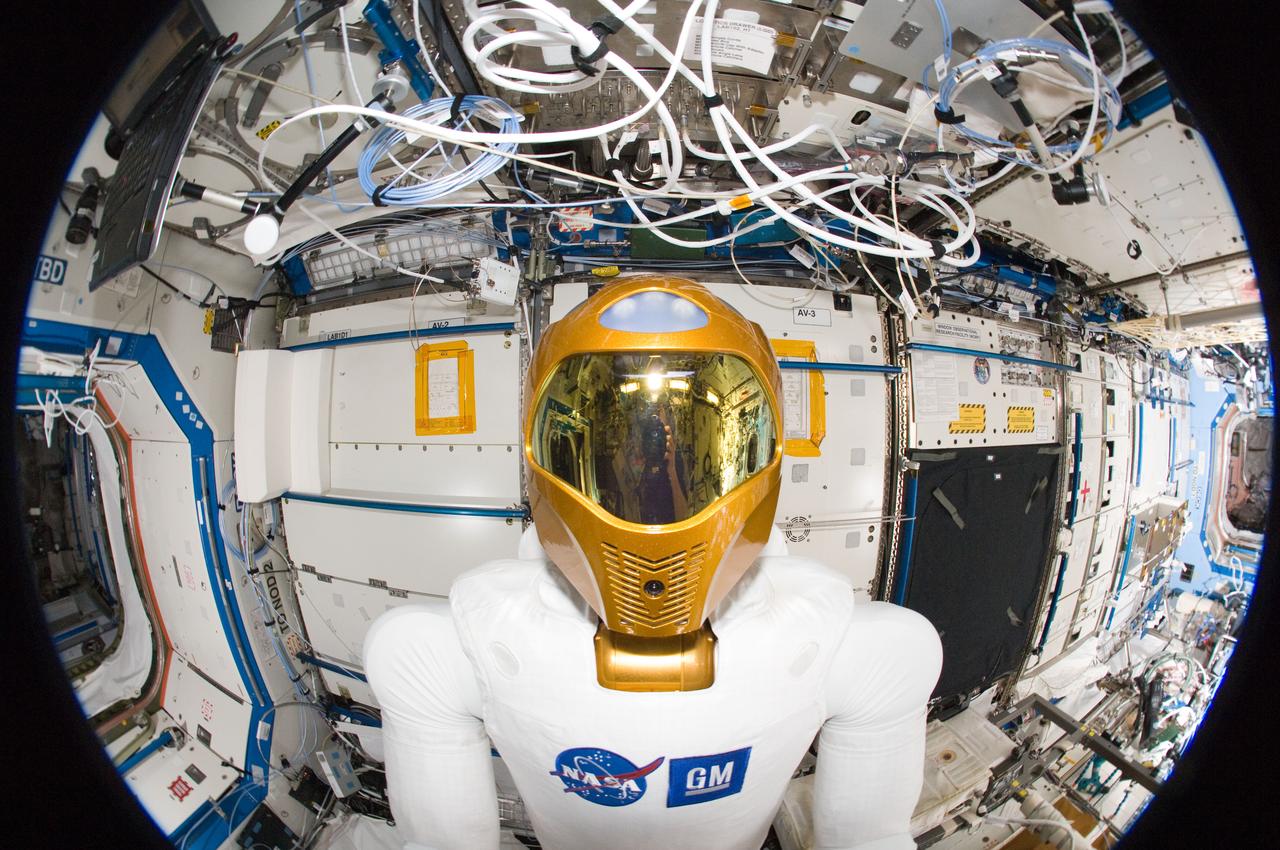
ISS030-E-135163 (13 March 2012) --- A fisheye lens attached to an electronic still camera was used to capture this image of Robonaut 2 humanoid robot during another system checkout in the Destiny laboratory of the International Space Station. Teams on the ground commanded Robonaut through a series of dexterity tests as it spelled out ?Hello world? in sign language.
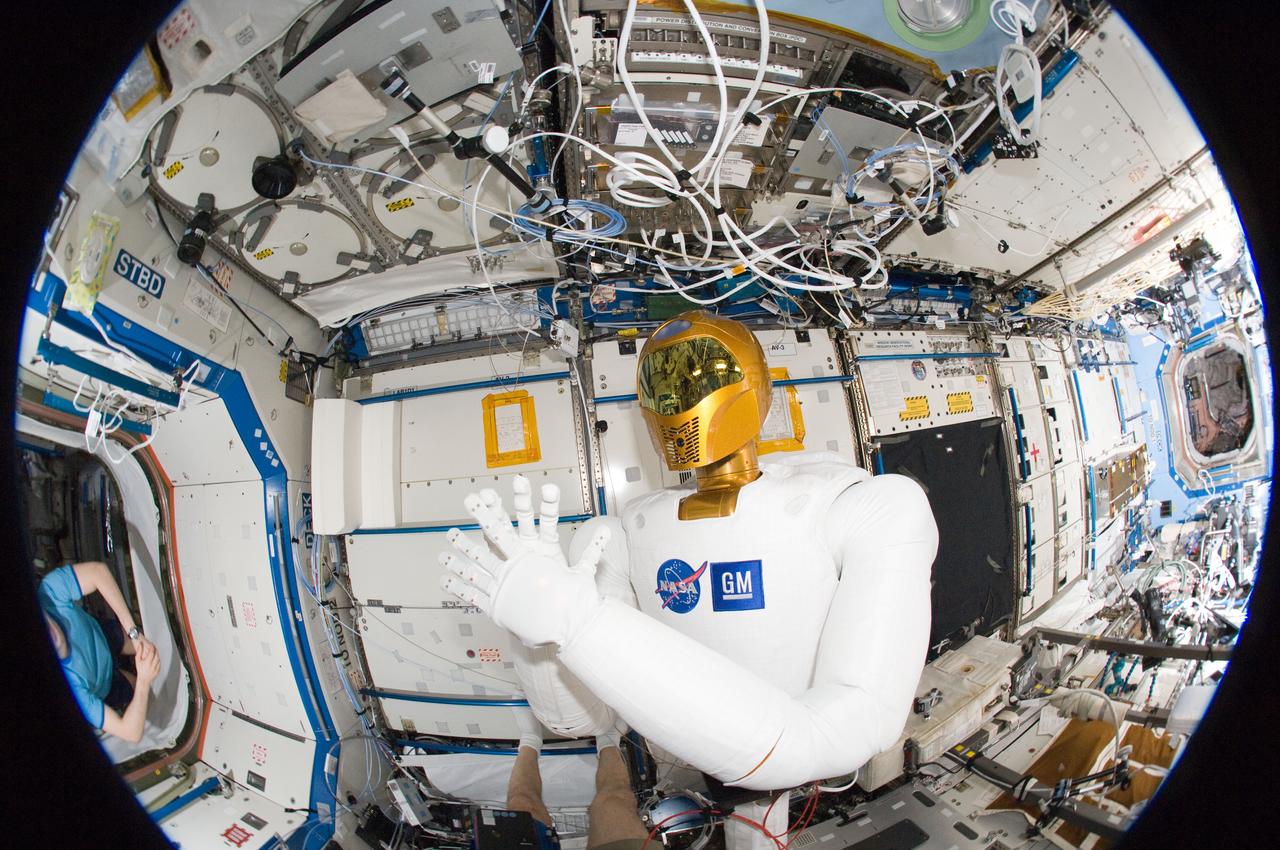
ISS030-E-135185 (13 March 2012) --- A fisheye lens attached to an electronic still camera was used to capture this image of Robonaut 2 humanoid robot during another system checkout in the Destiny laboratory of the International Space Station. Teams on the ground commanded Robonaut through a series of dexterity tests as it spelled out ?Hello world? in sign language.
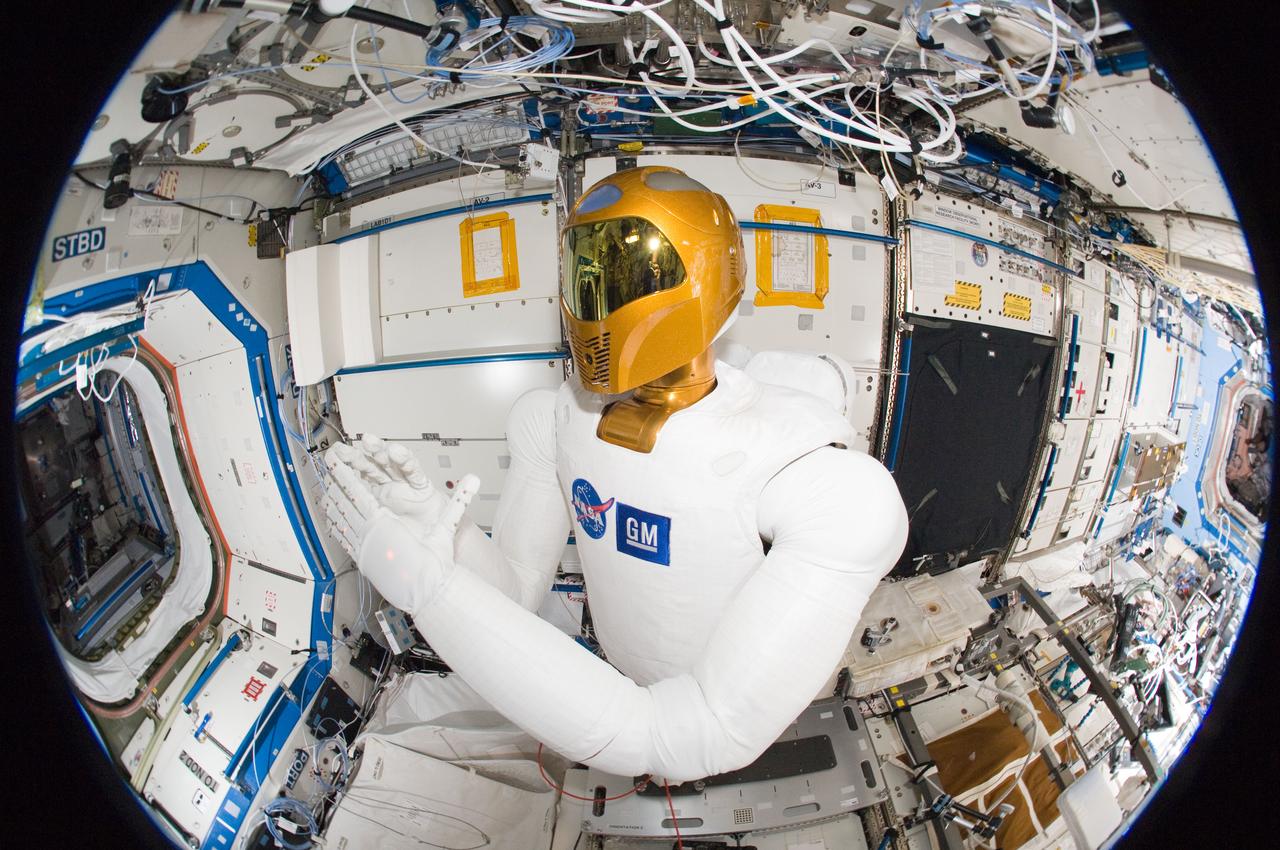
ISS030-E-135187 (13 March 2012) --- A fisheye lens attached to an electronic still camera was used to capture this image of Robonaut 2 humanoid robot during another system checkout in the Destiny laboratory of the International Space Station. Teams on the ground commanded Robonaut through a series of dexterity tests as it spelled out ?Hello world? in sign language.
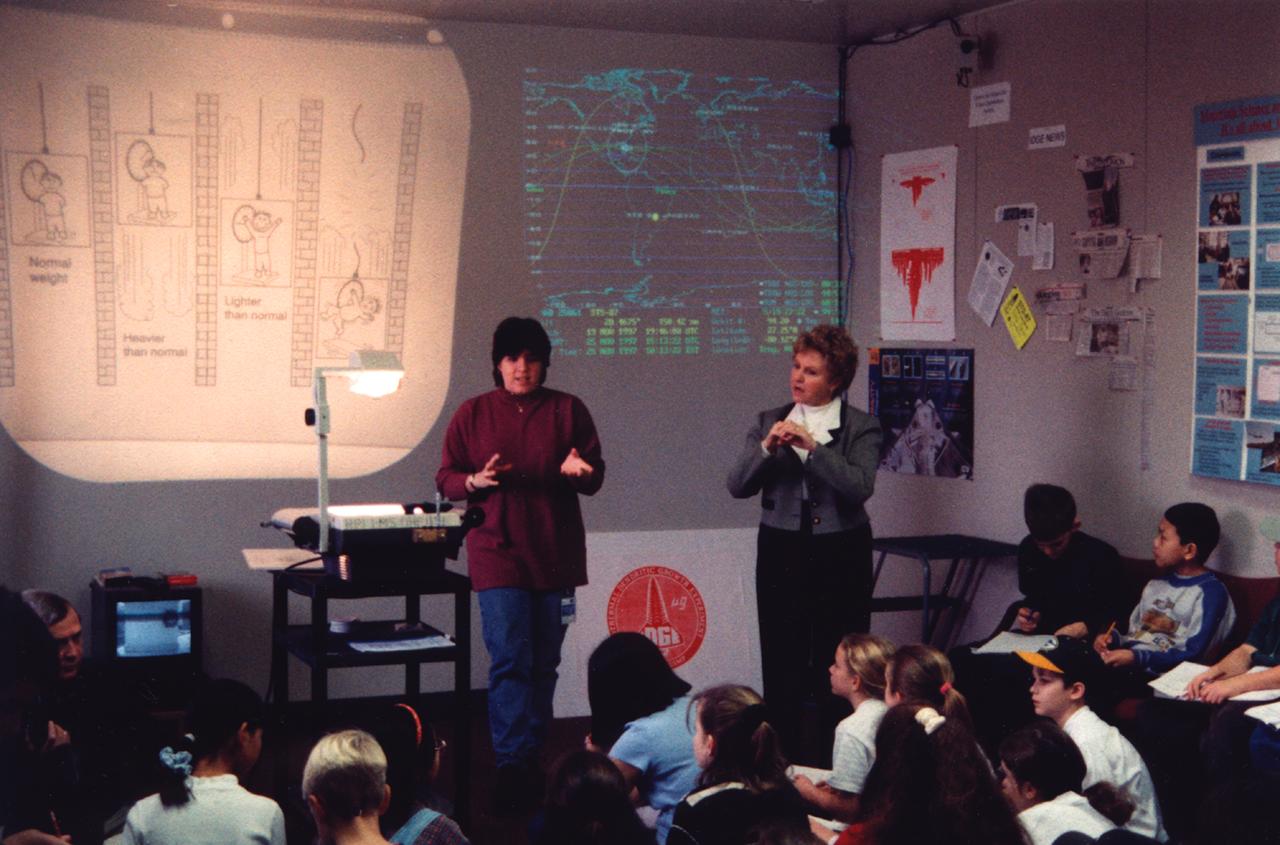
Paula Crawford (assisted by an American Sign Language interpreter) lectures students about materials science research in space during the U.S. Microgravity Payload-4 mission (STS-87, Nov. 19 - Dec. 5, 1997) in the visitor's center set up by the Isothermal Dendritic Growth Experiment (IDGE) team at Rensselaer Polytechnic Institute (RPI) in Troy, NY. IDGE, flown on three Space Shuttle mission, is yielding new insights into virtually all industrially relevant metal and alloy forming operation. Photo credit: Rensselaer Polytechnic Institute (RPI)
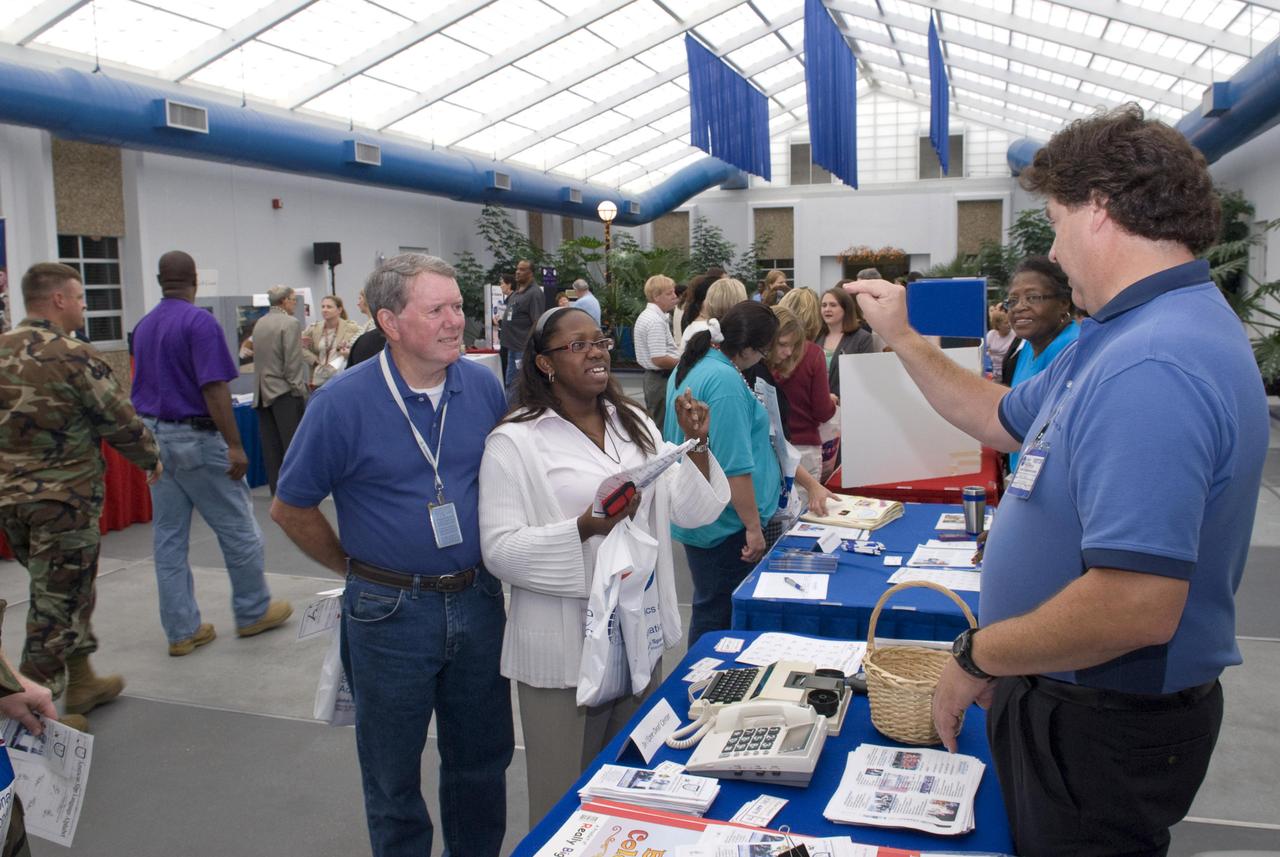
Using American sign language, Greg Crapo, right, director of de l'Ep e Deaf Center Inc. in Biloxi , Miss., helps Shanda Bennett of the Environmental Protection Agency at NASA's John C. Stennis Space Center spell out her name. Bennett is joined by colleague Charles Kennedy during a tour of charitable organization displays for the kickoff of the Stennis portion of the 2009 Combined Federal Campaign emphasis on Oct. 29. The CFC is the world's largest annual workplace charity effort. Contributions to the campaign support organizations providing health and human service benefits throughout the world. Stennis employees give tens of thousands of dollars through the campaign each year, including a $198,000 in gifts in 2008. This year, the Stennis goal is $200,000. For the kickoff, a number of charitable organizations provided displays at Stennis, providing employees an opportunity to see - and choose - where their contributions can be directed.
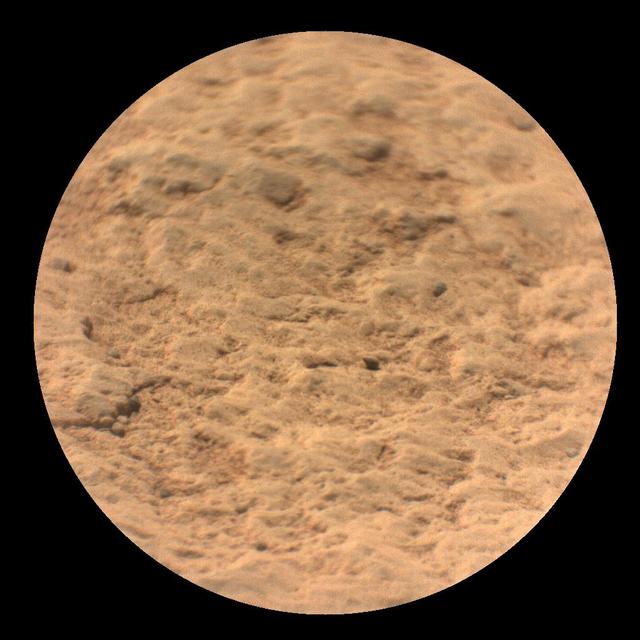
This image shows a close-up view of the rock target named "Máaz" from the SuperCam instrument on NASA's Perseverance Mars rover. It was taken by SuperCam's Remote Micro-Imager (RMI) on March 2, 2021 (the 12th Martian day, or "sol," Perseverance's mission on Mars). "Máaz" means Mars in the Navajo language. Analysis of SuperCam data shows that Máaz has a basaltic composition. It is either an igneous rock or consists of fine grains of igneous material that were cemented together in a watery environment. The target was 10.4 feet (3.17 meters) from the rover. The image field of view is 2.3 inches (6.0 centimeters) in diameter. A key objective for Perseverance's mission on Mars is astrobiology, including the search for signs of ancient microbial life. The rover will characterize the planet's geology and past climate, pave the way for human exploration of the Red Planet, and be the first mission to collect and cache Martian rock and regolith (broken rock and dust). Subsequent NASA missions, in cooperation with ESA (European Space Agency), would send spacecraft to Mars to collect these sealed samples from the surface and return them to Earth for in-depth analysis. The Mars 2020 Perseverance mission is part of NASA's Moon to Mars exploration approach, which includes Artemis missions to the Moon that will help prepare for human exploration of the Red Planet. https://photojournal.jpl.nasa.gov/catalog/PIA24493
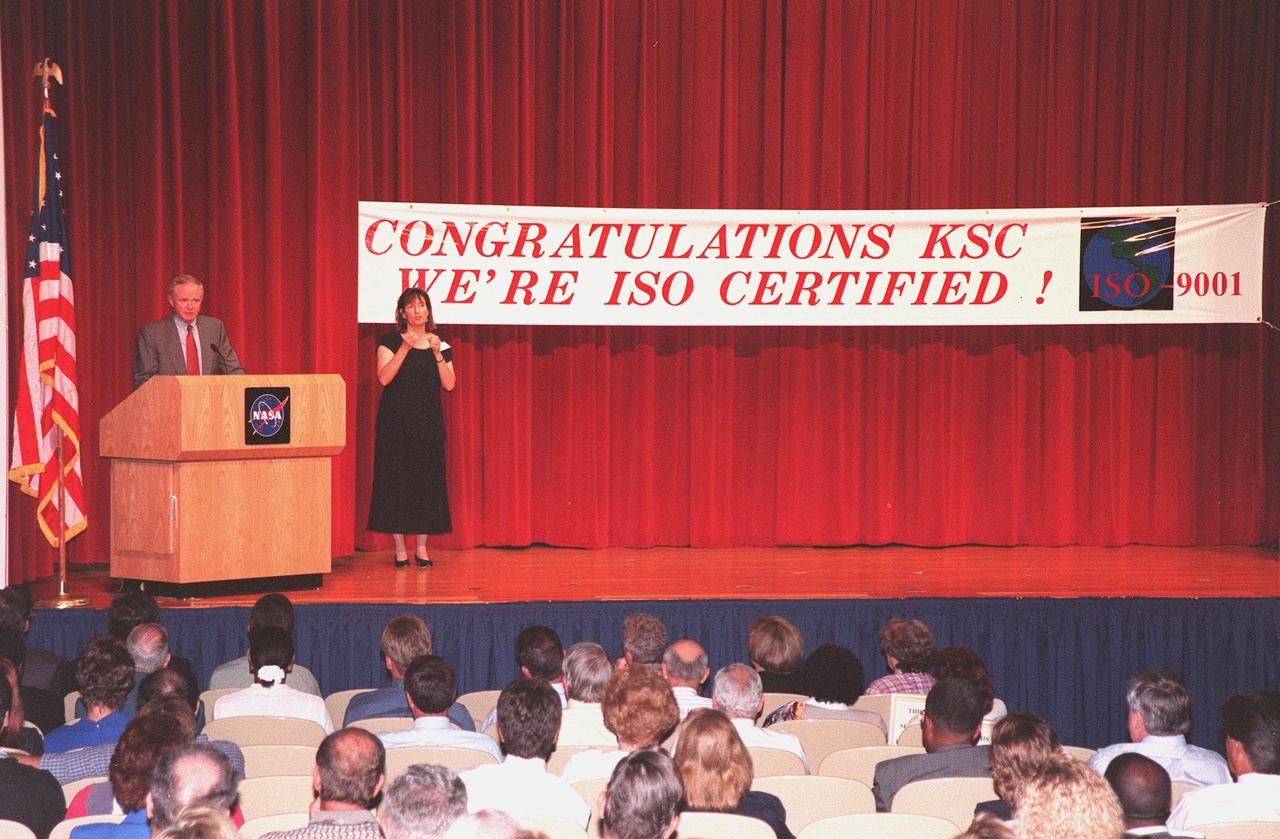
Center Director Roy Bridges speaks to KSC employees at the ISO certification ceremony held at the Training Auditorium. Bridges was presented an ISO 9001 certificate and plaque awarded to KSC by Det Norske Veritas (DNV), Inc., an international ISO certification organization. ISO 9001 comprises the most detailed, comprehensive set of standard requirements for quality programs established by the International Standards Organization. The presentation followed a successful independent audit by DNV of the KSC Management System in May of this year. The third-party auditors examined about 20 elements of KSC's system, including management responsibility, design control, documentation, test and inspection, and corrective action procedures. DNV found that KSC met or exceeded the stringent quality standards in all areas. KSC will use this certification as a tool to improve an already worldclass team. All NASA centers are required by NASA Administrator Daniel S. Goldin to be ISO 9001 registered by September 1999. NASA is the first federal agency to seek the quality certification. Next to Bridges is Heidi Hollingsworth, with the Center for Independent Living, who uses American Sign Language for any hearing-impaired employees in the audience
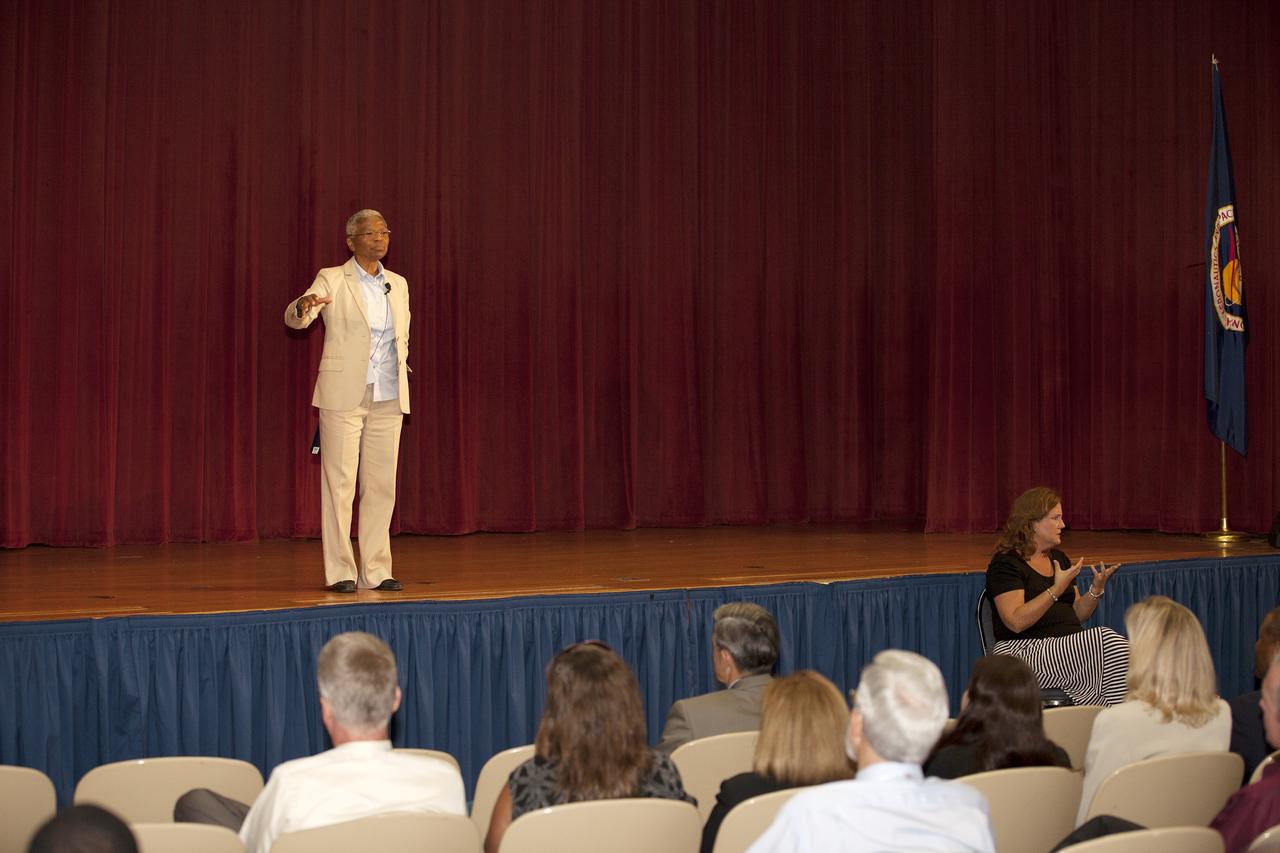
CAPE CANAVERAL, Fla. -- In the KSC Training Auditorium at NASA's Kennedy Space Center in Florida, Dr. Mary Frances Berry, on stage, addresses the audience gathered for a special event marking the 50th anniversary of the Civil Rights Act of 1964, supported by a sign-language interpreter. Berry served as the assistant secretary for education in the U.S. Department of Health, Education and Welfare HEW between 1977 and 1980. From 1980 to 2004, she was a member of the U.S. Commission on Civil Rights, serving as chair from 1993 to 2004. Among Berry's many honors are the NAACP's Roy Wilkins Award, the Rosa Parks Award of the Southern Christian Leadership Conference, and the Ebony Magazine Black Achievement Award. She is one of 75 women featured in the book "I Dream a World: Portraits of Black Women Who Changed America." Sienna College Research Institute and the Women's Hall of Fame also designated her one of "America's Women of the Century." The event was presented by Kennedy's Office of Diversity and Equal Opportunity. For more information about Kennedy Space Center, visit http://www.nasa.gov/kennedy. Photo credit: NASA/Kim Shiflett