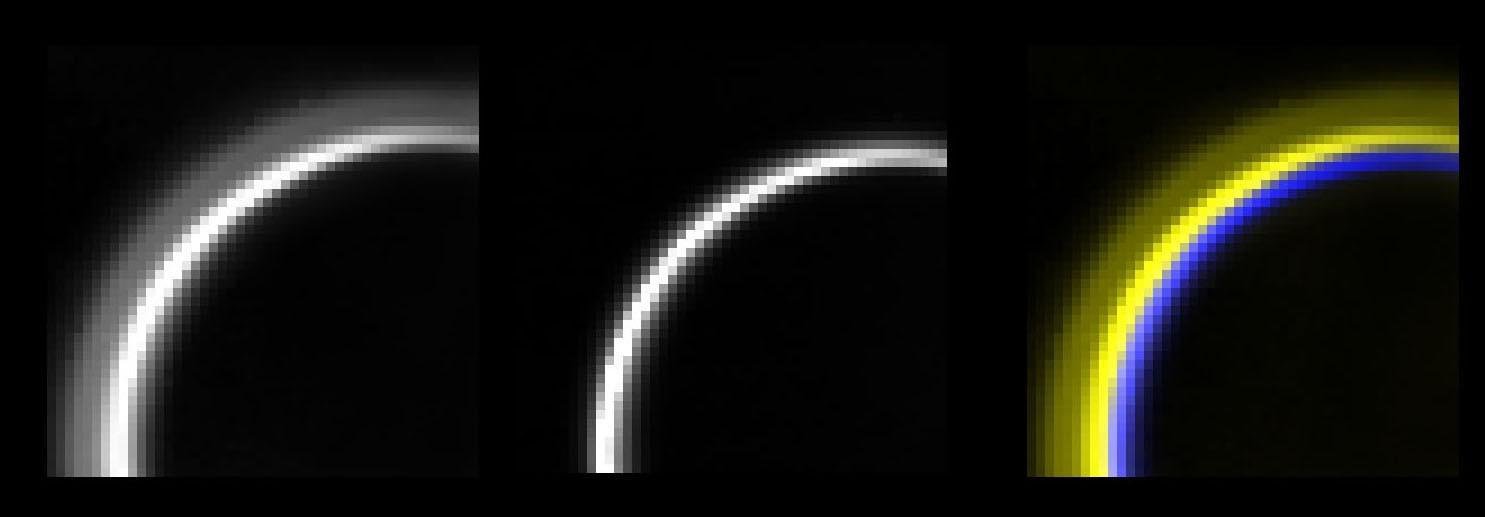
Haze Silhouettes Against Titan Glow
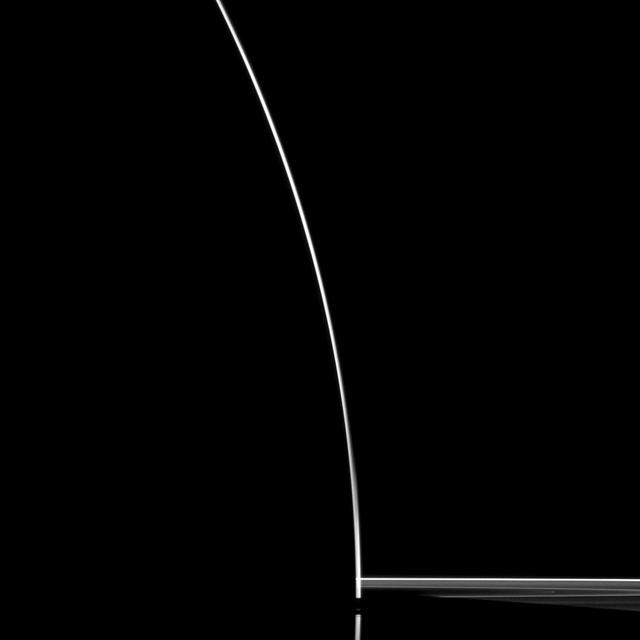
A startling silhouette of Saturn is created in this NASA Cassini spacecraft portrait.
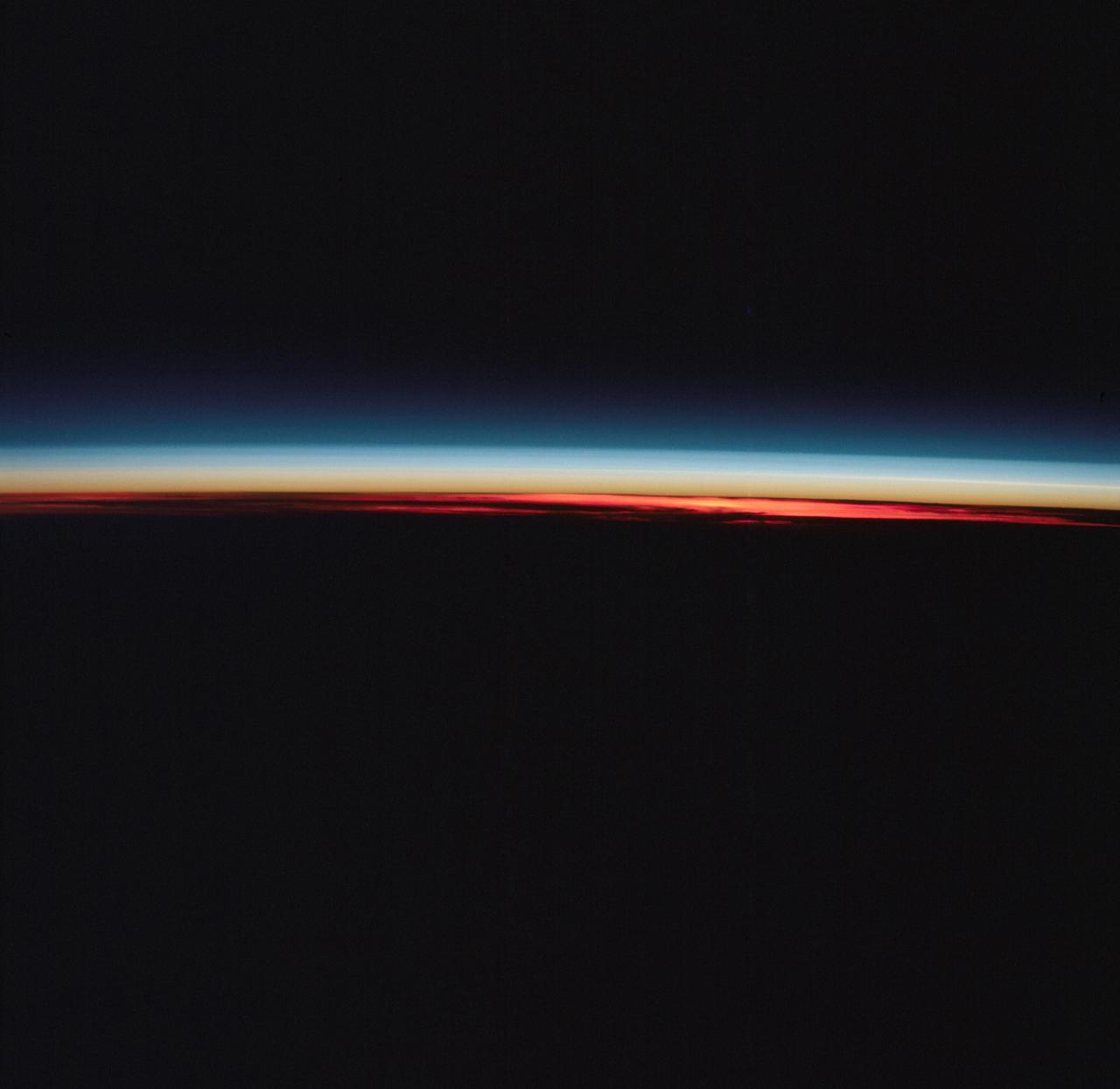
AST-27-2339 (20 July 1975) --- The Earth’s limb at sunrise and cloud silhouettes in the Southern Hemisphere, as photographed from the Apollo spacecraft during the joint U.S.-USSR Apollo-Soyuz Test Project mission. The photograph was taken at an altitude of 230 kilometers (143 statute miles) with a 70mm Hasselblad camera using medium-speed Ektachrome QX-807 type film.
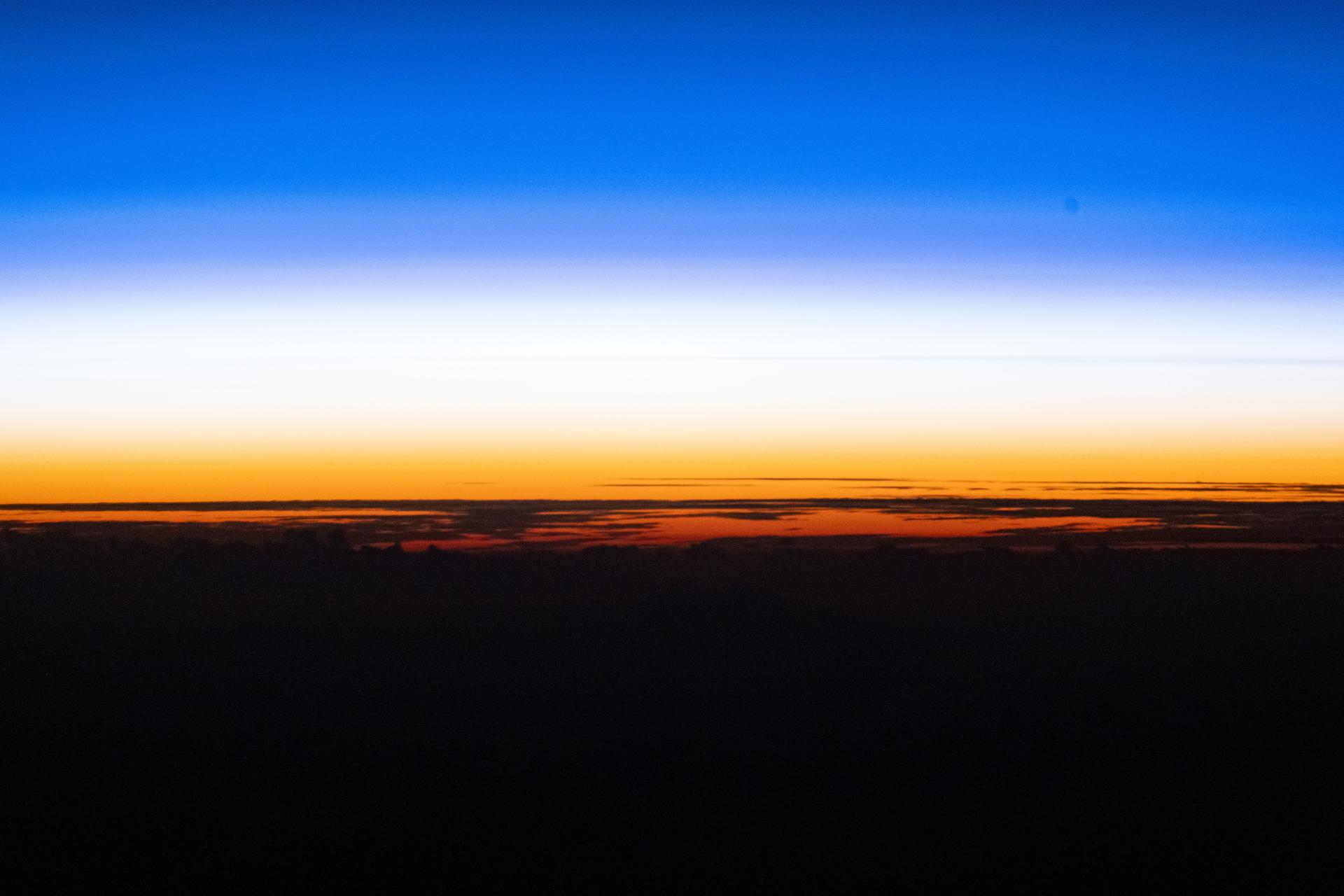
iss074e0046371 (Jan. 3, 2025) --- An orbital sunset silhouettes the cloud tops above the Pacific Ocean as the atmosphere along the horizon fades from orange to white, then to blue, in this photograph taken from the International Space Station while it orbited 262 miles above Earth. Credit: NASA/Chris Williams
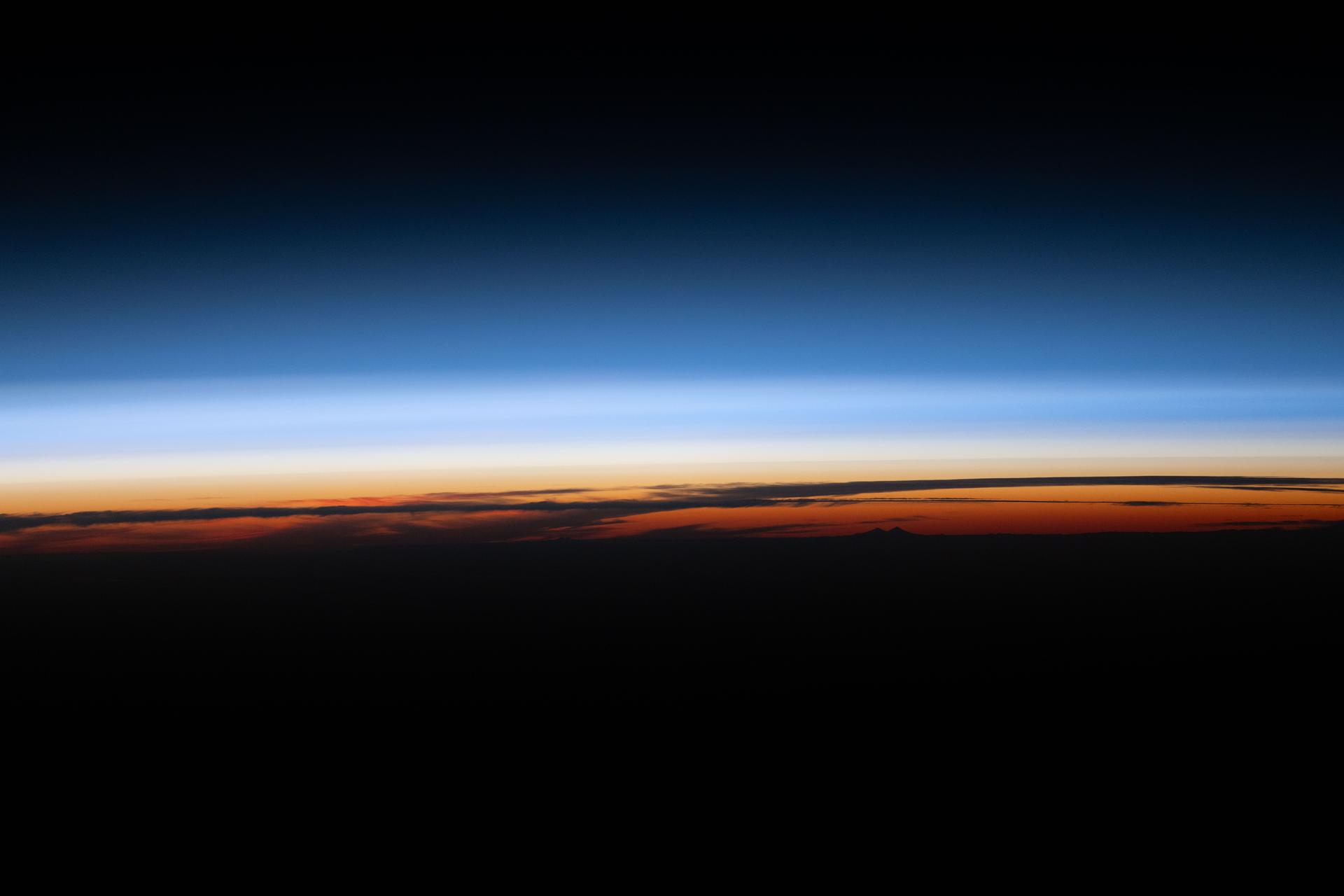
iss074e0722845 (June 16, 2026) --- A sunset below Earth’s horizon silhouettes the clouds and illuminates the atmosphere in orange and blue hues, contrasting the planet’s darkened surface with the blackness of outer space. The International Space Station was orbiting 270 miles above the South Atlantic Ocean, off the coast of Argentina, at approximately 6:53 p.m. local time. Credit: NASA/Chris Williams

Inside the Rotation, Processing and Surge Facility (RPSF) at NASA’s Kennedy Space Center in Florida, technicians lift the right aft motor segment – one of five segments that make up one of two solid rocket boosters for the agency’s Space Launch System (SLS) – onto an inspection stand on June 23, 2020. While in the RPSF, the boosters will be mated to the rocket’s two aft skirts before they are moved to the Vehicle Assembly Building for stacking on the mobile launcher. The boosters, manufactured by Northrop Grumman in Utah, recently arrived at Kennedy for processing ahead of the Artemis I launch. Together, the twin boosters provide more than 75 percent of the total SLS thrust at launch. The first in a series of increasingly complex missions, Artemis I will test the Orion spacecraft and SLS as an integrated system ahead of crewed flights to the Moon.
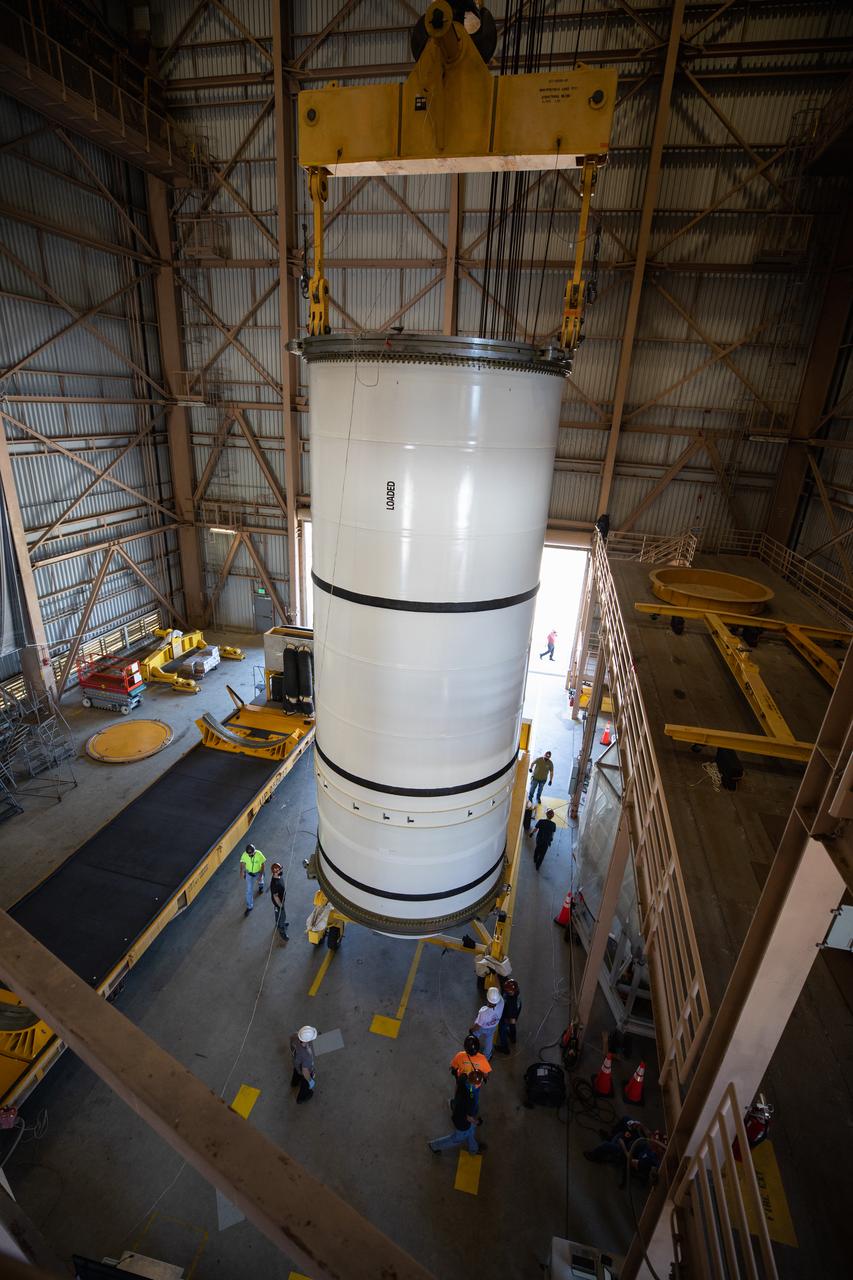
Inside the Rotation, Processing and Surge Facility (RPSF) at NASA’s Kennedy Space Center in Florida, technicians lift the right aft motor segment – one of five segments that make up one of two solid rocket boosters for the agency’s Space Launch System (SLS) – onto an inspection stand on June 23, 2020. While in the RPSF, the boosters will be mated to the rocket’s two aft skirts before they are moved to the Vehicle Assembly Building for stacking on the mobile launcher. The boosters, manufactured by Northrop Grumman in Utah, recently arrived at Kennedy for processing ahead of the Artemis I launch. Together, the twin boosters provide more than 75 percent of the total SLS thrust at launch. The first in a series of increasingly complex missions, Artemis I will test the Orion spacecraft and SLS as an integrated system ahead of crewed flights to the Moon.
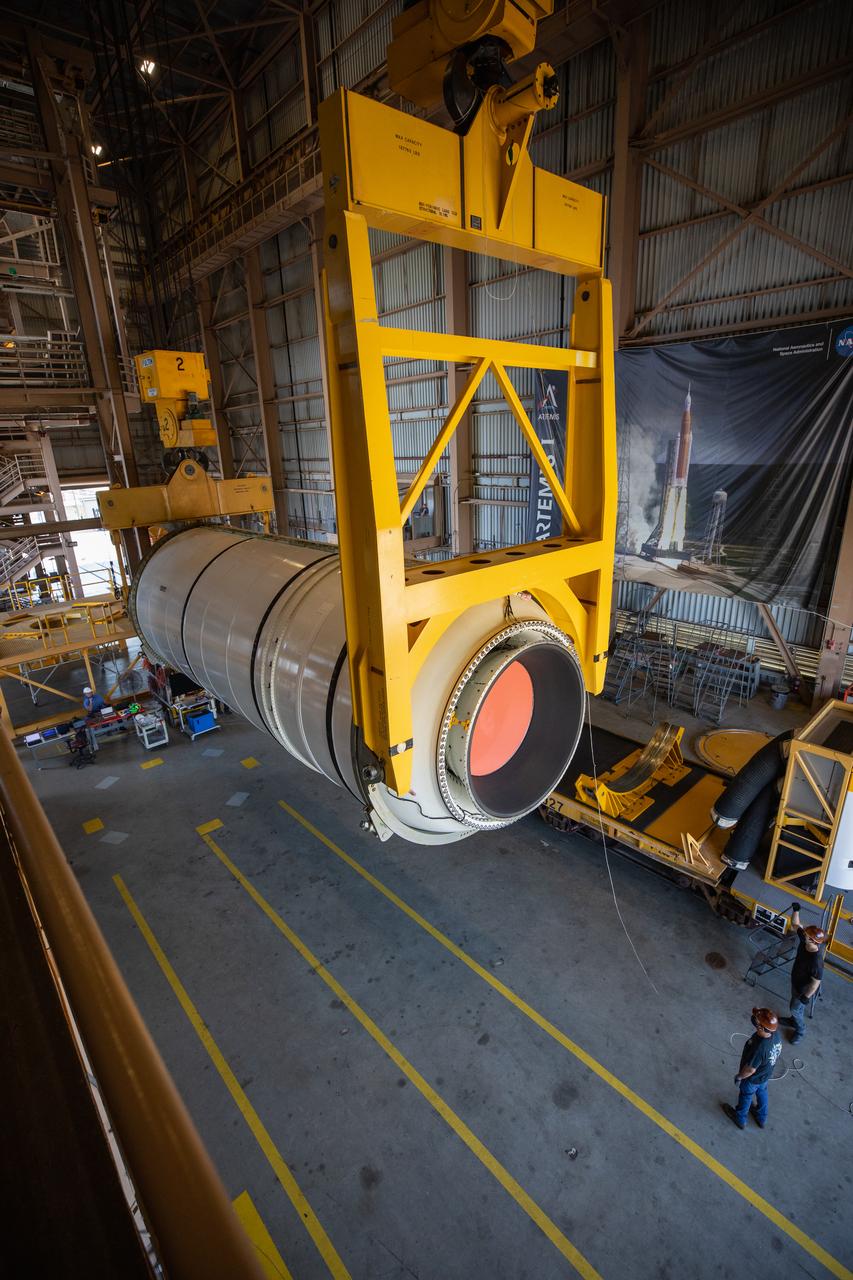
Inside the Rotation, Processing and Surge Facility (RPSF) at NASA’s Kennedy Space Center in Florida, technicians lift the right aft motor segment – one of five segments that make up one of two solid rocket boosters for the agency’s Space Launch System (SLS) – onto an inspection stand on June 23, 2020. While in the RPSF, the boosters will be mated to the rocket’s two aft skirts before they are moved to the Vehicle Assembly Building for stacking on the mobile launcher. The boosters, manufactured by Northrop Grumman in Utah, recently arrived at Kennedy for processing ahead of the Artemis I launch. Together, the twin boosters provide more than 75 percent of the total SLS thrust at launch. The first in a series of increasingly complex missions, Artemis I will test the Orion spacecraft and SLS as an integrated system ahead of crewed flights to the Moon.
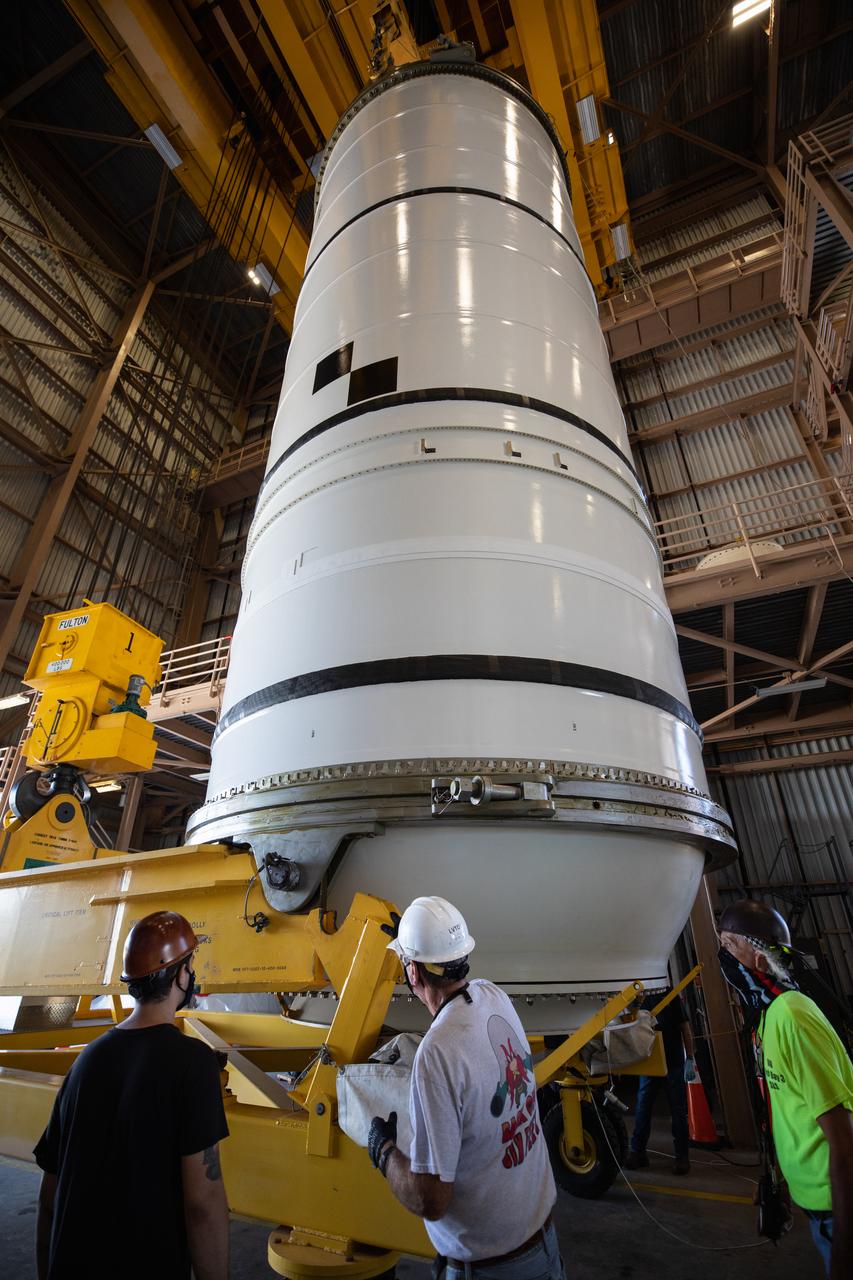
Inside the Rotation, Processing and Surge Facility (RPSF) at NASA’s Kennedy Space Center in Florida, technicians lift the right aft motor segment – one of five segments that make up one of two solid rocket boosters for the agency’s Space Launch System (SLS) – onto an inspection stand on June 23, 2020. While in the RPSF, the boosters will be mated to the rocket’s two aft skirts before they are moved to the Vehicle Assembly Building for stacking on the mobile launcher. The boosters, manufactured by Northrop Grumman in Utah, recently arrived at Kennedy for processing ahead of the Artemis I launch. Together, the twin boosters provide more than 75 percent of the total SLS thrust at launch. The first in a series of increasingly complex missions, Artemis I will test the Orion spacecraft and SLS as an integrated system ahead of crewed flights to the Moon.
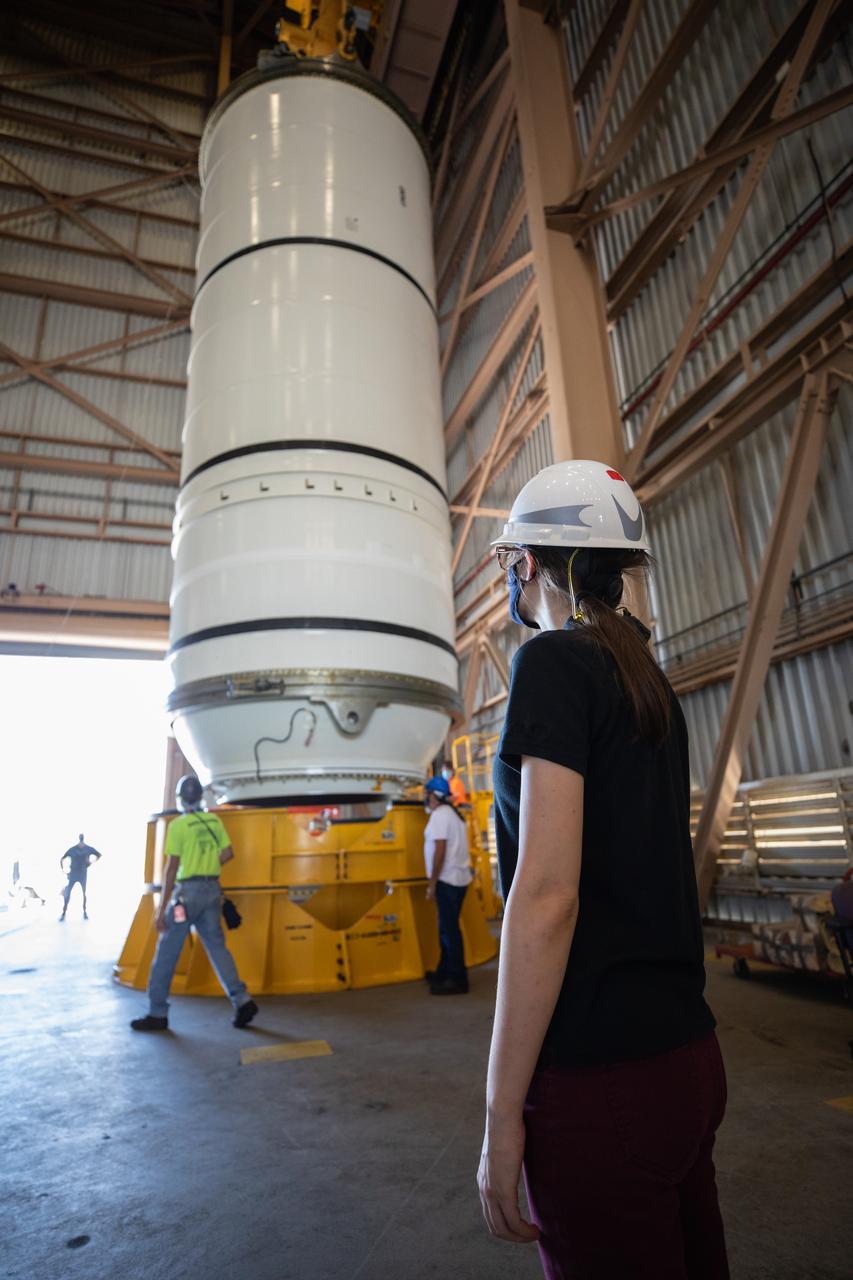
Inside the Rotation, Processing and Surge Facility (RPSF) at NASA’s Kennedy Space Center in Florida, technicians lift the right aft motor segment – one of five segments that make up one of two solid rocket boosters for the agency’s Space Launch System (SLS) – onto an inspection stand on June 23, 2020. While in the RPSF, the boosters will be mated to the rocket’s two aft skirts before they are moved to the Vehicle Assembly Building for stacking on the mobile launcher. The boosters, manufactured by Northrop Grumman in Utah, recently arrived at Kennedy for processing ahead of the Artemis I launch. Together, the twin boosters provide more than 75 percent of the total SLS thrust at launch. The first in a series of increasingly complex missions, Artemis I will test the Orion spacecraft and SLS as an integrated system ahead of crewed flights to the Moon.

Inside the Rotation, Processing and Surge Facility (RPSF) at NASA’s Kennedy Space Center in Florida, technicians lift the right aft motor segment – one of five segments that make up one of two solid rocket boosters for the agency’s Space Launch System (SLS) – onto an inspection stand on June 23, 2020. While in the RPSF, the boosters will be mated to the rocket’s two aft skirts before they are moved to the Vehicle Assembly Building for stacking on the mobile launcher. The boosters, manufactured by Northrop Grumman in Utah, recently arrived at Kennedy for processing ahead of the Artemis I launch. Together, the twin boosters provide more than 75 percent of the total SLS thrust at launch. The first in a series of increasingly complex missions, Artemis I will test the Orion spacecraft and SLS as an integrated system ahead of crewed flights to the Moon.
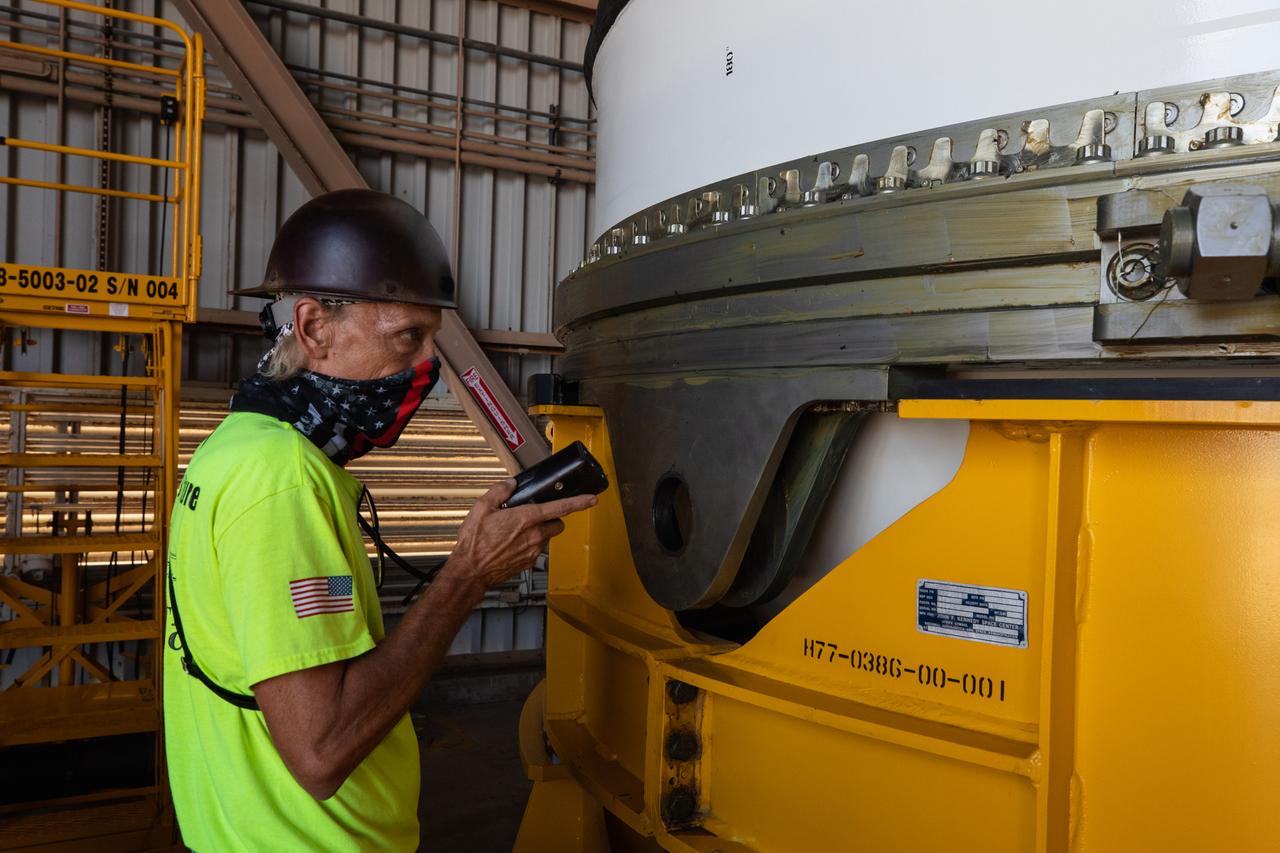
Inside the Rotation, Processing and Surge Facility (RPSF) at NASA’s Kennedy Space Center in Florida, technicians lift the right aft motor segment – one of five segments that make up one of two solid rocket boosters for the agency’s Space Launch System (SLS) – onto an inspection stand on June 23, 2020. While in the RPSF, the boosters will be mated to the rocket’s two aft skirts before they are moved to the Vehicle Assembly Building for stacking on the mobile launcher. The boosters, manufactured by Northrop Grumman in Utah, recently arrived at Kennedy for processing ahead of the Artemis I launch. Together, the twin boosters provide more than 75 percent of the total SLS thrust at launch. The first in a series of increasingly complex missions, Artemis I will test the Orion spacecraft and SLS as an integrated system ahead of crewed flights to the Moon.
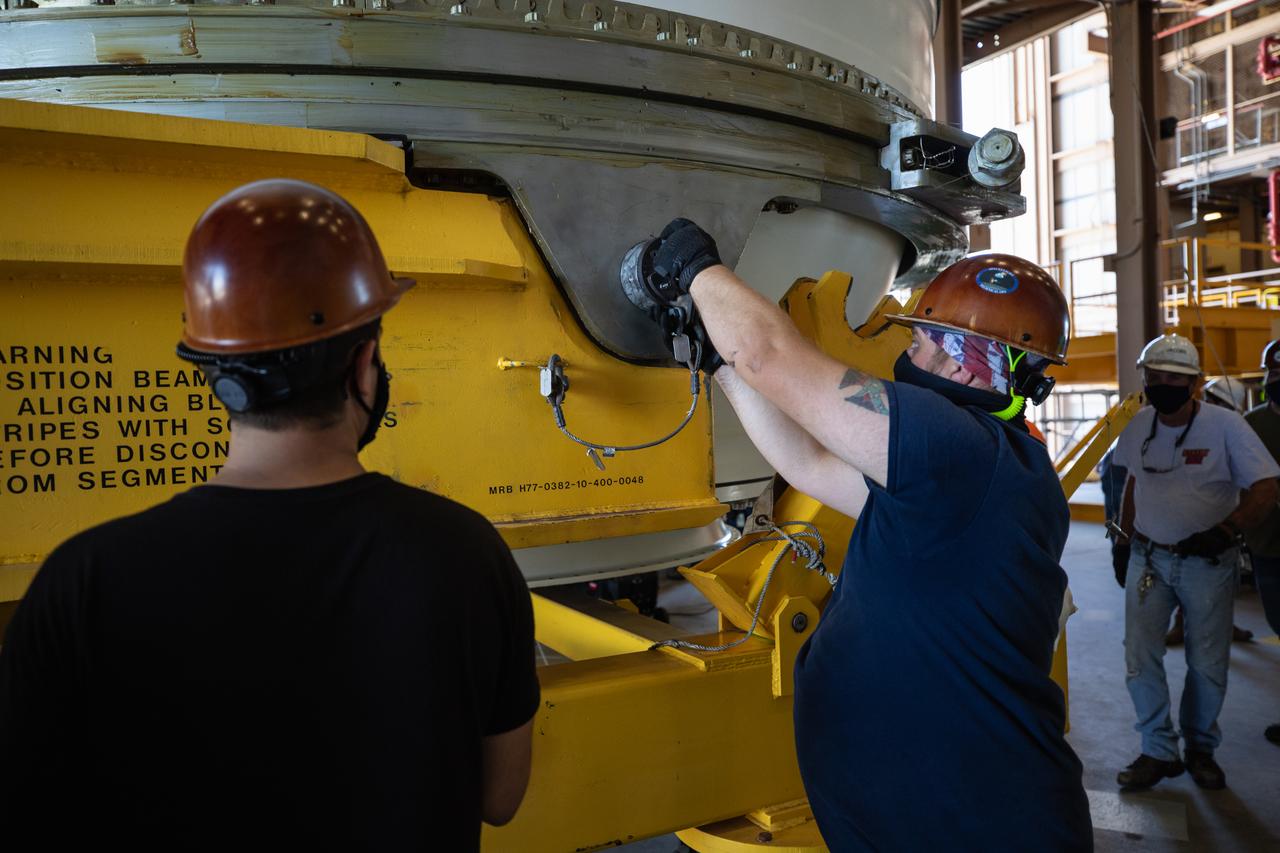
Inside the Rotation, Processing and Surge Facility (RPSF) at NASA’s Kennedy Space Center in Florida, technicians lift the right aft motor segment – one of five segments that make up one of two solid rocket boosters for the agency’s Space Launch System (SLS) – onto an inspection stand on June 23, 2020. While in the RPSF, the boosters will be mated to the rocket’s two aft skirts before they are moved to the Vehicle Assembly Building for stacking on the mobile launcher. The boosters, manufactured by Northrop Grumman in Utah, recently arrived at Kennedy for processing ahead of the Artemis I launch. Together, the twin boosters provide more than 75 percent of the total SLS thrust at launch. The first in a series of increasingly complex missions, Artemis I will test the Orion spacecraft and SLS as an integrated system ahead of crewed flights to the Moon.
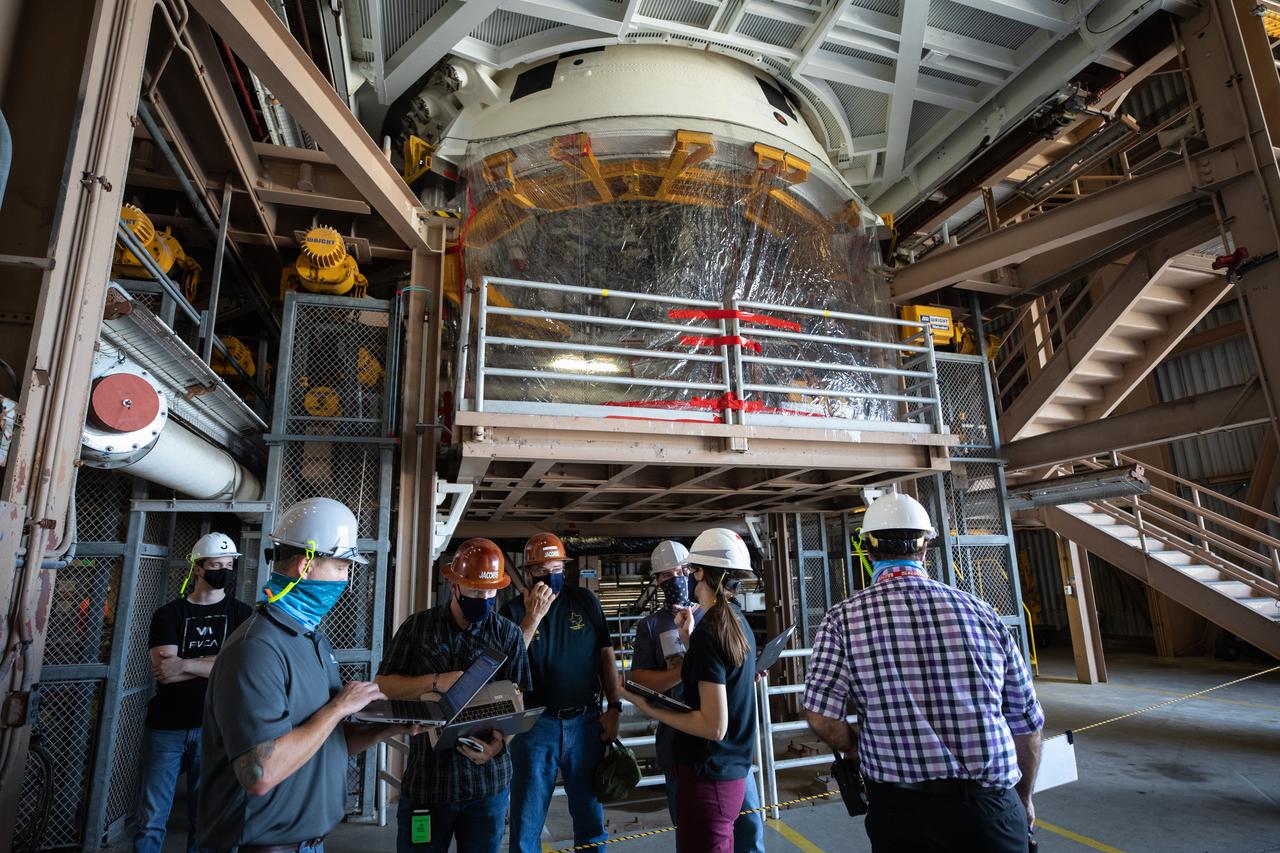
Inside the Rotation, Processing and Surge Facility (RPSF) at NASA’s Kennedy Space Center in Florida, technicians lift the right aft motor segment – one of five segments that make up one of two solid rocket boosters for the agency’s Space Launch System (SLS) – onto an inspection stand on June 23, 2020. While in the RPSF, the boosters will be mated to the rocket’s two aft skirts before they are moved to the Vehicle Assembly Building for stacking on the mobile launcher. The boosters, manufactured by Northrop Grumman in Utah, recently arrived at Kennedy for processing ahead of the Artemis I launch. Together, the twin boosters provide more than 75 percent of the total SLS thrust at launch. The first in a series of increasingly complex missions, Artemis I will test the Orion spacecraft and SLS as an integrated system ahead of crewed flights to the Moon.
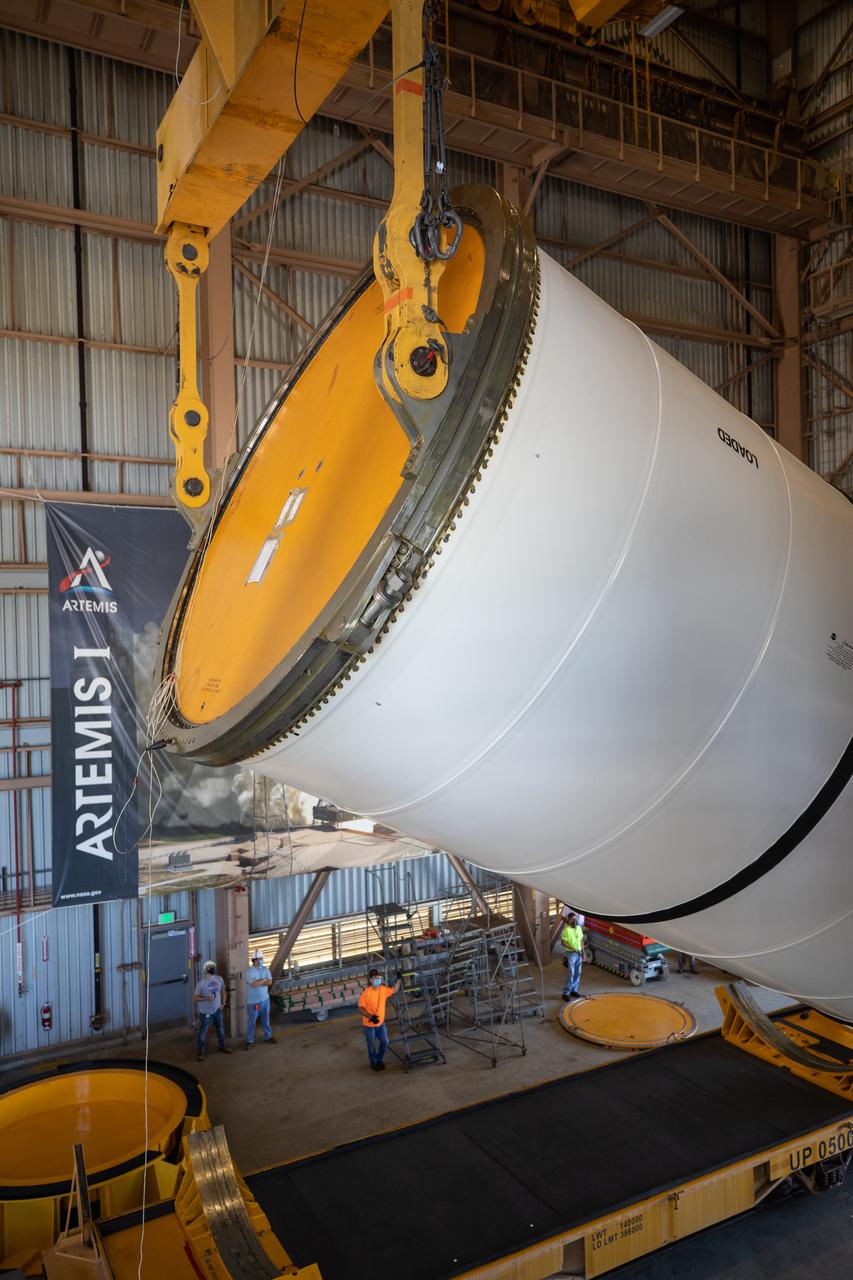
Inside the Rotation, Processing and Surge Facility (RPSF) at NASA’s Kennedy Space Center in Florida, technicians lift the right aft motor segment – one of five segments that make up one of two solid rocket boosters for the agency’s Space Launch System (SLS) – onto an inspection stand on June 23, 2020. While in the RPSF, the boosters will be mated to the rocket’s two aft skirts before they are moved to the Vehicle Assembly Building for stacking on the mobile launcher. The boosters, manufactured by Northrop Grumman in Utah, recently arrived at Kennedy for processing ahead of the Artemis I launch. Together, the twin boosters provide more than 75 percent of the total SLS thrust at launch. The first in a series of increasingly complex missions, Artemis I will test the Orion spacecraft and SLS as an integrated system ahead of crewed flights to the Moon.
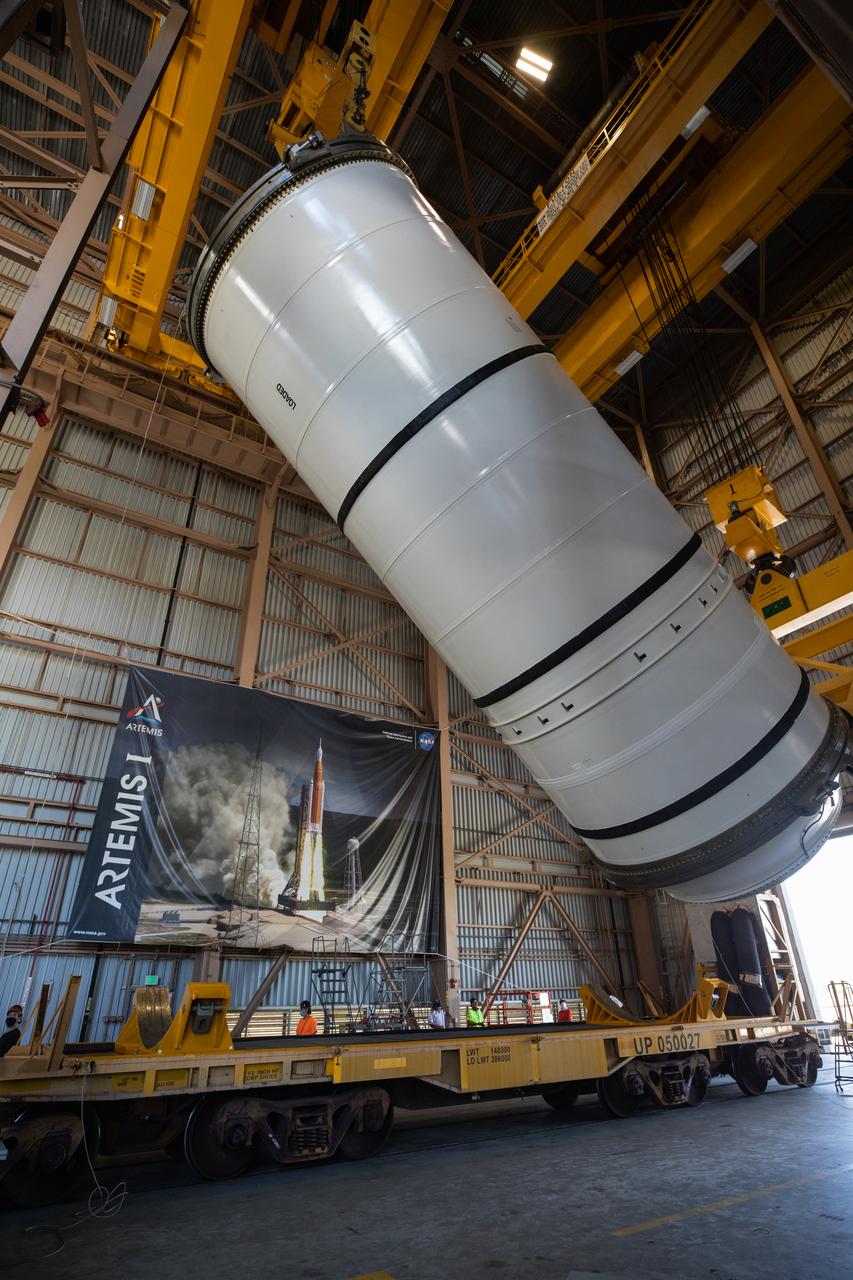
Inside the Rotation, Processing and Surge Facility (RPSF) at NASA’s Kennedy Space Center in Florida, technicians lift the right aft motor segment – one of five segments that make up one of two solid rocket boosters for the agency’s Space Launch System (SLS) – onto an inspection stand on June 23, 2020. While in the RPSF, the boosters will be mated to the rocket’s two aft skirts before they are moved to the Vehicle Assembly Building for stacking on the mobile launcher. The boosters, manufactured by Northrop Grumman in Utah, recently arrived at Kennedy for processing ahead of the Artemis I launch. Together, the twin boosters provide more than 75 percent of the total SLS thrust at launch. The first in a series of increasingly complex missions, Artemis I will test the Orion spacecraft and SLS as an integrated system ahead of crewed flights to the Moon.
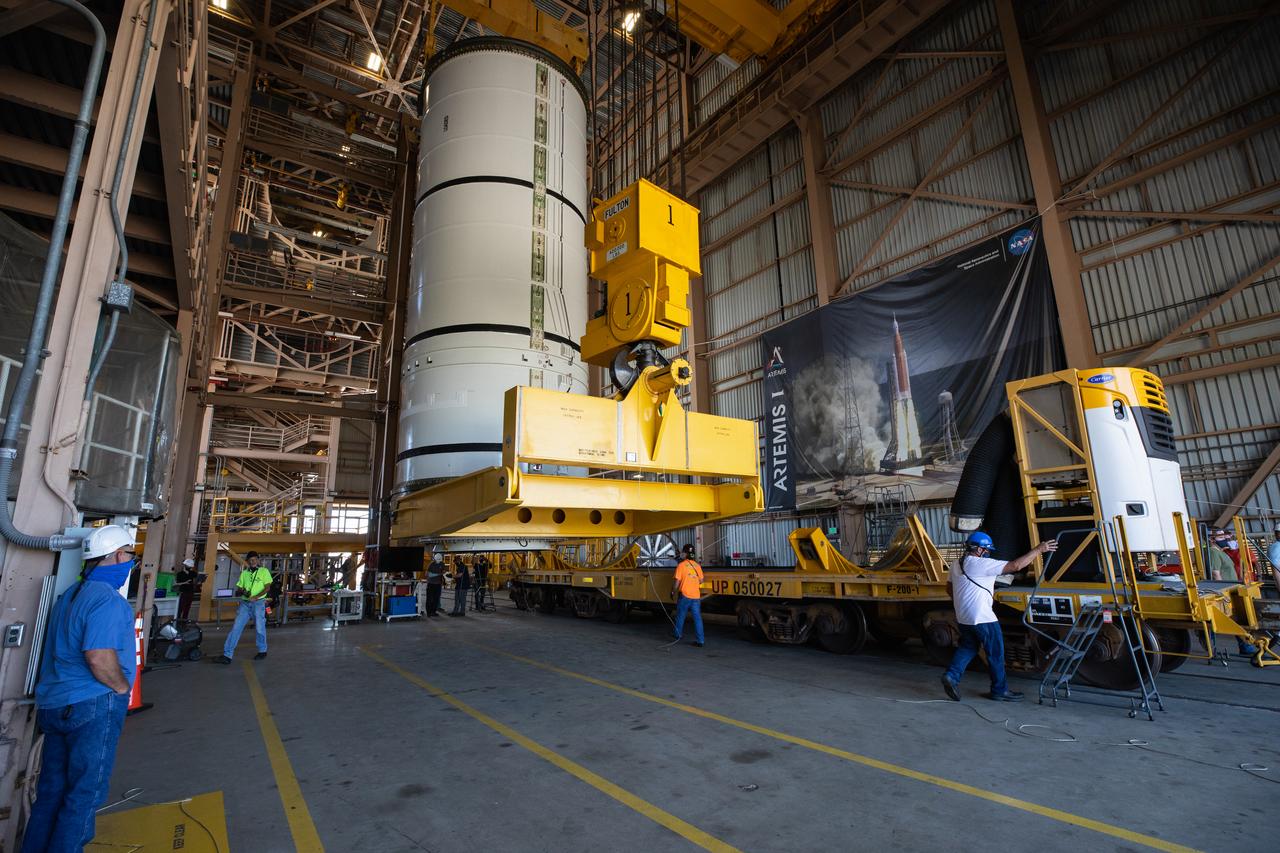
Inside the Rotation, Processing and Surge Facility (RPSF) at NASA’s Kennedy Space Center in Florida, technicians lift the right aft motor segment – one of five segments that make up one of two solid rocket boosters for the agency’s Space Launch System (SLS) – onto an inspection stand on June 23, 2020. While in the RPSF, the boosters will be mated to the rocket’s two aft skirts before they are moved to the Vehicle Assembly Building for stacking on the mobile launcher. The boosters, manufactured by Northrop Grumman in Utah, recently arrived at Kennedy for processing ahead of the Artemis I launch. Together, the twin boosters provide more than 75 percent of the total SLS thrust at launch. The first in a series of increasingly complex missions, Artemis I will test the Orion spacecraft and SLS as an integrated system ahead of crewed flights to the Moon.
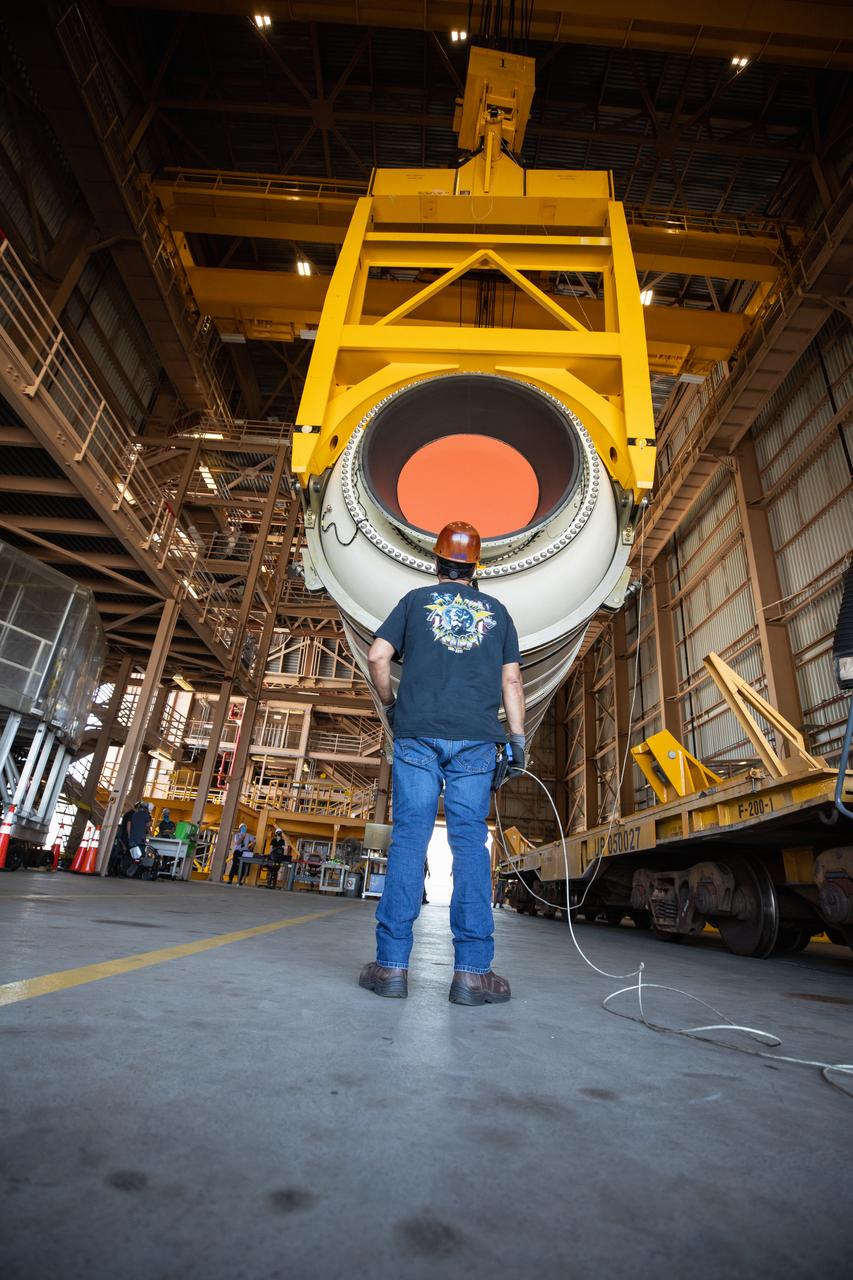
Inside the Rotation, Processing and Surge Facility (RPSF) at NASA’s Kennedy Space Center in Florida, technicians lift the right aft motor segment – one of five segments that make up one of two solid rocket boosters for the agency’s Space Launch System (SLS) – onto an inspection stand on June 23, 2020. While in the RPSF, the boosters will be mated to the rocket’s two aft skirts before they are moved to the Vehicle Assembly Building for stacking on the mobile launcher. The boosters, manufactured by Northrop Grumman in Utah, recently arrived at Kennedy for processing ahead of the Artemis I launch. Together, the twin boosters provide more than 75 percent of the total SLS thrust at launch. The first in a series of increasingly complex missions, Artemis I will test the Orion spacecraft and SLS as an integrated system ahead of crewed flights to the Moon.
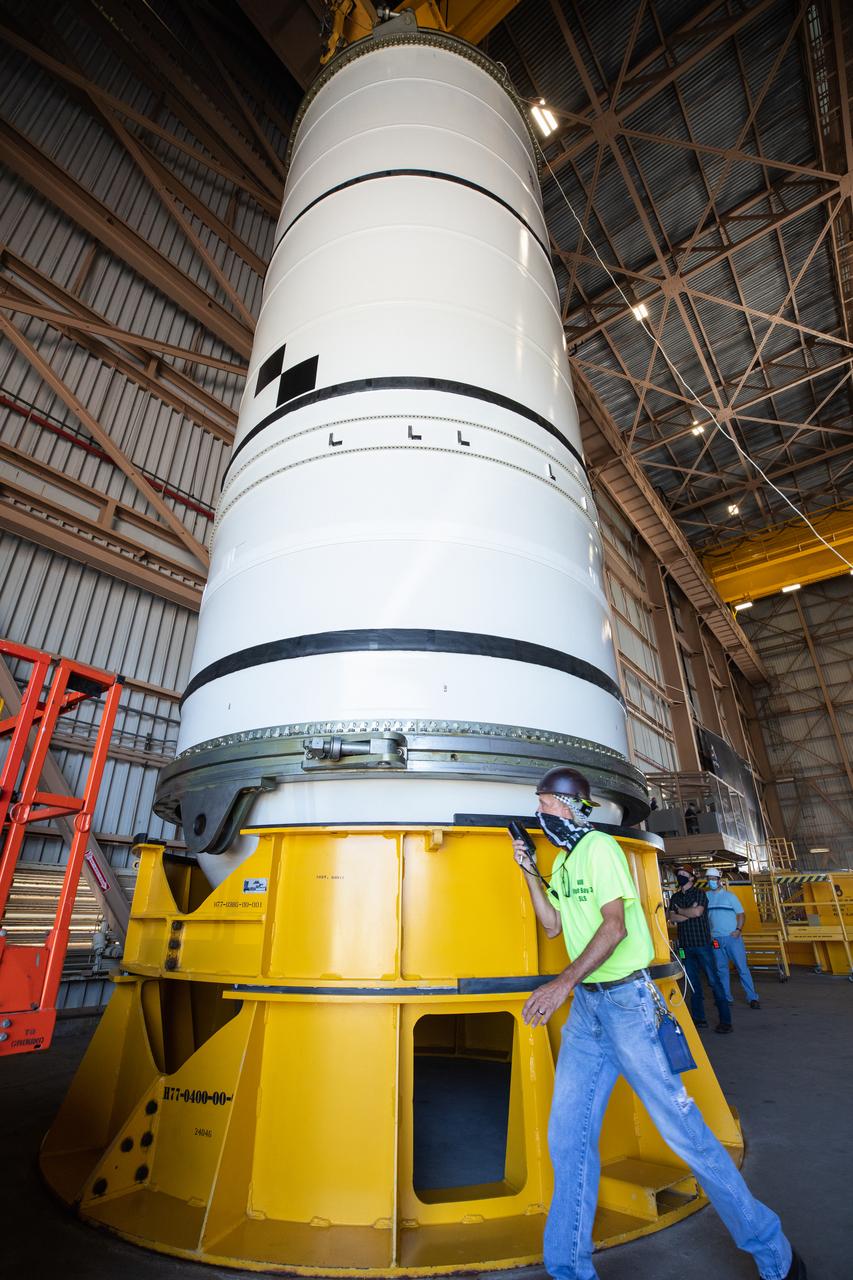
Inside the Rotation, Processing and Surge Facility (RPSF) at NASA’s Kennedy Space Center in Florida, technicians lift the right aft motor segment – one of five segments that make up one of two solid rocket boosters for the agency’s Space Launch System (SLS) – onto an inspection stand on June 23, 2020. While in the RPSF, the boosters will be mated to the rocket’s two aft skirts before they are moved to the Vehicle Assembly Building for stacking on the mobile launcher. The boosters, manufactured by Northrop Grumman in Utah, recently arrived at Kennedy for processing ahead of the Artemis I launch. Together, the twin boosters provide more than 75 percent of the total SLS thrust at launch. The first in a series of increasingly complex missions, Artemis I will test the Orion spacecraft and SLS as an integrated system ahead of crewed flights to the Moon.
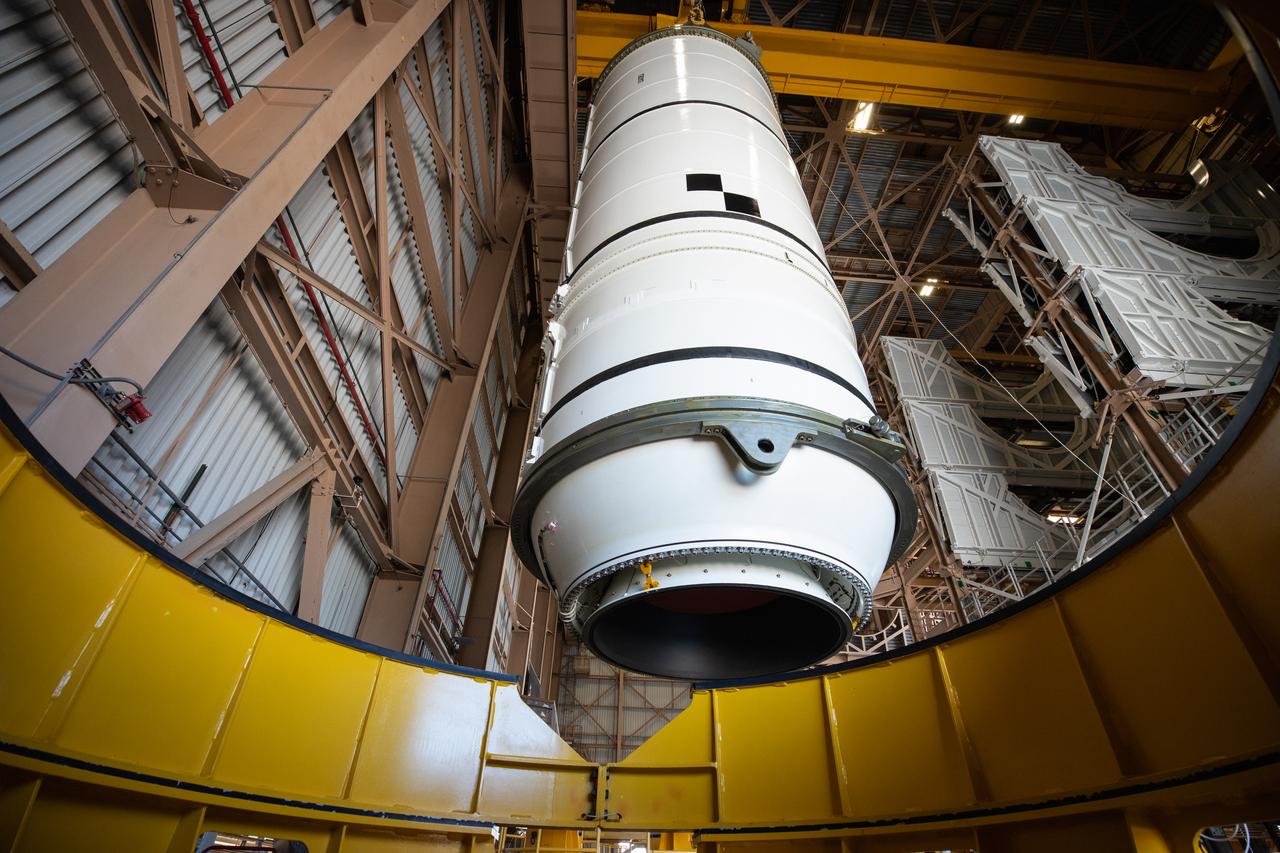
Inside the Rotation, Processing and Surge Facility (RPSF) at NASA’s Kennedy Space Center in Florida, technicians lift the right aft motor segment – one of five segments that make up one of two solid rocket boosters for the agency’s Space Launch System (SLS) – onto an inspection stand on June 23, 2020. While in the RPSF, the boosters will be mated to the rocket’s two aft skirts before they are moved to the Vehicle Assembly Building for stacking on the mobile launcher. The boosters, manufactured by Northrop Grumman in Utah, recently arrived at Kennedy for processing ahead of the Artemis I launch. Together, the twin boosters provide more than 75 percent of the total SLS thrust at launch. The first in a series of increasingly complex missions, Artemis I will test the Orion spacecraft and SLS as an integrated system ahead of crewed flights to the Moon.
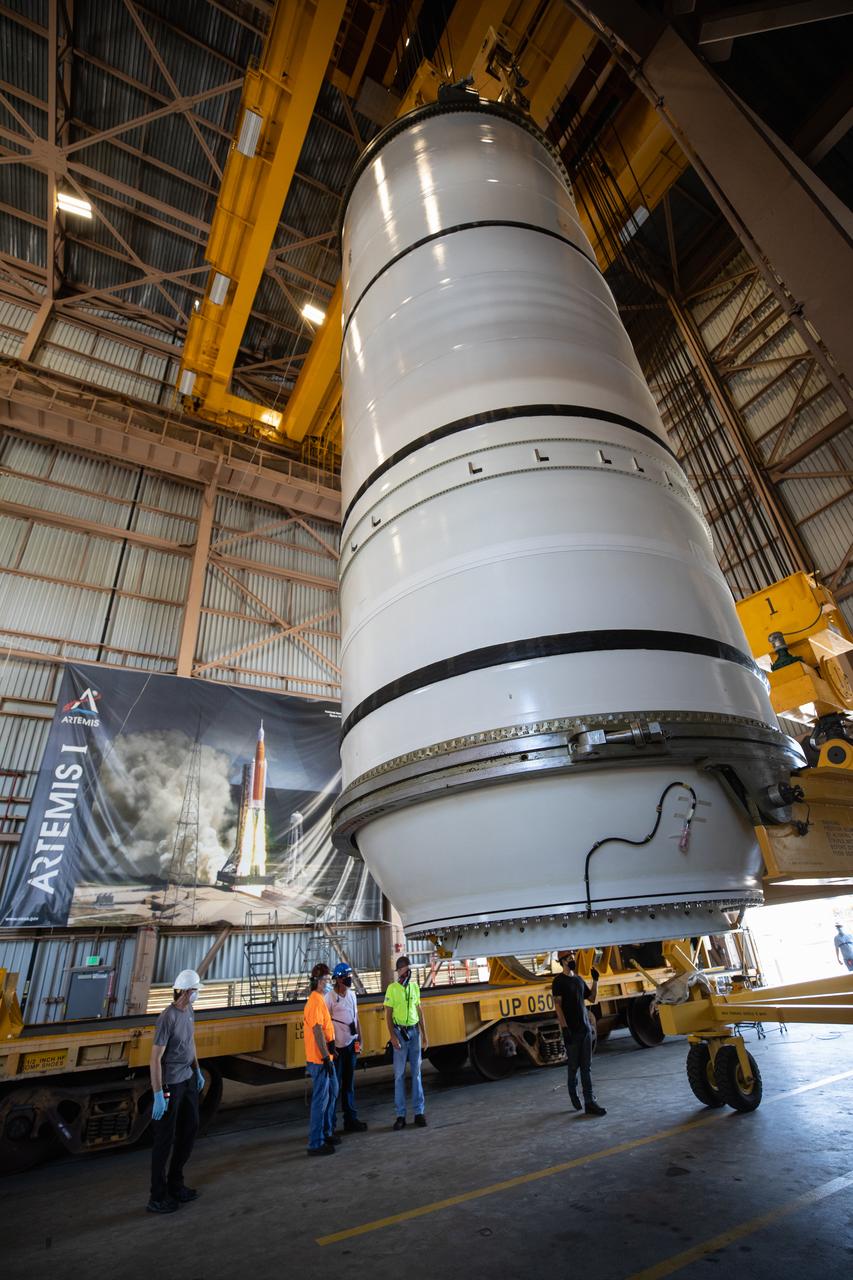
Inside the Rotation, Processing and Surge Facility (RPSF) at NASA’s Kennedy Space Center in Florida, technicians lift the right aft motor segment – one of five segments that make up one of two solid rocket boosters for the agency’s Space Launch System (SLS) – onto an inspection stand on June 23, 2020. While in the RPSF, the boosters will be mated to the rocket’s two aft skirts before they are moved to the Vehicle Assembly Building for stacking on the mobile launcher. The boosters, manufactured by Northrop Grumman in Utah, recently arrived at Kennedy for processing ahead of the Artemis I launch. Together, the twin boosters provide more than 75 percent of the total SLS thrust at launch. The first in a series of increasingly complex missions, Artemis I will test the Orion spacecraft and SLS as an integrated system ahead of crewed flights to the Moon.
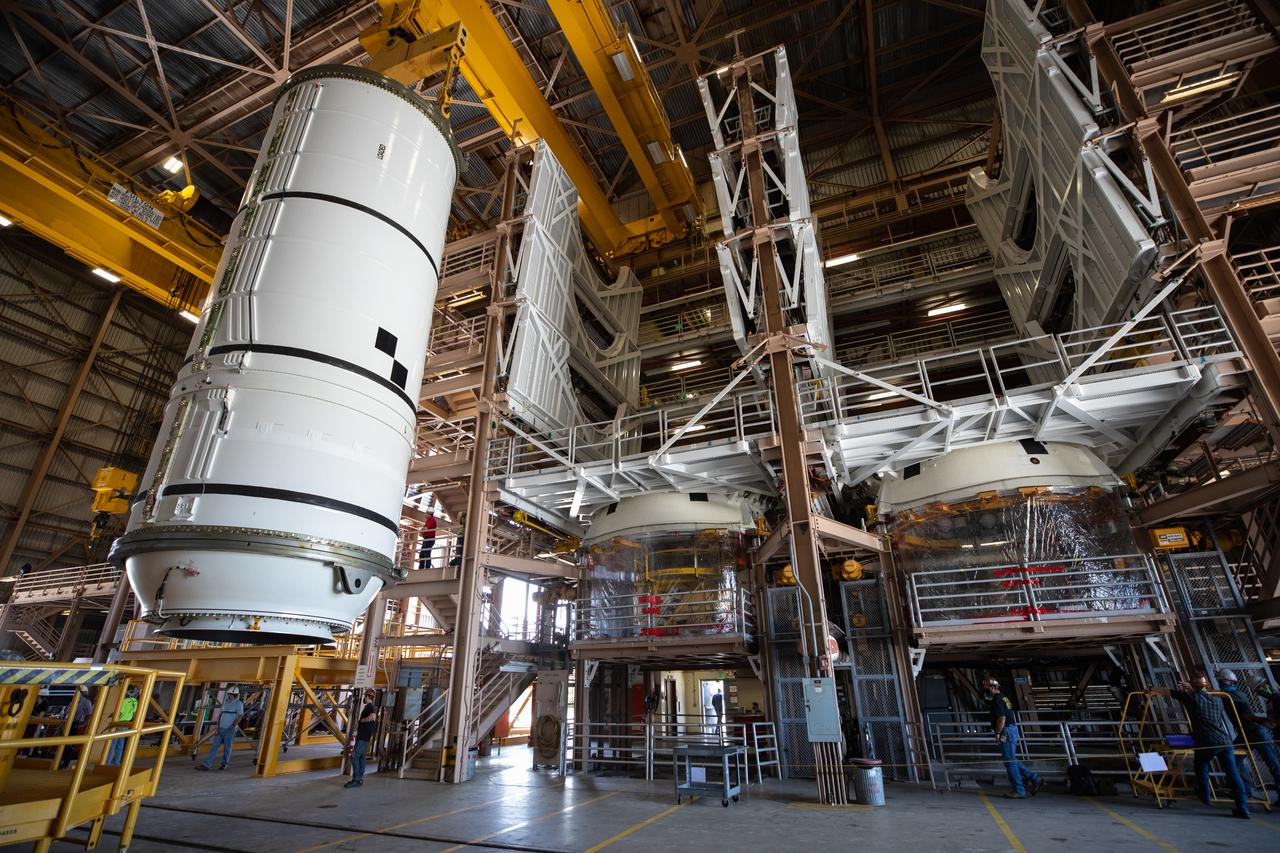
Inside the Rotation, Processing and Surge Facility (RPSF) at NASA’s Kennedy Space Center in Florida, technicians lift the right aft motor segment – one of five segments that make up one of two solid rocket boosters for the agency’s Space Launch System (SLS) – onto an inspection stand on June 23, 2020. While in the RPSF, the boosters will be mated to the rocket’s two aft skirts before they are moved to the Vehicle Assembly Building for stacking on the mobile launcher. The boosters, manufactured by Northrop Grumman in Utah, recently arrived at Kennedy for processing ahead of the Artemis I launch. Together, the twin boosters provide more than 75 percent of the total SLS thrust at launch. The first in a series of increasingly complex missions, Artemis I will test the Orion spacecraft and SLS as an integrated system ahead of crewed flights to the Moon.

Inside the Rotation, Processing and Surge Facility (RPSF) at NASA’s Kennedy Space Center in Florida, technicians lift the right aft motor segment – one of five segments that make up one of two solid rocket boosters for the agency’s Space Launch System (SLS) – onto an inspection stand on June 23, 2020. While in the RPSF, the boosters will be mated to the rocket’s two aft skirts before they are moved to the Vehicle Assembly Building for stacking on the mobile launcher. The boosters, manufactured by Northrop Grumman in Utah, recently arrived at Kennedy for processing ahead of the Artemis I launch. Together, the twin boosters provide more than 75 percent of the total SLS thrust at launch. The first in a series of increasingly complex missions, Artemis I will test the Orion spacecraft and SLS as an integrated system ahead of crewed flights to the Moon.
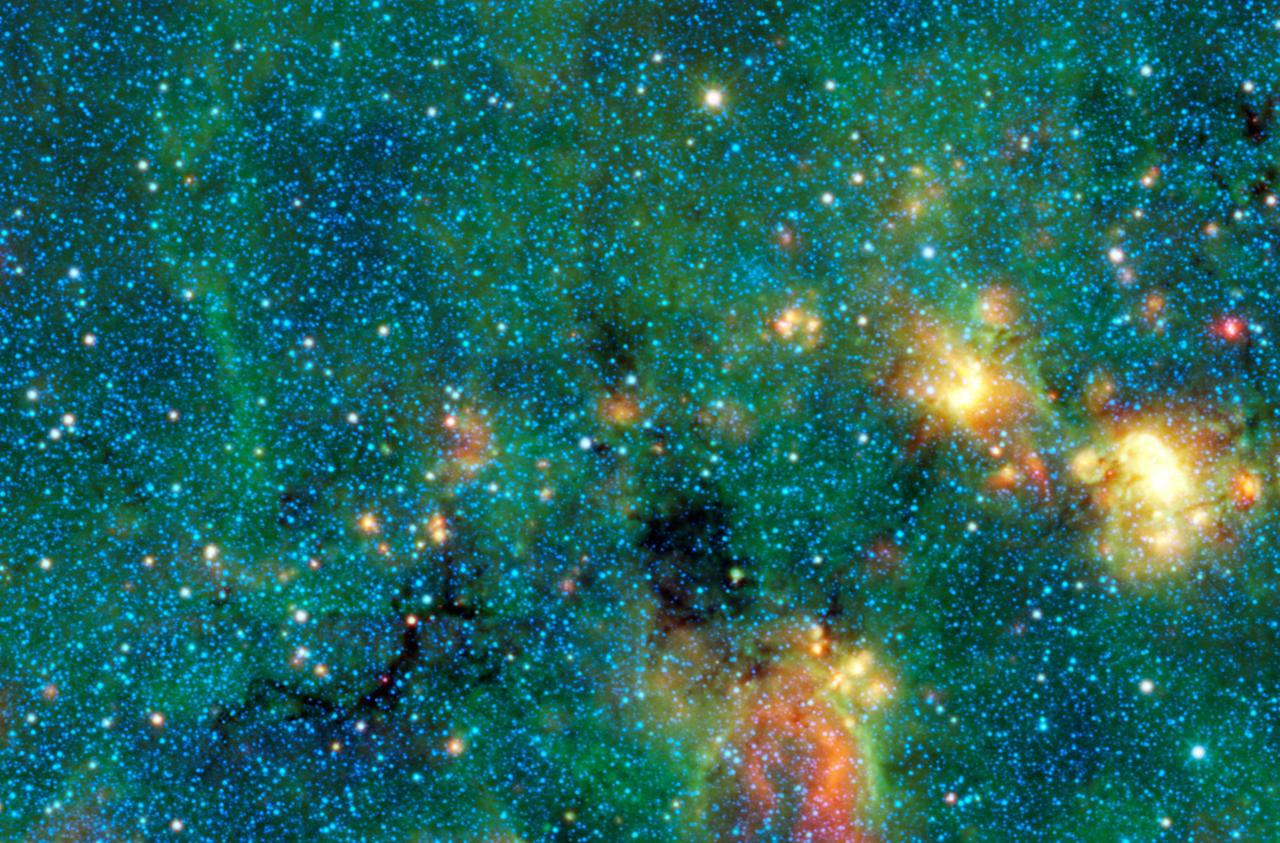
This infrared image from NASA Wide-field Infrared Survey Explorer shows exceptionally cold, dense cloud cores seen in silhouette against the bright diffuse infrared glow of the plane of the Milky Way galaxy.

This frame from an infrared movie from NASA Cassini mission shows the churning of the curious six-sided jet stream at Saturn north pole known as the hexagon.
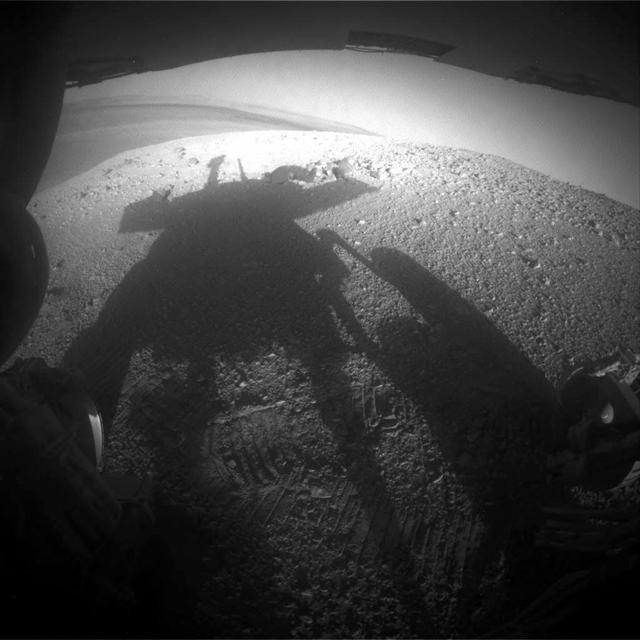
NASA Mars Exploration Rover Opportunity caught its own silhouette in this late-afternoon image from the rover rear HAZCAM on Mar, 20, 2014; its shadow falls across a slope called McClure-Beverlin Escarpment on the western rim of Endeavour Crater.
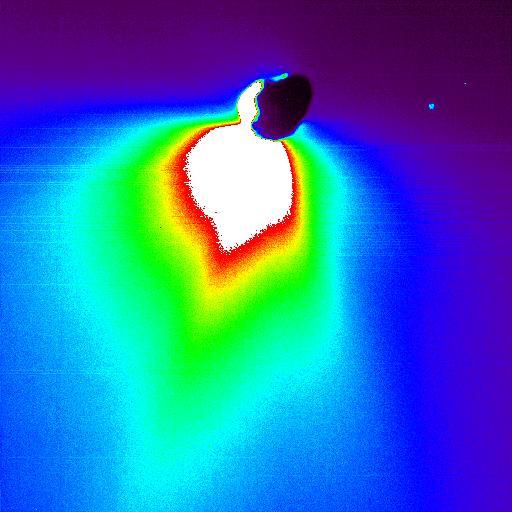
This false-color image shows comet Tempel 1 about 50 minutes after NASA Deep Impact probe smashed into its surface. The impact site is located on the far side of the comet in this view.
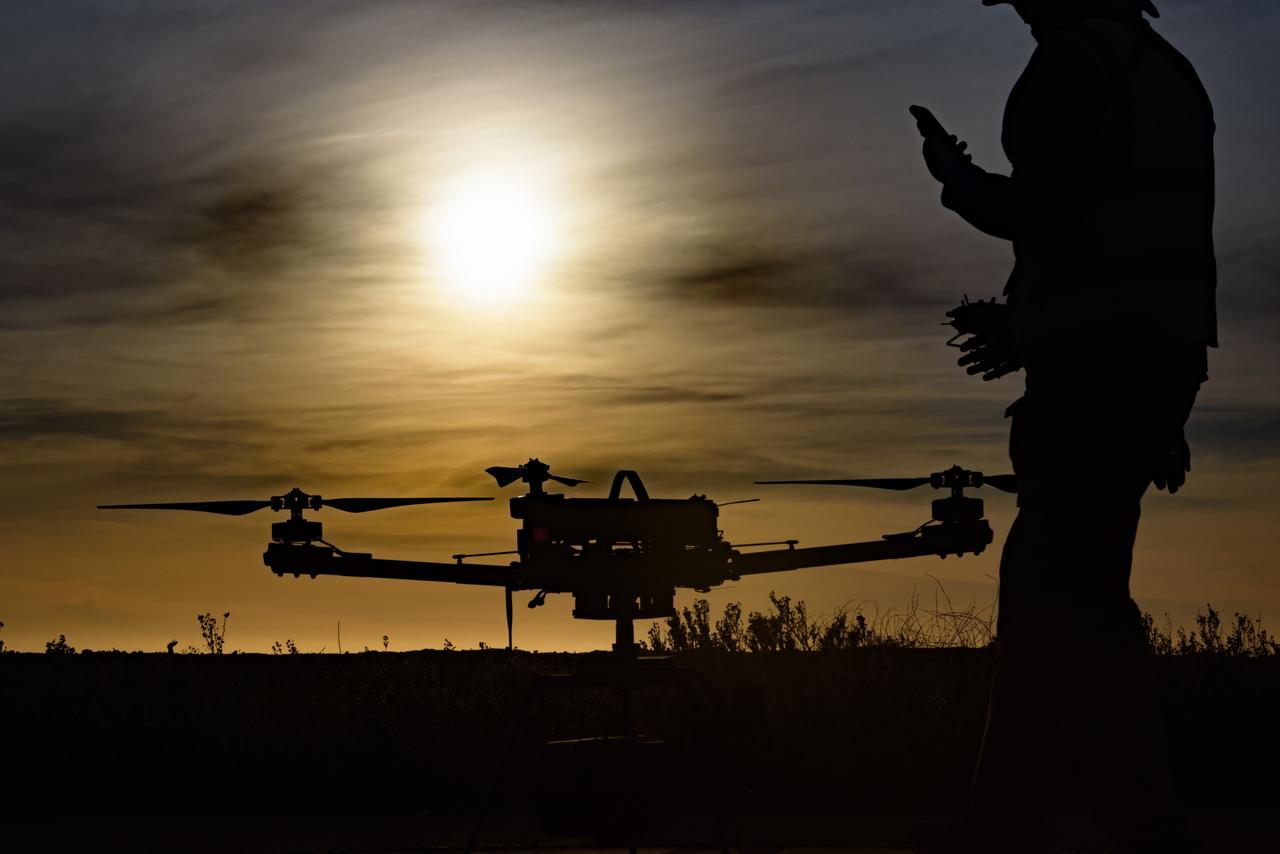
Silhouette view of Jonas Jonsson with the Alta-X Unmanned Aerial Vehicle (UAV) on the landing pad as the sun sets at the Monterey Bay Academy Airport near Watsonville, California.
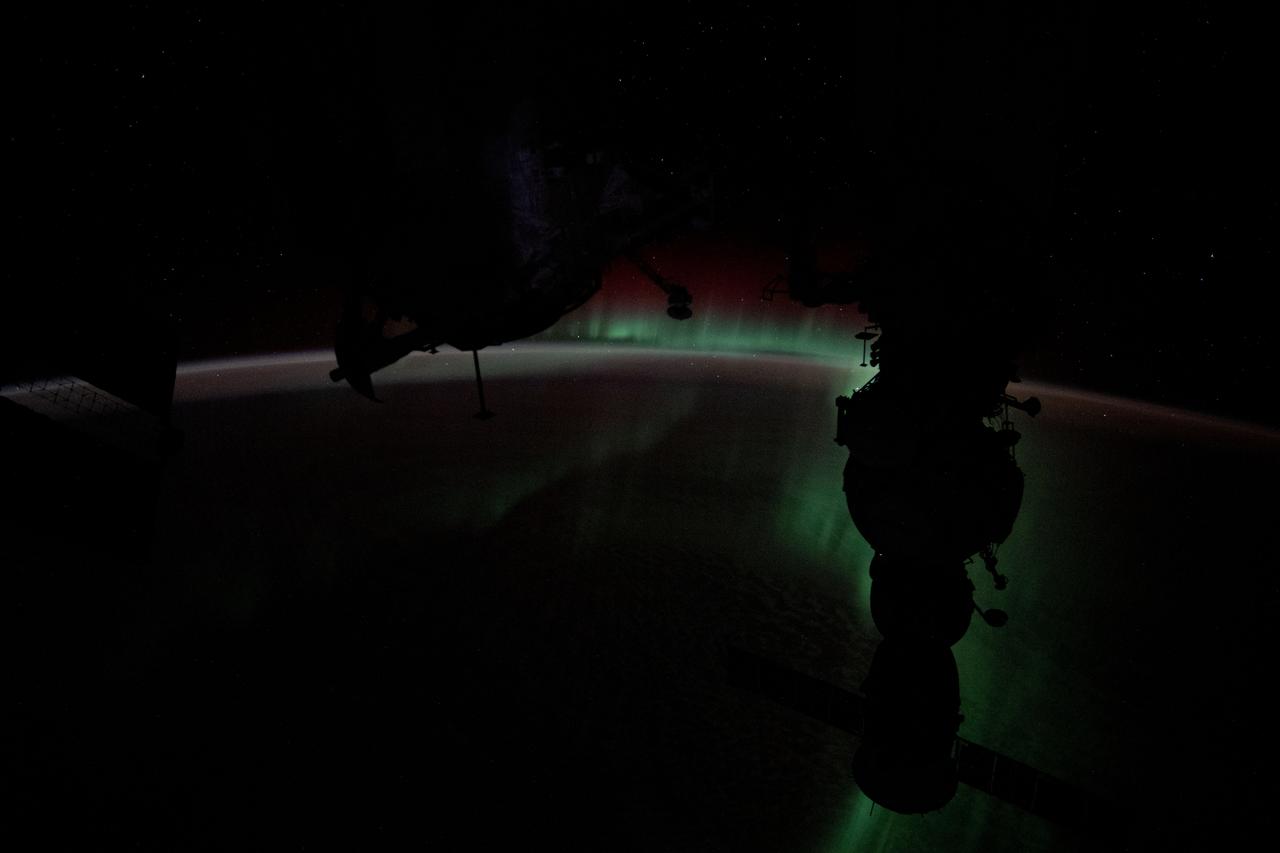
iss071e490546 (July 31, 2024) --- The Aurora Australis silhouettes the Soyuz MS-25 crew ship in this photograph from the International Space Station as it soared 272 miles above the Indian Ocean halfway between Australia and Antarctica.
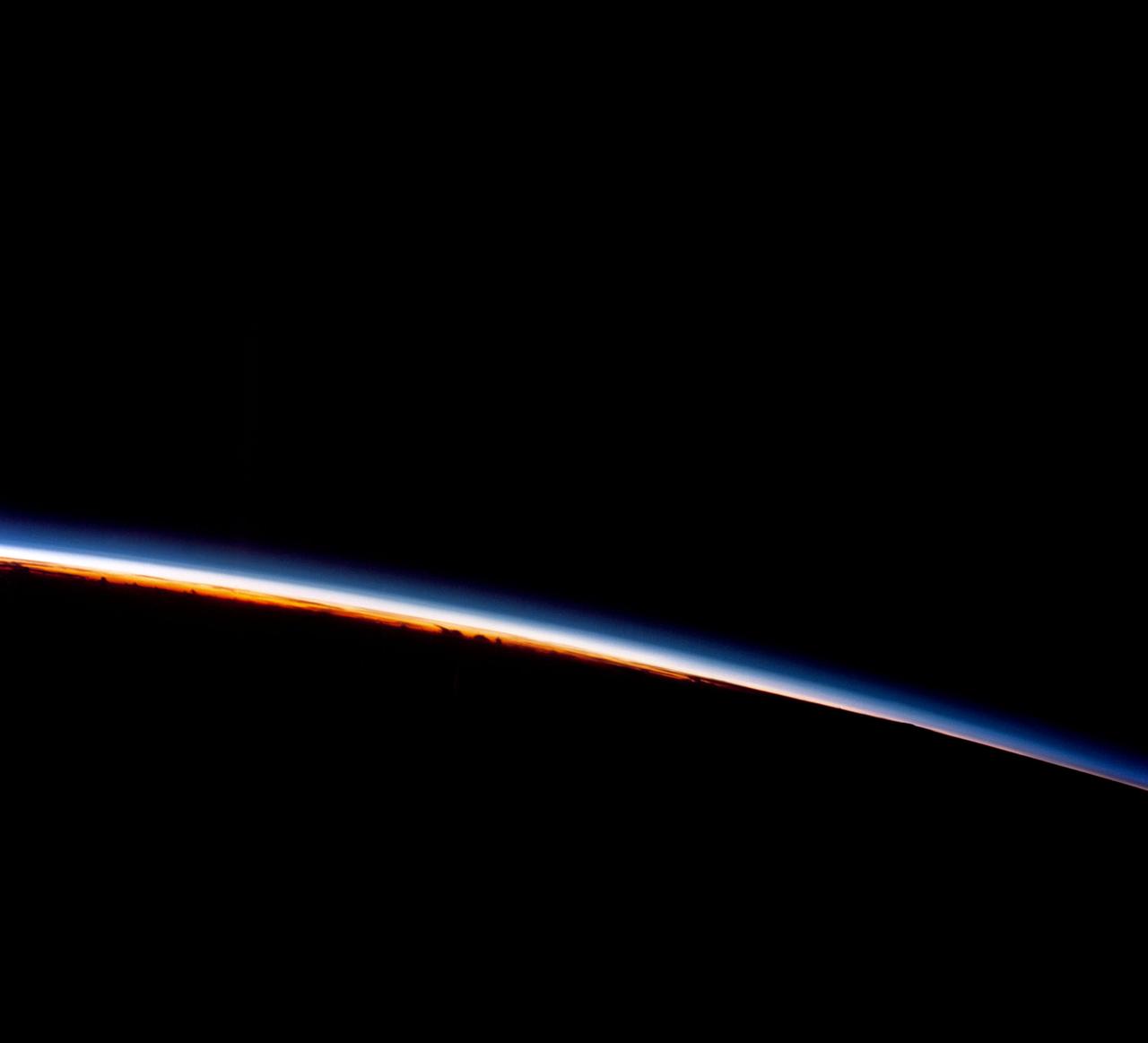
S66-25771 (16 March 1966) --- Earth's limb with cloud layers in silhouette, sunrise over Guam, as seen from the Gemini-Titan VIII (GT-8) spacecraft during its third revolution of the Earth.
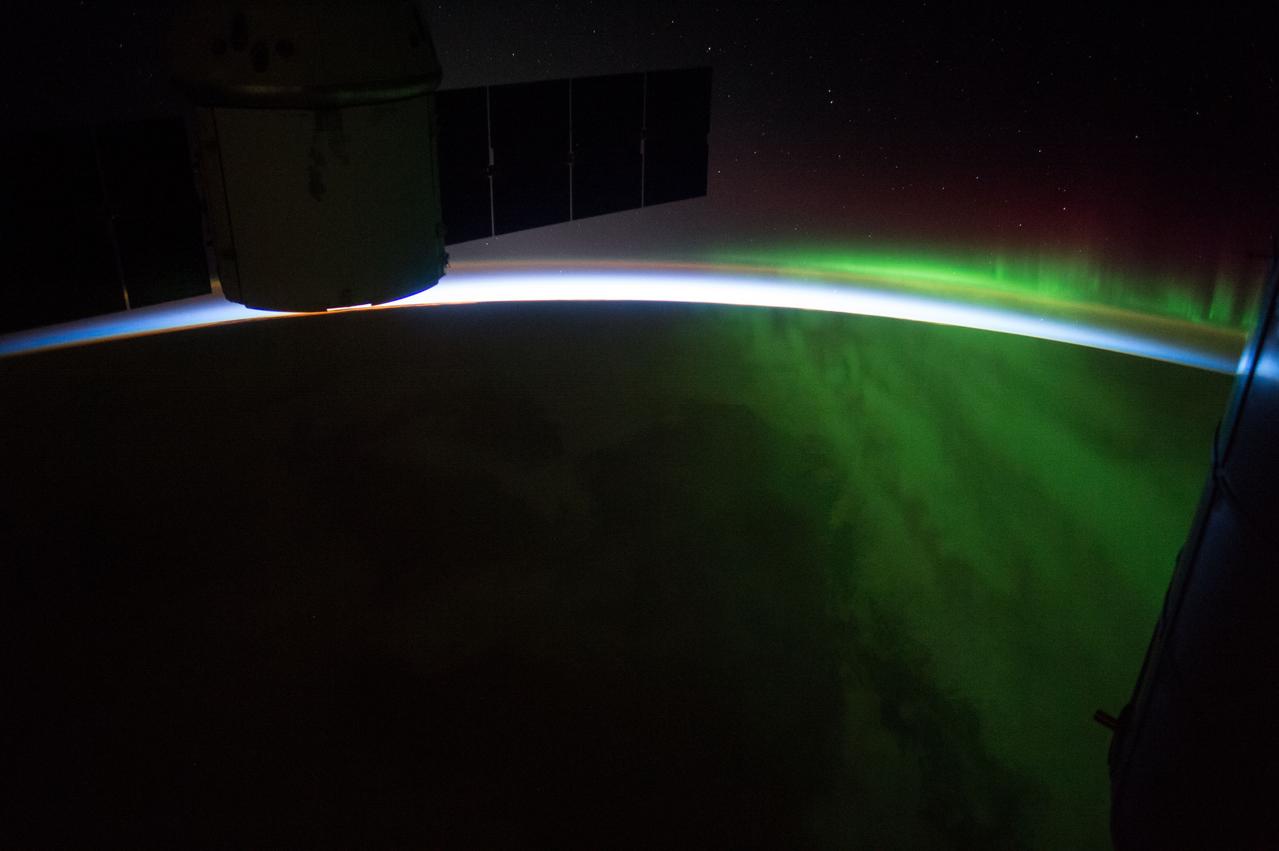
ISS043E155854 (04/27/2015) --- A rising sun spreads across the Earth and through the green blooming aurora to silhouette the blackened outline of the International Space Station on the morning of Apr. 27, 2015.
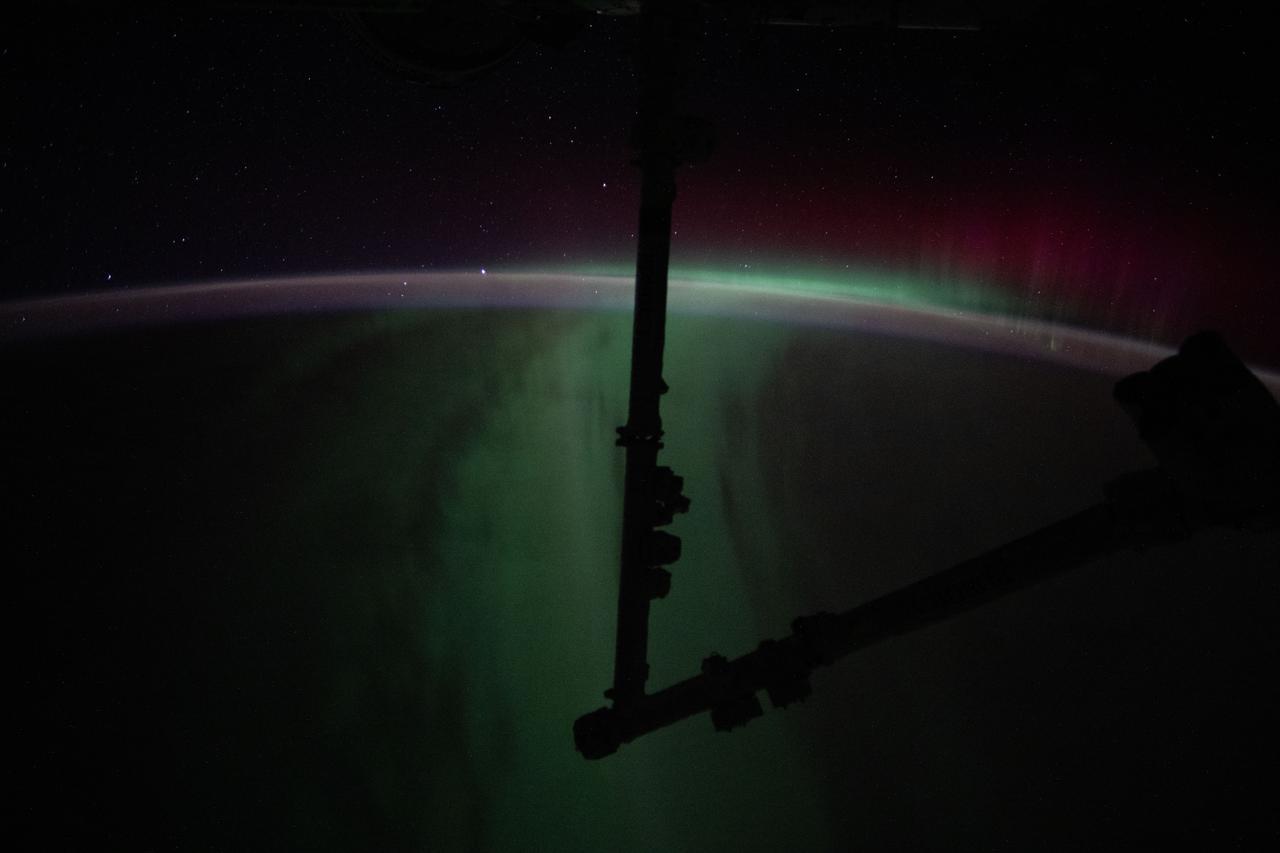
iss071e506350 (July 31, 2024) --- The Aurora Australis silhouettes the Canadarm2 robotic arm in this photograph from the International Space Station as it soared 272 miles above the Indian Ocean halfway between Australia and Antarctica.
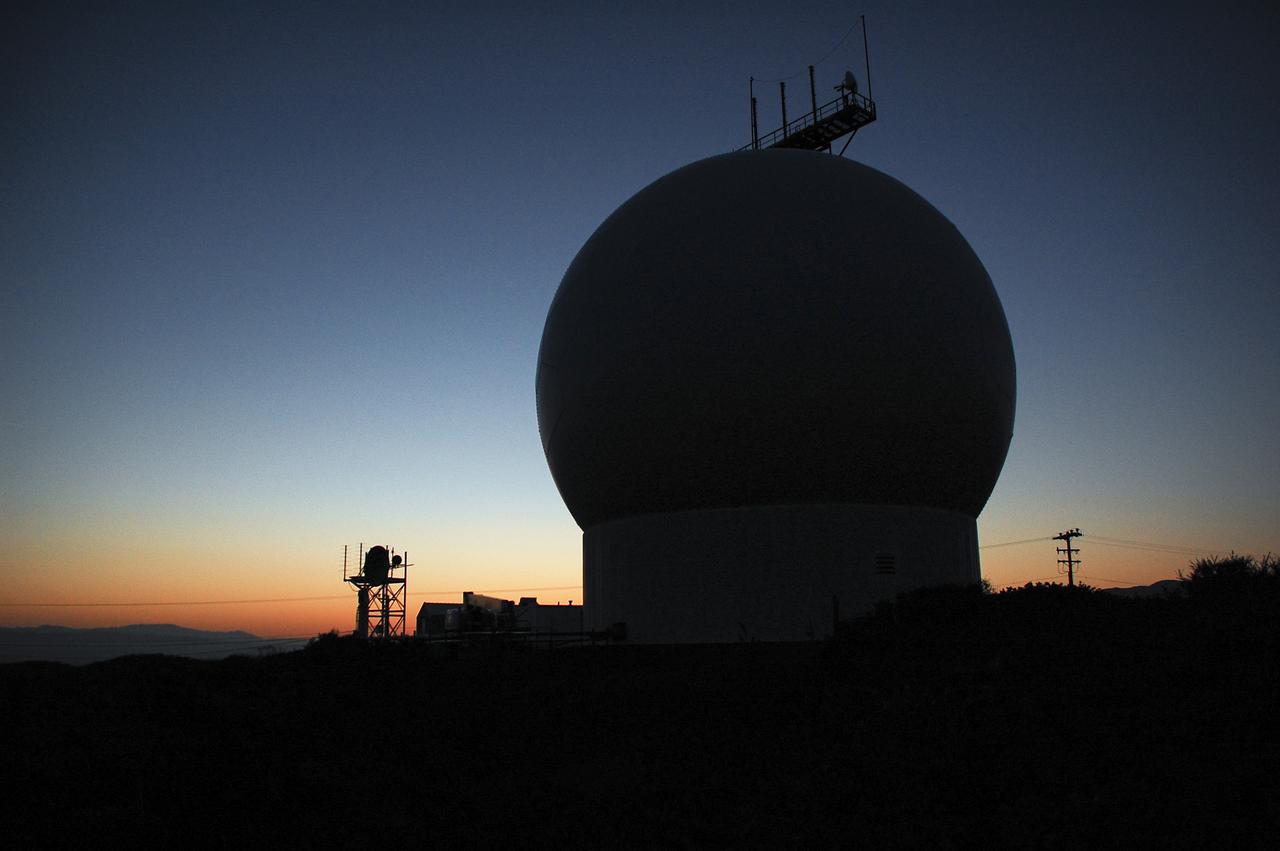
VANDENBERG AFB, Calif. – Tracking equipment and antennas show in silhouette as the sun rises over a United Launch Alliance Atlas V rocket carrying the Landsat Data Continuity Mission spacecraft from Vandenberg Air Force Base in California. Photo credit: NASA_Ben Smegelsky
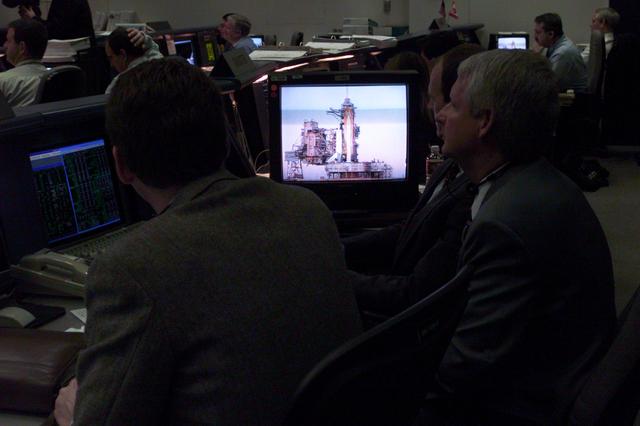
JSC2001-E-06216 (8 March 2001) --- In Houston's Mission Control Center (MCC), the silhouette of astronaut Steven A. Hawley of the Flight Crew Operations Directorate appears just to the right of the monitor displaying the Space Shuttle Discovery's pre-launch activities several hundred miles away in Florida.
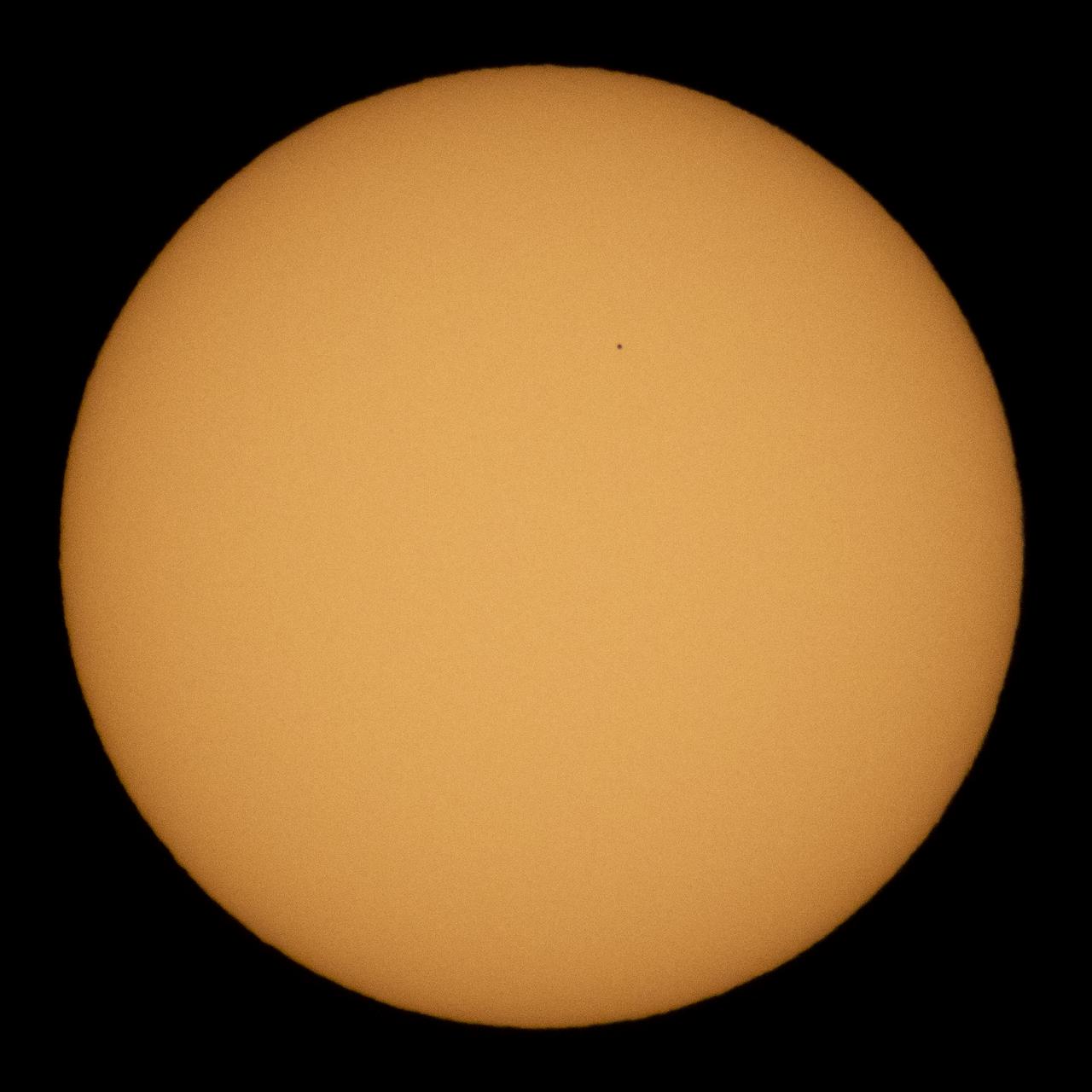
The planet Mercury is seen in silhouette, low center, as it transits across the face of the Sun Monday, Nov. 11, 2019, from Washington. Mercury’s last transit was in 2016. The next won’t happen again until 2032. Photo Credit: (NASA/Bill Ingalls)
The planet Mercury is seen in silhouette as it transits across the face of the sun, Monday, Nov. 11, 2019 in Salt Lake City, Utah. Mercury’s last transit was in 2016. the next won't happen again until 2032. Photo Credit: (NASA/Joel Kowsky)
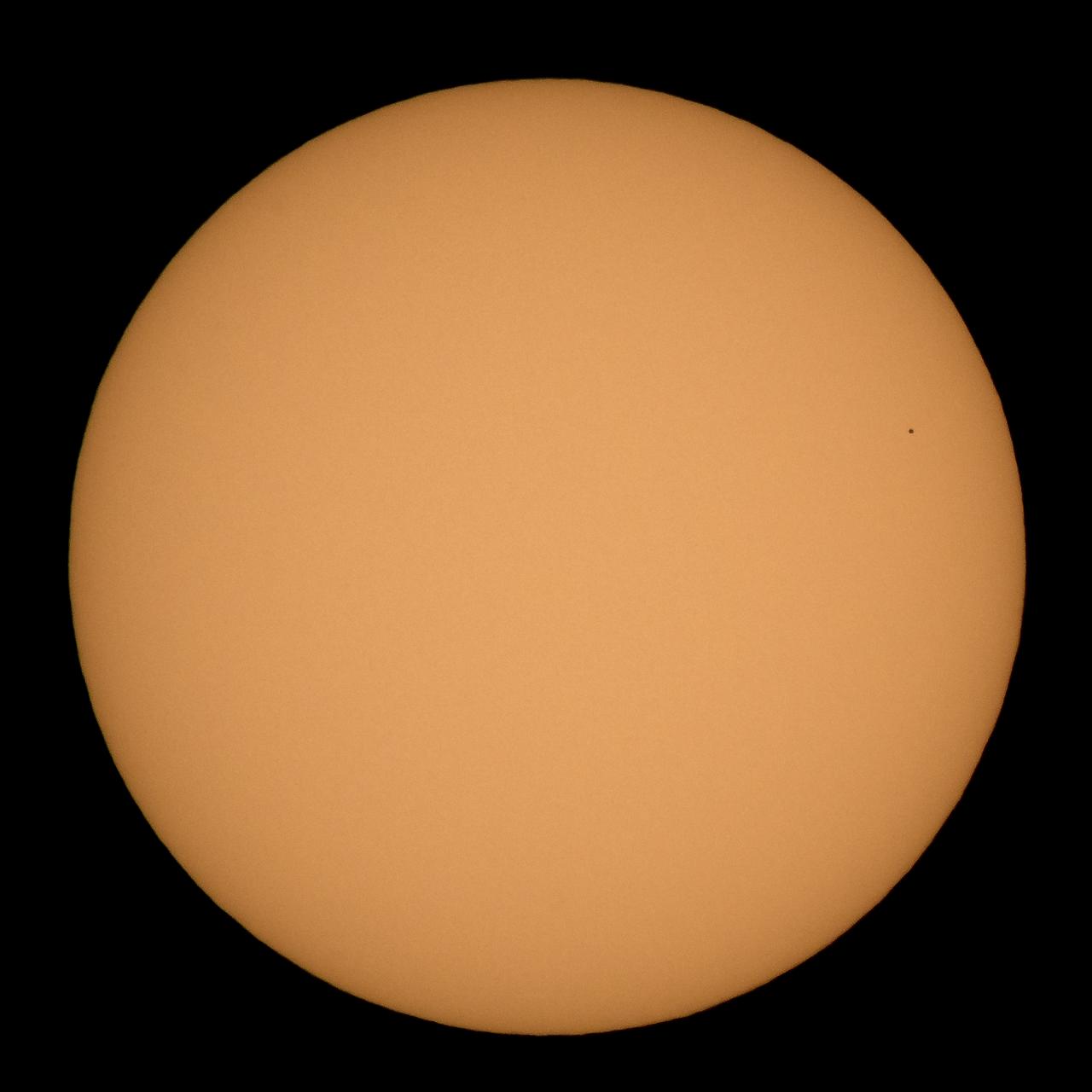
The planet Mercury is seen in silhouette as it nearly completes transiting across the face of the Sun, Monday, Nov. 11, 2019, in Arlington, Virginia. Mercury’s last transit was in 2016. the next won't happen again until 2032. Photo Credit: (NASA/Bill Ingalls)
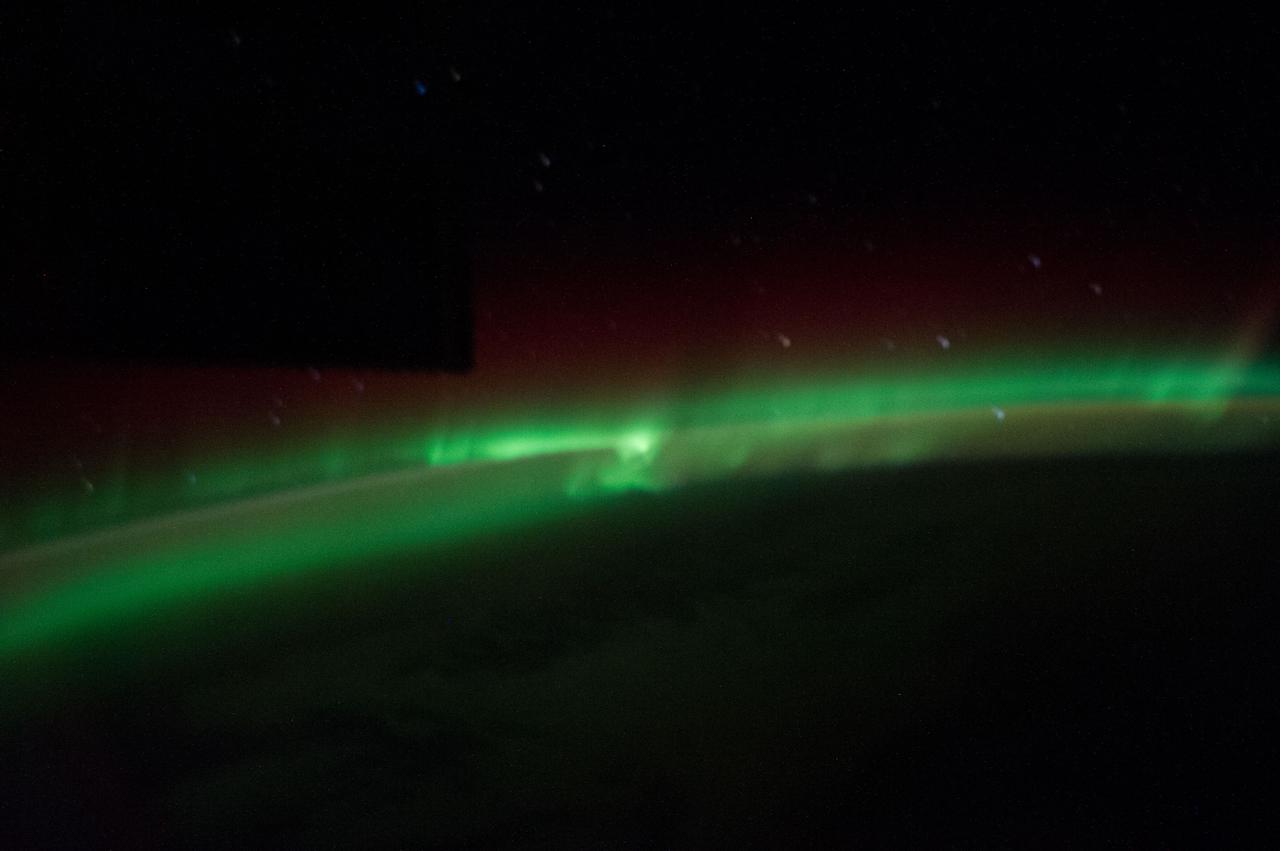
ISS039-E-018315 (3 May 2014) --- One of the Expedition 39 crew members aboard the International Space Station recorded this still image of the Aurora Australis when the orbital outpost was passing over the Indian Ocean on May 3, 2014. Hardware on the station is seen as a silhouette in upper left.
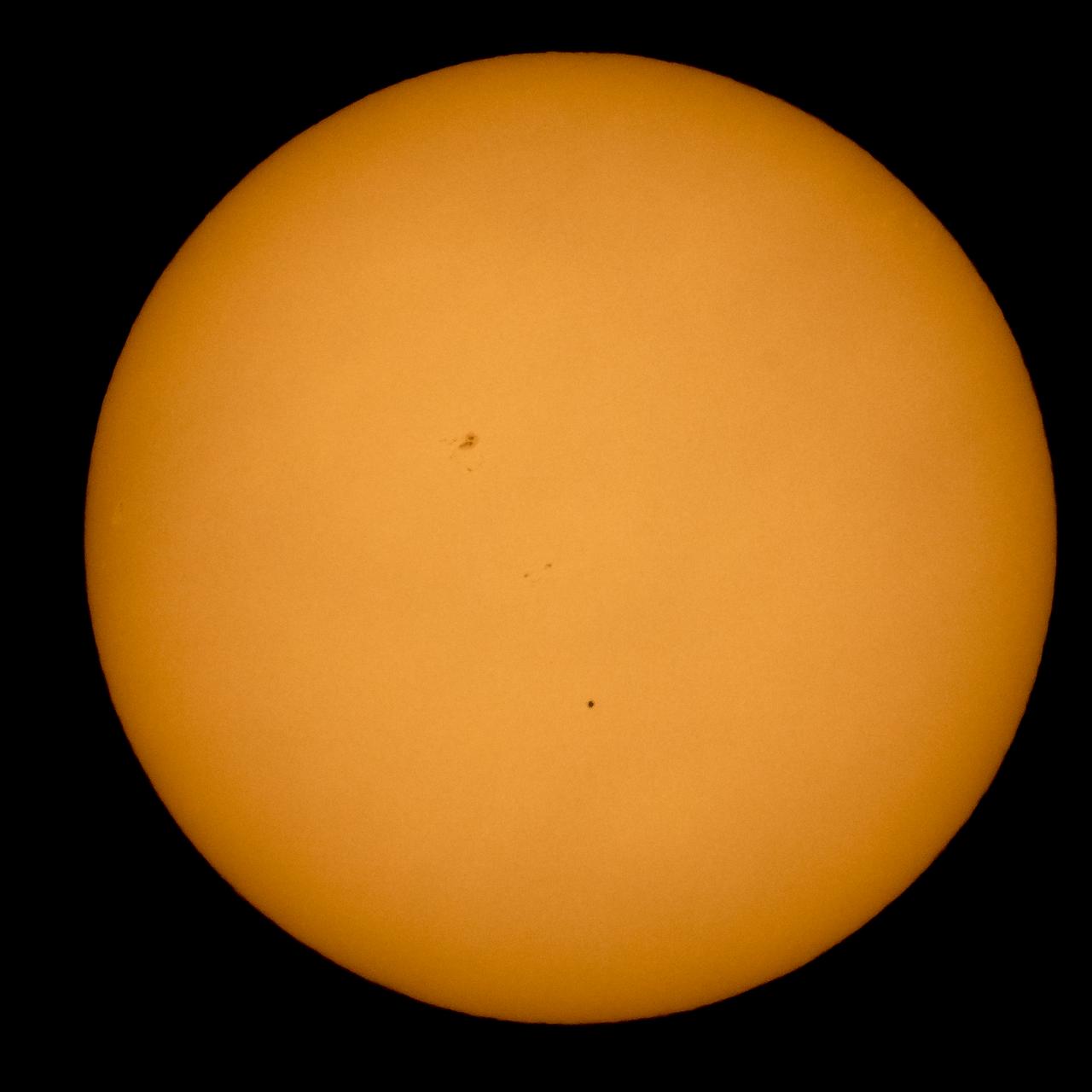
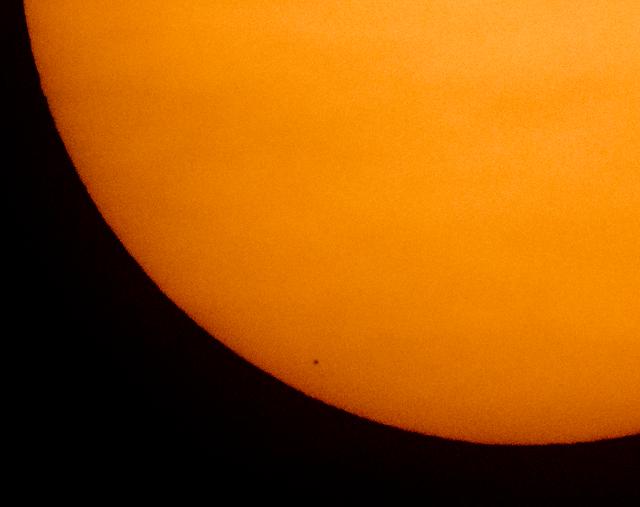
The planet Mercury is seen in silhouette, lower center of image, as it transits across the face of the sun, Monday, May 9, 2016, as viewed from Boyertown, Pennsylvania. Mercury passes between Earth and the sun only about 13 times a century, with the previous transit taking place in 2006. Photo Credit: (NASA/Bill Ingalls)
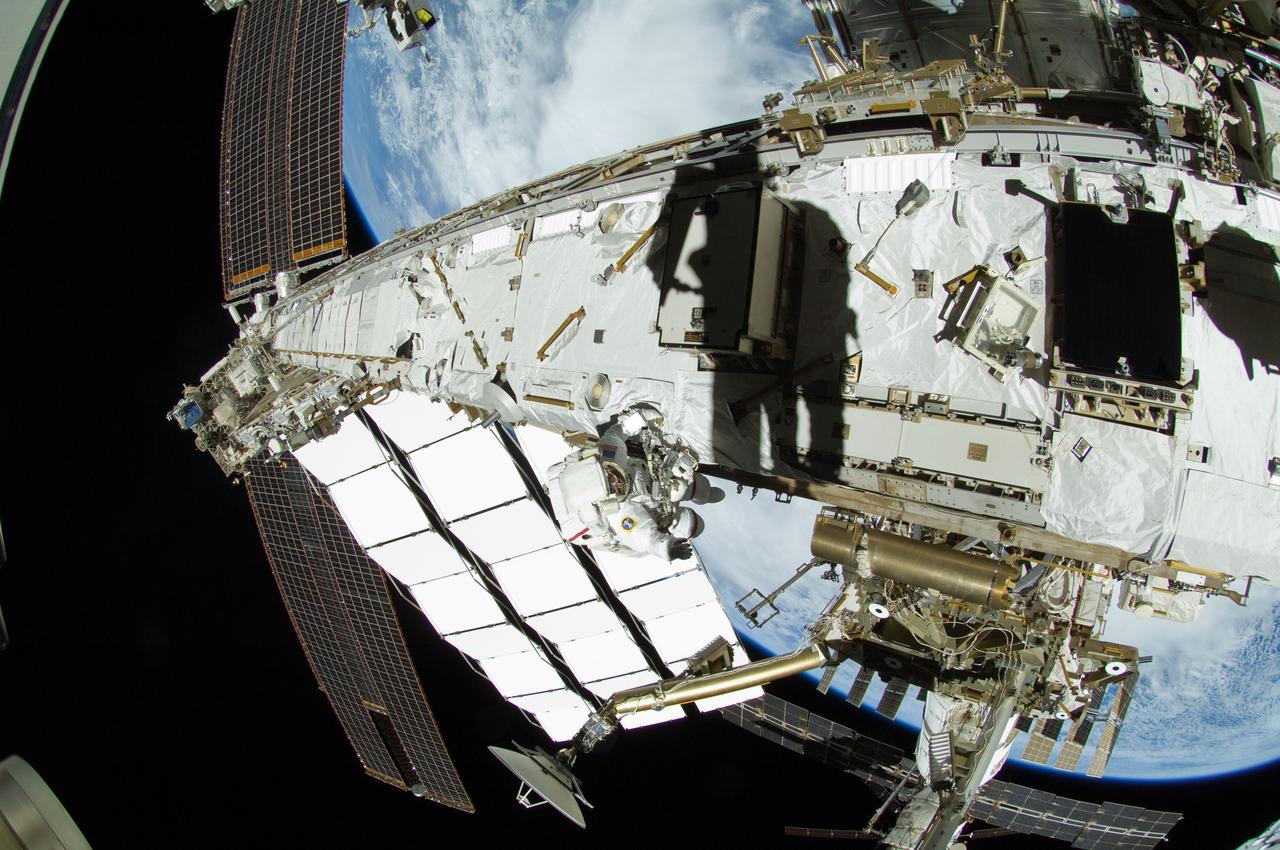
ISS032-E-024154 (30 Aug. 2012) --- NASA astronaut Sunita Williams (center frame) and Japan Aerospace Exploration Agency astronaut Aki Hoshide (seen as silhouette to the right of Williams), both Expedition 32 flight engineers, participate in a session of extravehicular activity (EVA) to continue outfitting the International Space Station.
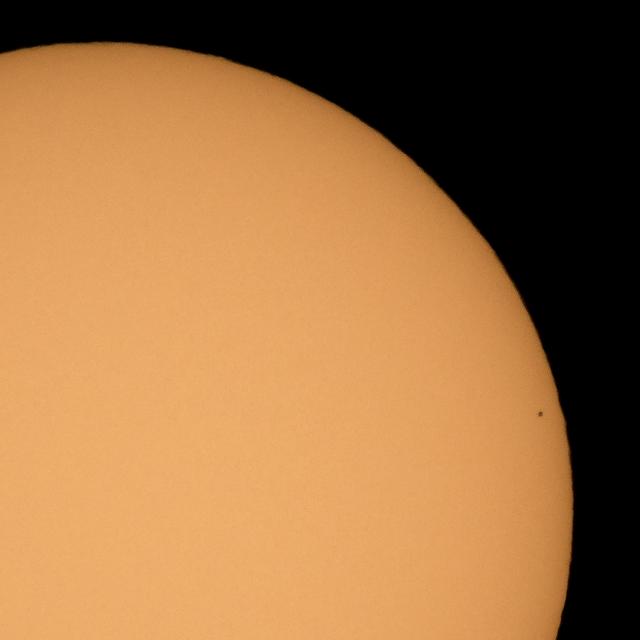
The planet Mercury is seen in silhouette as it nearly completes transiting across the face of the Sun, Monday, Nov. 11, 2019, in Arlington, Virginia. Mercury’s last transit was in 2016. the next won't happen again until 2032. Photo Credit: (NASA/Bill Ingalls)
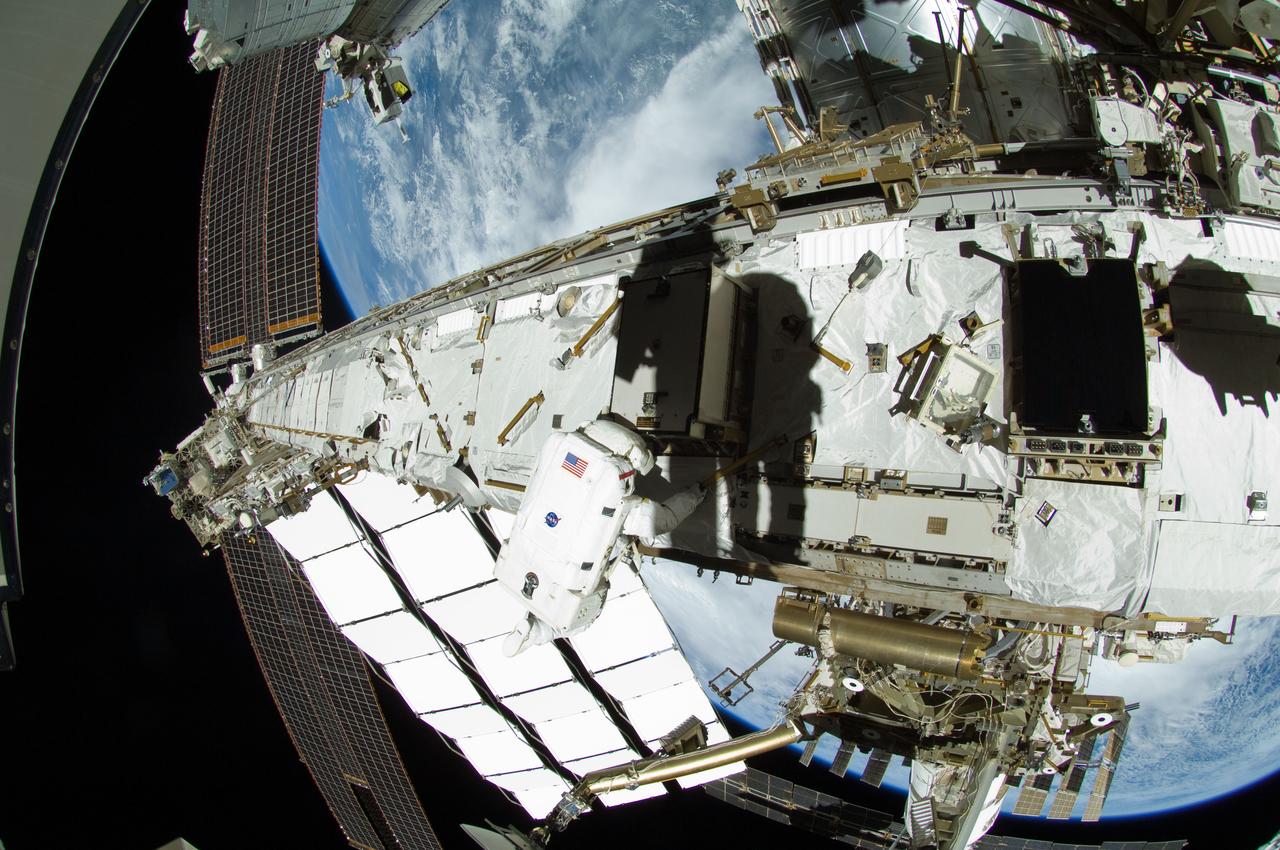
ISS032-E-024155 (30 Aug. 2012) --- NASA astronaut Sunita Williams (center frame) and Japan Aerospace Exploration Agency astronaut Aki Hoshide (seen as silhouette to the right of Williams), both Expedition 32 flight engineers, participate in a session of extravehicular activity (EVA) to continue outfitting the International Space Station.
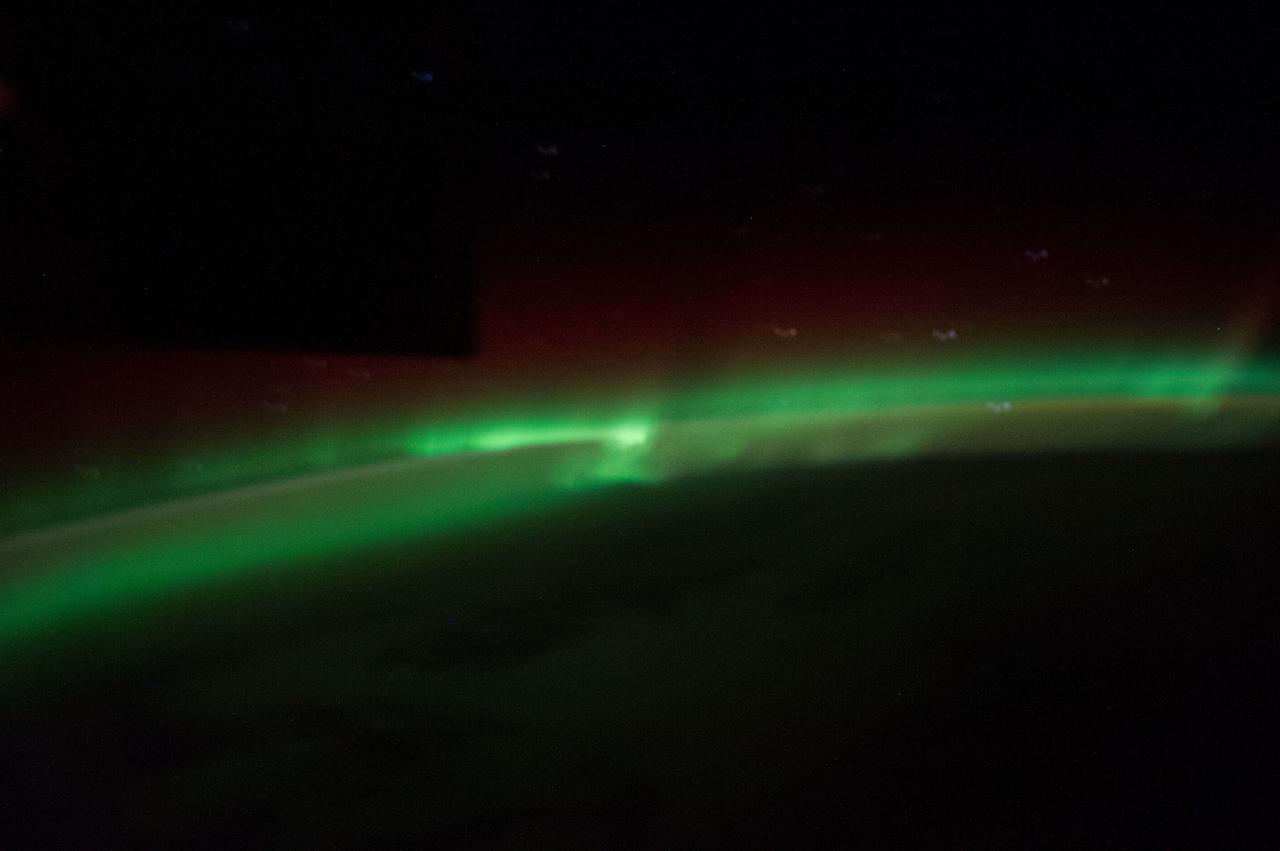
ISS039-E-018314 (3 May 2014) --- One of the Expedition 39 crew members aboard the International Space Station recorded this still image of the Aurora Australis when the orbital outpost was passing over the Indian Ocean on May 3, 2014. Hardware on the station is seen as a silhouette in upper left.
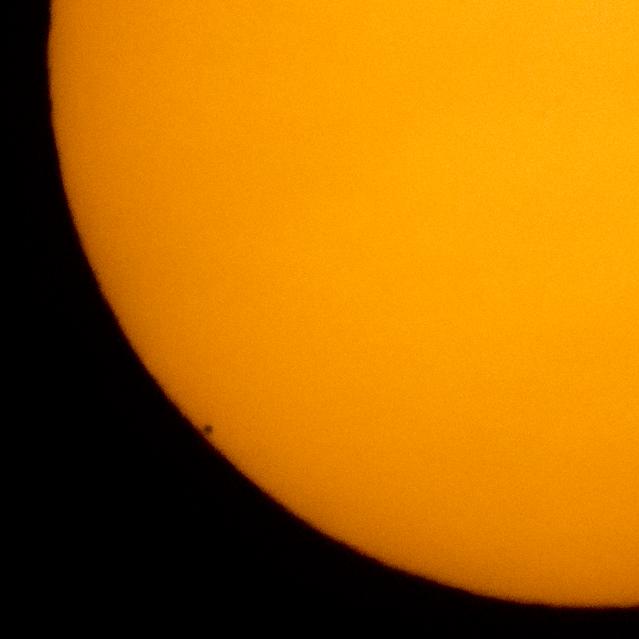
The planet Mercury is seen in silhouette, lower left of image, as it transits across the face of the sun, Monday, May 9, 2016, as viewed from Boyertown, Pennsylvania. Mercury passes between Earth and the sun only about 13 times a century, with the previous transit taking place in 2006. Photo Credit: (NASA/Bill Ingalls)
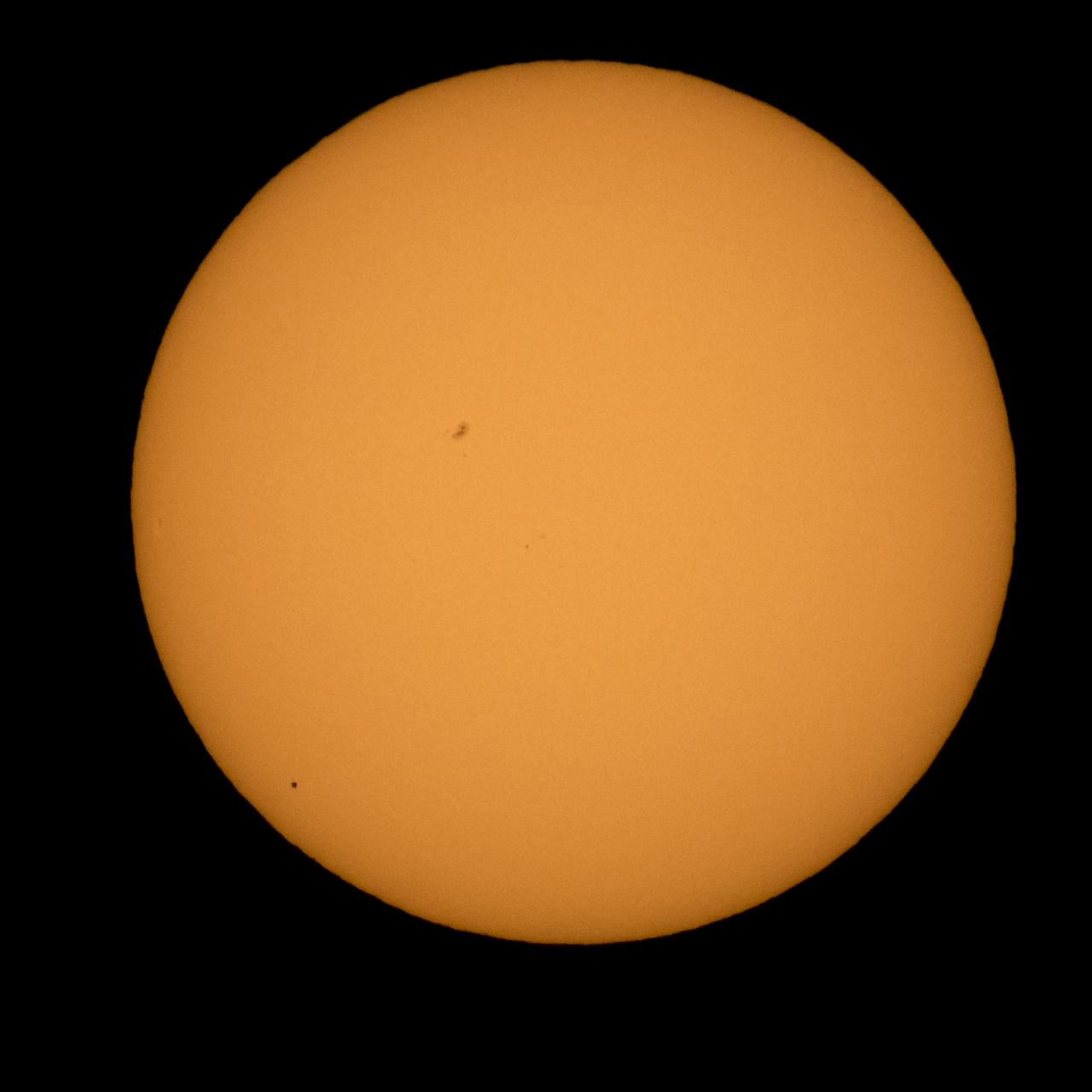
The planet Mercury is seen in silhouette, lower left, as it transits across the face of the sun Monday, May 9, 2016, as viewed from Boyertown, Pennsylvania. Mercury passes between Earth and the sun only about 13 times a century, with the previous transit taking place in 2006. Photo Credit: (NASA/Bill Ingalls)
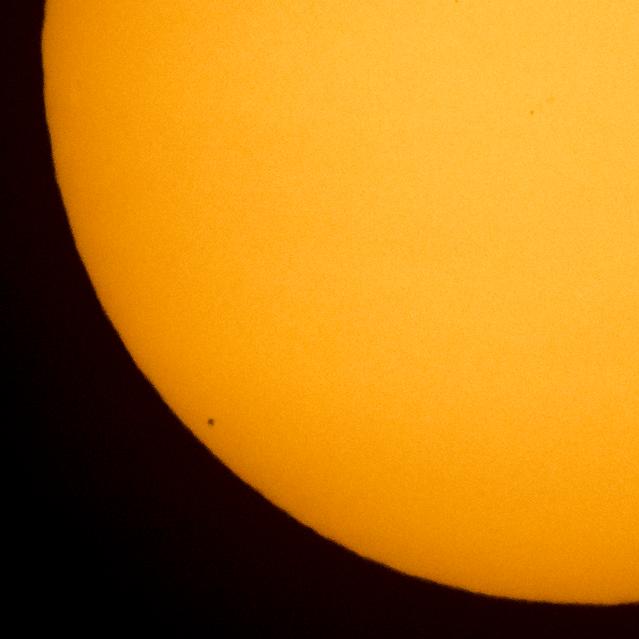
The planet Mercury is seen in silhouette, lower left of image, as it transits across the face of the sun, Monday, May 9, 2016, as viewed from Boyertown, Pennsylvania. Mercury passes between Earth and the sun only about 13 times a century, with the previous transit taking place in 2006. Photo Credit: (NASA/Bill Ingalls)
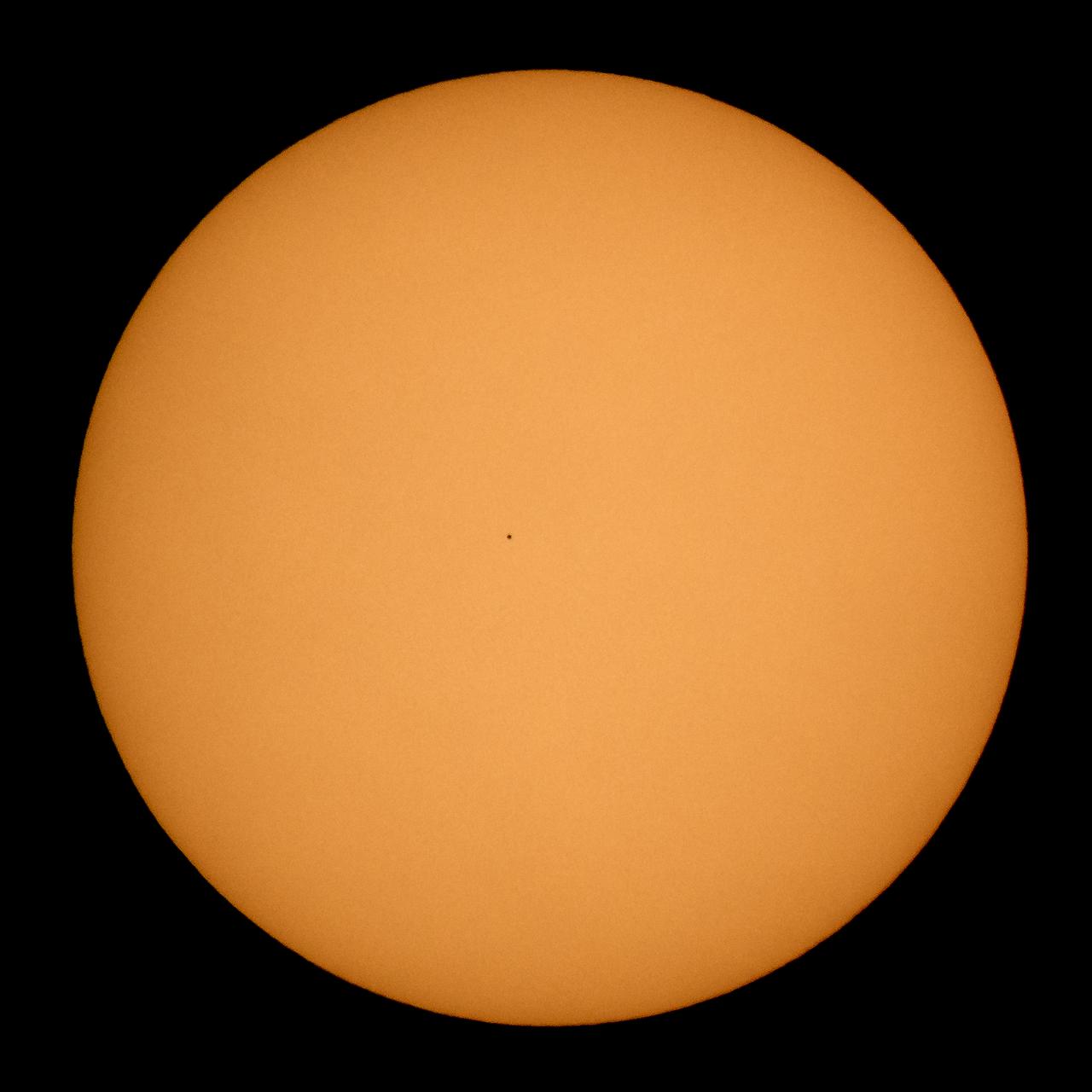
The planet Mercury is seen in silhouette, center, as it transits across the face of the Sun Monday, Nov. 11, 2019, from Washington. Mercury’s last transit was in 2016. The next won’t happen again until 2032. Photo Credit: (NASA/Bill Ingalls)
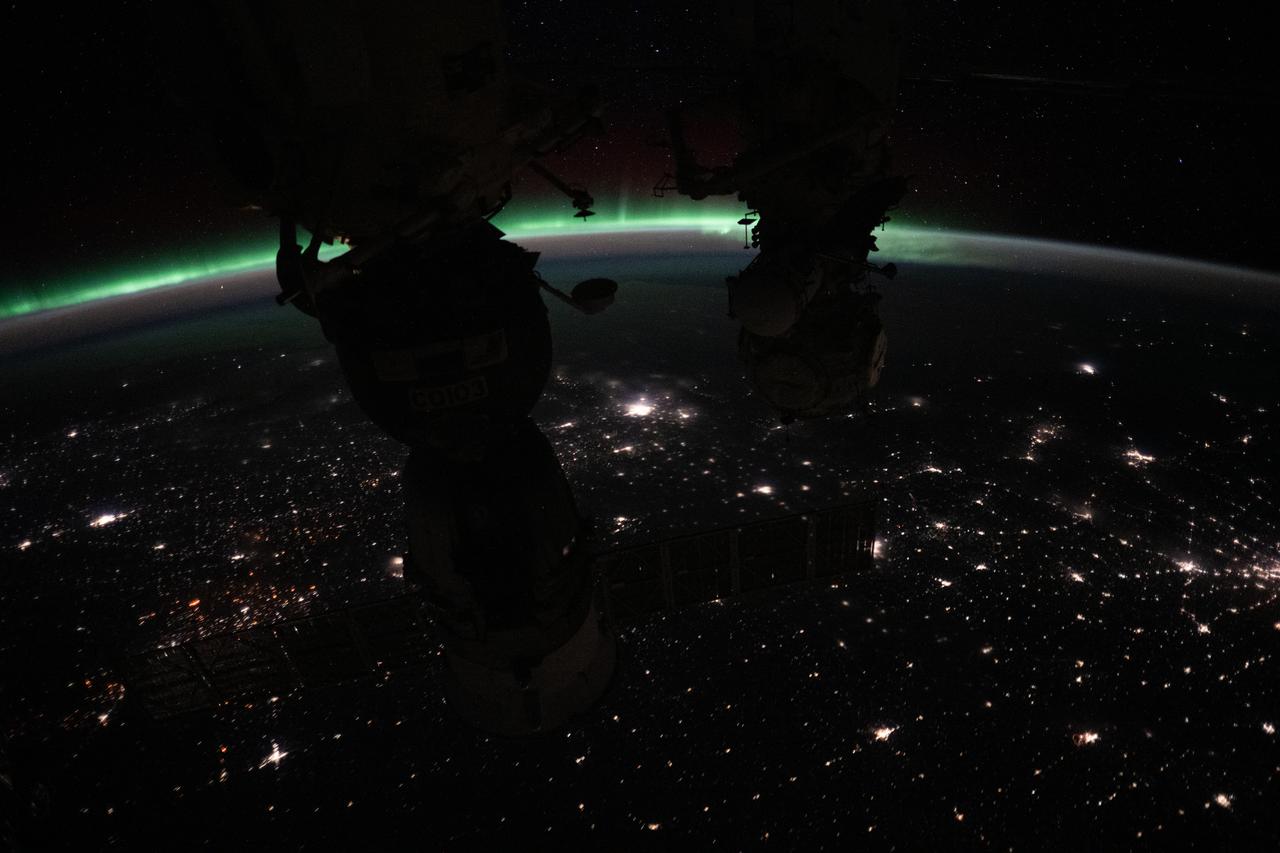
iss072e709711 (March 2, 2025) --- The aurora borealis crowns Earth's horizon with the city lights of Canada dotting the landscape below in this photograph from the International Space Station as it orbited 262 miles above North America. (From left) The Soyuz MS-26 spacecraft and the Pirs docking compartment silhouette the foreground.
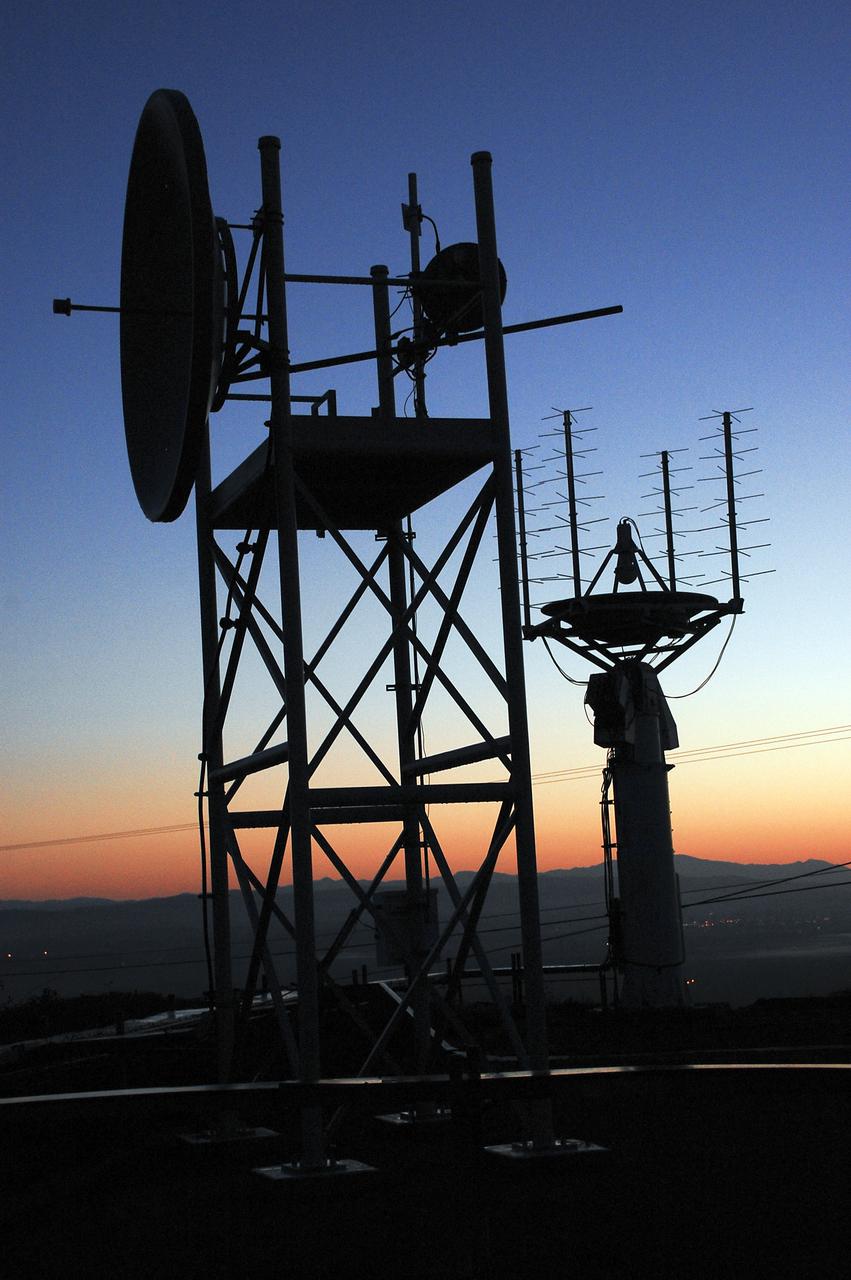
VANDENBERG AFB, Calif. – Tracking equipment and antennas show in silhouette as the sun rises over a United Launch Alliance Atlas V rocket carrying the Landsat Data Continuity Mission spacecraft from Vandenberg Air Force Base in California. Photo credit: NASA_Ben Smegelsky
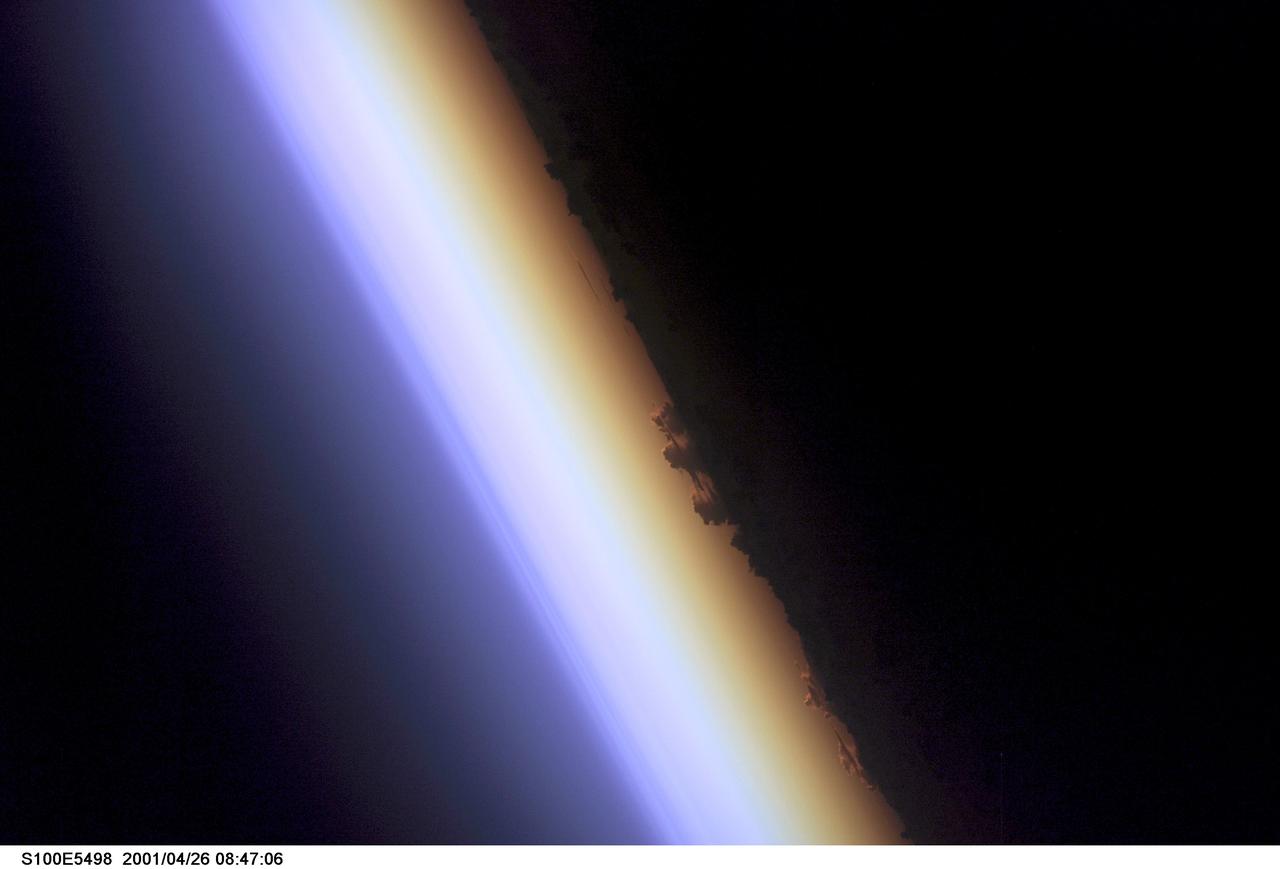
S100-E-5498 (26 April 2001) --- Earth's limb--the edge of the planet seen at twilight--was captured with a digital still camera by one of the STS-100 crew members aboard the Space Shuttle Endeavour. Near center frame the silhouette of cloud layers can be seen in the atmosphere, above which lies an airglow layer (left).
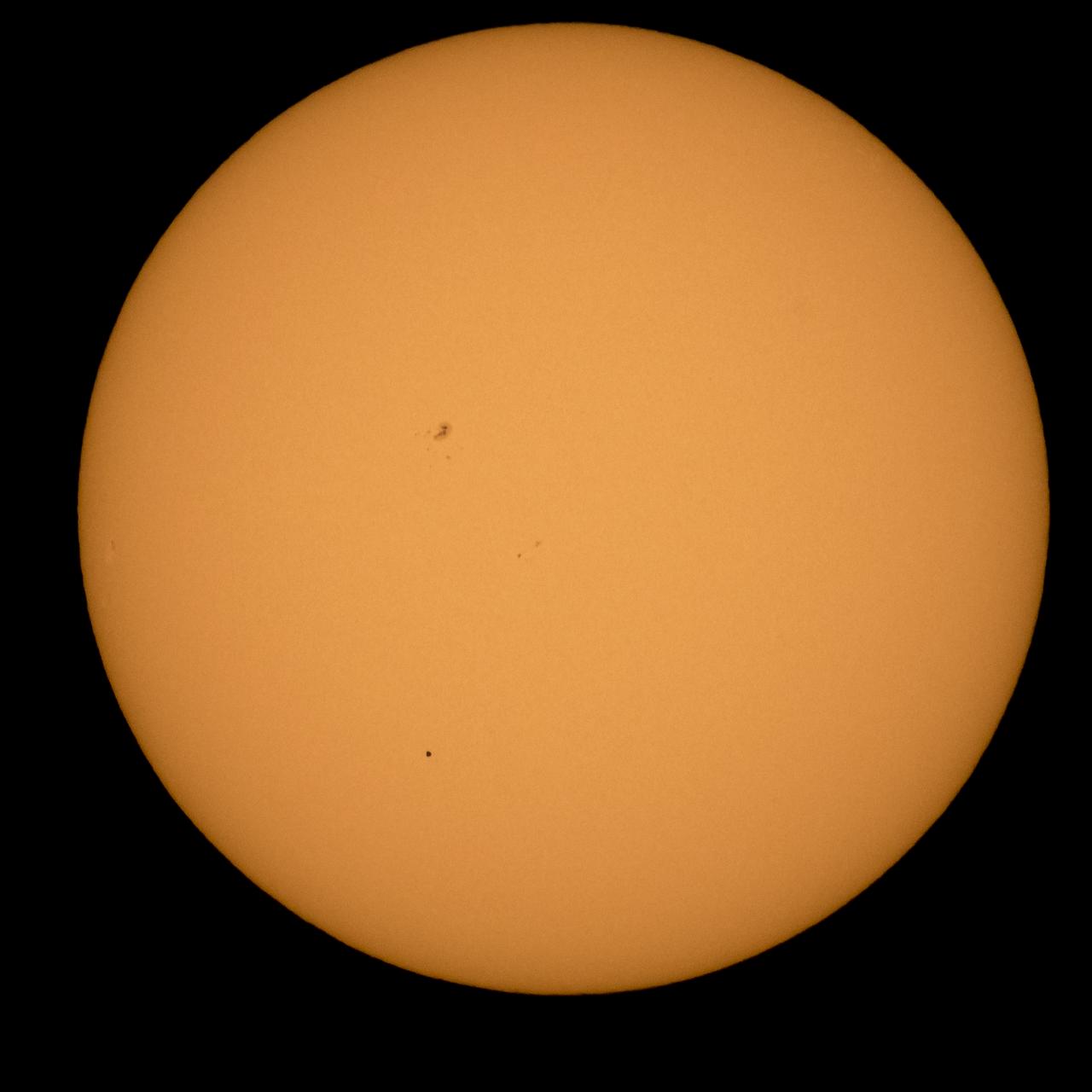
The planet Mercury is seen in silhouette, lower third of image, as it transits across the face of the sun Monday, May 9, 2016, as viewed from Boyertown, Pennsylvania. Mercury passes between Earth and the sun only about 13 times a century, with the previous transit taking place in 2006. Photo Credit: (NASA/Bill Ingalls)

iss060e006636 (July 11, 2019) --- Earth's atmospheric glow is back-dropped by a starry Milky Way as the International Space Station orbited 258 miles above Myanmar during an orbital nighttime pass. The Progress 72 resupply ship and the Pirs docking compartment with its lit airlock window silhouette the background.
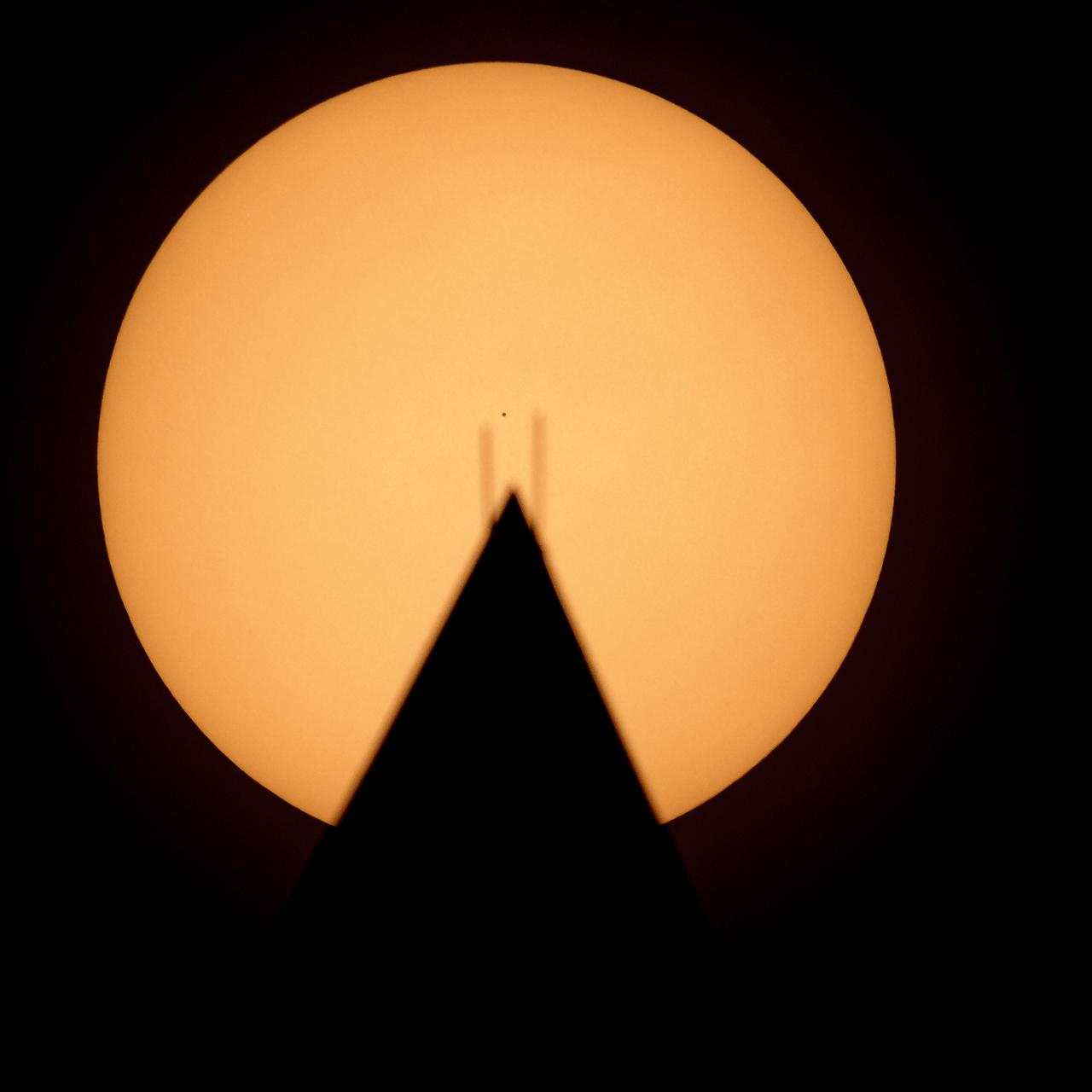
The planet Mercury is seen in silhouette, center, as it transits across the face of the Sun, behind the Washington Monument, Monday, Nov. 11, 2019, in Washington. Mercury’s last transit was in 2016. The next won’t happen again until 2032. Photo Credit: (NASA/Bill Ingalls)
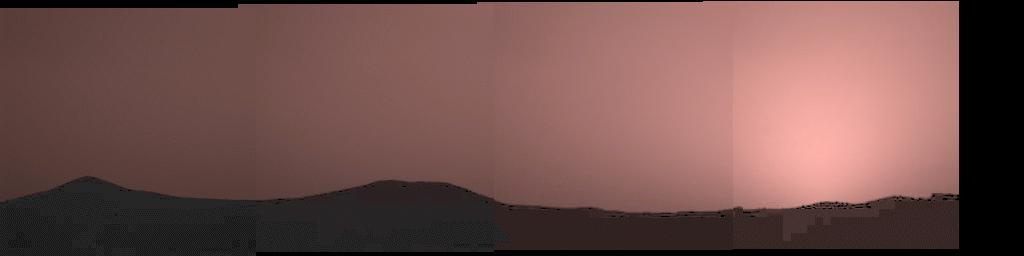
This image was taken by the Imager for Mars Pathfinder (IMP) about one minute after sunset on Mars on Sol 21. The prominent hills dubbed "Twin Peaks" form a dark silhouette at the horizon, while the setting sun casts a pink glow over the darkening sky. The image was taken as part of a twilight study which indicates how the brightness of the sky fades with time after sunset. Scientists found that the sky stays bright for up to two hours after sunset, indicating that Martian dust extends very high into the atmosphere. http://photojournal.jpl.nasa.gov/catalog/PIA00783
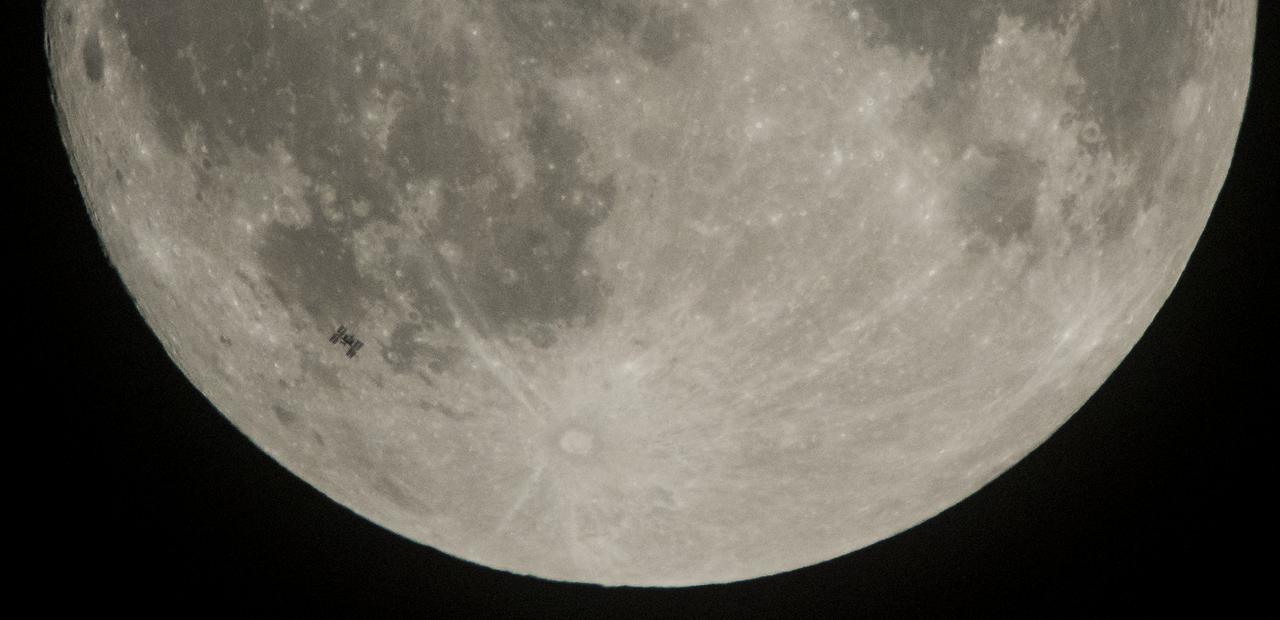
The International Space Station, with a crew of six onboard, is seen in silhouette as it transits the Moon at roughly five miles per second, Saturday, Dec. 2, 2017, in Manchester Township, York County, Pennsylvania. Onboard are NASA astronauts Joe Acaba, Mark Vande Hei, and Randy Bresnik; Russian cosmonauts Alexander Misurkin and Sergey Ryanzansky; and ESA astronaut Paolo Nespoli. Photo Credit: (NASA/Joel Kowsky)

ISS003-E-5615 (16 September 2001) --- Appearing almost as a silhouette against Earth, the Russian Docking Compartment, named Pirs (the Russian word for pier), approaches the International Space Station (ISS). One of the Expedition Three crew members, using a digital still camera with a 70mm lens, recorded the image from onboard the orbital outpost. The vehicle was launched on September 14, 2001 and docking occurred on September 16.
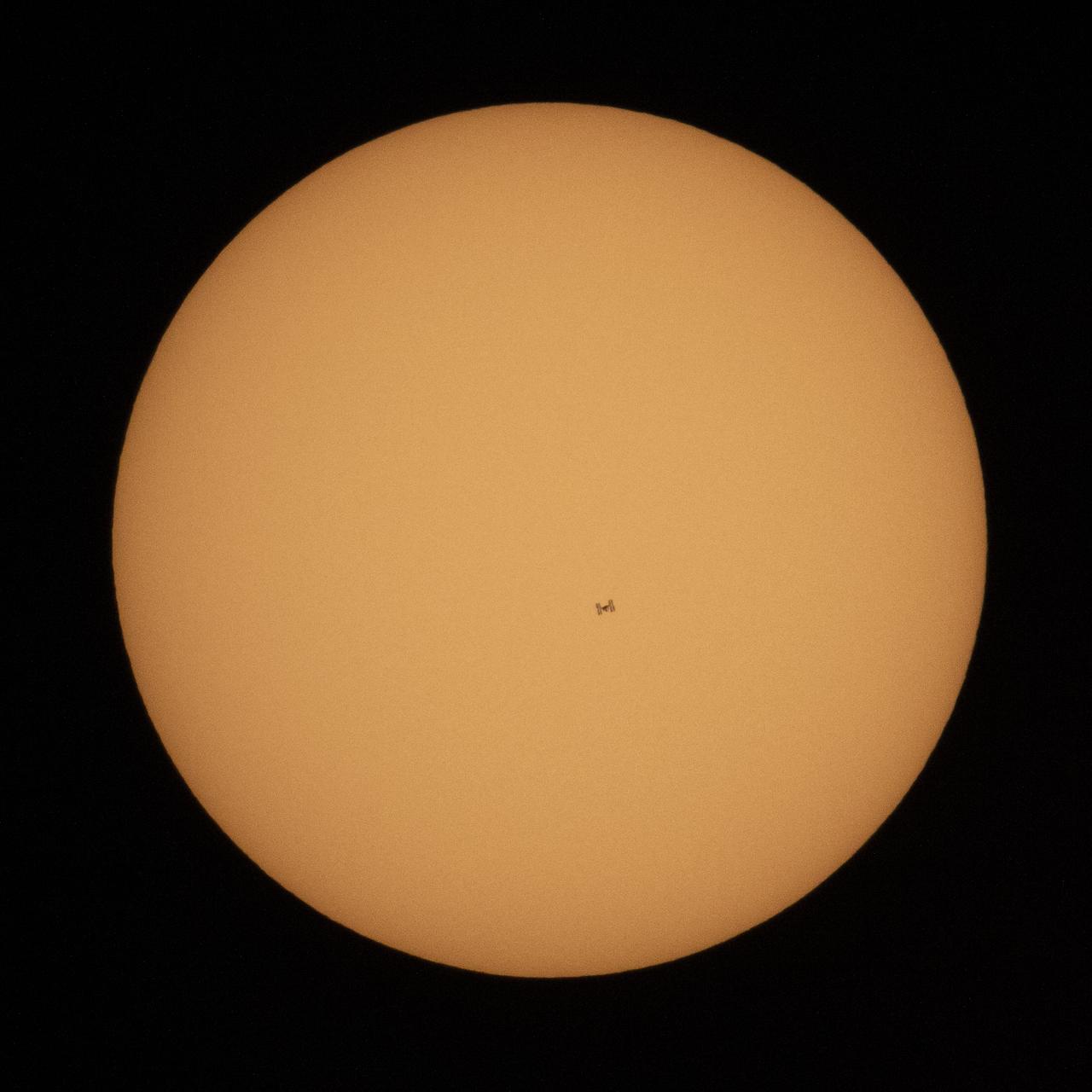
The International Space Station, with a crew of three onboard, is seen in silhouette as it transits the Sun at roughly five miles per second, Sunday, Oct. 7, 2018 from Suffolk, Va. Onboard are Expedition 57 Commander Alexander Gerst of ESA (European Space Agency), Serena Auñón-Chancellor of NASA, and Sergey Prokopyev of Roscosmos. The trio will soon be joined by Nick Hague of NASA and Alexey Ovchinin of Roscosmos, who are scheduled to launch on October 11 from the Baikonur Cosmodrome in Kazakhstan. Photo Credit: (NASA/Joel Kowsky)
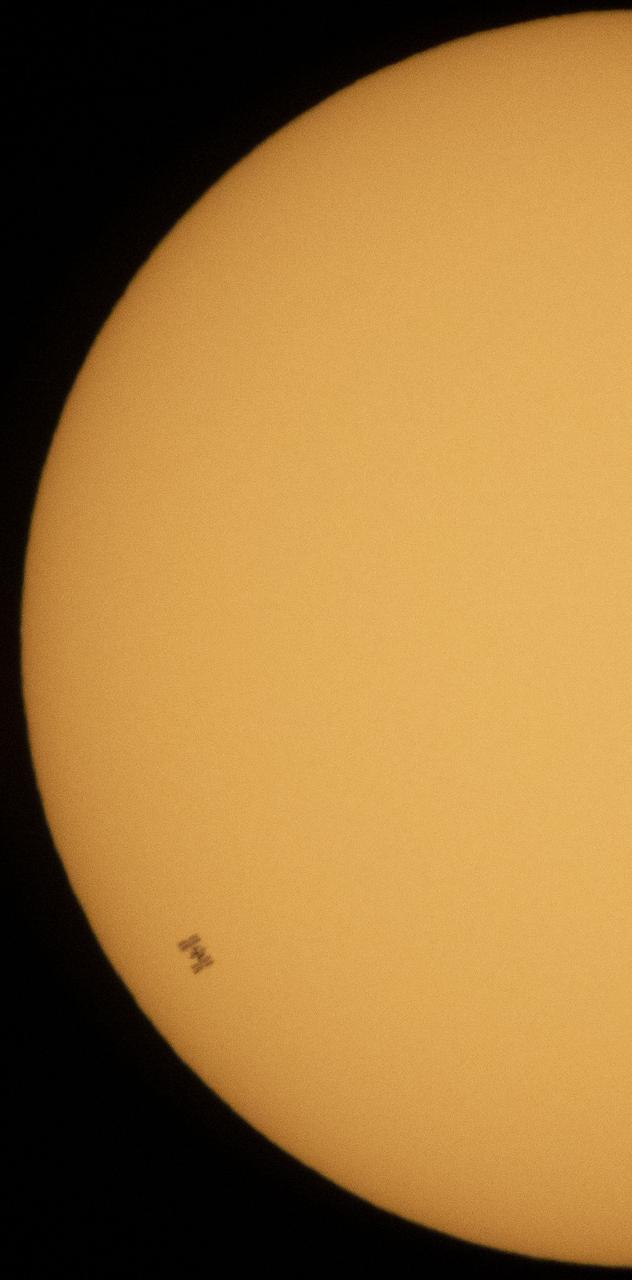
The International Space Station, with a crew of five onboard, is seen in silhouette as it transits the Sun at roughly five miles per second, Wednesday, June 24, 2020, from Fredericksburg, Va. Onboard are Expedition 63 NASA astronauts Chris Cassidy, Douglas Hurley, Robert Behnken, and Roscosmos cosmonauts Anatoly Ivanishin and Ivan Vagner. Photo Credit: (NASA/Joel Kowsky)
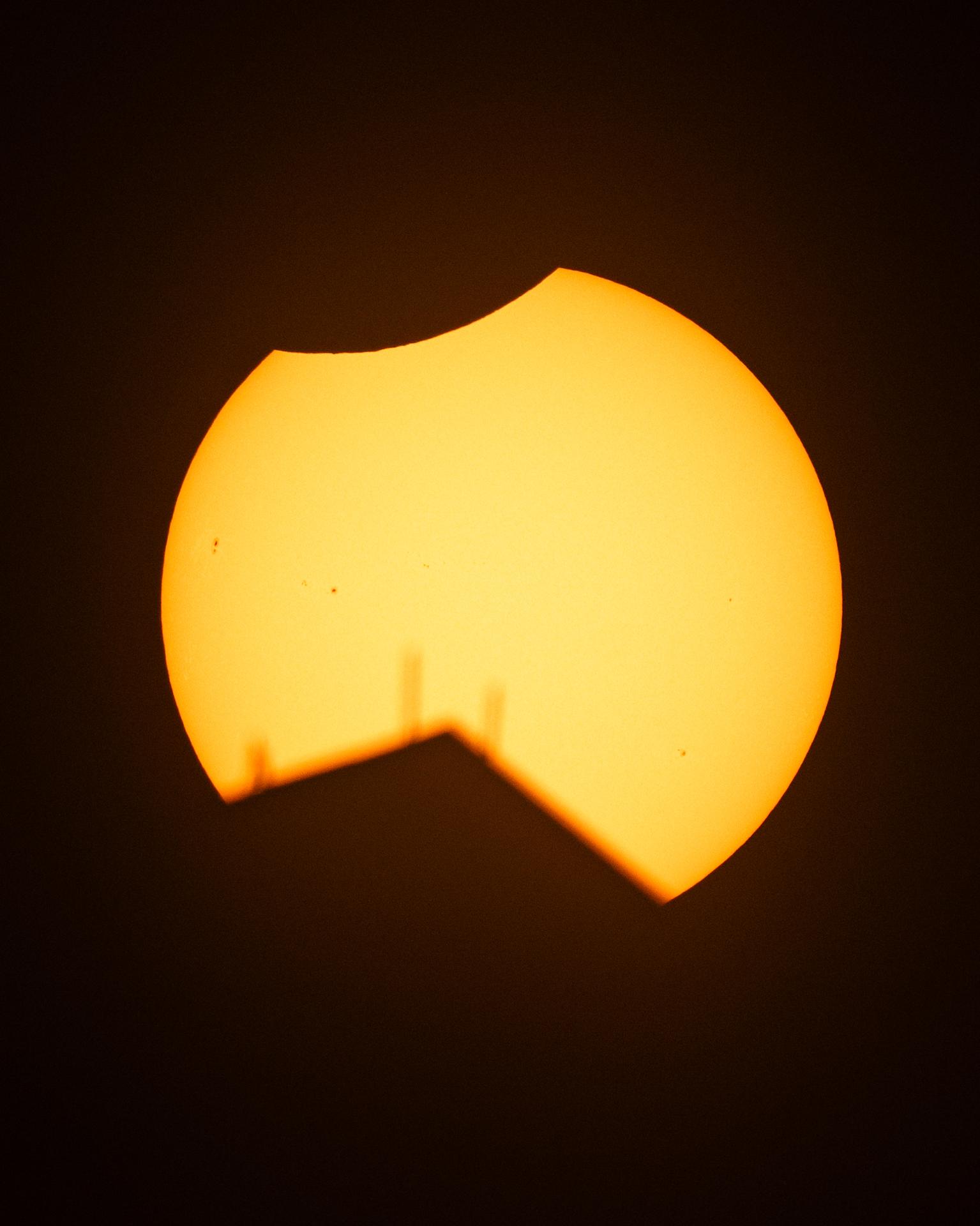
The Moon, top, is seen passing in front of the Sun, with the top of the Washington Monument in silhouette, during a partial solar eclipse in Washington, Wednesday, Aug. 12, 2026. A total solar eclipse swept across parts of Greenland, Iceland, northern Russia, the Atlantic Ocean, Spain, and a small corner of Portugal. A partial eclipse was visible in parts of the U.S., most of Canada, much of Europe, and northwest Africa. Photo Credit: (NASA/Keegan Barber)
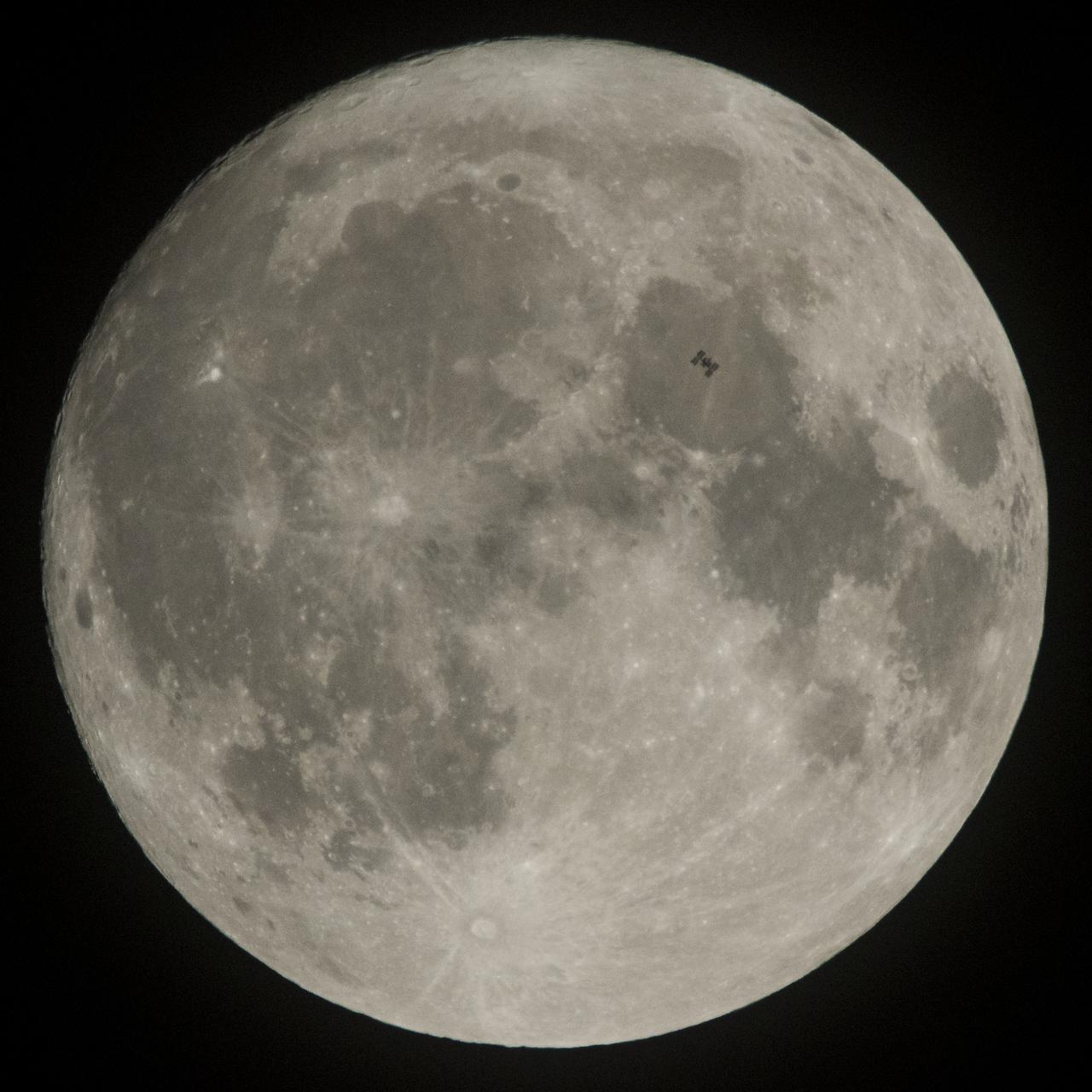
The International Space Station, with a crew of six onboard, is seen in silhouette as it transits the Moon at roughly five miles per second, Saturday, Dec. 2, 2017, in Manchester Township, York County, Pennsylvania. Onboard are NASA astronauts Joe Acaba, Mark Vande Hei, and Randy Bresnik; Russian cosmonauts Alexander Misurkin and Sergey Ryanzansky; and ESA astronaut Paolo Nespoli. Photo Credit: (NASA/Joel Kowsky)
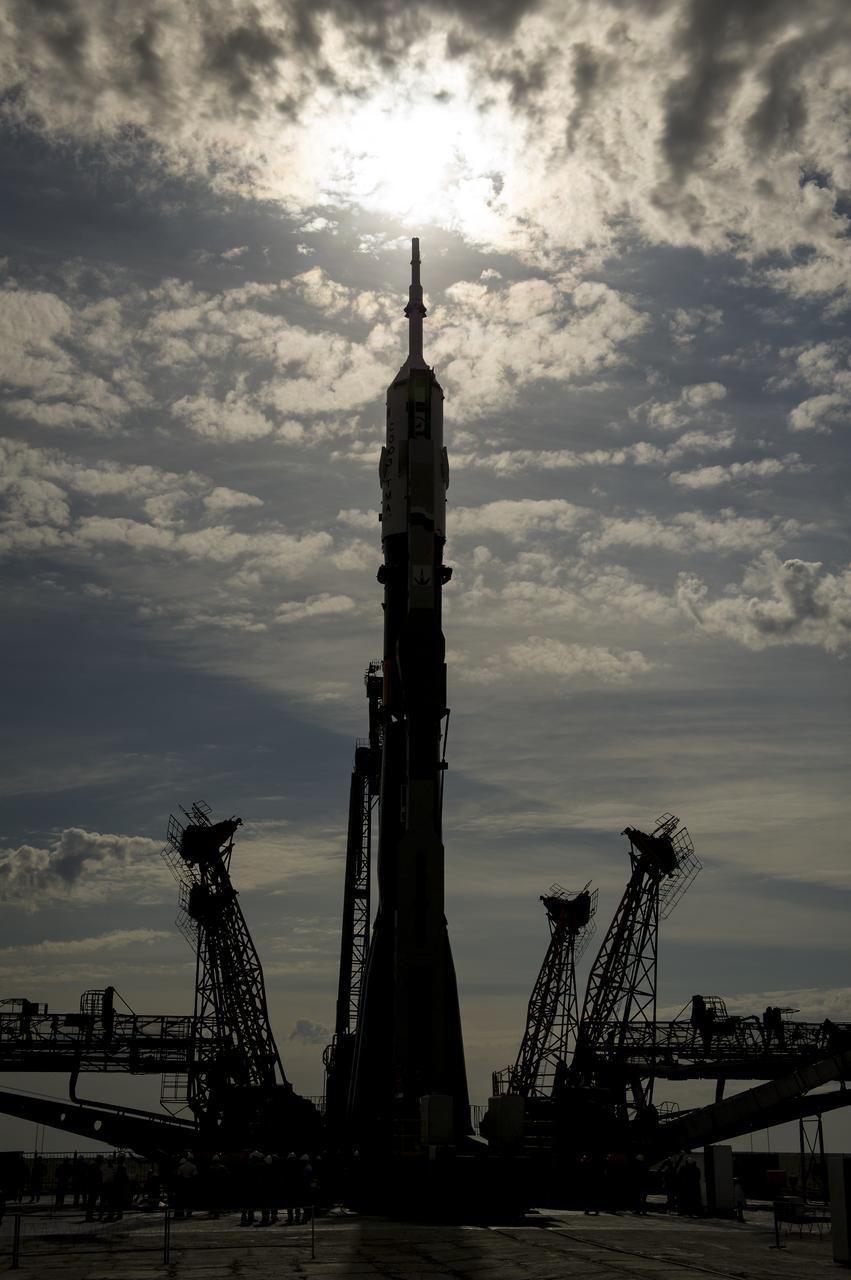
The Soyuz TMA-04M spacecraft is seen in silhouette after being rolled out by train to the launch pad at the Baikonur Cosmodrome in Kazakhstan, Sunday, May 13, 2012. The launch of the Soyuz spacecraft with Expedition 31 Soyuz Commander Gennady Padalka and Flight Engineer Sergei Revin of Russia, and prime NASA Flight Engineer Joe Acaba is scheduled for 9:01 a.m. local time on Tuesday, May 15. Photo Credit (NASA/Bill Ingalls)
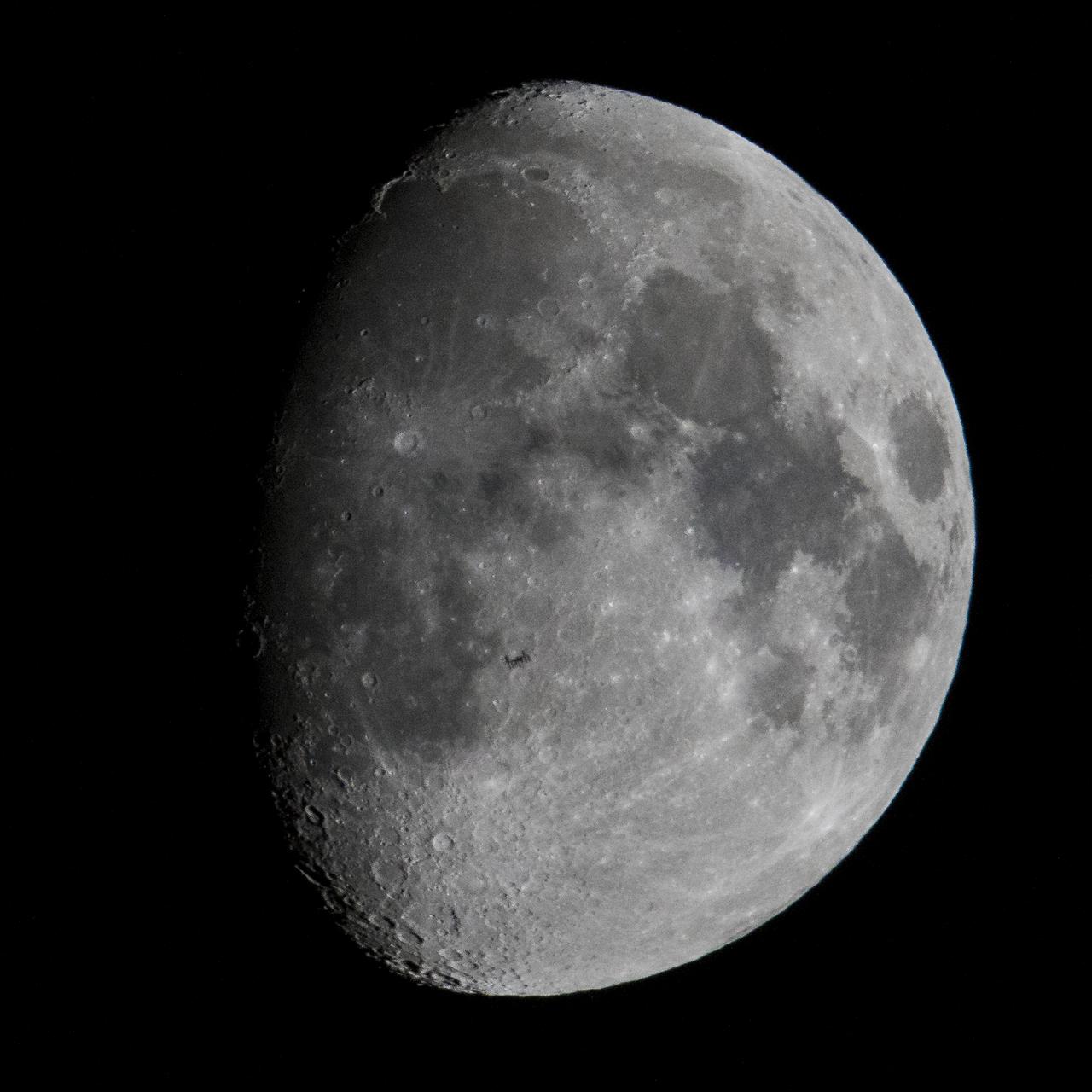
The International Space Station, with a crew of six onboard, is seen in silhouette as it transits the Moon at roughly five miles per second, Saturday, March 16, 2019 from Chantilly, Va. Onboard are Expedition 59 Commander Oleg Kononenko and Alexey Ovchinin of Roscosmos, Anne McClain, Nick Hague, and Christina Koch of NASA, and David Saint-Jacques of the Canadian Space Agency (CSA). Photo Credit: (NASA/Joel Kowsky)
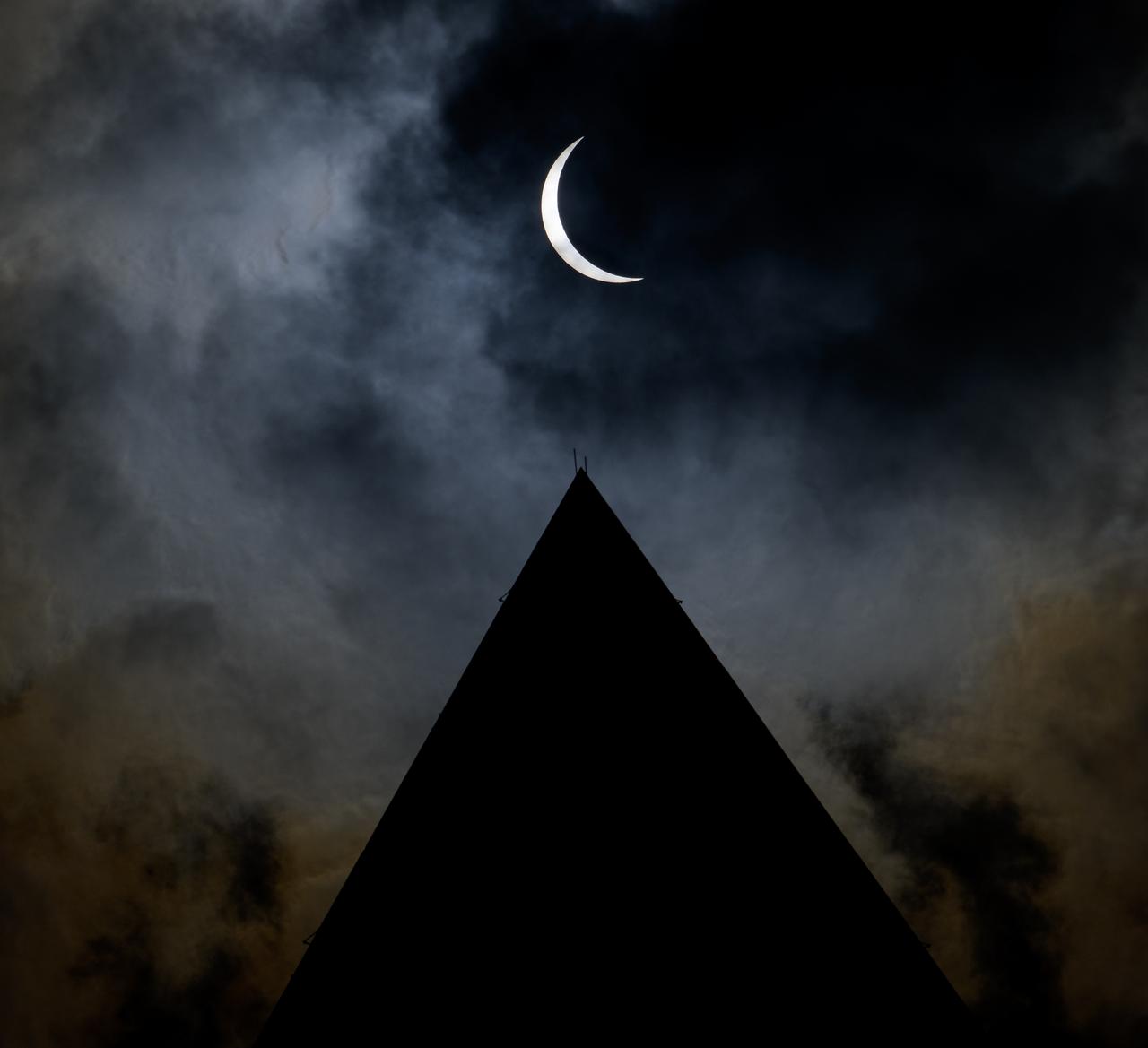
The Moon is seen passing in front of the Sun, with the top of the Washington Monument in silhouette, during a partial solar eclipse in Washington, on Monday, April 8, 2024. A total solar eclipse swept across a narrow portion of the North American continent from Mexico’s Pacific coast to the Atlantic coast of Newfoundland, Canada. A partial solar eclipse was visible across the entire North American continent along with parts of Central America and Europe. Photo Credit: (NASA/Bill Ingalls)
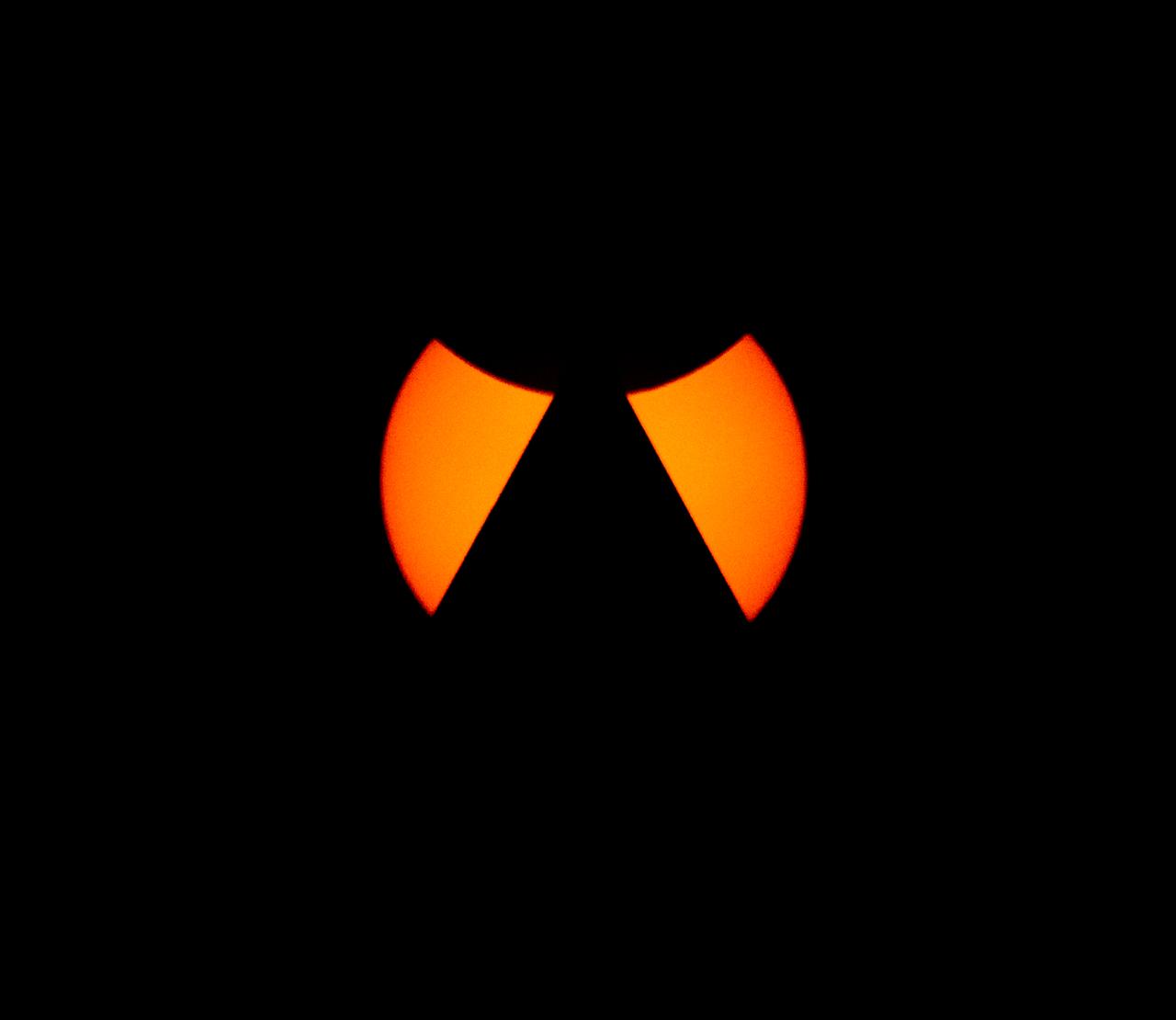
The Moon, top, is seen passing in front of the Sun, with the top of the Washington Monument in silhouette, during a partial solar eclipse in Washington, on Monday, April 8, 2024. A total solar eclipse swept across a narrow portion of the North American continent from Mexico’s Pacific coast to the Atlantic coast of Newfoundland, Canada. A partial solar eclipse was visible across the entire North American continent along with parts of Central America and Europe. Photo Credit: (NASA/Bill Ingalls)
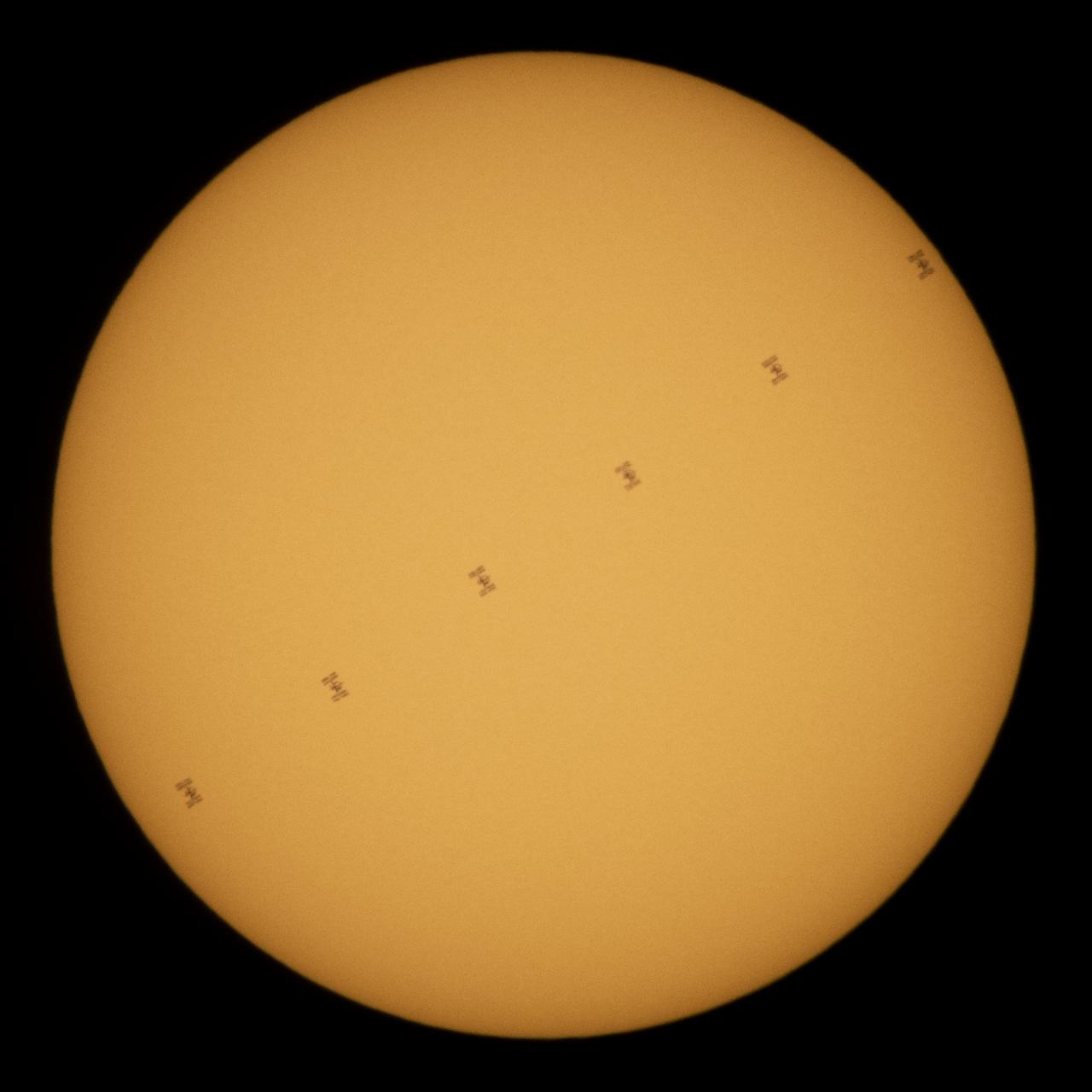
This composite image, made from six frames, shows the International Space Station, with a crew of five onboard, in silhouette as it transits the Sun at roughly five miles per second, Wednesday, June 24, 2020, from Fredericksburg, Va. Onboard are Expedition 63 NASA astronauts Chris Cassidy, Douglas Hurley, Robert Behnken, and Roscosmos cosmonauts Anatoly Ivanishin and Ivan Vagner. Photo Credit: (NASA/Joel Kowsky)
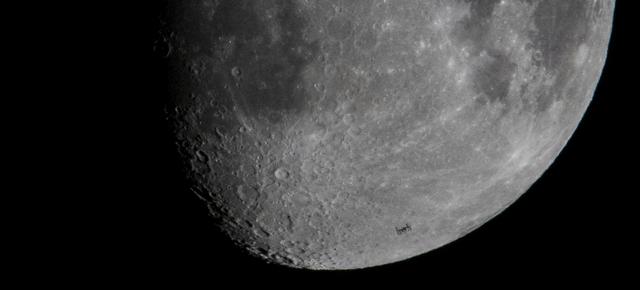
The International Space Station, with a crew of six onboard, is seen in silhouette as it transits the Moon at roughly five miles per second, Saturday, March 16, 2019 from Chantilly, Va. Onboard are Expedition 59 Commander Oleg Kononenko and Alexey Ovchinin of Roscosmos, Anne McClain, Nick Hague, and Christina Koch of NASA and David Saint-Jacques of the Canadian Space Agency (CSA). Photo Credit: (NASA/Joel Kowsky)
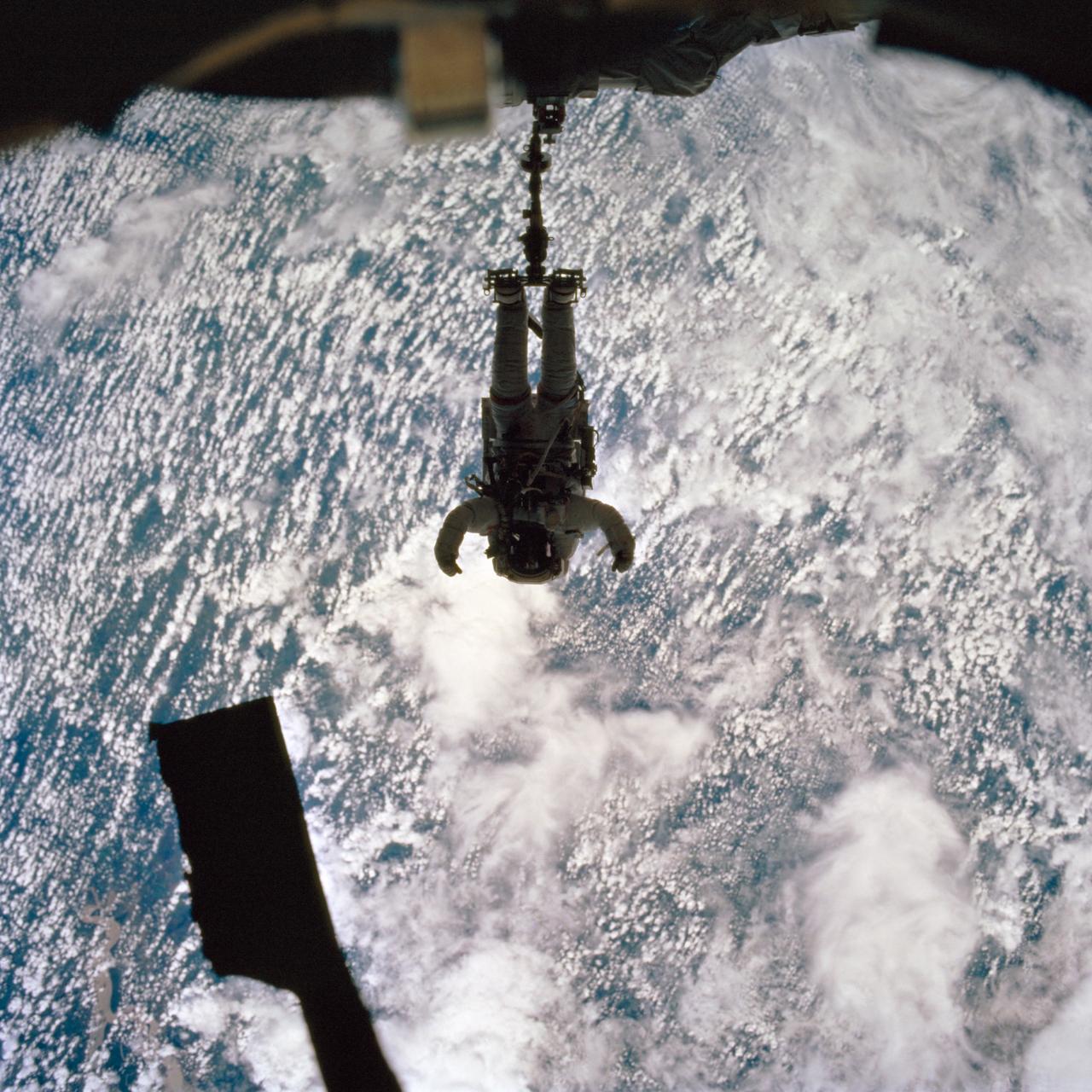
ISS002-707-057 (22 April 2001) --- 70-mm frame. STS-100 EVA crewmember Chris Hadfield in dark silhouette - shadowed by the ISS on work/foot pedestal platform for the Remote Manipulator System (RMS) over a 90% cloud covered earth background. A small segment of an unidentified river is in the lower left corner. 22 April 2001 Altitude 208 nautical miles
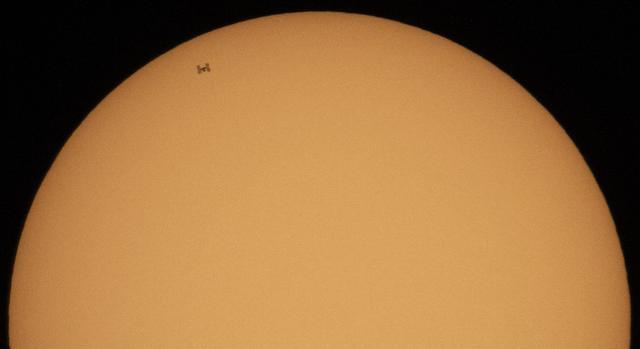
The International Space Station, with a crew of three onboard, is seen in silhouette as it transits the Sun at roughly five miles per second, Sunday, Oct. 7, 2018 from Suffolk, Va. Onboard are Expedition 57 Commander Alexander Gerst of ESA (European Space Agency), Serena Auñón-Chancellor of NASA, and Sergey Prokopyev of Roscosmos. The trio will soon be joined by Nick Hague of NASA and Alexey Ovchinin of Roscosmos, who are scheduled to launch on October 11 from the Baikonur Cosmodrome in Kazakhstan. Photo Credit: (NASA/Joel Kowsky)

JSC2011-E-059470 (31 May 2011) --- NASA astronaut Doug Hurley, STS-135 pilot, is seen in a partial silhouette against the space shuttle Atlantis as the spacecraft for the program's final mission moves to Launch Pad 39A during rollout at NASA?s Kennedy Space Center in Florida May 31, 2011. Photo credit: NASA photo/Houston Chronicle, Smiley N. Pool
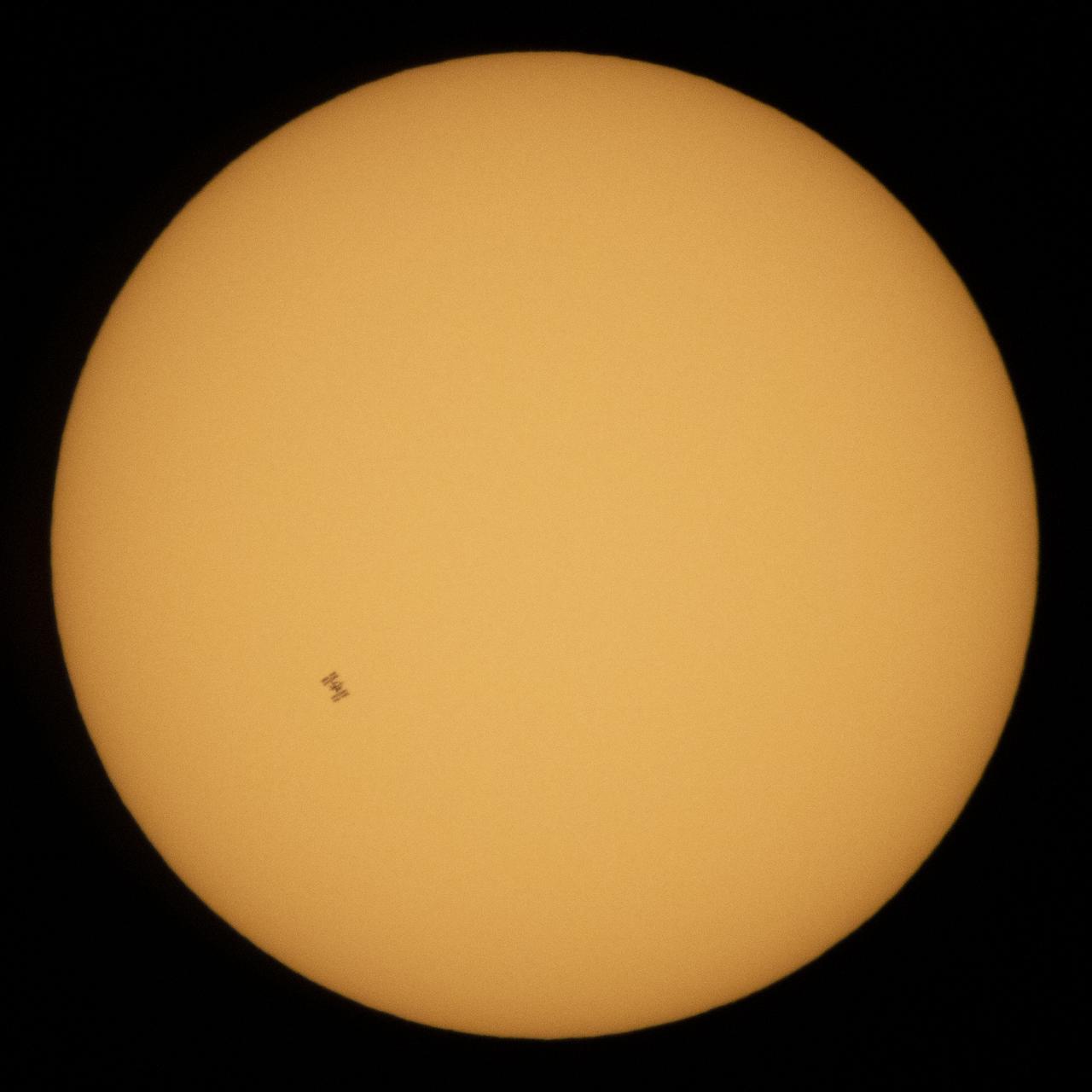
The International Space Station, with a crew of five onboard, is seen in silhouette as it transits the Sun at roughly five miles per second, Wednesday, June 24, 2020, from Fredericksburg, Va. Onboard are Expedition 63 NASA astronauts Chris Cassidy, Douglas Hurley, Robert Behnken, and Roscosmos cosmonauts Anatoly Ivanishin and Ivan Vagner. Photo Credit: (NASA/Joel Kowsky)
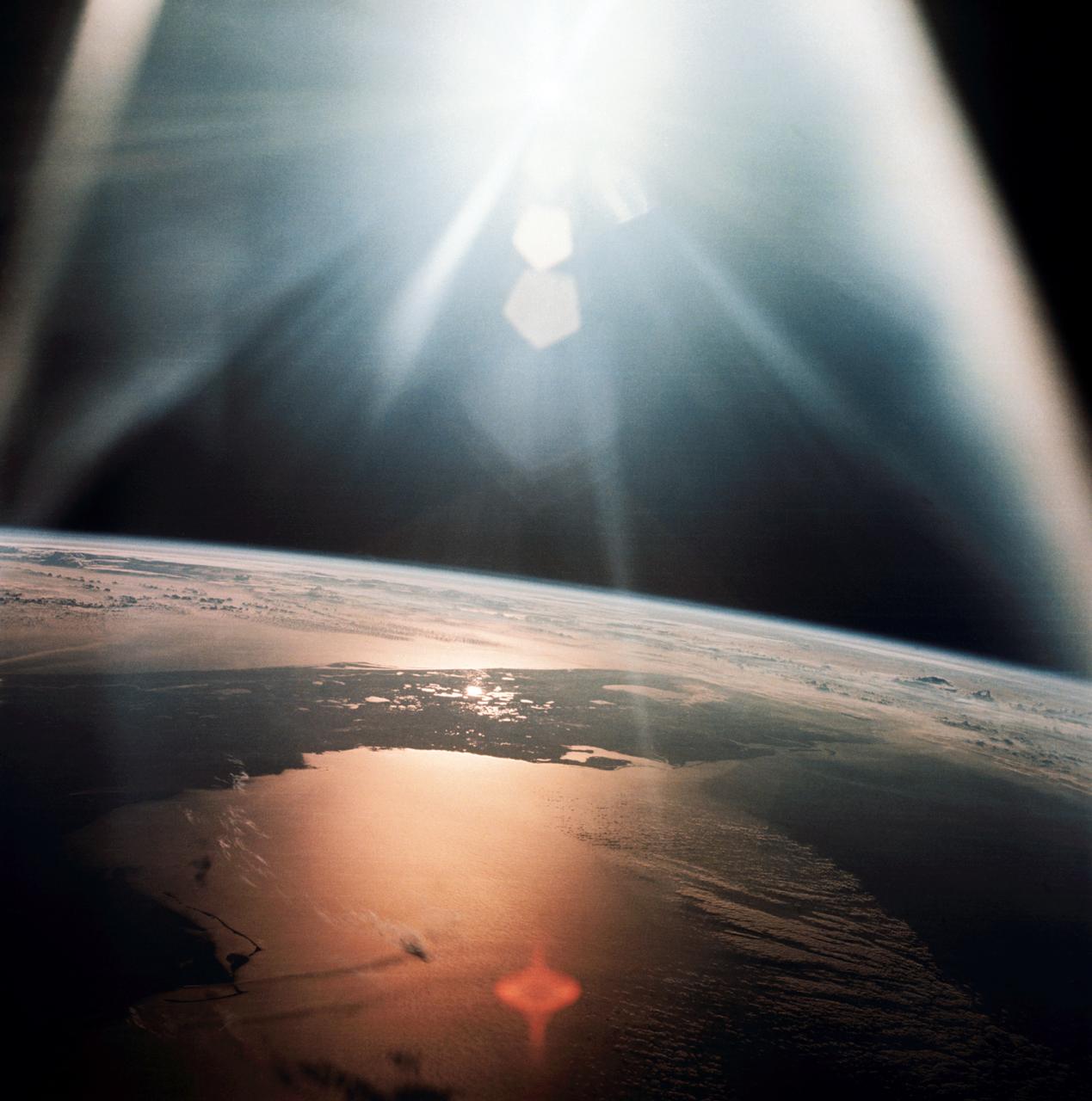
AS07-08-1933 (20 Oct. 1968) --- The morning sun reflects on the Gulf of Mexico and the Atlantic Ocean as seen from the Apollo 7 spacecraft at an altitude of 120 nautical miles above Earth. Most of Florida peninsula appears as a dark silhouette. This photograph was made during the spacecraft's 134th revolution of Earth, some 213 hours and 19 minutes after liftoff.
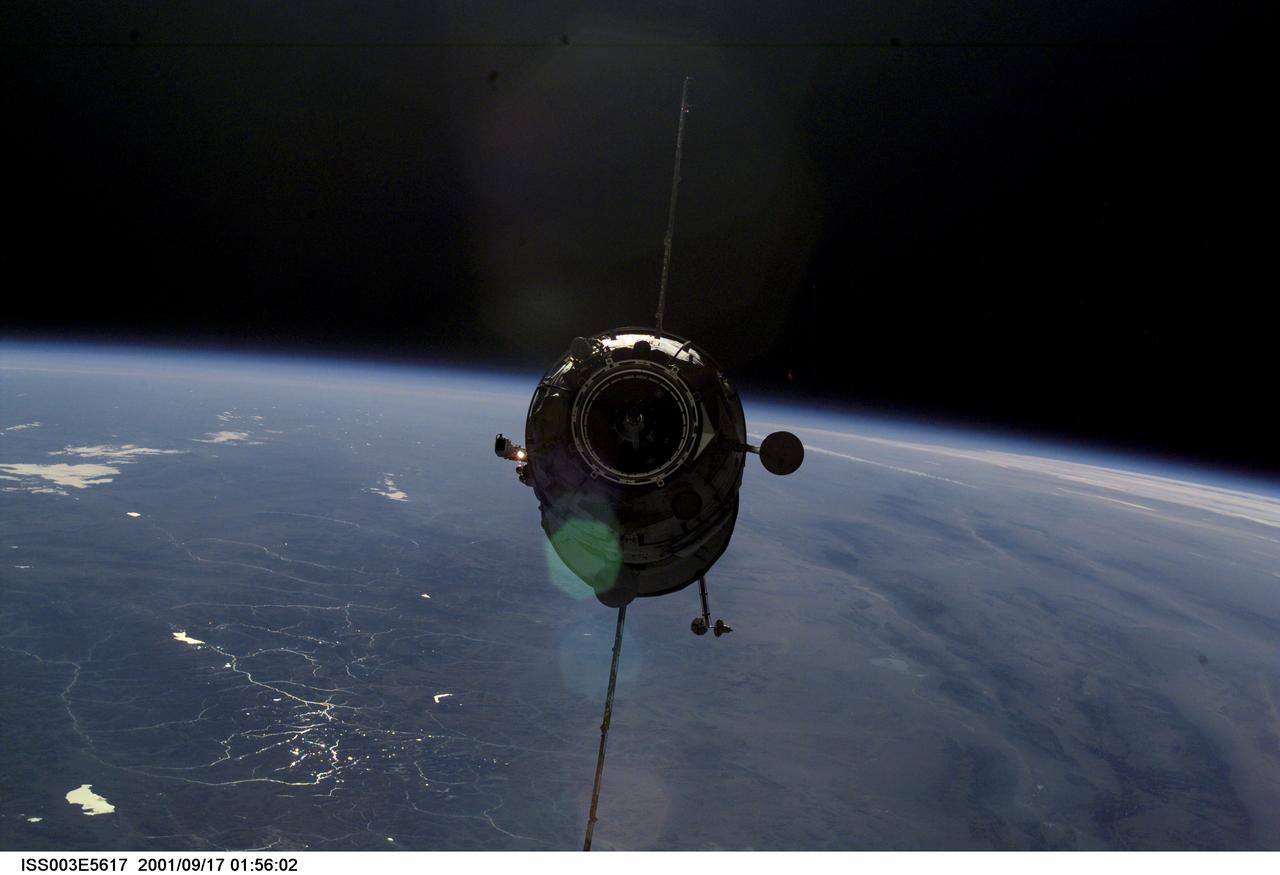
ISS003-E-5617 (16 September 2001) --- Appearing almost as a silhouette backdropped against Earth's horizon, the Russian Docking Compartment, named Pirs (the Russian word for pier), approaches the International Space Station (ISS). One of the Expedition Three crew members, using a digital still camera with a 70mm lens, recorded the image from onboard the orbital outpost. The vehicle was launched on September 14, 2001 and docking occurred on September 16.
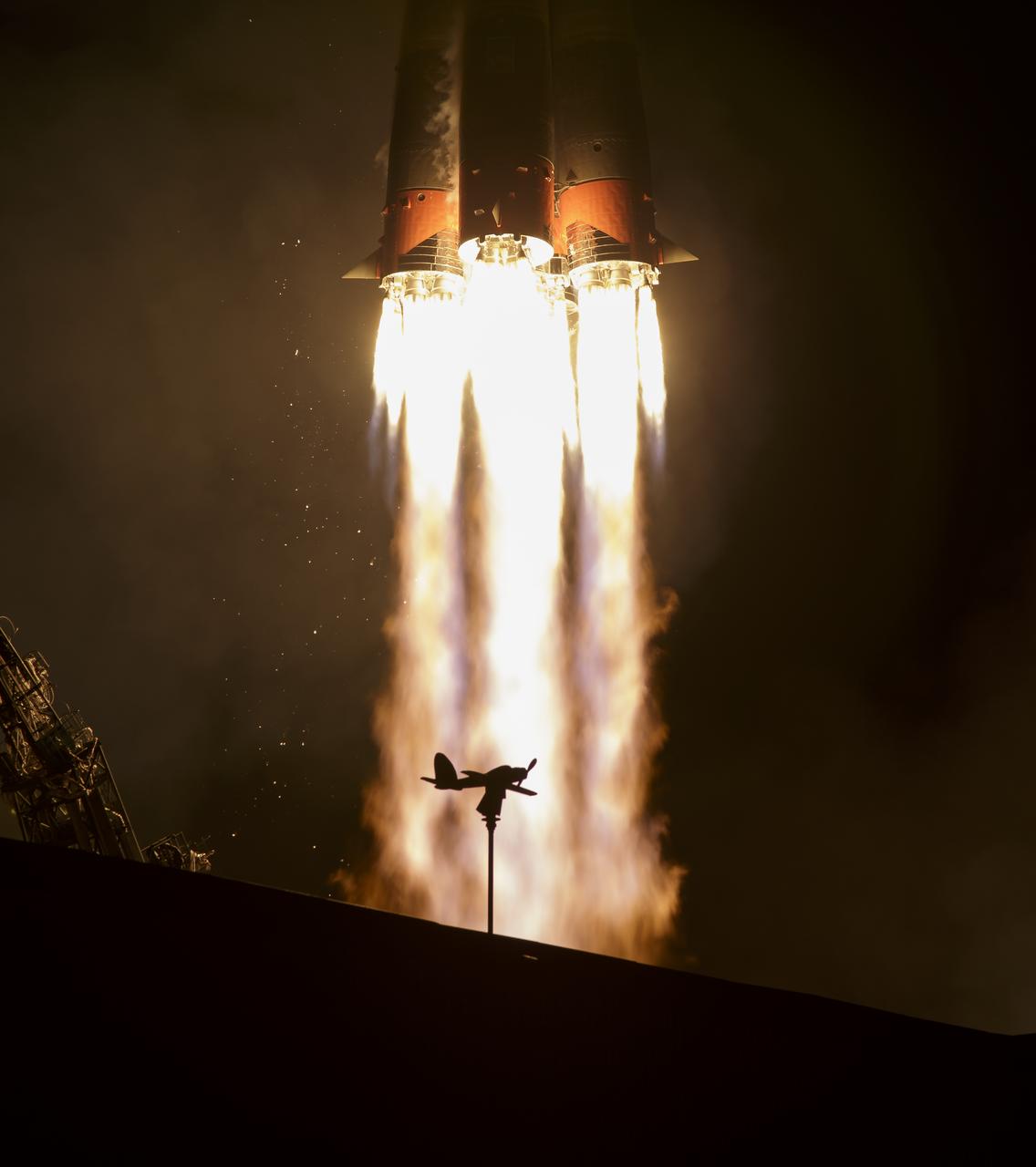
An airplane shaped wind vane is seen in silhouette as the Soyuz MS-12 spacecraft is launched with Expedition 59 crewmembers Nick Hague and Christina Koch of NASA, along with Alexey Ovchinin of Roscosmos, Friday March 15, 2019, Kazakh time (March 14 Eastern time) at the Baikonur Cosmodrome in Kazakhstan. Hague, Koch, and Ovchinin will spend six-and-a-half months living and working aboard the International Space Station. Photo Credit: (NASA/Bill Ingalls)

ISS033-E-017269 (28 Oct. 2012) --- This picture, taken by one of the Expedition 33 crew members on the International Space Station, features a silhouette of clouds on Earth's horizon over the East Central Atlantic Ocean, about 4.2 degrees southwest of the Azores. Nadir location is over a point on Earth at 35.1 degrees north latitude and 31.5 degrees west longitude.
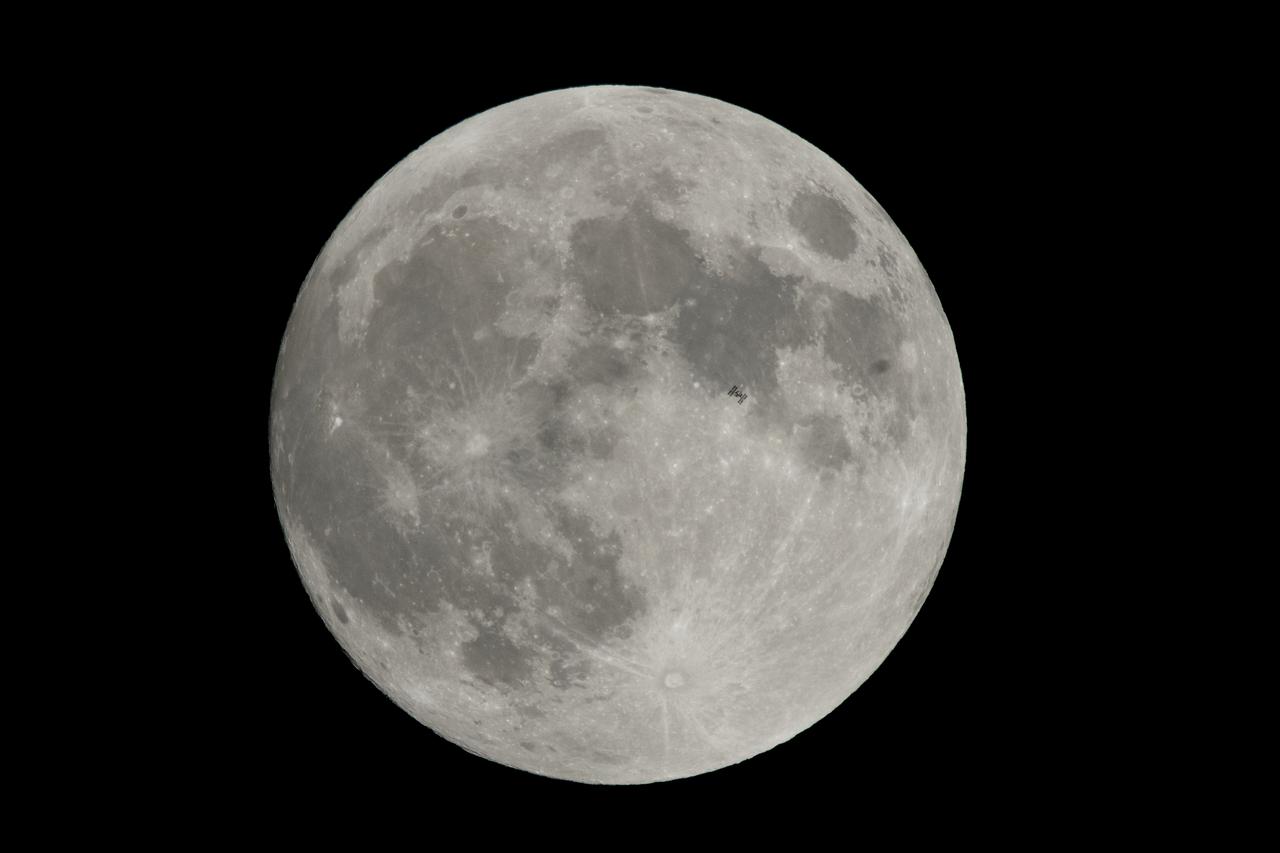
The International Space Station, with a crew of six onboard, is seen in silhouette as it transits the moon at roughly five miles per second Tuesday, Jan. 30, 2018, Alexandria, Virginia. Onboard are; NASA astronauts Joe Acaba, Mark Vande Hei, and Scott Tingle: Russian Cosmonauts Alexander Misurkin and Anton Shkaplerov, and Japanese astronaut Norishige Kanai. Photo Credit: (NASA/Bill Ingalls)
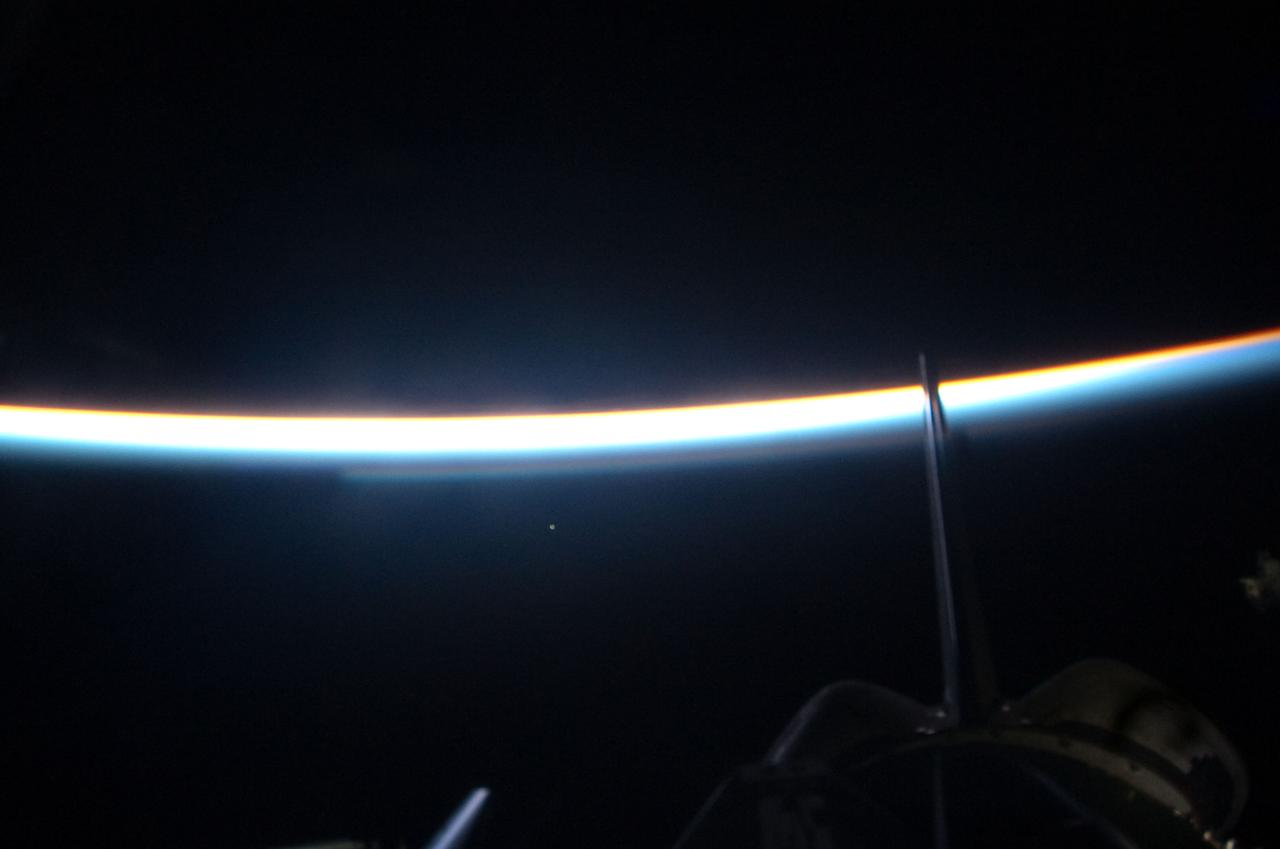
S135-E-006375 (9 July 2011) --- Without the sun's being temporarily available to highlight space shuttle Atlantis' cargo bay and vertical stabilizer, the spacecraft barely shows through as a silhouette in this image photographed from the aft flight deck. The thin blue line of Earth?s atmosphere is the dominant feature in the photo. Photo credit: NASA
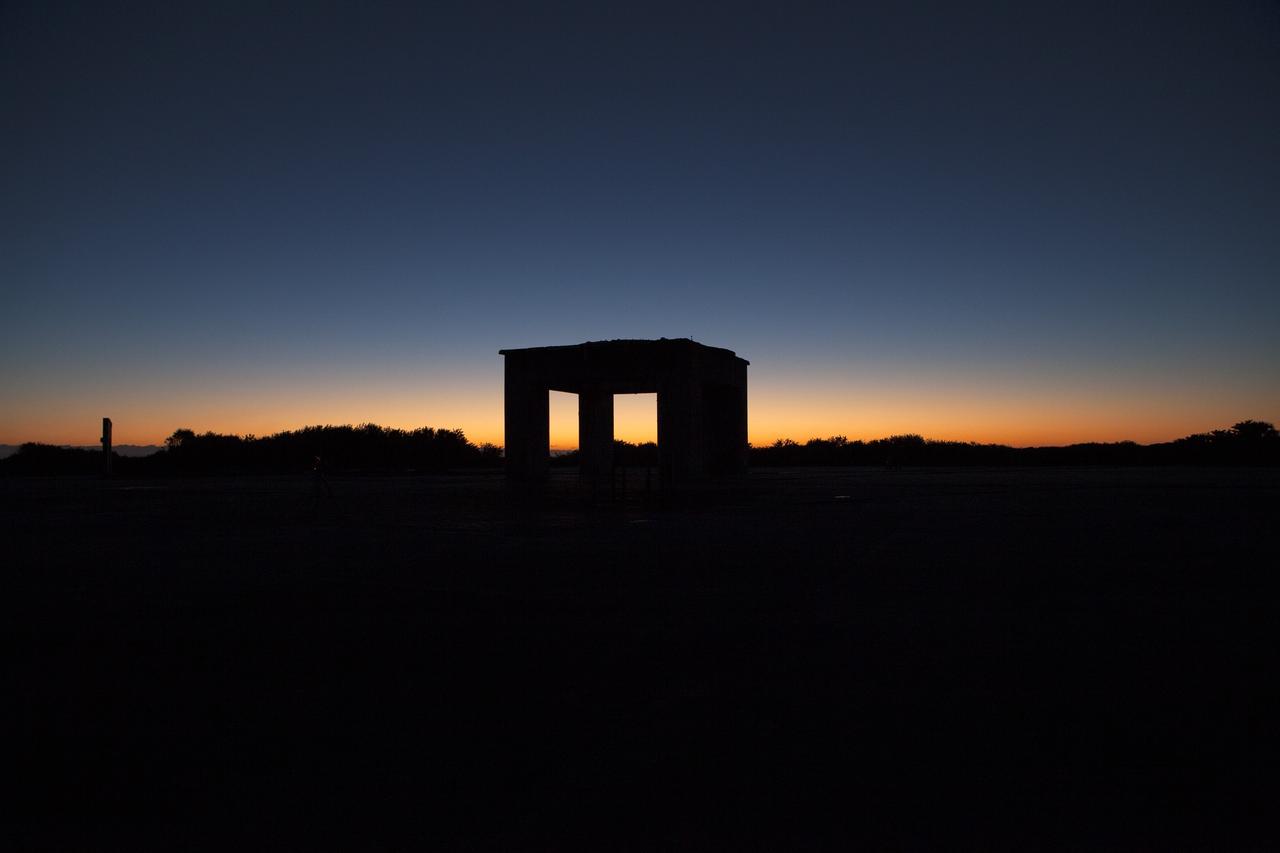
CAPE CANAVERAL, Fla. – Sunrise at Launch Pad 34 on Cape Canaveral Air Force Station in Florida silhouettes what remains of the pad's historic gantry. On this day in 1967, a fire erupted on the pad during a preflight test, taking the lives of the Apollo 1 crew, NASA astronauts Virgil Grissom, Edward White and Roger Chaffee. To learn more about Apollo 1 and the crew, visit http://www.nasa.gov/mission_pages/apollo/missions/apollo1.html. Photo credit: NASA/Ben Smegelsky
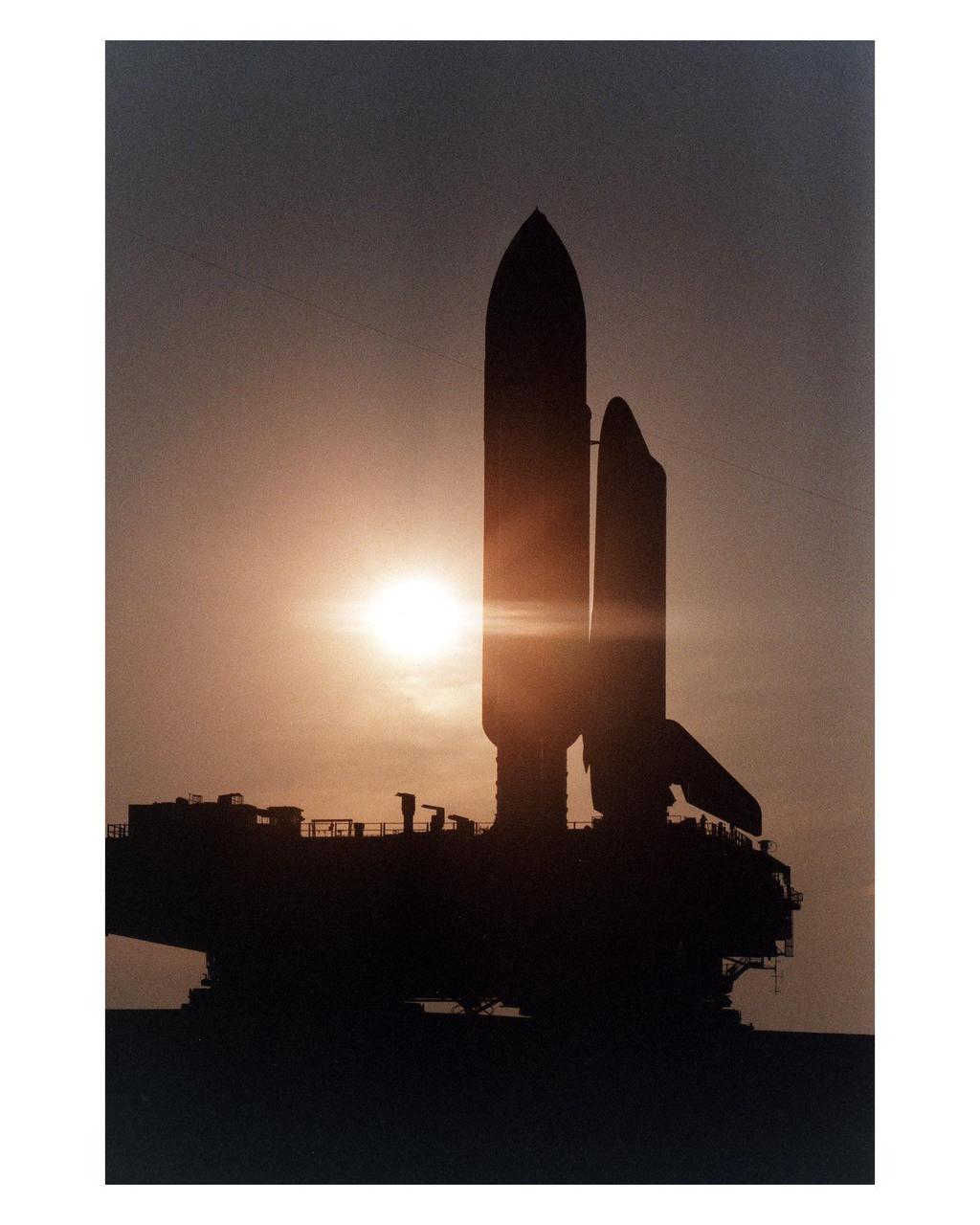
KENNEDY SPACE CENTER, Fla. -- Cast in silhouette by the rising sun, the Space Shuttle Atlantis slowly and carefully makes the journey along the Crawlerway between the Vehicle Assembly Building and Launch Pad 39A. Atlantis and its crew of seven are targeted for a May 15 launch. STS-84 will be the sixth Shuttle docking with the Russian Space Station Mir as part of Phase 1 of the International Space Station program
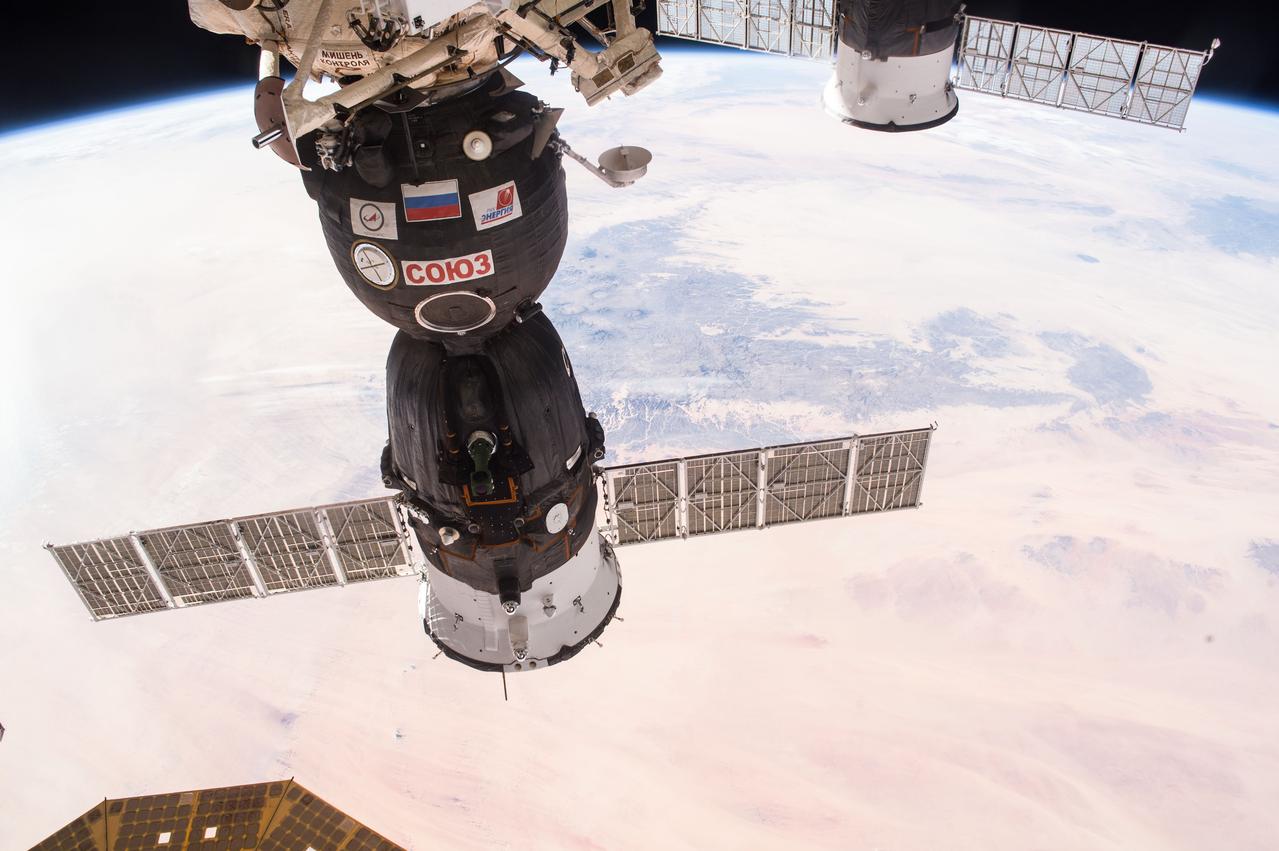
ISS046e004535 (01/03/2016) --- Earth observation taken during a day pass by NASA astronaut Scott Kelly aboard the International Space Station. A Russian Soyuz spacecraft dominates the center of the view as it sits docked to the station. Kelly tweeted this image with the message: "Day 282. Soyuz silhouette and #sunset colors of our magnificent #Earth. #GoodNight from @space_station! #YearInSpace".
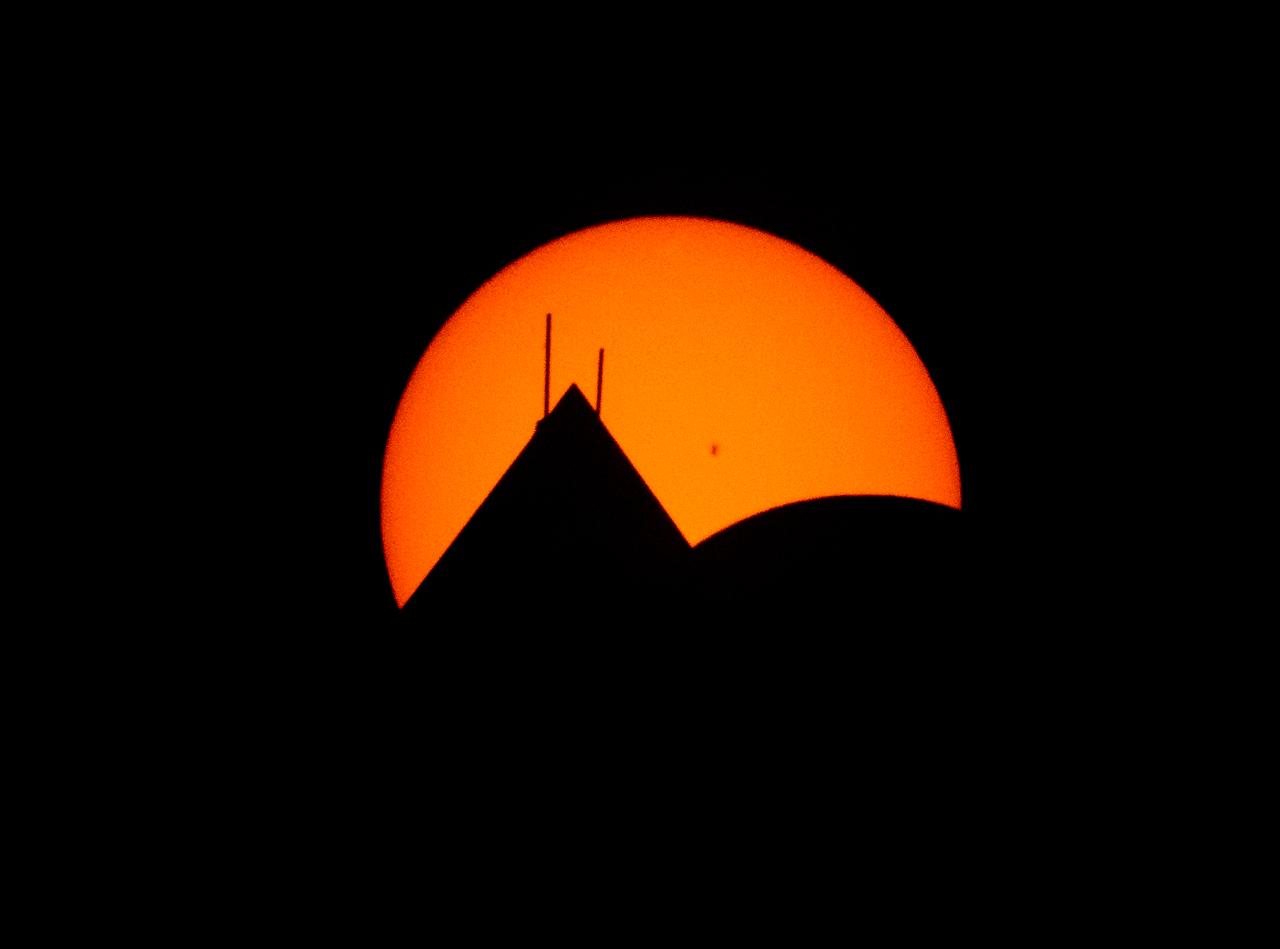
The Moon, lower right, is seen passing in front of the Sun, with the top of the Washington Monument in silhouette, during a partial solar eclipse in Washington, on Monday, April 8, 2024. A total solar eclipse swept across a narrow portion of the North American continent from Mexico’s Pacific coast to the Atlantic coast of Newfoundland, Canada. A partial solar eclipse was visible across the entire North American continent along with parts of Central America and Europe. Photo Credit: (NASA/Bill Ingalls)
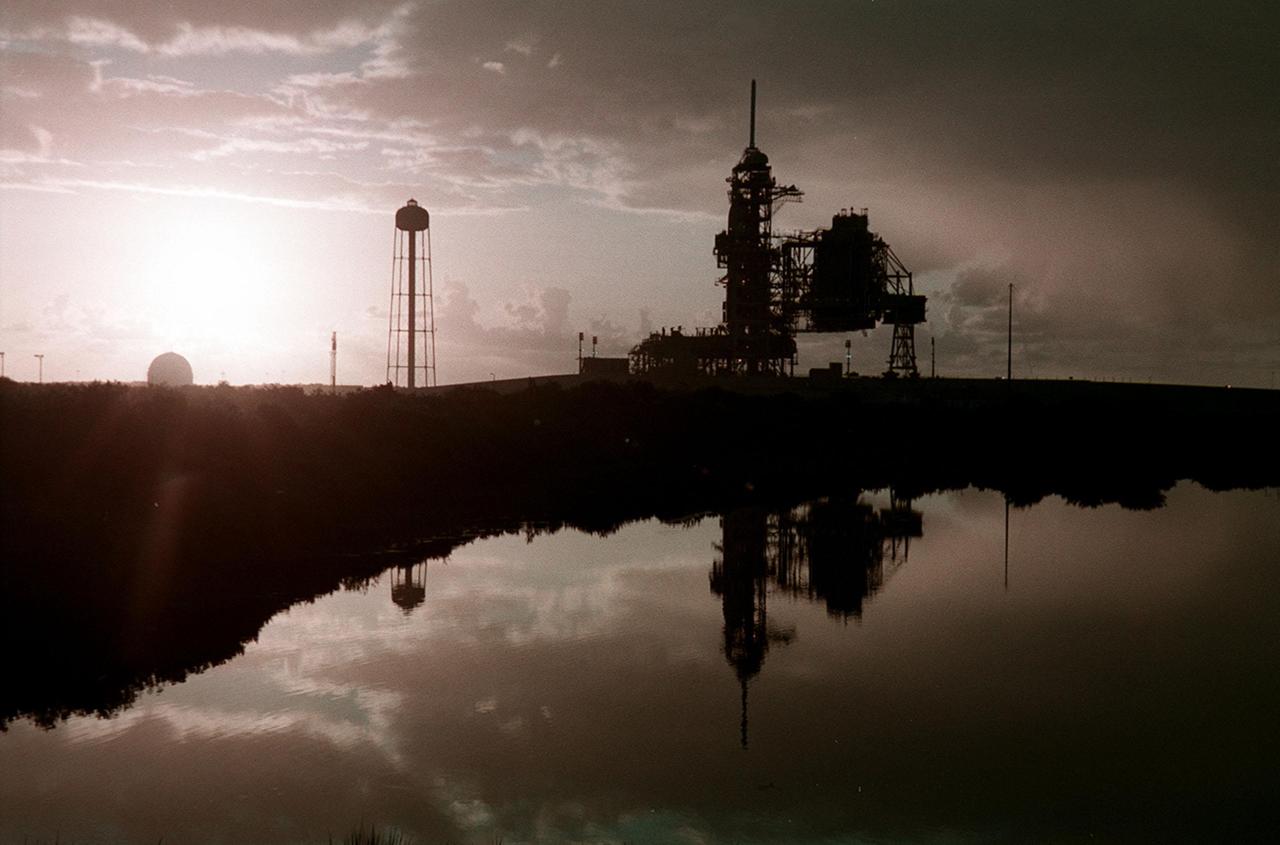
KENNEDY SPACE CENTER, Fla. -- Just after dawn, Launch Pad 39A is caught in silhouette and reflected in the water nearby. On the pad is Space Shuttle Discovery, waiting for launch on mission STS-92 Oct. 5, 2000. At the left of the pad is the 300,000-gallon water tank that is part of the sound suppression system during launches. At far left, the ball-shaped structure is a storage tank for one of the cryogenic liquid propellants of the orbiter’s main engines
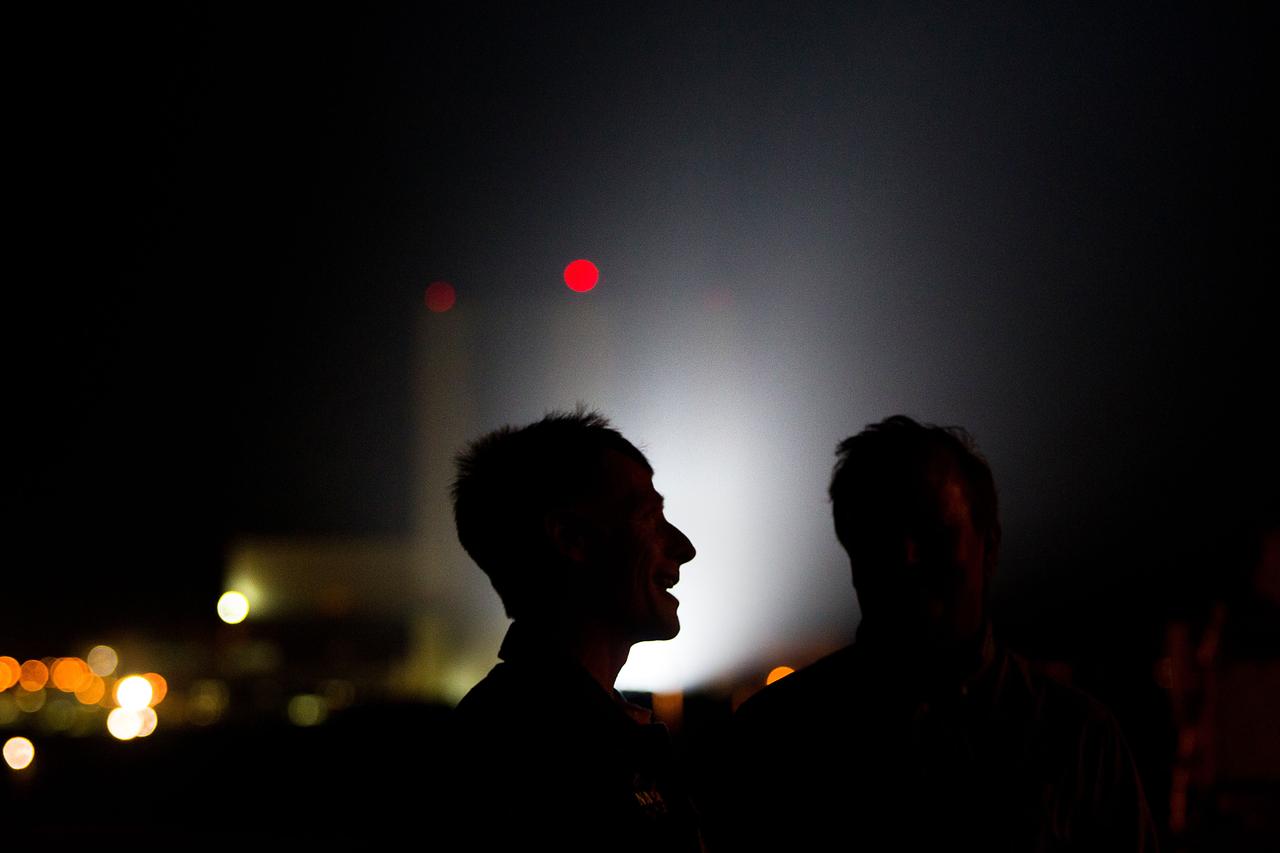
JSC2011-E-059478 (31 May 2011) --- NASA astronaut Chris Ferguson, STS-135 commander, is seen in silhouette against the Vehicle Assembly Building as the space shuttle Atlantis moves to Launch Pad 39A during rollout at NASA?s Kennedy Space Center in Florida May 31, 2011. Photo credit: NASA Photo/Houston Chronicle, Smiley N. Pool
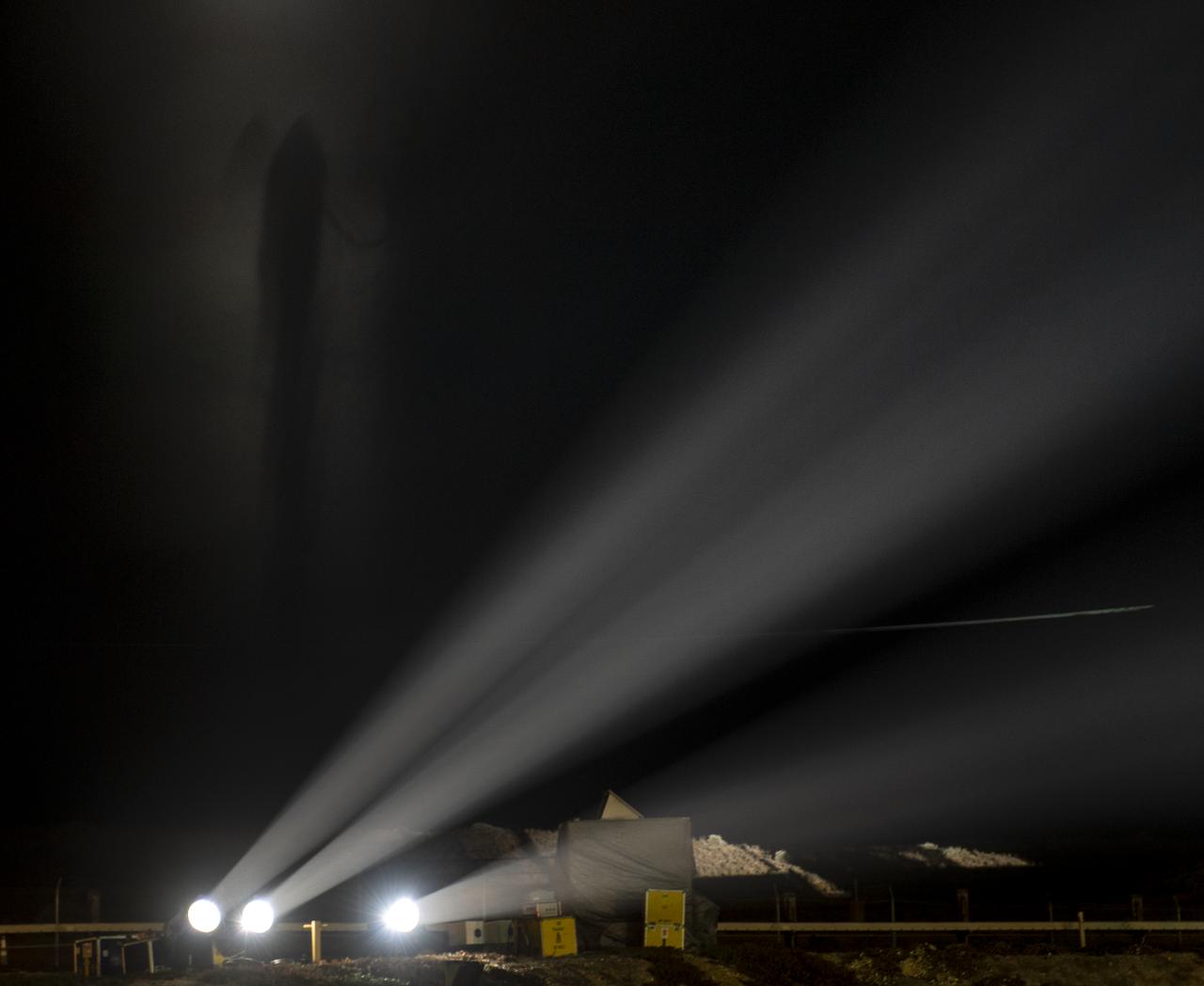
The silhouette of the United Launch Alliance (ULA) Delta II rocket, with the NASA Ice, Cloud and land Elevation Satellite-2 (ICESat-2) onboard, is seen in the fog shortly after the mobile service tower at SLC-2 was rolled back, Saturday, Sept. 15, 2018, at Vandenberg Air Force Base in California. The ICESat-2 mission will measure the changing height of Earth's ice. Photo Credit: (NASA/Bill Ingalls)
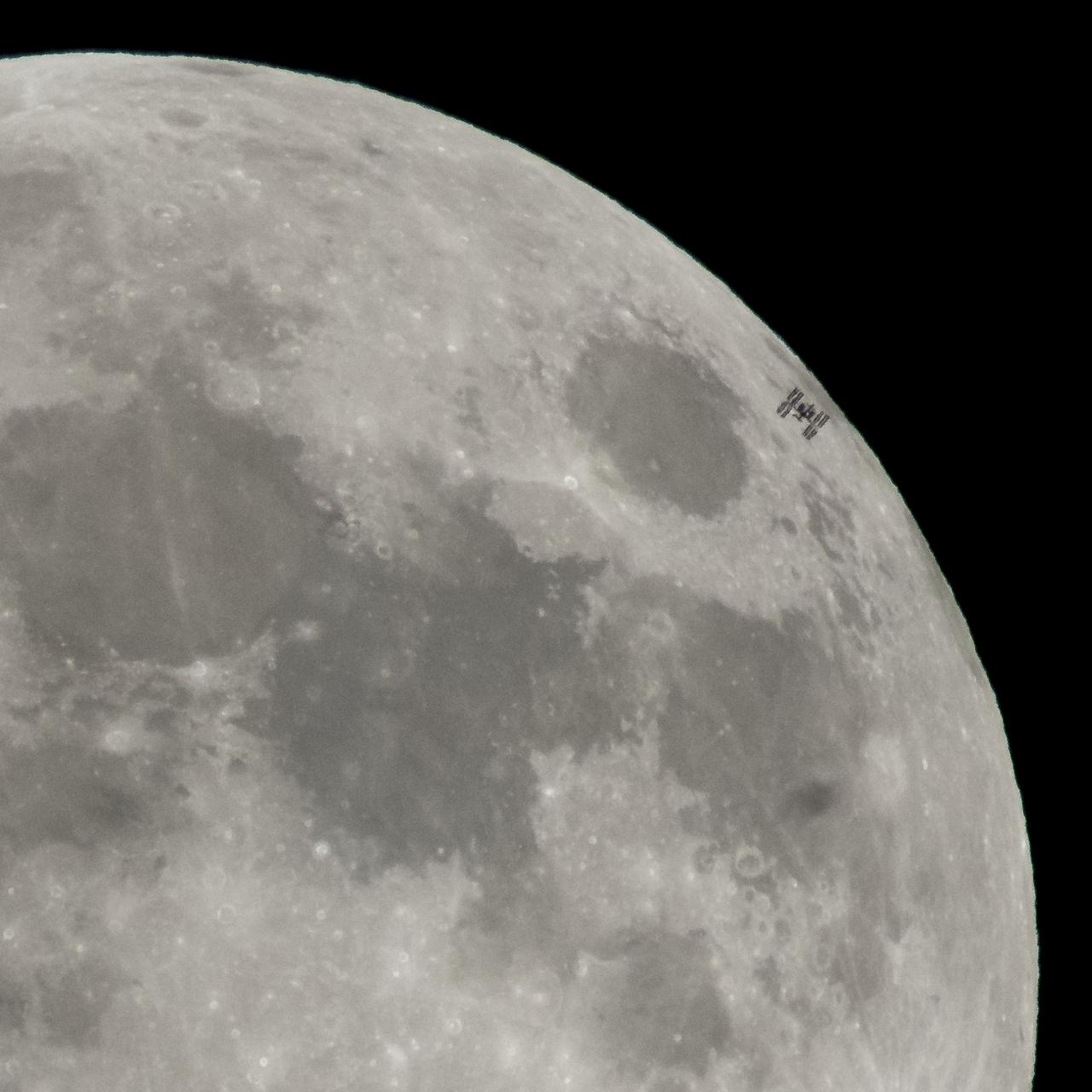
The International Space Station, with a crew of six onboard, is seen in silhouette as it transits the moon at roughly five miles per second Tuesday, Jan. 30, 2018, Alexandria, Virginia. Onboard are; NASA astronauts Joe Acaba, Mark Vande Hei, and Scott Tingle: Russian Cosmonauts Alexander Misurkin and Anton Shkaplerov, and Japanese astronaut Norishige Kanai. Photo Credit: (NASA/Bill Ingalls)
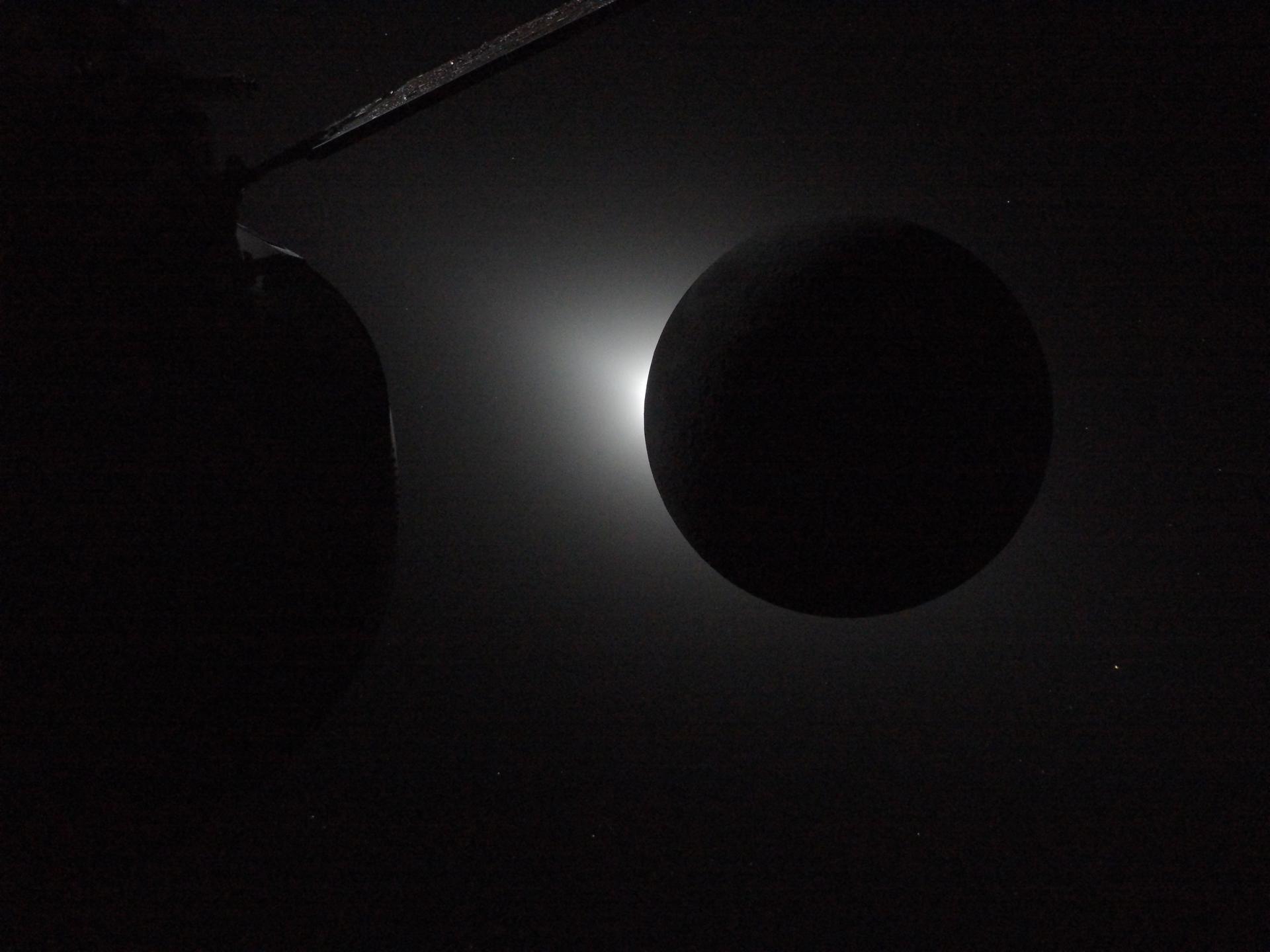
art002e016331 (April 7, 2026) – A vehicle camera mounted on NASA’s Orion spacecraft captured this view of sunset as the Sun slipped behind part of the spacecraft. The Sun’s bright glow outlines the spacecraft in silhouette, while the faint solar corona extends into the surrounding darkness. The image was captured as part of a multishot time-lapse sequence, with images taken every 30 seconds to document changing views during sunset.
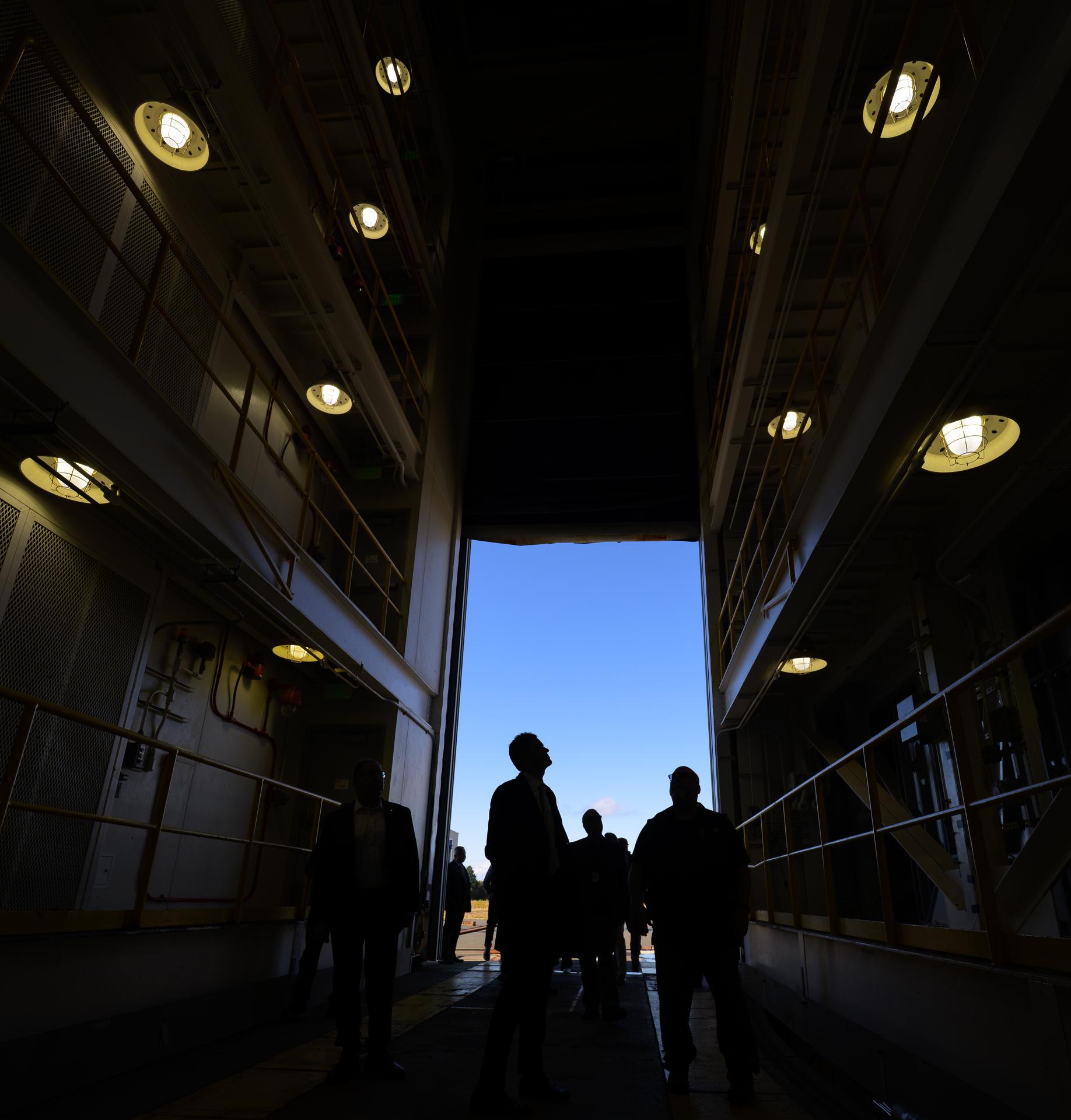
NASA Administrator Jared Isaacman, in profile silhouette, tours the Pacific Spaceport Complex-Alaska, Tuesday, Oct. 6, 2026, in Kodiak, Alaska. NASA’s visit to Alaska is part of the agency's Inspiration Tour, aimed at strengthening connections between NASA and its partners and showcasing innovation in air and space in the lead up to the MAX POWER aerospace technology expo and airshow at the agency's Kennedy Space Center in early November. Photo Credit: (NASA/Bill Ingalls)
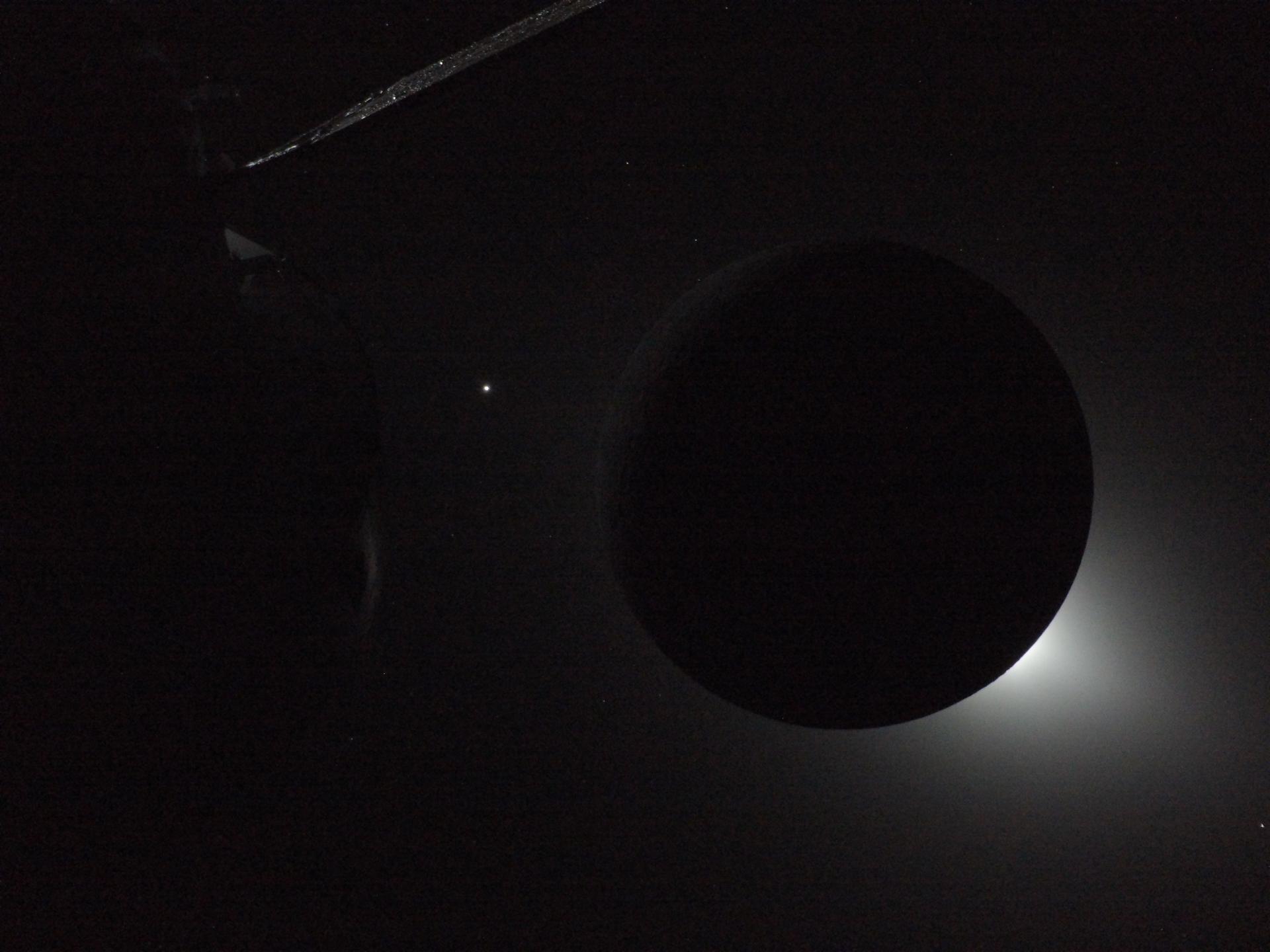
art002e016312 (April 7, 2026) – A vehicle camera mounted on NASA’s Orion spacecraft captured this view of lunar sunrise as the Sun emerged from behind the Moon. The Moon appears in silhouette as sunlight and the faint solar corona extend from behind its edge. The image was captured as part of a time-lapse sequence documenting the changing view during sunrise.
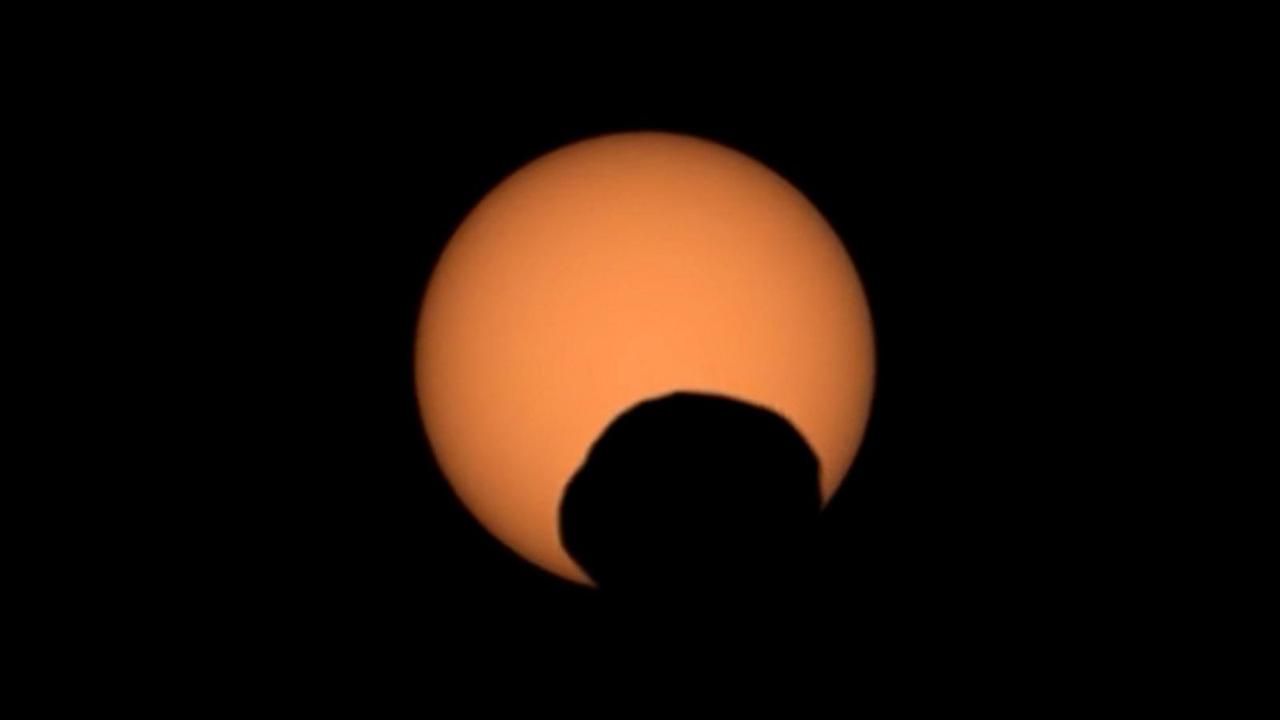
NASA's Perseverance Mars rover used its Mastcam-Z camera to capture the silhouette of Phobos, one of the two Martian moons, as it passed in front of the Sun on Sept. 30, 2024, the 1,285th Martian day, or sol, of the mission. Perseverance has captured several Phobos transits since its landing at Mars' Jezero Crater in February 2021. By comparing the various recordings, scientists can refine their understanding of the potato-shaped moon's orbit, learning how it is changing. Eons from now, Phobos' orbit is expected to eventually send the moon toward the Red Planet's surface. Arizona State University leads the operations of the Mastcam-Z instrument, working in collaboration with Malin Space Science Systems in San Diego, on the design, fabrication, testing, and operation of the cameras, and in collaboration with the Niels Bohr Institute of the University of Copenhagen on the design, fabrication, and testing of the calibration targets. A key objective for Perseverance's mission on Mars is astrobiology, including the search for signs of ancient microbial life. The rover will characterize the planet's geology and past climate, pave the way for human exploration of the Red Planet, and be the first mission to collect and cache Martian rock and regolith (broken rock and dust). Subsequent NASA missions, in cooperation with ESA (European Space Agency), would send spacecraft to Mars to collect these sealed samples from the surface and return them to Earth for in-depth analysis. The Mars 2020 Perseverance mission is part of NASA's Moon to Mars exploration approach, which includes Artemis missions to the Moon that will help prepare for human exploration of the Red Planet. Video available at https://photojournal.jpl.nasa.gov/catalog/PIA26380
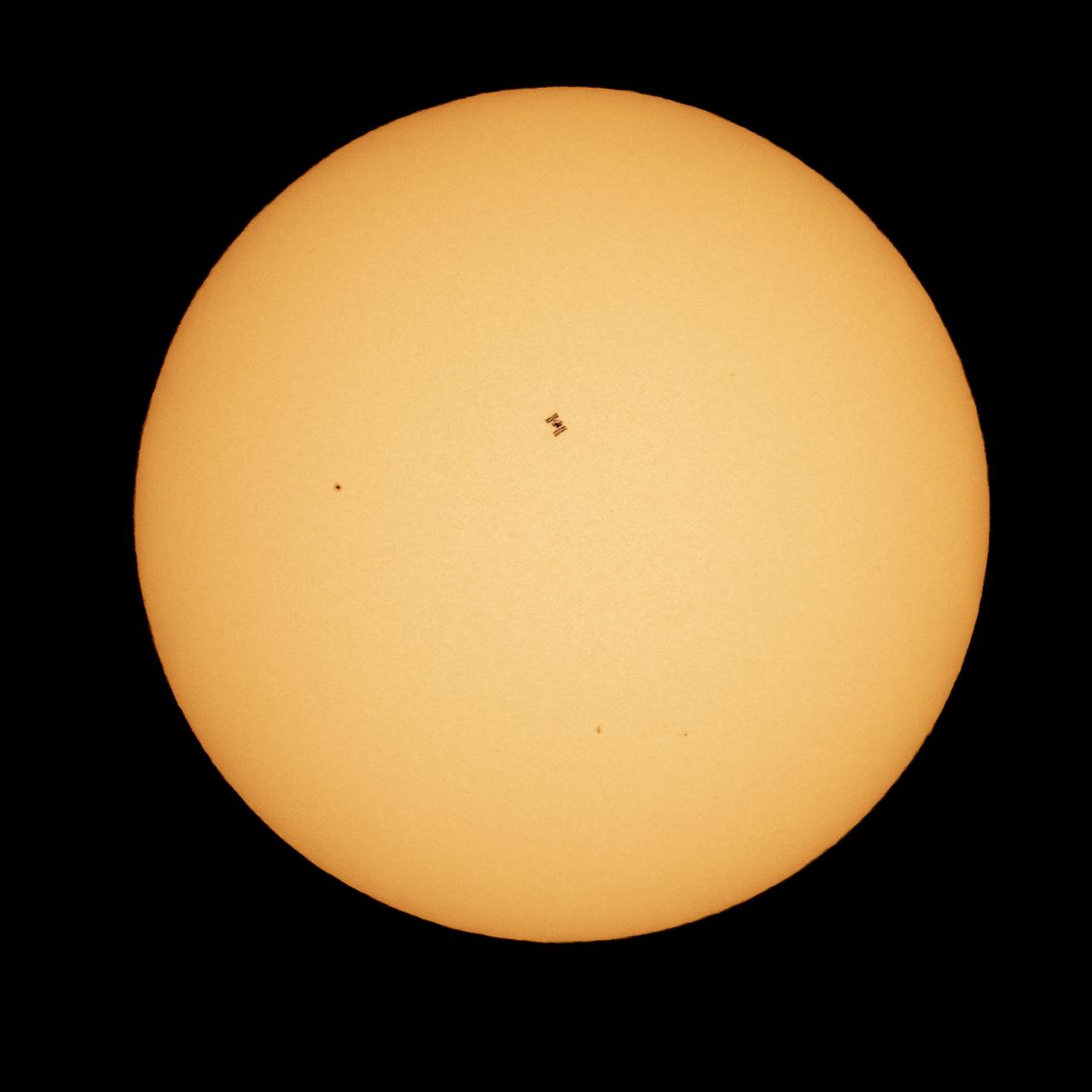
The International Space Station, with a crew of seven aboard, is seen in silhouette as it transits the sun at roughly five miles per second, Friday, April 23, 2021, as seen from Nottingham, Maryland. Aboard are: NASA astronauts Shannon Walker, Mike Hopkins, Victor Glover, Mark Vande Hei; Roscosmos cosmonauts Oleg Novitskiy, Pyotr Dubrov; and Japan Aerospace Exploration Agency (JAXA) astronaut Soichi Noguchi. Joining the crew aboard station tomorrow will be Crew-2 mission crew members: NASA astronauts Shane Kimbrough and Megan McArthur, JAXA astronaut Akihiko Hoshide, and ESA (European Space Agency) astronaut Thomas Pesquet. Photo Credit: (NASA/Bill Ingalls)
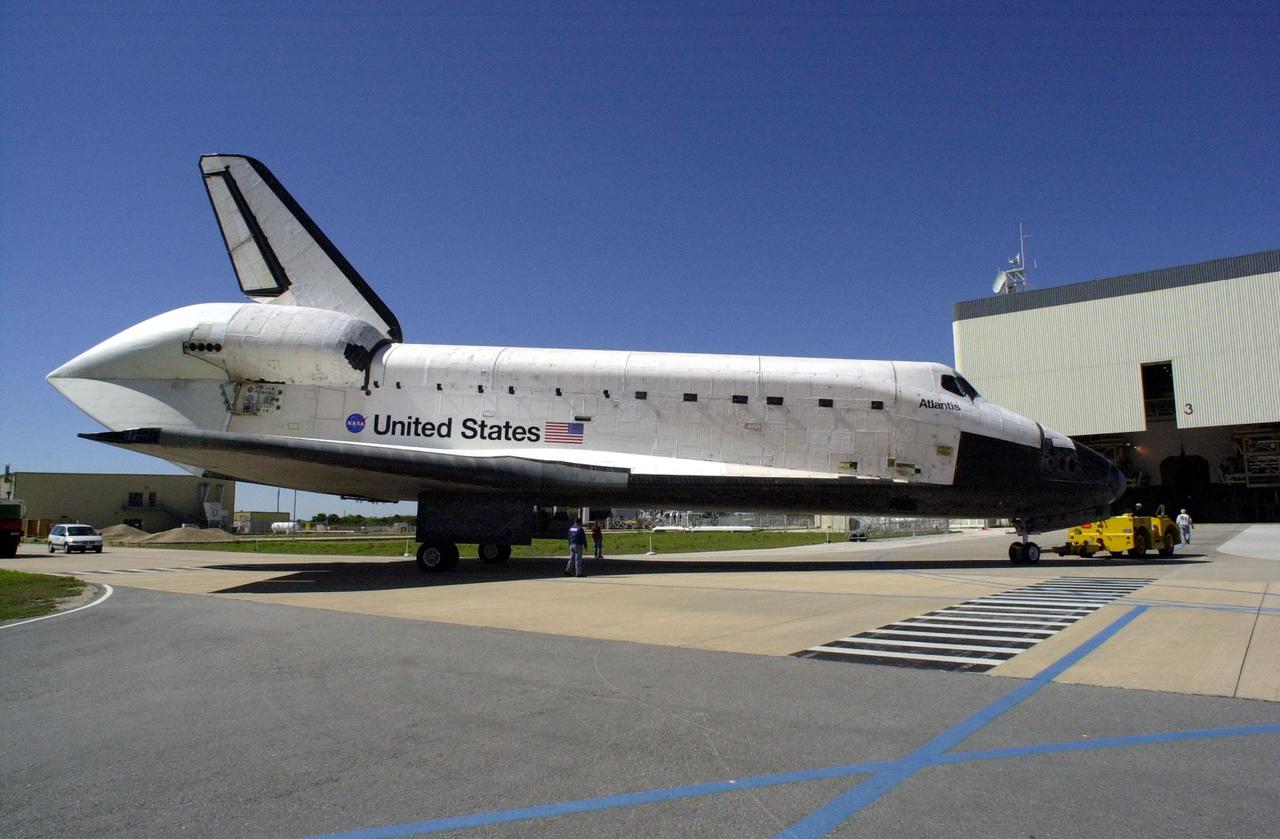
The orbiter Atlantis makes the turn to the Orbiter Processing Facility bay 3 after being towed from the Shuttle Landing Facility. The unusual silhouette of the aft section on the orbiter is due to the tail cone covering the aft engines. Atlantis landed Feb. 19 at Edwards Air Force Base concluding mission STS-98. The orbiter returned to Florida on the back of a Shuttle Carrier Aircraft, known as a ferry flight, that began March 1. Unfavorable weather conditions kept it on the ground at Altus AFB, Okla., for several days until it could return to Florida. Atlantis will be prepared in the OPF for mission STS-104, the 10th construction flight to the International Space Station, scheduled to launch June 8
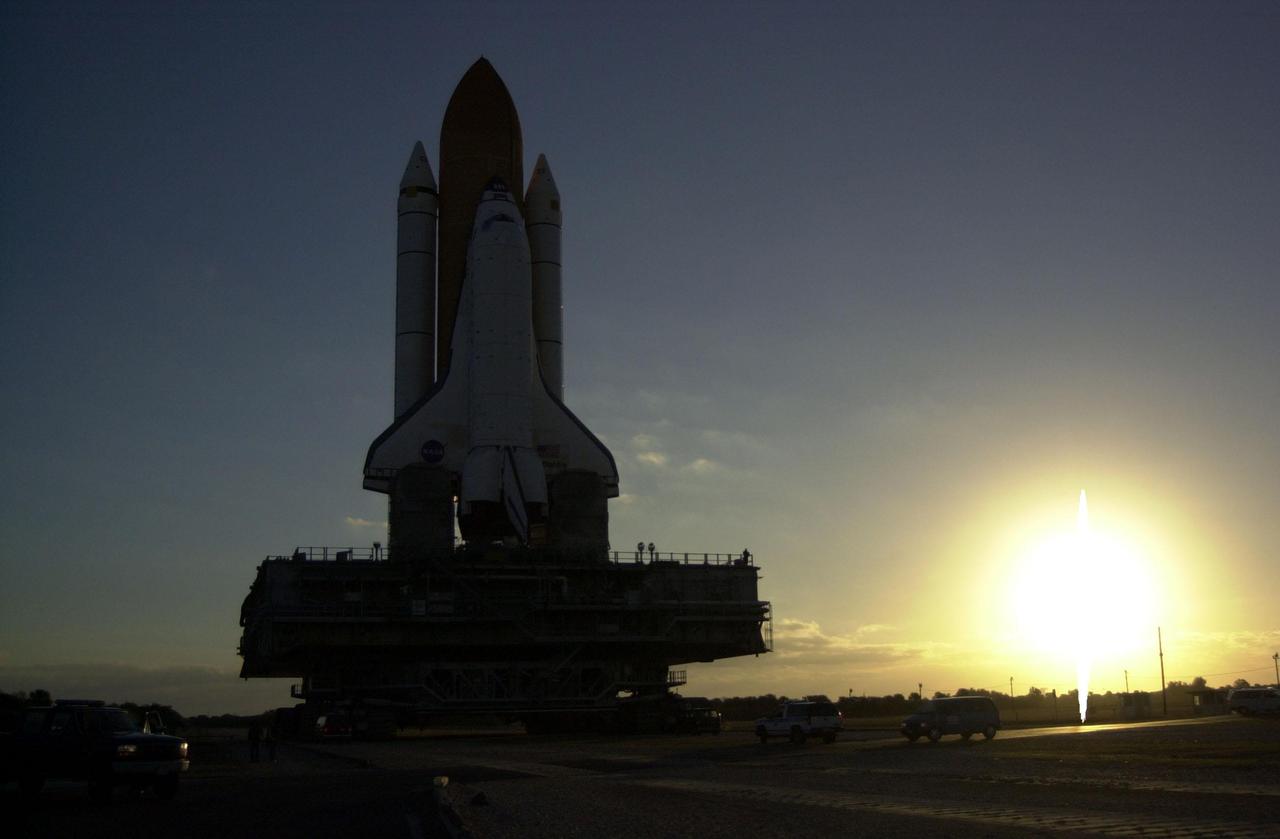
KENNEDY SPACE CENTER, Fla. -- As the sun clears the horizon, it creates a silhouette of the Space Shuttle Atlantis as it makes the crawl from the Vehicle Assembly Building to Launch Pad 39A. The Shuttle has been in the VAB undergoing tests on the solid rocket booster cables. A prior extensive evaluation of NASA’s SRB cable inventory on the shelf revealed conductor damage in four (of about 200) cables. Shuttle managers decided to prove the integrity of the system tunnel cables already on Atlantis, causing return of the Shuttle to the VAB a week ago. Launch of Atlantis on STS-98 has been rescheduled to Feb. 7 at 6:11 p.m. EST
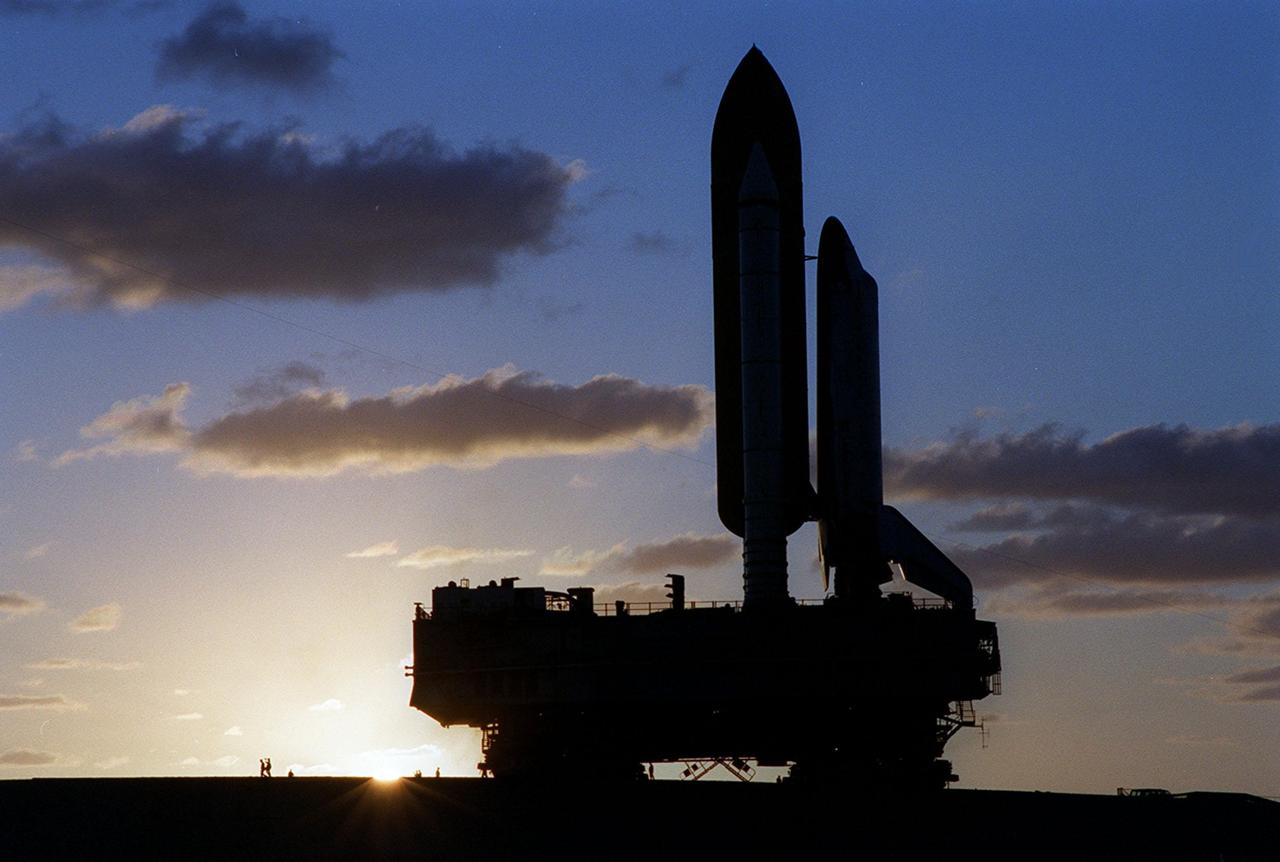
KENNEDY SPACE CENTER, Fla. -- Dawn’s early light creates a powerful silhouette of the Space Shuttle Discovery on its mobile launcher platform as it creeps to Launch Pad 39B. Discovery is scheduled to launch Oct. 5 at 9:30 p.m. EDT on mission STS-92. Making the 100th Space Shuttle mission launched from Kennedy Space Center, Discovery will carry two pieces of hardware for the International Space Station, the Z1 truss, which is the cornerstone truss of the Station, and the third Pressurized Mating Adapter. Discovery also will be making its 28th flight into space, more than any of the other orbiters to date
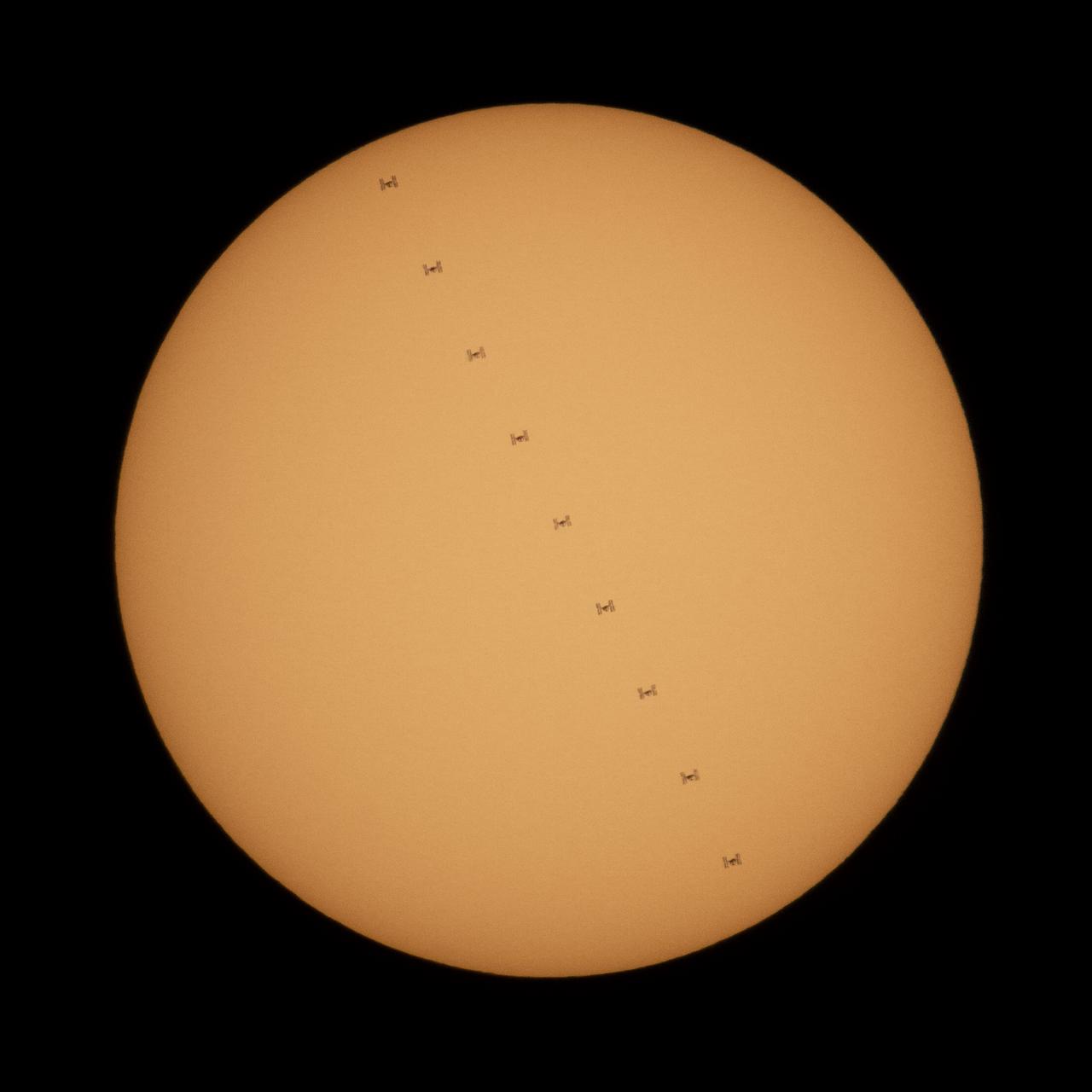
This composite image, made from nine frames, shows the International Space Station, with a crew of three onboard, in silhouette as it transits the Sun at roughly five miles per second, Sunday, Oct. 7, 2018 from Suffolk, Va. Onboard are Expedition 57 Commander Alexander Gerst of ESA (European Space Agency), Serena Auñón-Chancellor of NASA, and Sergey Prokopyev of Roscosmos. The trio will soon be joined by Nick Hague of NASA and Alexey Ovchinin of Roscosmos, who are scheduled to launch on October 11 from the Baikonur Cosmodrome in Kazakhstan. Photo Credit: (NASA/Joel Kowsky)
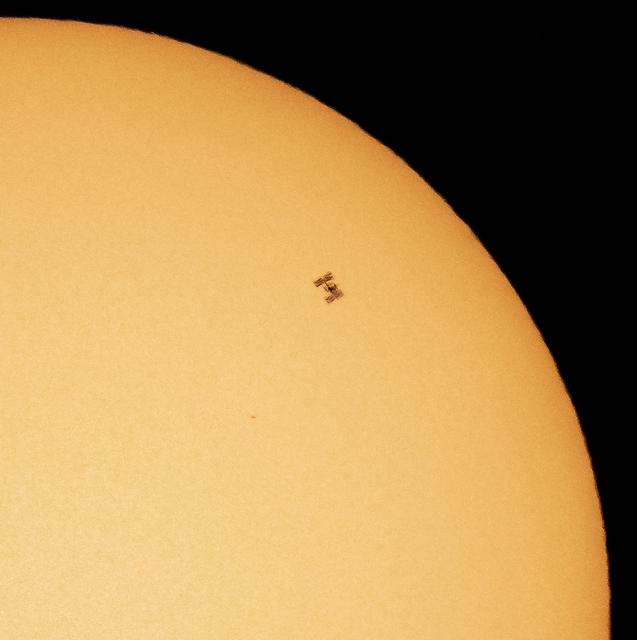
The International Space Station, with a crew of seven aboard, is seen in silhouette as it transits the sun at roughly five miles per second, Friday, April 23, 2021, as seen from Nottingham, Maryland. Aboard are: NASA astronauts Shannon Walker, Mike Hopkins, Victor Glover, Mark Vande Hei; Roscosmos cosmonauts Oleg Novitskiy, Pyotr Dubrov; and Japan Aerospace Exploration Agency (JAXA) astronaut Soichi Noguchi. Joining the crew aboard station tomorrow will be Crew-2 mission crew members: NASA astronauts Shane Kimbrough and Megan McArthur, JAXA astronaut Akihiko Hoshide, and ESA (European Space Agency) astronaut Thomas Pesquet. Photo Credit: (NASA/Bill Ingalls)
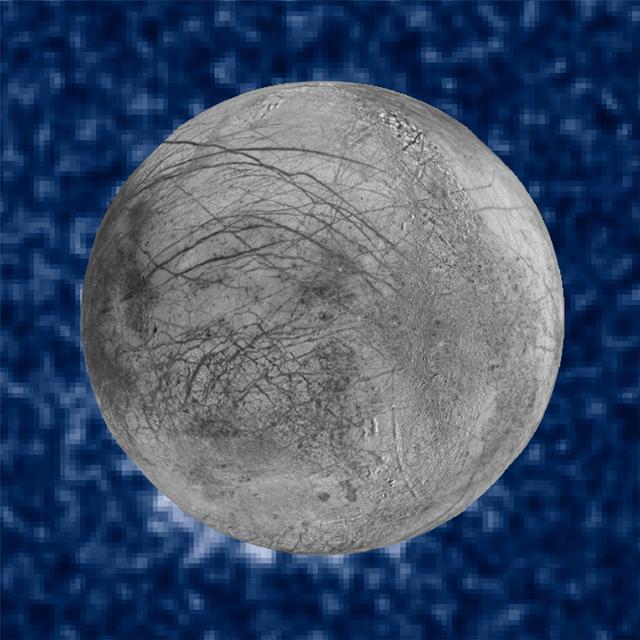
This composite image shows suspected plumes of water vapor erupting at the 7 o’clock position off the limb of Jupiter’s moon Europa. The plumes, photographed by NASA’s Hubble’s Space Telescope Imaging Spectrograph, were seen in silhouette as the moon passed in front of Jupiter. Hubble’s ultraviolet sensitivity allowed for the features -- rising over 100 miles (160 kilometers) above Europa’s icy surface -- to be discerned. The water is believed to come from a subsurface ocean on Europa. The Hubble data were taken on January 26, 2014. The image of Europa, superimposed on the Hubble data, is assembled from data from the Galileo and Voyager missions.

ISS009-E-18364 (14 August 2004) --- Appearing as a silhouette backdropped against airglow of Earth’s horizon, an unpiloted Progress supply vehicle approaches the International Space Station (ISS). The Progress 15 resupply craft launched at 12:03 a.m. (CDT) on August 11, 2004 from the Baikonur Cosmodrome in Kazakhstan to deliver almost three tons of food, fuel, oxygen, water and supplies to the Expedition 9 crewmembers onboard the Station. Progress docked to the aft port of the Zvezda Service Module at 12:01 a.m. (CDT) on August 14 as the two craft flew 225 statute miles over central Asia.
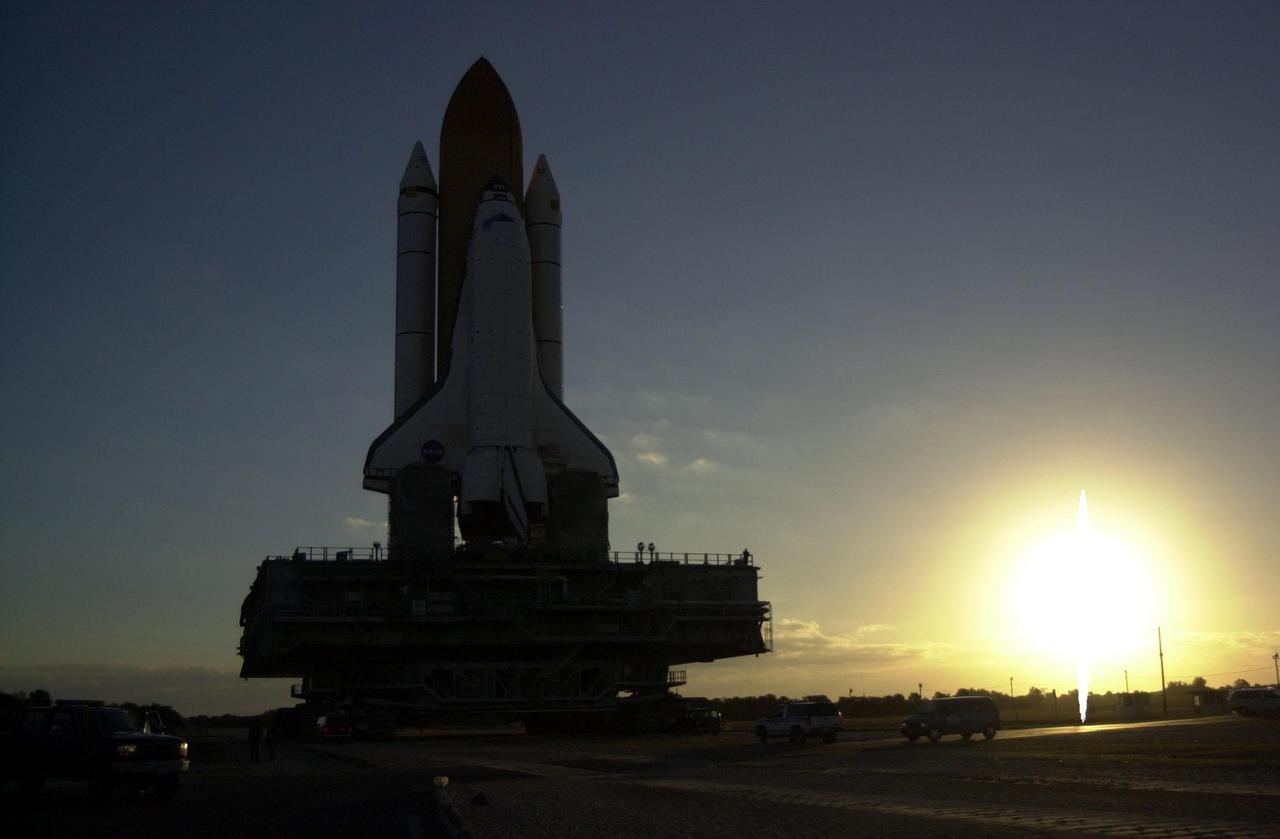
KENNEDY SPACE CENTER, Fla. -- As the sun clears the horizon, it creates a silhouette of the Space Shuttle Atlantis as it makes the crawl from the Vehicle Assembly Building to Launch Pad 39A. The Shuttle has been in the VAB undergoing tests on the solid rocket booster cables. A prior extensive evaluation of NASA’s SRB cable inventory on the shelf revealed conductor damage in four (of about 200) cables. Shuttle managers decided to prove the integrity of the system tunnel cables already on Atlantis, causing return of the Shuttle to the VAB a week ago. Launch of Atlantis on STS-98 has been rescheduled to Feb. 7 at 6:11 p.m. EST
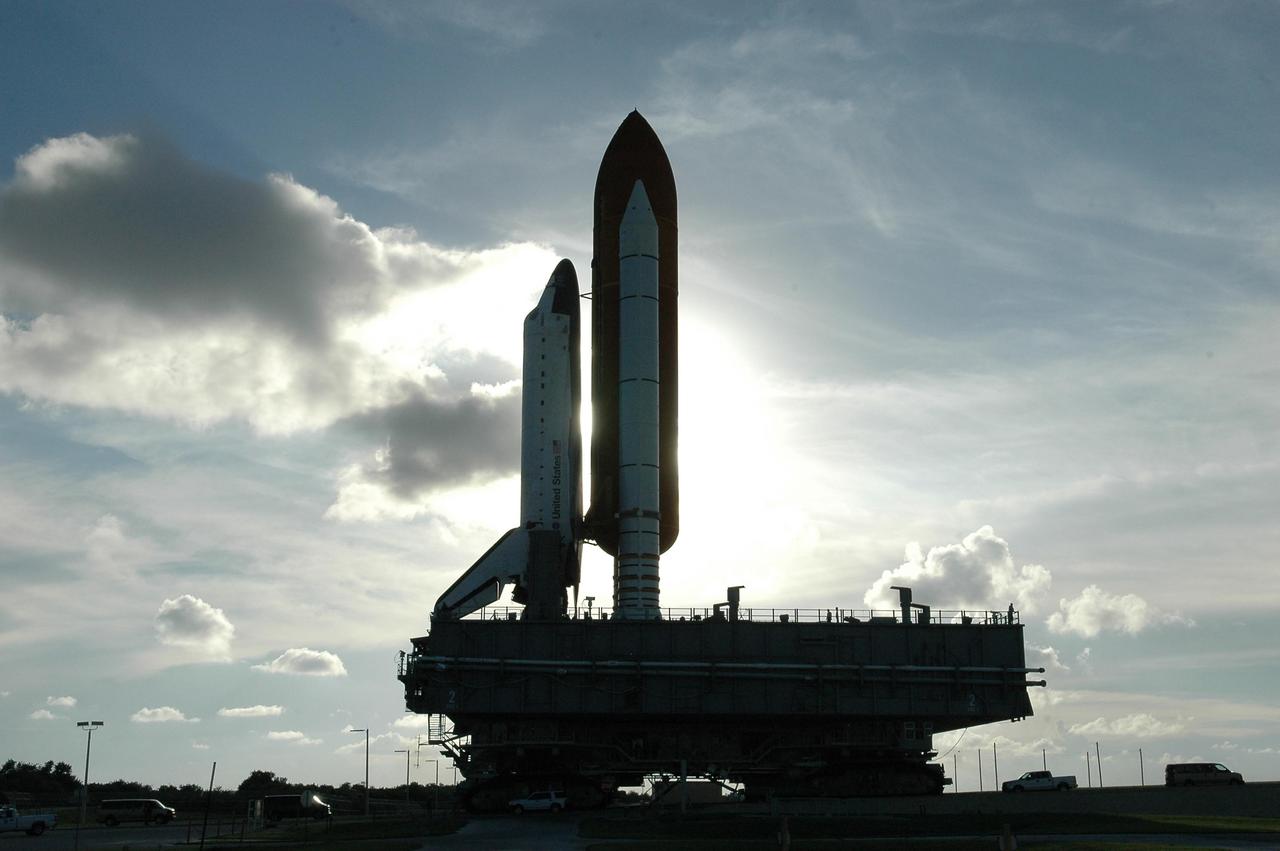
KENNEDY SPACE CENTER, FLA. - Dark clouds silhouette Space Shuttle Atlantis as it rolls back to Launch Pad 39B atop the crawler-transporter. The shuttle had been moved off the launch pad due to concerns about the impact of Tropical Storm Ernesto, expected within 24 hours. The forecast of lesser winds expected from Ernesto and its projected direction convinced Launch Integration Manager LeRoy Cain and Shuttle Launch Director Mike Leinbach to return the shuttle to the launch pad. Photo credit: NASA/Kim Shiflett
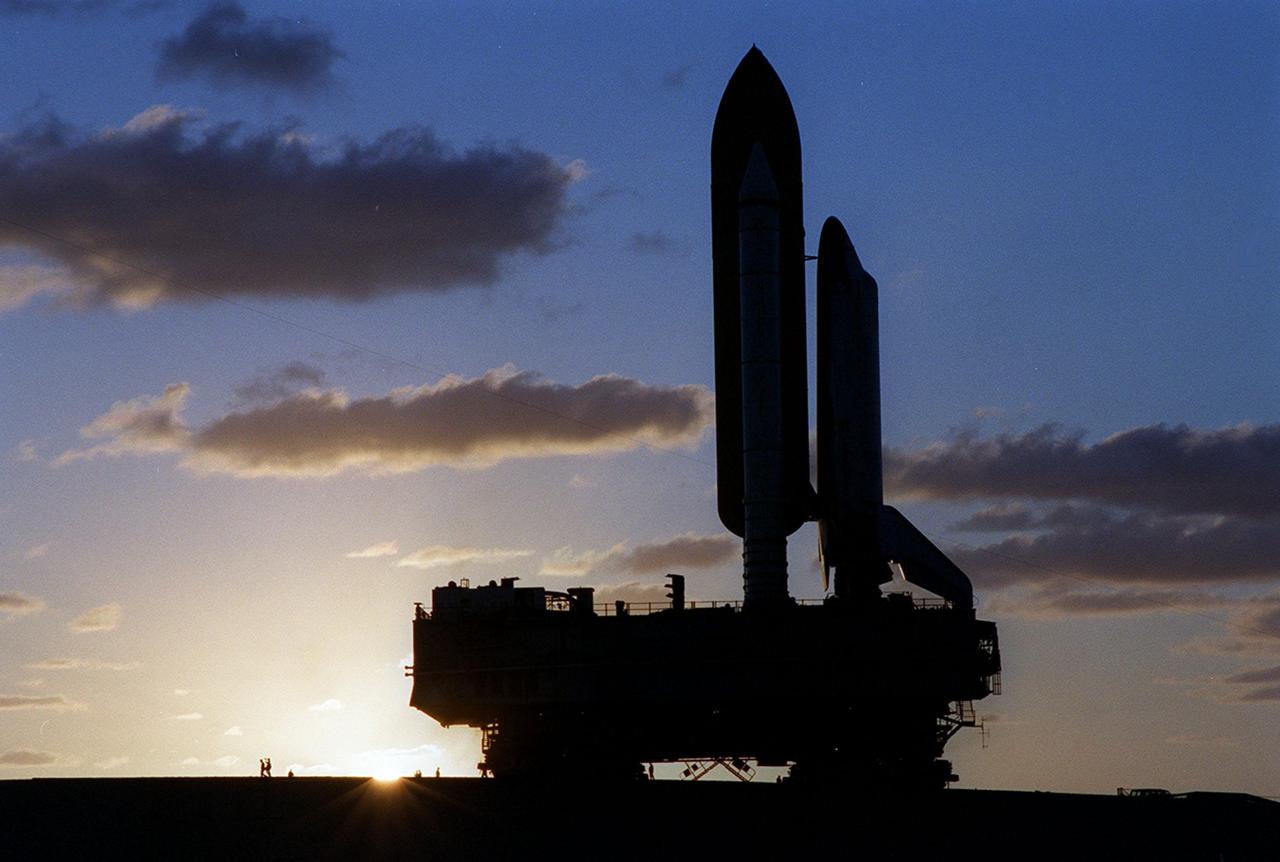
KENNEDY SPACE CENTER, Fla. -- Dawn’s early light creates a powerful silhouette of the Space Shuttle Discovery on its mobile launcher platform as it creeps to Launch Pad 39B. Discovery is scheduled to launch Oct. 5 at 9:30 p.m. EDT on mission STS-92. Making the 100th Space Shuttle mission launched from Kennedy Space Center, Discovery will carry two pieces of hardware for the International Space Station, the Z1 truss, which is the cornerstone truss of the Station, and the third Pressurized Mating Adapter. Discovery also will be making its 28th flight into space, more than any of the other orbiters to date
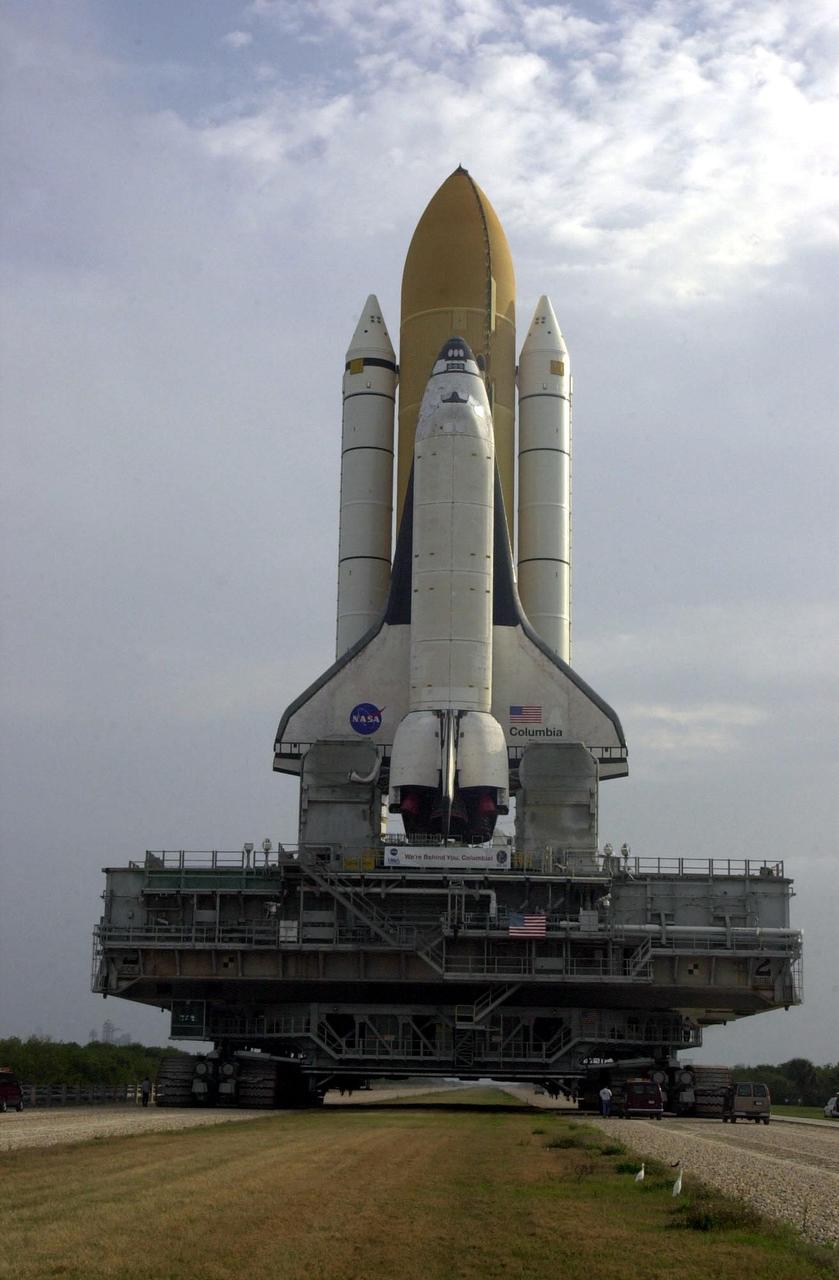
KENNEDY SPACE CENTER, FLA. -- A grey sky silhouettes Space Shuttle Columbia, atop its Mobile Launcher Platform, as it rolls out to Launch Pad 39A. Underneath is the crawler-transporter, which carries the multi-ton vehicles to the pad. In the grass behind the towering structures are two white herons. Columbia is scheduled to be launched Feb. 28 on mission STS-109, a Hubble Servicing Mission. The goal of the mission is to replace Solar Array 2 with Solar Array 3, replace the Power Control Unit, remove the Faint Object Camera and install the ACS, install the Near Infrared Camera and Multi-Object Spectrometer (NICMOS) Cooling System, and install New Outer Blanket Layer insulation