Month-long Evolution of the D/G Jupiter Impact Sites from Comet P/Shoemaker-Levy 9
NASA's InSight spacecraft captured this panorama of its landing site on Dec. 9, 2018, the 14th Martian day, or sol, of its mission. The 290-degree perspective surveys the rim of the degraded crater InSight landed in, nicknamed "Homestead Hollow."  The panorama is made of 30 individual images that were taken by the spacecraft's Instrument Deployment Camera, located on its robotic arm.  https://photojournal.jpl.nasa.gov/catalog/PIA23140
InSight Sol 14 Panorama
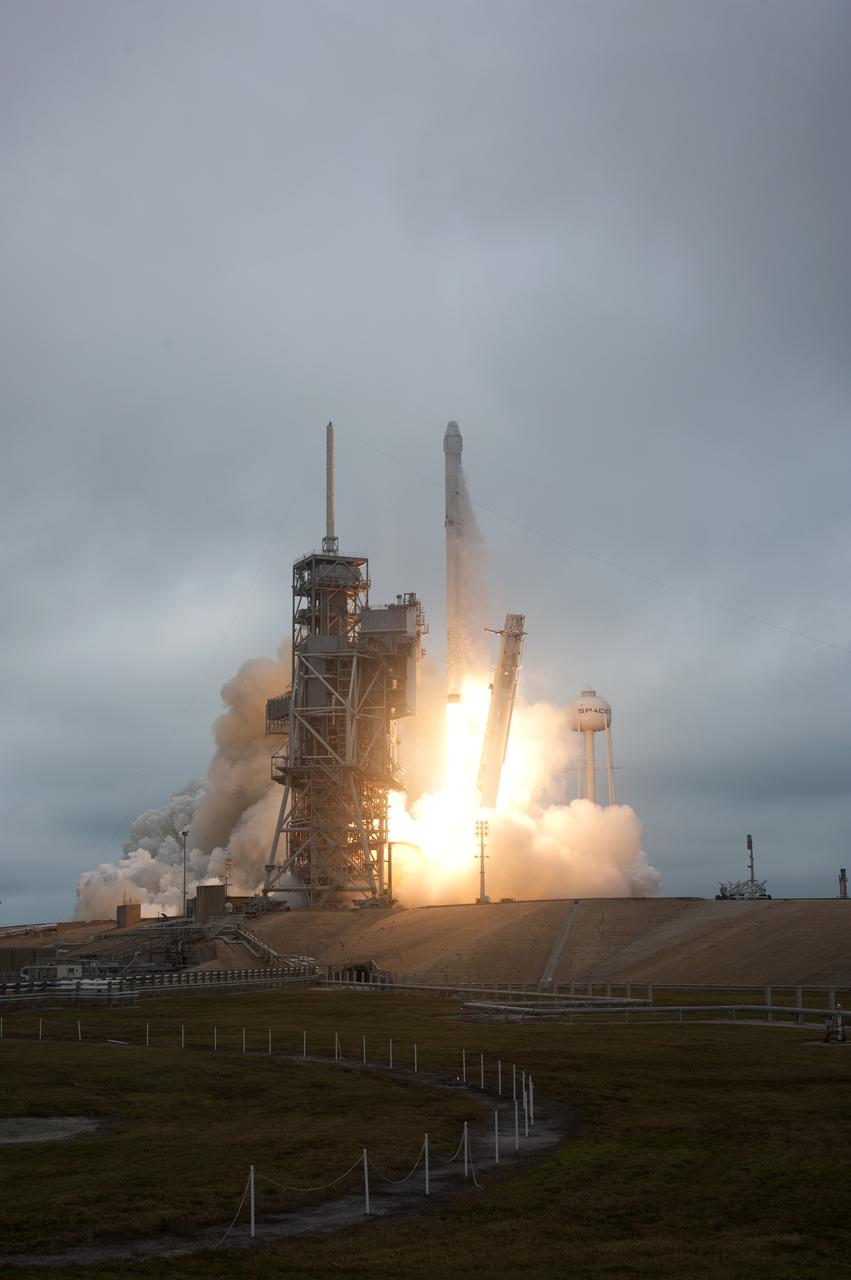
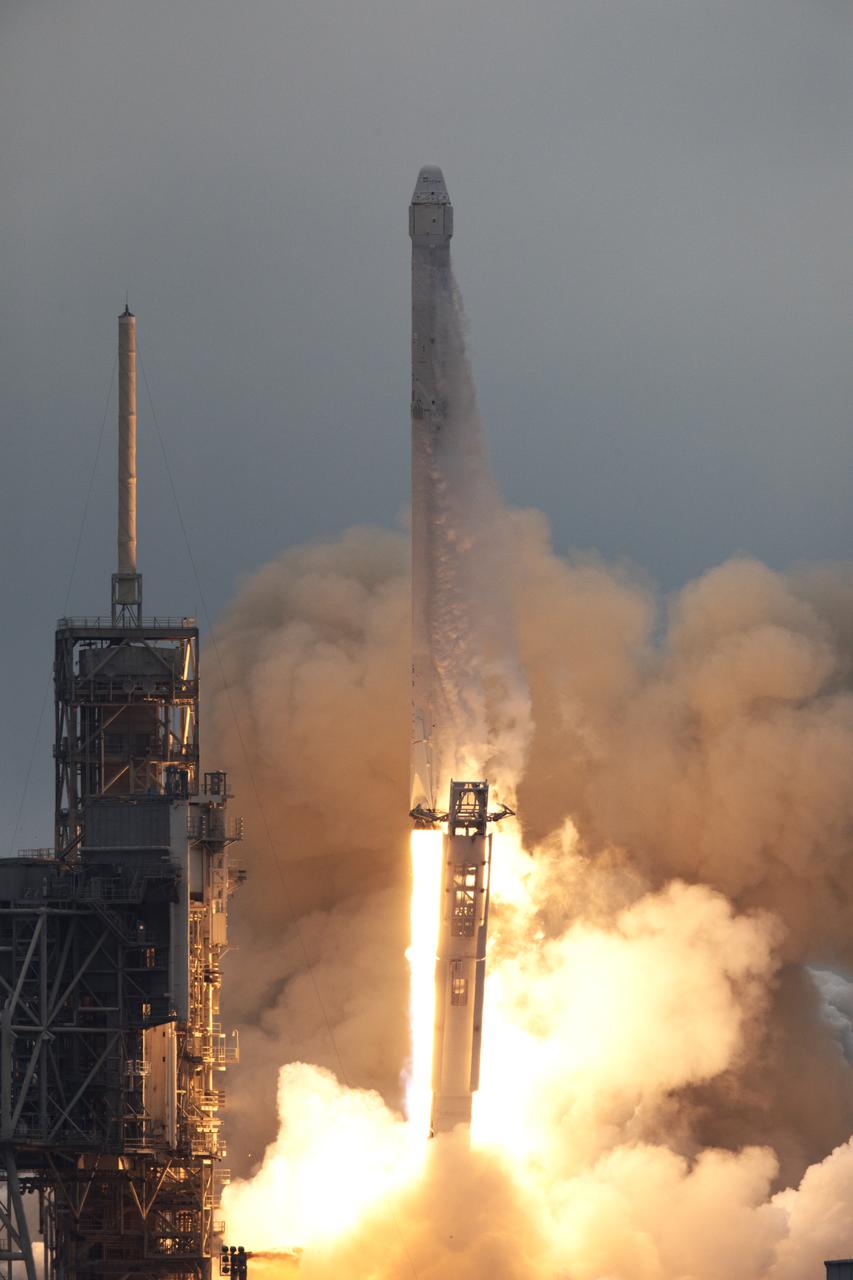
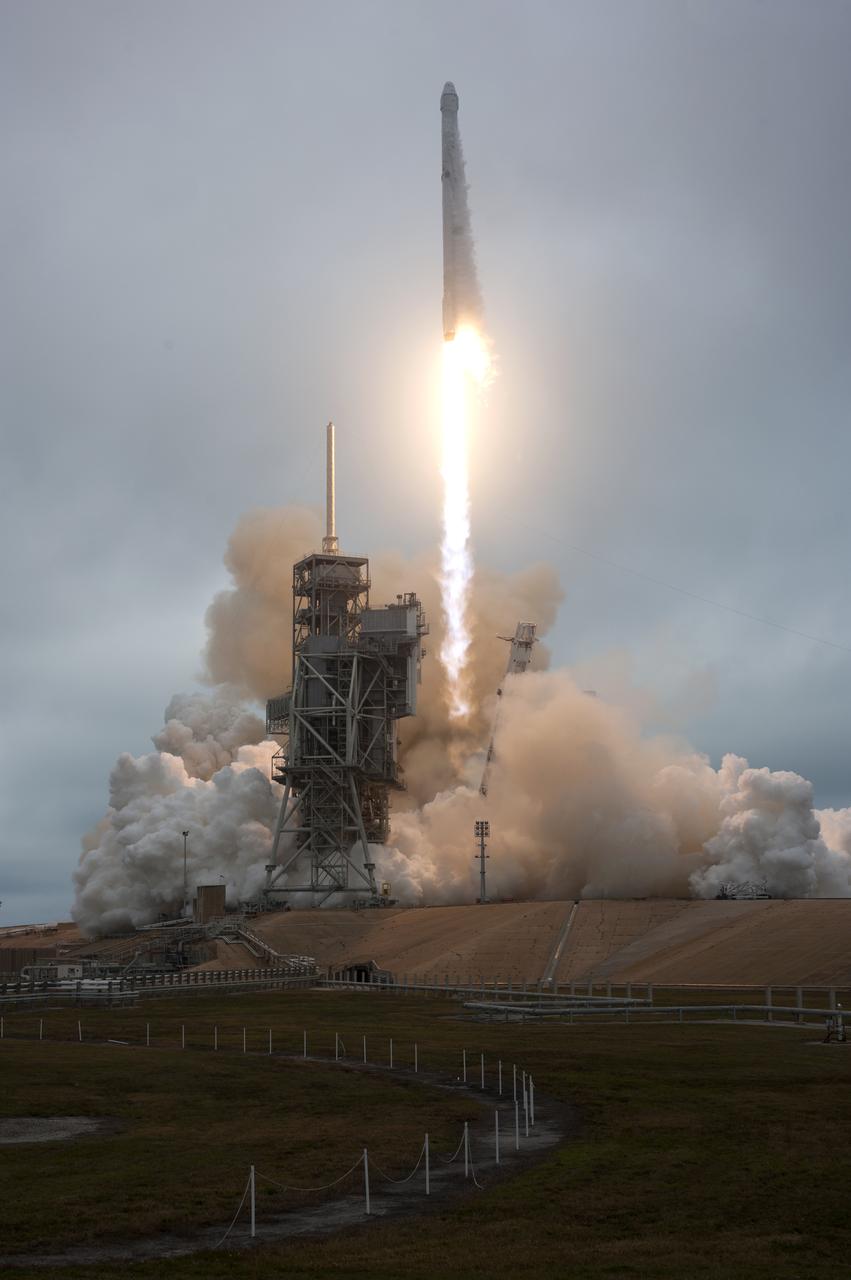
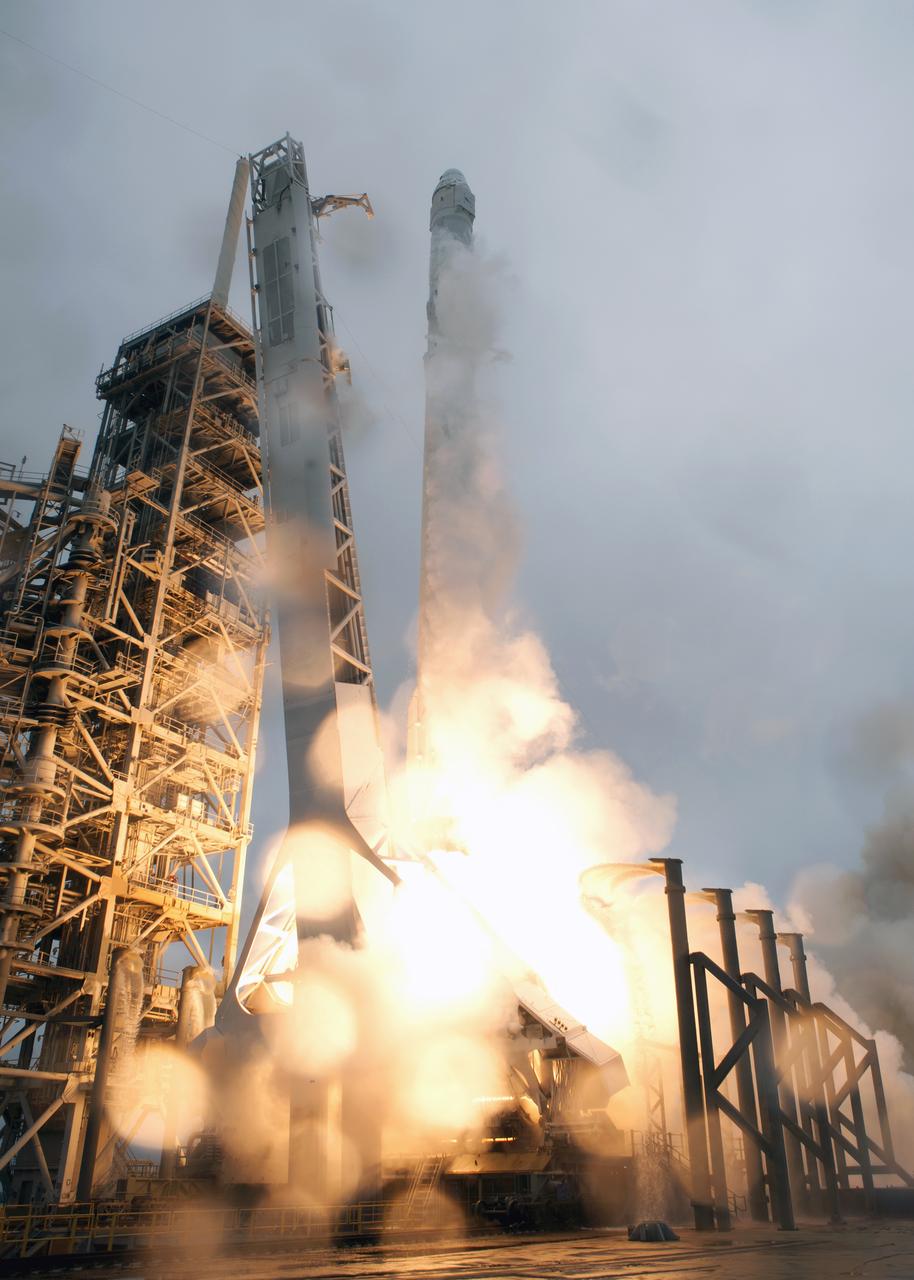
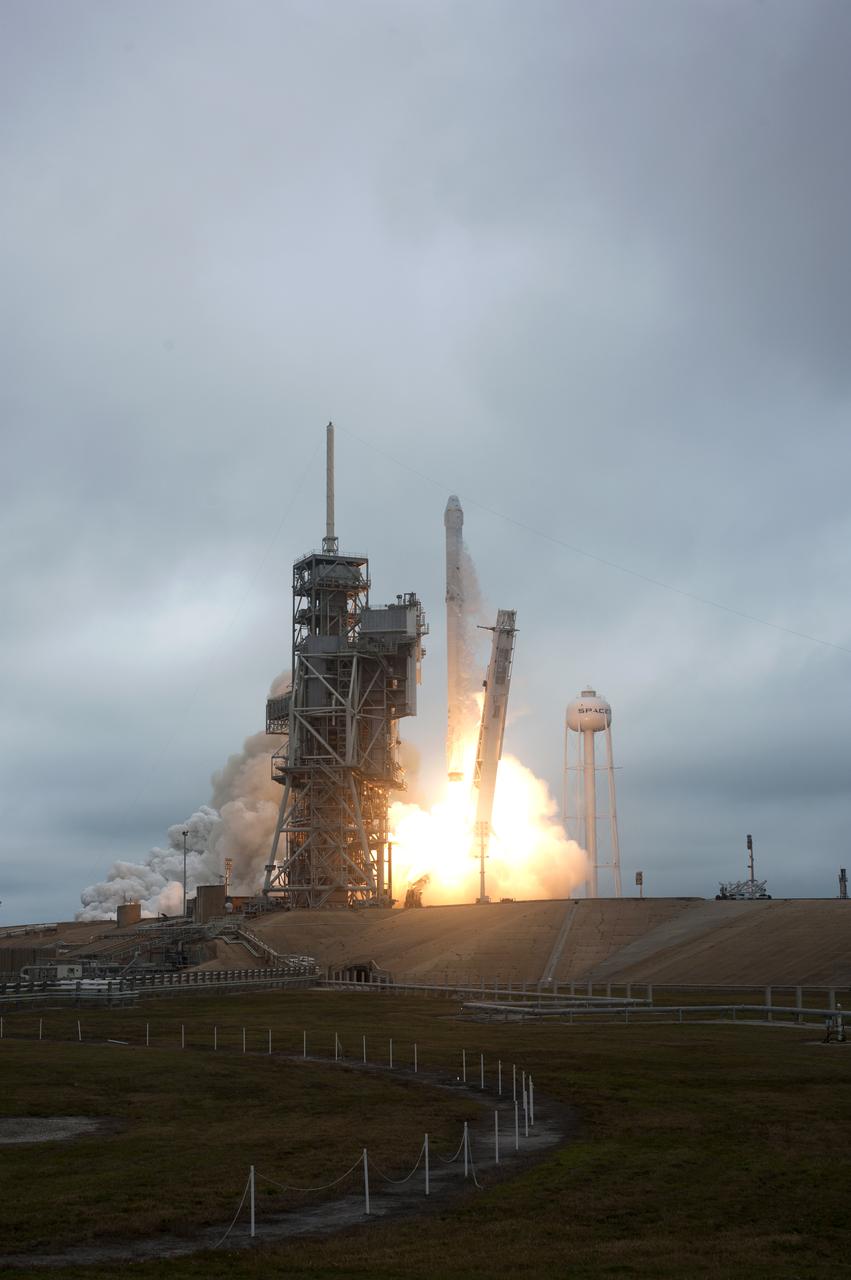
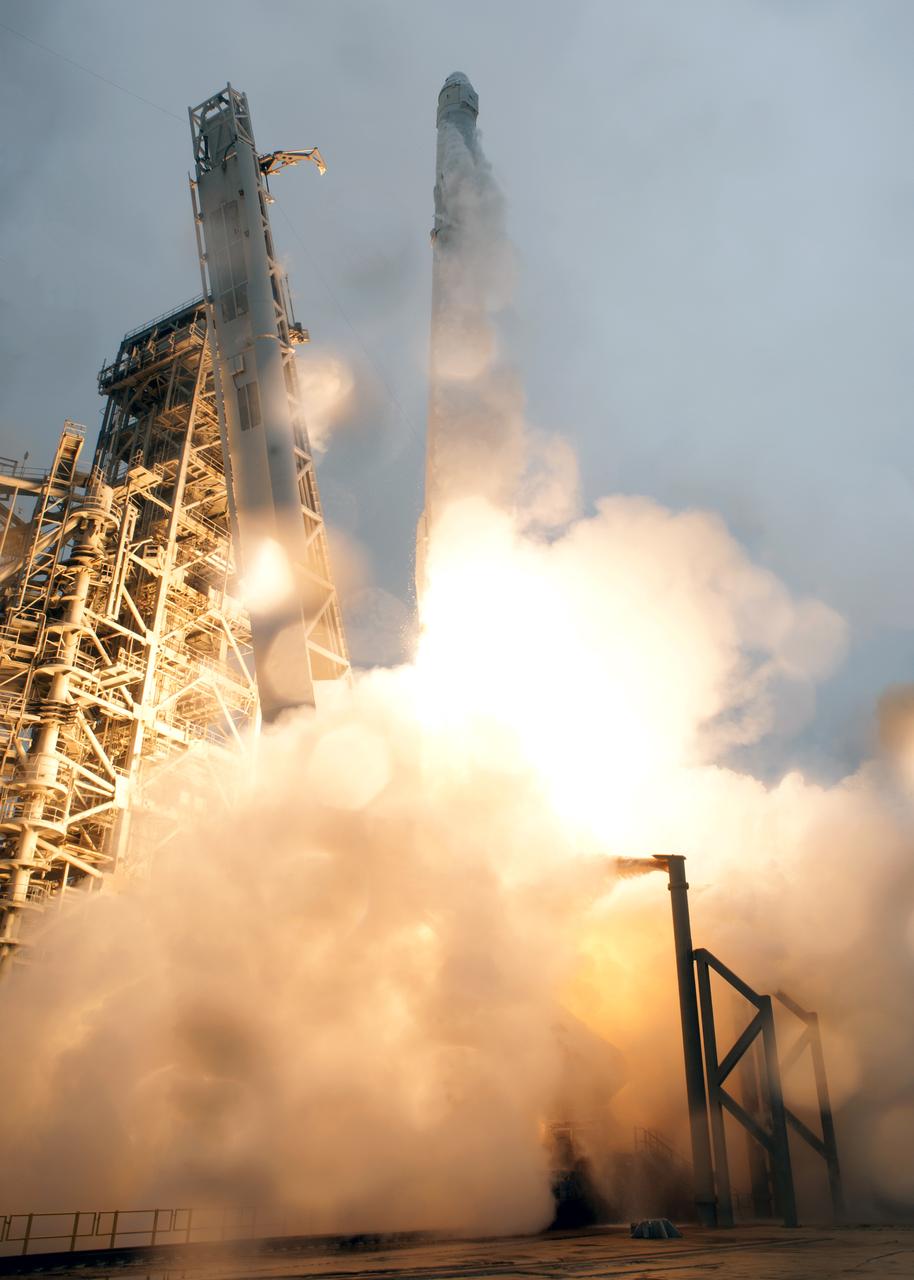
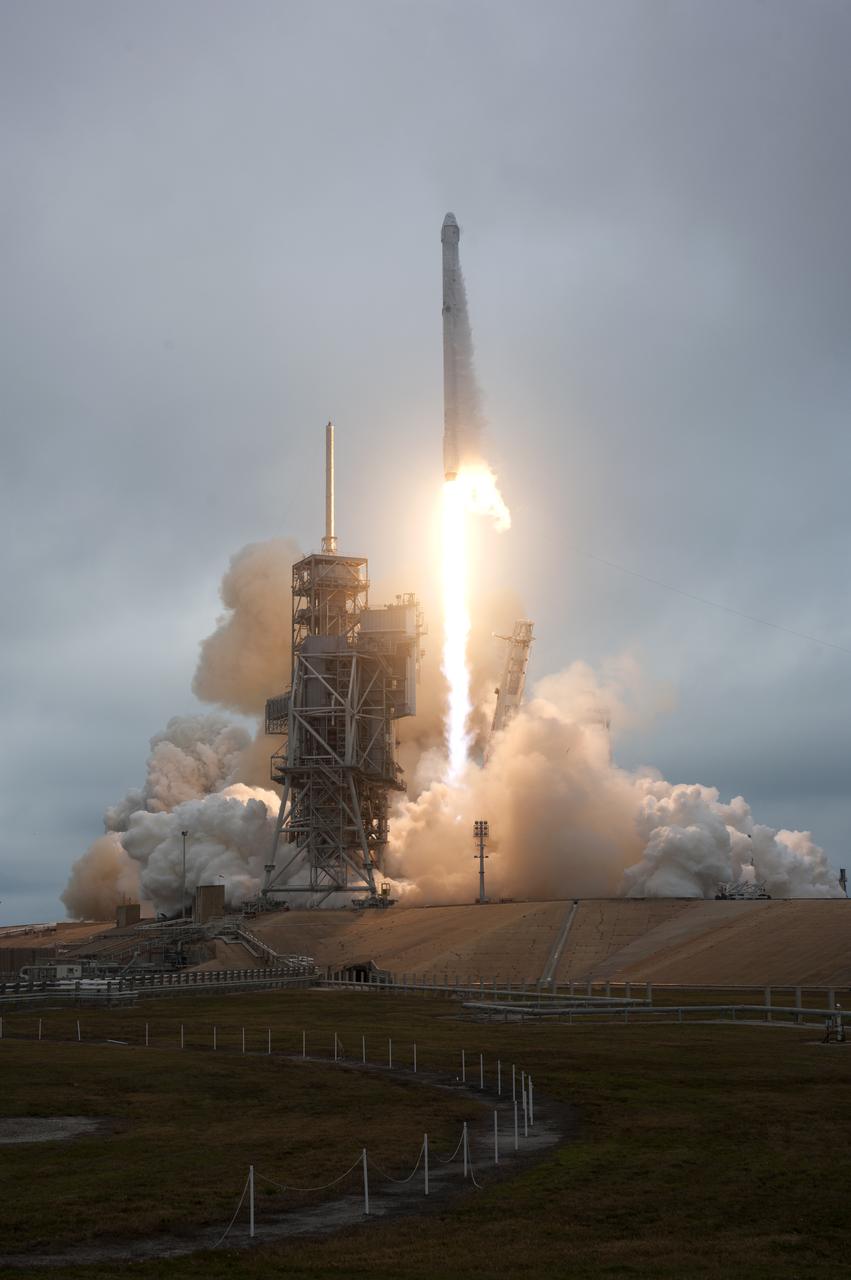
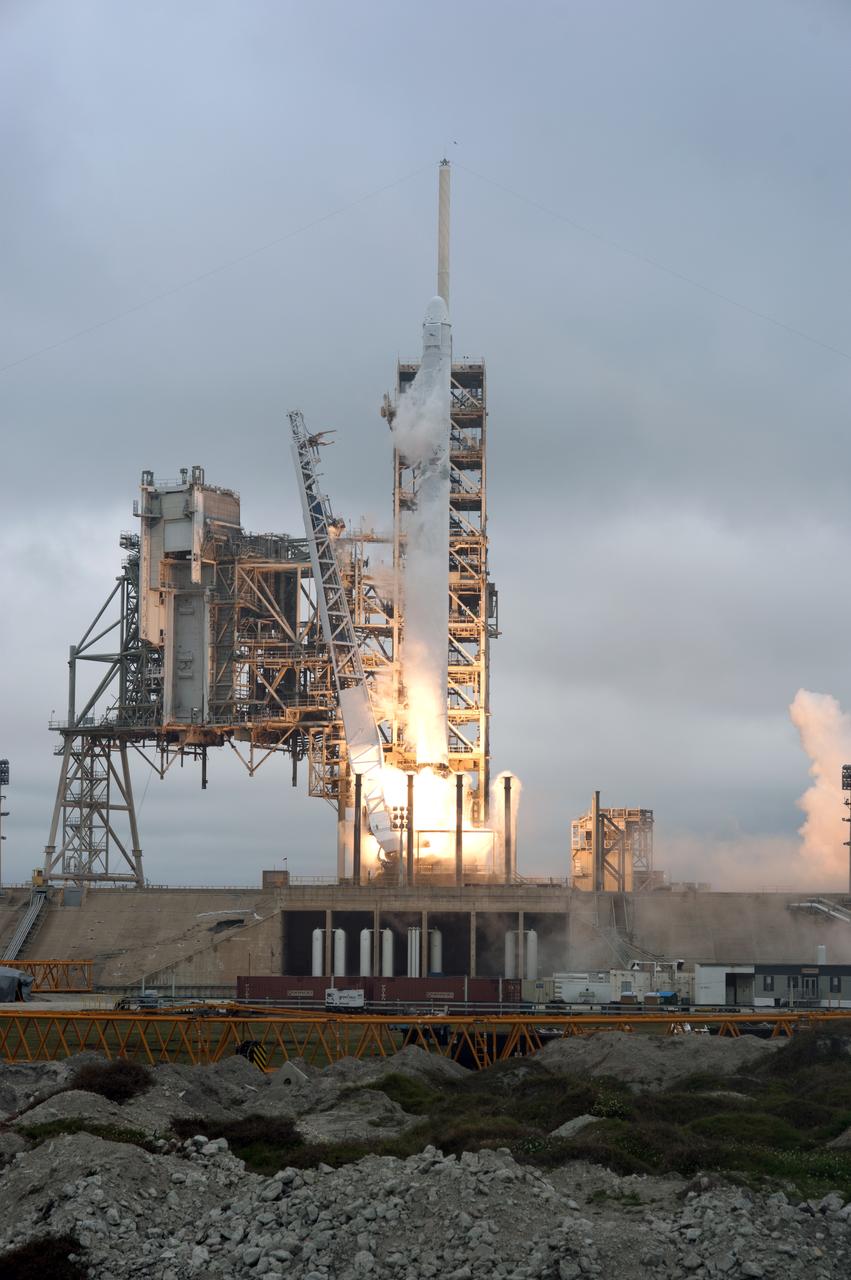
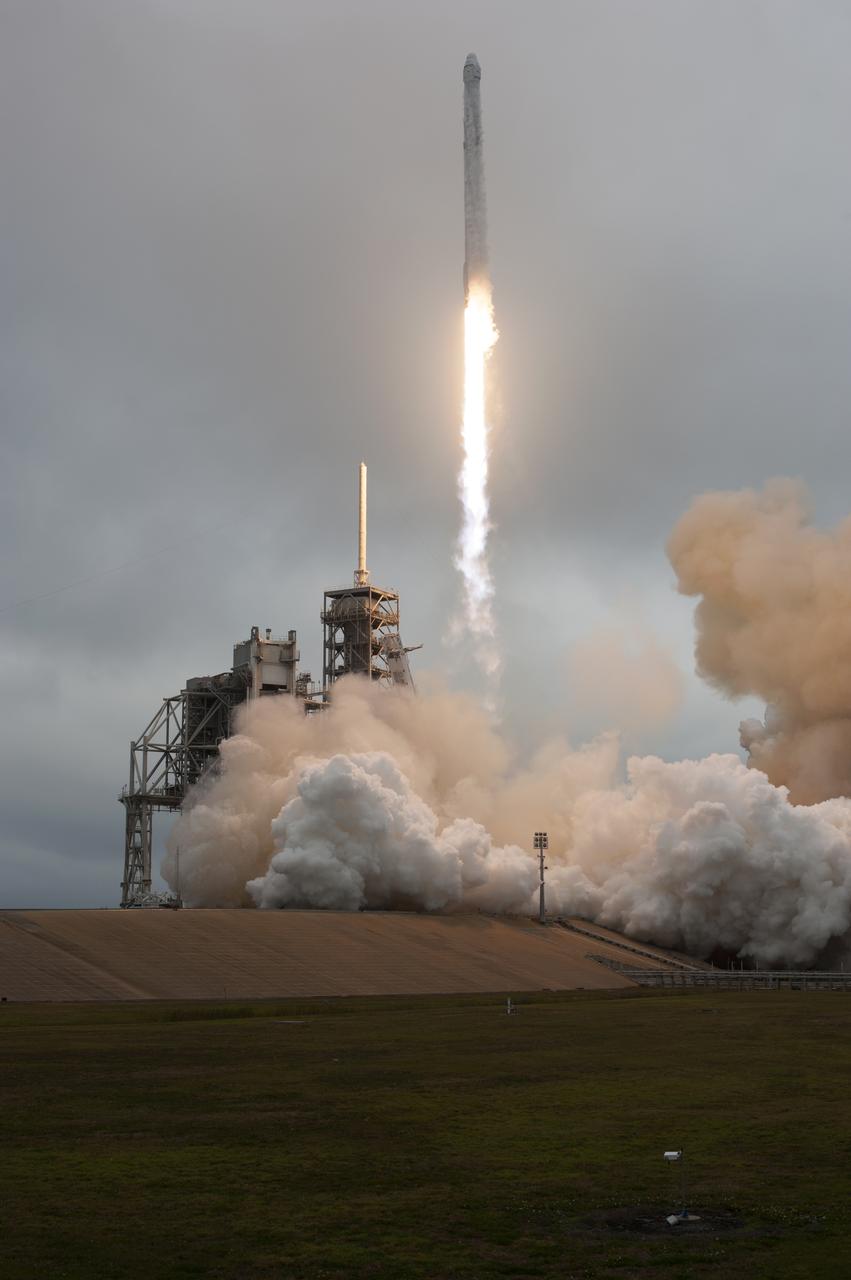
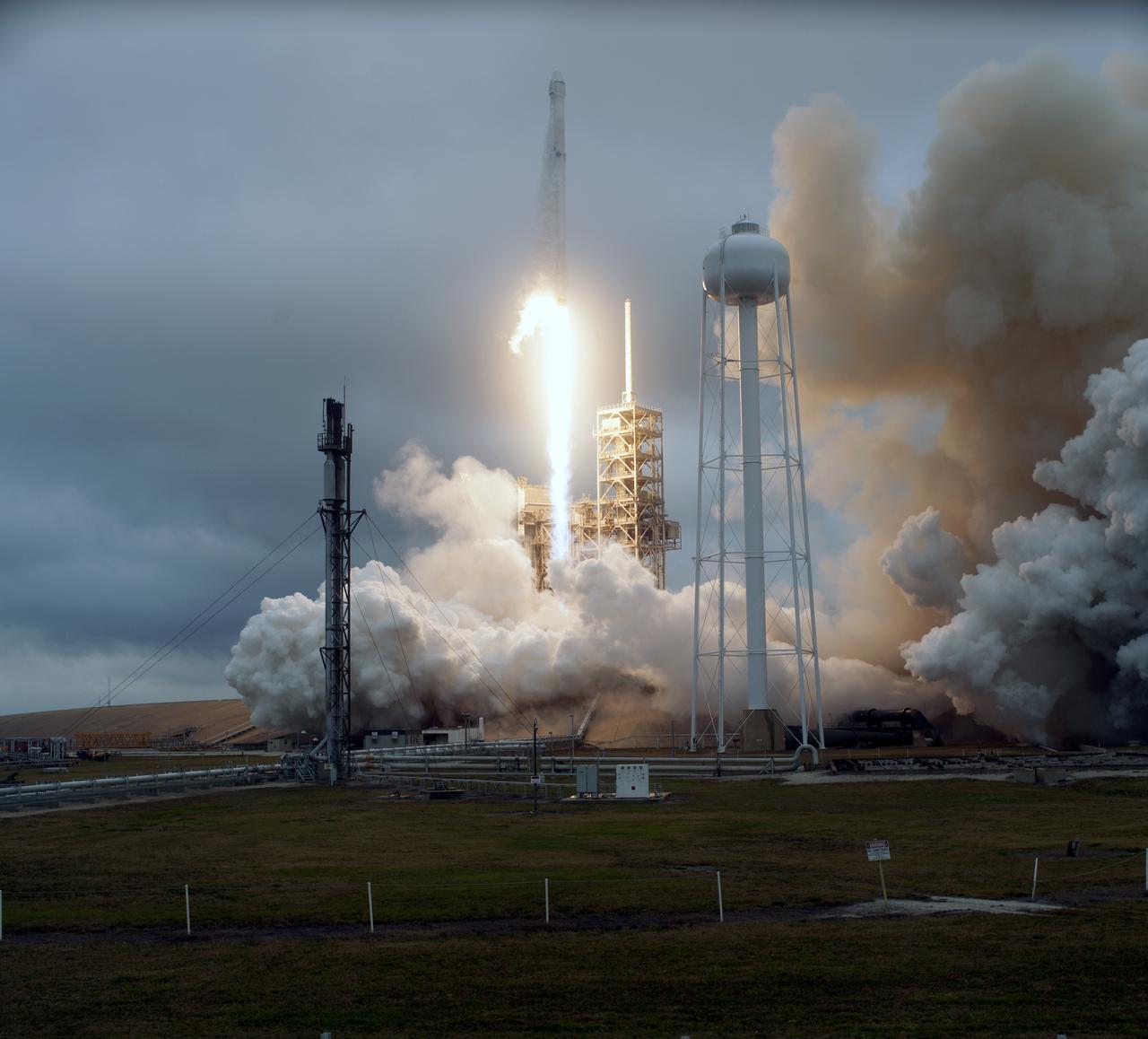
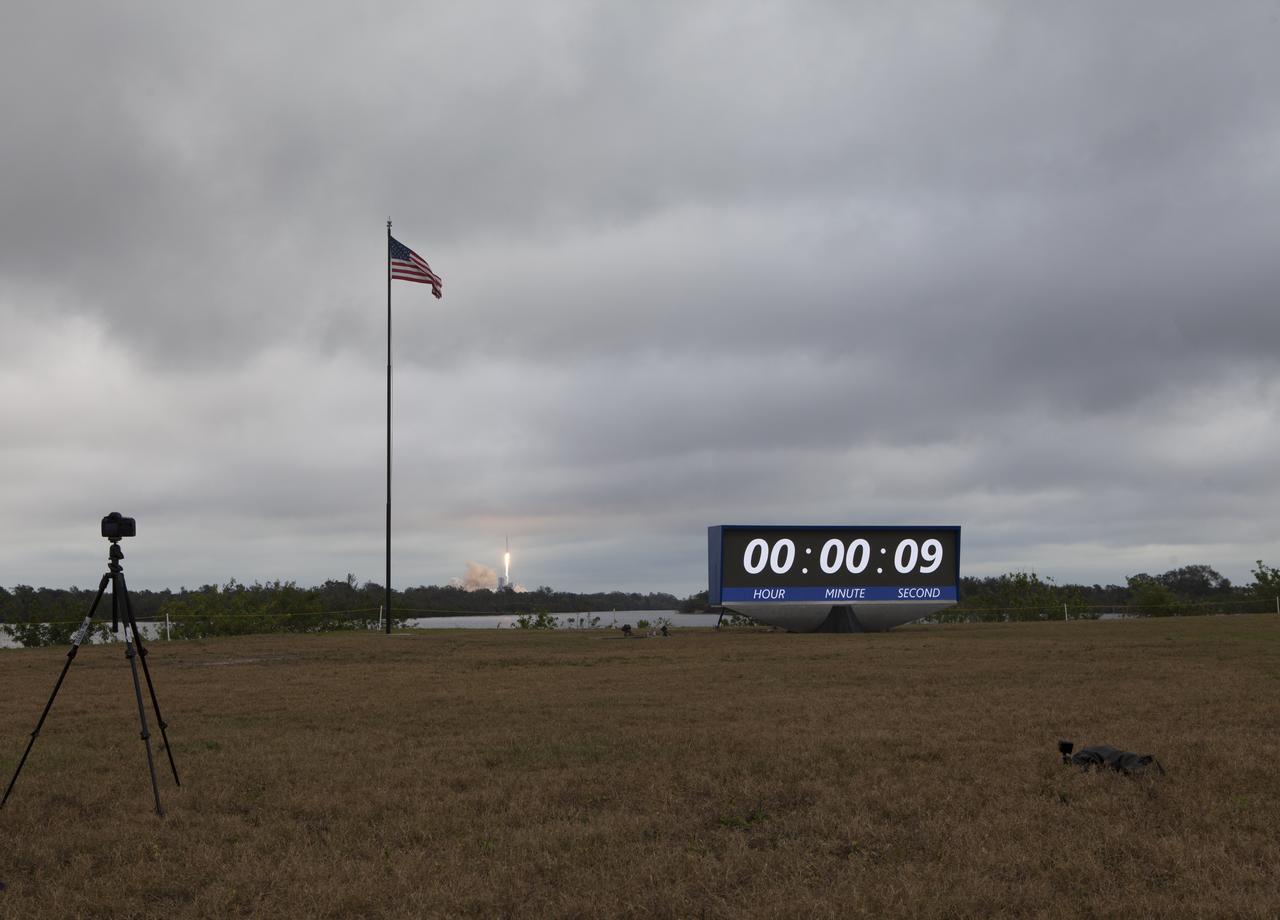
With the countdown clock at the NASA Kenney Space Center Press Site in the foreground, a SpaceX Falcon 9 rocket lifts off from Launch Complex 39A at the Florida spaceport. It was the company's 10th commercial resupply services mission to the International Space Station. Liftoff was at 9:39 a.m. EST from the historic launch site now operated by SpaceX under a property agreement with NASA. The Dragon spacecraft will deliver about 5,500 pounds of supplies, such as the Stratospheric Aerosol and Gas Experiment (SAGE) III instrument to further study ozone in the atmosphere.
SpaceX CRS-10 Liftoff
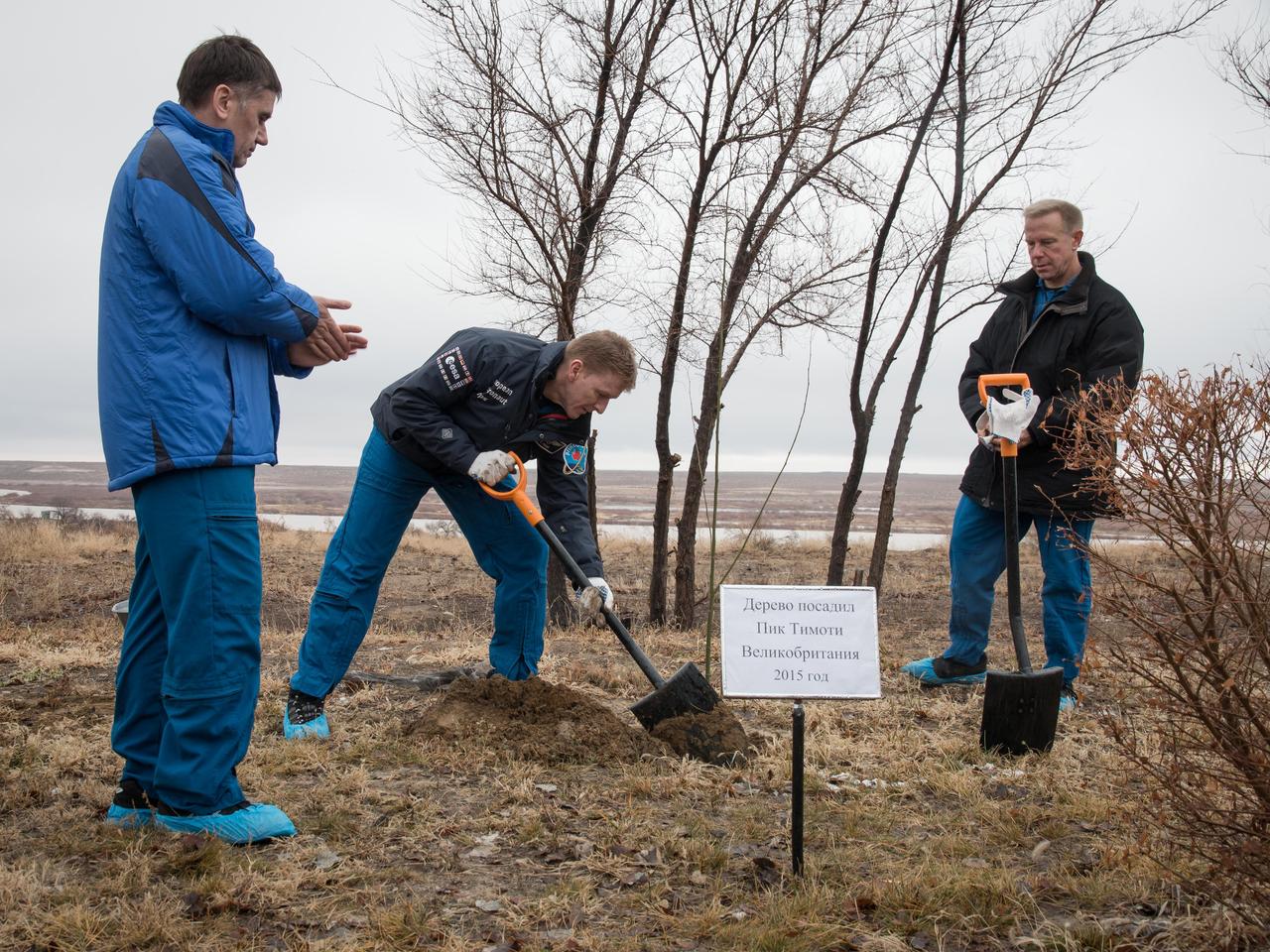
Behind the Cosmonaut Hotel crew quarters in Baikonur, Kazakhstan, Expedition 46-47 crewmember Tim Peake of the European Space Agency (center) plants a tree at a site bearing his name Dec. 9 in a traditional pre-launch ceremony. Looking on are his crewmates, Yuri Malenchenko of the Russian Federal Space Agency (Roscosmos, left, and Tim Kopra of NASA (right). The trio will launch Dec. 15 on their Soyuz TMA-19M spacecraft for a six-month mission on the International Space Station.  NASA/Victor Zelentsov
Behind the Cosmonaut Hotel crew quarters in Baikonur, Kazakhstan, Expedition 46-47 crewmember Tim Peake of the European Space Agency (center) plants a tree at a site bearing his name Dec. 9 in a traditional pre-launch ceremony. Looking on are his crewmates, Yuri Malenchenko of the Russian Federal Space Agency (Roscosmos, left, and Tim Kopra of NASA (right). The trio will launch Dec. 15 on their Soyuz TMA-19M spacecraft for a six-month mission on the International Space Station...NASA/Victor Zelentsov.
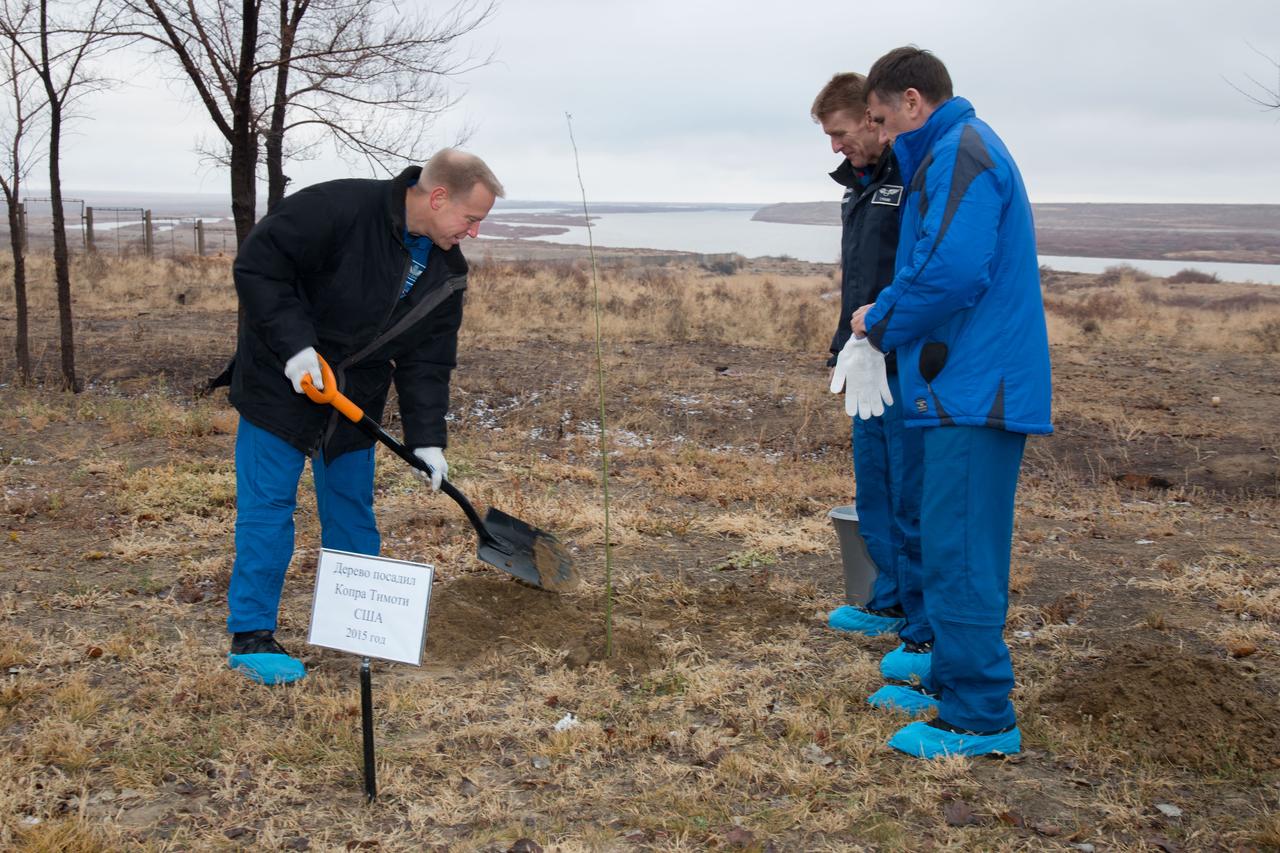
Behind the Cosmonaut Hotel crew quarters in Baikonur, Kazakhstan, Expedition 46-47 crewmember Tim Kopra of NASA (left) plants a tree at a site bearing his name Dec. 9 in a traditional pre-launch ceremony. Looking on are his crewmates, Tim Peake of the European Space Agency (center) and Yuri Malenchenko of the Russian Federal Space Agency (Roscosmos, right).  The trio will launch Dec. 15 on their Soyuz TMA-19M spacecraft for a six-month mission on the International Space Station.  NASA/Victor Zelentsov
Behind the Cosmonaut Hotel crew quarters in Baikonur, Kazakhstan, Expedition 46-47 crewmember Tim Kopra of NASA (left) plants a tree at a site bearing his name Dec. 9 in a traditional pre-launch ceremony. Looking on are his crewmates, Tim Peake of the European Space Agency (center) and Yuri Malenchenko of the Russian Federal Space Agency (Roscosmos, right). The trio will launch Dec. 15 on their Soyuz TMA-19M spacecraft for a six-month mission on the International Space Station...NASA/Victor Zelentsov.
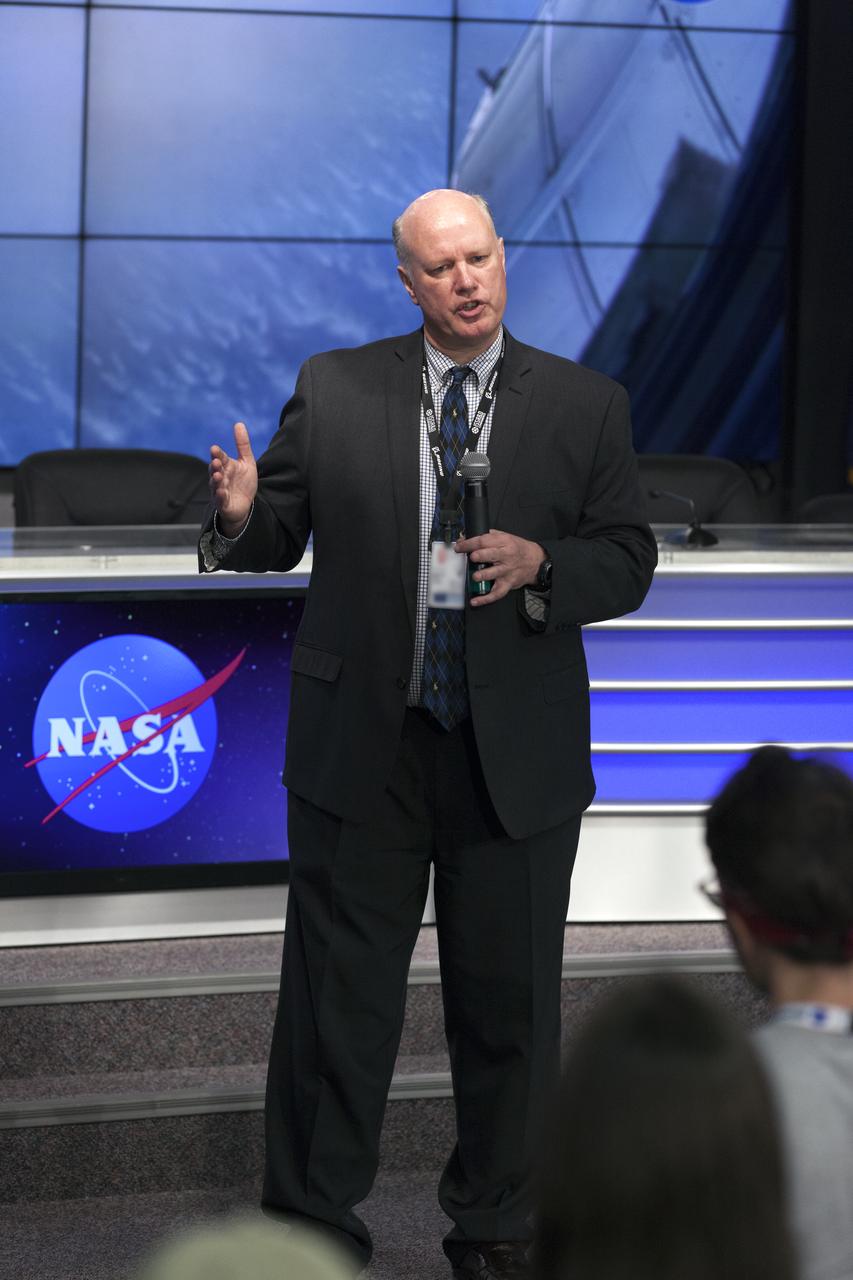
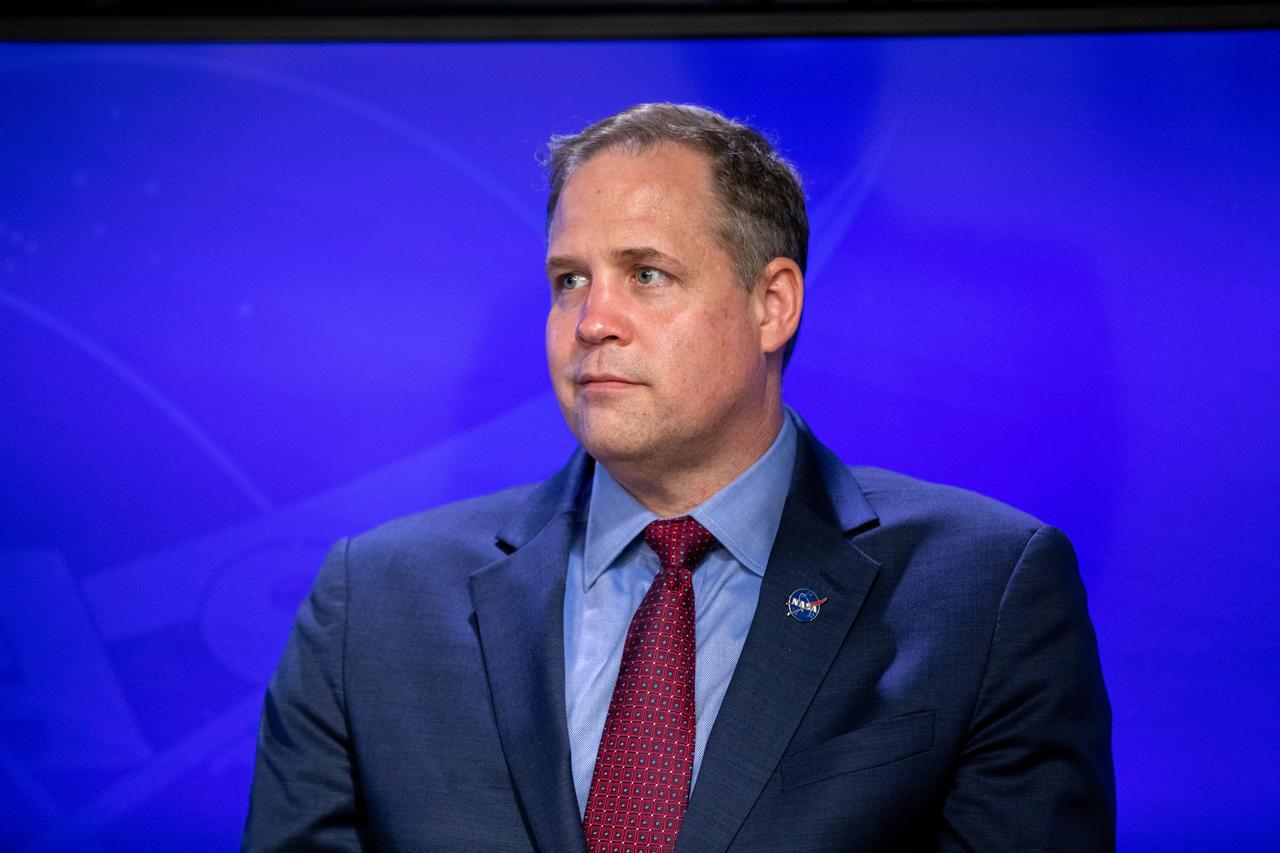
NASA Administrator Jim Bridenstine participates in a news briefing inside the Press Site auditorium at the agency’s Kennedy Space Center in Florida on May 22, 2020, following the conclusion of the flight readiness review for NASA’s SpaceX Demo-2 mission, with NASA astronauts Robert Behnken and Douglas Hurley, to the International Space Station. This will be SpaceX’s final flight test for NASA’s Commercial Crew Program. Behnken and Hurley will fly to the orbiting laboratory in a SpaceX Crew Dragon spacecraft, launching atop a Falcon 9 rocket from Kennedy’s Launch Complex 39A. Liftoff is scheduled for 4:33 p.m. EDT on Wednesday, May 27.
NASA Hosts Post-Flight Readiness Review Briefing for the agency
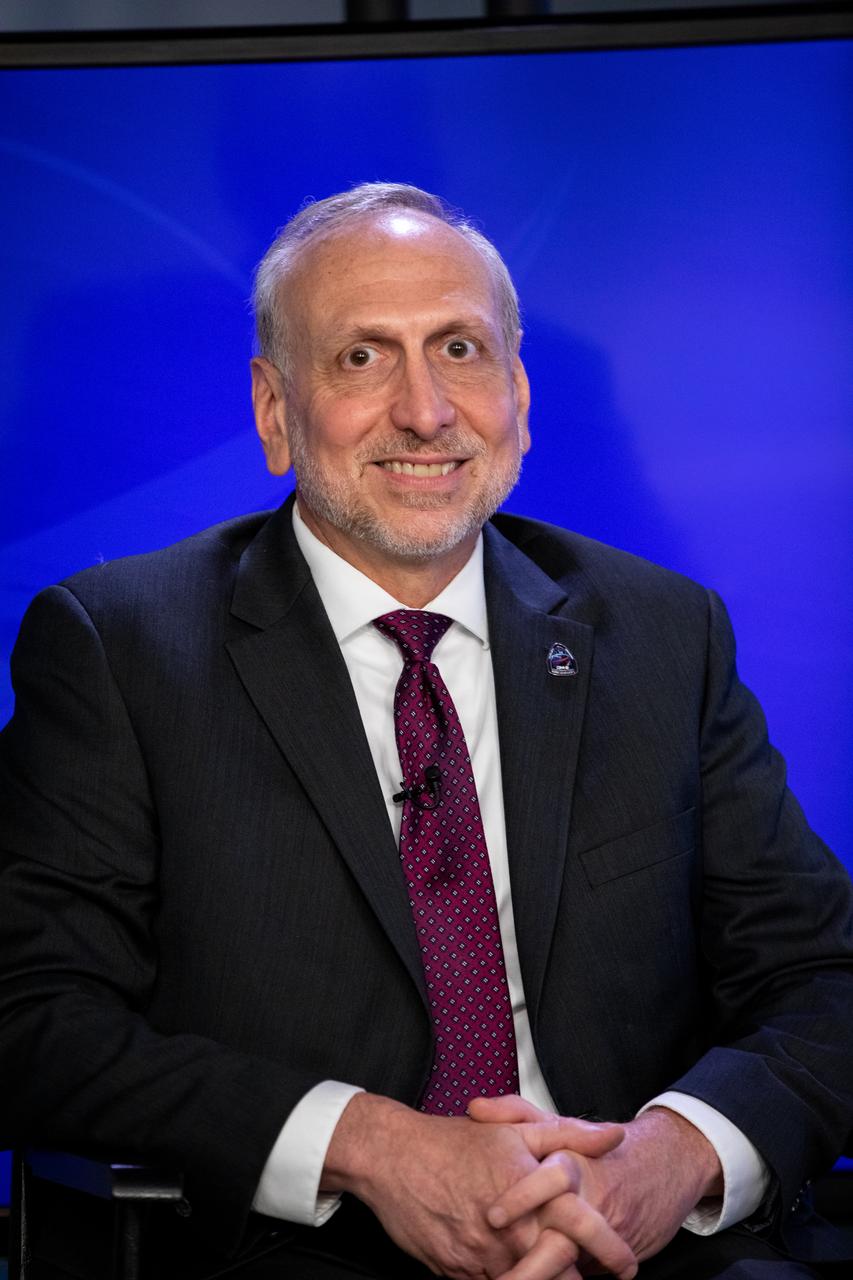
NASA Associate Administrator Steve Jurczyk participates in a news briefing inside the Press Site auditorium at the agency’s Kennedy Space Center in Florida on May 22, 2020, following the conclusion of the flight readiness review for NASA’s SpaceX Demo-2 mission, with NASA astronauts Robert Behnken and Douglas Hurley, to the International Space Station. This will be SpaceX’s final flight test for NASA’s Commercial Crew Program. Behnken and Hurley will fly to the orbiting laboratory in a SpaceX Crew Dragon spacecraft, launching atop a Falcon 9 rocket from Kennedy’s Launch Complex 39A. Liftoff is scheduled for 4:33 p.m. EDT on Wednesday, May 27.

NASA Hosts Post-Flight Readiness Review Briefing for the agency
Josh Finch with NASA Communications moderates a news briefing inside the Press Site auditorium at the agency’s Kennedy Space Center in Florida on May 22, 2020, following the conclusion of the flight readiness review for NASA’s SpaceX Demo-2 mission, with NASA astronauts Robert Behnken and Douglas Hurley, to the International Space Station. This will be SpaceX’s final flight test for NASA’s Commercial Crew Program. Behnken and Hurley will fly to the orbiting laboratory in a SpaceX Crew Dragon spacecraft, launching atop a Falcon 9 rocket from Kennedy’s Launch Complex 39A. Liftoff is scheduled for 4:33 p.m. EDT on Wednesday, May 27.
NASA Hosts Post-Flight Readiness Review Briefing for the agency
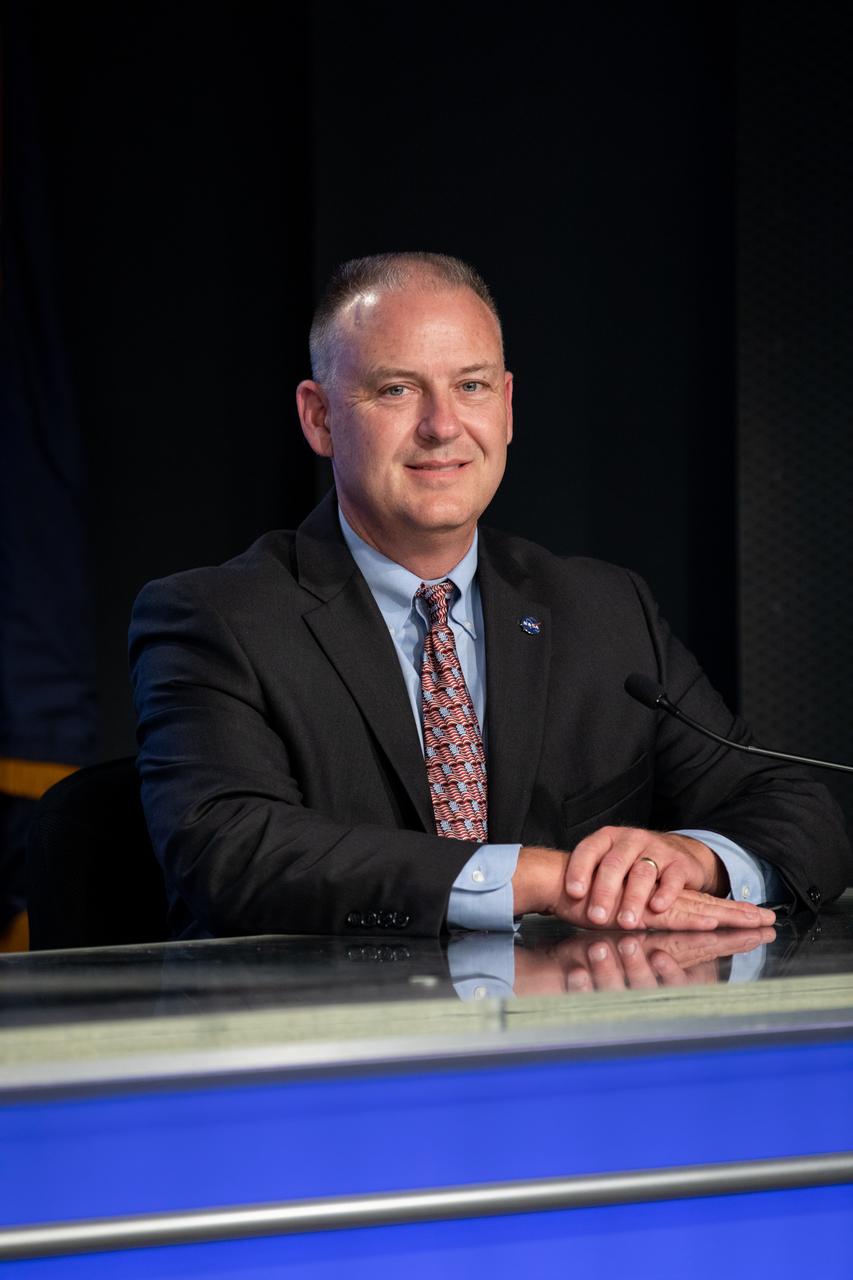
Benji Reed, director of Crew Mission Management at SpaceX, participates in a news briefing inside the Press Site auditorium at NASA’s Kennedy Space Center in Florida on May 22, 2020, following the conclusion of the flight readiness review for the agency’s SpaceX Demo-2 mission, with NASA astronauts Robert Behnken and Douglas Hurley, to the International Space Station. This will be SpaceX’s final flight test for NASA’s Commercial Crew Program. Behnken and Hurley will fly to the orbiting laboratory in a SpaceX Crew Dragon spacecraft, launching atop a Falcon 9 rocket from Kennedy’s Launch Complex 39A. Liftoff is scheduled for 4:33 p.m. EDT on Wednesday, May 27.
NASA Hosts Post-Flight Readiness Review Briefing for the agency
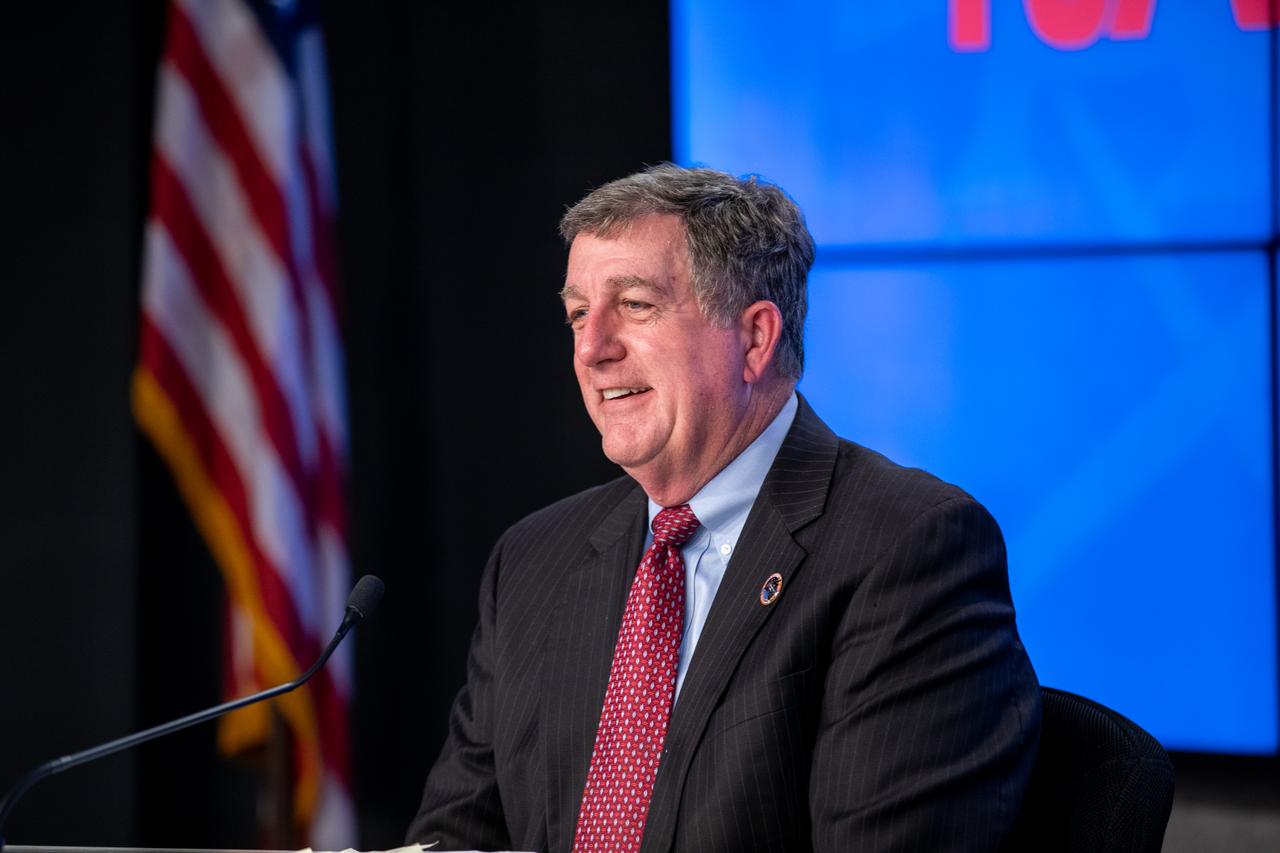
International Space Station Program Manager Kirk Shireman participates in a news briefing inside the Press Site auditorium at NASA’s Kennedy Space Center in Florida on May 22, 2020, following the conclusion of the flight readiness review for NASA’s SpaceX Demo-2 mission, with NASA astronauts Robert Behnken and Douglas Hurley, to the International Space Station. This will be SpaceX’s final flight test for NASA’s Commercial Crew Program. Behnken and Hurley will fly to the orbiting laboratory in a SpaceX Crew Dragon spacecraft, launching atop a Falcon 9 rocket from Kennedy’s Launch Complex 39A. Liftoff is scheduled for 4:33 p.m. EDT on Wednesday, May 27.
NASA Hosts Post-Flight Readiness Review Briefing for the agency
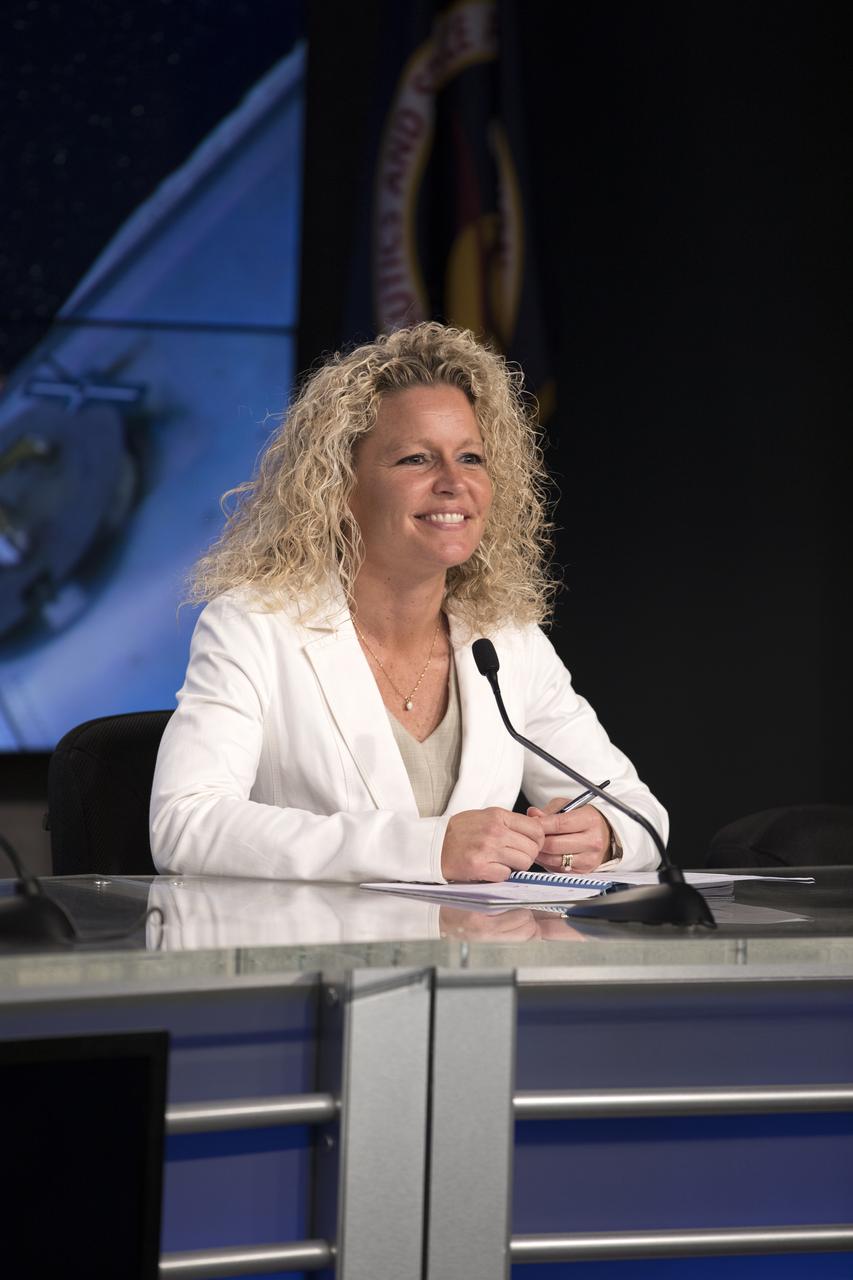
Commercial Crew Program Manager Kathy Lueders participates in a news briefing inside the Press Site auditorium at NASA’s Kennedy Space Center in Florida on May 22, 2020, following the conclusion of the flight readiness review for NASA’s SpaceX Demo-2 mission, with NASA astronauts Robert Behnken and Douglas Hurley, to the International Space Station. This will be SpaceX’s final flight test for NASA’s Commercial Crew Program. Behnken and Hurley will fly to the orbiting laboratory in a SpaceX Crew Dragon spacecraft, launching atop a Falcon 9 rocket from Kennedy’s Launch Complex 39A. Liftoff is scheduled for 4:33 p.m. EDT on Wednesday, May 27.
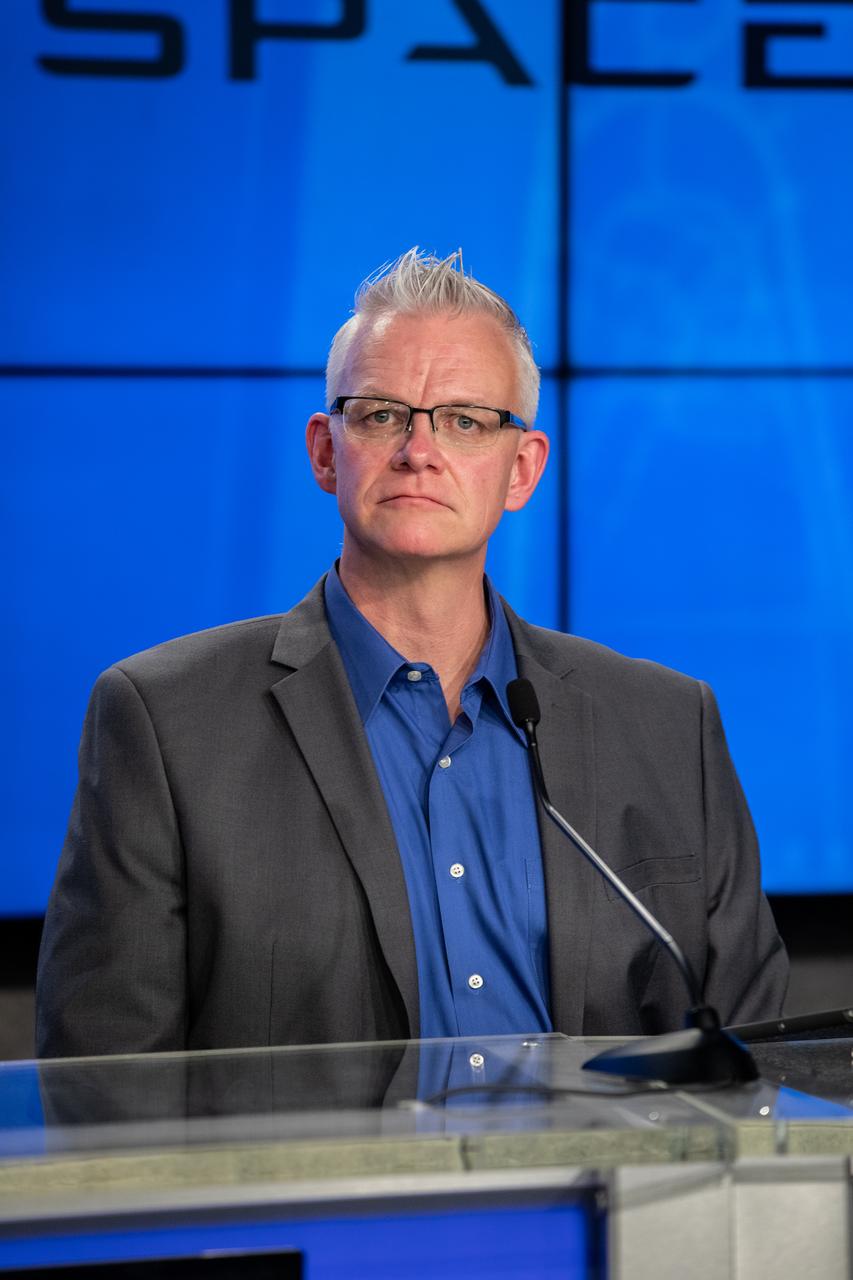
NASA Hosts Post-Flight Readiness Review Briefing for the agency
Norm Knight, deputy director of NASA’s Johnson Space Center’s Flight Control, participates in a news briefing inside the Press Site auditorium at the agency’s Kennedy Space Center in Florida on May 22, 2020, following the conclusion of the flight readiness review for the NASA’s SpaceX Demo-2 mission, with NASA astronauts Robert Behnken and Douglas Hurley, to the International Space Station. This will be SpaceX’s final flight test for NASA’s Commercial Crew Program. Behnken and Hurley will fly to the orbiting laboratory in a SpaceX Crew Dragon spacecraft, launching atop a Falcon 9 rocket from Kennedy’s Launch Complex 39A. Liftoff is scheduled for 4:33 p.m. EDT on Wednesday, May 27.

NASA Hosts Post-Flight Readiness Review Briefing for the agency
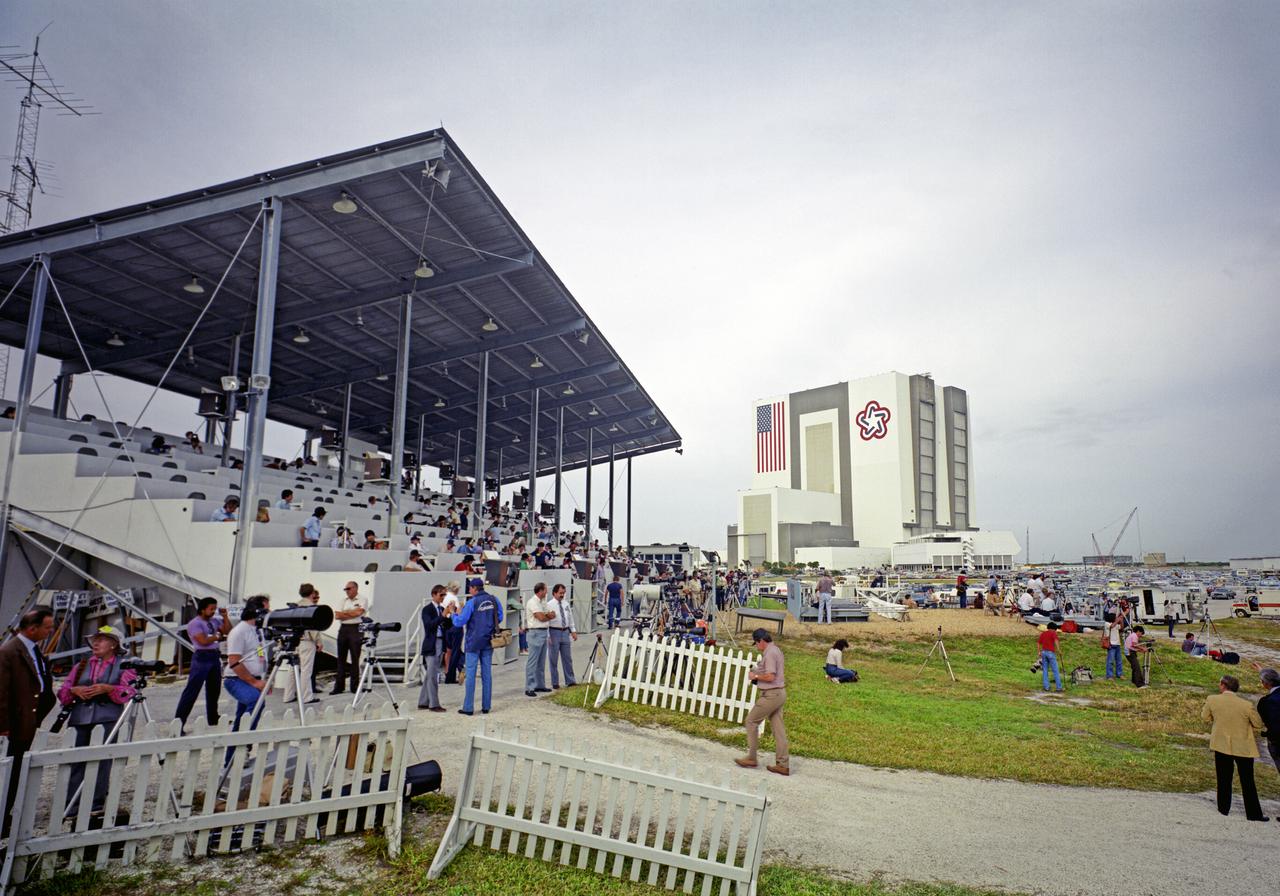
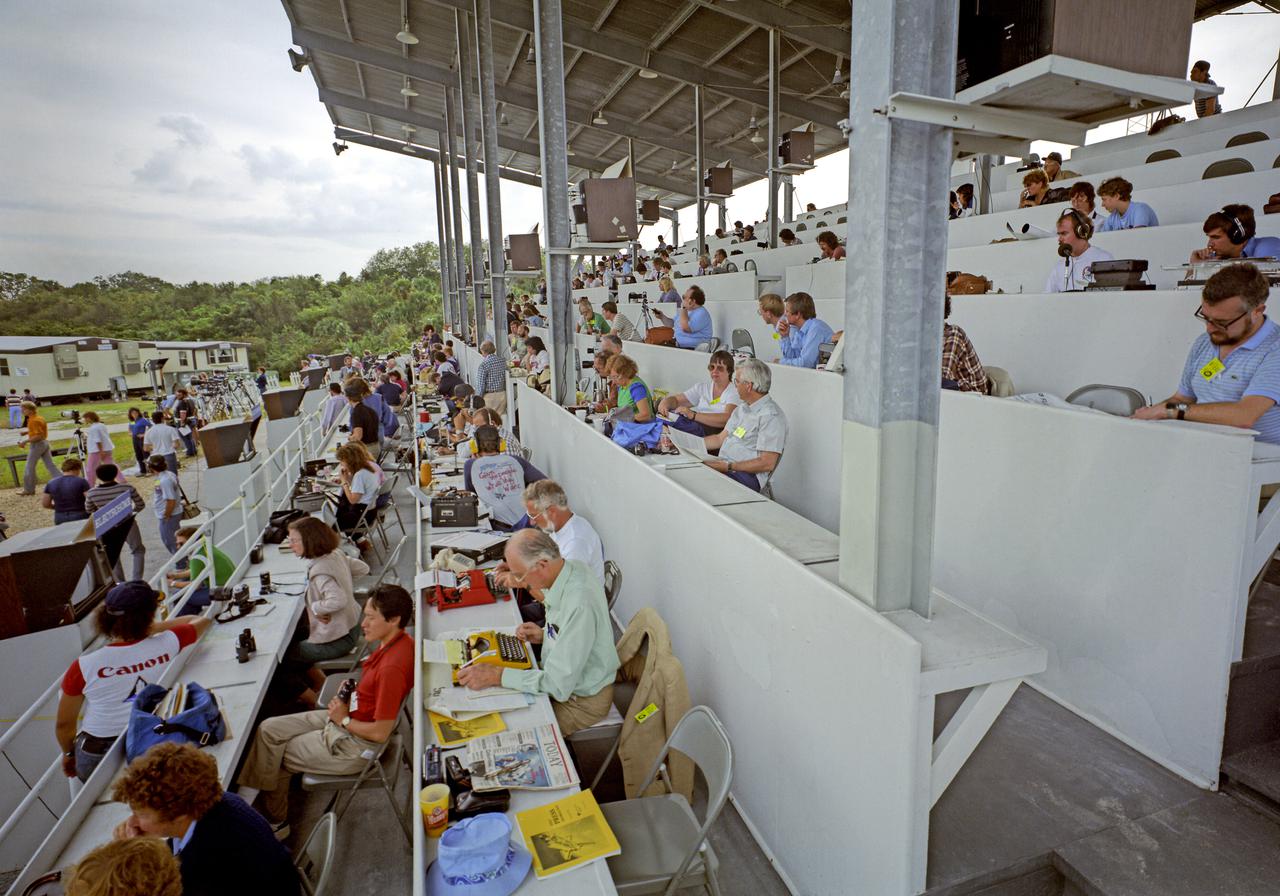
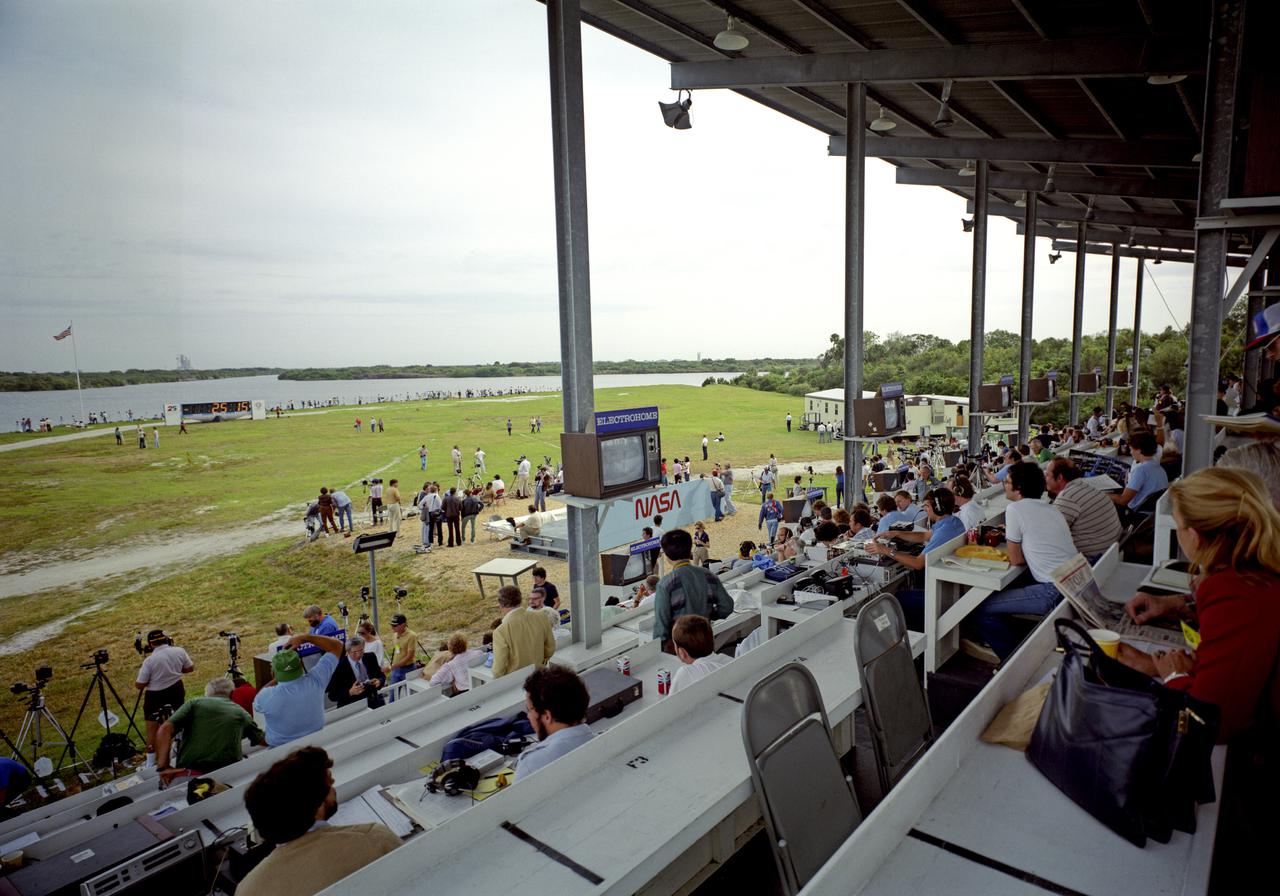
CAPE CANAVERAL, Fla. -- Minutes before STS-9 launch, nearly 1,000 news media representatives gather at the Press Site to prepare for coverage of the launch. Photo credit: NASA
83PC-827
CAPE CANAVERAL, Fla. -- Minutes before STS-9 launch, nearly 1,000 news media representatives gather at the Press Site to prepare for coverage of the launch. Photo credit: NASA
83PC-828
CAPE CANAVERAL, Fla. -- Minutes before STS-9 launch, nearly 1,000 news media representatives gather at the Press Site to prepare for coverage of the launch. Photo credit: NASA
83PC-829
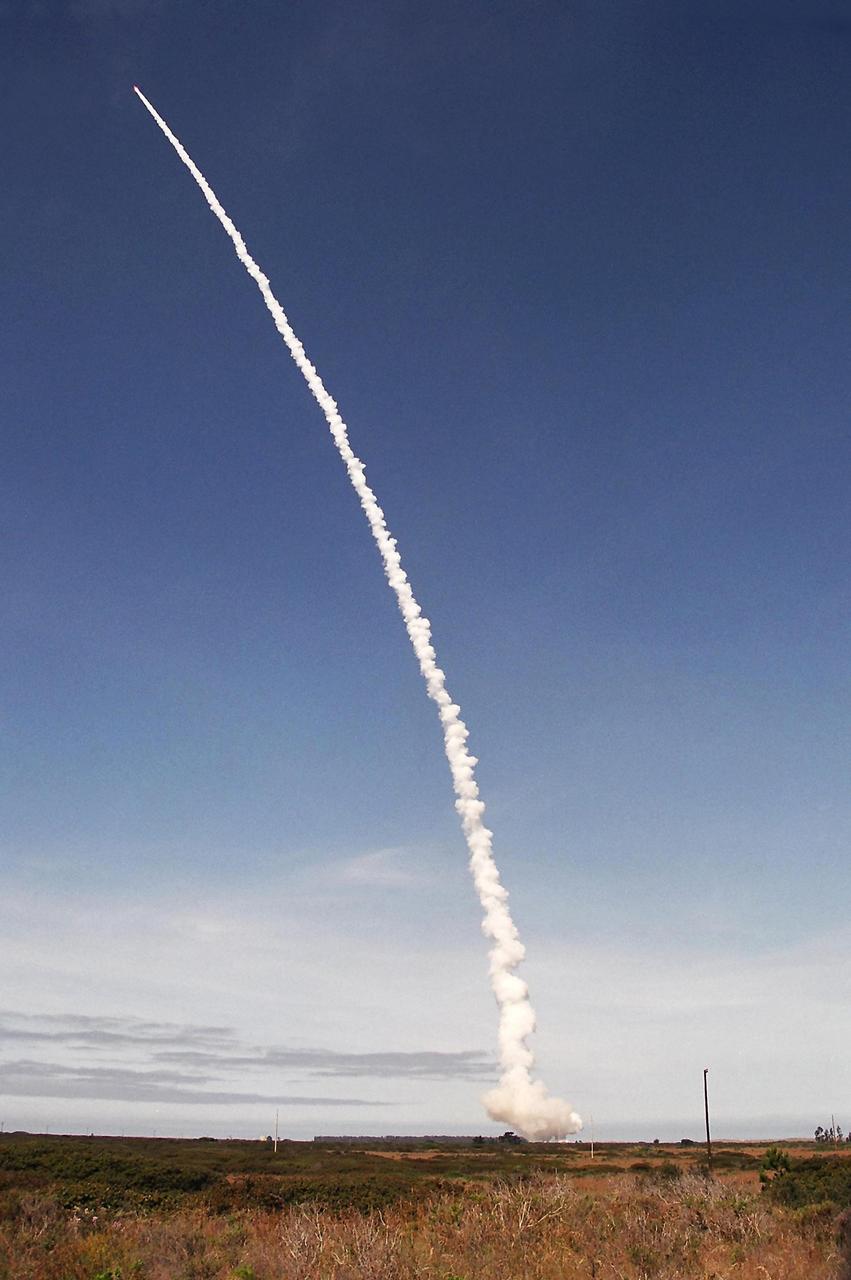
KENNEDY SPACE CENTER, FLA. -- This photo was taken from the Press Site, 3.3 miles from Space Launch Complex 2 on Vandenberg AFB, Calif.  Liftoff occurred at 9:57:24 a.m. PDT.
KSC-04pd1085
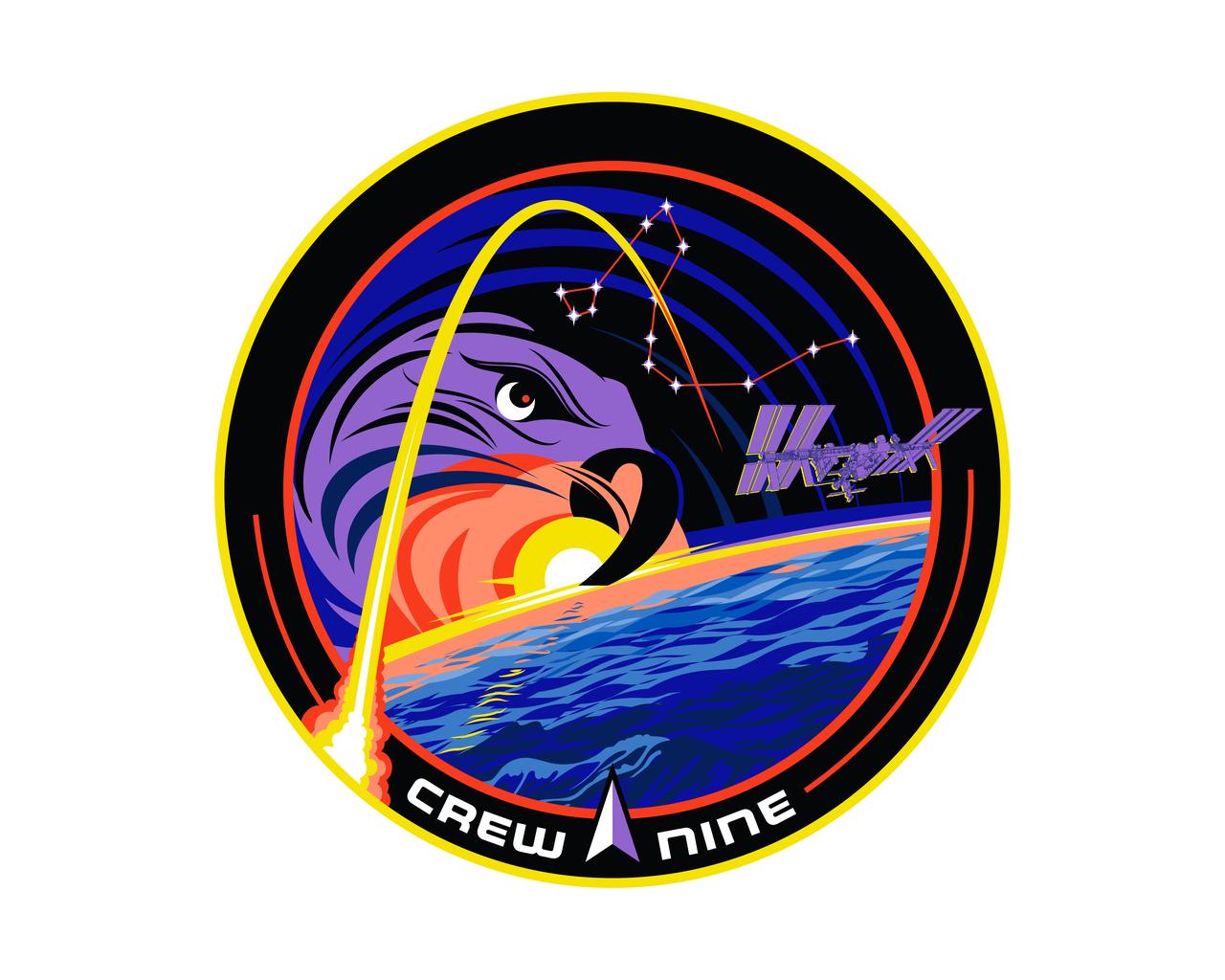
jsc2024e011322 (Jan. 28, 2024) --- The Crew-9 mission patch depicts the trail of a rocket launching en route to the International Space Station, which will be home for a long-duration expedition dedicated to service, science, and collaboration. Coastal waves are inspired by the historic Florida launch site, and on a larger scale represent our blue planet, the global ocean connecting all continents. A falcon, with the number nine as its beak and a crescent moon as its eye, is a nod to the Falcon 9 rocket, while the constellation Draco honors the Dragon spacecraft that will take Crew-9 to their destination. The Delta symbol, first used in 1961, evokes historic ties to the earliest days of space endeavors. Human exploration of space is built on international collaboration and depends on the support of multitudes across the globe whose efforts honor that heritage.
Crew-9 Patch
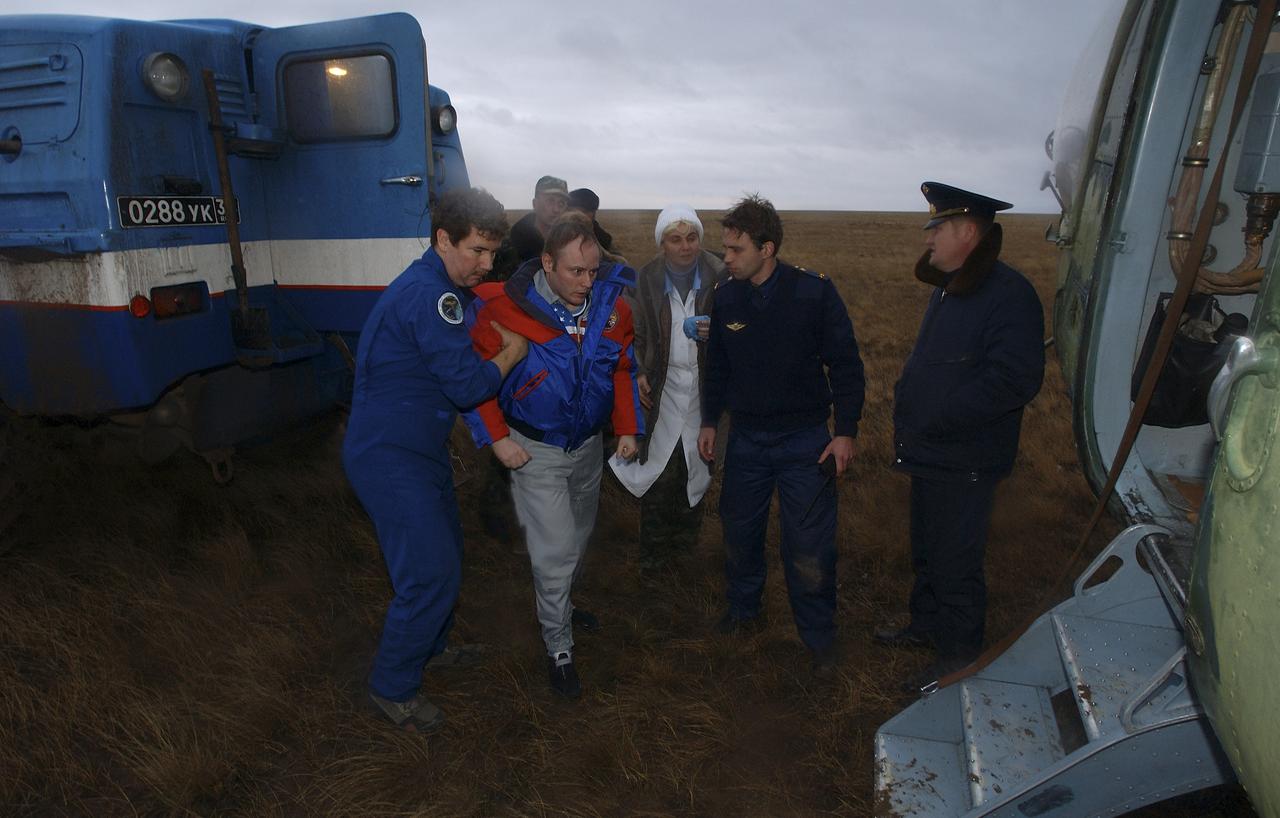
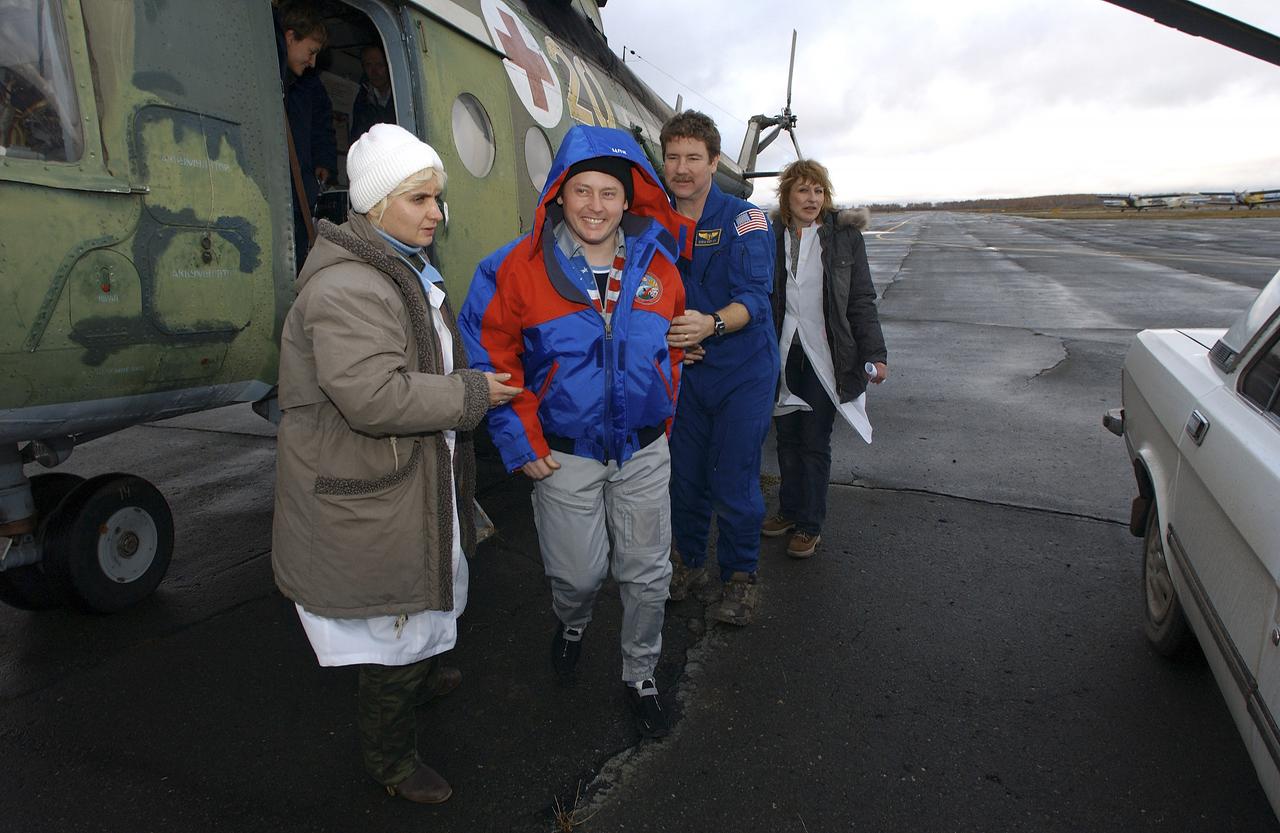
Expedition 9 Flight Engineer Michael Fincke is assisted by NASA Flight Doctor Steve Heart as he walks to the helicopter near the Soyuz landing site for the flight back to Kustanay, Kazakhstan.   The Soyuz capsule landed with Expedition 9 Flight Engineer Mike Fincke, Expedition 9 Commander Gennady Padalka and Russian Space Forces cosmonaut Yuri Shargin approximately 85 kilometers northeast of Arkalyk in northern Kazakhstan, Sunday, October 24, 2004.  Photo Credit: (NASA/Bill Ingalls)
Expedition 9 Landing
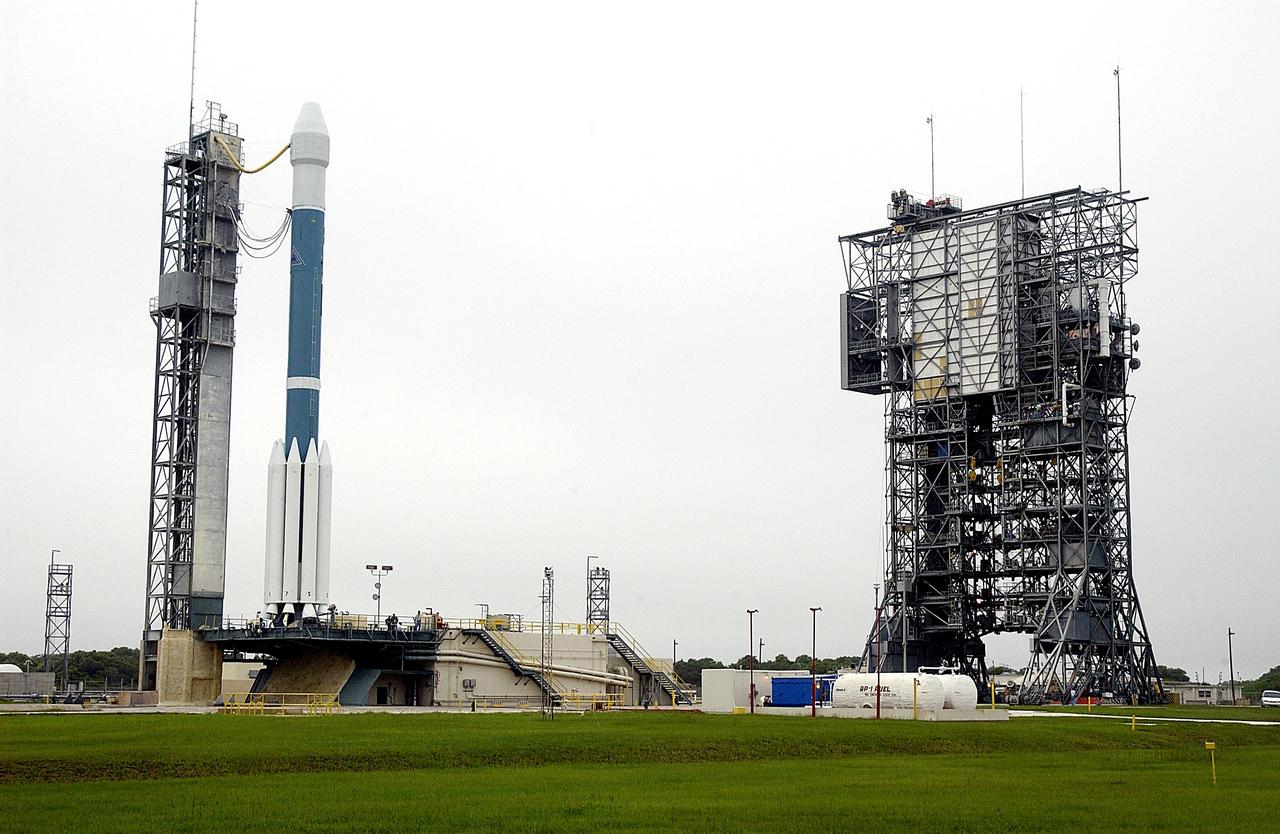
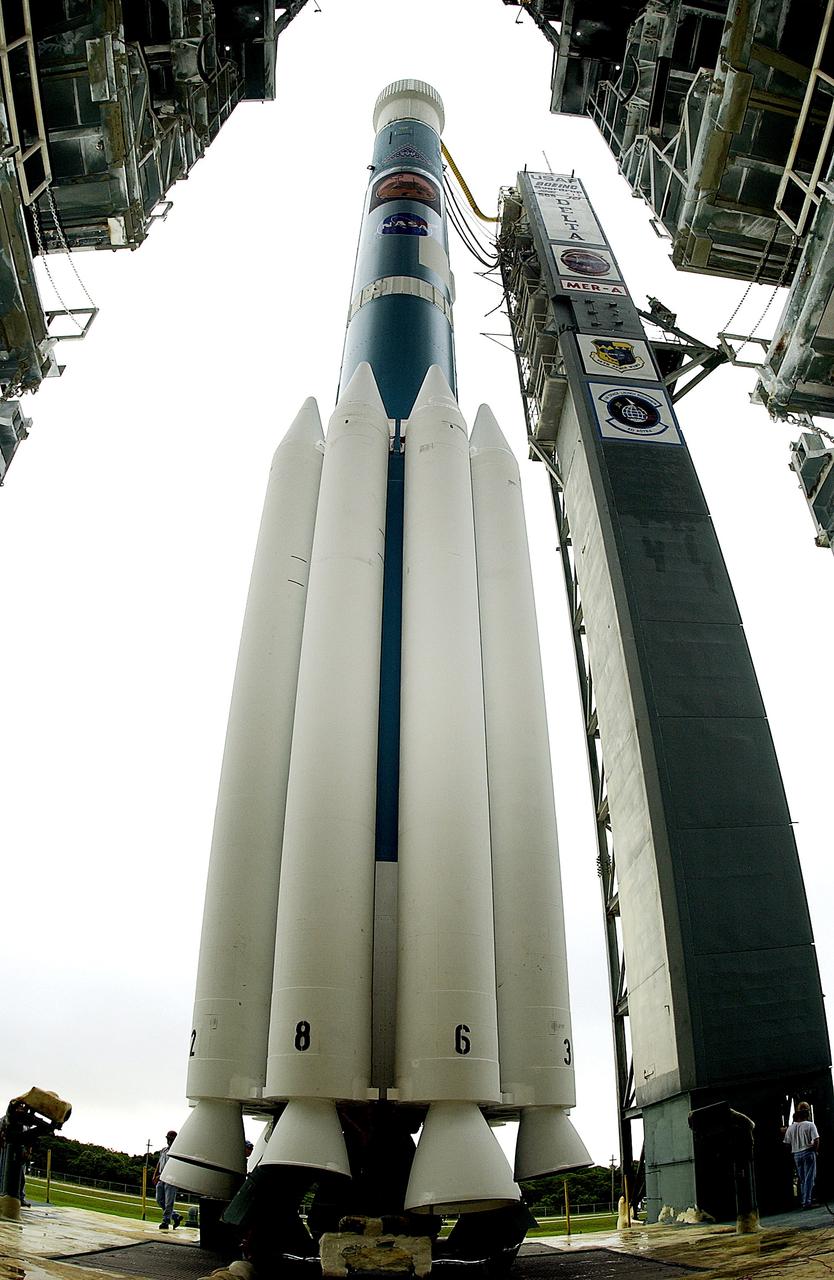
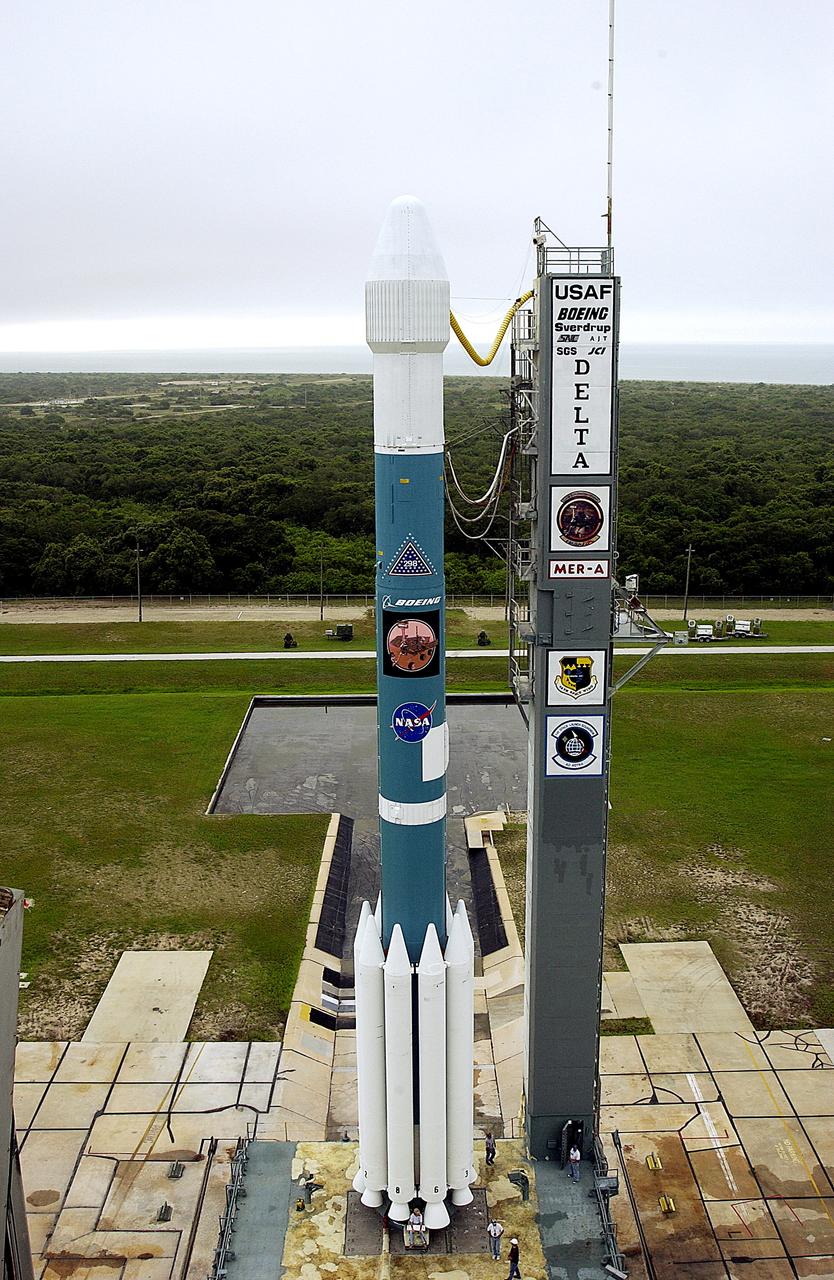
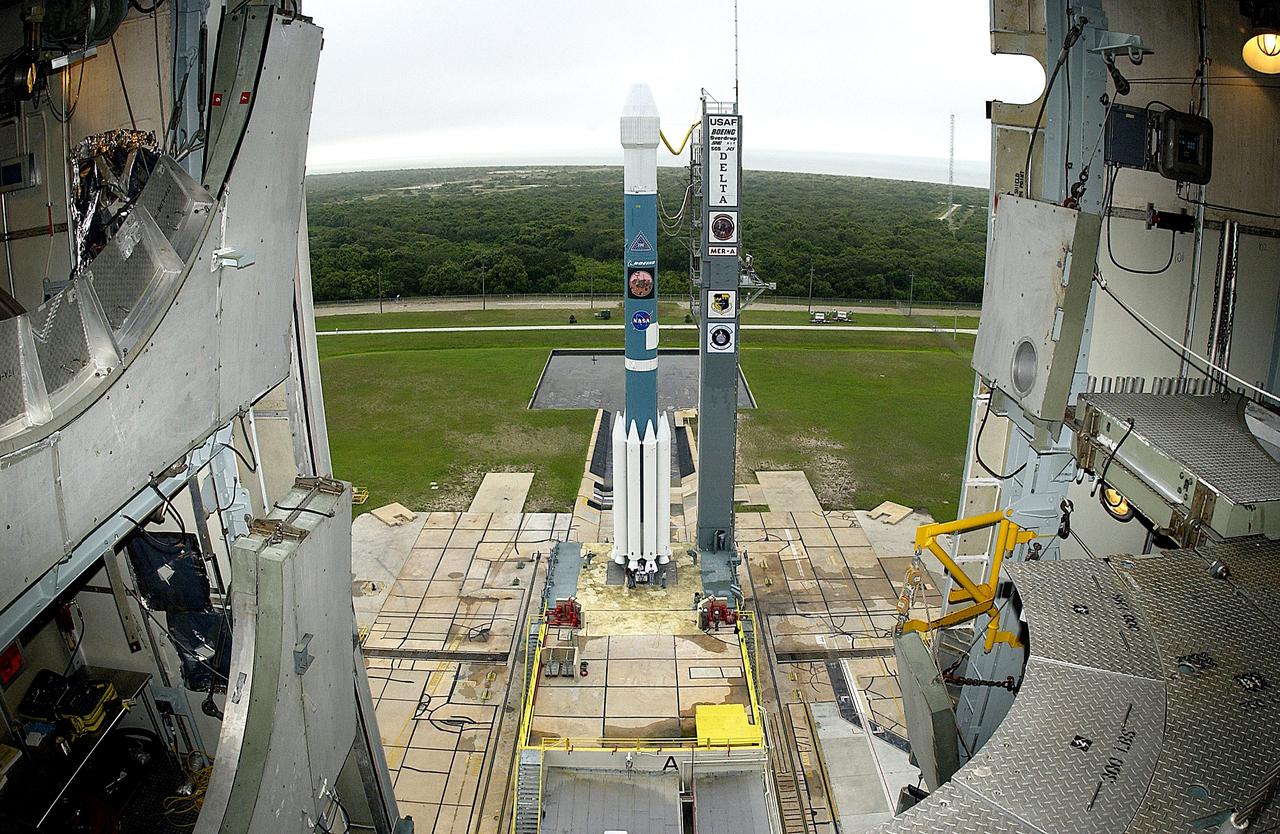
KENNEDY SPACE CENTER, FLA. -  On Launch Complex 17-A, Cape Canaveral Air Force Station, the Boeing Delta II rocket and its Mars Exploration Rover (MER-A) payload are free of the tower  and ready for launch.  This will be the third launch attempt in as many days after weather concerns postponed the launches June 8 and June 9.  MER-A is the first of two rovers being launched to Mars.  When the two rovers arrive at Mars in 2004, they will bounce to airbag-cushioned landings at sites offering a balance of favorable conditions for safe landings and interesting science. The rovers see sharper images, can explore farther and examine rocks better than anything that has ever landed on Mars.  The designated site for MER-A mission is Gusev Crater, which appears to have been a crater lake.  The second rover, MER-B, is scheduled to launch June 25.
KENNEDY SPACE CENTER, FLA. - On Launch Complex 17-A, Cape Canaveral Air Force Station, the Boeing Delta II rocket and its Mars Exploration Rover (MER-A) payload are free of the tower and ready for launch. This will be the third launch attempt in as many days after weather concerns postponed the launches June 8 and June 9. MER-A is the first of two rovers being launched to Mars. When the two rovers arrive at Mars in 2004, they will bounce to airbag-cushioned landings at sites offering a balance of favorable conditions for safe landings and interesting science. The rovers see sharper images, can explore farther and examine rocks better than anything that has ever landed on Mars. The designated site for MER-A mission is Gusev Crater, which appears to have been a crater lake. The second rover, MER-B, is scheduled to launch June 25.
KENNEDY SPACE CENTER, FLA. -  On Launch Complex 17-A, Cape Canaveral Air Force Station, the Boeing Delta II rocket and its Mars Exploration Rover (MER-A) payload are free of the tower  and ready for launch.  This will be the third launch attempt in as many days after weather concerns postponed the launches June 8 and June 9.  MER-A is the first of two rovers being launched to Mars.  When the two rovers arrive at the red planet in 2004, they will bounce to airbag-cushioned landings at sites offering a balance of favorable conditions for safe landings and interesting science. The rovers see sharper images, can explore farther and examine rocks better than anything that has ever landed on Mars.  The designated site for MER-A mission is Gusev Crater, which appears to have been a crater lake.  The second rover, MER-B, is scheduled to launch June 25.
KENNEDY SPACE CENTER, FLA. - On Launch Complex 17-A, Cape Canaveral Air Force Station, the Boeing Delta II rocket and its Mars Exploration Rover (MER-A) payload are free of the tower and ready for launch. This will be the third launch attempt in as many days after weather concerns postponed the launches June 8 and June 9. MER-A is the first of two rovers being launched to Mars. When the two rovers arrive at the red planet in 2004, they will bounce to airbag-cushioned landings at sites offering a balance of favorable conditions for safe landings and interesting science. The rovers see sharper images, can explore farther and examine rocks better than anything that has ever landed on Mars. The designated site for MER-A mission is Gusev Crater, which appears to have been a crater lake. The second rover, MER-B, is scheduled to launch June 25.
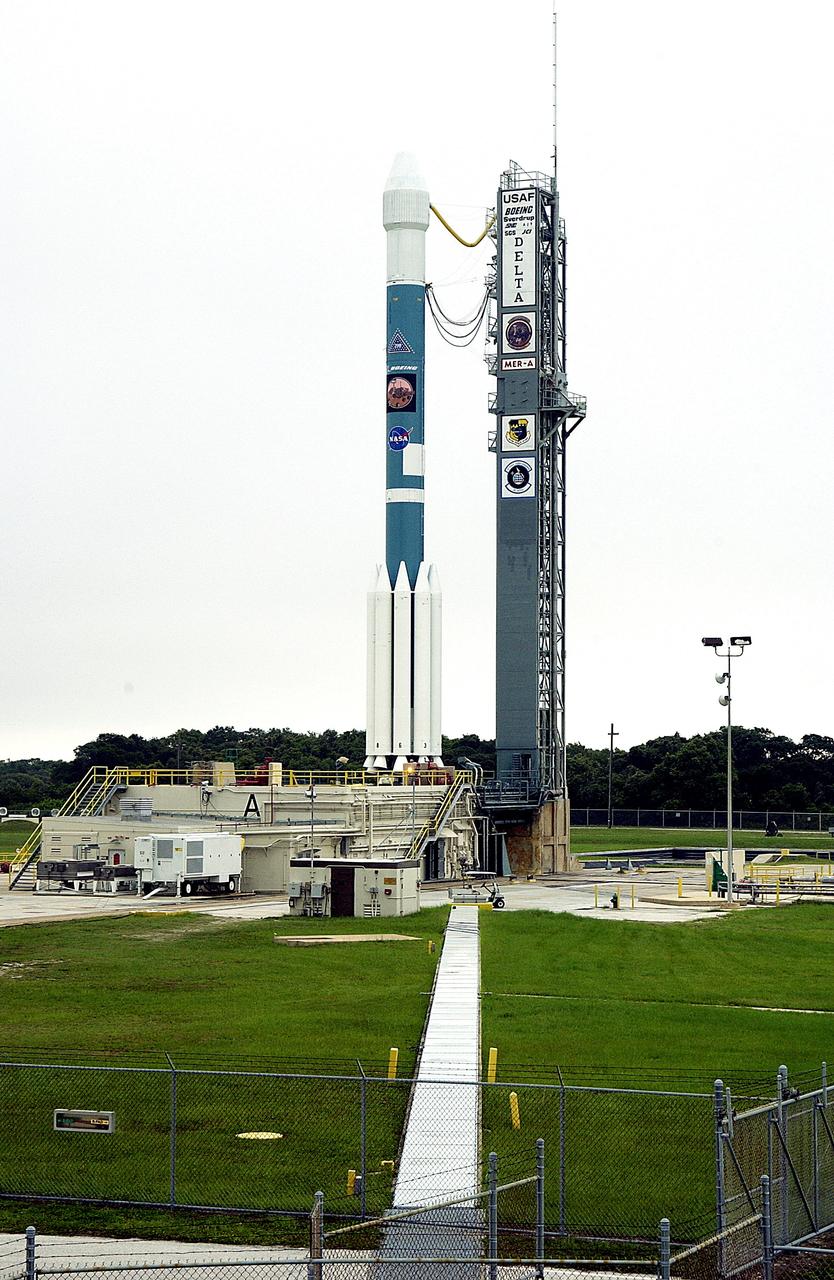
KENNEDY SPACE CENTER, FLA. -  On Launch Complex 17-A, Cape Canaveral Air Force Station, the Boeing Delta II rocket and its Mars Exploration Rover (MER-A) payload are free of the tower (right) and ready for launch.  This will be the third launch attempt in as many days after weather concerns postponed the launches June 8 and June 9.  MER-A is the first of two rovers being launched to Mars.  When the two rovers arrive at Mars in 2004, they will bounce to airbag-cushioned landings at sites offering a balance of favorable conditions for safe landings and interesting science. The rovers see sharper images, can explore farther and examine rocks better than anything that has ever landed on Mars.  The designated site for MER-A mission is Gusev Crater, which appears to have been a crater lake.  The second rover, MER-B, is scheduled to launch June 25.
KENNEDY SPACE CENTER, FLA. - On Launch Complex 17-A, Cape Canaveral Air Force Station, the Boeing Delta II rocket and its Mars Exploration Rover (MER-A) payload are free of the tower (right) and ready for launch. This will be the third launch attempt in as many days after weather concerns postponed the launches June 8 and June 9. MER-A is the first of two rovers being launched to Mars. When the two rovers arrive at Mars in 2004, they will bounce to airbag-cushioned landings at sites offering a balance of favorable conditions for safe landings and interesting science. The rovers see sharper images, can explore farther and examine rocks better than anything that has ever landed on Mars. The designated site for MER-A mission is Gusev Crater, which appears to have been a crater lake. The second rover, MER-B, is scheduled to launch June 25.
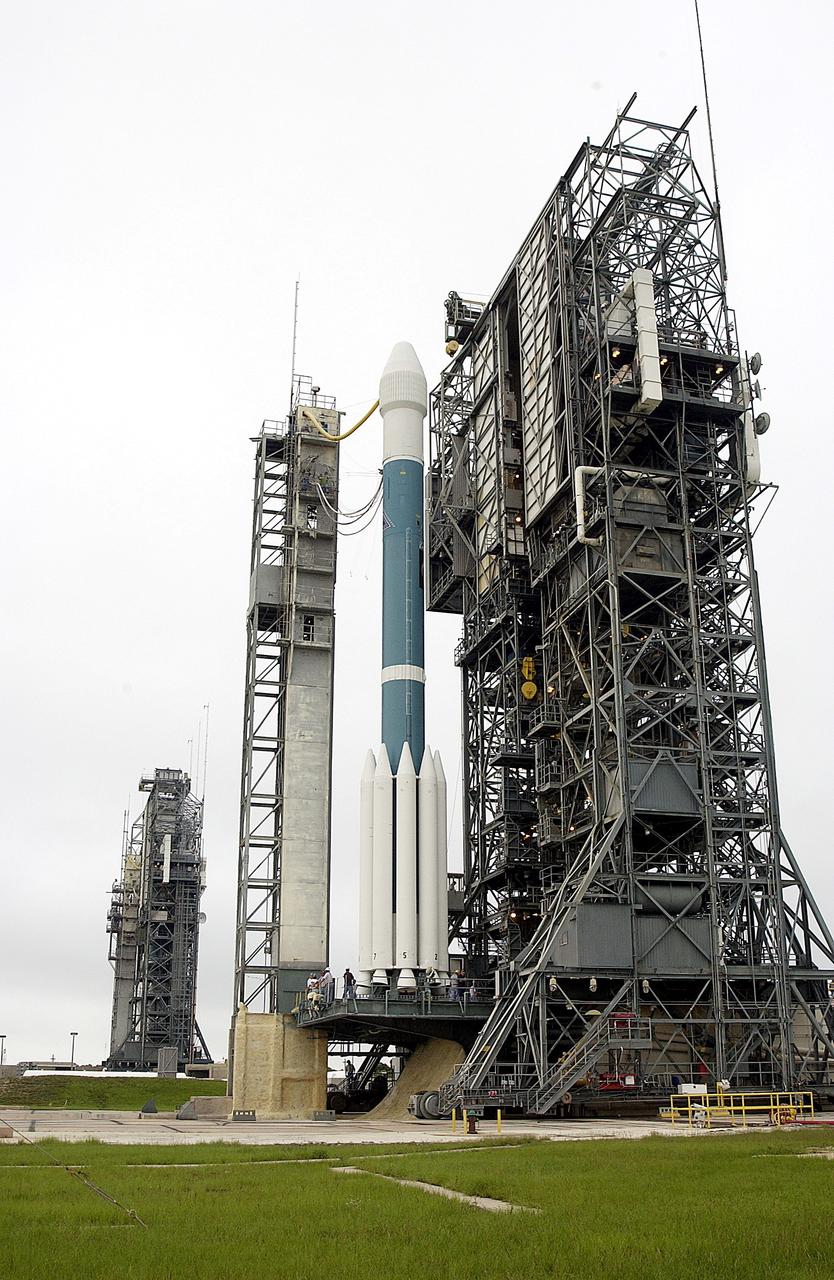
KENNEDY SPACE CENTER, FLA. -   On Launch Complex 17-A, Cape Canaveral Air Force Station, the launch tower rolls back from the Boeing Delta II rocket and its Mars Exploration Rover (MER-A) payload in preparation for another launch attempt.  The first two attempts, June 8 and June 9, were postponed due to weather concerns.  MER-A is the first of two rovers being launched to Mars.  When the two rovers arrive at Mars in 2004, they will bounce to airbag-cushioned landings at sites offering a balance of favorable conditions for safe landings and interesting science. The rovers see sharper images, can explore farther and examine rocks better than anything that has ever landed on Mars.  The designated site for MER-A mission is Gusev Crater, which appears to have been a crater lake.  The second rover, MER-B, is scheduled to launch June 25.
KENNEDY SPACE CENTER, FLA. - On Launch Complex 17-A, Cape Canaveral Air Force Station, the launch tower rolls back from the Boeing Delta II rocket and its Mars Exploration Rover (MER-A) payload in preparation for another launch attempt. The first two attempts, June 8 and June 9, were postponed due to weather concerns. MER-A is the first of two rovers being launched to Mars. When the two rovers arrive at Mars in 2004, they will bounce to airbag-cushioned landings at sites offering a balance of favorable conditions for safe landings and interesting science. The rovers see sharper images, can explore farther and examine rocks better than anything that has ever landed on Mars. The designated site for MER-A mission is Gusev Crater, which appears to have been a crater lake. The second rover, MER-B, is scheduled to launch June 25.
KENNEDY SPACE CENTER, FLA. -   On Launch Complex 17-A, Cape Canaveral Air Force Station, the Boeing Delta II rocket and its Mars Exploration Rover (MER-A) payload are viewed as the launch tower overhead rolls back.   This will be the third launch attempt in as many days after weather concerns postponed the launches June 8 and June 9.  MER-A is the first of two rovers being launched to Mars.  When the two rovers arrive at Mars in 2004, they will bounce to airbag-cushioned landings at sites offering a balance of favorable conditions for safe landings and interesting science. The rovers see sharper images, can explore farther and examine rocks better than anything that has ever landed on Mars.  The designated site for MER-A mission is Gusev Crater, which appears to have been a crater lake.  The second rover, MER-B, is scheduled to launch June 25.
KENNEDY SPACE CENTER, FLA. - On Launch Complex 17-A, Cape Canaveral Air Force Station, the Boeing Delta II rocket and its Mars Exploration Rover (MER-A) payload are viewed as the launch tower overhead rolls back. This will be the third launch attempt in as many days after weather concerns postponed the launches June 8 and June 9. MER-A is the first of two rovers being launched to Mars. When the two rovers arrive at Mars in 2004, they will bounce to airbag-cushioned landings at sites offering a balance of favorable conditions for safe landings and interesting science. The rovers see sharper images, can explore farther and examine rocks better than anything that has ever landed on Mars. The designated site for MER-A mission is Gusev Crater, which appears to have been a crater lake. The second rover, MER-B, is scheduled to launch June 25.
KENNEDY SPACE CENTER, FLA. -  On Launch Complex 17-A, Cape Canaveral Air Force Station, the Boeing Delta II rocket and its Mars Exploration Rover (MER-A) payload are free of the tower  and ready for launch.  This will be the third launch attempt in as many days after weather concerns postponed the launches June 8 and June 9.  MER-A is the first of two rovers being launched to Mars.  When the two rovers arrive at Mars in 2004, they will bounce to airbag-cushioned landings at sites offering a balance of favorable conditions for safe landings and interesting science. The rovers see sharper images, can explore farther and examine rocks better than anything that has ever landed on Mars.  The designated site for MER-A mission is Gusev Crater, which appears to have been a crater lake.  The second rover, MER-B, is scheduled to launch June 25.
KENNEDY SPACE CENTER, FLA. - On Launch Complex 17-A, Cape Canaveral Air Force Station, the Boeing Delta II rocket and its Mars Exploration Rover (MER-A) payload are free of the tower and ready for launch. This will be the third launch attempt in as many days after weather concerns postponed the launches June 8 and June 9. MER-A is the first of two rovers being launched to Mars. When the two rovers arrive at Mars in 2004, they will bounce to airbag-cushioned landings at sites offering a balance of favorable conditions for safe landings and interesting science. The rovers see sharper images, can explore farther and examine rocks better than anything that has ever landed on Mars. The designated site for MER-A mission is Gusev Crater, which appears to have been a crater lake. The second rover, MER-B, is scheduled to launch June 25.
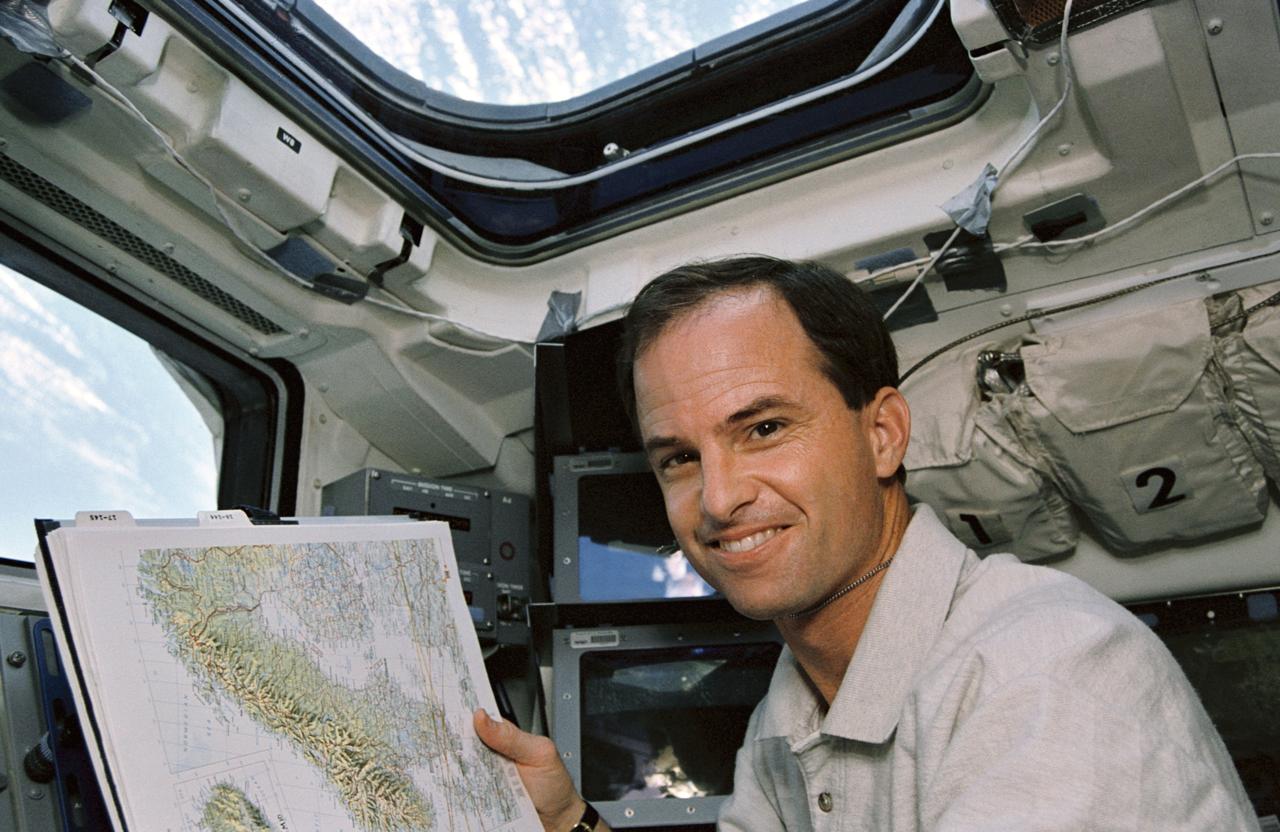
STS059-16-032 (9-20 April 1994) --- Astronaut Kevin P. Chilton, pilot, displays a map of Scandinavia on the Space Shuttle Endeavour's flight deck.  Large scale maps such as this were used by the crew to locate specific sites of interest to the Space Radar Laboratory scientists.  The crew then photographed the sites at the same time as the radar in the payload bay imaged them.  Chilton was joined in space by five other NASA astronauts for a week and a half of support to the Space Radar Laboratory (SRL-1) mission and other tasks.
Astronaut Kevin Chilton displays map of Scandinavia on flight deck
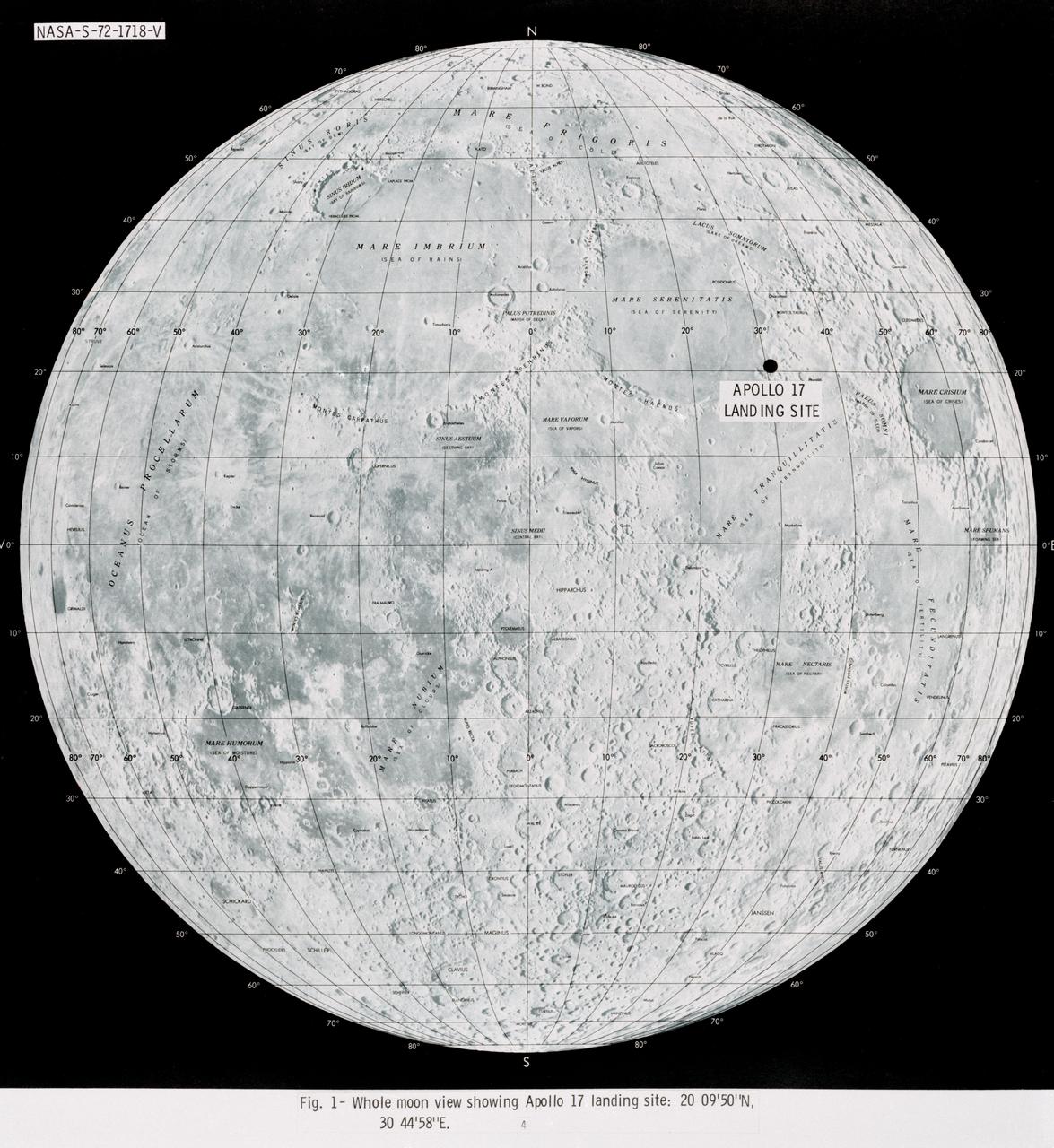
S72-01718 (July 1972) --- A photographic illustration of a full moon showing the location of the Apollo 17 landing site on the lunar nearside. The black dot pinpointing the landing site is in the Taurus-Littrow area at the southeastern edge of the Sea of Serenity. The coordinates of the landing point are 30 degrees 44 minutes 58 seconds east longitude and 20 degrees 9 minutes 50 seconds north latitude.
Photograph of Apollo 17 lunar landing site location
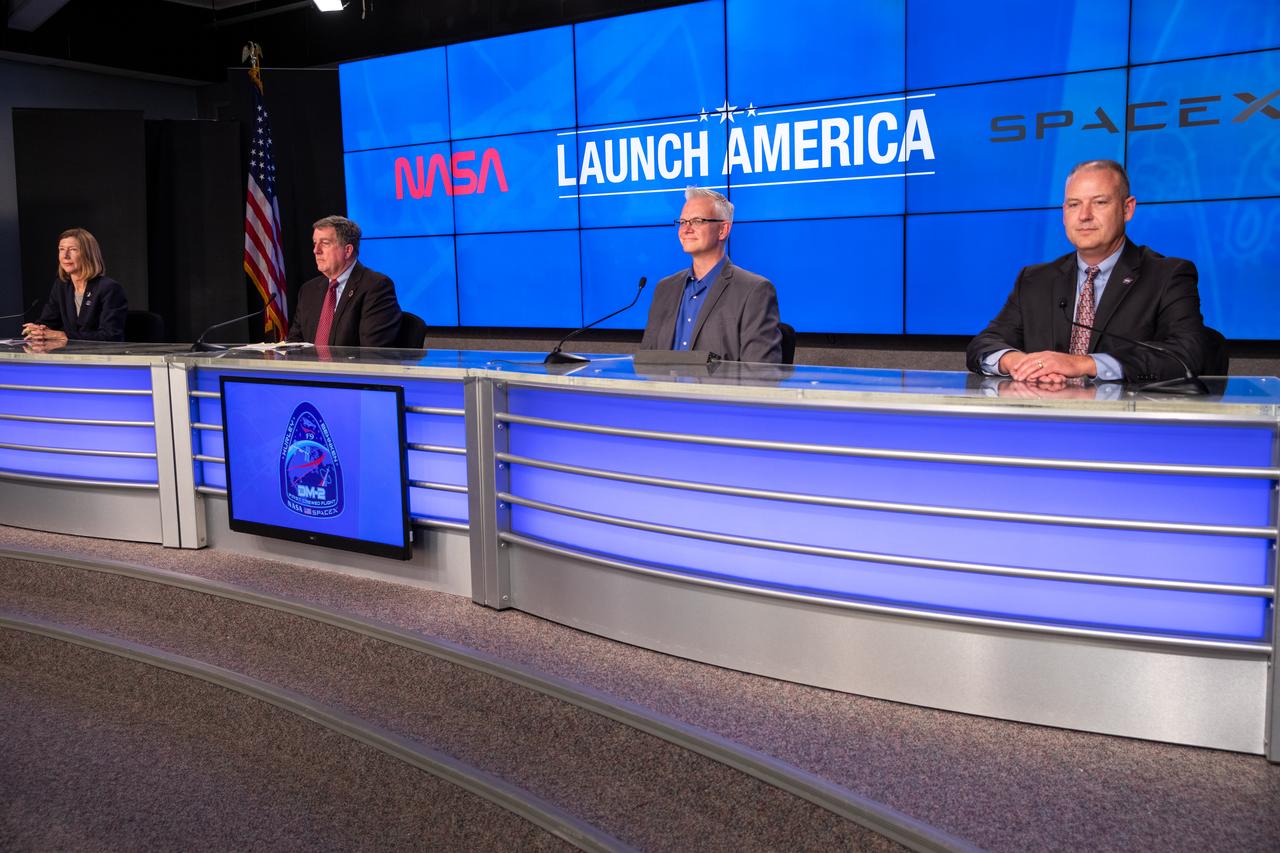
Inside the Press Site auditorium at NASA’s Kennedy Space Center in Florida, agency and industry leaders conduct a virtual news conference with members of the media on May 22, 2020, following the conclusion of the flight readiness review for NASA’s SpaceX Demo-2 mission, with NASA astronauts Robert Behnken and Douglas Hurley, to the International Space Station. From left are Kathy Lueders, Commercial Crew Program manager; Kirk Shireman, International Space Station Program manager; Benji Reed, director of Crew Mission Management, SpaceX; and Norm Knight, deputy director of NASA’s Johnson Space Center’s Flight Operations. This will be SpaceX’s final flight test for NASA’s Commercial Crew Program. Behnken and Hurley will fly to the orbiting laboratory in a SpaceX Crew Dragon spacecraft, launching atop a Falcon 9 rocket from Kennedy’s Launch Complex 39A. Liftoff is scheduled for 4:33 p.m. EDT on Wednesday, May 27.
NASA Hosts Post-Flight Readiness Review Briefing for the agency
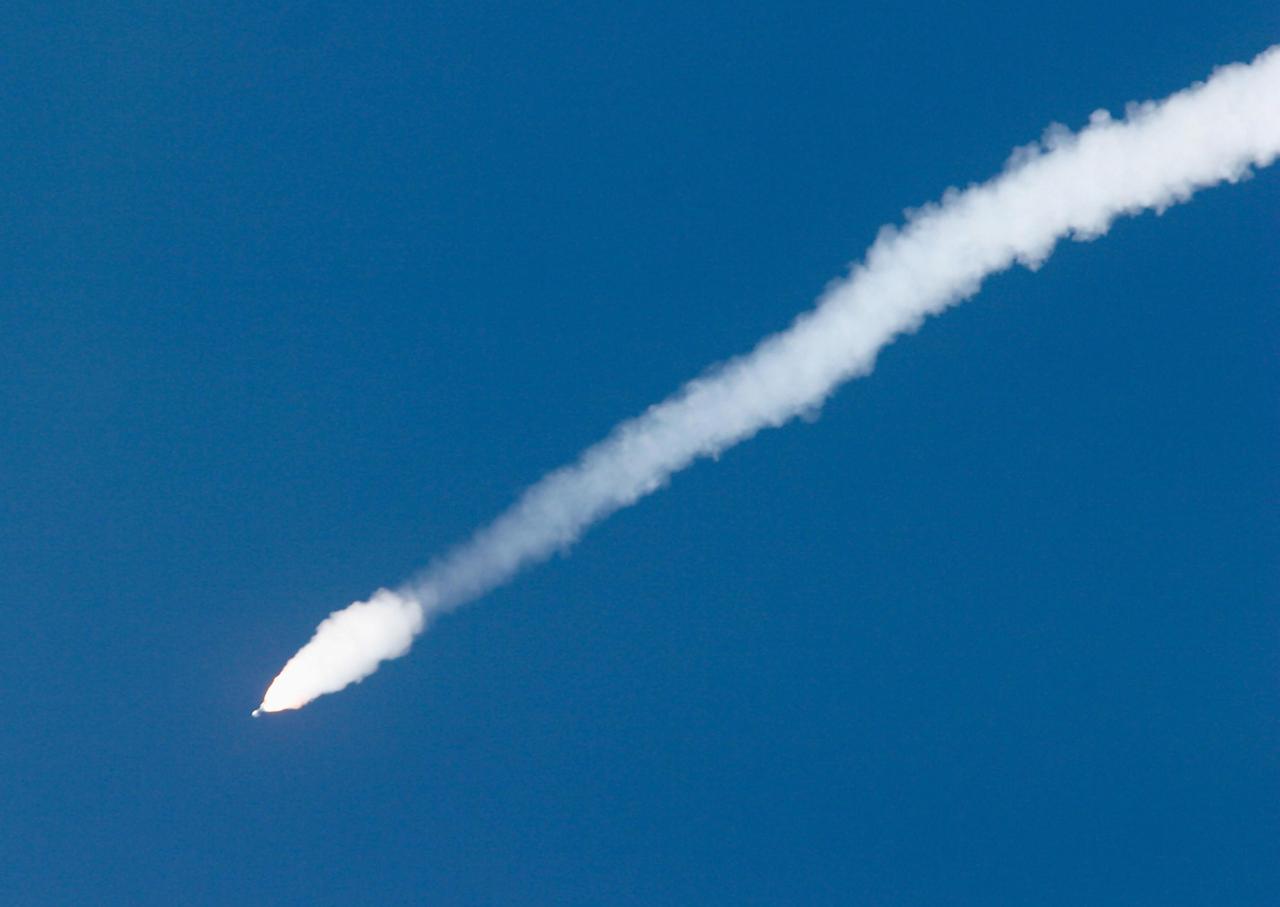
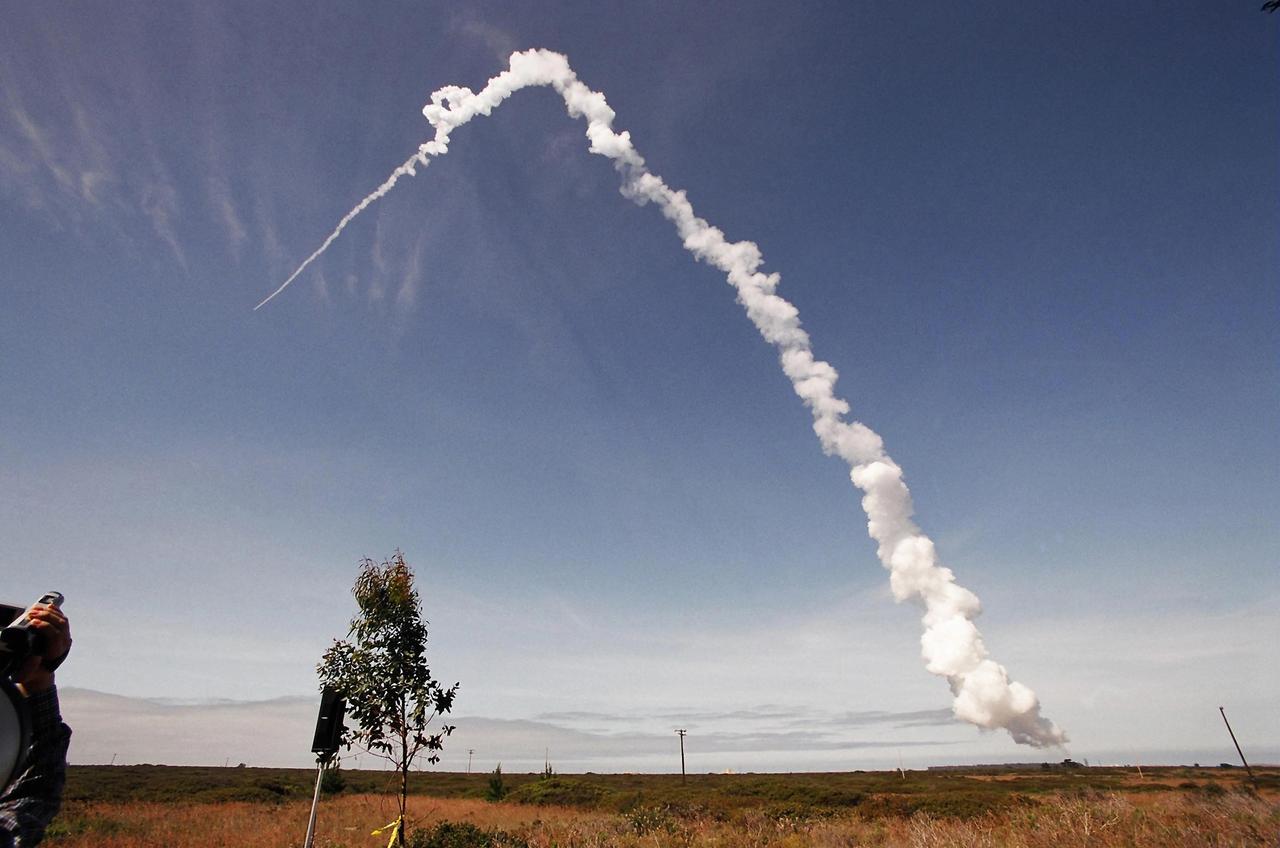
KENNEDY SPACE CENTER, FLA. -- From the Press Site, 3.3 miles from Space Launch Complex 2 on Vandenberg AFB, Calif., a wide-angle lens captures the climb downrange of the Delta II carrying the Gravity Probe B spacecraft.  Liftoff occurred at 9:57:24 a.m. PDT.
KSC-04pd1086
Expedition 9 Flight Engineer Michael Fincke exits the Russian search and rescue helicopter in Kustanay, Kazakhstan after the 2 hour flight from the landing site, Sunday, October 24, 2004.  Photo Credit: (NASA/Bill Ingalls)
Expedition 9 Landing
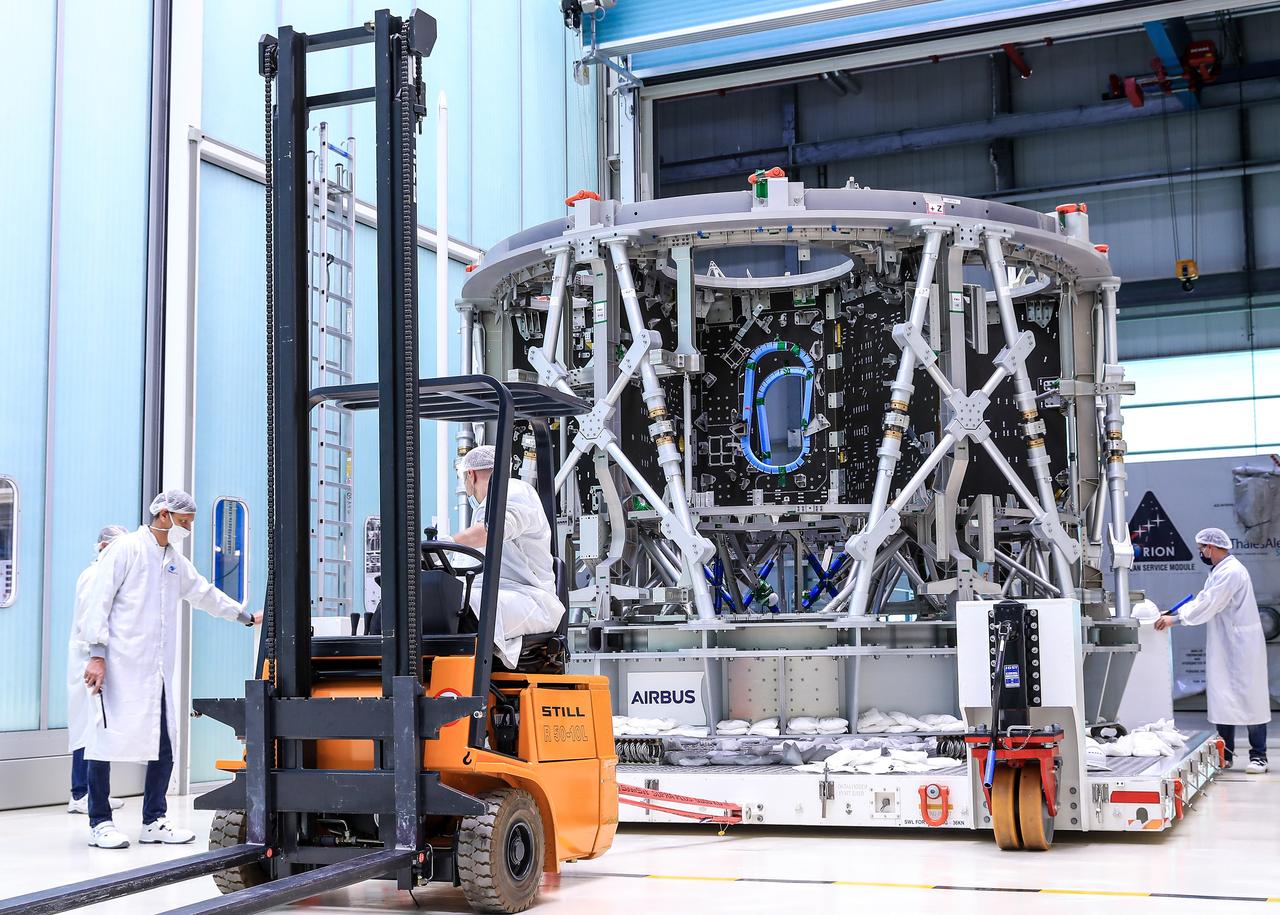
The Orion European Service Module structure that will fly the first woman and next man to land on the Moon and return on the Artemis III mission arrived at the Airbus integration hall in Bremen, Germany, from its Thales Alenia Space manufacturing site in Turin, Italy on Oct. 9, 2020.
Artemis III Service Module arrives at Airbus
KENNEDY SPACE CENTER, FLA. -- A Press Site camera, 3.3 miles from Space Launch Complex 2 on Vandenberg AFB, Calif., captures the climb downrange of the Delta II carrying the Gravity Probe B spacecraft.  Liftoff occurred at 9:57:24 a.m. PDT.
KSC-04pd1087
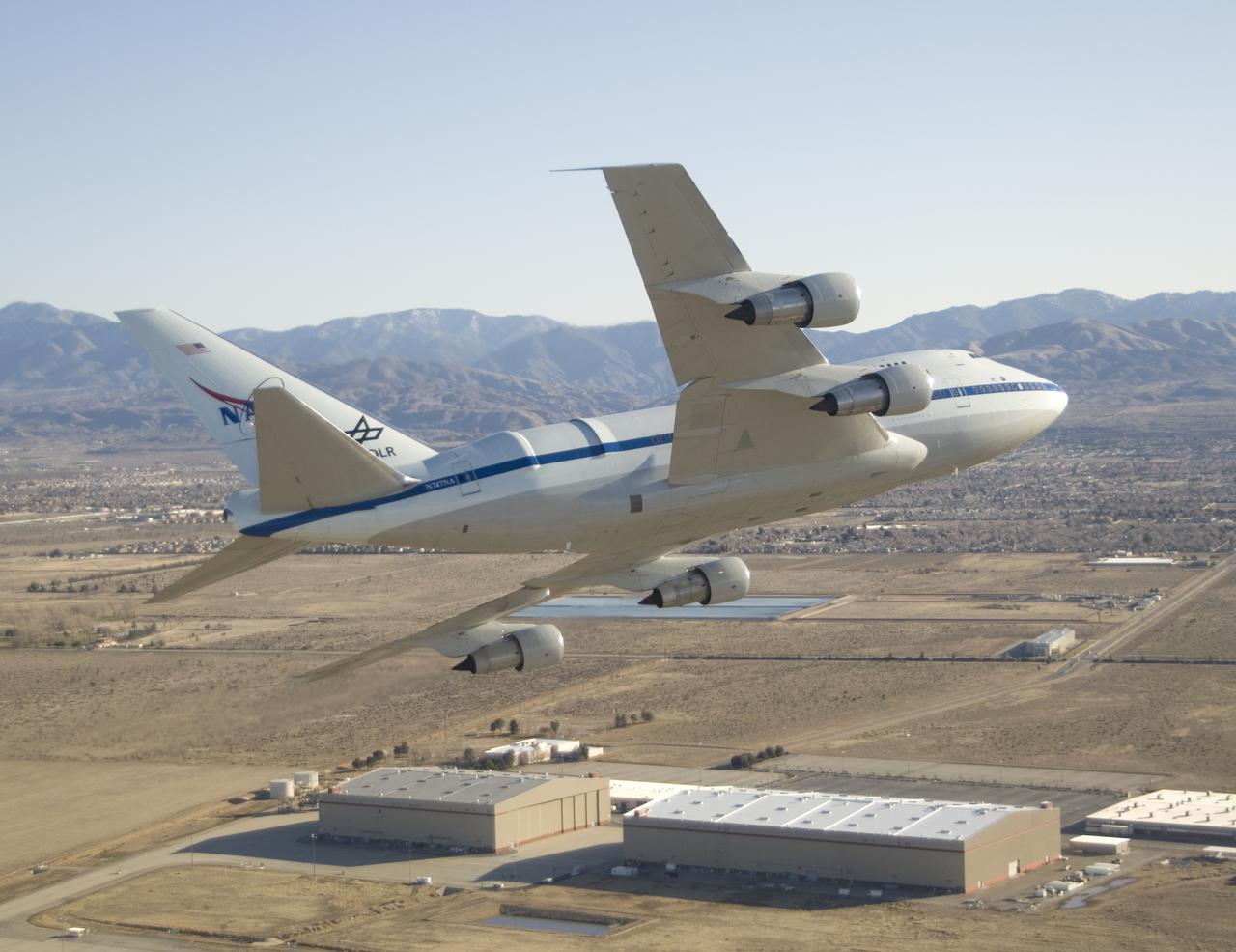
NASA's SOFIA flying infrared observatory banks over the Dryden Aircraft Operations Facility upon arrival at its new base of operations on Jan. 15, 2008.
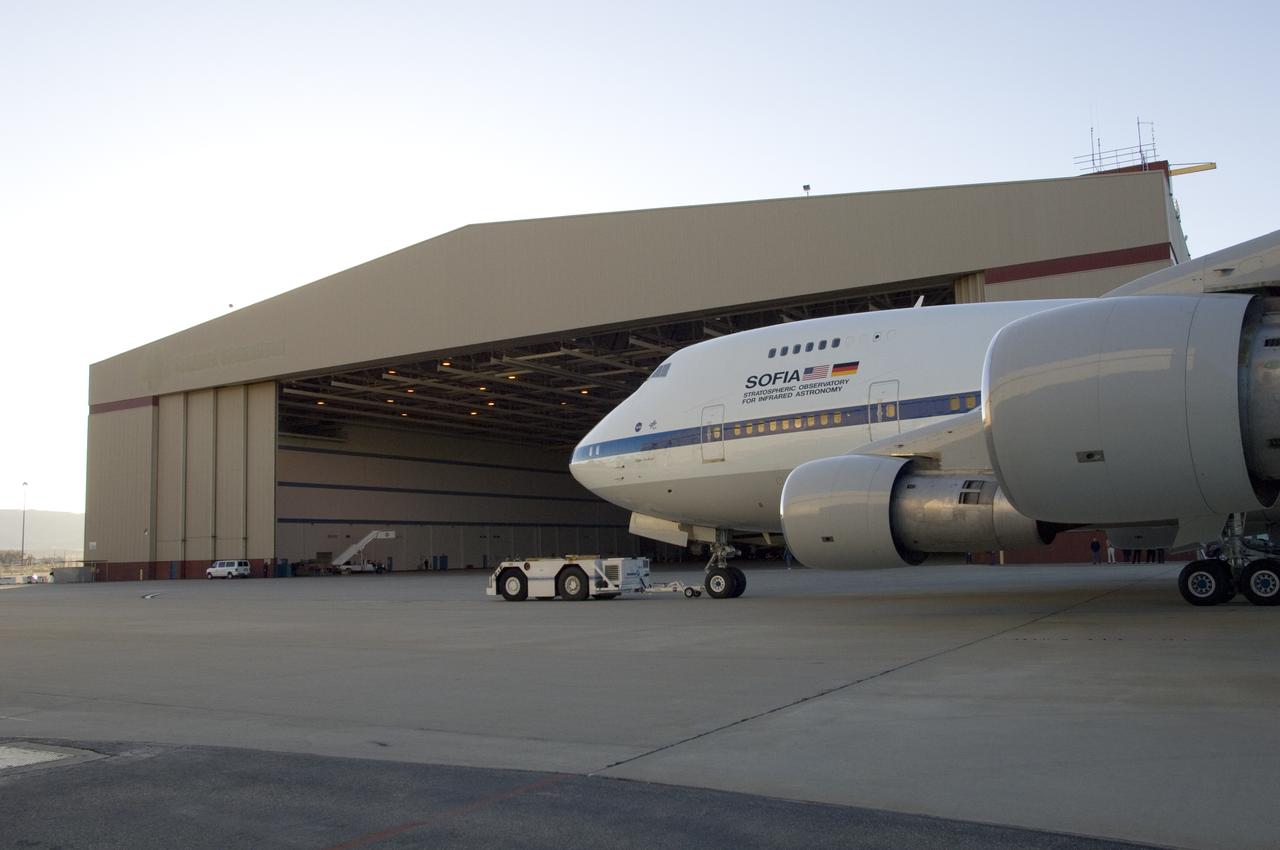
An aircraft tug tows NASA's SOFIA infrared observatory 747SP into Hangar 703 upon arrival at its base, the Dryden Aircraft Operations Facility in Palmdale, Calif.
An aircraft tug tows NASA's SOFIA infrared observatory 747SP into Hangar 703 upon arrival at its base, the Dryden Aircraft Operations Facility in Palmdale, CA.
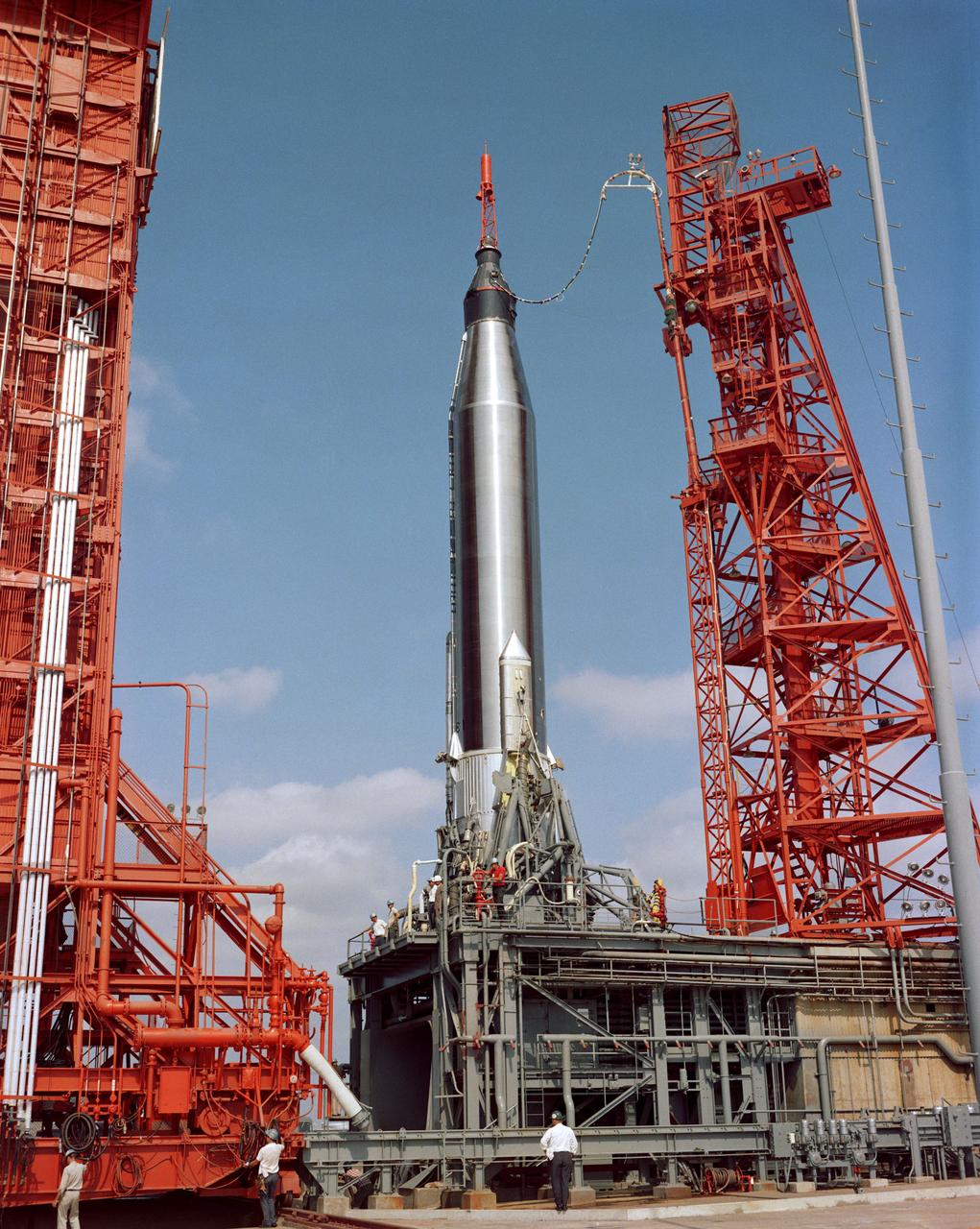
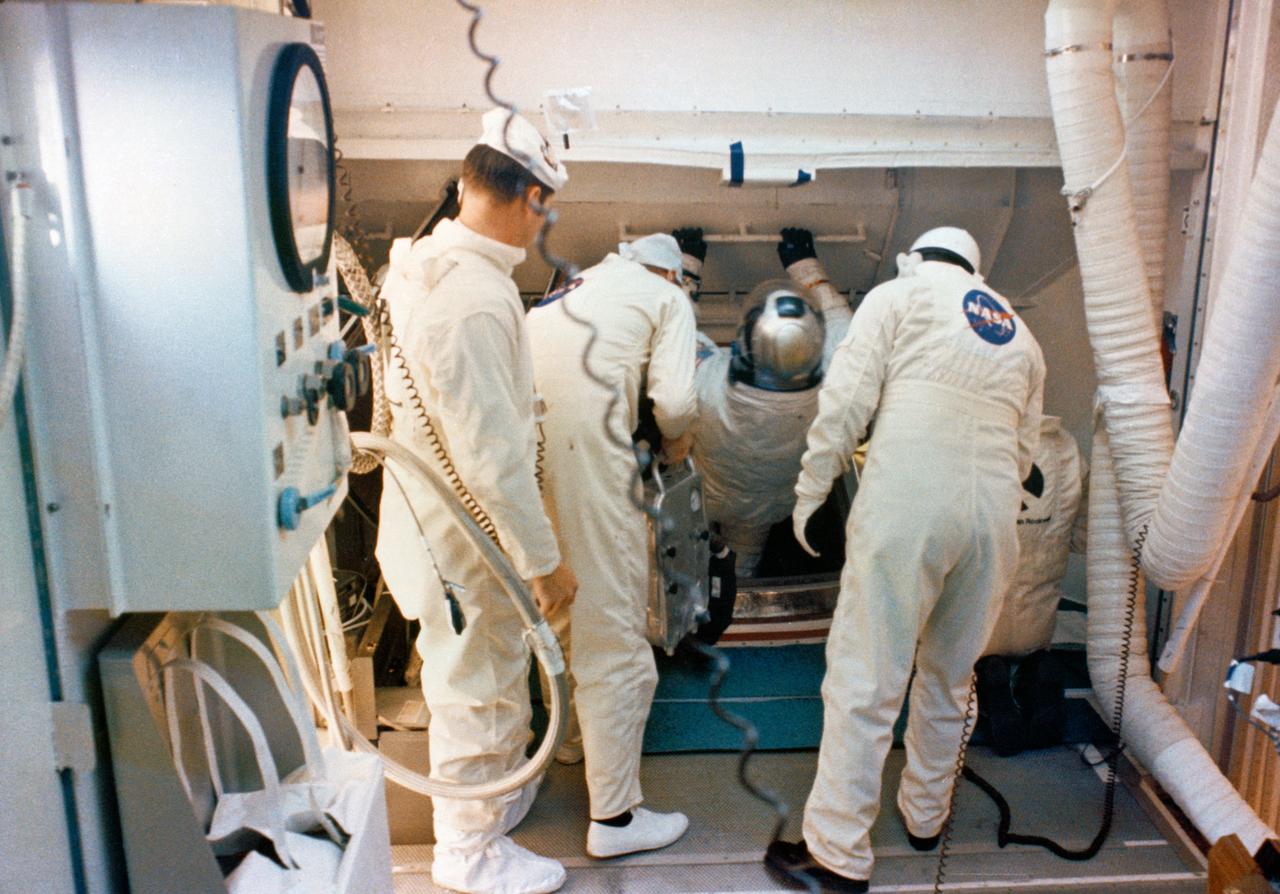
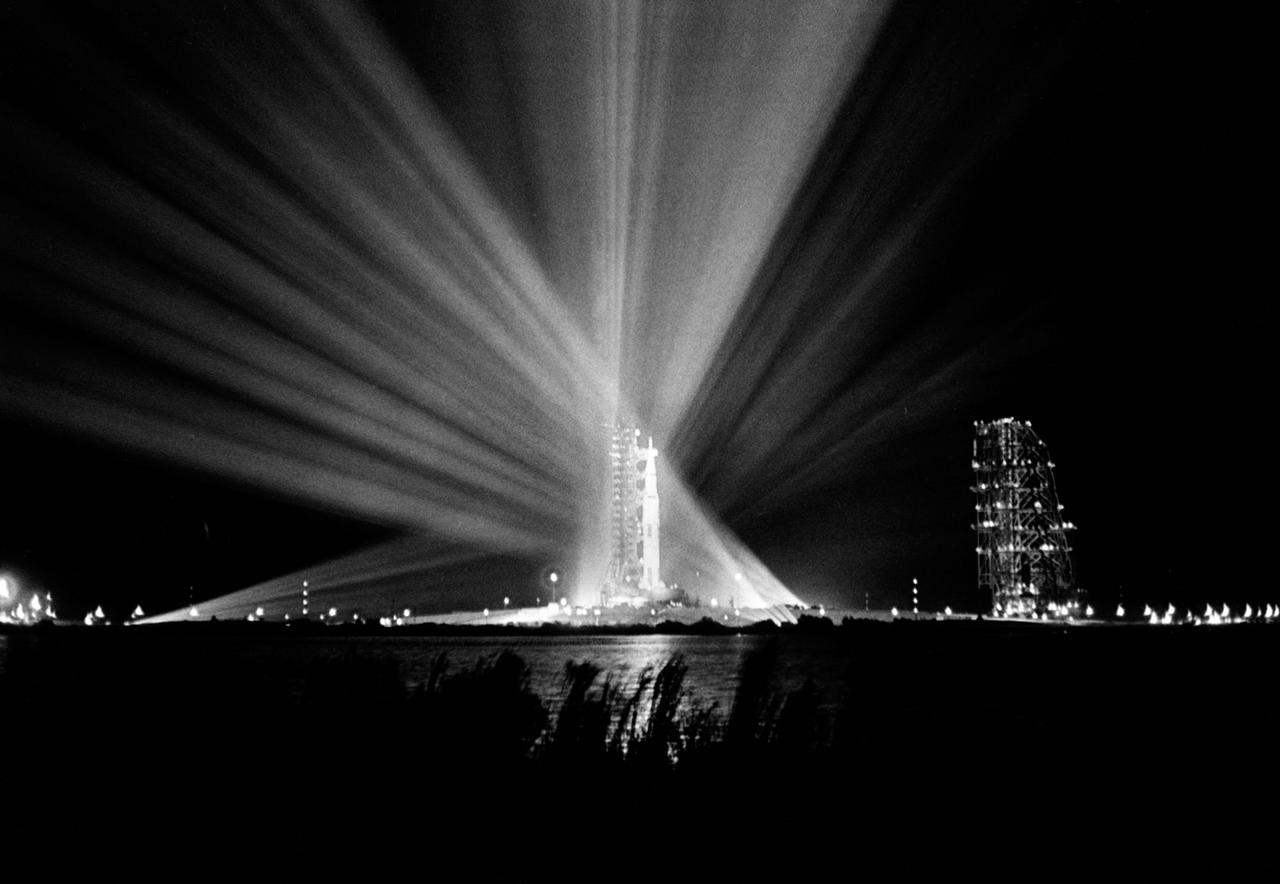
S63-07608 (1963) --- Preparation for launch of Mercury-Atlas 9 (MA-9). Photo credit: NASA
Preparation for launch of Mercury-Atlas 9
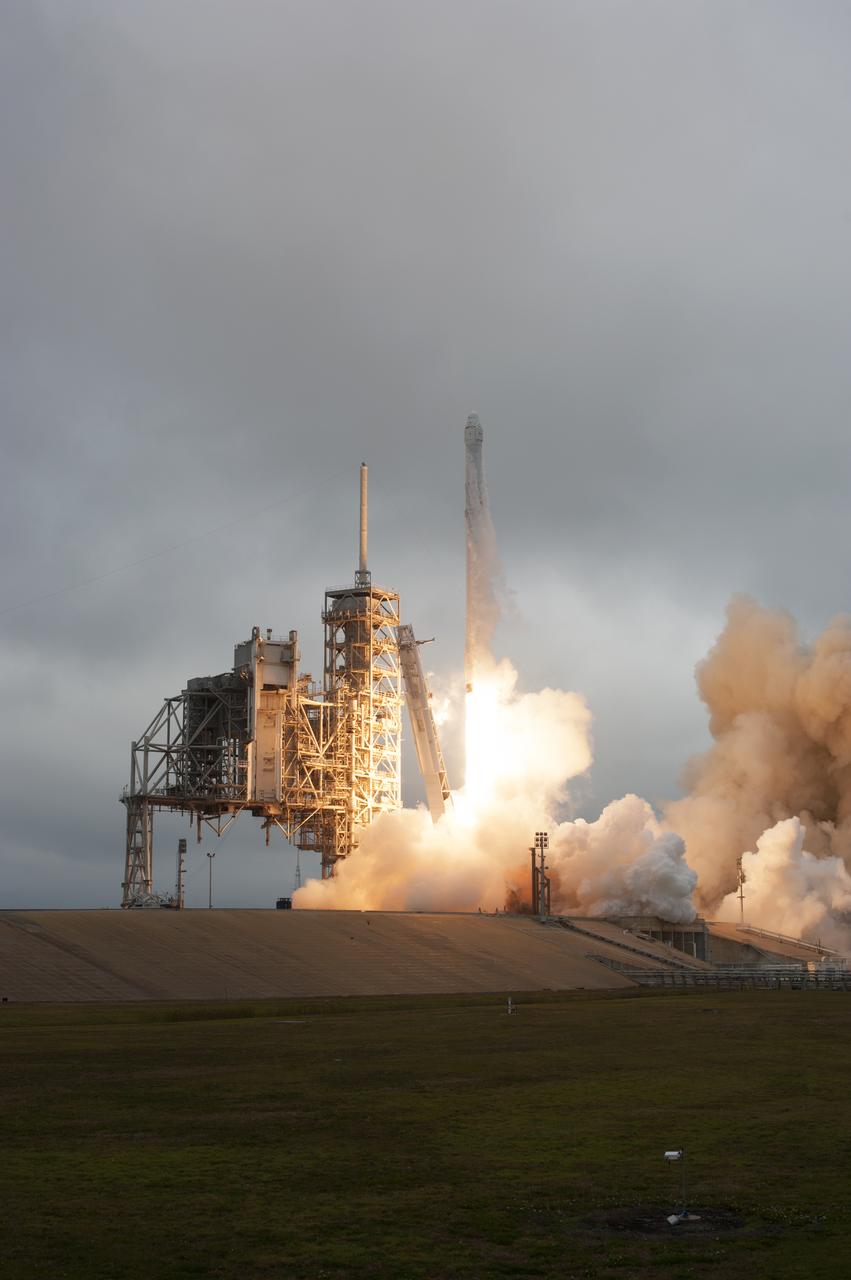
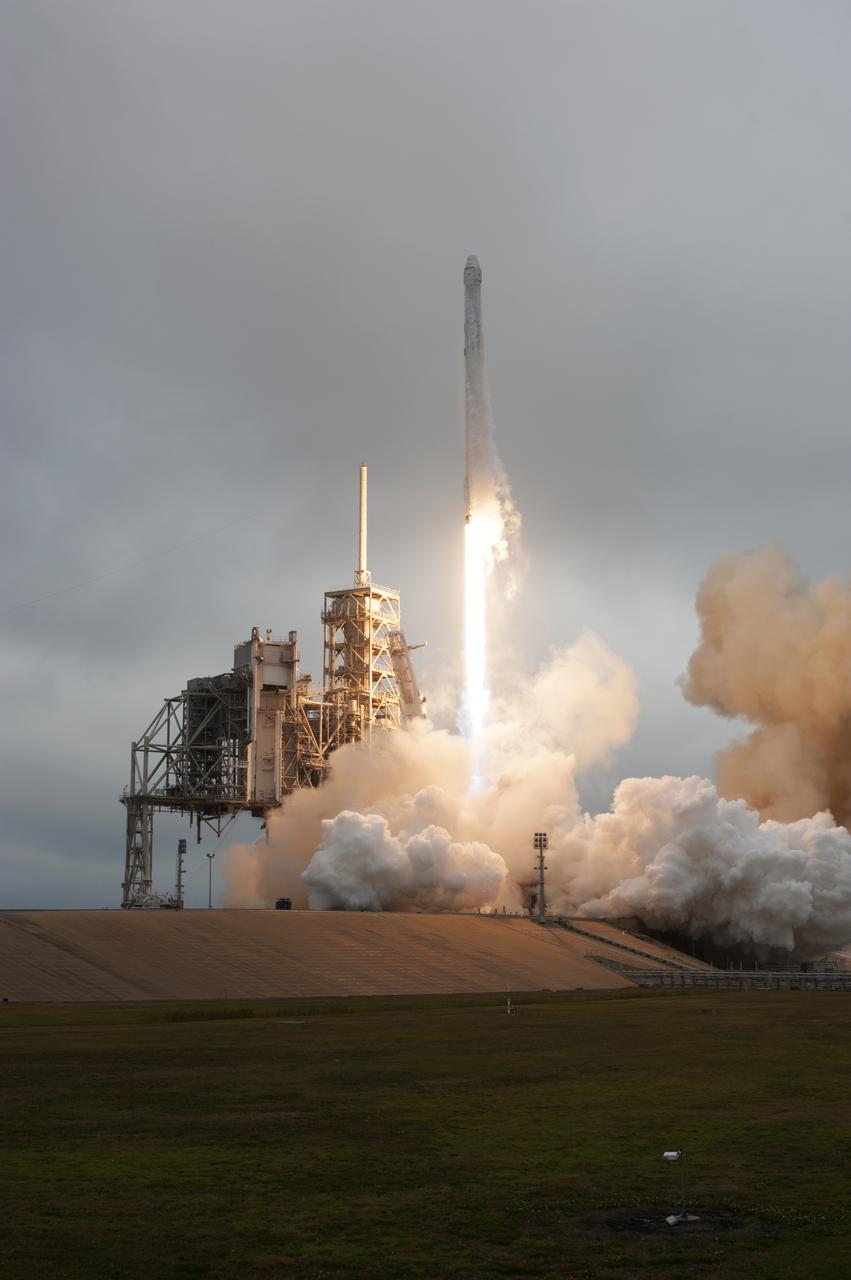
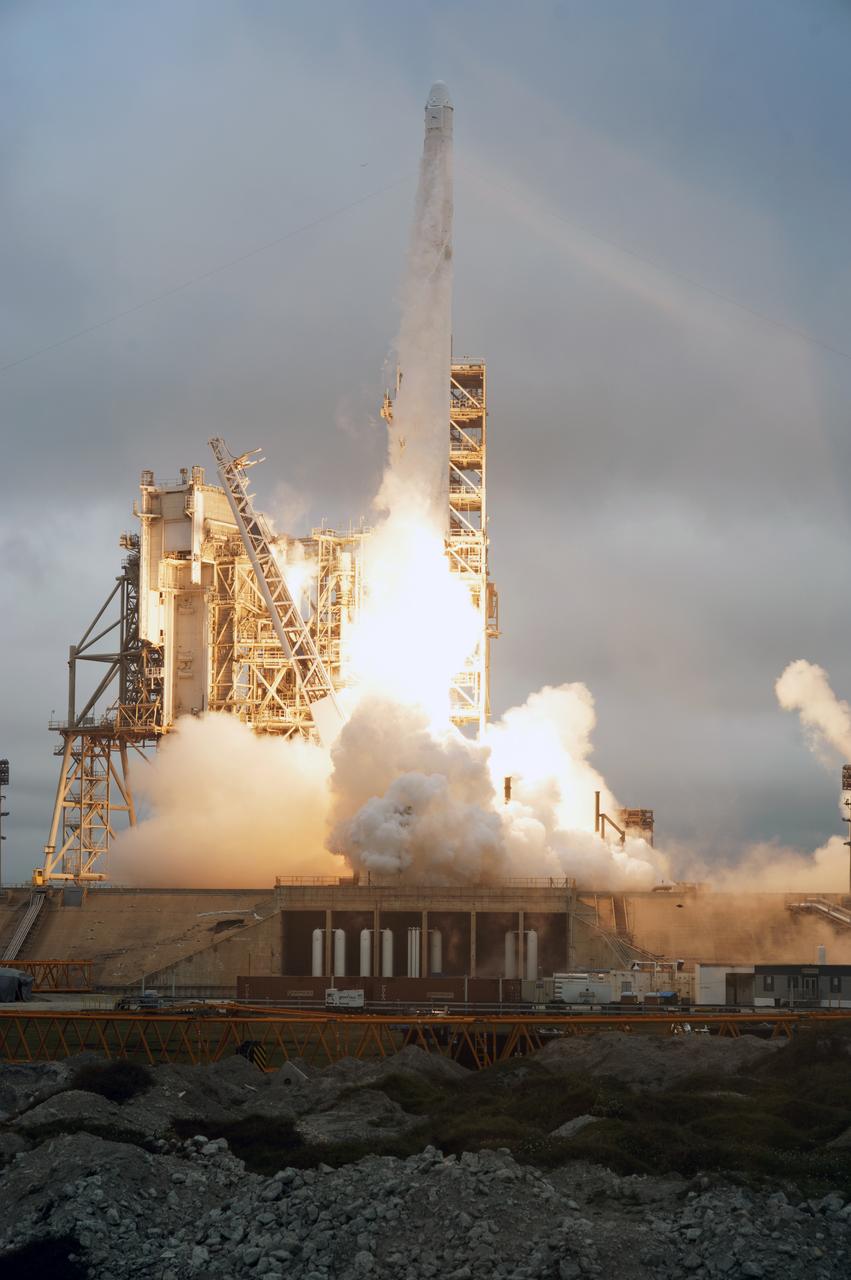
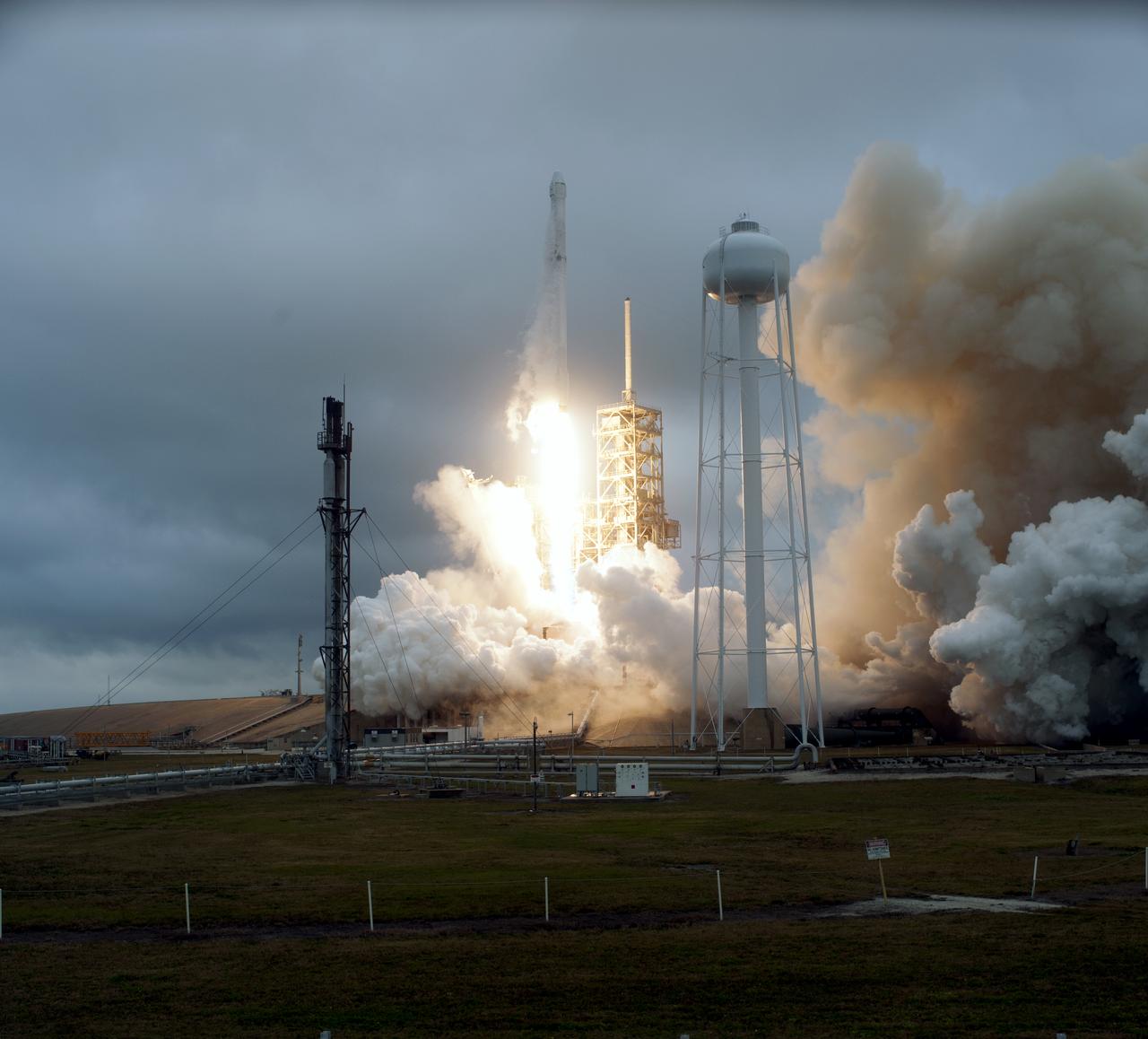
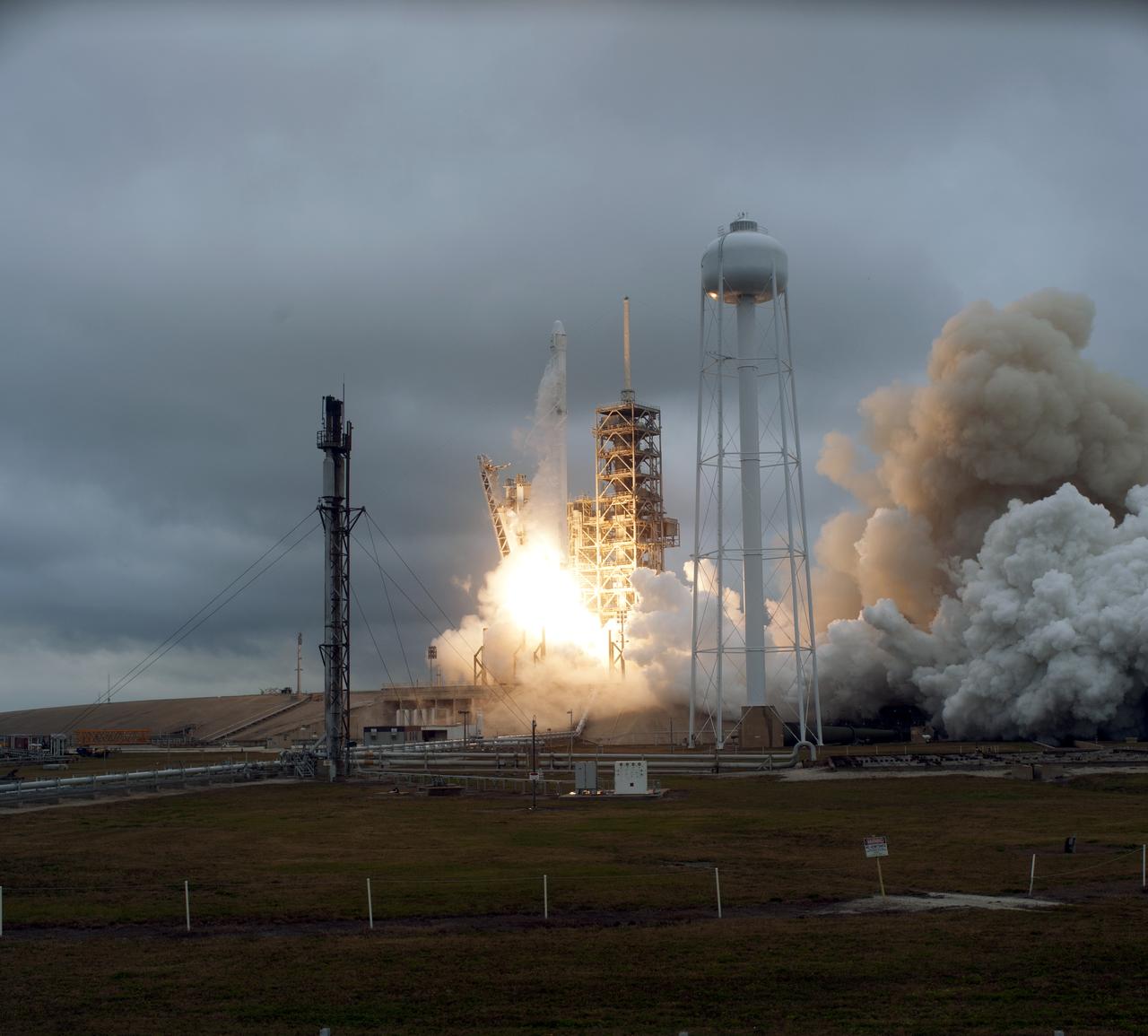
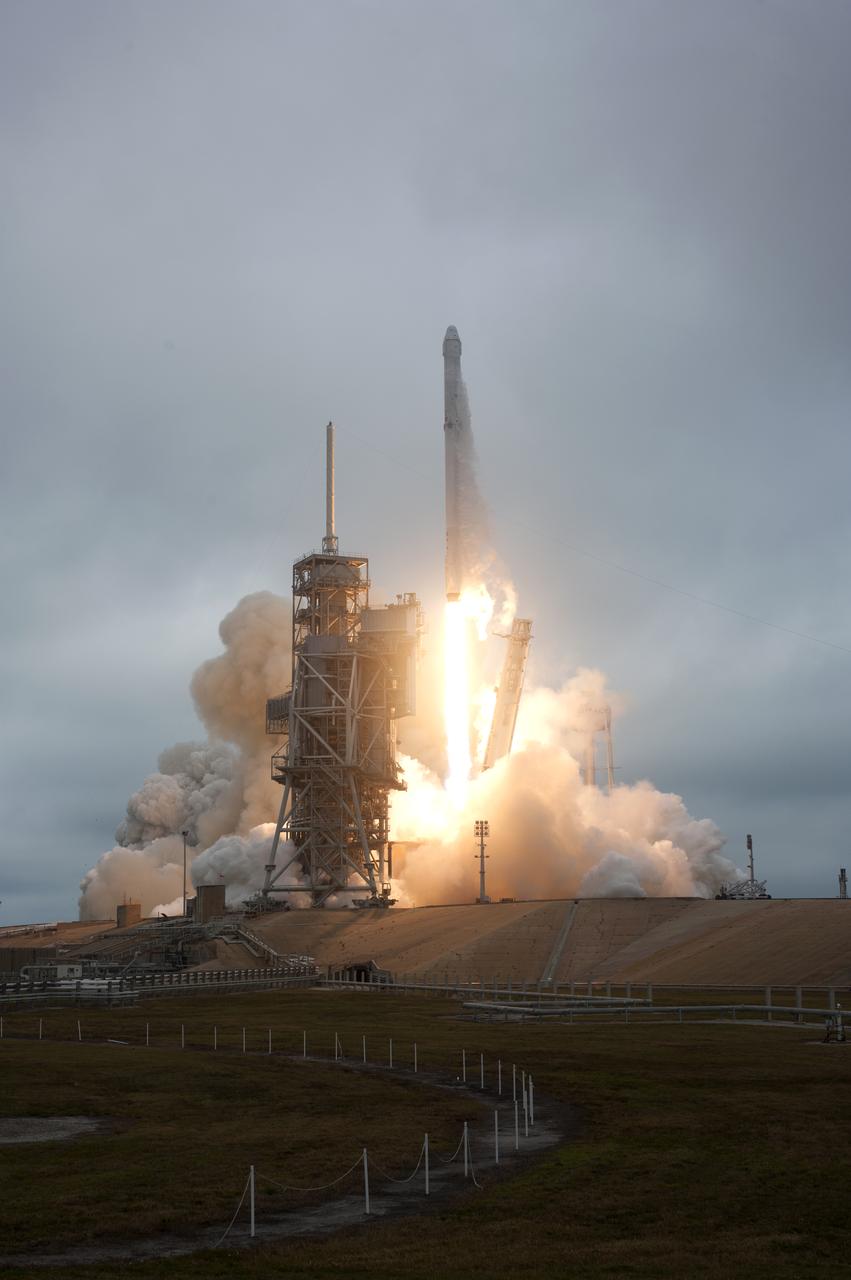
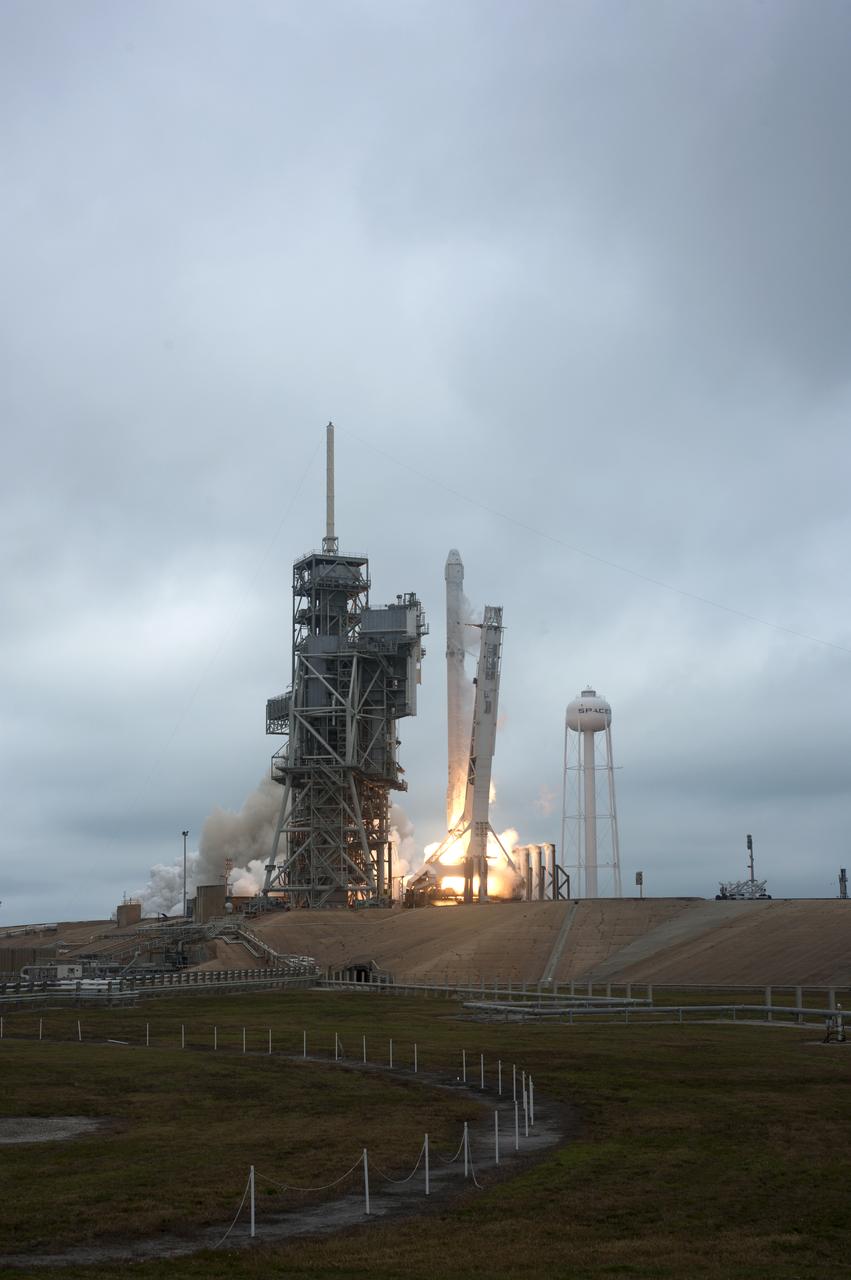
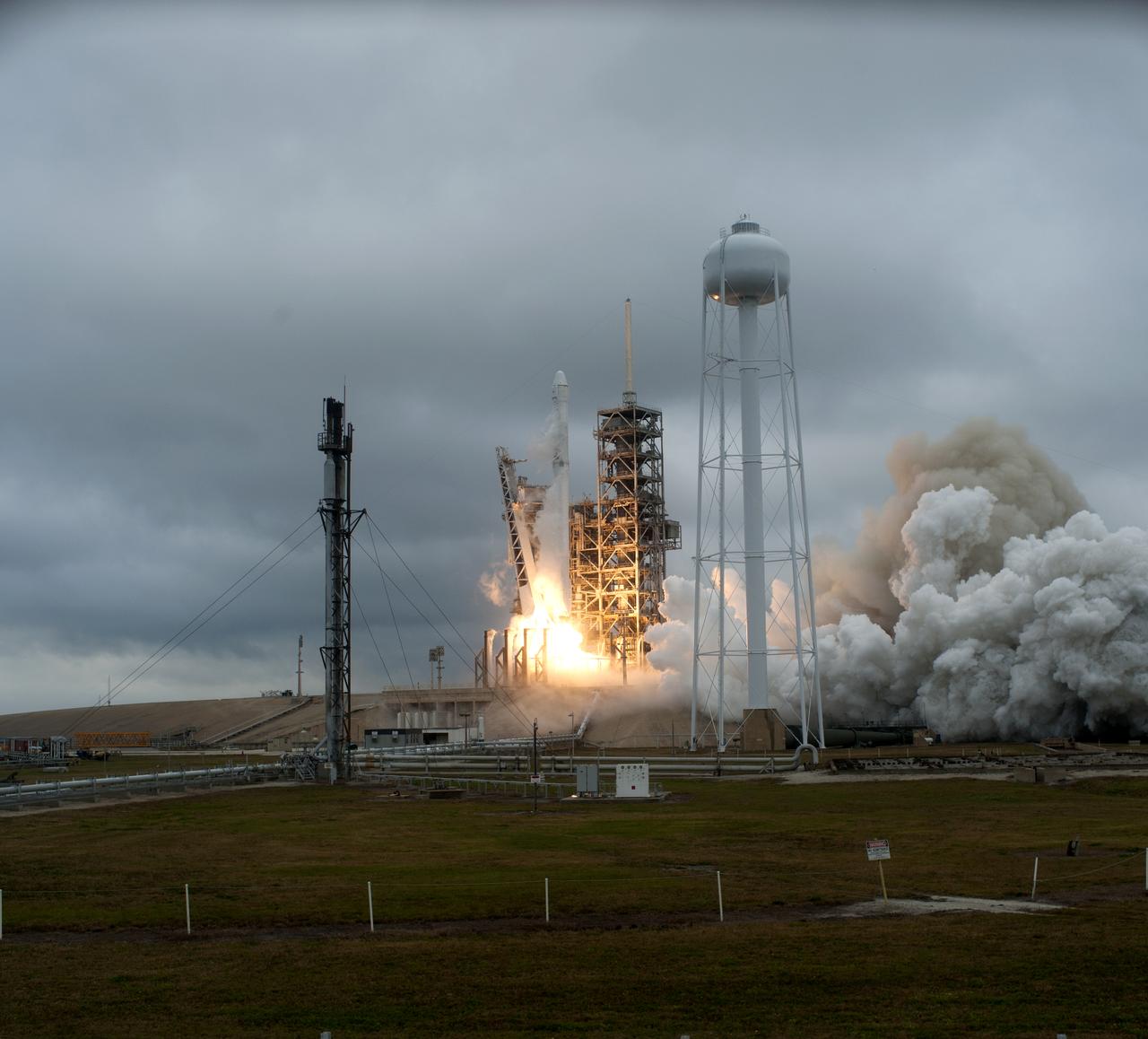
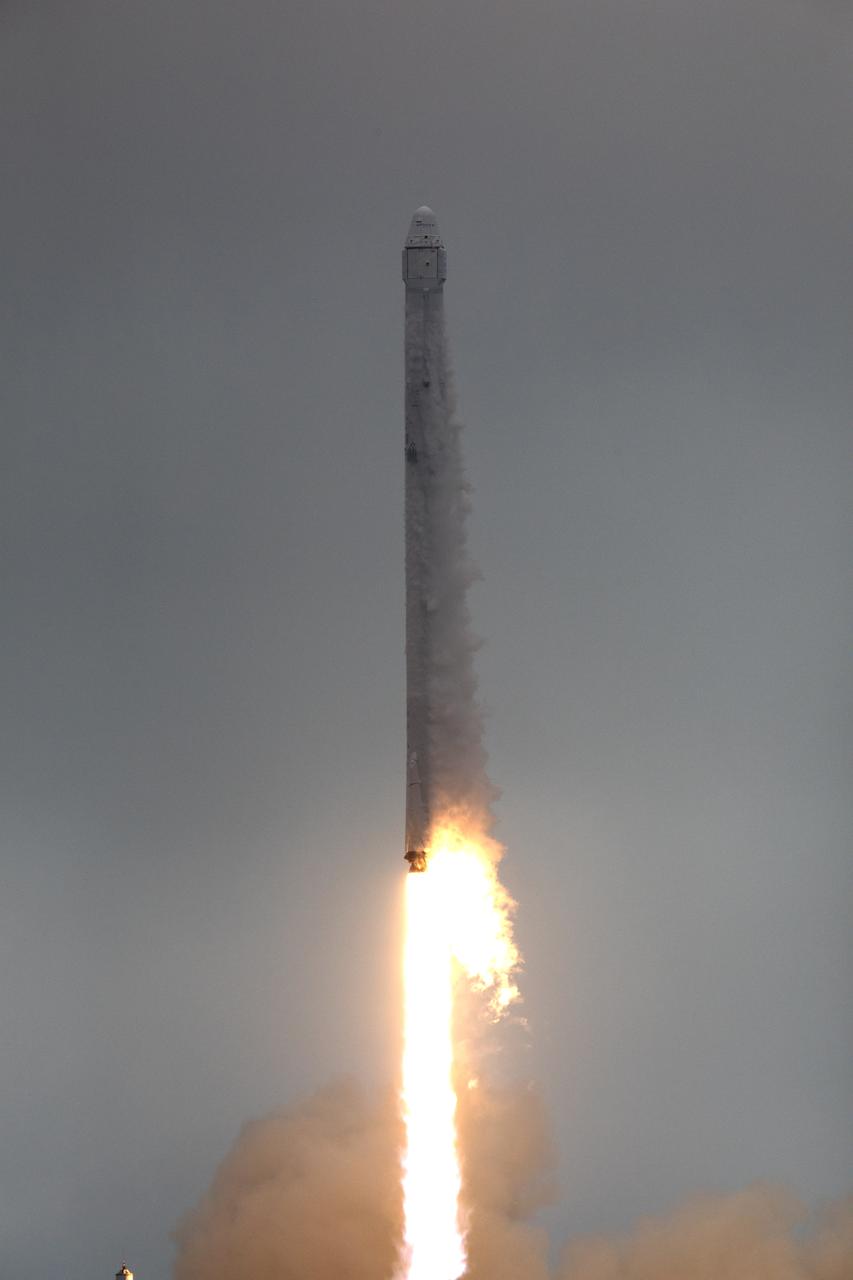
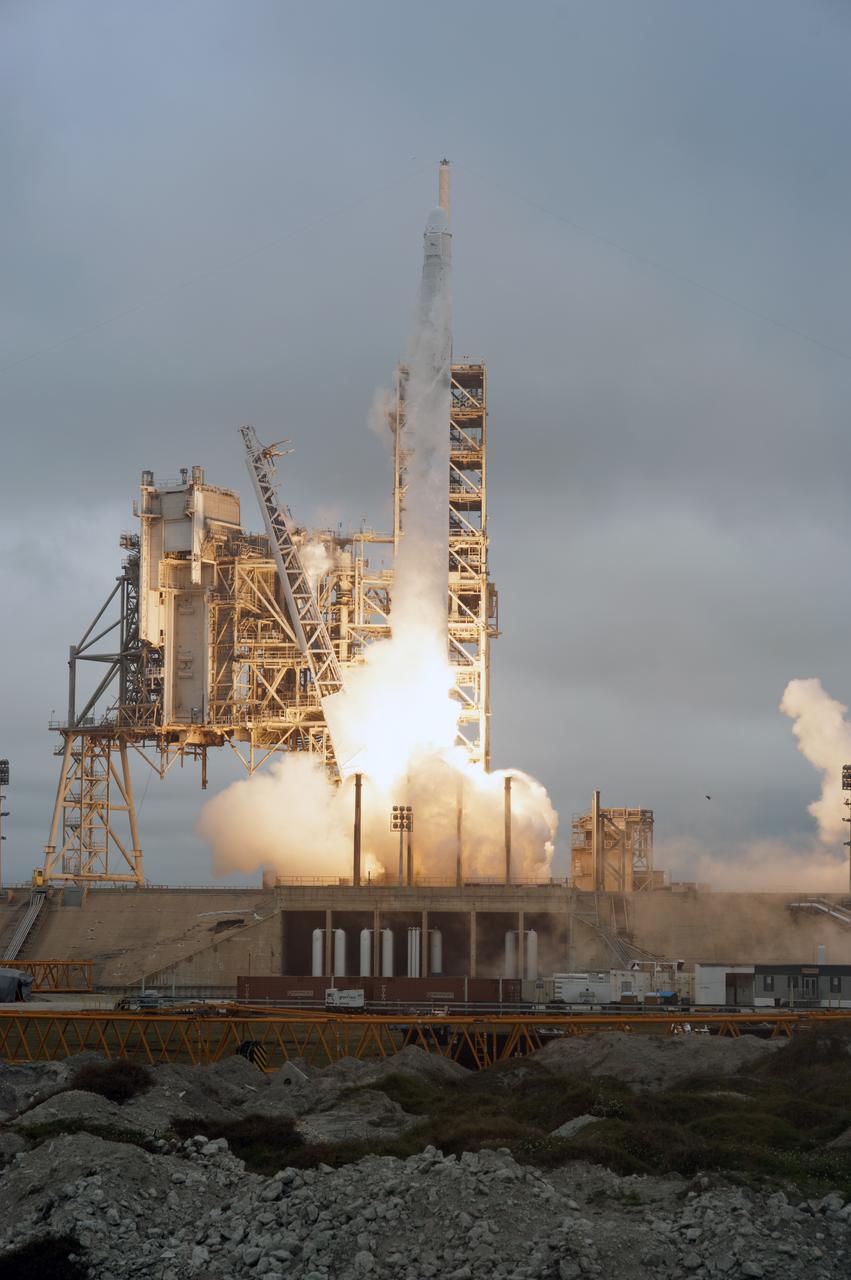
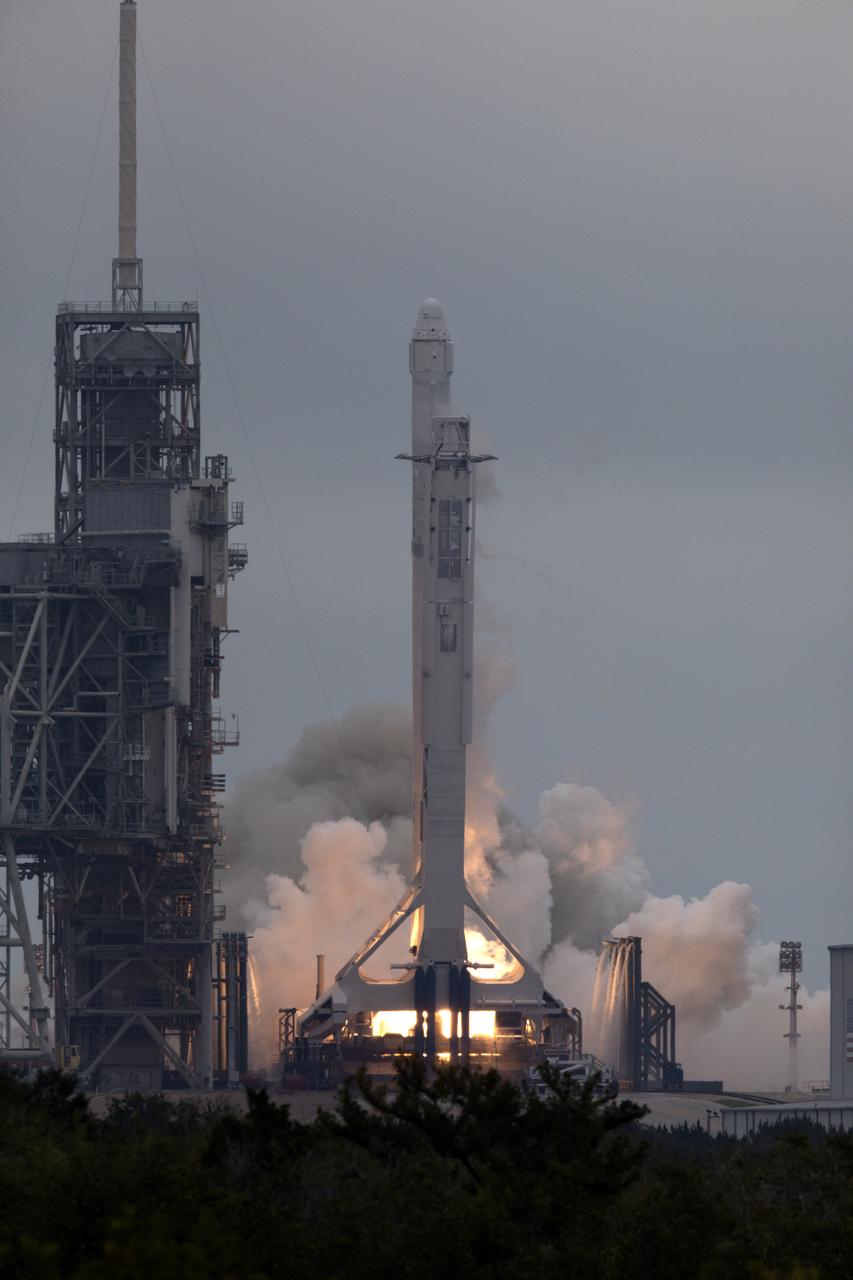
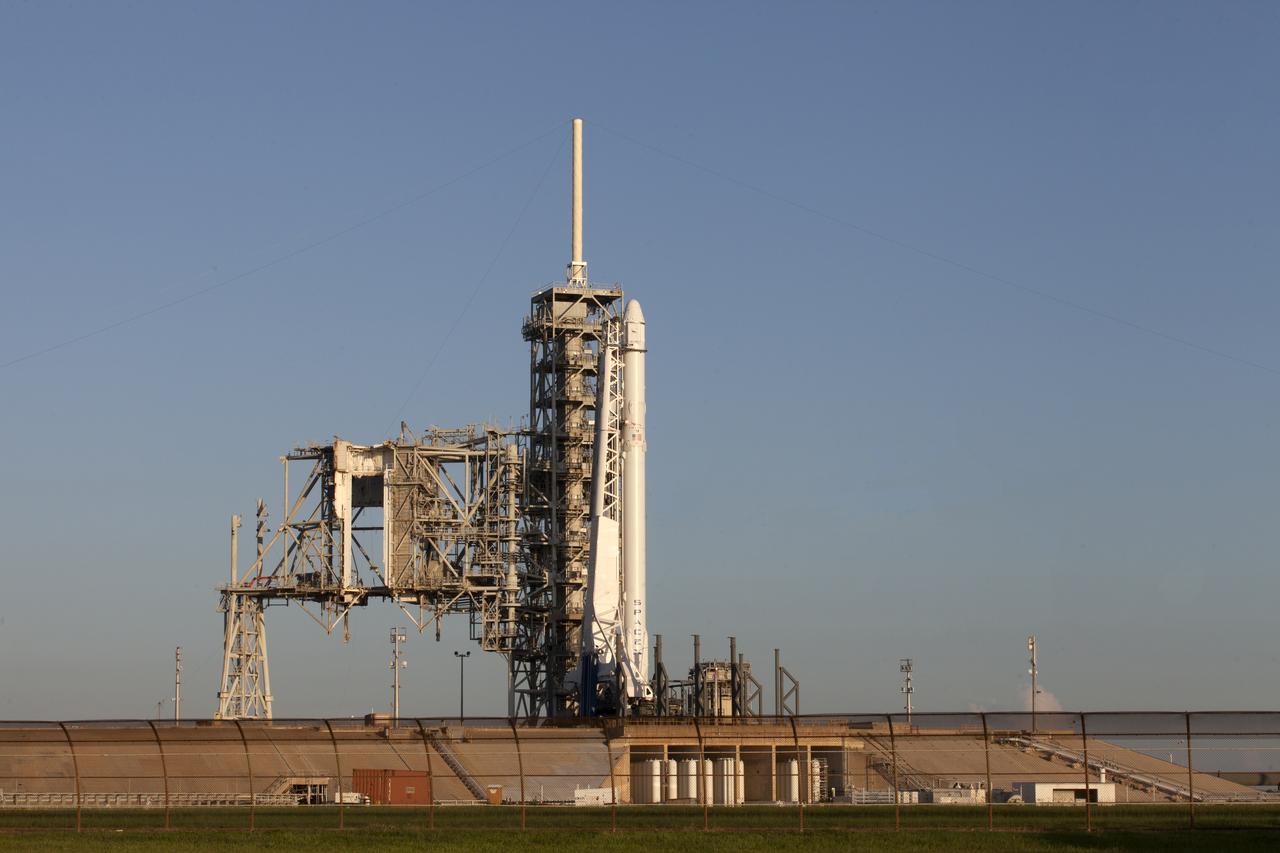
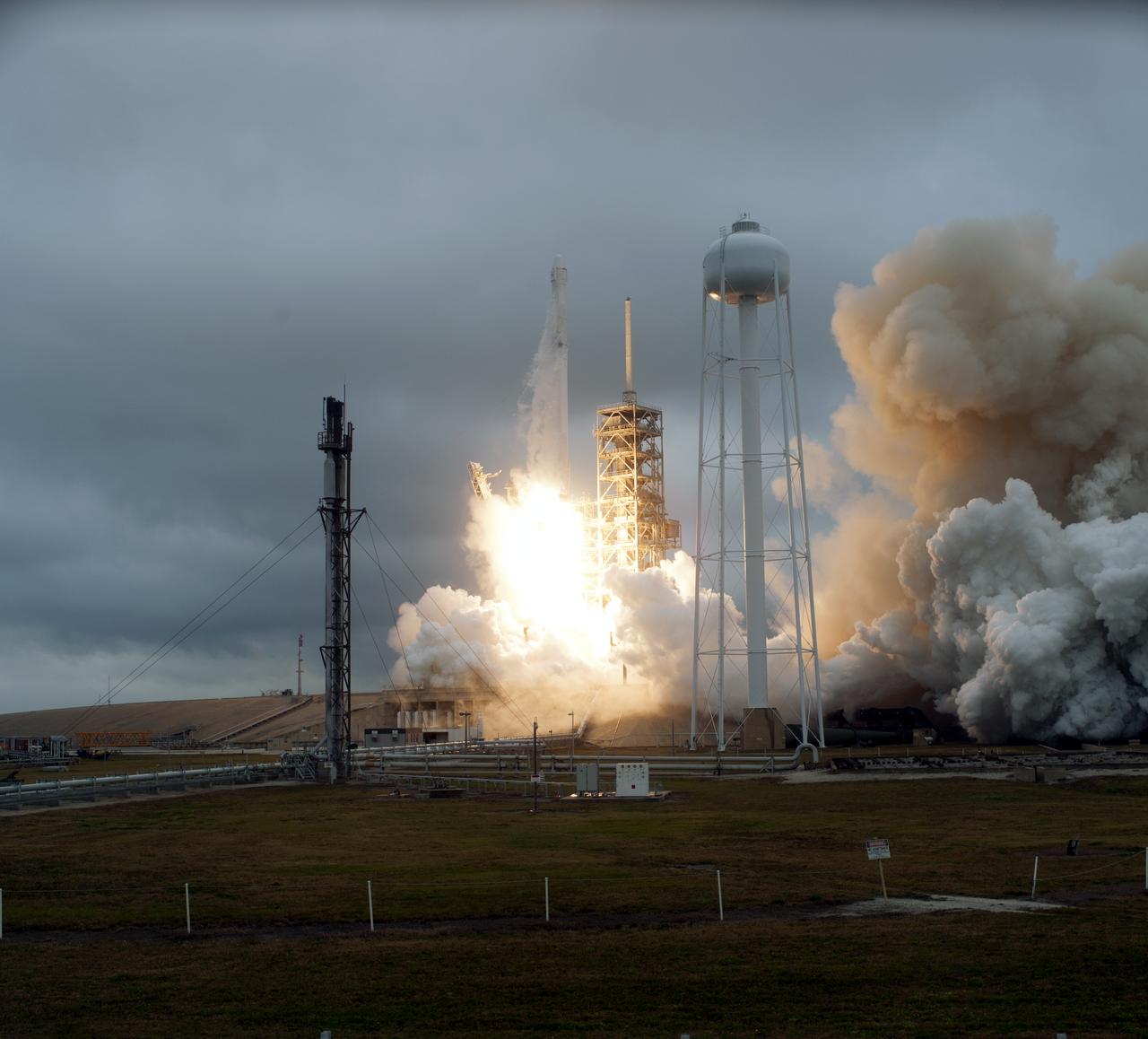
A SpaceX Falcon 9 rocket lifts off from Launch Complex 39A at NASA's Kenney Space Center in Florida. This is the company's 10th commercial resupply services mission to the International Space Station. Liftoff was at 9:39 a.m. EST from the historic launch site now operated by SpaceX under a property agreement with NASA. The Dragon spacecraft will deliver about 5,500 pounds of supplies to the space station, including the Stratospheric Aerosol and Gas Experiment (SAGE) III instrument to further study ozone in the atmosphere.
SpaceX CRS-10 Liftoff
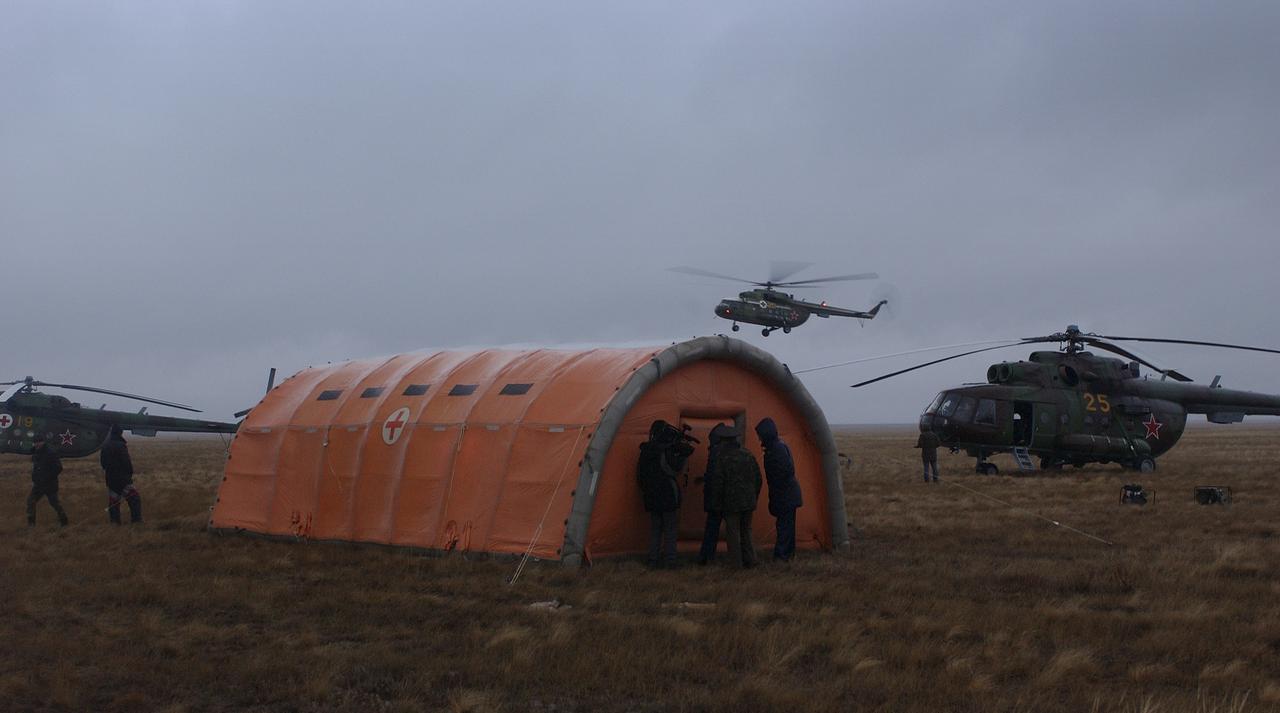
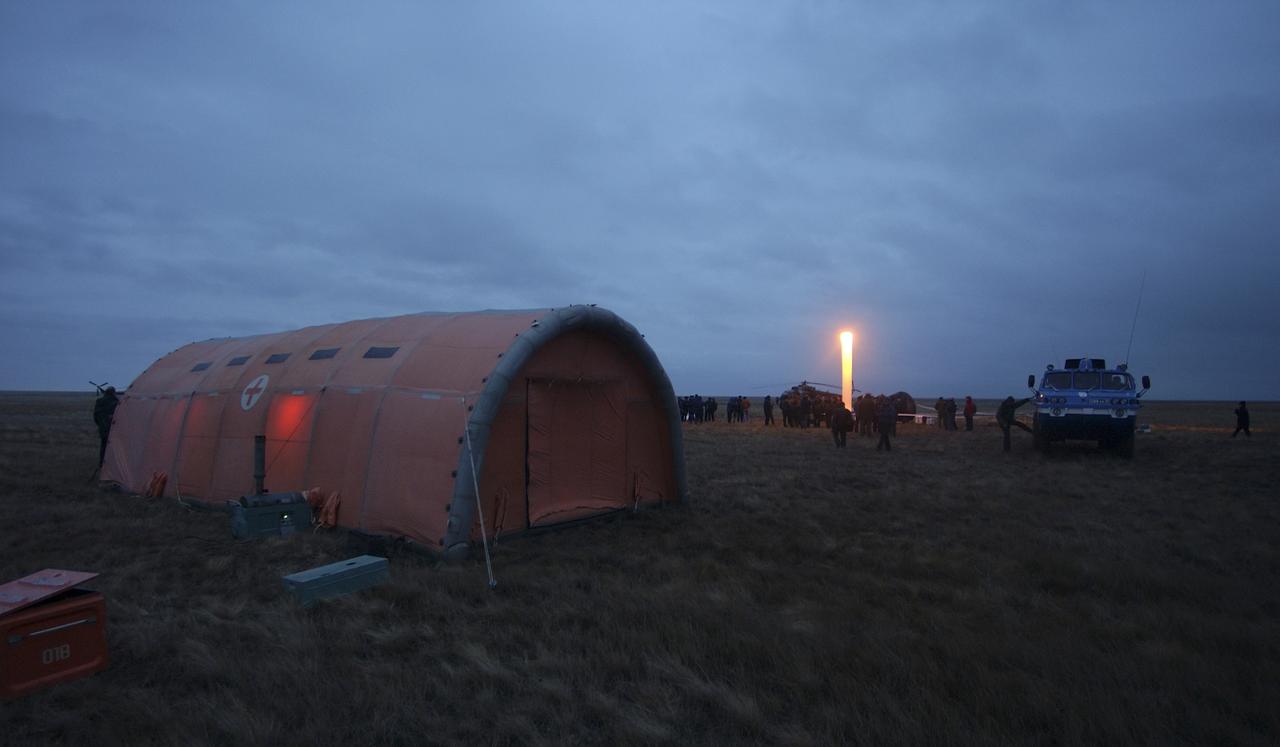
An inflatable medical tent stands in the foreground of the Expedition 9 landing site, while an incoming Russian Search and Rescue helicopter lands. The Soyuz capsule, which carried Expedition 9 Flight Engineer Michael Fincke, Commander Gennady Padalka and Russian Space Forces cosmonaut Yuri Shargin landed approximately 85 kilometers northeast of Arkalyk in northern Kazakhstan, Sunday, October 24, 2004.  Photo Credit: (NASA/Bill Ingalls)
Expedition 9 Landing
A SpaceX Falcon 9 rocket lifts off from Launch Complex 39A at NASA's Kenney Space Center in Florida. This is the company's 10th commercial resupply services mission to the International Space Station. Liftoff was at 9:39 a.m. EST from the historic launch site now operated by SpaceX under a property agreement with NASA. The Dragon spacecraft will deliver about 5,500 pounds of supplies to the space station, including the Stratospheric Aerosol and Gas Experiment (SAGE) III instrument to further study ozone in the atmosphere.
SpaceX CRS-10 Liftoff
A SpaceX Falcon 9 rocket lifts off from Launch Complex 39A at NASA's Kenney Space Center in Florida. This is the company's 10th commercial resupply services mission to the International Space Station. Liftoff was at 9:39 a.m. EST from the historic launch site now operated by SpaceX under a property agreement with NASA. The Dragon spacecraft will deliver about 5,500 pounds of supplies to the space station, including the Stratospheric Aerosol and Gas Experiment (SAGE) III instrument to further study ozone in the atmosphere.
SpaceX CRS-10 Liftoff
A SpaceX Falcon 9 rocket lifts off from Launch Complex 39A at NASA's Kenney Space Center in Florida. This is the company's 10th commercial resupply services mission to the International Space Station. Liftoff was at 9:39 a.m. EST from the historic launch site now operated by SpaceX under a property agreement with NASA. The Dragon spacecraft will deliver about 5,500 pounds of supplies to the space station, including the Stratospheric Aerosol and Gas Experiment (SAGE) III instrument to further study ozone in the atmosphere.
SpaceX CRS-10 Liftoff
A SpaceX Falcon 9 rocket lifts off from Launch Complex 39A at NASA's Kenney Space Center in Florida. This is the company's 10th commercial resupply services mission to the International Space Station. Liftoff was at 9:39 a.m. EST from the historic launch site now operated by SpaceX under a property agreement with NASA. The Dragon spacecraft will deliver about 5,500 pounds of supplies to the space station, including the Stratospheric Aerosol and Gas Experiment (SAGE) III instrument to further study ozone in the atmosphere.
SpaceX CRS-10 Liftoff
A SpaceX Falcon 9 rocket lifts off from Launch Complex 39A at NASA's Kenney Space Center in Florida. This is the company's 10th commercial resupply services mission to the International Space Station. Liftoff was at 9:39 a.m. EST from the historic launch site now operated by SpaceX under a property agreement with NASA. The Dragon spacecraft will deliver about 5,500 pounds of supplies to the space station, including the Stratospheric Aerosol and Gas Experiment (SAGE) III instrument to further study ozone in the atmosphere.
SpaceX CRS-10 Liftoff
A SpaceX Falcon 9 rocket lifts off from Launch Complex 39A at NASA's Kenney Space Center in Florida. This is the company's 10th commercial resupply services mission to the International Space Station. Liftoff was at 9:39 a.m. EST from the historic launch site now operated by SpaceX under a property agreement with NASA. The Dragon spacecraft will deliver about 5,500 pounds of supplies to the space station, including the Stratospheric Aerosol and Gas Experiment (SAGE) III instrument to further study ozone in the atmosphere.
SpaceX CRS-10 Liftoff
A SpaceX Falcon 9 rocket lifts off from Launch Complex 39A at NASA's Kenney Space Center in Florida. This is the company's 10th commercial resupply services mission to the International Space Station. Liftoff was at 9:39 a.m. EST from the historic launch site now operated by SpaceX under a property agreement with NASA. The Dragon spacecraft will deliver about 5,500 pounds of supplies to the space station, including the Stratospheric Aerosol and Gas Experiment (SAGE) III instrument to further study ozone in the atmosphere.
SpaceX CRS-10 Liftoff
A SpaceX Falcon 9 rocket lifts off from Launch Complex 39A at NASA's Kenney Space Center in Florida. This is the company's 10th commercial resupply services mission to the International Space Station. Liftoff was at 9:39 a.m. EST from the historic launch site now operated by SpaceX under a property agreement with NASA. The Dragon spacecraft will deliver about 5,500 pounds of supplies to the space station, including the Stratospheric Aerosol and Gas Experiment (SAGE) III instrument to further study ozone in the atmosphere.
SpaceX CRS-10 Liftoff
A SpaceX Falcon 9 rocket lifts off from Launch Complex 39A at NASA's Kenney Space Center in Florida. This is the company's 10th commercial resupply services mission to the International Space Station. Liftoff was at 9:39 a.m. EST from the historic launch site now operated by SpaceX under a property agreement with NASA. The Dragon spacecraft will deliver about 5,500 pounds of supplies to the space station, including the Stratospheric Aerosol and Gas Experiment (SAGE) III instrument to further study ozone in the atmosphere.
SpaceX CRS-10 Liftoff
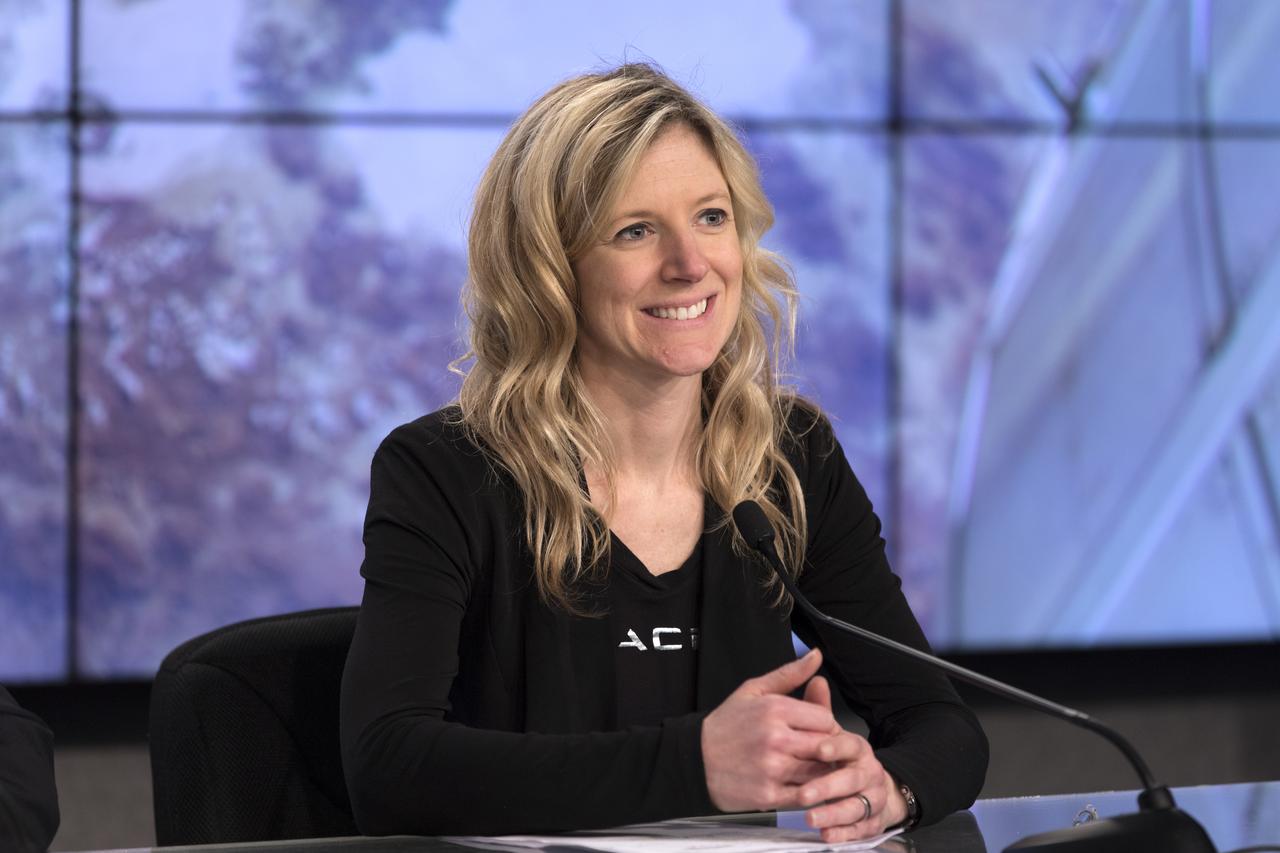
In the Press Site auditorium of NASA's Kennedy Space Center in Florida, Jessica Jensen, Dragon mission manager for SpaceX, speaks to the news media at a post-launch news conference following the liftoff of SpaceX CRS-10, a commercial resupply services mission to the International Space Station. SpaceX CRS-10 lifted off atop a Falcon 9 rocket from Kennedy's Launch Complex 39A at 9:39 a.m. EST.
SpaceX CRS-10 Post Launch News Conference
A SpaceX Falcon 9 rocket lifts off from Launch Complex 39A at NASA's Kenney Space Center in Florida. This is the company's 10th commercial resupply services mission to the International Space Station. Liftoff was at 9:39 a.m. EST from the historic launch site now operated by SpaceX under a property agreement with NASA. The Dragon spacecraft will deliver about 5,500 pounds of supplies to the space station, including the Stratospheric Aerosol and Gas Experiment (SAGE) III instrument to further study ozone in the atmosphere.
SpaceX CRS-10 Liftoff
A SpaceX Falcon 9 rocket lifts off from Launch Complex 39A at NASA's Kenney Space Center in Florida. This is the company's 10th commercial resupply services mission to the International Space Station. Liftoff was at 9:39 a.m. EST from the historic launch site now operated by SpaceX under a property agreement with NASA. The Dragon spacecraft will deliver about 5,500 pounds of supplies to the space station, including the Stratospheric Aerosol and Gas Experiment (SAGE) III instrument to further study ozone in the atmosphere.
SpaceX CRS-10 Liftoff
A SpaceX Falcon 9 rocket lifts off from Launch Complex 39A at NASA's Kenney Space Center in Florida. This is the company's 10th commercial resupply services mission to the International Space Station. Liftoff was at 9:39 a.m. EST from the historic launch site now operated by SpaceX under a property agreement with NASA. The Dragon spacecraft will deliver about 5,500 pounds of supplies to the space station, including the Stratospheric Aerosol and Gas Experiment (SAGE) III instrument to further study ozone in the atmosphere.
SpaceX CRS-10 Liftoff
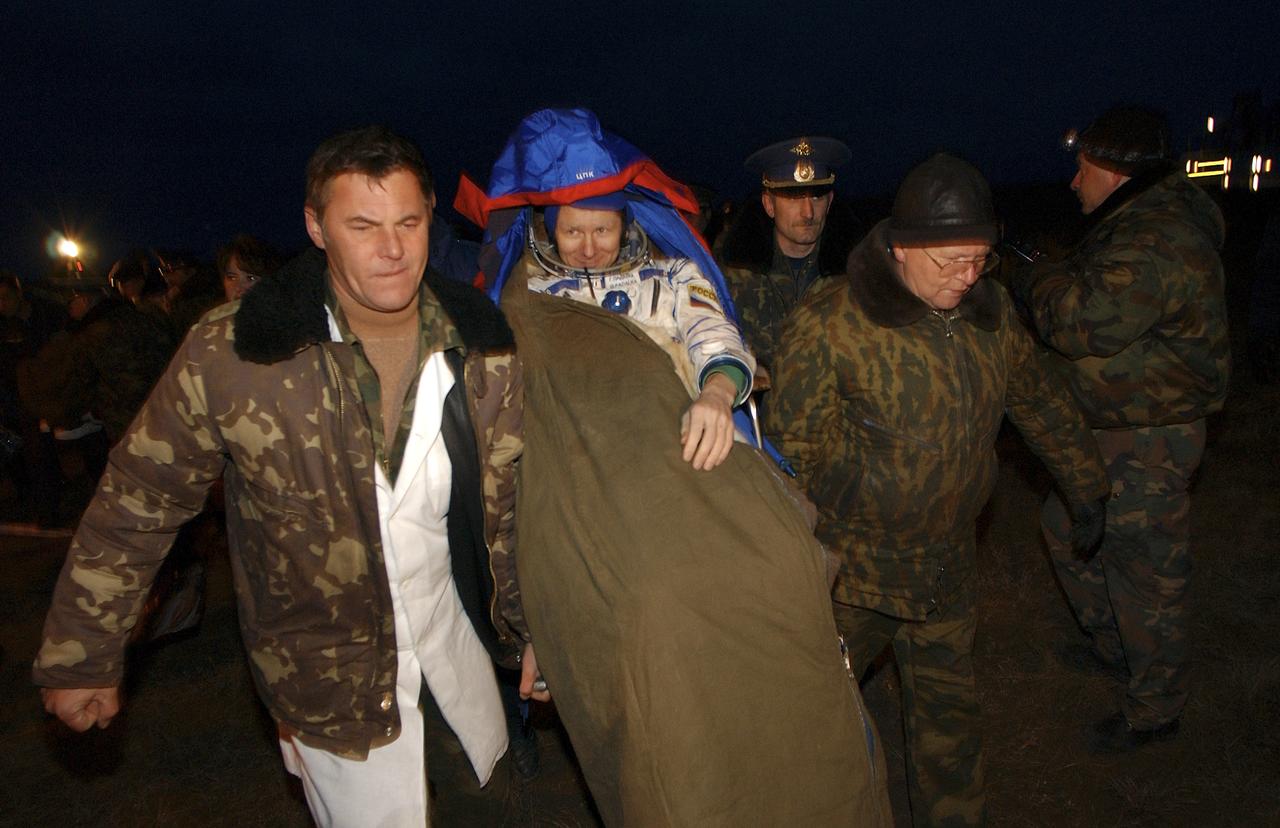
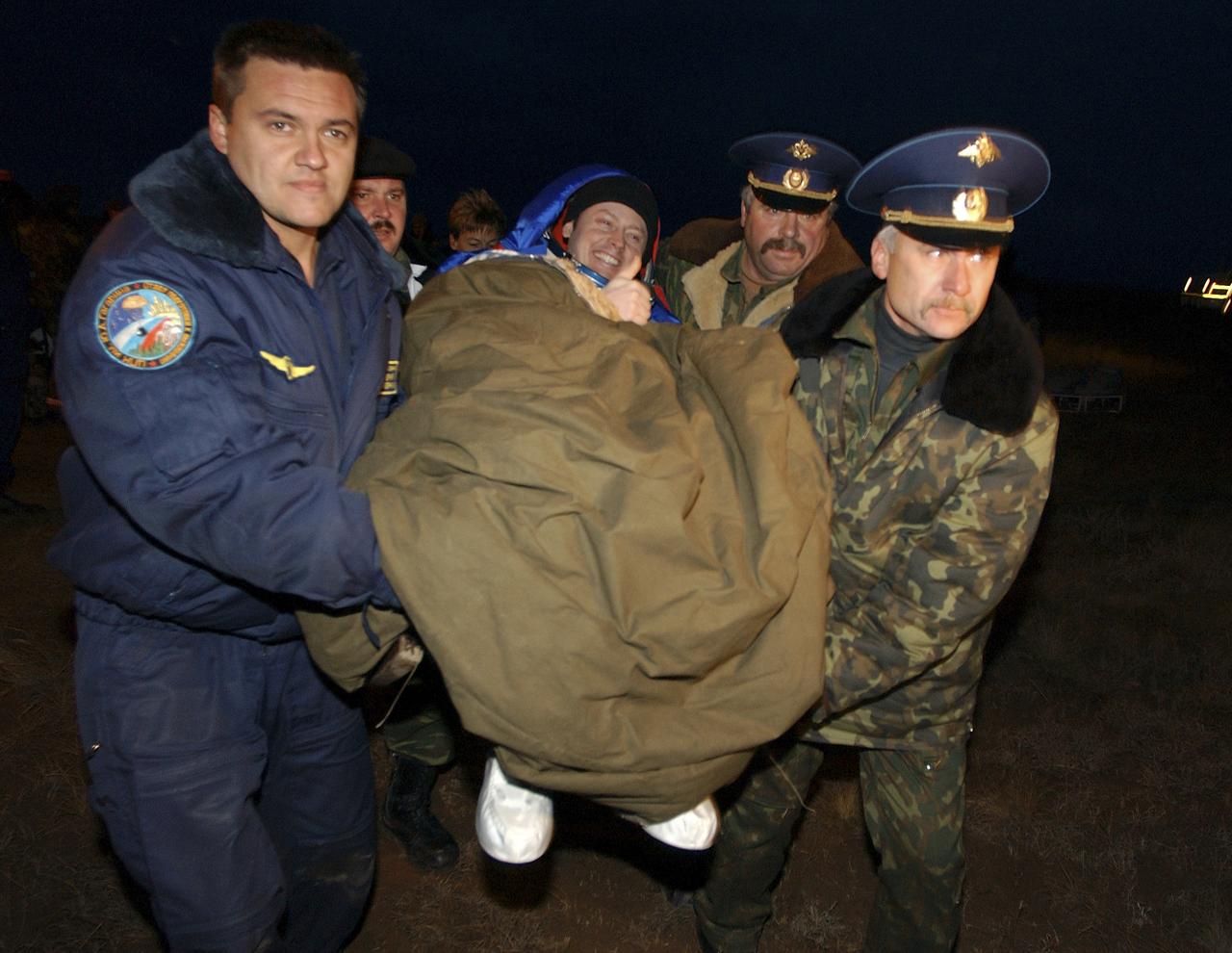
Expedition 9 Flight Engineer Michael Fincke is carried in a chair from the landing site to the medical tent in order to remove his sokol suit.  Fincke landed in the Soyuz capsule along with Expedition 9 Commander Gennady Padalka and Russian Space Forces cosmonaut Yuri Shargin.  The crew landed in their Soyuz capsule approximately 85 kilometers northeast of Arkalyk in northern Kazakhstan, Sunday, October 24, 2004.  Photo Credit: (NASA/Bill Ingalls)
Expedition 9 Landing
A SpaceX Falcon 9 rocket lifts off from Launch Complex 39A at NASA's Kenney Space Center in Florida. This is the company's 10th commercial resupply services mission to the International Space Station. Liftoff was at 9:39 a.m. EST from the historic launch site now operated by SpaceX under a property agreement with NASA. The Dragon spacecraft will deliver about 5,500 pounds of supplies to the space station, including the Stratospheric Aerosol and Gas Experiment (SAGE) III instrument to further study ozone in the atmosphere.
SpaceX CRS-10 Liftoff
In the Press Site auditorium of NASA's Kennedy Space Center in Florida, Jessica Jensen, Dragon mission manager for SpaceX, speaks to the news media at a post-launch news conference following the liftoff of SpaceX CRS-10, a commercial resupply services mission to the International Space Station. SpaceX CRS-10 lifted off atop a Falcon 9 rocket from Kennedy's Launch Complex 39A at 9:39 a.m. EST.
SpaceX CRS-10 Post Launch News Conference
A SpaceX Falcon 9 rocket lifts off from Launch Complex 39A at NASA's Kenney Space Center in Florida. This is the company's 10th commercial resupply services mission to the International Space Station. Liftoff was at 9:39 a.m. EST from the historic launch site now operated by SpaceX under a property agreement with NASA. The Dragon spacecraft will deliver about 5,500 pounds of supplies to the space station, including the Stratospheric Aerosol and Gas Experiment (SAGE) III instrument to further study ozone in the atmosphere.
SpaceX CRS-10 Liftoff
A SpaceX Falcon 9 rocket lifts off from Launch Complex 39A at NASA's Kenney Space Center in Florida. This is the company's 10th commercial resupply services mission to the International Space Station. Liftoff was at 9:39 a.m. EST from the historic launch site now operated by SpaceX under a property agreement with NASA. The Dragon spacecraft will deliver about 5,500 pounds of supplies to the space station, including the Stratospheric Aerosol and Gas Experiment (SAGE) III instrument to further study ozone in the atmosphere.
SpaceX CRS-10 Liftoff
In the Press Site auditorium of NASA's Kennedy Space Center in Florida, William Spetch, deputy manager of the International Space Station Transportation Office, speaks to the news media at a post-launch news conference following the liftoff of SpaceX CRS-10, a commercial resupply services mission to the International Space Station. SpaceX CRS-10 lifted off atop a Falcon 9 rocket from Kennedy's Launch Complex 39A at 9:39 a.m. EST.
SpaceX CRS-10 Post Launch News Conference
A SpaceX Falcon 9 rocket lifts off from Launch Complex 39A at NASA's Kenney Space Center in Florida. This is the company's 10th commercial resupply services mission to the International Space Station. Liftoff was at 9:39 a.m. EST from the historic launch site now operated by SpaceX under a property agreement with NASA. The Dragon spacecraft will deliver about 5,500 pounds of supplies to the space station, including the Stratospheric Aerosol and Gas Experiment (SAGE) III instrument to further study ozone in the atmosphere.
SpaceX CRS-10 Liftoff
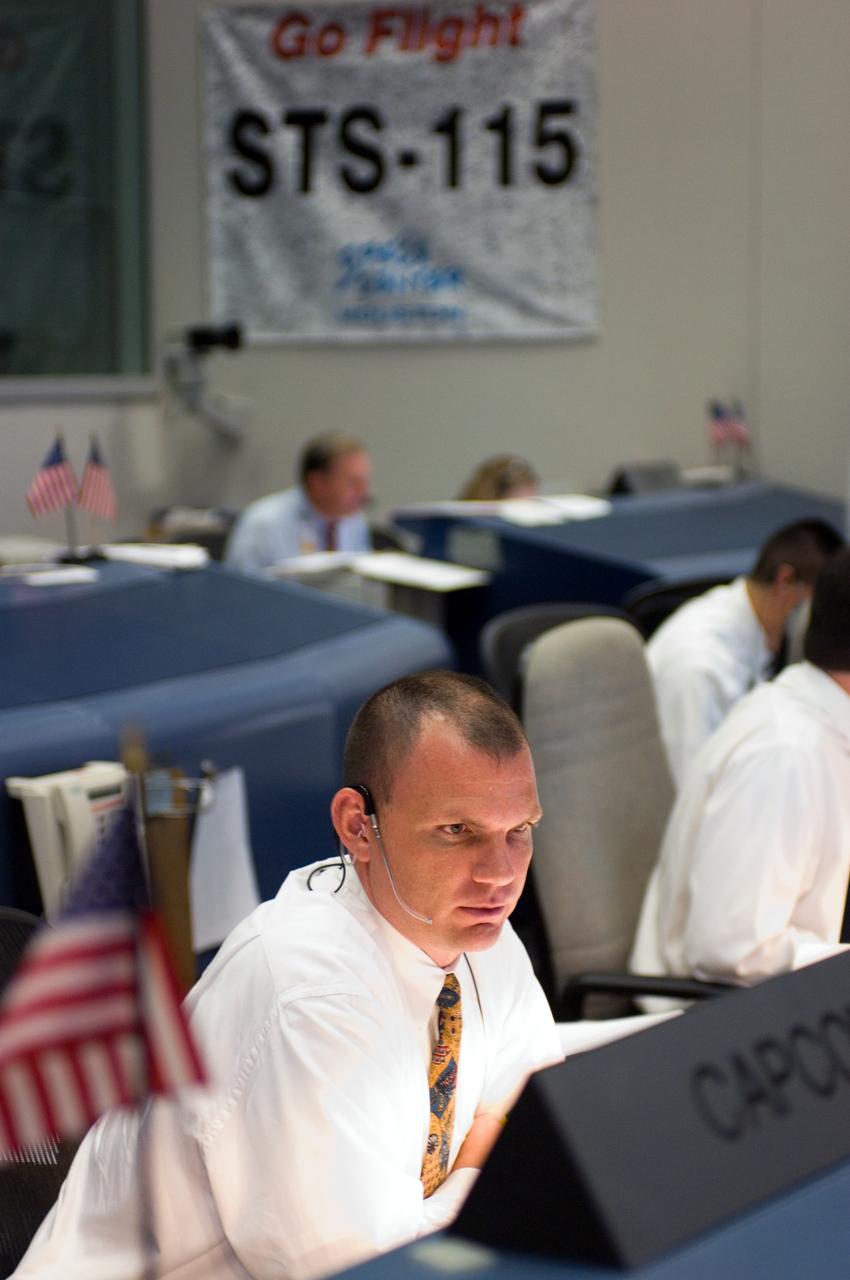
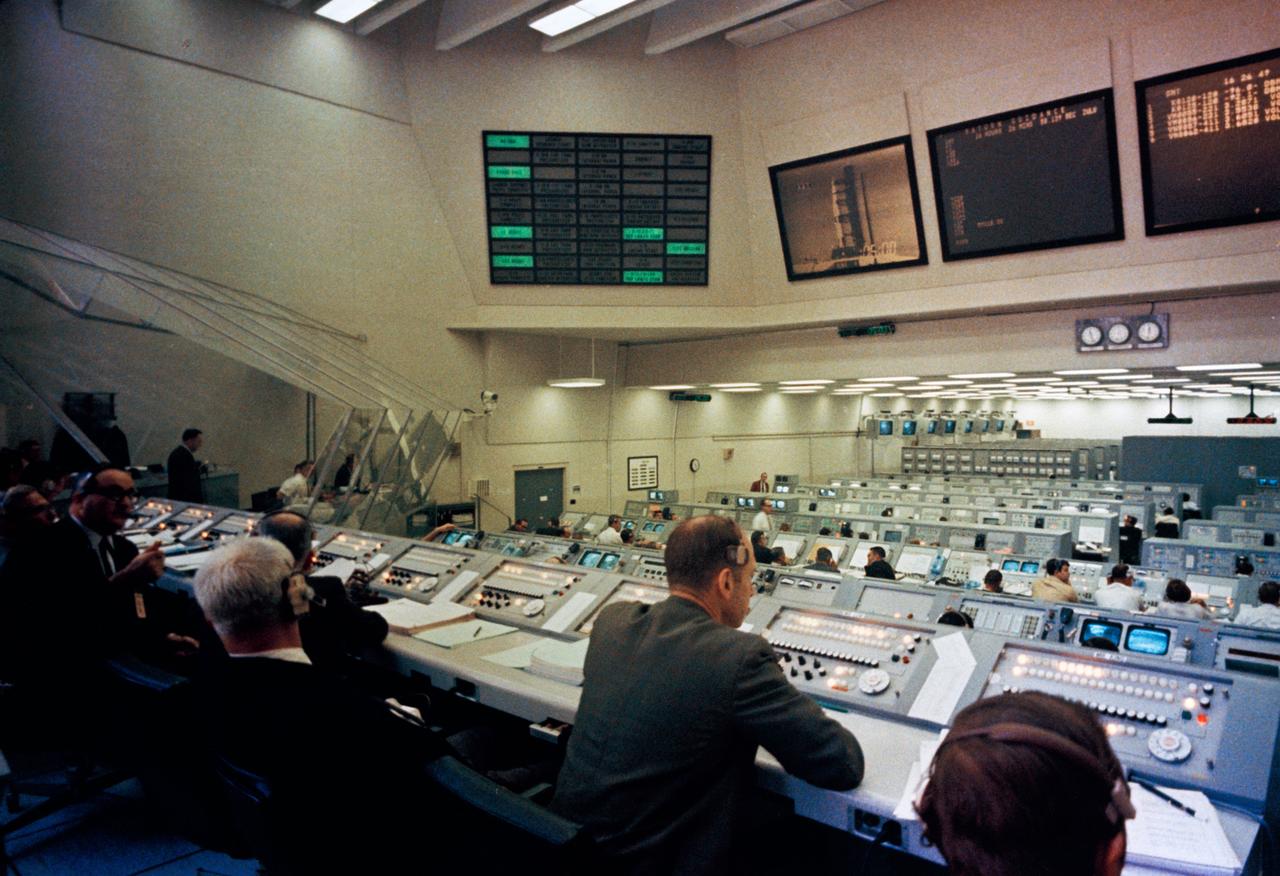
JSC2006-E-39854 (9 Sept. 2006) --- In the Shuttle (White) Flight Control Room of Houston's Mission Control Center, astronaut Dominic A. (Tony) Antonelli monitors launch countdown activities a few hundred miles away in Florida, site of Space Shuttle Atlantis' scheduled STS-115 launch. Antonelli serves as the spacecraft communicator (CAPCOM) for the ascent and entry phases. Liftoff occurred at 11:15 a.m. (EDT) on Sept. 9, 2006 from launch pad 39B at Kennedy Space Center.
Coverage of STS-115 Mission Control during launch
A SpaceX Falcon 9 rocket lifts off from Launch Complex 39A at NASA's Kenney Space Center in Florida. This is the company's 10th commercial resupply services mission to the International Space Station. Liftoff was at 9:39 a.m. EST from the historic launch site now operated by SpaceX under a property agreement with NASA. The Dragon spacecraft will deliver about 5,500 pounds of supplies to the space station, including the Stratospheric Aerosol and Gas Experiment (SAGE) III instrument to further study ozone in the atmosphere.
SpaceX CRS-10 Liftoff
A SpaceX Falcon 9 rocket lifts off from Launch Complex 39A at NASA's Kenney Space Center in Florida. This is the company's 10th commercial resupply services mission to the International Space Station. Liftoff was at 9:39 a.m. EST from the historic launch site now operated by SpaceX under a property agreement with NASA. The Dragon spacecraft will deliver about 5,500 pounds of supplies to the space station, including the Stratospheric Aerosol and Gas Experiment (SAGE) III instrument to further study ozone in the atmosphere.
SpaceX CRS-10 Liftoff
A SpaceX Falcon 9 rocket lifts off from Launch Complex 39A at NASA's Kenney Space Center in Florida. This is the company's 10th commercial resupply services mission to the International Space Station. Liftoff was at 9:39 a.m. EST from the historic launch site now operated by SpaceX under a property agreement with NASA. The Dragon spacecraft will deliver about 5,500 pounds of supplies to the space station, including the Stratospheric Aerosol and Gas Experiment (SAGE) III instrument to further study ozone in the atmosphere.
SpaceX CRS-10 Liftoff
A SpaceX Falcon 9 rocket lifts off from Launch Complex 39A at NASA's Kenney Space Center in Florida. This is the company's 10th commercial resupply services mission to the International Space Station. Liftoff was at 9:39 a.m. EST from the historic launch site now operated by SpaceX under a property agreement with NASA. The Dragon spacecraft will deliver about 5,500 pounds of supplies to the space station, including the Stratospheric Aerosol and Gas Experiment (SAGE) III instrument to further study ozone in the atmosphere.
SpaceX CRS-10 Liftoff
In the Press Site auditorium of NASA's Kennedy Space Center in Florida, Pam Underwood, manager of the Operations Integration Division of the Federal Aviation Administration Office of Commercial Space Transportation, speaks to the news media at a post-launch news conference following the liftoff of SpaceX CRS-10, a commercial resupply services mission to the International Space Station. SpaceX CRS-10 lifted off atop a Falcon 9 rocket from Kennedy's Launch Complex 39A at 9:39 a.m. EST.
SpaceX CRS-10 Post Launch News Conference
Expedition 9 Commander Gennady Padalka is carried in a chair from the landing site to the medical tent in order to remove his sokol suit.  Padalka landed in the Soyuz capsule along with Expedition 9 Flight Engineer Michael Fincke and Russian Space Forces cosmonaut Yuri Shargin.  The crew landed in their Soyuz capsule approximately 85 kilometers northeast of Arkalyk in northern Kazakhstan, Sunday, October 24, 2004.  Photo Credit: (NASA/Bill Ingalls)
Expedition 9 Landing
An inflatable medical tent stands in the foreground of the Expedition 9 landing site, while in the background the Soyuz capsule lays on its side after landing approximately 85 kilometers northeast of Arkalyk in northern Kazakhstan with Expedition 9 crew members Flight Engineer Michael Fincke, Commander Gennady Padalka and Russian Space Forces cosmonaut Yuri Shargin, Sunday, October 24, 2004.
Expedition 9 Landing
A SpaceX Falcon 9 rocket lifts off from Launch Complex 39A at NASA's Kenney Space Center in Florida. This is the company's 10th commercial resupply services mission to the International Space Station. Liftoff was at 9:39 a.m. EST from the historic launch site now operated by SpaceX under a property agreement with NASA. The Dragon spacecraft will deliver about 5,500 pounds of supplies to the space station, including the Stratospheric Aerosol and Gas Experiment (SAGE) III instrument to further study ozone in the atmosphere.
SpaceX CRS-10 Liftoff
A SpaceX Falcon 9 rocket lifts off from Launch Complex 39A at NASA's Kenney Space Center in Florida. This is the company's 10th commercial resupply services mission to the International Space Station. Liftoff was at 9:39 a.m. EST from the historic launch site now operated by SpaceX under a property agreement with NASA. The Dragon spacecraft will deliver about 5,500 pounds of supplies to the space station, including the Stratospheric Aerosol and Gas Experiment (SAGE) III instrument to further study ozone in the atmosphere.
SpaceX CRS-10 Liftoff
Michael Delp of Florida State University in Tallahassee, speaks to members of social media in the Kennedy Space Center’s Press Site auditorium. He is principal investigator for the Rodent Research-9 experiment. The briefing focused on research planned for launch to the International Space Station. The scientific materials and supplies will be aboard a Dragon spacecraft scheduled for launch from Kennedy’s Launch Complex 39A on Aug. 14 atop a SpaceX Falcon 9 rocket on the company's 12th Commercial Resupply Services mission to the space station.
SpaceX CRS-12 "What's on Board?" Science Briefing
A SpaceX Falcon 9 rocket lifts off from Launch Complex 39A at NASA's Kenney Space Center in Florida. This is the company's 10th commercial resupply services mission to the International Space Station. Liftoff was at 9:39 a.m. EST from the historic launch site now operated by SpaceX under a property agreement with NASA. The Dragon spacecraft will deliver about 5,500 pounds of supplies to the space station, including the Stratospheric Aerosol and Gas Experiment (SAGE) III instrument to further study ozone in the atmosphere.
SpaceX CRS-10 Liftoff
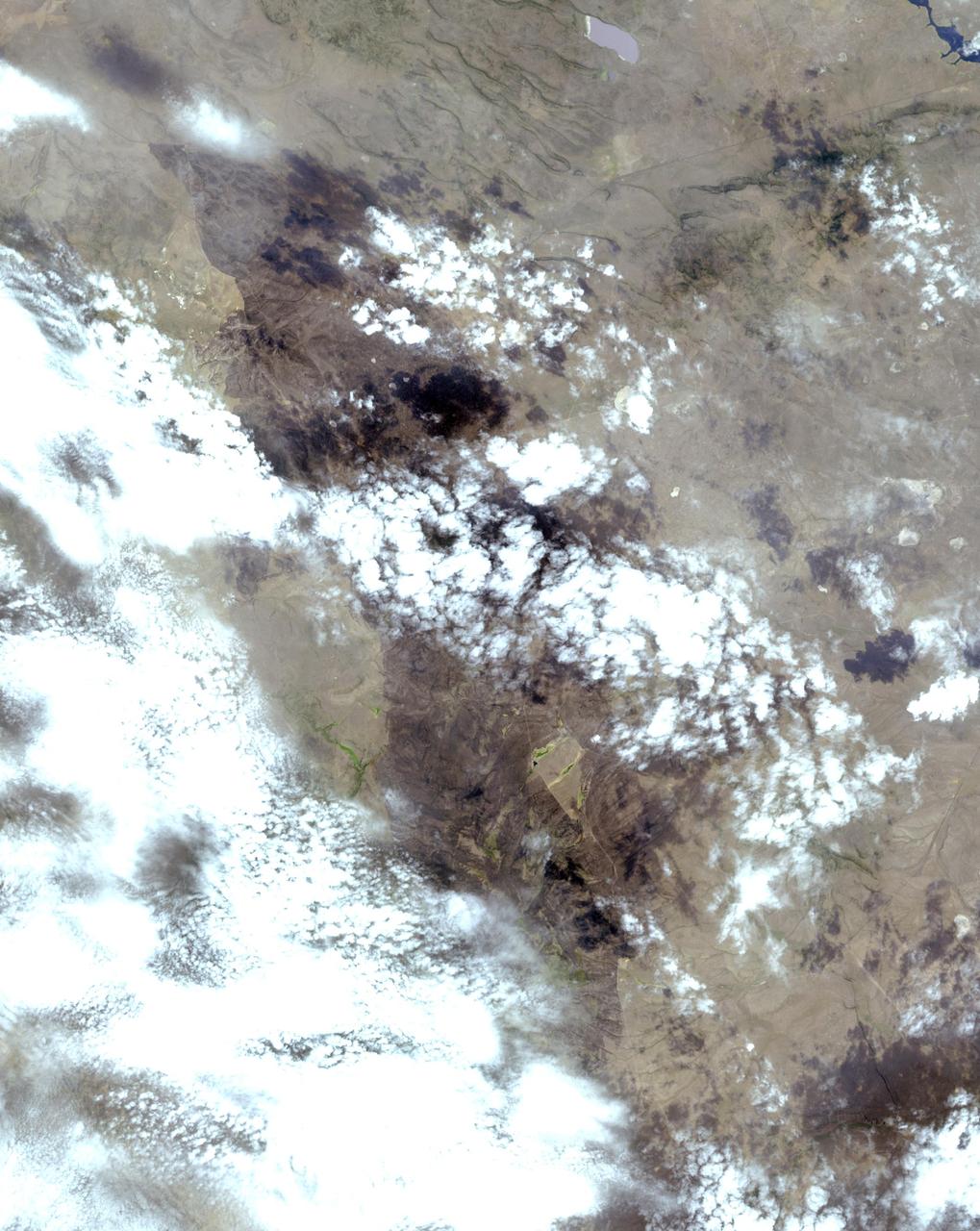
In early August 2017, the Cinder Butte fire burned 9 miles (15 kilometers) outside of the town of Riley, Oregon, and consumed more than 82 square miles (53,000 acres) of forest and brushland. The fire threatened tribal archaeological sites with strong significance to the Burns Paiute and Klamath tribes. Firefighters were able to contain the fire before it could damage the historic sites. On the image, the burned area is gray-brown, and cloud shadows are dark gray-to-black. The image was acquired Aug. 23, 2017, covers an area of 20 by 25 miles (31.5 by 39.9 kilometers), and is located at 43.5 degrees north, 119.9 degrees west.  https://photojournal.jpl.nasa.gov/catalog/PIA21879
Oregon Wildfire Captured in NASA Satellite Image
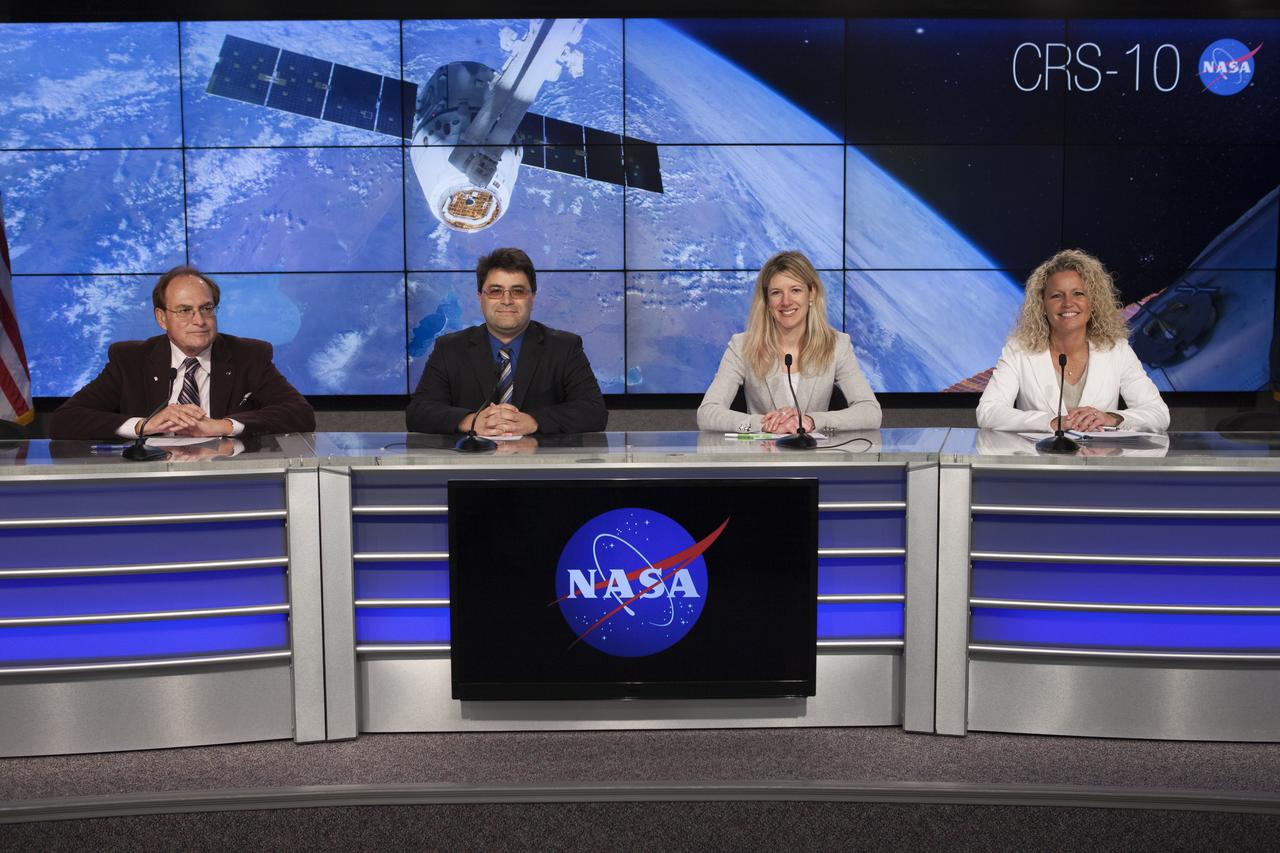
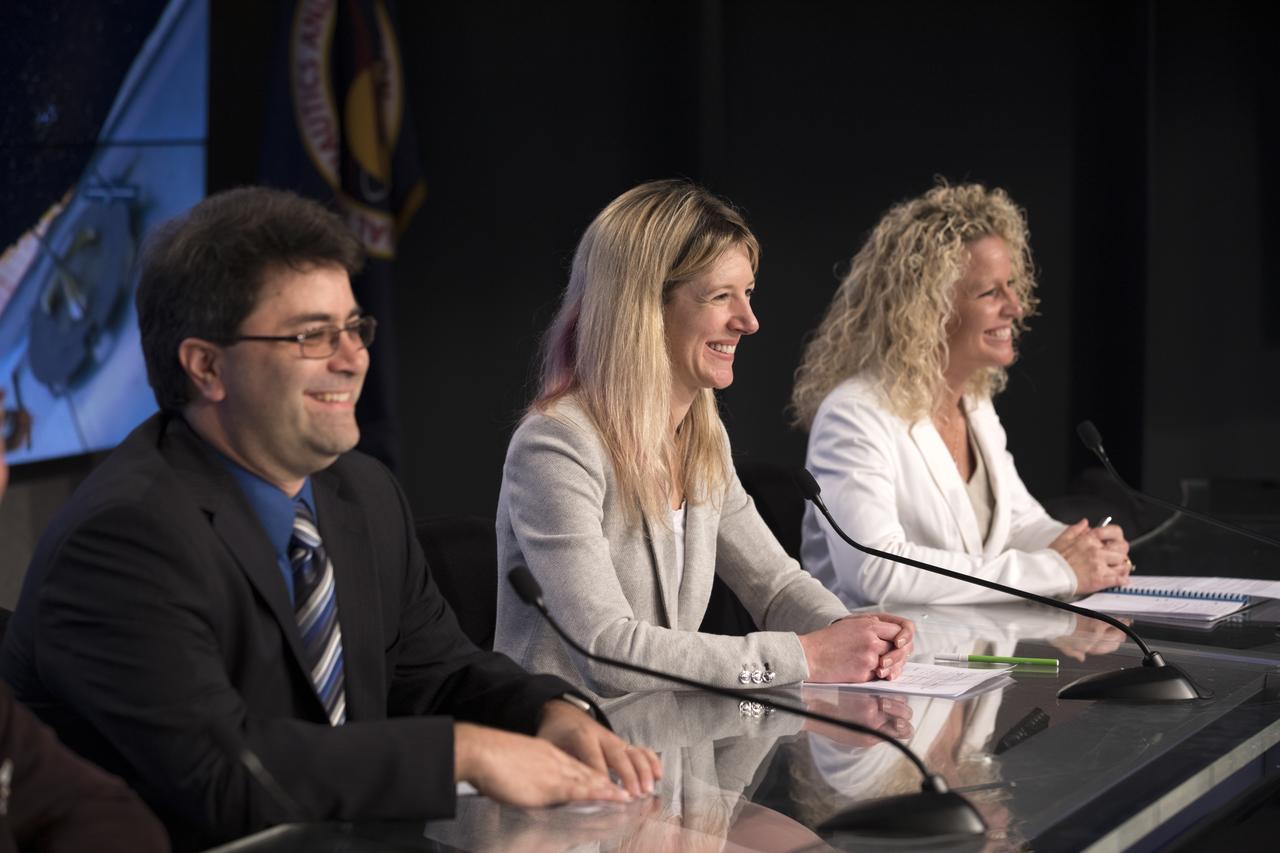
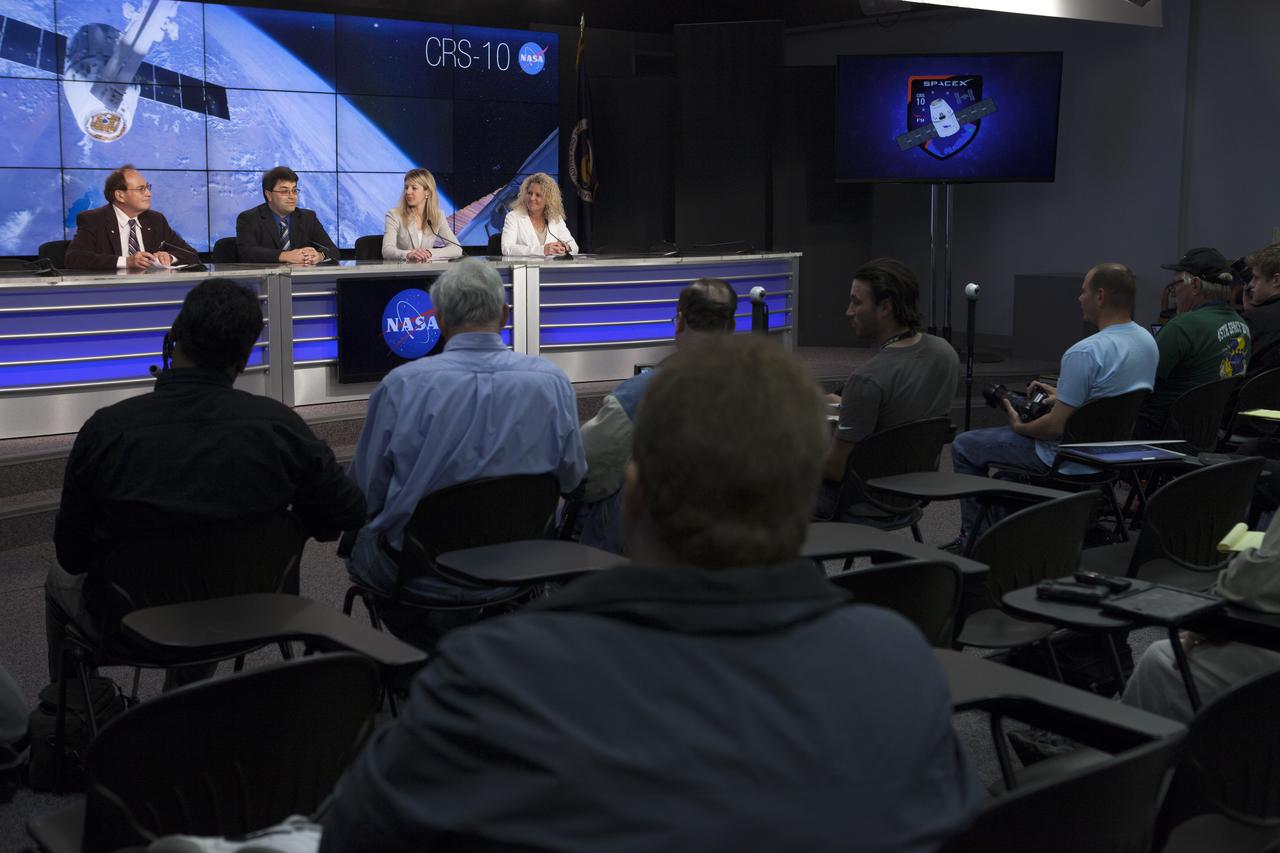
In the Press Site auditorium of NASA's Kennedy Space Center in Florida, NASA and industry leaders speak to media at a post-launch news conference following the liftoff of SpaceX CRS-10, a commercial resupply services mission to the International Space Station. From left are: George Diller, NASA Communications; William Spetch, deputy manager of the International Space Station Transportation Office; Jessica Jensen, Dragon mission manager for SpaceX; and Pam Underwood, manager of the Operations Integration Division of the Federal Aviation Administration Office of Commercial Space Transportation. SpaceX CRS-10 lifted off atop a Falcon 9 rocket from Kennedy's Launch Complex 39A at 9:39 a.m. EST.
SpaceX CRS-10 Post Launch News Conference
In the Press Site auditorium of NASA's Kennedy Space Center in Florida, Jessica Jensen, SpaceX director of Dragon Mission Management, speaks to media at a post-launch news conference following the liftoff of the SpaceX Falcon 9 rocket at 4:30 p.m. EST. The flight is a commercial resupply services mission for NASA to the International Space Station. SpaceX CRS-14 lifted off atop the Falcon 9 rocket from Space Launch Complex 40 at Cape Canaveral Air Force Station carrying supplies and equipment and new science experiments for technology research.
SpaceX CRS-14 Post Launch Conference
In the Press Site auditorium of NASA's Kennedy Space Center in Florida, NASA and industry leaders speak to media at a post-launch news conference following the liftoff of SpaceX CRS-10, a commercial resupply services mission to the International Space Station. From left are: George Diller, NASA Communications; William Spetch, deputy manager of the International Space Station Transportation Office; Jessica Jensen, Dragon mission manager for SpaceX; and Pam Underwood, manager of the Operations Integration Division of the Federal Aviation Administration Office of Commercial Space Transportation. SpaceX CRS-10 lifted off atop a Falcon 9 rocket from Kennedy's Launch Complex 39A at 9:39 a.m. EST.
SpaceX CRS-10 Post Launch News Conference
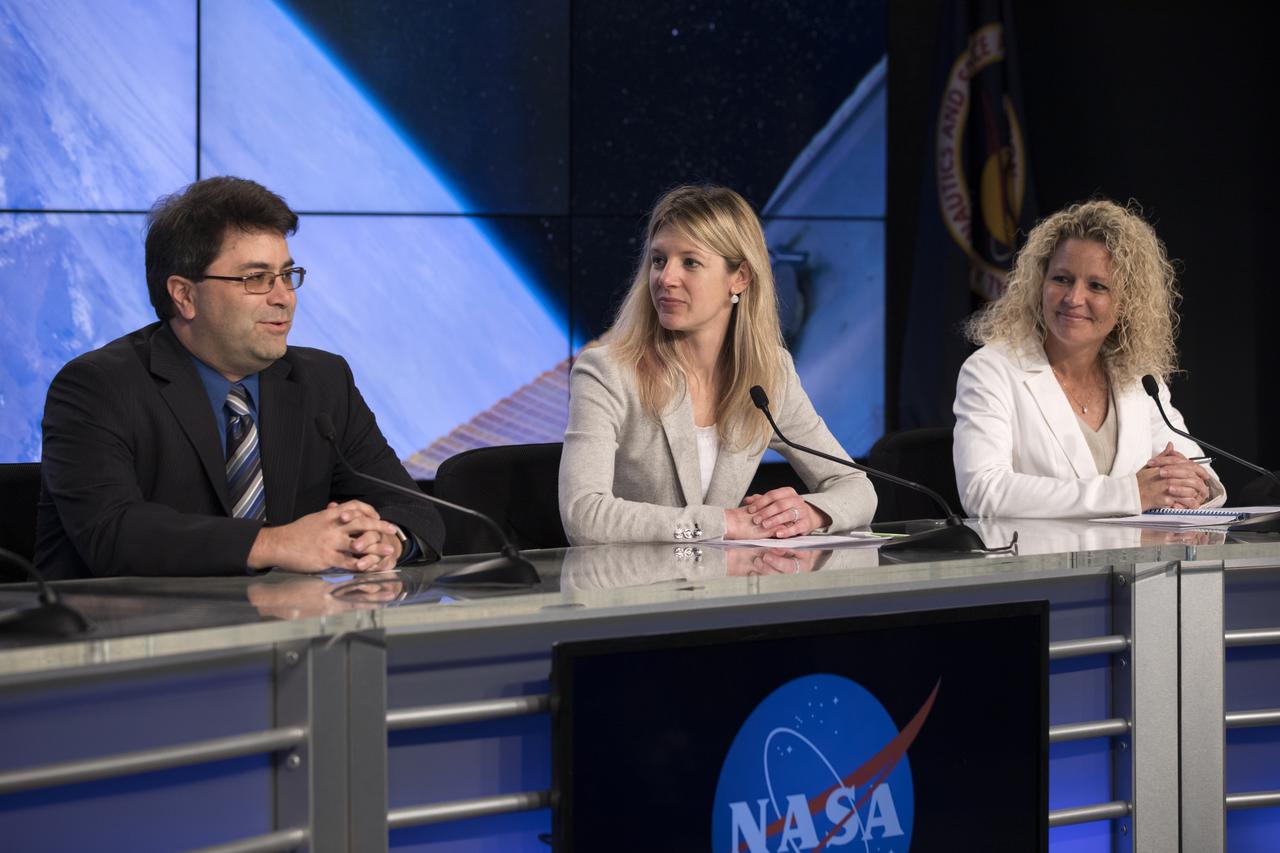
In the Press Site auditorium of NASA's Kennedy Space Center in Florida, NASA and industry leaders speak to media at a post-launch news conference following the liftoff of SpaceX CRS-10, a commercial resupply services mission to the International Space Station. From left are: William Spetch, deputy manager of the International Space Station Transportation Office; Jessica Jensen, Dragon mission manager for SpaceX; and Pam Underwood, manager of the Operations Integration Division of the Federal Aviation Administration Office of Commercial Space Transportation. SpaceX CRS-10 lifted off atop a Falcon 9 rocket from Kennedy's Launch Complex 39A at 9:39 a.m. EST.
SpaceX CRS-10 Post Launch News Conference
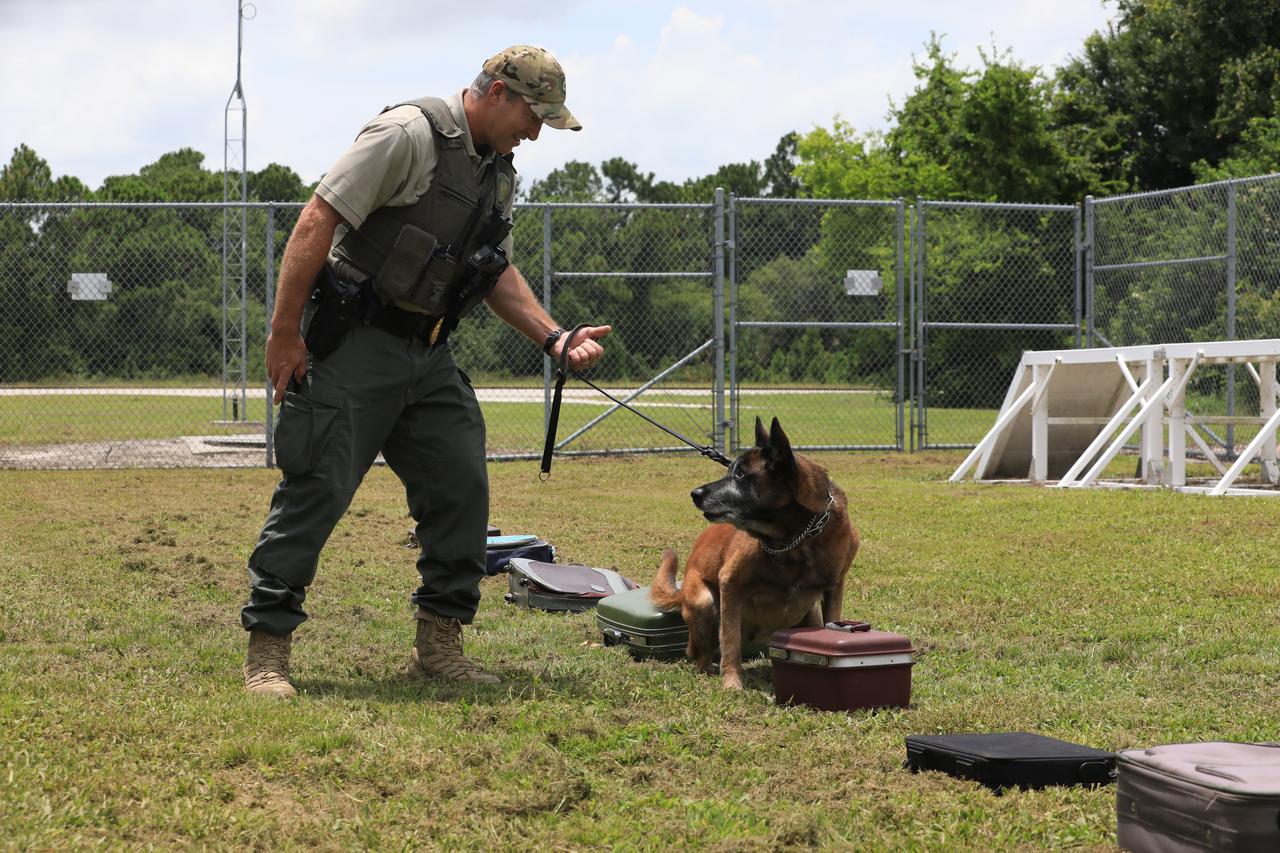
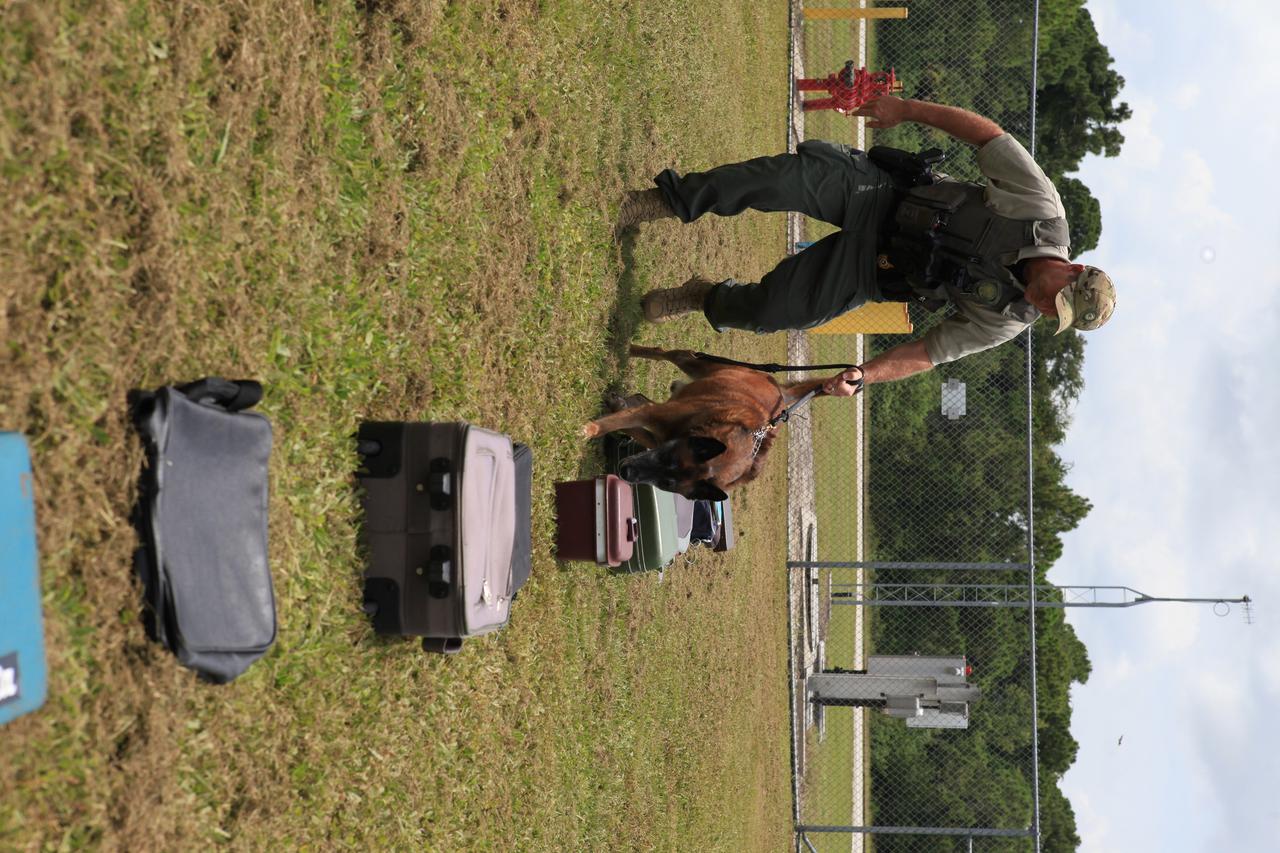
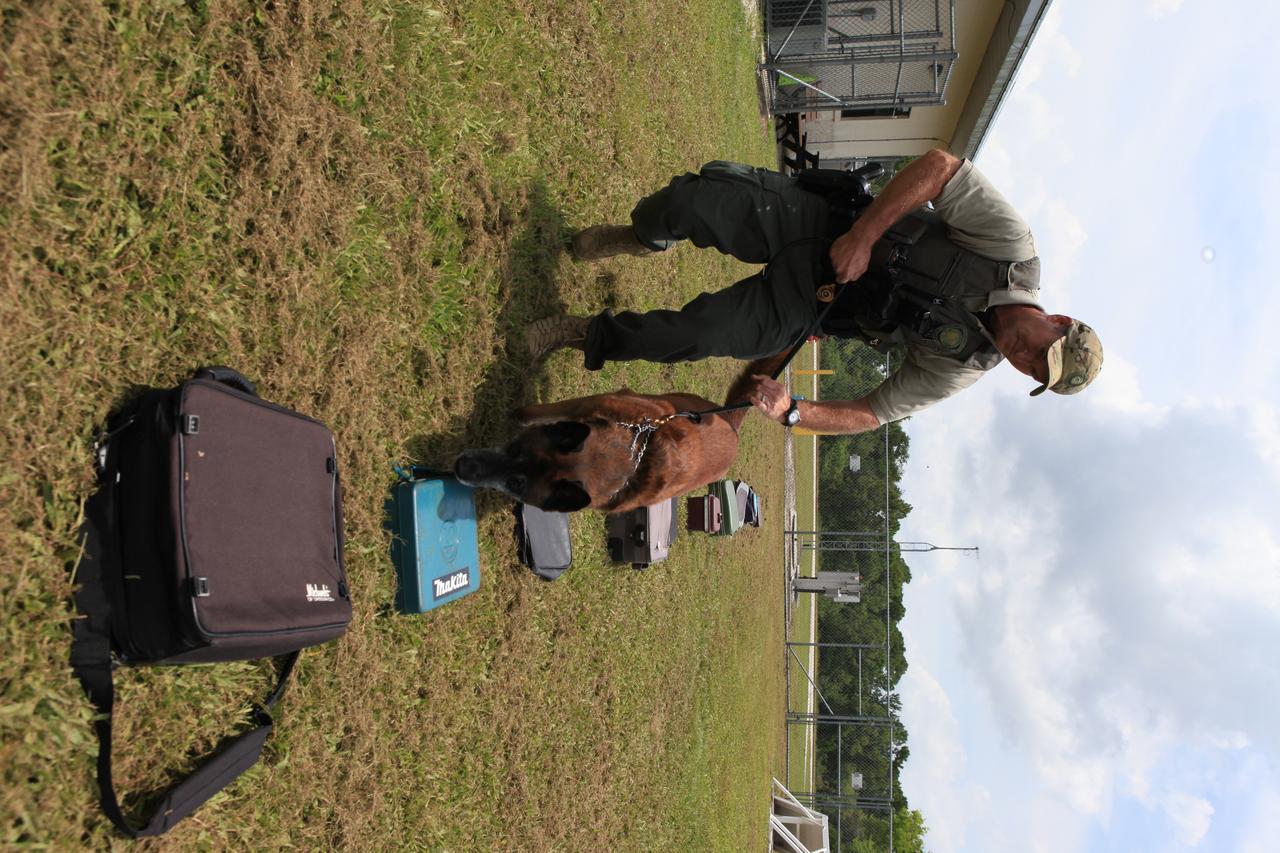
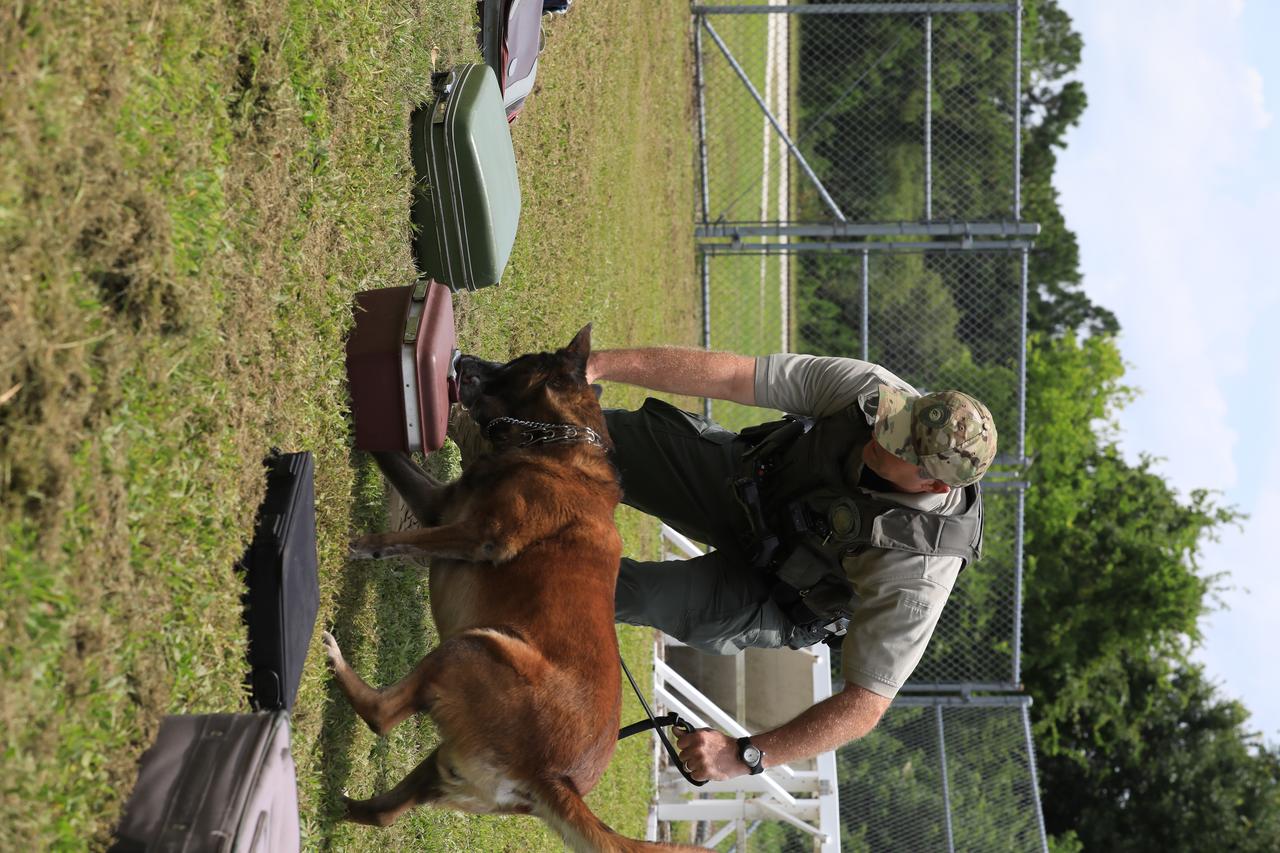
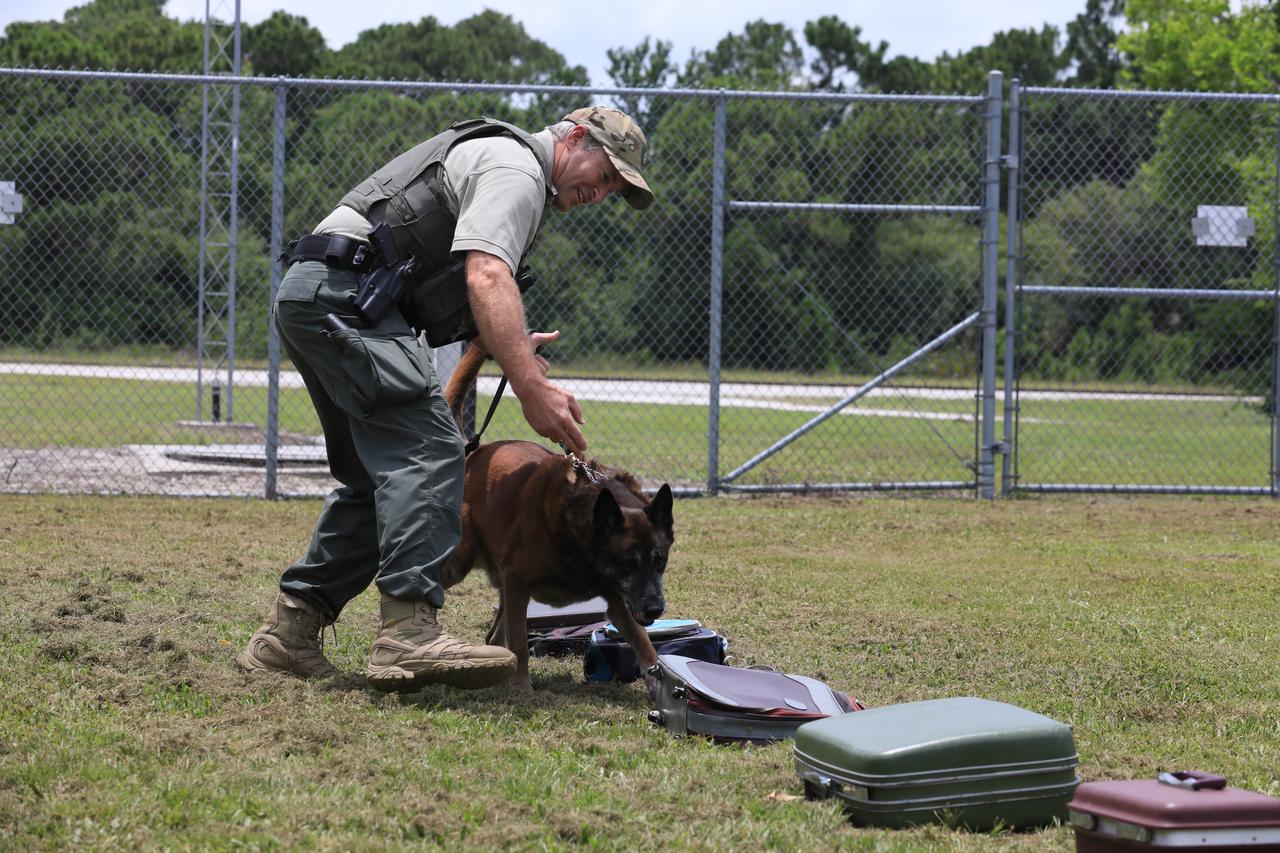
K-9 Handler Officer Scott O’Rourke watches as K-9 LJ works his way through a row of bags and containers to locate one with a suspicious substance during a training exercise on July 10, 2019, at Kennedy Space Center’s Protective Services Office in Florida. The center’s specially trained K-9s support the center 24/7, 365 days. Their main goal is to protect the Kennedy workforce and assets. Normal activities include sweeps of designated facilities, parking lots and random vehicle inspections at entrance gates. During rocket launches, they are out and about performing sweeps of facilities and launch site viewing areas. They cover Kennedy and the Merritt Island National Wildlife Refuge.
KSC Protectice Services - Working Dogs
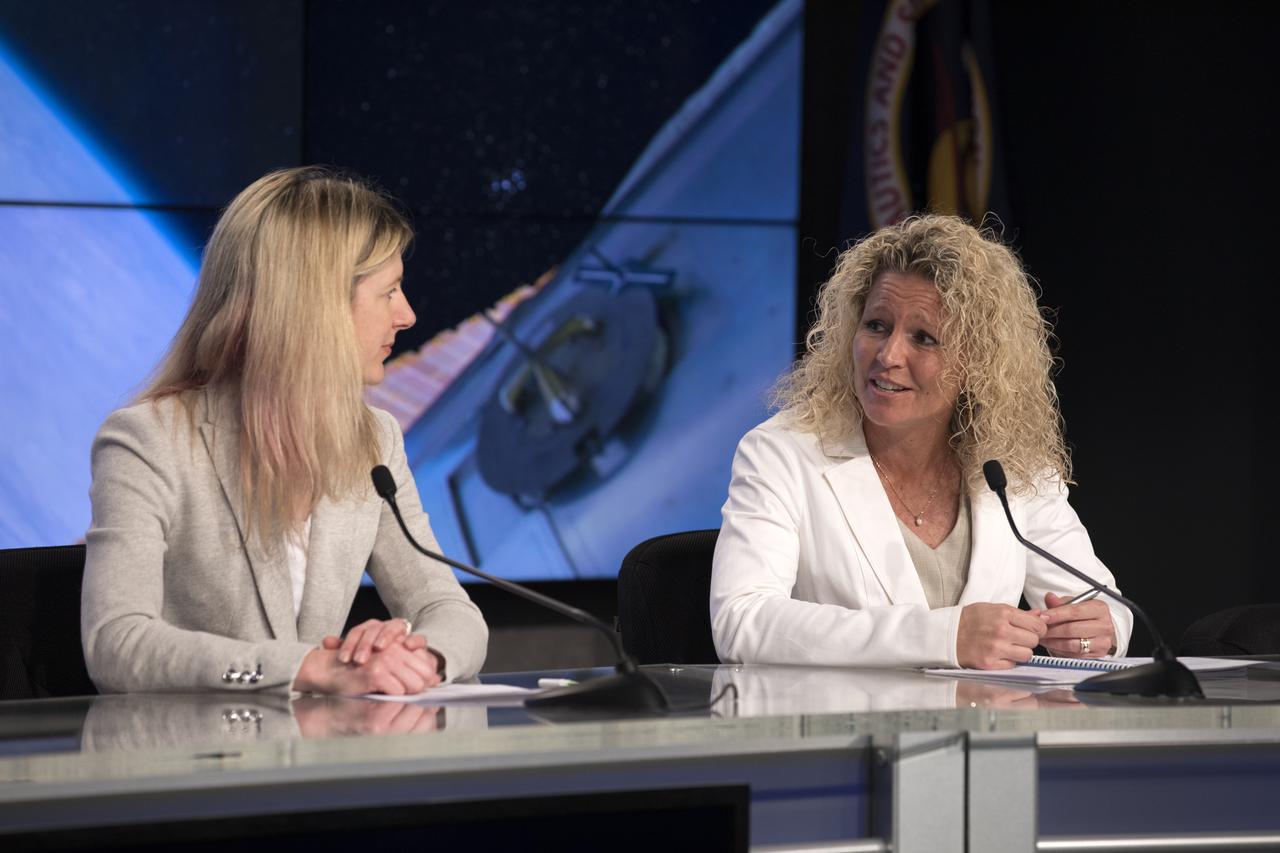
In the Press Site auditorium of NASA's Kennedy Space Center in Florida, NASA and industry leaders speak to media at a post-launch news conference following the liftoff of SpaceX CRS-10, a commercial resupply services mission to the International Space Station. From left are: Jessica Jensen, Dragon mission manager for SpaceX; and Pam Underwood, manager of the Operations Integration Division of the Federal Aviation Administration Office of Commercial Space Transportation. SpaceX CRS-10 lifted off atop a Falcon 9 rocket from Kennedy's Launch Complex 39A at 9:39 a.m. EST.
SpaceX CRS-10 Post Launch News Conference
K-9 Handler Officer Scott O’Rourke watches as K-9 LJ selects the container with a suspicious substance during a training exercise on July 10, 2019, at Kennedy Space Center’s Protective Services Office in Florida. The center’s specially trained K-9s support the center 24/7, 365 days. Their main goal is to protect the Kennedy workforce and assets. Normal activities include sweeps of designated facilities, parking lots and random vehicle inspections at entrance gates. During rocket launches, they are out and about performing sweeps of facilities and launch site viewing areas. They cover Kennedy and the Merritt Island National Wildlife Refuge.
KSC Protectice Services - Working Dogs
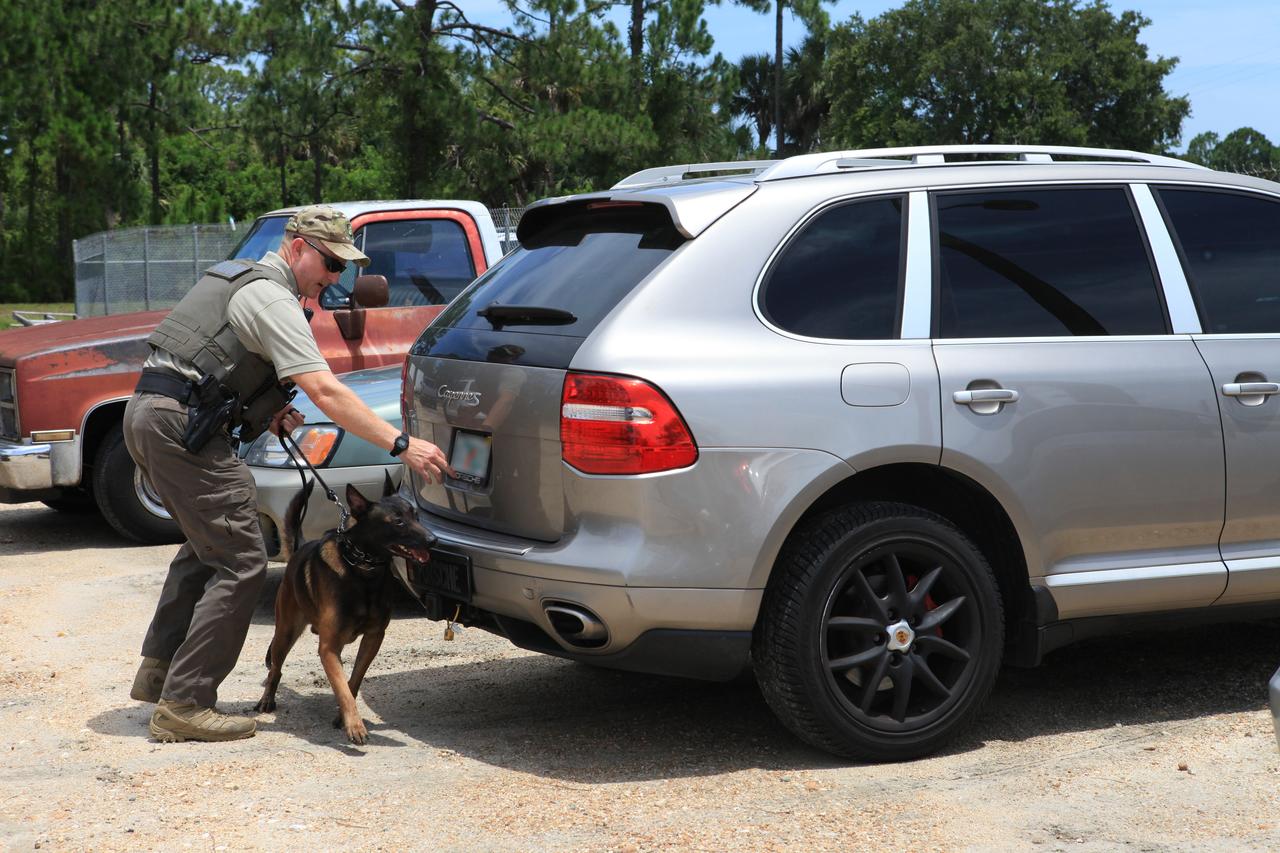
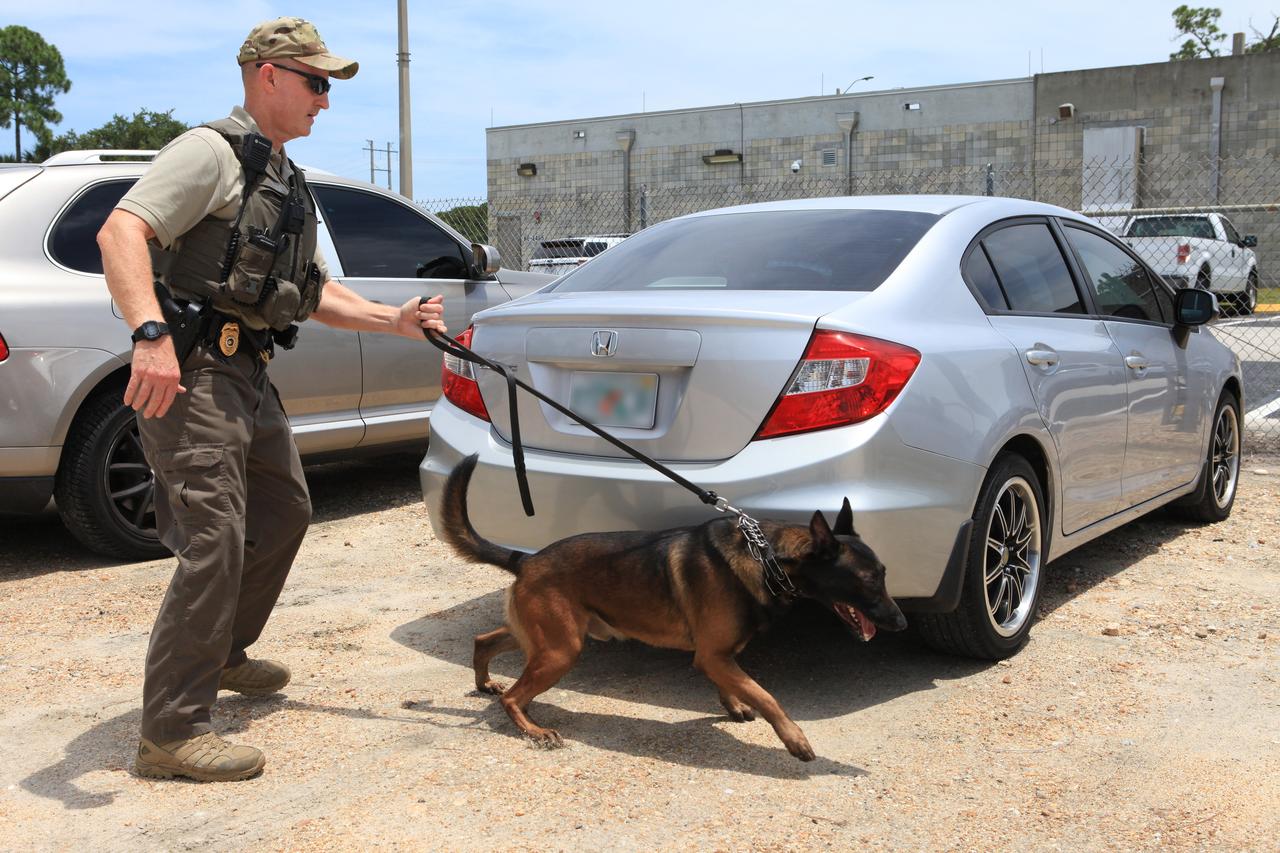
K-9 Handler Officer John McGee watches as K-9 Spike works his way through a row of cars during a training exercise on July 10, 2019, at Kennedy Space Center’s Protective Services Office in Florida. The center’s specially trained K-9s support the center 24/7, 365 days. Their main goal is to protect the Kennedy workforce and assets. Normal activities include sweeps of designated facilities, parking lots and random vehicle inspections at entrance gates. During rocket launches, they are out and about performing sweeps of facilities and launch site viewing areas. They cover Kennedy and the Merritt Island National Wildlife Refuge.
KSC Protectice Services - Working Dogs
K-9 Handler Officer Scott O’Rourke watches as K-9 LJ works his way through a row of bags and containers to locate one with a suspicious substance during a training exercise on July 10, 2019, at Kennedy Space Center’s Protective Services Office in Florida. The center’s specially trained K-9s support the center 24/7, 365 days. Their main goal is to protect the Kennedy workforce and assets. Normal activities include sweeps of designated facilities, parking lots and random vehicle inspections at entrance gates. During rocket launches, they are out and about performing sweeps of facilities and launch site viewing areas. They cover Kennedy and the Merritt Island National Wildlife Refuge.
KSC Protectice Services - Working Dogs
K-9 Handler Officer Scott O’Rourke watches as K-9 LJ works his way through a row of bags and containers to locate one with a suspicious substance during a training exercise on July 10, 2019, at Kennedy Space Center’s Protective Services Office in Florida. The center’s specially trained K-9s support the center 24/7, 365 days. Their main goal is to protect the Kennedy workforce and assets. Normal activities include sweeps of designated facilities, parking lots and random vehicle inspections at entrance gates. During rocket launches, they are out and about performing sweeps of facilities and launch site viewing areas. They cover Kennedy and the Merritt Island National Wildlife Refuge.
KSC Protectice Services - Working Dogs
K-9 Handler Officer Scott O’Rourke watches as K-9 LJ stops at the container with a suspicious substance during a training exercise on July 10, 2019, at Kennedy Space Center’s Protective Services Office in Florida. The center’s specially trained K-9s support the center 24/7, 365 days. Their main goal is to protect the Kennedy workforce and assets. Normal activities include sweeps of designated facilities, parking lots and random vehicle inspections at entrance gates. During rocket launches, they are out and about performing sweeps of facilities and launch site viewing areas. They cover Kennedy and the Merritt Island National Wildlife Refuge.
KSC Protectice Services - Working Dogs
K-9 Handler Officer John McGee watches as K-9 Spike works his way through a row of cars during a training exercise on July 10, 2019, at Kennedy Space Center’s Protective Services Office in Florida. The center’s specially trained K-9s support the center 24/7, 365 days. Their main goal is to protect the Kennedy workforce and assets. Normal activities include sweeps of designated facilities, parking lots and random vehicle inspections at entrance gates. During rocket launches, they are out and about performing sweeps of facilities and launch site viewing areas. They cover Kennedy and the Merritt Island National Wildlife Refuge.
KSC Protectice Services - Working Dogs
In the Press Site auditorium of NASA's Kennedy Space Center in Florida, NASA and industry leaders speak to media at a post-launch news conference following the liftoff of SpaceX CRS-10, a commercial resupply services mission to the International Space Station. From left are: William Spetch, deputy manager of the International Space Station Transportation Office; Jessica Jensen, Dragon mission manager for SpaceX; and Pam Underwood, manager of the Operations Integration Division of the Federal Aviation Administration Office of Commercial Space Transportation. SpaceX CRS-10 lifted off atop a Falcon 9 rocket from Kennedy's Launch Complex 39A at 9:39 a.m. EST.
SpaceX CRS-10 Post Launch News Conference
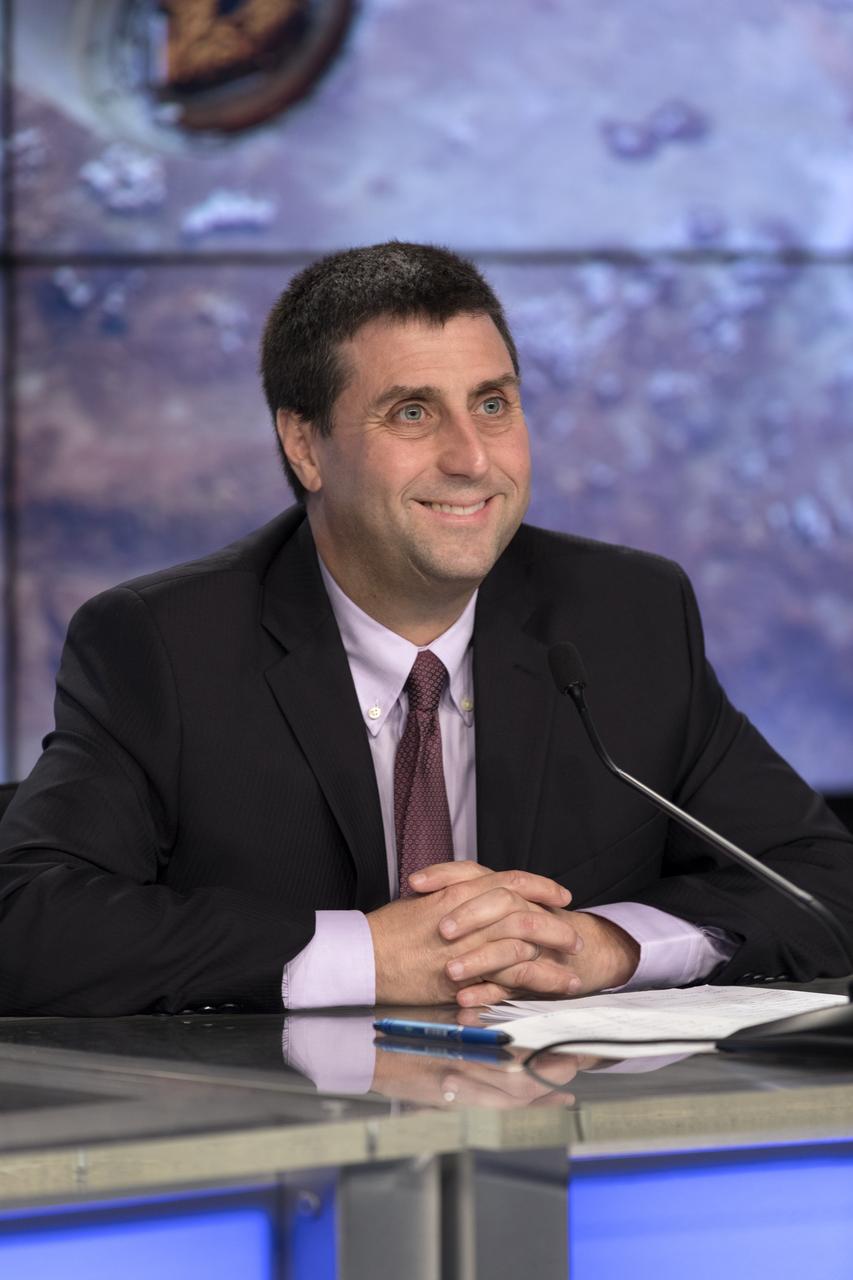
In the Press Site auditorium of NASA's Kennedy Space Center in Florida,Joel Montalbano, deputy manager, International Space Station Program manager at NASA's Johnson Space Center in Houston, speaks to media at a post-launch news conference following the liftoff of the SpaceX Falcon 9 rocket at 4:30 p.m. EST. The flight is a commercial resupply services mission for NASA to the International Space Station. SpaceX CRS-14 lifted off atop the Falcon 9 rocket from Space Launch Complex 40 at Cape Canaveral Air Force Station carrying supplies and equipment and new science experiments for technology research.
SpaceX CRS-14 Post Launch Conference
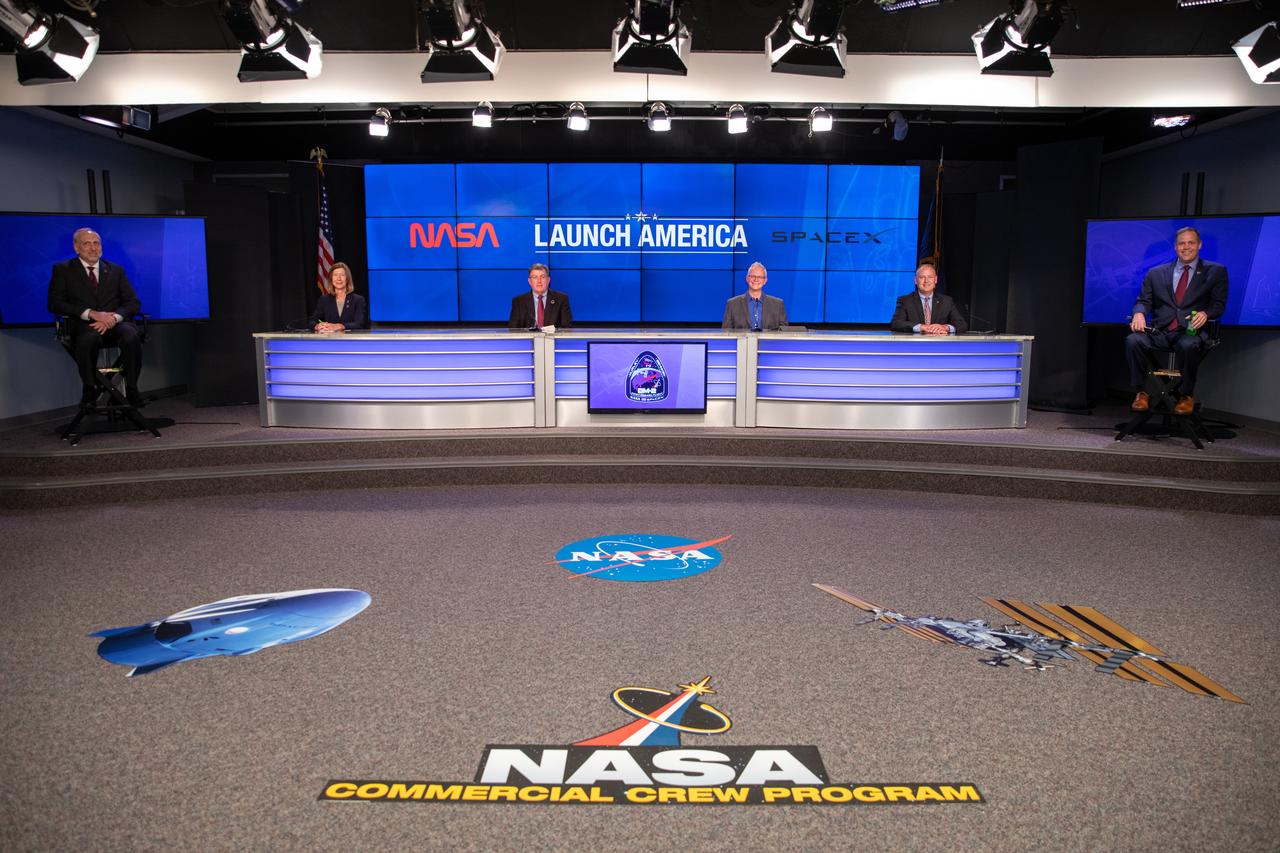
Inside the Press Site auditorium at NASA’s Kennedy Space Center in Florida, agency and industry leaders conduct a virtual news conference with members of the media on May 22, 2020, following the conclusion of the flight readiness review for NASA’s SpaceX Demo-2 mission, with NASA astronauts Robert Behnken and Douglas Hurley, to the International Space Station. From left are Steve Jurczyk, NASA associate administrator; Kathy Lueders, Commercial Crew Program manager; Kirk Shireman, International Space Station Program manager; Benji Reed, director of Crew Mission Management, SpaceX; Norm Knight, deputy director of NASA’s Johnson Space Center’s Flight Operations; and Jim Bridenstine, NASA administrator. This will be SpaceX’s final flight test for NASA’s Commercial Crew Program. Behnken and Hurley will fly to the orbiting laboratory in a SpaceX Crew Dragon spacecraft, launching atop a Falcon 9 rocket from Kennedy’s Launch Complex 39A. Liftoff is scheduled for 4:33 p.m. EDT on Wednesday, May 27.
NASA Hosts Post-Flight Readiness Review Briefing for the agency
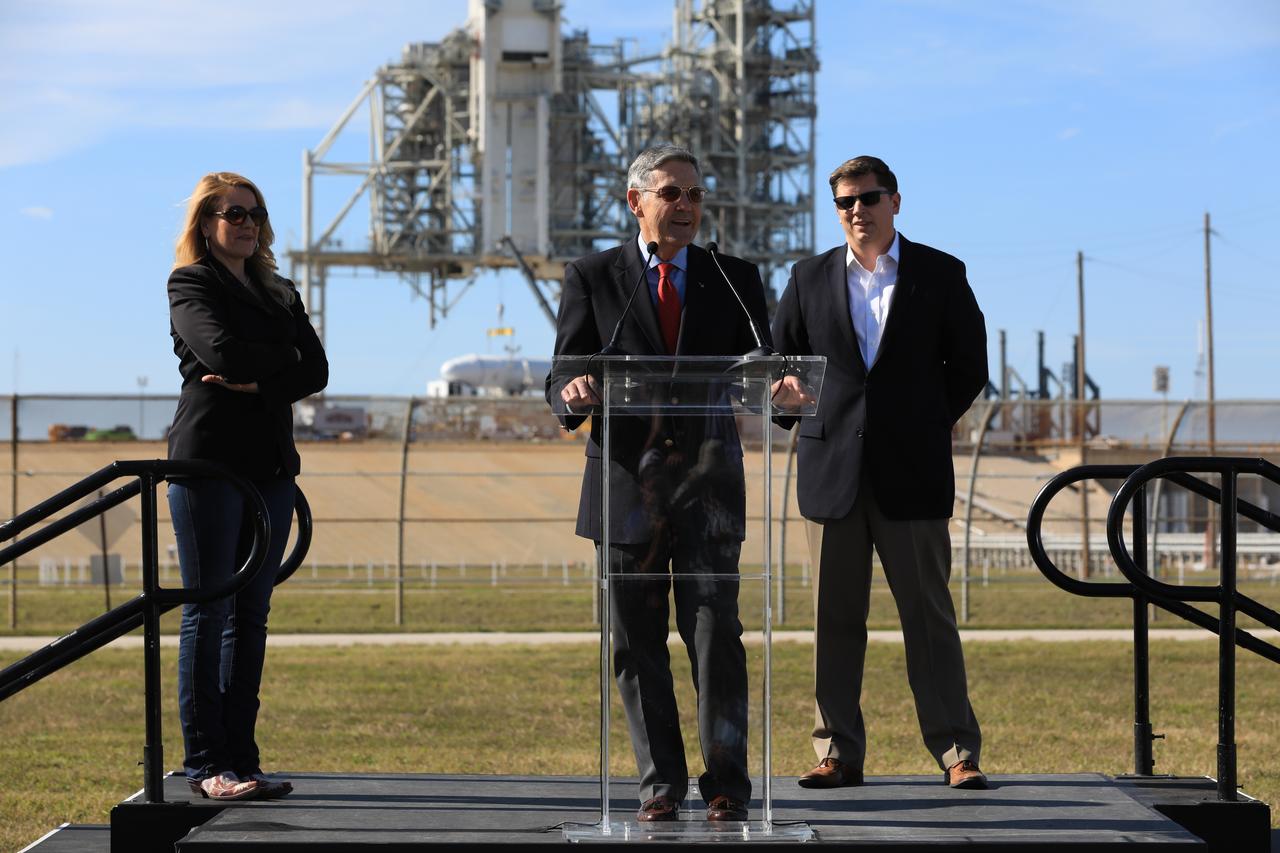
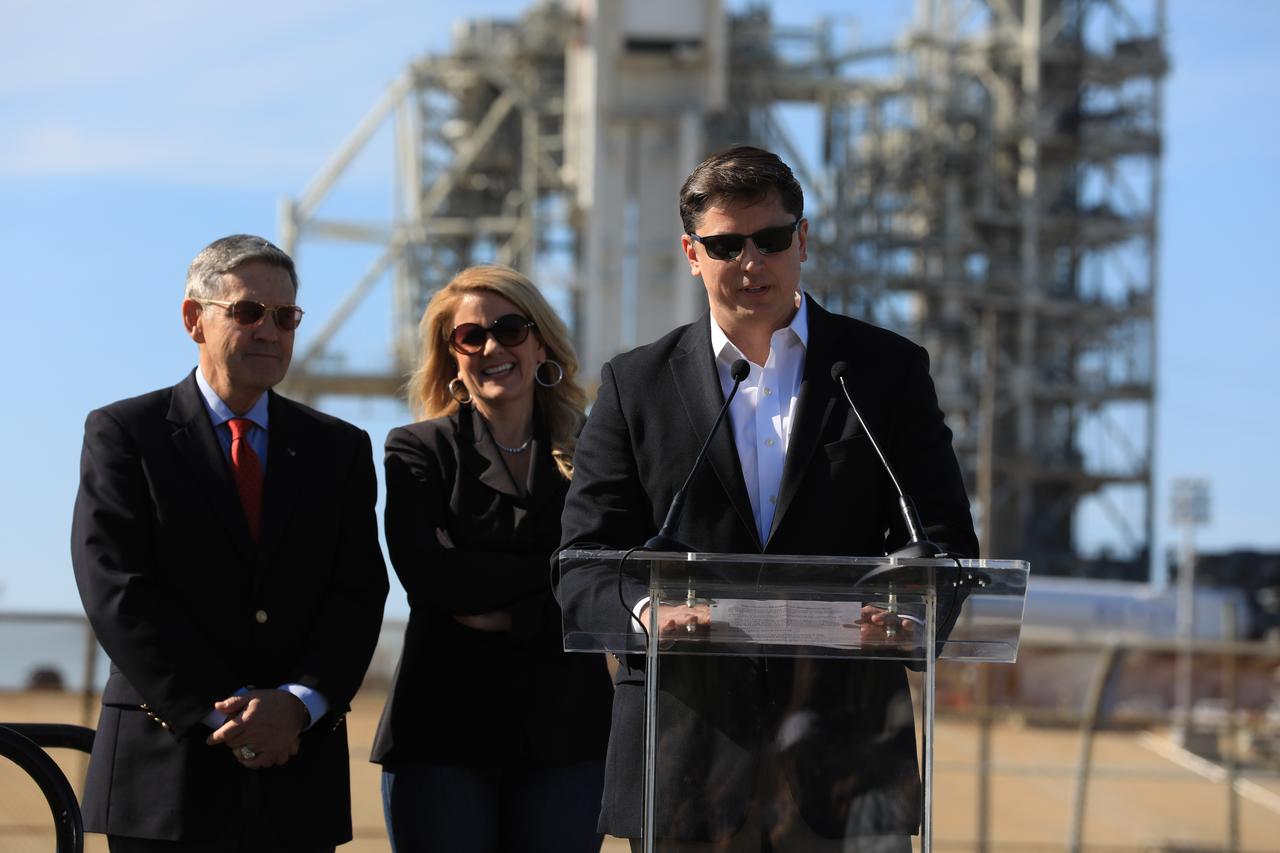
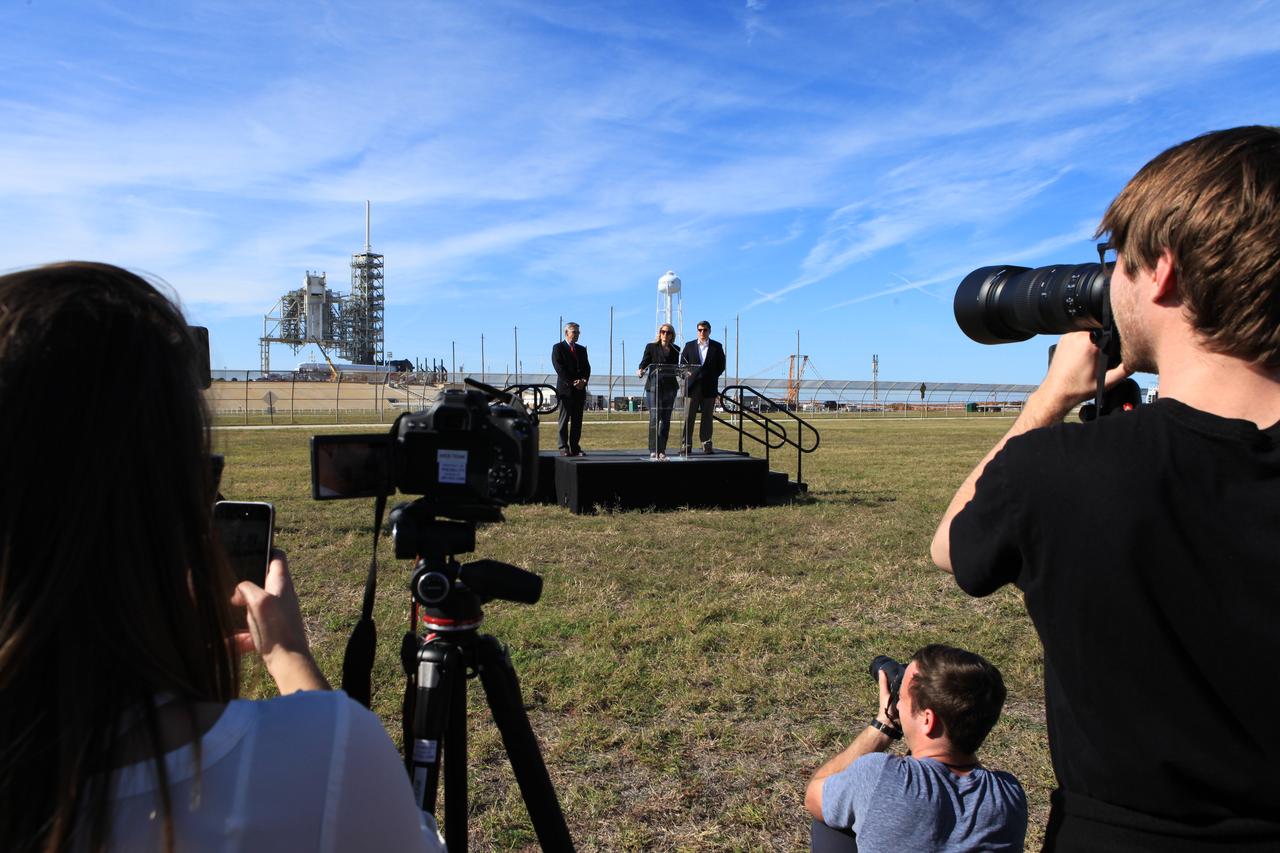
Timothy Hughes, senior vice president and general counsel for SpaceX speaks to members of the news media at Launch Complex 39A. Behind him, from left, are Kennedy Space Center Director Bob Cabana and Gwynne Shotwell, president and chief operating officer of SpaceX. On Feb. 18, a Falcon 9 rocket with a Dragon spacecraft atop is scheduled to lift off from the launch pad for the SpaceX CRS-10 mission. The historic site is where American astronauts first launched to the moon and was last used in 2011 for the final mission of the Space Shuttle Program. In April 2014, NASA officials signed a 20-year property agreement with SpaceX for use and operation of the launch pad for their Falcon 9 and Falcon 9 Heavy rockets. The SpaceX CRS-10 liftoff is another milestone further establishing Kennedy as a premier, multi-user spaceport. The Dragon spacecraft will deliver 5,000 pounds of supplies and research materials to the space station.
SpaceX Pad39A Event
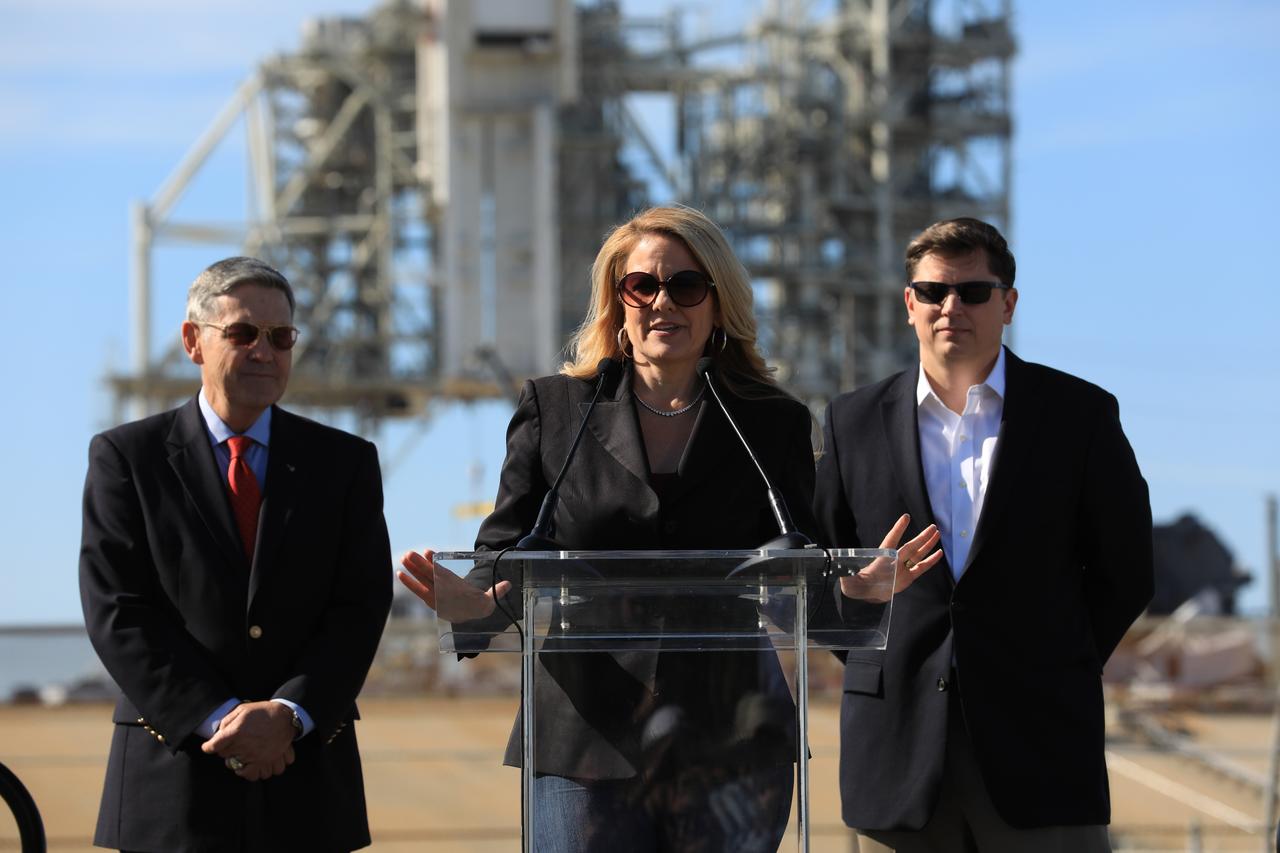
Gwynne Shotwell, president and chief operating officer of SpaceX, speaks to members of the news media at Launch Complex 39A. At left is Kennedy Space Center Director Bob Cabana. At right is Timothy Hughes, senior vice president and general counsel for SpaceX. On Feb. 18, a Falcon 9 rocket with a Dragon spacecraft atop is scheduled to lift off from the launch pad for the SpaceX CRS-10 mission. The historic site is where American astronauts first launched to the moon and was last used in 2011 for the final mission of the Space Shuttle Program. In April 2014, NASA officials signed a 20-year property agreement with SpaceX for use and operation of the launch pad for their Falcon 9 and Falcon 9 Heavy rockets. The SpaceX CRS-10 liftoff is another milestone further establishing Kennedy as a premier, multi-user spaceport. The Dragon spacecraft will deliver 5,000 pounds of supplies and research materials to the space station.
SpaceX Pad39A Event
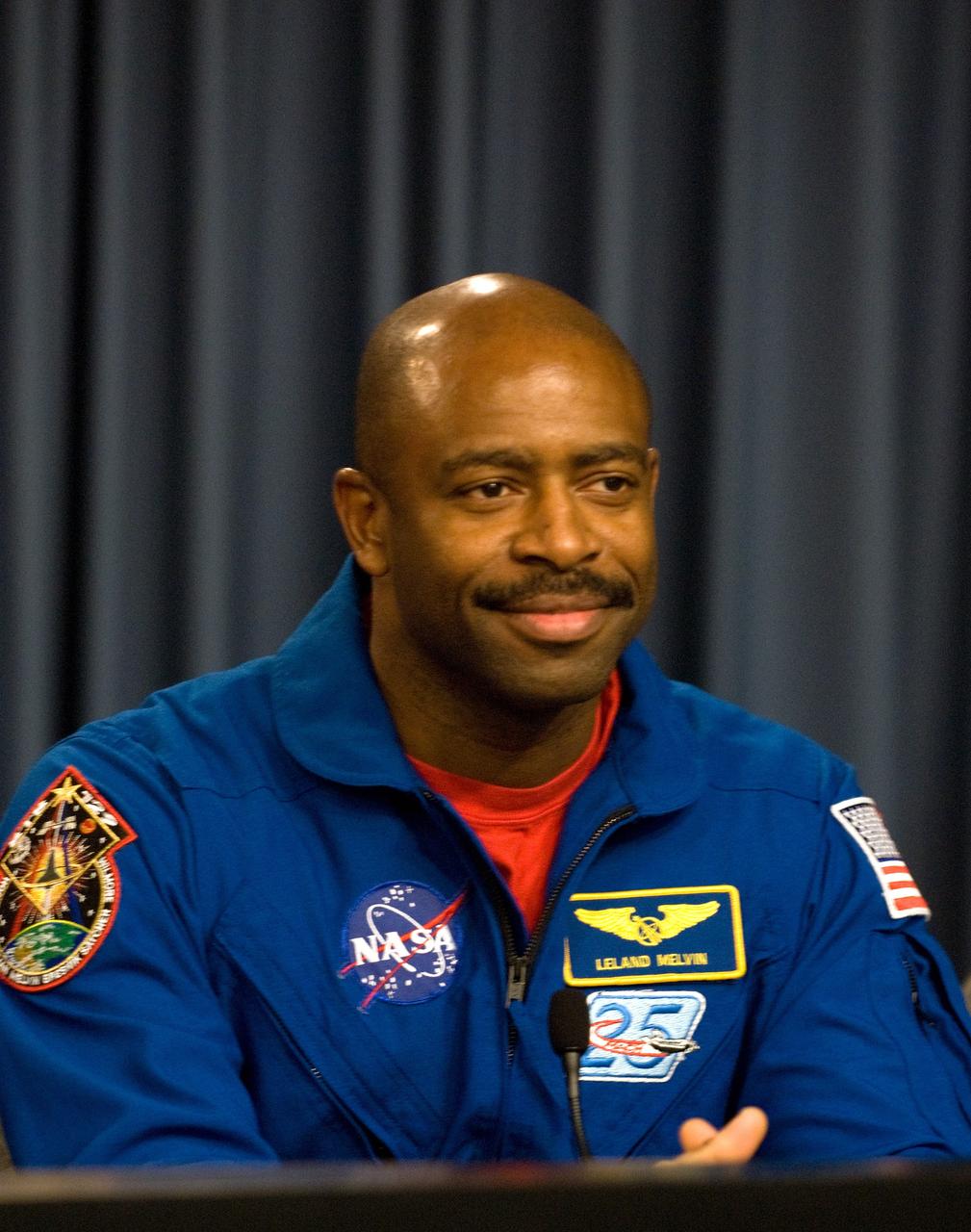
CAPE CANAVERAL, Fla. - STS-129 Mission Specialist Leland Melvin participates in a news conference in the NASA Press Site auditorium at NASA's Kennedy Space Center in Florida on landing day.  Space shuttle Atlantis' main gear touchdown on Kennedy's Shuttle Landing Facility was at 9:44:23 a.m. EST. Nose gear touchdown was at 9:44:36 a.m., and wheels stop was at 9:45:05 a.m.  STS-129 is the final space shuttle Expedition crew rotation flight on the manifest.  On STS-129, the crew delivered 14 tons of cargo to the orbiting laboratory, including two ExPRESS Logistics Carriers containing spare parts to sustain station operations after the shuttles are retired next year.  For information on the STS-129 mission and crew, visit http://www.nasa.gov/mission_pages/shuttle/shuttlemissions/sts129/index.html.     Photo credit: NASA/Kim Shiflett
KSC-2009-6598
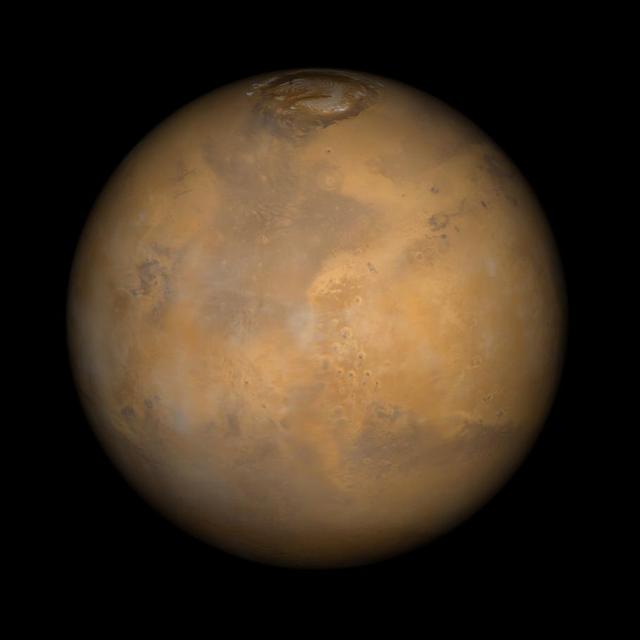
Somewhere down there sits the Mars Pathfinder lander and Sojourner rover. This Mars Global Surveyor Mars Orbiter Camera view of the red planet shows the region that includes Ares Vallis and the Chryse Plains upon which both Mars Pathfinder and the Viking 1 landed in 1997 and 1976, respectively. Acidalia Planitia is the dark surface that dominates the center left. The Pathfinder site is immediately south of Acidalia, just left of center in this view. Also shown--the north polar cap is at the top, and Arabia Terra and Sinus Meridiani are to the right. The bluish-white features are clouds. This is a color composite of 9 red and 9 blue image strips taken by the Mars Global Surveyor Mars Orbiter Camera on 9 successive orbits from pole-to-pole during the calibration phase of the mission in March 1999. The color is computer-enhanced and is not shown as it would actually appear to the human eye.  http://photojournal.jpl.nasa.gov/catalog/PIA02000
Acidalia and Chryse Plains, Mars
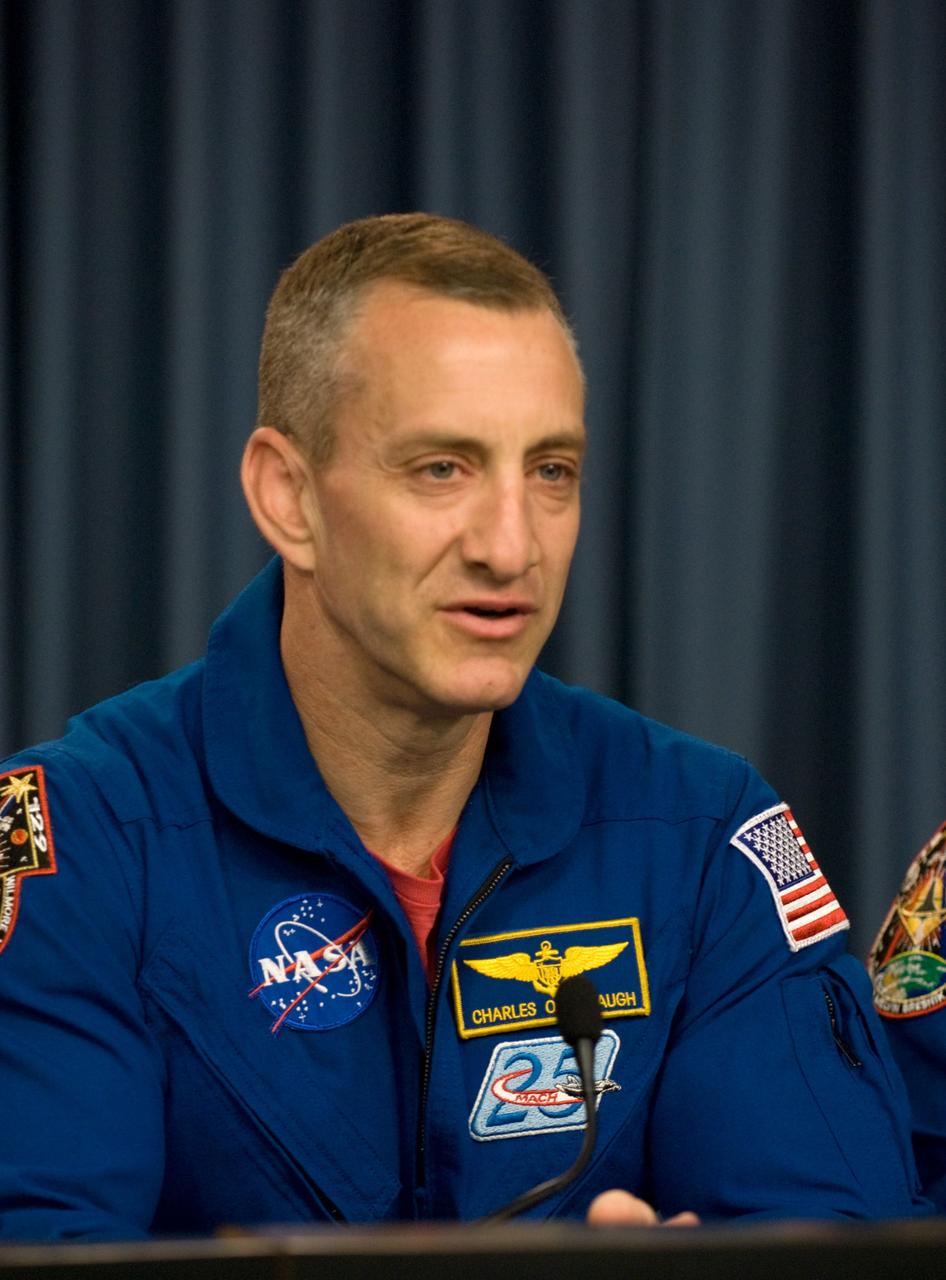
CAPE CANAVERAL, Fla. - STS-129 Commander Charles O. Hobaugh participates in a news conference in the NASA Press Site auditorium at NASA's Kennedy Space Center in Florida on landing day.  Space shuttle Atlantis' main gear touchdown on Kennedy's Shuttle Landing Facility was at 9:44:23 a.m. EST. Nose gear touchdown was at 9:44:36 a.m., and wheels stop was at 9:45:05 a.m.  STS-129 is the final space shuttle Expedition crew rotation flight on the manifest.  On STS-129, the crew delivered 14 tons of cargo to the orbiting laboratory, including two ExPRESS Logistics Carriers containing spare parts to sustain station operations after the shuttles are retired next year.  For information on the STS-129 mission and crew, visit http://www.nasa.gov/mission_pages/shuttle/shuttlemissions/sts129/index.html.     Photo credit: NASA/Kim Shiflett
KSC-2009-6597
Kennedy Space Center Director Bob Cabana speaks to members of the news media at Launch Complex 39A. At left is Gwynne Shotwell, president and chief operating officer of SpaceX. At right is Timothy Hughes, senior vice president and general counsel for SpaceX. On Feb. 18, a Falcon 9 rocket with a Dragon spacecraft atop is scheduled to lift off from the launch pad for the SpaceX CRS-10 mission. The historic site is where American astronauts first launched to the moon and was last used in 2011 for the final mission of the Space Shuttle Program. In April 2014, NASA officials signed a 20-year property agreement with SpaceX for use and operation of the launch pad for their Falcon 9 and Falcon 9 Heavy rockets. The SpaceX CRS-10 liftoff is another milestone further establishing Kennedy as a premier, multi-user spaceport. The Dragon spacecraft will deliver 5,000 pounds of supplies and research materials to the space station.
SpaceX Pad39A Event
Gwynne Shotwell, president and chief operating officer of SpaceX, speaks to members of the news media at Launch Complex 39A. At left is Kennedy Space Center Director Bob Cabana. At right is Timothy Hughes, senior vice president and general counsel for SpaceX. On Feb. 18, a Falcon 9 rocket with a Dragon spacecraft atop is scheduled to lift off from the launch pad for the SpaceX CRS-10 mission. The historic site is where American astronauts first launched to the moon and was last used in 2011 for the final mission of the Space Shuttle Program. In April 2014, NASA officials signed a 20-year property agreement with SpaceX for use and operation of the launch pad for their Falcon 9 and Falcon 9 Heavy rockets. The SpaceX CRS-10 liftoff is another milestone further establishing Kennedy as a premier, multi-user spaceport. The Dragon spacecraft will deliver 5,000 pounds of supplies and research materials to the space station.
SpaceX Pad39A Event
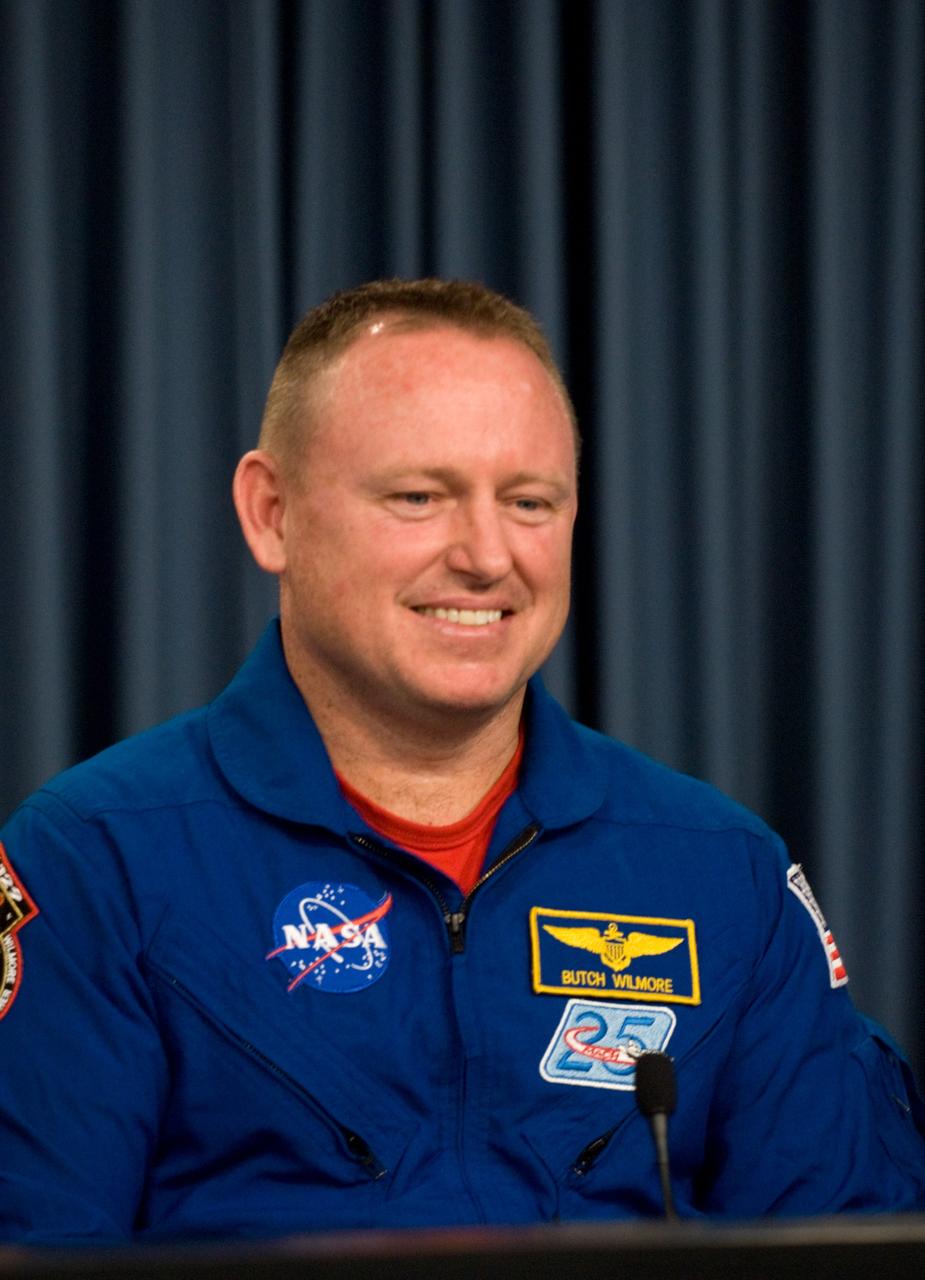
CAPE CANAVERAL, Fla. - STS-129 Pilot Barry E. Wilmore participates in a news conference in the NASA Press Site auditorium at NASA's Kennedy Space Center in Florida on landing day.  Space shuttle Atlantis' main gear touchdown on Kennedy's Shuttle Landing Facility was at 9:44:23 a.m. EST. Nose gear touchdown was at 9:44:36 a.m., and wheels stop was at 9:45:05 a.m.  STS-129 is the final space shuttle Expedition crew rotation flight on the manifest.  On STS-129, the crew delivered 14 tons of cargo to the orbiting laboratory, including two ExPRESS Logistics Carriers containing spare parts to sustain station operations after the shuttles are retired next year.  For information on the STS-129 mission and crew, visit http://www.nasa.gov/mission_pages/shuttle/shuttlemissions/sts129/index.html.     Photo credit: NASA/Kim Shiflett
KSC-2009-6596
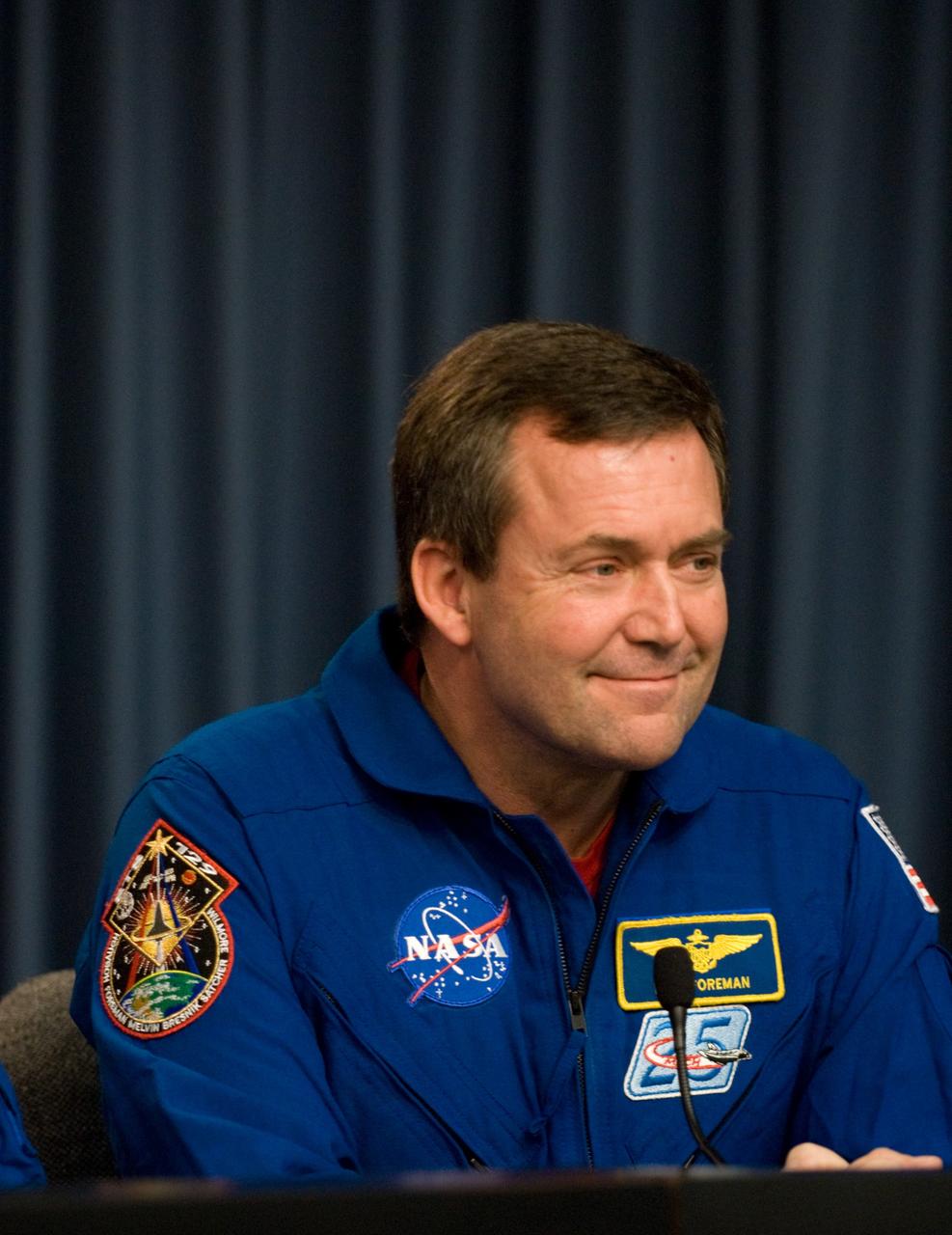
CAPE CANAVERAL, Fla. - STS-129 Mission Specialist Mike Foreman participates in a news conference in the NASA Press Site auditorium at NASA's Kennedy Space Center in Florida on landing day.  Space shuttle Atlantis' main gear touchdown on Kennedy's Shuttle Landing Facility was at 9:44:23 a.m. EST. Nose gear touchdown was at 9:44:36 a.m., and wheels stop was at 9:45:05 a.m.  STS-129 is the final space shuttle Expedition crew rotation flight on the manifest.  On STS-129, the crew delivered 14 tons of cargo to the orbiting laboratory, including two ExPRESS Logistics Carriers containing spare parts to sustain station operations after the shuttles are retired next year.  For information on the STS-129 mission and crew, visit http://www.nasa.gov/mission_pages/shuttle/shuttlemissions/sts129/index.html.     Photo credit: NASA/Kim Shiflett
KSC-2009-6599
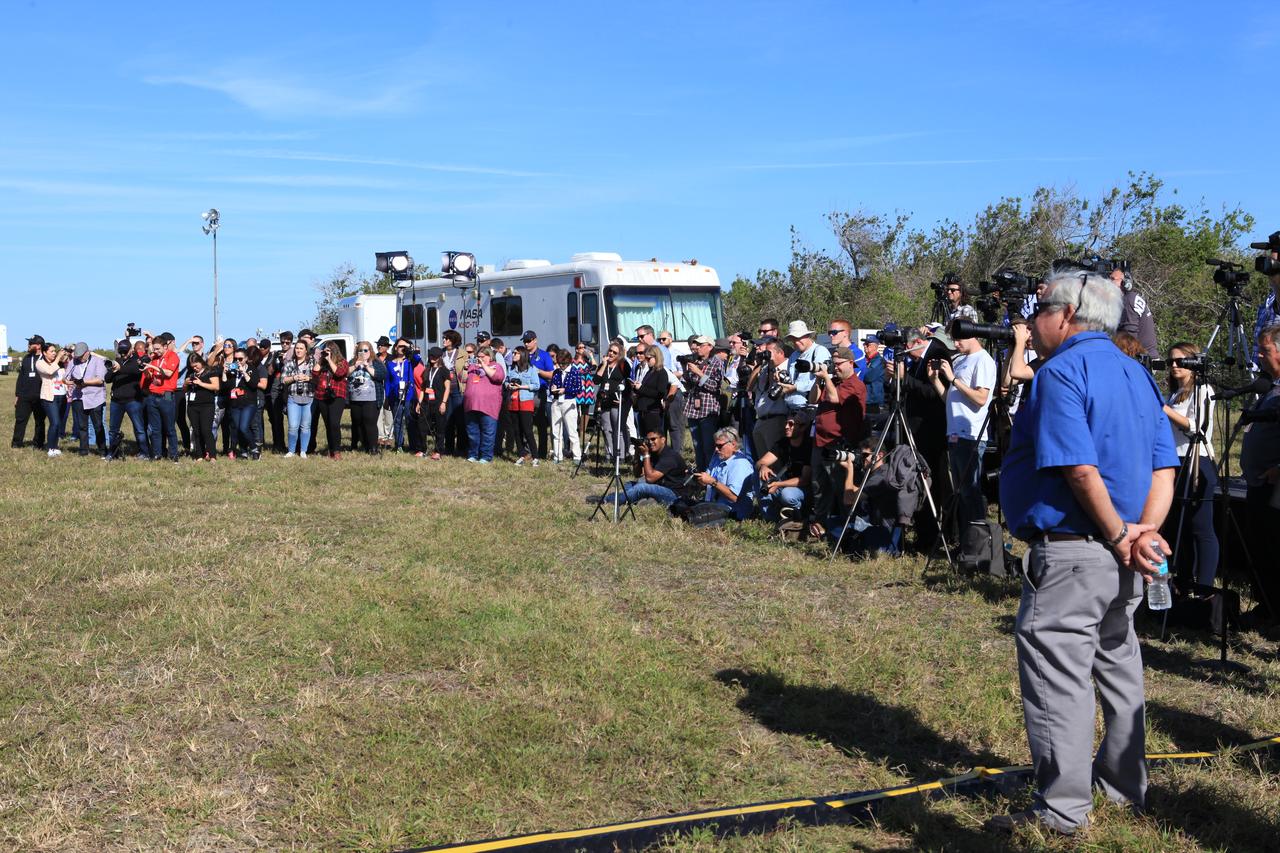
Members of the news media are at Launch Complex 39A for a briefing from Kennedy Space Center Director Bob Cabana; Gwynee Shotwell, president and chief operating officer of SpaceX; and Timothy Hughes, senior vice president and general counsel for SpaceX. On Feb. 18, a Falcon 9 rocket with a Dragon spacecraft atop is scheduled to lift off from the launch pad for the SpaceX CRS-10 mission. The historic site is where American astronauts first launched to the moon and was last used in 2011 for the final mission of the Space Shuttle Program. In April 2014, NASA officials signed a 20-year property agreement with SpaceX for use and operation of the launch pad for their Falcon 9 and Falcon 9 Heavy rockets. The SpaceX CRS-10 liftoff is another milestone further establishing Kennedy as a premier, multi-user spaceport. The Dragon spacecraft will deliver 5,000 pounds of supplies and research materials to the space station.
SpaceX Pad39A Event
Dr. Nicole Wagner president and CEO for LambdaVision Inc. in Farmington, Connecticut, speaks to members of the media in the Kennedy Space Center’s Press Site auditorium. The briefing focused on research planned for launch to the International Space Station. The scientific materials and supplies will be aboard a Dragon spacecraft scheduled for liftoff from Cape Canaveral Air Force Station's Space Launch Complex 40. The SpaceX Falcon 9 rocket will launch the company's 16th Commercial Resupply Services mission to the space station.
SpaceX CRS-16 What's On Board Science Briefing
Expedition 12 Commander Bill McArthur rest onboard a Russian helicopter that will take him from the landing site to Kustanay, Kazakhstan. Expedition 12 returned to Earth and landed in the steppes of Kazakhstan onboard a Soyuz TMA-7 spacecraft that touched down at 7:48 p.m. EDT on Sunday, April 9, 2006. Returning with Commander Bill McArthur and Flight Engineer Valery Tokarev was Brazil’s first astronaut, Marcos Pontes, who arrived at the station with Expedition 13 on April 1.   Photo Credit: (NASA/Bill Ingalls)
Expedition 12 Landing
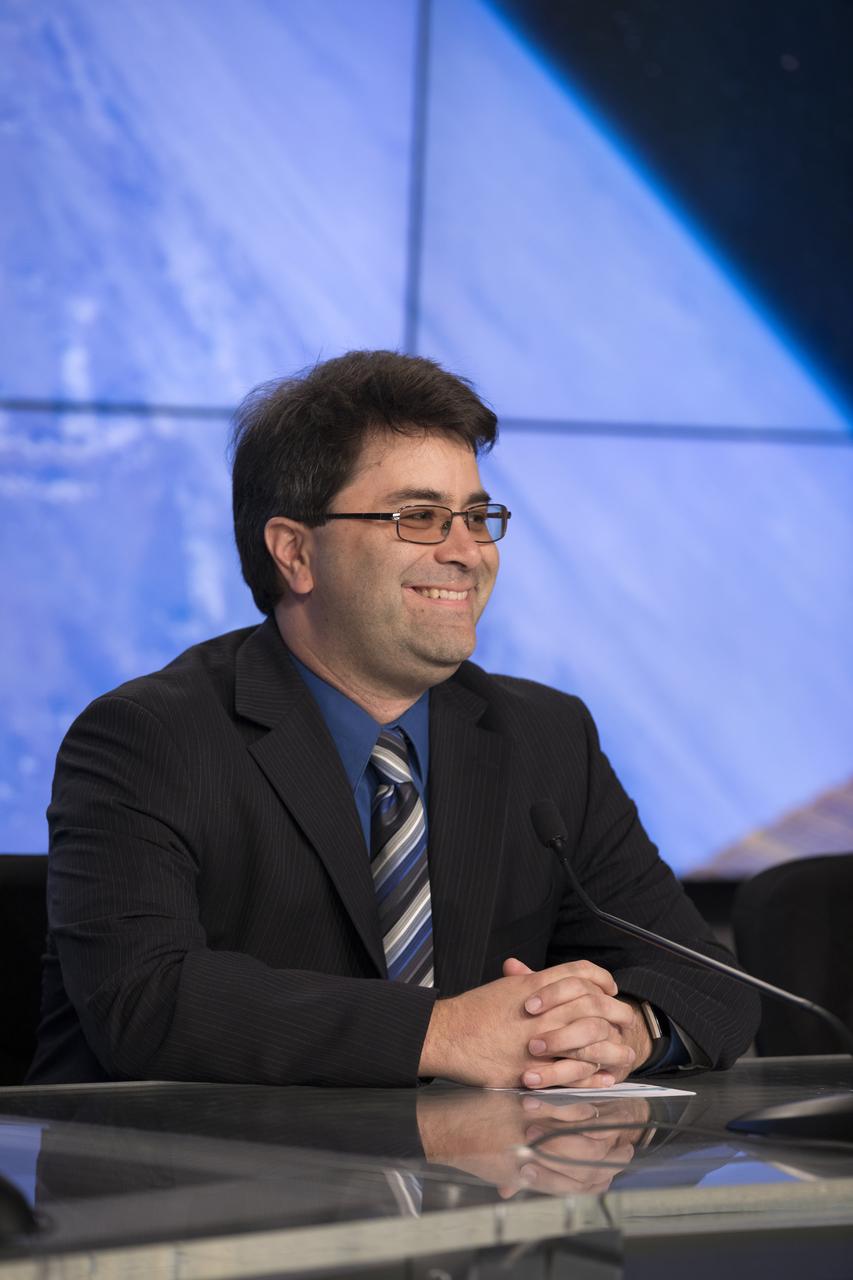
In the Kennedy Space Center’s Press Site auditorium, Mike McAleenan, launch weather officer for the U.S. Air Force 45th Weather Squadron, speaks to members of the media during a prelaunch news conference for the SpaceX CRS-11 commercial resupply services mission to the International Space Station. A Dragon spacecraft is scheduled to be launched from Kennedy’s Launch Complex 39A on June 1 atop a SpaceX Falcon 9 rocket on the company's 11th Commercial Resupply Services mission to the space station.
SpaceX CRS-11 Prelaunch News Conference
jsc2020e017125 - Expedition 63 Crew Waves Farewell - Expedition 63 crewmember Anatoly Ivanishin of Roscosmos, waves goodbye as he, Chris Cassidy of NASA, and Ivan Vagner of Roscosmos prepare to climb aboard the Soyuz MS-16 rocket at Site 31 at the Baikonur Cosmodrome in Kazakhstan, Thursday, April 9, 2020. They launched a short time later to the International Space Station for the start of a six-and-a-half month mission. Photo Credit: (NASA/GCTC/Andrey Shelepin)
Expedition 63 Crew Waves Farewell
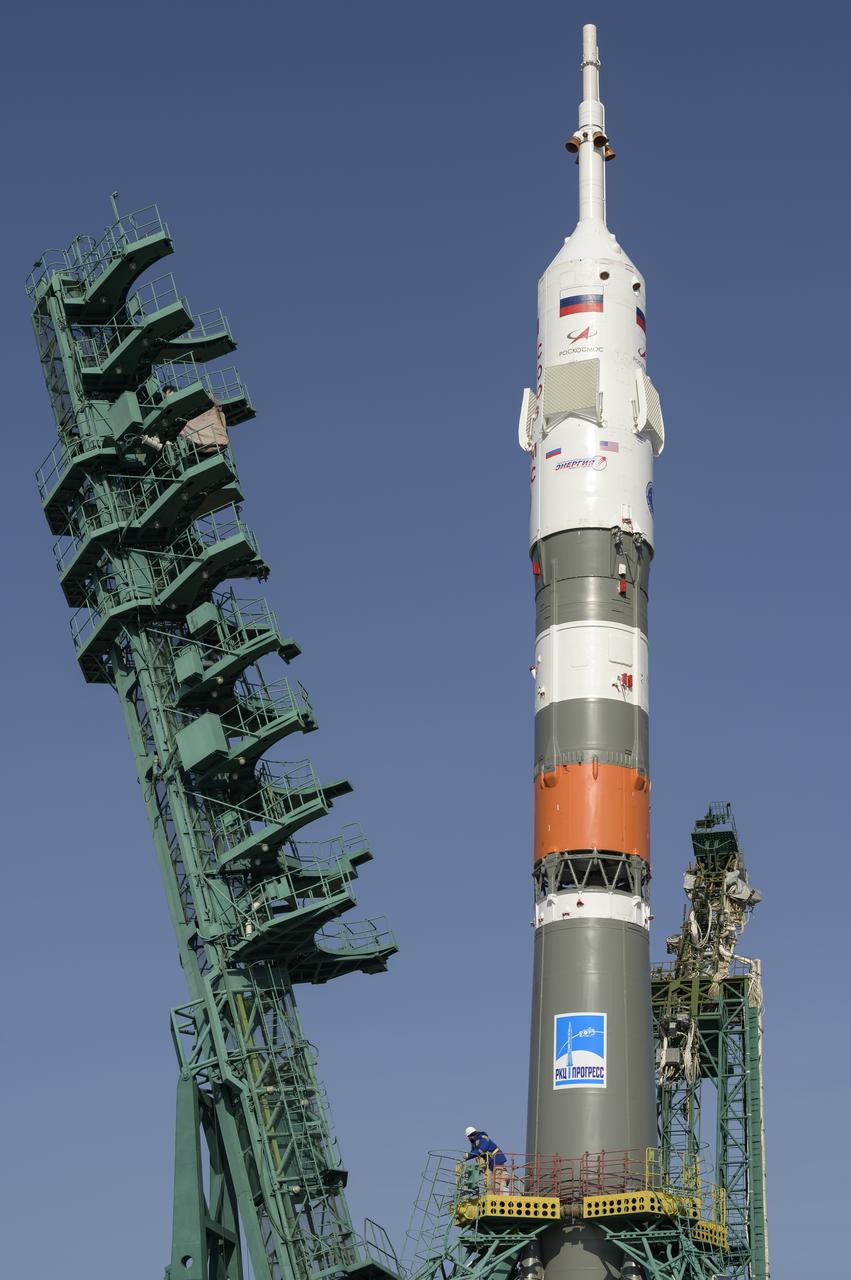
jsc2020e017003 - At the Baikonur Cosmodrome in Kazakhstan, the Soyuz MS-16 spacecraft and its booster are transported from the integration building to the Site 31 launch pad April 6 for final preparations for launch. Expedition 63 crewmembers Chris Cassidy of NASA and Anatoly Ivanishin and Ivan Vagner of Roscosmos are set to launch aboard the Soyuz MS-16 April 9 for a six-and-a-half month mission on the International Space Station...Andrey Shelepin/Gagarin Cosmonaut Training Center.
jsc2020e017003
In the Press Site auditorium of NASA's Kennedy Space Center in Florida, Ven Feng, NASA's manager of the International Space Station Transportation Integration Office, speaks to media at a post-launch news conference following the liftoff of SpaceX CRS-11, a commercial resupply services mission to the International Space Station. SpaceX CRS-11 lifted off atop a Falcon 9 rocket from Kennedy's Launch Complex 39A at 5:07 p.m. EDT.
SpaceX CRS-11 Post Launch News Conference