
This spectacular view is a color-enhanced ultraviolet exposure of a colossal eruption, photographed during the Skylab-4 mission by the Apollo Telescope Mount facility on December 19, 1973. This giant prominence, one of the mightiest in 25 years, sparned a third of a million miles into space, roughly the distance between Earth and the Moon.
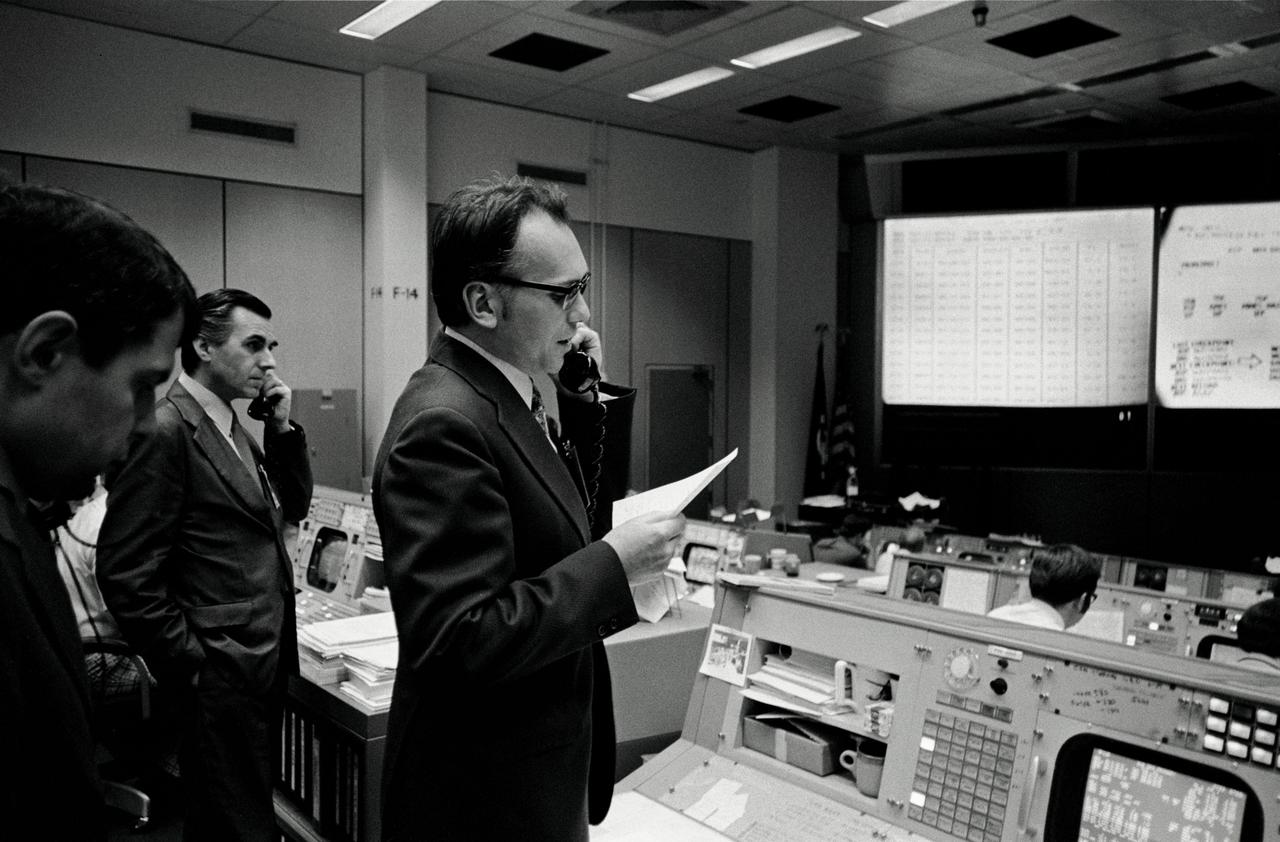
S74-15064 (28 Dec. 1973) --- Dr. Lubos Kohoutek, discoverer of the Comet Kohoutek, is seen in the Mission Operations Control Room in the Mission Control Center during a visit to the Johnson Space Center. He is talking over a radio-telephone with the Skylab 4 crewmen in the Skylab space station in Earth orbit. Professor Kohoutek, a well-known Czechoslovakian astronomer who works at the Hamburg Observatory in West Germany, discussed the comet with astronauts Gerald P. Carr, Edward G. Gibson and William R. Pogue. One of the major objectives of the Skylab 4 mission is to monitor the passing of the Comet Kohoutek. Dr. Zdenek Sekania, who accompanied Dr. Kohoutek on the visit to JSC, is on the telephone in the left background. Dr. Sekania is with the Smithsonian Observatory in Cambridge, Massachusetts. Photo credit: NASA
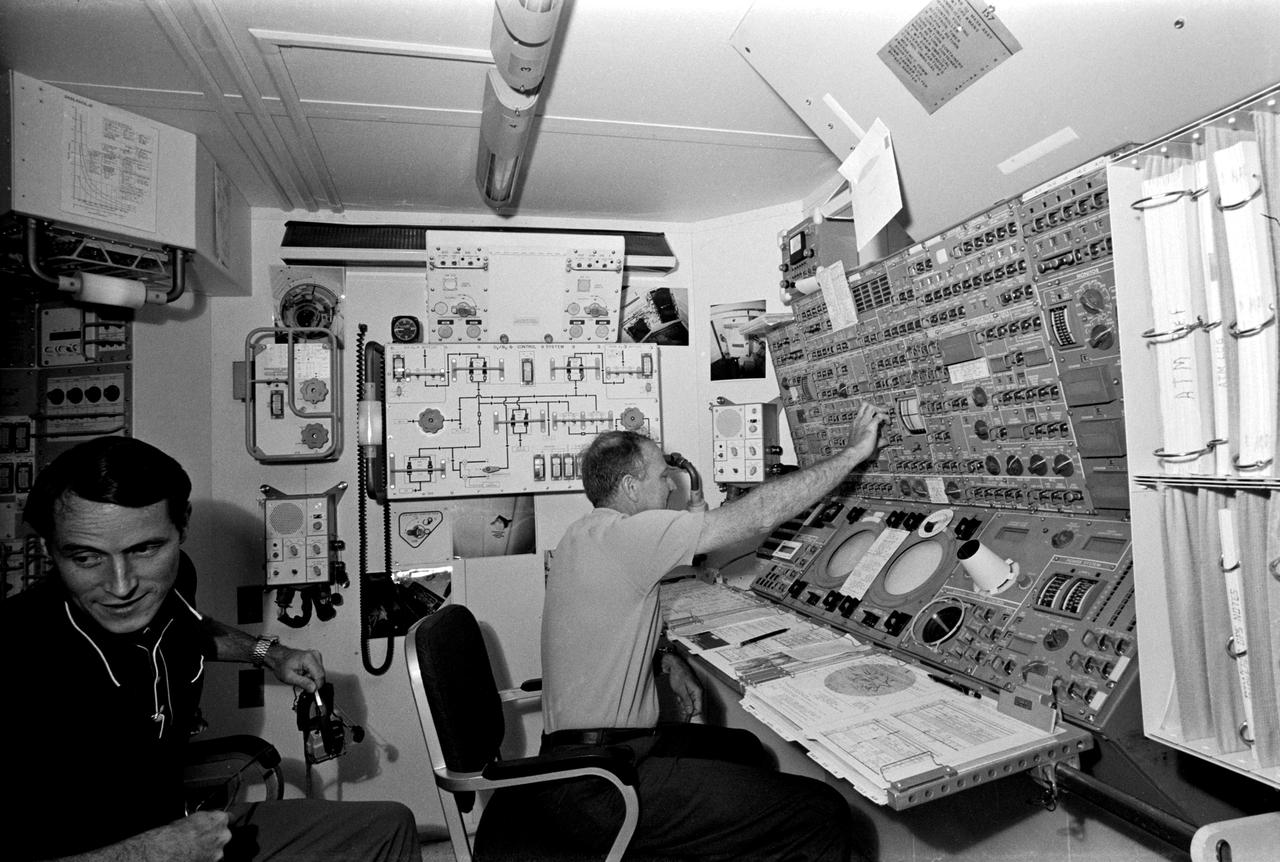
S73-28412 (February 1973) --- The three members of the prime crew of the third of three scheduled manned Skylab missions (Skylab 4) go through Skylab preflight training in the Mission Training and Simulation Facility at the Johnson Space Center. Astronaut Gerald P. Carr (on right), Skylab 4 commander, is seated at a simulator which represents the control and display console of the Apollo Telescope Mount which is located in the space station's Multiple Docking Adapter. Seated on the left is scientist-astronaut Edward G. Gibson, Skylab 4 science pilot. In the left background is astronaut William R. Pogue, Skylab 4 pilot. (Unmanned Skylab 1 will carry the Skylab space station payload into Earth orbit). Photo credit: NASA
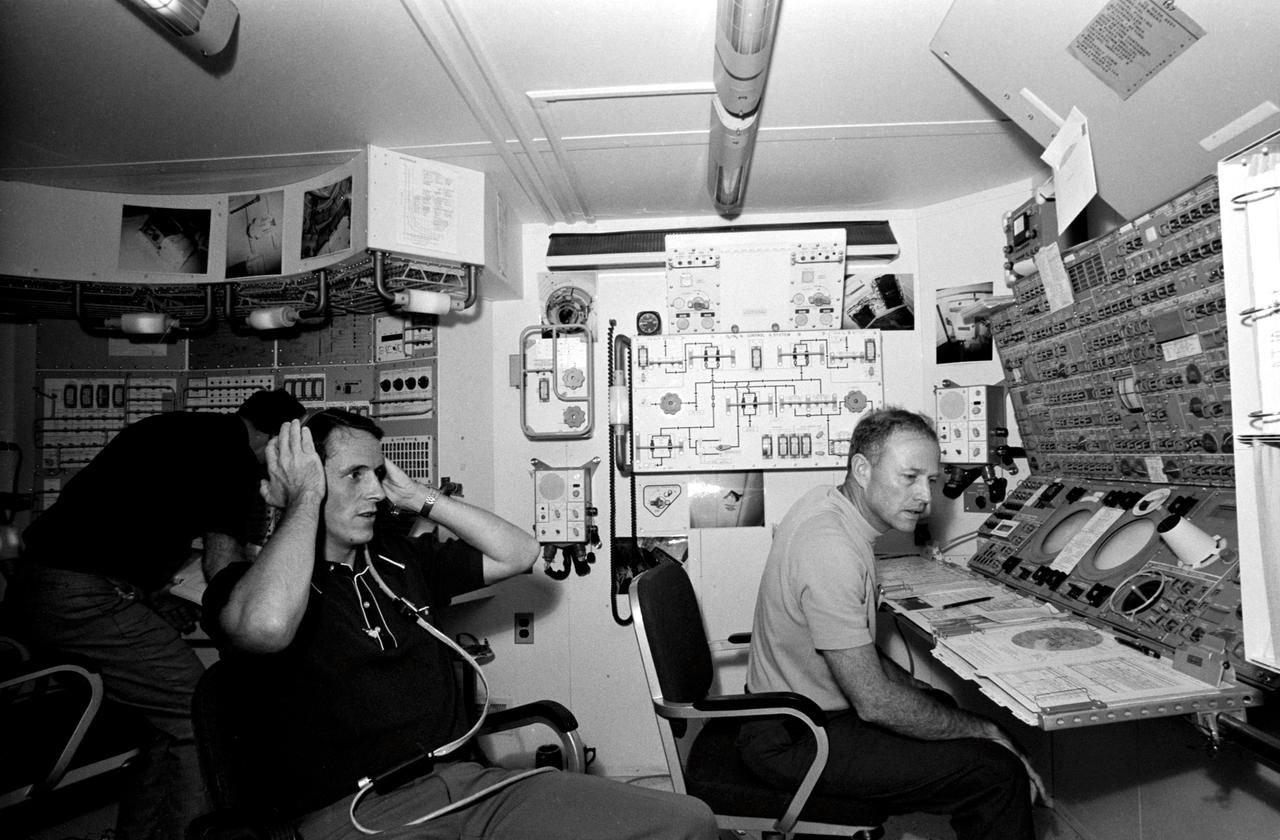
S73-28411 (February 1973) --- The three members of the prime crew of the third of three scheduled manned Skylab missions (Skylab 4) go through Skylab preflight training in the Mission Training and Simulation Facility at the Johnson Space Center. Astronaut Gerald P. Carr (on right), Skylab 4 commander, is seated at a simulator which represents the control and display console of the Apollo Telescope Mount which is located in the space station's Multiple Docking Adapter. Seated on the left is scientist-astronaut Edward G. Gibson, Skylab 4 science pilot. In the left background is astronaut William R. Pogue, Skylab 4 pilot. (Unmanned Skylab 1 will carry the Skylab space station payload into Earth orbit). Photo credit: NASA
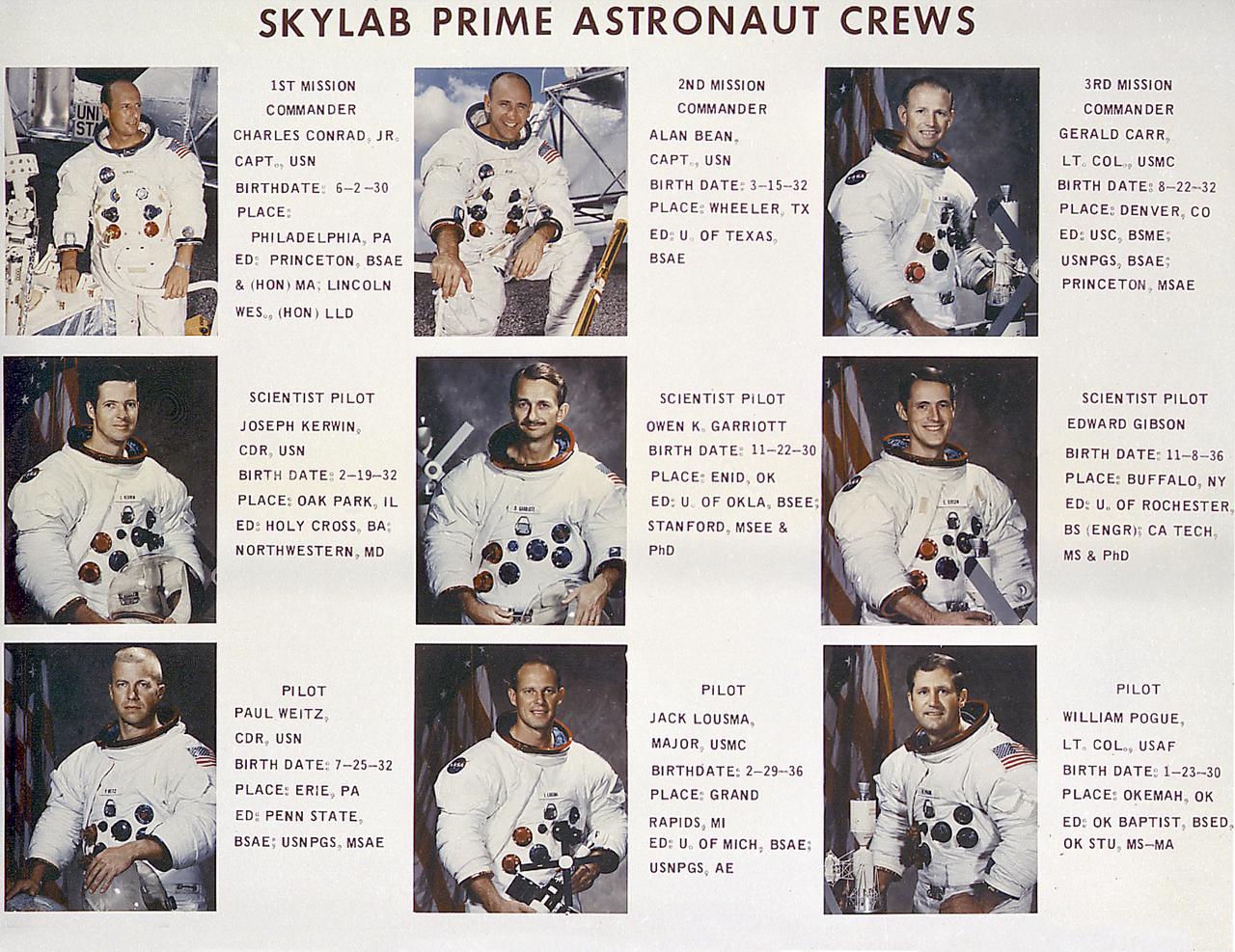
This photograph is a montage of astronaut crews for the three Skylab missions with simple biographical data of each astronaut. The 1st mission was designated as Skylab-2, 2nd mission as Skylab-3, and 3rd mission as Skylab-4. The Skylab-1 mission placed the Skylab Orbital Work Shop in orbit by a modified Saturn V launch vehicle. Skylab's 3 different 3-man crews spent up to 84 days in Earth orbit and performed a variety of more than 100 experiments.

This photograph was taken as the third crew (Skylab-4) departed the space station. The solar observatory was designed for full exposure to the Sun throughout most of the Skylab mission. Solar energy was transformed into electrical power for operation of all spacecraft systems. The proper operation of these solar arrays was vital to the mission. This Skylab in orbit view was taken by the Skylab-4 crew.
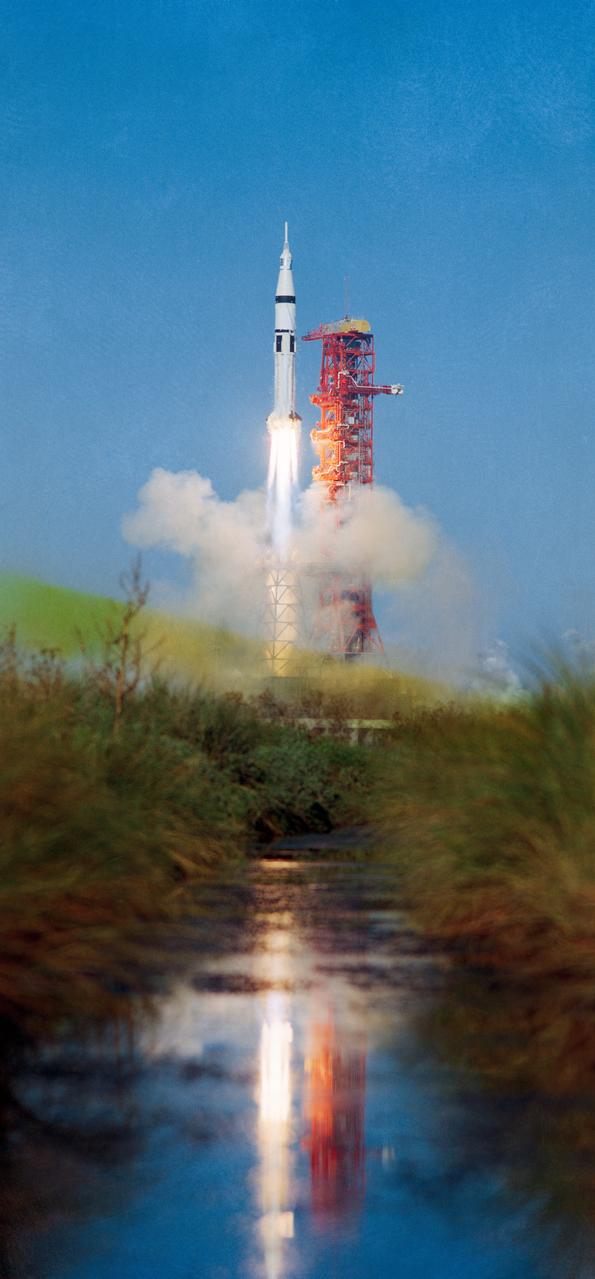
S73-37285 (16 Nov. 1973) --- The Skylab 4/Saturn 1B space vehicle is launched from Pad B, Launch Complex 39, Kennedy Space Center, Florida, at 9:01:23 a.m. (EST), Friday, Nov. 16, 1973. Skylab 4 is the third and last of three scheduled manned Skylab missions. Aboard the Skylab 4 Command/Service Module were astronauts Gerald P. Carr, Edward G. Gibson and William R. Pogue. In addition to the CSM and its launch escape system, the Skylab 4 space vehicle consisted of the Saturn 1B first (S-1B) stage and the Saturn 1B second (S-IVB) stage. (The Skylab 1/Saturn V unmanned space vehicle with the space station payload was launched from Pad A on May 14, 1973). Photo credit: NASA
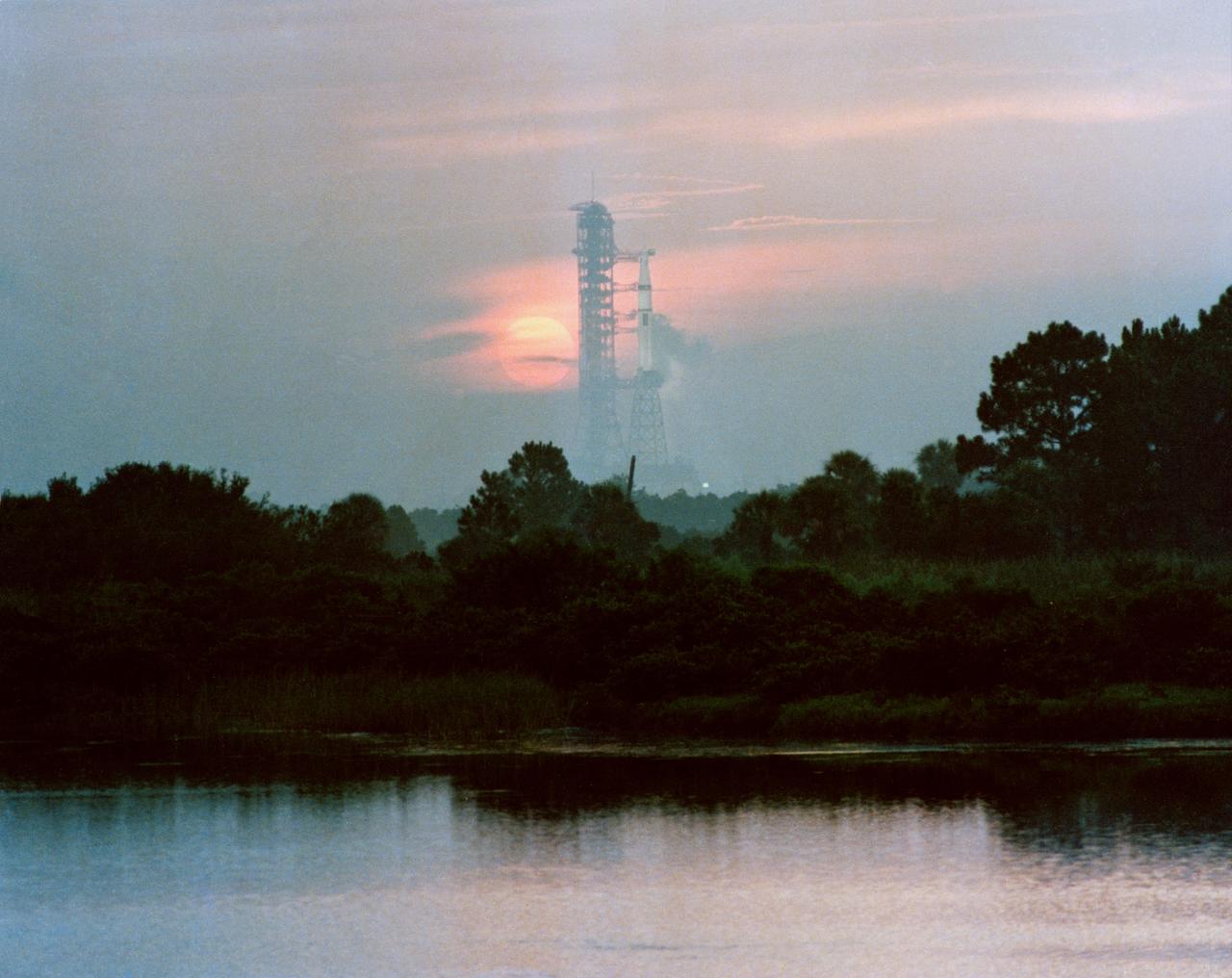
S73-37929 (16 Nov. 1973) --- A sunrise view at the Kennedy Space Center showing in the near distance the Skylab 4/Saturn 1B space vehicle on Pad B, Launch Complex 39, on the morning of the launch. The liftoff was at 9:01:23 a.m. (EST), Friday, Nov. 16, 1973. Skylab 4 is the third and last of three scheduled manned Skylab missions. Aboard the Skylab 4 Command/Service Module were astronauts Gerald P. Carr, Edward G. Gibson and William R. Pogue. This picture was photographed by astronaut Bruce McCandless II. Photo credit: NASA
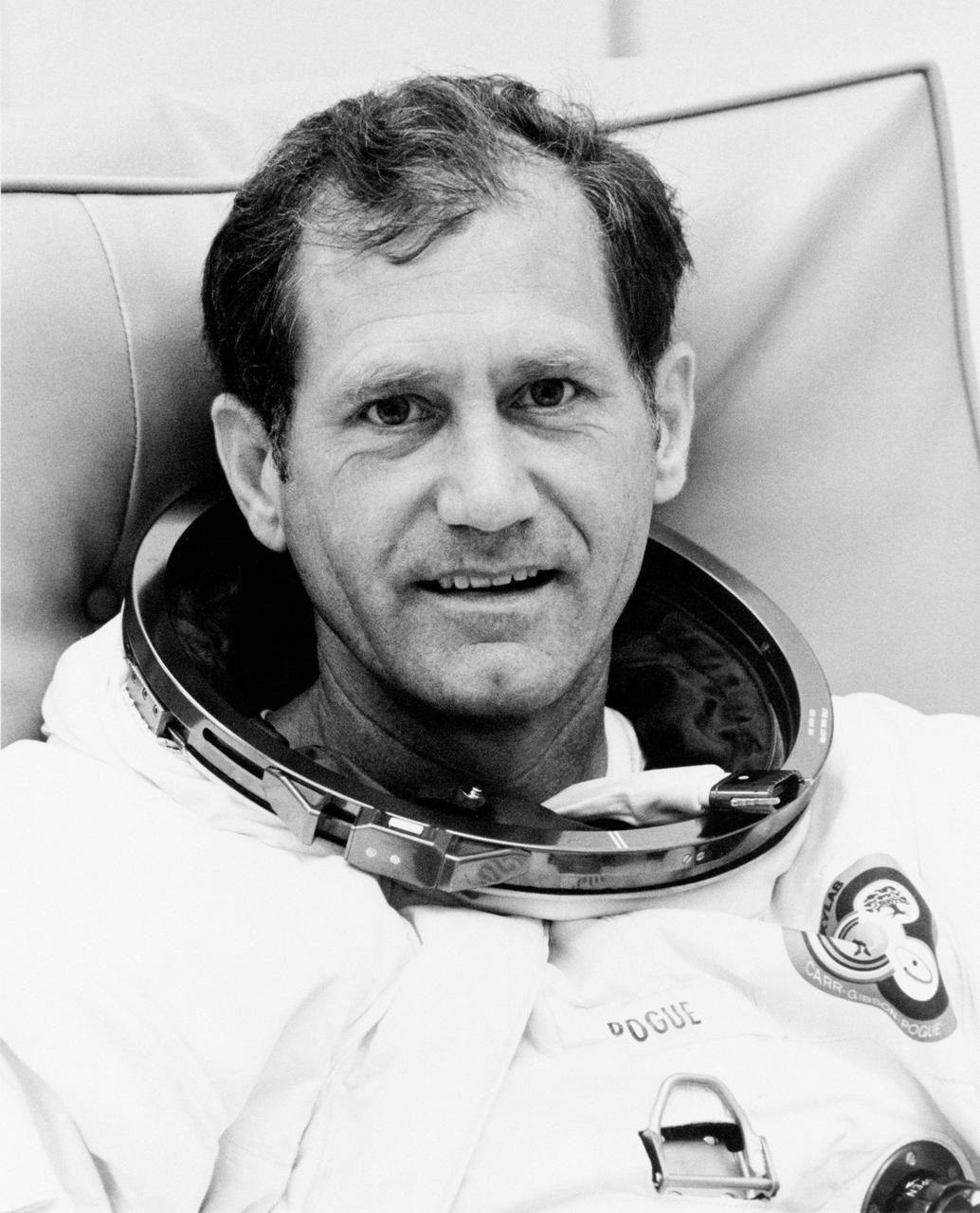
S73-36905 (8 Nov. 1973) --- Astronaut William R. Pogue, pilot of the Skylab 4 mission, relaxes during spacesuit pressure and fit checks at the Kennedy Space Center, Florida. This shoulder and head shot of Pogue was taken a few days before the scheduled Skylab 4 launch. This third and last visit to the Skylab space station in Earth orbit will return additional information on the Earth and sun, as well as provide favorable location from which to observe the recently discovered Comet Kohoutek. The other two members of the Skylab 4 crew will be astronaut Gerald P. Carr, commander; and scientist-astronaut Edward G. Gibson, science pilot. Photo credit: NASA
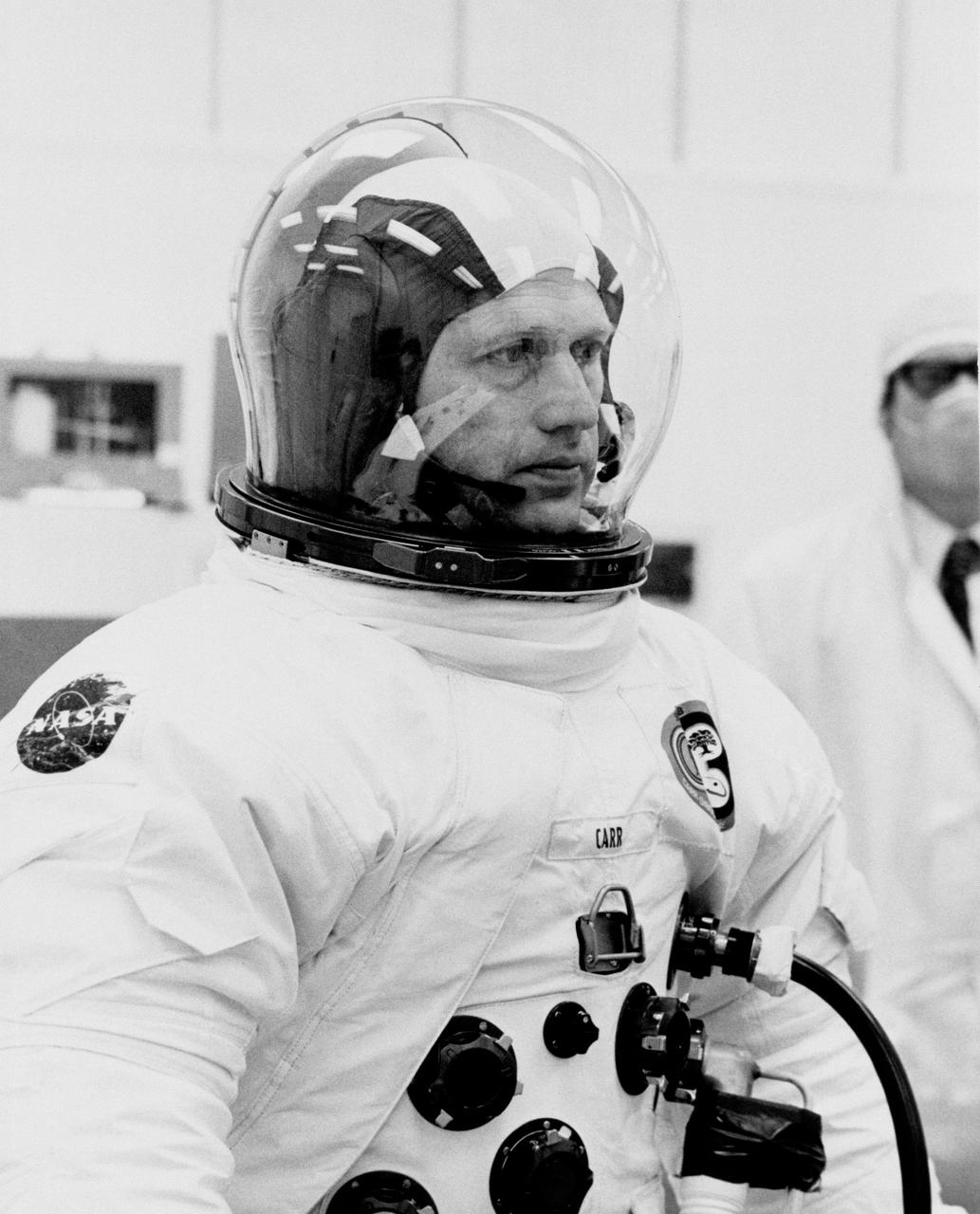
S73-36908 (8 Nov. 1973) --- Astronaut Gerald P. Carr, commander of the Skylab 4 mission, undergoes spacesuit pressure and fit checks at the Kennedy Space Center, Florida. This shoulder and head shot of Carr was taken a few days before the scheduled Skylab 4 launch. This third and last visit to the Skylab space station in Earth orbit will return additional information on the Earth and sun, as well as provide a favorable location from which to observe the recently discovered Comet Kohoutek. The other two members of the Skylab 4 crew will be astronaut William R. Pogue, pilot; and scientist-astronaut Edward G. Gibson, science pilot. Photo credit: NASA

Astronaut Gerald P. Carr, commander for the Skylab 4 mission, demonstrates the effects of zero-gravity as he floats in the forward dome area of the Orbital Workshop of the Skylab space station while in Earth orbit.
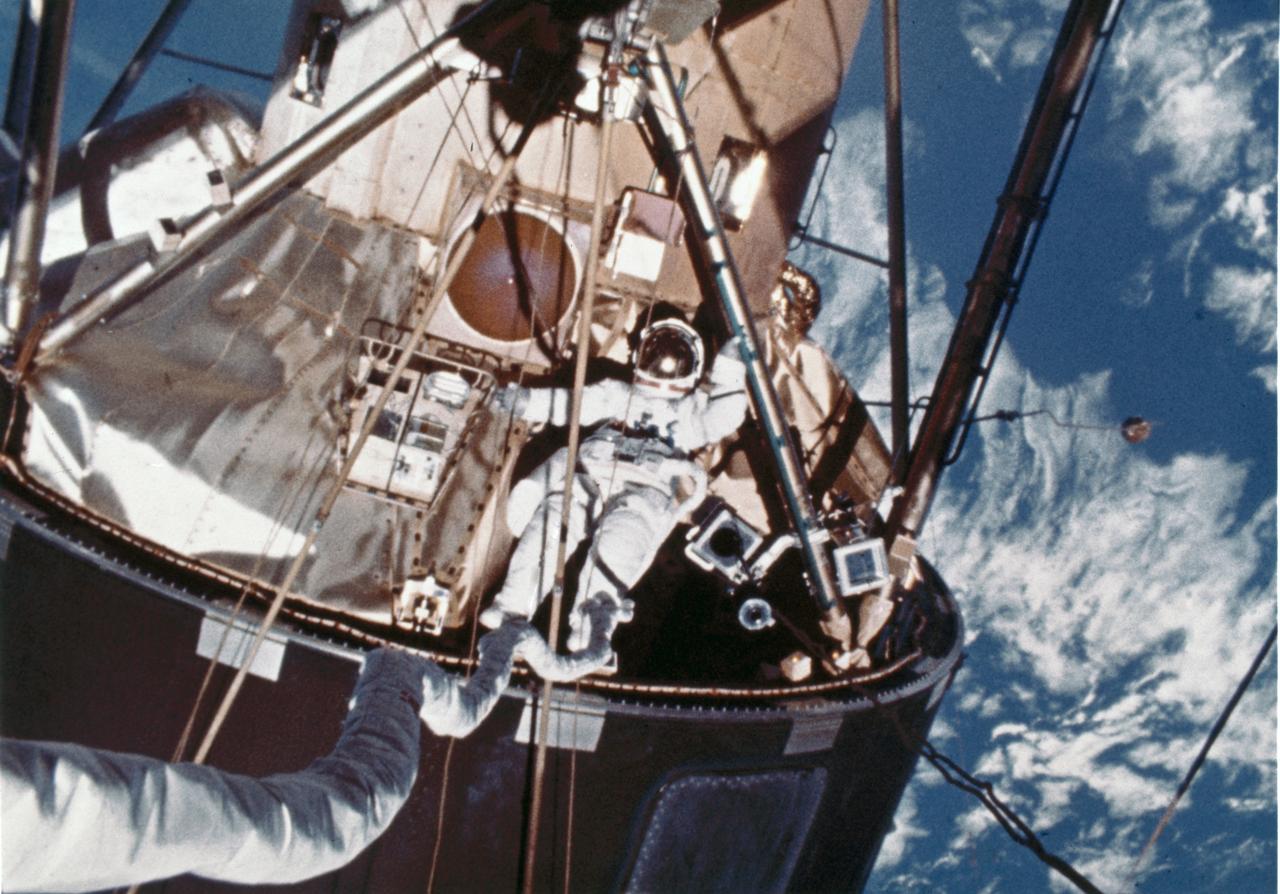
In this photograph, a skylab-4 astronaut performs Extra Vehicular Activities (EVA) outside of the lab. The third crew (Skylab-4) spent 84 days in the orbiting laboratory. The solar observatory was designed for full exposure to the Sun throughout most of the Skylab mission. Solar energy was transformed into electrical power for operation of all spacecraft systems. The proper operation of these solar arrays was vital to the mission.
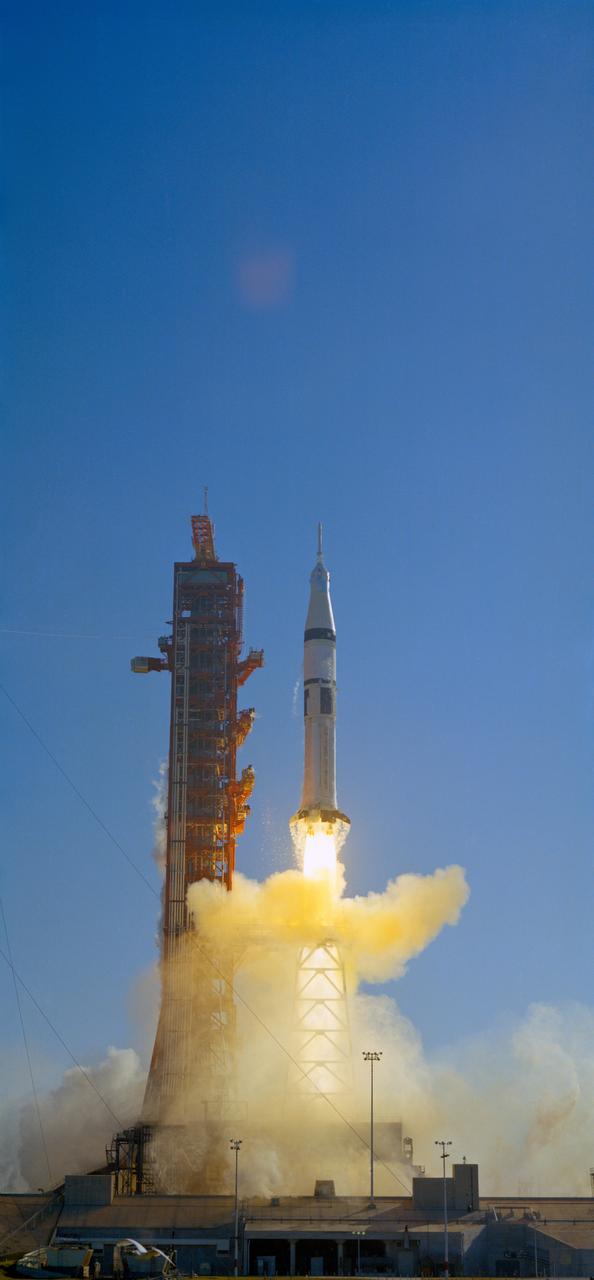
S73-37287 (16 Nov. 1973) --- The Skylab 4/Saturn 1B space vehicle is launched from Pad B, Launch Complex 39, Kennedy Space Center, Florida, at 9:01:23 a.m., Friday, Nov. 16, 1973. Skylab 4 is the third and last of three scheduled manned Skylab missions. Photo credit: NASA
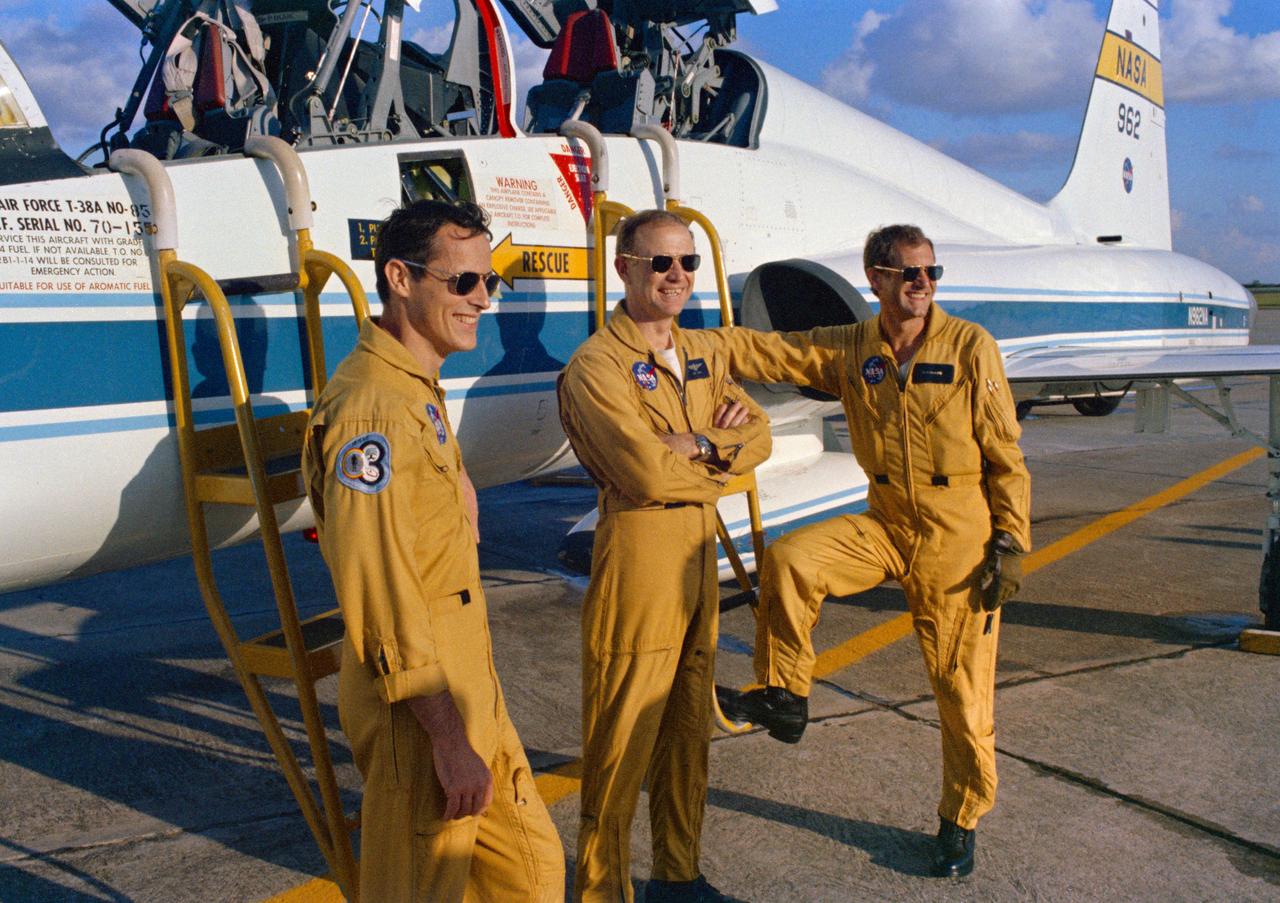
S73-36766 (November 1973) --- The prime crewmen of the third manned Skylab mission (Skylab 4) pause at a USAF T-38A jet at Ellington Air Force Base, Texas before flying to Kennedy Space Center (KSC) at Cape Canaveral, Florida. Skylab 4 crewmen are astronaut Gerald P. Carr, center, commander; scientist-astronaut Edward G. Gibson, science pilot, left; and astronaut William R. Pogue, pilot. Photo credit: NASA
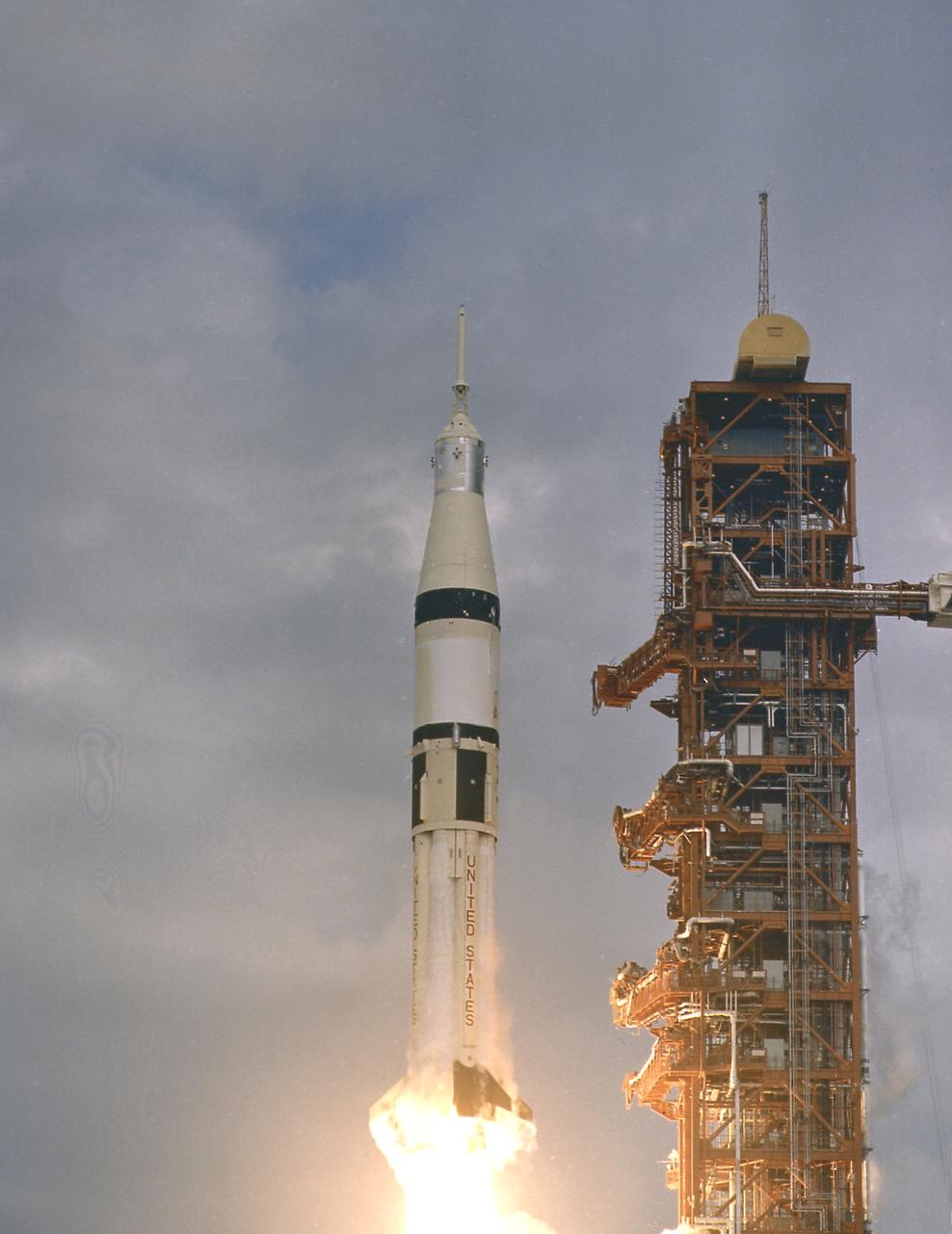
SA-206 lifts off from Kennedy Space Center's launch complex 39B, in Florida, on May 25, 1973, for the first manned Skylab mission (SL-2) with astronauts Pete Conrad, Joseph Kerwin, and Paul Weitz. The Saturn IB, developed under the direction of the Marshall Space Flight Center (MSFC), launched five manned Earth-orbital missions between 1968 and 1975: Apollo 7, Skylab 2, Skylab 3, Skylab 4, and the Apollo-Soyuz Test Project (ASTP).

The Astronaut Hall of Fame display for former NASA astronaut Gerald “Jerry” Carr is shown following a remembrance ceremony on Aug. 31, 2020, at the Kennedy Space Center Visitor Complex in Florida. Carr was commander of the Skylab 4 mission – the final, crewed mission of the Skylab program. He passed away Aug. 26 at the age of 88.
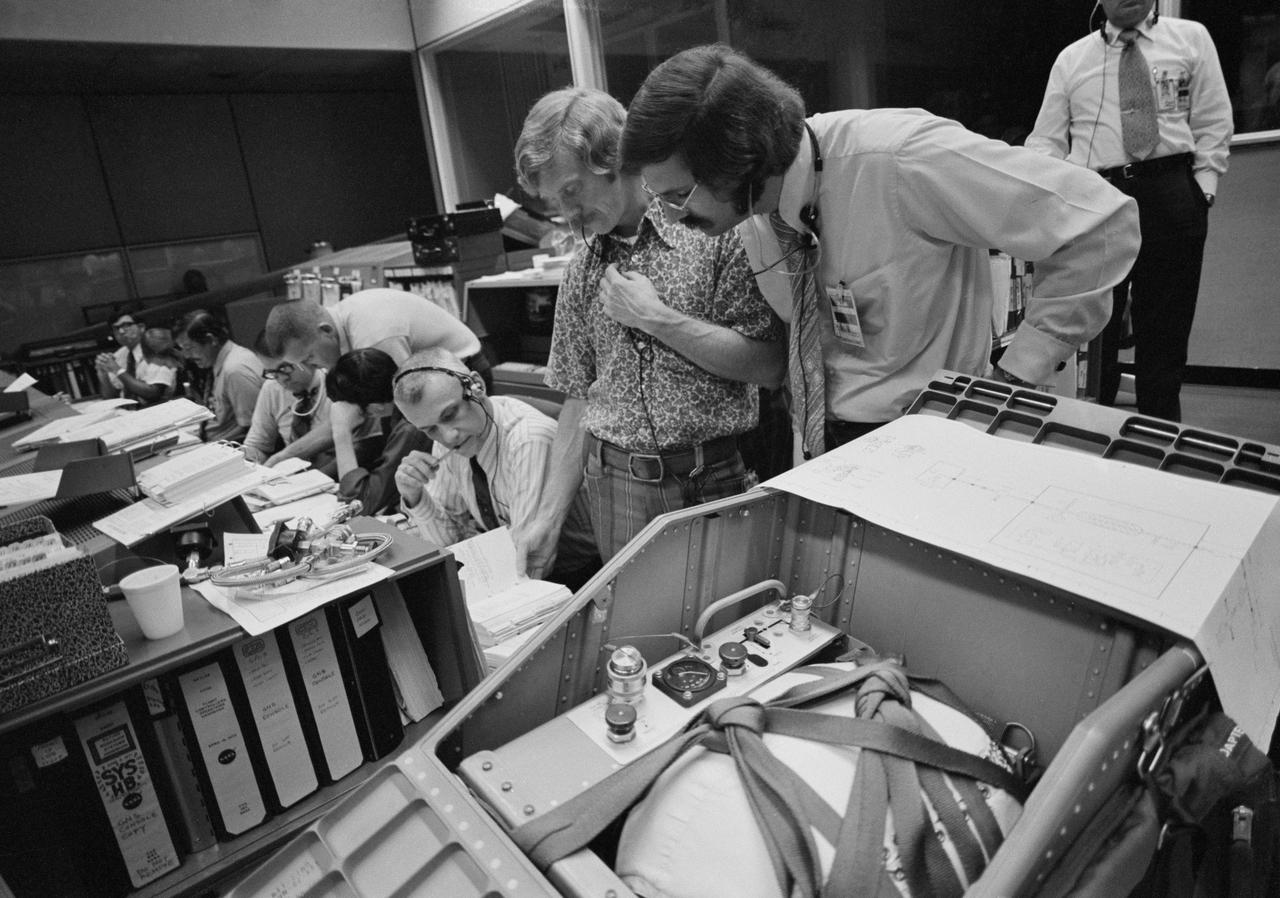
S73-37030 (November 1973) --- The procedures for repairing the coolant system aboard the Airlock Module of the Skylab space station in Earth orbit are discussed by flight controllers in the Mission Operations Control Room in the Mission Control Center at Johnson Space Center. Skylab 4 flight director Neil Hutchinson is on the right. Astronaut Russell L. Schweickart is wearing the sports shirt. Astronaut Bruce McCandless II, a Skylab 4 CAPCOM, is seated next to Schweickart. Items of equipment in the foreground are similar to components of a special coolant re-servicing kit which was taken to Earth orbit by the Skylab 4 crewmen. The kit consists of a tank containing 42 pounds of COOLANOL, a series of saddle valves, bolts and spacers, and leak-check hoses. The re-supply tank is a modified command module reaction control subsystem (RCS) fuel tank. Photo credit: NASA
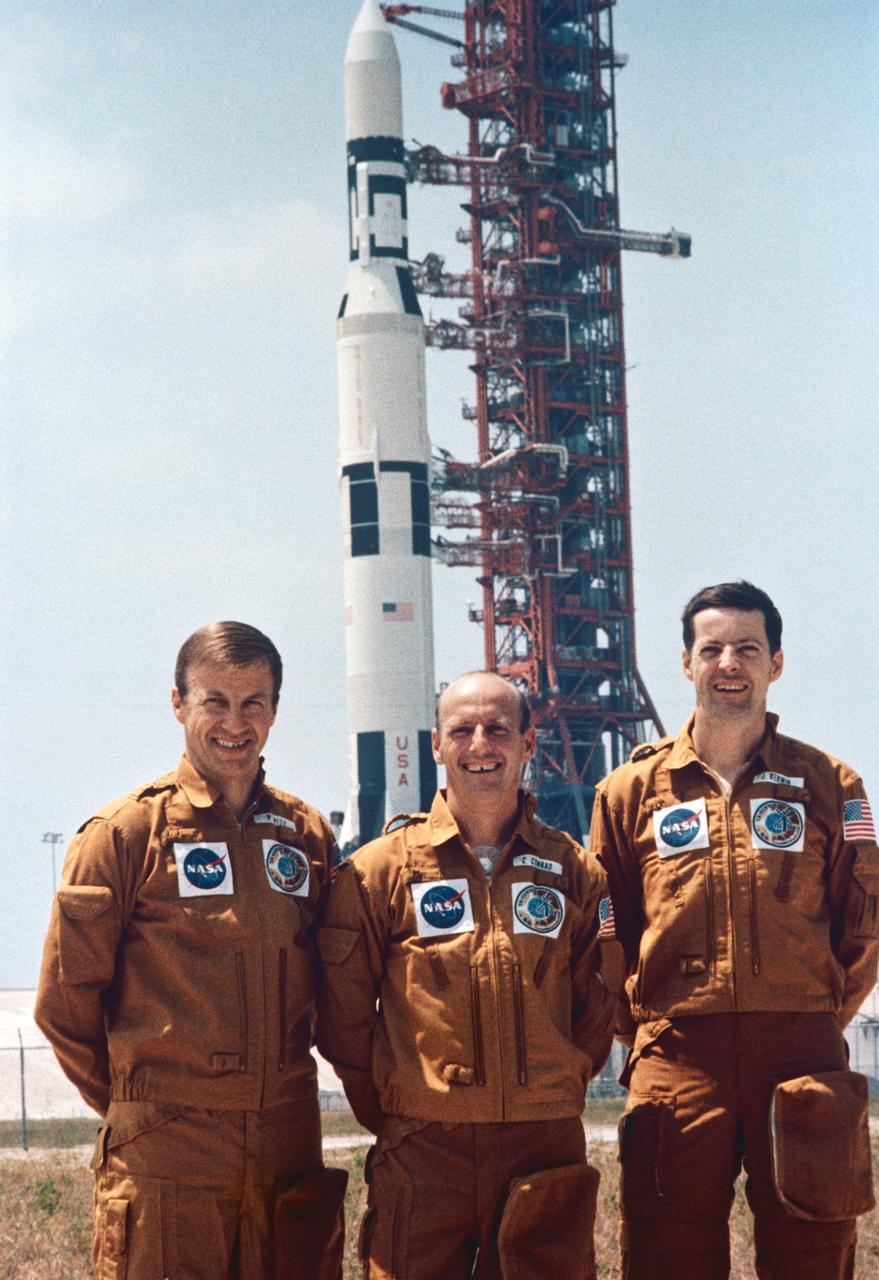
S73-25902 (4 May 1973) --- The three prime crew members of the first manned Skylab mission (Skylab 2) are photographed at Launch Complex 39, Kennedy Space Center, during preflight activity. They are, left to right, astronaut Paul J. Weitz, pilot; astronaut Charles Conrad Jr., commander; and scientist-astronaut Joseph P. Kerwin, science pilot. In the background is the Skylab 1/Saturn V space vehicle with its Skylab space station payload on Pad A. Photo credit: NASA

S73-32839 (10 Sept. 1973) --- Scientist-astronaut Edward G. Gibson, science pilot for the third manned Skylab mission (Skylab 4), enters a notation in a manual while seated at the control and display panel for the Apollo Telescope Mount (ATM) during simulations inside the one-G trainer for the Multiple Docking Adapter (MDA) at the Johnson Space Center (JSC). Dr. Gibson will be joined by astronauts Gerald P. Carr, commander, and William R. Pogue, pilot, when the Skylab 4 mission begins in November 1973. Photo credit: NASA
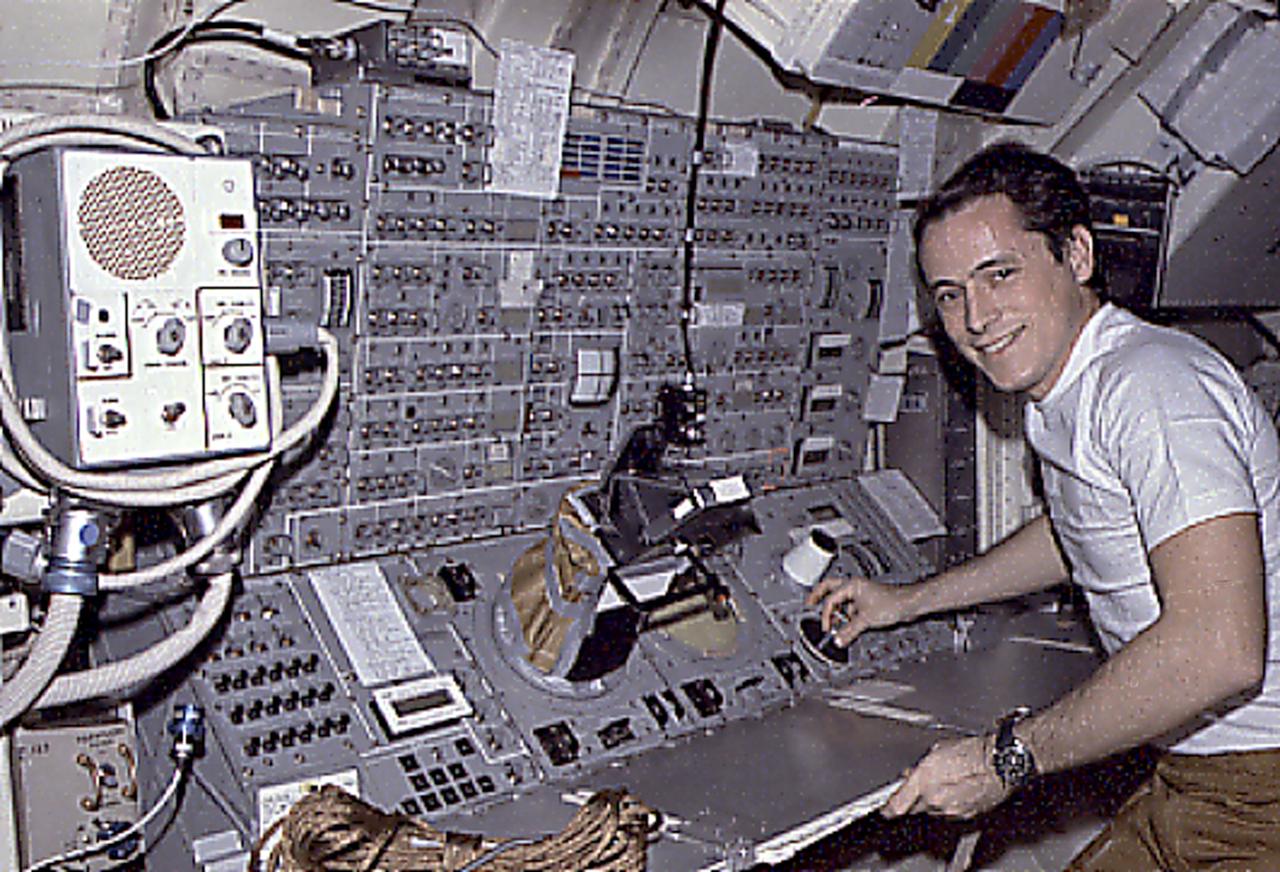
This Skylab-4 mission onboard photograph shows Astronaut Ed Gibson at the complex control and display console for the Apollo Telescope Mount solar telescopes located in the Skylab Multiple Docking Adapter. Astronauts watched the Sun, and photographed and recorded the solar activities, such as the birth of a solar flare.
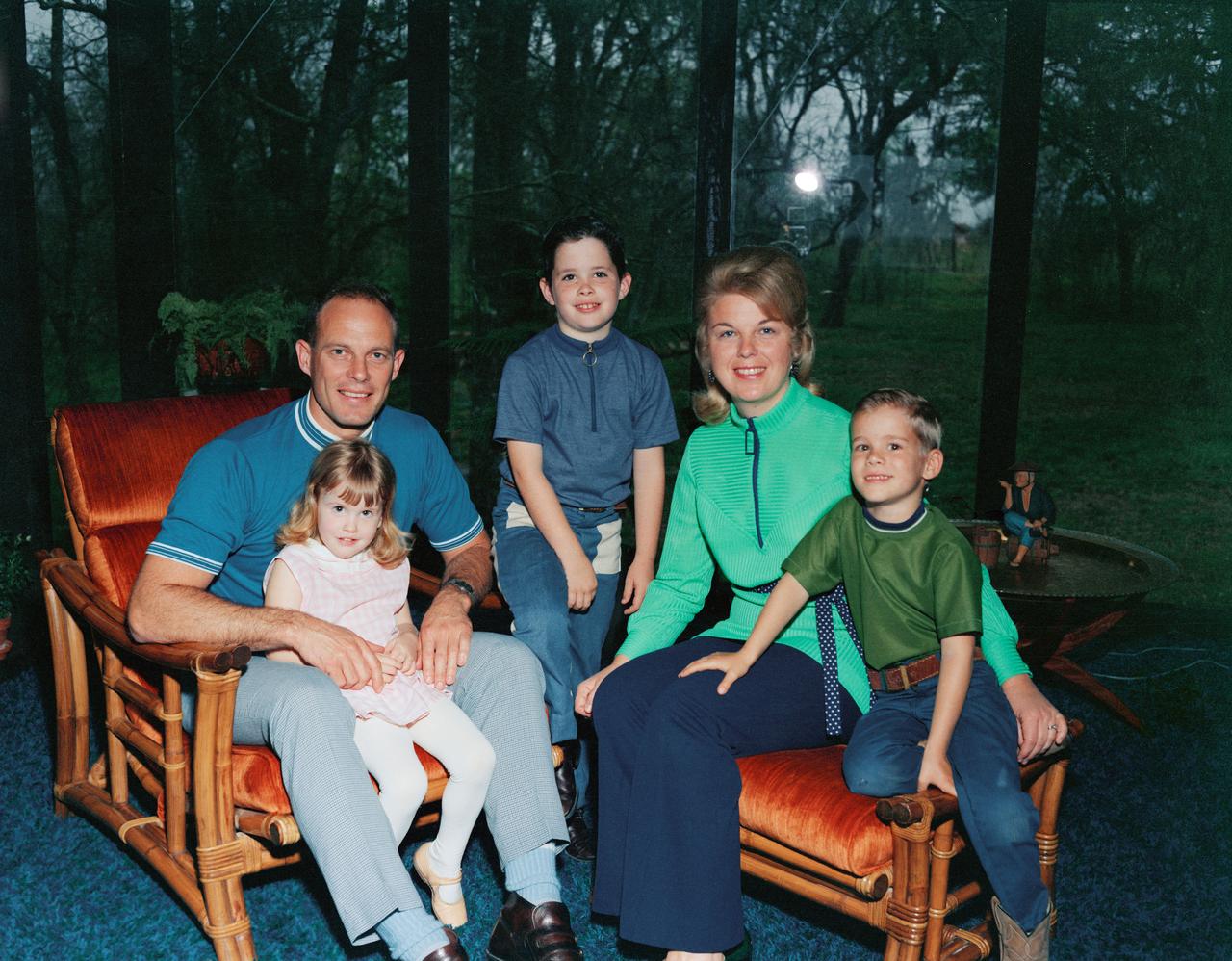
S72-31432 (November 1972) --- Astronaut Jack R. Lousma poses for a family portrait with his wife, Gratia Kay, and their three children, left to right, Mary 4; Timothy, 9; and Matthew, 7. Lousma is the pilot for the Skylab 3 or second manned Skylab mission. Photo credit: NASA
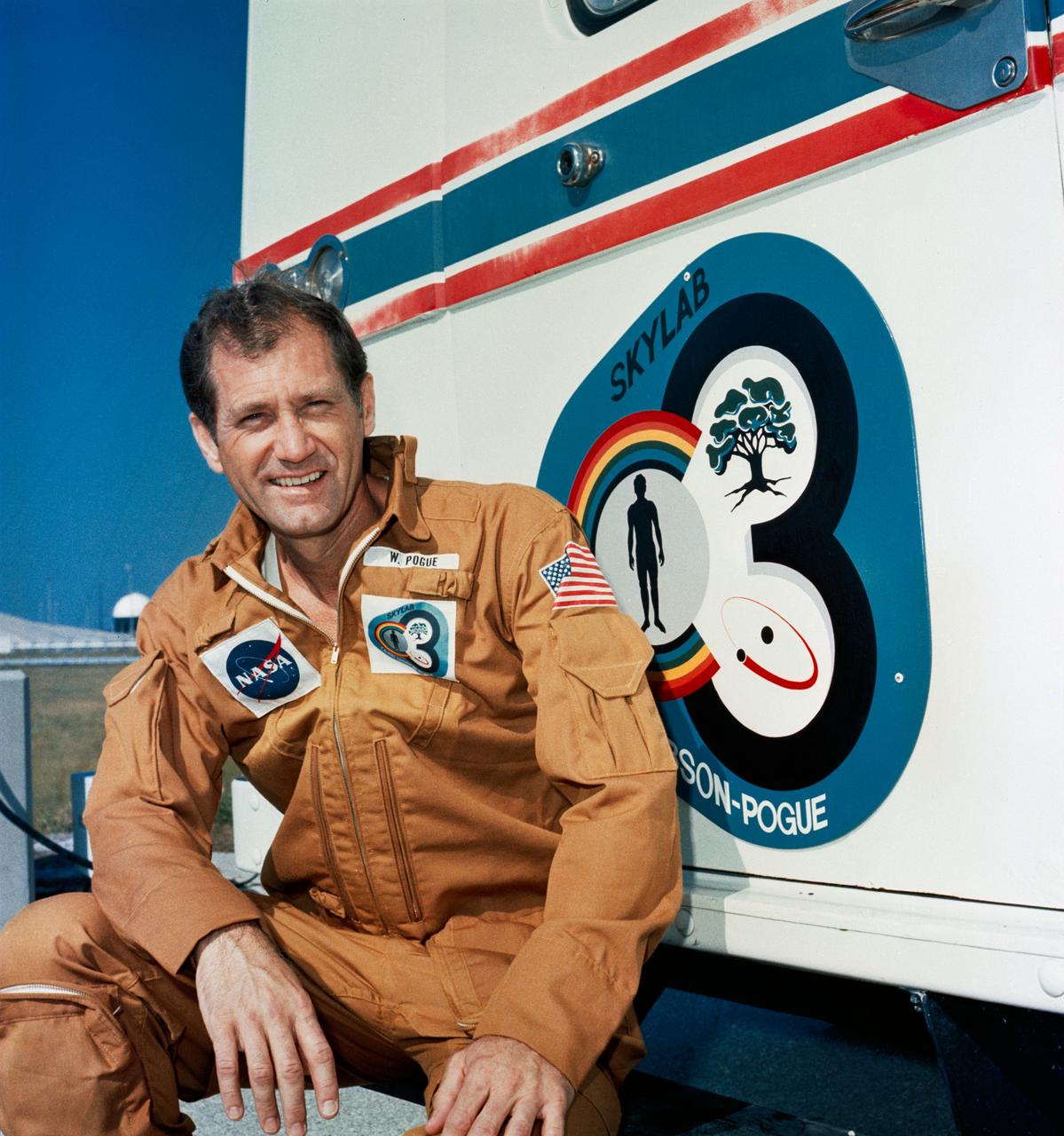
S73-36901 (8 Nov. 1973) --- Astronaut William R. Pogue, pilot of the Skylab 4 mission, relaxes on the running board of the transfer van during a visit to the Skylab 4/Saturn 1B space vehicle at Pad B, Launch Complex 39, Kennedy Space Center, Florida. On the morning of the launch the transfer van will transport astronauts Pogue, Gerald P. Carr, commander; and Edward G. Gibson, science pilot, from the suiting building to Pad B. Skylab 4, the third and last visit to the Skylab space station in Earth orbit, will return additional information on the Earth and sun, as well as provide a favorable location from which to observe the recently discovered Comet Kohoutek. Photo credit: NASA
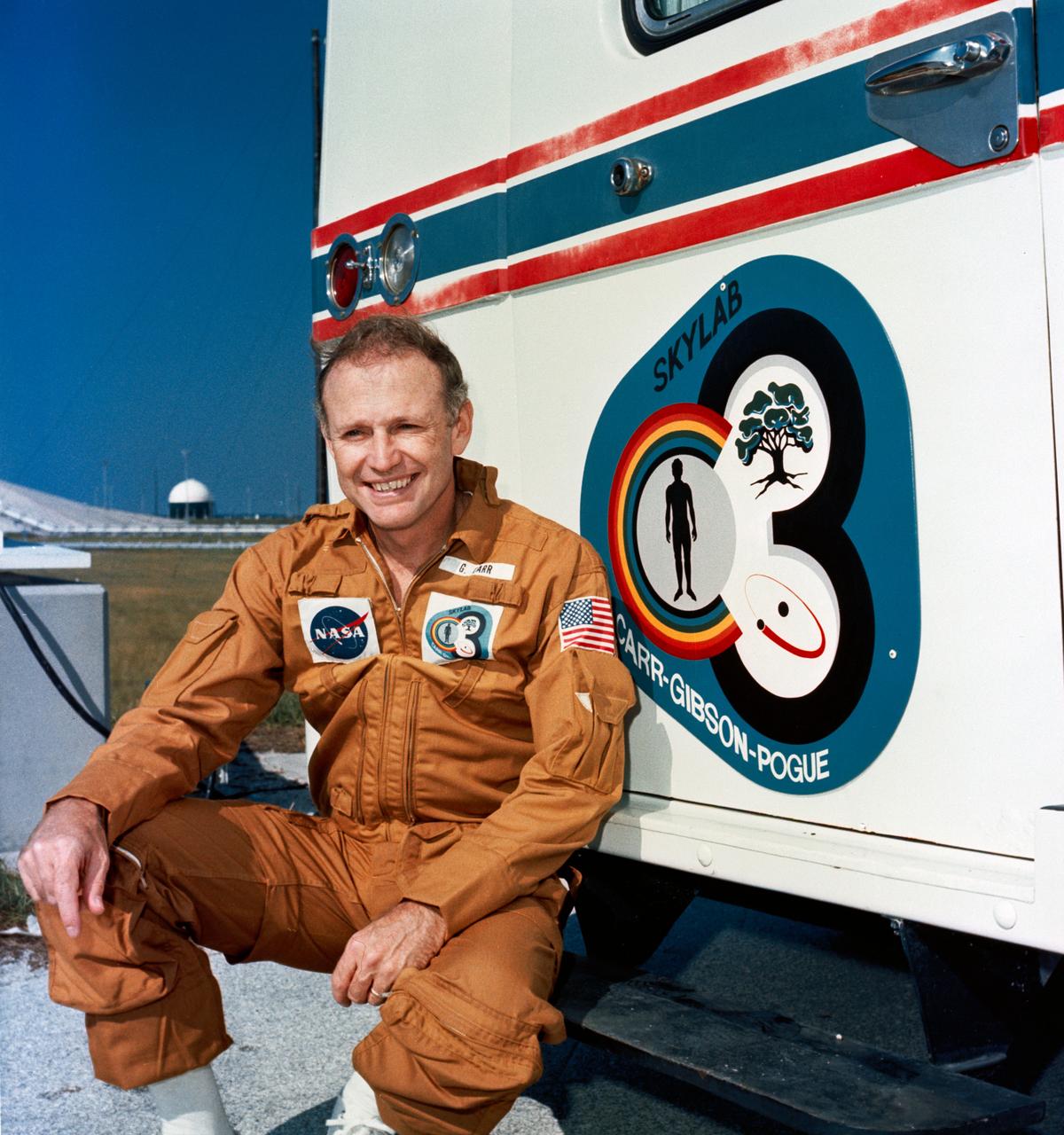
S73-36902 (8 Nov. 1973) --- Astronaut Gerald P. Carr, commander of the Skylab 4 mission, relaxes on the running board of the transfer van during a visit to the Skylab 4/Saturn 1B space vehicle at Pad B, Launch Complex 39, at the Kennedy Space Center, Florida. On the morning of the launch the transfer van will transport astronauts Carr; William R. Pogue, pilot; and Edward G. Gibson, science pilot, from the suiting building to Pad B. Skylab 4, the third and last visit to the Skylab space station in Earth orbit, will return additional information the Earth and sun, as well as provide a favorable location from which to observe the recently discovered Comet Kohoutek. Photo credit: NASA
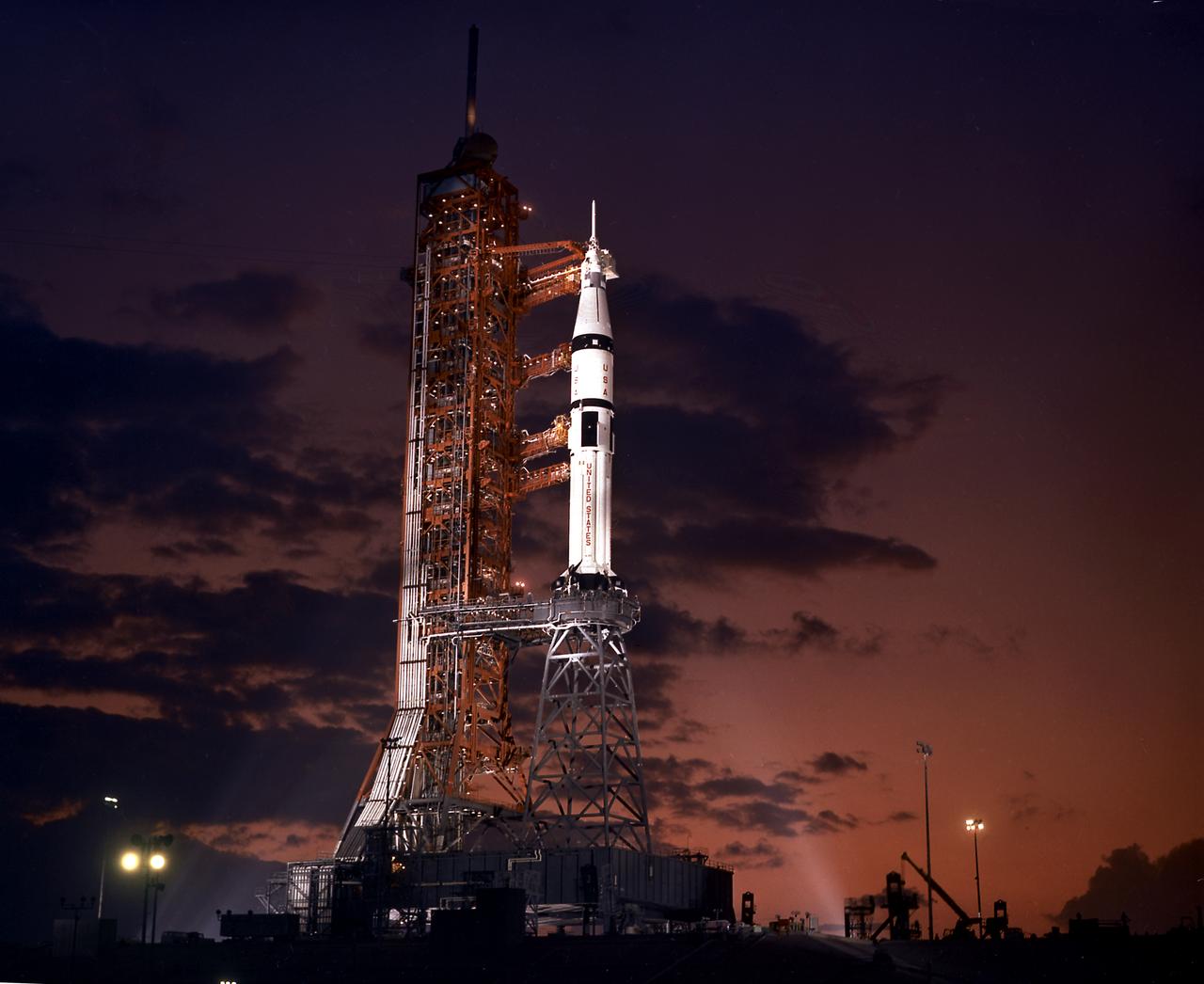
SA-210 Apollo-Soyuz Test Project (ASTP) awaits the launch scheduled on July 15, 1975 on the launch pad at the Kennedy Space Center, the ASTP mission with astronauts Thomas Stafford, Vance Brand, and Donald "Deke" Slayton. The Saturn IB, developed under the direction of the Marshall Space Flight Center (MSFC), launched five manned Earth-orbital missions between 1968 and 1975: Apollo 7, Skylab 2, Skylab 3, Skylab 4, and the Apollo-Soyuz Test Project .
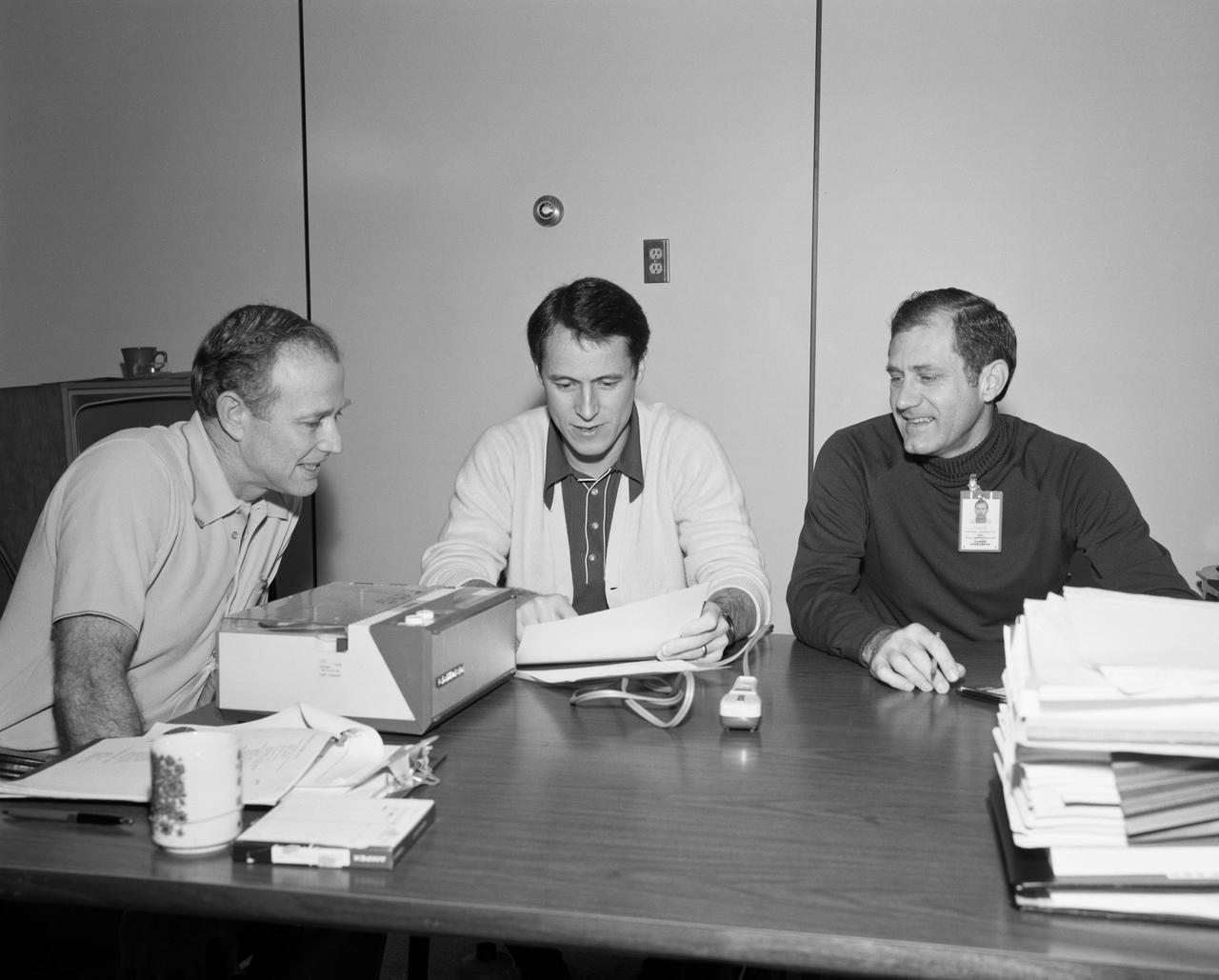
S74-17735 (February 1974) --- The three crewmen of the third manned Skylab mission (Skylab 4) look over their notes for their upcoming post-mission press conference at Johnson Space Center. They are, from left to right, astronaut Gerald P. Carr, commander; scientist-astronaut Edward G. Gibson, science pilot; and astronaut William R. Pogue, pilot. The three astronauts spent 84 days aboard the Skylab space station cluster in Earth orbit. Photo credit: NASA
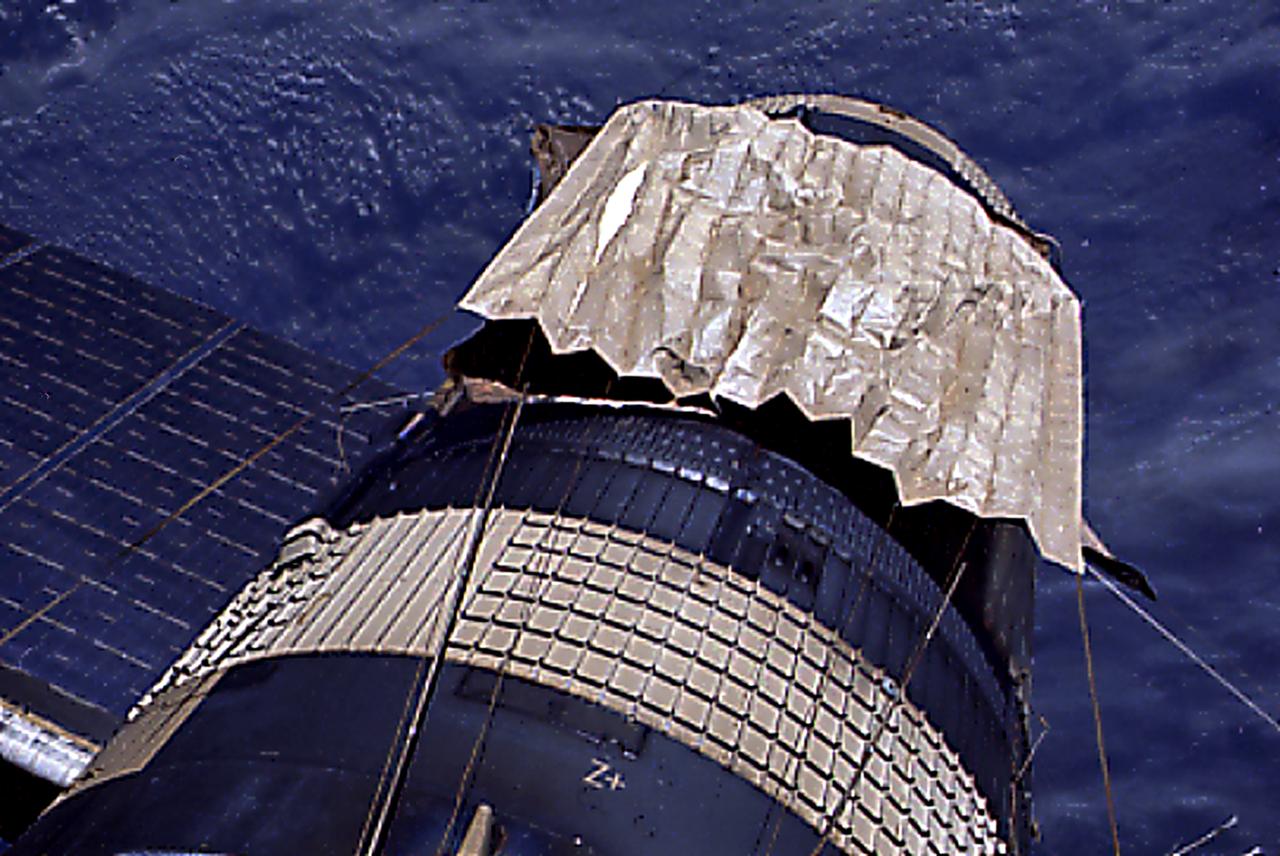
Shortly after liftoff on May 14, 1973, atmospheric drag tore off the thin metallic shield of Skylab that was designed to protect her from micro-meteorites and the Sun's intense heat. The Skylab-2 crew deployed a parasol sunshield to protect the orbiting laboratory. Concern over the possibility that materials used for the parasol would deteriorate with prolonged exposure to the Sun's rays prompted the installation of a second sunshield during the Skylab-3 mission. This time, the crew exited the space station and installed a twin-pole device to position the shield over the parasol. This photograph was taken by the Skylab-4 mission.

S74-17306 (5 Dec. 1973) --- Scientist-astronaut Edward G. Gibson, Skylab 4 science pilot, stands at the Apollo Telescope Mount (ATM) console in the Multiple Docking Adapter (MDA) of the Skylab space station cluster in Earth orbit. This picture was taken with a hand-held 35mm Nikon camera. The ATM console was one of the busiest areas of the space station during the 84-day third manned Skylab mission, as Comet Kohoutek and solar activity were closely followed by the ATM and monitored by the crewmen from the ATM console. As Gibson demonstrated during a television transmission on Dec. 5, 1973, the ATM console controls several instruments on the solar telescope. Joining Gibson for the record-setting Skylab 4 mission were astronauts Gerald P. Carr, commander, and William R. Pogue, pilot. Photo credit: NASA
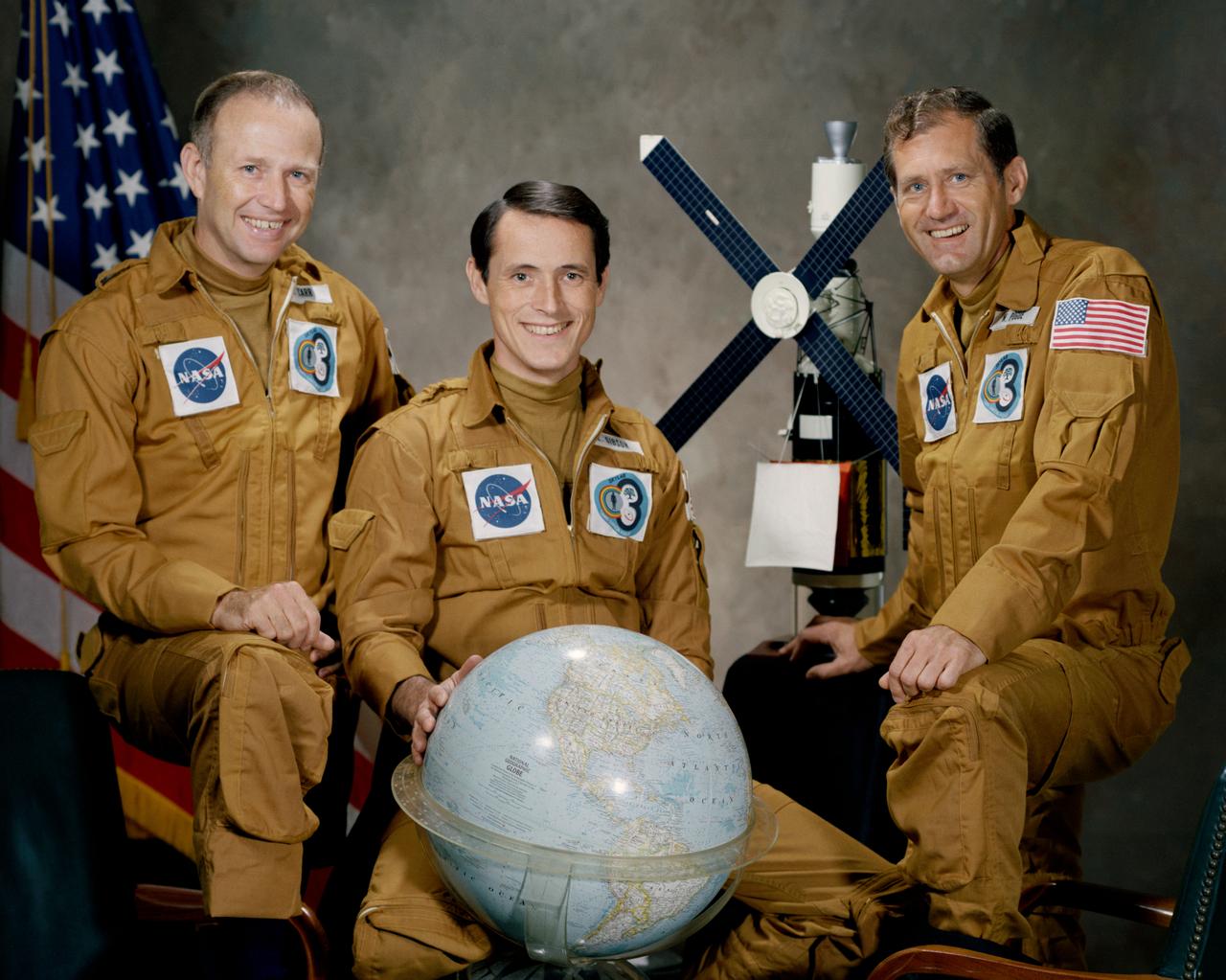
S73-33207 (August 1973) --- These three men are the prime crew for the Skylab 4 mission. Pictured in their Skylab spacesuits with a globe and a model of the Skylab space station are, left to right, astronaut Gerald P. Carr, commander; scientist-astronaut Edward G. Gibson, science pilot; and astronaut William R. Pogue, pilot. Photo credit: NASA
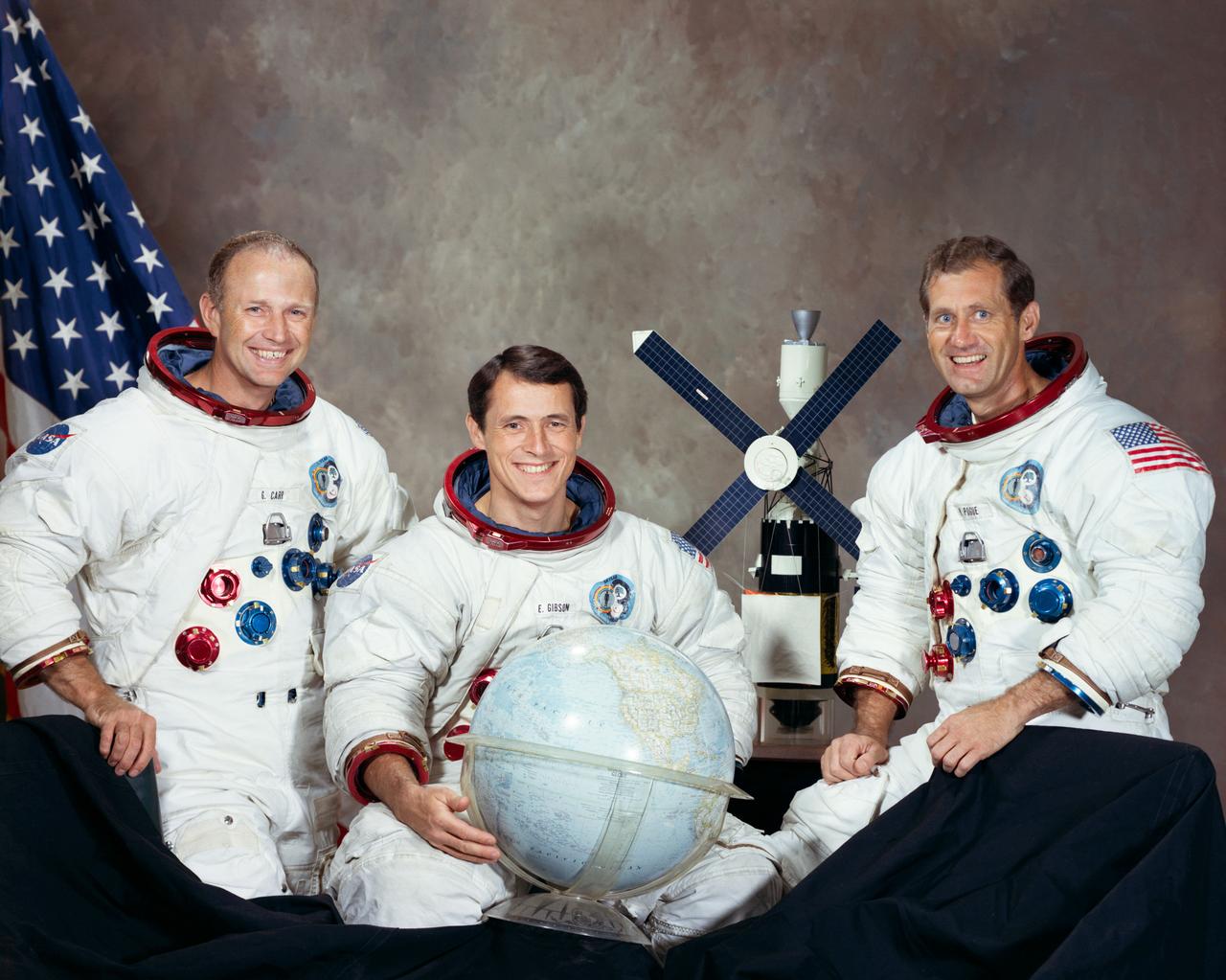
S73-33206 (August 1973) --- These three men are the prime crew for the Skylab 4 mission. Pictured in their Skylab spacesuits with a globe and a model of the Skylab space station are, left to right, astronaut Gerald P. Carr, commander; scientist-astronaut Edward G. Gibson, science pilot; and astronaut William R. Pogue, pilot. Photo credit: NASA
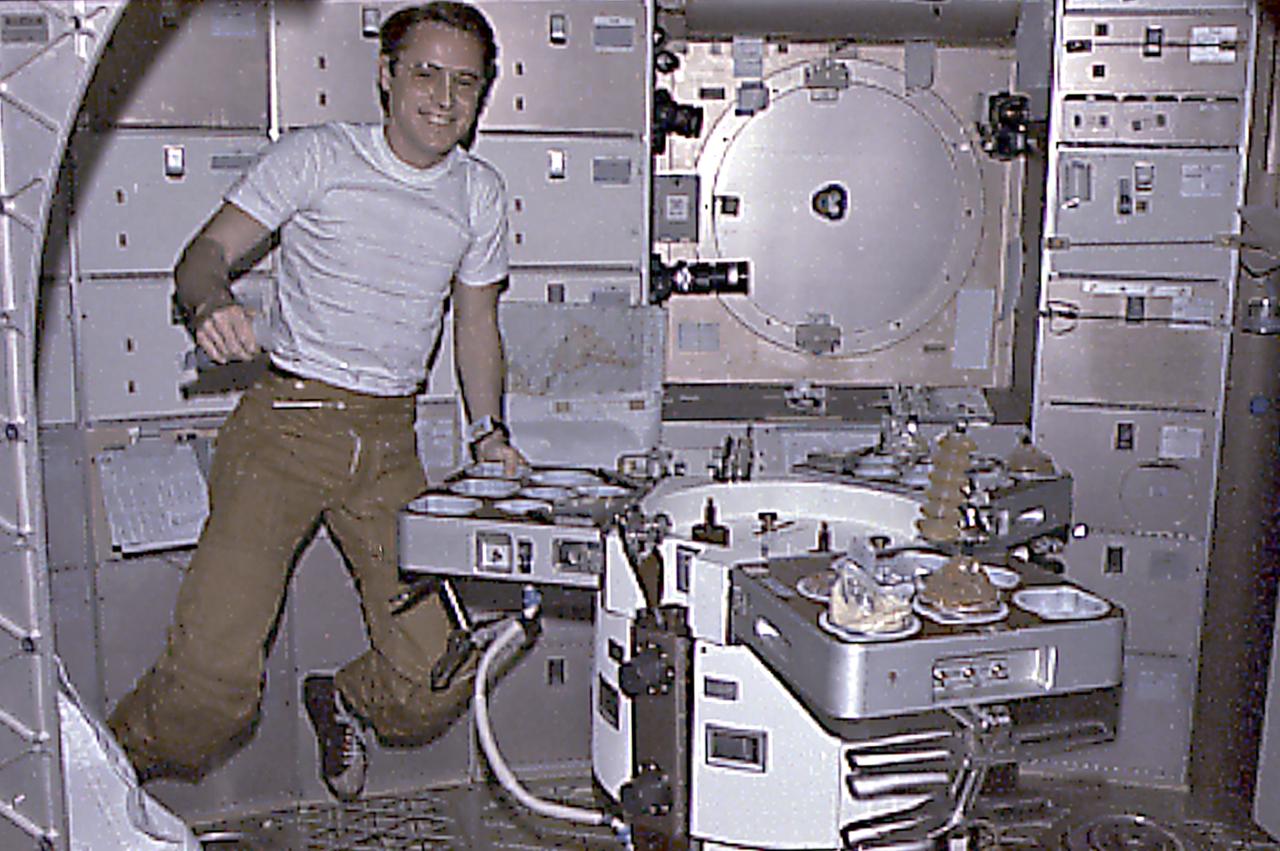
This Skylab-4 mission onboard photograph shows Astronaut Ed Gibson getting ready to prepare his meal in the crew wardroom. The tray contained heating elements for preparing the individual food packets. The food on Skylab was a great improvement over that on earlier spaceflights. It was no longer necessary to squeeze liquified food from plastic tubes. Skylab's kitchen was so equipped that each crewman could select his own menu and prepare it to his own taste.
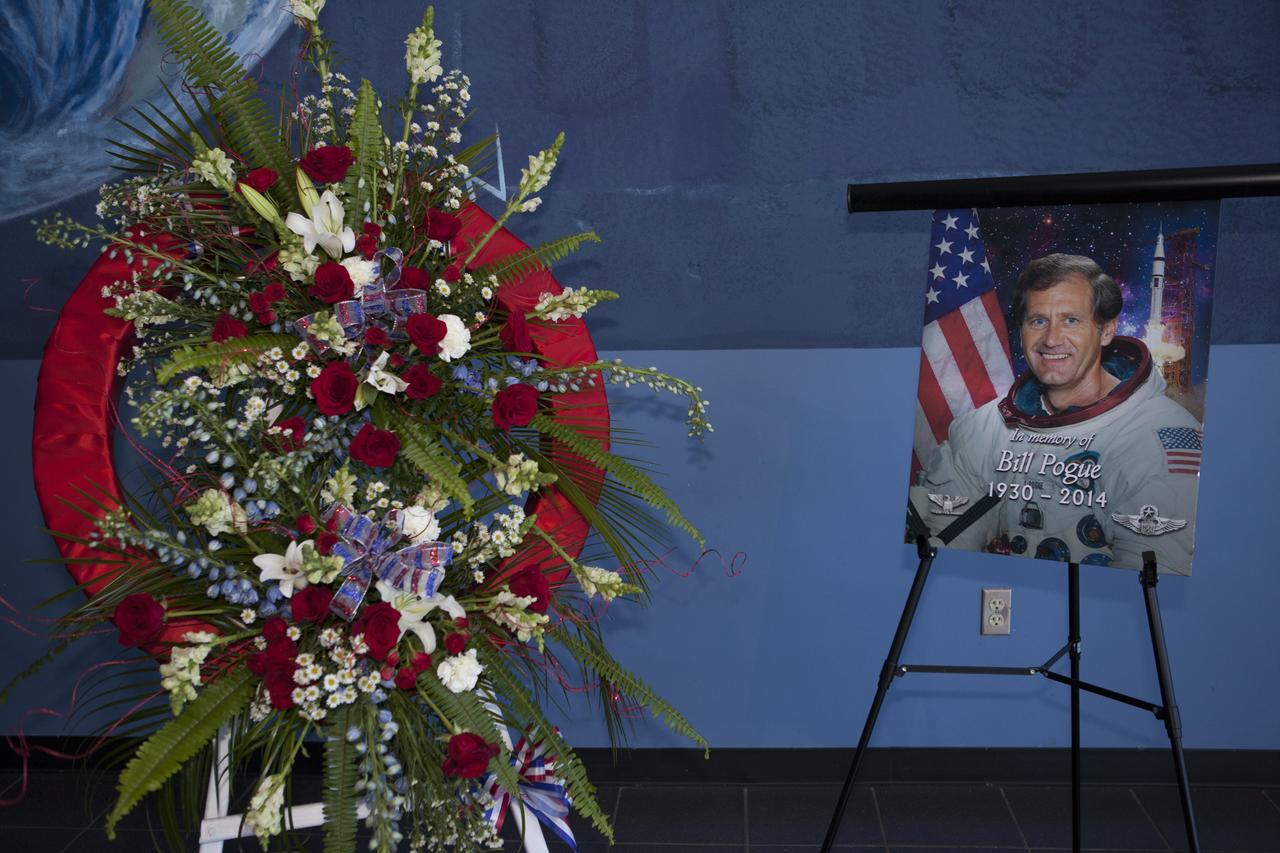
CAPE CANAVERAL, Fla. – A wreath is placed next to a photo of former NASA astronaut William R. Pogue during a ceremony to honor Pogue held at the United States Astronaut Hall of Fame at the Kennedy Space Center Visitor Complex. Col. Pogue, pilot on NASA's Skylab 4 mission in 1973-74, died March 3. He was 84 years old. Skylab 4 was the third and final manned visit to the Skylab orbital workshop, launched Nov. 16, 1973, and concluded Feb. 8, 1974. At 84 days, 1 hour and 15 minutes, Skylab 4 was the longest manned space flight to that date. Pogue was accompanied on the record-setting 34.5-million-mile flight by Commander Gerald P. Carr and science-pilot Dr. Edward G. Gibson. They conducted dozens of experiments and science demonstrations during their 1,214 orbits of Earth. Pogue logged 13 hours and 31 minutes in two spacewalks outside the orbital workshop. For more information, visit http://www.nasa.gov/content/skylab-4-pilot-william-pogue-dies. Photo credit: NASA/Kim Shiflett

CAPE CANAVERAL, Fla. – Former NASA astronaut Edward G. Gibson, Ph.D., remarks on his friendship with former NASA astronaut William R. Pogue during a wreath laying ceremony at the United States Astronaut Hall of Fame at the Kennedy Space Center Visitor Complex. Col. Pogue, pilot on NASA's Skylab 4 mission in 1973-74, died March 3. He was 84 years old. Skylab 4 was the third and final manned visit to the Skylab orbital workshop, launched Nov. 16, 1973, and concluded Feb. 8, 1974. At 84 days, 1 hour and 15 minutes, Skylab 4 was the longest manned space flight to that date. Pogue was accompanied on the record-setting 34.5-million-mile flight by Commander Gerald P. Carr and science-pilot Gibson. They conducted dozens of experiments and science demonstrations during their 1,214 orbits of Earth. Pogue logged 13 hours and 31 minutes in two spacewalks outside the orbital workshop. For more information, visit http://www.nasa.gov/content/skylab-4-pilot-william-pogue-dies. Photo credit: NASA/Kim Shiflett

CAPE CANAVERAL, Fla. – Former NASA astronaut Gerald P. Carr remarks on his friendship with former NASA astronaut William R. Pogue during a wreath laying ceremony at the United States Astronaut Hall of Fame at the Kennedy Space Center Visitor Complex. Col. Pogue, pilot on NASA's Skylab 4 mission in 1973-74, died March 3. He was 84 years old. Skylab 4 was the third and final manned visit to the Skylab orbital workshop, launched Nov. 16, 1973, and concluded Feb. 8, 1974. At 84 days, 1 hour and 15 minutes, Skylab 4 was the longest manned space flight to that date. Pogue was accompanied on the record-setting 34.5-million-mile flight by Commander Carr and science-pilot Dr. Edward G. Gibson. They conducted dozens of experiments and science demonstrations during their 1,214 orbits of Earth. Pogue logged 13 hours and 31 minutes in two spacewalks outside the orbital workshop. For more information, visit http://www.nasa.gov/content/skylab-4-pilot-william-pogue-dies. Photo credit: NASA/Kim Shiflett

CAPE CANAVERAL, Fla. – Former NASA astronauts Gerald P. Carr, left, and Edward G. Gibson place a wreath on an easel during a ceremony to honor former NASA astronaut William R. Pogue at the United States Astronaut Hall of Fame at the Kennedy Space Center Visitor Complex. In the background is a painting by former NASA astronaut Alan Bean. Col. Pogue, pilot on NASA's Skylab 4 mission in 1973-74, died March 3. He was 84 years old. Skylab 4 was the third and final manned visit to the Skylab orbital workshop, launched Nov. 16, 1973, and concluded Feb. 8, 1974. At 84 days, 1 hour and 15 minutes, Skylab 4 was the longest manned space flight to that date. Pogue was accompanied on the record-setting 34.5-million-mile flight by Commander Carr and science-pilot Gibson. They conducted dozens of experiments and science demonstrations during their 1,214 orbits of Earth. Pogue logged 13 hours and 31 minutes in two spacewalks outside the orbital workshop. For more information, visit http://www.nasa.gov/content/skylab-4-pilot-william-pogue-dies. Photo credit: NASA/Kim Shiflett

CAPE CANAVERAL, Fla. – From left, former NASA astronauts Robert Cabana, Gerald P. Carr and Edward G. Gibson pay their respects to former NASA astronaut William R. Pogue during a wreath laying ceremony at the United States Astronaut Hall of Fame at the Kennedy Space Center Visitor Complex. Cabana now is the director of Kennedy Space Center. In the background is a painting by former NASA astronaut Alan Bean. Col. Pogue, pilot on NASA's Skylab 4 mission in 1973-74, died March 3. He was 84 years old. Skylab 4 was the third and final manned visit to the Skylab orbital workshop, launched Nov. 16, 1973, and concluded Feb. 8, 1974. At 84 days, 1 hour and 15 minutes, Skylab 4 was the longest manned space flight to that date. Pogue was accompanied on the record-setting 34.5-million-mile flight by Commander Carr and science-pilot Gibson. They conducted dozens of experiments and science demonstrations during their 1,214 orbits of Earth. Pogue logged 13 hours and 31 minutes in two spacewalks outside the orbital workshop. For more information, visit http://www.nasa.gov/content/skylab-4-pilot-william-pogue-dies. Photo credit: NASA/Kim Shiflett
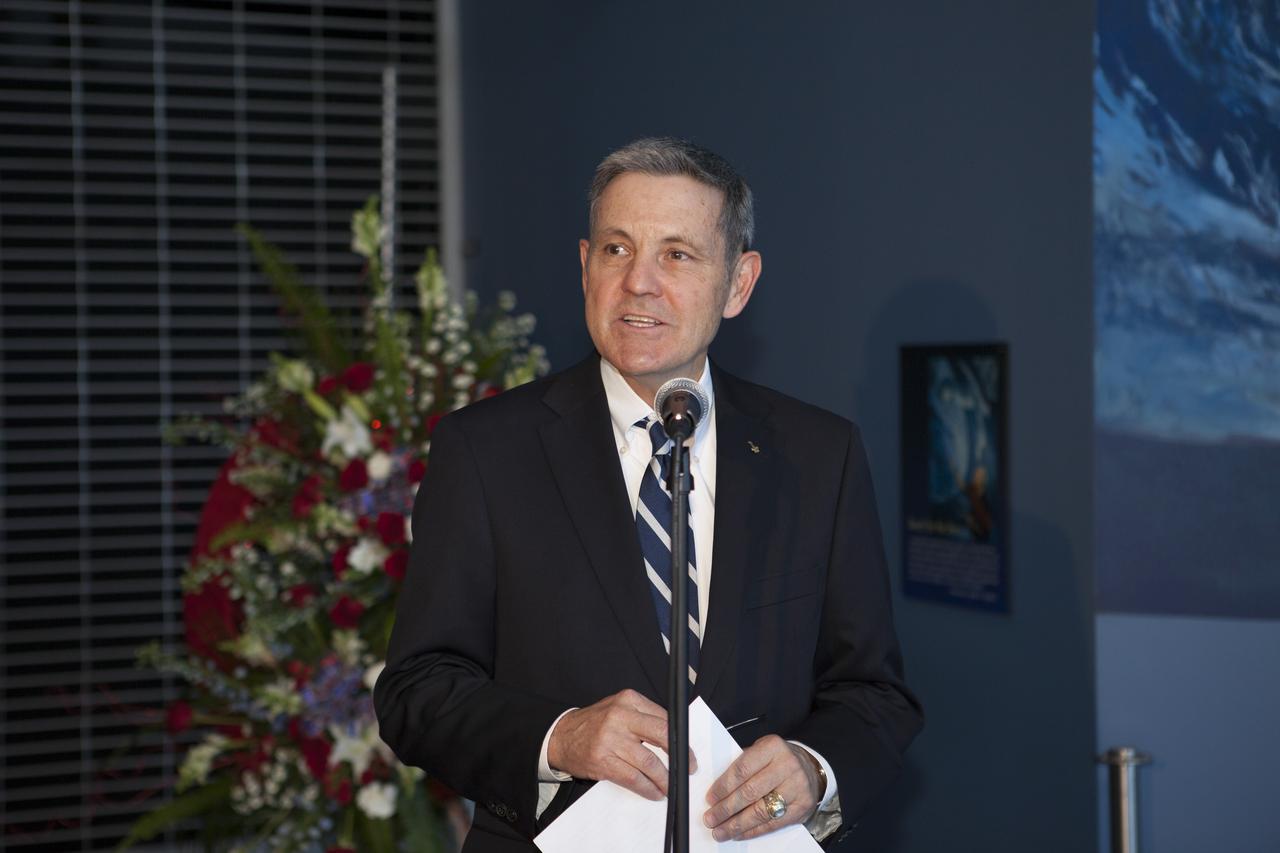
CAPE CANAVERAL, Fla. – NASA Kennedy Space Center Director Robert Cabana welcomes guests to the United States Astronaut Hall of Fame at the Kennedy Space Center Visitor Complex for a wreath laying ceremony to honor former NASA astronaut William R. Pogue. Col. Pogue, pilot on NASA's Skylab 4 mission in 1973-74, died March 3. He was 84 years old. Skylab 4 was the third and final manned visit to the Skylab orbital workshop, launched Nov. 16, 1973, and concluded Feb. 8, 1974. At 84 days, 1 hour and 15 minutes, Skylab 4 was the longest manned space flight to that date. Pogue was accompanied on the record-setting 34.5-million-mile flight by Commander Gerald P. Carr and science-pilot Dr. Edward G. Gibson. They conducted dozens of experiments and science demonstrations during their 1,214 orbits of Earth. Pogue logged 13 hours and 31 minutes in two spacewalks outside the orbital workshop. For more information, visit http://www.nasa.gov/content/skylab-4-pilot-william-pogue-dies. Photo credit: NASA/Kim Shiflett

SL4-150-5074 (February 1974) --- Scientist-astronaut Edward G. Gibson, science pilot for the Skylab 4 mission, demonstrates the effects of zero-gravity as he sails through airlock module hatch. Photo credit: NASA
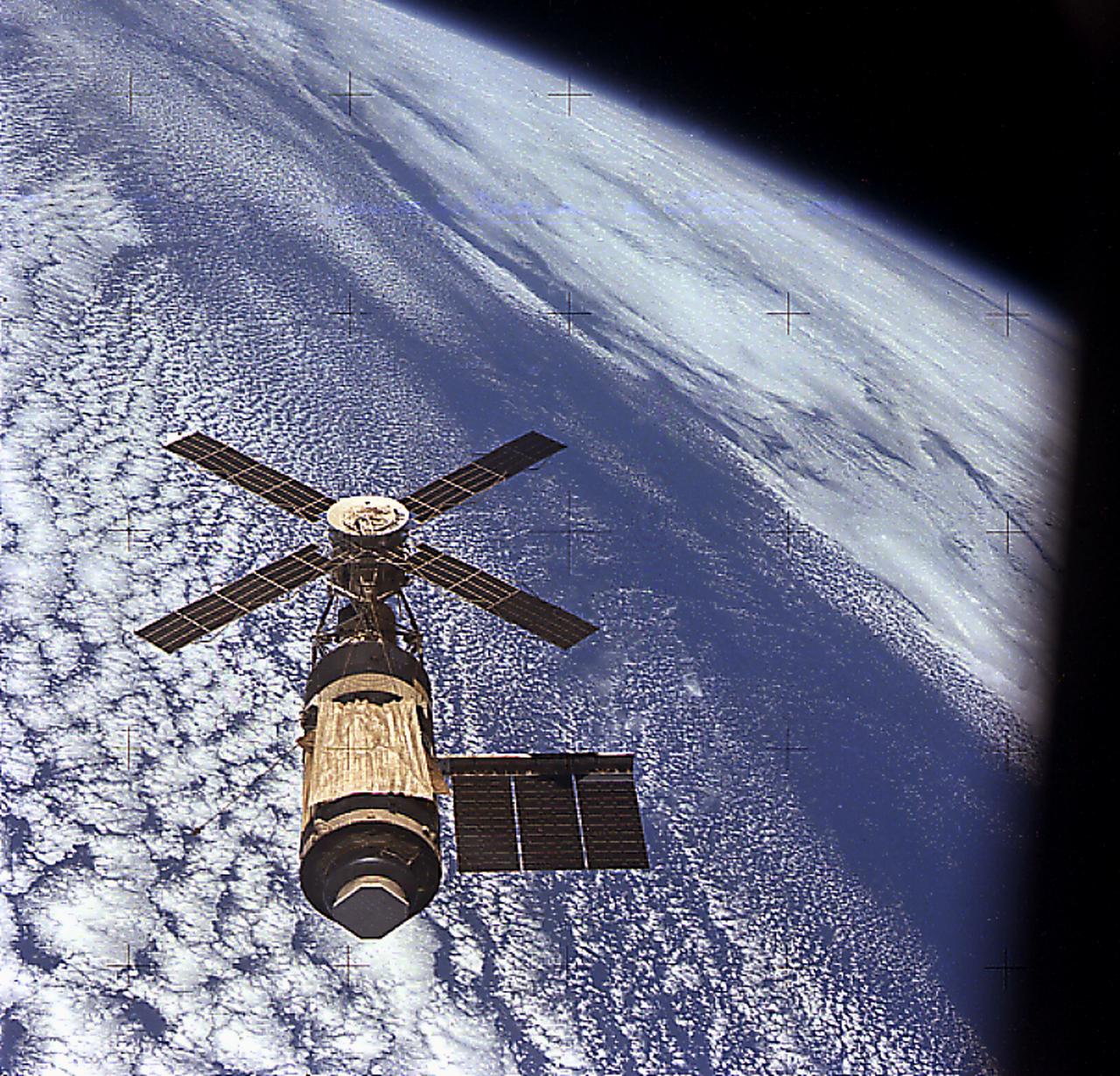
The idea that ultimately became Skylab first surfaced in 1962 as a proposal to convert a spent Saturn upper stage (Saturn V S-II stage) into an orbital workshop. In 1968, the Marshall Space Flight Center proposed an alternative to the wet workshop concept of refurbishing a space station in orbit. Instead, a fully equipped dry workshop could be launched as a complete unit ready for occupancy. Skylab became the free world's first space station. Launched in May 1973, the Skylab space station was occupied in succession by three teams of three crewmembers. These crews spent 28, 59, and 84 days respectively, orbiting the Earth and performing nearly 300 experiments. This view of Skylab in orbit was taken by the Skylab 4 (the last Skylab mission) crew.

S73-37251 (23 November 1973) --- Astronaut Bruce McCandless II, left, shows off a mock-up of the occulting disc for the T025 Coronagraph Contamination Measurement Engineering and Technology Experiment to be used by the crewmen of the third manned Skylab mission (Skylab 4), now into their eighth day in Earth orbit. On the right is flight director Neil B. Hutchinson. The men are in the Mission Operations Control Room (MOCR) of the Mission Control Center (MCC) at Johnson Space Center. Photo credit: NASA

A photo of former NASA astronaut Gerald “Jerry” Carr is displayed alongside a memorial wreath during a remembrance ceremony at the agency’s Kennedy Space Center in Florida on Aug. 31, 2020. The ceremony was held at the Heroes and Legends exhibit within the Astronaut Hall of Fame at Kennedy’s visitor complex. Carr was commander of the Skylab 4 mission – the final, crewed mission of the Skylab program. He passed away Aug. 26 at the age of 88.

A display for former NASA astronaut Gerald “Jerry” Carr is shown following a remembrance ceremony on Aug. 31, 2020, at the agency’s Kennedy Space Center in Florida. The ceremony was held at the Heroes and Legends exhibit within the Astronaut Hall of Fame at Kennedy’s visitor complex. Carr was commander of the Skylab 4 mission – the final, crewed mission of the Skylab program. He passed away Aug. 26 at the age of 88.

A photo of former NASA astronaut Gerald “Jerry” Carr is displayed alongside a memorial wreath during a remembrance ceremony at the agency’s Kennedy Space Center in Florida on Aug. 31, 2020. The ceremony was held at the Heroes and Legends exhibit within the Astronaut Hall of Fame at Kennedy’s visitor complex. Carr was commander of the Skylab 4 mission – the final, crewed mission of the Skylab program. He passed away Aug. 26 at the age of 88.

A photo of former NASA astronaut Gerald “Jerry” Carr is displayed during a remembrance ceremony at the agency’s Kennedy Space Center in Florida on Aug. 31, 2020. The ceremony was held at the Heroes and Legends exhibit within the Astronaut Hall of Fame at Kennedy’s visitor complex. Carr was commander of the Skylab 4 mission – the final, crewed mission of the Skylab program. He passed away Aug. 26 at the age of 88.

Kennedy Space Center Director Bob Cabana is photographed next to a memorial wreath and portrait of former NASA astronaut Gerald “Jerry” Carr during a remembrance ceremony on Aug. 31, 2020. The ceremony was held at the Heroes and Legends exhibit within the Astronaut Hall of Fame at Kennedy’s visitor complex. Carr was commander of the Skylab 4 mission – the final, crewed mission of the Skylab program. He passed away Aug. 26 at the age of 88.
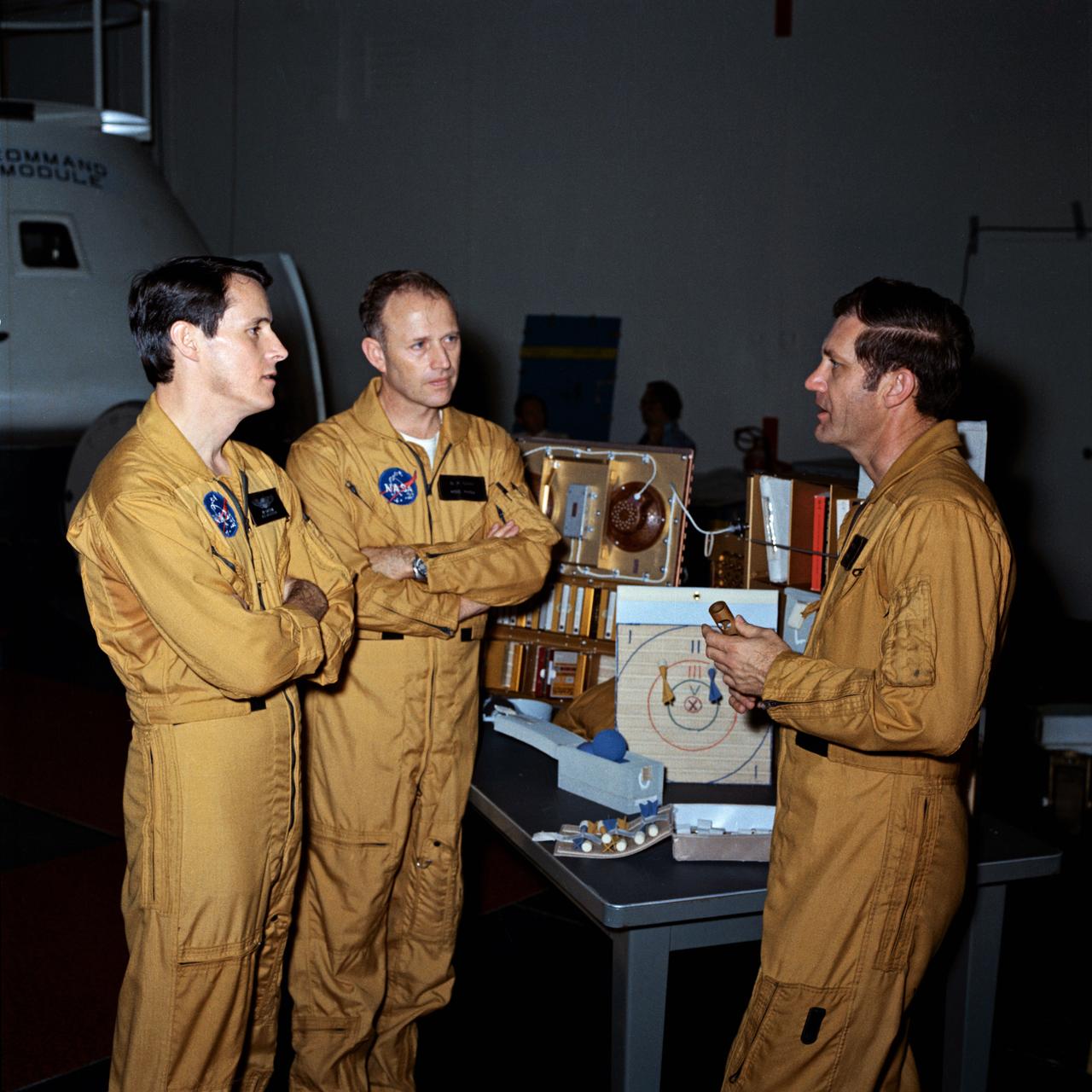
S72-17494 (19 Jan. 1972) --- These three men make up the crew of the Skylab 4 mission. They are, left to right, scientist-astronaut Edward G. Gibson, science pilot; astronaut Gerald P. Carr, commander; and astronaut William R. Pogue, pilot. They were photographed and interviewed during an "open house" press day in the realistic atmosphere of Skylab mock-up and trainers in the Mission Simulation and Training facility at the Manned Spacecraft Center. Photo credit: NASA
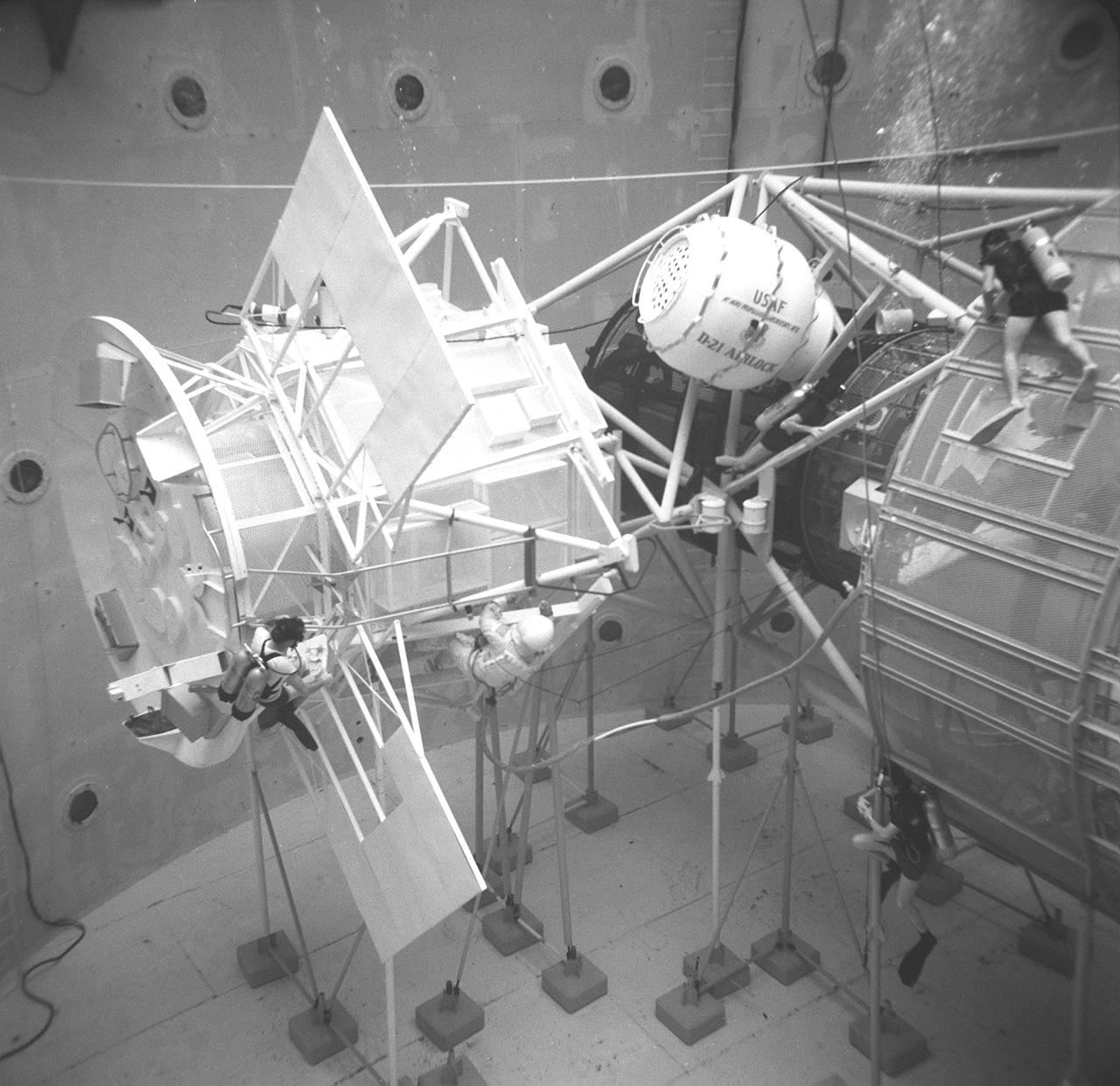
After the end of the Apollo missions, NASA's next adventure into space was the marned spaceflight of Skylab. Using an S-IVB stage of the Saturn V launch vehicle, Skylab was a two-story orbiting laboratory, one floor being living quarters and the other a work room. The objectives of Skylab were to enrich our scientific knowledge of the Earth, the Sun, the stars, and cosmic space; to study the effects of weightlessness on living organisms, including man; to study the effects of the processing and manufacturing of materials utilizing the absence of gravity; and to conduct Earth resource observations. At the Marshall Space Flight Center (MSFC), astronauts and engineers spent hundreds of hours in an MSFC Neutral Buoyancy Simulator (NBS) rehearsing procedures to be used during the Skylab mission, developing techniques, and detecting and correcting potential problems. The NBS was a 40-foot deep water tank that simulated the weightlessness environment of space. This photograph shows astronaut Ed Gibbon (a prime crew member of the Skylab-4 mission) during the neutral buoyancy Skylab extravehicular activity training at the Apollo Telescope Mount (ATM) mockup. One of Skylab's major components, the ATM was the most powerful astronomical observatory ever put into orbit to date.
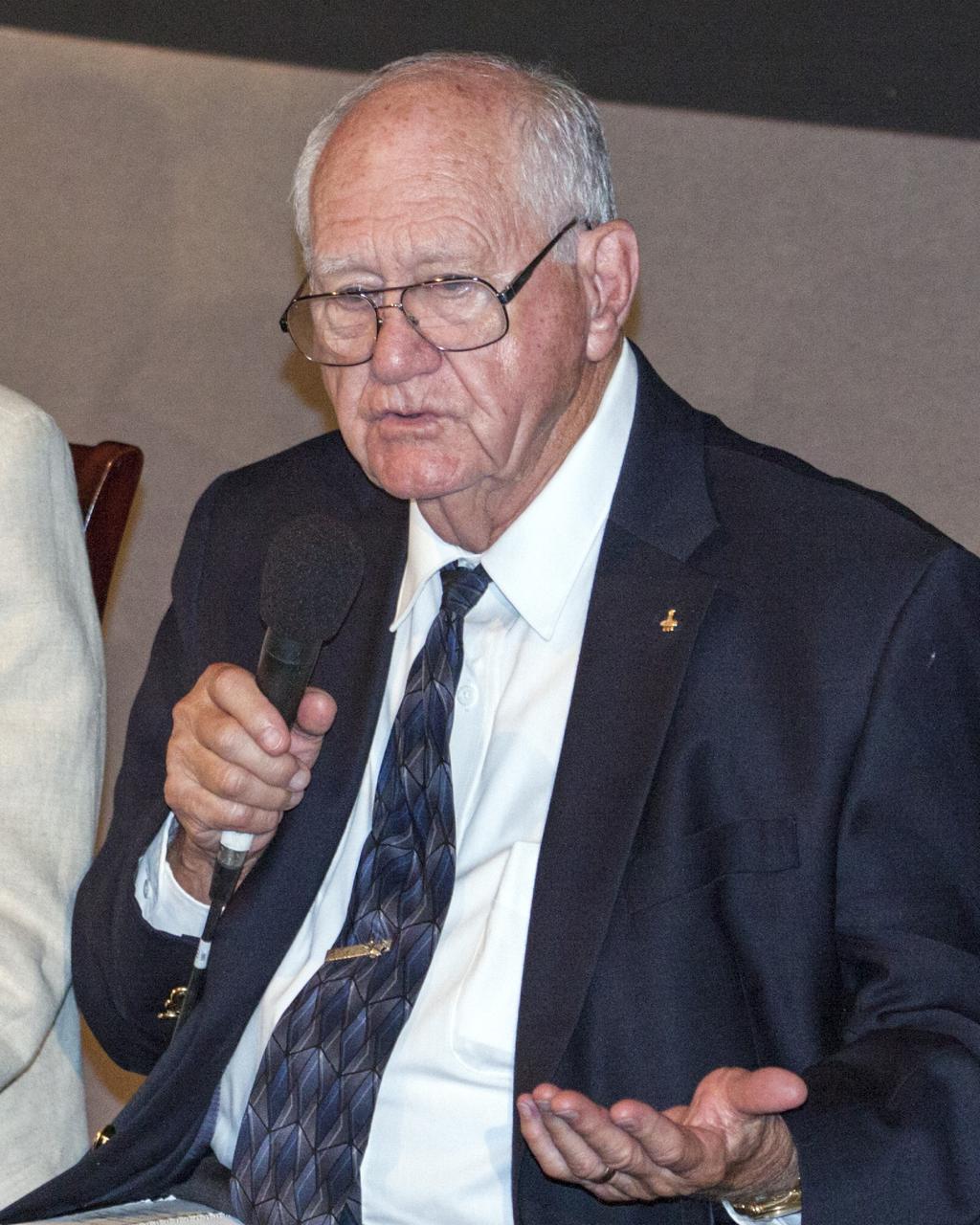
CAPE CANAVERAL, Fla. – At the Kennedy Space Center's Apollo/Saturn V Center, former NASA astronaut William Pogue speaks to guests at the Astronaut Scholarship Foundation's event celebrating the 40th anniversary of Skylab. Pogue served as pilot on Skylab 4, the third piloted mission to the space station. The gala commemorating the 40th anniversary of Skylab included six of the nine astronauts who flew missions to America's first space station. The orbiting laboratory was launched unpiloted from Kennedy on May 14, 1973. Between May 25, 1973 and Feb. 8, 1974, crews of three spent 28, 59 and 84 days living and working in low-Earth orbit aboard the station. For more information, visit http://www.nasa.gov/mission_pages/skylab/ Photo credit: NASA/Kim Shiflett
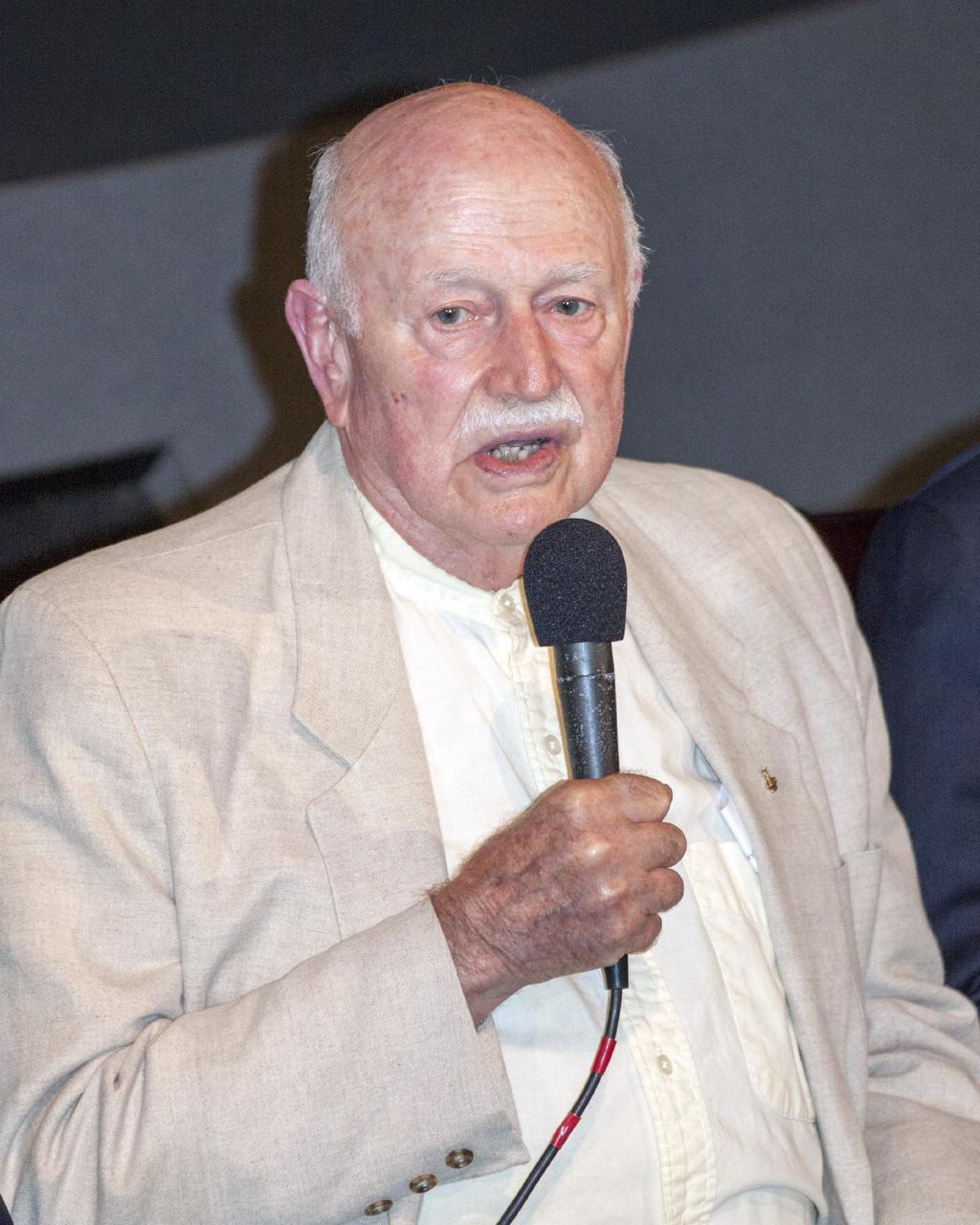
CAPE CANAVERAL, Fla. – At the Kennedy Space Center's Apollo/Saturn V Center, former NASA astronaut Gerald Carr speaks to guests at the Astronaut Scholarship Foundation's event celebrating the 40th anniversary of Skylab. Carr served as commander of Skylab 4, the third piloted mission to the space station. The gala commemorating the 40th anniversary of Skylab included six of the nine astronauts who flew missions to America's first space station. The orbiting laboratory was launched unpiloted from Kennedy on May 14, 1973. Between May 25, 1973 and Feb. 8, 1974, crews of three spent 28, 59 and 84 days living and working in low-Earth orbit aboard the station. For more information, visit http://www.nasa.gov/mission_pages/skylab/ Photo credit: NASA/Kim Shiflett
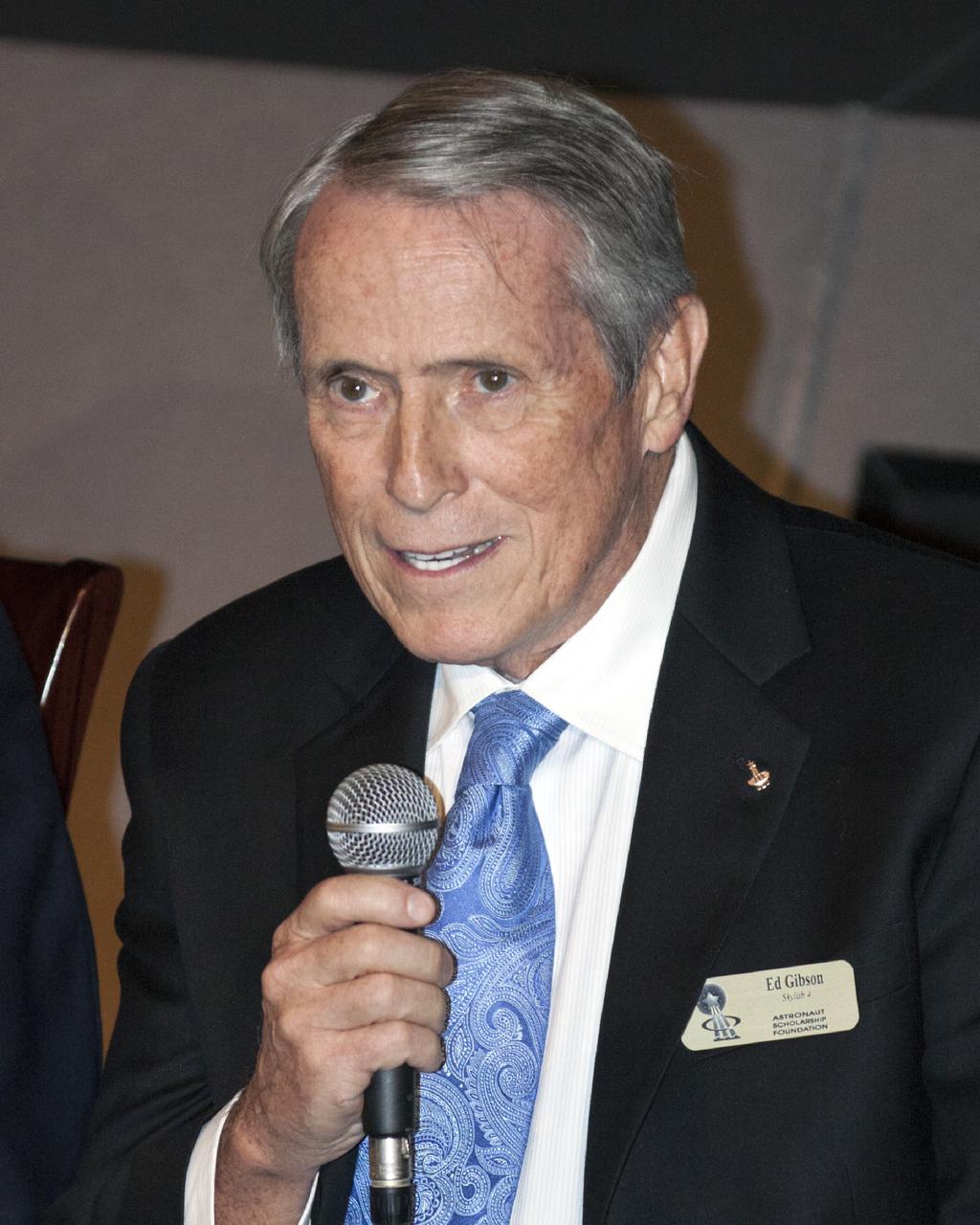
CAPE CANAVERAL, Fla. – At the Kennedy Space Center's Apollo/Saturn V Center, former NASA astronaut Edward Gibson speaks to guests at the Astronaut Scholarship Foundation's event celebrating the 40th anniversary of Skylab. Gibson served as science pilot on Skylab 4, the third piloted mission to the space station. The gala commemorating the 40th anniversary of Skylab included six of the nine astronauts who flew missions to America's first space station. The orbiting laboratory was launched unpiloted from Kennedy on May 14, 1973. Between May 25, 1973 and Feb. 8, 1974, crews of three spent 28, 59 and 84 days living and working in low-Earth orbit aboard the station. For more information, visit http://www.nasa.gov/mission_pages/skylab/ Photo credit: NASA/Kim Shiflett
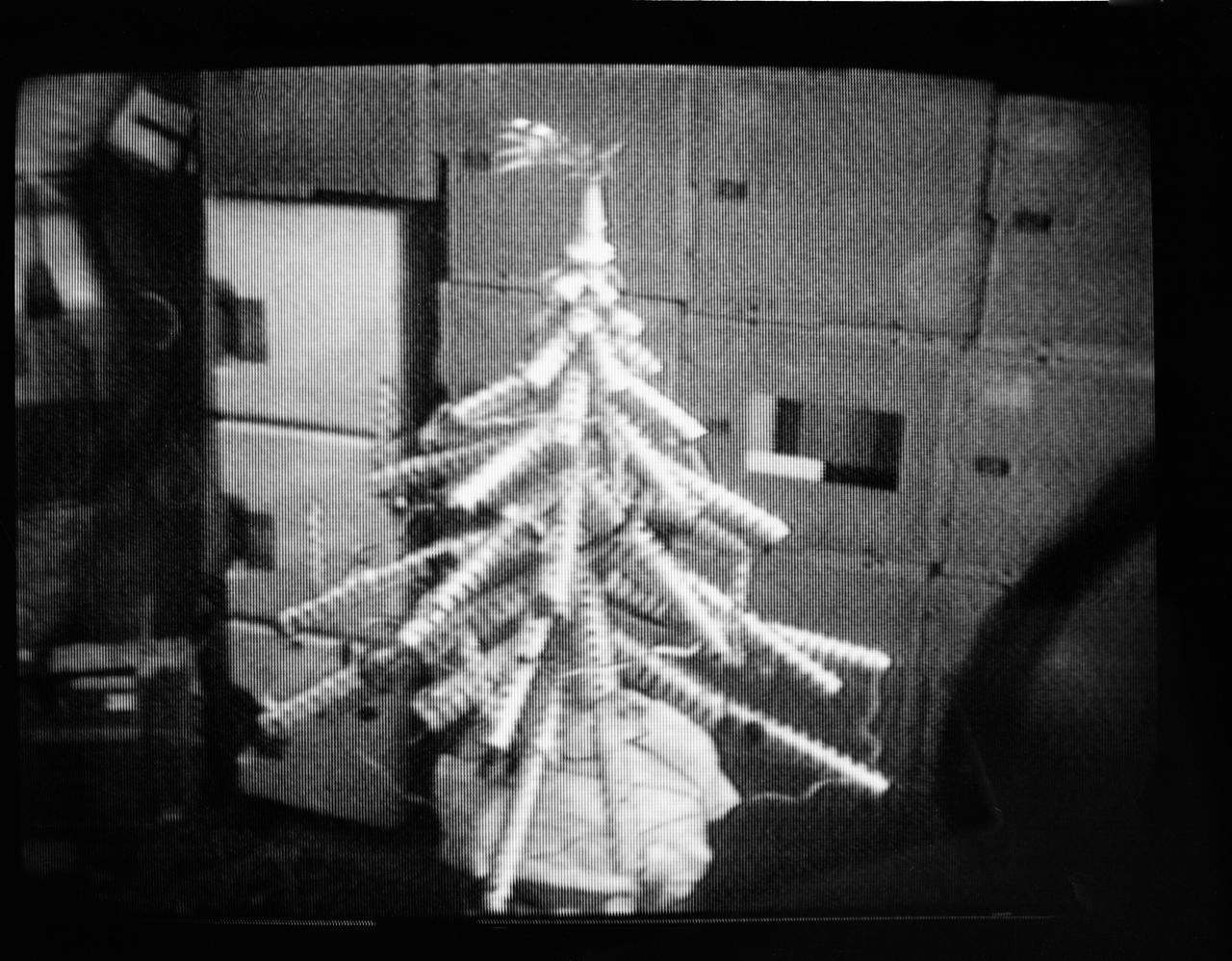
S73-38687 (24 Dec. 1973) --- This "Christmas tree" was created by the three crewmen of the third manned Skylab mission (Skylab 4) aboard the space station in Earth orbit. Food cans were used to fashion the tree. This photograph was made from a television transmission made from a video tape recording on Dec. 24, 1973. Photo credit: NASA
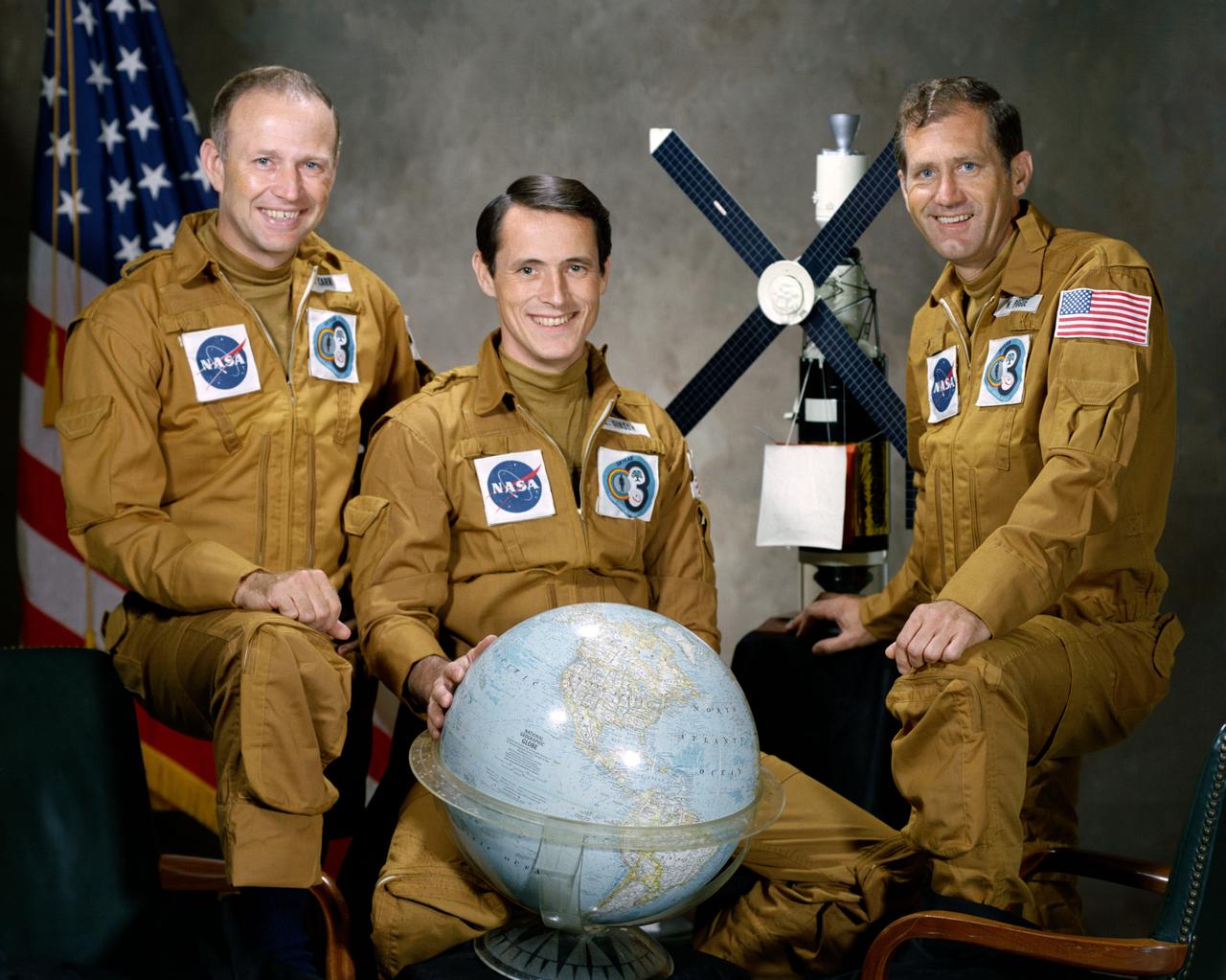
S73-33208 (August 1973) --- These three men are the prime crewmen for the Skylab 4 mission. Pictured in their flight suits with a globe and a model of the Skylab space station are, left to right, astronaut Gerald P. Carr, commander; scientist-astronaut Edward G. Gibson, science pilot; and astronaut William R. Pogue, pilot. Photo credit: NASA
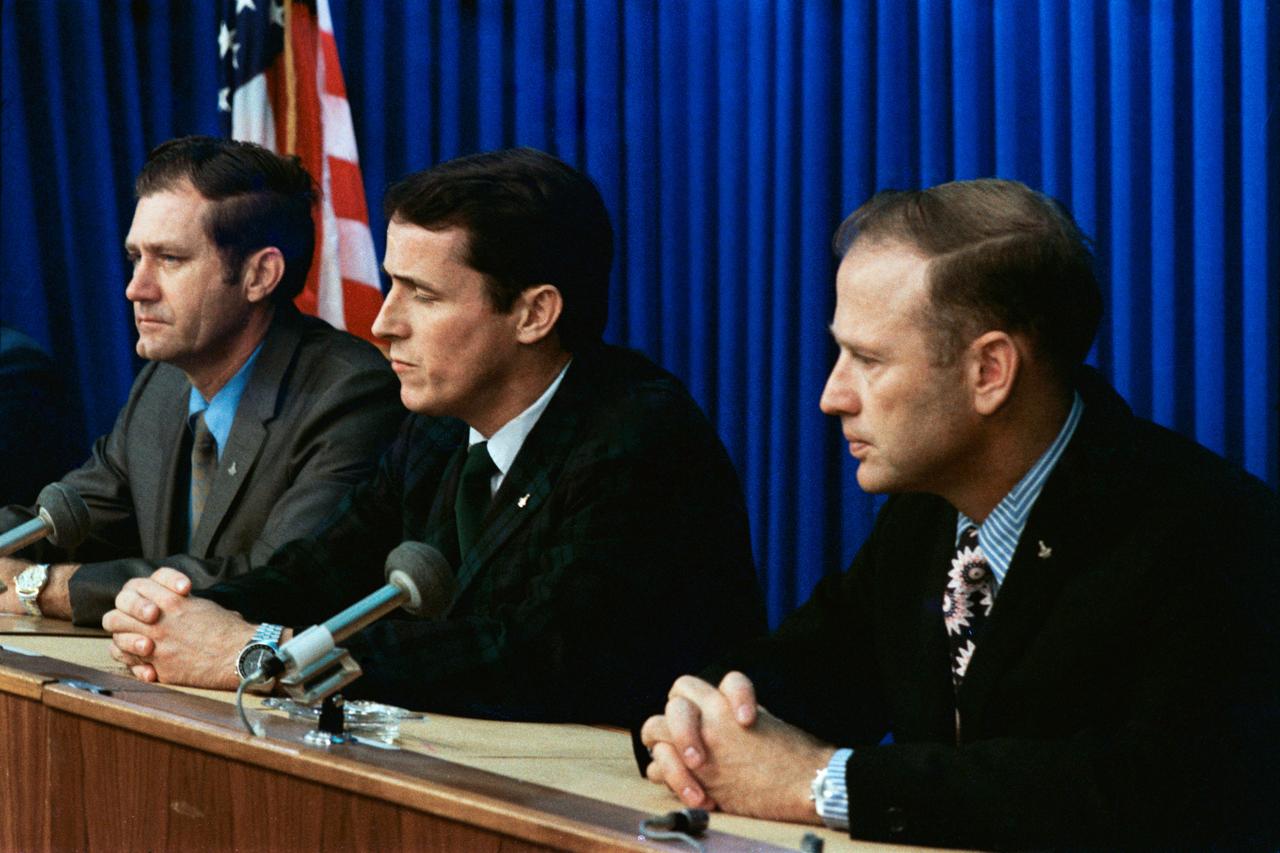
S72-46702 (December 1972) --- The three members of the prime crew of the third of three scheduled manned Skylab missions (Skylab 4) appear before a gathering of news media representatives at a press conference held at the Manned Spacecraft Center. They are, left to right, astronaut William R. Pogue, pilot; scientist-astronaut Edward G. Gibson, science pilot; and astronaut Gerald P. Carr, commander. Photo credit: NASA
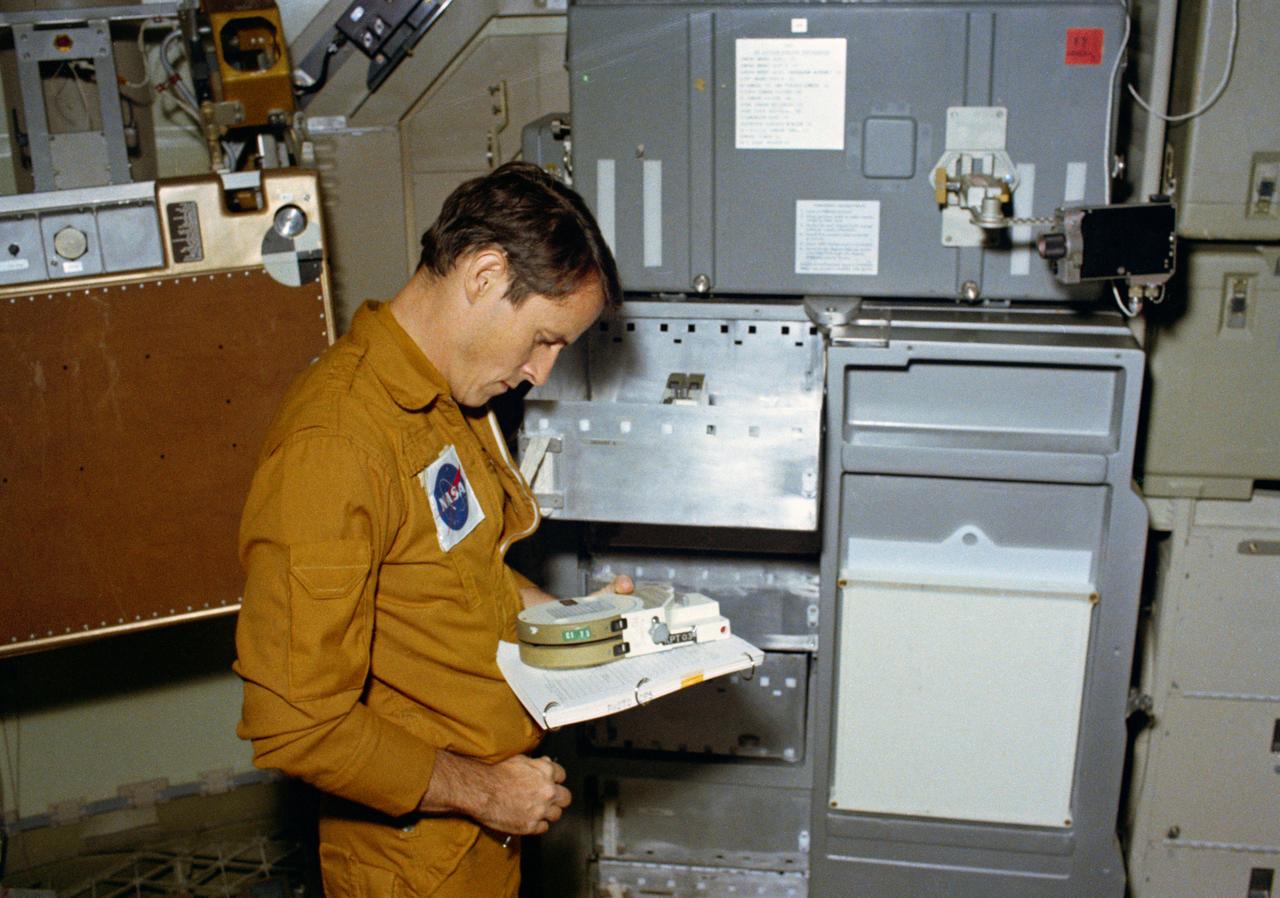
S73-32848 (10 Sept. 1973) --- Scientist-astronaut Edward G. Gibson, science pilot for the third manned Skylab mission (Skylab 4), reads the markings on a magazine of 400 feet of film for the 16mm Data Acquisition Camera (DAC), during a training exercise in the Orbital Workshop (OWS) trainer at Johnson Space Center. Photo credit: NASA
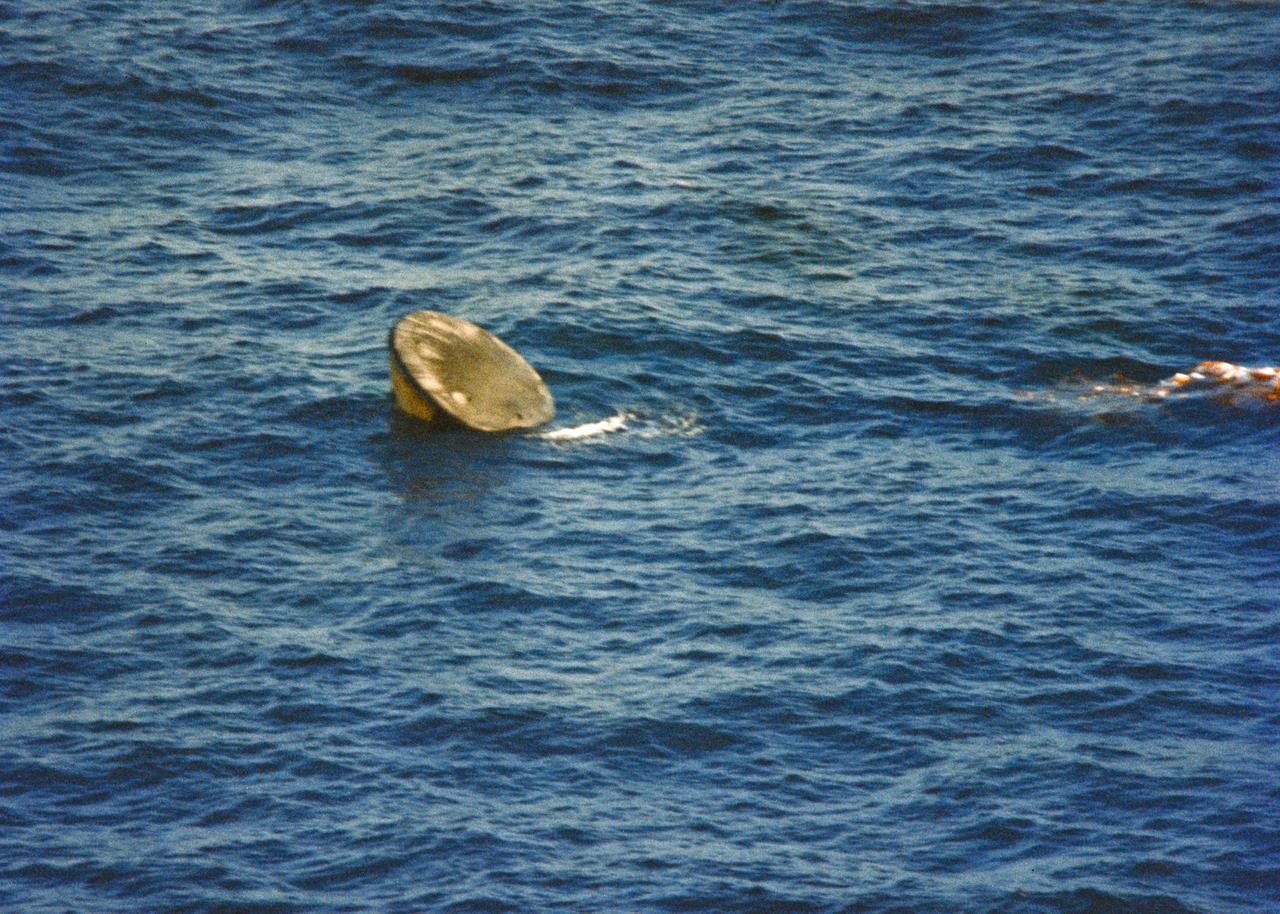
S74-17742 (8 Feb. 1974) --- The Skylab 4 Command Module bobs in an apex-down configuration (stable two) in the calm water of the Pacific Ocean 176 miles southwest of San Diego, California, following a successful splashdown and 84-day mission in Earth orbit. Photo credit: NASA
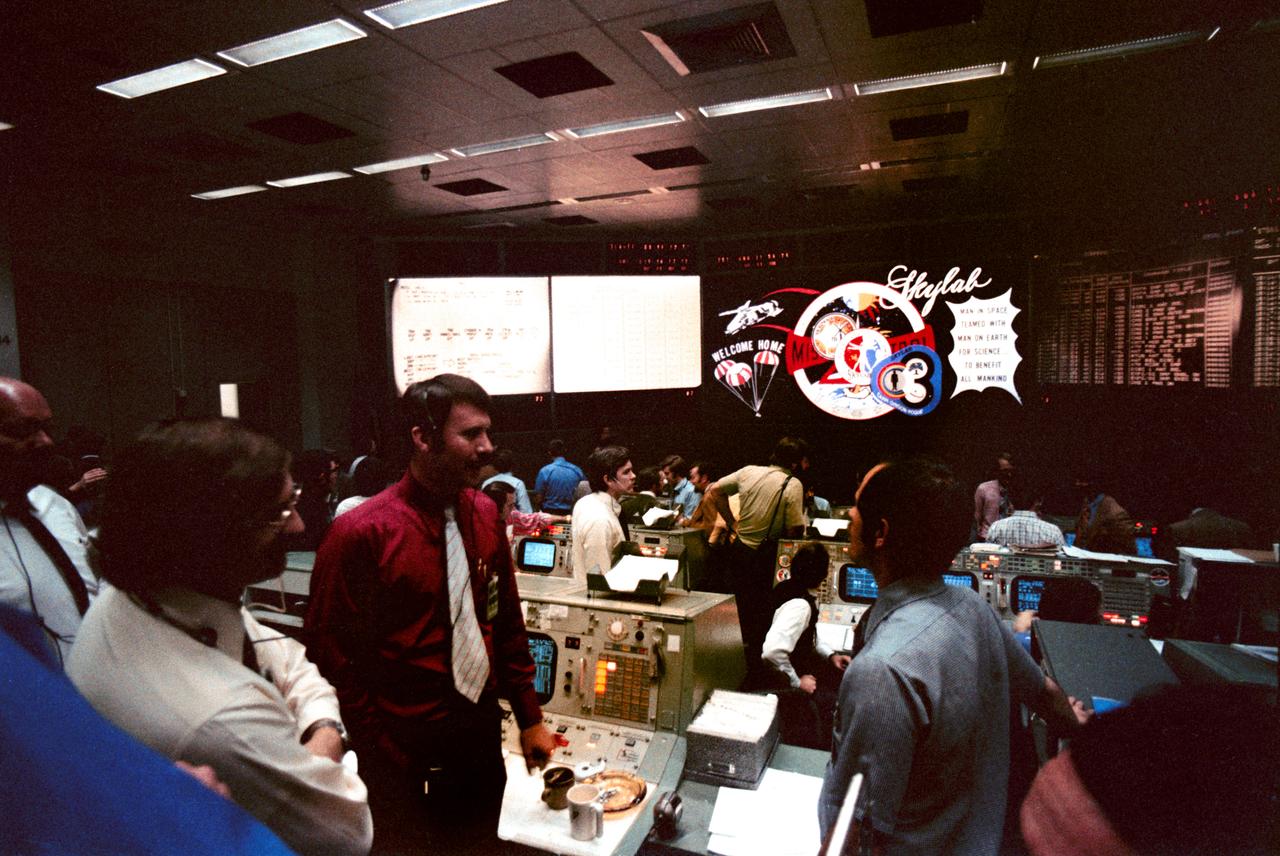
S74-19160 (8 Feb. 1974) --- An overall view of activity in the Mission Operations Control Room in the Mission Control Counter following the successful splashdown of the Skylab 4 command module in the Pacific Ocean. The three flight controllers in the foreground, left to right, are flight director Neil B. Hutchinson; flight director Donald R. Puddy; and astronaut Robert L. Crippen, a spacecraft communicator (CAPCOM). Astronauts Gerald P. Carr, Edward G. Gibson and William R. Pogue had just completed an 84-day mission with the Skylab space station in Earth orbit. Photo credit: NASA
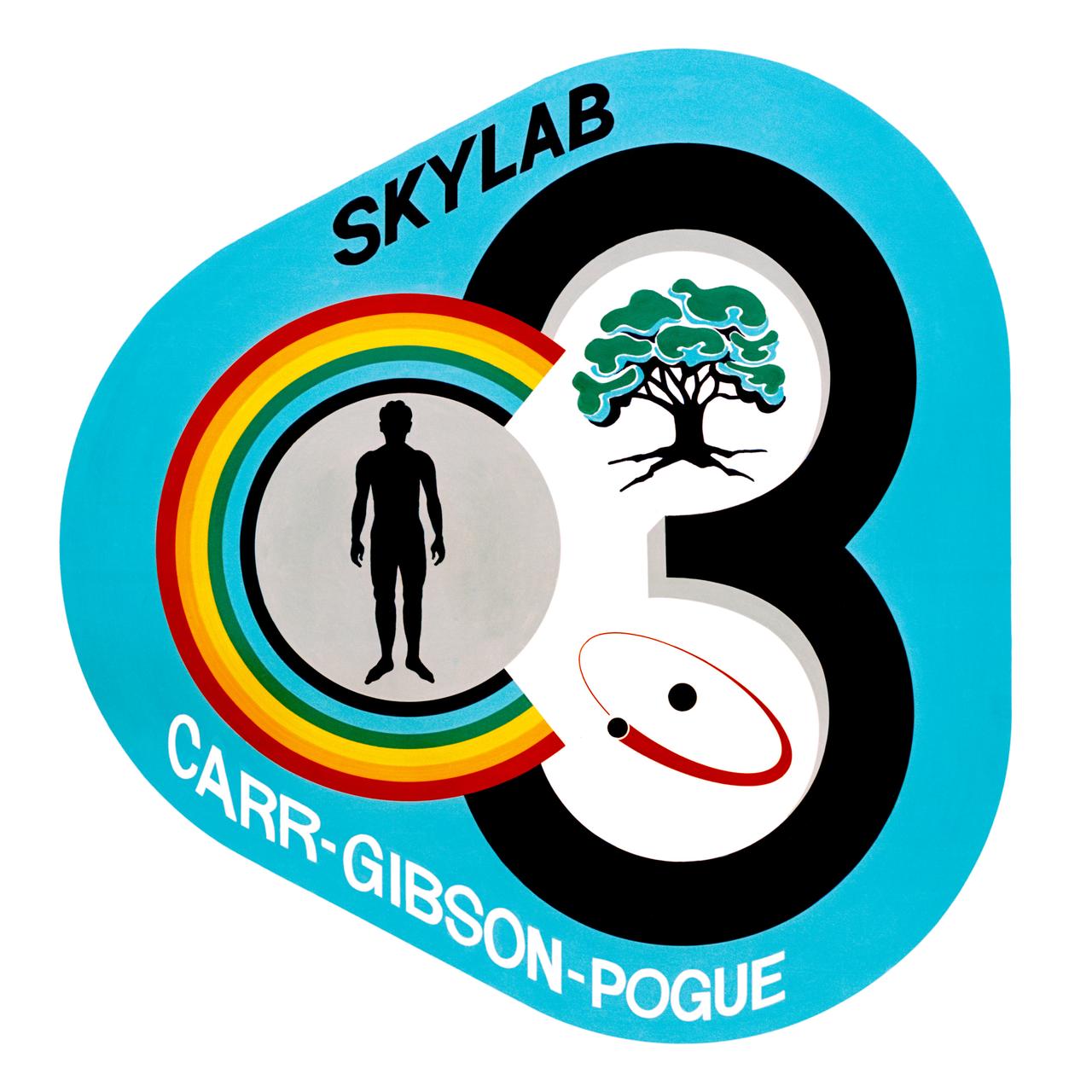
S72-53094 (For release February 1973) --- This is the emblem for the third manned Skylab mission. It will be a mission of up to 56 days. Skylab is an experimental space station consisting of a 100-ton laboratory complex in which medical, scientific and technological experiments will be performed in Earth orbit. The members of the crew will be astronaut Gerald P. Carr, commander; scientist-astronaut Edward G. Gibson, science pilot; and astronaut William R. Pogue, pilot. The symbols in the patch refer to the three major areas of investigation proposed in the mission. The tree represents man's natural environment and relates directly to the Skylab mission objectives of advancing the study of Earth resources. The hydrogen atom, as the basic building block of the universe, represents man's exploration of the physical world, his application of knowledge, and his development of technology. Since the sun is composed primarily of hydrogen, it is appropriate that the symbol refers to the solar physics mission objectives. The human silhouette represents mankind and the human capacity to direct technology with a wisdom tempered by regard for his natural environment. It also directly relates to the Skylab medical studies of man himself. The rainbow, adopted from the Biblical story of the flood, symbolizes the promise that is offered man. It embraces man and extends to the tree and the hydrogen atom emphasizing man's pivotal role in the conciliation of technology with nature. Photo credit: NASA
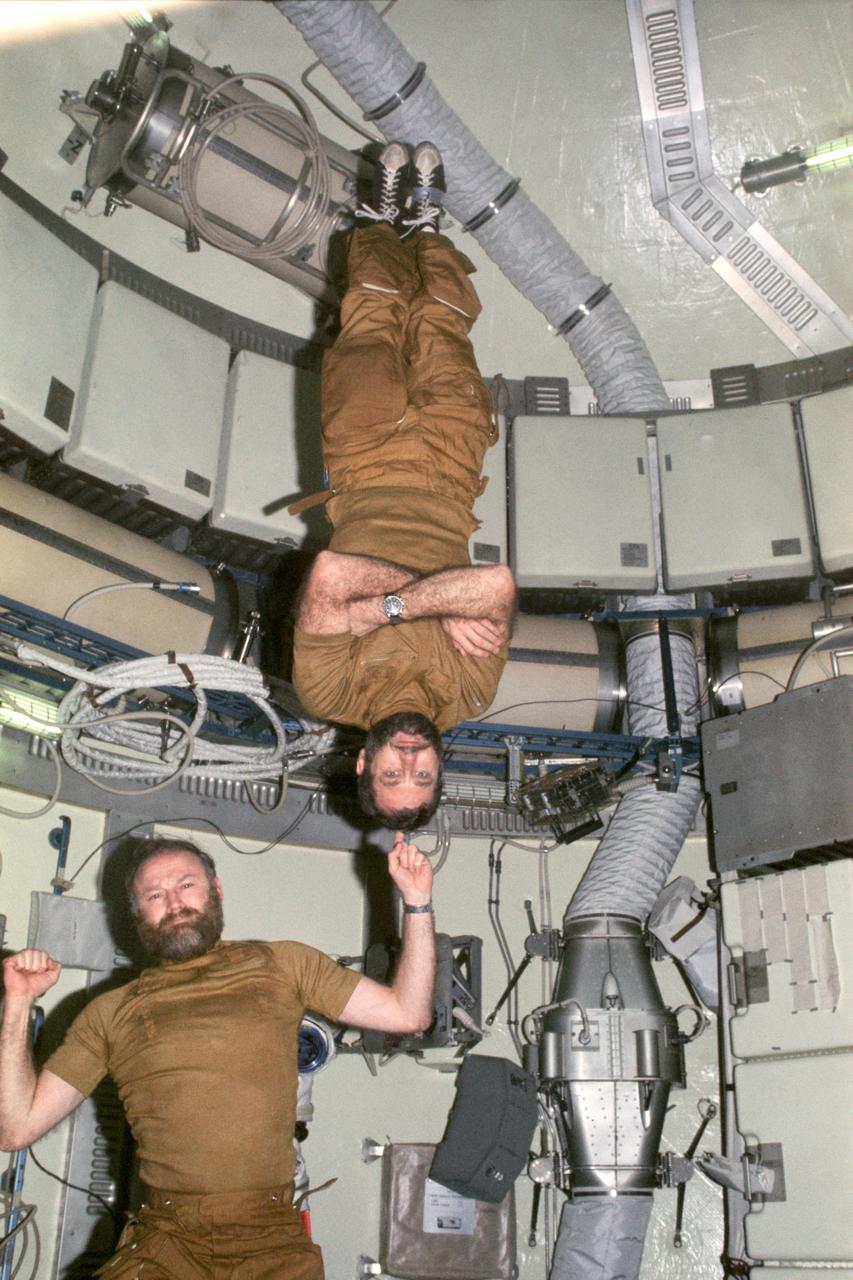
SL4-150-5080 (16 Nov. 1973-8 Feb. 1974) --- Two of the three Skylab 4 (third manning) astronauts exhibit the "magic" that can be accomplished in the weightlessness of space. Astronaut Gerald D. Carr, mission commander, uses his index finger to suspend astronaut William R. Pogue, pilot, in the Orbital Workshop (OWS). The two "wizards" completed almost three months aboard the Earth-orbiting Skylab space station, plenty of time to grow these full beards. The photograph was taken with a 35mm camera by astronaut Edward G. Gibson, science pilot. Photo credit: NASA
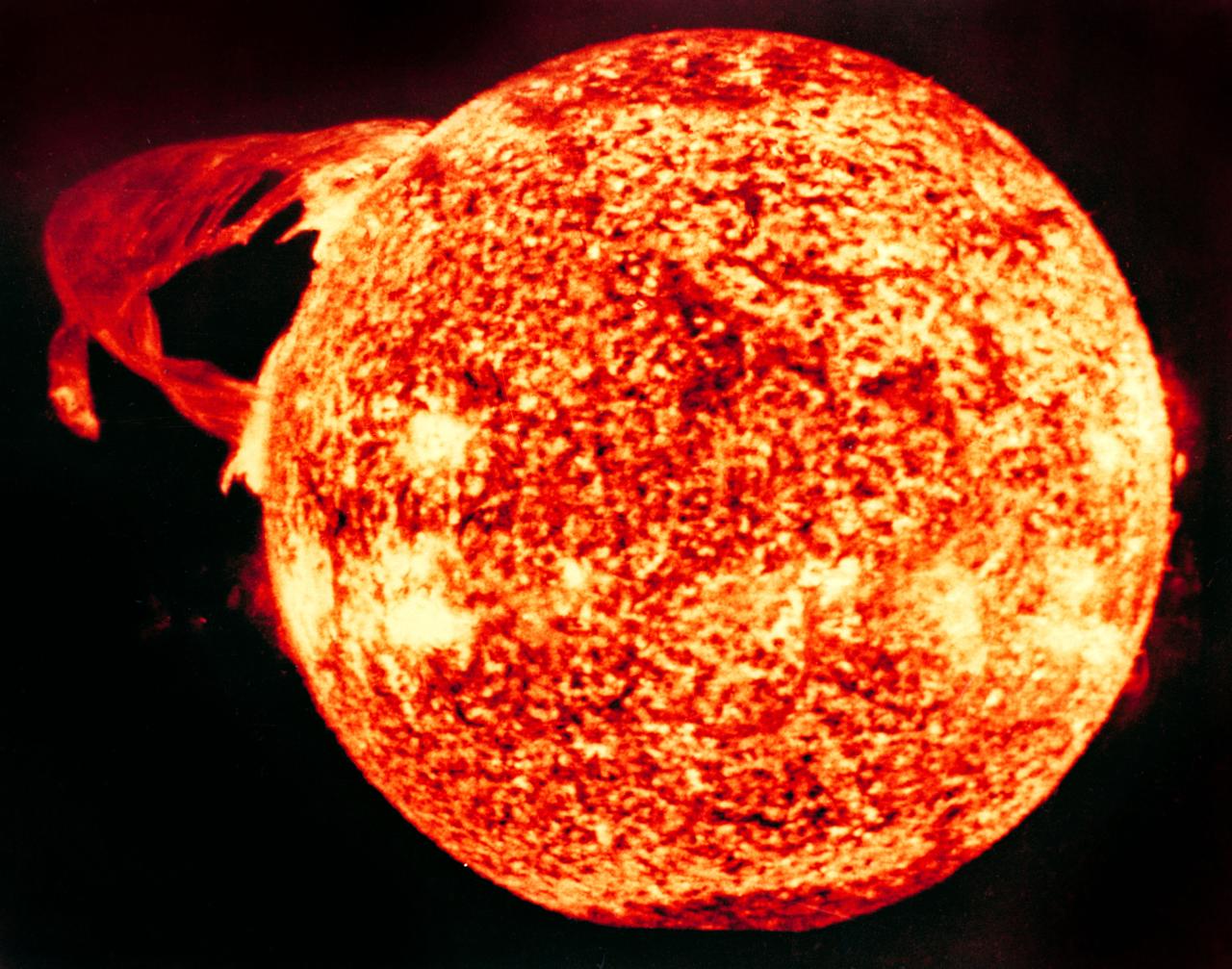
S74-23458 (19 Dec. 1973) --- This photograph of the sun, taken on Dec. 19, 1973, during the third and final manned Skylab mission (Skylab 4), shows one of the most spectacular solar flares ever recorded, spanning more than 588,000 kilometers (365,000 miles) across the solar surface. The last picture, taken some 17 hours earlier, showed this feature as a large quiescent prominence on the eastern side of the sun. The flare gives the distinct impression of a twisted sheet of gas in the process of unwinding itself. Skylab photographs such quiescent features erupt from the sun. In this photograph the solar poles are distinguished by a relative absence of supergranulation network, and a much darker tone than the central portions of the disk. Several active regions are seen on the eastern side of the disk. The photograph was taken in the light of ionized helium by the extreme ultraviolet spectroheliograph instrument of the United States Naval Research Laboratory. Photo credit: NASA
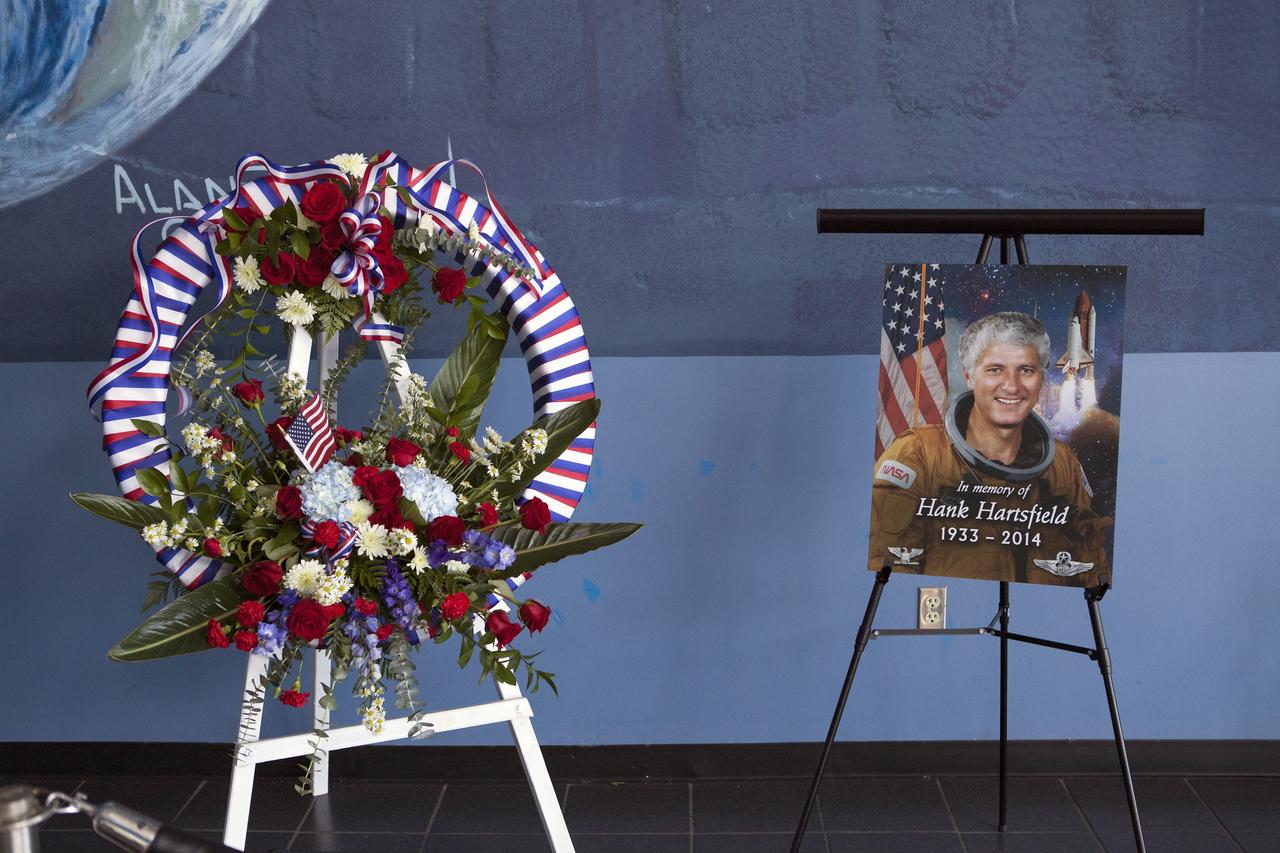
CAPE CANAVERAL, Fla. -- A wreath honoring Henry W. "Hank" Hartsfield is displayed beside his photo at the U.S. Astronaut Hall of Fame. Hartsfield commanded space shuttle Discovery's maiden mission and was a veteran of three shuttle flights. He died July 17 after an illness. He was 80 years old. Hartsfield joined NASA in 1969 and was part of the astronaut support crew for Apollo 16 and the Skylab 2, 3 and 4 missions. He logged 483 hours in space during missions STS-4, on which he served as pilot, as well as STS-41D and STS-61A, both of which he commanded. Photo credit: NASA/Dimitri Gerondidakis
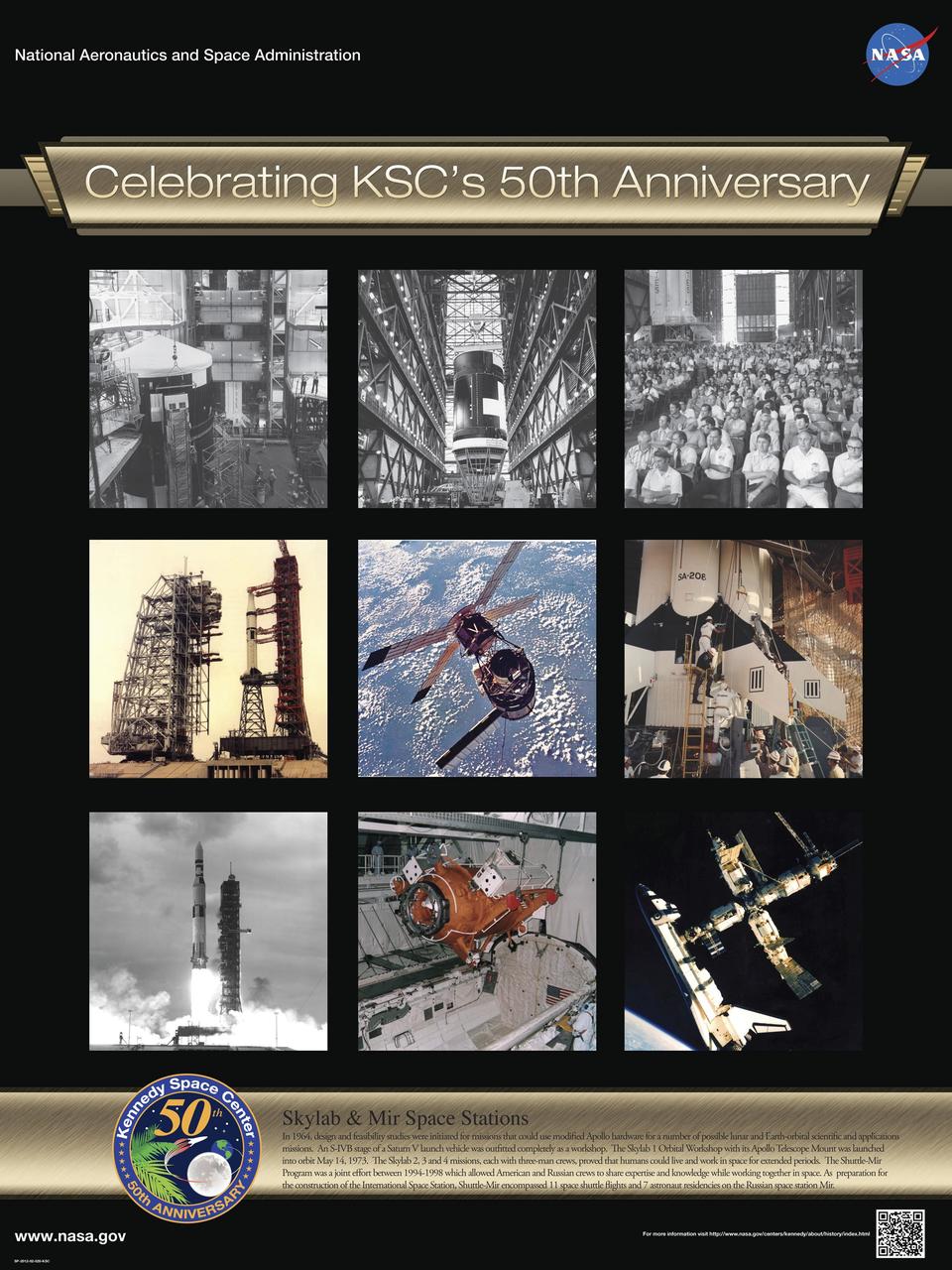
Skylab and Mir Space Stations: In 1964, design and feasibility studies were initiated for missions that could use modified Apollo hardware for a number of possible lunar and Earth-orbital scientific and applications missions. An S-IVB stage of a Saturn V launch vehicle was outfitted completely as a workshop. The Skylab 1 Orbital Workshop with its Apollo Telescope Mount was launched into orbit May 14, 1973. The Skylab 2, 3 and 4 missions, each with three-man crews, proved that humans could live and work in space for extended periods. The Shuttle-Mir Program was a joint effort between 1994-1998 which allowed American and Russian crews to share expertise and knowledge while working together in space. As preparation for the construction of the International Space Station, Shuttle-Mir encompassed 11 space shuttle flights and 7 astronaut residencies on the Russian space station Mir. Poster designed by Kennedy Space Center Graphics Department/Greg Lee. Credit: NASA
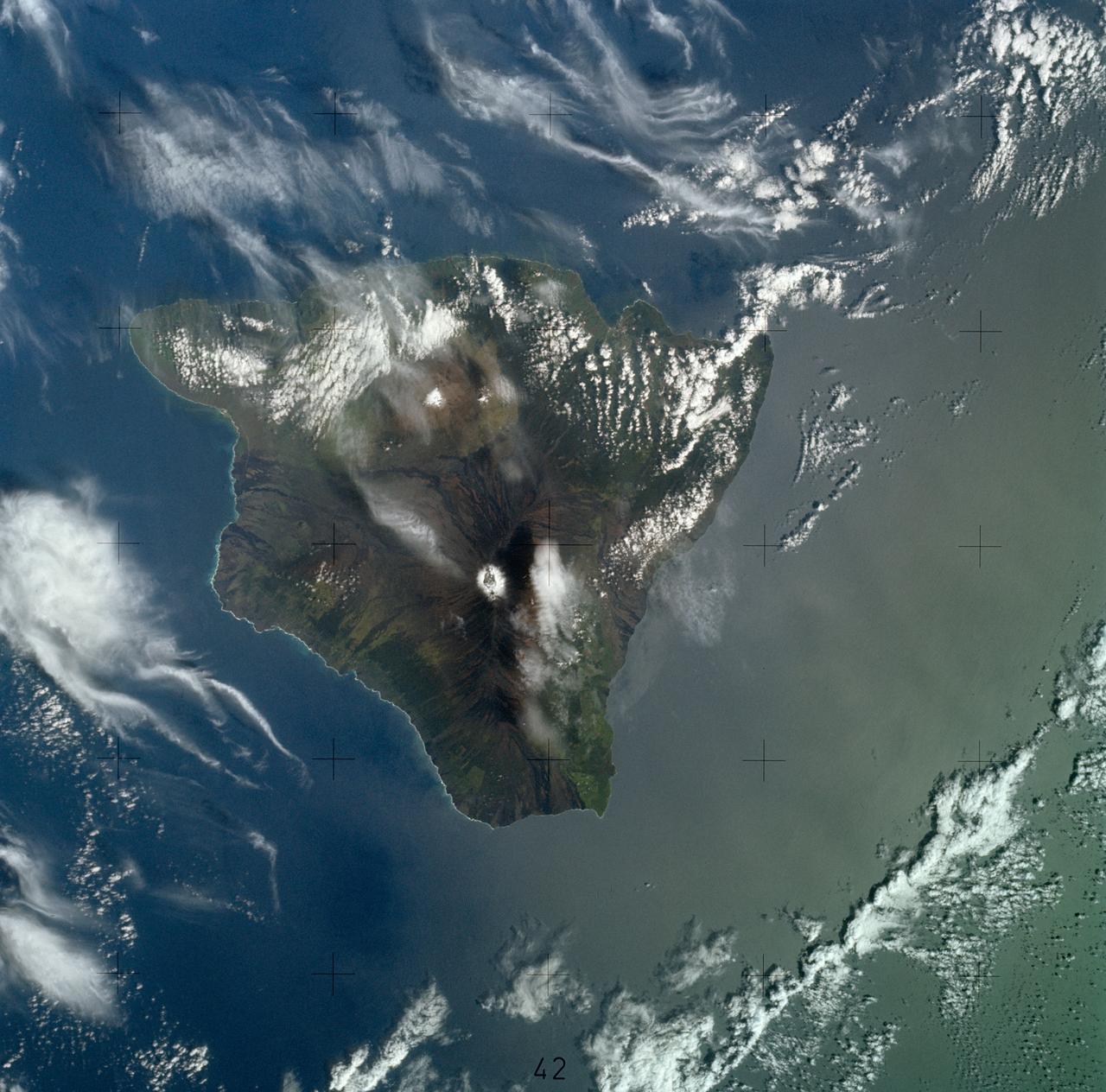
SL4-139-3997 (8 Jan. 1974) --- A vertical view of the Island of Hawaii, State of Hawaii, as photographed from the Skylab space station in Earth orbit by a Skylab 4 crewman. The camera used was a hand-held Hasselblad camera, with SO-368 medium-speed Ektachrome film. This photograph, taken on Jan. 8, 1974, is very useful in studies of volcanic areas. Prominent volcanic features such as the summit caldera on Mauna Loa, the extinct volcano Mauna Kea, the Kilauea caldera, and the pit crater at Halo mau mau within the caldera are easily identified. (Kilauea was undergoing frequent eruption during the mission). Detailed features such as the extent and delineation of historic lava flows on Mauna Loa can be determined and are important parameters in volcanic studies. Photo credit: NASA
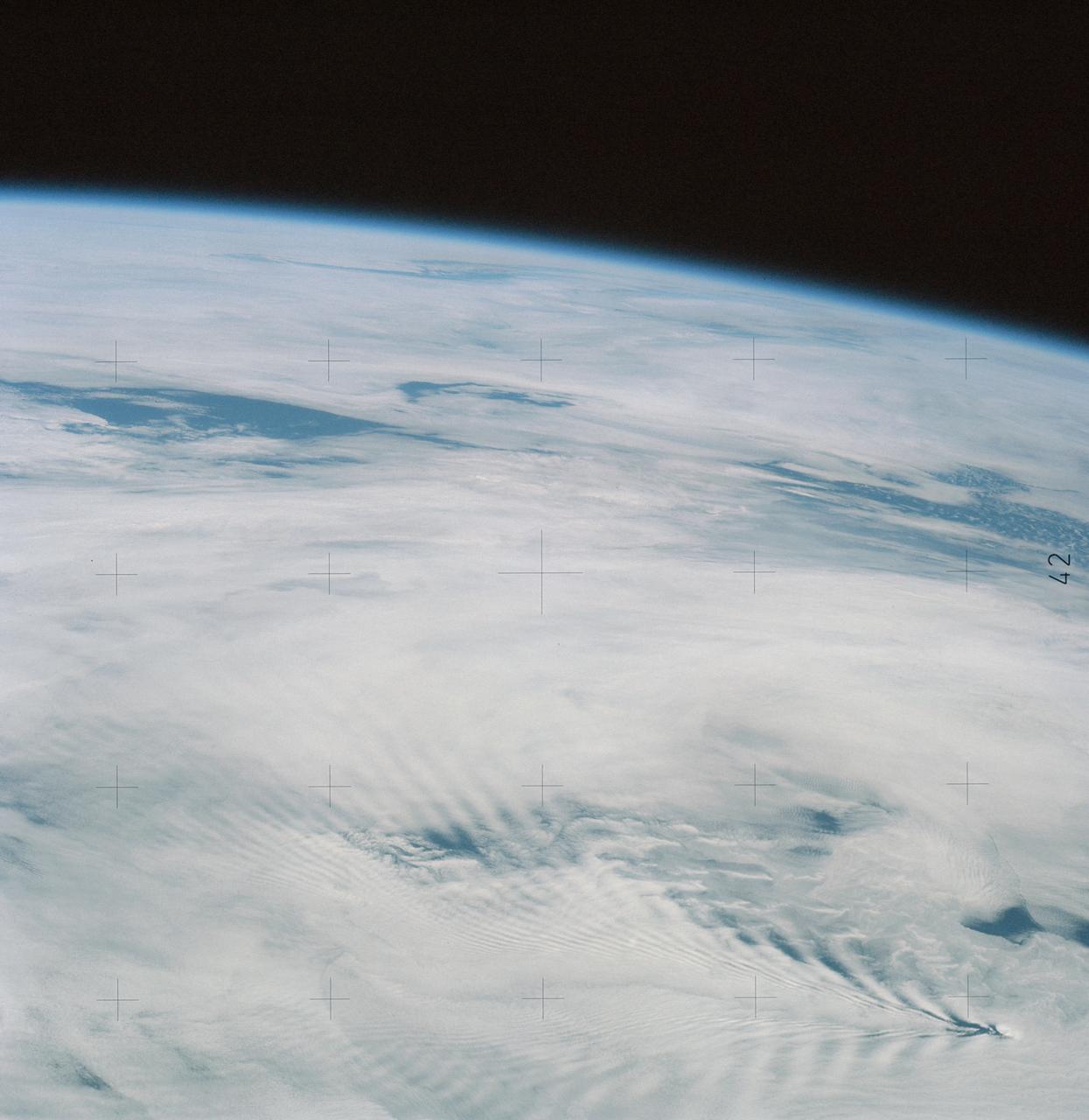
SL4-137-3632 (February 1974) --- A photograph taken from the Skylab space station in Earth orbit illustrating an atmospheric wave pattern by the affect of a small mountainous island on wind currents. Various patterns can be seen downwind of small islands. Often a Von Karmon vortex can be seen which appears as a spiral pattern. Multiple vortices have been photographed on previous missions. This photograph illustrates a "bow wave" pattern which extends for hundreds of miles downwind from the island. The island itself is often clear when a wave pattern is formed downstream. This particular pattern is very symmetrical. These wave patterns are most common in the South Pacific. This picture was taken by a Skylab 4 crewmen using a hand-held 70mm Hasselblad camera. Photo credit: NASA
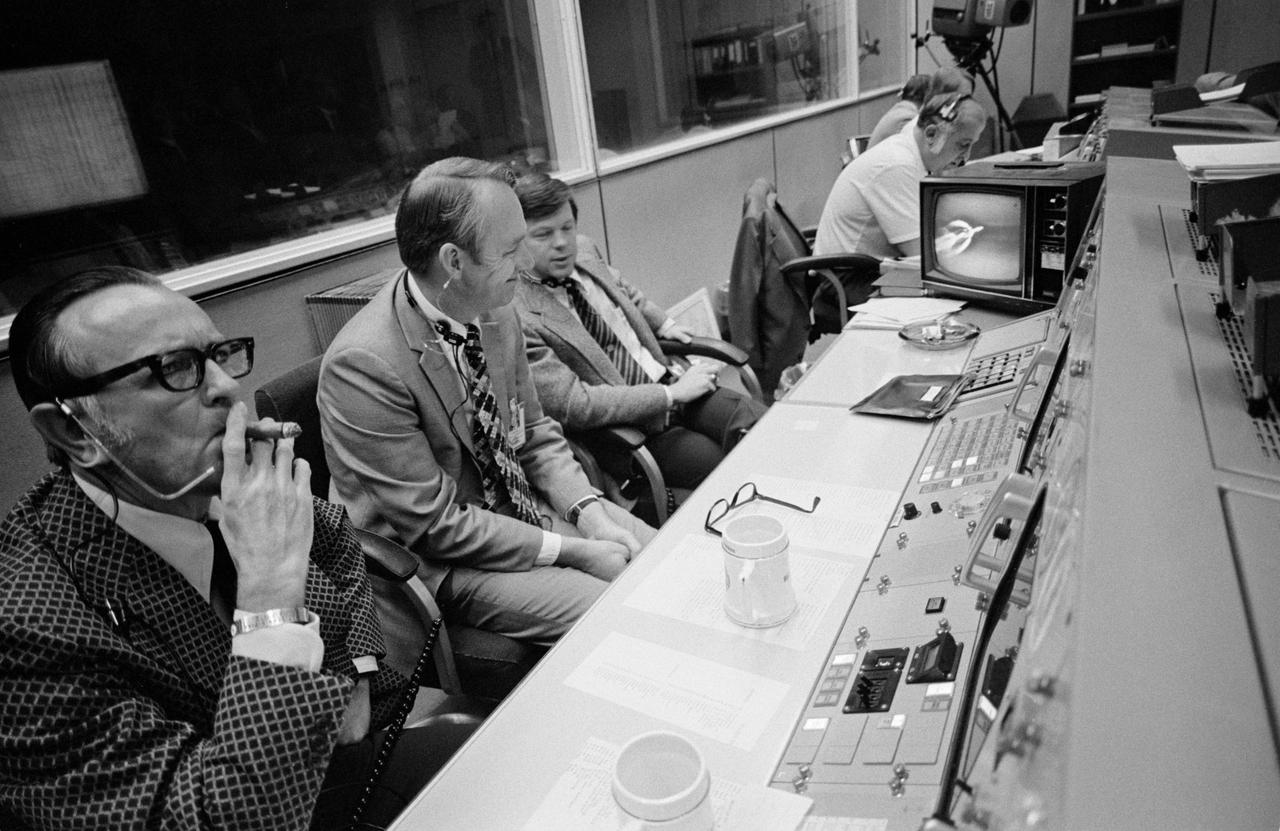
S73-36909 (16 Nov. 2013) --- An overall view of the Flight Operations Director's console in the Mission Operations Control Room in the Mission Control Center at Johnson Space Center during the launch of the Skylab 4 mission. The television monitor records the progress of the flight seconds after liftoff. Left to right, are Dr. Christopher C. Kraft Jr., JSC Director; Howard W. Tindall Jr., JSC Director of Flight Operations; and Flight Director M.P. Frank. Public Affairs commentator John E. McLeish can be seen at the PAO console in the background. Photo credit: NASA
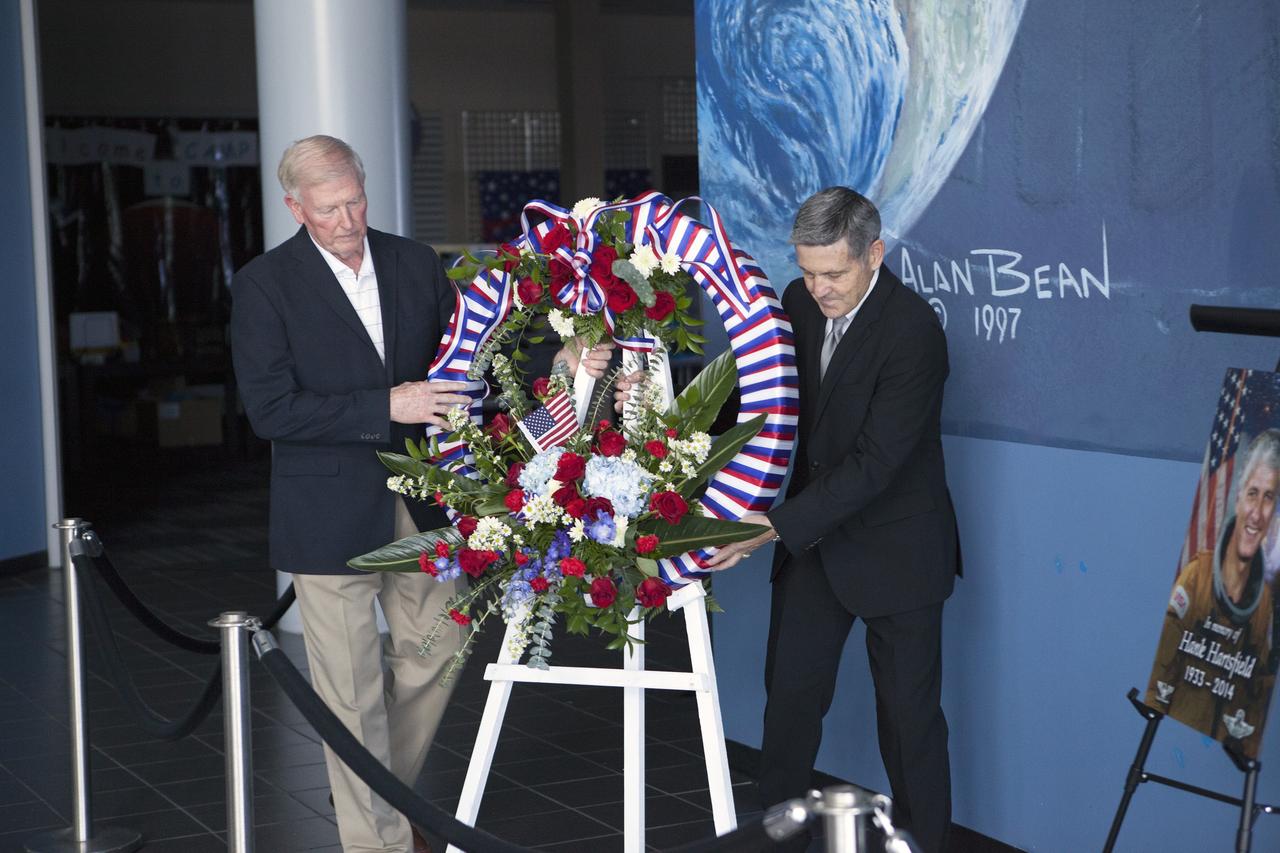
CAPE CANAVERAL, Fla. -- Former NASA astronaut Jon McBride, left, and Kennedy Space Center Director Bob Cabana place a wreath honoring Henry W. "Hank" Hartsfield at the U.S. Astronaut Hall of Fame. Hartsfield commanded space shuttle Discovery's maiden mission and was a veteran of three shuttle flights. He died July 17 after an illness. He was 80 years old. Hartsfield joined NASA in 1969 and was part of the astronaut support crew for Apollo 16 and the Skylab 2, 3 and 4 missions. He logged 483 hours in space during missions STS-4, on which he served as pilot, as well as STS-41D and STS-61A, both of which he commanded. Photo credit: NASA/Dimitri Gerondidakis
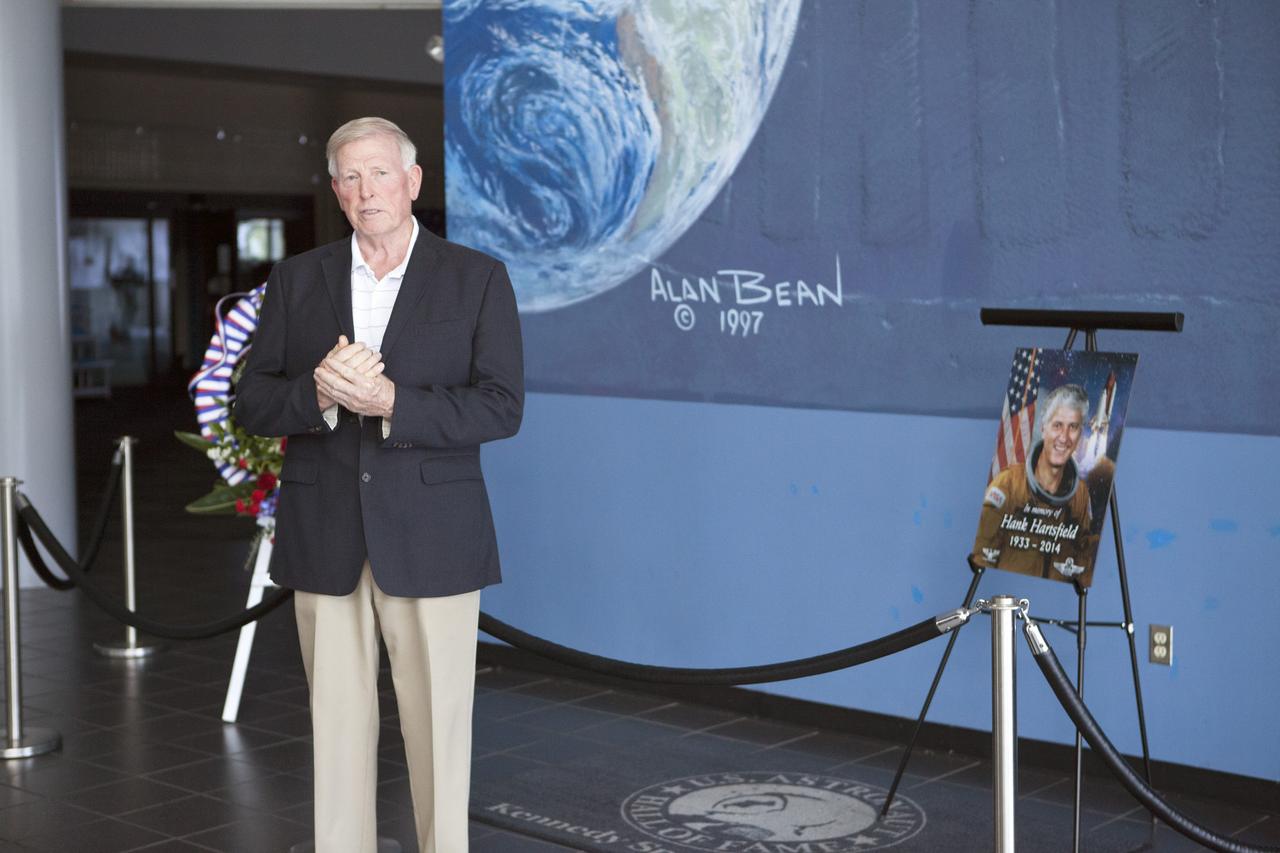
CAPE CANAVERAL, Fla. -- Former NASA astronaut Jon McBride shares his thoughts at a wreath-laying ceremony honoring Henry W. "Hank" Hartsfield at the U.S. Astronaut Hall of Fame. Hartsfield commanded space shuttle Discovery's maiden mission and was a veteran of three shuttle flights. He died July 17 after an illness. He was 80 years old. Hartsfield joined NASA in 1969 and was part of the astronaut support crew for Apollo 16 and the Skylab 2, 3 and 4 missions. He logged 483 hours in space during missions STS-4, on which he served as pilot, as well as STS-41D and STS-61A, both of which he commanded. Photo credit: NASA/Dimitri Gerondidakis
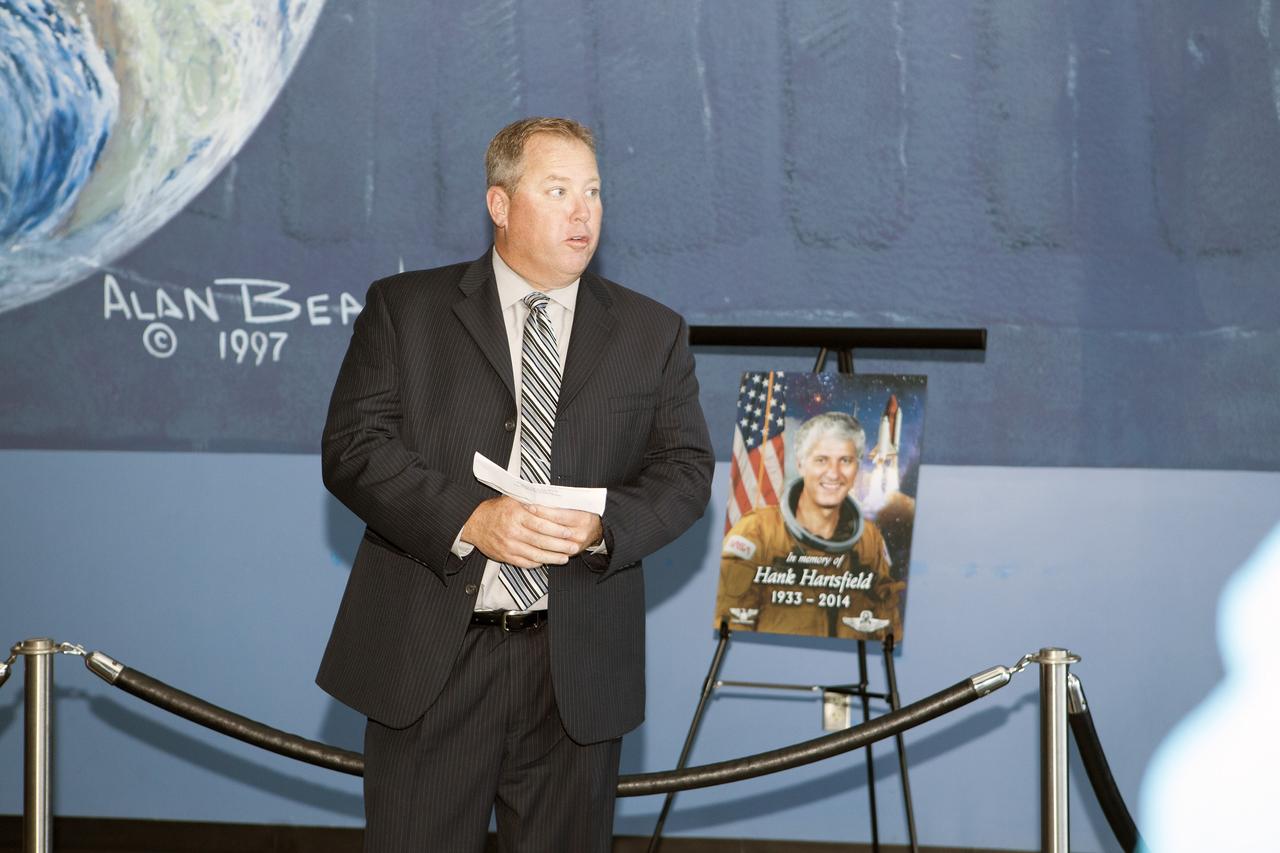
CAPE CANAVERAL, Fla. -- Therrin Protze, chief operating officer for Delaware North Parks Services at Kennedy Space Center Visitor Complex, speaks at a wreath-laying ceremony honoring Henry W. "Hank" Hartsfield at the U.S. Astronaut Hall of Fame. Hartsfield commanded space shuttle Discovery's maiden mission and was a veteran of three shuttle flights. He died July 17 after an illness. He was 80 years old. Hartsfield joined NASA in 1969 and was part of the astronaut support crew for Apollo 16 and the Skylab 2, 3 and 4 missions. He logged 483 hours in space during missions STS-4, on which he served as pilot, as well as STS-41D and STS-61A, both of which he commanded. Photo credit: NASA/Dimitri Gerondidakis
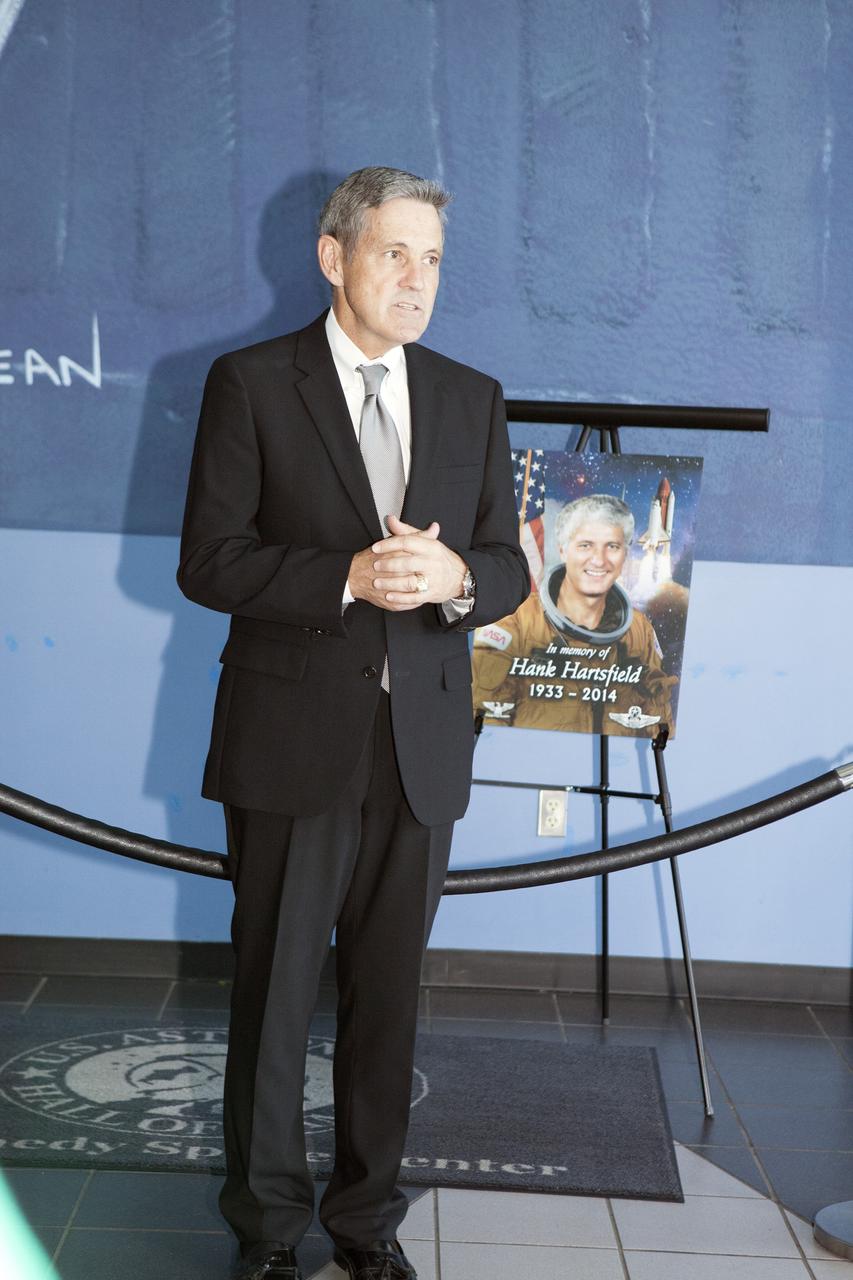
CAPE CANAVERAL, Fla. -- Kennedy Space Center Director Bob Cabana speaks at a wreath-laying ceremony honoring Henry W. "Hank" Hartsfield at the U.S. Astronaut Hall of Fame. Hartsfield commanded space shuttle Discovery's maiden mission and was a veteran of three shuttle flights. He died July 17 after an illness. He was 80 years old. Hartsfield joined NASA in 1969 and was part of the astronaut support crew for Apollo 16 and the Skylab 2, 3 and 4 missions. He logged 483 hours in space during missions STS-4, on which he served as pilot, as well as STS-41D and STS-61A, both of which he commanded. Photo credit: NASA/Dimitri Gerondidakis
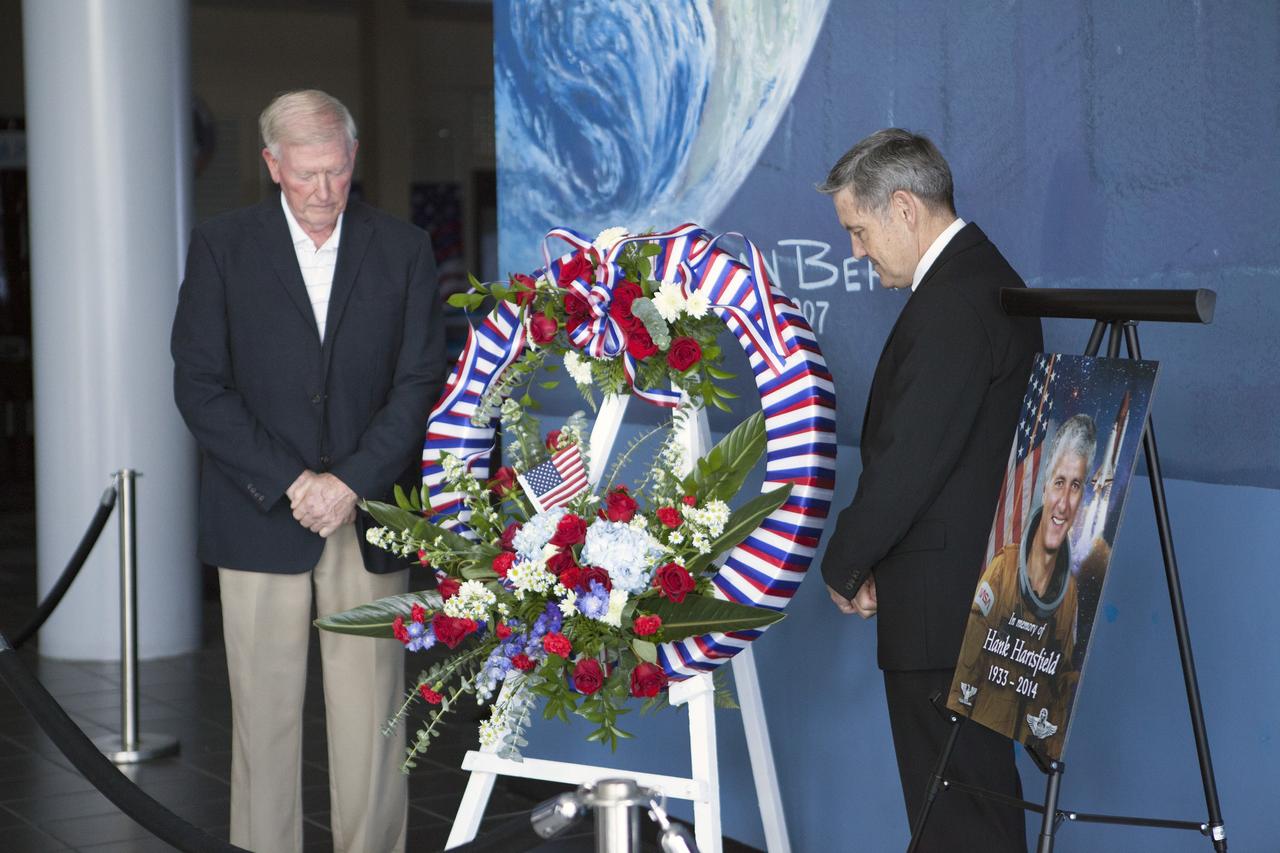
CAPE CANAVERAL, Fla. -- Former NASA astronaut Jon McBride, left, and Kennedy Space Center Director Bob Cabana pause for reflection after placing a wreath honoring Henry W. "Hank" Hartsfield at the U.S. Astronaut Hall of Fame. Hartsfield commanded space shuttle Discovery's maiden mission and was a veteran of three shuttle flights. He died July 17 after an illness. He was 80 years old. Hartsfield joined NASA in 1969 and was part of the astronaut support crew for Apollo 16 and the Skylab 2, 3 and 4 missions. He logged 483 hours in space during missions STS-4, on which he served as pilot, as well as STS-41D and STS-61A, both of which he commanded. Photo credit: NASA/Dimitri Gerondidakis

S73-32840 (10 Sept. 1973) --- Scientist-astronaut Edward G. Gibson, Skylab 4 science pilot, turns on a switch on the control box of the S190B camera, one of the components of the Earth Resources Experiments Package (EREP). The single lens Earth Terrain Camera takes five-inch photographs. Behind Gibson is the stowed suit of astronaut Gerald P. Carr, commander for the third manned mission. The crew's other member is astronaut William R. Pogue, pilot. The training exercise took place in the Orbital Workshop one-G trainer at Johnson Space Center. Photo credit: NASA

On June 4, 1974, 5 years after the successful Apollo 11 lunar landing mission, commander Neil Armstrong (right) presented a plaque to U.S. President Richard Milhous Nixon (left) on behalf of all people who had taken part in the space program. In making the presentation, Armstrong said “Mr. President, you have proclaimed this week to be United States Space week in conjunction with the fifth anniversary of our first successful landing on the Moon. It is my privilege to represent my colleagues, the crewmen of projects Mercury, Gemini, Apollo, and Skylab, and the men and women of NASA, and the hundreds of thousands of Americans from across the land who contributed so mightily to the success of our efforts in space in presenting this plaque which bears the names of each individual who has had the privilege of representing this country” in a space flight. The presentation was made at the California white house in San Clemente.
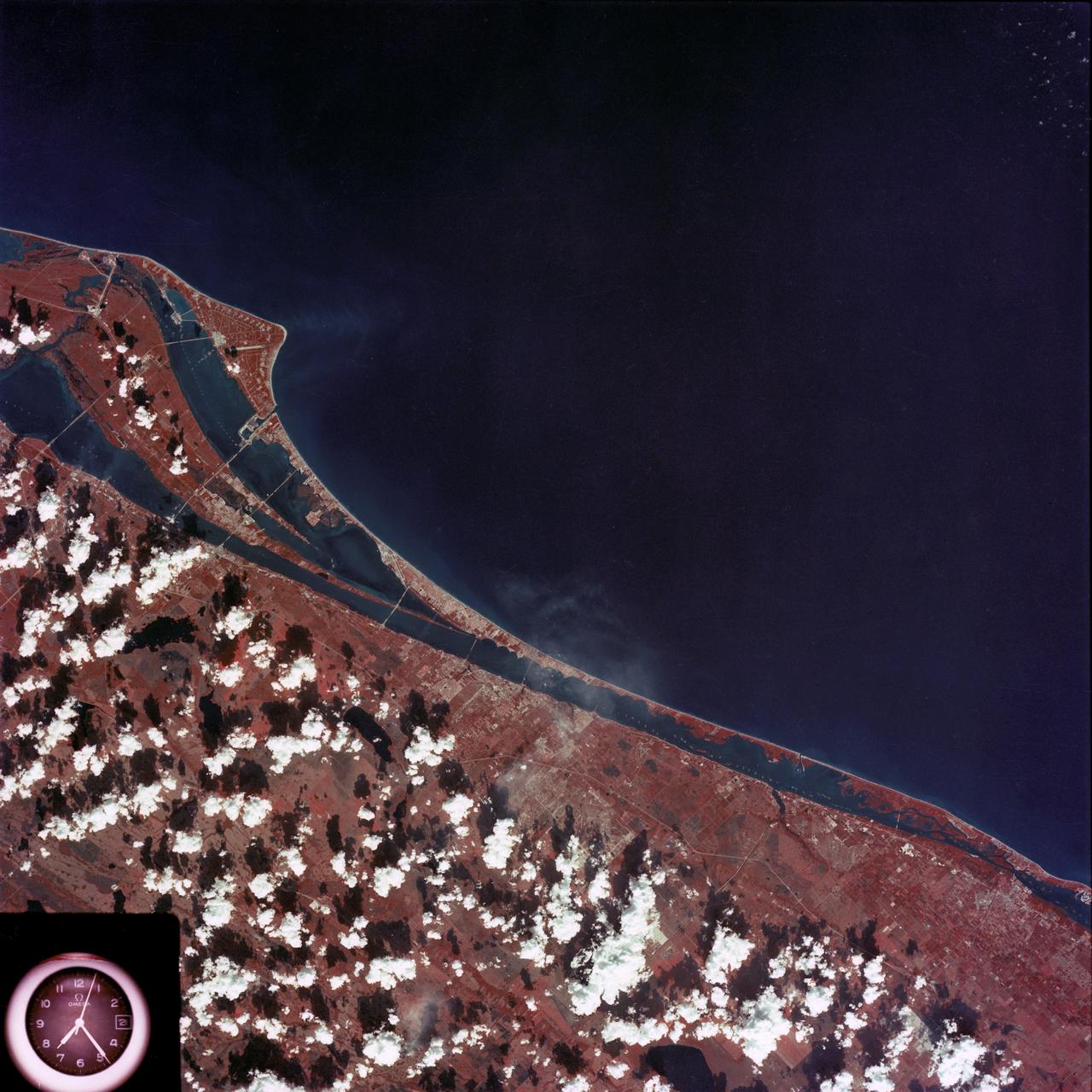
SL4-93-167 (February 1974) --- A vertical view of the Kennedy Space Center and the Florida Atlantic coast area is seen in this Skylab 4 Earth Resources Experiments Package S190-B (five-inch earth terrain camera) infrared photography taken from the Skylab space station in Earth orbit. This photograph shows the major land-ocean features of the Florida coast near Vero Beach northward to Cape Canaveral and the KSC complex. The launch pads for the Skylab missions are clearly visible. Identification of living vegetation is possible through the use of the color infrared film. Various shades of red portray differences in the vegetation such as shown in the patterns in the agricultural area near Vero Beach. In the Kennedy Space Center, the nearly continuous and uniform red color shows that most of the land areas are heavily vegetated. The white coastal beach areas are strongly contrasted to the red land and the blue Atlantic Ocean. Old dunal areas in KSC are visible on Merritt Island which is separated from the Launch areas by the Banana River and the mainland by the Indian River. Federal and state highways and numerous causeways over the rivers are easily identified. The Florida mainland is partly shadowed by small white clouds which cast a pronounced shadow to the east of each cloud indicated the Sun is west of solar noon. Federal agencies participating with NASA on the EREP project are the Departments of Agriculture, Commerce, Interior, the Environmental Protection Agency and the Core of Engineers. All EREP photography is available to the public through the Department of Interior's Earth Resources Observations Systems Data Center, Sioux Falls, South Dakota, 57198. Photo credit: NASA
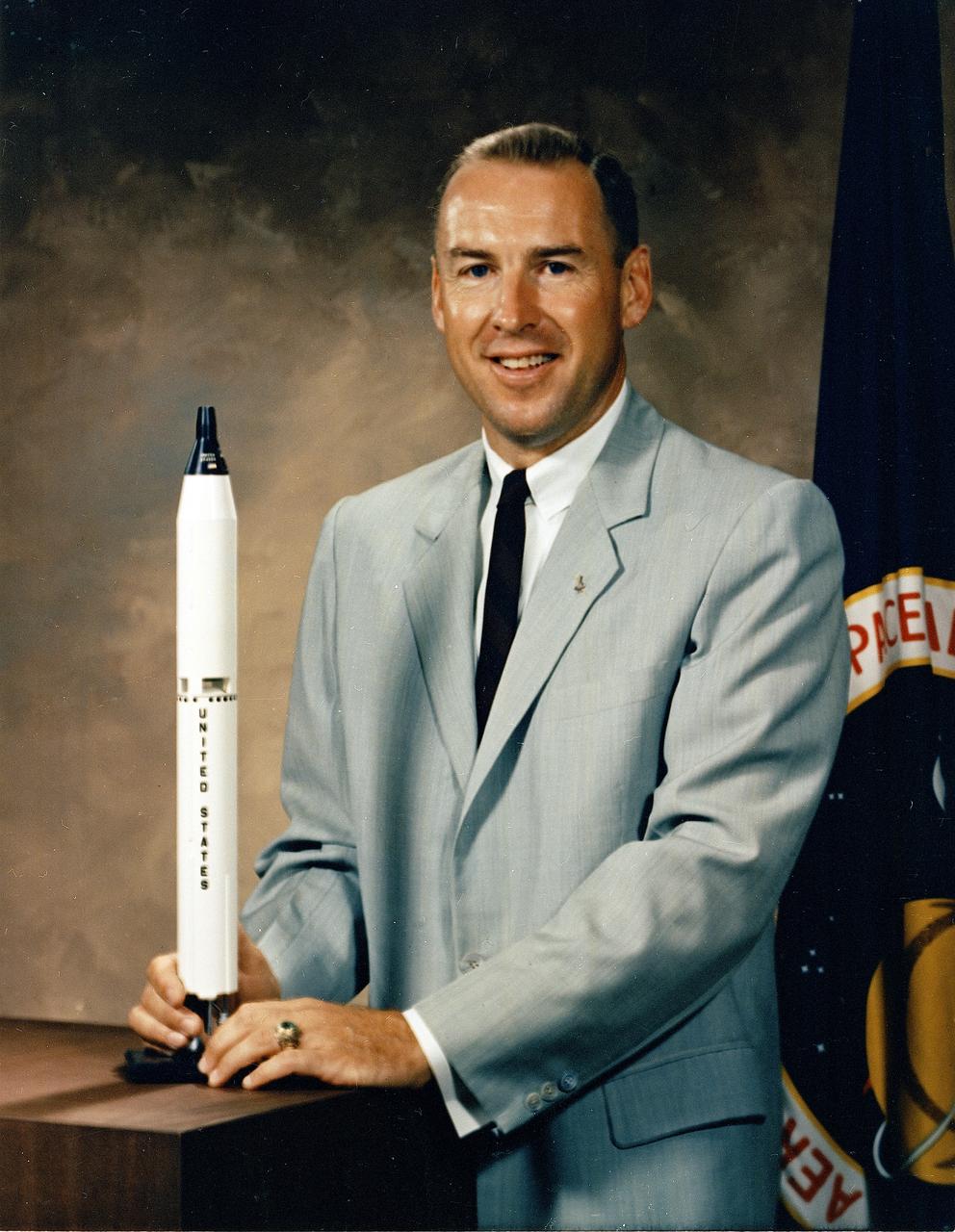
This is the official NASA portrait of astronaut James Lovell. Captain Lovell was selected as an Astronaut by NASA in September 1962. He has since served as backup pilot for the Gemini 4 flight and backup Commander for the Gemini 9 flight, as well as backup Commander to Neil Armstrong for the Apollo 11 lunar landing mission. On December 4, 1965, he and Frank Borman were launched into space on the history making Gemini 7 mission. The flight lasted 330 hours and 35 minutes and included the first rendezvous of two manned maneuverable spacecraft. The Gemini 12 mission, commanded by Lovell with Pilot Edwin Aldrin, began on November 11, 1966 for a 4-day, 59-revolution flight that brought the Gemini program to a successful close. Lovell served as Command Module Pilot and Navigator on the epic six-day journey of Apollo 8, the first manned Saturn V liftoff responsible for allowing the first humans to leave the gravitational influence of Earth. He completed his fourth mission as Spacecraft Commander of the Apollo 13 flight, April 11-17, 1970, and became the first man to journey twice to the moon. The Apollo 13 mission was cut short due to a failure of the Service Module cryogenic oxygen system. Aborting the lunar course, Lovell and fellow crewmen, John L. Swigert and Fred W. Haise, working closely with Houston ground controllers, converted their lunar module, Aquarius, into an effective lifeboat that got them safely back to Earth. Captain Lovell held the record for time in space with a total of 715 hours and 5 minutes until surpassed by the Skylab flights. On March 1, 1973, Captain Lovell retired from the Navy and the Space Program.
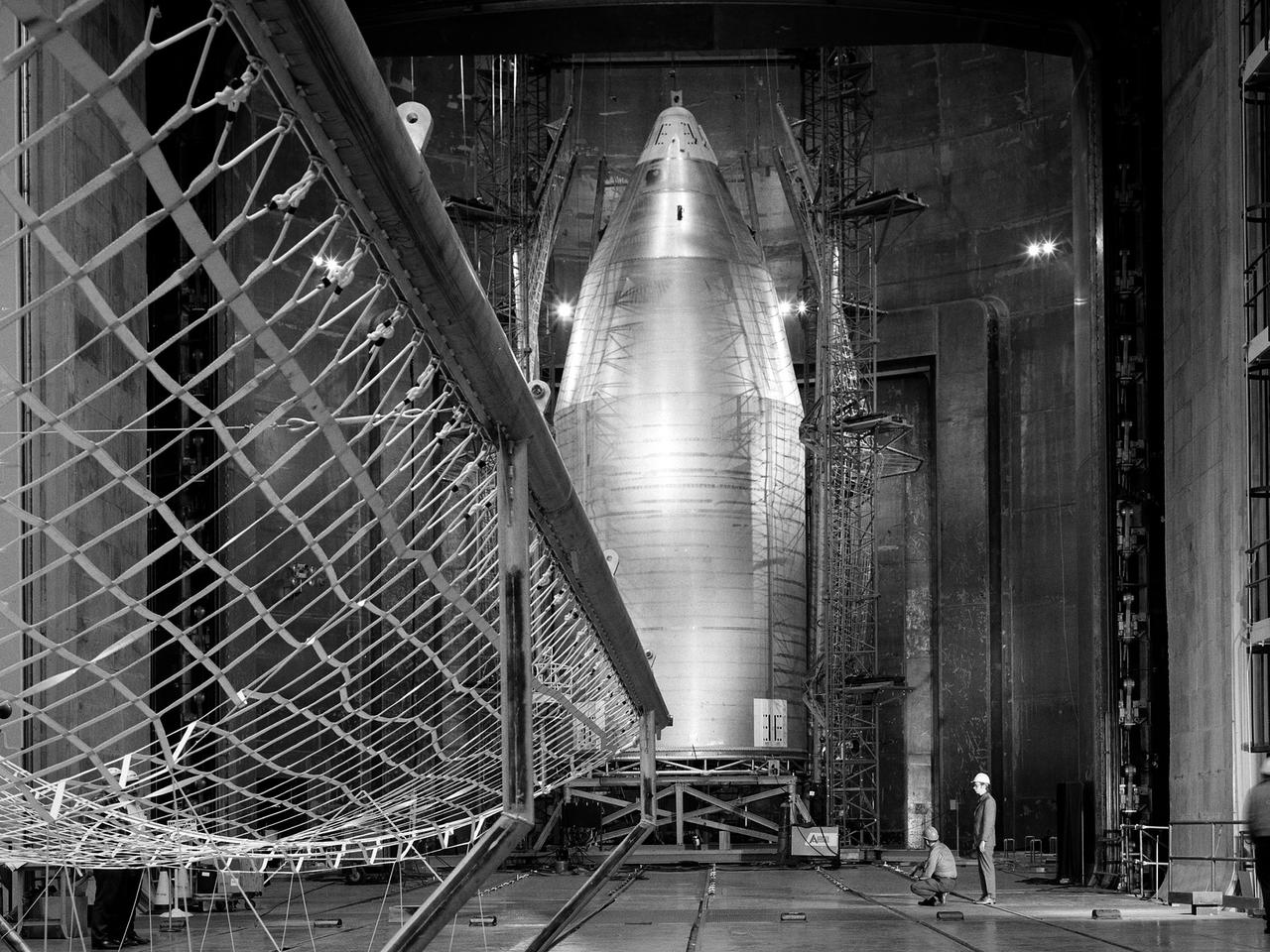
The 56-foot tall, 24,400-pound Skylab shroud installed in the Space Power Facility’s vacuum chamber at the National Aeronautics and Space Administration’s (NASA) Plum Brook Station. The Space Power Facility, which began operations in 1969, is the largest high vacuum chamber ever built. The chamber is 100 feet in diameter and 120 feet high. It can produce a vacuum deep enough to simulate the conditions at 300 miles altitude. The Space Power Facility was originally designed to test nuclear-power sources for spacecraft during long durations in a space atmosphere, but it was never used for that purpose. Payload shrouds are aerodynamic fairings to protect the payload during launch and ascent to orbit. The Skylab mission utilized the largest shroud ever attempted. Unlike previous launches, the shroud would not be jettisoned until the spacecraft reached orbit. NASA engineers designed these tests to verify the dynamics of the jettison motion in a simulated space environment. Fifty-four runs and three full-scale jettison tests were conducted from mid-September 1970 to June 1971. The shroud behaved as its designers intended, the detonators all fired, and early design issues were remedied by the final test. The Space Power Facility continues to operate today. The facility can sustain a high vacuum; simulate solar radiation via a 4-megawatt quartz heat lamp array, solar spectrum by a 400-kilowatt arc lamp, and cold environments. Test programs at the facility include high-energy experiments, shroud separation tests, Mars Lander system tests, deployable Solar Sail tests and International Space Station hardware tests.