
Slovak Republic Minister of Education, Research, Development, and Youth Tomáš Drucker signs the Artemis Accords, Thursday, May 30, 2024, at the Mary W. Jackson NASA Headquarters building in Washington. Slovakia is the 42nd country to sign the Artemis Accords, which establish a practical set of principles to guide space exploration cooperation among nations participating in NASA’s Artemis program. Photo Credit: (NASA/Keegan Barber)
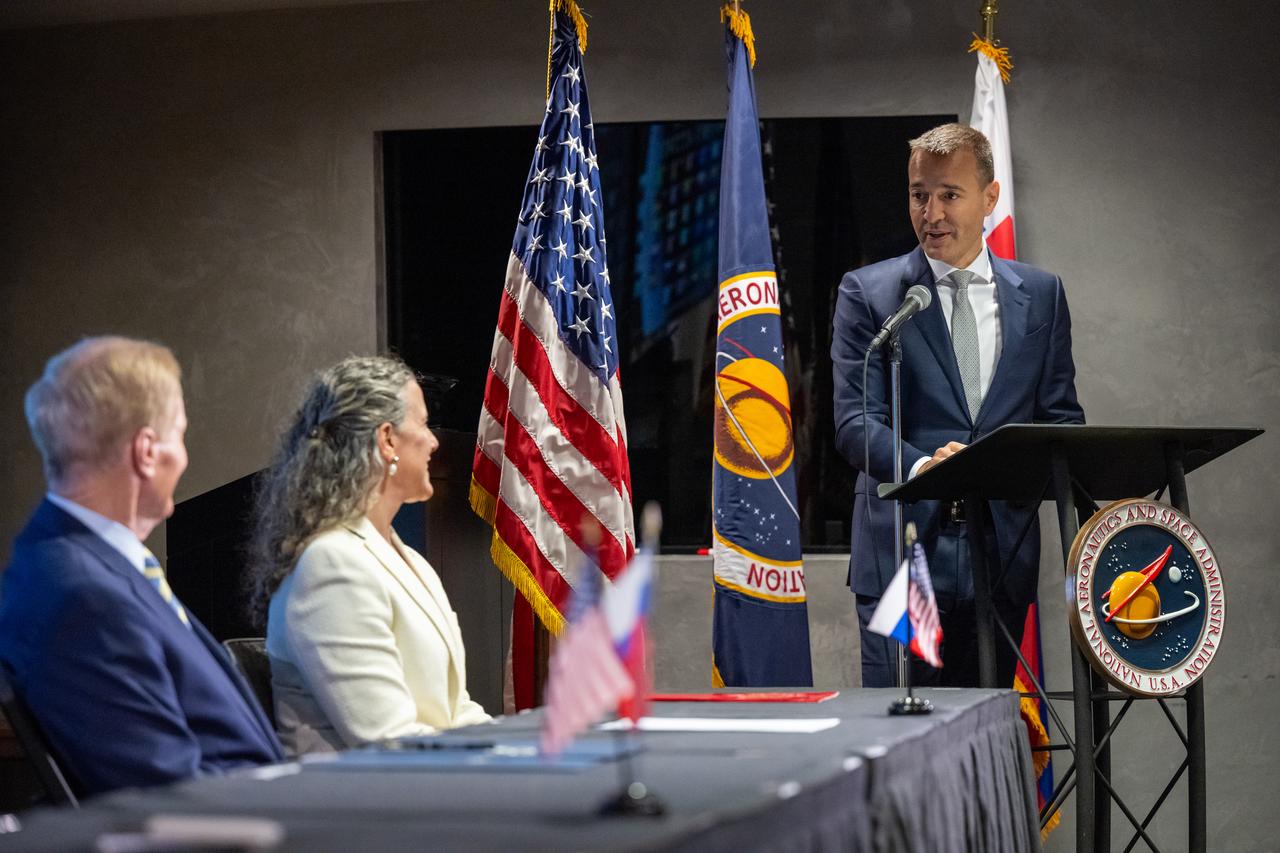
Ambassador of the Slovak Republic to the United States Radovan Javorcik delivers remarks during an Artemis Accords signing ceremony, Thursday, May 30, 2024, at the Mary W. Jackson NASA Headquarters building in Washington. Slovakia is the 42nd country to sign the Artemis Accords, which establish a practical set of principles to guide space exploration cooperation among nations participating in NASA’s Artemis program. Photo Credit: (NASA/Keegan Barber)

Slovak Republic Minister of Education, Research, Development, and Youth Tomáš Drucker, left, and NASA Administrator Bill Nelson, right, shake hands during an Artemis Accords signing ceremony, Thursday, May 30, 2024, at the Mary W. Jackson NASA Headquarters building in Washington. Slovakia is the 42nd country to sign the Artemis Accords, which establish a practical set of principles to guide space exploration cooperation among nations participating in NASA’s Artemis program. Photo Credit: (NASA/Keegan Barber)

NASA Administrator Bill Nelson delivers remarks during an Artemis Accords signing ceremony, Thursday, May 30, 2024, at the Mary W. Jackson NASA Headquarters building in Washington. Slovakia is the 42nd country to sign the Artemis Accords, which establish a practical set of principles to guide space exploration cooperation among nations participating in NASA’s Artemis program. Photo Credit: (NASA/Keegan Barber)
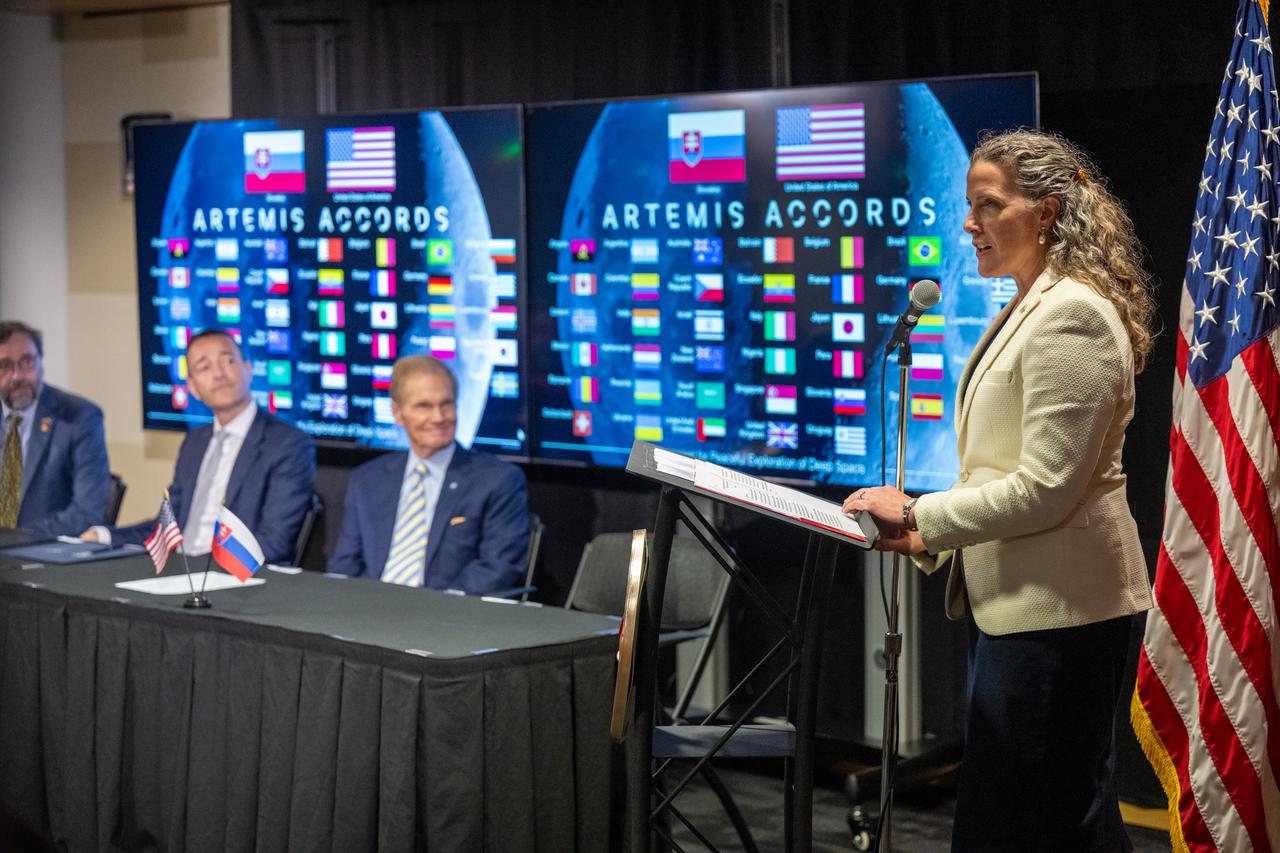
United States Department of State Deputy Assistant Secretary for the Bureau of European and Eurasian Affairs Sonata Coulter delivers remarks during an Artemis Accords signing ceremony, Thursday, May 30, 2024, at the Mary W. Jackson NASA Headquarters building in Washington. Slovakia is the 42nd country to sign the Artemis Accords, which establish a practical set of principles to guide space exploration cooperation among nations participating in NASA’s Artemis program. Photo Credit: (NASA/Keegan Barber)
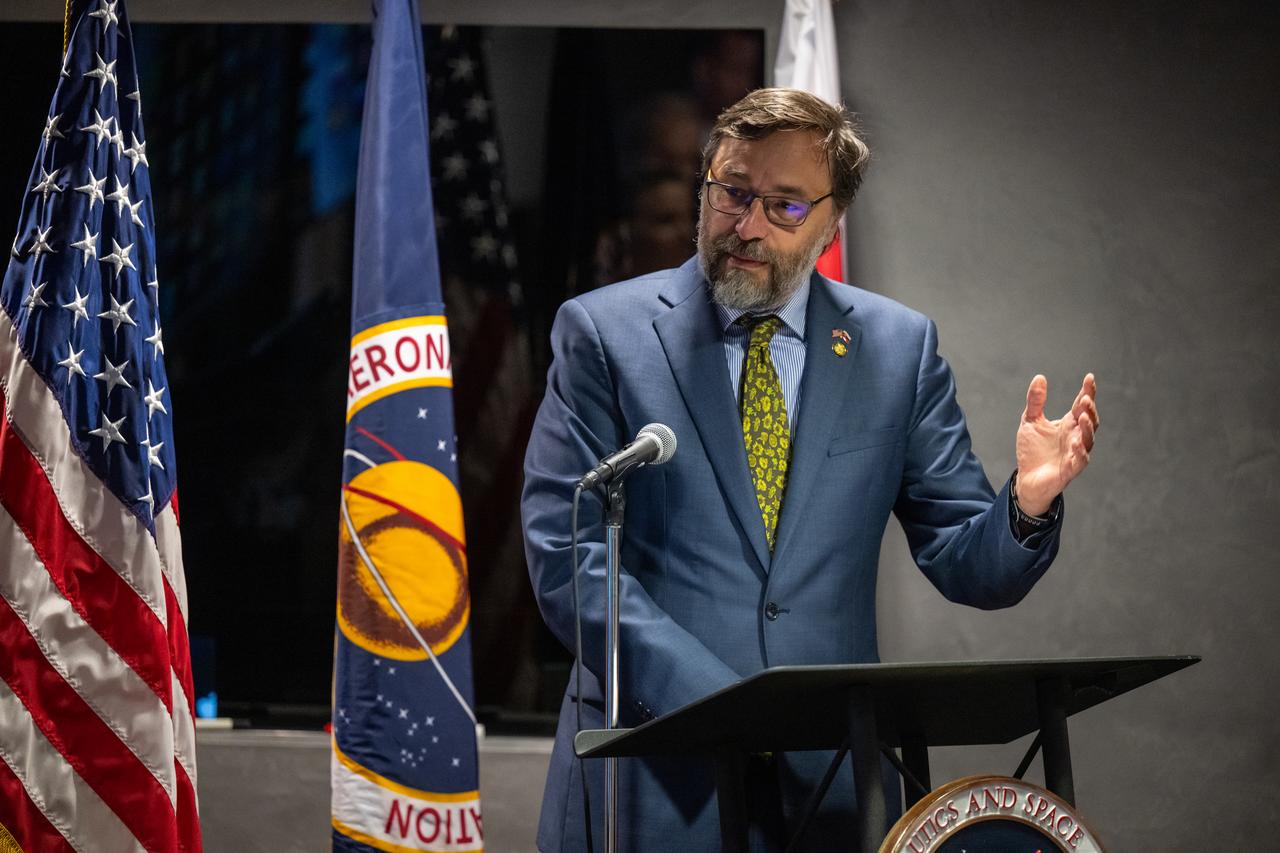
Slovak Republic Minister of Education, Research, Development, and Youth Tomáš Drucker delivers remarks during an Artemis Accords signing ceremony, Thursday, May 30, 2024, at the Mary W. Jackson NASA Headquarters building in Washington. Slovakia is the 42nd country to sign the Artemis Accords, which establish a practical set of principles to guide space exploration cooperation among nations participating in NASA’s Artemis program. Photo Credit: (NASA/Keegan Barber)
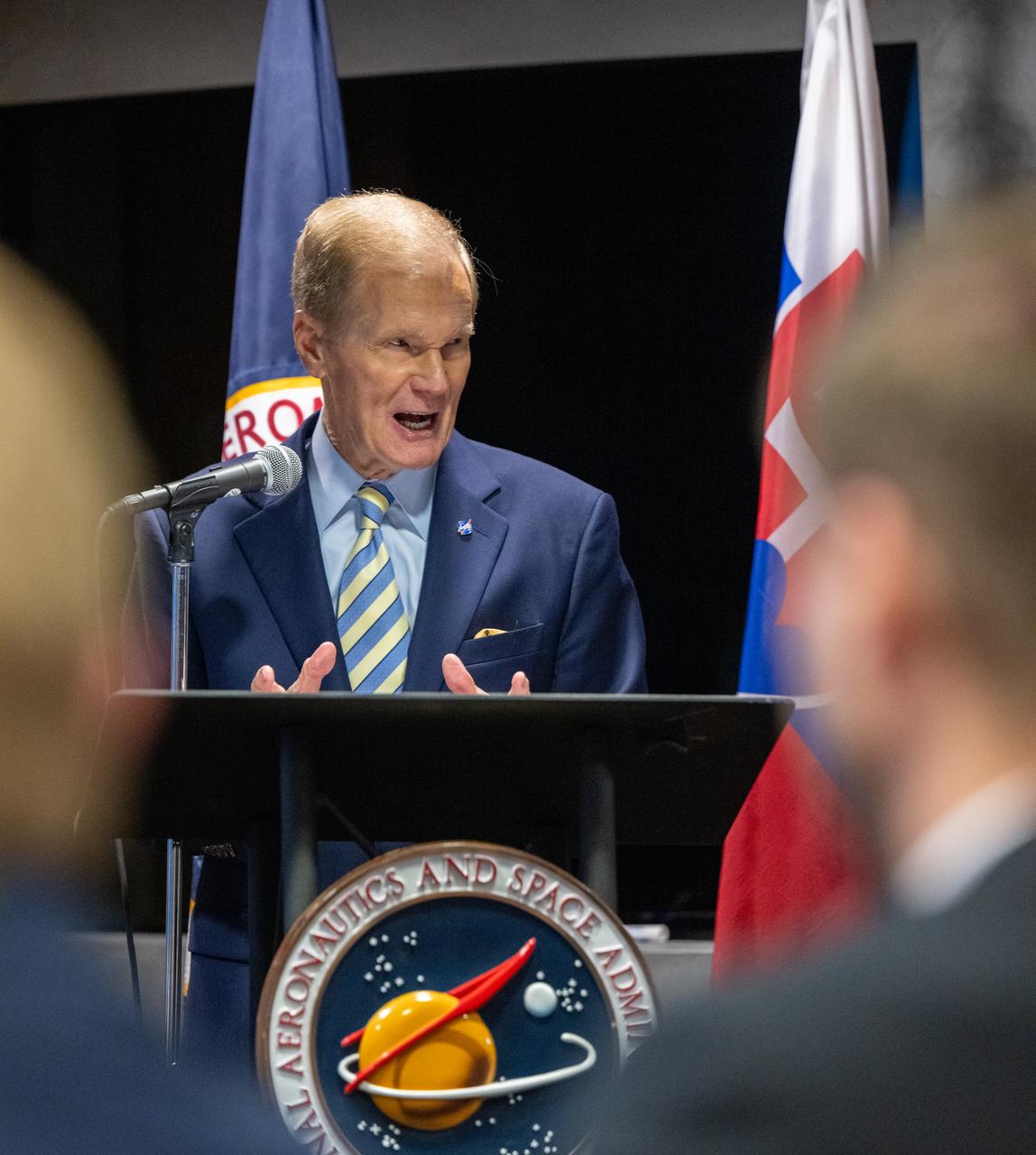
NASA Administrator Bill Nelson delivers remarks during an Artemis Accords signing ceremony, Thursday, May 30, 2024, at the Mary W. Jackson NASA Headquarters building in Washington. Slovakia is the 42nd country to sign the Artemis Accords, which establish a practical set of principles to guide space exploration cooperation among nations participating in NASA’s Artemis program. Photo Credit: (NASA/Keegan Barber)
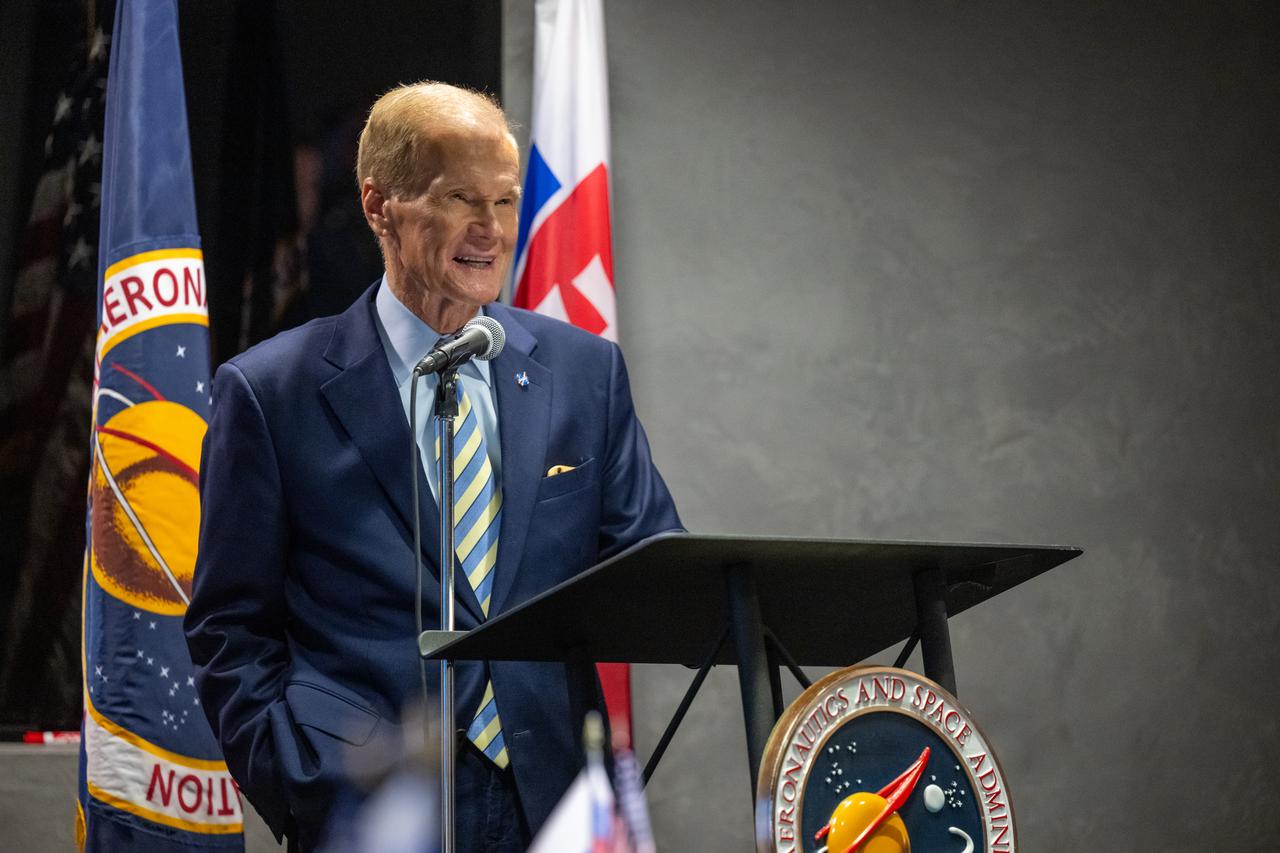
NASA Administrator Bill Nelson delivers remarks during an Artemis Accords signing ceremony, Thursday, May 30, 2024, at the Mary W. Jackson NASA Headquarters building in Washington. Slovakia is the 42nd country to sign the Artemis Accords, which establish a practical set of principles to guide space exploration cooperation among nations participating in NASA’s Artemis program. Photo Credit: (NASA/Keegan Barber)

Slovak Republic Minister of Education, Research, Development, and Youth Tomáš Drucker delivers remarks during an Artemis Accords signing ceremony, Thursday, May 30, 2024, at the Mary W. Jackson NASA Headquarters building in Washington. Slovakia is the 42nd country to sign the Artemis Accords, which establish a practical set of principles to guide space exploration cooperation among nations participating in NASA’s Artemis program. Photo Credit: (NASA/Keegan Barber)
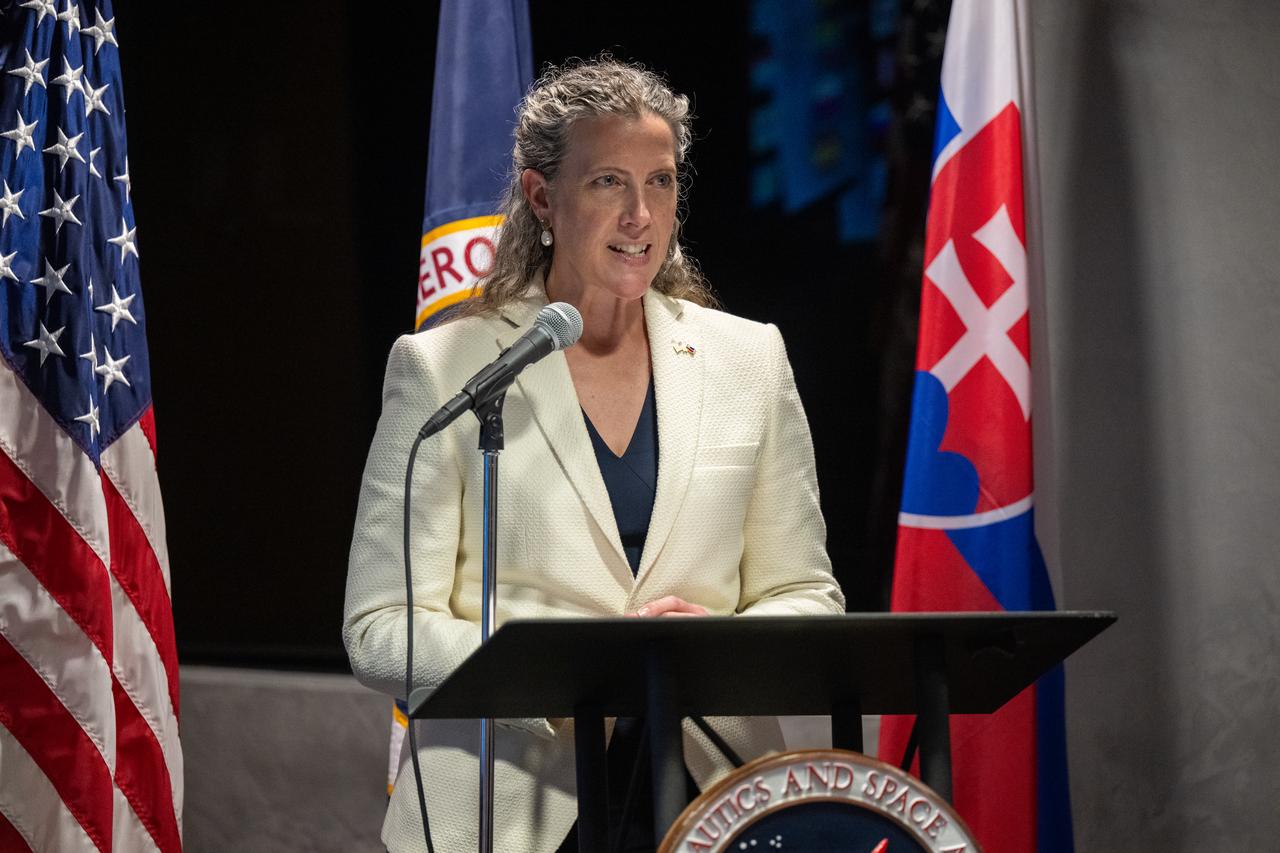
United States Department of State Deputy Assistant Secretary for the Bureau of European and Eurasian Affairs Sonata Coulter delivers remarks during an Artemis Accords signing ceremony, Thursday, May 30, 2024, at the Mary W. Jackson NASA Headquarters building in Washington. Slovakia is the 42nd country to sign the Artemis Accords, which establish a practical set of principles to guide space exploration cooperation among nations participating in NASA’s Artemis program. Photo Credit: (NASA/Keegan Barber)

Slovak Republic Minister of Education, Research, Development, and Youth Tomáš Drucker delivers remarks during an Artemis Accords signing ceremony, Thursday, May 30, 2024, at the Mary W. Jackson NASA Headquarters building in Washington. Slovakia is the 42nd country to sign the Artemis Accords, which establish a practical set of principles to guide space exploration cooperation among nations participating in NASA’s Artemis program. Photo Credit: (NASA/Keegan Barber)
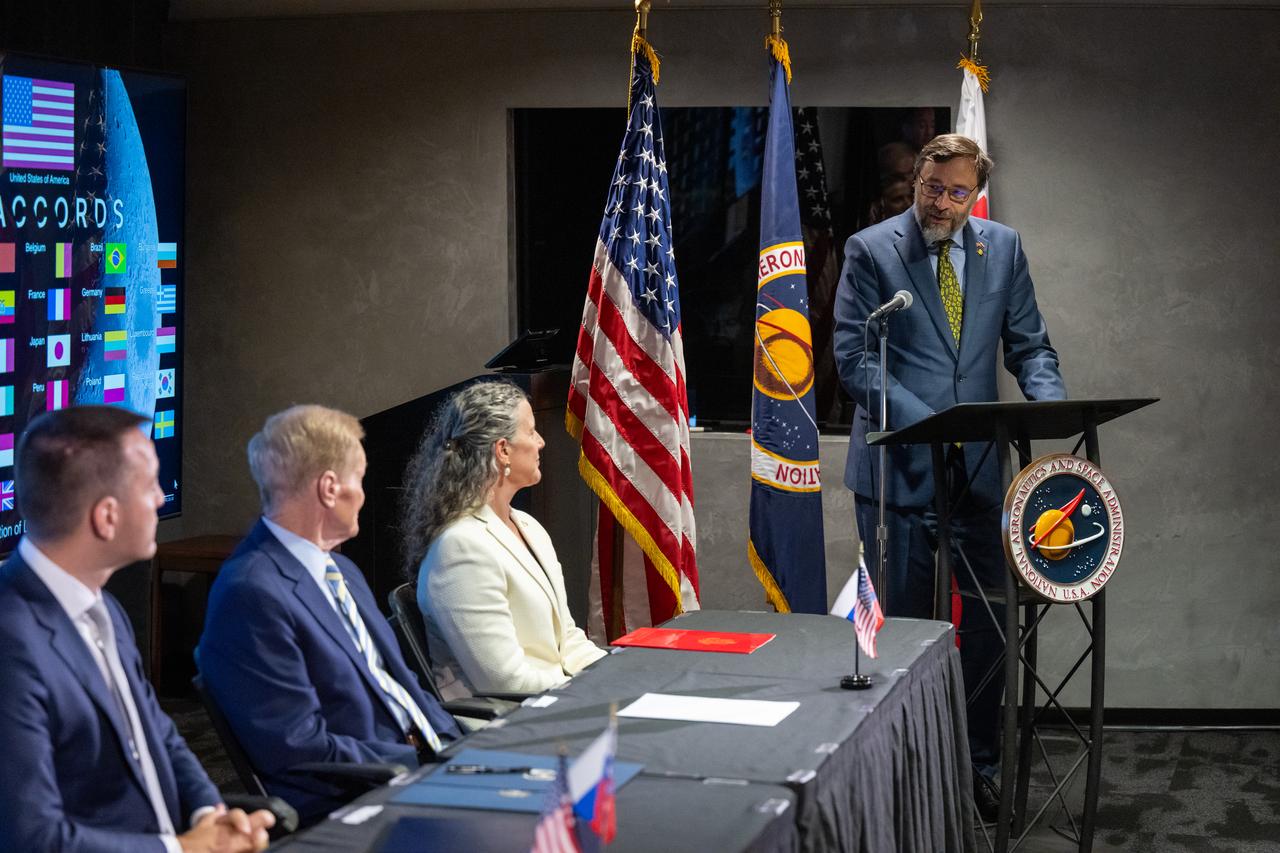
Ambassador of the Slovak Republic to the United States Radovan Javorcik delivers remarks during an Artemis Accords signing ceremony, Thursday, May 30, 2024, at the Mary W. Jackson NASA Headquarters building in Washington. Slovakia is the 42nd country to sign the Artemis Accords, which establish a practical set of principles to guide space exploration cooperation among nations participating in NASA’s Artemis program. Photo Credit: (NASA/Keegan Barber)
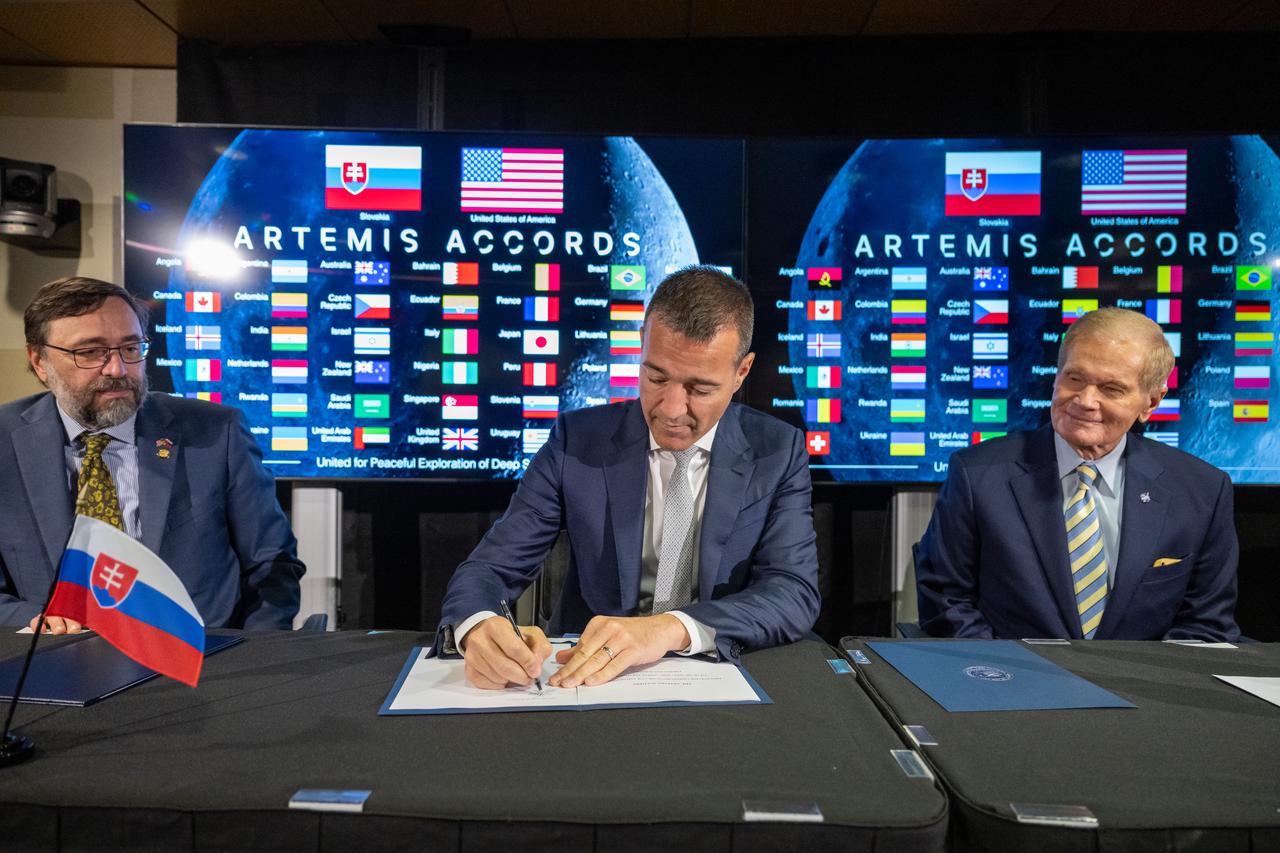
Slovak Republic Minister of Education, Research, Development, and Youth Tomáš Drucker signs the Artemis Accords as NASA Administrator Bill Nelson, right, and Ambassador of the Slovak Republic to the United States Radovan Javorcik, left, look on, Thursday, May 30, 2024, at the Mary W. Jackson NASA Headquarters building in Washington. Slovakia is the 42nd country to sign the Artemis Accords, which establish a practical set of principles to guide space exploration cooperation among nations participating in NASA’s Artemis program. Photo Credit: (NASA/Keegan Barber)
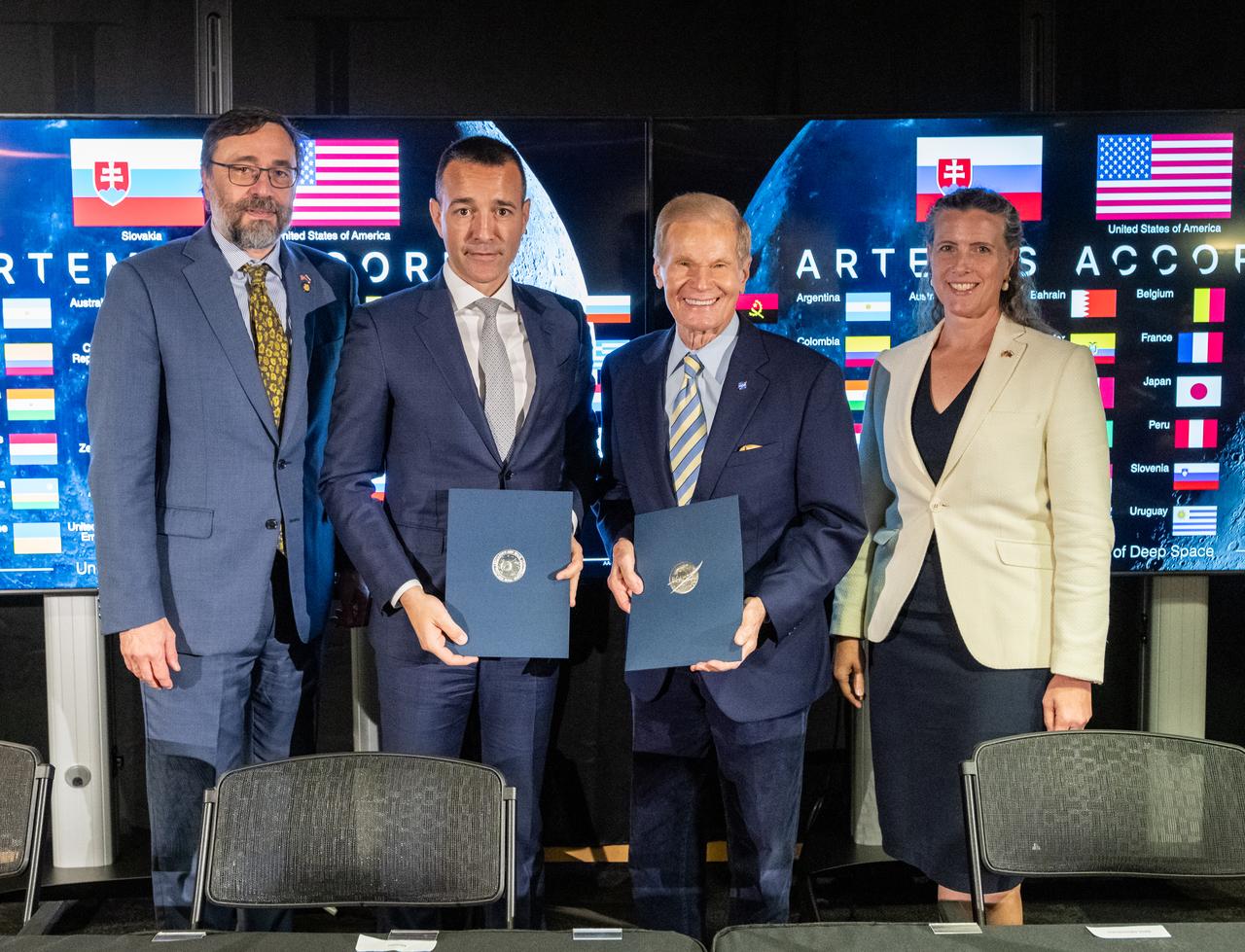
From left to right, Ambassador of the Slovak Republic to the United States Radovan Javorcik, Slovak Republic Minister of Education, Research, Development, and Youth Tomáš Drucker, NASA Administrator Bill Nelson, and United States Department of State Deputy Assistant Secretary for the Bureau of European and Eurasian Affairs Sonata Coulter pose for a photo during an Artemis Accords signing ceremony, Thursday, May 30, 2024, at the Mary W. Jackson NASA Headquarters building in Washington. Slovakia is the 42nd country to sign the Artemis Accords, which establish a practical set of principles to guide space exploration cooperation among nations participating in NASA’s Artemis program. Photo Credit: (NASA/Keegan Barber)

iss074e0149548 (Jan. 18, 2026) --- Vienna, Austria, and Bratislava, Slovakia, light up the Central European nightscape, each divided by the Danube River. Surrounding the two capital cities are wine‑country towns and historic market villages that dot the landscape. The International Space Station was orbiting 262 miles above Earth at approximately 9:09 p.m. local time when this photograph was taken. Credit: NASA/Chris Williams
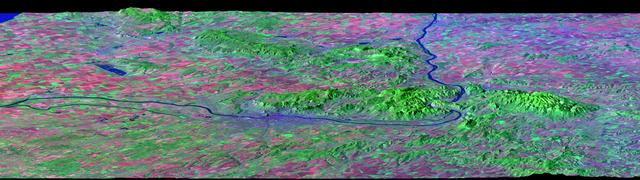
After draining the northern flank of the Alps Mountains in Germany and Austria, the Danube River flows east as it enters this west-looking scene (upper right) and forms the border between Slovakia and Hungary. The river then leaves the border as it enters Hungary and transects the Transdanubian Mountains, which trend southwest to northeast. Upon exiting the mountains, the river turns southward, flowing past Budapest (purplish blue area) and along the western margin of the Great Hungarian Plain. South and west of the Danube, the Transdanubian Mountains have at most only about 400 meters (about 1300 feet) of relief but they exhibit varied landforms, which include volcanic, tectonic, fluvial (river), and eolian (wind) features. A thick deposit of loess (dust deposits likely blown from ancient glacial outwash) covers much of this area, and winds from the northwest, funneled between the Alps and the Carpathian Mountains, are apparently responsible for a radial pattern of erosional streaks across the entire region. This image was generated from a Landsat satellite image draped over an elevation model produced by the Shuttle Radar Topography Mission (SRTM). The view uses a 3-times vertical exaggeration to enhance topographic expression. The false colors of the scene result from displaying Landsat bands 1, 4, and 7 in blue, green, and red, respectively. Band 1 is visible blue light, but bands 4 and 7 are reflected infrared light. This band combination maximizes color contrasts between the major land cover types, namely vegetation (green), bare ground (red), and water (blue). Shading of the elevation model was used to further highlight the topographic features. http://photojournal.jpl.nasa.gov/catalog/PIA04952