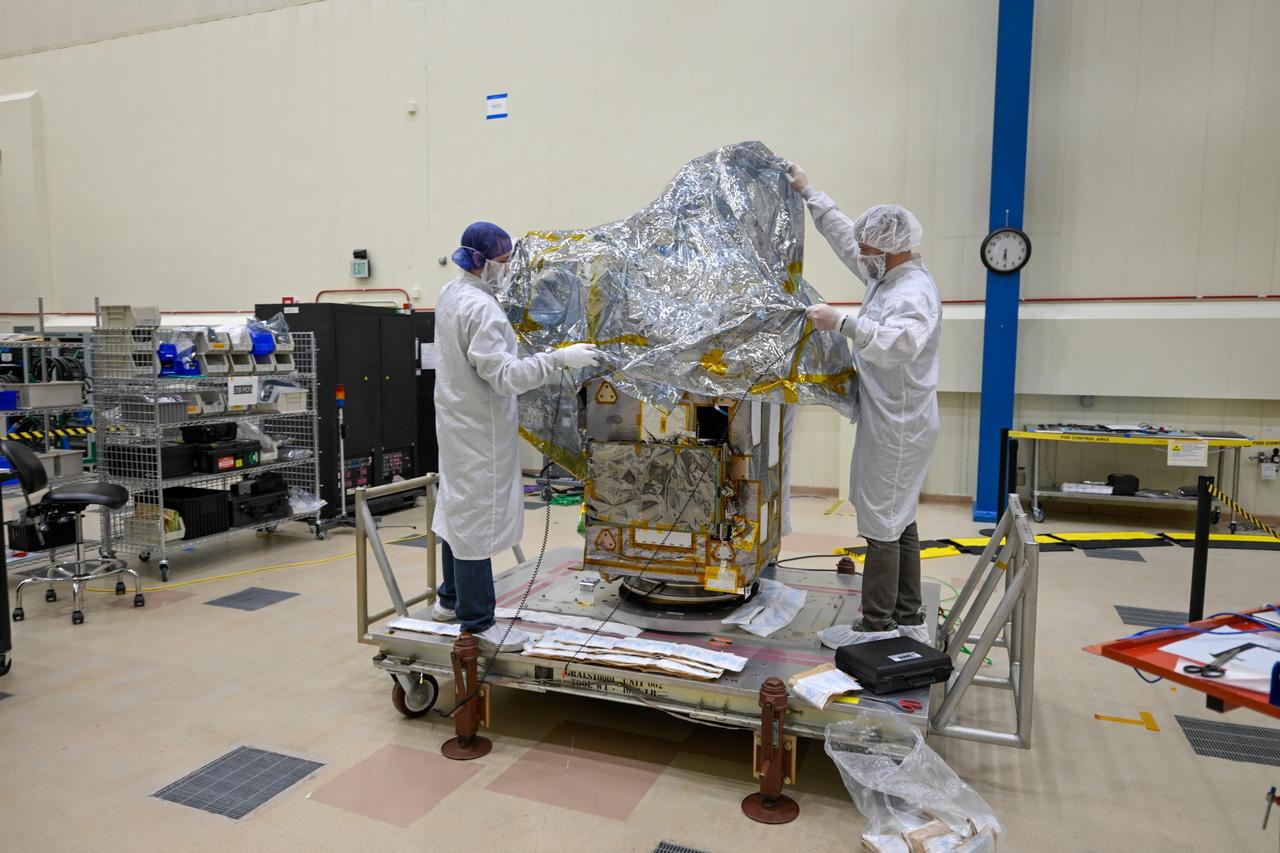
NASA's Lunar Trailblazer spacecraft gets covered in anti-static wrap before being shipped from Lockheed Martin Space in Littleton, Colorado, to Florida, where it arrived on Jan. 29, 2025. The spacecraft was built and tested at Lockheed and will launch no earlier than Feb. 26 from Launch Complex 39A at the agency's Kennedy Space Center. Lunar Trailblazer was a selection of NASA's SIMPLEx (Small Innovative Missions for Planetary Exploration), which provides opportunities for low-cost science spacecraft to ride-share with selected primary missions. To maintain the lower overall cost, SIMPLEx missions have a higher risk posture and lighter requirements for oversight and management. This higher risk acceptance allows NASA to test pioneering technologies, and the definition of success for these missions includes the lessons learned from more experimental endeavors. https://photojournal.jpl.nasa.gov/catalog/PIA26458
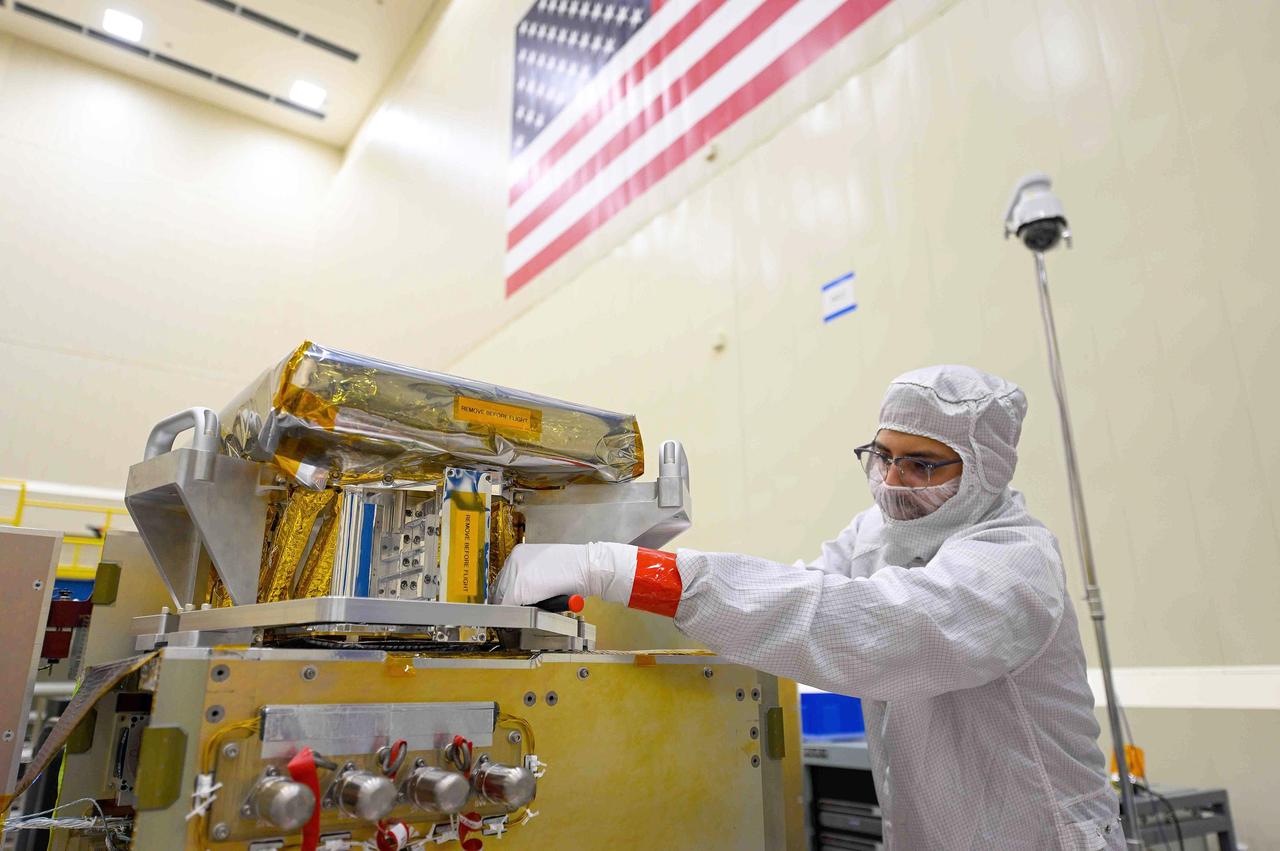
An engineer works on the High-resolution Volatiles and Minerals Moon Mapper (HVM³) for NASA's Lunar Trailblazer spacecraft in a clean room at Lockheed Martin Space in Littleton, Colorado, shortly after the instrument delivered in December 2022. HVM³ is an imaging spectrometer that was developed at NASA's Jet Propulsion Laboratory in Southern California. It was shipped from JPL to Lockheed Martin Space, where it was integrated with the spacecraft. HVM³ is one of two instruments that will be used by the mission to detect and map water on the Moon's surface to determine its abundance, location, form, and how it changes over time. Lunar Trailblazer was selected under NASA's Small Innovative Missions for Planetary Exploration (SIMPLEx) program in 2019. The Lunar Trailblazer mission is managed by JPL and its science investigation is led by Caltech in Pasadena, California. Managed for NASA by Caltech, JPL also provides system engineering, mission assurance, the HVM³ instrument, as well as navigation. Lockheed Martin Space provides the spacecraft and integrates the flight system, under contract with Caltech. SIMPLEx mission investigations are managed by the Planetary Missions Program Office at NASA's Marshall Space Flight Center in Huntsville, Alabama, as part of the Discovery Program at NASA Headquarters in Washington. The program conducts space science investigations in the Planetary Science Division of NASA's Science Mission Directorate at NASA Headquarters. https://photojournal.jpl.nasa.gov/catalog/PIA25255
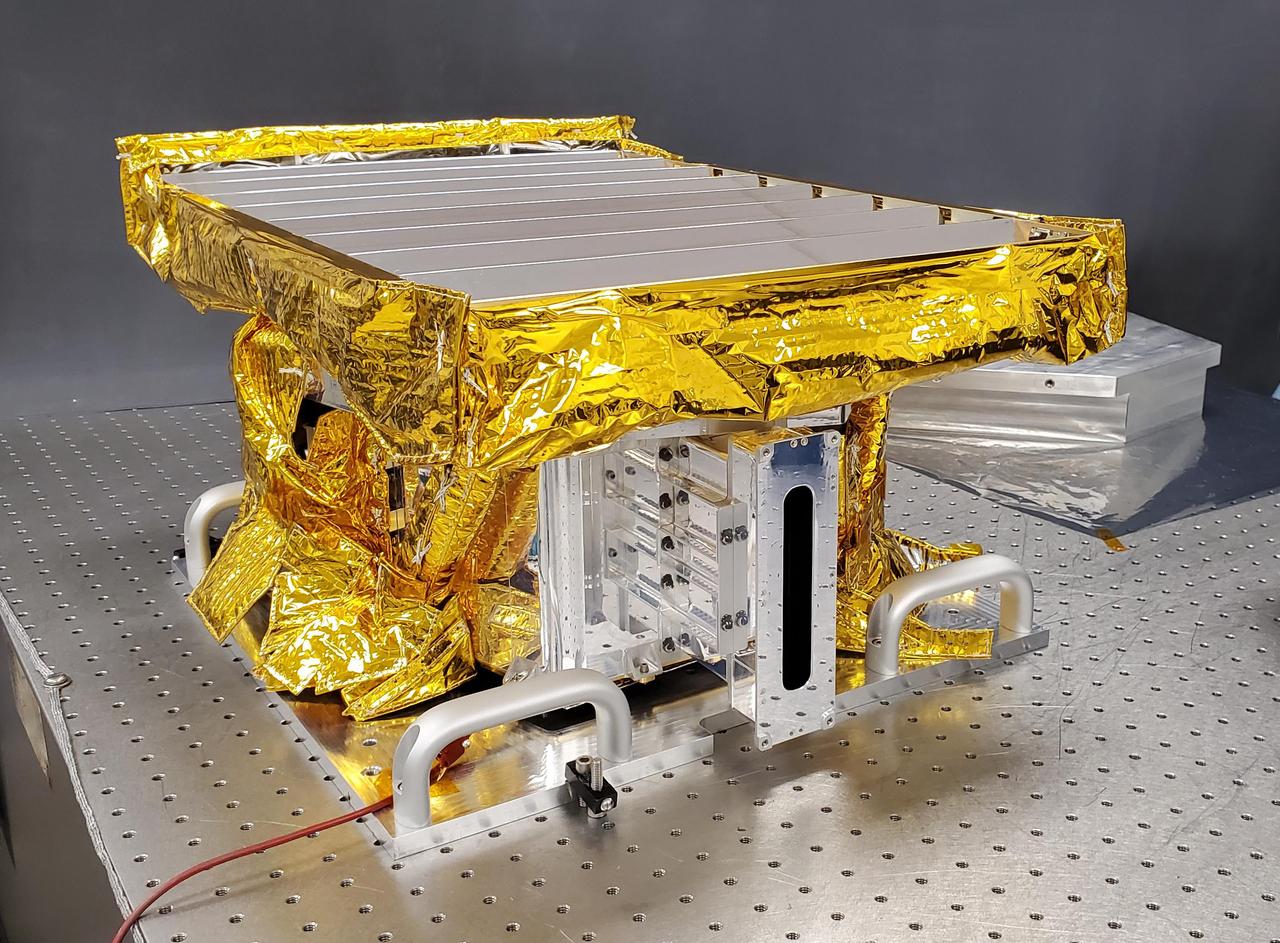
The High-resolution Volatiles and Minerals Moon Mapper (HVM³) sits in a clean room at NASA's Jet Propulsion Laboratory in Southern California in early December 2022. The JPL-built instrument was later shipped to Lockheed Martin Space in Littleton, Colorado, to be integrated with NASA's Lunar Trailblazer spacecraft. HVM³ is an imaging spectrometer that will detect and map water on the Moon's surface to determine its abundance, location, form, and how it changes over time. A second instrument, the Lunar Thermal Mapper infrared multispectral imager, is being developed by the University of Oxford in the U.K. and is scheduled for delivery and integration in early 2023. Lunar Trailblazer was selected under NASA's Small Innovative Missions for Planetary Exploration (SIMPLEx) program in 2019. The Lunar Trailblazer mission is managed by JPL and its science investigation is led by Caltech in Pasadena, California. Managed for NASA by Caltech, JPL also provides system engineering, mission assurance, the HVM³ instrument, as well as navigation. Lockheed Martin Space provides the spacecraft and integrates the flight system, under contract with Caltech. SIMPLEx mission investigations are managed by the Planetary Missions Program Office at NASA's Marshall Space Flight Center in Huntsville, Alabama, as part of the Discovery Program at NASA Headquarters in Washington. The program conducts space science investigations in the Planetary Science Division of NASA's Science Mission Directorate at NASA Headquarters. https://photojournal.jpl.nasa.gov/catalog/PIA25256
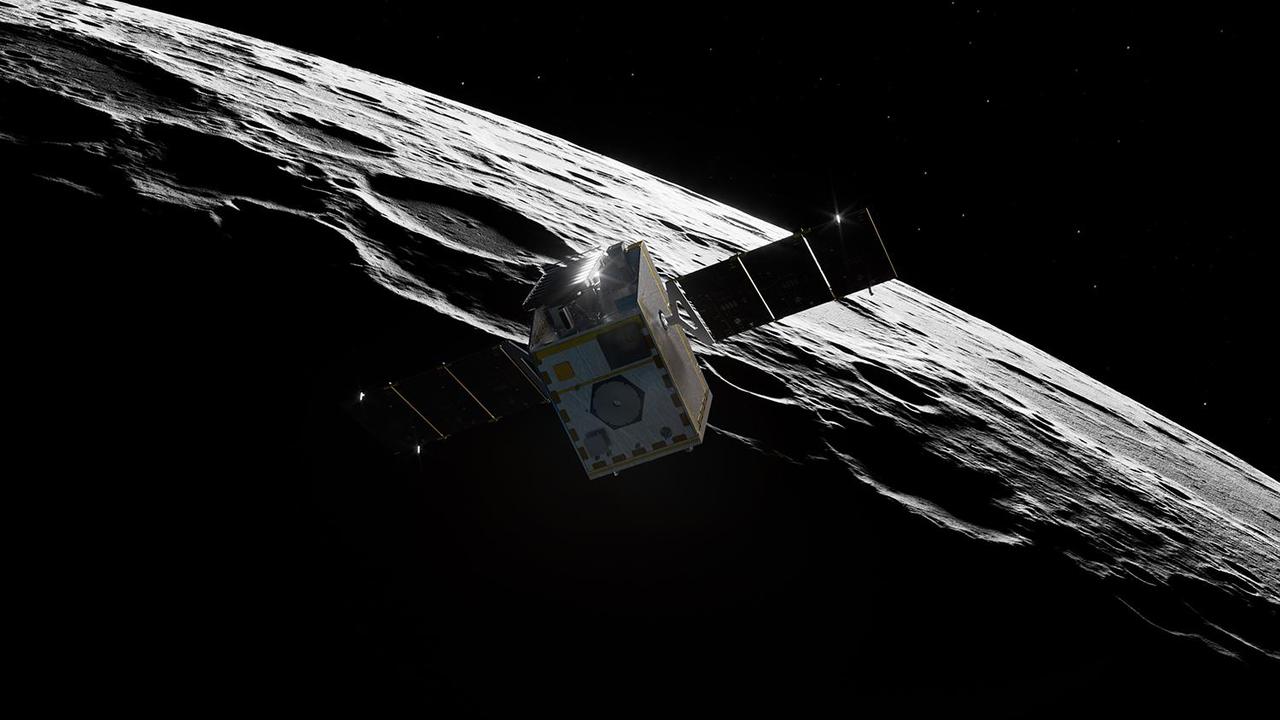
NASA's Lunar Trailblazer mission approaches the Moon as it enters its science orbit in this artist's concept. The small satellite will orbit about 60 miles (100 kilometers) above the lunar surface, producing the best-yet maps of water on the Moon. Lunar Trailblazer will discover where the Moon's water is, what form it is in, and how it changes over time. Observations gathered during the spacecraft's two-year prime mission will contribute to the understanding of water cycles on airless bodies throughout the solar system while also supporting future human and robotic missions to the Moon by identifying where water is located. Lunar Trailblazer was a selection of NASA's SIMPLEx (Small Innovative Missions for Planetary Exploration), which provides opportunities for low-cost science spacecraft to ride-share with selected primary missions. To maintain the lower overall cost, SIMPLEx missions have a higher risk posture and lighter requirements for oversight and management. This higher risk acceptance allows NASA to test pioneering technologies, and the definition of success for these missions includes the lessons learned from more experimental endeavors. https://photojournal.jpl.nasa.gov/catalog/PIA26457
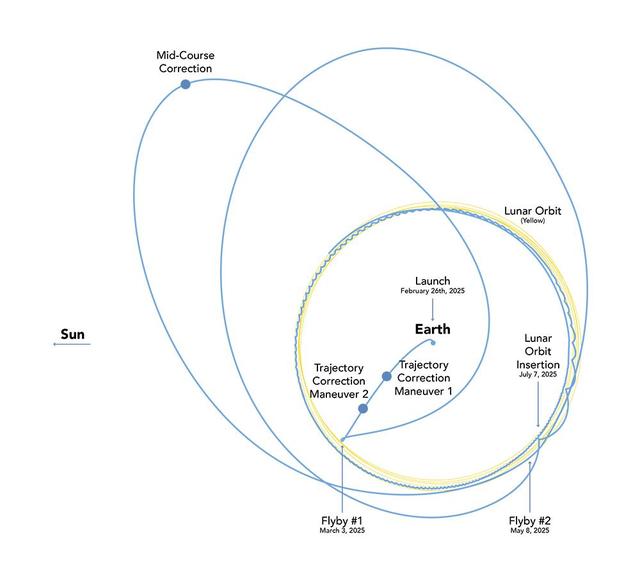
Lunar Trailblazer's voyage to the Moon will take between four and seven months, depending on the day it launches. This orbital diagram shows the low-energy transfer trajectory of the NASA mission should it launch on Feb. 26, the earliest date in a four-day launch period. If it launches that date, the spacecraft is expected to arrive in lunar orbit about four months later. Shown in this diagram are key dates of trajectory correction maneuvers, when the spacecraft will use its thrusters to shape its orbit, and lunar flybys. Lunar Trailblazer was a selection of NASA's SIMPLEx (Small Innovative Missions for Planetary Exploration), which provides opportunities for low-cost science spacecraft to ride-share with selected primary missions. To maintain the lower overall cost, SIMPLEx missions have a higher risk posture and lighter requirements for oversight and management. This higher risk acceptance allows NASA to test pioneering technologies, and the definition of success for these missions includes the lessons learned from more experimental endeavors. https://photojournal.jpl.nasa.gov/catalog/PIA26459
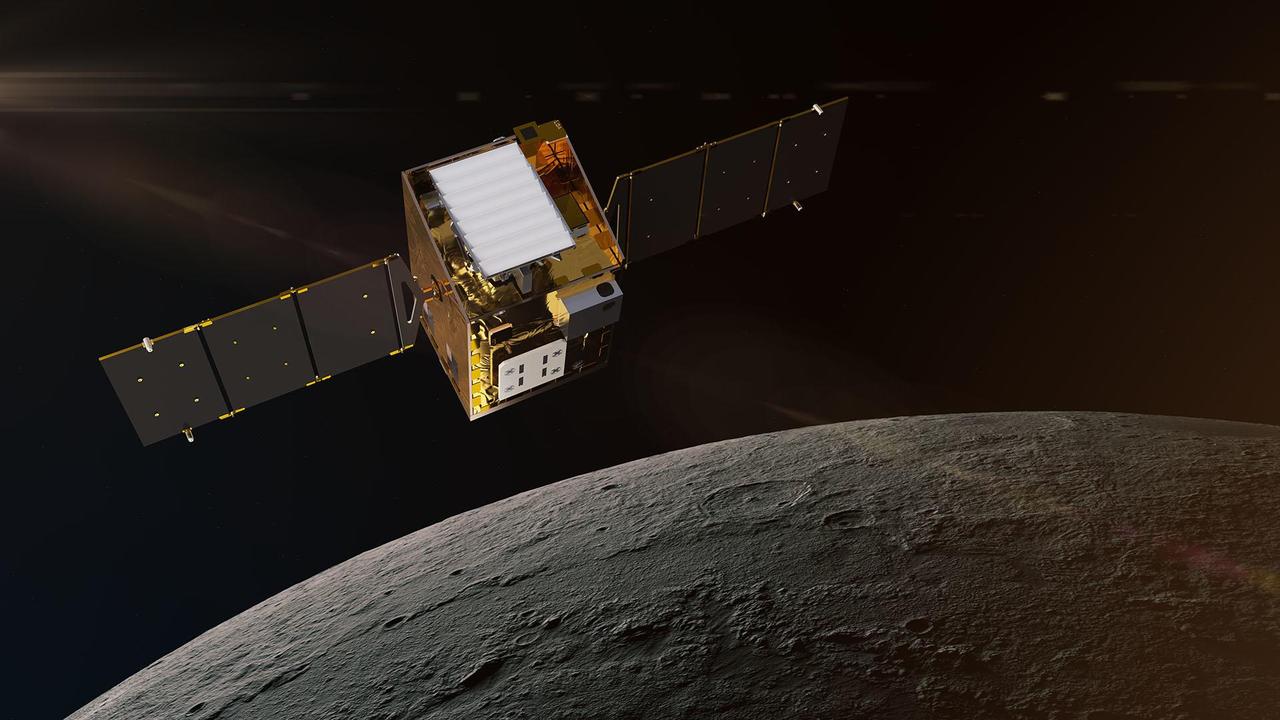
This artist's concept depicts NASA's Lunar Trailblazer in lunar orbit about 60 miles (100 kilometers) from the surface of the Moon. The spacecraft weighs only 440 pounds (200 kilograms) and measures 11.5 feet (3.5 meters) wide when its solar panels are fully deployed. Lunar Trailblazer is managed by NASA's Jet Propulsion Laboratory, and its science investigation and mission operations are led by Caltech with the mission operations center at IPAC. Managed for NASA by Caltech, JPL also provides system engineering, mission assurance, the HVM3 instrument, as well as mission design and navigation. Lockheed Martin Space provides the spacecraft, integrates the flight system, and supports operations under contract with Caltech. Lunar Trailblazer is part of NASA's Small Innovative Missions for Planetary Exploration (SIMPLEx) program, which is managed by the Planetary Missions Program Office at NASA's Marshall Space Flight Center in Huntsville, Alabama, as part of the Discovery Program at NASA Headquarters in Washington. The program conducts space science investigations in the Planetary Science Division of NASA's Science Mission Directorate at NASA Headquarters. https://photojournal.jpl.nasa.gov/catalog/PIA26453
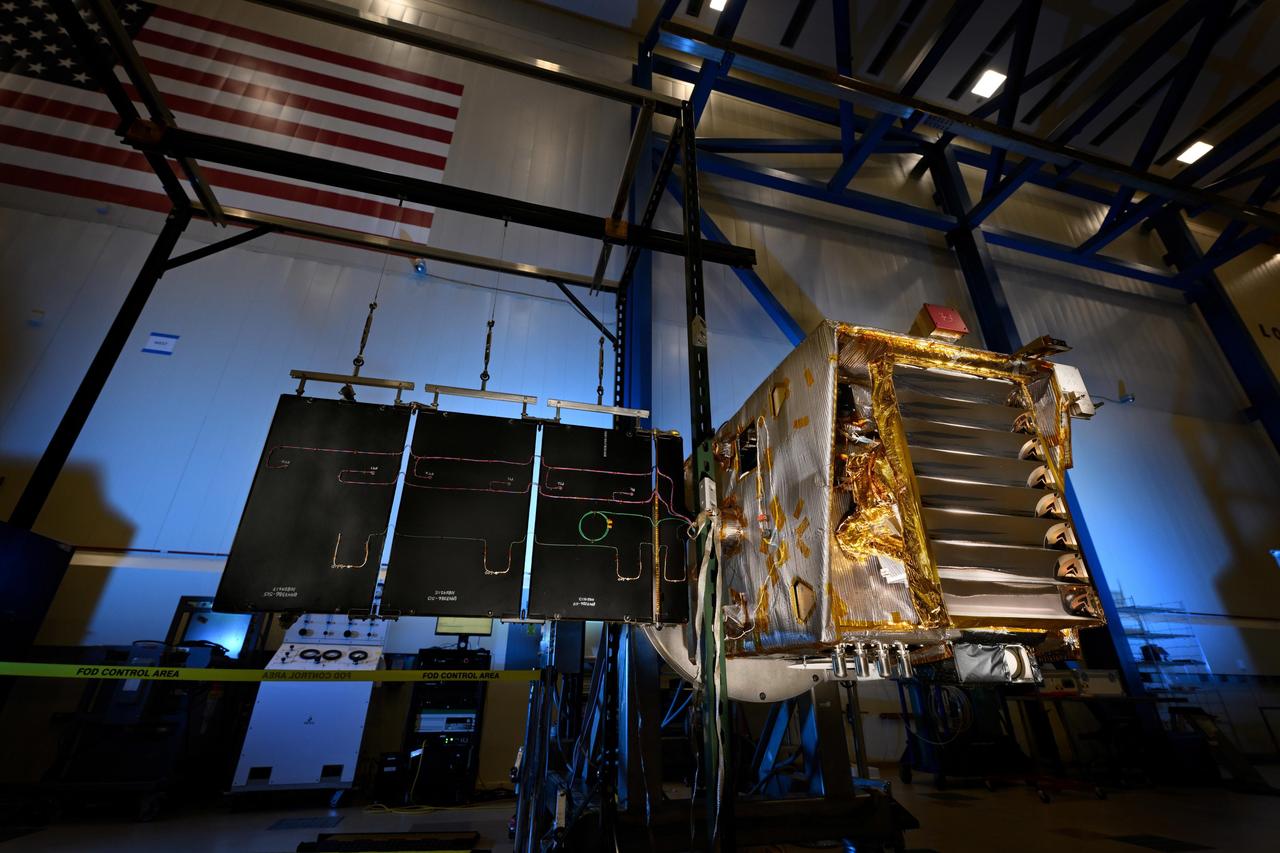
NASA's Lunar Trailblazer spacecraft sits in a clean room in August 2024 after undergoing environmental testing at Lockheed Martin Space in Littleton, Colorado. Now that those tests are done, the orbiter and its science instruments will go through flight system software tests that simulate key aspects of launch, maneuvers, and the science mission while in orbit around the Moon. This photo shows Lunar Trailblazer with a solar array deployed. The large silver grate attached to the spacecraft is the radiator for the High-resolution Volatiles and Minerals Moon Mapper (HVM³) instrument. HVM³ is one of two instruments that will be used by the mission to detect and map water on the Moon's surface to determine its abundance, location, form, and how it changes over time. This data will be key to our understanding of this crucial resource on the Moon for future exploration. The spacecraft is just 440 pounds (200 kilograms) and 11.5 feet (3.5 meters) wide with its solar panels fully deployed. The project is led by Principal Investigator Bethany Ehlmann of Caltech and managed by NASA's Jet Propulsion Laboratory in Southern California, which is also providing systems engineering, navigation, and mission assurance. Caltech manages JPL for the agency. Lunar Trailblazer is part of NASA's Small Innovative Missions for Planetary Exploration (SIMPLEx) program, which provides opportunities for low-cost, high-risk science missions that are responsive to requirements for flexibility. These lower-cost missions serve as an ideal platform for technical and architecture innovation, contributing to NASA's science research and technology development objectives. SIMPLEx mission investigations are managed by the Planetary Missions Program Office at NASA's Marshall Space Flight Center in Huntsville, Alabama, as part of the Discovery Program at NASA Headquarters in Washington. IPAC leads mission operations, including planning, scheduling, and sequencing all science and spacecraft activities. https://photojournal.jpl.nasa.gov/catalog/PIA26390
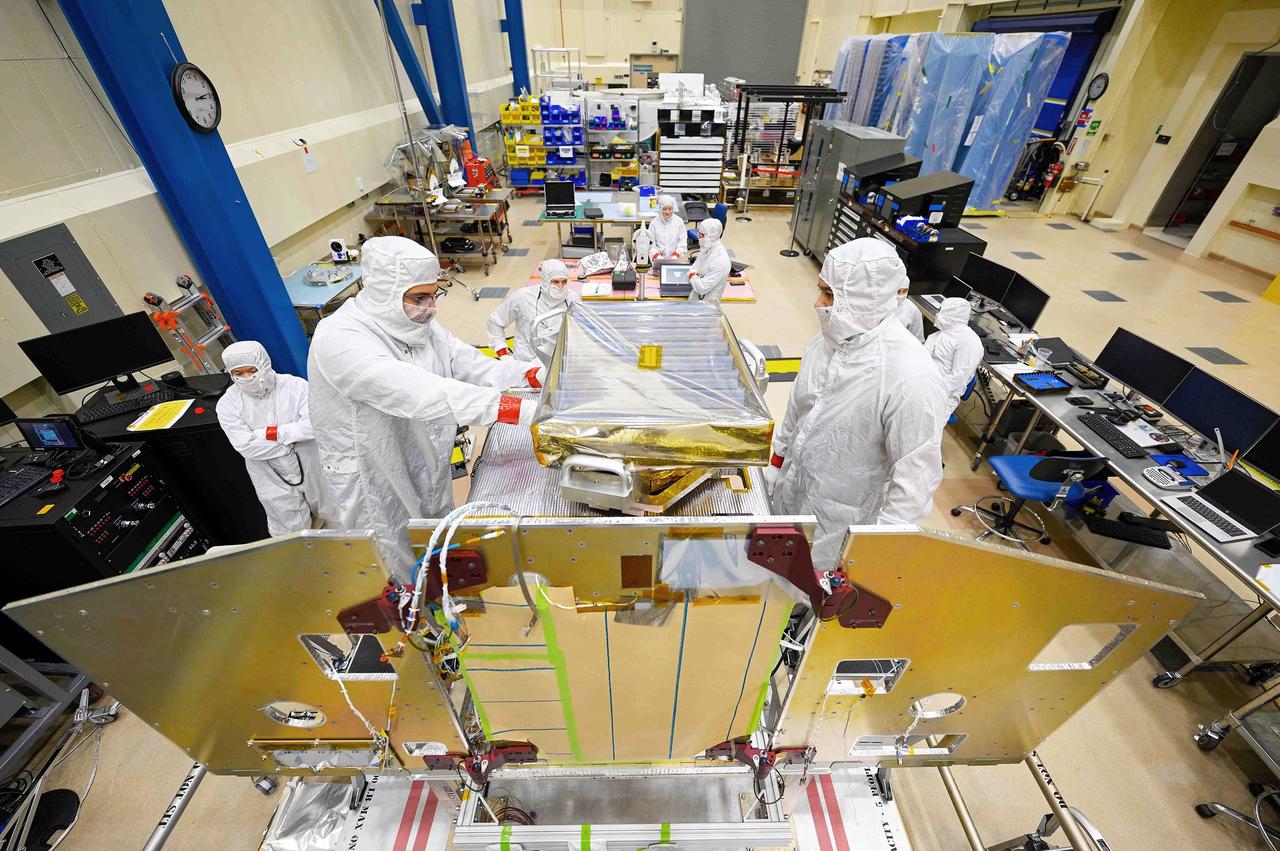
Engineers work on the High-resolution Volatiles and Minerals Moon Mapper (HVM³) for NASA's Lunar Trailblazer spacecraft in a clean room at Lockheed Martin Space in Littleton, Colorado, shortly after the instrument was delivered there in December 2022. The large silver grate wrapped in transparent plastic in the center of the image is the radiator that will maintain the instrument's temperature when in space. HVM³ is an imaging spectrometer that was developed at NASA's Jet Propulsion Laboratory in Southern California. It was shipped from JPL to Lockheed Martin Space, where it was integrated with the spacecraft. HVM³ is one of two instruments that will be used by the mission to detect and map water on the Moon's surface to determine its abundance, location, form, and how it changes over time. Lunar Trailblazer was selected under NASA's Small Innovative Missions for Planetary Exploration (SIMPLEx) program in 2019. The Lunar Trailblazer mission is managed by JPL and its science investigation is led by Caltech in Pasadena, California. Managed for NASA by Caltech, JPL also provides system engineering, mission assurance, the HVM³ instrument, as well as navigation. Lockheed Martin Space provides the spacecraft and integrates the flight system, under contract with Caltech. SIMPLEx mission investigations are managed by the Planetary Missions Program Office at NASA's Marshall Space Flight Center in Huntsville, Alabama, as part of the Discovery Program at NASA Headquarters in Washington. The program conducts space science investigations in the Planetary Science Division of NASA's Science Mission Directorate at NASA Headquarters. https://photojournal.jpl.nasa.gov/catalog/PIA25254

Blue Origin’s New Glenn rocket carrying NASA’s twin ESCAPADE (Escape and Plasma Acceleration and Dynamics Explorers) spacecraft launches at 3:55 p.m. EST, Thursday, Nov. 13, 2025, from Launch Complex 36 at Cape Canaveral Space Force Station in Florida. The ESCAPADE mission, built by Rocket Lab, will study how solar wind and plasma interact with Mars’ magnetosphere and how this interaction drives the planet’s atmospheric escape to prepare for future human missions on Mars.
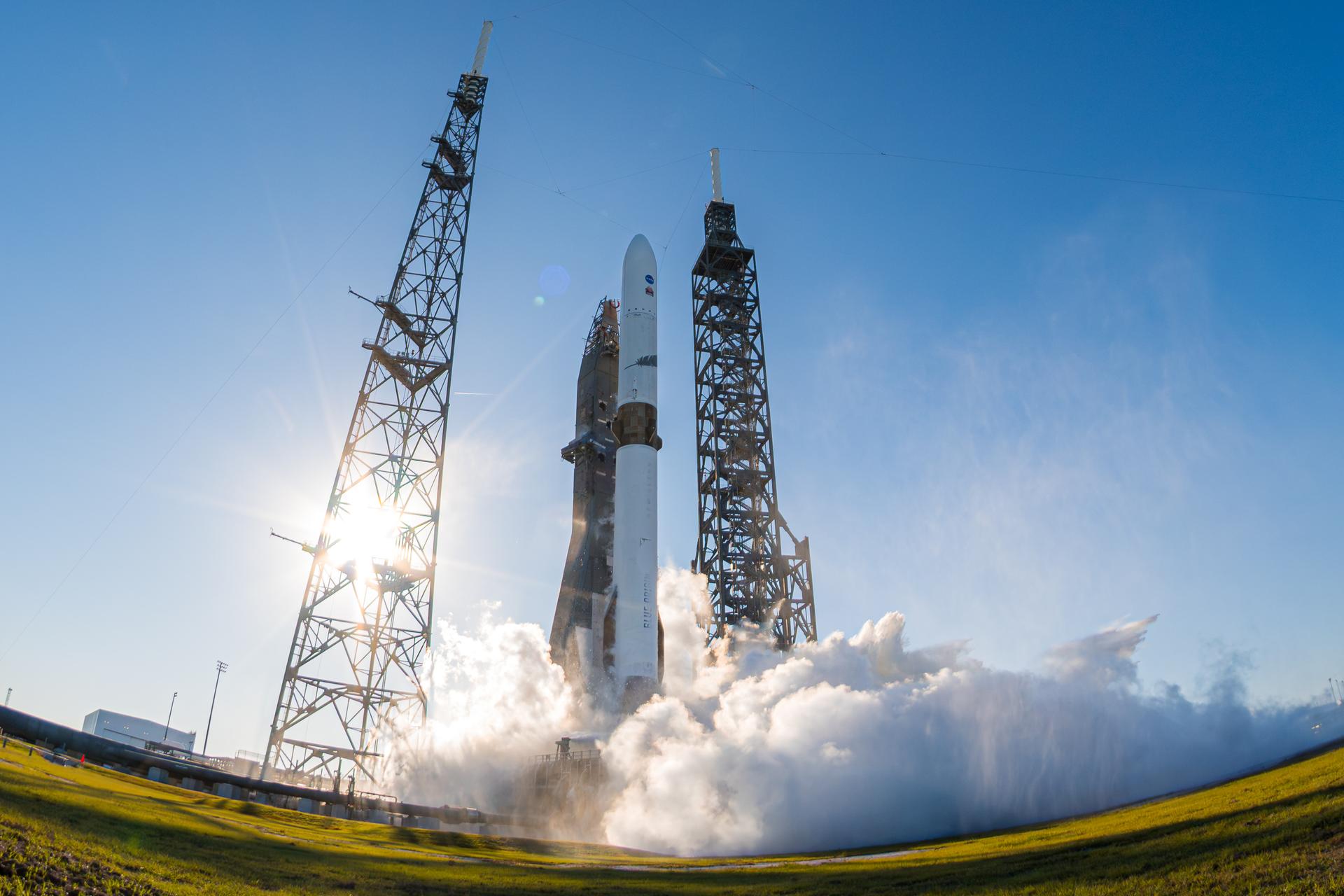
Blue Origin’s New Glenn rocket carrying NASA’s twin ESCAPADE (Escape and Plasma Acceleration and Dynamics Explorers) spacecraft launches at 3:55 p.m. EST, Thursday, Nov. 13, 2025, from Launch Complex 36 at Cape Canaveral Space Force Station in Florida. The ESCAPADE mission, built by Rocket Lab, will study how solar wind and plasma interact with Mars’ magnetosphere and how this interaction drives the planet’s atmospheric escape to prepare for future human missions on Mars.
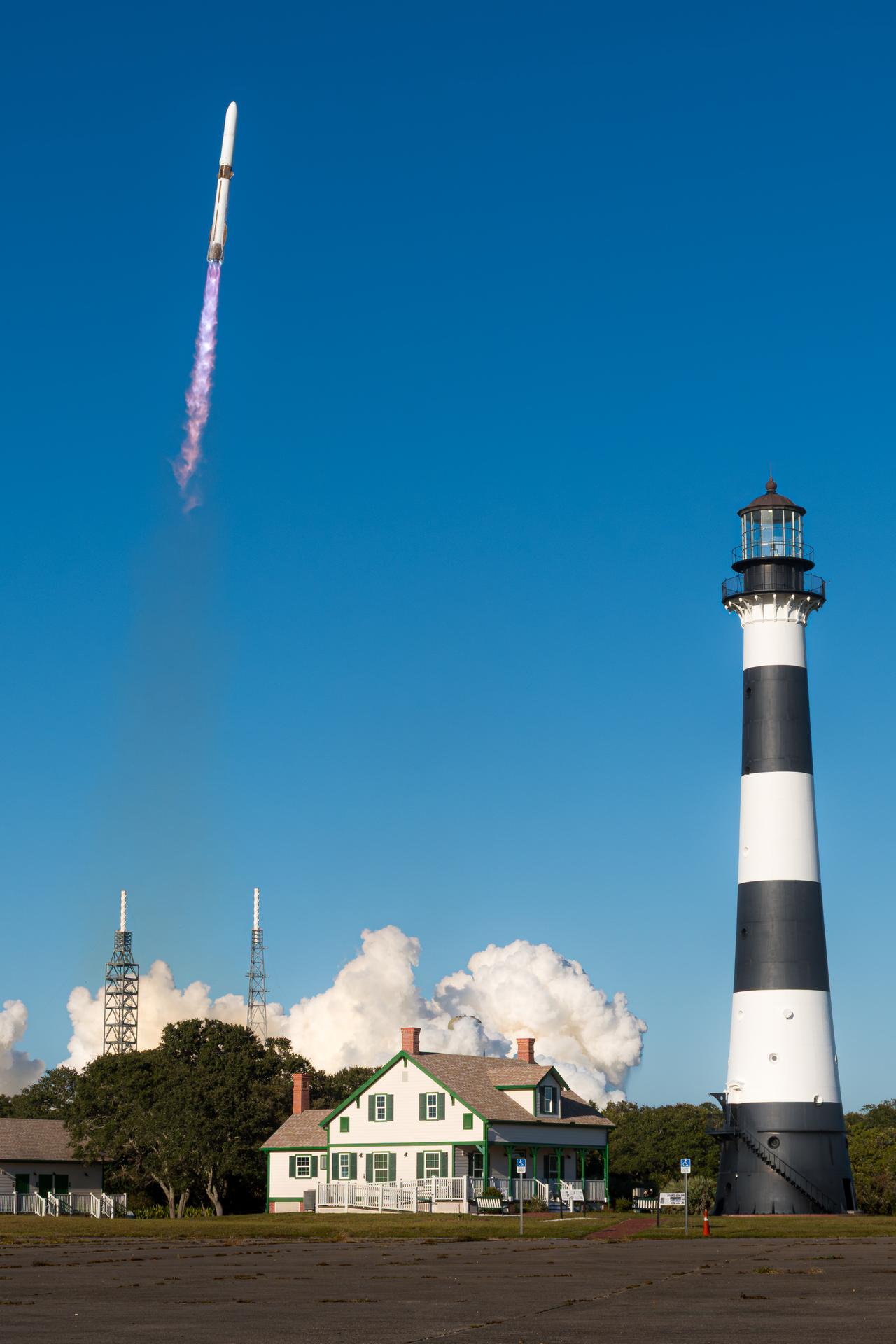
Near Cape Canaveral Lighthouse, Blue Origin’s New Glenn rocket carrying NASA’s twin ESCAPADE (Escape and Plasma Acceleration and Dynamics Explorers) spacecraft launches at 3:55 p.m. EST, Thursday, Nov. 13, 2025, from Launch Complex 36 at Cape Canaveral Space Force Station in Florida. The ESCAPADE mission, built by Rocket Lab, will study how solar wind and plasma interact with Mars’ magnetosphere and how this interaction drives the planet’s atmospheric escape to prepare for future human missions on Mars.
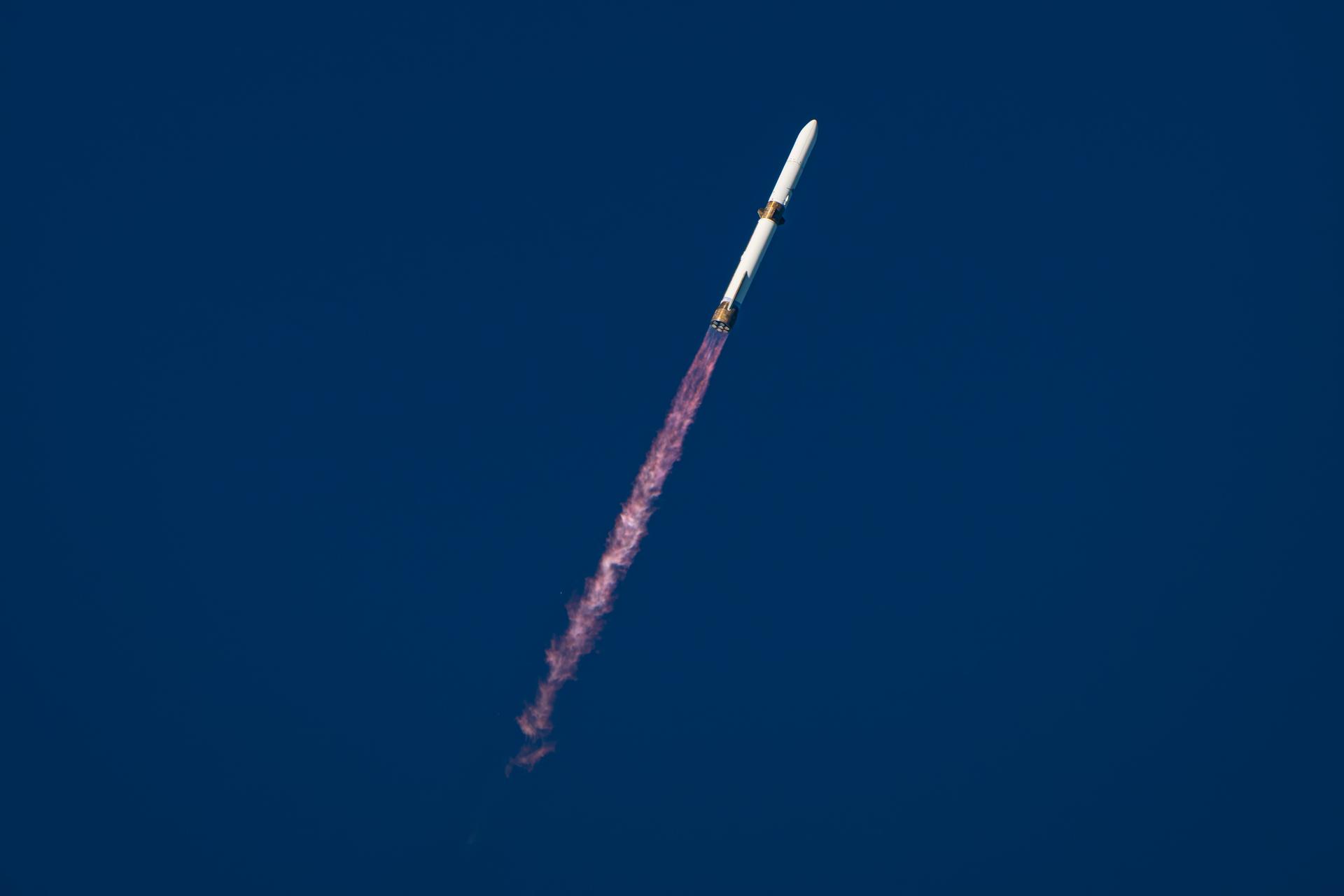
Blue Origin’s New Glenn rocket carrying NASA’s twin ESCAPADE (Escape and Plasma Acceleration and Dynamics Explorers) spacecraft launches at 3:55 p.m. EST, Thursday, Nov. 13, 2025, from Launch Complex 36 at Cape Canaveral Space Force Station in Florida. The ESCAPADE mission, built by Rocket Lab, will study how solar wind and plasma interact with Mars’ magnetosphere and how this interaction drives the planet’s atmospheric escape to prepare for future human missions on Mars.

Blue Origin’s New Glenn first stage rocket successfully lands for the first time on a drone ship in the Atlantic Ocean following the launching of NASA’s twin ESCAPADE (Escape and Plasma Acceleration and Dynamics Explorers) spacecraft at 3:55 p.m. EST, Thursday, Nov. 13, 2025, from Launch Complex 36 at Cape Canaveral Space Force Station in Florida. The ESCAPADE mission, built by Rocket Lab, will study how solar wind and plasma interact with Mars’ magnetosphere and how this interaction drives the planet’s atmospheric escape to prepare for future human missions on Mars.
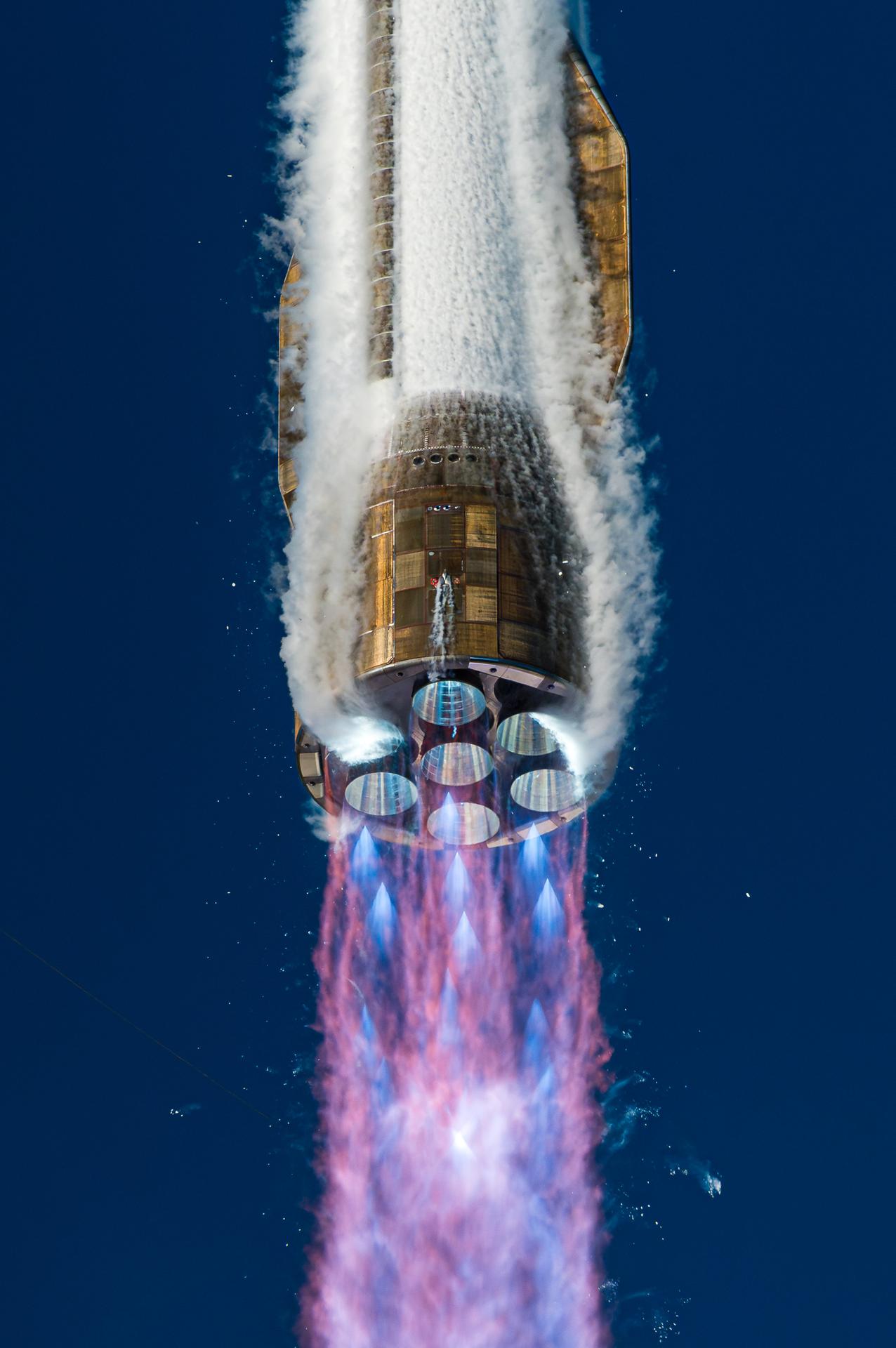
Blue Origin’s New Glenn rocket carrying NASA’s twin ESCAPADE (Escape and Plasma Acceleration and Dynamics Explorers) spacecraft launches at 3:55 p.m. EST, Thursday, Nov. 13, 2025, from Launch Complex 36 at Cape Canaveral Space Force Station in Florida. The ESCAPADE mission, built by Rocket Lab, will study how solar wind and plasma interact with Mars’ magnetosphere and how this interaction drives the planet’s atmospheric escape to prepare for future human missions on Mars.

Blue Origin’s New Glenn rocket carrying NASA’s twin ESCAPADE (Escape and Plasma Acceleration and Dynamics Explorers) spacecraft launches at 3:55 p.m. EST, Thursday, Nov. 13, 2025, from Launch Complex 36 at Cape Canaveral Space Force Station in Florida. The ESCAPADE mission, built by Rocket Lab, will study how solar wind and plasma interact with Mars’ magnetosphere and how this interaction drives the planet’s atmospheric escape to prepare for future human missions on Mars.
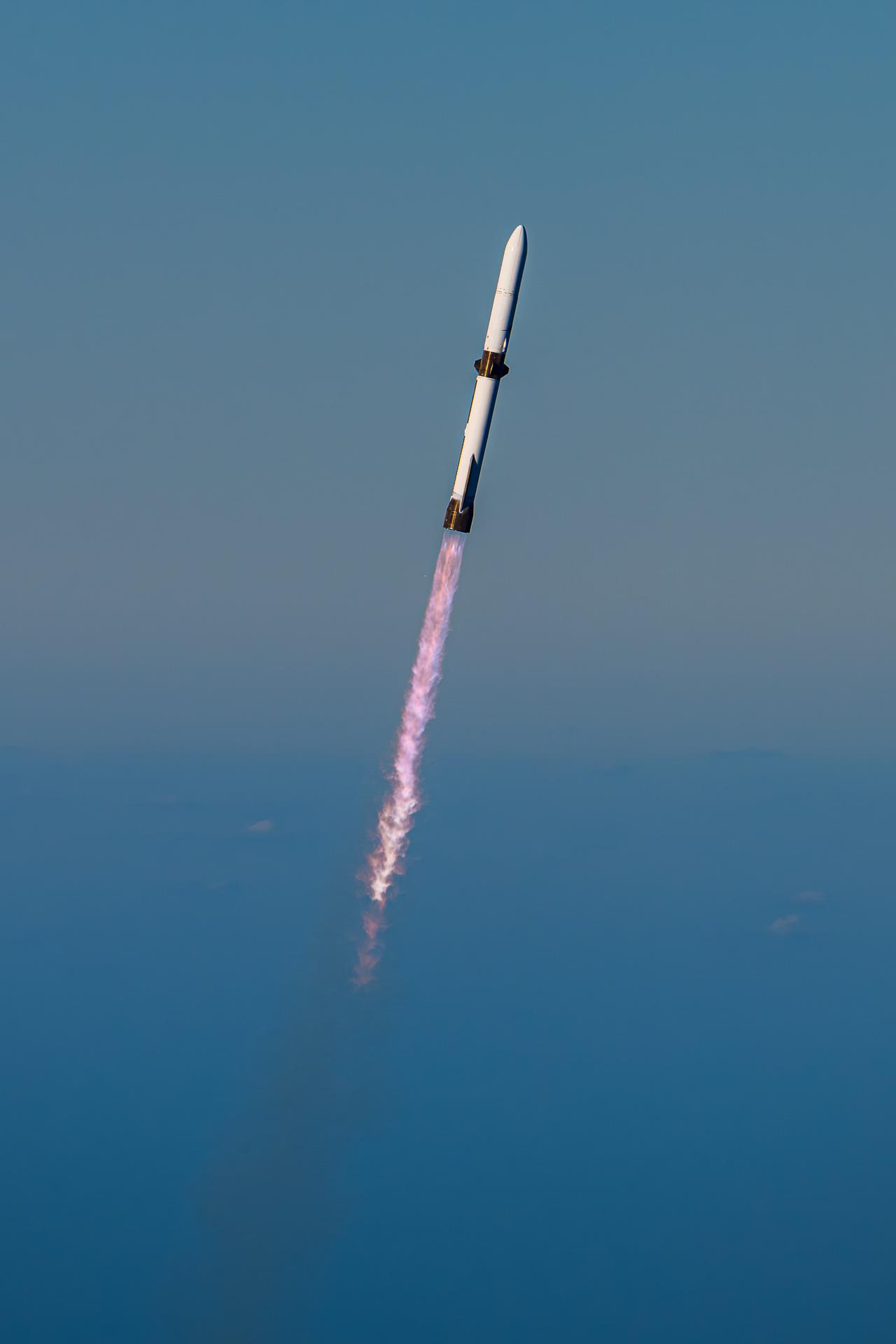
Blue Origin’s New Glenn rocket carrying NASA’s twin ESCAPADE (Escape and Plasma Acceleration and Dynamics Explorers) spacecraft launches at 3:55 p.m. EST, Thursday, Nov. 13, 2025, from Launch Complex 36 at Cape Canaveral Space Force Station in Florida. The ESCAPADE mission, built by Rocket Lab, will study how solar wind and plasma interact with Mars’ magnetosphere and how this interaction drives the planet’s atmospheric escape to prepare for future human missions on Mars.
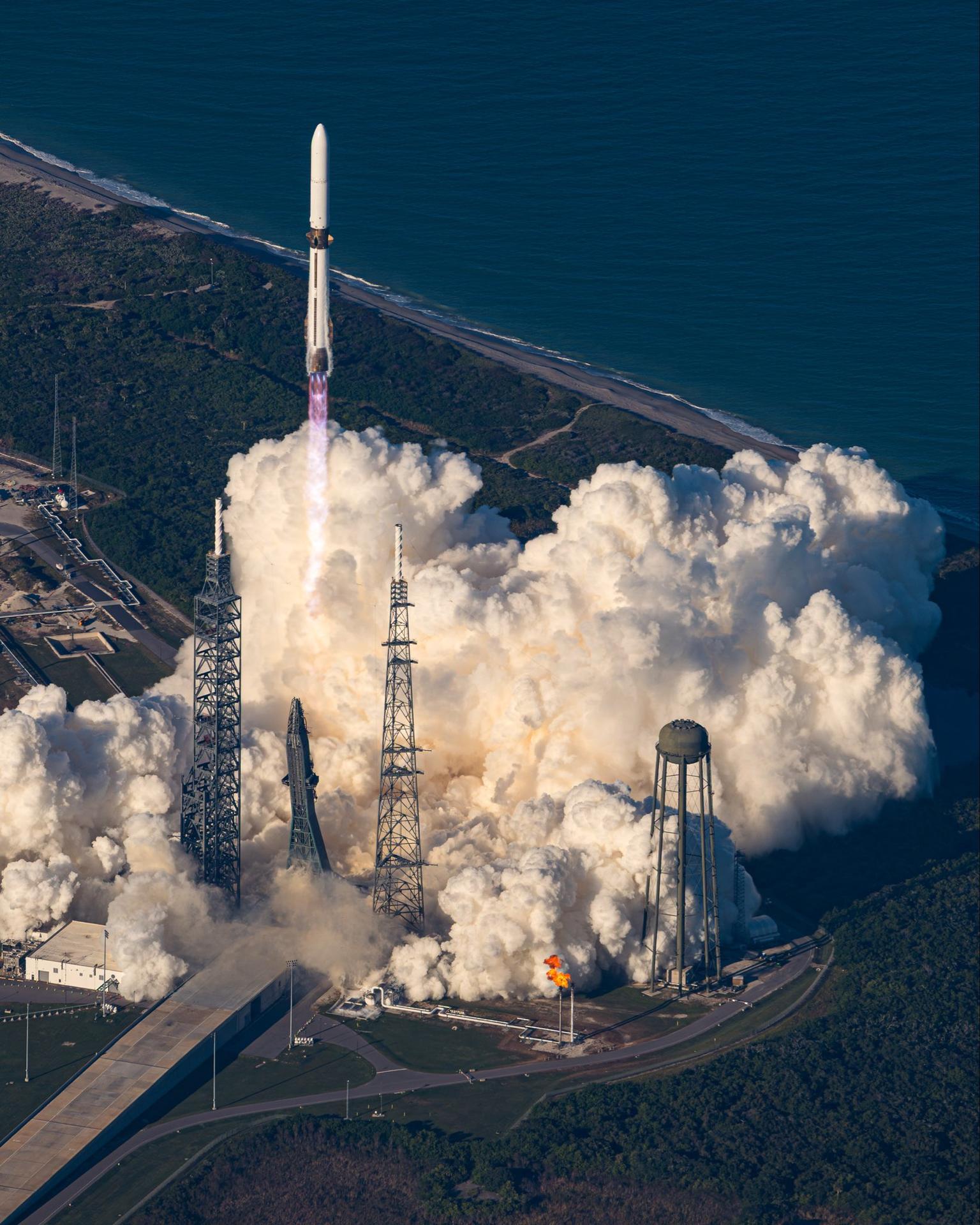
Blue Origin’s New Glenn rocket carrying NASA’s twin ESCAPADE (Escape and Plasma Acceleration and Dynamics Explorers) spacecraft launches at 3:55 p.m. EST, Thursday, Nov. 13, 2025, from Launch Complex 36 at Cape Canaveral Space Force Station in Florida. The ESCAPADE mission, built by Rocket Lab, will study how solar wind and plasma interact with Mars’ magnetosphere and how this interaction drives the planet’s atmospheric escape to prepare for future human missions on Mars.
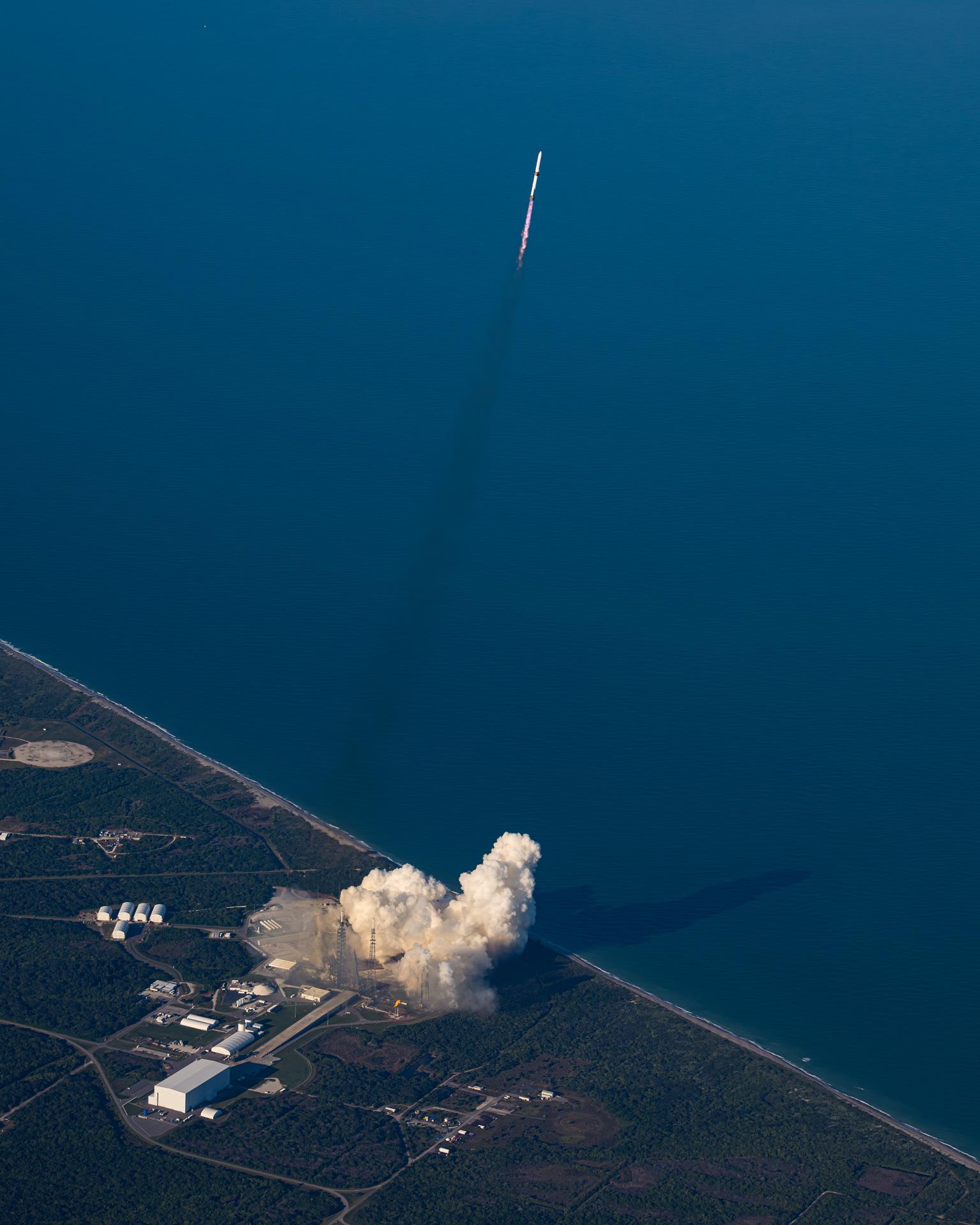
Blue Origin’s New Glenn rocket carrying NASA’s twin ESCAPADE (Escape and Plasma Acceleration and Dynamics Explorers) spacecraft launches at 3:55 p.m. EST, Thursday, Nov. 13, 2025, from Launch Complex 36 at Cape Canaveral Space Force Station in Florida. The ESCAPADE mission, built by Rocket Lab, will study how solar wind and plasma interact with Mars’ magnetosphere and how this interaction drives the planet’s atmospheric escape to prepare for future human missions on Mars.
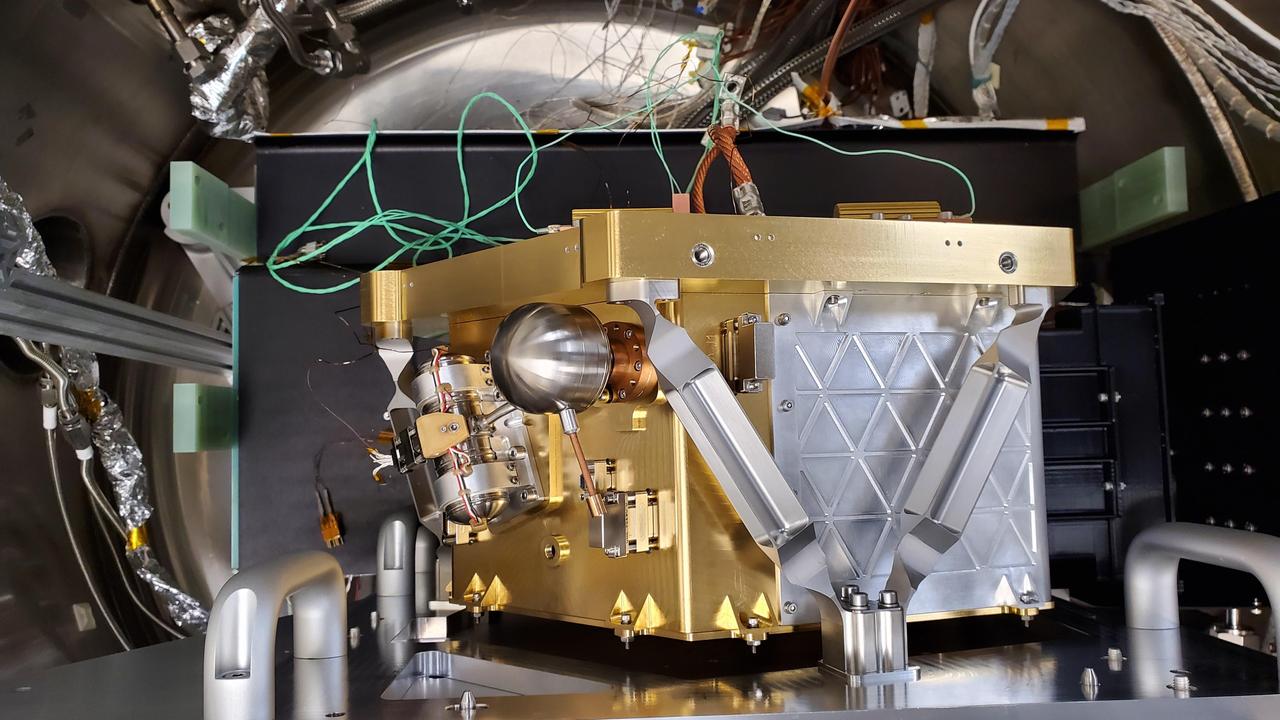
The High-resolution Volatiles and Minerals Moon Mapper (HVM³), seen here, is one of two instruments that will be carried aboard NASA's Lunar Trailblazer. Launching in 2023, the small spacecraft – measuring only 11.5 feet (3.5 meters) wide with its solar panels fully deployed – will detect and map water on the Moon's surface to determine its abundance, location, form, and how it changes over time. HVM³ recently completed a significant milestone in a clean room at NASA's Jet Propulsion Laboratory in Southern California. The high-resolution spectrometer measures the infrared light (with wavelengths from 0.6 to 3.6 microns in size) that is absorbed by water. To make sure the instrument is properly aligned, the Trailblazer team cooled HVM3 down to temperatures it will experience in space and made tiny physical adjustments to make sure all the wavelengths of incoming light arrive at the correct locations on the instrument's detector. Figure A shows several members of the Trailblazer team surrounding the instrument – minus its radiator and electronics – mounted on HVM³'s optical bench assembly while undergoing cold alignment. The assembly was placed inside a thermal vacuum chamber and brought to a cold focal plane operating temperature of about minus 240 degrees Fahrenheit (minus 155 degrees Celsius). The team then measured light of different wavelengths across all of the detector's pixels. Based on the data recorded, the team calculated the small adjustments that needed to be made, took the instrument out of the chamber and made those changes, placed it back into the chamber, and then repeated the steps iteratively until HVM³ was in perfect alignment. With this important step complete, a radiator will next be installed to ensure the instrument maintains optimal operating temperatures while Trailblazer is in orbit around the Moon. Then, vibration tests will be carried out to make sure the spectrometer will stay in alignment after the extreme shaking of launch. Lunar Trailblazer was selected to be part of NASA's SIMPLEx (Small Innovative Missions for Planetary Exploration) program in 2019. The mission is led by Caltech in Pasadena, California, and managed by JPL. https://photojournal.jpl.nasa.gov/catalog/PIA25252
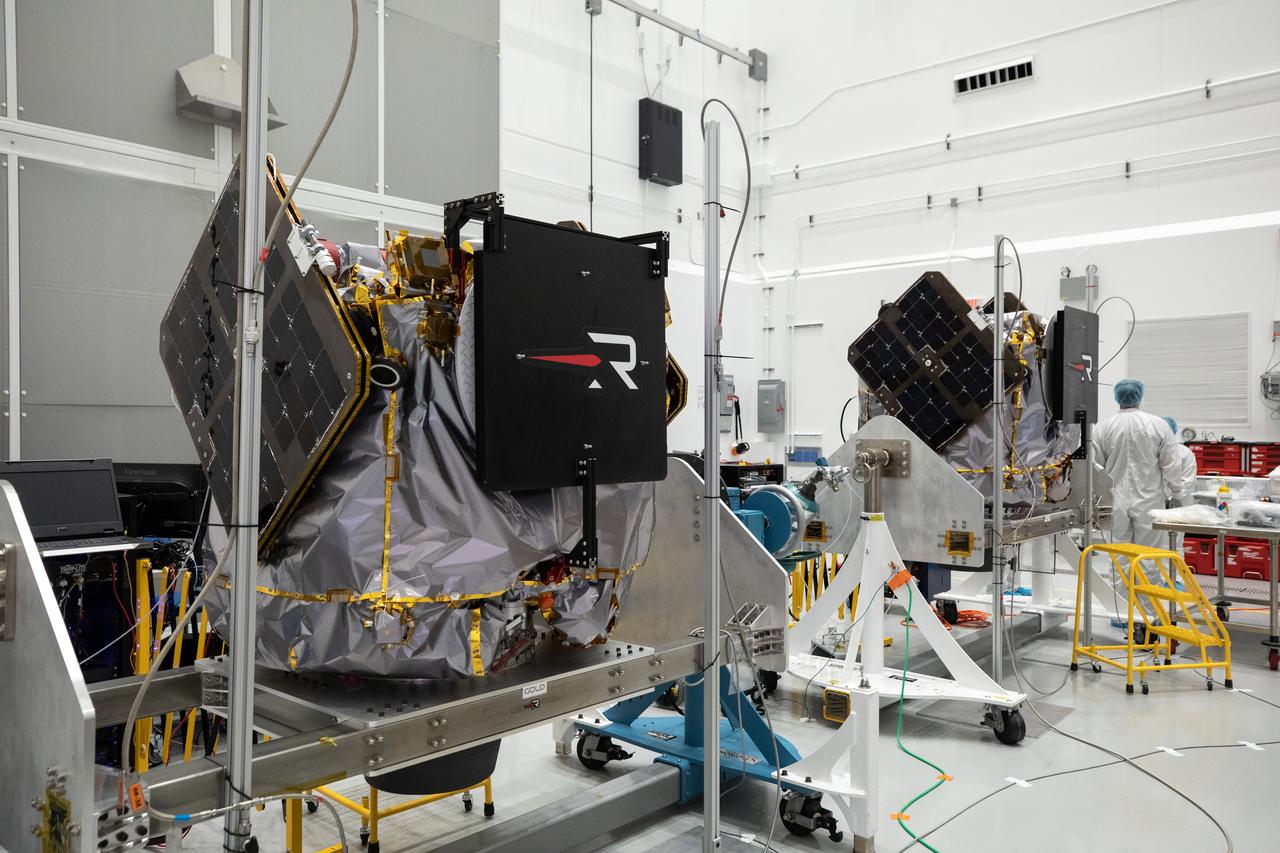
NASA’s ESCAPADE (Escape and Plasma Acceleration and Dynamics Explorers) identical dual spacecraft are inspected and processed on dollies in a high bay of the Astrotech Space Operations Facility near the agency’s Kennedy Space Center in Florida on Thursday, Aug. 22, 2024. As the first multi-spacecraft orbital science mission to Mars, ESCAPADE’s twin orbiters will take simultaneous observations from different locations around the planet and reveal the real-time response to space weather and how the Martian magnetosphere changes over time.

Two small spacecrafts satellites that make up NASA’s ESCAPADE (Escape and Plasma Acceleration and Dynamics Explorers) mission to Mars arrived at Astrotech Space Operations in Titusville, near NASA’s Kennedy Space Center in Florida on Sunday, Aug. 19, 2024. Set to launch from Blue Origin’s New Glenn rocket, the Rocket Lab spacecraft will study the solar wind and how the solar wind interacts with Mars’ magnetic environment and how this interaction drives the planet’s atmospheric escape.
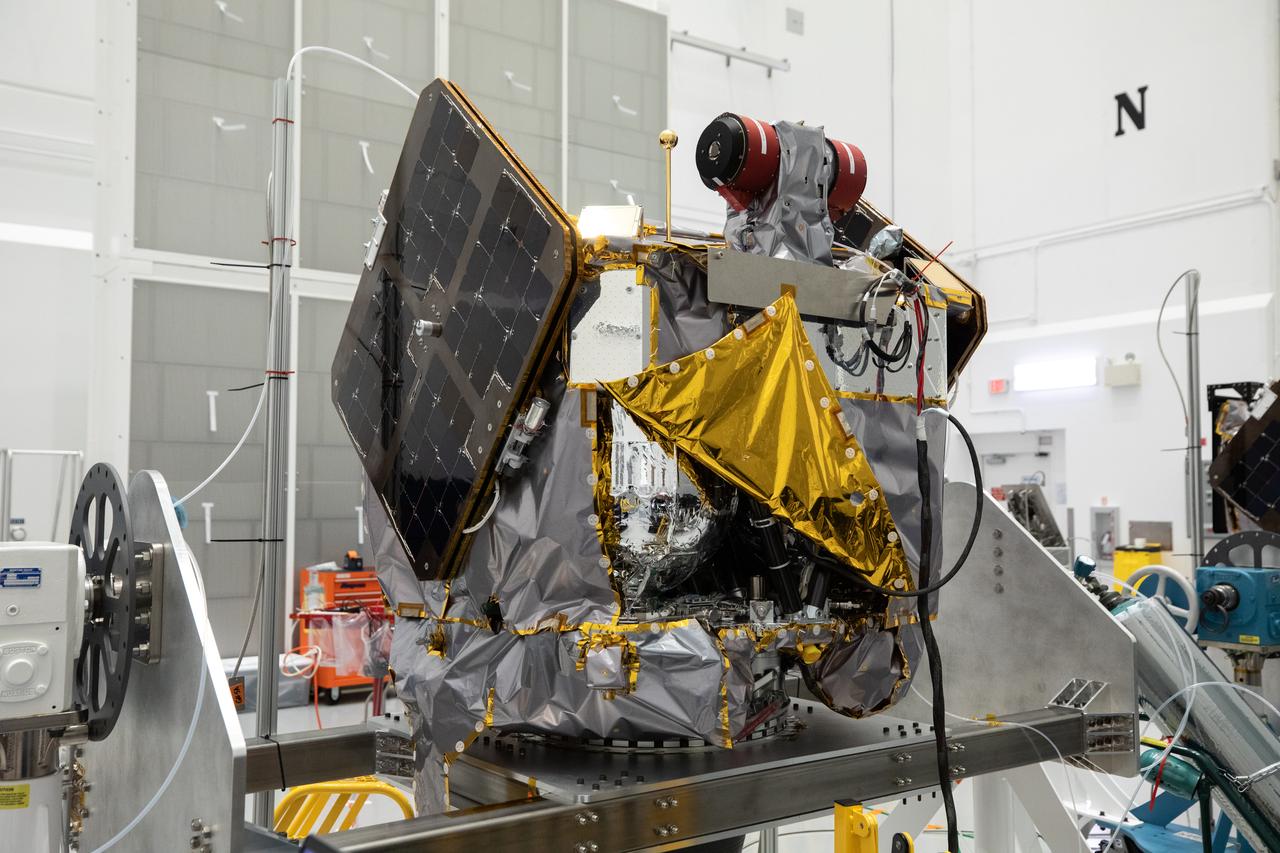
NASA’s ESCAPADE (Escape and Plasma Acceleration and Dynamics Explorers) identical dual spacecraft are inspected and processed on dollies in a high bay of the Astrotech Space Operations Facility near the agency’s Kennedy Space Center in Florida on Thursday, Aug. 22, 2024. As the first multi-spacecraft orbital science mission to Mars, ESCAPADE’s twin orbiters will take simultaneous observations from different locations around the planet and reveal the real-time response to space weather and how the Martian magnetosphere changes over time.
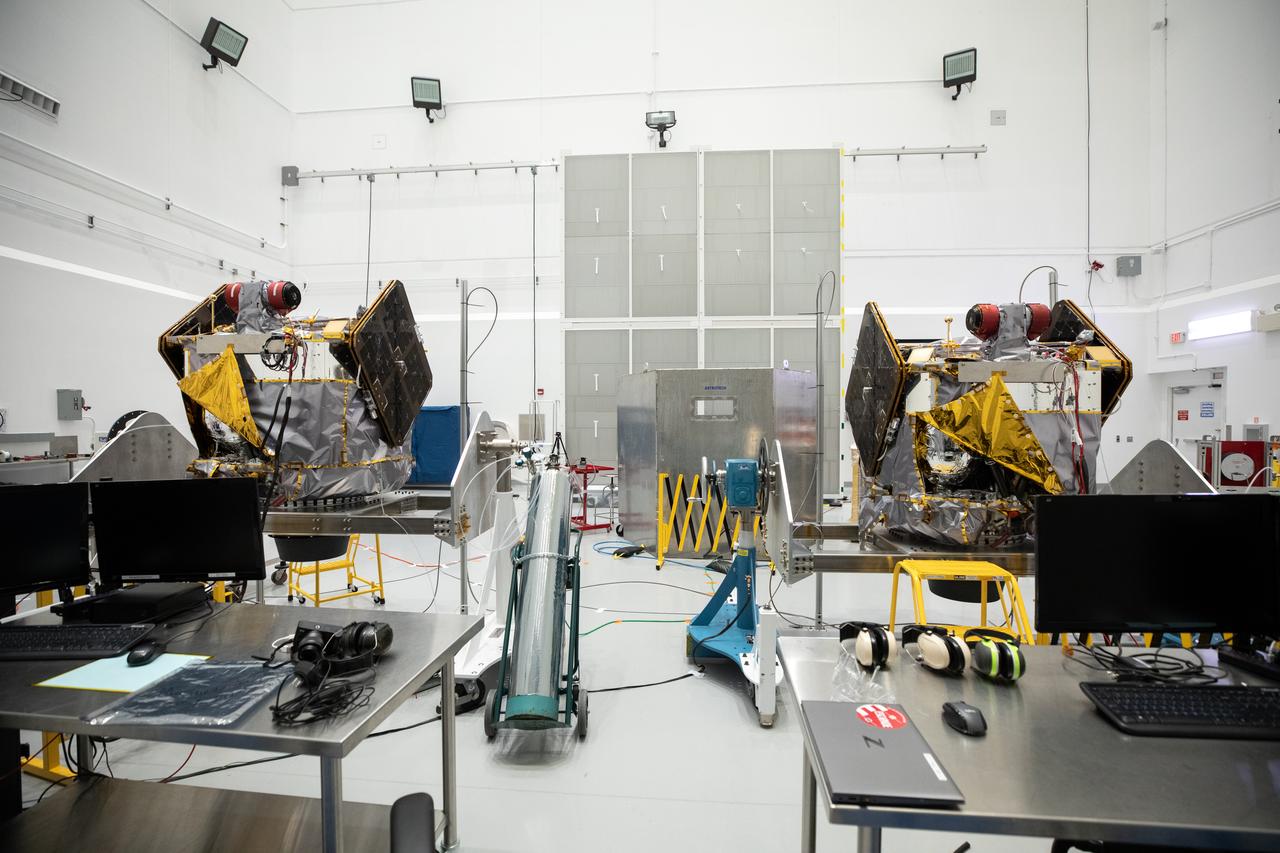
NASA’s ESCAPADE (Escape and Plasma Acceleration and Dynamics Explorers) identical dual spacecraft are inspected and processed on dollies in a high bay of the Astrotech Space Operations Facility near the agency’s Kennedy Space Center in Florida on Thursday, Aug. 22, 2024. As the first multi-spacecraft orbital science mission to Mars, ESCAPADE’s twin orbiters will take simultaneous observations from different locations around the planet and reveal the real-time response to space weather and how the Martian magnetosphere changes over time.

Two small spacecrafts satellites that make up NASA’s ESCAPADE (Escape and Plasma Acceleration and Dynamics Explorers) mission to Mars arrived at Astrotech Space Operations in Titusville, near NASA’s Kennedy Space Center in Florida on Sunday, Aug. 19, 2024. Set to launch from Blue Origin’s New Glenn rocket, the Rocket Lab spacecraft will study the solar wind and how the solar wind interacts with Mars’ magnetic environment and how this interaction drives the planet’s atmospheric escape.
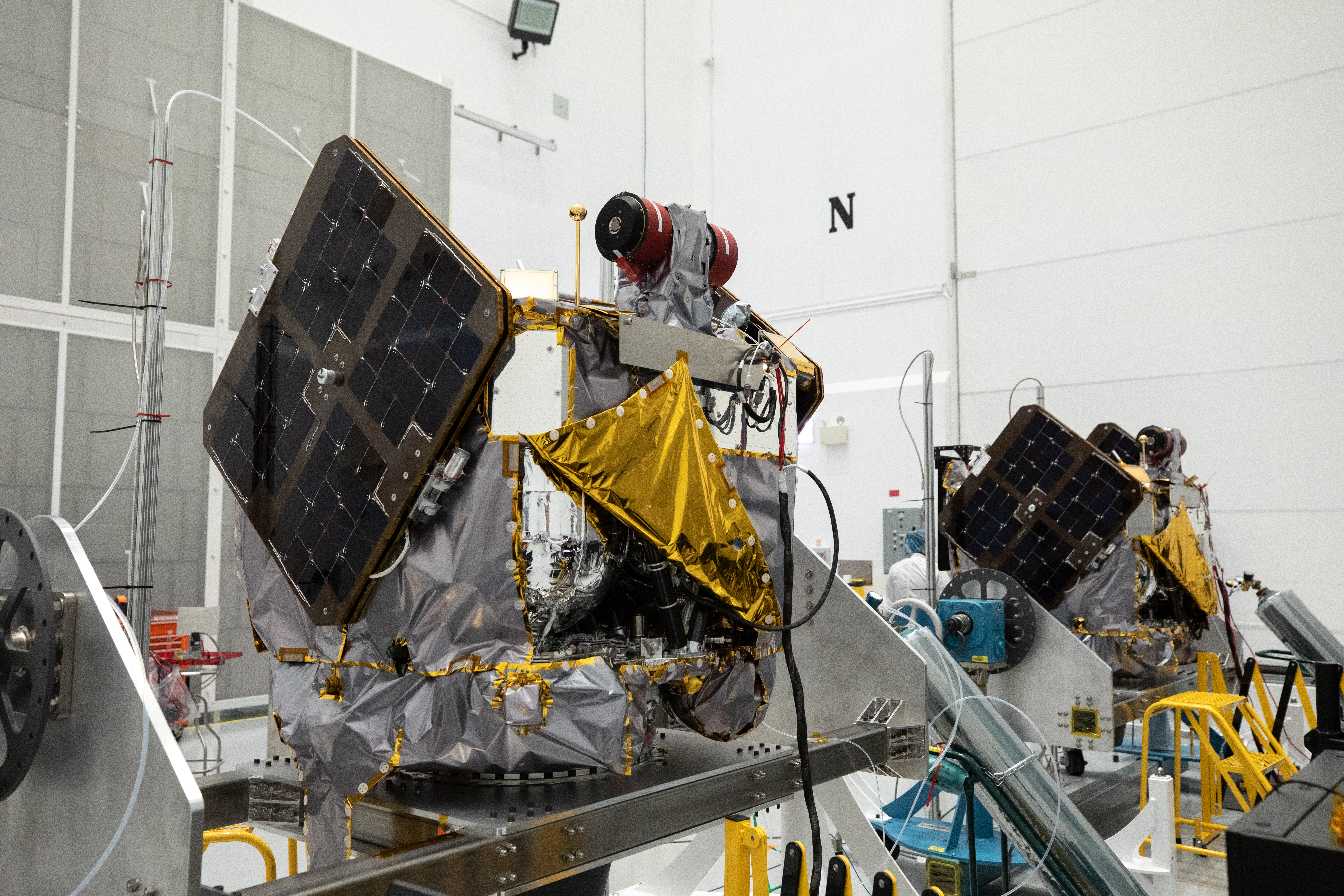
NASA’s ESCAPADE (Escape and Plasma Acceleration and Dynamics Explorers) identical dual spacecraft are inspected and processed on dollies in a high bay of the Astrotech Space Operations Facility near the agency’s Kennedy Space Center in Florida on Thursday, Aug. 22, 2024. As the first multi-spacecraft orbital science mission to Mars, ESCAPADE’s twin orbiters will take simultaneous observations from different locations around the planet and reveal the real-time response to space weather and how the Martian magnetosphere changes over time.
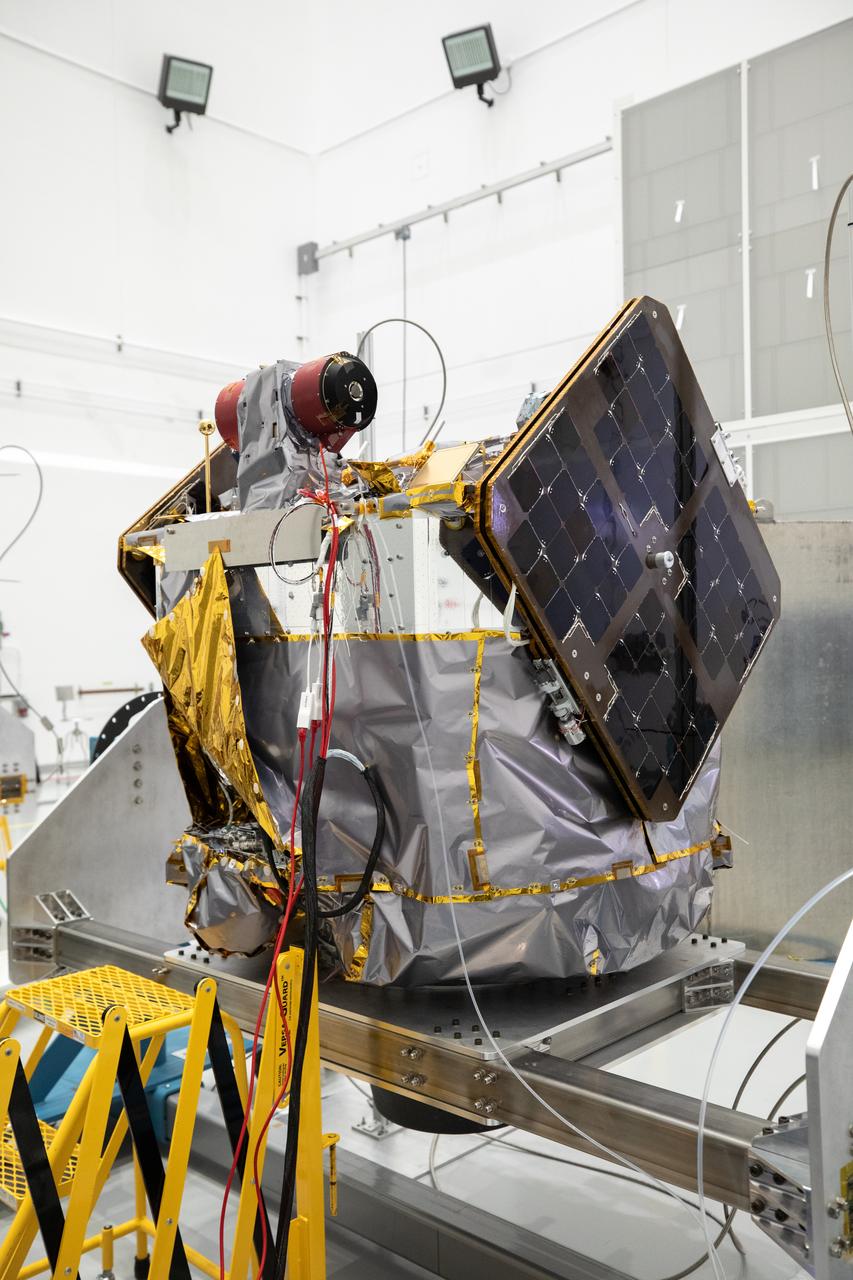
NASA’s ESCAPADE (Escape and Plasma Acceleration and Dynamics Explorers) identical dual spacecraft are inspected and processed on dollies in a high bay of the Astrotech Space Operations Facility near the agency’s Kennedy Space Center in Florida on Thursday, Aug. 22, 2024. As the first multi-spacecraft orbital science mission to Mars, ESCAPADE’s twin orbiters will take simultaneous observations from different locations around the planet and reveal the real-time response to space weather and how the Martian magnetosphere changes over time.
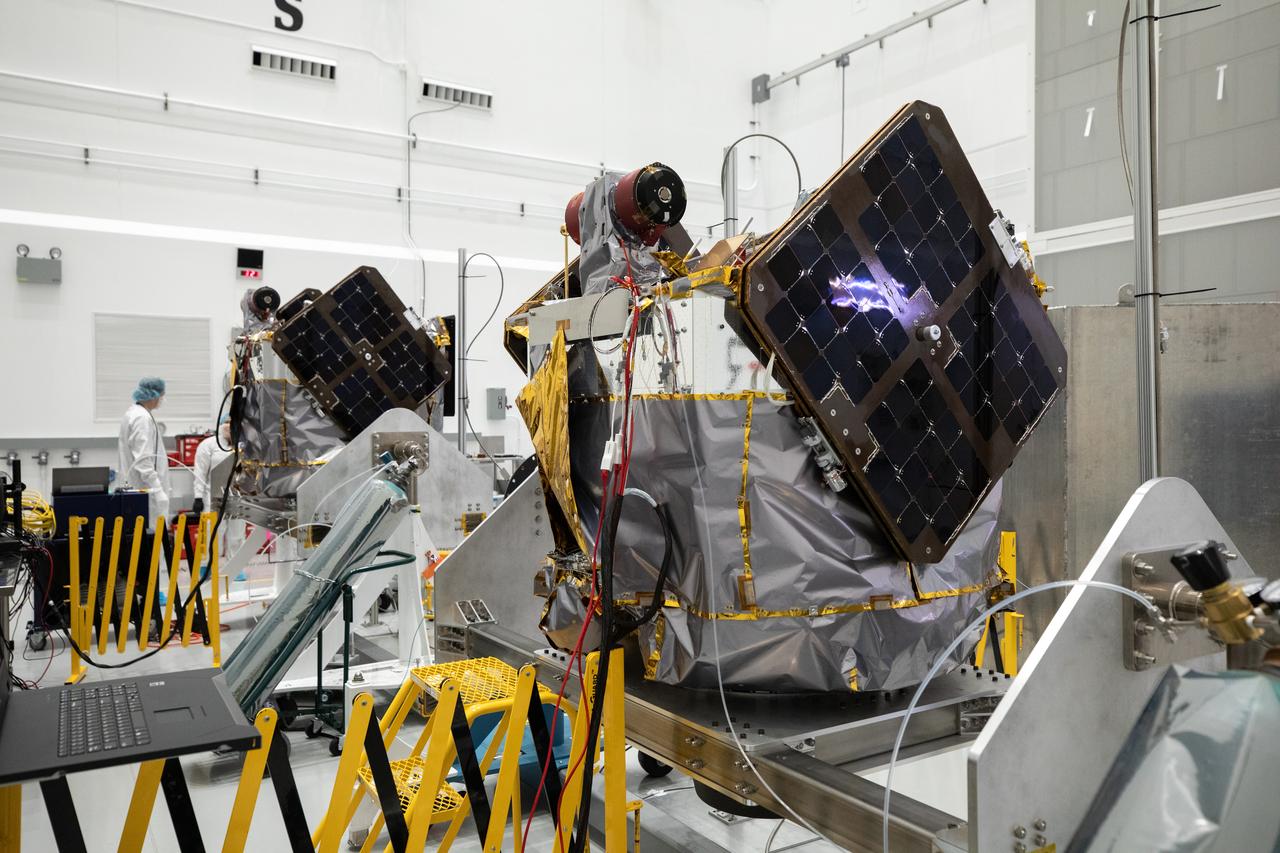
NASA’s ESCAPADE (Escape and Plasma Acceleration and Dynamics Explorers) identical dual spacecraft are inspected and processed on dollies in a high bay of the Astrotech Space Operations Facility near the agency’s Kennedy Space Center in Florida on Thursday, Aug. 22, 2024. As the first multi-spacecraft orbital science mission to Mars, ESCAPADE’s twin orbiters will take simultaneous observations from different locations around the planet and reveal the real-time response to space weather and how the Martian magnetosphere changes over time.

NASA’s ESCAPADE (Escape and Plasma Acceleration and Dynamics Explorers) identical dual spacecraft are inspected and processed on dollies in a high bay of the Astrotech Space Operations Facility near the agency’s Kennedy Space Center in Florida on Thursday, Aug. 22, 2024. As the first multi-spacecraft orbital science mission to Mars, ESCAPADE’s twin orbiters will take simultaneous observations from different locations around the planet and reveal the real-time response to space weather and how the Martian magnetosphere changes over time.

Two small spacecrafts satellites that make up NASA’s ESCAPADE (Escape and Plasma Acceleration and Dynamics Explorers) mission to Mars arrived at Astrotech Space Operations in Titusville, near NASA’s Kennedy Space Center in Florida on Sunday, Aug. 19, 2024. Set to launch from Blue Origin’s New Glenn rocket, the Rocket Lab spacecraft will study the solar wind and how the solar wind interacts with Mars’ magnetic environment and how this interaction drives the planet’s atmospheric escape.
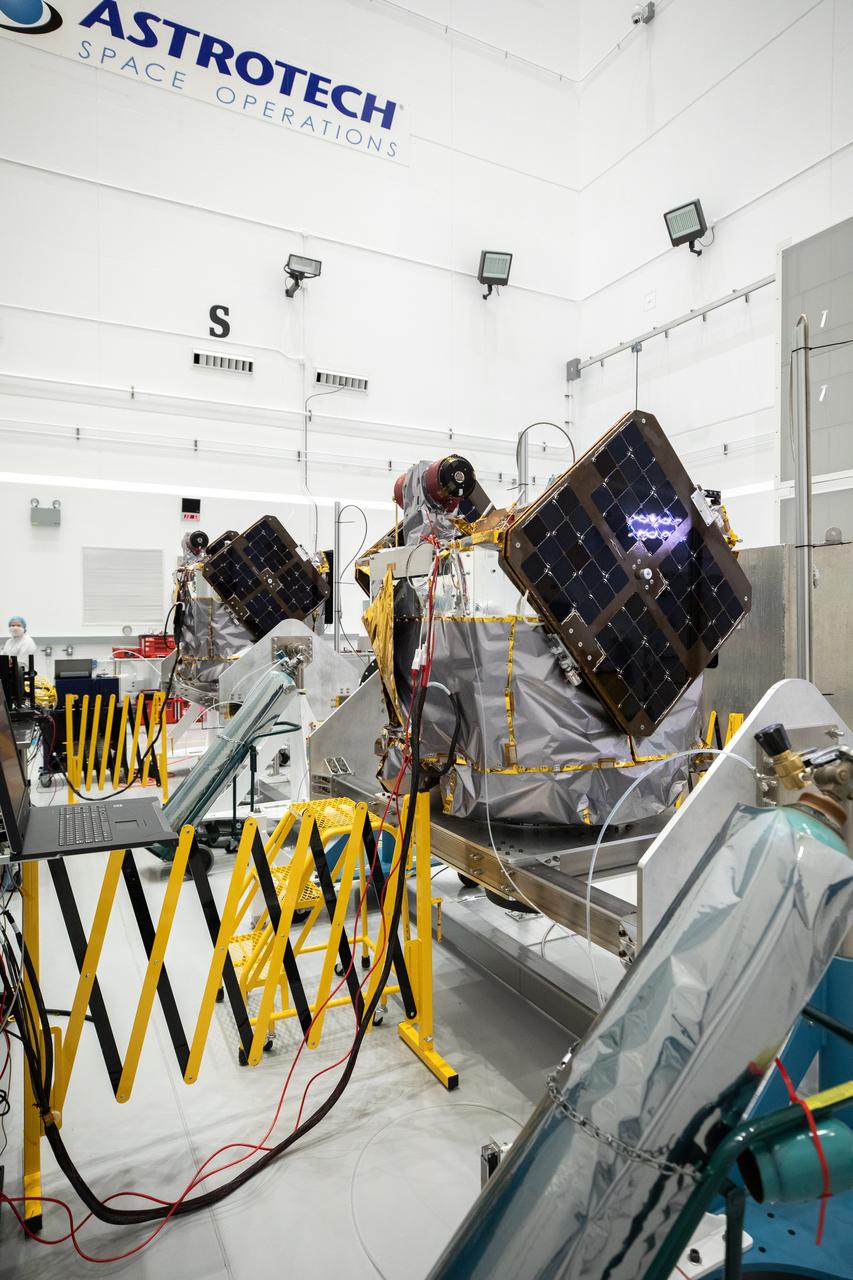
NASA’s ESCAPADE (Escape and Plasma Acceleration and Dynamics Explorers) identical dual spacecraft are inspected and processed on dollies in a high bay of the Astrotech Space Operations Facility near the agency’s Kennedy Space Center in Florida on Thursday, Aug. 22, 2024. As the first multi-spacecraft orbital science mission to Mars, ESCAPADE’s twin orbiters will take simultaneous observations from different locations around the planet and reveal the real-time response to space weather and how the Martian magnetosphere changes over time.
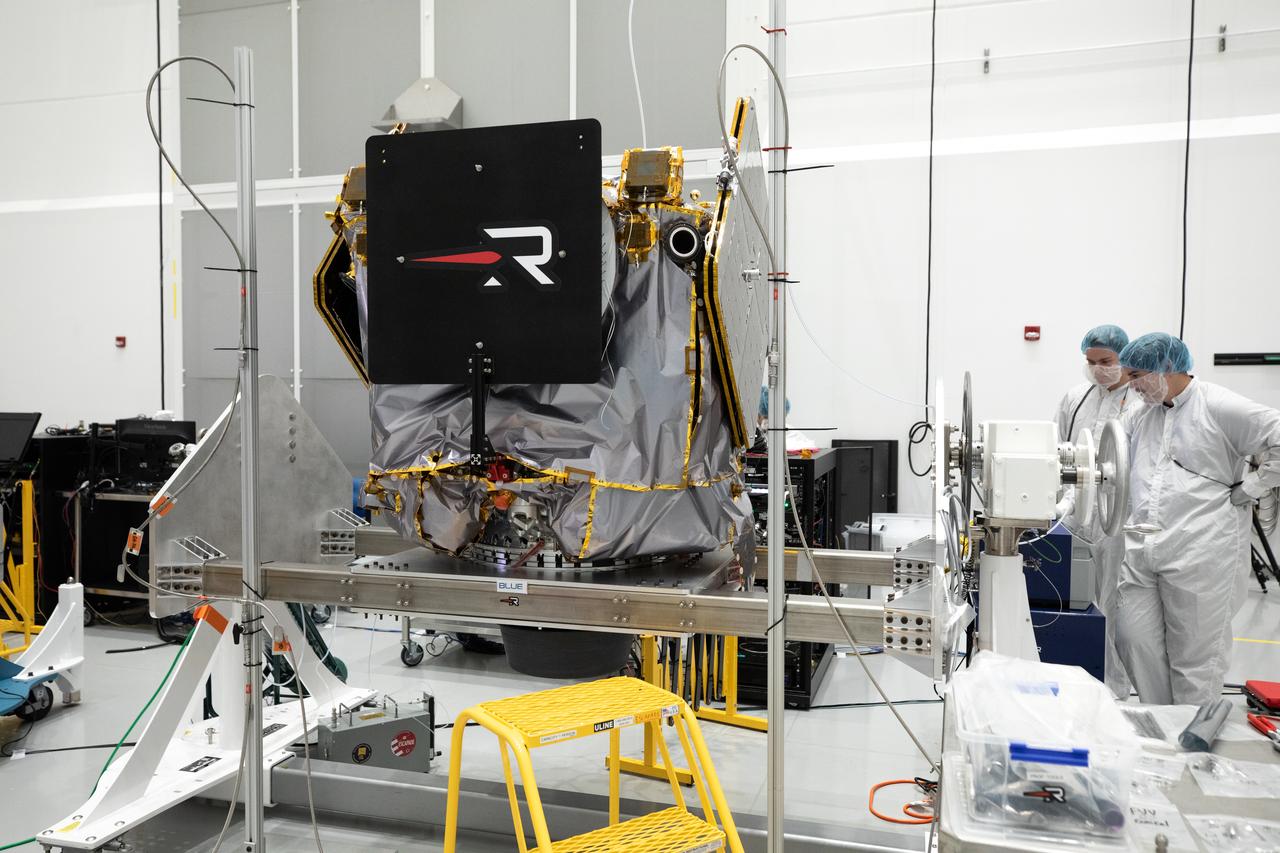
NASA’s ESCAPADE (Escape and Plasma Acceleration and Dynamics Explorers) identical dual spacecraft are inspected and processed on dollies in a high bay of the Astrotech Space Operations Facility near the agency’s Kennedy Space Center in Florida on Thursday, Aug. 22, 2024. As the first multi-spacecraft orbital science mission to Mars, ESCAPADE’s twin orbiters will take simultaneous observations from different locations around the planet and reveal the real-time response to space weather and how the Martian magnetosphere changes over time.
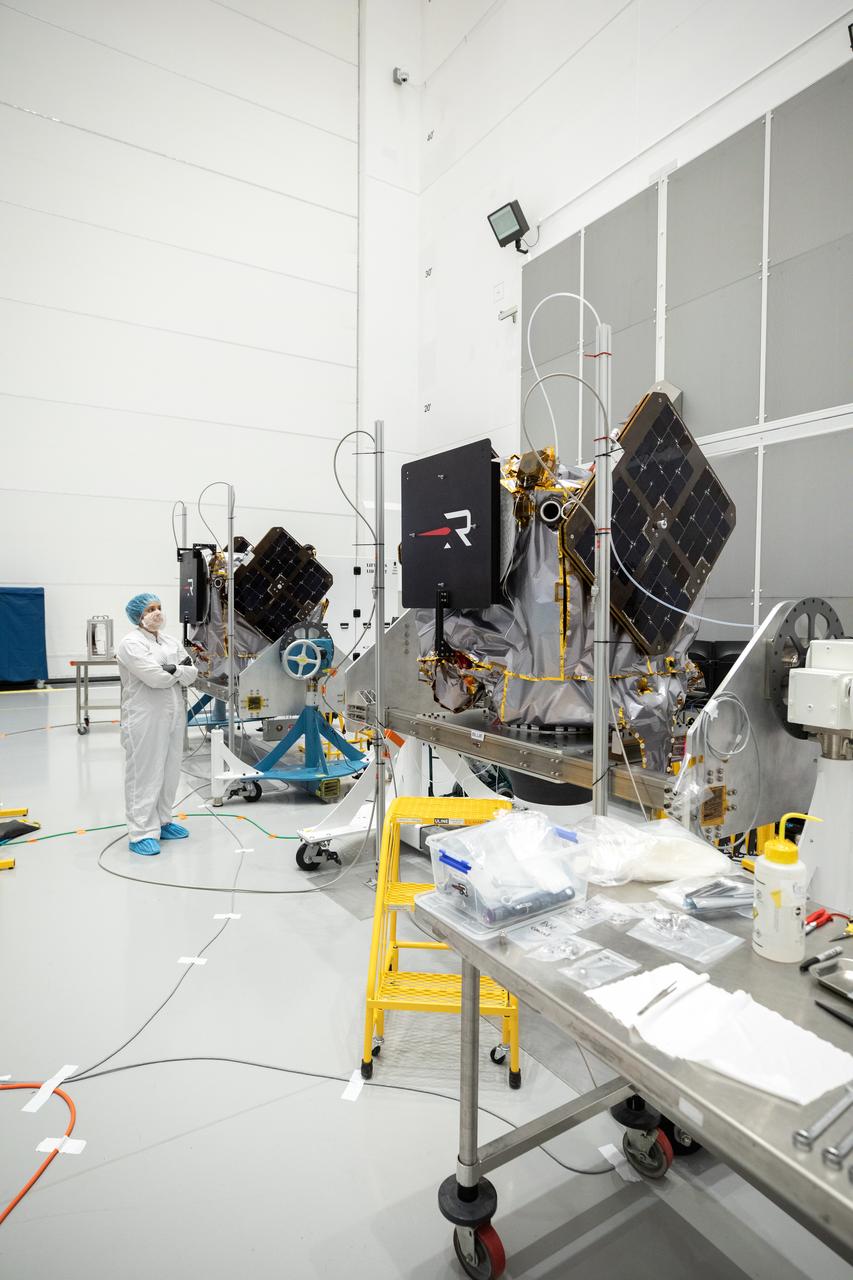
NASA’s ESCAPADE (Escape and Plasma Acceleration and Dynamics Explorers) identical dual spacecraft are inspected and processed on dollies in a high bay of the Astrotech Space Operations Facility near the agency’s Kennedy Space Center in Florida on Thursday, Aug. 22, 2024. As the first multi-spacecraft orbital science mission to Mars, ESCAPADE’s twin orbiters will take simultaneous observations from different locations around the planet and reveal the real-time response to space weather and how the Martian magnetosphere changes over time.