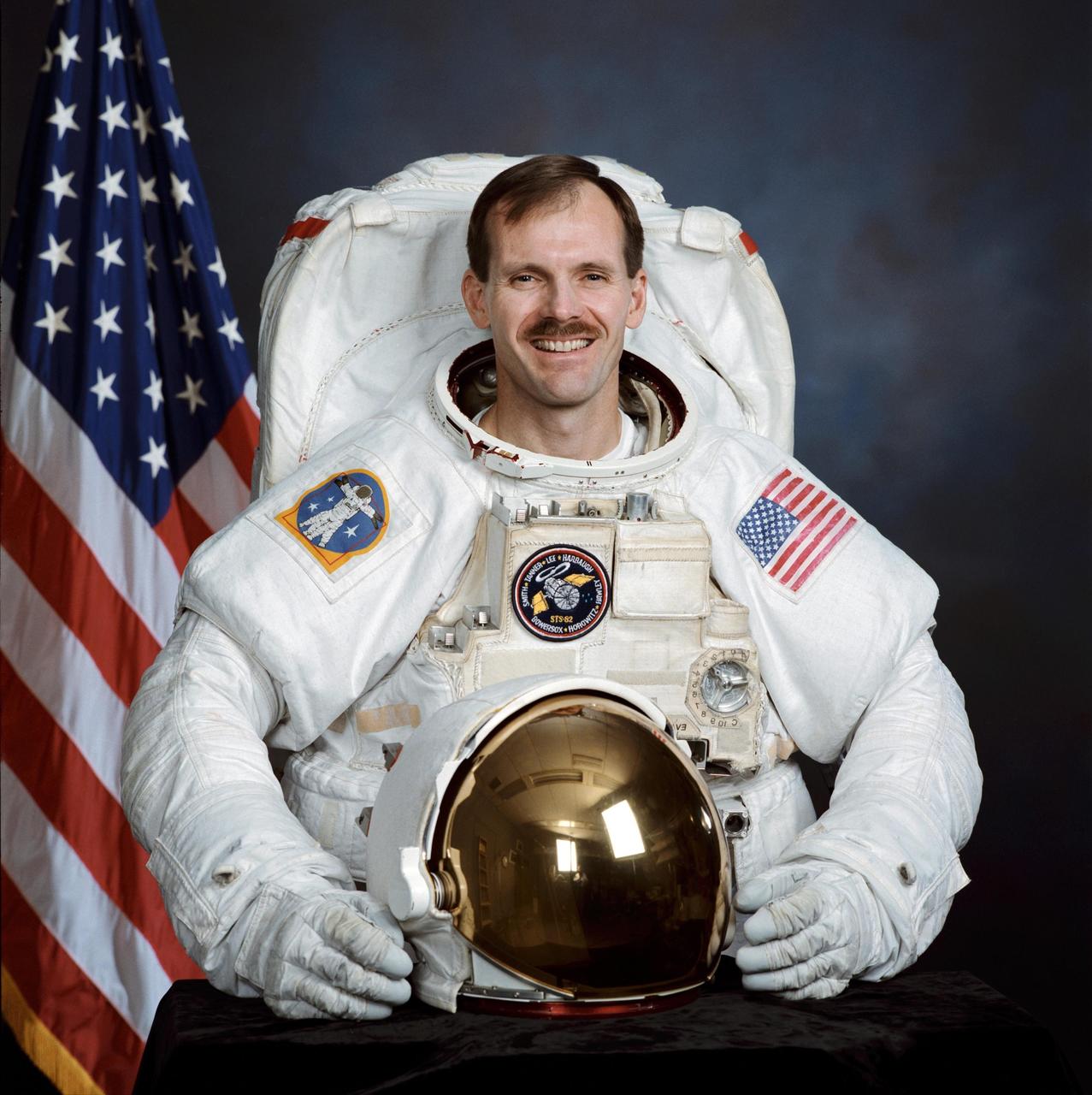
JOHNSON SPACE CENTER, HOUSTON, TEXAS. -- (JSC 597-17579) -- Official portrait of astronaut Steven L. Smith, mission specialist
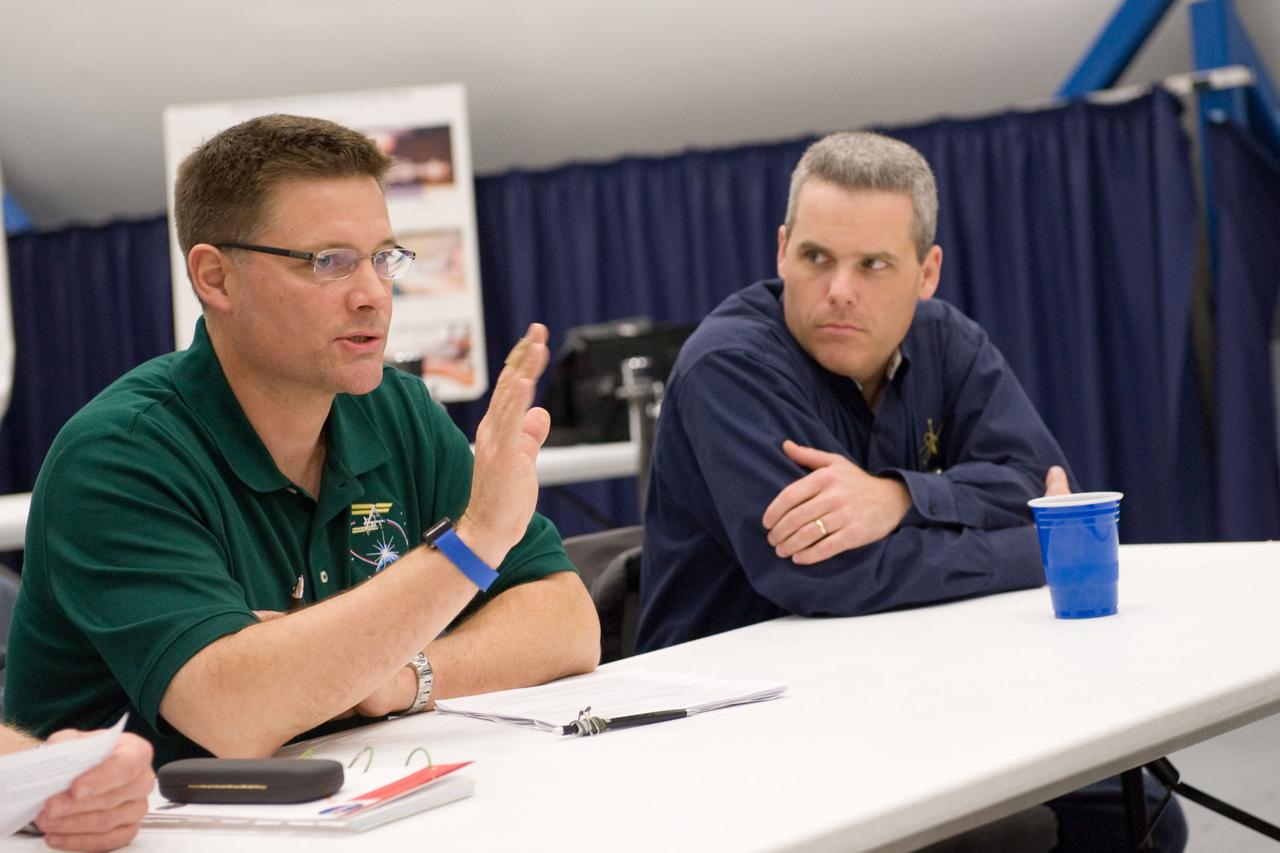
JSC2010-E-024373 (18 Feb. 2010) --- NASA astronaut Doug Wheelock (left), Expedition 24 flight engineer and Expedition 25 commander, participates in a training session in the Space Vehicle Mock-up Facility at NASA's Johnson Space Center. Flight director Brian T. Smith is at right.
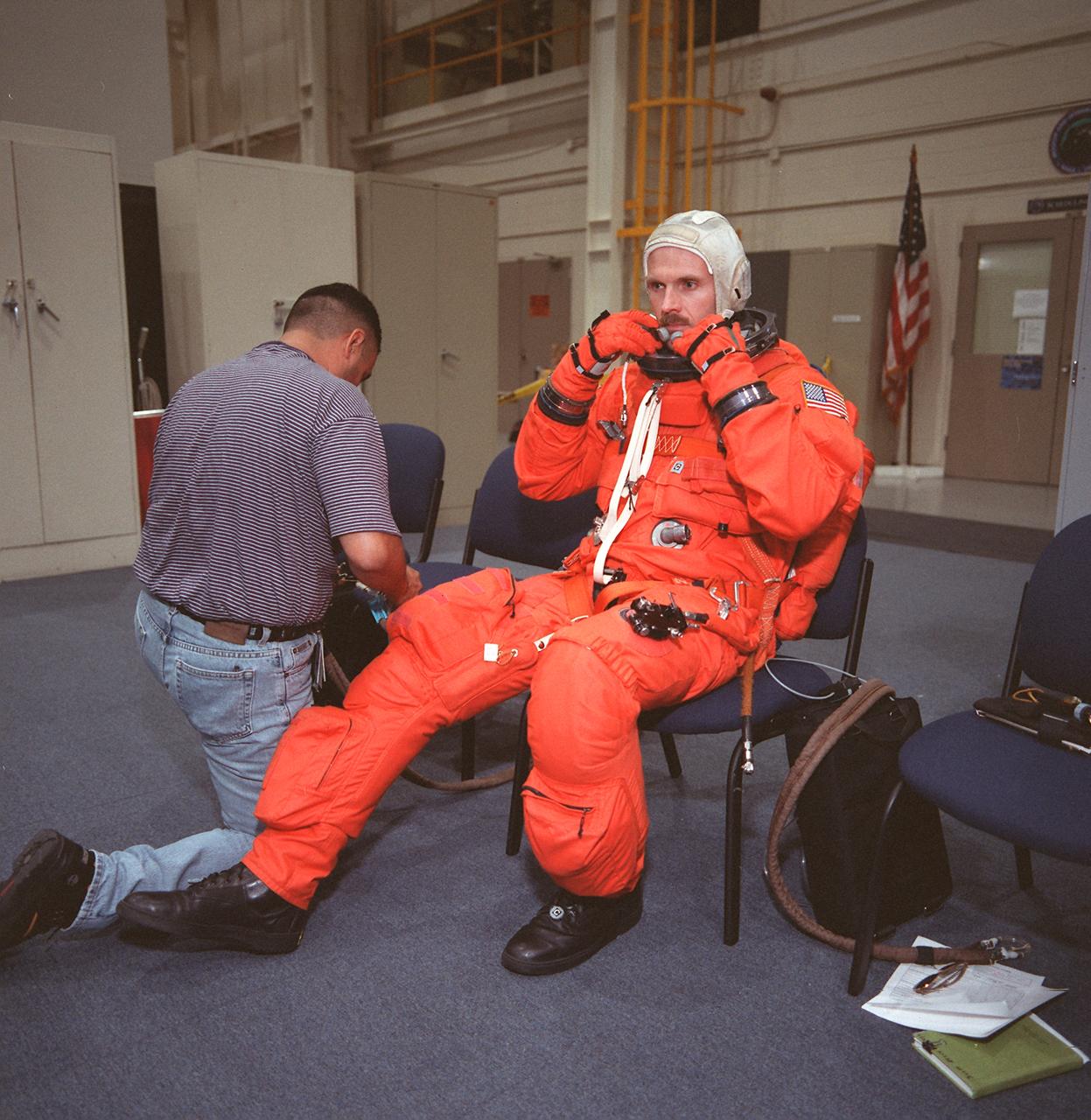
S99-08665 (24 May 1999) --- A suit technician assists astronaut Steven L. Smith with his launch and entry suit prior to an emergency bailout training session at the Johnson Space Center's Systems Integration Facility. The STS-103 mission specialists was joined on this session by the majority of the seven-man crew, in training for the third servicing mission to the Earth-orbiting Hubble Space Telescope (HST).
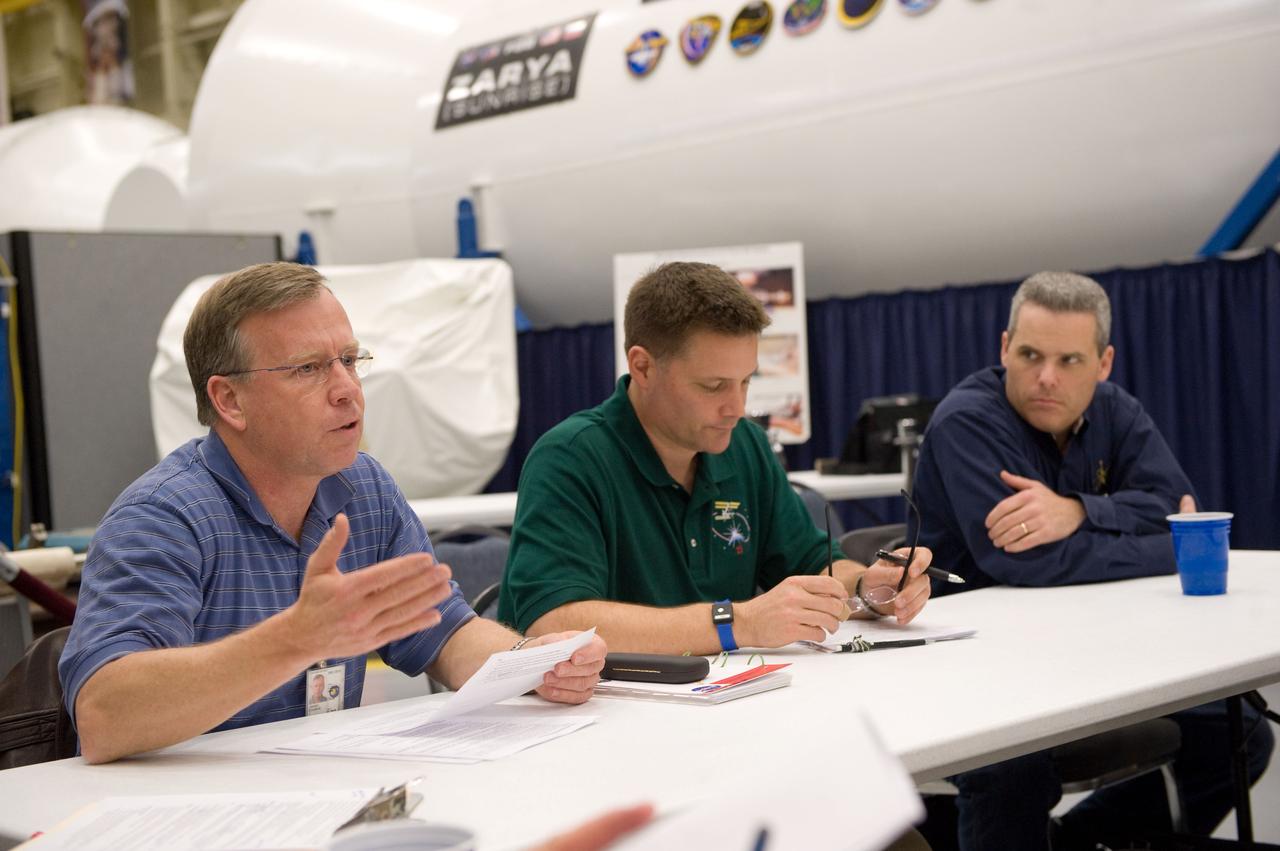
JSC2010-E-024372 (18 Feb. 2010) --- NASA astronauts Steve Lindsey (left), STS-133 commander; and Doug Wheelock, Expedition 24 flight engineer and Expedition 25 commander, participate in a training session in the Space Vehicle Mock-up Facility at NASA's Johnson Space Center. Flight director Brian T. Smith is at right.
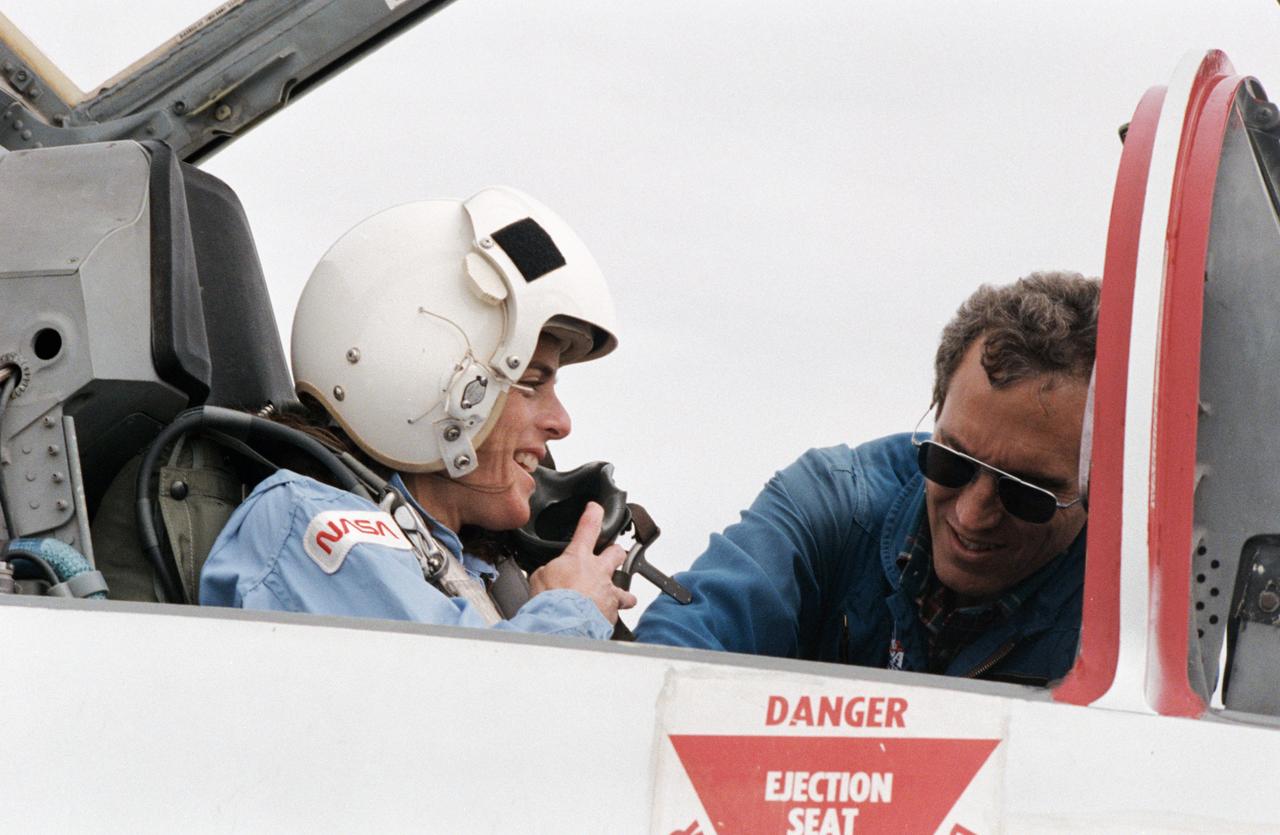
S85-41451 (3 Oct. 1985) --- Barbara Morgan, backup to the Teacher-in-Space participant Christa McAuliffe, prepares for a ride in the rear station of one of NASA's T-38 jet trainers at Ellington Field, near the Johnson Space Center (JSC). The McCall, Idaho teacher is briefed by astronaut Michael J. Smith, 51-L pilot, before departing Ellington Field. Photo credit: NASA
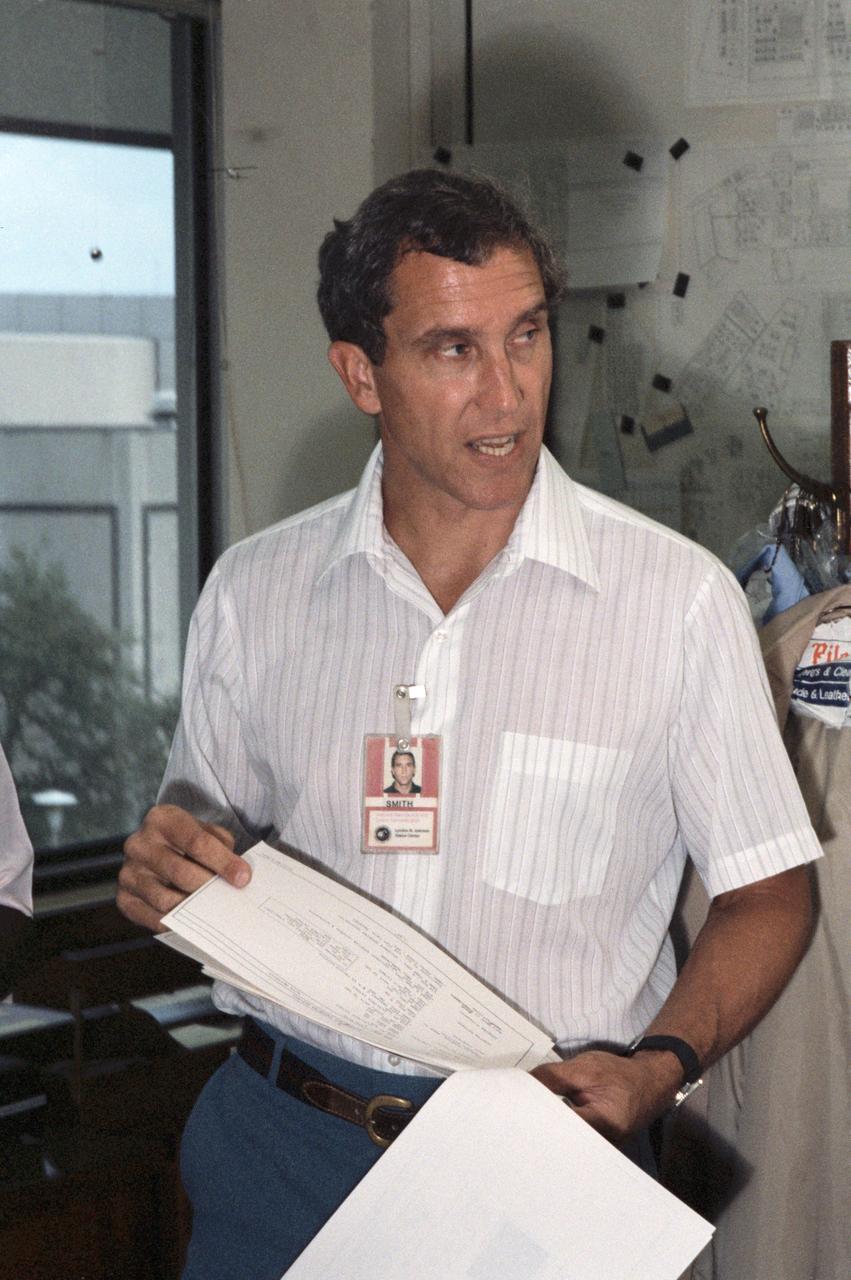
S85-40174 (5 Sept. 1985) --- In Johnson Space Center’s (JSC) Astronaut Office, astronaut Michael J. Smith, STS-51L pilot, looks over part of the flight plan for his upcoming space mission. EDITOR’S NOTE: The STS-51L crew members lost their lives in the space shuttle Challenger accident moments after launch on January 28, 1986 from the Kennedy Space Center (KSC). Photo credit: NASA
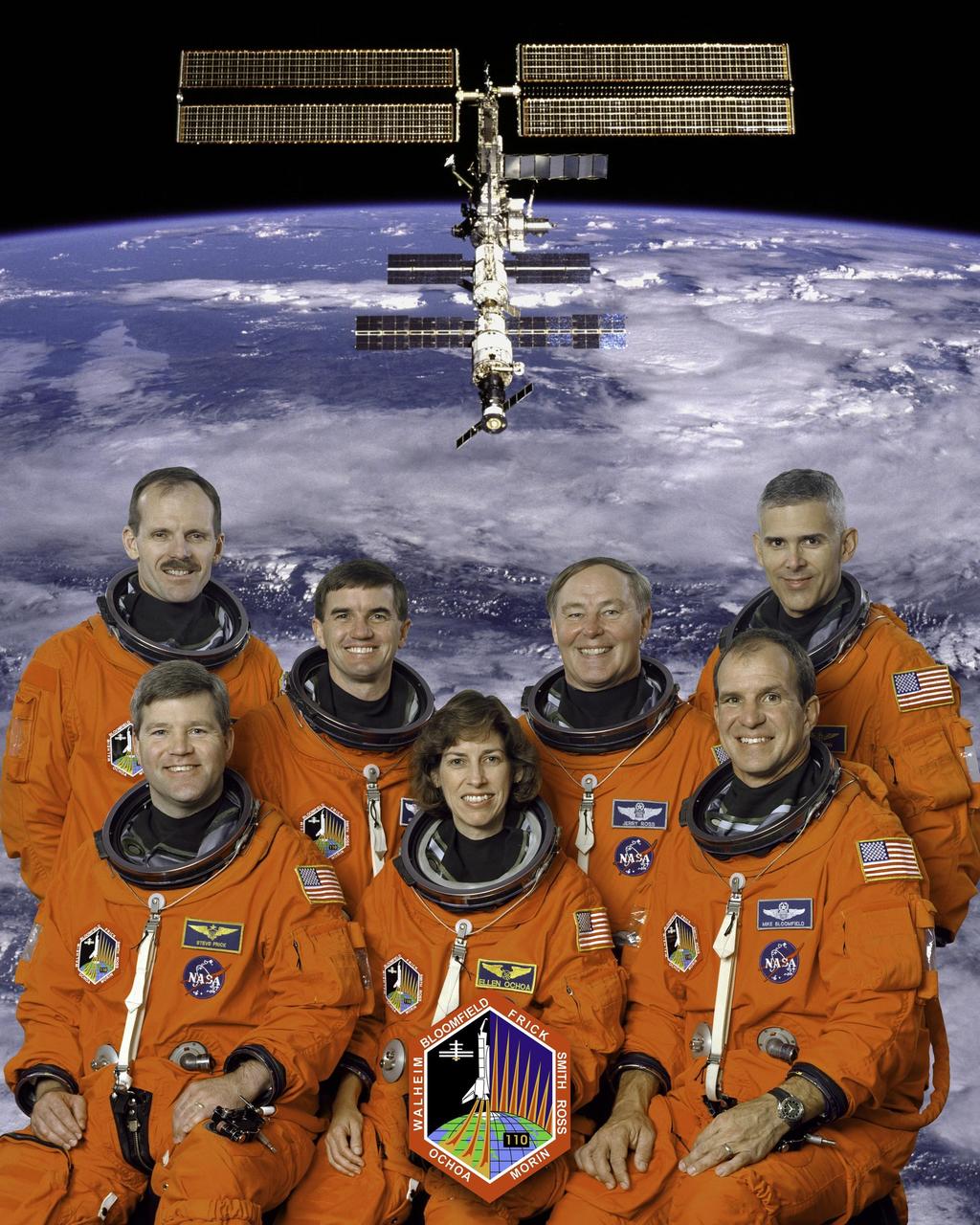
JOHNSON SPACE CENTER, HOUSTON, TEXAS. -- STS-110 CREW PORTRAIT -- (JSC STS110-5-002) -- These seven astronauts are in training for the STS-110 mission, scheduled to visit the International Space Station early next year. In front, from the left, are astronauts Stephen N. Frick, pilot; Ellen Ochoa, flight engineer; and Michael J. Bloomfield, mission commander; in the back, from left, are astronauts Steven L. Smith, Rex J. Walheim, Jerry L. Ross and Lee M.E. Morin, all mission specialists
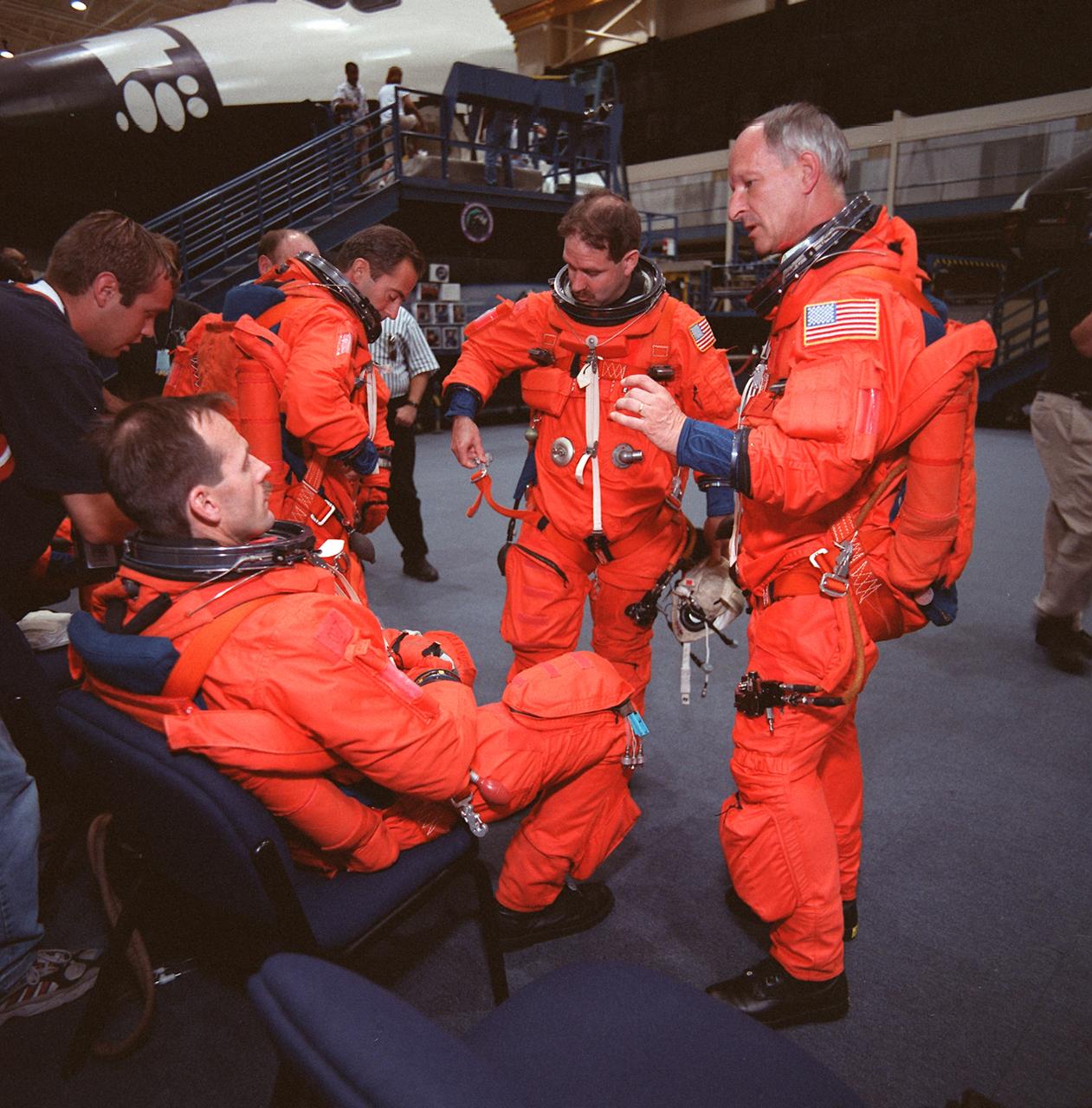
S99-08668 --- Four members of the STS-103 crew prepare their launch and entry suits for a training session on emergency bailout procedures in the Johnson Space Center's Systems Integration Facility. Astronaut Steven L. Smith is seated in the foreground. Others pictured are astronauts Jean-Francois Clervoy, John M. Grunsfeld and Claude Nicollier, all mission specialists. Nicollier and Clervoy are with the European Space Agency (ESA). One of two Crew Compartment Trainers (CCT) is in the background.
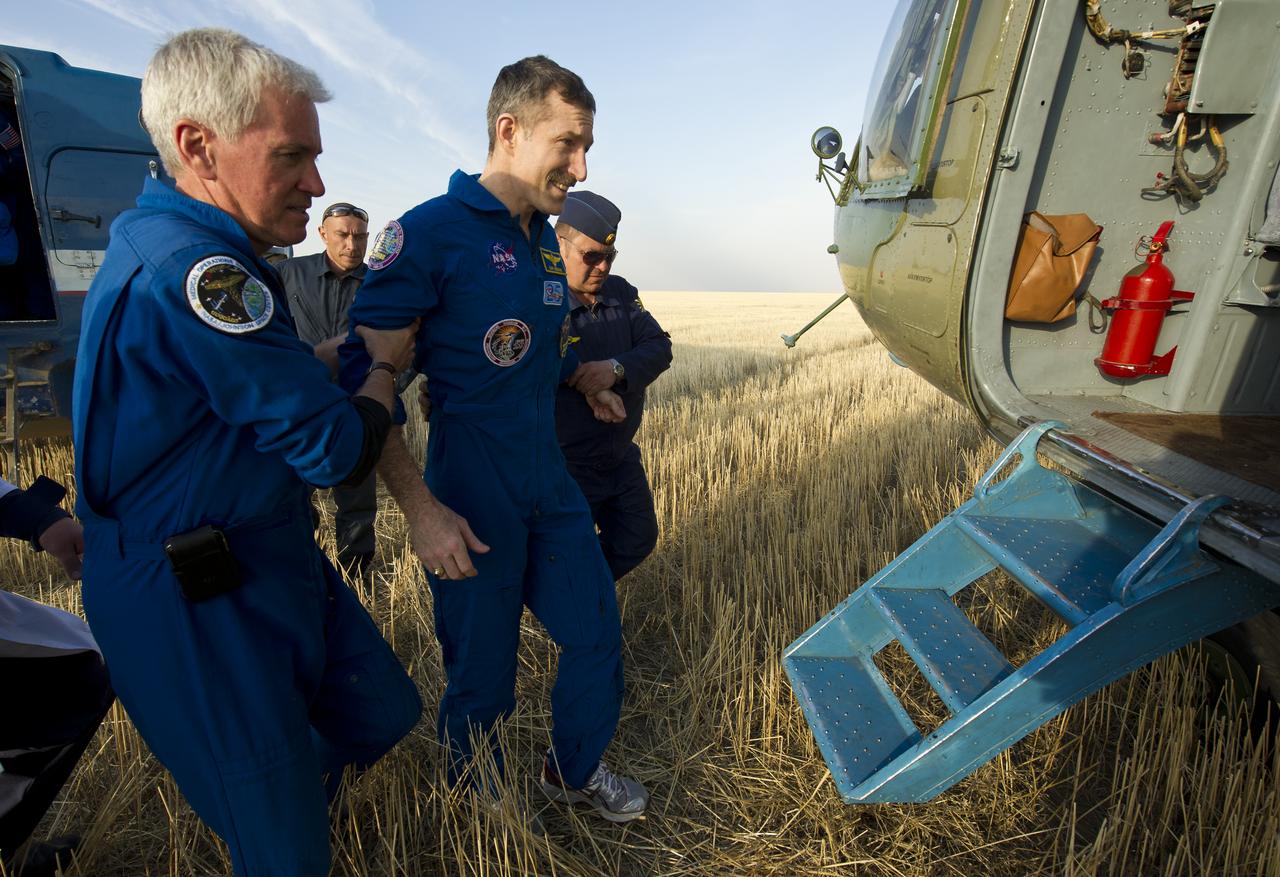
Expedition 30 Commander Dan Burbank is helped into a helicopter shortly after he and Expedition 30 Flight Engineers Anton Shkaplerov and Anatoly Ivanishin landed in a remote area outside of the town of Arkalyk, Kazakhstan, on Friday, April 27, 2012. NASA Astronaut Burbank, Russian Cosmonauts Shkaplerov and Ivanishin are returning from more than five months onboard the International Space Station where they served as members of the Expedition 29 and 30 crews. Photo Credit: (NASA/Carla Cioffi)
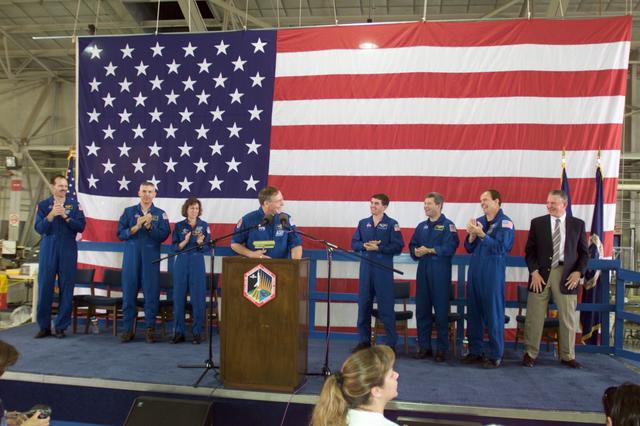
JSC2002-E-14078 (20 April 2002) --- Astronaut Jerry L. Ross, STS-110 mission specialist, speaks from the lectern in Hangar 990 at Ellington Field during the crew return ceremonies. From the left (standing behind Ross) are astronauts Steven L. Smith, Lee M. E. Morin, Ellen Ochoa, Rex J. Walheim, all mission specialists; Stephen N. Frick, pilot; Michael J. Bloomfield, mission commander; and Johnson Space Center’s (JSC) Director Jefferson D. Howell, Jr.

FDCD Branch Stability and Control branch: Names, rows front to back, people left to right: Ground level: 1. ?? 2. Debra L. Livingston 3. Katherine G. Johnson 4. Robert Dunning Step 1: 1. Ellie Fillmore (?) 2. Al Hamer 3. Suresh Joshi Step 2: 1. John Young 2. Ernest Armstrong 3. Vladislav Klein 4. Charles T. Woolley Step 3: 1. Lawrence Taylor 2. Tony Fontana Step 4: 1. Bill Suit 2. Jane Carpenter 3. Daniel P. Giesy 4. Mario Smith Step 5: 1. Albert Schy 2. Ray Montgomery 3. Sahajendra Singh Top level: 1: Jim Batterson 2. Jim Williams 3. Claude Keckler 4. N. Sundararajan Behind all: John Shebalin Names given by Danial P. Giesy

Stability and Control Branch Photo: Names, rows front to back, people left to right: Row 1: 1. ?? Graduate Student (USAF) 2. Robert Dunning 3. Rhonda Harvey Poppen 4. Katherine G. Johnson 5. ?? Graduate Student (USAF) 6. Vladislav Klein Row 2: 1. Mario Smith 2. Jeff Williams 3. N. Sundararajan 4. Tony Fontana 5. John Young Row 3: 1. Lawrence Taylor 2. Jim Batterson 3. Suresh Joshi 4. Daniel P. Giesy Row 4: 1. Bill Suit 2. Albert A. Schy 3. Al Hamer 4. Ernest Armstrong 5. Claude Keckler Row 5: 1. Chris Brown 2. Robert Bullock 3. Ray Montgomery 4. Jim Williams 5. Sahajendra Singh 6. Graduate Student (Egypt) Names given by Daniel P. Giesy.
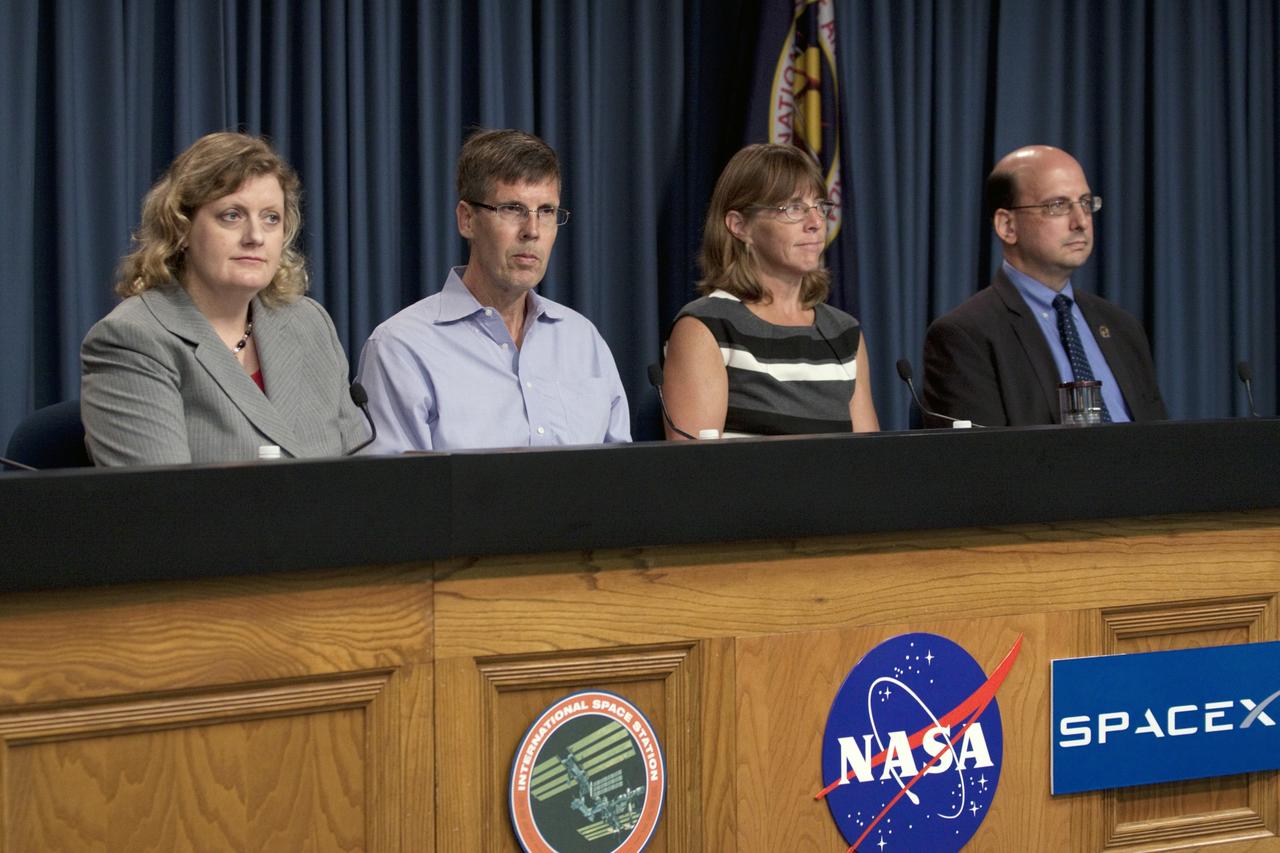
CAPE CANAVERAL, Fla. -- Scientists participate in a space station and mission science briefing in NASA Kennedy Space Center's Press Site auditorium in Florida. From left are Julie Robinson, program scientist for International Space Station at NASA's Johnson Space Center, Timothy Yeatman, interim chief scientist at the Center for the Advancement of Science in Space, Sheila Nielsen-Preiss, cell biologist at Montana State University, and Scott Smith, NASA nutritionist at NASA's Johnson Space Center. The briefing provided media with an overview of the experiments and payloads scheduled for launch on NASA's first Commercial Resupply Services, or CRS-1, mission to the International Space Station. Space Exploration Technologies Corp., or SpaceX, built both the mission's Falcon 9 rocket and Dragon capsule. Launch is scheduled for 8:35 p.m. EDT on Oct. 7 from Space Launch Complex 40 on Cape Canaveral Air Force Station. SpaceX CRS-1 is an important step toward making America’s microgravity research program self-sufficient by providing a way to deliver and return significant amounts of cargo, including science experiments, to and from the orbiting laboratory. NASA has contracted for 12 commercial resupply flights from SpaceX and eight from the Orbital Sciences Corp. For more information, visit http://www.nasa.gov/mission_pages/station/living/launch/index.html. Photo credit: NASA/Kim Shiflett
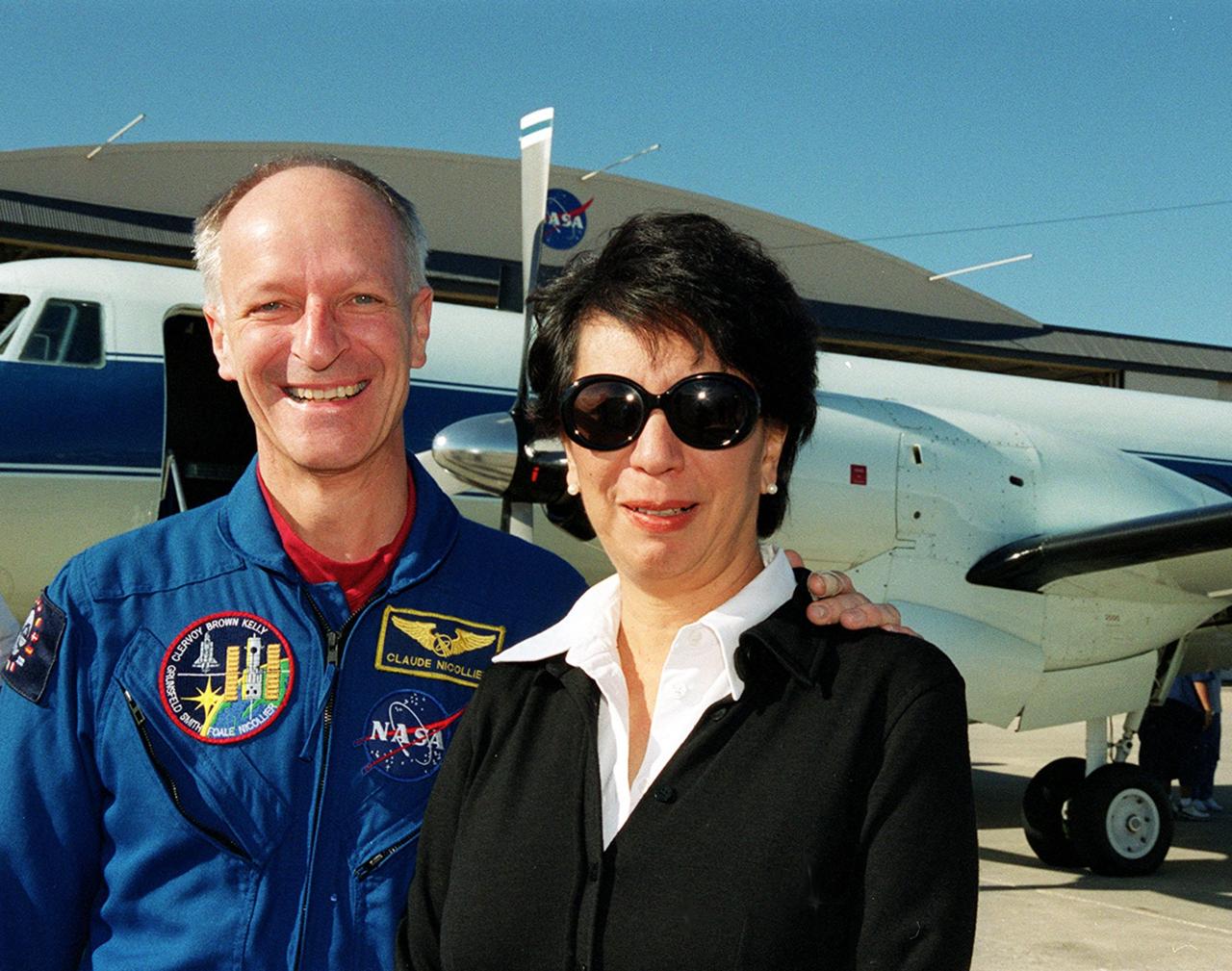
STS-103 Mission Specialist Claude Nicollier of Switzerland and his wife, Susana, beam at the camera on the runway at Patrick Air Force Base. The STS-103 crew and their families are preparing to board an airplane that will return them to their home base at the Johnson Space Center in Houston following the successful completion of their mission. Discovery landed in darkness the previous evening, Dec. 27, on runway 33 at KSC's Shuttle Landing Facility at 7:00:47 p.m. EST. This was the first time that a Shuttle crew spent the Christmas holiday in space. The other STS-103 crew members are Commander Curtis L. Brown Jr.; Pilot Scott J. Kelly; and Mission Specialists Steven L. Smith, C. Michael Foale (Ph.D.), John M. Grunsfeld (Ph.D.), and Jean-François Clervoy of France. The STS-103 mission supplied the Hubble Space Telescope with six new gyroscopes, six new voltage/temperature improvement kits, a new onboard computer, a new solid state recorder and new data transmitter, and a new fine guidance sensor along with new insulation on parts of the orbiting telescope. This was the 96th flight in the Space Shuttle program and the 27th for the orbiter Discovery
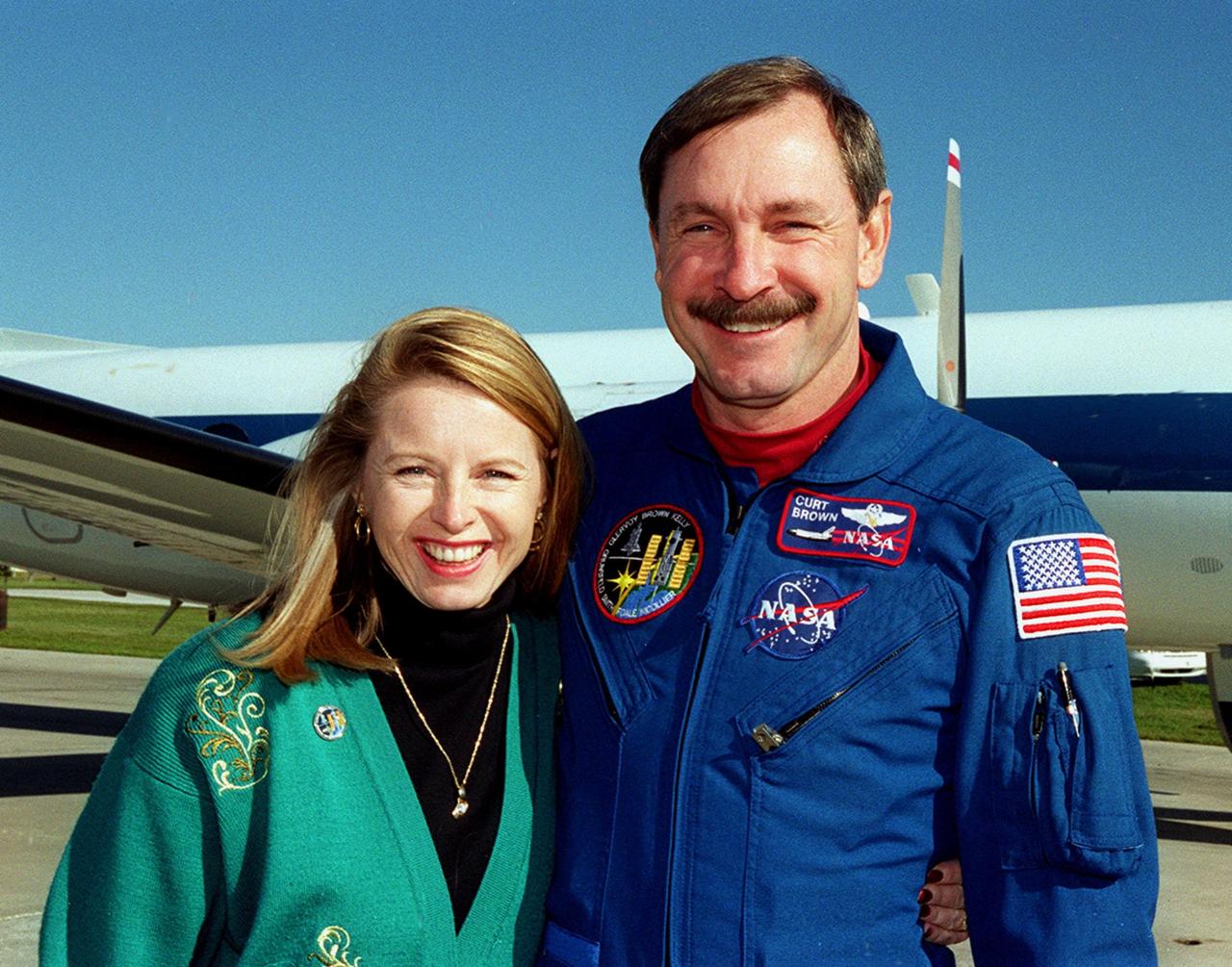
STS-103 Commander Curtis L. Brown Jr. and his fiancee, Ann Brickert, smile for the camera on the runway at Patrick Air Force Base. The STS-103 crew and their families are preparing to board an airplane that will return them to their home base at the Johnson Space Center in Houston following the successful completion of their mission. Discovery landed in darkness the previous evening, Dec. 27, on runway 33 at KSC's Shuttle Landing Facility at 7:00:47 p.m. EST. This was the first time that a Shuttle crew spent the Christmas holiday in space. The other STS-103 crew members are Pilot Scott J. Kelly and Mission Specialists Steven L. Smith, C. Michael Foale (Ph.D.), John M. Grunsfeld (Ph.D.), Claude Nicollier of Switzerland and Jean-François Clervoy of France. The STS-103 mission supplied the Hubble Space Telescope with six new gyroscopes, six new voltage/temperature improvement kits, a new onboard computer, a new solid state recorder and new data transmitter, and a new fine guidance sensor along with new insulation on parts of the orbiting telescope. This was the 96th flight in the Space Shuttle program and the 27th for the orbiter Discovery
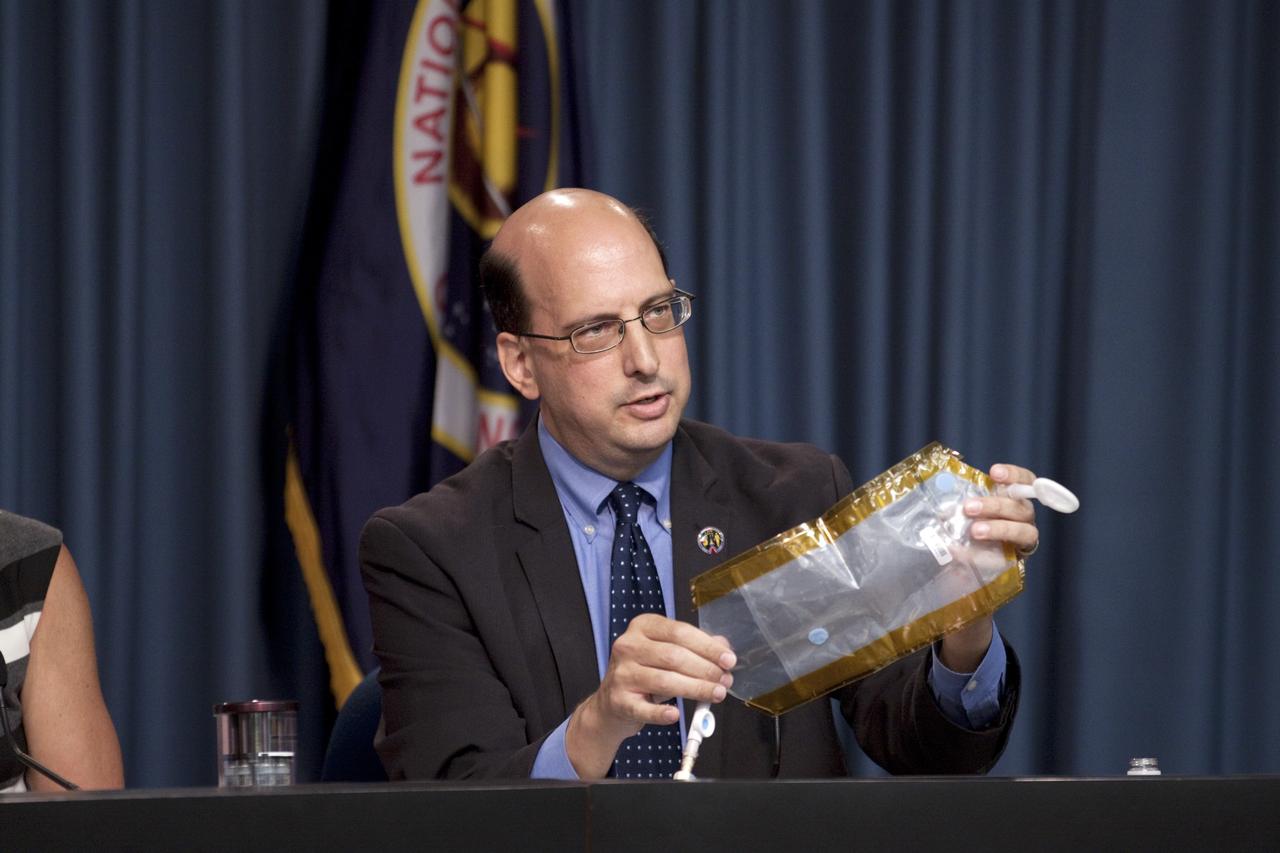
CAPE CANAVERAL, Fla. -- Scott Smith, NASA nutritionist at NASA's Johnson Space Center, explains one method of urine collection on the space station during a mission science briefing in Kennedy Space Center's Press Site auditorium in Florida. The briefing provided media with an overview of the experiments and payloads scheduled for launch on NASA's first Commercial Resupply Services, or CRS-1, mission to the International Space Station. Space Exploration Technologies Corp., or SpaceX, built both the mission's Falcon 9 rocket and Dragon capsule. Launch is scheduled for 8:35 p.m. EDT on Oct. 7 from Space Launch Complex 40 on Cape Canaveral Air Force Station. SpaceX CRS-1 is an important step toward making America’s microgravity research program self-sufficient by providing a way to deliver and return significant amounts of cargo, including science experiments, to and from the orbiting laboratory. NASA has contracted for 12 commercial resupply flights from SpaceX and eight from the Orbital Sciences Corp. For more information, visit http://www.nasa.gov/mission_pages/station/living/launch/index.html. Photo credit: NASA/Kim Shiflett
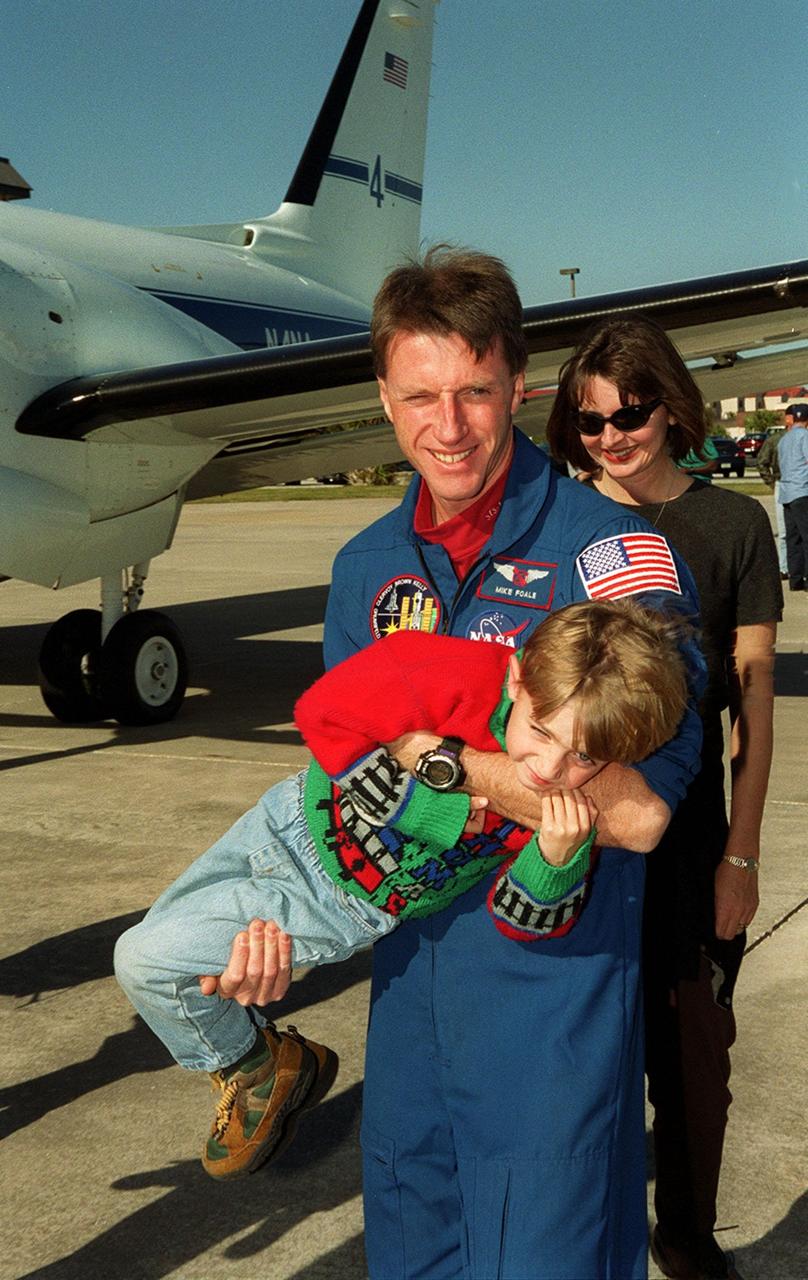
STS-103 Mission Specialist C. Michael Foale (Ph.D.) holds one of his children on the runway at Patrick Air Force Base, as his wife, Rhonda, looks on. The STS-103 crew and their families are preparing to board an airplane that will return them to their home base at the Johnson Space Center in Houston following the successful completion of their mission. Discovery landed in darkness the previous evening, Dec. 27, on runway 33 at KSC's Shuttle Landing Facility at 7:00:47 p.m. EST. This was the first time that a Shuttle crew spent the Christmas holiday in space. The other STS-103 crew members are Commander Curtis L. Brown Jr.; Pilot Scott J. Kelly; and Mission Specialists Steven L. Smith, John M. Grunsfeld (Ph.D.), Claude Nicollier of Switzerland and Jean-François Clervoy of France. The STS-103 mission supplied the Hubble Space Telescope with six new gyroscopes, six new voltage/temperature improvement kits, a new onboard computer, a new solid state recorder and new data transmitter, and a new fine guidance sensor along with new insulation on parts of the orbiting telescope. This was the 96th flight in the Space Shuttle program and the 27th for the orbiter Discovery
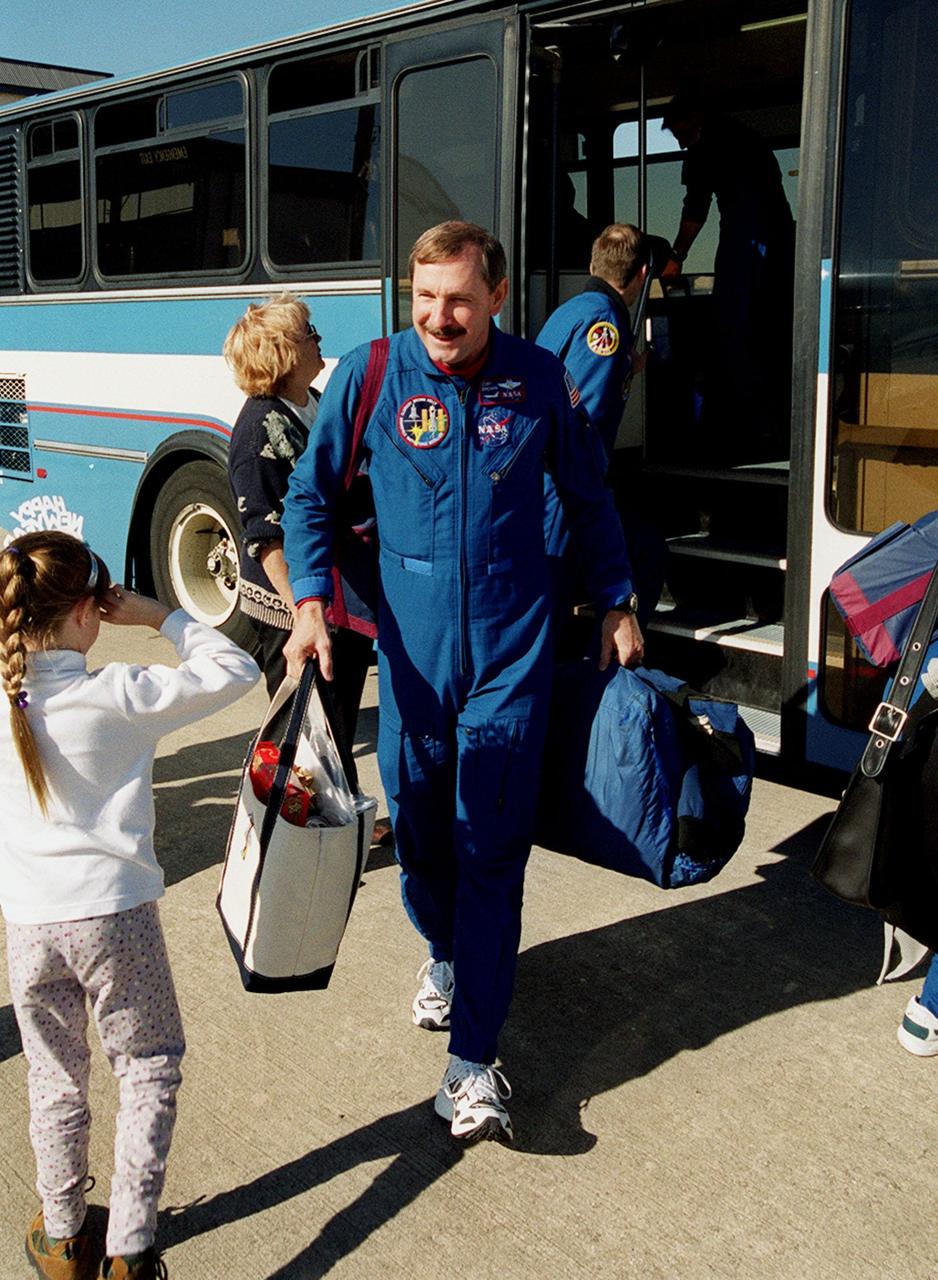
Amid a flurry of activity, STS-103 Commander Curtis L. Brown Jr. disembarks from the bus which brought him to the runway at Patrick Air Force Base. The STS-103 crew and their families are preparing to board an airplane that will return them to their home base at the Johnson Space Center in Houston following the successful completion of their mission. Discovery landed in darkness the previous evening, Dec. 27, on runway 33 at KSC's Shuttle Landing Facility at 7:00:47 p.m. EST. This was the first time that a Shuttle crew spent the Christmas holiday in space. The other STS-103 crew members are Pilot Scott J. Kelly and Mission Specialists Steven L. Smith, C. Michael Foale (Ph.D.), John M. Grunsfeld (Ph.D.), Claude Nicollier of Switzerland and Jean-François Clervoy of France. The STS-103 mission supplied the Hubble Space Telescope with six new gyroscopes, six new voltage/temperature improvement kits, a new onboard computer, a new solid state recorder and new data transmitter, and a new fine guidance sensor along with new insulation on parts of the orbiting telescope. This was the 96th flight in the Space Shuttle program and the 27th for the orbiter Discovery
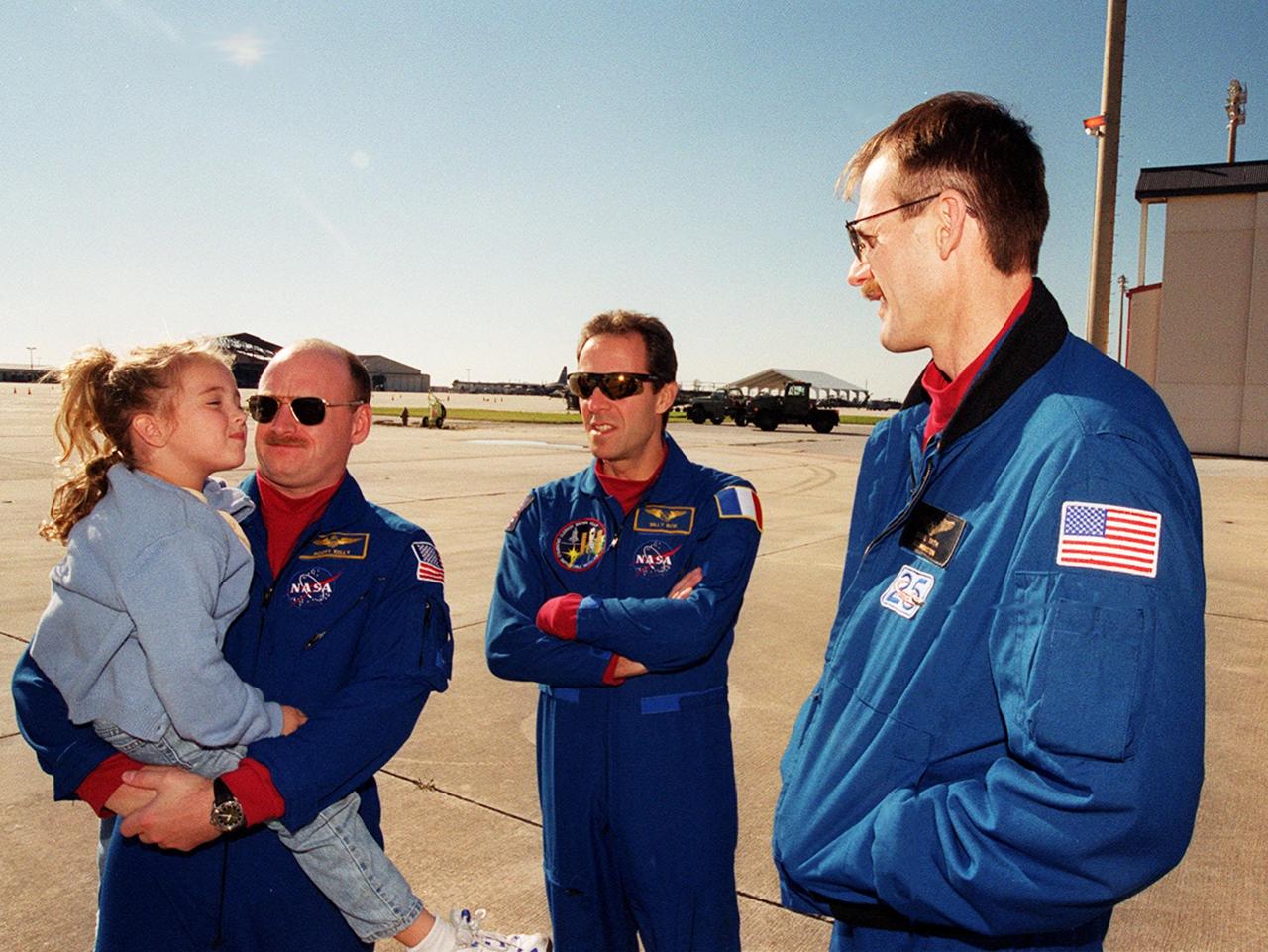
STS-103 Pilot Scott J. Kelly holds his daughter as he talks to Mission Specialists and fellow crew members Jean-François Clervoy of France and Steven L. Smith on the runway at Patrick Air Force Base. The STS-103 crew and their families are preparing to board an airplane that will return them to their home base at the Johnson Space Center in Houston following the successful completion of their mission. Discovery landed in darkness the previous evening, Dec. 27, on runway 33 at KSC's Shuttle Landing Facility at 7:00:47 p.m. EST. This was the first time that a Shuttle crew spent the Christmas holiday in space. The other STS-103 crew members are Commander Curtis L. Brown Jr. and Mission Specialists C. Michael Foale (Ph.D.), John M. Grunsfeld (Ph.D.), and Claude Nicollier of Switzerland. The STS-103 mission supplied the Hubble Space Telescope with six new gyroscopes, six new voltage/temperature improvement kits, a new onboard computer, a new solid state recorder and new data transmitter, and a new fine guidance sensor along with new insulation on parts of the orbiting telescope. This was the 96th flight in the Space Shuttle program and the 27th for the orbiter Discovery

STS-103 Mission Specialist John M. Grunsfeld (Ph.D.), with his wife, Carol, and their children, smiles for the camera on the runway at Patrick Air Force Base. The STS-103 crew and their families are preparing to board an airplane that will return them to their home base at the Johnson Space Center in Houston following the successful completion of their mission. Discovery landed in darkness the previous evening, Dec. 27, on runway 33 at KSC's Shuttle Landing Facility at 7:00:47 p.m. EST. This was the first time that a Shuttle crew spent the Christmas holiday in space. The other STS-103 crew members are Commander Curtis L. Brown Jr.; Pilot Scott J. Kelly; and Mission Specialists Steven L. Smith, C. Michael Foale (Ph.D.), Claude Nicollier of Switzerland and Jean-François Clervoy of France. The STS-103 mission supplied the Hubble Space Telescope with six new gyroscopes, six new voltage/temperature improvement kits, a new onboard computer, a new solid state recorder and new data transmitter, and a new fine guidance sensor along with new insulation on parts of the orbiting telescope. This was the 96th flight in the Space Shuttle program and the 27th for the orbiter Discovery
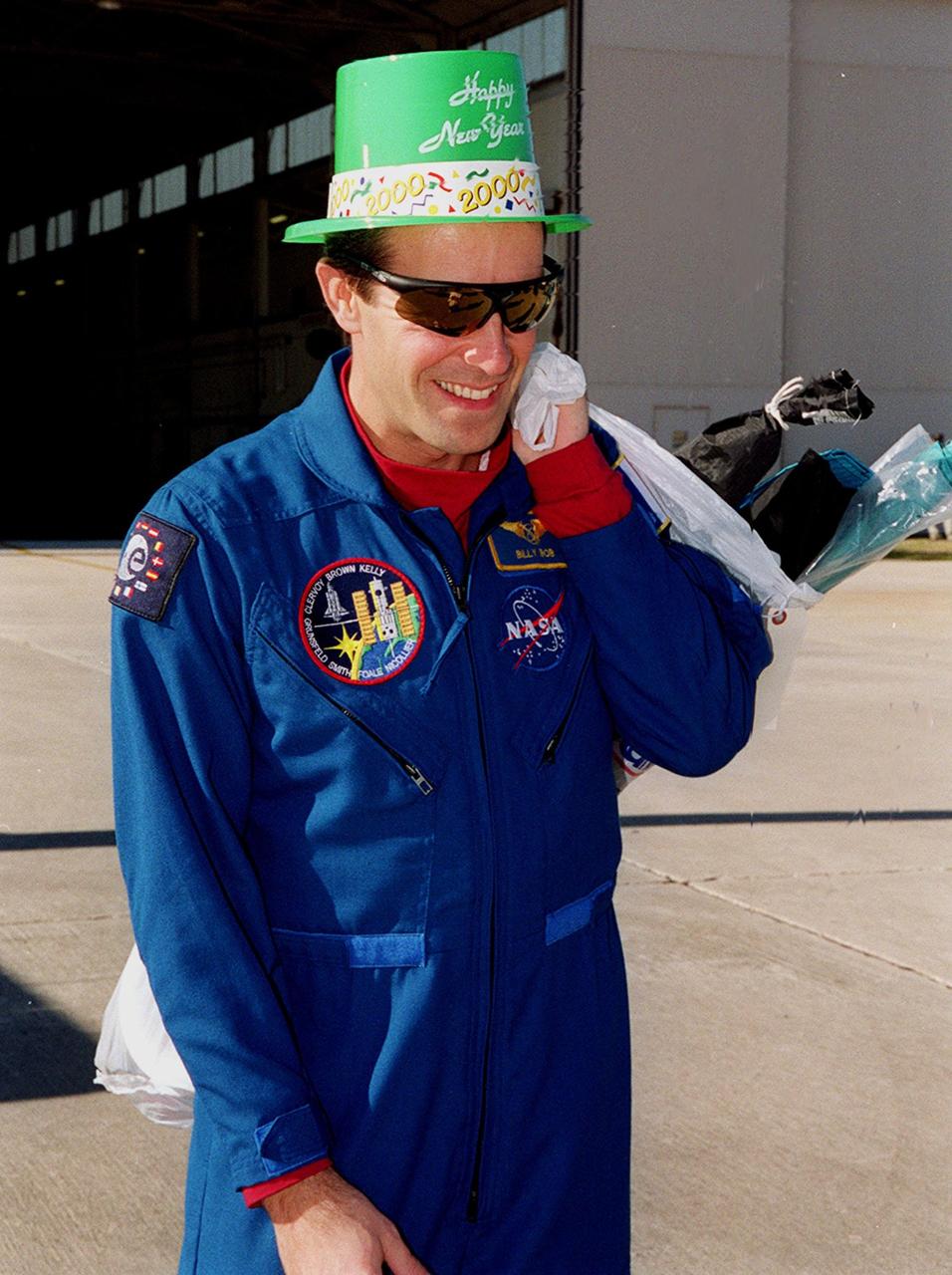
STS-103 Mission Specialist Jean-François Clervoy of France exhibits his holiday spirit on the runway at Patrick Air Force Base. The STS-103 crew and their families are preparing to board an airplane that will return them to their home base at the Johnson Space Center in Houston following the successful completion of their mission. Discovery landed in darkness the previous evening, Dec. 27, on runway 33 at KSC's Shuttle Landing Facility at 7:00:47 p.m. EST. This was the first time that a Shuttle crew spent the Christmas holiday in space. The other STS-103 crew members are Commander Curtis L. Brown Jr.; Pilot Scott J. Kelly; and Mission Specialists Steven L. Smith, C. Michael Foale (Ph.D.), John M. Grunsfeld (Ph.D.), and Claude Nicollier of Switzerland. The STS-103 mission supplied the Hubble Space Telescope with six new gyroscopes, six new voltage/temperature improvement kits, a new onboard computer, a new solid state recorder and new data transmitter, and a new fine guidance sensor along with new insulation on parts of the orbiting telescope. This was the 96th flight in the Space Shuttle program and the 27th for the orbiter Discovery
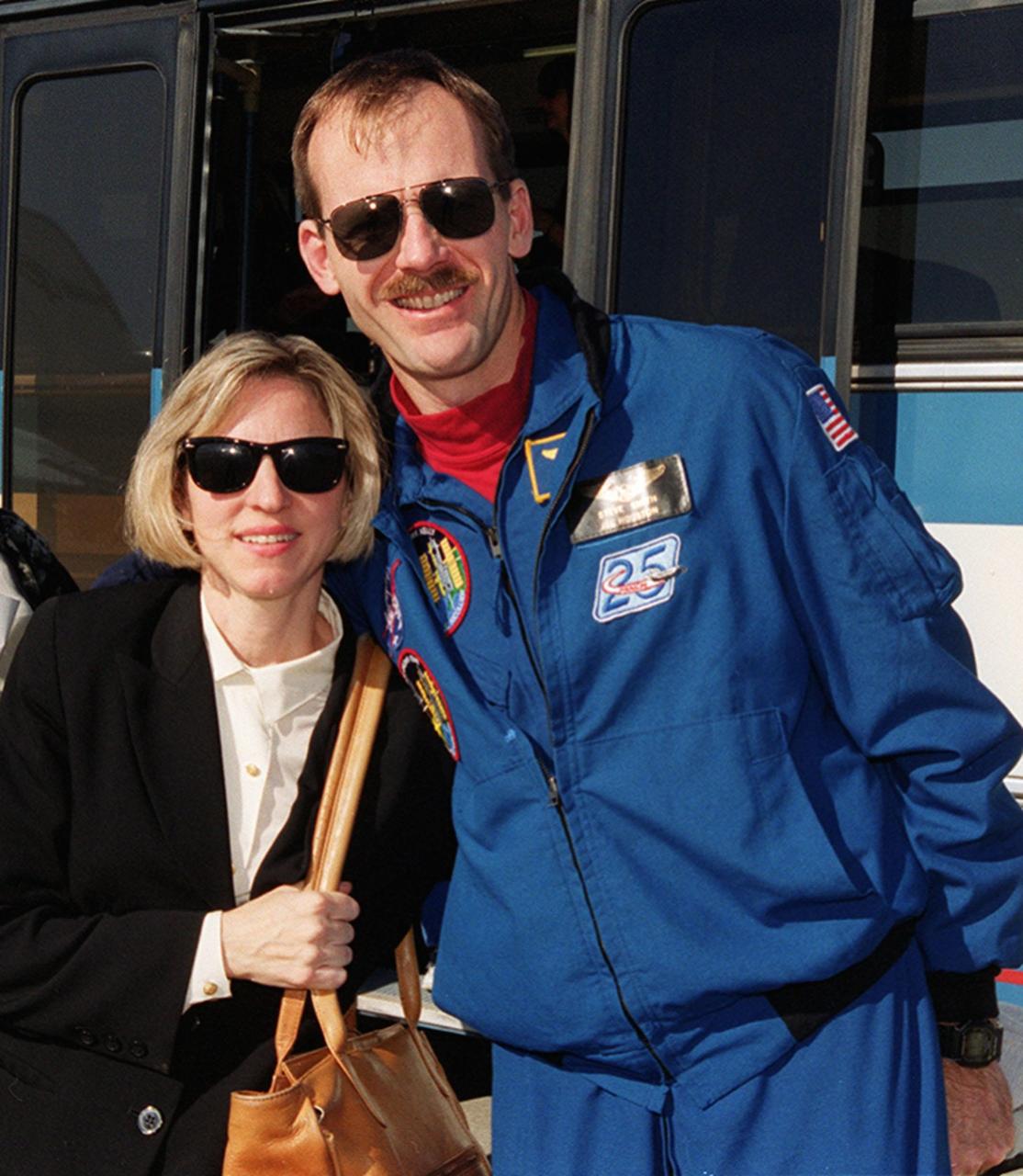
STS-103 Payload Commander Steven L. Smith and his wife, Peggy, smile for the camera on the runway at Patrick Air Force Base. The STS-103 crew and their families are preparing to board an airplane that will return them to their home base at the Johnson Space Center in Houston following the successful completion of their mission. Discovery landed in darkness the previous evening, Dec. 27, on runway 33 at KSC's Shuttle Landing Facility at 7:00:47 p.m. EST. This was the first time that a Shuttle crew spent the Christmas holiday in space. The other STS-103 crew members are Commander Curtis L. Brown Jr.; Pilot Scott J. Kelly; and Mission Specialists C. Michael Foale (Ph.D.), John M. Grunsfeld (Ph.D.), Claude Nicollier of Switzerland and Jean-François Clervoy of France. The STS-103 mission supplied the Hubble Space Telescope with six new gyroscopes, six new voltage/temperature improvement kits, a new onboard computer, a new solid state recorder and new data transmitter, and a new fine guidance sensor along with new insulation on parts of the orbiting telescope. This was the 96th flight in the Space Shuttle program and the 27th for the orbiter Discovery
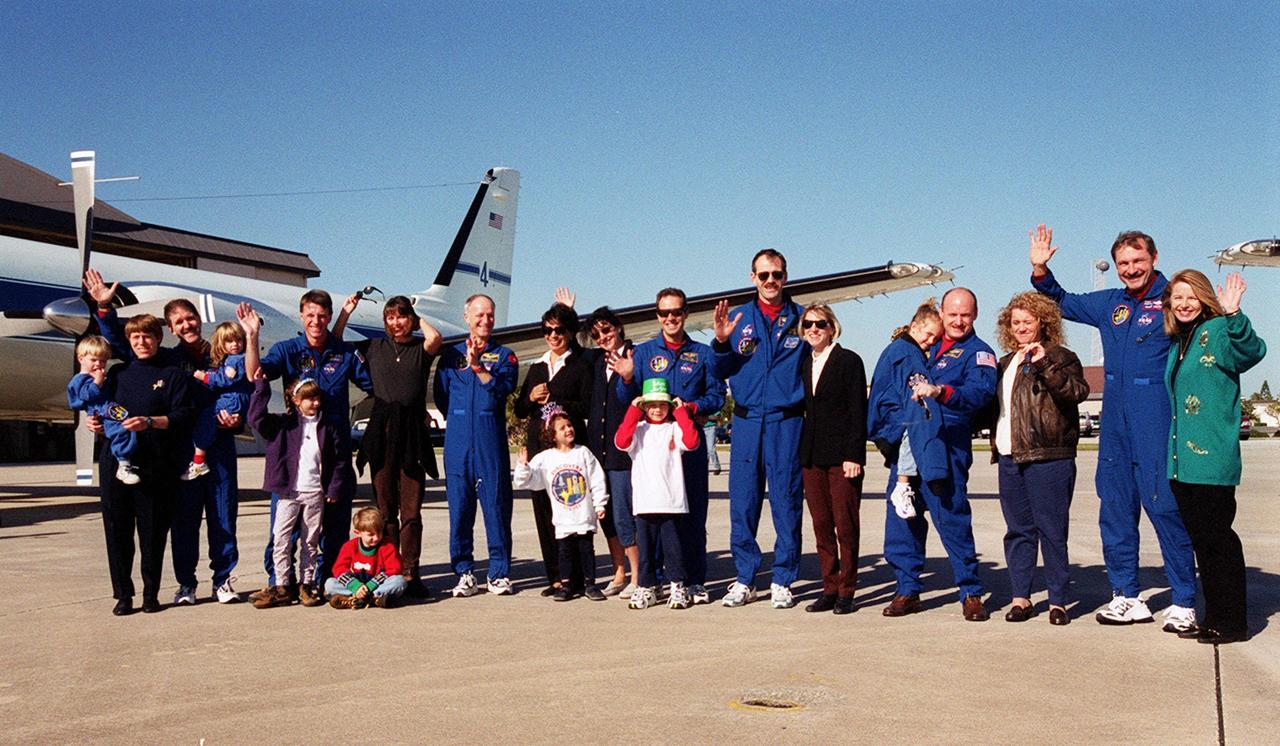
The STS-103 crew pose for a group portrait with their families and loved ones on the runway at Patrick Air Force Base. They are preparing to board an airplane that will return them to their home base at the Johnson Space Center in Houston following the successful completion of their mission. From left to right, the crew members are Mission Specialists John M. Grunsfeld (Ph.D.), C. Michael Foale (Ph.D.), Claude Nicollier of Switzerland, Jean-François Clervoy of France, and Steven L. Smith; Pilot Scott J. Kelly; and Commander Curtis L. Brown Jr. Discovery landed in darkness the previous evening, Dec. 27, on runway 33 at KSC's Shuttle Landing Facility at 7:00:47 p.m. EST. This was the first time that a Shuttle crew spent the Christmas holiday in space. The STS-103 mission supplied the Hubble Space Telescope with six new gyroscopes, six new voltage/temperature improvement kits, a new onboard computer, a new solid state recorder and new data transmitter, and a new fine guidance sensor along with new insulation on parts of the orbiting telescope. This was the 96th flight in the Space Shuttle program and the 27th for the orbiter Discovery
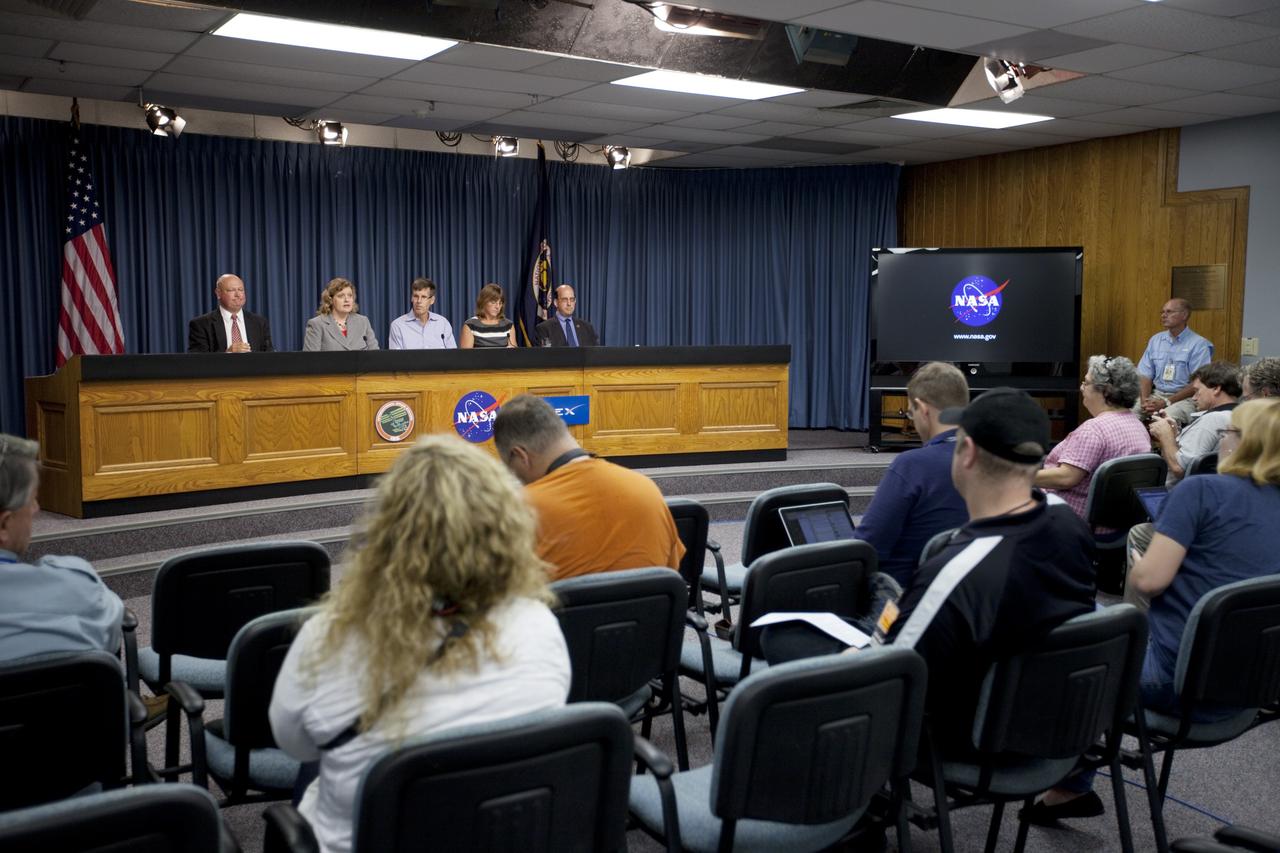
CAPE CANAVERAL, Fla. -- News and social media representatives participate in a space station and mission science briefing in NASA Kennedy Space Center's Press Site auditorium in Florida. On the dais from left are Michael Curie, NASA Public Affairs, Julie Robinson, program scientist for International Space Station at NASA's Johnson Space Center, Timothy Yeatman, interim chief scientist at the Center for the Advancement of Science in Space, Sheila Nielsen-Preiss, cell biologist at Montana State University, and Scott Smith, NASA nutritionist at NASA's Johnson Space Center. The briefing provided media with an overview of the experiments and payloads scheduled for launch on NASA's first Commercial Resupply Services, or CRS-1, mission to the International Space Station. Space Exploration Technologies Corp., or SpaceX, built both the mission's Falcon 9 rocket and Dragon capsule. Launch is scheduled for 8:35 p.m. EDT on Oct. 7 from Space Launch Complex 40 on Cape Canaveral Air Force Station. SpaceX CRS-1 is an important step toward making America’s microgravity research program self-sufficient by providing a way to deliver and return significant amounts of cargo, including science experiments, to and from the orbiting laboratory. NASA has contracted for 12 commercial resupply flights from SpaceX and eight from the Orbital Sciences Corp. For more information, visit http://www.nasa.gov/mission_pages/station/living/launch/index.html. Photo credit: NASA/Kim Shiflett
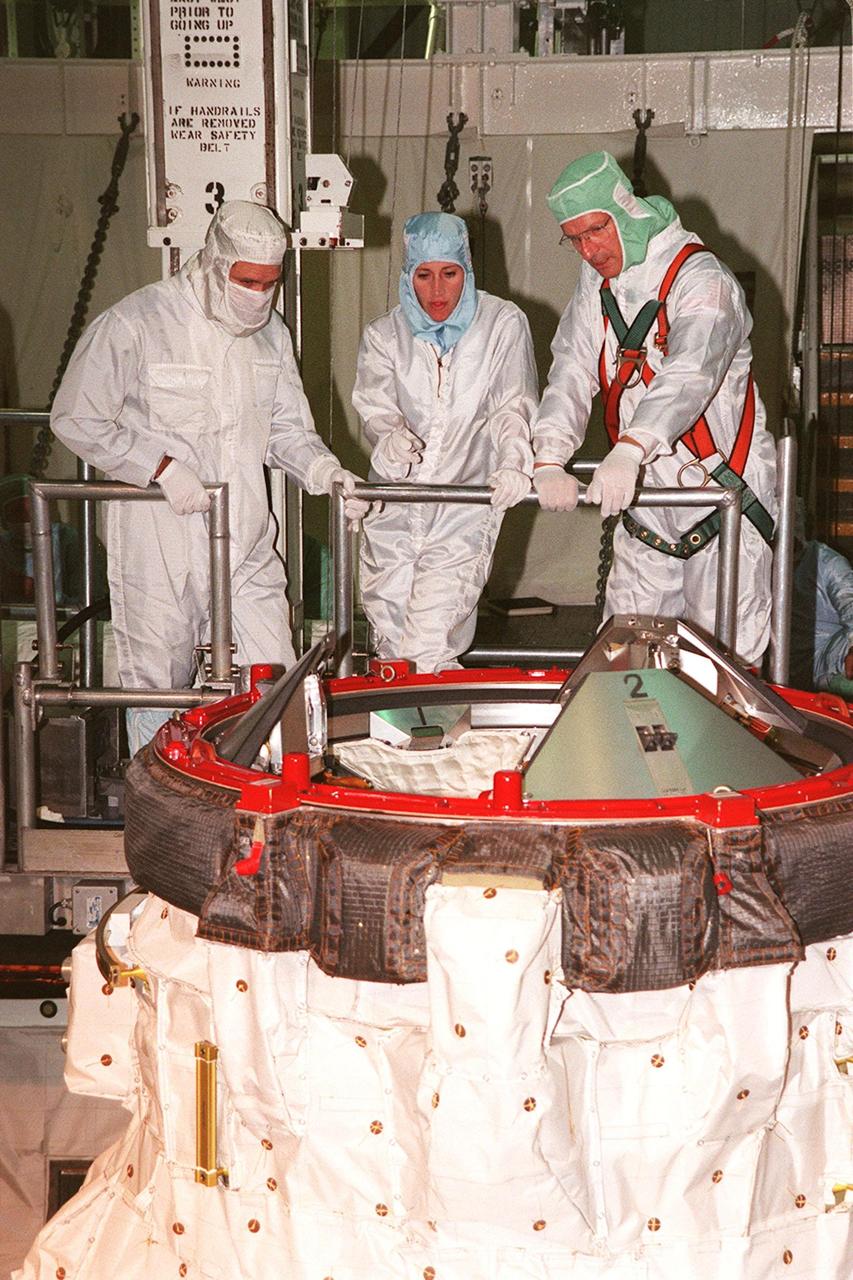
In the payload bay of the orbiter Discovery, STS-103 Mission Specialists John M. Grunsfeld (Ph.D.), left, and Claude Nicollier of Switzerland, right, are briefed on part of the equipment they will use on their mission by a worker from Johnson Space Center, center. The mission involves the repair and upgrade of the Hubble Space Telescope. The crew, who are at KSC to take part in a Crew Equipment Interface Test, also includes Commander Curtis L. Brown Jr., Pilot Scott J. Kelly, and Mission Specialists Steven L. Smith, C. Michael Foale (Ph.D.), and Jean-François Clervoy of France. Nicollier and Clervoy are with the European Space Agency. Mission STS-103 is a "call-up" due to the need to replace portions of the pointing system, the gyros, which have begun to fail on the Hubble Space Telescope. Although Hubble is operating normally and conducting its scientific observations, only three of its six gyroscopes are working properly. The gyroscopes allow the telescope to point at stars, galaxies and planets. The STS-103 crew will not only replace gyroscopes, it will also replace a Fine Guidance Sensor and an older computer with a new enhanced model, an older data tape recorder with a solid-state digital recorder, a failed spare transmitter with a new one, and degraded insulation on the telescope with new thermal insulation. The crew will also install a Battery Voltage/Temperature Improvement Kit to protect the spacecraft batteries from overcharging and overheating when the telescope goes into a safe mode. The scheduled launch date in October is under review