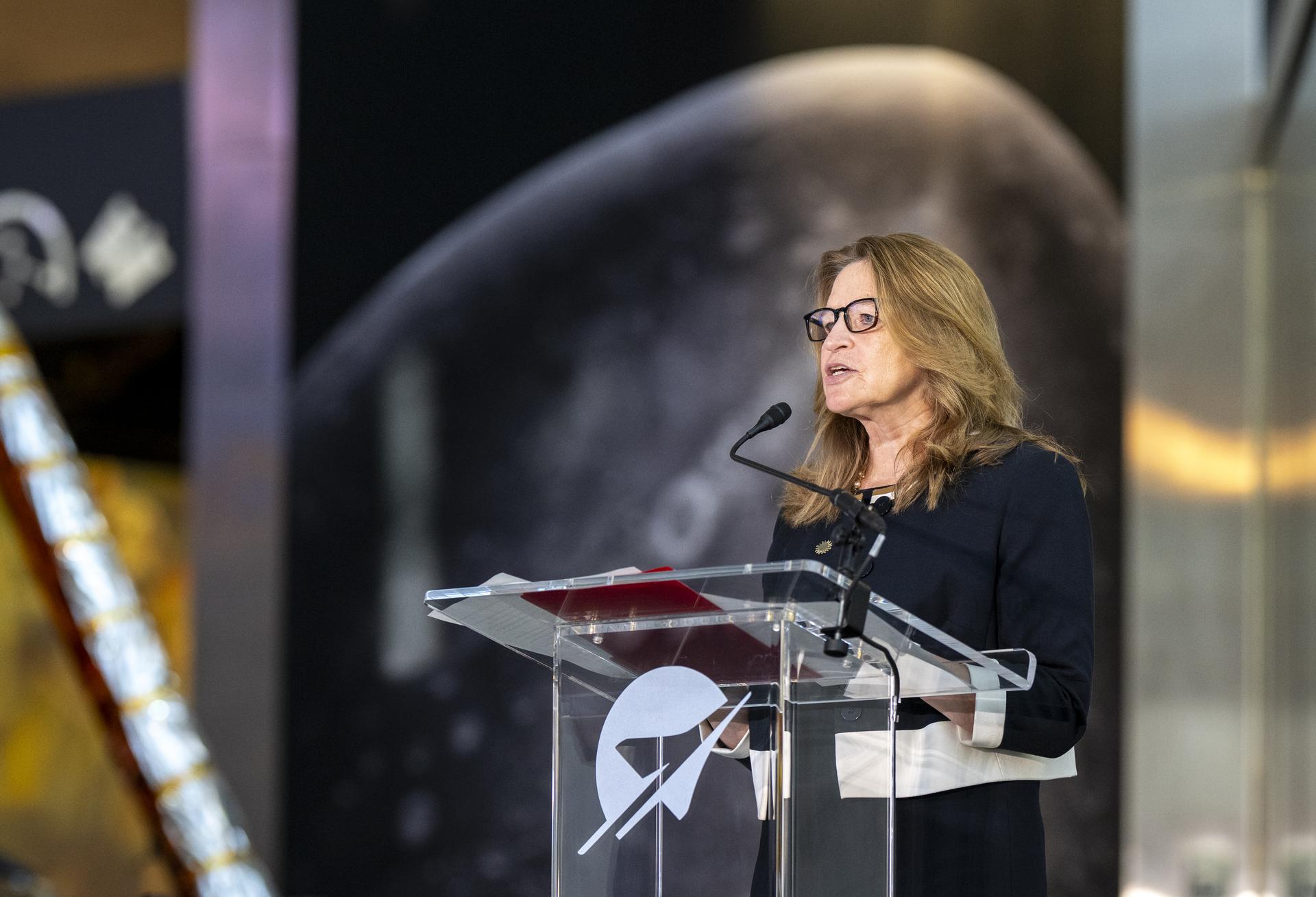
Under Secretary for Science and Research at the Smithsonian Institution Ellen Stofan delivers remarks during the Smithsonian’s National Air and Space Museum rededication ceremony Wednesday, July 1, 2026, in Washington. Photo Credit: (NASA/Keegan Barber)
Under Secretary for Science and Research at the Smithsonian Institution Ellen Stofan delivers remarks during the Smithsonian’s National Air and Space Museum rededication ceremony Wednesday, July 1, 2026, in Washington. Photo Credit: (NASA/Keegan Barber)
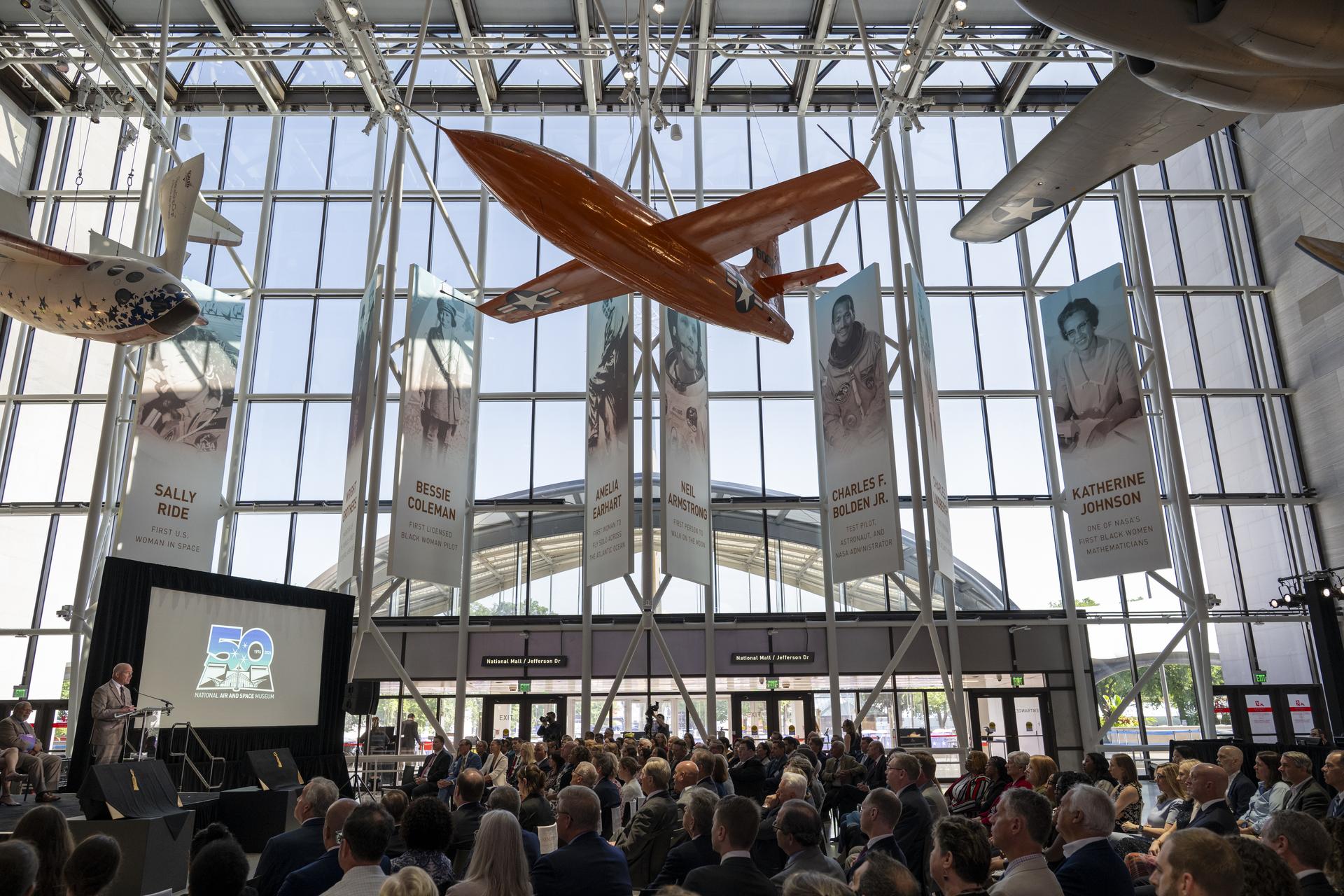
Director of the Smithsonian’s National Air and Space Museum Christopher Browne delivers remarks during the museum’s rededication ceremony Wednesday, July 1, 2026, in Washington. Photo Credit: (NASA/Keegan Barber)
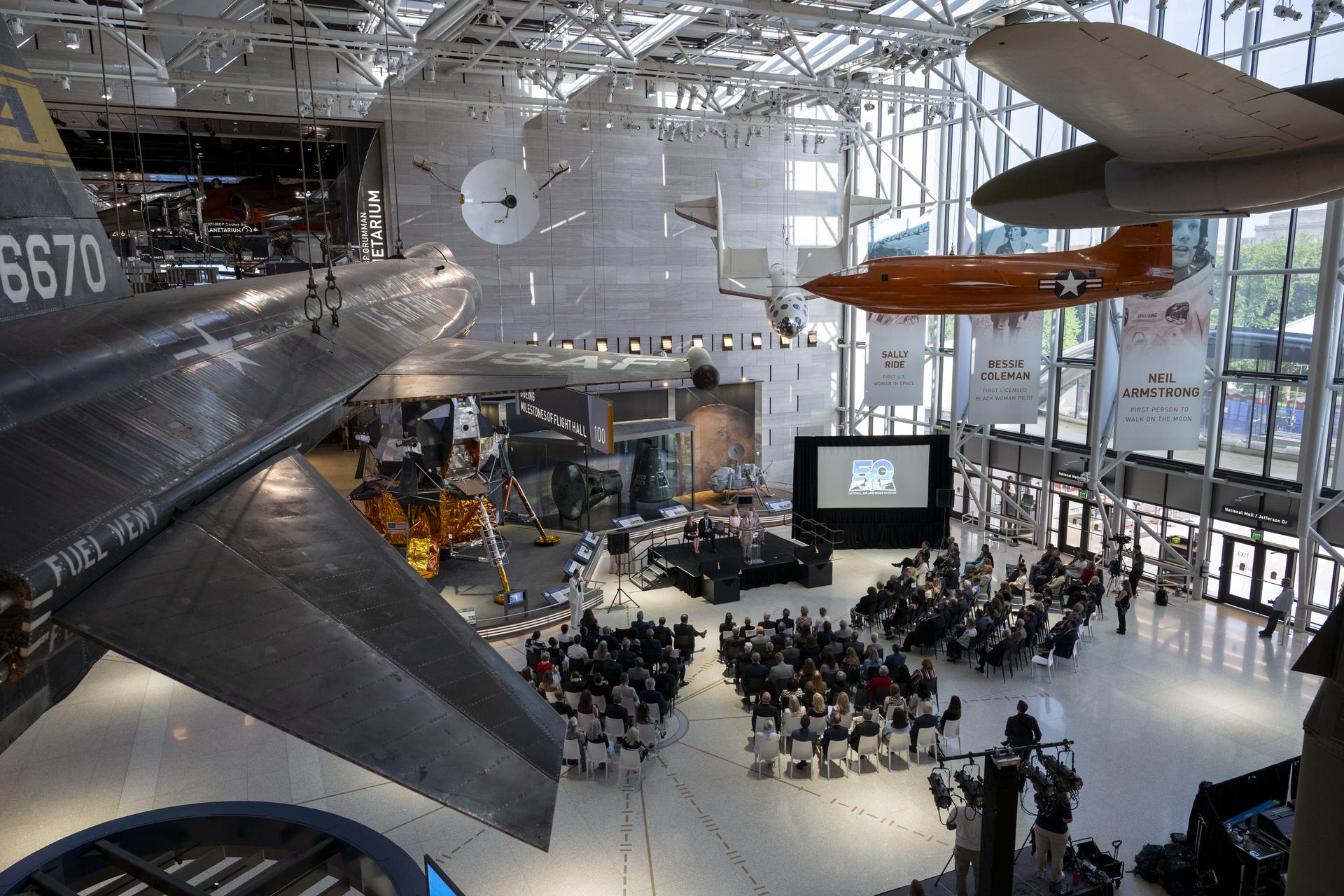
Director of the Smithsonian’s National Air and Space Museum Christopher Browne delivers remarks during the museum’s rededication ceremony Wednesday, July 1, 2026, in Washington. Photo Credit: (NASA/Keegan Barber)
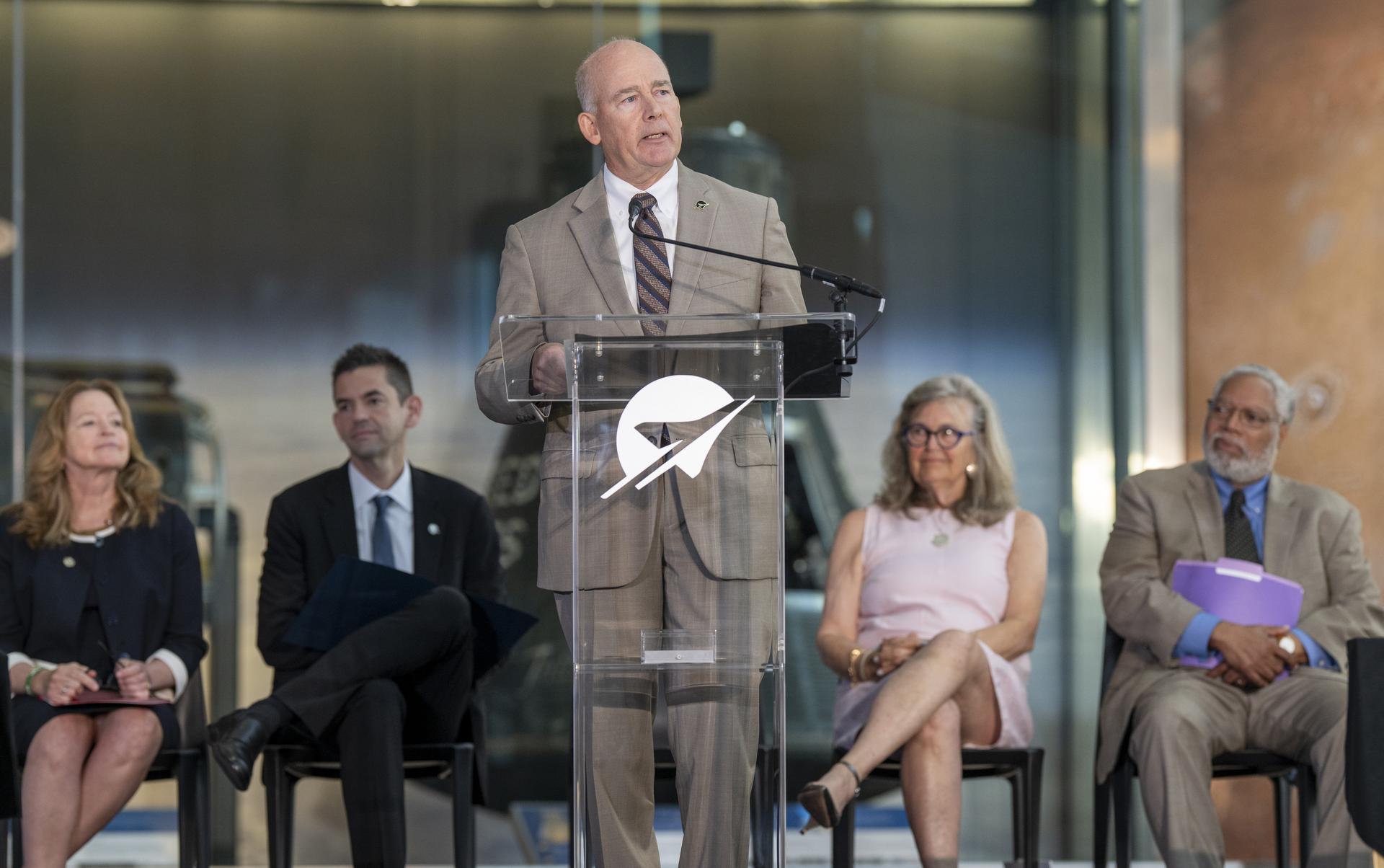
Director of the Smithsonian’s National Air and Space Museum Christopher Browne delivers remarks during the museum’s rededication ceremony Wednesday, July 1, 2026, in Washington. Photo Credit: (NASA/Keegan Barber)
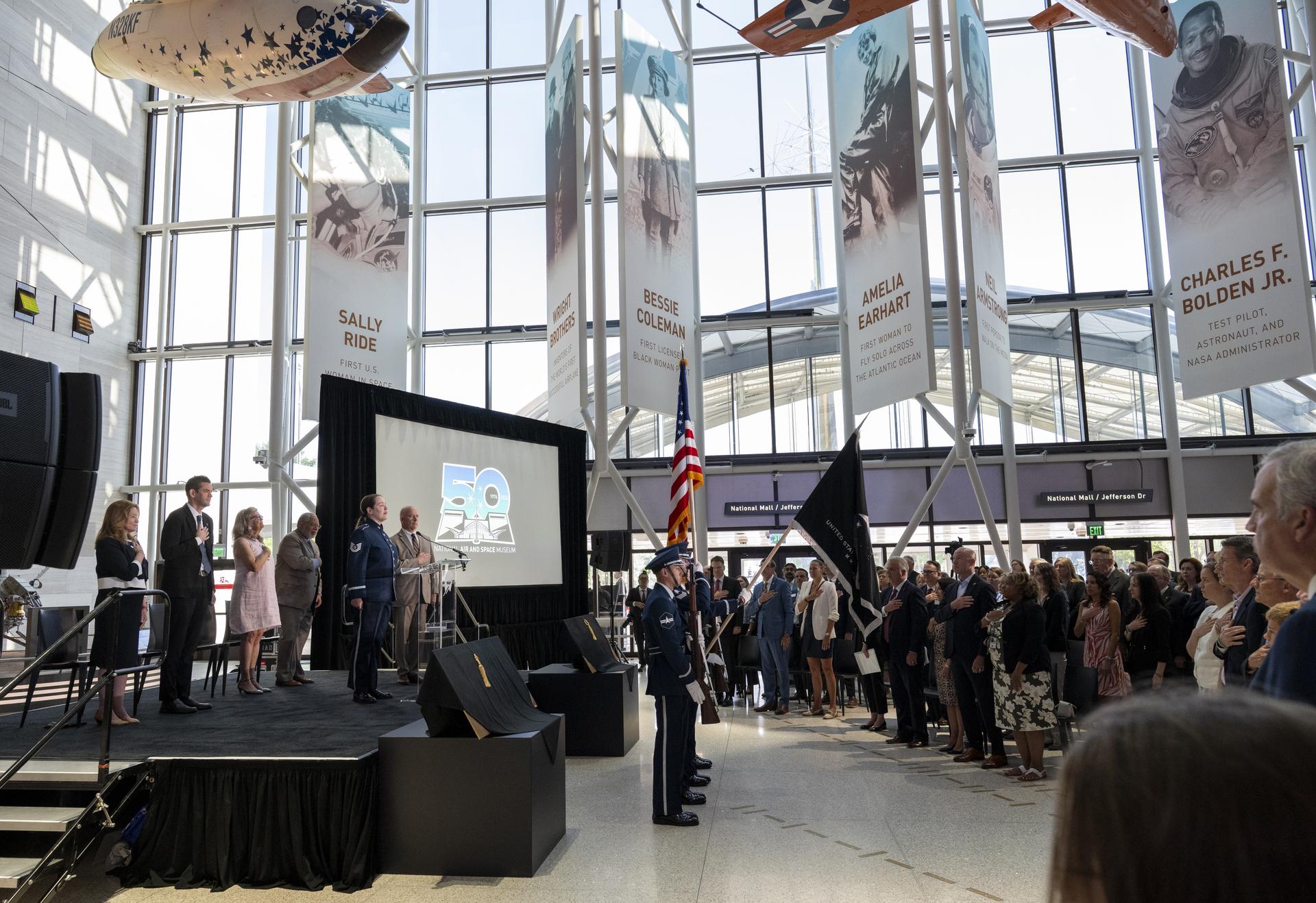
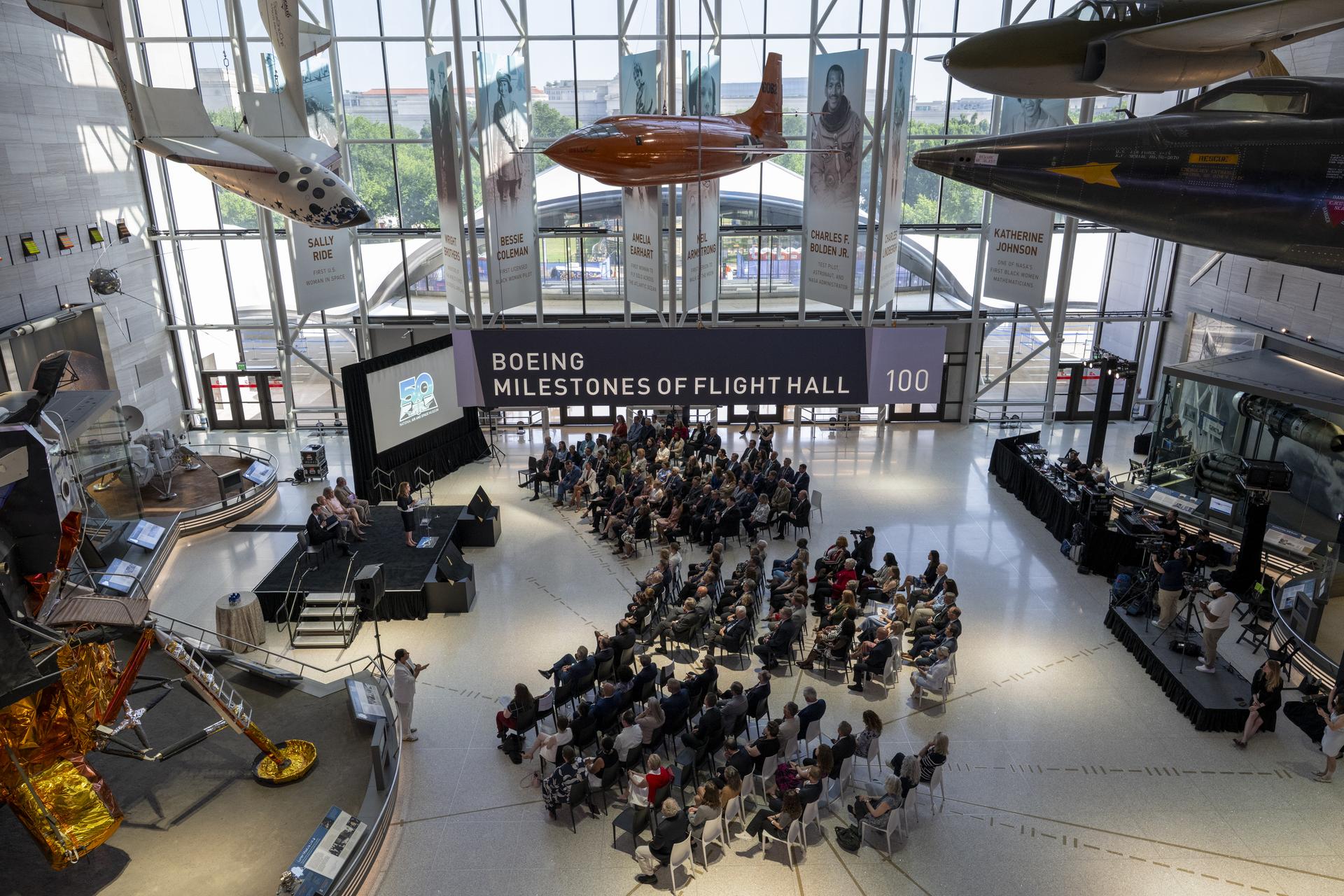
Guests stand for the singing of the national anthem prior to the Smithsonian’s National Air and Space Museum rededication ceremony Wednesday, July 1, 2026, in Washington. Photo Credit: (NASA/Keegan Barber)
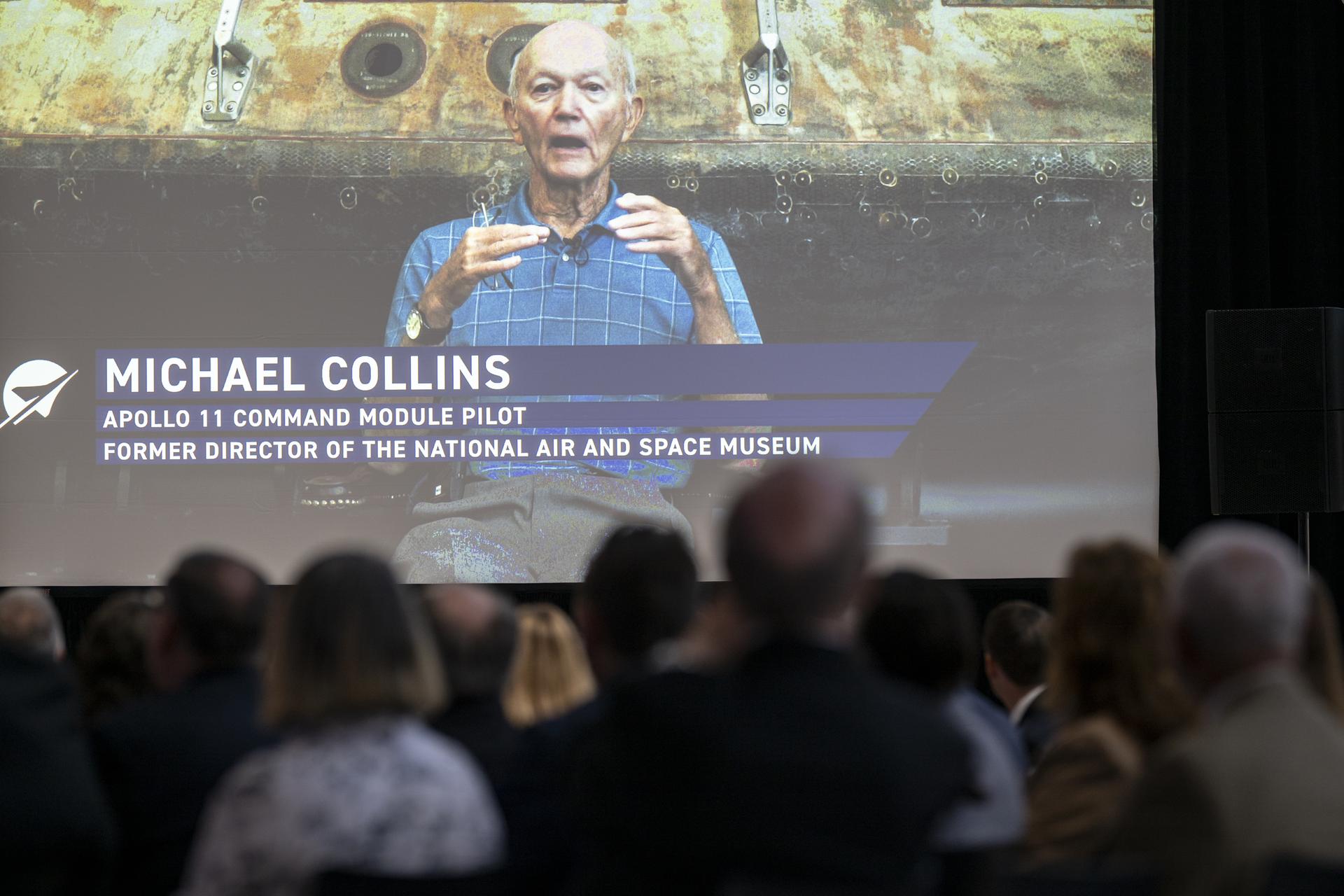
Guests view a video presentation during the Smithsonian’s National Air and Space Museum rededication ceremony Wednesday, July 1, 2026, in Washington. Photo Credit: (NASA/Keegan Barber)
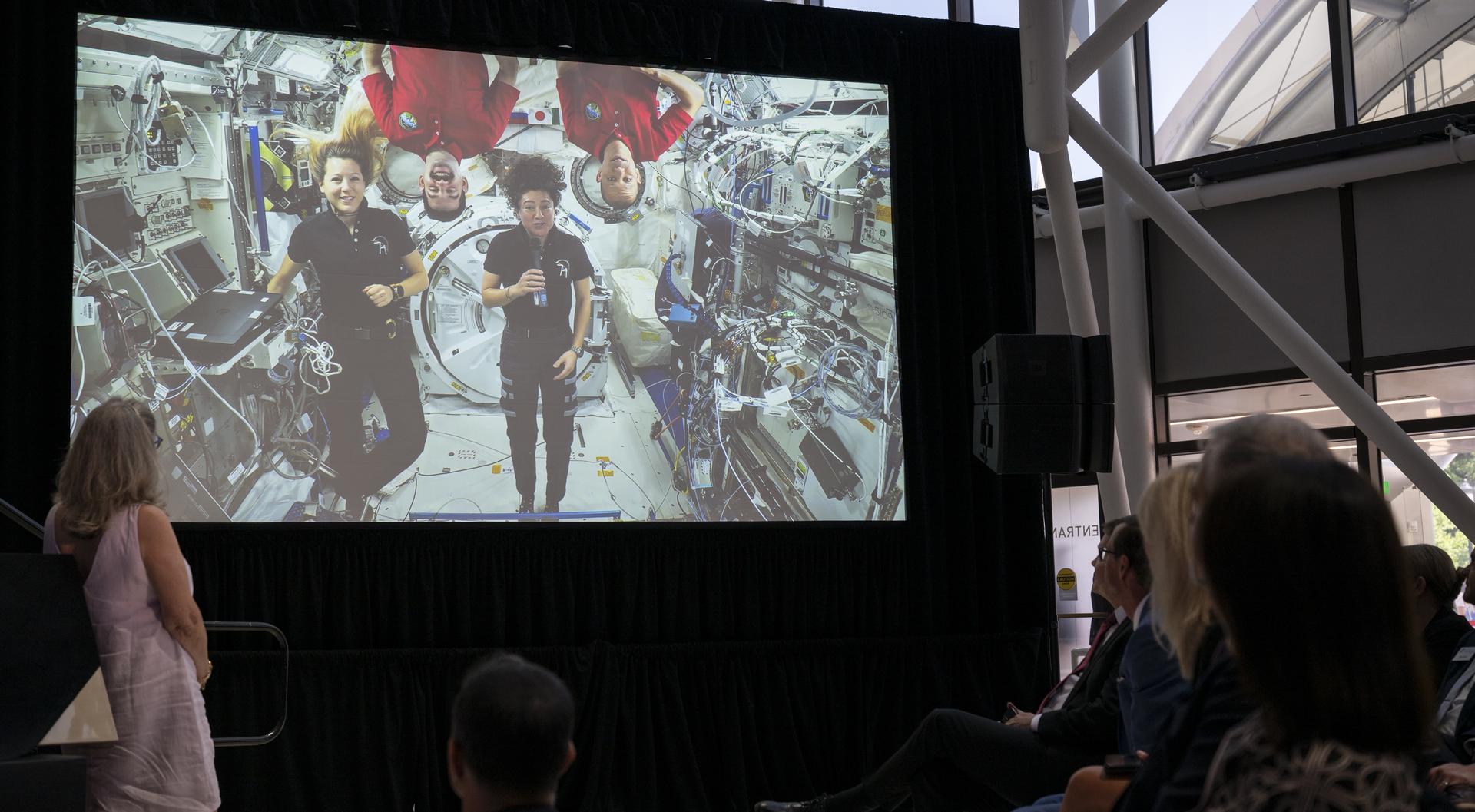
Guests watch a prerecorded message from members of Expedition 74 aboard the International Space Station during the Smithsonian’s National Air and Space Museum rededication ceremony Wednesday, July 1, 2026, in Washington. Photo Credit: (NASA/Keegan Barber)
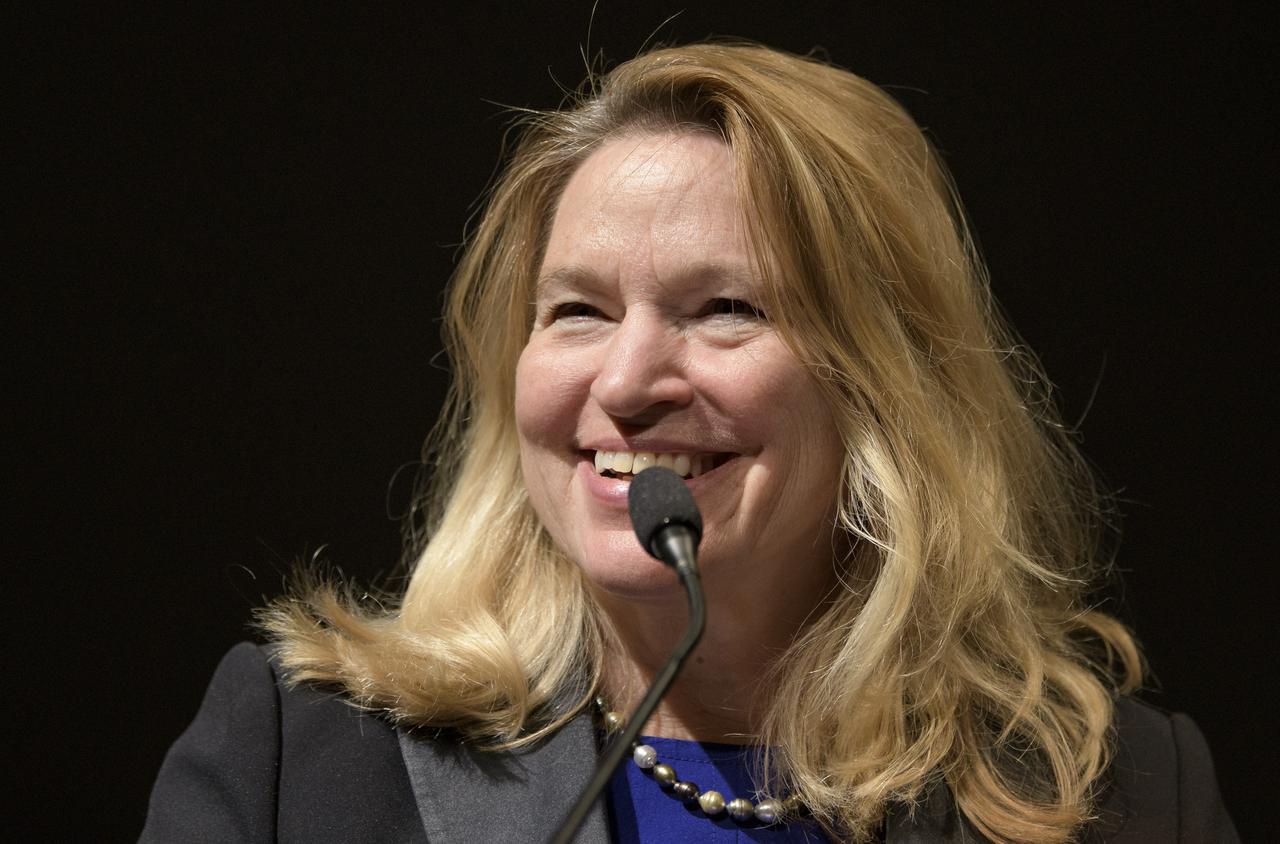
John and Adrienne Mars Director of the National Air and Space Museum Ellen Stofan, moderates a panel discussion after the premiere of the film "Apollo 11: First Steps Edition", Tuesday, May 14, 2019 at the Smithsonian's National Air and Space Museum in Washington. Photo Credit: (NASA/Bill Ingalls)
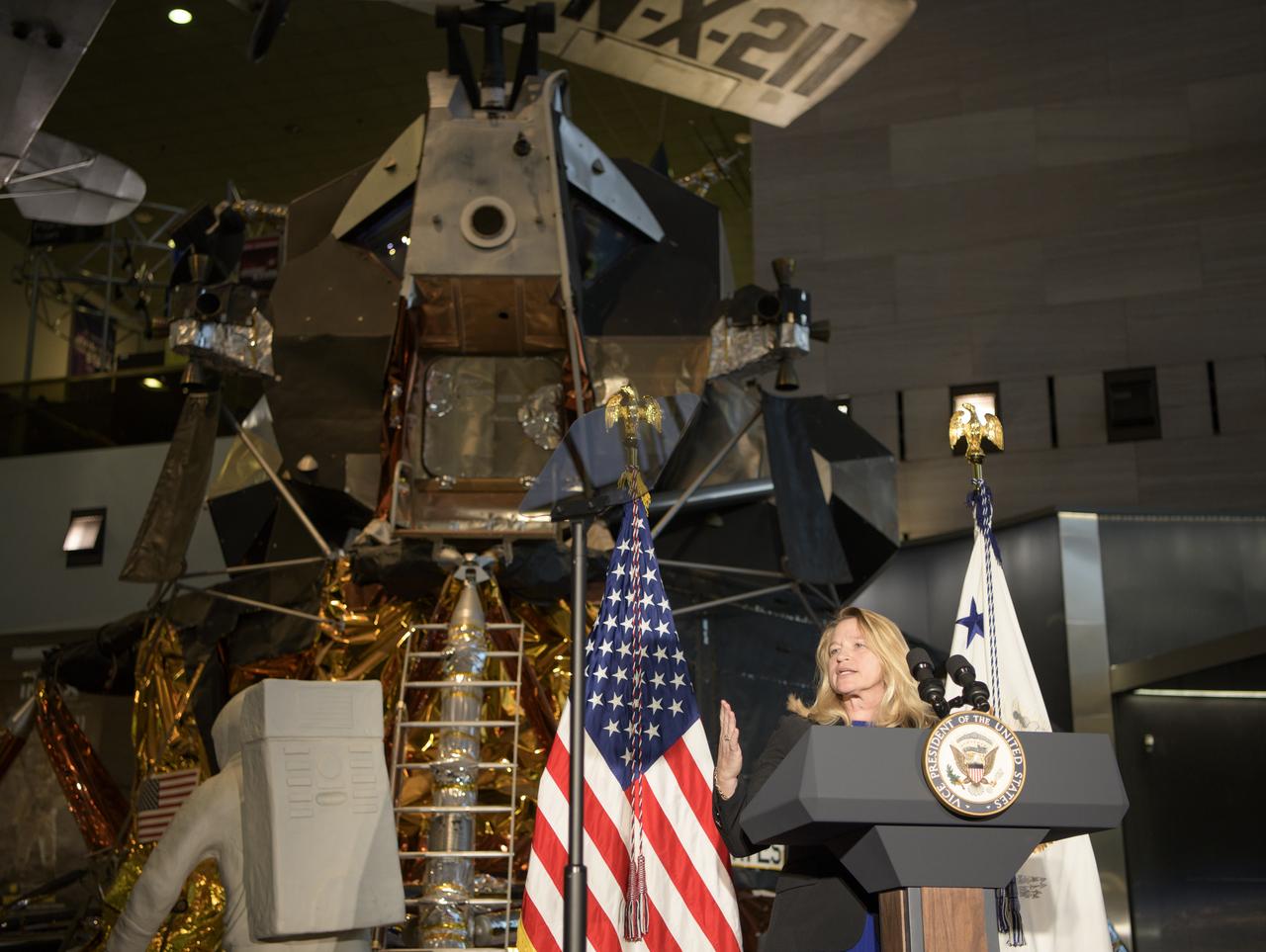
John and Adrienne Mars Director of the National Air and Space Museum Ellen Stofan gives opening remarks during the premiere of "Apollo 11: First Steps Edition", Tuesday, May 14, 2019 at the Smithsonian's National Air and Space Museum in Washington. Photo Credit: (NASA/Bill Ingalls)
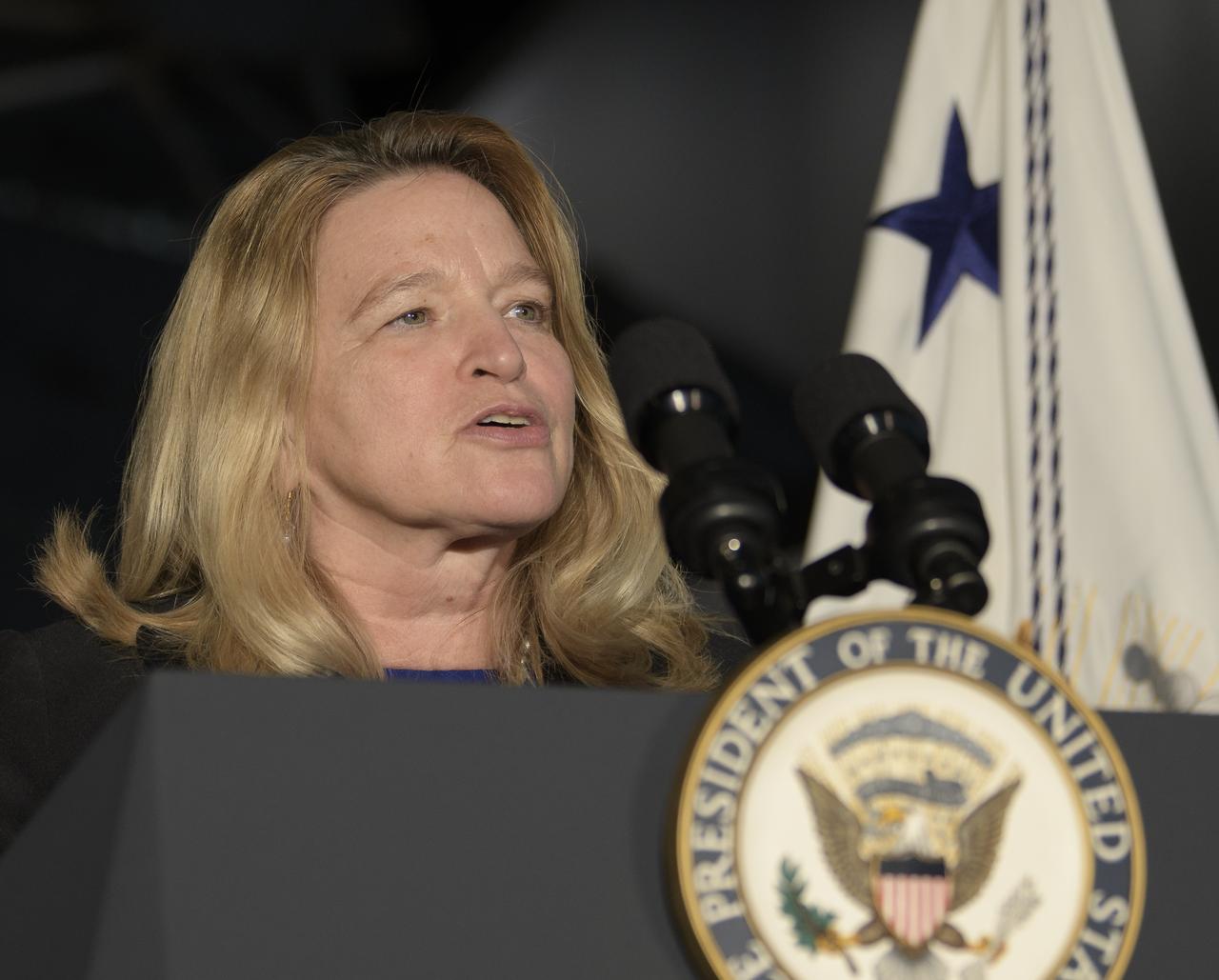
John and Adrienne Mars Director of the National Air and Space Museum Ellen Stofan gives opening remarks during the premiere of "Apollo 11: First Steps Edition", Tuesday, May 14, 2019 at the Smithsonian's National Air and Space Museum in Washington. Photo Credit: (NASA/Bill Ingalls)
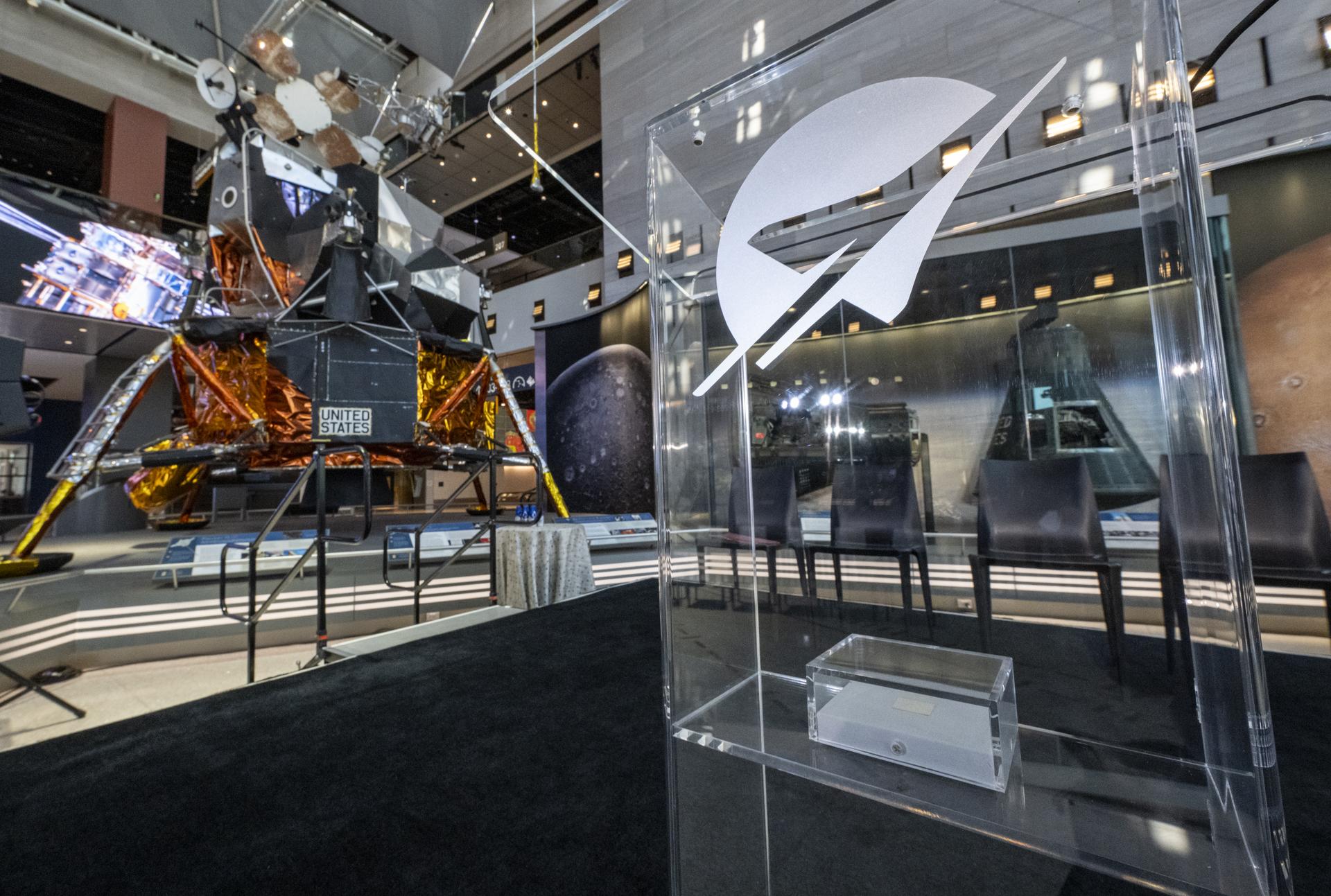
A swatch of muslin fabric from the original Wright Flyer the Wright Brothers used to make the first powered flight in 1903 is seen prior to the Smithsonian’s National Air and Space Museum rededication ceremony Wednesday, July 1, 2026, in Washington. The swatch is being returned to the museum after having been flown aboard NASA’s Artemis II mission around the Moon and back to Earth in April 2026. Photo Credit: (NASA/Keegan Barber)
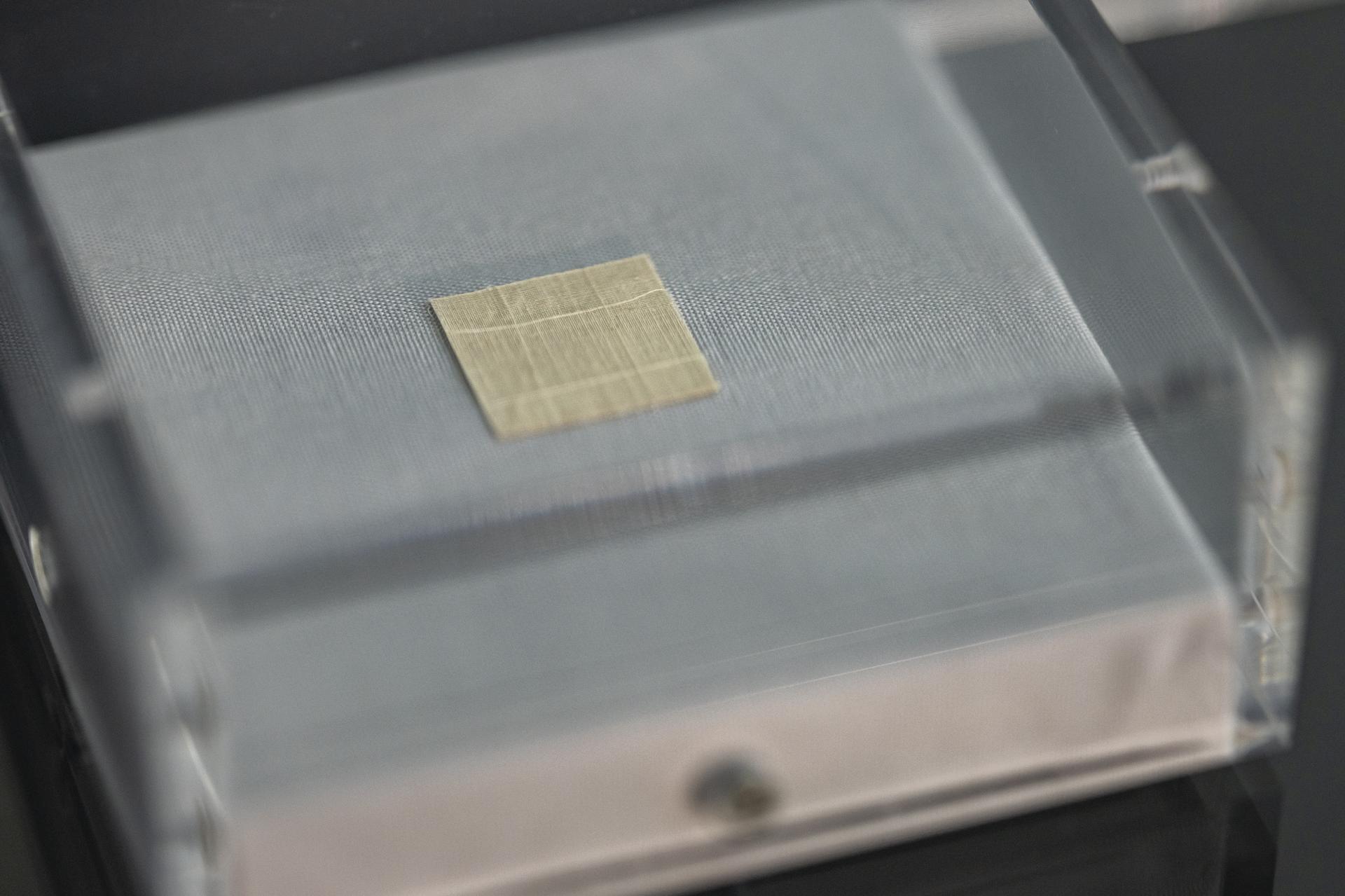
A swatch of muslin fabric from the original Wright Flyer the Wright Brothers used to make the first powered flight in 1903 is seen prior to the Smithsonian’s National Air and Space Museum rededication ceremony Wednesday, July 1, 2026, in Washington. The swatch is being returned to the museum after having been flown aboard NASA’s Artemis II mission around the Moon and back to Earth in April 2026. Photo Credit: (NASA/Keegan Barber)

Christopher Browne, director of the Smithsonian’s National Air and Space Museum delivers remarks during a briefing on NASA’s TEMPO (Tropospheric Emissions: Monitoring of Pollution) instrument, Tuesday, March 14, 2023 at the Smithsonian’s National Air and Space Museum in Washington. NASA’s TEMPO instrument, the first Earth Venture Instrument mission, will measure air pollution across North America from Mexico City to the Canadian oil sands and from the Atlantic to the Pacific hourly and at a high spatial resolution. A partnership between NASA and the Center for Astrophysics | Harvard & Smithsonian, TEMPO will launch on a commercial satellite to geostationary orbit as early as April. Photo Credit: (NASA/Joel Kowsky)
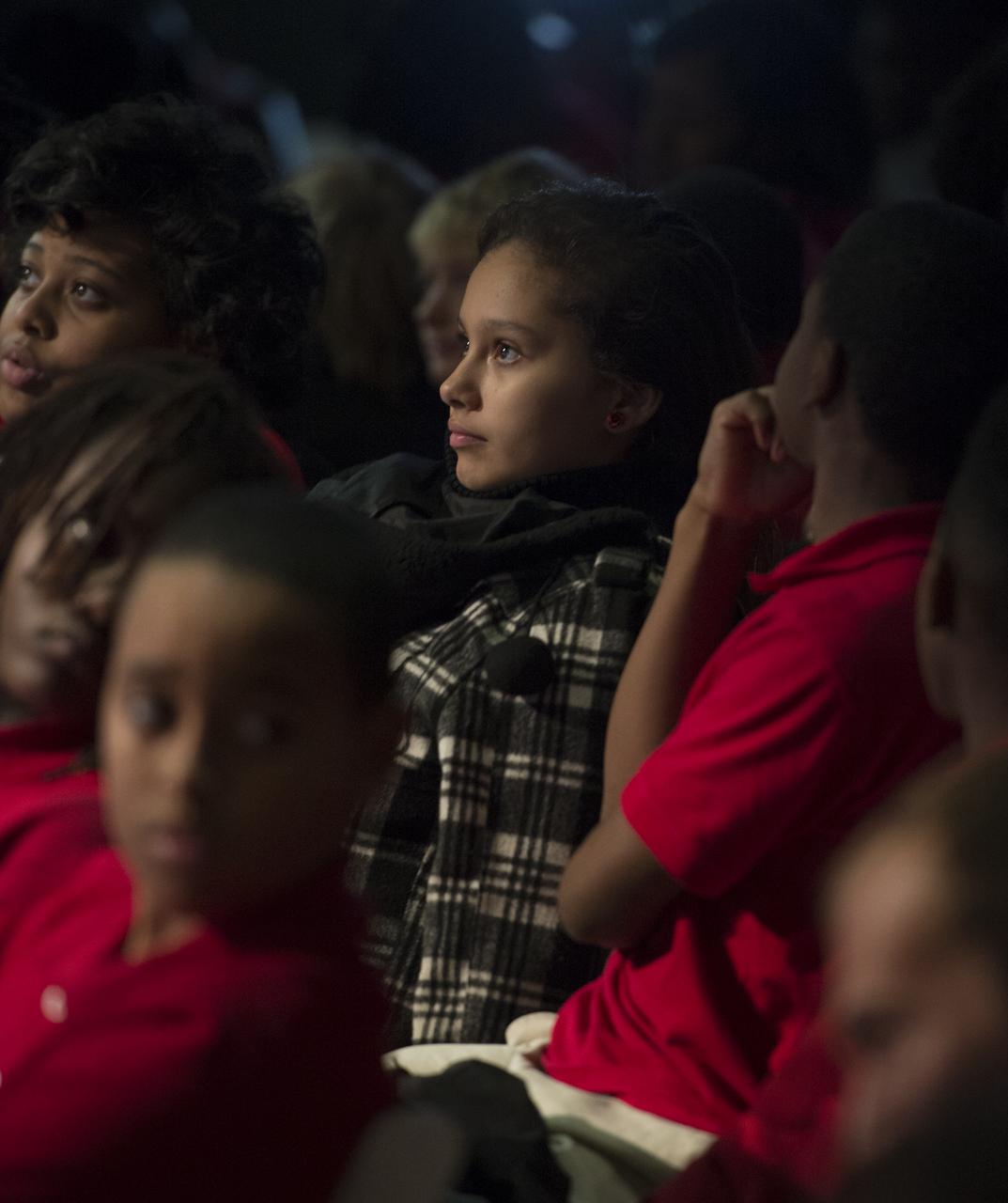
Students from D.C.'s Stuart-Hobson Middle School participate in a live video downlink with astronauts aboard the International Space Station at the Smithsonian National Air and Space Museum, Thursday, Nov. 15, 2012 in Washington. The downlink is an annual event held in honor of International Education Week, and was co-hosted with the Department of Education and the National Center for Earth and Space Science Education (NCESSE). Photo Credit: (NASA/Carla Cioffi)
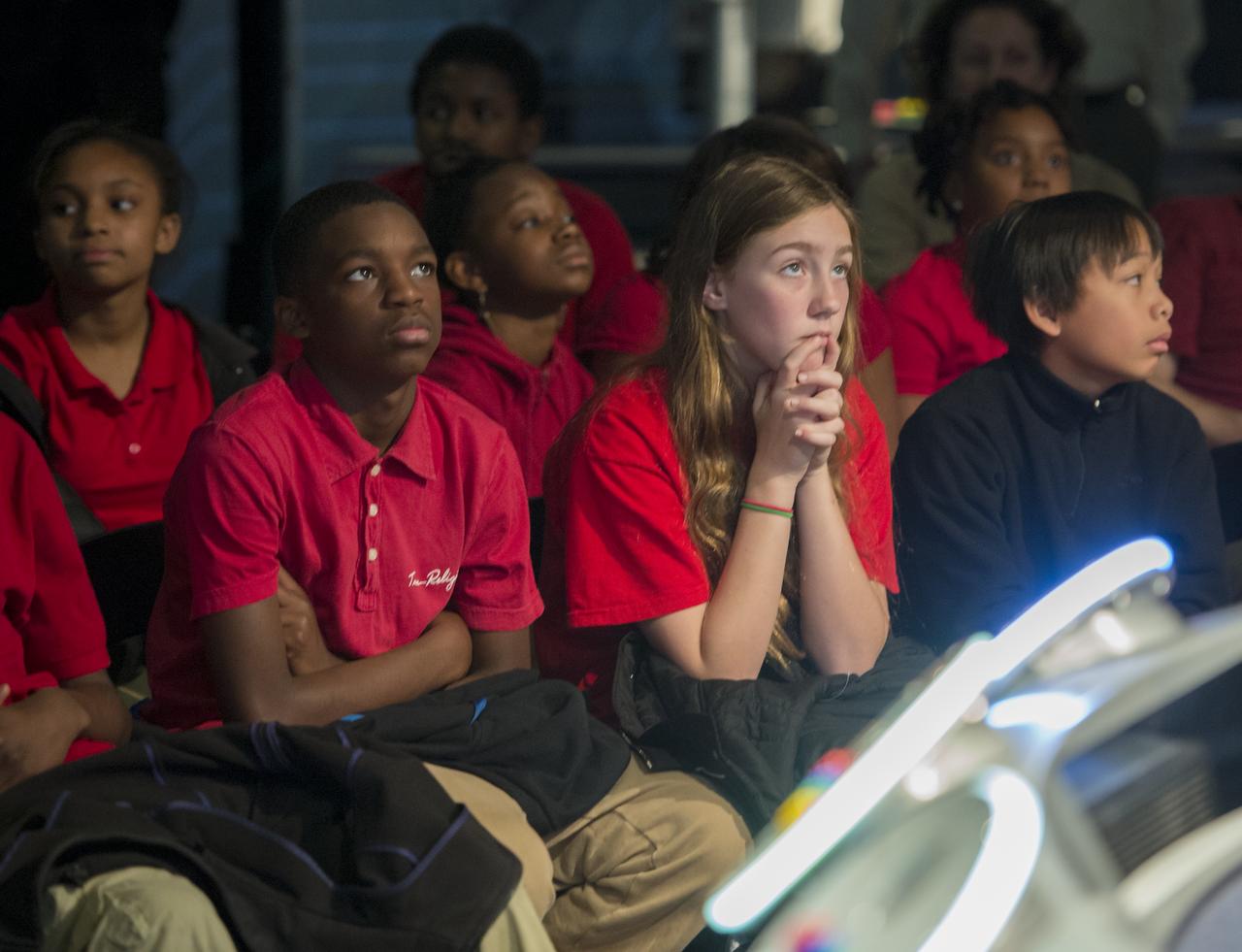
Students from D.C.'s Stuart-Hobson Middle School participate in a live video downlink with astronauts aboard the International Space Station at the Smithsonian National Air and Space Museum, Thursday, Nov. 15, 2012 in Washington. The downlink is an annual event held in honor of International Education Week, and was co-hosted with the Department of Education and the National Center for Earth and Space Science Education (NCESSE). Photo Credit: (NASA/Carla Cioffi)
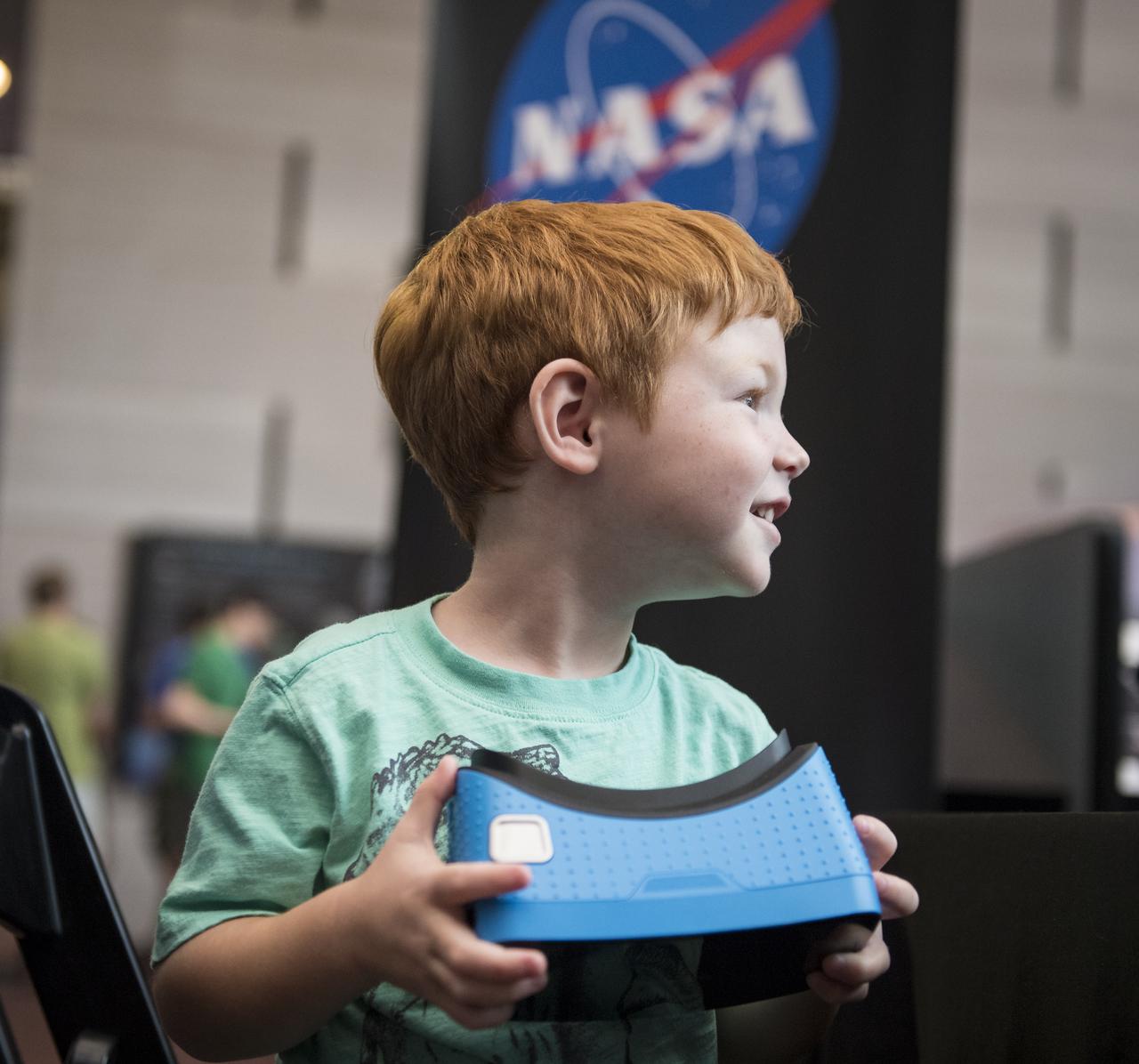
Visitors explore the activities in the Space Race Gallery at Smithsonian's National Air and Space Museum, Wednesday, June 27, 2018 in Washington. Photo Credit: (NASA/Aubrey Gemignani)
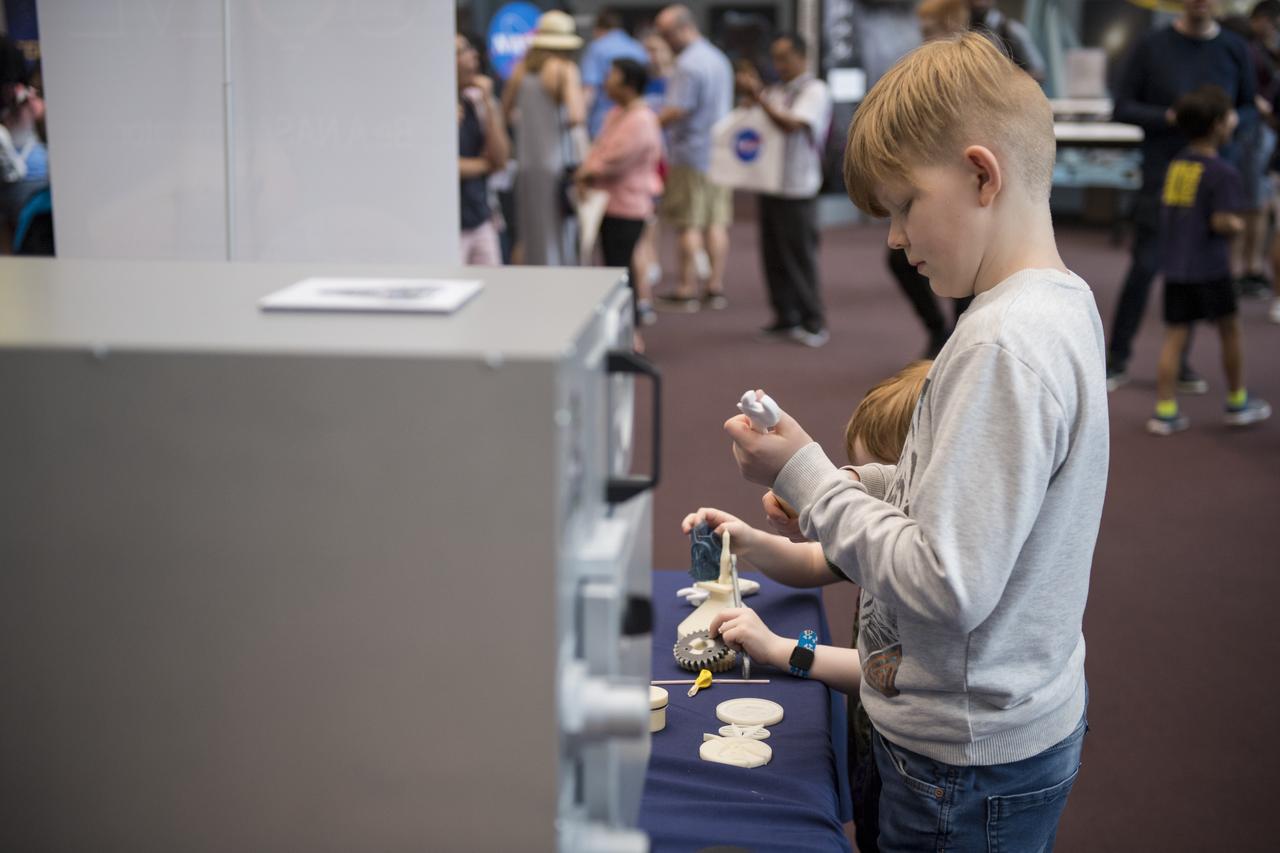
Visitors explore the activities in the Space Race Gallery at Smithsonian's National Air and Space Museum, Wednesday, June 27, 2018 in Washington. Photo Credit: (NASA/Aubrey Gemignani)
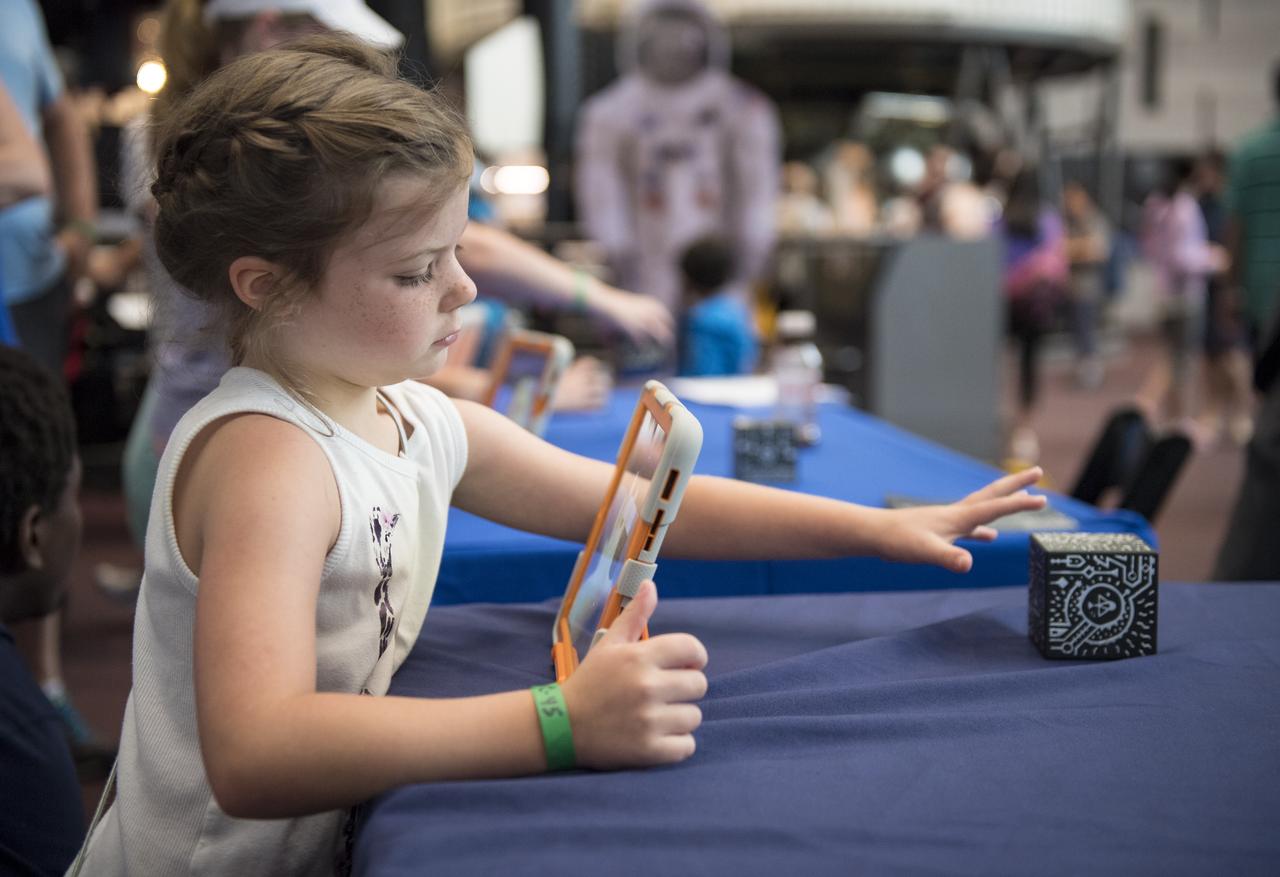
Visitors explore the activities in the Space Race Gallery at Smithsonian's National Air and Space Museum, Wednesday, June 27, 2018 in Washington. Photo Credit: (NASA/Aubrey Gemignani)
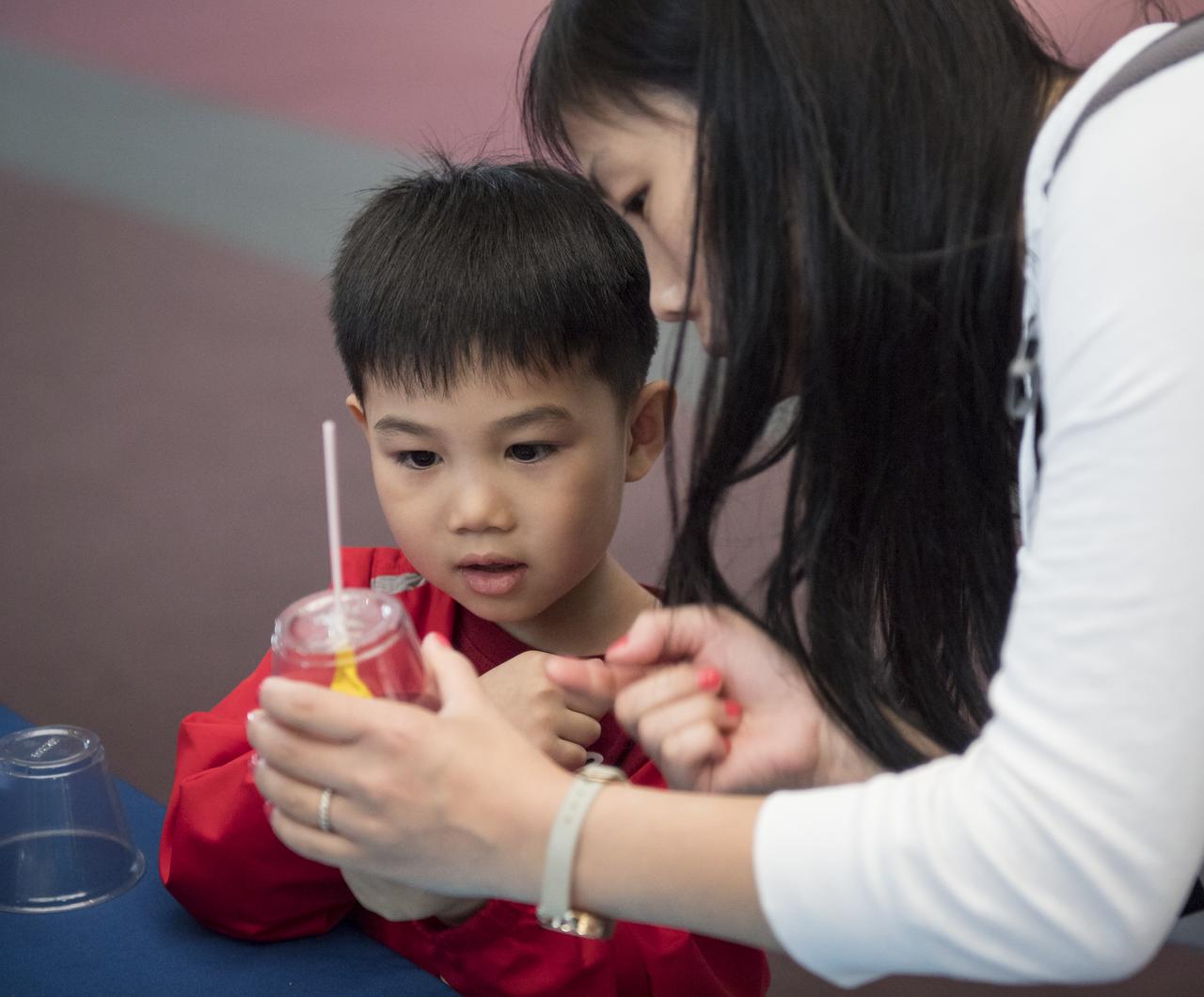
Visitors explore the activities in the Space Race Gallery at Smithsonian's National Air and Space Museum, Wednesday, June 27, 2018 in Washington. Photo Credit: (NASA/Aubrey Gemignani)
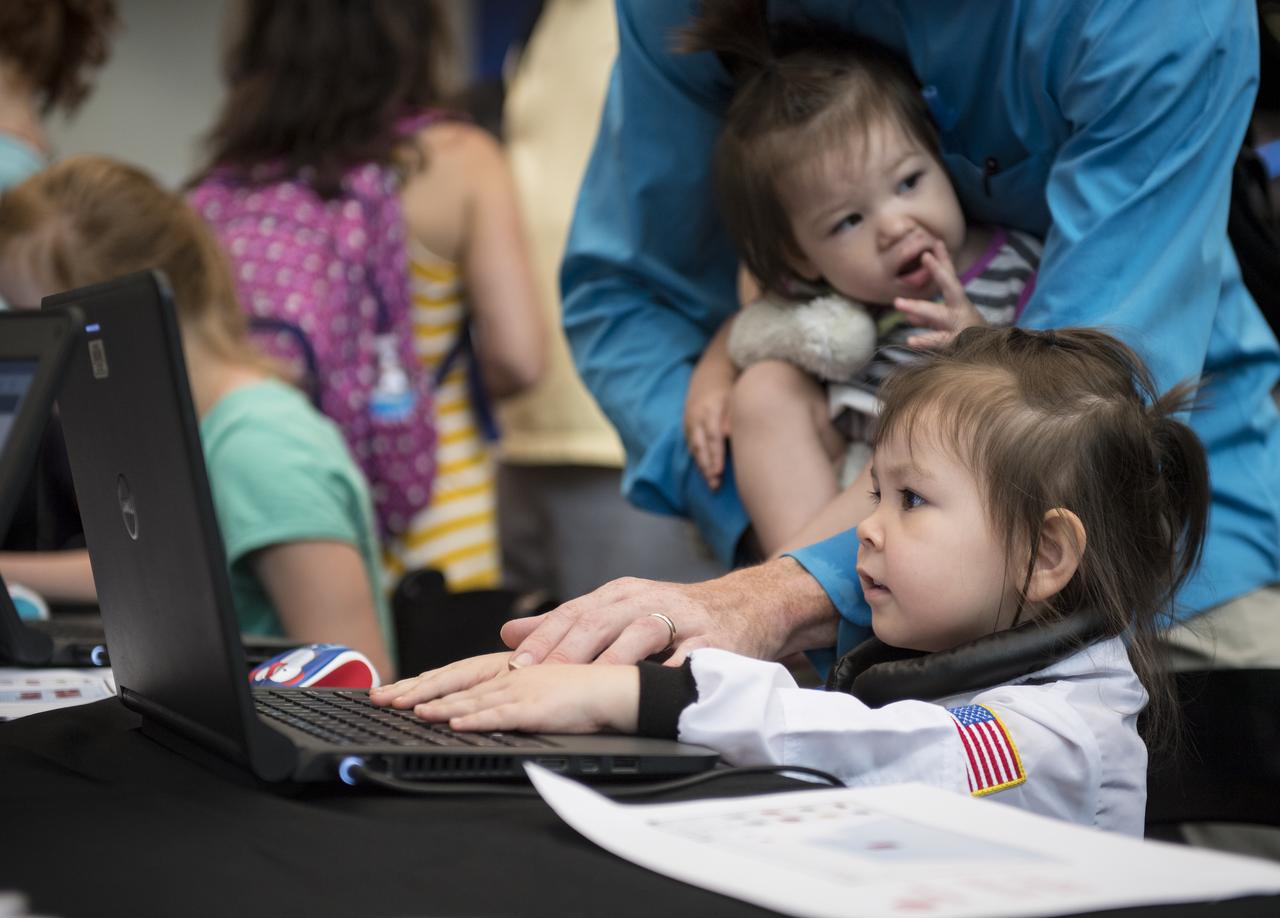
Visitors explore the activities in the Space Race Gallery at Smithsonian's National Air and Space Museum, Wednesday, June 27, 2018 in Washington. Photo Credit: (NASA/Aubrey Gemignani)
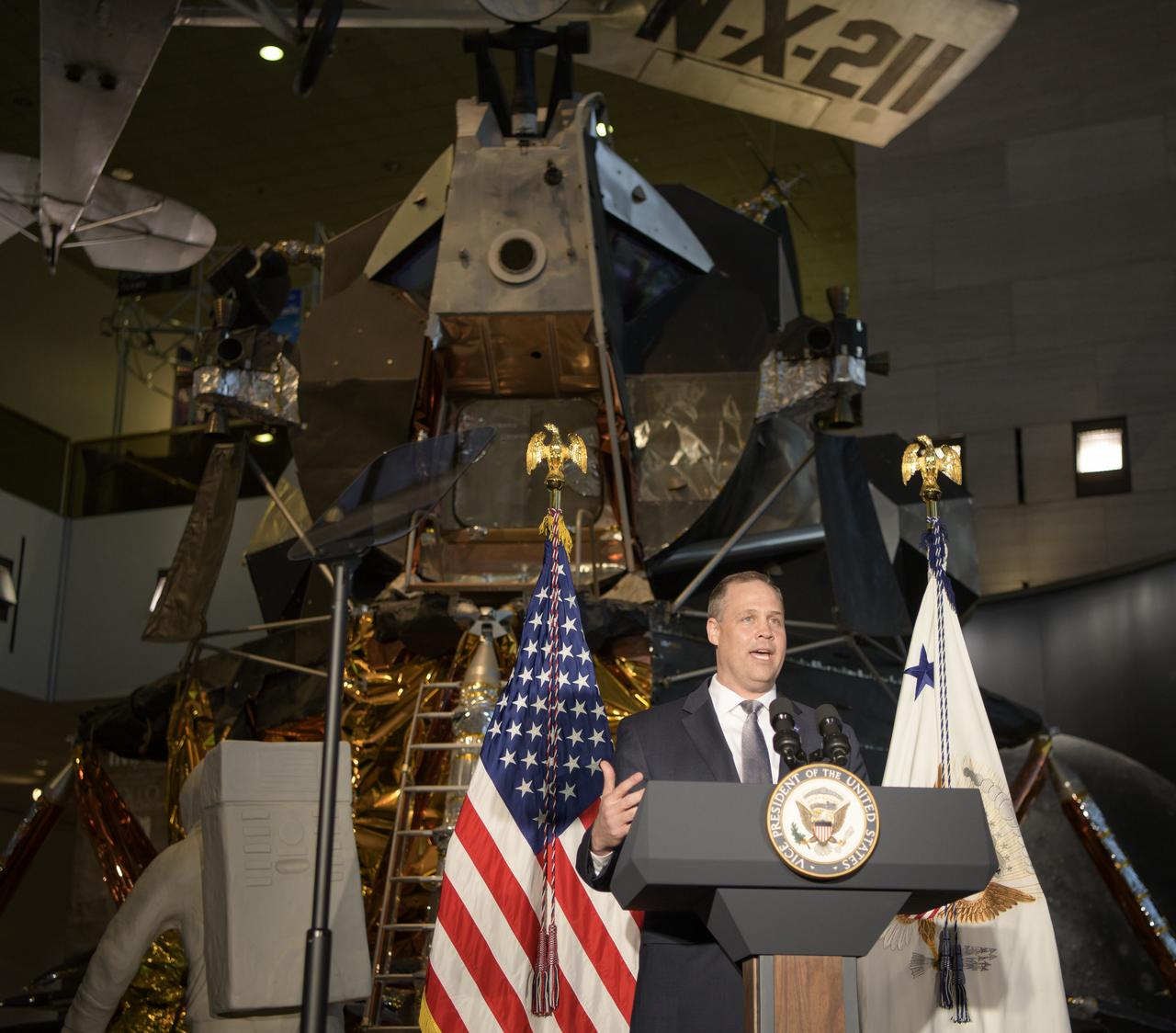
NASA Administrator Jim Bridenstine gives remarks at the premiere of the film "Apollo 11: First Steps Edition", Tuesday, May 14, 2019 at the Smithsonian's National Air and Space Museum in Washington. Photo Credit: (NASA/Bill Ingalls)
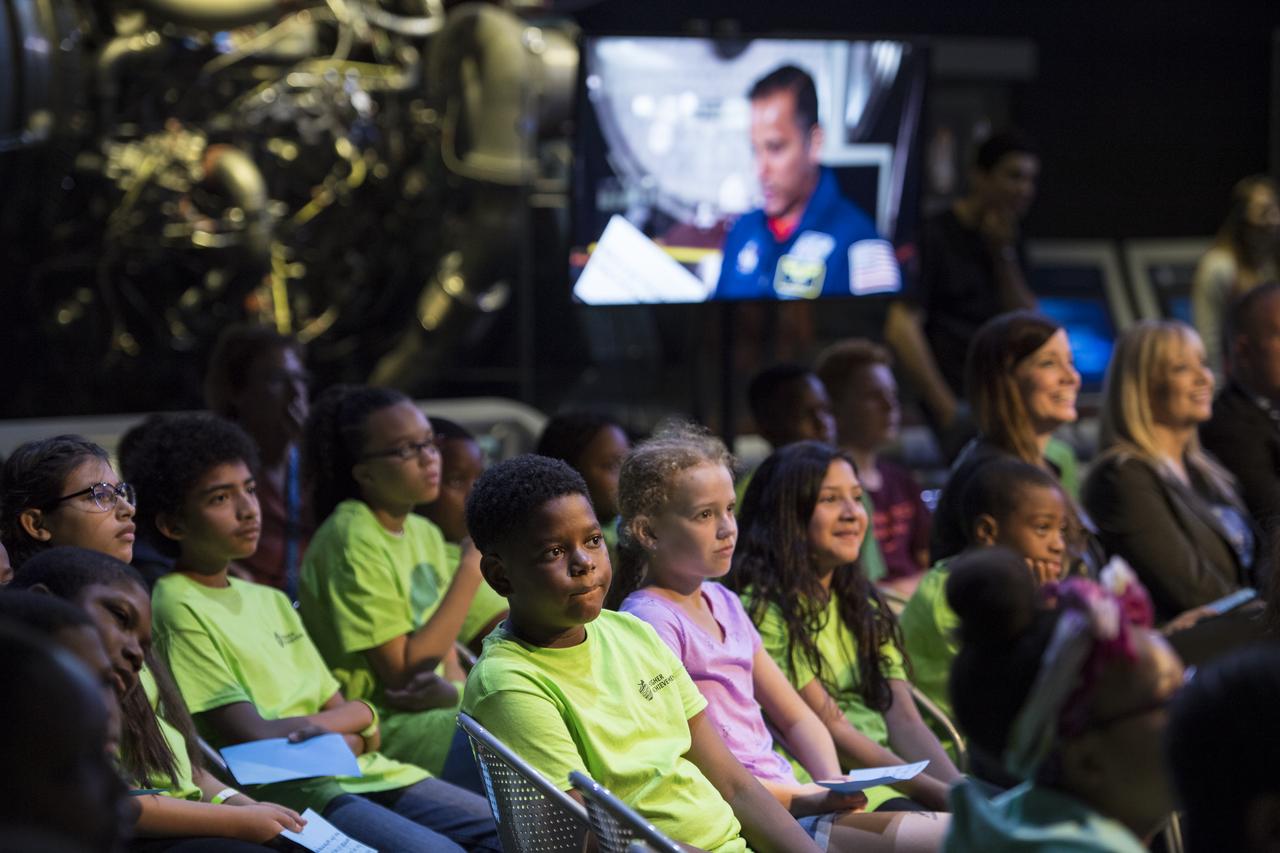
Students watch a video about NASA astronaut Joe Acaba during a STEM in 30 event, Wednesday, June 27, 2018 at Smithsonian's National Air and Space Museum in Washington. Photo Credit: (NASA/Aubrey Gemignani)
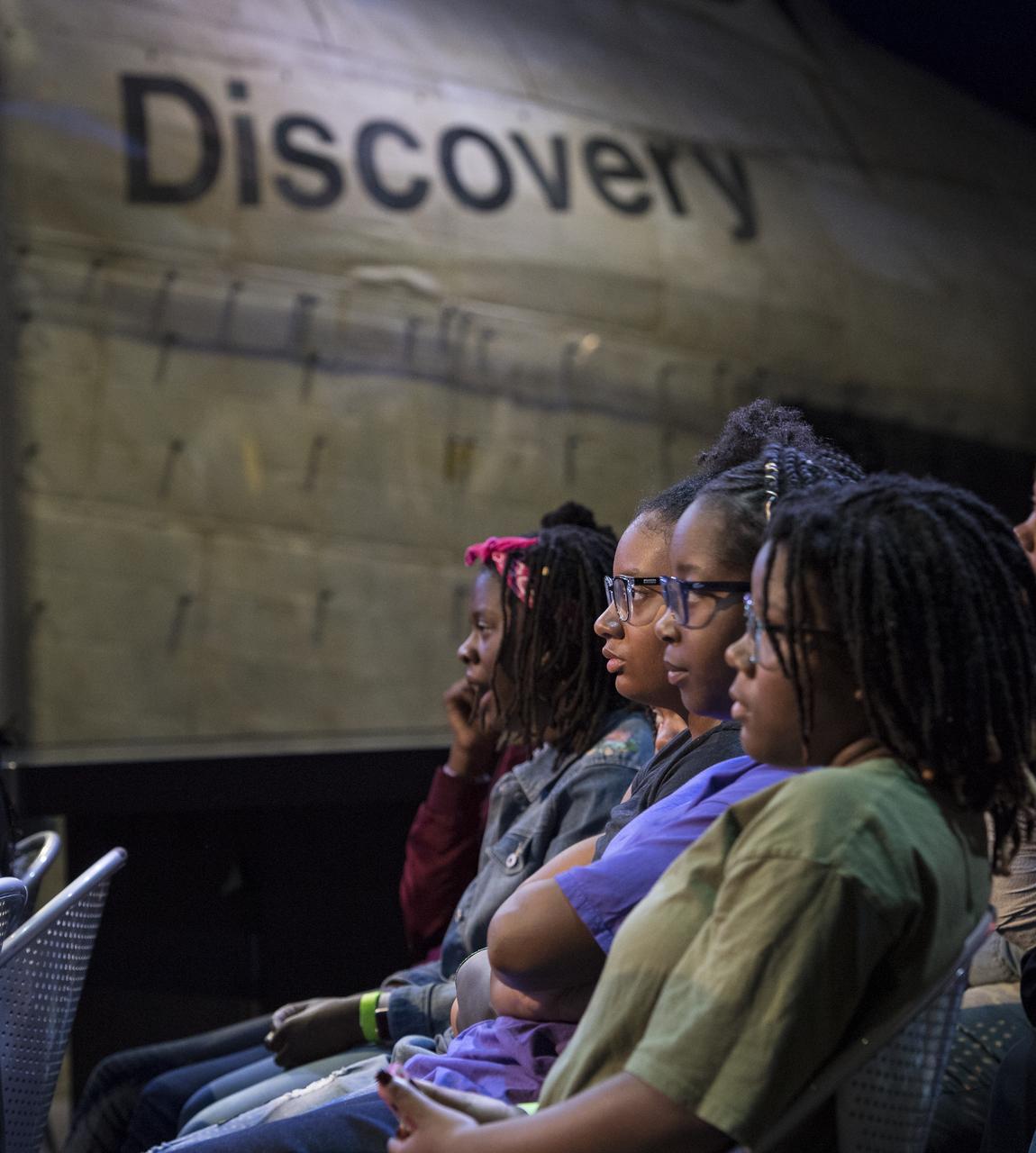
Students watch a video about NASA astronaut Joe Acaba during a STEM in 30 event, Wednesday, June 27, 2018 at Smithsonian's National Air and Space Museum in Washington. Photo Credit: (NASA/Aubrey Gemignani)
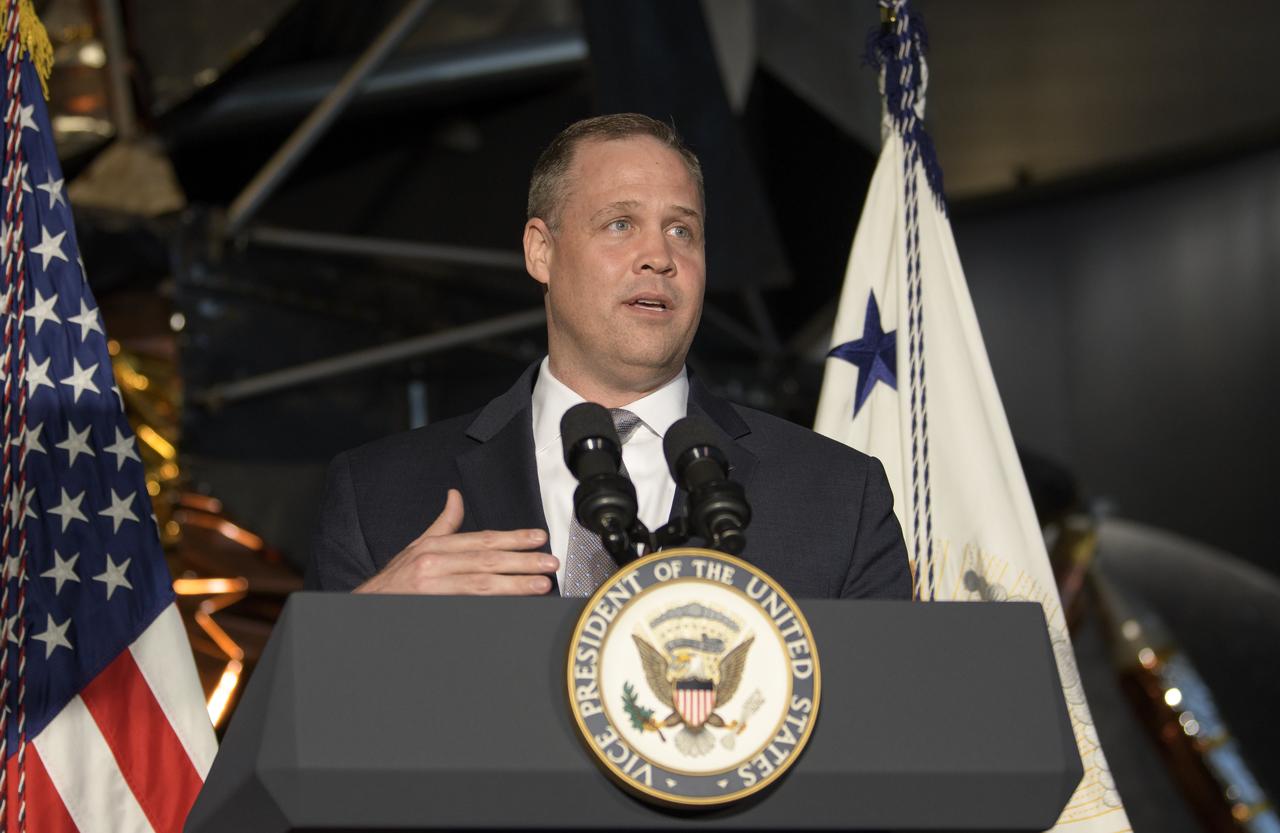
NASA Administrator Jim Bridenstine gives remarks at the premiere of the film "Apollo 11: First Steps Edition", Tuesday, May 14, 2019 at the Smithsonian's National Air and Space Museum in Washington. Photo Credit: (NASA/Bill Ingalls)
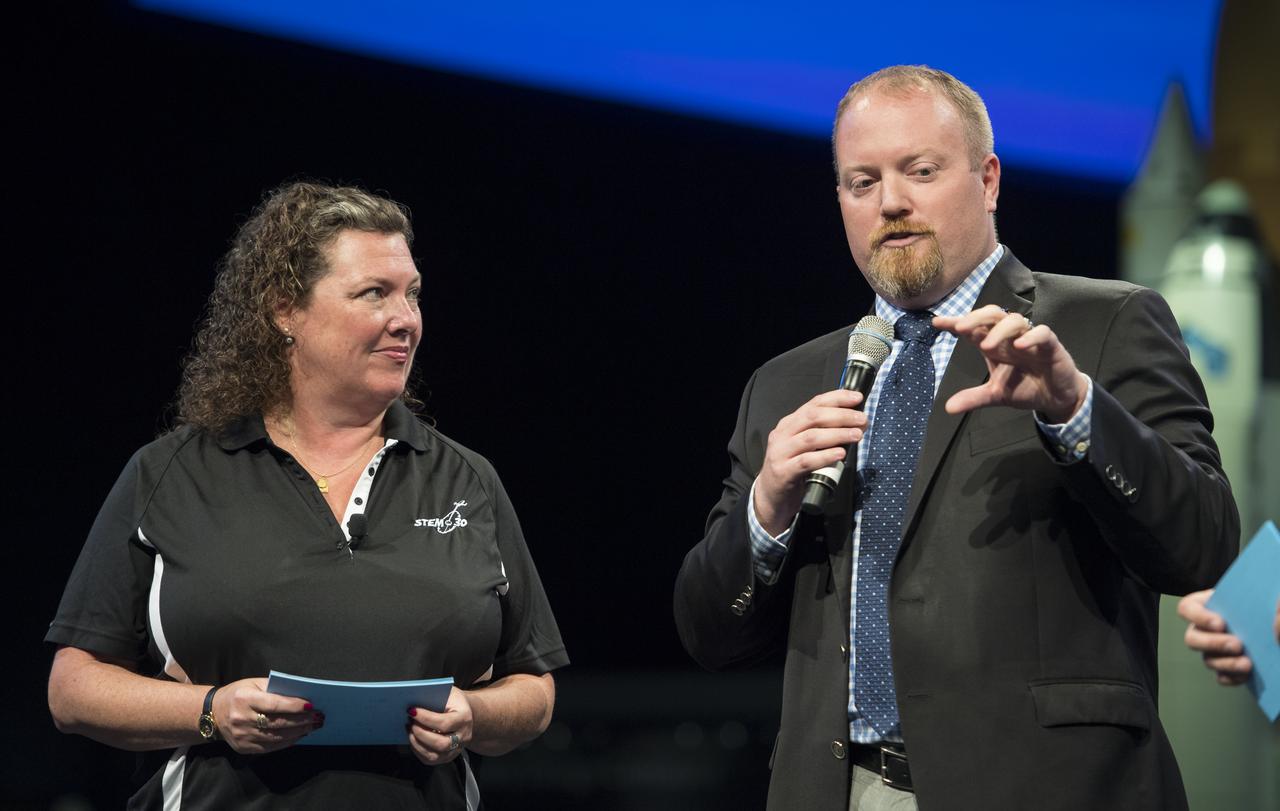
Jason Crusan, director, NASA Advanced Exploration Systems (AES) Division, speaks with the STEM in 30 team Wednesday, June 27, 2018 at Smithsonian's National Air and Space Museum in Washington. Photo Credit: (NASA/Aubrey Gemignani)
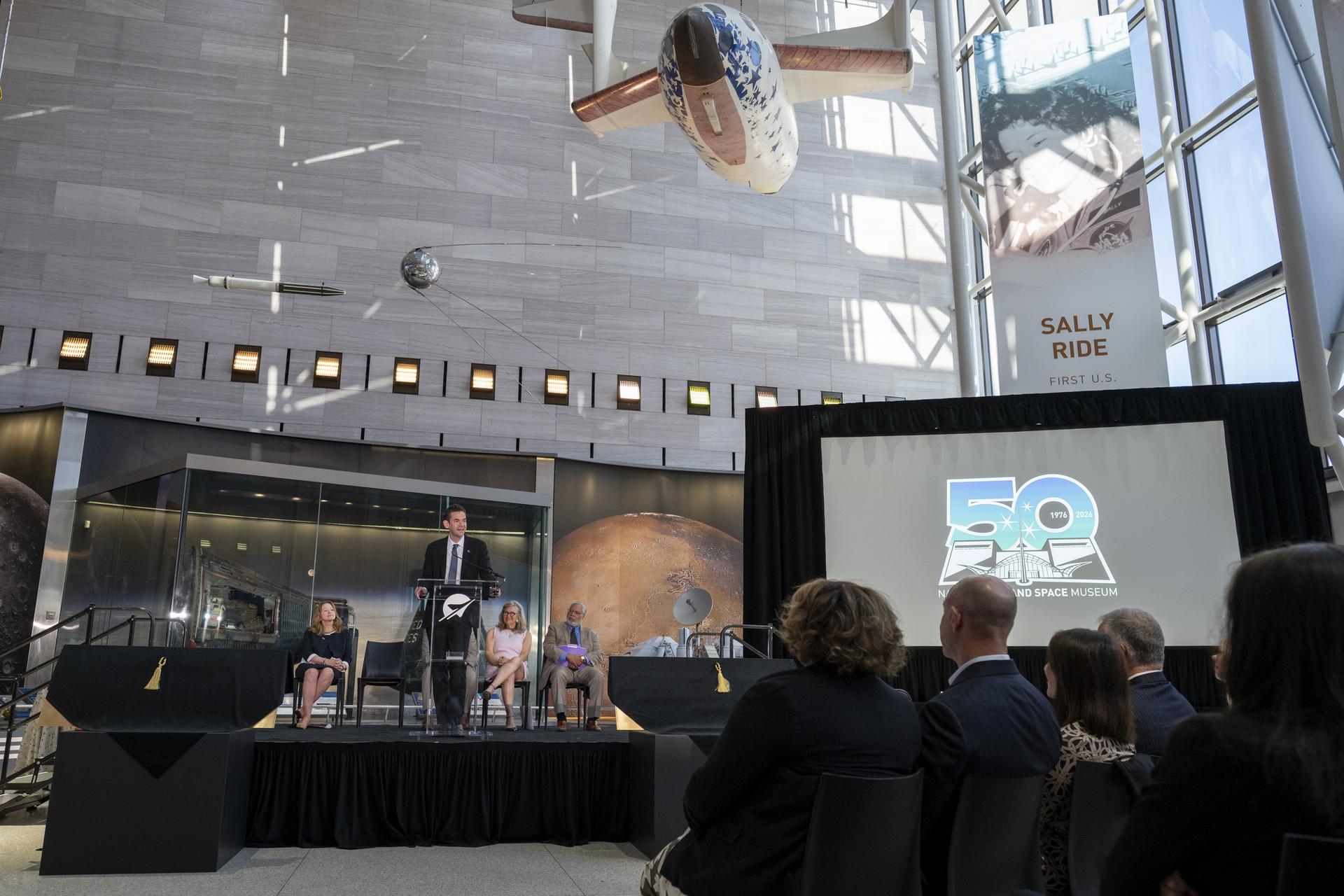
NASA Administrator Jared Isaacman delivers remarks during the Smithsonian’s National Air and Space Museum rededication ceremony Wednesday, July 1, 2026, in Washington. Photo Credit: (NASA/Keegan Barber)
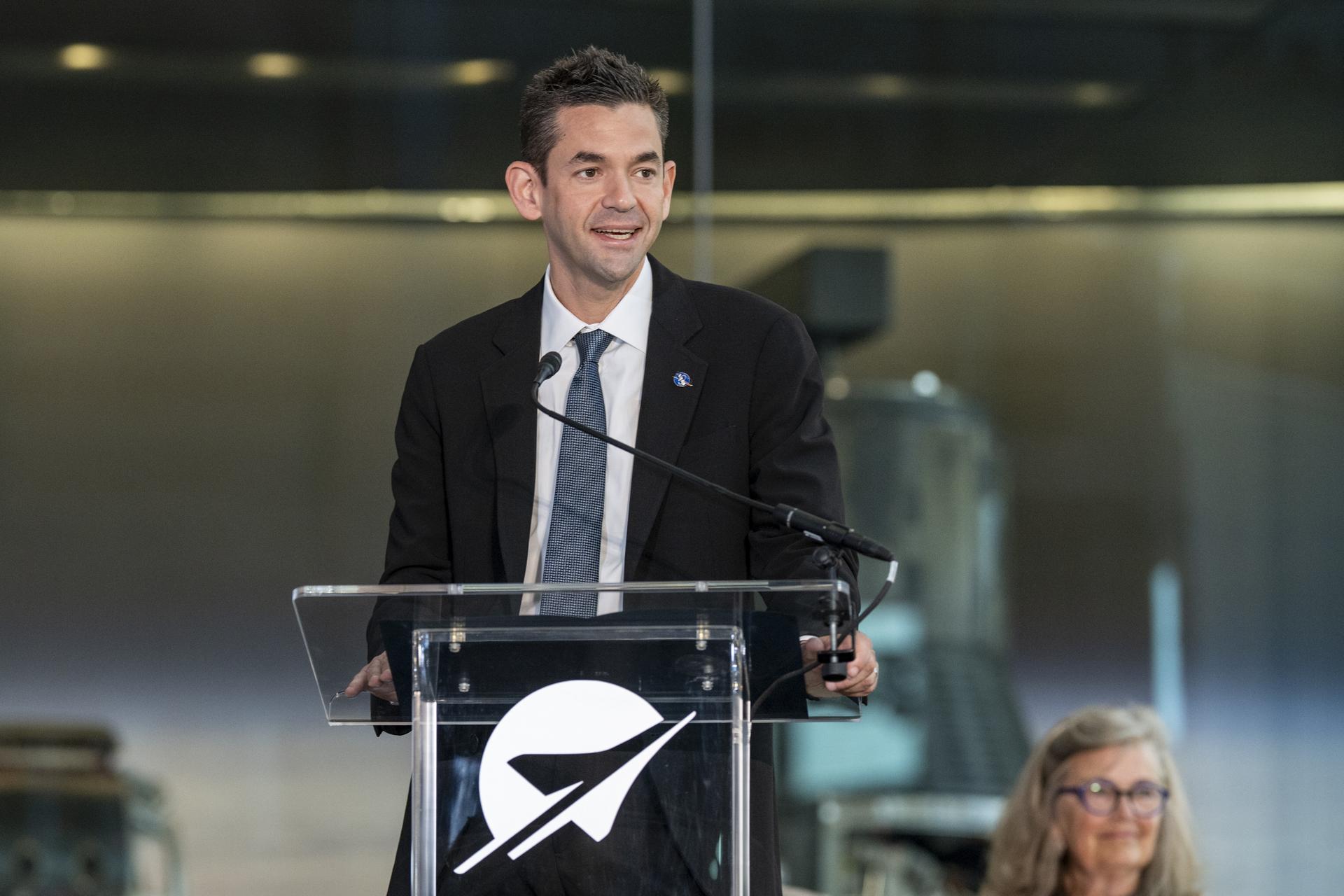
NASA Administrator Jared Isaacman delivers remarks during the Smithsonian’s National Air and Space Museum rededication ceremony Wednesday, July 1, 2026, in Washington. Photo Credit: (NASA/Keegan Barber)
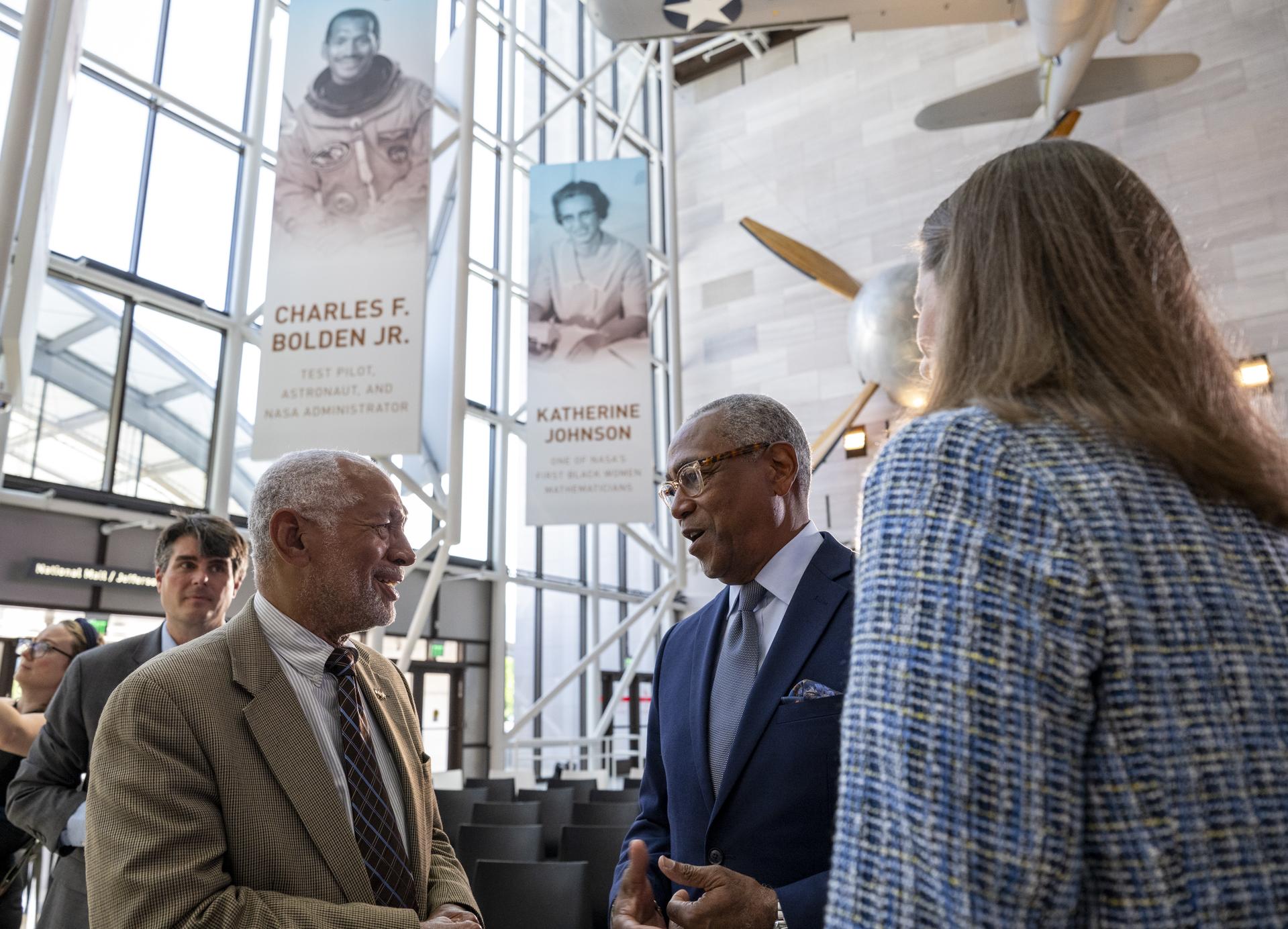
Former NASA Administrator Charles Bolden, left, speaks with guests following the Smithsonian’s National Air and Space Museum rededication ceremony Wednesday, July 1, 2026, in Washington. Photo Credit: (NASA/Keegan Barber)
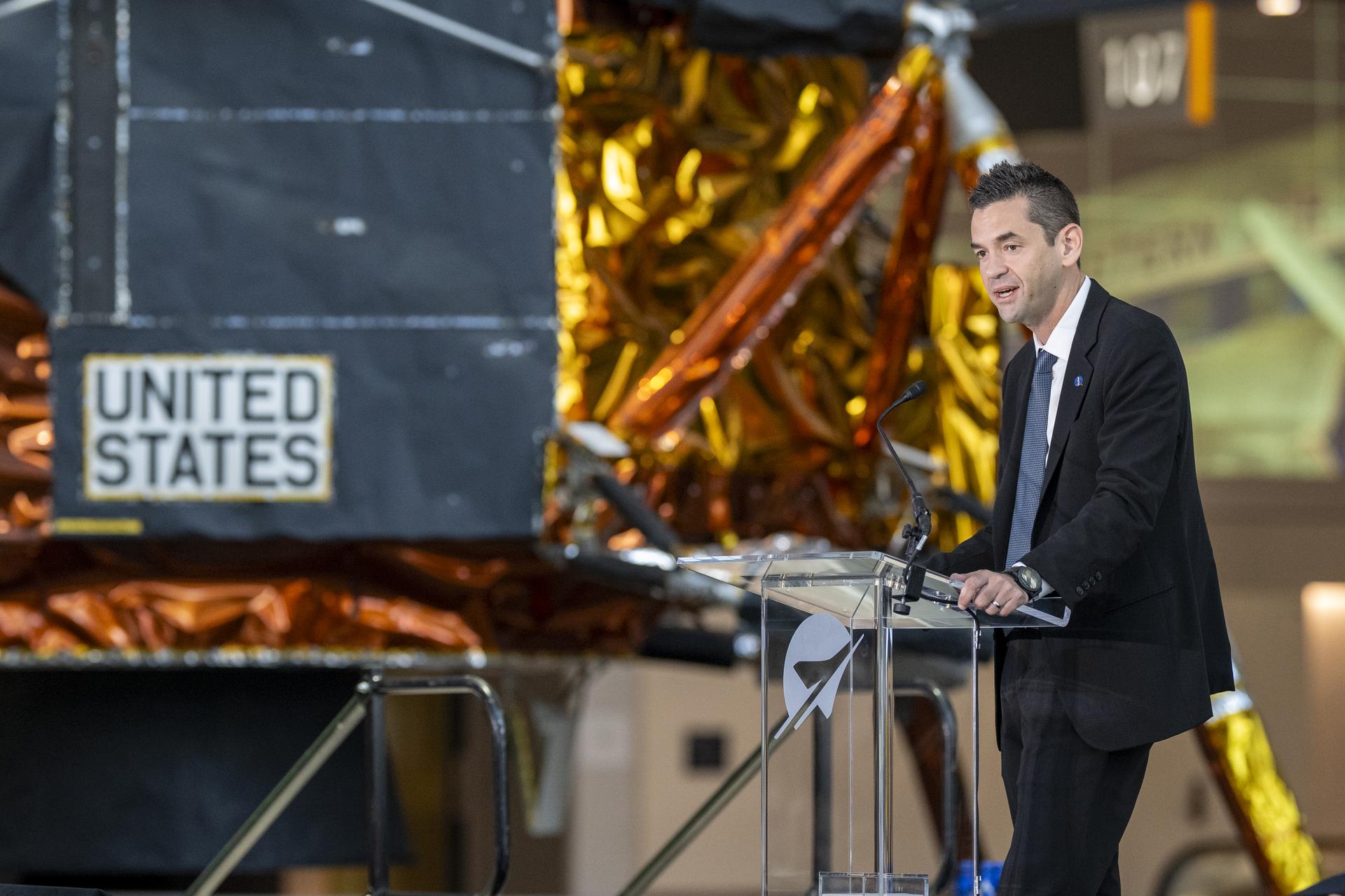
NASA Administrator Jared Isaacman delivers remarks during the Smithsonian’s National Air and Space Museum rededication ceremony Wednesday, July 1, 2026, in Washington. Photo Credit: (NASA/Keegan Barber)
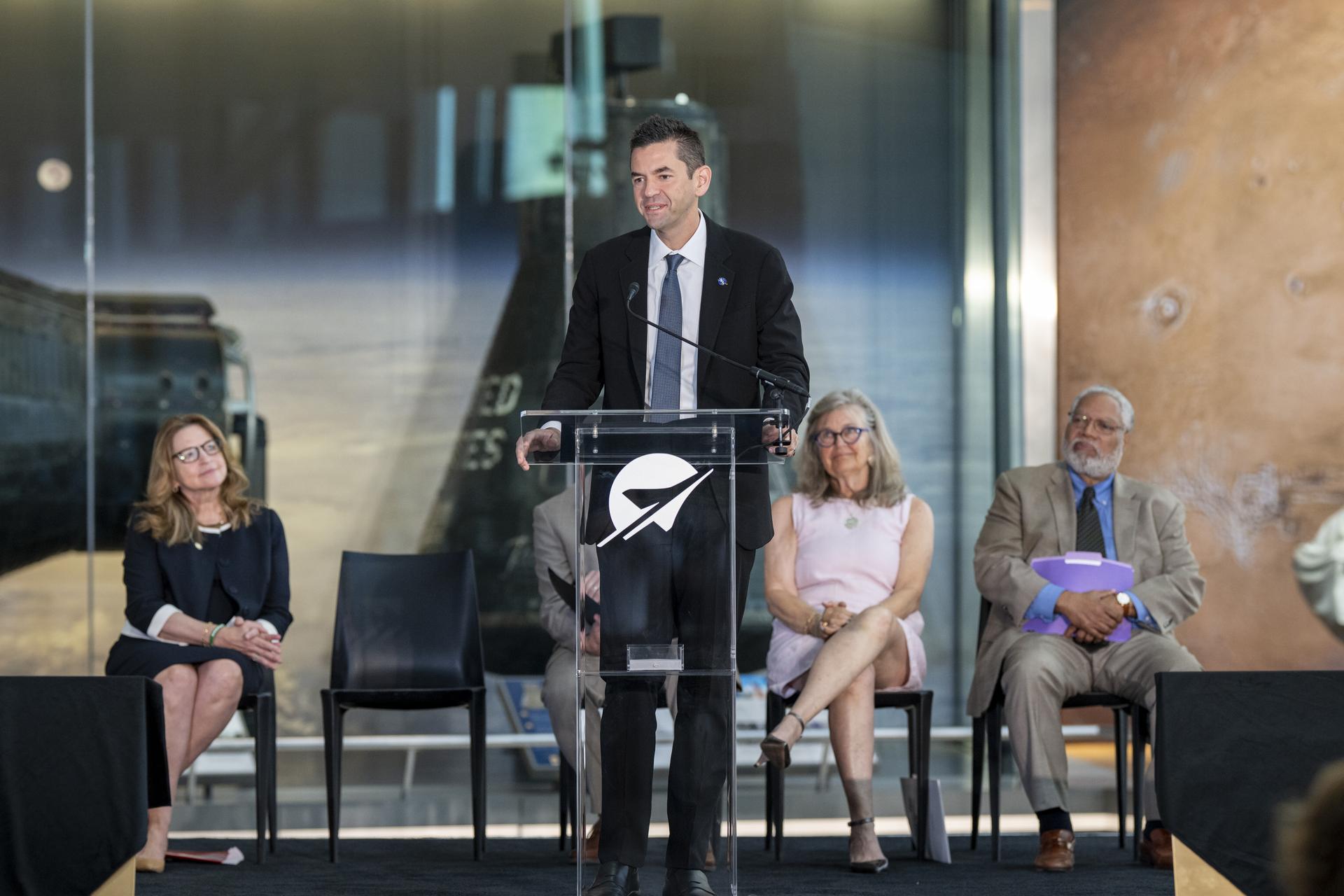
NASA Administrator Jared Isaacman delivers remarks during the Smithsonian’s National Air and Space Museum rededication ceremony Wednesday, July 1, 2026, in Washington. Photo Credit: (NASA/Keegan Barber)
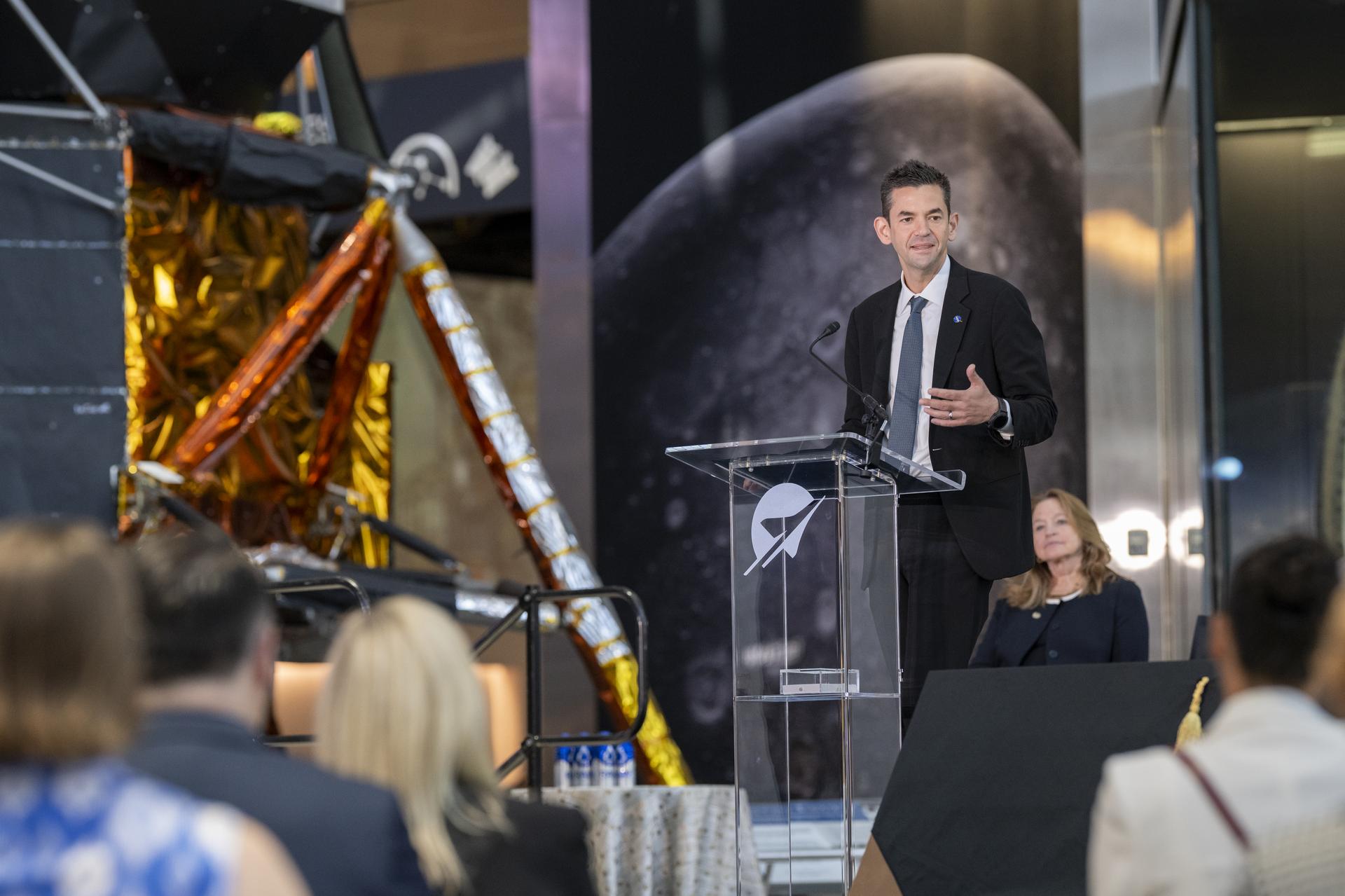
NASA Administrator Jared Isaacman delivers remarks during the Smithsonian’s National Air and Space Museum rededication ceremony Wednesday, July 1, 2026, in Washington. Photo Credit: (NASA/Keegan Barber)
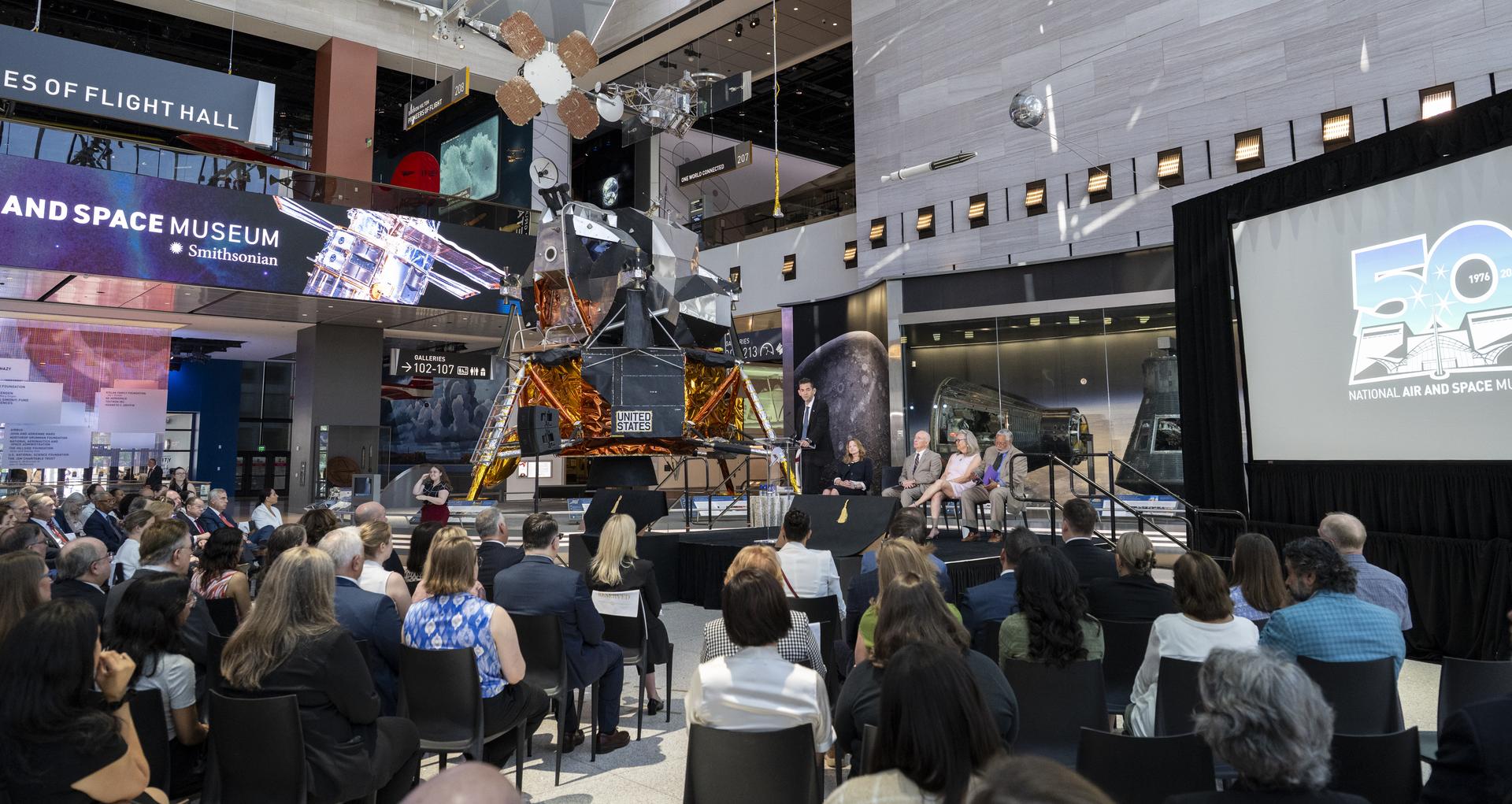
NASA Administrator Jared Isaacman delivers remarks during the Smithsonian’s National Air and Space Museum rededication ceremony Wednesday, July 1, 2026, in Washington. Photo Credit: (NASA/Keegan Barber)
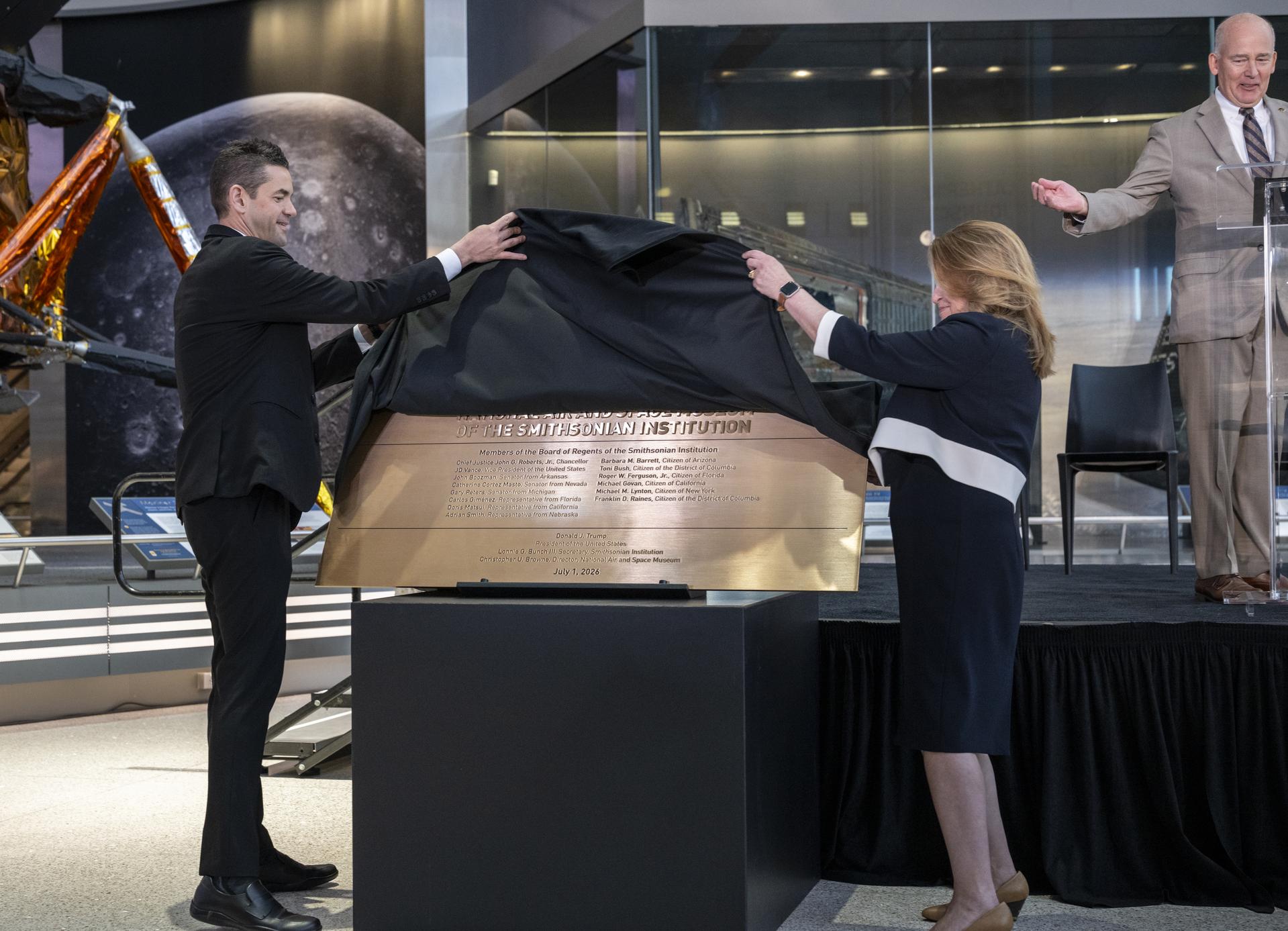
NASA Administrator Jared Isaacman, left, and Under Secretary for Science and Research at the Smithsonian Institution Ellen Stofan, right, unveil a plaque during the Smithsonian’s National Air and Space Museum rededication ceremony Wednesday, July 1, 2026, in Washington. Photo Credit: (NASA/Keegan Barber)
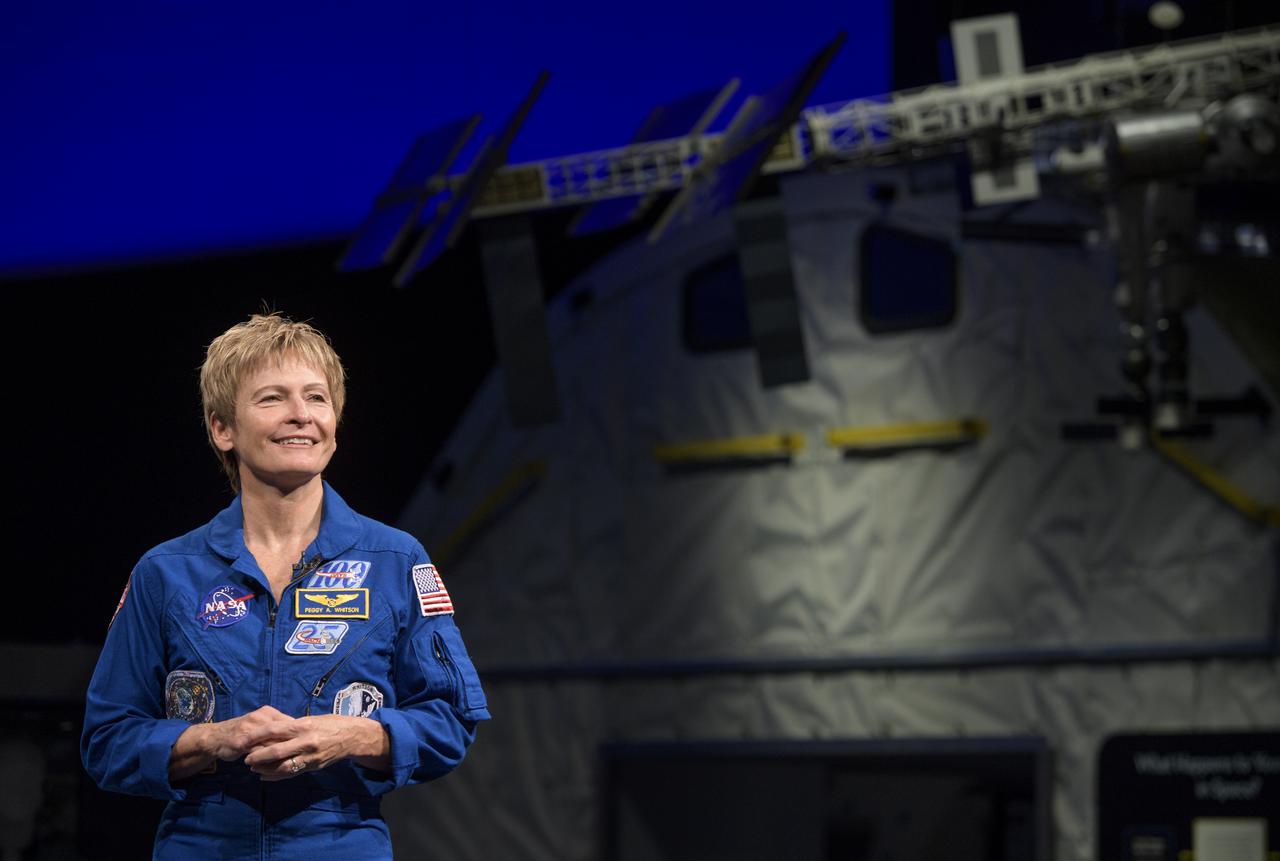
NASA astronaut Peggy Whitson is seen during an interview, Friday, March 2, 2018 at the Smithsonian's National Air and Space Museum in Washington. Whitson spent 288 days onboard the International Space Station as a member of Expedition 50, 51, and 52, conducting four spacewalks and contributing to hundreds of experiments in biology, biotechnology, physical science and Earth science during her stay. Photo Credit: (NASA/Joel Kowsky)
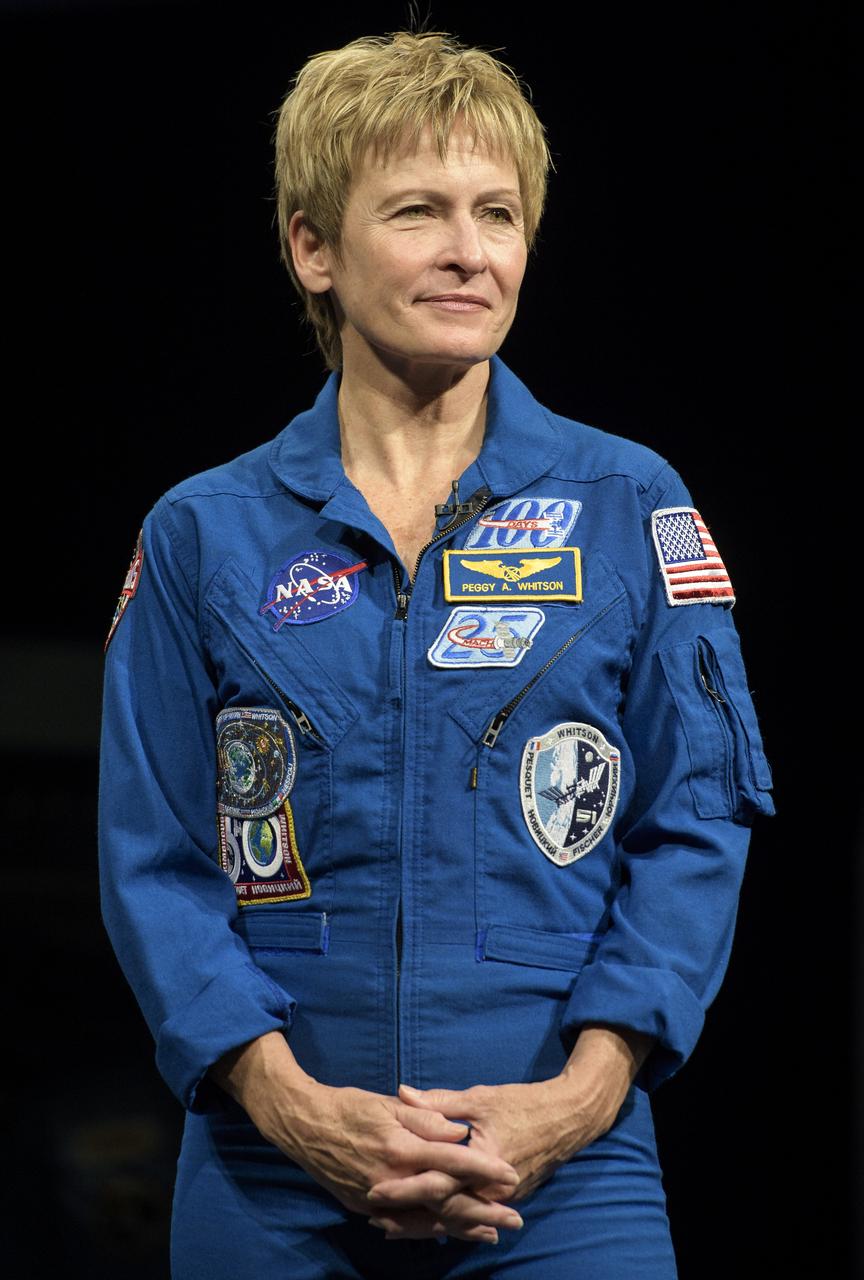
NASA astronaut Peggy Whitson is seen during an interview, Friday, March 2, 2018 at the Smithsonian's National Air and Space Museum in Washington. Whitson spent 288 days onboard the International Space Station as a member of Expedition 50, 51, and 52, conducting four spacewalks and contributing to hundreds of experiments in biology, biotechnology, physical science and Earth science during her stay. Photo Credit: (NASA/Joel Kowsky)
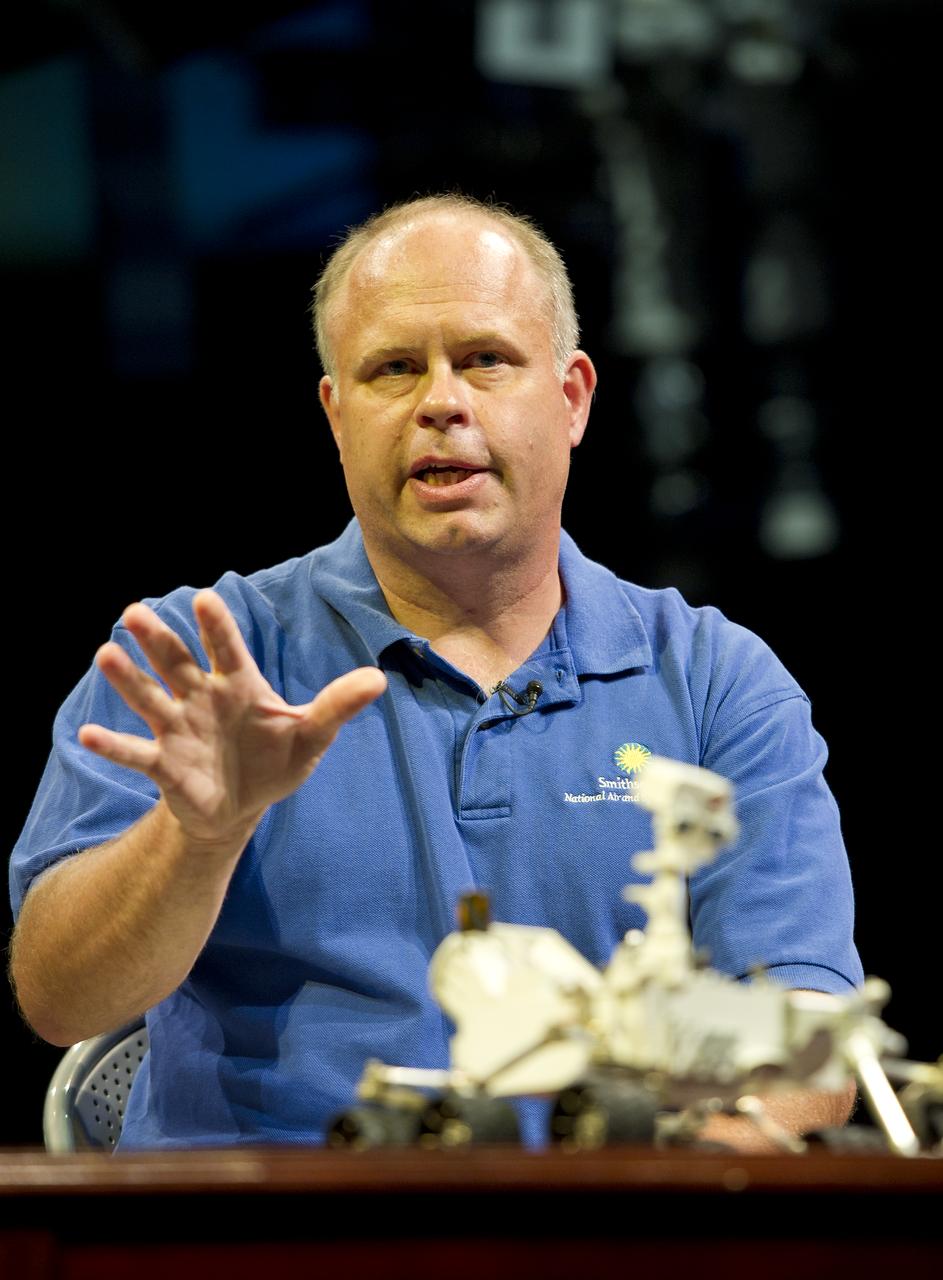
John Grant, geologist, Smithsonian National Air and Space Museum in Washington, speaks at a Mars Science Laboratory (MSL) press conference at the Smithsonian's National Air and Space Museum on Friday, July 22, 2011 in Washington. The Mars Science Laboratory (MSL), or Curiosity, is scheduled to launch late this year from NASA's Kennedy Space Center in Florida and land in August 2012. Curiosity is twice as long and more than five times as heavy as previous Mars rovers. The rover will study whether the landing region at Gale crater had favorable environmental conditions for supporting microbial life and for preserving clues about whether life ever existed. Photo Credit: (NASA/Carla Cioffi)
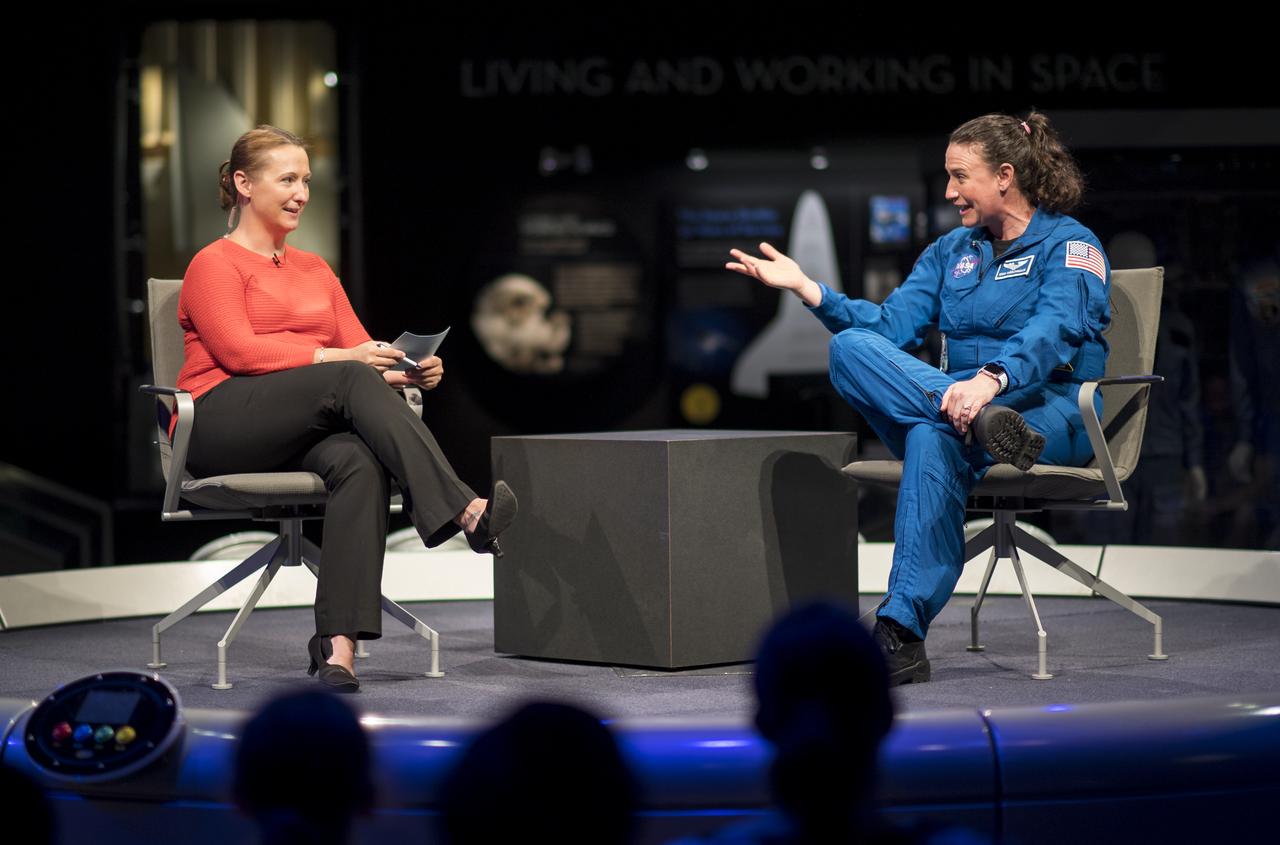
Smithsonian National Air and Space Museum curator Jennifer Levasseu speaks with NASA astronaut Serena Auñón-Chancellor about her time onboard the International Space Station during "What's New in Aerospace" Friday, June 14, 2019 the Smithsonian's National Air and Space Museum in Washington, DC. Auñón-Chancellor spent 197 days living and working onboard the orbital laboratory as part of Expeditions 56 and 57, contributing to hundreds of experiments in biology, biotechnology, physical science, and Earth science while there. She began her career at NASA as a flight surgeon before being selected as an astronaut in 2009. Photo Credit: (NASA/Joel Kowsky)
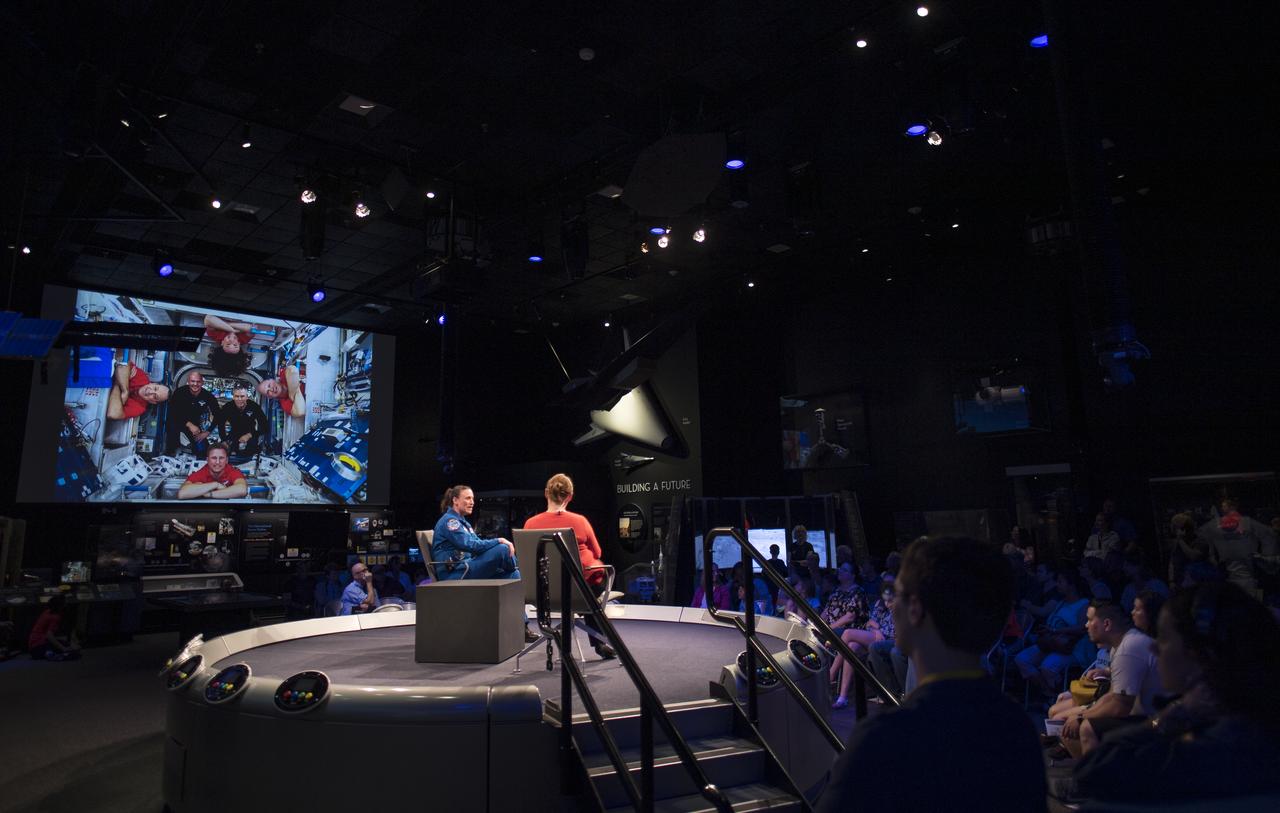
Smithsonian National Air and Space Museum curator Jennifer Levasseu speaks with NASA astronaut Serena Auñón-Chancellor about her time onboard the International Space Station during "What's New in Aerospace" Friday, June 14, 2019 the Smithsonian's National Air and Space Museum in Washington, DC. Auñón-Chancellor spent 197 days living and working onboard the orbital laboratory as part of Expeditions 56 and 57, contributing to hundreds of experiments in biology, biotechnology, physical science, and Earth science while there. She began her career at NASA as a flight surgeon before being selected as an astronaut in 2009. Photo Credit: (NASA/Joel Kowsky)
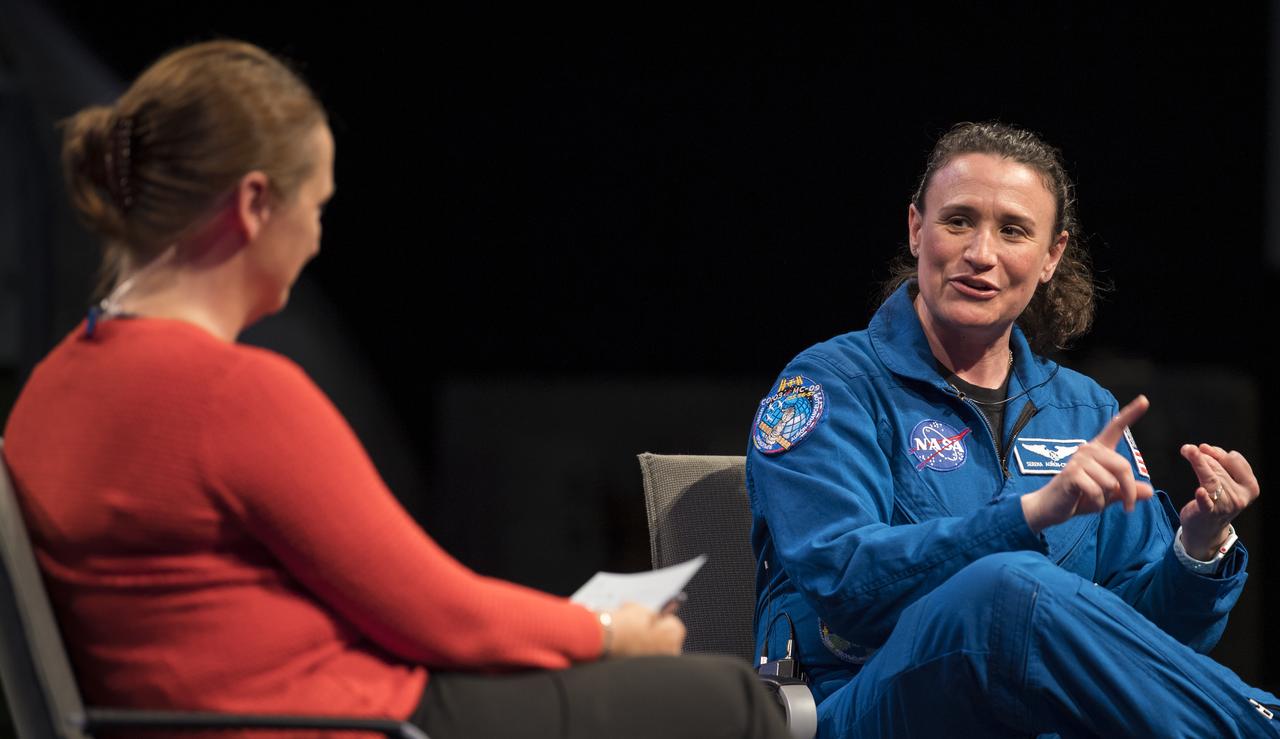
Smithsonian National Air and Space Museum curator Jennifer Levasseu speaks with NASA astronaut Serena Auñón-Chancellor about her time onboard the International Space Station during "What's New in Aerospace" Friday, June 14, 2019 the Smithsonian's National Air and Space Museum in Washington, DC. Auñón-Chancellor spent 197 days living and working onboard the orbital laboratory as part of Expeditions 56 and 57, contributing to hundreds of experiments in biology, biotechnology, physical science, and Earth science while there. She began her career at NASA as a flight surgeon before being selected as an astronaut in 2009. Photo Credit: (NASA/Joel Kowsky)
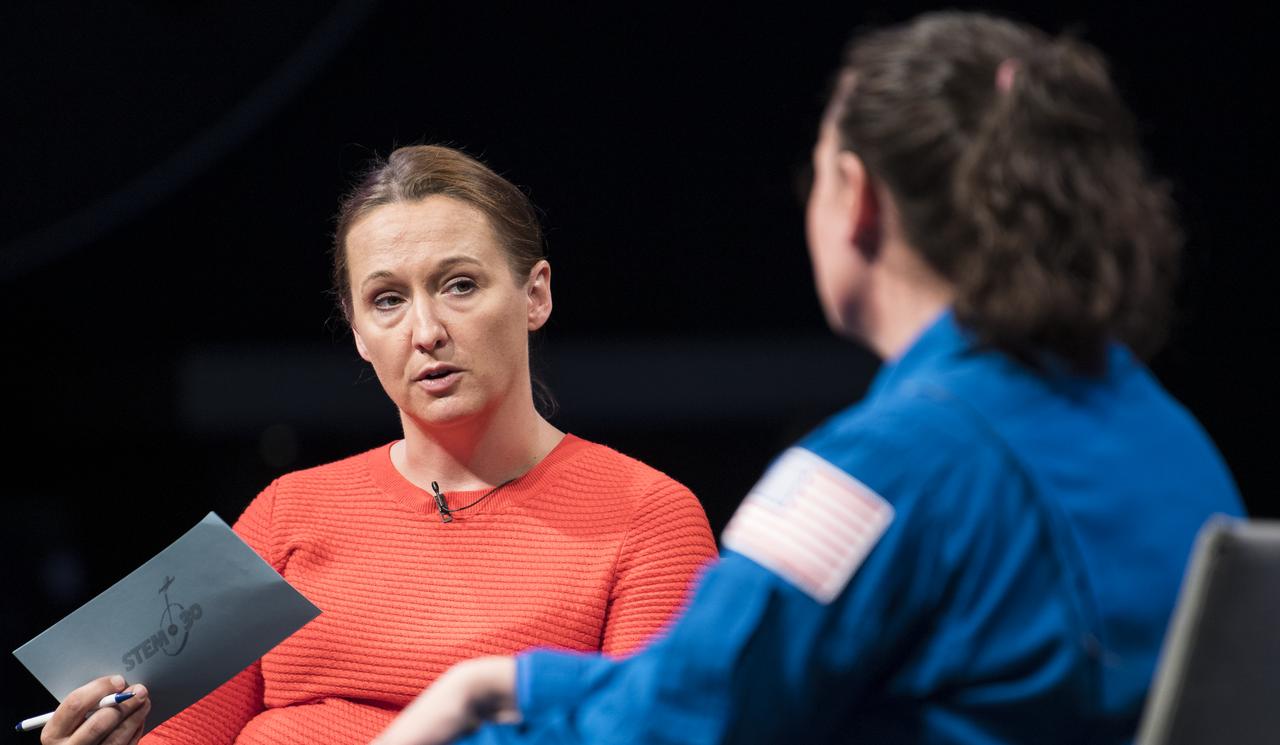
Smithsonian National Air and Space Museum curator Jennifer Levasseu speaks with NASA astronaut Serena Auñón-Chancellor about her time onboard the International Space Station during "What's New in Aerospace" Friday, June 14, 2019 the Smithsonian's National Air and Space Museum in Washington, DC. Auñón-Chancellor spent 197 days living and working onboard the orbital laboratory as part of Expeditions 56 and 57, contributing to hundreds of experiments in biology, biotechnology, physical science, and Earth science while there. She began her career at NASA as a flight surgeon before being selected as an astronaut in 2009. Photo Credit: (NASA/Joel Kowsky)
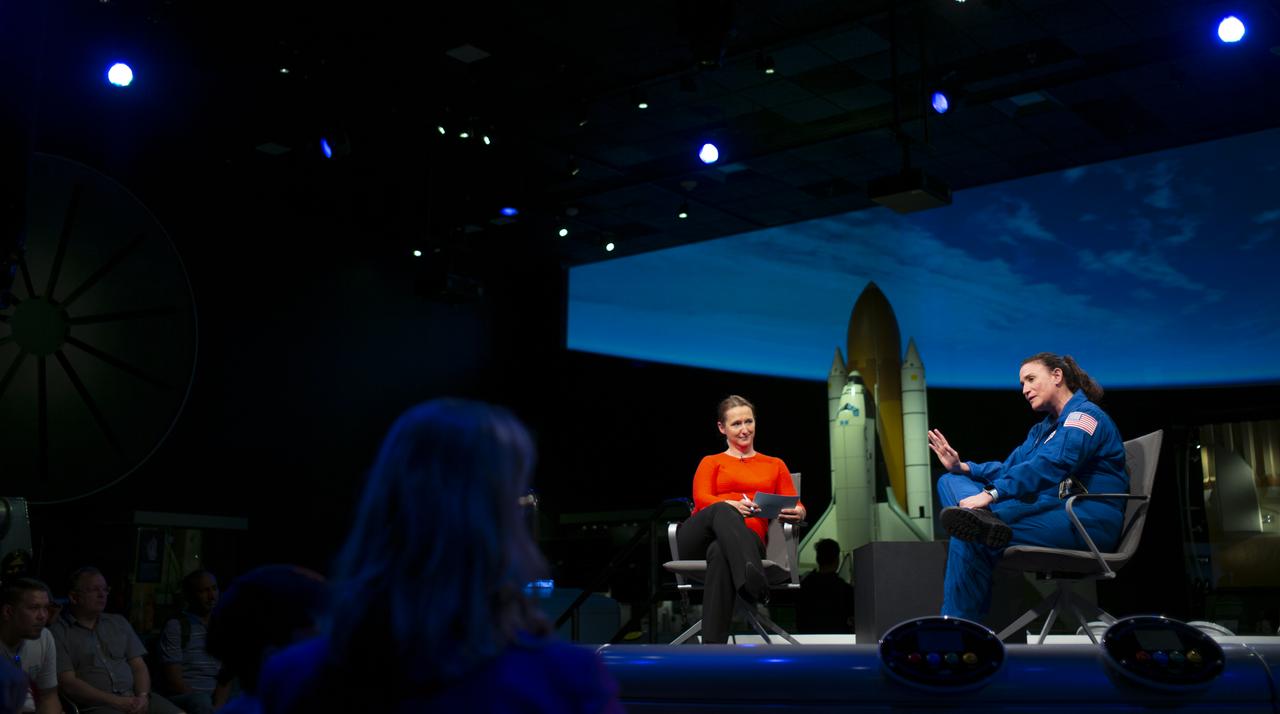
Smithsonian National Air and Space Museum curator Jennifer Levasseu speaks with NASA astronaut Serena Auñón-Chancellor about her time onboard the International Space Station during "What's New in Aerospace" Friday, June 14, 2019 the Smithsonian's National Air and Space Museum in Washington, DC. Auñón-Chancellor spent 197 days living and working onboard the orbital laboratory as part of Expeditions 56 and 57, contributing to hundreds of experiments in biology, biotechnology, physical science, and Earth science while there. She began her career at NASA as a flight surgeon before being selected as an astronaut in 2009. Photo Credit: (NASA/Joel Kowsky)
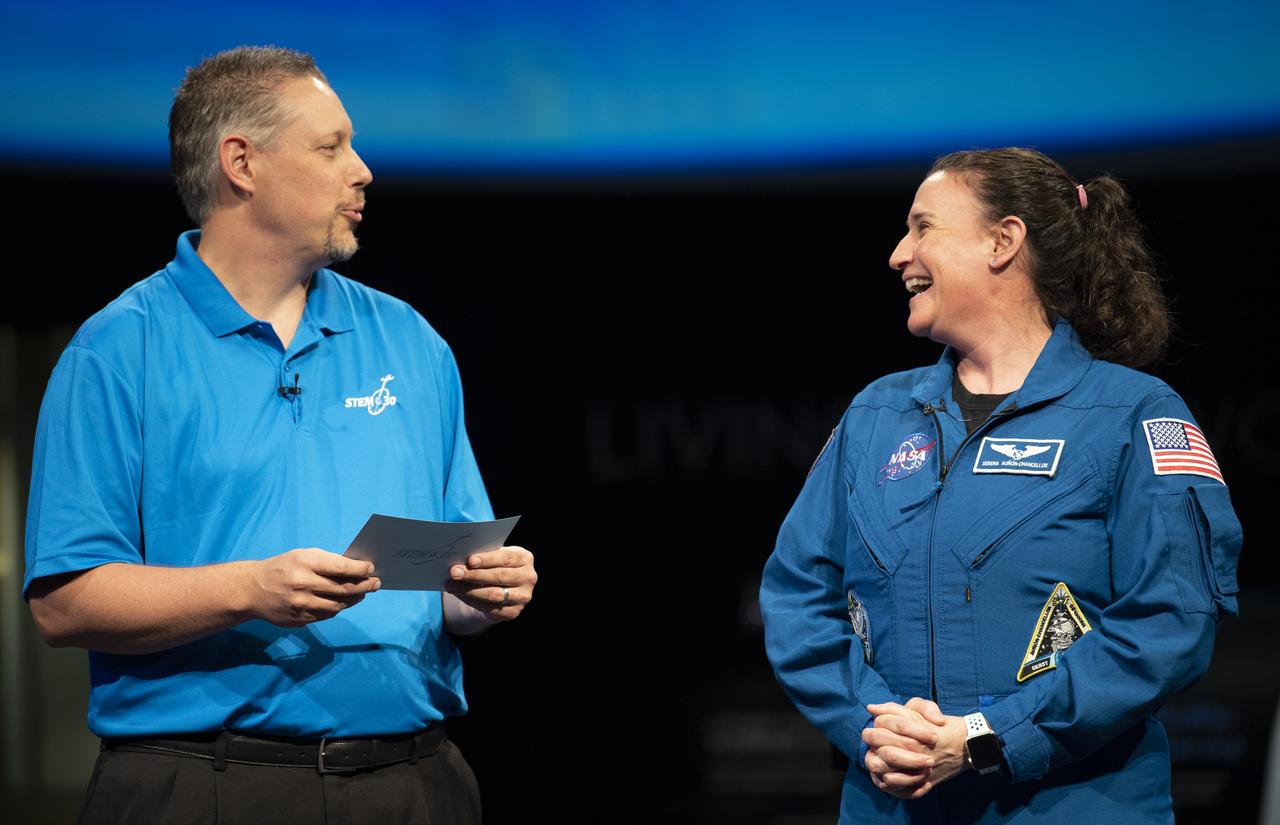
Marty Kelsey of the Smithsonian National Air and Space Museum asks NASA astronaut Serena Auñón-Chancellor questions about being in middle school for a short video, Friday, June 14, 2019 the Smithsonian's National Air and Space Museum in Washington, DC. Auñón-Chancellor spent 197 days living and working onboard the orbital laboratory as part of Expeditions 56 and 57, contributing to hundreds of experiments in biology, biotechnology, physical science, and Earth science while there. She began her career at NASA as a flight surgeon before being selected as an astronaut in 2009. Photo Credit: (NASA/Joel Kowsky)
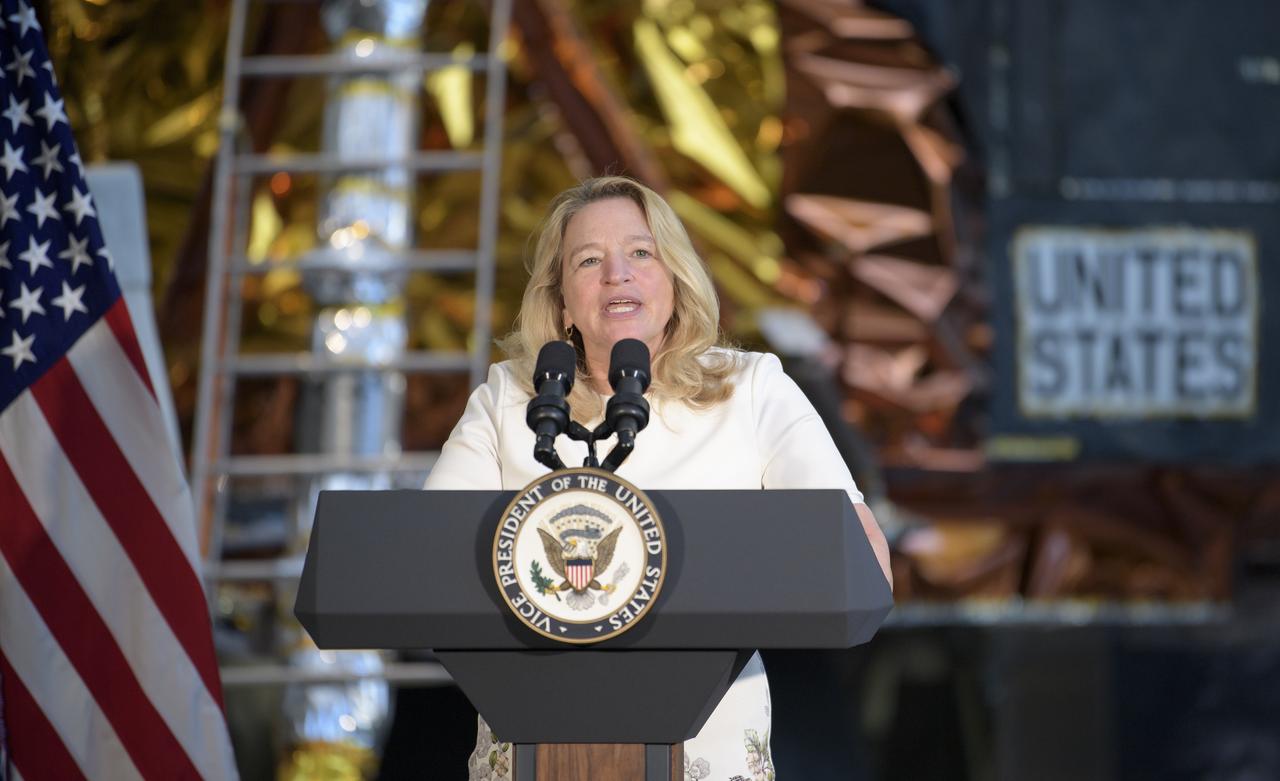
John and Adrienne Mars Director of the National Air and Space Museum Ellen Stofan gives remarks during an event were Neil Armstrong's Apollo 11 spacesuit was unveiled for the first time in 13 years, Tuesday, July 16, 2019 at the Smithsonian's National Air and Space Museum in Washington. The unveiling of the crowd funded spacesuit conservation marks the 50th anniversary of the launch of the Apollo 11 mission.Photo Credit: (NASA/Bill Ingalls)
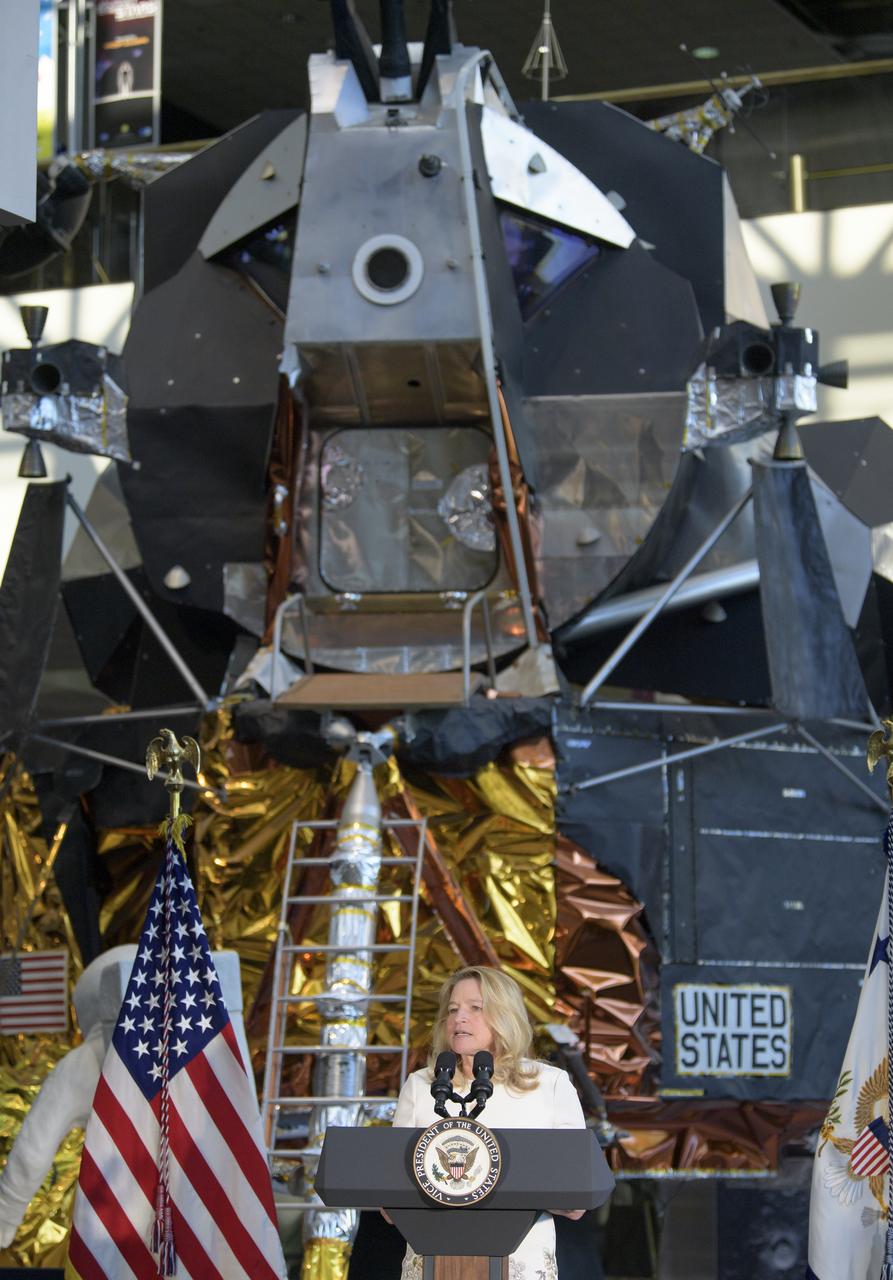
John and Adrienne Mars Director of the National Air and Space Museum Ellen Stofan gives remarks during an event were Neil Armstrong's Apollo 11 spacesuit was unveiled for the first time in 13 years, Tuesday, July 16, 2019 at the Smithsonian's National Air and Space Museum in Washington. The unveiling of the crowd funded spacesuit conservation marks the 50th anniversary of the launch of the Apollo 11 mission.Photo Credit: (NASA/Bill Ingalls)
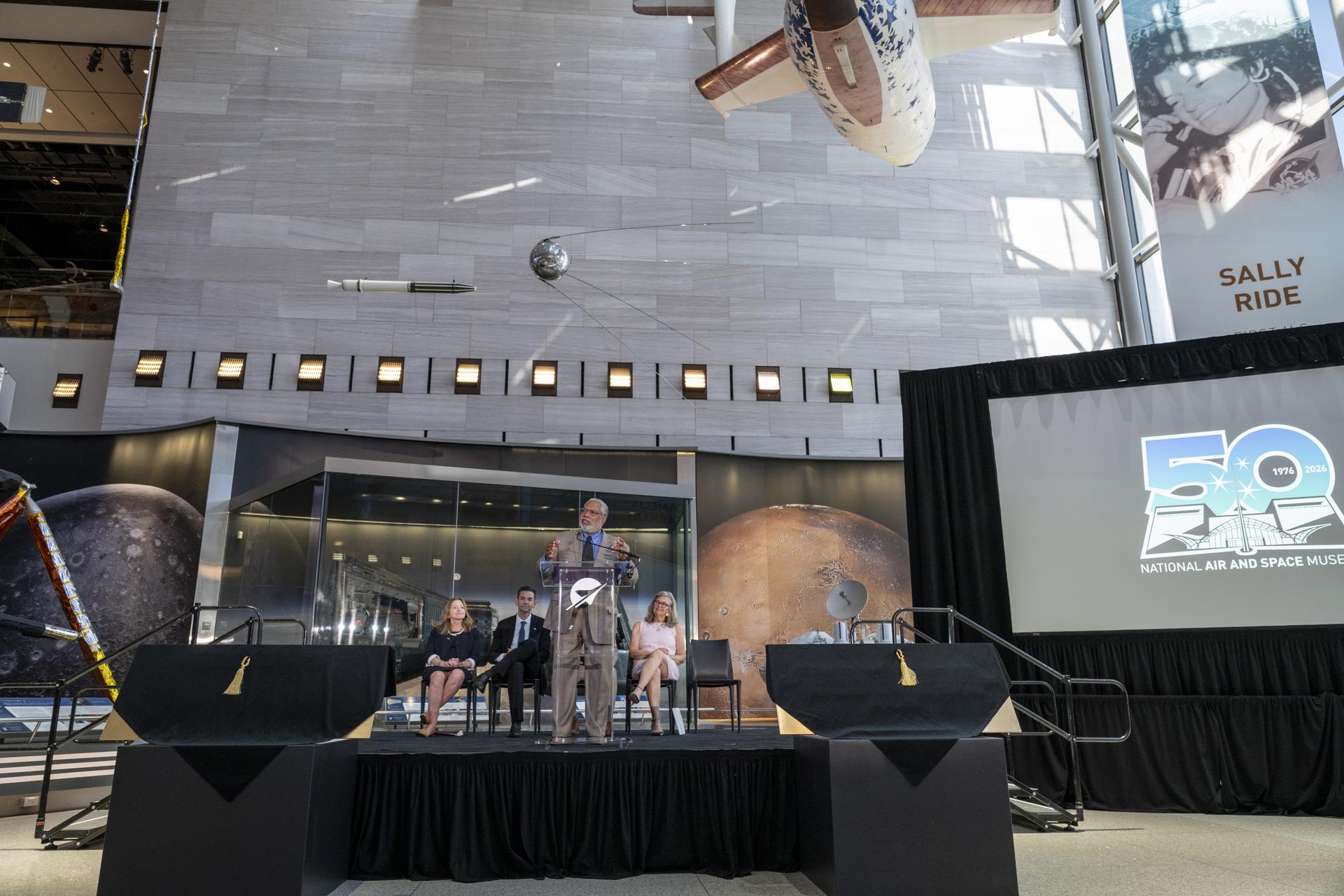
Secretary of the Smithsonian Institution Lonnie G. Bunch III delivers remarks during the Smithsonian’s National Air and Space Museum rededication ceremony Wednesday, July 1, 2026, in Washington. The swatch is being returned to the museum after having been flown aboard NASA’s Artemis II mission around the Moon and back to Earth in April 2026. Photo Credit: (NASA/Keegan Barber)
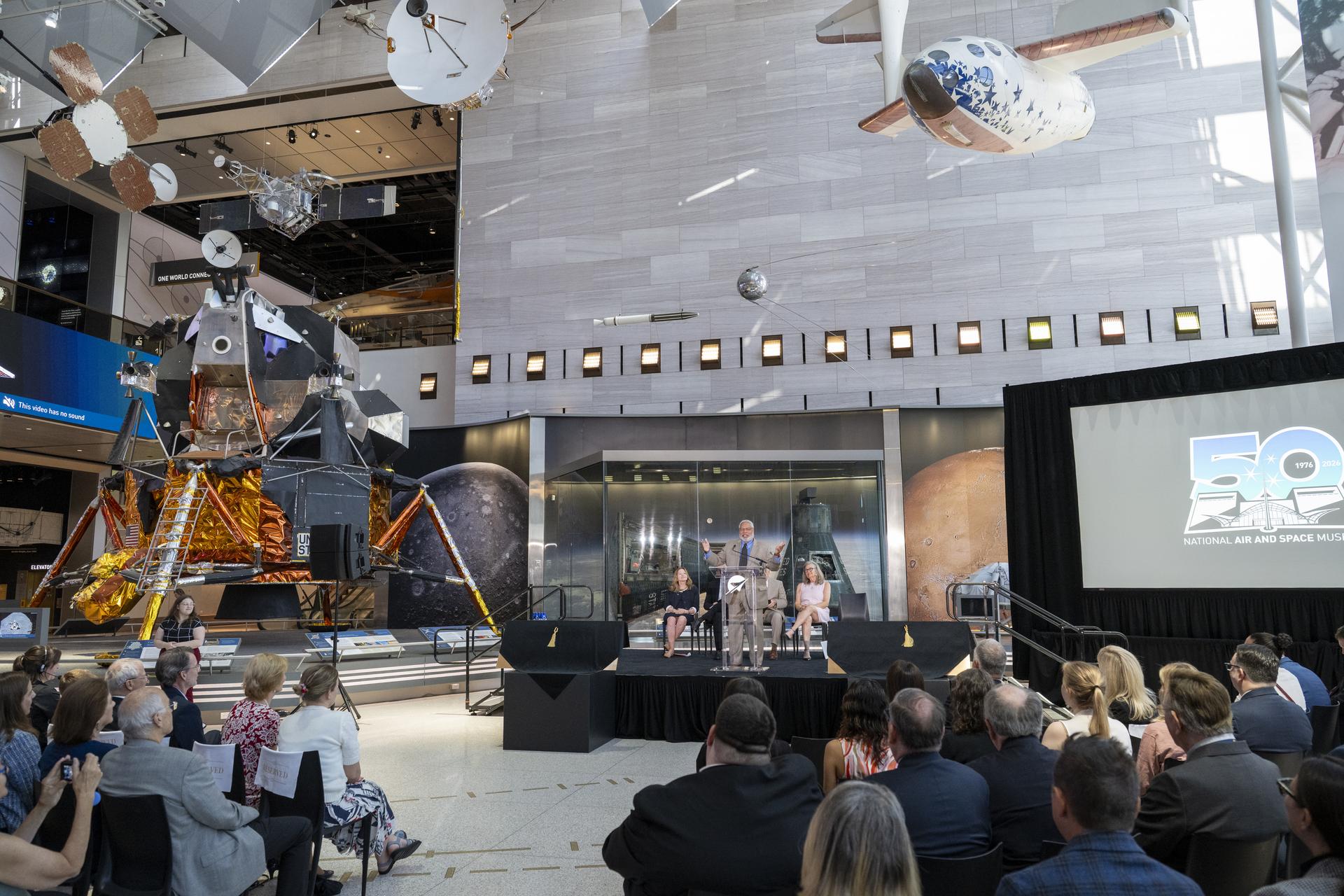
Secretary of the Smithsonian Institution Lonnie G. Bunch III delivers remarks during the Smithsonian’s National Air and Space Museum rededication ceremony Wednesday, July 1, 2026, in Washington. The swatch is being returned to the museum after having been flown aboard NASA’s Artemis II mission around the Moon and back to Earth in April 2026. Photo Credit: (NASA/Keegan Barber)
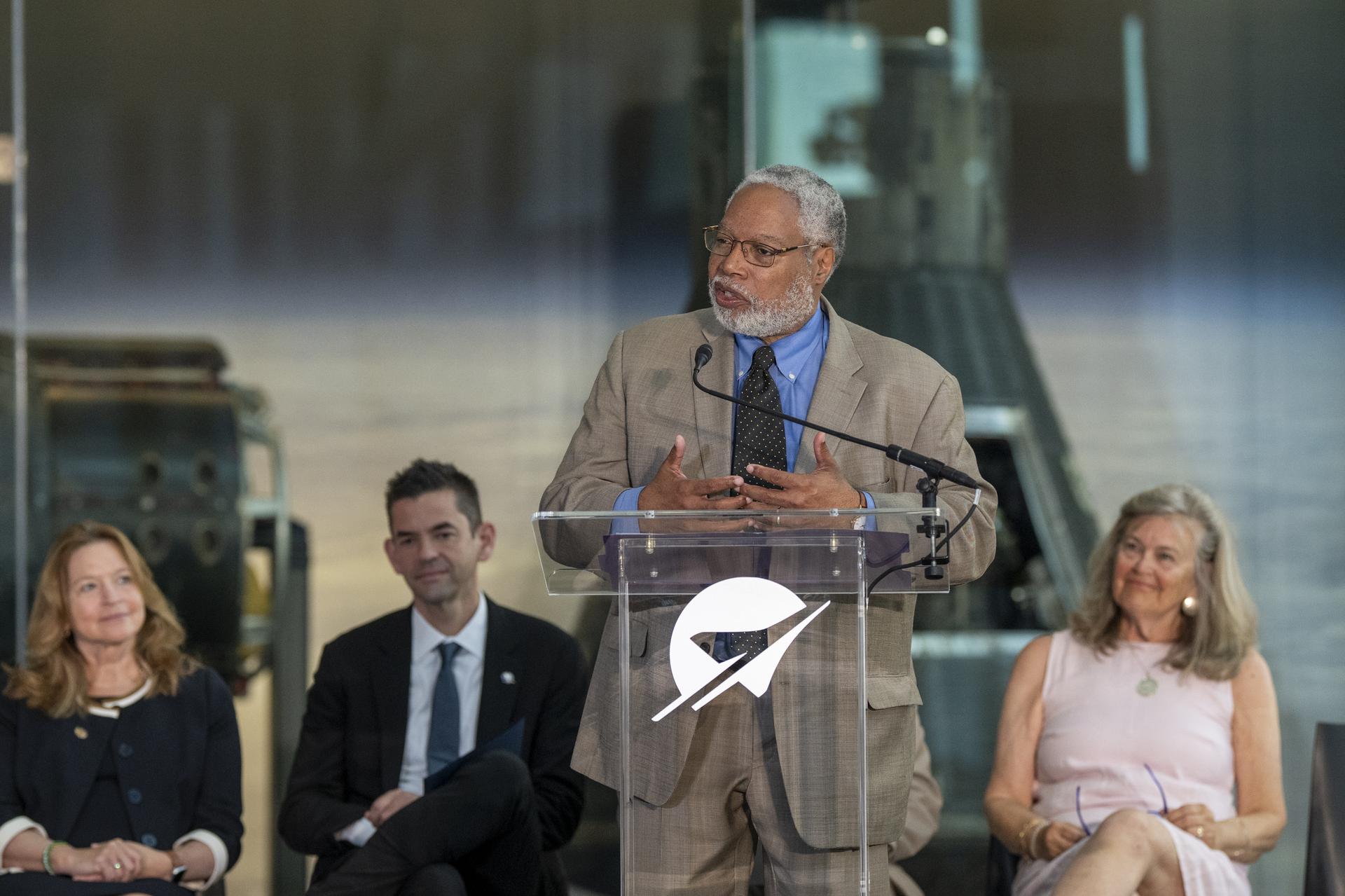
Secretary of the Smithsonian Institution Lonnie G. Bunch III delivers remarks during the Smithsonian’s National Air and Space Museum rededication ceremony Wednesday, July 1, 2026, in Washington. The swatch is being returned to the museum after having been flown aboard NASA’s Artemis II mission around the Moon and back to Earth in April 2026. Photo Credit: (NASA/Keegan Barber)
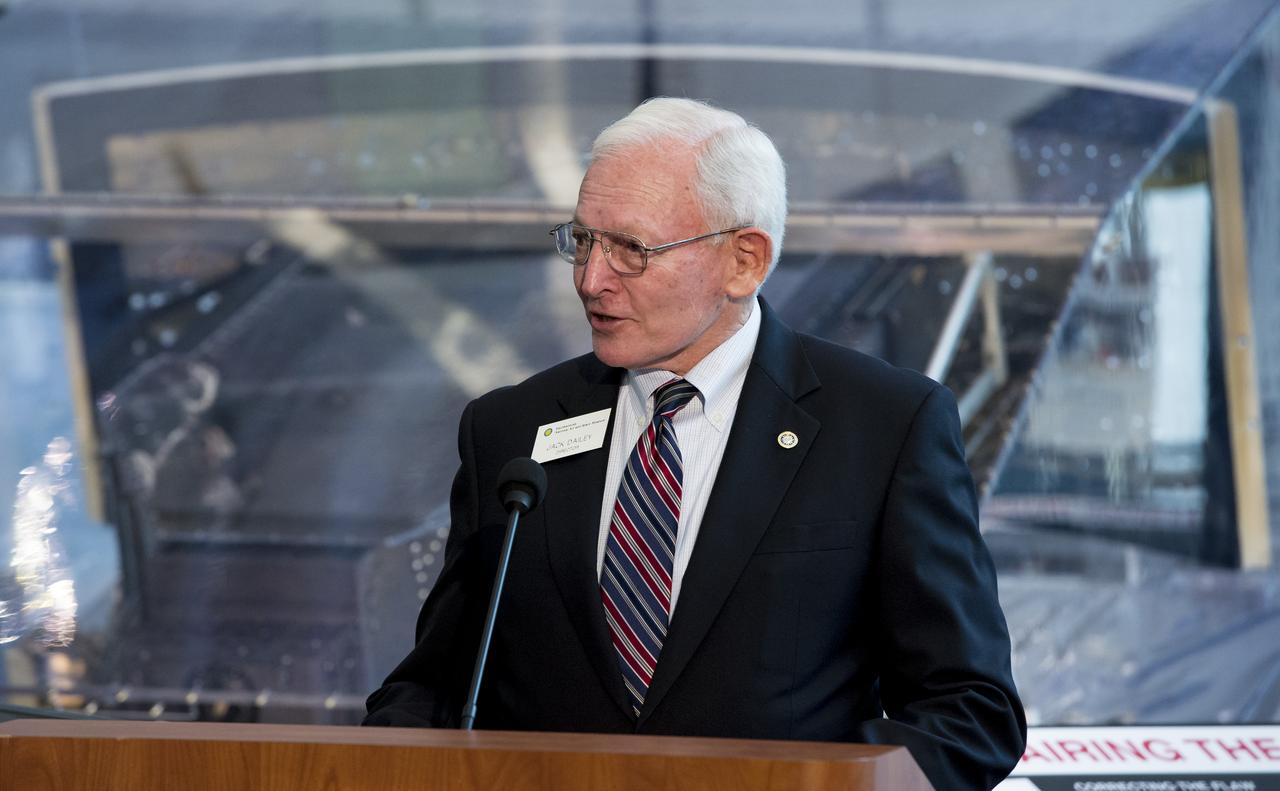
Gen. J.R. "Jack" Dailey, Director of the Smithsonian National Air and Space Museum speaks at an event unveiling a new exhibit featuring Hubble's Corrective Optics Space Telescope Axial Replacement (COSTAR) and the Wide Field and Planetary Camera 2 (WFPC2) on Wednesday, April 23, 2014 at the Smithsonian National Air and Space Museum in Washington, DC. COSTAR and WFPC2 were installed in Hubble during the first space shuttle servicing mission in 1993 and returned to Earth on the fifth and final servicing mission in 2009. Photo Credit: (NASA/Joel Kowsky)
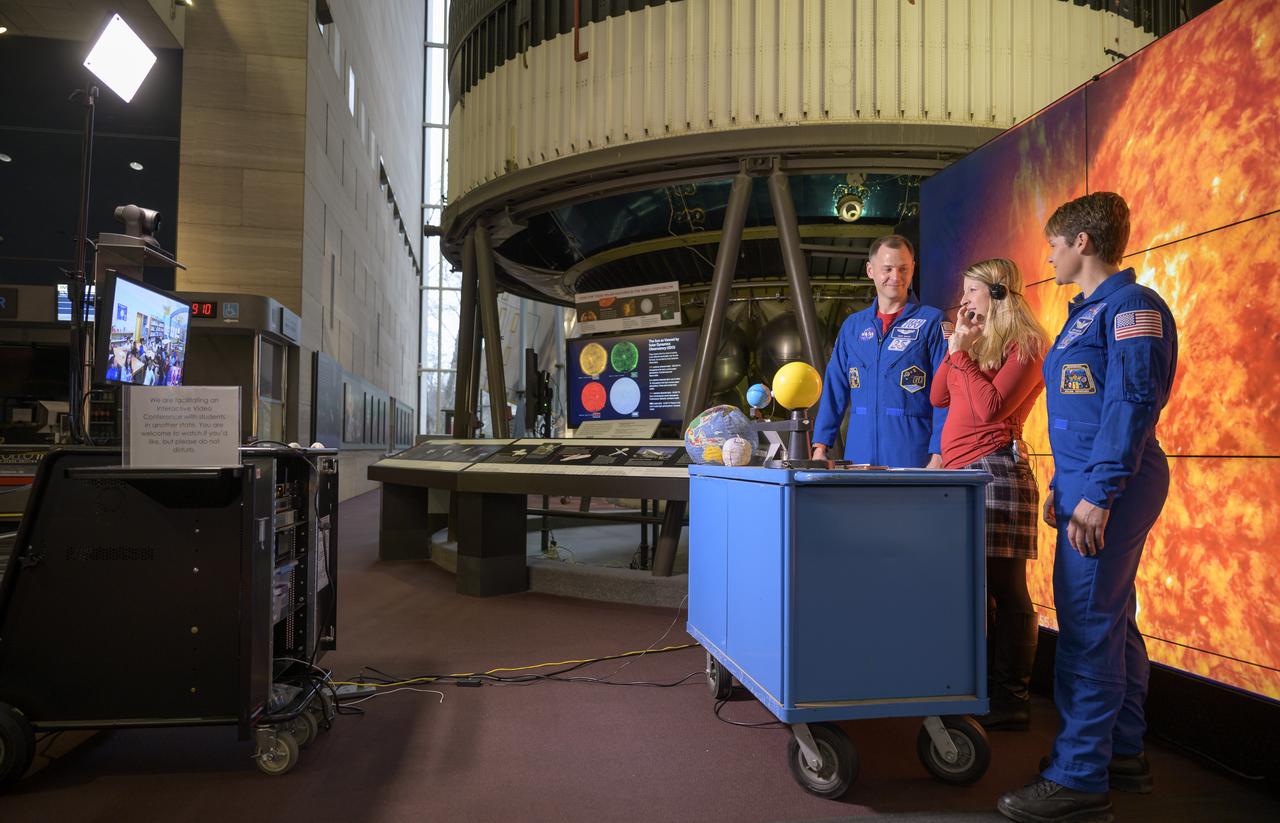
NASA astronauts Nick Hague, left, and Anne McClain, right, join Bevin James of the Smithsonian Air and Space Museum as she hosts an interactive video teleconference with 5th graders at the John P Parker school located in Cincinnati, Ohio, Tuesday, Jan. 14, 2020, from the Smithsonian National Air and Space Museum in Washington. Hague most recently spent 203 days living and working onboard the International Space Station as part of Expeditions 59 and 60. McClain most recently spent 204 days living and working onboard the International Space Station as part of Expeditions 58 and 59. Photo Credit: (NASA/Bill Ingalls)
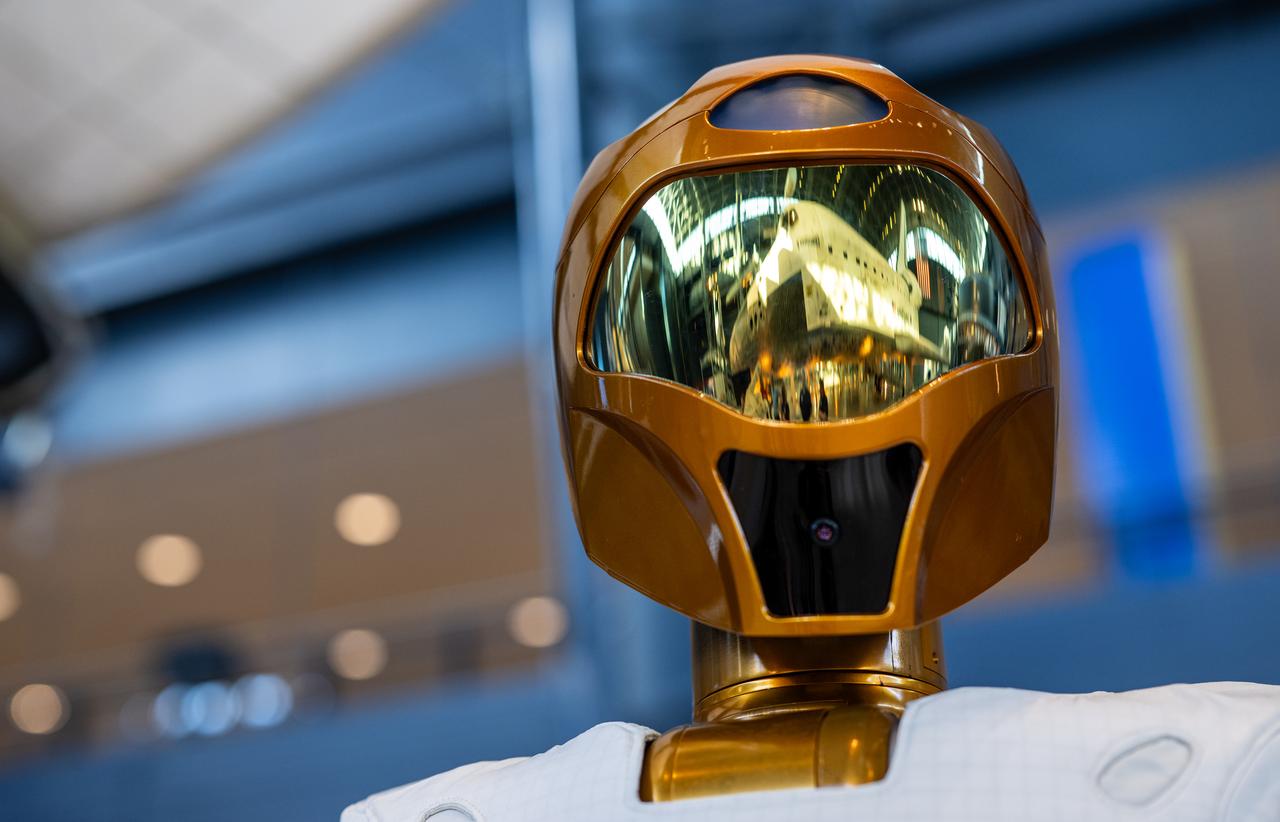
Robonaut 2 is seen at the Smithsonian National Air and Space Museum’s Steve F. Udvar-Hazy Center Thursday, Oct. 24, 2024, in Chantilly, Va. Robonaut 2, the first humanoid robot to fly to space, is displayed publicly for the first time near the space shuttle Discovery. Photo Credit: (NASA/Keegan Barber)
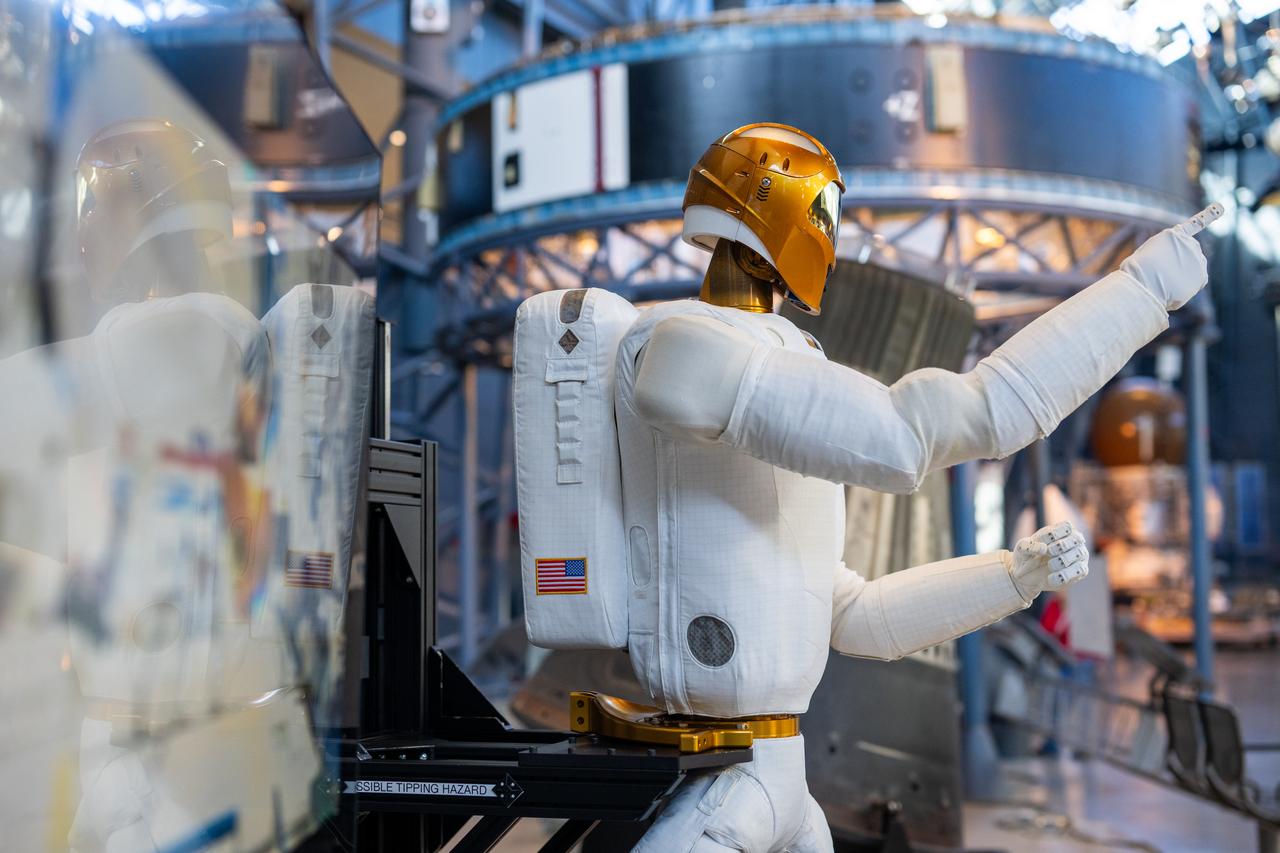
Robonaut 2 is seen at the Smithsonian National Air and Space Museum’s Steve F. Udvar-Hazy Center Thursday, Oct. 24, 2024, in Chantilly, Va. Robonaut 2, the first humanoid robot to fly to space, is displayed publicly for the first time near the space shuttle Discovery. Photo Credit: (NASA/Keegan Barber)
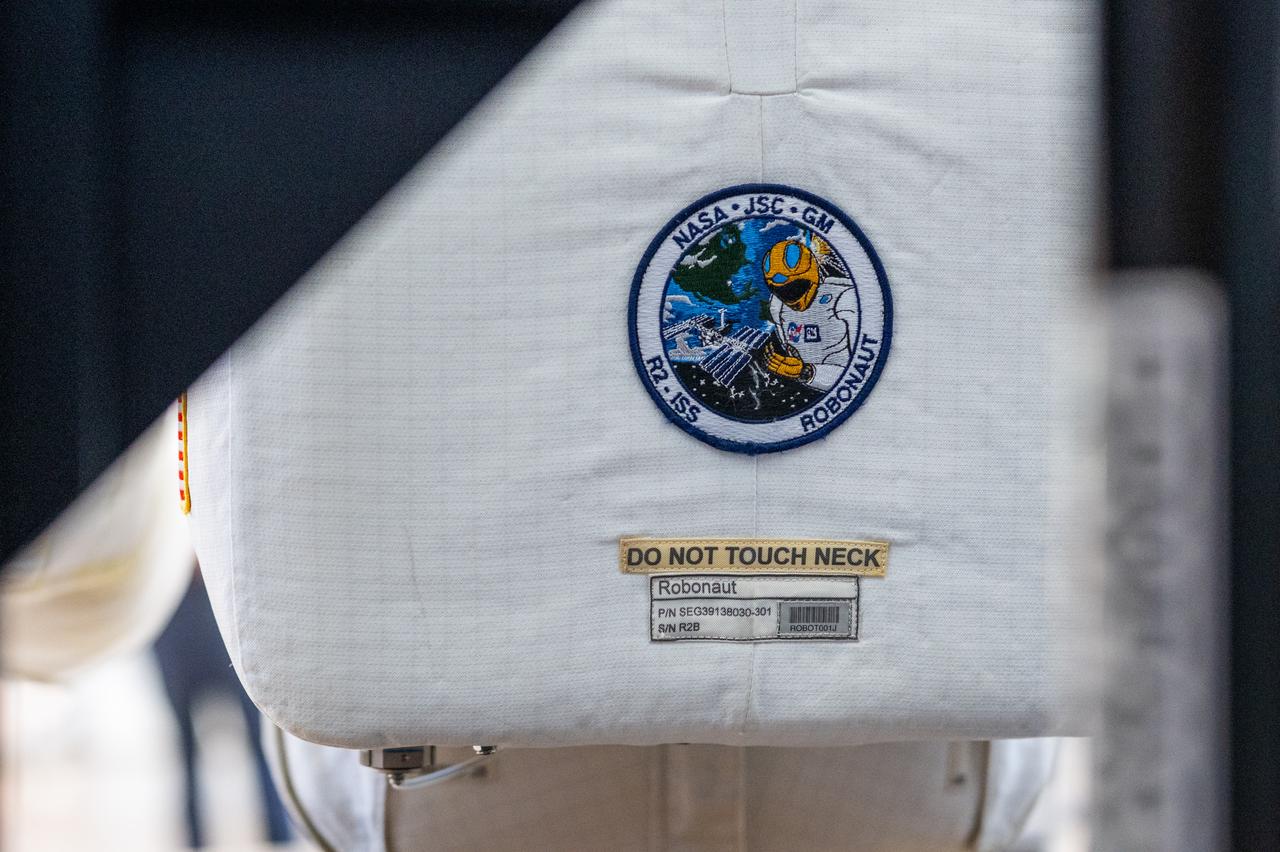
Robonaut 2 is seen at the Smithsonian National Air and Space Museum’s Steve F. Udvar-Hazy Center Thursday, Oct. 24, 2024, in Chantilly, Va. Robonaut 2, the first humanoid robot to fly to space, is displayed publicly for the first time near the space shuttle Discovery. Photo Credit: (NASA/Keegan Barber)

Robonaut 2 is seen at the Smithsonian National Air and Space Museum’s Steve F. Udvar-Hazy Center Thursday, Oct. 24, 2024, in Chantilly, Va. Robonaut 2, the first humanoid robot to fly to space, is displayed publicly for the first time near the space shuttle Discovery. Photo Credit: (NASA/Keegan Barber)
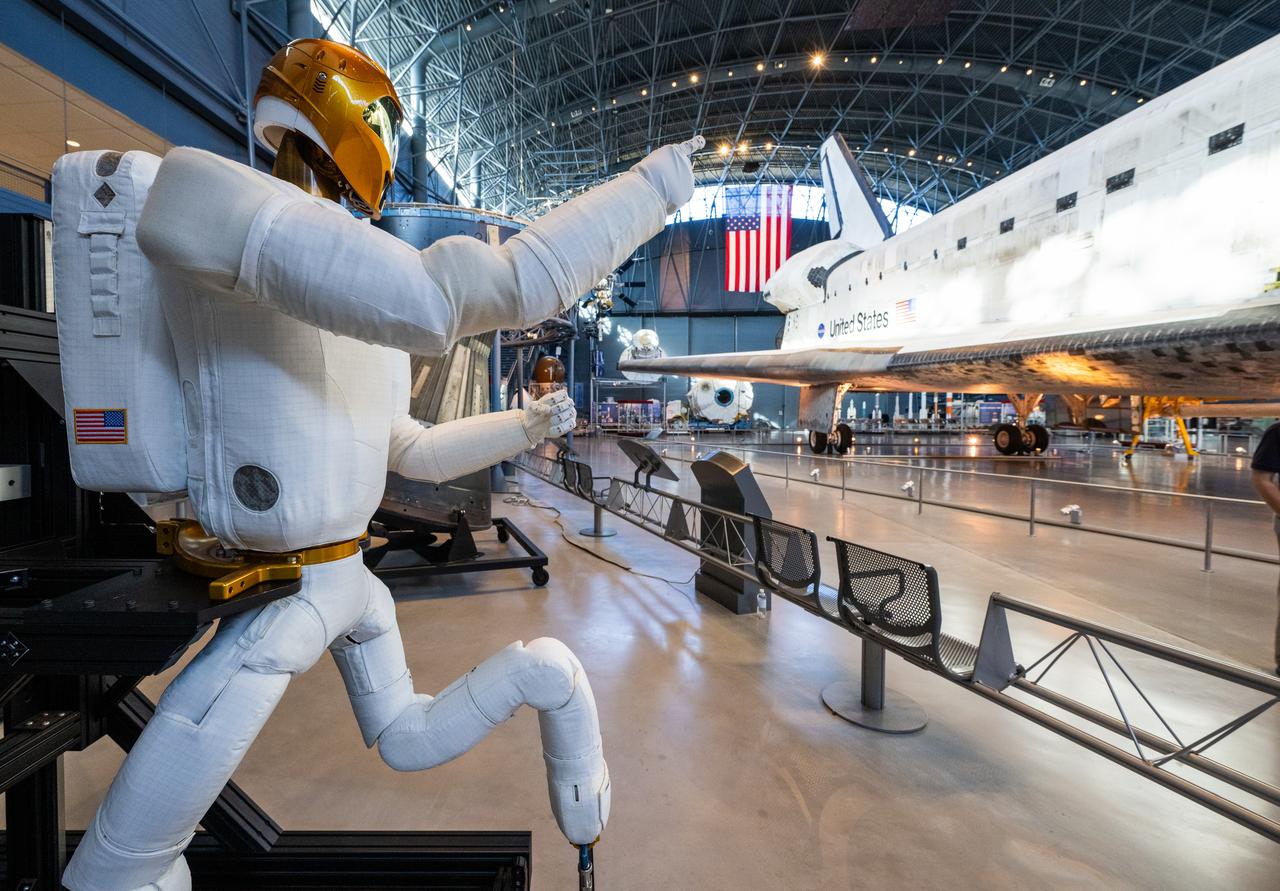
Robonaut 2 is seen at the Smithsonian National Air and Space Museum’s Steve F. Udvar-Hazy Center Thursday, Oct. 24, 2024, in Chantilly, Va. Robonaut 2, the first humanoid robot to fly to space, is displayed publicly for the first time near the space shuttle Discovery. Photo Credit: (NASA/Keegan Barber)
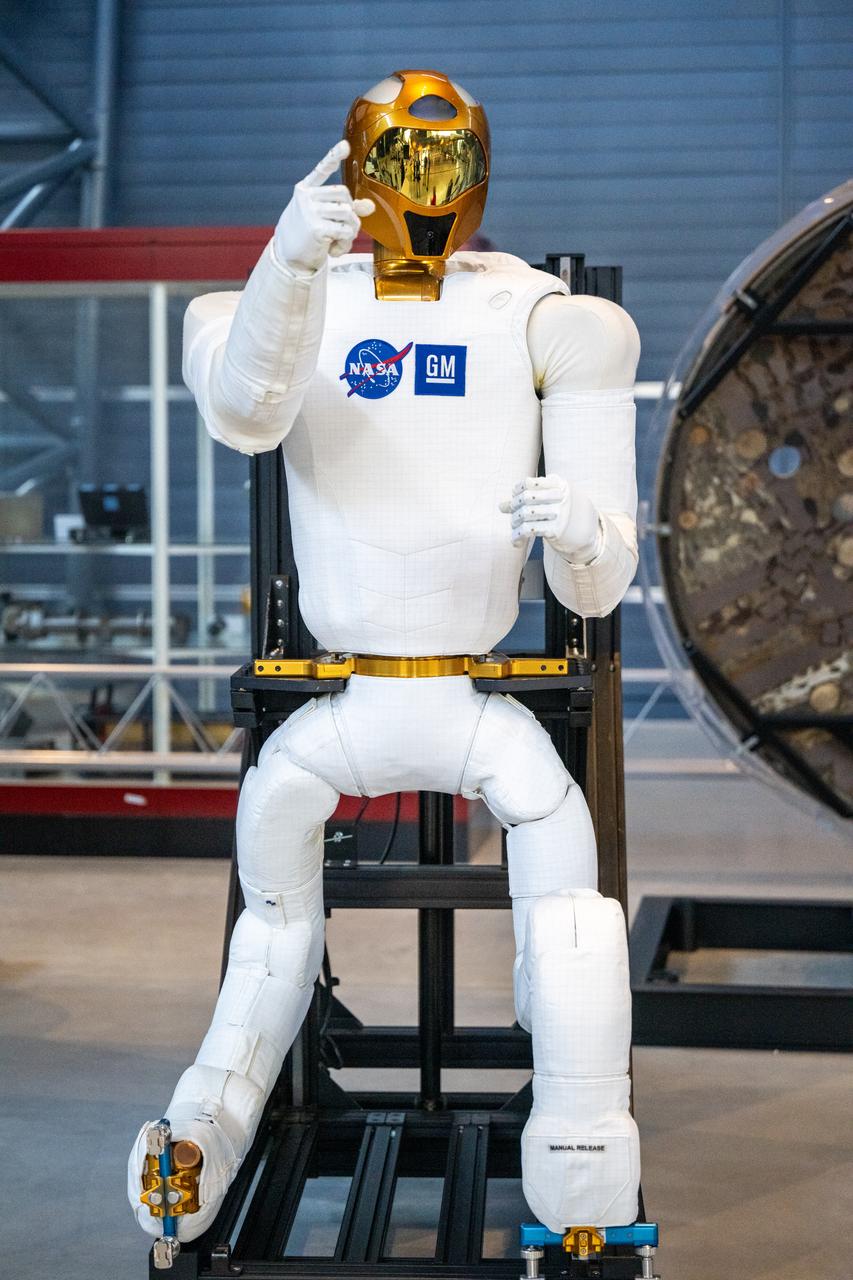
Robonaut 2 is seen at the Smithsonian National Air and Space Museum’s Steve F. Udvar-Hazy Center Thursday, Oct. 24, 2024, in Chantilly, Va. Robonaut 2, the first humanoid robot to fly to space, is displayed publicly for the first time near the space shuttle Discovery. Photo Credit: (NASA/Keegan Barber)
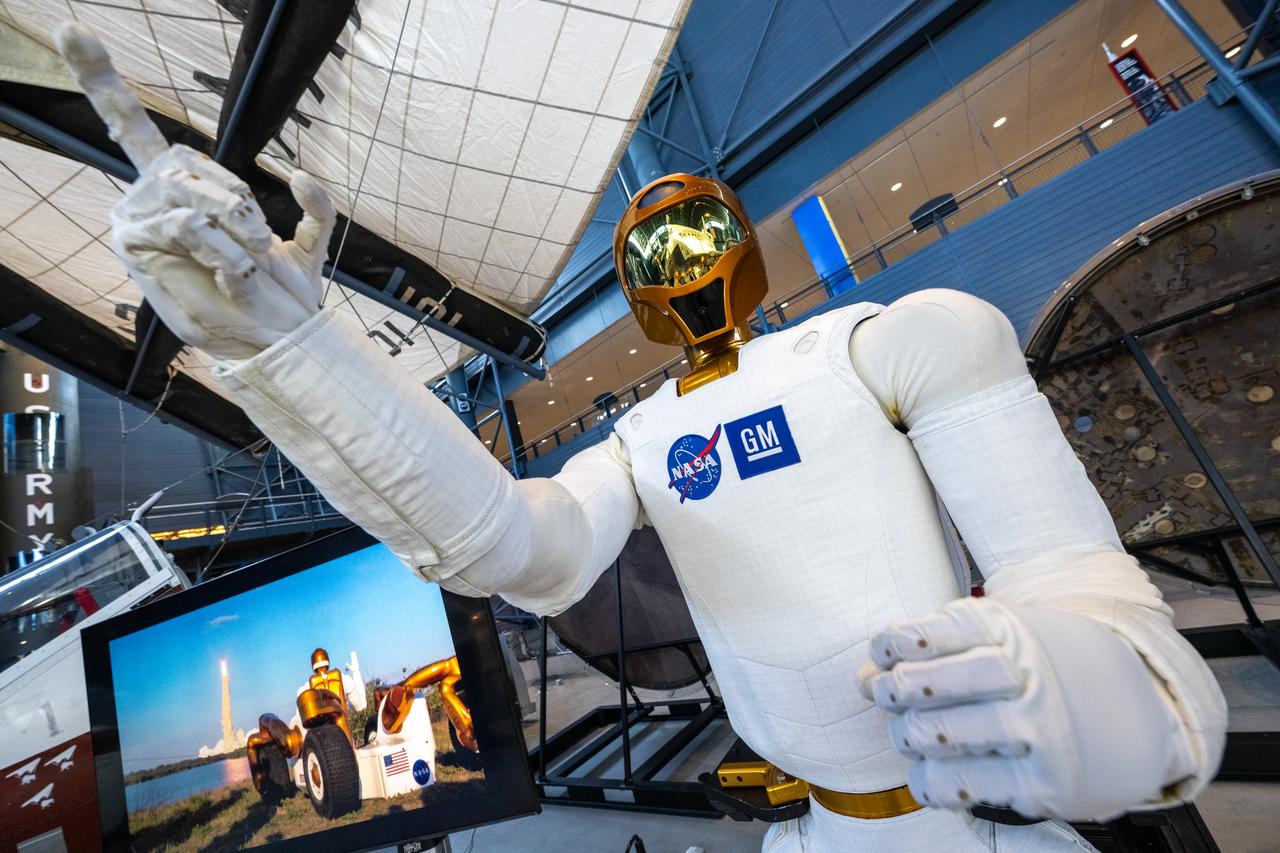
Robonaut 2 is seen at the Smithsonian National Air and Space Museum’s Steve F. Udvar-Hazy Center Thursday, Oct. 24, 2024, in Chantilly, Va. Robonaut 2, the first humanoid robot to fly to space, is displayed publicly for the first time near the space shuttle Discovery. Photo Credit: (NASA/Keegan Barber)
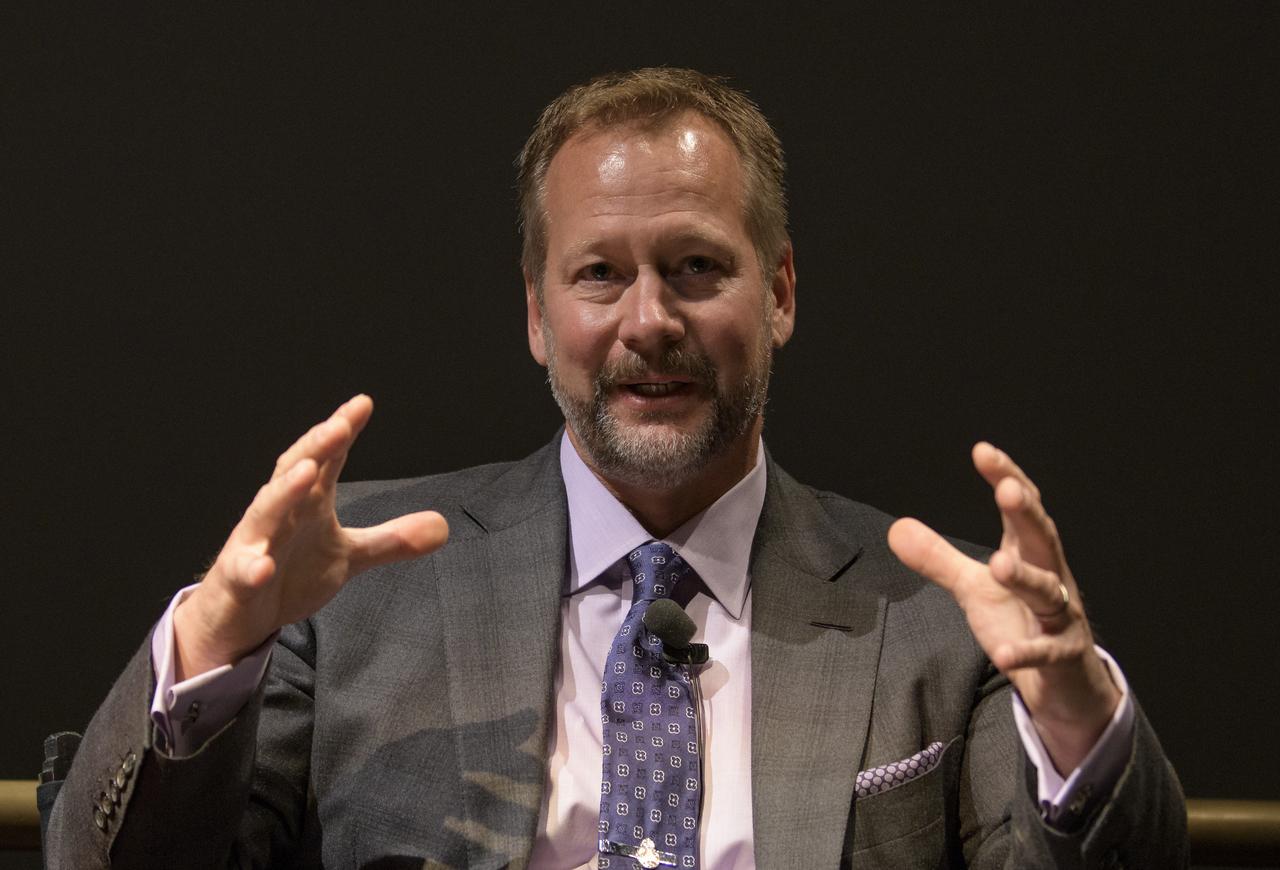
Senior Vice President, Space Business Unit, Aerojet Rocketdyne Jim Maser participates in a panel discussion after the premiere of the film "Apollo 11: First Steps Edition", Tuesday, May 14, 2019 at the Smithsonian's National Air and Space Museum in Washington. Photo Credit: (NASA/Bill Ingalls)
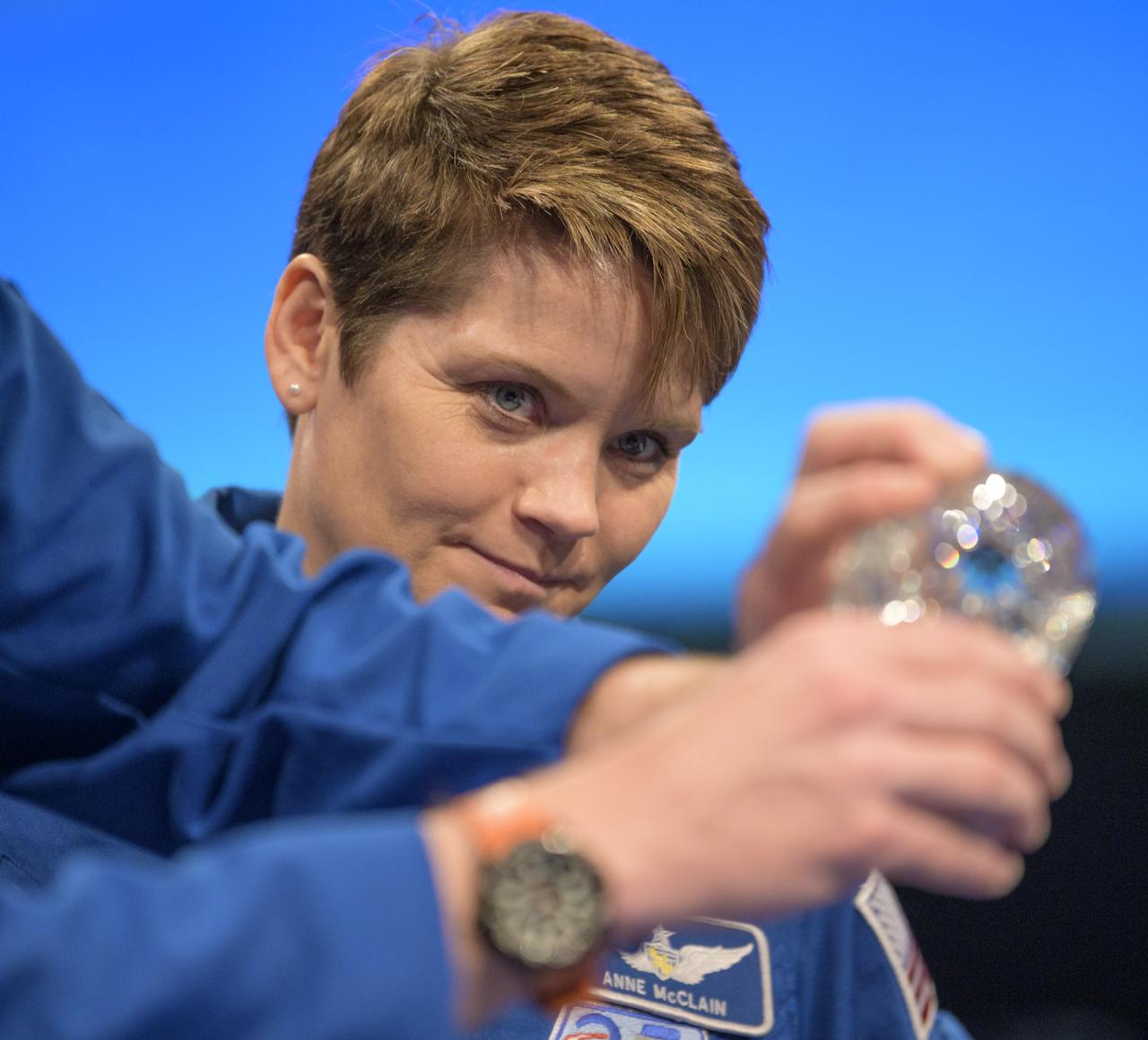
NASA astronaut Anne McClain is a guest on the program “STEM in 30,” Tuesday, Jan. 14, 2020, at the Smithsonian National Air and Space Museum in Washington. McClain most recently spent 204 days living and working onboard the International Space Station as part of Expeditions 58 and 59. Photo Credit: (NASA/Bill Ingalls)
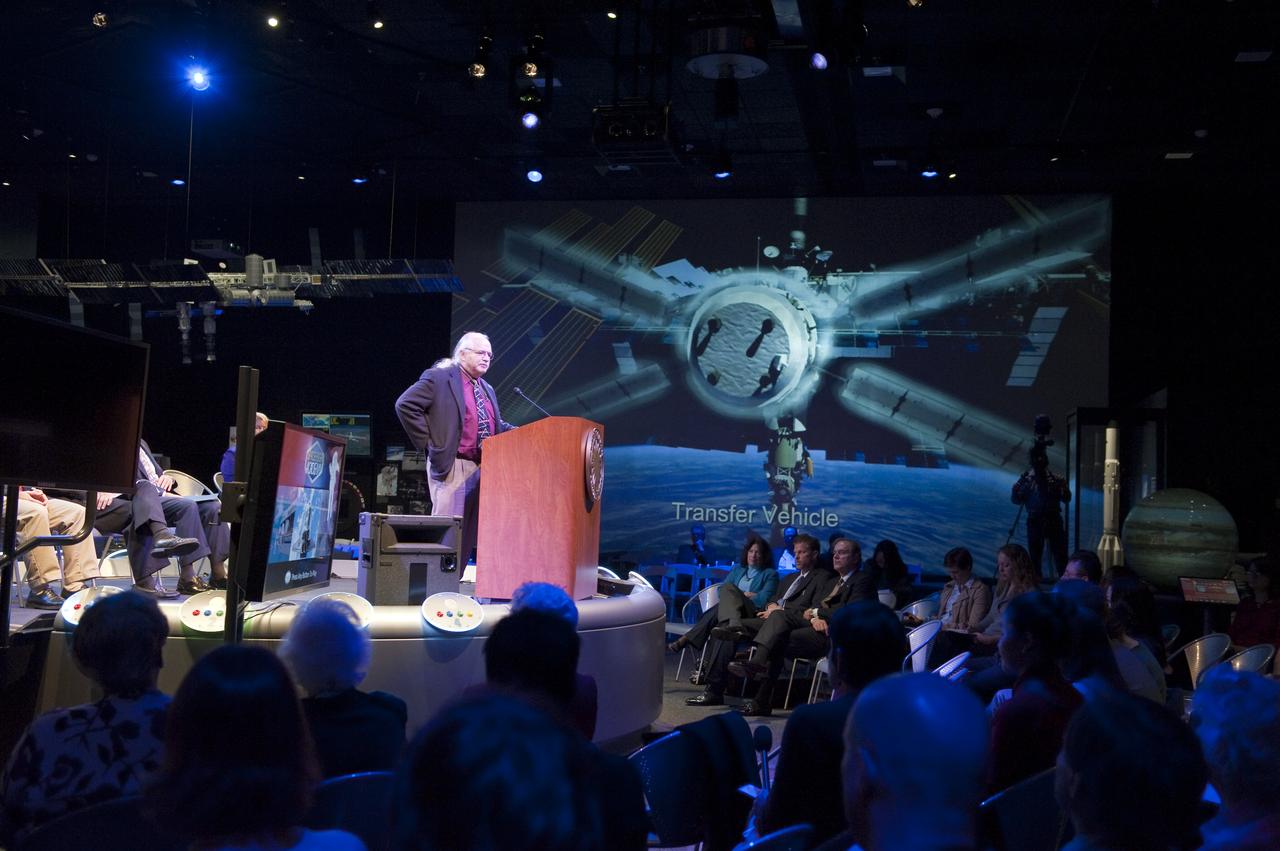
David H. DeVorkin, Senior Curator, Astronomy and the Space Sciences Division of Space History, at the Smithsonian's National Air and Space Museum, speaks during a press briefing at the new "Moving Beyond Earth," exhibition at the museum in Washingon, Wednesday, Nov. 18, 2009. Moving Beyond Earth is an immersive exhibition that places visitors "in orbit" in the shuttle and space-station era to explore recent human spaceflight and future possibilities. Photo Credit: (NASA/Paul E. Alers)
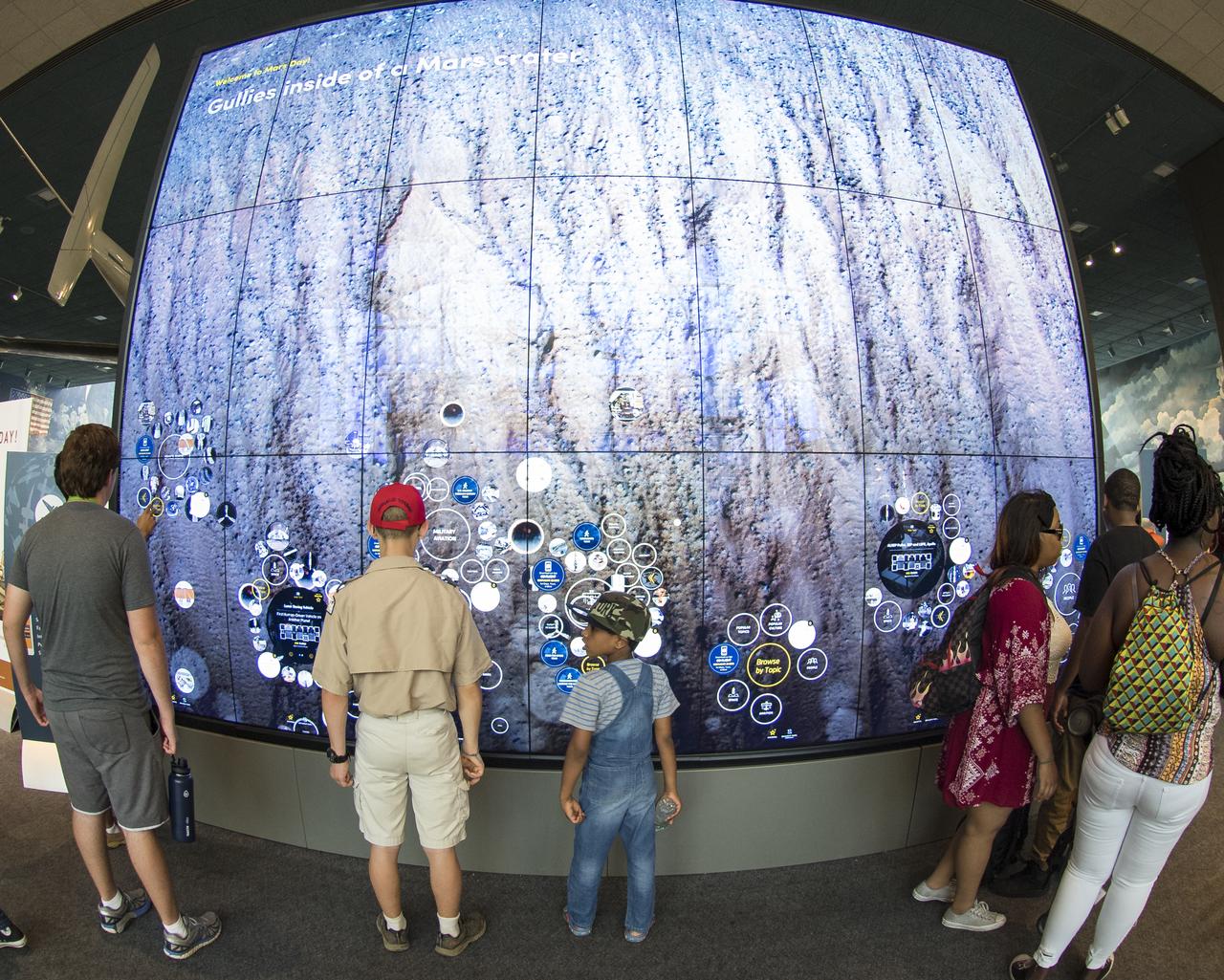
Visitors explore an interactive map of the surface of Mars at the Smithsonian Institution’s National Air and Space Museum Mars Day, an annual event celebrating the Red Planet with exhibits, speakers, and educational activities, Friday, July 21, 2017 in Washington. Photo Credit: (NASA/Aubrey Gemignani)
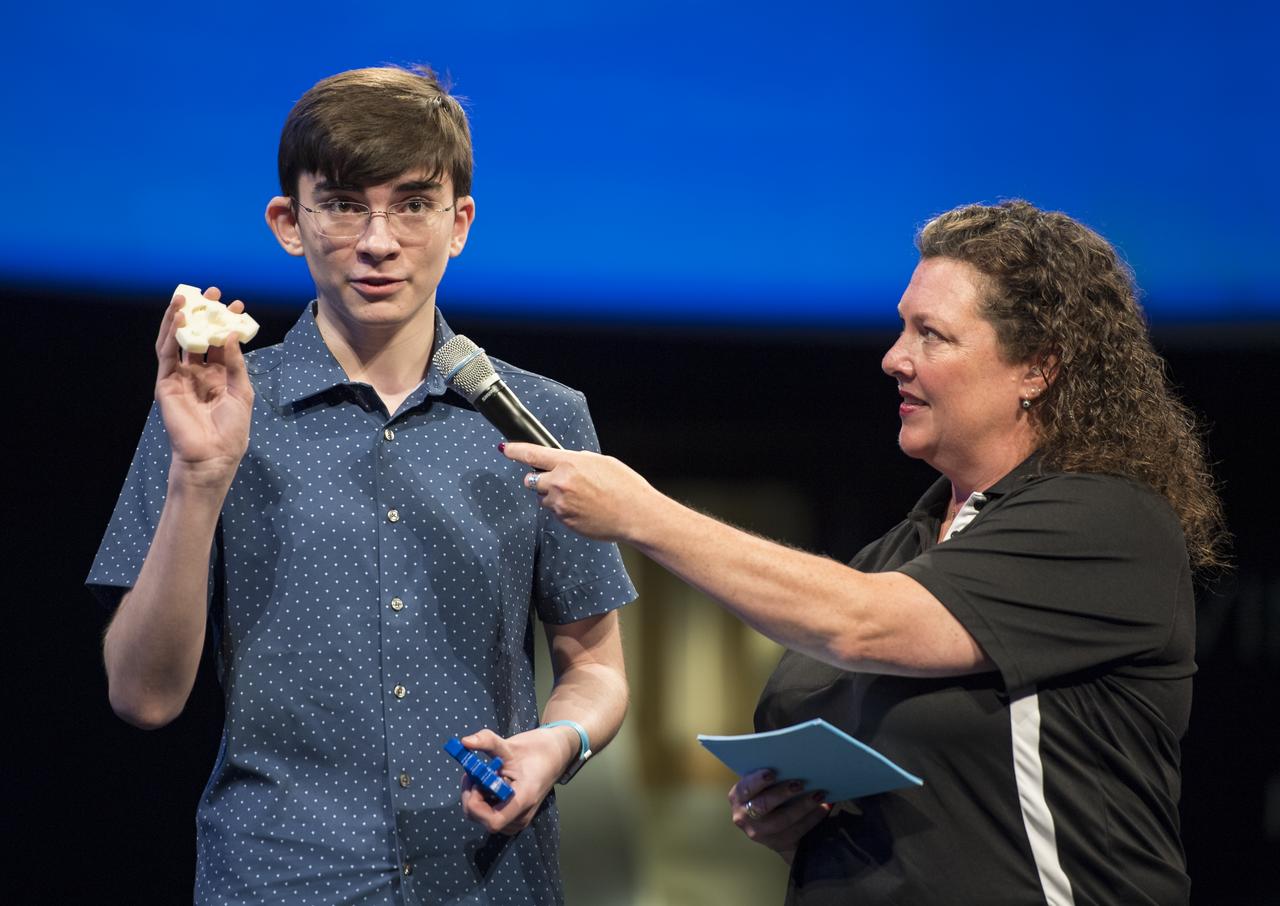
Future Engineers "Two for the Crew" competition winner, Ansel Austin, speaks about his Trillium Tool, a type of wrench, during a STEM in 30 event, Wednesday, June 27, 2018 at Smithsonian's National Air and Space Museum in Washington. Photo Credit: (NASA/Aubrey Gemignani)
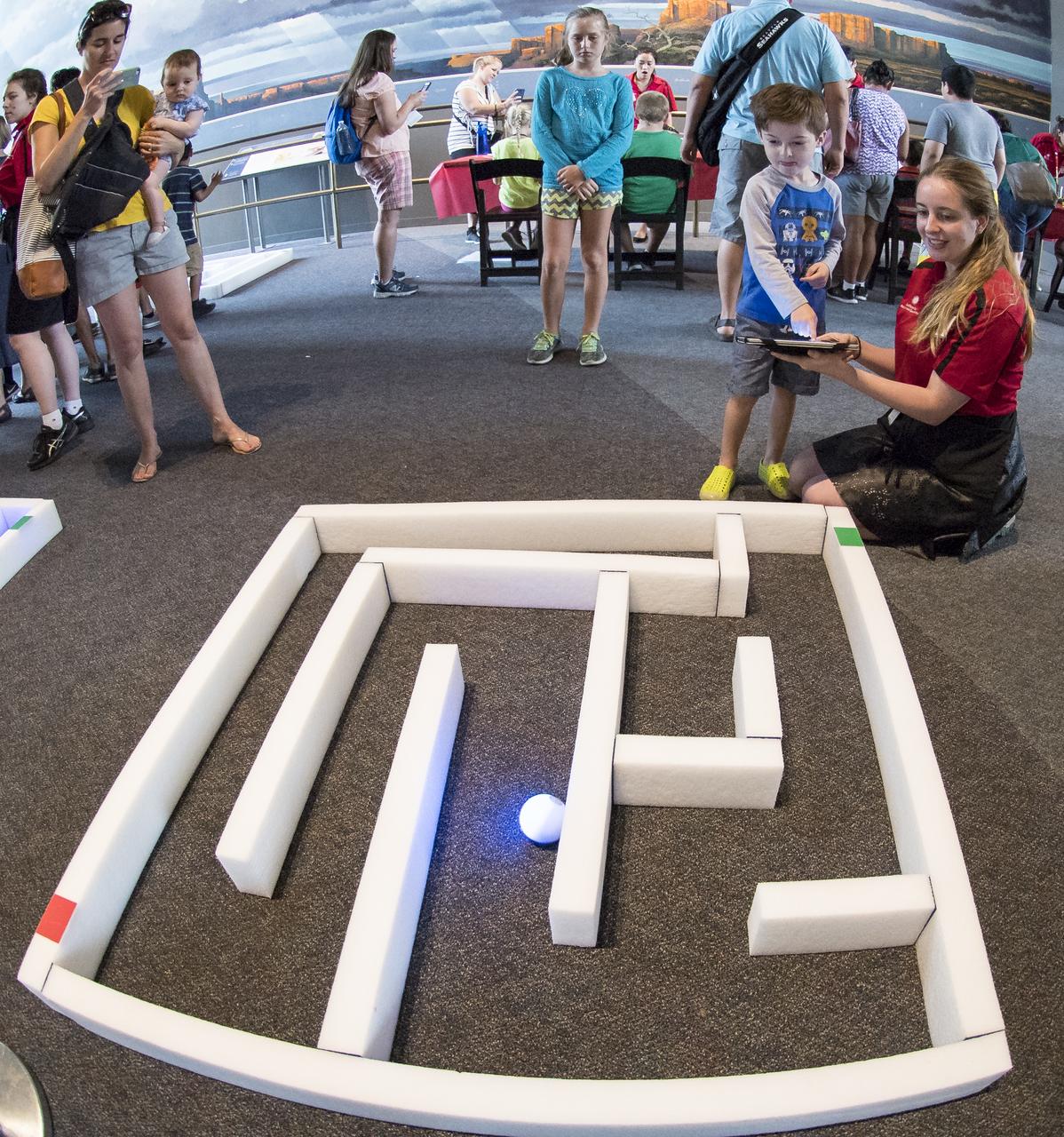
Visitors direct a robotic ball through a maze at the Smithsonian Institution’s National Air and Space Museum Mars Day, an annual event celebrating the Red Planet with exhibits, speakers, and educational activities, Friday, July 21, 2017 in Washington. Photo Credit: (NASA/Aubrey Gemignani)
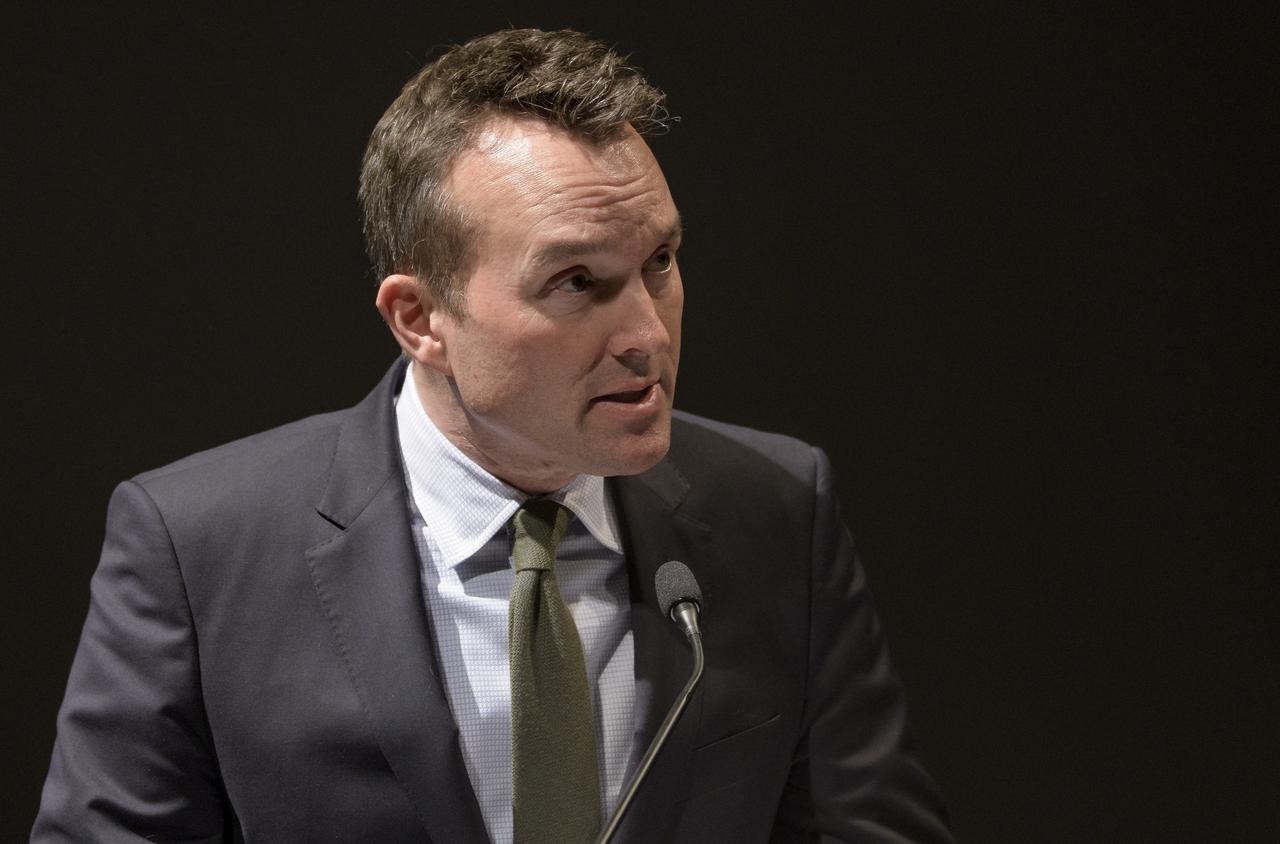
President and CEO of Aerospace Industries Association Eric Fanning gives remarks at the premiere of the film "Apollo 11: First Steps Edition", Tuesday, May 14, 2019 at the Smithsonian's National Air and Space Museum in Washington. Photo Credit: (NASA/Bill Ingalls)
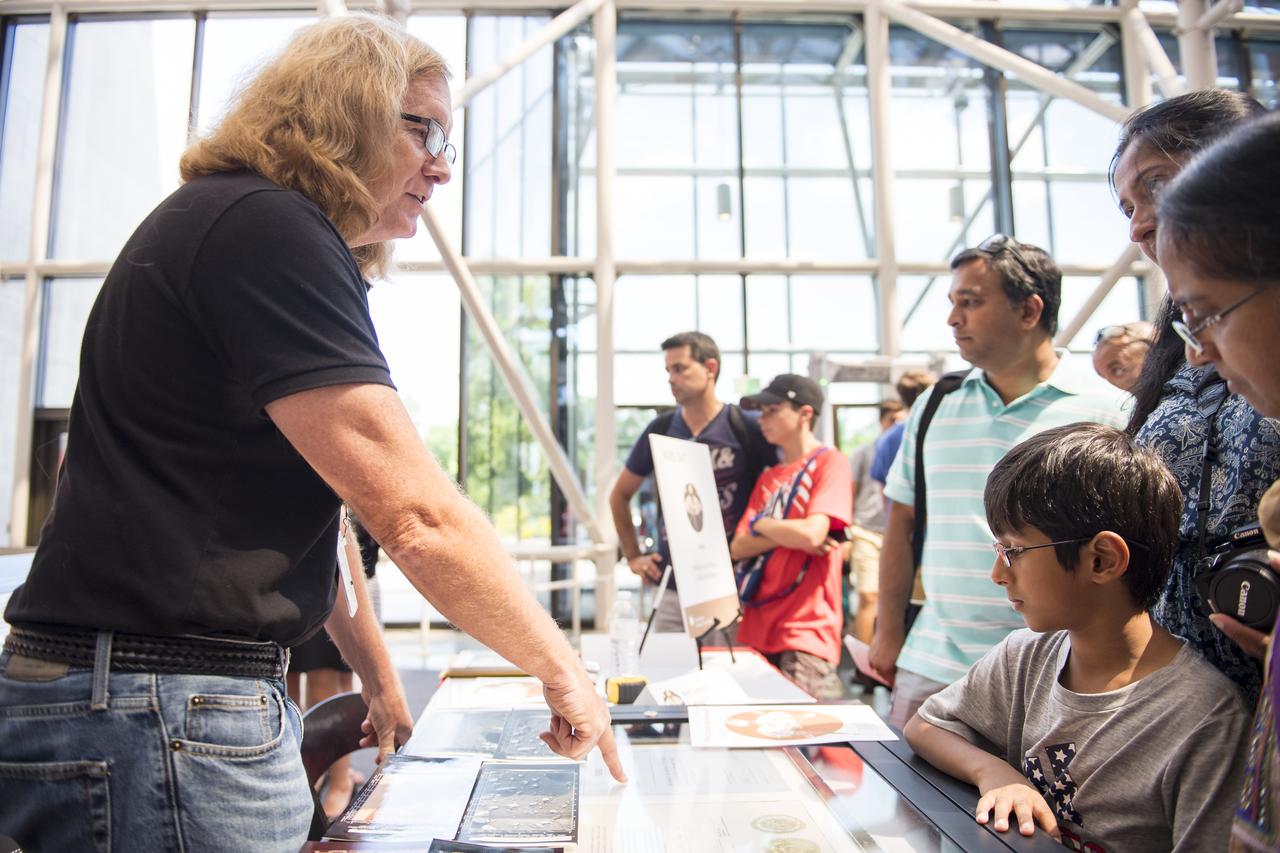
Visitors learn about the Viking landers at the Smithsonian Institution’s National Air and Space Museum Mars Day, an annual event celebrating the Red Planet with exhibits, speakers, and educational activities, Friday, July 21, 2017 in Washington. Photo Credit: (NASA/Aubrey Gemignani)
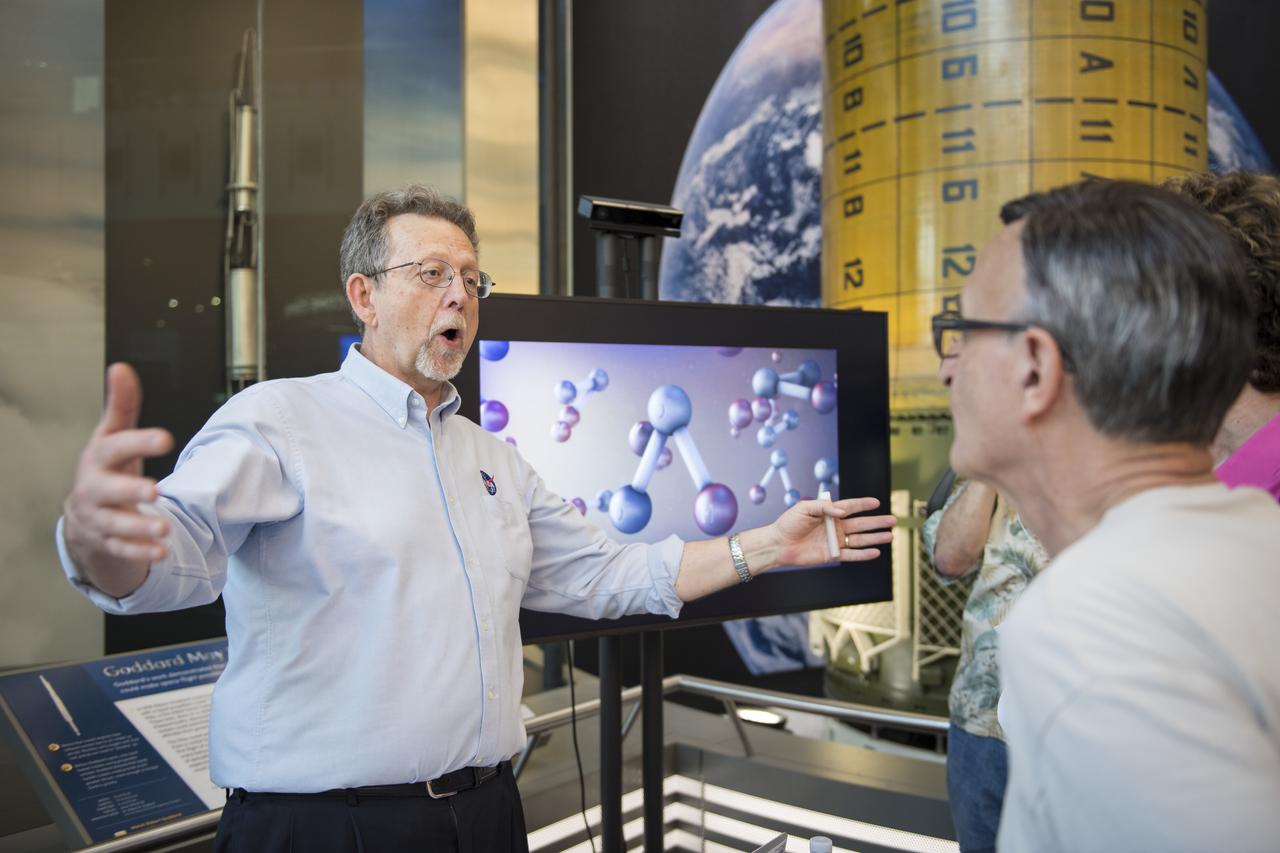
Jim Green, director of NASA’s Planetary Science Division, discusses NASA’s Mars missions with visitors during the Smithsonian Institution’s National Air and Space Museum Mars Day, celebrating the Red Planet with exhibits, speakers, and educational activities, Friday, July 21, 2017 in Washington. Photo Credit: (NASA/Aubrey Gemignani)
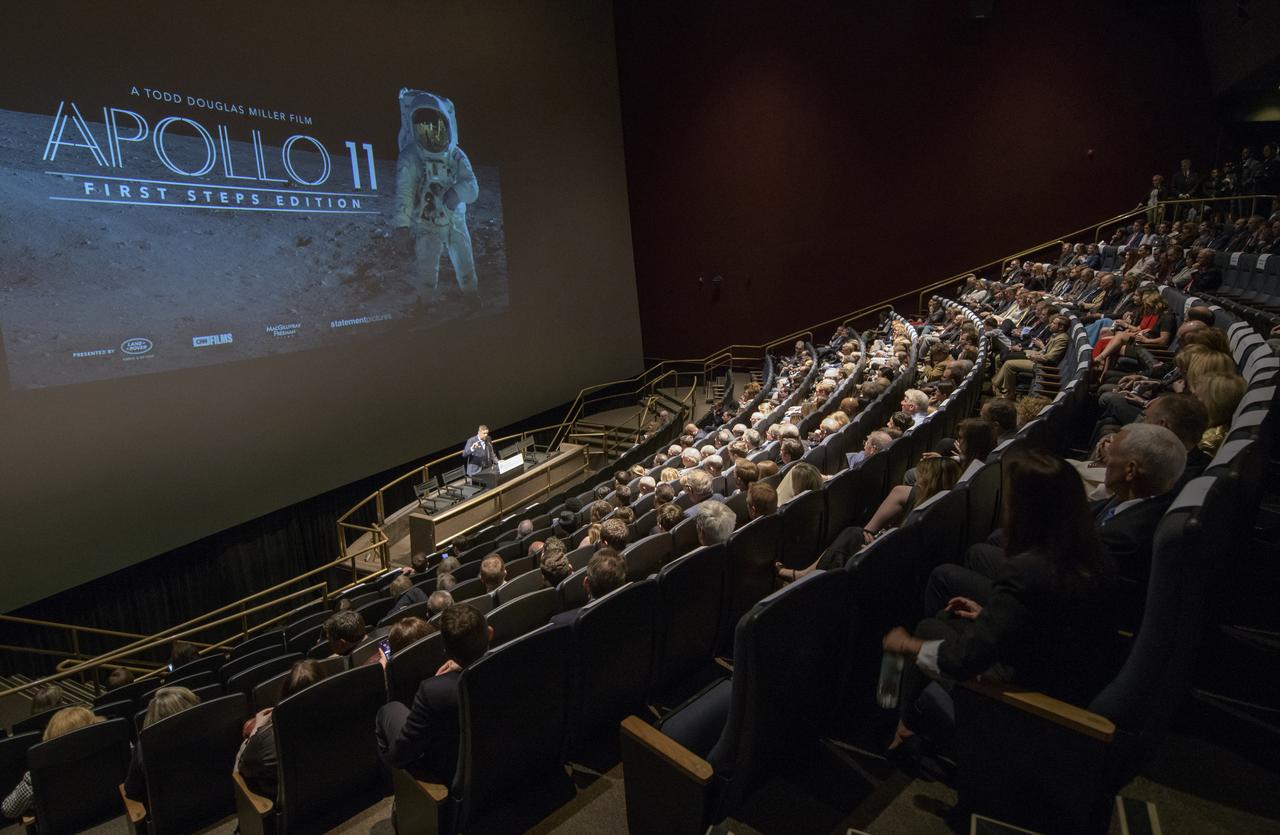
Film director Todd Douglas Miller introduces his film "Apollo 11: First Steps Edition" during the premiere, Tuesday, May 14, 2019 at the Smithsonian's National Air and Space Museum in Washington. Photo Credit: (NASA/Bill Ingalls)

Future Engineers "Two for the Crew" competition winner, Austin Suder, speaks about his Carabiner Tool Clip, during a STEM in 30 event, Wednesday, June 27, 2018 at Smithsonian's National Air and Space Museum in Washington. Photo Credit: (NASA/Aubrey Gemignani)

Film director Todd Douglas Miller gives remarks during after the premiere of the film "Apollo 11: First Steps Edition", Tuesday, May 14, 2019 at the Smithsonian's National Air and Space Museum in Washington. Photo Credit: (NASA/Bill Ingalls)
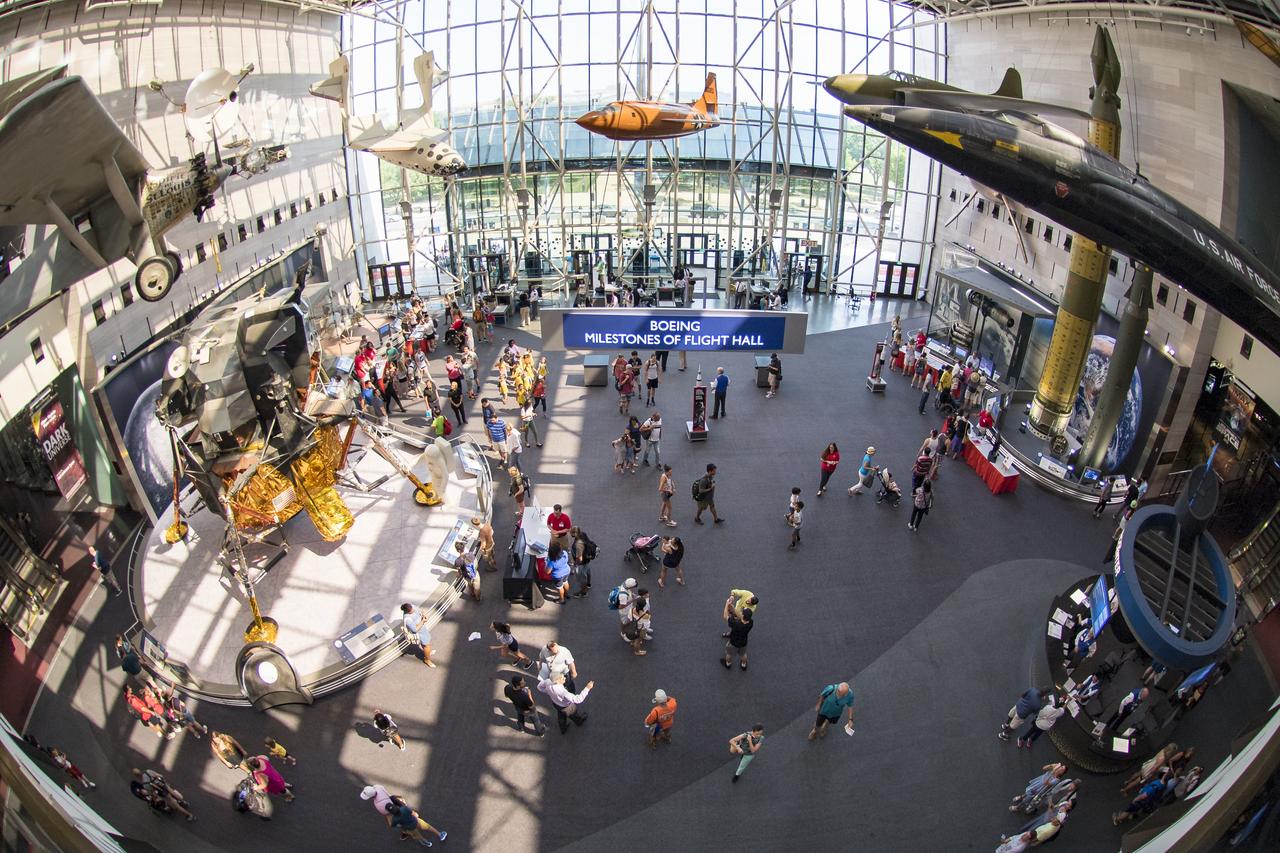
Visitors explore Smithsonian Institution’s National Air and Space Museum’s Mars Day, an annual event celebrating the Red Planet with exhibits, speakers, and educational activities, Friday, July 21, 2017 in Washington. Photo Credit: (NASA/Aubrey Gemignani)
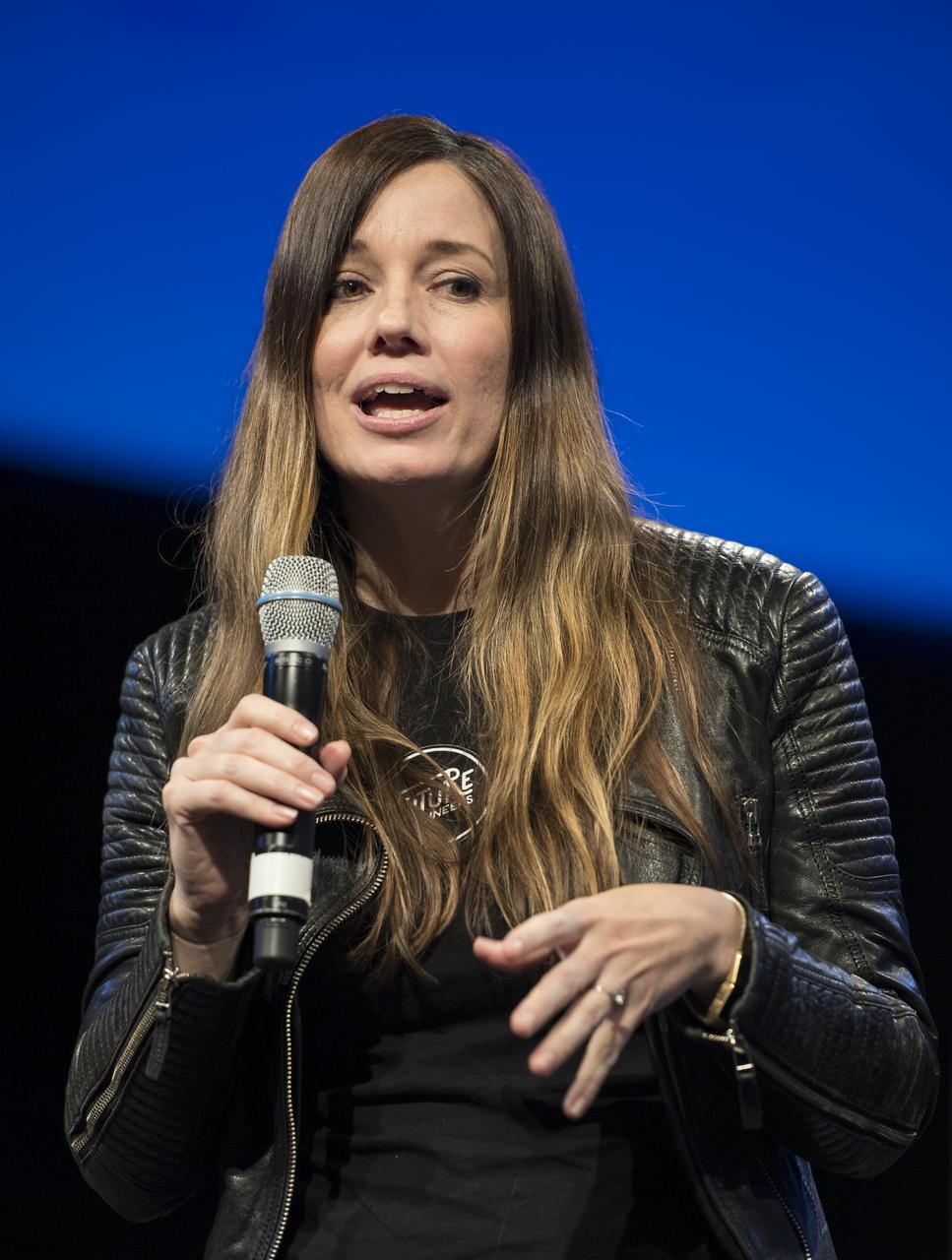
Deanne Bell, engineer, television host, and the founder & CEO of Future Engineers speaks to students during a STEM in 30 event where they announced the winners of the "Two for the Crew" competition, Wednesday, June 27, 2018 at Smithsonian's National Air and Space Museum in Washington. Photo Credit: (NASA/Aubrey Gemignani)
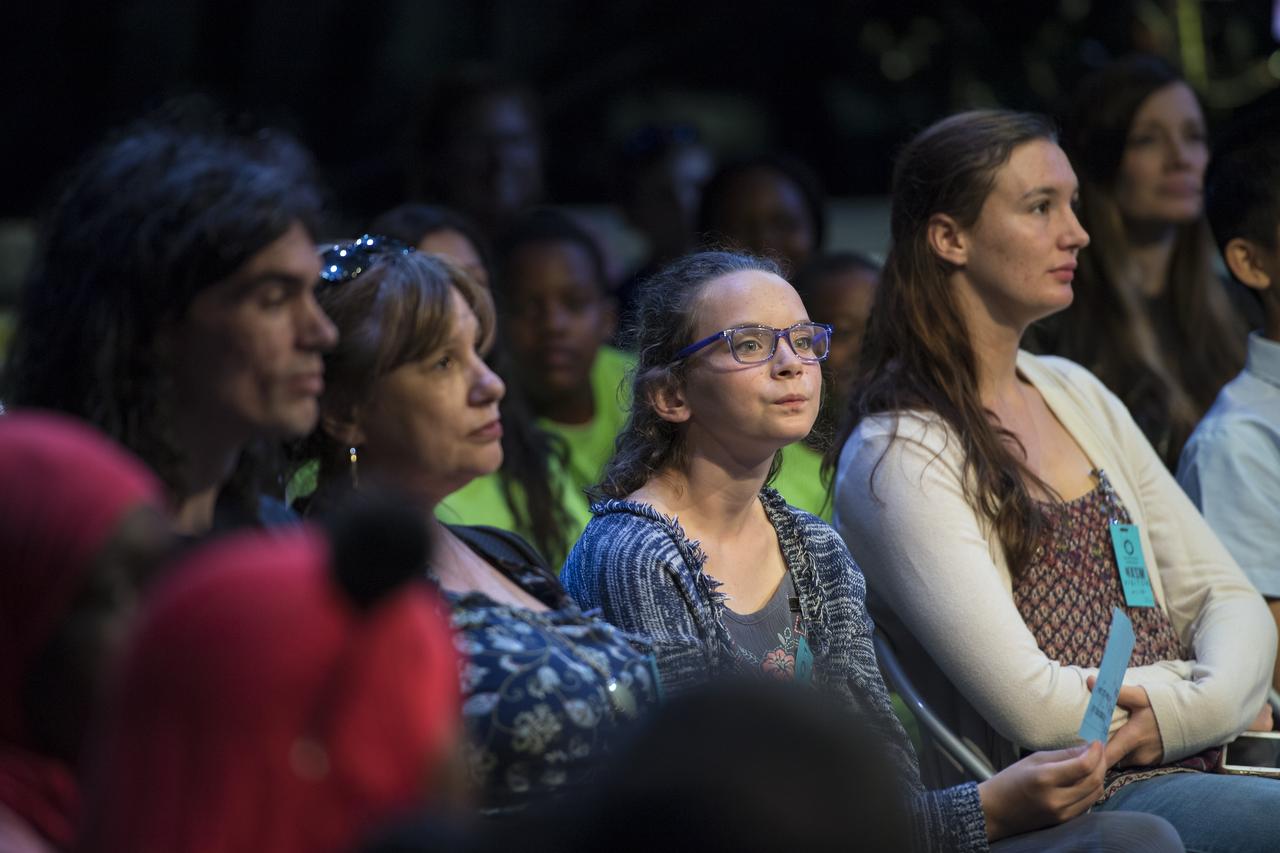
NASA astronaut Serena Auñon-Chancellor's niece, Anna Sophia, listens as Jason Crusan, director, NASA Advanced Exploration Systems (AES) Division, speaks with the STEM in 30 team Wednesday, June 27, 2018 at Smithsonian's National Air and Space Museum in Washington. Photo Credit: (NASA/Aubrey Gemignani)

Film director Todd Douglas Miller gives remarks during after the premiere of the film "Apollo 11: First Steps Edition", Tuesday, May 14, 2019 at the Smithsonian's National Air and Space Museum in Washington. Photo Credit: (NASA/Bill Ingalls)
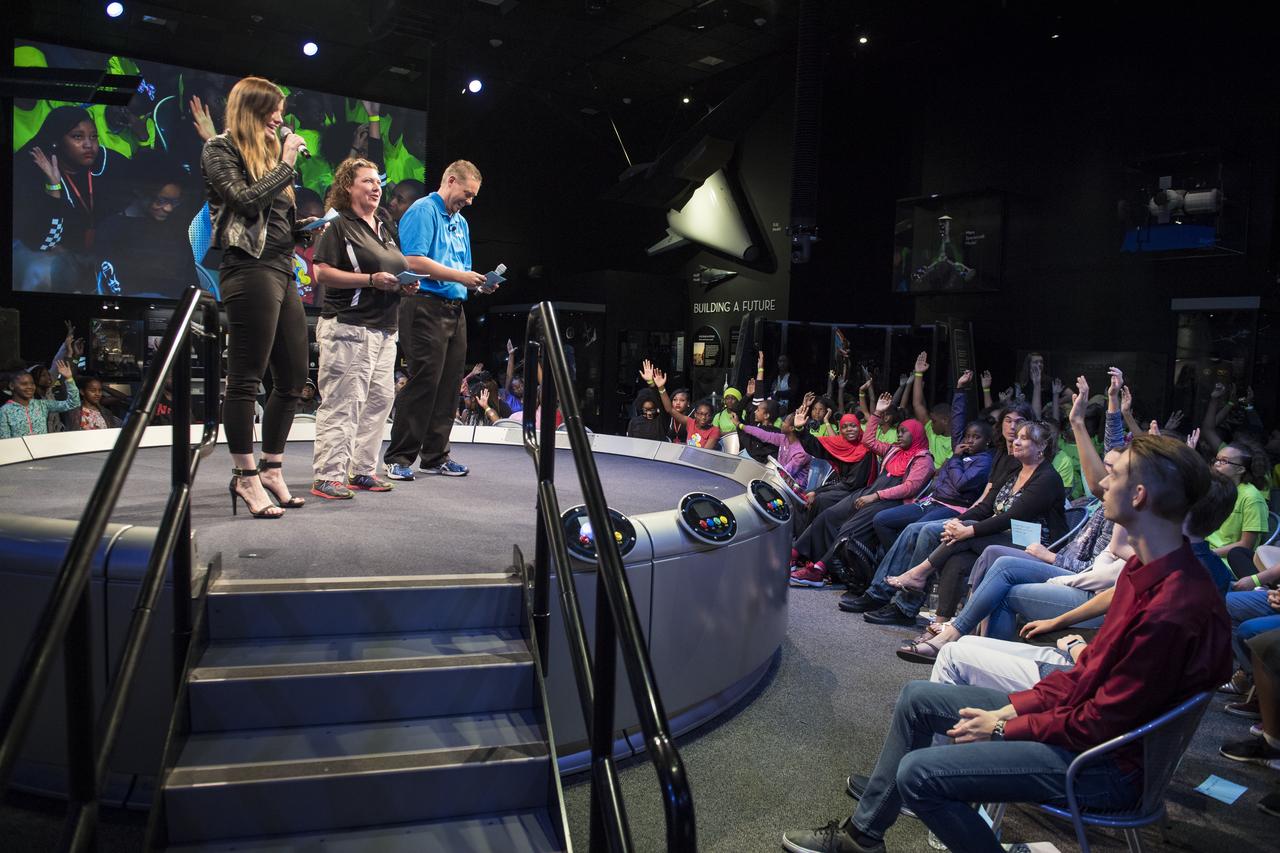
Deanne Bell, engineer, television host, and the founder & CEO of Future Engineers speaks to students during a STEM in 30 event where they announced the winners of the "Two for the Crew" competition, Wednesday, June 27, 2018 at Smithsonian's National Air and Space Museum in Washington. Photo Credit: (NASA/Aubrey Gemignani)
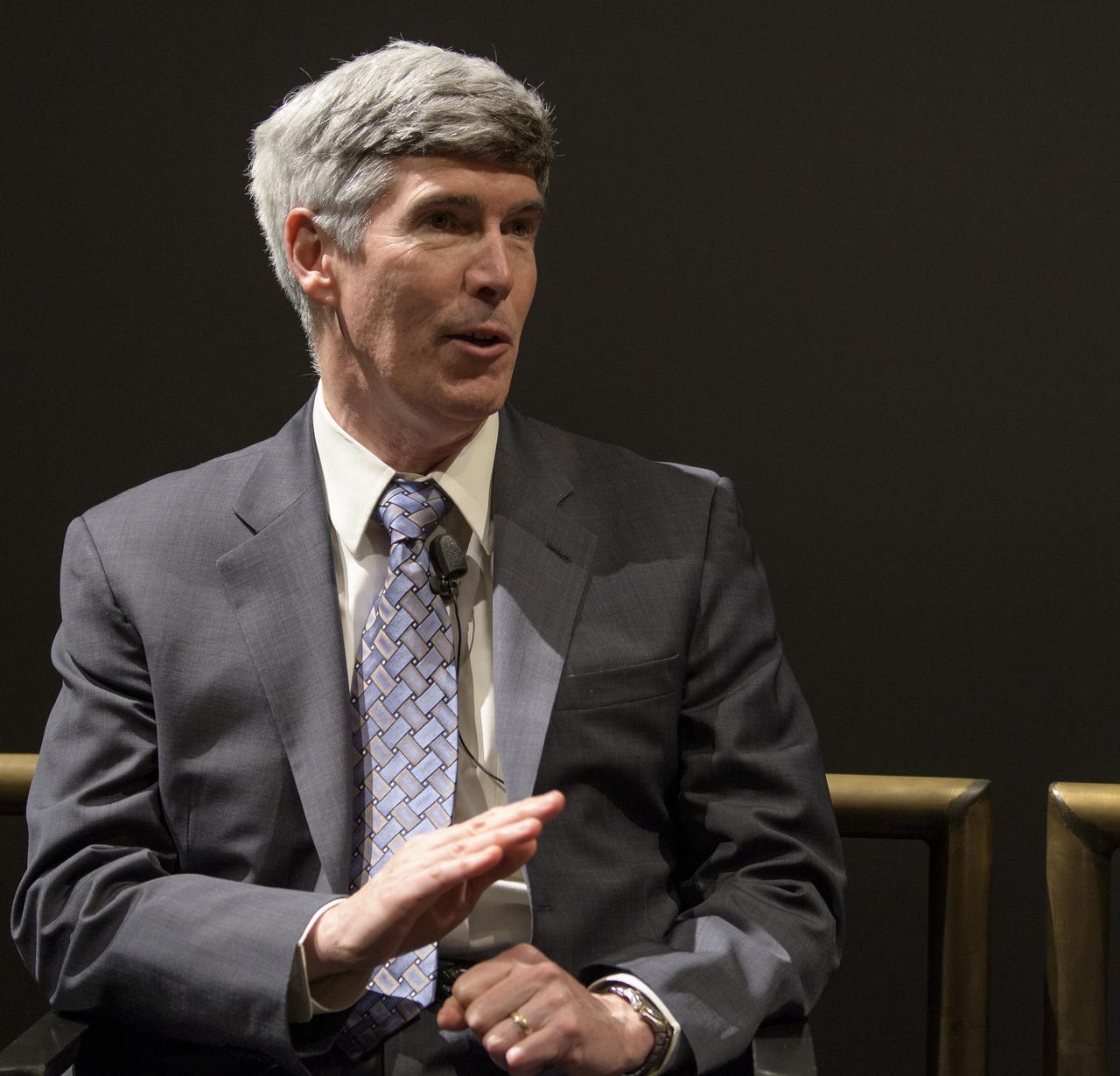
NASA Chief Historian Bill Barry participates in a panel discussion after the premiere of the film "Apollo 11: First Steps Edition", Tuesday, May 14, 2019 at the Smithsonian's National Air and Space Museum in Washington. Photo Credit: (NASA/Bill Ingalls)
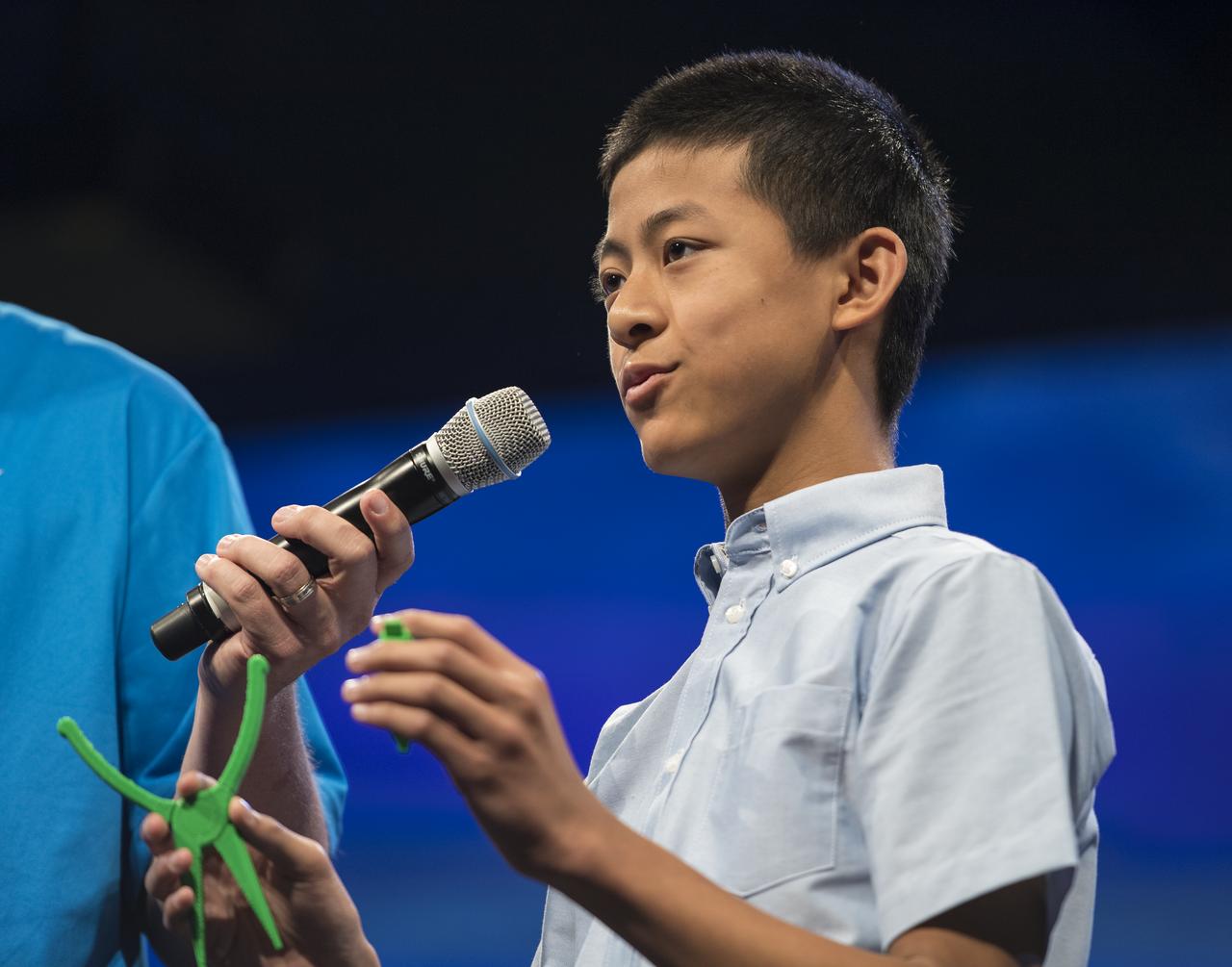
Future Engineers "Two for the Crew" competition winner, Jason Qin, speaks about his Two Pliers + 1 Handle, during a STEM in 30 event, Wednesday, June 27, 2018 at Smithsonian's National Air and Space Museum in Washington. Photo Credit: (NASA/Aubrey Gemignani)

Rep. Kendra Horn, D-Okla., participates in a panel discussion after the premiere of the film "Apollo 11: First Steps Edition", Tuesday, May 14, 2019 at the Smithsonian's National Air and Space Museum in Washington. Photo Credit: (NASA/Bill Ingalls)
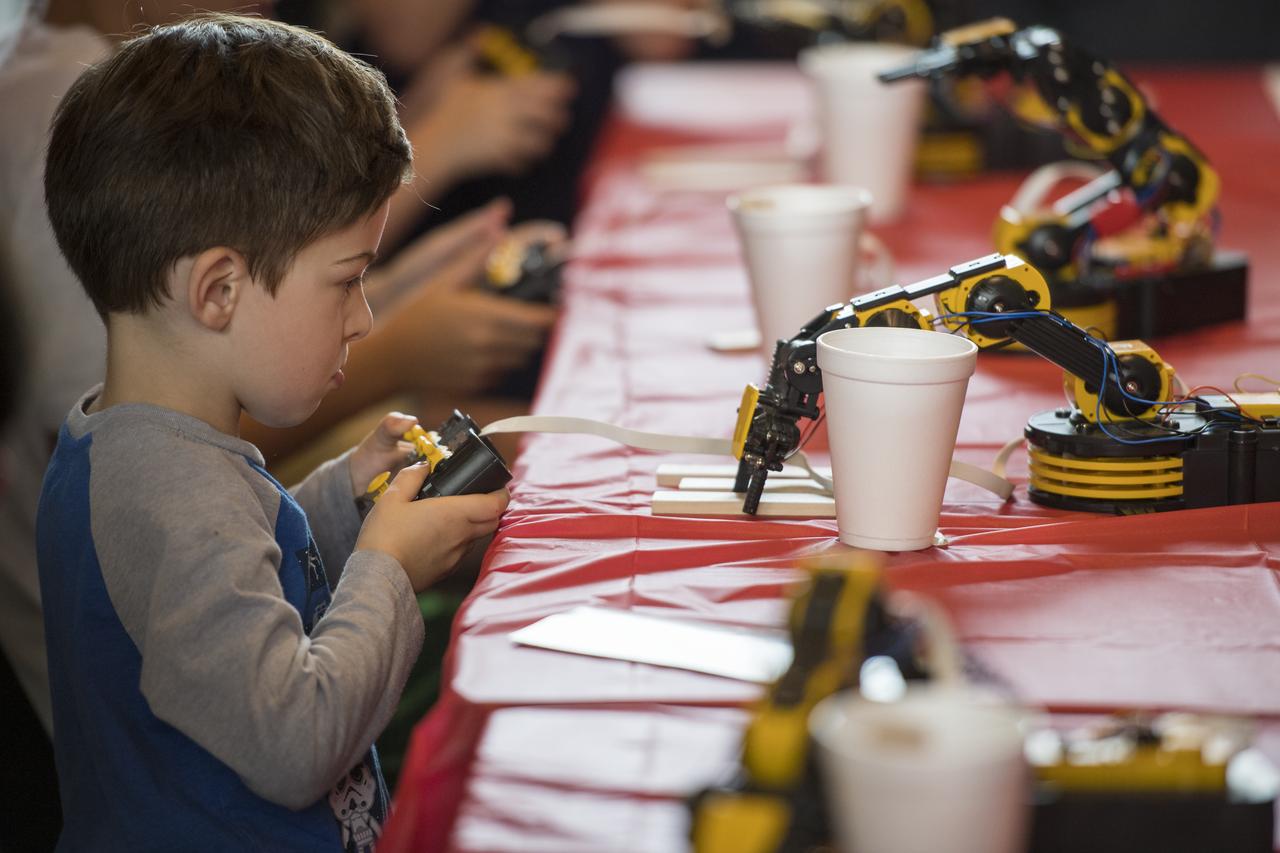
Visitors operate robotic arms at the Smithsonian Institution’s National Air and Space Museum Mars Day, an annual event celebrating the Red Planet with exhibits, speakers, and educational activities, Friday, July 21, 2017 in Washington. Photo Credit: (NASA/Aubrey Gemignani)
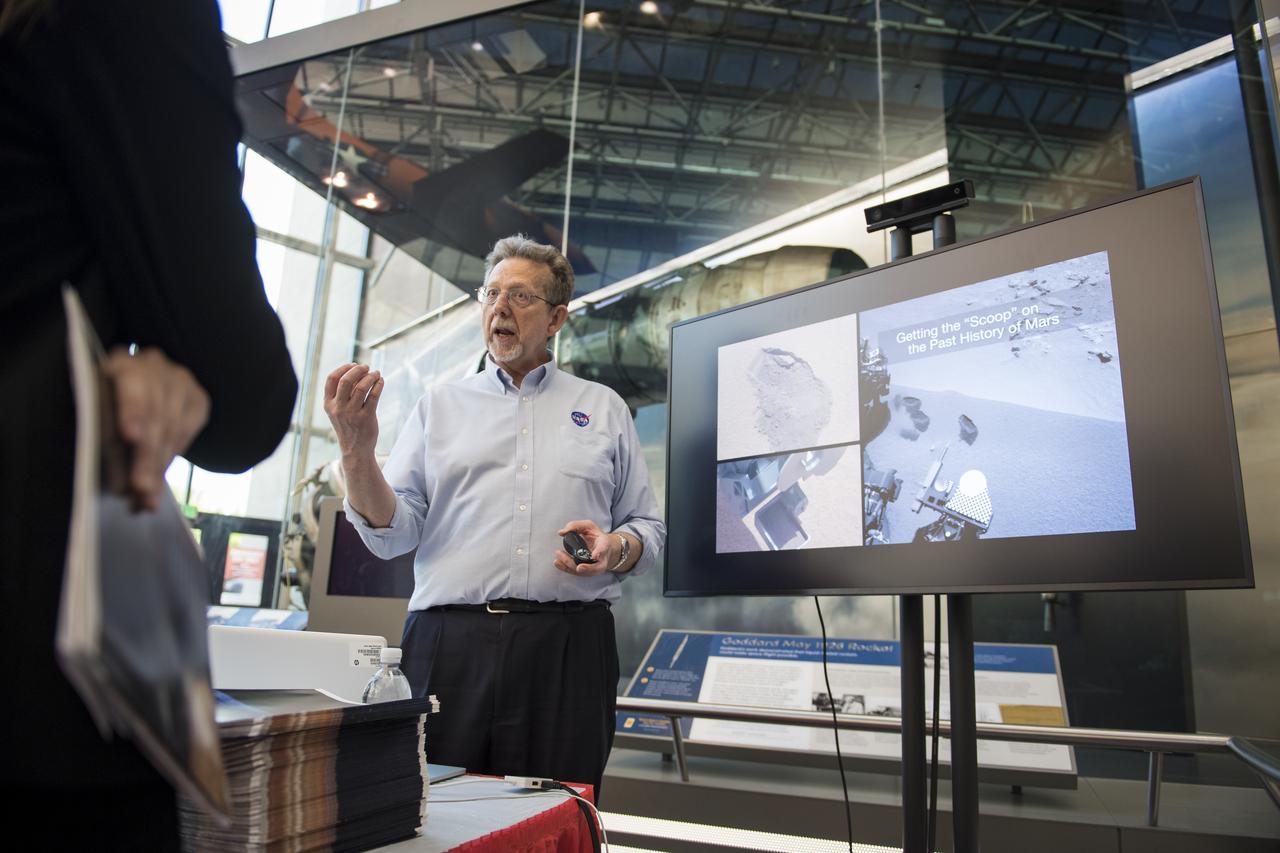
Jim Green, director of NASA’s Planetary Science Division, discusses NASA’s Mars missions with visitors during the Smithsonian Institution’s National Air and Space Museum Mars Day, celebrating the Red Planet with exhibits, speakers, and educational activities, Friday, July 21, 2017 in Washington. Photo Credit: (NASA/Aubrey Gemignani)
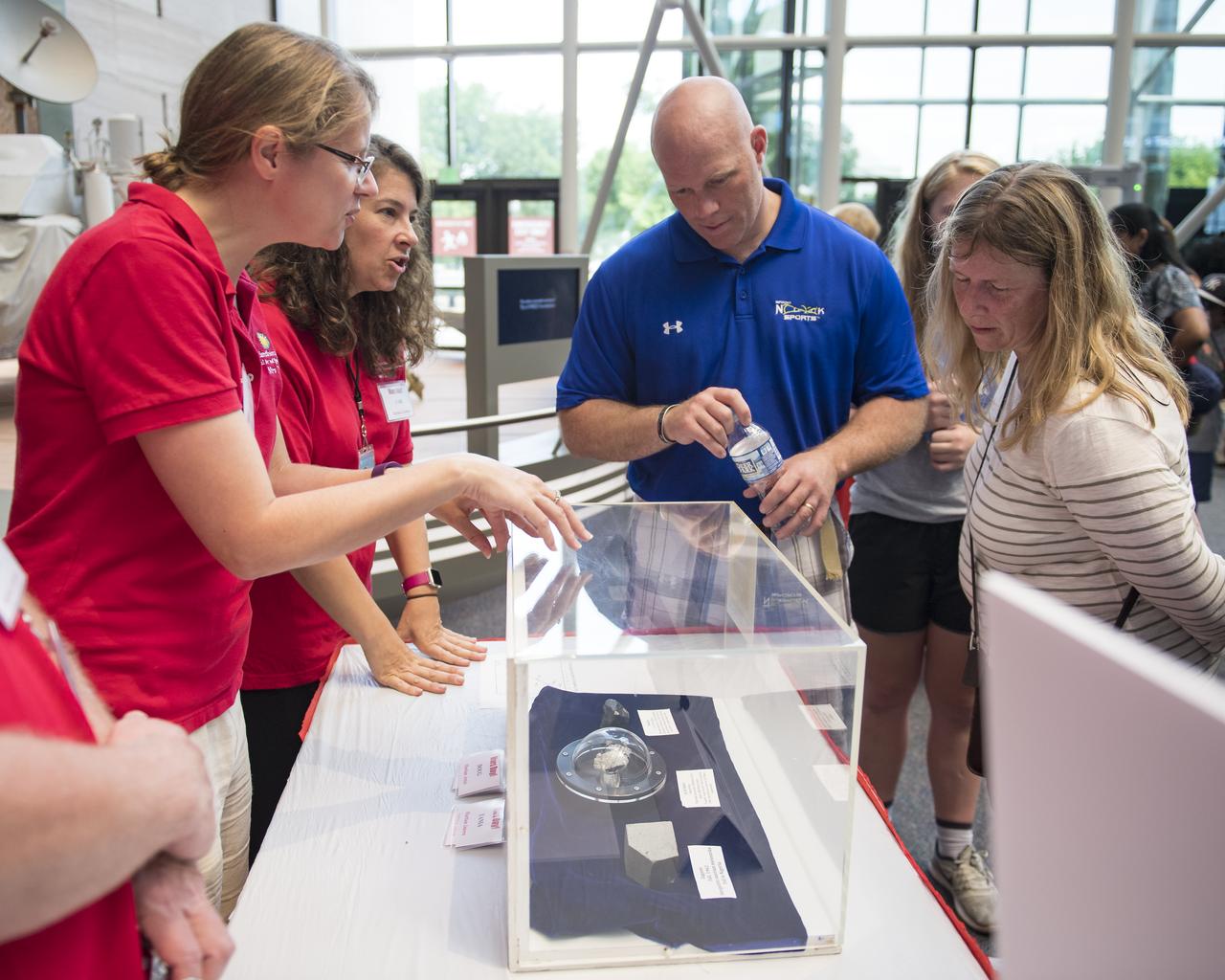
Visitors view a piece of Mars at the Smithsonian Institution’s National Air and Space Museum Mars Day, an annual event celebrating the Red Planet with exhibits, speakers, and educational activities, Friday, July 21, 2017 in Washington. Photo Credit: (NASA/Aubrey Gemignani)
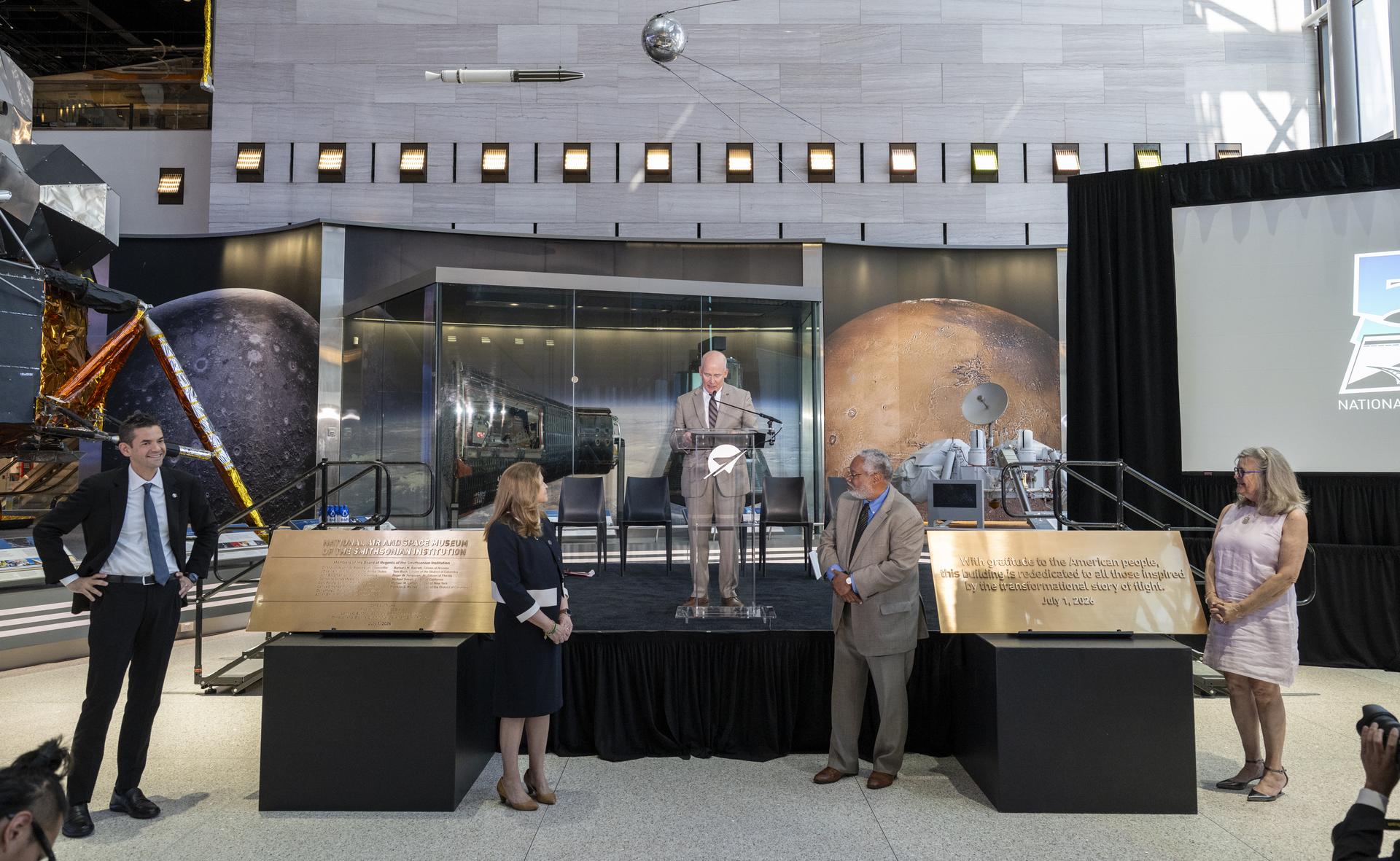
From left to right, NASA Administrator Jared Isaacman, Under Secretary for Science and Research at the Smithsonian Institution Ellen Stofan, Director of the Smithsonian’s National Air and Space Museum Christopher Browne, Secretary of the Smithsonian Institution Lonnie G. Bunch III, and Wright brother’s great-grandniece Amanda Wright Lane are seen after unveiling plaques during the Smithsonian’s National Air and Space Museum rededication ceremony Wednesday, July 1, 2026, in Washington. Photo Credit: (NASA/Keegan Barber)
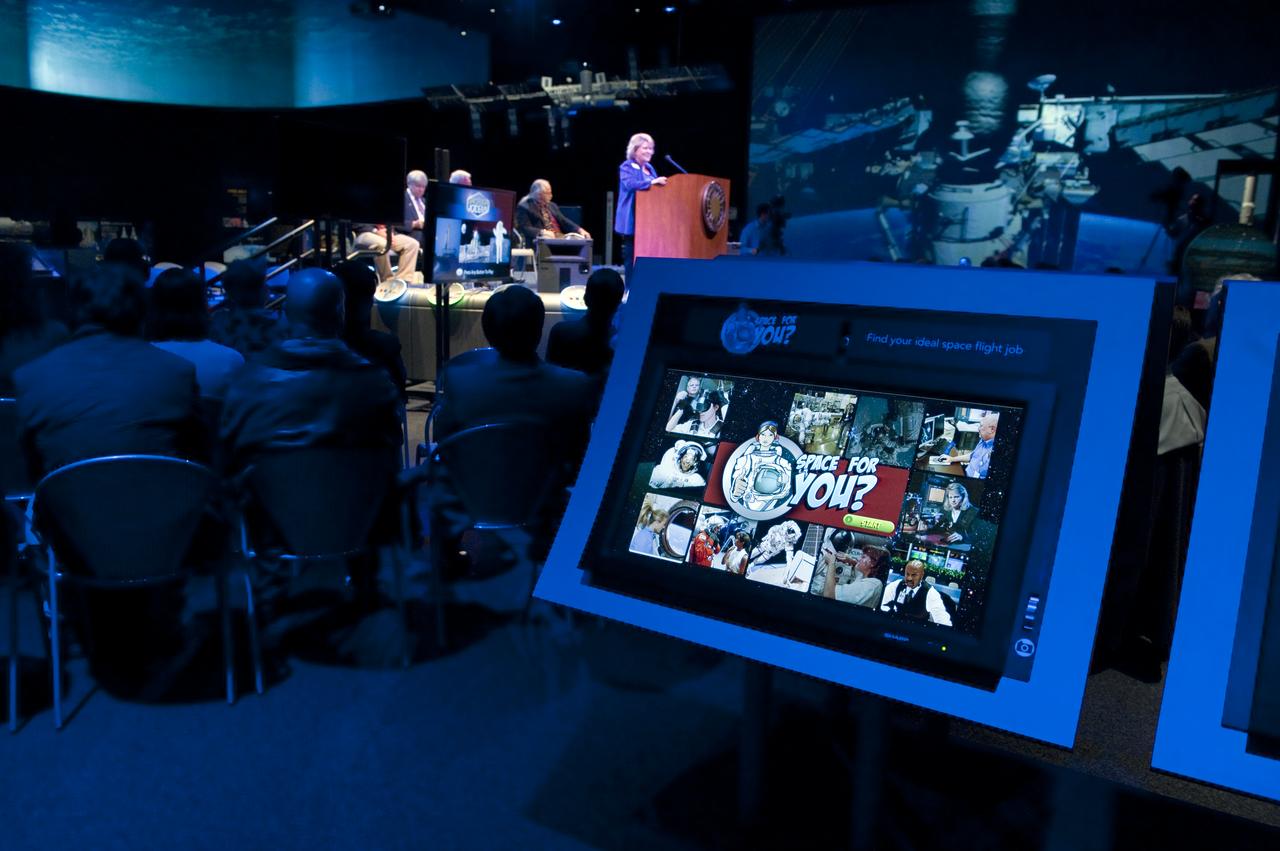
Dr. Valerie Neal, a curator at the Smithsonian's National Air and Space Museum, speaks during a press briefing at the new "Moving Beyond Earth," exhibition at the museum in Washingon, Wednesday, Nov. 18, 2009. Moving Beyond Earth is an immersive exhibition that places visitors “in orbit” in the shuttle and space-station era to explore recent human spaceflight and future possibilities. Photo Credit: (NASA/Paul E. Alers)
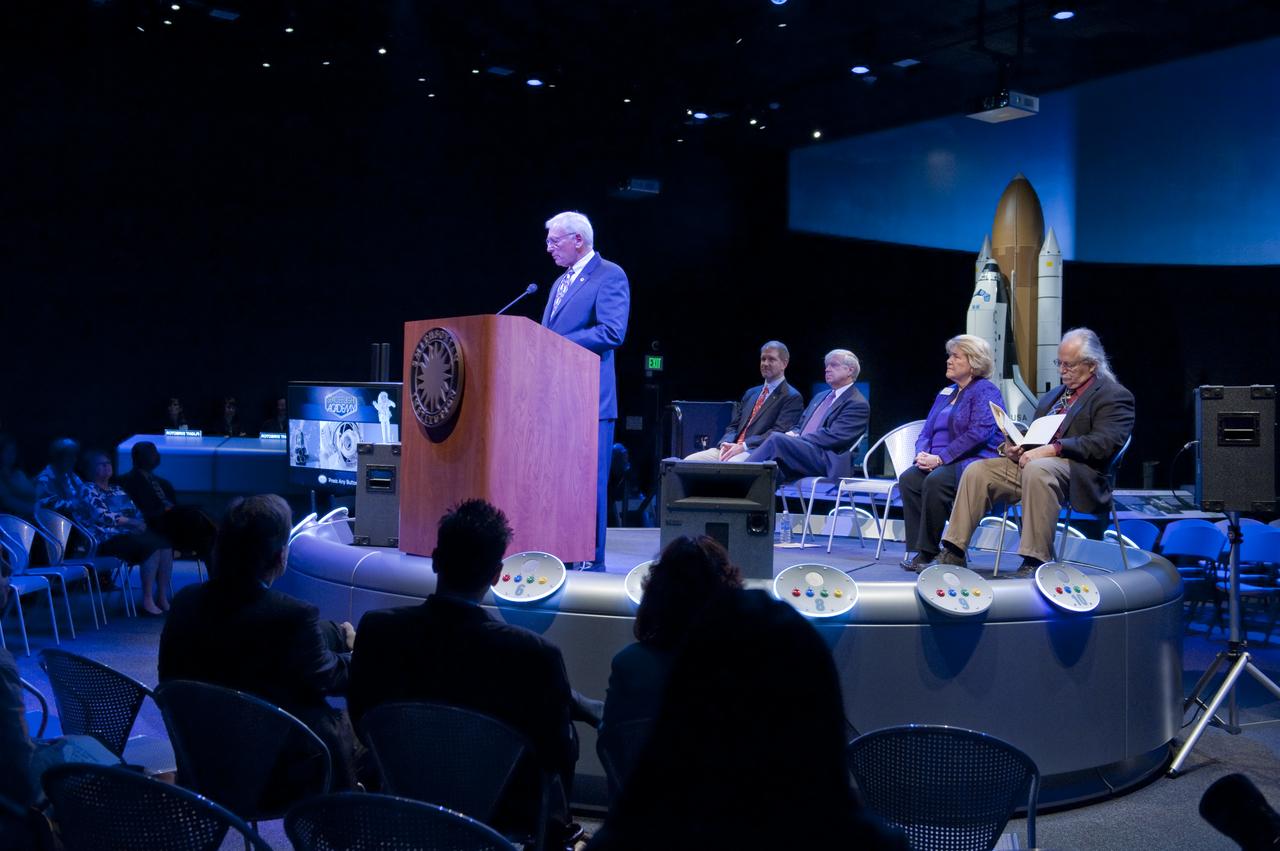
Jack Dailey, director of the Smithsonian's National Air and Space Museum, speaks during a press briefing at the new "Moving Beyond Earth," a new exhibition at the museum in Washingon, Wednesday, Nov. 18, 2009. Moving Beyond Earth is an immersive exhibition that places visitors “in orbit” in the shuttle and space-station era to explore recent human spaceflight and future possibilities. Photo Credit: (NASA/Paul E. Alers)
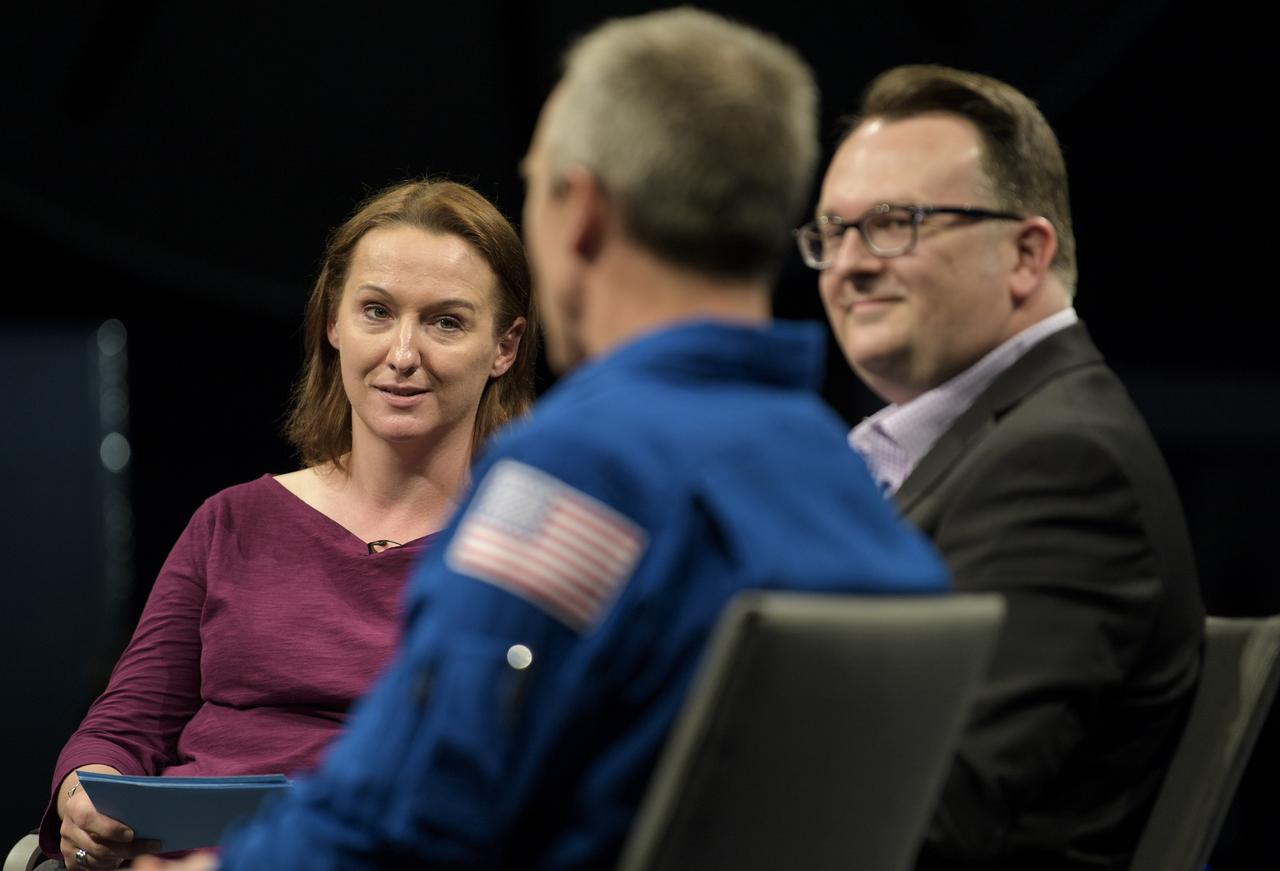
Smithsonian National Air and Space Museum curators Jennifer Levasseur, left, and Jeremy Kinney, center, speak with NASA astronaut Drew Feustel about his experiences on two space shuttle missions, STS-125 and STS-134, and a long duration mission onboard the International Space Station during “What’s New in Aerospace,” Thursday, May 9, 2019 at the Smithsonian’s National Air and Space Museum in Washington, DC. Feustel most recently spent 197 days living and working onboard the International Space Station as part of Expedition 55 and as commander of Expedition 56. Feustel ventured outside the space station on three spacewalks, moving him up to second among U.S. spacewalkers with a cumulative time of 61 hours 48 minutes over nine spacewalks. Photo Credit: (NASA/Joel Kowsky)
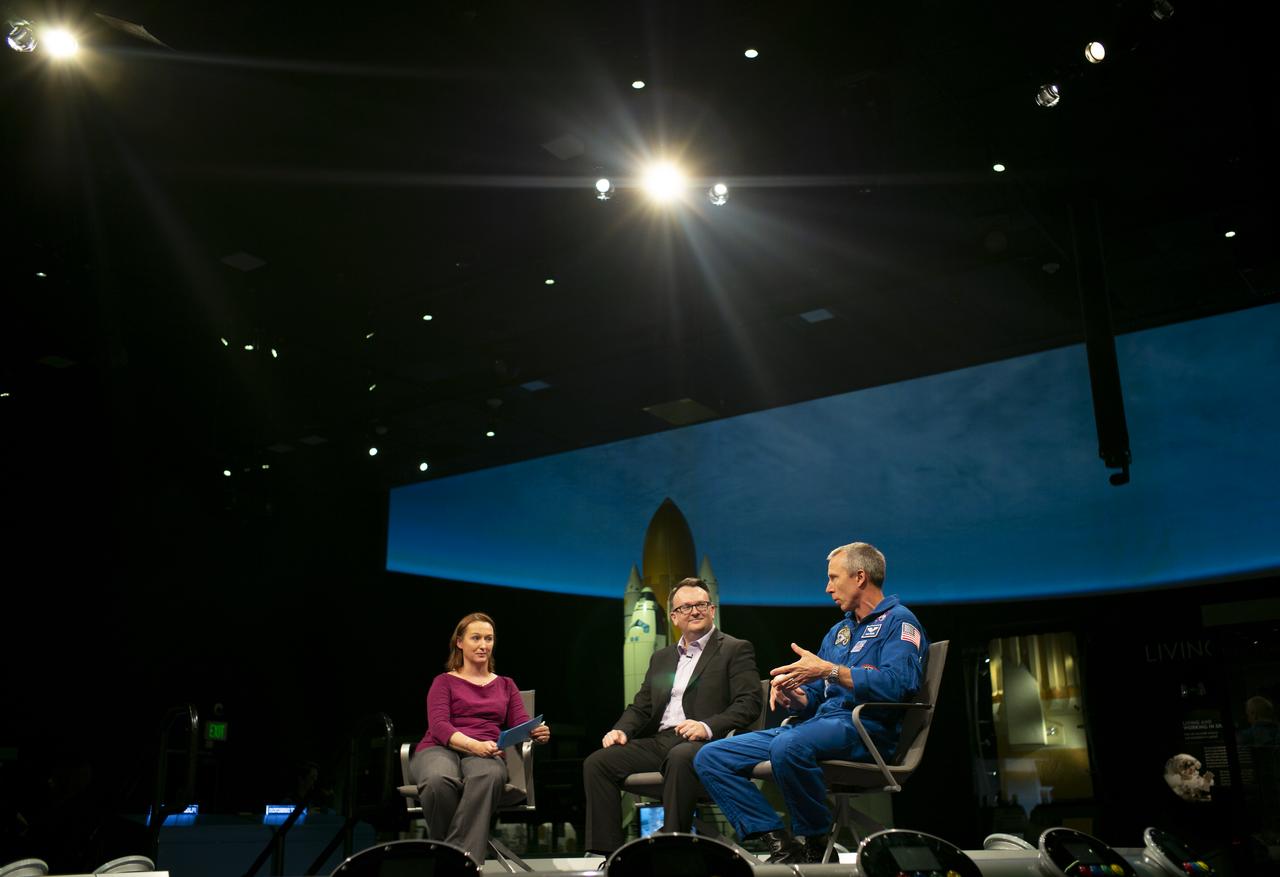
Smithsonian National Air and Space Museum curators Jennifer Levasseur, left, and Jeremy Kinney, center, speak with NASA astronaut Drew Feustel about his experiences on two space shuttle missions, STS-125 and STS-134, and a long duration mission onboard the International Space Station during “What’s New in Aerospace,” Thursday, May 9, 2019 at the Smithsonian’s National Air and Space Museum in Washington, DC. Feustel most recently spent 197 days living and working onboard the International Space Station as part of Expedition 55 and as commander of Expedition 56. Feustel ventured outside the space station on three spacewalks, moving him up to second among U.S. spacewalkers with a cumulative time of 61 hours 48 minutes over nine spacewalks. Photo Credit: (NASA/Joel Kowsky)
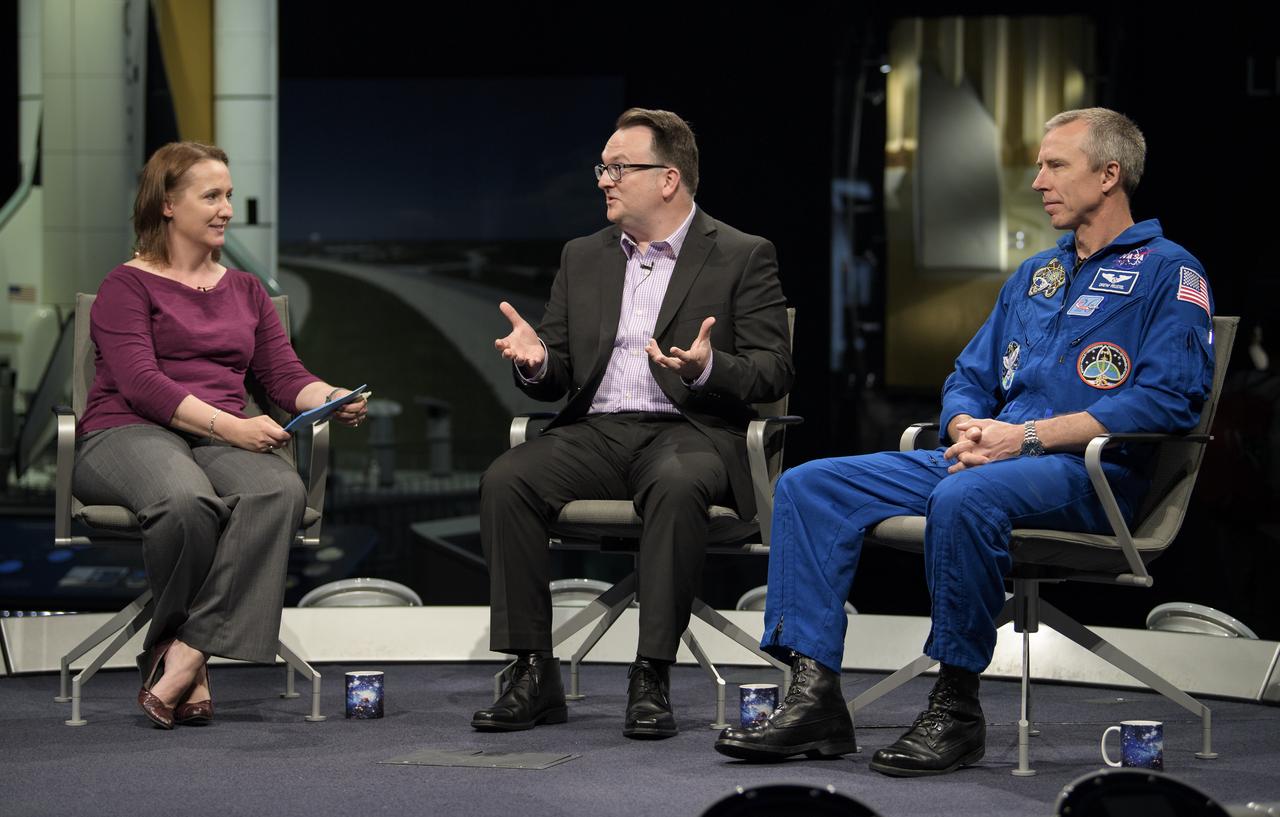
Smithsonian National Air and Space Museum curators Jennifer Levasseur, left, and Jeremy Kinney, center, speak with NASA astronaut Drew Feustel about his experiences on two space shuttle missions, STS-125 and STS-134, and a long duration mission onboard the International Space Station during “What’s New in Aerospace,” Thursday, May 9, 2019 at the Smithsonian’s National Air and Space Museum in Washington, DC. Feustel most recently spent 197 days living and working onboard the International Space Station as part of Expedition 55 and as commander of Expedition 56. Feustel ventured outside the space station on three spacewalks, moving him up to second among U.S. spacewalkers with a cumulative time of 61 hours 48 minutes over nine spacewalks. Photo Credit: (NASA/Joel Kowsky)
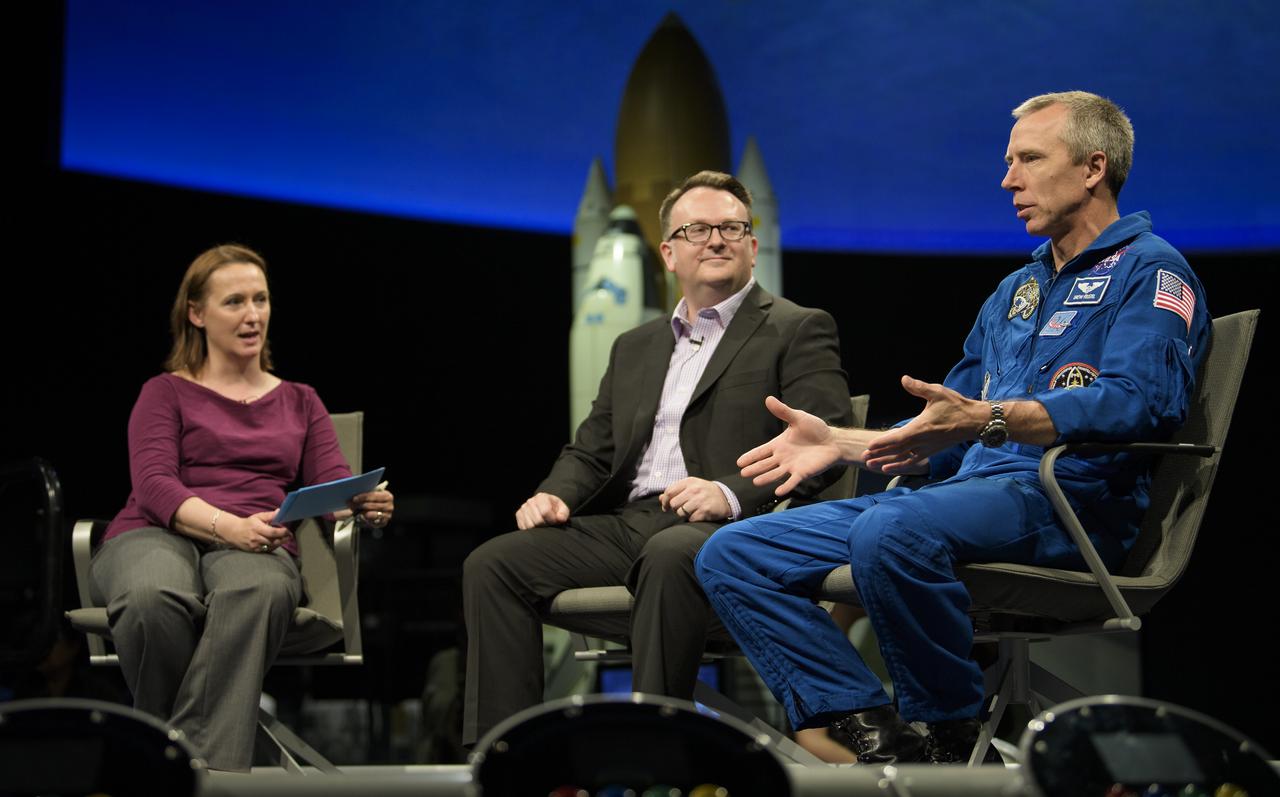
Smithsonian National Air and Space Museum curators Jennifer Levasseur, left, and Jeremy Kinney, center, speak with NASA astronaut Drew Feustel about his experiences on two space shuttle missions, STS-125 and STS-134, and a long duration mission onboard the International Space Station during “What’s New in Aerospace,” Thursday, May 9, 2019 at the Smithsonian’s National Air and Space Museum in Washington, DC. Feustel most recently spent 197 days living and working onboard the International Space Station as part of Expedition 55 and as commander of Expedition 56. Feustel ventured outside the space station on three spacewalks, moving him up to second among U.S. spacewalkers with a cumulative time of 61 hours 48 minutes over nine spacewalks. Photo Credit: (NASA/Joel Kowsky)
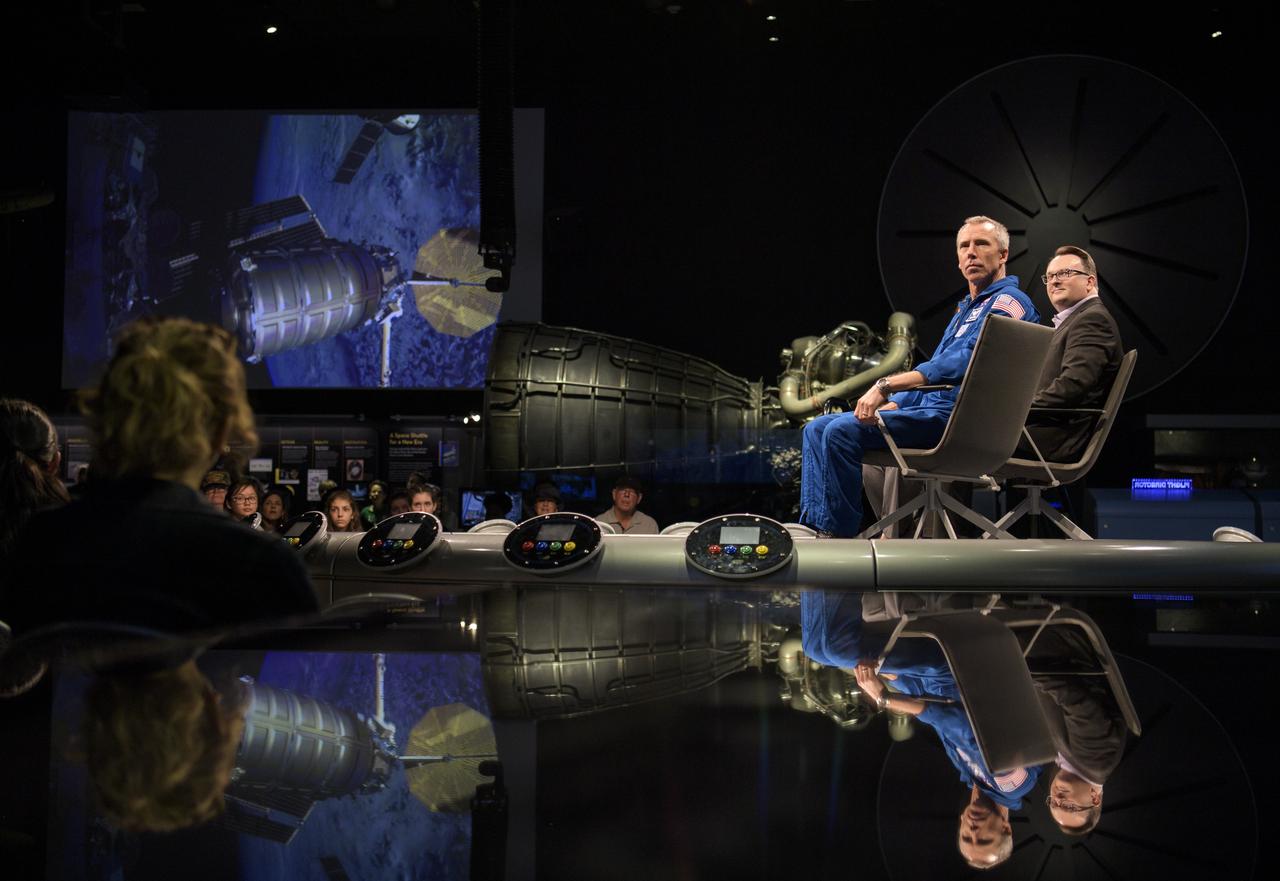
Smithsonian National Air and Space Museum curator Jeremy Kinney, right, and NASA astronaut Drew Feustel, left, are seen as a short video about Feustel’s mission to the International Space Station is shown during “What’s New in Aerospace,” Thursday, May 9, 2019 at the Smithsonian’s National Air and Space Museum in Washington, DC. Feustel most recently spent 197 days living and working onboard the International Space Station as part of Expedition 55 and as commander of Expedition 56. Feustel ventured outside the space station on three spacewalks, moving him up to second among U.S. spacewalkers with a cumulative time of 61 hours 48 minutes over nine spacewalks. Photo Credit: (NASA/Joel Kowsky)
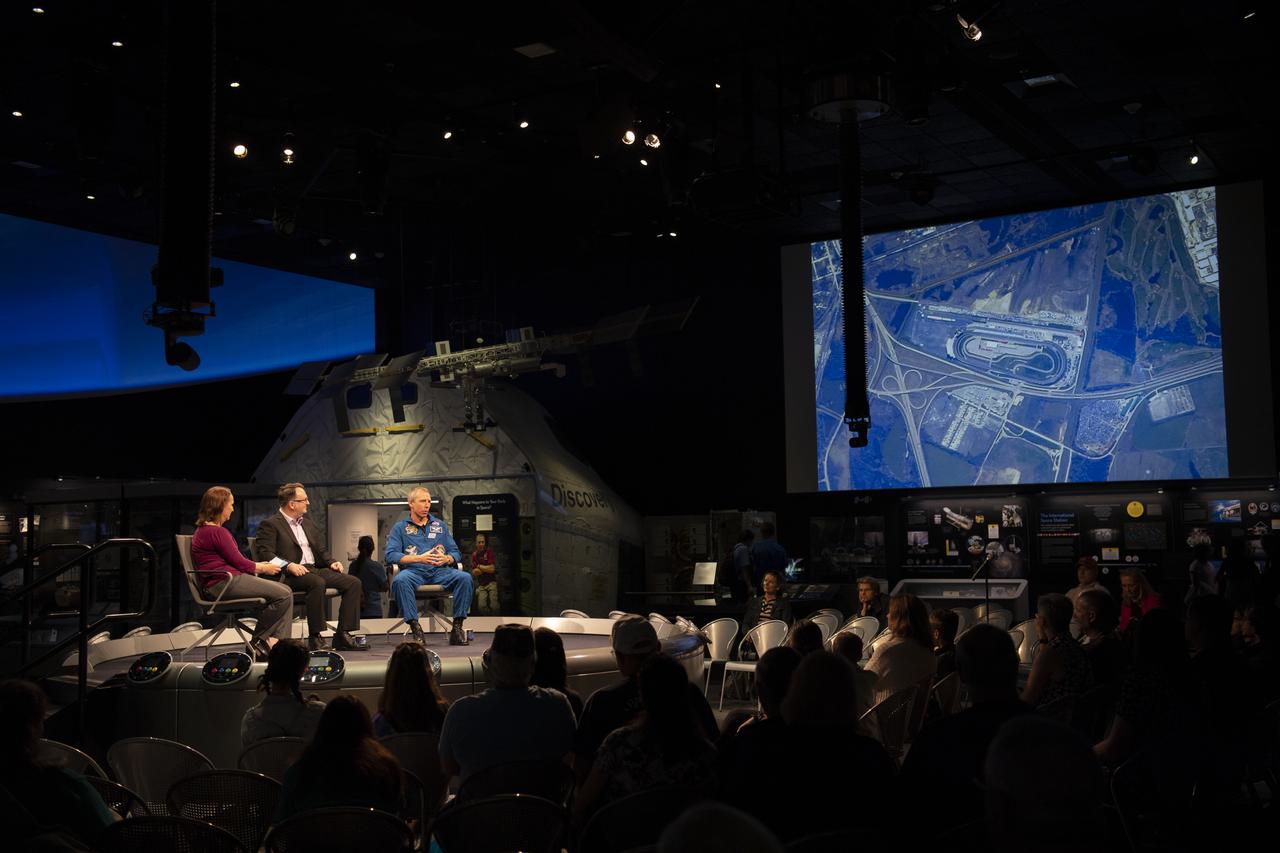
Smithsonian National Air and Space Museum curators Jennifer Levasseur, left, and Jeremy Kinney, center, speak with NASA astronaut Drew Feustel about photographing racetracks around the world during his time onboard the International Space Station during “What’s New in Aerospace,” Thursday, May 9, 2019 at the Smithsonian’s National Air and Space Museum in Washington, DC. Feustel most recently spent 197 days living and working onboard the International Space Station as part of Expedition 55 and as commander of Expedition 56. Feustel ventured outside the space station on three spacewalks, moving him up to second among U.S. spacewalkers with a cumulative time of 61 hours 48 minutes over nine spacewalks. Photo Credit: (NASA/Joel Kowsky)
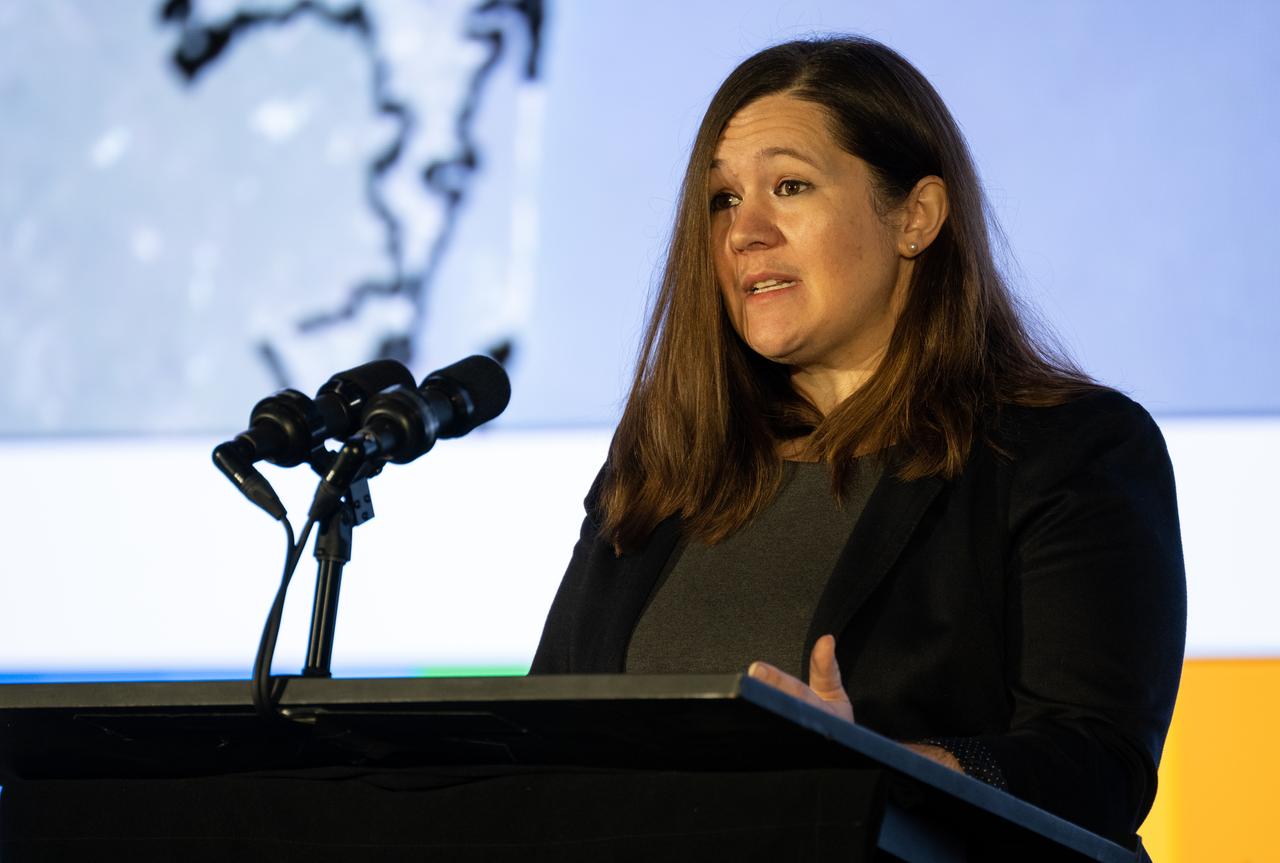
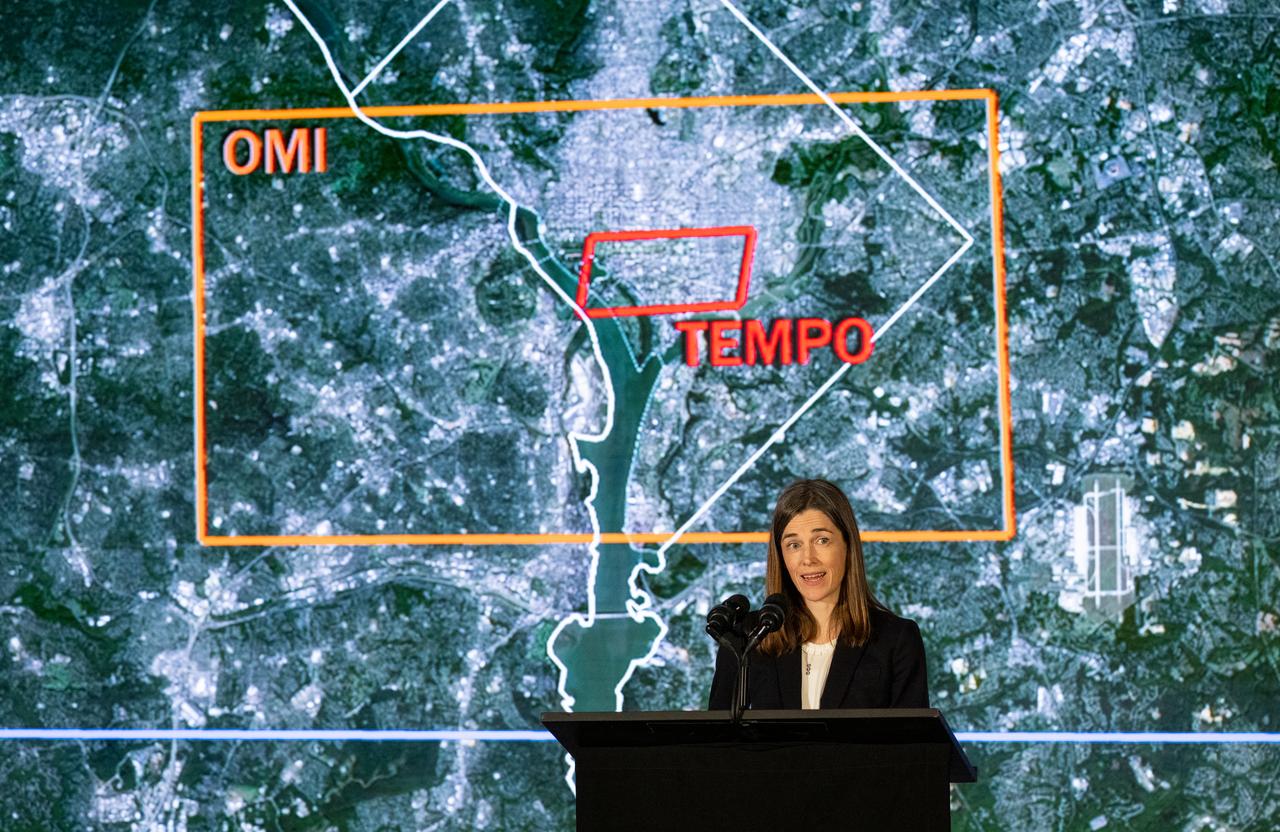
Erika Wright, education specialist at the Center for Astrophysics | Harvard & Smithsonian, speaks during a briefing on NASA’s TEMPO (Tropospheric Emissions: Monitoring of Pollution) instrument, Tuesday, March 14, 2023 at the Smithsonian’s National Air and Space Museum in Washington. NASA’s TEMPO instrument, the first Earth Venture Instrument mission, will measure air pollution across North America from Mexico City to the Canadian oil sands and from the Atlantic to the Pacific hourly and at a high spatial resolution. A partnership between NASA and the Center for Astrophysics | Harvard & Smithsonian, TEMPO will launch on a commercial satellite to geostationary orbit as early as April. Photo Credit: (NASA/Joel Kowsky)

Caroline Nowlan, atmospheric physicist at the Center for Astrophysics | Harvard & Smithsonian, speaks during a briefing on NASA’s TEMPO (Tropospheric Emissions: Monitoring of Pollution) instrument, Tuesday, March 14, 2023 at the Smithsonian’s National Air and Space Museum in Washington. NASA’s TEMPO instrument, the first Earth Venture Instrument mission, will measure air pollution across North America from Mexico City to the Canadian oil sands and from the Atlantic to the Pacific hourly and at a high spatial resolution. A partnership between NASA and the Center for Astrophysics | Harvard & Smithsonian, TEMPO will launch on a commercial satellite to geostationary orbit as early as April. Photo Credit: (NASA/Joel Kowsky)
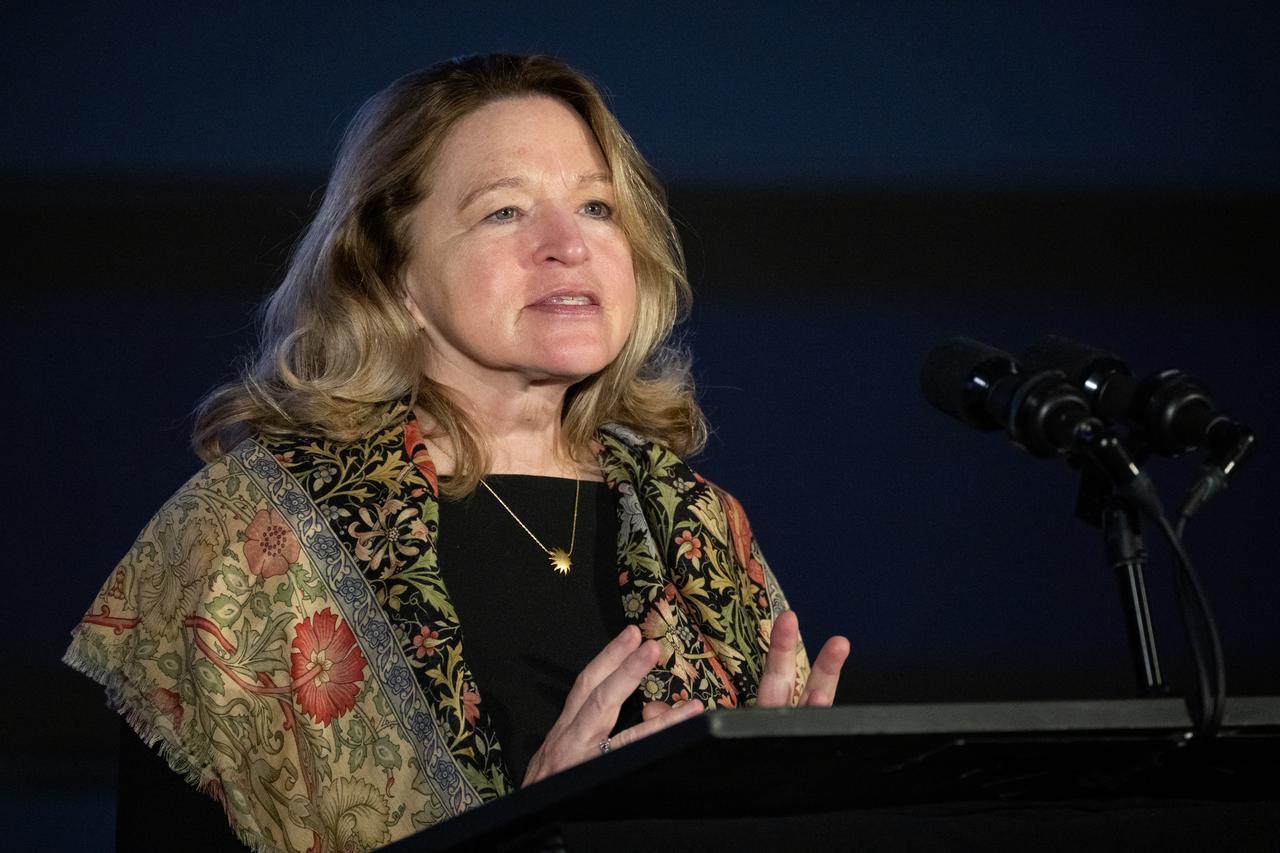
Ellen Stofan, under secretary for Science and Research at the Smithsonian Institution, speaks during a briefing on NASA’s TEMPO (Tropospheric Emissions: Monitoring of Pollution) instrument, Tuesday, March 14, 2023 at the Smithsonian’s National Air and Space Museum in Washington. NASA’s TEMPO instrument, the first Earth Venture Instrument mission, will measure air pollution across North America from Mexico City to the Canadian oil sands and from the Atlantic to the Pacific hourly and at a high spatial resolution. A partnership between NASA and the Center for Astrophysics | Harvard & Smithsonian, TEMPO will launch on a commercial satellite to geostationary orbit as early as April. Photo Credit: (NASA/Joel Kowsky)
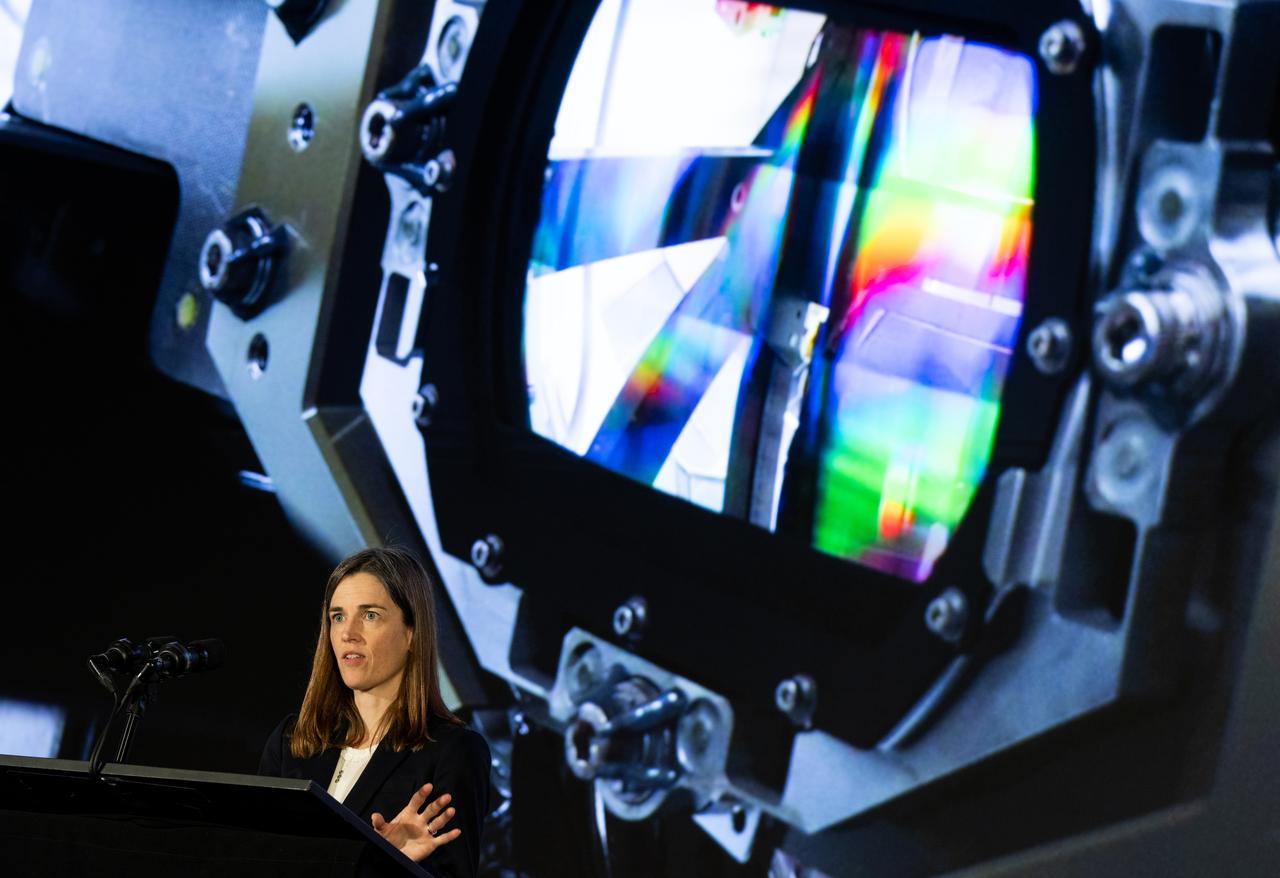
Caroline Nowlan, atmospheric physicist at the Center for Astrophysics | Harvard & Smithsonian, speaks during a briefing on NASA’s TEMPO (Tropospheric Emissions: Monitoring of Pollution) instrument, Tuesday, March 14, 2023 at the Smithsonian’s National Air and Space Museum in Washington. NASA’s TEMPO instrument, the first Earth Venture Instrument mission, will measure air pollution across North America from Mexico City to the Canadian oil sands and from the Atlantic to the Pacific hourly and at a high spatial resolution. A partnership between NASA and the Center for Astrophysics | Harvard & Smithsonian, TEMPO will launch on a commercial satellite to geostationary orbit as early as April. Photo Credit: (NASA/Joel Kowsky)
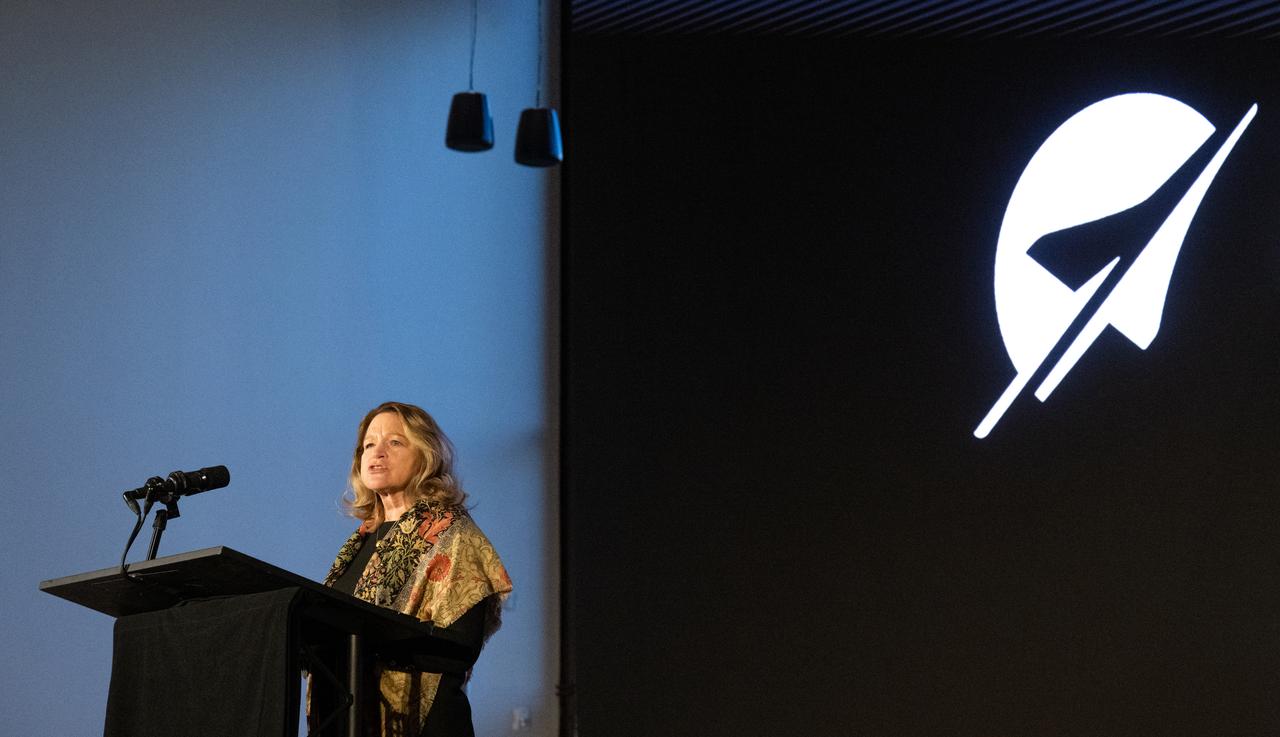
Ellen Stofan, under secretary for Science and Research at the Smithsonian Institution, speaks during a briefing on NASA’s TEMPO (Tropospheric Emissions: Monitoring of Pollution) instrument, Tuesday, March 14, 2023 at the Smithsonian’s National Air and Space Museum in Washington. NASA’s TEMPO instrument, the first Earth Venture Instrument mission, will measure air pollution across North America from Mexico City to the Canadian oil sands and from the Atlantic to the Pacific hourly and at a high spatial resolution. A partnership between NASA and the Center for Astrophysics | Harvard & Smithsonian, TEMPO will launch on a commercial satellite to geostationary orbit as early as April. Photo Credit: (NASA/Joel Kowsky)
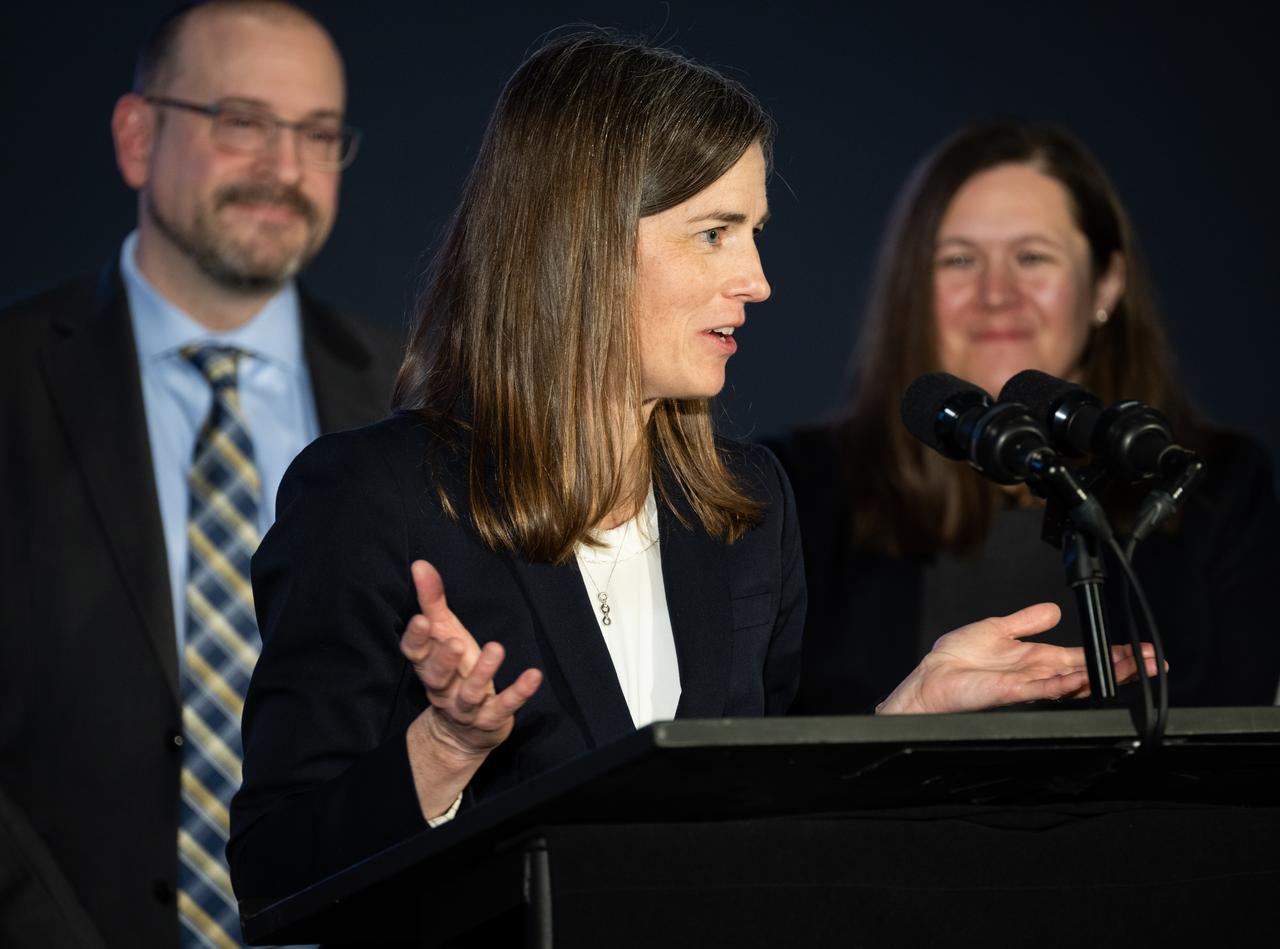
Caroline Nowlan, atmospheric physicist at the Center for Astrophysics | Harvard & Smithsonian, answers a question during a briefing on NASA’s TEMPO (Tropospheric Emissions: Monitoring of Pollution) instrument, Tuesday, March 14, 2023 at the Smithsonian’s National Air and Space Museum in Washington. NASA’s TEMPO instrument, the first Earth Venture Instrument mission, will measure air pollution across North America from Mexico City to the Canadian oil sands and from the Atlantic to the Pacific hourly and at a high spatial resolution. A partnership between NASA and the Center for Astrophysics | Harvard & Smithsonian, TEMPO will launch on a commercial satellite to geostationary orbit as early as April. Photo Credit: (NASA/Joel Kowsky)
Caroline Nowlan, atmospheric physicist at the Center for Astrophysics | Harvard & Smithsonian, speaks during a briefing on NASA’s TEMPO (Tropospheric Emissions: Monitoring of Pollution) instrument, Tuesday, March 14, 2023 at the Smithsonian’s National Air and Space Museum in Washington. NASA’s TEMPO instrument, the first Earth Venture Instrument mission, will measure air pollution across North America from Mexico City to the Canadian oil sands and from the Atlantic to the Pacific hourly and at a high spatial resolution. A partnership between NASA and the Center for Astrophysics | Harvard & Smithsonian, TEMPO will launch on a commercial satellite to geostationary orbit as early as April. Photo Credit: (NASA/Joel Kowsky)
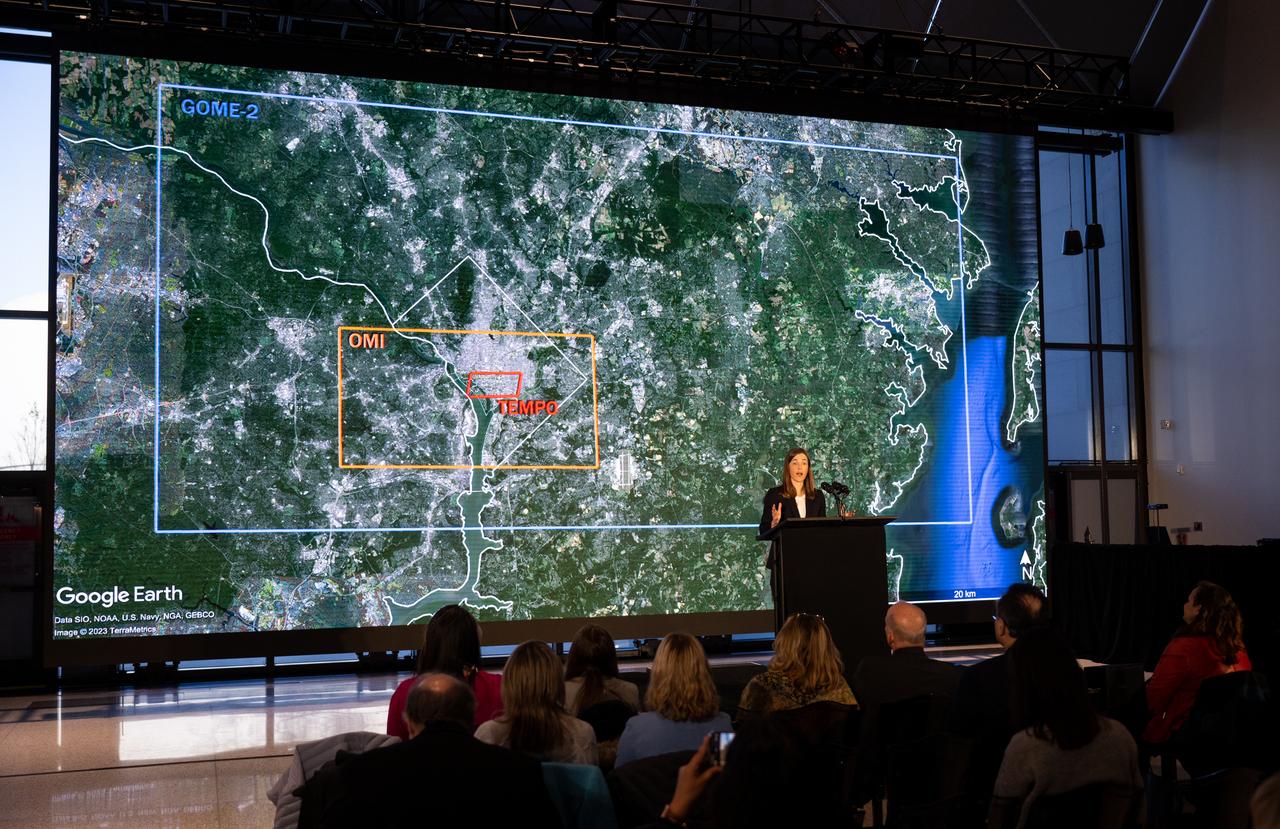
Caroline Nowlan, atmospheric physicist at the Center for Astrophysics | Harvard & Smithsonian, speaks during a briefing on NASA’s TEMPO (Tropospheric Emissions: Monitoring of Pollution) instrument, Tuesday, March 14, 2023 at the Smithsonian’s National Air and Space Museum in Washington. NASA’s TEMPO instrument, the first Earth Venture Instrument mission, will measure air pollution across North America from Mexico City to the Canadian oil sands and from the Atlantic to the Pacific hourly and at a high spatial resolution. A partnership between NASA and the Center for Astrophysics | Harvard & Smithsonian, TEMPO will launch on a commercial satellite to geostationary orbit as early as April. Photo Credit: (NASA/Joel Kowsky)
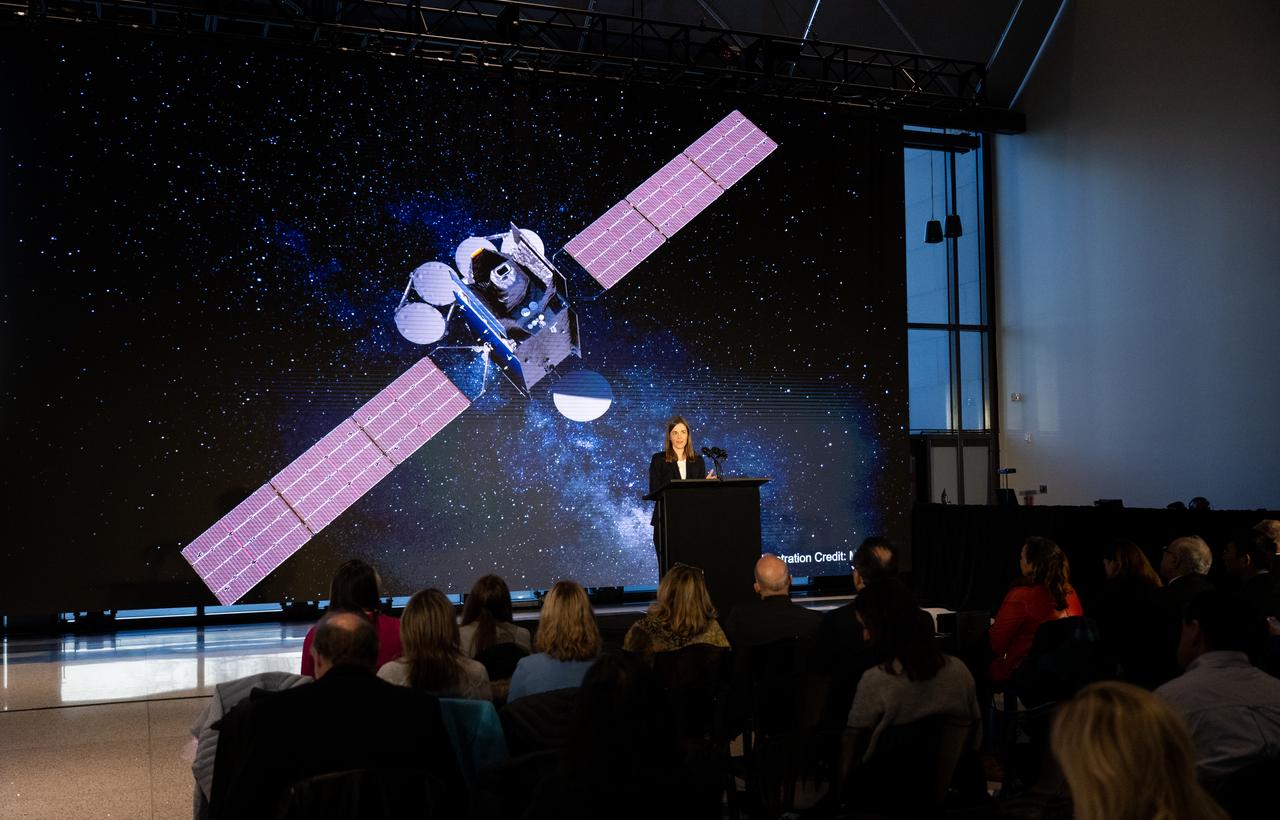
Caroline Nowlan, atmospheric physicist at the Center for Astrophysics | Harvard & Smithsonian, speaks during a briefing on NASA’s TEMPO (Tropospheric Emissions: Monitoring of Pollution) instrument, Tuesday, March 14, 2023 at the Smithsonian’s National Air and Space Museum in Washington. NASA’s TEMPO instrument, the first Earth Venture Instrument mission, will measure air pollution across North America from Mexico City to the Canadian oil sands and from the Atlantic to the Pacific hourly and at a high spatial resolution. A partnership between NASA and the Center for Astrophysics | Harvard & Smithsonian, TEMPO will launch on a commercial satellite to geostationary orbit as early as April. Photo Credit: (NASA/Joel Kowsky)
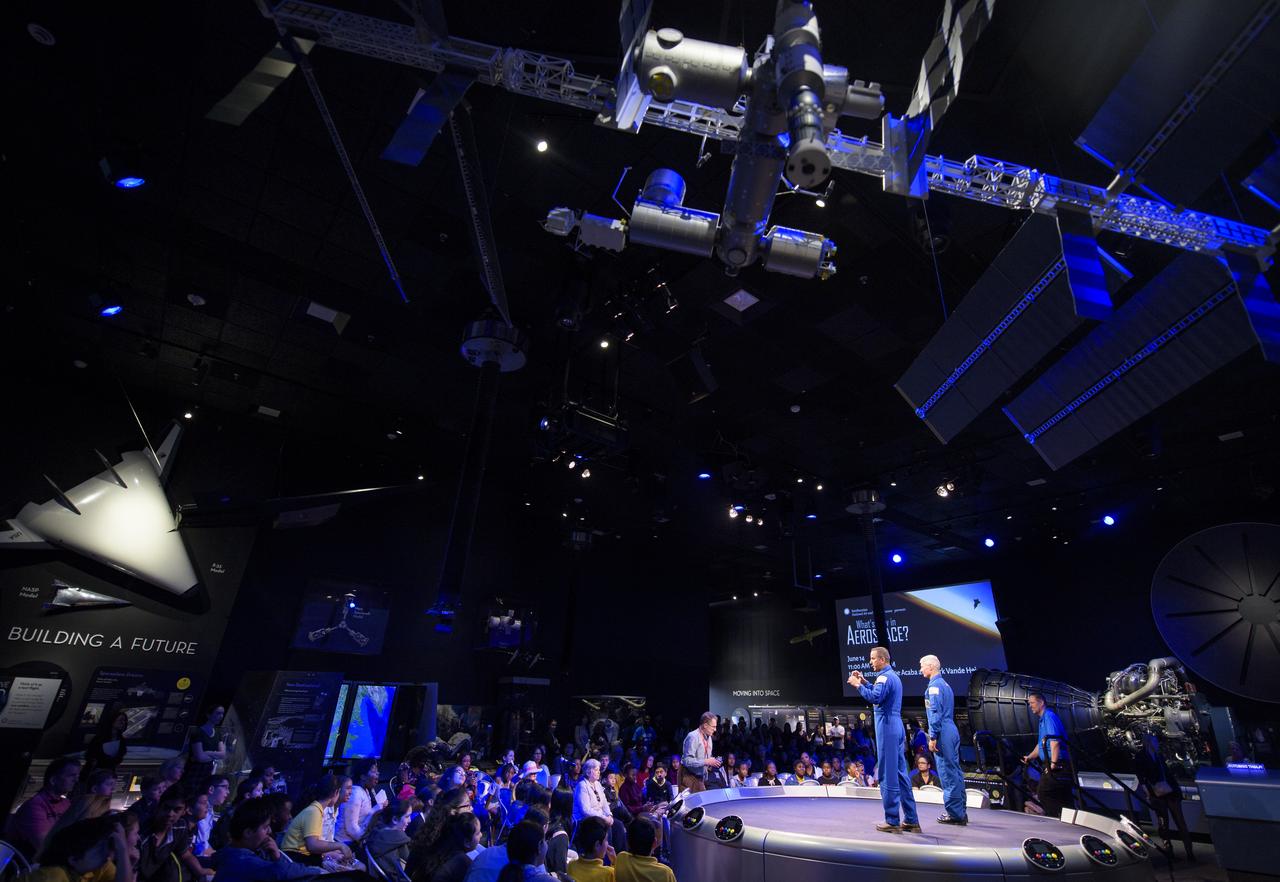
NASA astronauts Joe Acaba, left, and Mark Vande Hei right, answer audience questions with the Smithsonian's Marty Kelsey, center, during "What's New in Aerospace," Thursday, June 14, 2018 at the Smithsonian National Air and Space Museum in Washington. Acaba and Vande Hei answered questions from the audience and spoke about their experiences aboard the International Space Station for 168 days as part of Expedition 53 and 54. Photo Credit: (NASA/Joel Kowsky)
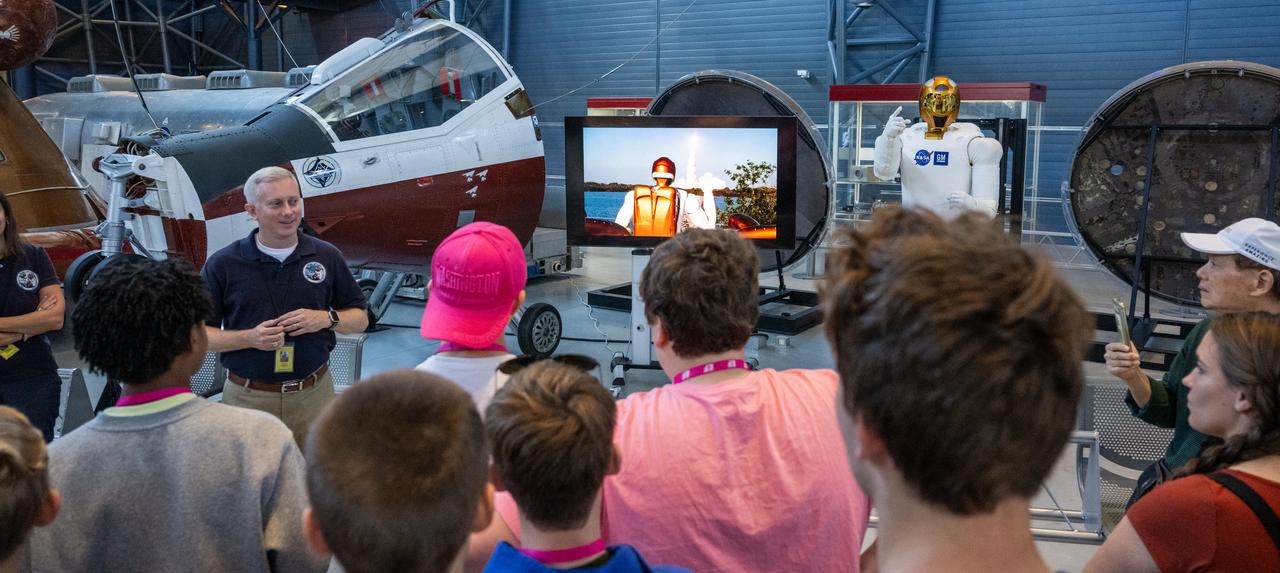
Jonathan Rogers, chief of the Robotic Systems Technology Branch at NASA’s Johnson Space Center and former Robonaut project manager, answers questions about Robonaut 2 from museum guests at the Smithsonian National Air and Space Museum’s Steve F. Udvar-Hazy Center Thursday, Oct. 24, 2024, in Chantilly, Va. Robonaut 2, the first humanoid robot to fly to space, is displayed publicly for the first time near the space shuttle Discovery. Photo Credit: (NASA/Keegan Barber)