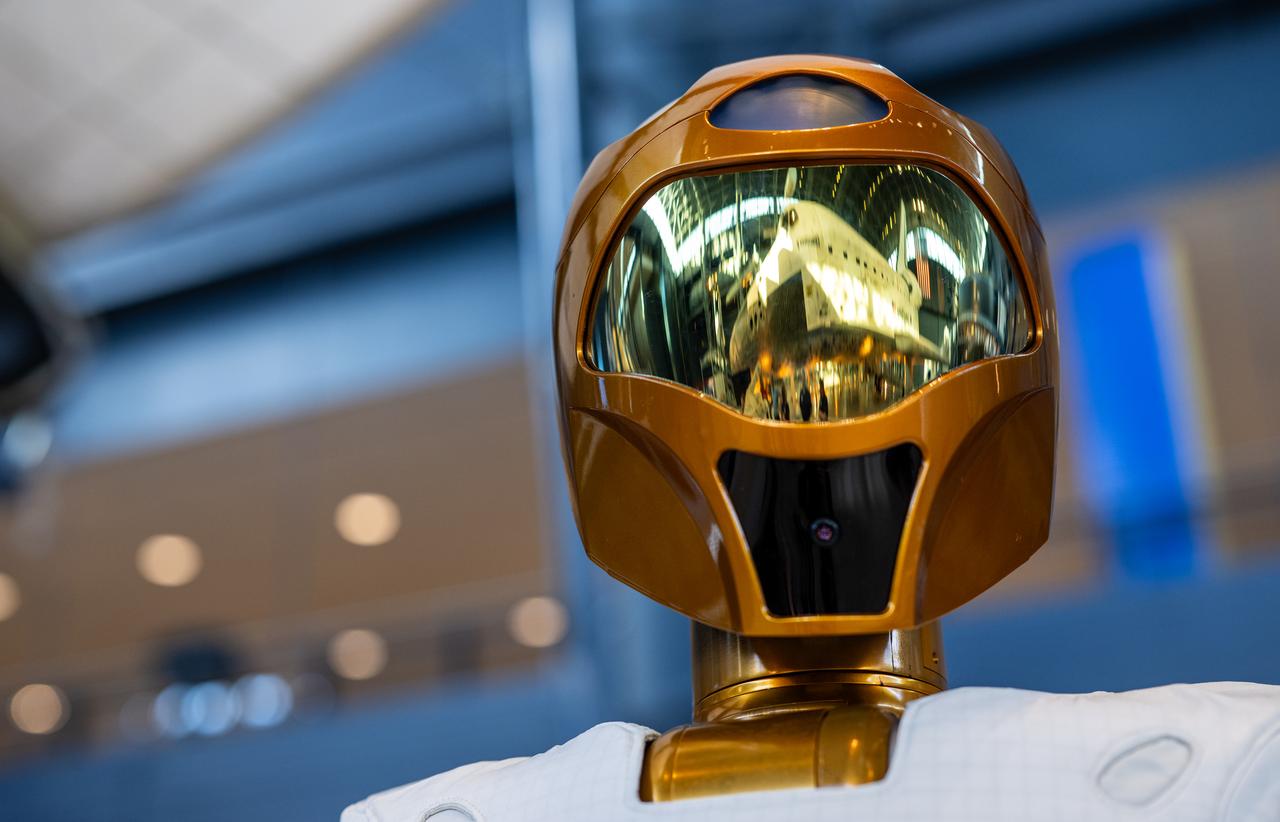
Robonaut 2 is seen at the Smithsonian National Air and Space Museum’s Steve F. Udvar-Hazy Center Thursday, Oct. 24, 2024, in Chantilly, Va. Robonaut 2, the first humanoid robot to fly to space, is displayed publicly for the first time near the space shuttle Discovery. Photo Credit: (NASA/Keegan Barber)
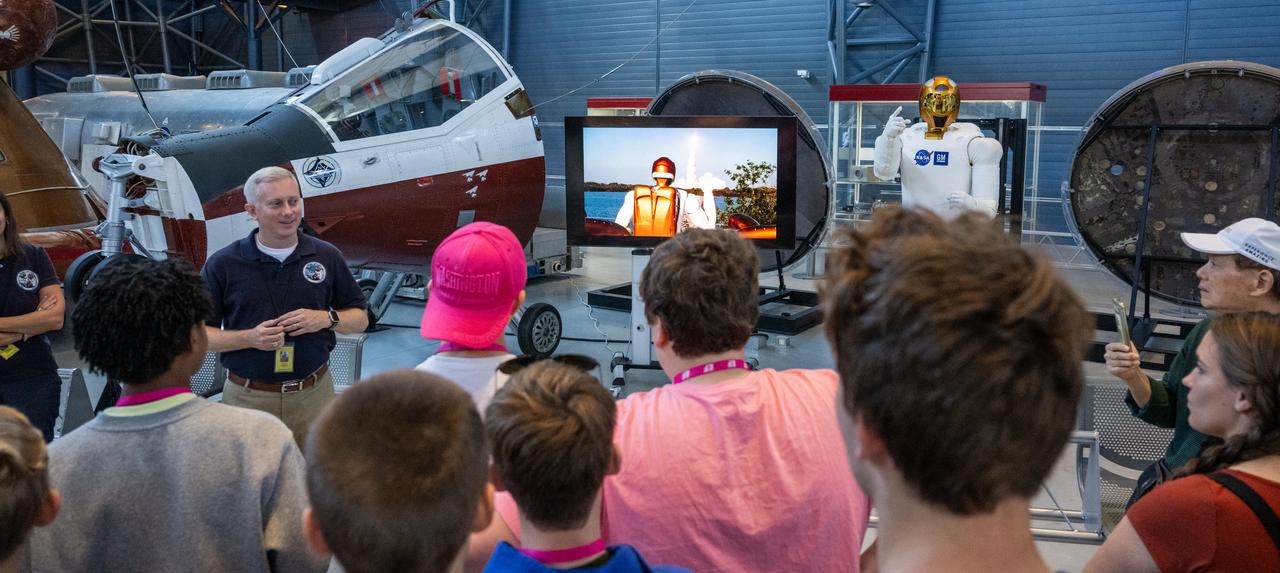
Jonathan Rogers, chief of the Robotic Systems Technology Branch at NASA’s Johnson Space Center and former Robonaut project manager, answers questions about Robonaut 2 from museum guests at the Smithsonian National Air and Space Museum’s Steve F. Udvar-Hazy Center Thursday, Oct. 24, 2024, in Chantilly, Va. Robonaut 2, the first humanoid robot to fly to space, is displayed publicly for the first time near the space shuttle Discovery. Photo Credit: (NASA/Keegan Barber)
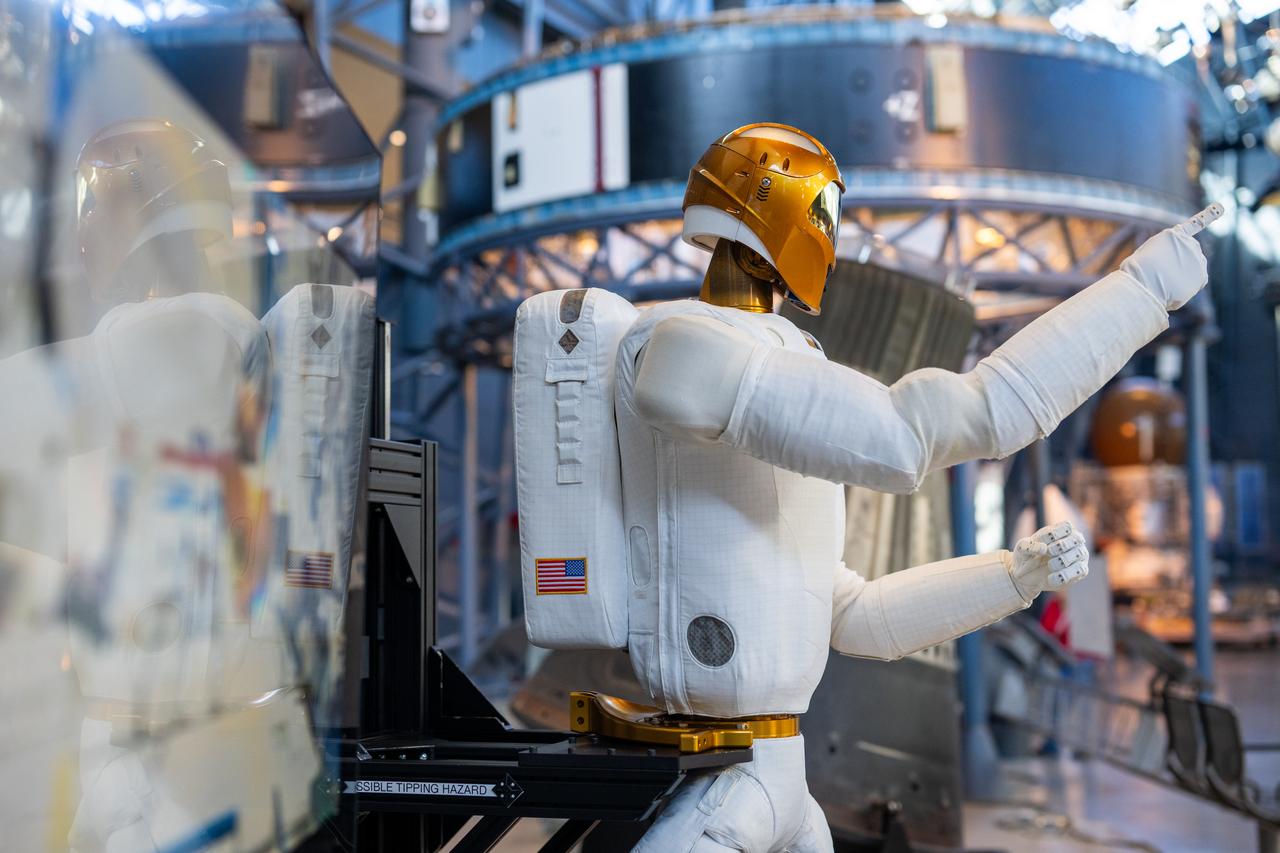
Robonaut 2 is seen at the Smithsonian National Air and Space Museum’s Steve F. Udvar-Hazy Center Thursday, Oct. 24, 2024, in Chantilly, Va. Robonaut 2, the first humanoid robot to fly to space, is displayed publicly for the first time near the space shuttle Discovery. Photo Credit: (NASA/Keegan Barber)
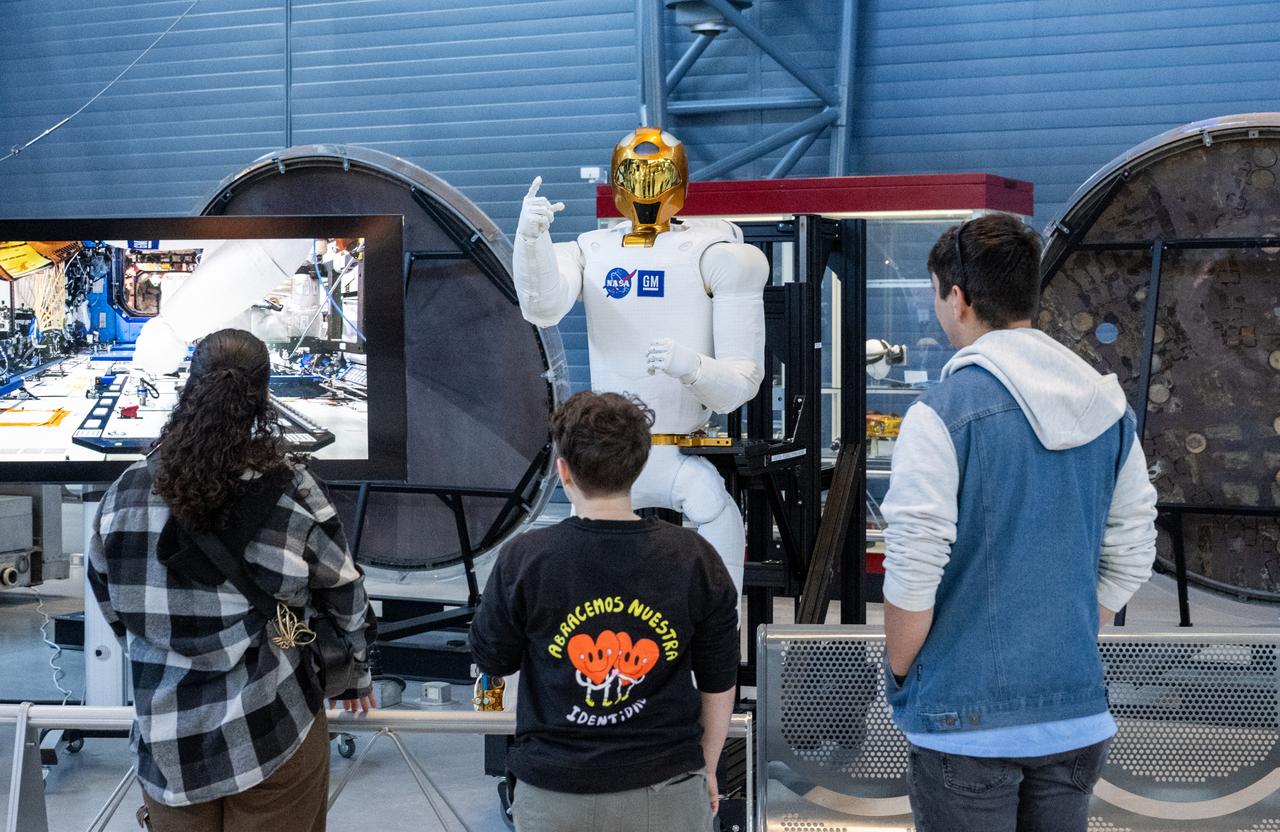
Museum guests view Robonaut 2 at the Smithsonian National Air and Space Museum’s Steve F. Udvar-Hazy Center Thursday, Oct. 24, 2024, in Chantilly, Va. Robonaut 2, the first humanoid robot to fly to space, is displayed publicly for the first time near the space shuttle Discovery. Photo Credit: (NASA/Keegan Barber)
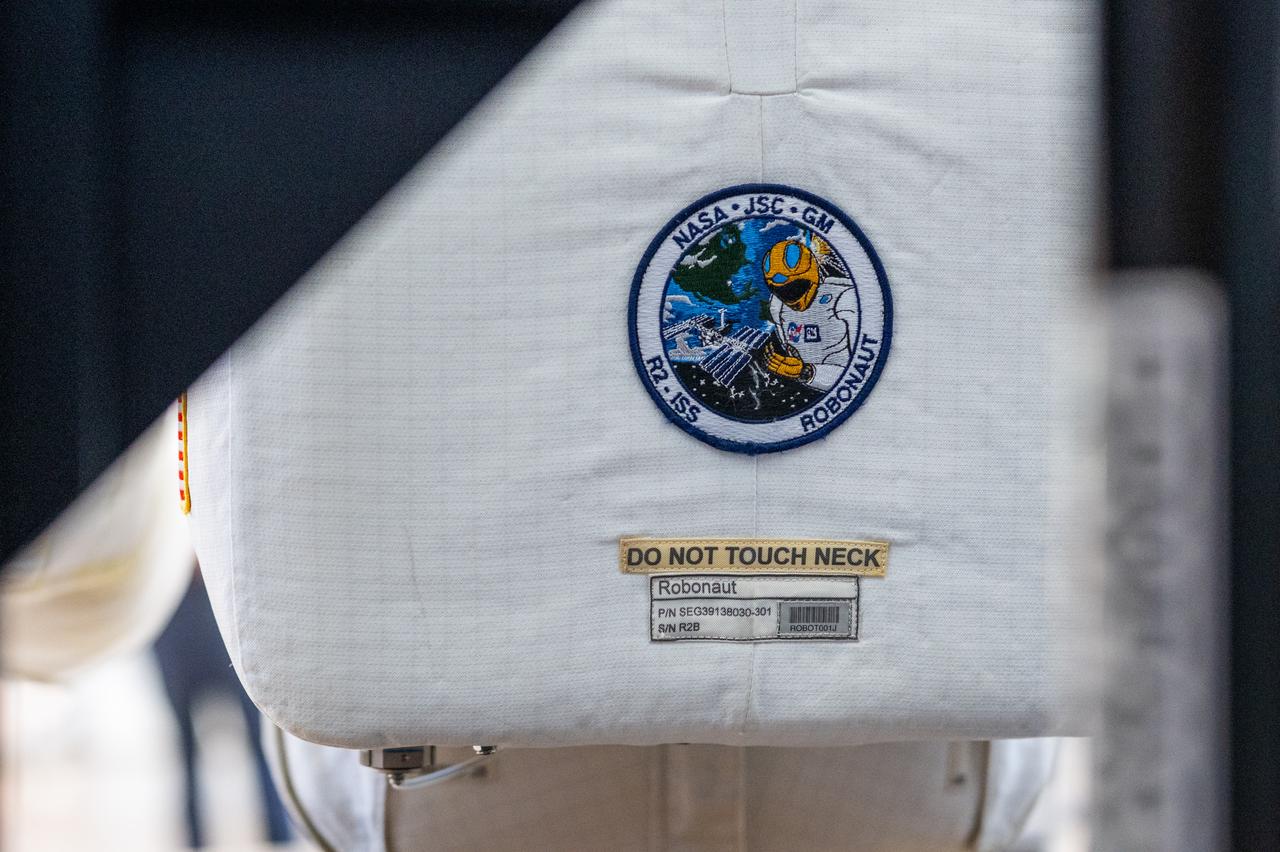
Robonaut 2 is seen at the Smithsonian National Air and Space Museum’s Steve F. Udvar-Hazy Center Thursday, Oct. 24, 2024, in Chantilly, Va. Robonaut 2, the first humanoid robot to fly to space, is displayed publicly for the first time near the space shuttle Discovery. Photo Credit: (NASA/Keegan Barber)

Robonaut 2 is seen at the Smithsonian National Air and Space Museum’s Steve F. Udvar-Hazy Center Thursday, Oct. 24, 2024, in Chantilly, Va. Robonaut 2, the first humanoid robot to fly to space, is displayed publicly for the first time near the space shuttle Discovery. Photo Credit: (NASA/Keegan Barber)
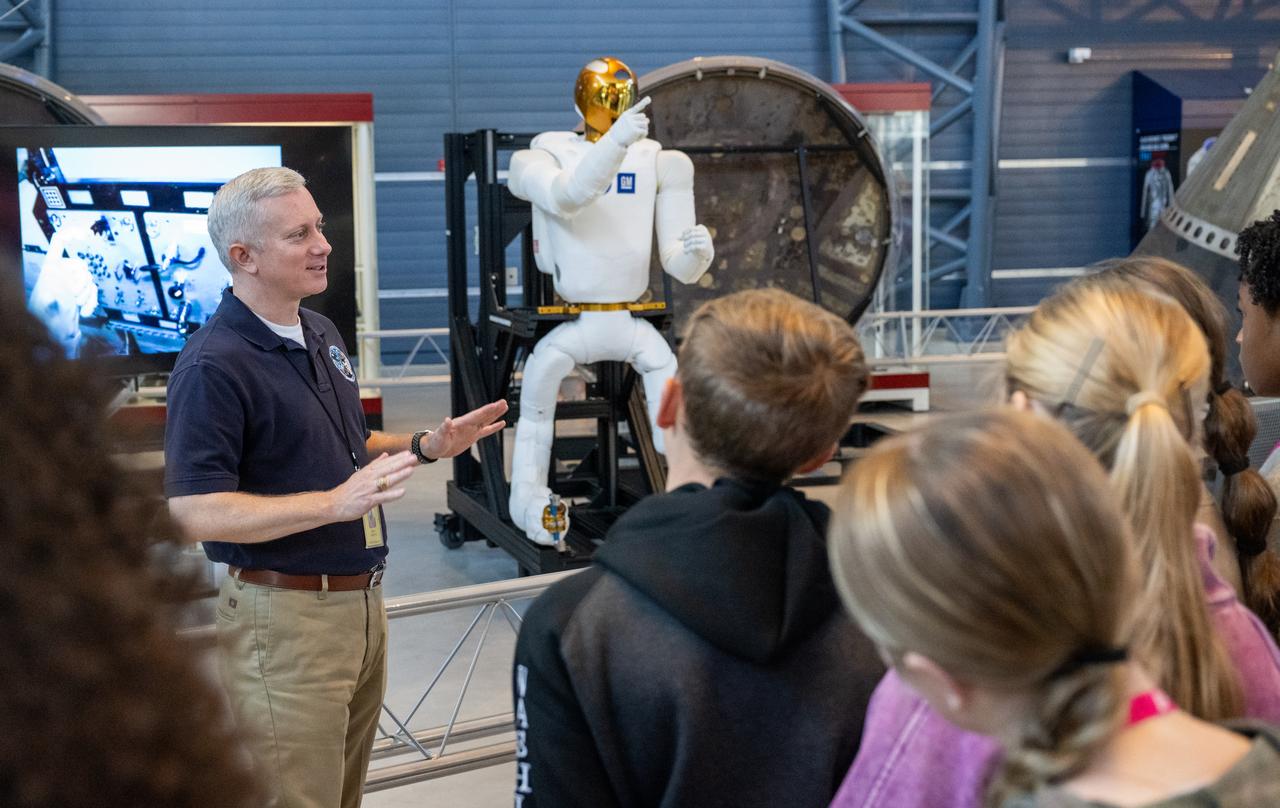
Jonathan Rogers, chief of the Robotic Systems Technology Branch at NASA’s Johnson Space Center and former Robonaut project manager, answers questions about Robonaut 2 from museum guests at the Smithsonian National Air and Space Museum’s Steve F. Udvar-Hazy Center Thursday, Oct. 24, 2024, in Chantilly, Va. Robonaut 2, the first humanoid robot to fly to space, is displayed publicly for the first time near the space shuttle Discovery. Photo Credit: (NASA/Keegan Barber)
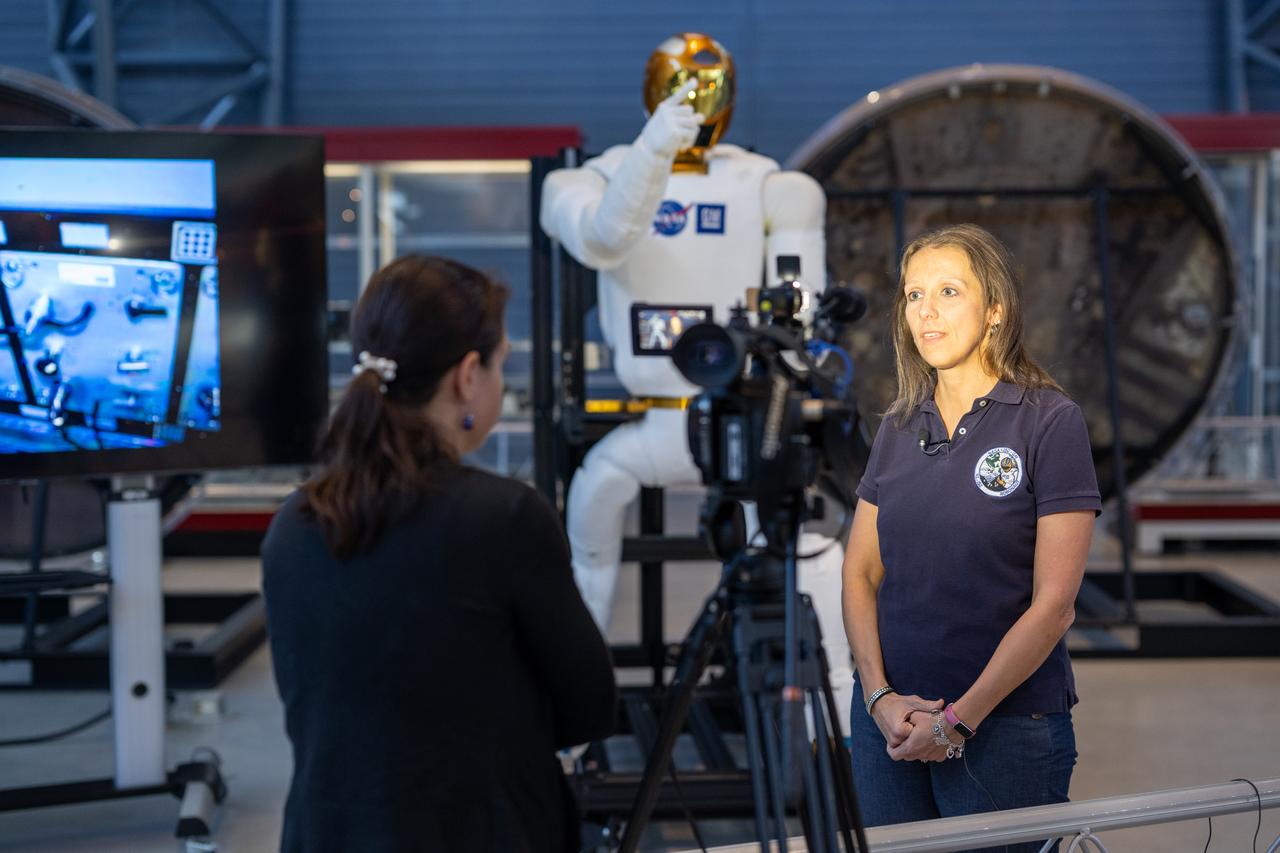
Julia Badger, autonomy and vehicle systems manager for Gateway at NASA’s Johnson Space Center and former Robonaut project manager, participates in a media opportunity at the Smithsonian National Air and Space Museum’s Steve F. Udvar-Hazy Center Thursday, Oct. 24, 2024, in Chantilly, Va. Robonaut 2, the first humanoid robot to fly to space, is displayed publicly for the first time near the space shuttle Discovery. Photo Credit: (NASA/Keegan Barber)
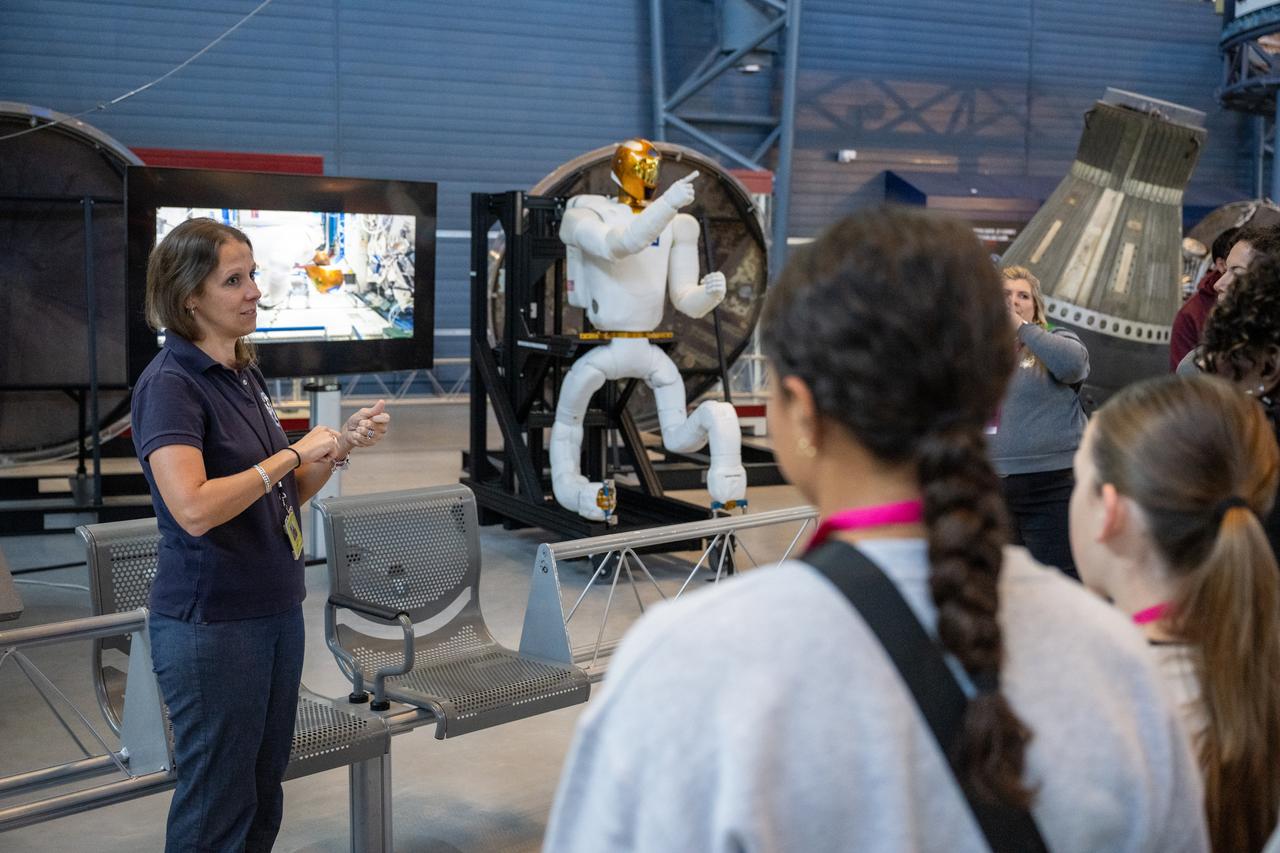
Julia Badger, autonomy and vehicle systems manager for Gateway at NASA’s Johnson Space Center and former Robonaut project manager, participates in a media opportunity at the Smithsonian National Air and Space Museum’s Steve F. Udvar-Hazy Center Thursday, Oct. 24, 2024, in Chantilly, Va. Robonaut 2, the first humanoid robot to fly to space, is displayed publicly for the first time near the space shuttle Discovery. Photo Credit: (NASA/Keegan Barber)
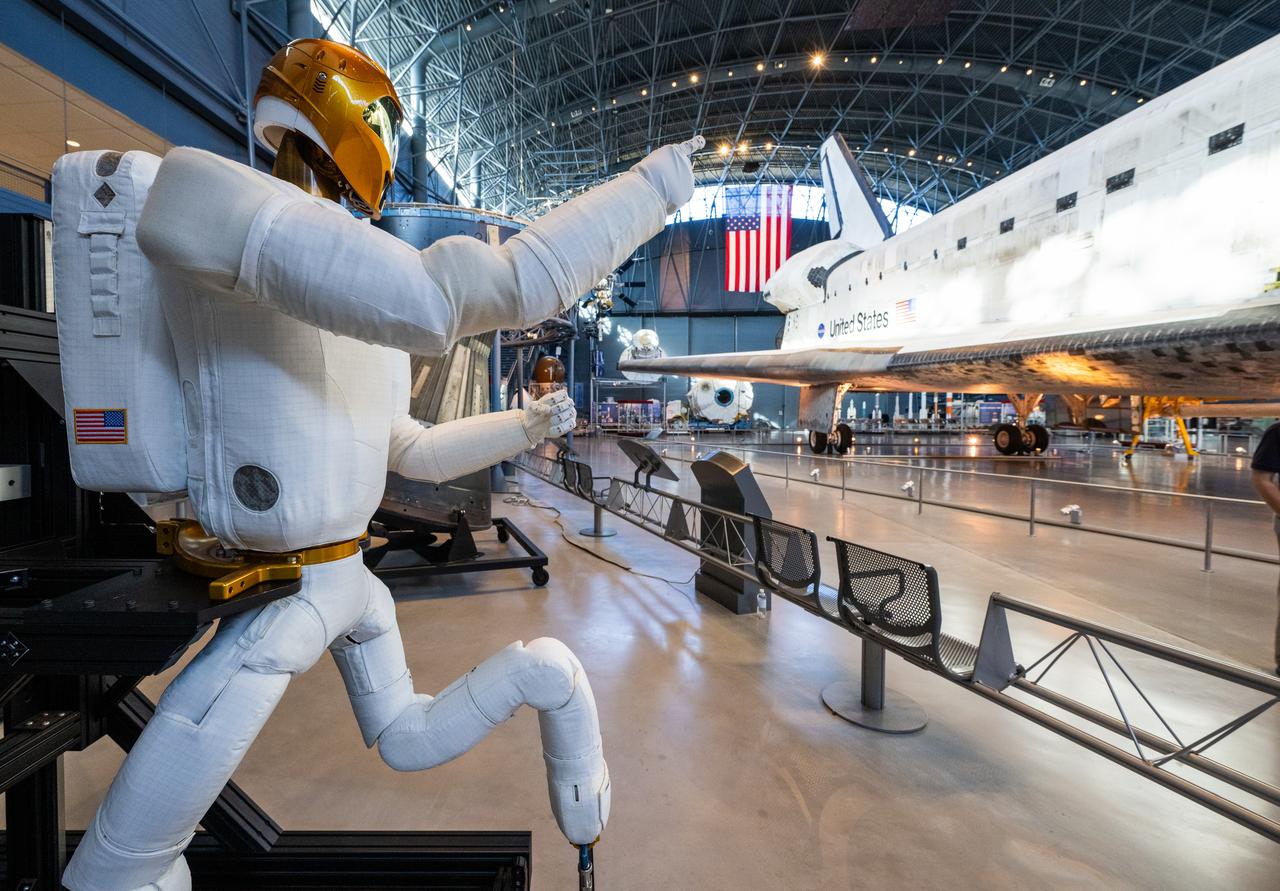
Robonaut 2 is seen at the Smithsonian National Air and Space Museum’s Steve F. Udvar-Hazy Center Thursday, Oct. 24, 2024, in Chantilly, Va. Robonaut 2, the first humanoid robot to fly to space, is displayed publicly for the first time near the space shuttle Discovery. Photo Credit: (NASA/Keegan Barber)
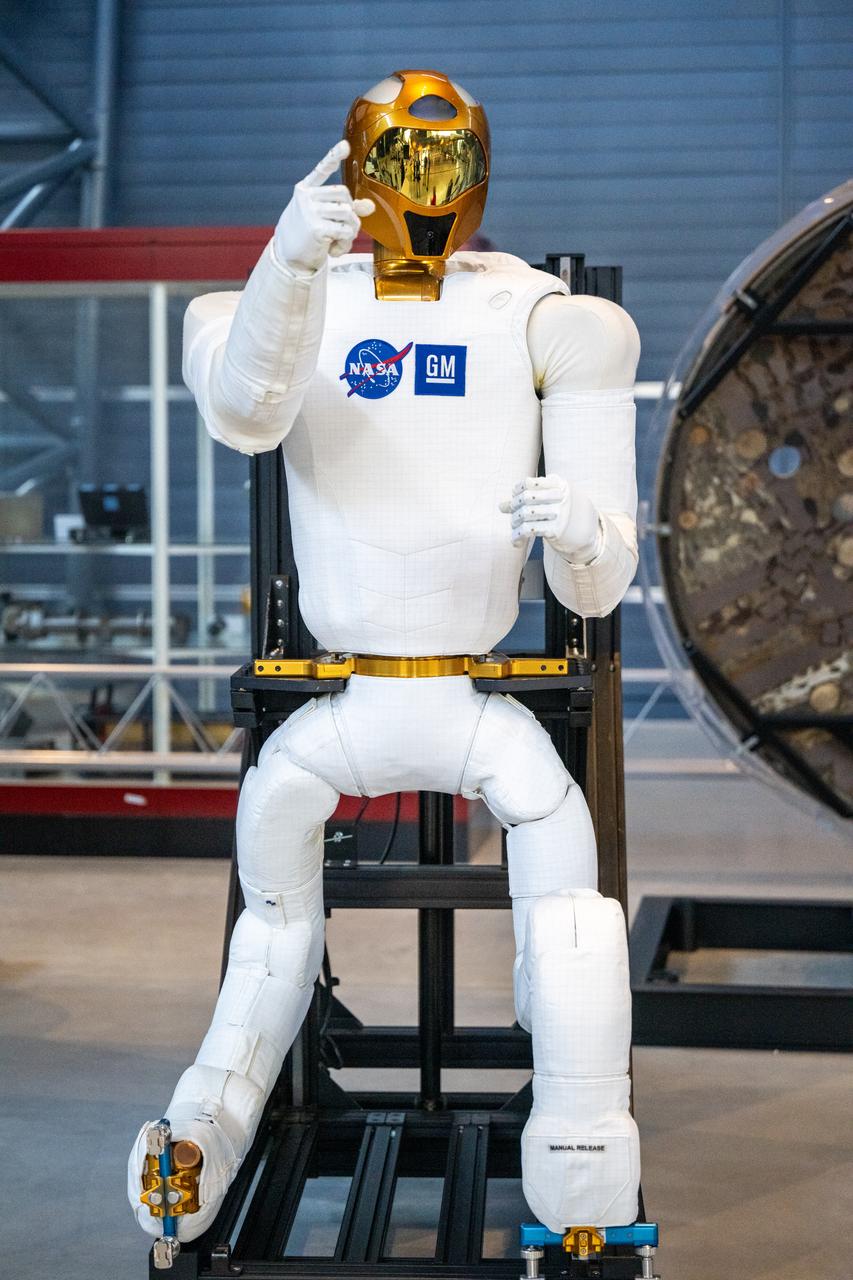
Robonaut 2 is seen at the Smithsonian National Air and Space Museum’s Steve F. Udvar-Hazy Center Thursday, Oct. 24, 2024, in Chantilly, Va. Robonaut 2, the first humanoid robot to fly to space, is displayed publicly for the first time near the space shuttle Discovery. Photo Credit: (NASA/Keegan Barber)
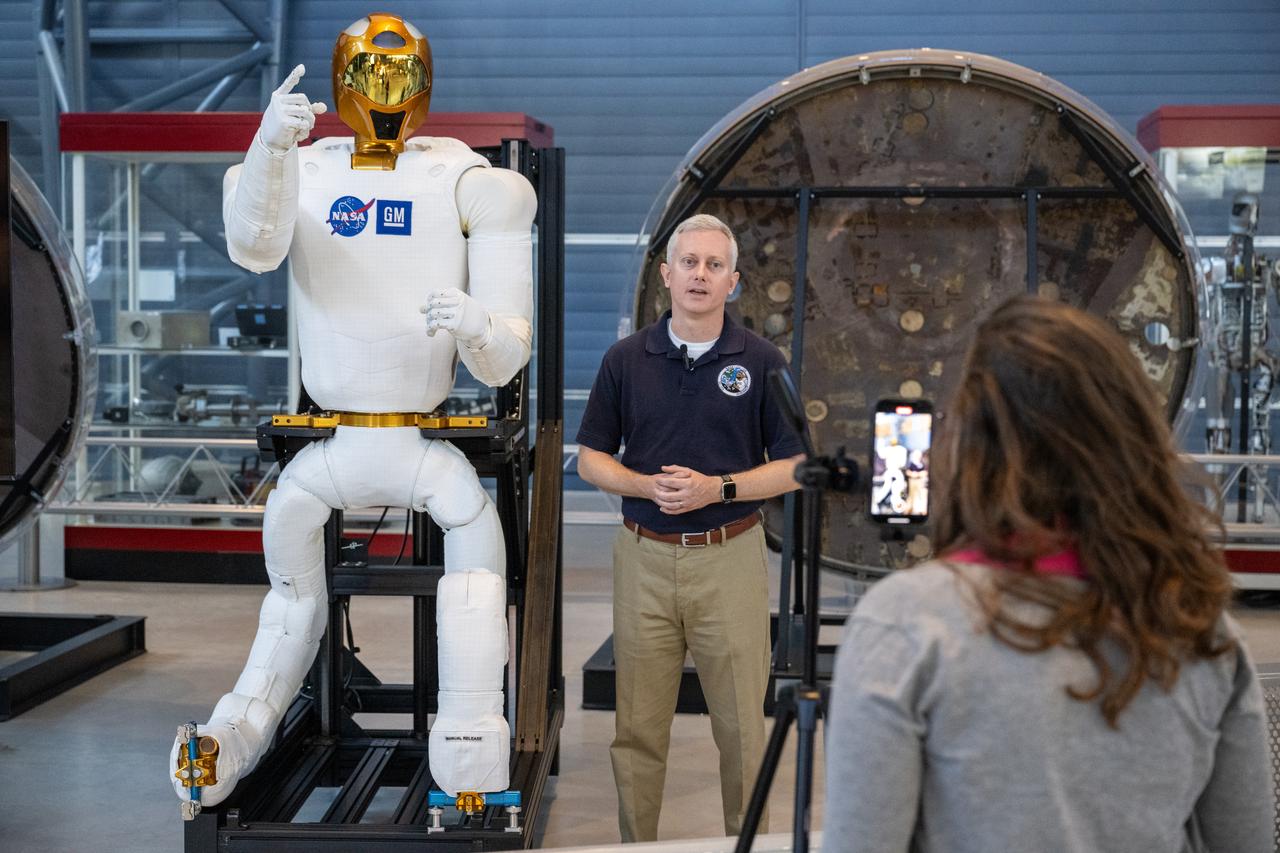
Jonathan Rogers, chief of the Robotic Systems Technology Branch at NASA’s Johnson Space Center and former Robonaut project manager, participates in a media opportunity at the Smithsonian National Air and Space Museum’s Steve F. Udvar-Hazy Center Thursday, Oct. 24, 2024, in Chantilly, Va. Robonaut 2, the first humanoid robot to fly to space, is displayed publicly for the first time near the space shuttle Discovery. Photo Credit: (NASA/Keegan Barber)
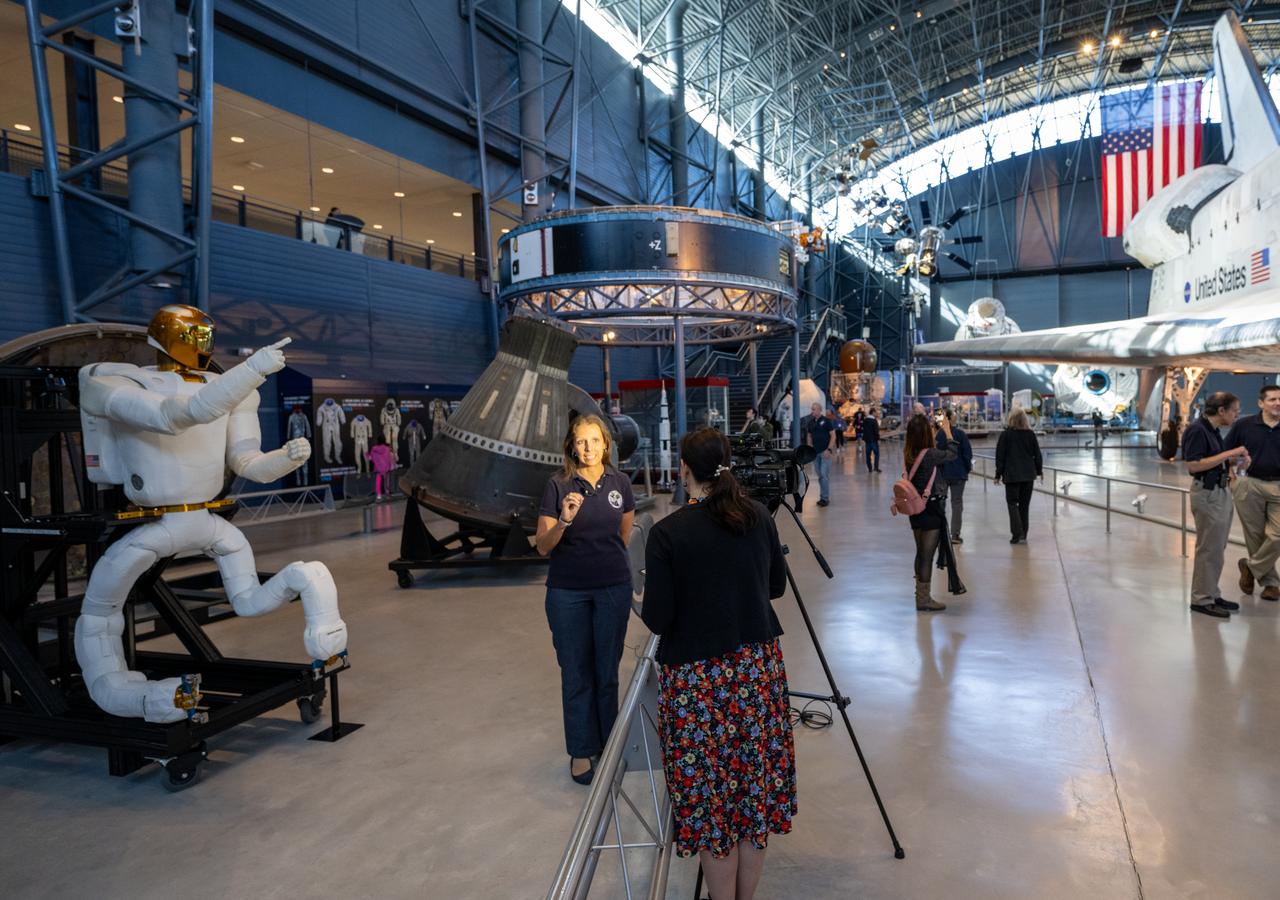
Julia Badger, autonomy and vehicle systems manager for Gateway at NASA’s Johnson Space Center and former Robonaut project manager, participates in a media opportunity at the Smithsonian National Air and Space Museum’s Steve F. Udvar-Hazy Center Thursday, Oct. 24, 2024, in Chantilly, Va. Robonaut 2, the first humanoid robot to fly to space, is displayed publicly for the first time near the space shuttle Discovery. Photo Credit: (NASA/Keegan Barber)
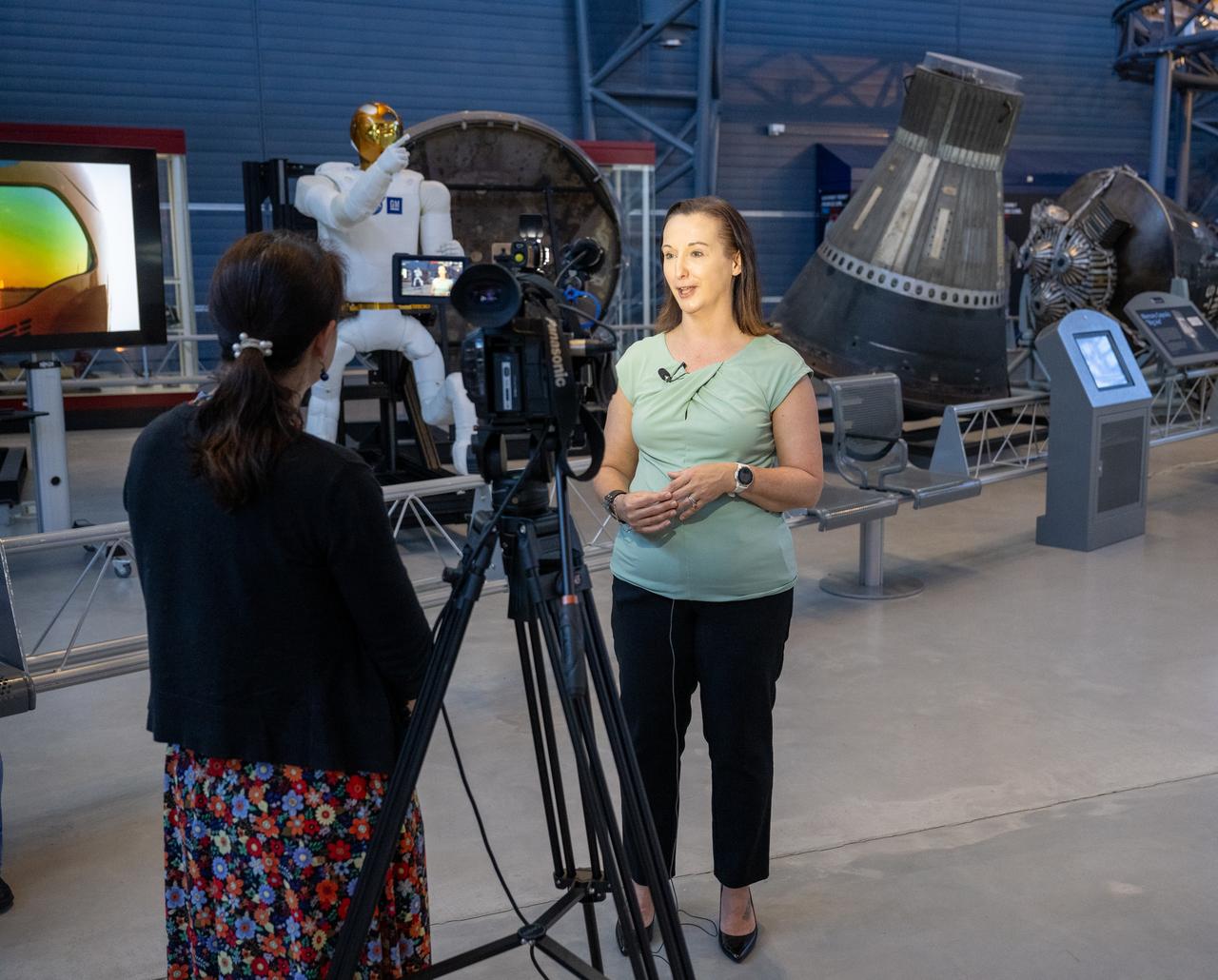
Space history curator Jennifer Levasseur participates in a media opportunity at the Smithsonian National Air and Space Museum’s Steve F. Udvar-Hazy Center Thursday, Oct. 24, 2024, in Chantilly, Va. Robonaut 2, the first humanoid robot to fly to space, is displayed publicly for the first time near the space shuttle Discovery. Photo Credit: (NASA/Keegan Barber)
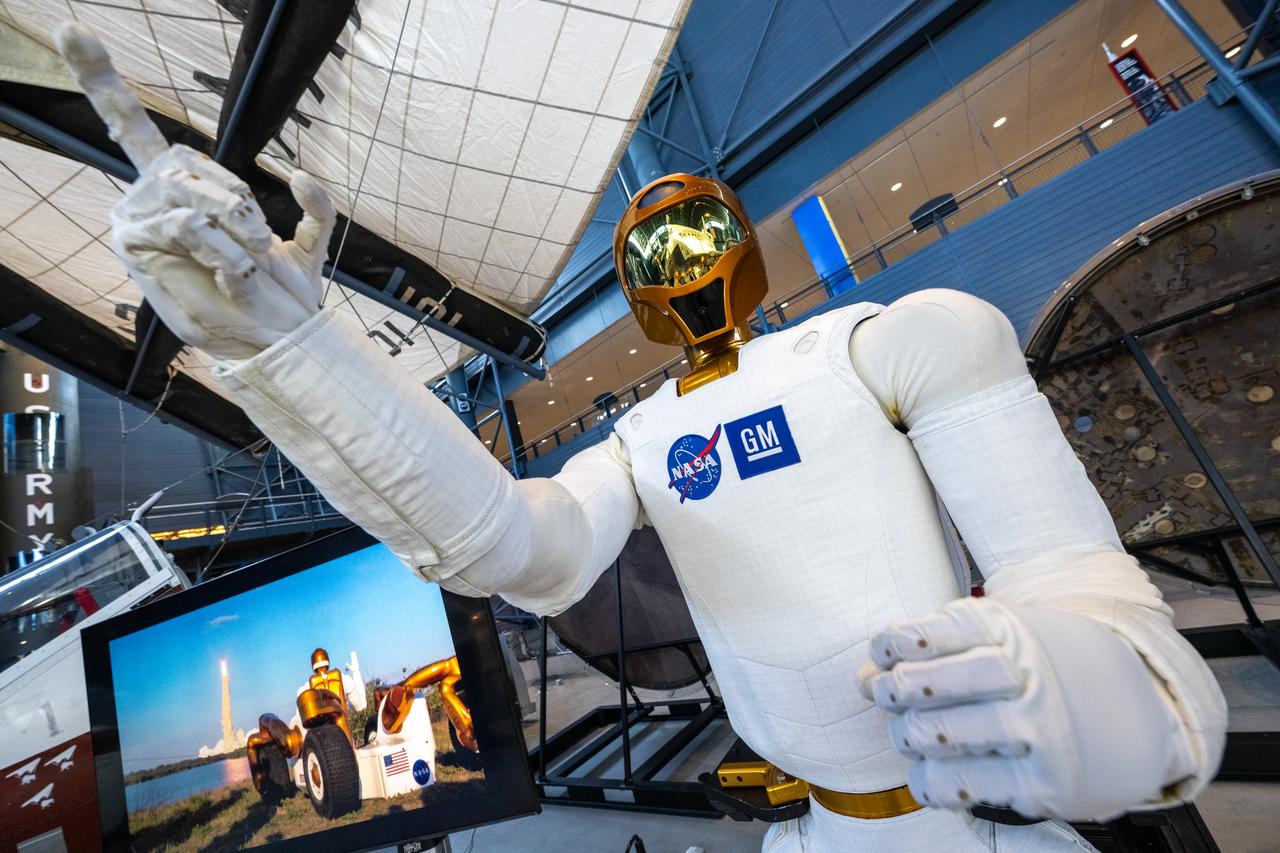
Robonaut 2 is seen at the Smithsonian National Air and Space Museum’s Steve F. Udvar-Hazy Center Thursday, Oct. 24, 2024, in Chantilly, Va. Robonaut 2, the first humanoid robot to fly to space, is displayed publicly for the first time near the space shuttle Discovery. Photo Credit: (NASA/Keegan Barber)
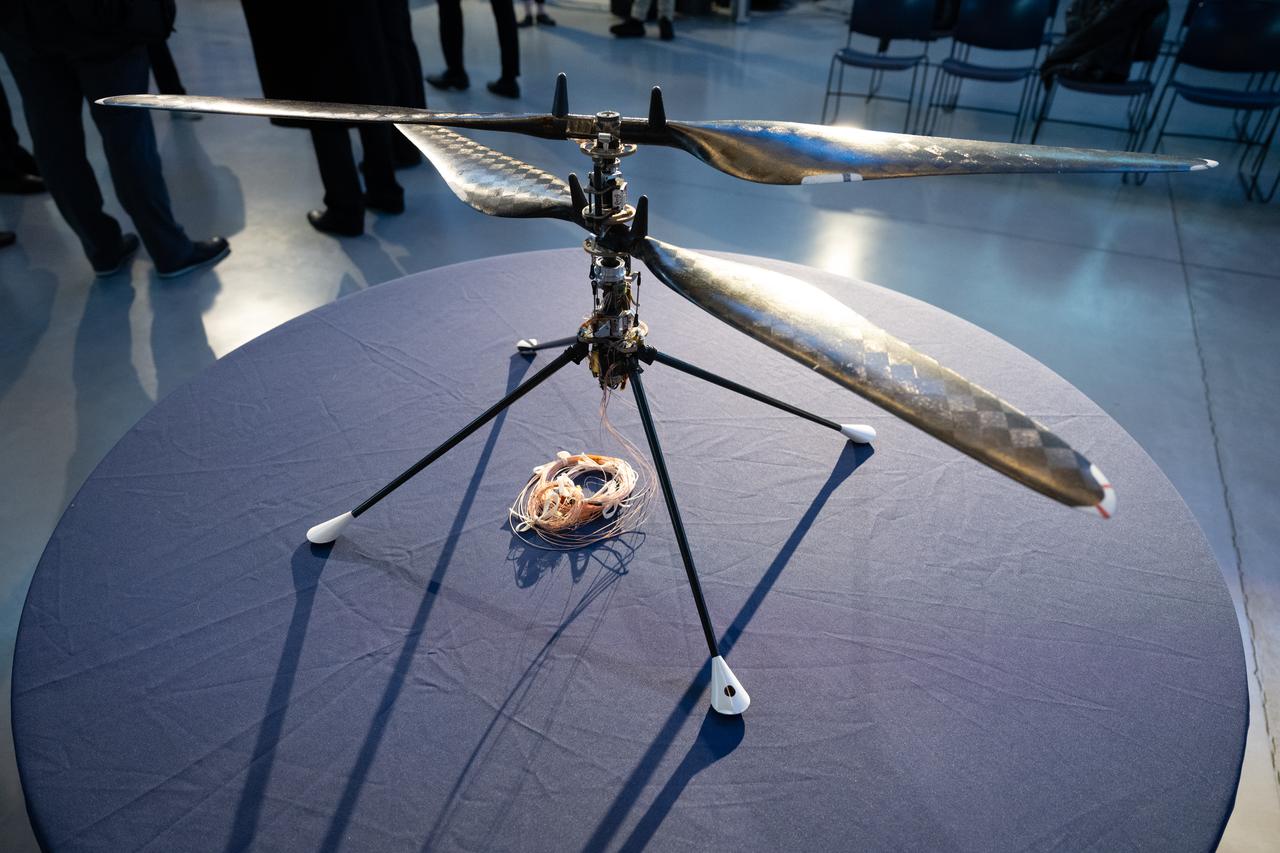
The aerial prototype of the Ingenuity Mars Helicopter is seen at the Smithsonian National Air and Space Museum’s Steve F. Udvar-Hazy Center, Friday, Dec. 15, 2023, in Chantilly, Va. The prototype, which was the first to demonstrate it was possible to fly in a simulated Mars environment at NASA’s Jet Propulsion Laboratory (JPL), was donated to the museum on Friday. Photo Credit: (NASA/Joel Kowsky)
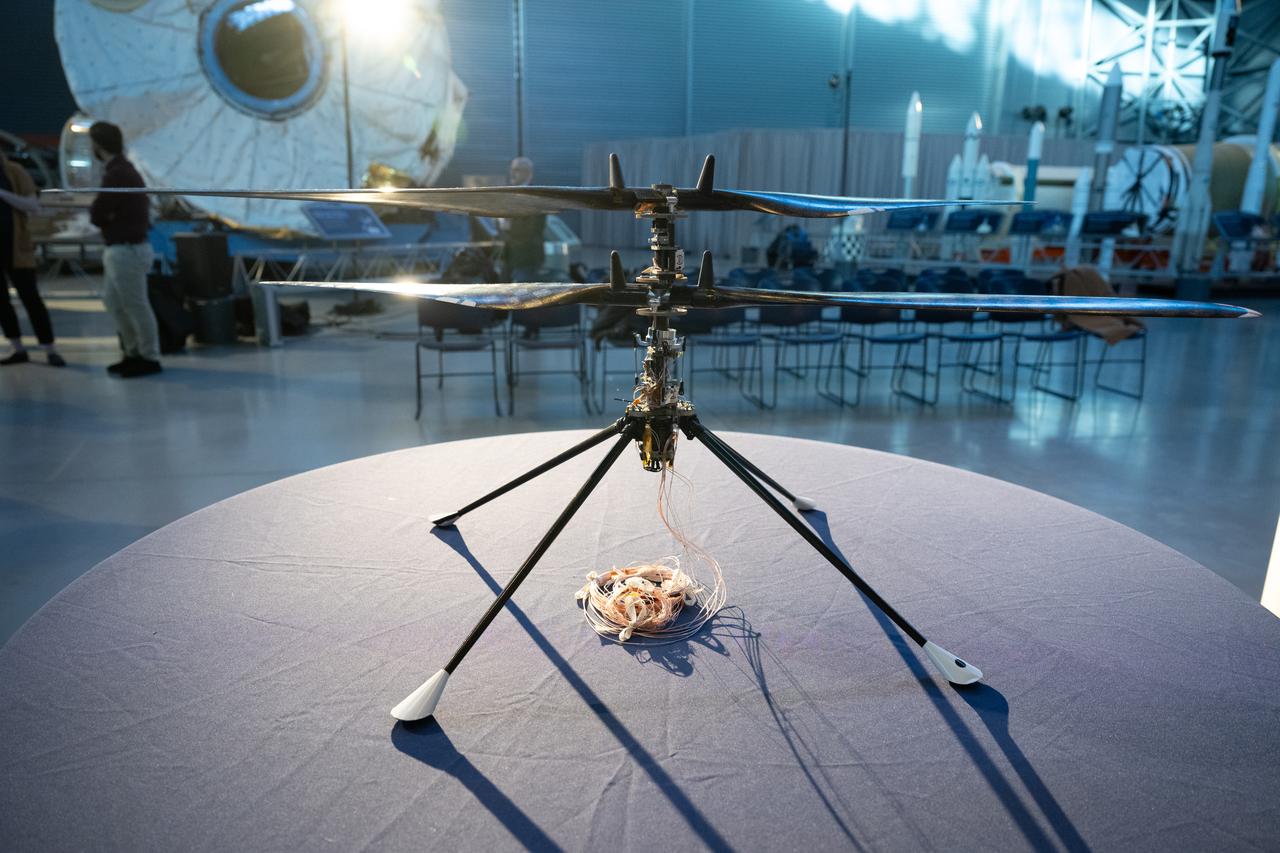
The aerial prototype of the Ingenuity Mars Helicopter is seen at the Smithsonian National Air and Space Museum’s Steve F. Udvar-Hazy Center, Friday, Dec. 15, 2023, in Chantilly, Va. The prototype, which was the first to demonstrate it was possible to fly in a simulated Mars environment at NASA’s Jet Propulsion Laboratory (JPL), was donated to the museum on Friday. Photo Credit: (NASA/Joel Kowsky)
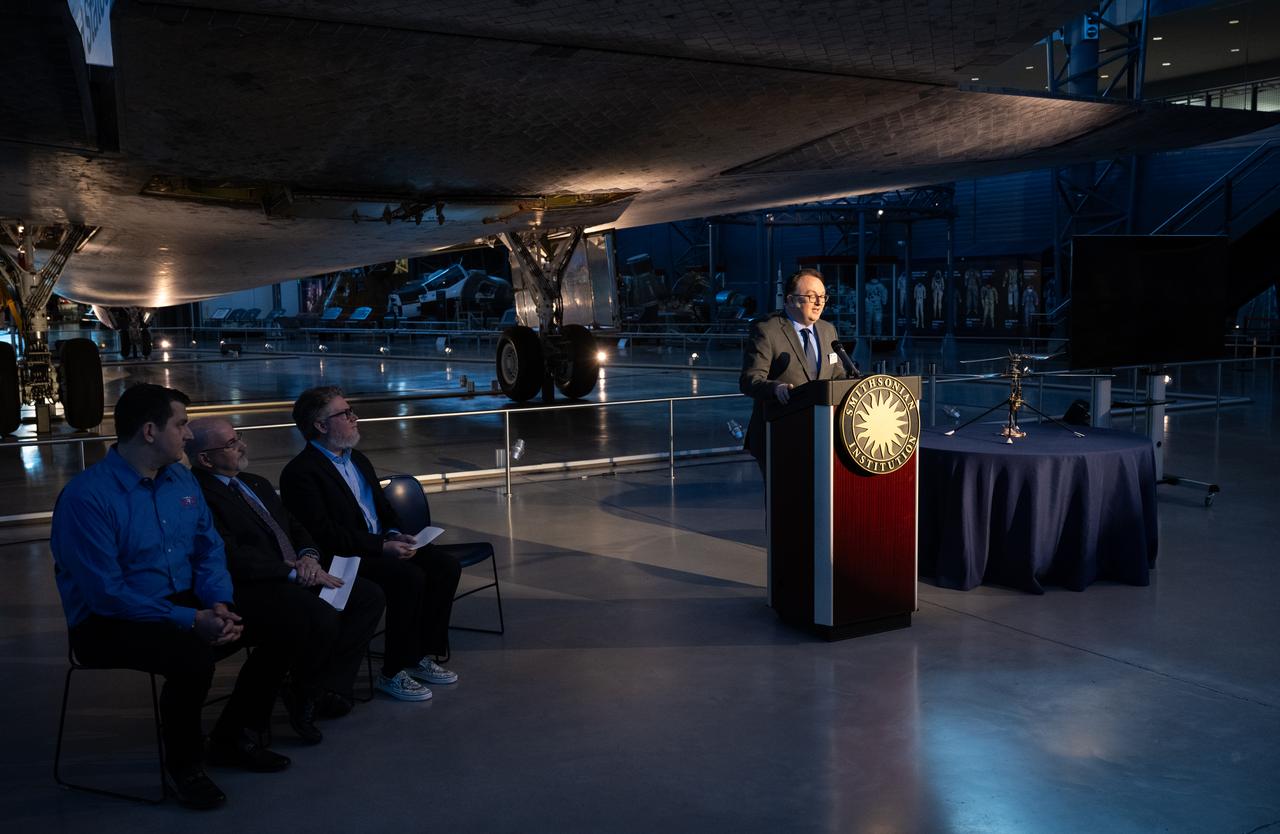
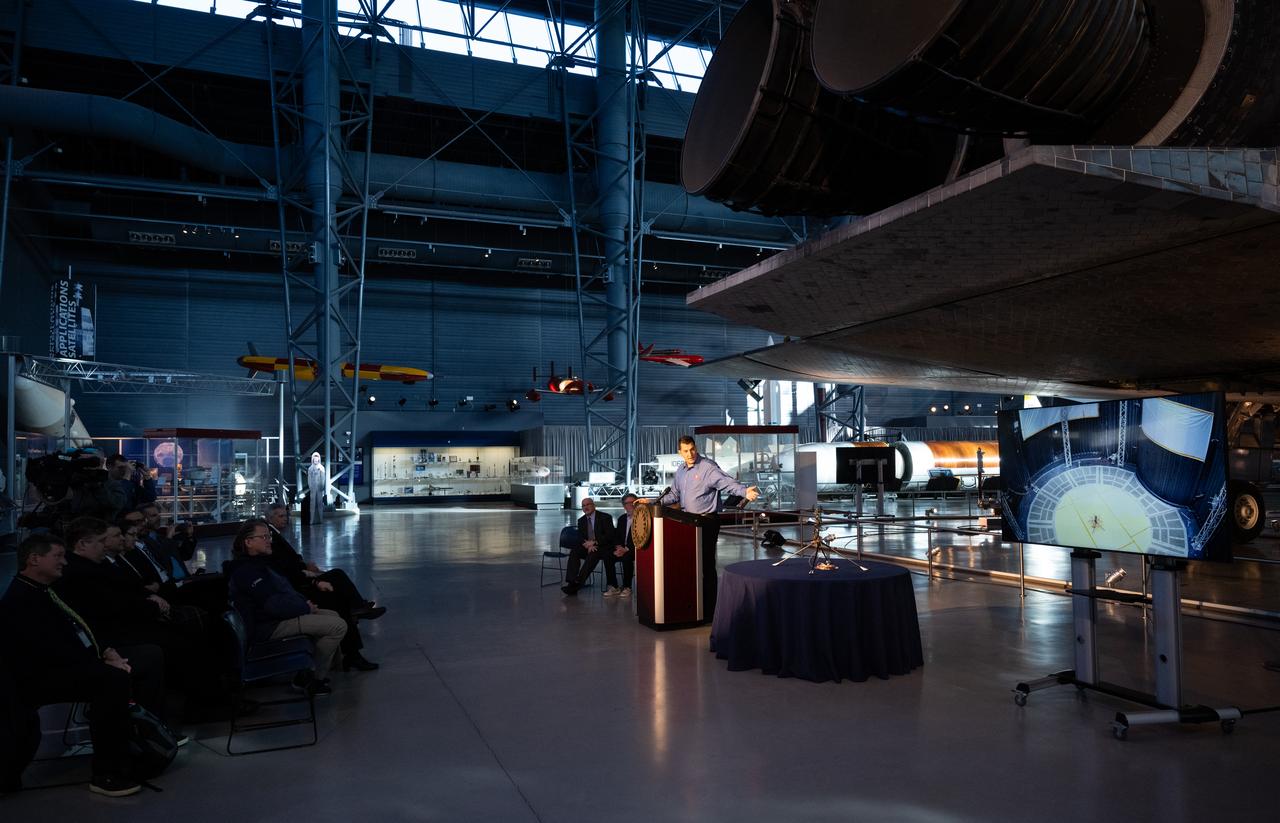
Jeremy Kinney, associate director of research, collections, and curatorial affairs at the National Air and Space Museum speaks at an event marking NASA’s donation of the aerial prototype of the Ingenuity Mars Helicopter, Friday, Dec. 15, 2023, at the Smithsonian National Air and Space Museum’s Steve F. Udvar-Hazy Center in Chantilly, Va. The aerial prototype of the Ingenuity Mars Helicopter, which was the first to demonstrate it was possible to fly in a simulated Mars environment at NASA’s Jet Propulsion Laboratory (JPL), was donated to the museum on Friday. Photo Credit: (NASA/Joel Kowsky)
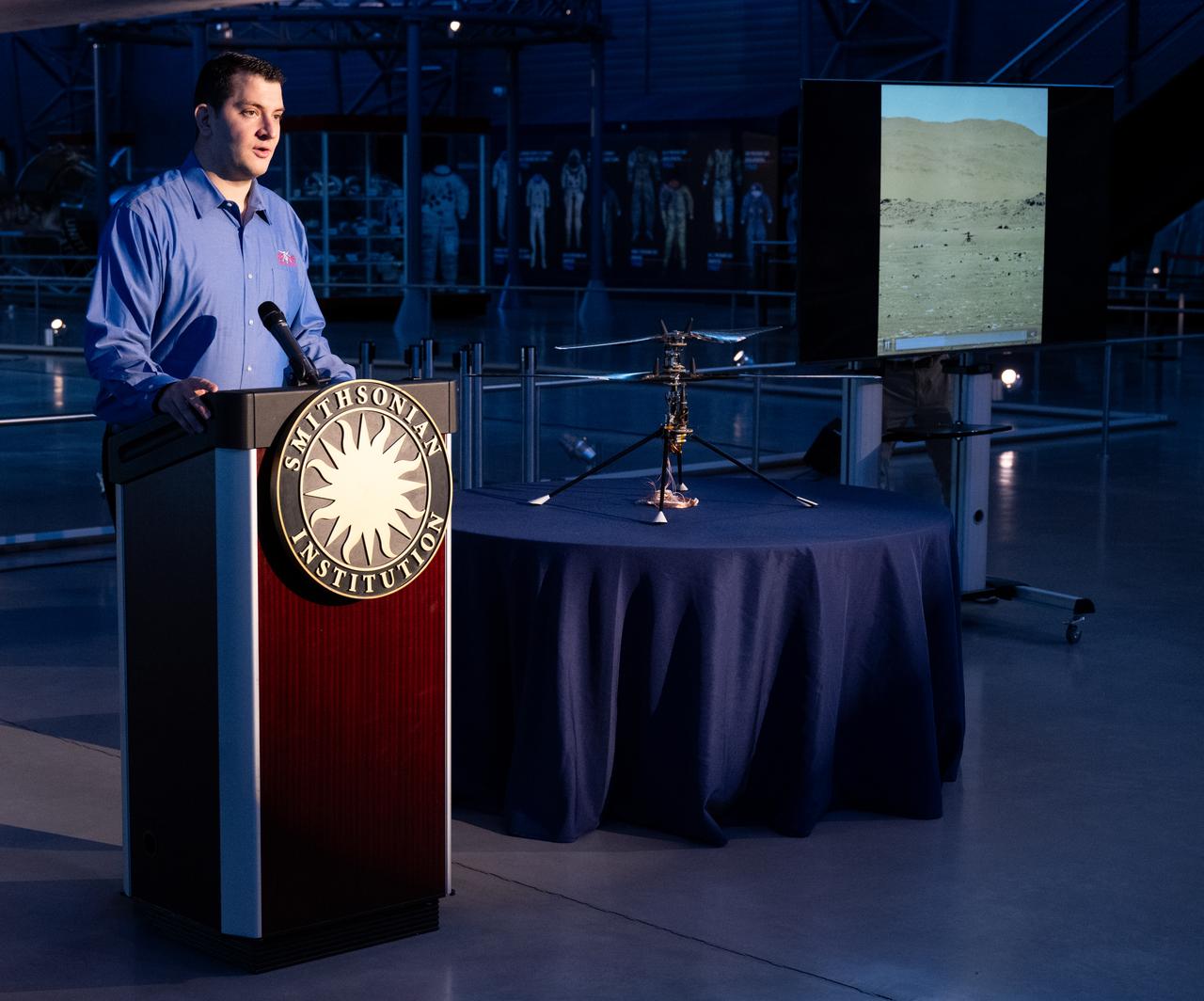
Teddy Tzanetos, Ingenuity project manager at NASA's Jet Propulsion Laboratory speaks at an event marking NASA’s donation of the aerial prototype of the Ingenuity Mars Helicopter, Friday, Dec. 15, 2023, at the Smithsonian National Air and Space Museum’s Steve F. Udvar-Hazy Center in Chantilly, Va. The aerial prototype of the Ingenuity Mars Helicopter, which was the first to demonstrate it was possible to fly in a simulated Mars environment at NASA’s Jet Propulsion Laboratory (JPL), was donated to the museum on Friday. Photo Credit: (NASA/Joel Kowsky)
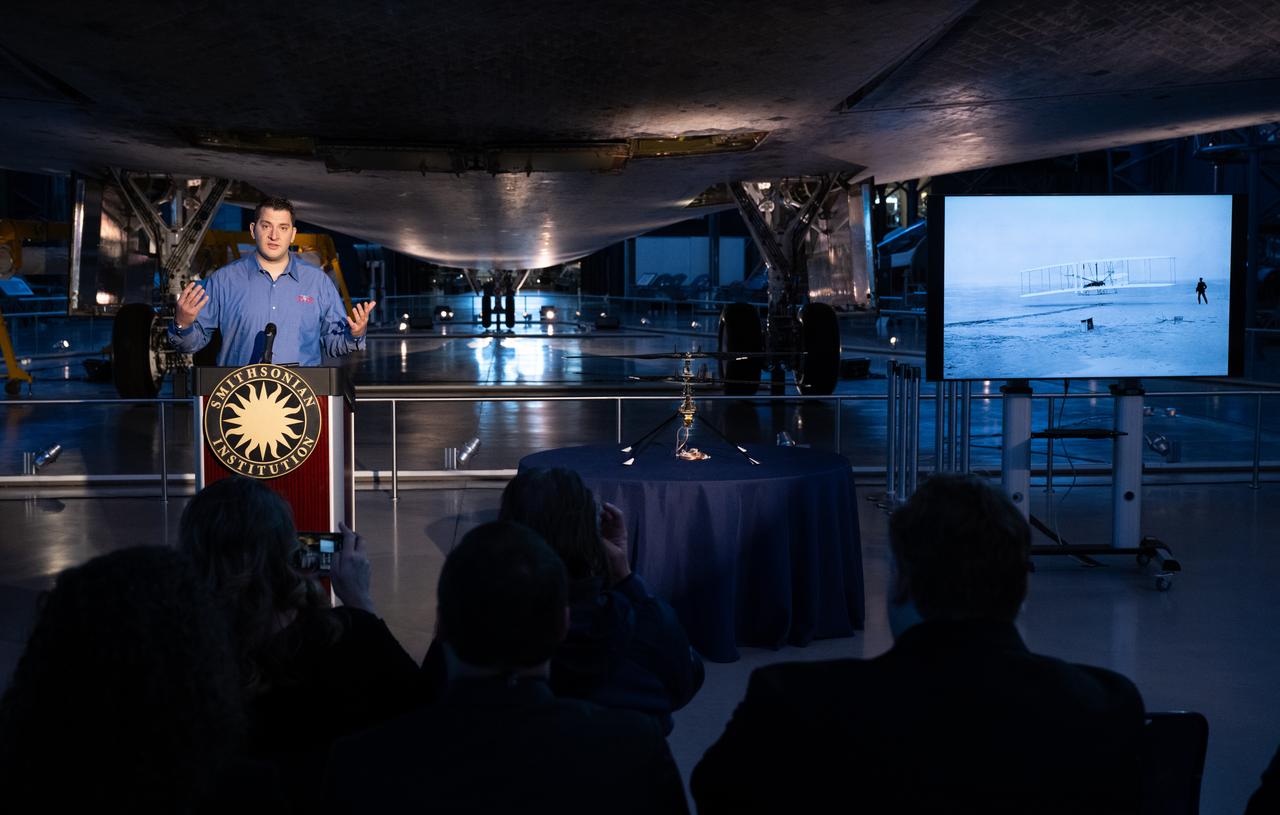
Teddy Tzanetos, Ingenuity project manager at NASA's Jet Propulsion Laboratory speaks at an event marking NASA’s donation of the aerial prototype of the Ingenuity Mars Helicopter, Friday, Dec. 15, 2023, at the Smithsonian National Air and Space Museum’s Steve F. Udvar-Hazy Center in Chantilly, Va. The aerial prototype of the Ingenuity Mars Helicopter, which was the first to demonstrate it was possible to fly in a simulated Mars environment at NASA’s Jet Propulsion Laboratory (JPL), was donated to the museum on Friday. Photo Credit: (NASA/Joel Kowsky)
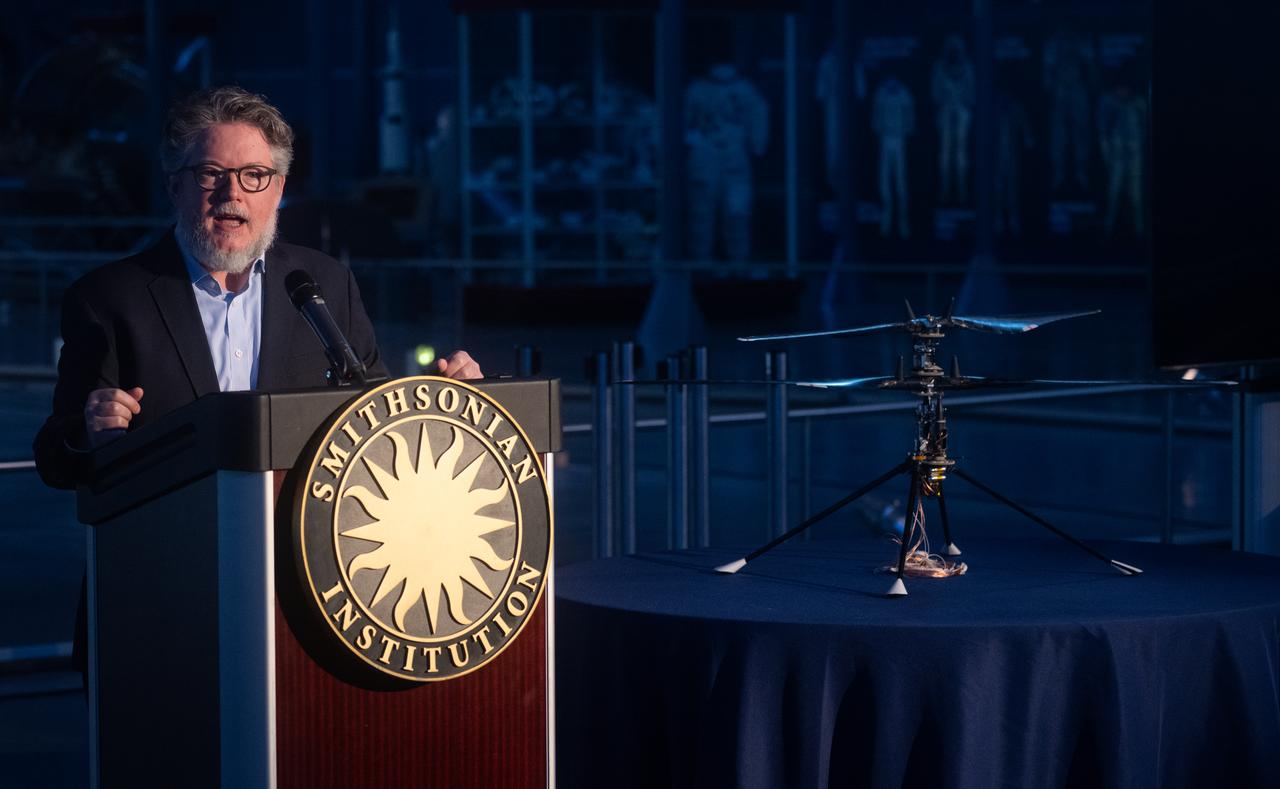
Matt Shindell, space history curator at the National Air and Space Museum speaks at an event marking NASA’s donation of the aerial prototype of the Ingenuity Mars Helicopter, Friday, Dec. 15, 2023, at the Smithsonian National Air and Space Museum’s Steve F. Udvar-Hazy Center in Chantilly, Va. The aerial prototype of the Ingenuity Mars Helicopter, which was the first to demonstrate it was possible to fly in a simulated Mars environment at NASA’s Jet Propulsion Laboratory (JPL), was donated to the museum on Friday. Photo Credit: (NASA/Joel Kowsky)
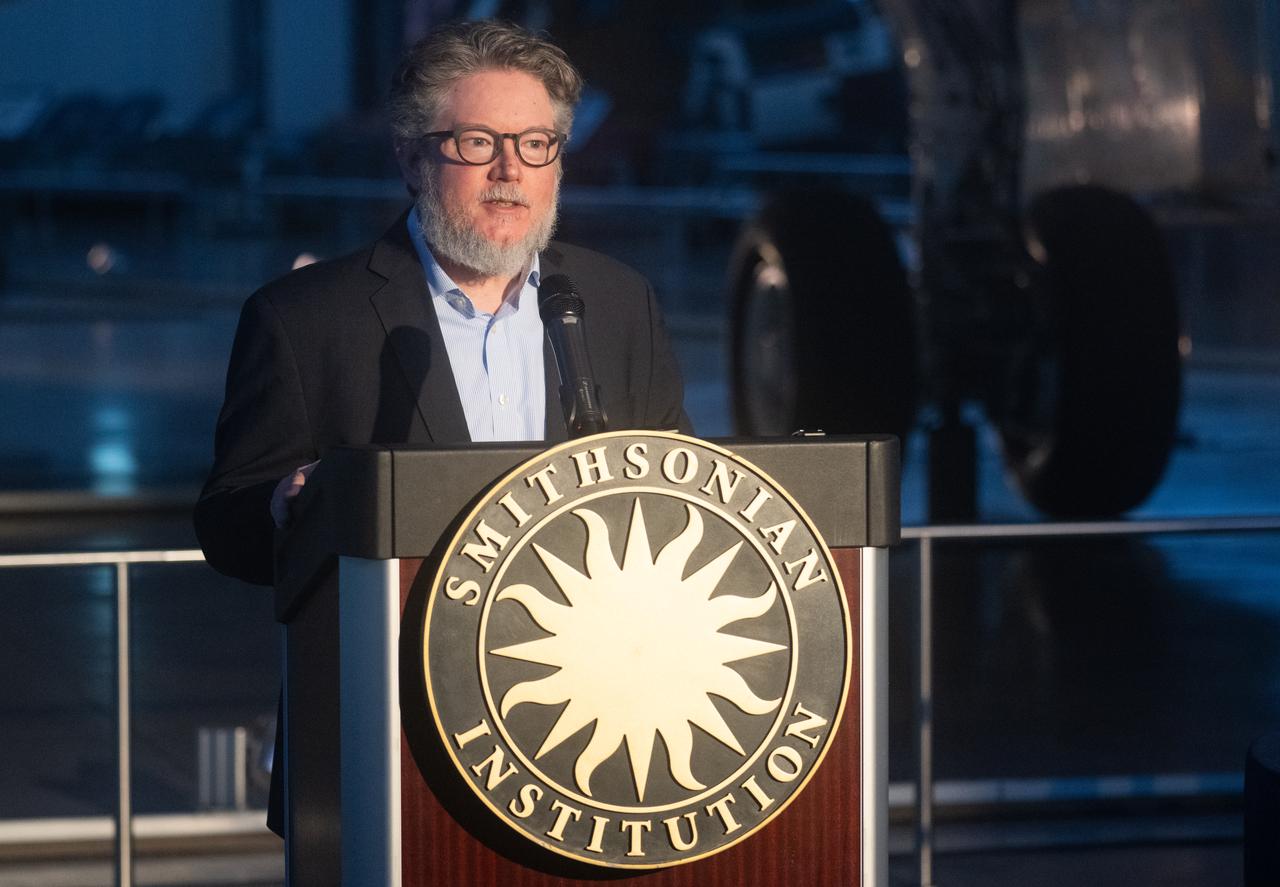
Matt Shindell, space history curator at the National Air and Space Museum speaks at an event marking NASA’s donation of the aerial prototype of the Ingenuity Mars Helicopter, Friday, Dec. 15, 2023, at the Smithsonian National Air and Space Museum’s Steve F. Udvar-Hazy Center in Chantilly, Va. The aerial prototype of the Ingenuity Mars Helicopter, which was the first to demonstrate it was possible to fly in a simulated Mars environment at NASA’s Jet Propulsion Laboratory (JPL), was donated to the museum on Friday. Photo Credit: (NASA/Joel Kowsky)The aerial prototype of the Ingenuity Mars Helicopter is seen at the Smithsonian National Air and Space Museum’s Steve F. Udvar-Hazy Center, Friday, Dec. 15, 2023, in Chantilly, Va. The prototype, which demonstrated it was possible to fly in a simulated Mars environment at NASA’s Jet Propulsion Laboratory (JPL), was donated Photo Credit: (NASA/Joel Kowsky)
Teddy Tzanetos, Ingenuity project manager at NASA's Jet Propulsion Laboratory speaks at an event marking NASA’s donation of the aerial prototype of the Ingenuity Mars Helicopter, Friday, Dec. 15, 2023, at the Smithsonian National Air and Space Museum’s Steve F. Udvar-Hazy Center in Chantilly, Va. The aerial prototype of the Ingenuity Mars Helicopter, which was the first to demonstrate it was possible to fly in a simulated Mars environment at NASA’s Jet Propulsion Laboratory (JPL), was donated to the museum on Friday. Photo Credit: (NASA/Joel Kowsky)
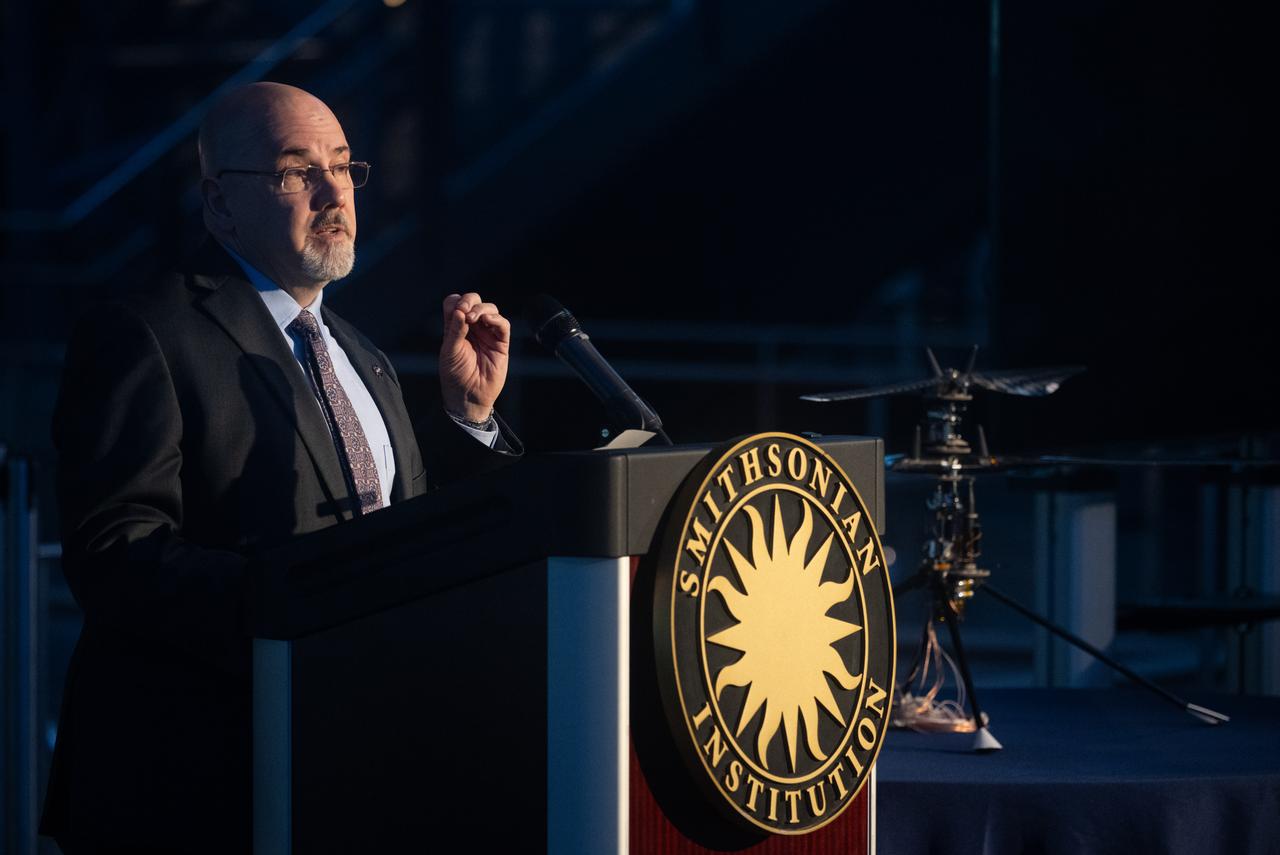
Eric Ianson, deputy director of the Planetary Science Division and director of the Mars Exploration Program and Radioisotope Power Systems Program at NASA speaks at an event marking NASA’s donation of the aerial prototype of the Ingenuity Mars Helicopter, Friday, Dec. 15, 2023, at the Smithsonian National Air and Space Museum’s Steve F. Udvar-Hazy Center in Chantilly, Va. The aerial prototype of the Ingenuity Mars Helicopter, which was the first to demonstrate it was possible to fly in a simulated Mars environment at NASA’s Jet Propulsion Laboratory (JPL), was donated to the museum on Friday. Photo Credit: (NASA/Joel Kowsky)

CAPE CANAVERAL, Fla. – A NASA C-9 “Pathfinder” DC-9 prepares for takeoff from the Shuttle Landing Facility at NASA's Kennedy Space Center in Florida ahead of space shuttle Discovery, which is bolted to the top of a Shuttle Carrier Aircraft. The craft are set to begin their 3 1/2 hour ferry flight to the Washington Dulles International Airport in Virginia at about 7 a.m. EDT. The Pathfinder will fly about 100 miles ahead of the attached pair, making sure the flight path is free of harmful weather or hazardous conditions. Discovery is leaving Kennedy after more than 28 years of service beginning with its arrival on the space coast Nov. 9, 1983. Discovery first launched to space Aug. 30, 1984, on the STS-41D mission. Discovery is the agency's most-flown shuttle with 39 missions, more than 148 million miles and a total of one year in space. Discovery is set to move to the Smithsonian's National Air and Space Museum Steven F. Udvar-Hazy Center on April 19 where it will be placed on public display. For more information on the SCA, visit http://www.nasa.gov/centers/dryden/news/FactSheets/FS-013-DFRC.html. For more information on shuttle transition and retirement activities, visit http://www.nasa.gov/transition. Photo credit: NASA/Jim Grossmann
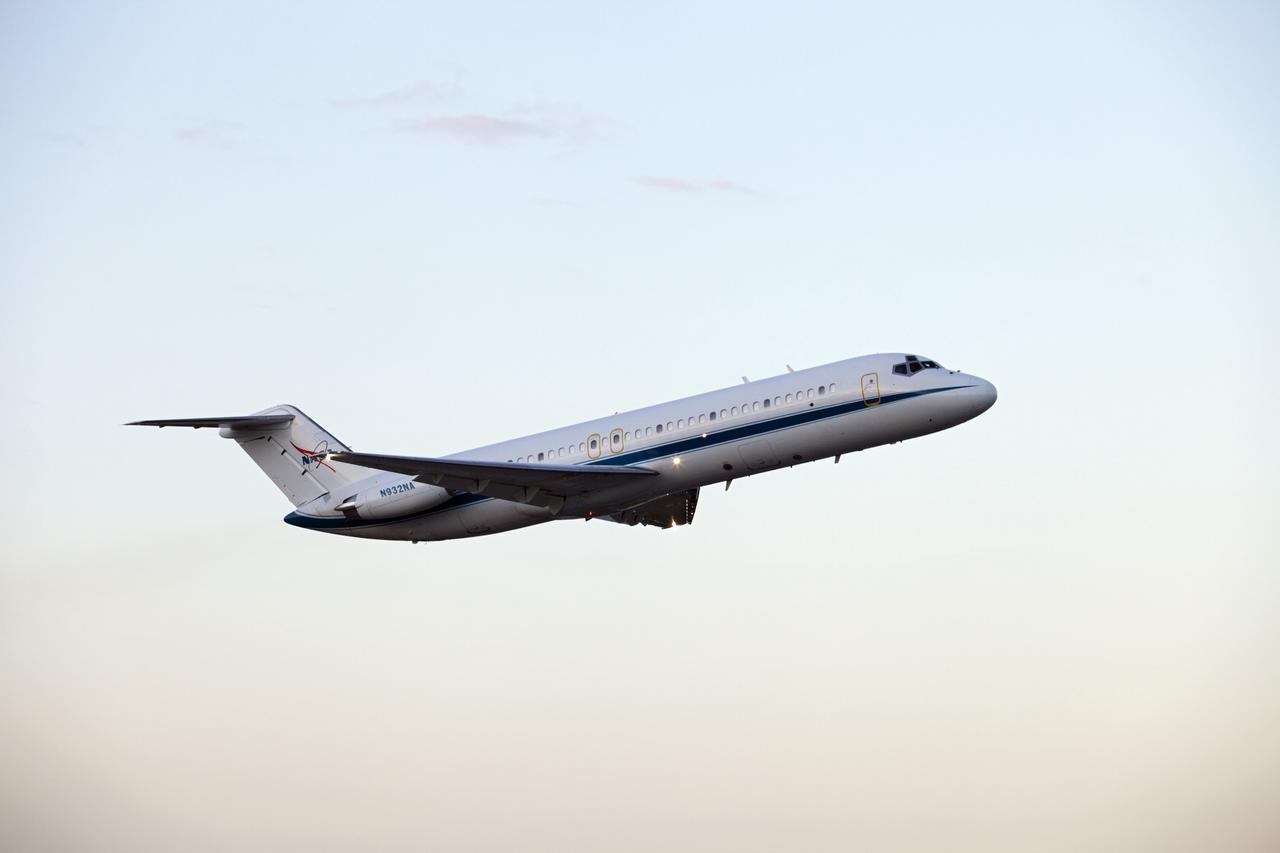
CAPE CANAVERAL, Fla. – A NASA C-9 “Pathfinder” DC-9 takes off from the Shuttle Landing Facility at NASA's Kennedy Space Center in Florida ahead of space shuttle Discovery, which is bolted to the top of a Shuttle Carrier Aircraft. The craft are set to begin their 3 1/2 hour ferry flight to the Washington Dulles International Airport in Virginia at about 7 a.m. EDT. The Pathfinder will fly about 100 miles ahead of the attached pair, making sure the flight path is free of harmful weather or hazardous conditions. Discovery is leaving Kennedy after more than 28 years of service beginning with its arrival on the space coast Nov. 9, 1983. Discovery first launched to space Aug. 30, 1984, on the STS-41D mission. Discovery is the agency's most-flown shuttle with 39 missions, more than 148 million miles and a total of one year in space. Discovery is set to move to the Smithsonian's National Air and Space Museum Steven F. Udvar-Hazy Center on April 19 where it will be placed on public display. For more information on the SCA, visit http://www.nasa.gov/centers/dryden/news/FactSheets/FS-013-DFRC.html. For more information on shuttle transition and retirement activities, visit http://www.nasa.gov/transition. Photo credit: NASA/Frankie Martin
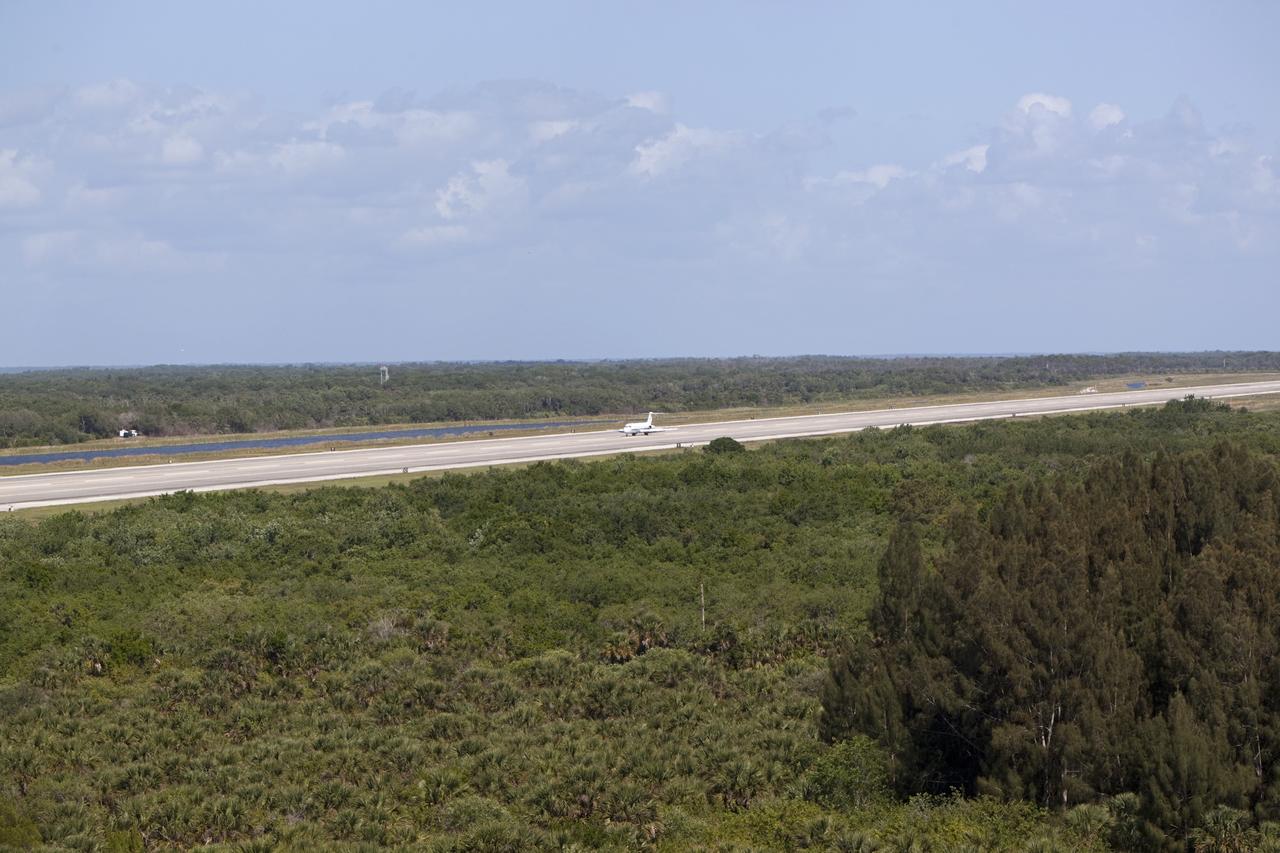
CAPE CANAVERAL, Fla. – Preparations for space shuttle Discovery’s ferry flight aboard a Shuttle Carrier Aircraft continue as the “pathfinder” aircraft for the flight lands at the Shuttle Landing Facility at NASA’s Kennedy Space Center in Florida. The NASA C-9 aircraft will fly about 100 miles ahead of Discovery to scout for the safest route between destinations. Its crew includes an SCA flight engineer who studies the weather patterns along the flight path to find a route free of rain and other turbulence. The carrier aircraft, also known as an SCA, is a Boeing 747 jet, originally manufactured for commercial use which was modified by NASA to transport the shuttles between destinations on Earth. NASA 905 is scheduled to ferry Discovery to the Washington Dulles International Airport in Virginia on April 17, and is assigned to all remaining ferry missions, delivering the shuttles to their permanent public display sites. After its arrival at Dulles, Discovery will be placed on display in the Smithsonian's National Air and Space Museum Steven F. Udvar-Hazy Center on April 19. For more information on the SCA, visit http://www.nasa.gov/centers/dryden/news/FactSheets/FS-013-DFRC.html. For more information on shuttle transition and retirement activities, visit http://www.nasa.gov/transition. Photo credit: NASA/Dimitri Gerondidaki

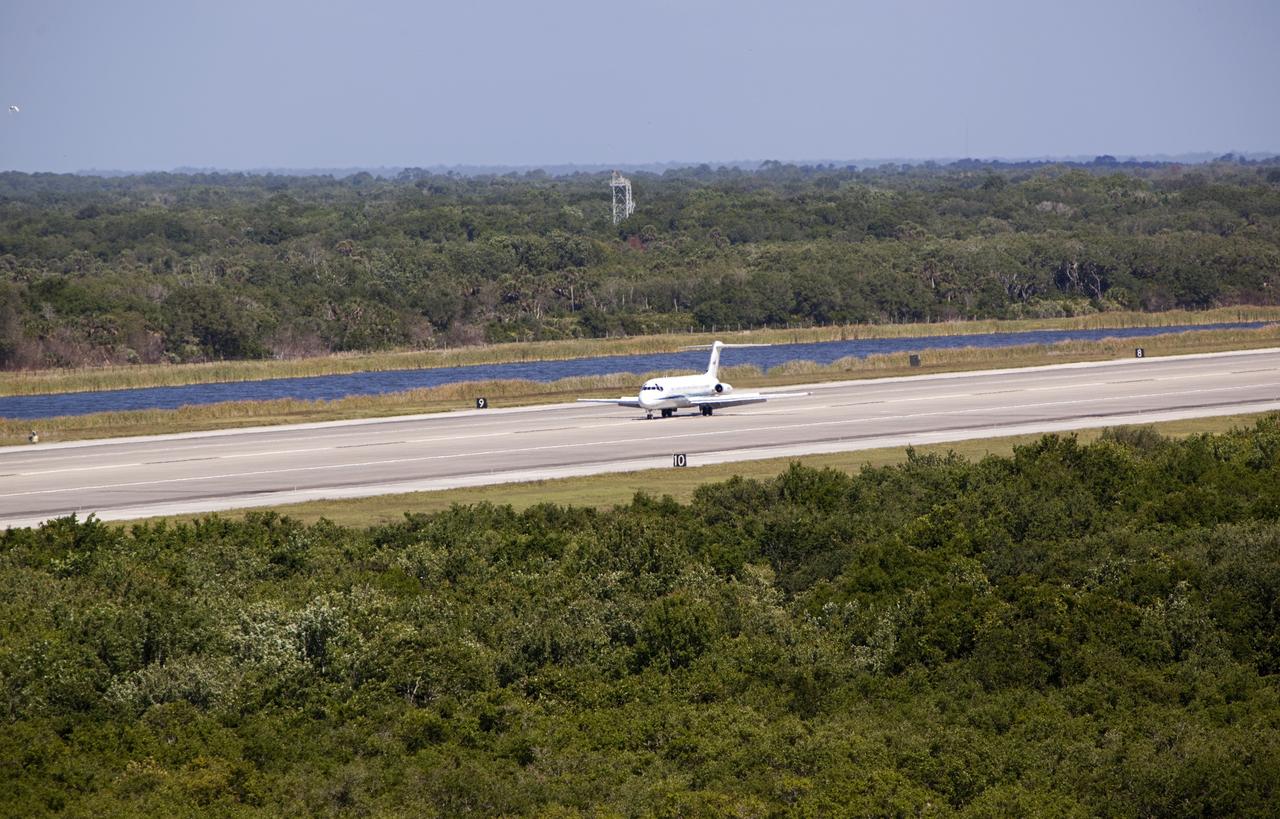
CAPE CANAVERAL, Fla. – The “pathfinder” aircraft for space shuttle Discovery’s ferry flight arrives at the Shuttle Landing Facility at NASA’s Kennedy Space Center in Florida to support Discovery’s ferry flight. The NASA C-9 aircraft will fly about 100 miles ahead of Discovery to scout for the safest route between destinations. Its crew includes an SCA flight engineer who studies the weather patterns along the flight path to find a route free of rain and other turbulence. The carrier aircraft, also known as an SCA, is a Boeing 747 jet, originally manufactured for commercial use which was modified by NASA to transport the shuttles between destinations on Earth. NASA 905 is scheduled to ferry Discovery to the Washington Dulles International Airport in Virginia on April 17, and is assigned to all remaining ferry missions, delivering the shuttles to their permanent public display sites. After its arrival at Dulles, Discovery will be placed on display in the Smithsonian's National Air and Space Museum Steven F. Udvar-Hazy Center on April 19. For more information on the SCA, visit http://www.nasa.gov/centers/dryden/news/FactSheets/FS-013-DFRC.html. For more information on shuttle transition and retirement activities, visit http://www.nasa.gov/transition. Photo credit: NASA/Amanda Diller
CAPE CANAVERAL, Fla. – The “pathfinder” aircraft for space shuttle Discovery’s ferry flight arrives at the Shuttle Landing Facility at NASA’s Kennedy Space Center in Florida. The NASA C-9 aircraft will fly about 100 miles ahead of Discovery to scout for the safest route between destinations. Its crew includes an SCA flight engineer who studies the weather patterns along the flight path to find a route free of rain and other turbulence. The carrier aircraft, also known as an SCA, is a Boeing 747 jet, originally manufactured for commercial use which was modified by NASA to transport the shuttles between destinations on Earth. NASA 905 is scheduled to ferry Discovery to the Washington Dulles International Airport in Virginia on April 17, and is assigned to all remaining ferry missions, delivering the shuttles to their permanent public display sites. After its arrival at Dulles, Discovery will be placed on display in the Smithsonian's National Air and Space Museum Steven F. Udvar-Hazy Center on April 19. For more information on the SCA, visit http://www.nasa.gov/centers/dryden/news/FactSheets/FS-013-DFRC.html. For more information on shuttle transition and retirement activities, visit http://www.nasa.gov/transition. Photo credit: NASA/Dimitri Gerondidaki
CAPE CANAVERAL, Fla. – The “pathfinder” aircraft for space shuttle Discovery’s ferry flight touches down at the Shuttle Landing Facility at NASA’s Kennedy Space Center in Florida. The NASA C-9 aircraft will fly about 100 miles ahead of Discovery to scout for the safest route between destinations. Its crew includes an SCA flight engineer who studies the weather patterns along the flight path to find a route free of rain and other turbulence. The carrier aircraft, also known as an SCA, is a Boeing 747 jet, originally manufactured for commercial use which was modified by NASA to transport the shuttles between destinations on Earth. NASA 905 is scheduled to ferry Discovery to the Washington Dulles International Airport in Virginia on April 17, and is assigned to all remaining ferry missions, delivering the shuttles to their permanent public display sites. After its arrival at Dulles, Discovery will be placed on display in the Smithsonian's National Air and Space Museum Steven F. Udvar-Hazy Center on April 19. For more information on the SCA, visit http://www.nasa.gov/centers/dryden/news/FactSheets/FS-013-DFRC.html. For more information on shuttle transition and retirement activities, visit http://www.nasa.gov/transition. Photo credit: NASA/Dimitri Gerondidaki
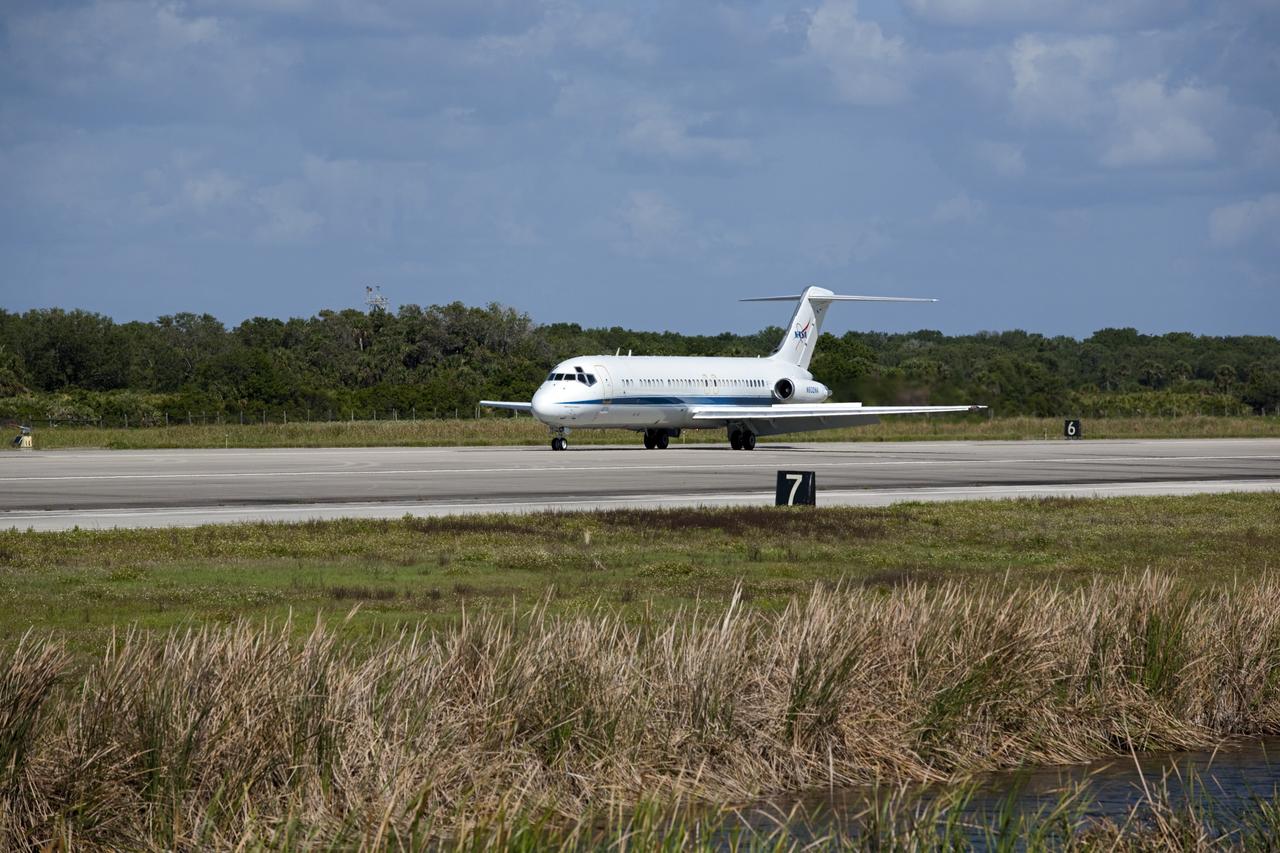
CAPE CANAVERAL, Fla. – The “pathfinder” aircraft for space shuttle Discovery’s ferry flight lands at the Shuttle Landing Facility at NASA’s Kennedy Space Center in Florida. The NASA C-9 aircraft will fly about 100 miles ahead of Discovery to scout for the safest route between destinations. Its crew includes an SCA flight engineer who studies the weather patterns along the flight path to find a route free of rain and other turbulence. The carrier aircraft, also known as an SCA, is a Boeing 747 jet, originally manufactured for commercial use which was modified by NASA to transport the shuttles between destinations on Earth. NASA 905 is scheduled to ferry Discovery to the Washington Dulles International Airport in Virginia on April 17, and is assigned to all remaining ferry missions, delivering the shuttles to their permanent public display sites. After its arrival at Dulles, Discovery will be placed on display in the Smithsonian's National Air and Space Museum Steven F. Udvar-Hazy Center on April 19. For more information on the SCA, visit http://www.nasa.gov/centers/dryden/news/FactSheets/FS-013-DFRC.html. For more information on shuttle transition and retirement activities, visit http://www.nasa.gov/transition. Photo credit: NASA/Amanda Diller
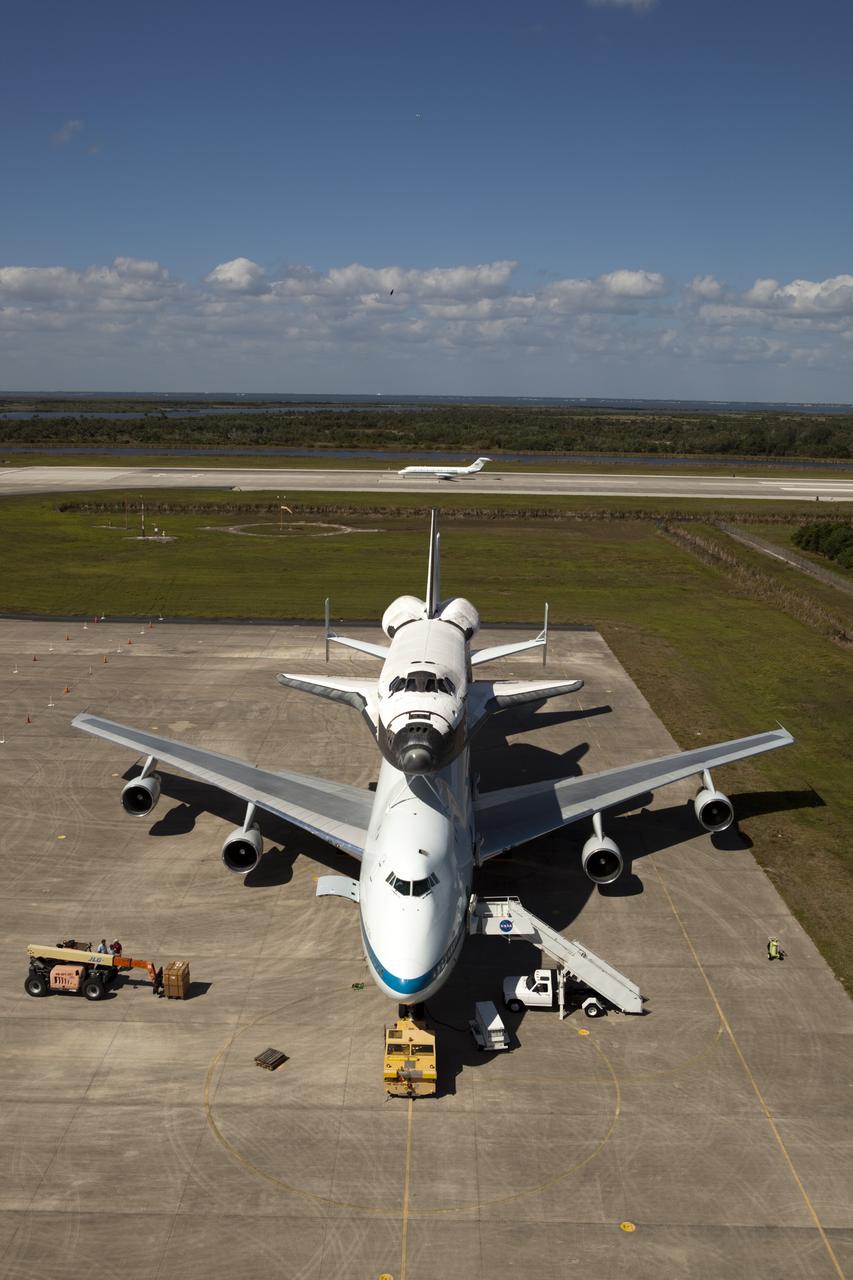
CAPE CANAVERAL, Fla. – Preparations for space shuttle Discovery’s ferry flight aboard a Shuttle Carrier Aircraft continue as the “pathfinder” aircraft for the flight lands at the Shuttle Landing Facility at NASA’s Kennedy Space Center in Florida. The NASA C-9 aircraft will fly about 100 miles ahead of Discovery to scout for the safest route between destinations. Its crew includes an SCA flight engineer who studies the weather patterns along the flight path to find a route free of rain and other turbulence. The carrier aircraft, also known as an SCA, is a Boeing 747 jet, originally manufactured for commercial use which was modified by NASA to transport the shuttles between destinations on Earth. NASA 905 is scheduled to ferry Discovery to the Washington Dulles International Airport in Virginia on April 17, and is assigned to all remaining ferry missions, delivering the shuttles to their permanent public display sites. After its arrival at Dulles, Discovery will be placed on display in the Smithsonian's National Air and Space Museum Steven F. Udvar-Hazy Center on April 19. For more information on the SCA, visit http://www.nasa.gov/centers/dryden/news/FactSheets/FS-013-DFRC.html. For more information on shuttle transition and retirement activities, visit http://www.nasa.gov/transition. Photo credit: NASA/Dimitri Gerondidaki
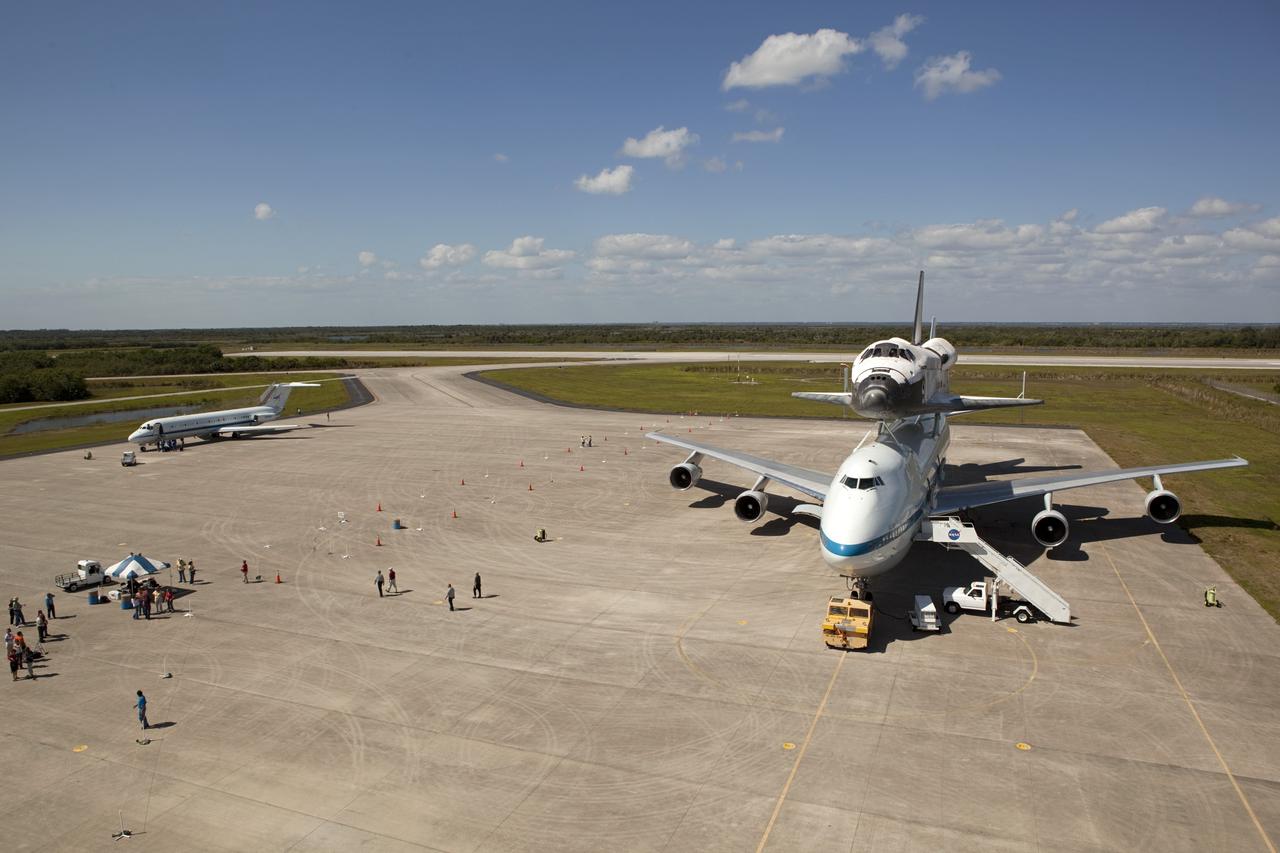
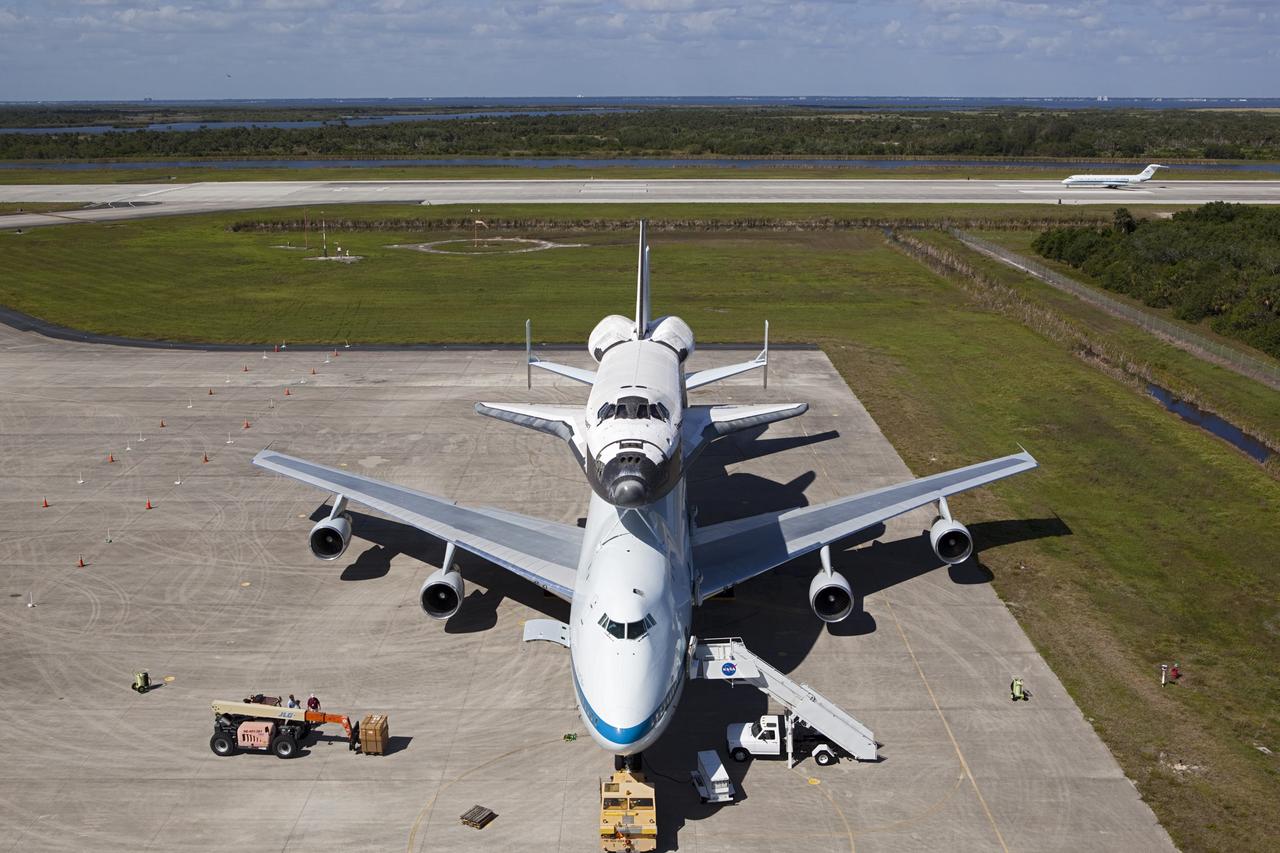
CAPE CANAVERAL, Fla. – The “pathfinder” aircraft for space shuttle Discovery’s ferry flight parks near the Shuttle Carrier Aircraft on the apron of the Shuttle Landing Facility at NASA’s Kennedy Space Center in Florida. The NASA C-9 aircraft will fly about 100 miles ahead of Discovery to scout for the safest route between destinations. Its crew includes an SCA flight engineer who studies the weather patterns along the flight path to find a route free of rain and other turbulence. The carrier aircraft, also known as an SCA, is a Boeing 747 jet, originally manufactured for commercial use which was modified by NASA to transport the shuttles between destinations on Earth. NASA 905 is scheduled to ferry Discovery to the Washington Dulles International Airport in Virginia on April 17, and is assigned to all remaining ferry missions, delivering the shuttles to their permanent public display sites. After its arrival at Dulles, Discovery will be placed on display in the Smithsonian's National Air and Space Museum Steven F. Udvar-Hazy Center on April 19. For more information on the SCA, visit http://www.nasa.gov/centers/dryden/news/FactSheets/FS-013-DFRC.html. For more information on shuttle transition and retirement activities, visit http://www.nasa.gov/transition. Photo credit: NASA/Dimitri Gerondidaki

CAPE CANAVERAL, Fla. – The “pathfinder” aircraft for space shuttle Discovery’s ferry flight parks near the Shuttle Carrier Aircraft on the tarmac of the Shuttle Landing Facility at NASA’s Kennedy Space Center in Florida. The NASA C-9 aircraft will fly about 100 miles ahead of Discovery to scout for the safest route between destinations. Its crew includes an SCA flight engineer who studies the weather patterns along the flight path to find a route free of rain and other turbulence. The carrier aircraft, also known as an SCA, is a Boeing 747 jet, originally manufactured for commercial use which was modified by NASA to transport the shuttles between destinations on Earth. NASA 905 is scheduled to ferry Discovery to the Washington Dulles International Airport in Virginia on April 17, and is assigned to all remaining ferry missions, delivering the shuttles to their permanent public display sites. After its arrival at Dulles, Discovery will be placed on display in the Smithsonian's National Air and Space Museum Steven F. Udvar-Hazy Center on April 19. For more information on the SCA, visit http://www.nasa.gov/centers/dryden/news/FactSheets/FS-013-DFRC.html. For more information on shuttle transition and retirement activities, visit http://www.nasa.gov/transition. Photo credit: NASA/Amanda Diller
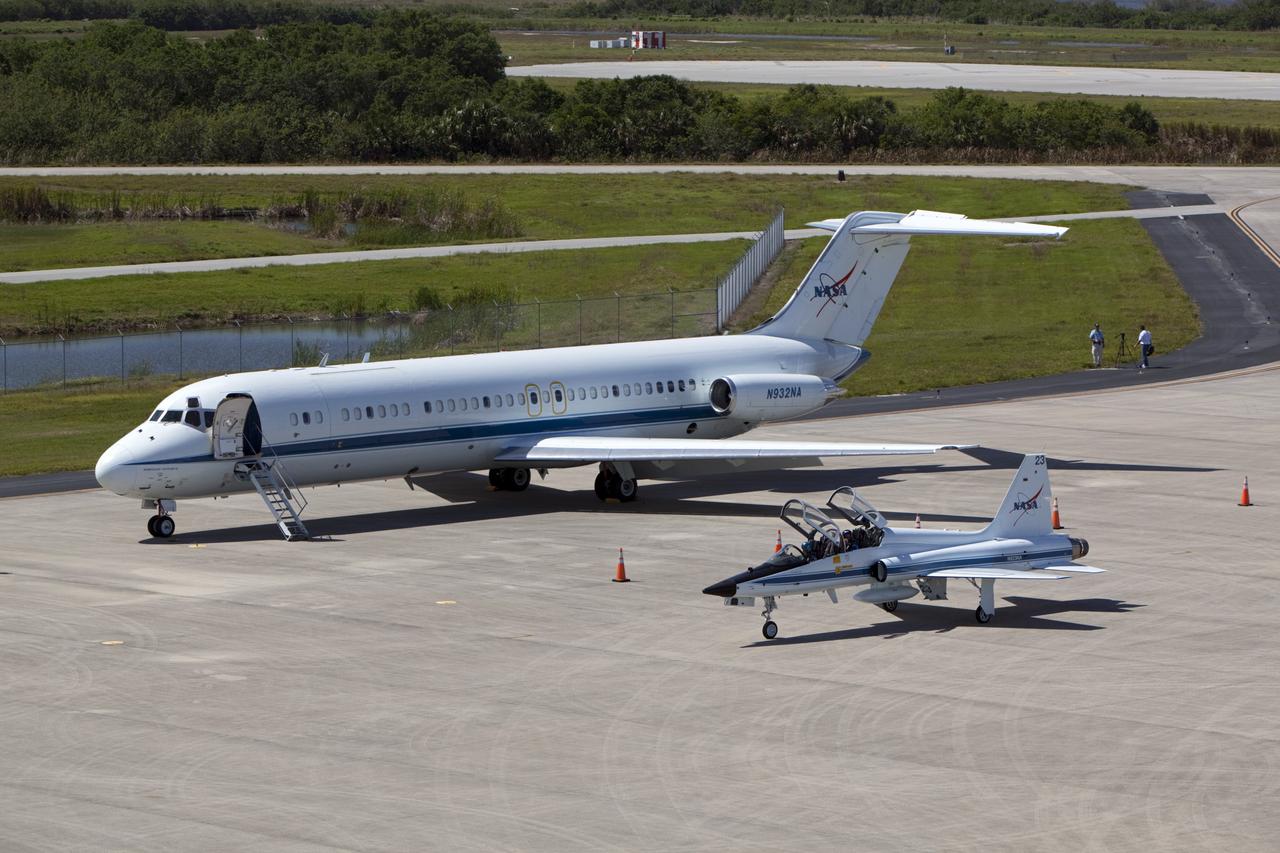
CAPE CANAVERAL, Fla. – A T-38 jet parks beside the “pathfinder” aircraft for space shuttle Discovery’s ferry flight on the apron of the Shuttle Landing Facility at NASA’s Kennedy Space Center in Florida. The NASA C-9 aircraft will fly about 100 miles ahead of Discovery to scout for the safest route between destinations. Its crew includes an SCA flight engineer who studies the weather patterns along the flight path to find a route free of rain and other turbulence. The carrier aircraft, also known as an SCA, is a Boeing 747 jet, originally manufactured for commercial use which was modified by NASA to transport the shuttles between destinations on Earth. NASA 905 is scheduled to ferry Discovery to the Washington Dulles International Airport in Virginia on April 17, and is assigned to all remaining ferry missions, delivering the shuttles to their permanent public display sites. After its arrival at Dulles, Discovery will be placed on display in the Smithsonian's National Air and Space Museum Steven F. Udvar-Hazy Center on April 19. For more information on the SCA, visit http://www.nasa.gov/centers/dryden/news/FactSheets/FS-013-DFRC.html. For more information on shuttle transition and retirement activities, visit http://www.nasa.gov/transition. Photo credit: NASA/Dimitri Gerondidaki
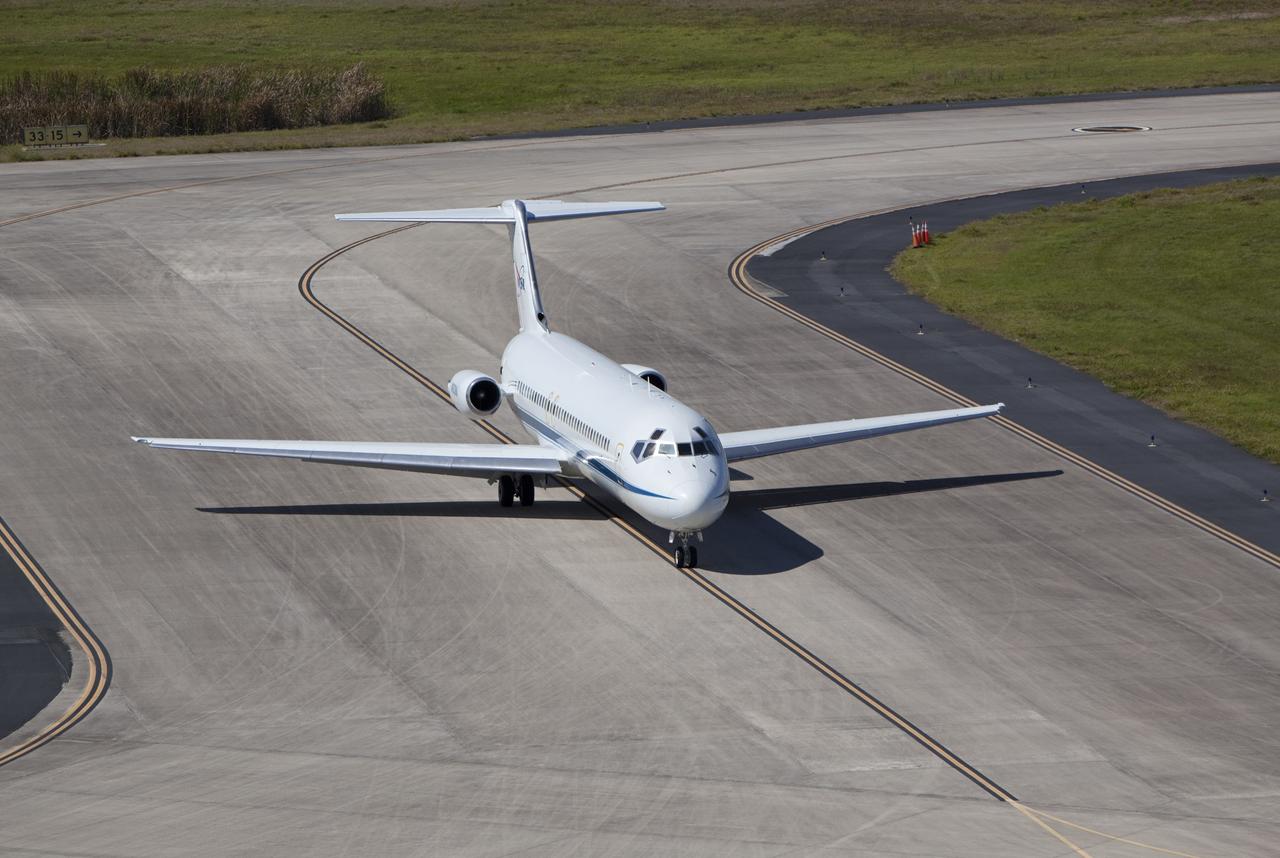
CAPE CANAVERAL, Fla. – The “pathfinder” aircraft for space shuttle Discovery’s ferry flight taxis onto the apron of the Shuttle Landing Facility at NASA’s Kennedy Space Center in Florida. The NASA C-9 aircraft will fly about 100 miles ahead of Discovery to scout for the safest route between destinations. Its crew includes an SCA flight engineer who studies the weather patterns along the flight path to find a route free of rain and other turbulence. The carrier aircraft, also known as an SCA, is a Boeing 747 jet, originally manufactured for commercial use which was modified by NASA to transport the shuttles between destinations on Earth. NASA 905 is scheduled to ferry Discovery to the Washington Dulles International Airport in Virginia on April 17, and is assigned to all remaining ferry missions, delivering the shuttles to their permanent public display sites. After its arrival at Dulles, Discovery will be placed on display in the Smithsonian's National Air and Space Museum Steven F. Udvar-Hazy Center on April 19. For more information on the SCA, visit http://www.nasa.gov/centers/dryden/news/FactSheets/FS-013-DFRC.html. For more information on shuttle transition and retirement activities, visit http://www.nasa.gov/transition. Photo credit: NASA/Dimitri Gerondidaki

CAPE CANAVERAL, Fla. – The “pathfinder” aircraft for space shuttle Discovery’s ferry flight arrives at the Shuttle Landing Facility at NASA’s Kennedy Space Center in Florida. The NASA C-9 aircraft will fly about 100 miles ahead of Discovery to scout for the safest route between destinations. Its crew includes an SCA flight engineer who studies the weather patterns along the flight path to find a route free of rain and other turbulence. The carrier aircraft, also known as an SCA, is a Boeing 747 jet, originally manufactured for commercial use which was modified by NASA to transport the shuttles between destinations on Earth. NASA 905 is scheduled to ferry Discovery to the Washington Dulles International Airport in Virginia on April 17, and is assigned to all remaining ferry missions, delivering the shuttles to their permanent public display sites. After its arrival at Dulles, Discovery will be placed on display in the Smithsonian's National Air and Space Museum Steven F. Udvar-Hazy Center on April 19. For more information on the SCA, visit http://www.nasa.gov/centers/dryden/news/FactSheets/FS-013-DFRC.html. For more information on shuttle transition and retirement activities, visit http://www.nasa.gov/transition. Photo credit: NASA/Amanda Diller

CAPE CANAVERAL, Fla. – The “pathfinder” aircraft for space shuttle Discovery’s ferry flight taxis down the runway at the Shuttle Landing Facility at NASA’s Kennedy Space Center in Florida. The NASA C-9 aircraft will fly about 100 miles ahead of Discovery to scout for the safest route between destinations. Its crew includes an SCA flight engineer who studies the weather patterns along the flight path to find a route free of rain and other turbulence. The carrier aircraft, also known as an SCA, is a Boeing 747 jet, originally manufactured for commercial use which was modified by NASA to transport the shuttles between destinations on Earth. NASA 905 is scheduled to ferry Discovery to the Washington Dulles International Airport in Virginia on April 17, and is assigned to all remaining ferry missions, delivering the shuttles to their permanent public display sites. After its arrival at Dulles, Discovery will be placed on display in the Smithsonian's National Air and Space Museum Steven F. Udvar-Hazy Center on April 19. For more information on the SCA, visit http://www.nasa.gov/centers/dryden/news/FactSheets/FS-013-DFRC.html. For more information on shuttle transition and retirement activities, visit http://www.nasa.gov/transition. Photo credit: NASA/Amanda Diller
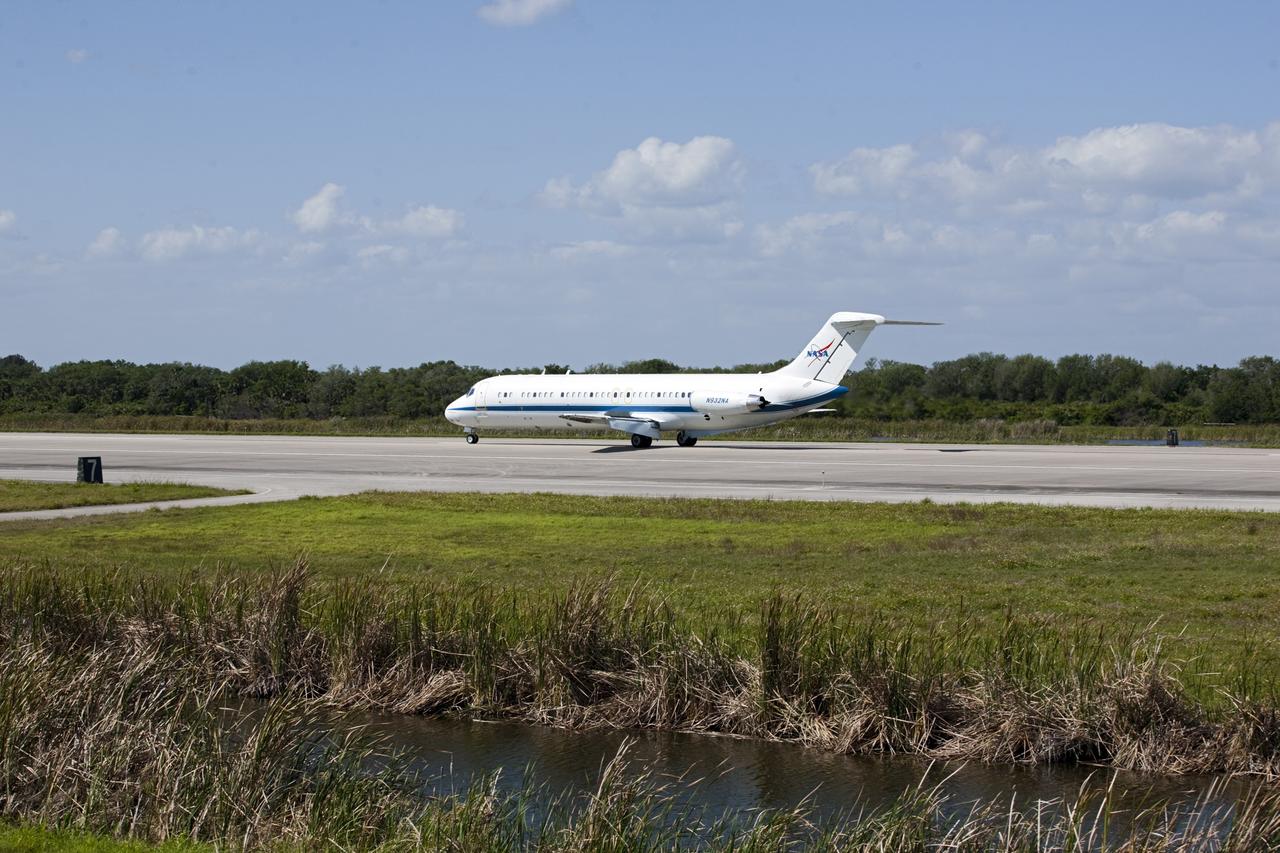
CAPE CANAVERAL, Fla. – The “pathfinder” aircraft for space shuttle Discovery’s ferry flight taxis down the runway at the Shuttle Landing Facility at NASA’s Kennedy Space Center in Florida. The NASA C-9 aircraft will fly about 100 miles ahead of Discovery to scout for the safest route between destinations. Its crew includes an SCA flight engineer who studies the weather patterns along the flight path to find a route free of rain and other turbulence. The carrier aircraft, also known as an SCA, is a Boeing 747 jet, originally manufactured for commercial use which was modified by NASA to transport the shuttles between destinations on Earth. NASA 905 is scheduled to ferry Discovery to the Washington Dulles International Airport in Virginia on April 17, and is assigned to all remaining ferry missions, delivering the shuttles to their permanent public display sites. After its arrival at Dulles, Discovery will be placed on display in the Smithsonian's National Air and Space Museum Steven F. Udvar-Hazy Center on April 19. For more information on the SCA, visit http://www.nasa.gov/centers/dryden/news/FactSheets/FS-013-DFRC.html. For more information on shuttle transition and retirement activities, visit http://www.nasa.gov/transition. Photo credit: NASA/Amanda Diller
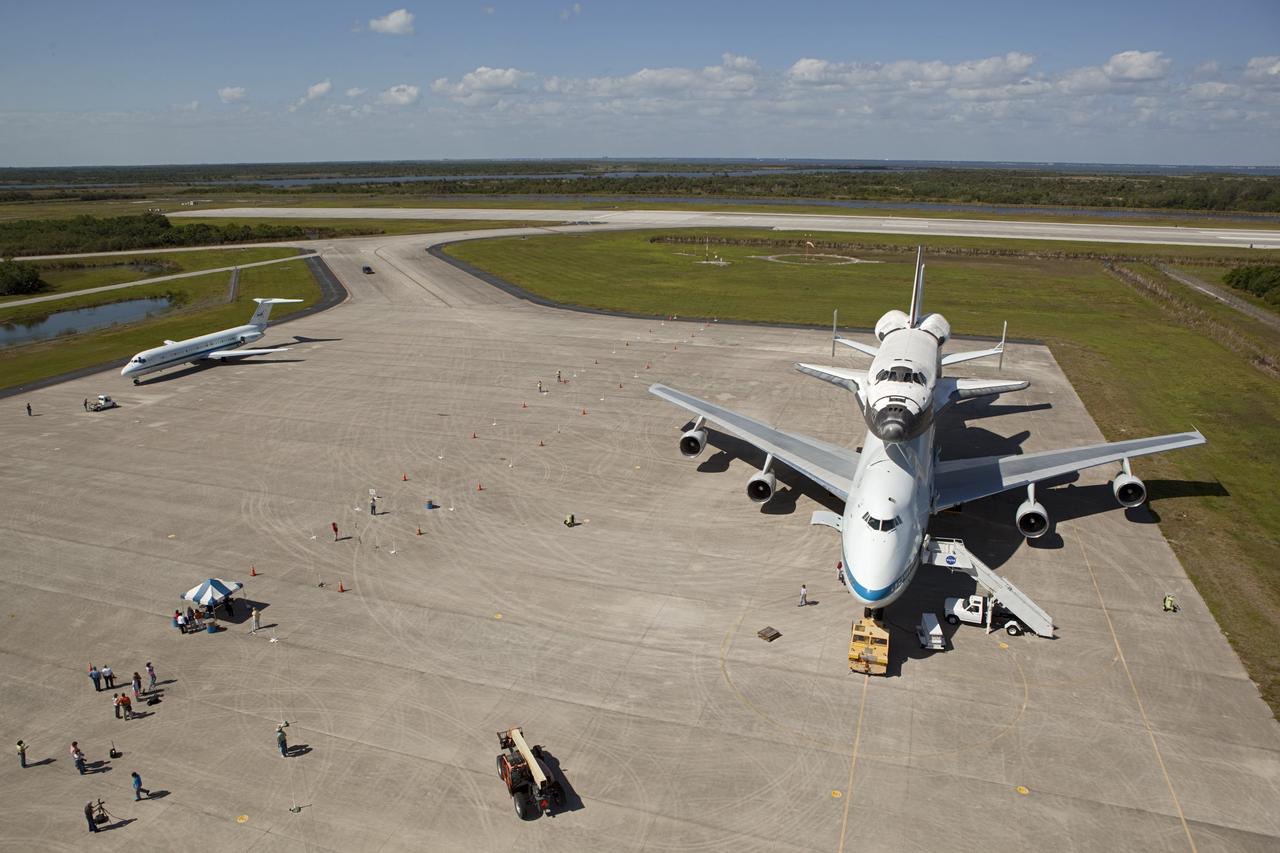
CAPE CANAVERAL, Fla. – The “pathfinder” aircraft for space shuttle Discovery’s ferry flight pulls up beside the Shuttle Carrier Aircraft on the apron of the Shuttle Landing Facility at NASA’s Kennedy Space Center in Florida. The NASA C-9 aircraft will fly about 100 miles ahead of Discovery to scout for the safest route between destinations. Its crew includes an SCA flight engineer who studies the weather patterns along the flight path to find a route free of rain and other turbulence. The carrier aircraft, also known as an SCA, is a Boeing 747 jet, originally manufactured for commercial use which was modified by NASA to transport the shuttles between destinations on Earth. NASA 905 is scheduled to ferry Discovery to the Washington Dulles International Airport in Virginia on April 17, and is assigned to all remaining ferry missions, delivering the shuttles to their permanent public display sites. After its arrival at Dulles, Discovery will be placed on display in the Smithsonian's National Air and Space Museum Steven F. Udvar-Hazy Center on April 19. For more information on the SCA, visit http://www.nasa.gov/centers/dryden/news/FactSheets/FS-013-DFRC.html. For more information on shuttle transition and retirement activities, visit http://www.nasa.gov/transition. Photo credit: NASA/Dimitri Gerondidaki

CAPE CANAVERAL, Fla. – The “pathfinder” aircraft for space shuttle Discovery’s ferry flight pulls up beside the Shuttle Carrier Aircraft on the tarmac of the Shuttle Landing Facility at NASA’s Kennedy Space Center in Florida. The NASA C-9 aircraft will fly about 100 miles ahead of Discovery to scout for the safest route between destinations. Its crew includes an SCA flight engineer who studies the weather patterns along the flight path to find a route free of rain and other turbulence. The carrier aircraft, also known as an SCA, is a Boeing 747 jet, originally manufactured for commercial use which was modified by NASA to transport the shuttles between destinations on Earth. NASA 905 is scheduled to ferry Discovery to the Washington Dulles International Airport in Virginia on April 17, and is assigned to all remaining ferry missions, delivering the shuttles to their permanent public display sites. After its arrival at Dulles, Discovery will be placed on display in the Smithsonian's National Air and Space Museum Steven F. Udvar-Hazy Center on April 19. For more information on the SCA, visit http://www.nasa.gov/centers/dryden/news/FactSheets/FS-013-DFRC.html. For more information on shuttle transition and retirement activities, visit http://www.nasa.gov/transition. Photo credit: NASA/Amanda Diller
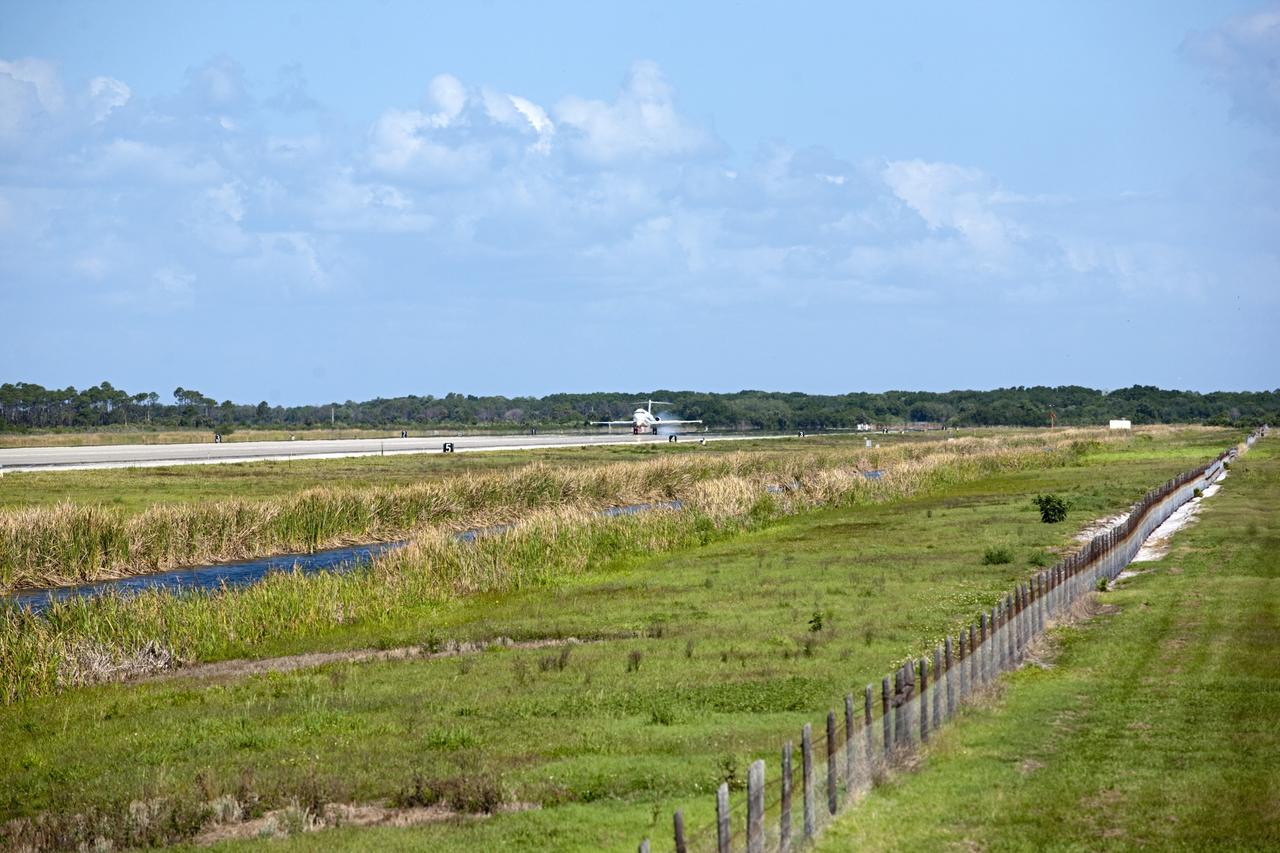
CAPE CANAVERAL, Fla. – The “pathfinder” aircraft for space shuttle Discovery’s ferry flight touches down at the Shuttle Landing Facility at NASA’s Kennedy Space Center in Florida . The NASA C-9 aircraft will fly about 100 miles ahead of Discovery to scout for the safest route between destinations. Its crew includes an SCA flight engineer who studies the weather patterns along the flight path to find a route free of rain and other turbulence. The carrier aircraft, also known as an SCA, is a Boeing 747 jet, originally manufactured for commercial use which was modified by NASA to transport the shuttles between destinations on Earth. NASA 905 is scheduled to ferry Discovery to the Washington Dulles International Airport in Virginia on April 17, and is assigned to all remaining ferry missions, delivering the shuttles to their permanent public display sites. After its arrival at Dulles, Discovery will be placed on display in the Smithsonian's National Air and Space Museum Steven F. Udvar-Hazy Center on April 19. For more information on the SCA, visit http://www.nasa.gov/centers/dryden/news/FactSheets/FS-013-DFRC.html. For more information on shuttle transition and retirement activities, visit http://www.nasa.gov/transition. Photo credit: NASA/Amanda Diller
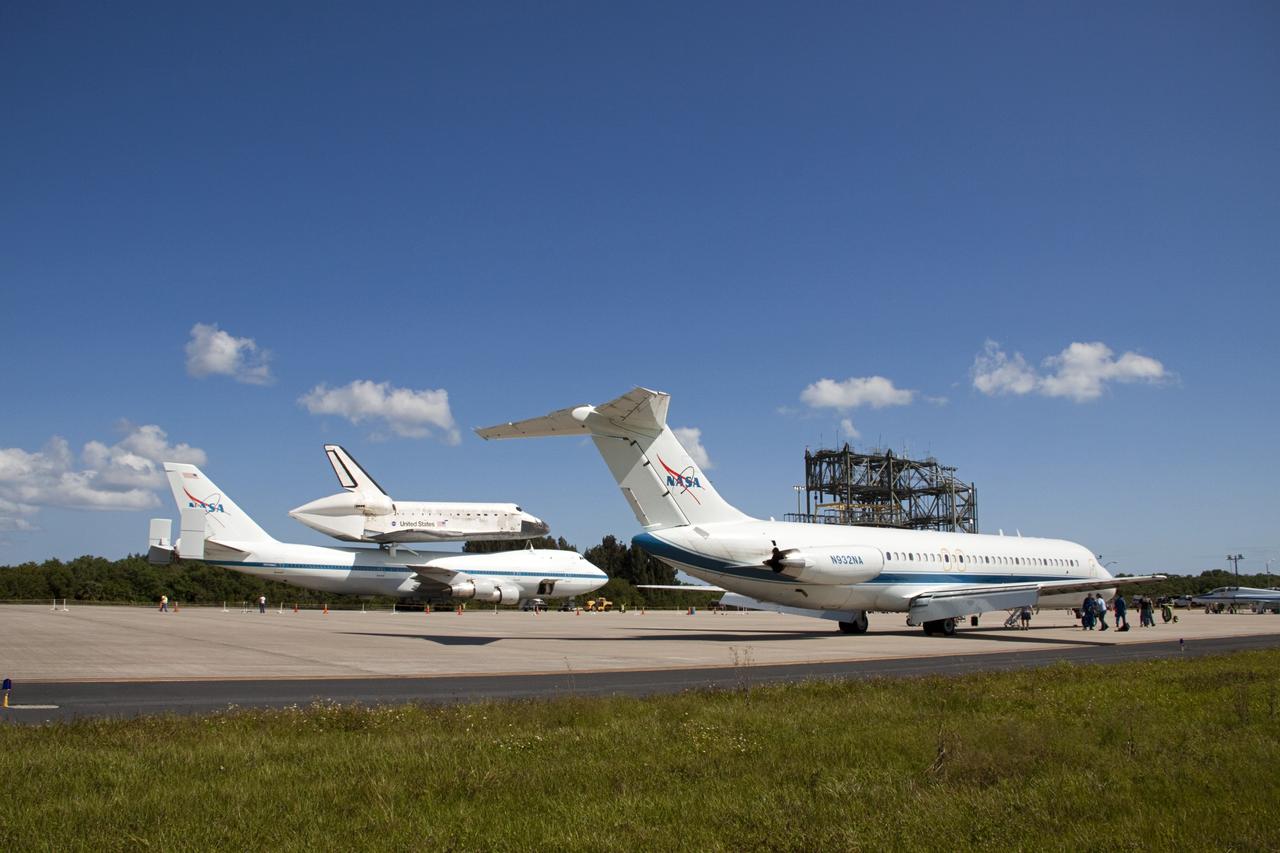
CAPE CANAVERAL, Fla. – A buzz of activity surrounds the “pathfinder” aircraft for space shuttle Discovery’s ferry flight on the tarmac of the Shuttle Landing Facility at NASA’s Kennedy Space Center in Florida. The NASA C-9 aircraft will fly about 100 miles ahead of Discovery to scout for the safest route between destinations. Its crew includes an SCA flight engineer who studies the weather patterns along the flight path to find a route free of rain and other turbulence. The carrier aircraft, also known as an SCA, is a Boeing 747 jet, originally manufactured for commercial use which was modified by NASA to transport the shuttles between destinations on Earth. NASA 905 is scheduled to ferry Discovery to the Washington Dulles International Airport in Virginia on April 17, and is assigned to all remaining ferry missions, delivering the shuttles to their permanent public display sites. After its arrival at Dulles, Discovery will be placed on display in the Smithsonian's National Air and Space Museum Steven F. Udvar-Hazy Center on April 19. For more information on the SCA, visit http://www.nasa.gov/centers/dryden/news/FactSheets/FS-013-DFRC.html. For more information on shuttle transition and retirement activities, visit http://www.nasa.gov/transition. Photo credit: NASA/Amanda Diller
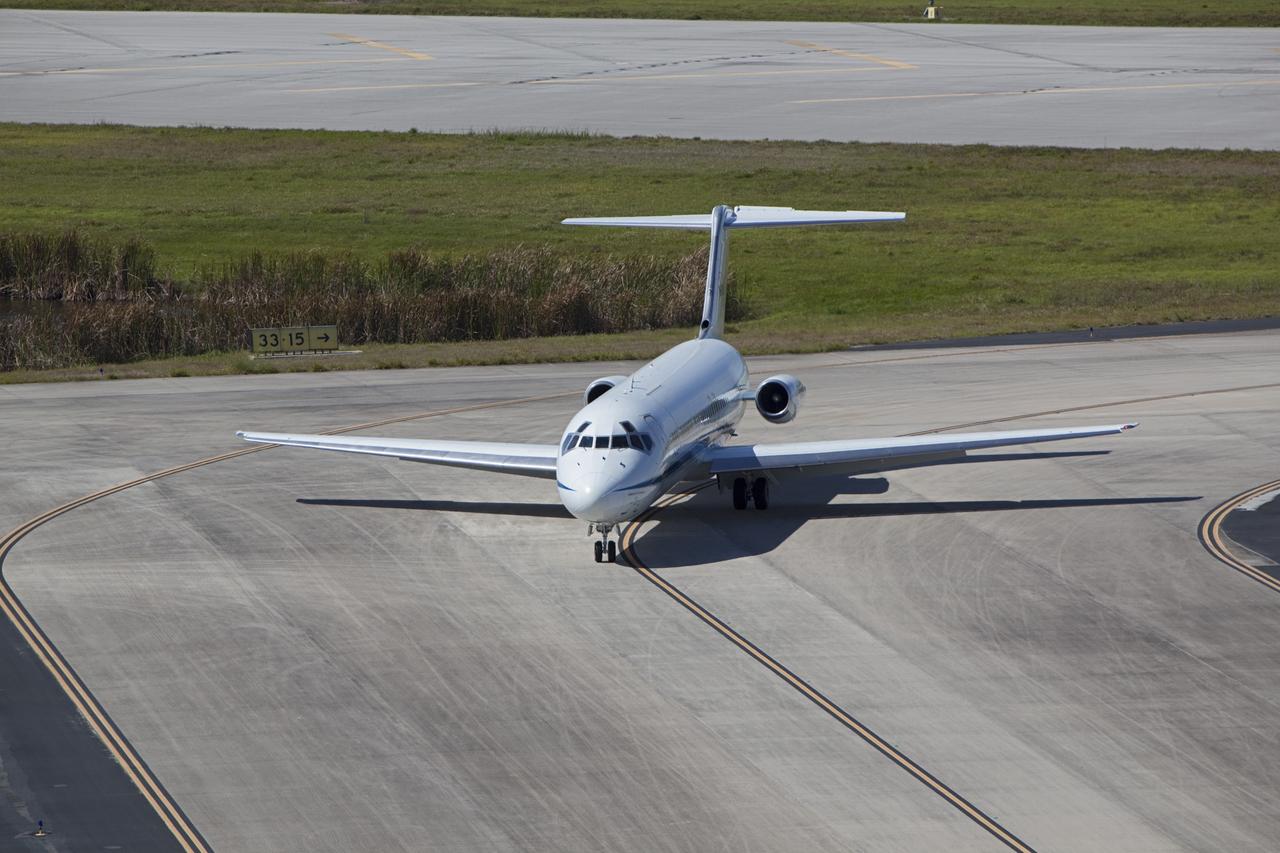
CAPE CANAVERAL, Fla. – The “pathfinder” aircraft for space shuttle Discovery’s ferry flight taxis onto the apron of the Shuttle Landing Facility at NASA’s Kennedy Space Center in Florida. The NASA C-9 aircraft will fly about 100 miles ahead of Discovery to scout for the safest route between destinations. Its crew includes an SCA flight engineer who studies the weather patterns along the flight path to find a route free of rain and other turbulence. The carrier aircraft, also known as an SCA, is a Boeing 747 jet, originally manufactured for commercial use which was modified by NASA to transport the shuttles between destinations on Earth. NASA 905 is scheduled to ferry Discovery to the Washington Dulles International Airport in Virginia on April 17, and is assigned to all remaining ferry missions, delivering the shuttles to their permanent public display sites. After its arrival at Dulles, Discovery will be placed on display in the Smithsonian's National Air and Space Museum Steven F. Udvar-Hazy Center on April 19. For more information on the SCA, visit http://www.nasa.gov/centers/dryden/news/FactSheets/FS-013-DFRC.html. For more information on shuttle transition and retirement activities, visit http://www.nasa.gov/transition. Photo credit: NASA/Dimitri Gerondidaki
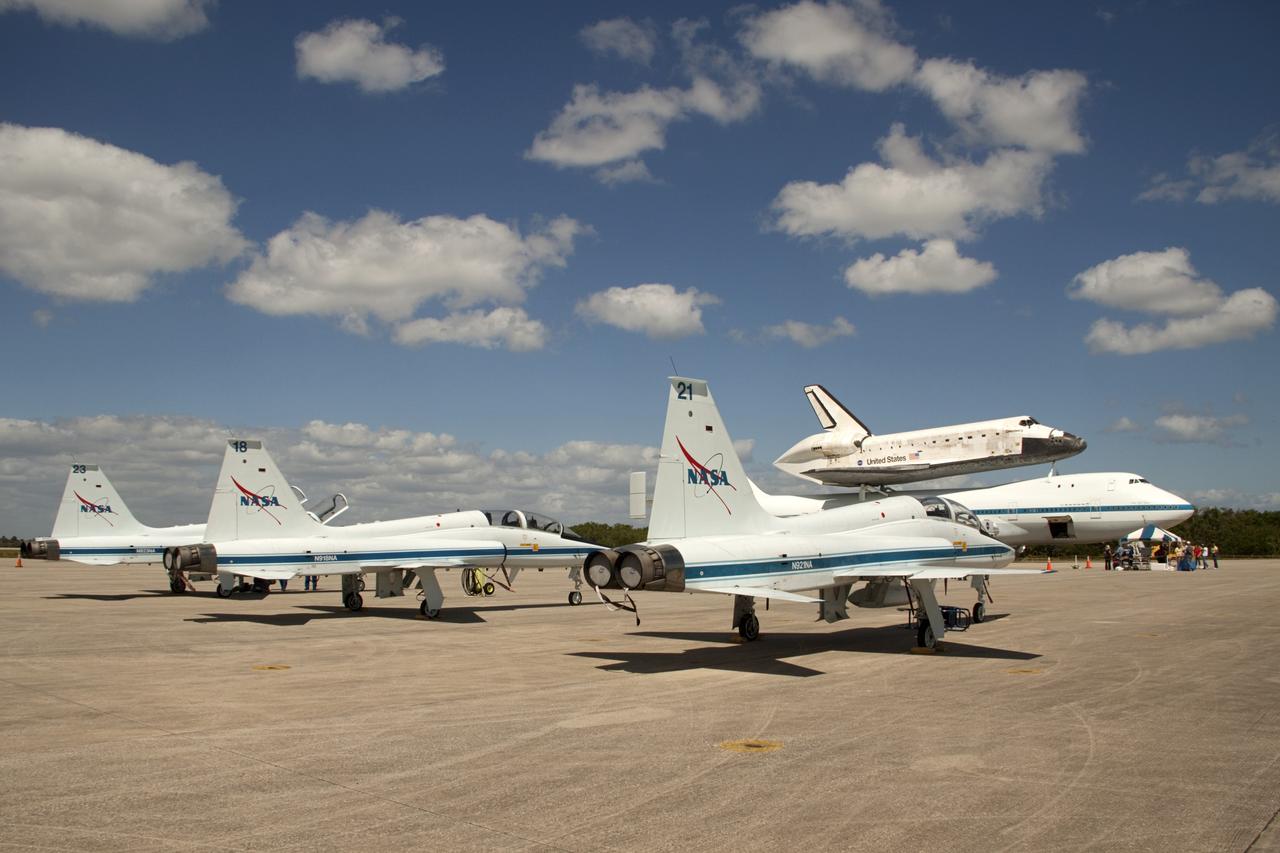
CAPE CANAVERAL, Fla. – It’s a full house on the tarmac at the Shuttle Landing Facility at NASA’s Kennedy Space Center in Florida with the arrival of astronauts in T-38 jets, the “pathfinder” aircraft for space shuttle Discovery’s ferry flight and the Shuttle Carrier Aircraft with Discovery secured on its back. The astronauts are participating in the festivities related to the final departure of Discovery from Kennedy. The NASA C-9 pathfinder aircraft will fly about 100 miles ahead of Discovery to scout for the safest route between destinations. Its crew includes an SCA flight engineer who studies the weather patterns along the flight path to find a route free of rain and other turbulence. The carrier aircraft, also known as an SCA, is a Boeing 747 jet, originally manufactured for commercial use which was modified by NASA to transport the shuttles between destinations on Earth. NASA 905 is scheduled to ferry Discovery to the Washington Dulles International Airport in Virginia on April 17, and is assigned to all remaining ferry missions, delivering the shuttles to their permanent public display sites. After its arrival at Dulles, Discovery will be placed on display in the Smithsonian's National Air and Space Museum Steven F. Udvar-Hazy Center on April 19. For more information on the SCA, visit http://www.nasa.gov/centers/dryden/news/FactSheets/FS-013-DFRC.html. For more information on shuttle transition and retirement activities, visit http://www.nasa.gov/transition. Photo credit: NASA/Amanda Diller