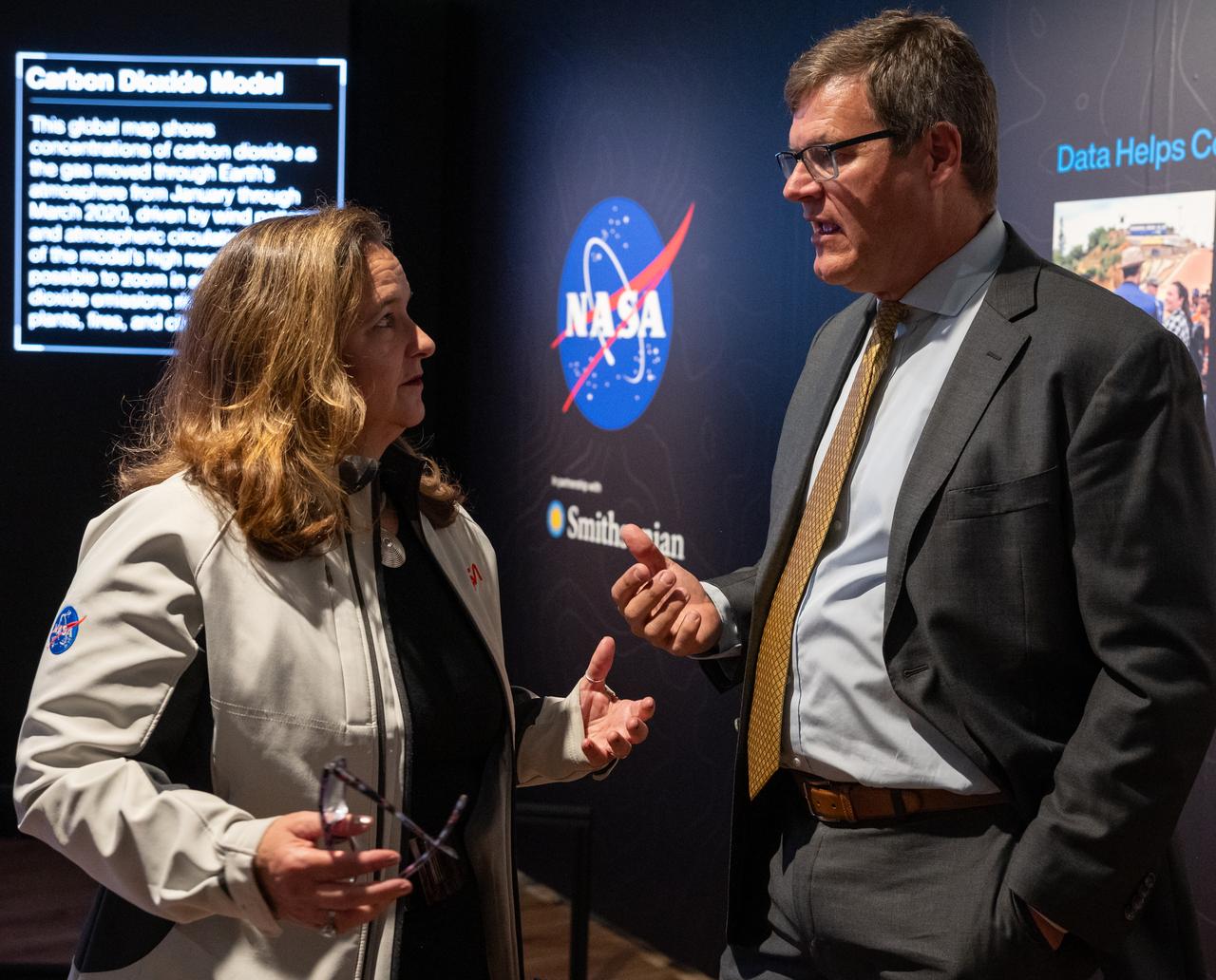
NASA Earth Sciences, Division Director, Karen St. Germain, left, and Smithsonian Museum of Natural History, Sant Director, Kirk Johnson, talk during a preview of the Earth Information Center at the Smithsonian National Museum of Natural History, in Washington, Monday, Oct. 7, 2024. The exhibit includes a video wall displaying Earth science data visualizations and videos, an interpretive panel showing Earth’s connected systems, information on our changing world, and an overview of how NASA and the Smithsonian study our home planet. Photo Credit: (NASA/Bill Ingalls)
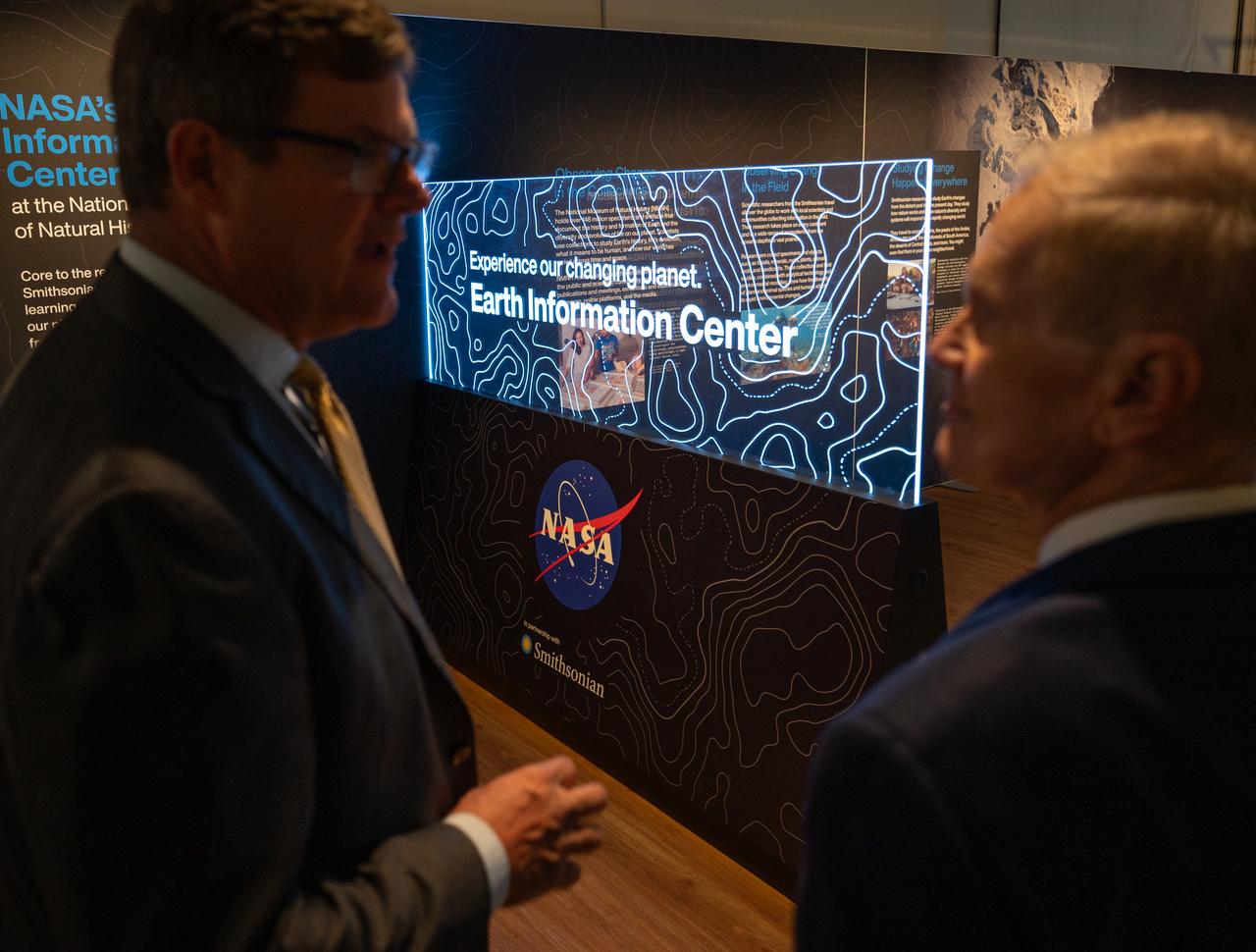
Smithsonian Museum of Natural History, Sant Director, Kirk Johnson, left, talks with NASA Administrator Bill Nelson, during a preview of the Earth Information Center at the Smithsonian National Museum of Natural History, in Washington, Monday, Oct. 7, 2024. The exhibit includes a video wall displaying Earth science data visualizations and videos, an interpretive panel showing Earth’s connected systems, information on our changing world, and an overview of how NASA and the Smithsonian study our home planet. Photo Credit: (NASA/Bill Ingalls)
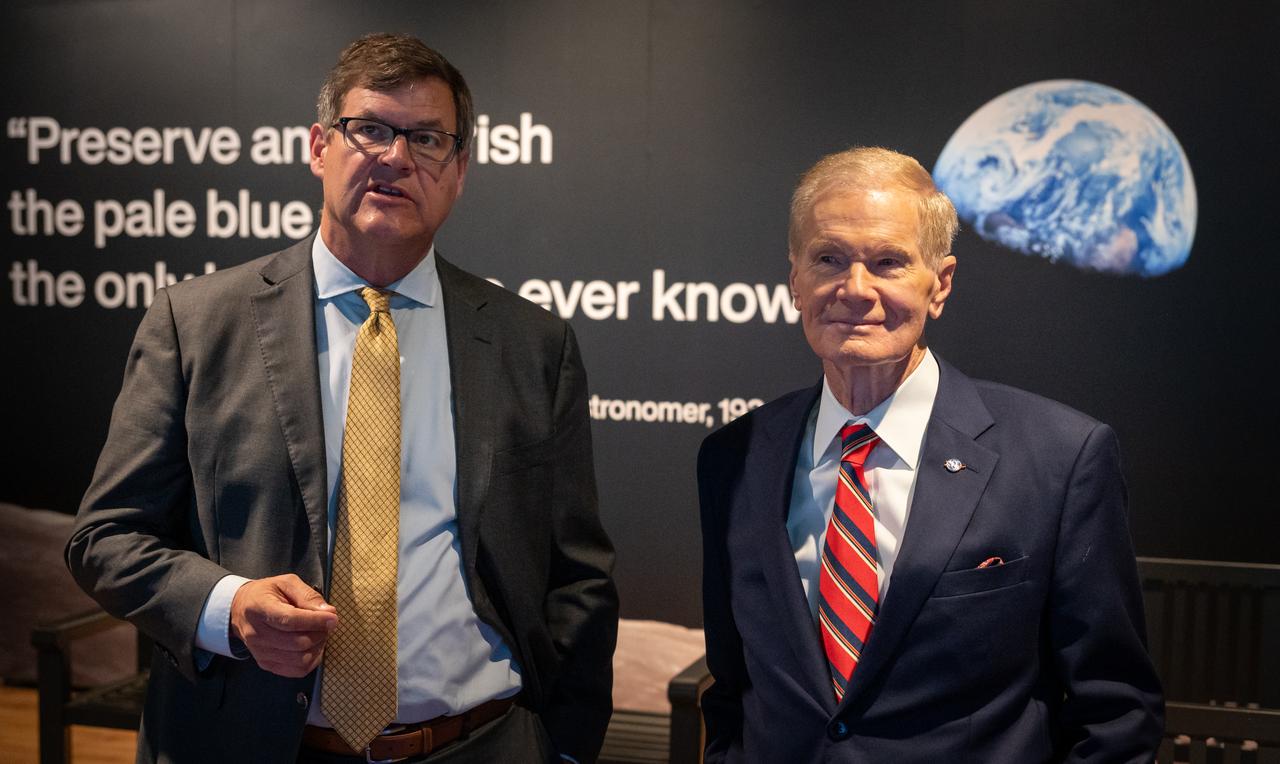
Smithsonian Museum of Natural History, Sant Director, Kirk Johnson, left, talks with NASA Administrator Bill Nelson, during a preview of the Earth Information Center at the Smithsonian National Museum of Natural History, in Washington, Monday, Oct. 7, 2024. The exhibit includes a video wall displaying Earth science data visualizations and videos, an interpretive panel showing Earth’s connected systems, information on our changing world, and an overview of how NASA and the Smithsonian study our home planet. Photo Credit: (NASA/Bill Ingalls)
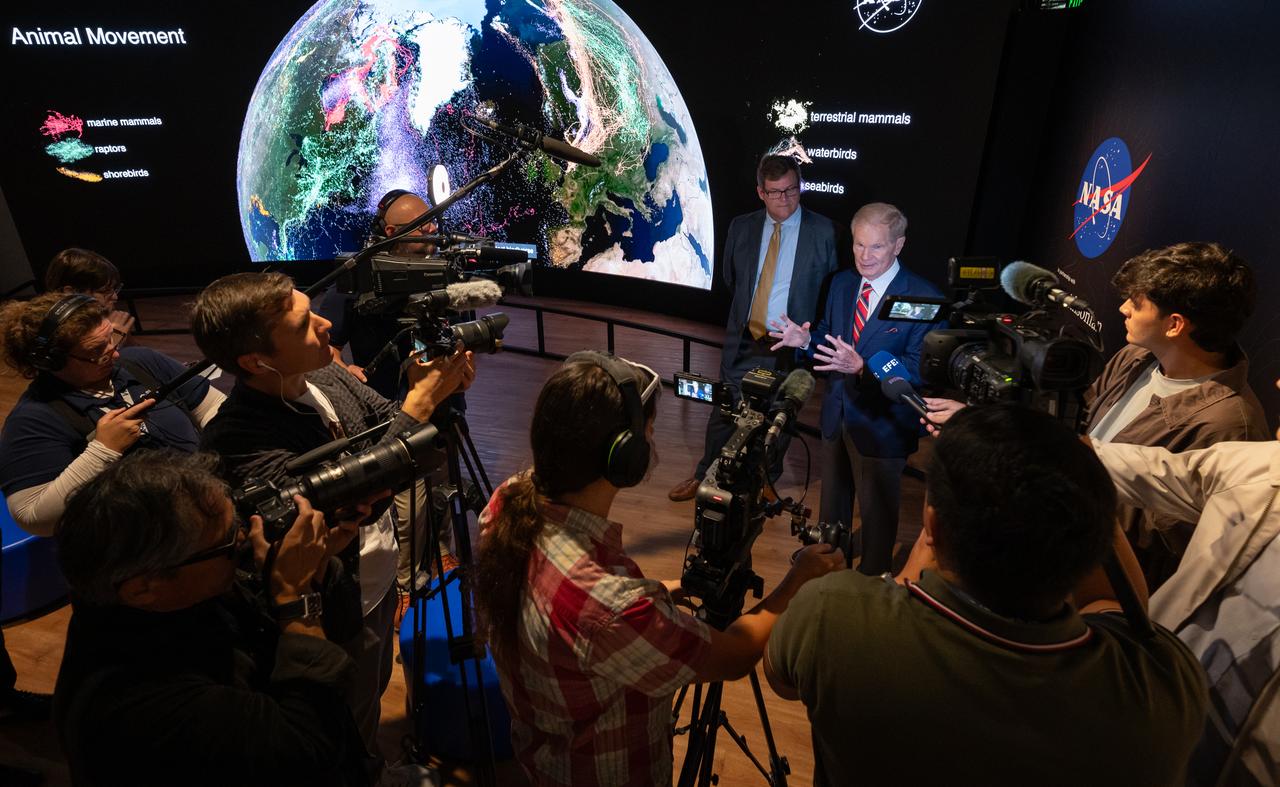
Smithsonian Museum of Natural History, Sant Director, Kirk Johnson, left, and NASA Administrator Bill Nelson, talk with media during a preview the Earth Information Center at the Smithsonian National Museum of Natural History, in Washington, Monday, Oct. 7, 2024. The exhibit includes a video wall displaying Earth science data visualizations and videos, an interpretive panel showing Earth’s connected systems, information on our changing world, and an overview of how NASA and the Smithsonian study our home planet. Photo Credit: (NASA/Bill Ingalls)
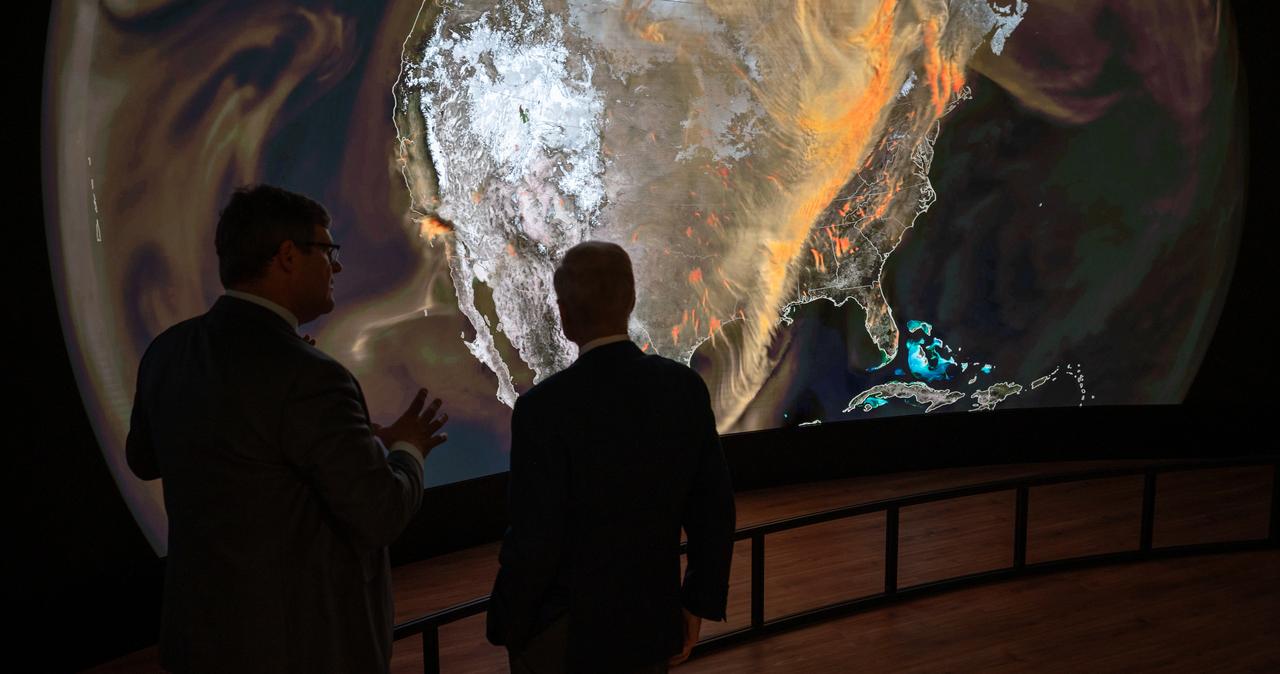
Smithsonian Museum of Natural History, Sant Director, Kirk Johnson, left, talks with NASA Administrator Bill Nelson, during a preview of the Earth Information Center at the Smithsonian National Museum of Natural History, in Washington, Monday, Oct. 7, 2024. The exhibit includes a video wall displaying Earth science data visualizations and videos, an interpretive panel showing Earth’s connected systems, information on our changing world, and an overview of how NASA and the Smithsonian study our home planet. Photo Credit: (NASA/Bill Ingalls)
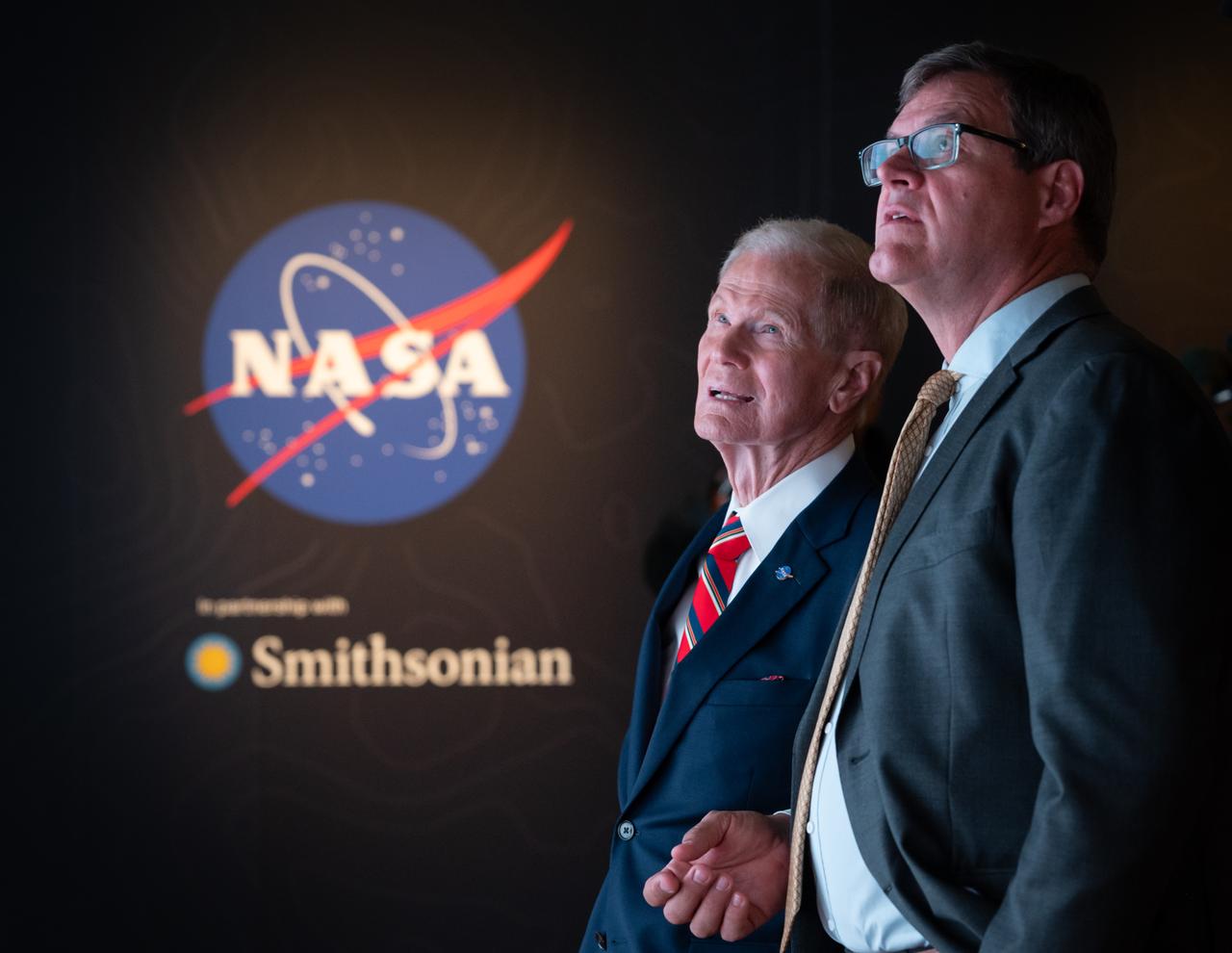
NASA Administrator Bill Nelson, left, and Smithsonian Museum of Natural History, Sant Director, Kirk Johnson, preview the Earth Information Center at the Smithsonian National Museum of Natural History, in Washington, Monday, Oct. 7, 2024. The exhibit includes a video wall displaying Earth science data visualizations and videos, an interpretive panel showing Earth’s connected systems, information on our changing world, and an overview of how NASA and the Smithsonian study our home planet. Photo Credit: (NASA/Bill Ingalls)
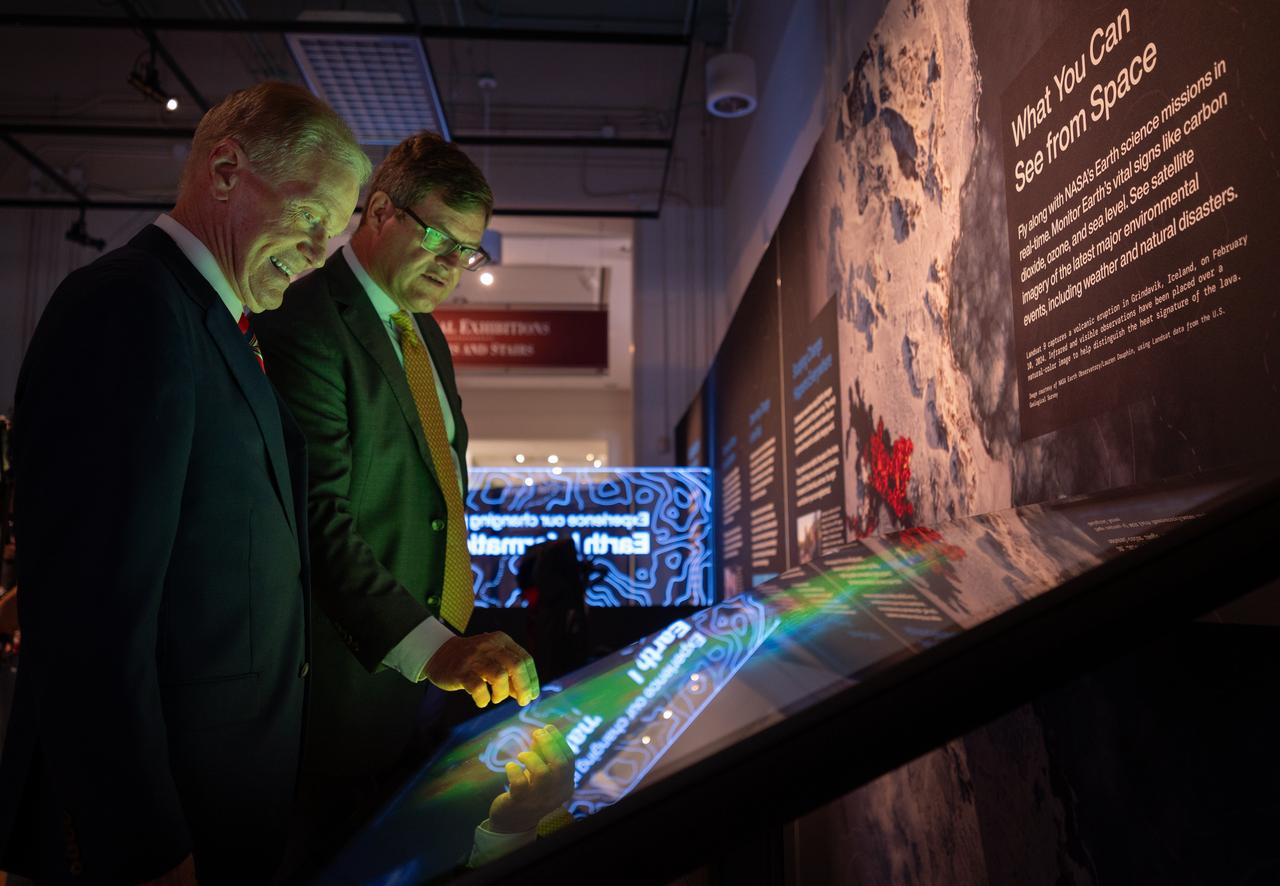
NASA Administrator Bill Nelson, left, and Smithsonian Museum of Natural History, Sant Director, Kirk Johnson, preview the Earth Information Center at the Smithsonian National Museum of Natural History, in Washington, Monday, Oct. 7, 2024. The exhibit includes a video wall displaying Earth science data visualizations and videos, an interpretive panel showing Earth’s connected systems, information on our changing world, and an overview of how NASA and the Smithsonian study our home planet. Photo Credit: (NASA/Bill Ingalls)
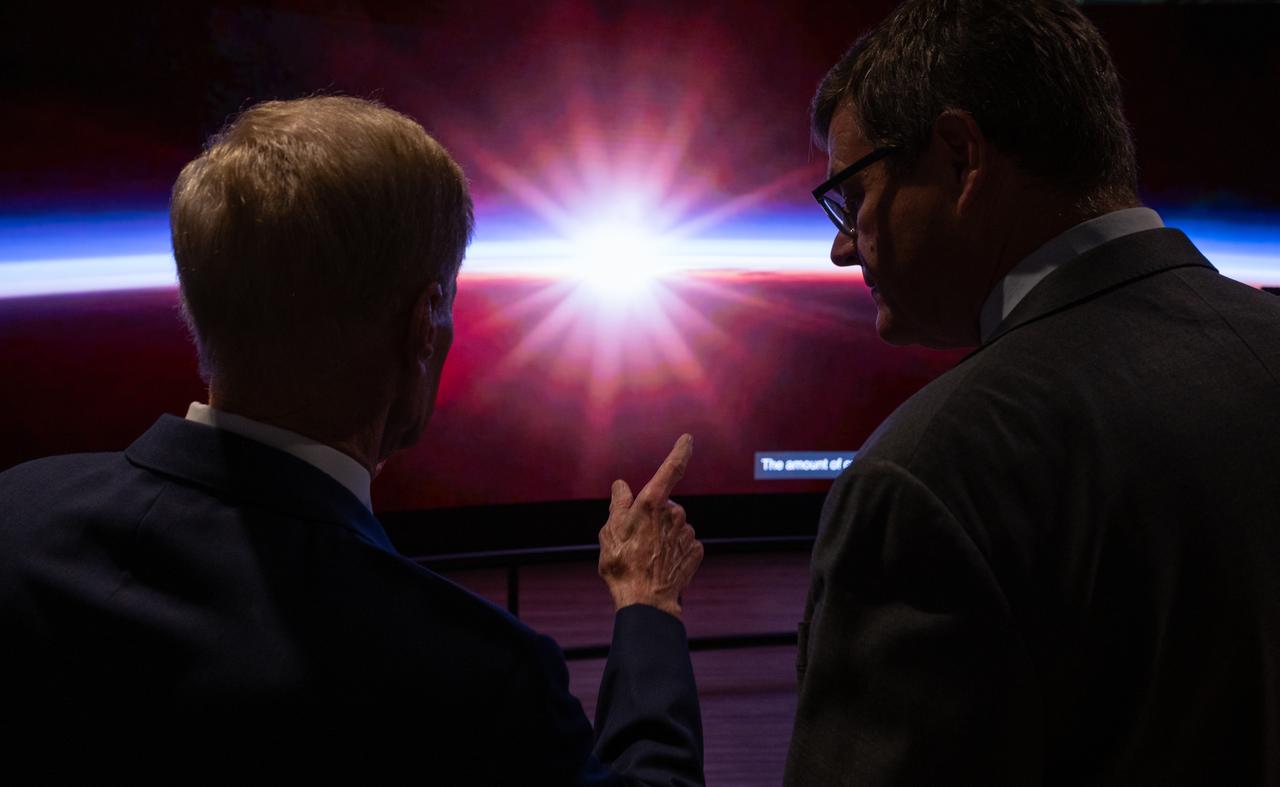
NASA Administrator Bill Nelson, left, and Smithsonian Museum of Natural History, Sant Director, Kirk Johnson, preview the Earth Information Center at the Smithsonian National Museum of Natural History, in Washington, Monday, Oct. 7, 2024. The exhibit includes a video wall displaying Earth science data visualizations and videos, an interpretive panel showing Earth’s connected systems, information on our changing world, and an overview of how NASA and the Smithsonian study our home planet. Photo Credit: (NASA/Bill Ingalls)
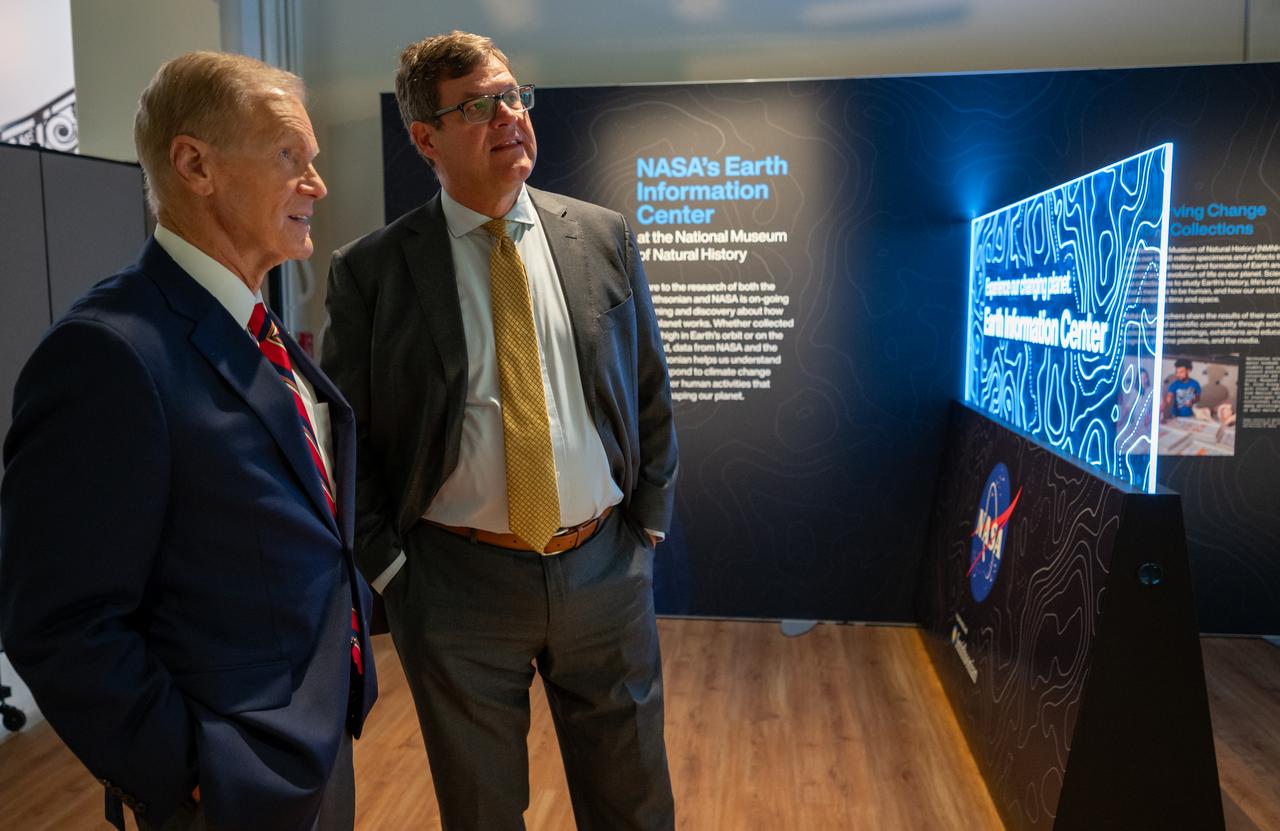
NASA Administrator Bill Nelson, left, talks with Smithsonian Museum of Natural History, Sant Director, Kirk Johnson, during a preview of the Earth Information Center at the Smithsonian National Museum of Natural History, in Washington, Monday, Oct. 7, 2024. The exhibit includes a video wall displaying Earth science data visualizations and videos, an interpretive panel showing Earth’s connected systems, information on our changing world, and an overview of how NASA and the Smithsonian study our home planet. Photo Credit: (NASA/Bill Ingalls)
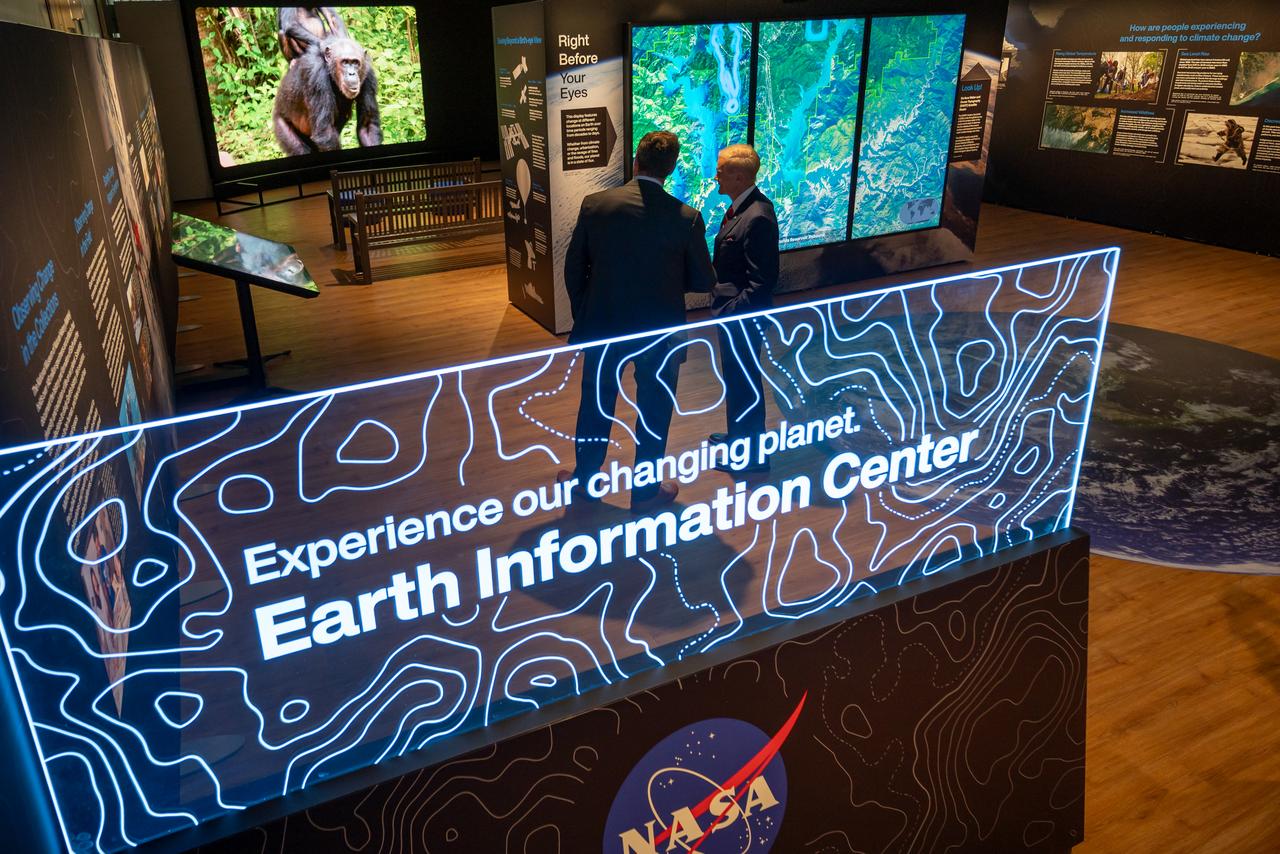
Smithsonian Museum of Natural History, Sant Director, Kirk Johnson, left, talks with NASA Administrator Bill Nelson, during a preview of the Earth Information Center at the Smithsonian National Museum of Natural History, in Washington, Monday, Oct. 7, 2024. The exhibit includes a video wall displaying Earth science data visualizations and videos, an interpretive panel showing Earth’s connected systems, information on our changing world, and an overview of how NASA and the Smithsonian study our home planet. Photo Credit: (NASA/Bill Ingalls)
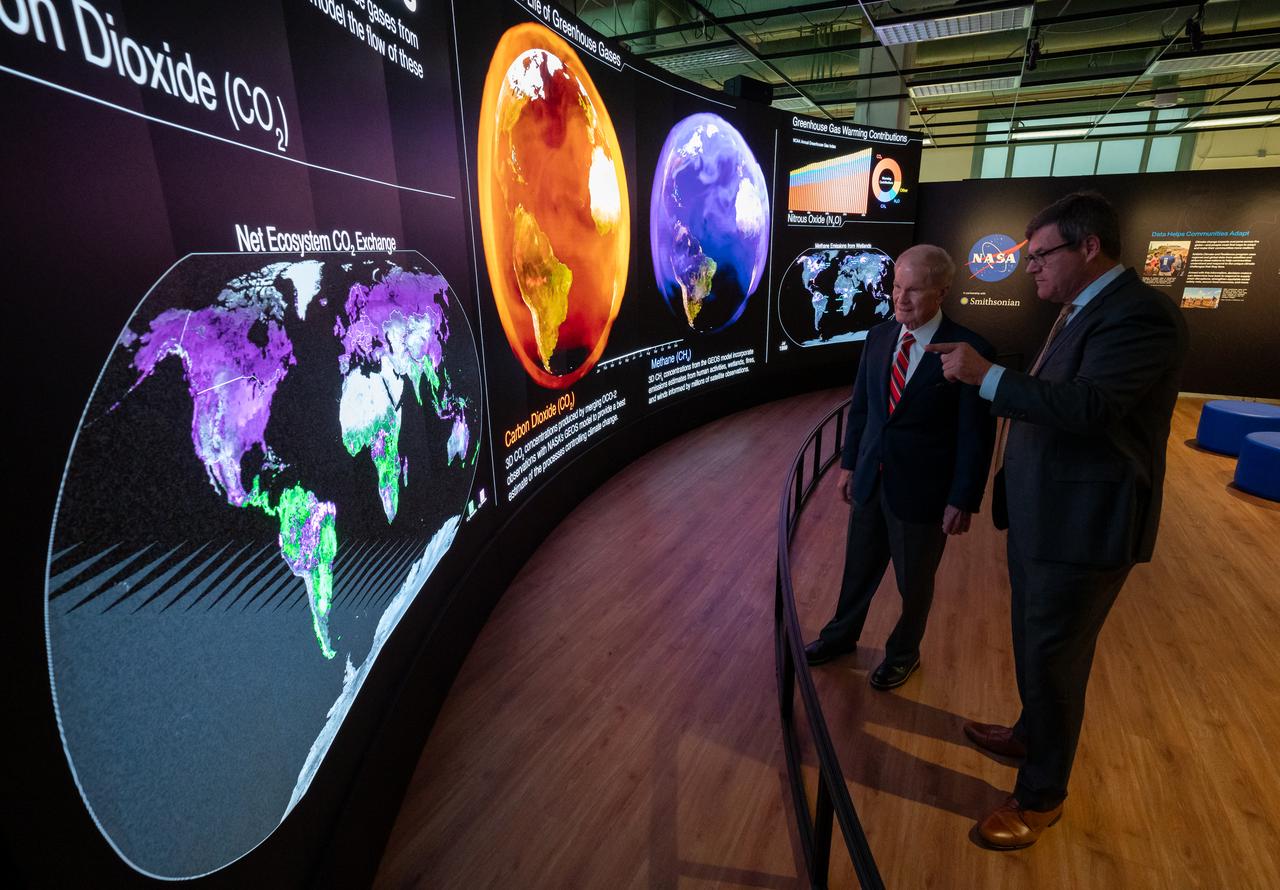
NASA Administrator Bill Nelson, left, and Smithsonian Museum of Natural History, Sant Director, Kirk Johnson, preview the Earth Information Center at the Smithsonian National Museum of Natural History, in Washington, Monday, Oct. 7, 2024. The exhibit includes a video wall displaying Earth science data visualizations and videos, an interpretive panel showing Earth’s connected systems, information on our changing world, and an overview of how NASA and the Smithsonian study our home planet. Photo Credit: (NASA/Bill Ingalls)
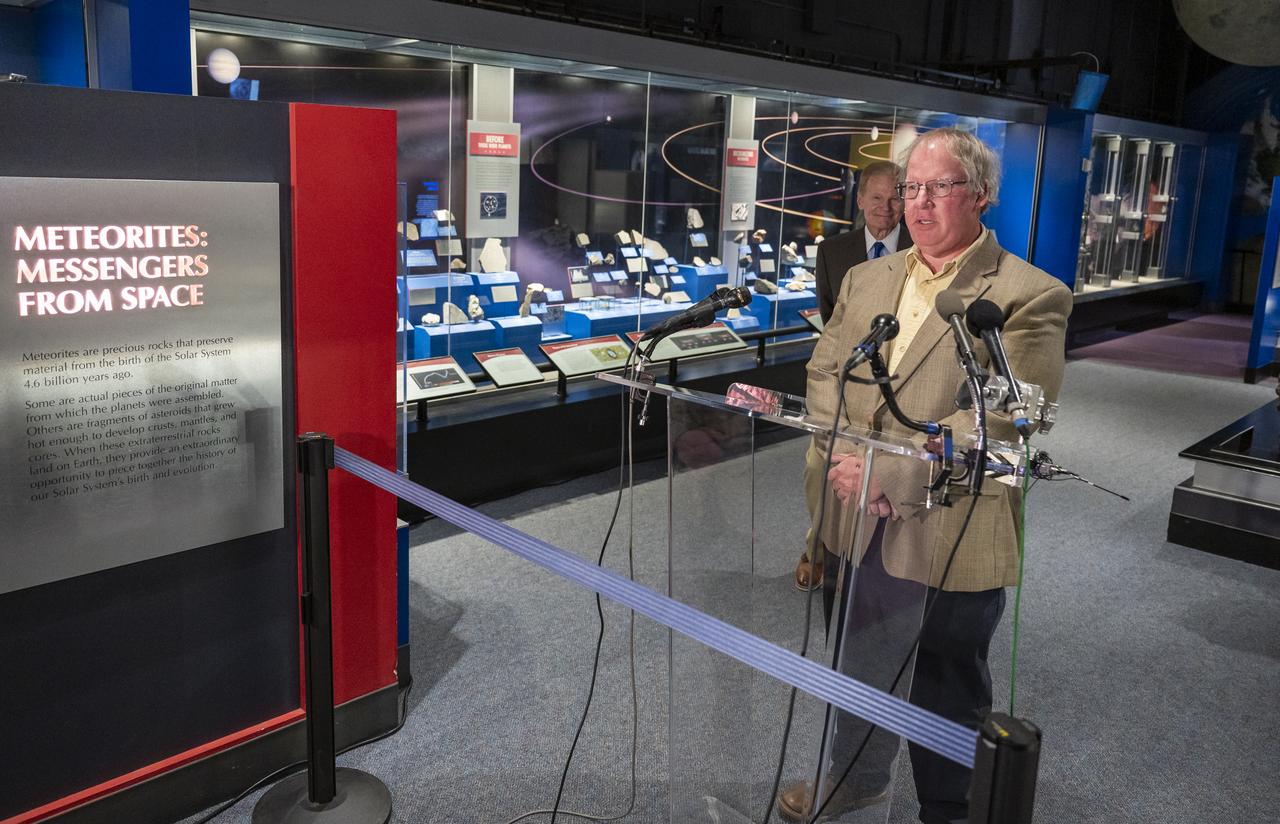
National Museum of Natural History curator of meteorites Tim McCoy delivers remarks during an event to unveil the first public display of a sample from asteroid Bennu, Friday, Nov. 3, 2023, at the Smithsonian’s National Museum of Natural History in Washington. The sample was collected from the carbon rich near Earth asteroid Bennu in October 2020 by NASA’s OSIRIS-REx spacecraft. Photo Credit: (NASA/Keegan Barber)
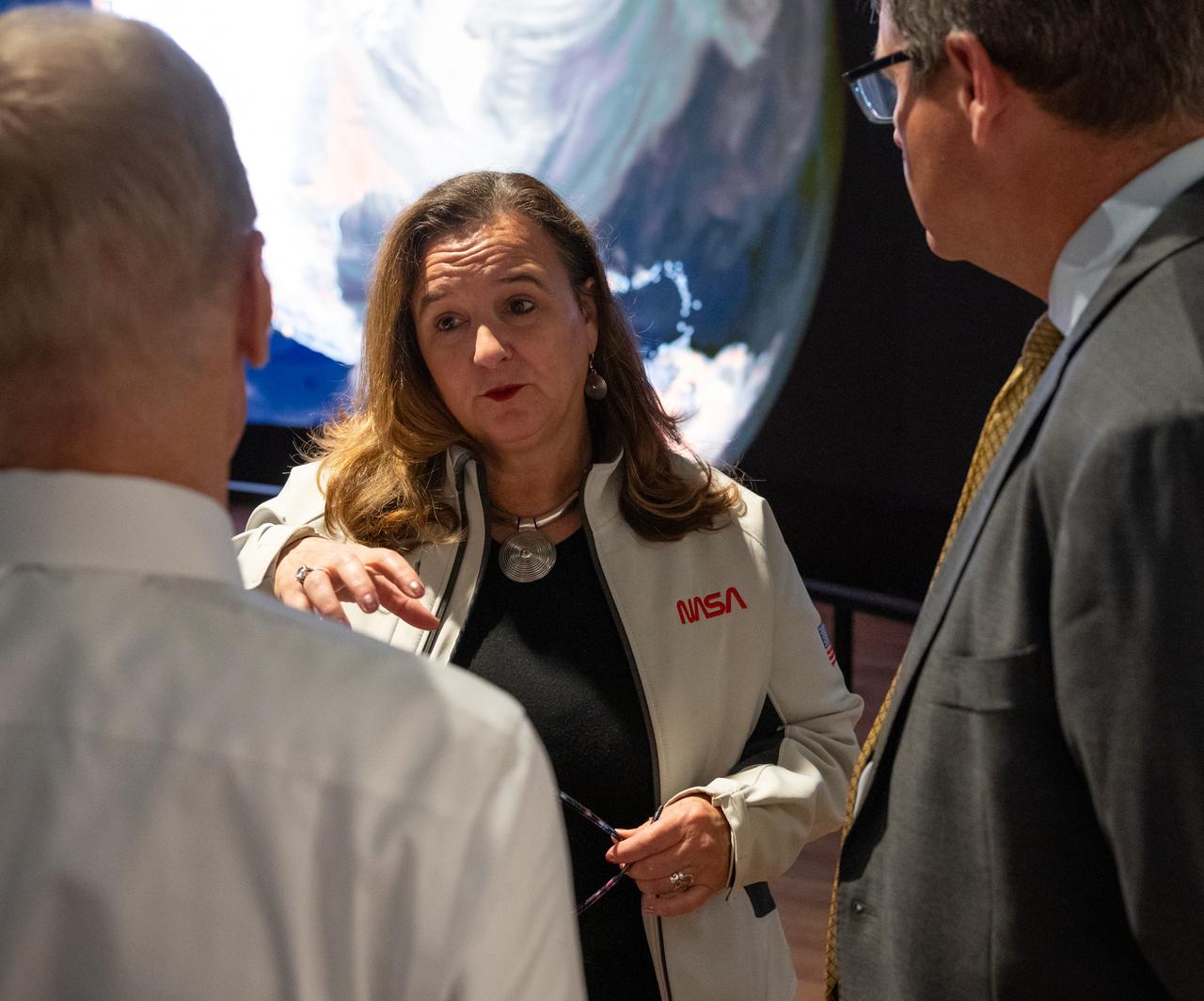
NASA Earth Sciences, Division Director, Karen St. Germain, center, speaks with NASA Administrator Bill Nelson, left, and Smithsonian Museum of Natural History, Sant Director, Kirk Johnson, during a preview of the Earth Information Center at the Smithsonian National Museum of Natural History, in Washington, Monday, Oct. 7, 2024. The exhibit includes a video wall displaying Earth science data visualizations and videos, an interpretive panel showing Earth’s connected systems, information on our changing world, and an overview of how NASA and the Smithsonian study our home planet. Photo Credit: (NASA/Bill Ingalls)
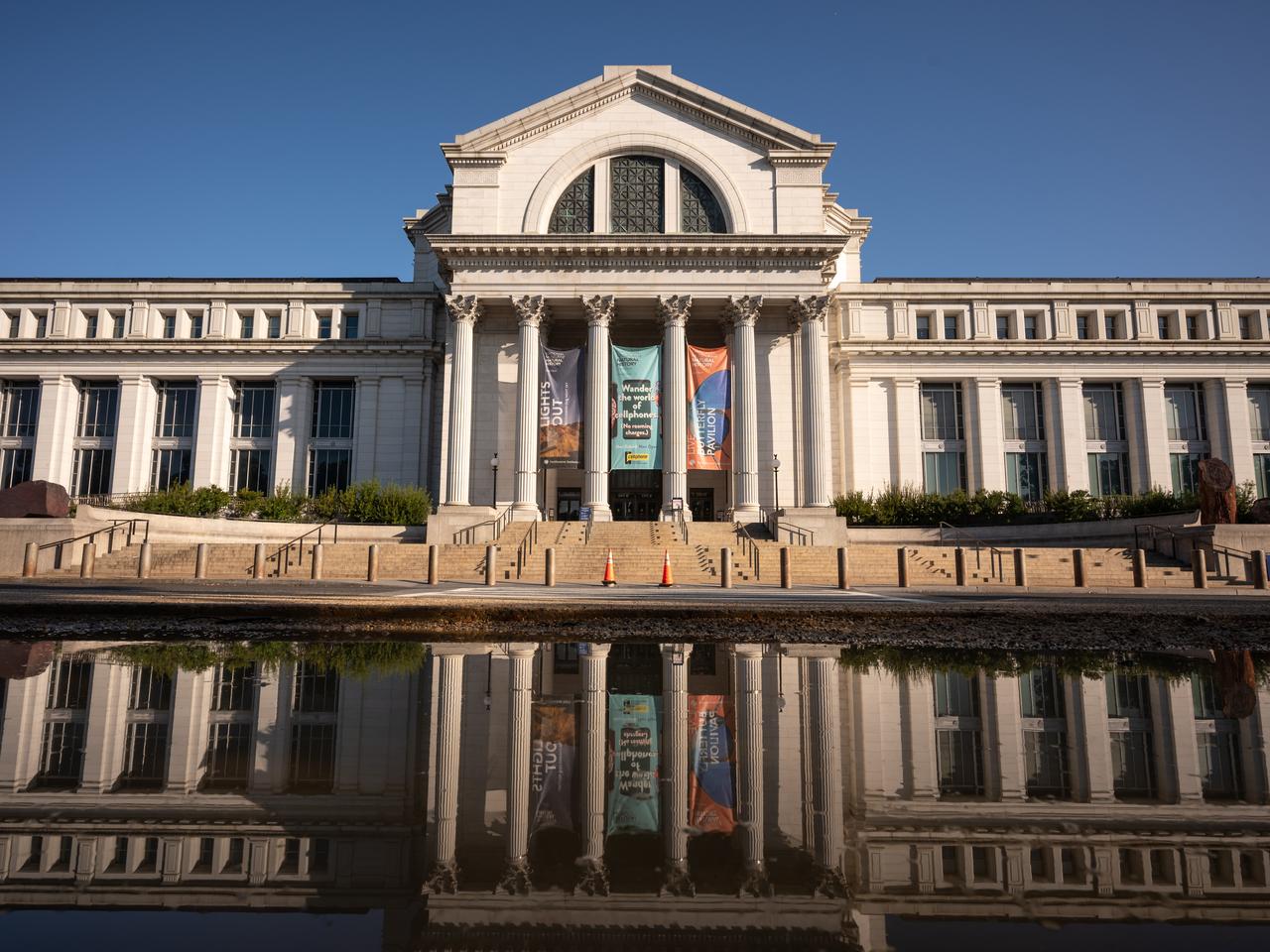
The Smithsonian National Museum of Natural History in Washington is seen as the new Earth Information Center is previewed, Monday, Oct. 7, 2024. The exhibit includes a video wall displaying Earth science data visualizations and videos, an interpretive panel showing Earth’s connected systems, information on our changing world, and an overview of how NASA and the Smithsonian study our home planet. Photo Credit: (NASA/Bill Ingalls)
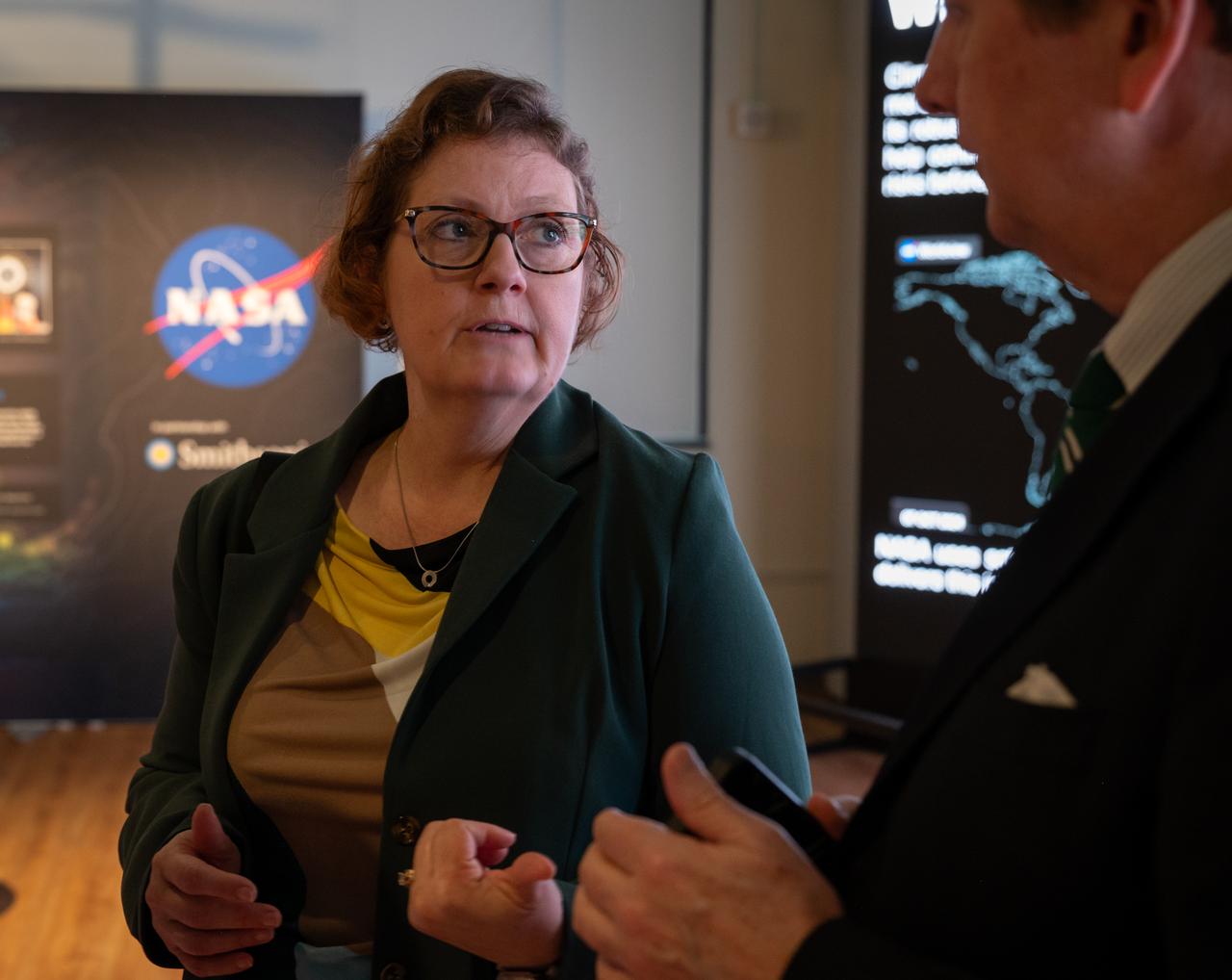
NASA Earth Sciences Division, Deputy Director, Julie Robinson, previews of the Earth Information Center at the Smithsonian National Museum of Natural History, in Washington, Monday, Oct. 7, 2024. The exhibit includes a video wall displaying Earth science data visualizations and videos, an interpretive panel showing Earth’s connected systems, information on our changing world, and an overview of how NASA and the Smithsonian study our home planet. Photo Credit: (NASA/Bill Ingalls)
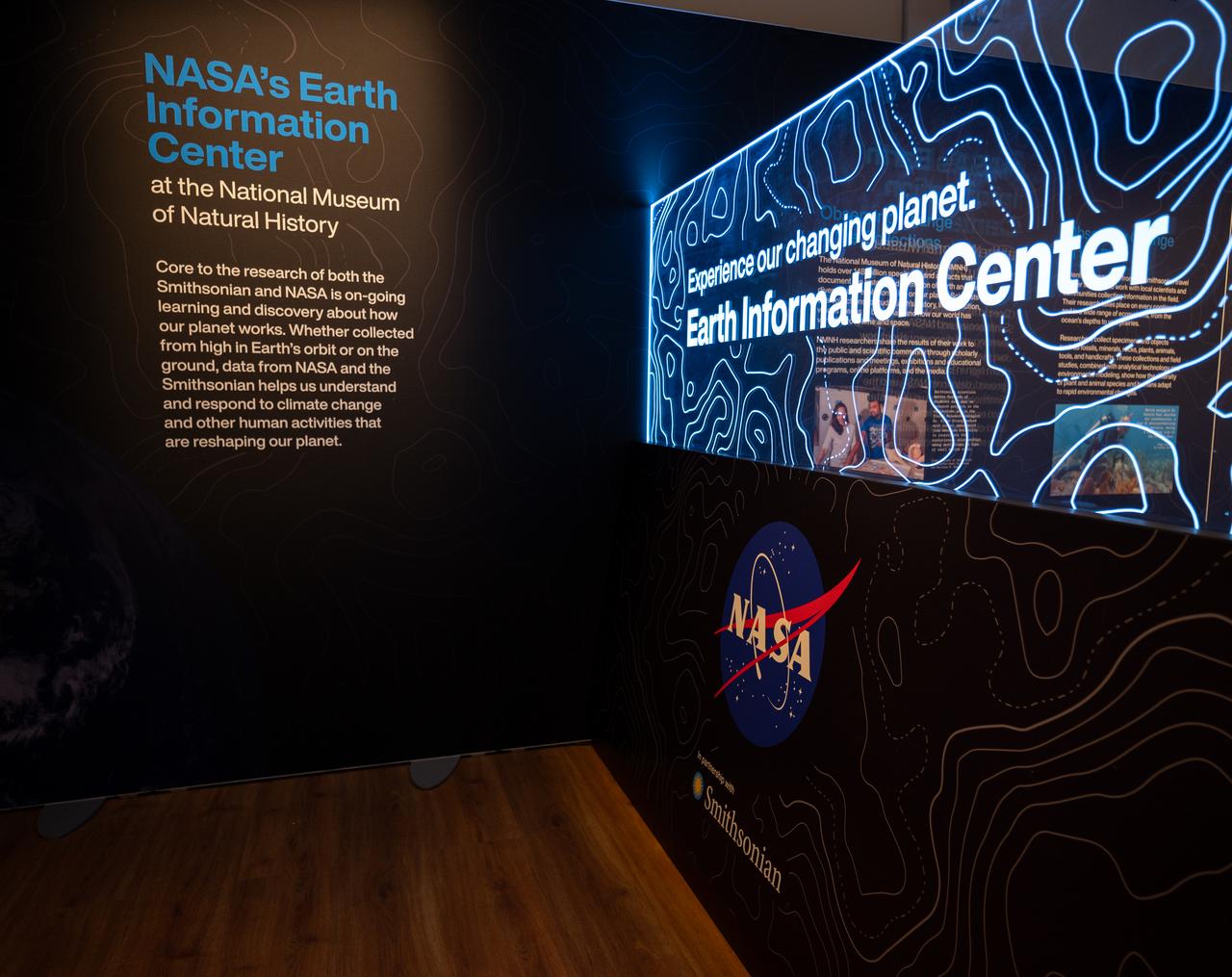
The Earth Information Center at the Smithsonian National Museum of Natural History, in Washington, is previewed, Monday, Oct. 7, 2024. The exhibit includes a video wall displaying Earth science data visualizations and videos, an interpretive panel showing Earth’s connected systems, information on our changing world, and an overview of how NASA and the Smithsonian study our home planet. Photo Credit: (NASA/Bill Ingalls)
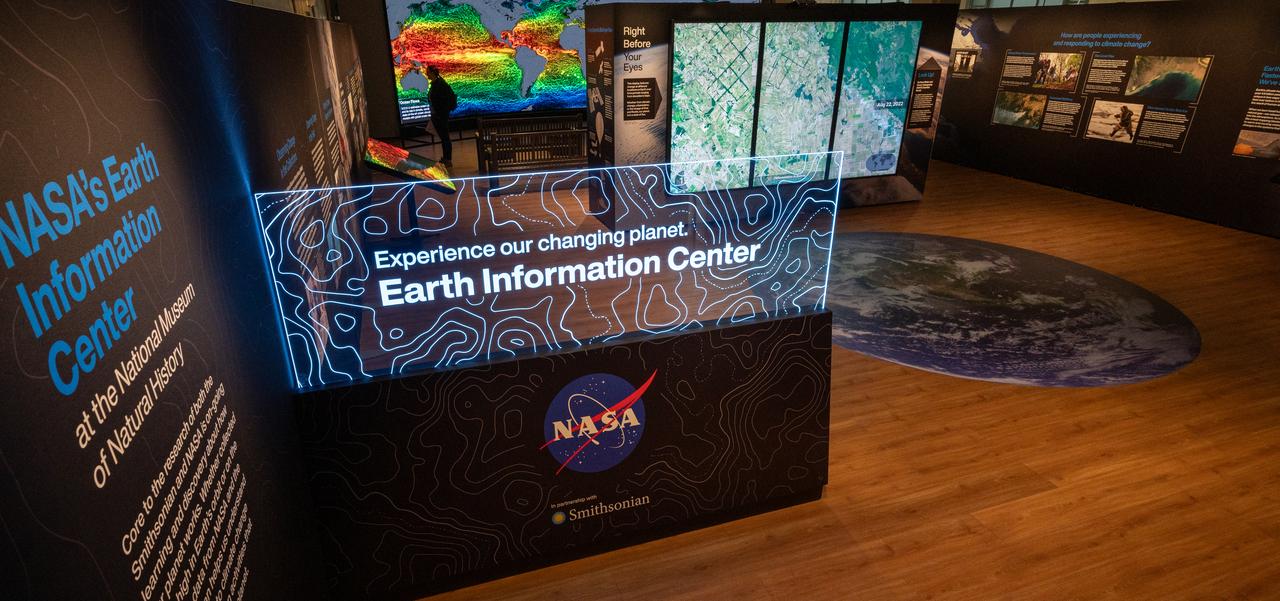
The Earth Information Center at the Smithsonian National Museum of Natural History, in Washington, is previewed, Monday, Oct. 7, 2024. The exhibit includes a video wall displaying Earth science data visualizations and videos, an interpretive panel showing Earth’s connected systems, information on our changing world, and an overview of how NASA and the Smithsonian study our home planet. Photo Credit: (NASA/Bill Ingalls)
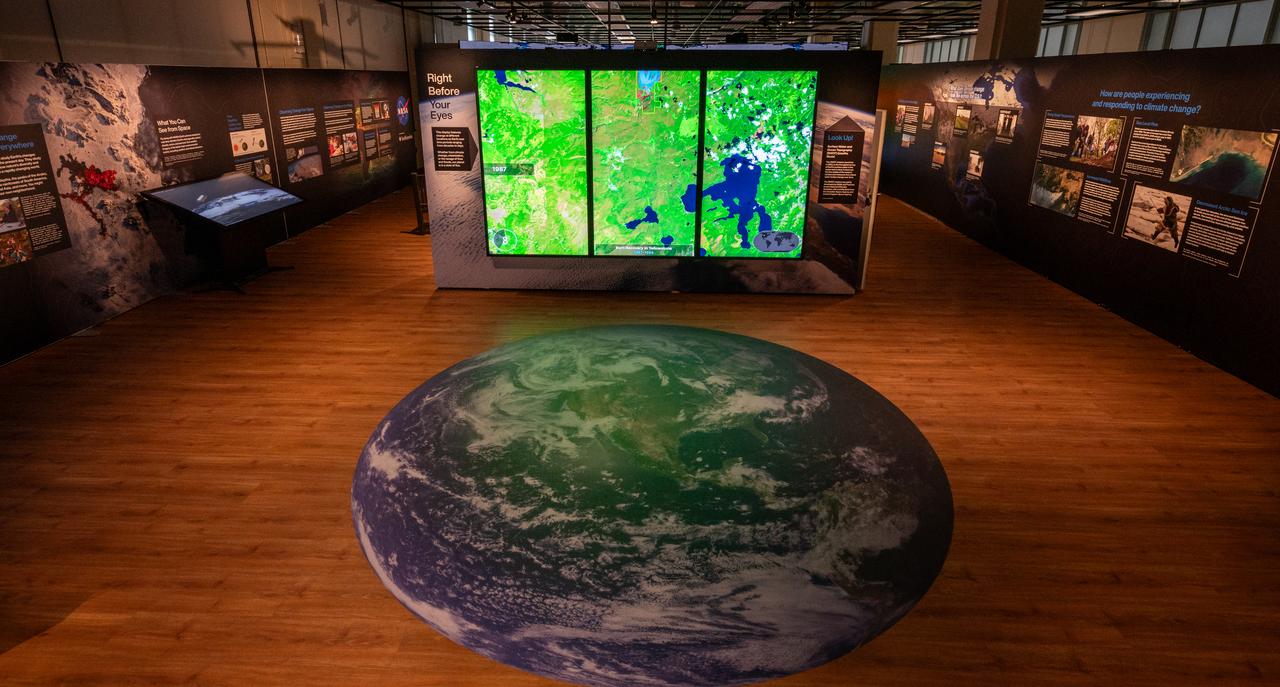
The Earth Information Center at the Smithsonian National Museum of Natural History, in Washington, is previewed, Monday, Oct. 7, 2024. The exhibit includes a video wall displaying Earth science data visualizations and videos, an interpretive panel showing Earth’s connected systems, information on our changing world, and an overview of how NASA and the Smithsonian study our home planet. Photo Credit: (NASA/Bill Ingalls)
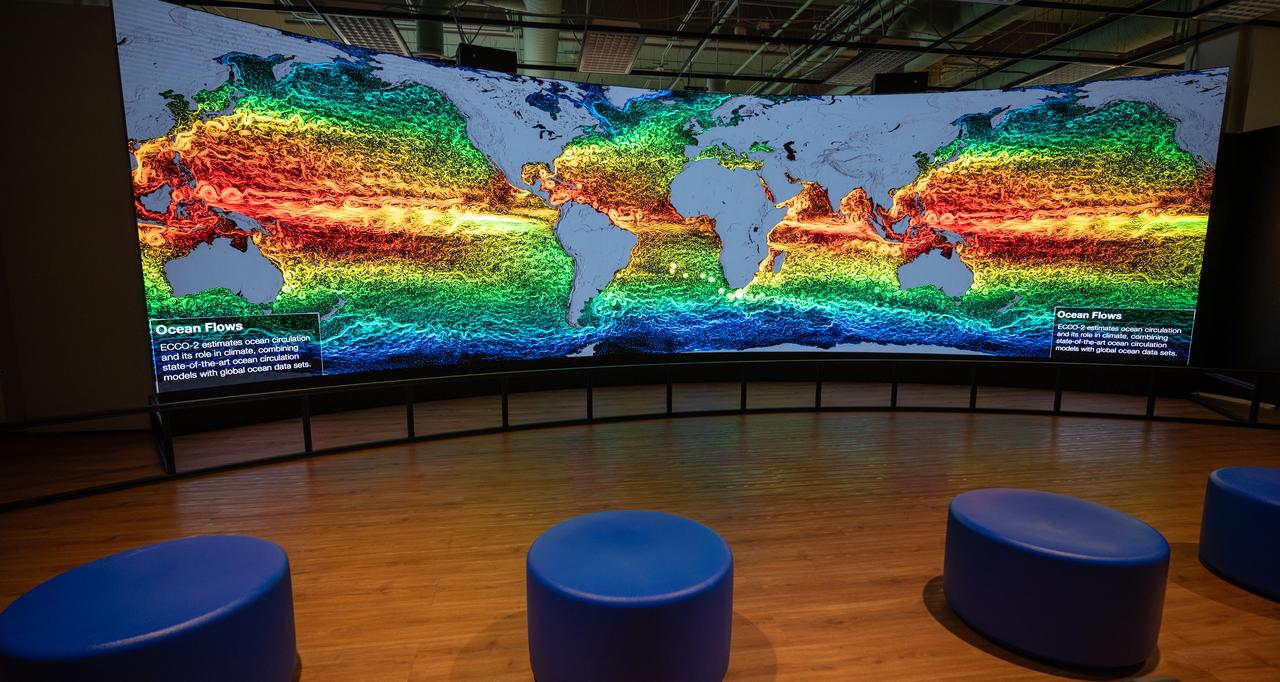
The Earth Information Center at the Smithsonian National Museum of Natural History, in Washington, is previewed, Monday, Oct. 7, 2024. The exhibit includes a video wall displaying Earth science data visualizations and videos, an interpretive panel showing Earth’s connected systems, information on our changing world, and an overview of how NASA and the Smithsonian study our home planet. Photo Credit: (NASA/Bill Ingalls)
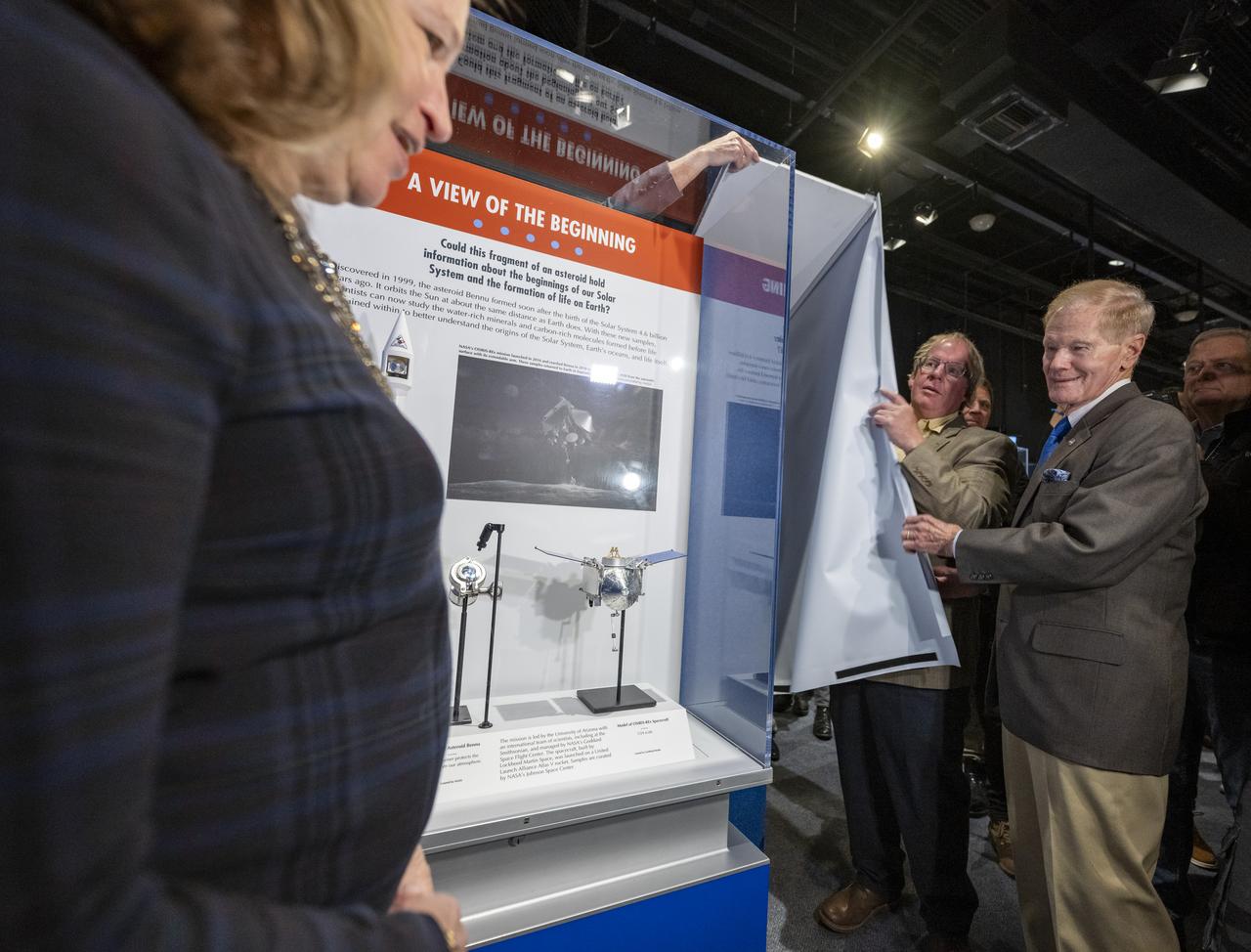
From left to right, Smithsonian Under Secretary for Science and Research Ellen Stofan, National Museum of Natural History curator of meteorites Tim McCoy, and NASA Administrator Bill Nelson unveil the first public display of a sample from asteroid Bennu, Friday, Nov. 3, 2023, at the Smithsonian’s National Museum of Natural History in Washington. The sample was collected from the carbon rich near Earth asteroid Bennu in October 2020 by NASA’s OSIRIS-REx spacecraft. Photo Credit: (NASA/Keegan Barber)
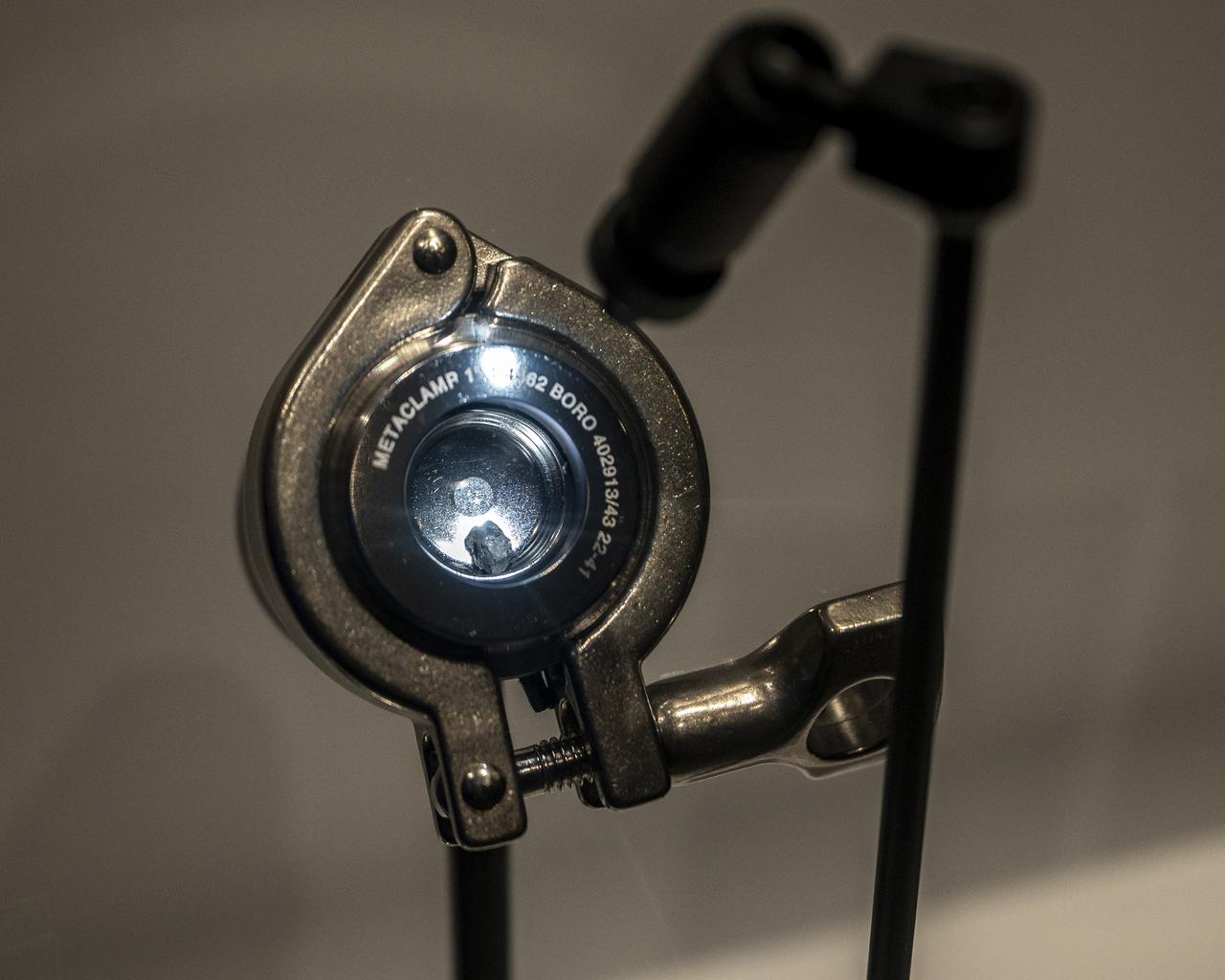
The first public display of a sample from asteroid Bennu is seen, Friday, Nov. 3, 2023, at the Smithsonian’s National Museum of Natural History in Washington. The sample was collected from the carbon rich near Earth asteroid Bennu in October 2020 by NASA’s OSIRIS-REx spacecraft. Photo Credit: (NASA/Keegan Barber)
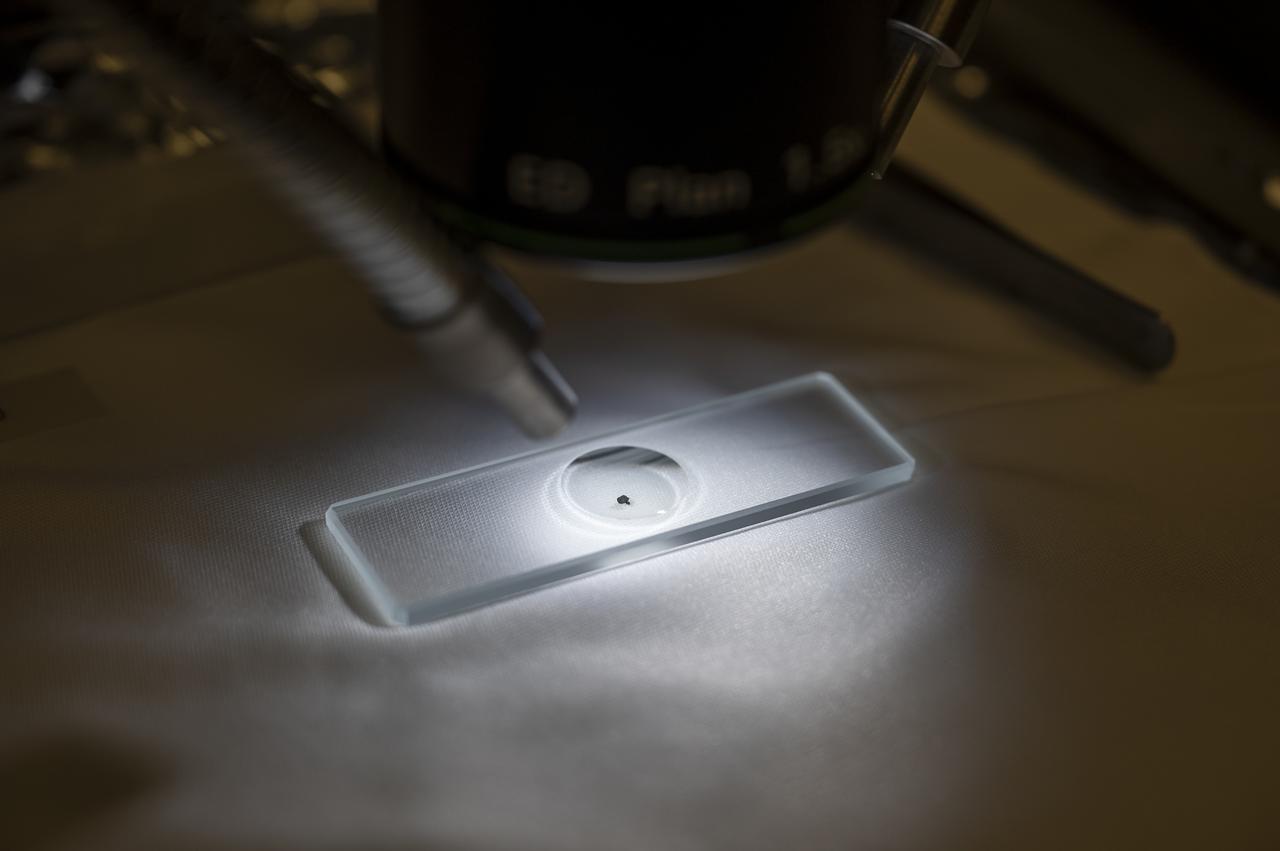
A sample from asteroid Bennu is seen prepared on a microscope slide, Friday, Nov. 3, 2023, at the Smithsonian’s National Museum of Natural History in Washington. The sample was collected from the carbon rich near Earth asteroid Bennu in October 2020 by NASA’s OSIRIS-REx spacecraft. Photo Credit: (NASA/Keegan Barber)

Smithsonian Under Secretary for Science and Research Ellen Stofan delivers remarks during an event to unveil the first public display of a sample from asteroid Bennu, Friday, Nov. 3, 2023, at the Smithsonian’s National Museum of Natural History in Washington. The sample was collected from the carbon rich near Earth asteroid Bennu in October 2020 by NASA’s OSIRIS-REx spacecraft. Photo Credit: (NASA/Keegan Barber)
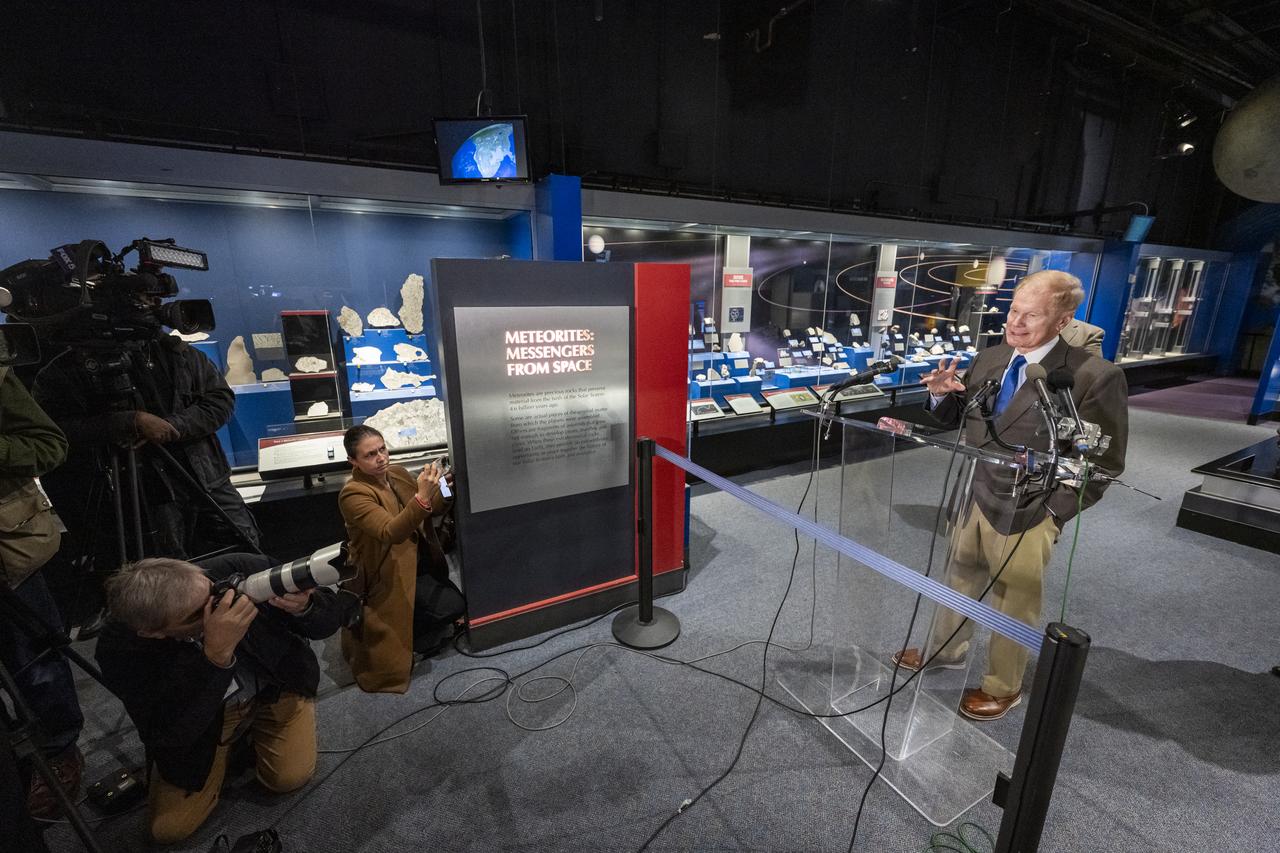
NASA Administrator Bill Nelson delivers remarks during an event to unveil the first public display of a sample from asteroid Bennu, Friday, Nov. 3, 2023, at the Smithsonian’s National Museum of Natural History in Washington. The sample was collected from the carbon rich near Earth asteroid Bennu in October 2020 by NASA’s OSIRIS-REx spacecraft. Photo Credit: (NASA/Keegan Barber)
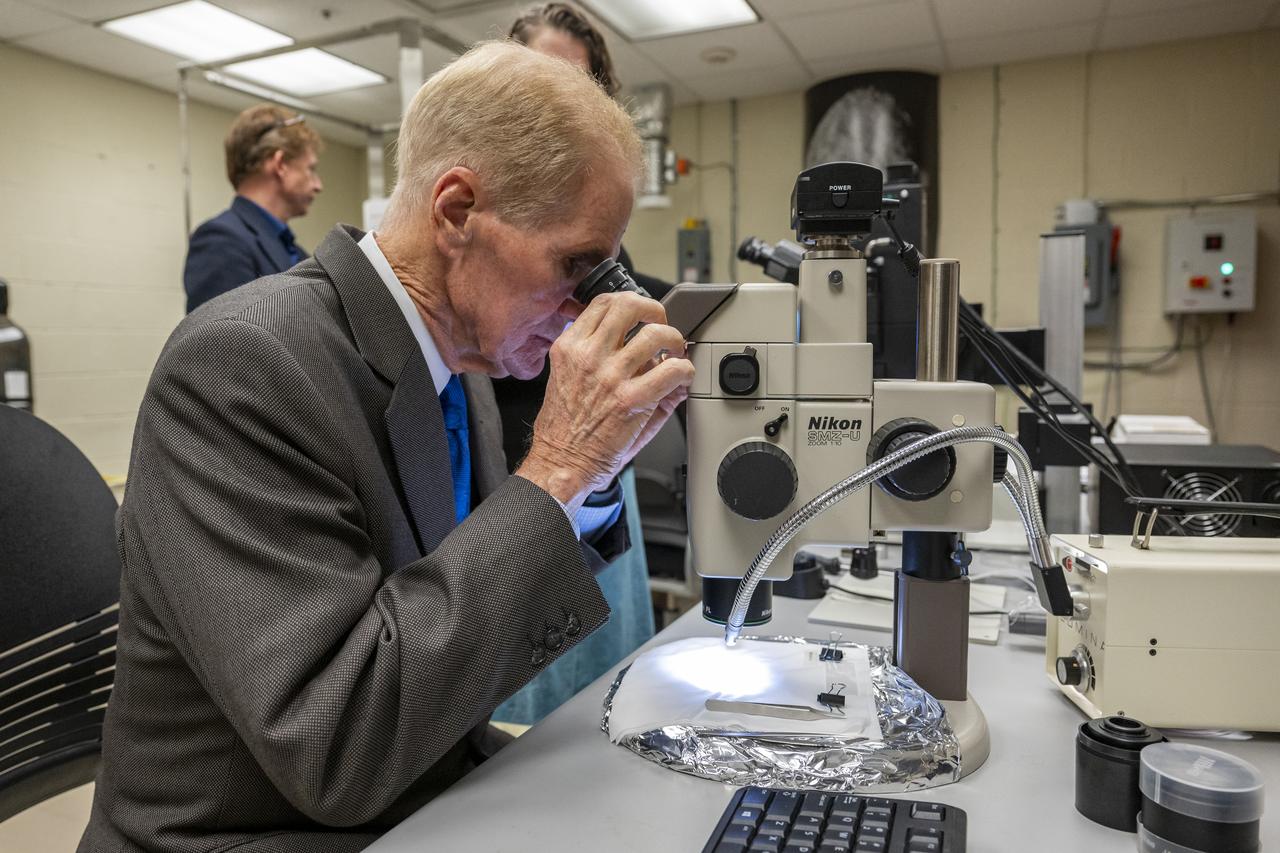
NASA Administrator Bill Nelson uses a microscope to view a sample from asteroid Bennu, Friday, Nov. 3, 2023, at the Smithsonian’s National Museum of Natural History in Washington. The sample was collected from the carbon rich near Earth asteroid Bennu in October 2020 by NASA’s OSIRIS-REx spacecraft. Photo Credit: (NASA/Keegan Barber)
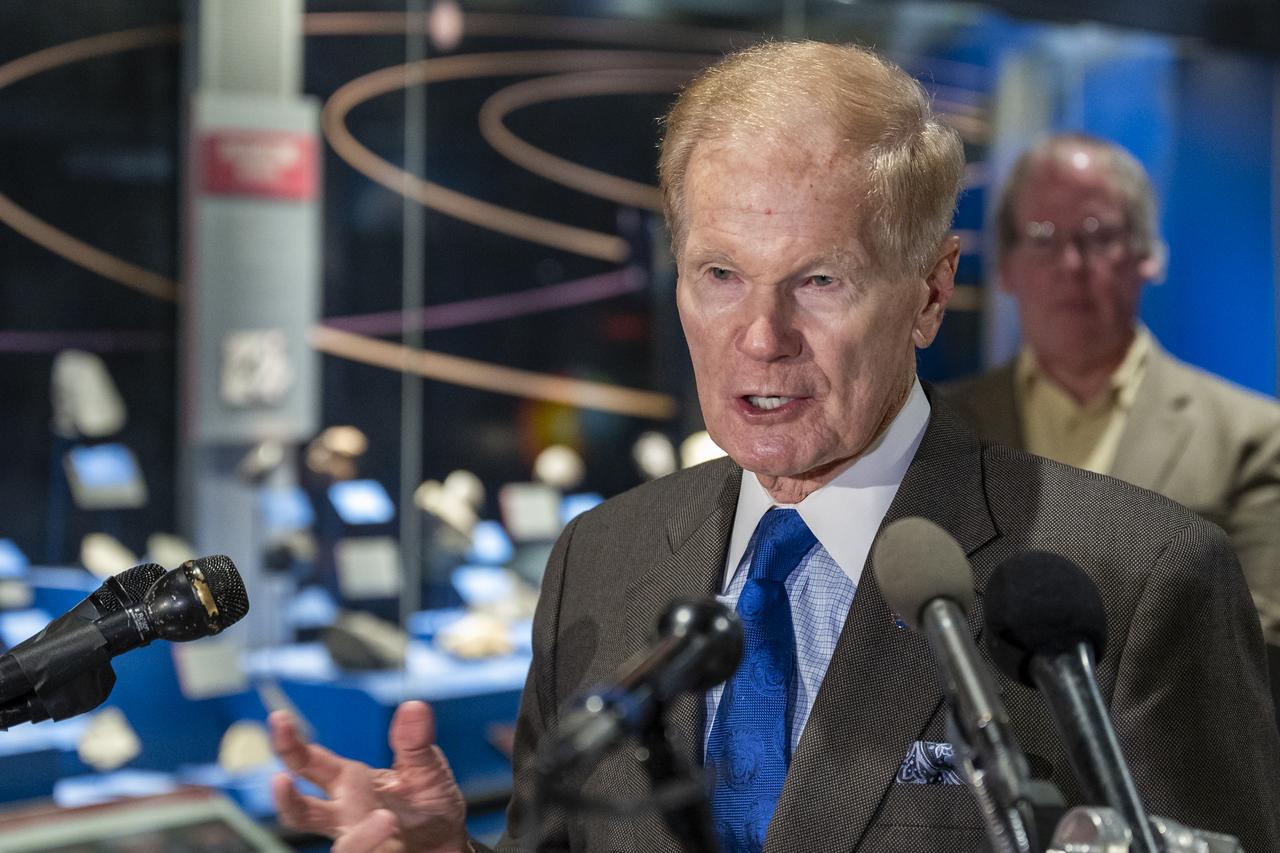
NASA Administrator Bill Nelson delivers remarks during an event to unveil the first public display of a sample from asteroid Bennu, Friday, Nov. 3, 2023, at the Smithsonian’s National Museum of Natural History in Washington. The sample was collected from the carbon rich near Earth asteroid Bennu in October 2020 by NASA’s OSIRIS-REx spacecraft. Photo Credit: (NASA/Keegan Barber)
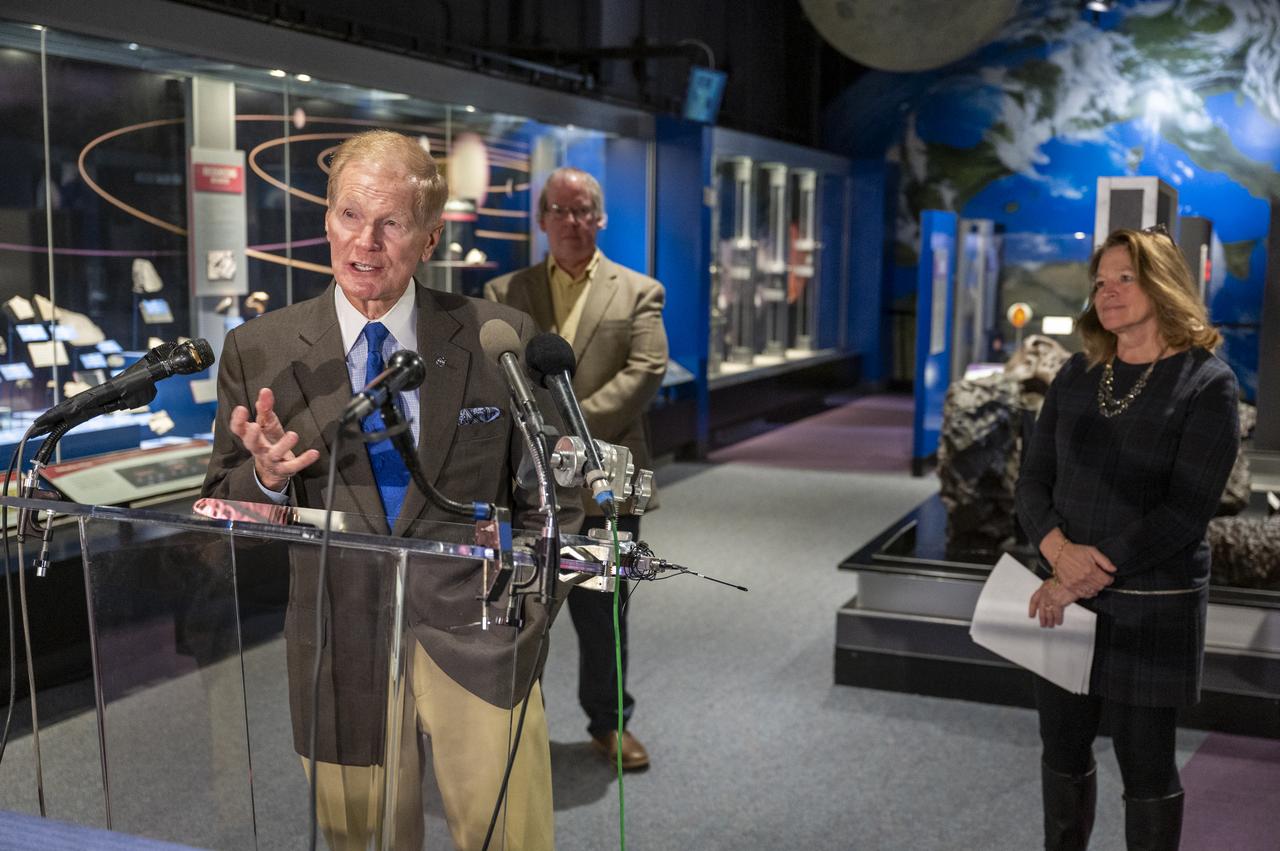
NASA Administrator Bill Nelson delivers remarks during an event to unveil the first public display of a sample from asteroid Bennu, Friday, Nov. 3, 2023, at the Smithsonian’s National Museum of Natural History in Washington. The sample was collected from the carbon rich near Earth asteroid Bennu in October 2020 by NASA’s OSIRIS-REx spacecraft. Photo Credit: (NASA/Keegan Barber)
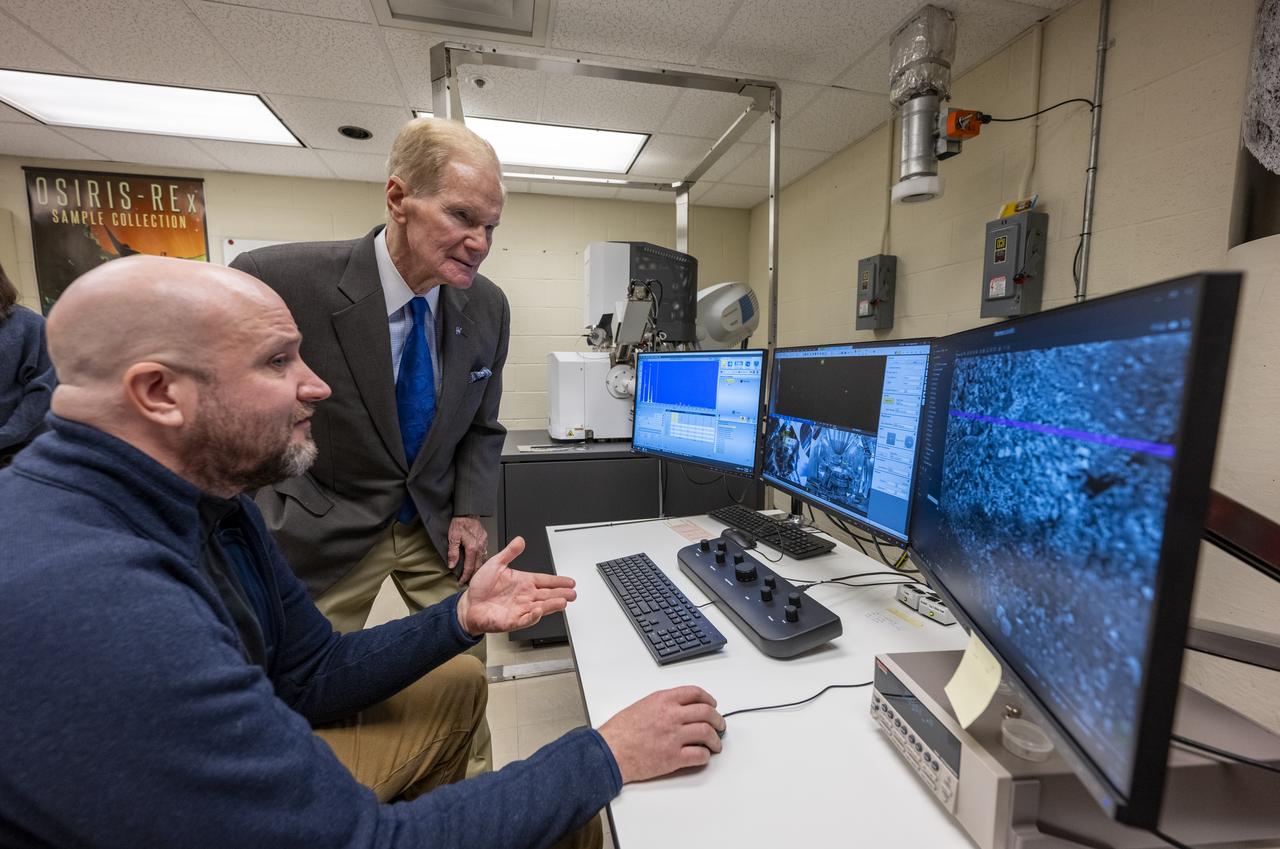
NASA Administrator Bill Nelson uses an electron microscope to view a sample from asteroid Bennu, Friday, Nov. 3, 2023, at the Smithsonian’s National Museum of Natural History in Washington. The sample was collected from the carbon rich near Earth asteroid Bennu in October 2020 by NASA’s OSIRIS-REx spacecraft. Photo Credit: (NASA/Keegan Barber)
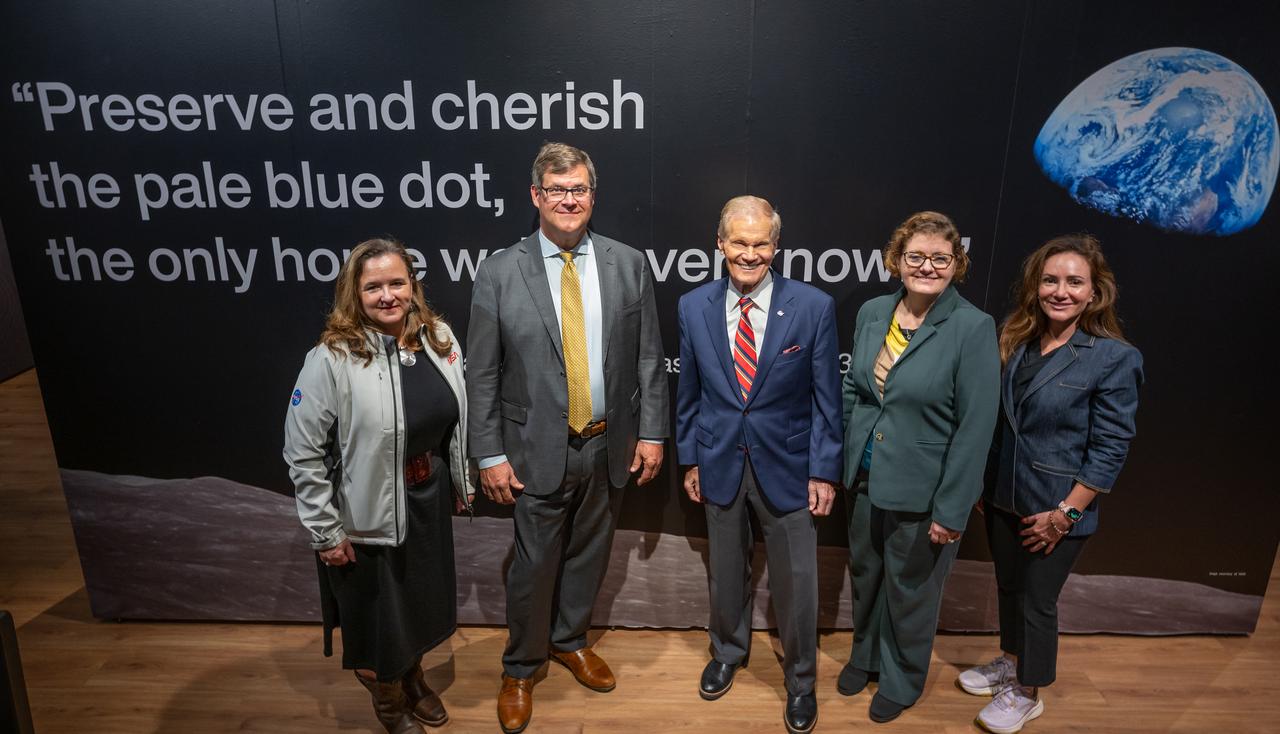
NASA Earth Sciences, Division Director, Karen St. Germain, left, Smithsonian Museum of Natural History, Sant Director, Kirk Johnson, NASA Administrator Bill Nelson, NASA Earth Sciences Division, Deputy Director, Julie Robinson, and NASA Senior Advisor Susie Perez Quinn, right, pose for a group photograph during a preview of the Earth Information Center at the Smithsonian National Museum of Natural History, in Washington, Monday, Oct. 7, 2024. The exhibit includes a video wall displaying Earth science data visualizations and videos, an interpretive panel showing Earth’s connected systems, information on our changing world, and an overview of how NASA and the Smithsonian study our home planet. Photo Credit: (NASA/Bill Ingalls)
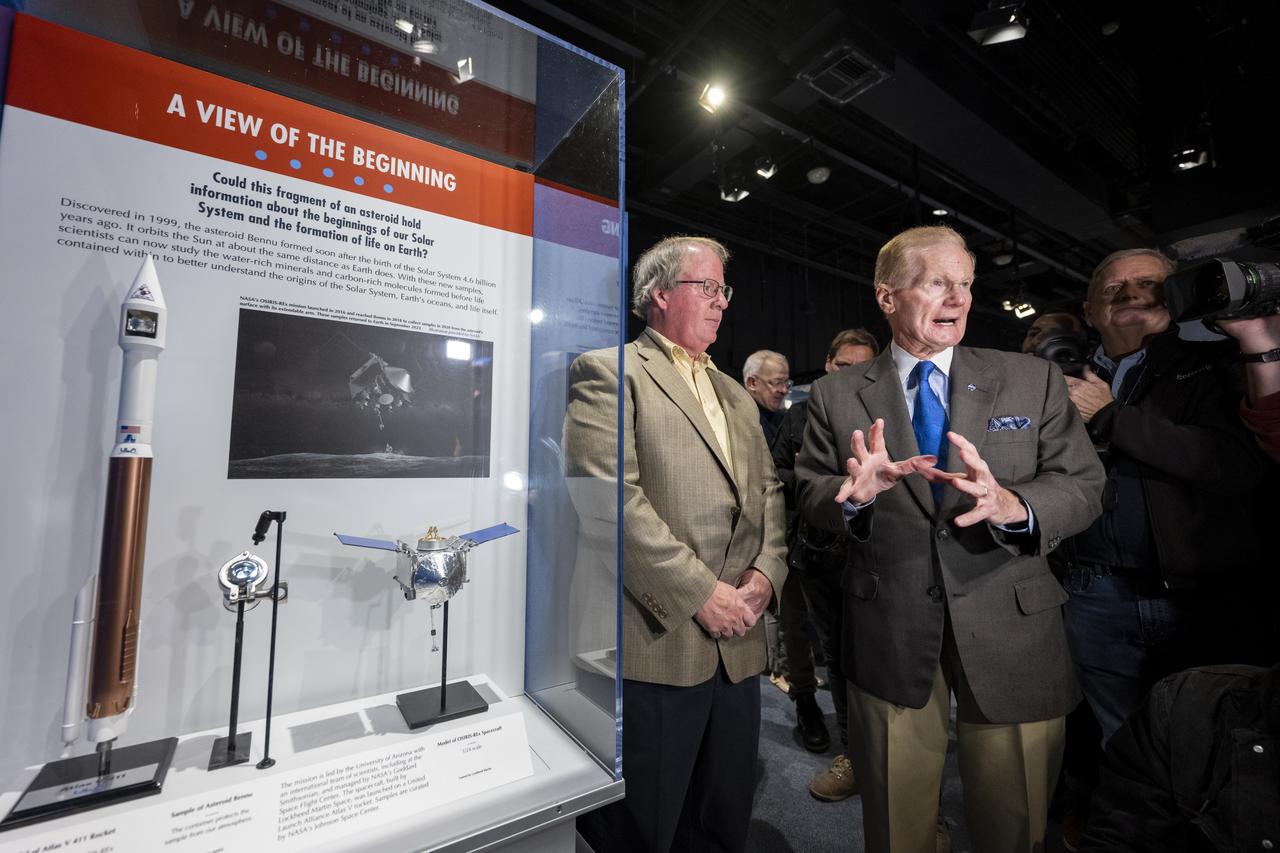
NASA Administrator Bill Nelson speaks to members of the press after unveiling the first public display of a sample from asteroid Bennu, Friday, Nov. 3, 2023, at the Smithsonian’s National Museum of Natural History in Washington. The sample was collected from the carbon rich near Earth asteroid Bennu in October 2020 by NASA’s OSIRIS-REx spacecraft. Photo Credit: (NASA/Keegan Barber)
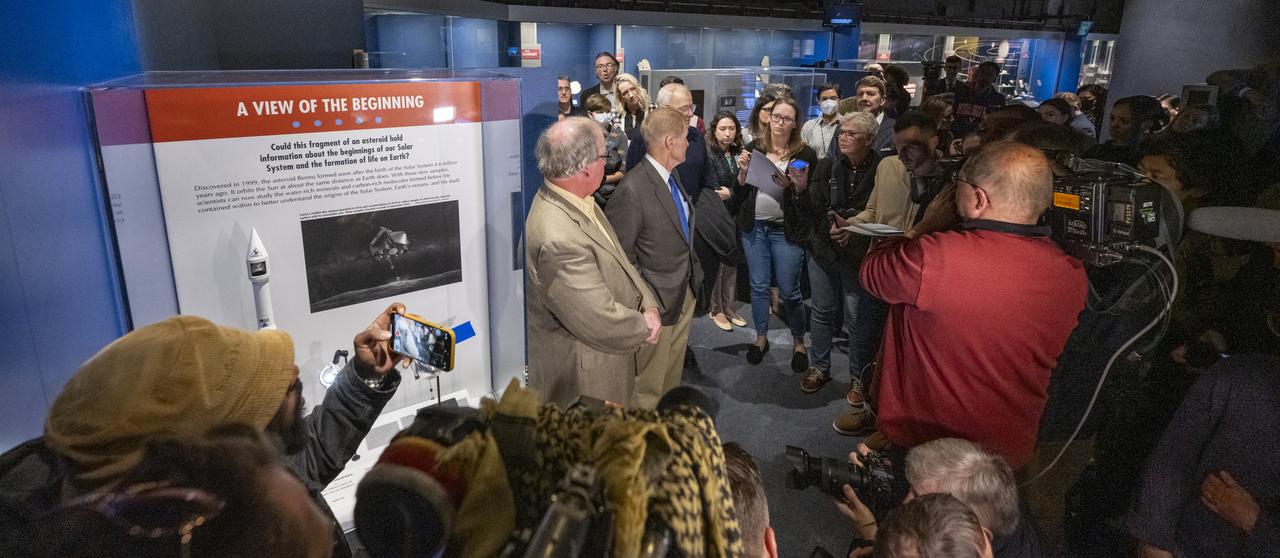
NASA Administrator Bill Nelson speaks to members of the press after unveiling the first public display of a sample from asteroid Bennu, Friday, Nov. 3, 2023, at the Smithsonian’s National Museum of Natural History in Washington. The sample was collected from the carbon rich near Earth asteroid Bennu in October 2020 by NASA’s OSIRIS-REx spacecraft. Photo Credit: (NASA/Keegan Barber)
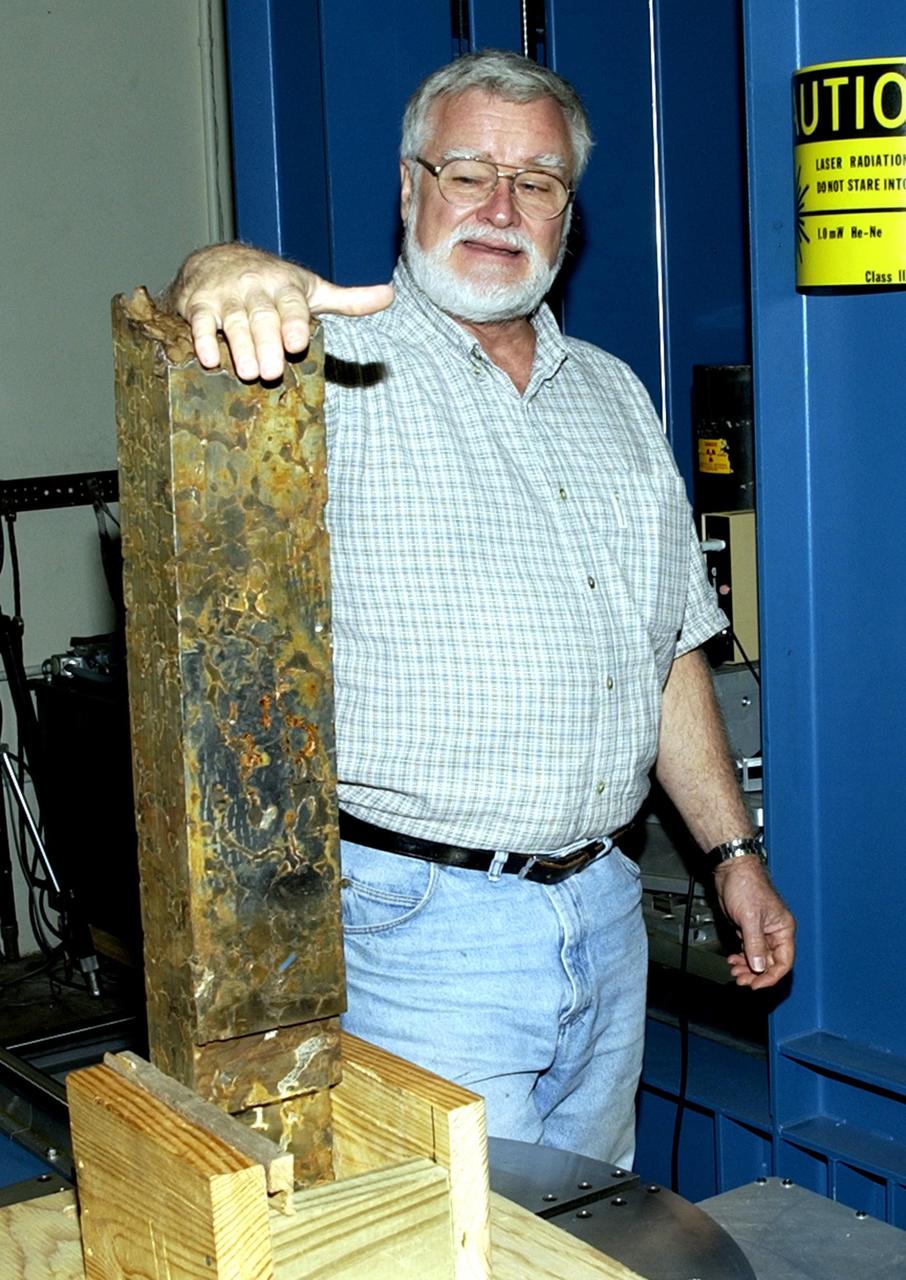
KENNEDY SPACE CENTER, FLA. -- Pete Engel, an engineering specialist in Wyle Laboratory's Nondestructive Testing Laboratory at KSC, explains the testing being performed on a 100-pound Mundrabilla meteorite sample. The one-of-a-kind meteorite was found 36 years ago in Australia and is on loan to Marshall Space Flight Center (MSFC) from the Smithsonian Institution's National Museum of Natural History. Dr. Donald Gillies, discipline scientist for materials science at MSFC's Microgravity Science and Applications Department, is the Principal Investigator. The studies may help provide the science community and industry with fundamental knowledge for use in the design of advanced materials.
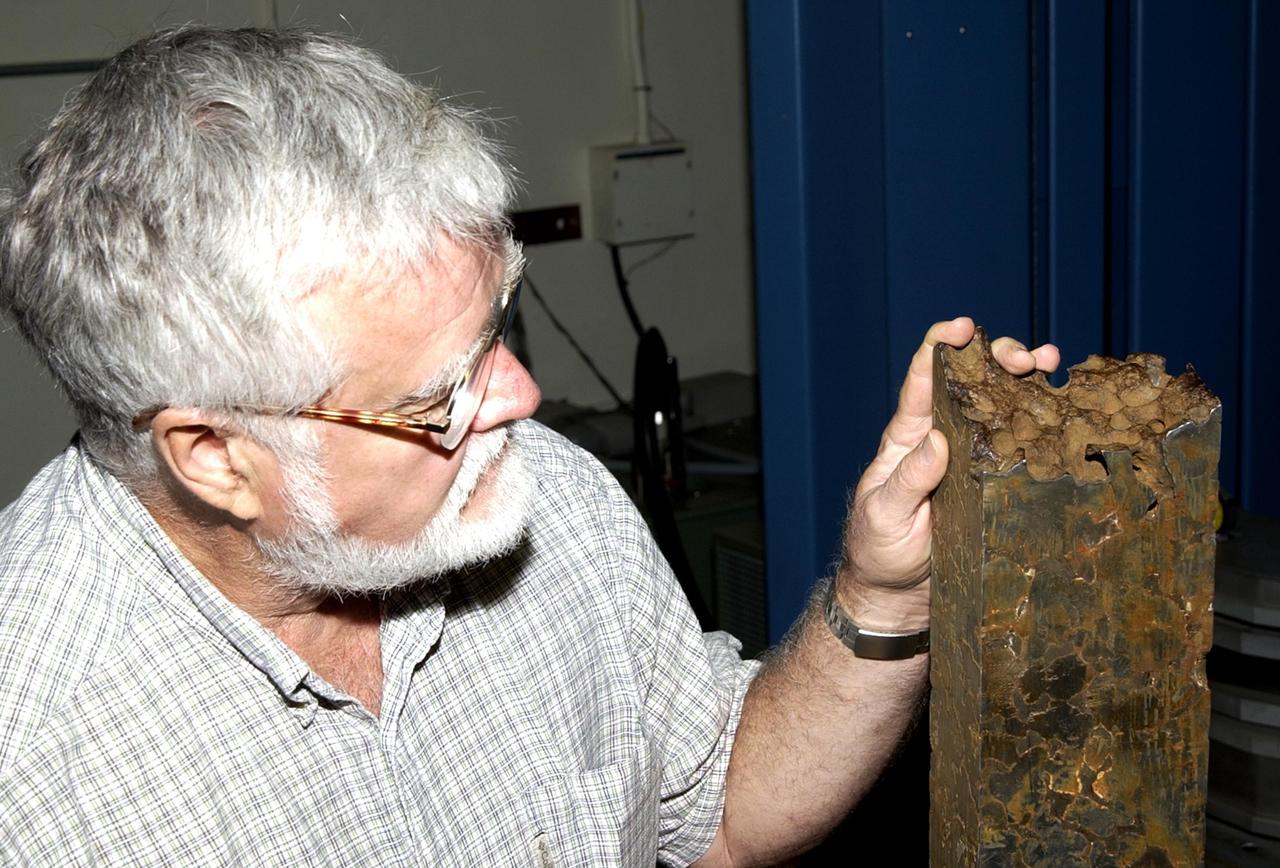
KENNEDY SPACE CENTER, FLA. -- Pete Engel, an engineering specialist in Wyle Laboratory's Nondestructive Testing Laboratory at KSC, explains the testing being performed on a 100-pound Mundrabilla meteorite sample. The one-of-a-kind meteorite was found 36 years ago in Australia and is on loan to Marshall Space Flight Center (MSFC) from the Smithsonian Institution's National Museum of Natural History. Dr. Donald Gillies, discipline scientist for materials science at MSFC's Microgravity Science and Applications Department, is the Principal Investigator. The studies may help provide the science community and industry with fundamental knowledge for use in the design of advanced materials.
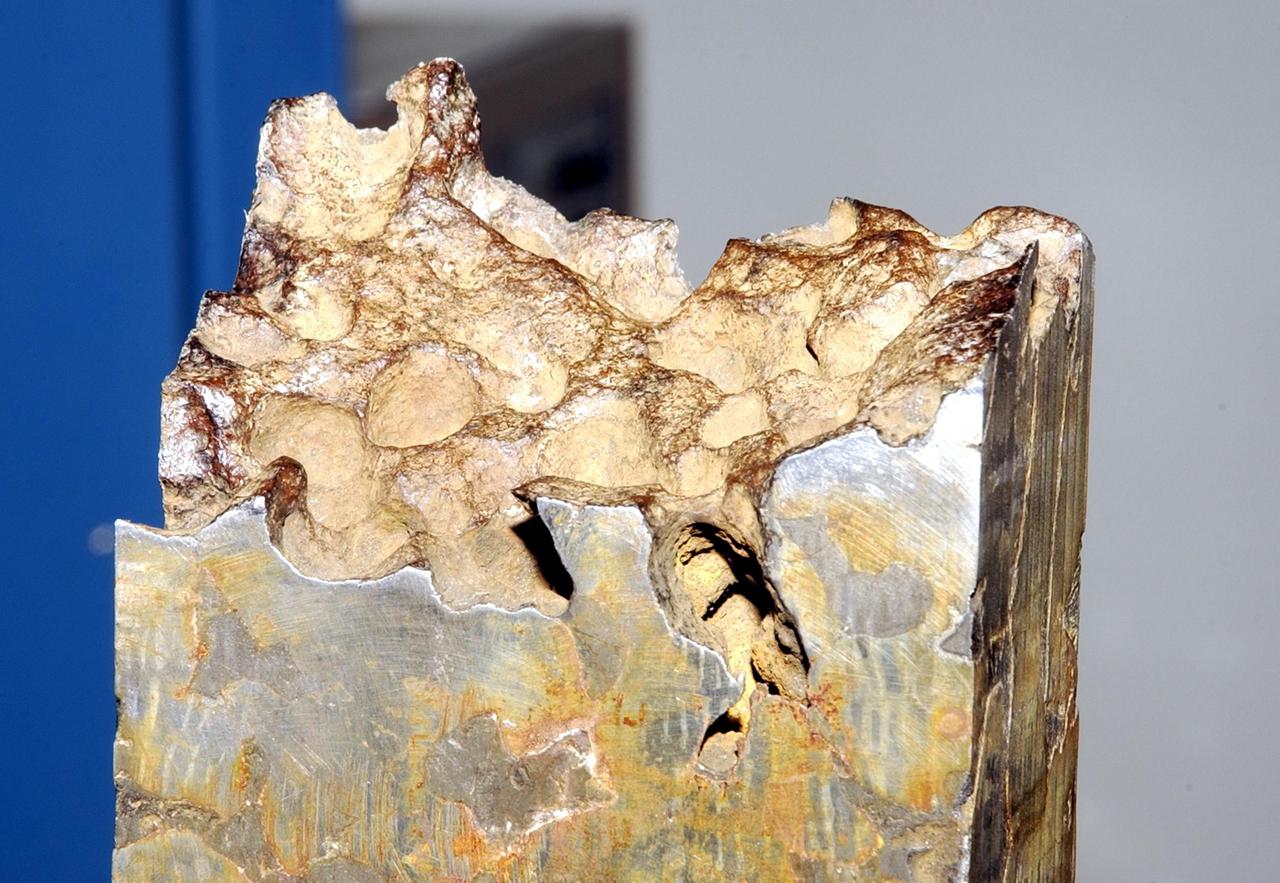
KENNEDY SPACE CENTER, FLA. -- This 100-pound Mundrabilla meteorite sample is being studied in Wyle Laboratory's Nondestructive Testing Laboratory at KSC. The one-of-a-kind meteorite was found 36 years ago in Australia and is on loan to Marshall Space Flight Center (MSFC) from the Smithsonian Institution's National Museum of Natural History. Dr. Donald Gillies, discipline scientist for materials science at MSFC's Microgravity Science and Applications Department, is the Principal Investigator. The studies may help provide the science community and industry with fundamental knowledge for use in the design of advanced materials.
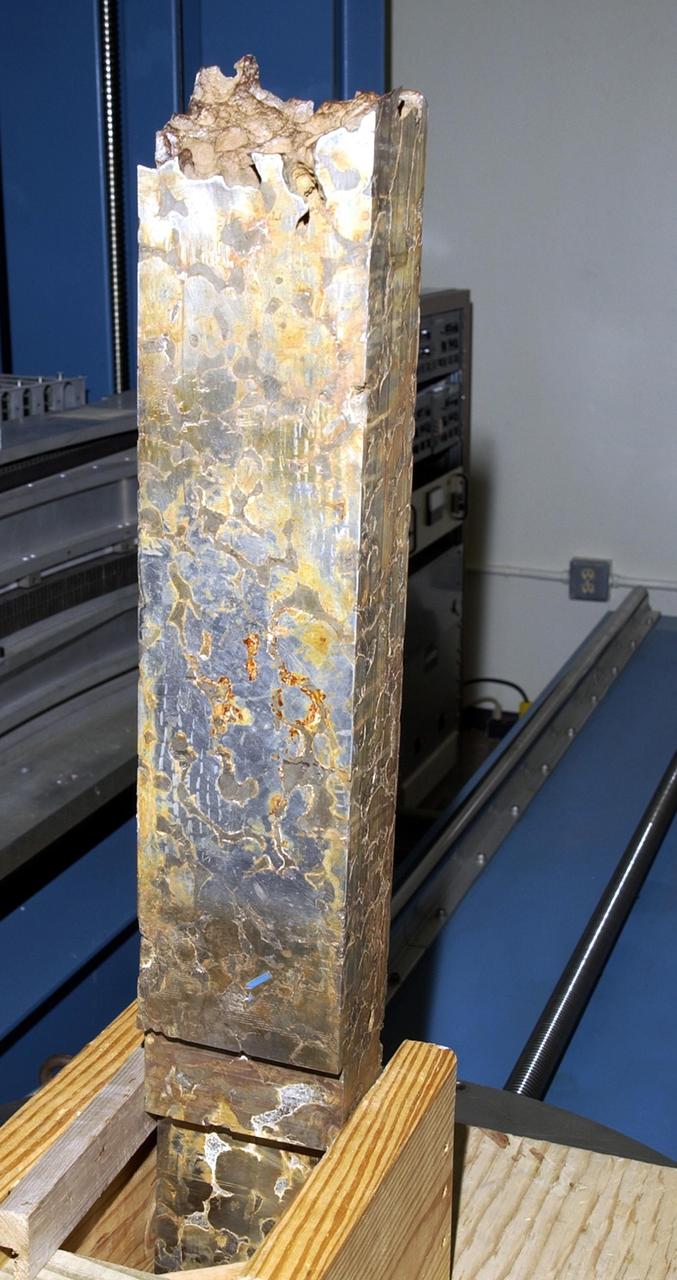
KENNEDY SPACE CENTER, FLA. -- This 100-pound Mundrabilla meteorite sample is being studied in Wyle Laboratory's Nondestructive Testing Laboratory at KSC. The one-of-a-kind meteorite was found 36 years ago in Australia and is on loan to Marshall Space Flight Center (MSFC) from the Smithsonian Institution's National Museum of Natural History. Dr. Donald Gillies, discipline scientist for materials science at MSFC's Microgravity Science and Applications Department, is the Principal Investigator. The studies may help provide the science community and industry with fundamental knowledge for use in the design of advanced materials.
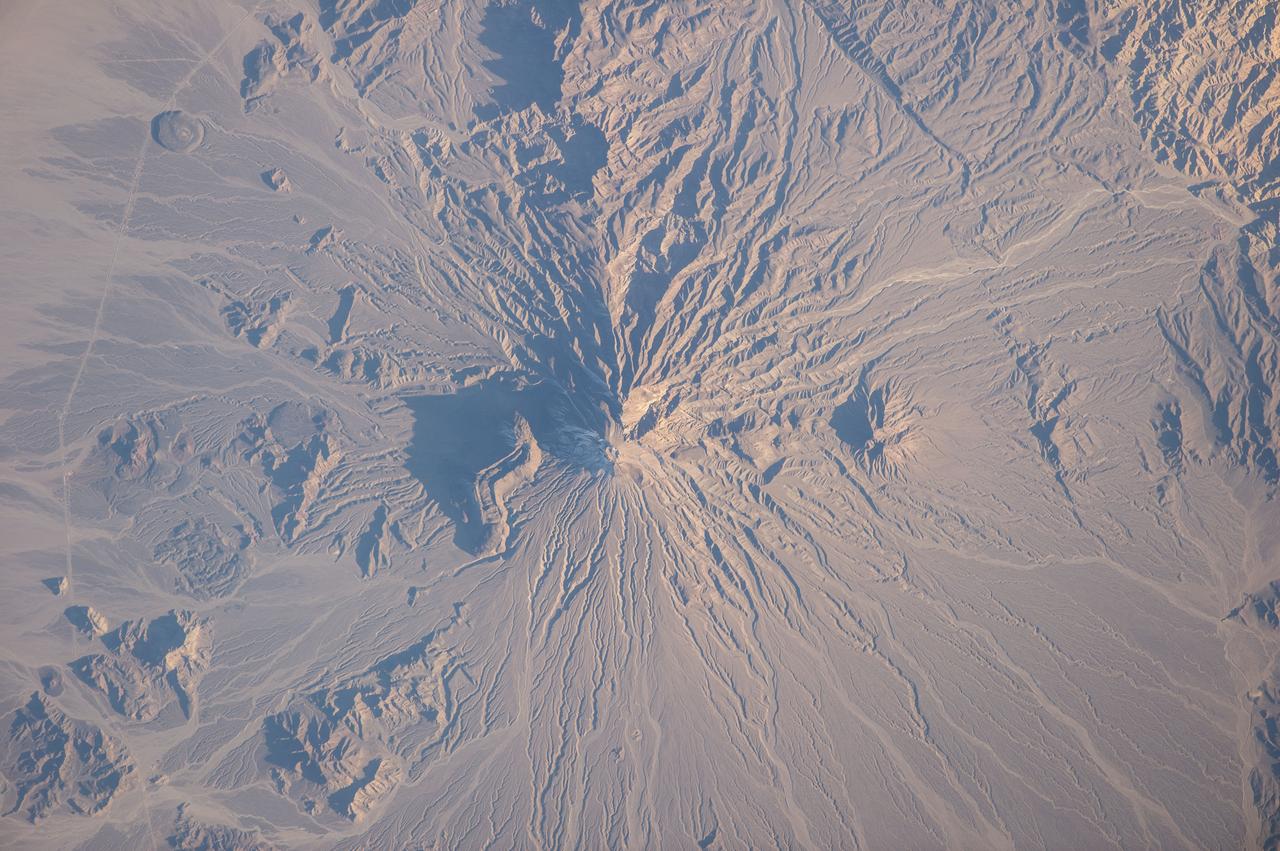
ISS038-E-025895 (5 Jan. 2014) --- Bazman volcano in Iran is featured in this image photographed by an Expedition 38 crew member on the International Space Station. Bazman volcano is located in a remote southern region within the Bazman Protected Area of Sistan and Baluchestan Provinces. While the volcano has the classic cone shape associated with stratovolcanoes, it is also heavily dissected by channels that extend downwards from the 3,490-meter-above-sea-level summit. This radial drainage pattern - looking similar to the spokes of a bicycle wheel - is readily observed in this photograph. Such patterns can form around high, symmetric peaks when water runoff and erosion is not constrained by the resistance of geologic materials or barriers to flow, leading to essentially even distribution of water runoff channels around the central peak. While there is no historical record of volcanism at Bazman, and no geologic record of eruptive activity within the past 10,000 years, some fumarolic activity - gas and steam emissions - have been reported, according to the Smithsonian Institution National Museum of Natural History's Global Volcanism Program. The summit of the volcano is marked by a well-formed explosion crater, and lava cones formed on the flanks of the main volcano are associated with well-preserved lava flows-a particularly striking example is visible on the north flank of Bazman at center. Together, these observations and features are suggestive that Bazman may be a dormant, rather than extinct, volcano.
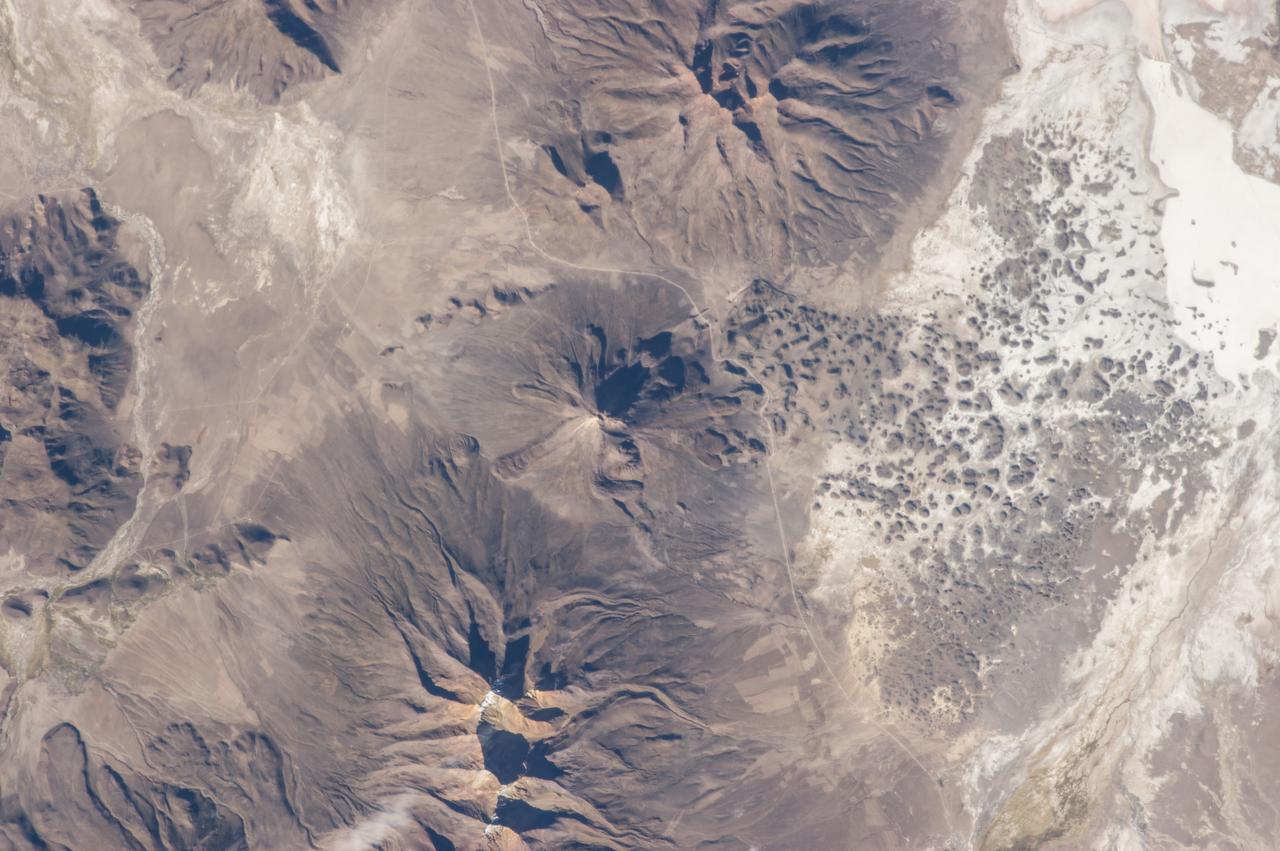
ISS035-E-18006 (8 April 2013) --- One of the Expedition 35 crew members aboard the Earth-orbiting International Space Station photographed this image of Tata Sabaya Volcano, located in the Altiplano region of Bolivia. The volcano rises to a summit elevation of 5430 meters above sea level. While its current form is that of a “youthful” stratovolcano, the regional geological evidence indicates an older, eventful history, according to scientists. The scientists say that prior to approximately 12,000 years ago (during the late Pleistocene Epoch), a large debris avalanche was formed by collapse of the ancestral Tata Sabaya volcano. Debris from the avalanche swept into the nearby Salar de Coipasa –at that time filled with a lake larger than today – significantly changing its northwestern coastline. Timing of the event is obtained from tufa deposits formed on debris islands during a high stand of the Coipasa lake – illustrating the geological principle of cross-cutting relationships, in that the debris avalanche had to have occurred before the tufa deposits were formed in the lake. The Tata Sabaya stratovolcano is located at image center. Several young lava flows are visible on the northwestern and western flanks of the volcano. Peaks visible to the northeast and southwest appear to be volcanoes as well, but unlike Tata Sabaya there is no record of recent activity from either of them (according to the Smithsonian National Museum of Natural History’s Global Volcanism Program). As the Altiplano became more arid and the Coipasa Lake shrank, much of the hummocky terrain of the debris avalanche became exposed over an area of more than 300 square kilometers. The hummocky terrain is clearly visible at image right. White salt deposits of the salar surround many of the individual hummocks, making them “islands” once again.