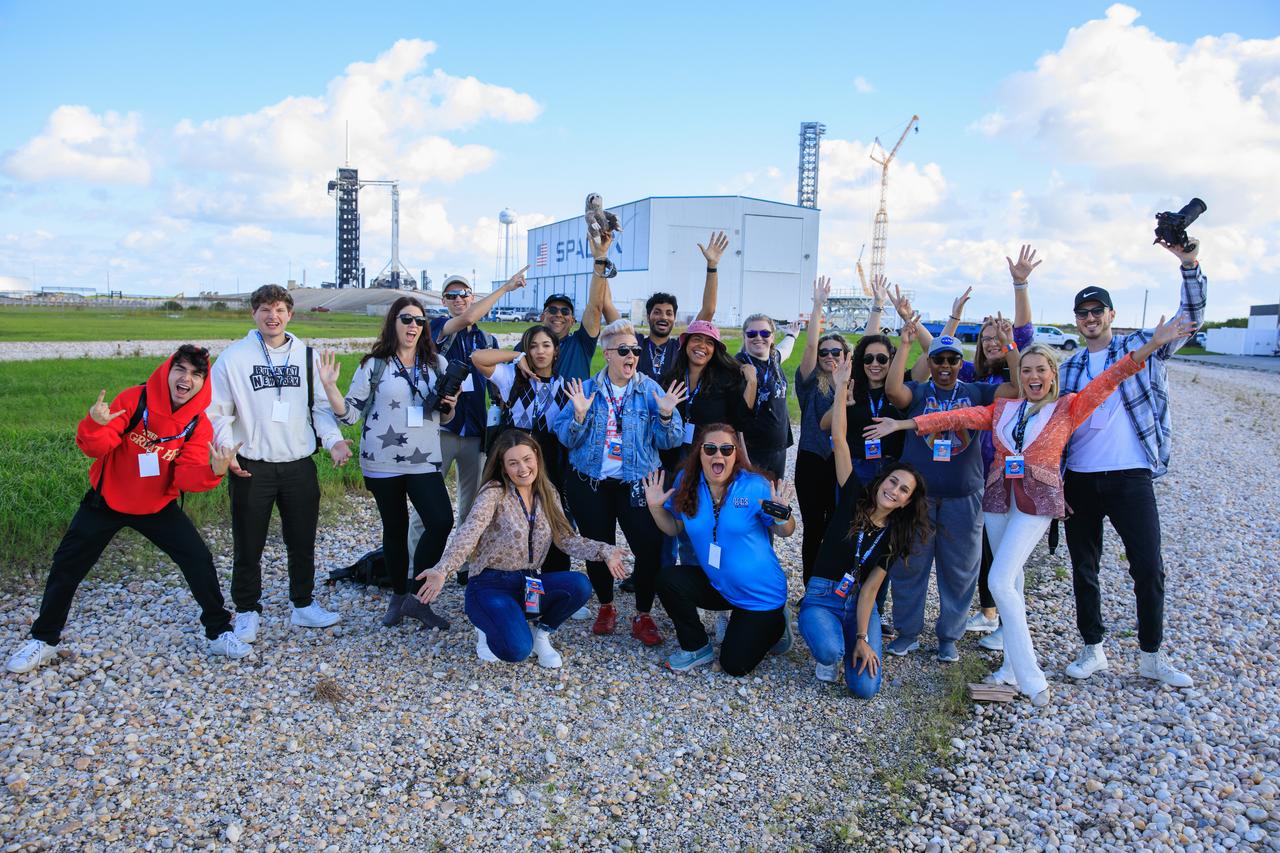
NASA Social participants for the agency’s SpaceX Crew-5 launch are photographed at Kennedy Space Center’s Launch Complex 39A in Florida on Oct. 4, 2022. SpaceX’s Dragon Endurance spacecraft will carry NASA astronauts Nicole Mann, commander; Josh Cassada, pilot; and Mission Specialists Koichi Wakata, of JAXA (Japan Aerospace Exploration Agency), and Roscosmos cosmonaut Anna Kikina to the International Space Station for a science expedition mission as part of NASA’s Commercial Crew Program. The SpaceX Falcon 9 rocket lifted off from Launch Complex 39A at noon EDT on Oct. 5, 2022.
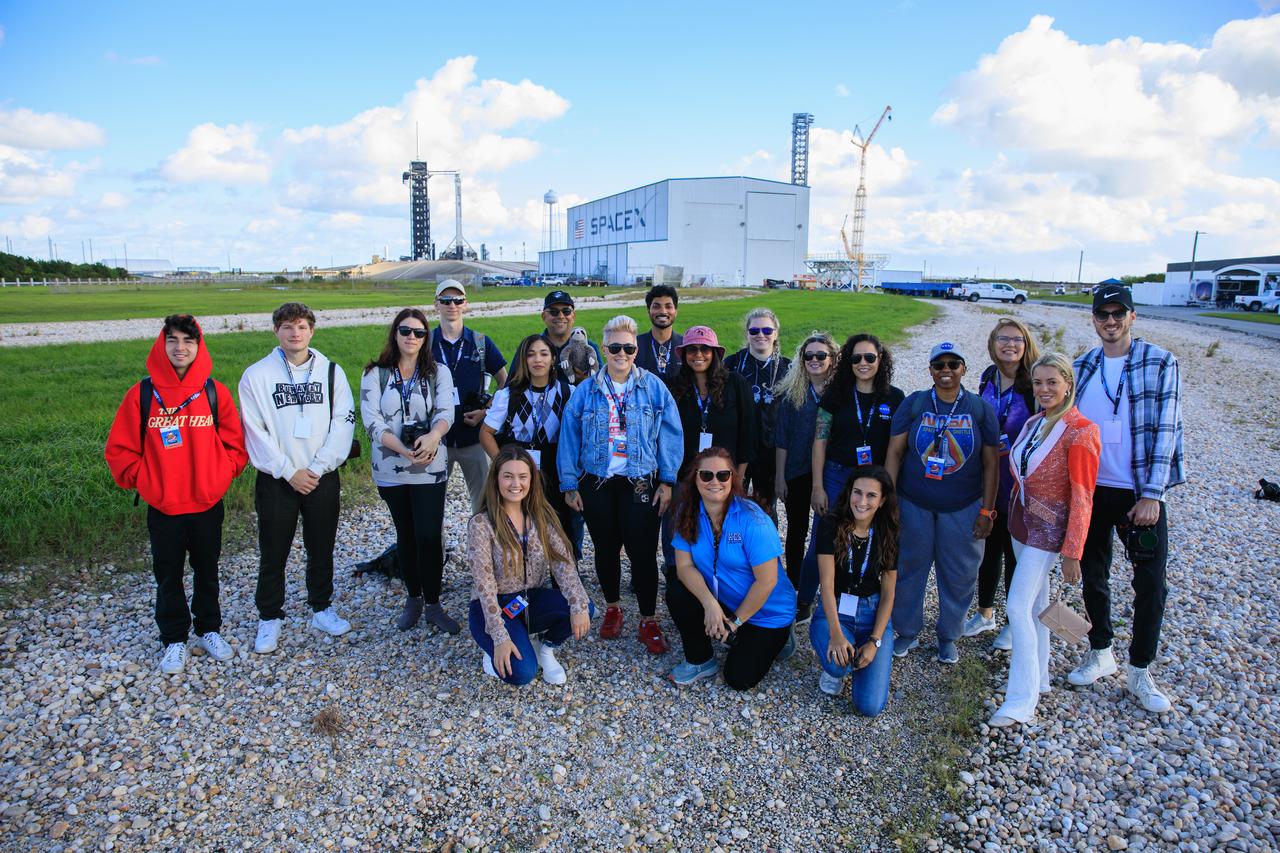
NASA Social participants for the agency’s SpaceX Crew-5 launch are photographed at Kennedy Space Center’s Launch Complex 39A in Florida on Oct. 4, 2022. SpaceX’s Dragon Endurance spacecraft will carry NASA astronauts Nicole Mann, commander; Josh Cassada, pilot; and Mission Specialists Koichi Wakata, of JAXA (Japan Aerospace Exploration Agency), and Roscosmos cosmonaut Anna Kikina to the International Space Station for a science expedition mission as part of NASA’s Commercial Crew Program. The SpaceX Falcon 9 rocket lifted off from Launch Complex 39A at noon EDT on Oct. 5, 2022.
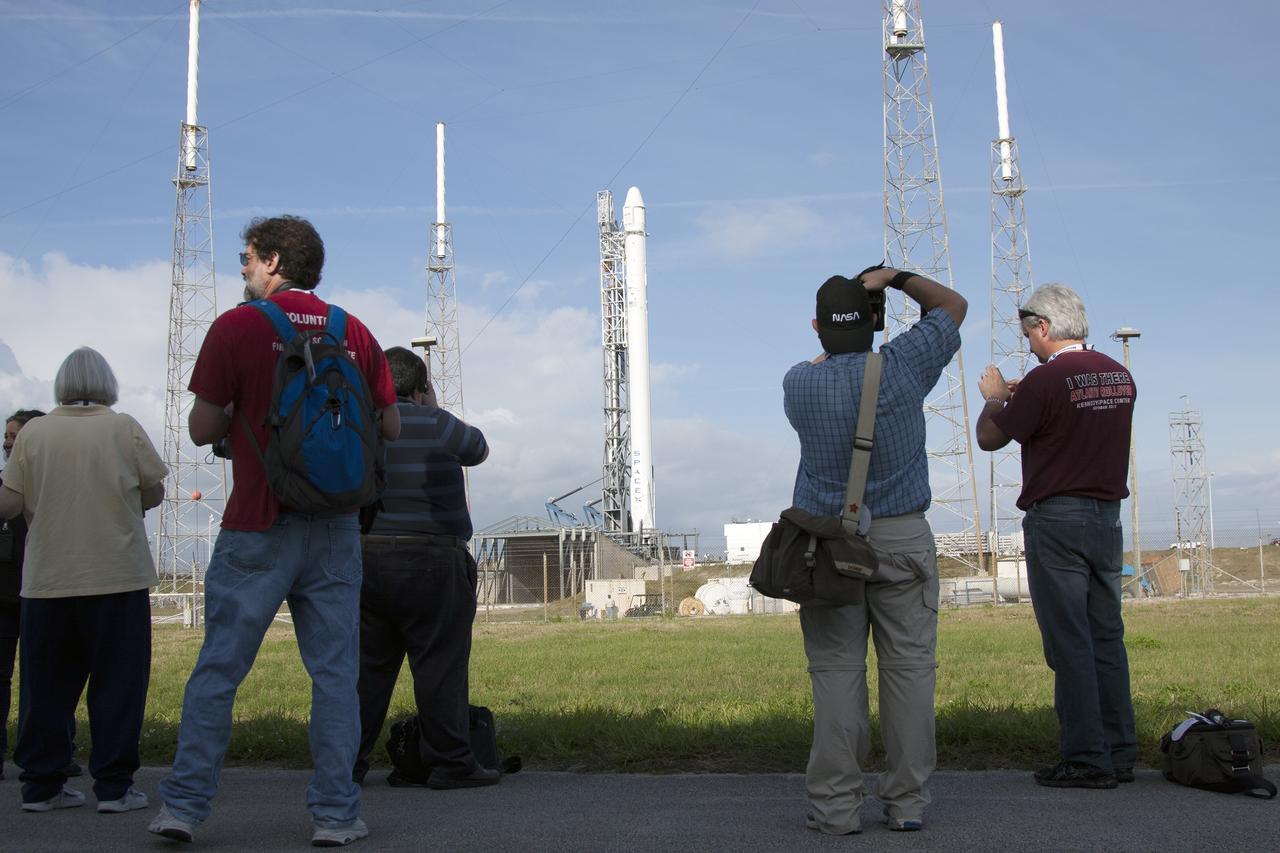
CAPE CANAVERAL, Fla. - Social media representatives photograph the SpaceX Falcon 9 rocket and Dragon Capsule on Space Launch Complex 40 on Cape Canaveral Air Force Station in Florida. NASA Social participants are given the same access as news media in an effort to align the experience of social media representatives with those of traditional media, including the opportunity to view a launch of SpaceX’s Falcon 9 rocket, tour NASA facilities at Kennedy Space Center, speak with representatives from both NASA and SpaceX, view and take photographs of the SpaceX launch pad, meet fellow space enthusiasts who are active on social media and meet members of SpaceX and NASA's social media teams. Scheduled for launch at about 4:58 p.m. EDT April 14, Dragon will be making its fourth trip to the space station. The SpaceX-3 mission, carrying almost 2.5 tons of supplies, technology and science experiments, is the third of 12 flights under NASA's Commercial Resupply Services contract to resupply the orbiting laboratory. For more information, visit http://www.nasa.gov/mission_pages/station/structure/launch/index.html Photo credit: NASA/Glenn Benson
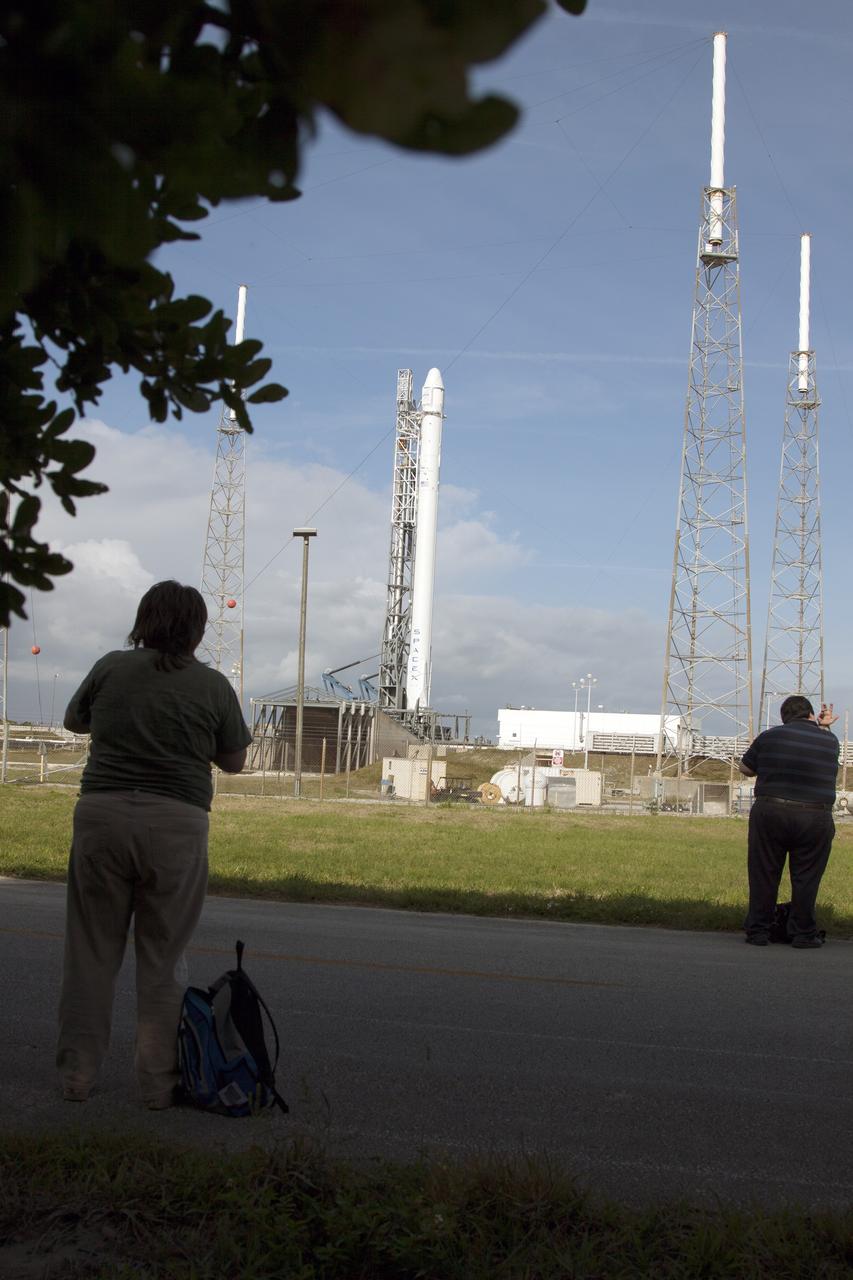
CAPE CANAVERAL, Fla. - Social media representatives photograph the SpaceX Falcon 9 rocket and Dragon Capsule on Space Launch Complex 40 on Cape Canaveral Air Force Station in Florida. NASA Social participants are given the same access as news media in an effort to align the experience of social media representatives with those of traditional media, including the opportunity to view a launch of SpaceX’s Falcon 9 rocket, tour NASA facilities at Kennedy Space Center, speak with representatives from both NASA and SpaceX, view and take photographs of the SpaceX launch pad, meet fellow space enthusiasts who are active on social media and meet members of SpaceX and NASA's social media teams. Scheduled for launch at about 4:58 p.m. EDT April 14, Dragon will be making its fourth trip to the space station. The SpaceX-3 mission, carrying almost 2.5 tons of supplies, technology and science experiments, is the third of 12 flights under NASA's Commercial Resupply Services contract to resupply the orbiting laboratory. For more information, visit http://www.nasa.gov/mission_pages/station/structure/launch/index.html Photo credit: NASA/Glenn Benson
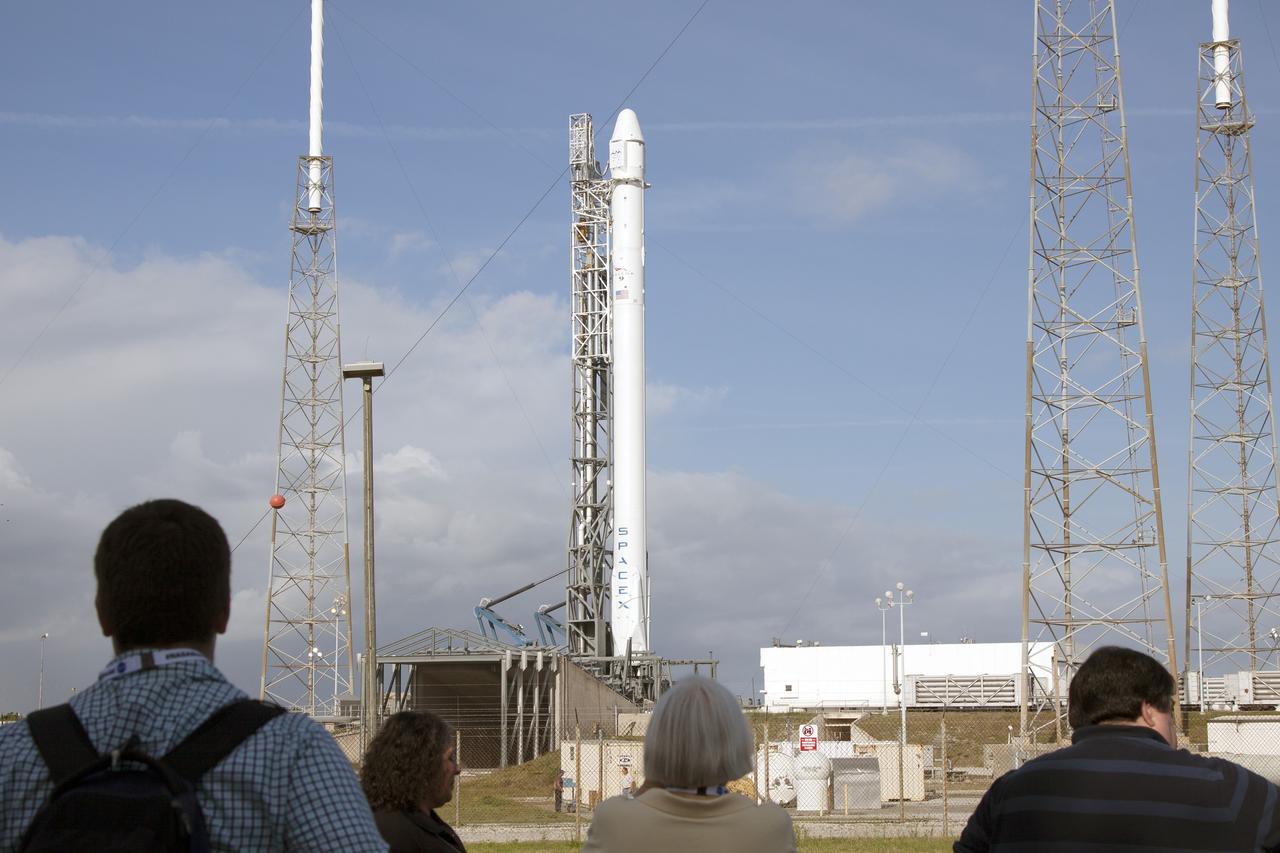
CAPE CANAVERAL, Fla. - Social media representatives get an up-close view of the SpaceX Falcon 9 rocket and Dragon Capsule on Space Launch Complex 40 on Cape Canaveral Air Force Station in Florida. NASA Social participants are given the same access as news media in an effort to align the experience of social media representatives with those of traditional media, including the opportunity to view a launch of SpaceX’s Falcon 9 rocket, tour NASA facilities at Kennedy Space Center, speak with representatives from both NASA and SpaceX, view and take photographs of the SpaceX launch pad, meet fellow space enthusiasts who are active on social media and meet members of SpaceX and NASA's social media teams. Scheduled for launch at about 4:58 p.m. EDT April 14, Dragon will be making its fourth trip to the space station. The SpaceX-3 mission, carrying almost 2.5 tons of supplies, technology and science experiments, is the third of 12 flights under NASA's Commercial Resupply Services contract to resupply the orbiting laboratory. For more information, visit http://www.nasa.gov/mission_pages/station/structure/launch/index.html Photo credit: NASA/Glenn Benson
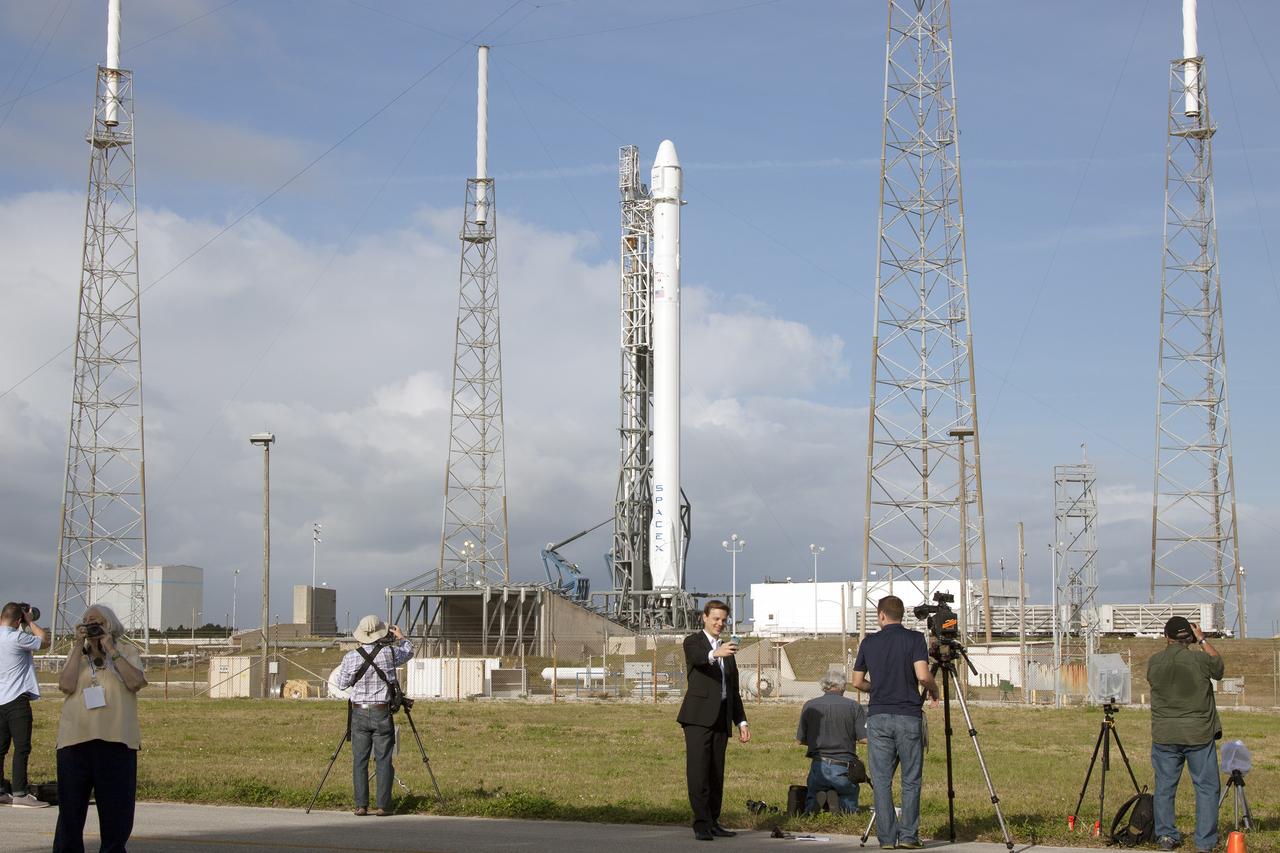
CAPE CANAVERAL, Fla. - Social media representatives photograph the SpaceX Falcon 9 rocket and Dragon Capsule on Space Launch Complex 40 on Cape Canaveral Air Force Station in Florida. NASA Social participants are given the same access as news media in an effort to align the experience of social media representatives with those of traditional media, including the opportunity to view a launch of SpaceX’s Falcon 9 rocket, tour NASA facilities at Kennedy Space Center, speak with representatives from both NASA and SpaceX, view and take photographs of the SpaceX launch pad, meet fellow space enthusiasts who are active on social media and meet members of SpaceX and NASA's social media teams. Scheduled for launch at about 4:58 p.m. EDT April 14, Dragon will be making its fourth trip to the space station. The SpaceX-3 mission, carrying almost 2.5 tons of supplies, technology and science experiments, is the third of 12 flights under NASA's Commercial Resupply Services contract to resupply the orbiting laboratory. For more information, visit http://www.nasa.gov/mission_pages/station/structure/launch/index.html Photo credit: NASA/Glenn Benson
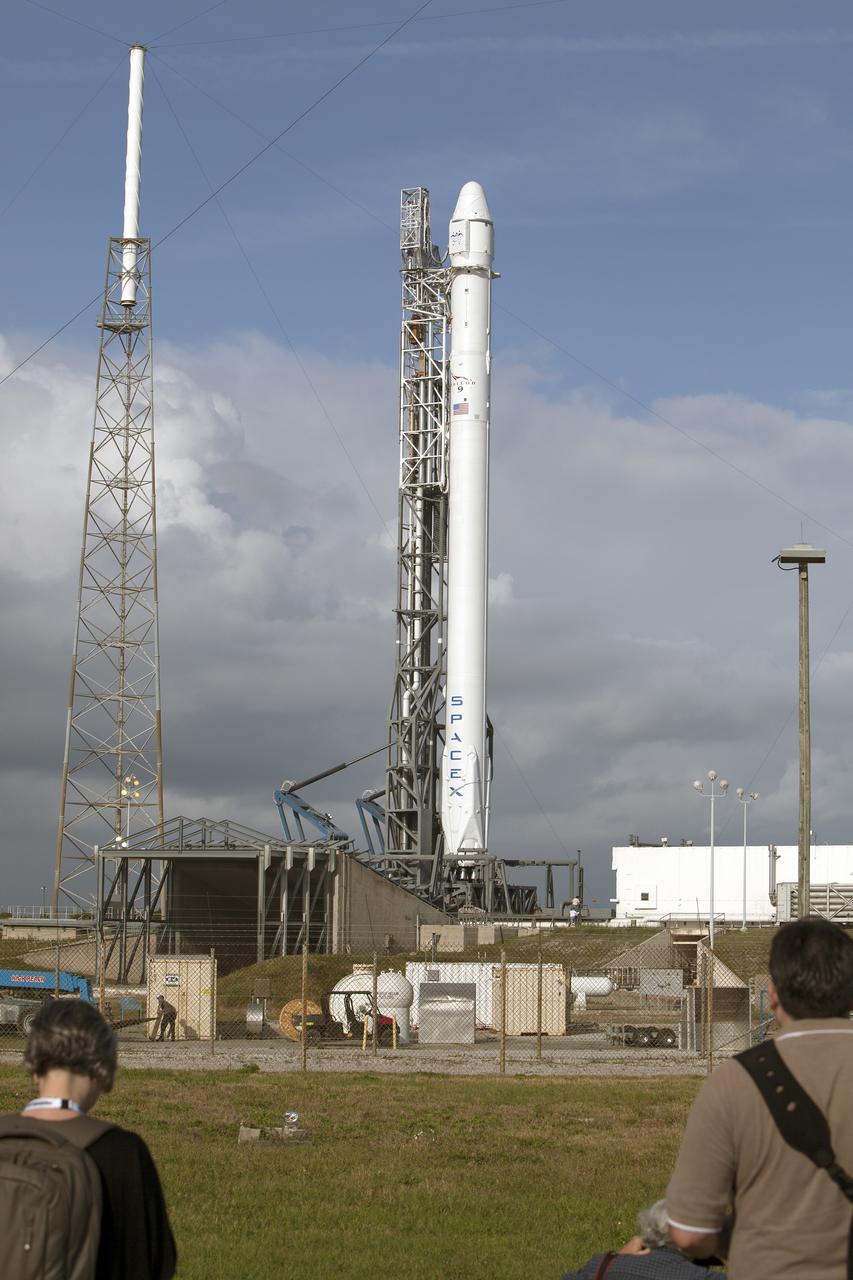
CAPE CANAVERAL, Fla. - Social media representatives get an up-close view of the SpaceX Falcon 9 rocket and Dragon Capsule on Space Launch Complex 40 on Cape Canaveral Air Force Station in Florida. NASA Social participants are given the same access as news media in an effort to align the experience of social media representatives with those of traditional media, including the opportunity to view a launch of SpaceX’s Falcon 9 rocket, tour NASA facilities at Kennedy Space Center, speak with representatives from both NASA and SpaceX, view and take photographs of the SpaceX launch pad, meet fellow space enthusiasts who are active on social media and meet members of SpaceX and NASA's social media teams. Scheduled for launch at about 4:58 p.m. EDT April 14, Dragon will be making its fourth trip to the space station. The SpaceX-3 mission, carrying almost 2.5 tons of supplies, technology and science experiments, is the third of 12 flights under NASA's Commercial Resupply Services contract to resupply the orbiting laboratory. For more information, visit http://www.nasa.gov/mission_pages/station/structure/launch/index.html Photo credit: NASA/Glenn Benson
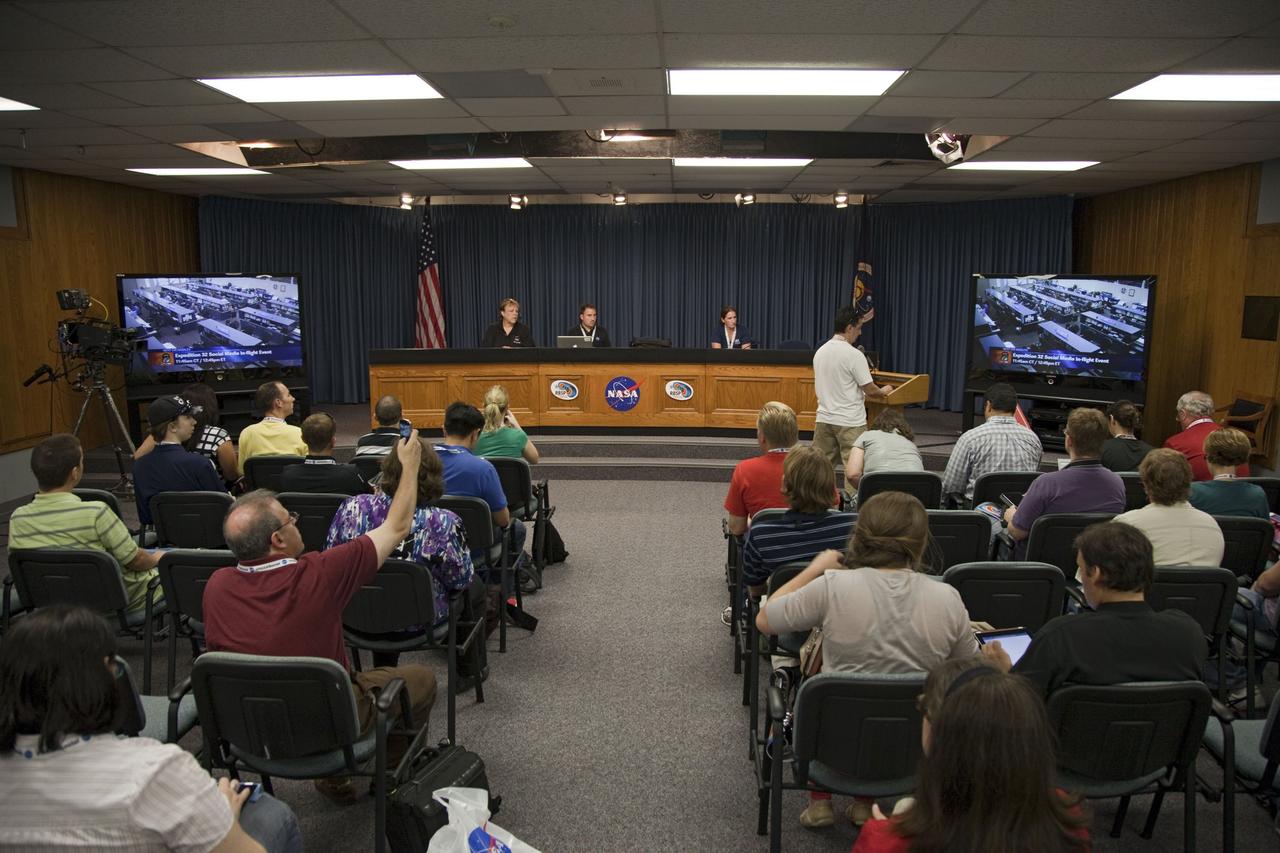
CAPE CANAVERAL, Fla. -- At NASA's Kennedy Space Center in Florida, social media participants take part in a question and answer session with astronauts aboard the International Space Station. At the podium, Ranz Adams asks a question of space station flight engineer Joe Acaba. Leading the activity from the desk at the front of the room are, from the left, Laurel Lichtenberger of NASA Public Affairs, Jason Townsend of the NASA Social Media Team and Kerri Beisser of the Johns Hopkins University Applied Physics Laboratory. The social media gathering at the Florida spaceport took place Aug. 22, 2012 joining a world-wide NASA Social allowing participants to ask questions of NASA astronauts who are living and working aboard the International Space Station. . For more information, visit http://www.nasa.gov/mission_pages/station/main/index.html Photo credit: NASA/ Frankie Martin
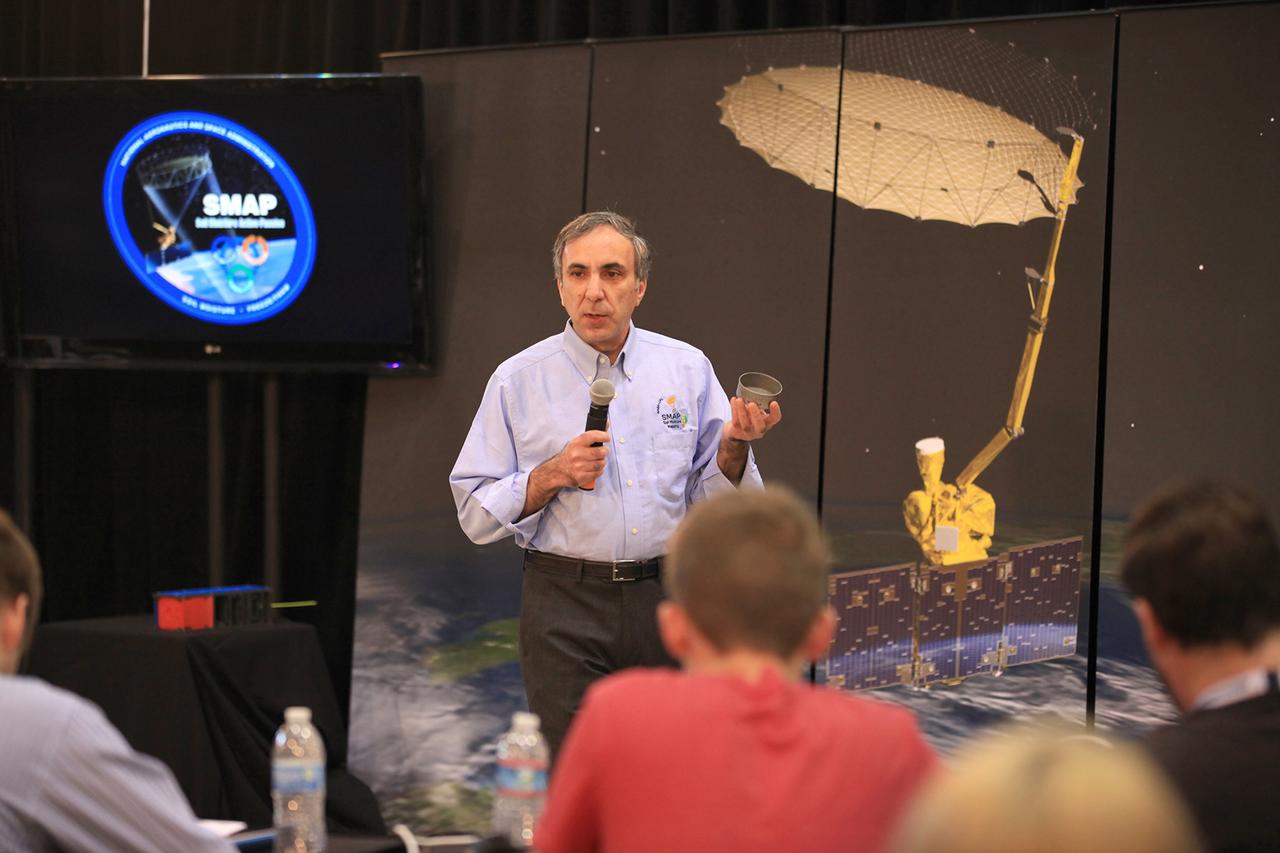
VANDENBERG AIR FORCE BASE, Calif. – Dara Entekhabi, science team leader at the Massachusetts Institute of Technology in Cambridge, Massachusetts, discusses the science and engineering of NASA's Soil Moisture Active Passive mission, or SMAP, with the audience of a NASA Social held at Vandenberg Air Force Base in California. This NASA Social brought together mission scientists and engineers with an audience of 70 students, educators, social media managers, bloggers, photographers and videographers who were selected from a pool of 325 applicants from 45 countries to participate in launch activities and communicate their experience with social media followers. The SMAP mission is scheduled to launch from Vandenberg on Jan. 29. To learn more about SMAP, visit http://www.nasa.gov/smap. Photo credit: NASA/Kim Shiflett
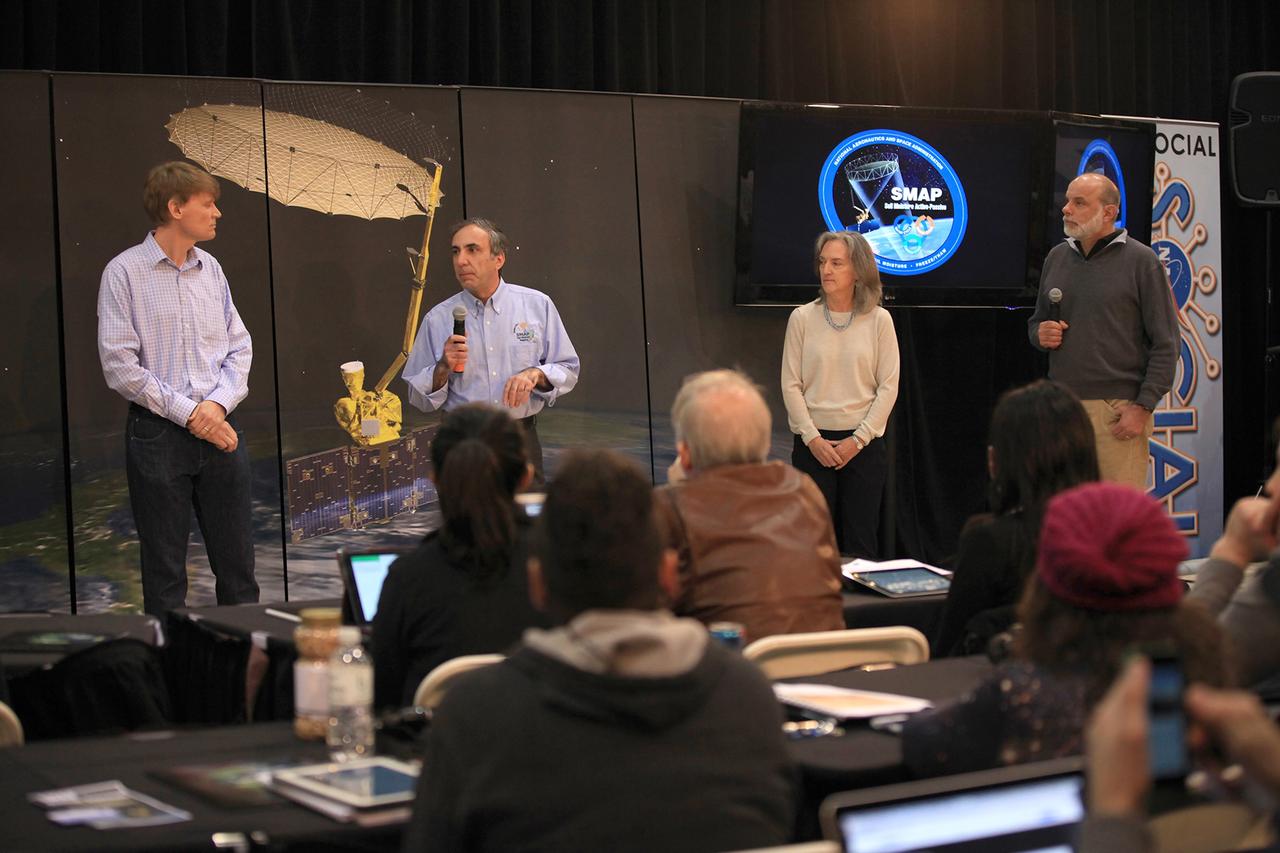
VANDENBERG AIR FORCE BASE, Calif. – Dara Entekhabi, science team leader at the Massachusetts Institute of Technology in Cambridge, Massachusetts, and other experts discuss the science and engineering of NASA's Soil Moisture Active Passive mission, or SMAP, with the audience of a NASA Social held at Vandenberg Air Force Base in California. This NASA Social brought together mission scientists and engineers with an audience of 70 students, educators, social media managers, bloggers, photographers and videographers who were selected from a pool of 325 applicants from 45 countries to participate in launch activities and communicate their experience with social media followers. The SMAP mission is scheduled to launch from Vandenberg on Jan. 29. To learn more about SMAP, visit http://www.nasa.gov/smap. Photo credit: NASA/Kim Shiflett
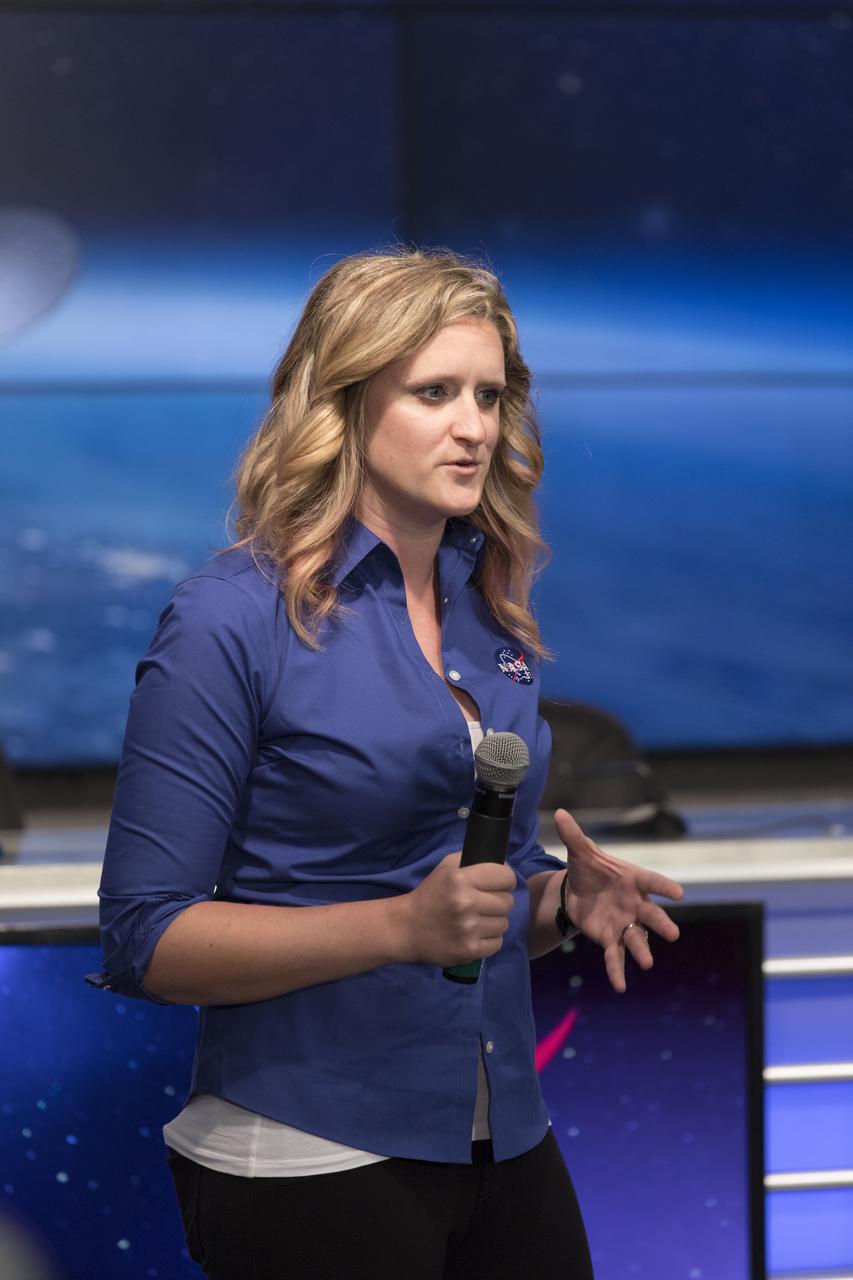
Amber Jacobson of the NASA TDRS Social Media Team speaks to members of social media in the Kennedy Space Center’s Press Site auditorium. The briefing focused on preparations to launch NASA's Tracking and Data Relay Satellite, TDRS-M. The latest spacecraft destined for the agency's constellation of communications satellites, TDRS-M will allow nearly continuous contact with orbiting spacecraft ranging from the International Space Station and Hubble Space Telescope to the array of scientific observatories. Liftoff atop a United Launch Alliance Atlas V rocket is scheduled to take place from Space Launch Complex 41 at Cape Canaveral Air Force Station at 8:03 a.m. EDT Aug. 18.
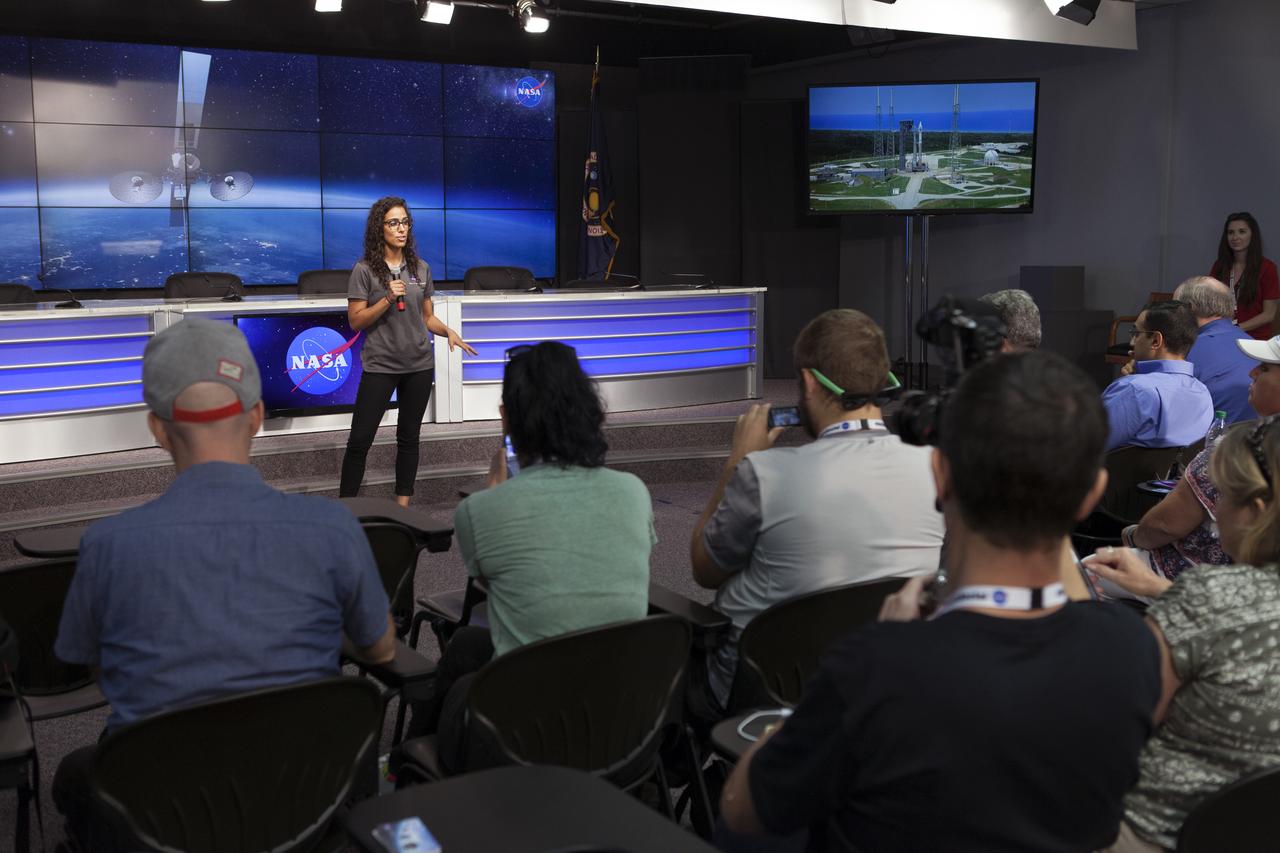
Emily Furfaro of the NASA Social Media Team speaks to members of social media in the Kennedy Space Center’s Press Site auditorium. The briefing focused on preparations to launch NASA's Tracking and Data Relay Satellite, TDRS-M. The latest spacecraft destined for the agency's constellation of communications satellites, TDRS-M will allow nearly continuous contact with orbiting spacecraft ranging from the International Space Station and Hubble Space Telescope to the array of scientific observatories. Liftoff atop a United Launch Alliance Atlas V rocket is scheduled to take place from Space Launch Complex 41 at Cape Canaveral Air Force Station at 8:03 a.m. EDT Aug. 18.
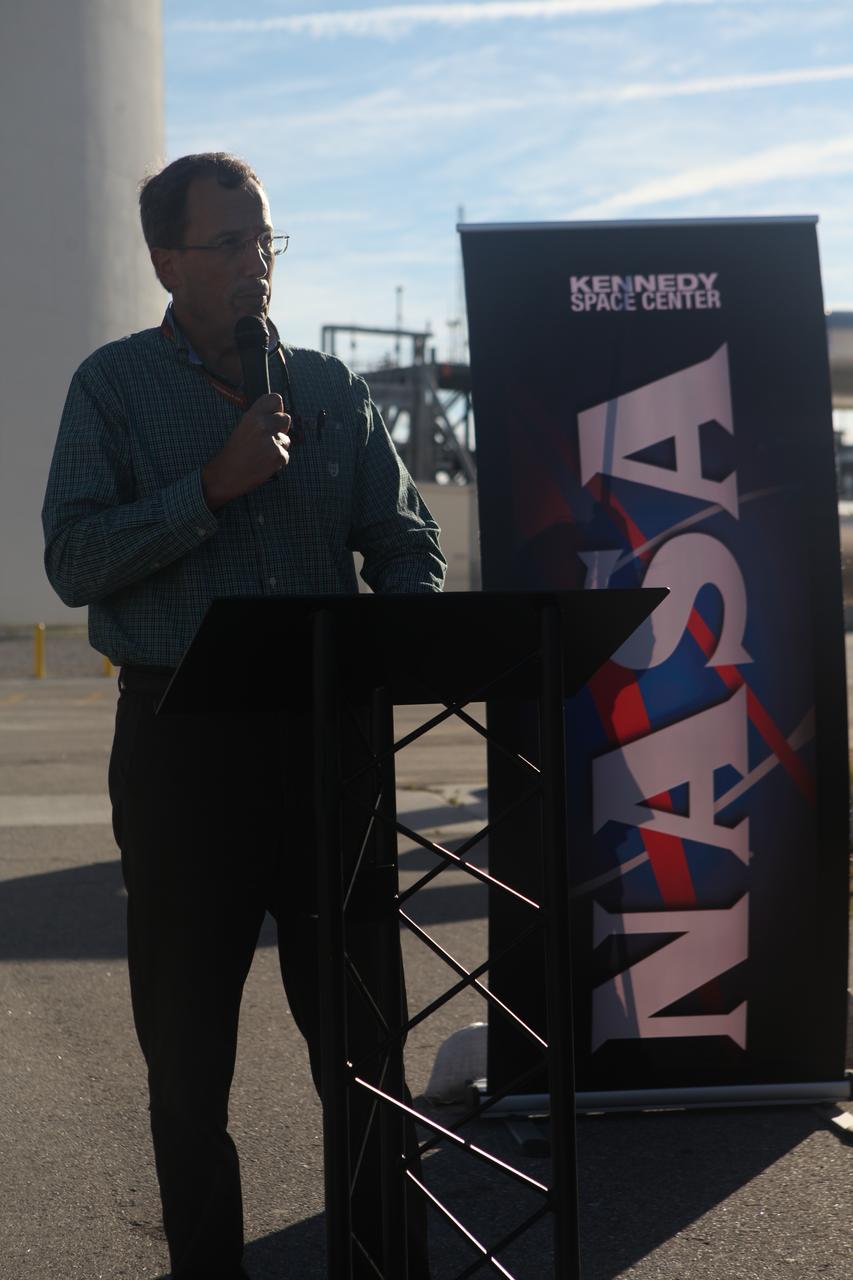
Sustainability Team Lead Dan Clark addresses the news media and NASA Social about the new Thermal Energy Storage (TES) tank at NASA's Kennedy Space Center Feb. 17. The TES tank works like a giant battery and is saving the center utility cost. These savings will be applied to new sustainable projects at Kennedy.
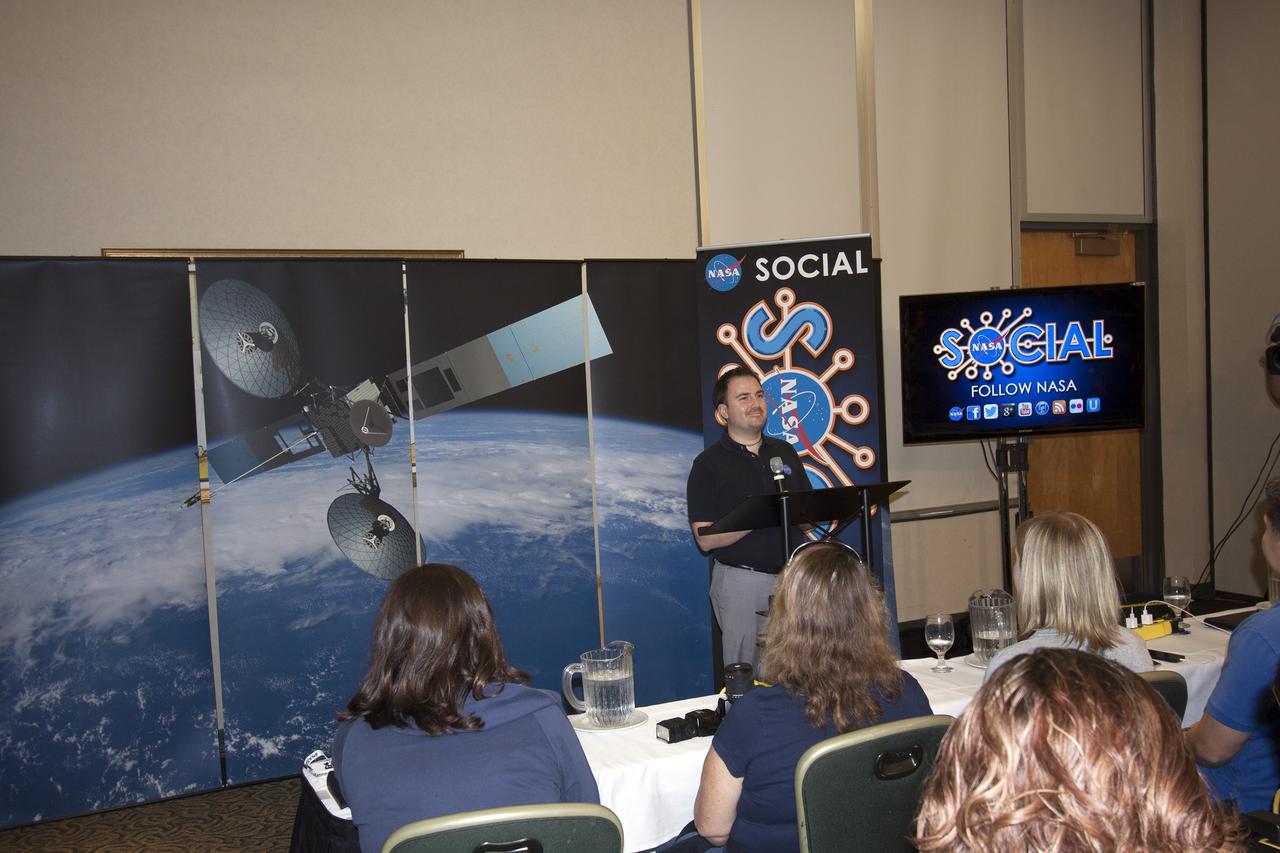
CAPE CANAVERAL, Fla. -- At NASA's Kennedy Space Center in Florida, Jason Townsend of NASA's Social Media Team welcomes agency social media followers to the first day of activities of a NASA Social revolving around NASA's Tracking and Data Relay Satellite-K mission. NASA Socials are in-person meetings for people who engage with the agency through Twitter, Facebook, Google+ and other social networks. The satellite, known as TDRS-K, is set to launch at 8:48 p.m. EST on Jan. 30 aboard a United Launch Alliance Atlas V rocket from Space Launch Complex 41 on nearby Cape Canaveral Air Force Station. About 50 followers were selected to participate in the TDRS-K prelaunch and launch activities and share them with their own fan base. The TDRS-K spacecraft is part of the next-generation series in the Tracking and Data Relay Satellite System, a constellation of space-based communication satellites providing tracking, telemetry, command and high-bandwidth data return services. For more information, visit http://www.nasa.gov/mission_pages/tdrs/index.html. Photo credit: NASA/Jim Grossmann
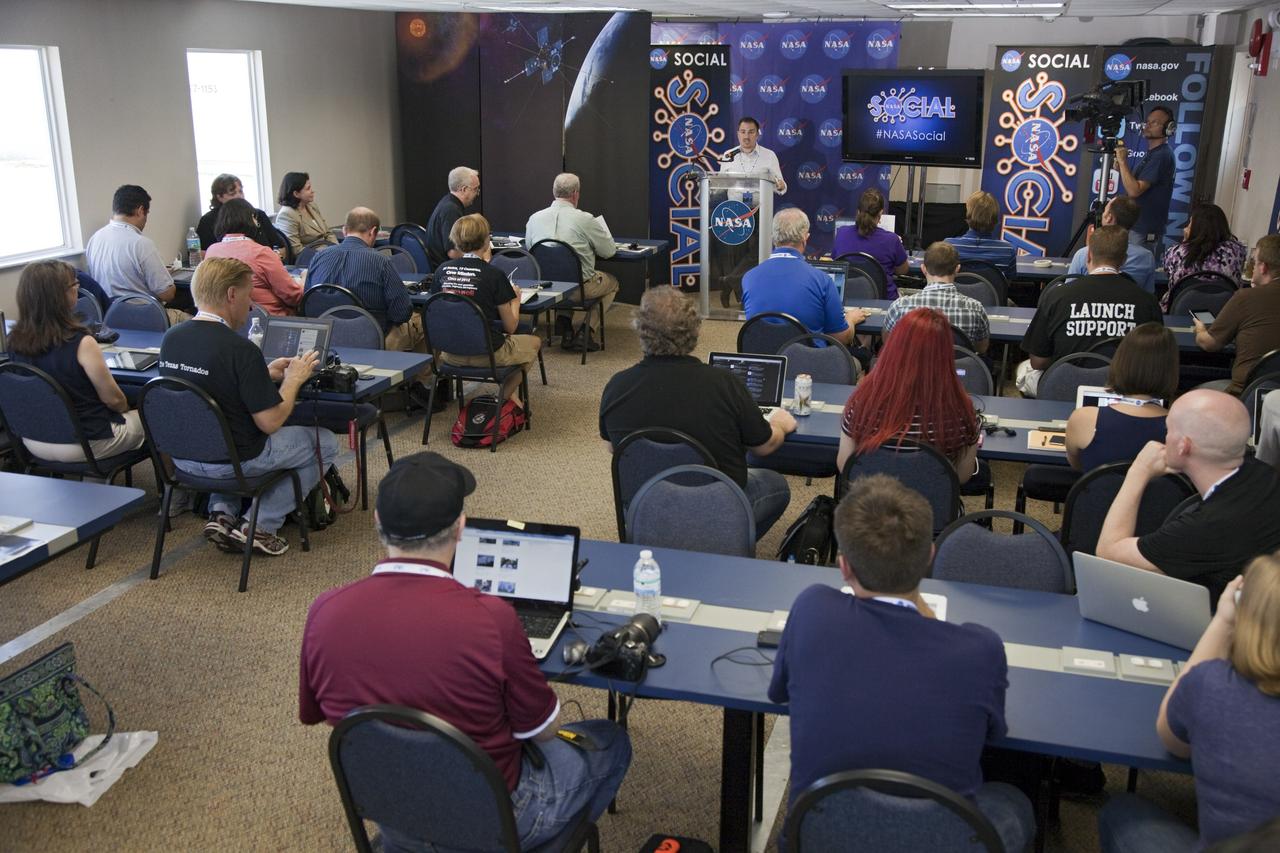
CAPE CANAVERAL, Fla. – At NASA's Kennedy Space Center in Florida, Jason Townsend of NASA's Social Media Team welcomes agency social media followers to the second day of activities revolving around NASA's Radiation Belt Storm Probes, or RBSP, mission. The probes are set to launch aboard a United Launch Alliance, or ULA, Atlas V rocket from nearby Cape Canaveral Air Force Station. About 40 followers were selected to participate in RBSP's prelaunch and launch activities and share them with their own fan base. The RBSP mission will help us understand the sun’s influence on Earth and near-Earth space by studying the Earth’s radiation belts on various scales of space and time. RBSP will begin its mission of exploration of Earth’s Van Allen radiation belts and the extremes of space weather. For more information, visit http://www.nasa.gov/rbsp. Photo credit: NASA/Frankie Martin
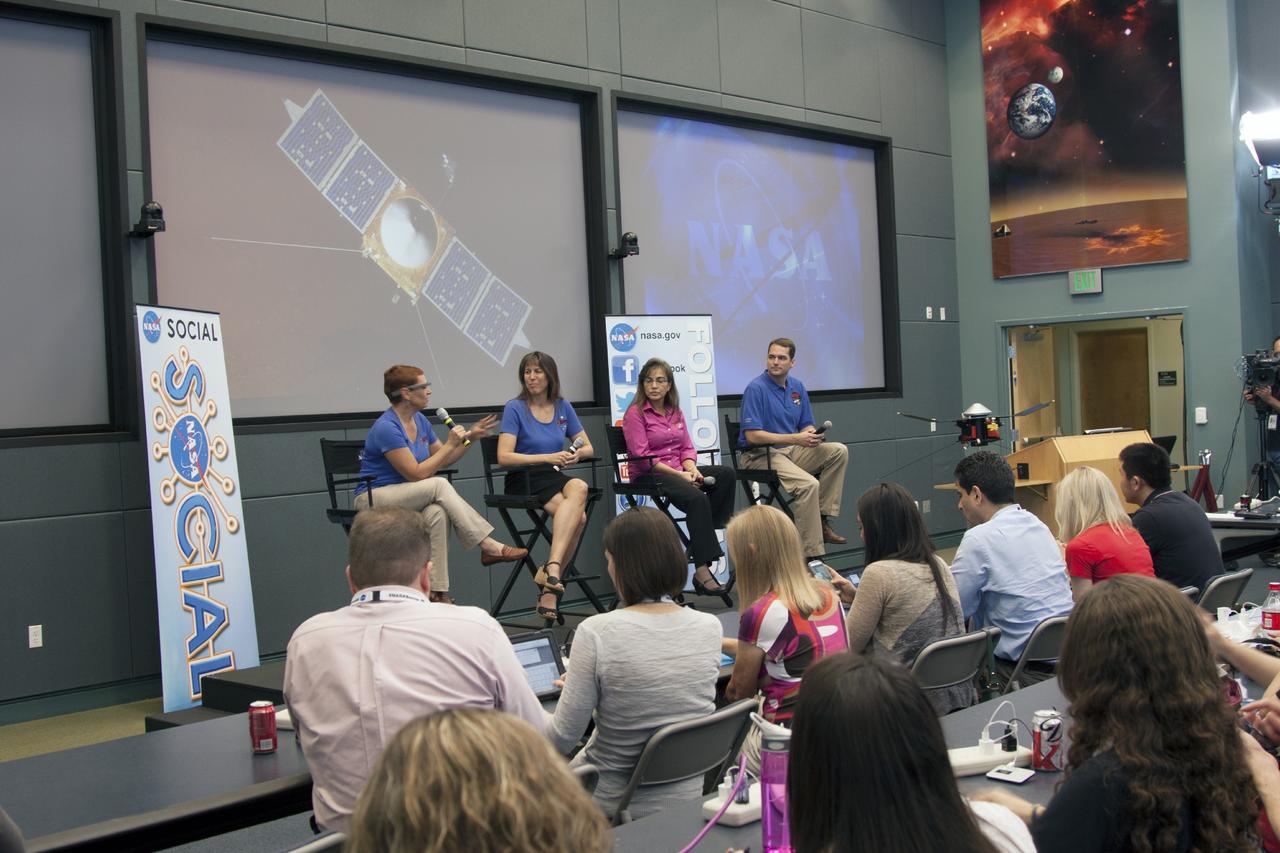
CAPE CANAVERAL, Fla. -- In the conference room of Operations Support Building II at NASA's Kennedy Space Center in Florida, social media participants listen to a briefing on the Mars Atmosphere and Volatile Evolution, or MAVEN, mission by, from the left, Lisa May, MAVEN Program executive, Kelly Fast, Mars Program scientist, Sandra Cauffman, deputy project manager at the agency's Goddard Spaceflight Center, in Greenbelt, Md., and Chris Waters, systems design team lead at Lockheed Martin. The social media participants gathered at the Florida spaceport for the launch of the Mars Atmosphere and Volatile Evolution, or MAVEN, spacecraft. Their visit included tours of key facilities and participating in presentations by key NASA leaders who updated the space agency's current efforts. Photo credit: NASA/Jim Grossman
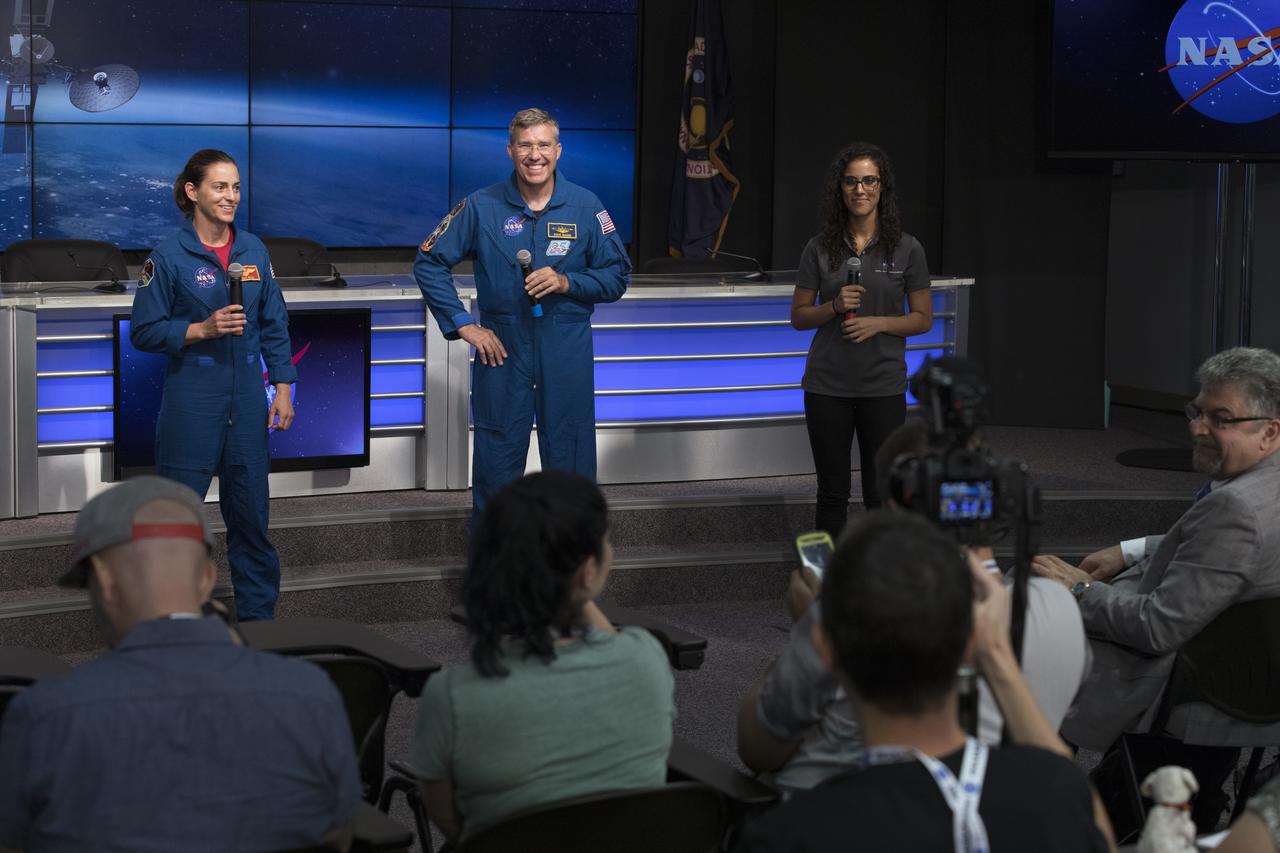
NASA astronauts Nicole Mann, left, and Steve Bowen speak to members of social media in the Kennedy Space Center’s Press Site auditorium. With them on the right is Emily Furfaro of the NASA Social Media Team. The briefing focused on preparations to launch NASA's Tracking and Data Relay Satellite, TDRS-M. The latest spacecraft destined for the agency's constellation of communications satellites, TDRS-M will allow nearly continuous contact with orbiting spacecraft ranging from the International Space Station and Hubble Space Telescope to the array of scientific observatories. Liftoff atop a United Launch Alliance Atlas V rocket is scheduled to take place from Space Launch Complex 41 at Cape Canaveral Air Force Station at 8:03 a.m. EDT Aug. 18.
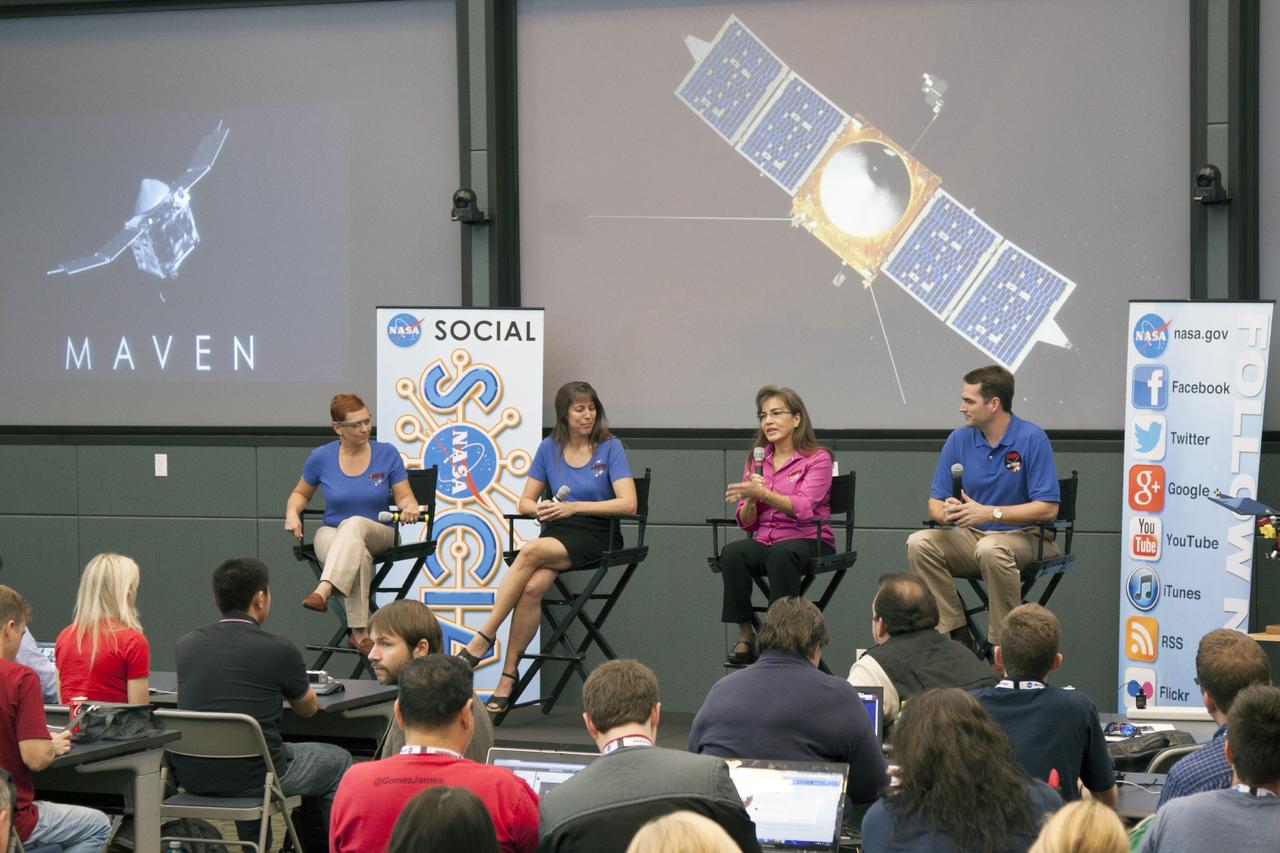
CAPE CANAVERAL, Fla. -- In the conference room of Operations Support Building II at NASA's Kennedy Space Center in Florida, social media participants listen to a briefing on the Mars Atmosphere and Volatile Evolution, or MAVEN, mission by, from the left, Lisa May, MAVEN Program executive, Kelly Fast, Mars Program scientist, Sandra Cauffman, deputy project manager at the agency's Goddard Spaceflight Center, in Greenbelt, Md., and Chris Waters, systems design team lead at Lockheed Martin. The social media participants gathered at the Florida spaceport for the launch of the Mars Atmosphere and Volatile Evolution, or MAVEN, spacecraft. Their visit included tours of key facilities and participating in presentations by key NASA leaders who updated the space agency's current efforts. Photo credit: NASA/Jim Grossman
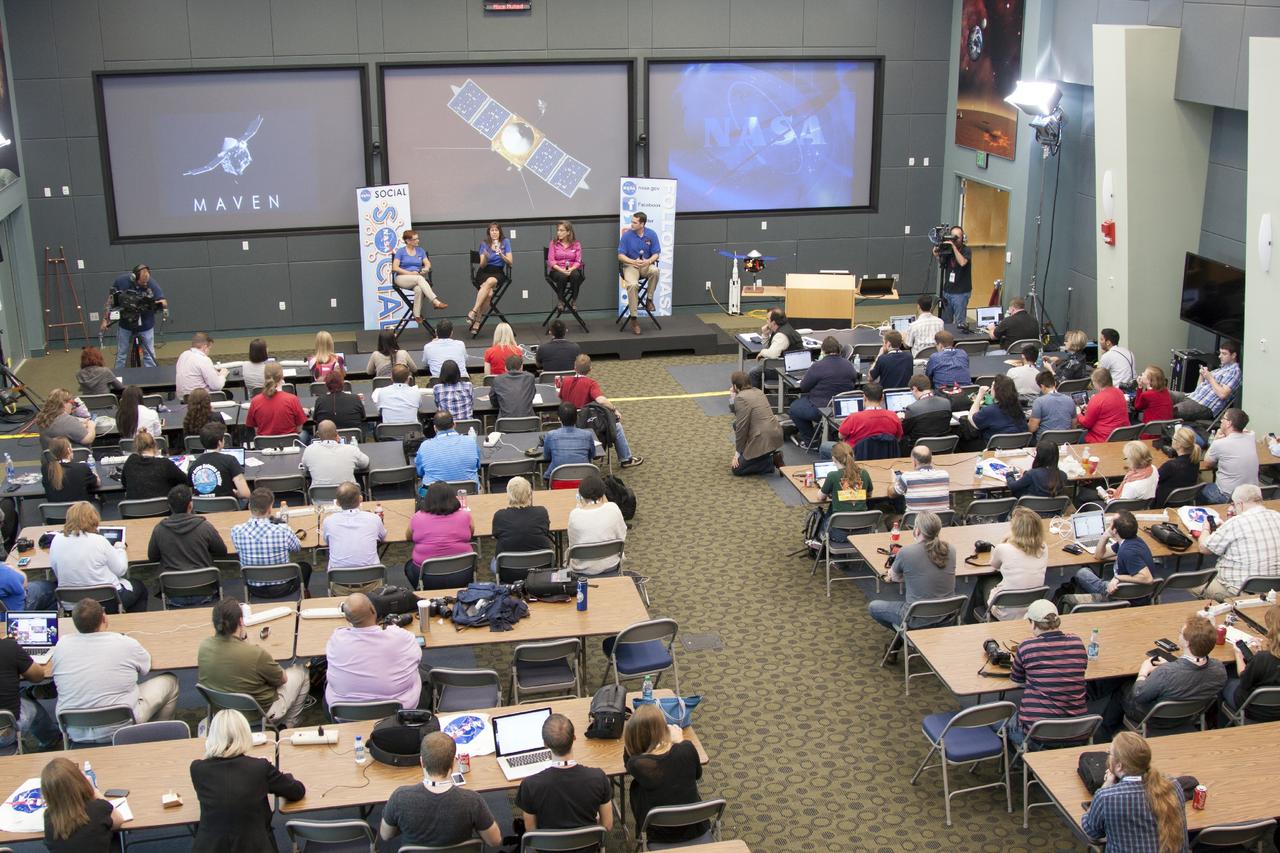
CAPE CANAVERAL, Fla. -- In the conference room of Operations Support Building II at NASA's Kennedy Space Center in Florida, social media participants listen to a briefing on the Mars Atmosphere and Volatile Evolution, or MAVEN, mission by, from the left, Lisa May, MAVEN Program executive, Kelly Fast, Mars Program scientist, Sandra Cauffman, deputy project manager at the agency's Goddard Spaceflight Center, in Greenbelt, Md., and Chris Waters, systems design team lead at Lockheed Martin. The social media participants gathered at the Florida spaceport for the launch of the Mars Atmosphere and Volatile Evolution, or MAVEN, spacecraft. Their visit included tours of key facilities and participating in presentations by key NASA leaders who updated the space agency's current efforts. Photo credit: NASA/Jim Grossman
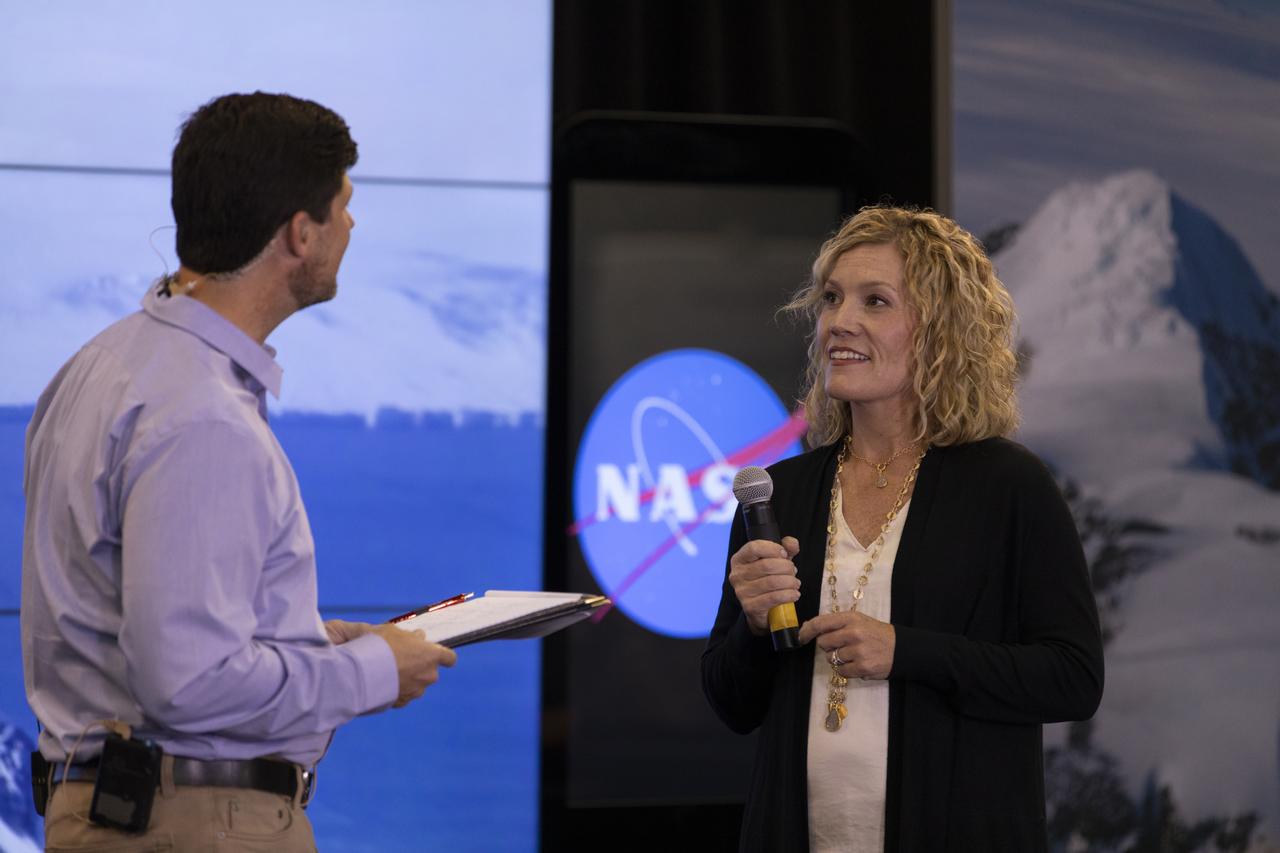
Lori Magruder, University of Texas at Austin, ICESat-2 science definition team lead, speaks to members of the news media and social media participants during a prelaunch mission briefing for NASA's Ice, Cloud and land Elevation Satellite-2 (ICESat-2), a mission to measure the changing height of Earth's ice, on Sept. 13, 2018 at Vandenberg Air Force Base (VAFB) in California. ICESat-2 will launch aboard a United Launch Alliance Delta II, the rocket’s final mission, from Space Launch Complex 2 at VAFB. Launch is scheduled for 8:46 a.m. EDT (5:46 a.m. PDT).

Helen Fricker, Scripps Institution of Oceanography, La Jolla, California, ICESat-2 science definition team member, speaks to members of the news media and social media participants during a prelaunch mission briefing for NASA's Ice, Cloud and land Elevation Satellite-2 (ICESat-2), a mission to measure the changing height of Earth's ice, on Sept. 13, 2018 at Vandenberg Air Force Base (VAFB) in California. ICESat-2 will launch aboard a United Launch Alliance Delta II, the rocket’s final mission, from Space Launch Complex 2 at VAFB. Launch is scheduled for 8:46 a.m. EDT (5:46 a.m. PDT).
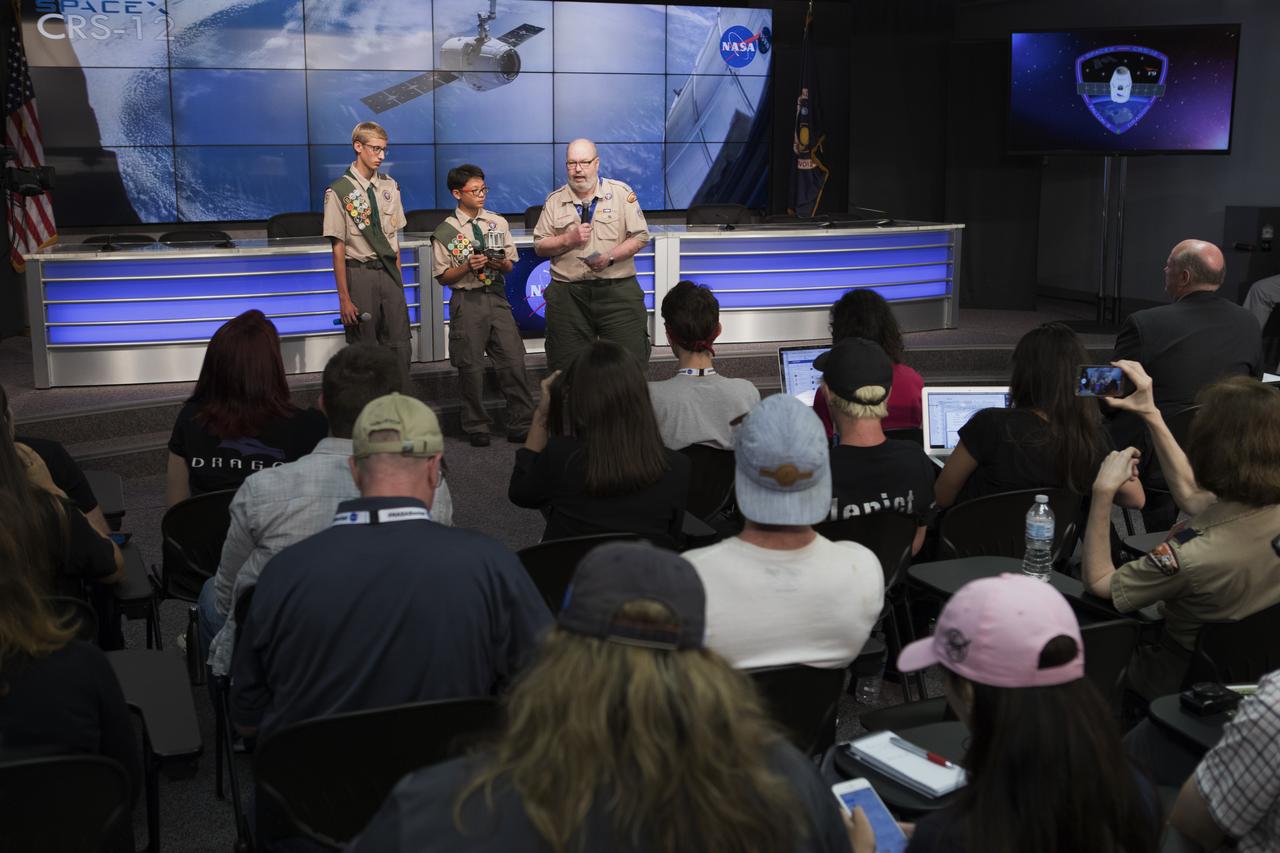
Boy Scouts of America Troop 209 members Andrew Frank, left, Elliot Lee center, and team leader Norman McFarland speak to members of social media in the Kennedy Space Center’s Press Site auditorium. The briefing focused on research planned for launch to the International Space Station. The scientific materials and supplies will be aboard a Dragon spacecraft scheduled for launch from Kennedy’s Launch Complex 39A on Aug. 14 atop a SpaceX Falcon 9 rocket on the company's 12th Commercial Resupply Services mission to the space station.
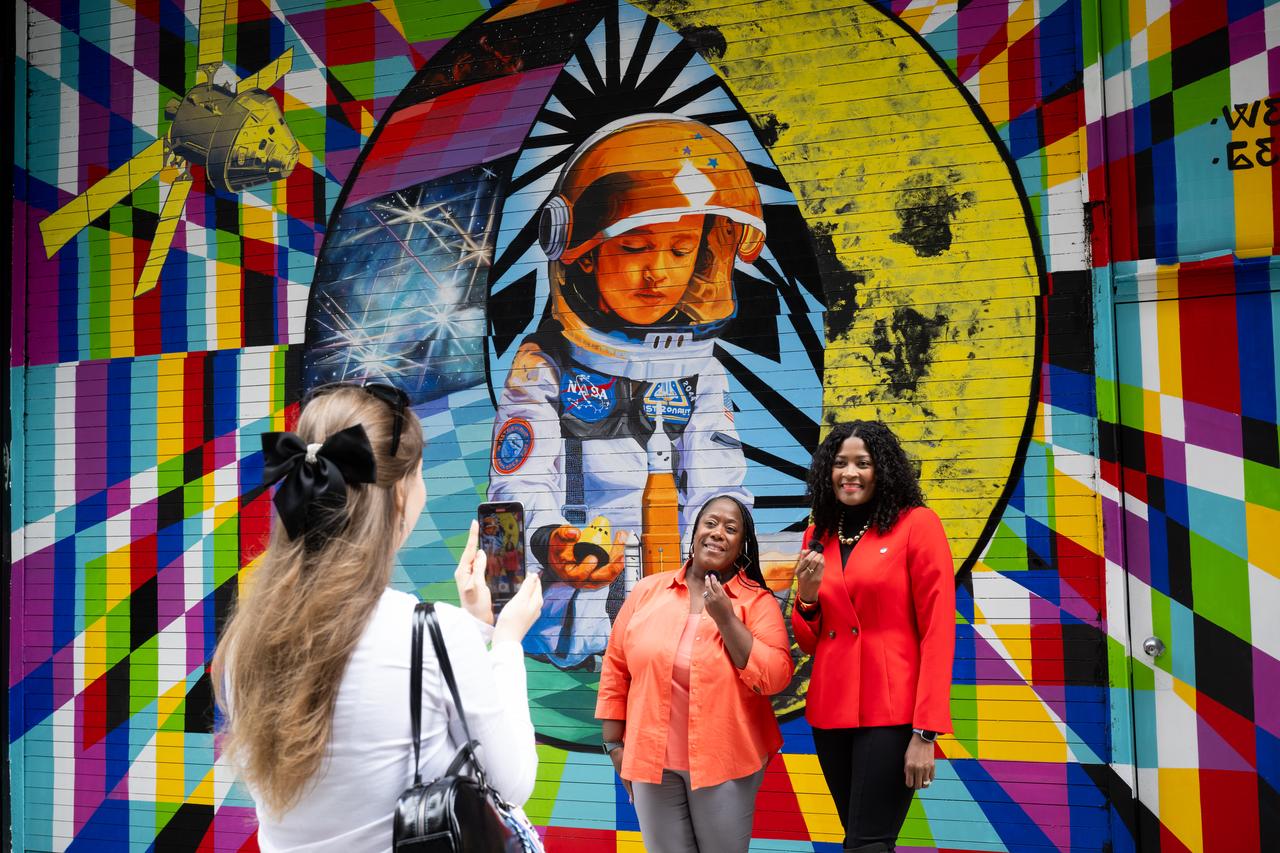
Michelle Jones, NASA’s deputy associate administrator for communications, left, and Aya Collins, director of the engagement division of NASA’s Office of Communications, record a video for social media in front of the mural “To the Moon, and Back” by the New York-based artist team Geraluz and WERC that was created as part of the reimagined NASA Art Program, Tuesday, September 24, 2024, in New York City’s Hudson Square neighborhood. For the inaugural project of the reestablished NASA Art Program the agency collaborated with the Hudson Square Business Improvement District on an open call for New York-based artists to design and install a large-scale mural inspired by NASA’s work and missions. Photo Credit: (NASA/Joel Kowsky)

VANDENBERG AFB, Calif. -- Speaking to NASA social media followers at Vandenberg Air Force Base, Calif., prior to the launch of the Landsat Data Continuity Mission satellite, from the left, are John Yembrick, social media manager at NASA, Dr. Thomas Loveland, senior scientist and co-chair of the Landsat Science Team U.S. Geological Survey Earth Resources Observation and Science Center, and Dr. Jim Irons, Landsat Data Continuity Mission project scientist from NASA's Goddard Space Flight Center. The Landsat Data Continuity Mission LDCM is the future of Landsat satellites. It will continue to obtain valuable data and imagery to be used in agriculture, education, business, science, and government. The Landsat Program provides repetitive acquisition of high resolution multispectral data of the Earth's surface on a global basis. The data from the Landsat spacecraft constitute the longest record of the Earth's continental surfaces as seen from space. It is a record unmatched in quality, detail, coverage, and value. Liftoff is planned for Feb. 11, 2013 aboard a United Launch Alliance Atlas V rocket. For more information, visit: http:__www.nasa.gov_mission_pages_landsat_main_index.html Photo credit: NASA_Kim Shiflett
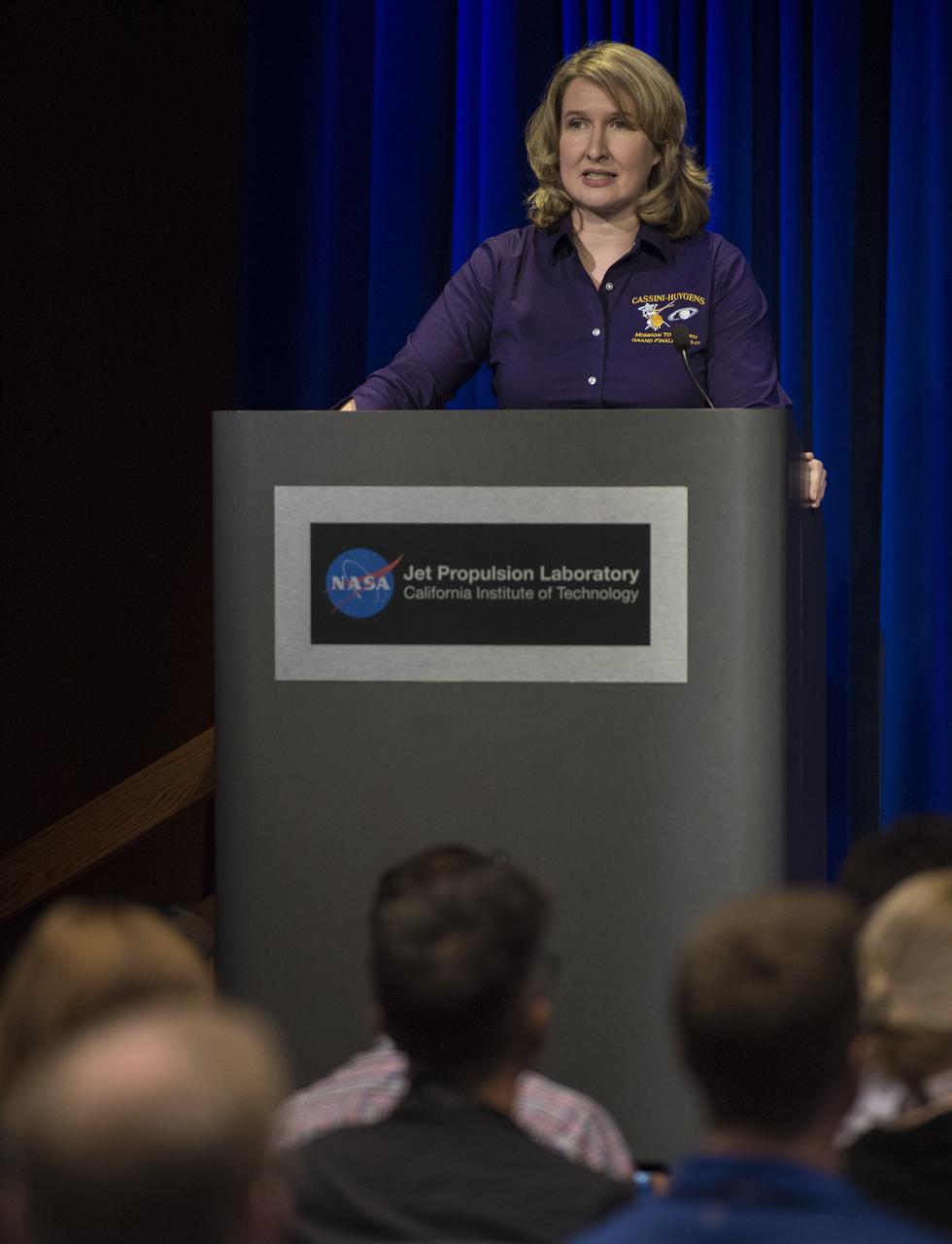
NASA JPL digital and social media lead Stephanie Smith, introduces technical producer for NASA's Eyes at JPL, Jason Craig, Thursday, Sept. 14, 2017 at NASA's Jet Propulsion Laboratory in Pasadena, California. Since its arrival in 2004, the Cassini-Huygens mission has been a discovery machine, revolutionizing our knowledge of the Saturn system and captivating us with data and images never before obtained with such detail and clarity. On Sept. 15, 2017, operators will deliberately plunge the spacecraft into Saturn, as Cassini gathered science until the end. The “plunge” ensures Saturn’s moons will remain pristine for future exploration. During Cassini’s final days, mission team members from all around the world gathered at NASA’s Jet Propulsion Laboratory, Pasadena, California, to celebrate the achievements of this historic mission. Photo Credit: (NASA/Joel Kowsky)

VANDENBERG AFB, Calif. -- Dr. Thomas Loveland, senior scientist and co-chair of the Landsat Science Team U.S. Geological Survey Earth Resources Observation and Science Center, left, and Dr. Jim Irons, Landsat Data Continuity Mission project scientist from NASA's Goddard Space Flight Center, speak to NASA social media followers at Vandenberg Air Force Base, Calif., prior to the launch of the LDCM satellite. The Landsat Data Continuity Mission LDCM is the future of Landsat satellites. It will continue to obtain valuable data and imagery to be used in agriculture, education, business, science, and government. The Landsat Program provides repetitive acquisition of high resolution multispectral data of the Earth's surface on a global basis. The data from the Landsat spacecraft constitute the longest record of the Earth's continental surfaces as seen from space. It is a record unmatched in quality, detail, coverage, and value. Liftoff is planned for Feb. 11, 2013 aboard a United Launch Alliance Atlas V rocket. For more information, visit: http:__www.nasa.gov_mission_pages_landsat_main_index.html Photo credit: NASA_Kim Shiflett
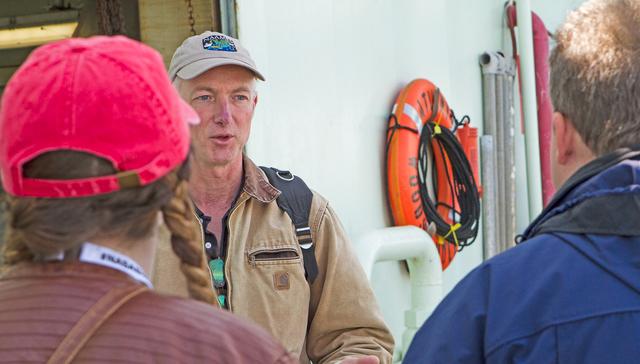
NAAMES Principal Investigator Mike Behrenfeld speaks to a visiting group of social media reporters and bloggers who toured the Atlantis prior to its departure. --- The <b><a href="http://naames.larc.nasa.gov/" rel="nofollow">North Atlantic Aerosols and Marine Ecosystems Study </a></b> (NAAMES) is a five year investigation to resolve key processes controlling ocean system function, their influences on atmospheric aerosols and clouds and their implications for climate. Michael Starobin joined the NAAMES field campaign on behalf of Earth Expeditions and NASA Goddard Space Flight Center’s Office of Communications. He presented stories about the important, multi-disciplinary research being conducted by the NAAMES team, with an eye towards future missions on the NASA drawing board. This is a NAAMES photo essay put together by Starobin, a collection of 49 photographs and captions. Photo and Caption Credit: Michael Starobin <b><a href="http://www.nasa.gov/audience/formedia/features/MP_Photo_Guidelines.html" rel="nofollow">NASA image use policy</a></b> <b><a href="http://www.nasa.gov/centers/goddard/home/index.html" rel="nofollow">NASA Goddard Space Flight Center</a></b> enables NASA’s mission through four scientific endeavors: Earth Science, Heliophysics, Solar System Exploration, and Astrophysics. Goddard plays a leading role in NASA’s accomplishments by contributing compelling scientific knowledge to advance the Agency’s mission. <b>Follow us on <a href="http://twitter.com/NASAGoddardPix" rel="nofollow">Twitter</a></b> <b>Like us on <a href="http://www.facebook.com/pages/Greenbelt-MD/NASA-Goddard/395013845897?ref=tsd" rel="nofollow">Facebook</a></b> <b>Find us on <a href="https://www.instagram.com/nasagoddard/?hl=en" rel="nofollow">Instagram</a></b>
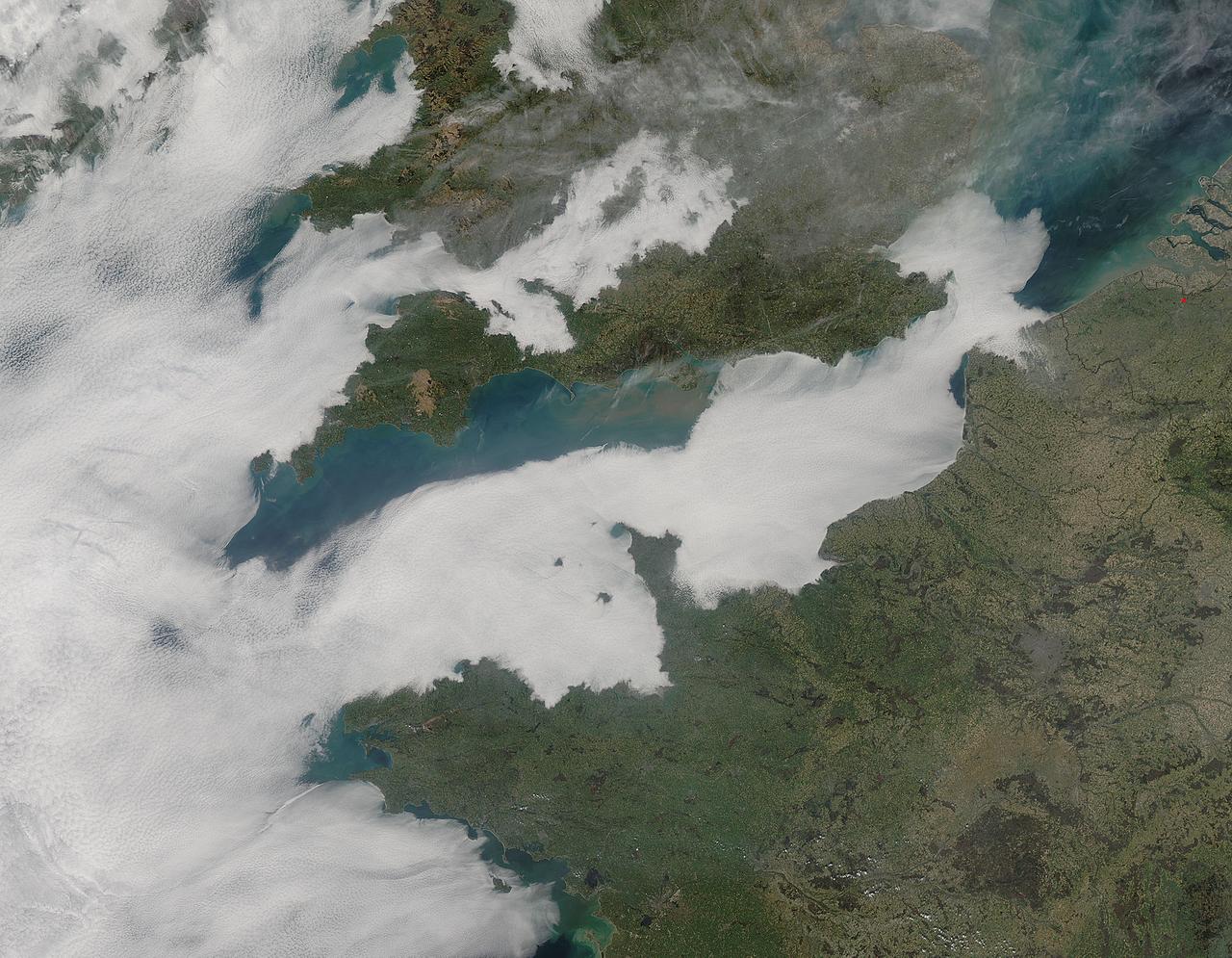
A thick blanket of low clouds covered the English Channel, Celtic Sea and Irish Sea on March 13, 2014. The fog also crept over major cities in the United Kingdom and Ireland. While citizens living in parts of Ireland, England, Wales, Scotland and Northern Ireland were posting ground-based photos of fog-shrouded landscape on social media, the internet and news outlets, the scene was also captured from space. The Moderate Resolution Imaging Spectroradiometer (MODIS) aboard NASA’s Aqua captured this true-color image of the cloudy day at 13:00 UTC (1:00 p.m. in London) on that same day. The dense fog (low clouds) affected air travel, causing the cancellation of hundreds of flights going through London City Airport, where visibility was reported at less than 100 meters (328 ft) – less than the length of an American football field. Flights were also cancelled at Heathrow, Gatwick and Manchester. A private helicopter flying to Northern Ireland went down in by the fog near the Norfolk-Suffolk border, with loss of four lives. Driving was little better in many areas, causing the Met Office to issue a yellow weather warning and to caution drivers of difficult conditions. The lowest visibility of the day was reported at Roches Point weather station. Located at the southeastern tip of Cork Harbor, Ireland, the station reported visibility of less than 50 meters (164 ft) – the length of an Olympic size swimming pool. In this image, the fog-covered Celtic Sea is located in the southwest. Ireland lies under tendrils of low cloud in the northwest corner of the image. Banks of clouds part around England, near the center of the image, and southern Wales (top and center) completely under the foggy blanket. Fog also creeps over the coasts of France, Belgium and the Netherlands on the east side of the English Channel. Credit: NASA/GSFC/Jeff Schmaltz/MODIS Land Rapid Response Team <b><a href="http://www.nasa.gov/audience/formedia/features/MP_Photo_Guidelines.html" rel="nofollow">NASA image use policy.</a></b> <b><a href="http://www.nasa.gov/centers/goddard/home/index.html" rel="nofollow">NASA Goddard Space Flight Center</a></b> enables NASA’s mission through four scientific endeavors: Earth Science, Heliophysics, Solar System Exploration, and Astrophysics. Goddard plays a leading role in NASA’s accomplishments by contributing compelling scientific knowledge to advance the Agency’s mission. <b>Follow us on <a href="http://twitter.com/NASAGoddardPix" rel="nofollow">Twitter</a></b> <b>Like us on <a href="http://www.facebook.com/pages/Greenbelt-MD/NASA-Goddard/395013845897?ref=tsd" rel="nofollow">Facebook</a></b> <b>Find us on <a href="http://instagram.com/nasagoddard?vm=grid" rel="nofollow">Instagram</a></b>