
Senior Project Scientist for the James Webb Space Telescope, Jane Rigby’s socks are seen during an event titled “Beyond the Deep Field: Hubble’s Legacy and the Future of Cosmic Observation,” Friday, June 5, 2026, at the Mary W. Jackson NASA Headquarters building in Washington. Photo Credit: (NASA/Aubrey Gemignani)
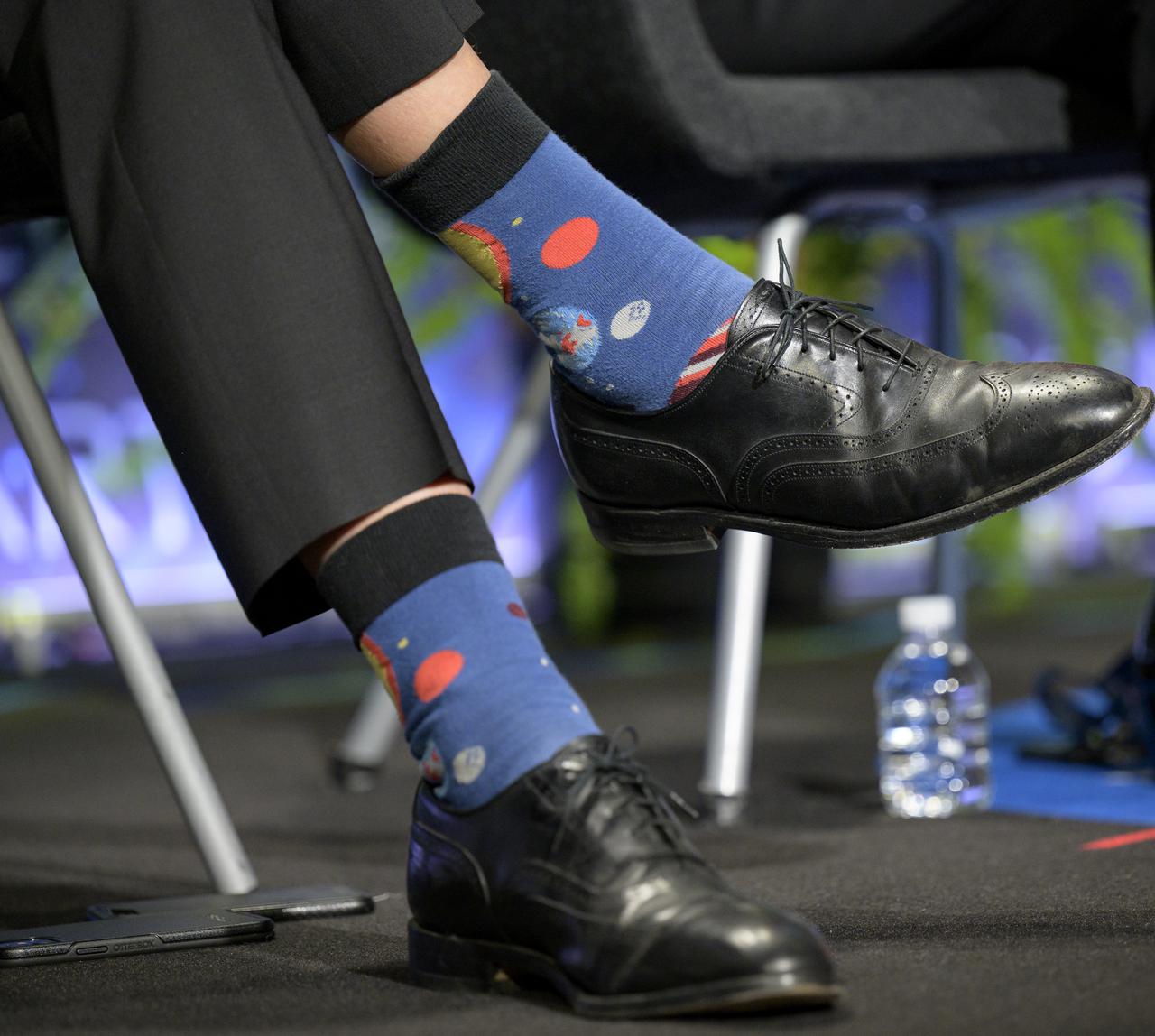
The socks of NASA Associate Administrator for Science Thomas Zurbuchen are seen as he answers a reporter’s question during a media gaggle, Wednesday, June 2, 2021, at NASA Headquarters Mary W. Jackson Building in Washington. Zurbuchen, along with NASA Administrator Bill Nelson and other NASA leadership, answered reporters questions following a State of NASA event where Nelson remarked on his long history with NASA, and among other topics, discussed the agency’s plans for future Earth-focused missions to address climate change and a robotic and human return to the Moon through the Artemis program, as well as announcing two new planetary science missions to Venus – VERITAS and DAVINCI+. Photo Credit: (NASA/Bill Ingalls)
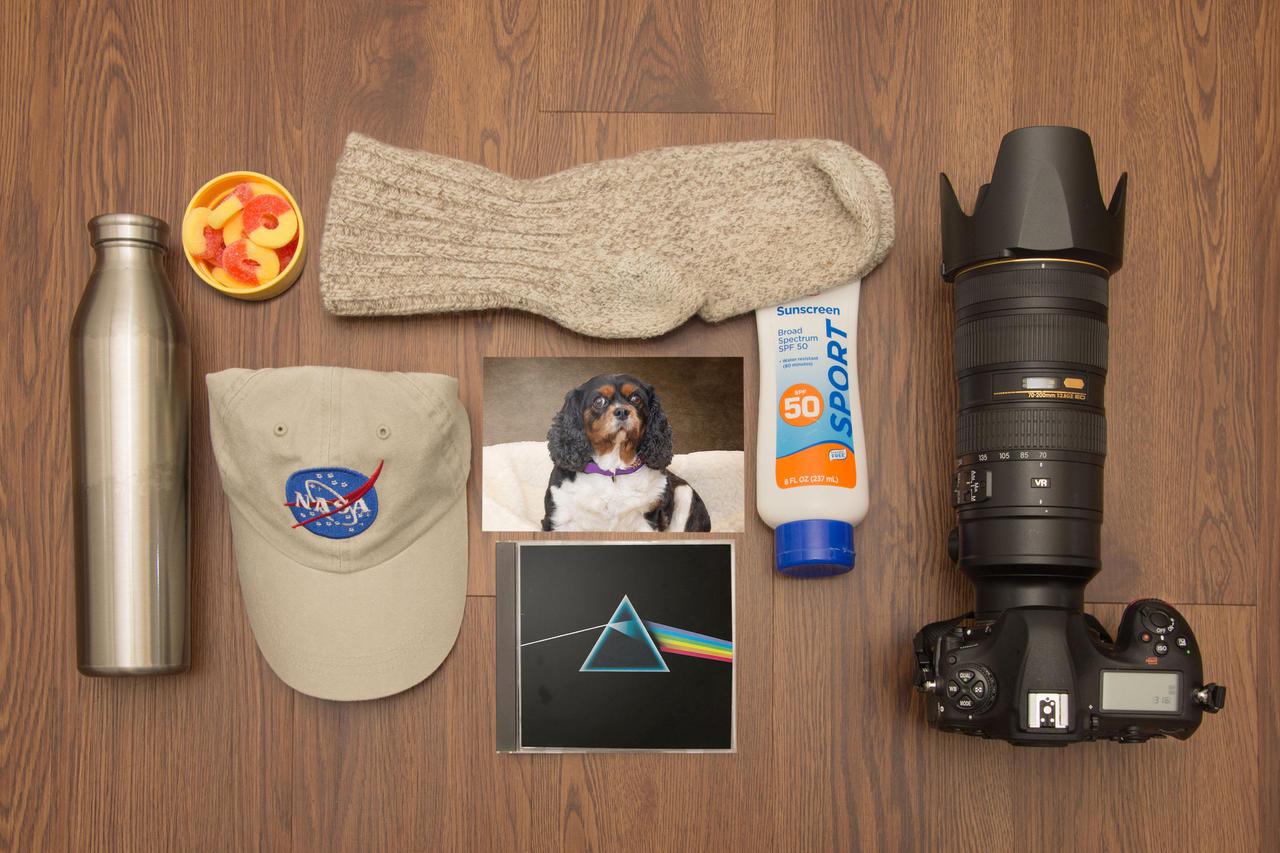
The first thing that went into my Moonkit was my camera. Some of the most iconic photographs ever taken were captured on the surface of the Moon by NASA astronauts. The camera has to go. The hat and sunscreen will be a must to protect me from the unfiltered sunlight. Warm socks? Of course, my feet are always cold. A little “Moon Music” and a photo of Holly, the best dog in the world, will pass the time during breaks. Lastly, I need to eat. Water and gummy peach rings will pack in a small corner of my pack. Marv Smith Lead Photographer, NASA Glenn Research Center
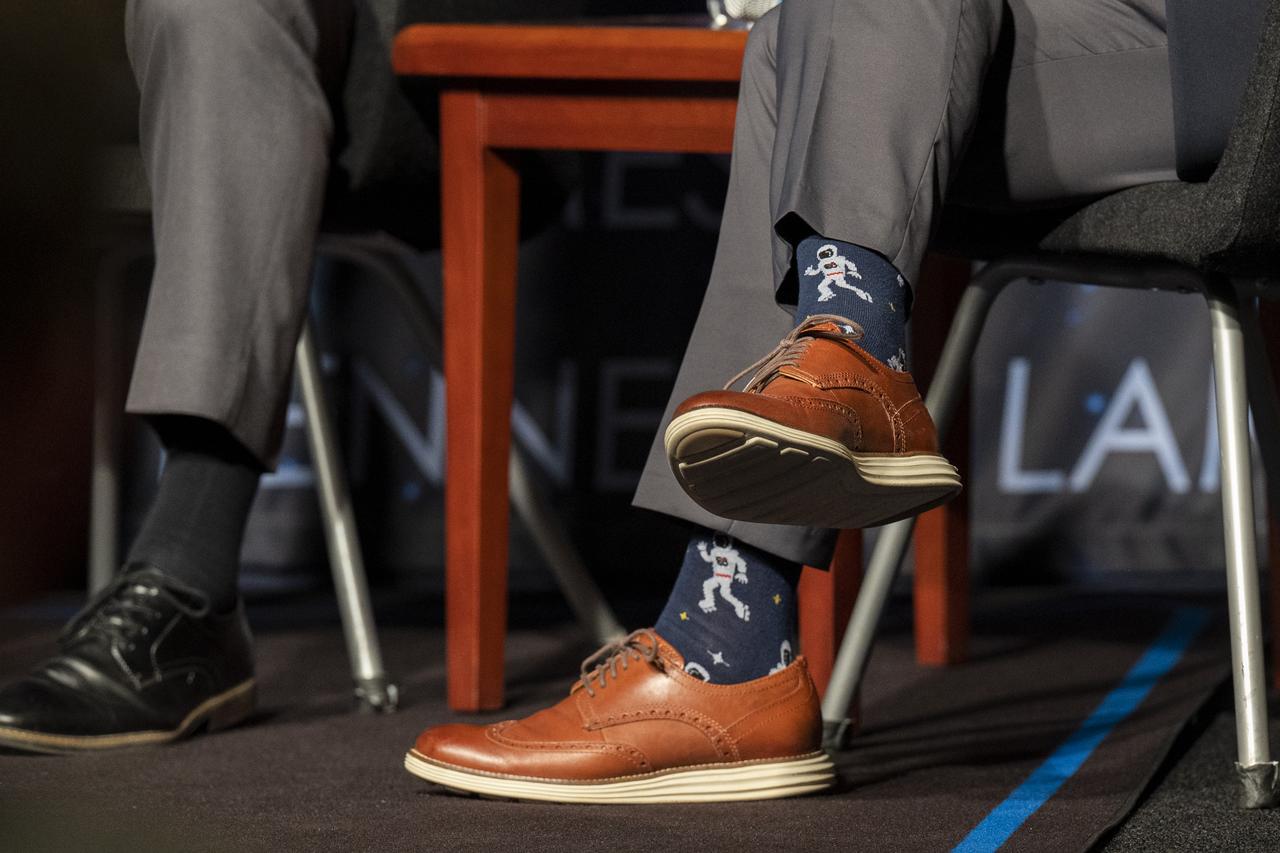
The astronaut themed socks of NASA Associate Administrator Bob Cabana are seen during a Moon to Mars Town Hall, Thursday, May 18, 2023, at the Mary W. Jackson NASA Headquarters building in Washington. Photo Credit: (NASA/Keegan Barber)
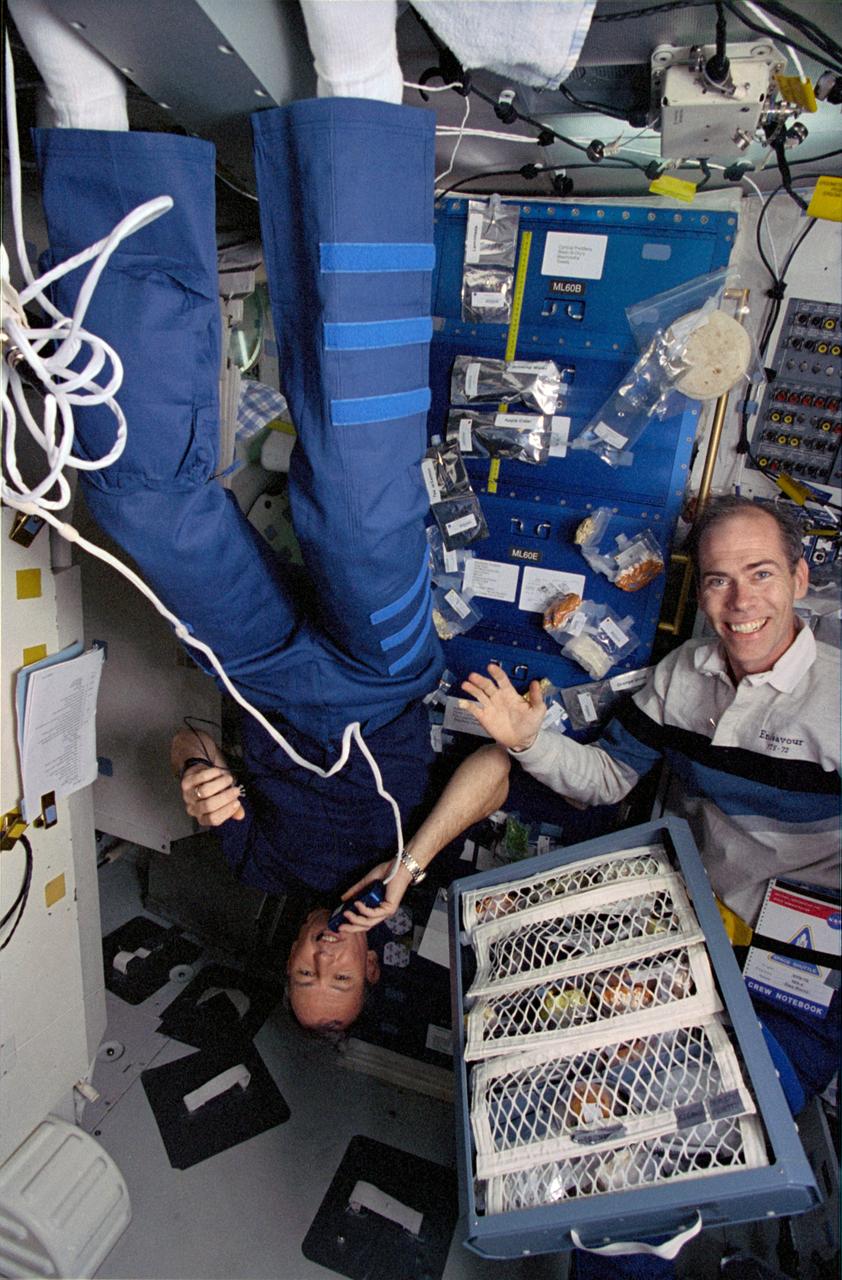
STS072-306-004 (11-20 Jan. 1996) --- Astronauts Brian Duffy (left), mission commander, and Daniel T. Barry, mission specialist, team up to prepare a meal on the Space Shuttle Endeavour’s middeck. Duffy is also talking to ground controllers during a television tour of the spacecraft. A locker drawer, complete with pre-packaged food is in the foreground, while various smaller packets of food items are attached to nearby locker doors. Orient photo with socked feet at bottom.
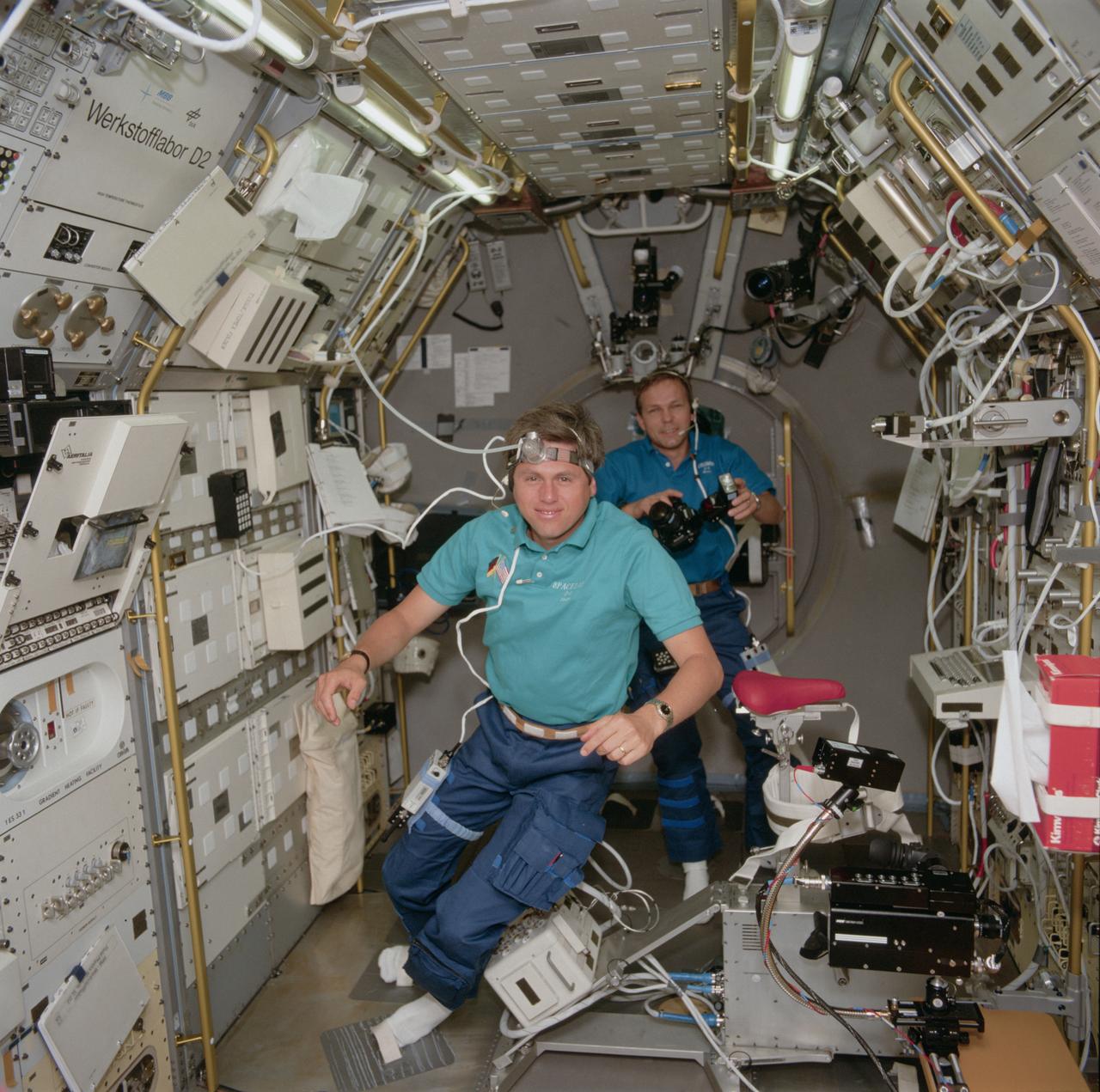
STS055-106-056 (26 April-6 May 1993) --- Ulrich Walter, one of two payload specialists representing the German Aerospace Research Establishment (DLR) onboard Columbia, plants his socked feet into temporary foot restraints. Walter's headwear telltales his participation in a Tissue experiment. Fellow payload specialist Hans Schlegel prepares to take a photo in the background.
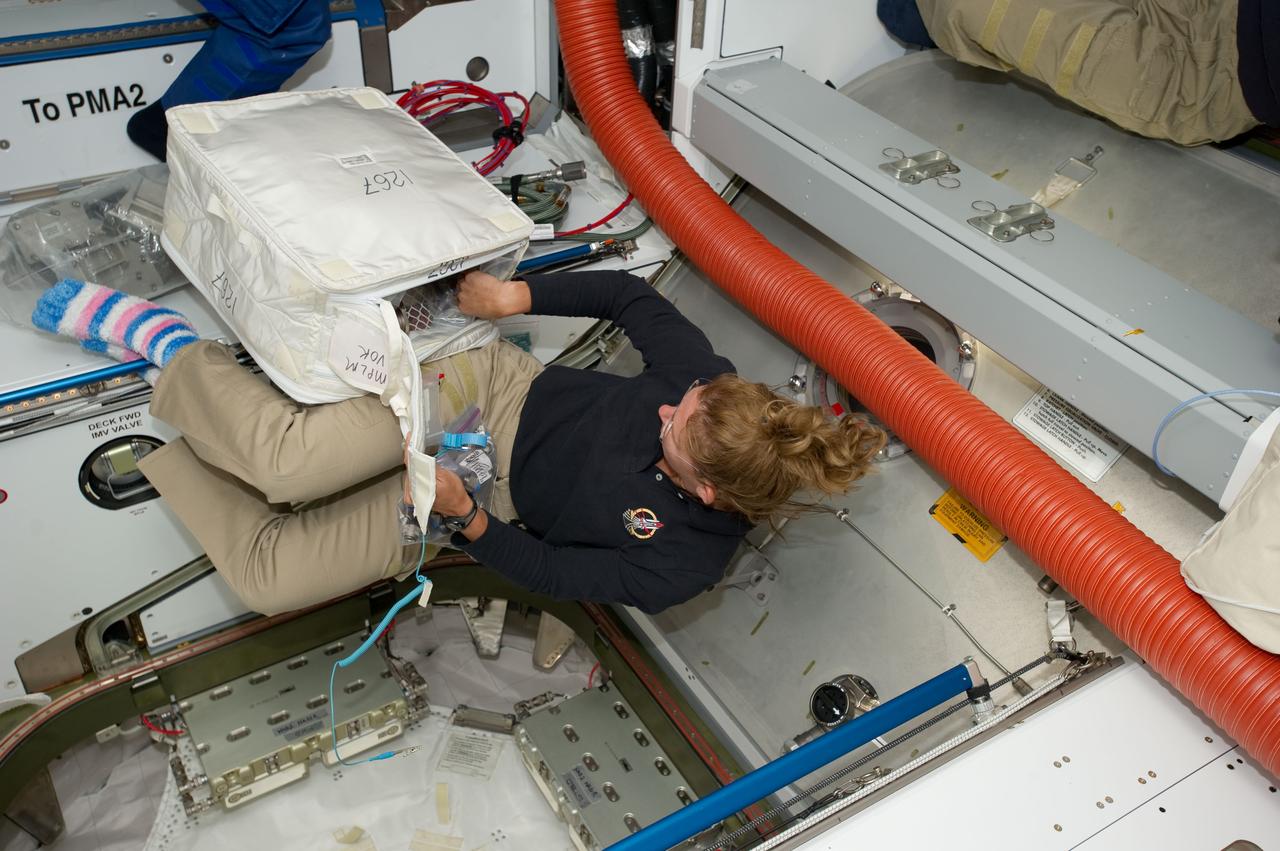
S135-E-007401 (11 July 2011) --- Toting a cargo transfer bag filled with supplies that was carried aboard Raffaello in Atlantis' cargo bay, NASA astronaut Sandy Magnus participates in a very busy move operation on the fourth day in space for the STS-135 crew. She is in Node 2 or Harmony, near the PMA-2 passageway, on the International Space Station. She is sporting the striped socks that she rediscovered on the station which had remained there since her long duration stay on the orbital outpost a few years ago. Photo credit: NASA
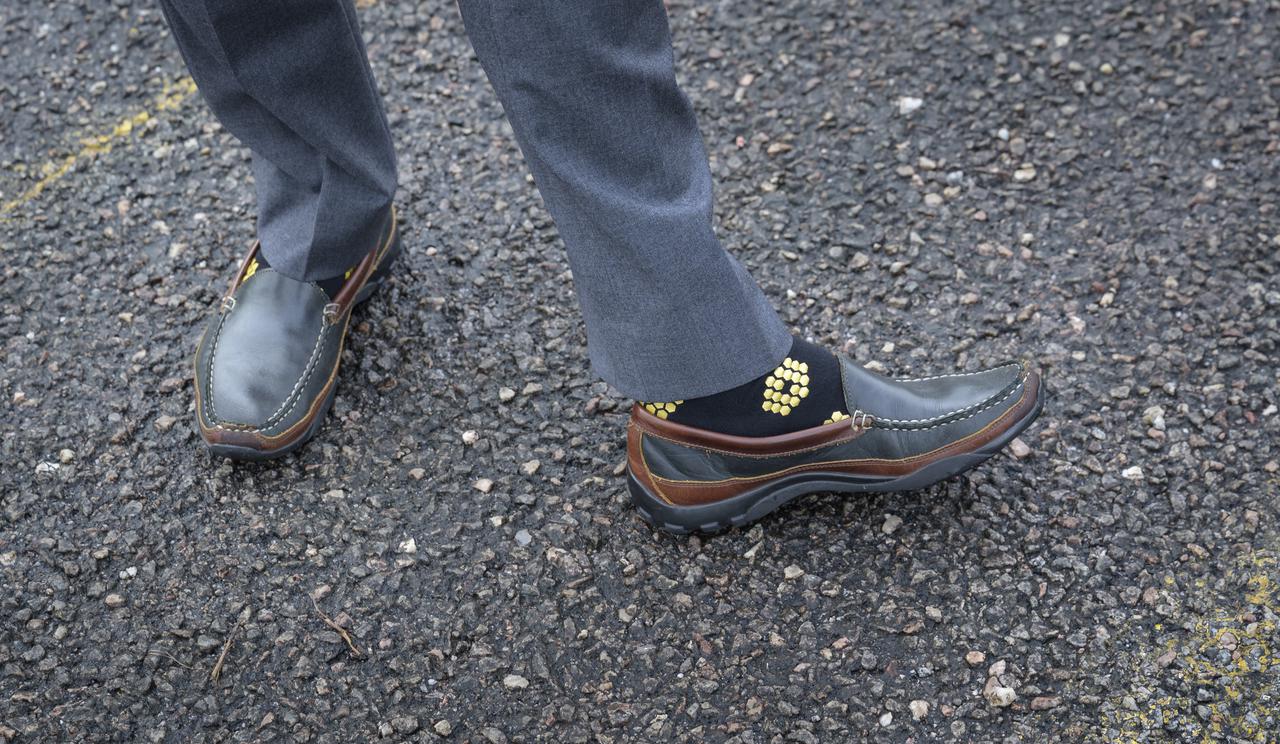
NASA James Webb Space Telescope Program Scientist Eric Smith, wearing Webb themed socks, waits for Arianespace's Ariane 5 rocket with NASA’s James Webb Space Telescope onboard, to rollout to the launch pad, Thursday, Dec. 23, 2021, at Europe’s Spaceport, the Guiana Space Center in Kourou, French Guiana. The James Webb Space Telescope (sometimes called JWST or Webb) is a large infrared telescope with a 21.3 foot (6.5 meter) primary mirror. The observatory will study every phase of cosmic history—from within our solar system to the most distant observable galaxies in the early universe. Photo Credit: (NASA/Bill Ingalls)
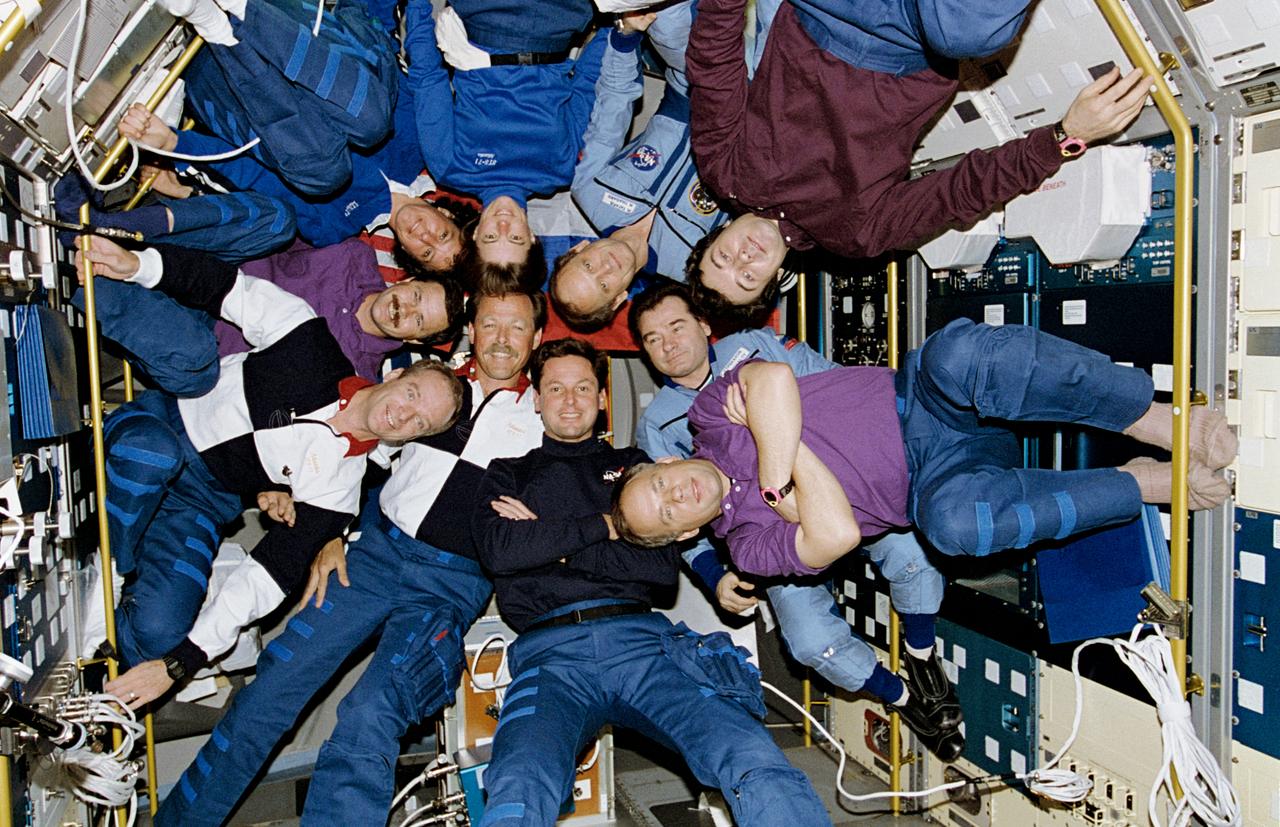
STS071-122-013 (27 June-7 July 1995) --- Inside the space shuttle Atlantis' Spacelab Science Module, the crewmembers of STS-71, Mir-18 and Mir-19 pose for the traditional inflight portrait. For individual identification, hold picture vertically with socked feet of Anatoly Y. Solovyev at bottom center. Clockwise from Solovyev are astronauts Gregory J. Harbaugh, Robert L. Gibson, Charles J. Precourt, Nikolai M. Budarin, Ellen S. Baker, Bonnie J. Dunbar, Norman E. Thagard, and cosmonauts Gennadiy M. Strekalov (at angle) and Vladimir N. Dezhurov.
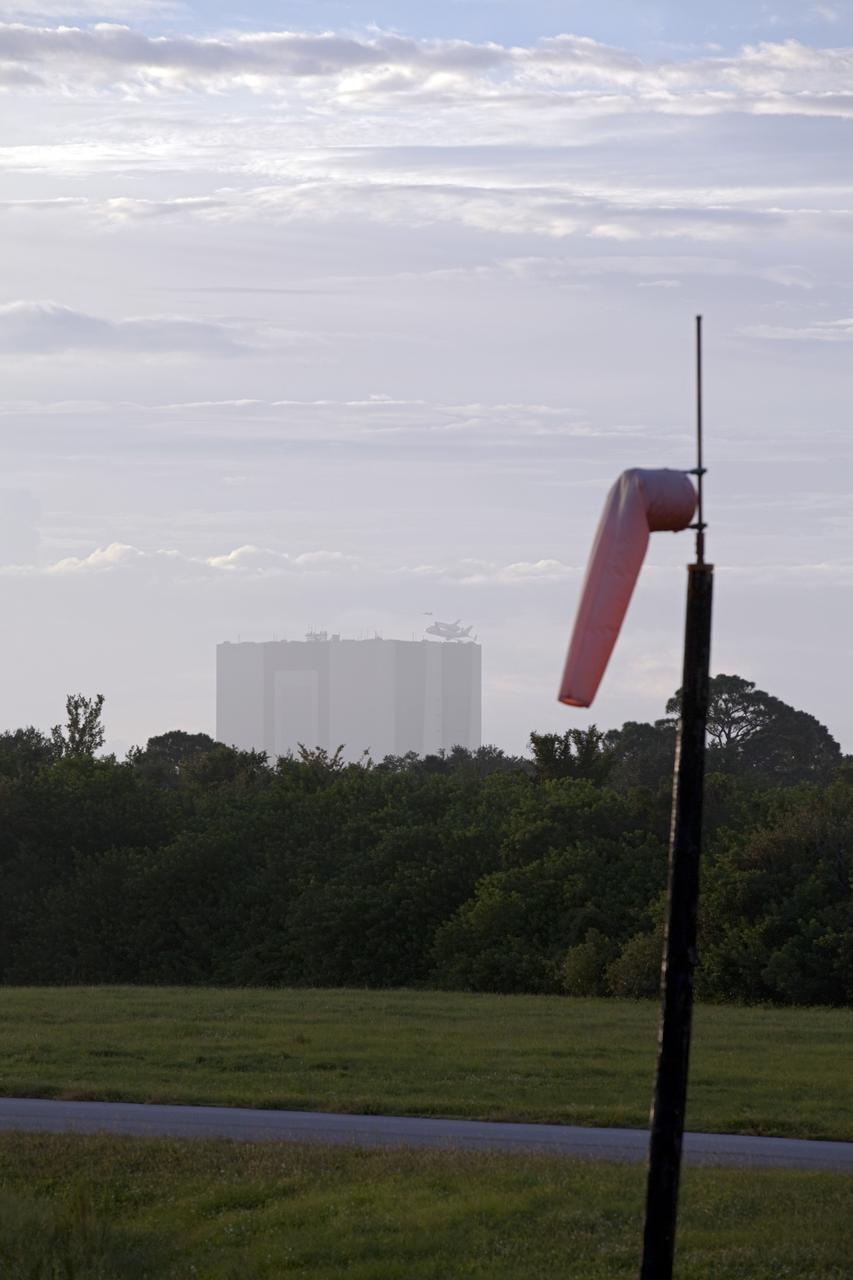
CAPE CANAVERAL, Fla. – At the Shuttle Landing Facility at NASA's Kennedy Space Center in Florida, NASA's Shuttle Carrier Aircraft, or SCA, with the space shuttle Endeavour mounted atop, flies over the Vehicle Assembly Building after takeoff for its ferry flight to California. A runway wind sock is in the foreground. The SCA, a modified 747 jetliner, will fly Endeavour to Los Angeles where it will be placed on public display at the California Science Center. This is the final ferry flight scheduled in the Space Shuttle Program era. For more information on the shuttles' transition and retirement, visit http://www.nasa.gov/transition. Photo credit: NASA/Frankie Martin
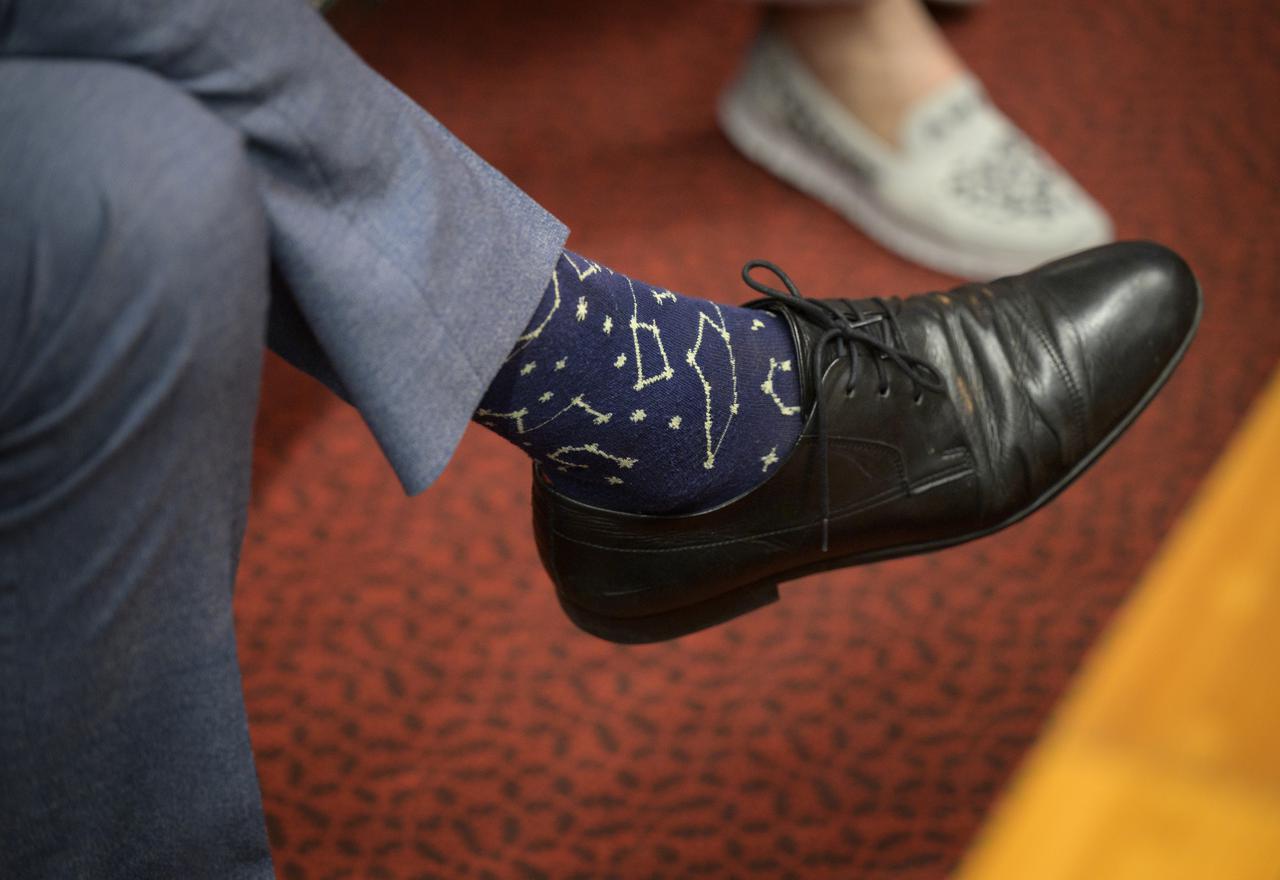
NASA Associate Administrator for the Science Mission Directorate Thomas Zurbuchen, wearing astrological themed socks, monitors the countdown to the launch of Arianespace's Ariane 5 rocket carrying NASA’s James Webb Space Telescope, Saturday, Dec. 25, 2021, in the Jupiter Center at the Guiana Space Center in Kourou, French Guiana. The James Webb Space Telescope (sometimes called JWST or Webb) is a large infrared telescope with a 21.3 foot (6.5 meter) primary mirror. The observatory will study every phase of cosmic history—from within our solar system to the most distant observable galaxies in the early universe. Photo Credit: (NASA/Bill Ingalls)
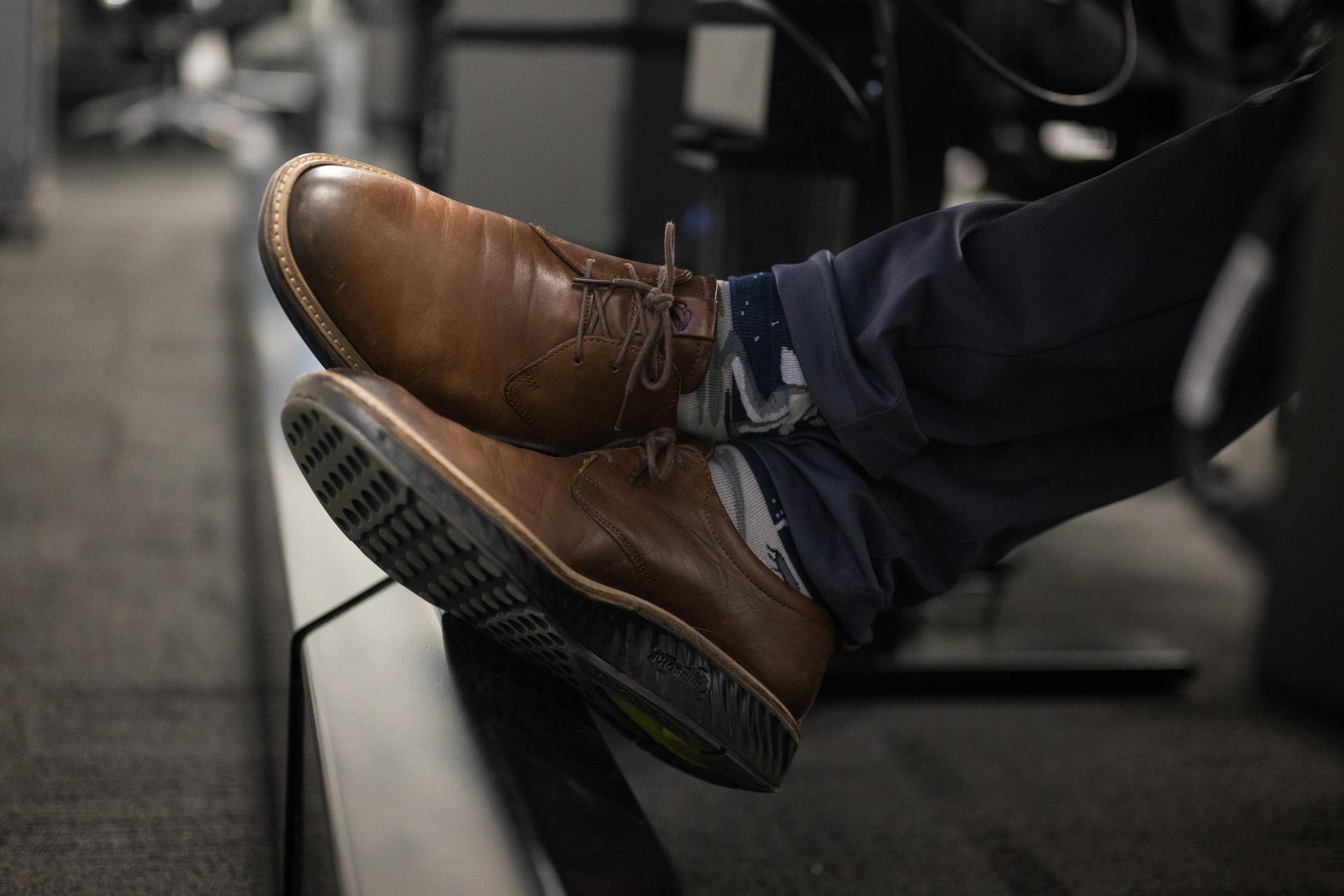
A mission team member's space themed socks are seen as he monitors the countdown of the launch of a SpaceX Falcon 9 rocket carrying the company's Dragon spacecraft on NASA’s SpaceX Crew-12 mission with NASA astronauts Jessica Meir, Jack Hathaway, ESA (European Space Agency) astronaut Sophie Adenot, and Roscosmos cosmonaut Andrey Fedyaev onboard, Friday, Feb. 13, 2026, in the control center of SpaceX’s HangarX at NASA’s Kennedy Space Center in Florida. NASA’s SpaceX Crew-12 mission is the twelfth crew rotation mission of the SpaceX Dragon spacecraft and Falcon 9 rocket to the International Space Station as part of the agency’s Commercial Crew Program. Meir, Hathaway, Adenot, and Fedyaev are scheduled to launch at 5:15 a.m. EST, from Space Launch Complex 40 at the Cape Canaveral Space Force Station. Photo Credit: (NASA/Aubrey Gemignani)

CAPE CANAVERAL, Fla. -- This is a printable version of the NASA Kennedy Space Center 2012 holiday poster. It depicts Santa Claus riding a spacecraft from NASA's Commercial Crew Program as he delivers toys all over the world for the holidays, including Astro Socks, Cosmic Soda and Magnetic boots that have been International Space Station certified. Santa also holds a model rocket for delivery and is steering his rocketship toward a stop at the space station during his deliveries. Lifting off from NASA's Kennedy Space Center in Florida, Santa is taking advantage of technologies developed at Kennedy in the Ground Systems Operations and Development Program and the Launch Services Program. The same advancements that are propelling Santa through space will be used for NASA's next generation of deep space missions: the Space Launch System rocket and Orion spacecraft. The NASA insignia appears in the upper right corner. For a black-and-white coloring sheet version, go to http://go.nasa.gov/V3KLEc. For more information, visit www.nasa.gov/kennedy.Poster designed by Kennedy Space Center Graphics Department. Credit: NASA
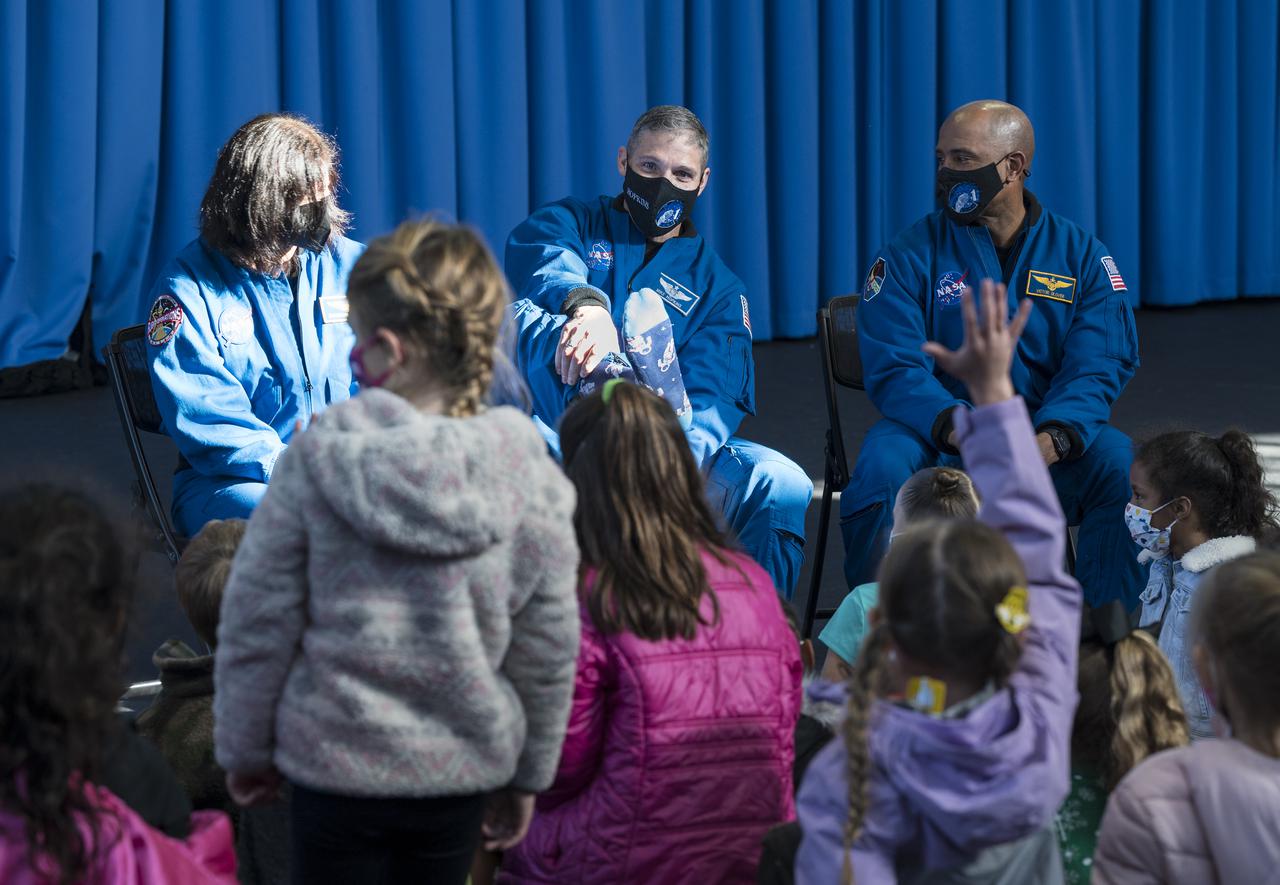
SpaceX Crew-1 NASA astronaut Mike Hopkins, center, displays one of the gifts that he received while living at the International Space Station, while he and crew mates NASA astronaut Shannon Walker, left, and Victor Glover, right, answer questions by students from the Learn DC public charter school at Joint Base Anacostia-Bolling (JBAB), Friday, Nov. 19, 2021, in Washington. Hopkins, Glover, Walker, and Japan Aerospace Exploration Agency (JAXA) astronaut Soichi Noguchi, launched on the first crew rotation mission to the International Space Station for SpaceX’s Falcon 9 and Crew Dragon spacecraft as part of the agency’s Commercial Crew Program and spent 168 days in space across Expeditions 64 and 65. Photo Credit: (NASA/Aubrey Gemignani)