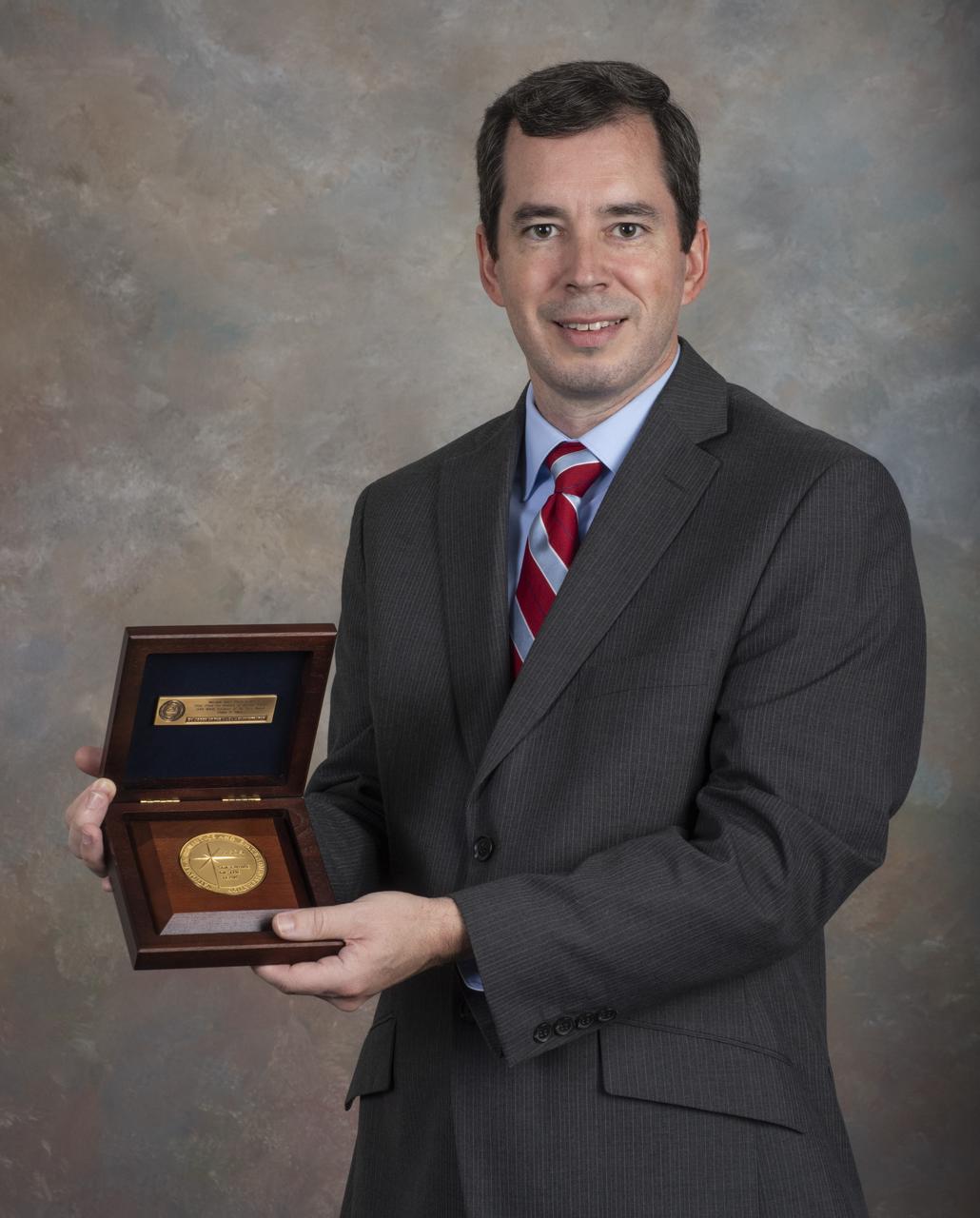
Phillip Allen with NASA Software of the Year Award
Launch Software Team in Launch Control Center.
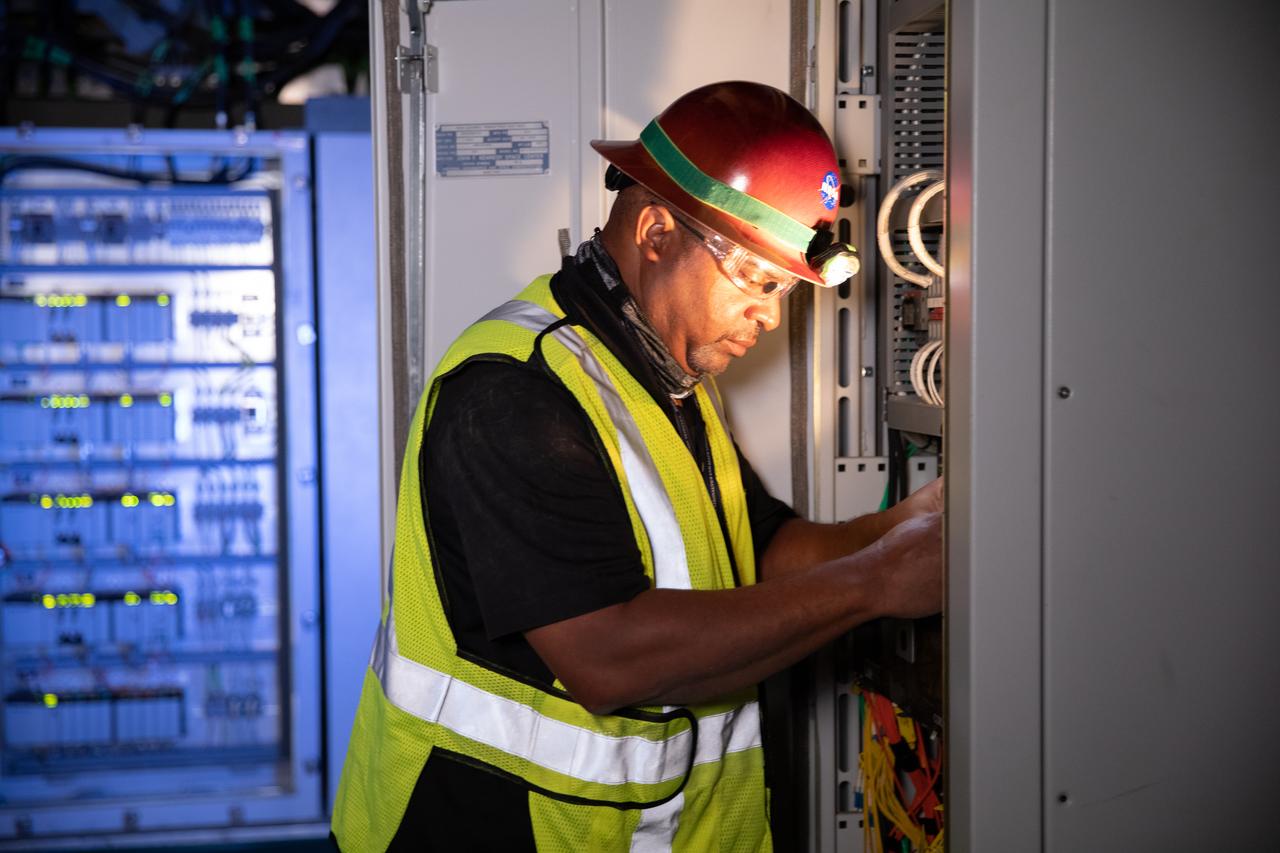
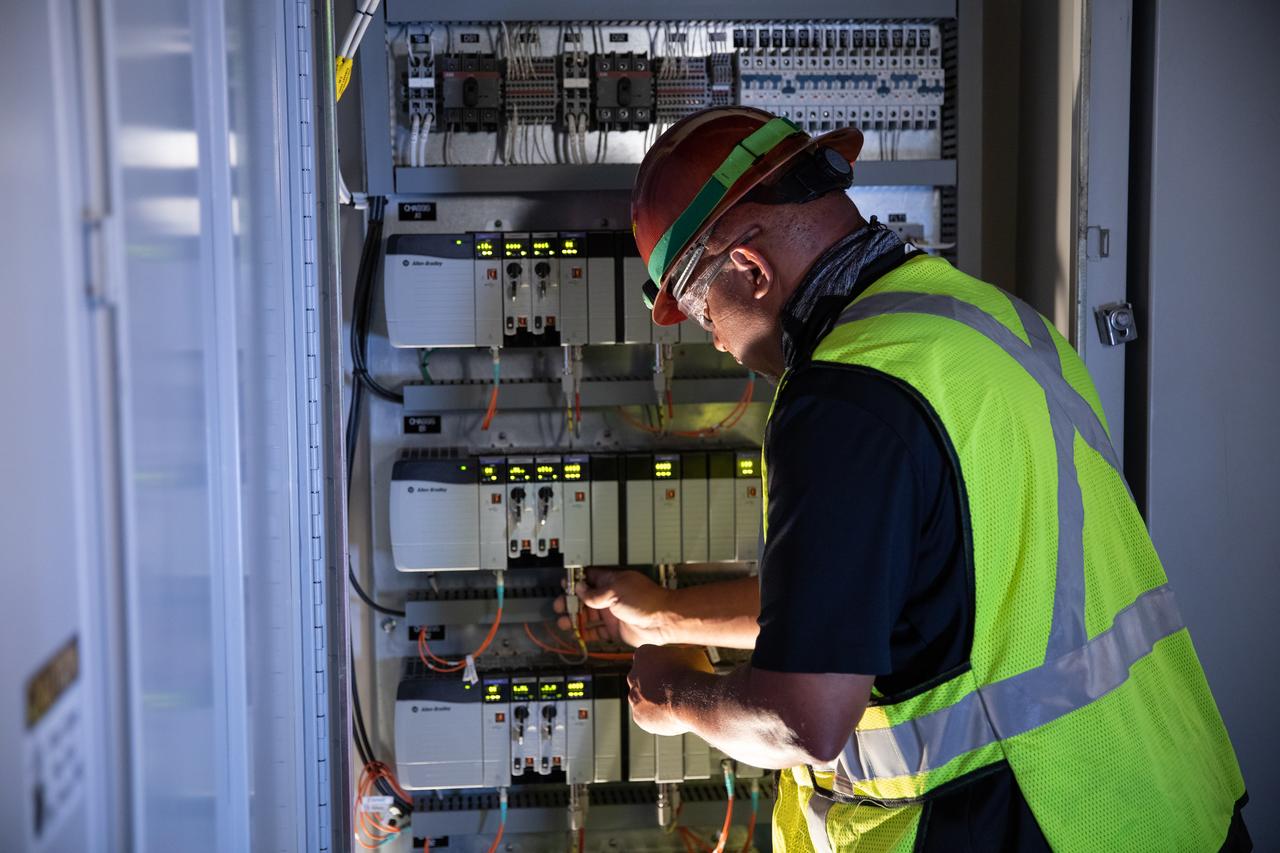
Reggie Martin, an engineer with Exploration Ground Systems, works on racks inside the mobile launcher at NASA’s Kennedy Space Center in Florida on Oct. 2, 2020. Software engineers are writing and testing new software for launch of the Space Launch System and Orion spacecraft for Artemis I.
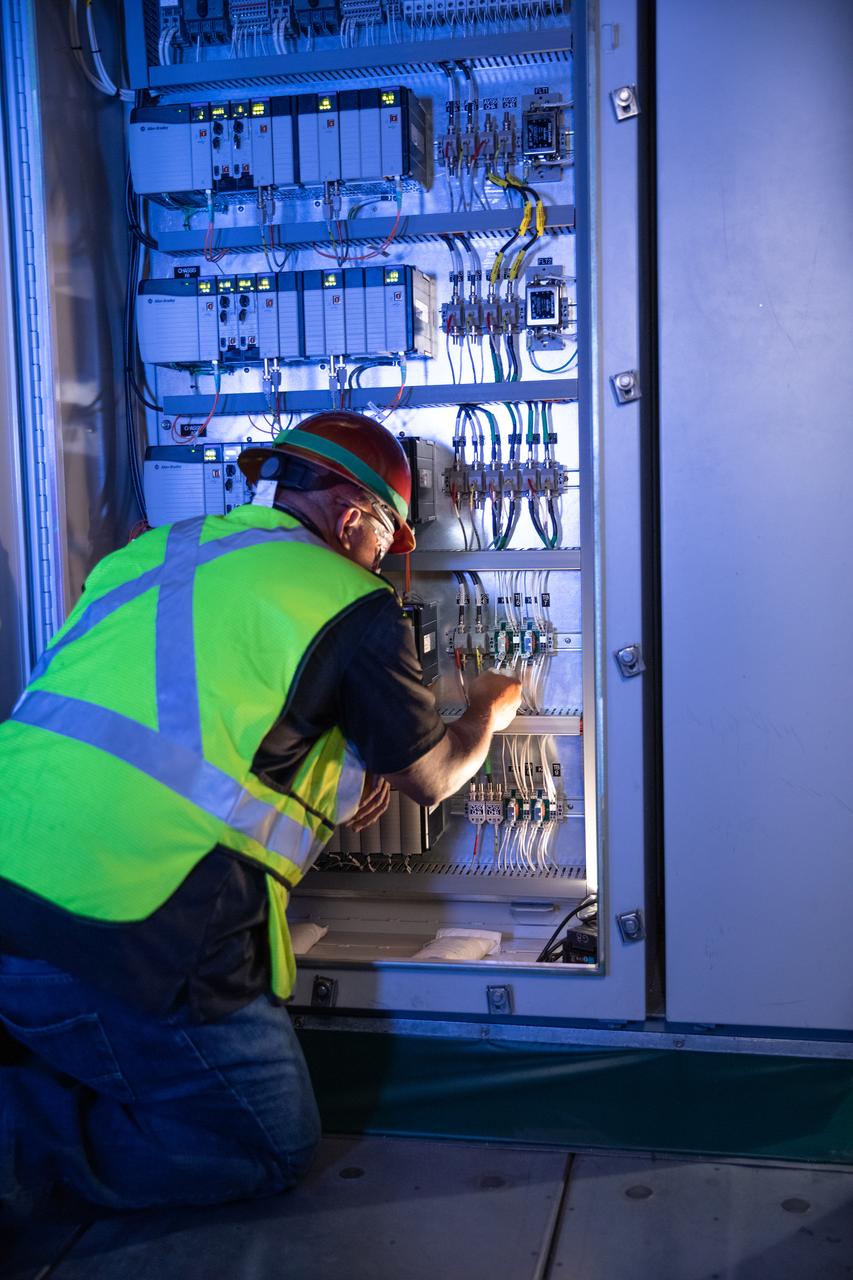
Reggie Martin, an engineer with Exploration Ground Systems, works on racks inside the mobile launcher at NASA’s Kennedy Space Center in Florida on Oct. 2, 2020. Software engineers are writing and testing new software for launch of the Space Launch System and Orion spacecraft for Artemis I.
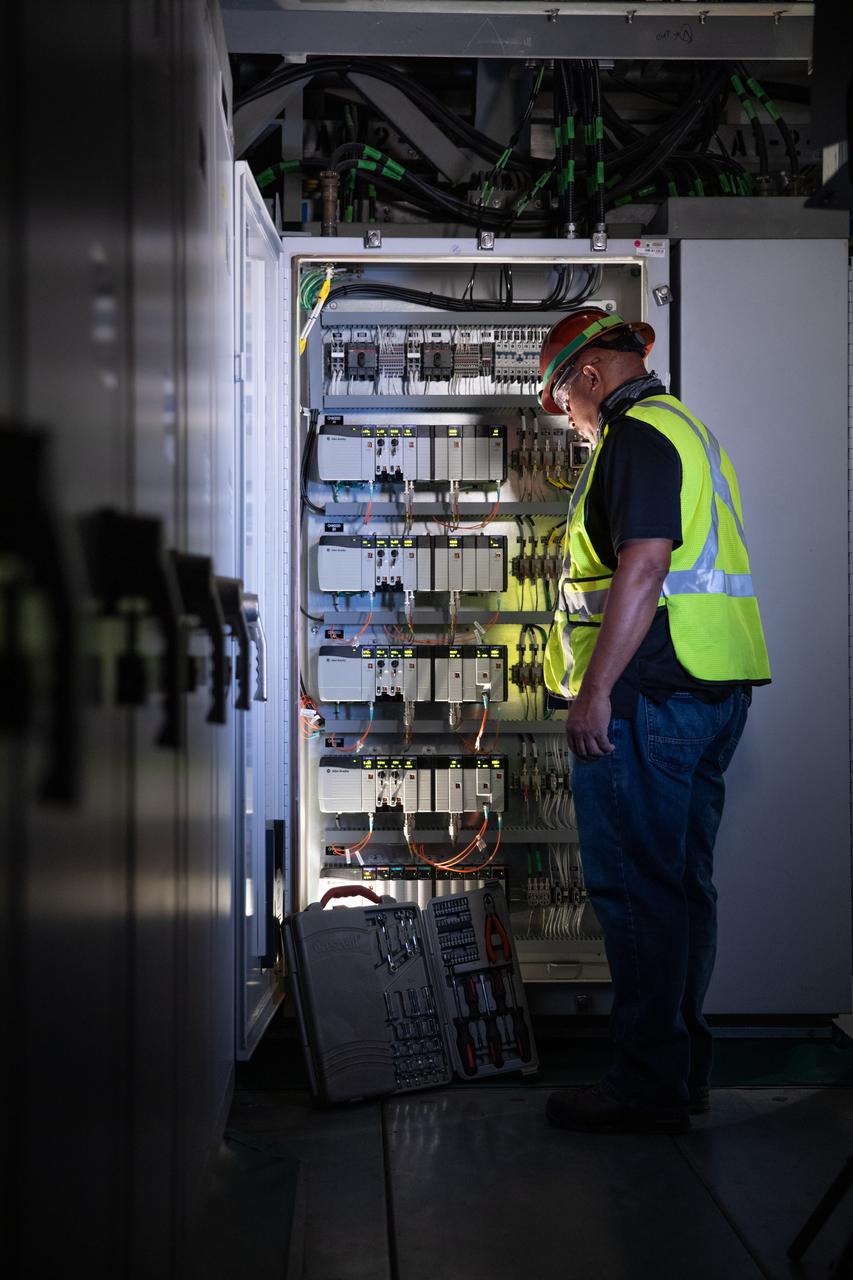
Reggie Martin, an engineer with Exploration Ground Systems, works on racks inside the mobile launcher at NASA’s Kennedy Space Center in Florida on Oct. 2, 2020. Software engineers are writing and testing new software for launch of the Space Launch System and Orion spacecraft for Artemis I.

Reggie Martin, an engineer with Exploration Ground Systems, works on racks inside the mobile launcher at NASA’s Kennedy Space Center in Florida on Oct. 2, 2020. Software engineers are writing and testing new software for launch of the Space Launch System and Orion spacecraft for Artemis I.
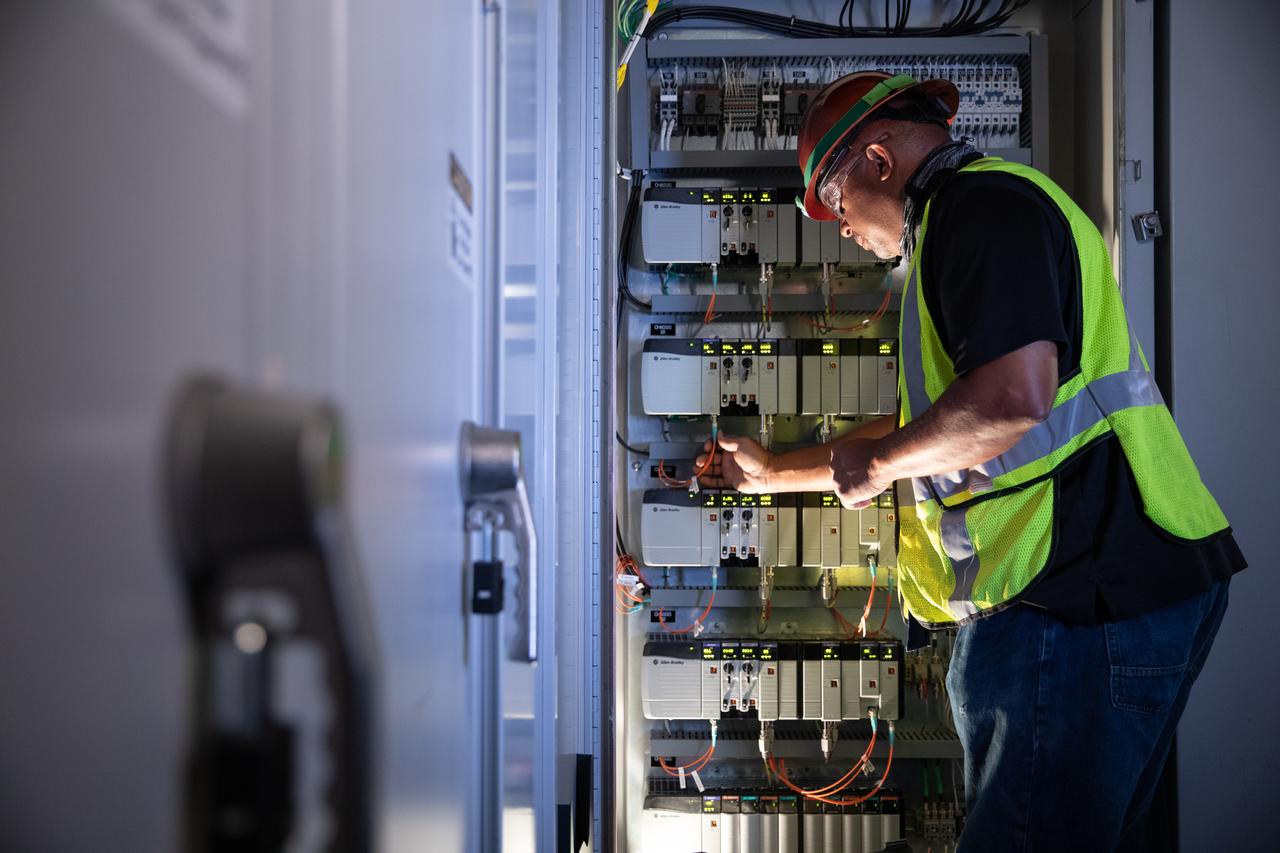
Reggie Martin, an engineer with Exploration Ground Systems, works on racks inside the mobile launcher at NASA’s Kennedy Space Center in Florida on Oct. 2, 2020. Software engineers are writing and testing new software for launch of the Space Launch System and Orion spacecraft for Artemis I.
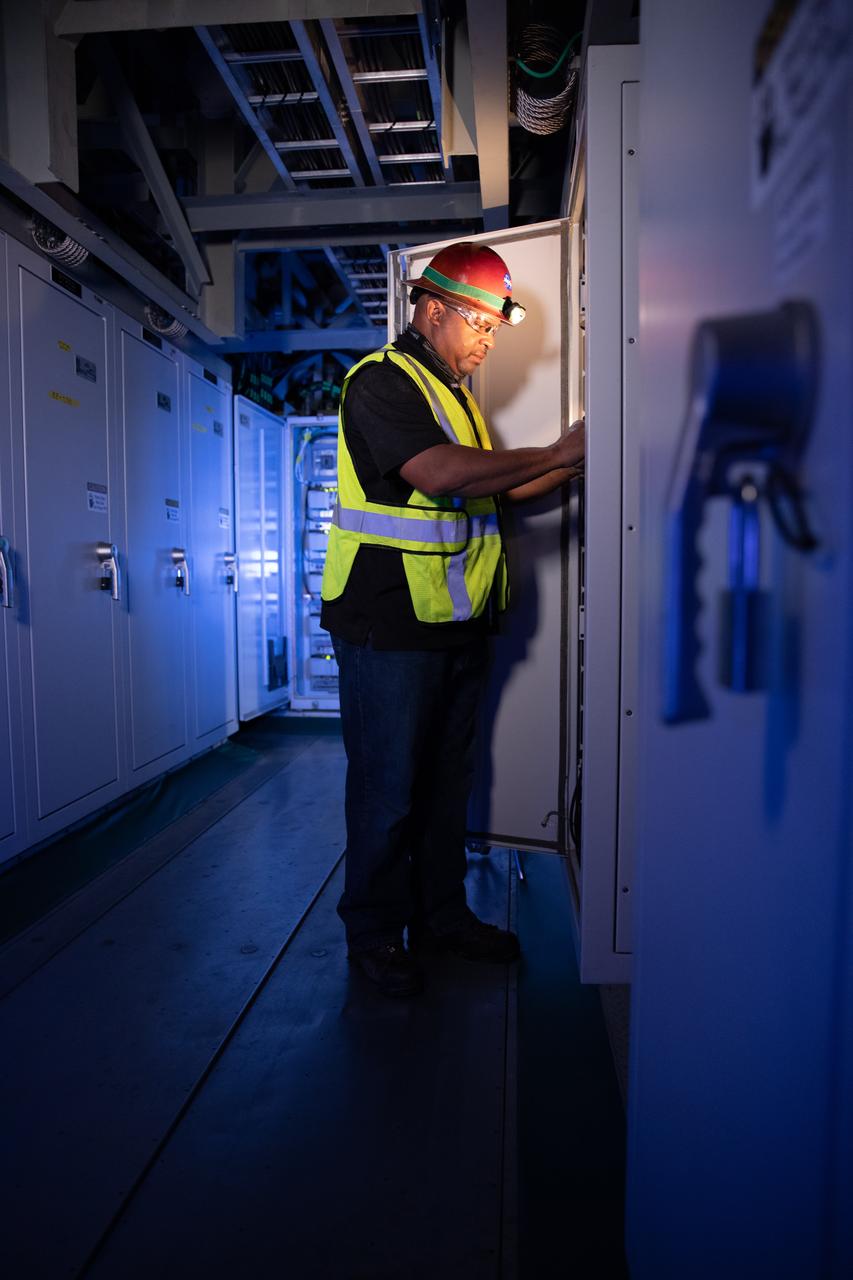
Reggie Martin, an engineer with Exploration Ground Systems, works on racks inside the mobile launcher at NASA’s Kennedy Space Center in Florida on Oct. 2, 2020. Software engineers are writing and testing new software for launch of the Space Launch System and Orion spacecraft for Artemis I.
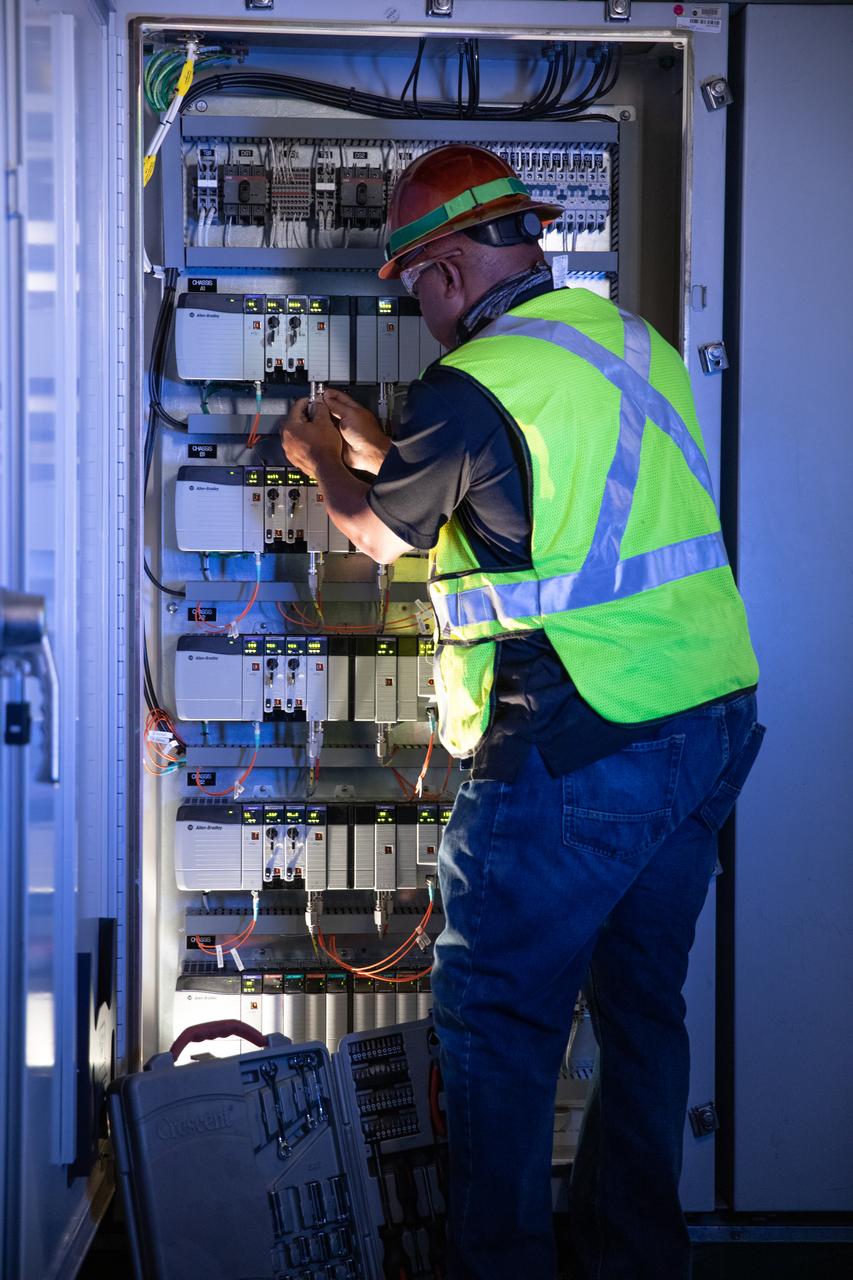
Reggie Martin, an engineer with Exploration Ground Systems, works on racks inside the mobile launcher at NASA’s Kennedy Space Center in Florida on Oct. 2, 2020. Software engineers are writing and testing new software for launch of the Space Launch System and Orion spacecraft for Artemis I.
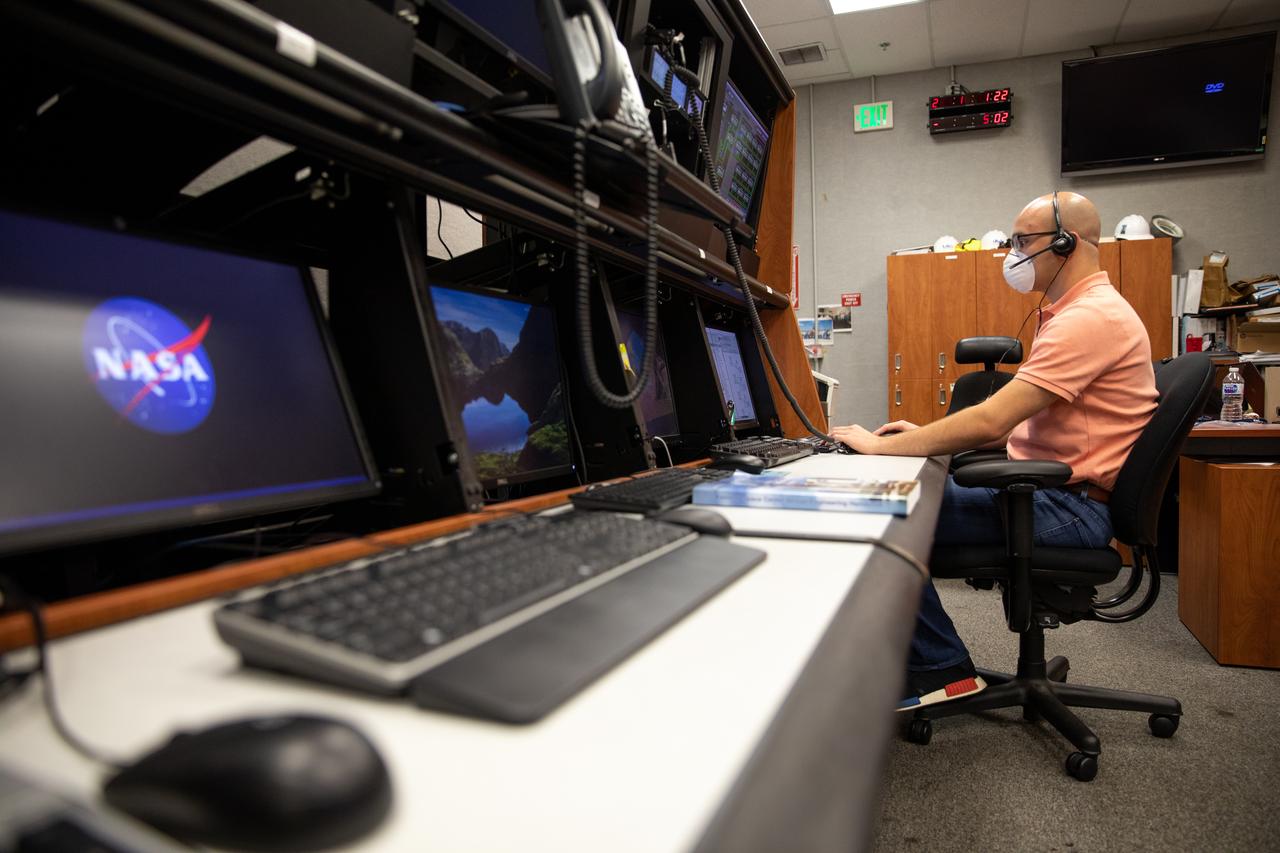
Inside the Launch Control Center at Kennedy Space Center on Sept. 29, 2020, engineer Danny Zaatari, with Exploration Ground Systems, works on software for the launch of Artemis I. Engineers at the Florida spaceport are staying focused on the “Path to the Pad.” Artemis I is the first in a series of increasingly complex missions that will enable human exploration to the Moon and Mars.
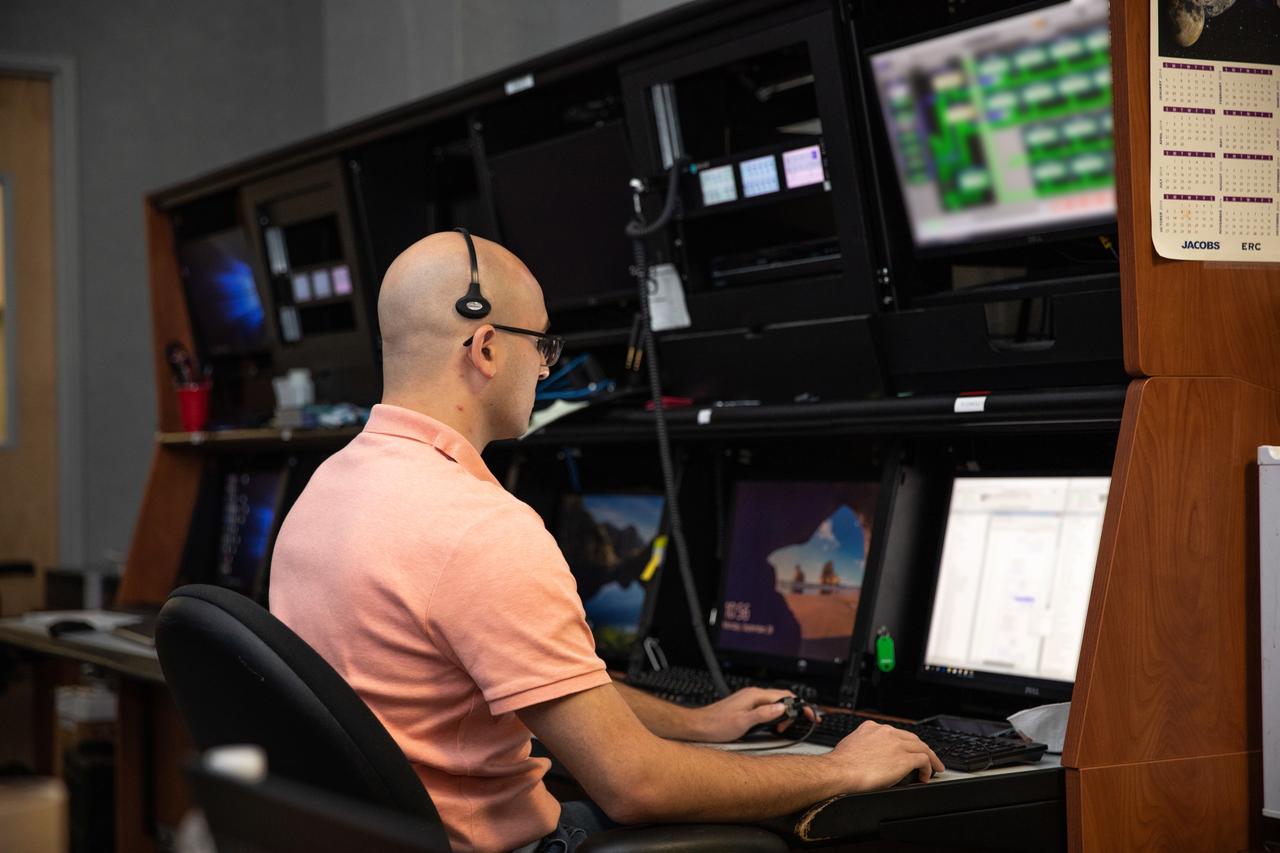
Inside the Launch Control Center at Kennedy Space Center on Sept. 29, 2020, engineer Danny Zaatari, with Exploration Ground Systems, works on software for the launch of Artemis I. Engineers at the Florida spaceport are staying focused on the “Path to the Pad.” Artemis I is the first in a series of increasingly complex missions that will enable human exploration to the Moon and Mars.
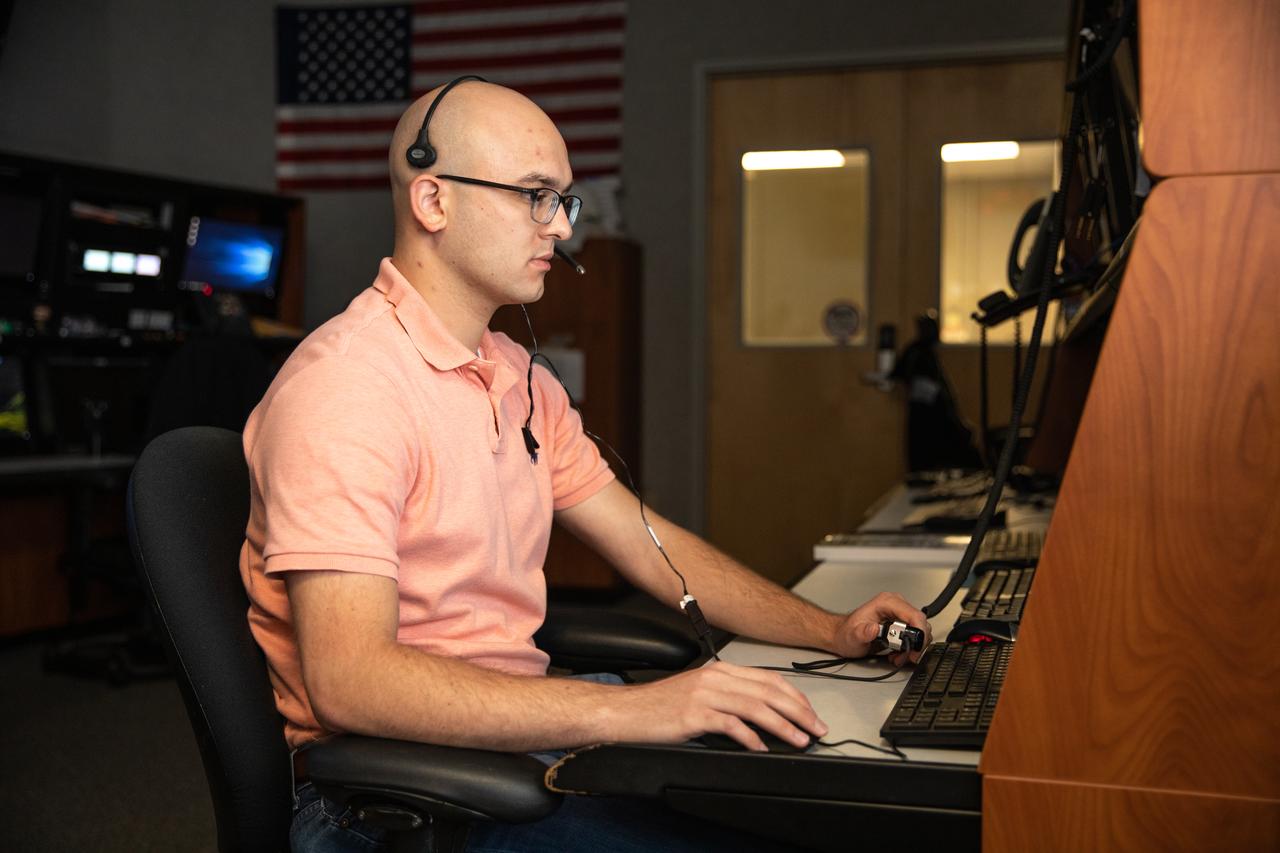
Inside the Launch Control Center at Kennedy Space Center on Sept. 29, 2020, engineer Danny Zaatari, with Exploration Ground Systems, works on software for the launch of Artemis I. Engineers at the Florida spaceport are staying focused on the “Path to the Pad.” Artemis I is the first in a series of increasingly complex missions that will enable human exploration to the Moon and Mars.
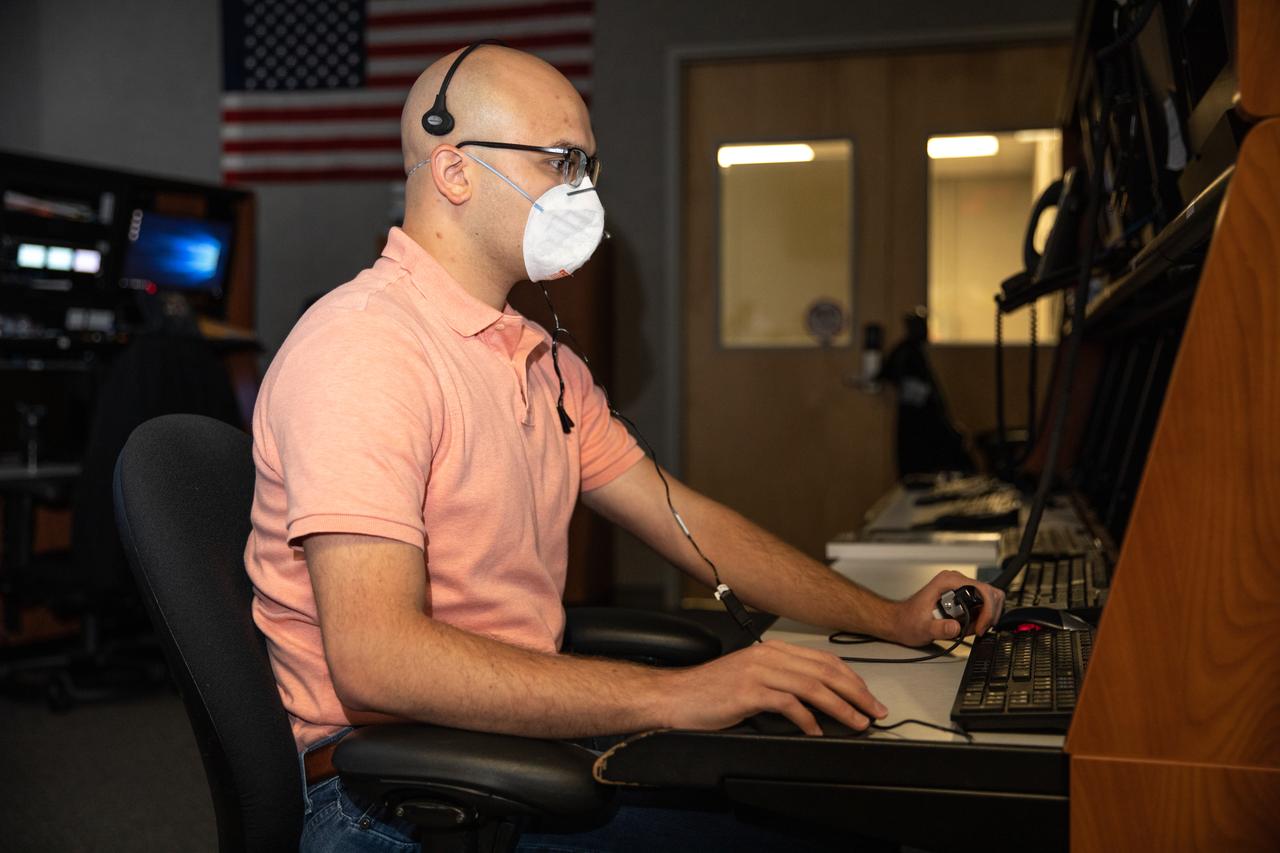
Inside the Launch Control Center at Kennedy Space Center on Sept. 29, 2020, engineer Danny Zaatari, with Exploration Ground Systems, works on software for the launch of Artemis I. Engineers at the Florida spaceport are staying focused on the “Path to the Pad.” Artemis I is the first in a series of increasingly complex missions that will enable human exploration to the Moon and Mars.
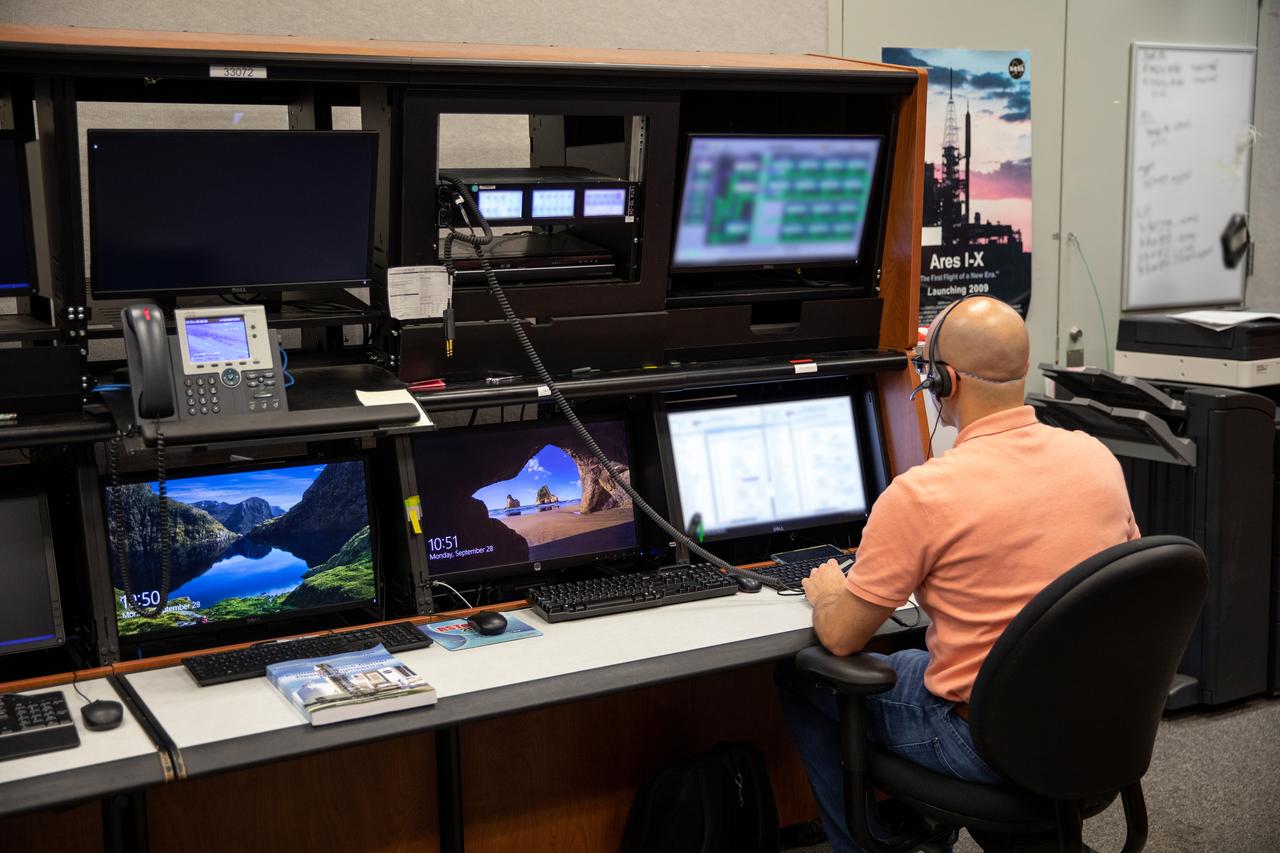
Inside the Launch Control Center at Kennedy Space Center on Sept. 29, 2020, engineer Danny Zaatari, with Exploration Ground Systems, works on software for the launch of Artemis I. Engineers at the Florida spaceport are staying focused on the “Path to the Pad.” Artemis I is the first in a series of increasingly complex missions that will enable human exploration to the Moon and Mars.

Engineers with Exploration Ground Systems at NASA’s Kennedy Space Center in Florida work on software for the launch of Artemis I. Reggie Martin (standing) and Danny Zaatari stay focused on the “Path to the Pad” inside the Launch Control Center on Sept 29, 2020. Artemis I is the first in a series of increasingly complex missions that will enable human exploration to the Moon and Mars.
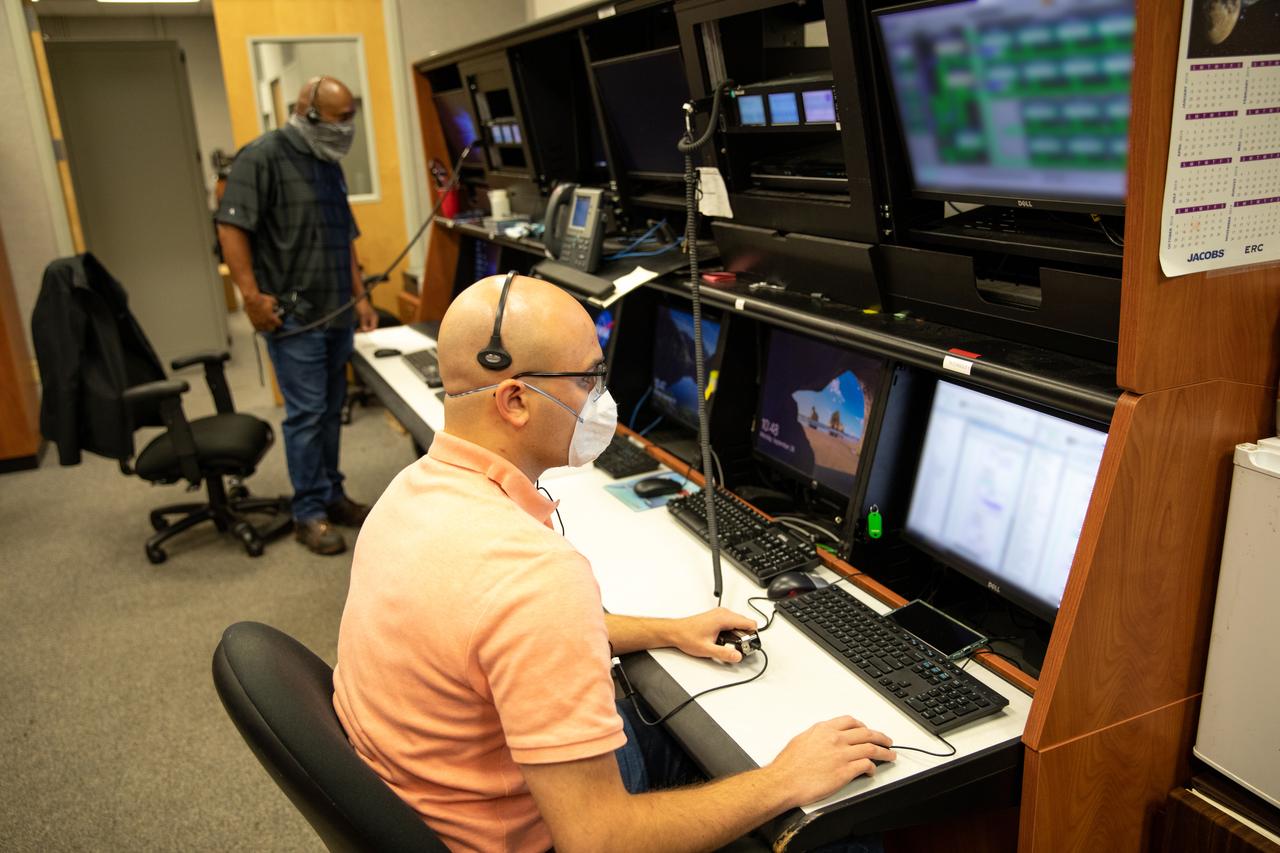
Engineers with Exploration Ground Systems at NASA’s Kennedy Space Center in Florida work on software for the launch of Artemis I. Reggie Martin (standing) and Danny Zaatari stay focused on the “Path to the Pad” inside the Launch Control Center on Sept 29, 2020. Artemis I is the first in a series of increasingly complex missions that will enable human exploration to the Moon and Mars.

Engineers with Exploration Ground Systems at NASA’s Kennedy Space Center in Florida work on software for the launch of Artemis I. Danny Zaatari (foreground) and Reggie Martin stay focused on the “Path to the Pad” inside the Launch Control Center on Sept 29, 2020. Artemis I is the first in a series of increasingly complex missions that will enable human exploration to the Moon and Mars.
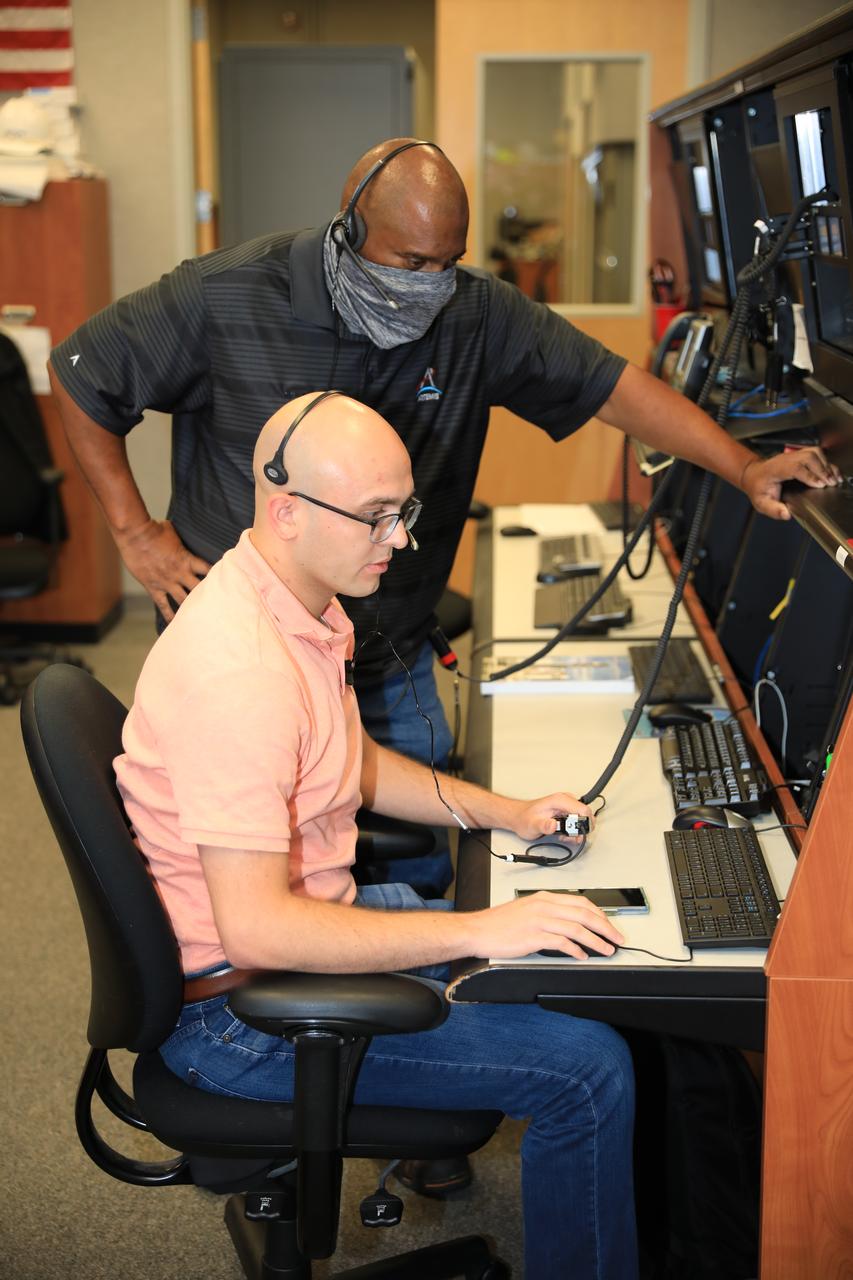
Engineers with Exploration Ground Systems at NASA’s Kennedy Space Center in Florida work on software for the launch of Artemis I. Reggie Martin (standing) and Danny Zaatari stay focused on the “Path to the Pad” inside the Launch Control Center on Sept 29, 2020. Artemis I is the first in a series of increasingly complex missions that will enable human exploration to the Moon and Mars.
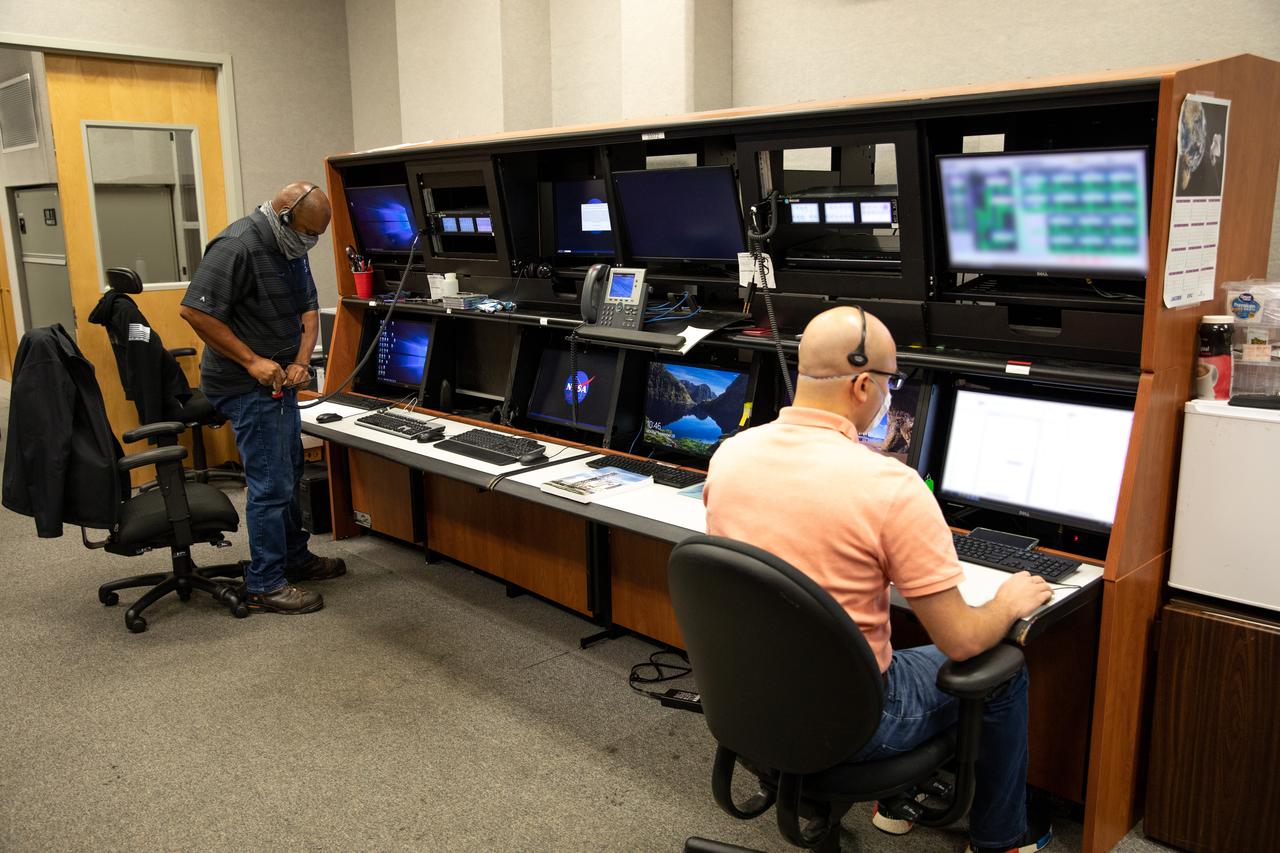
Engineers with Exploration Ground Systems at NASA’s Kennedy Space Center in Florida work on software for the launch of Artemis I. Reggie Martin, left, and Danny Zaatari stay focused on the “Path to the Pad” inside the Launch Control Center on Sept 29, 2020. Artemis I is the first in a series of increasingly complex missions that will enable human exploration to the Moon and Mars.
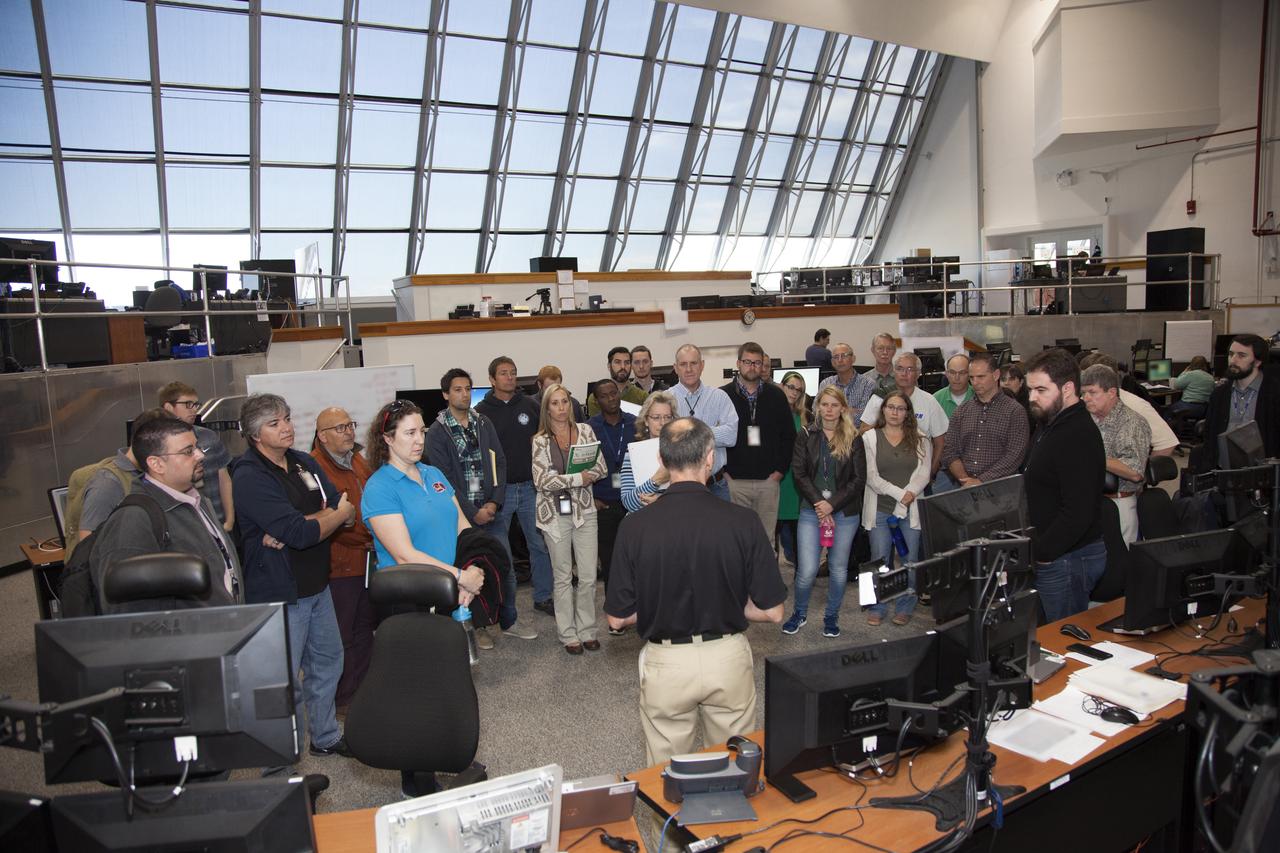
NASA engineers and test directors gather in Firing Room 3 in the Launch Control Center at NASA's Kennedy Space Center in Florida, to watch a demonstration of the automated command and control software for the agency's Space Launch System (SLS) and Orion spacecraft. The software is called the Ground Launch Sequencer. It will be responsible for nearly all of the launch commit criteria during the final phases of launch countdowns. The Ground and Flight Application Software Team (GFAST) demonstrated the software. It was developed by the Command, Control and Communications team in the Ground Systems Development and Operations (GSDO) Program. GSDO is helping to prepare the center for the first test flight of Orion atop the SLS on Exploration Mission 1.
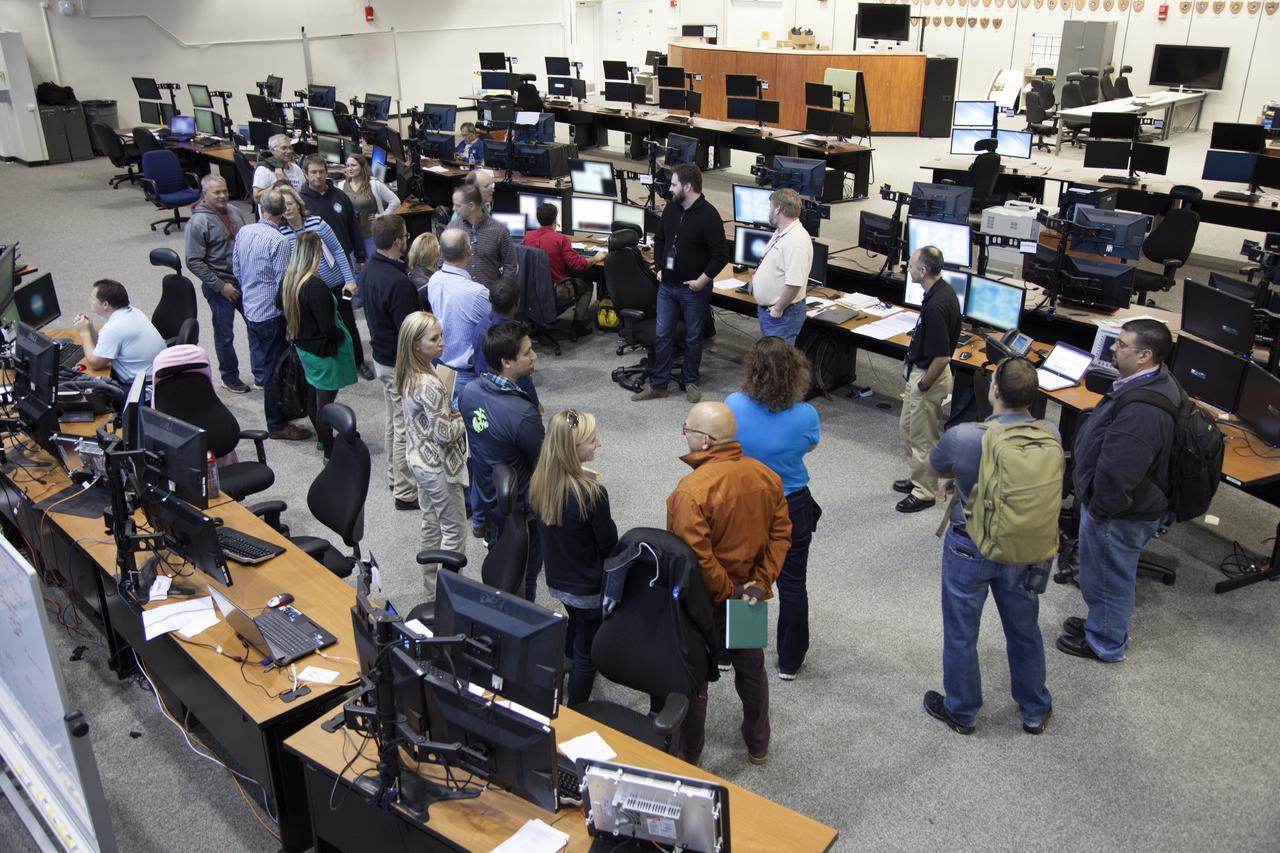
NASA engineers and test directors gather in Firing Room 3 in the Launch Control Center at NASA's Kennedy Space Center in Florida, to watch a demonstration of the automated command and control software for the agency's Space Launch System (SLS) and Orion spacecraft. The software is called the Ground Launch Sequencer. It will be responsible for nearly all of the launch commit criteria during the final phases of launch countdowns. The Ground and Flight Application Software Team (GFAST) demonstrated the software. It was developed by the Command, Control and Communications team in the Ground Systems Development and Operations (GSDO) Program. GSDO is helping to prepare the center for the first test flight of Orion atop the SLS on Exploration Mission 1.
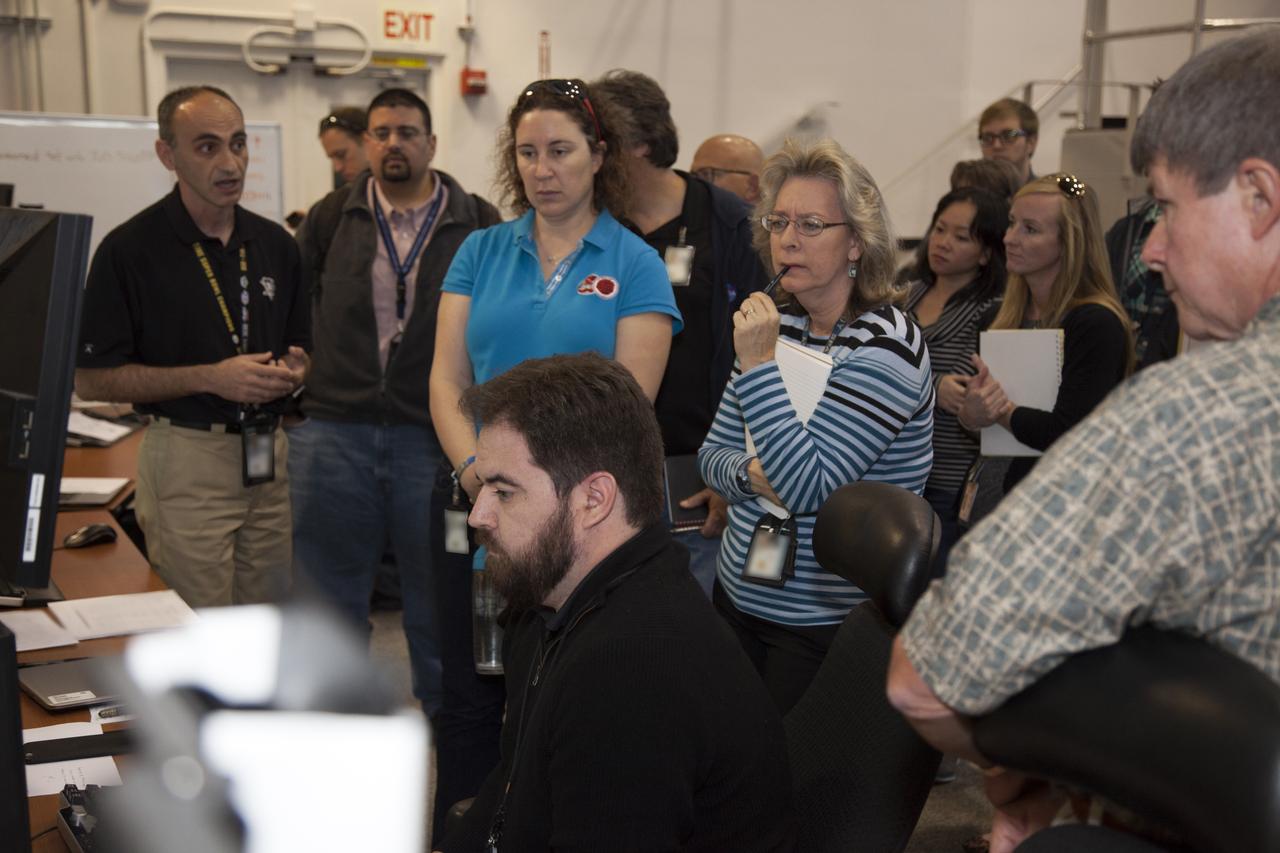
NASA engineers and test directors gather in Firing Room 3 in the Launch Control Center at NASA's Kennedy Space Center in Florida, to watch a demonstration of the automated command and control software for the agency's Space Launch System (SLS) and Orion spacecraft. The software is called the Ground Launch Sequencer. It will be responsible for nearly all of the launch commit criteria during the final phases of launch countdowns. The Ground and Flight Application Software Team (GFAST) demonstrated the software. It was developed by the Command, Control and Communications team in the Ground Systems Development and Operations (GSDO) Program. GSDO is helping to prepare the center for the first test flight of Orion atop the SLS on Exploration Mission 1.
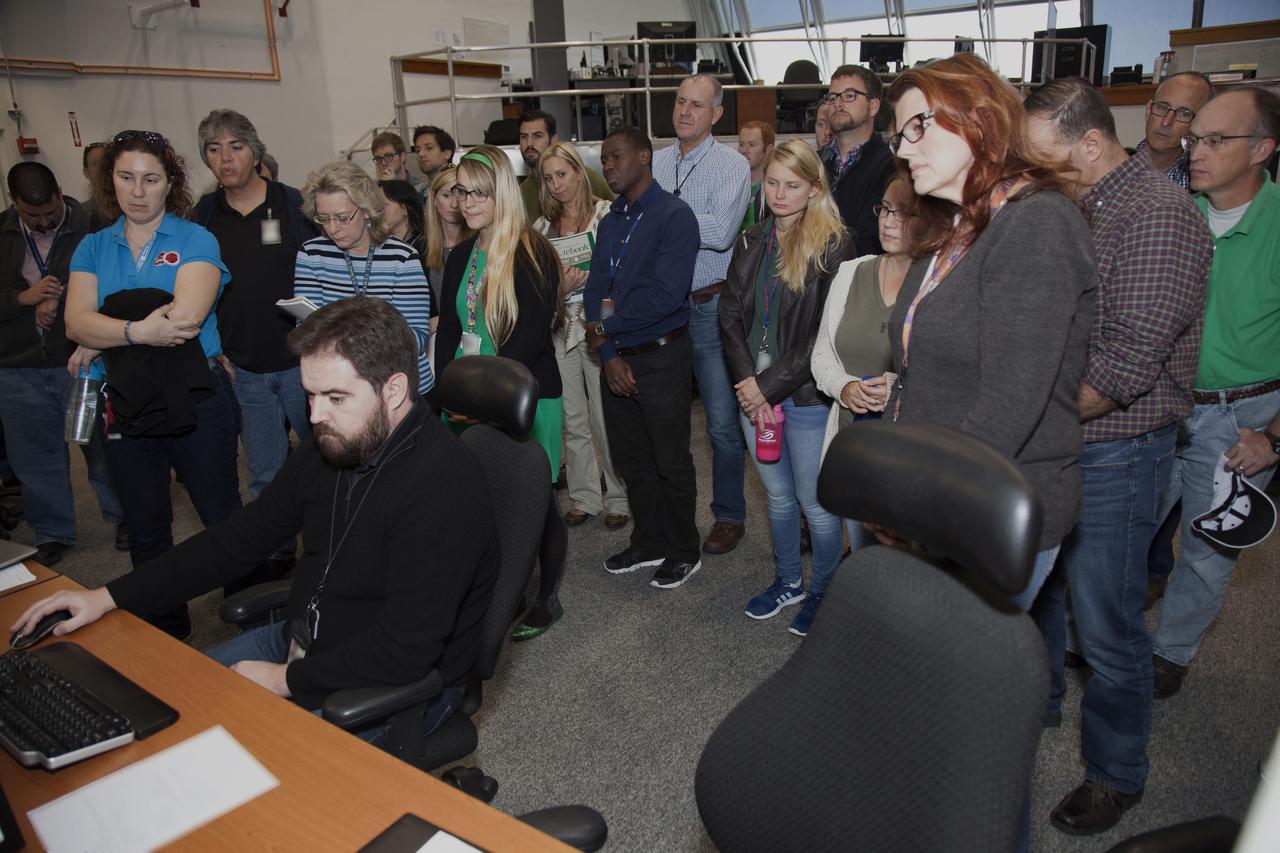
NASA engineers and test directors gather in Firing Room 3 in the Launch Control Center at NASA's Kennedy Space Center in Florida, to watch a demonstration of the automated command and control software for the agency's Space Launch System (SLS) and Orion spacecraft. In front, far right, is Charlie Blackwell-Thompson, launch director for Exploration Mission 1 (EM-1). The software is called the Ground Launch Sequencer. It will be responsible for nearly all of the launch commit criteria during the final phases of launch countdowns. The Ground and Flight Application Software Team (GFAST) demonstrated the software. It was developed by the Command, Control and Communications team in the Ground Systems Development and Operations (GSDO) Program. GSDO is helping to prepare the center for the first test flight of Orion atop the SLS on EM-1.

SSME Hardware Simulation Laboratory at Marshall Space Flight Center is the facility that verifies the software which controls SSME prior to each Space Shuttle flight
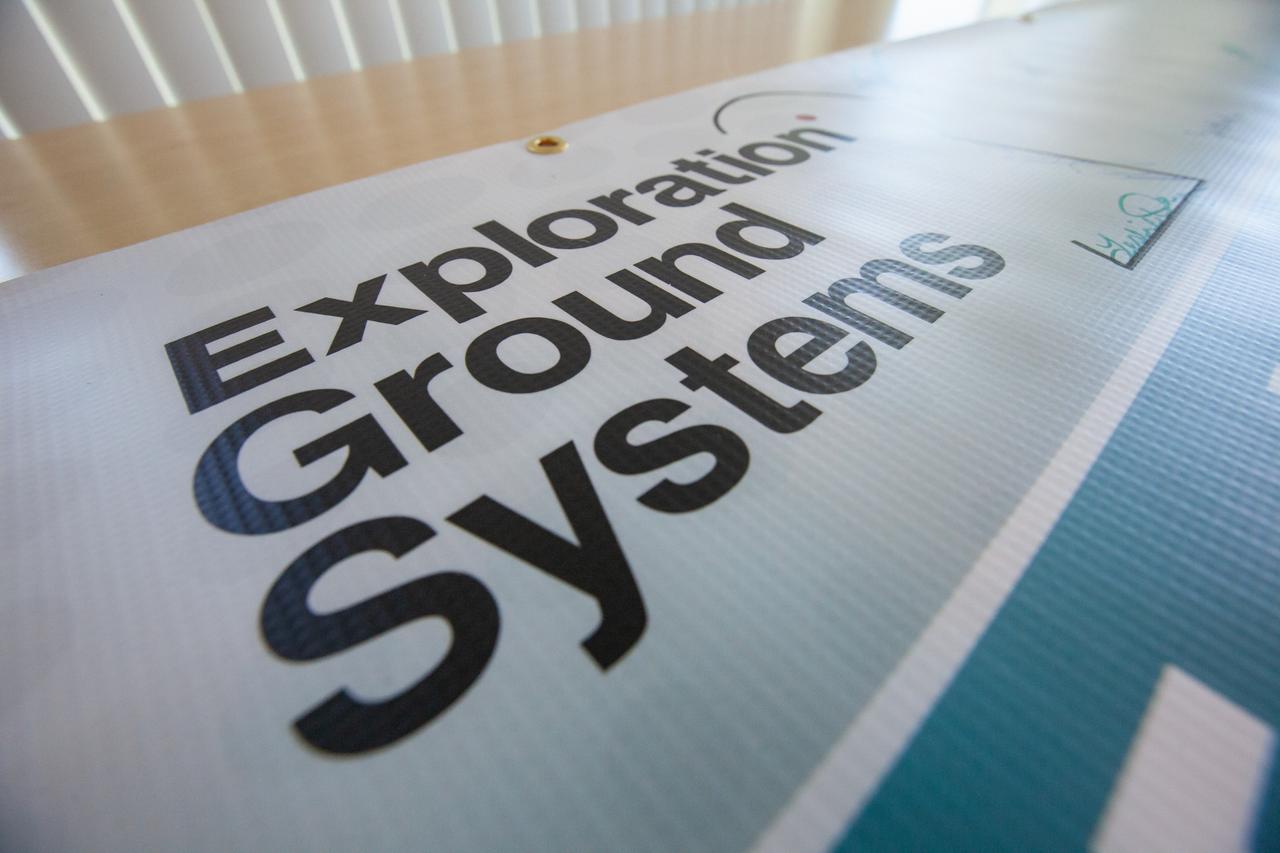
A banner signing event was held April 22, 2019, at NASA’s Kennedy Space Center in Florida, to mark the accomplishments of the Kennedy engineering team that supported the Ground Support Equipment (GSE) Subsystem Software development. This team includes the software leads, local developers, remote developers, modelers, project engineers, software quality assurance, build team members, integrators, system engineers, a chief engineer and some software managers. There are 60 unique instances of GSE Subsystem Software code. As of today, 58 of those 60 instances have completed software Level 5 Verification (L5V) and are in the process of completing Subsystem Verification & Validation.
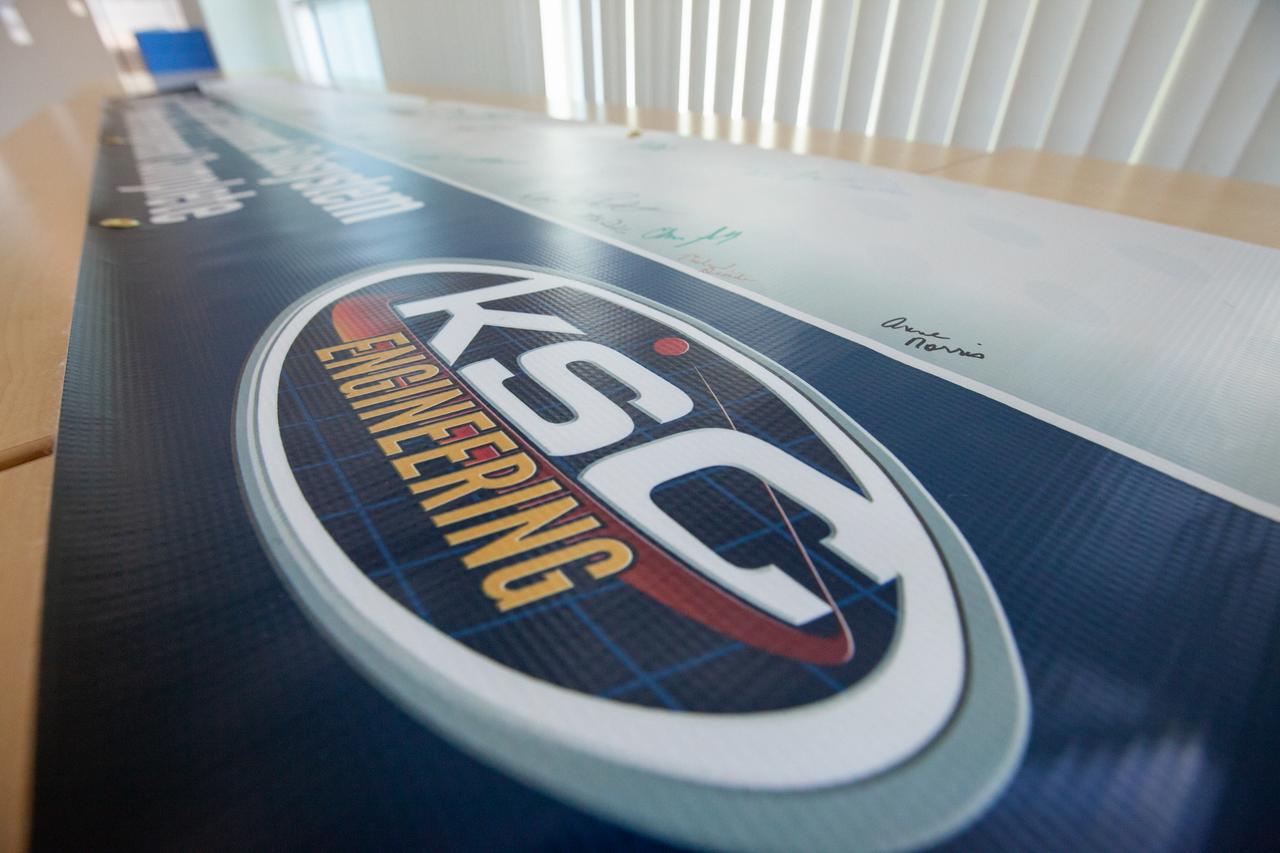
A banner signing event was held April 22, 2019, at NASA’s Kennedy Space Center in Florida, to mark the accomplishments of the Kennedy engineering team that supported the Ground Support Equipment (GSE) Subsystem Software development. This team includes the software leads, local developers, remote developers, modelers, project engineers, software quality assurance, build team members, integrators, system engineers, a chief engineer and some software managers. There are 60 unique instances of GSE Subsystem Software code. As of today, 58 of those 60 instances have completed software Level 5 Verification (L5V) and are in the process of completing Subsystem Verification & Validation.
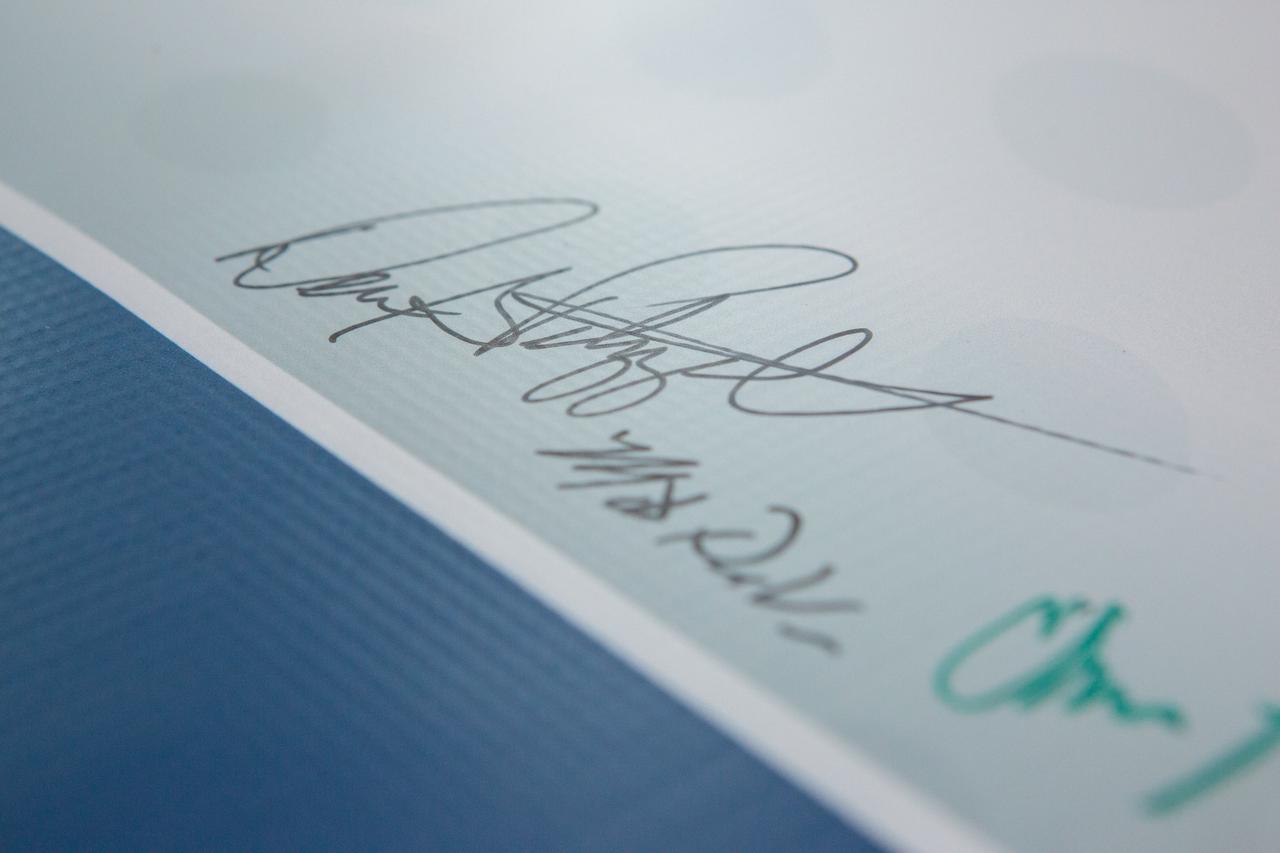
A banner signing event was held April 22, 2019, at NASA’s Kennedy Space Center in Florida, to mark the accomplishments of the Kennedy engineering team that supported the Ground Support Equipment (GSE) Subsystem Software development. This team includes the software leads, local developers, remote developers, modelers, project engineers, software quality assurance, build team members, integrators, system engineers, a chief engineer and some software managers. There are 60 unique instances of GSE Subsystem Software code. As of today, 58 of those 60 instances have completed software Level 5 Verification (L5V) and are in the process of completing Subsystem Verification & Validation.
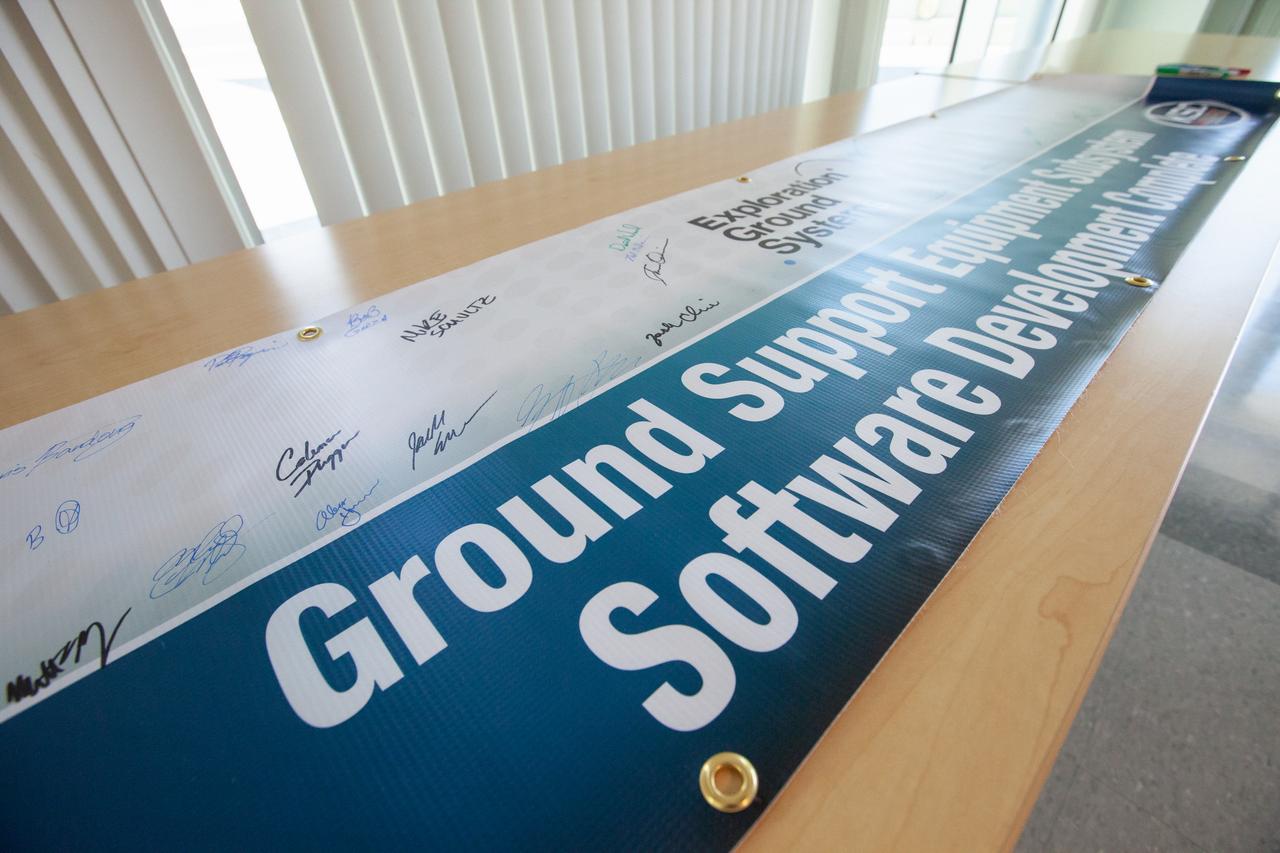
A banner signing event was held April 22, 2019, at NASA’s Kennedy Space Center in Florida, to mark the accomplishments of the Kennedy engineering team that supported the Ground Support Equipment (GSE) Subsystem Software development. This team includes the software leads, local developers, remote developers, modelers, project engineers, software quality assurance, build team members, integrators, system engineers, a chief engineer and some software managers. There are 60 unique instances of GSE Subsystem Software code. As of today, 58 of those 60 instances have completed software Level 5 Verification (L5V) and are in the process of completing Subsystem Verification & Validation.

A banner signing event was held April 22, 2019, at NASA’s Kennedy Space Center in Florida, to mark the accomplishments of the Kennedy engineering team that supported the Ground Support Equipment (GSE) Subsystem Software development. This team includes the software leads, local developers, remote developers, modelers, project engineers, software quality assurance, build team members, integrators, system engineers, a chief engineer and some software managers. There are 60 unique instances of GSE Subsystem Software code. As of today, 58 of those 60 instances have completed software Level 5 Verification (L5V) and are in the process of completing Subsystem Verification & Validation.
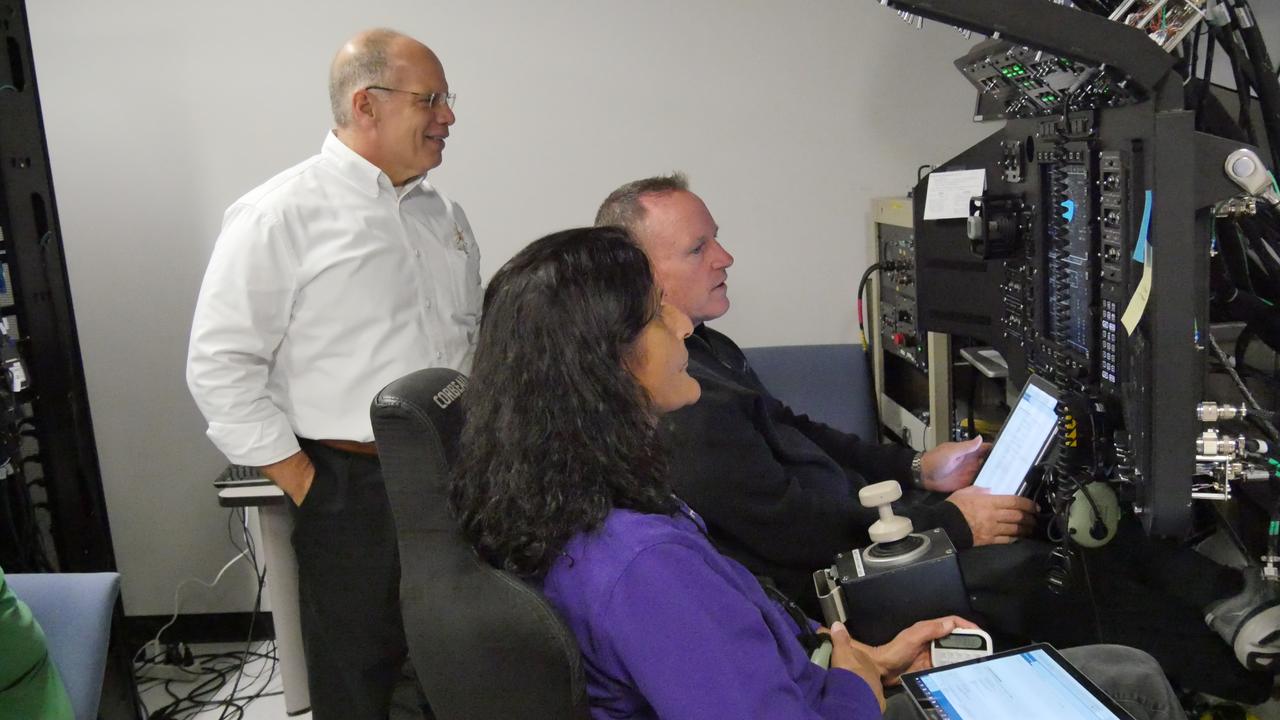
From left, Starliner Flight Crew Integration Manager Tony Ceccacci, and NASA astronauts Barry “Butch” Wilmore and Sunita “Suni” Williams participate in a mission rehearsal at Boeing’s Avionics and Software Integration Lab in Houston.
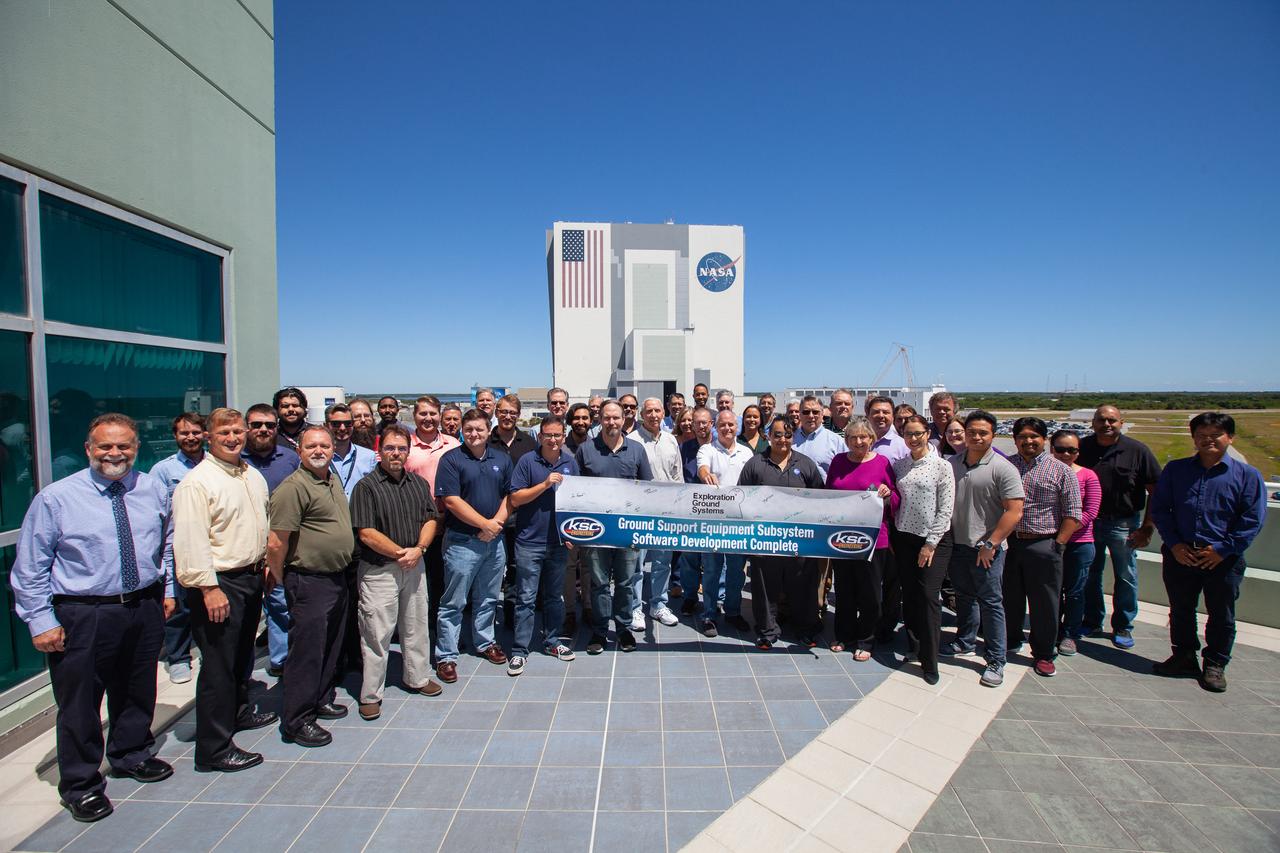
A banner signing event was held April 22, 2019, at NASA’s Kennedy Space Center in Florida, to mark the accomplishments of the Kennedy engineering team that supported the Ground Support Equipment (GSE) Subsystem Software development. The team gathered in the observation area of the Operations Support Building II with a view of the Vehicle Assembly Building behind them. This team includes the software leads, local developers, remote developers, modelers, project engineers, software quality assurance, build team members, integrators, system engineers, a chief engineer and some software managers. There are 60 unique instances of GSE Subsystem Software code. As of today, 58 of those 60 instances have completed software Level 5 Verification (L5V) and are in the process of completing Subsystem Verification & Validation.
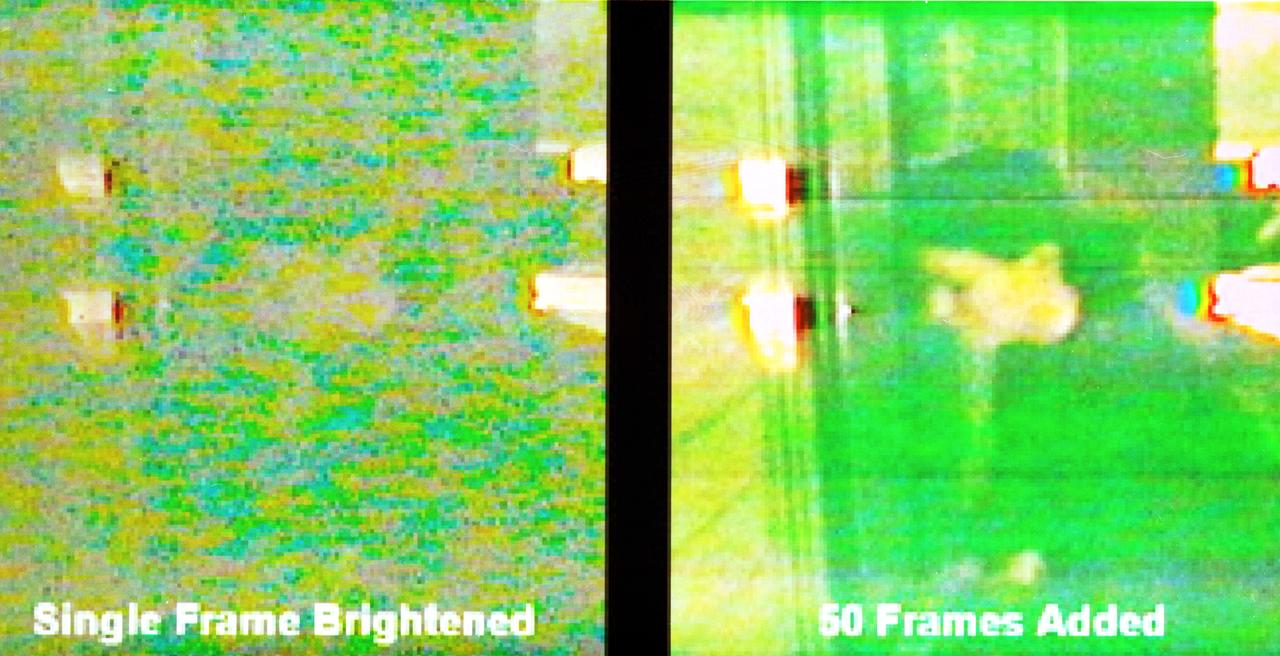
Two scientists at NASA's Marshall Space Flight Center,atmospheric scientist Paul Meyer and solar physicist Dr. David Hathaway, developed promising new software, called Video Image Stabilization and Registration (VISAR). VISAR may help law enforcement agencies catch criminals by improving the quality of video recorded at crime scenes. In this photograph, the single frame at left, taken at night, was brightened in order to enhance details and reduce noise or snow. To further overcome the video defects in one frame, Law enforcement officials can use VISAR software to add information from multiple frames to reveal a person. Images from less than a second of videotape were added together to create the clarified image at right. VISAR stabilizes camera motion in the horizontal and vertical as well as rotation and zoom effects producing clearer images of moving objects, smoothes jagged edges, enhances still images, and reduces video noise or snow. VISAR could also have applications in medical and meteorological imaging. It could steady images of ultrasounds, which are infamous for their grainy, blurred quality. The software can be used for defense application by improving recornaissance video imagery made by military vehicles, aircraft, and ships traveling in harsh, rugged environments.
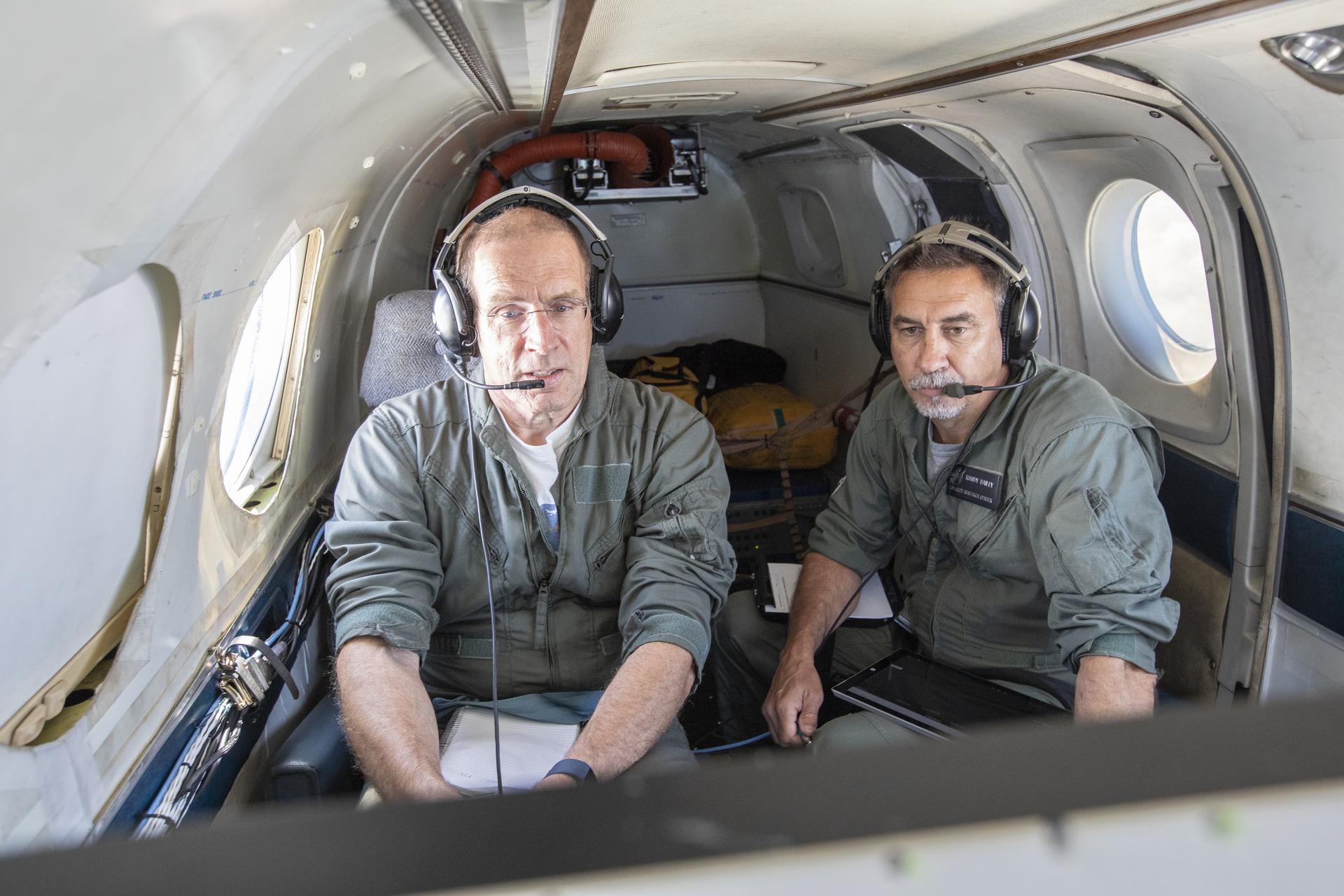
Aerospace Engineers, “from left to right” Peter Coen and Randy Bailey attempt to spot an incoming aircraft on the monitor while performing tests on the External Vision System (XVS) Software. The software testing is being conducted on the B200 King Air Beechcraft airplane.

Testing of the External Vision System (EVS) Software on the B200 King Air
Steve Williams working on the software upgrade for the flight display for the X59.
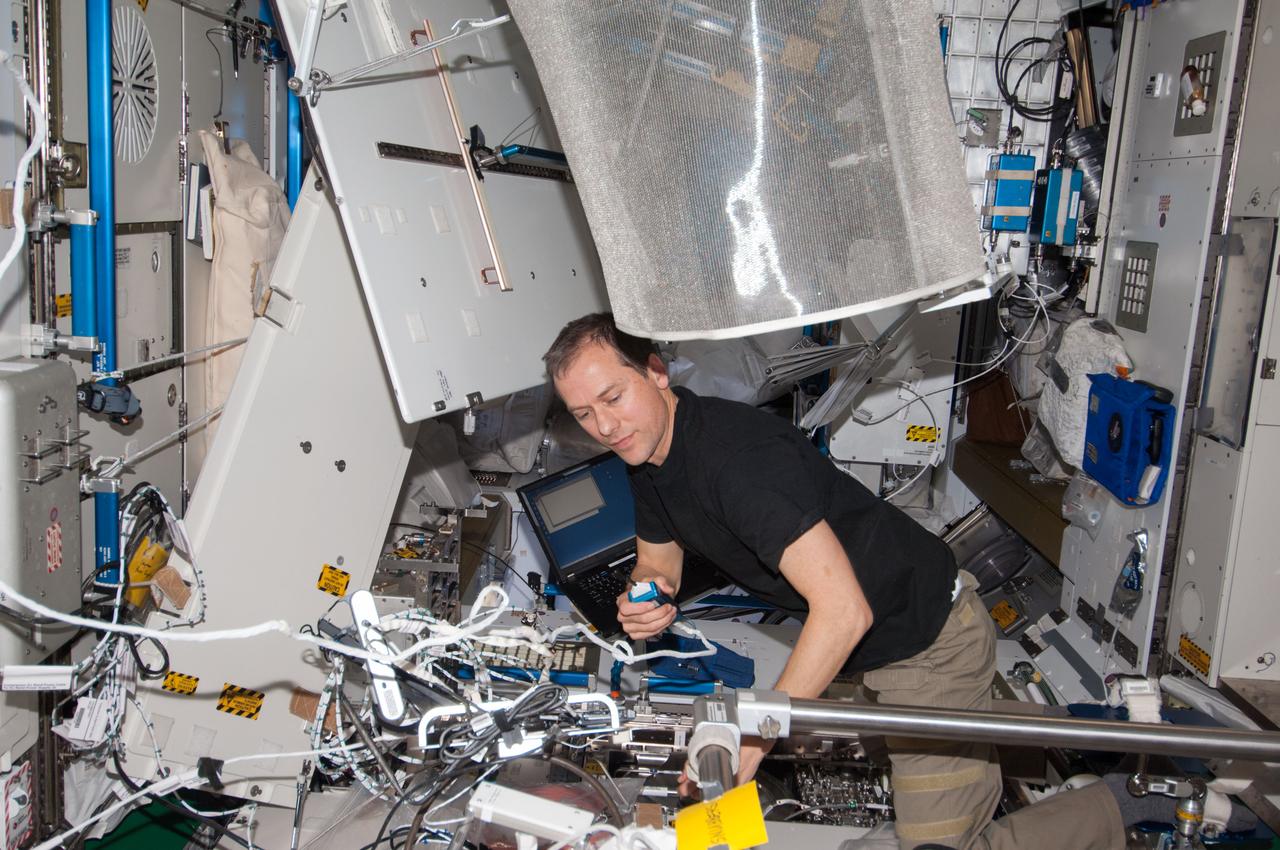
ISS034-E-031130 (17 Jan. 2013) --- NASA astronaut Tom Marshburn, Expedition 34 flight engineer, updates software on the Waste and Hygiene Compartment?s Urine Processor Assembly in the Tranquility node of the International Space Station.

ISS034-E-031133 (17 Jan. 2013) --- NASA astronaut Tom Marshburn, Expedition 34 flight engineer, updates software on the Waste and Hygiene Compartment?s Urine Processor Assembly in the Tranquility node of the International Space Station.

Two scientists at NASA Marshall Space Flight Center, atmospheric scientist Paul Meyer (left) and solar physicist Dr. David Hathaway, have developed promising new software, called Video Image Stabilization and Registration (VISAR), that may help law enforcement agencies to catch criminals by improving the quality of video recorded at crime scenes, VISAR stabilizes camera motion in the horizontal and vertical as well as rotation and zoom effects; produces clearer images of moving objects; smoothes jagged edges; enhances still images; and reduces video noise of snow. VISAR could also have applications in medical and meteorological imaging. It could steady images of Ultrasounds which are infamous for their grainy, blurred quality. It would be especially useful for tornadoes, tracking whirling objects and helping to determine the tornado's wind speed. This image shows two scientists reviewing an enhanced video image of a license plate taken from a moving automobile.
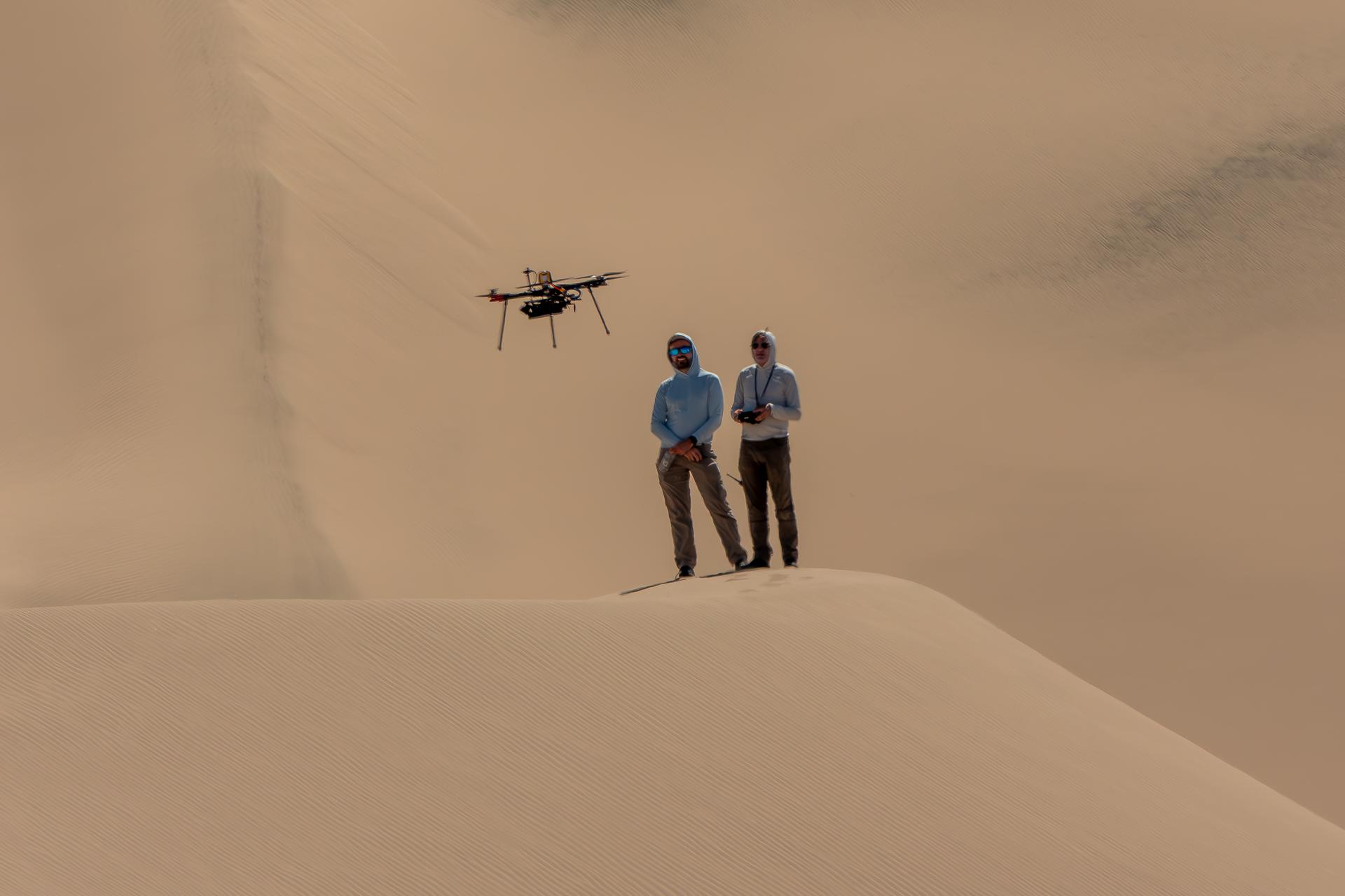
The work was among 25 projects funded by NASA’s Mars Exploration Program this past year to push the limits of future technologies. Sand dunes confused the navigation algorithm of the Ingenuity Mars helicopter during several of its last flights, including its 72nd and final flight on the Red Planet in January 2024. The navigation software in development would help future rotorcraft track the surface of especially bland, featureless terrain similar to the barren Dumont Dunes. Tests also included flights over a region in Death Valley called Mars Hill, which is littered with rubbly volcanic rocks and has been used by NASA’s Mars researchers since the 1970s, during preparations for the Viking lander missions.
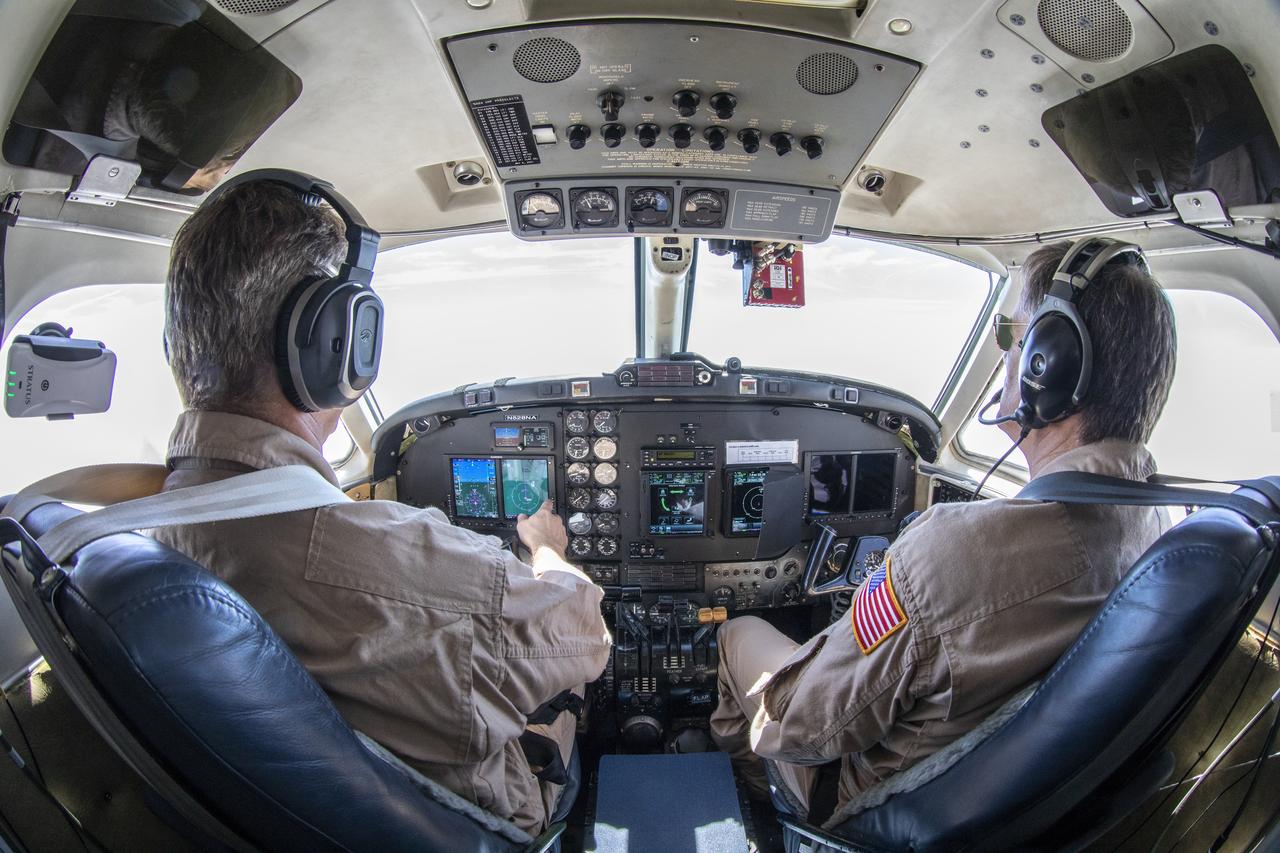
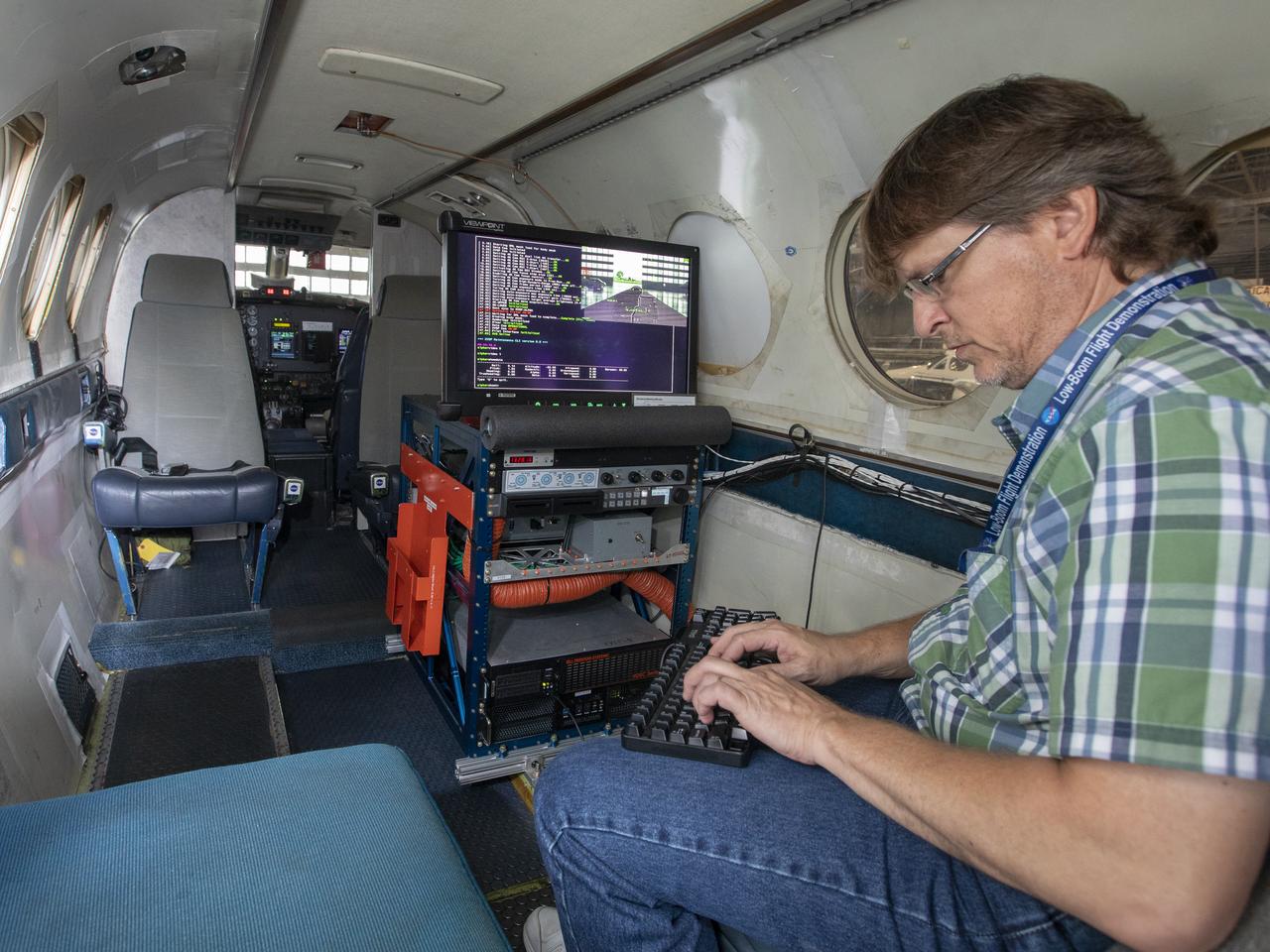
Testing the External Vision System (XVS) software on the B200 King Air. Pilots, Peter Coen and Wayne Ringelberg attempt to spot an incoming aircraft on the XVS monitor.

Testing the External Vision System (XVS) software on the B200 King Air. Pilots, Peter Coen and Wayne Ringelberg attempt to spot an incoming aircraft on the XVS monitor.
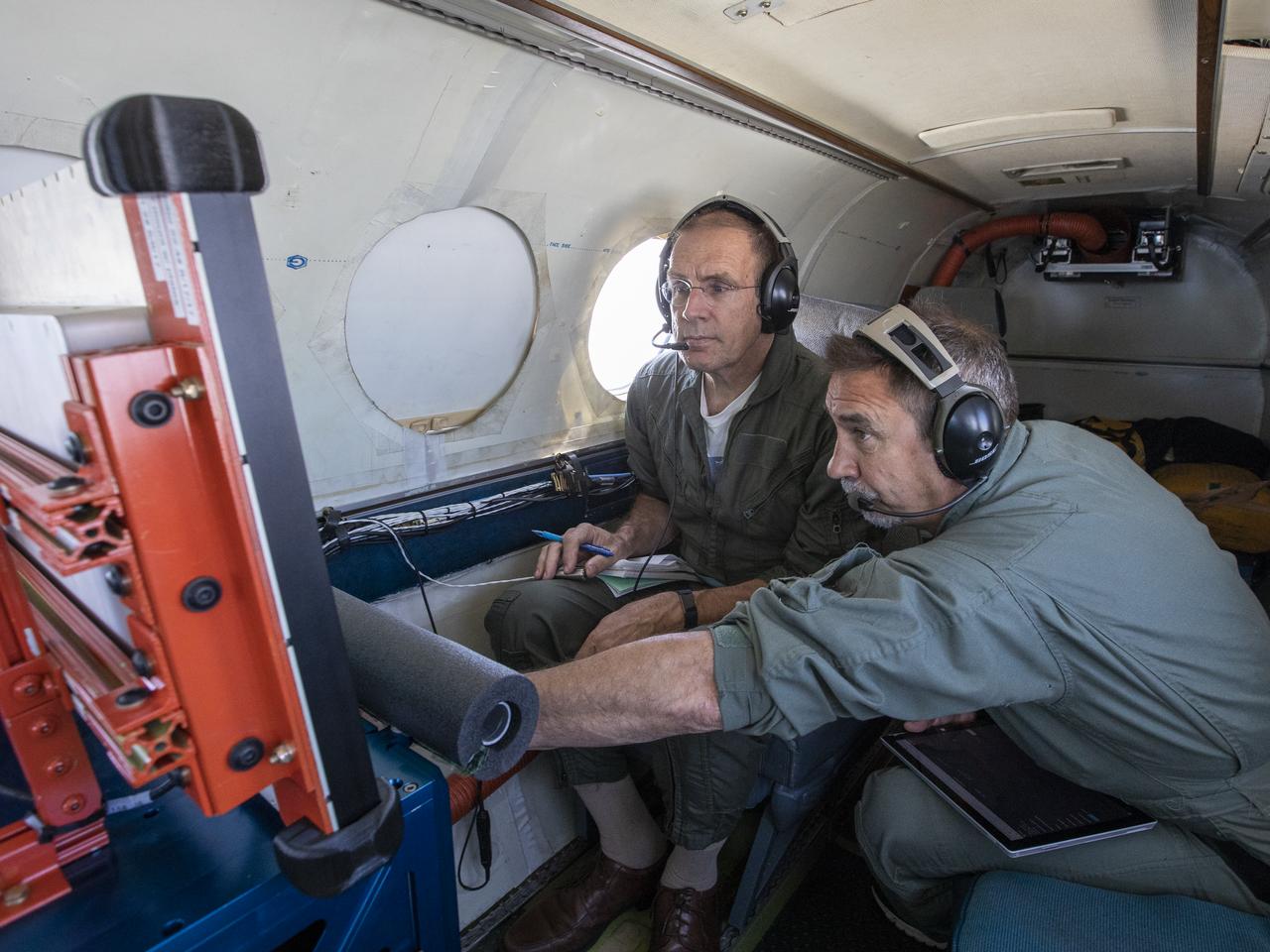
Testing the External Vision System (XVS) software on the B200 King Air. Pilots, Peter Coen and Wayne Ringelberg attempt to spot an incoming aircraft on the XVS monitor.
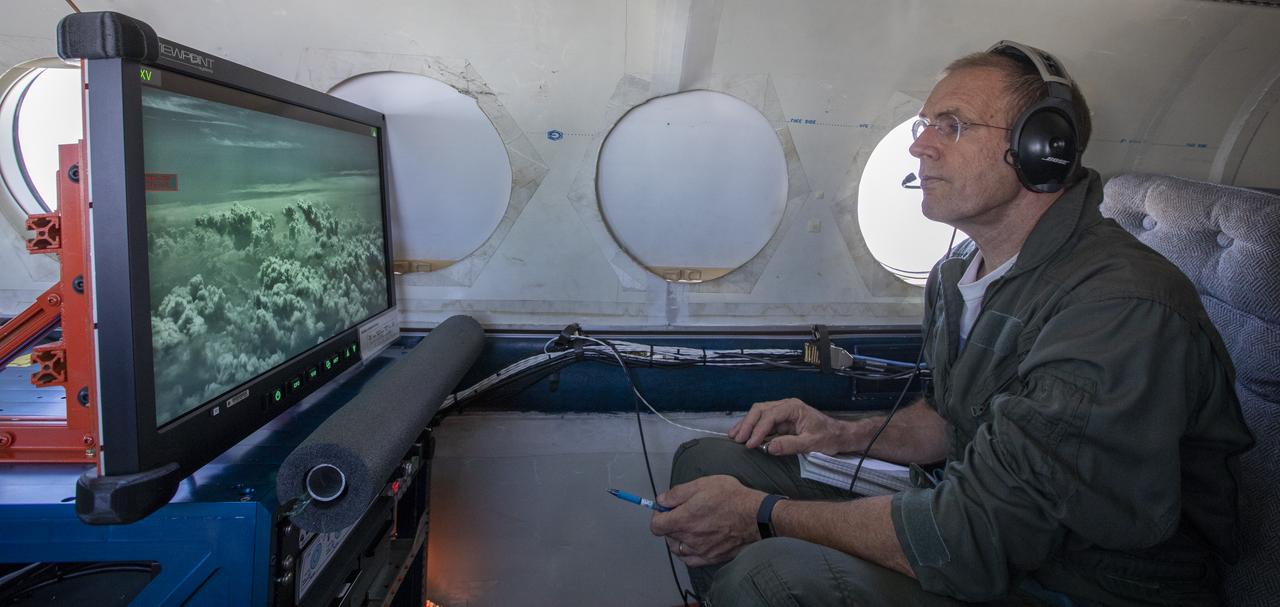
Testing the External Vision System (XVS) software on the B200 King Air. Pilots, Peter Coen and Wayne Ringelberg attempt to spot an incoming aircraft on the XVS monitor.
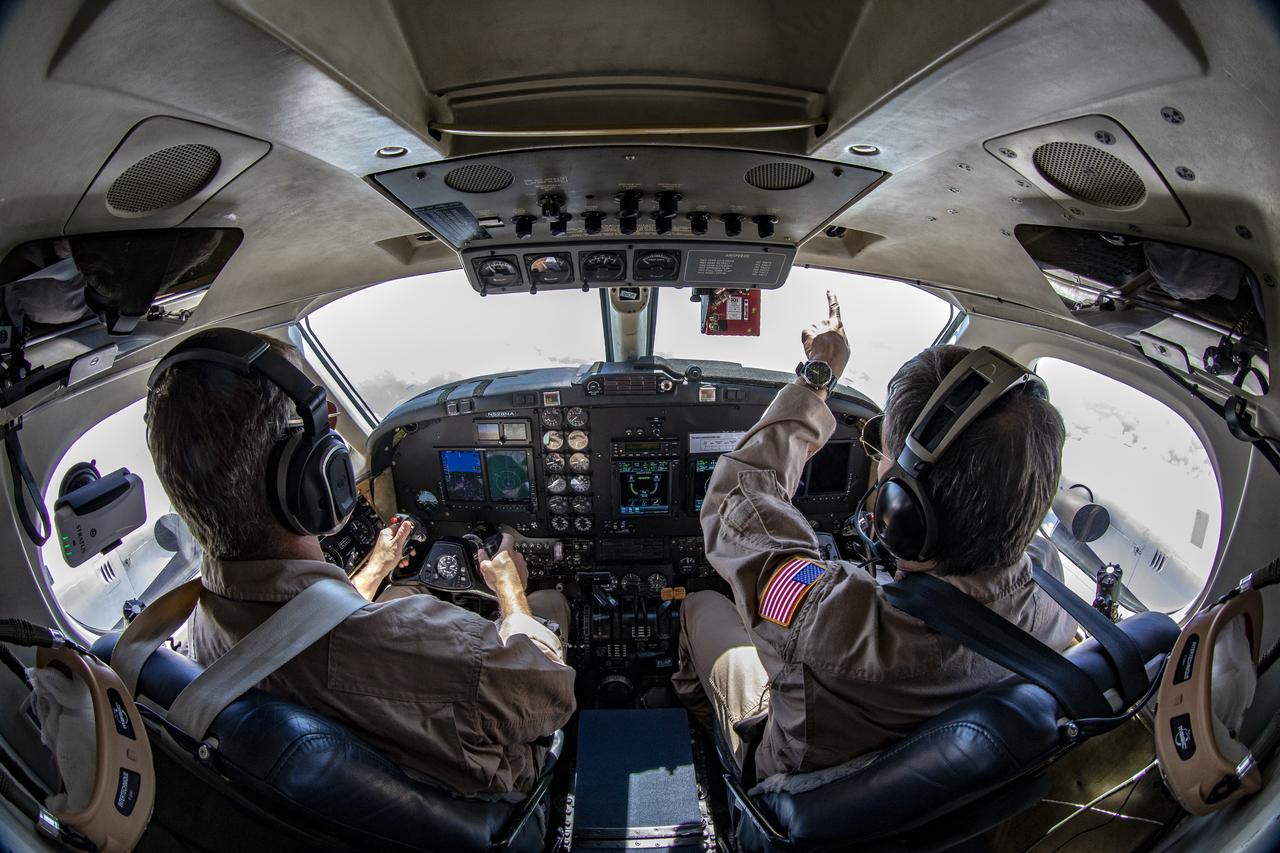
Testing the External Vision System (XVS) software on the B200 King Air. Pilots, Peter Coen and Wayne Ringelberg attempt to spot an incoming aircraft on the XVS monitor.
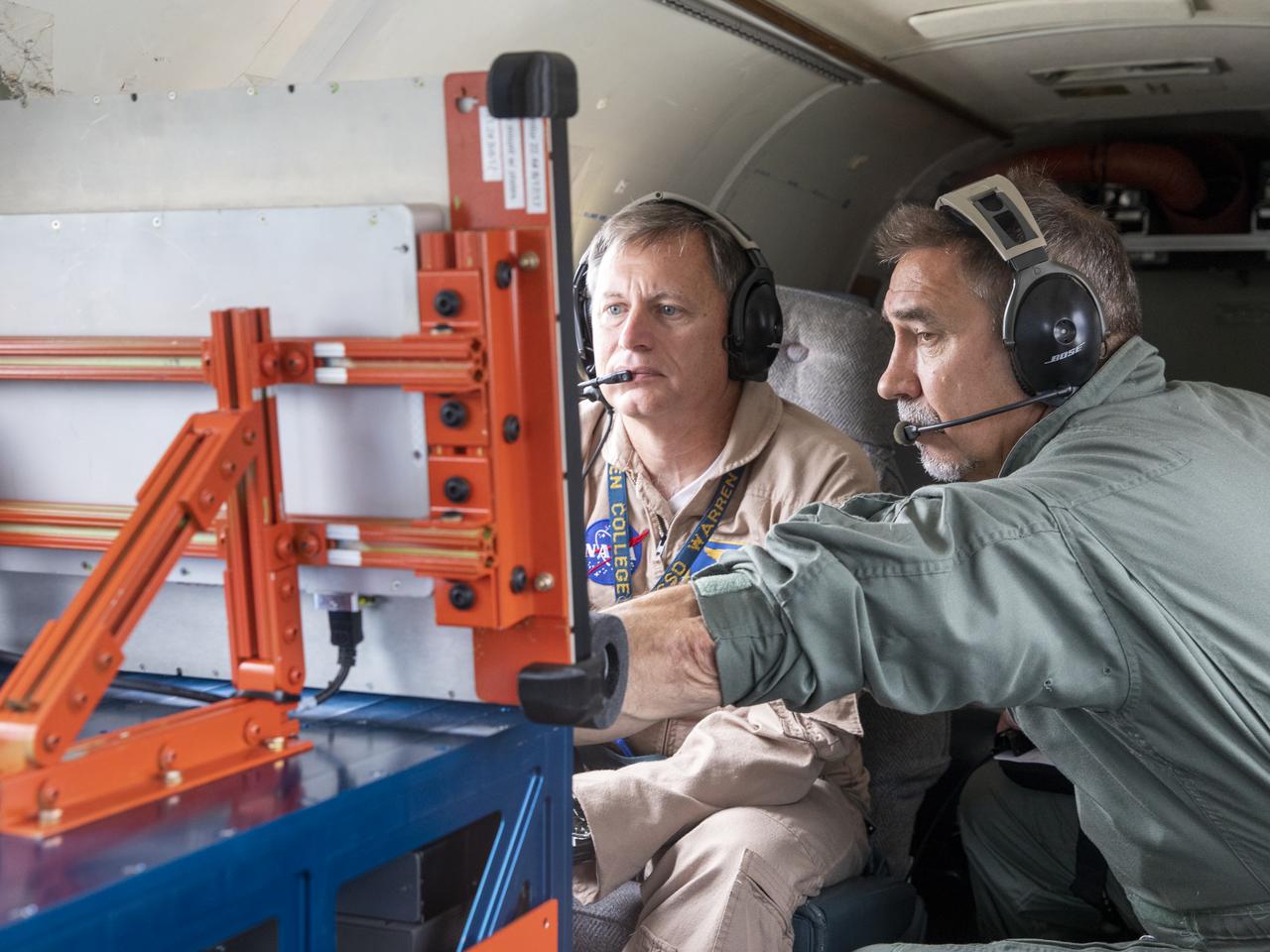
Testing the External Vision System (XVS) software on the B200 King Air. Pilots, Peter Coen and Wayne Ringelberg attempt to spot an incoming aircraft on the XVS monitor.
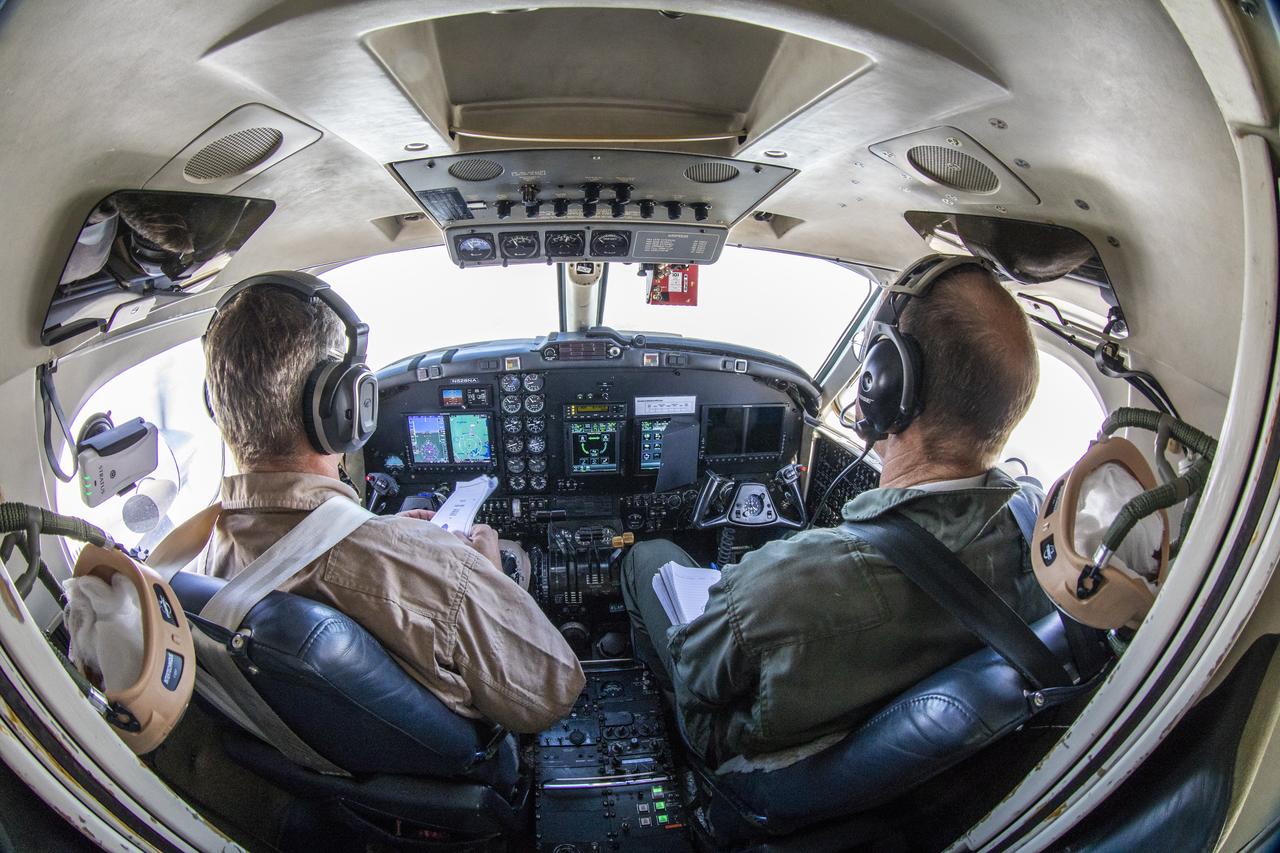
Testing the External Vision System (XVS) software on the B200 King Air. Pilots, Peter Coen and Wayne Ringelberg attempt to spot an incoming aircraft on the XVS monitor.

Testing the External Vision System (XVS) software on the B200 King Air. Pilots, Peter Coen and Wayne Ringelberg attempt to spot an incoming aircraft on the XVS monitor.
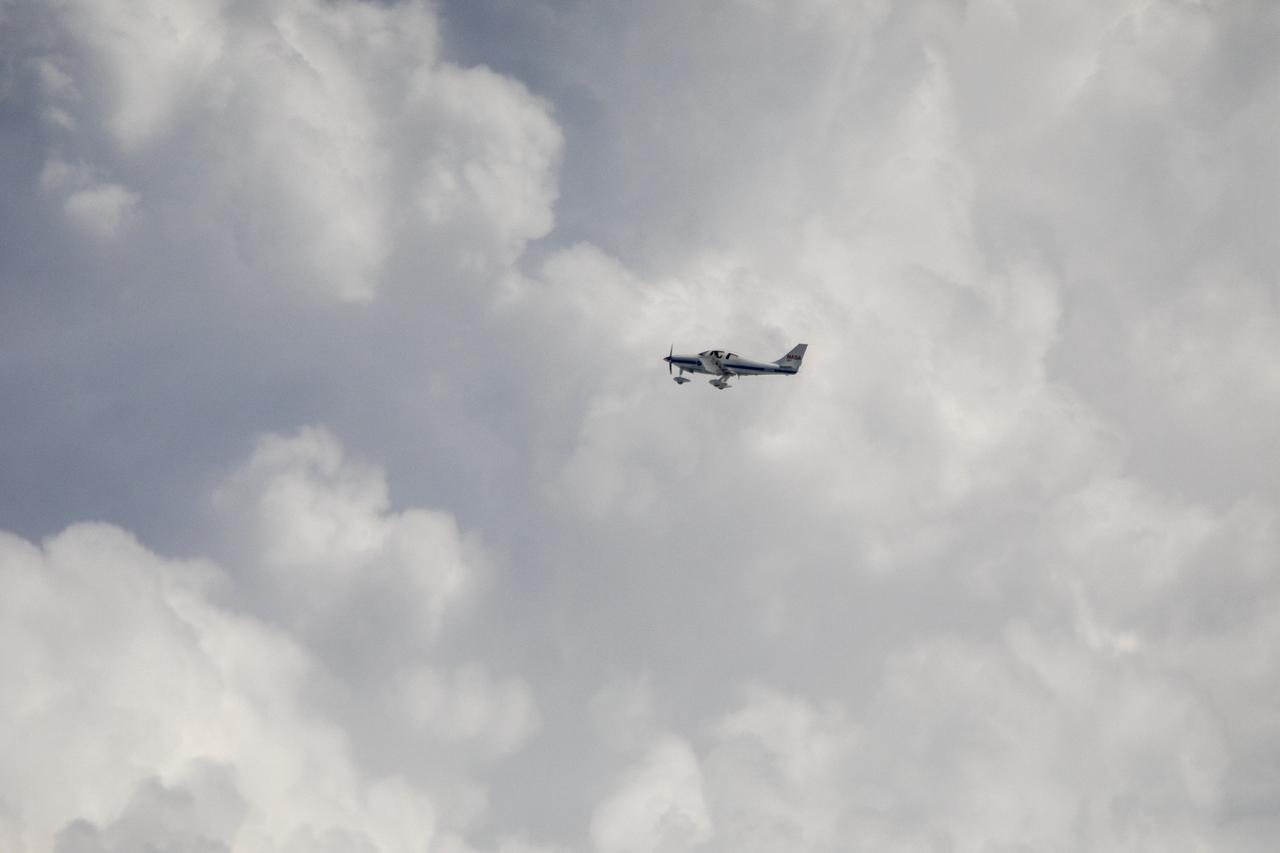
Testing the External Vision System (XVS) software on the B200 King Air. Pilots, Peter Coen and Wayne Ringelberg attempt to spot an incoming aircraft on the XVS monitor.
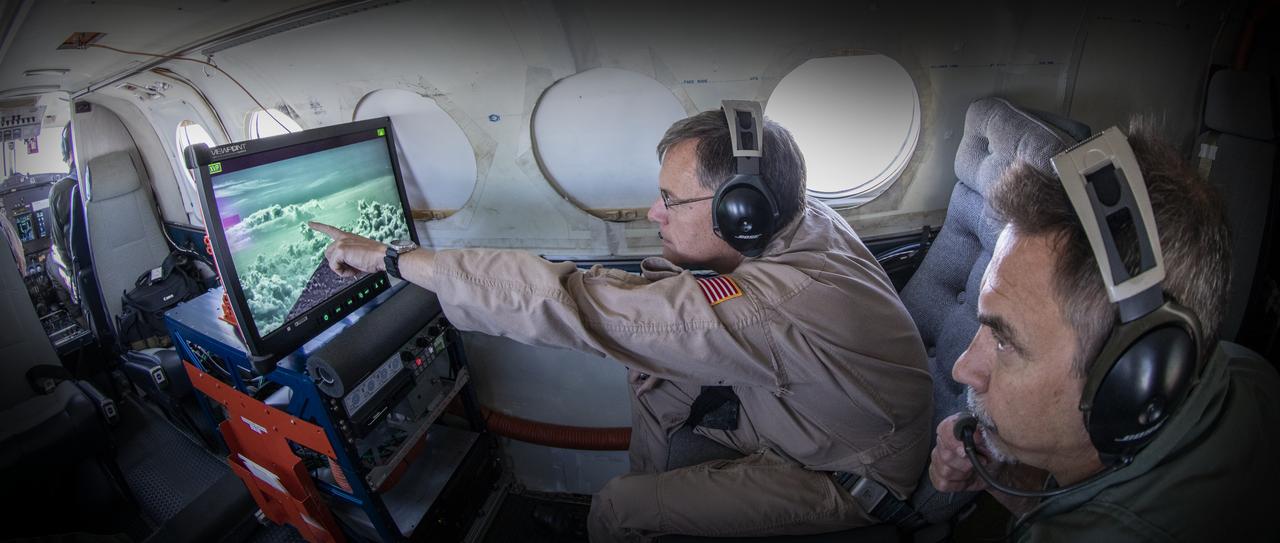
Testing the External Vision System (XVS) software on the B200 King Air. Pilots, Peter Coen and Wayne Ringelberg attempt to spot an incoming aircraft on the XVS monitor.
Testing the External Vision System (XVS) software on the B200 King Air. Pilots, Peter Coen and Wayne Ringelberg attempt to spot an incoming aircraft on the XVS monitor.
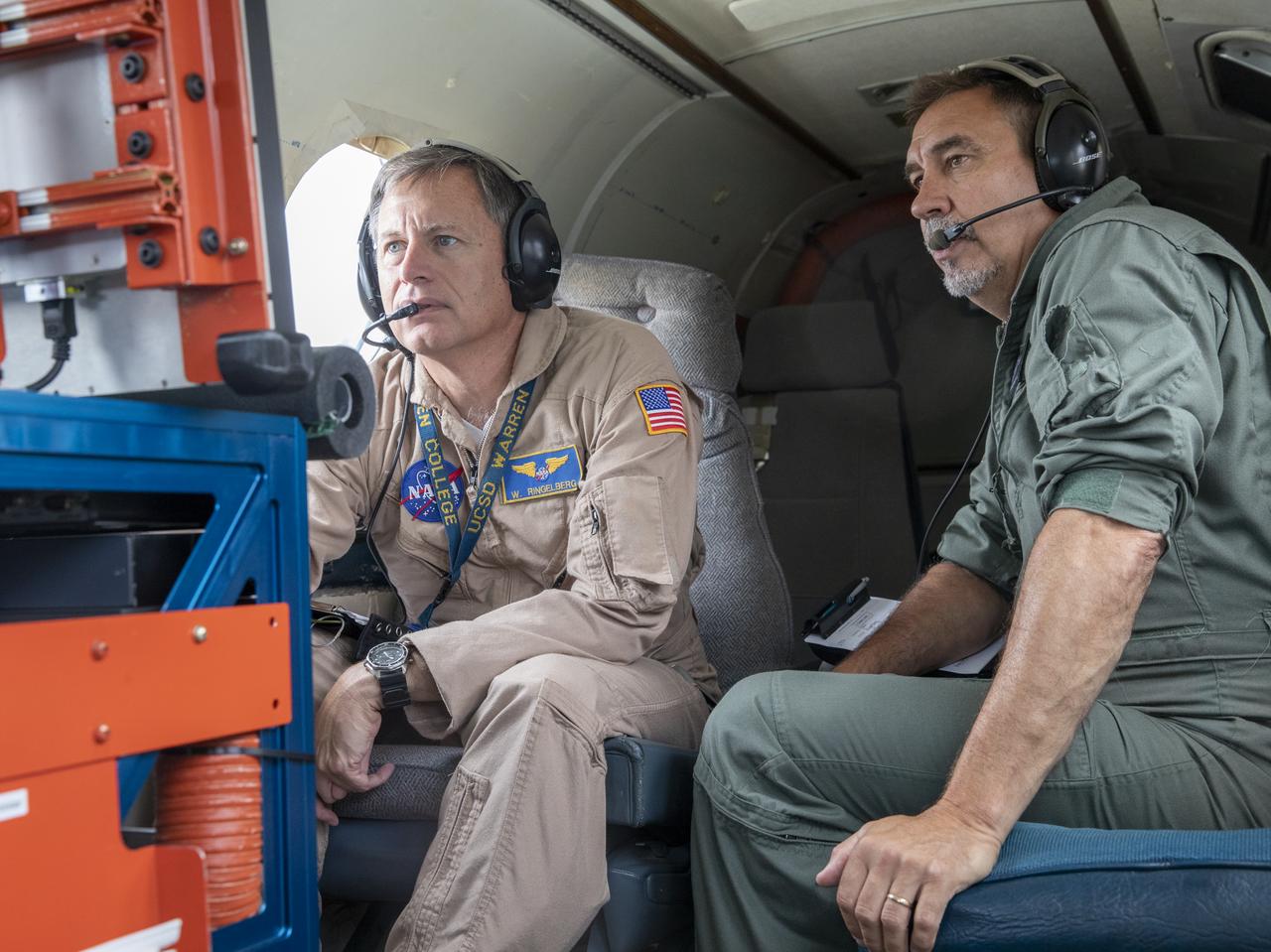
Testing the External Vision System (XVS) software on the B200 King Air. Pilots, Peter Coen and Wayne Ringelberg attempt to spot an incoming aircraft on the XVS monitor.

Testing the External Vision System (XVS) software on the B200 King Air. Pilots, Peter Coen and Wayne Ringelberg attempt to spot an incoming aircraft on the XVS monitor.
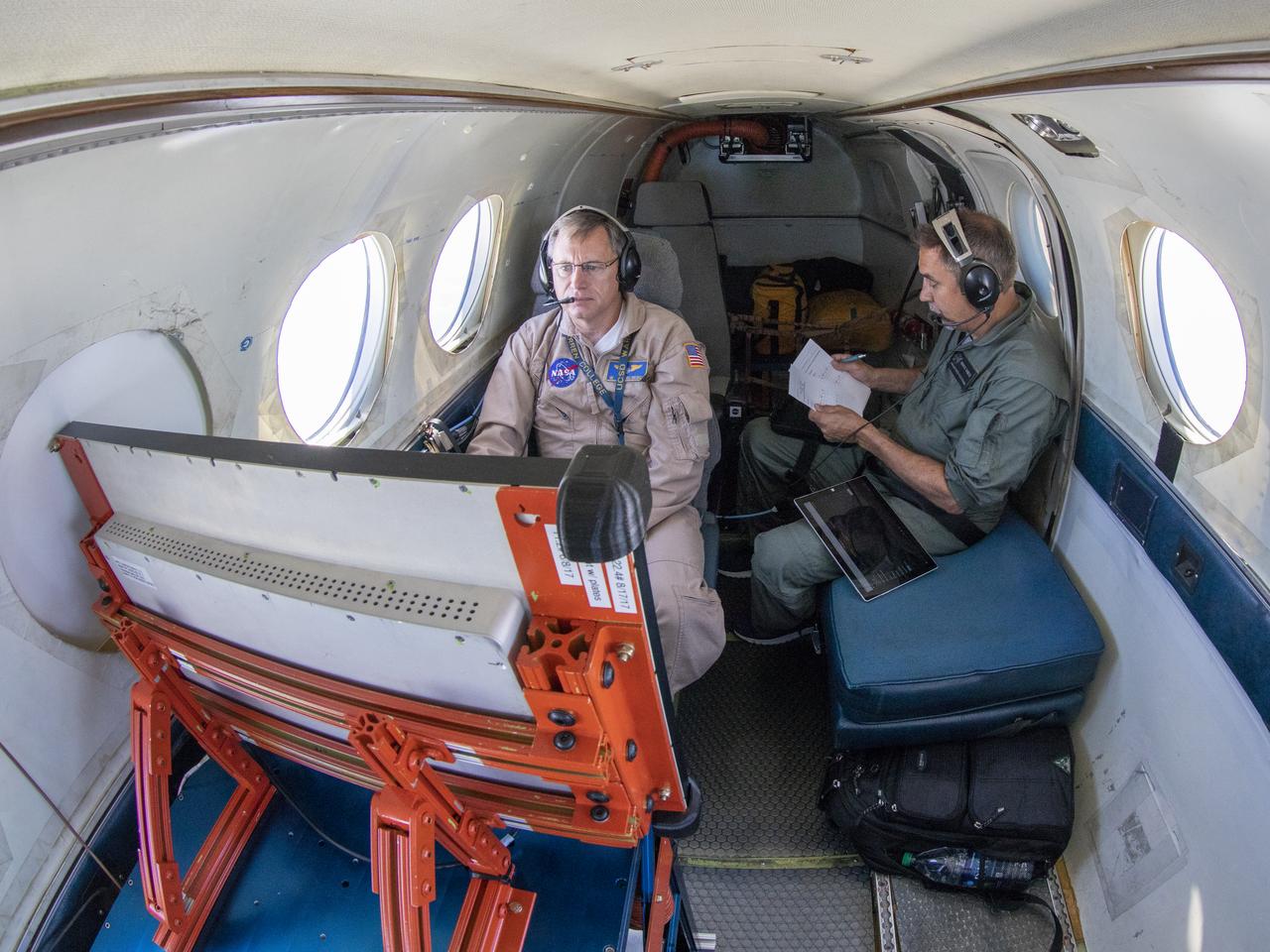
Testing the External Vision System (XVS) software on the B200 King Air. Pilots, Peter Coen and Wayne Ringelberg attempt to spot an incoming aircraft on the XVS monitor.
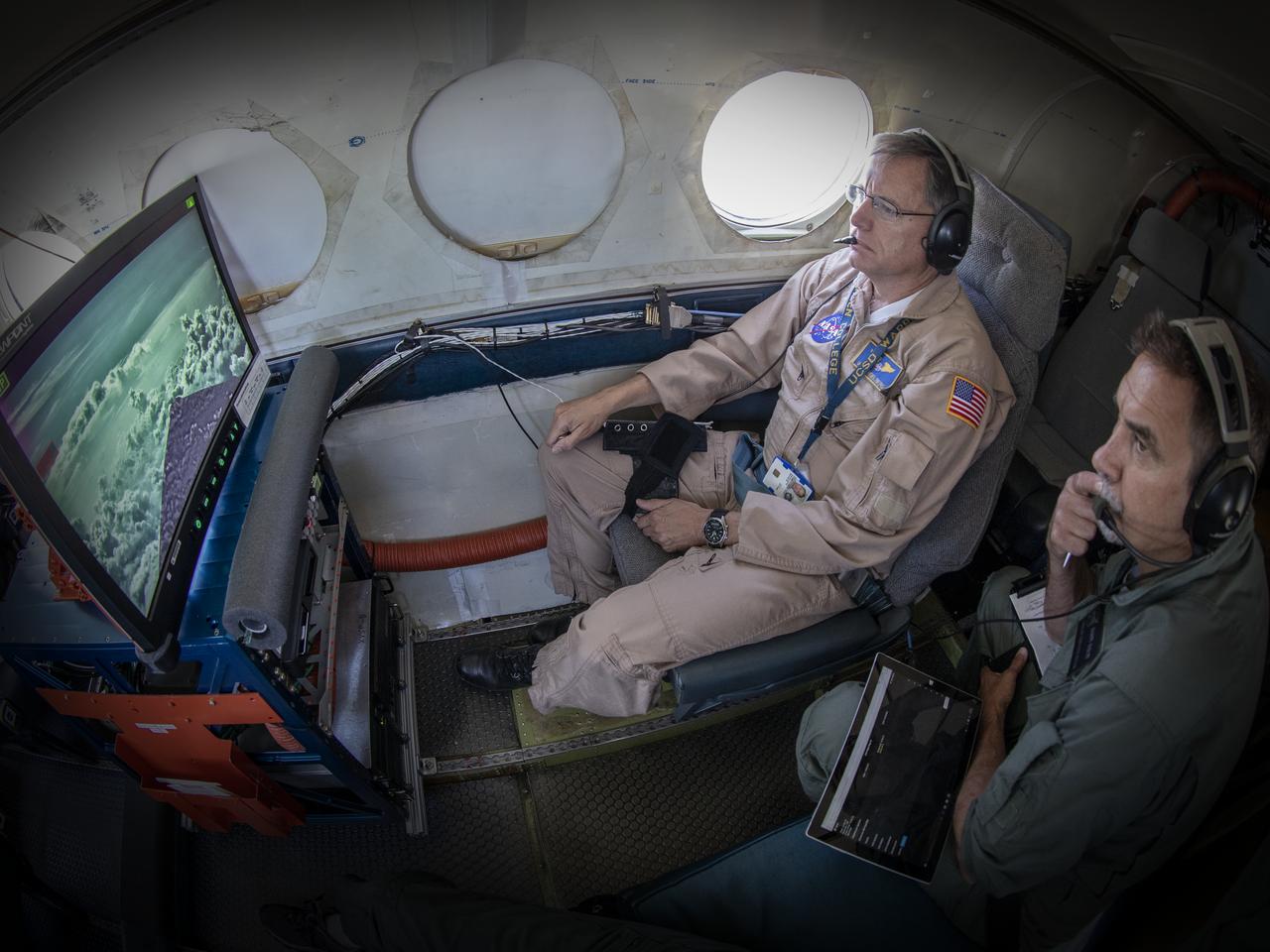
Testing the External Vision System (XVS) software on the B200 King Air. Pilots, Peter Coen and Wayne Ringelberg attempt to spot an incoming aircraft on the XVS monitor.
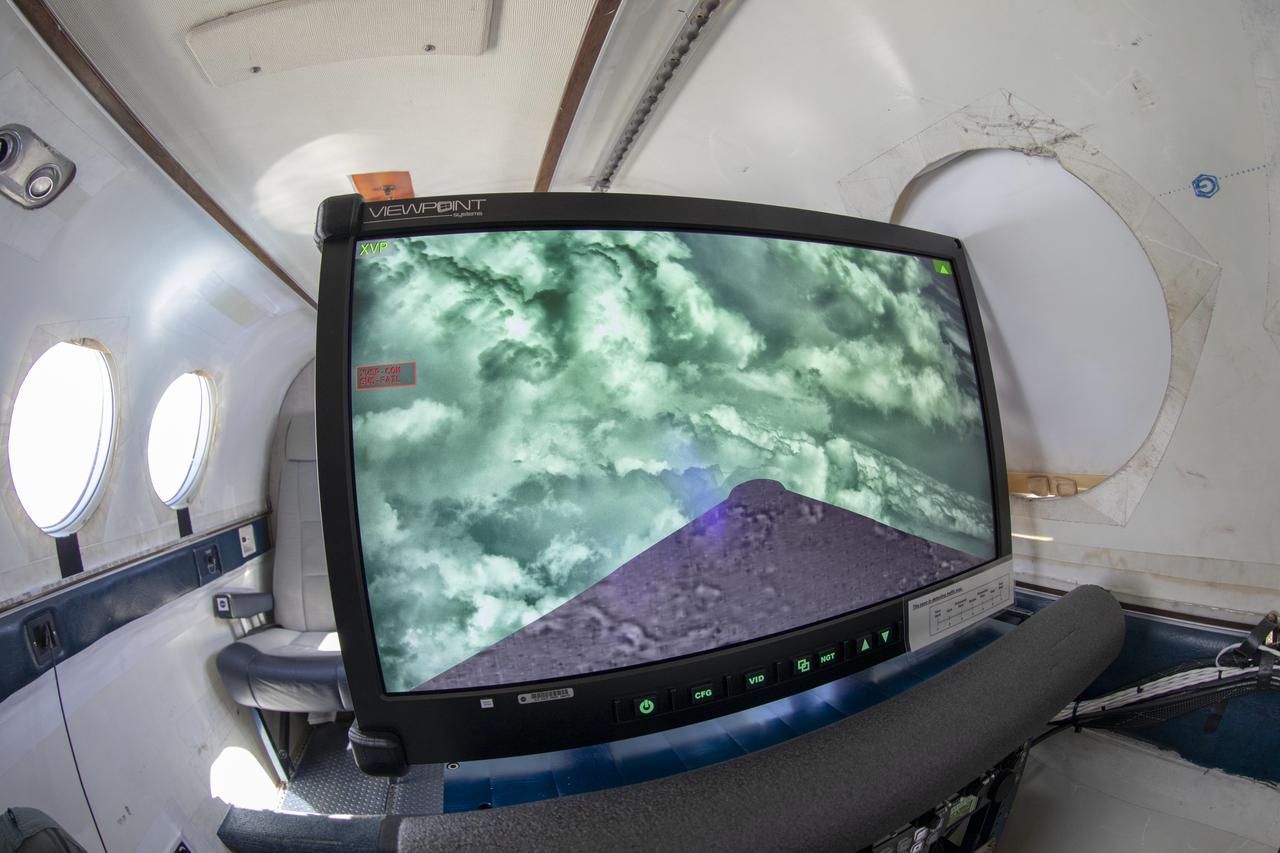
Testing the External Vision System (XVS) software on the B200 King Air. Pilots, Peter Coen and Wayne Ringelberg attempt to spot an incoming aircraft on the XVS monitor.
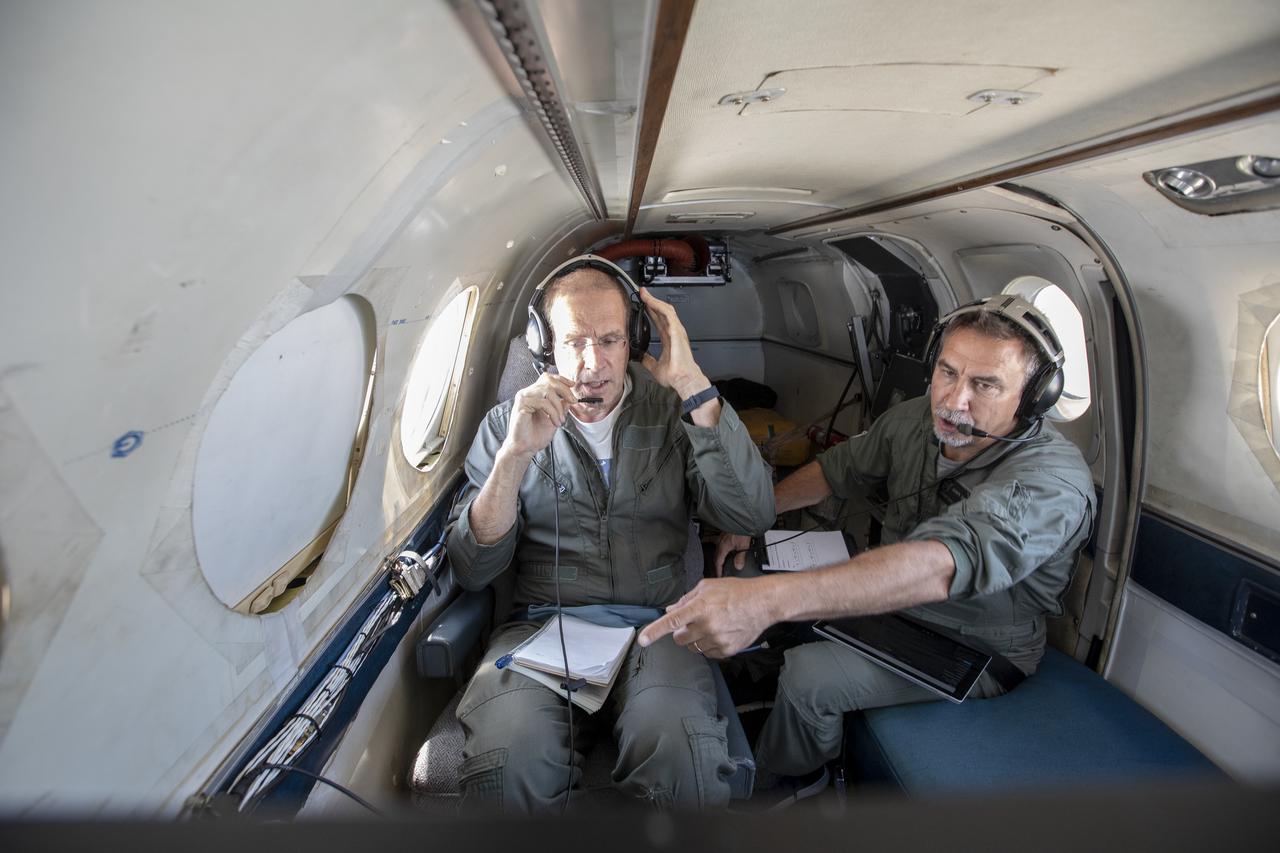
Testing the External Vision System (XVS) software on the B200 King Air. Pilots, Peter Coen and Wayne Ringelberg attempt to spot an incoming aircraft on the XVS monitor.
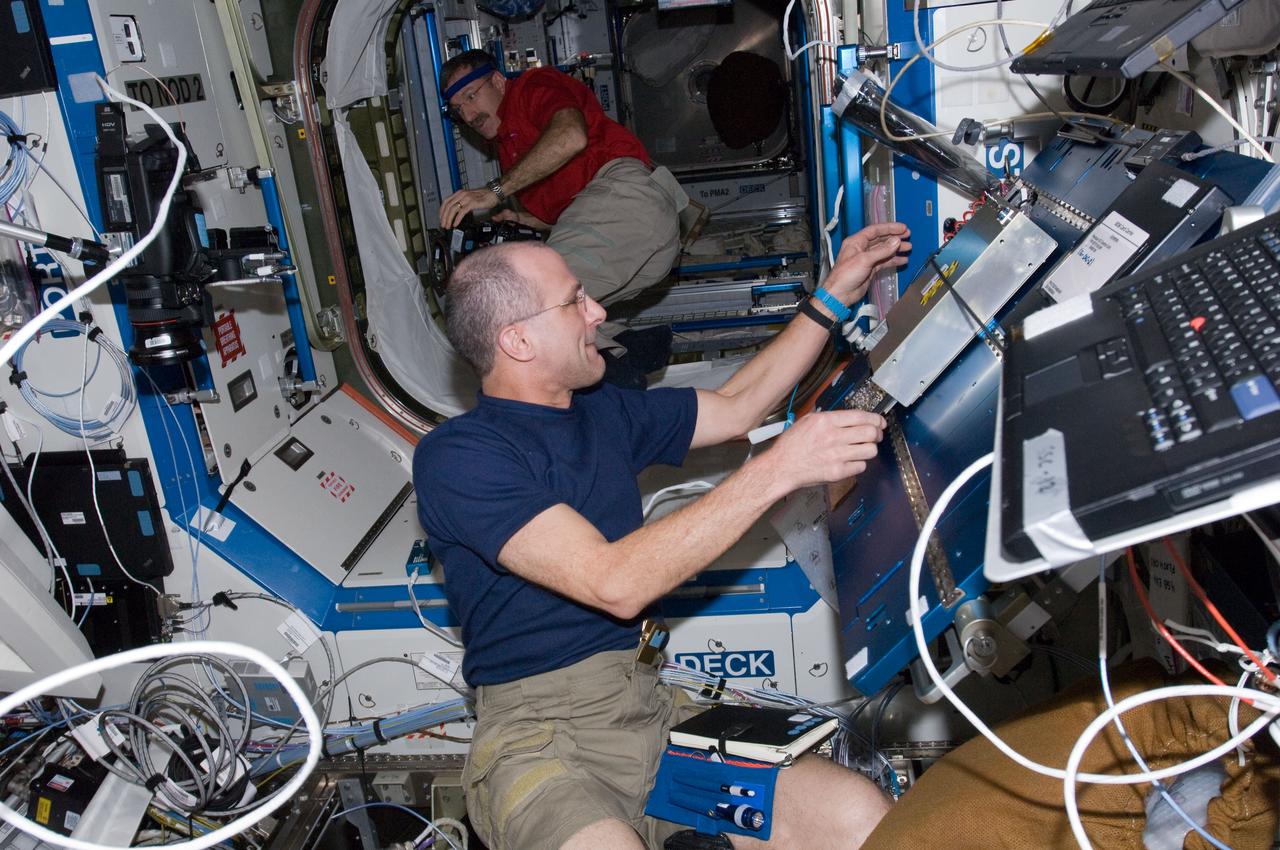
ISS030-E-022575 (28 Dec. 2011) -- NASA astronaut Don Pettit (foreground),Expedition 30 flight engineer, performs the Enhanced Processor and Integrated Communications (EPIC) card testing and X2R10 software transition. The software transition work will include EPIC card testing and card installations, and monitoring of the upgraded Multiplexer/ Demultiplexer (MDM) computers. Dan Burbank, Expedition 30 commander, is setting up a camcorder in the background.
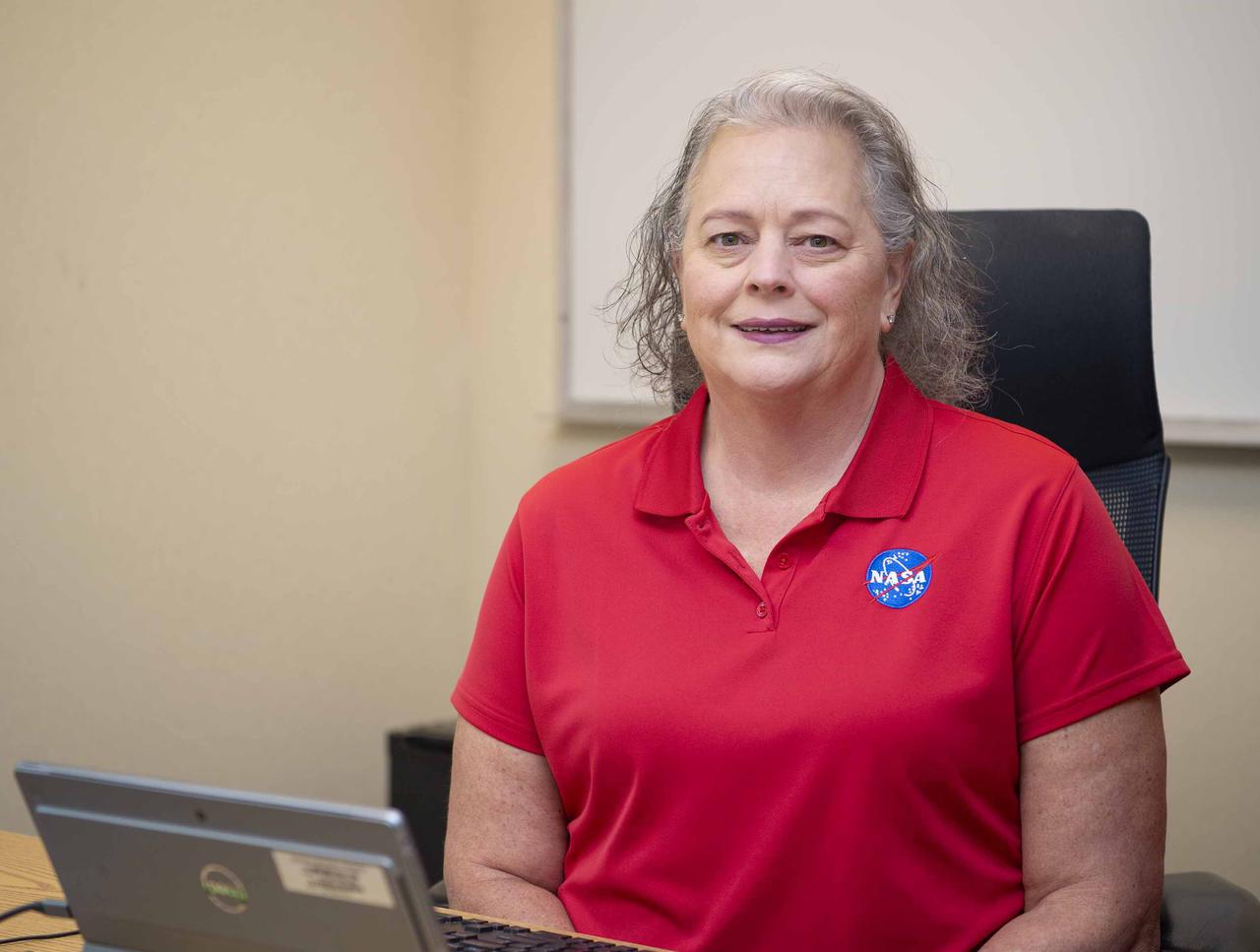
Rae Anderson, subject matter expert for software assurance in the NASA Stennis Safety and Mission Assurance Directorate, is the first employee at NASA’s Stennis Space Center – and one of five civil servants across NASA – to earn the highest distinction in the Safety and Mission Assurance Technical Excellence Program in the discipline of software assurance. The level four certification demonstrates Anderson’s dedication to growing her knowledge and skills to become an effective contributor to the agency’s mission.
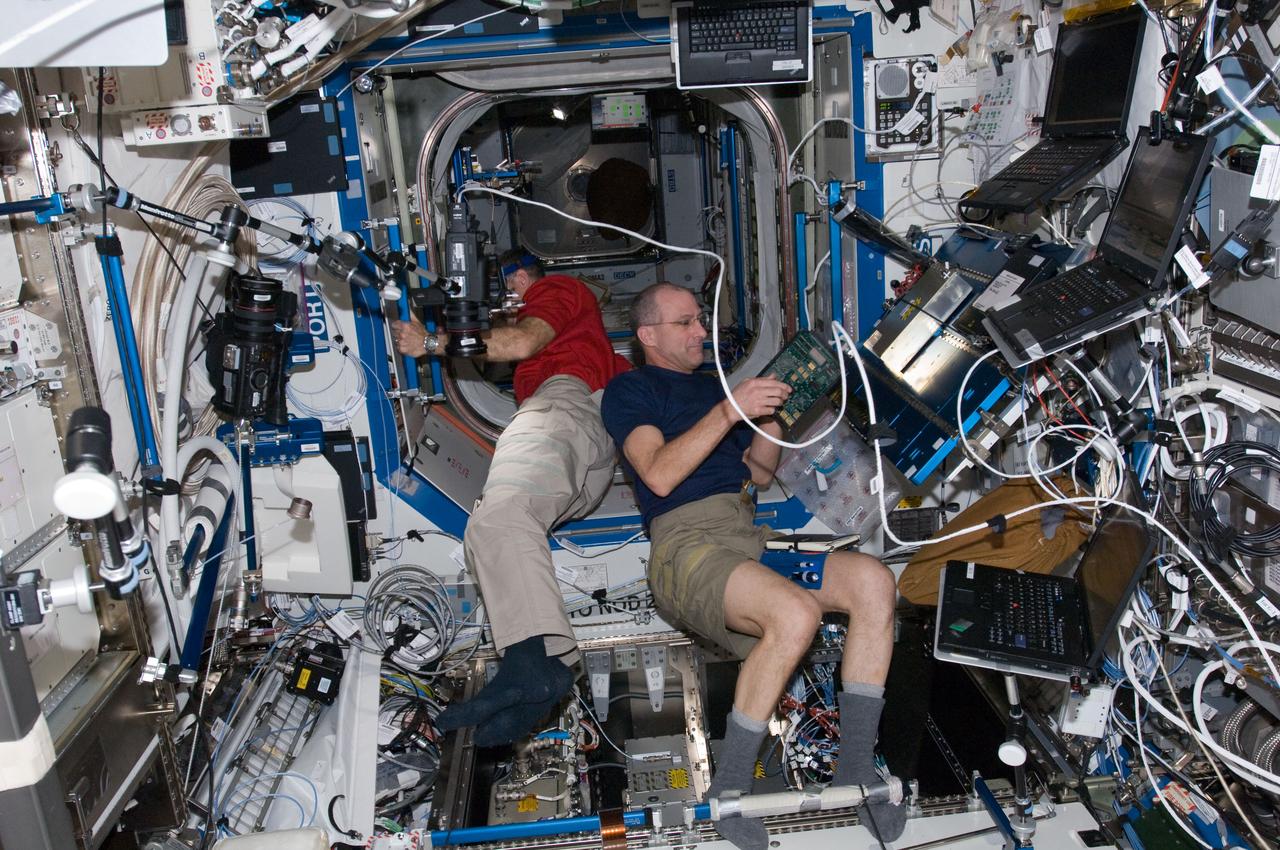
ISS030-E-022574 (28 Dec. 2011) -- NASA astronaut Don Pettit (foreground),Expedition 30 flight engineer, performs the Enhanced Processor and Integrated Communications (EPIC) card testing and X2R10 software transition. The software transition work will include EPIC card testing and card installations, and monitoring of the upgraded Multiplexer/ Demultiplexer (MDM) computers. Dan Burbank, Expedition 30 commander, is setting up a camcorder in the background.

iss072e747124 (March 18, 2025) --- NASA astronaut and Expedition 72 Flight Engineer Nichole Ayers works inside the International Space Station's Kibo laboratory module loading software onto an Astrobee robotic free-flyer. The software is part of a technology investigation demonstrating an adaptor for docking and close approach sensing to connect both active and passive objects in space. Results may enable applications such as satellite servicing, orbital refueling, spacecraft repair and upgrade, and in-orbit manufacturing.
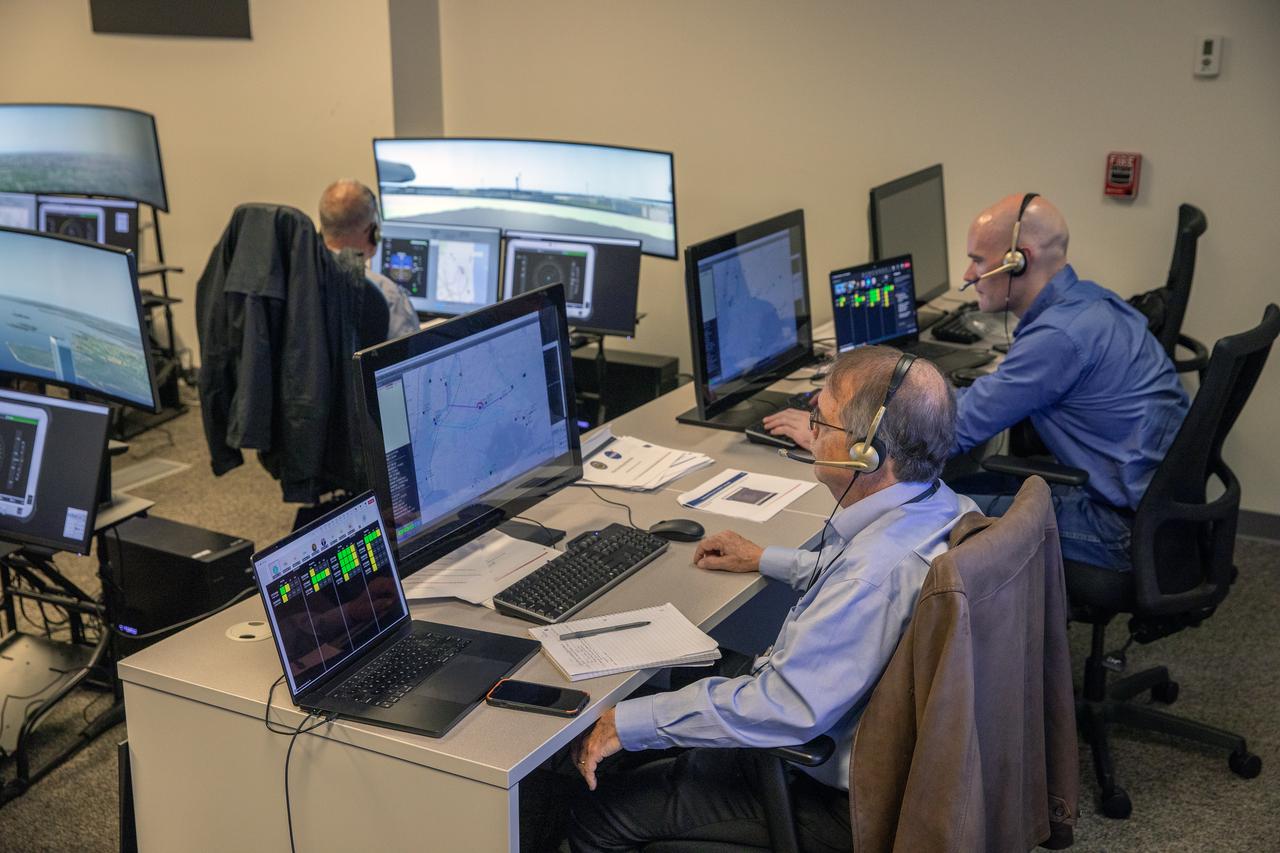
Focus on active photos –Class B Simulation Evaluation in the ATOL Lab at Langley (Also at FAA Tech Center) where team is working with one another in the lab, reviewing data on the monitors. Working the software, adjusting the software systems. Going over the shoulder to show the displays and screens as the software is running. John Foster (left) in the role of an air taxi pilot in the simulator chair with Jim Chamberlain and Terence McClain at the flight manager stations running virtual air taxi integration simulations focusing on urban air space at NASA’s Langley Research Center in Hampton, Virginia on Sept. 25, 2024.
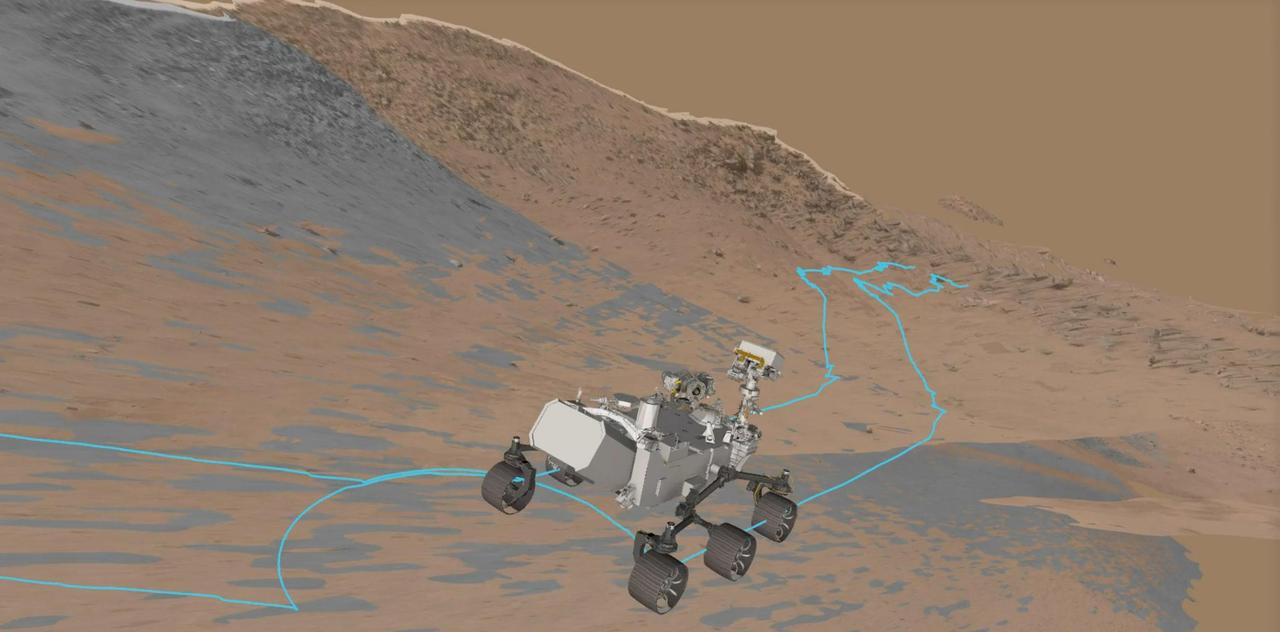
This animation captured from NASA's rover driving software depicts the agency's Perseverance during a slippery drive as it ascends toward the rim of Mars' Jezero Crater on Oct. 16, 2024, the 1,301st Martian day, or sol, of the mission. A key objective for Perseverance's mission on Mars is astrobiology, including the search for signs of ancient microbial life. The rover will characterize the planet's geology and past climate, pave the way for human exploration of the Red Planet, and be the first mission to collect and cache Martian rock and regolith (broken rock and dust). Subsequent NASA missions, in cooperation with ESA (European Space Agency), would send spacecraft to Mars to collect these sealed samples from the surface and return them to Earth for in-depth analysis. The Mars 2020 Perseverance mission is part of NASA's Moon to Mars exploration approach, which includes Artemis missions to the Moon that will help prepare for human exploration of the Red Planet. Animation available at https://photojournal.jpl.nasa.gov/catalog/PIA26514
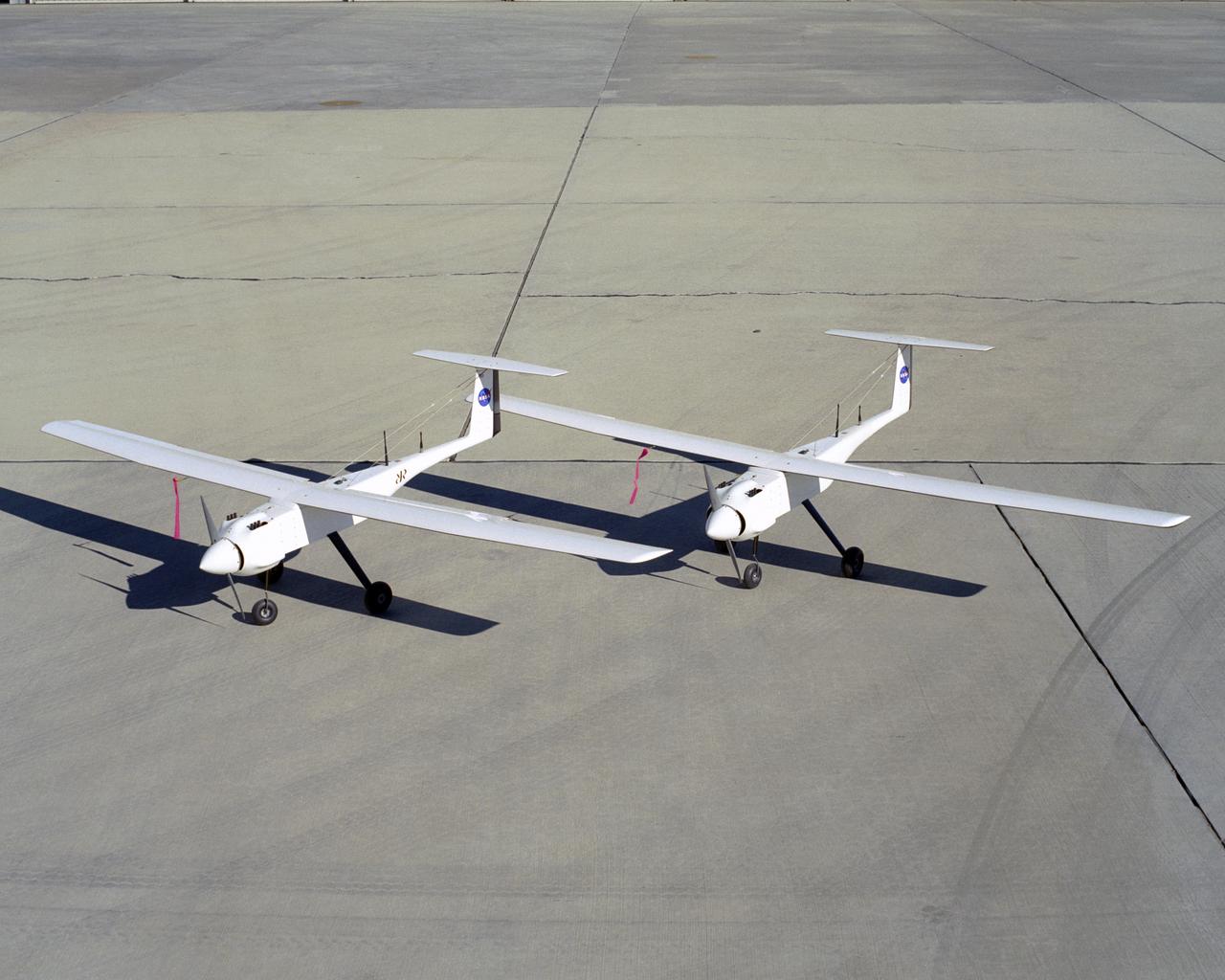
Two identical RnR Products APV-3 aircraft validated cooperative flight control software in the Networked UAV Teaming Experiment at NASA Dryden in early 2005.
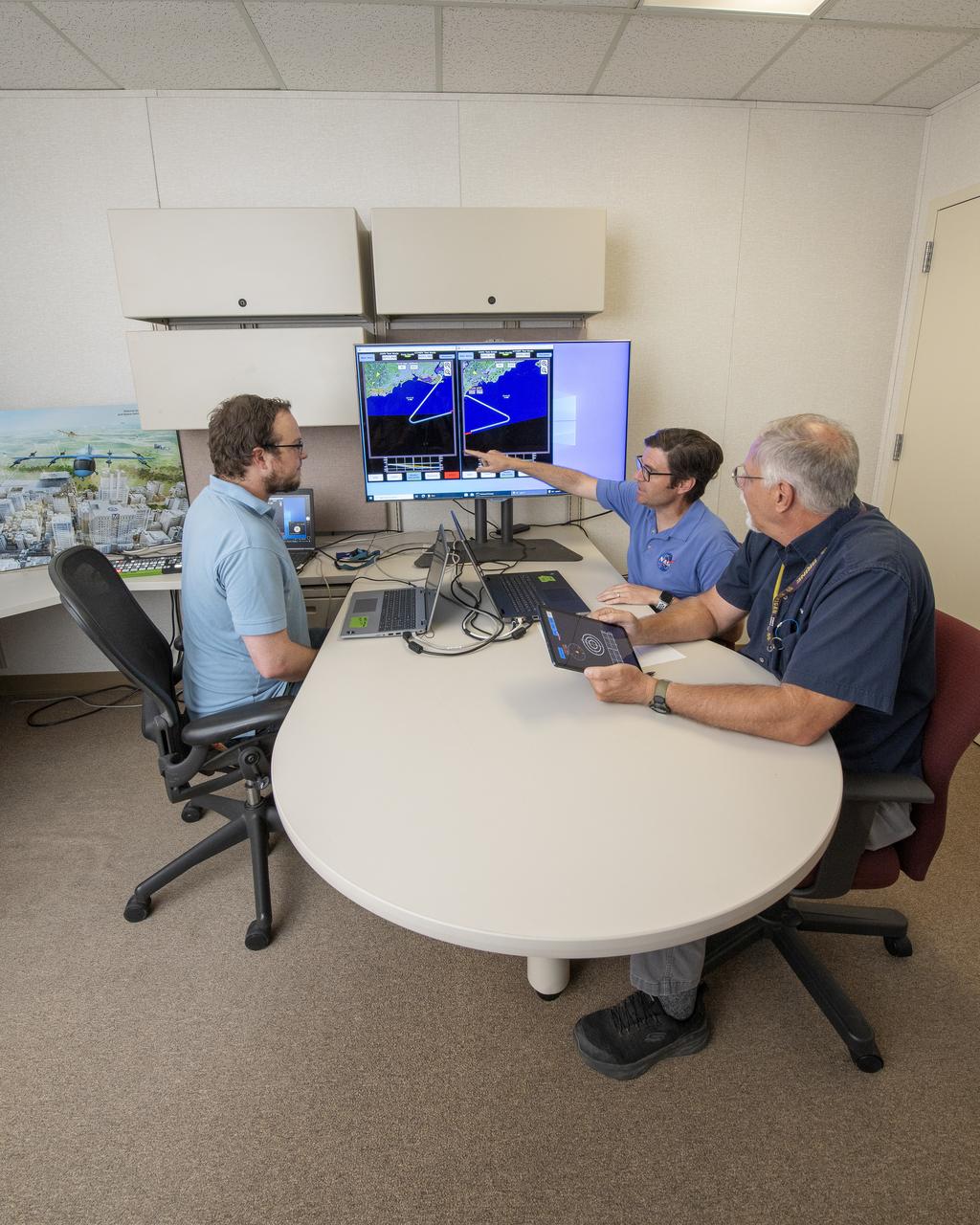
NASA software developer, Ethan Williams, left, pilot Scott Howe, and operations test consultant Jan Scofield run a flight path management software simulation at NASA’s Armstrong Flight Research Center in Edwards, California in May 2023. This simulation research supports the integration of automated systems for the advanced air mobility mission.

The test subject of Airspace Technology Demonstration 2 is “Integrated Arrivals Departures Scheduling,” a software tool that coordinates schedules between the ramp, tower, terminal and center control facilities, allowing air traffic controllers to better predict where and when to send aircraft in order to reduce congestion.
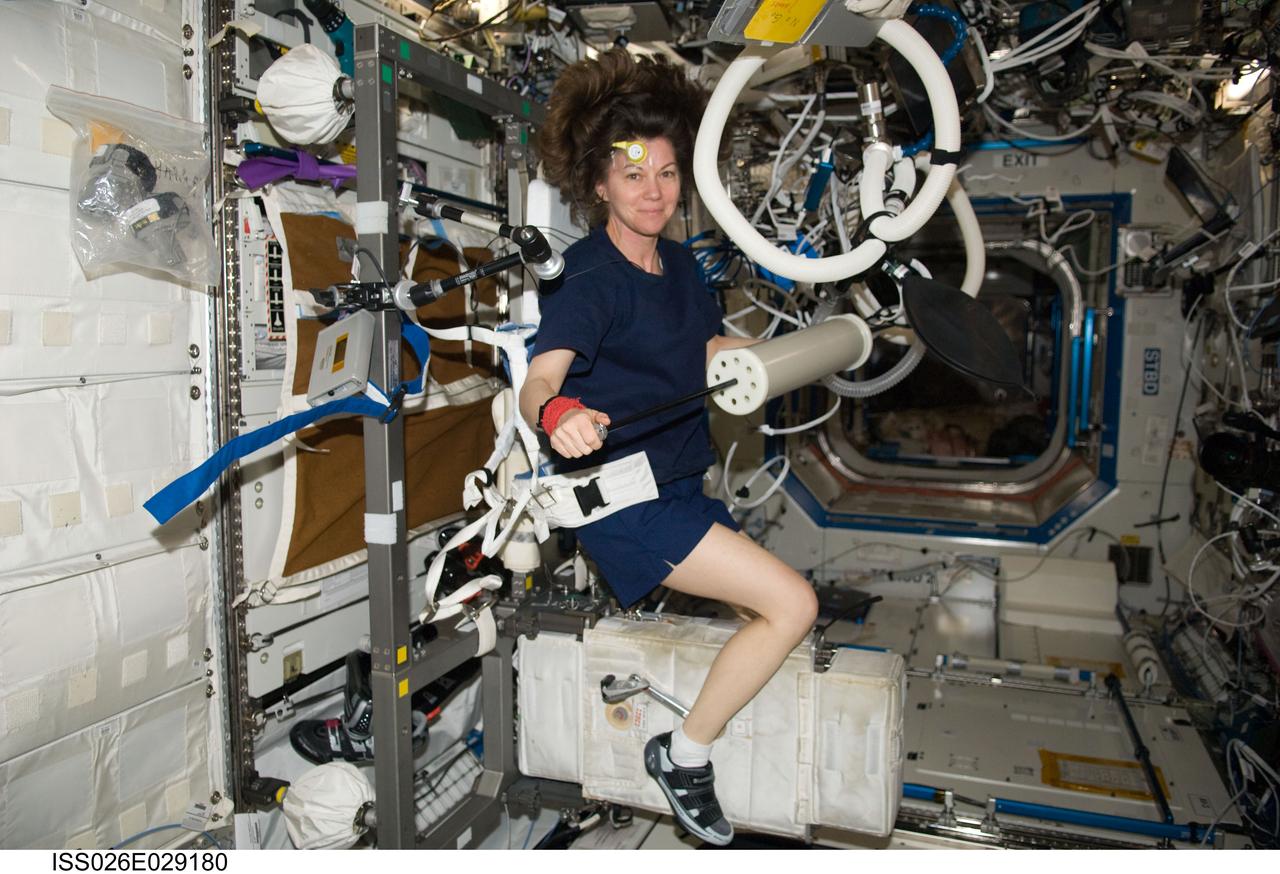
ISS026-E-029180 (24 Feb. 2011) --- NASA astronaut Catherine (Cady) Coleman, Expedition 26 flight engineer, performs VO2max portable Pulmonary Function System (PFS) software calibrations and instrument check while using the Cycle Ergometer with Vibration Isolation System (CEVIS) in the Destiny laboratory of the International Space Station.
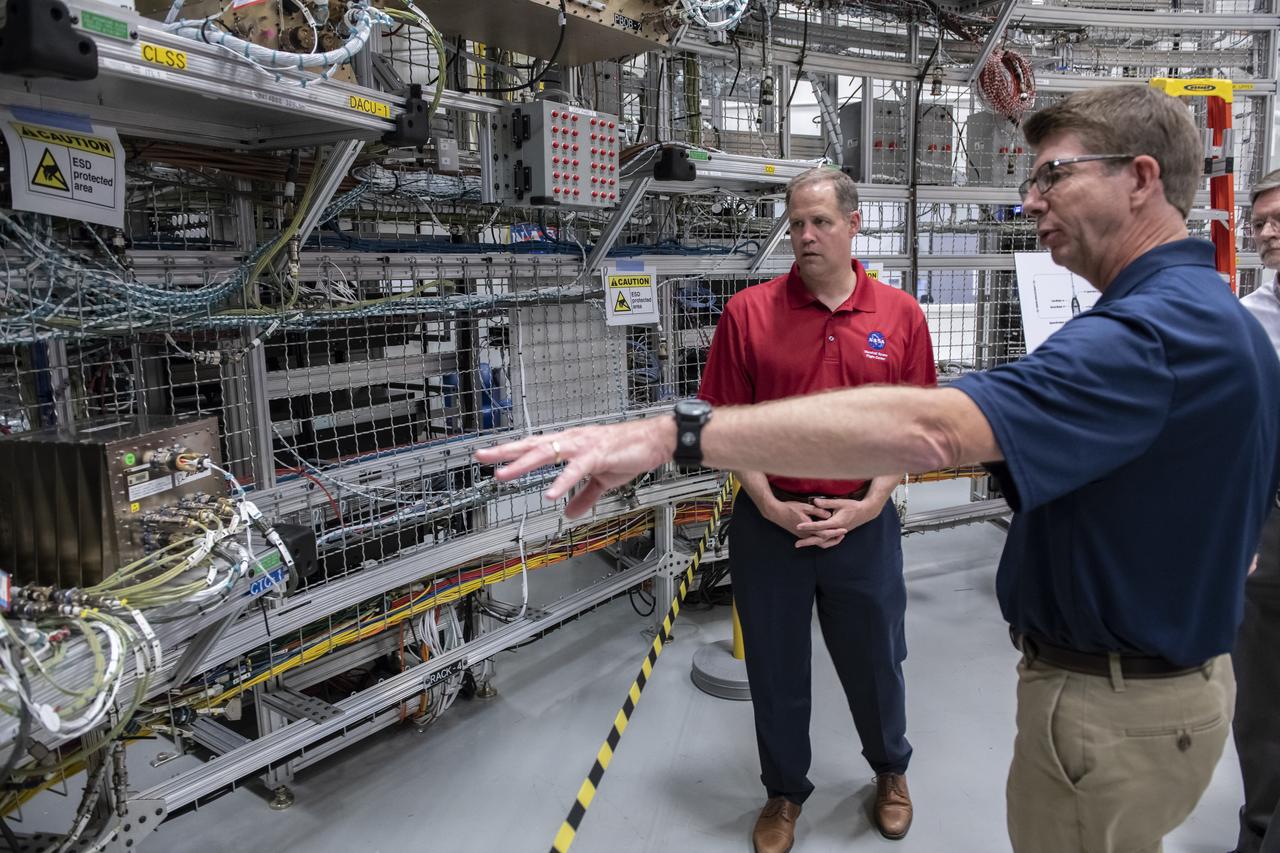
On August 15, 2018 NASA Administrator Jim Bridenstine visited Marshall Space Flight Center. Upon his arrival he was greeted by MSFC Acting Director Jody Singer along with the senior management team. During his tour of the Marshall Center, Bridenstine visited the System Integration Lab and the Software Integration and Testing Facility where Marshall is supporting end-to-end integrated avionics and software integration, check-out, verification and validation for the systems that will control the Space Launch System rocket during its flight and ascent.
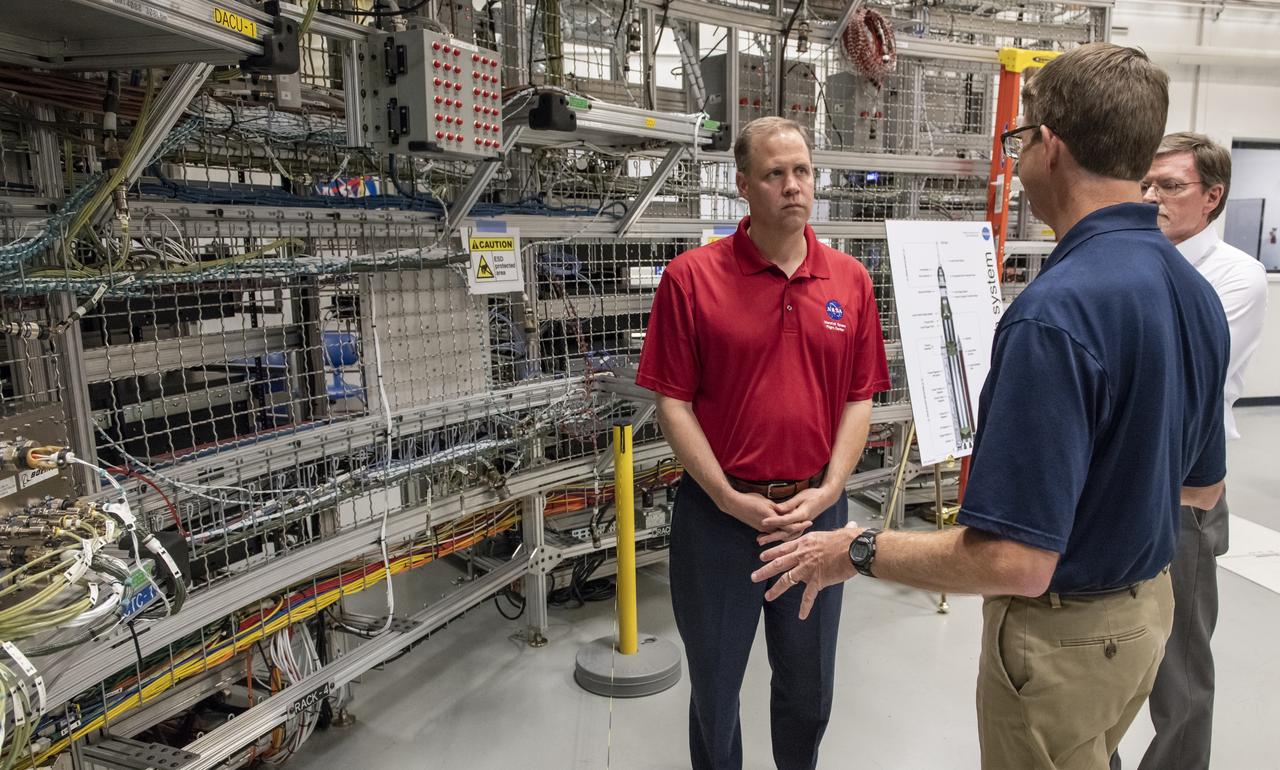
On August 15, 2018 NASA Administrator Jim Bridenstine visited Marshall Space Flight Center. Upon his arrival he was greeted by MSFC Acting Director Jody Singer along with the senior management team. During his tour of the Marshall Center, Bridenstine visited the System Integration Lab and the Software Integration and Testing Facility where Marshall is supporting end-to-end integrated avionics and software integration, check-out, verification and validation for the systems that will control the Space Launch System rocket during its flight and ascent.
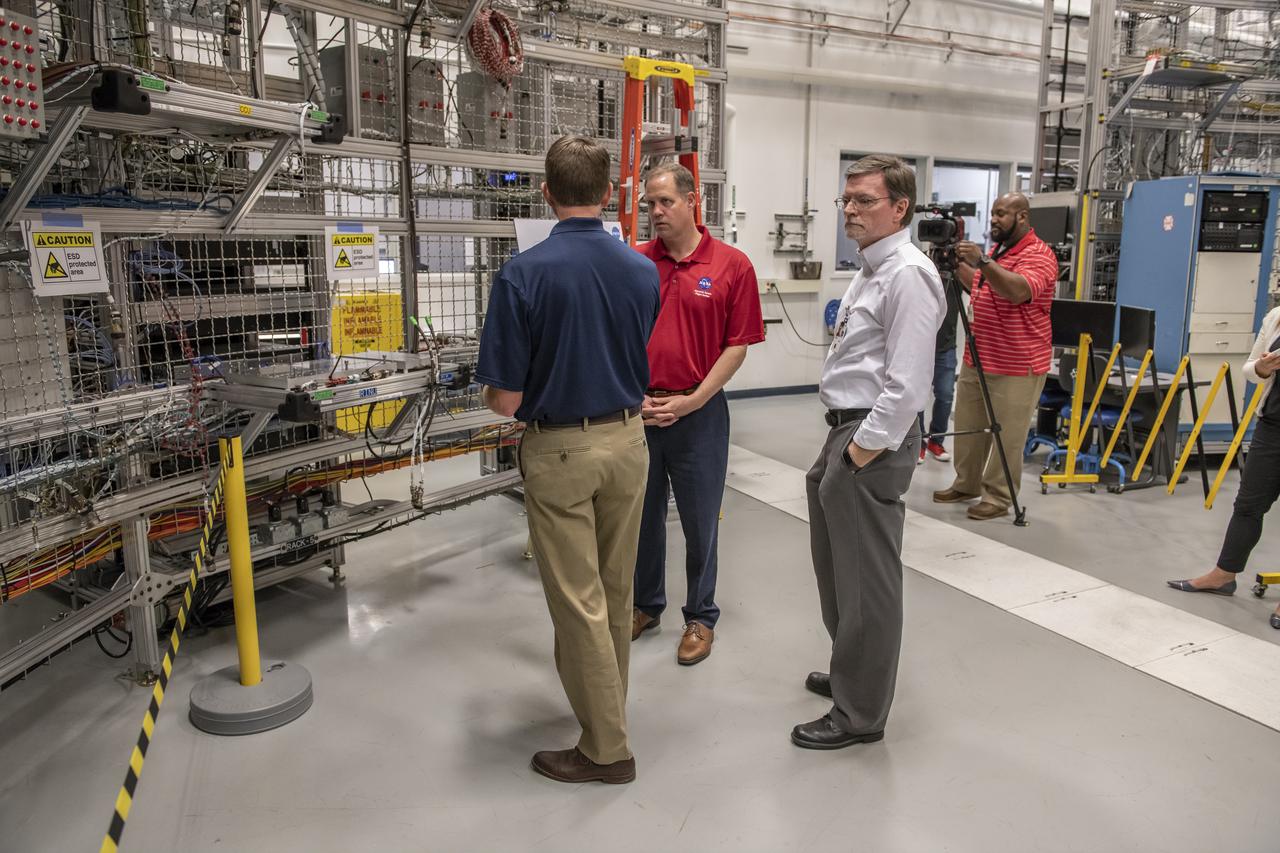
On August 15, 2018 NASA Administrator Jim Bridenstine visited Marshall Space Flight Center. Upon his arrival he was greeted by MSFC Acting Director Jody Singer along with the senior management team. During his tour of the Marshall Center, Bridenstine visited the System Integration Lab and the Software Integration and Testing Facility where Marshall is supporting end-to-end integrated avionics and software integration, check-out, verification and validation for the systems that will control the Space Launch System rocket during its flight and ascent.
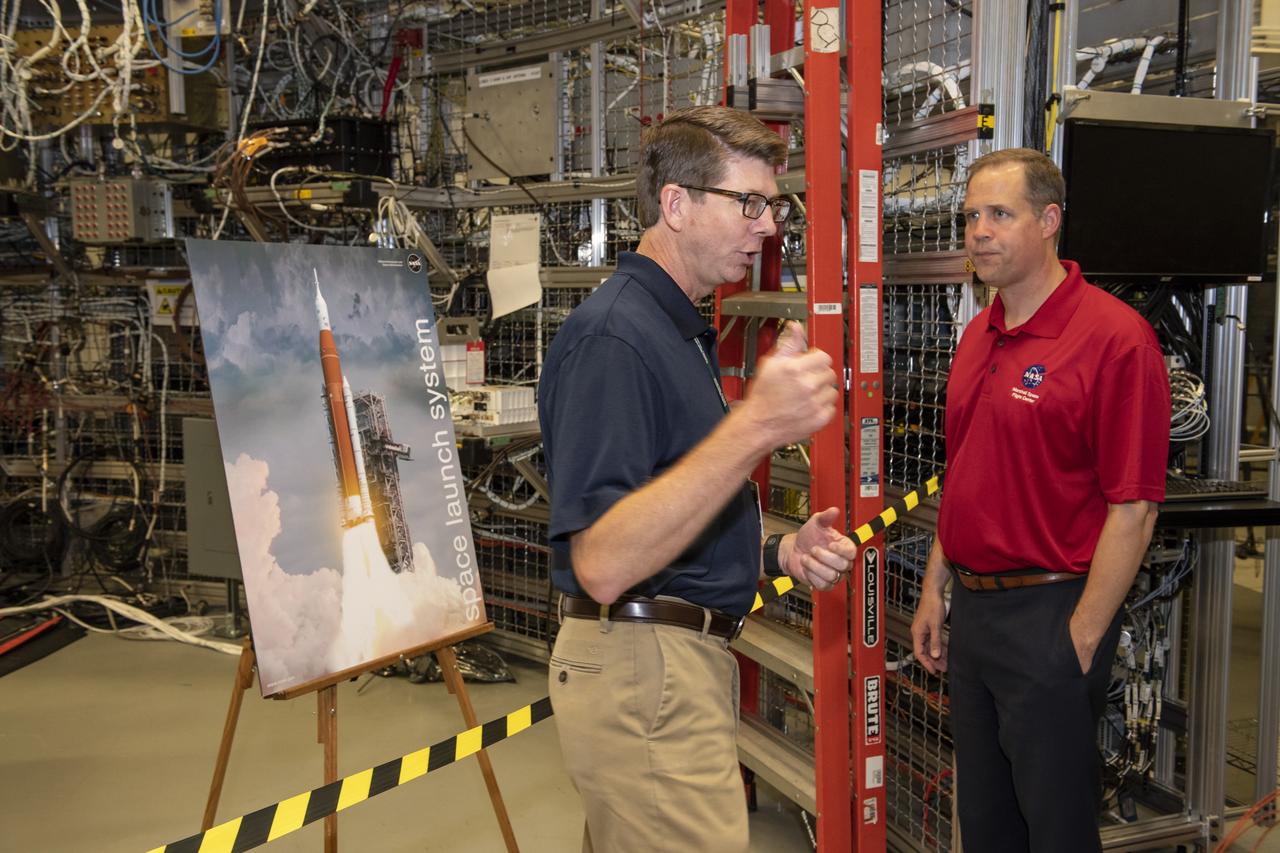
On August 15, 2018 NASA Administrator Jim Bridenstine visited Marshall Space Flight Center. Upon his arrival he was greeted by MSFC Acting Director Jody Singer along with the senior management team. During his tour of the Marshall Center, Bridenstine visited the System Integration Lab and the Software Integration and Testing Facility where Marshall is supporting end-to-end integrated avionics and software integration, check-out, verification and validation for the systems that will control the Space Launch System rocket during its flight and ascent.
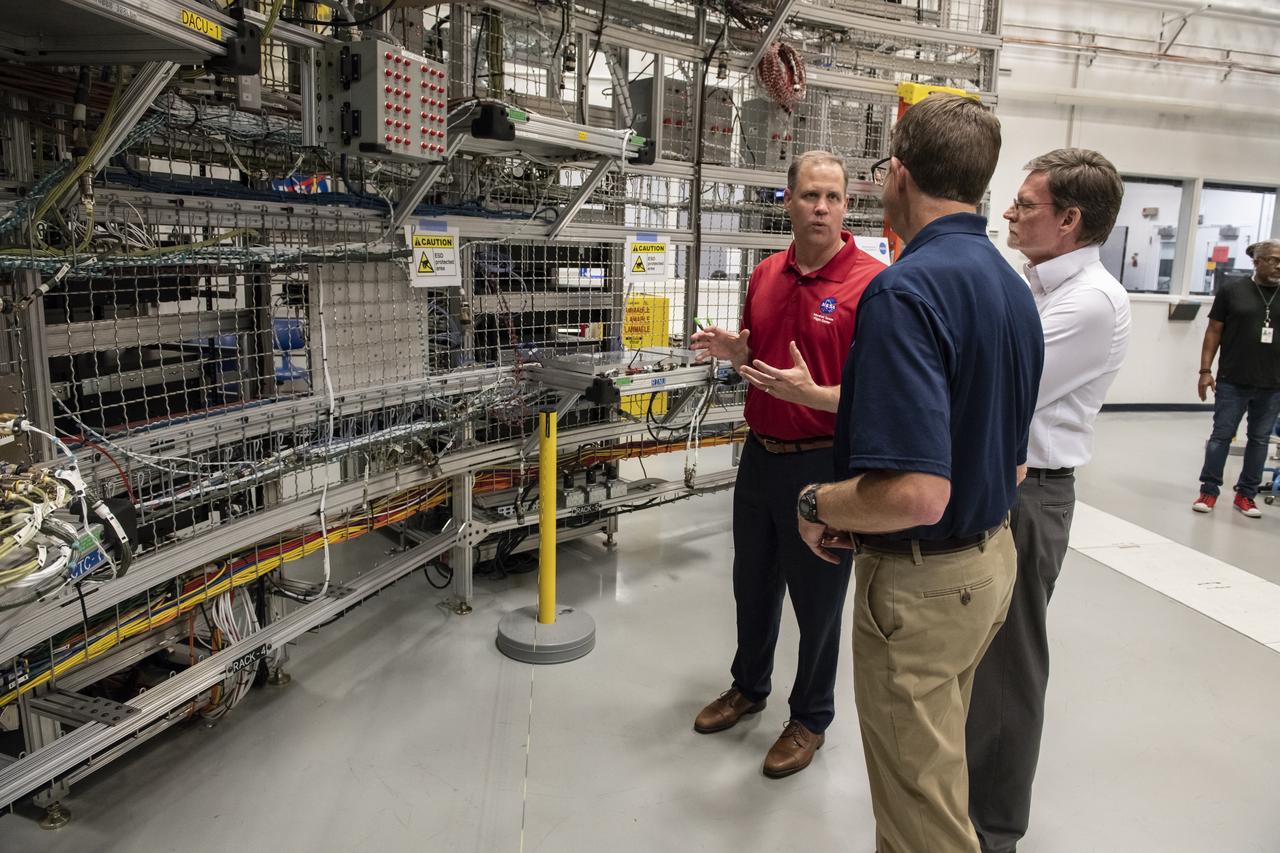
On August 15, 2018 NASA Administrator Jim Bridenstine visited Marshall Space Flight Center. Upon his arrival he was greeted by MSFC Acting Director Jody Singer along with the senior management team. During his tour of the Marshall Center, Bridenstine visited the System Integration Lab and the Software Integration and Testing Facility where Marshall is supporting end-to-end integrated avionics and software integration, check-out, verification and validation for the systems that will control the Space Launch System rocket during its flight and ascent.
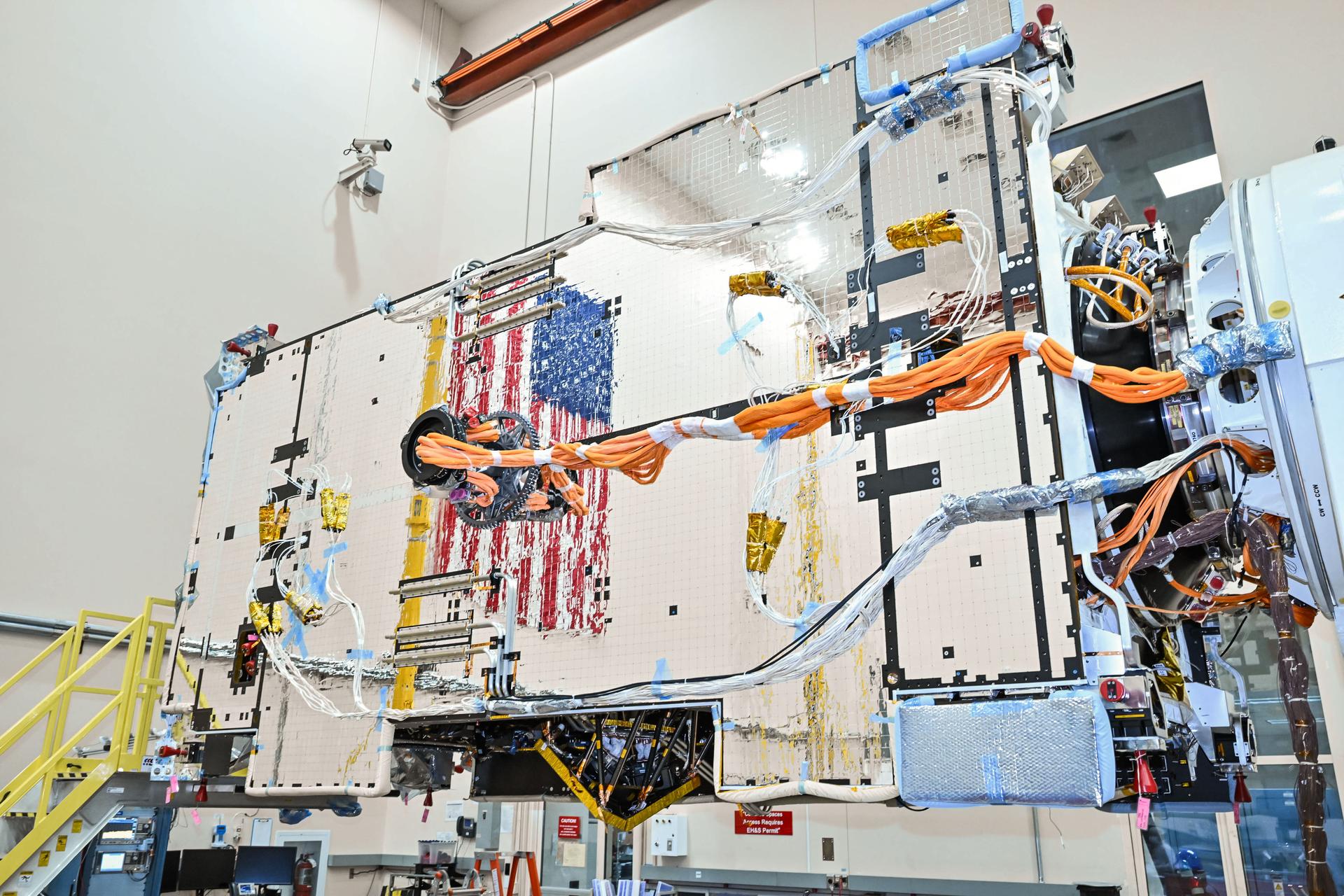
Gateway’s Power and Propulsion Element (PPE) undergoes flight software uploads at Lanteris Space Systems in Palo Alto, California, in January 2026. PPE is a 60-kilowatt solar electric propulsion spacecraft that will supply the lunar space station with power, high-rate communications, attitude control, orbit maintenance, and orbit transfer capabilities. Its design is based on Lanteris Space Systems’ commercial 1300 bus, enhanced with the most powerful Advanced Electric Propulsion System (AEPS) thrusters and the largest roll-out solar arrays (ROSAs) ever developed. Lanteris Space Systems is the lead industry partner for PPE’s design, manufacturing, and integration.
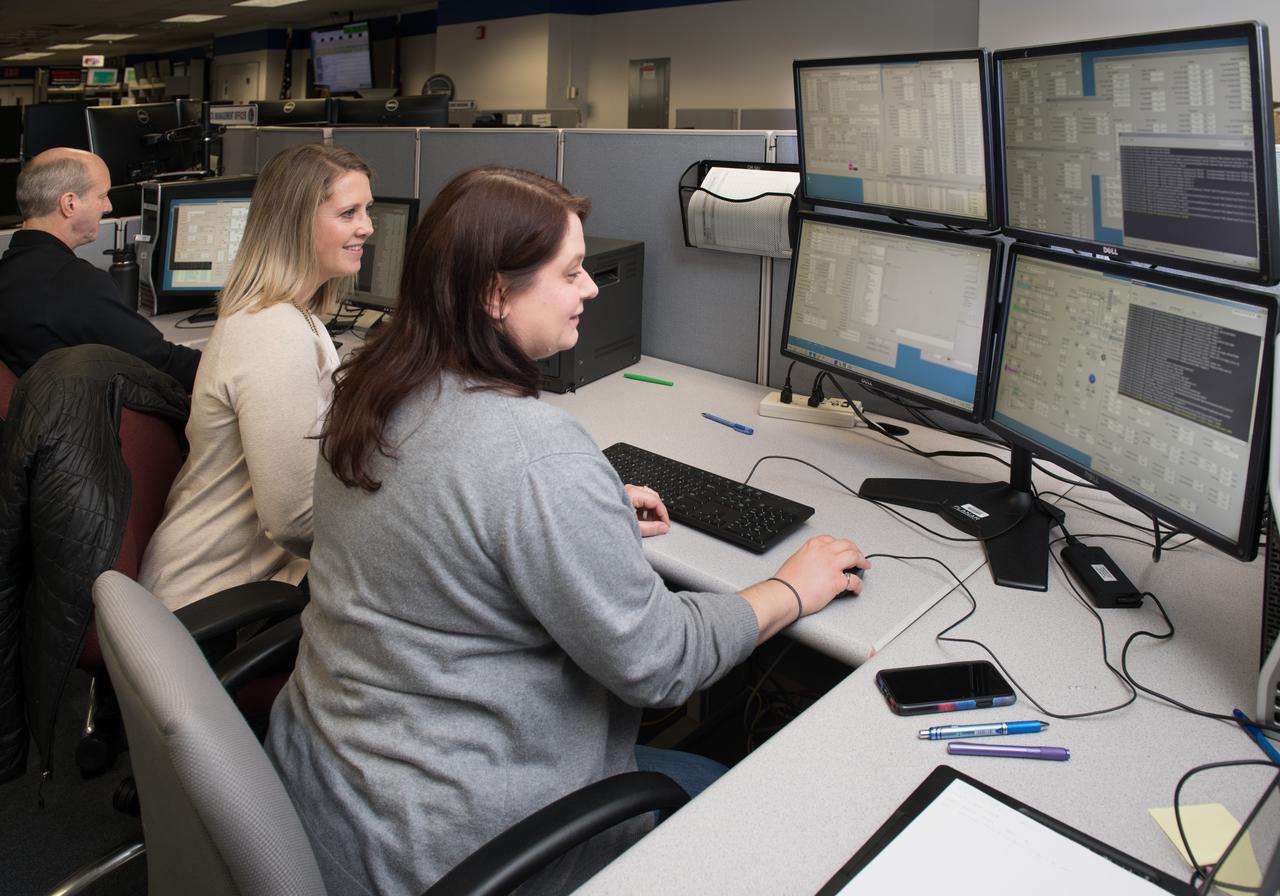
Testing of software with ground hardware for the Structue and Response of Spherical Diffusion Flames, s-Flame, experiment - of the Advanced Combustion via Microgravity Experiments, ACME, project conducted in the ISS Combustion Integrated Rack, CIR - by ACME Software Engineer Jeffrey Eggers, Operations Lead Angela Adams, and Planning Lead Melani Smajdek in the Telescience Support Center, TSC, also known as the Glenn ISS Payload Operations Center, GIPOC
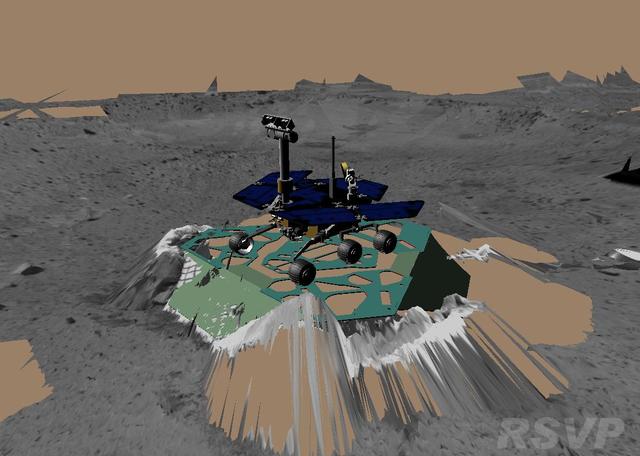
This image shows a screenshot from the software used by engineers to drive the Mars Exploration Rover Spirit. The software simulates the rover's movements across the martian terrain, helping to plot a safe course for the rover. The virtual 3-D world around the rover is built from images taken by Spirit's stereo navigation cameras. Regions for which the rover has not yet acquired 3-D data are represented in beige. This image depicts the state of the rover before it backed up and turned 45 degrees on Sol 11 (01-13-04). http://photojournal.jpl.nasa.gov/catalog/PIA05063
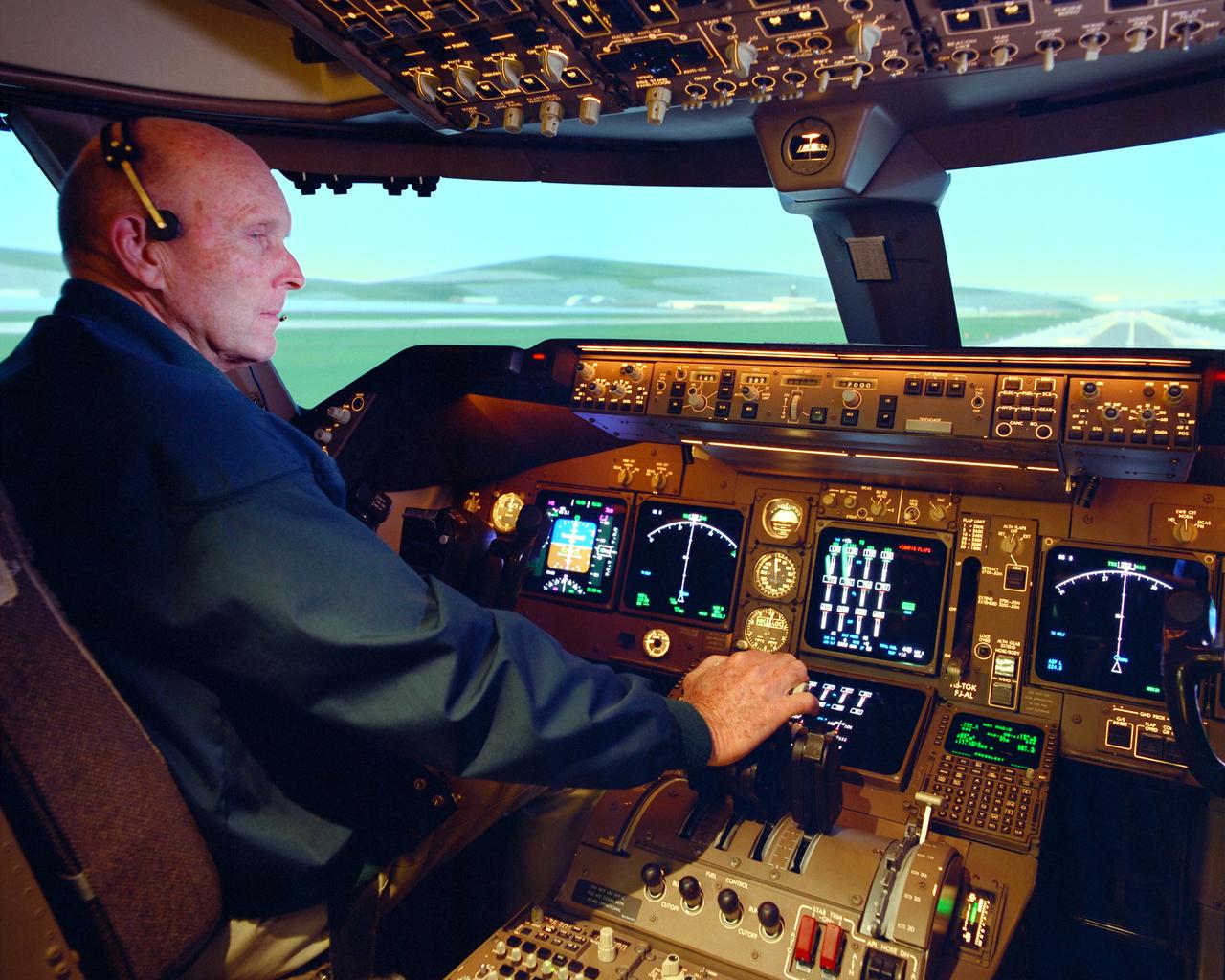
NASA research pilot Gordon Fullerton checked out how the PCA software worked in the multi-engine simulator at NASA Ames before fight-testing PCA in an MD-11.
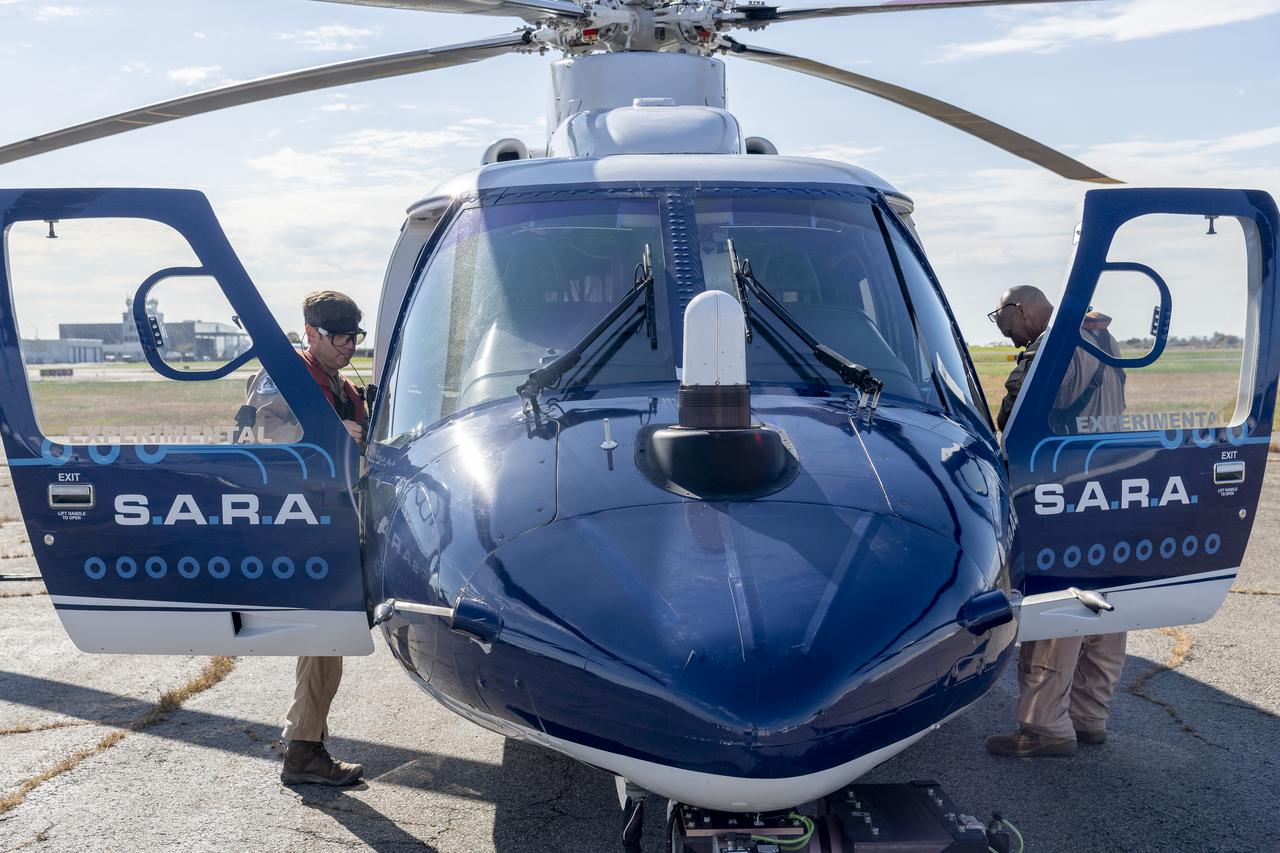
NASA pilot Scott Howe, left, and Sikorsky safety pilot Brent Davis, prepare to board Sikorsky’s SARA S-76B experimental aircraft at Sikorsky Memorial Airport, Bridgeport, Connecticut on Tuesday, Oct. 24, 2023. In addition to Sikorsky’s MATRIX autonomous flight technology, SARA is also outfitted with multiple NASA autonomous flight software systems the pilots and test team will evaluate during their flights over Long Island Sound.
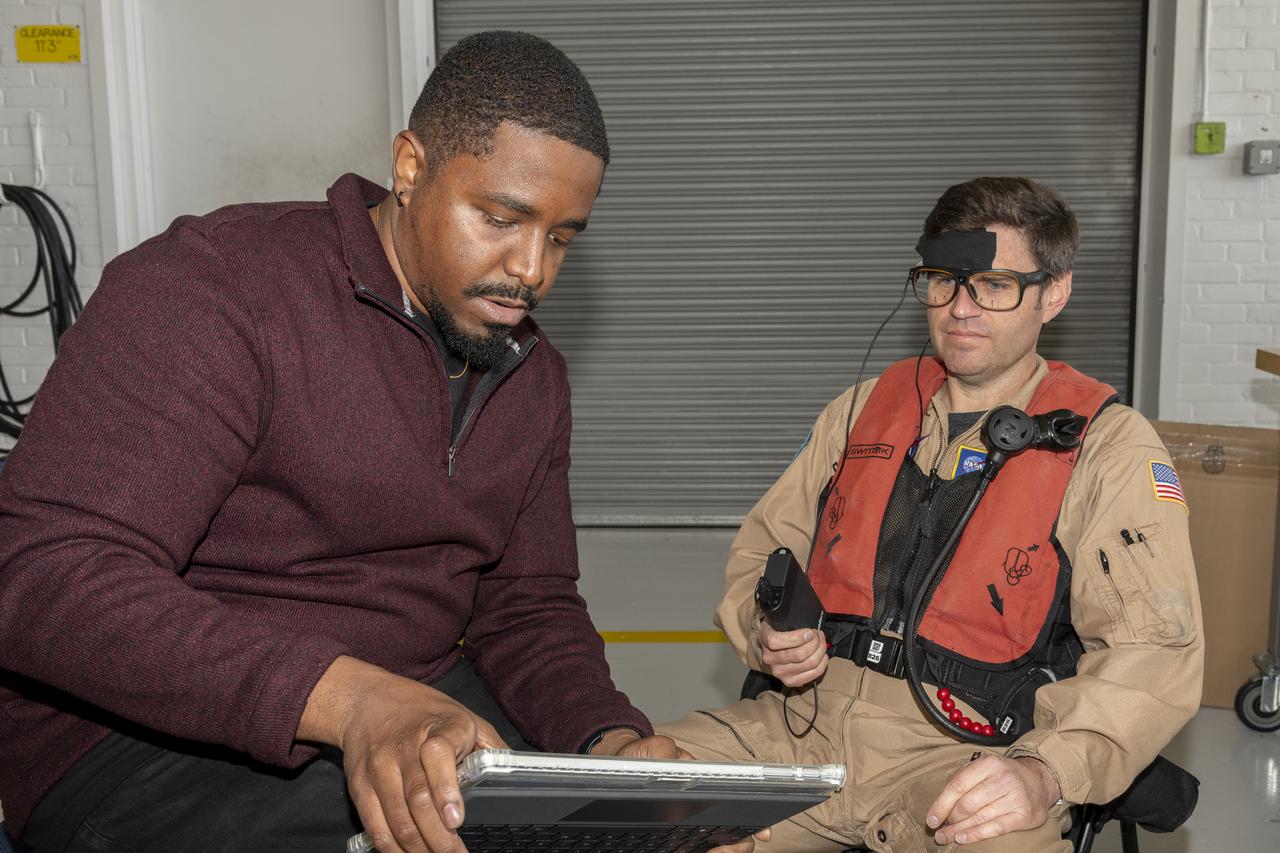
NASA human factors researcher Kevin J. Monk, left, and NASA pilot Scott Howe verify the connectivity and accuracy of the biometric sensors placed on Howe for test flight at Sikorsky Memorial Airport, Bridgeport, Connecticut on Tuesday, Oct. 24, 2023. These sensors will track various physiological responses sending the data to Monk’s computer as Howe engages with the autonomous flight software used to fly the aircraft.
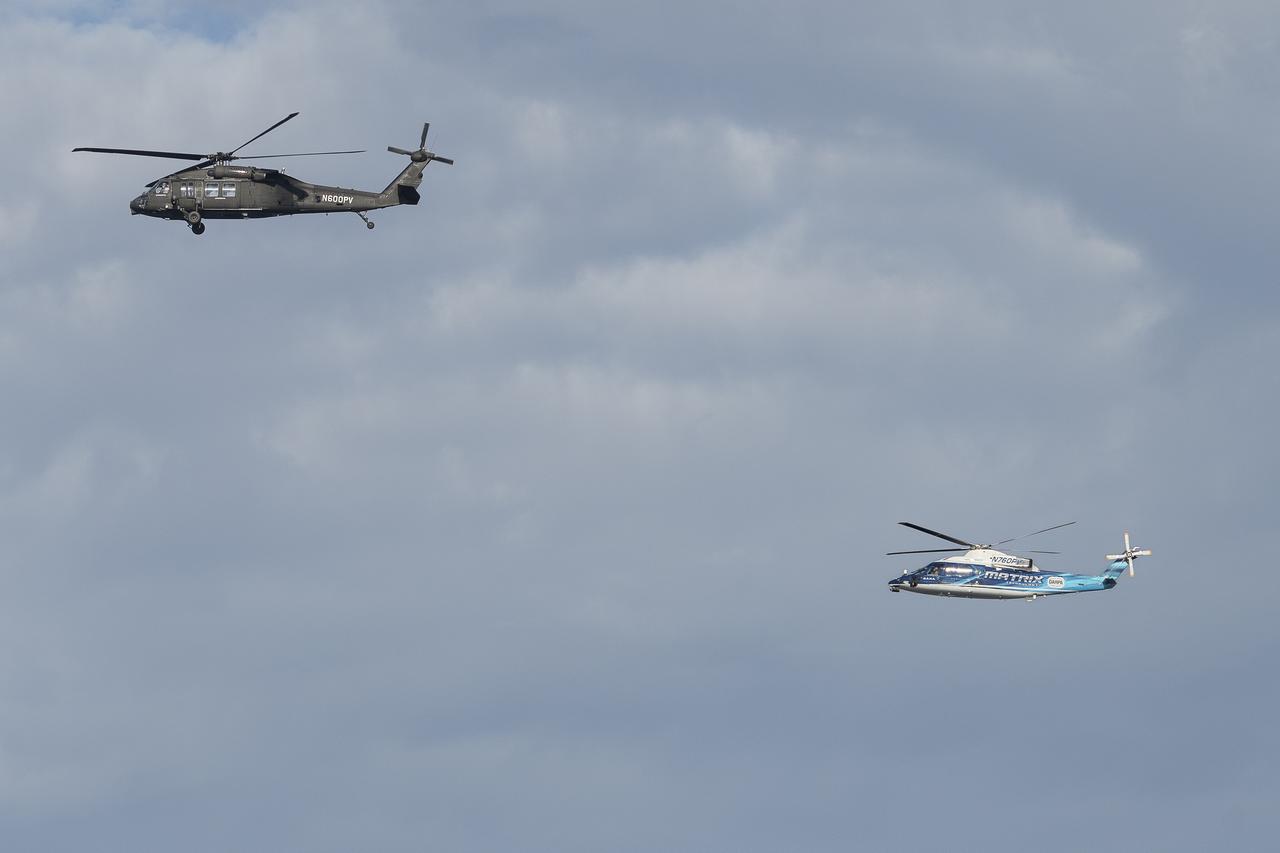
NASA pilots along with Sikorsky safety pilots flying Sikorsky’s Black Hawk Optionally Piloted Vehicle, left, and SARA S-76B over Long Island Sound Thursday, Oct. 26, 2023. These flights will allow NASA researchers to test and evaluate multiple Advanced Air Mobility autonomous flight software products designed by NASA.
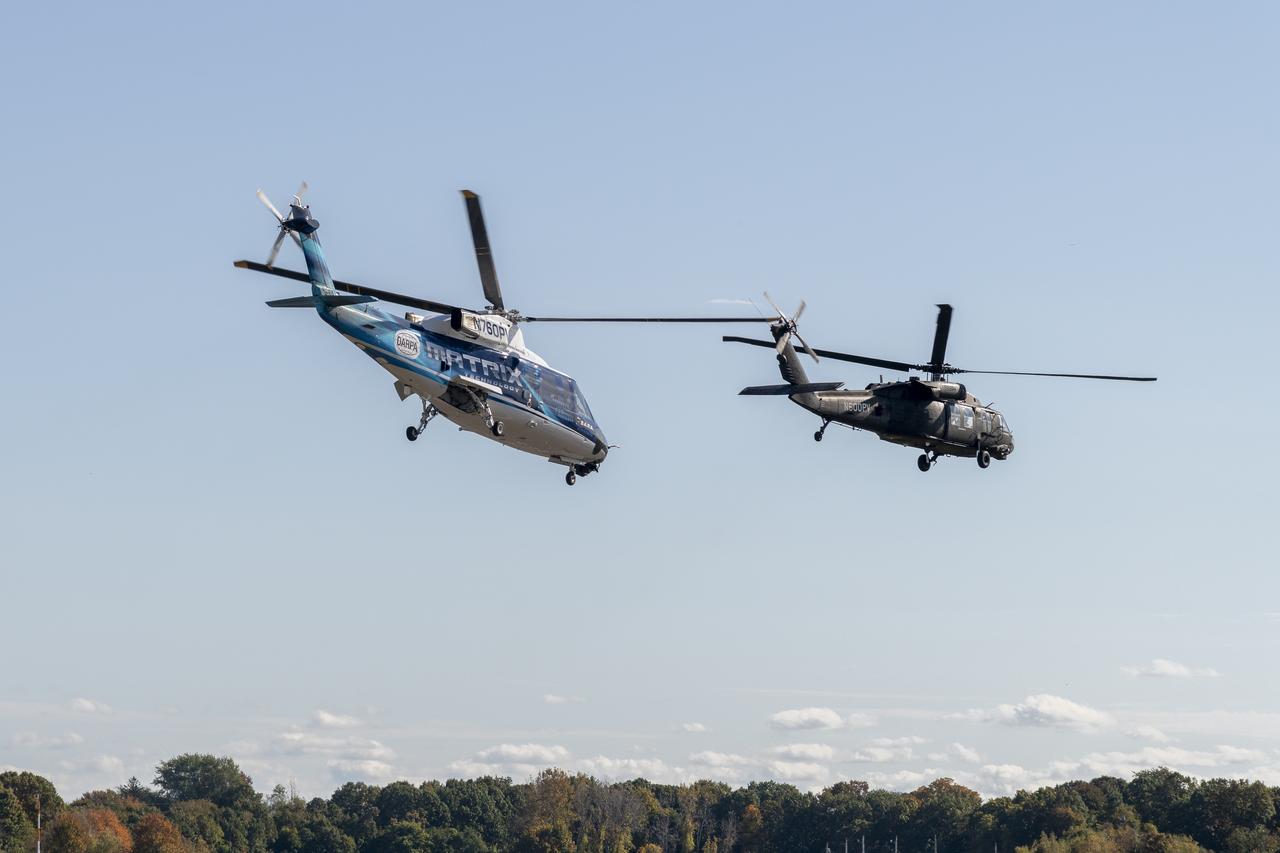
NASA pilots along with Sikorsky safety pilots take off in Sikorsky’s SARA S-76B, left, and Black Hawk Optionally Piloted Vehicle from Sikorsky Memorial Airport, Bridgeport, Connecticut on Tuesday, Oct. 24, 2023. NASA is using these experimental aircraft to test and evaluate multiple autonomous flight software systems designed for Advanced Air Mobility concepts.
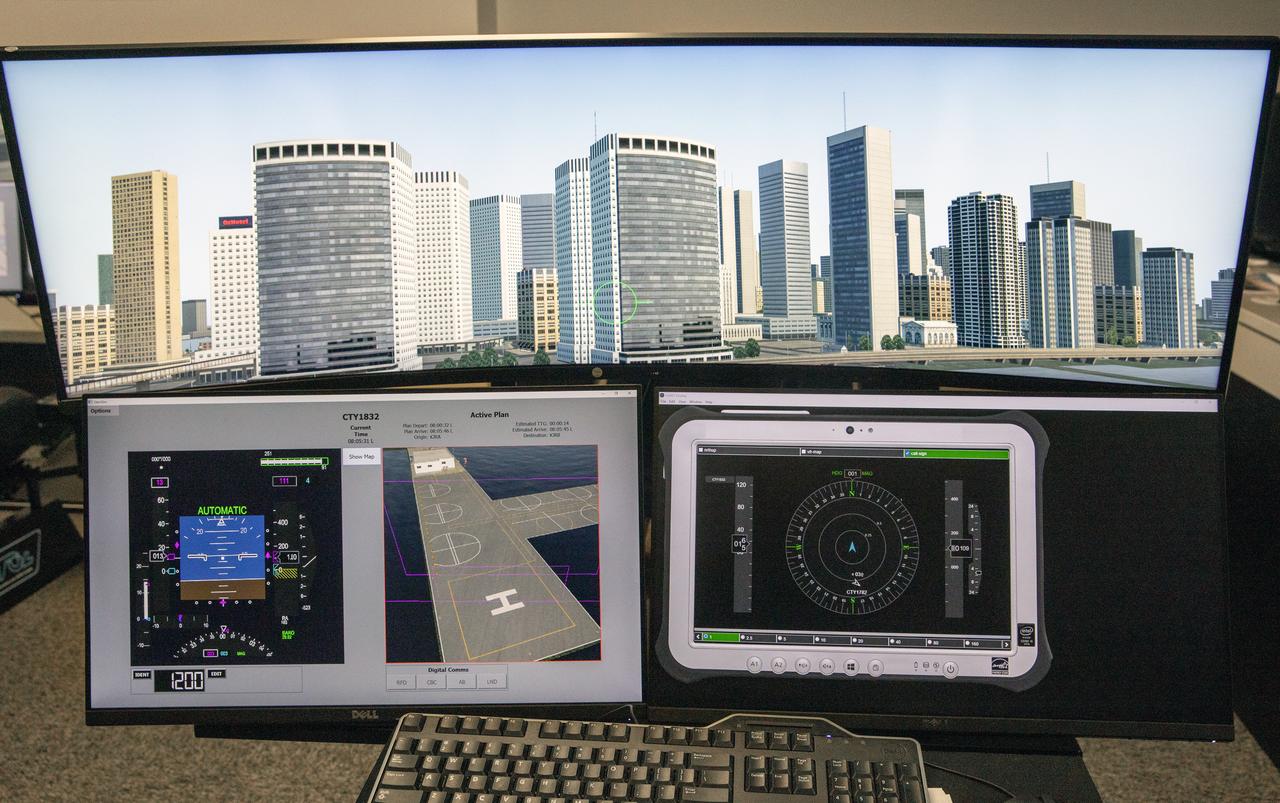
Focus on active photos –Class B Simulation Evaluation in the ATOL Lab at Langley (Also at FAA Tech Center) where team is working with one another in the lab, reviewing data on the monitors. Working the software, adjusting the software systems. Going over the shoulder to show the displays and screens as the software is running. A pilot’s point of view from the controls of the air taxi simulator. An out-the-window simulation appears on the top screen, the primary flight display on the lower left, the virtual moving map in the middle, and the detect and avoid display on the lower right at NASA’s Langley Research Center in Hampton, Virginia on Sept. 25, 2024.
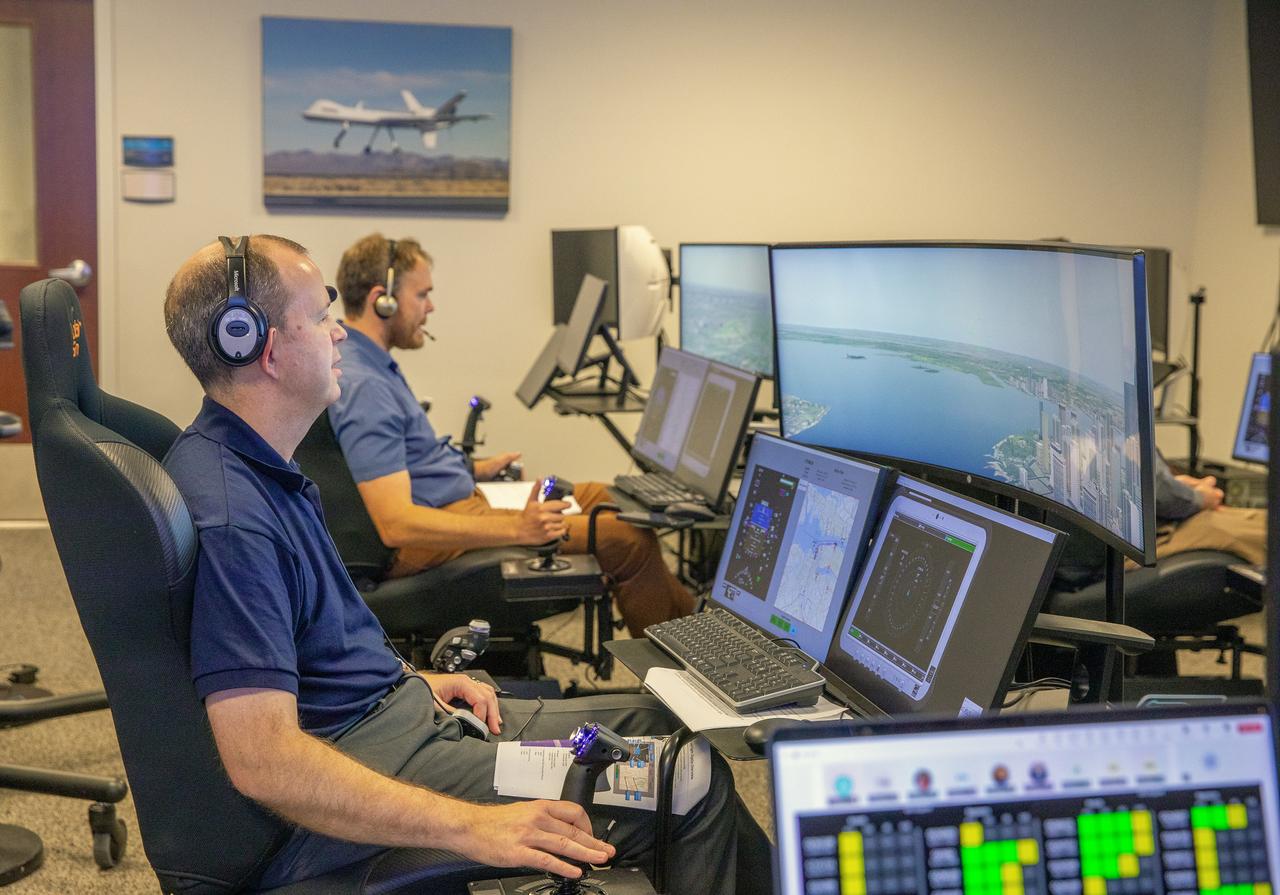
Focus on active photos –Class B Simulation Evaluation in the ATOL Lab at Langley (Also at FAA Tech Center) where team is working with one another in the lab, reviewing data on the monitors. Working the software, adjusting the software systems. Going over the shoulder to show the displays and screens as the software is running. Andy Burroughs (left) and Paul Friz in the roles of air taxi pilots running through air taxi integration simulations focusing on urban air space at NASA’s Langley Research in Hampton, Virginia on Sept. 25, 2024.
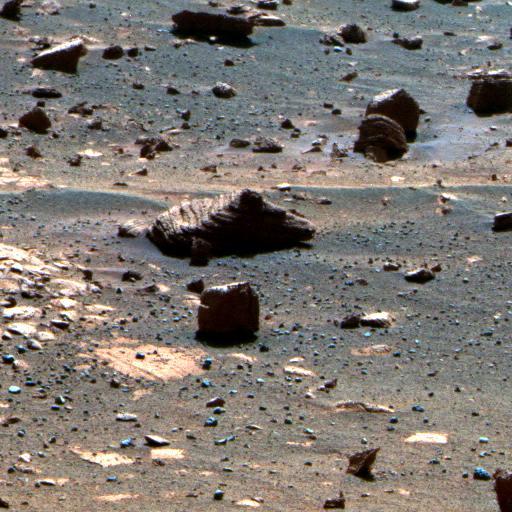
This image is the result of the first observation of a target selected autonomously by NASA Opportunity using newly developed and uploaded software called AEGIS. The false color makes some differences between materials easier to see.
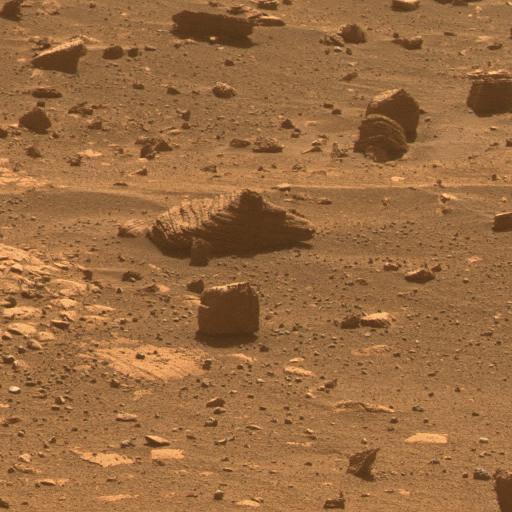
This true-color image is the result of the first observation of a target selected autonomously by NASA Mars Exploration Rover Opportunity using newly developed and uploaded software named Autonomous Exploration for Gathering Increased Science, or AEGIS.
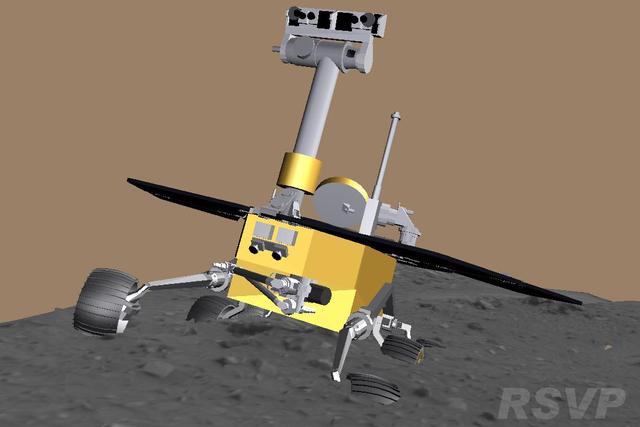
A screen shot from software used by the Mars Exploration Rover team for assessing movements by Spirit and Opportunity illustrates the degree to which Spirit wheels have become embedded in soft material at the location called Troy.
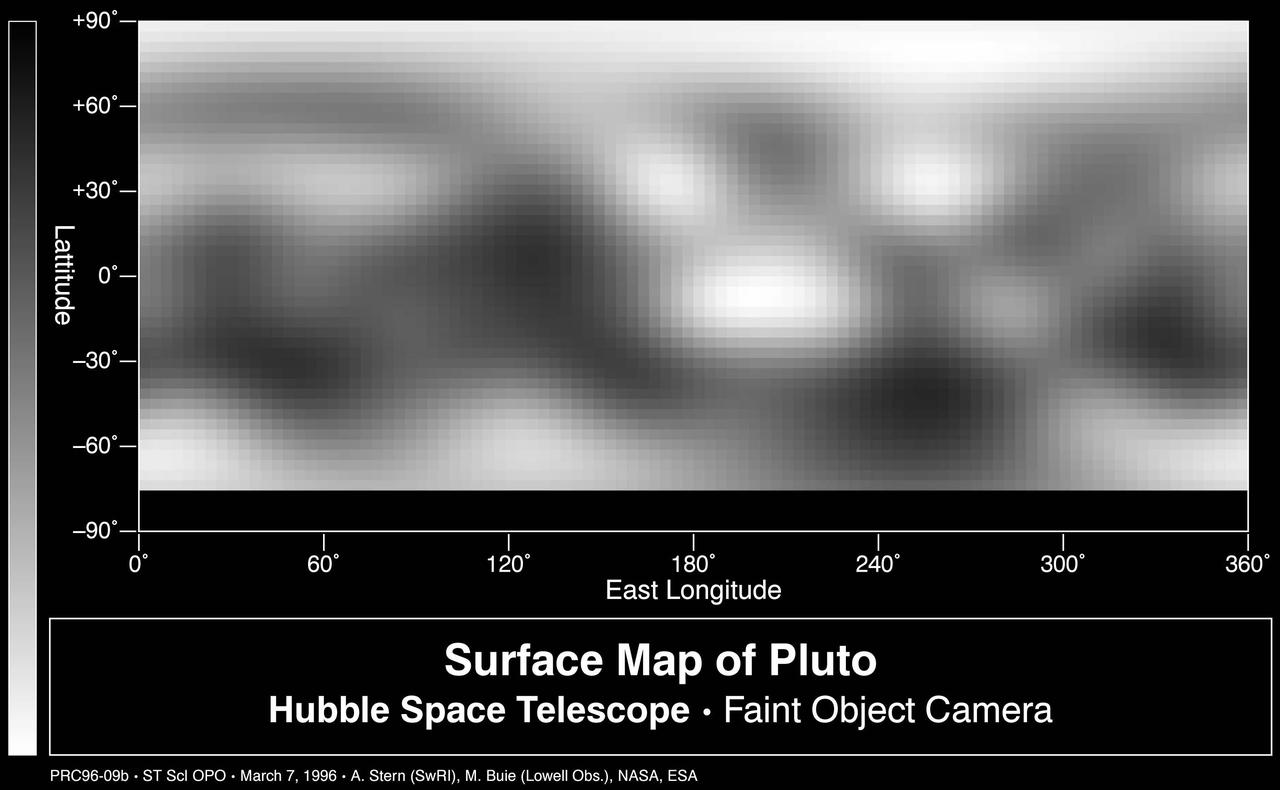
This image-based surface map of Pluto was assembled by computer image processing software from four separate images of Pluto disk taken with the European Space Agency Faint Object Camera aboard NASA Hubble Space Telescope.
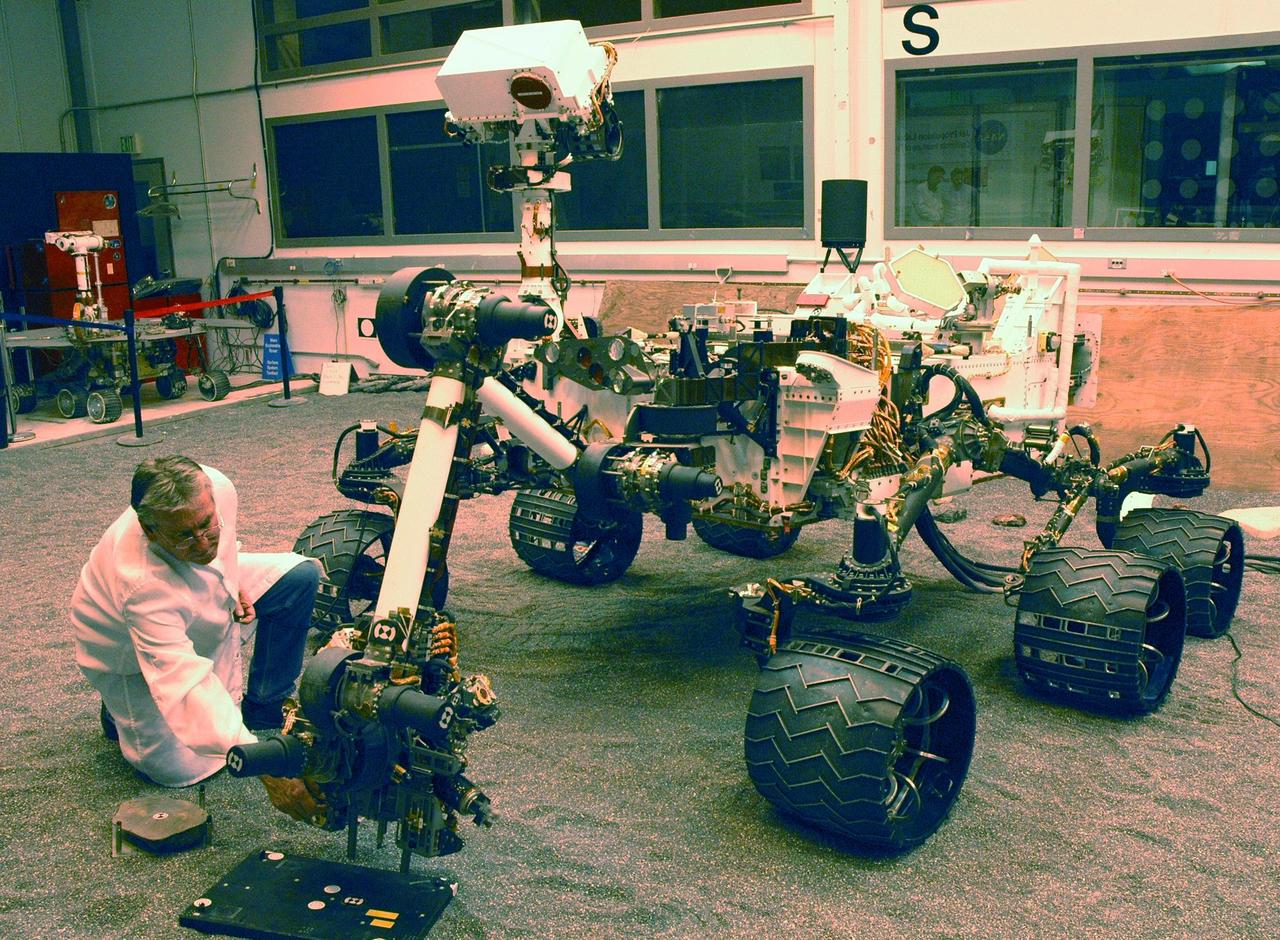
A NASA Mars Science Laboratory test rover called the Vehicle System Test Bed, or VSTB, at NASA Jet Propulsion Laboratory, Pasadena, CA serves as the closest double for Curiosity in evaluations of the mission hardware and software.
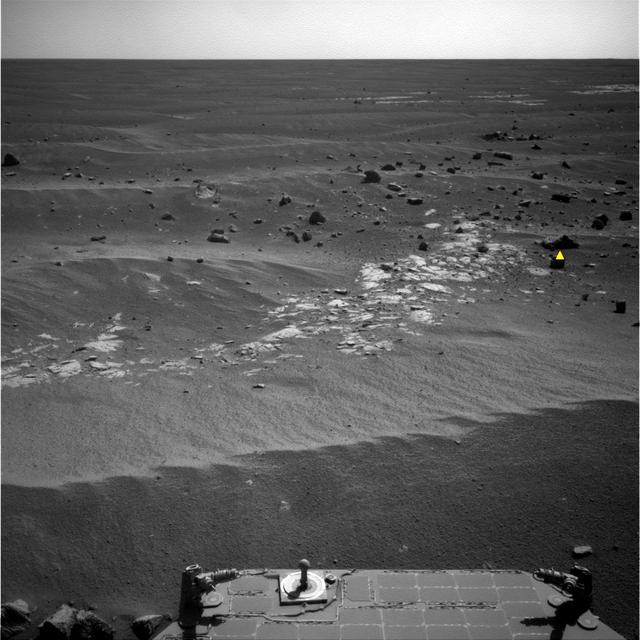
NASA Opportunity used newly developed and uploaded software called AEGIS, to analyze images to identify features that best matched criteria for selecting an observation target; the criteria in this image -- rocks that are larger and darker than others.
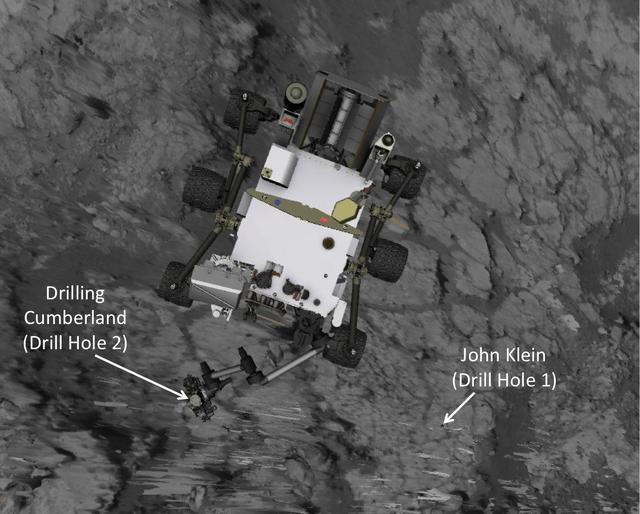
This image produced from software used for planning drives of NASA Mars rover Curiosity depicts the location and size of the rover when it was driven into position for drilling into rock target Cumberland.
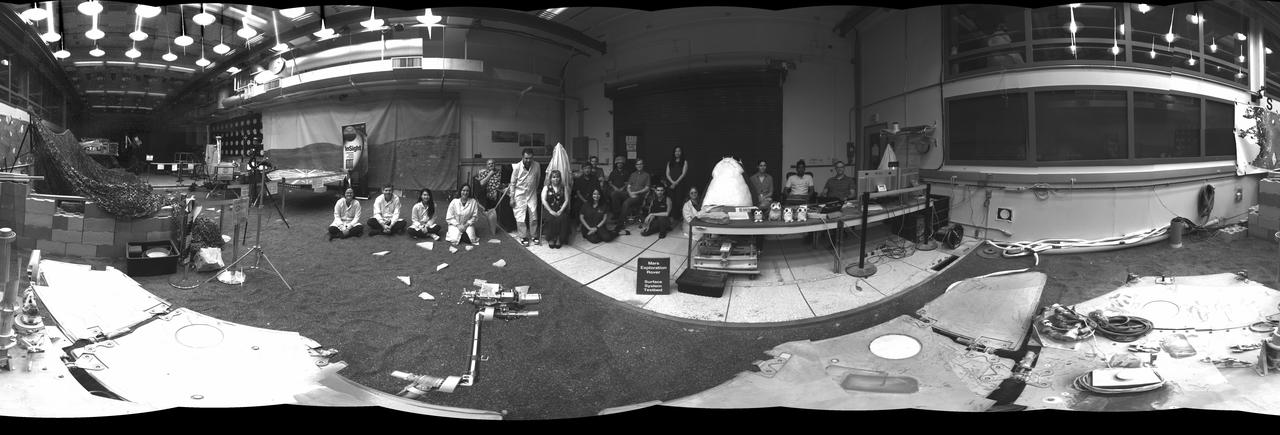
This 360-degree panorama was taken by "Dusty," a fully-working replica of NASA's Opportunity rover at the agency's Jet Propulsion Laboratory. The panorama was taken as part of a software test. Members of the Opportunity team gathered to sit in during the panorama. The panorama was taken by Dusty's Panoramic Camera, or Pancam, on Sept. 6, 2018. https://photojournal.jpl.nasa.gov/catalog/PIA23247
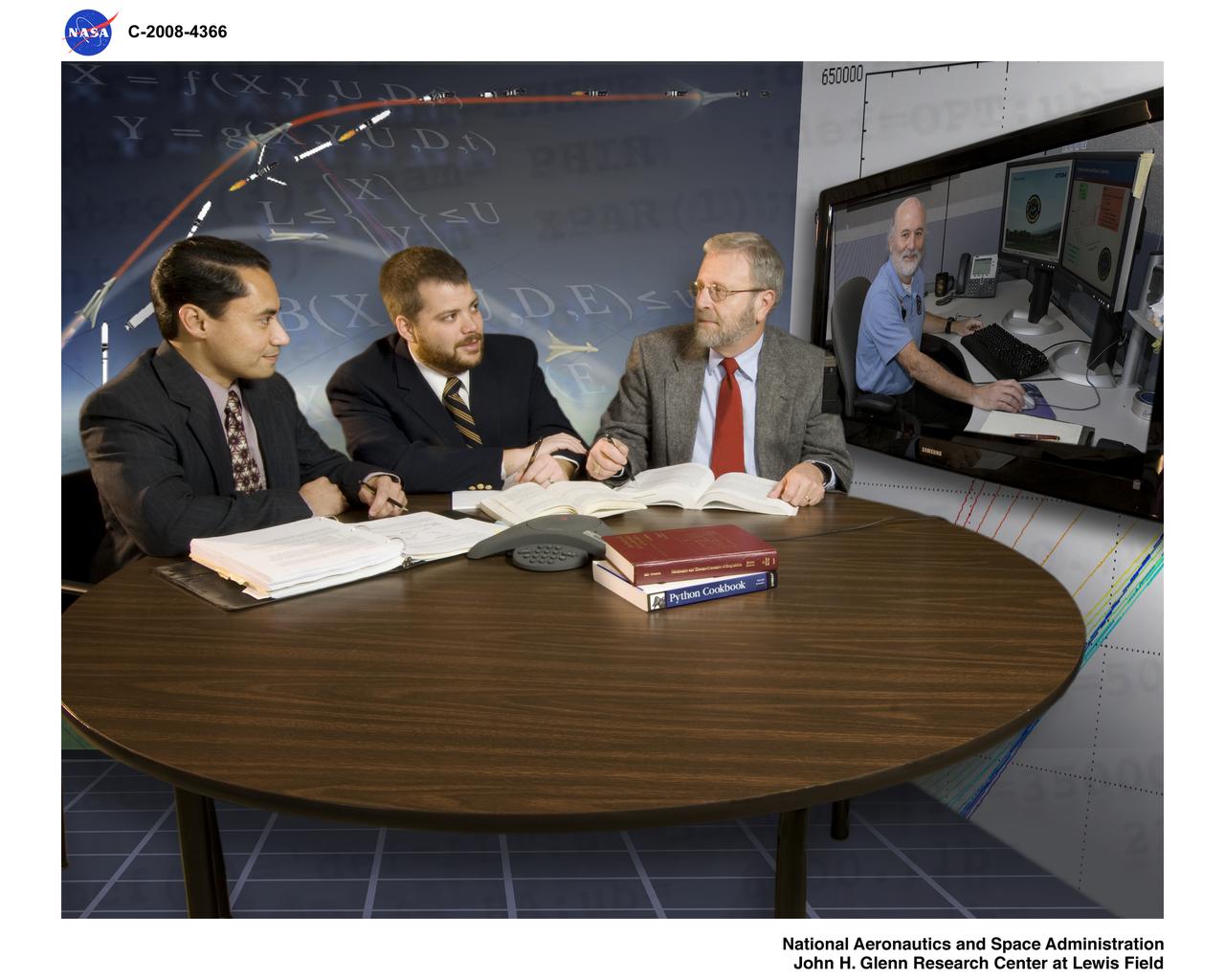
Software Of the Year, Optimal Trejectories
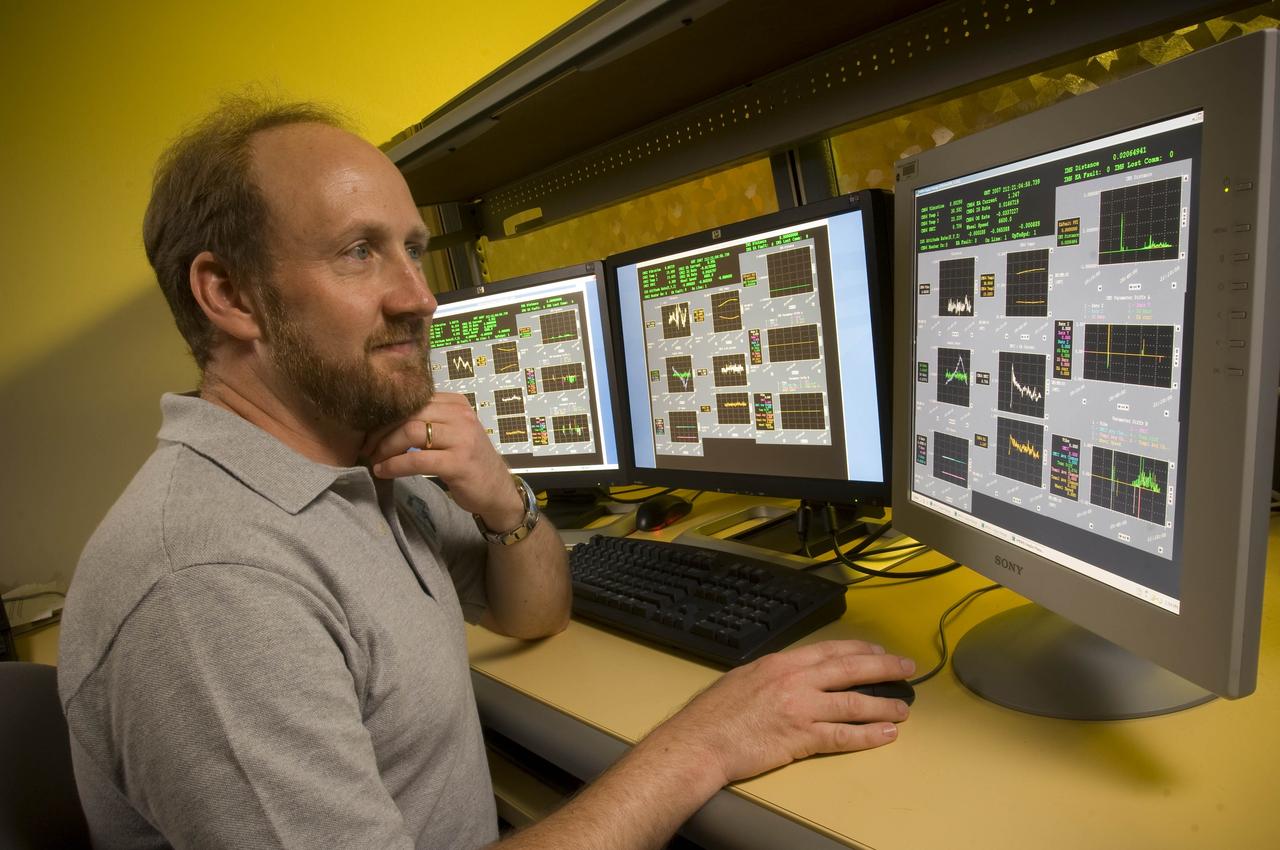
David L. Iverson of NASA Ames Research center, Moffett Field, California, led development of computer software to monitor the conditions of the gyroscopes that keep the International Space Station (ISS) properly oriented in space as the ISS orbits Earth. The gyroscopes are flywheels that control the station's attitude without the use of propellant fuel. NASA computer scientists designed the new software, the Inductive Monitoring System, to detect warning signs that precede a gyroscope's failure. According to NASA officials, engineers will add the new software tool to a group of existing tools to identify and track problems related to the gyroscopes. If the software detects warning signs, it will quickly warn the space station's mission control center.
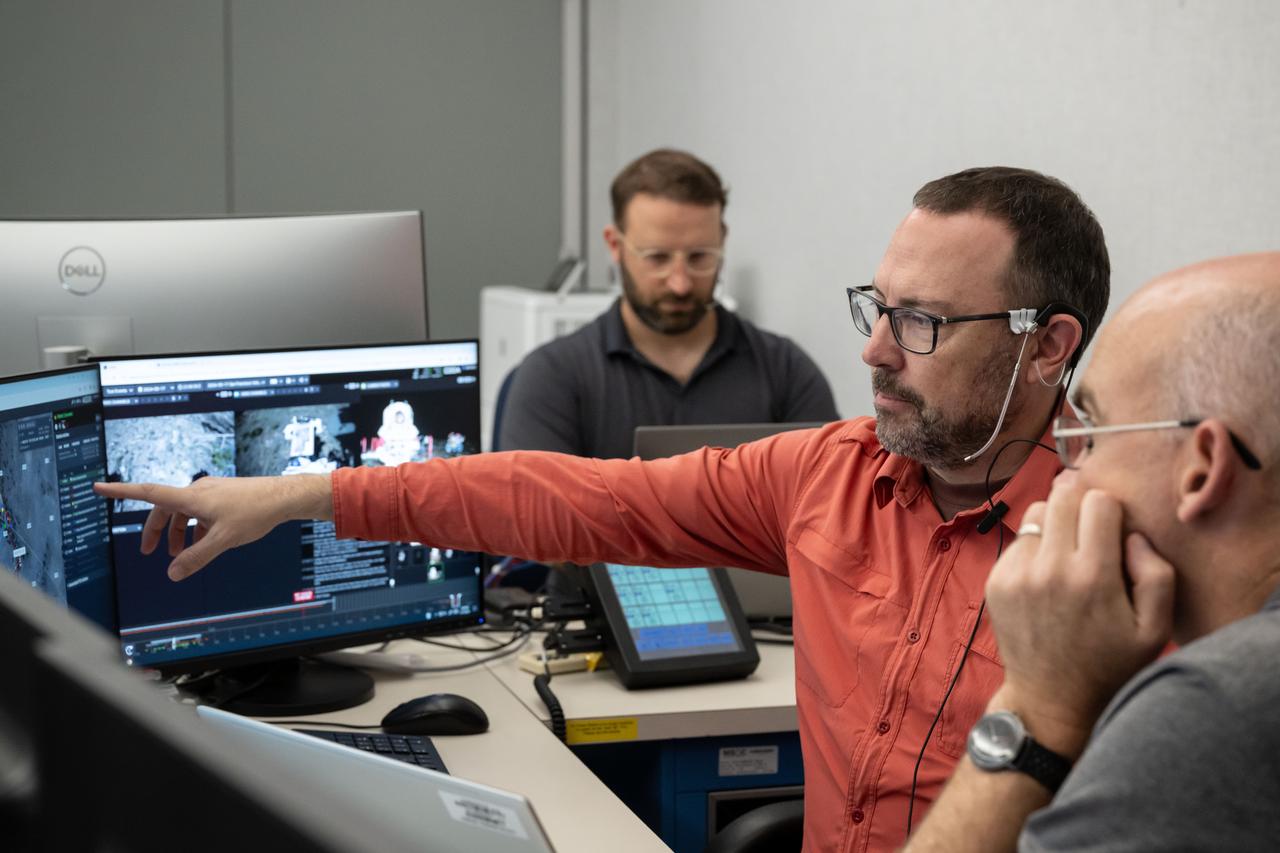
Ben Feist, software engineer on the Extravehicular Activity Mission System Software (EMSS) team, uses the suite of software he and other members of the Astromaterials Research and Exploration Science (ARES) division at NASA's Johnson Space Center in Houston developed to plan and monitor spacewalks. The JETT 5 field test was the first time this software was fully integrated into a simulated mission, supporting both science and mission control operations. JETT 5 was a week-long field test conducted in the lunar-like landscape of the San Francisco Volcanic Field near Flagstaff, Arizona, with a team of flight controllers and scientists at Johnson monitoring and guiding the activities. Credit: NASA/Helen Arase Vargas
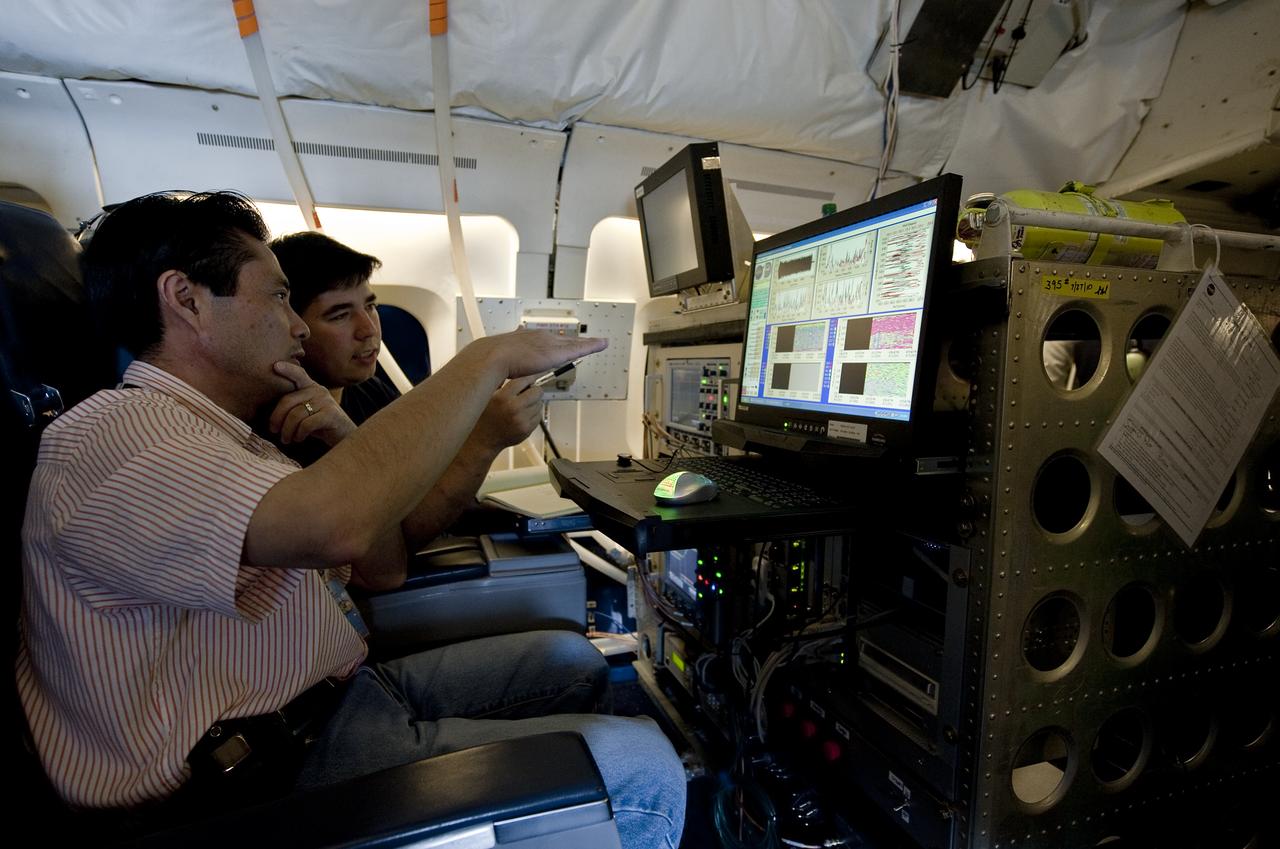
Jeffrey Beyon, left, and Paul Joseph Petzar, right, from NASA's Langley Research Center, work with DAWN Air Data Acquisition and Processing software aboard NASA's DC-8 research aircraft, Sunday, Aug. 15, 2010, in support of the GRIP experiment at Fort Lauderdale International Airport in Fort Lauderdale, Fla. The Genesis and Rapid Intensification Processes (GRIP) experiment is a NASA Earth science field experiment in 2010 that is being conducted to better understand how tropical storms form and develop into major hurricanes. Photo Credit: (NASA/Paul E. Alers)

N-243 VMS R-Cab; Civil Tiltrotor Simulation Software screen
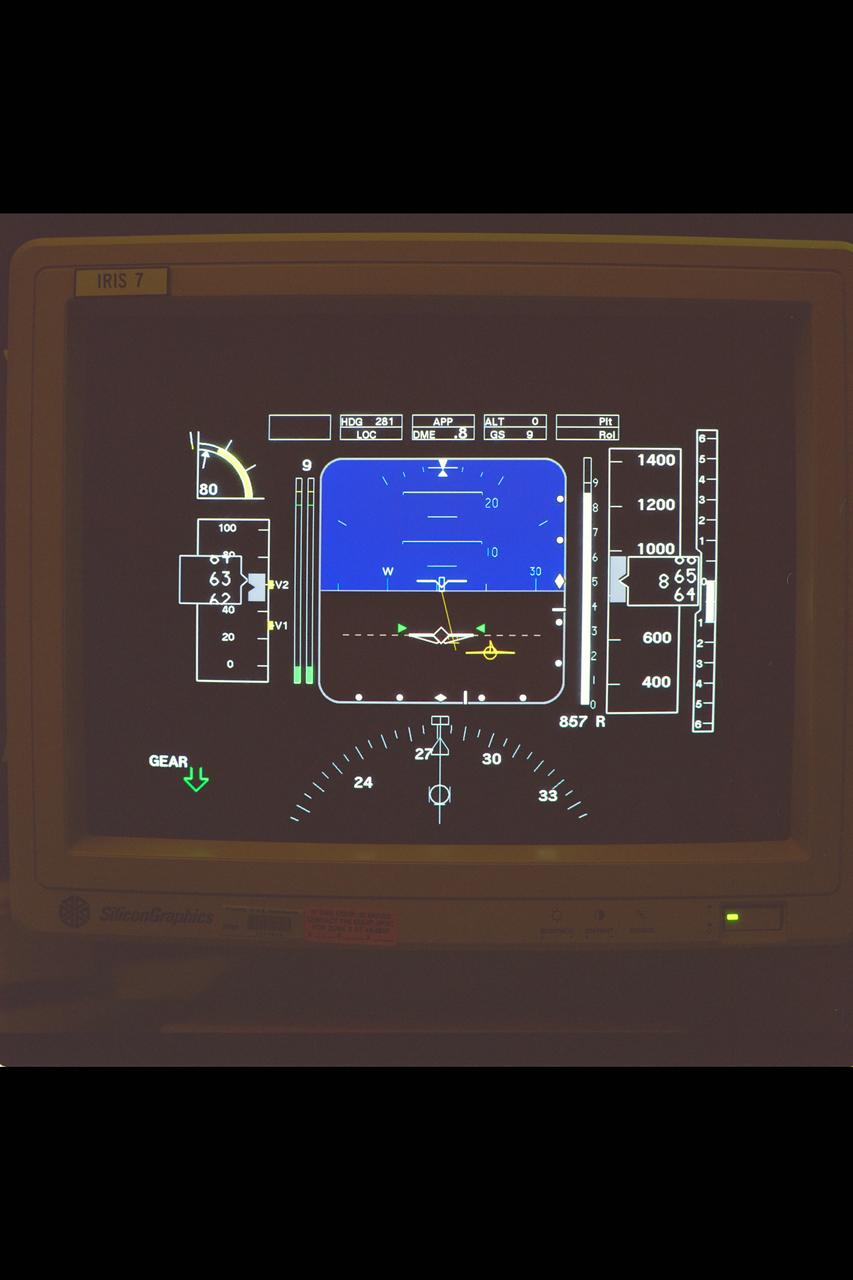
N-243 VMS R-Cab; Civil Tiltrotor Simulation Software screen
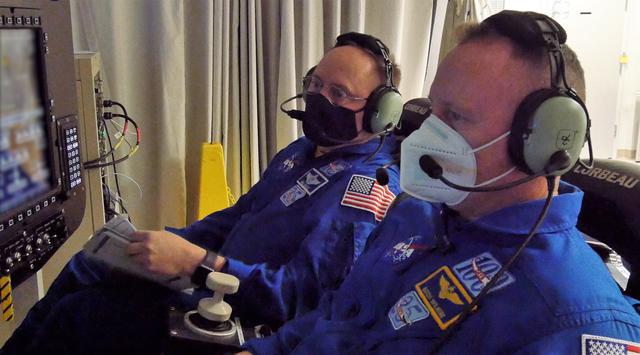
NASA astronauts Barry “Butch” Wilmore and Mike Fincke monitor the launch portion of an integrated mission dress rehearsal of Boeing’s uncrewed Orbital Flight Test-2 (OFT-2) from Boeing’s Houston-based Avionics and Software Integration Lab on Thursday, April 22, 2021. Along with NASA astronaut Nicole Mann, Wilmore and Fincke will fly aboard Boeing’s CST-100 Starliner spacecraft for the company’s Crew Flight Test (CFT) as part of NASA’s Commercial Crew Program.
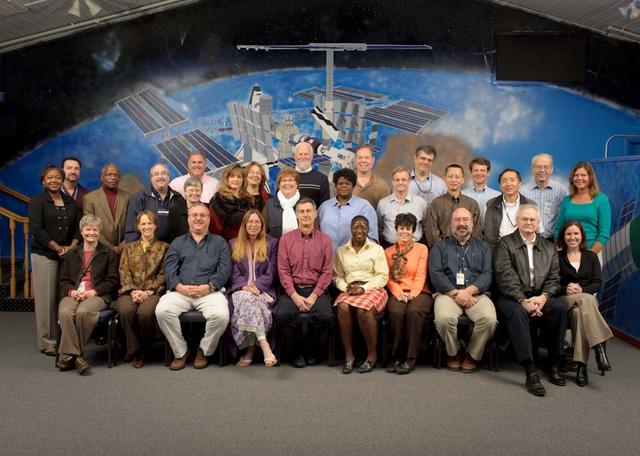
NASA software working group Face-to-Face meeting at Ames Reaserach Center Bldg 943 Eagle Room
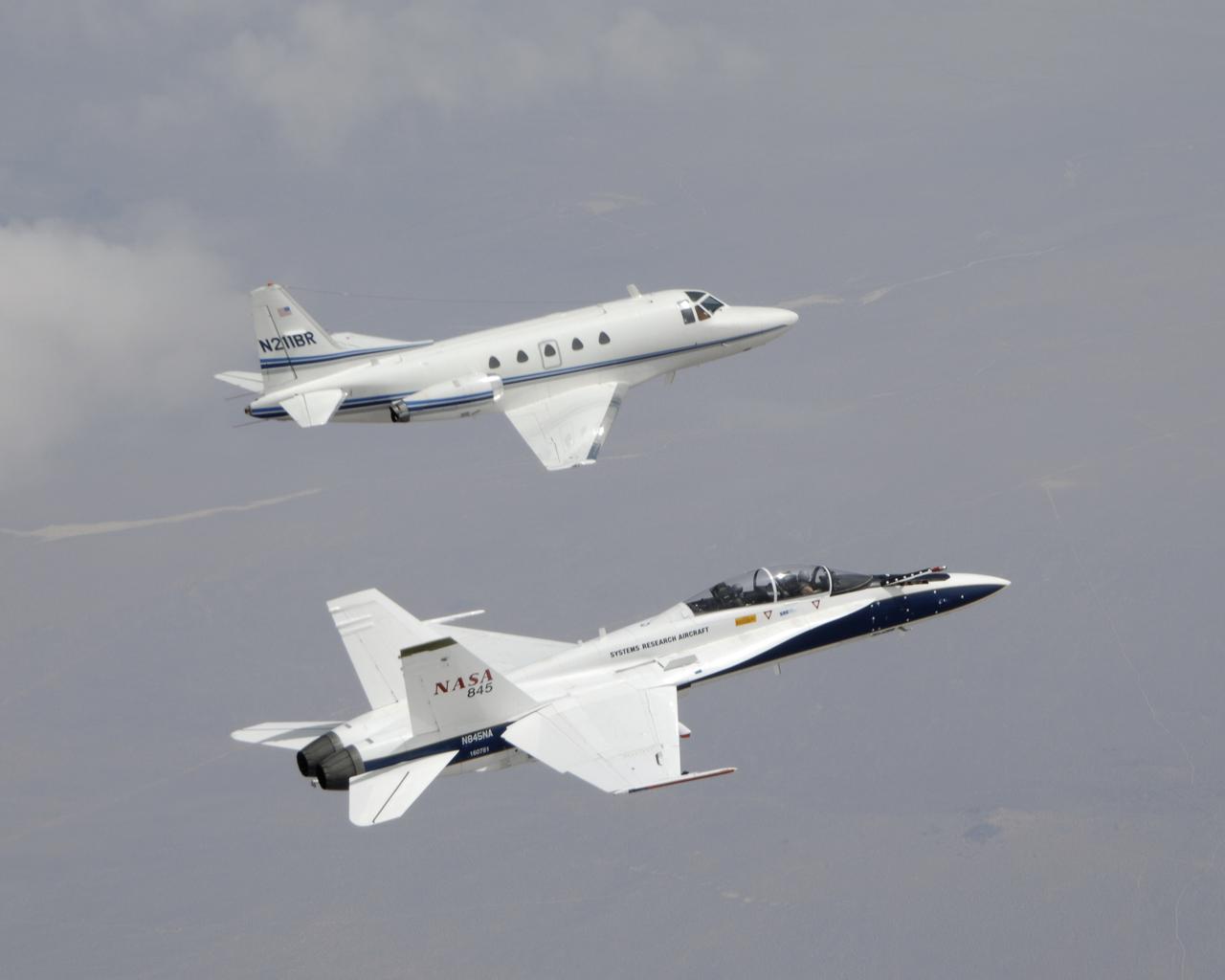
Testing autonomous software for AARD program using a NASA F/A-18 #845 following a chartered Sabreliner.
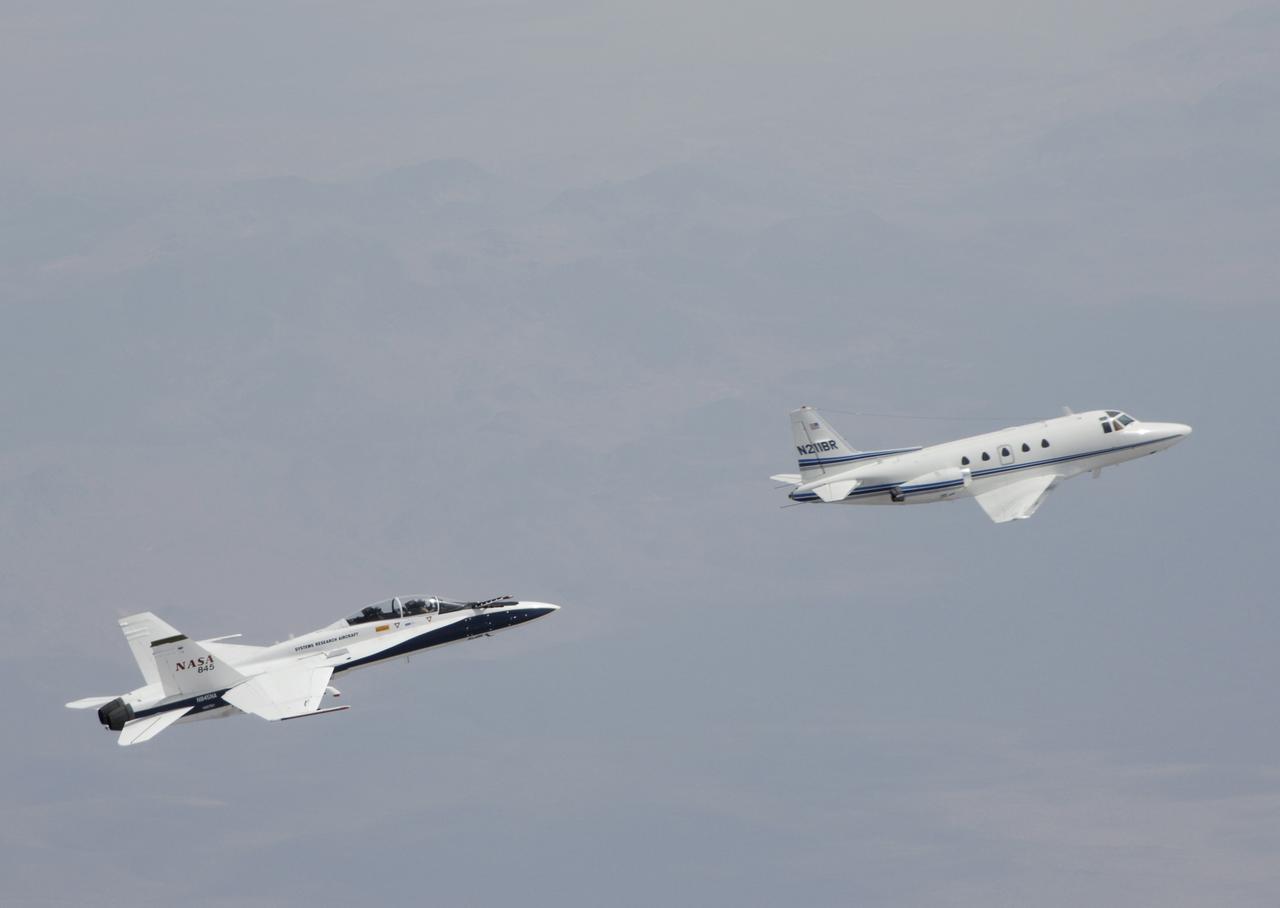
Testing autonomous software for AARD program using a NASA F/A-18 #845 following a chartered Sabreliner.
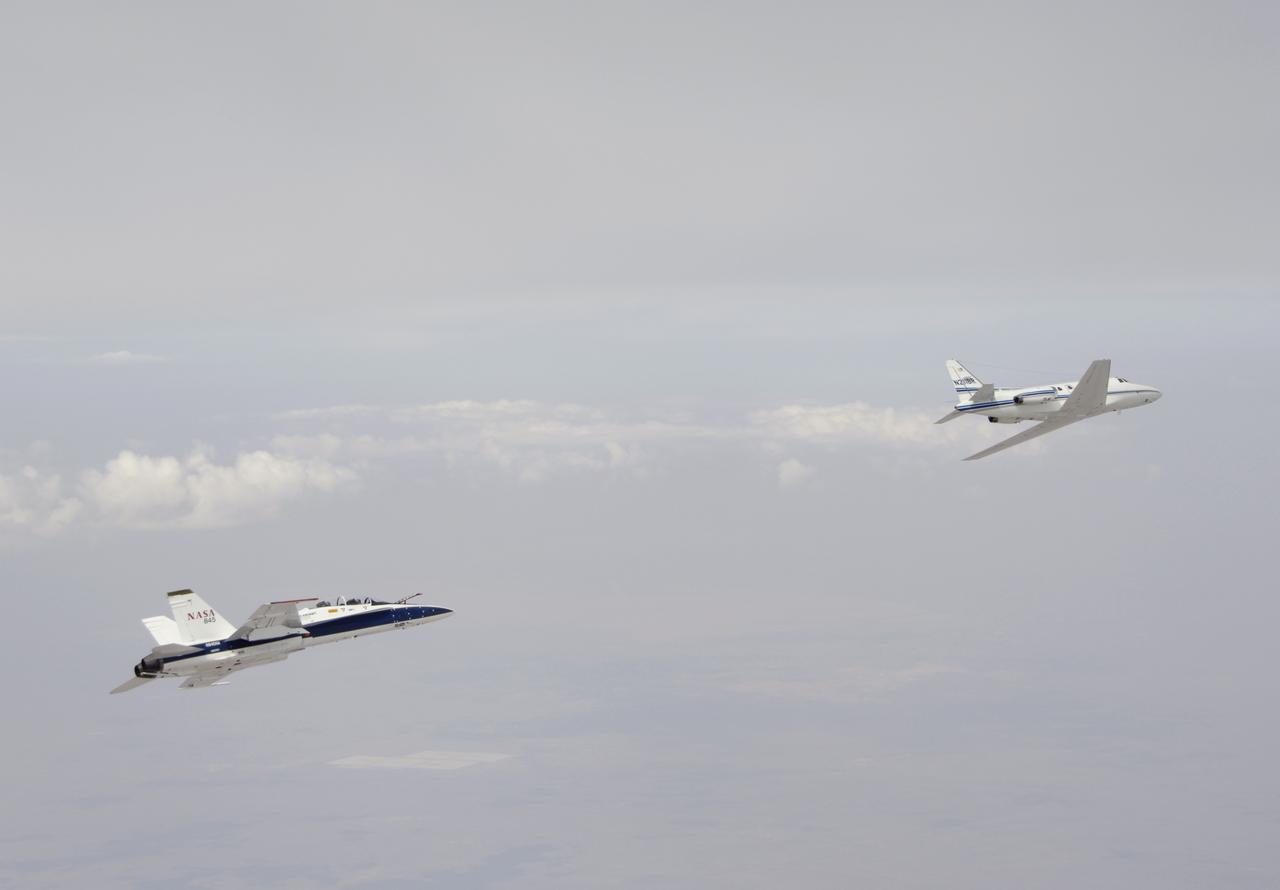
Testing autonomous software for AARD program using a NASA F/A-18 #845 following a chartered Sabreliner.