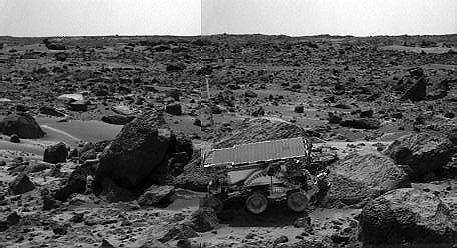
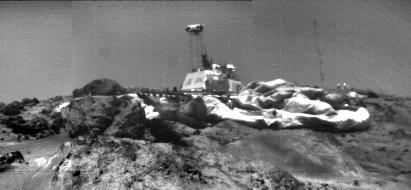
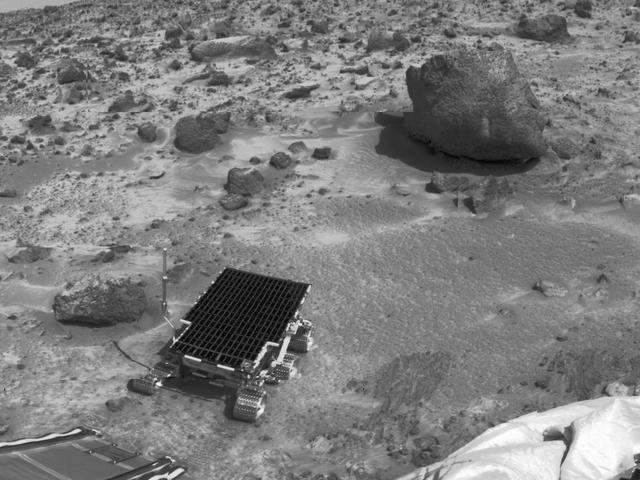
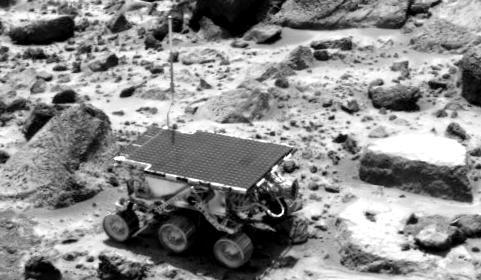
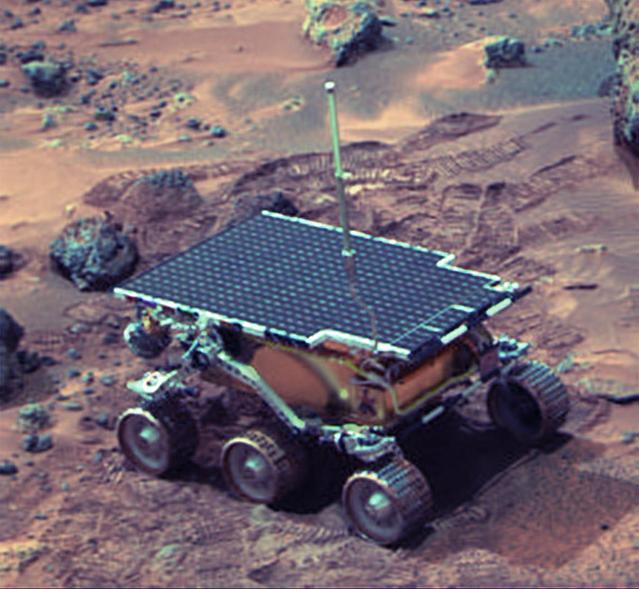
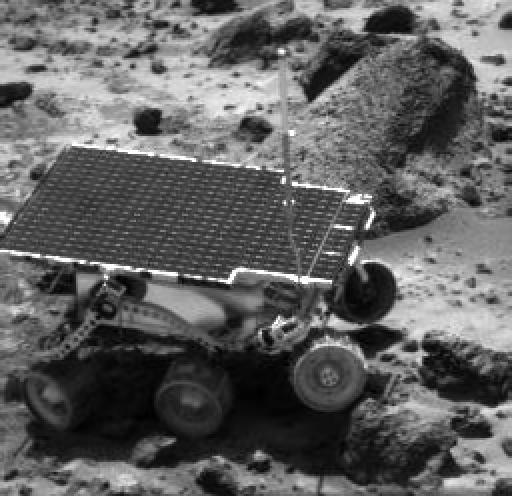
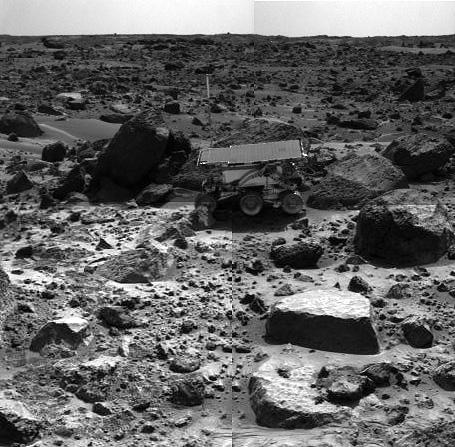
The Sojourner rover's Alpha Proton X-ray Spectrometer (APXS) is shown deployed against the rock "Moe" on the afternoon of Sol 64 (September 7). The rocks to the left of Moe are "Shark" (left of Sojourner) and "Half Dome" (behind Sojourner). They were previously measured by the APXS. The image was taken by the Imager for Mars Pathfinder (IMP). http://photojournal.jpl.nasa.gov/catalog/PIA00966
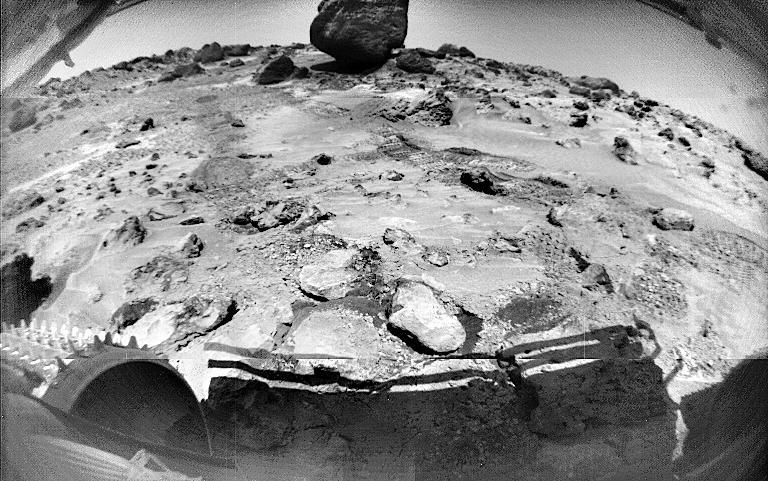
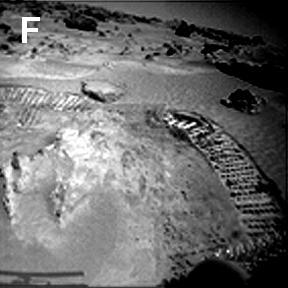
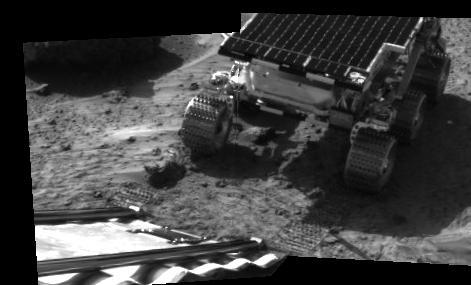
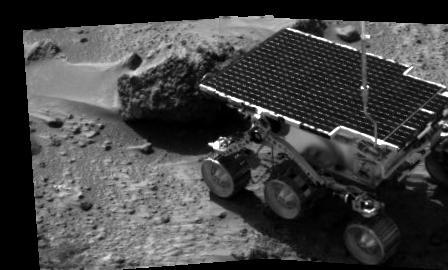
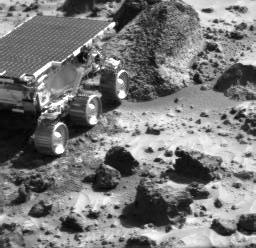
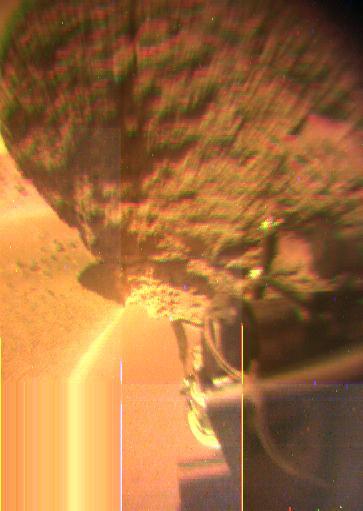
This Sojourner image, taken on Sol 70, shows rocks and rover-disturbed soil. Cleats on Sojourner's left front wheel are seen at lower left. The large rock in the distance is "Yogi." Much of Yogi visible in this image cannot be seen from the perspective of the Pathfinder lander. Sojourner spent 83 days of a planned seven-day mission exploring the Martian terrain, acquiring images, and taking chemical, atmospheric and other measurements. The final data transmission received from Pathfinder was at 10:23 UTC on September 27, 1997. Although mission managers tried to restore full communications during the following five months, the successful mission was terminated on March 10, 1998. http://photojournal.jpl.nasa.gov/catalog/PIA00998
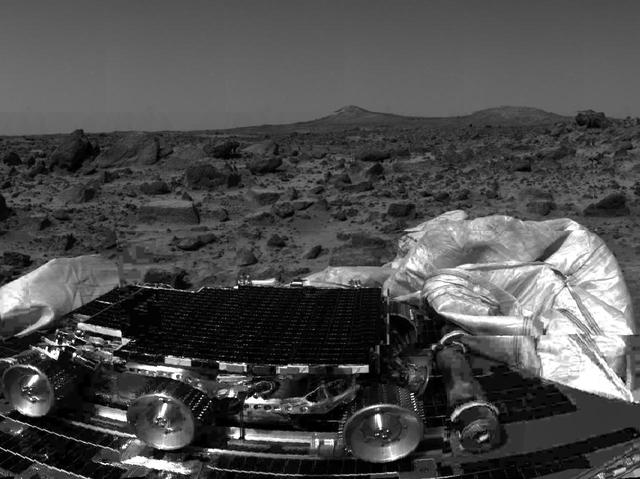
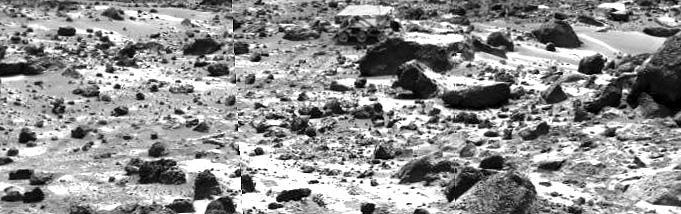
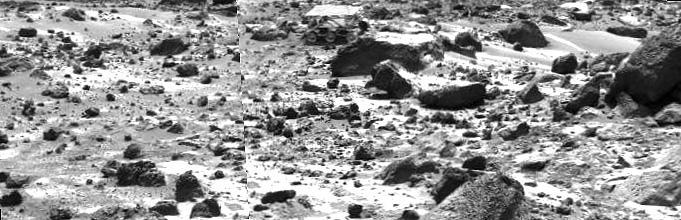
The undeployed Sojourner rover is seen still latched to a lander petal in this image, taken by the Imager for Mars Pathfinder (IMP) on Sol 1, the lander's first day on Mars. Portions of a petal and deflated airbag are in the foreground. The rectangular rock at right has been dubbed "Flat top," and may be a possible object of study for Sojourner's Alpha Proton X-Ray Spectrometer (APXS) instrument. The mismatched portion of image at left is a misregistered section of data. http://photojournal.jpl.nasa.gov/catalog/PIA00631
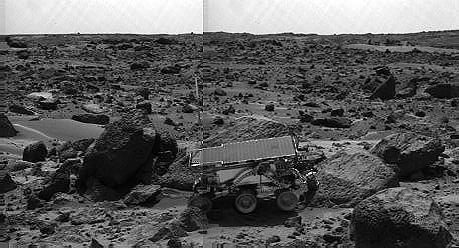
The Sojourner rover's Alpha Proton X-ray Spectrometer (APXS) is shown deployed against the rock "Moe" on the afternoon of Sol 64 (September 7). The rocks to the left of Moe are "Shark" (left of Sojourner) and "Half Dome" (behind Sojourner). They were previously measured by the APXS. The image was taken by the Imager for Mars Pathfinder (IMP). Sojourner spent 83 days of a planned seven-day mission exploring the Martian terrain, acquiring images, and taking chemical, atmospheric and other measurements. The final data transmission received from Pathfinder was at 10:23 UTC on September 27, 1997. Although mission managers tried to restore full communications during the following five months, the successful mission was terminated on March 10, 1998. http://photojournal.jpl.nasa.gov/catalog/PIA01560
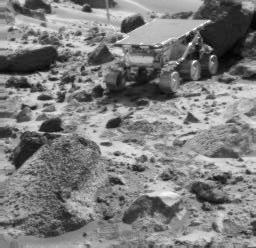
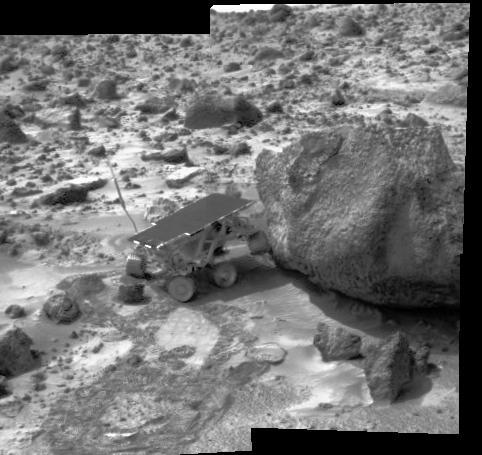
NASA's Sojourner rover is seen next to the rock "Shark," in this image taken by the Imager for Mars Pathfinder (IMP) near the end of daytime operations on Sol 52. The rover's Alpha Proton X-Ray Spectrometer is deployed against the rock. The rock "Wedge" is in the foreground. The Sojourner rover is seen next to the rock "Shark," in this image taken by the Imager for Mars Pathfinder (IMP) near the end of daytime operations on Sol 52. The rover's Alpha Proton X-Ray Spectrometer is deployed against the rock. The rock "Wedge" is in the foreground.
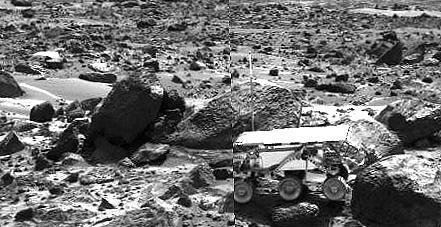
This image shows the Sojourner rover's Alpha Proton X-ray Spectrometer (APXS) deployed against the rock "Stimpy" on the afternoon of Sol 68 (September 11). The two rocks behind the rover were previously analyzed by the APXS. Sojourner spent 83 days of a planned seven-day mission exploring the Martian terrain, acquiring images, and taking chemical, atmospheric and other measurements. The final data transmission received from Pathfinder was at 10:23 UTC on September 27, 1997. Although mission managers tried to restore full communications during the following five months, the successful mission was terminated on March 10, 1998. http://photojournal.jpl.nasa.gov/catalog/PIA01563
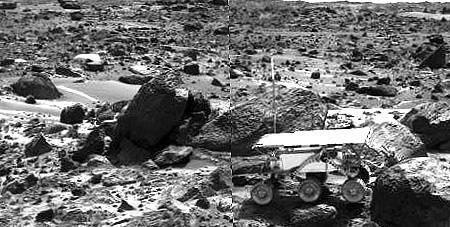
This image shows the Sojourner rover's Alpha Proton X-ray Spectrometer (APXS) deployed against the rock "Stimpy" on the afternoon of Sol 68 (September 11). The two rocks behind the rover were previously analyzed by the APXS. Sojourner spent 83 days of a planned seven-day mission exploring the Martian terrain, acquiring images, and taking chemical, atmospheric and other measurements. The final data transmission received from Pathfinder was at 10:23 UTC on September 27, 1997. Although mission managers tried to restore full communications during the following five months, the successful mission was terminated on March 10, 1998. http://photojournal.jpl.nasa.gov/catalog/PIA00968
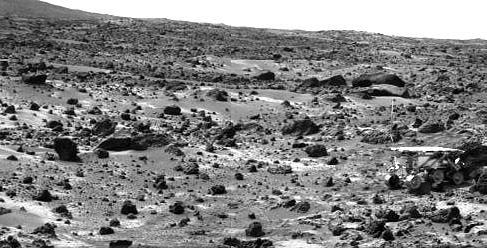
This image taken on the morning of Sol 80 (September 23, 1997) shows the Sojourner rover with its Alpha Proton X-ray Spectrometer (APXS) deployed against the rock "Chimp." On the left horizon is the rim of "Big Crater," 2.2 km away. Sojourner spent 83 days of a planned seven-day mission exploring the Martian terrain, acquiring images, and taking chemical, atmospheric and other measurements. The final data transmission received from Pathfinder was at 10:23 UTC on September 27, 1997. Although mission managers tried to restore full communications during the following five months, the successful mission was terminated on March 10, 1998. http://photojournal.jpl.nasa.gov/catalog/PIA01585
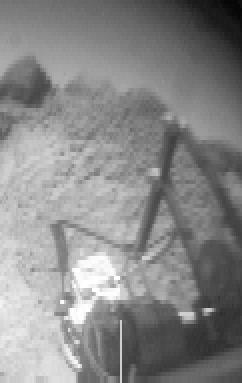
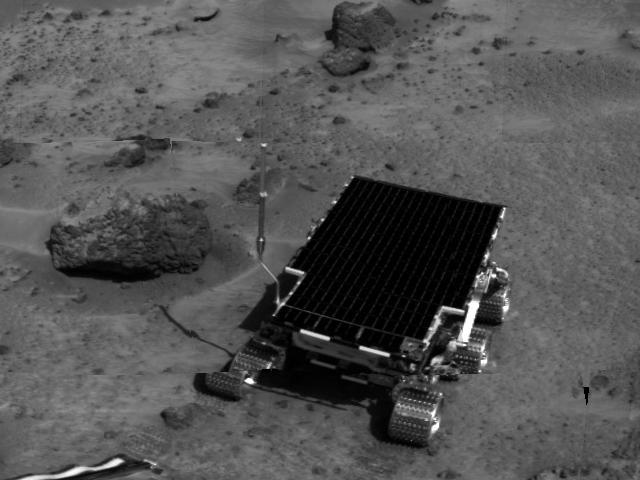
This image of the rock "Wedge" was taken from the Sojourner rover's rear color camera on Sol 37. The position of the rover relative to Wedge is seen in MRPS 83349. The segmented rod visible in the middle of the frame is the deployment arm for the Alpha Proton X-Ray Spectrometer (APXS). The APXS, the bright, cylindrical object at the end of the arm, is positioned against Wedge and is designed to measure the rock's chemical composition. This was done successfully on the night of Sol 37. http://photojournal.jpl.nasa.gov/catalog/PIA00906
Sojourner Success Image
Sojourner Latch Spring Deployed
Newly Deployed Sojourner Rover
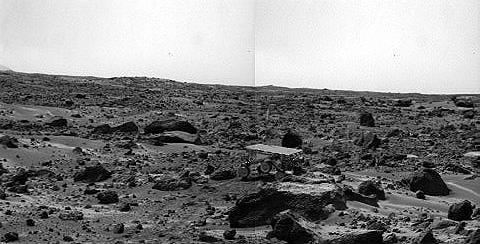
Sojourner Farthest Journey
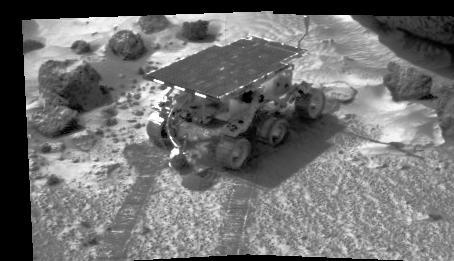
Sojourner APXS at Work
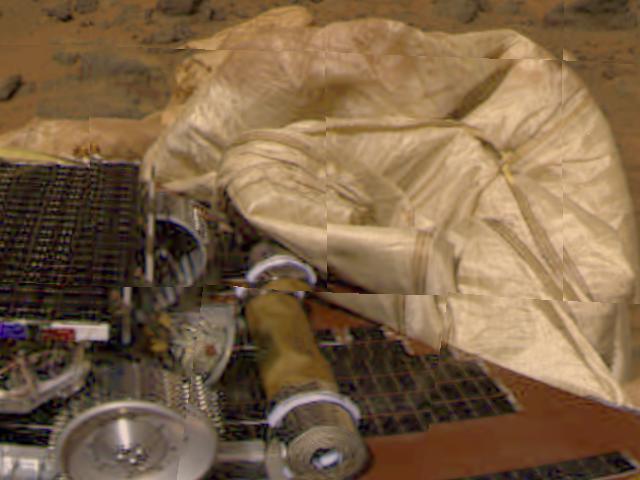
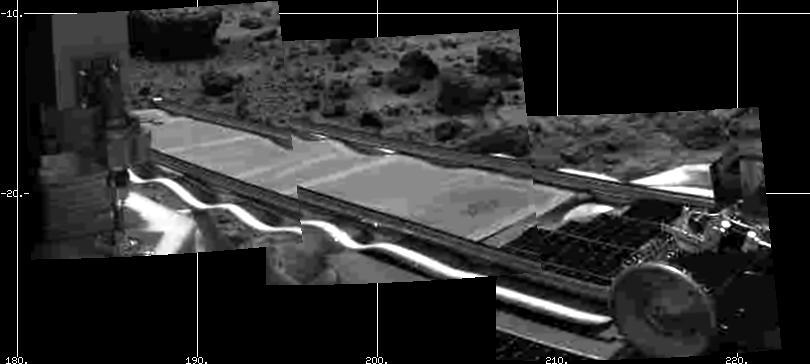
This image from the Imager for Mars Pathfinder (IMP) camera shows the rear part of the Sojourner rover, the rolled-up rear ramp, and portions of the partially deflated airbags. The Alpha Proton X-ray Spectrometer instrument is protruding from the rear (right side) of the rover. The airbags behind the rover are presently blocking the ramp from being safely unfurled. The ramps are a pair of deployable metal reels that will provide a track for the rover as it slowly rolls off the lander, and onto the surface of Mars, once Pathfinder scientists determine it is safe to do so. http://photojournal.jpl.nasa.gov/catalog/PIA00614
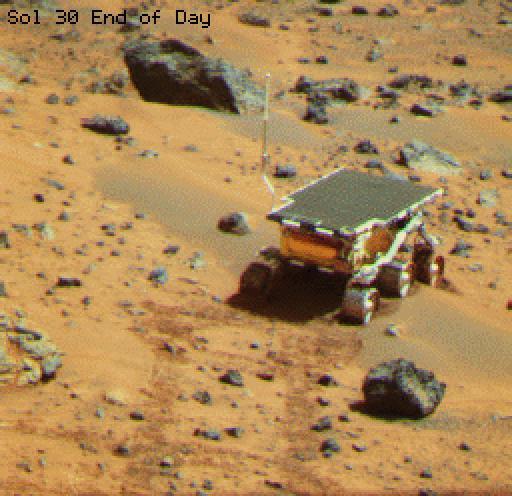
This is an image of the rover Sojourner at the feature called Mermaid Dune at the MPF landing site. Mermaid is thought to be a low, transverse dune ridge, with its long (approximately 2 meters) axis transverse to the wind, which is thought to come from the lower left of the image and blow toward the upper right. The rover is facing to the lower left, the "upwind" direction. The rover's middle wheels are at the crestline of the small dune, and the rear wheels are on the lee side of the feature. A soil mechanics experiment was performed to dig into the dune and examine the sediments exposed. http://photojournal.jpl.nasa.gov/catalog/PIA00794
Sojourner Rover View of Pathfinder Lander
Sojourner Rover Tracks in Compressible Soil
Sojourner Within Color-Enhanced Panorama
Sojourner First Images From Mars
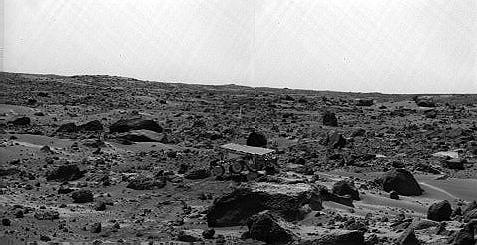
Sojourner Farthest Journey - Left Eye
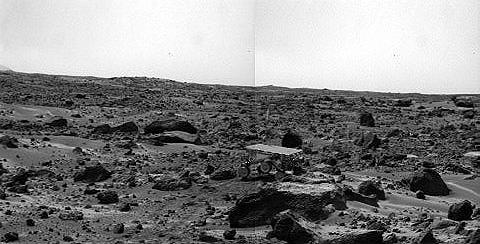
Sojourner Farthest Journey - Right Eye
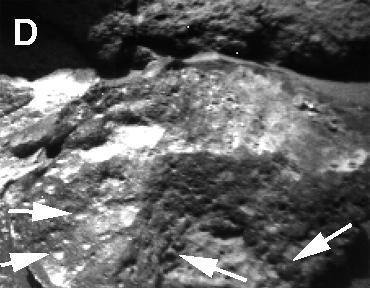
Sojourner Rover View of Sockets and Pebbles
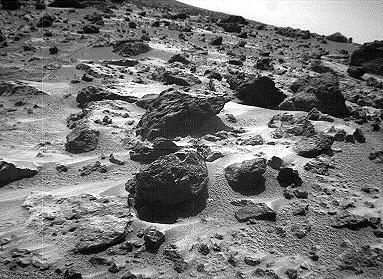
North View from Sojourner - Left Eye
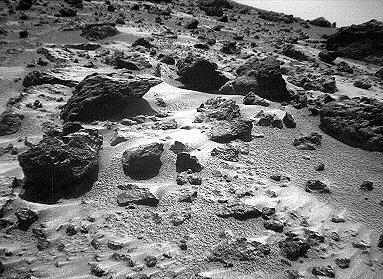
North View from Sojourner - Right Eye
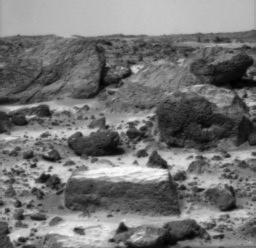
A close-up of the rectangular rock called "Flat Top" from NASA's Mars Pathfinder (MPF) rover Sojourner in July, 1997. http://photojournal.jpl.nasa.gov/catalog/PIA00626
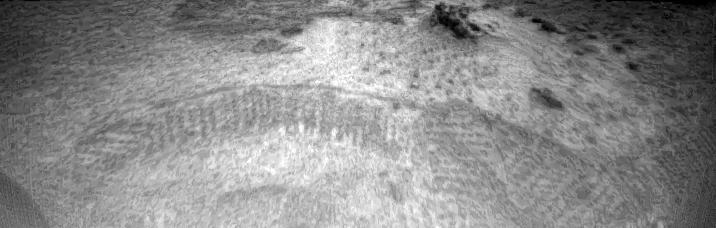
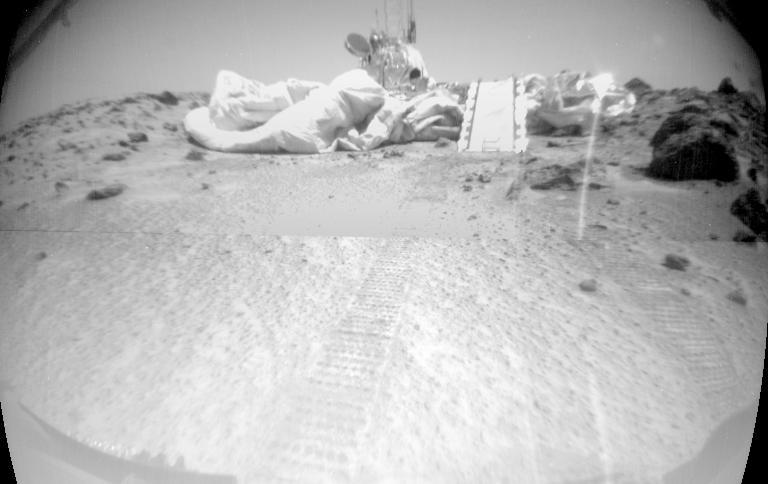
Tracks made by the Sojourner rover are visible in this image, taken by one of the cameras aboard Sojourner on Sol 3. The tracks represent the rover maneuvering towards the rock dubbed "Barnacle Bill." The rover, having exited the lander via the rear ramp, first traveled towards the right portion of the image, and then moved forward towards the left where Barnacle Bill sits. The fact that the rover was making defined tracks indicates that the soil is made up of particles on a micron scale. http://photojournal.jpl.nasa.gov/catalog/PIA00633
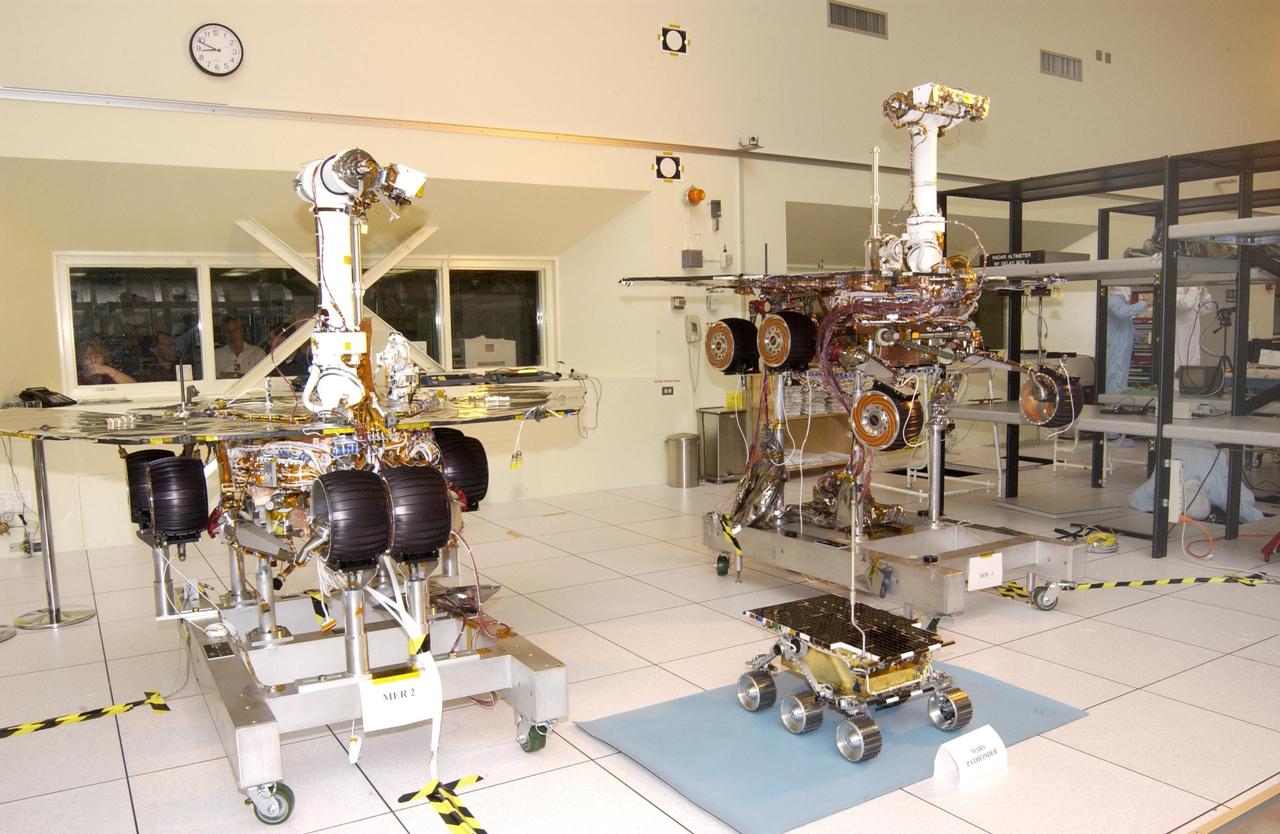
The twin rovers of NASAa Mars Exploration Rover Mission pose with their groundbreaking predecessor, the flight spare of the Sojourner rover from NASA 1997 Pathfinder mission.
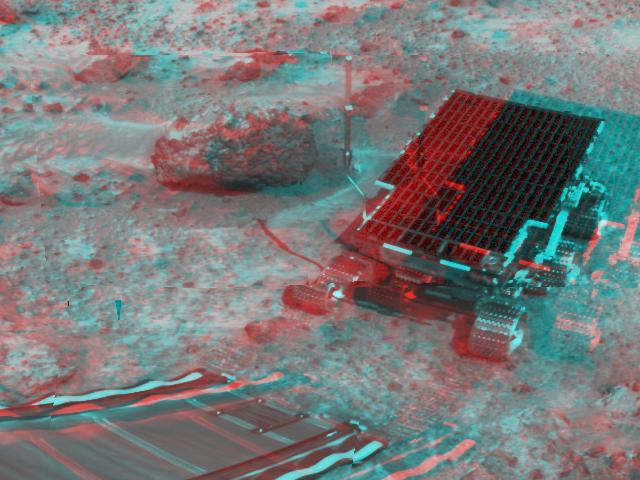
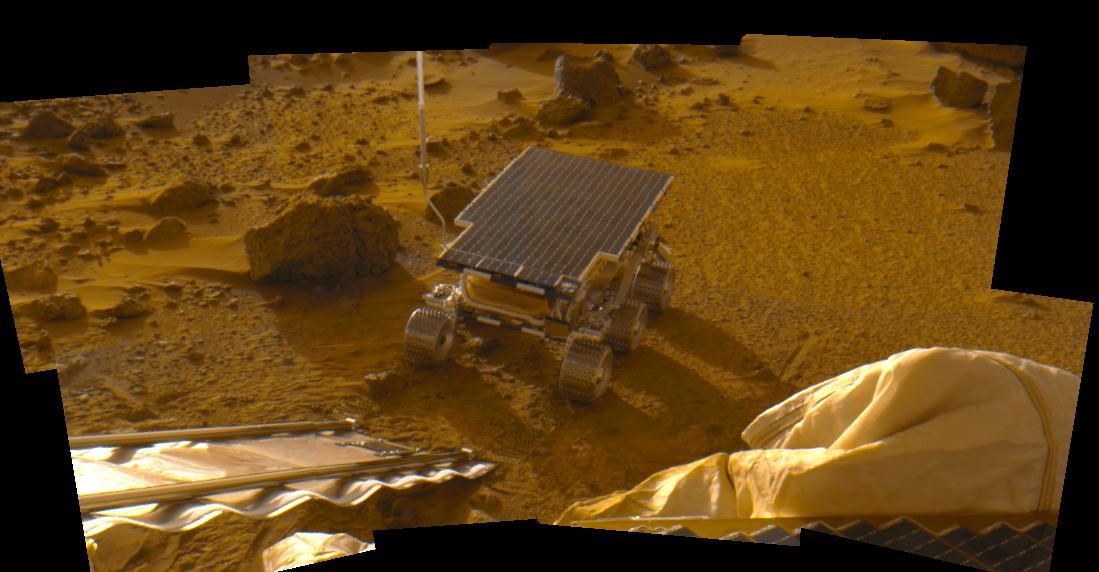
At right, NASA Sojourner has traveled off the lander rear ramp and onto the surface of Mars. The rock Barnacle Bill and the rear ramp is to the left of Sojourner. 3D glasses are necessary to identify surface detail.
Sojourner, Barnacle
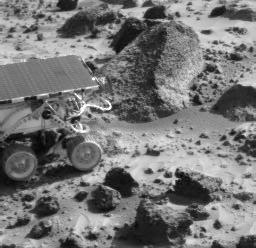
Sojourner at Wedge
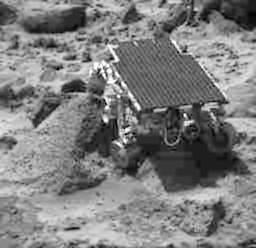
Sojourner at Wedge
This picture taken by the IMP (Imager for Mars Pathfinder) aboard the Mars Pathfinder spacecraft depicts the rover Sojourner's position after driving onto the Martian surface. Sojourner has become the first autonomous robot ever to traverse the surface of Mars. This image reflects the success of Pathfinder's principle objective -- to place a payload on Mars in a safe, operational configuration. The primary mission of Sojourner, scheduled to last seven days, will be to use its Alpha Proton X-ray Spectrometer (APXS) instrument to determine the elements that make up the rocks and soil on Mars. A full study using the APXS takes approximately ten hours, and can measure all elements except hydrogen at any time of the Martian day or night. The APXS will conduct its studies by bombarding rocks and soil samples with alpha particle radiation -- charged particles equivalent to the nucleus of a helium atom, consisting of two protons and two neutrons. http://photojournal.jpl.nasa.gov/catalog/PIA00623
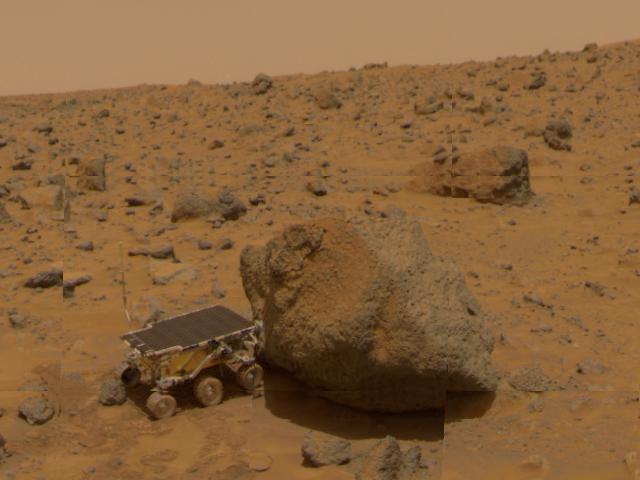
This 1997 image from NASA Mars Pathfinder shows a close up of Sojourner as it placed its Alpha Proton X-Ray Spectrometer APXS upon the surface of the rock Yogi.
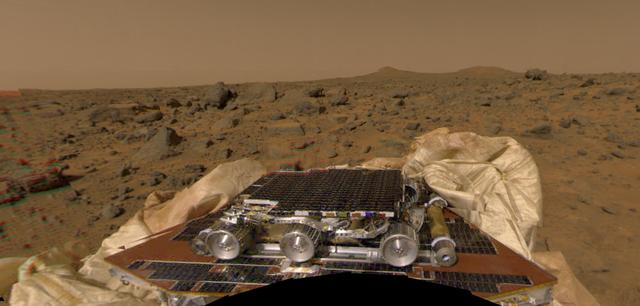
NASA's Sojourner rover and undeployed ramps onboard the Mars Pathfinder spacecraft can be seen in this image, by the Imager for Mars Pathfinder (IMP) on July 4 (Sol 1). This image has been corrected for the curvature created by parallax. The microrover Sojourner is latched to the petal, and has not yet been deployed. The ramps are a pair of deployable metal reels which will provide a track for the rover as it slowly rolls off the lander, over the spacecraft's deflated airbags, and onto the surface of Mars. Pathfinder scientists will use this image to determine whether it is safe to deploy the ramps. One or both of the ramps will be unfurled, and then scientists will decide whether the rover will use either the forward or backward ramp for its descent. http://photojournal.jpl.nasa.gov/catalog/PIA00621
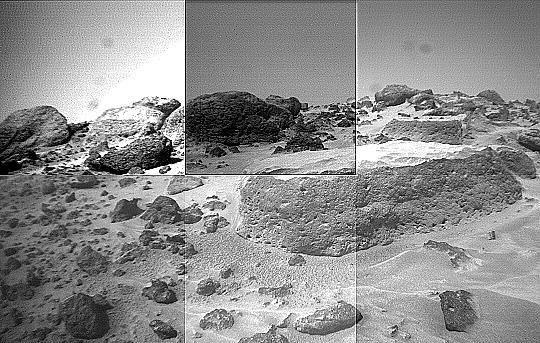
This image of the rock "Flat Top" was taken from the right of the Sojourner rover's front cameras on Sol 42. Pits on the edge of the rock and a fluted surface are clearly visible. The rocks in the left background comprise the "Rock Garden." Sojourner spent 83 days of a planned seven-day mission exploring the Martian terrain, acquiring images, and taking chemical, atmospheric and other measurements. The final data transmission received from Pathfinder was at 10:23 UTC on September 27, 1997. Although mission managers tried to restore full communications during the following five months, the successful mission was terminated on March 10, 1998. http://photojournal.jpl.nasa.gov/catalog/PIA01555
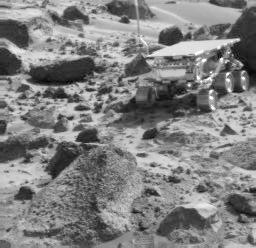
Sojourner, Wedge, & Shark
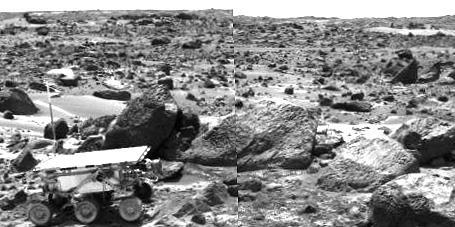
Sojourner Rover Leaving the Rock
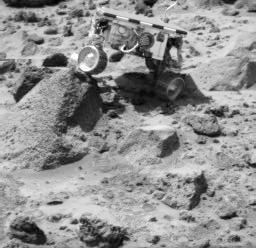
Sojourner Doing a Wheelie on Wedge
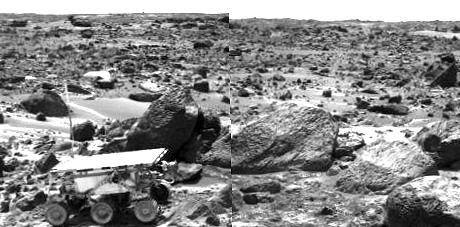
Sojourner Rover Leaving the Rock
Sojourner near the Rock
Sojourner APXS studies Barnacle
Sojourner Does a Wheelie on Yogi
Sojourner near Barnacle
Sojourner Rover Near The
Sojourner Moving Closer to Wedge
Sojourner Rover Near Half
Sojourner Rover Near Half
Sojourner Nearing Wedge
Sojourner at Yogi - Color
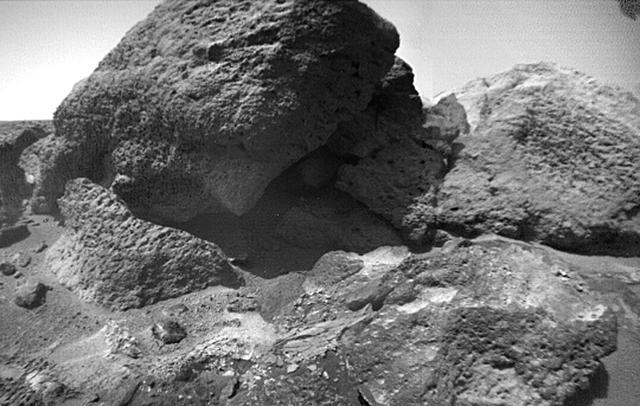
Shark as Viewed by Sojourner Rover
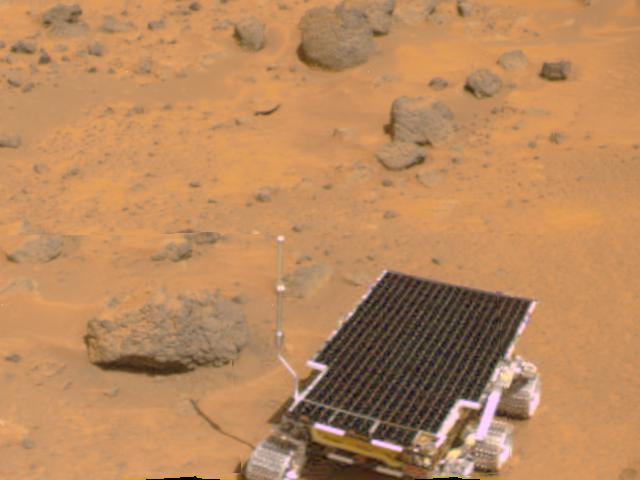
Sojourner near Barnacle
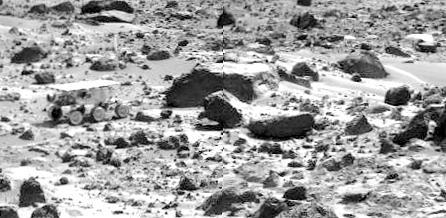
Sojourner near Chimp
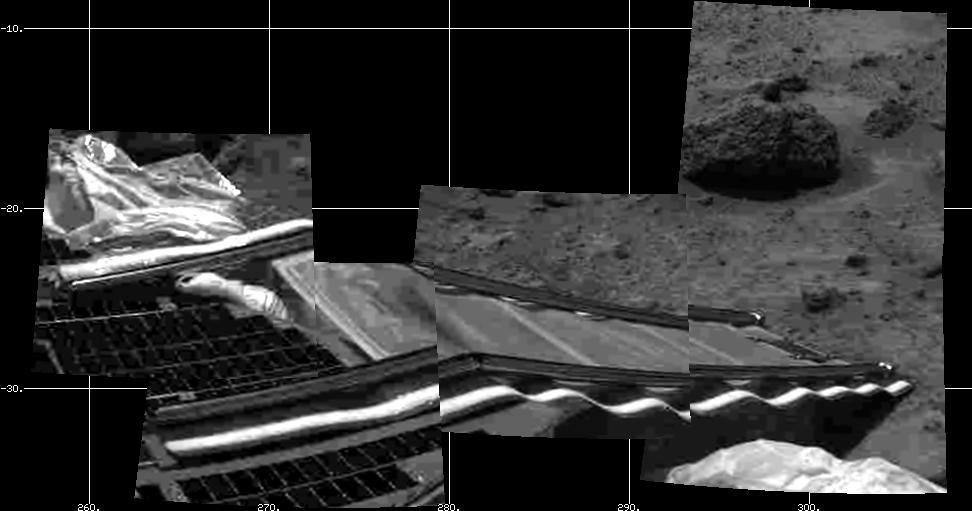
NASA's Mars Pathfinder's rear rover ramp can be seen successfully unfurled in this image, taken at the end of Sol 2 by the Imager for Mars Pathfinder (IMP). This ramp was later used for the deployment of the microrover Sojourner, which occurred at the end of Sol 2. Areas of a lander petal and deflated airbag are visible at left. The image helped Pathfinder scientists determine that the rear ramp was the one to use for rover deployment. At upper right is the rock dubbed "Barnacle Bill," which Sojourner will later study. http://photojournal.jpl.nasa.gov/catalog/PIA00627
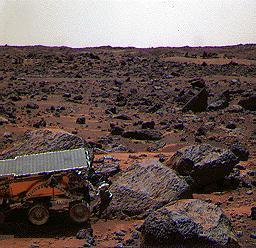
This color image shows the Sojourner rover's Alpha Proton X-ray Spectrometer (APXS) deployed against the rock "Moe" on the morning of Sol 65. The rock behind the rover is "Half Dome," which was previously measured by the APXS. Sojourner spent 83 days of a planned seven-day mission exploring the Martian terrain, acquiring images, and taking chemical, atmospheric and other measurements. The final data transmission received from Pathfinder was at 10:23 UTC on September 27, 1997. Although mission managers tried to restore full communications during the following five months, the successful mission was terminated on March 10, 1998. http://photojournal.jpl.nasa.gov/catalog/PIA00967
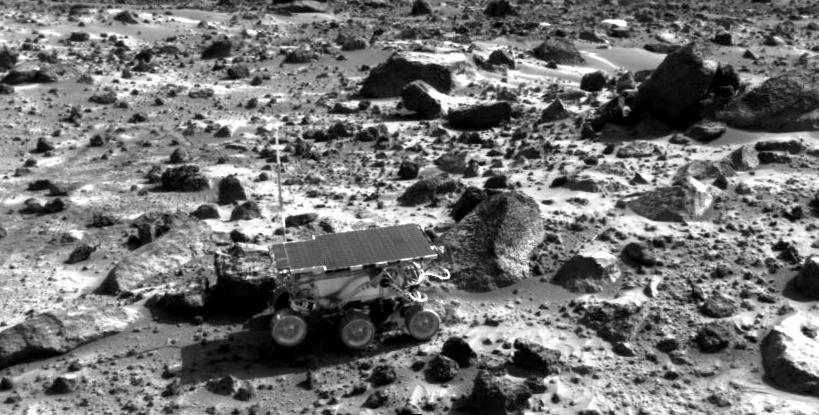
The Mars Pathfinder Rover Sojourner images by the Imager for Mars Pathfinder as it nears the rock "Wedge." Part of the Rock Garden is visible in the upper right of the image. http://photojournal.jpl.nasa.gov/catalog/PIA04318
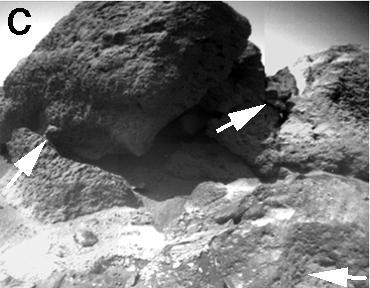
Sojourner Rover View of Shark and Half
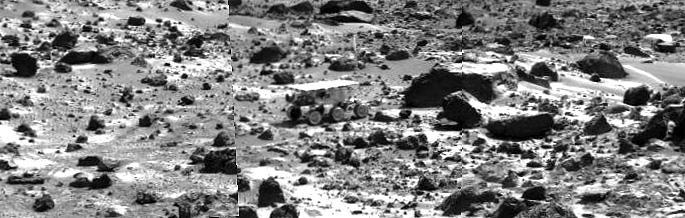
Sojourner near Chimp - Right Eye
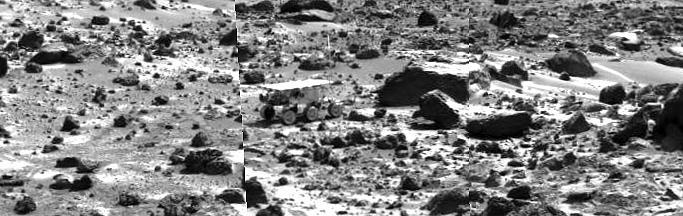
Sojourner near Chimp - Left Eye
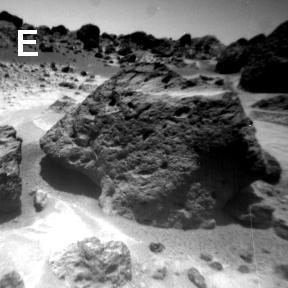
Sojourner Rover View of Souffle Rock
Mars Pathfinder's forward rover ramp can be seen successfully unfurled in this image, taken at the end of Sol 2 by the Imager for Mars Pathfinder (IMP). This ramp was not used for the deployment of the microrover Sojourner, which occurred at the end of Sol 2. Sojourner can be seen still latched to one of the lander's petals, waiting for the command sequence that would execute its descent off of the lander's petal. The imager helped Pathfinder scientists determine whether to deploy the rover using the forward or backward ramps and the nature of the first rover traverse. http://photojournal.jpl.nasa.gov/catalog/PIA00628

This 360 degree "monster" panorama was taken by the deployed Imager for Mars Pathfinder (IMP) on Sol 3. All three petals, the perimeter of the deflated airbags, deployed rover Sojourner, forward and backward ramps and prominent surface features are visible. The IMP stands 1.8 meters over the Martian surface. The curvature and misalignment of several sections are due to image parallax. http://photojournal.jpl.nasa.gov/catalog/PIA00662
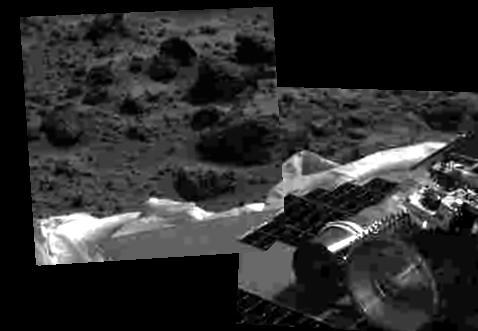
This image shows that the Mars Pathfinder airbags have been successfully retracted, allowing safe deployment of the rover ramps. The Sojourner rover is at lower right, and rocks are visible in the background. Mars Pathfinder landed successfully on the surface of Mars today at 10:07 a.m. PDT. http://photojournal.jpl.nasa.gov/catalog/PIA00618
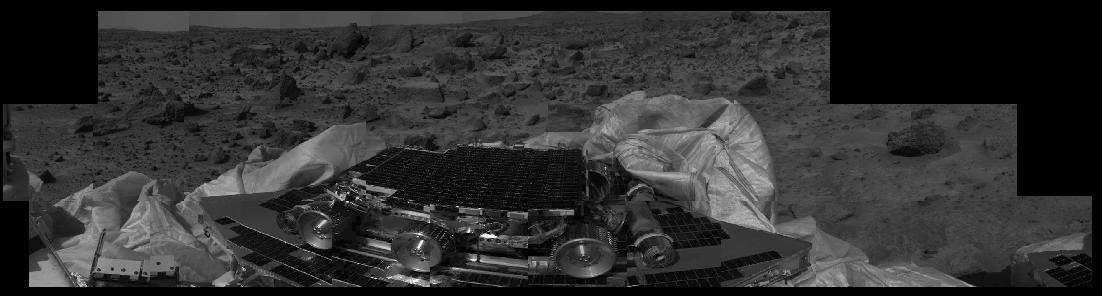
This image shows that the Mars Pathfinder airbags have been successfully retracted, allowing safe deployment of the rover ramps. The Sojourner rover, still in its deployed position, is at center image, and rocks are visible in the background. Mars Pathfinder landed successfully on the surface of Mars today at 10:07 a.m. PDT. http://photojournal.jpl.nasa.gov/catalog/PIA00617
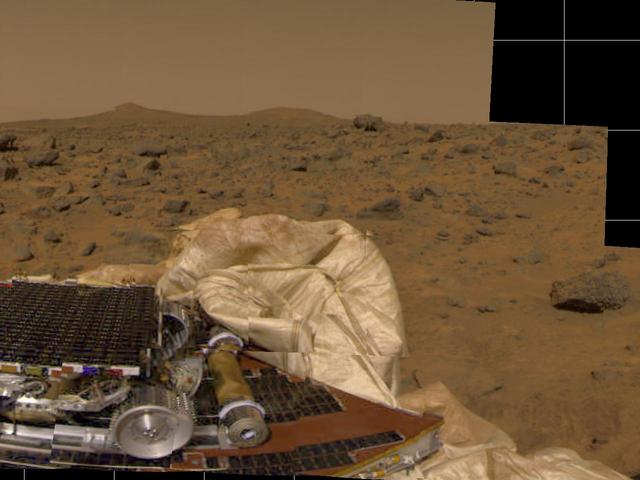
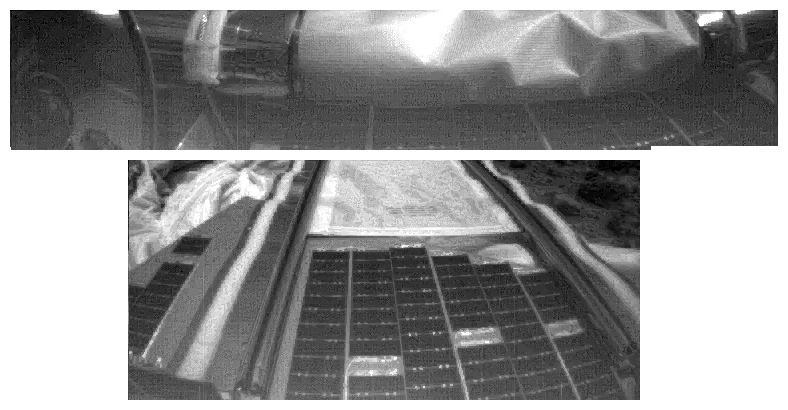
The Imager for Mars Pathfinder (IMP) took this image of surrounding terrain in the mid-morning on Mars (2:30 PM Pacific Daylight Time) earlier today. Part of the small rover, Sojourner, is visible on the left side of the picture. The tan cylinder to the right of the rover is one of two rolled-up ramps by which the rover will descend to the ground. The white, billowy material in the center of the picture is part of the airbag system. Many rocks of different shapes and sizes are visible between the lander and the horizon. Two hills are visible on the horizon. The notch on the left side of the leftmost conical hill is an artifact of the processing of this picture. http://photojournal.jpl.nasa.gov/catalog/PIA00613
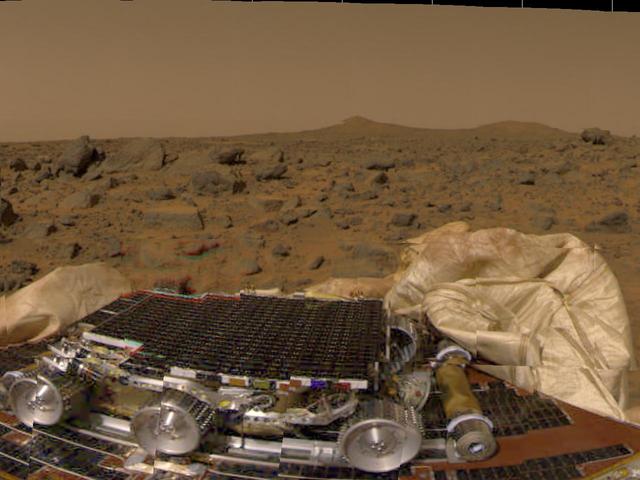
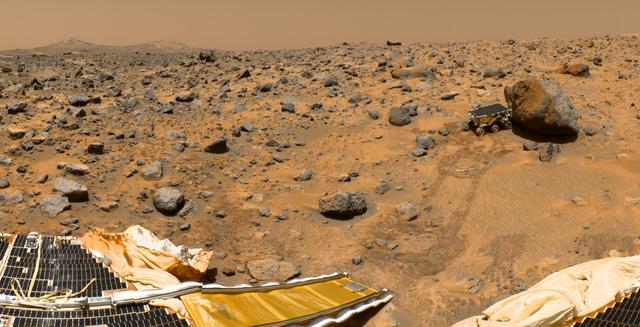
This is one of the first pictures taken by the camera on the Mars Pathfinder lander shortly after its touchdown at 10:07 AM Pacific Daylight Time on July 4, 1997. The small rover, named Sojourner, is seen in the foreground in its position on a solar panel of the lander. The white material on either side of the rover is part of the deflated airbag system used to absorb the shock of the landing. Between the rover and the horizon is the rock-strewn martian surface. Two hills are seen in the right distance, profiled against the light brown sky. http://photojournal.jpl.nasa.gov/catalog/PIA00611
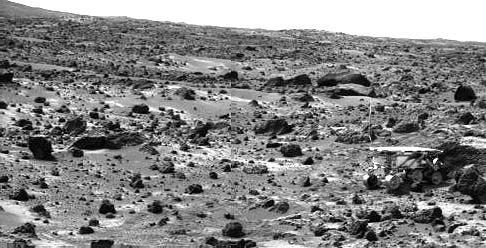
This image taken on the morning of Sol 80 (September 23) shows the Sojourner rover with its Alpha Proton X-ray Spectrometer (APXS) deployed against the rock "Chimp." On the left horizon is the rim of "Big Crater," 2.2 km away. Sojourner spent 83 days of a planned seven-day mission exploring the Martian terrain, acquiring images, and taking chemical, atmospheric and other measurements. The final data transmission received from Pathfinder was at 10:23 UTC on September 27, 1997. Although mission managers tried to restore full communications during the following five months, the successful mission was terminated on March 10, 1998. http://photojournal.jpl.nasa.gov/catalog/PIA00970
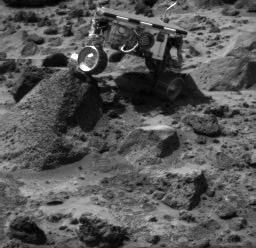
Sojourner Doing a Wheelie on Wedge - Right Eye
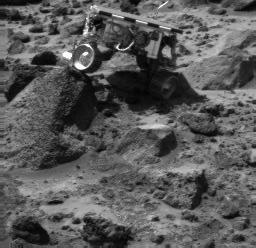
Sojourner Doing a Wheelie on Wedge - Left Eye
Sojourner Rover Behind Chimp - Right Eye
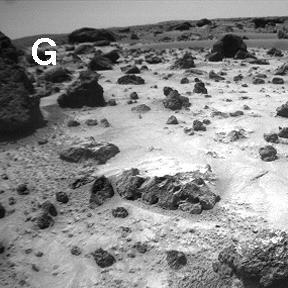
Sojourner Rover View of Cloddy Deposits near Pooh
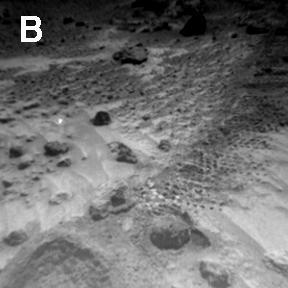
Sojourner Rover View of Well-Rounded Pebbles in Cabbage
Sojourner Rover Behind Chimp - Left Eye
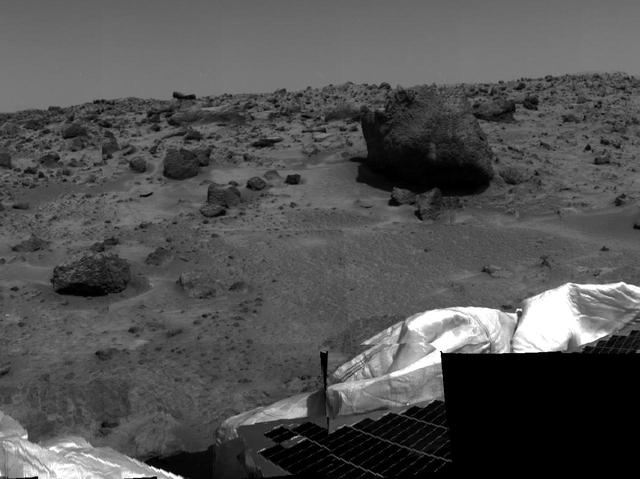
Several possible targets of study for rover Sojourner's Alpha Proton X-Ray Spectrometer (APXS) instrument are seen in this image, taken by the Imager for Mars Pathfinder (IMP) on Sol 2. The smaller rock at left has been dubbed "Barnacle Bill," while the larger rock at right, approximately 3-4 meters from the lander, is now nicknamed "Yogi." Barnacle Bill is scheduled to be the first object of study for the APXS. Portions of a petal and deflated airbag are also visible at lower right. http://photojournal.jpl.nasa.gov/catalog/PIA00629
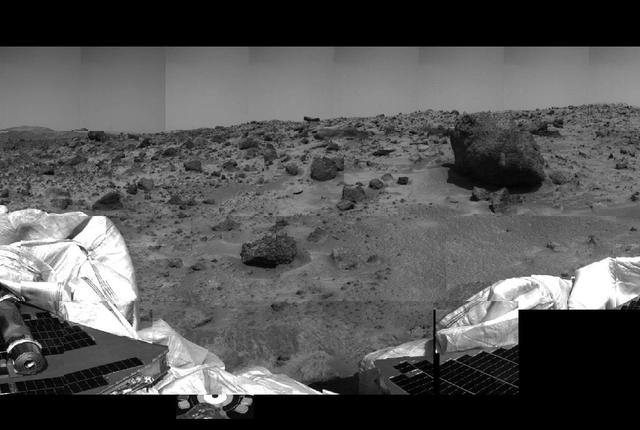
This image of the Martian surface was taken by the Imager for Mars Pathfinder (IMP) before sunset on July 4, 1997 (Sol 1), the spacecraft's first day on Mars. The airbags have been partially retracted, and portions the petal holding the undeployed rover Sojourner can be seen at lower left. The rock in the center of the image may be a future target for chemical analysis. The soil in the foreground has been disturbed by the movement of the airbags as they retracted. http://photojournal.jpl.nasa.gov/catalog/PIA00619
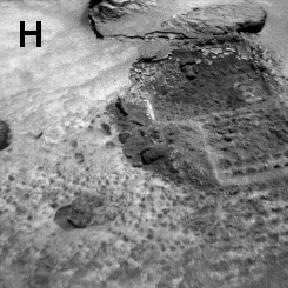
Sojourner Rover View of Platy Fragments near Pop-Tart
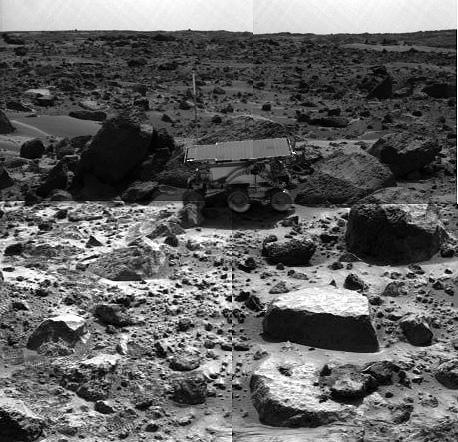
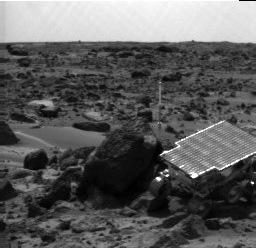
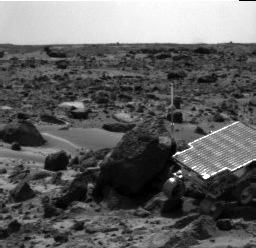
Sojourner Rover Backing Away From Moe - Left Eye
Sojourner Rover Backing Away from Moe - Right Eye
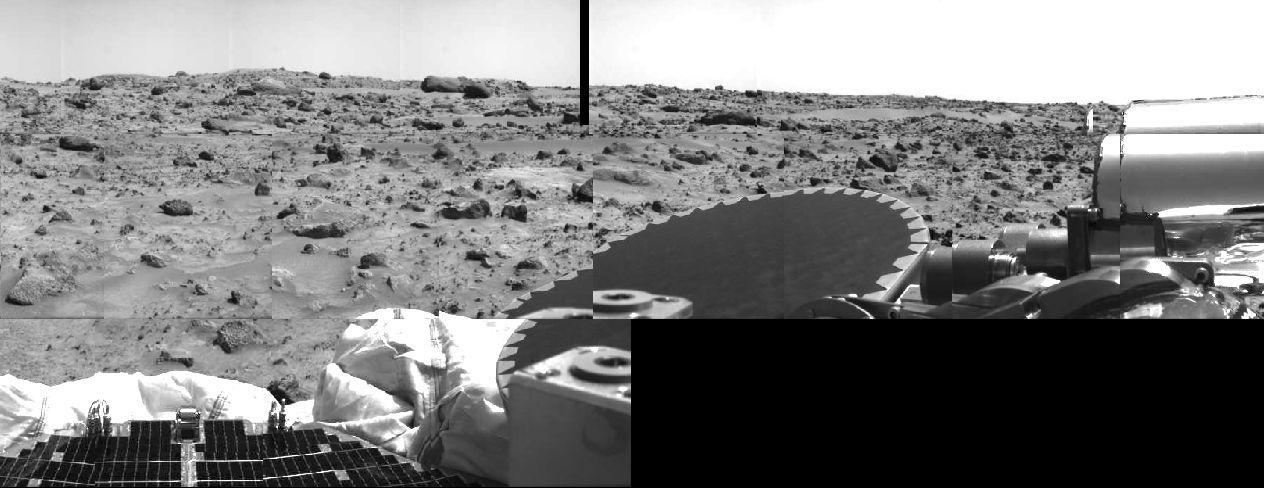
Areas of rocky Martian terrain are seen in this image, taken by the Imager for Mars Pathfinder (IMP) on Sol 2. Portions of a lander petal and deflated airbag are at lower left. The dark disk at center is the high-gain antenna, and the silver cylindrical objects at upper right are part of the antenna's mechanism. An area of relatively smooth terrain is seen at upper right, which may offer clues to how this area was formed, and may be a future target for Sojourner's studies. The black area at lower right and small strip at top center is missing data. http://photojournal.jpl.nasa.gov/catalog/PIA00625
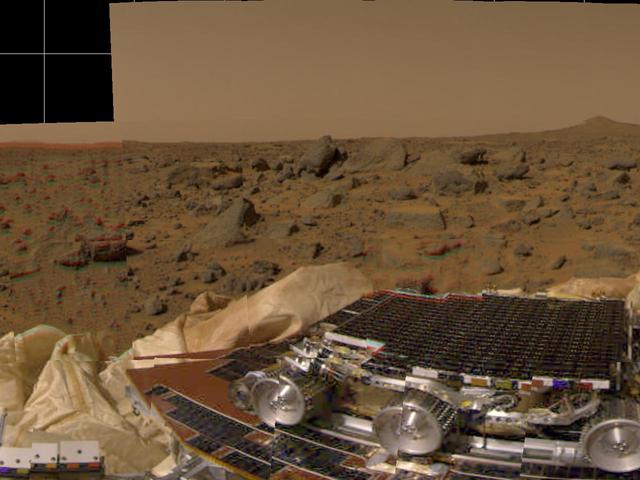
This picture from Mars Pathfinder was taken at 9:30 AM in the martian morning (2:30 PM Pacific Daylight Time), after the spacecraft landed earlier today (July 4, 1997). The Sojourner rover is perched on one of three solar panels. The rover is 65 cm (26 inches) long by 18 cm (7 inches) tall; each of its wheels is about 13 cm (5 inches) high. The white material to the left of the front of the rover is part of the airbag system used to cushion the landing. Many rocks of different of different sizes can be seen, set in a background of reddish soil. The landing site is in the mouth of an ancient channel carved by water. The rocks may be primarily flood debris. The horizon is seen towards the top of the picture. The light brown hue of the sky results from suspended dust. Pathfinder, a low-cost Discovery mission, is the first of a new fleet of spacecraft that are planned to explore Mars over the next ten years. Mars Global Surveyor, already en route, arrives at Mars on September 11 to begin a two year orbital reconnaissance of the planet's composition, topography, and climate. Additional orbiters and landers will follow every 26 months. http://photojournal.jpl.nasa.gov/catalog/PIA00608
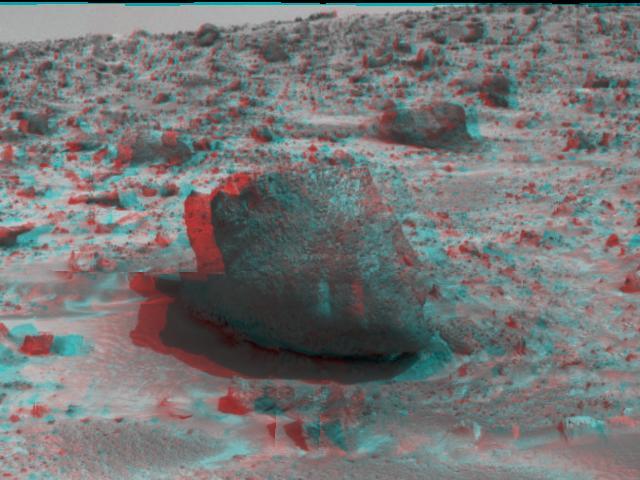
Yogi, a rock taller than NASA rover Sojourner taken in stereo by NASA Mars Pathfinder. 3D glasses are necessary to identify surface detail.
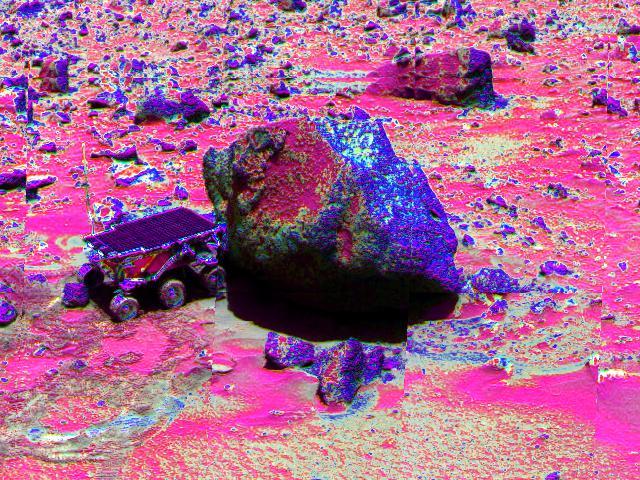
NASA Mars Pathfinder Lander, Sojourner, made contact with the rock Yogi in this false-color image from 1997, taken with the Imager for Mars Pathfinder IMP.
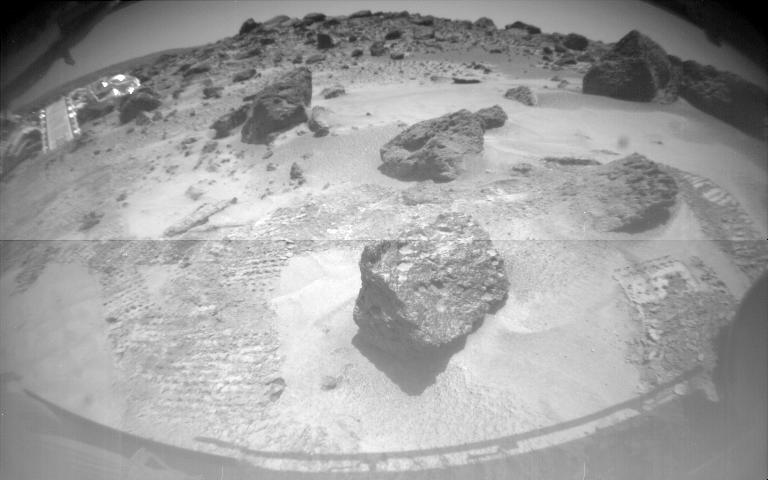
A close up of NASA Sojourner as it placed its Alpha Proton X-Ray Spectrometer APXS upon the surface of the rock Yogi. Distortion in the background is due to parallax.
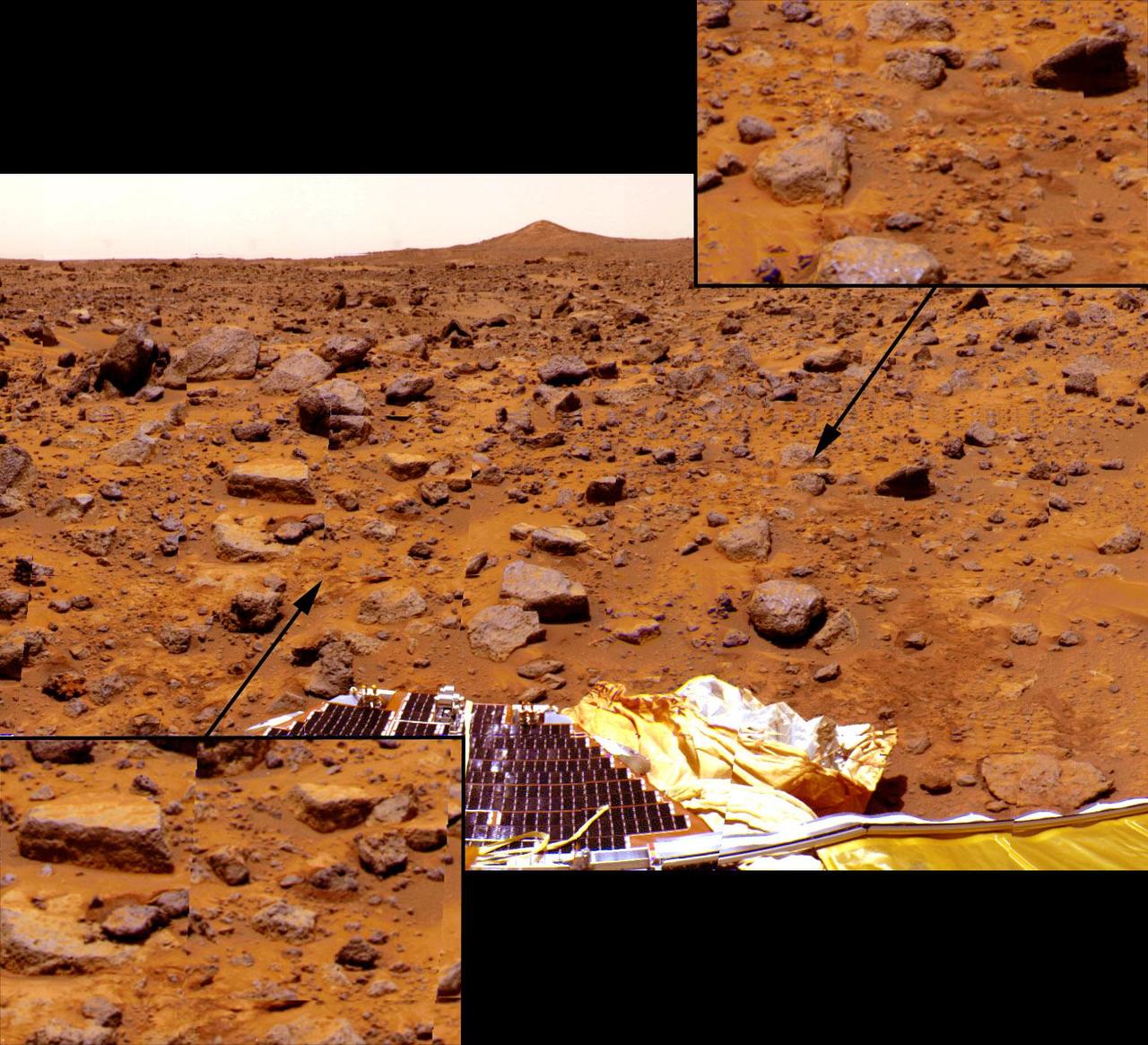
One of Sojourner's two front cameras took this image of the Sagan Memorial Station on Sol 6. The lander and its deployed rear ramp are at upper left, while several large rocks appear at center. Sojourner was near the large rock Yogi when this image was taken. Sojourner spent 83 days of a planned seven-day mission exploring the Martian terrain, acquiring images, and taking chemical, atmospheric and other measurements. The final data transmission received from Pathfinder was at 10:23 UTC on September 27, 1997. Although mission managers tried to restore full communications during the following five months, the successful mission was terminated on March 10, 1998. http://photojournal.jpl.nasa.gov/catalog/PIA00673
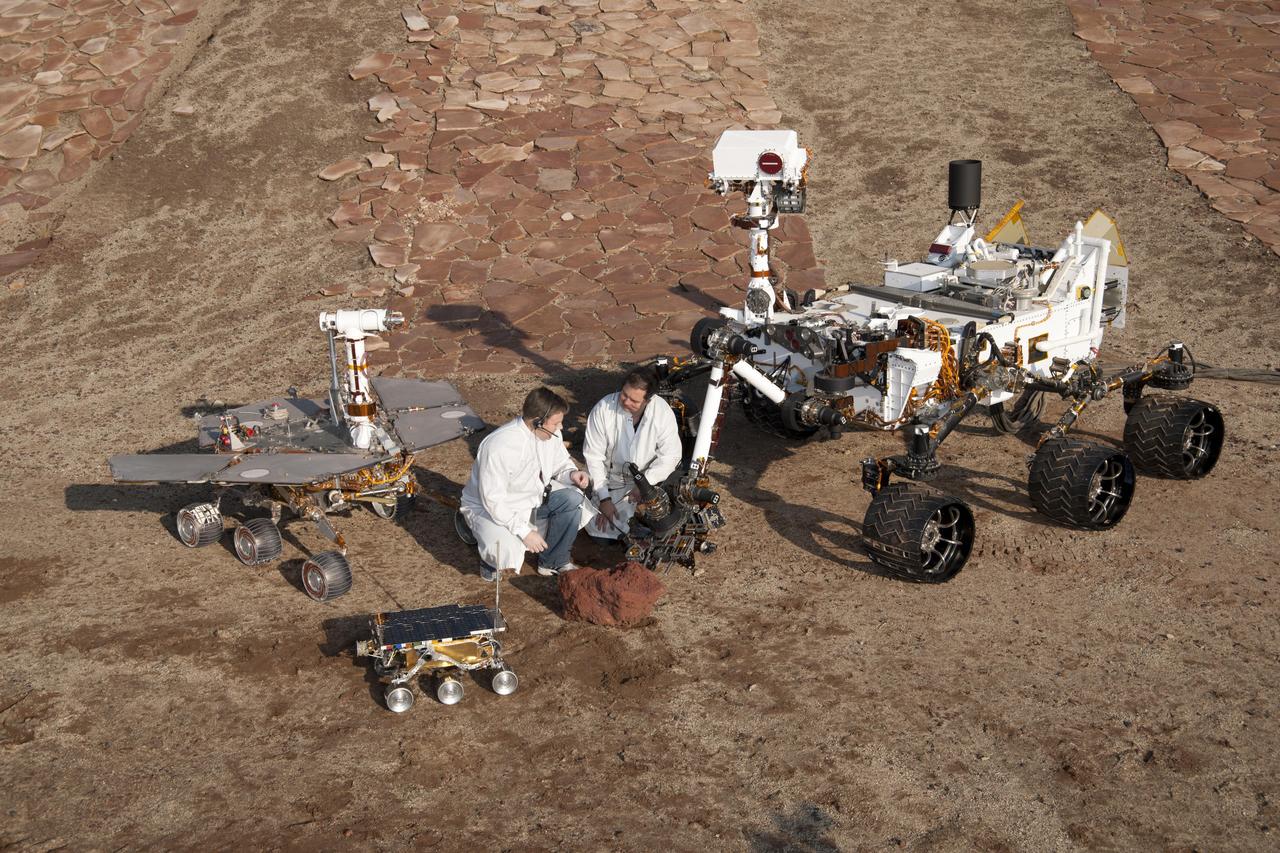
Two spacecraft engineers stand with three generations of Mars rovers developed at NASA JPL, Pasadena, Ca. Front and center is a flight spare of Sojourner, left is a working sibling to Spirit and Opportunity, right is test rover Curiosity.

Two spacecraft engineers stand with three generations of Mars rovers developed at NASA JPL, Pasadena, Ca. Front and center is a flight spare of Sojourner, left is a working sibling to Spirit and Opportunity, right is test rover Curiosity.
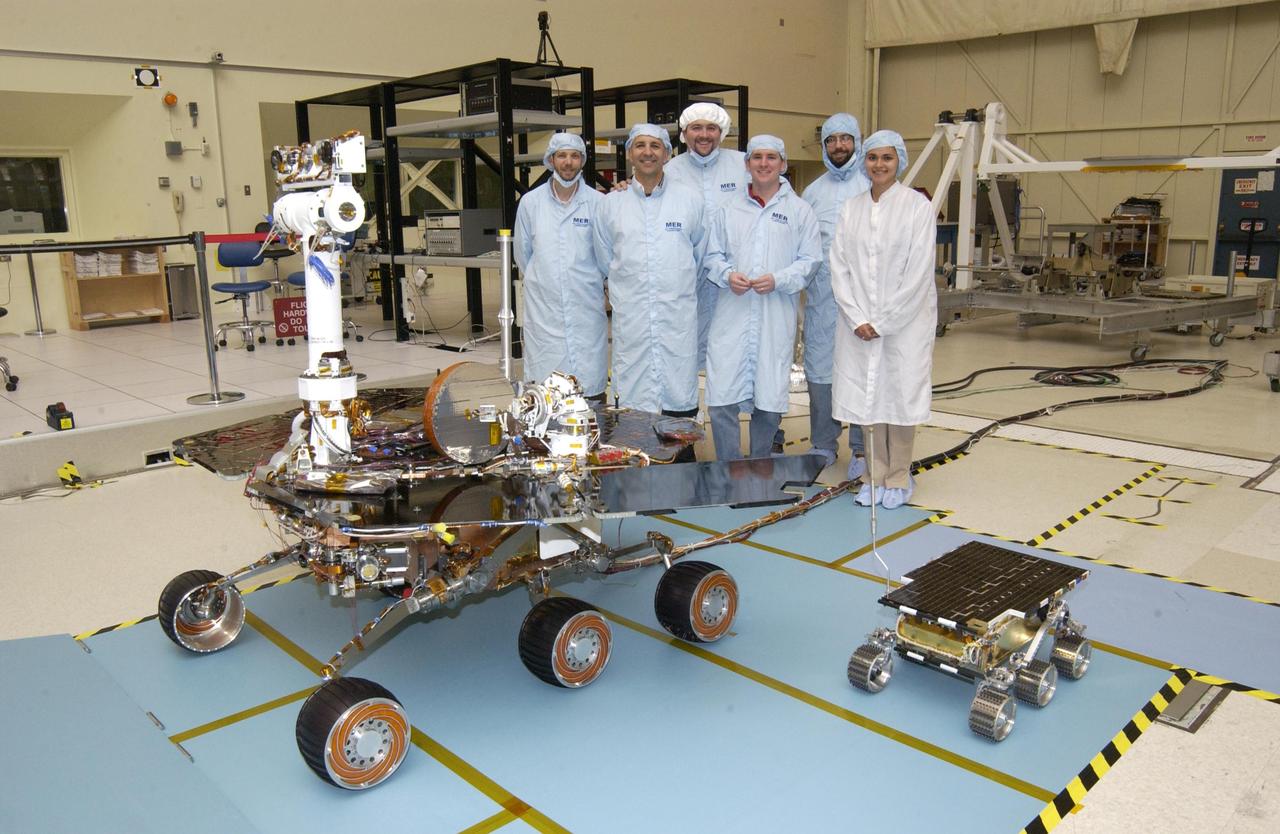
Members of the Mars Exploration Rovers Assembly, Test and Launch Operations team gather around NASA Rover 2 and its predecessor, a flight spare of the Pathfinder mission Sojourner rover, named Marie Curie.

NASA Sojourner was still latched to one of the lander petals, waiting for the command sequence that would execute its descent off of the lander petal. 3-D glasses are necessary to identify surface detail.
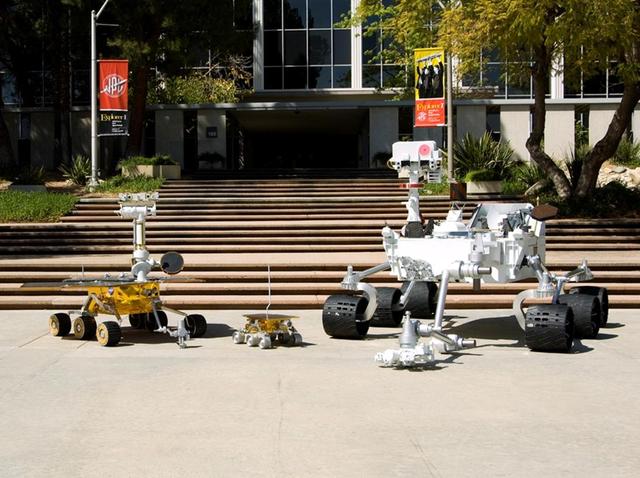
Full-scale models of three generations of NASA Mars rovers show the increase in size from the Sojourner rover of the Mars Pathfinder project, to the twin Mars Exploration Rovers Spirit and Opportunity, to the Mars Science Laboratory rover.
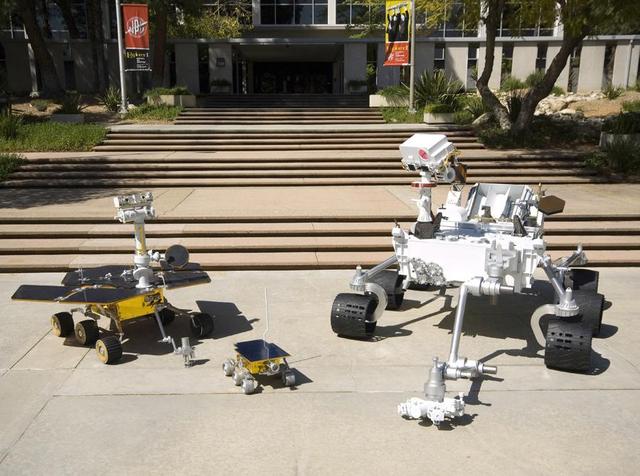
Full-scale models of three generations of NASA Mars rovers show the increase in size from the Sojourner rover of the Mars Pathfinder project, to the twin Mars Exploration Rovers Spirit and Opportunity, to the Mars Science Laboratory rover.
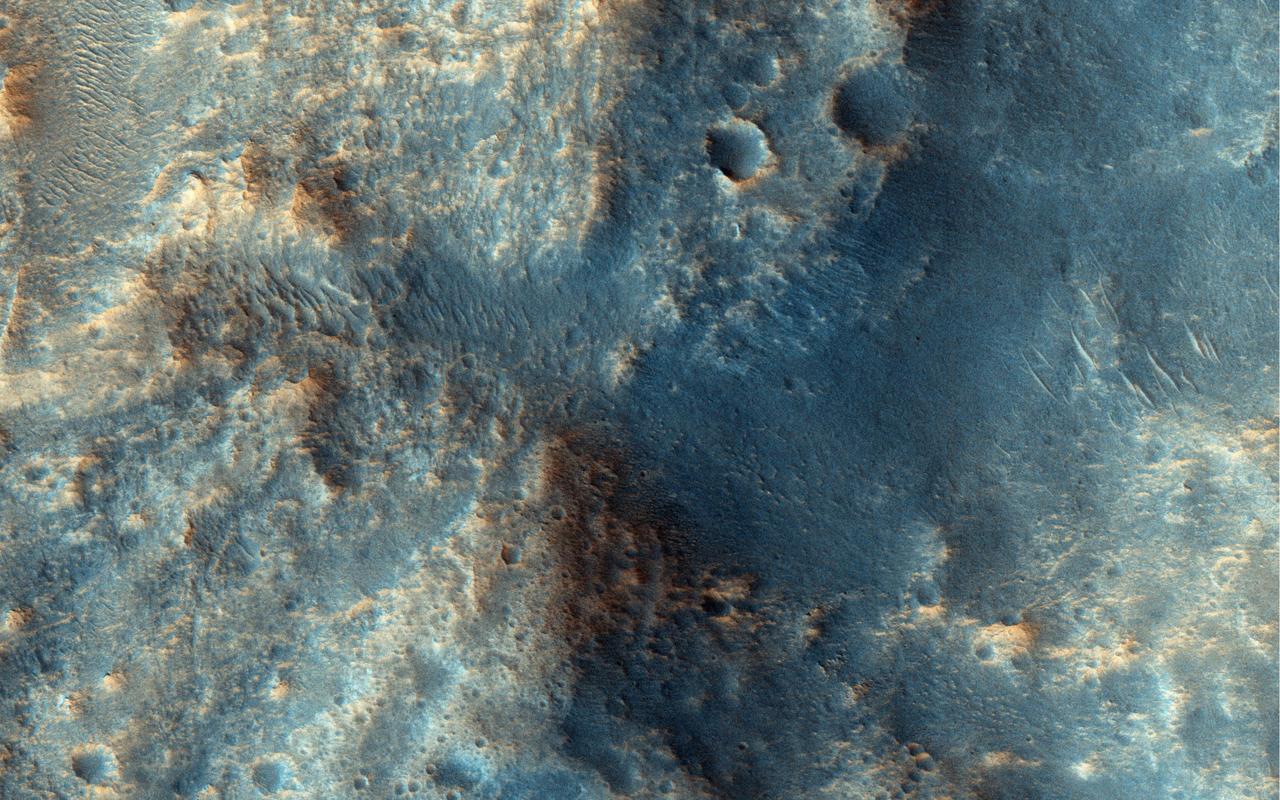
This channelized area is near the source region of the huge outflow channel, Ares Vallis. It was at the distal end or long-ways down-river-area where the Pathfinder/Sojourner mission landed on 4 July 1997.
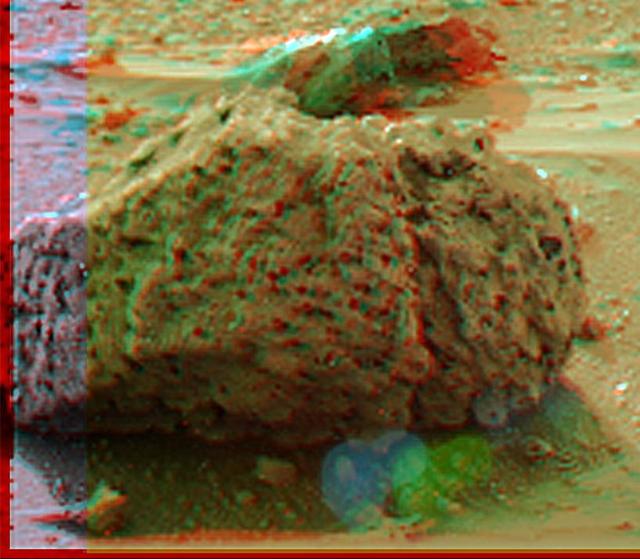
Barnacle Bill is a small rock immediately west-northwest of NASA Mars Pathfinder lander and was the first rock visited by the rover Sojourner. 3D glasses are necessary to identify surface detail.
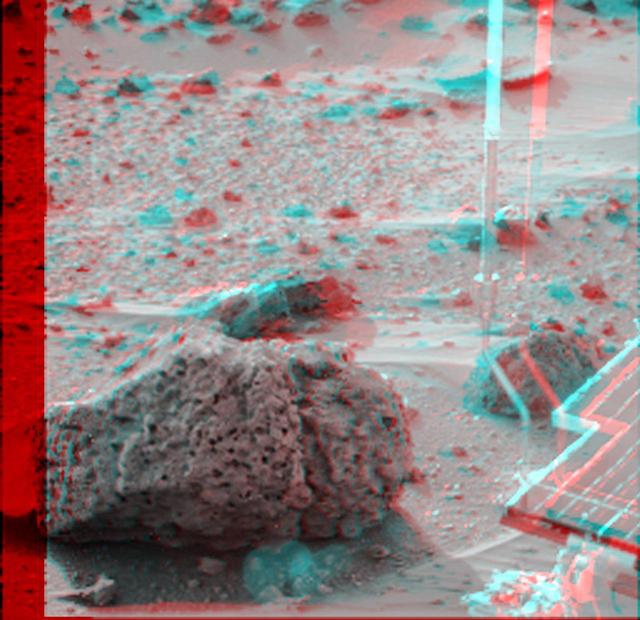
Barnacle Bill is a small rock immediately west-northwest of NASA Mars Pathfinder lander and was the first rock visited by the rover Sojourner. 3D glasses are necessary to identify surface detail.
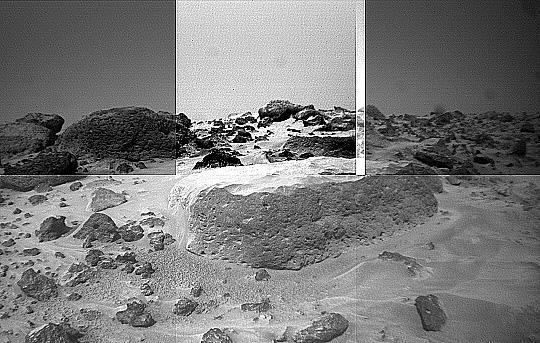
This image of the rock "Flat Top" was taken from the left of the Sojourner rover's front cameras on Sol 42. Pits on the edge of the rock and a fluted surface are clearly visible. The rocks in the left background comprise the Rock Garden. Sojourner spent 83 days of a planned seven-day mission exploring the Martian terrain, acquiring images, and taking chemical, atmospheric and other measurements. The final data transmission received from Pathfinder was at 10:23 UTC on September 27, 1997. Although mission managers tried to restore full communications during the following five months, the successful mission was terminated on March 10, 1998. http://photojournal.jpl.nasa.gov/catalog/PIA01554
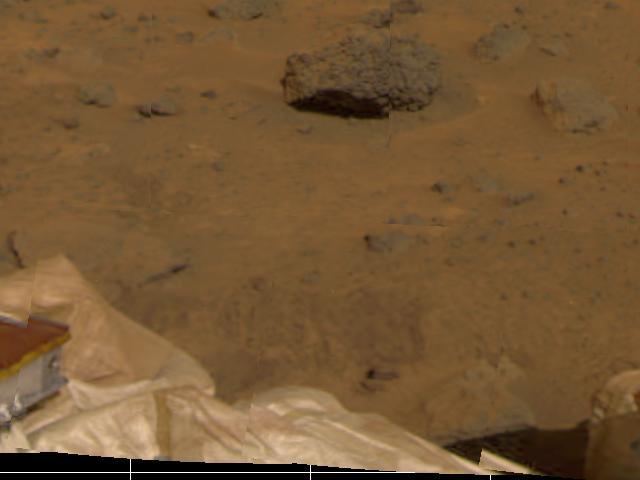
Several objects have been imaged by the Imager for Mars Pathfinder (IMP) during the spacecraft's first day on Mars. Portions of the deflated airbags, part of one the lander's petals, soil, and several rocks are visible. The furrows in the soil were artificially produced by the retraction of the airbags after landing, which occurred at 10:07 a.m. PDT. http://photojournal.jpl.nasa.gov/catalog/PIA00616
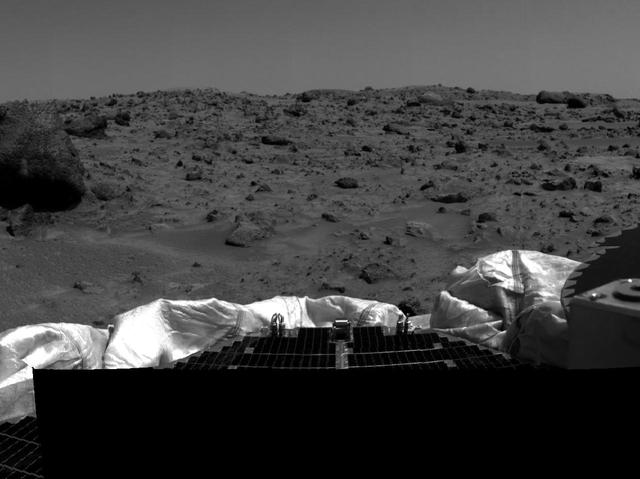
The left portion of this image, taken by the Imager for Mars Pathfinder (IMP) on July 5, 1997 (Sol 2), shows a portion of the large rock nicknamed "Yogi." Portions of a petal and deflated airbag are in the foreground. The dark circular object at right is a portion of the lander's high-gain antenna. http://photojournal.jpl.nasa.gov/catalog/PIA00630
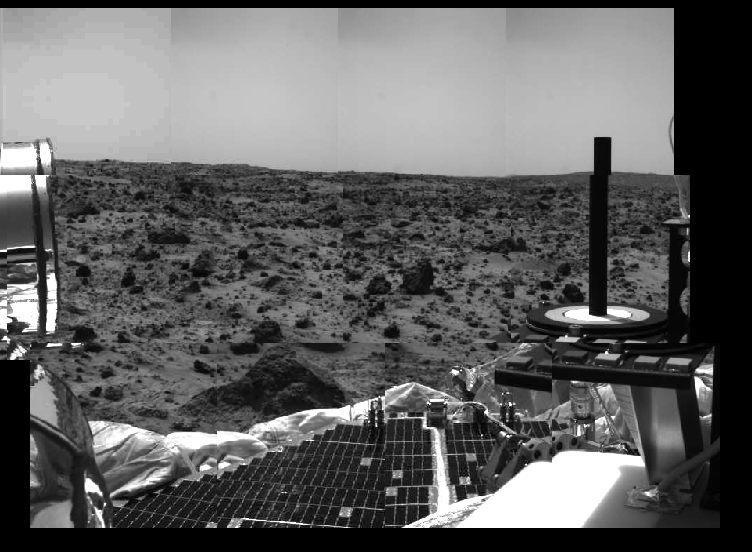
Several prominent features of Mars Pathfinder and surrounding terrain are seen in this image, taken by the Imager for Mars Pathfinder on July 4 (Sol 1), the spacecraft's first day on the Red Planet. Portions of a lander petal are at the lower part of the image. At the left, the mechanism for the high-gain antenna can be seen. The dark area along the right side of the image represents a portion of the low-gain antenna. The radiation calibration target is at the right. The calibration target is made up of a number of materials with well-characterized colors. The known colors of the calibration targets allow scientists to determine the true colors of the rocks and soils of Mars. Three bull's-eye rings provide a wide range of brightness for the camera, similar to a photographer's grayscale chart. In the middle of the bull's-eye is a 5-inch tall post that casts a shadow, which is distorted in this image due to its location with respect to the lander camera. A large rock is located at the near center of the image. Smaller rocks and areas of soil are strewn across the Martian terrain up to the horizon line. http://photojournal.jpl.nasa.gov/catalog/PIA00620
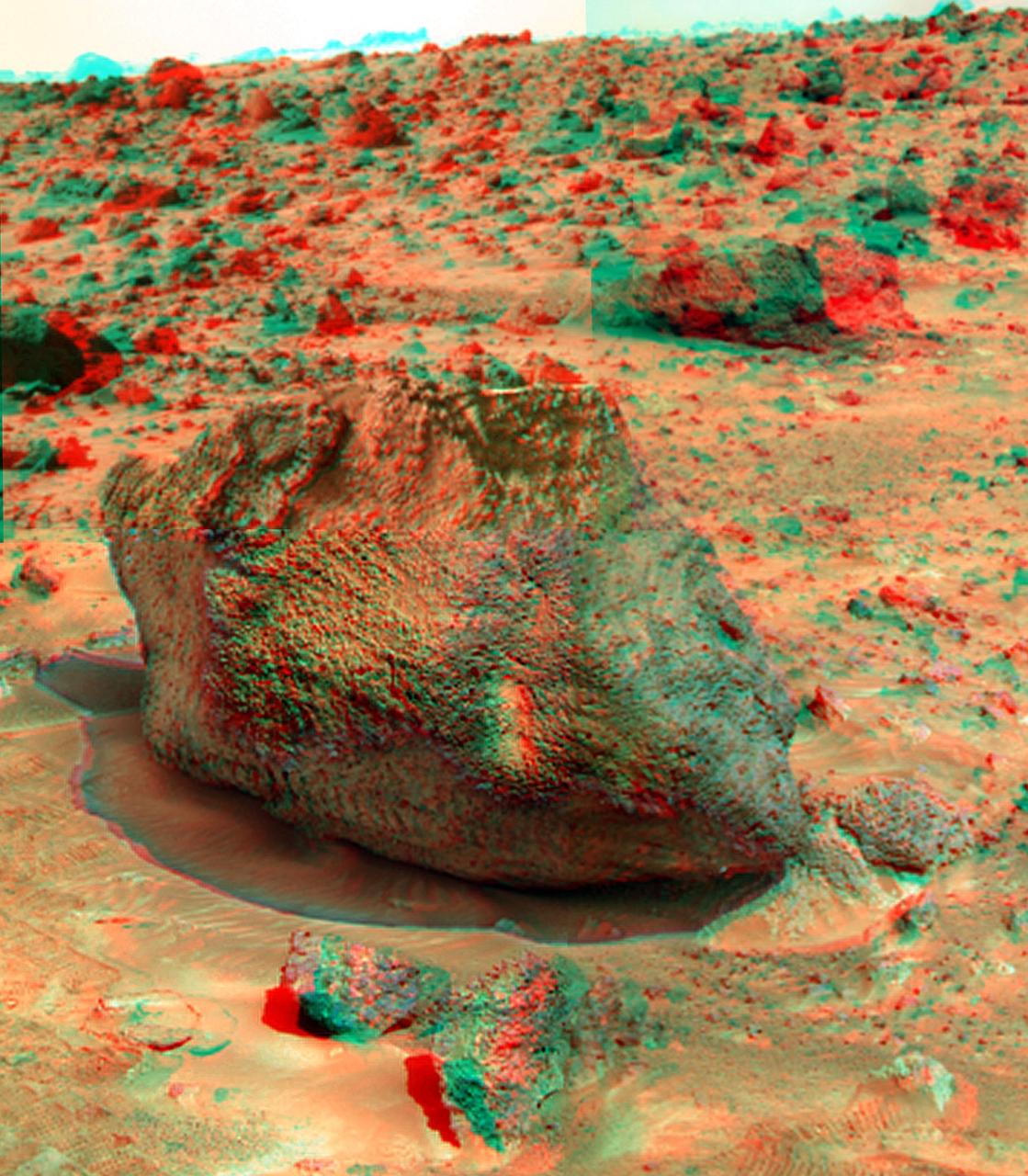
Yogi is a meter-size rock about 5 meters northwest of NASA Mars Pathfinder lander and was the second rock visited by the Sojourner Rover alpha proton X-ray spectrometer APXS instrument. 3D glasses are necessary to identify surface detail.
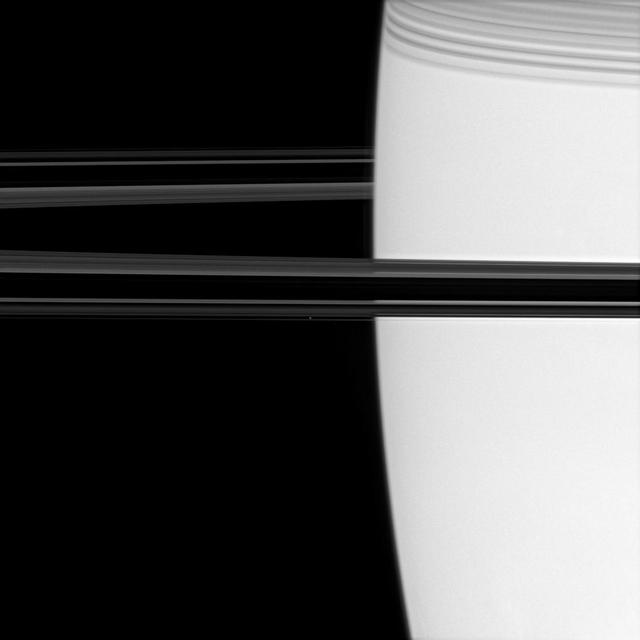
Off the shoulder of giant Saturn, a bright pinpoint marks the location of the ring moon Atlas image center. Shadows cast by the C ring adorn the planet at upper right
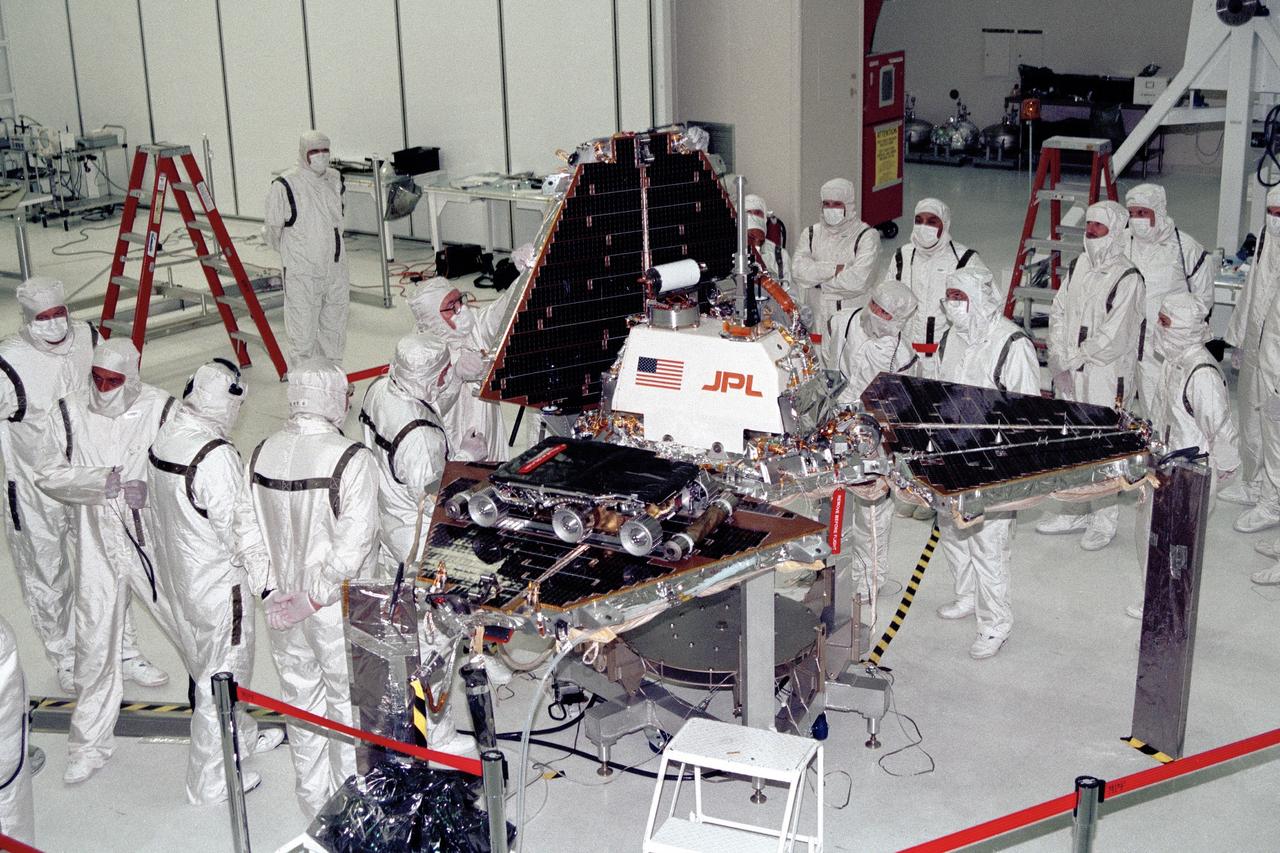
CAPE CANAVERAL, Fla. -- In the Spacecraft Assembly and Encapsulation Facility-2 at NASA's Kennedy Space Center in Florida, Jet Propulsion Laboratory technicians are closing up the metal "petals" of the Mars Pathfinder lander. The Sojourner rover is visible on one of the three petals. Photo Credit: NASA