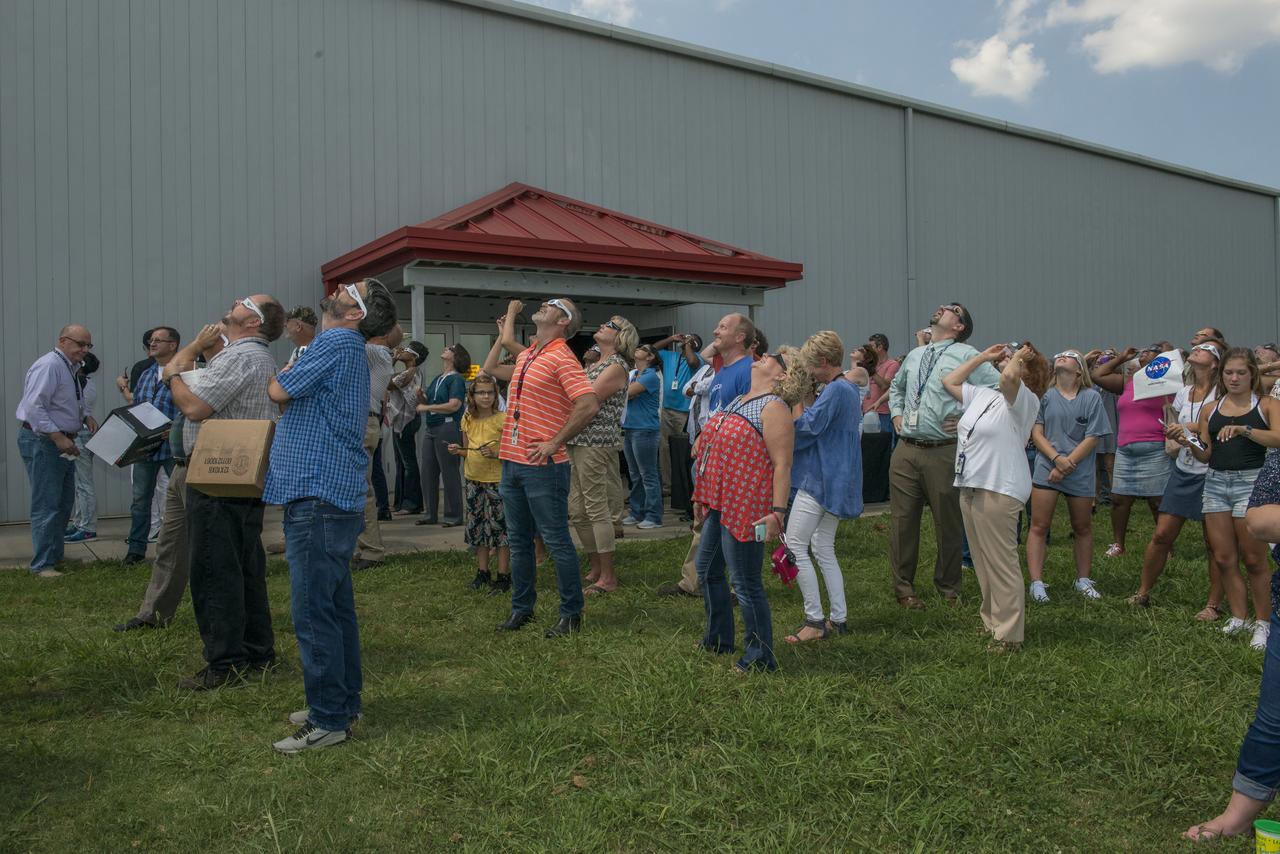
Marshall Space Flight Center employees view the August 21, 2017 solar eclipse at the center’s activities building. The Huntsville area experienced 97 percent occultation, nearly a complete blocking out of the sun by the orbit of Earth's moon. The next opportunity to view a solar eclipse in the eastern and central United States will occur in April 2024.
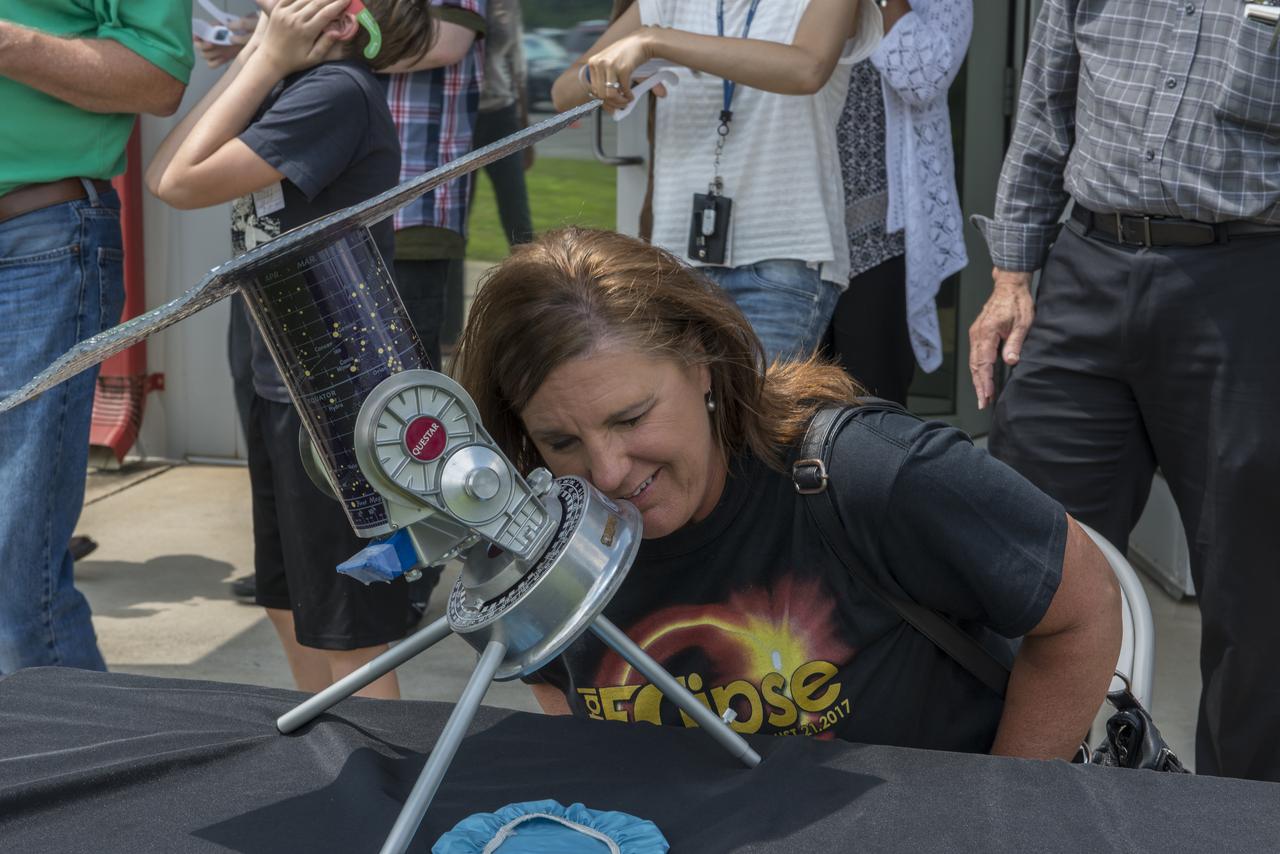
Judy Darwin of the Marshall Space Flight Center’s Office of the Chief Information Officer (CIO) views the August 21, 2017 solar eclipse through the telescope set up for Marshall employees. The Huntsville area experienced 97 percent occultation, nearly a complete blocking out of the sun by the orbit of Earth's moon. The next opportunity to view a solar eclipse in the eastern and central United States will occur in April 2024.
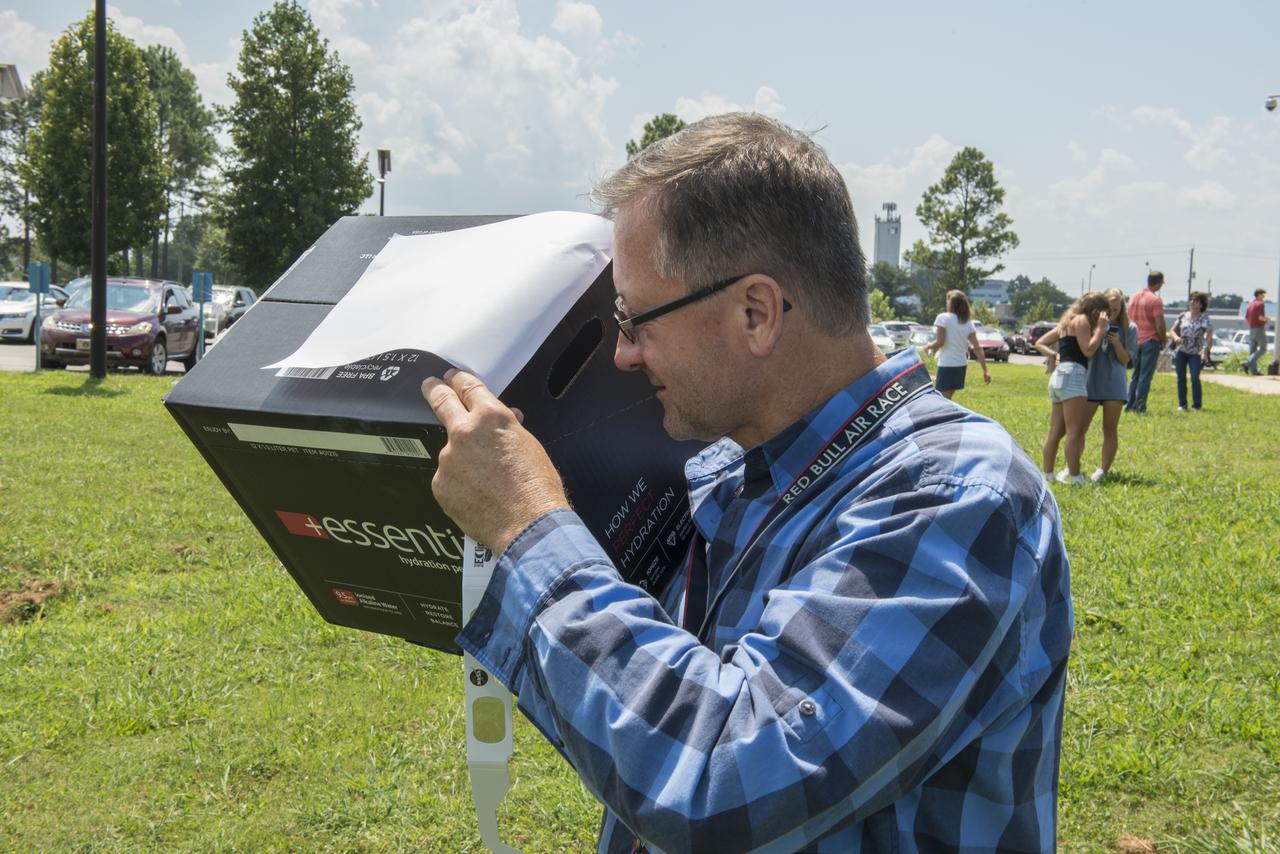
Marshall Space Flight Center employee, Phillip Domen, safely views the August 21, 2017 solar eclipse with his homemade viewing box. The Huntsville area experienced 97 percent occultation, nearly a complete blocking out of the sun by the orbit of Earth's moon. The next opportunity to view a solar eclipse in the eastern and central United States will occur in April 2024.

Robert Wilson of the Solar/Solar terrestrial Studies team at the National Space Science and Technology Center, a joint research and collaborative think tank partnership of the University of Alabama in Huntsville (UAH) and the Marshall Space Flight Center, adjusts his telescope which is set up as a viewing opportunity for MSFC employees prior to the August 21, 2017 solar eclipse event. The Huntsville area experienced 97 percent occultation, nearly a complete blocking out of the sun by the orbit of Earth's moon. The next opportunity to view a solar eclipse in the eastern and central United States will occur in April 2024.
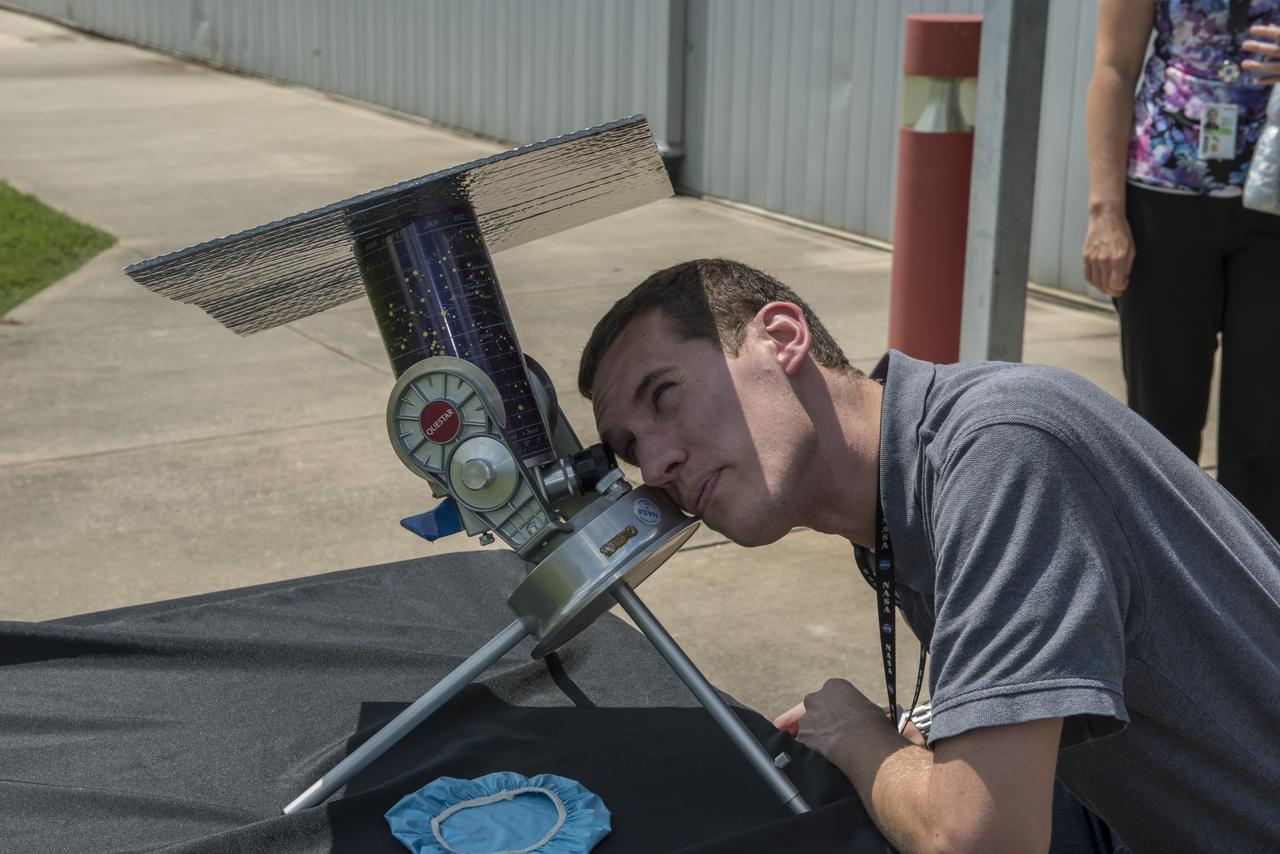
Brad Addona views the beginning of the August 21, 2017 at a viewing event for Marshall Space Flight Center’s activities building for Marshall employees. The Huntsville area experienced 97 percent occultation, nearly a complete blocking out of the sun by the orbit of Earth's moon. The next opportunity to view a solar eclipse in the eastern and central United States will occur in April 2024.

At a Sept. 26 all-hands meeting, NASA Marshall Space Flight Center Director Todd May highlights some of the key moments from Vice President Mike Pence's visit to Marshall Sept. 25. "I'd like to thank all the people that prepared for the vice president's visit. I think it was a great day for the center," said May. "We were able to talk to him about NASA's Space Launch System as well as some other projects. As the chairman of the U.S. Space Council, he is going to be very influential in space policy and I think this was a great opportunity for us." May also commented on the nomination of U.S. Rep. Jim Bridenstine, President Donald Trump's selection for NASA Administrator, and spoke about continuing to advance Marshall's Plan to Thrive – a strategic management agenda that focuses on human capital, organizational efficiency and bi-modal operations. Marshall Deputy Director Jody Singer updated the workforce on the results of the recent employee viewpoint survey. Singer also provided an overview of NASA's outreach during the Aug. 21 total solar eclipse, mentoring opportunities and the activities associated with the ongoing Safety Week 2017.