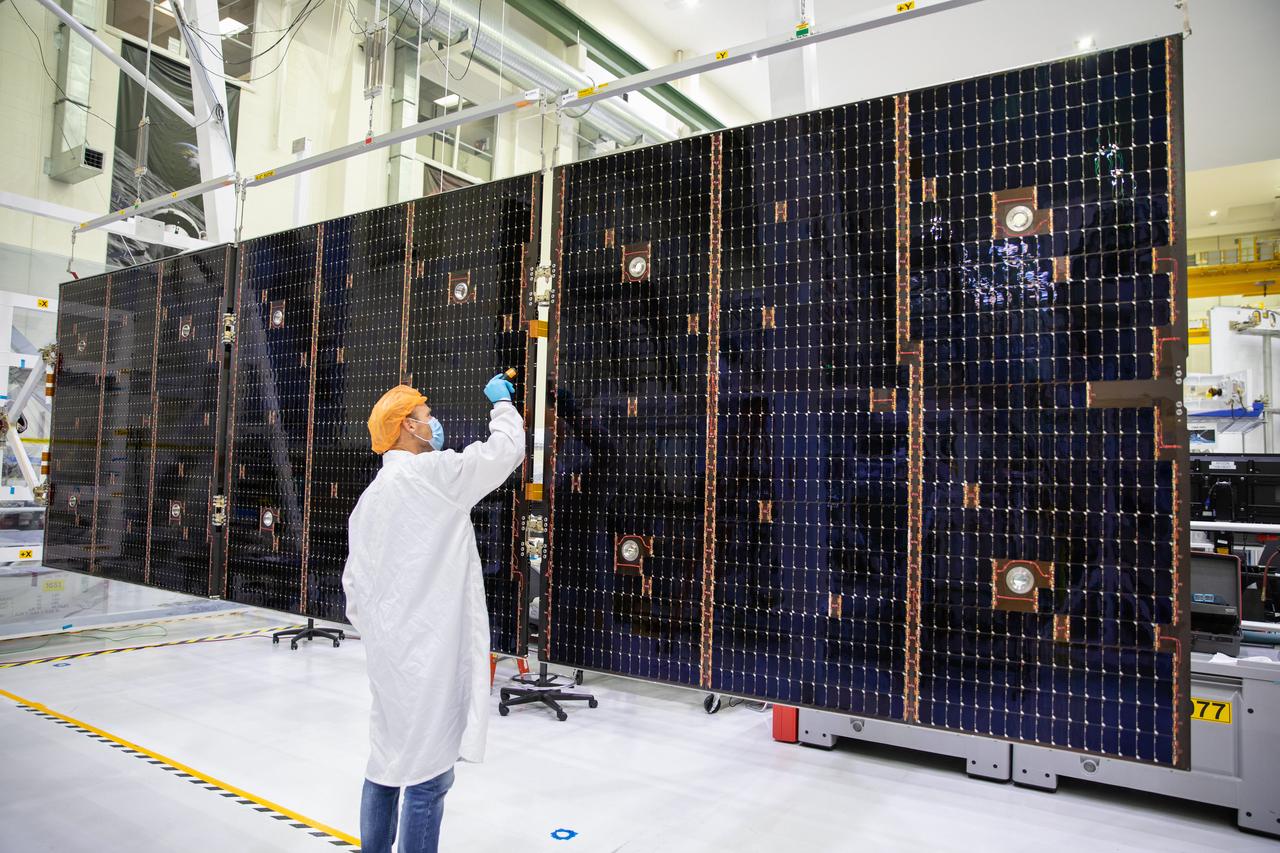
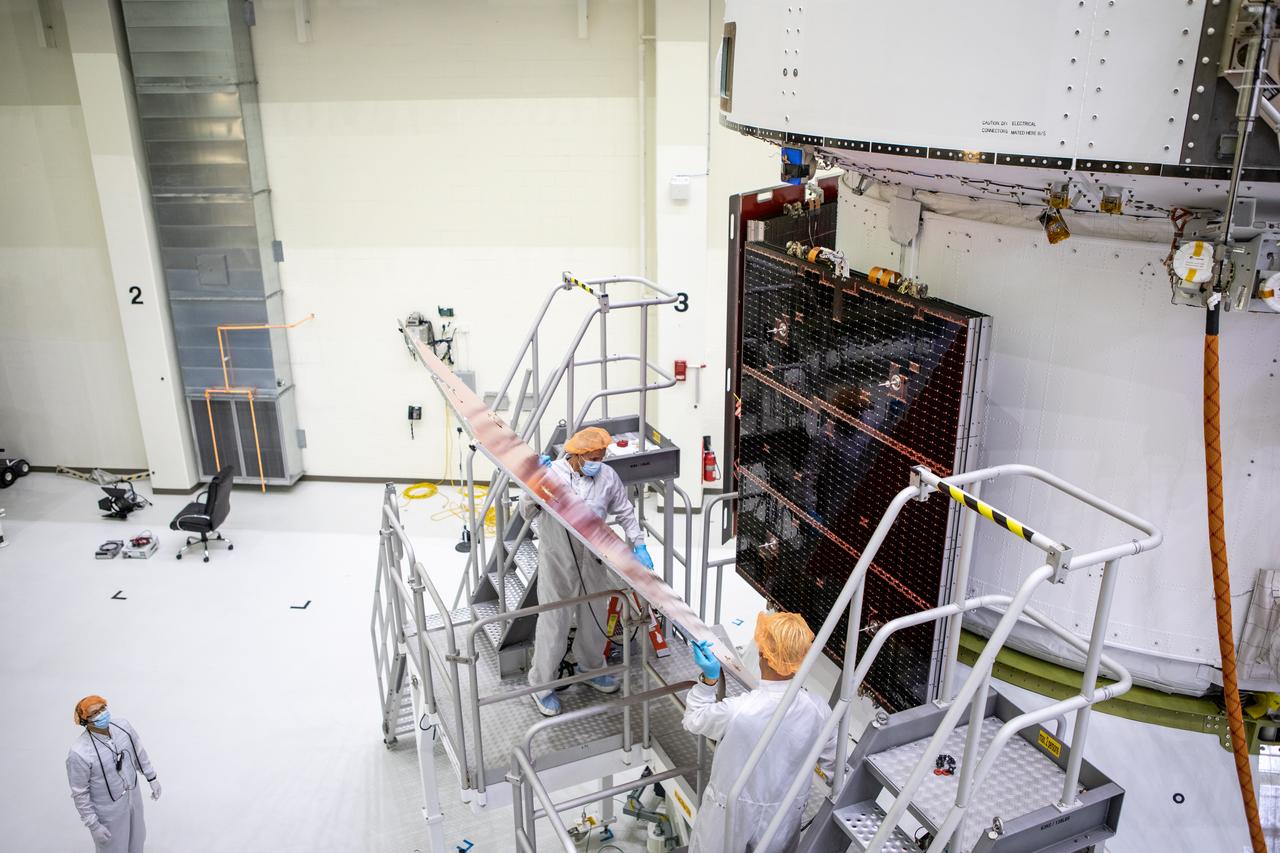
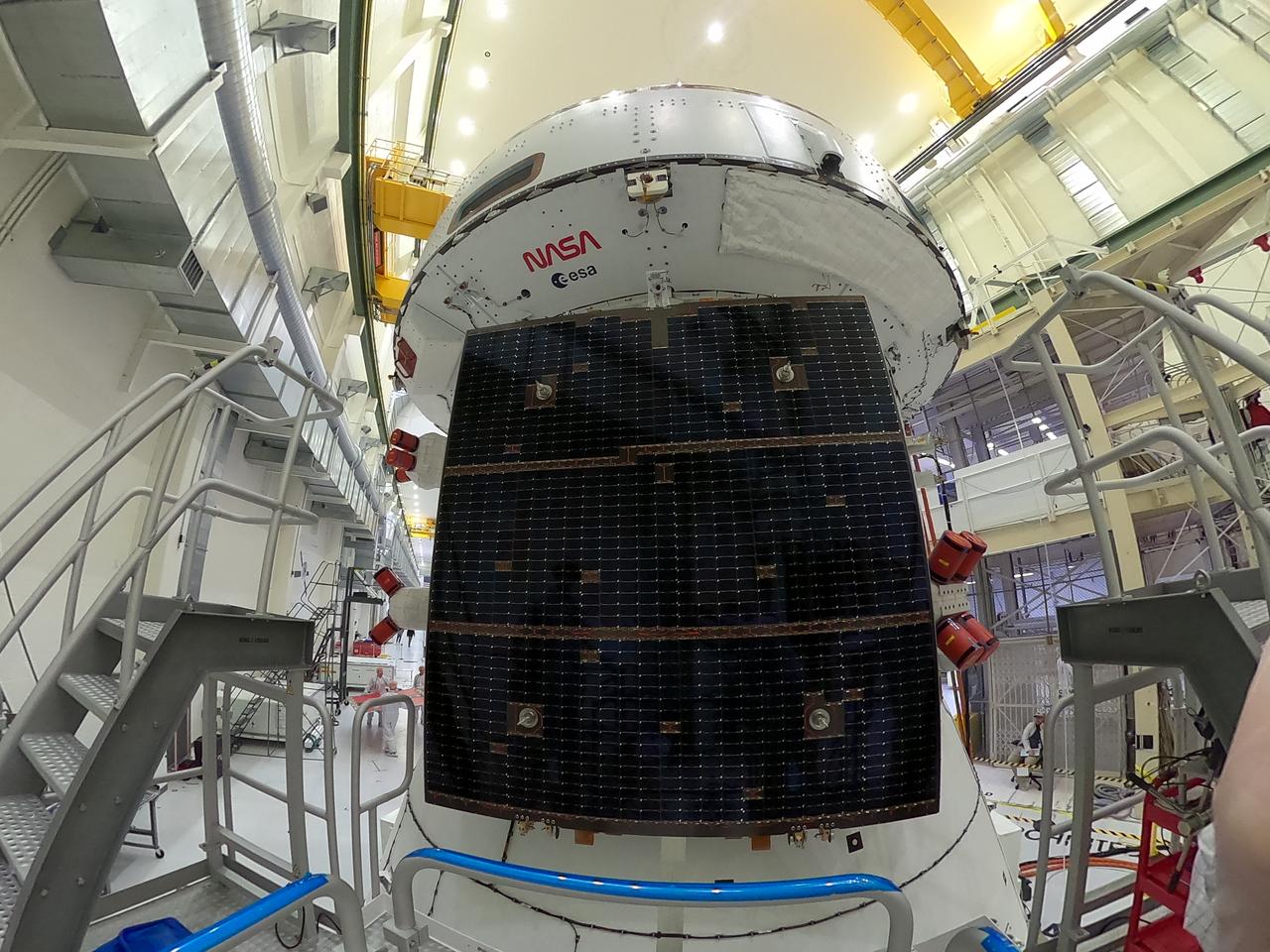
Inside the Neil Armstrong Operations and Checkout Building high bay at NASA’s Kennedy Space Center in Florida, in preparation for installation on the Artemis I spacecraft, technicians have extended one of the Artemis I solar array wings for inspection on Sept. 10, 2020, to confirm that it unfurled properly and all of the mechanisms functioned as expected. The solar array is one of four panels that will generate 11 kilowatts of power and span about 63 feet. The array is a component of Orion’s service module, which is provided by the European Space Agency and built by Airbus Defence and Space to supply Orion’s power, propulsion, air and water. The first in a series of increasingly complex missions, Artemis I will test the Orion spacecraft and Space Launch System as an integrated system ahead of crewed flights to the Moon. Under the Artemis program, NASA will land the first woman and the next man on the Moon in 2024.
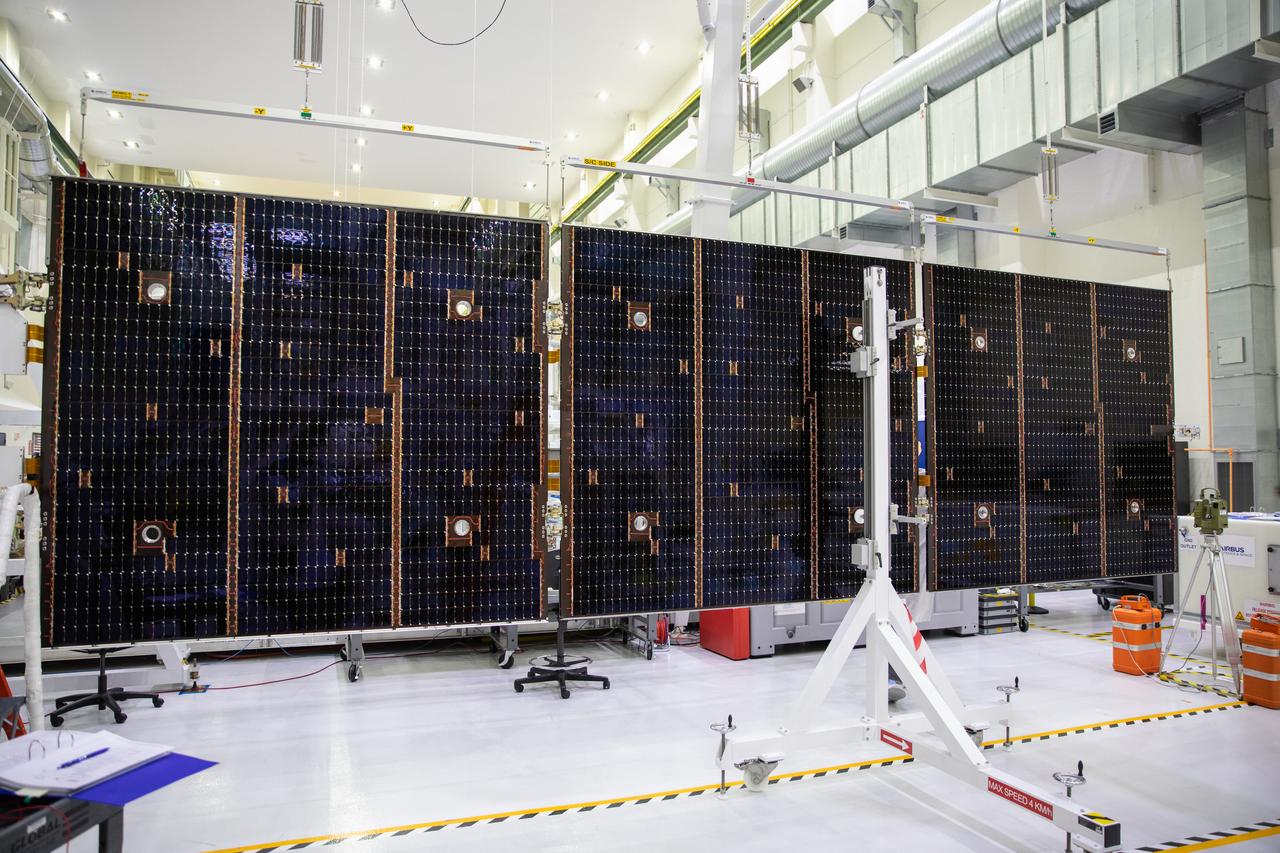
Inside the Neil Armstrong Operations and Checkout Building high bay at NASA’s Kennedy Space Center in Florida, in preparation for installation on the Artemis I spacecraft, technicians have extended one of the Artemis I solar array wings for inspection on Sept. 10, 2020, to confirm that it unfurled properly and all of the mechanisms functioned as expected. The solar array is one of four panels that will generate 11 kilowatts of power and span about 63 feet. The array is a component of Orion’s service module, which is provided by the European Space Agency and built by Airbus Defence and Space to supply Orion’s power, propulsion, air and water. The first in a series of increasingly complex missions, Artemis I will test the Orion spacecraft and Space Launch System as an integrated system ahead of crewed flights to the Moon. Under the Artemis program, NASA will land the first woman and the next man on the Moon in 2024.
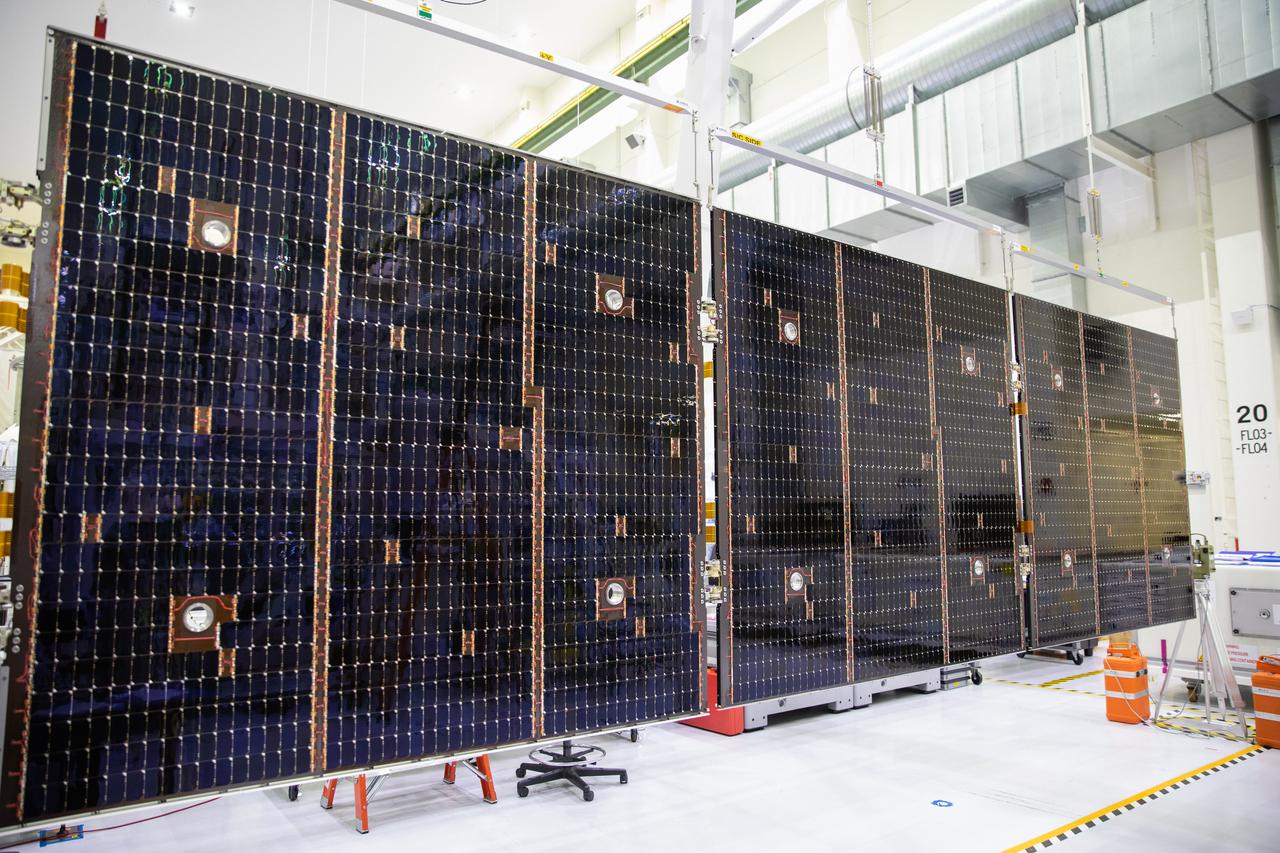
Inside the Neil Armstrong Operations and Checkout Building high bay at NASA’s Kennedy Space Center in Florida, in preparation for installation on the Artemis I spacecraft, technicians have extended one of the Artemis I solar array wings for inspection on Sept. 10, 2020, to confirm that it unfurled properly and all of the mechanisms functioned as expected. The solar array is one of four panels that will generate 11 kilowatts of power and span about 63 feet. The array is a component of Orion’s service module, which is provided by the European Space Agency and built by Airbus Defence and Space to supply Orion’s power, propulsion, air and water. The first in a series of increasingly complex missions, Artemis I will test the Orion spacecraft and Space Launch System as an integrated system ahead of crewed flights to the Moon. Under the Artemis program, NASA will land the first woman and the next man on the Moon in 2024.
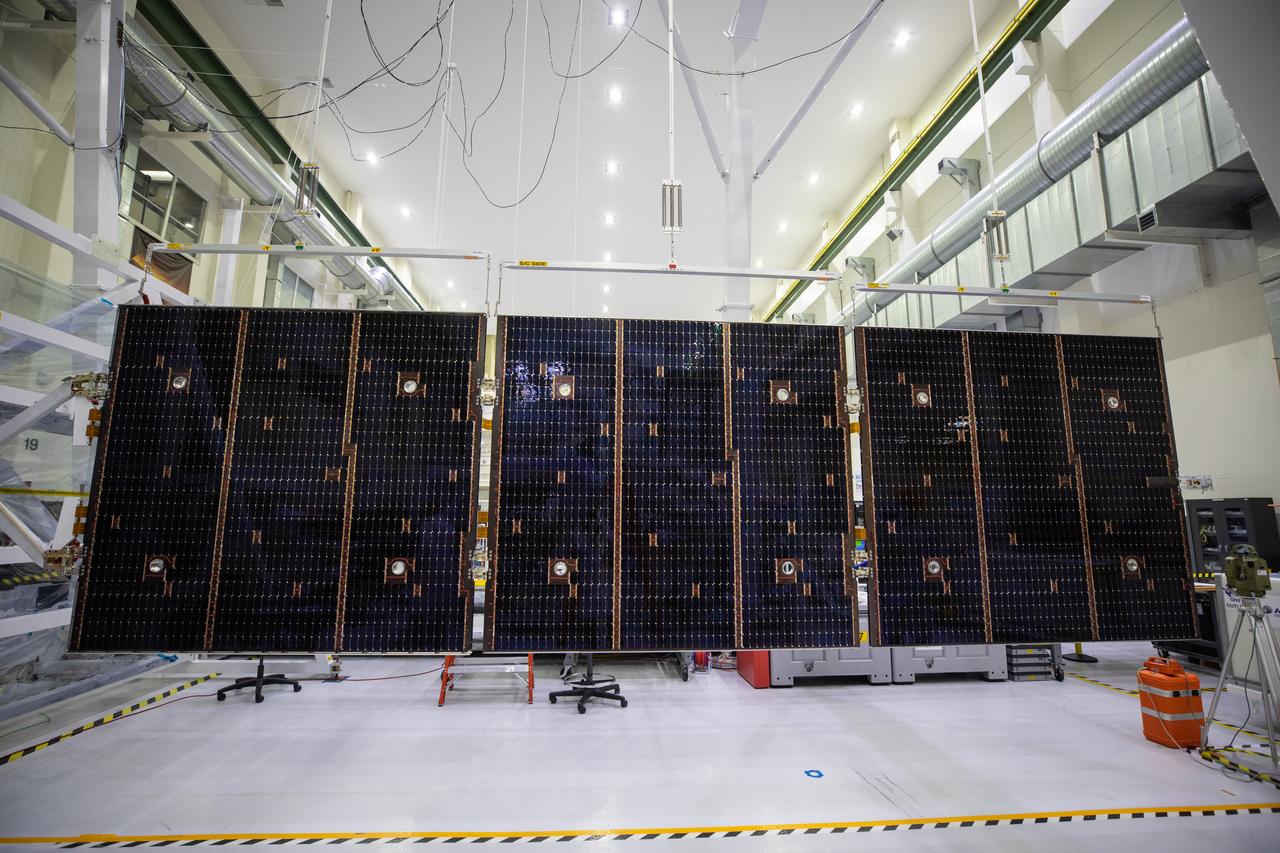
Inside the Neil Armstrong Operations and Checkout Building high bay at NASA’s Kennedy Space Center in Florida, in preparation for installation on the Artemis I spacecraft, technicians have extended one of the Artemis I solar array wings for inspection on Sept. 10, 2020, to confirm that it unfurled properly and all of the mechanisms functioned as expected. The solar array is one of four panels that will generate 11 kilowatts of power and span about 63 feet. The array is a component of Orion’s service module, which is provided by the European Space Agency and built by Airbus Defence and Space to supply Orion’s power, propulsion, air and water. The first in a series of increasingly complex missions, Artemis I will test the Orion spacecraft and Space Launch System as an integrated system ahead of crewed flights to the Moon. Under the Artemis program, NASA will land the first woman and the next man on the Moon in 2024.
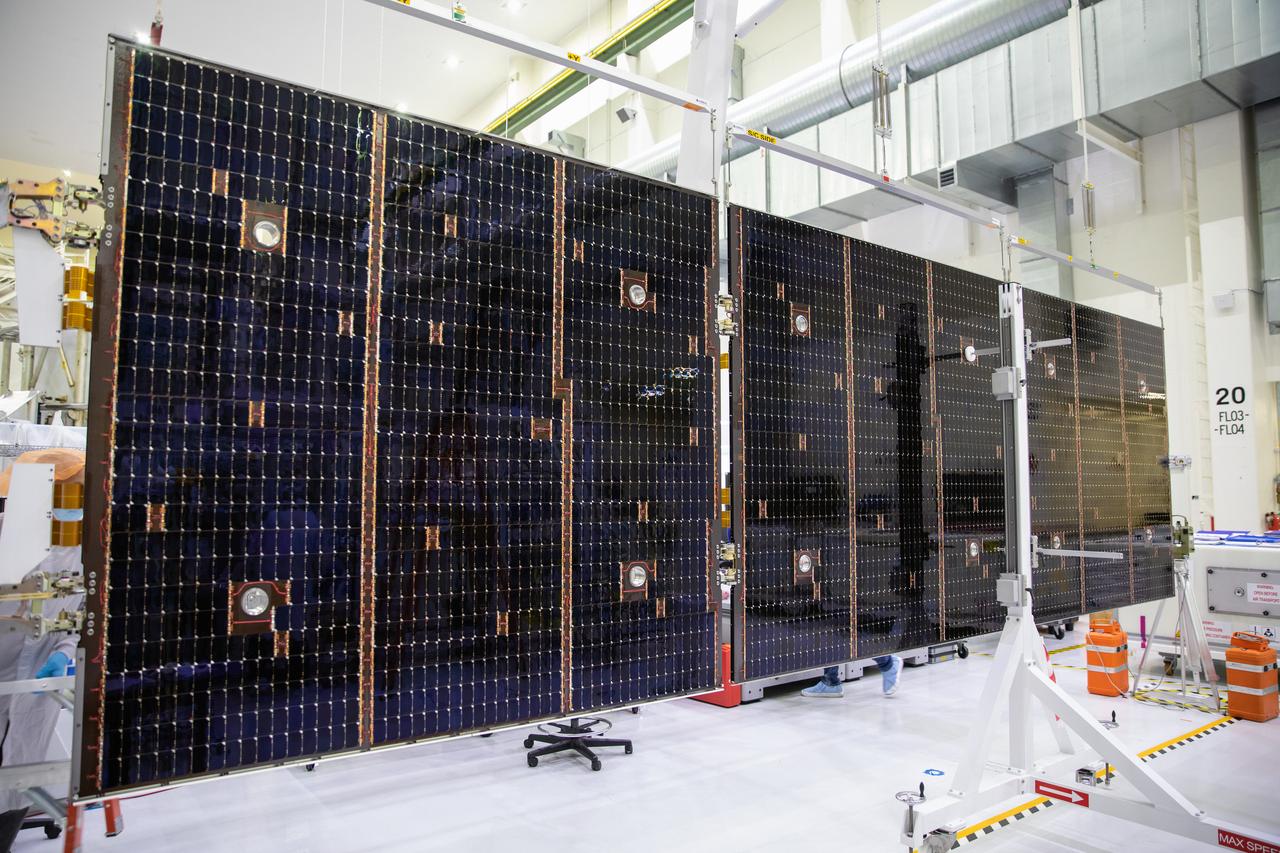
Inside the Neil Armstrong Operations and Checkout Building high bay at NASA’s Kennedy Space Center in Florida, in preparation for installation on the Artemis I spacecraft, technicians have extended one of the Artemis I solar array wings for inspection on Sept. 10, 2020, to confirm that it unfurled properly and all of the mechanisms functioned as expected. The solar array is one of four panels that will generate 11 kilowatts of power and span about 63 feet. The array is a component of Orion’s service module, which is provided by the European Space Agency and built by Airbus Defence and Space to supply Orion’s power, propulsion, air and water. The first in a series of increasingly complex missions, Artemis I will test the Orion spacecraft and Space Launch System as an integrated system ahead of crewed flights to the Moon. Under the Artemis program, NASA will land the first woman and the next man on the Moon in 2024.
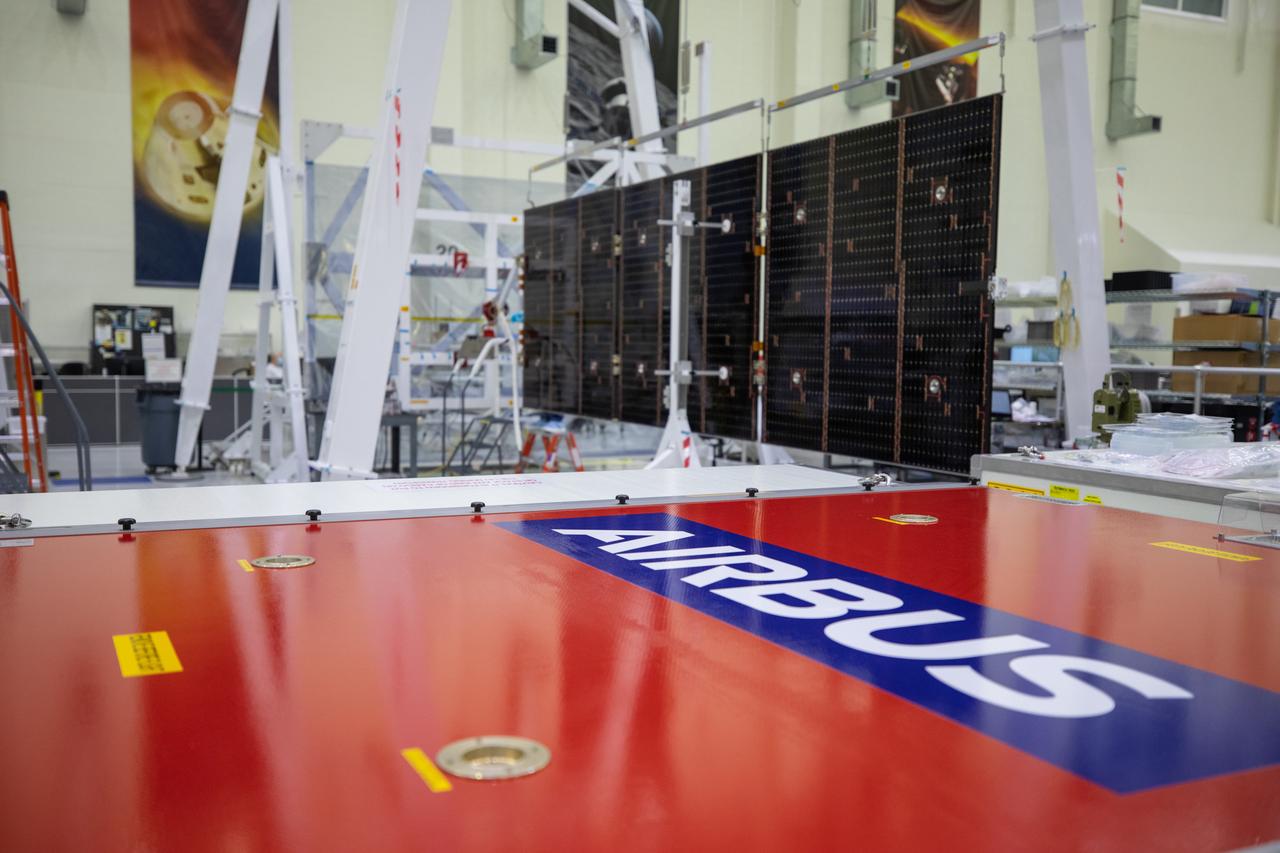
Inside the Neil Armstrong Operations and Checkout Building high bay at NASA’s Kennedy Space Center in Florida, in preparation for installation on the Artemis I spacecraft, technicians have extended one of the Artemis I solar array wings for inspection on Sept. 10, 2020, to confirm that it unfurled properly and all of the mechanisms functioned as expected. The solar array is one of four panels that will generate 11 kilowatts of power and span about 63 feet. The array is a component of Orion’s service module, which is provided by the European Space Agency and built by Airbus Defence and Space to supply Orion’s power, propulsion, air and water. The first in a series of increasingly complex missions, Artemis I will test the Orion spacecraft and Space Launch System as an integrated system ahead of crewed flights to the Moon. Under the Artemis program, NASA will land the first woman and the next man on the Moon in 2024.

Inside the Neil Armstrong Operations and Checkout Building high bay at NASA’s Kennedy Space Center in Florida, in preparation for installation on the Artemis I spacecraft, technicians have extended one of the Artemis I solar array wings for inspection on Sept. 10, 2020, to confirm that it unfurled properly and all of the mechanisms functioned as expected. The solar array is one of four panels that will generate 11 kilowatts of power and span about 63 feet. The array is a component of Orion’s service module, which is provided by the European Space Agency and built by Airbus Defence and Space to supply Orion’s power, propulsion, air and water. The first in a series of increasingly complex missions, Artemis I will test the Orion spacecraft and Space Launch System as an integrated system ahead of crewed flights to the Moon. Under the Artemis program, NASA will land the first woman and the next man on the Moon in 2024.
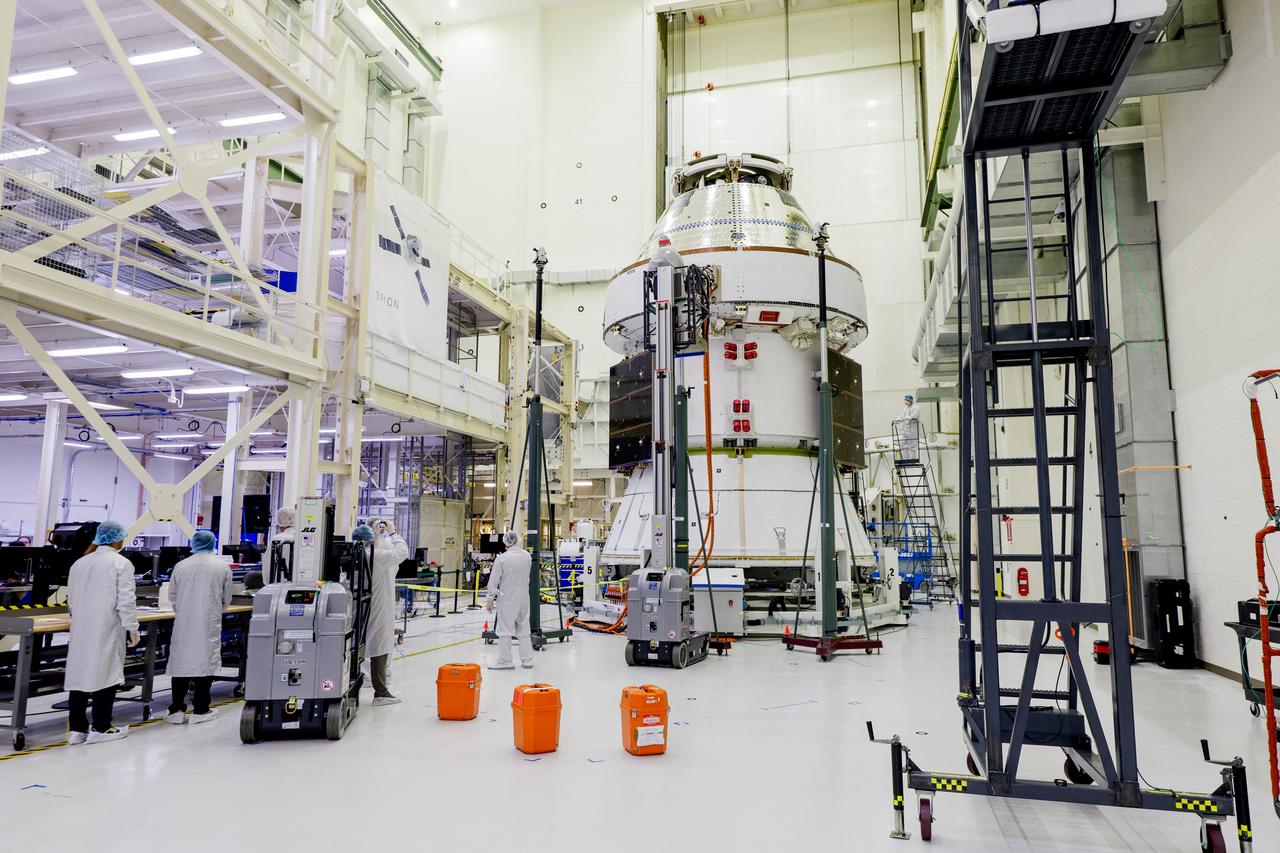
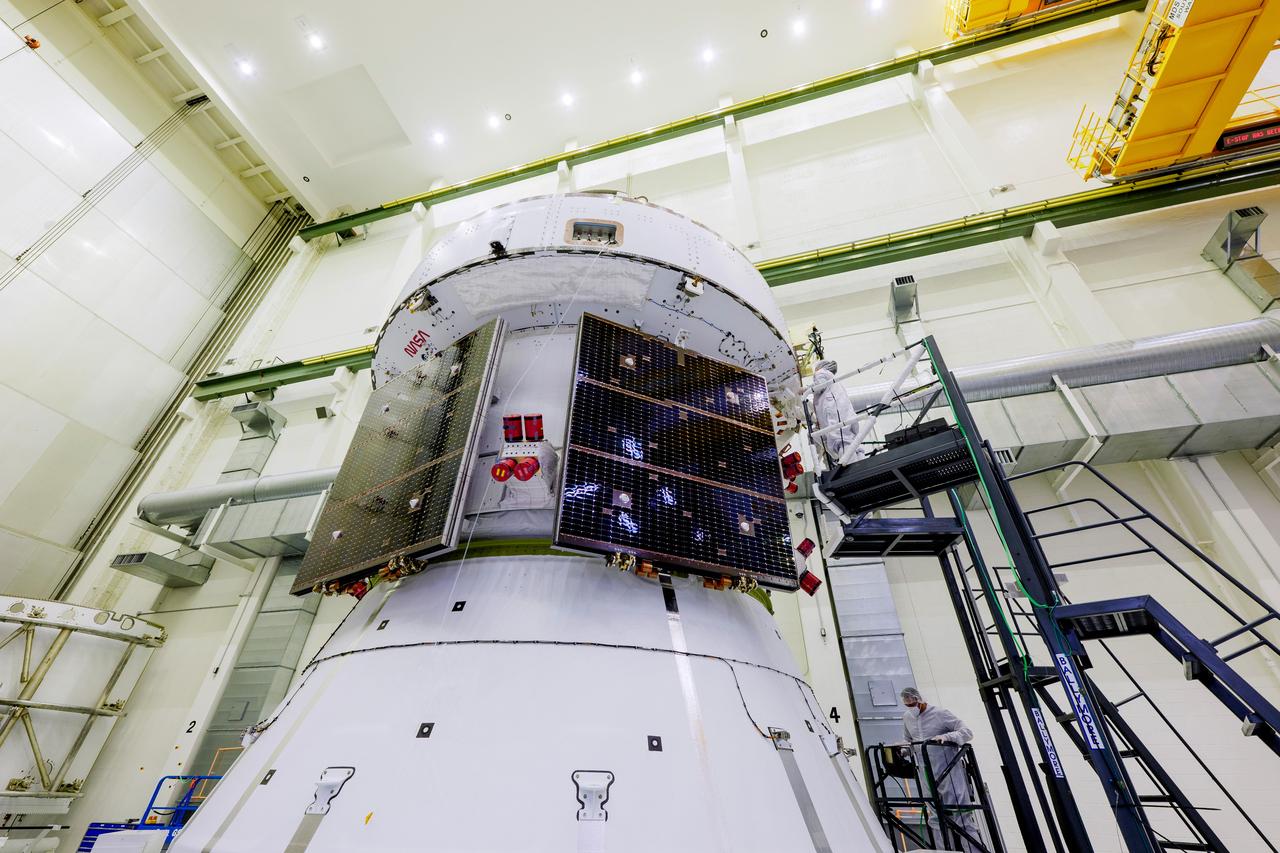
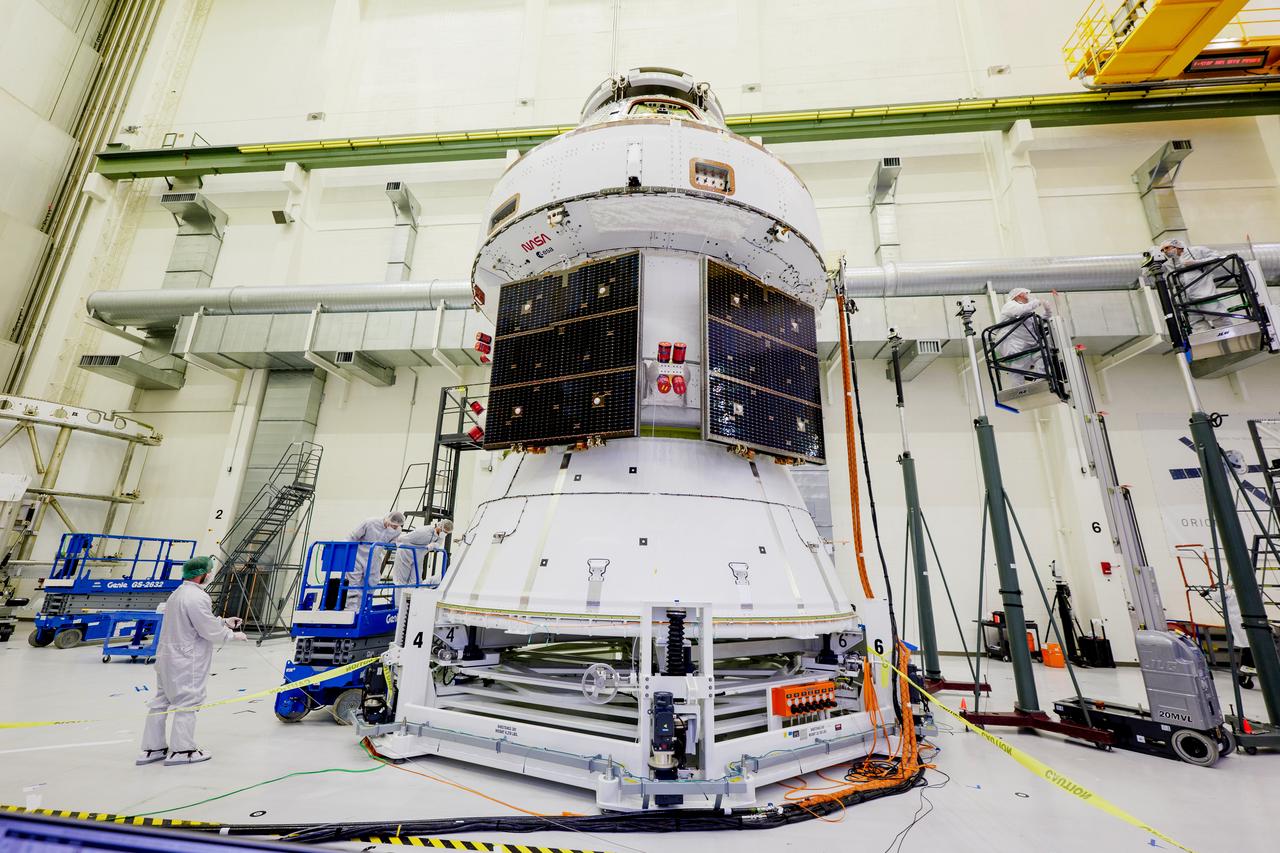
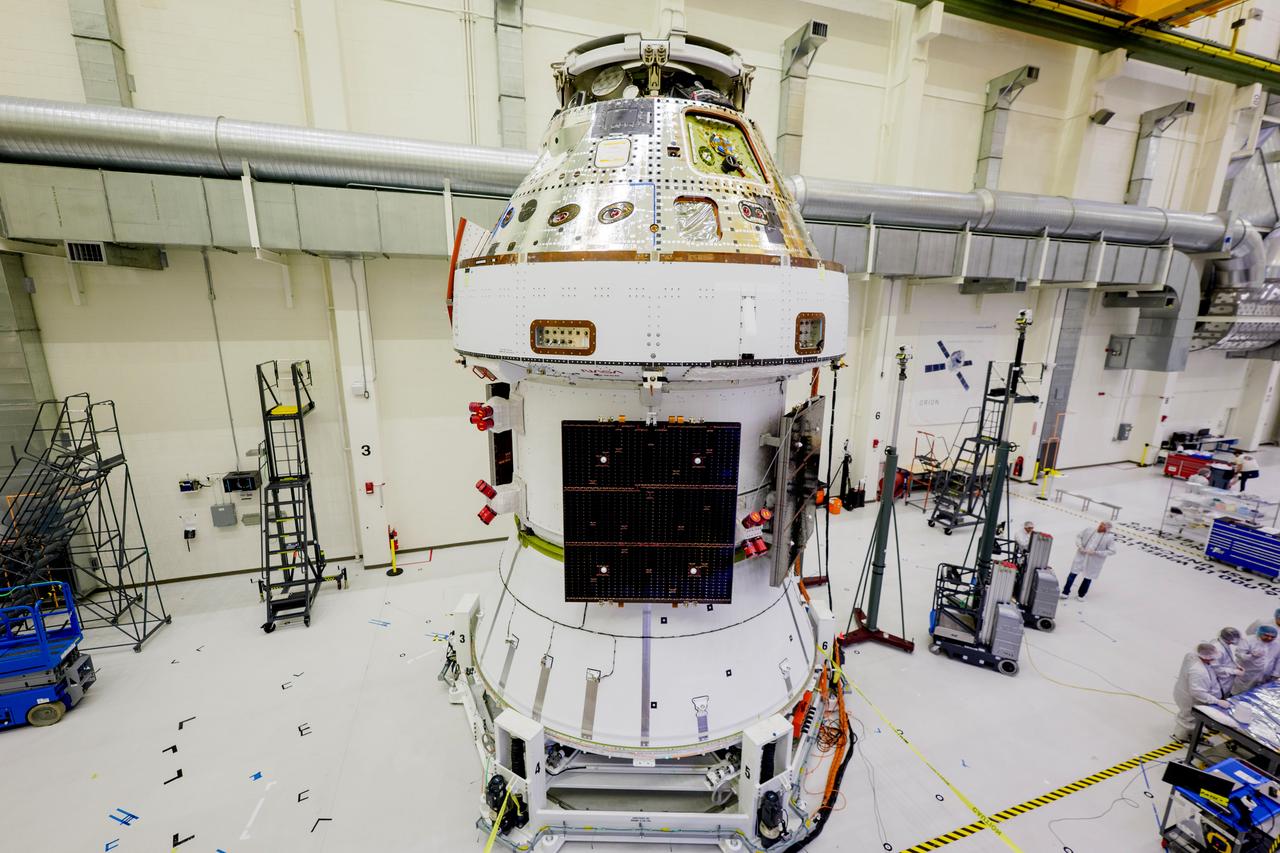
The four solar array wings for the Artemis II Orion spacecraft are installed inside the Operations and Checkout Building at NASA's Kennedy Space Center in Florida on March 7, 2025. Artemis II is Orion’s first crewed flight test around the Moon under the agency’s Artemis campaign.
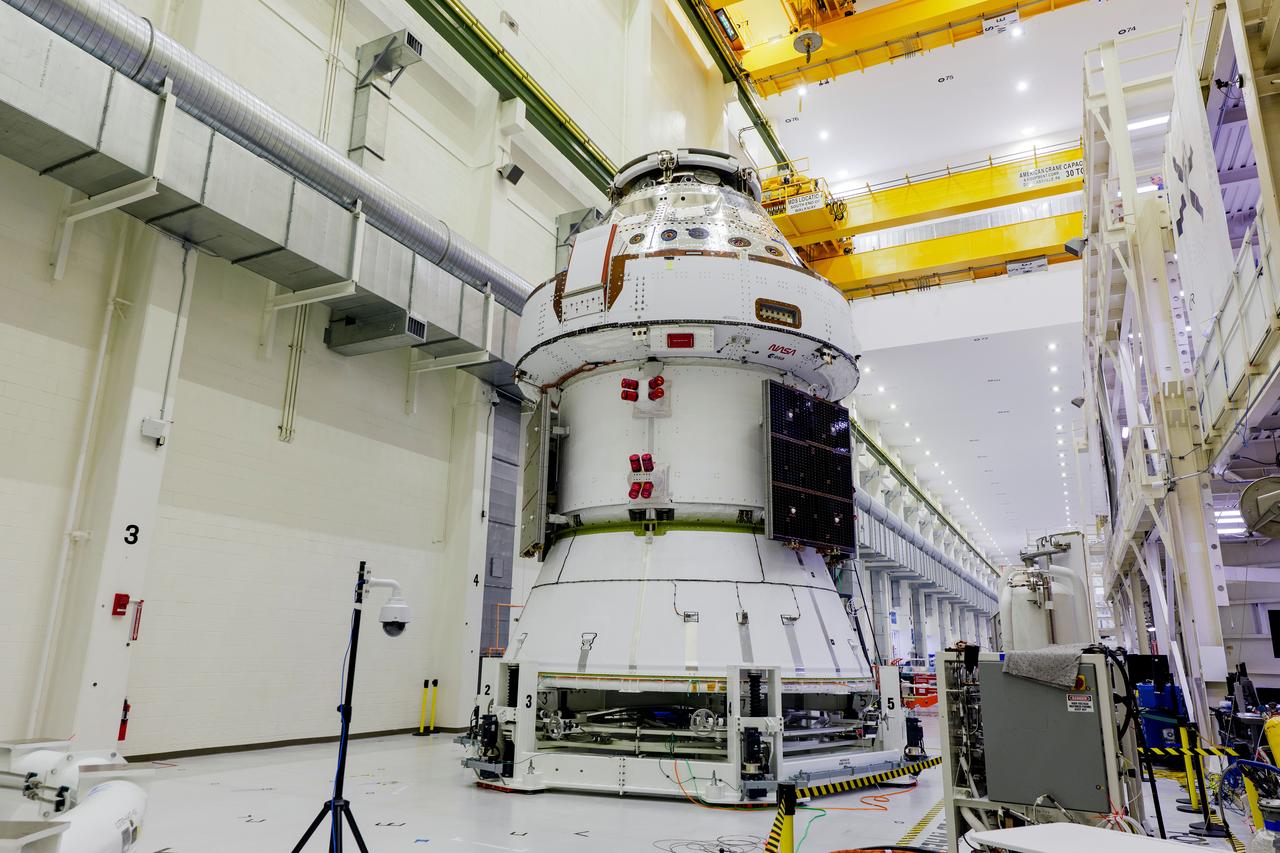
The four solar array wings for the Artemis II Orion spacecraft are installed inside the Operations and Checkout Building at NASA's Kennedy Space Center in Florida on March 7, 2025. Artemis II is Orion’s first crewed flight test around the Moon under the agency’s Artemis campaign.
The four solar array wings for the Artemis II Orion spacecraft are installed inside the Operations and Checkout Building at NASA's Kennedy Space Center in Florida on March 7, 2025. Artemis II is Orion’s first crewed flight test around the Moon under the agency’s Artemis campaign.
The four solar array wings for the Artemis II Orion spacecraft are installed inside the Operations and Checkout Building at NASA's Kennedy Space Center in Florida on March 7, 2025. Artemis II is Orion’s first crewed flight test around the Moon under the agency’s Artemis campaign.
The four solar array wings for the Artemis II Orion spacecraft are installed inside the Operations and Checkout Building at NASA's Kennedy Space Center in Florida on March 7, 2025. Artemis II is Orion’s first crewed flight test around the Moon under the agency’s Artemis campaign.

The four solar array wings for the Artemis II Orion spacecraft are installed inside the Operations and Checkout Building at NASA's Kennedy Space Center in Florida on March 7, 2025. Artemis II is Orion’s first crewed flight test around the Moon under the agency’s Artemis campaign.

The four solar array wings for the Artemis II Orion spacecraft are installed inside the Operations and Checkout Building at NASA's Kennedy Space Center in Florida on March 7, 2025. Artemis II is Orion’s first crewed flight test around the Moon under the agency’s Artemis campaign.
The four solar array wings for the Artemis II Orion spacecraft are installed inside the Operations and Checkout Building at NASA's Kennedy Space Center in Florida on March 7, 2025. Artemis II is Orion’s first crewed flight test around the Moon under the agency’s Artemis campaign.
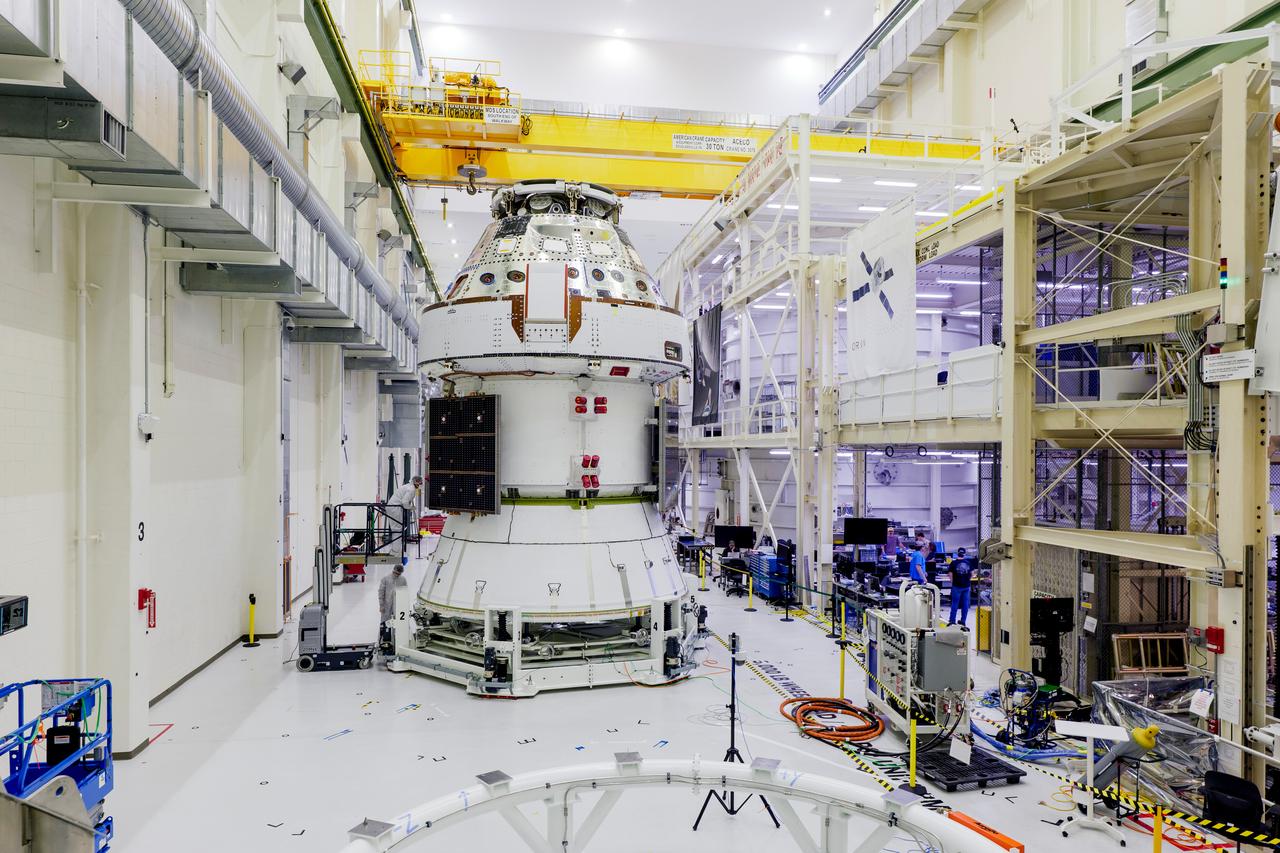
The four solar array wings for the Artemis II Orion spacecraft are installed inside the Operations and Checkout Building at NASA's Kennedy Space Center in Florida on March 7, 2025. Artemis II is Orion’s first crewed flight test around the Moon under the agency’s Artemis campaign.
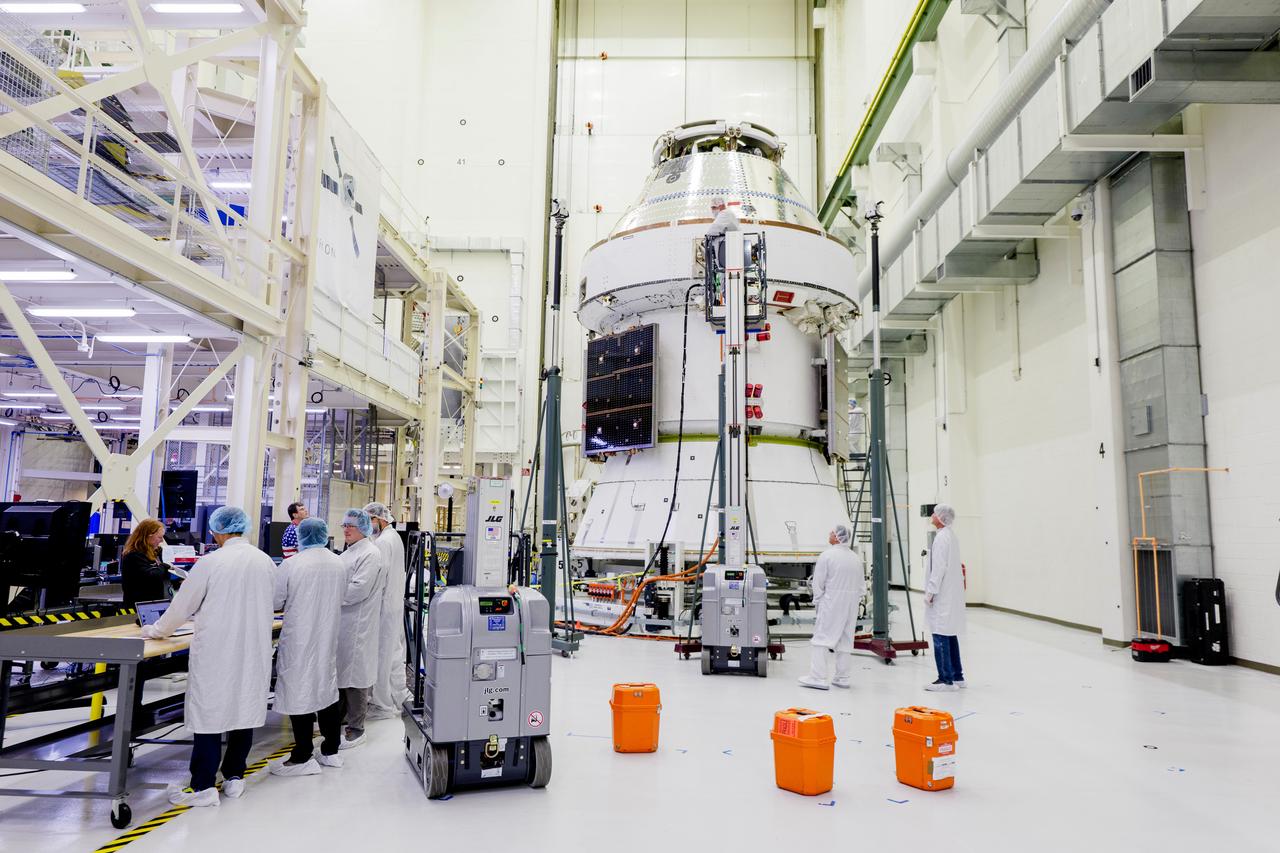
The four solar array wings for the Artemis II Orion spacecraft are installed inside the Operations and Checkout Building at NASA's Kennedy Space Center in Florida on March 7, 2025. Artemis II is Orion’s first crewed flight test around the Moon under the agency’s Artemis campaign.
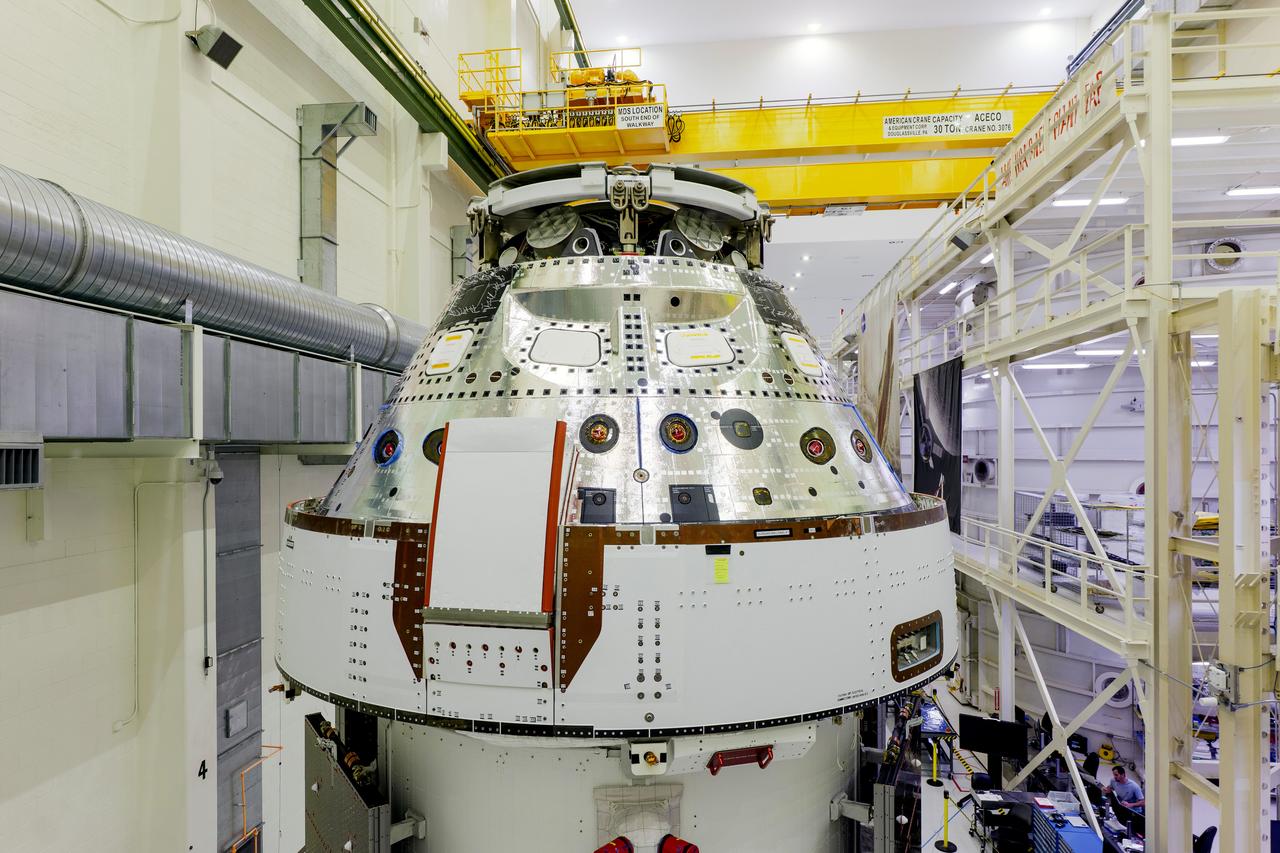
The four solar array wings for the Artemis II Orion spacecraft are installed inside the Operations and Checkout Building at NASA's Kennedy Space Center in Florida on March 7, 2025. Artemis II is Orion’s first crewed flight test around the Moon under the agency’s Artemis campaign.
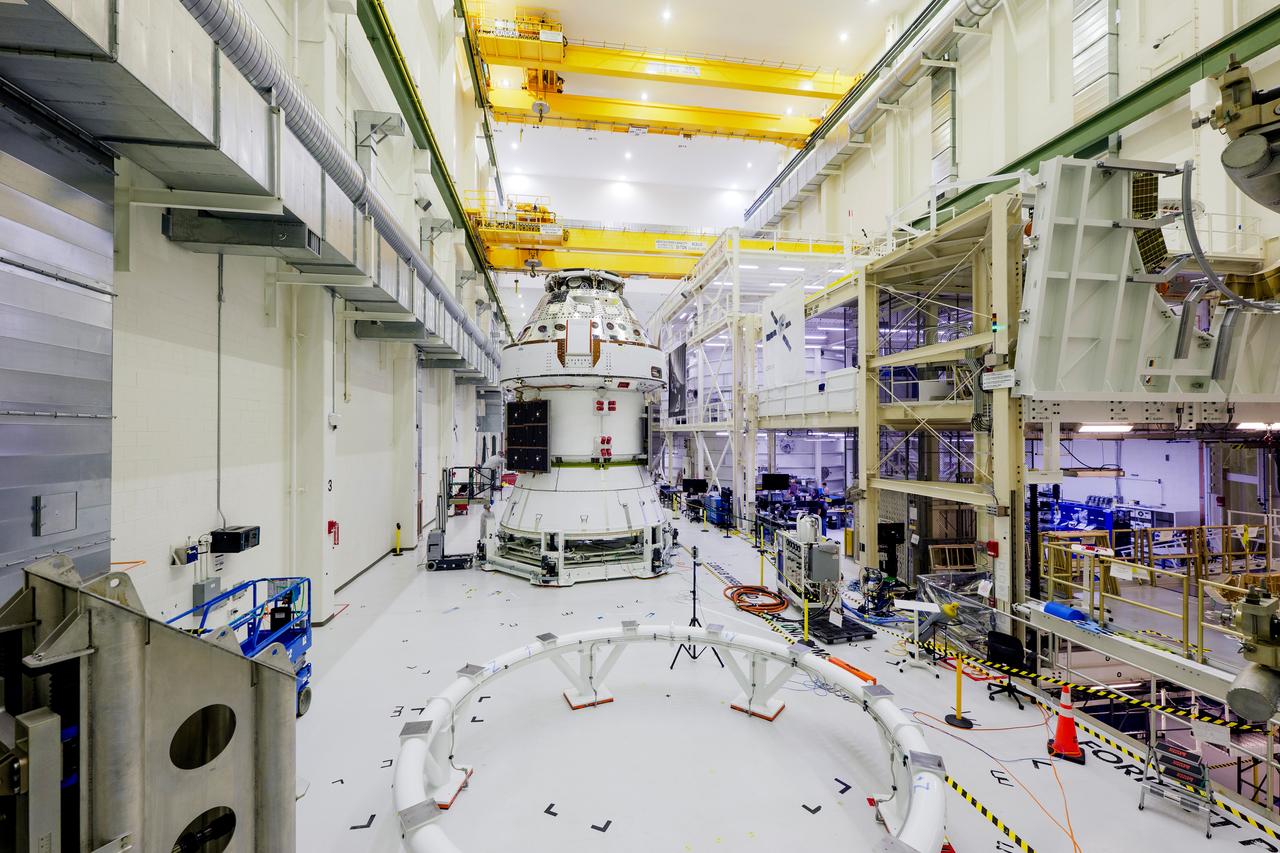
The four solar array wings for the Artemis II Orion spacecraft are installed inside the Operations and Checkout Building at NASA's Kennedy Space Center in Florida on March 7, 2025. Artemis II is Orion’s first crewed flight test around the Moon under the agency’s Artemis campaign.
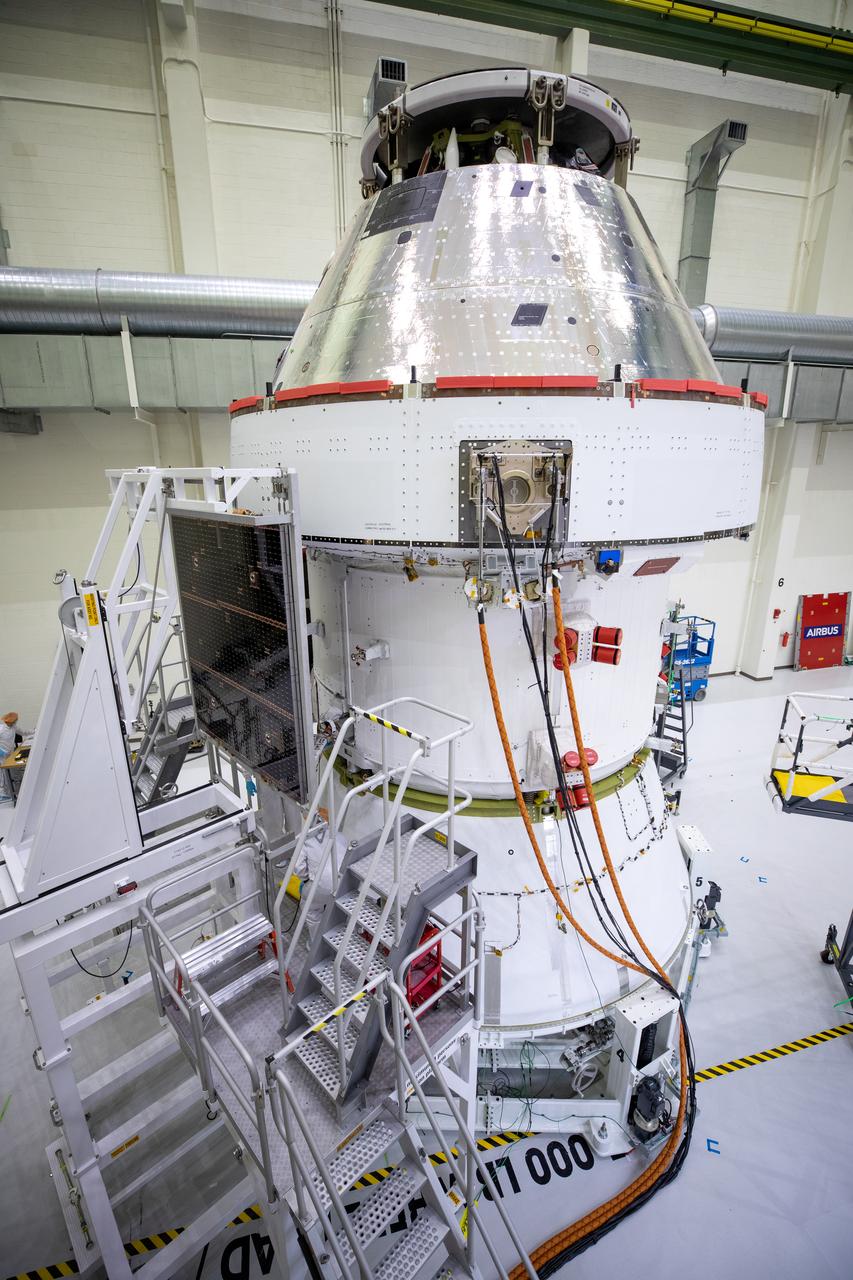
Shown is one of four solar array wings being fitted onto the Orion spacecraft for Artemis I inside the Neil Armstrong Operations and Checkout Building high bay at NASA’s Kennedy Space Center in Florida on Sept. 25, 2020. The solar arrays were extended, inspected, and then retracted before installation on the spacecraft. Each of the four solar array panels will generate 11 kilowatts of power and span about 63 feet. The array is a component of Orion’s service module, which is provided by the European Space Agency and built by Airbus Defence and Space to supply Orion’s power, propulsion, air, and water. The first in a series of increasingly complex missions, Artemis I will test the Orion spacecraft and Space Launch System as an integrated system ahead of crewed flights to the Moon. Under the Artemis program, NASA will land the first woman and the next man on the Moon in 2024.
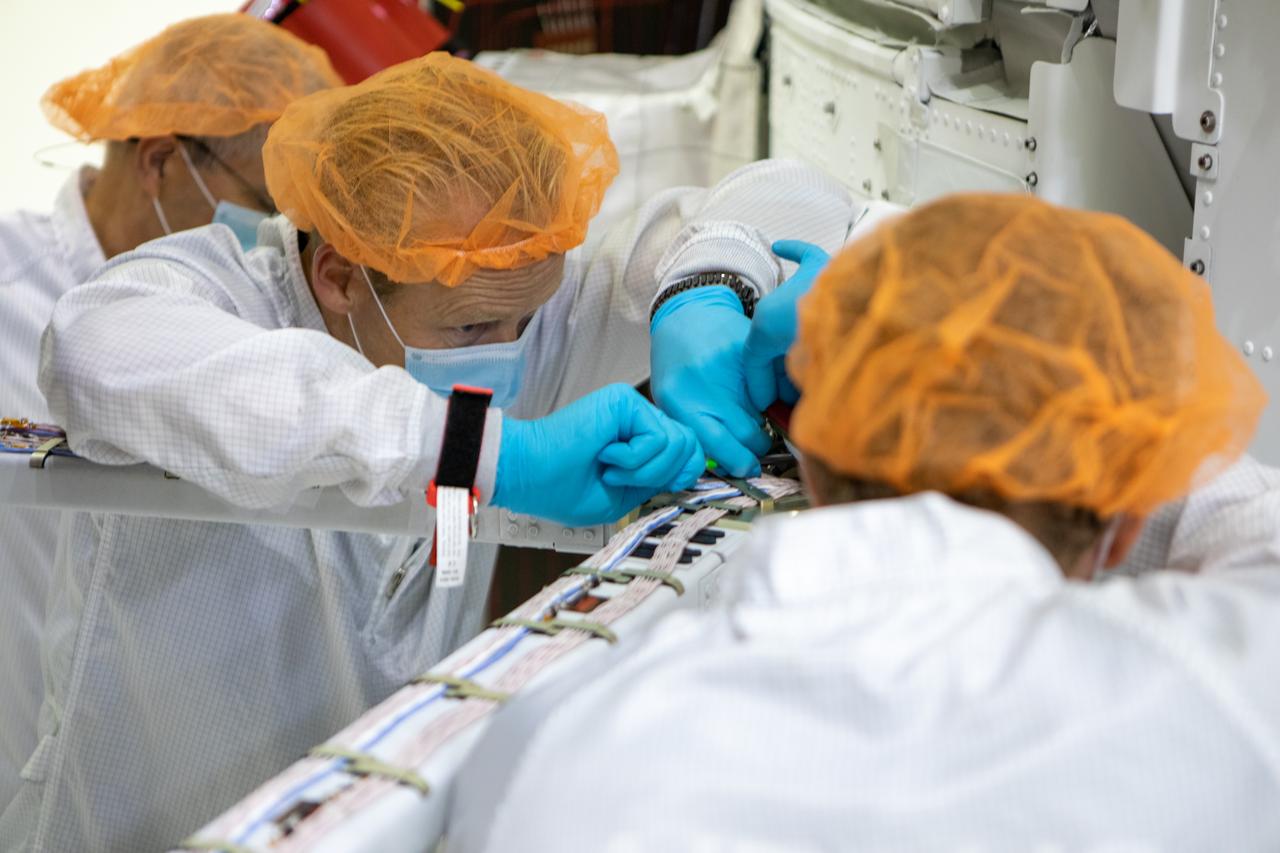
Members of the European Service Module processing team from the European Space Agency (ESA), Airbus, and Airbus Netherlands install the four solar array wings on the Orion spacecraft for Artemis I inside the Neil Armstrong Operations and Checkout Building high bay at NASA’s Kennedy Space Center in Florida on Sept. 25, 2020. The solar arrays were extended, inspected, and then retracted before installation on the spacecraft. Each solar array panel will generate 11 kilowatts of power and span about 63 feet. The array is a component of Orion’s service module, which is provided by ESA and built by Airbus Defence and Space to supply Orion’s power, propulsion, air, and water. The first in a series of increasingly complex missions, Artemis I will test the Orion spacecraft and Space Launch System as an integrated system ahead of crewed flights to the Moon. Under the Artemis program, NASA will land the first woman and the next man on the Moon in 2024.
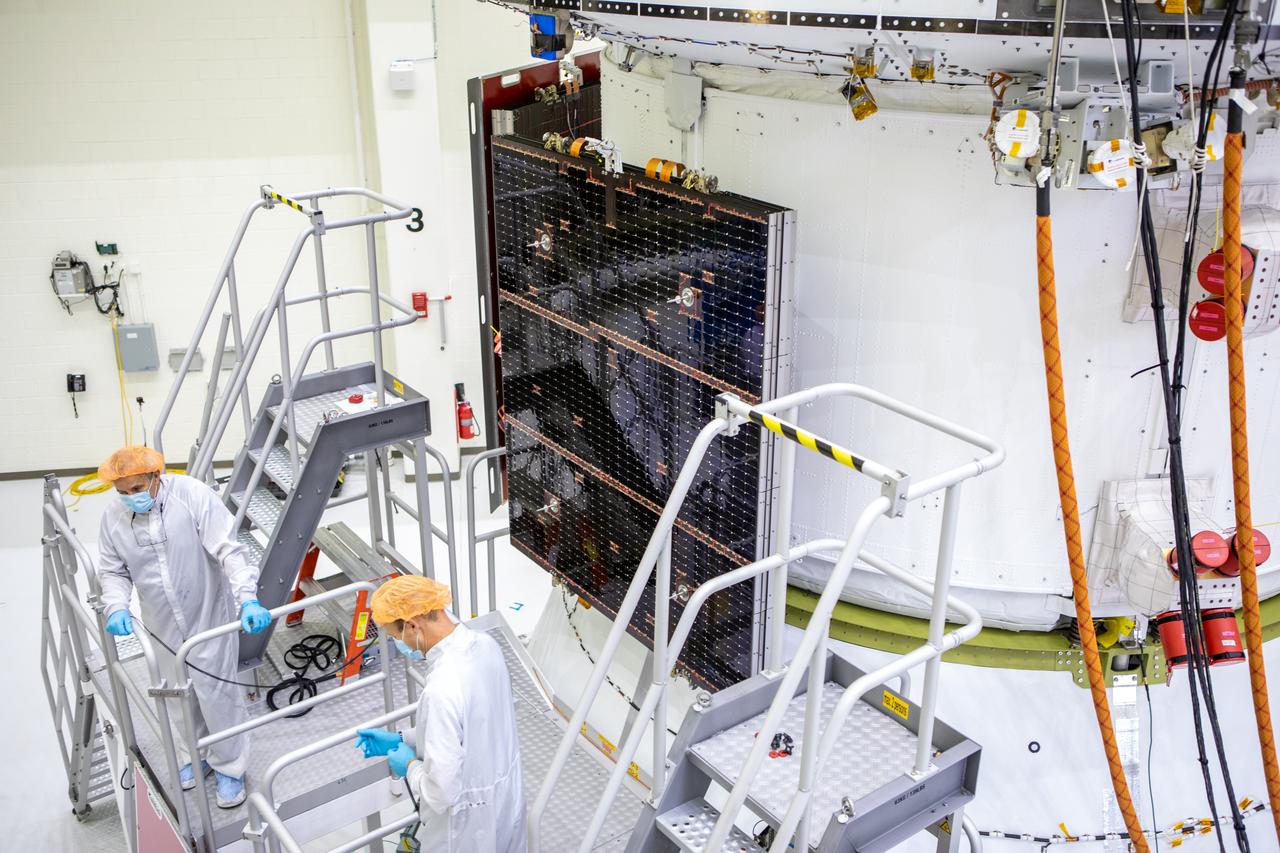
Shown is one of four solar array wings being fitted onto the Orion spacecraft for Artemis I inside the Neil Armstrong Operations and Checkout Building high bay at NASA’s Kennedy Space Center in Florida on Sept. 25, 2020. The solar arrays were extended, inspected, and then retracted before installation on the spacecraft. Each of the four solar array panels will generate 11 kilowatts of power and span about 63 feet. The array is a component of Orion’s service module, which is provided by the European Space Agency and built by Airbus Defence and Space to supply Orion’s power, propulsion, air, and water. The first in a series of increasingly complex missions, Artemis I will test the Orion spacecraft and Space Launch System as an integrated system ahead of crewed flights to the Moon. Under the Artemis program, NASA will land the first woman and the next man on the Moon in 2024.
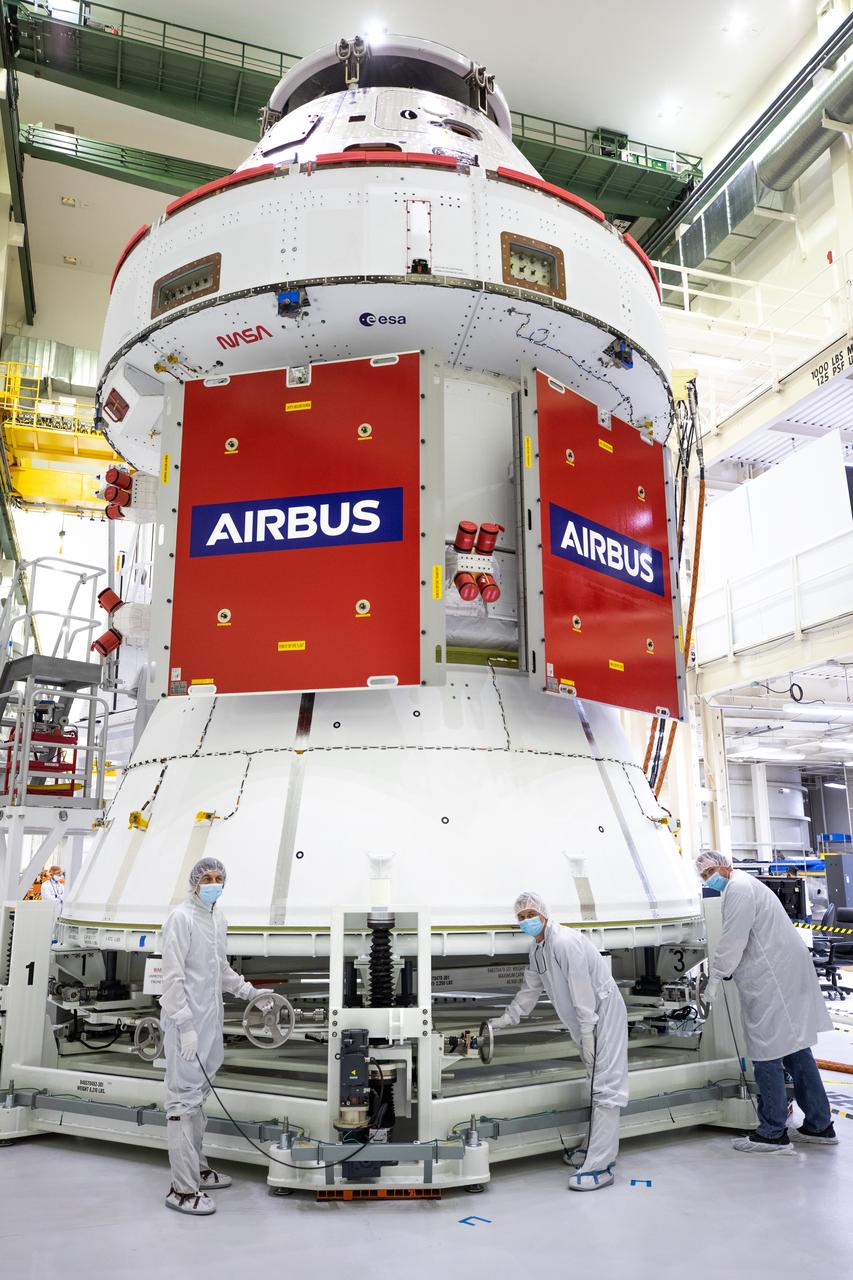
In view, protective covers have been placed over two solar array wings after they were installed on the Orion spacecraft for Artemis I inside the Neil Armstrong Operations and Checkout Building high bay at NASA’s Kennedy Space Center in Florida on Sept. 25, 2020. Standing in front of the spacecraft are technicians with ASRC. The solar arrays were extended, inspected, and then retracted before installation on the spacecraft. Each of the four solar array panels will generate 11 kilowatts of power and span about 63 feet. The array is a component of Orion’s service module, which is provided by the European Space Agency and built by Airbus Defence and Space to supply Orion’s power, propulsion, air, and water. The first in a series of increasingly complex missions, Artemis I will test the Orion spacecraft and Space Launch System as an integrated system ahead of crewed flights to the Moon. Under the Artemis program, NASA will land the first woman and the next man on the Moon in 2024.
Members of the European Service Module processing team from the European Space Agency (ESA), Airbus, and Airbus Netherlands install the four solar array wings on the Orion spacecraft for Artemis I inside the Neil Armstrong Operations and Checkout Building high bay at NASA’s Kennedy Space Center in Florida on Sept. 25, 2020. The solar arrays were extended, inspected, and then retracted before installation on the spacecraft. Each solar array panel will generate 11 kilowatts of power and span about 63 feet. The array is a component of Orion’s service module, which is provided by ESA and built by Airbus Defence and Space to supply Orion’s power, propulsion, air, and water. The first in a series of increasingly complex missions, Artemis I will test the Orion spacecraft and Space Launch System as an integrated system ahead of crewed flights to the Moon. Under the Artemis program, NASA will land the first woman and the next man on the Moon in 2024.
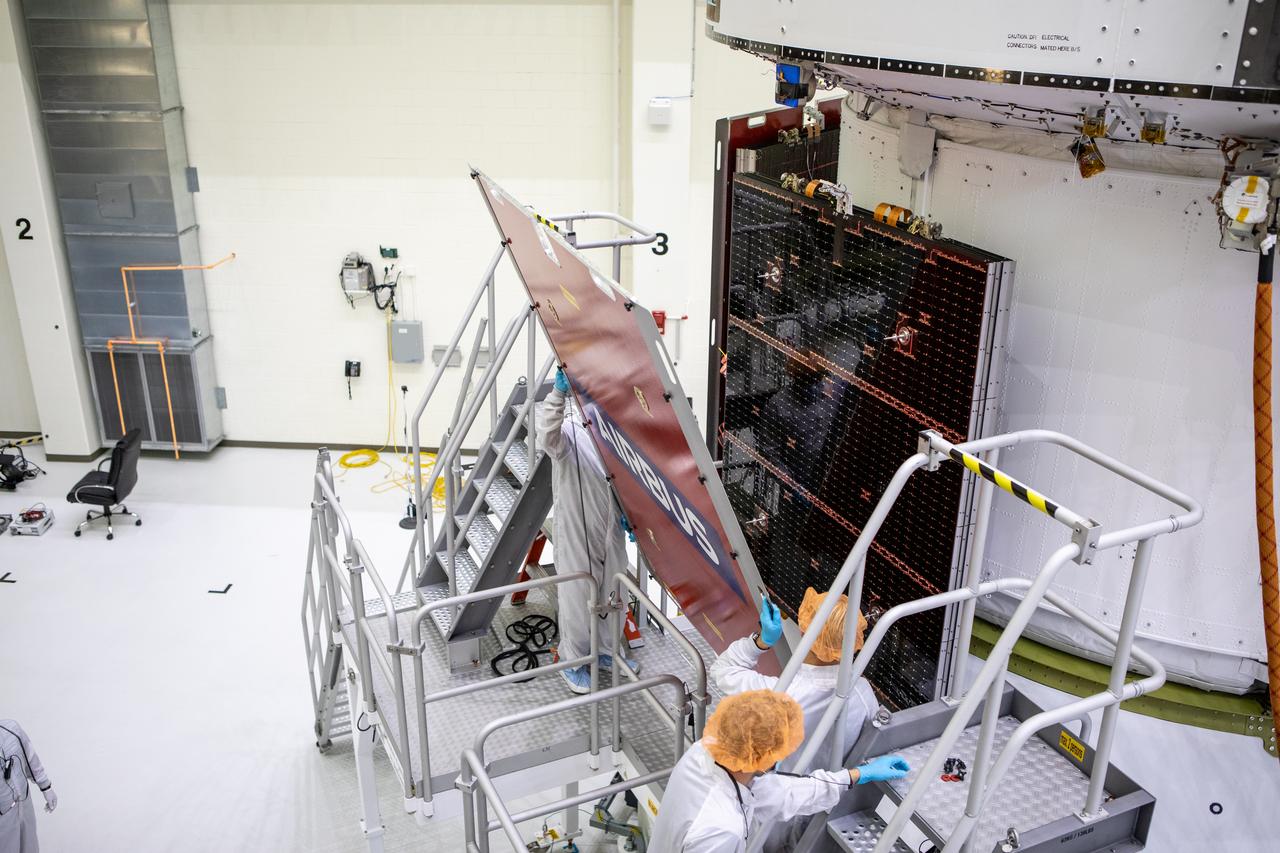
Technicians with the European Space Agency (ESA) and Airbus/Airbus Netherlands install a protective cover over one of the solar array wing panels installed on the Orion spacecraft for Artemis I inside the Neil Armstrong Operations and Checkout Building high bay at NASA’s Kennedy Space Center in Florida on Sept. 25, 2020. The solar arrays were extended, inspected, and then retracted before installation on the spacecraft. Each of the four solar array panels will generate 11 kilowatts of power and span about 63 feet. The array is a component of Orion’s service module, which is provided by ESA and built by Airbus Defence and Space to supply Orion’s power, propulsion, air, and water. The first in a series of increasingly complex missions, Artemis I will test the Orion spacecraft and Space Launch System as an integrated system ahead of crewed flights to the Moon. Under the Artemis program, NASA will land the first woman and the next man on the Moon in 2024.
All four solar array wings were installed on the Orion spacecraft for Artemis I inside the Neil Armstrong Operations and Checkout Building high bay at NASA’s Kennedy Space Center in Florida on Sept. 25, 2020. Standing in front of the spacecraft are technicians with ASRC. The solar arrays were extended, inspected, and then retracted before installation on the spacecraft. Each solar array panel will generate 11 kilowatts of power and span about 63 feet. The array is a component of Orion’s service module, which is provided by the European Space Agency and built by Airbus Defence and Space to supply Orion’s power, propulsion, air, and water. The first in a series of increasingly complex missions, Artemis I will test the Orion spacecraft and Space Launch System as an integrated system ahead of crewed flights to the Moon. Under the Artemis program, NASA will land the first woman and the next man on the Moon in 2024.
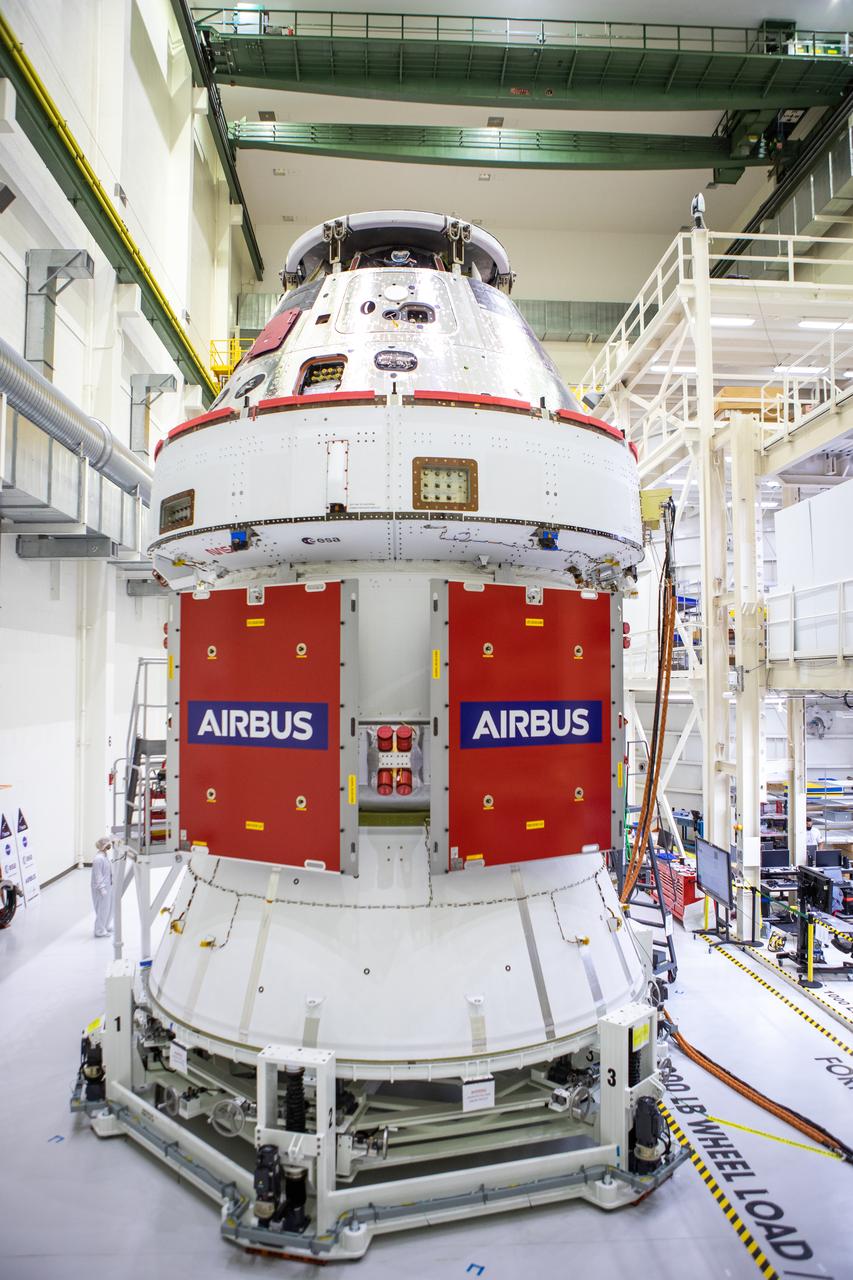
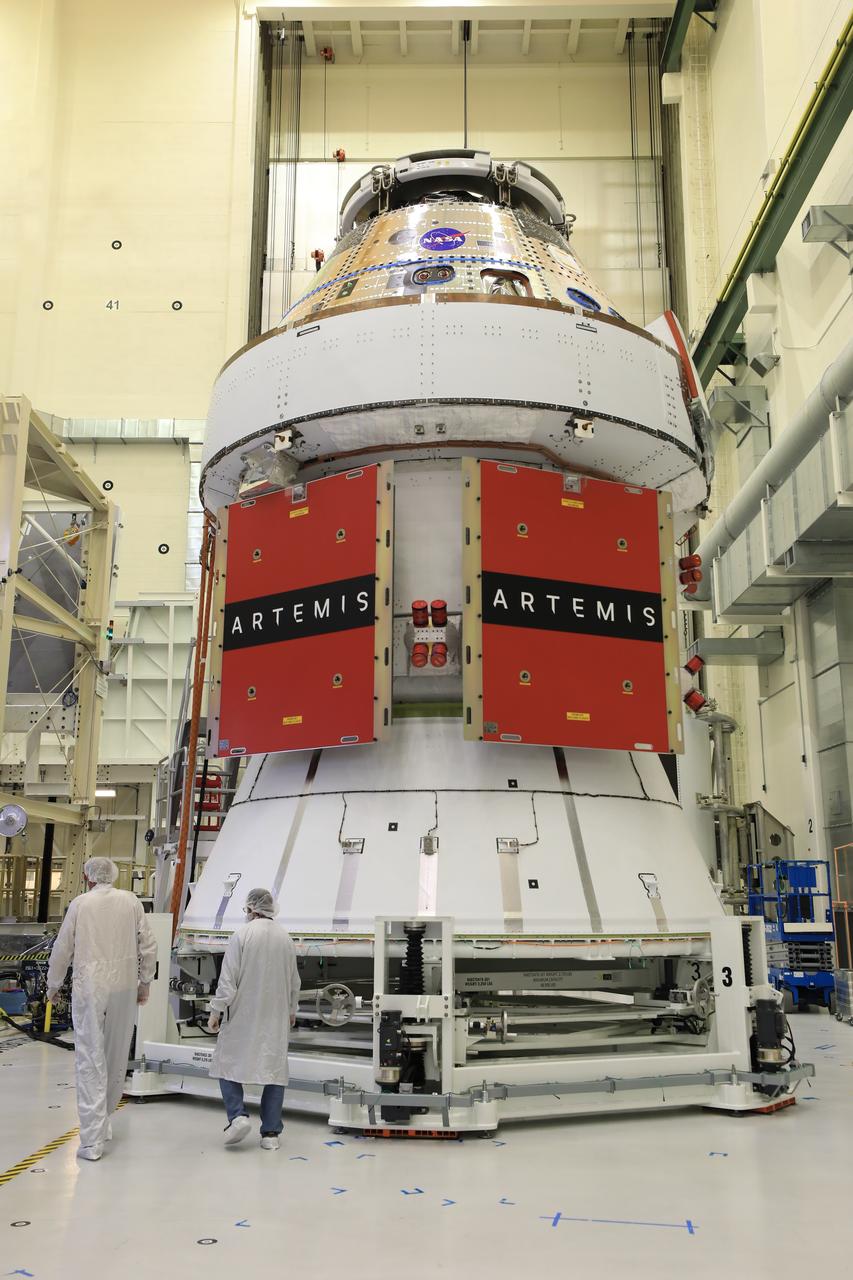
In view, protective covers have been placed over two solar array wings after installation was completed on the Orion spacecraft for Artemis I inside the Neil Armstrong Operations and Checkout Building high bay at NASA’s Kennedy Space Center in Florida on Sept. 25, 2020. The solar arrays were extended, inspected, and then retracted before installation on the spacecraft. Each of the four solar array panels will generate 11 kilowatts of power and span about 63 feet. The array is a component of Orion’s service module, which is provided by the European Space Agency and built by Airbus Defence and Space to supply Orion’s power, propulsion, air, and water. The first in a series of increasingly complex missions, Artemis I will test the Orion spacecraft and Space Launch System as an integrated system ahead of crewed flights to the Moon. Under the Artemis program, NASA will land the first woman and the next man on the Moon in 2024.
Members of the European Service Module processing team from the European Space Agency (ESA), Airbus, and Airbus Netherlands fit a protective cover over the solar array wings on the Orion spacecraft for Artemis I inside the Neil Armstrong Operations and Checkout Building high bay at NASA’s Kennedy Space Center in Florida on Sept. 25, 2020. The solar arrays were extended, inspected, and then retracted before installation on the spacecraft. Each solar array panel will generate 11 kilowatts of power and span about 63 feet. The array is a component of Orion’s service module, which is provided by ESA and built by Airbus Defence and Space to supply Orion’s power, propulsion, air, and water. The first in a series of increasingly complex missions, Artemis I will test the Orion spacecraft and Space Launch System as an integrated system ahead of crewed flights to the Moon. Under the Artemis program, NASA will land the first woman and the next man on the Moon in 2024.
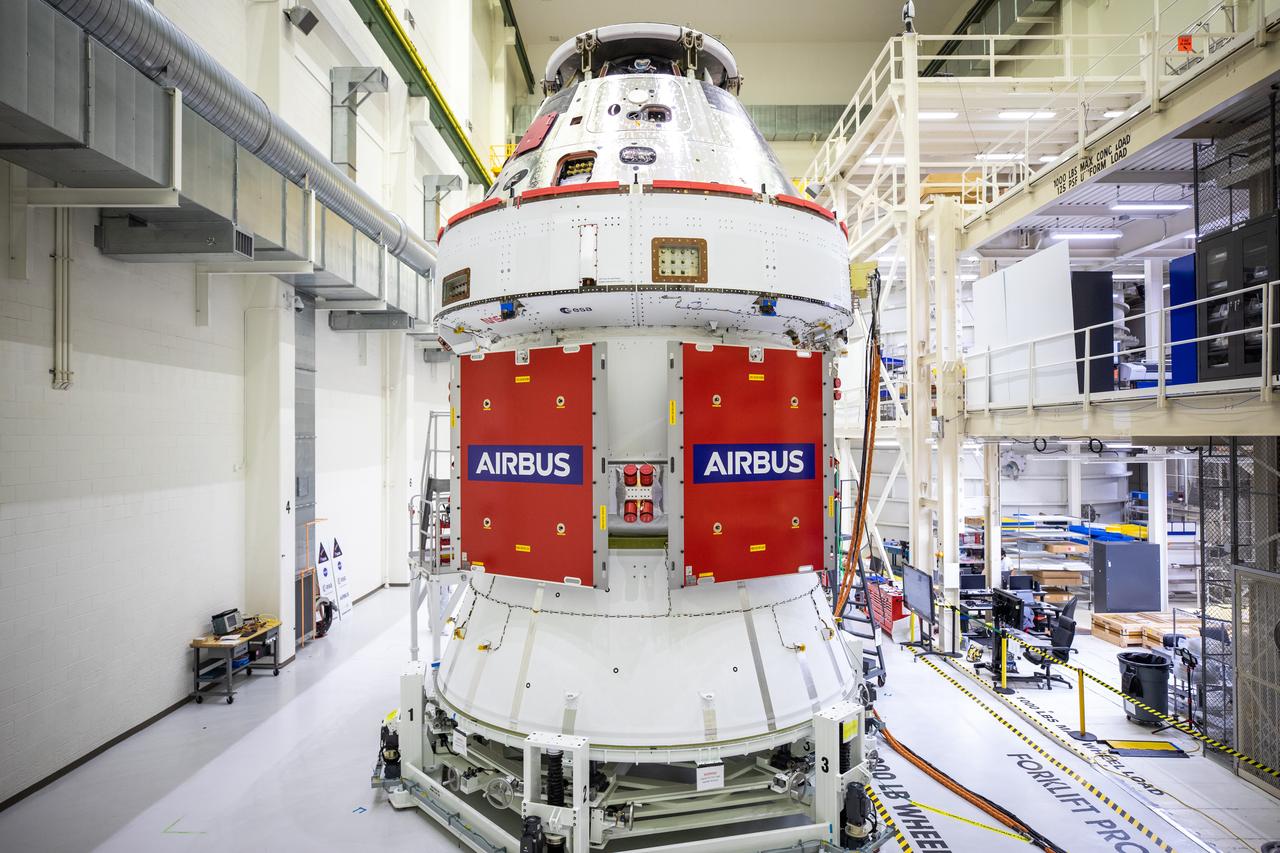
In view, protective covers have been placed over two solar array wings after installation was completed on the Orion spacecraft for Artemis I inside the Neil Armstrong Operations and Checkout Building high bay at NASA’s Kennedy Space Center in Florida on Sept. 25, 2020. The solar arrays were extended, inspected, and then retracted before installation on the spacecraft. Each of the four solar array panels will generate 11 kilowatts of power and span about 63 feet. The array is a component of Orion’s service module, which is provided by the European Space Agency and built by Airbus Defence and Space to supply Orion’s power, propulsion, air, and water. The first in a series of increasingly complex missions, Artemis I will test the Orion spacecraft and Space Launch System as an integrated system ahead of crewed flights to the Moon. Under the Artemis program, NASA will land the first woman and the next man on the Moon in 2024.
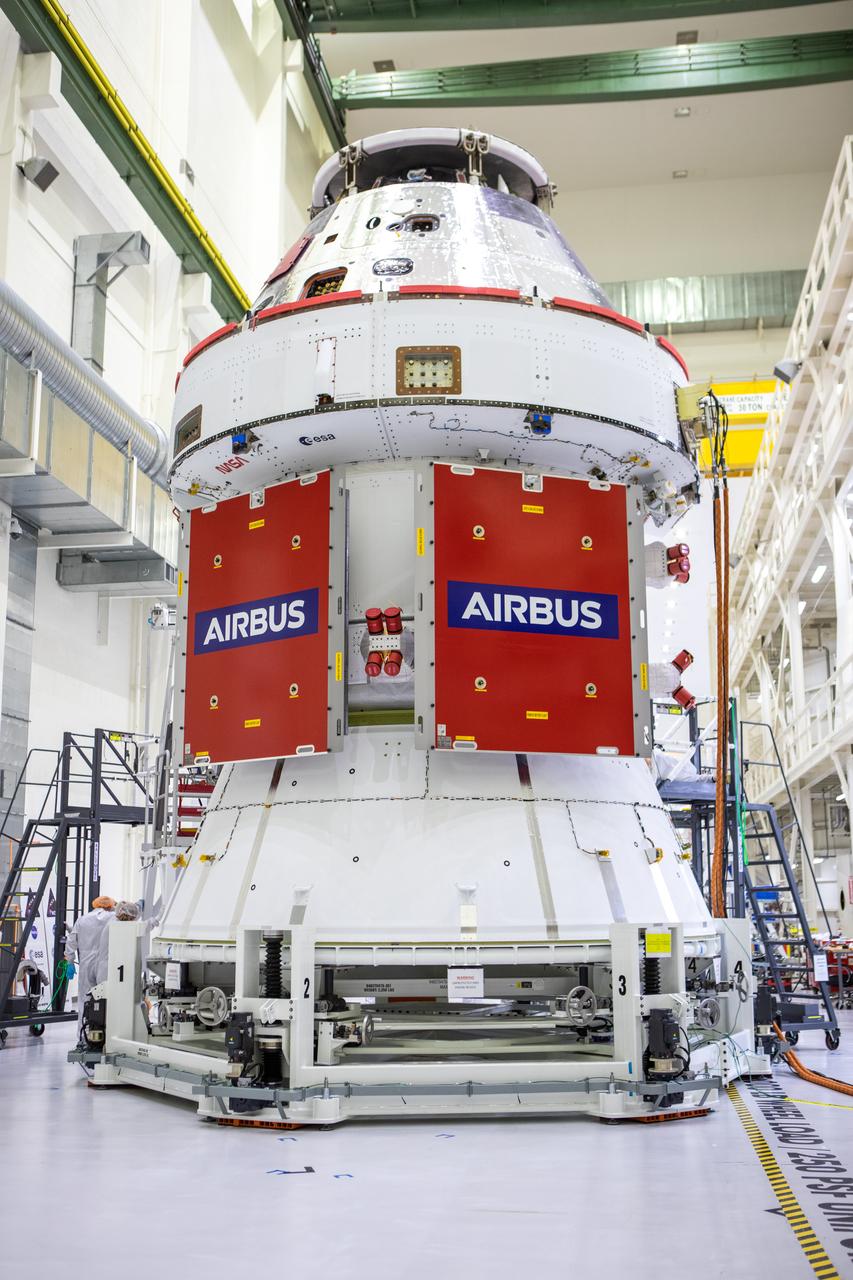
In view, protective covers have been placed over two solar array wings after installation was completed on the Orion spacecraft for Artemis I inside the Neil Armstrong Operations and Checkout Building high bay at NASA’s Kennedy Space Center in Florida on Sept. 25, 2020. The solar arrays were extended, inspected, and then retracted before installation on the spacecraft. Each of the four solar array panels will generate 11 kilowatts of power and span about 63 feet. The array is a component of Orion’s service module, which is provided by the European Space Agency and built by Airbus Defence and Space to supply Orion’s power, propulsion, air, and water. The first in a series of increasingly complex missions, Artemis I will test the Orion spacecraft and Space Launch System as an integrated system ahead of crewed flights to the Moon. Under the Artemis program, NASA will land the first woman and the next man on the Moon in 2024.
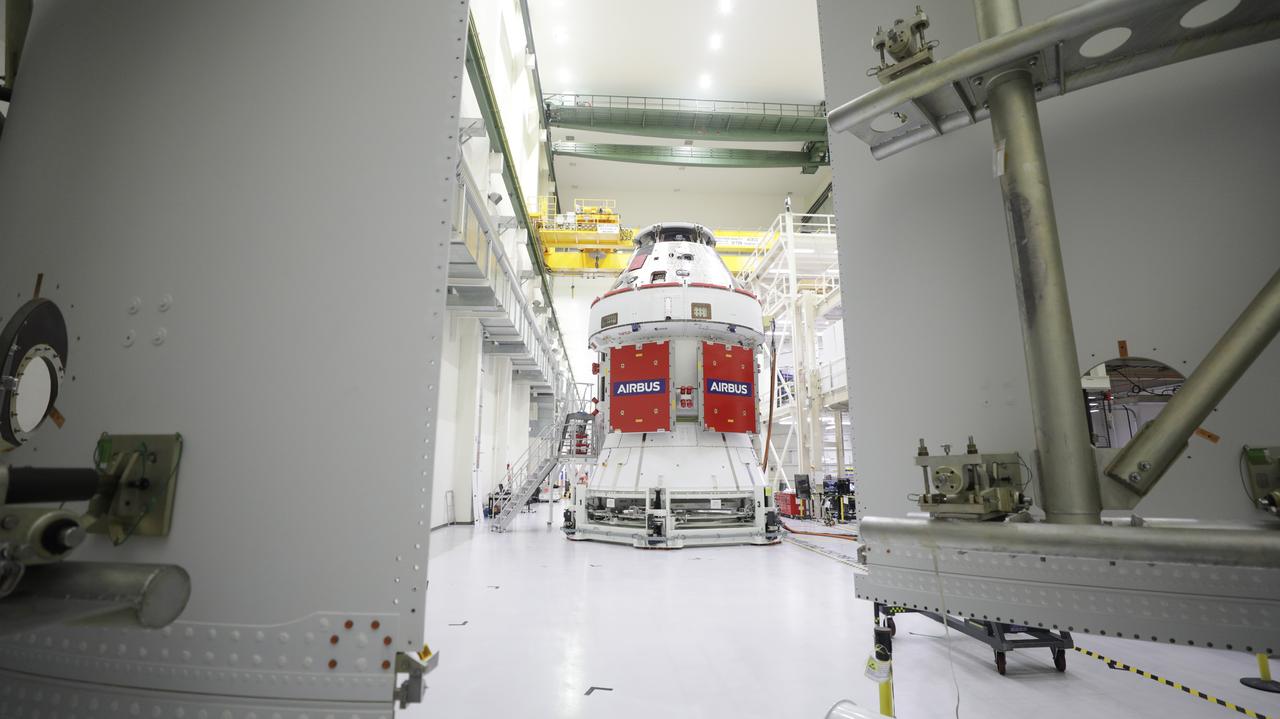
Two of the four solar array wings are shown from behind the spacecraft adapter jettison fairing panels after being installed on the Orion spacecraft for Artemis I inside the Neil Armstrong Operations and Checkout Building high bay at NASA’s Kennedy Space Center in Florida on Sept. 30, 2020. Inside the Neil Armstrong Operations and Checkout Building high bay at NASA’s Kennedy Space Center in Florida on Sept. 30, 2020, work begins to install four solar array wings on the Orion spacecraft for Artemis I. The solar arrays were extended, inspected, and then retracted, before installation on the spacecraft. Each solar array panel will generate 11 kilowatts of power and span about 63 feet. The array is a component of Orion’s service module, which is provided by the European Space Agency and built by Airbus Defence and Space to supply Orion’s power, propulsion, air and water. The first in a series of increasingly complex missions, Artemis I will test the Orion spacecraft and Space Launch System as an integrated system ahead of crewed flights to the Moon. Under the Artemis program, NASA will land the first woman and the next man on the Moon in 2024.
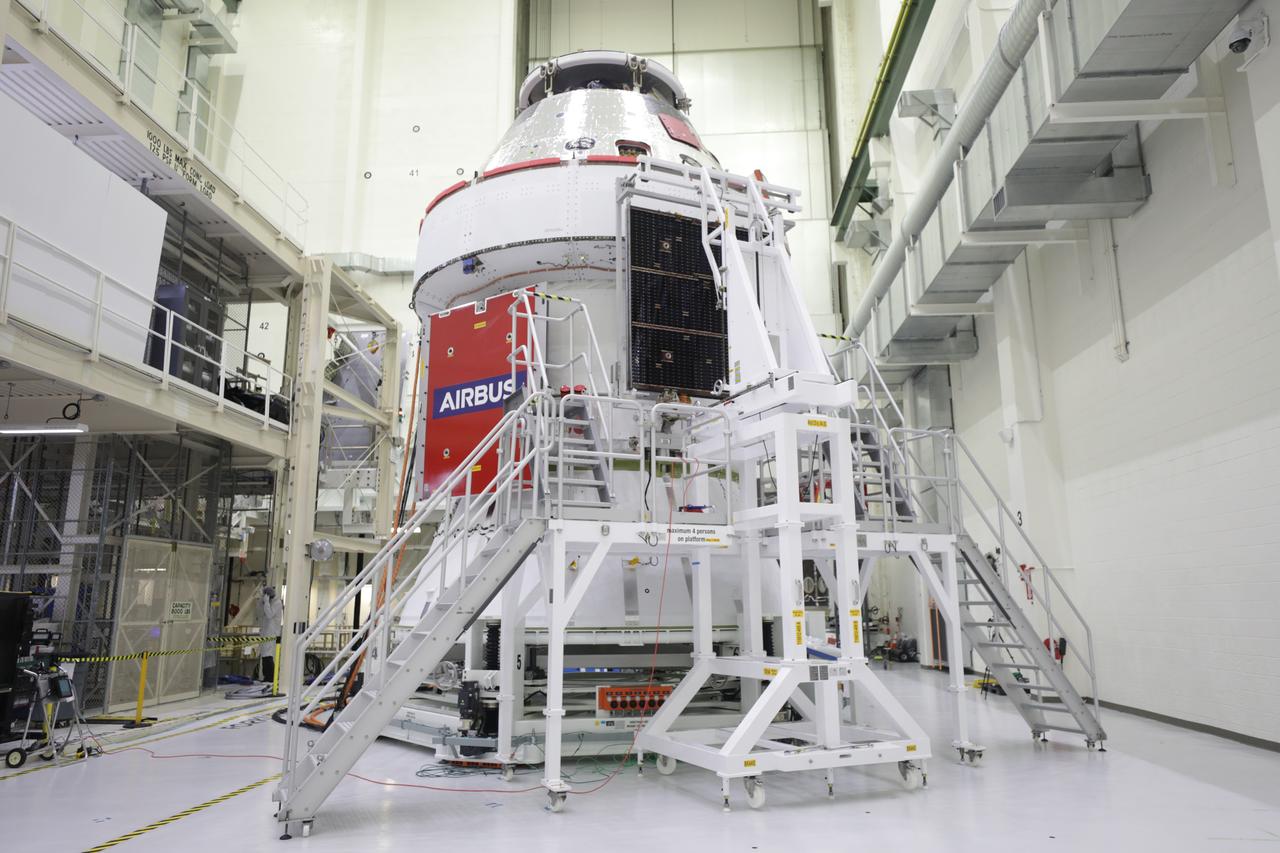
The final of four solar array wings is shown being installed prior to receiving its protective covering on the Orion spacecraft for Artemis I inside the Neil Armstrong Operations and Checkout Building high bay at NASA’s Kennedy Space Center in Florida on Sept. 30, 2020. The solar arrays were extended, inspected, and then retracted, before installation on the spacecraft. Each solar array panel will generate 11 kilowatts of power and span about 63 feet. The array is a component of Orion’s service module, which is provided by the European Space Agency and built by Airbus Defence and Space to supply Orion’s power, propulsion, air and water. The first in a series of increasingly complex missions, Artemis I will test the Orion spacecraft and Space Launch System as an integrated system ahead of crewed flights to the Moon. Under the Artemis program, NASA will land the first woman and the next man on the Moon in 2024.
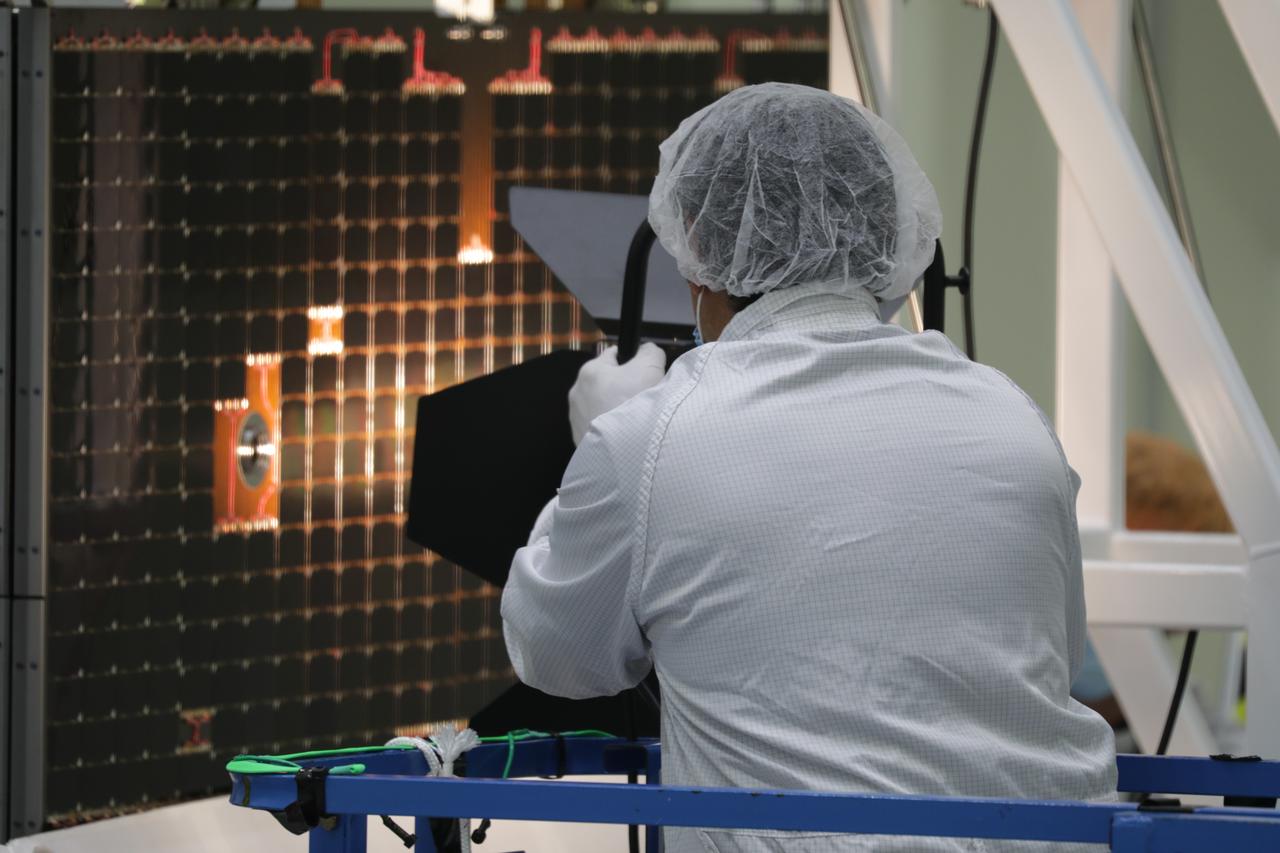
A Lockheed Martin technician is shown assisting with lighting one of the solar array wing panels as part of an illumination test during installation on the Orion spacecraft for Artemis I inside the Neil Armstrong Operations and Checkout Building high bay at NASA’s Kennedy Space Center in Florida on Sept. 30, 2020. The solar arrays were extended, inspected, and then retracted, before installation on the spacecraft. Each solar array panel will generate 11 kilowatts of power and span about 63 feet. The array is a component of Orion’s service module, which is provided by the European Space Agency and built by Airbus Defence and Space to supply Orion’s power, propulsion, air and water. The first in a series of increasingly complex missions, Artemis I will test the Orion spacecraft and Space Launch System as an integrated system ahead of crewed flights to the Moon. Under the Artemis program, NASA will land the first woman and the next man on the Moon in 2024.
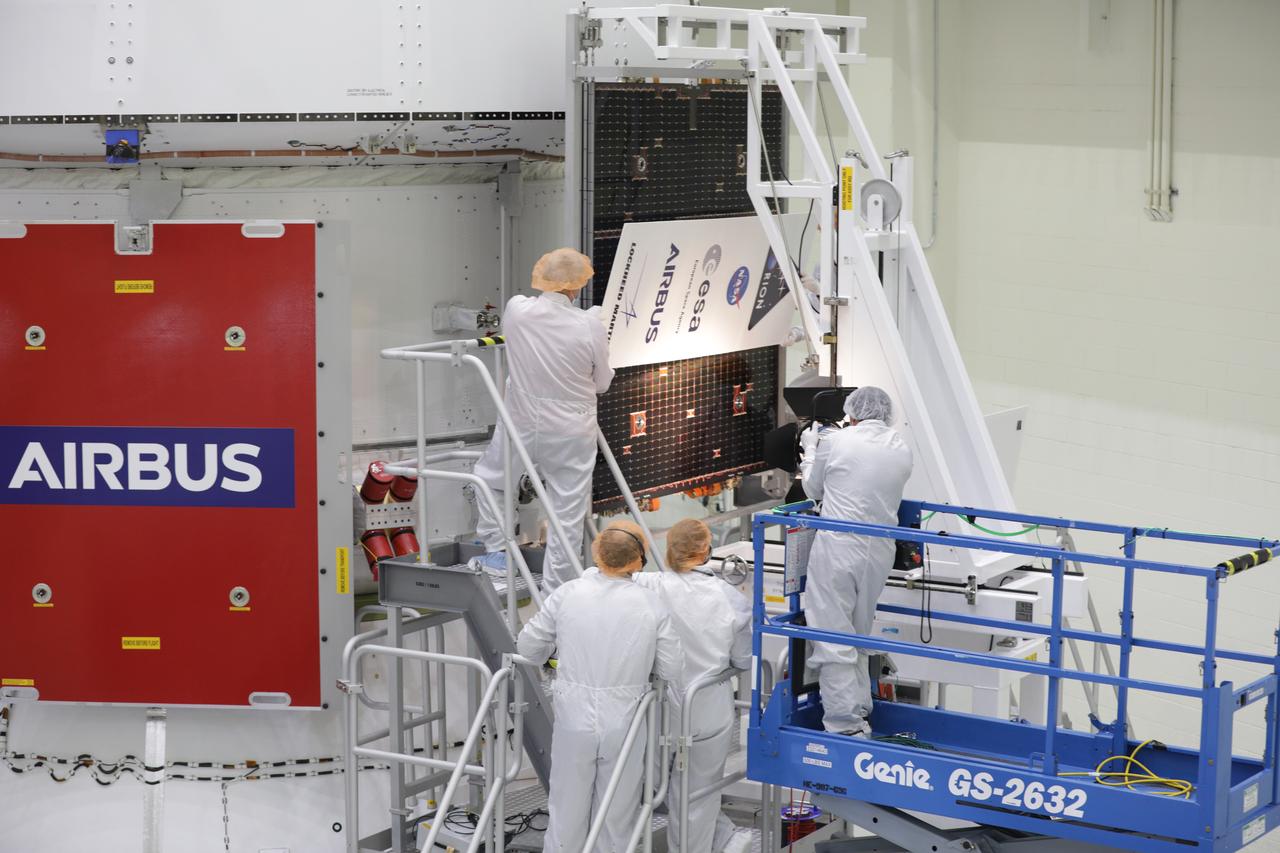
Technicians with the European Space Agency and Airbus/Airbus Netherlands are shown performing an illumination test on one of the solar array wing panels during installation on the Orion spacecraft for Artemis I inside the Neil Armstrong Operations and Checkout Building high bay at NASA’s Kennedy Space Center in Florida on Sept. 30, 2020. The solar arrays were extended, inspected, and then retracted, before installation on the spacecraft. Each solar array panel will generate 11 kilowatts of power and span about 63 feet. The array is a component of Orion’s service module, which is provided by the European Space Agency and built by Airbus Defence and Space to supply Orion’s power, propulsion, air and water. The first in a series of increasingly complex missions, Artemis I will test the Orion spacecraft and Space Launch System as an integrated system ahead of crewed flights to the Moon. Under the Artemis program, NASA will land the first woman and the next man on the Moon in 2024.
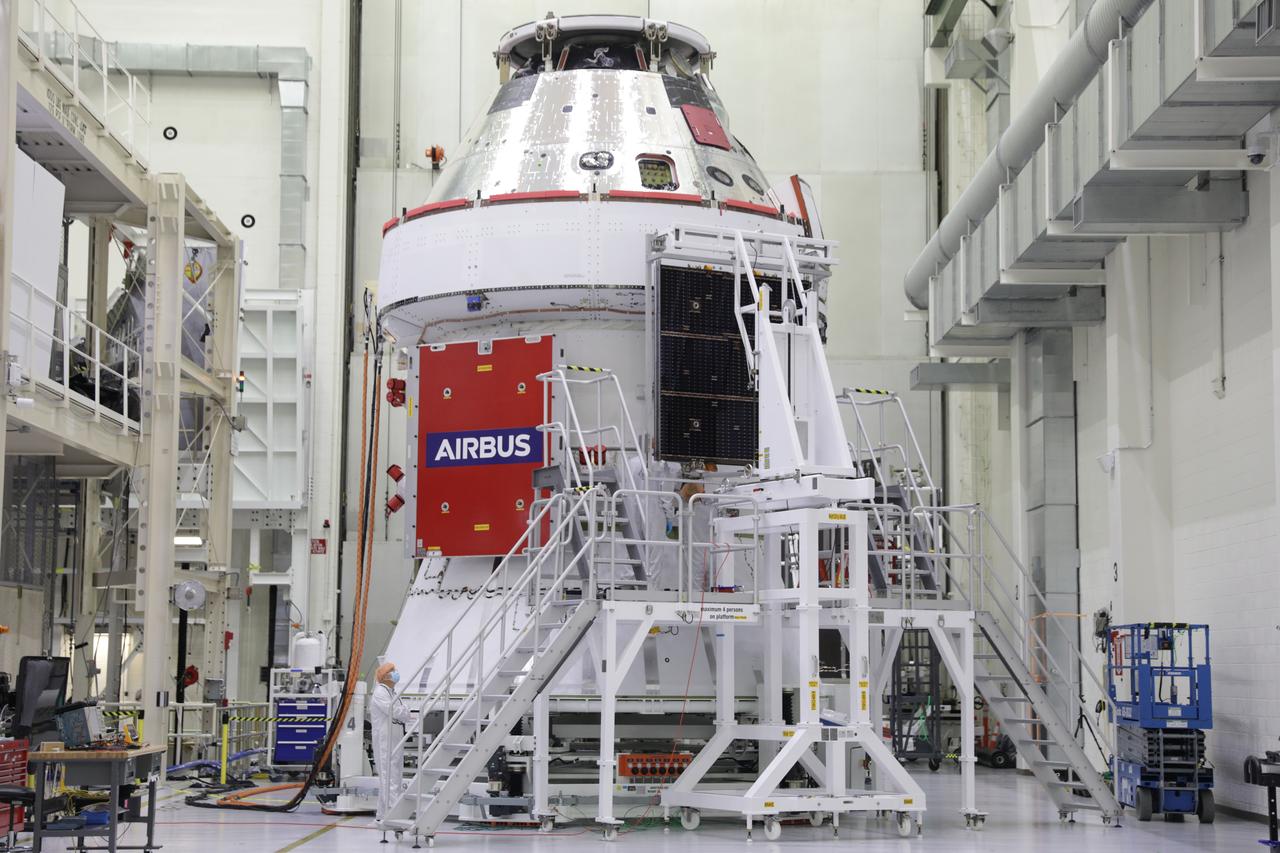
The final of four solar array wings is shown being installed prior to receiving its protective covering on the Orion spacecraft for Artemis I inside the Neil Armstrong Operations and Checkout Building high bay at NASA’s Kennedy Space Center in Florida on Sept. 30, 2020. The solar arrays were extended, inspected, and then retracted, before installation on the spacecraft. Each solar array panel will generate 11 kilowatts of power and span about 63 feet. The array is a component of Orion’s service module, which is provided by the European Space Agency and built by Airbus Defence and Space to supply Orion’s power, propulsion, air and water. The first in a series of increasingly complex missions, Artemis I will test the Orion spacecraft and Space Launch System as an integrated system ahead of crewed flights to the Moon. Under the Artemis program, NASA will land the first woman and the next man on the Moon in 2024.
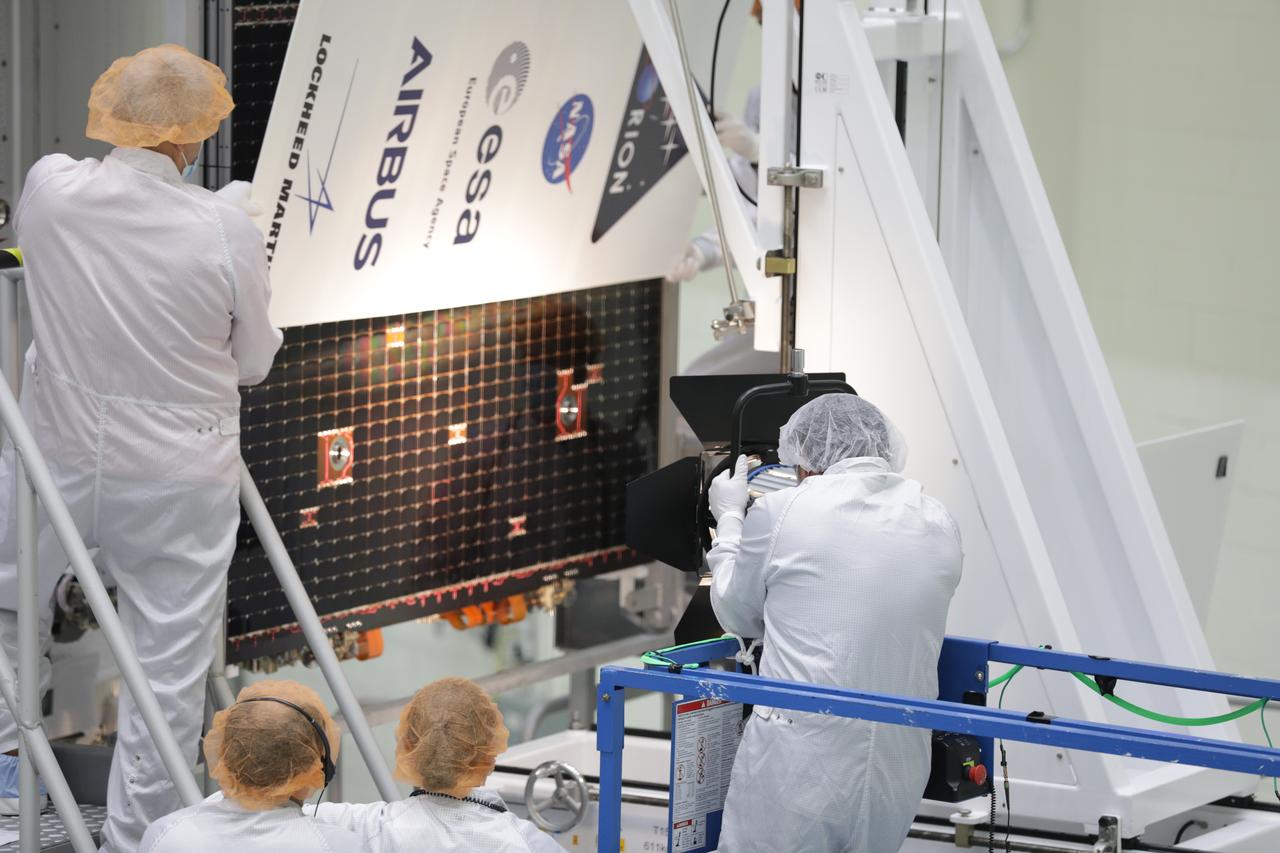
Technicians with the European Space Agency and Airbus/Airbus Netherlands are shown performing an illumination test on one of the solar array wing panels during installation on the Orion spacecraft for Artemis I inside the Neil Armstrong Operations and Checkout Building high bay at NASA’s Kennedy Space Center in Florida on Sept. 30, 2020. The solar arrays were extended, inspected, and then retracted, before installation on the spacecraft. Each solar array panel will generate 11 kilowatts of power and span about 63 feet. The array is a component of Orion’s service module, which is provided by the European Space Agency and built by Airbus Defence and Space to supply Orion’s power, propulsion, air and water. The first in a series of increasingly complex missions, Artemis I will test the Orion spacecraft and Space Launch System as an integrated system ahead of crewed flights to the Moon. Under the Artemis program, NASA will land the first woman and the next man on the Moon in 2024.
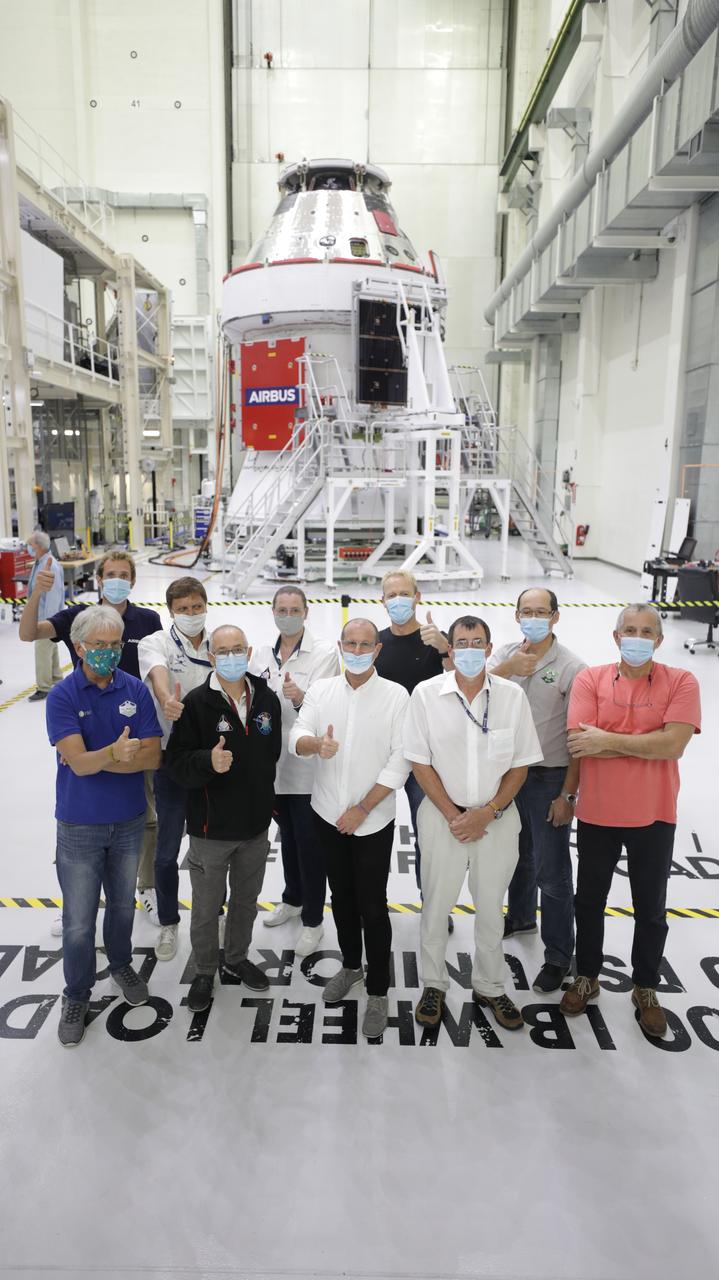
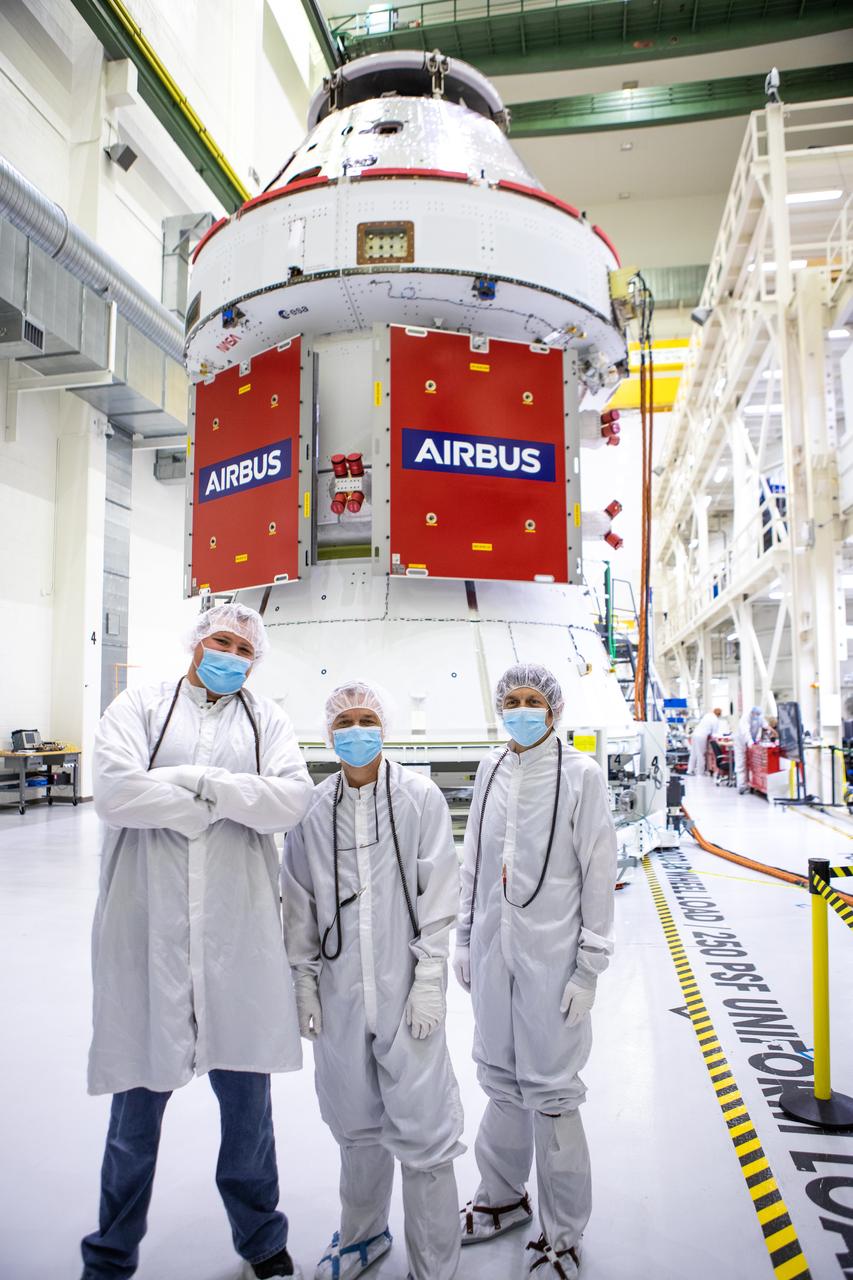
Members of the European Service Module processing team from the European Space Agency, Airbus, and Airbus Netherlands are shown with Orion’s solar array wings installed on the spacecraft for Artemis I inside the Neil Armstrong Operations and Checkout Building high bay at NASA’s Kennedy Space Center in Florida on Sept. 30, 2020. The solar arrays were extended, inspected, and then retracted, before installation on the spacecraft. Each solar array panel will generate 11 kilowatts of power and span about 63 feet. The array is a component of Orion’s service module, which is provided by the European Space Agency and built by Airbus Defence and Space to supply Orion’s power, propulsion, air and water. The first in a series of increasingly complex missions, Artemis I will test the Orion spacecraft and Space Launch System as an integrated system ahead of crewed flights to the Moon. Under the Artemis program, NASA will land the first woman and the next man on the Moon in 2024.

The final of four solar array wings is shown being installed prior to receiving its protective covering on the Orion spacecraft for Artemis I inside the Neil Armstrong Operations and Checkout Building high bay at NASA’s Kennedy Space Center in Florida on Sept. 30, 2020. The solar arrays were extended, inspected, and then retracted, before installation on the spacecraft. Each solar array panel will generate 11 kilowatts of power and span about 63 feet. The array is a component of Orion’s service module, which is provided by the European Space Agency and built by Airbus Defence and Space to supply Orion’s power, propulsion, air and water. The first in a series of increasingly complex missions, Artemis I will test the Orion spacecraft and Space Launch System as an integrated system ahead of crewed flights to the Moon. Under the Artemis program, NASA will land the first woman and the next man on the Moon in 2024.
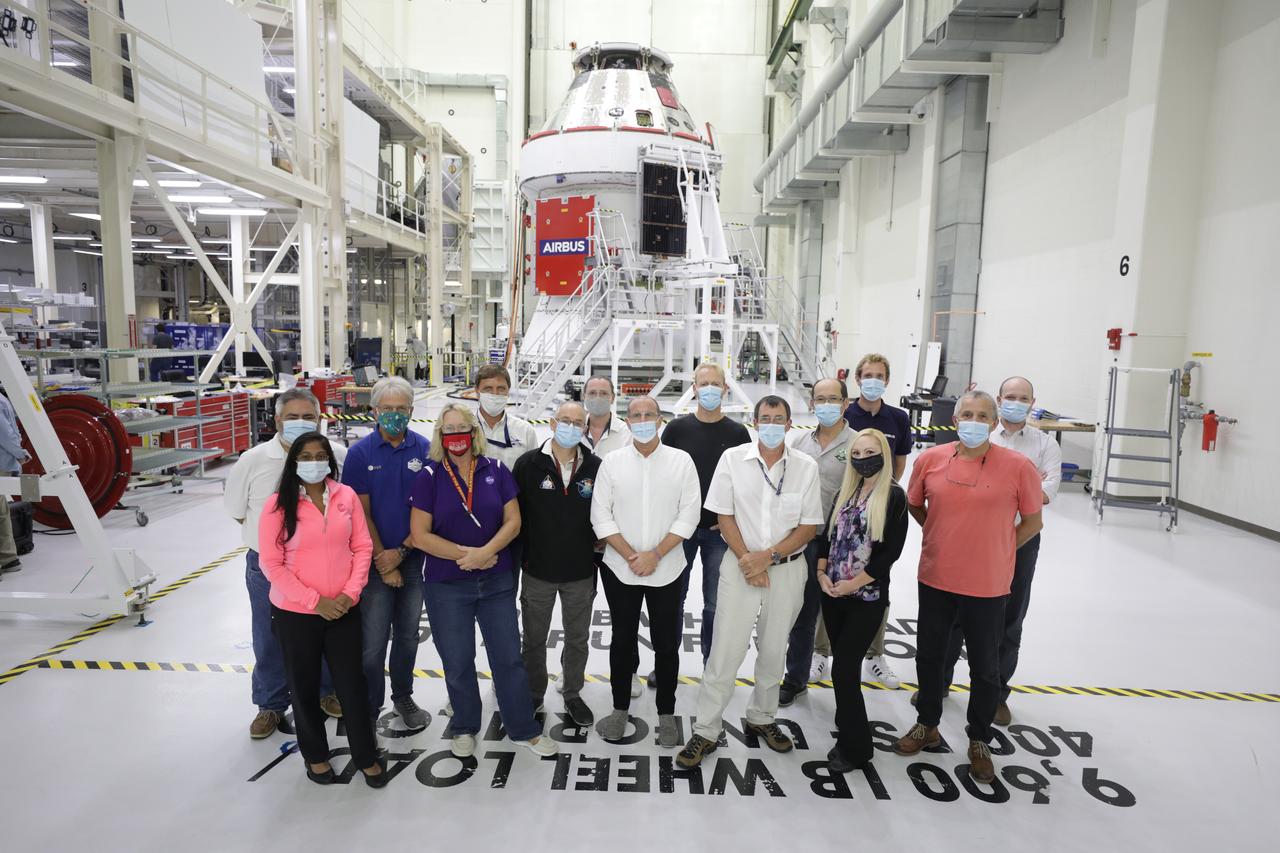
Members of the European Service Module processing team from NASA, the European Space Agency, Airbus, Airbus Netherlands, and Lockheed Martin are shown with Orion’s solar array wings installed on the spacecraft for Artemis I inside the Neil Armstrong Operations and Checkout Building high bay at NASA’s Kennedy Space Center in Florida on Sept. 30, 2020. The solar arrays were extended, inspected, and then retracted, before installation on the spacecraft. Each solar array panel will generate 11 kilowatts of power and span about 63 feet. The array is a component of Orion’s service module, which is provided by the European Space Agency and built by Airbus Defence and Space to supply Orion’s power, propulsion, air and water. The first in a series of increasingly complex missions, Artemis I will test the Orion spacecraft and Space Launch System as an integrated system ahead of crewed flights to the Moon. Under the Artemis program, NASA will land the first woman and the next man on the Moon in 2024.
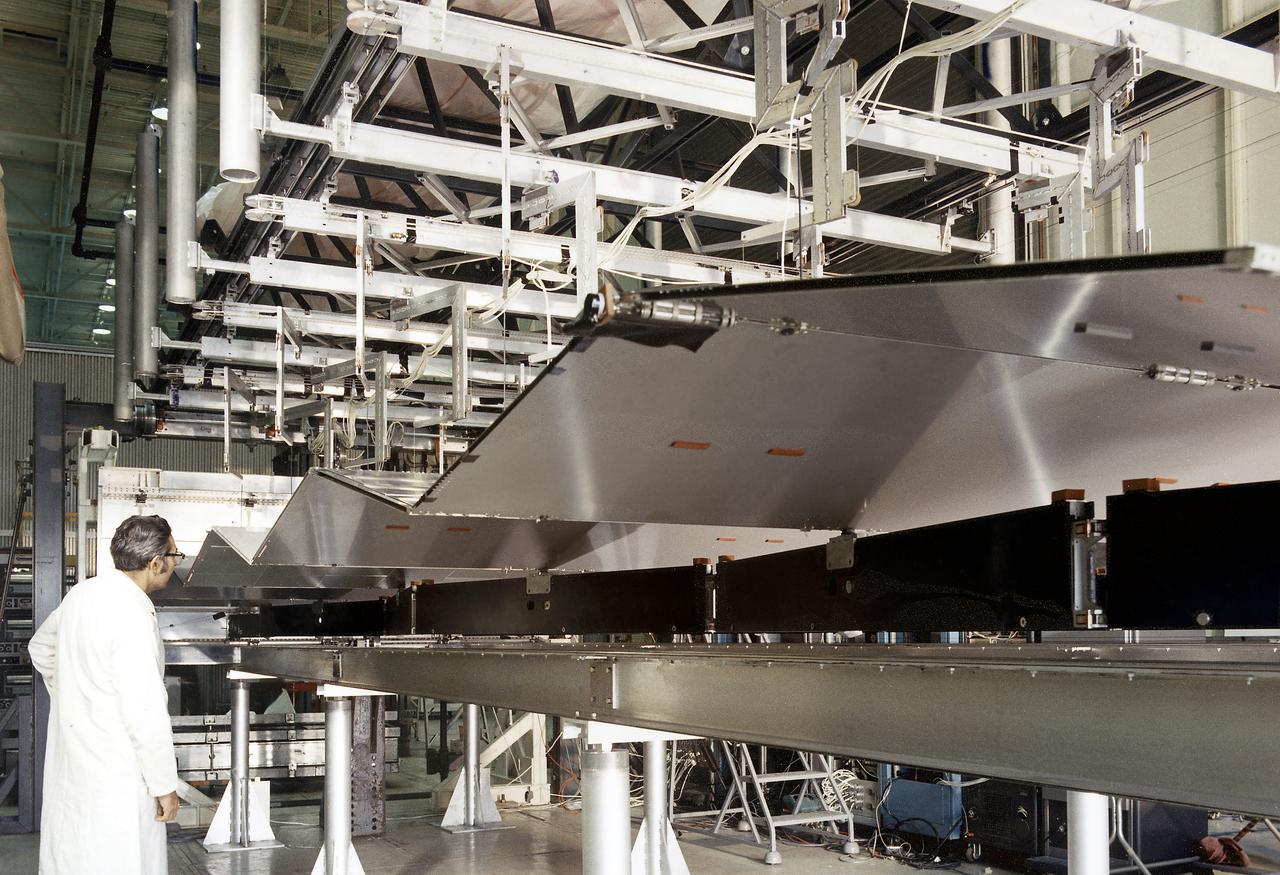
This is a photograph of a technician checking on a solar array wing for the Orbital Workshop as it is deployed. A solar array, consisting of two wings covered on one side with solar cells, was mounted outside the workshop to generate electrical power to augment the power generated by another solar array mounted on the solar observatory.
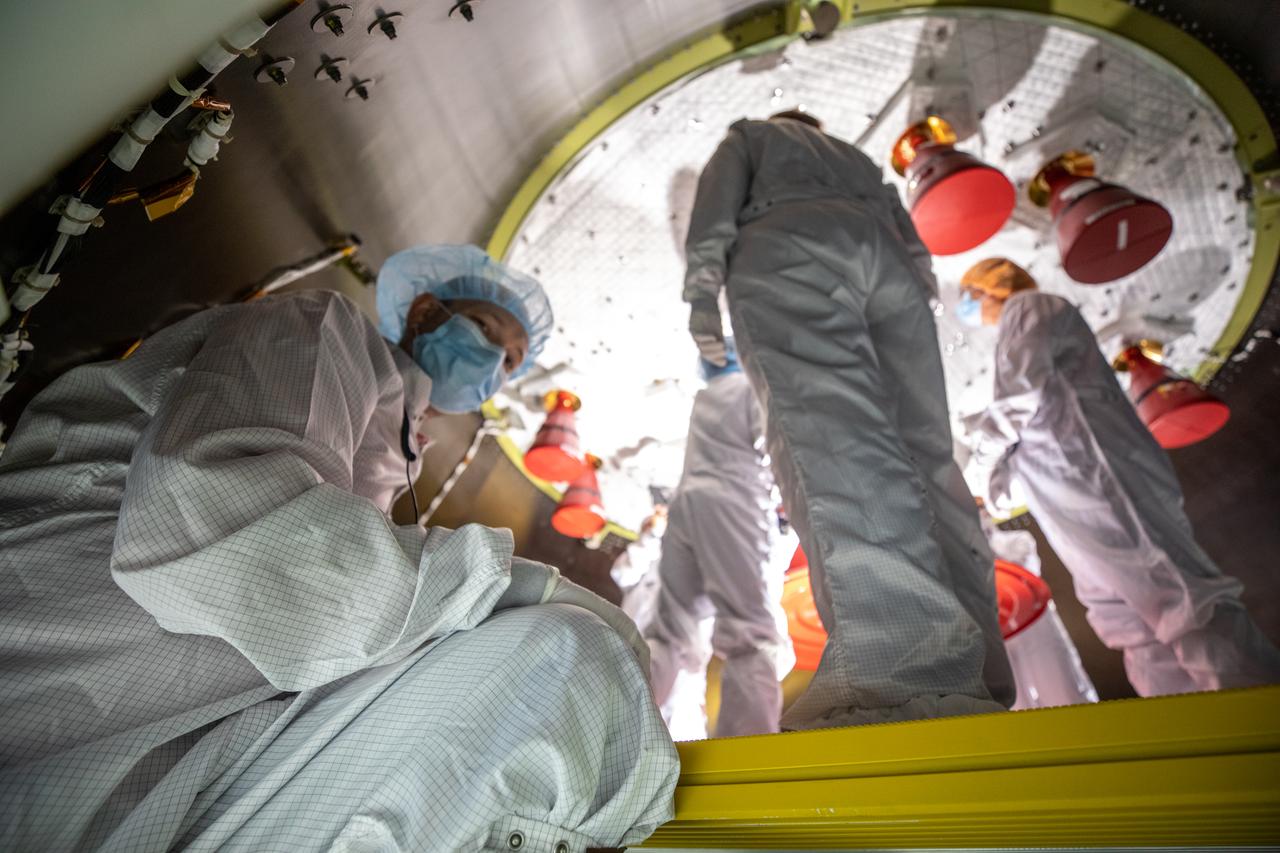
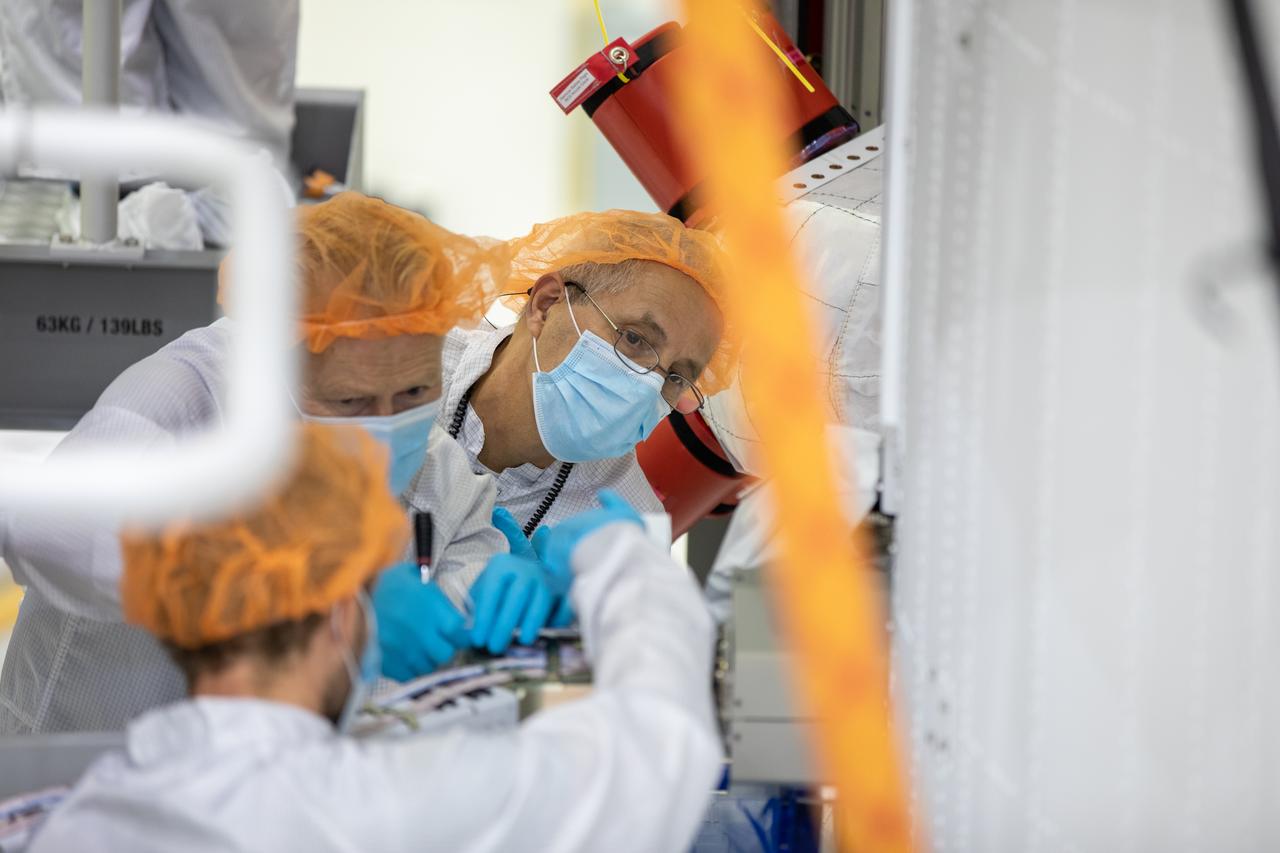
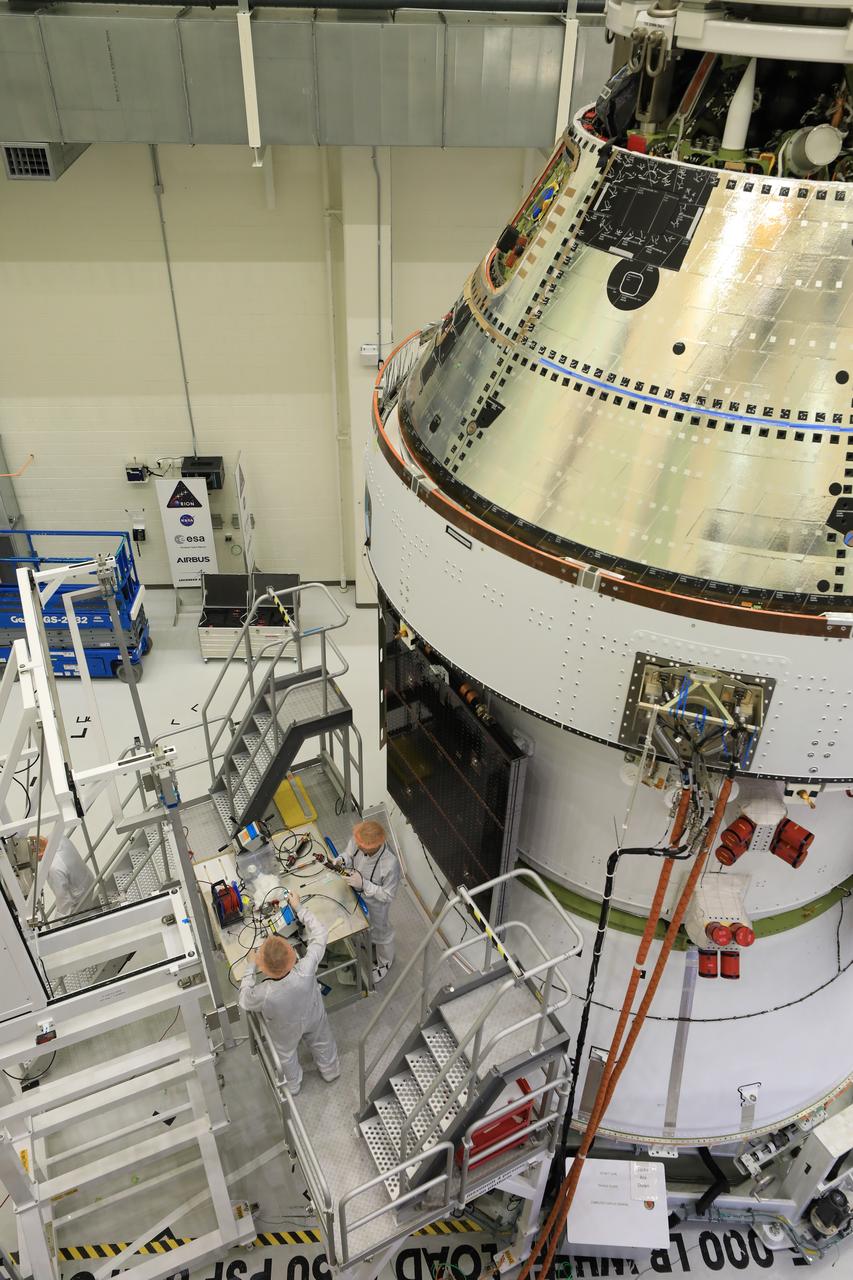
Members of the European Service Module processing team from the European Space Agency and Airbus inspect the insulation on the underside of the Orion service module for Artemis I inside the Neil Armstrong Operations and Checkout Building high bay at NASA’s Kennedy Space Center in Florida on Sept. 23, 2020. Work is also underway to attach protective covers over the solar arrays wings that were installed on the service module. Each solar array panel will generate 11 kilowatts of power and span about 63 feet. The array is a component of Orion’s service module, which is provided by the European Space Agency and built by Airbus Defence and Space to supply Orion’s power, propulsion, air and water. The first in a series of increasingly complex missions, Artemis I will test the Orion spacecraft and Space Launch System as an integrated system ahead of crewed flights to the Moon. Under the Artemis program, NASA will land the first woman and the next man on the Moon in 2024.
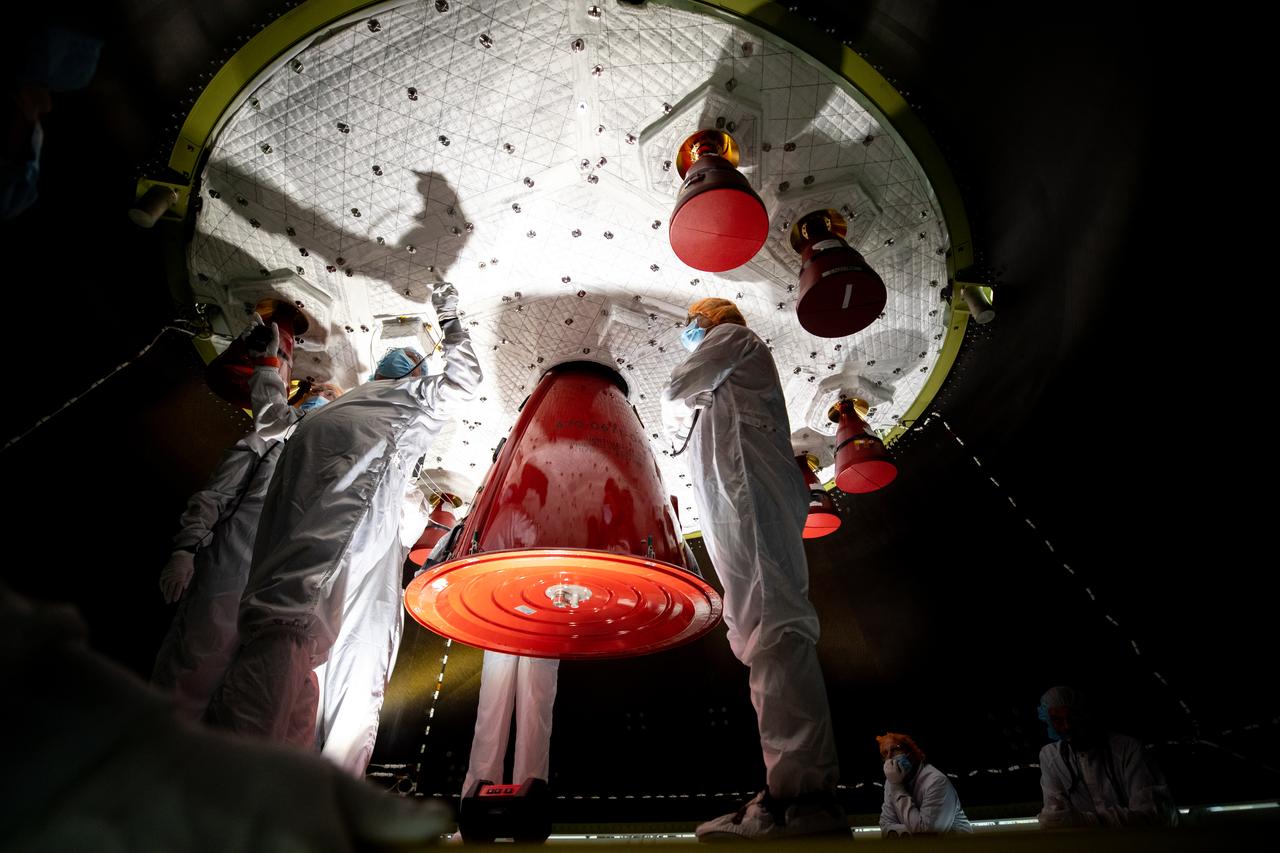
Members of the European Service Module processing team from the European Space Agency and Airbus inspect the insulation on the underside of the Orion service module for Artemis I inside the Neil Armstrong Operations and Checkout Building high bay at NASA’s Kennedy Space Center in Florida on Sept. 23, 2020. Work is also underway to attach protective covers over the solar arrays wings that were installed on the service module. Each solar array panel will generate 11 kilowatts of power and span about 63 feet. The array is a component of Orion’s service module, which is provided by the European Space Agency and built by Airbus Defence and Space to supply Orion’s power, propulsion, air and water. The first in a series of increasingly complex missions, Artemis I will test the Orion spacecraft and Space Launch System as an integrated system ahead of crewed flights to the Moon. Under the Artemis program, NASA will land the first woman and the next man on the Moon in 2024.
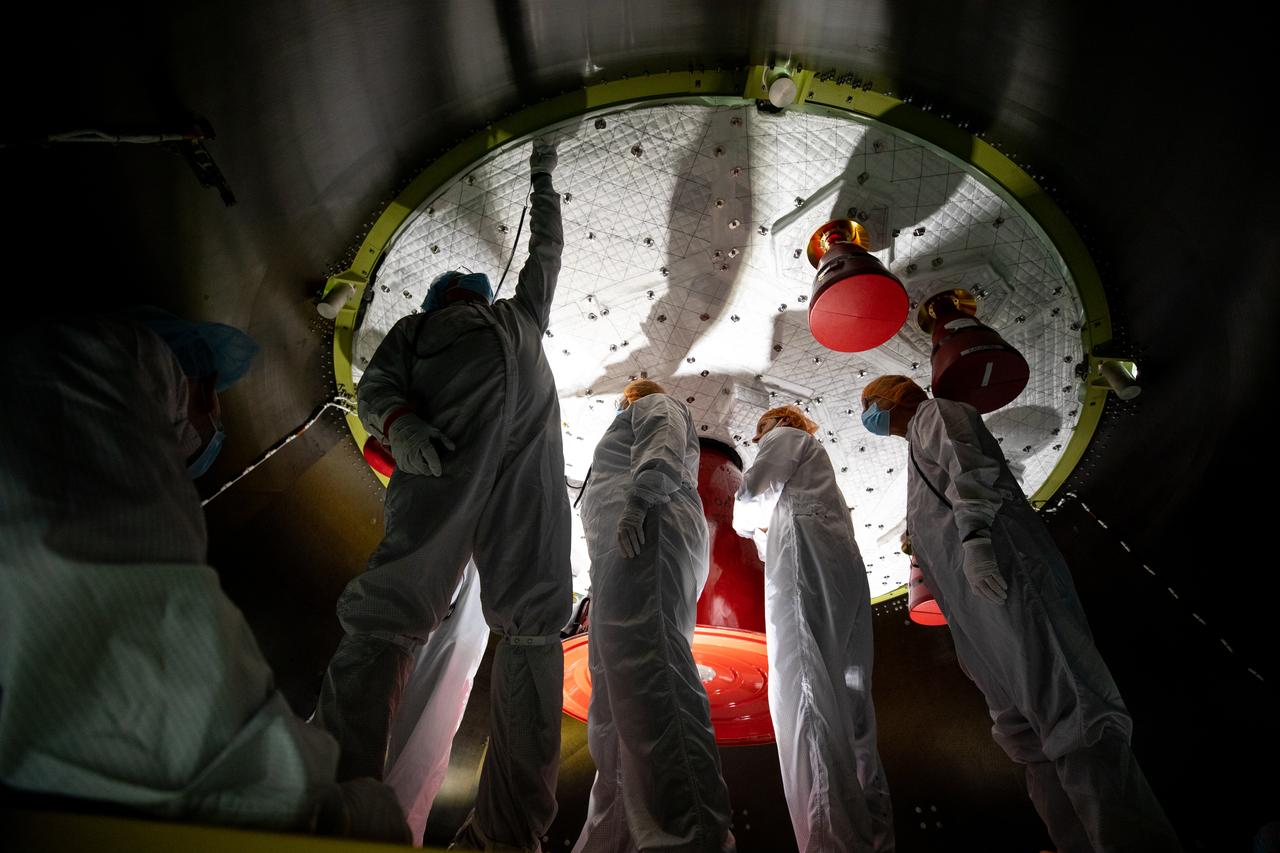
Members of the European Service Module processing team from the European Space Agency and Airbus inspect the insulation on the underside of the Orion service module for Artemis I inside the Neil Armstrong Operations and Checkout Building high bay at NASA’s Kennedy Space Center in Florida on Sept. 23, 2020. Work is also underway to attach protective covers over the solar arrays wings that were installed on the service module. Each solar array panel will generate 11 kilowatts of power and span about 63 feet. The array is a component of Orion’s service module, which is provided by the European Space Agency and built by Airbus Defence and Space to supply Orion’s power, propulsion, air and water. The first in a series of increasingly complex missions, Artemis I will test the Orion spacecraft and Space Launch System as an integrated system ahead of crewed flights to the Moon. Under the Artemis program, NASA will land the first woman and the next man on the Moon in 2024.
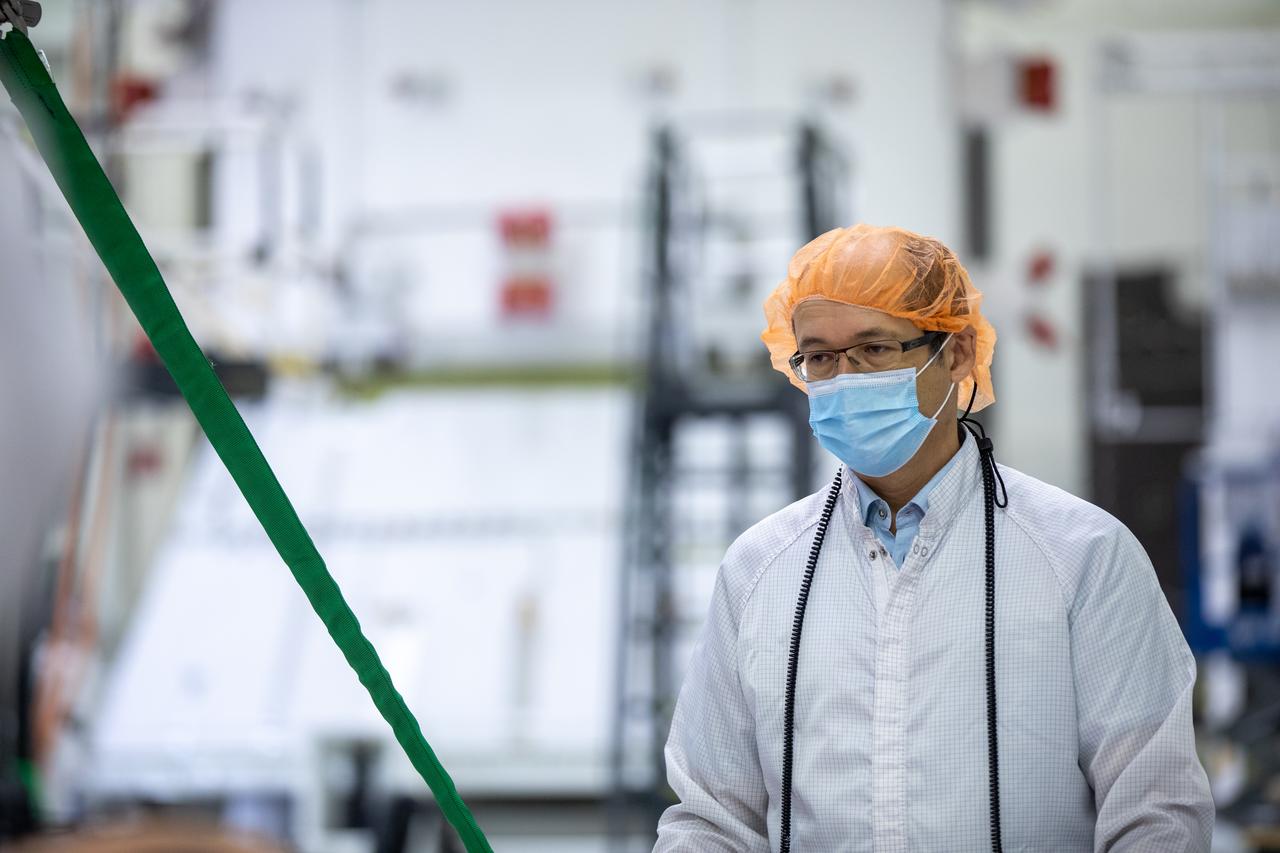
Rachid Amekrane, Airbus Defence and Space Integration test director, assists with securing a protective cover as a crane prepares to lift the panel during installation of one of four solar array wings inside the Neil Armstrong Operations and Checkout Building high bay at NASA’s Kennedy Space Center in Florida on Sept. 23, 2020. The Orion spacecraft for Artemis I is shown in the background. The solar arrays were extended, inspected, and then retracted, before installation on the spacecraft. Each solar array panel will generate 11 kilowatts of power and span about 63 feet. The array is a component of Orion’s service module, which is provided by the European Space Agency and built by Airbus Defence and Space to supply Orion’s power, propulsion, air and water. The first in a series of increasingly complex missions, Artemis I will test the Orion spacecraft and Space Launch System as an integrated system ahead of crewed flights to the Moon. Under the Artemis program, NASA will land the first woman and the next man on the Moon in 2024.
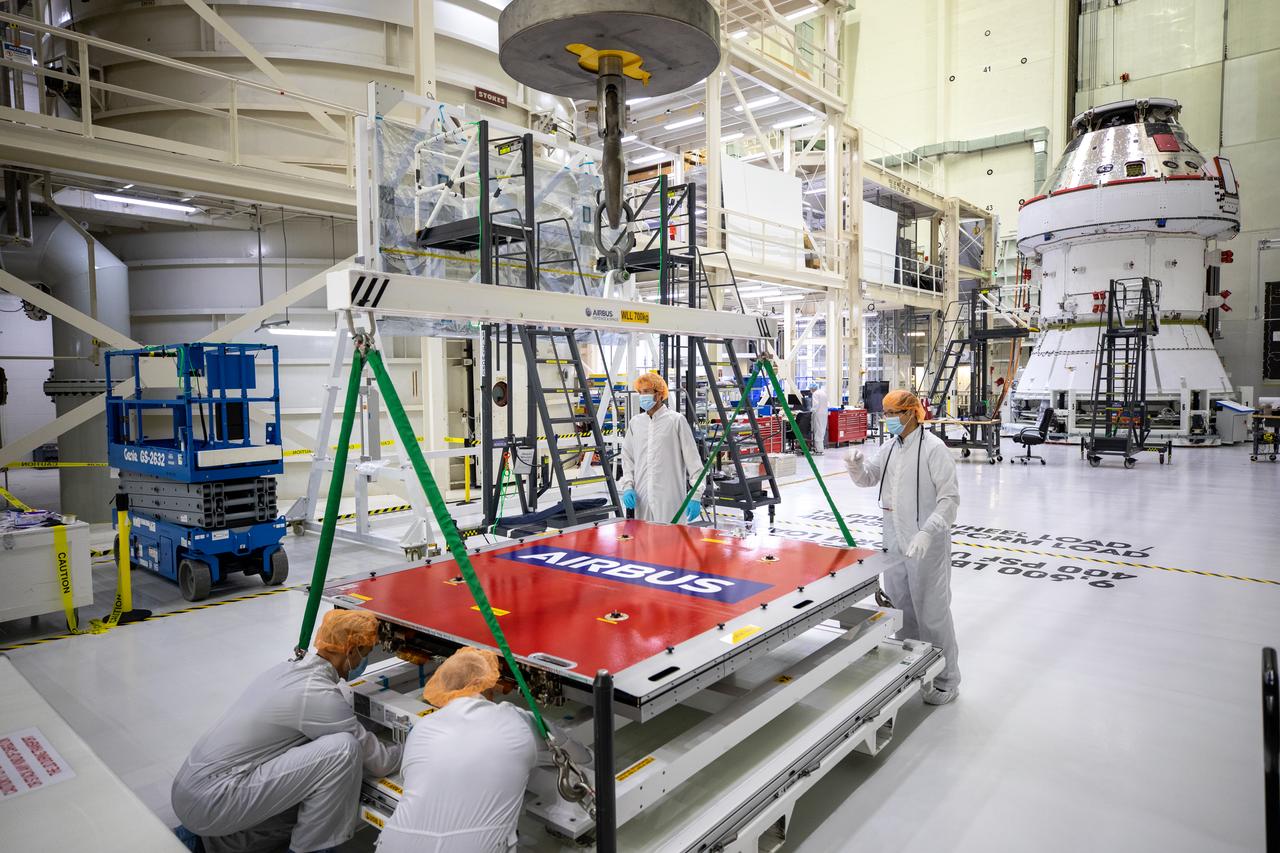
Technicians with European Service Module processing teams from the European Space Agency, Airbus, and Airbus Netherlands assist with securing a protective cover as a crane prepares to lift the panel during installation of one of four solar array wings inside the Neil Armstrong Operations and Checkout Building high bay at NASA’s Kennedy Space Center in Florida on Sept. 23, 2020. The Orion spacecraft for Artemis I is shown in the background. The solar arrays were extended, inspected, and then retracted, before installation on the spacecraft. Each solar array panel will generate 11 kilowatts of power and span about 63 feet. The array is a component of Orion’s service module, which is provided by the European Space Agency and built by Airbus Defence and Space to supply Orion’s power, propulsion, air and water. The first in a series of increasingly complex missions, Artemis I will test the Orion spacecraft and Space Launch System as an integrated system ahead of crewed flights to the Moon. Under the Artemis program, NASA will land the first woman and the next man on the Moon in 2024.
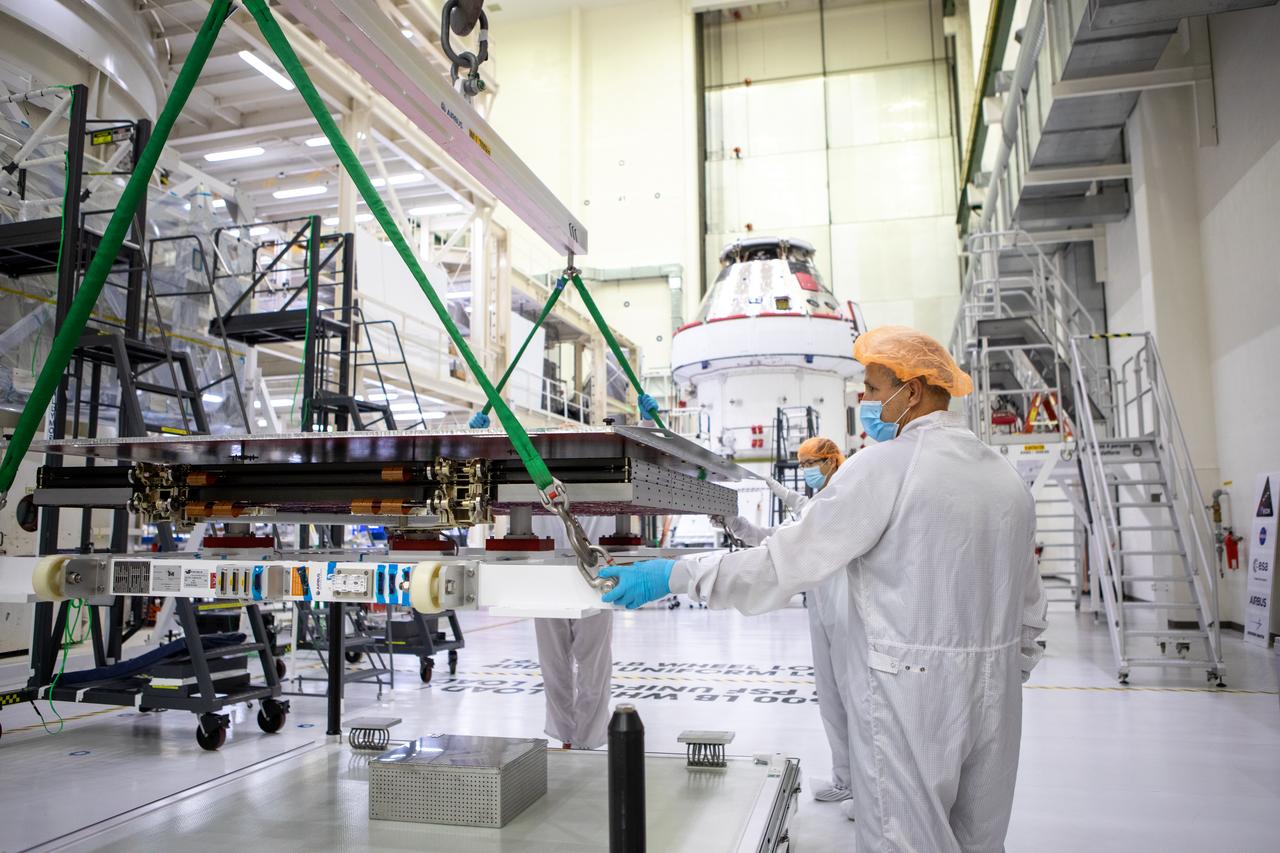
Technicians with European Service Module processing teams from the European Space Agency, Airbus, and Airbus Netherlands assist with securing a protective cover as a crane prepares to lift the panel during installation of one of four solar array wings inside the Neil Armstrong Operations and Checkout Building high bay at NASA’s Kennedy Space Center in Florida on Sept. 23, 2020. The Orion spacecraft for Artemis I is shown in the background. The solar arrays were extended, inspected, and then retracted, before installation on the spacecraft. Each solar array panel will generate 11 kilowatts of power and span about 63 feet. The array is a component of Orion’s service module, which is provided by the European Space Agency and built by Airbus Defence and Space to supply Orion’s power, propulsion, air and water. The first in a series of increasingly complex missions, Artemis I will test the Orion spacecraft and Space Launch System as an integrated system ahead of crewed flights to the Moon. Under the Artemis program, NASA will land the first woman and the next man on the Moon in 2024.
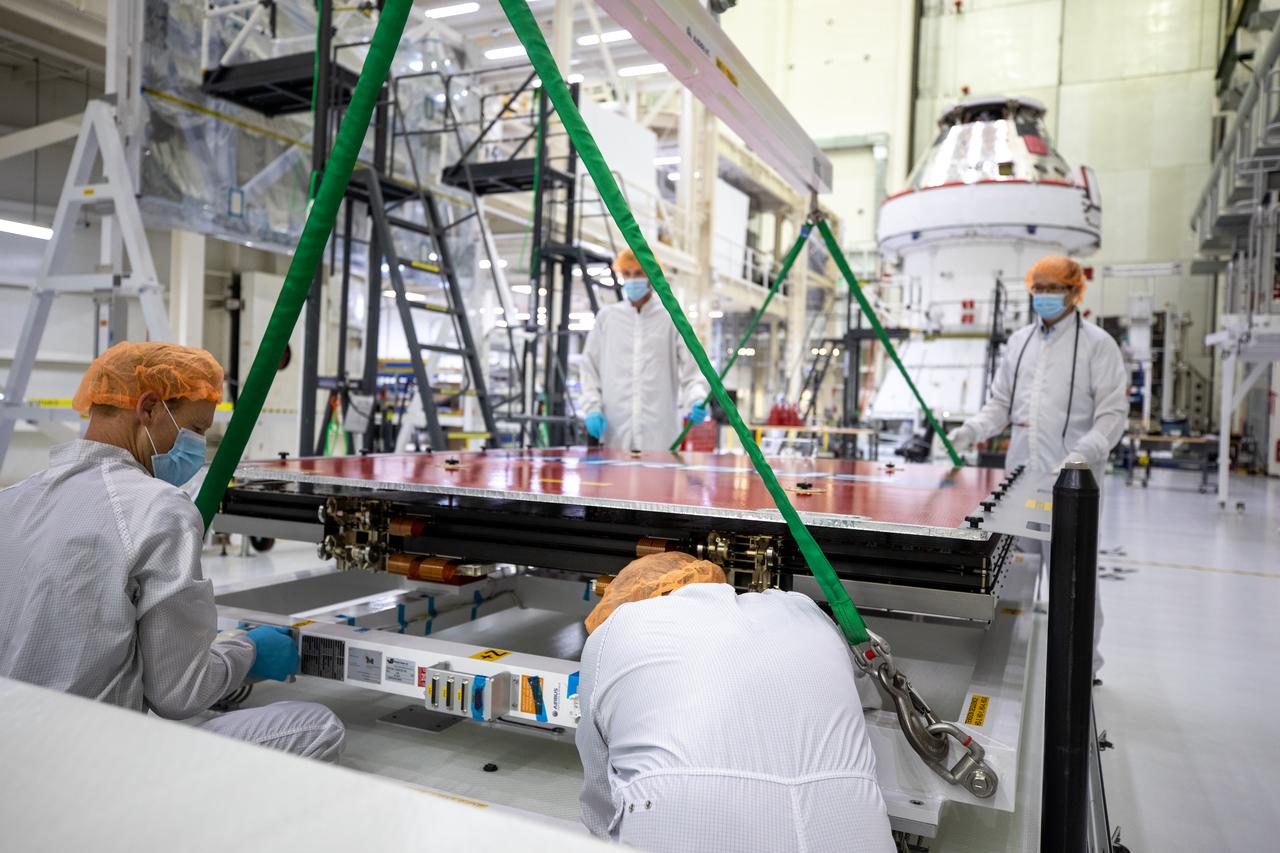
Technicians with European Service Module processing teams from the European Space Agency, Airbus, and Airbus Netherlands assist with securing a protective cover as a crane prepares to lift the panel during installation of one of four solar array wings inside the Neil Armstrong Operations and Checkout Building high bay at NASA’s Kennedy Space Center in Florida on Sept. 23, 2020. The Orion spacecraft for Artemis I is shown in the background. The solar arrays were extended, inspected, and then retracted, before installation on the spacecraft. Each solar array panel will generate 11 kilowatts of power and span about 63 feet. The array is a component of Orion’s service module, which is provided by the European Space Agency and built by Airbus Defence and Space to supply Orion’s power, propulsion, air and water. The first in a series of increasingly complex missions, Artemis I will test the Orion spacecraft and Space Launch System as an integrated system ahead of crewed flights to the Moon. Under the Artemis program, NASA will land the first woman and the next man on the Moon in 2024.
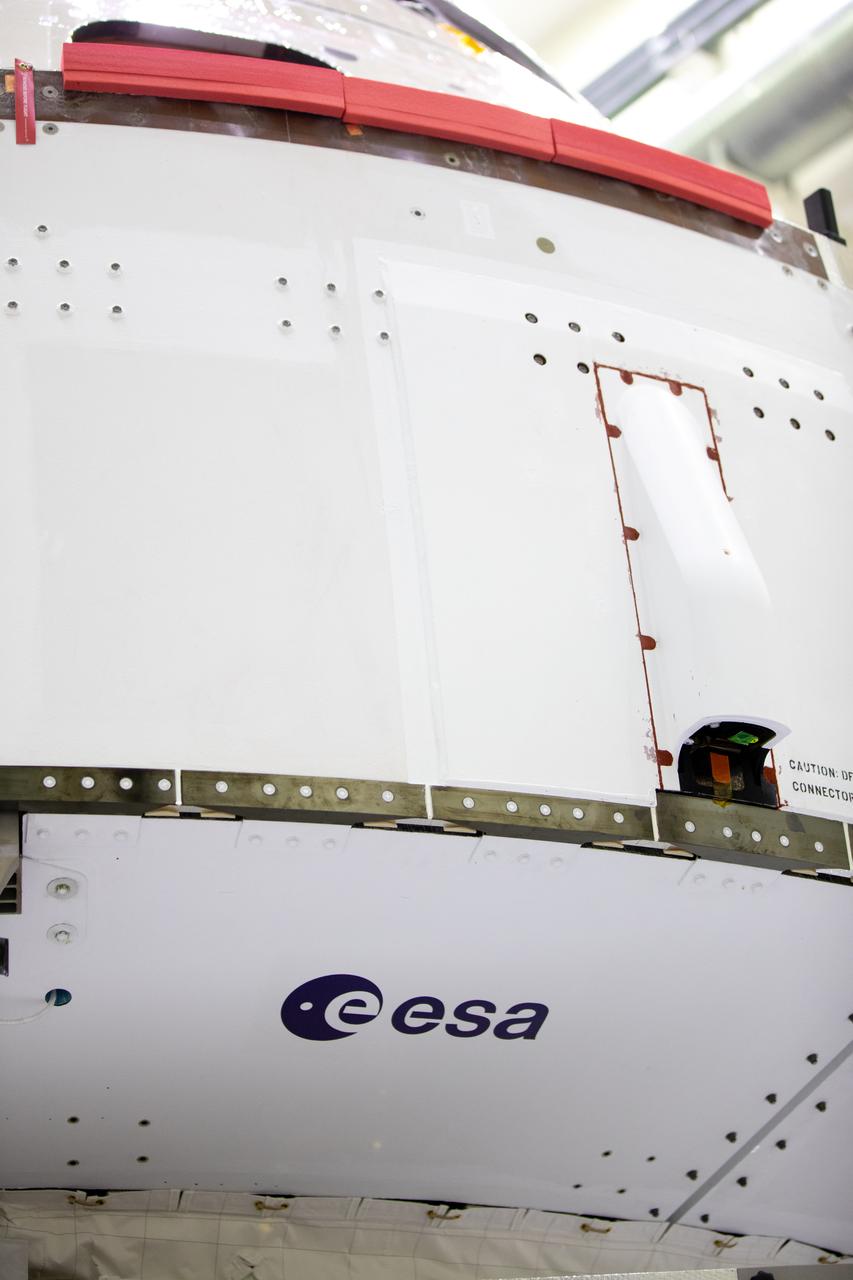
Inside the Neil Armstrong Operations and Checkout Building high bay at Kennedy Space Center, the European Space Agency (ESA) logo has been added to the aft wall of Orion’s crew module adapter ahead of NASA’s Artemis I mission. The Orion spacecraft is being prepared for installation of the solar array wings on Sept. 23, 2020. The first in a series of increasingly complex missions, Artemis I will test the Orion spacecraft and Space Launch System as an integrated system ahead of crewed flights to the Moon. Under the Artemis program, NASA will land the first woman and the next man on the Moon by 2024.
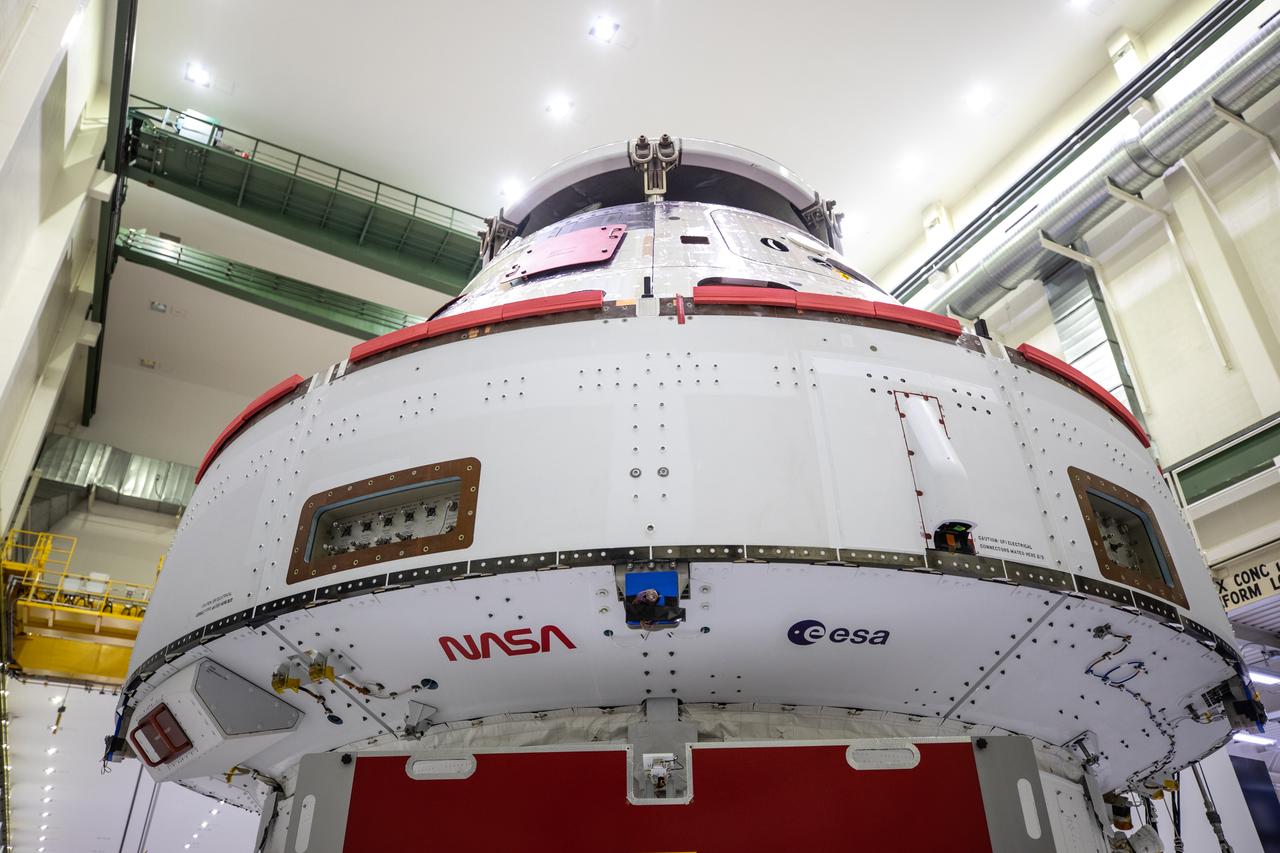
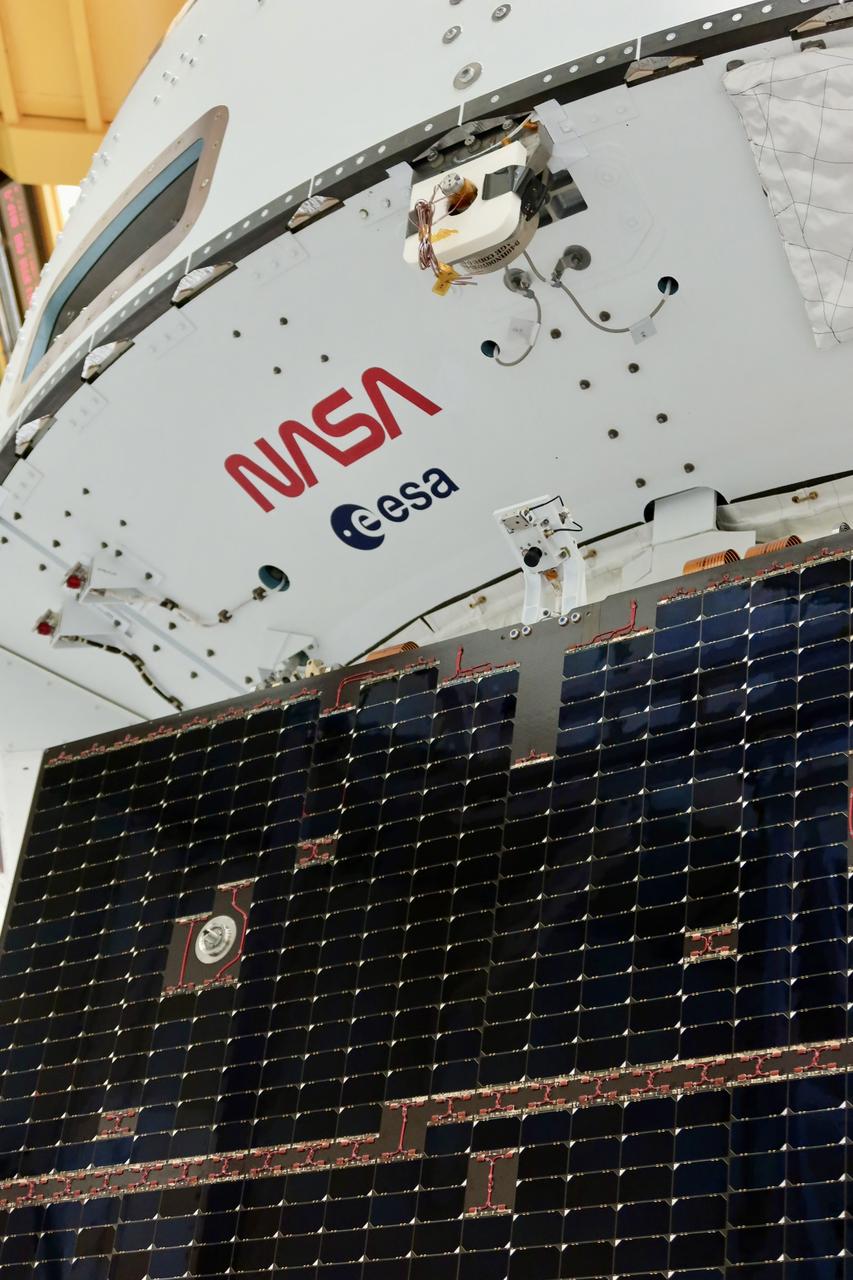
Inside the Neil Armstrong Operations and Checkout Building high bay at Kennedy Space Center, NASA’s iconic “worm” logo and European Space Agency (ESA) logo have been added to the aft wall of Orion’s crew module adapter ahead of NASA’s Artemis I mission. Originally created by the firm of Danne & Blackburn, the “worm” logo’s bold, sleek design was officially introduced in 1975 and was incorporated into many of the agency’s next-generation programs. It was retired in 1992, but has made a comeback in 2020 as the agency ushers in a new, modern era of human spaceflight. The Orion spacecraft is being prepared for installation of the solar array wings on Sept. 23, 2020. The first in a series of increasingly complex missions, Artemis I will test the Orion spacecraft and Space Launch System as an integrated system ahead of crewed flights to the Moon. Under the Artemis program, NASA will land the first woman and the next man on the Moon by 2024.
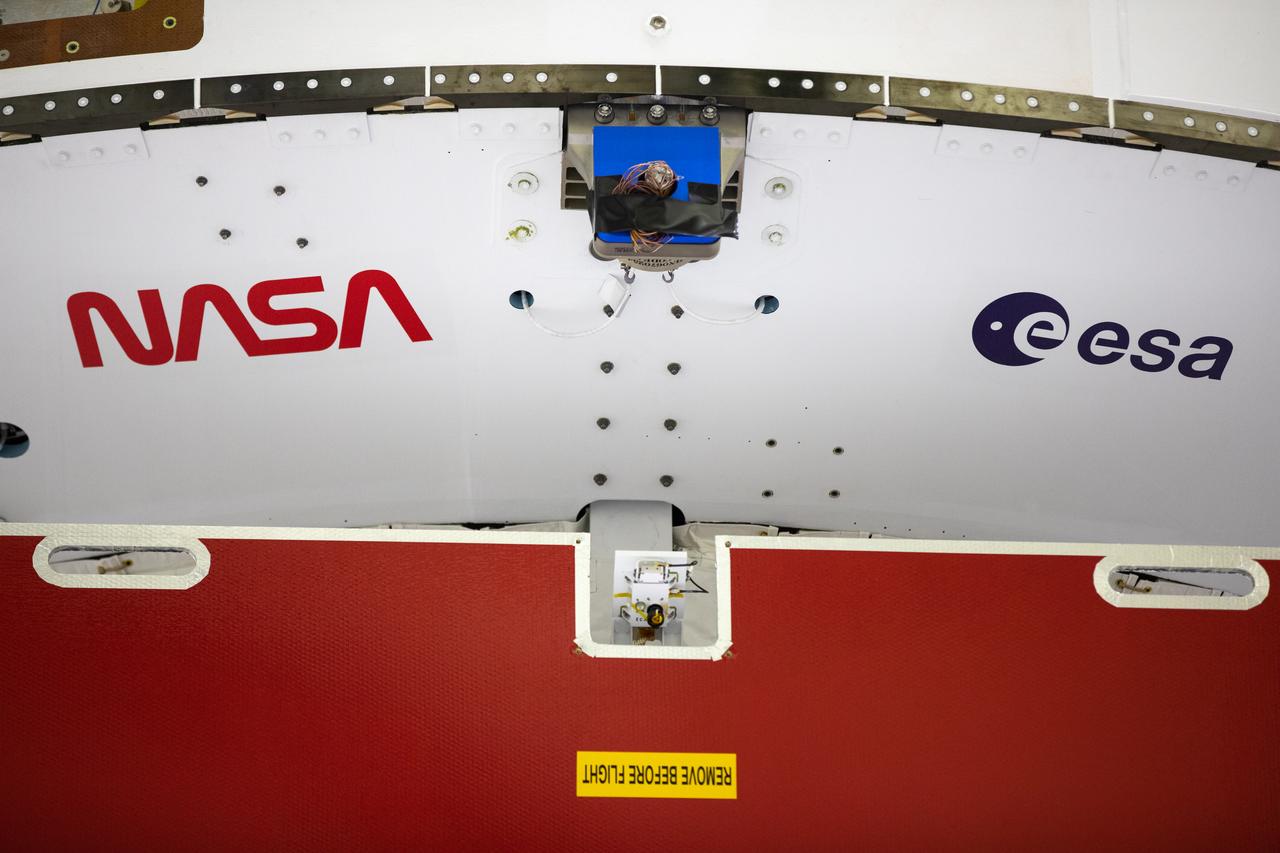
Inside the Neil Armstrong Operations and Checkout Building high bay at Kennedy Space Center, NASA’s iconic “worm” logo and European Space Agency (ESA) logo have been added to the aft wall of Orion’s crew module adapter ahead of NASA’s Artemis I mission. Originally created by the firm of Danne & Blackburn, the “worm” logo’s bold, sleek design was officially introduced in 1975 and was incorporated into many of the agency’s next-generation programs. It was retired in 1992, but has made a comeback in 2020 as the agency ushers in a new, modern era of human spaceflight. The Orion spacecraft is being prepared for installation of the solar array wings on Sept. 23, 2020. The first in a series of increasingly complex missions, Artemis I will test the Orion spacecraft and Space Launch System as an integrated system ahead of crewed flights to the Moon. Under the Artemis program, NASA will land the first woman and the next man on the Moon by 2024.
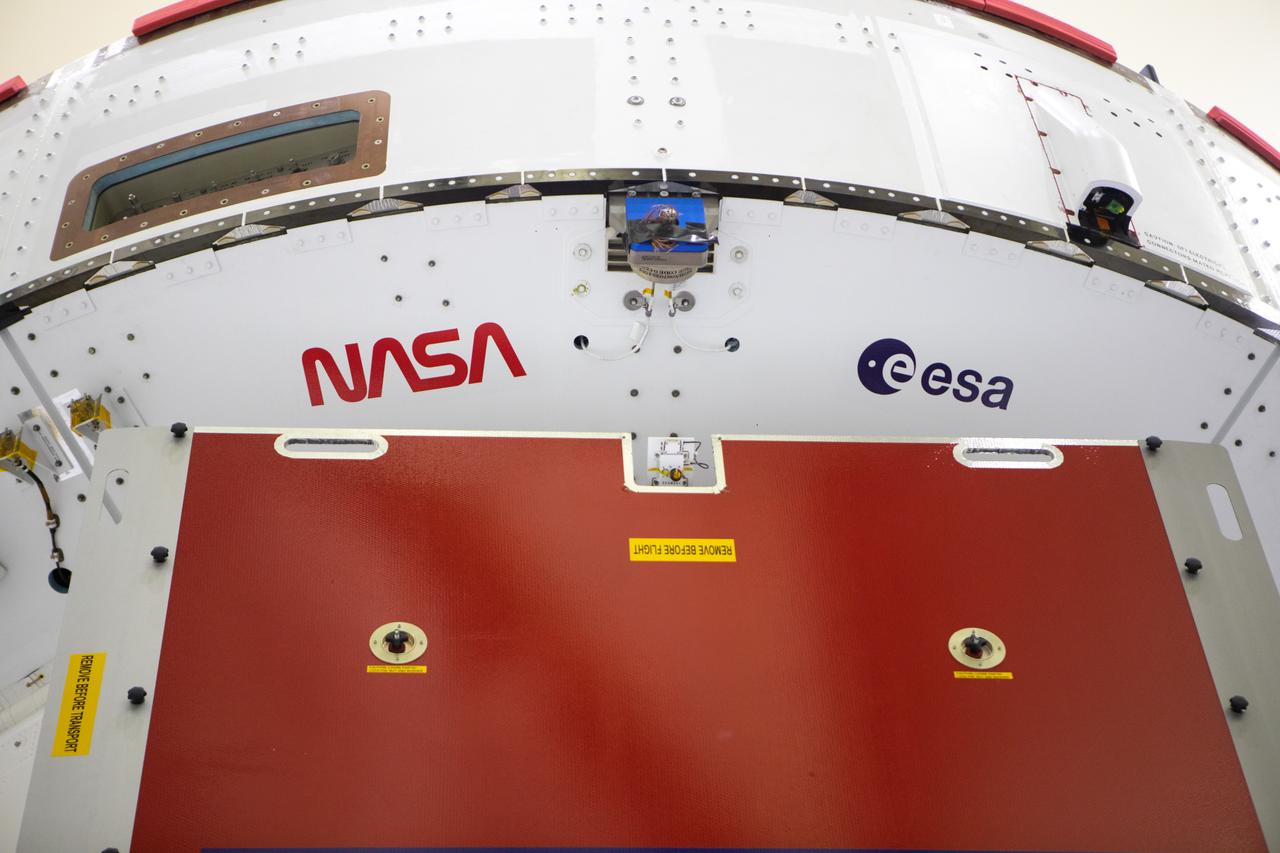
Inside the Neil Armstrong Operations and Checkout Building high bay at Kennedy Space Center, NASA’s iconic “worm” logo and European Space Agency (ESA) logo have been added to the aft wall of Orion’s crew module adapter ahead of NASA’s Artemis I mission. Originally created by the firm of Danne & Blackburn, the “worm” logo’s bold, sleek design was officially introduced in 1975 and was incorporated into many of the agency’s next-generation programs. It was retired in 1992, but has made a comeback in 2020 as the agency ushers in a new, modern era of human spaceflight. The Orion spacecraft is being prepared for installation of the solar array wings on Sept. 23, 2020. The first in a series of increasingly complex missions, Artemis I will test the Orion spacecraft and Space Launch System as an integrated system ahead of crewed flights to the Moon. Under the Artemis program, NASA will land the first woman and the next man on the Moon by 2024.

Inside the Neil Armstrong Operations and Checkout Building high bay at Kennedy Space Center, NASA’s iconic “worm” logo and European Space Agency (ESA) logo have been added to the aft wall of Orion’s crew module adapter ahead of NASA’s Artemis I mission. Originally created by the firm of Danne & Blackburn, the “worm” logo’s bold, sleek design was officially introduced in 1975 and was incorporated into many of the agency’s next-generation programs. It was retired in 1992, but has made a comeback in 2020 as the agency ushers in a new, modern era of human spaceflight. The Orion spacecraft is being prepared for installation of the solar array wings on Sept. 23, 2020. The first in a series of increasingly complex missions, Artemis I will test the Orion spacecraft and Space Launch System as an integrated system ahead of crewed flights to the Moon. Under the Artemis program, NASA will land the first woman and the next man on the Moon by 2024.
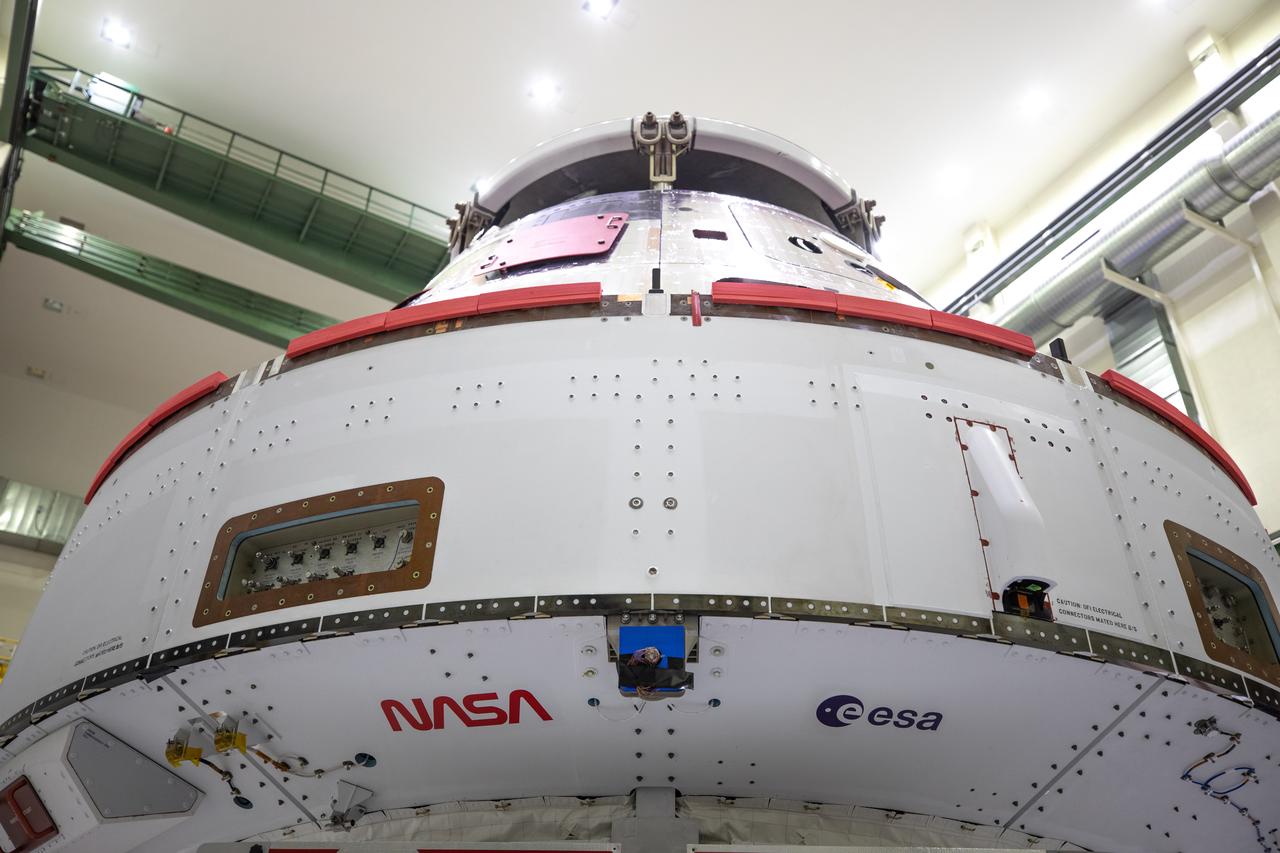
Inside the Neil Armstrong Operations and Checkout Building high bay at Kennedy Space Center, NASA’s iconic “worm” logo and European Space Agency (ESA) logo have been added to the aft wall of Orion’s crew module adapter ahead of NASA’s Artemis I mission. Originally created by the firm of Danne & Blackburn, the “worm” logo’s bold, sleek design was officially introduced in 1975 and was incorporated into many of the agency’s next-generation programs. It was retired in 1992, but has made a comeback in 2020 as the agency ushers in a new, modern era of human spaceflight. The Orion spacecraft is being prepared for installation of the solar array wings on Sept. 23, 2020. The first in a series of increasingly complex missions, Artemis I will test the Orion spacecraft and Space Launch System as an integrated system ahead of crewed flights to the Moon. Under the Artemis program, NASA will land the first woman and the next man on the Moon by 2024.
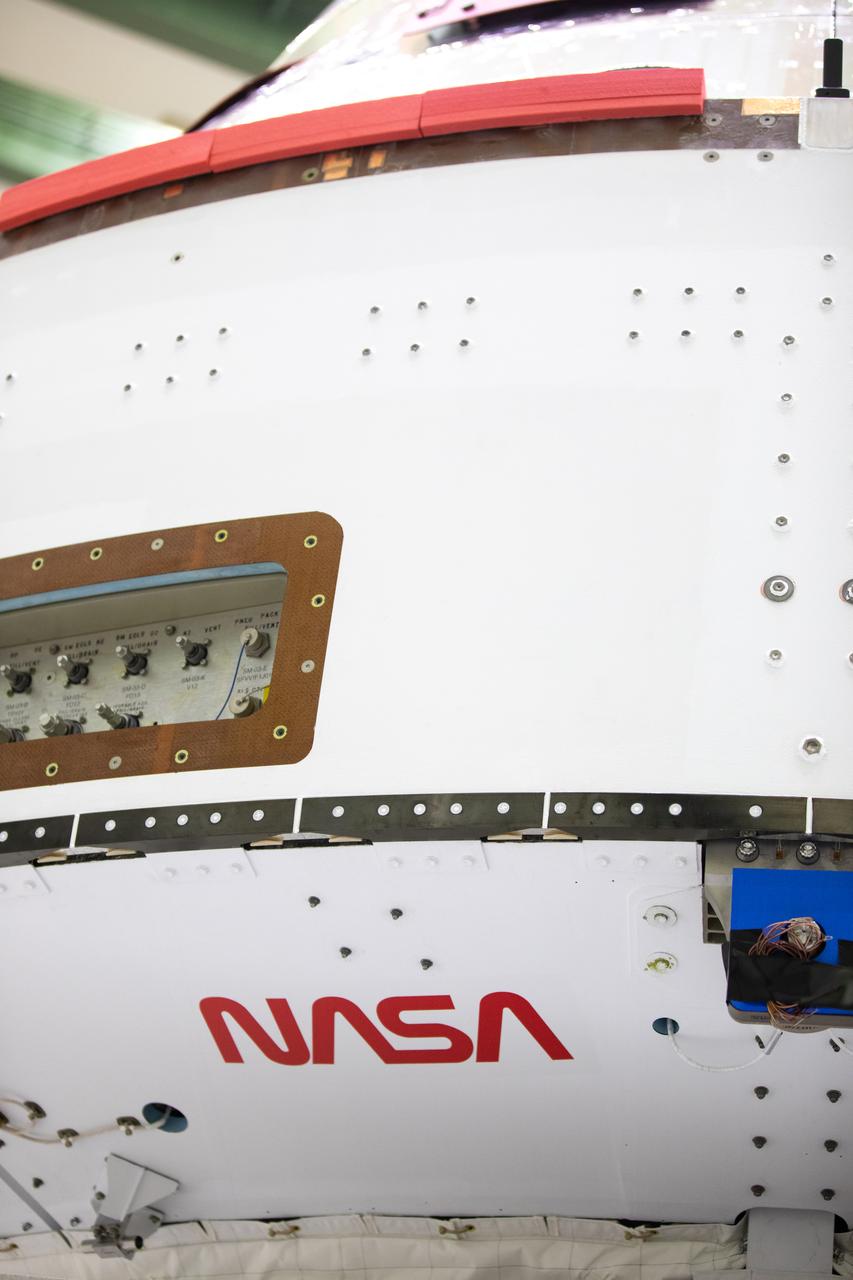
Inside the Neil Armstrong Operations and Checkout Building high bay at Kennedy Space Center, NASA’s iconic “worm” logo has been added to the aft wall of Orion’s crew module adapter ahead of NASA’s Artemis I mission. Originally created by the firm of Danne & Blackburn, the “worm” logo’s bold, sleek design was officially introduced in 1975 and was incorporated into many of the agency’s next-generation programs. It was retired in 1992, but has made a comeback in 2020 as the agency ushers in a new, modern era of human spaceflight. The Orion spacecraft is being prepared for installation of the solar array wings on Sept. 23, 2020. The first in a series of increasingly complex missions, Artemis I will test the Orion spacecraft and Space Launch System as an integrated system ahead of crewed flights to the Moon. Under the Artemis program, NASA will land the first woman and the next man on the Moon by 2024.

At NASA Glenn's Plum Brook Station in Sandusky, Ohio, one of Orion's solar array wings attached to a structural representation of the service module was deployed Feb. 29, 2016. The test was performed to ensure the wing can properly unfurl.
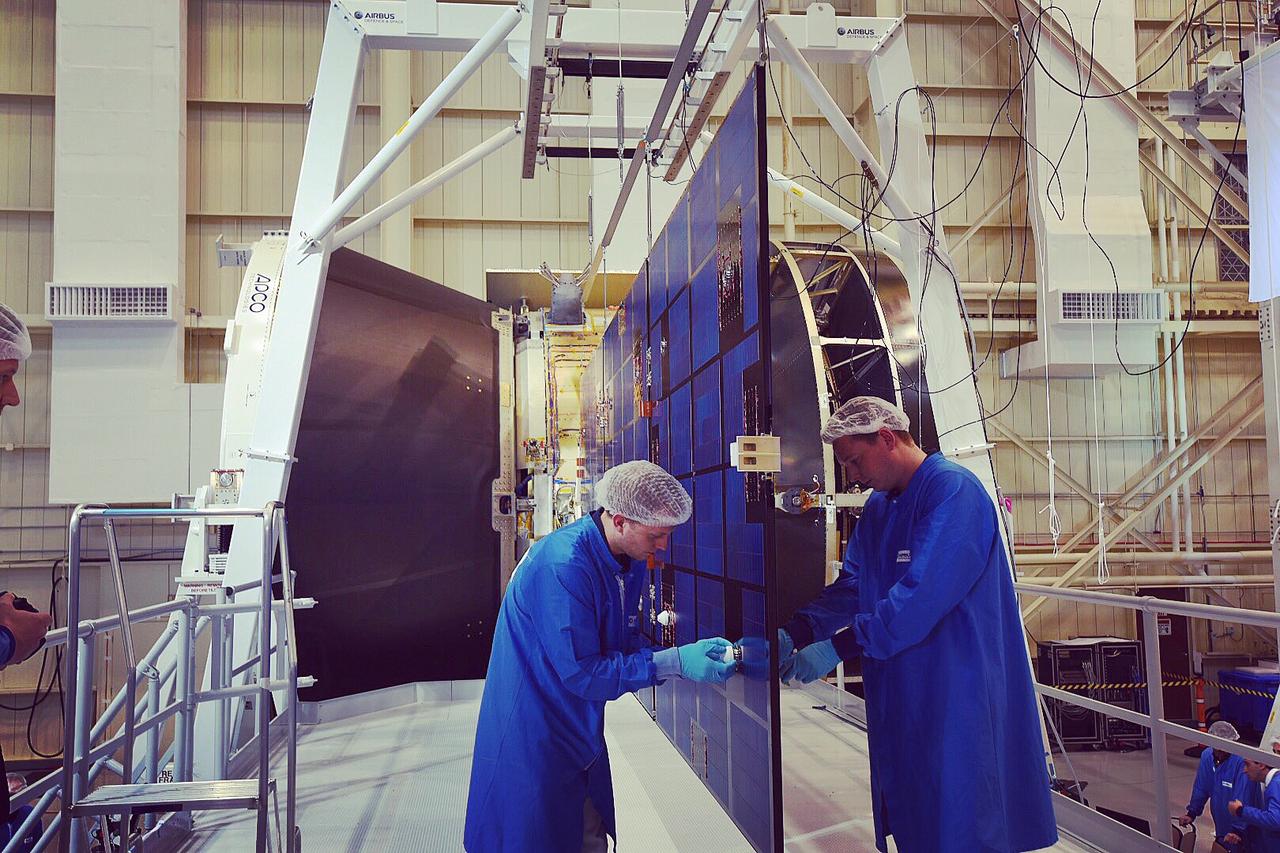
At NASA Glenn's Plum Brook Station in Sandusky, Ohio, one of Orion's solar array wings attached to a structural representation of the service module was deployed Feb. 29, 2016. The test was performed to ensure the wing can properly unfurl.
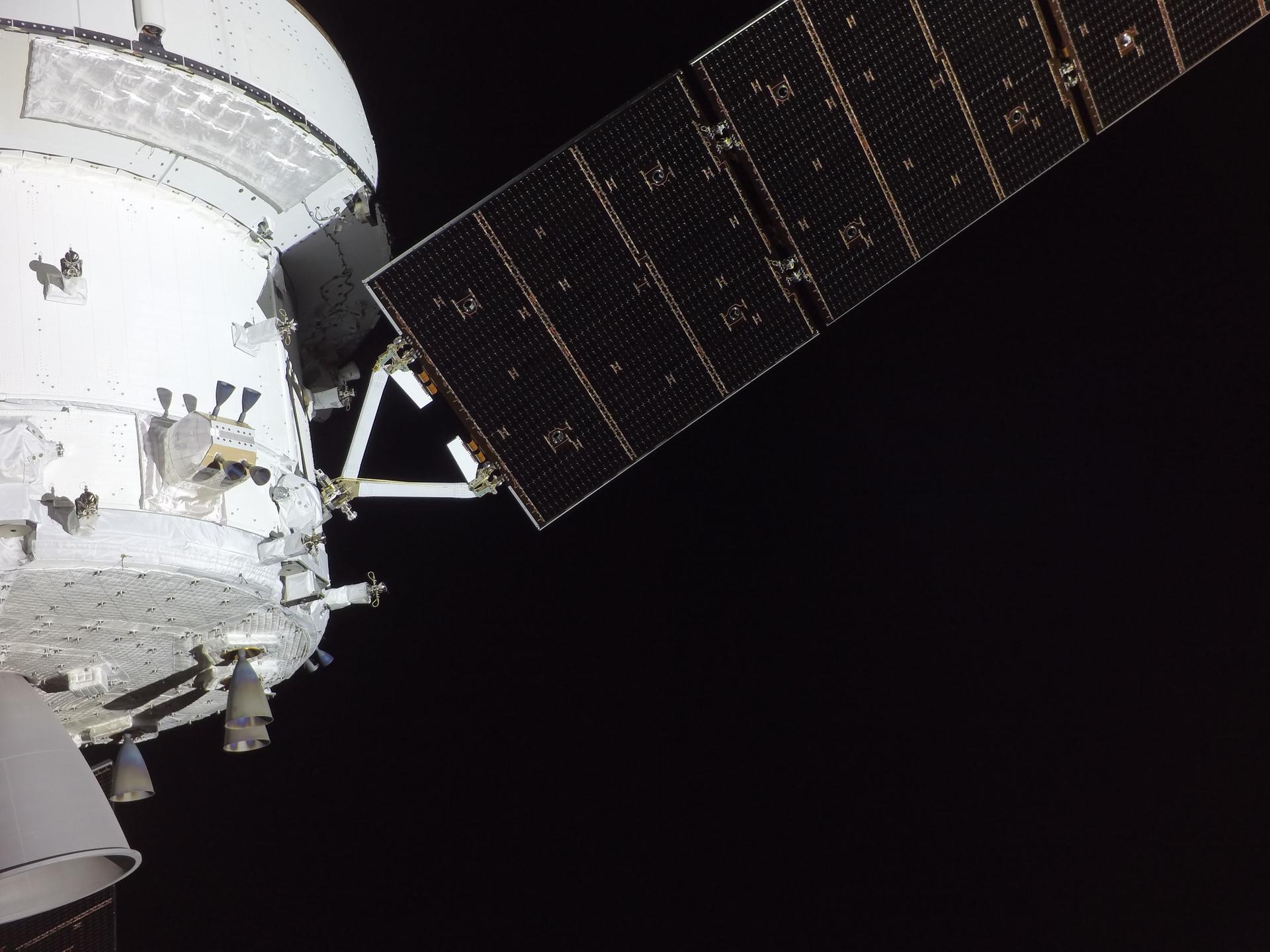
art002e012584 (April 7, 2026) - NASA’s Orion spacecraft pictured from one of the cameras mounted on its solar array wings. The service module is prominently featured in this image showing a portion of the orbital maneuvering system engine and three of eight auxiliary thrusters. Also pictured is one of the four solar array wings. Each of Orion’s four solar array wings are made of three panels that provide enough electricity to power two three-bedroom homes. Credit: NASA
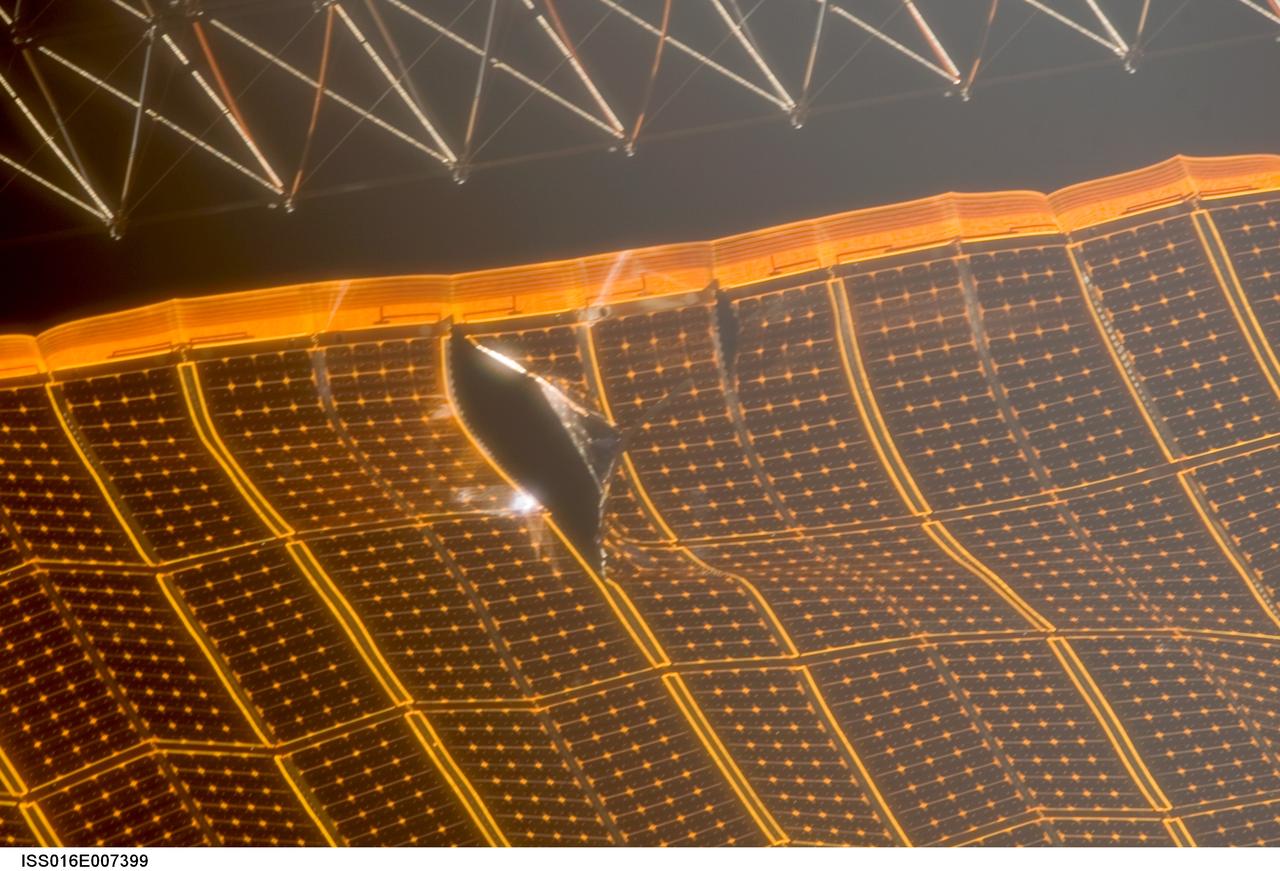
ISS016-E-007399 (30 Oct. 2007) --- A view of a damaged P6 4B solar array wing on the International Space Station. NASA halted the deployment -- which is about 80 percent complete -- to evaluate the damage.
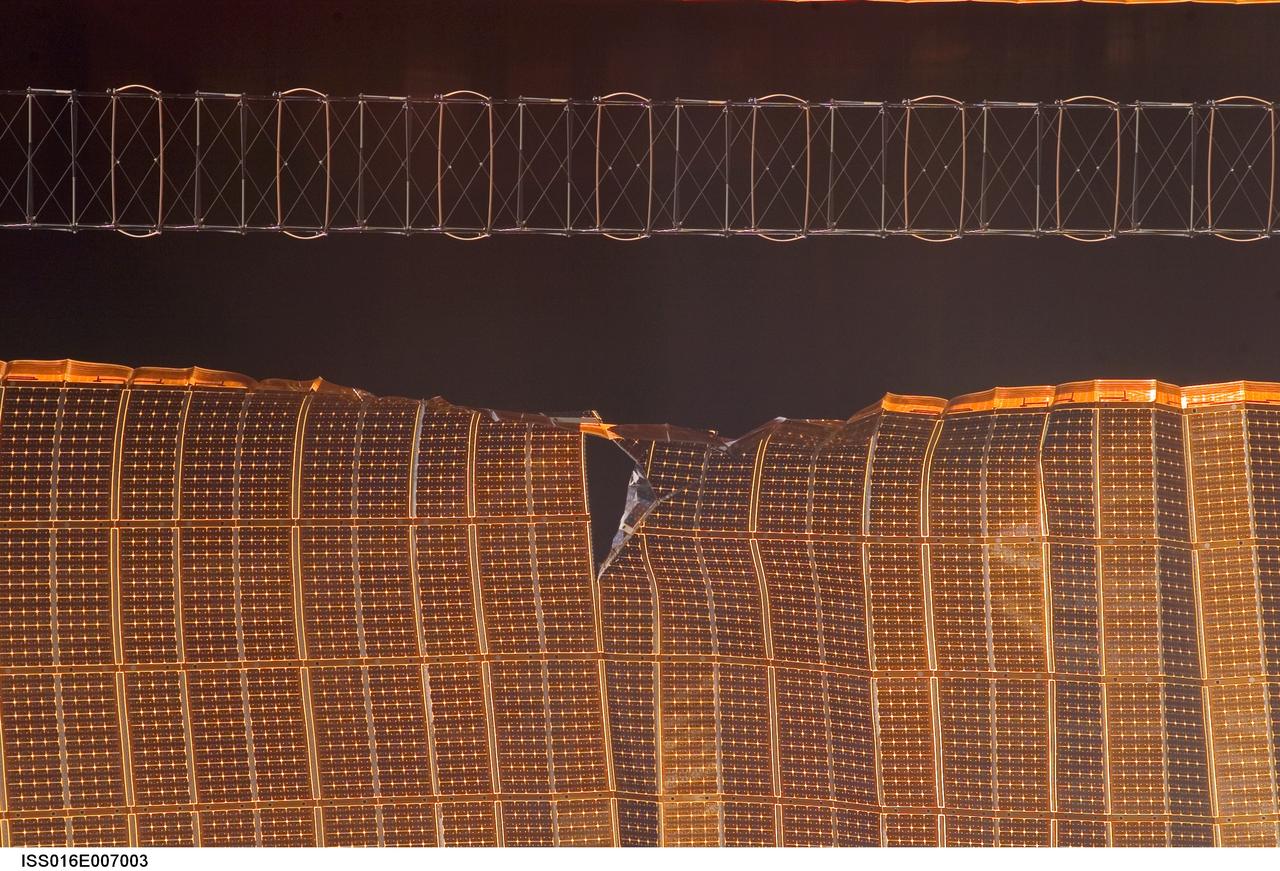
ISS016-E-007003 (30 Oct. 2007) --- A view of a damaged P6 4B solar array wing on the International Space Station. NASA halted the deployment -- which is about 80 percent complete -- to evaluate the damage.
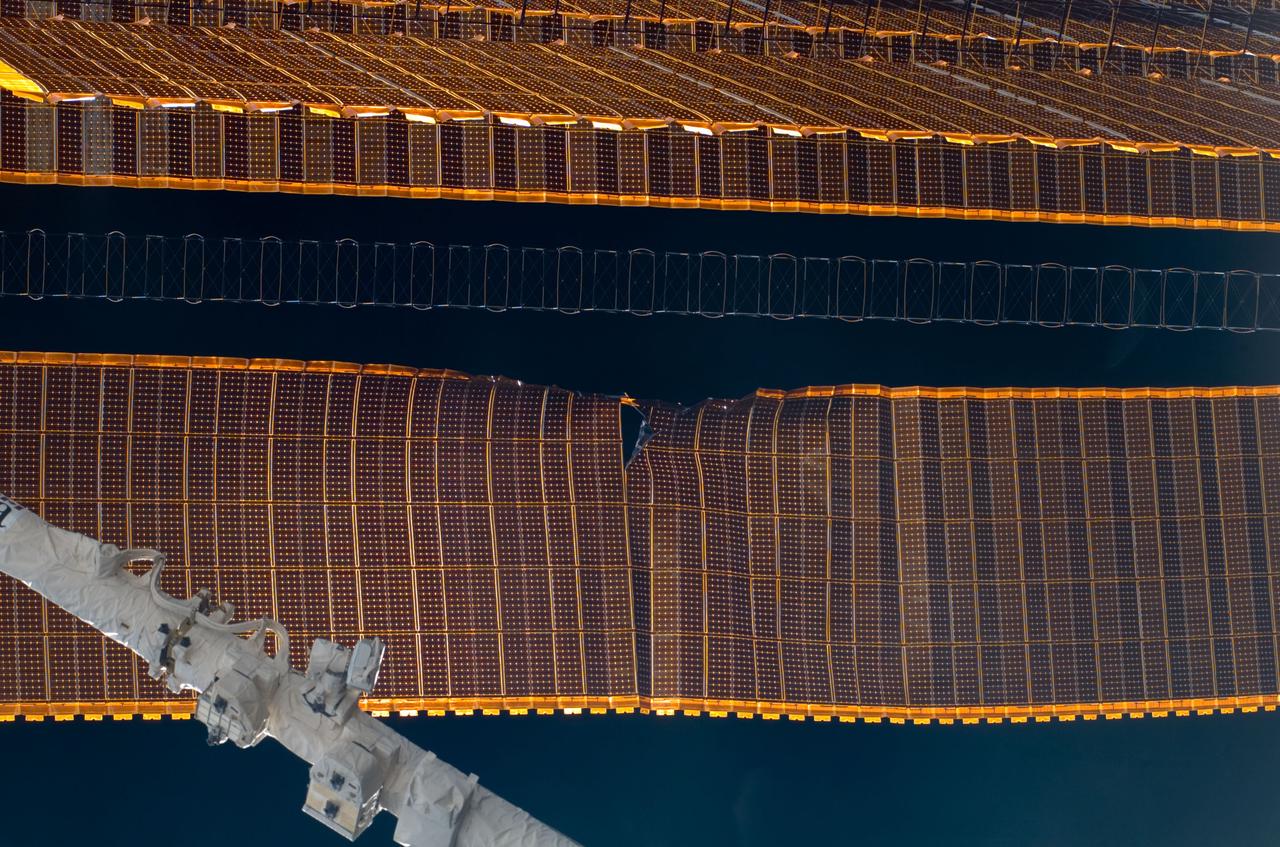
ISS016-E-007014 (30 Oct. 2007) --- A view of a damaged P6 4B solar array wing on the International Space Station. NASA halted the deployment -- which is about 80 percent complete -- to evaluate the damage.
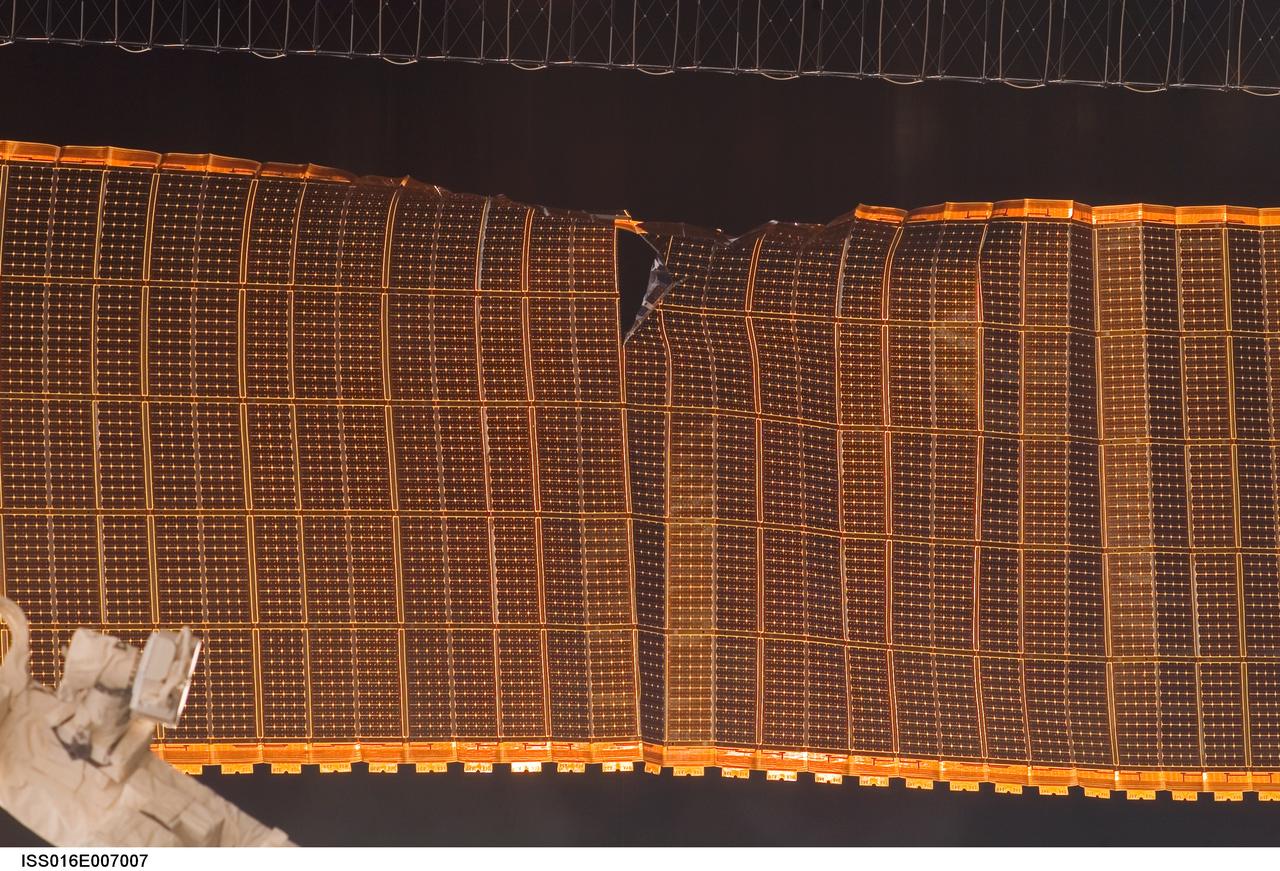
ISS016-E-007007 (30 Oct. 2007) --- A view of a damaged P6 4B solar array wing on the International Space Station. NASA halted the deployment -- which is about 80 percent complete -- to evaluate the damage.
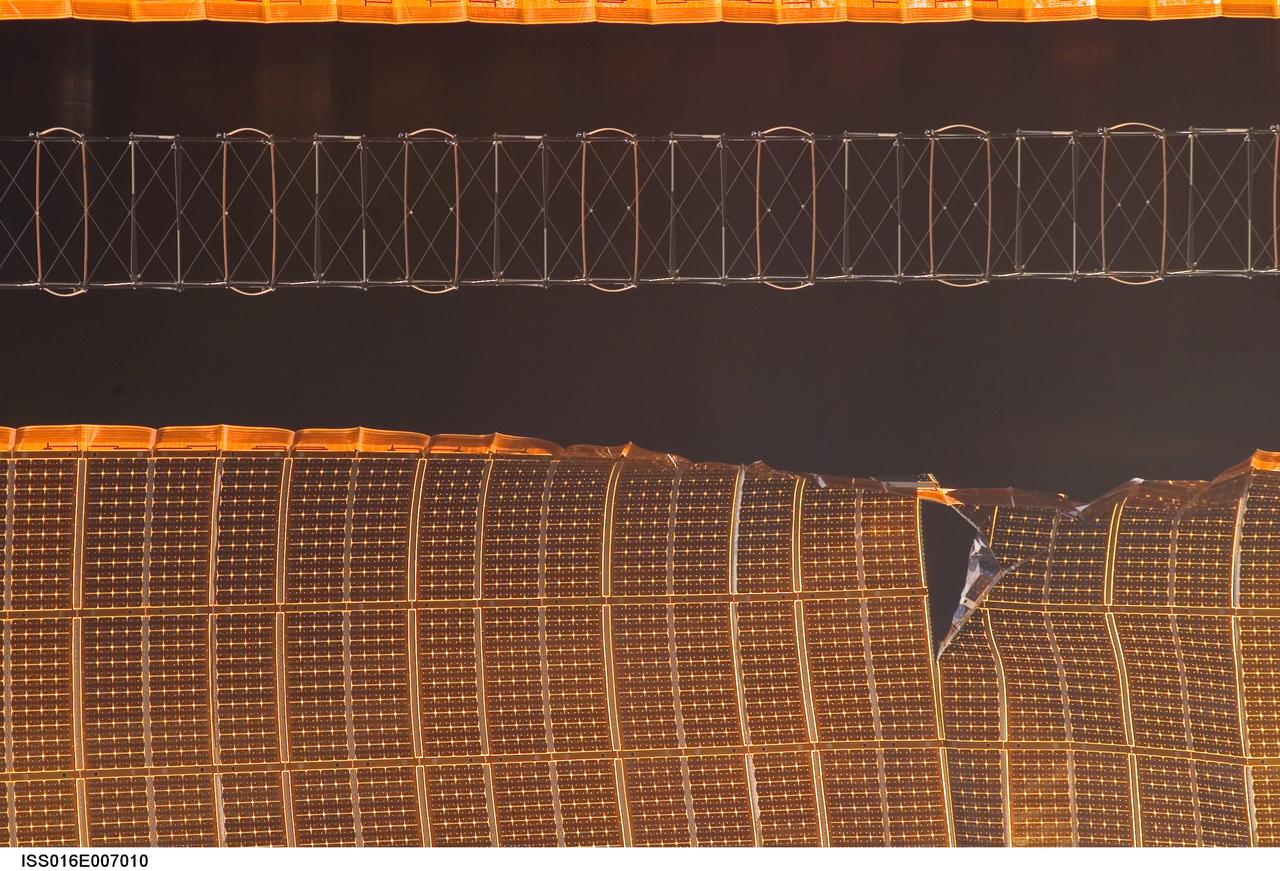
ISS016-E-007010 (30 Oct. 2007) --- A view of a damaged P6 4B solar array wing on the International Space Station. NASA halted the deployment -- which is about 80 percent complete -- to evaluate the damage.
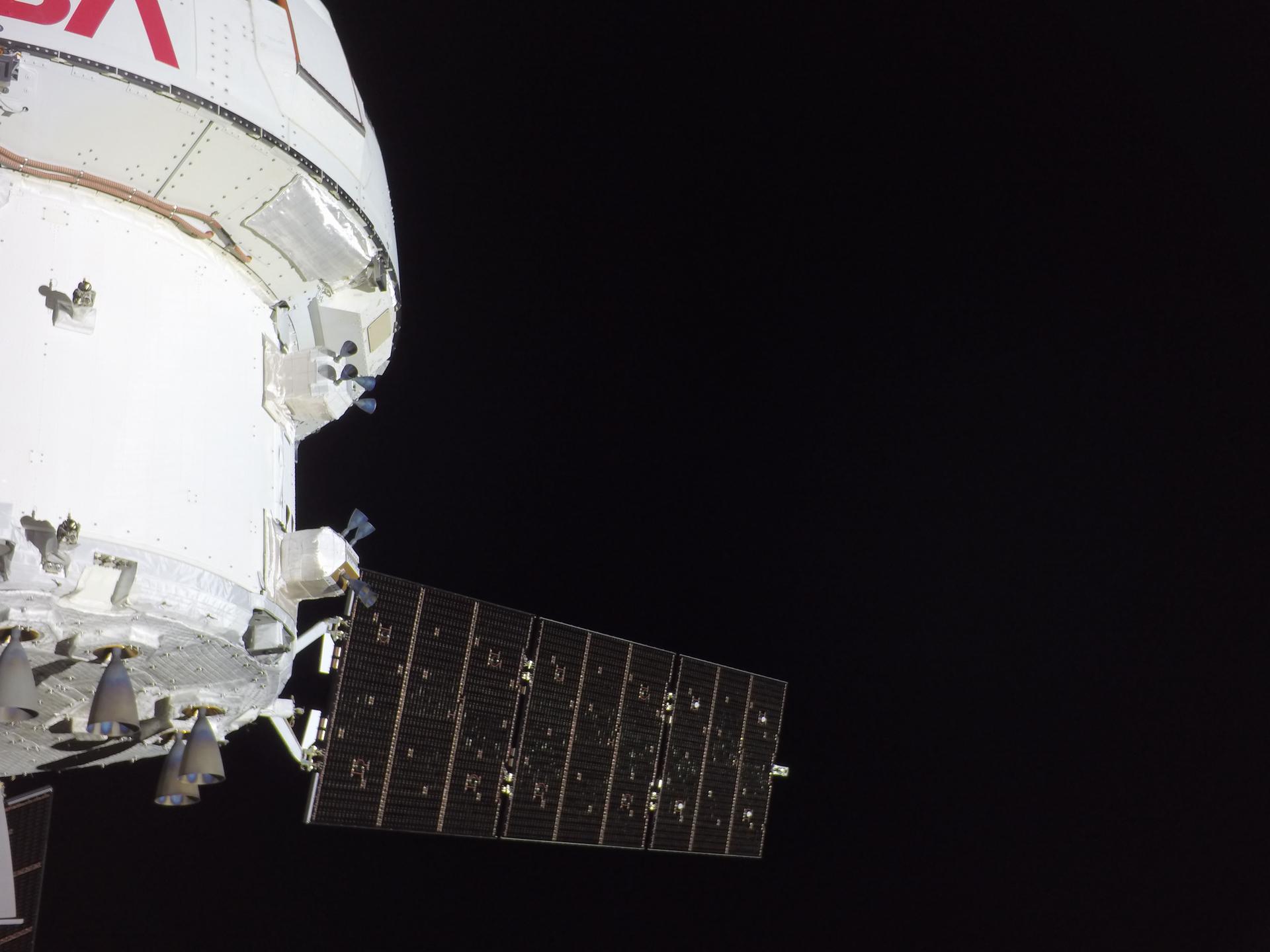
art002e012489 (April 7, 2026) - NASA’s Orion spacecraft is pictured here from one of the cameras mounted on its solar array wings. At the time this photo was taken at 8:58 a.m. ET, the Artemis II crew was in a sleep period ahead of beginning their seventh day into the mission. Credit: NASA
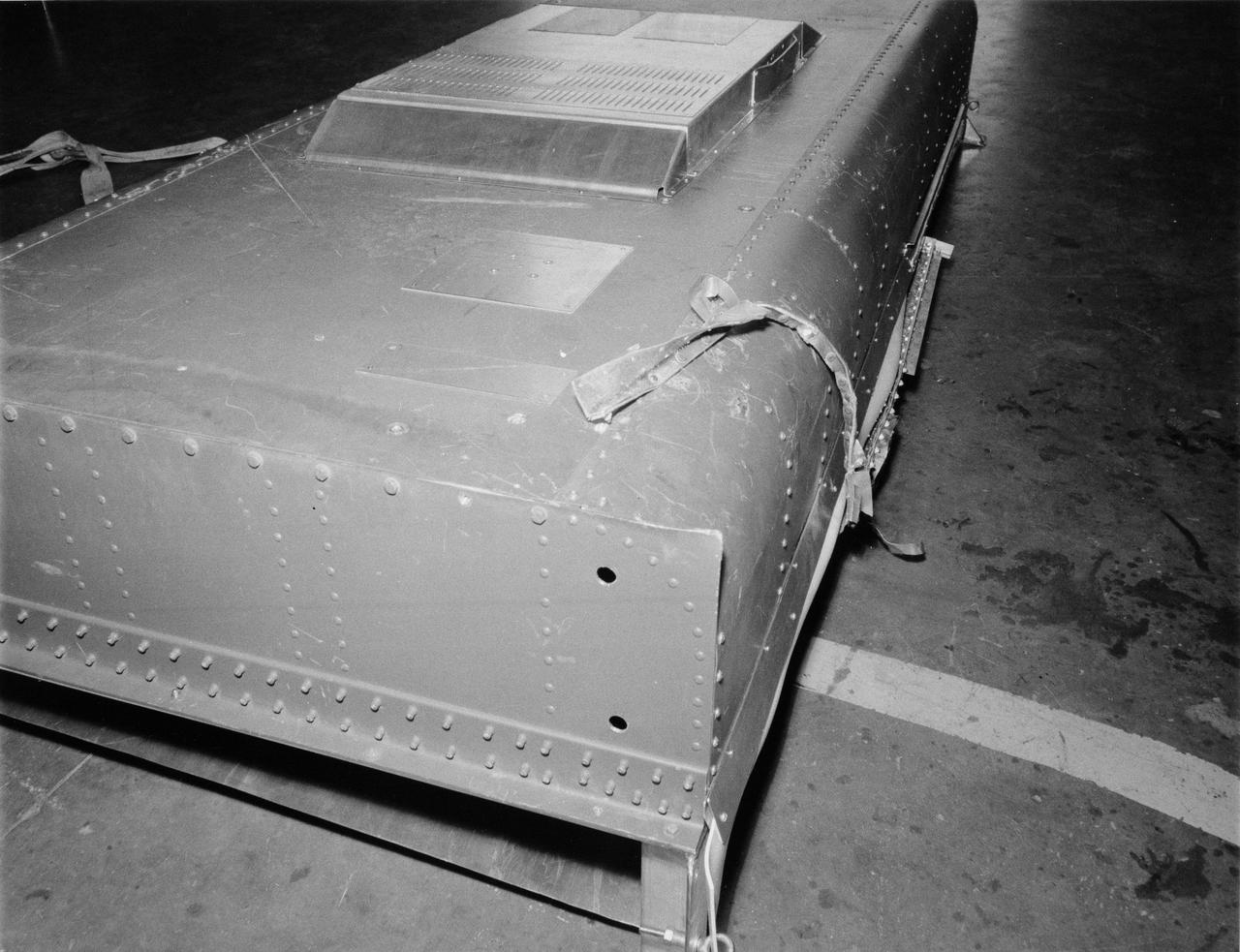
S73-27406 (5 June 1973) --- This structure duplicates the current problem with solar array wing number one on Skylab. The wing is being held against the side of the Orbital Workshop by what appears to be a strip of metal from the Meteoroid shield. Photo credit: NASA
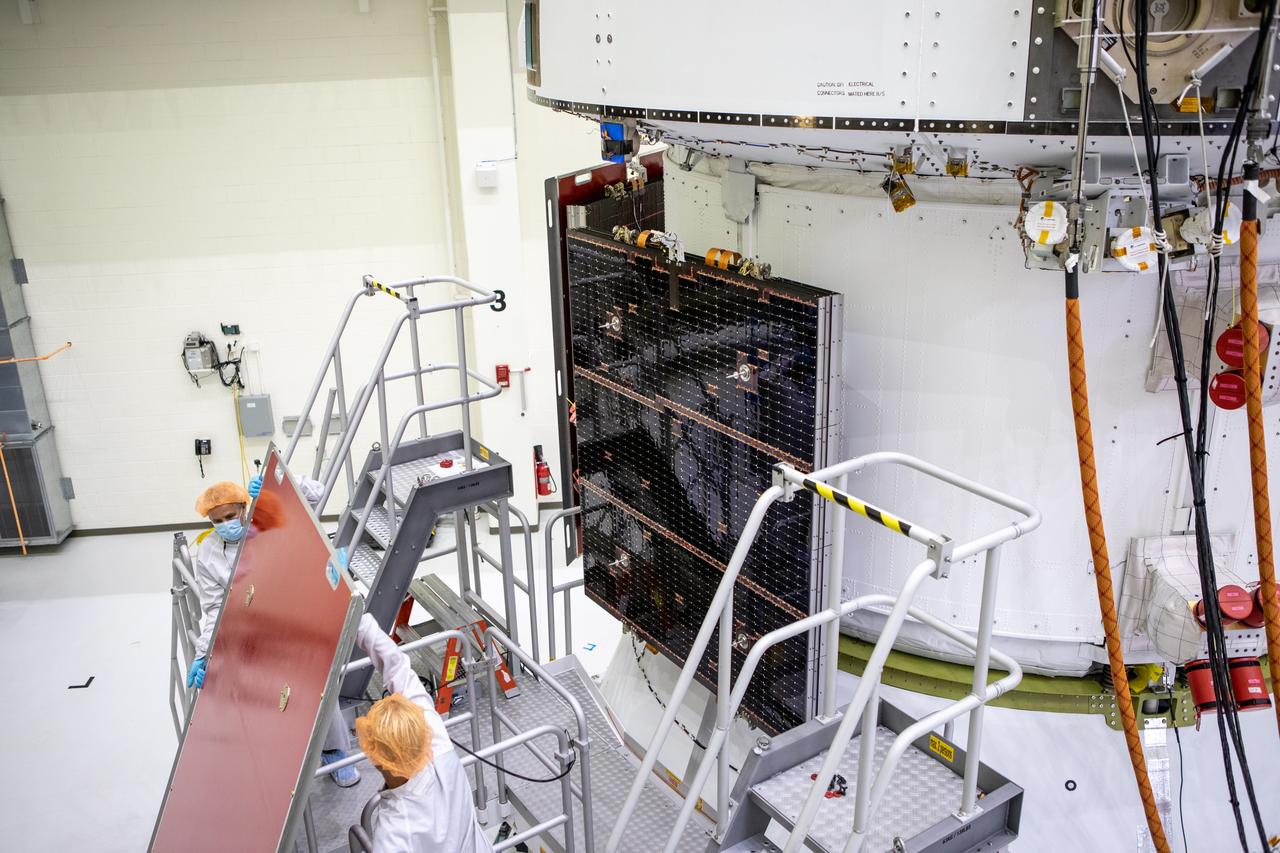
Members of the European Service Module processing team from the European Space Agency (ESA), Airbus, and Airbus Netherlands fit a protective cover over the solar arrays on the Orion spacecraft for Artemis I inside the Neil Armstrong Operations and Checkout Building high bay at NASA’s Kennedy Space Center in Florida on Sept. 25, 2020. The solar arrays were extended, inspected, and then retracted before installation on the spacecraft. Each of the four solar array panels will generate 11 kilowatts of power and span about 63 feet. The array is a component of Orion’s service module, which is provided by the European Space Agency and built by Airbus Defence and Space to supply Orion’s power, propulsion, air, and water. The first in a series of increasingly complex missions, Artemis I will test the Orion spacecraft and Space Launch System as an integrated system ahead of crewed flights to the Moon. Under the Artemis program, NASA will land the first woman and the next man on the Moon in 2024.
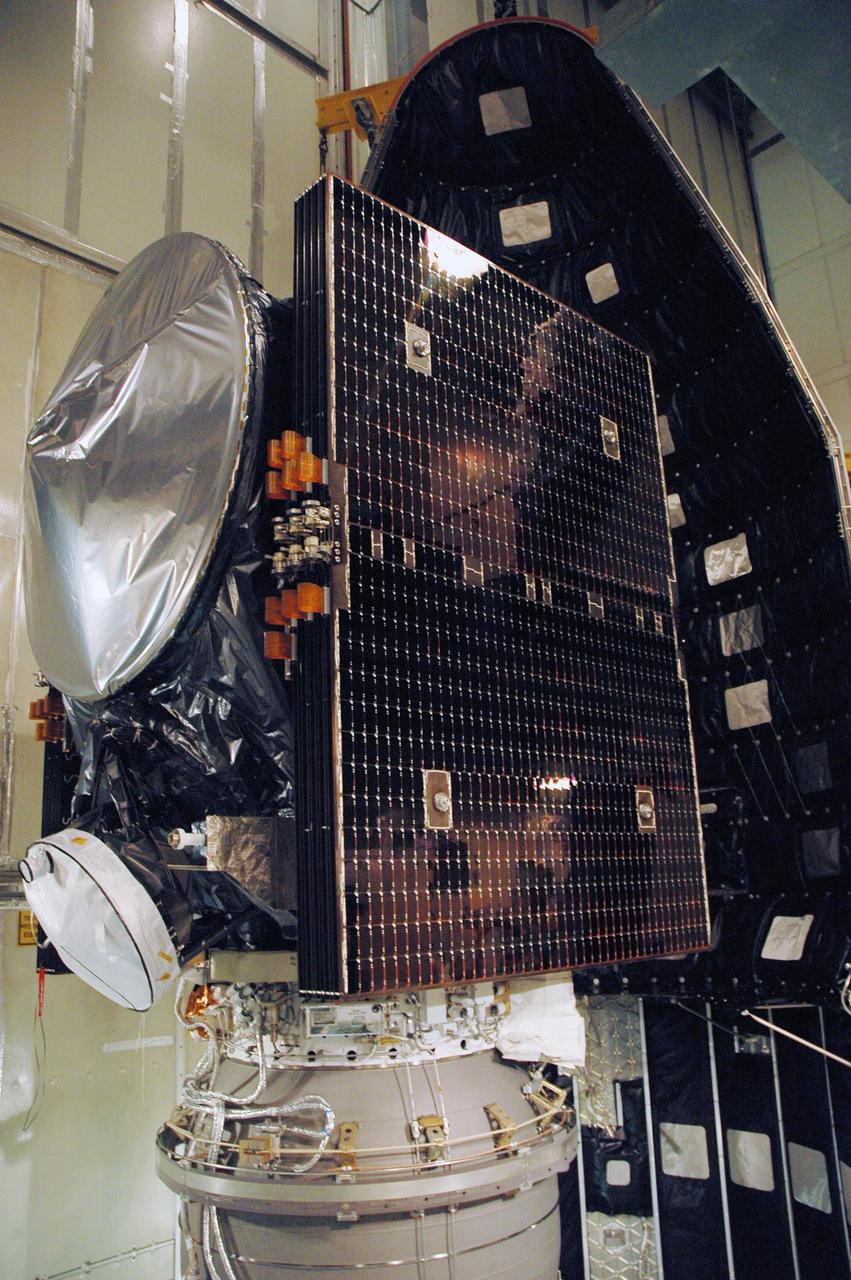
NASA Dawn spacecraft solar array wings are folded to fit inside nose section of protective fairing.
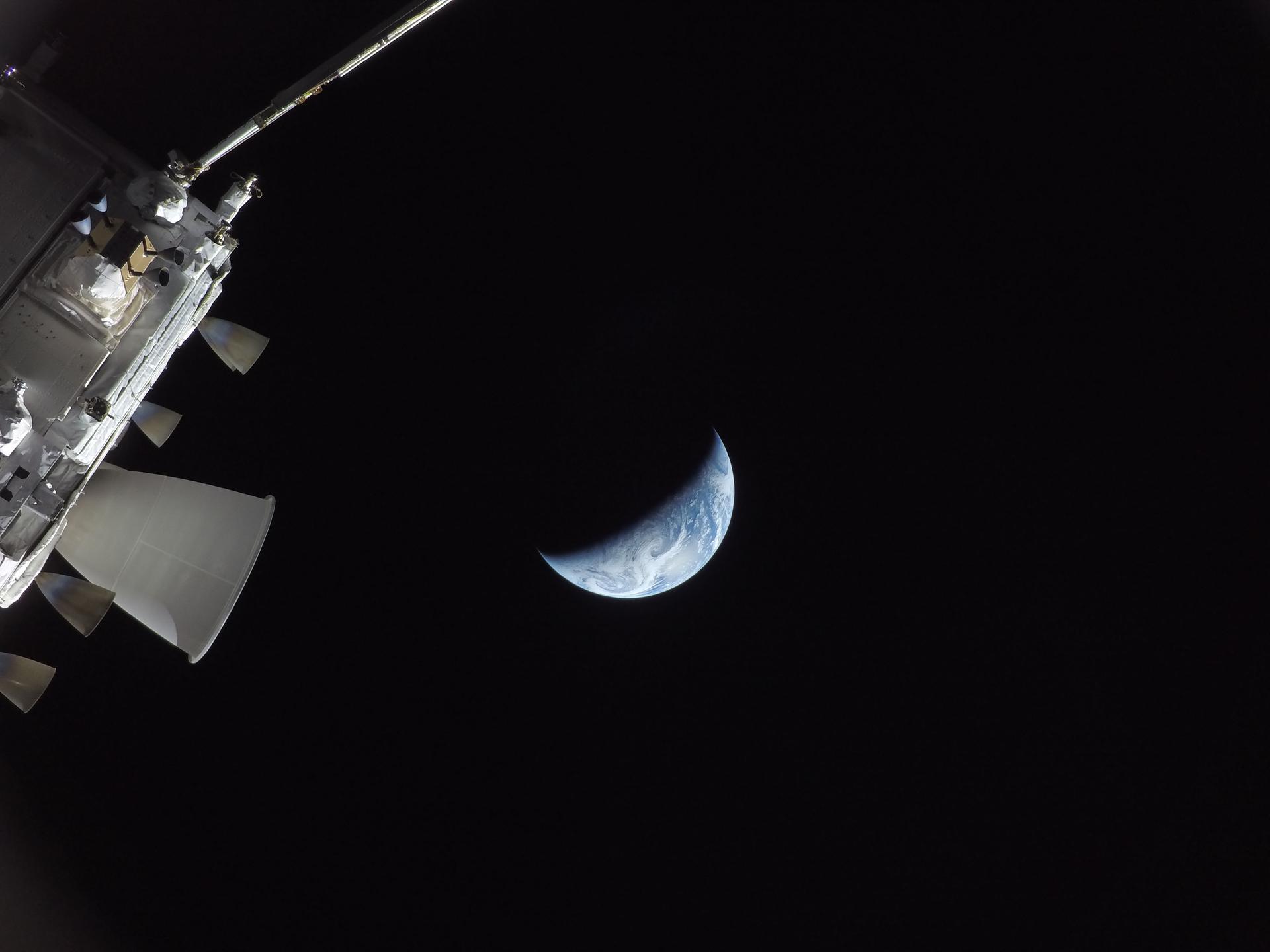
art002e031476 (April 10, 2026) - During the Artemis II crew’s journey back home to Earth, NASA’s Orion spacecraft appears alongside a sliver of Earth, both illuminated against the blackness of space. Pictured from one of the cameras mounted on Orion’s solar array wings, this image shows the orbital maneuvering system engine, five of eight auxiliary thrusters, and a pod of four reaction control system thrusters on the spacecraft’s service module. Credit: NASA
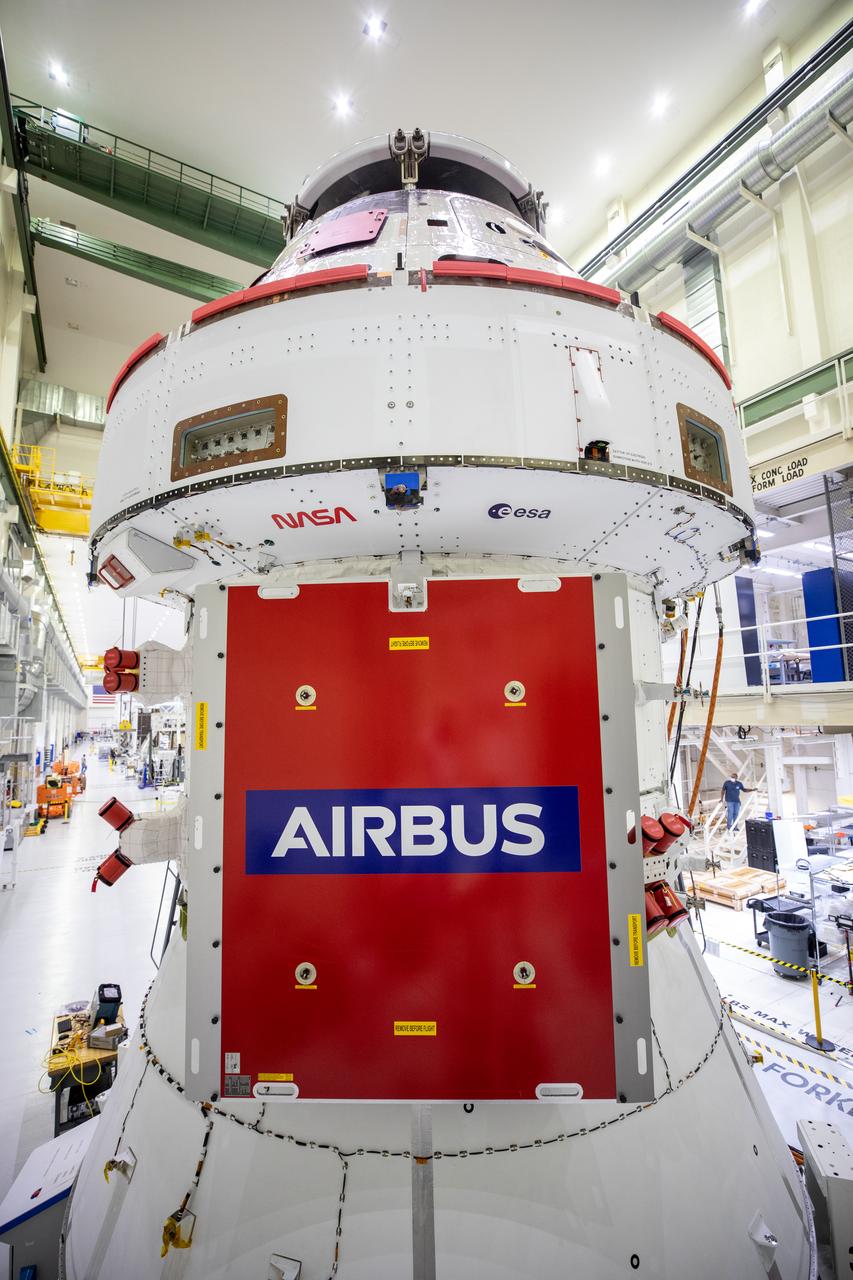
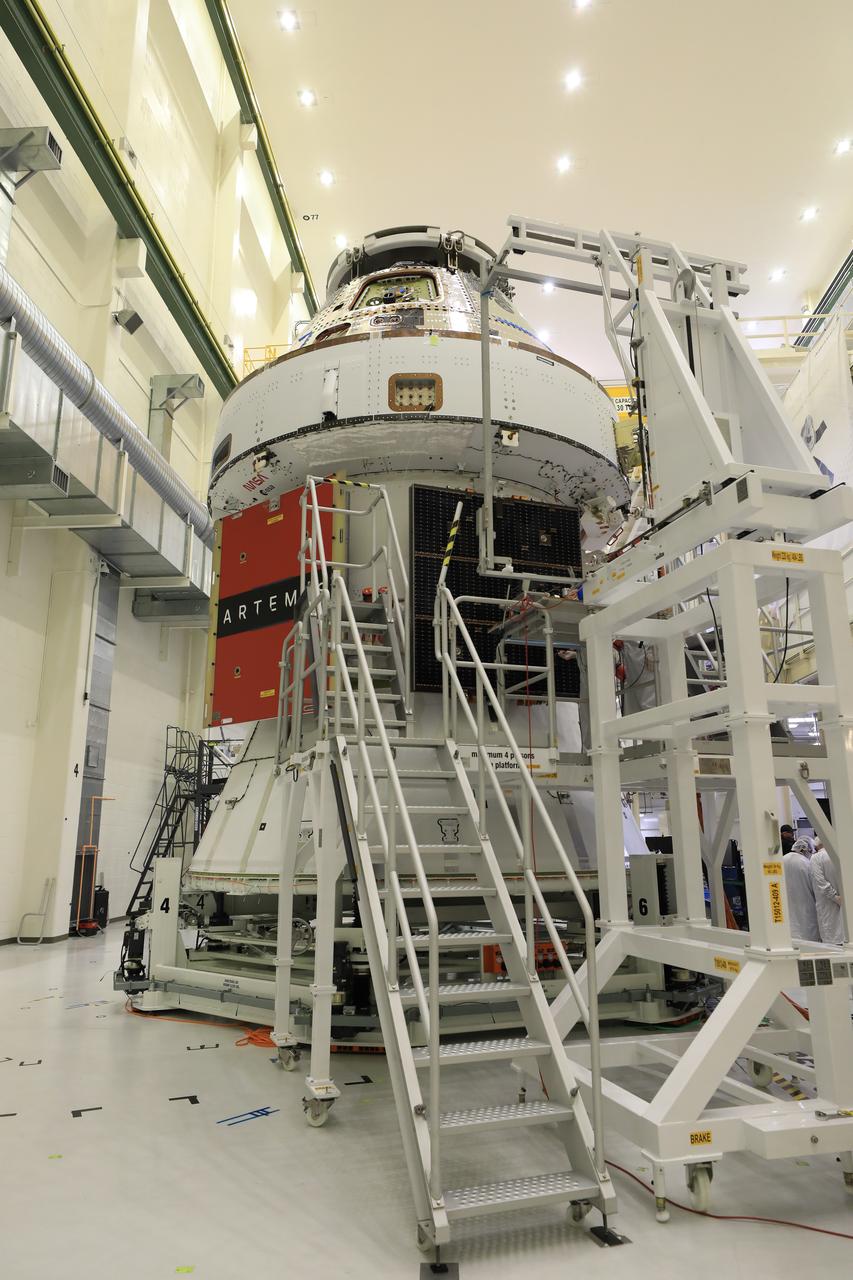
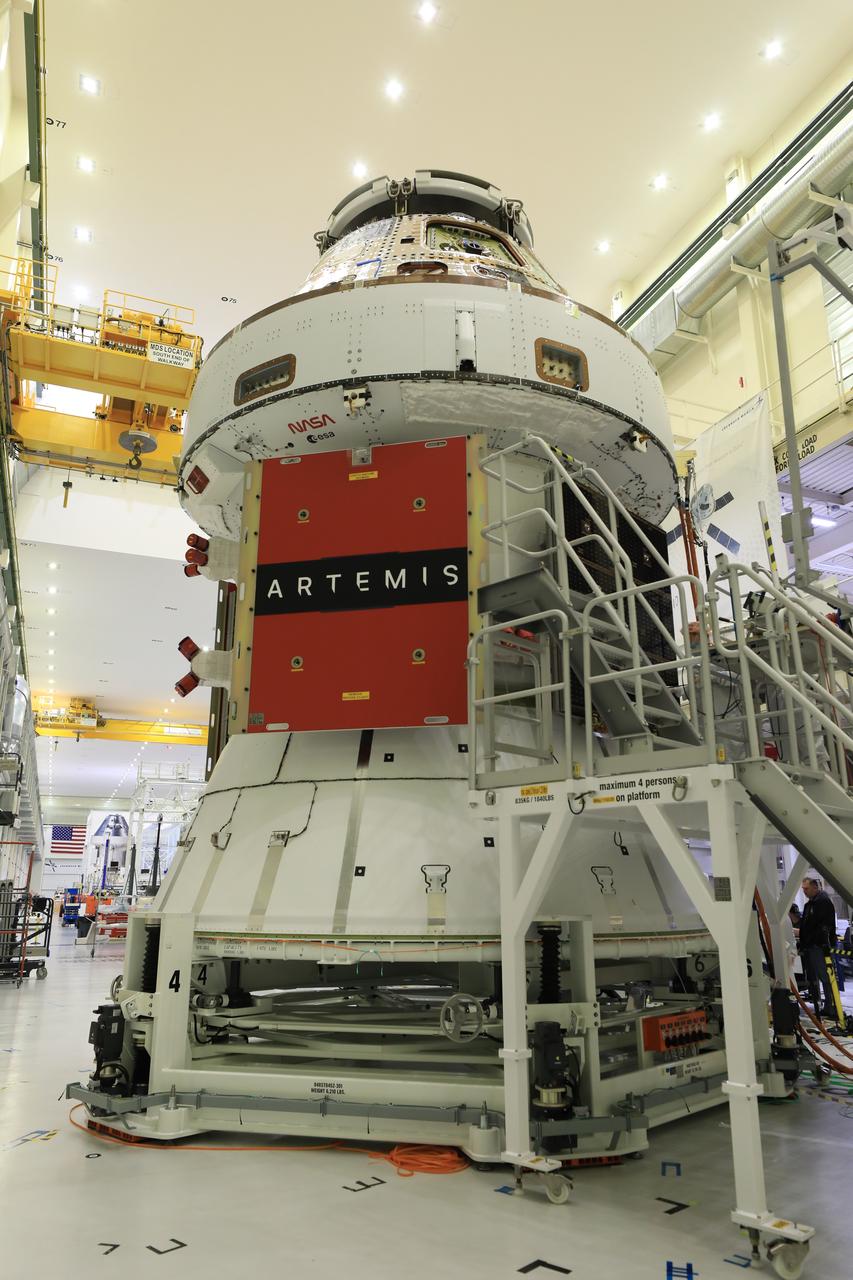
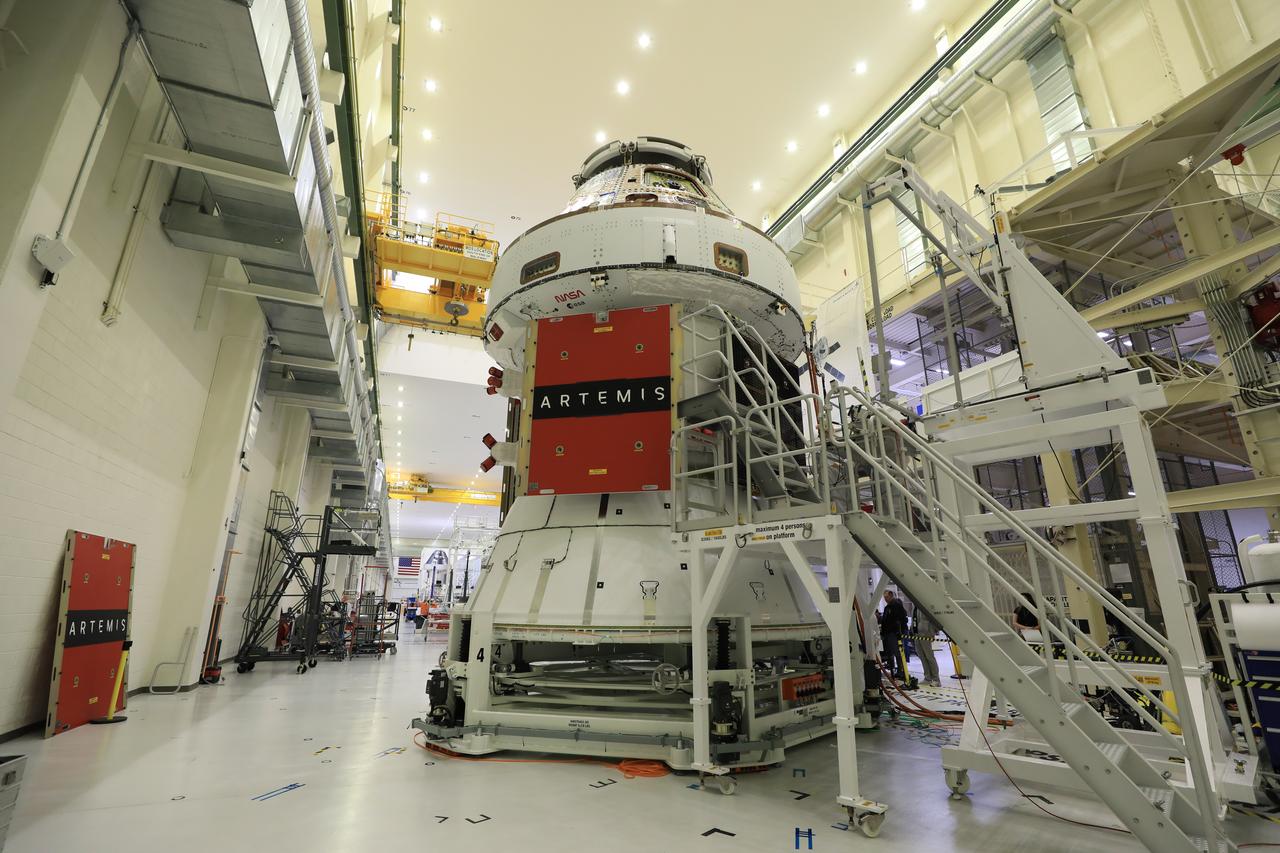
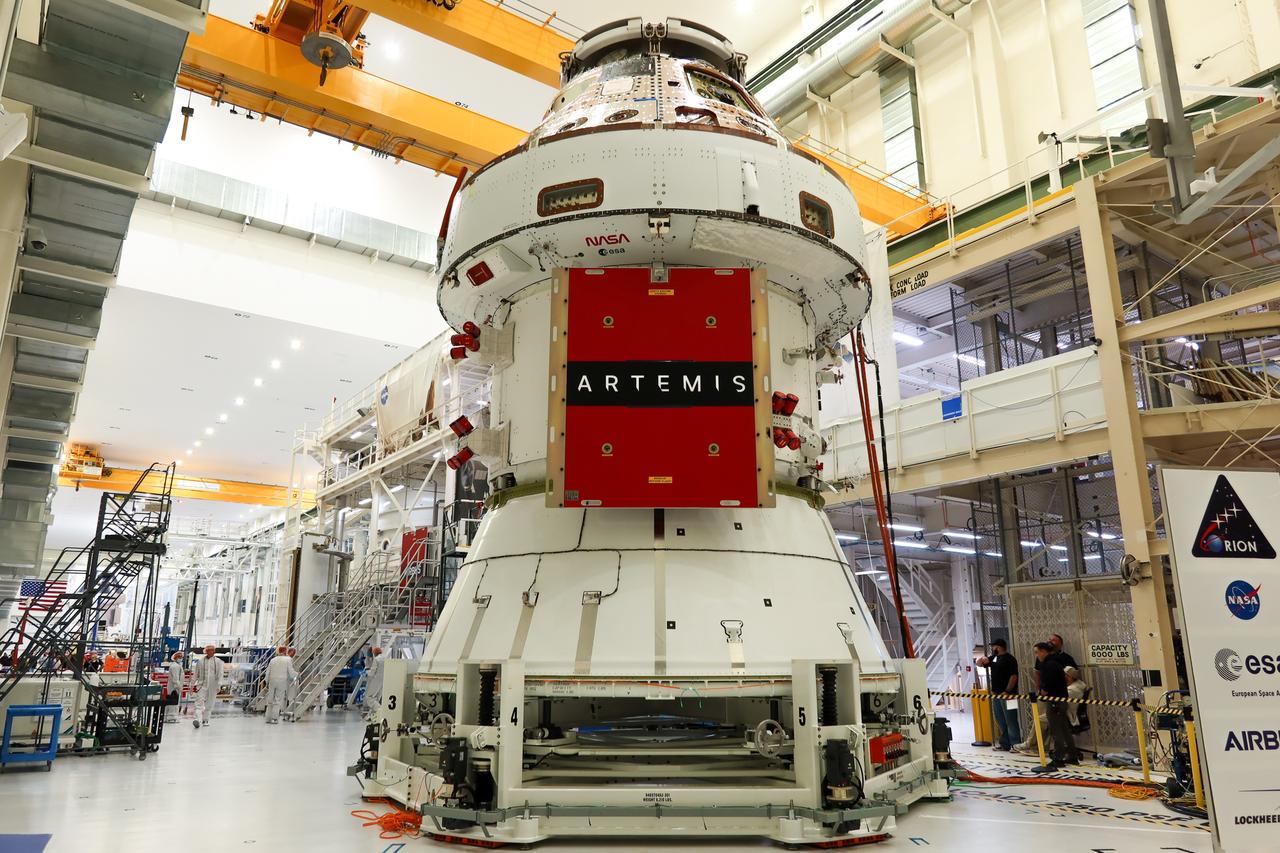
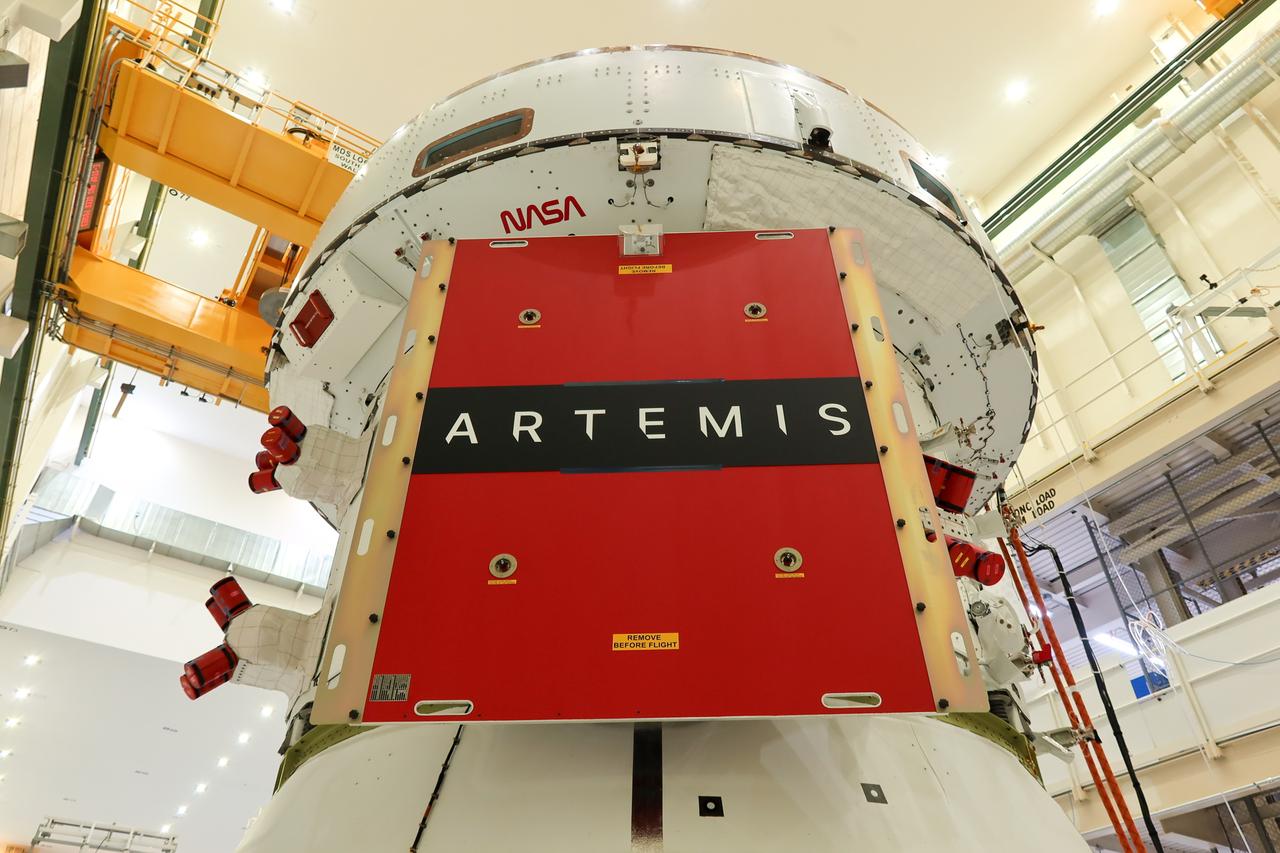
A protective cover panel has been installed over one of the solar arrays on the Orion spacecraft for Artemis I inside the Neil Armstrong Operations and Checkout Building high bay at NASA’s Kennedy Space Center in Florida on Sept. 23, 2020. The iconic NASA worm and European Space Agency insignias on the Crew Module Adapter outer wall can be seen just above the panel. The solar arrays were extended, inspected, and then retracted, before installation on the spacecraft. Each of the four solar array panels will generate 11 kilowatts of power and span about 63 feet. The array is a component of Orion’s service module, which is provided by the European Space Agency and built by Airbus Defence and Space to supply Orion’s power, propulsion, air and water. The first in a series of increasingly complex missions, Artemis I will test the Orion spacecraft and Space Launch System as an integrated system ahead of crewed flights to the Moon. Under the Artemis program, NASA will land the first woman and the next man on the Moon in 2024.
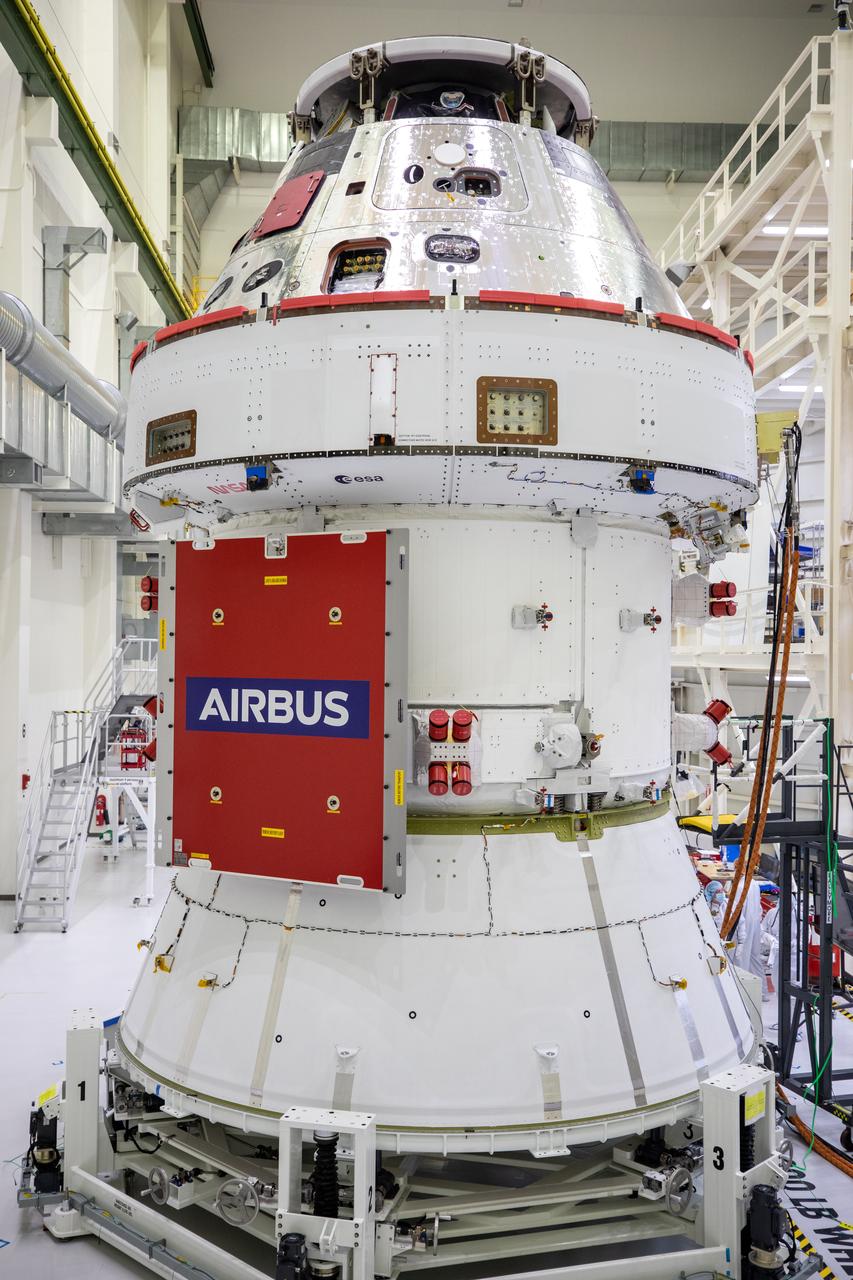
A protective cover panel has been installed over one of the solar arrays shown on the Orion spacecraft for Artemis I inside the Neil Armstrong Operations and Checkout Building high bay at NASA’s Kennedy Space Center in Florida on Sept. 23, 2020. The iconic NASA worm and European Space Agency insignias on the Crew Module Adapter outer wall can be seen just above the panel. The solar arrays were extended, inspected, and then retracted, before installation on the spacecraft. Each of the four solar array panels will generate 11 kilowatts of power and span about 63 feet. The array is a component of Orion’s service module, which is provided by the European Space Agency and built by Airbus Defence and Space to supply Orion’s power, propulsion, air and water. The first in a series of increasingly complex missions, Artemis I will test the Orion spacecraft and Space Launch System as an integrated system ahead of crewed flights to the Moon. Under the Artemis program, NASA will land the first woman and the next man on the Moon in 2024.

A protective cover panel has been installed over one of the solar arrays on the Orion spacecraft for Artemis I inside the Neil Armstrong Operations and Checkout Building high bay at NASA’s Kennedy Space Center in Florida on Sept. 23, 2020. The iconic NASA worm and European Space Agency insignias on the Crew Module Adapter outer wall can be seen just above the panel. The solar arrays were extended, inspected, and then retracted, before installation on the spacecraft. Each of the four solar array panels will generate 11 kilowatts of power and span about 63 feet. The array is a component of Orion’s service module, which is provided by the European Space Agency and built by Airbus Defence and Space to supply Orion’s power, propulsion, air and water. The first in a series of increasingly complex missions, Artemis I will test the Orion spacecraft and Space Launch System as an integrated system ahead of crewed flights to the Moon. Under the Artemis program, NASA will land the first woman and the next man on the Moon in 2024.

S73-27403 (June 1973) --- Engineers at the NASA Marshall Space Flight Center examine tools that are being considered for use in freeing the solar array wing of Skylab. The device at center is a cable cutter which is operated by cable. Enhanced television pictures indicate that the wing is being held to the side of the Skylab by a strip of metal from the meteoroid shield. The cable cutter shown here clipped an identical strip of metal in a test at the Marshall Center, requiring 90 pounds of force. The cutter is one of several heads which could be attached to extension rods. Identical tools and rods were carried into orbit by the Skylab 2 crew. At right is the handle end of a rod. White material taped just below the handle is buoyancy packing to make the object weightless when submerged in water. The tools are being tested in underwater EVA tasks in the MSFC Neutral Buoyancy Simulator. Small object at left is the attachment head for a two-prong "rake" device for use on the end of a pole made up of one, two or more five-foot sections of extension rods. Photo credit: NASA
Technicians install four solar array wings on NASA’s Artemis II Orion spacecraft inside the Neil A. Armstrong Operations and Checkout Building at NASA’s Kennedy Space Center in Florida on Monday, March 3, 2025. Each solar array is nearly 23 feet long and can turn on two axes to remain aligned with the Sun for maximum power. Orion’s solar arrays, manufactured and installed by ESA (European Space Agency) and its contractor Airbus, will deliver power to the service module that provides propulsion, thermal control, and electrical power to the spacecraft, as well as air and water for the crew.
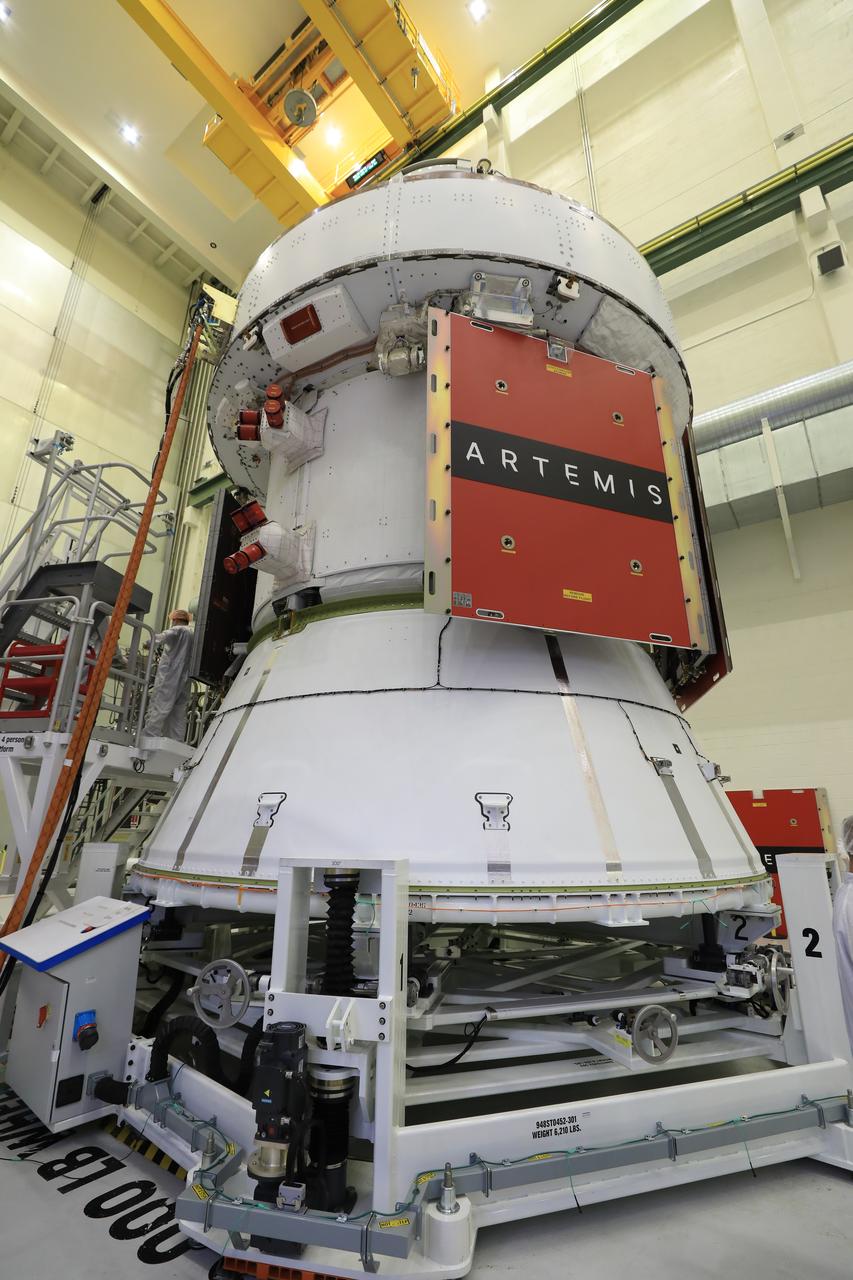
Technicians install four solar array wings on NASA’s Artemis II Orion spacecraft inside the Neil A. Armstrong Operations and Checkout Building at NASA’s Kennedy Space Center in Florida on Monday, March 3, 2025. Each solar array is nearly 23 feet long and can turn on two axes to remain aligned with the Sun for maximum power. Orion’s solar arrays, manufactured and installed by ESA (European Space Agency) and its contractor Airbus, will deliver power to the service module that provides propulsion, thermal control, and electrical power to the spacecraft, as well as air and water for the crew.
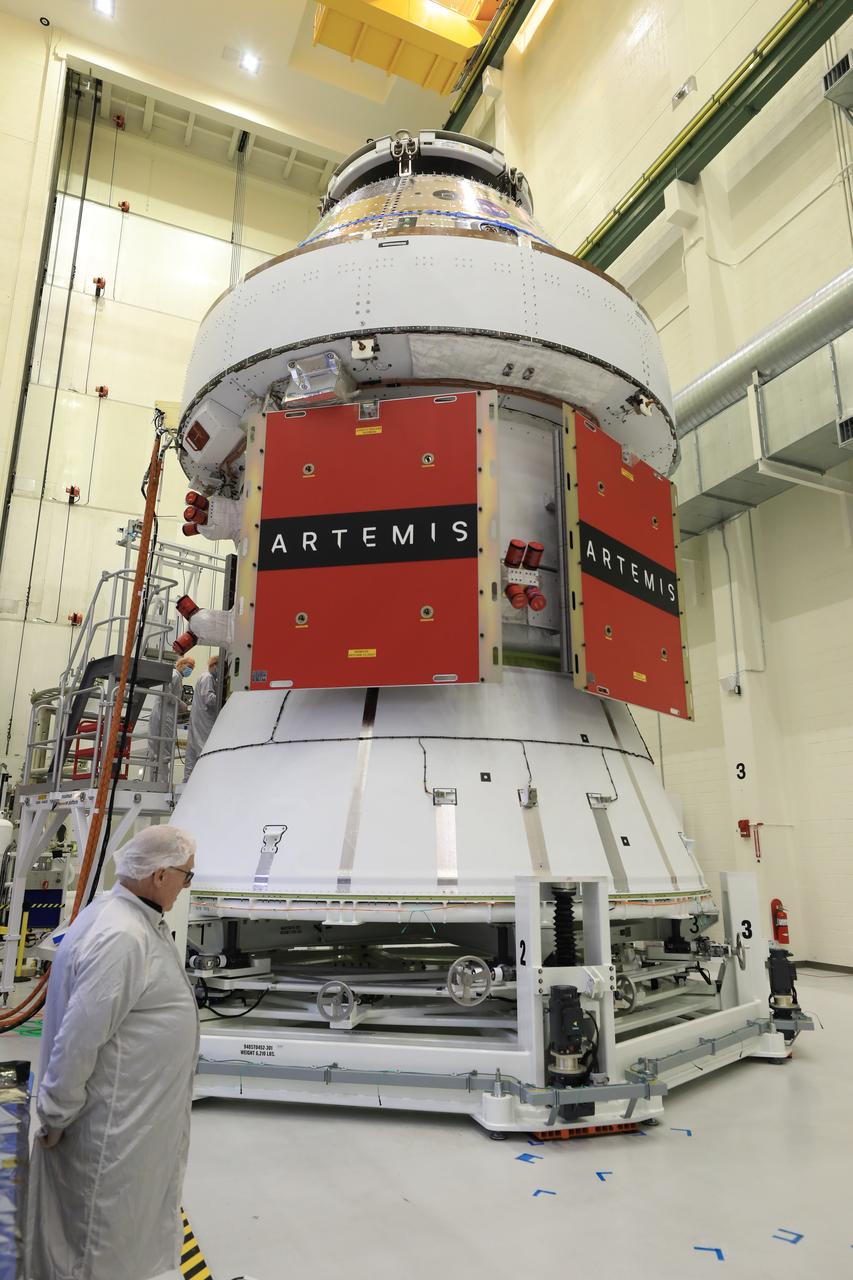
Technicians install four solar array wings on NASA’s Artemis II Orion spacecraft inside the Neil A. Armstrong Operations and Checkout Building at NASA’s Kennedy Space Center in Florida on Monday, March 3, 2025. Each solar array is nearly 23 feet long and can turn on two axes to remain aligned with the Sun for maximum power. Orion’s solar arrays, manufactured and installed by ESA (European Space Agency) and its contractor Airbus, will deliver power to the service module that provides propulsion, thermal control, and electrical power to the spacecraft, as well as air and water for the crew.
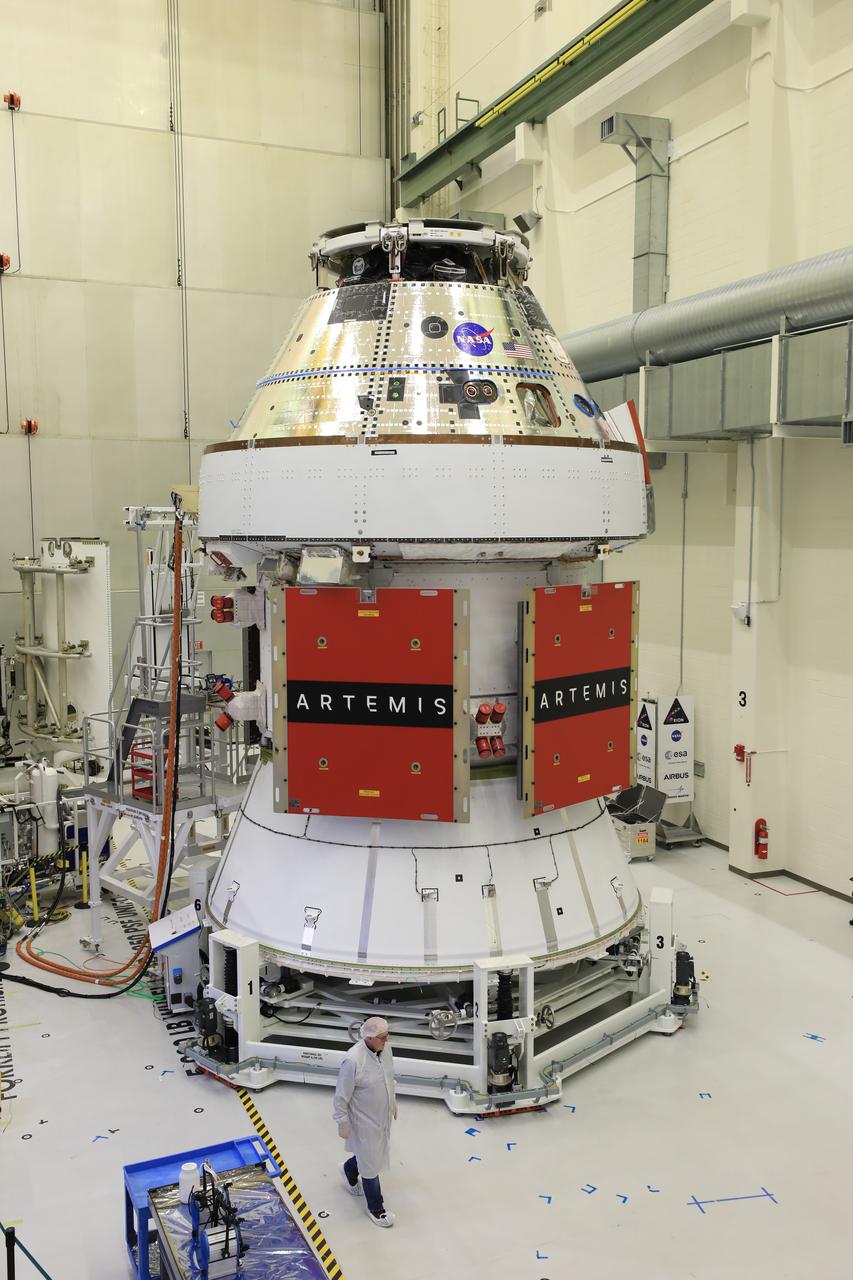
Technicians install four solar array wings on NASA’s Artemis II Orion spacecraft inside the Neil A. Armstrong Operations and Checkout Building at NASA’s Kennedy Space Center in Florida on Monday, March 3, 2025. Each solar array is nearly 23 feet long and can turn on two axes to remain aligned with the Sun for maximum power. Orion’s solar arrays, manufactured and installed by ESA (European Space Agency) and its contractor Airbus, will deliver power to the service module that provides propulsion, thermal control, and electrical power to the spacecraft, as well as air and water for the crew.
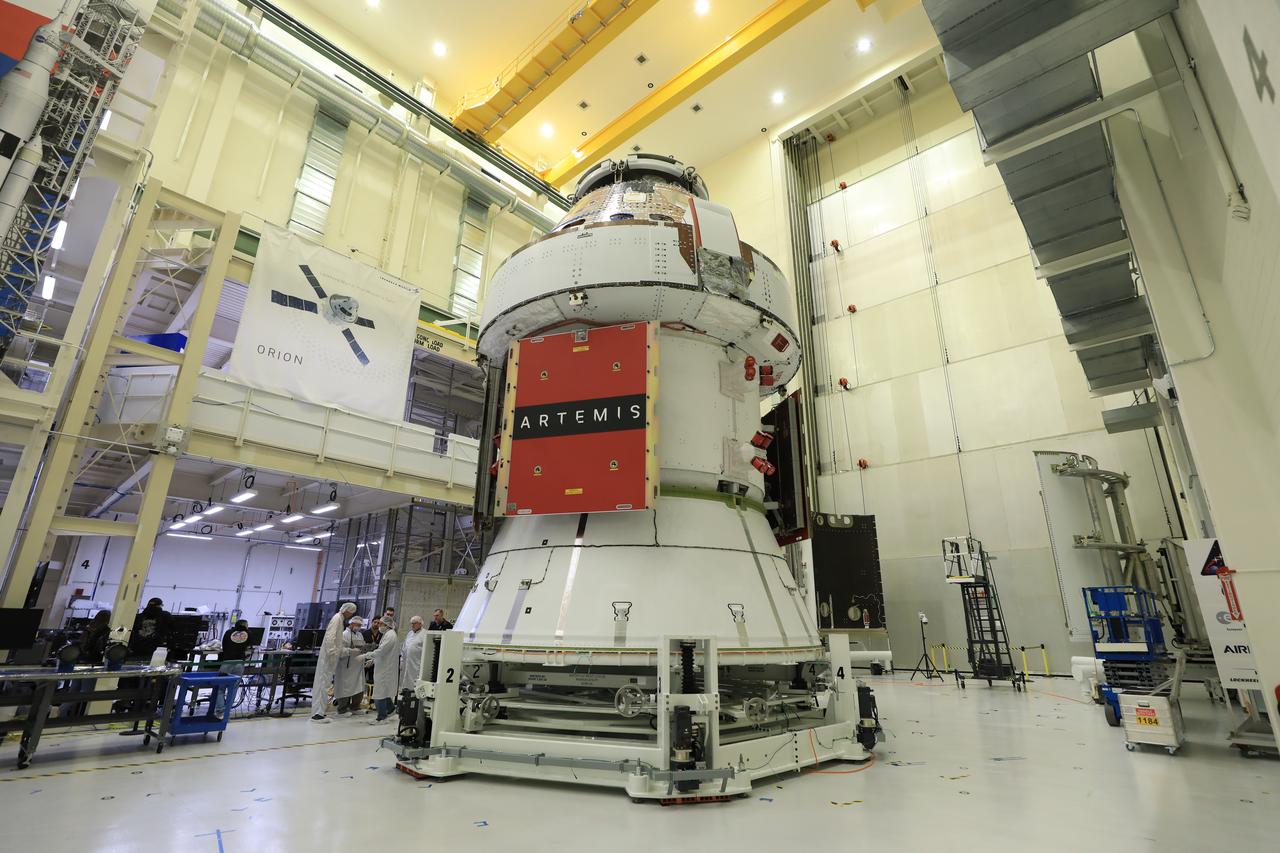
Technicians install four solar array wings on NASA’s Artemis II Orion spacecraft inside the Neil A. Armstrong Operations and Checkout Building at NASA’s Kennedy Space Center in Florida on Monday, March 3, 2025. Each solar array is nearly 23 feet long and can turn on two axes to remain aligned with the Sun for maximum power. Orion’s solar arrays, manufactured and installed by ESA (European Space Agency) and its contractor Airbus, will deliver power to the service module that provides propulsion, thermal control, and electrical power to the spacecraft, as well as air and water for the crew.
Technicians install four solar array wings on NASA’s Artemis II Orion spacecraft inside the Neil A. Armstrong Operations and Checkout Building at NASA’s Kennedy Space Center in Florida on Monday, March 3, 2025. Each solar array is nearly 23 feet long and can turn on two axes to remain aligned with the Sun for maximum power. Orion’s solar arrays, manufactured and installed by ESA (European Space Agency) and its contractor Airbus, will deliver power to the service module that provides propulsion, thermal control, and electrical power to the spacecraft, as well as air and water for the crew.
Technicians install four solar array wings on NASA’s Artemis II Orion spacecraft inside the Neil A. Armstrong Operations and Checkout Building at NASA’s Kennedy Space Center in Florida on Monday, March 3, 2025. Each solar array is nearly 23 feet long and can turn on two axes to remain aligned with the Sun for maximum power. Orion’s solar arrays, manufactured and installed by ESA (European Space Agency) and its contractor Airbus, will deliver power to the service module that provides propulsion, thermal control, and electrical power to the spacecraft, as well as air and water for the crew.
Technicians install four solar array wings on NASA’s Artemis II Orion spacecraft inside the Neil A. Armstrong Operations and Checkout Building at NASA’s Kennedy Space Center in Florida on Monday, March 3, 2025. Each solar array is nearly 23 feet long and can turn on two axes to remain aligned with the Sun for maximum power. Orion’s solar arrays, manufactured and installed by ESA (European Space Agency) and its contractor Airbus, will deliver power to the service module that provides propulsion, thermal control, and electrical power to the spacecraft, as well as air and water for the crew.
Technicians install four solar array wings on NASA’s Artemis II Orion spacecraft inside the Neil A. Armstrong Operations and Checkout Building at NASA’s Kennedy Space Center in Florida on Monday, March 3, 2025. Each solar array is nearly 23 feet long and can turn on two axes to remain aligned with the Sun for maximum power. Orion’s solar arrays, manufactured and installed by ESA (European Space Agency) and its contractor Airbus, will deliver power to the service module that provides propulsion, thermal control, and electrical power to the spacecraft, as well as air and water for the crew.
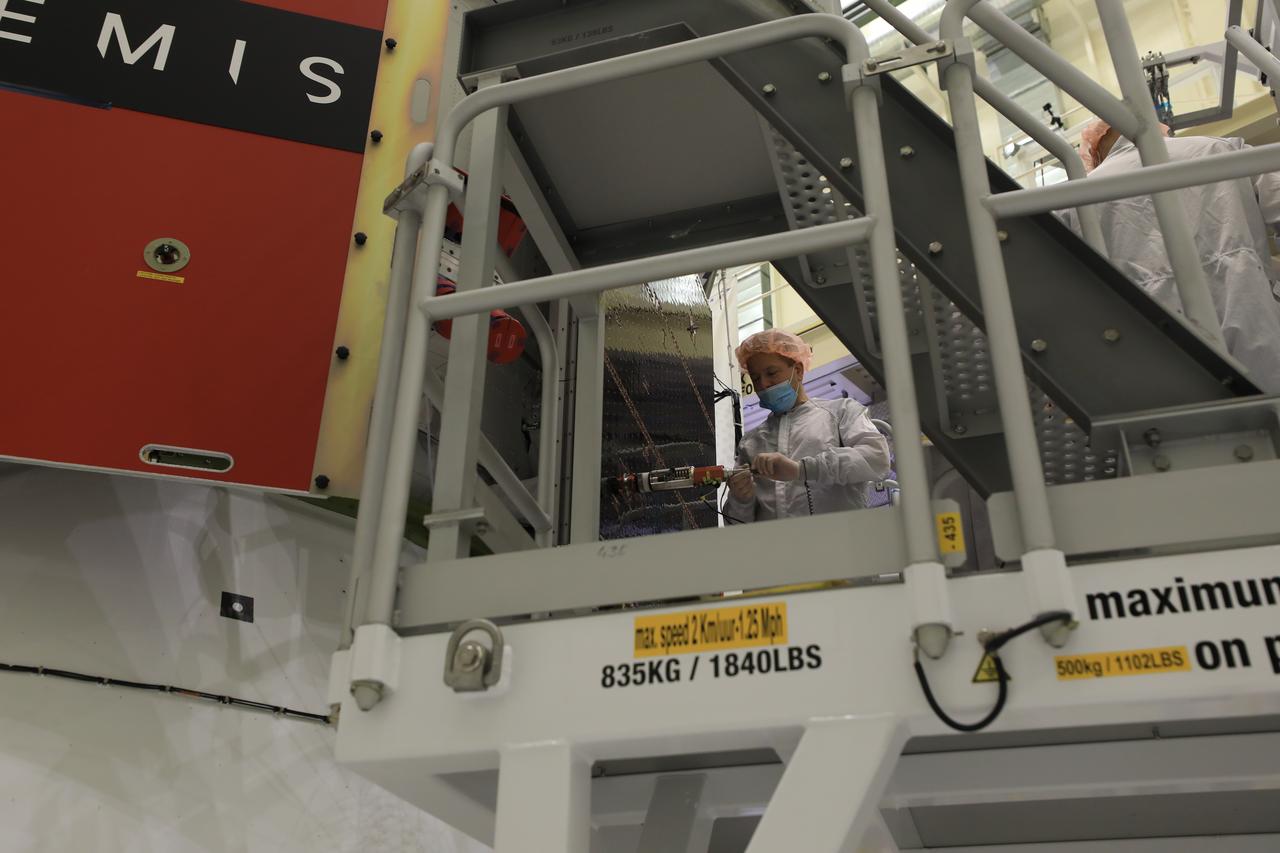
Technicians install four solar array wings on NASA’s Artemis II Orion spacecraft inside the Neil A. Armstrong Operations and Checkout Building at NASA’s Kennedy Space Center in Florida on Monday, March 3, 2025. Each solar array is nearly 23 feet long and can turn on two axes to remain aligned with the Sun for maximum power. Orion’s solar arrays, manufactured and installed by ESA (European Space Agency) and its contractor Airbus, will deliver power to the service module that provides propulsion, thermal control, and electrical power to the spacecraft, as well as air and water for the crew.
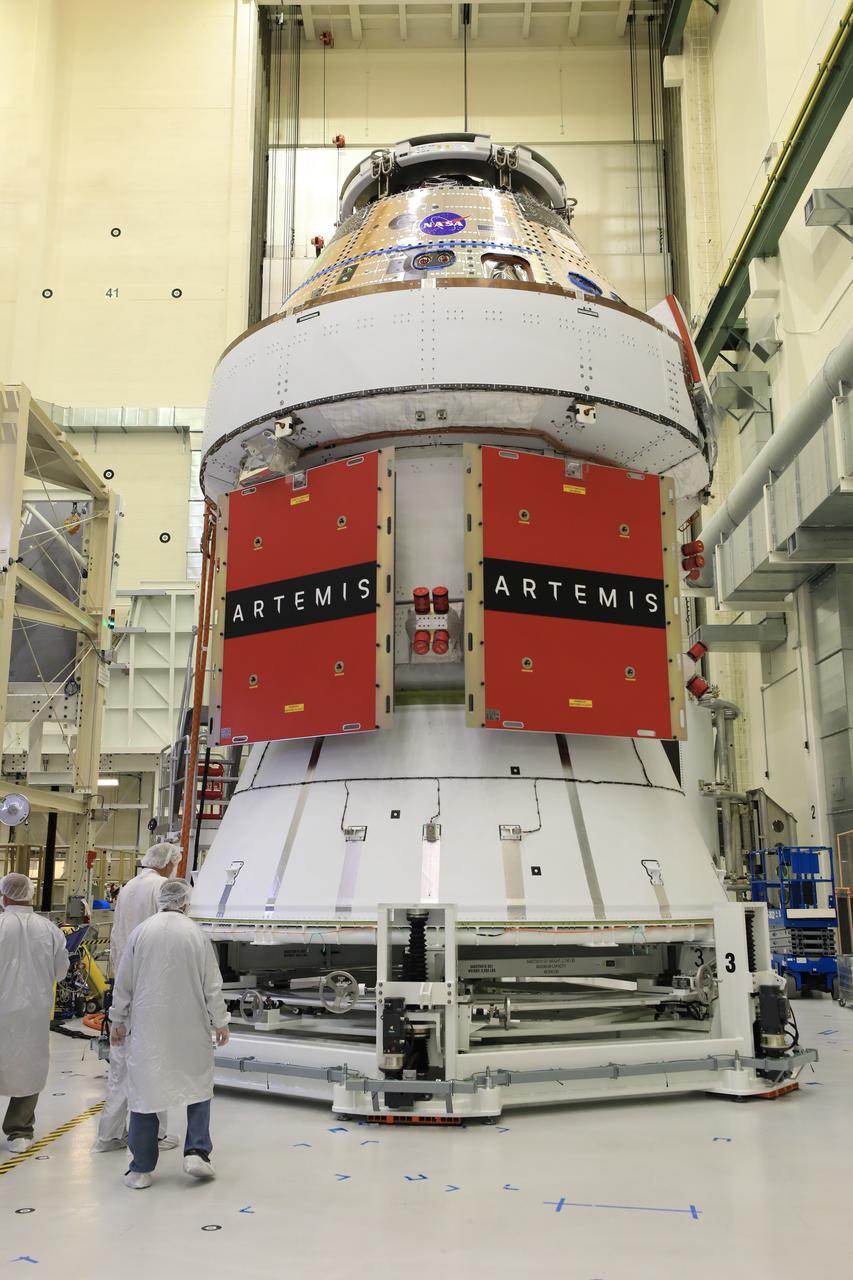
Technicians install four solar array wings on NASA’s Artemis II Orion spacecraft inside the Neil A. Armstrong Operations and Checkout Building at NASA’s Kennedy Space Center in Florida on Monday, March 3, 2025. Each solar array is nearly 23 feet long and can turn on two axes to remain aligned with the Sun for maximum power. Orion’s solar arrays, manufactured and installed by ESA (European Space Agency) and its contractor Airbus, will deliver power to the service module that provides propulsion, thermal control, and electrical power to the spacecraft, as well as air and water for the crew.
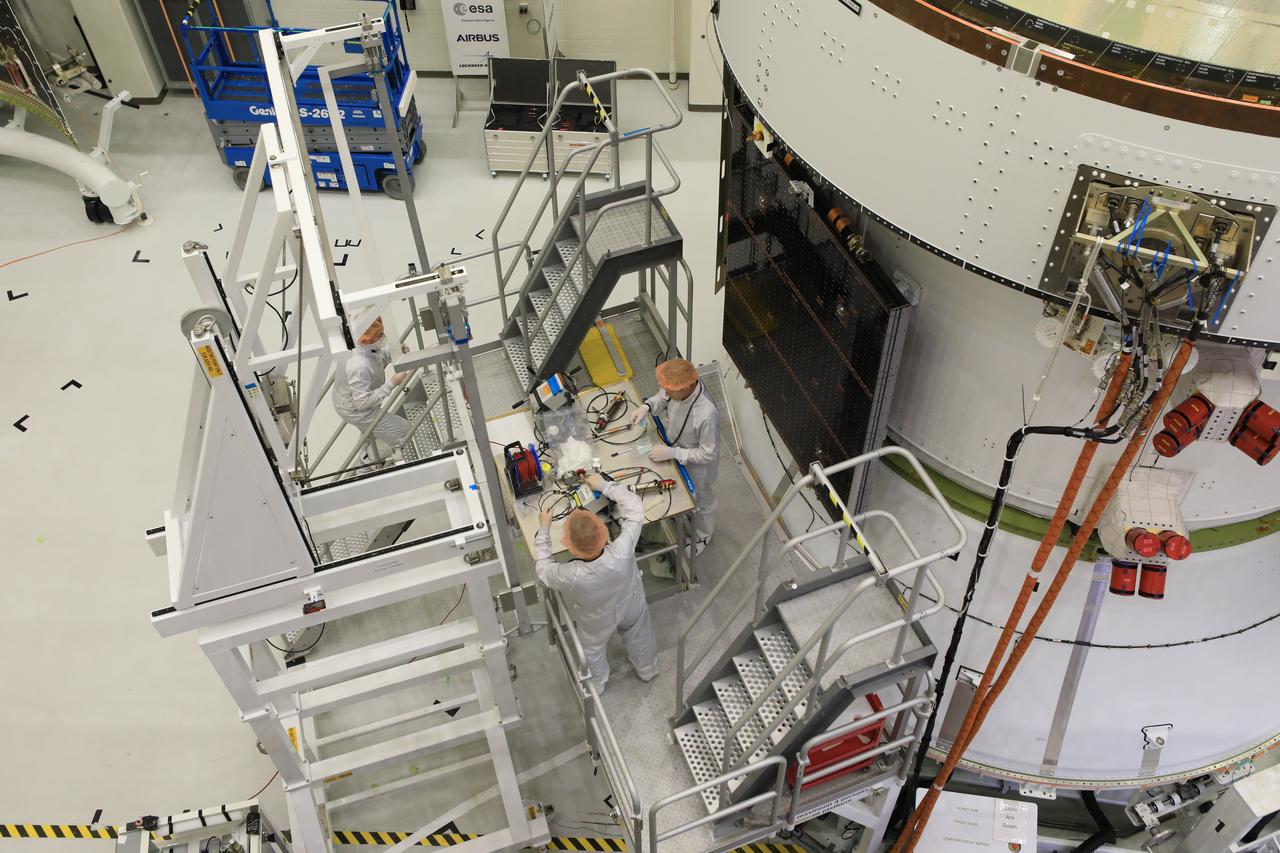
Technicians install four solar array wings on NASA’s Artemis II Orion spacecraft inside the Neil A. Armstrong Operations and Checkout Building at NASA’s Kennedy Space Center in Florida on Monday, March 3, 2025. Each solar array is nearly 23 feet long and can turn on two axes to remain aligned with the Sun for maximum power. Orion’s solar arrays, manufactured and installed by ESA (European Space Agency) and its contractor Airbus, will deliver power to the service module that provides propulsion, thermal control, and electrical power to the spacecraft, as well as air and water for the crew.
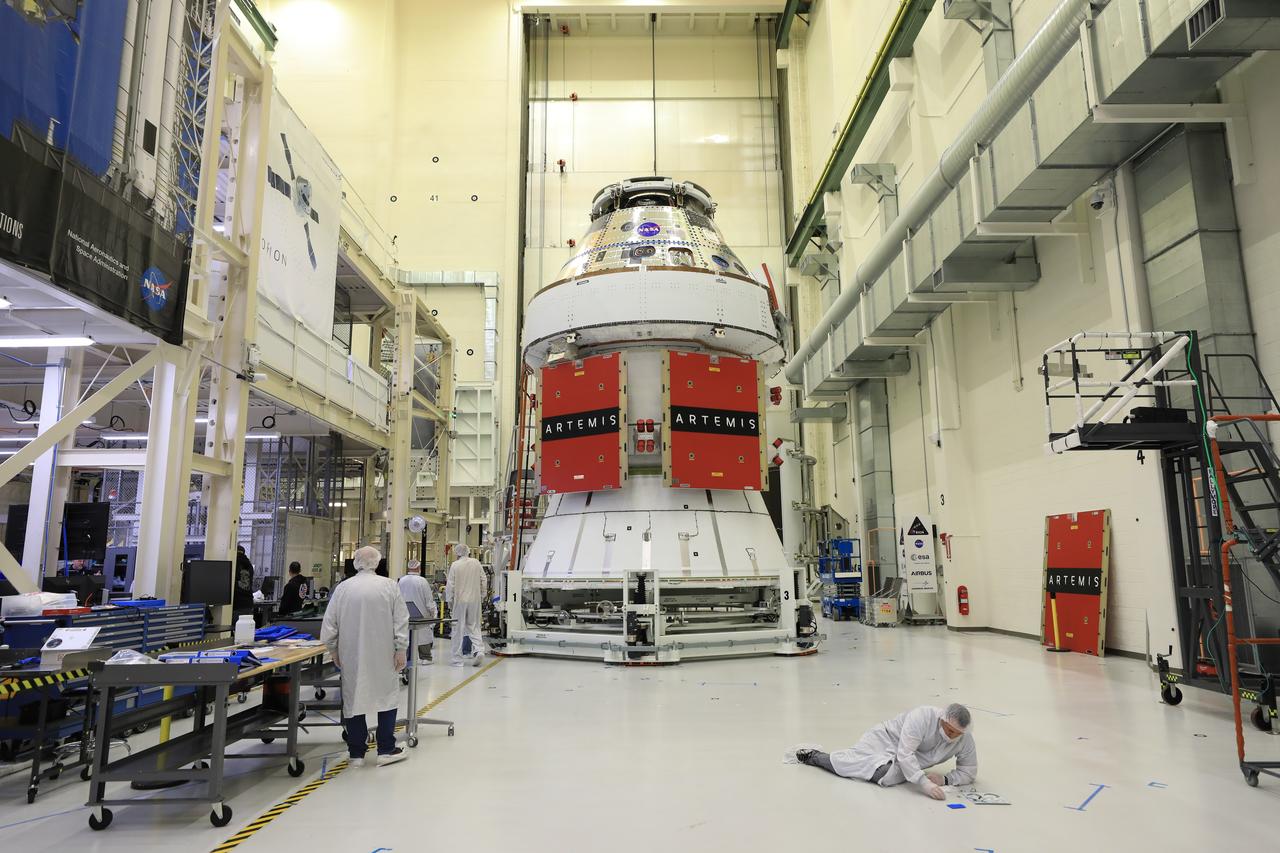
Technicians install four solar array wings on NASA’s Artemis II Orion spacecraft inside the Neil A. Armstrong Operations and Checkout Building at NASA’s Kennedy Space Center in Florida on Monday, March 3, 2025. Each solar array is nearly 23 feet long and can turn on two axes to remain aligned with the Sun for maximum power. Orion’s solar arrays, manufactured and installed by ESA (European Space Agency) and its contractor Airbus, will deliver power to the service module that provides propulsion, thermal control, and electrical power to the spacecraft, as well as air and water for the crew.
Technicians install four solar array wings on NASA’s Artemis II Orion spacecraft inside the Neil A. Armstrong Operations and Checkout Building at NASA’s Kennedy Space Center in Florida on Monday, March 3, 2025. Each solar array is nearly 23 feet long and can turn on two axes to remain aligned with the Sun for maximum power. Orion’s solar arrays, manufactured and installed by ESA (European Space Agency) and its contractor Airbus, will deliver power to the service module that provides propulsion, thermal control, and electrical power to the spacecraft, as well as air and water for the crew.
Technicians install four solar array wings on NASA’s Artemis II Orion spacecraft inside the Neil A. Armstrong Operations and Checkout Building at NASA’s Kennedy Space Center in Florida on Monday, March 3, 2025. Each solar array is nearly 23 feet long and can turn on two axes to remain aligned with the Sun for maximum power. Orion’s solar arrays, manufactured and installed by ESA (European Space Agency) and its contractor Airbus, will deliver power to the service module that provides propulsion, thermal control, and electrical power to the spacecraft, as well as air and water for the crew.
Technicians install four solar array wings on NASA’s Artemis II Orion spacecraft inside the Neil A. Armstrong Operations and Checkout Building at NASA’s Kennedy Space Center in Florida on Monday, March 3, 2025. Each solar array is nearly 23 feet long and can turn on two axes to remain aligned with the Sun for maximum power. Orion’s solar arrays, manufactured and installed by ESA (European Space Agency) and its contractor Airbus, will deliver power to the service module that provides propulsion, thermal control, and electrical power to the spacecraft, as well as air and water for the crew.
Technicians install four solar array wings on NASA’s Artemis II Orion spacecraft inside the Neil A. Armstrong Operations and Checkout Building at NASA’s Kennedy Space Center in Florida on Monday, March 3, 2025. Each solar array is nearly 23 feet long and can turn on two axes to remain aligned with the Sun for maximum power. Orion’s solar arrays, manufactured and installed by ESA (European Space Agency) and its contractor Airbus, will deliver power to the service module that provides propulsion, thermal control, and electrical power to the spacecraft, as well as air and water for the crew.
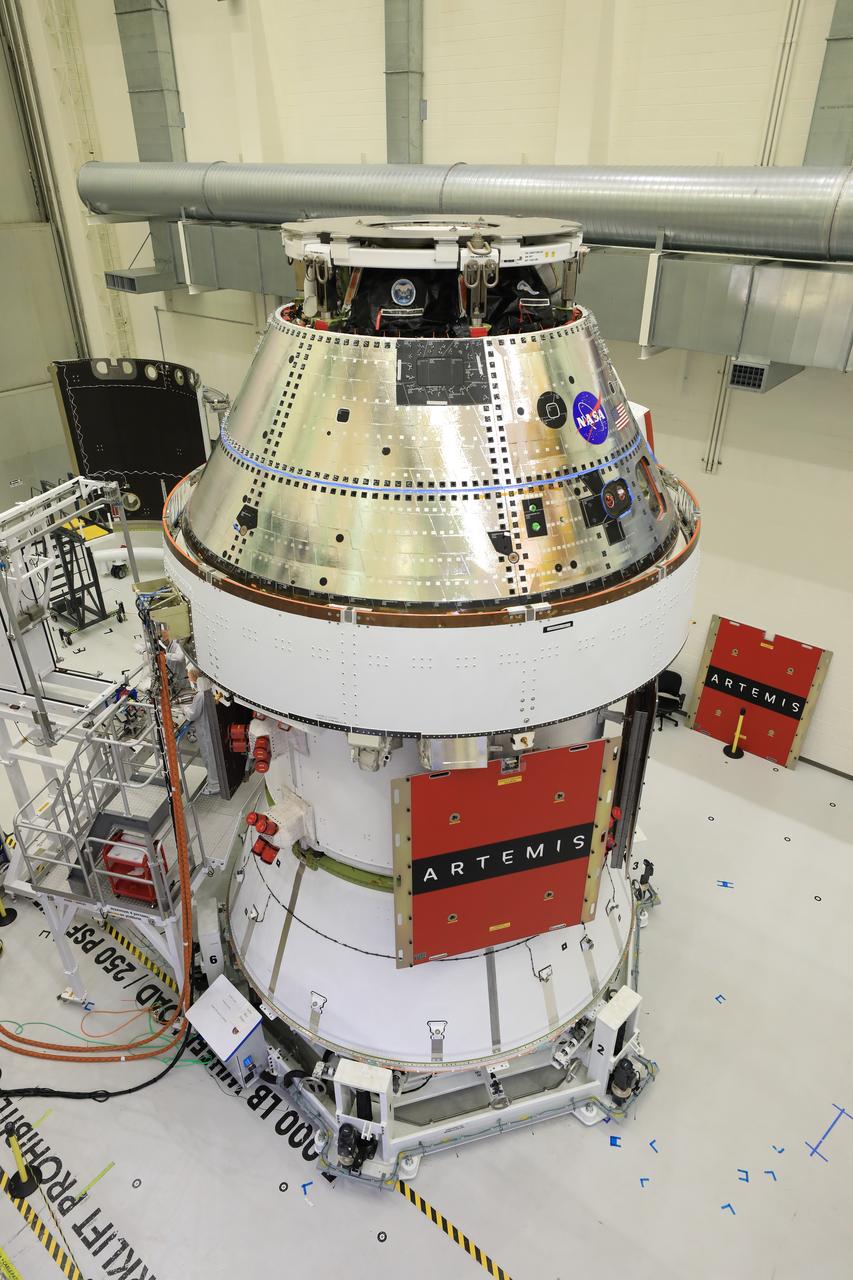
Technicians install four solar array wings on NASA’s Artemis II Orion spacecraft inside the Neil A. Armstrong Operations and Checkout Building at NASA’s Kennedy Space Center in Florida on Monday, March 3, 2025. Each solar array is nearly 23 feet long and can turn on two axes to remain aligned with the Sun for maximum power. Orion’s solar arrays, manufactured and installed by ESA (European Space Agency) and its contractor Airbus, will deliver power to the service module that provides propulsion, thermal control, and electrical power to the spacecraft, as well as air and water for the crew.
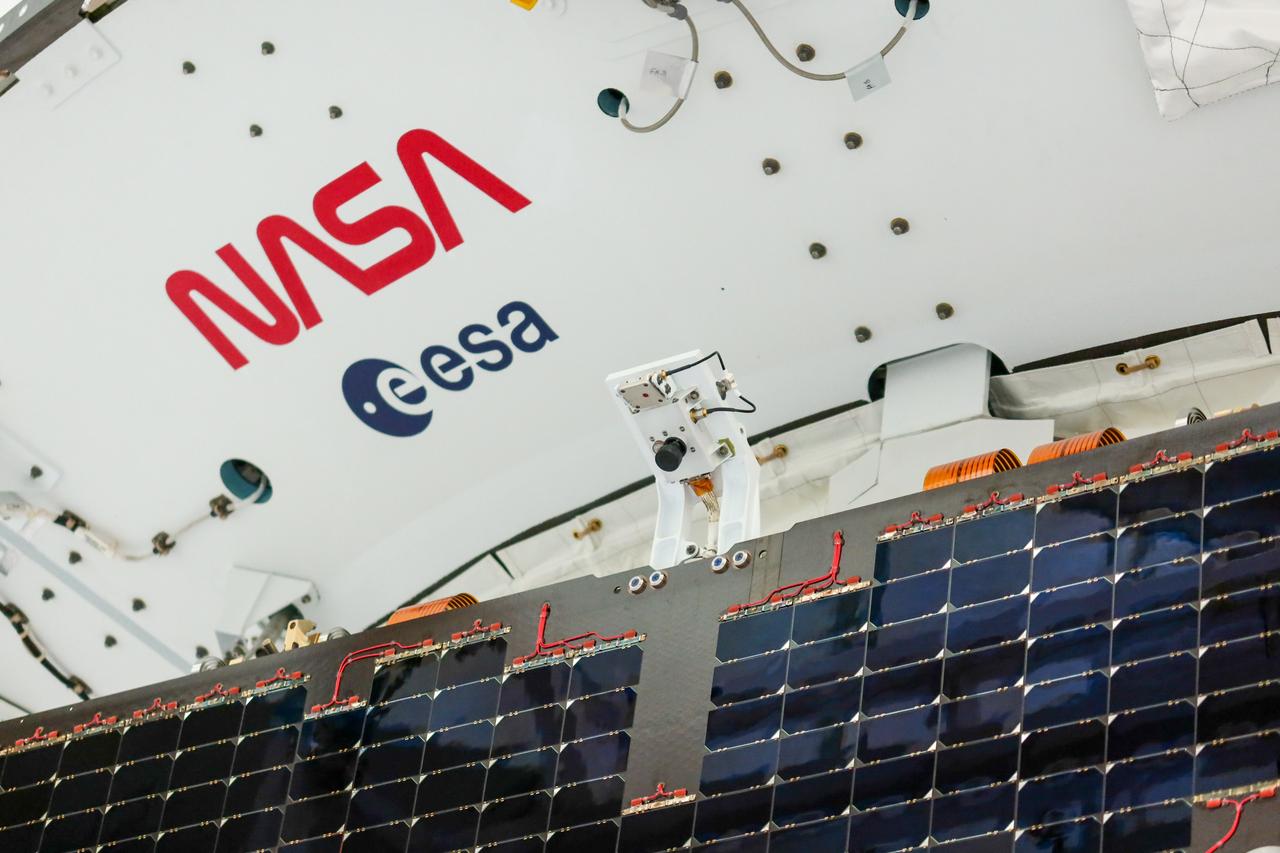
Technicians install four solar array wings on NASA’s Artemis II Orion spacecraft inside the Neil A. Armstrong Operations and Checkout Building at NASA’s Kennedy Space Center in Florida on Monday, March 3, 2025. Each solar array is nearly 23 feet long and can turn on two axes to remain aligned with the Sun for maximum power. Orion’s solar arrays, manufactured and installed by ESA (European Space Agency) and its contractor Airbus, will deliver power to the service module that provides propulsion, thermal control, and electrical power to the spacecraft, as well as air and water for the crew.
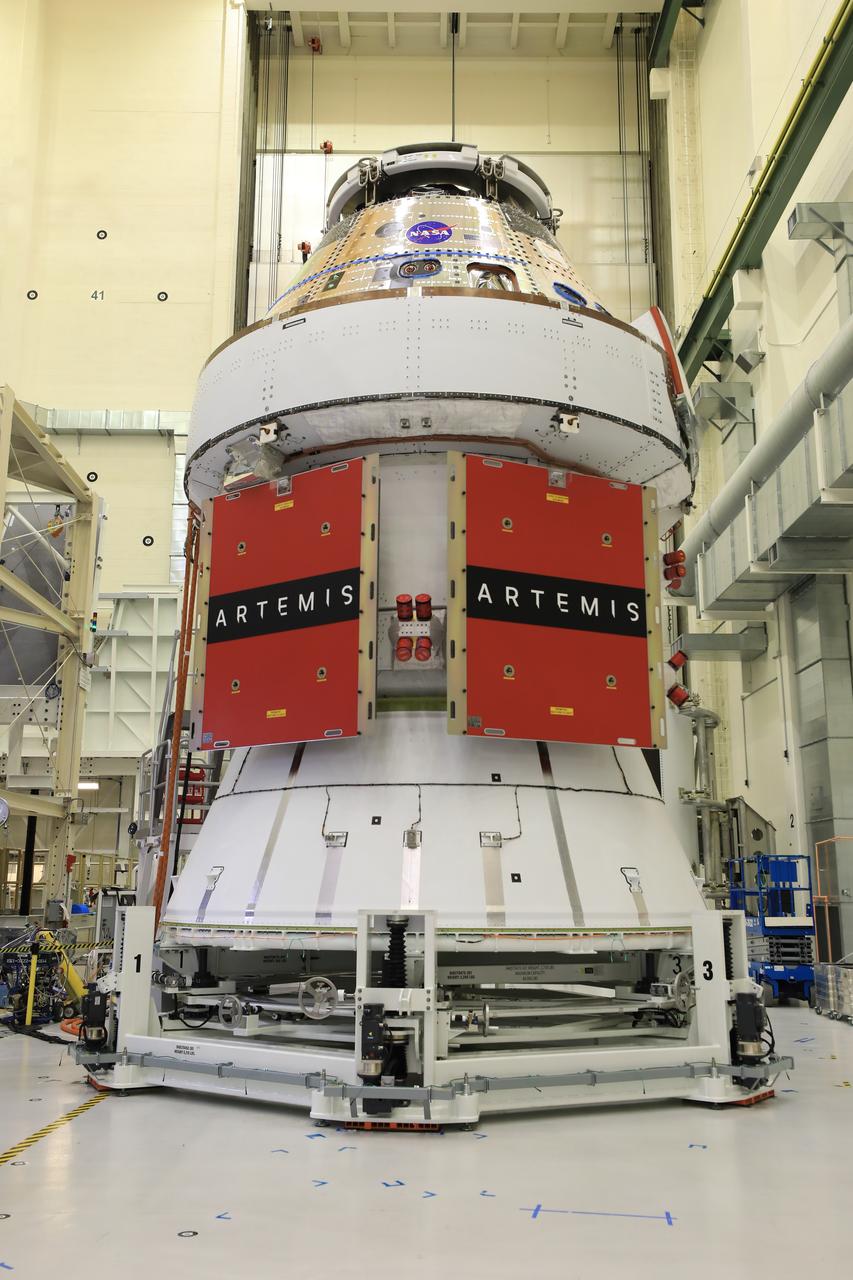
Technicians install four solar array wings on NASA’s Artemis II Orion spacecraft inside the Neil A. Armstrong Operations and Checkout Building at NASA’s Kennedy Space Center in Florida on Monday, March 3, 2025. Each solar array is nearly 23 feet long and can turn on two axes to remain aligned with the Sun for maximum power. Orion’s solar arrays, manufactured and installed by ESA (European Space Agency) and its contractor Airbus, will deliver power to the service module that provides propulsion, thermal control, and electrical power to the spacecraft, as well as air and water for the crew.
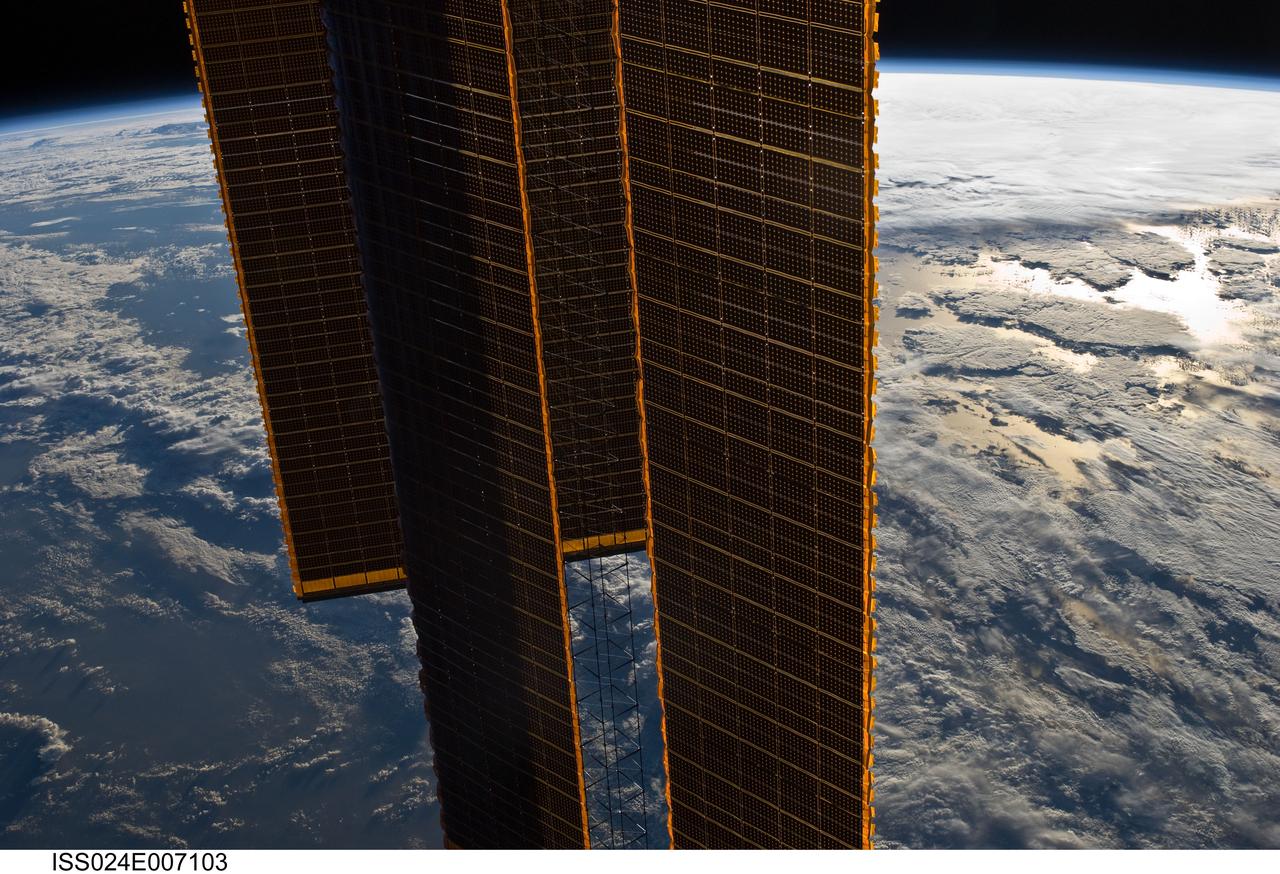
ISS024-E-007103 (29 June 2010) --- Backdropped by a blue and white part of Earth and the blackness of space, International Space Station solar array panels are featured in this image photographed by an Expedition 24 crew member aboard the station.
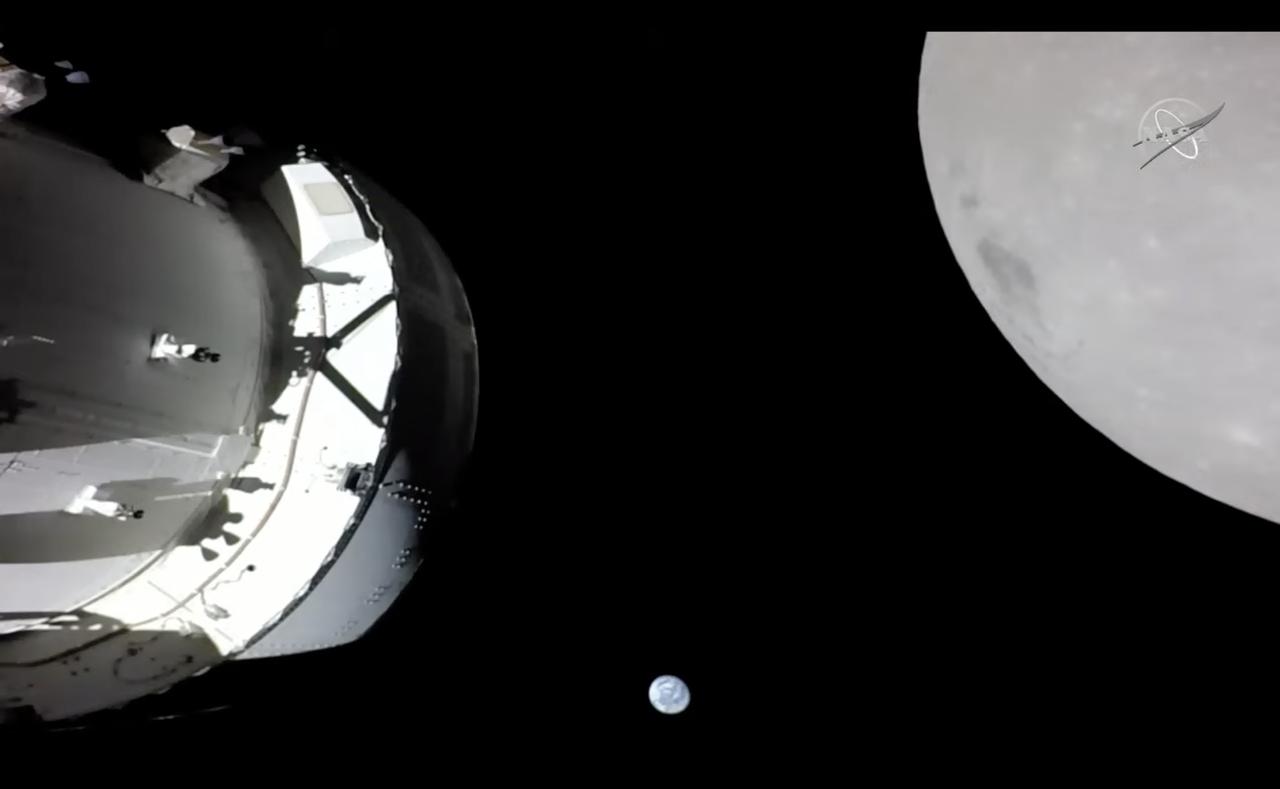
On Nov. 21, 2022, a camera on Orion's solar array wing captured this view of the spacecraft, the Earth and the Moon. Orion was making its outbound powered flyby of the Moon as part of the Artemis I mission, approaching within 80 miles of the lunar surface. Artemis I, the first flight test of NASA's Orion capsule and Space Launch System rocket, launched Nov. 16, 2022, and is scheduled to splashdown Dec. 11.
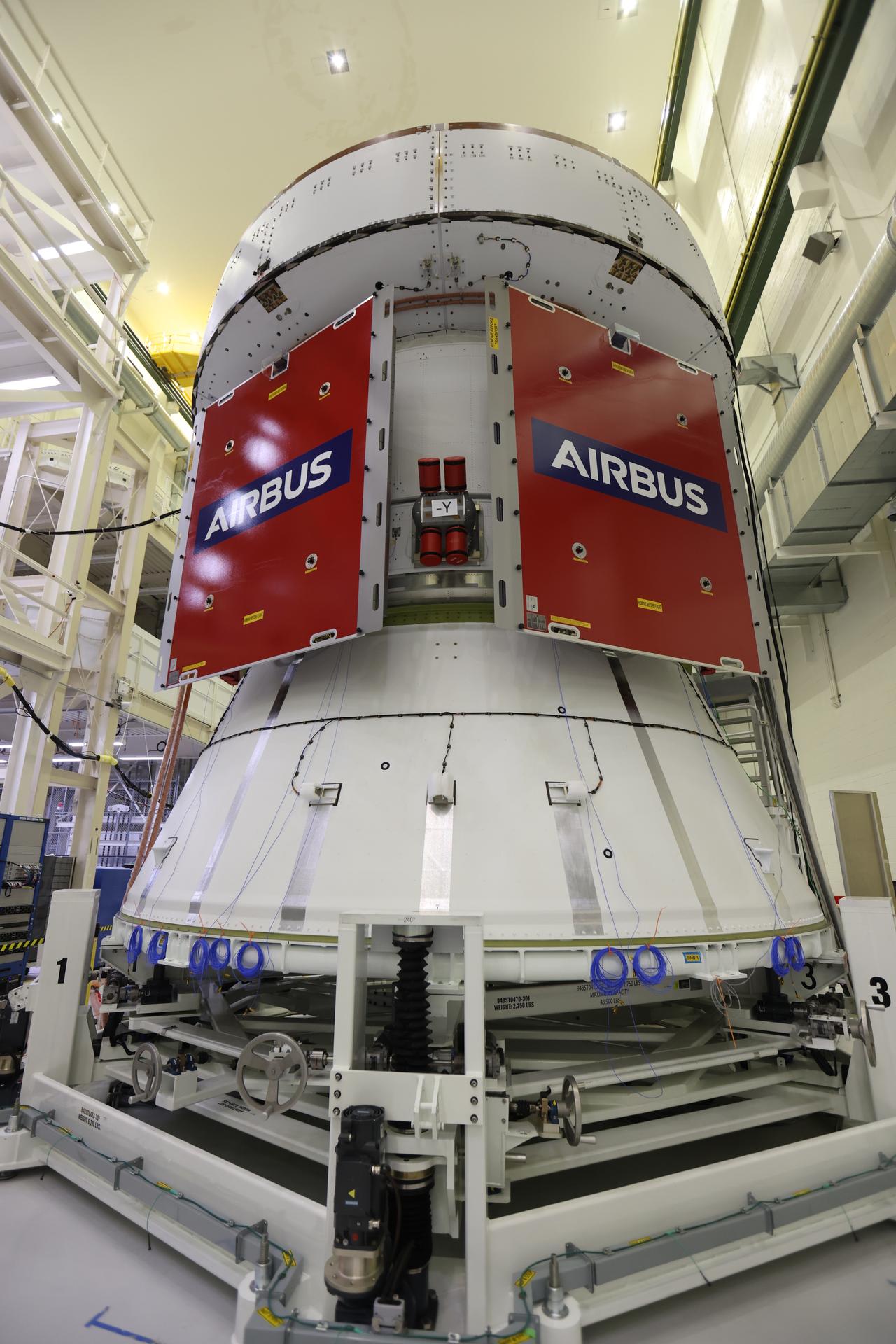
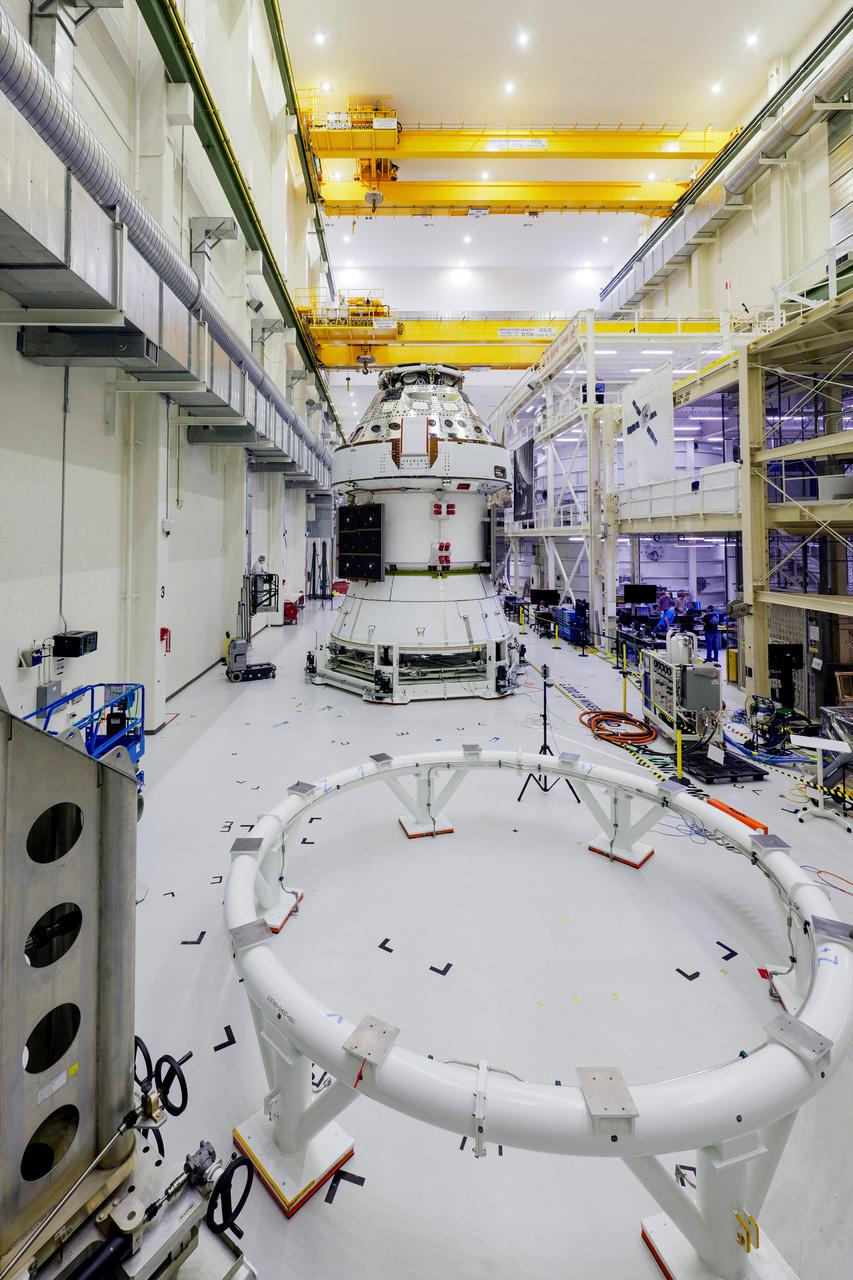
NASA and its partners work on the solar array wings for the agency’s Artemis III Orion spacecraft on Thursday, April 30, 2026, inside the Neil A. Armstrong Operations and Checkout Building at NASA’s Kennedy Space Center in Florida. Orion’s solar arrays, manufactured and installed by ESA (European Space Agency) and its contractor Airbus, have been temporarily installed ahead of acoustic testing on the spacecraft. The Artemis III mission will launch astronauts in 2027 to Earth’s orbit aboard the Orion spacecraft on top of the SLS (Space Launch System) rocket to test rendezvous and docking capabilities between Orion and commercial spacecraft needed to land Artemis IV astronauts on the Moon in 2028.
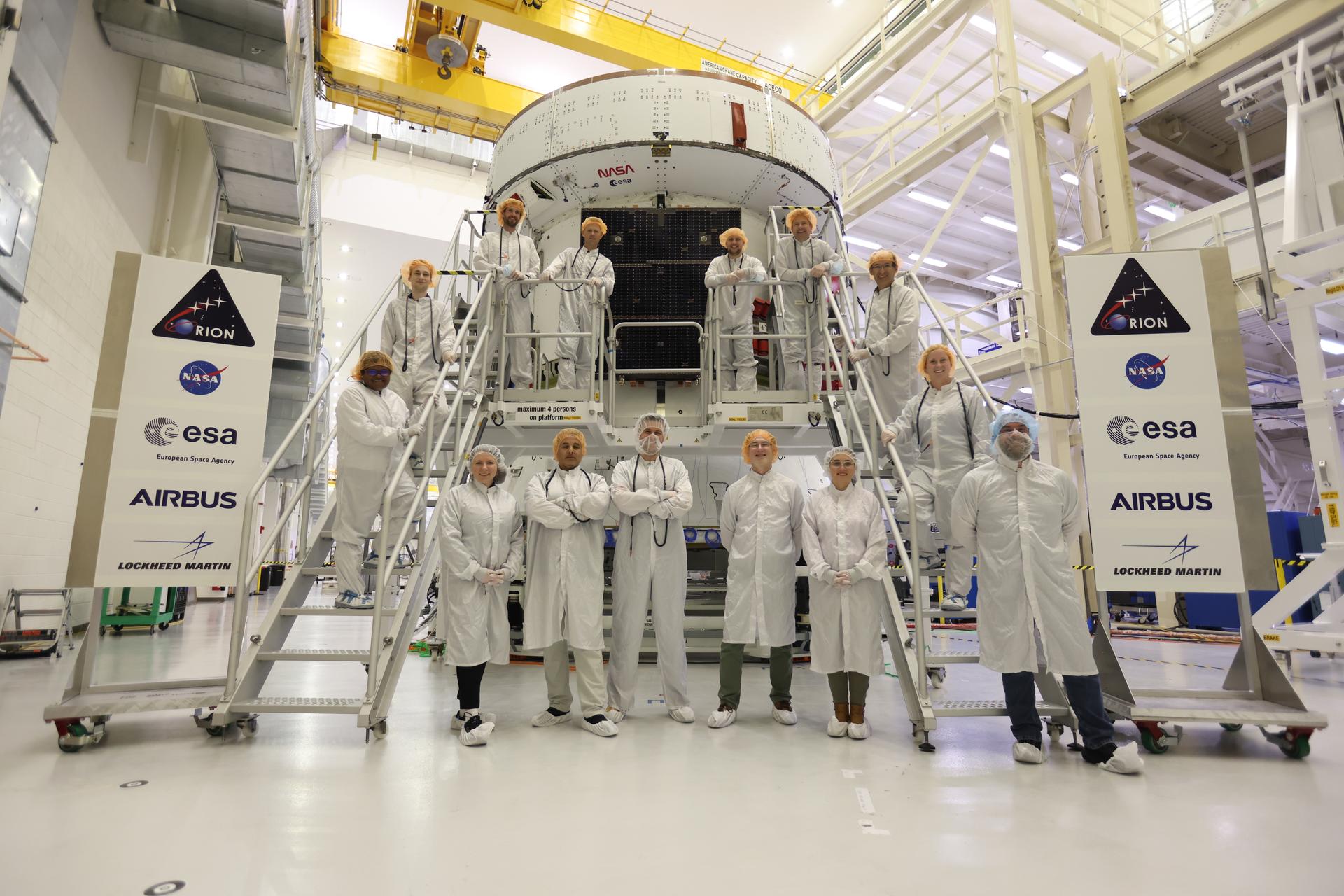
NASA and its partners work on the solar array wings for the agency’s Artemis III Orion spacecraft on Thursday, April 30, 2026, inside the Neil A. Armstrong Operations and Checkout Building at NASA’s Kennedy Space Center in Florida. Orion’s solar arrays, manufactured and installed by ESA (European Space Agency) and its contractor Airbus, have been temporarily installed ahead of acoustic testing on the spacecraft. The Artemis III mission will launch astronauts in 2027 to Earth’s orbit aboard the Orion spacecraft on top of the SLS (Space Launch System) rocket to test rendezvous and docking capabilities between Orion and commercial spacecraft needed to land Artemis IV astronauts on the Moon in 2028.

NASA and its partners work on the solar array wings for the agency’s Artemis III Orion spacecraft on Thursday, April 30, 2026, inside the Neil A. Armstrong Operations and Checkout Building at NASA’s Kennedy Space Center in Florida. Orion’s solar arrays, manufactured and installed by ESA (European Space Agency) and its contractor Airbus, have been temporarily installed ahead of acoustic testing on the spacecraft. The Artemis III mission will launch astronauts in 2027 to Earth’s orbit aboard the Orion spacecraft on top of the SLS (Space Launch System) rocket to test rendezvous and docking capabilities between Orion and commercial spacecraft needed to land Artemis IV astronauts on the Moon in 2028.
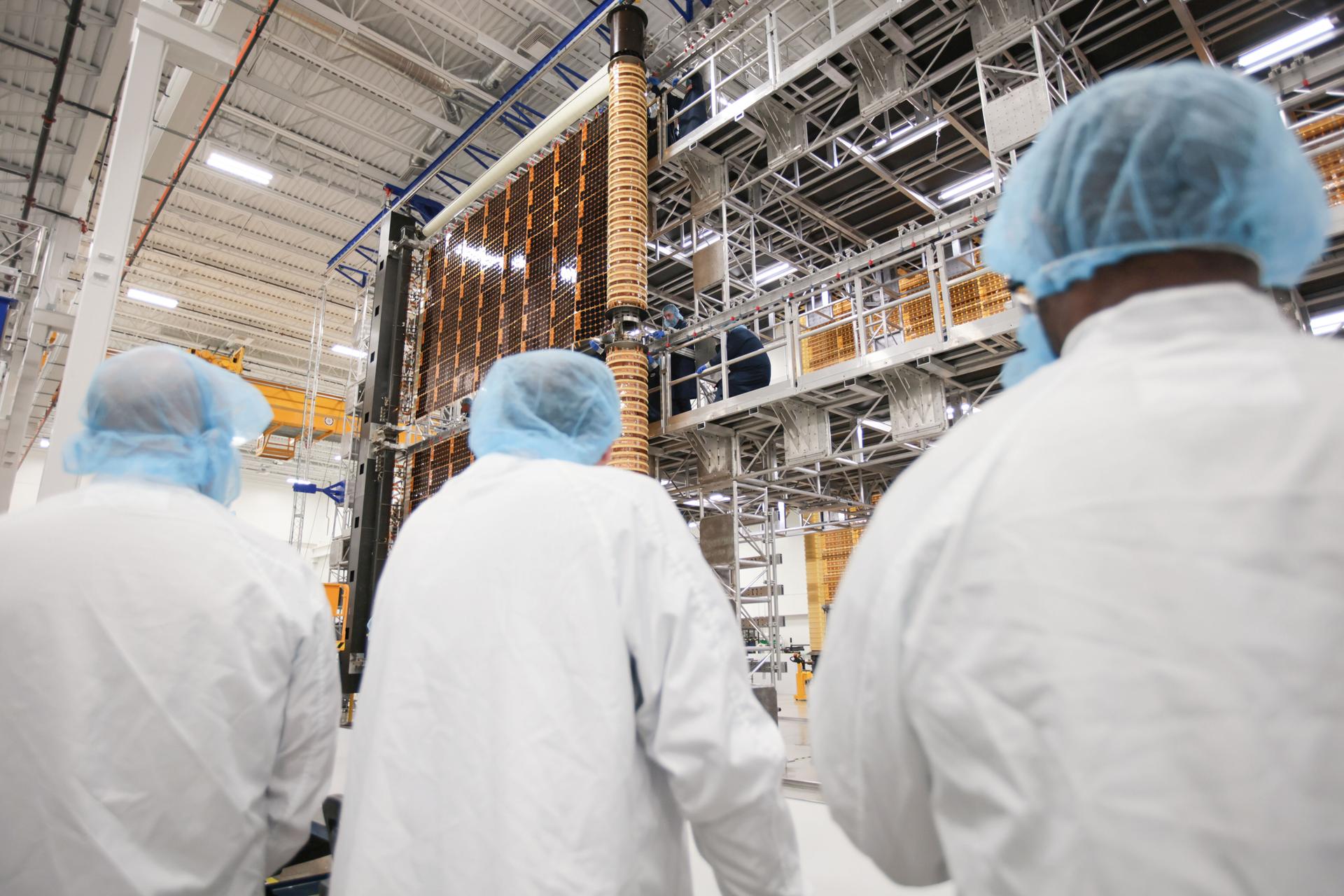
NASA and industry team members observe a Roll-Out Solar Array (ROSA) wing for Gateway as it deploys inside Redwire’s high-bay facility in Goleta, California, during a test on June 30, 2025. The image shows the solar array partially extended as technicians monitor the process from the facility floor and elevated work platforms. Credit: Lanteris Space Systems
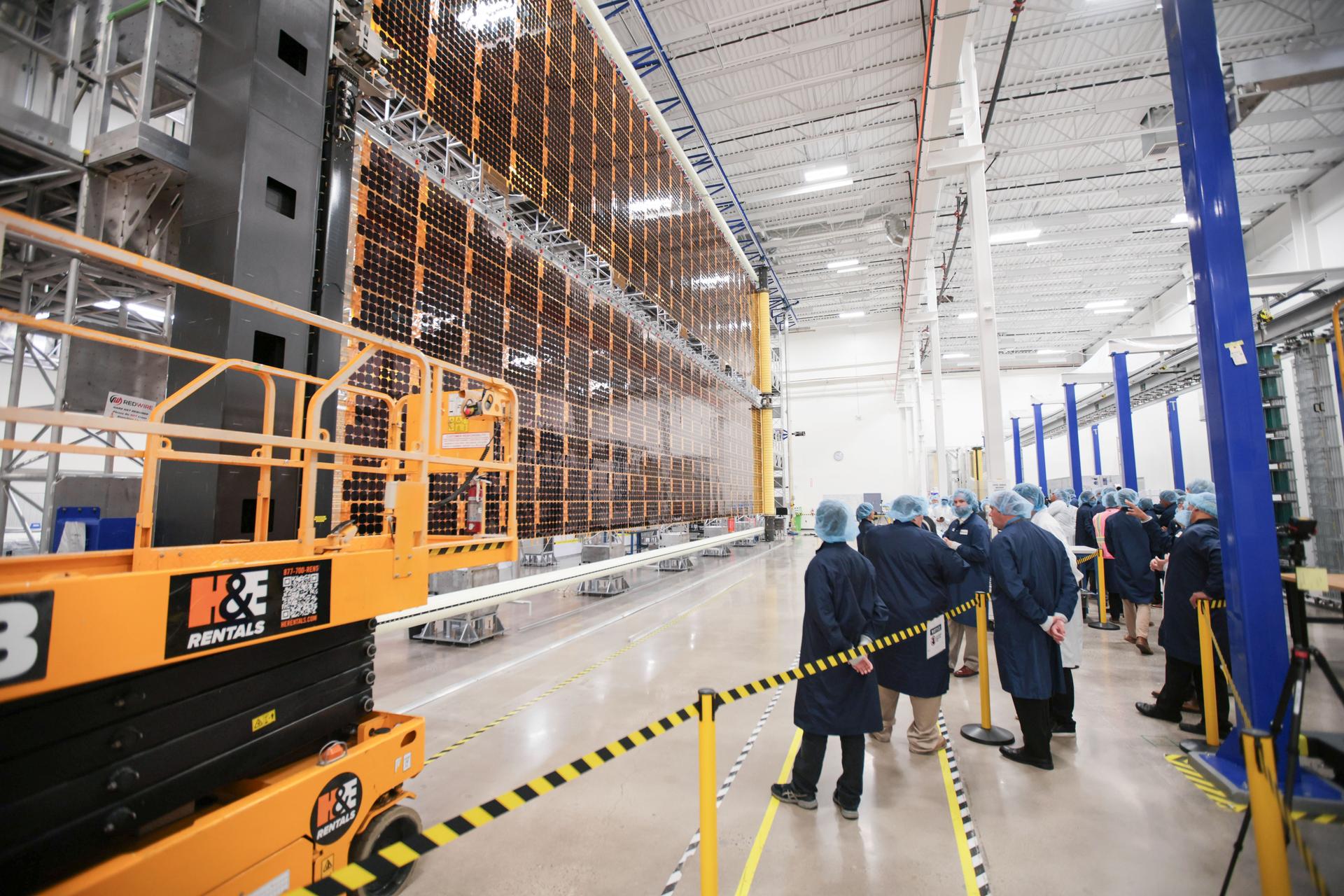
A Roll-Out Solar Array (ROSA) wing for Gateway stands fully deployed inside Redwire’s high-bay facility in Goleta, California, following a successful deployment test on June 30, 2025. The image shows the extended solar array structure as NASA’s Gateway Program leadership and representatives from industry and international partners observe the test from the facility floor. Credit: NASA
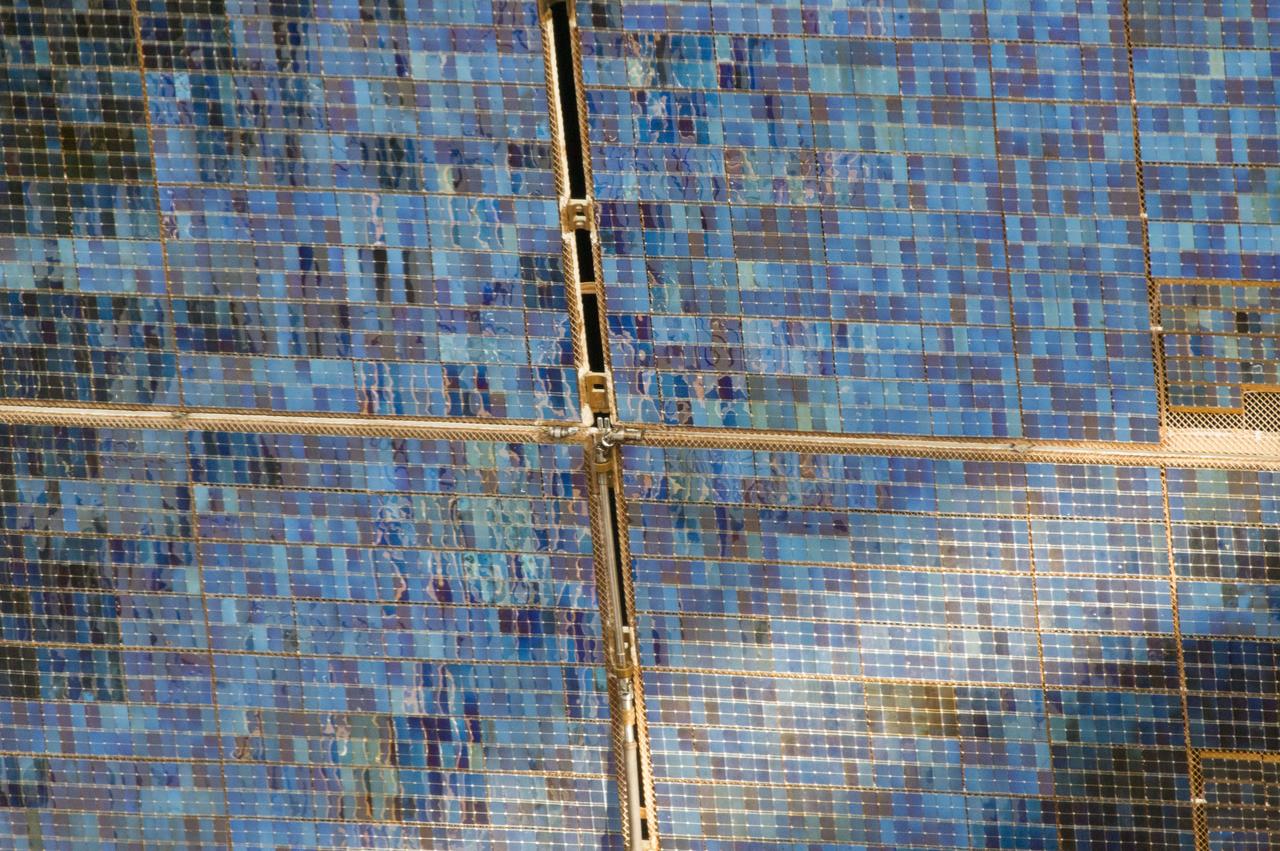
View of Solar Array Wing (SAW). Photo was taken during Expedition 34.
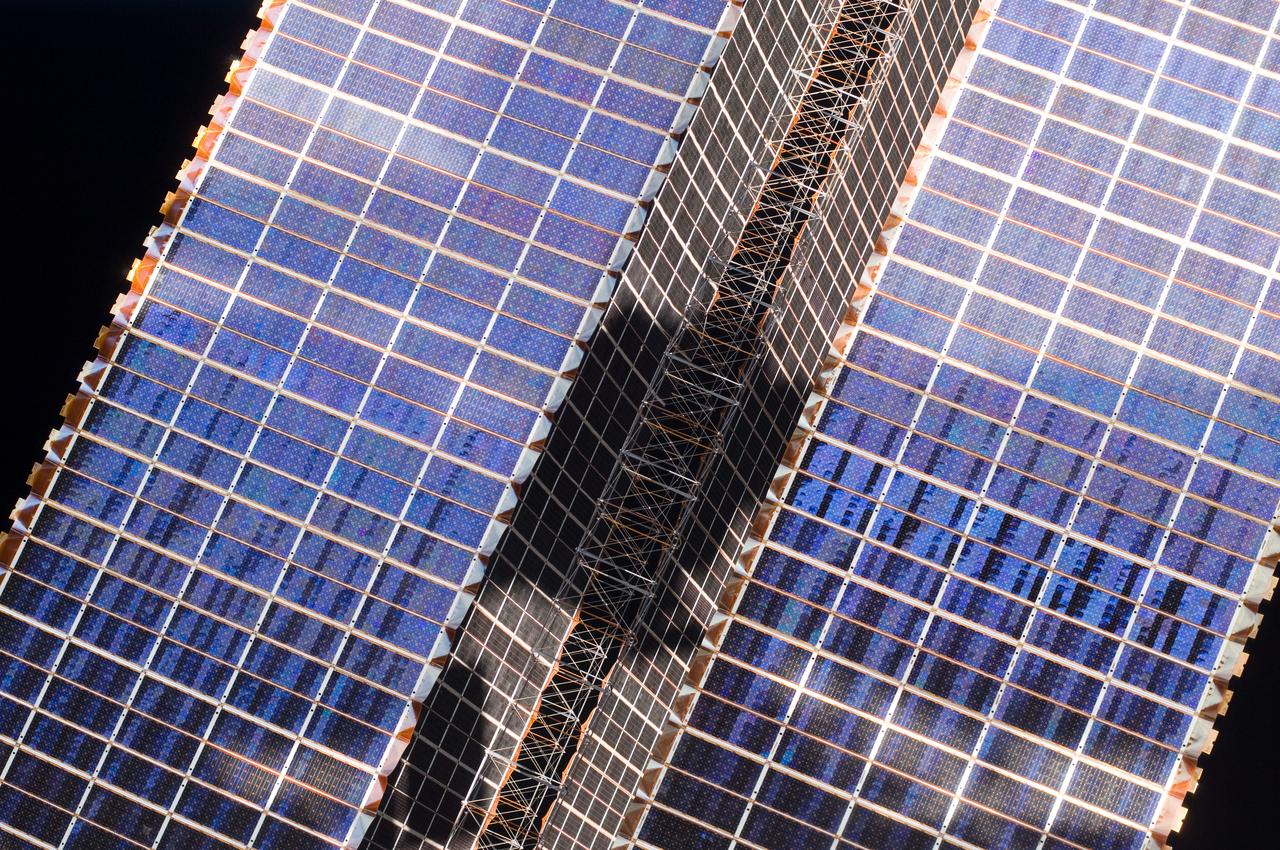
View of Solar Array Wings (SAWs). Photo was taken during Expedition 34.