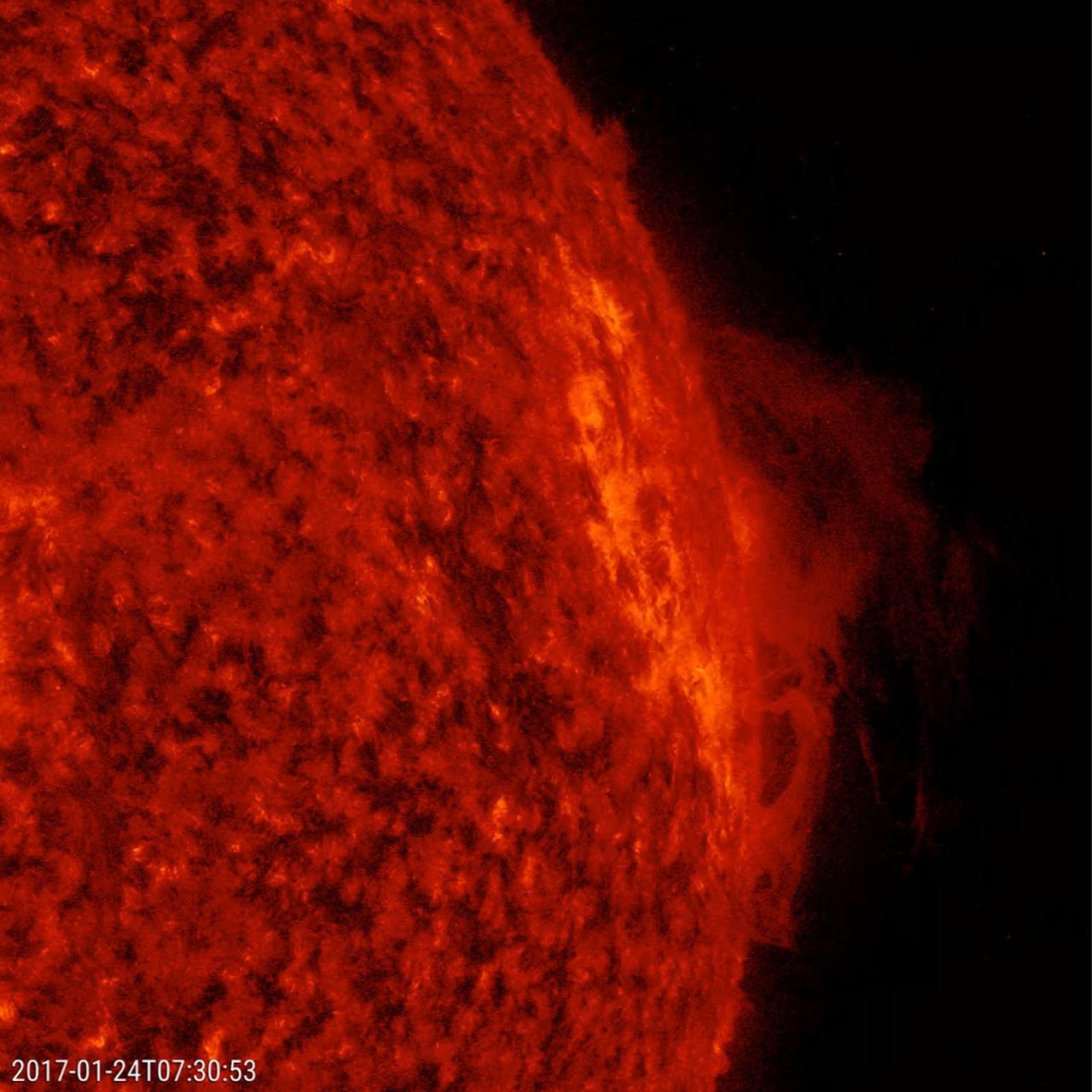
On Jan. 23-24, 2017, NASA Solar Dynamics Observatory watched as a solar prominence rose up along the edge of the sun and twisted and churned for about two days before falling apart. The dynamic action was generated by competing magnetic forces. The images were taken in a wavelength extreme ultraviolet light that observes activity close to the solar surface, perfect for capturing prominences, which are notoriously unstable clouds of plasma suspended above the sun. Movies are available at http://photojournal.jpl.nasa.gov/catalog/PIA11237

Two solar prominences, directly at opposite sides of the Sun, rose up, twisted around, and fell apart at roughly the same time over a 26-hour period (Nov. 12-13, 2018). Prominences are cooler clouds of plasma suspended above the Sun by powerful magnetic forces. Although prominences are fairly common, it is uncommon to see two of them, about the same size, diametrically opposed to each other and lasting just about the same time. The images were taken in a wavelength of extreme ultraviolet light. Movie available at https://photojournal.jpl.nasa.gov/catalog/PIA18143
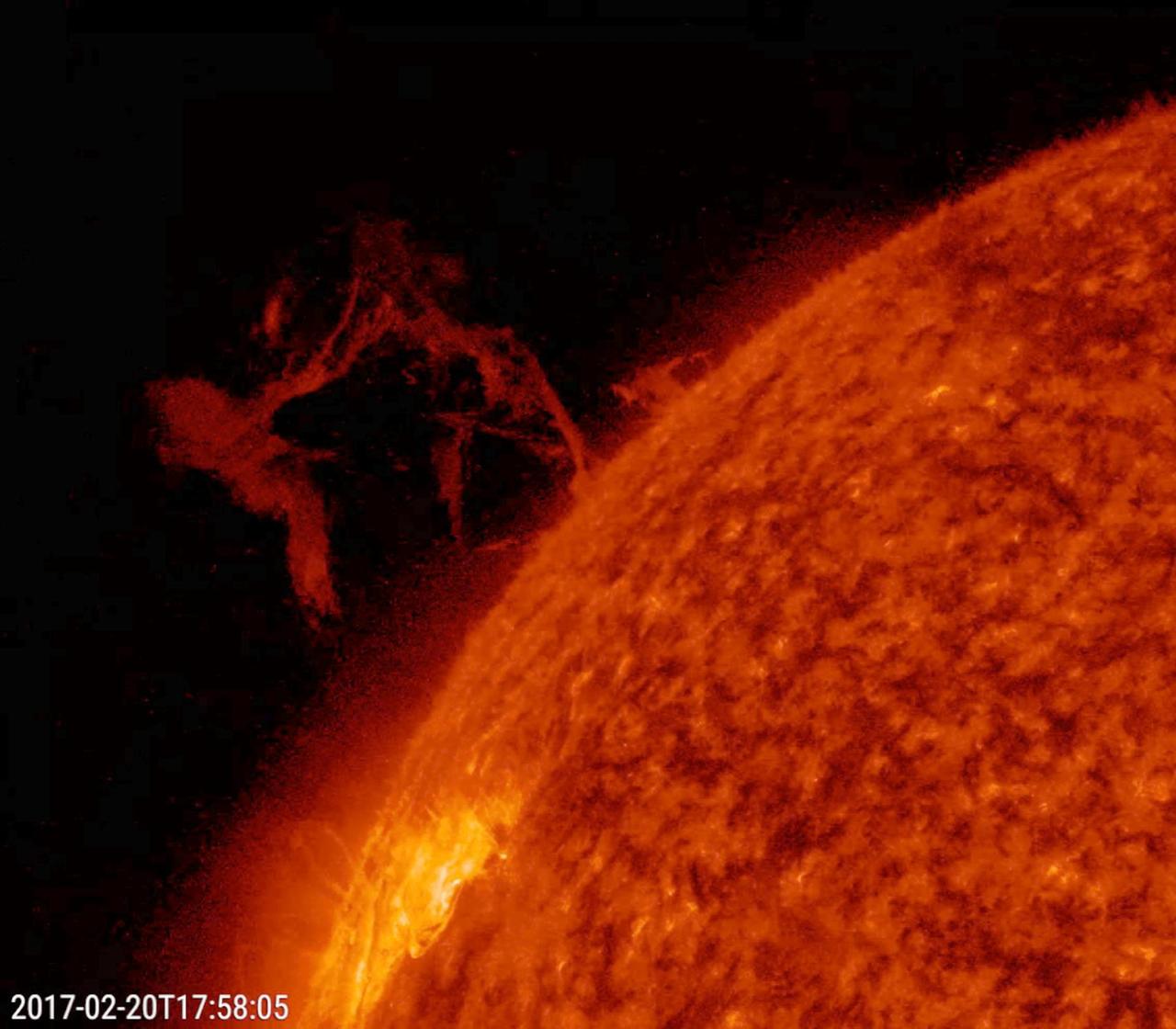
A solar prominence gathered itself into a twisting cone, then rose up and broke apart in a delicate dance of plasma above the sun (Feb. 20, 2017). The event, observed in a wavelength of extreme ultraviolet light, lasted just about four hours. Prominences are unstable clouds of plasma suspended above the sun's surface by magnetic forces. This kind of event is not uncommon. The brighter area near the bottom of the images is an active region. Movies are available at http://photojournal.jpl.nasa.gov/catalog/PIA21552

A prominence at the edge of the sun provided us with a splendid view of solar plasma as it churned and streamed over less than one day (June 25-26, 2017). The charged particles of plasma were being manipulated by strong magnetic forces. When viewed in this wavelength of extreme ultraviolet light, we can trace the movements of the particles. Such occurrences are fairly common but much easier to see when they are near the sun's edge. For a sense of scale, the arch of prominence in the still image has risen up several times the size of Earth. Movies are available at https://photojournal.jpl.nasa.gov/catalog/PIA21768

A solar prominence at the sun's edge put on quite a display of plasma being pushed and pulled by unstable magnetic fields (May 22-24, 2017). We call them hedgerow prominences because they look somewhat like a hedge of bushes. This is one of the better examples of this type of solar phenomenon than any we have seen in quite some time. Movies are available at https://photojournal.jpl.nasa.gov/catalog/PIA21650
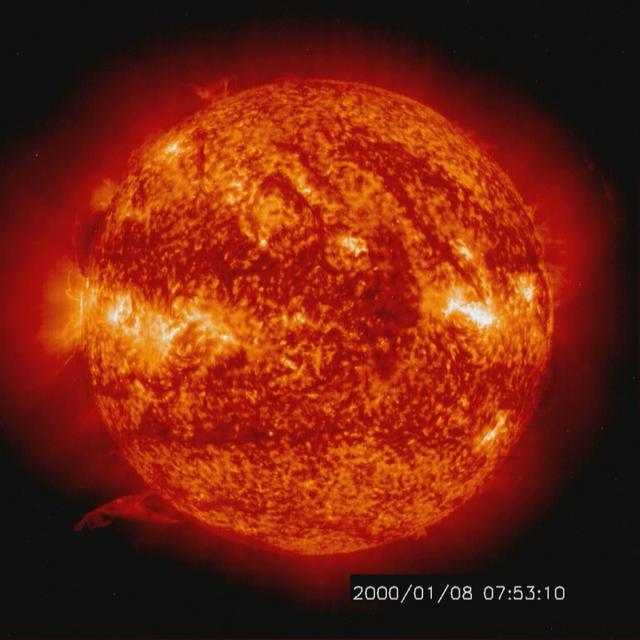
Solar activity and erupting prominences. EIT 304A (Jan. 8-10, 2000) Credit: NASA/GSFC/SOHO/ESA To learn more go to the SOHO website: <a href="http://sohowww.nascom.nasa.gov/home.html" rel="nofollow">sohowww.nascom.nasa.gov/home.html</a> To learn more about NASA's Sun Earth Day go here: <a href="http://sunearthday.nasa.gov/2010/index.php" rel="nofollow">sunearthday.nasa.gov/2010/index.php</a>
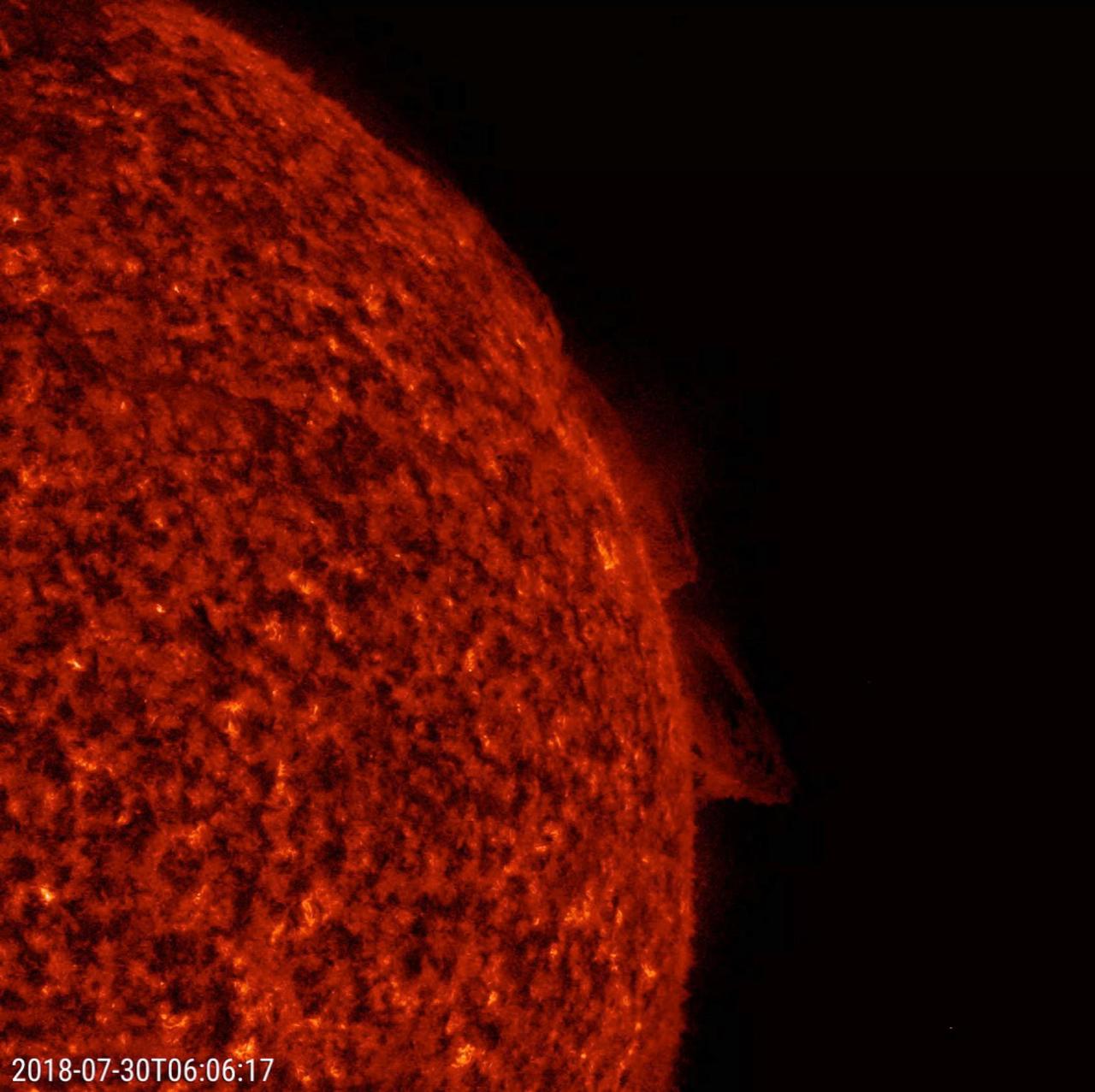
NASA's Solar Dynamics Observatory (SDO) observes two relatively small prominences above the Sun's surface twisted and streamed charged particles over a 20-hour period (July 30-31, 2018), shown here in a wavelength of extreme ultraviolet light. Prominences are large, bright features anchored to the Sun's photosphere but extending outward into its hot outer atmosphere, called the corona. Scientists are still researching how and why prominences are formed. Movies are available at https://photojournal.jpl.nasa.gov/catalog/PIA22661
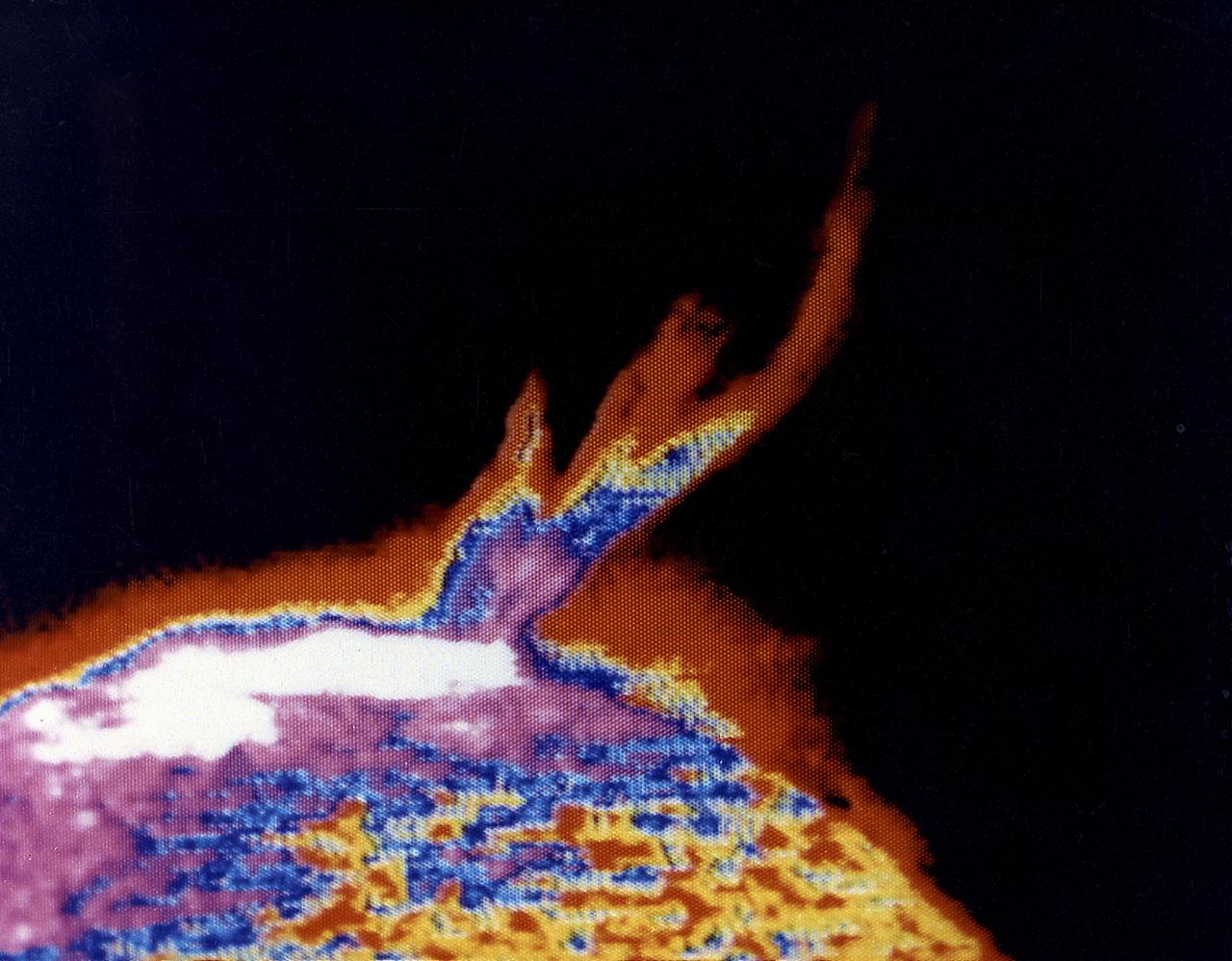
This photograph shows a solar prominence in action, one of Skylab's many splendorous views. It was taken on August 21, 1973. Interpretation of the rich store of Skylab ultraviolet solar data was facilitated by computerized color enhancement of the original black-and-white images, highlighting subtle but important brightness differences.

Some of the prominences that float like lazy clouds above the solar surface suddenly erupt and break away from the Sun in cataclysmic action. The trigger of this coronal transient, like many others seen by Skylab's coronagraph, was an eruptive prominence that surged outward from the limb of the Sun, ejecting matter that disturbed the outer corona. This image is of the surge in action in ultraviolet light of ionized helium. Simultaneous observations like this made possible an almost immediate understanding of the new-found cosmic phenomenon. The elbow prominence was accidentally photographed by Astronaut Garriott (Skylab-3) while observing a small flare near the limb of the Sun beneath the mighty arch on August 9, 1973.

Some prominences are seen as the moon begins to move off the sun during the total solar eclipse on Monday, August 21, 2017 above Madras, Oregon. A total solar eclipse swept across a narrow portion of the contiguous United States from Lincoln Beach, Oregon to Charleston, South Carolina. A partial solar eclipse was visible across the entire North American continent along with parts of South America, Africa, and Europe. Photo Credit: (NASA/Aubrey Gemignani)
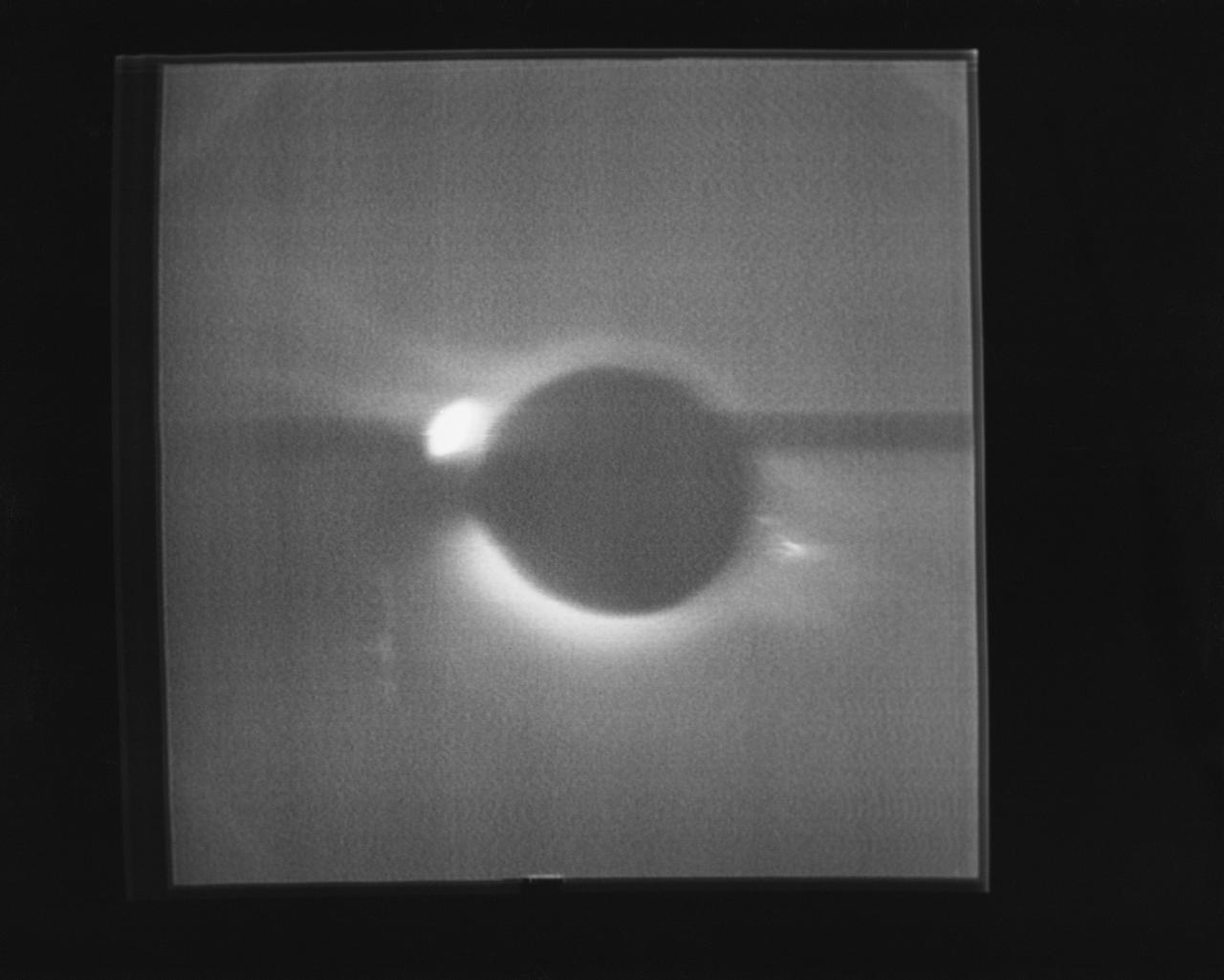
S74-15697 (17 Jan. 1974) --- The solar corona and a solar prominence as seen through the White Light Coronograph, Skylab Experiment S052, on Jan. 17, 1974. This view was reproduced from a television transmission made by a TV camera aboard the Skylab space station in Earth orbit. The bright spot is a burn in the vidicon. The solar corona is the halo around the sun which is normally visible only at the time of solar eclipse by the moon. The Skylab coronography uses an externally-mounted disk system which occults the brilliant solar surface while allowing the fainter radiation of the corona to enter an annulus and be photographed. A mirror system allows either TV viewing of the corona or photographic recording of the image. Photo credit: NASA

A small prominence observed in profile arched up and sent streams of plasma curling back into the sun over a 30-hour period (Dec. 13-14, 2017). We are observing charged particles streaming along magnetic field lines made visible in extreme ultraviolet light. Prominences are cooler strands of plasma tethered above the sun's surface by magnetic forces. They are quite unstable and frequently fall apart within hours or days. Movies are available at https://photojournal.jpl.nasa.gov/catalog/PIA22196
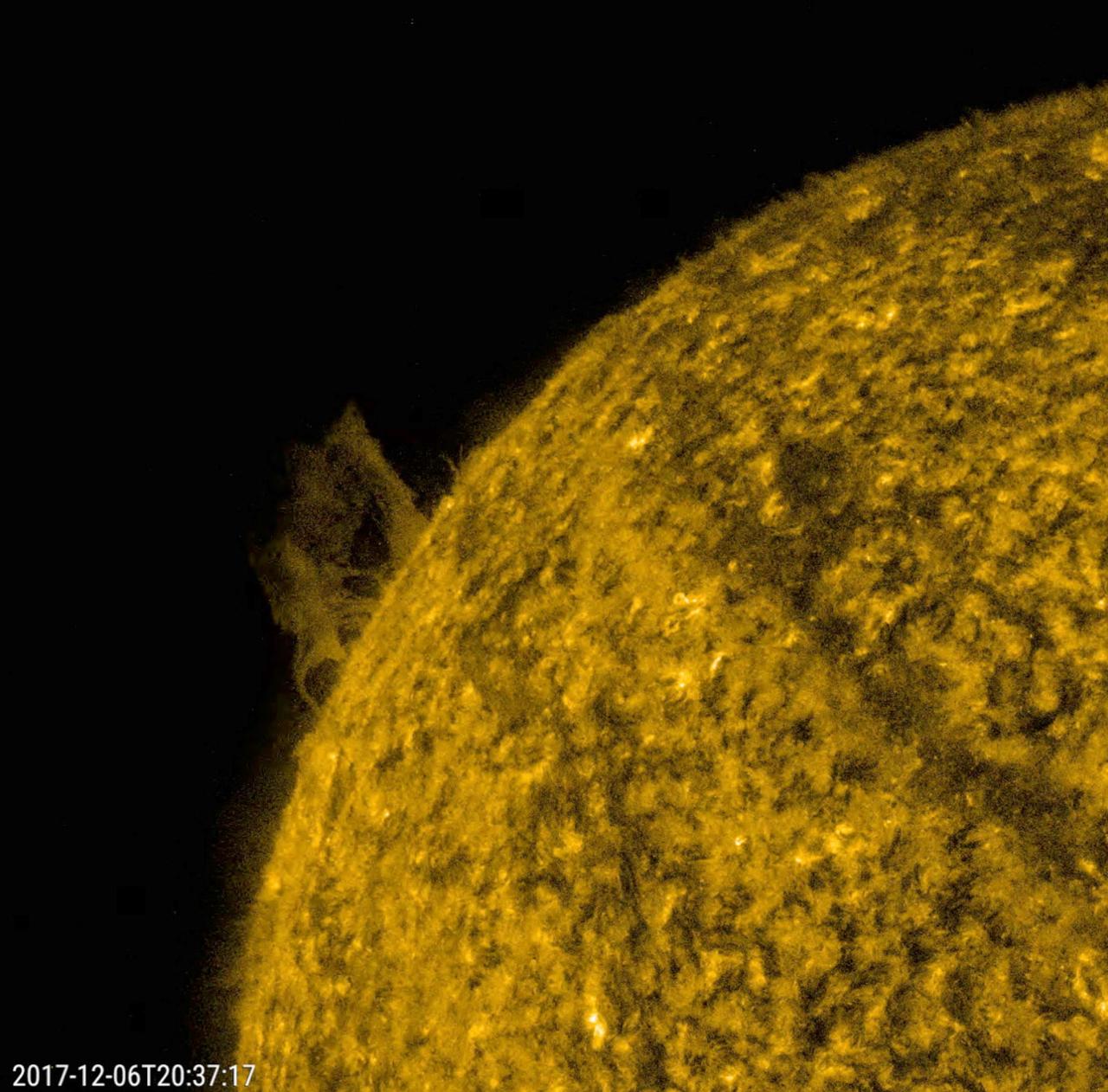
A small prominence slowly rose further up above the sun, then fell apart and back into the sun over about seven hours (Dec. 6, 2017). Prominences, notoriously unstable, are cooler clouds of particles tethered not far above the sun by magnetic forces. When it stretched out, its distance above the sun was several times the size of Earth. Images were taken in a wavelength of extreme ultraviolet light. These images are colorized since we cannot "see" ultraviolet light. In this case, a yellow tone was used instead of the normal red tint we use for this 304 Angstrom wavelength. Movies are available at https://photojournal.jpl.nasa.gov/catalog/PIA22195

A prominence at the sun's edge shifted and slithered back and forth over a one-day period (Nov. 29-30, 2017). Prominences are strands of charged particles suspended above the sun's surface that are pulled and tugged by magnetic forces. This kind of close-up also shows the kind of dynamic activity taking place all over the sun's surface. The bright area further down from the prominence is an active region, an area of intense tangles of magnetic forces. Towards the end of the clip, it blasts out a small stream of plasma (captured in the still). The images were taken in a wavelength of extreme ultraviolet light. Movies are available at https://photojournal.jpl.nasa.gov/catalog/PIA22123
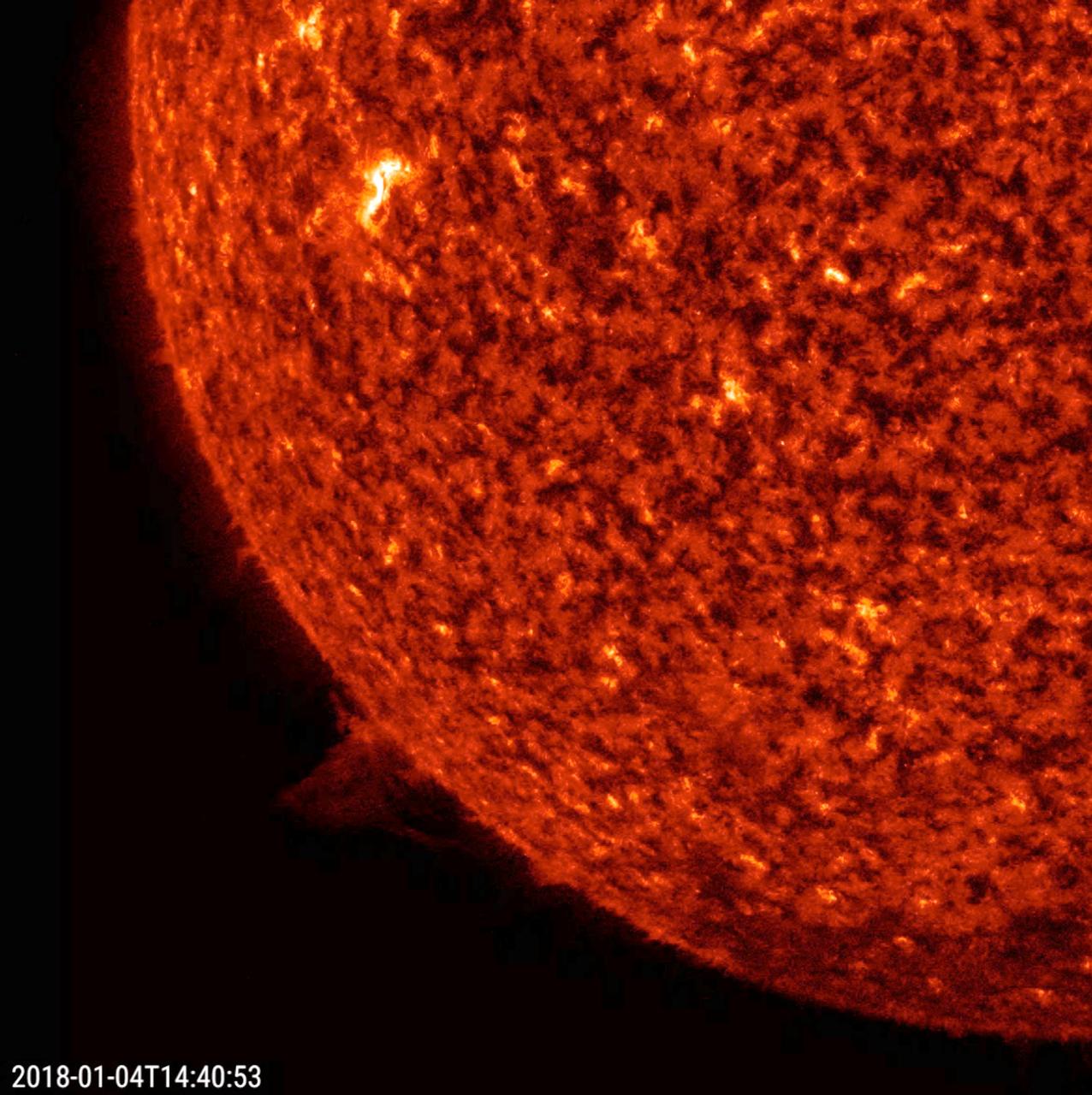
A small prominence rose up above the sun, appeared to twist around for several hours, and then began to send some streams of plasma back into the sun (Jan. 3-4, 2018). The action, observed in a wavelength of extreme ultraviolet light, lasted just about one day. Prominences like this one are quite common. In fact, there were several over the past few days. For a sense of scale, the prominence reached up more than several times the size of Earth. Movies are available at https://photojournal.jpl.nasa.gov/catalog/PIA22198

A prominence rose up above the sun, sent an arch of plasma to link up magnetically with an active region over a one-day period (Jan, 9-10, 2017). Then the flow of plasma seemed to largely change direction and head back where it came from. Finally, amidst the confused patterns of movement, it dissipated and fell away. Prominences are cooler clouds of charged particles tenuously tethered to the sun by magnetic forces. Images were taken in a wavelength of extreme ultraviolet light. Movies are available at https://photojournal.jpl.nasa.gov/catalog/PIA22199
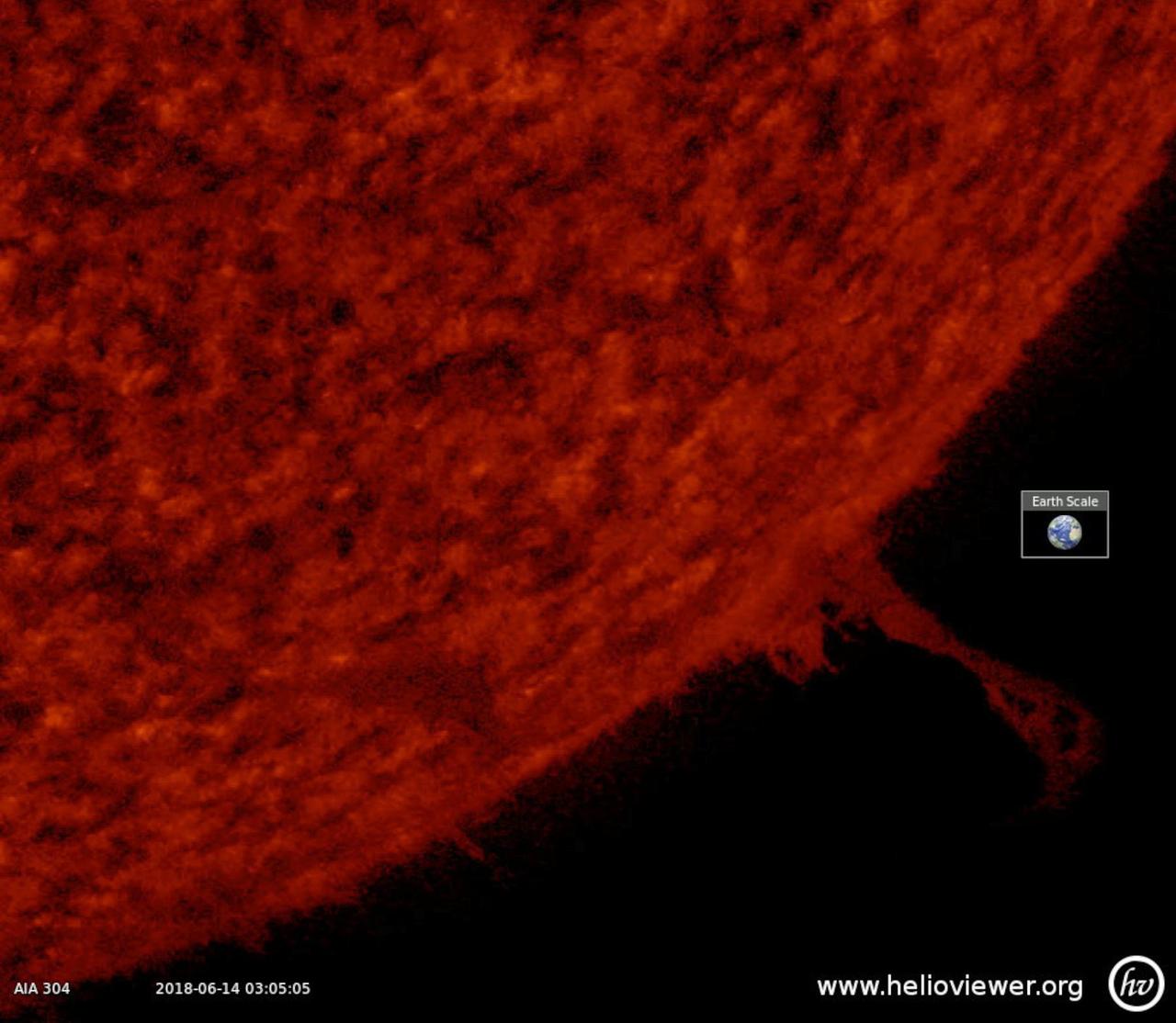
A small prominence hovered above the sun's surface over a two-day period (June 12-14, 2018) before breaking off into space. Prominences are cooler, darker clouds of plasma tethered above the sun by magnetic forces. These clouds of gases are notoriously unstable. The images were taken in the 304 Angstrom wavelength of extreme ultraviolet light. Movies are available at https://photojournal.jpl.nasa.gov/catalog/PIA22537

On Oct. 24-25, 2018 a solar prominence rose up above the Sun's surface, twisted and spun around, then became elongated and broke away. Prominences are unstable clouds of cooler plasma suspended above the Sun by strong magnetic forces. They often fall apart after a few days. Although tiny on the scale of the Sun, this prominence stretched out about ten times the diameter of Earth (see inset). Images were taken in a wavelength of extreme ultraviolet light. Animations are available at https://photojournal.jpl.nasa.gov/catalog/PIA18140

Saturn most prominent feature, its dazzling ring system, takes center stage in this stunning natural color mosaic which reveals the color and diversity present in this wonder of the solar system.
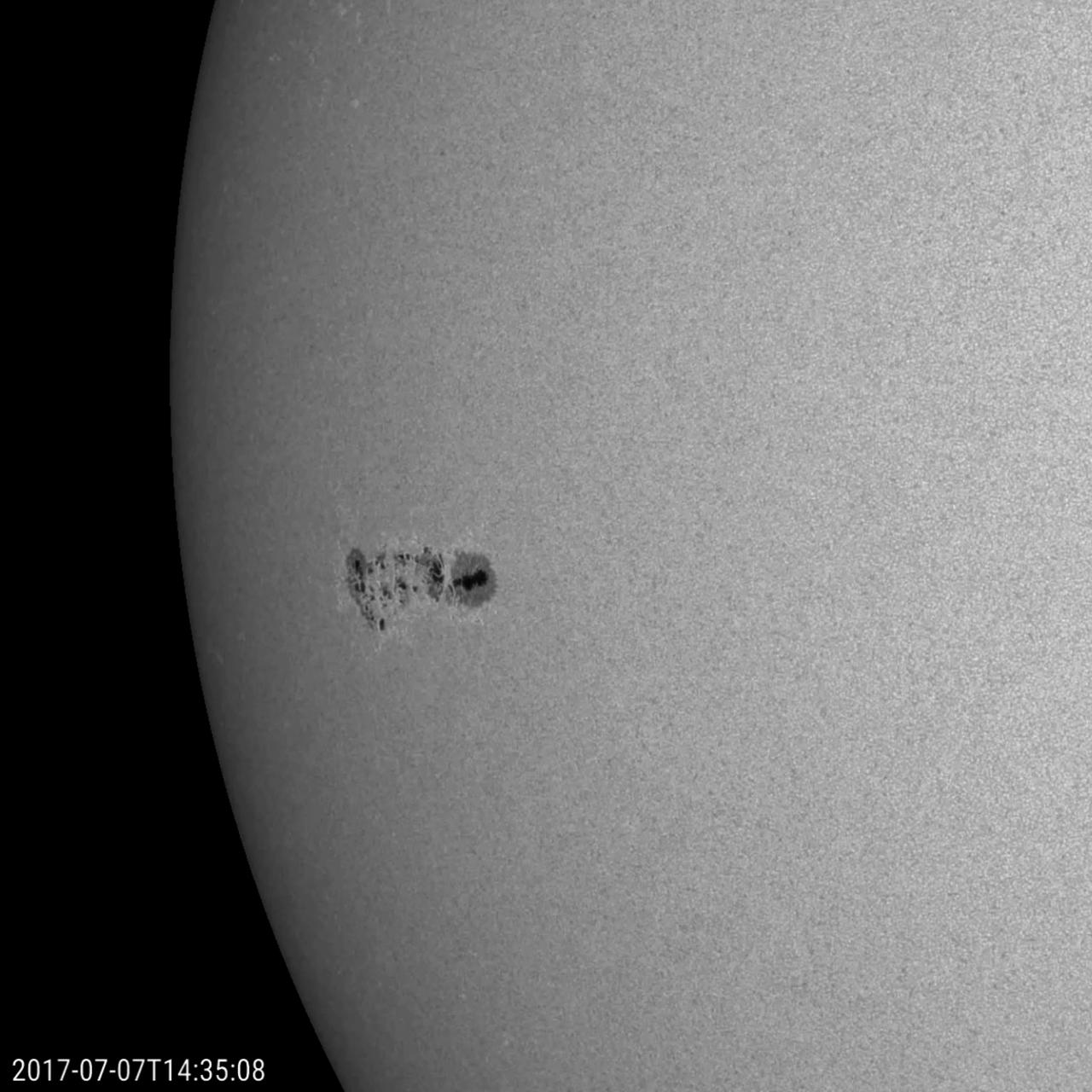
A prominence at the edge of the sun provided us with a splendid view of solar plasma as it churned and streamed over less than one day (June 25-26, 2017). The charged particles of plasma were being manipulated by strong magnetic forces. When viewed in this wavelength of extreme ultraviolet light, we can trace the movements of the particles. Such occurrences are fairly common but much easier to see when they are near the sun's edge. For a sense of scale, the arch of prominence in the still image has risen up several times the size of Earth. Movies are available at https://photojournal.jpl.nasa.gov/catalog/PIA21783
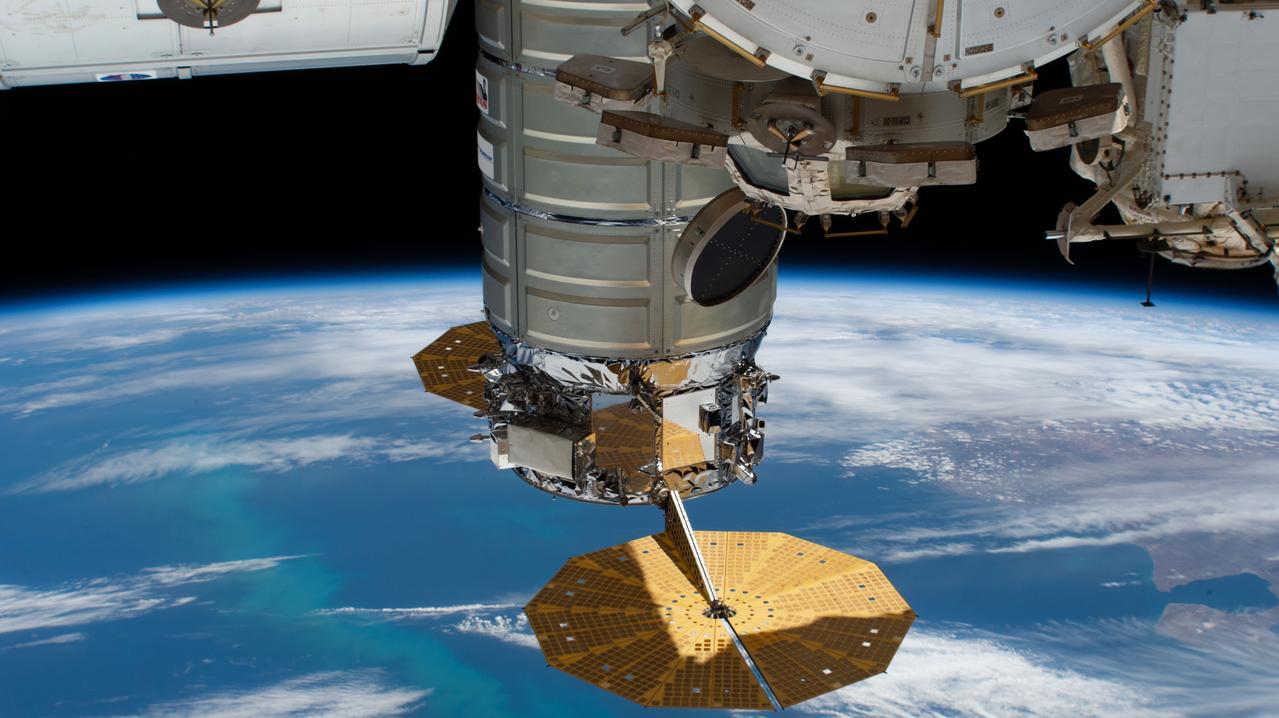
iss058e002245 (Jan. 7, 2019) --- The U.S. Cygnus space freighter from Northrop Grumman and its prominent cymbal-shaped UltraFlex solar arrays are pictured as the International Space Station orbited 262 miles above the Atlantic Ocean off the coast of Argentina. Towards the top center of the photograph is the seven-windowed cupola with its shutters open.
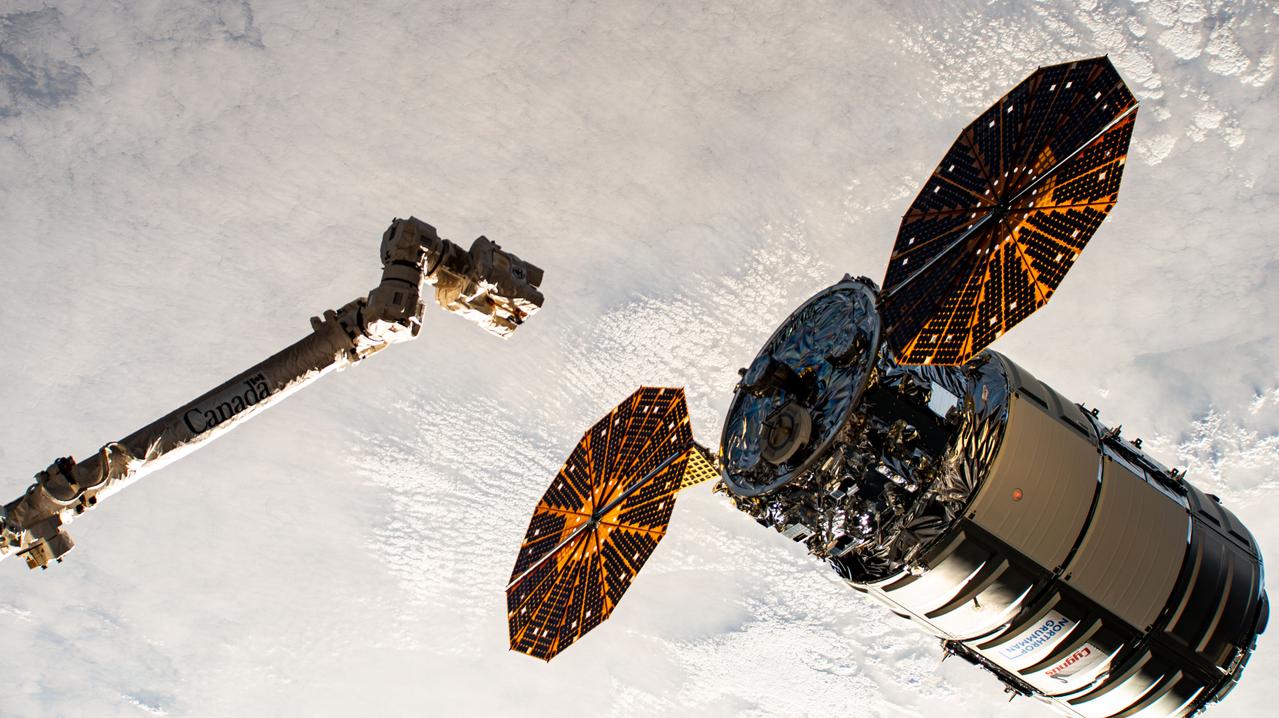
iss071e418233 (Aug. 6, 2024) --- Northrop Grumman's Cygnus cargo craft, with its prominent cymbal-shaped UltraFlex solar arrays, is pictured awaiting its capture by the Canadarm2 robotic arm commanded by Expedition 71 Flight Engineer Matthew Dominick of NASA. The maneuver marked the 50th free-flying capture for the Canadarm2 robotic arm.

iss064e059520 (April 14, 2021) --- Northrop Grumman's Cygnus space freighter, with one of its prominent cymbal-shaped solar arrays, is pictured as the International Space Station orbited 266 miles above British Columbia, Canada.
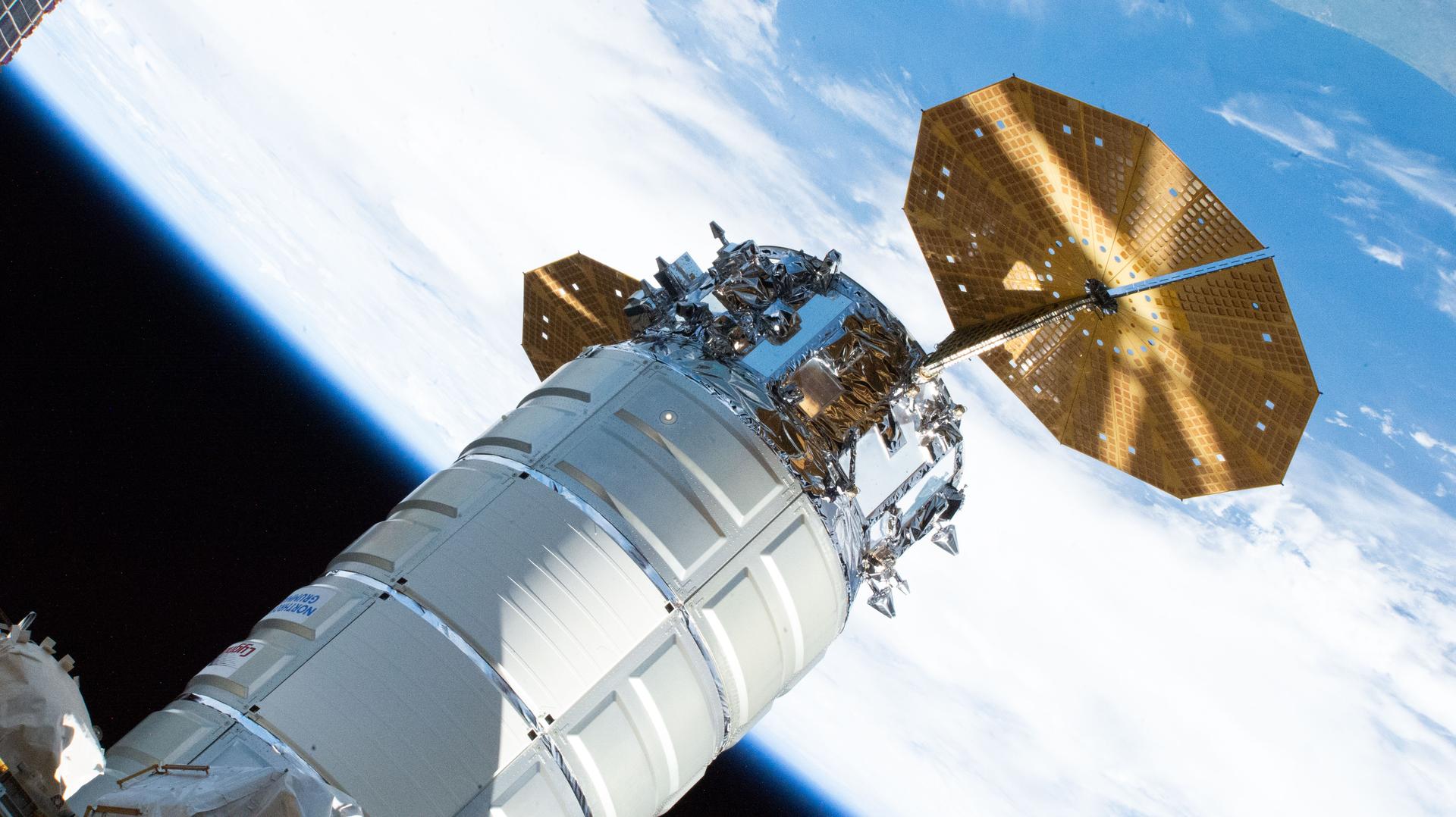
iss075e0085136 (Aug. 27, 2026) --- Northrop Grumman’s Cygnus XL cargo spacecraft, with its prominent cymbal‑shaped UltraFlex solar arrays, is pictured berthed to the International Space Station’s Unity module. Credit: NASA
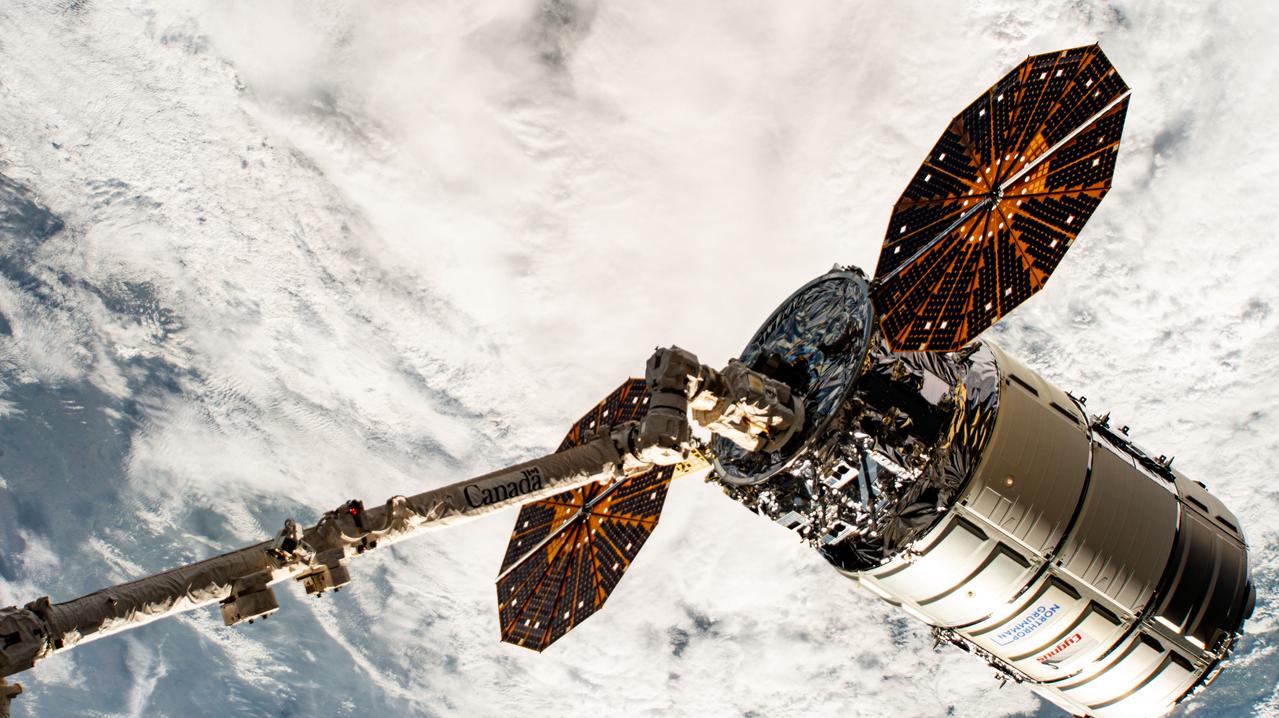
iss071e418235 (Aug. 6, 2024) --- Northrop Grumman's Cygnus cargo craft, with its prominent cymbal-shaped UltraFlex solar arrays, is pictured in the grips of the Canadarm2 robotic arm shortly after its capture was commanded by Expedition 71 Flight Engineer Matthew Dominick of NASA. The maneuver marked the 50th free-flying capture for the Canadarm2 robotic arm.
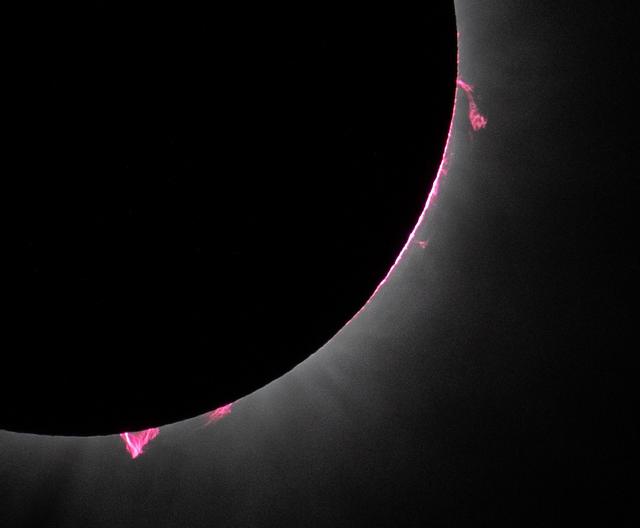
Solar prominences are seen during a total solar eclipse in Dallas, Texas on Monday, April 8, 2024. A total solar eclipse swept across a narrow portion of the North American continent from Mexico’s Pacific coast to the Atlantic coast of Newfoundland, Canada. A partial solar eclipse was visible across the entire North American continent along with parts of Central America and Europe. Photo Credit: (NASA/Keegan Barber)
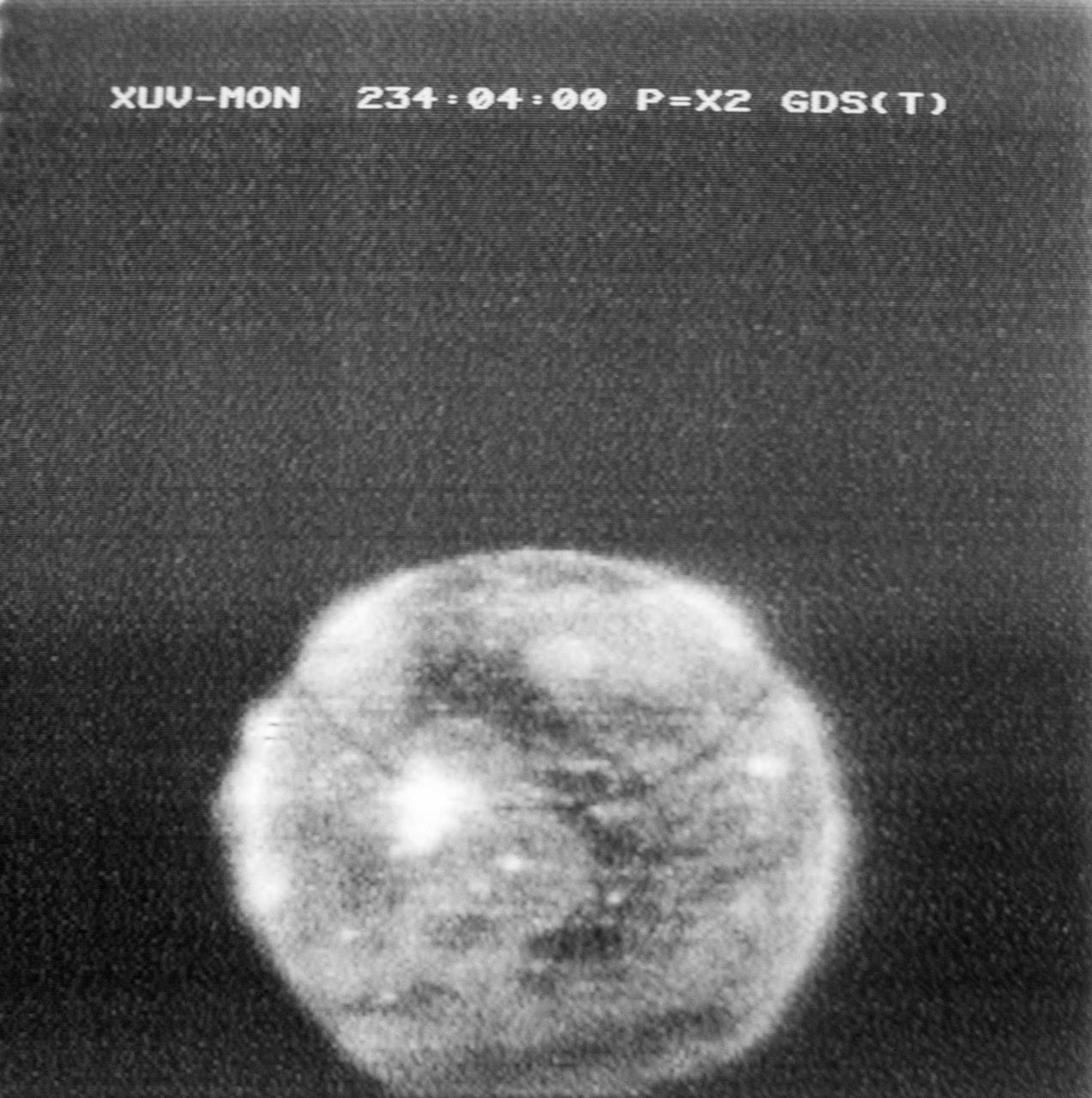
S73-32867 (21 Aug. 1973) --- The solar sphere viewed through the Skylab solar physics experiment (S082) Extreme Ultraviolet Spectroheliographis seen in this photographic reproduction taken from a color television transmission made by a TV camera aboard the Skylab space station in Earth orbit. The solar chromosphere and lower corona are much hotter than the surface of the sun characterized by the white light emissions. This image was recorded during the huge solar prominence which occurred on Aug. 21, 1973. Photo credit: NASA
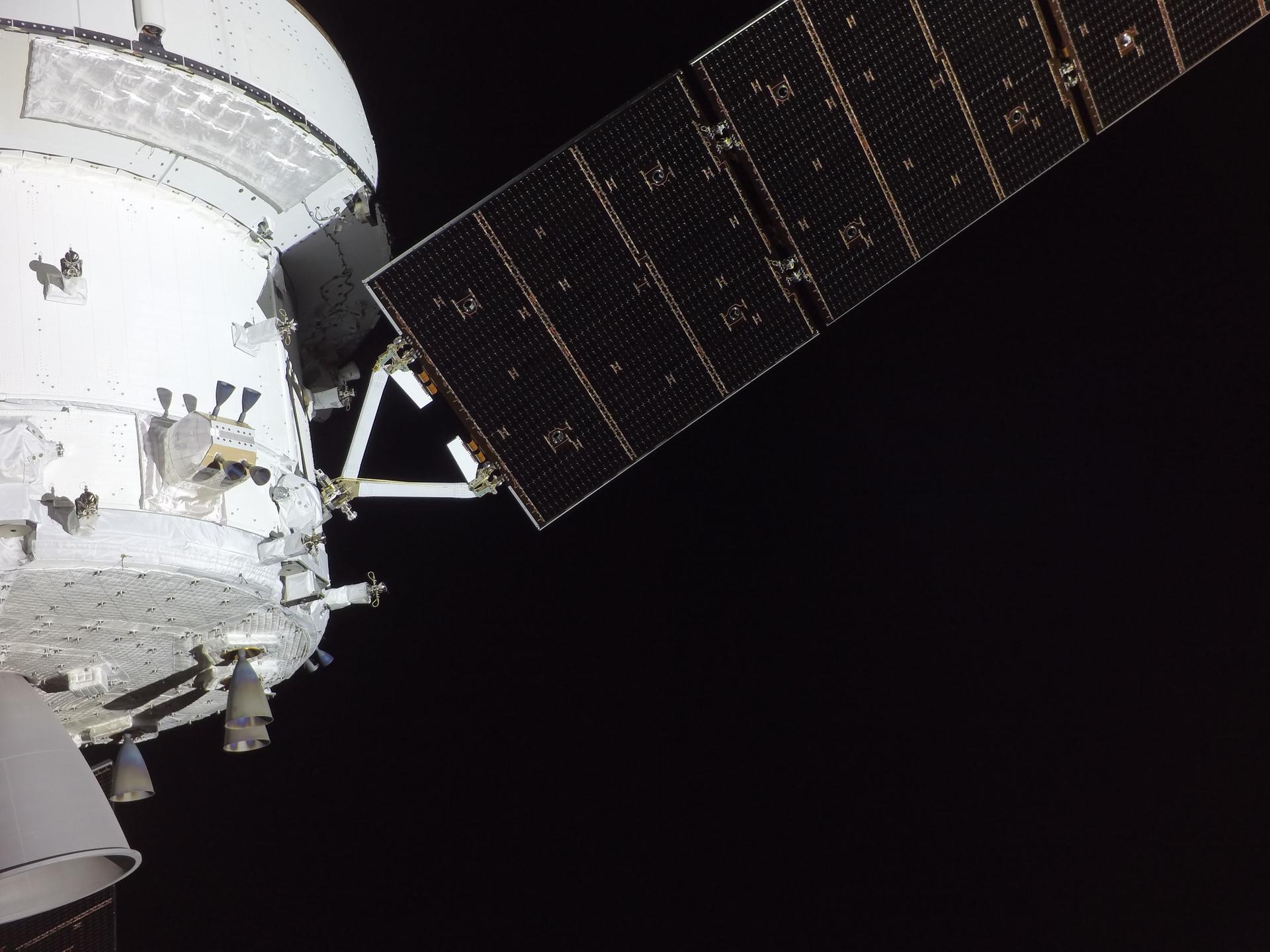
art002e012584 (April 7, 2026) - NASA’s Orion spacecraft pictured from one of the cameras mounted on its solar array wings. The service module is prominently featured in this image showing a portion of the orbital maneuvering system engine and three of eight auxiliary thrusters. Also pictured is one of the four solar array wings. Each of Orion’s four solar array wings are made of three panels that provide enough electricity to power two three-bedroom homes. Credit: NASA

A bright solar prominence rose up from the Sun and twisted around in about a six-hour period (Apr. 21, 2015). While some of the material broke away into space, much of it fell back into the Sun. The images were taken in a wavelength of extreme ultraviolet light. At its greatest height, the plume extended out many times the size of Earth, allowing numerous amateur astronomers to observe this event with their solar telescopes. Credit: Solar Dynamics Observatory, NASA.
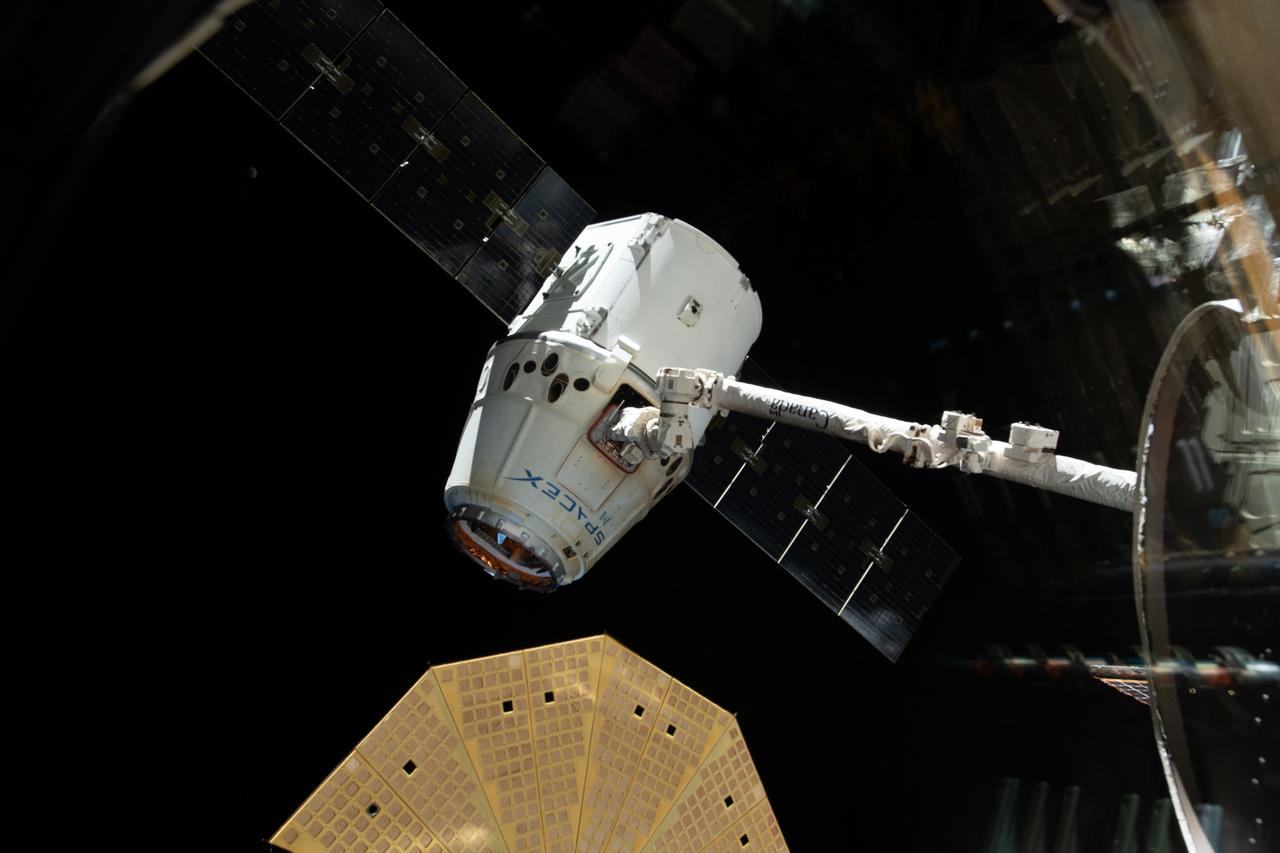
iss058e002666 (Jan. 13, 2019) --- The SpaceX Dragon cargo craft is pictured in the grips of the Canadarm2 robotic arm before its release and departure from the International Space Station. Featured prominently in the lower foreground is one of two cymbal-shaped UltraFlex solar arrays attached to the Northrop Grumman Cygnus resupply ship. The orbital complex was orbiting 254 miles above East Asia at the time this photograph was taken.
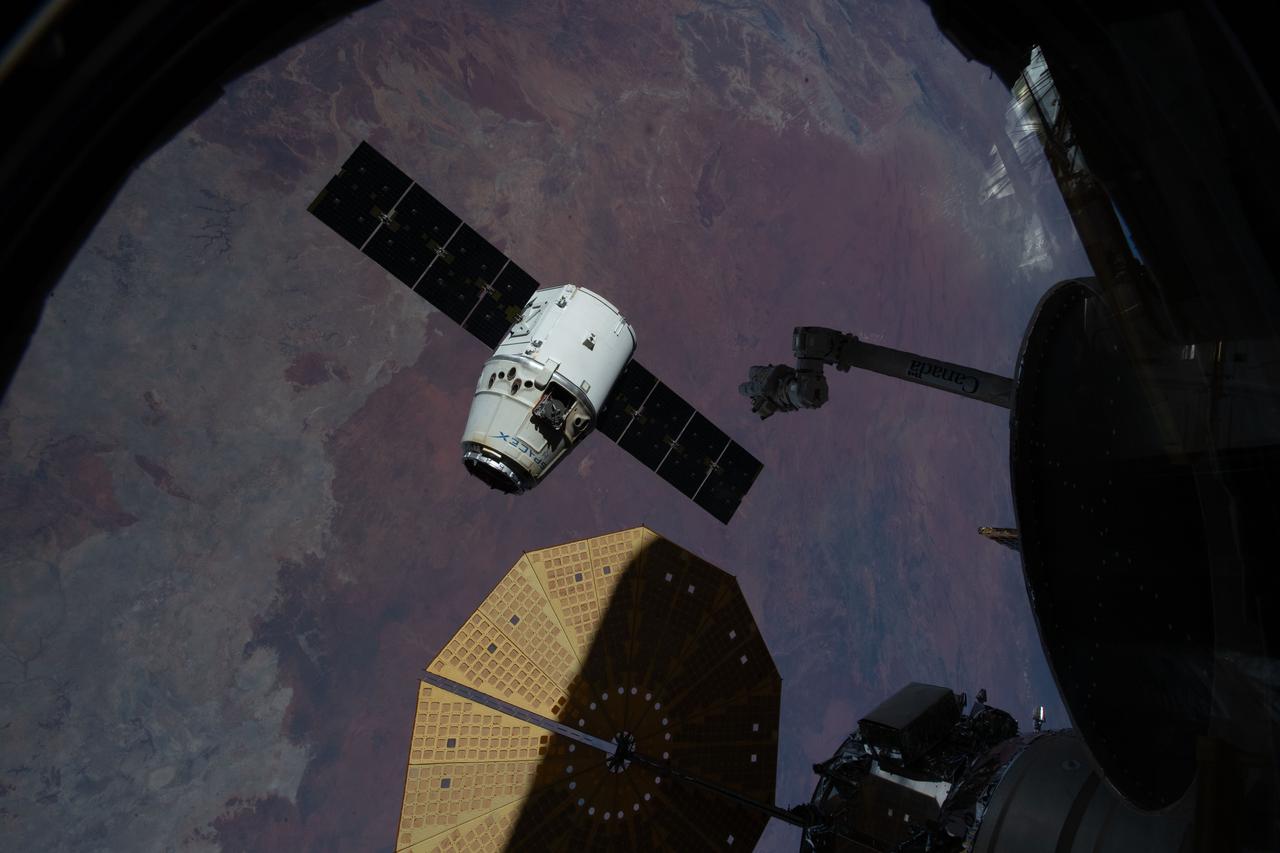
iss058e002813 (Jan. 13, 2019) --- The SpaceX Dragon cargo craft begins its departure from the International Space Station moments after being released from the grips of the Canadarm2 robotic arm. Featured prominently in the lower foreground is one of two cymbal-shaped UltraFlex solar arrays attached to the Northrop Grumman Cygnus resupply ship. The orbital complex was orbiting 255 miles above Australia's Northern Territory at the time this photograph was taken.
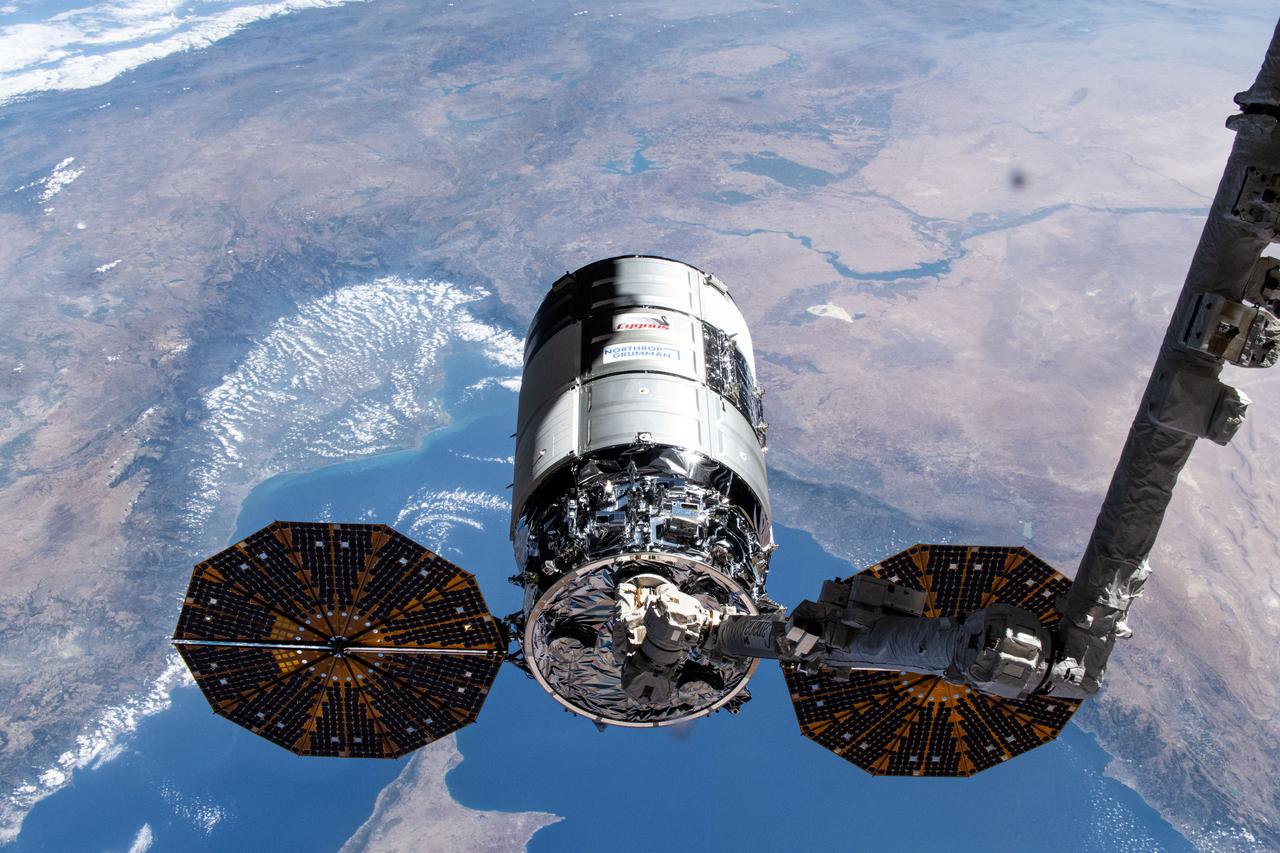
iss071e417237 (Aug. 6, 2024) --- Northrop Grumman's Cygnus cargo craft, with its prominent cymbal-shaped UltraFlex solar arrays, is pictured in the grips of the Canadarm2 robotic arm shortly after its capture was commanded by Expedition 71 Flight Engineer Matthew Dominick of NASA. The maneuver marked the 50th free-flying capture for the Canadarm2 robotic arm. The International Space Station was orbiting 262 miles above the Mediterranean Sea at the time of this photograph.
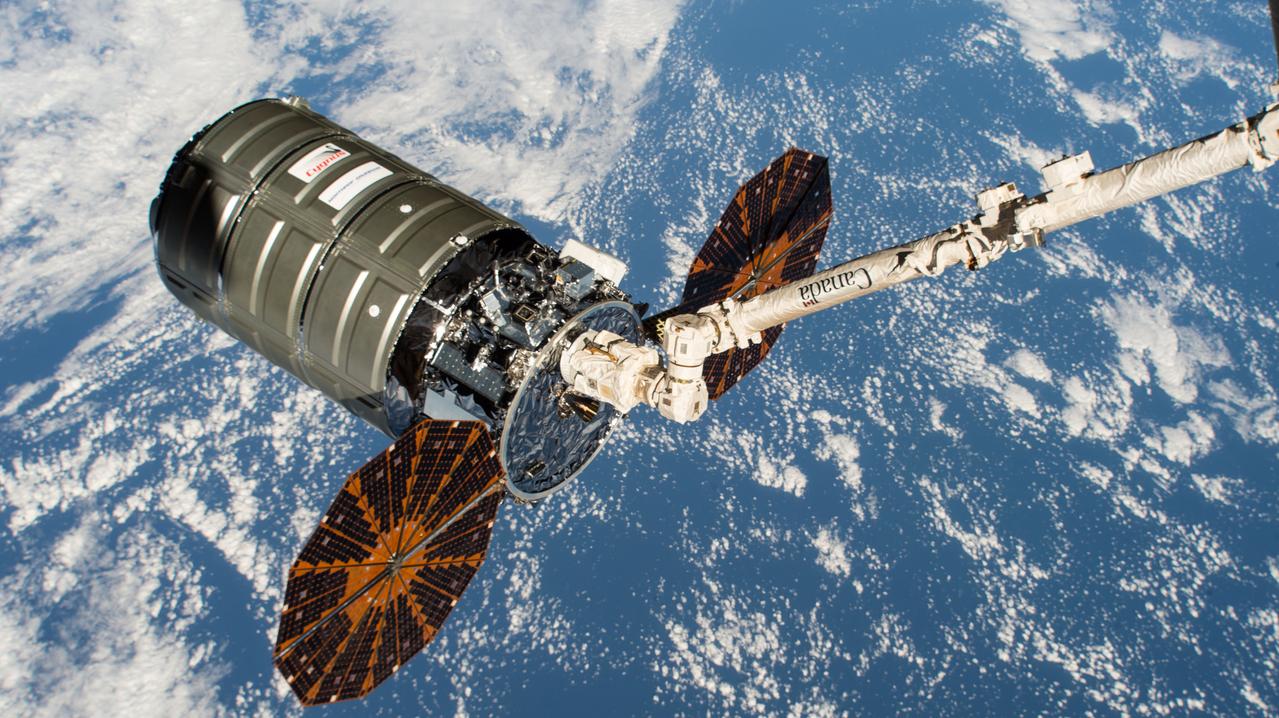
iss057e103652 (Nov. 19, 2018) --- Northrop Grumman's Cygnus space freighter with its prominent cymbal-shaped UltraFlex solar arrays is pictured in the grips of the Canadarm2 robotic arm after it was captured by Expedition 57 Flight Engineer Serena Auñón-Chancellor and ESA (European Space Agency) astronaut Alexander Gerst.
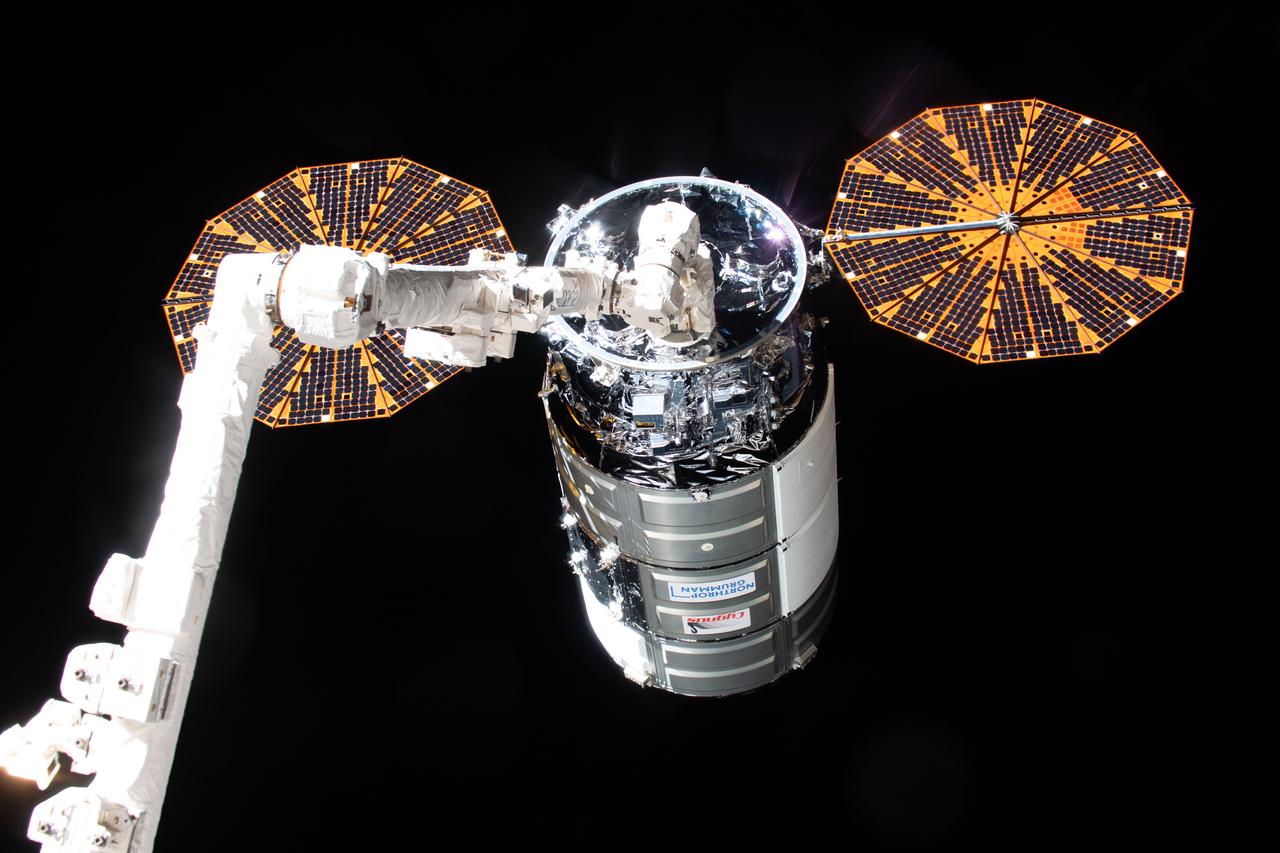
iss070e085725 (Feb. 1, 2024) --- Northrop Grumman's Cygnus space freighter, packed with more than 8,200 pounds of science experiments, crew supplies, and station hardware, is pictured in the grips of the Canadarm2 robotic arm after its capture. Featured prominently on Cygnus, are its two cymbal-shaped UltraFlex solar arrays.
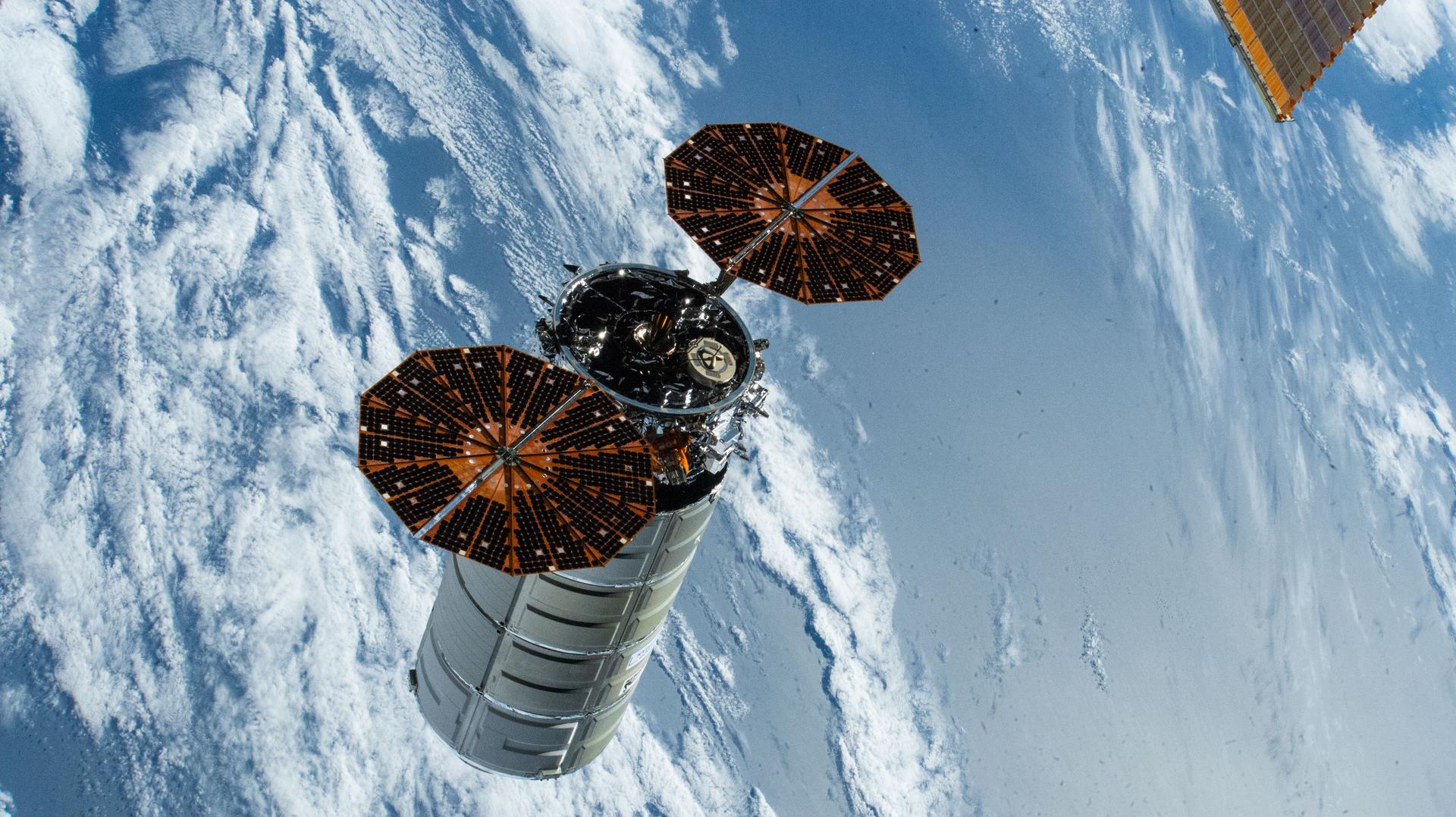
iss074e0379134 (March 12, 2026) --- Northrop Grumman's Cygnus XL cargo spacecraft, with its two prominent cymbal-shaped UltraFlex solar arrays, departs the International Space Station moments after being released from the grasp of the Canadarm2 robotic arm completing its resupply mission. Credit: NASA
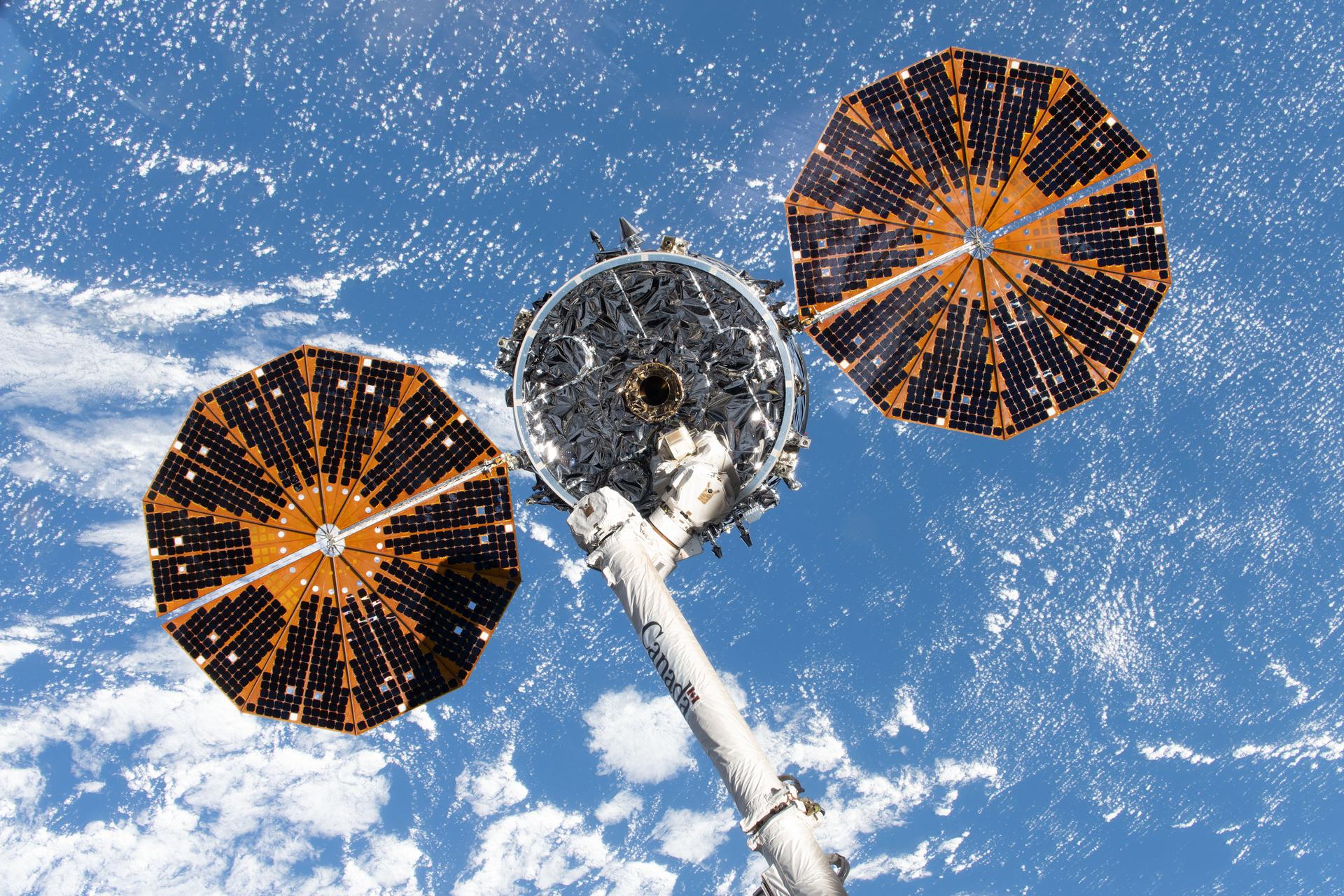
iss074e0378294 (March 12, 2026) --- Northrop Grumman's Cygnus XL cargo spacecraft, with its two prominent cymbal-shaped UltraFlex solar arrays, is in the grasp of the Canadarm2 robotic arm before being released and departing the International Space Station to complete its resupply mission. Credit: NASA/Jessica Meir
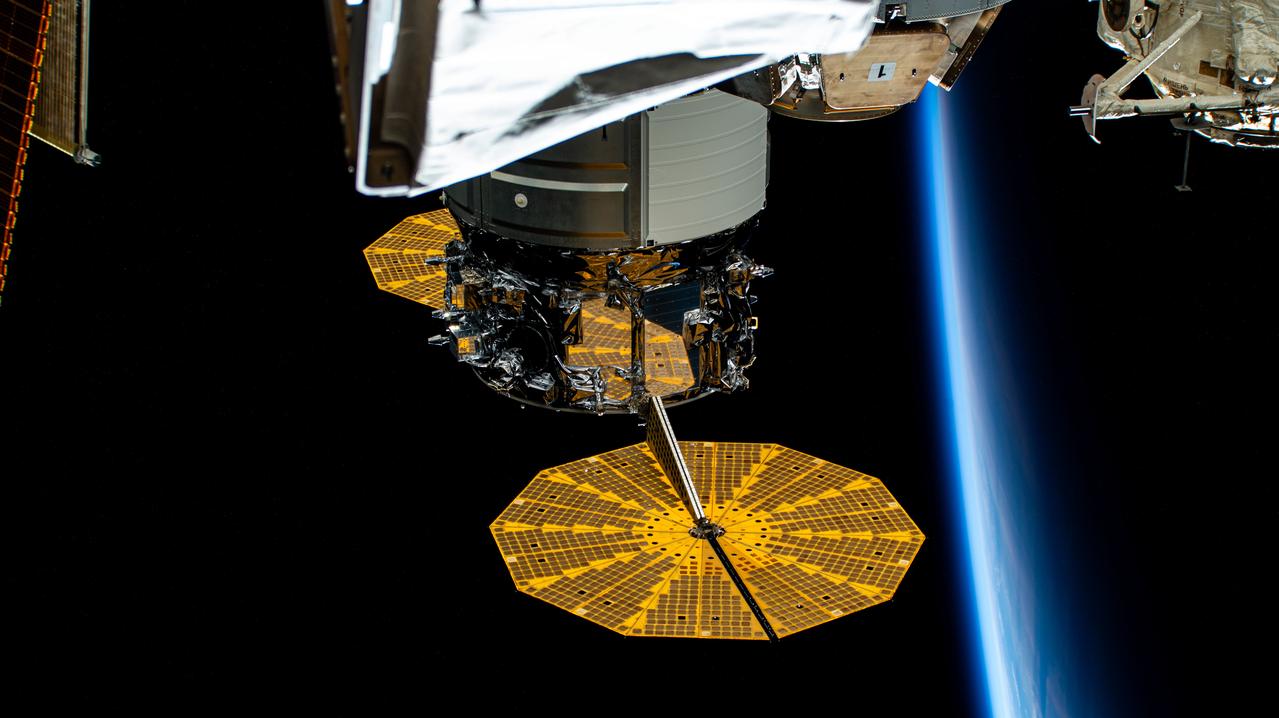
iss071e113058 (May 24, 2024) --- The cymbal-shaped UltraFlex solar arrays that power Northrop Grumman's Cygnus space freighter are featured prominently in this photograph as the International Space Station soared into an orbital sunset 259 miles above western Mongolia.
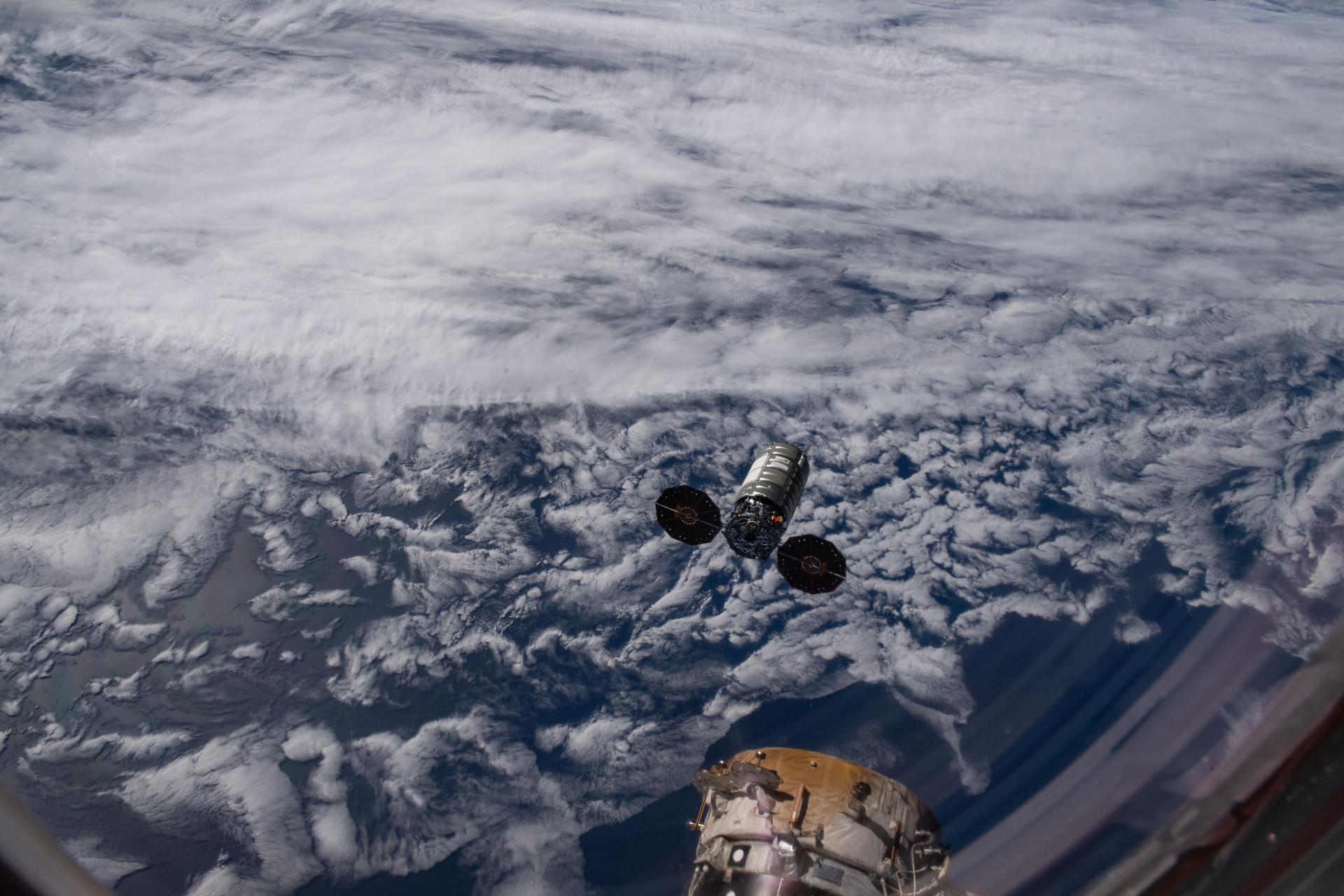
iss074e0378577 (March 12, 2026) --- Northrop Grumman's Cygnus XL cargo spacecraft, with its two prominent cymbal-shaped UltraFlex solar arrays, departs the International Space Station moments after being released from the grasp of the Canadarm2 robotic arm completing its resupply mission. Credit: NASA/Jessica Meir
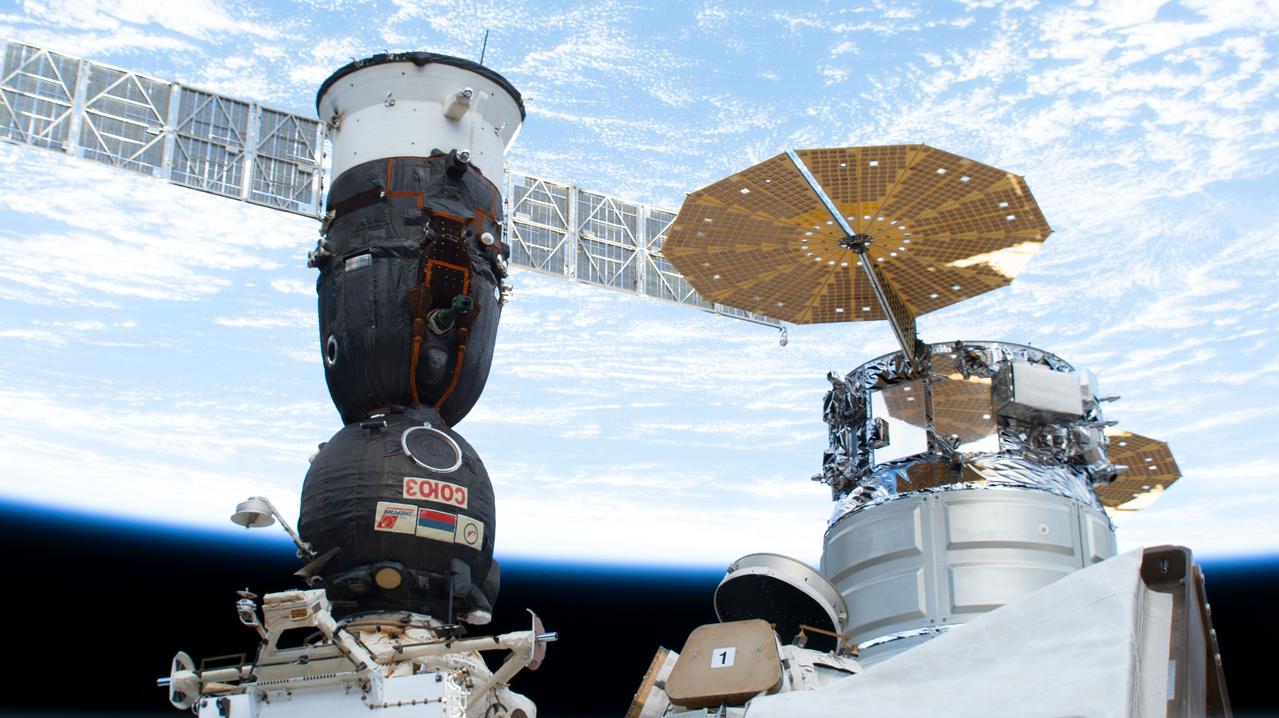
iss059e092644 (June 6, 2019) --- (From left) The Soyuz MS-12 crew ship and the Northrop Grumman Cygnus space freighter with its prominent cymbal-shaped UltraFlex solar arrays are pictured attached to the International Space Station as the orbiting complex flew 254 miles above the Pacific Ocean southwest of Baja California.
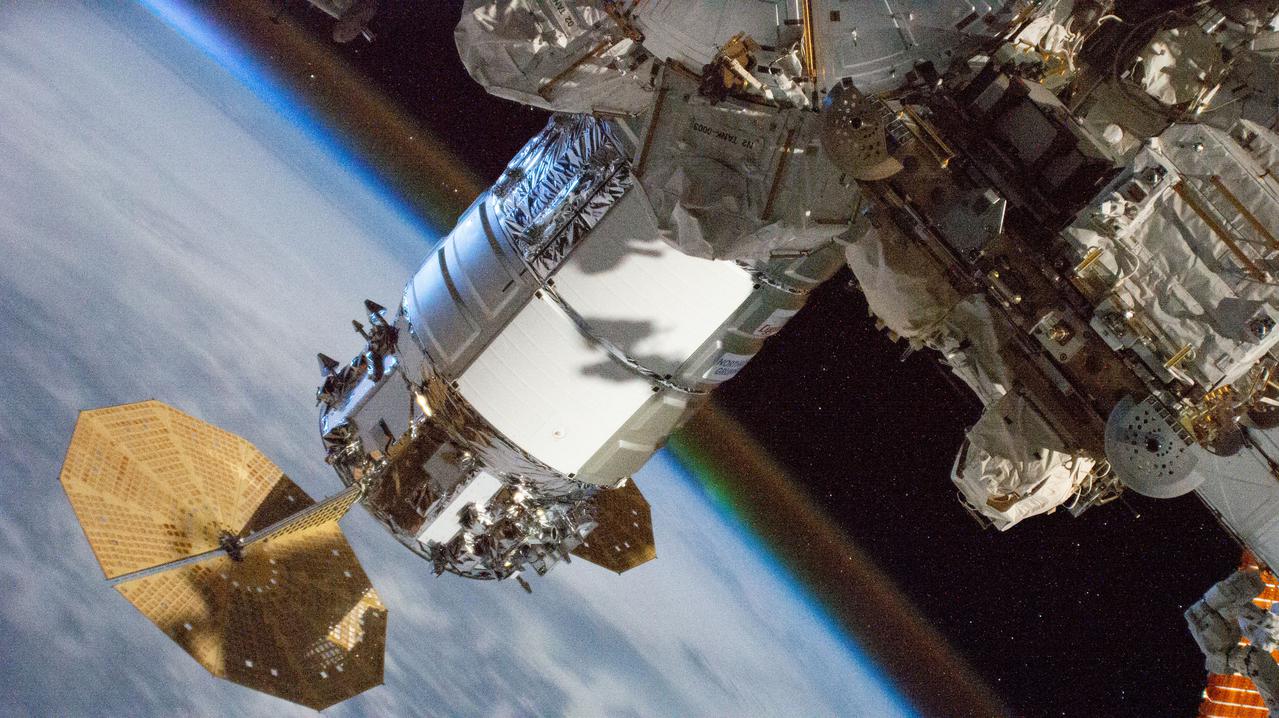
iss064e047042 (March 28, 2021) --- The Cygnus resupply ship, with its prominent cymbal-shaped UltraFlex solar arrays, from Northrop Grumman is pictured attached to the International Space Station's Unity module. Earth's atmospheric glow is seen blanketing the horizon as the orbital complex flew 262 miles above Ethiopia on the African continent.
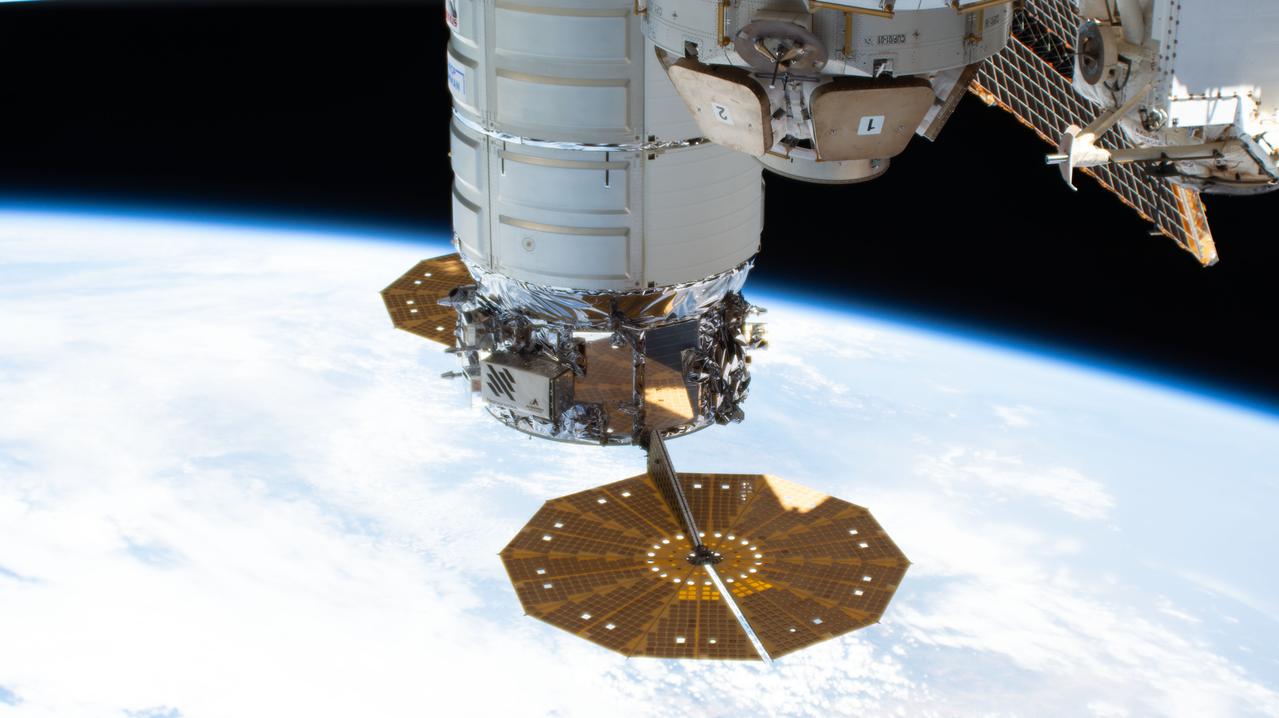
iss067e141211 (June 20, 2022) --- The Cygnus space freighter from Northrop Grumman, with its prominent cymbal-shaped solar arrays, is pictured attached to the International Space Station's Unity module as the orbiting lab flew 263 miles above the coast of Lisbon, Portugal.
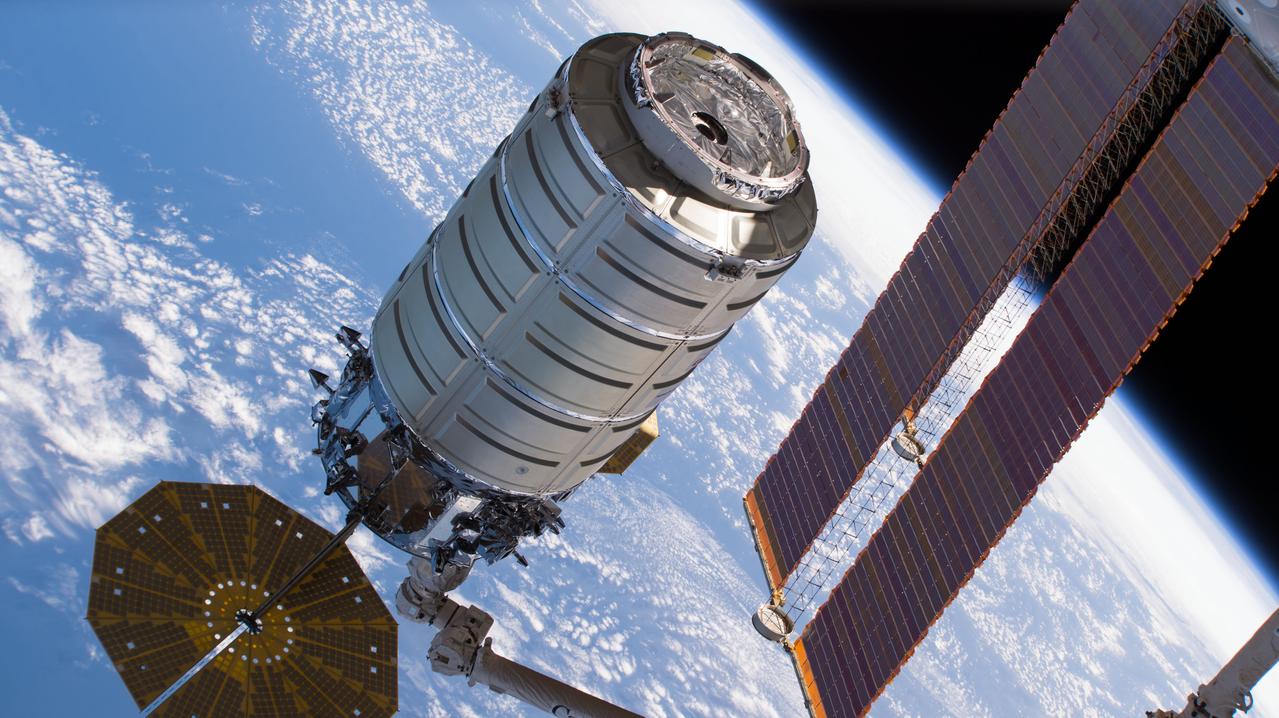
iss057e102387 (Nov. 19, 2018) --- Northrop Grumman's Cygnus space freighter with its prominent cymbal-shaped UltraFlex solar arrays is pictured in the grips of the Canadarm2 robotic arm as it is remotely maneuvered by ground controllers towards the Earth-facing port of the Unity module.
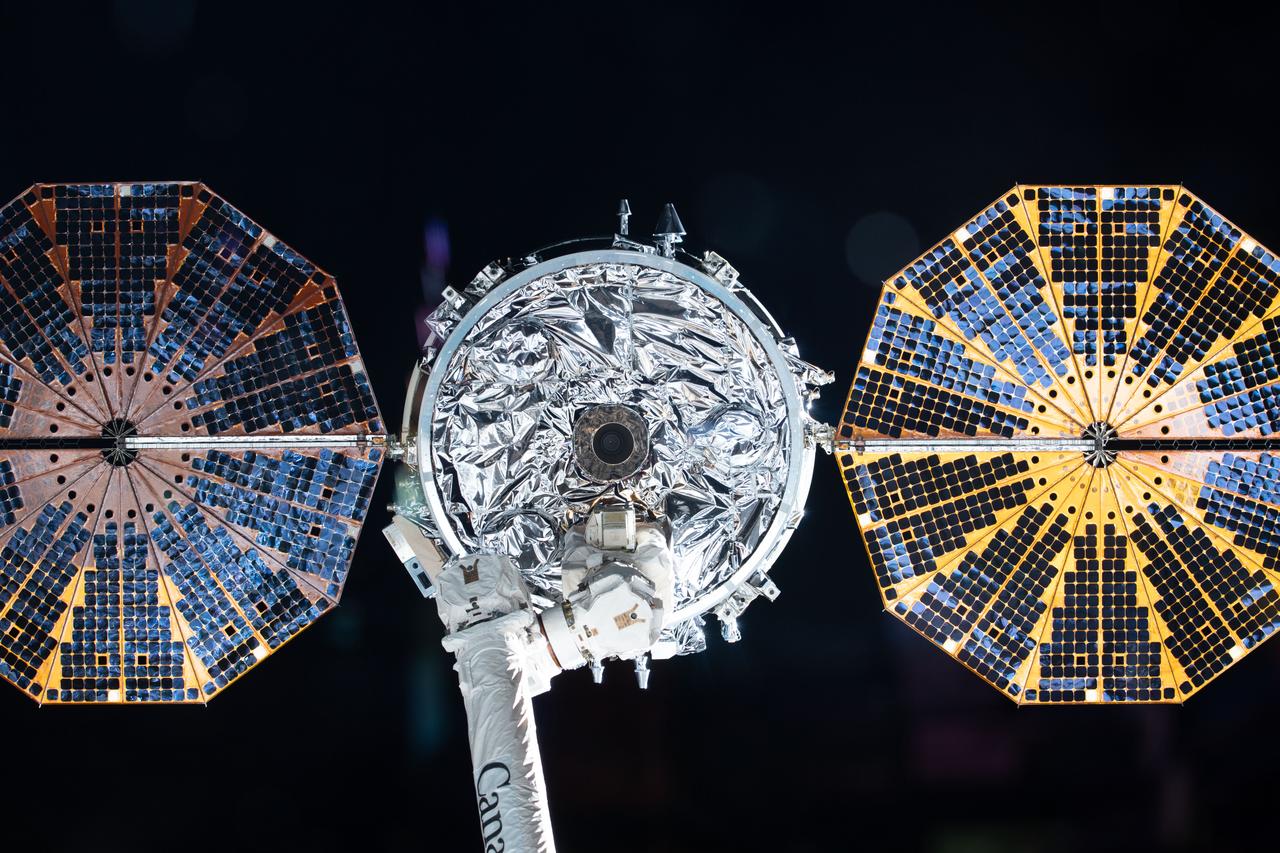
iss063e010616 (May 11, 2020) --- The Cygnus space freighter from Northrop Grumman, with its prominent cymbal-shaped UltraFlex solar arrays, is pictured in the grips of the Canadarm2 robotic arm moments before its release ending its 83-day stay at the International Space Station.
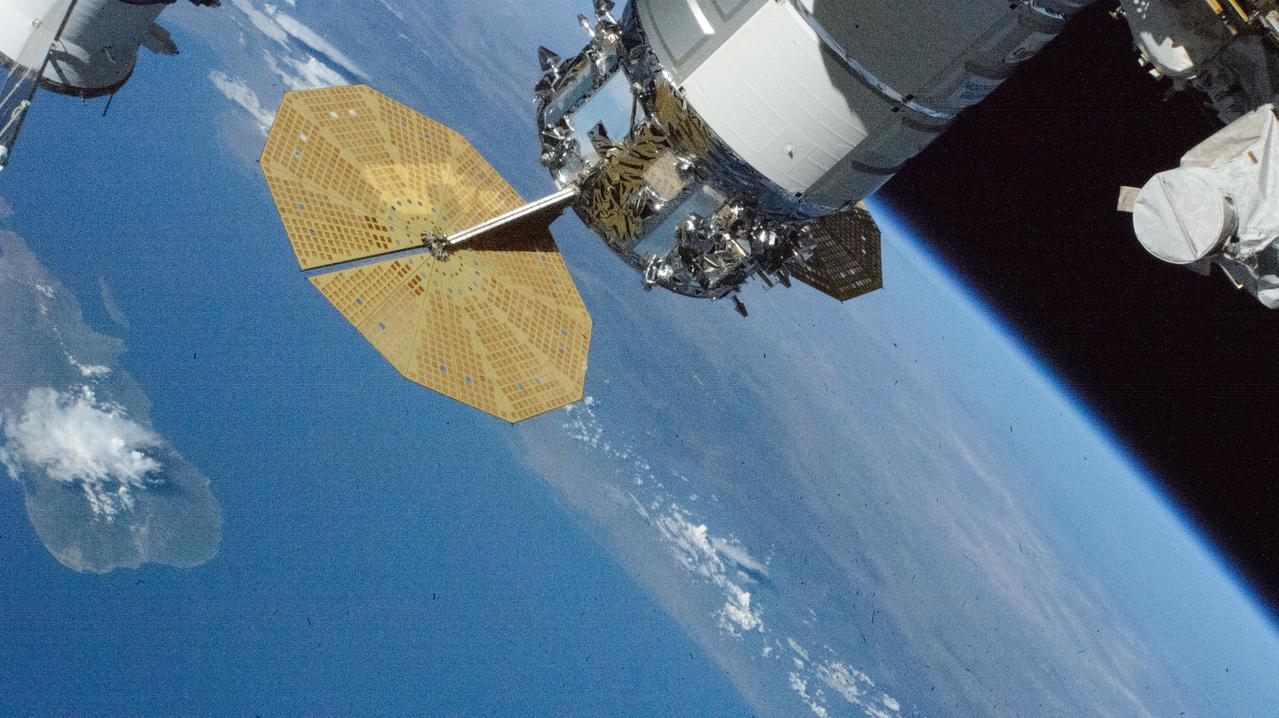
iss072e036306 (Oct. 13, 2024) --- Northrop Grumman's Cygnus space freighter, with its prominent cymbal-shaped UltraFlex solar arrays, is pictured attached to the International Space Station while orbiting 257 miles above the Pacific Ocean off the coast of Mexico.
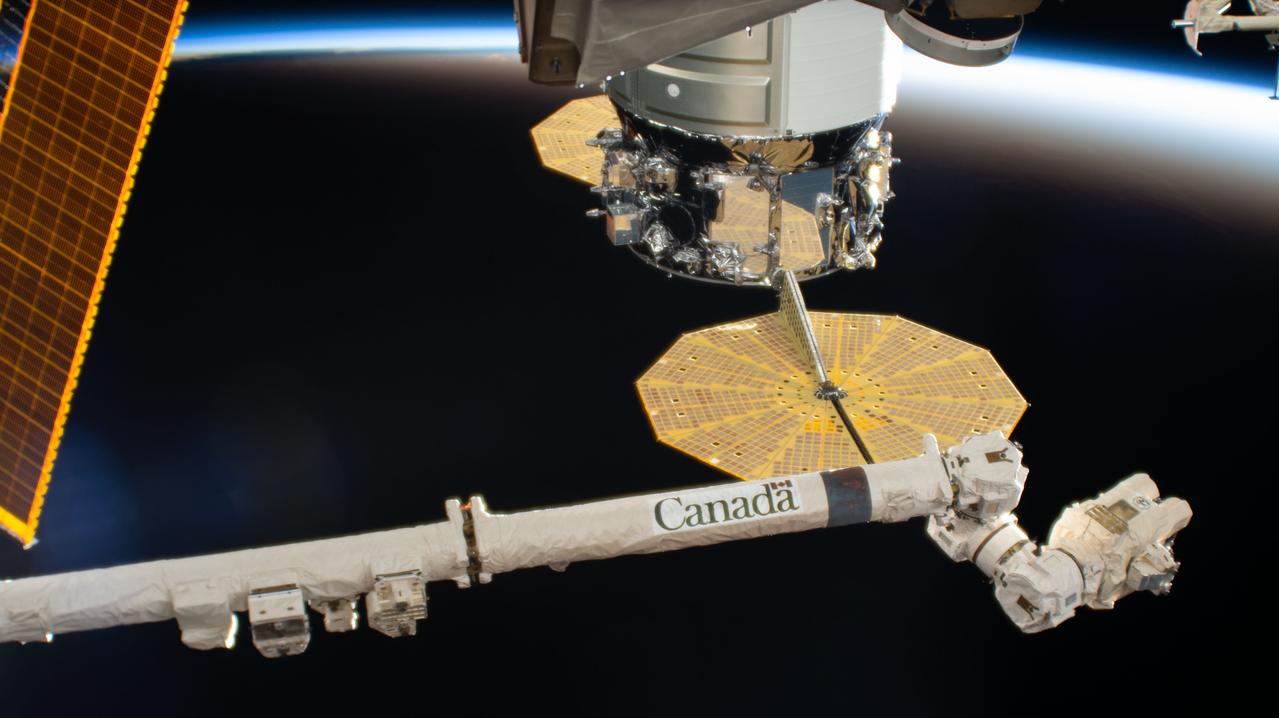
iss063e107086 (Oct. 10, 2020) --- The Canadarm2 robotic arm is extended near the Northrop Grumman Cygnus resupply ship with its prominent cymbal-shaped UltraFlex solar arrays. The International Space Station was soaring above the South Pacific Ocean and into an orbital sunset at the time this photograph was taken.
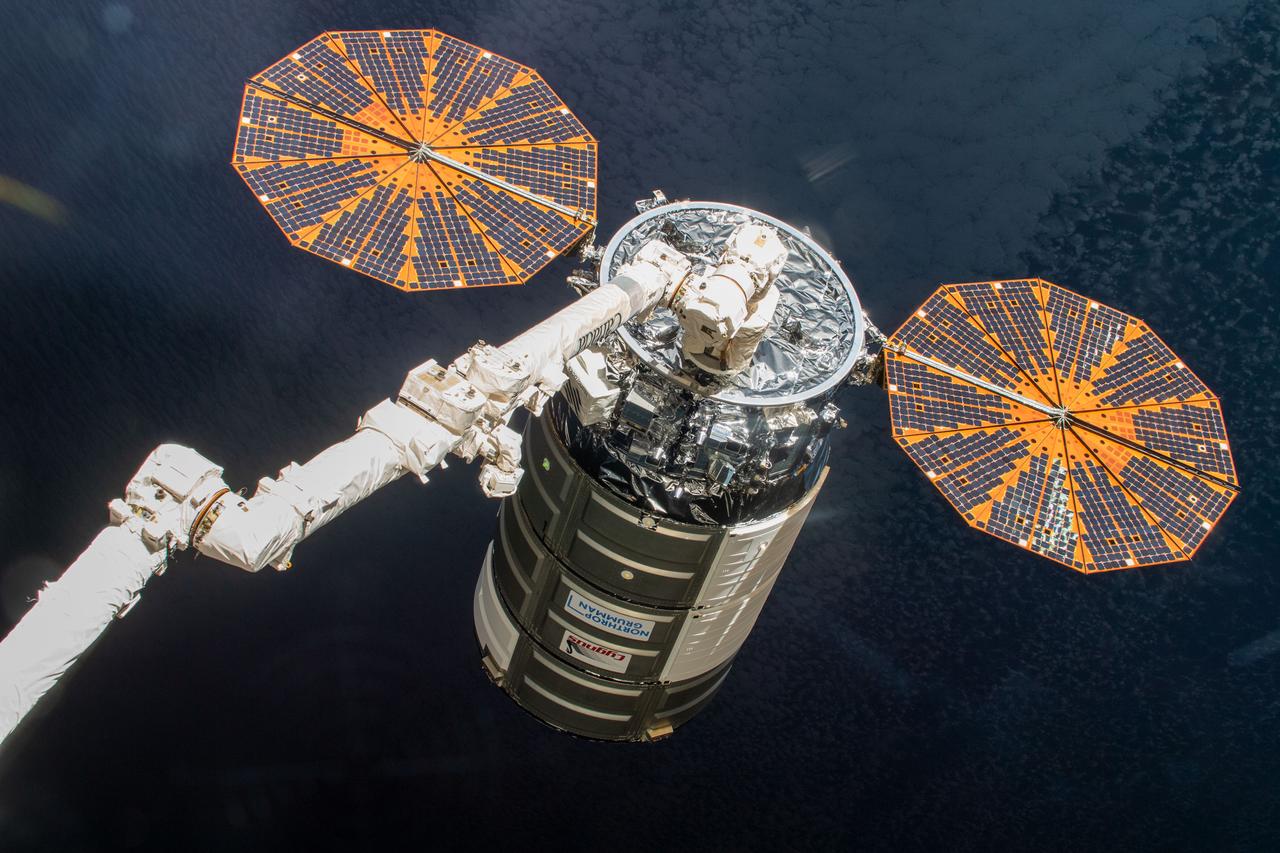
iss067e160629 (June 28, 2022) --- Northrop Grumman's Cygnus space freighter, with its prominent cymbal-shaped UltraFlex solar arrays, is positioned away from the International Space Station in the grips of the Canadarm2 robotic arm prior to its release ending a four-month stay attached to the orbiting lab's Unity module.
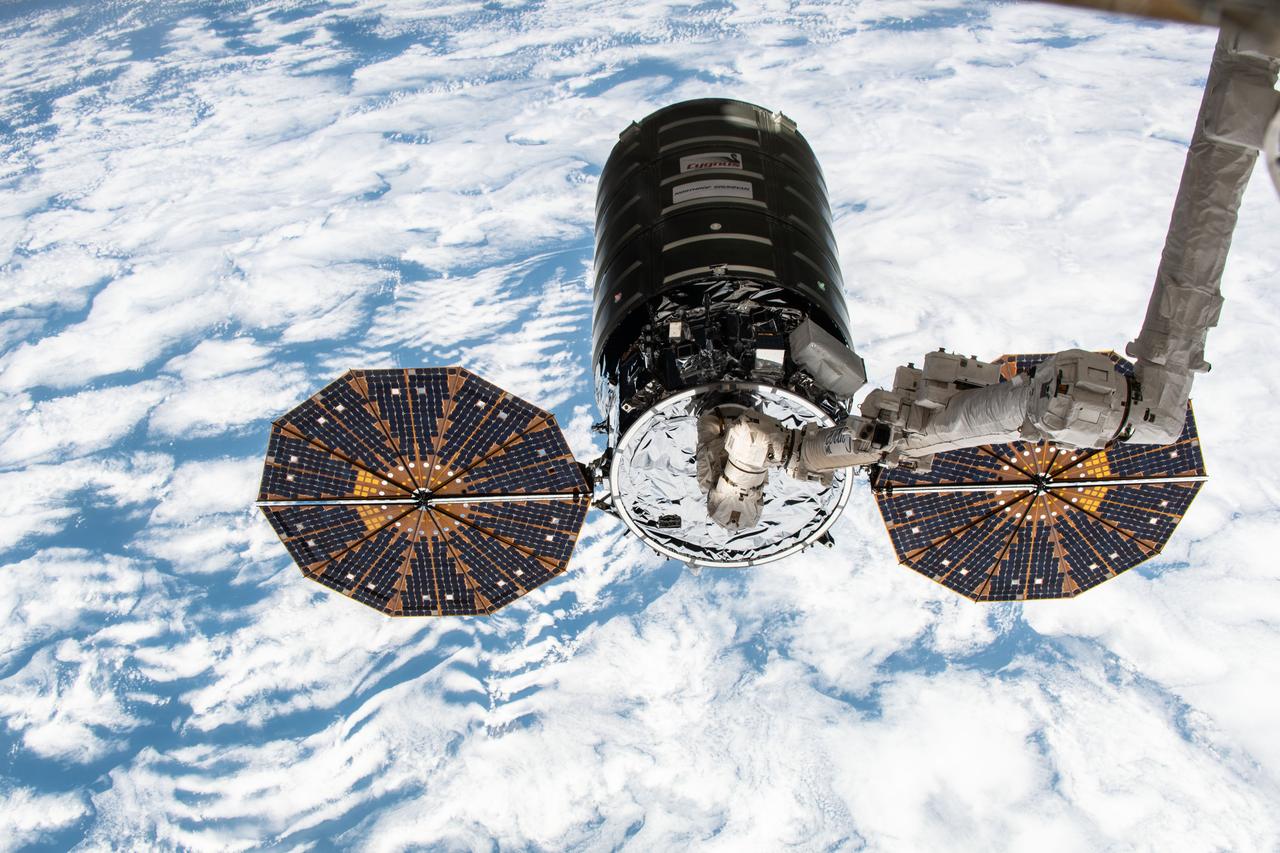
iss057e102396 (Nov. 19, 2018) --- Northrop Grumman's Cygnus space freighter with its prominent cymbal-shaped UltraFlex solar arrays is pictured in the grips of the Canadarm2 robotic arm after it was captured by Expedition 57 Flight Engineer Serena Auñón-Chancellor and ESA (European Space Agency) astronaut Alexander Gerst.
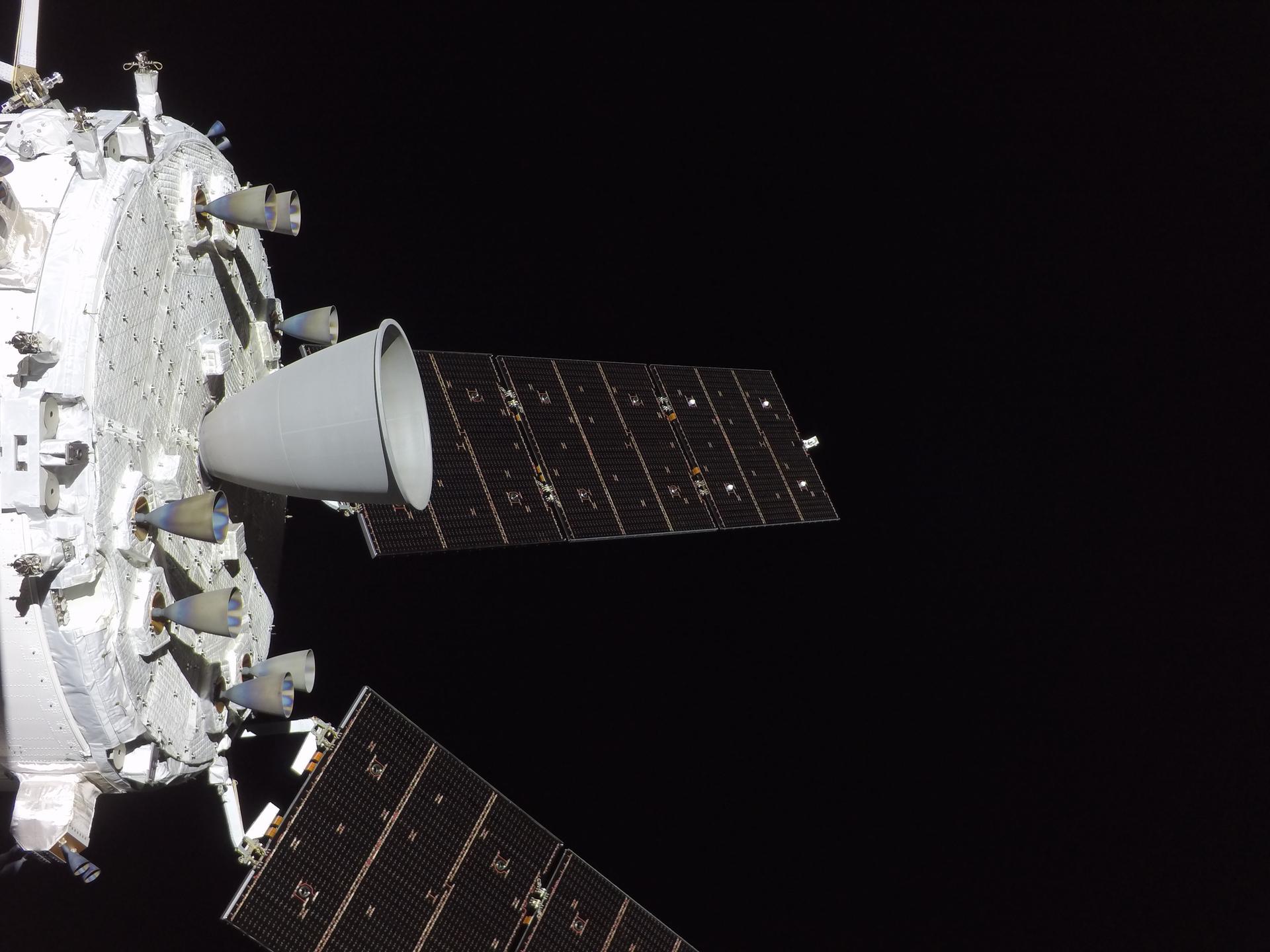
art002e012495 (April 7, 2026) - The engines on the Orion spacecraft’s service module are prominently featured in this image from flight day six of the Artemis II mission. Taken from a camera mounted on a solar array wing, the largest is the orbital maneuvering system engine, surrounded by eight smaller auxiliary thrusters. Credit: NASA
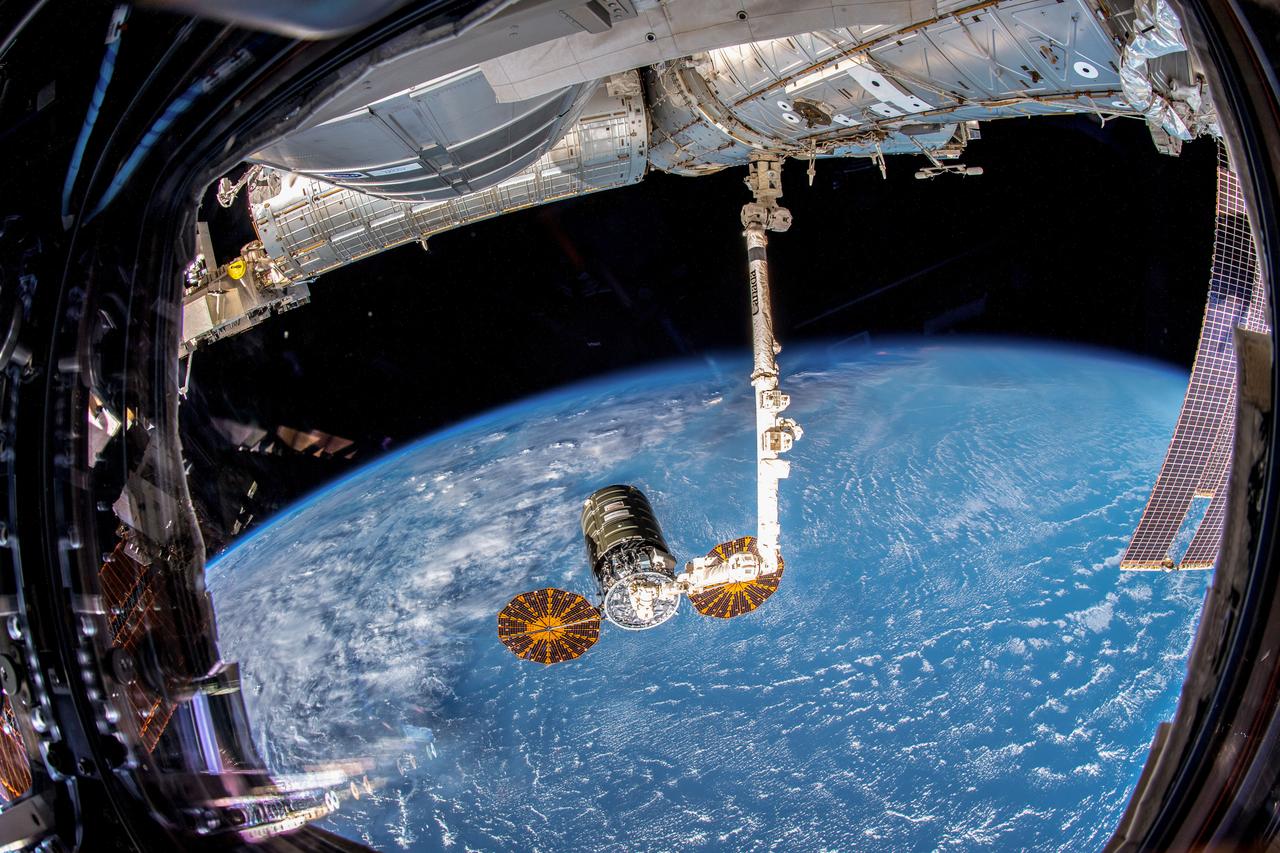
iss057e105337 (Nov. 19, 2018) --- Northrop Grumman's Cygnus space freighter with its prominent cymbal-shaped UltraFlex solar arrays is pictured in the grips of the Canadarm2 robotic arm after it was captured by Expedition 57 Flight Engineer Serena Auñón-Chancellor and ESA (European Space Agency) astronaut Alexander Gerst.
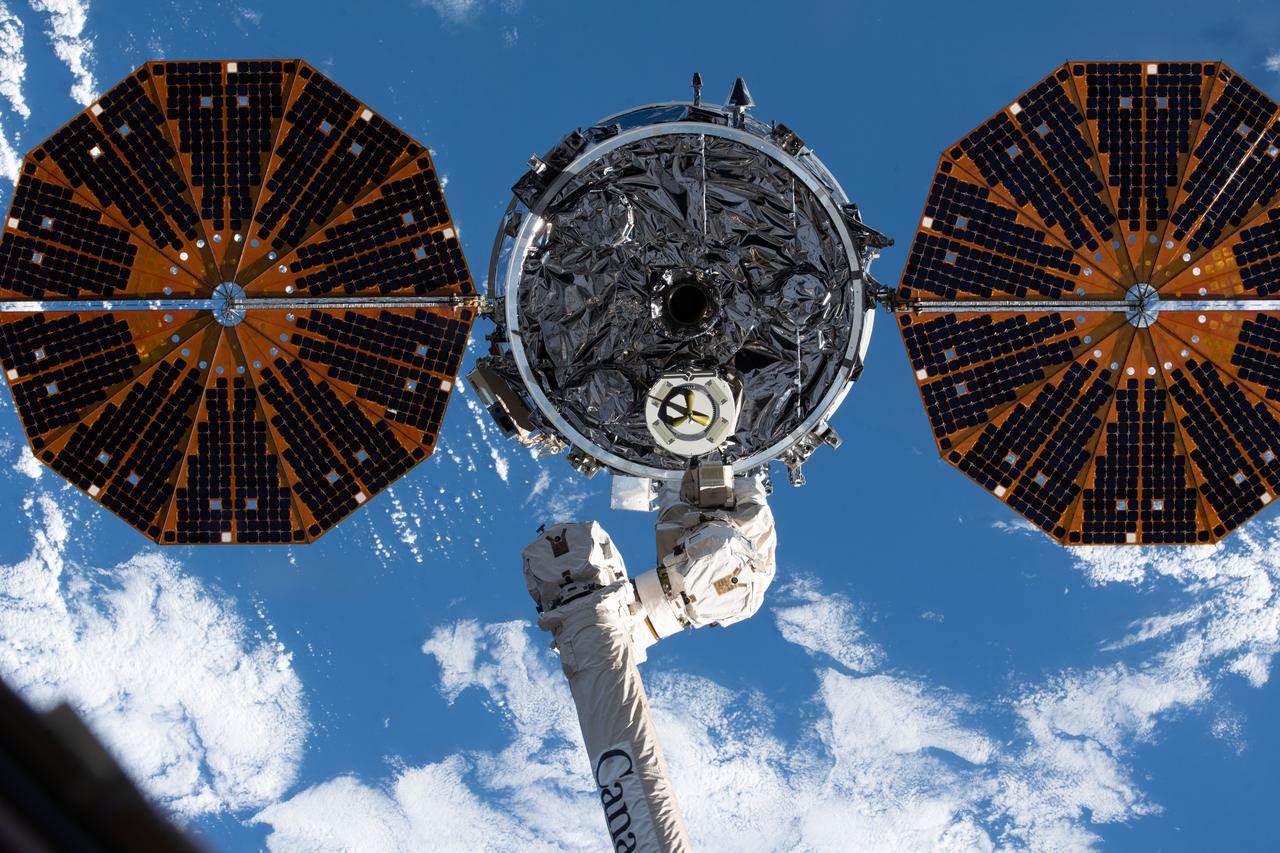
iss063e010651 (May 11, 2020) --- The Cygnus space freighter from Northrop Grumman, with its prominent cymbal-shaped UltraFlex solar arrays, is pictured moments after its release from the Canadarm2 robotic arm ending its 83-day stay at the International Space Station.
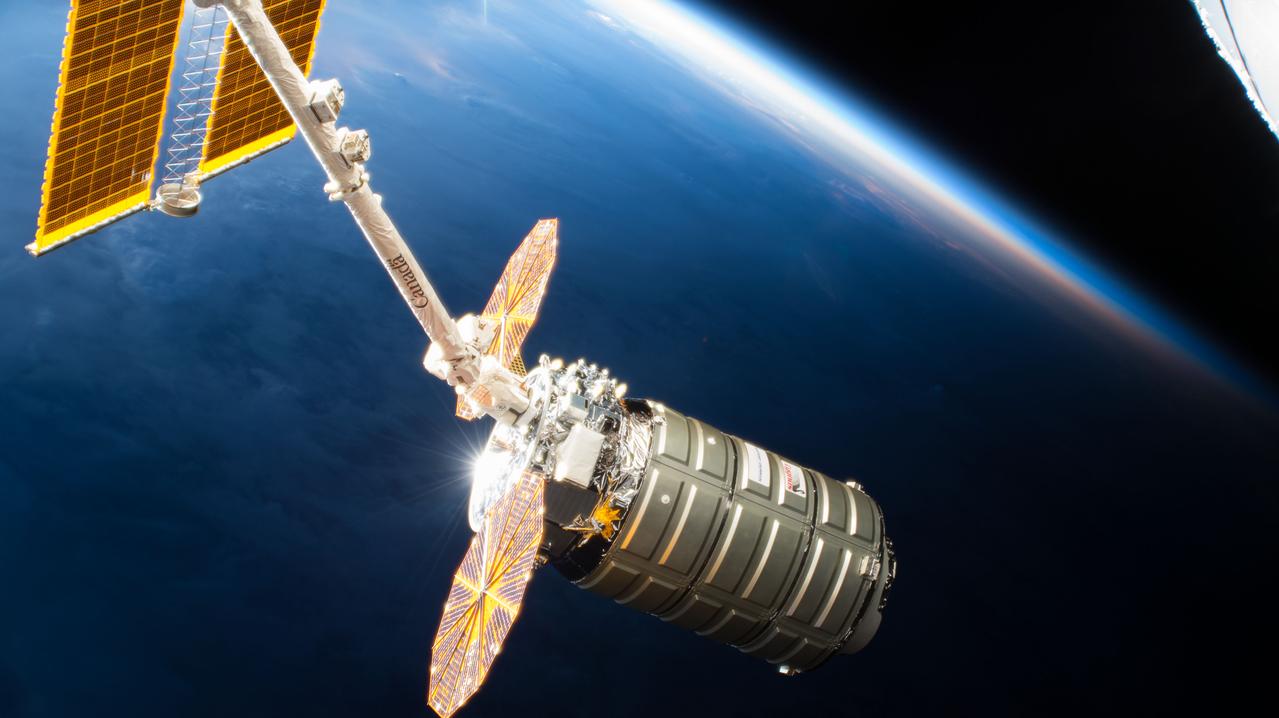
iss057e102384 (Nov. 19, 2018) --- Northrop Grumman's Cygnus space freighter with its prominent cymbal-shaped UltraFlex solar arrays is pictured in the grips of the Canadarm2 robotic arm after it was captured by Expedition 57 Flight Engineer Serena Auñón-Chancellor and ESA (European Space Agency) astronaut Alexander Gerst.
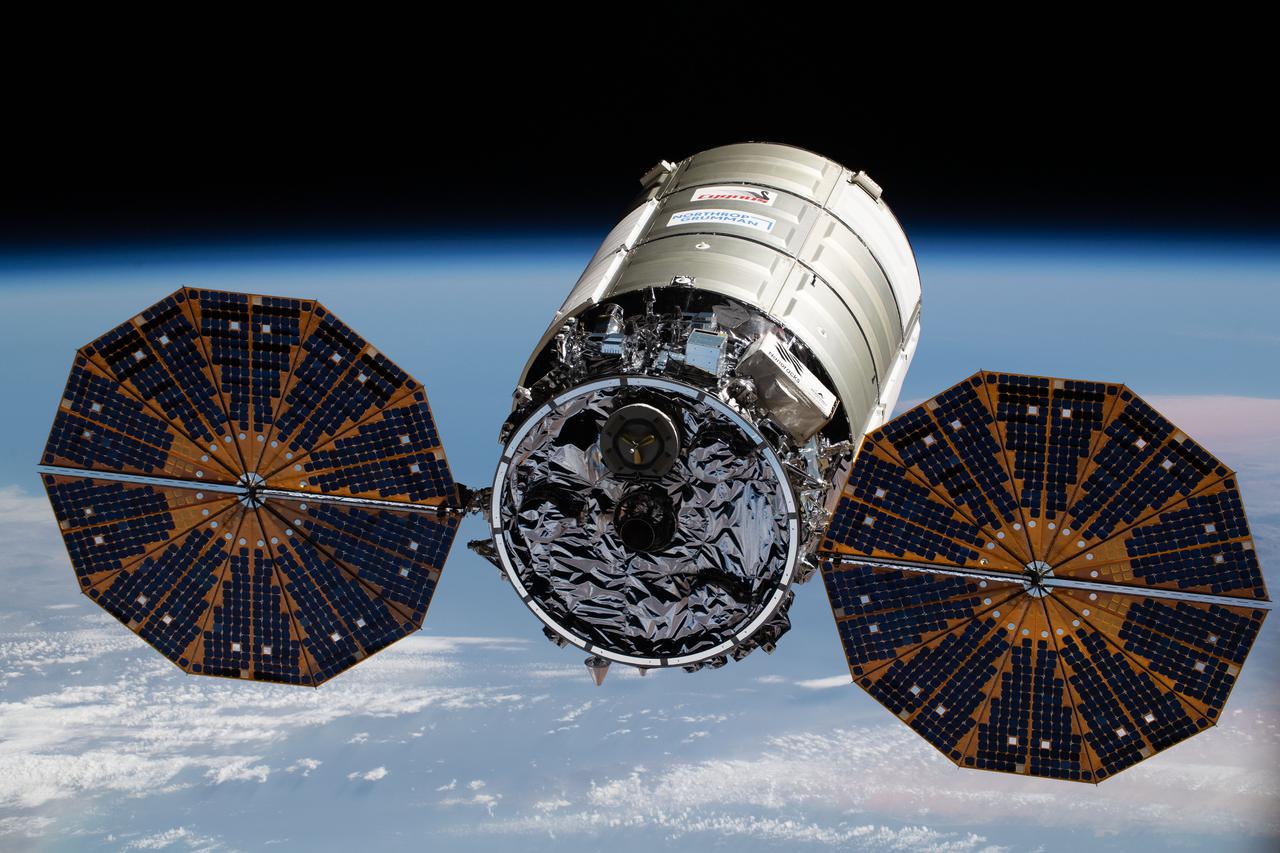
iss066e154853 (Feb. 21, 2022) --- Northrop Grummans's Cygnus space freighter, with its prominent cymbal-shaped UltraFlex solar arrays, is pictured approaching the International Space Station carrying 8,300 pounds of new science experiments, crew supplies, and station hardware to replenish the Expedition 66 crew.
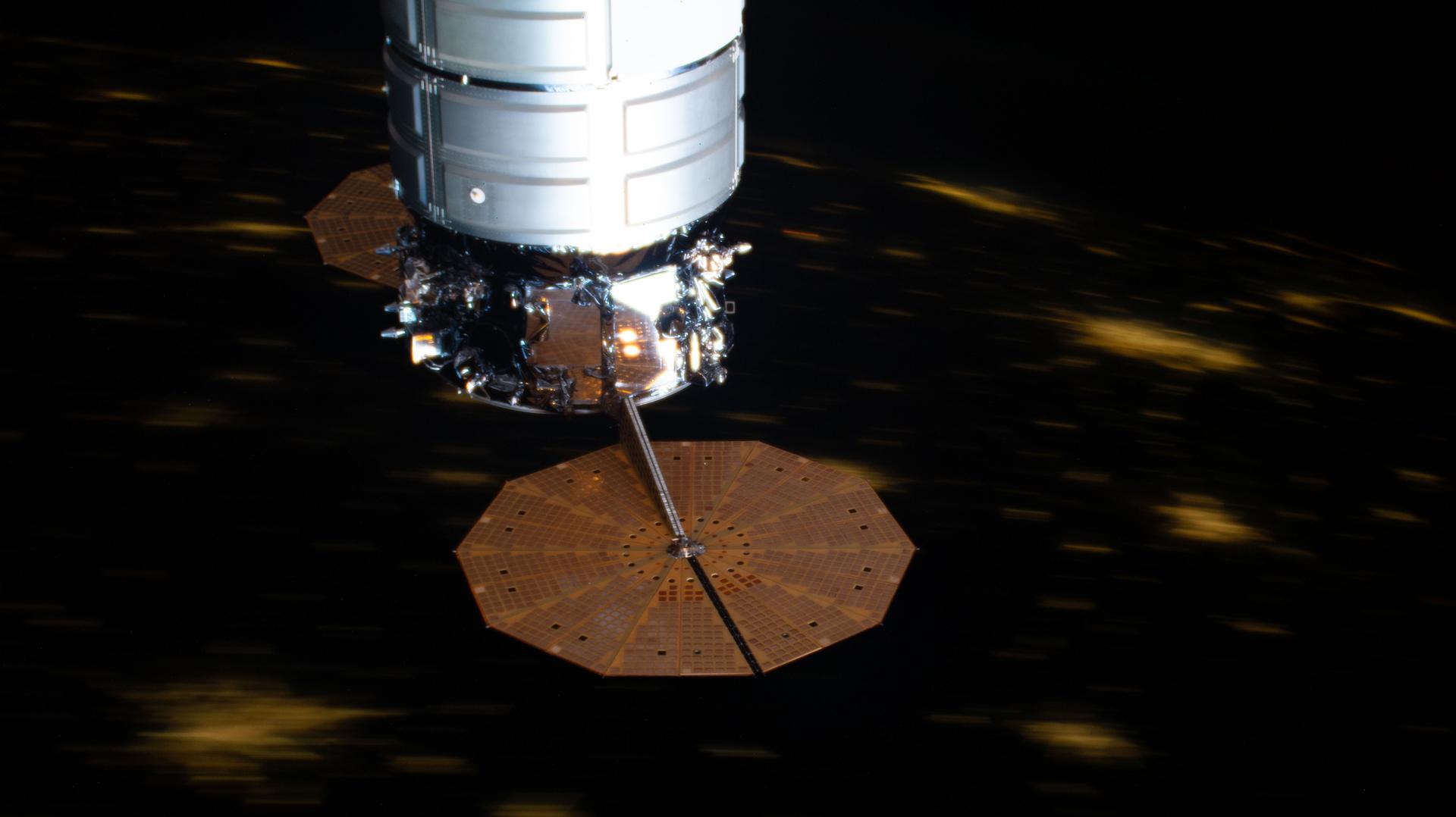
iss075e0091367 (Sept. 9, 2026) --- A portion of Northrop Grumman’s Cygnus XL cargo spacecraft, with its prominent cymbal‑shaped UltraFlex solar arrays, is pictured as the International Space Station orbited above the United States at approximately 9:56 p.m. local time. Credit: NASA
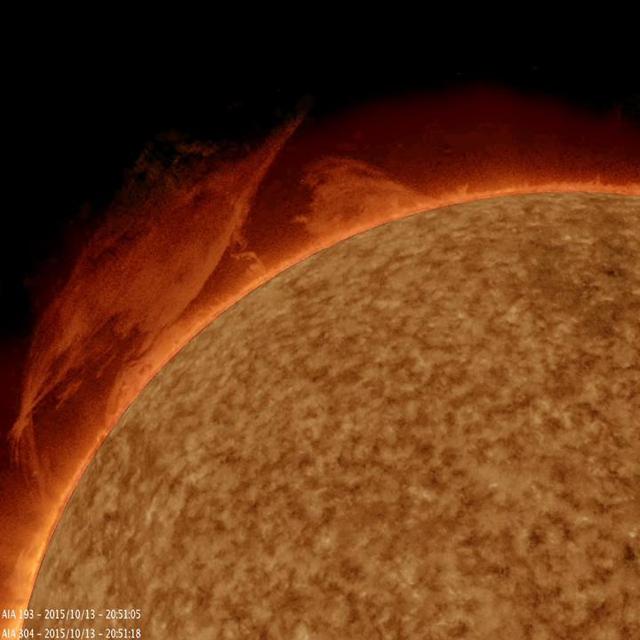
A mass of plasma gathered itself into a twisting mass, spun around for a bit, then rose up and broke apart over a 10-hour period Oct. 13, 2015 as observed by NASA Solar Dynamics Observatory. The image and video were produced with a combination of two wavelengths of extreme ultraviolet light. Prominences are unstable clouds of gas tethered above the surface of the Sun by magnetic forces. Much of the jittering and odd jumping motions above the surface were artifacts caused by brightening and contrast changes used to bring out the detail and structure of the prominence. http://photojournal.jpl.nasa.gov/catalog/PIA20008
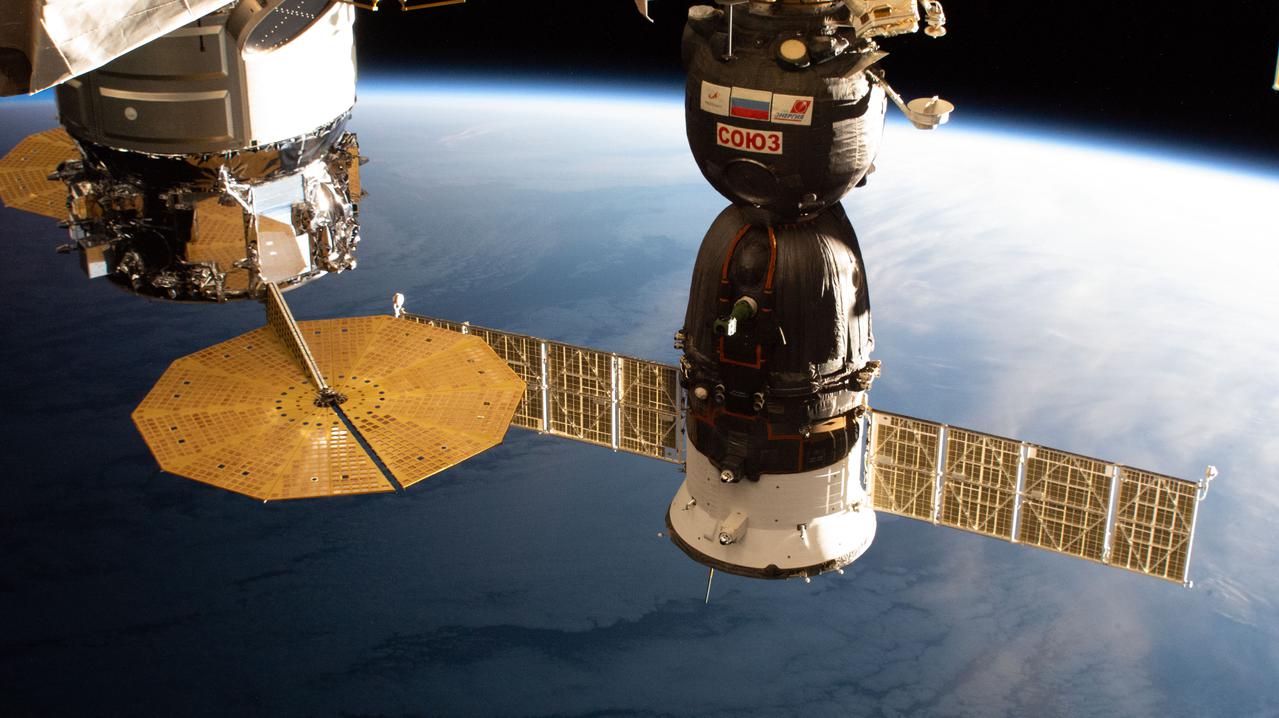
iss064e018944 (Jan. 1, 2021) --- Two spaceships are pictured attached to the International Space Station as the orbiting complex flew into on orbital sunset 269 miles above the Indian Ocean off the southern coast of South Africa. From left, the Northrop Grumman Cygnus space freighter is pictured with its prominent cymbal-shaped UltraFlex solar arrays next to the Soyuz MS-17 crew ship with its rectangular-shaped solar arrays.
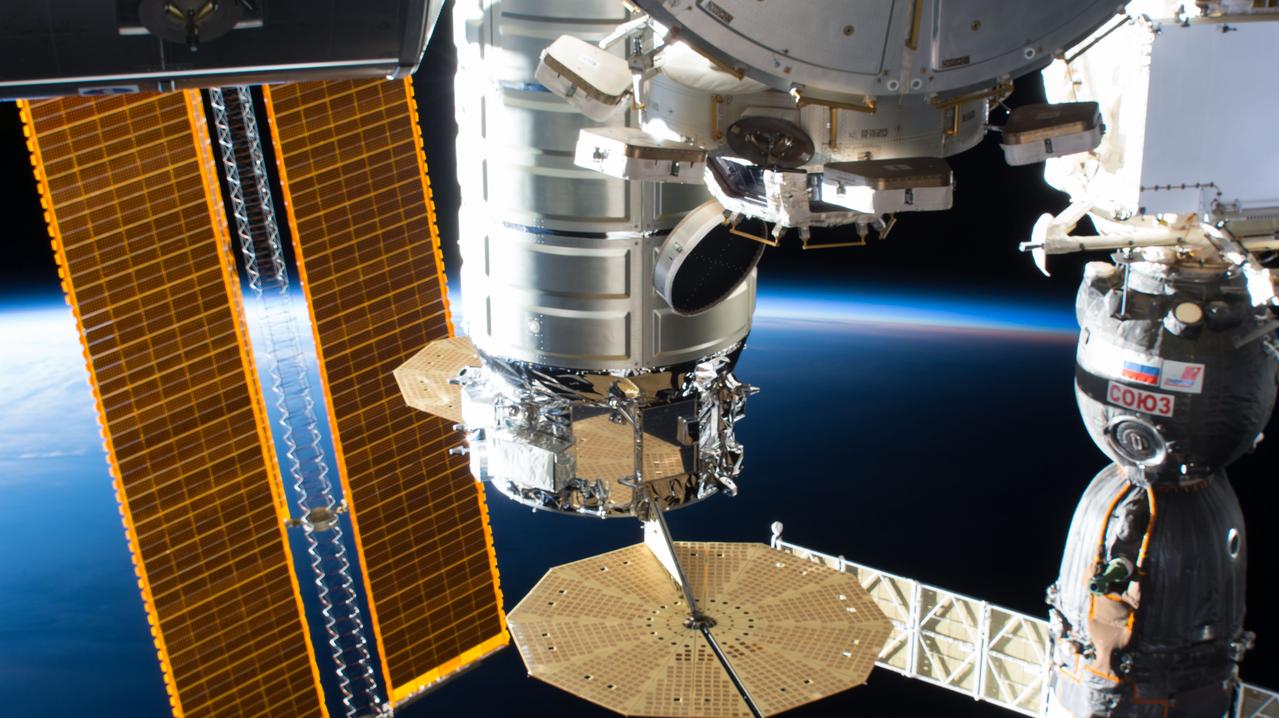
iss056e094392 (July 10, 2018) --- The Northrop Grumman (formerly Orbital ATK) Cygnus resupply ship and its UltraFlex solar arrays figure prominently in this photograph of several International Space Station components with Earth in the background. At left are a set of basketball court-sized solar arrays. In the foreground is the Cupola and a portion of the Tranquility module. At right is the Soyuz MS-09 spacecraft docked to the Rassvet module.
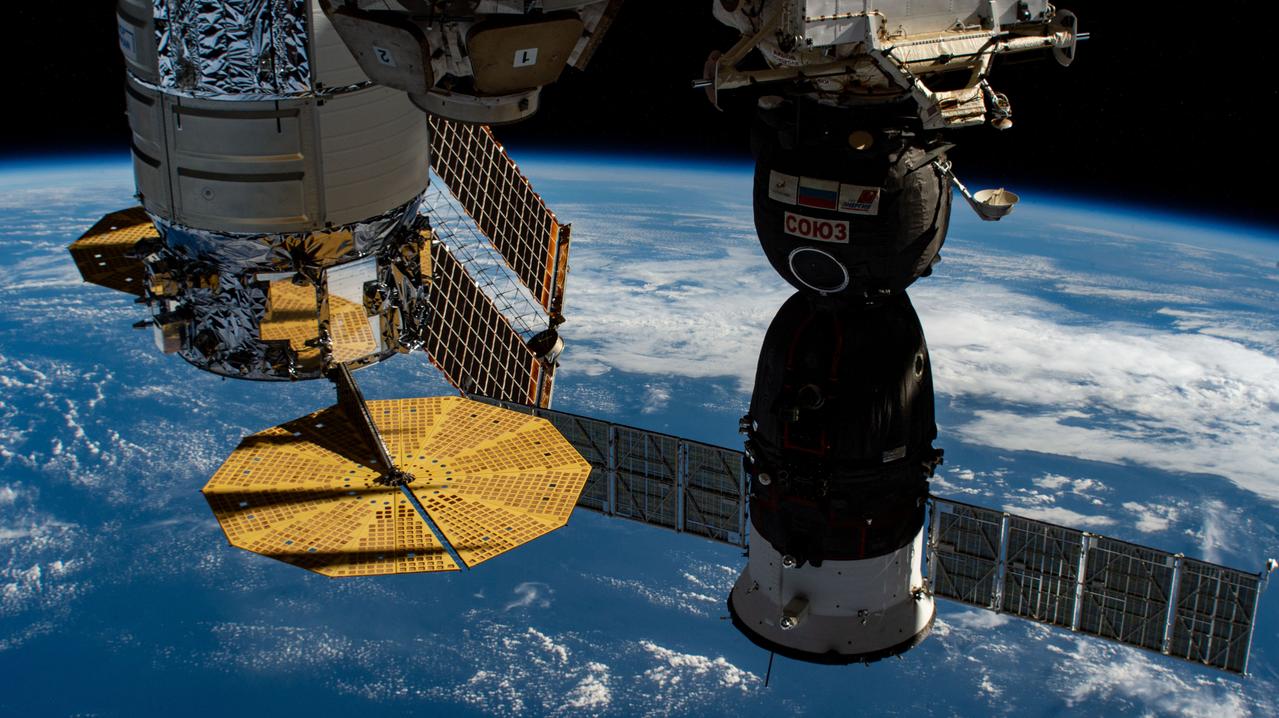
iss064e006373 (Nov. 26, 2020) --- A U.S. and a Russian spacecraft are pictured docked to the International Space Station as it orbited above the Pacific Ocean southwest of Baja California. At left is the Northrop Grumman Cygnus cargo craft with its two prominent cymbal-shaped solar arrays, and next to it is Russia's Soyuz MS-17 crew ship with its rectangular solar arrays.
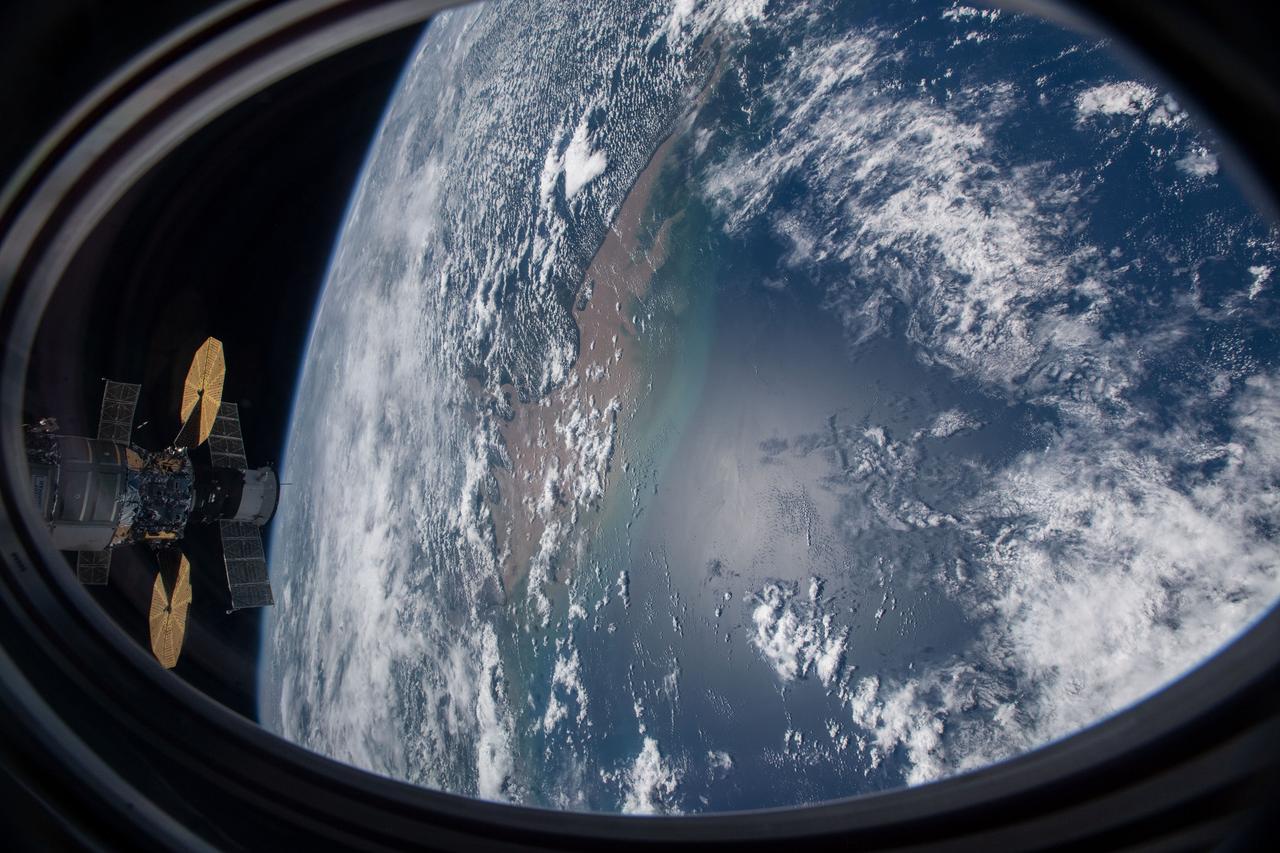
iss064e006446 (Nov. 27, 2020) --- This picture was taken from a window on the SpaceX Crew Dragon vehicle as the International Space Station orbited above the Atlantic Ocean just off the coast of Brazil near the mouth of the Amazon River. Two other spacecraft, including the Cygnus cargo craft with its two prominent cymbal-shaped solar arrays, and behind it, Russia's Soyuz MS-17 crew ship with its rectangular solar arrays, are also pictured docked to the orbiting lab.
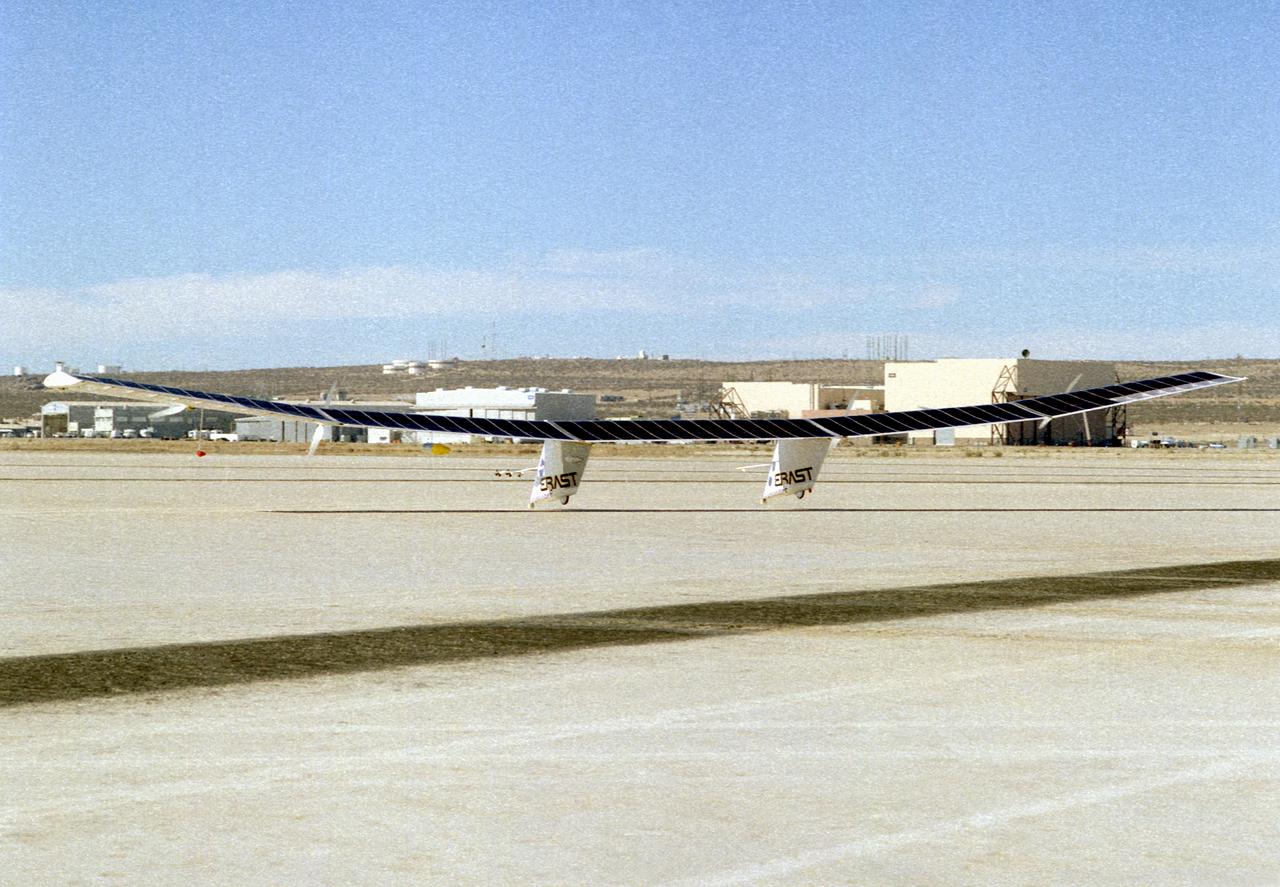
The Pathfinder research aircraft's solar cell arrays are prominently displayed as it touches down on the bed of Rogers Dry Lake at the Dryden Flight Research Center, Edwards, California, following a test flight. The solar arrays covered more than 75 percent of Pathfinder's upper wing surface, and provided electricity to power its six electric motors, flight controls, communications links and a host of scientific sensors.
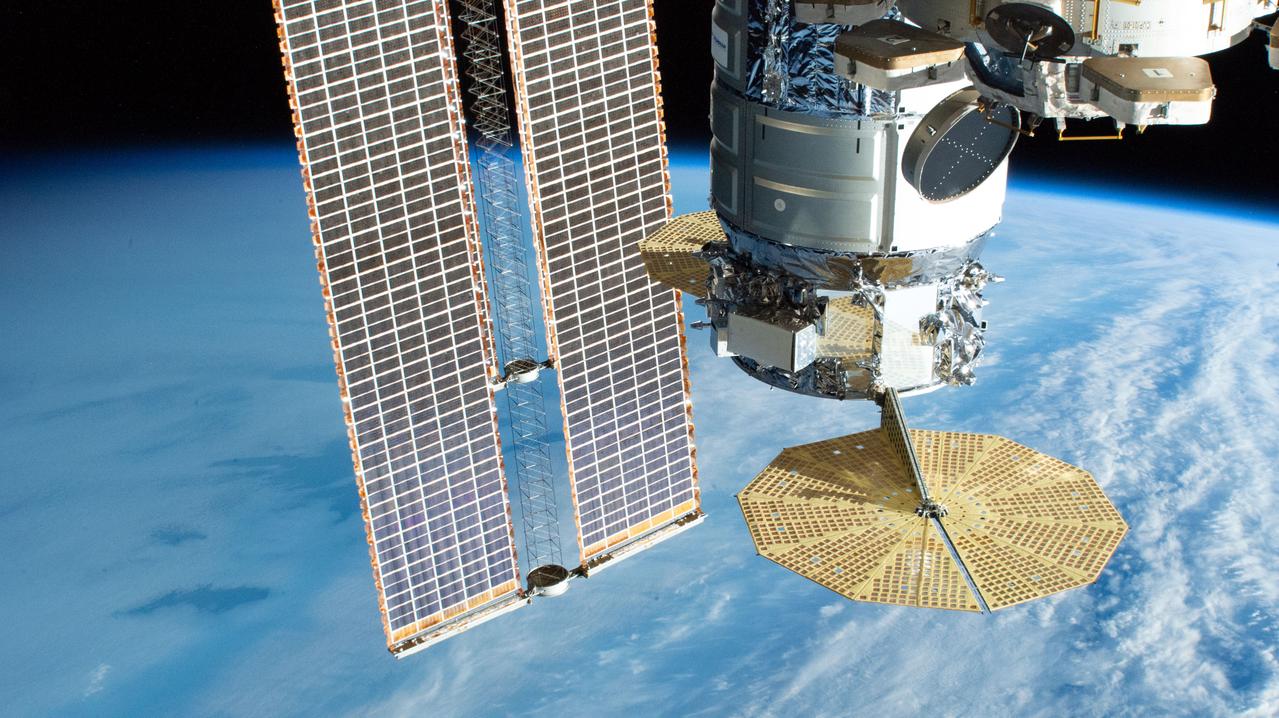
iss061e036670 (Nov. 19, 2019) --- Northrop Grumman's Cygnus space freighter with its prominent cymbal-shaped solar arrays is pictured as the International Space Station orbited 265 miles above the South Atlantic Ocean near the tip of South Africa. In the top right foreground, is the seven-windowed cupola with its window shutters open. Behind Cygnus, is the one of the station's basketball court-sized solar arrays.
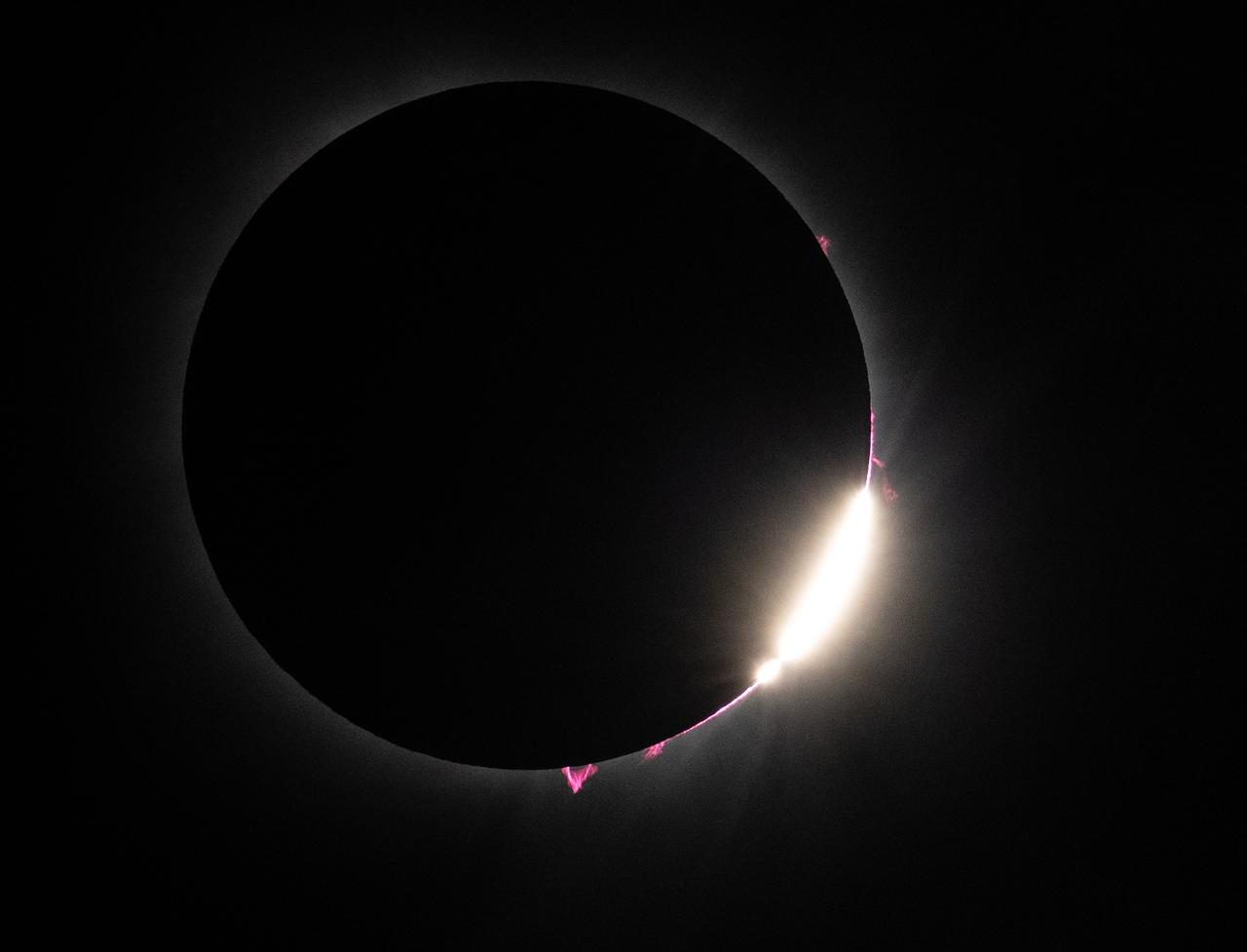
Bailey's Beads and solar prominences are seen just after totality in Dallas, Texas on Monday, April 8, 2024. A total solar eclipse swept across a narrow portion of the North American continent from Mexico’s Pacific coast to the Atlantic coast of Newfoundland, Canada. A partial solar eclipse was visible across the entire North American continent along with parts of Central America and Europe. Photo Credit: (NASA/Keegan Barber) in Dallas, Texas on Monday, April 8, 2024. A total solar eclipse swept across a narrow portion of the North American continent from Mexico’s Pacific coast to the Atlantic coast of Newfoundland, Canada. A partial solar eclipse was visible across the entire North American continent along with parts of Central America and Europe. Photo Credit: (NASA/Keegan Barber)
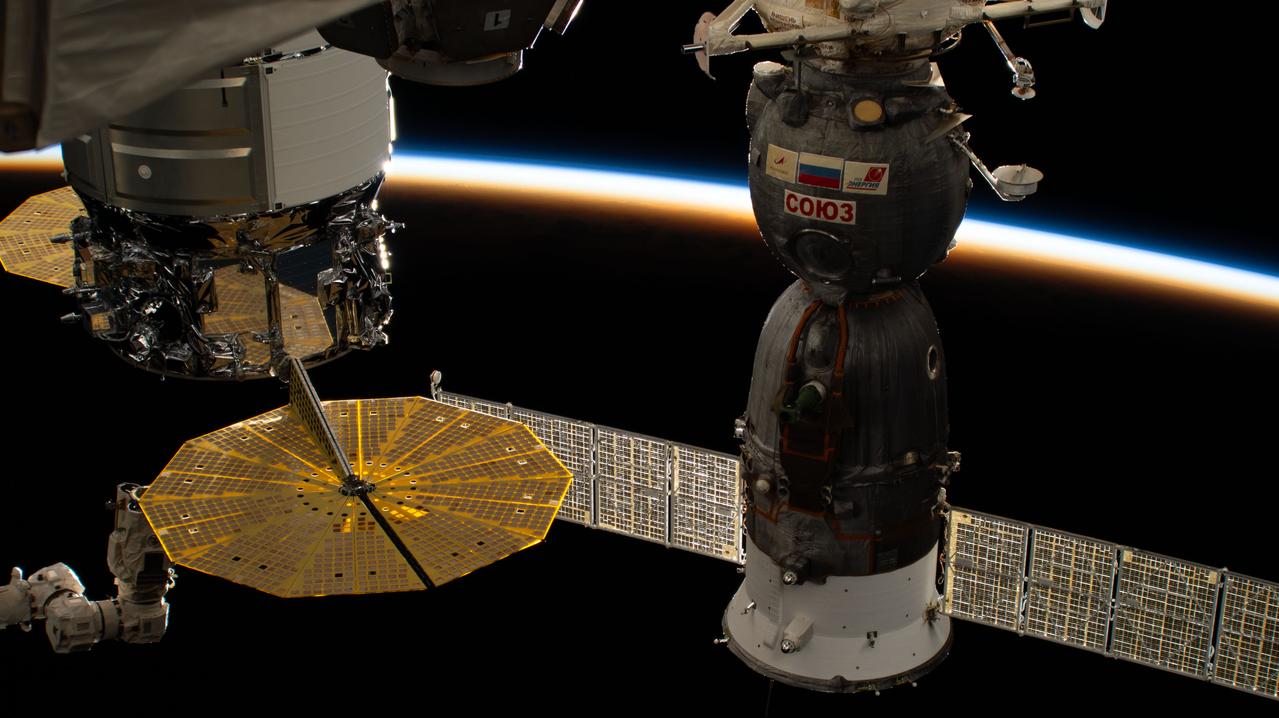
iss070e087058 (Feb. 5. 2024) --- The last rays of an orbital sunset illuminate Earth's atmosphere in this photograph from the International Space Station as it orbited 259 miles above Central America. In the foreground from left are, Northrop Grumman's Cygnus resupply ship, with its prominent cymbal-shaped UltraFlex solar arrays, and the Soyuz MS-24 crew spacecraft.
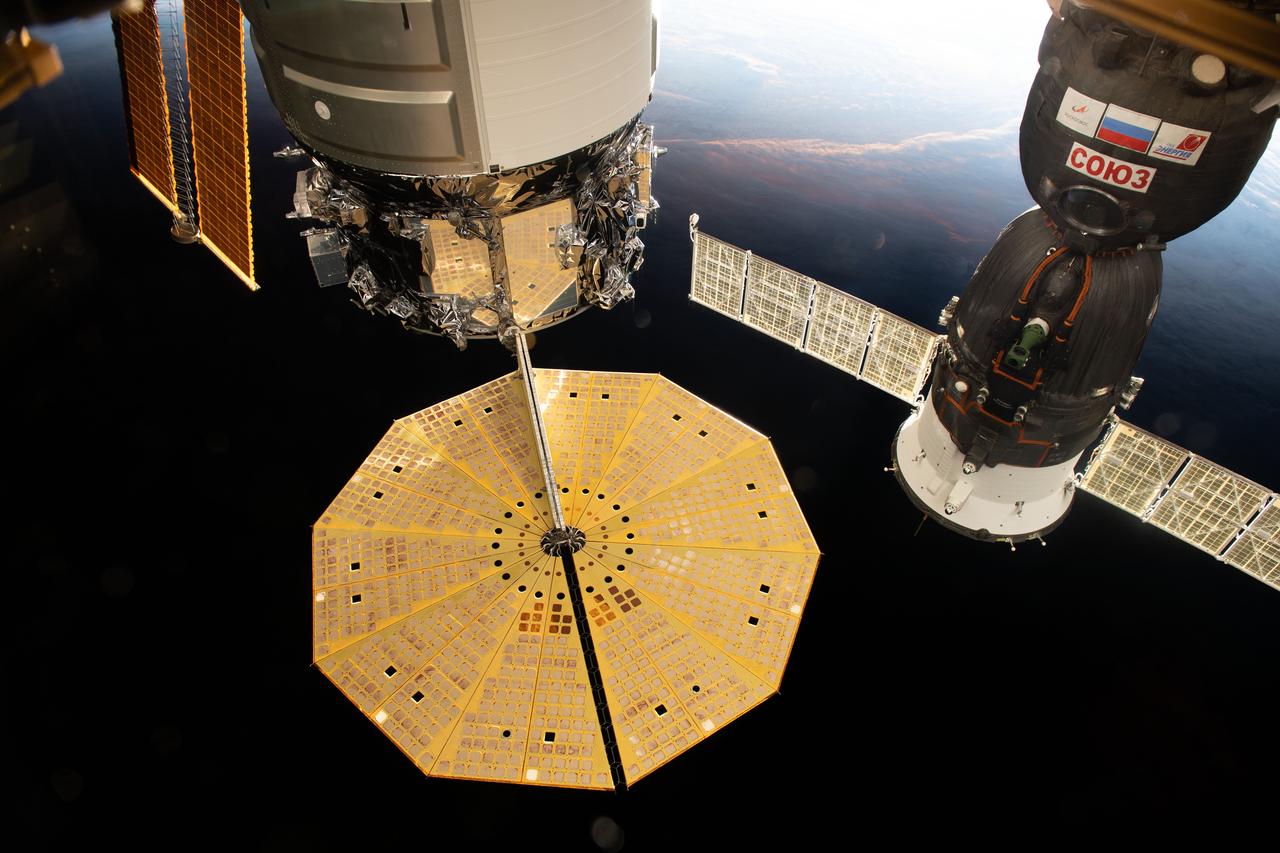
iss063e110863 (Oct. 18, 2020) --- Two spacecraft are pictured docked to the International Space Station as the complex flew into an orbital sunset above the Tasman Sea in between Australia and New Zealand. At left, with its prominent cymbal-shaped UltraFlex solar arrays is the Northrop Grumman's Cygnus resupply ship. To the right, is the Soyuz MS-17 crew ship that docked to the station on Oct. 14 carrying the Expedition 64 crew.
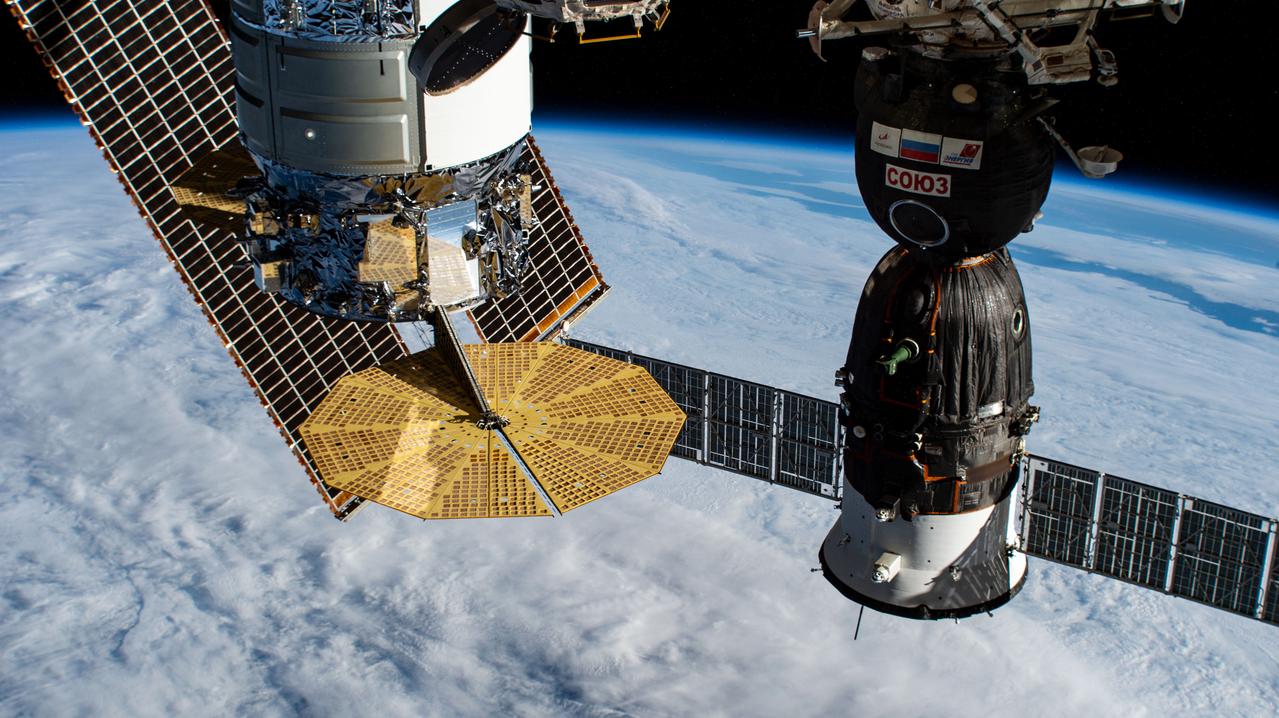
iss064e004108 (Nov. 11, 2020) --- A U.S. cargo craft and a Russian crew ship are pictured attached as the International Space Station orbited over the cloud-covered South Atlantic just off the coast of Cape Town, South Africa. The Northrop Grumman Cygnus resupply ship, with its prominent cymbal-shaped solar arrays, is attached to the Earth-facing port of the Unity module. The Soyuz MS-17 spacecraft, that launched the Expedition 64 crew to the station, is docked to the Rassvet module.
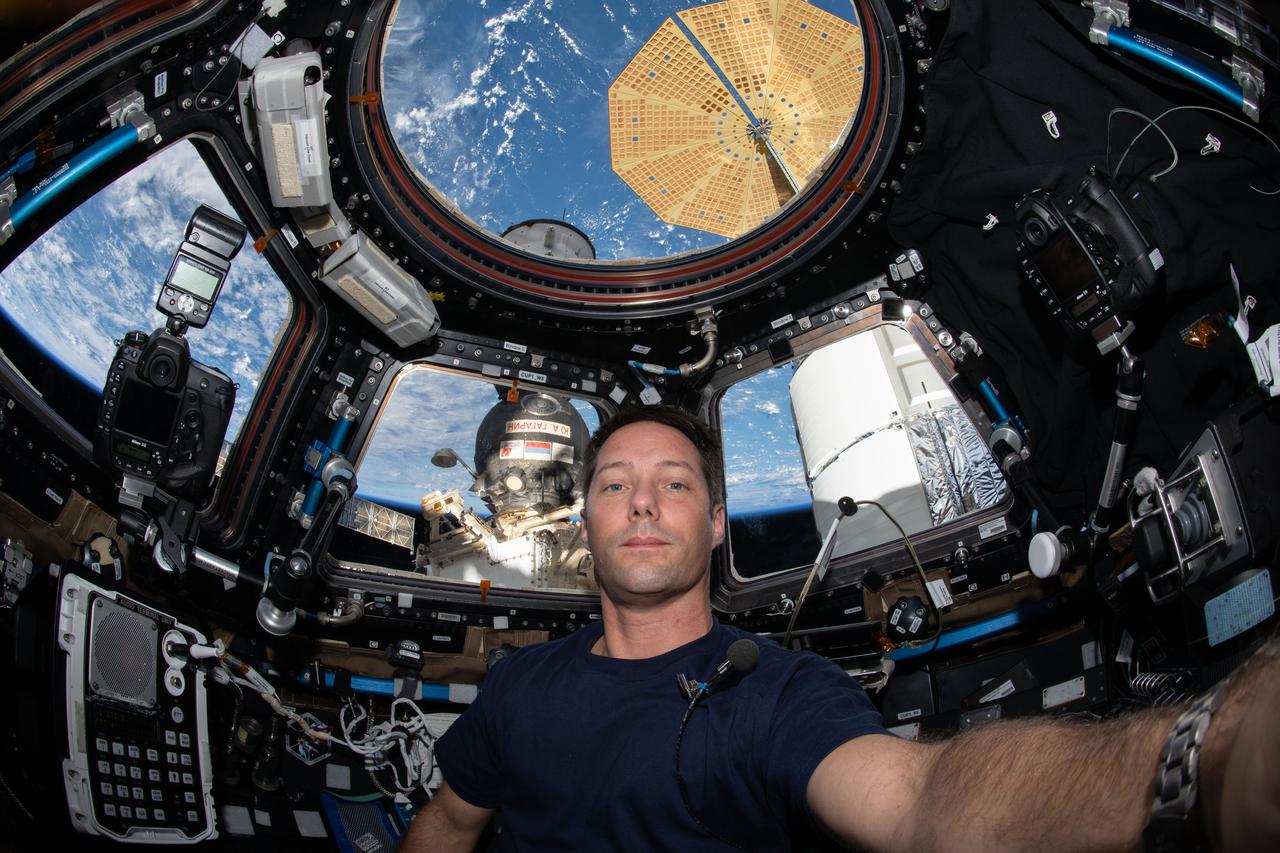
iss065e034024 (May 12, 2021) --- Expedition 65 Flight Engineer Thomas Pesquet of ESA (European Space Agency) is pictured inside the International Space Station's "window to the world," the cupola. Just outside the cupola are two spacecraft. At right, is the U.S. Northrop Grumman Cygnus space freighter with one of its two prominent cymbal-shaped UtraFlex solar arrays. To the left, and directly behind Pesquet, is the Soyuz MS-17 crew ship.
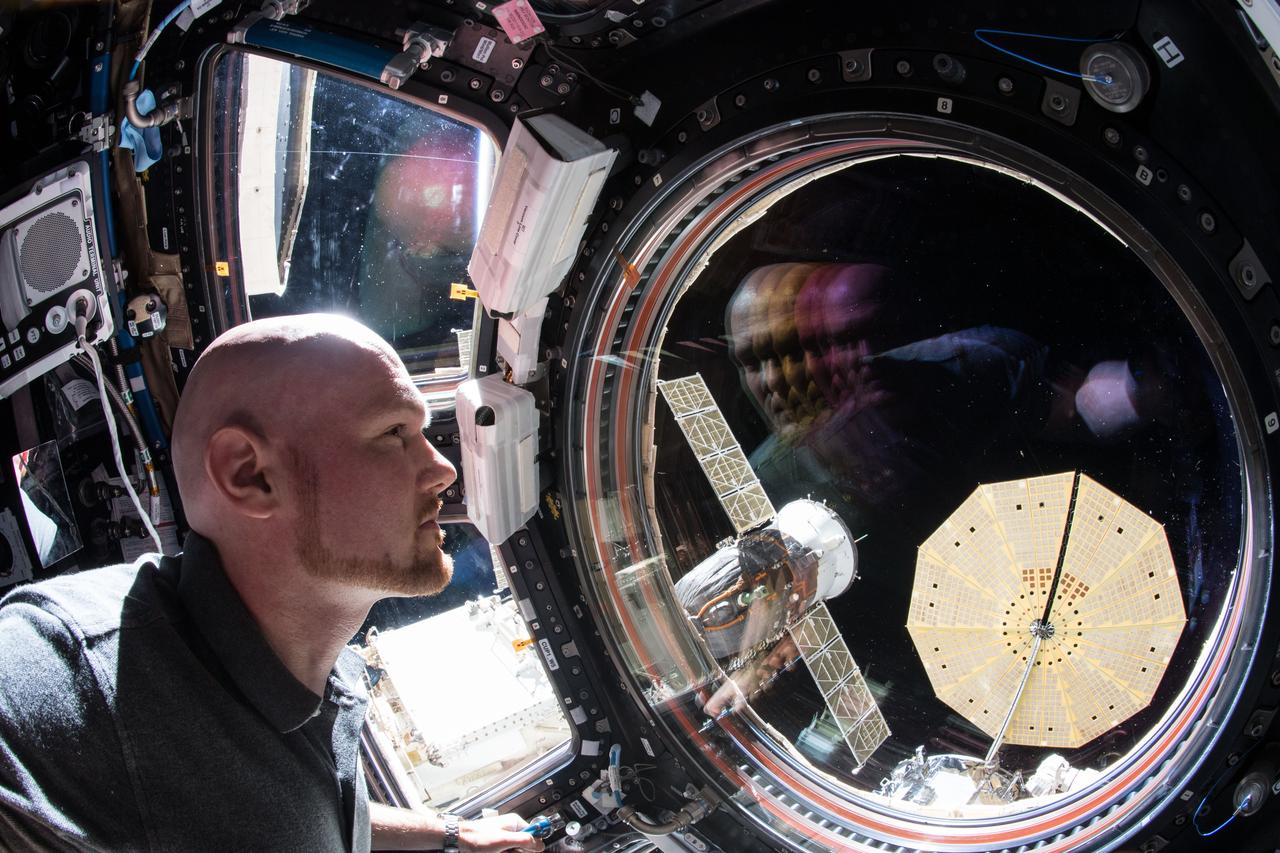
iss057e105887 (Nov. 22, 2018) --- Expedition 57 Commander Alexander Gerst of ESA (European Space Agency) peers out the International Space Station's "window to the world," the seven-windowed cupola. Just outside the cupola are two spacecraft including the Soyuz MS-09 crew craft and Northrop Grumman's Cygnus cargo craft with one of its cymbal-shaped UltraFlex solar arrays featuring prominently in the frame.
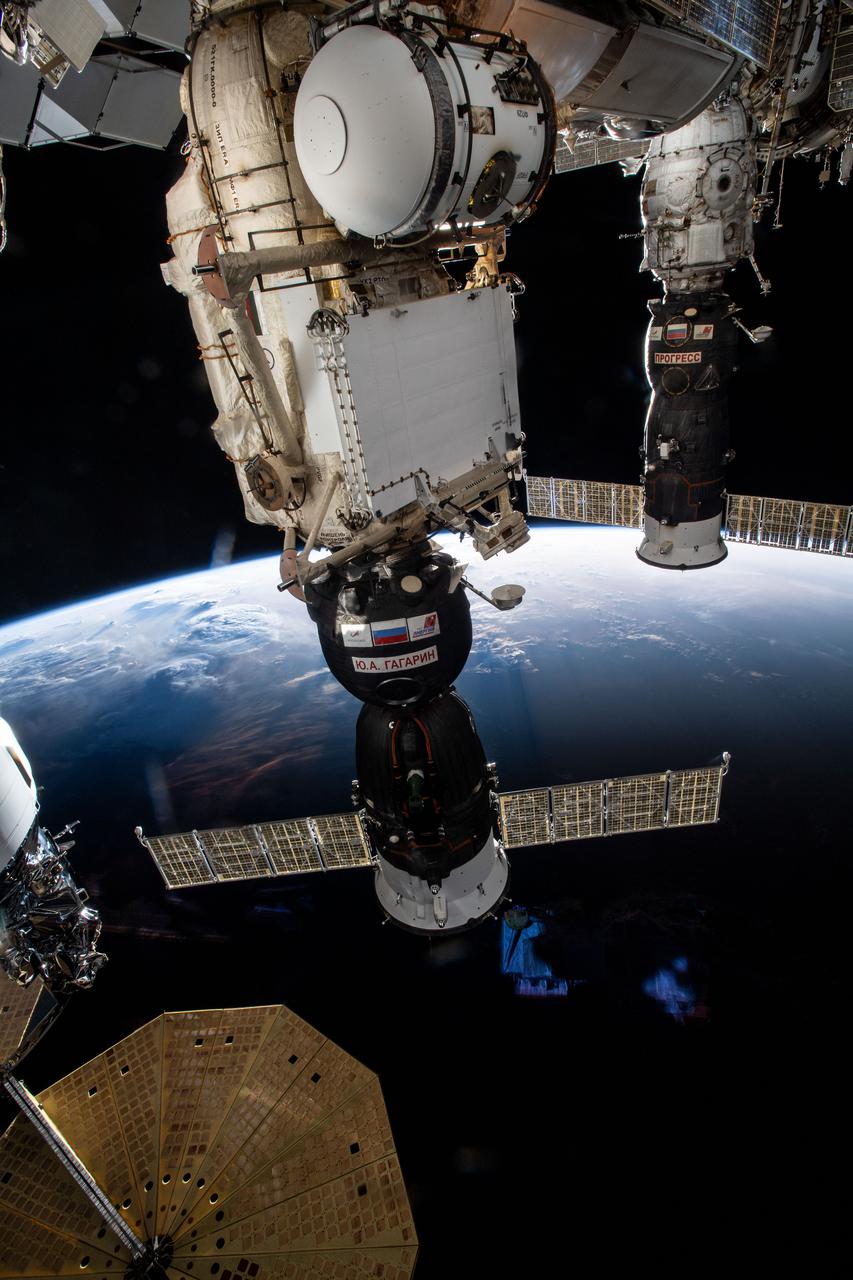
iss064e057795 (April 12, 2021) --- Two spaceships are pictured attached to the International Space Station as it flies into an orbital sunset 260 miles above Nigeria. From left, are the Soyuz MS-18 crew ship docked to the Rassvet module and the Progress 77 cargo craft docked to the Pirs docking compartment. A portion of the Northrop Grumman space freighter, with one of its prominent cymbal-shaped solar arrays, is pictured at lower left.
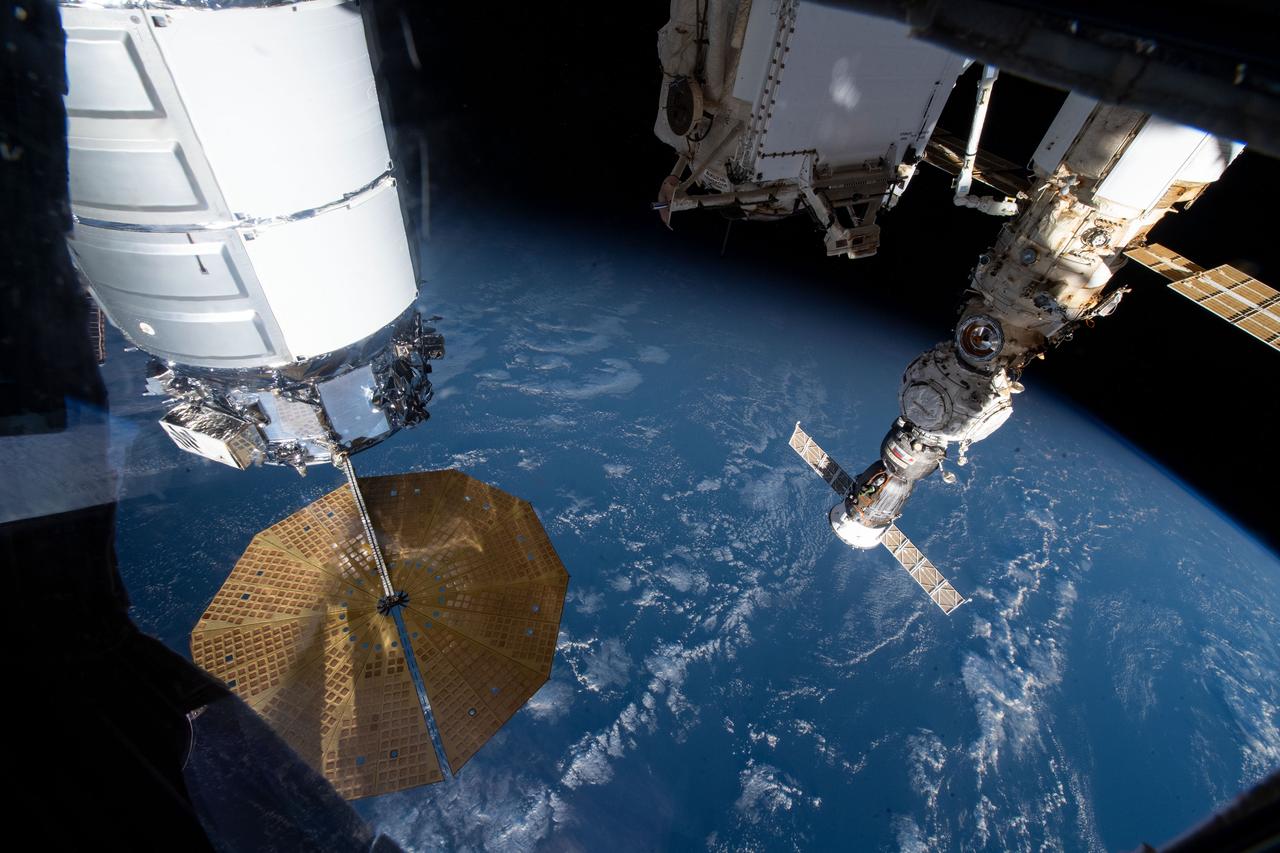
iss067e055885 (May 16, 2022) --- U.S. and Russian spaceships are pictured attached to the International Space Station as it orbited 267 miles above the Indian Ocean south of the island nation of Madagascar. At left, is the U.S. Northrop Grumman Cygnus resupply ship with its prominent cymbal-shaped UltraFlex solar arrays. At right, is the Soyuz MS-21 crew ship docked to the Prichal docking module, which is also attached to the Nauka multipurpose laboratory module. At top center, is the Rassvet module that also hosts Russian visiting vehicles.
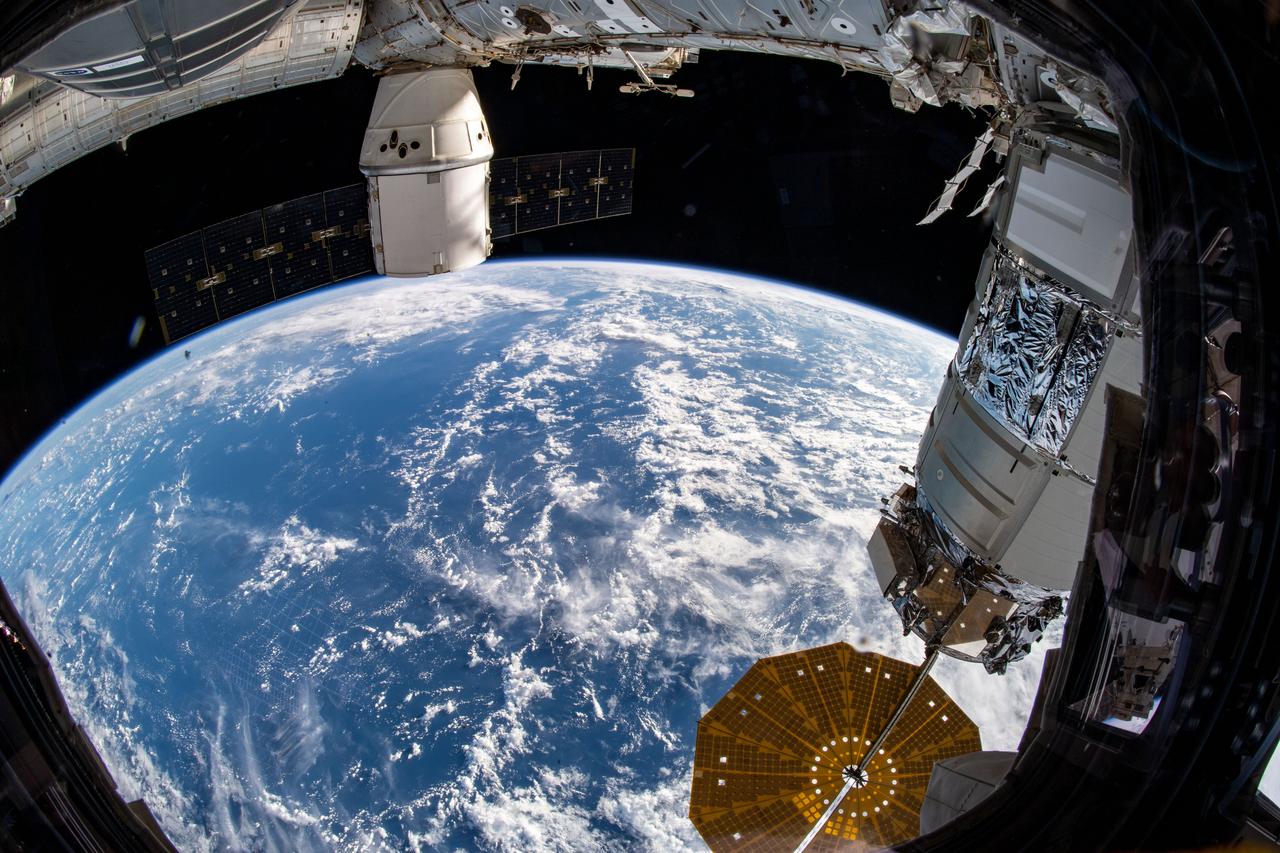
iss061e093054 (Dec. 20, 2019) --- Two U.S. cargo ships are pictured attached to the International Space Station as the orbital complex flew 260 miles above the Laccadive Sea south of India. In the right foreground, the Northrop Grumman Cygnus space freighter, with one of its prominent cymbal-shaped UltraFlex solar arrays below, is attached to the Unity module. At top rear, the SpaceX Dragon commercial resupply ship is attached to the Harmony module.
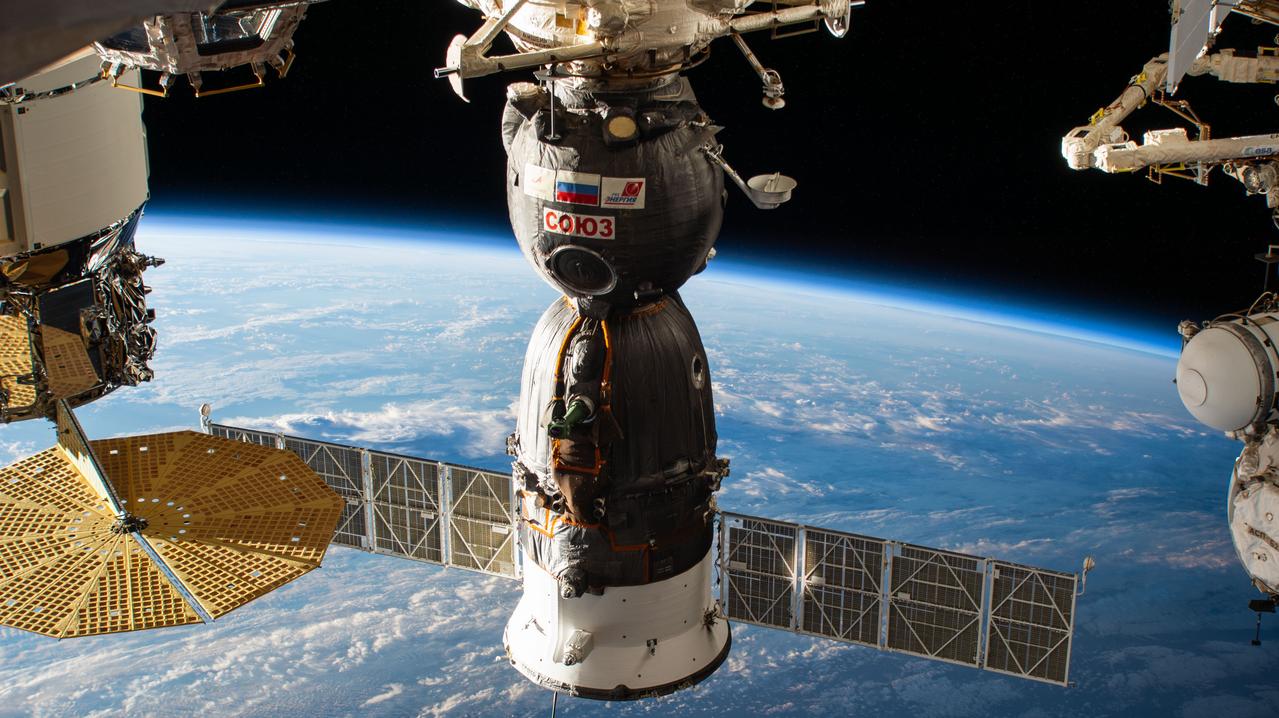
iss070e006534 (Oct. 18, 2023) --- The Soyuz MS-24 crew ship is docked to the Rassvet module in this photograph from the International Space Station as it orbited 267 miles above the Tasman Sea in between Australia and New Zealand. At left, is the Northrop Grumman Cygnus space freighter and one of its prominent cymbal-shaped UltraFlex solar arrays.
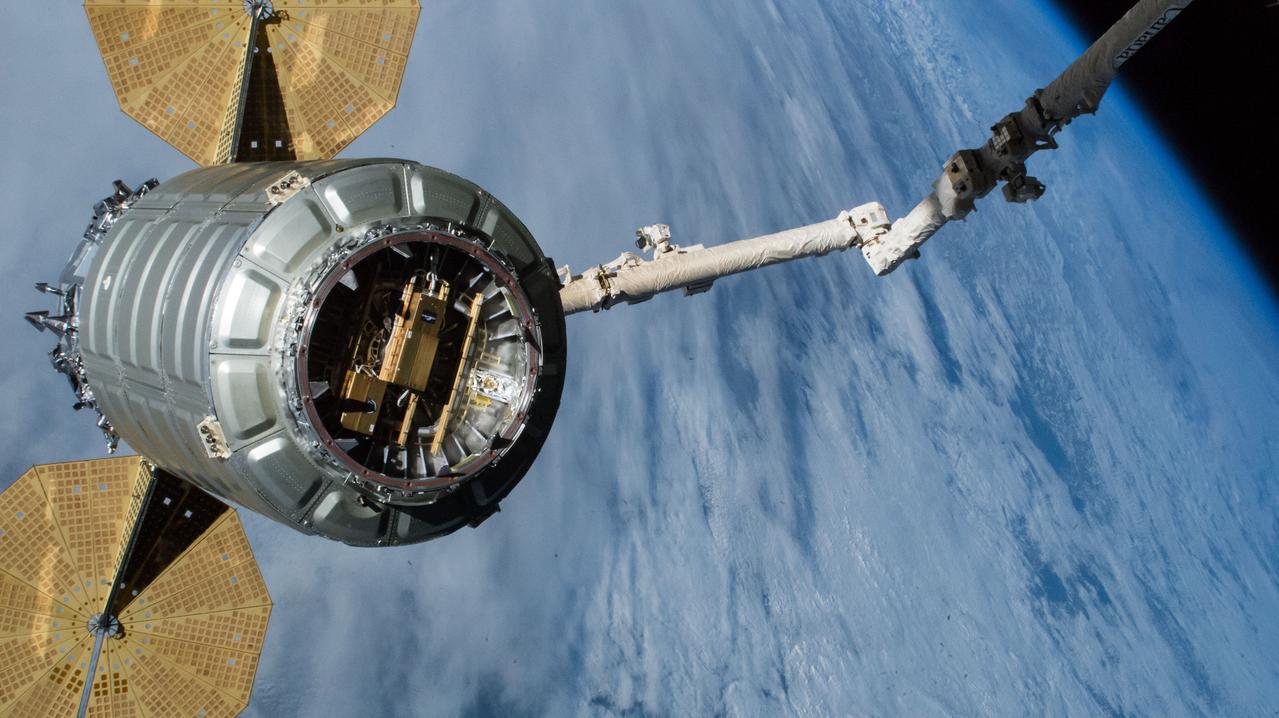
iss058e011401 (Feb. 8, 2019) --- The Cygnus cargo craft from Northrop Grumman with its prominent cymbal-shaped UltraFlex solar arrays is pictured in the grips of the Canadarm2 robotic arm. Cygnus would be released moments later as the International Space Station was orbiting over the Pacific Ocean. Visible in Cygnus' Common Berthing Mechanism is the Slingshot small satellite deployer designed to deploy CubeSats from the cargo ship once it reaches a safe distance from the station after its release.

iss057e102393 (Nov. 19, 2018) --- Northrop Grumman's Cygnus space freighter with its prominent cymbal-shaped UltraFlex solar arrays slowly approaches the International Space Station before it's capture with the Canadarm2 robotic arm operated by Expedition 57 Flight Engineer Serena Auñón-Chancellor and ESA (European Space Agency) astronaut Alexander Gerst.
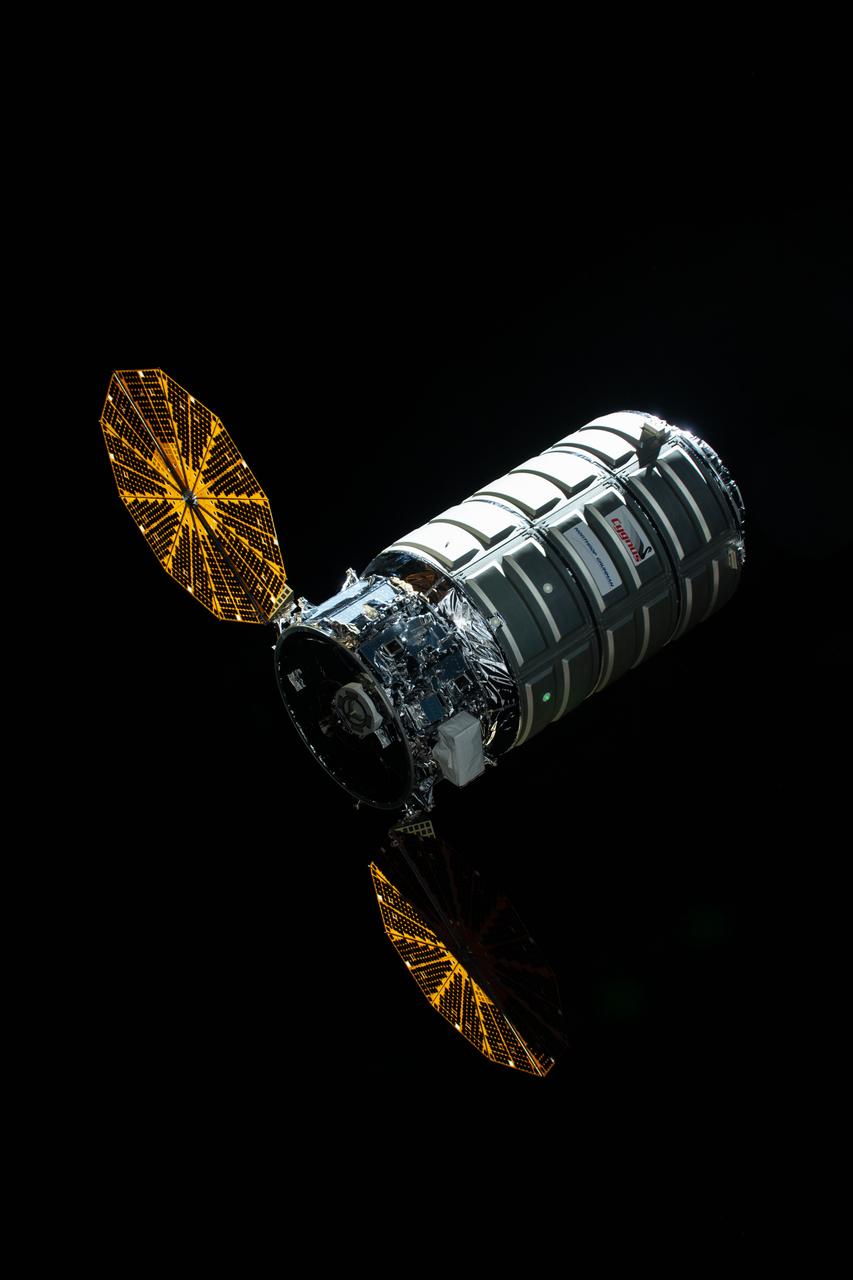
iss057e102365 (Nov. 19, 2018) --- Northrop Grumman's Cygnus space freighter with its prominent cymbal-shaped UltraFlex solar arrays slowly approaches the International Space Station before it's capture with the Canadarm2 robotic arm operated by Expedition 57 Flight Engineer Serena Auñón-Chancellor and ESA (European Space Agency) astronaut Alexander Gerst.
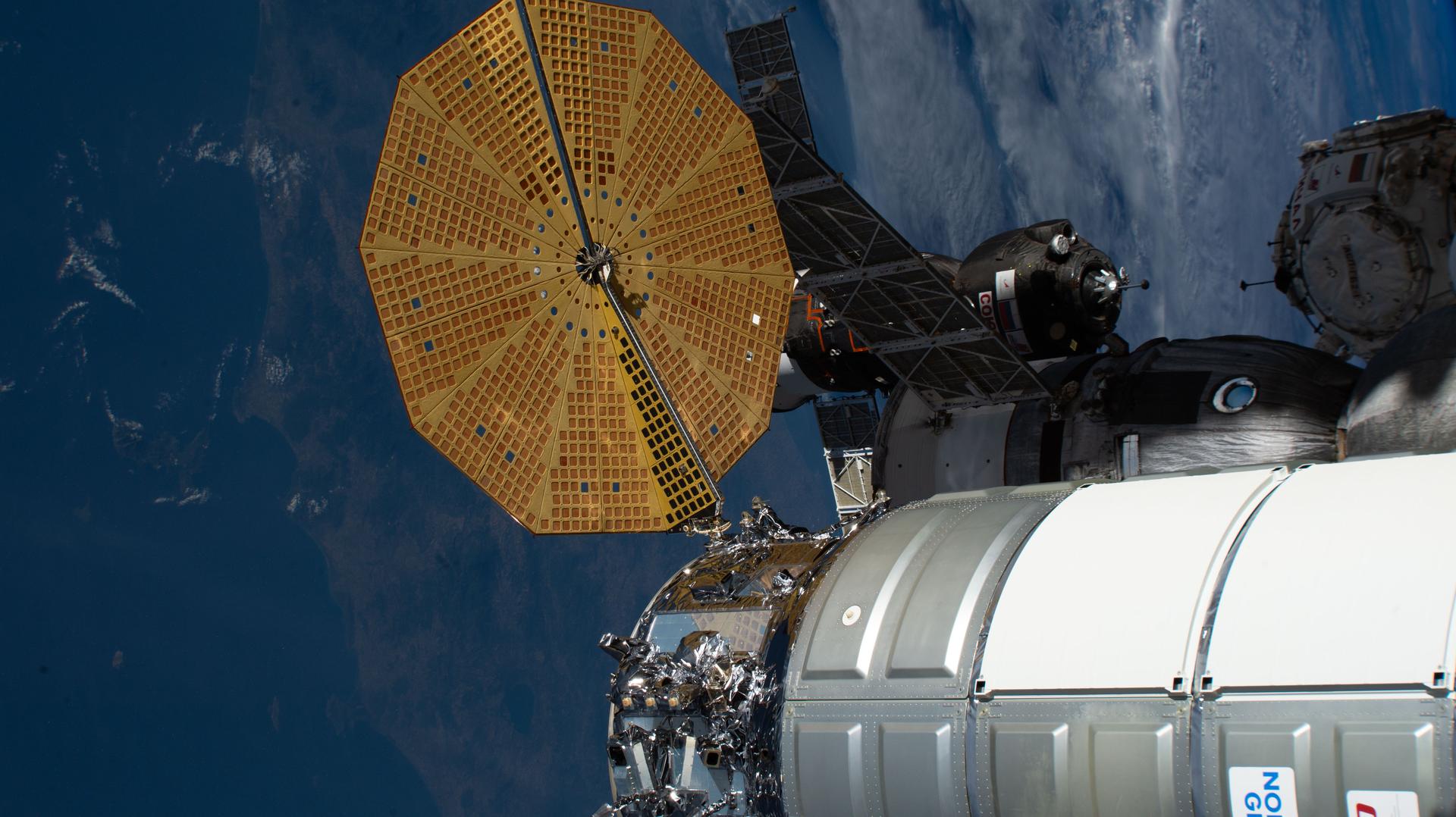
iss074e0814102 (June 14, 2026) --- In the background, the Soyuz MS-29 spacecraft, carrying NASA astronaut Anil Menon and Roscosmos cosmonauts Pyotr Dubrov and Anna Kikina, approaches the International Space Station for an automated docking to the Prichal module while both spacecraft were orbiting 264 miles above the Mediterranean Sea in between Spain and Italy. In the foreground, is the Northrop Grumman Cygnus XL cargo spacecraft with one of its prominent cymbal-shaped UltraFlex solar arrays. Credit: NASA
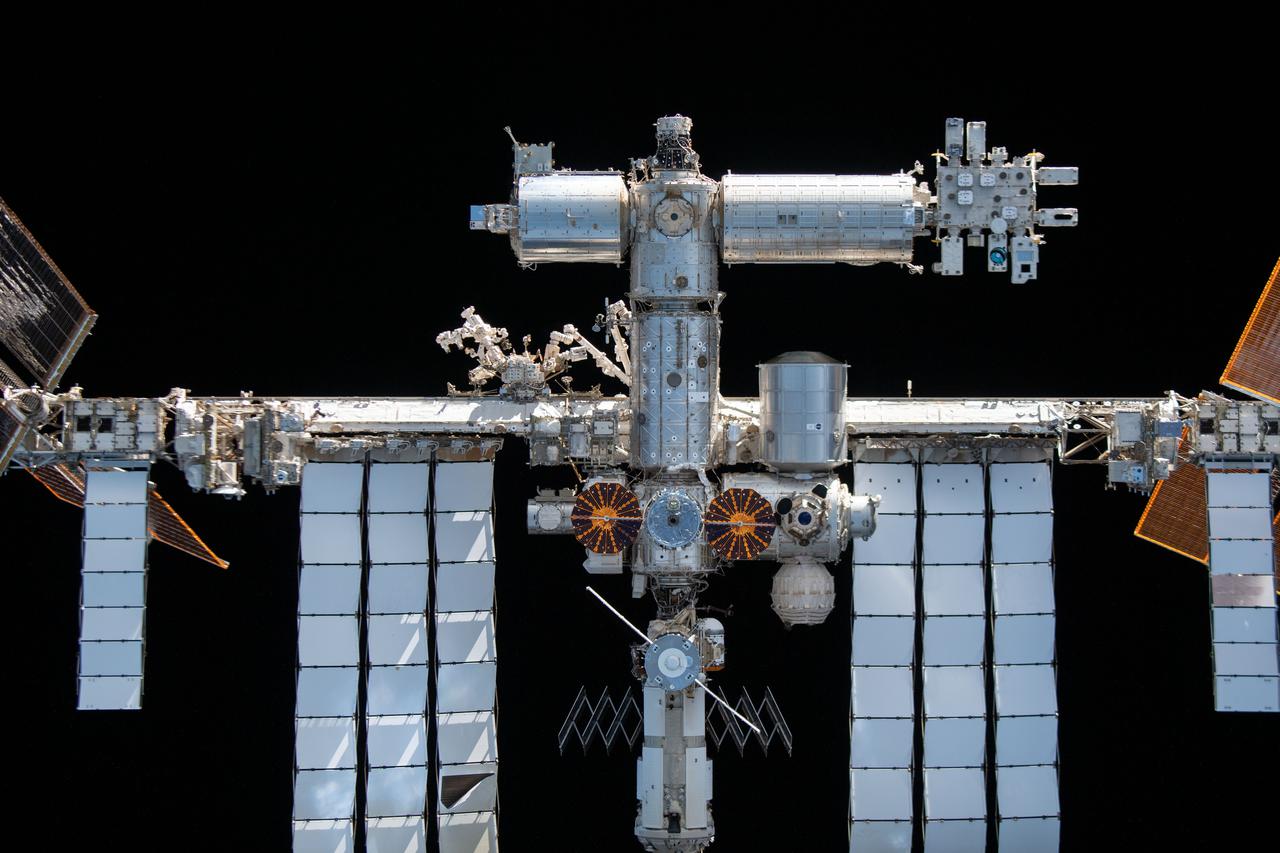
iss066e080382 (Nov. 8, 2021) --- The International Space Station's U.S. segment and portions of the Russian segment are pictured from the SpaceX Crew Dragon Endeavour during a fly around of the orbiting lab that took place following its undocking from the Harmony module’s space-facing port on Nov. 8, 2021. Prominent at center in this view are the cymbal-shaped UltraFlex solar arrays of the Northrop Grumman Cygnus space freighter.
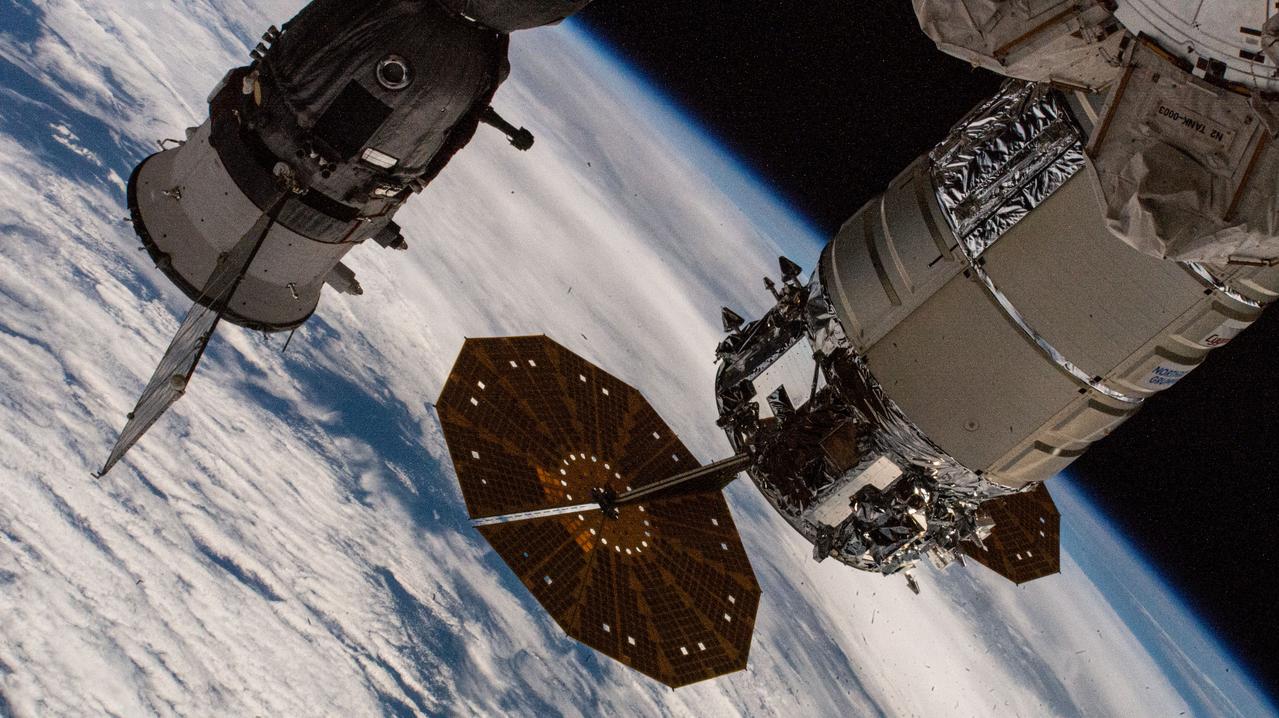
iss072e188878 (Nov. 15, 2024) --- Northrop Grumman's Cygnus cargo spacecraft, with its prominent cymbal-shaped solar arrays, is pictured attached to the Earth-facing port on the International Space Station's Unity module. At left, is a portion of the Soyuz MS-26 crew spacecraft docked to the Rassvet module. The orbital outpost was soaring 260 miles above the Indian Ocean south of South Africa at the time of this photograph.
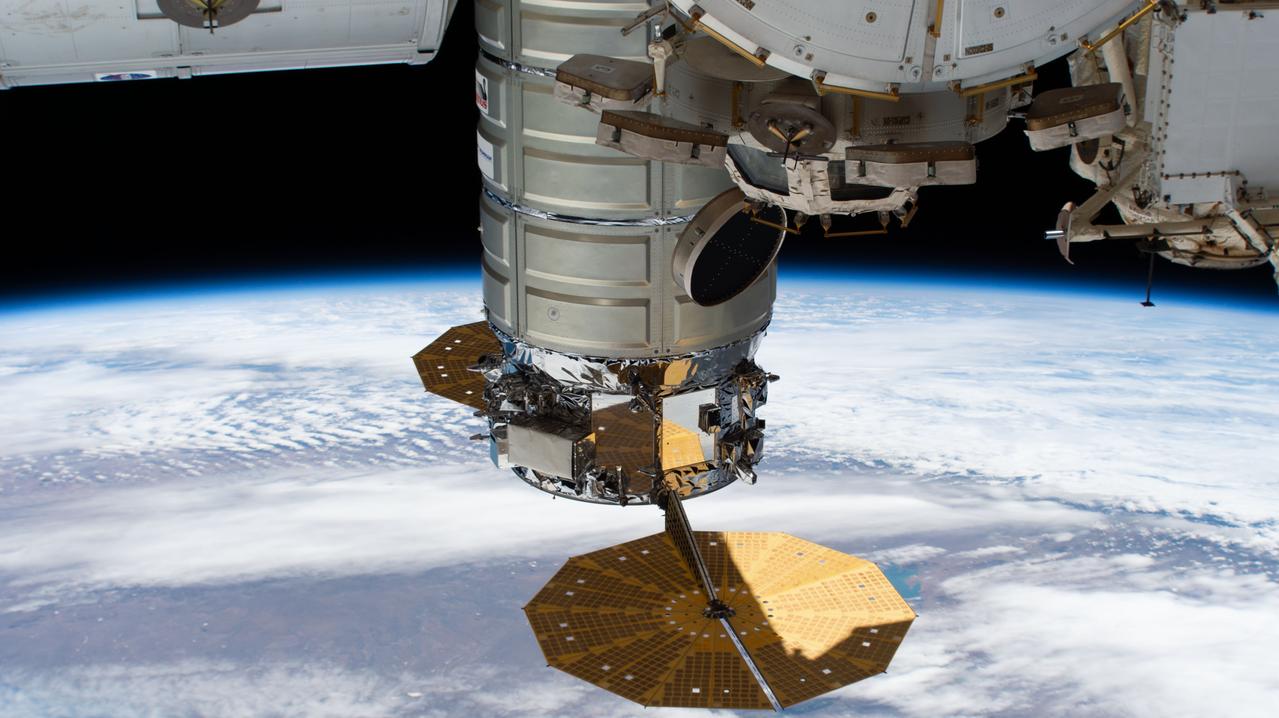
iss058e002244 (Jan. 7, 2019) --- The U.S. Cygnus space freighter from Northrop Grumman and its prominent cymbal-shaped UltraFlex solar arrays are pictured as the International Space Station orbited 262 miles above the Atlantic Ocean off the coast of Argentina. Towards the top center of the photograph is the seven-windowed cupola with its shutters open.
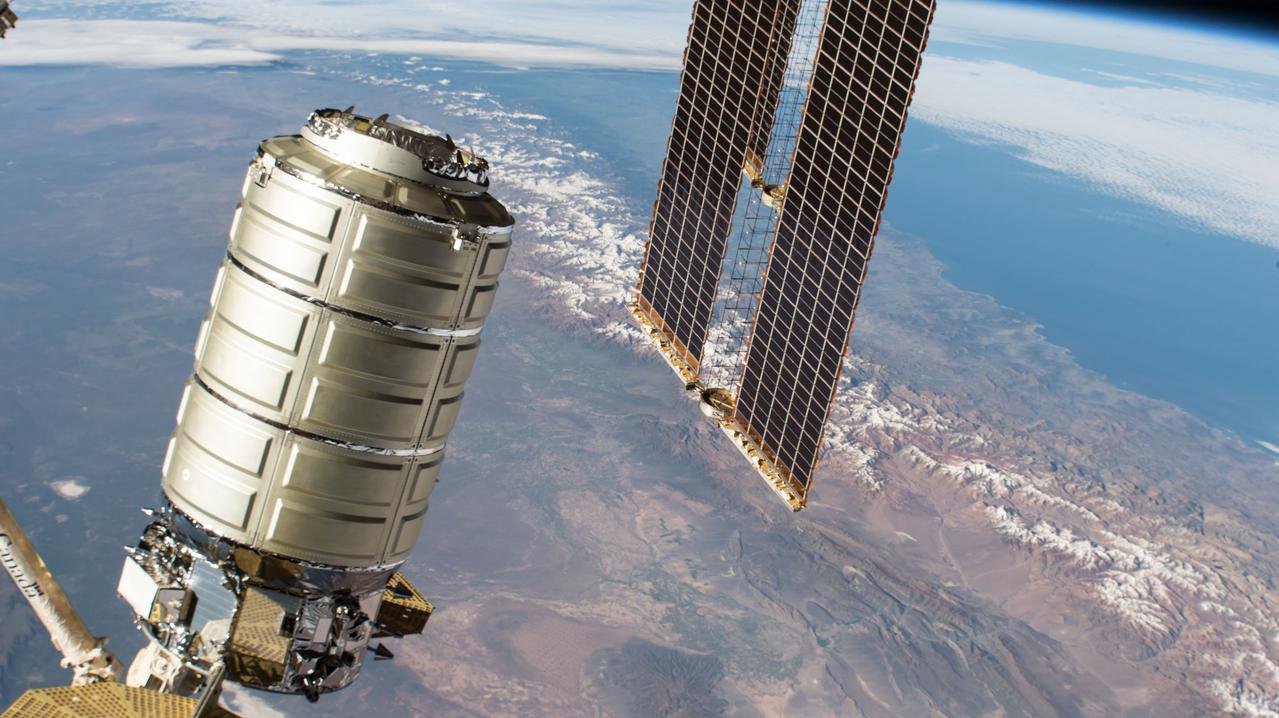
iss057e103653 (Nov. 19, 2018) --- Northrop Grumman's Cygnus space freighter with its prominent cymbal-shaped UltraFlex solar arrays is pictured in the grips of the Canadarm2 robotic arm as it is remotely maneuvered by ground controllers towards the Earth-facing port of the Unity module. Both spacecraft were orbiting 259 miles above the Andes mountains in South America.
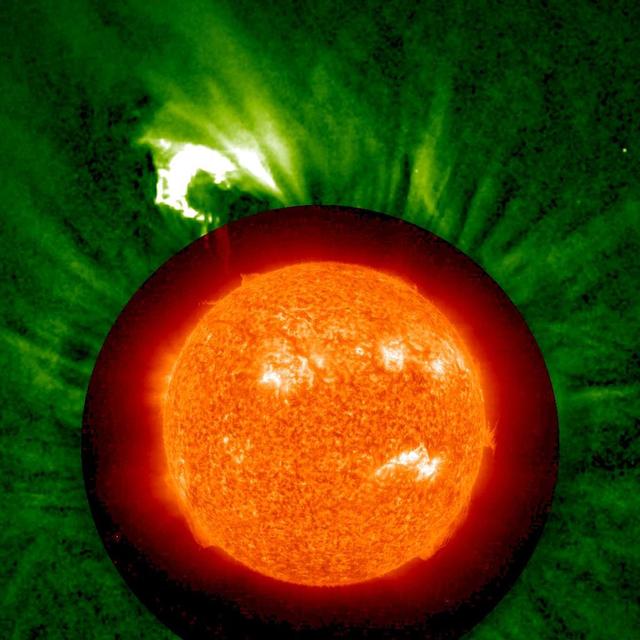
NASA image acquired May 30, 2011 On May 30, 2011, the STEREO Behind spacecraft caught a prominence in the process of leaping from one part of the Sun to another. In this movie: <a href="http://www.flickr.com/photos/gsfc/5804079351">www.flickr.com/photos/gsfc/5804079351</a> combining images from the EUVI and COR1 telescopes, the prominence is first seen erupting by EUVI in images taken in the Helium II emission line at 304 Angstroms. At higher elevations, it is seen in white light by the COR1 telescope. In the COR1 images, the prominence pauses. Some of the prominence material drains back down, but most of it is deflected to the north, and ends up raining down on a completely different part of the Sun, far from where it started. This is very unusual behavior for an erupting prominence, and this event is sure to be carefully studied by scientists. Some out-of-focus dust particles just in front of the COR1 telescope are briefly visible toward the end of the movie. Credit: NASA/GSFC/STEREO <b><a href="http://www.nasa.gov/centers/goddard/home/index.html" rel="nofollow">NASA Goddard Space Flight Center</a></b> enables NASA’s mission through four scientific endeavors: Earth Science, Heliophysics, Solar System Exploration, and Astrophysics. Goddard plays a leading role in NASA’s accomplishments by contributing compelling scientific knowledge to advance the Agency’s mission. <b>Follow us on <a href="http://twitter.com/NASA_GoddardPix" rel="nofollow">Twitter</a></b> <b>Join us on <a href="http://www.facebook.com/pages/Greenbelt-MD/NASA-Goddard/395013845897?ref=tsd" rel="nofollow">Facebook</a></b> <b>Find us on <a href="http://instagr.am/p/E_05l/" rel="nofollow">Instagram</a></b>
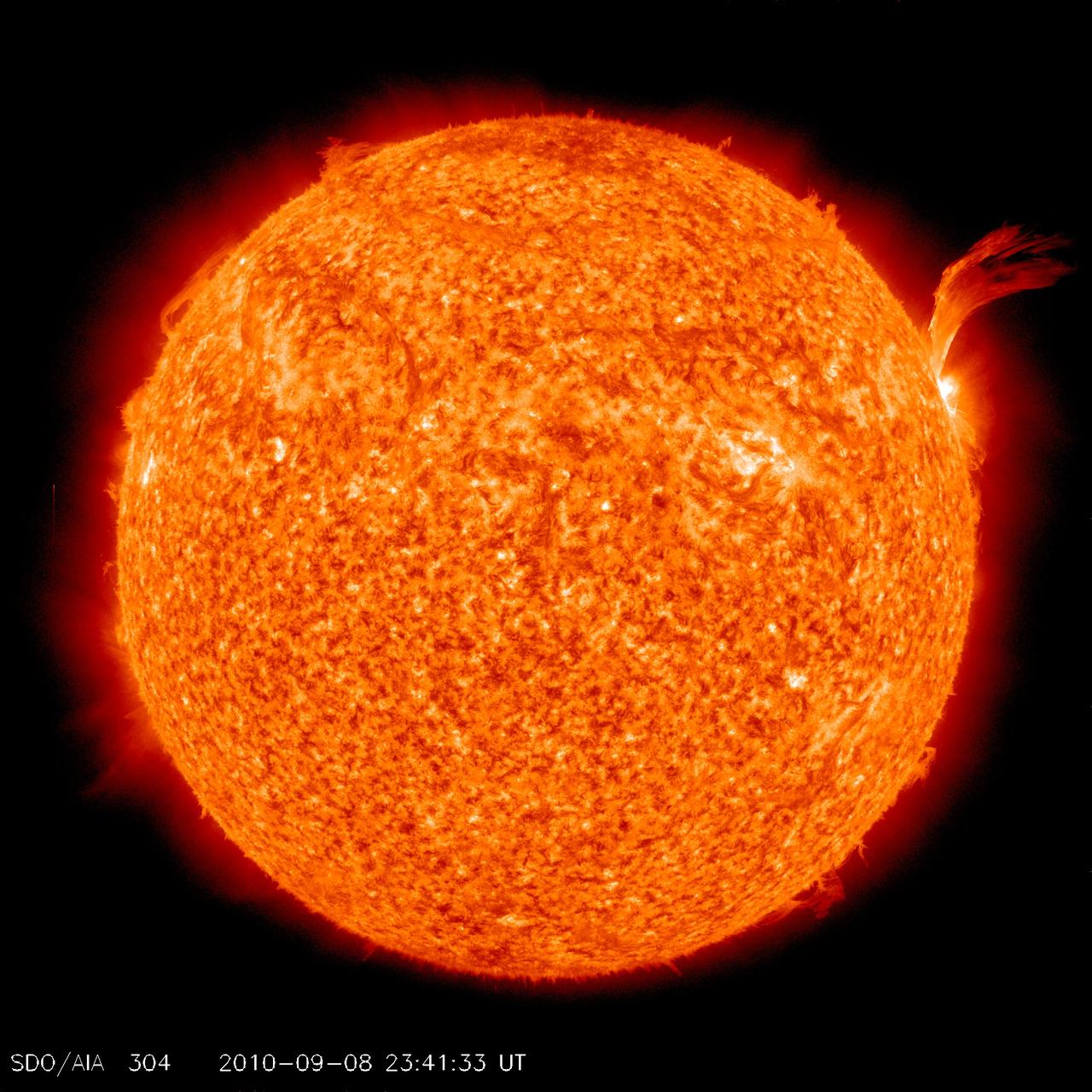
NASA image release Sept 9, 2010 Just as sunspot 1105 was turning away from Earth on Sept. 8, the active region erupted, producing a solar flare and a fantastic prominence. The eruption also hurled a bright coronal mass ejection into space. The eruption was not directed toward any planets. To see a detail go here: <a href="http://www.flickr.com/photos/gsfc/4974263471/">www.flickr.com/photos/gsfc/4974263471/</a> View the video here: <a href="http://www.flickr.com/photos/gsfc/4974878090">www.flickr.com/photos/gsfc/4974878090</a> This is a snapshot of the prominence. Credit: NASA/SDO <b><a href="http://www.nasa.gov/centers/goddard/home/index.html" rel="nofollow">NASA Goddard Space Flight Center</a></b> is home to the nation's largest organization of combined scientists, engineers and technologists that build spacecraft, instruments and new technology to study the Earth, the sun, our solar system, and the universe. <b>Follow us on <a href="http://twitter.com/NASA_GoddardPix" rel="nofollow">Twitter</a></b> <b>Join us on <a href="http://www.facebook.com/pages/Greenbelt-MD/NASA-Goddard/395013845897?ref=tsd" rel="nofollow">Facebook</a></b>
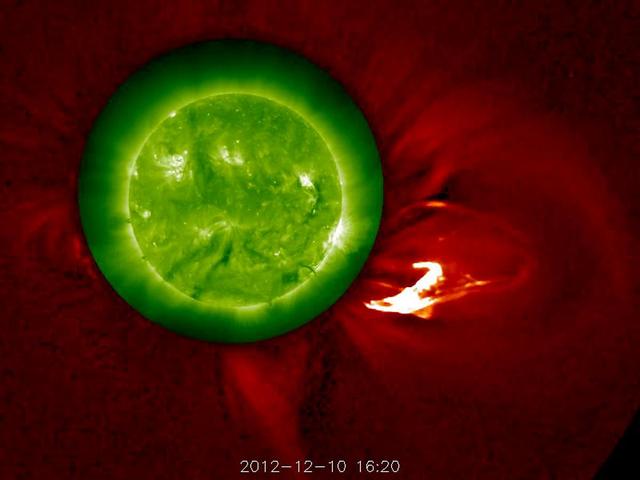
The Sun blows a robust prominence out into space (Dec. 10, 2102). The outer image, from the STEREO-A's COR1 coronagraph, has been changed from green to red to complement the green Sun image, taken in extreme UV light. The movie covers six hours of activity. Kind of Christmassy looking, isn't it? Some of the prominence falls back towards the sun, although the disturbance as a whole continues out into the solar system. Credit: NASA/GSFC/STEREO <b><a href="http://www.nasa.gov/audience/formedia/features/MP_Photo_Guidelines.html" rel="nofollow">NASA image use policy.</a></b> <b><a href="http://www.nasa.gov/centers/goddard/home/index.html" rel="nofollow">NASA Goddard Space Flight Center</a></b> enables NASA’s mission through four scientific endeavors: Earth Science, Heliophysics, Solar System Exploration, and Astrophysics. Goddard plays a leading role in NASA’s accomplishments by contributing compelling scientific knowledge to advance the Agency’s mission. <b>Follow us on <a href="http://twitter.com/NASA_GoddardPix" rel="nofollow">Twitter</a></b> <b>Like us on <a href="http://www.facebook.com/pages/Greenbelt-MD/NASA-Goddard/395013845897?ref=tsd" rel="nofollow">Facebook</a></b> <b>Find us on <a href="http://instagram.com/nasagoddard?vm=grid" rel="nofollow">Instagram</a></b>
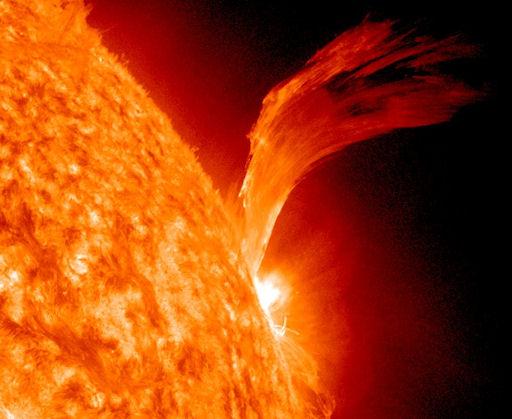
NASA image release Sept 9, 2010 Just as sunspot 1105 was turning away from Earth on Sept. 8, the active region erupted, producing a solar flare and a fantastic prominence. The eruption also hurled a bright coronal mass ejection into space. The eruption was not directed toward any planets. View the video here: <a href="http://www.flickr.com/photos/gsfc/4974878090">www.flickr.com/photos/gsfc/4974878090</a> To see a full disk view go here: <a href="http://www.flickr.com/photos/gsfc/4975115754/">www.flickr.com/photos/gsfc/4975115754/</a> This is a snapshot of the prominence. Credit: NASA/SDO <b><a href="http://www.nasa.gov/centers/goddard/home/index.html" rel="nofollow">NASA Goddard Space Flight Center</a></b> is home to the nation's largest organization of combined scientists, engineers and technologists that build spacecraft, instruments and new technology to study the Earth, the sun, our solar system, and the universe. <b>Follow us on <a href="http://twitter.com/NASA_GoddardPix" rel="nofollow">Twitter</a></b> <b>Join us on <a href="http://www.facebook.com/pages/Greenbelt-MD/NASA-Goddard/395013845897?ref=tsd" rel="nofollow">Facebook</a></b>
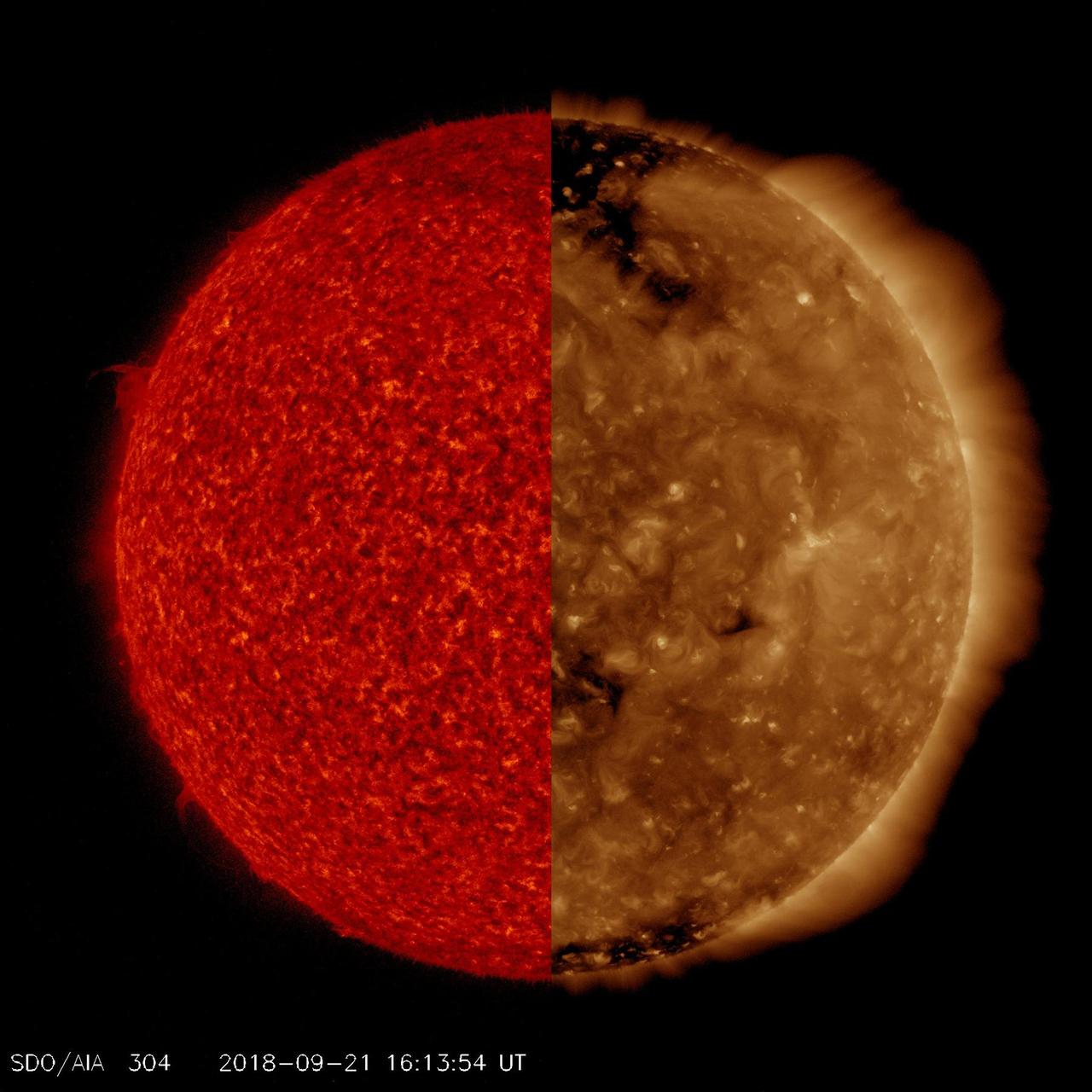
NASA's Solar Dynamics Observatory observes the Sun in ten different wavelengths because each wavelength reveals different solar features. Here, we have selected two images taken at virtually the same time but in different wavelengths of extreme ultraviolet light. The red tinted image, which captures material not far above the Sun's surface, is especially good for revealing details along the edge of the Sun, like the small prominence at the ten o'clock position. The brown tinted image clearly shows two large coronal holes (darker areas) as well as some faint magnetic field lines and hints of solar activity (lighter areas), neither of which are apparent in the red image. This activity is occurring somewhat higher in the Sun's corona. In a way it is like peeling away the layers of an onion, a little at a time. Animations are available at https://photojournal.jpl.nasa.gov/catalog/PIA22724
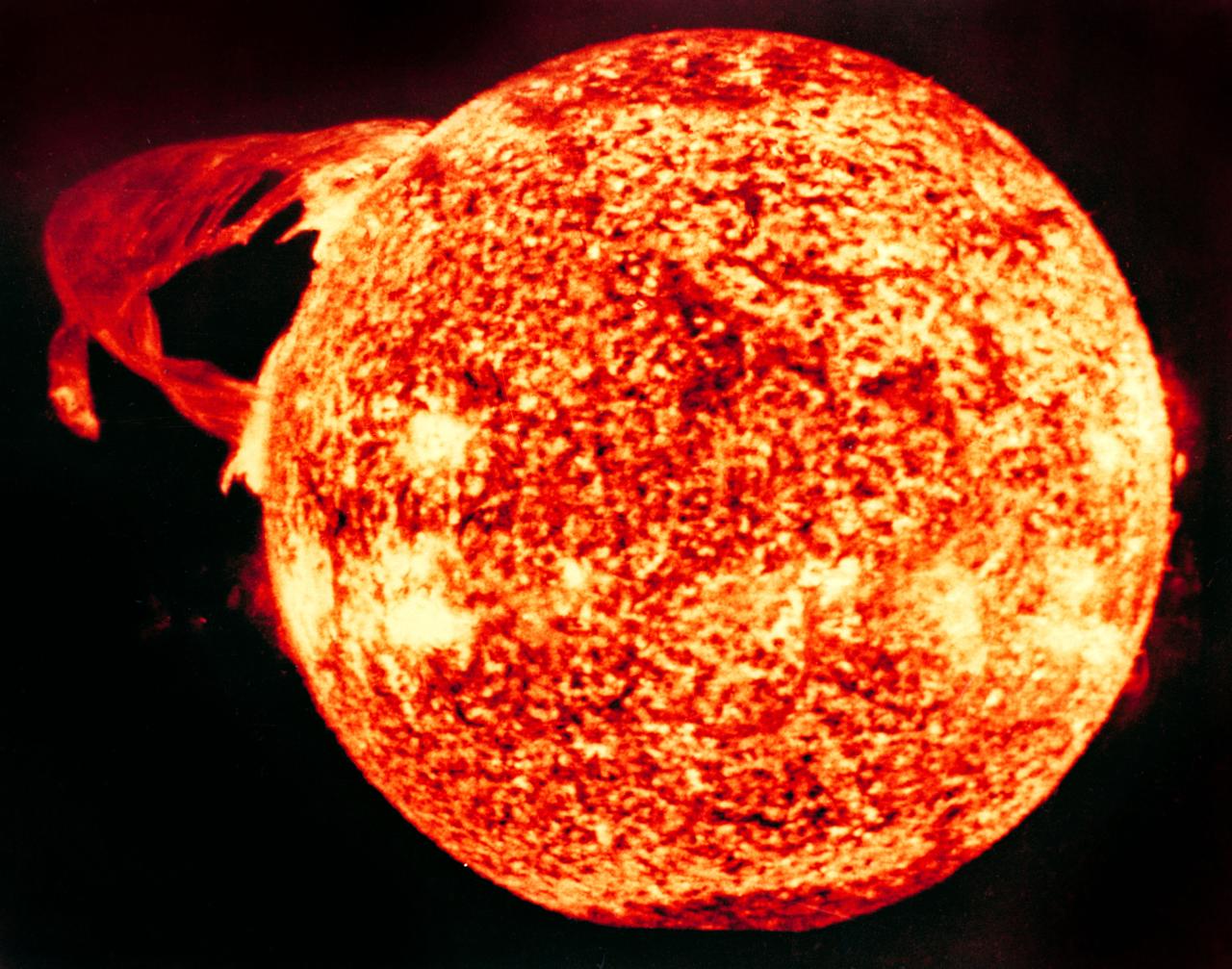
S74-23458 (19 Dec. 1973) --- This photograph of the sun, taken on Dec. 19, 1973, during the third and final manned Skylab mission (Skylab 4), shows one of the most spectacular solar flares ever recorded, spanning more than 588,000 kilometers (365,000 miles) across the solar surface. The last picture, taken some 17 hours earlier, showed this feature as a large quiescent prominence on the eastern side of the sun. The flare gives the distinct impression of a twisted sheet of gas in the process of unwinding itself. Skylab photographs such quiescent features erupt from the sun. In this photograph the solar poles are distinguished by a relative absence of supergranulation network, and a much darker tone than the central portions of the disk. Several active regions are seen on the eastern side of the disk. The photograph was taken in the light of ionized helium by the extreme ultraviolet spectroheliograph instrument of the United States Naval Research Laboratory. Photo credit: NASA
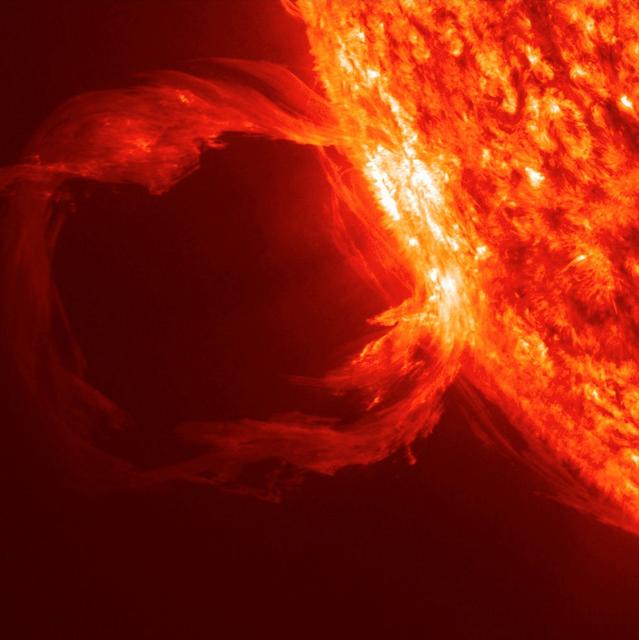
An erupting prominence observed by SDO on March 30, 2010. Credit: NASA/GSFC/SDO To read more about this image go to: <a href="http://www.nasa.gov/mission_pages/sdo/news/first-light.html" rel="nofollow">www.nasa.gov/mission_pages/sdo/news/first-light.html</a> <b><a href="http://www.nasa.gov/centers/goddard/home/index.html" rel="nofollow">NASA Goddard Space Flight Center</a></b> is home to the nation's largest organization of combined scientists, engineers and technologists that build spacecraft, instruments and new technology to study the Earth, the sun, our solar system, and the universe.
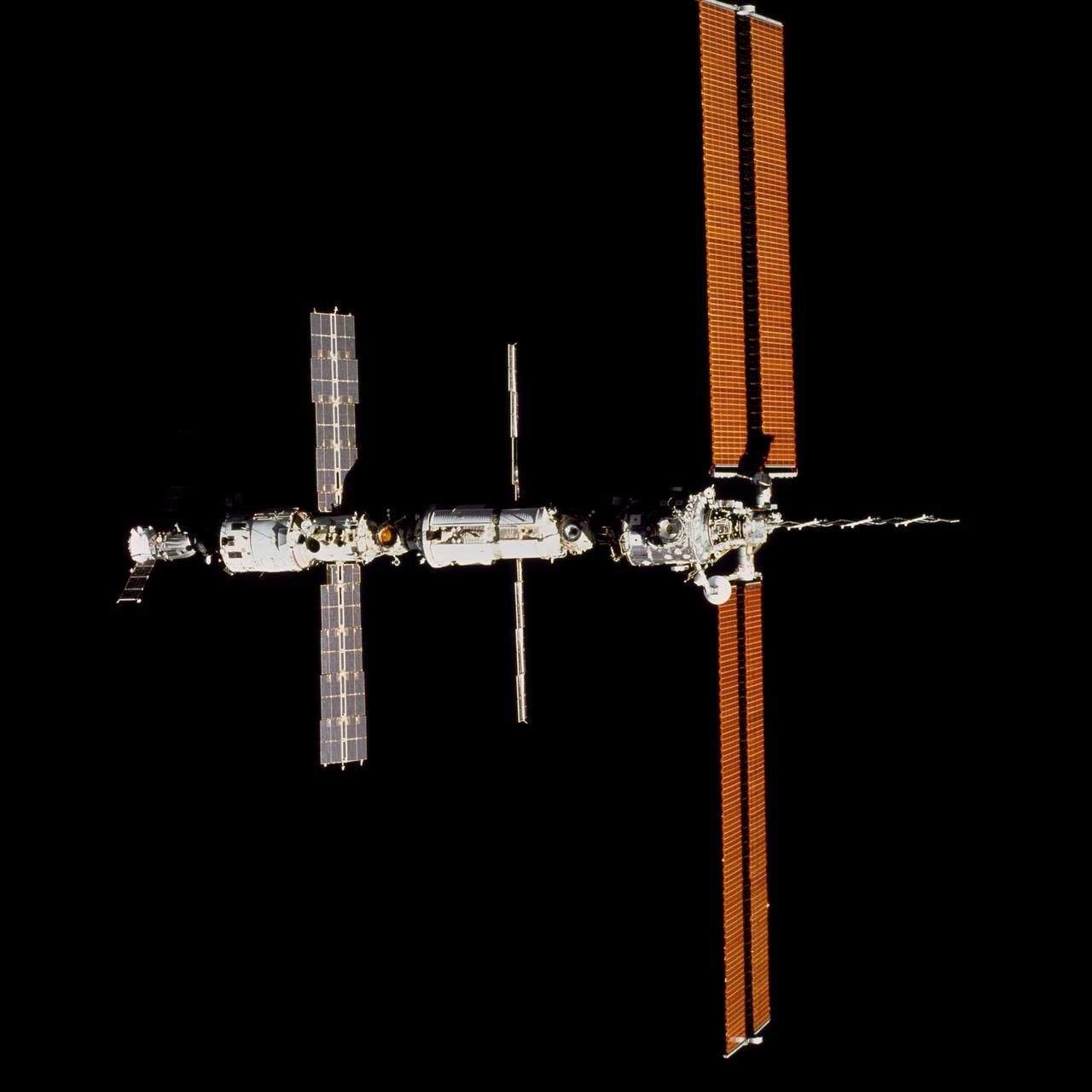
STS097-703-030 (30 Nov.-11 Dec. 2000) --- The International Space Station (ISS) is photographed during a fly-around by the Space Shuttle Endeavour. The 240-foot-long, 38-foot-wide solar array (top) is the newest part and one of the most prominent components of the station. Onboard ISS for about 40 days at the time of this photo were astronaut William M. Shepherd and cosmonauts Yuri P. Gidzenko and Sergei K. Krikalev. Onboard the shuttle were STS-97 astronauts – commander Brent W. Jett, Jr., pilot Mike Bloomfield and mission specialists Marc Garneau of the Canadian Space Agency (CSA), Carlos I. Noriega and Joseph R. Tanner.
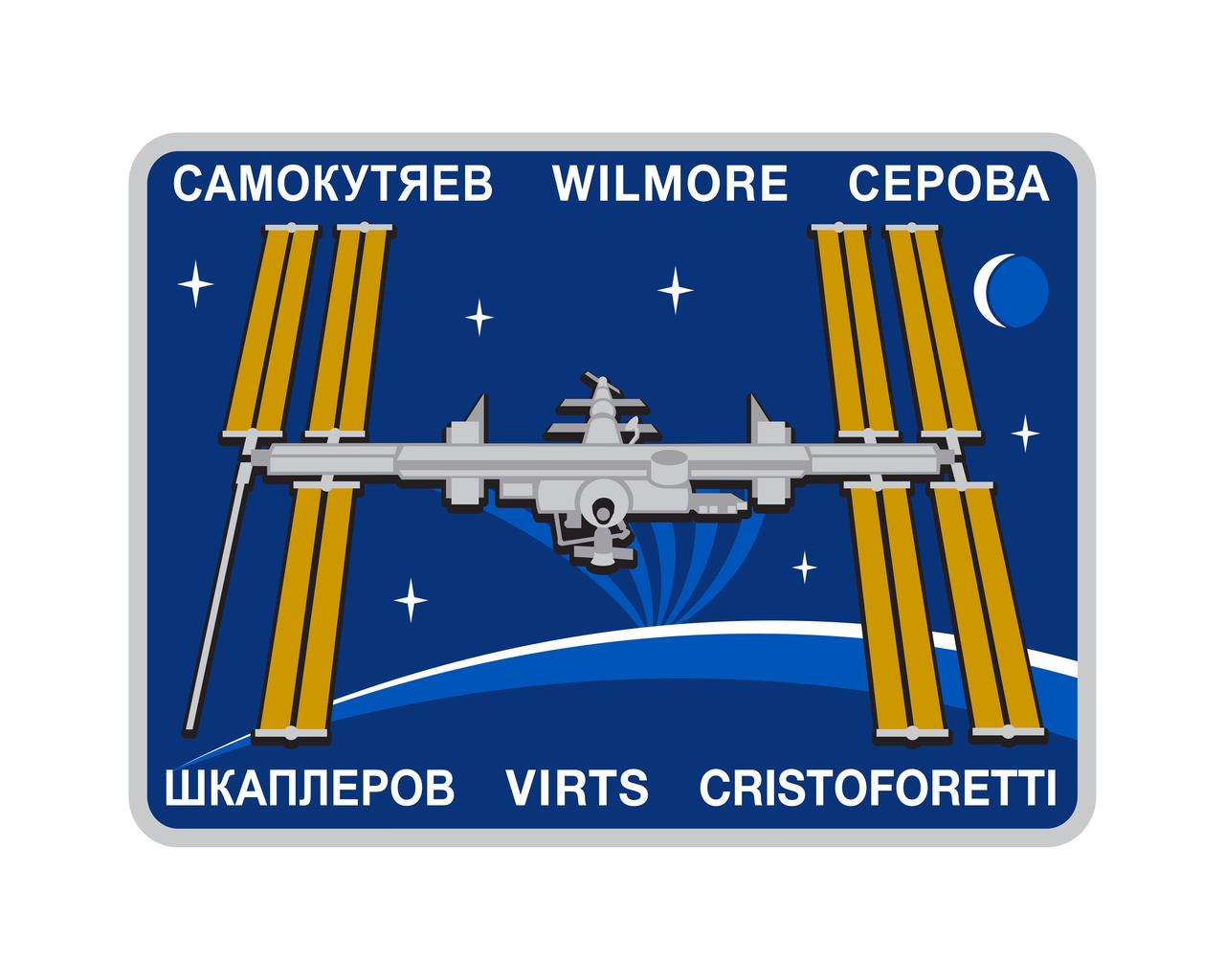
ISS042-S-001 (April 2013)--- The rectangular-shaped design portrays the International Space Station orbiting planet Earth with its solar array wings spread wide. Facing the sun with the lower left outboard solar array feathered, the left array portrays a prominent number “4” and the fully deployed arrays on the right form the Roman numeral version of “2,” which signifies the two increment crews which, together, comprise the six-member international Expedition “42” crew. The crew and all supporting personnel around the world are also represented by the six stars adorning the sky around the complex. The NASA insignia design for shuttle and space station flights is reserved for use by the astronauts and for other official use as the NASA Administrator may authorize. Public availability has been approved only in the form of illustrations by the various news media. When and if there is any change in this policy, which is not anticipated, it will be publicly announced. Photo credit: NASA
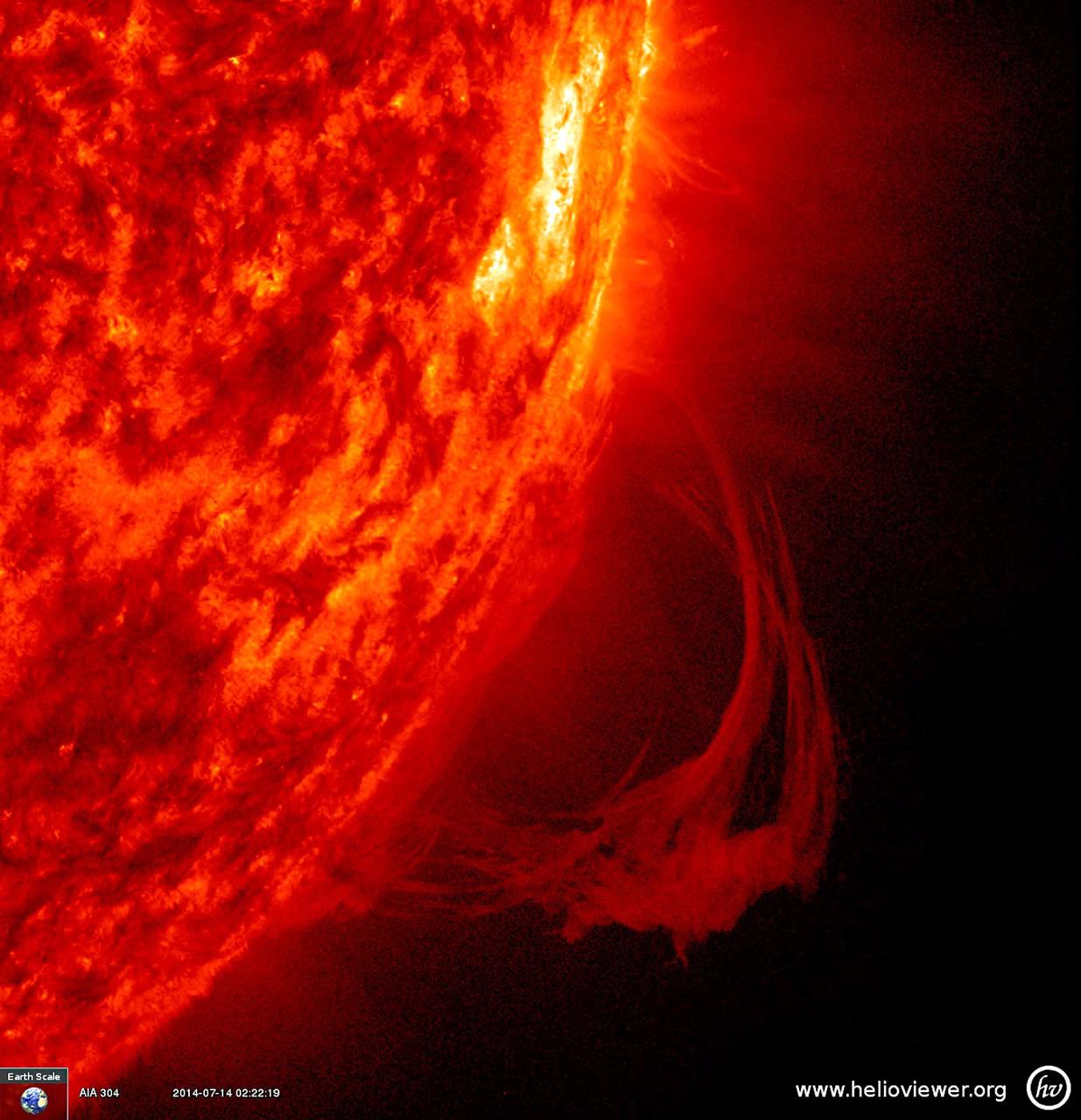
A long arch of plasma (called a prominence) was pulled this way and that by magnetic forces for a week before it finally dissipated (July 10-16, 2014). This close up was captured in extreme ultraviolet light. The Earth scale in the lower left corner gives one a sense of the length of the prominence. Credit: NASA/SDO <b><a href="http://www.nasa.gov/audience/formedia/features/MP_Photo_Guidelines.html" rel="nofollow">NASA image use policy.</a></b> <b><a href="http://www.nasa.gov/centers/goddard/home/index.html" rel="nofollow">NASA Goddard Space Flight Center</a></b> enables NASA’s mission through four scientific endeavors: Earth Science, Heliophysics, Solar System Exploration, and Astrophysics. Goddard plays a leading role in NASA’s accomplishments by contributing compelling scientific knowledge to advance the Agency’s mission. <b>Follow us on <a href="http://twitter.com/NASAGoddardPix" rel="nofollow">Twitter</a></b> <b>Like us on <a href="http://www.facebook.com/pages/Greenbelt-MD/NASA-Goddard/395013845897?ref=tsd" rel="nofollow">Facebook</a></b> <b>Find us on <a href="http://instagram.com/nasagoddard?vm=grid" rel="nofollow">Instagram</a></b>
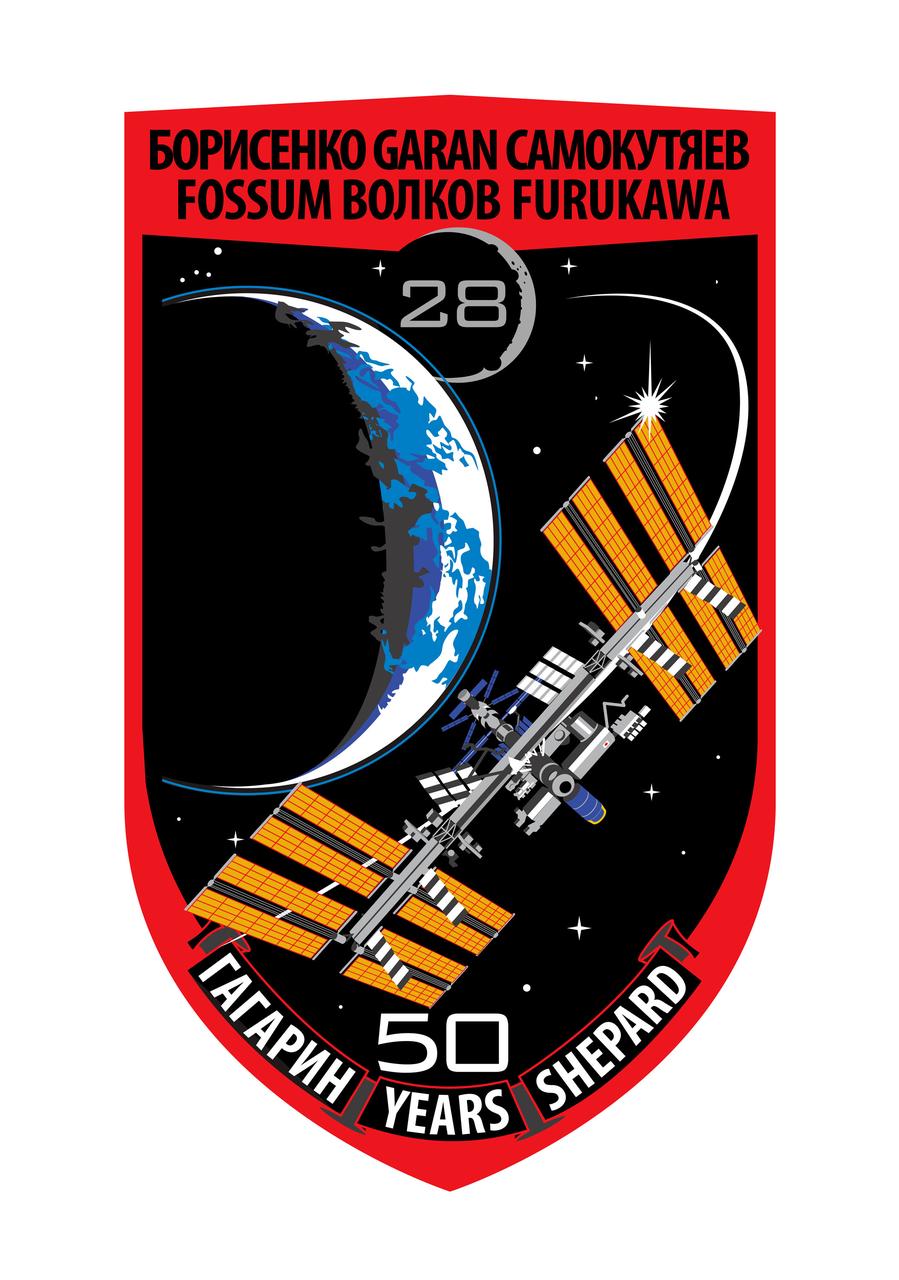
ISS028-S-001 (September 2010) --- In the foreground of the Expedition 28 patch, the International Space Station is prominently displayed to acknowledge the efforts of the entire International Space Station (ISS) team - both the crews who have assembled and operated it, and the team of scientists, engineers, and support personnel on Earth who have provided a foundation for each successful mission. Their efforts and accomplishments have demonstrated the Space Station?s capabilities as a technology test bed and a science laboratory, as well as a path to the human exploration of our solar system and beyond. This Expedition 28 patch represents the teamwork among the international partners ? USA, Russia, Japan, Canada, and the ESA - and the ongoing commitment from each partner to build, improve, and utilize the ISS. Prominently displayed in the background is our home planet, Earth - the focus of much of our exploration and research on our outpost in space. Also prominently displayed in the background is the Moon. The Moon is included in the design to stress the importance of our planet?s closest neighbor to the future of our world. Expedition 28 is scheduled to occur during the timeframe of the 50th anniversary of both the first human in space, Russian cosmonaut Yuri Gagarin and the first American in space, astronaut, Alan Shepard. To acknowledge the significant milestone of 50 years of human spaceflight, the names ????????? and ?Shepard? as well as ?50 Years? are included in the patch design. The NASA insignia design for shuttle and space station flights is reserved for use by the astronauts and for other official use as the NASA Administrator may authorize. Public availability has been approved only in the forms of illustrations by the various news media. When and if there is any change in this policy, which is not anticipated, the change will be publicly announced. Photo credit: NASA and its international partners.
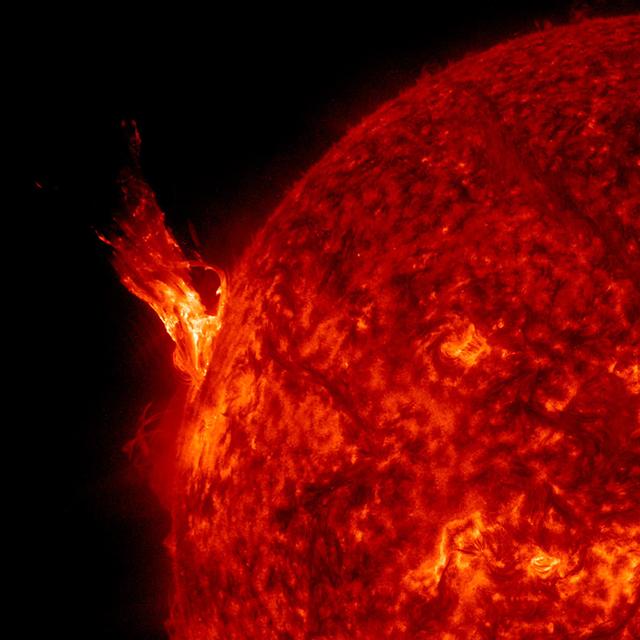
A bright solar prominence rose up from the Sun and twisted around in about a six-hour period (Apr. 21, 2015). While some of the material broke away into space, much of it fell back into the Sun. The images were taken in a wavelength of extreme ultraviolet light. At its greatest height, the plume extended out many times the size of Earth, allowing numerous amateur astronomers to observe this event with their solar telescopes. Credit: NASA/SDO <b><a href="http://www.nasa.gov/audience/formedia/features/MP_Photo_Guidelines.html" rel="nofollow">NASA image use policy.</a></b> <b><a href="http://www.nasa.gov/centers/goddard/home/index.html" rel="nofollow">NASA Goddard Space Flight Center</a></b> enables NASA’s mission through four scientific endeavors: Earth Science, Heliophysics, Solar System Exploration, and Astrophysics. Goddard plays a leading role in NASA’s accomplishments by contributing compelling scientific knowledge to advance the Agency’s mission. <b>Follow us on <a href="http://twitter.com/NASAGoddardPix" rel="nofollow">Twitter</a></b> <b>Like us on <a href="http://www.facebook.com/pages/Greenbelt-MD/NASA-Goddard/395013845897?ref=tsd" rel="nofollow">Facebook</a></b> <b>Find us on <a href="http://instagrid.me/nasagoddard/?vm=grid" rel="nofollow">Instagram</a></b>

NASA image captured December 6, 2010 To view a video of this event go here: <a href="http://www.flickr.com/photos/gsfc/5258354738">www.flickr.com/photos/gsfc/5258354738</a> A very long solar filament that had been snaking around the Sun erupted (Dec. 6, 2010) with a flourish. STEREO (Behind) caught the action in dramatic detail in extreme ultraviolet light of Helium. It had been almost a million km long (about half a solar radius) and a prominent feature on the Sun visible over two weeks earlier before it rotated out of view. Filaments, elongated clouds of cooler gases suspended above the Sun by magnetic forces, are rather unstable and often break away from the Sun. Credit: NASA/GSFC/SOHO <b><a href="http://www.nasa.gov/centers/goddard/home/index.html" rel="nofollow">NASA Goddard Space Flight Center</a></b> enables NASA’s mission through four scientific endeavors: Earth Science, Heliophysics, Solar System Exploration, and Astrophysics. Goddard plays a leading role in NASA’s accomplishments by contributing compelling scientific knowledge to advance the Agency’s mission. <b>Follow us on <a href="http://twitter.com/NASA_GoddardPix" rel="nofollow">Twitter</a></b> <b>Join us on <a href="http://www.facebook.com/pages/Greenbelt-MD/NASA-Goddard/395013845897?ref=tsd" rel="nofollow">Facebook</a></b>
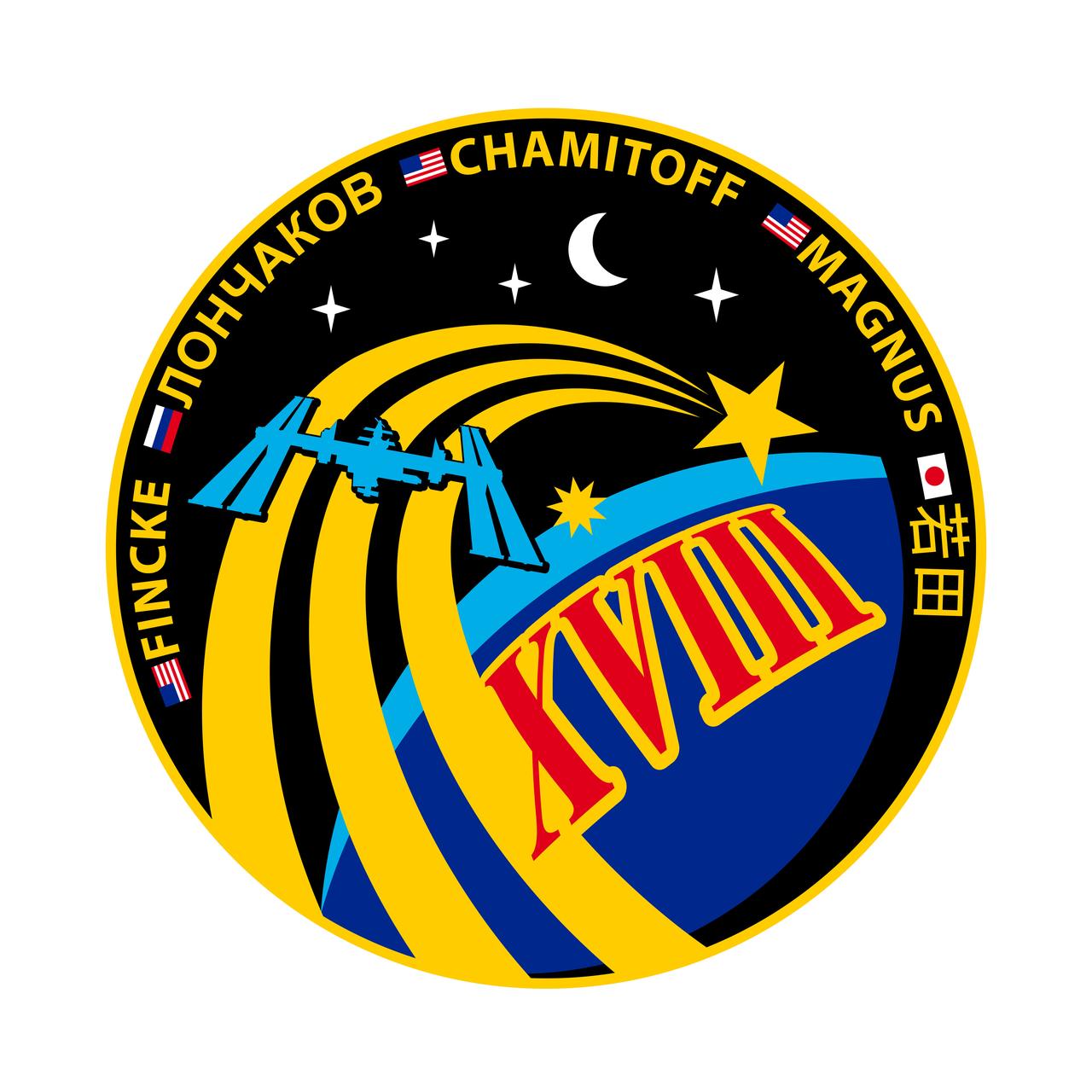
ISS018-S-001B (May 2008) --- This emblem represents the eighteenth expedition to the International Space Station (ISS). Featured prominently is the Roman numeral XVIII. The "X" evokes exploration, which is at the core of the indivisible cooperation of the International Space Station partners. "V" is for victory and for the five space agencies in the ISS program. "III" stands for the hope that this crew will help evolve the ISS from supporting the last three-person crew to crews of six explorers and researchers. The moon, sun and stars symbolize the efforts of the entire ISS team, which will lead to the human exploration of the moon, our solar system and beyond. The NASA insignia design for space station flights is reserved for use by the astronauts and for other official use as the NASA Administrator may authorize. Public availability has been approved only in the form of illustrations by the various news media. When and if there is any change in this policy, which is not anticipated, it will be publicly announced.
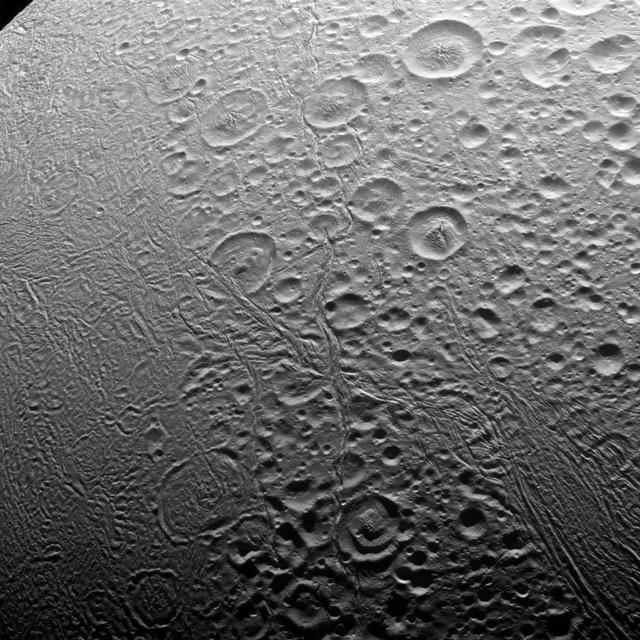
In the north, Enceladus' surface appears to be about as old as any in the solar system. The south, however, is an entirely different story. The north polar area of Enceladus (313 miles or 504 kilometers across) seen here is heavily cratered, an indication that the surface has not been renewed since quite long ago. But the south polar region shows signs of intense geologic activity, most prominently focused around the long fractures known as "tiger stripes" that spray gas and tiny particles from the moon. This view looks toward the leading side of Enceladus. North on Enceladus is up and rotated 38 degrees to the left. The image was taken in visible light with the Cassini spacecraft narrow-angle camera on Nov. 27, 2016. The view was acquired at a distance of approximately 20,000 miles (32,000 kilometers) from Enceladus and at a Sun-Enceladus-spacecraft, or phase, angle of 85 degrees. Image scale is 620 feet (190 meters) per pixel. https://photojournal.jpl.nasa.gov/catalog/PIA21326
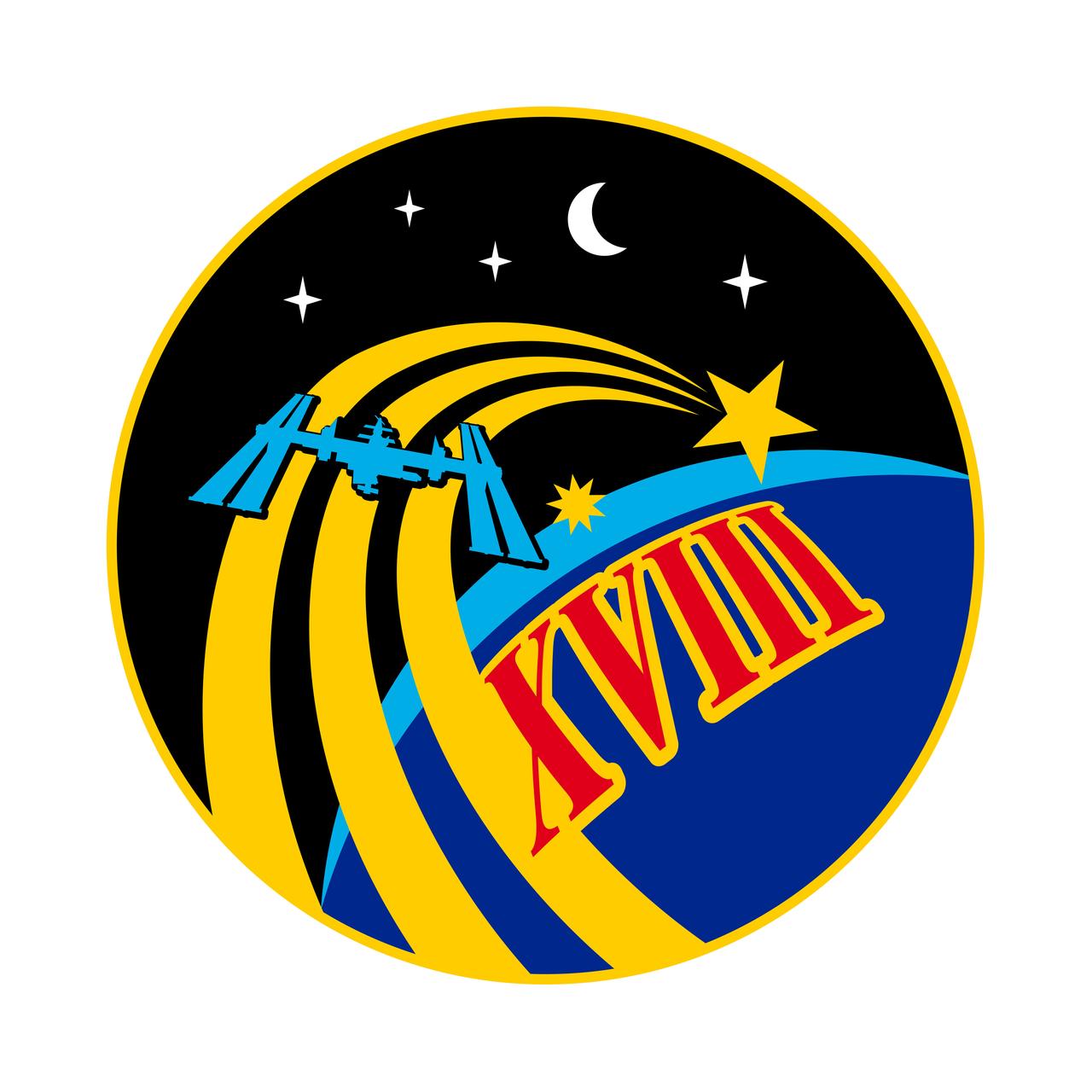
ISS018-S-001A (May 2008) --- This emblem represents the eighteenth expedition to the International Space Station (ISS). Featured prominently is the Roman numeral XVIII. The "X" evokes exploration, which is at the core of the indivisible cooperation of the International Space Station partners. "V" is for victory and for the five space agencies in the ISS program. "III" stands for the hope that this crew will help evolve the ISS from supporting the last three-person crew to crews of six explorers and researchers. The moon, sun and stars symbolize the efforts of the entire ISS team, which will lead to the human exploration of the moon, our solar system and beyond. The NASA insignia design for space station flights is reserved for use by the astronauts and for other official use as the NASA Administrator may authorize. Public availability has been approved only in the form of illustrations by the various news media. When and if there is any change in this policy, which is not anticipated, it will be publicly announced.
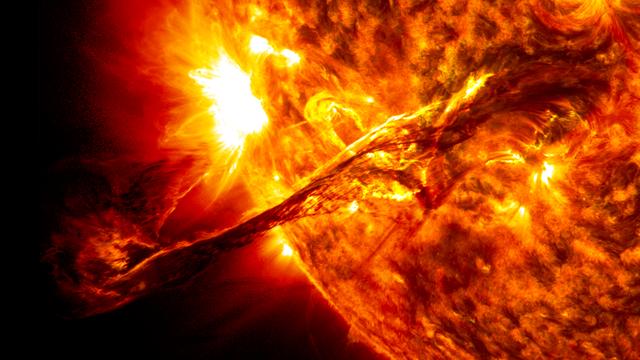
On Aug. 31, 2012, a giant prominence on the sun erupted, sending out particles and a shock wave that traveled near Earth. This event may have been one of the causes of a third radiation belt that appeared around Earth a few days later, a phenomenon that was observed for the very first time by the newly-launched Van Allen Probes. This image of the prominence before it erupted was captured by NASA's Solar Dynamics Observatory (SDO). Credit: NASA/SDO/AIA/Goddard Space Flight Center To read more go to: <a href="http://www.nasa.gov/mission_pages/rbsp/news/third-belt.html" rel="nofollow">www.nasa.gov/mission_pages/rbsp/news/third-belt.html</a> <b><a href="http://www.nasa.gov/audience/formedia/features/MP_Photo_Guidelines.html" rel="nofollow">NASA image use policy.</a></b> <b><a href="http://www.nasa.gov/centers/goddard/home/index.html" rel="nofollow">NASA Goddard Space Flight Center</a></b> enables NASA’s mission through four scientific endeavors: Earth Science, Heliophysics, Solar System Exploration, and Astrophysics. Goddard plays a leading role in NASA’s accomplishments by contributing compelling scientific knowledge to advance the Agency’s mission. <b>Follow us on <a href="http://twitter.com/NASA_GoddardPix" rel="nofollow">Twitter</a></b> <b>Like us on <a href="http://www.facebook.com/pages/Greenbelt-MD/NASA-Goddard/395013845897?ref=tsd" rel="nofollow">Facebook</a></b> <b>Find us on <a href="http://instagram.com/nasagoddard?vm=grid" rel="nofollow">Instagram</a></b>
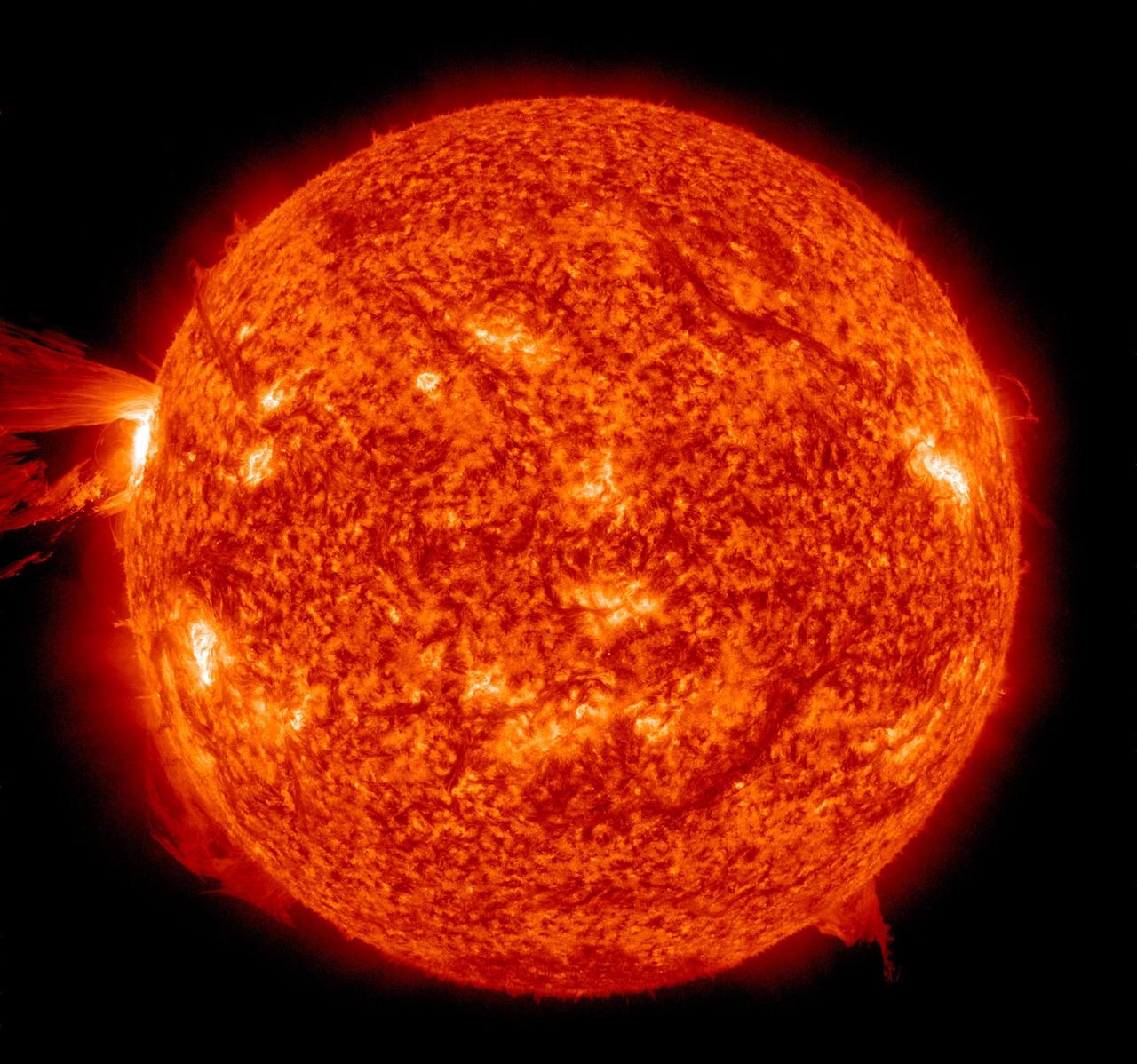
A beautiful prominence eruption shot off the east limb (left side) of the sun on Monday, April 16, 2012. Such eruptions are often associated with solar flares, and in this case an M1 class (medium-sized) flare did occur at the same time, though it was not aimed toward Earth. This event, which is still in progress, was seen by NASA’s SDO satellite. Credit: NASA/GSFC/SDO <b><a href="http://www.nasa.gov/audience/formedia/features/MP_Photo_Guidelines.html" rel="nofollow">NASA image use policy.</a></b> <b><a href="http://www.nasa.gov/centers/goddard/home/index.html" rel="nofollow">NASA Goddard Space Flight Center</a></b> enables NASA’s mission through four scientific endeavors: Earth Science, Heliophysics, Solar System Exploration, and Astrophysics. Goddard plays a leading role in NASA’s accomplishments by contributing compelling scientific knowledge to advance the Agency’s mission. <b>Follow us on <a href="http://twitter.com/NASA_GoddardPix" rel="nofollow">Twitter</a></b> <b>Like us on <a href="http://www.facebook.com/pages/Greenbelt-MD/NASA-Goddard/395013845897?ref=tsd" rel="nofollow">Facebook</a></b> <b>Find us on <a href="http://instagrid.me/nasagoddard/?vm=grid" rel="nofollow">Instagram</a></b>
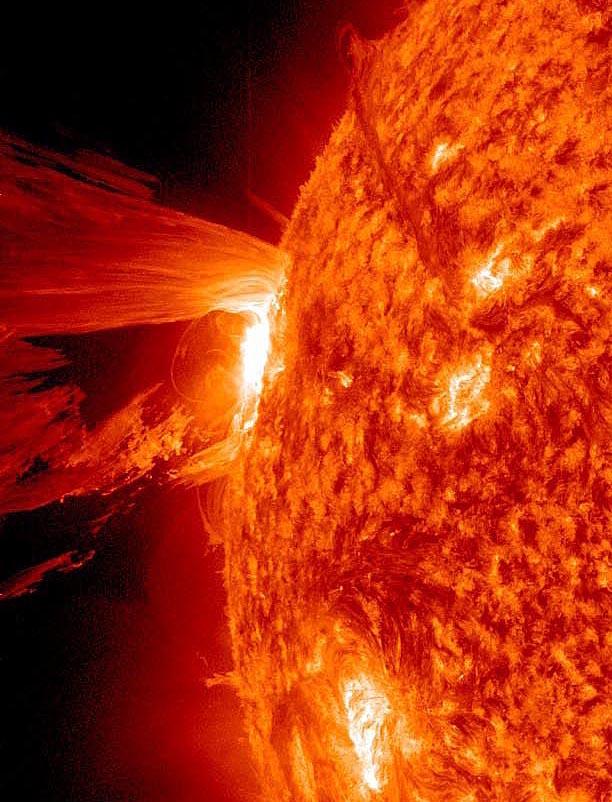
A beautiful prominence eruption shot off the east limb (left side) of the sun on Monday, April 16, 2012. Such eruptions are often associated with solar flares, and in this case an M1 class (medium-sized) flare did occur at the same time, though it was not aimed toward Earth. This event, which is still in progress, was seen by NASA’s SDO satellite. <b>View a video of this event here: <a href="http://www.flickr.com/photos/gsfc/7084820027">www.flickr.com/photos/gsfc/7084820027</a></b> Credit: NASA/GSFC/SDO <b><a href="http://www.nasa.gov/audience/formedia/features/MP_Photo_Guidelines.html" rel="nofollow">NASA image use policy.</a></b> <b><a href="http://www.nasa.gov/centers/goddard/home/index.html" rel="nofollow">NASA Goddard Space Flight Center</a></b> enables NASA’s mission through four scientific endeavors: Earth Science, Heliophysics, Solar System Exploration, and Astrophysics. Goddard plays a leading role in NASA’s accomplishments by contributing compelling scientific knowledge to advance the Agency’s mission. <b>Follow us on <a href="http://twitter.com/NASA_GoddardPix" rel="nofollow">Twitter</a></b> <b>Like us on <a href="http://www.facebook.com/pages/Greenbelt-MD/NASA-Goddard/395013845897?ref=tsd" rel="nofollow">Facebook</a></b> <b>Find us on <a href="http://instagrid.me/nasagoddard/?vm=grid" rel="nofollow">Instagram</a></b>
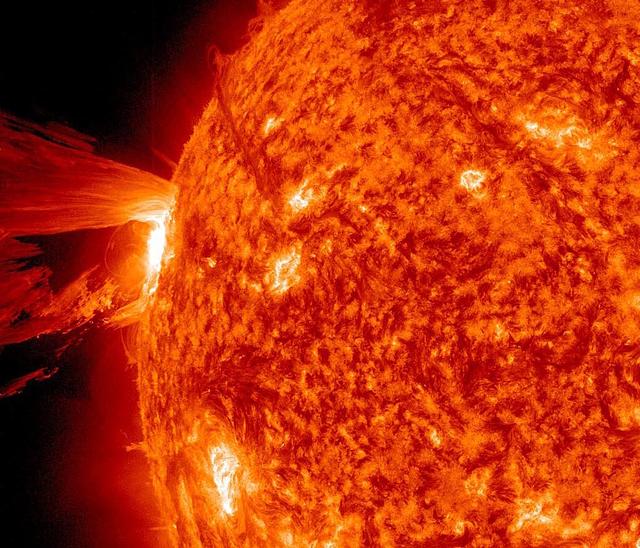
A beautiful prominence eruption shot off the east limb (left side) of the sun on Monday, April 16, 2012. Such eruptions are often associated with solar flares, and in this case an M1 class (medium-sized) flare did occur at the same time, though it was not aimed toward Earth. This event, which is still in progress, was seen by NASA’s SDO satellite. Credit: NASA/GSFC/SDO <b><a href="http://www.nasa.gov/audience/formedia/features/MP_Photo_Guidelines.html" rel="nofollow">NASA image use policy.</a></b> <b><a href="http://www.nasa.gov/centers/goddard/home/index.html" rel="nofollow">NASA Goddard Space Flight Center</a></b> enables NASA’s mission through four scientific endeavors: Earth Science, Heliophysics, Solar System Exploration, and Astrophysics. Goddard plays a leading role in NASA’s accomplishments by contributing compelling scientific knowledge to advance the Agency’s mission. <b>Follow us on <a href="http://twitter.com/NASA_GoddardPix" rel="nofollow">Twitter</a></b> <b>Like us on <a href="http://www.facebook.com/pages/Greenbelt-MD/NASA-Goddard/395013845897?ref=tsd" rel="nofollow">Facebook</a></b> <b>Find us on <a href="http://instagrid.me/nasagoddard/?vm=grid" rel="nofollow">Instagram</a></b>
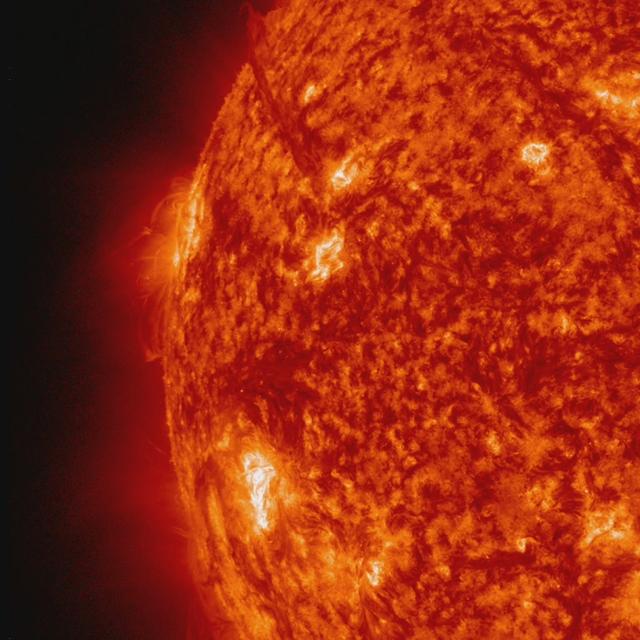
A beautiful prominence eruption shot off the east limb (left side) of the sun on Monday, April 16, 2012. Such eruptions are often associated with solar flares, and in this case an M1 class (medium-sized) flare did occur at the same time, though it was not aimed toward Earth. This event, which is still in progress, was seen by NASA’s SDO satellite. Credit: NASA/GSFC/SDO <b><a href="http://www.nasa.gov/audience/formedia/features/MP_Photo_Guidelines.html" rel="nofollow">NASA image use policy.</a></b> <b><a href="http://www.nasa.gov/centers/goddard/home/index.html" rel="nofollow">NASA Goddard Space Flight Center</a></b> enables NASA’s mission through four scientific endeavors: Earth Science, Heliophysics, Solar System Exploration, and Astrophysics. Goddard plays a leading role in NASA’s accomplishments by contributing compelling scientific knowledge to advance the Agency’s mission. <b>Follow us on <a href="http://twitter.com/NASA_GoddardPix" rel="nofollow">Twitter</a></b> <b>Like us on <a href="http://www.facebook.com/pages/Greenbelt-MD/NASA-Goddard/395013845897?ref=tsd" rel="nofollow">Facebook</a></b> <b>Find us on <a href="http://instagrid.me/nasagoddard/?vm=grid" rel="nofollow">Instagram</a></b>
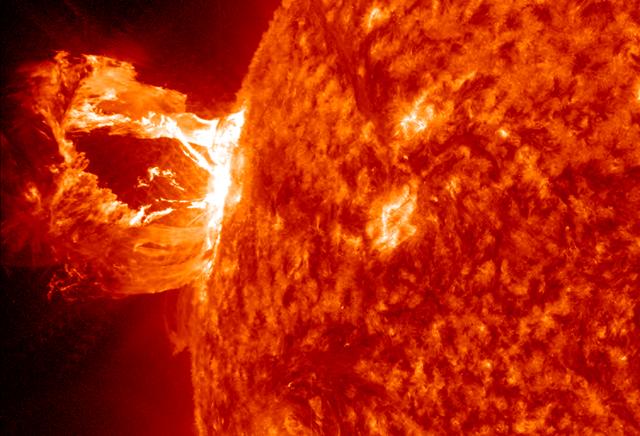
A beautiful prominence eruption shot off the east limb (left side) of the sun on Monday, April 16, 2012. Such eruptions are often associated with solar flares, and in this case an M1 class (medium-sized) flare did occur at the same time, though it was not aimed toward Earth. This event, which is still in progress, was seen by NASA’s SDO satellite. <b>View a video of this event here: <a href="http://www.flickr.com/photos/gsfc/7084820027">www.flickr.com/photos/gsfc/7084820027</a></b> Credit: NASA/GSFC/SDO <b><a href="http://www.nasa.gov/audience/formedia/features/MP_Photo_Guidelines.html" rel="nofollow">NASA image use policy.</a></b> <b><a href="http://www.nasa.gov/centers/goddard/home/index.html" rel="nofollow">NASA Goddard Space Flight Center</a></b> enables NASA’s mission through four scientific endeavors: Earth Science, Heliophysics, Solar System Exploration, and Astrophysics. Goddard plays a leading role in NASA’s accomplishments by contributing compelling scientific knowledge to advance the Agency’s mission. <b>Follow us on <a href="http://twitter.com/NASA_GoddardPix" rel="nofollow">Twitter</a></b> <b>Like us on <a href="http://www.facebook.com/pages/Greenbelt-MD/NASA-Goddard/395013845897?ref=tsd" rel="nofollow">Facebook</a></b> <b>Find us on <a href="http://instagrid.me/nasagoddard/?vm=grid" rel="nofollow">Instagram</a></b>