On Solid Ground
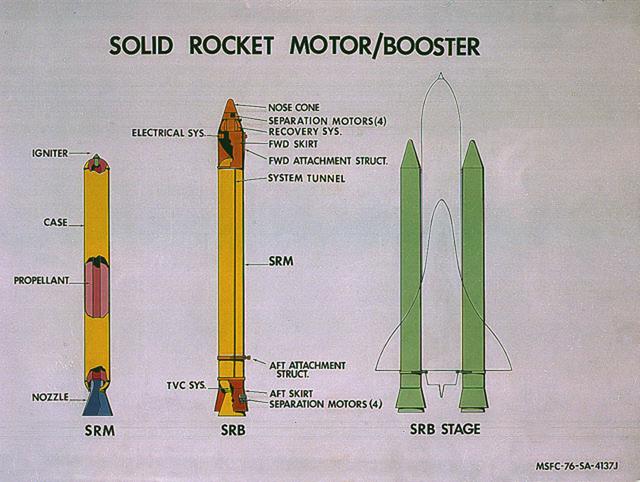
This image illustrates the solid rocket motor (SRM)/solid rocket booster (SRB) configuration. The Shuttle's two SRB's are the largest solids ever built and the first designed for refurbishment and reuse. Standing nearly 150-feet high, the twin boosters provide the majority of thrust for the first two minutes of flight, about 5.8 million pounds, augmenting the Shuttle's main propulsion system during liftoff. The major design drivers for the SRM's were high thrust and reuse. The desired thrust was achieved by using state-of-the-art solid propellant and by using a long cylindrical motor with a specific core design that allows the propellant to burn in a carefully controlled marner. At burnout, the boosters separate from the external tank and drop by parachute to the ocean for recovery and subsequent refurbishment. The boosters are designed to survive water impact at almost 60 miles per hour, maintain flotation with minimal damage, and preclude corrosion of the hardware exposed to the harsh seawater environment. Under the project management of the Marshall Space Flight Center, the SRB's are assembled and refurbished by the United Space Boosters. The SRM's are provided by the Morton Thiokol Corporation.
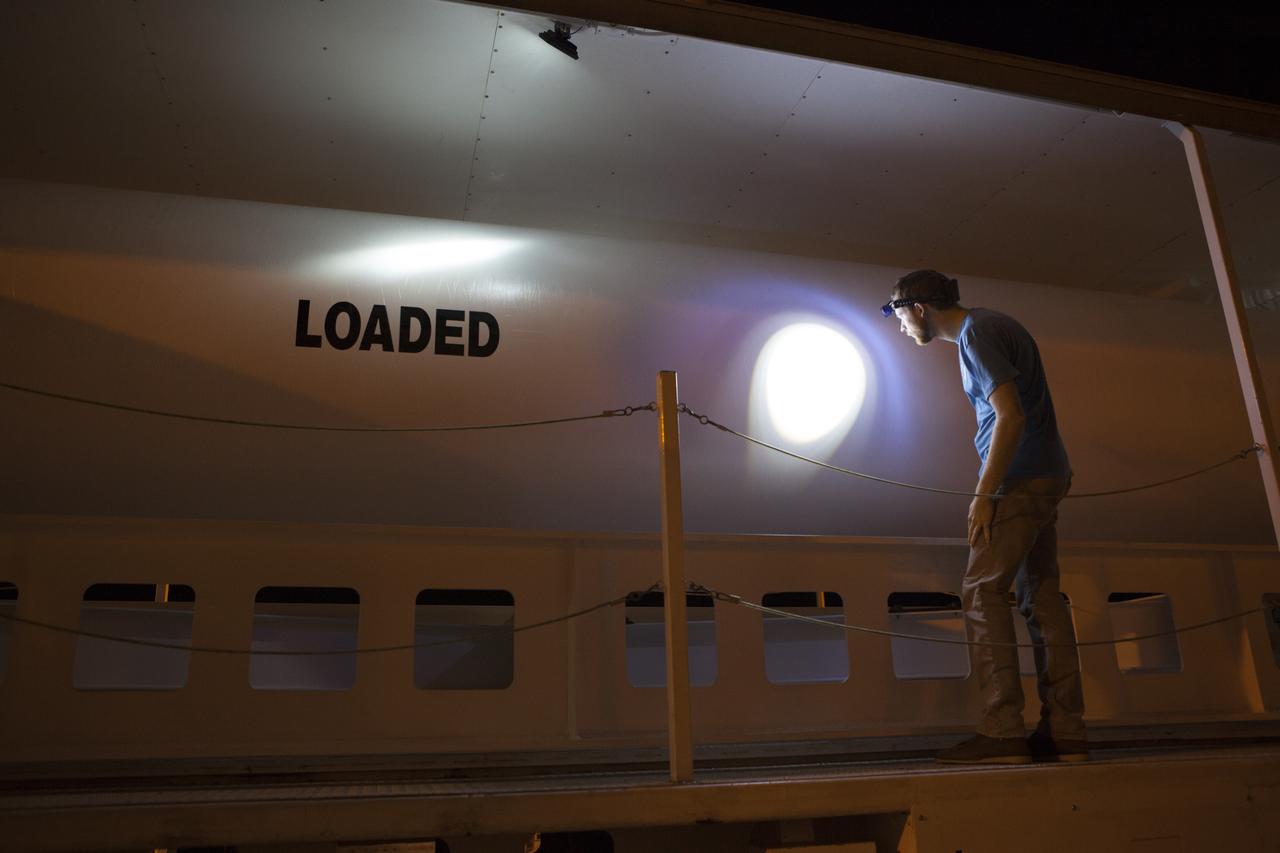
A United Launch Alliance (ULA) technician inspects the solid rocket motor for the ULA Atlas V rocket on its transporter near the Vertical Integration Facility at Space Launch Complex 41 at Cape Canaveral Air Force Station in Florida. The solid rocket motor will be lifted and mated to the rocket in preparation for the launch of NOAA's Geostationary Operational Environmental Satellite (GOES-R) this month. GOES-R is the first satellite in a series of next-generation NOAA GOES Satellites.
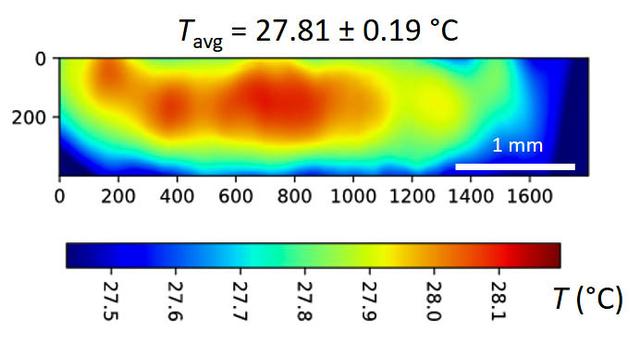
jsc2024e065172 (10/3/2024) --- A temperature map is seen within a microgel suspension illuminated by the Colloidal Solids (COLIS) near infrared laser (NIR). Reference ground tests for the Colloidal Solids (COLIS) investigation show spatial variation of the sample temperature while illuminating an aqueous, dense suspension of thermosensitive microgels with a 0.5 s pulse of NIR laser light. The NIR beam propagates from left to right. The sample temperature with no NIR laser is uniform and set to 27°C. The temperature values are inferred from the change in scattered intensity at a scattering angle of 90°, as recorded by one of the complementary metal-oxide-semiconductor (CMOS) cameras of COLIS. Results from this investigation are expected to provide a deeper understanding of soft solid interactions with gravity and microgravity, paving the way for the design of new materials. Image courtesy of Redwire Space Laboratories, Kruibeke – Belgium.

STS064-10-011 (12 Sept. 1994) --- The Solid Surface Combustion Experiment (SSCE), designed to supply information on flame spread over solid fuel surfaces in the reduced-gravity environment of space, is pictured during flight day four operations. The middeck experiment measured the rate of spreading, the solid-phase temperature, and the gas-phase temperature of flames spreading over rectangular fuel beds. STS-64 marked the seventh trip into space for the Lewis Research Center experiment. Photo credit: NASA or National Aeronautics and Space Administration
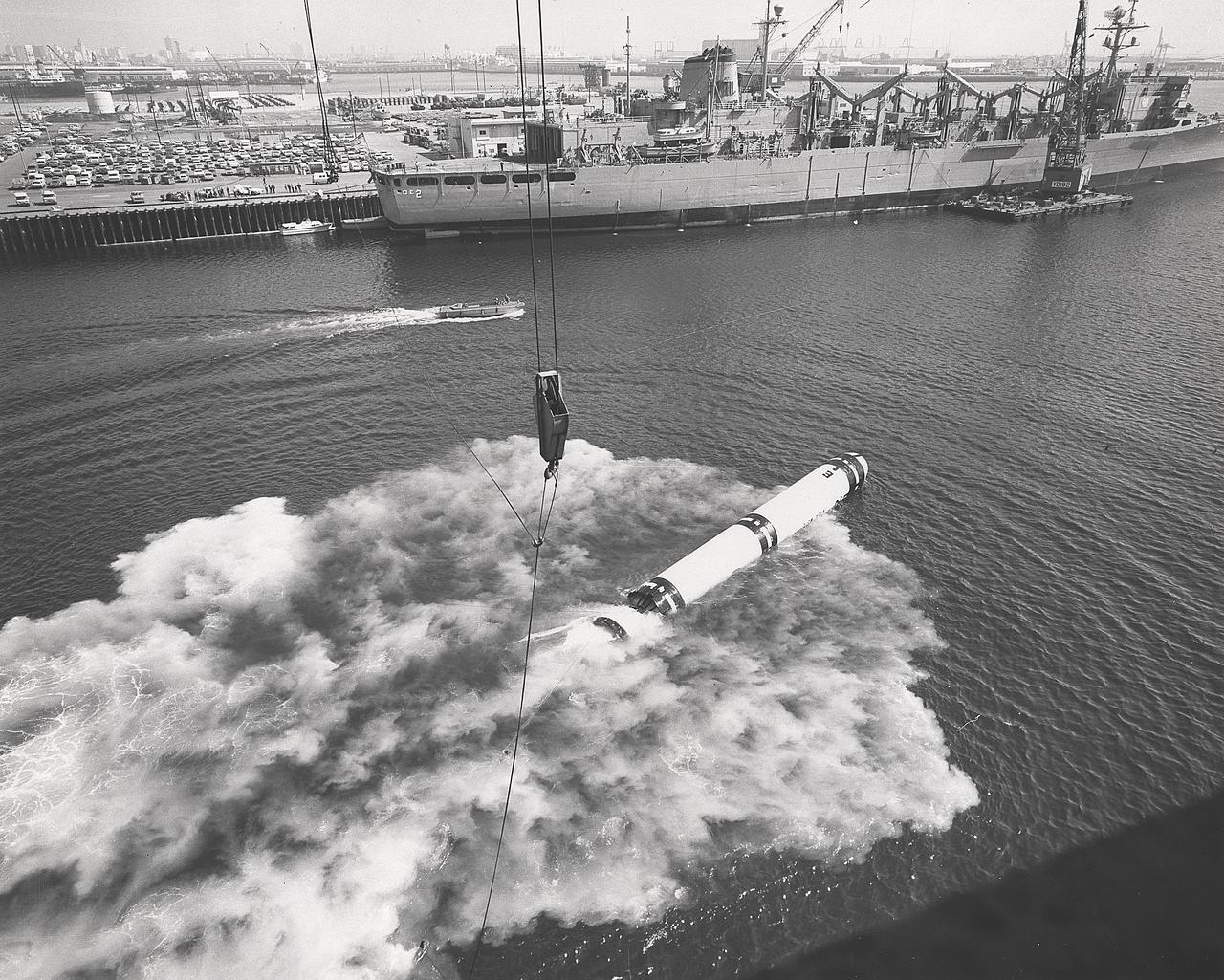
As early as September 1972, the Marshall Space Flight Center arnounced plans for a series of 20 water-entry simulation tests with a solid-fueled rocket casing assembly. The tests would provide valuable data for assessment of solid rocket booster parachute water recovery and aid in preliminary solid rocket motor design.
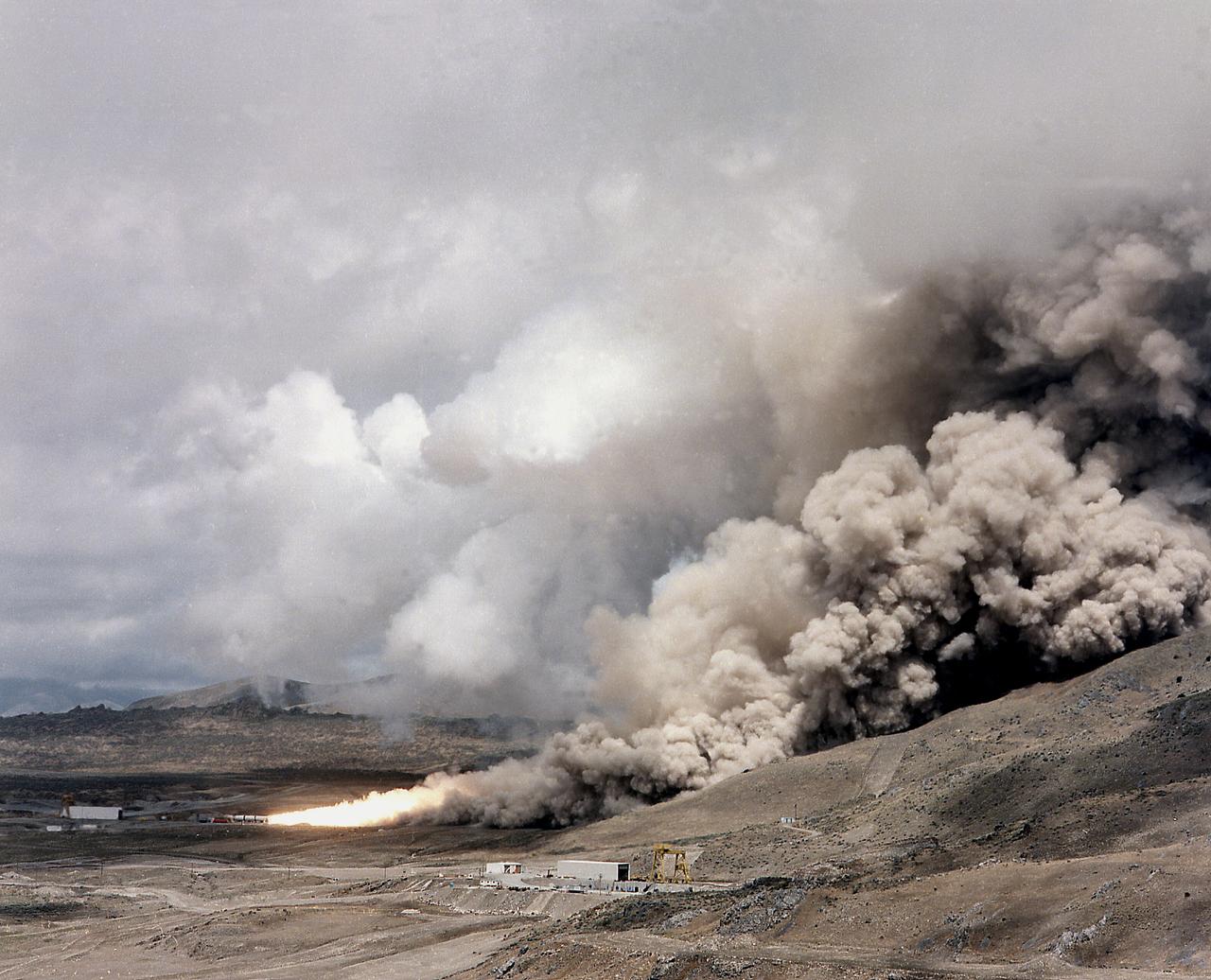
This photograph is a long shot view of a full scale solid rocket motor (SRM) for the solid rocket booster (SRB) being test fired at Morton Thiokol's Wasatch Operations in Utah. The twin boosters provide the majority of thrust for the first two minutes of flight, about 5.8 million pounds, augmenting the Shuttle's main propulsion system during liftoff. The major design drivers for the SRM's were high thrust and reuse. The desired thrust was achieved by using state-of-the-art solid propellant and by using a long cylindrical motor with a specific core design that allows the propellant to burn in a carefully controlled marner. Under the direction of the Marshall Space Flight Center, the SRM's are provided by the Morton Thiokol Corporation.
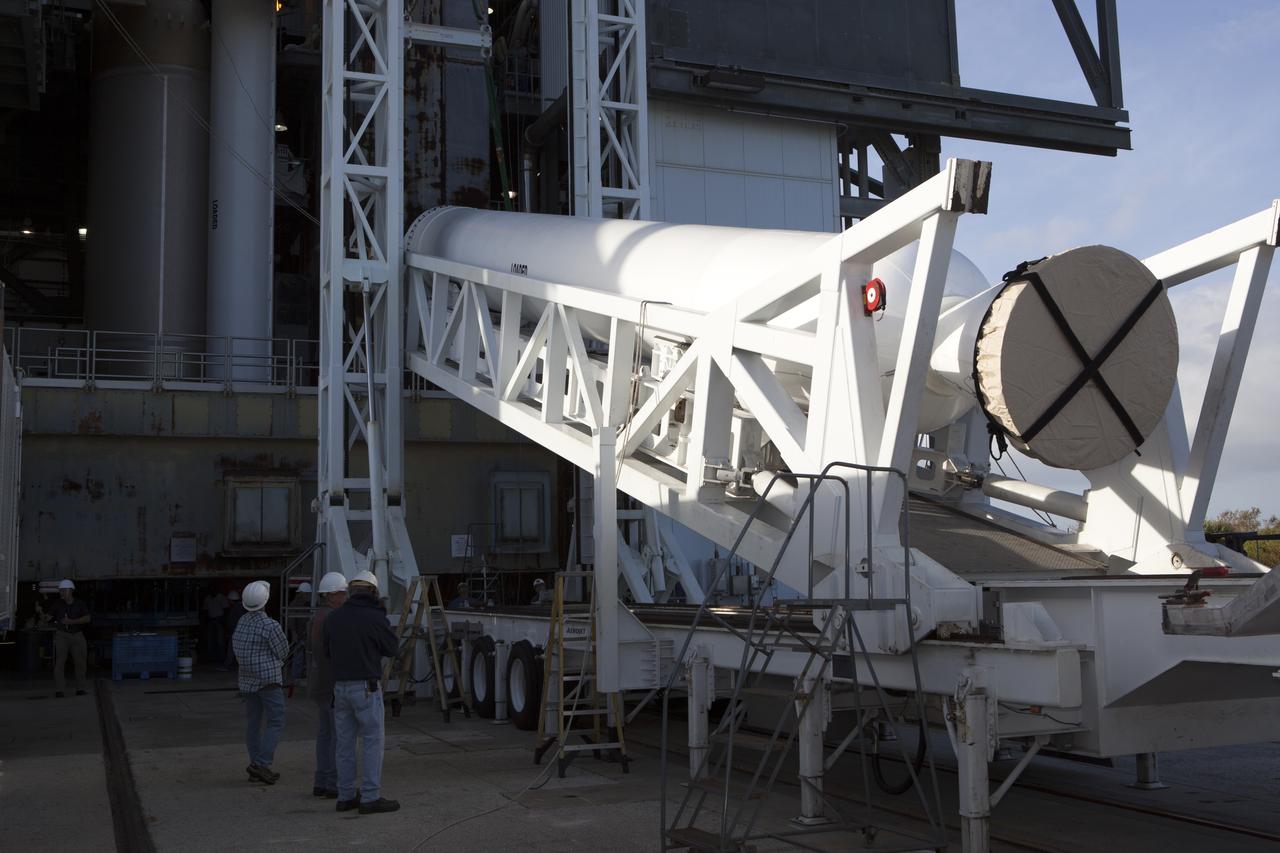
The solid rocket motor is lifted on its transporter for mating to the United Launch Alliance Atlas V rocket in the Vertical Integration Facility at Space Launch Complex 41 at Cape Canaveral Air Force Station in Florida. NOAA's Geostationary Operational Environmental Satellite (GOES-R) will launch aboard the Atlas V rocket this month. GOES-R is the first satellite in a series of next-generation NOAA GOES Satellites.
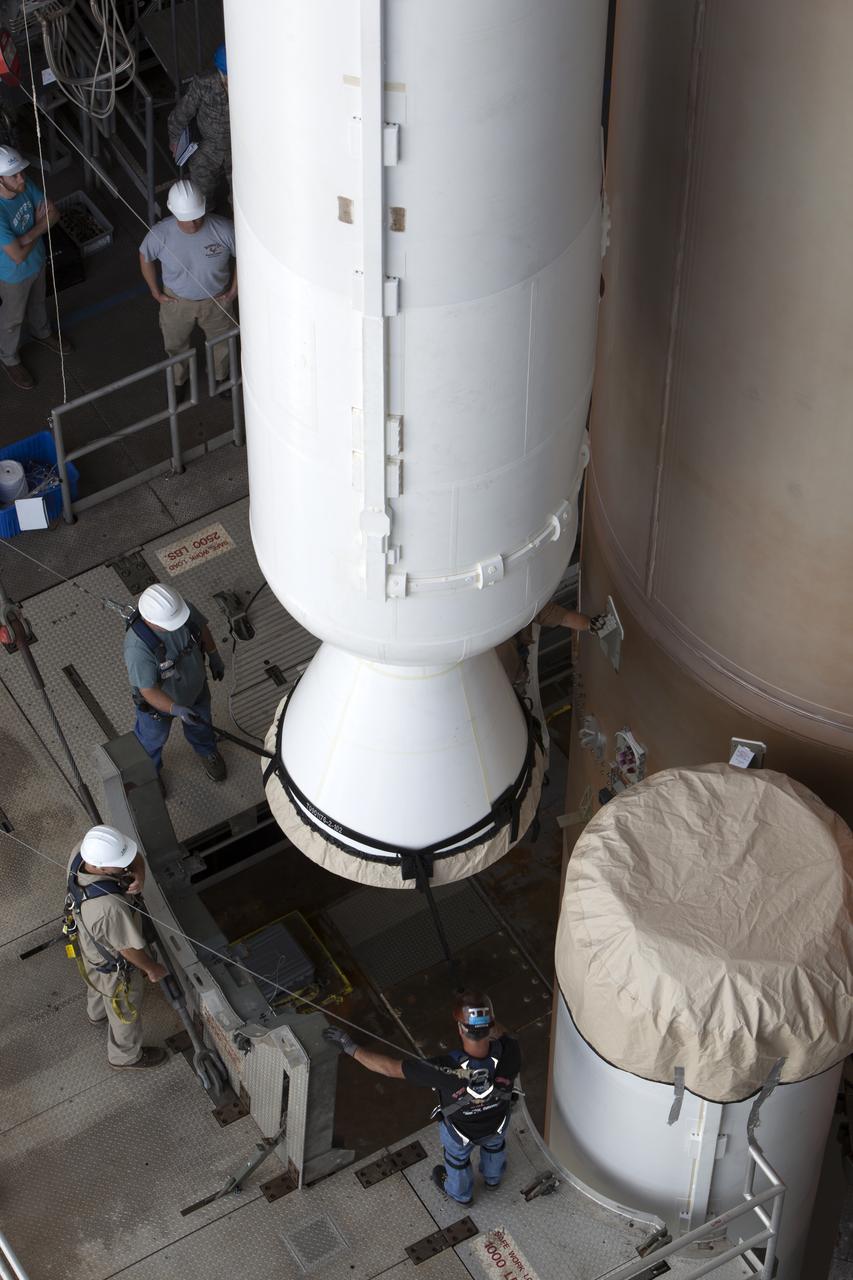
Technicians with United Launch Alliance (ULA) monitor the progress as the solid rocket motor is mated to the ULA Atlas V rocket in the Vertical Integration Facility at Space Launch Complex 41 at Cape Canaveral Air Force Station in Florida. NOAA's Geostationary Operational Environmental Satellite (GOES-R) will launch aboard the Atlas V rocket this month. GOES-R is the first satellite in a series of next-generation NOAA GOES Satellites.
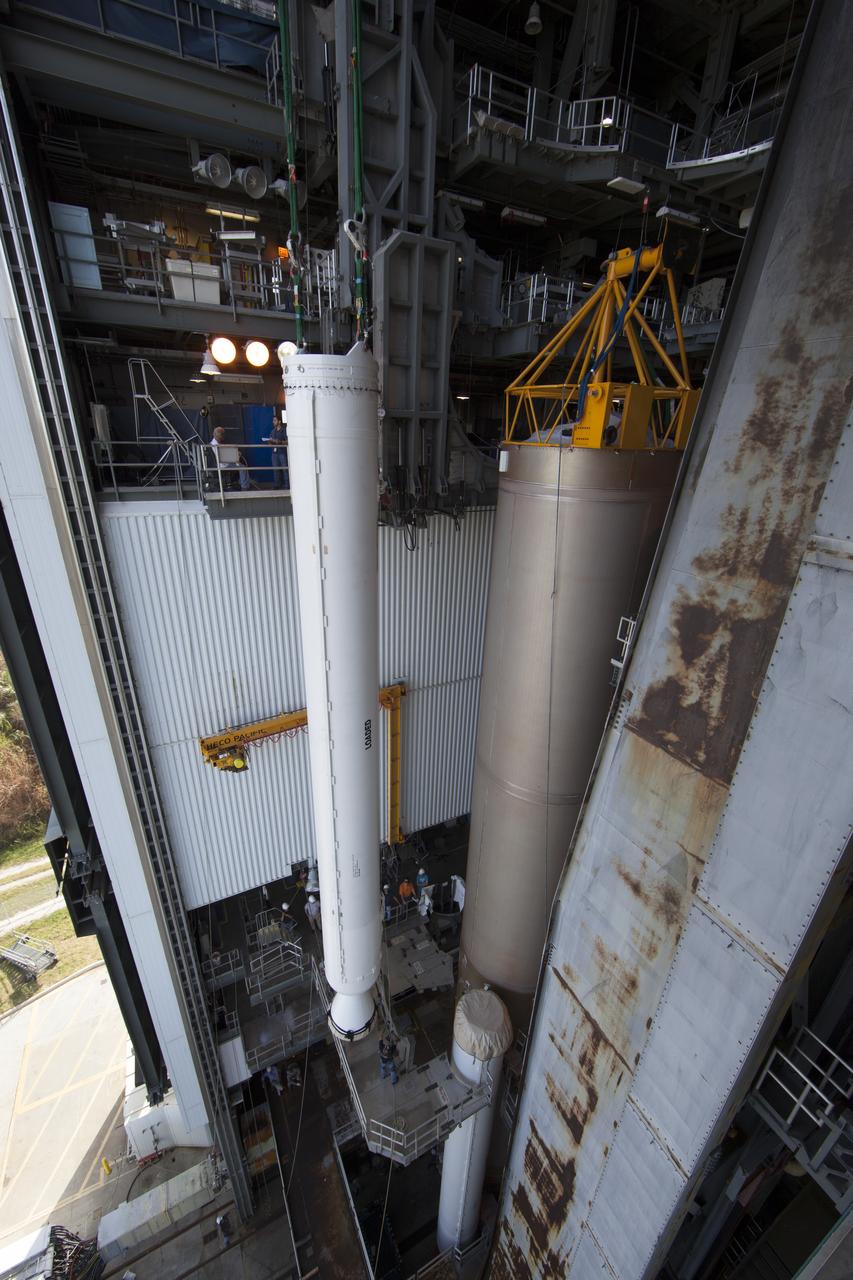
The solid rocket motor has been lifted to the vertical position and moved into the Vertical Integration Facility at Space Launch Complex 41 at Cape Canaveral Air Force Station in Florida for mating to the United Launch Alliance Atlas V rocket. NOAA's Geostationary Operational Environmental Satellite (GOES-R) will launch aboard the Atlas V rocket this month. GOES-R is the first satellite in a series of next-generation NOAA GOES Satellites.
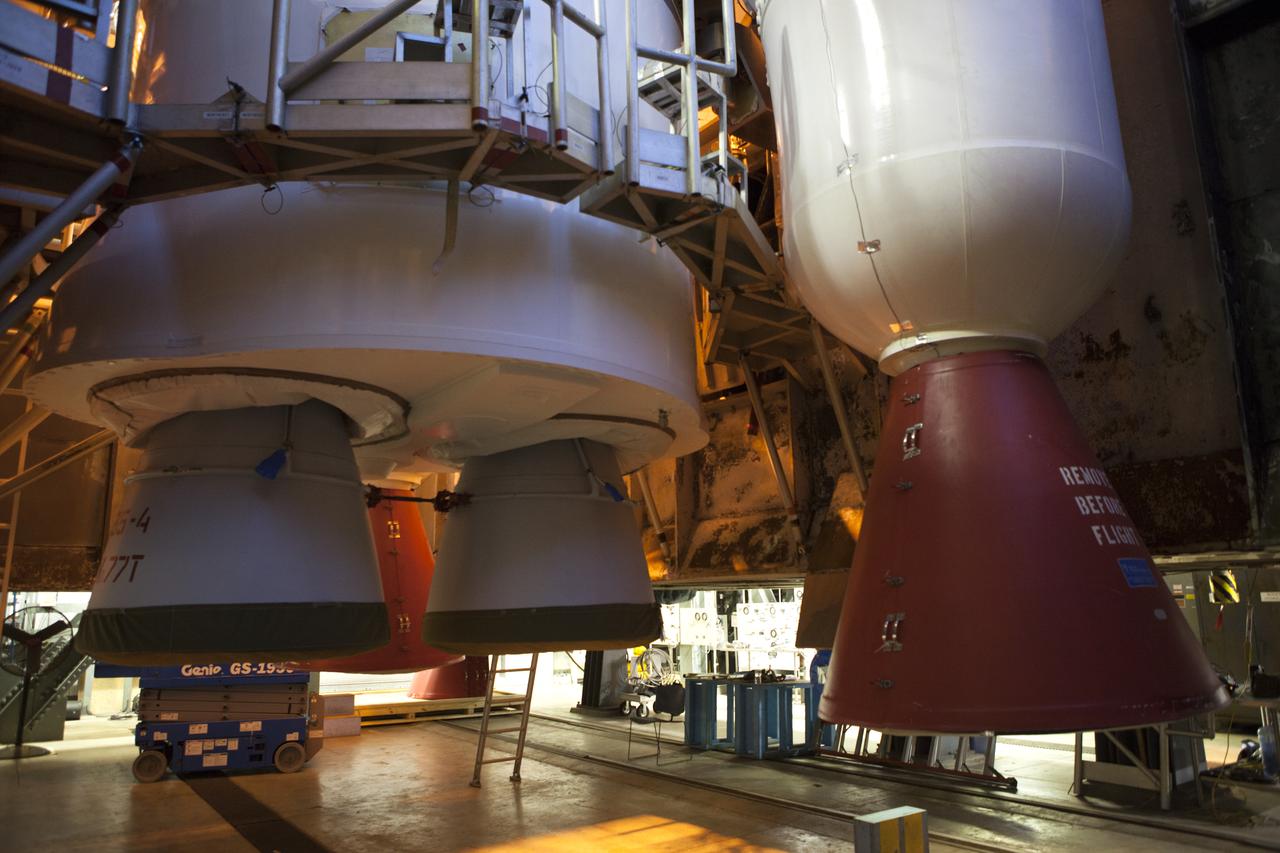
Inside the Vertical Integration Facility at Space Launch Complex 41 at Cape Canaveral Air Force Station in Florida, the solid rocket motor is being mated to the United Launch Alliance Atlas V rocket for its upcoming launch. NOAA's Geostationary Operational Environmental Satellite (GOES-R) will launch aboard the Atlas V rocket this month. GOES-R is the first satellite in a series of next-generation NOAA GOES Satellites.
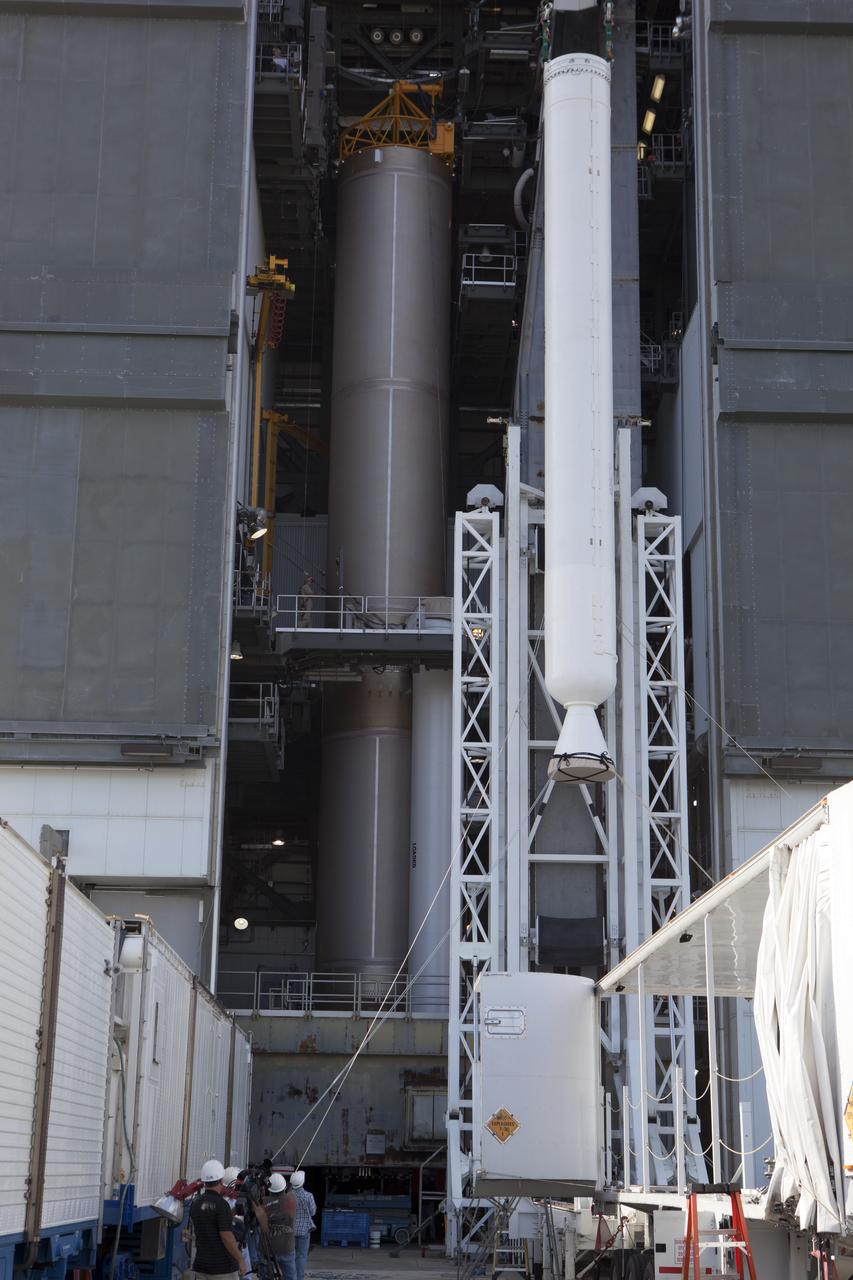
The solid rocket motor has been lifted to the vertical position on its transporter for mating to the United Launch Alliance Atlas V rocket in the Vertical Integration Facility at Space Launch Complex 41 at Cape Canaveral Air Force Station in Florida. NOAA's Geostationary Operational Environmental Satellite (GOES-R) will launch aboard the Atlas V rocket this month. GOES-R is the first satellite in a series of next-generation NOAA GOES Satellites.
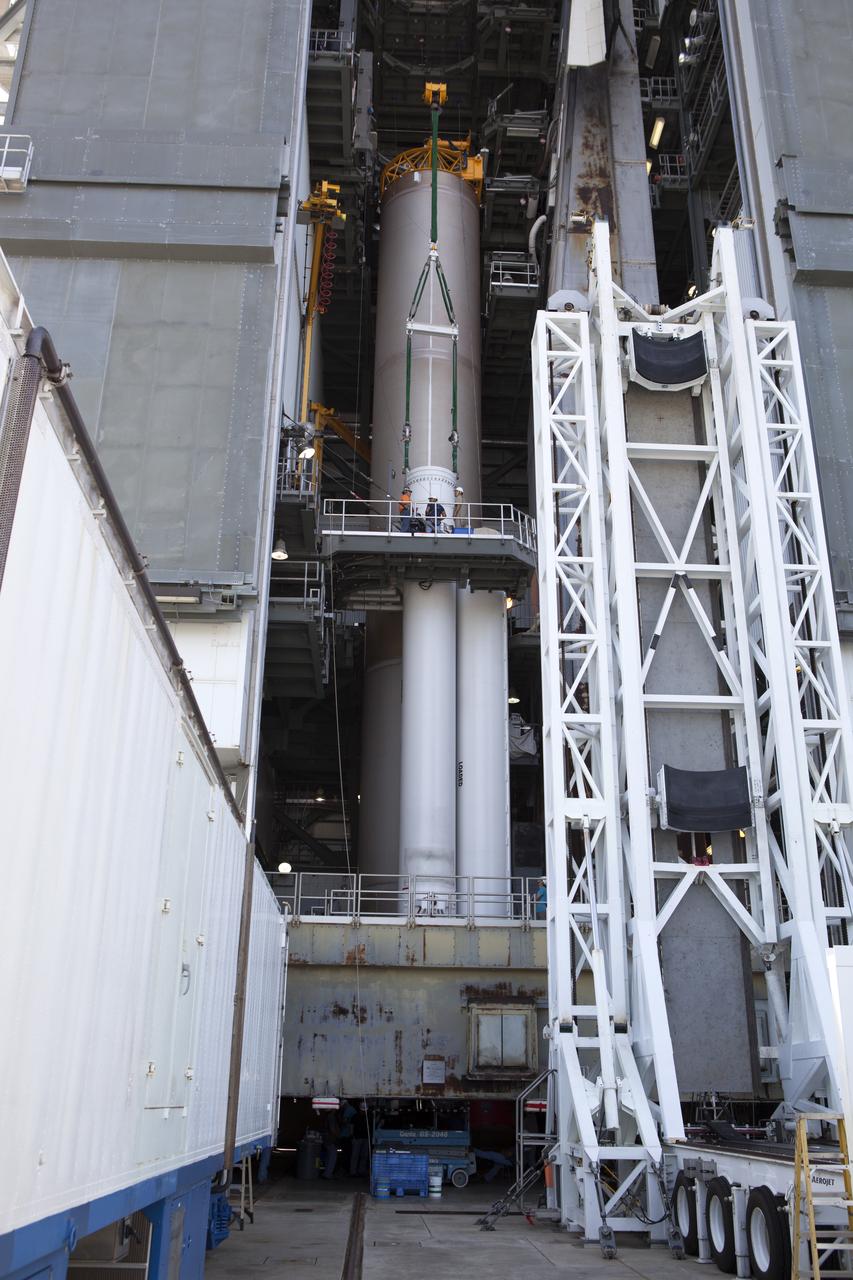
Inside the Vertical Integration Facility at Space Launch Complex 41 at Cape Canaveral Air Force Station in Florida, the solid rocket motor is mated to the United Launch Alliance Atlas V rocket for its upcoming launch. NOAA's Geostationary Operational Environmental Satellite (GOES-R) will launch aboard the Atlas V rocket this month. GOES-R is the first satellite in a series of next-generation NOAA GOES Satellites.
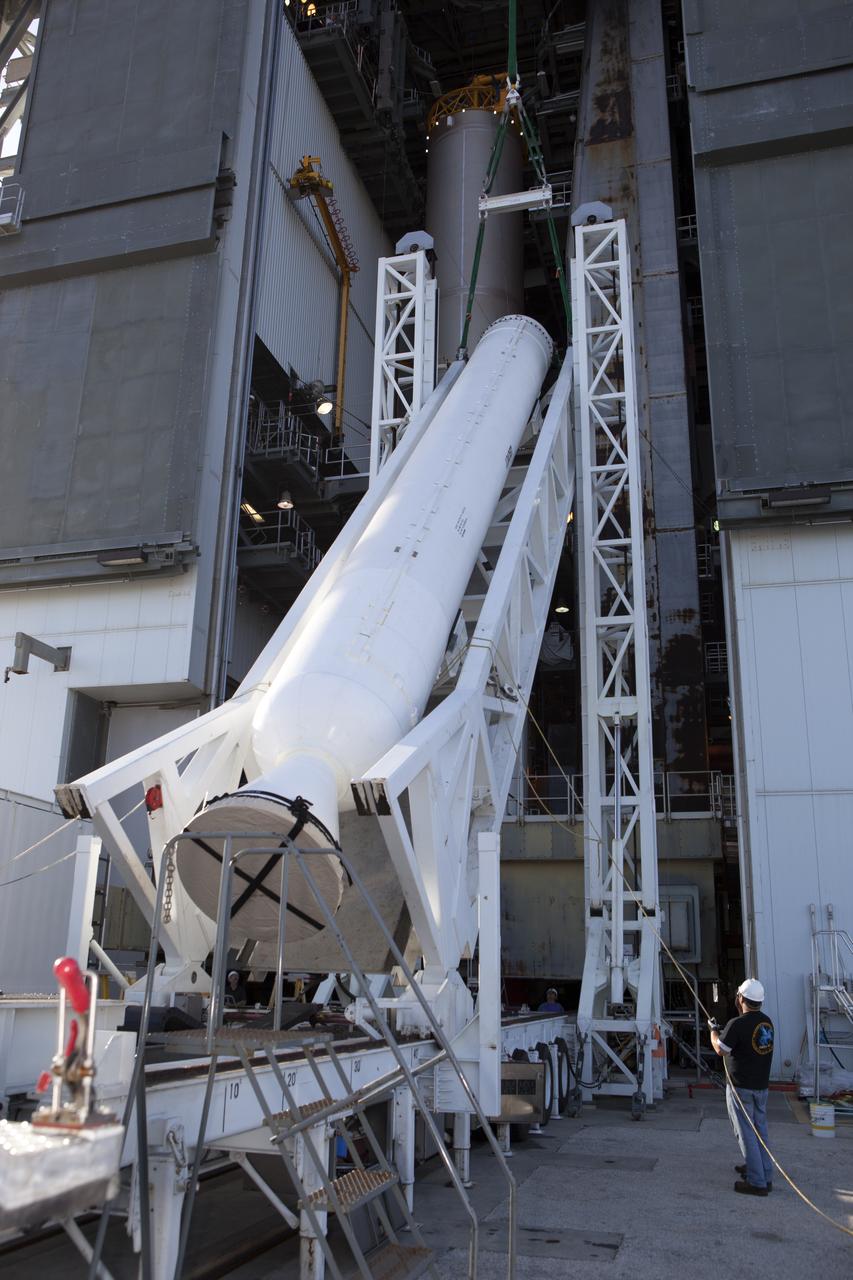
The solid rocket motor is lifted on its transporter for mating to the United Launch Alliance Atlas V rocket in the Vertical Integration Facility at Space Launch Complex 41 at Cape Canaveral Air Force Station in Florida. NOAA's Geostationary Operational Environmental Satellite (GOES-R) will launch aboard the Atlas V rocket this month. GOES-R is the first satellite in a series of next-generation NOAA GOES Satellites.
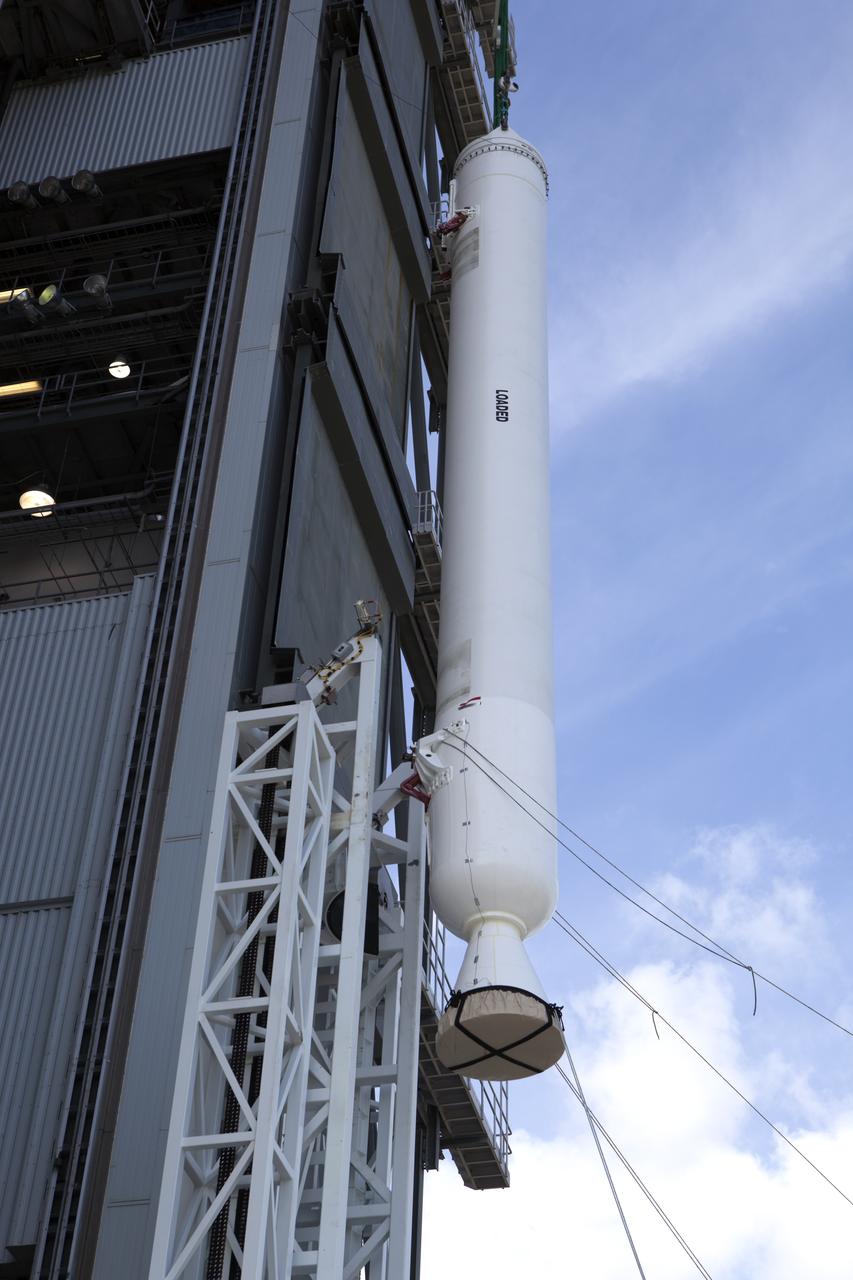
The solid rocket motor has been lifted to the vertical position for mating to the United Launch Alliance Atlas V rocket in the Vertical Integration Facility at Space Launch Complex 41 at Cape Canaveral Air Force Station in Florida. NOAA's Geostationary Operational Environmental Satellite (GOES-R) will launch aboard the Atlas V rocket this month. GOES-R is the first satellite in a series of next-generation NOAA GOES Satellites.
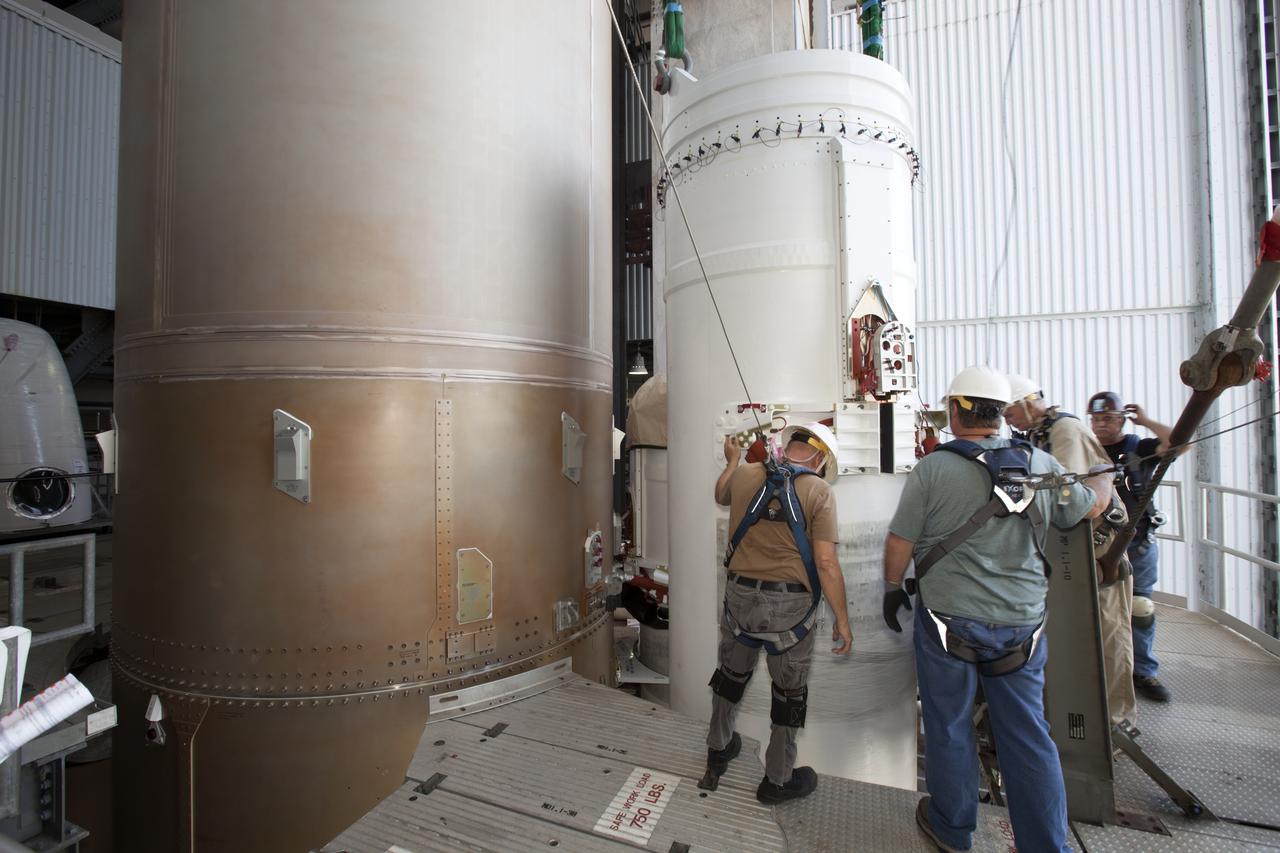
Technicians with United Launch Alliance (ULA) assist as the solid rocket motor is mated to the ULA Atlas V rocket in the Vertical Integration Facility at Space Launch Complex 41 at Cape Canaveral Air Force Station in Florida. NOAA's Geostationary Operational Environmental Satellite (GOES-R) will launch aboard the Atlas V rocket this month. GOES-R is the first satellite in a series of next-generation NOAA GOES Satellites.
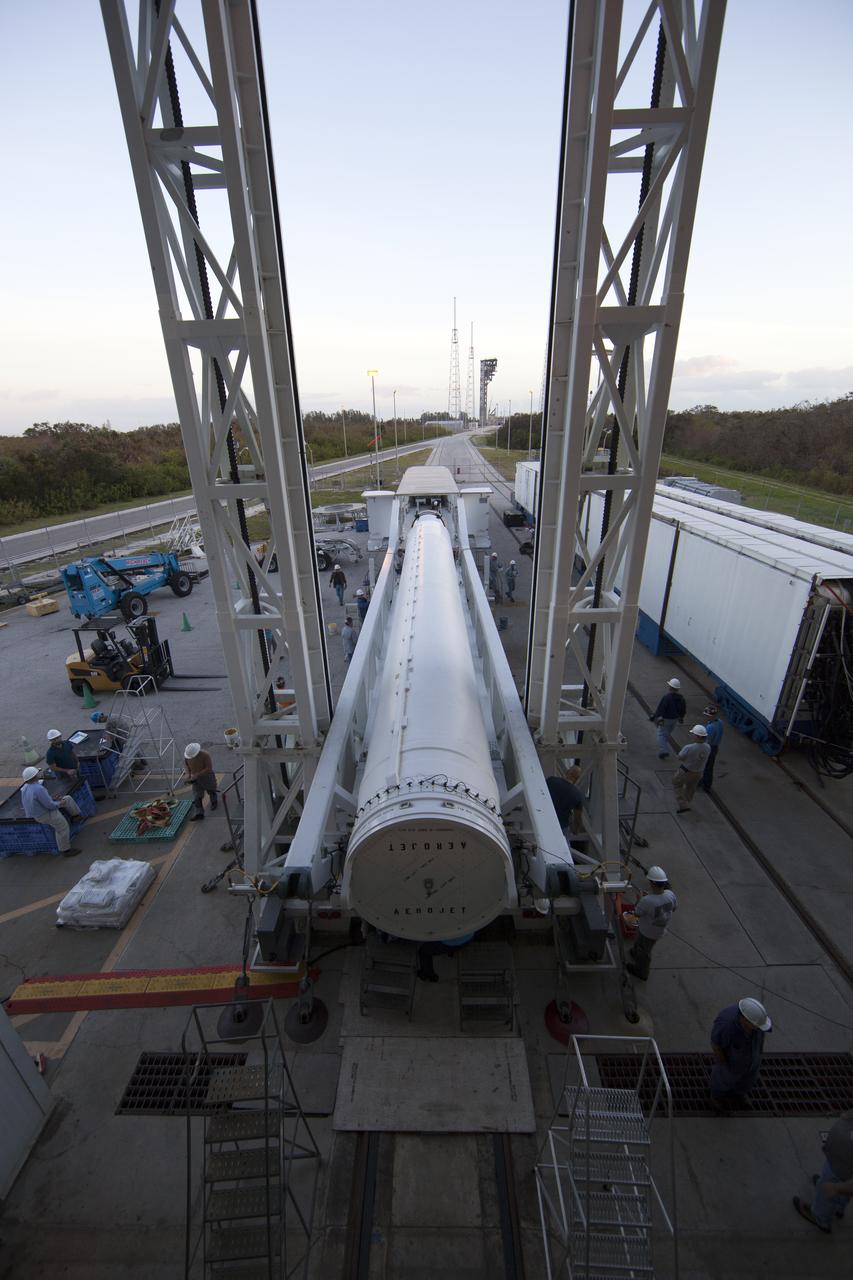
Preparations are underway to lift the solid rocket motor up from its transporter for mating to the United Launch Alliance Atlas V rocket in the Vertical Integration Facility at Space Launch Complex 41 at Cape Canaveral Air Force Station in Florida. NOAA's Geostationary Operational Environmental Satellite (GOES-R) will launch aboard the Atlas V rocket this month. GOES-R is the first satellite in a series of next-generation NOAA GOES Satellites.
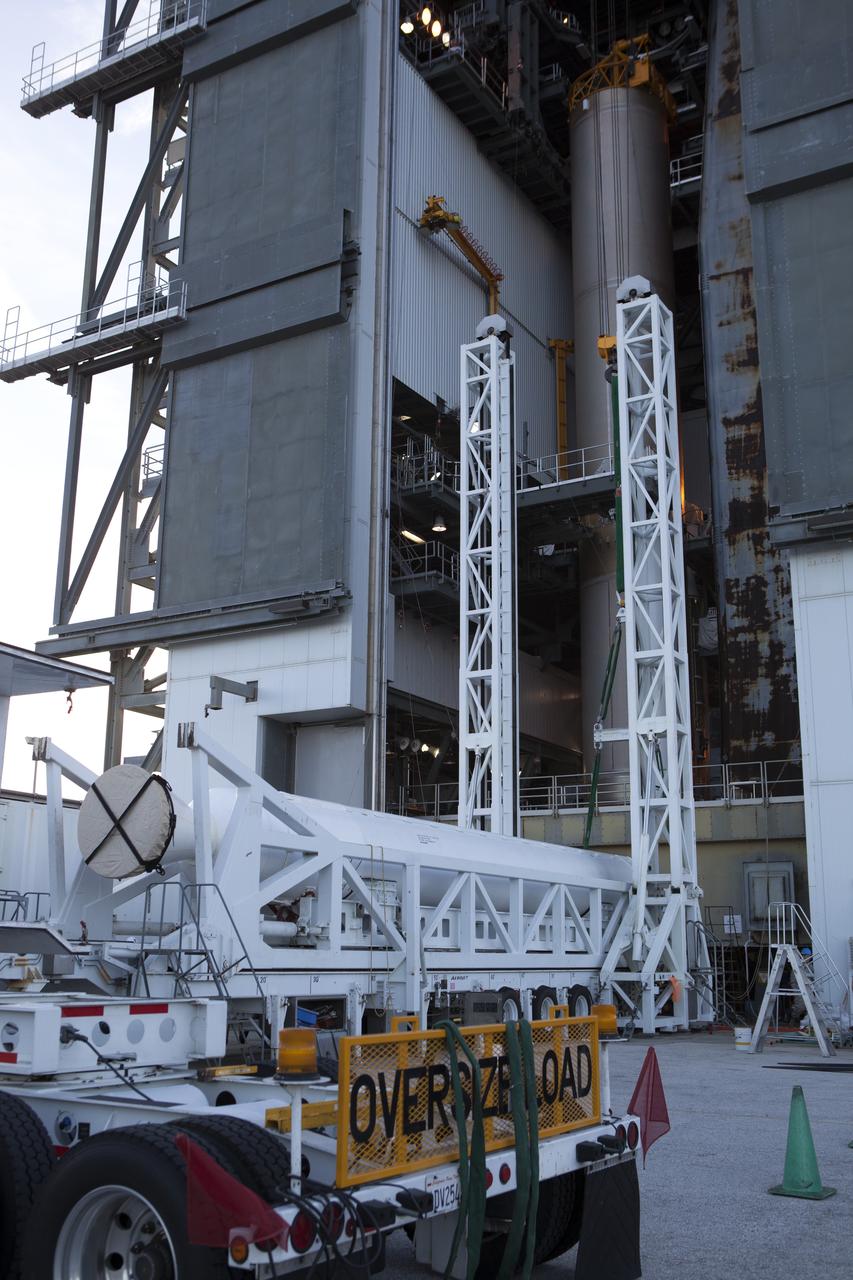
Preparations are underway to lift the solid rocket motor up from its transporter for mating to the United Launch Alliance Atlas V rocket in the Vertical Integration Facility at Space Launch Complex 41 at Cape Canaveral Air Force Station in Florida. NOAA's Geostationary Operational Environmental Satellite (GOES-R) will launch aboard the Atlas V rocket this month. GOES-R is the first satellite in a series of next-generation NOAA GOES Satellites.
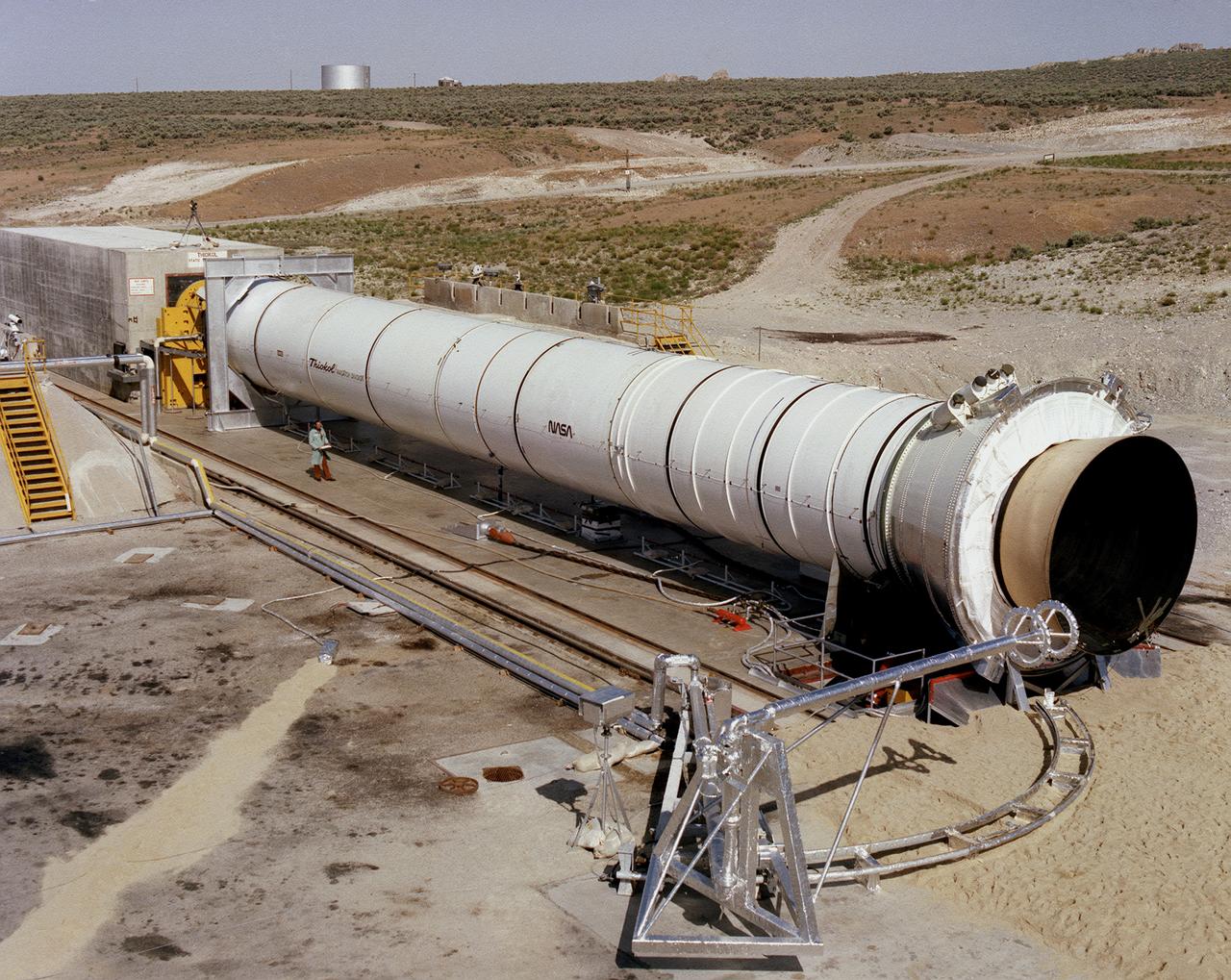
This is a photograph of the solid rocket booster's (SRB's) Qualification Motor-1 (QM-1) being prepared for a static firing in a test stand at the Morton Thiokol Test Site in Wasatch, Utah, showing the aft end of the booster. The twin boosters provide the majority of thrust for the first two minutes of flight, about 5.8 million pounds, augmenting the Shuttle's main propulsion system during liftoff. The major design drivers for the solid rocket motors (SRM's) were high thrust and reuse. The desired thrust was achieved by using state-of-the-art solid propellant and by using a long cylindrical motor with a specific core design that allows the propellant to burn in a carefully controlled marner. Under the direction of the Marshall Space Flight Center, the SRM's are provided by the Morton Thiokol Corporation.
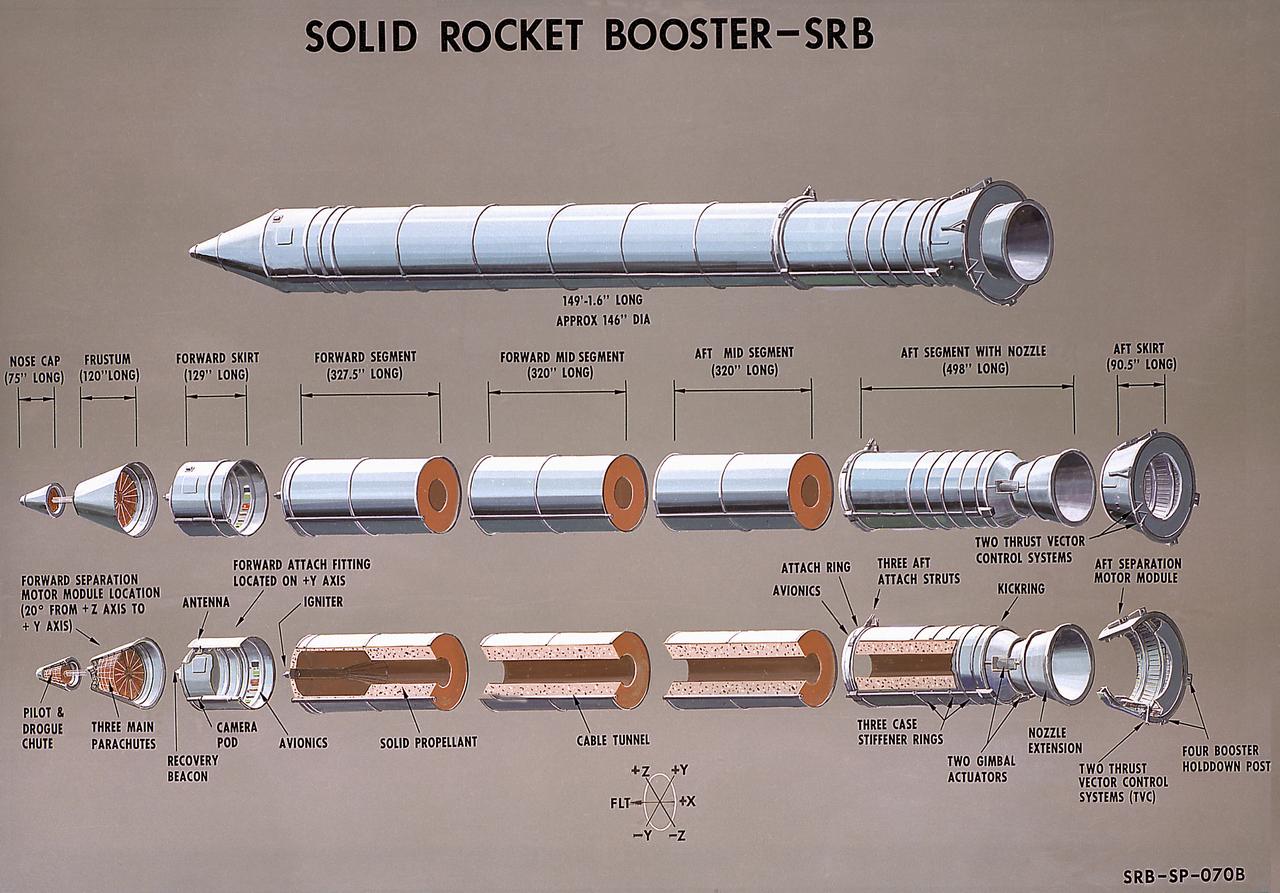
This illustration is a cutaway of the solid rocket booster (SRB) sections with callouts. The Shuttle's two SRB's are the largest solids ever built and the first designed for refurbishment and reuse. Standing nearly 150-feet high, the twin boosters provide the majority of thrust for the first two minutes of flight, about 5.8 million pounds, augmenting the Shuttle's main propulsion system during liftoff. The major design drivers for the solid rocket motors (SRM's) were high thrust and reuse. The desired thrust was achieved by using state-of-the-art solid propellant and by using a long cylindrical motor with a specific core design that allows the propellant to burn in a carefully controlled marner. At burnout, the boosters separate from the external tank and drop by parachute to the ocean for recovery and subsequent refurbishment. The boosters are designed to survive water impact at almost 60 miles per hour, maintain flotation with minimal damage, and preclude corrosion of the hardware exposed to the harsh seawater environment. Under the project management of the Marshall Space Flight Center, the SRB's are assembled and refurbished by the United Space Boosters. The SRM's are provided by the Morton Thiokol Corporation.
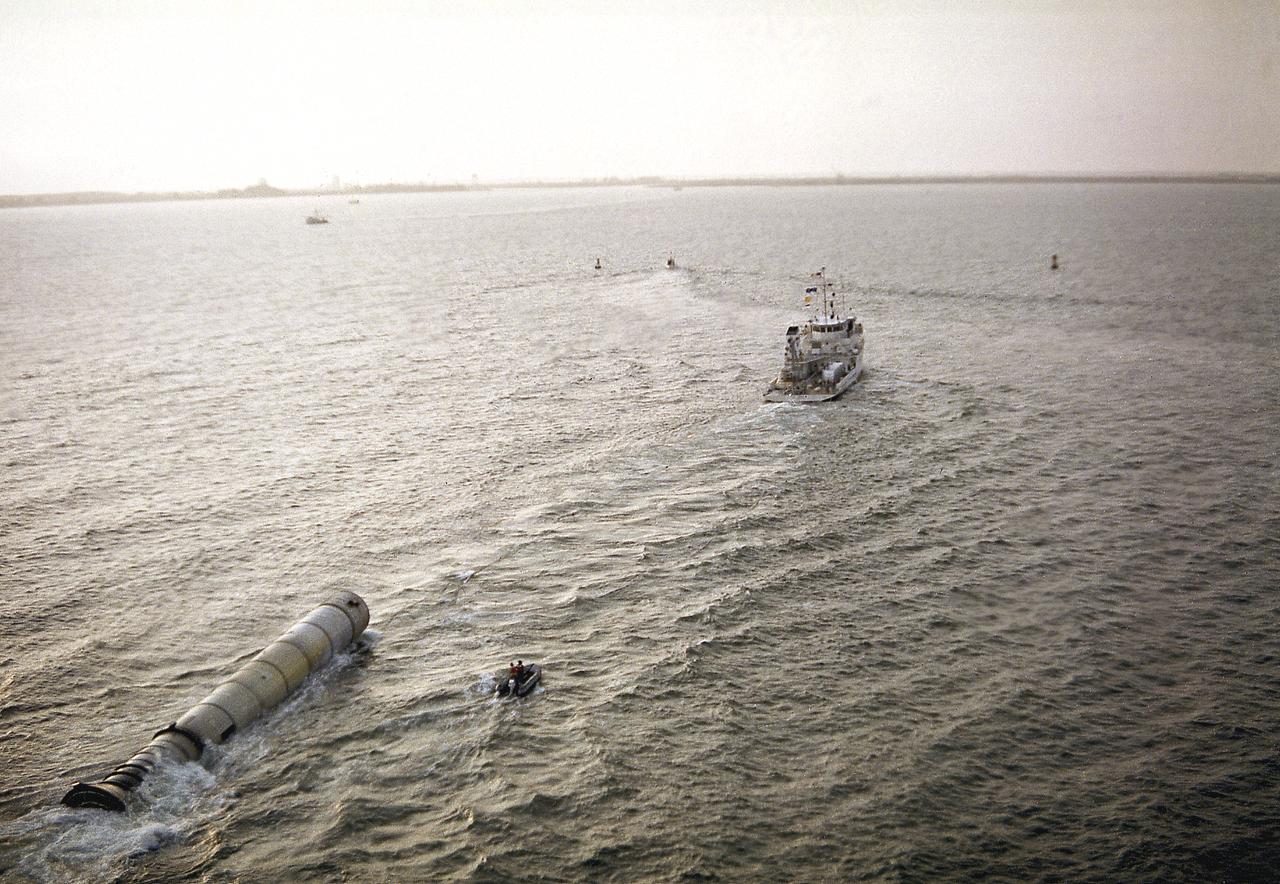
The towing ship, Liberty, towed a recovered solid rocket booster (SRB) for the STS-3 mission to Port Canaveral, Florida. The recovered SRB would be inspected and refurbished for reuse. The Shuttle's SRB's and solid rocket motors (SRM's) are the largest ever built and the first designed for refurbishment and reuse. Standing nearly 150-feet high, the twin boosters provide the majority of thrust for the first two minutes of flight, about 5.8 million pounds. The requirement for reusability dictated durable materials and construction to preclude corrosion of the hardware exposed to the harsh seawater environment. The SRB contains a complete recovery subsystem that includes parachutes, beacons, lights, and tow fixture.
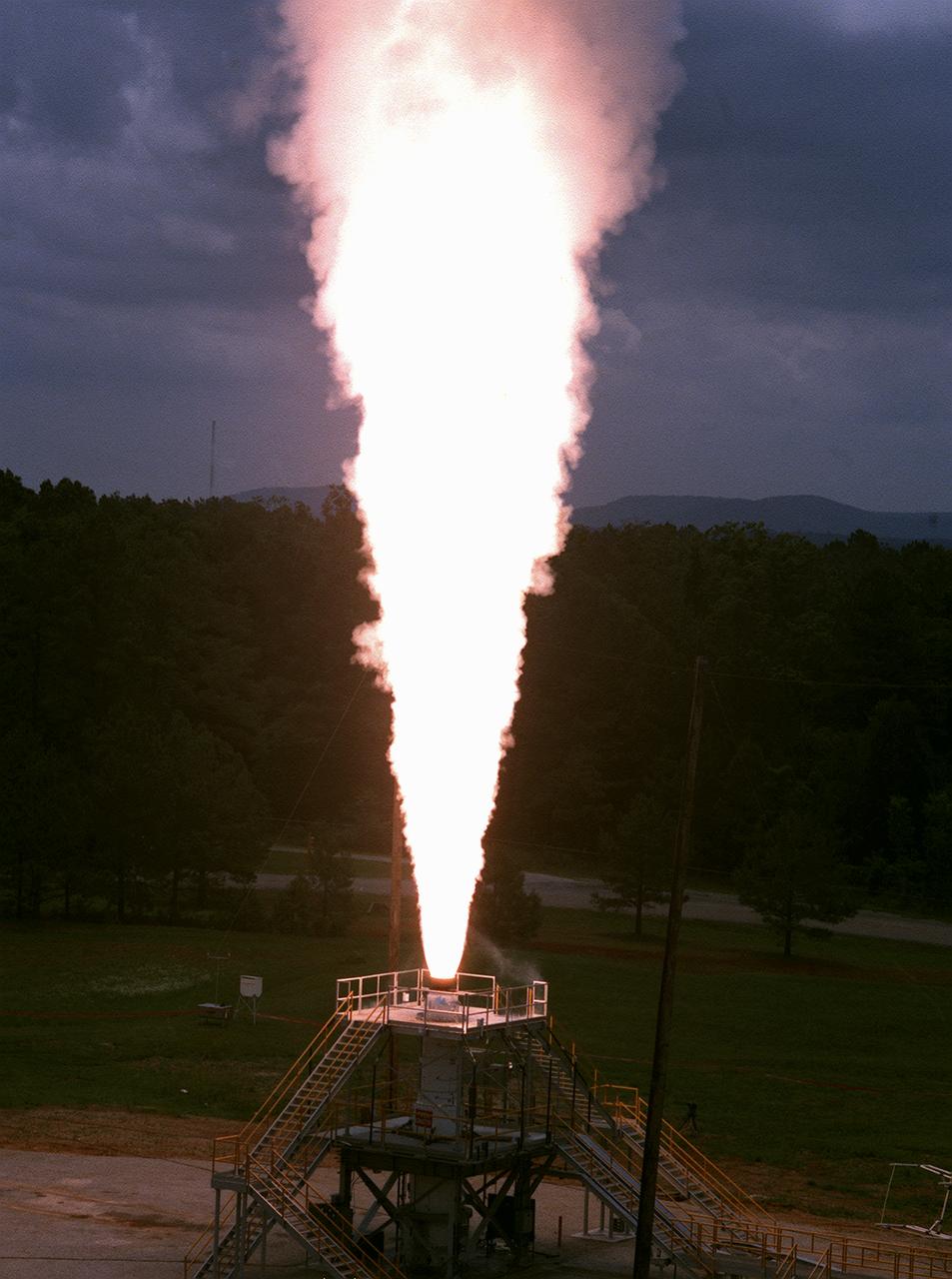
The Marshall Space Flight Center (MSFC) engineers test fired a 26-foot long, 100,000-pound-thrust solid rocket motor for 30 seconds at the MSFC east test area, the first test firing of the Modified NASA Motor (M-NASA Motor). The M-NASA Motor was fired in a newly constructed stand. The motor is 48-inches in diameter and was loaded with two propellant cartridges weighing a total of approximately 12,000 pounds. The purpose of the test was to learn more about solid rocket motor insulation and nozzle materials and to provide young engineers additional hands-on expertise in solid rocket motor technology. The test is a part of NASA's Solid Propulsion Integrity Program, that is to provide NASA engineers with the techniques, engineering tools, and computer programs to be able to better design, build, and verify solid rocket motors.
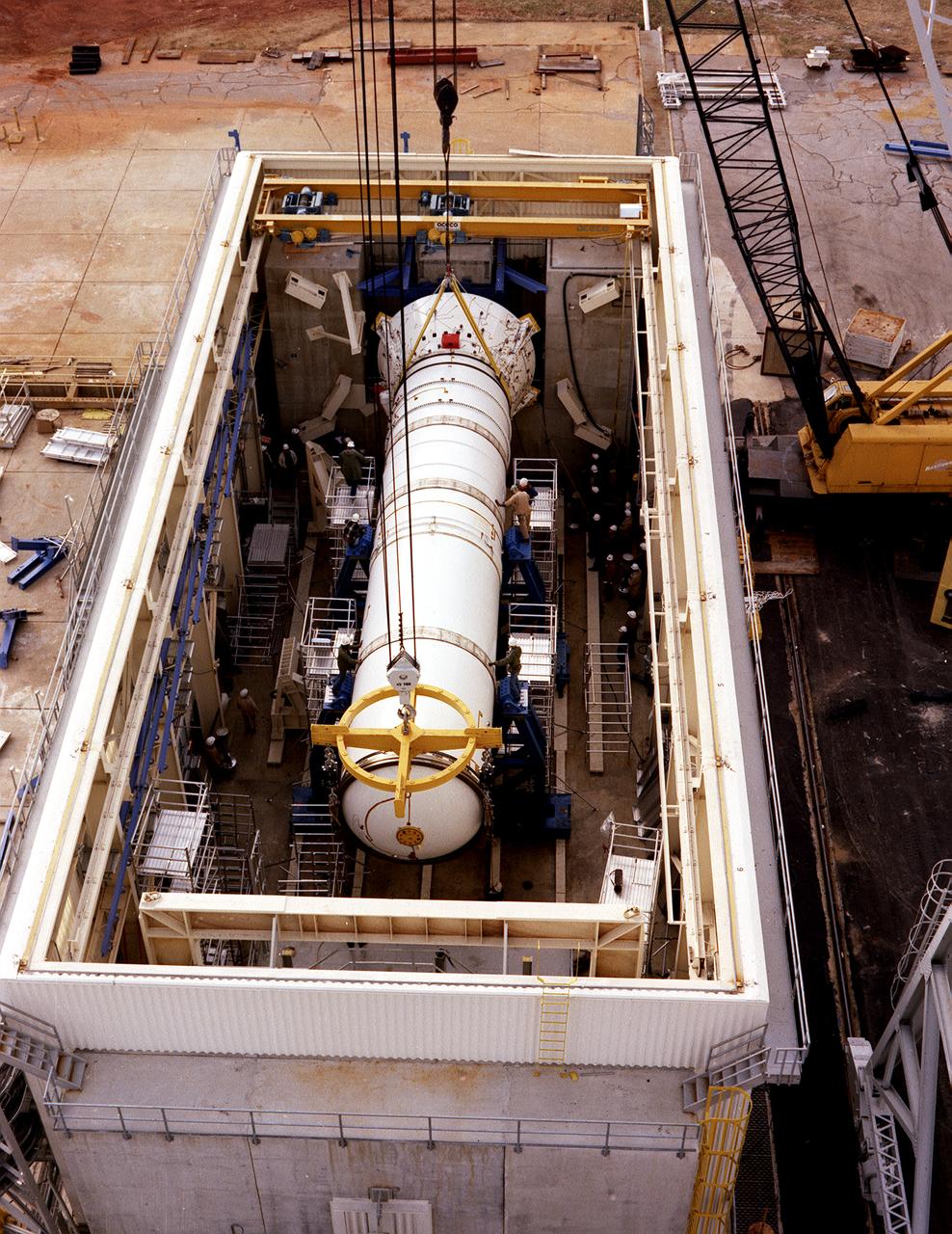
The solid rocket booster (SRB) structural test article is being installed in the Solid Rocket Booster Test Facility for the structural and load verification test at the Marshall Space Flight Center (MSFC). The Shuttle's two SRB's are the largest solids ever built and the first designed for refurbishment and reuse. Standing nearly 150-feet high, the twin boosters provide the majority of thrust for the first two minutes of flight, about 5.8 million pounds, augmenting the Shuttle's main propulsion system during liftoff. The major design drivers for the solid rocket motors (SRM's) were high thrust and reuse. The desired thrust was achieved by using state-of-the-art solid propellant and by using a long cylindrical motor with a specific core design that allows the propellant to burn in a carefully controlled marner. At burnout, the boosters separate from the external tank and drop by parachute to the ocean for recovery and subsequent refurbishment.

A scaled-down 24-inch version of the Space Shuttle's Reusable Solid Rocket Motor was successfully fired for 21 seconds at a Marshall Space Flight Center (MSFC) Test Stand. The motor was tested to ensure a replacement material called Lycocel would meet the criteria set by the Shuttle's Solid Motor Project Office. The current material is a heat-resistant, rayon-based, carbon-cloth phenolic used as an insulating material for the motor's nozzle. Lycocel, a brand name for Tencel, is a cousin to rayon and is an exceptionally strong fiber made of wood pulp produced by a special "solvent-spirning" process using a nontoxic solvent. It will also be impregnated with a phenolic resin. This new material is expected to perform better under the high temperatures experienced during launch. The next step will be to test the material on a 48-inch solid rocket motor. The test, which replicates launch conditions, is part of Shuttle's ongoing verification of components, materials, and manufacturing processes required by MSFC, which oversees the Reusable Solid Rocket Motor project. Manufactured by the ATK Thiokol Propulsion Division in Promontory, California, the Reusable Solid Rocket Motor measures 126 feet (38.4 meters) long and 12 feet (3.6 meters) in diameter. It is the largest solid rocket motor ever flown and the first designed for reuse. During its two-minute burn at liftoff, each motor generates an average thrust of 2.6 million pounds (1.2 million kilograms).
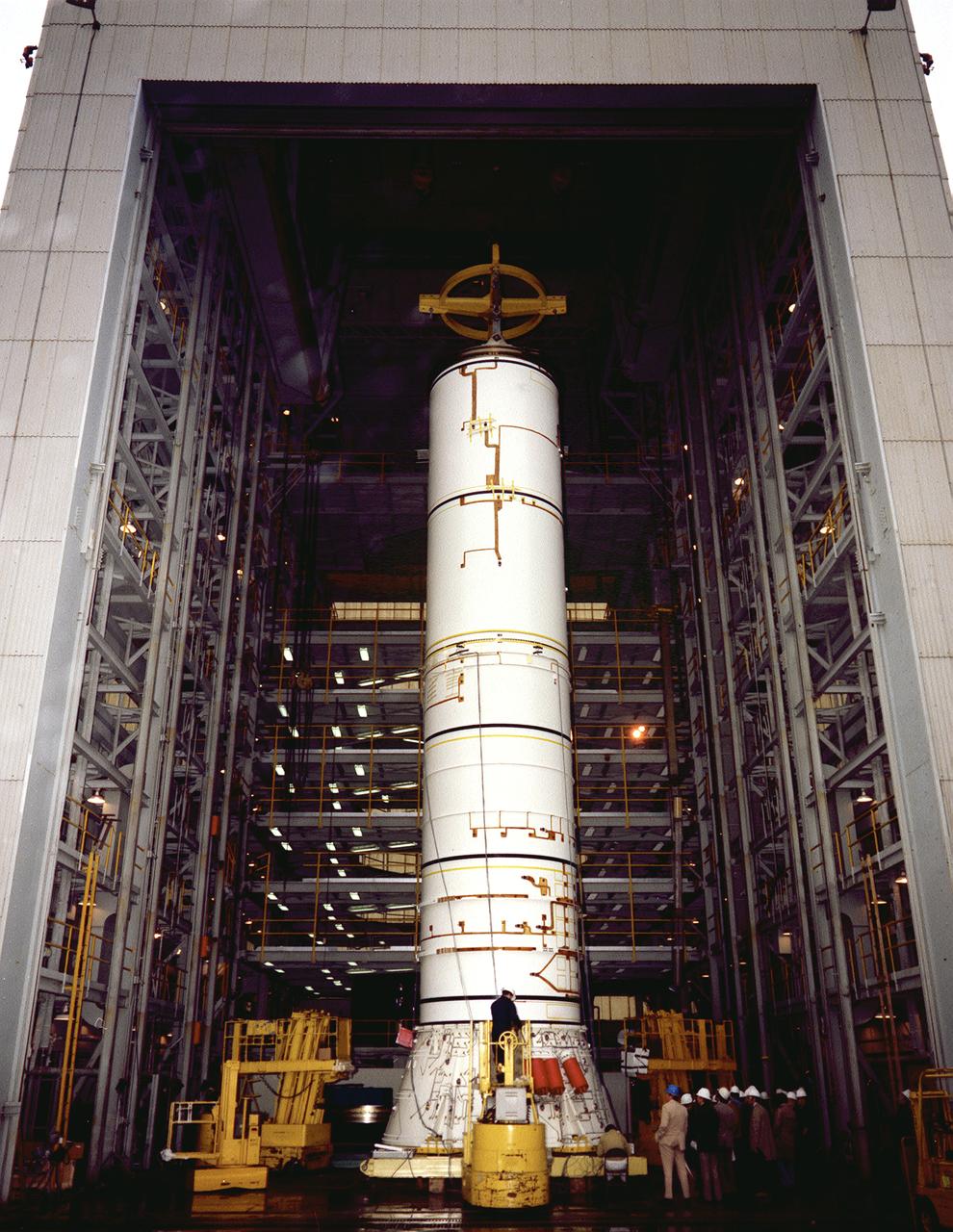
The structural test article to be used in the solid rocket booster (SRB) structural and load verification tests is being assembled in a high bay building of the Marshall Space Flight Center (MSFC). The Shuttle's two SRB's are the largest solids ever built and the first designed for refurbishment and reuse. Standing nearly 150-feet high, the twin boosters provide the majority of thrust for the first two minutes of flight, about 5.8 million pounds, augmenting the Shuttle's main propulsion system during liftoff. The major design drivers for the solid rocket motors (SRM's) were high thrust and reuse. The desired thrust was achieved by using state-of-the-art solid propellant and by using a long cylindrical motor with a specific core design that allows the propellant to burn in a carefully controlled marner. At burnout, the boosters separate from the external tank and drop by parachute to the ocean for recovery and subsequent refurbishment.
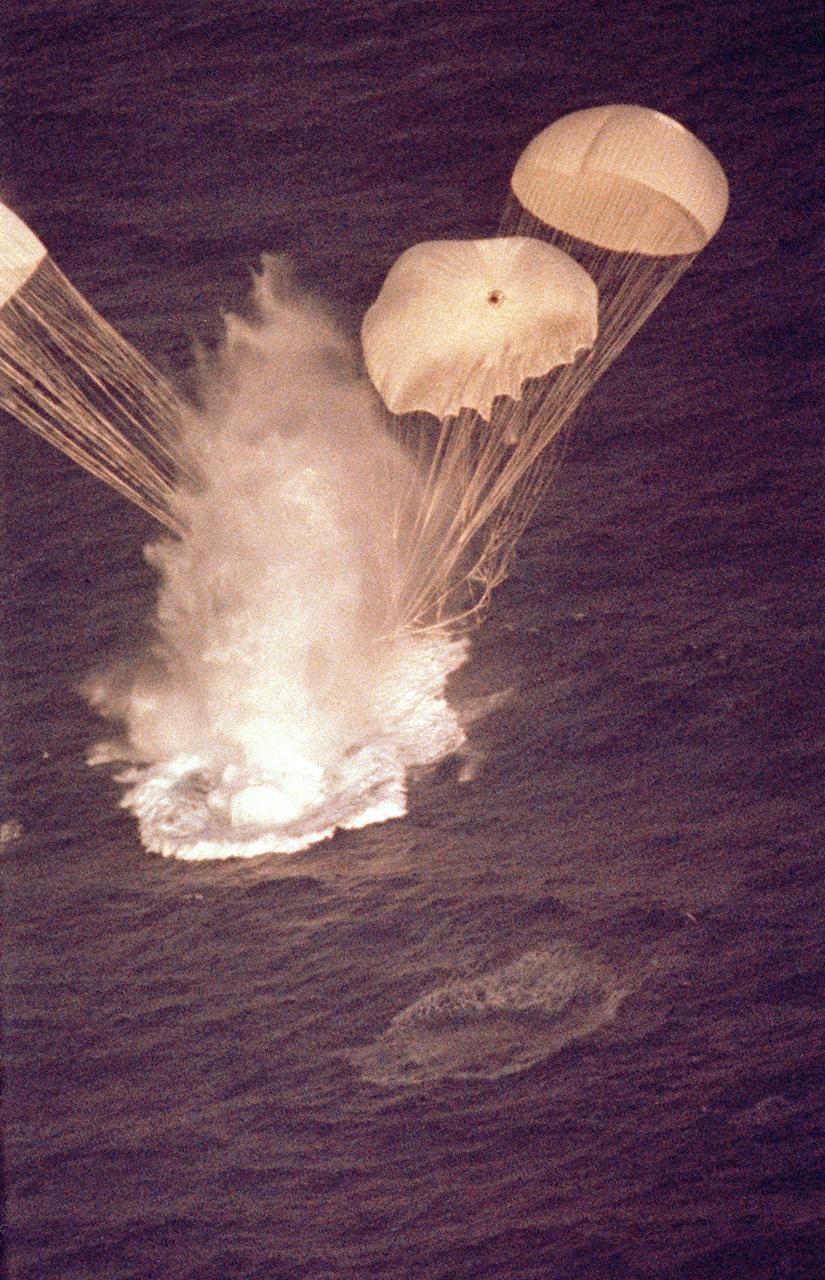
he left solid rocket booster (SRB) for the STS-5 mission is shown in this photograph at the moment of splashdown after its separation from the external tank. This view was photographed from a Cast Glance aircraft. After impact to the ocean, it was retrieved and refurbished for reuse. The Shuttle's SRB's and solid rocket motors (SRM's) are the largest ever built and the first designed for refurbishment and reuse. Standing nearly 150-feet high, the twin boosters provide the majority of thrust for the first two minutes of flight, about 5.8 million pounds. That is equivalent to 44 million horsepower, or the combined power of 400,000 subcompact cars.
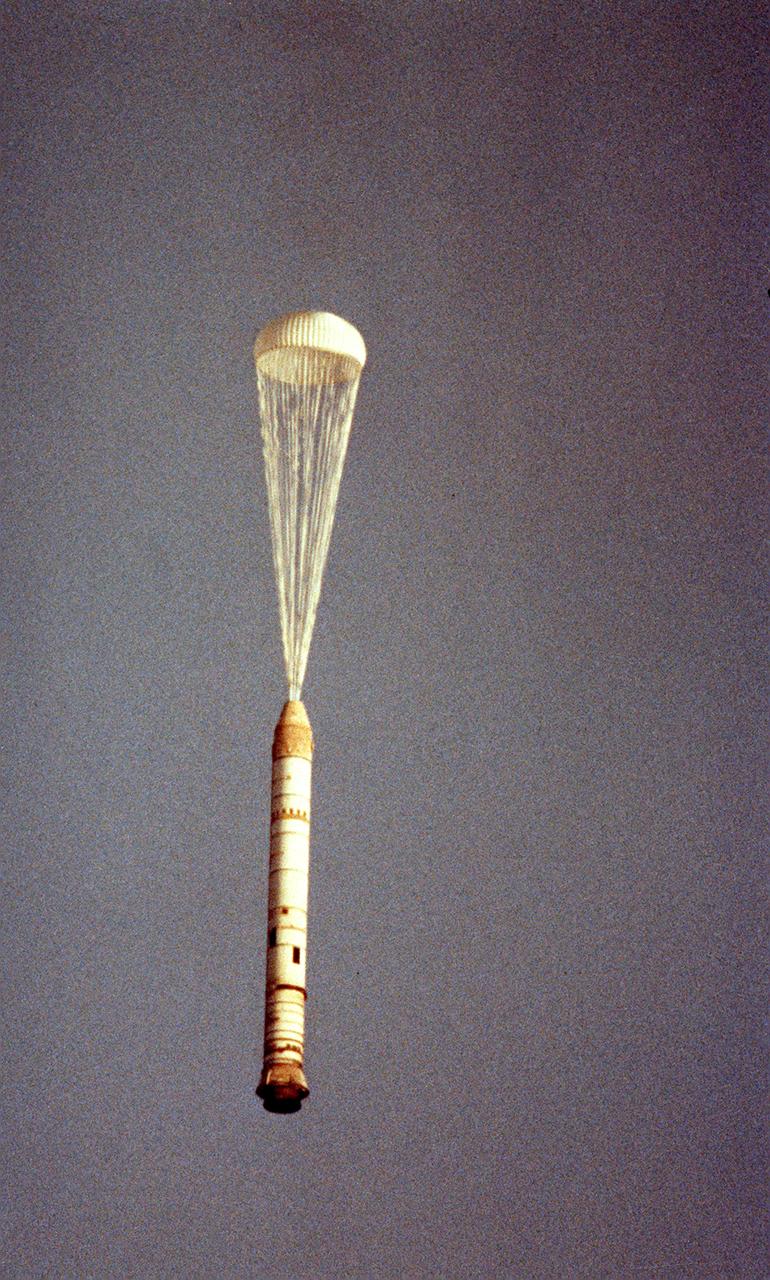
The right solid rocket booster (SRB) for the STS-5 mission, with one chute opened, falls after its separation from the external tank (ET). This view was photographed from a Cast Glance aircraft. After impact to the ocean, it was retrieved and refurbished for reuse. The Shuttle's SRB's and solid rocket motors (SRM's) are the largest ever built and the first designed for refurbishment and reuse. Standing nearly 150-feet high, the twin boosters provide the majority of thrust for the first two minutes of flight, about 5.8 million pounds. That is equivalent to 44 million horsepower, or the combined power of 400,000 subcompact cars.
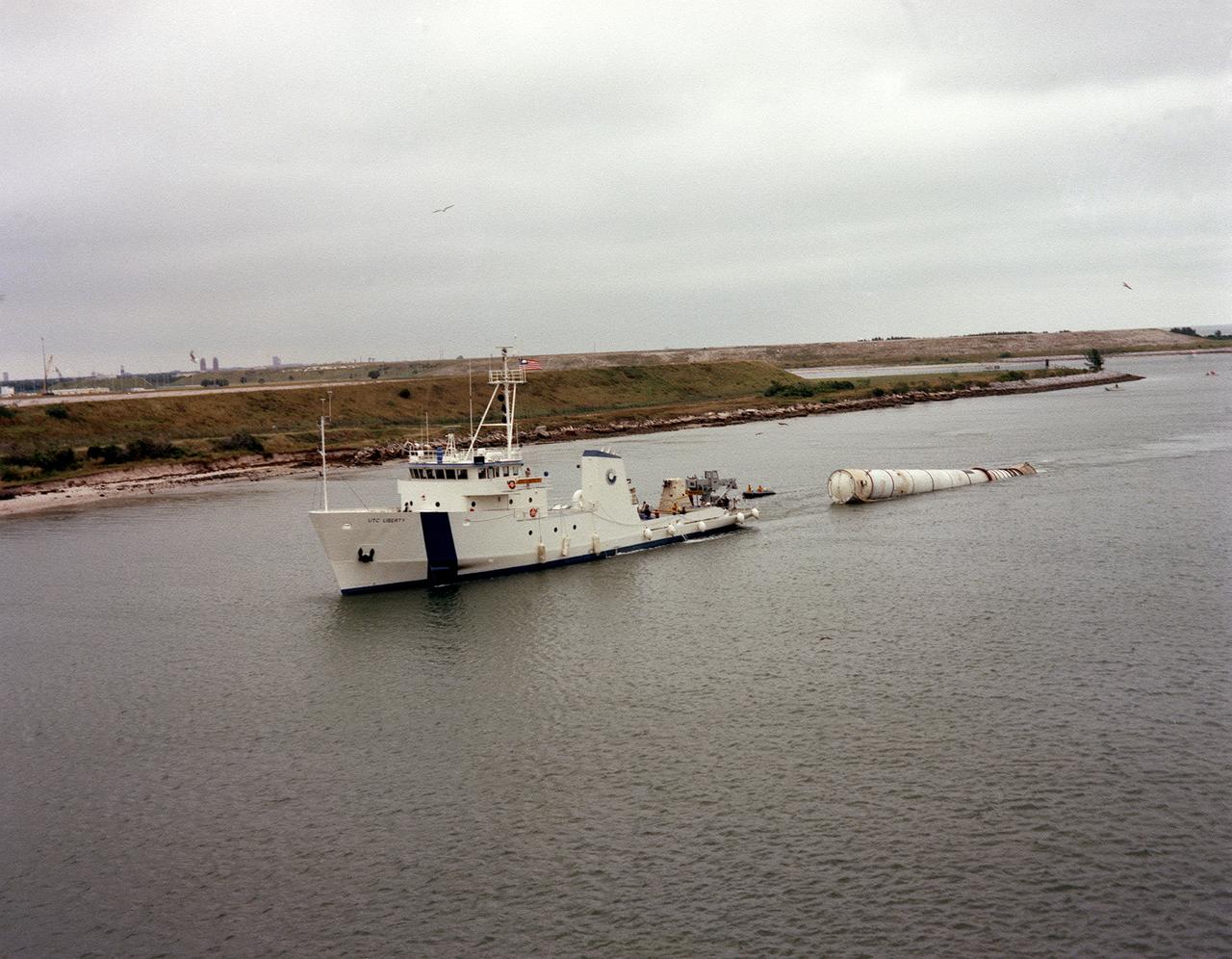
The towing ship, Liberty, towed a recovered solid rocket booster (SRB) for the STS-5 mission to Port Canaveral, Florida. The recovered SRB would be inspected and refurbished for reuse. The Shuttle's SRB's and solid rocket motors (SRM's) are the largest ever built and the first designed for refurbishment and reuse. Standing nearly 150-feet high, the twin boosters provide the majority of thrust for the first two minutes of flight, about 5.8 million pounds. The requirement for reusability dictated durable materials and construction to preclude corrosion of the hardware exposed to the harsh seawater environment. The SRB contains a complete recovery subsystem that includes parachutes, beacons, lights, and tow fixture.
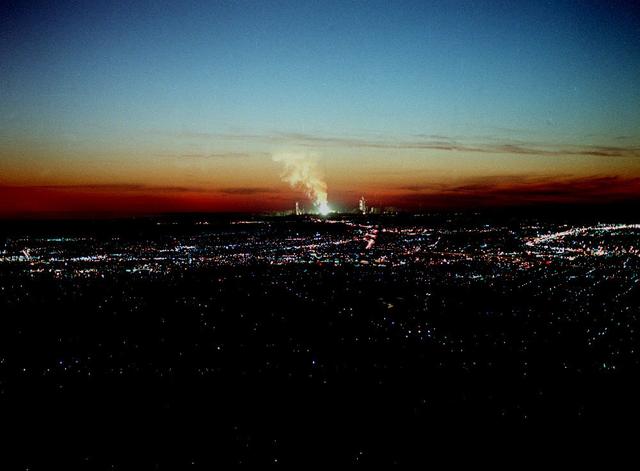
A 48 inch Advanced Solid Rocket Motor is test fired at Marshall's Solid Propulsion Research Test Article facility for M-NASA Project.
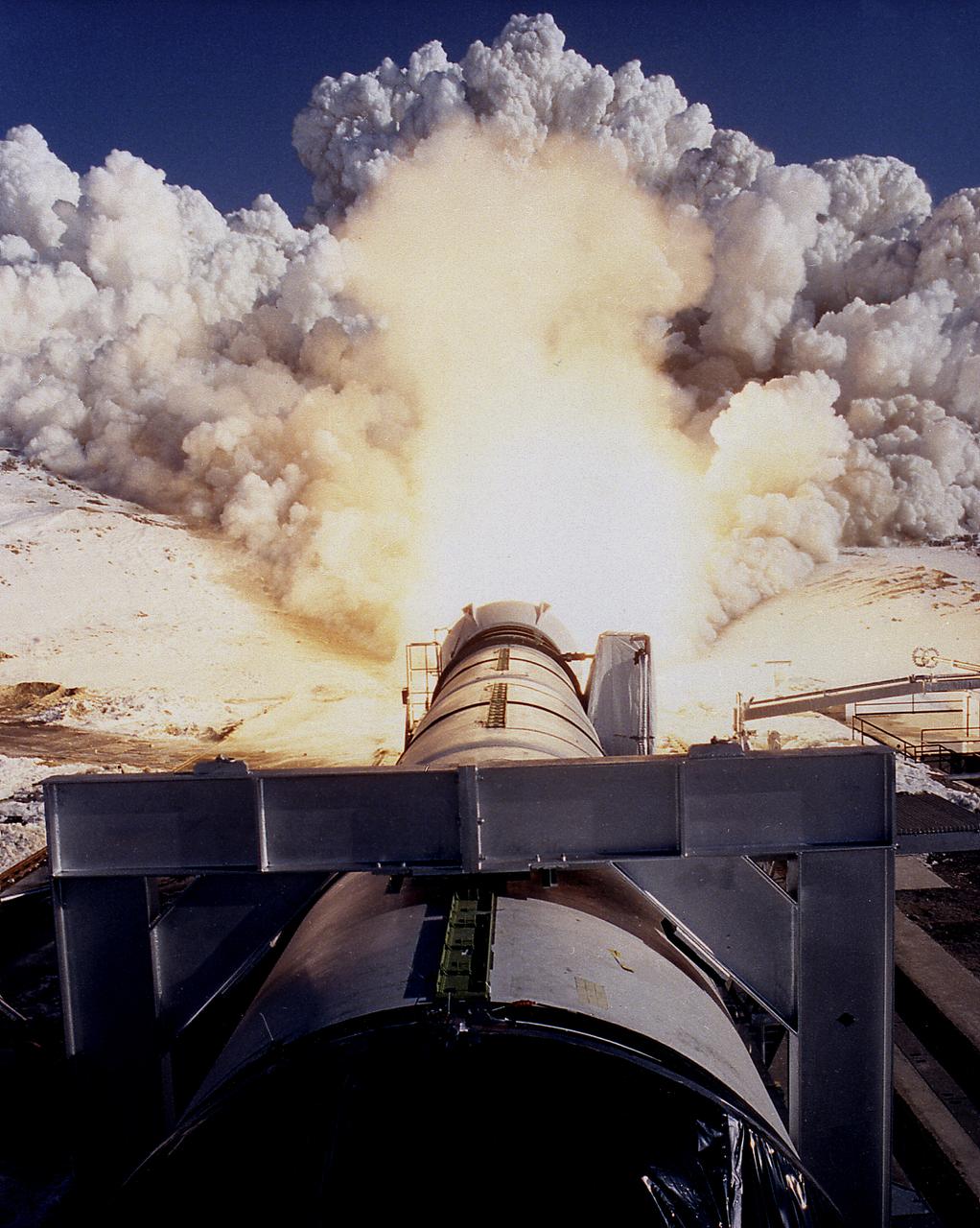
This photograph shows a static firing test of the Solid Rocket Qualification Motor-8 (QM-8) at the Morton Thiokol Test Site in Wasatch, Utah. The twin solid rocket boosters provide the majority of thrust for the first two minutes of flight, about 5.8 million pounds, augmenting the Shuttle's main propulsion system during liftoff. The major design drivers for the solid rocket motors (SRM's) were high thrust and reuse. The desired thrust was achieved by using state-of-the-art solid propellant and by using a long cylindrical motor with a specific core design that allows the propellant to burn in a carefully controlled marner. Under the direction of the Marshall Space Flight Center, the SRM's are provided by the Morton Thiokol Corporation.
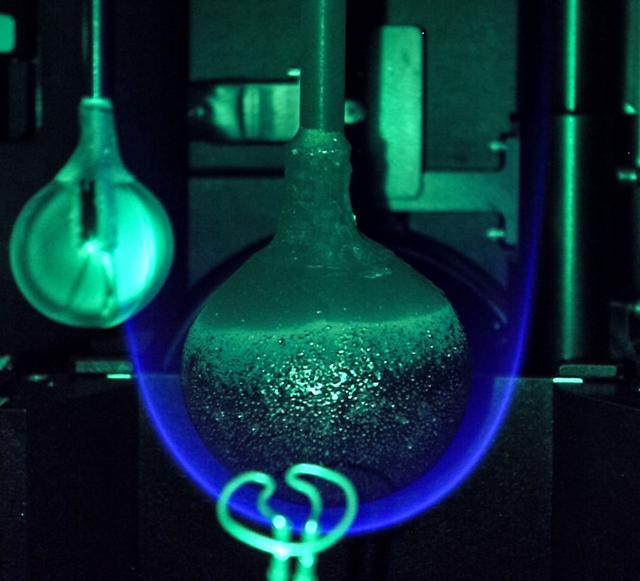
jsc2024e021222 (3/21/2024) --- Solid Fuel Ignition and Extinction (SoFIE) insert supports the Growth and Extinction Limit (GEL) investigation test image taken in the Combustion Integrated Rack (CIR). This image was taken just prior to flame extinction while the green LED was flashing on. The LED allows the fuel surface to be seen during the burn, so that several important parameters can be evaluated, such as how far the flame is from the fuel and how much the fuel is heating up. The igniter wire appears in the camera view, but it is in the foreground and not near the flame. In the background on the left, an unburned acrylic sphere waits for its turn to be tested on another day.
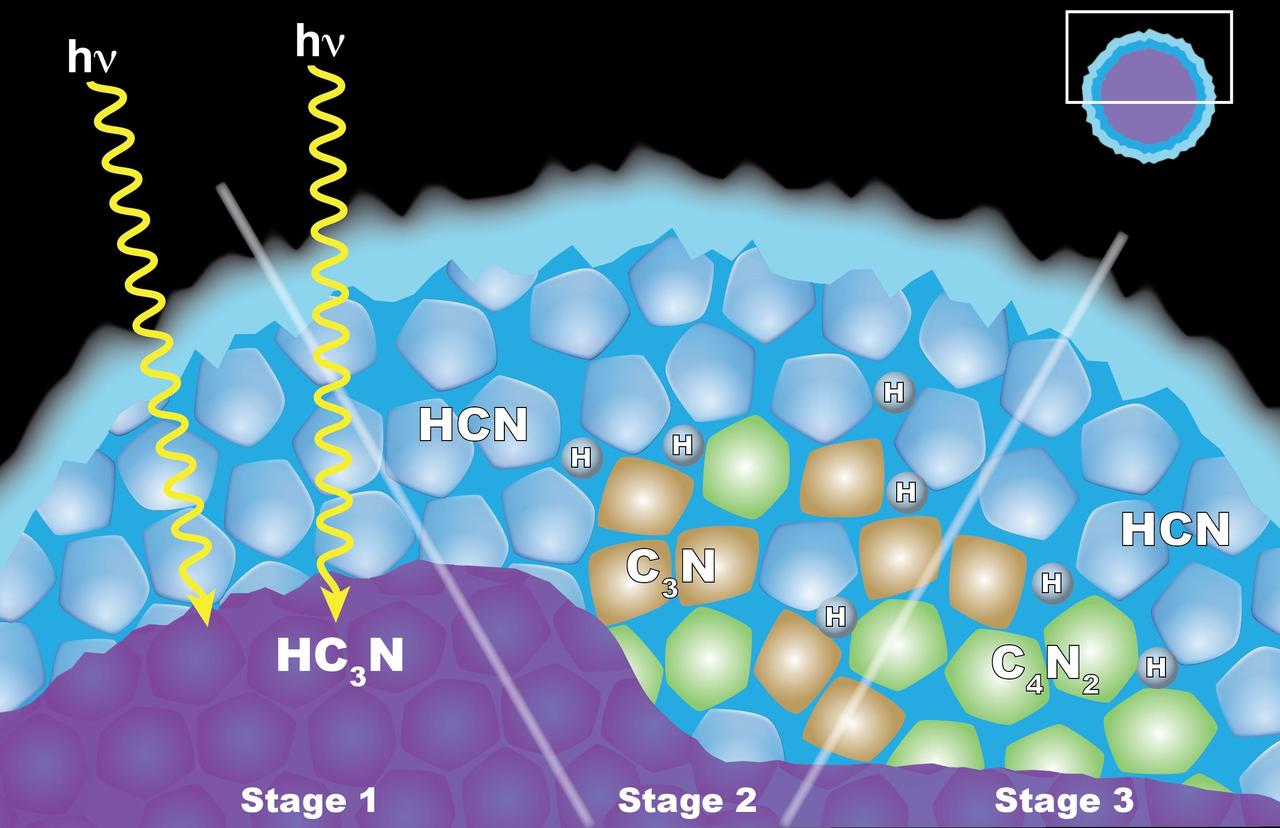
Scientists from NASA's Cassini mission suggested in a 2016 paper that the appearance of a cloud of dicyanoacetylene (C4N2) ice in Titan's stratosphere may be explained by "solid-state" chemistry taking place inside ice particles. The particles have an inner layer of cyanoacetylene (HC3N) ice coated with an outer layer of hydrogen cyanide (HCN) ice. Left: When a photon of light penetrates the outer shell, it can interact with the HC3N, producing C3N and H. Center: The C3N then reacts with HCN to yield C4N2 and H (shown at right). Another reaction that also yields C4N2 ice and H also is possible, but the researchers think it is less likely. http://photojournal.jpl.nasa.gov/catalog/PIA20715

Stage Separation Test of the Space Launch System(SLS) in the Langley Unitary Plan Wind Tunnel (UPWT). The model used High Pressure air blown through the solid rocket boosters. (SRB) to simulate the booster separation motors (BSM) firing.
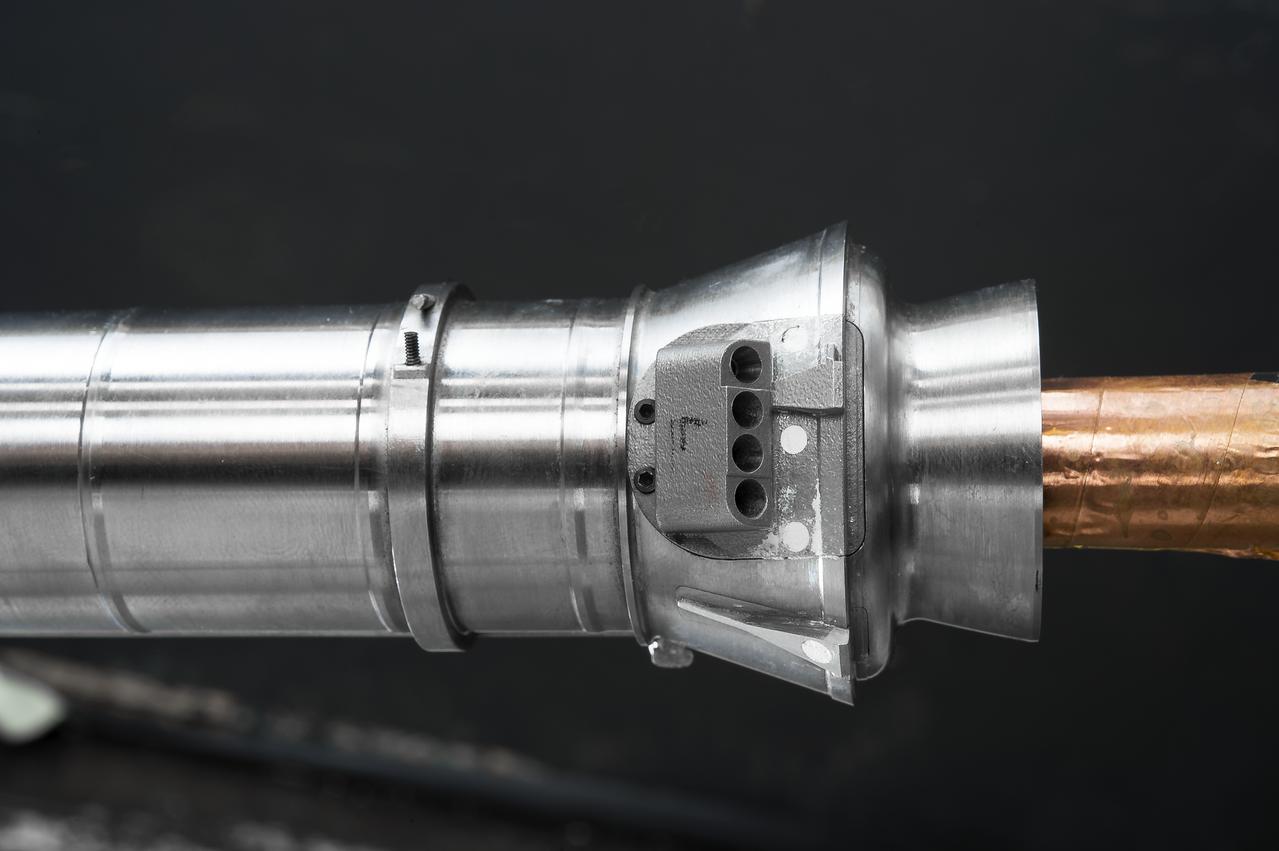
Stage Separation Test of the Space Launch System(SLS) in the Langley Unitary Plan Wind Tunnel (UPWT). The model used High Pressure air blown through the solid rocket boosters. (SRB) to simulate the booster separation motors (BSM) firing.
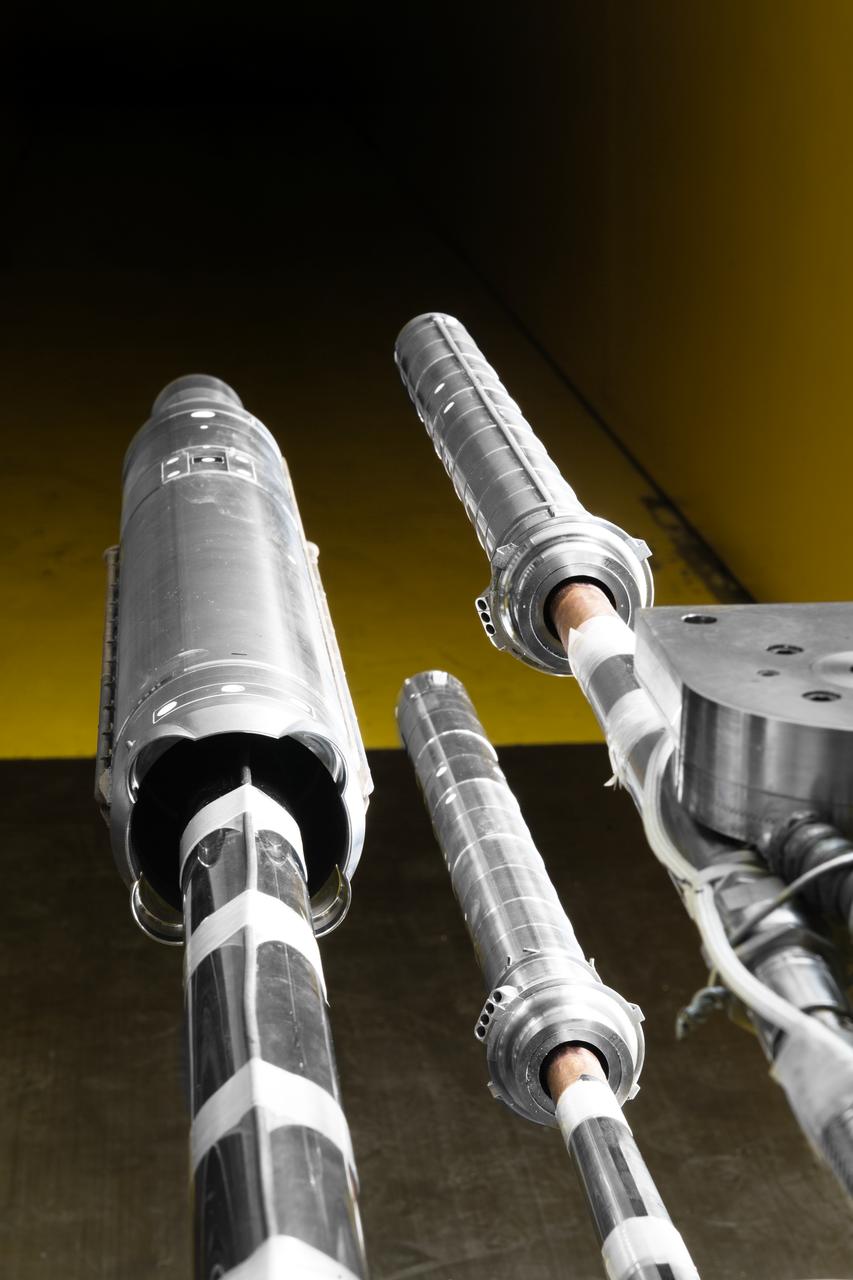
Stage Separation Test of the Space Launch System(SLS) in the Langley Unitary Plan Wind Tunnel (UPWT). The model used High Pressure air blown through the solid rocket boosters. (SRB) to simulate the booster separation motors (BSM) firing.
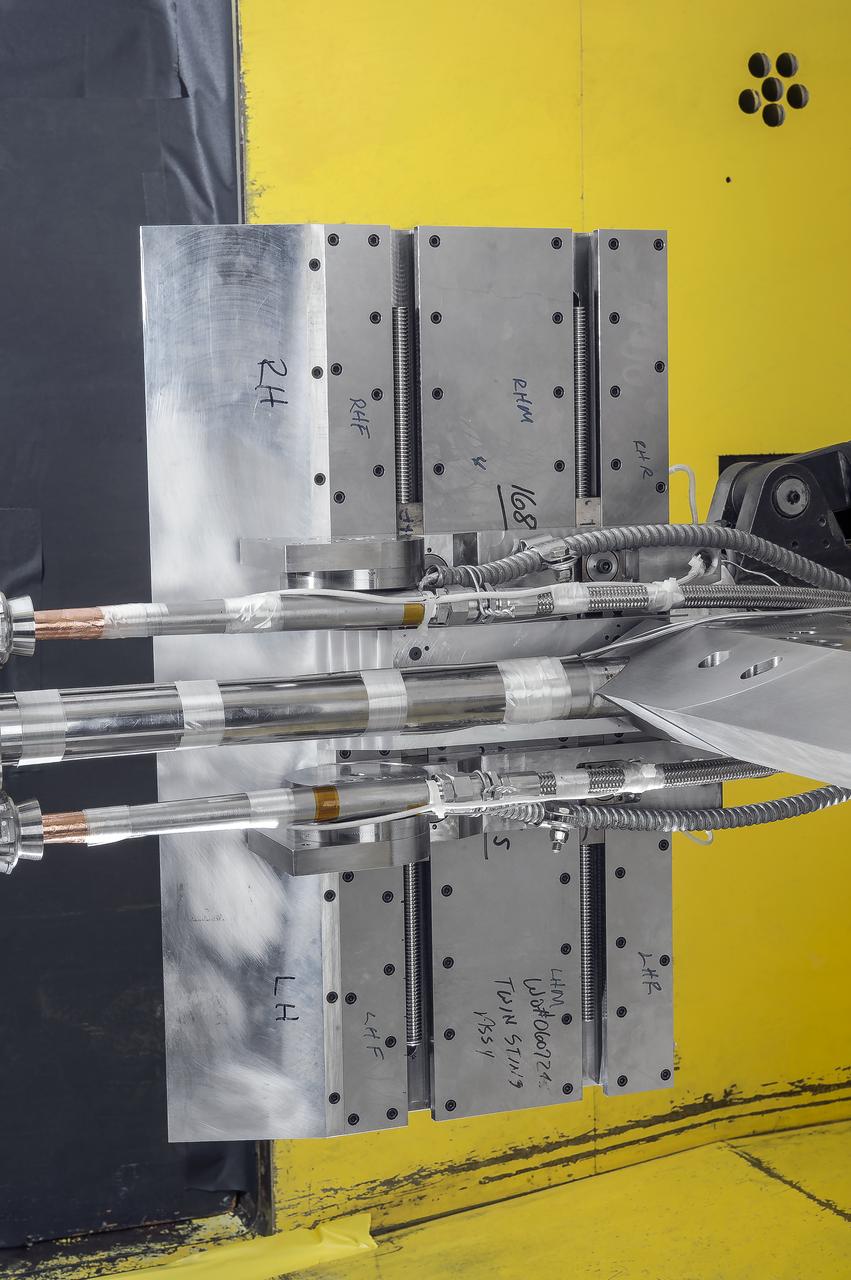
Stage Separation Test of the Space Launch System(SLS) in the Langley Unitary Plan Wind Tunnel (UPWT). The model used High Pressure air blown through the solid rocket boosters. (SRB) to simulate the booster separation motors (BSM) firing.
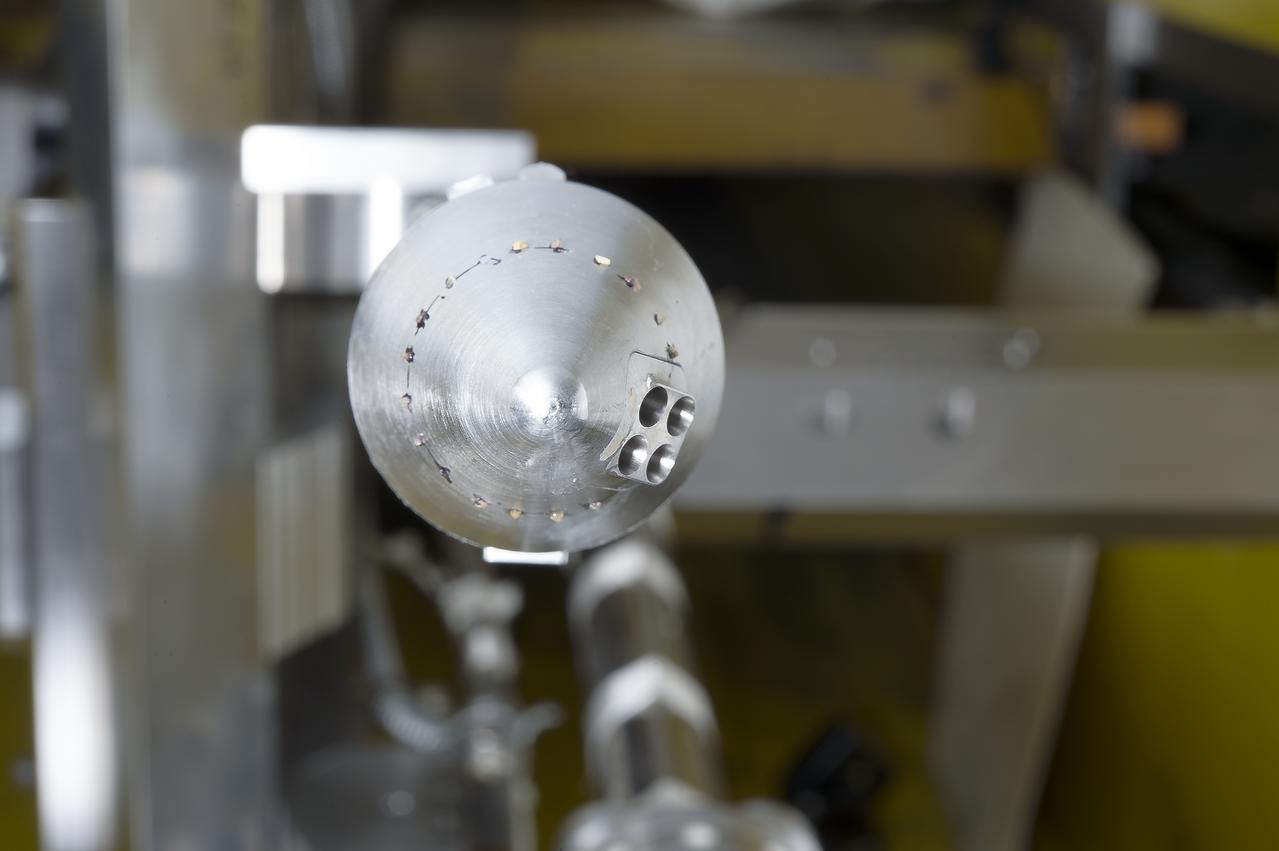
Stage Separation Test of the Space Launch System(SLS) in the Langley Unitary Plan Wind Tunnel (UPWT). The model used High Pressure air blown through the solid rocket boosters. (SRB) to simulate the booster separation motors (BSM) firing.
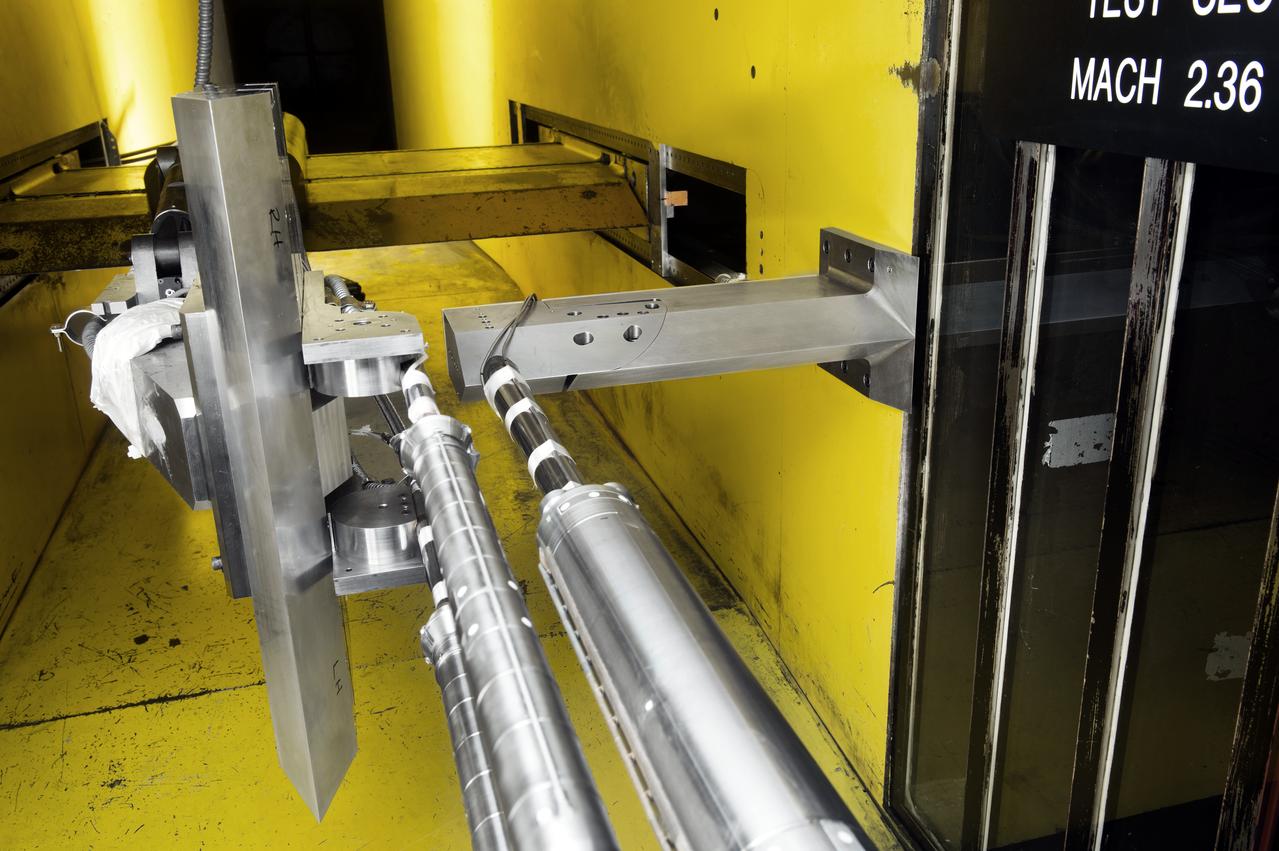
Stage Separation Test of the Space Launch System(SLS) in the Langley Unitary Plan Wind Tunnel (UPWT). The model used High Pressure air blown through the solid rocket boosters. (SRB) to simulate the booster separation motors (BSM) firing.
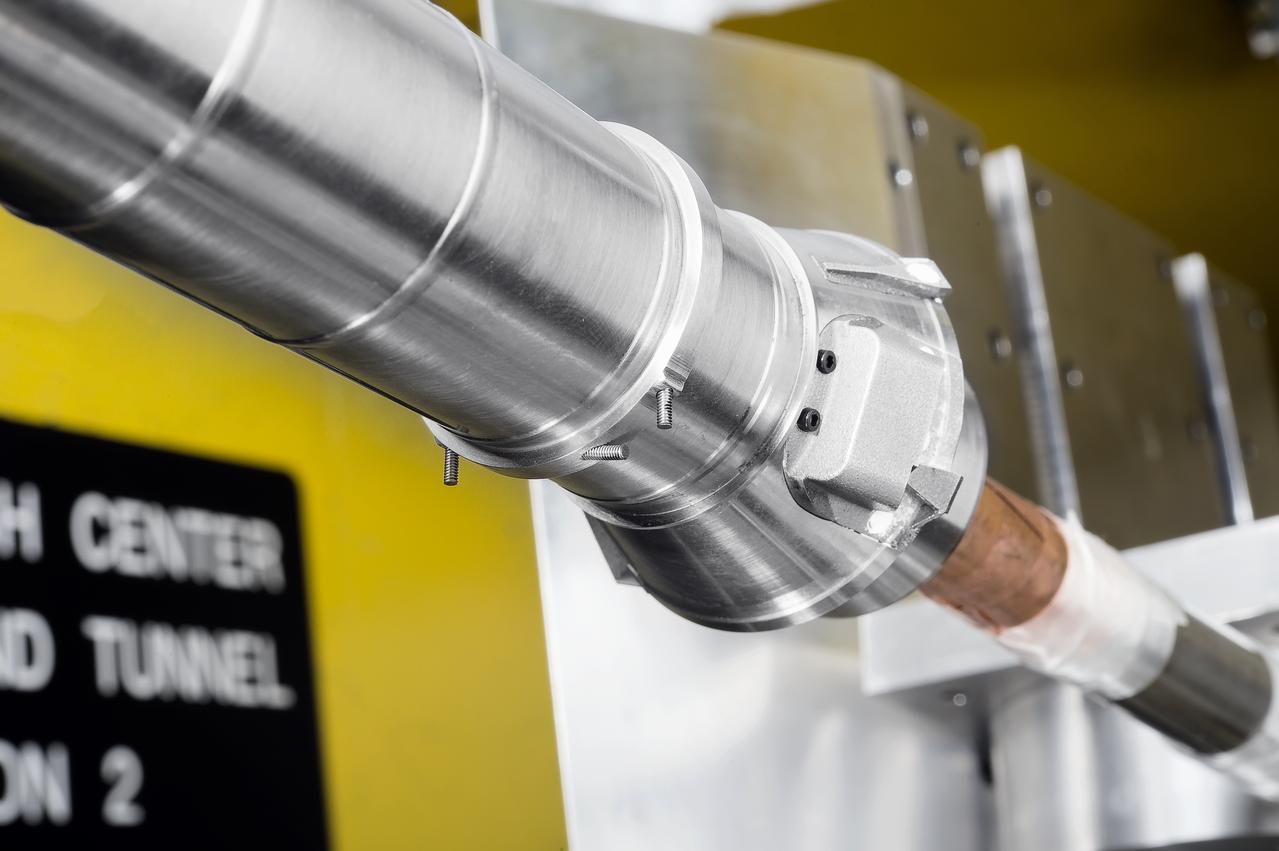
Stage Separation Test of the Space Launch System(SLS) in the Langley Unitary Plan Wind Tunnel (UPWT). The model used High Pressure air blown through the solid rocket boosters. (SRB) to simulate the booster separation motors (BSM) firing.
Stage Separation Test of the Space Launch System(SLS) in the Langley Unitary Plan Wind Tunnel (UPWT). The model used High Pressure air blown through the solid rocket boosters. (SRB) to simulate the booster separation motors (BSM) firing.
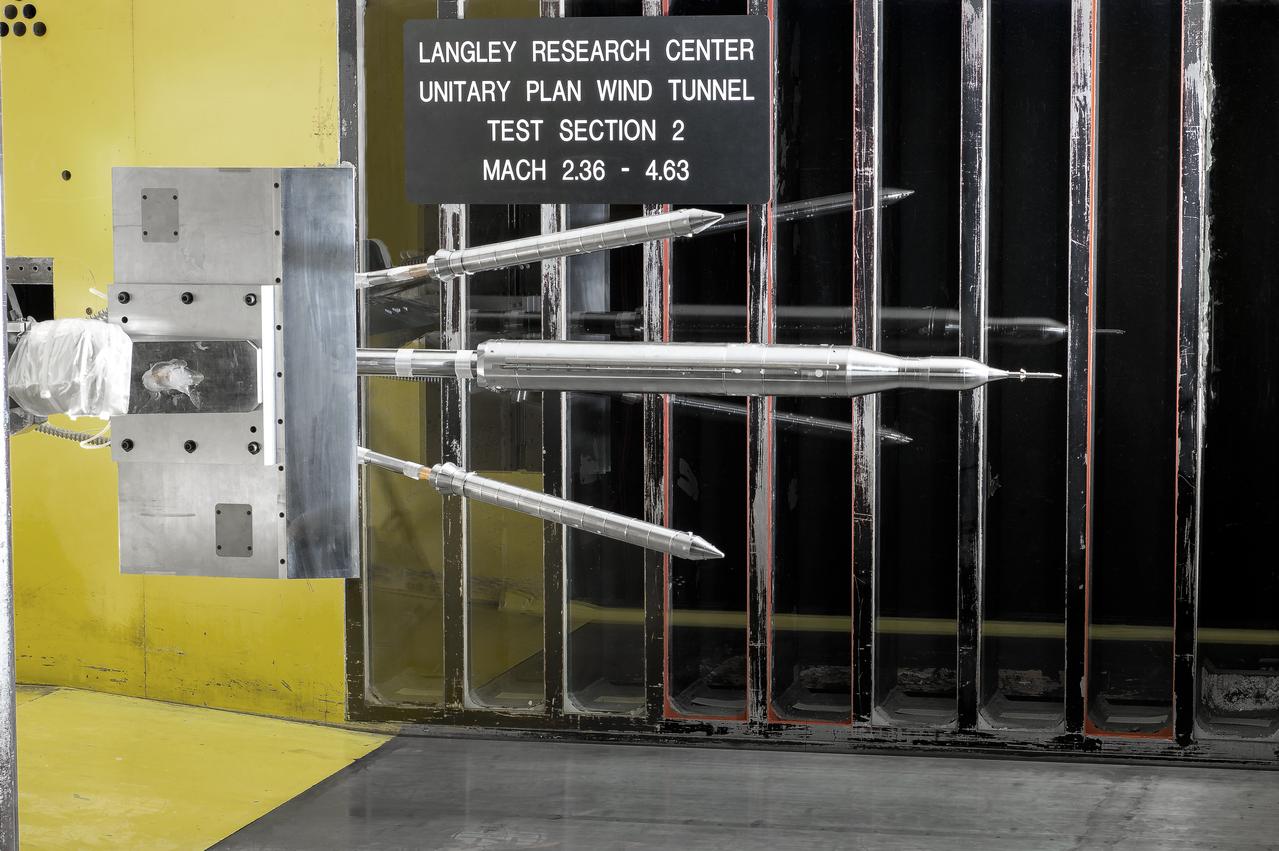
Stage Separation Test of the Space Launch System(SLS) in the Langley Unitary Plan Wind Tunnel (UPWT). The model used High Pressure air blown through the solid rocket boosters. (SRB) to simulate the booster separation motors (BSM) firing.
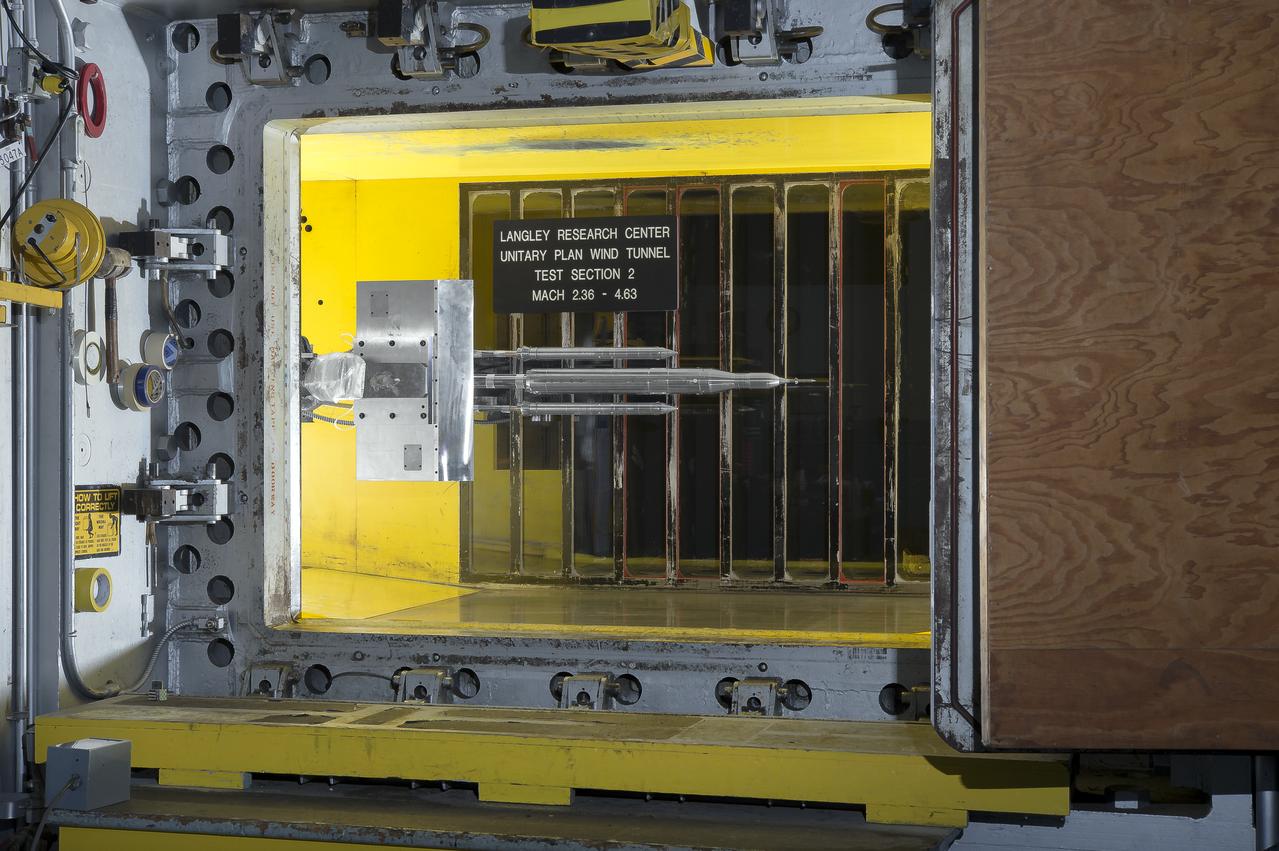
Stage Separation Test of the Space Launch System(SLS) in the Langley Unitary Plan Wind Tunnel (UPWT). The model used High Pressure air blown through the solid rocket boosters. (SRB) to simulate the booster separation motors (BSM) firing.
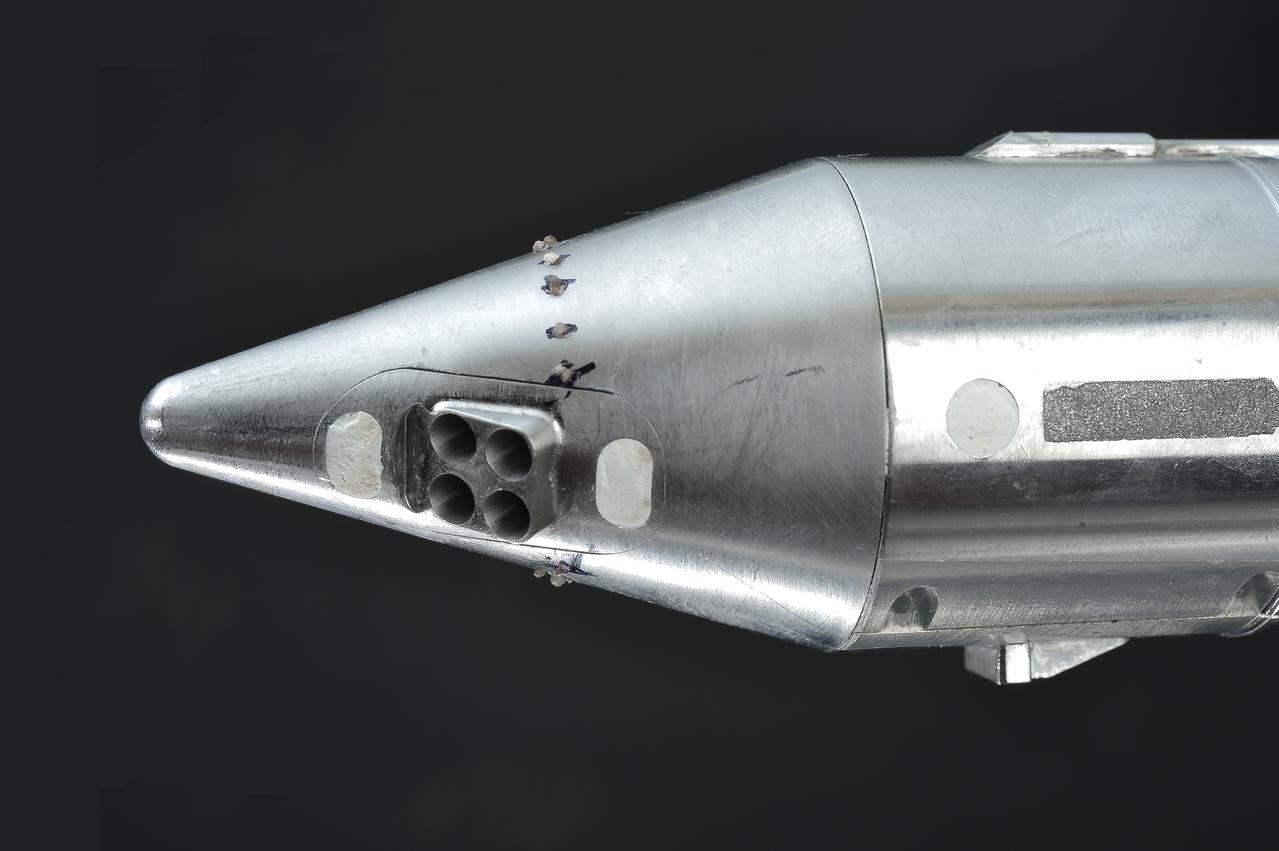
Stage Separation Test of the Space Launch System(SLS) in the Langley Unitary Plan Wind Tunnel (UPWT). The model used High Pressure air blown through the solid rocket boosters. (SRB) to simulate the booster separation motors (BSM) firing.
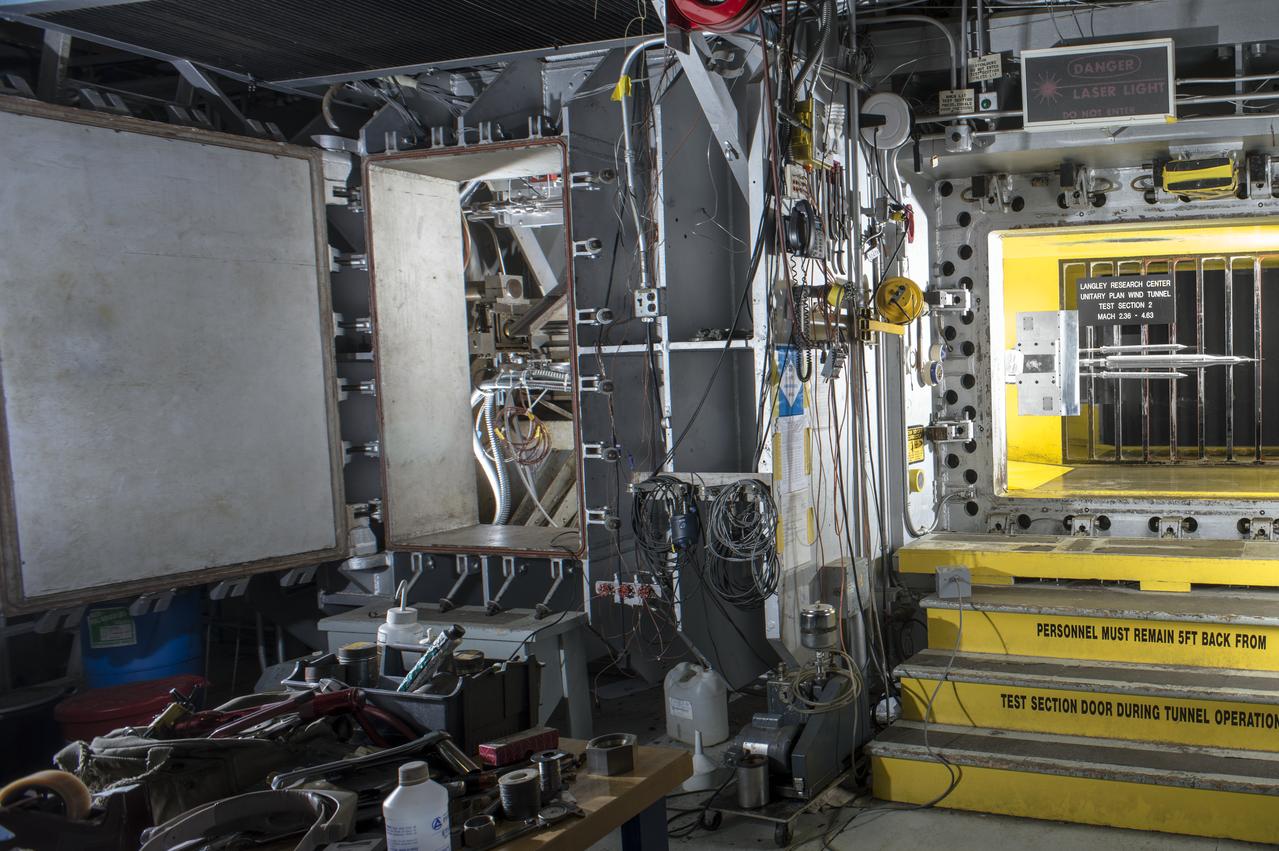
Stage Separation Test of the Space Launch System(SLS) in the Langley Unitary Plan Wind Tunnel (UPWT). The model used High Pressure air blown through the solid rocket boosters. (SRB) to simulate the booster separation motors (BSM) firing.
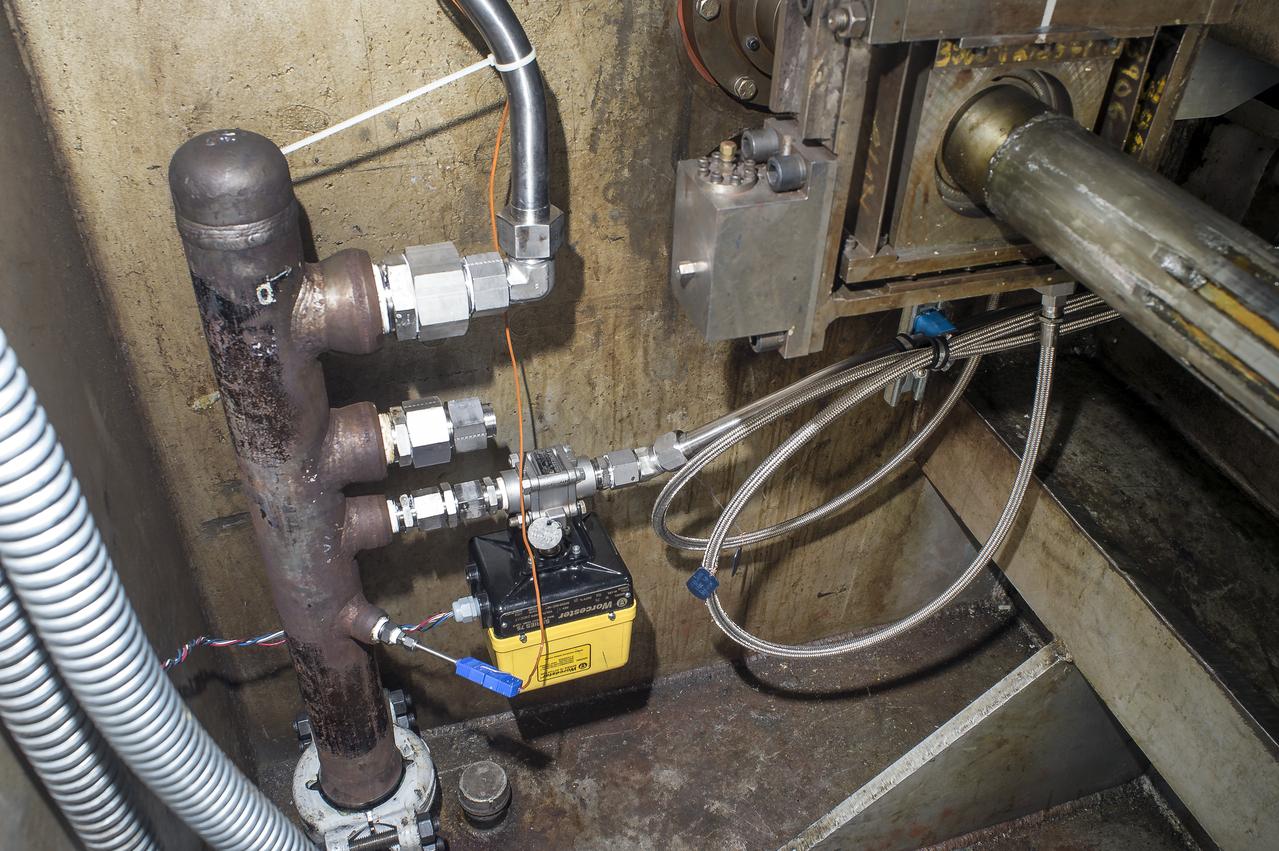
Stage Separation Test of the Space Launch System(SLS) in the Langley Unitary Plan Wind Tunnel (UPWT). The model used High Pressure air blown through the solid rocket boosters. (SRB) to simulate the booster separation motors (BSM) firing.
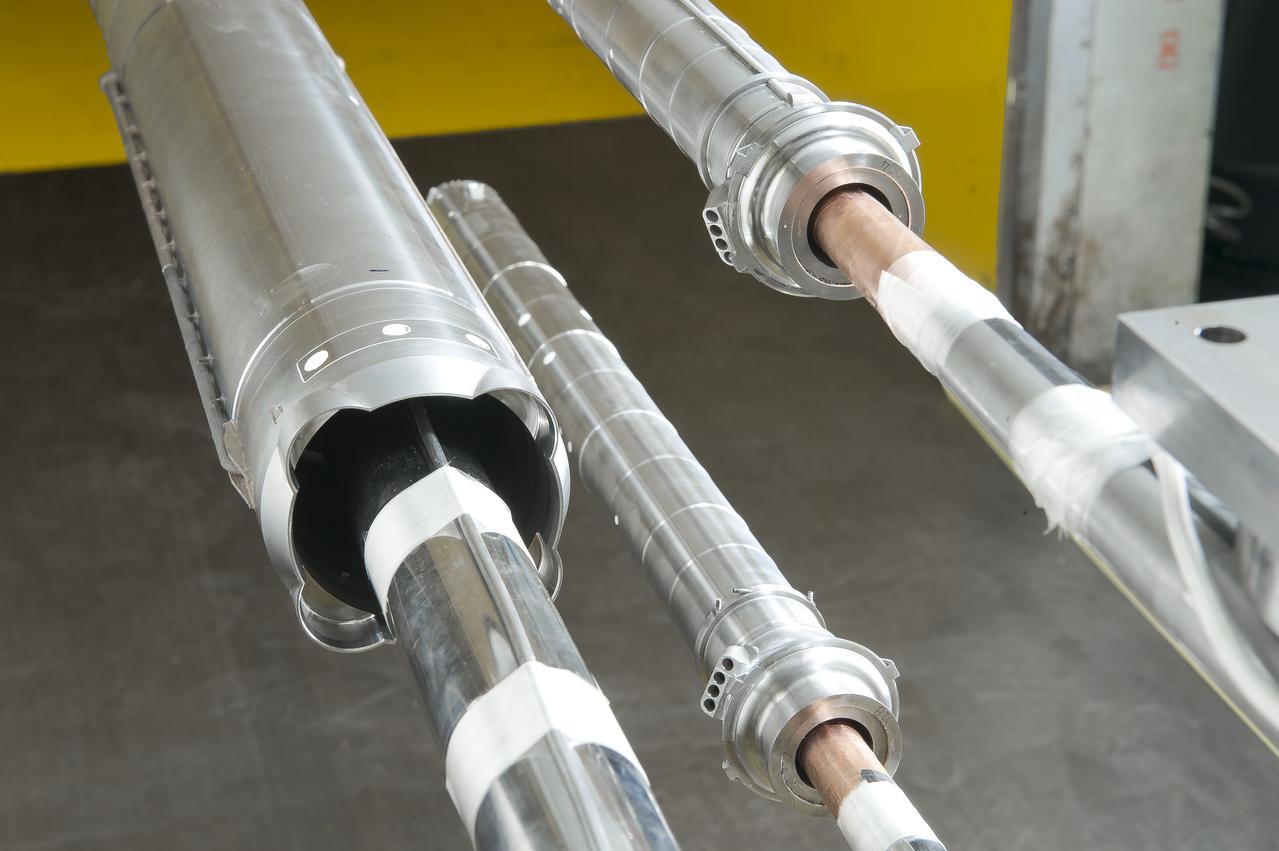
Stage Separation Test of the Space Launch System(SLS) in the Langley Unitary Plan Wind Tunnel (UPWT). The model used High Pressure air blown through the solid rocket boosters. (SRB) to simulate the booster separation motors (BSM) firing.
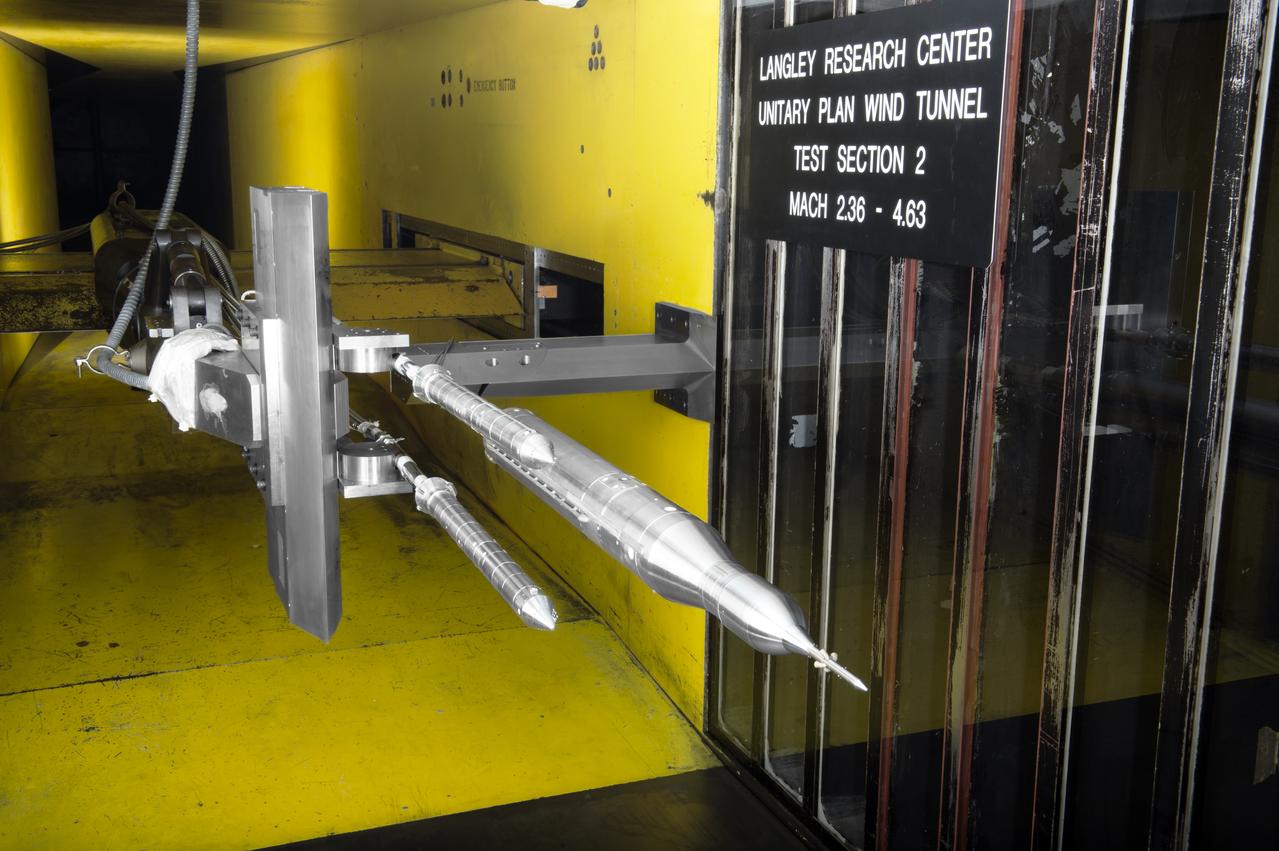
Stage Separation Test of the Space Launch System(SLS) in the Langley Unitary Plan Wind Tunnel (UPWT). The model used High Pressure air blown through the solid rocket boosters. (SRB) to simulate the booster separation motors (BSM) firing.
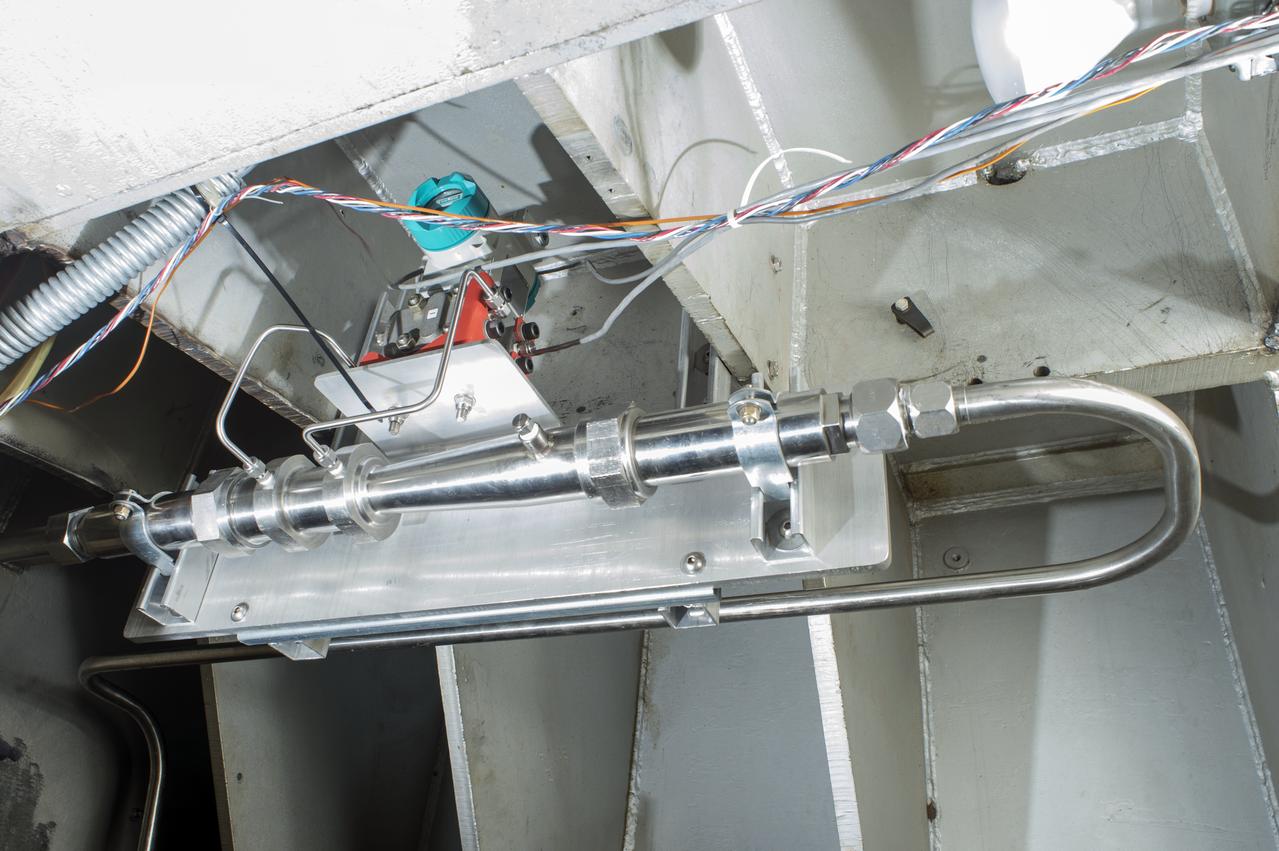
Stage Separation Test of the Space Launch System(SLS) in the Langley Unitary Plan Wind Tunnel (UPWT). The model used High Pressure air blown through the solid rocket boosters. (SRB) to simulate the booster separation motors (BSM) firing.
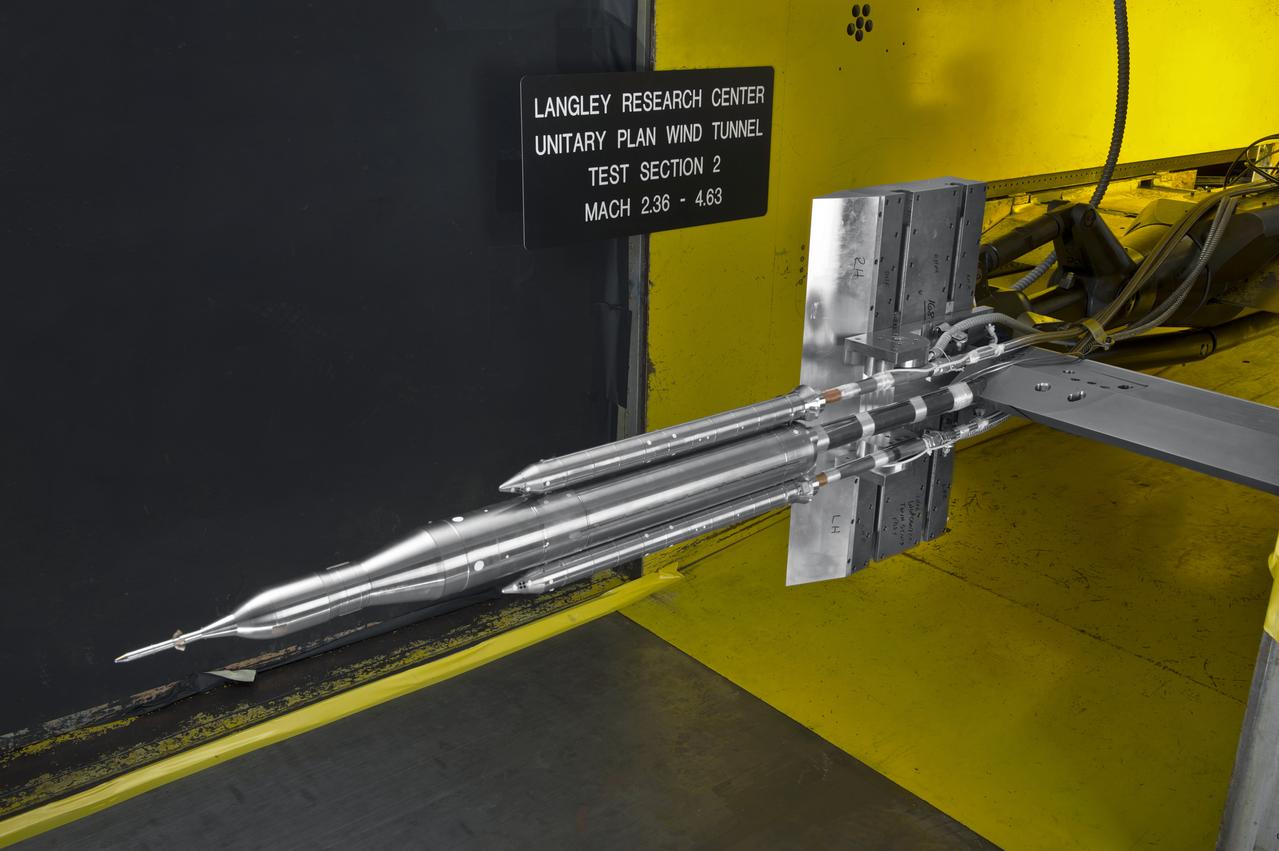
Stage Separation Test of the Space Launch System(SLS) in the Langley Unitary Plan Wind Tunnel (UPWT). The model used High Pressure air blown through the solid rocket boosters. (SRB) to simulate the booster separation motors (BSM) firing.
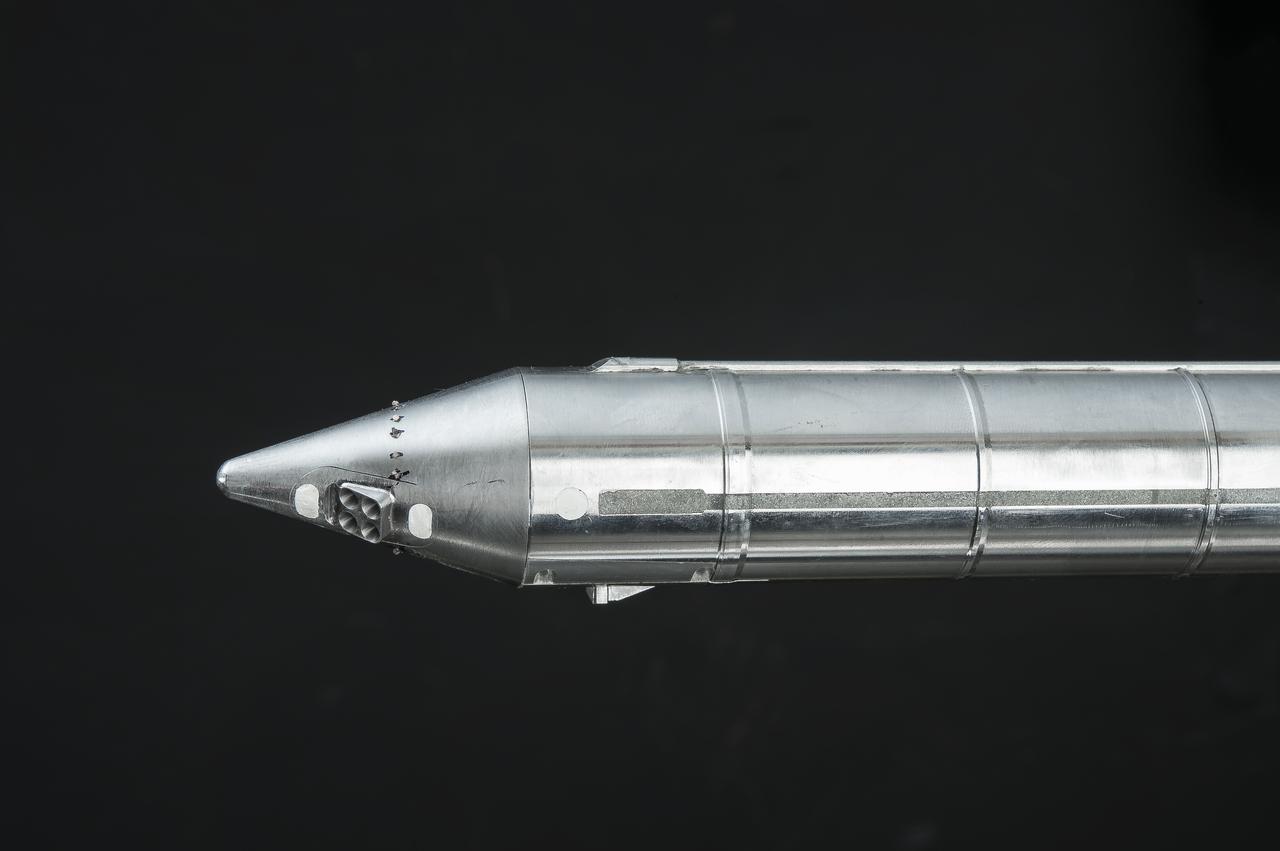
Stage Separation Test of the Space Launch System(SLS) in the Langley Unitary Plan Wind Tunnel (UPWT). The model used High Pressure air blown through the solid rocket boosters. (SRB) to simulate the booster separation motors (BSM) firing.
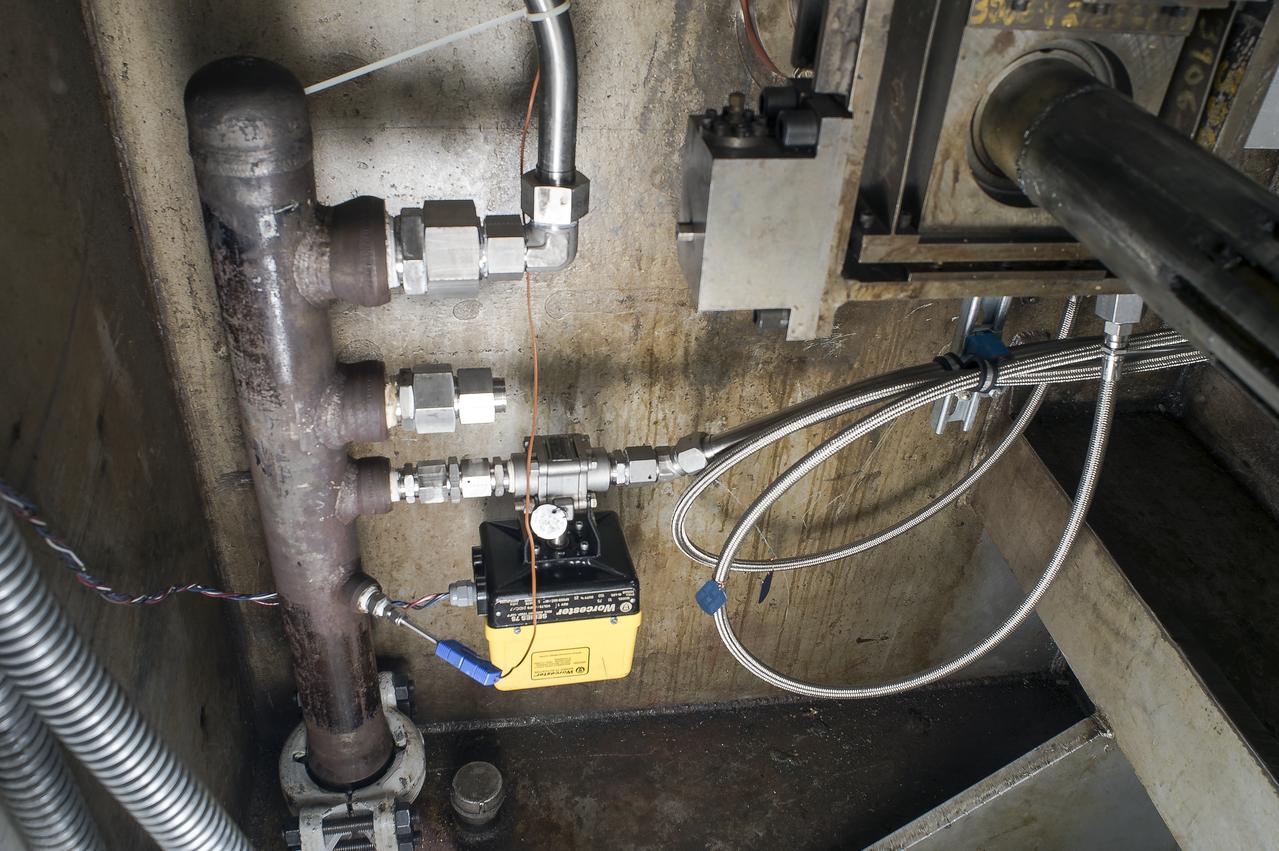
Stage Separation Test of the Space Launch System(SLS) in the Langley Unitary Plan Wind Tunnel (UPWT). The model used High Pressure air blown through the solid rocket boosters. (SRB) to simulate the booster separation motors (BSM) firing.
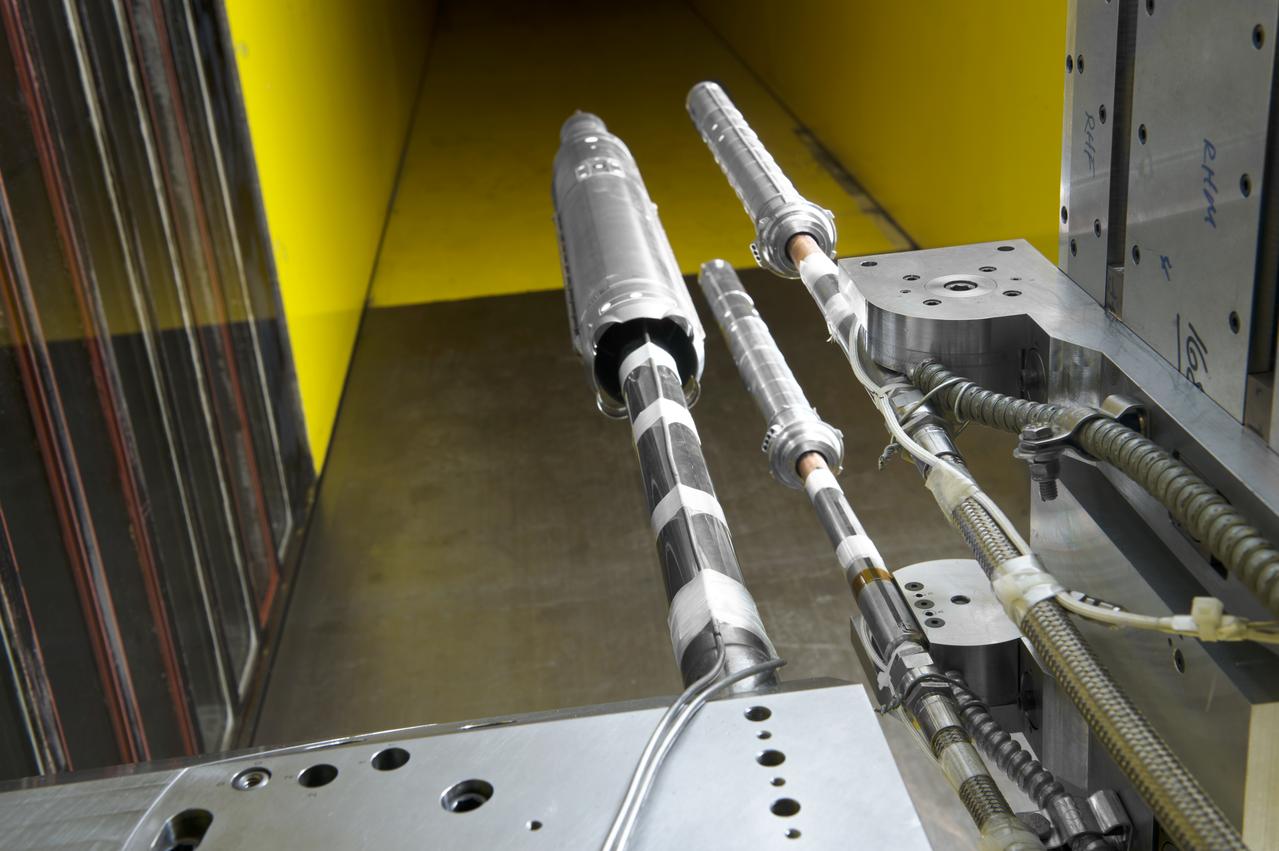
Stage Separation Test of the Space Launch System(SLS) in the Langley Unitary Plan Wind Tunnel (UPWT). The model used High Pressure air blown through the solid rocket boosters. (SRB) to simulate the booster separation motors (BSM) firing.
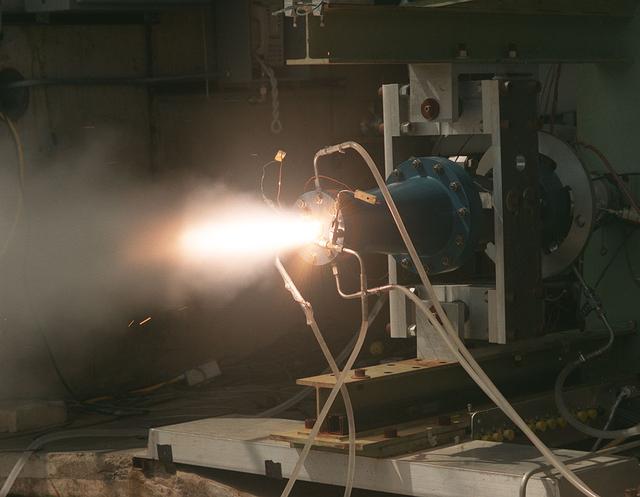
Solid fuel test performed on the Fastrac II engine cell at Marshall's Test Stand 116.
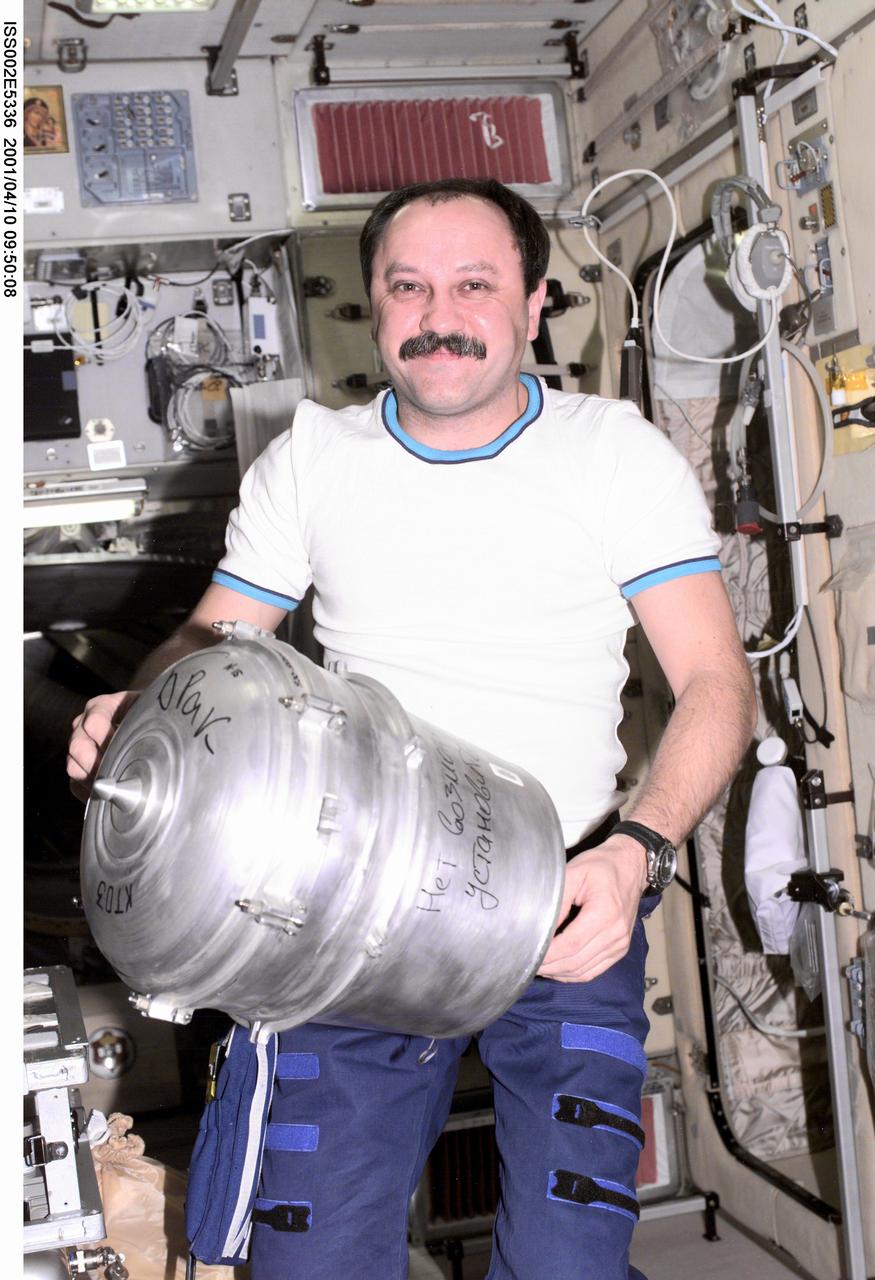
ISS002-E-5336 (10 April 2001) --- As part of routine procedures, cosmonaut Yury V. Usachev, Expedition Two mission commander, changes out a solid waste container in the Zvezda / Service Module. This image was recorded with a digital still camera.
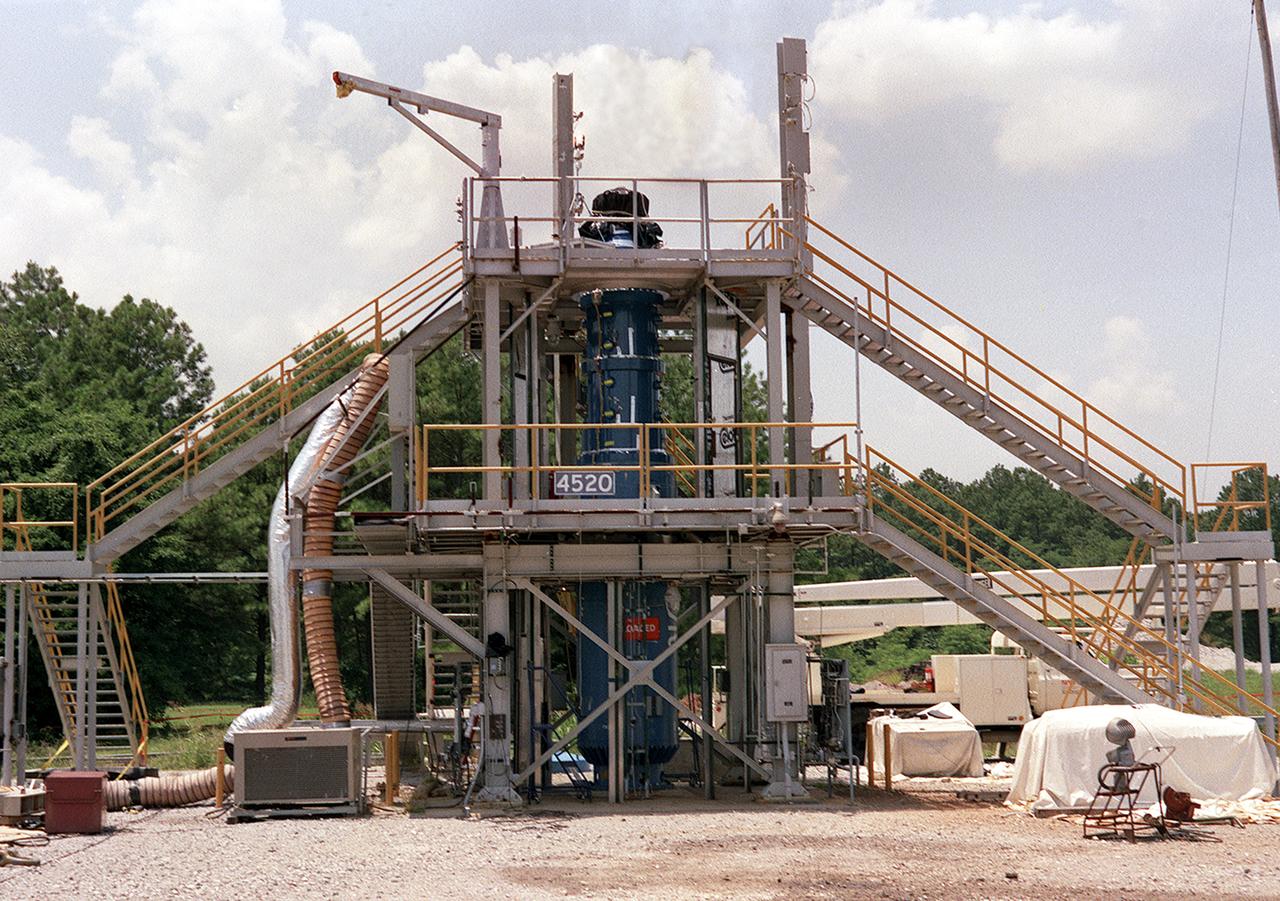
This photograph shows the Solid Propellant Test Article (SPTA) test stand with the Modified Nasa Motor (M-NASA) test article at the Marshall Space Flight Center (MSFC). The SPTA test stand, 12-feet wide by 12-feet long by 24-feet high, was built in 1989 to provide comparative performance data on nozzle and case insulation material and to verify thermostructural analysis models. A modified NASA 48-inch solid motor (M-NASA motor) with a 12-foot blast tube and 10-inch throat makes up the SPTA. The M-NASA motor is being used to evaluate solid rocket motor internal non-asbestos insulation materials, nozzle designs, materials, and new inspection techniques. New internal motor case instrumentation techniques are also being evaluated.
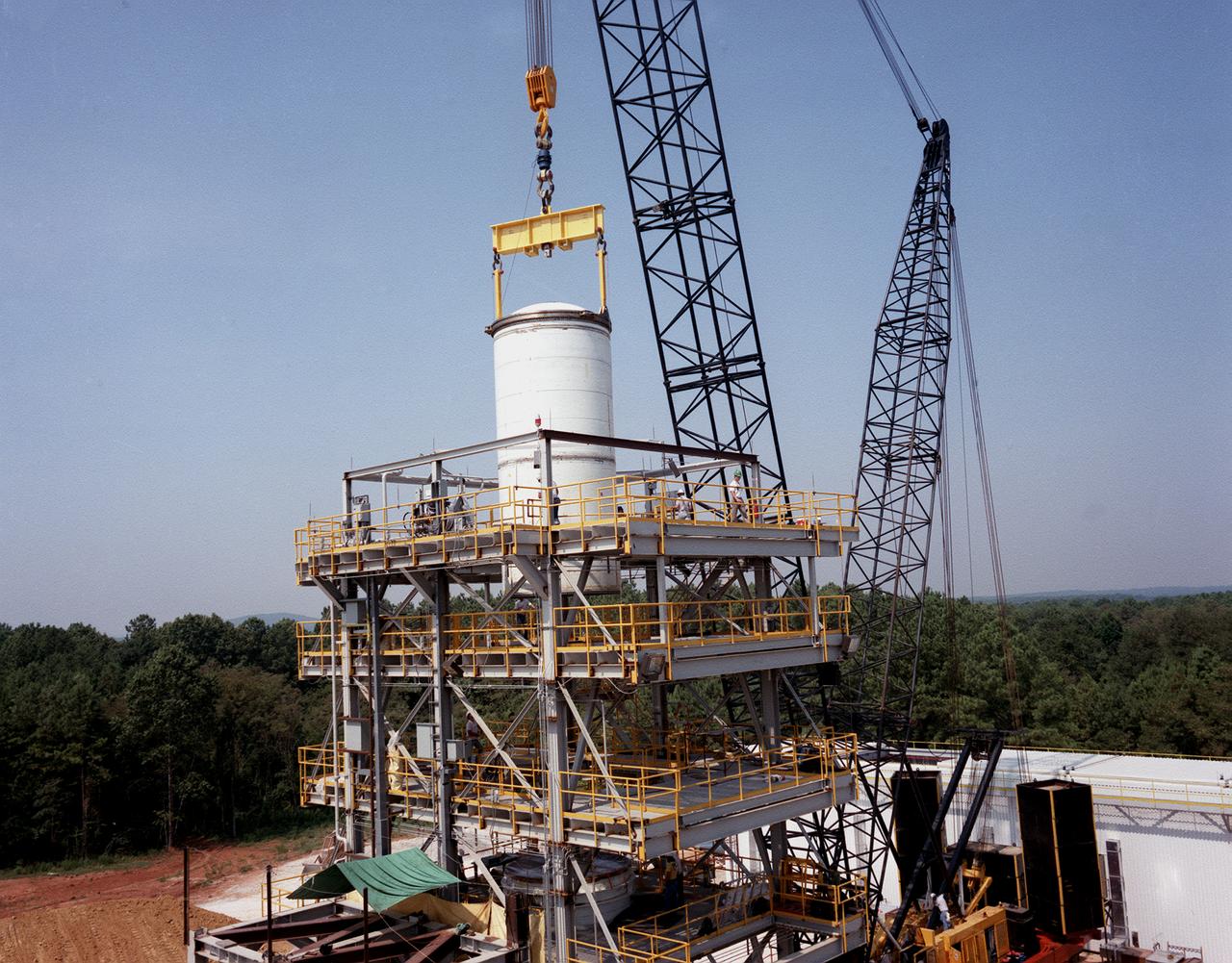
A forward segment is being lowered into the Transient Pressure Test Article (TPTA) test stand at the Marshall Space Flight Center (MSFC) east test area. The TPTA test stand, 14-feet wide, 27-feet long, and 33-feet high, was built in 1987 to provide data to verify the sealing capability of the redesign solid rocket motor (SRM) field and nozzle joints. The test facility applies pressure, temperature, and external loads to a short stack of solid rocket motor hardware. The simulated SRM ignition pressure and temperature transients are achieved by firing a small amount of specially configured solid propellant. The pressure transient is synchronized with external programmable dynamic loads that simulate lift off loads at the external tank attach points. Approximately one million pounds of dead weight on top of the test article simulates the weight of the other Shuttle elements.
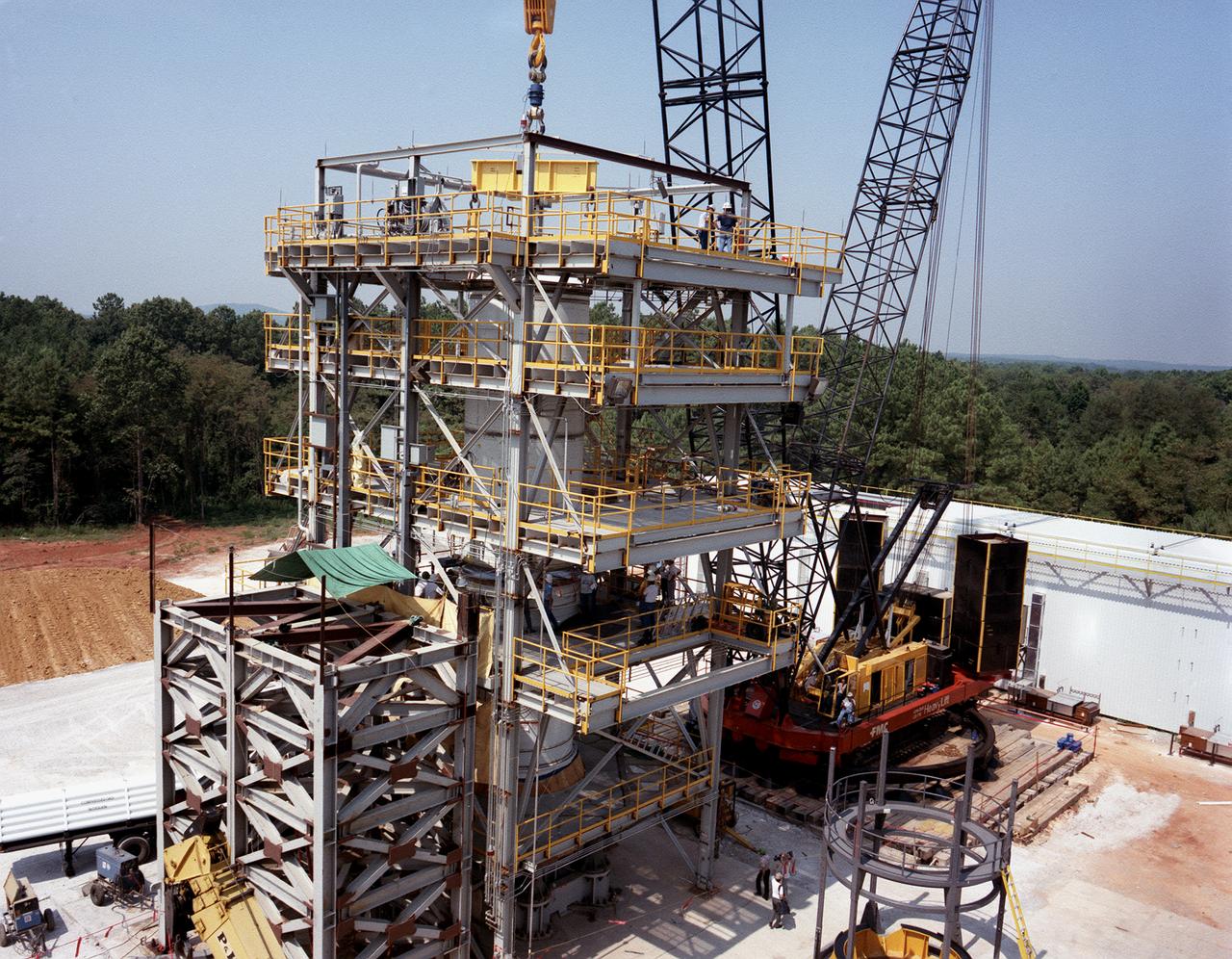
A forward segment is being lowered into the Transient Pressure Test Article (TPTA) test stand at thw Marshall Space Flight Center (MSFC) east test area. The TPTA test stand, 14-feet wide, 27-feet long, and 33-feet high, was built in 1987 to provide data to verify the sealing capability of the redesign solid rocket motor (SRM) field and nozzle joints. The test facility applies pressure, temperature, and external loads to a short stack of solid rocket motor hardware. The simulated SRM ignition pressure and temperature transients are achieved by firing a small amount of specially configured solid propellant. The pressure transient is synchronized with external programmable dynamic loads that simulate lift off loads at the external tank attach points. Approximately one million pounds of dead weight on top of the test article simulates the weight of the other Shuttle elements.
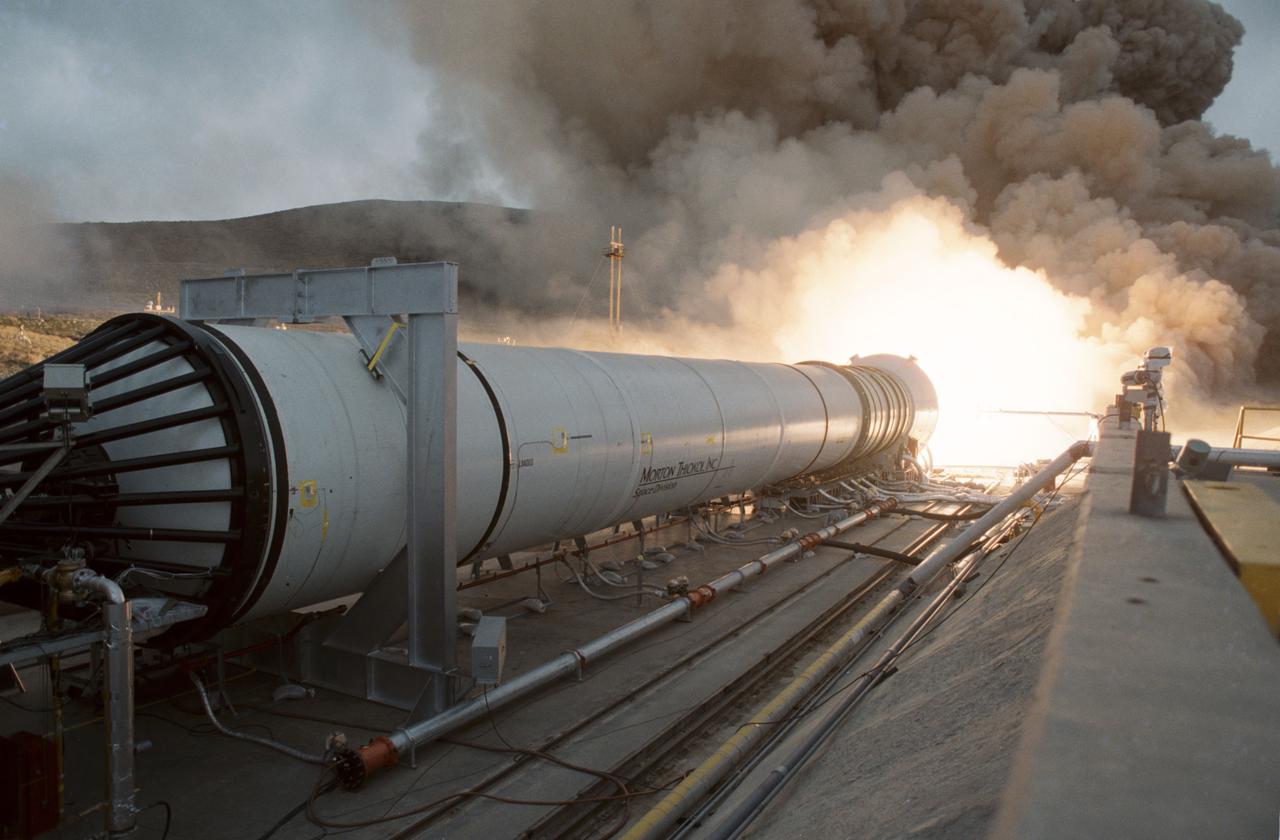
Solid Rocket Qualification Motor Firing at the Morton Thiokol facility at Brigham City, Utah on 20 April 1988.
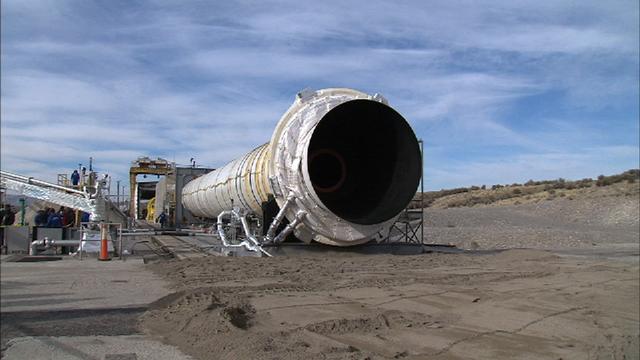
Shown is a test of the TEM-13 Solid Rocket Motor in support of the Ares/CLV first stage at ATK, Utah . Constellaton/Ares project. This image is extracted from a high definition video file and is the highest resolution available.
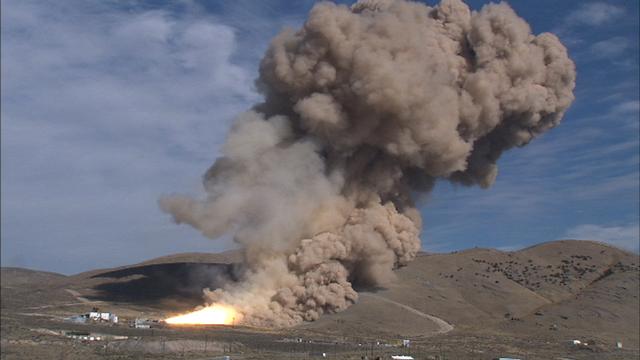
Shown is a test of the TEM-13 Solid Rocket Motor in support of the Ares/CLV first stage at ATK, Utah . Constellation/Ares project. This image is extracted from a high definition video file and is the highest resolution available.
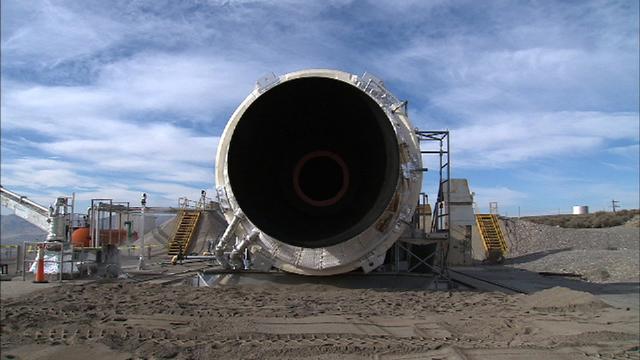
Shown is a test of the TEM-13 solid rocket motor at the ATK test facility in Utah in support of the Ares/CLV first stage. This image is extracted from high definition video and is the highest resolution available.
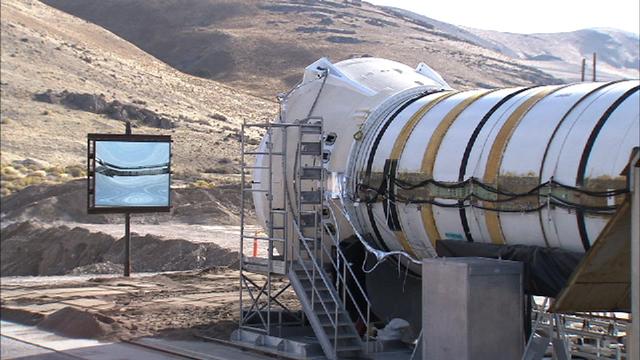
Shown is a test of the TEM-13 solid rocket motor at the ATK test facility in Utah in support of the Ares/CLV first stage. This image is extracted from high definition video and is the highest resolution available.
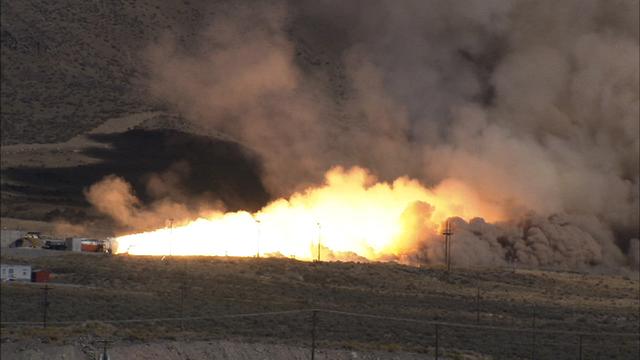
Shown is a test of the TEM-13 solid rocket motor at the ATK test facility in Utah in support of the Ares/CLV first stage. This image is extracted from high definition video and is the highest resolution available.
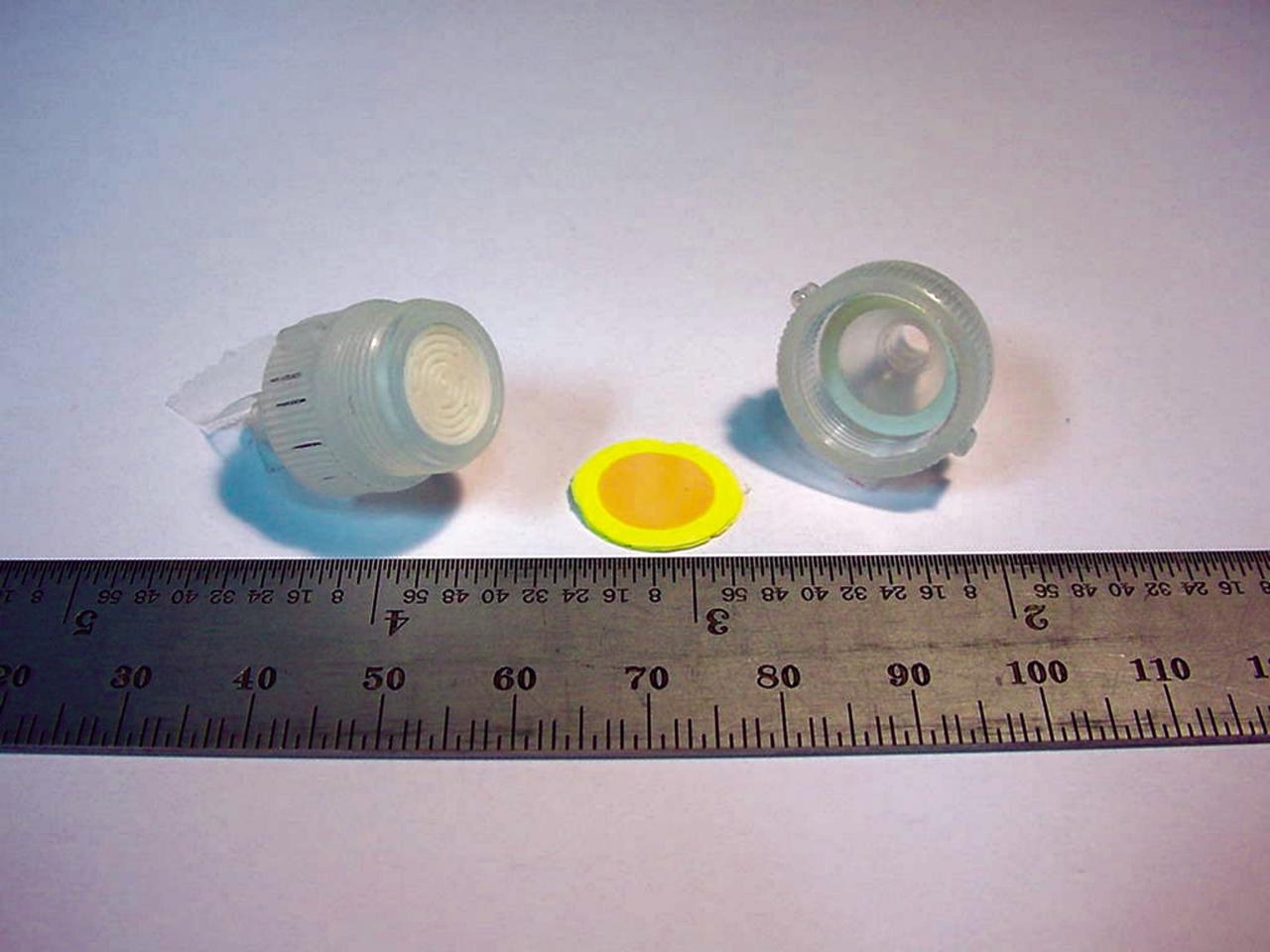
The heart of a colorimetric solid phase extractor (CSPE) test kit quickly measures the concentration of the biocides silver or iodine in astronauts’ drinking water to determine whether concentrations are safe. When 10 milliliters (ml) of water is drawn through the disk, the disk will turn color (yellow in this picture for iodine) indicating the presence of the biocides. The device could someday be used to test water safety at reservoirs and water treatment plants on Earth. (photo credit: Microanalytical Instrumentation Center, Iowa State University).
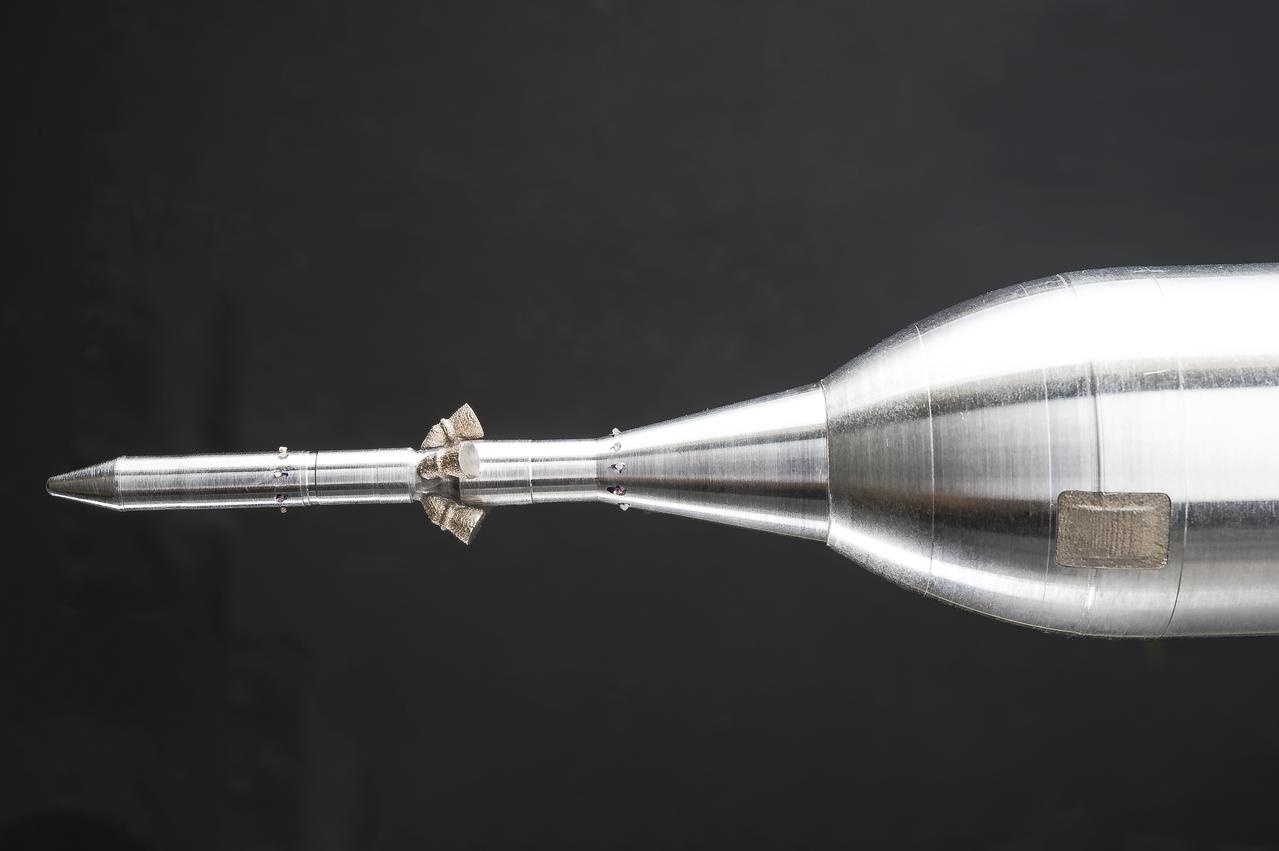
Stage Separation Test of the Space Launch System(SLS) in the Langley Unitary Plan Wind Tunnel (UPWT). The model used High Pressure air blown through the solid rocket boosters. (SRB) to simulate the booster separation motors (BSM) firing.
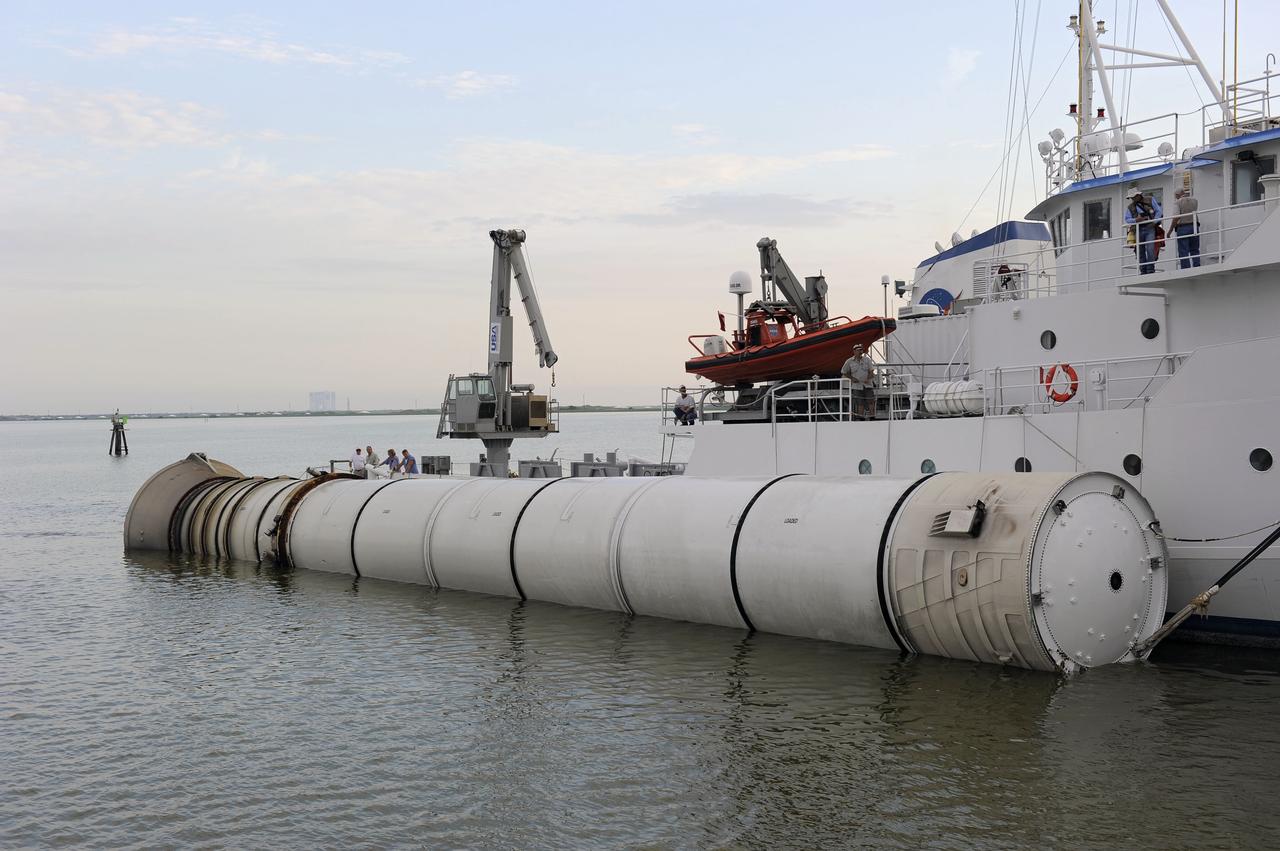
CAPE CANAVERAL, Fla. – Liberty Star, one of NASA’s solid rocket booster retrieval ships, tows a spent booster from space shuttle Atlantis’ final launch, to Port Canaveral in Florida. The shuttle’s two solid rocket booster casings and associated flight hardware are recovered in the Atlantic Ocean after every launch by Freedom Star and Liberty Star. The boosters impact the Atlantic about seven minutes after liftoff and the retrieval ships are stationed about 10 miles from the impact area at the time of splashdown. After the spent segments are processed, they will be transported to Utah, where they will be deserviced and stored, if needed. Atlantis began its final flight, STS-135, at 11:29 a.m. EDT on July 8 to deliver the Raffaello multi-purpose logistics module packed with supplies and spare parts to the International Space Station. Photo credit: NASA/Kim Shiflett
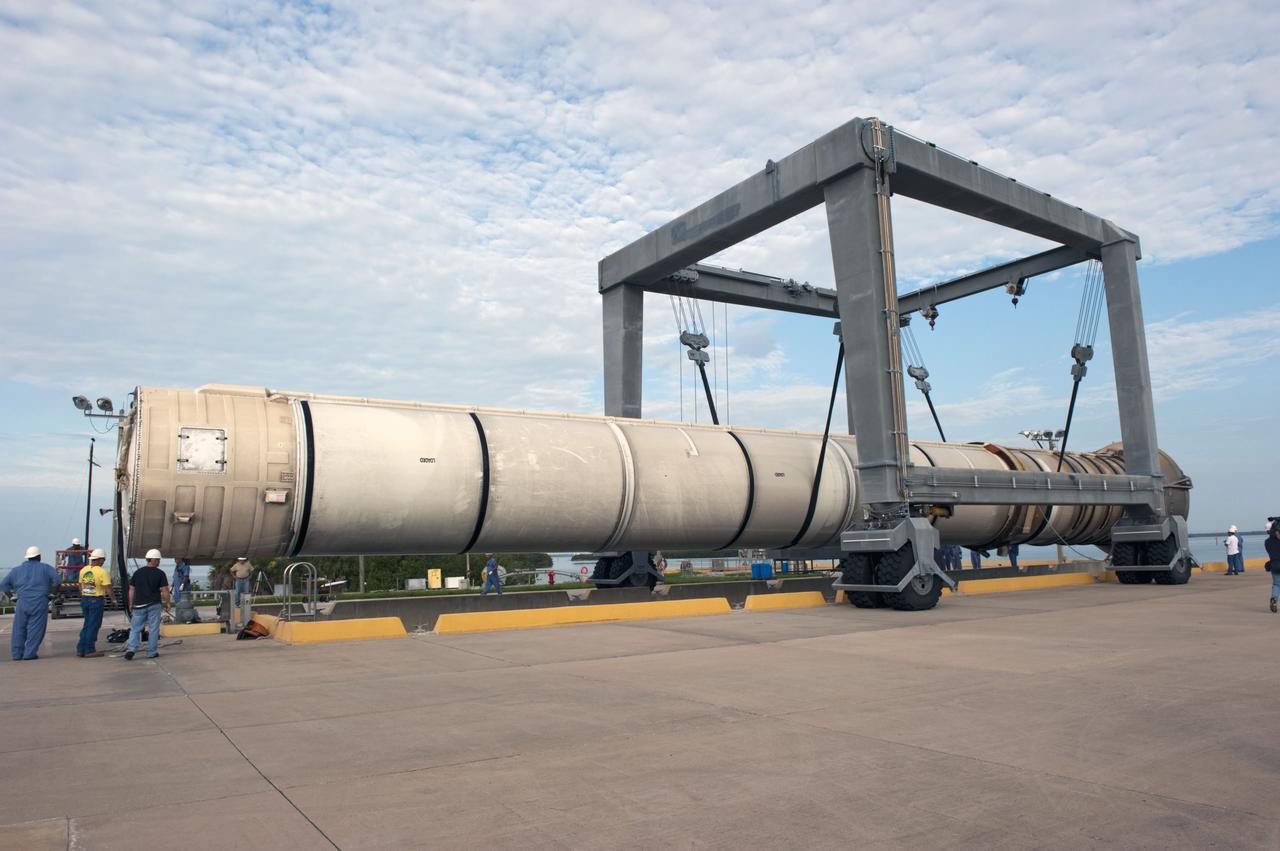
CAPE CANAVERAL, Fla. – One of two solid rocket boosters is lifted above a mooring at Port Canaveral in Florida. Liberty Star, one of NASA’s two booster retrieval ships, towed the spent booster from space shuttle Atlantis’ final launch to the port. The shuttle’s two solid rocket booster casings and associated flight hardware are recovered in the Atlantic Ocean after every launch by Freedom Star and Liberty Star. The boosters impact the Atlantic about seven minutes after liftoff, and the retrieval ships are stationed about 10 miles from the impact area at the time of splashdown. After the spent segments are processed, they will be transported to Utah, where they will be deserviced and stored, if needed. Atlantis began its final flight, STS-135, at 11:29 a.m. EDT on July 8 to deliver the Raffaello multi-purpose logistics module packed with supplies and spare parts to the International Space Station. Photo credit: NASA/Kim Shiflett
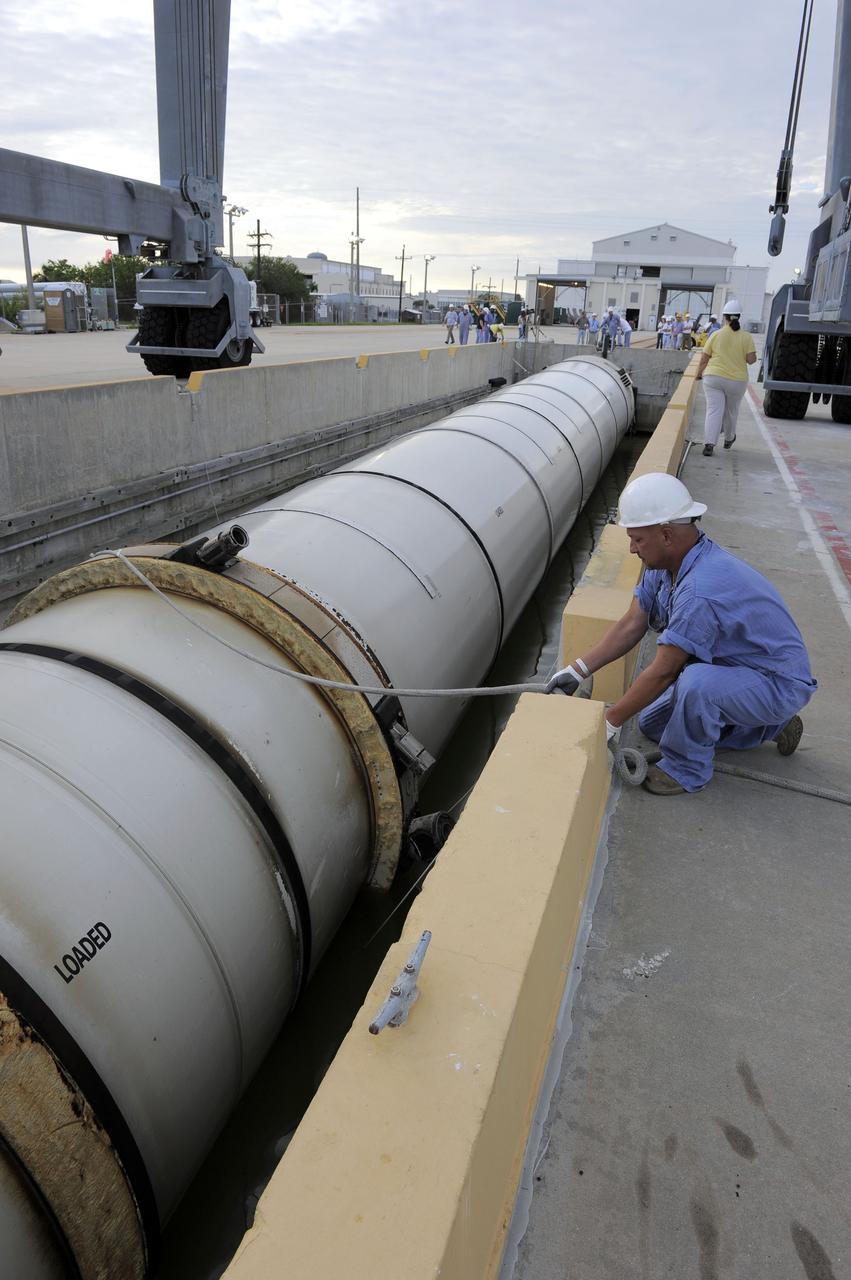
CAPE CANAVERAL, Fla. – A worker secures one of two solid rocket boosters to a mooring at Port Canaveral in Florida. Liberty Star, one of NASA’s two booster retrieval ships, towed the spent booster from space shuttle Atlantis’ final launch to the port. The shuttle’s two solid rocket booster casings and associated flight hardware are recovered in the Atlantic Ocean after every launch by Freedom Star and Liberty Star. The boosters impact the Atlantic about seven minutes after liftoff, and the retrieval ships are stationed about 10 miles from the impact area at the time of splashdown. After the spent segments are processed, they will be transported to Utah, where they will be deserviced and stored, if needed. Atlantis began its final flight, STS-135, at 11:29 a.m. EDT on July 8 to deliver the Raffaello multi-purpose logistics module packed with supplies and spare parts to the International Space Station. Photo credit: NASA/Kim Shiflett
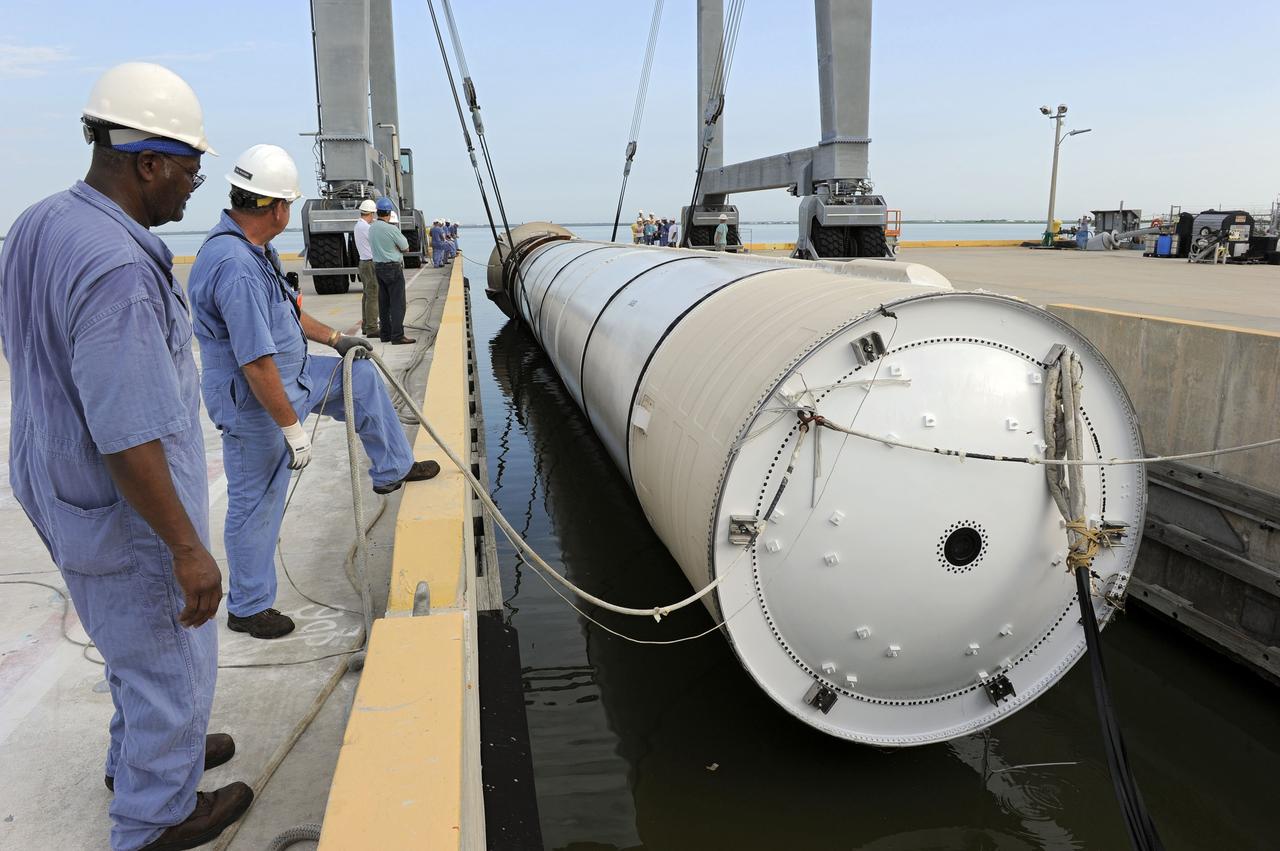
CAPE CANAVERAL, Fla. – Workers help secure one of two solid rocket boosters to a mooring at Port Canaveral in Florida. Liberty Star, one of NASA’s two booster retrieval ships, towed the spent booster from space shuttle Atlantis’ final launch to the port. The shuttle’s two solid rocket booster casings and associated flight hardware are recovered in the Atlantic Ocean after every launch by Freedom Star and Liberty Star. The boosters impact the Atlantic about seven minutes after liftoff, and the retrieval ships are stationed about 10 miles from the impact area at the time of splashdown. After the spent segments are processed, they will be transported to Utah, where they will be deserviced and stored, if needed. Atlantis began its final flight, STS-135, at 11:29 a.m. EDT on July 8 to deliver the Raffaello multi-purpose logistics module packed with supplies and spare parts to the International Space Station. Photo credit: NASA/Kim Shiflett
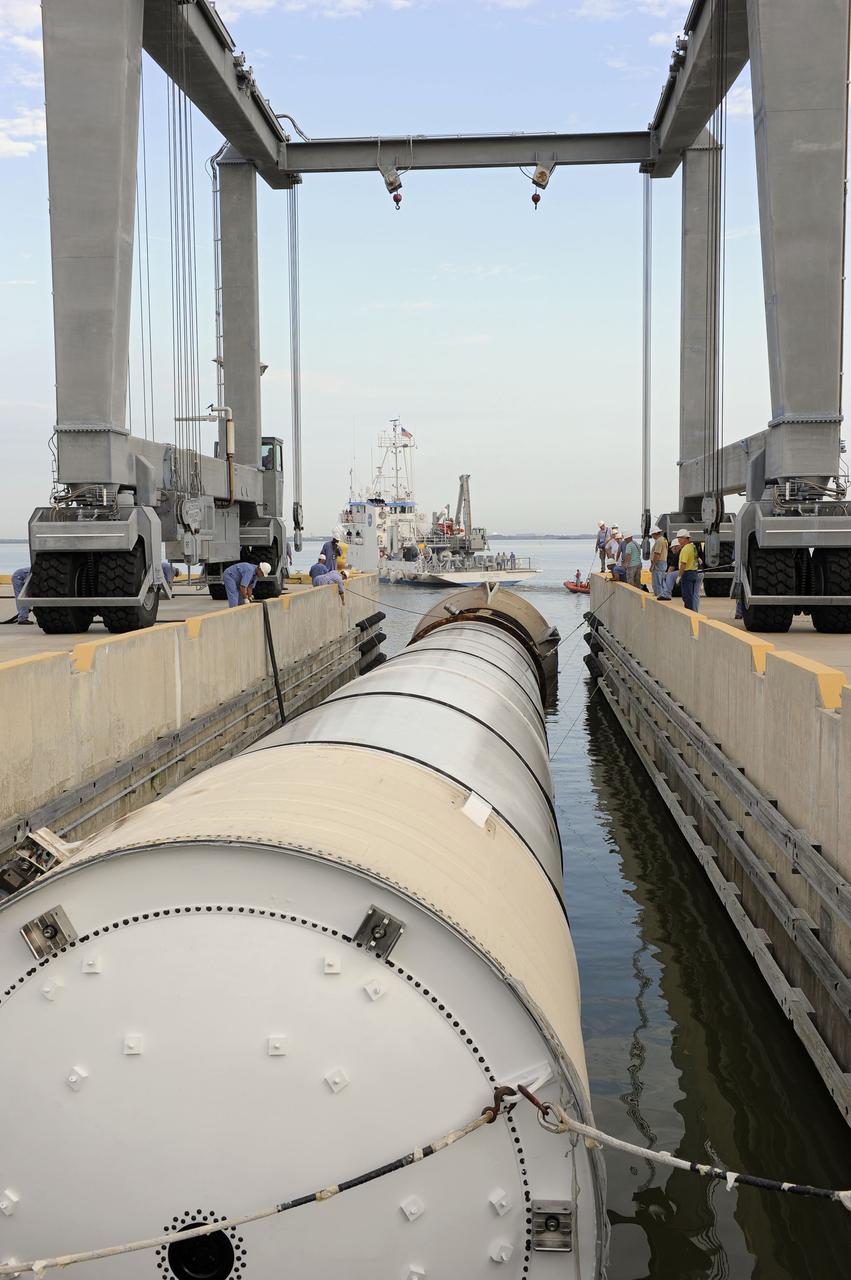
CAPE CANAVERAL, Fla. – One of two solid rocket boosters is secured to a mooring at Port Canaveral in Florida. Liberty Star, one of NASA’s two booster retrieval ships, towed the spent booster from space shuttle Atlantis’ final launch to the port. The shuttle’s two solid rocket booster casings and associated flight hardware are recovered in the Atlantic Ocean after every launch by Freedom Star and Liberty Star. The boosters impact the Atlantic about seven minutes after liftoff, and the retrieval ships are stationed about 10 miles from the impact area at the time of splashdown. After the spent segments are processed, they will be transported to Utah, where they will be deserviced and stored, if needed. Atlantis began its final flight, STS-135, at 11:29 a.m. EDT on July 8 to deliver the Raffaello multi-purpose logistics module packed with supplies and spare parts to the International Space Station. Photo credit: NASA/Kim Shiflett
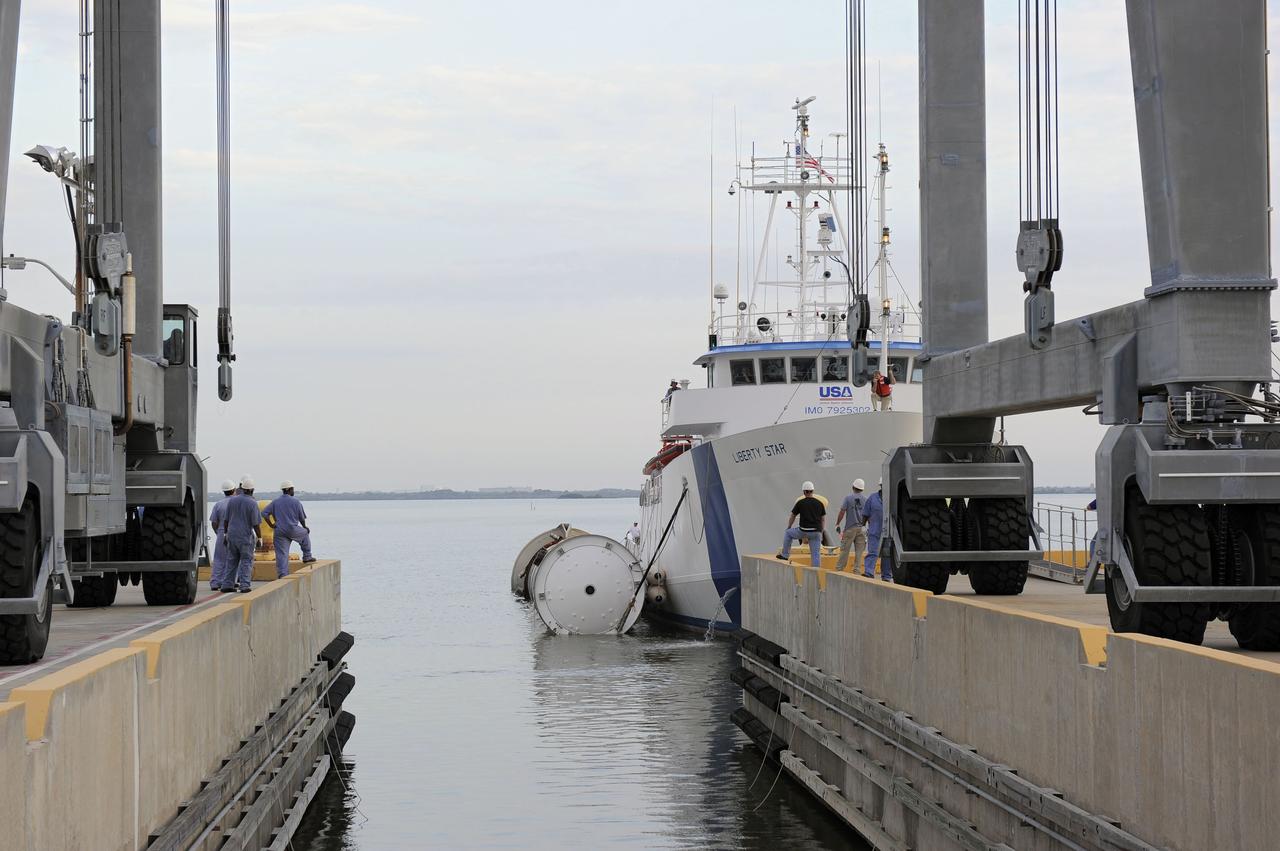
CAPE CANAVERAL, Fla. – Liberty Star, one of NASA’s solid rocket booster retrieval ships, tows a spent booster from space shuttle Atlantis’ final launch, to Port Canaveral in Florida. The shuttle’s two solid rocket booster casings and associated flight hardware are recovered in the Atlantic Ocean after every launch by Freedom Star and Liberty Star. The boosters impact the Atlantic about seven minutes after liftoff, and the retrieval ships are stationed about 10 miles from the impact area at the time of splashdown. After the spent segments are processed, they will be transported to Utah, where they will be deserviced and stored, if needed. Atlantis began its final flight, STS-135, at 11:29 a.m. EDT on July 8 to deliver the Raffaello multi-purpose logistics module packed with supplies and spare parts to the International Space Station. Photo credit: NASA/Kim Shiflett
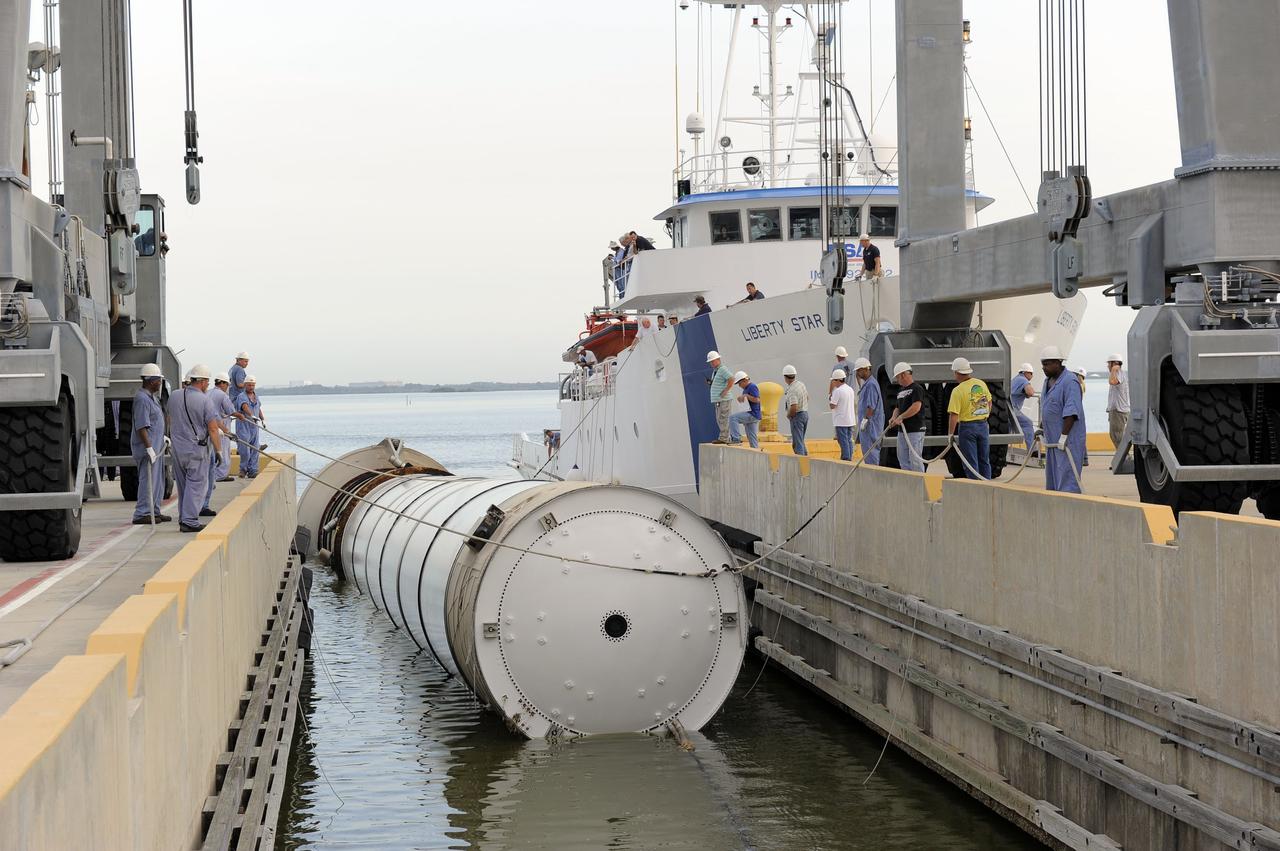
CAPE CANAVERAL, Fla. – Workers assist as Liberty Star, one of NASA’s solid rocket booster retrieval ships, tows a spent booster from space shuttle Atlantis’ final launch to Port Canaveral in Florida. The shuttle’s two solid rocket booster casings and associated flight hardware are recovered in the Atlantic Ocean after every launch by Freedom Star and Liberty Star. The boosters impact the Atlantic about seven minutes after liftoff, and the retrieval ships are stationed about 10 miles from the impact area at the time of splashdown. After the spent segments are processed, they will be transported to Utah, where they will be deserviced and stored, if needed. Atlantis began its final flight, STS-135, at 11:29 a.m. EDT on July 8 to deliver the Raffaello multi-purpose logistics module packed with supplies and spare parts to the International Space Station. Photo credit: NASA/Kim Shiflett
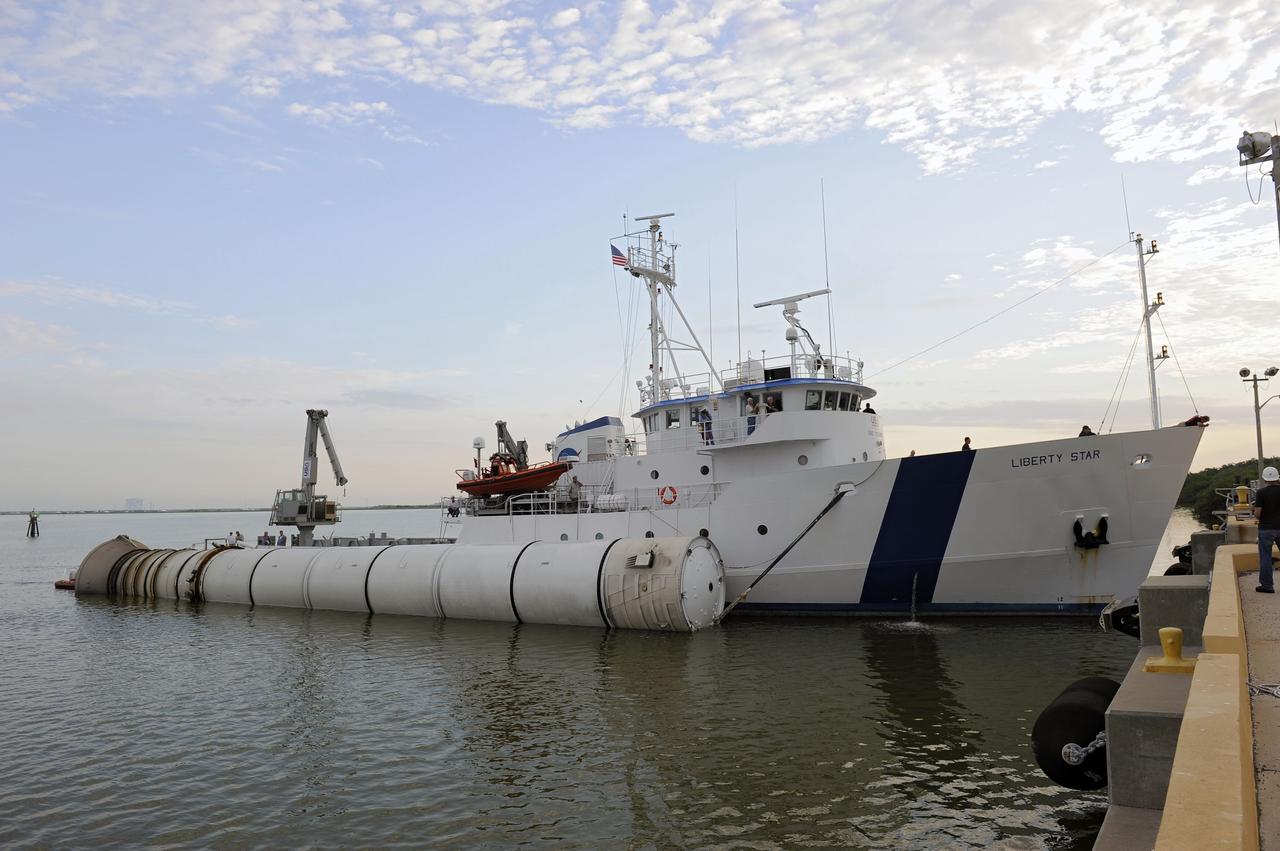
CAPE CANAVERAL, Fla. – Liberty Star, one of NASA’s solid rocket booster retrieval ships, tows a spent booster from space shuttle Atlantis’ final launch, to Port Canaveral in Florida. The shuttle’s two solid rocket booster casings and associated flight hardware are recovered in the Atlantic Ocean after every launch by Freedom Star and Liberty Star. The boosters impact the Atlantic about seven minutes after liftoff and the retrieval ships are stationed about 10 miles from the impact area at the time of splashdown. After the spent segments are processed, they will be transported to Utah, where they will be deserviced and stored, if needed. Atlantis began its final flight, STS-135, at 11:29 a.m. EDT on July 8 to deliver the Raffaello multi-purpose logistics module packed with supplies and spare parts to the International Space Station. Photo credit: NASA/Kim Shiflett
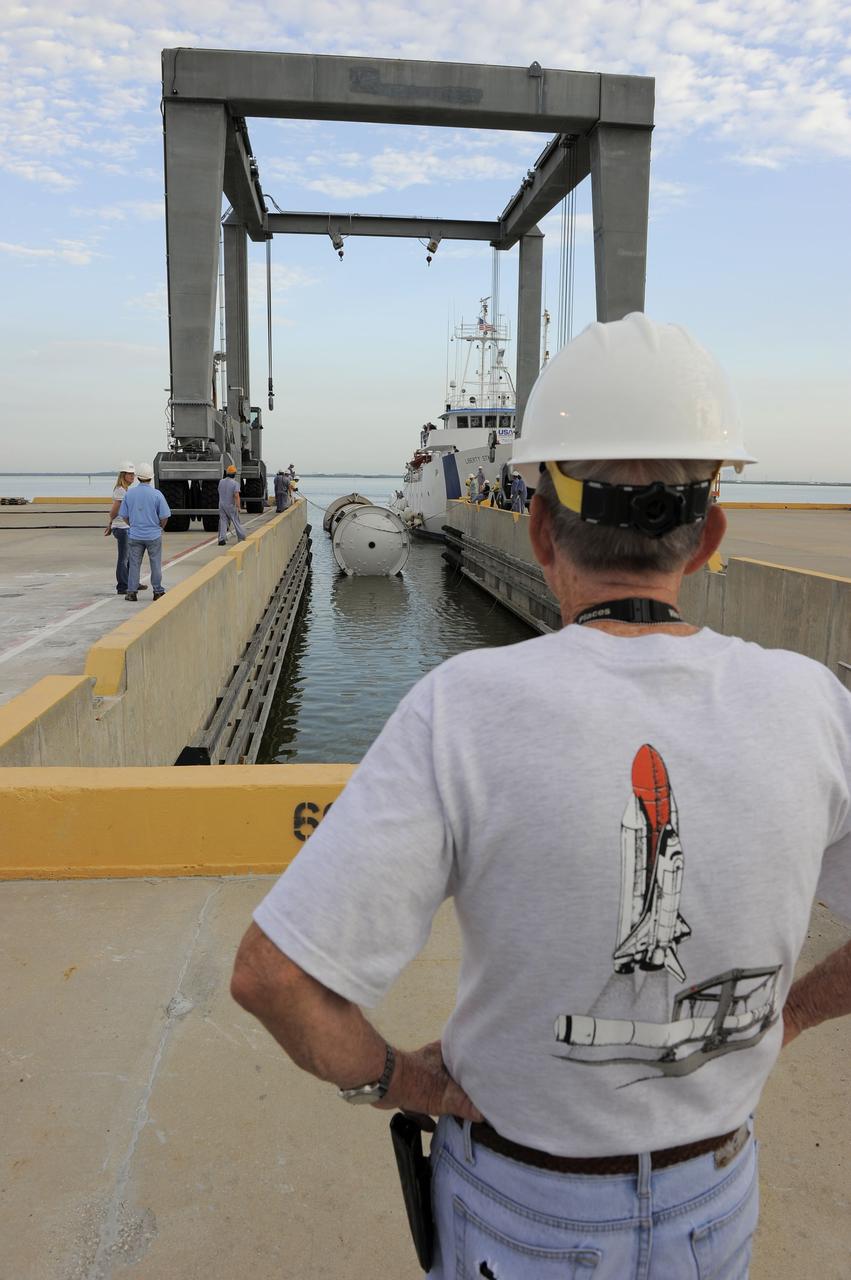
CAPE CANAVERAL, Fla. – Workers watch as Liberty Star, one of NASA’s solid rocket booster retrieval ships, tows a spent booster from space shuttle Atlantis’ final launch, to Port Canaveral in Florida. The shuttle’s two solid rocket booster casings and associated flight hardware are recovered in the Atlantic Ocean after every launch by Freedom Star and Liberty Star. The boosters impact the Atlantic about seven minutes after liftoff, and the retrieval ships are stationed about 10 miles from the impact area at the time of splashdown. After the spent segments are processed, they will be transported to Utah, where they will be deserviced and stored, if needed. Atlantis began its final flight, STS-135, at 11:29 a.m. EDT on July 8 to deliver the Raffaello multi-purpose logistics module packed with supplies and spare parts to the International Space Station. Photo credit: NASA/Kim Shiflett
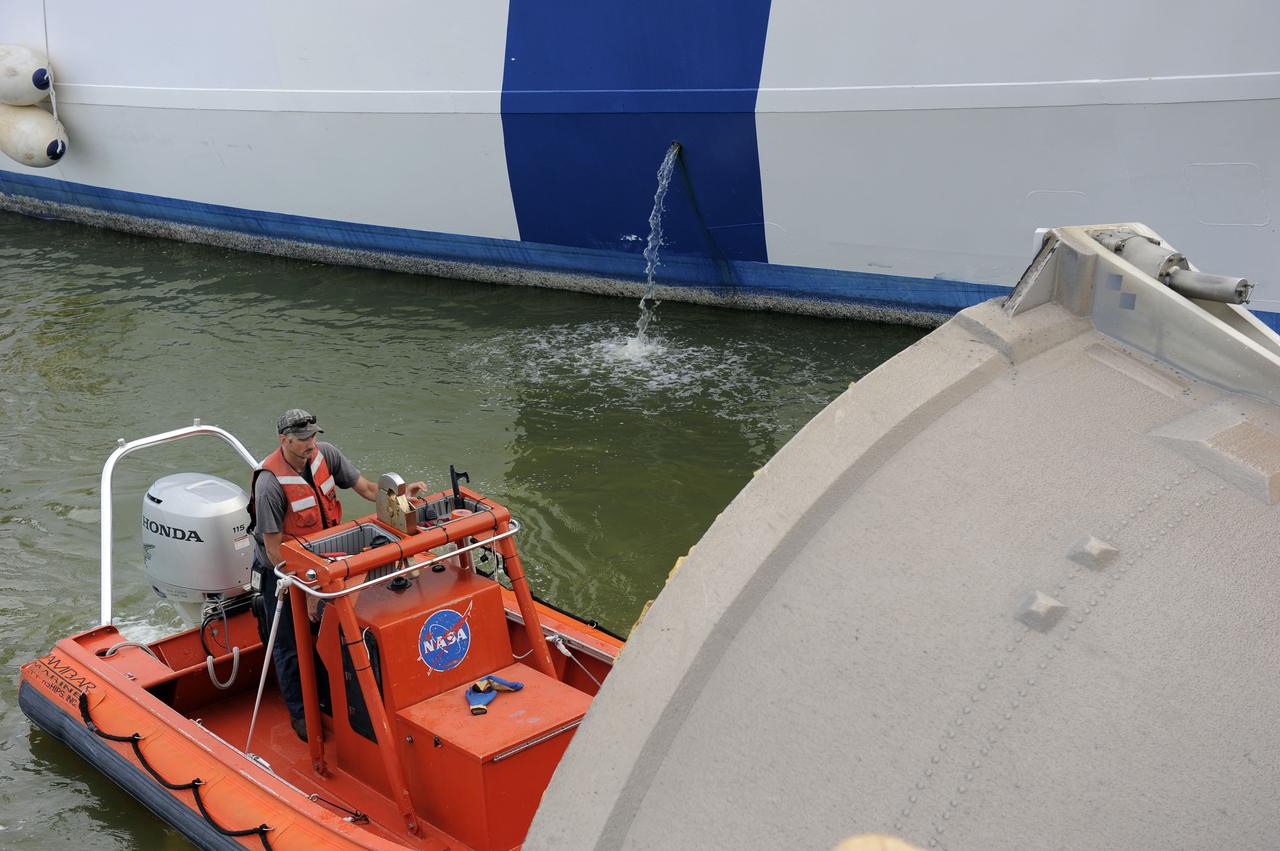
CAPE CANAVERAL, Fla. – A United Space Alliance tugboat driver monitors the progress as Liberty Star, one of NASA’s solid rocket booster retrieval ships, tows a spent booster from space shuttle Atlantis’ final launch to Port Canaveral in Florida. The shuttle’s two solid rocket booster casings and associated flight hardware are recovered in the Atlantic Ocean after every launch by Freedom Star and Liberty Star. The boosters impact the Atlantic about seven minutes after liftoff, and the retrieval ships are stationed about 10 miles from the impact area at the time of splashdown. After the spent segments are processed, they will be transported to Utah, where they will be deserviced and stored, if needed. Atlantis began its final flight, STS-135, at 11:29 a.m. EDT on July 8 to deliver the Raffaello multi-purpose logistics module packed with supplies and spare parts to the International Space Station. Photo credit: NASA/Kim Shiflett
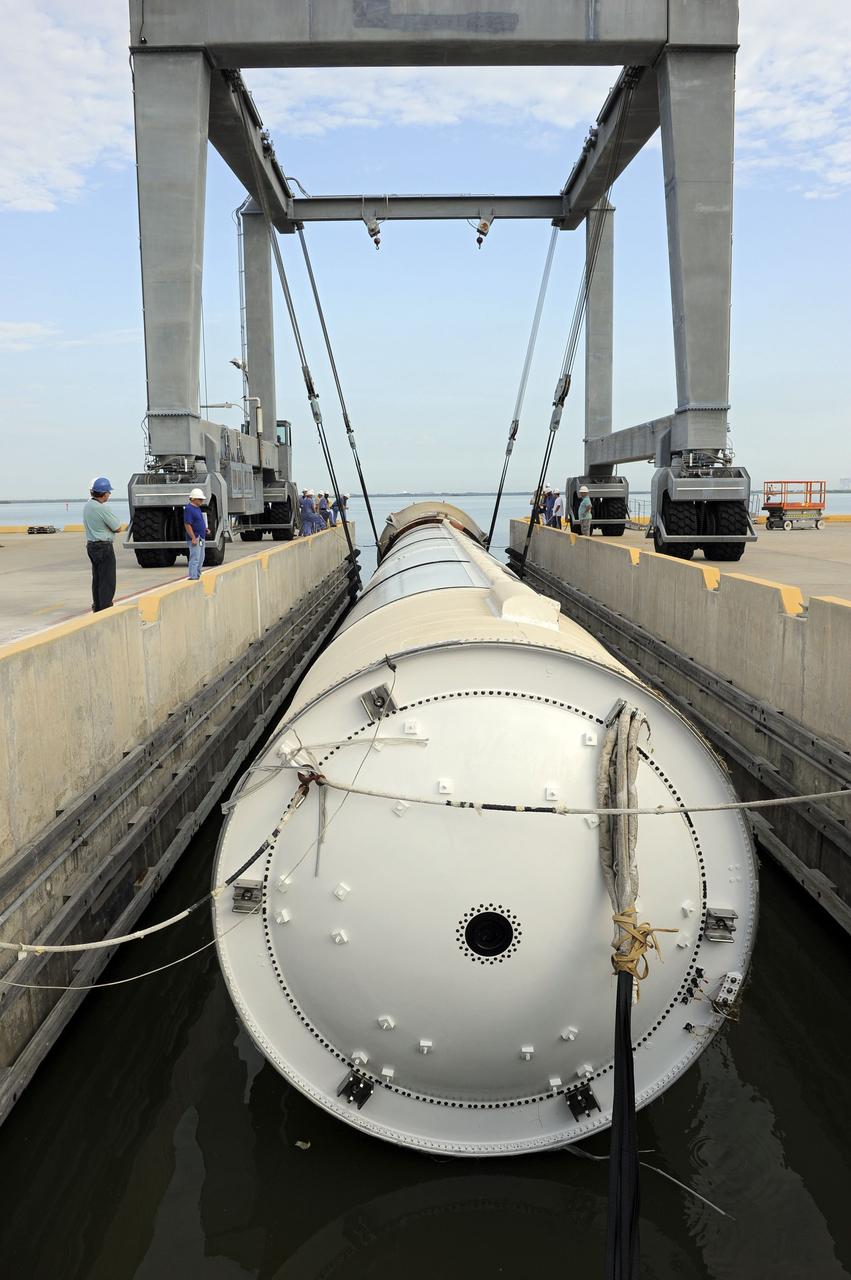
CAPE CANAVERAL, Fla. – One of two solid rocket boosters is secured to a mooring at Port Canaveral in Florida. Liberty Star, one of NASA’s two booster retrieval ships, towed the spent booster from space shuttle Atlantis’ final launch to the port. The shuttle’s two solid rocket booster casings and associated flight hardware are recovered in the Atlantic Ocean after every launch by Freedom Star and Liberty Star. The boosters impact the Atlantic about seven minutes after liftoff, and the retrieval ships are stationed about 10 miles from the impact area at the time of splashdown. After the spent segments are processed, they will be transported to Utah, where they will be deserviced and stored, if needed. Atlantis began its final flight, STS-135, at 11:29 a.m. EDT on July 8 to deliver the Raffaello multi-purpose logistics module packed with supplies and spare parts to the International Space Station. Photo credit: NASA/Kim Shiflett
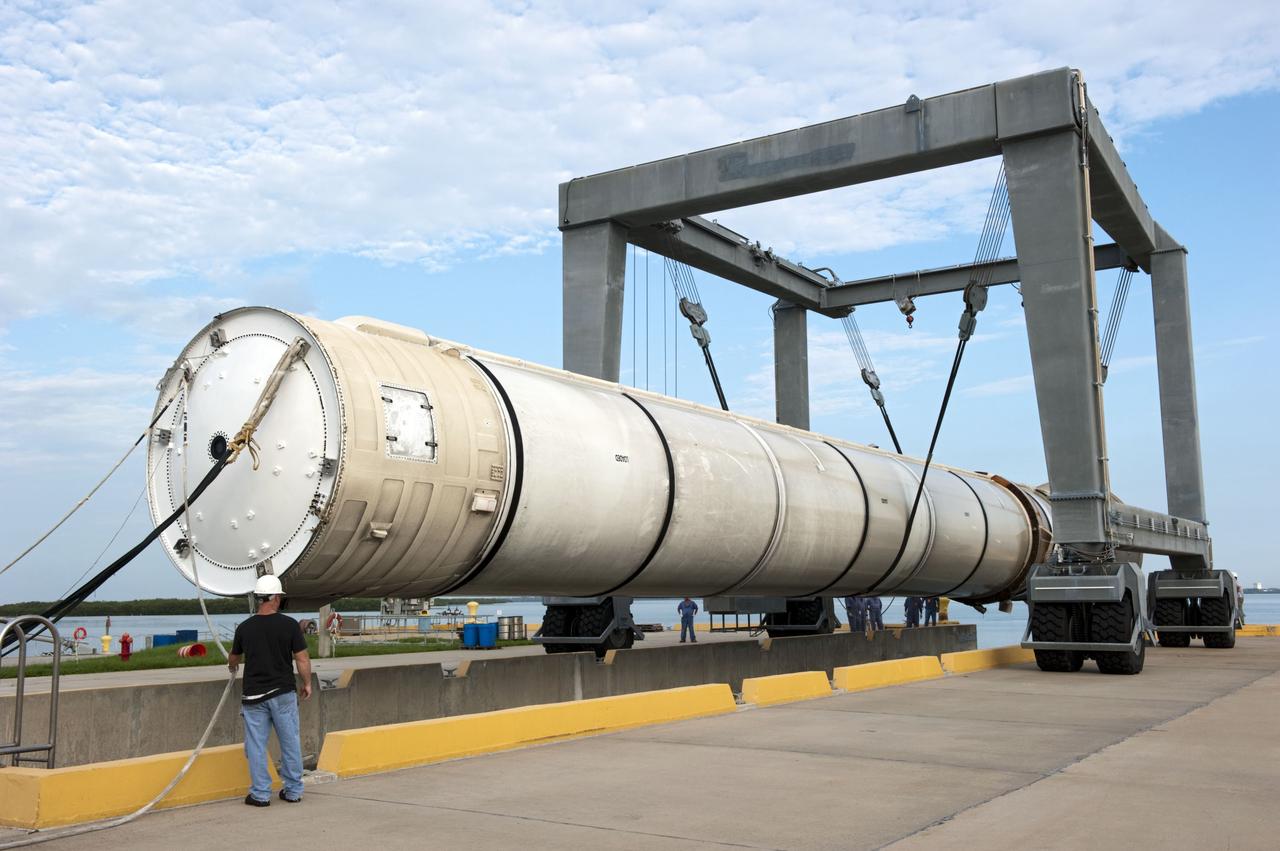
CAPE CANAVERAL, Fla. – One of two solid rocket boosters is lifted above a mooring at Port Canaveral in Florida. Liberty Star, one of NASA’s two booster retrieval ships, towed the spent booster from space shuttle Atlantis’ final launch to the port. The shuttle’s two solid rocket booster casings and associated flight hardware are recovered in the Atlantic Ocean after every launch by Freedom Star and Liberty Star. The boosters impact the Atlantic about seven minutes after liftoff, and the retrieval ships are stationed about 10 miles from the impact area at the time of splashdown. After the spent segments are processed, they will be transported to Utah, where they will be deserviced and stored, if needed. Atlantis began its final flight, STS-135, at 11:29 a.m. EDT on July 8 to deliver the Raffaello multi-purpose logistics module packed with supplies and spare parts to the International Space Station. Photo credit: NASA/Kim Shiflett
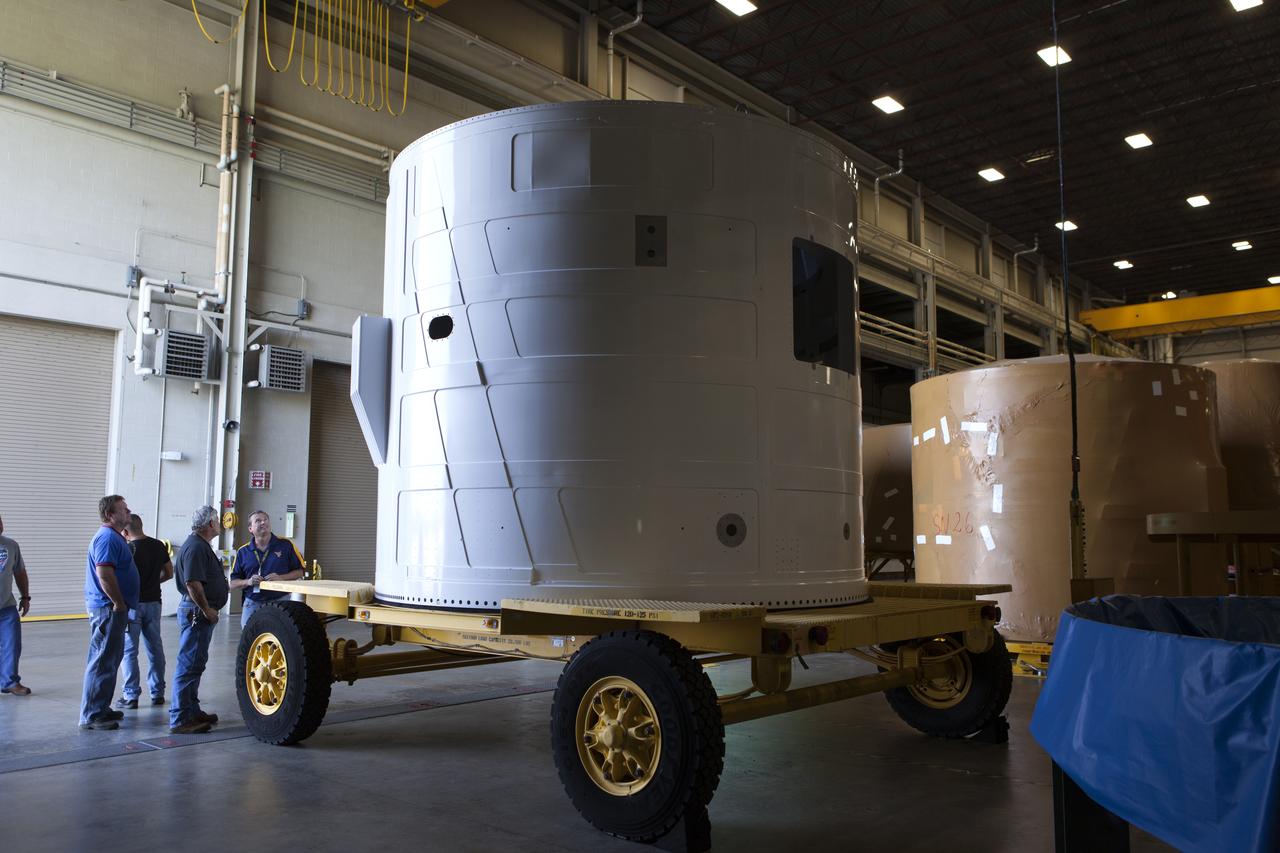
The Exploration Mission-1 (EM-1) left-hand forward skirt for NASA's Space Launch System (SLS) solid rocket boosters arrives inside the high bay at the Booster Fabrication Facility (BFF) at NASA's Kennedy Space Center in Florida. In the BFF, the forward skirt will be inspected and prepared for use on the left-hand solid rocket booster for EM-1. NASA's Orion spacecraft will fly atop the SLS rocket on its first uncrewed flight test.
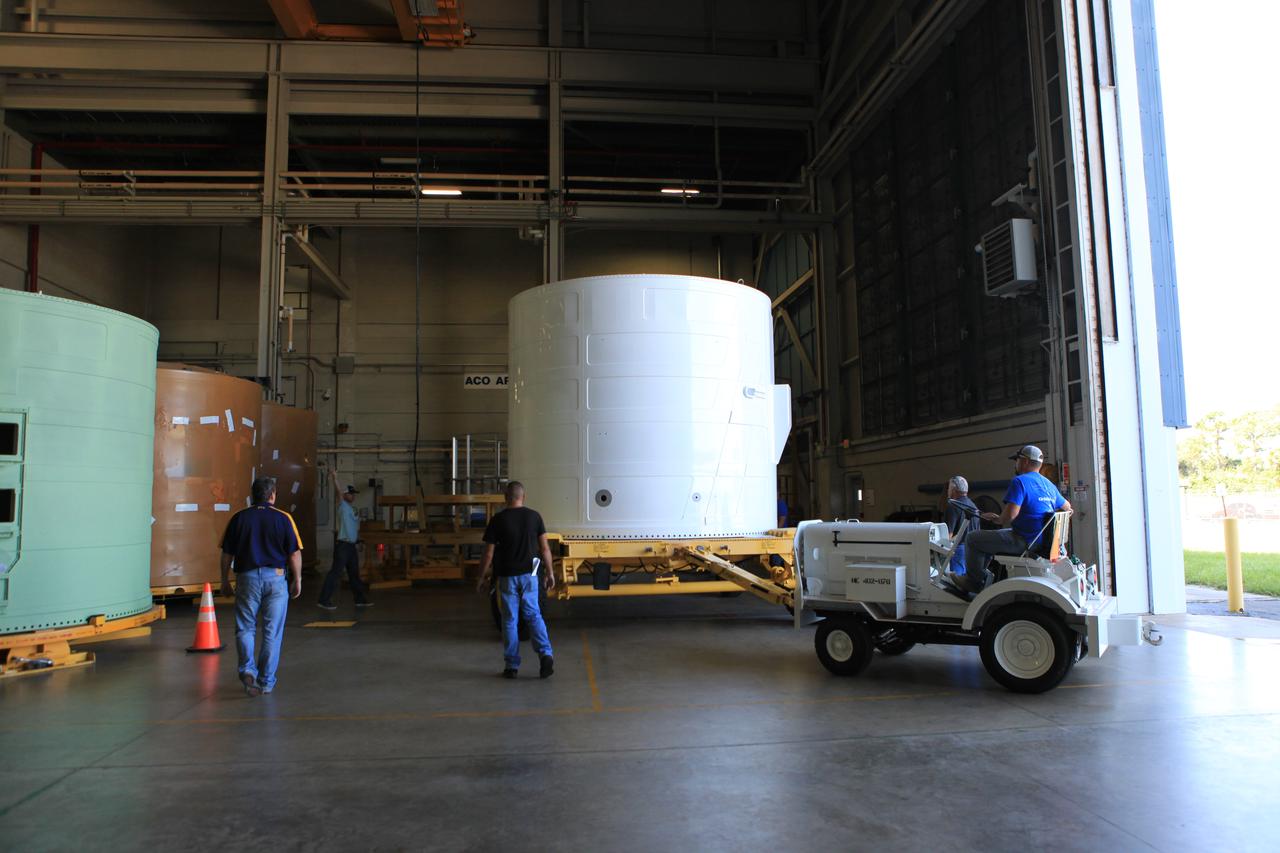
The Exploration Mission-1 (EM-1) left-hand forward skirt for NASA's Space Launch System (SLS) solid rocket boosters arrives inside the high bay at the Booster Fabrication Facility (BFF) at NASA's Kennedy Space Center in Florida. In the BFF, the forward skirt will be inspected and prepared for use on the left-hand solid rocket booster for EM-1. NASA's Orion spacecraft will fly atop the SLS rocket on its first uncrewed flight test.
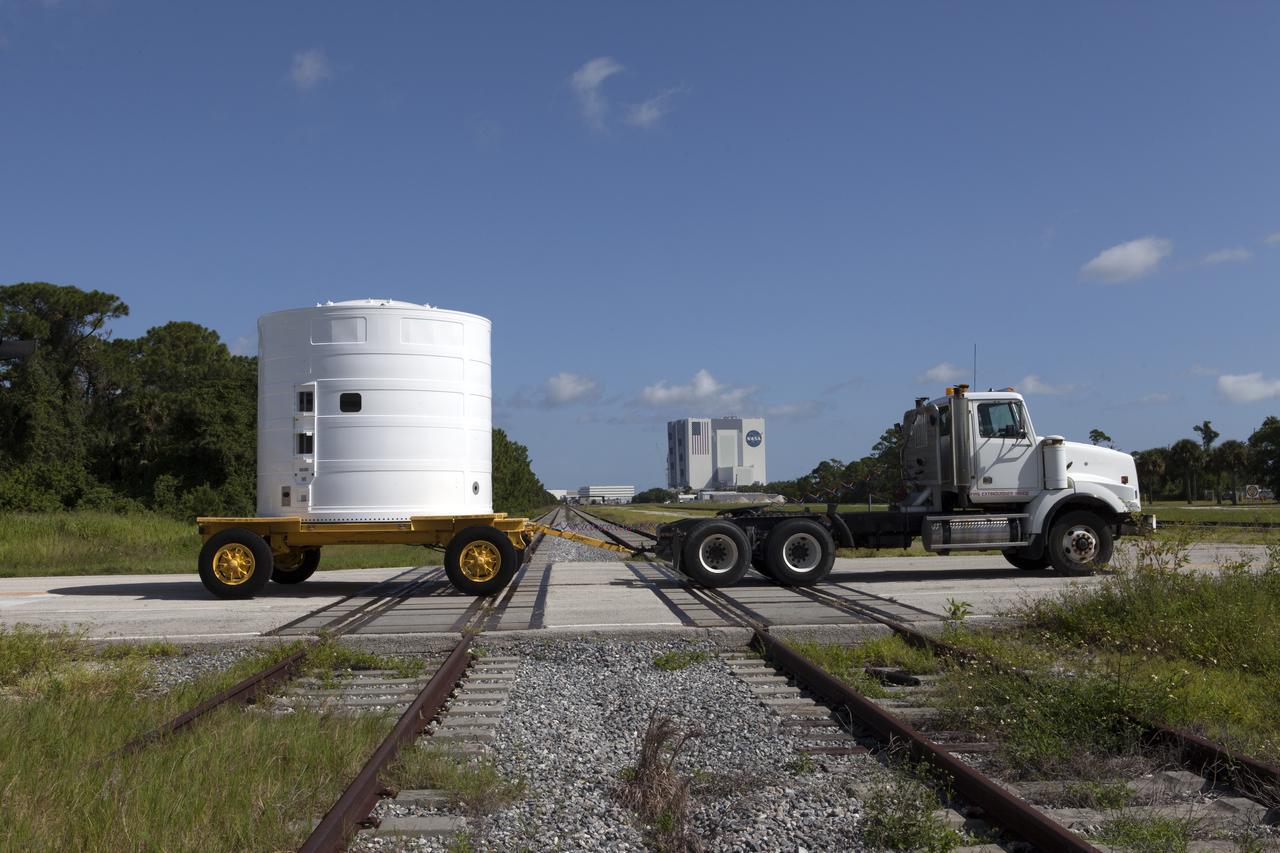
The Exploration Mission-1 (EM-1) left-hand forward skirt for NASA's Space Launch System (SLS) solid rocket boosters is transported by truck to the Booster Fabrication Facility (BFF) at NASA's Kennedy Space Center in Florida from Hangar AE at Cape Canaveral Air Force Station. In the BFF, the forward skirt will be inspected and prepared for use on the left-hand solid rocket booster for EM-1. NASA's Orion spacecraft will fly atop the SLS rocket on its first uncrewed flight test.
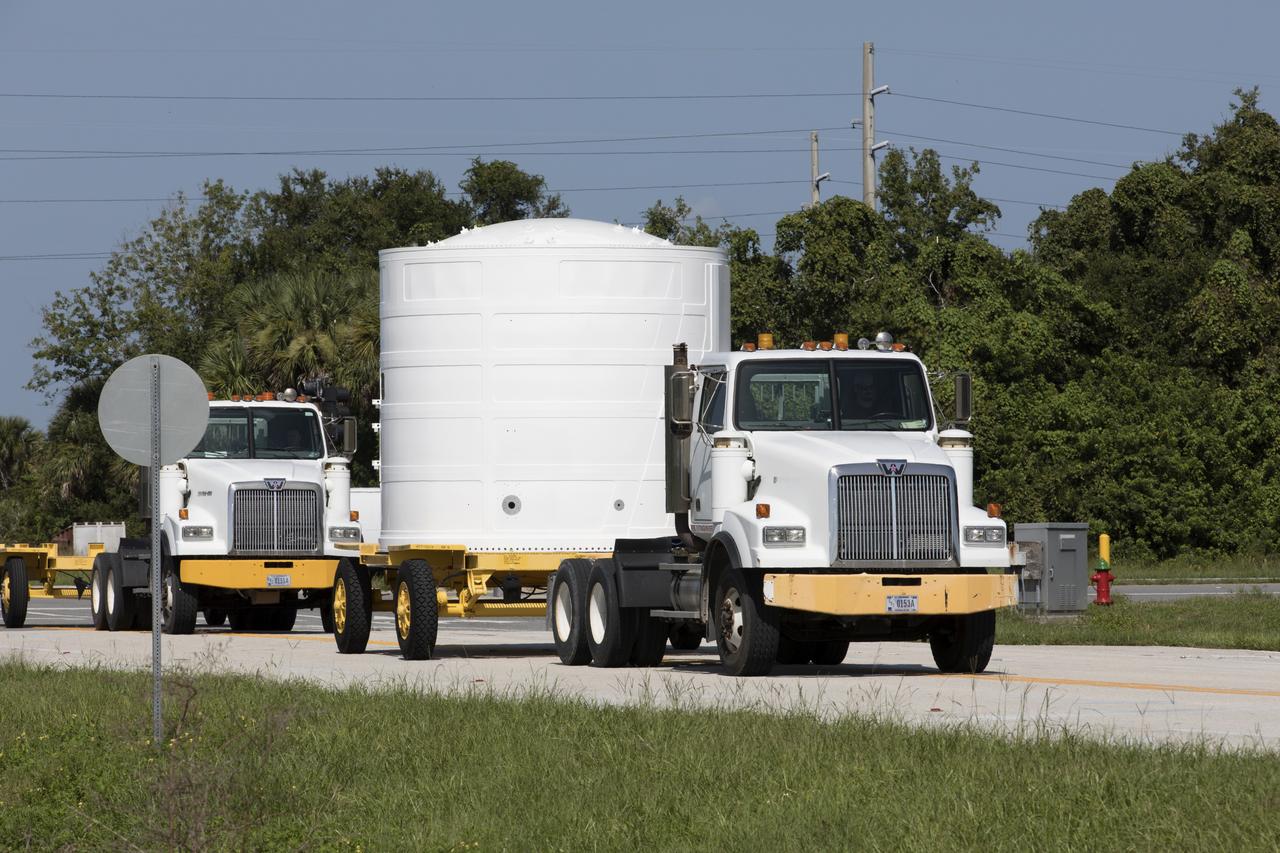
The Exploration Mission-1 (EM-1) left-hand forward skirt for NASA's Space Launch System (SLS) solid rocket boosters is transported by truck to the Booster Fabrication Facility (BFF) at NASA's Kennedy Space Center in Florida from Hangar AE at Cape Canaveral Air Force Station. In the BFF, the forward skirt will be inspected and prepared for use on the left-hand solid rocket booster for EM-1. NASA's Orion spacecraft will fly atop the SLS rocket on its first uncrewed flight test.
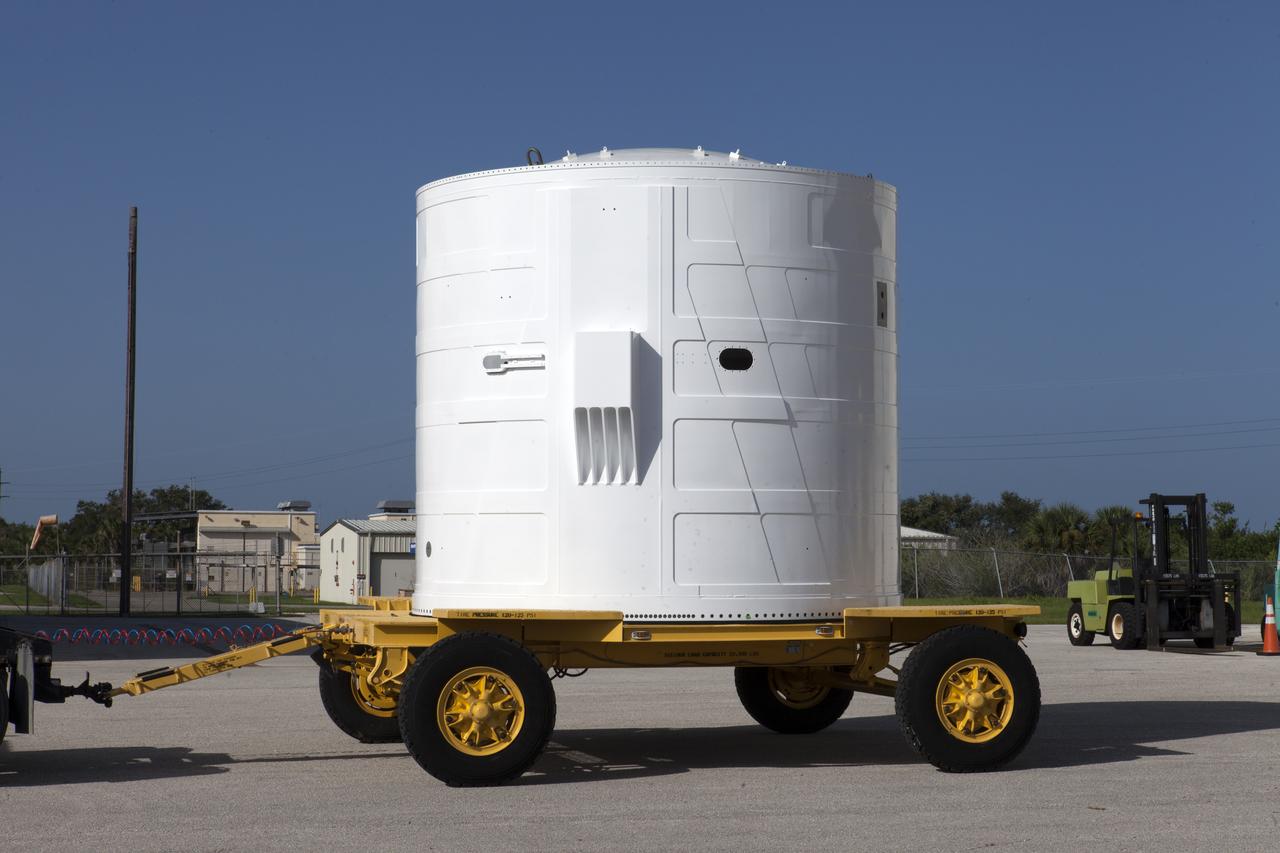
The Exploration Mission-1 (EM-1) left-hand forward skirt for NASA's Space Launch System (SLS) solid rocket boosters is prepared for its move from Hangar AE at Cape Canaveral Air Force Station in Florida, to the Booster Fabrication Facility (BFF) at Kennedy Space Center. In the BFF, the forward skirt will be inspected and prepared for use on the left-hand solid rocket booster for EM-1. NASA's Orion spacecraft will fly atop the SLS rocket on its first uncrewed flight test.
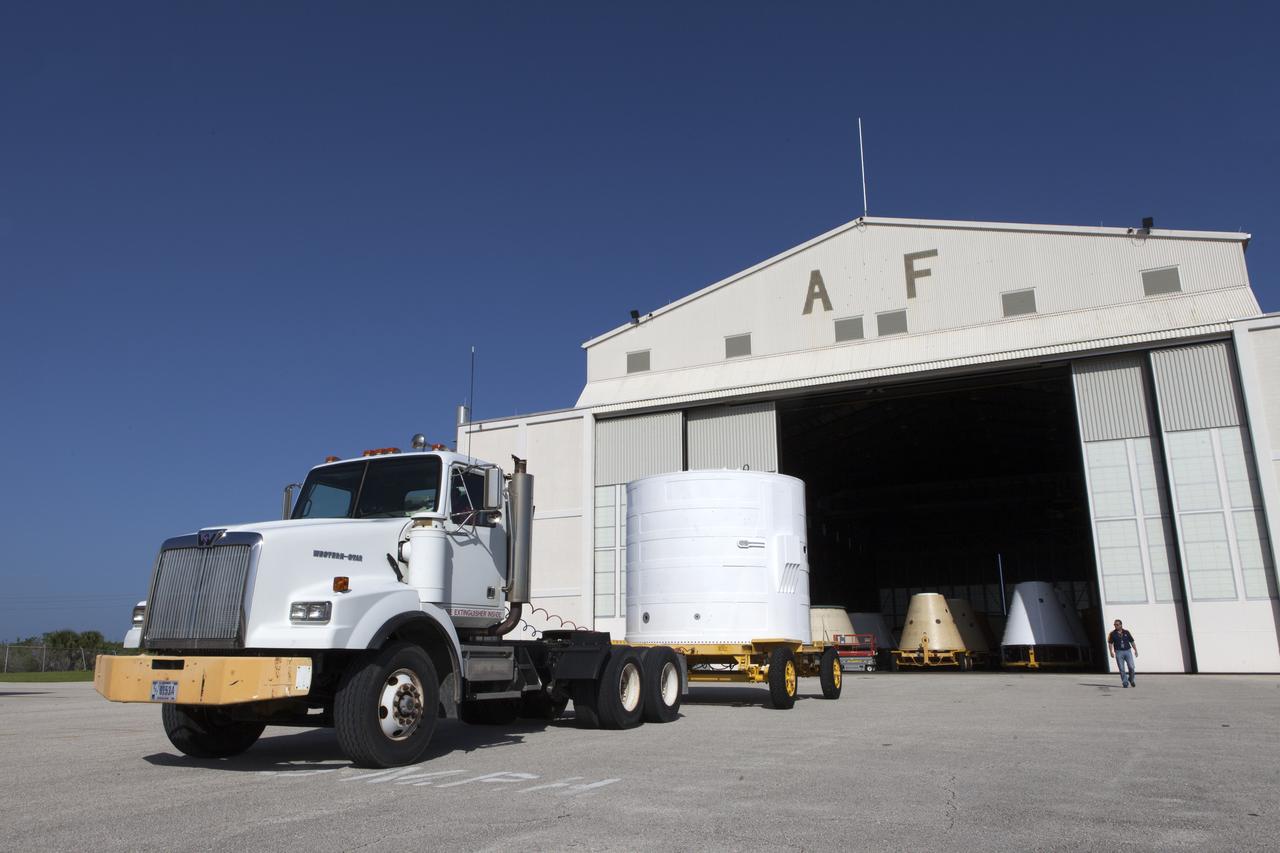
The Exploration Mission-1 (EM-1) left-hand forward skirt for NASA's Space Launch System (SLS) solid rocket boosters is moved out of Hangar AE at Cape Canaveral Air Force Station in Florida, for transport to the Booster Fabrication Facility (BFF) at Kennedy Space Center. In the BFF, the forward skirt will be inspected and prepared for use on the left-hand solid rocket booster for EM-1. NASA's Orion spacecraft will fly atop the SLS rocket on its first uncrewed flight test.
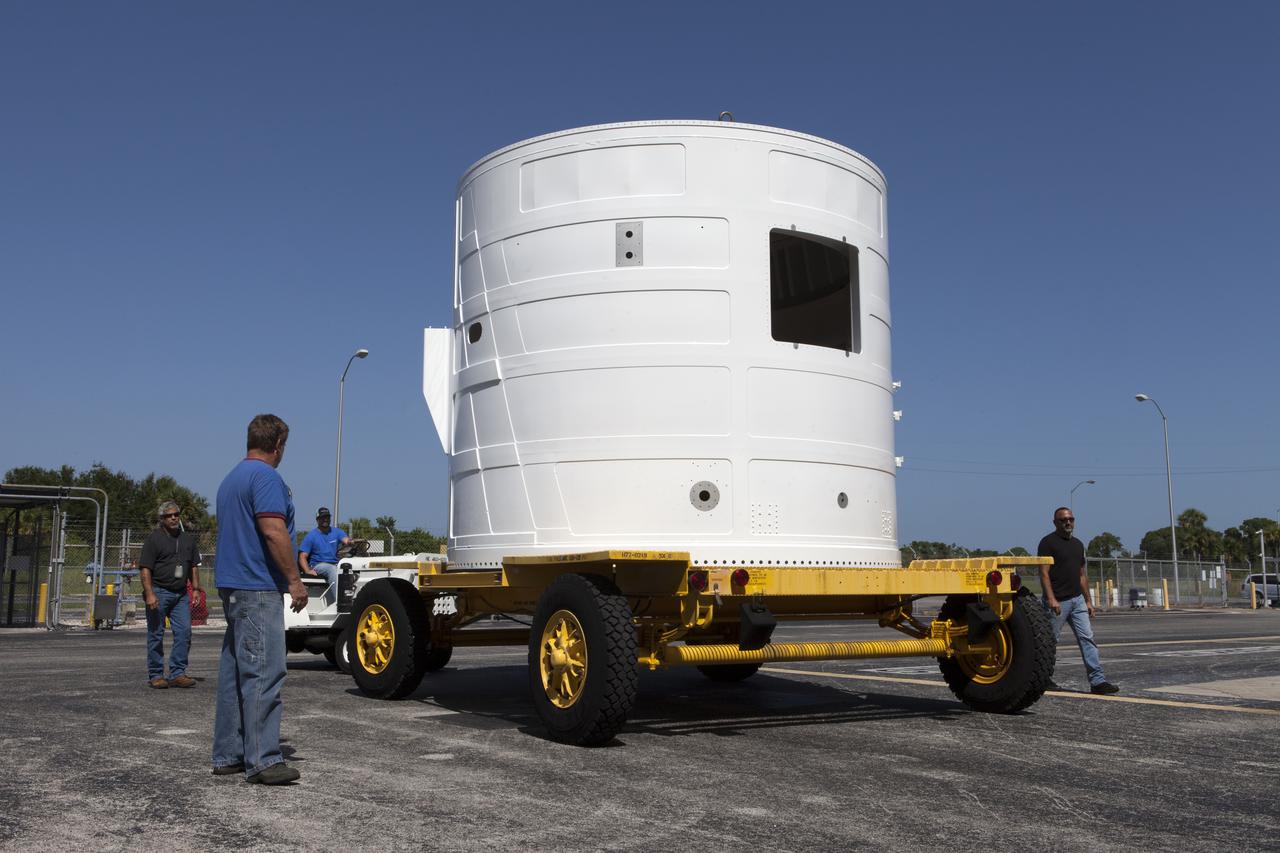
The Exploration Mission-1 (EM-1) left-hand forward skirt for NASA's Space Launch System (SLS) solid rocket boosters arrives at the Booster Fabrication Facility (BFF) at NASA's Kennedy Space Center in Florida from Hangar AE at Cape Canaveral Air Force Station. In the BFF, the forward skirt will be inspected and prepared for use on the left-hand solid rocket booster for EM-1. NASA's Orion spacecraft will fly atop the SLS rocket on its first uncrewed flight test.
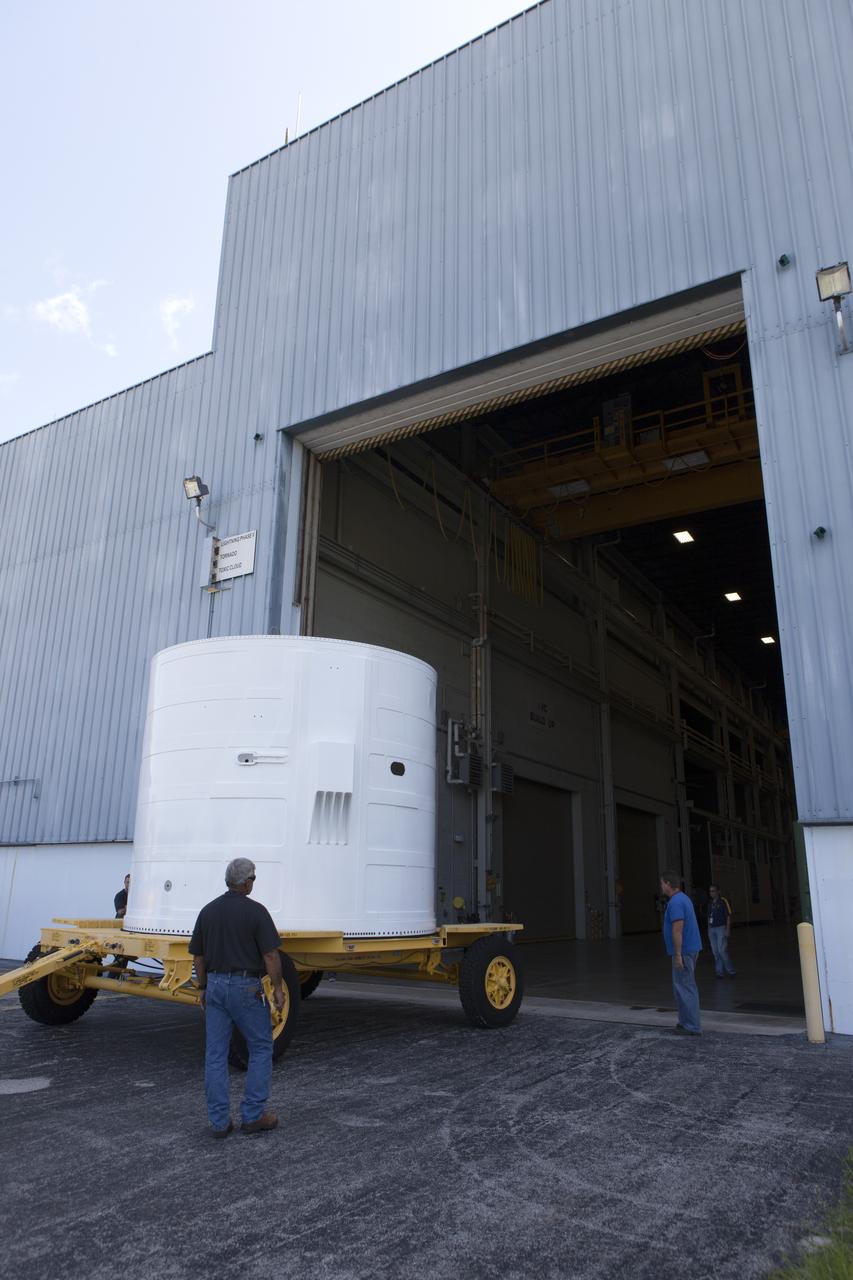
The Exploration Mission-1 (EM-1) left-hand forward skirt for NASA's Space Launch System (SLS) solid rocket boosters arrives at the entrance to the high bay at the Booster Fabrication Facility (BFF) at NASA's Kennedy Space Center in Florida. In the BFF, the forward skirt will be inspected and prepared for use on the left-hand solid rocket booster for EM-1. NASA's Orion spacecraft will fly atop the SLS rocket on its first uncrewed flight test.
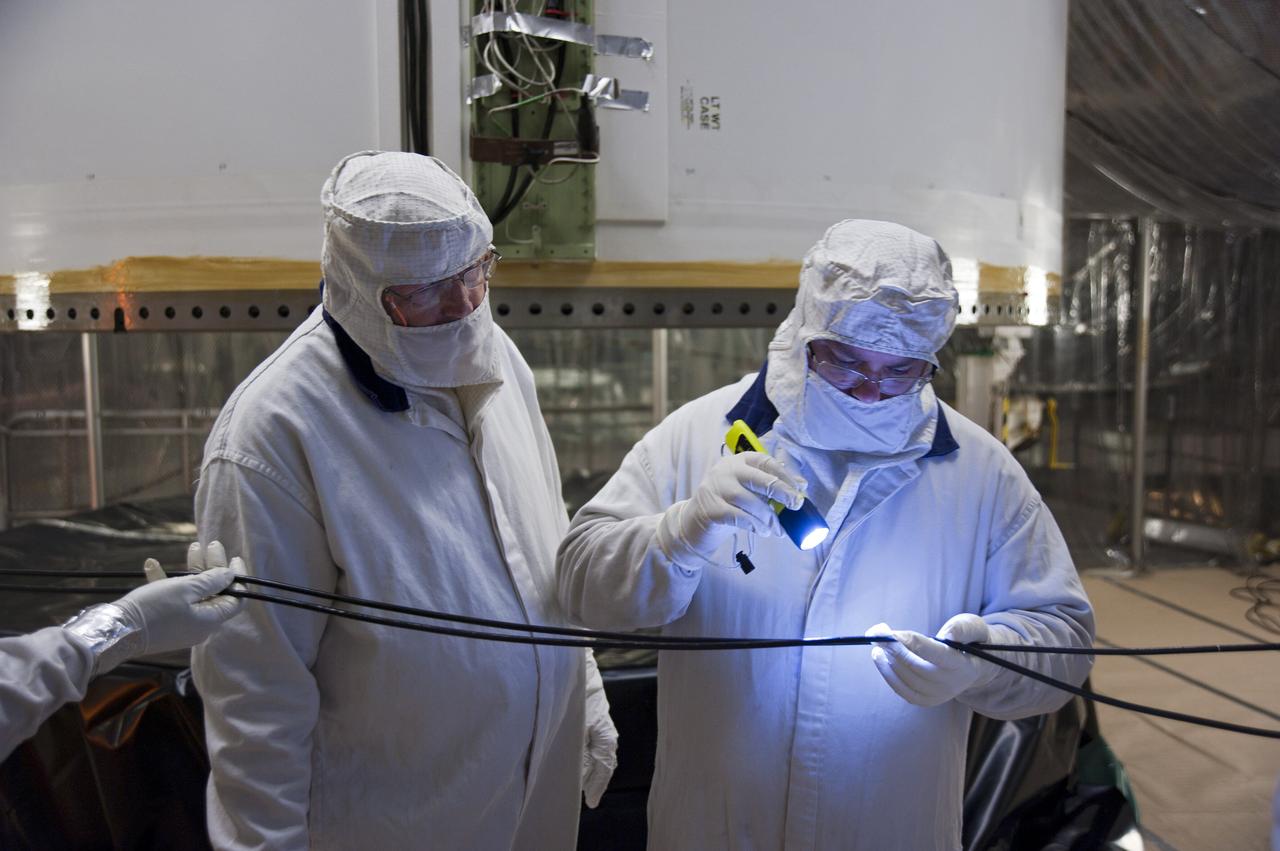
CAPE CANAVERAL, Fla. -- In the Vehicle Assembly Building at NASA's Kennedy Space Center in Florida, a worker thoroughly inspects a rubber ring section with an ultraviolet light before installation on the left forward center solid rocket booster segment. The booster along with its twin will be stacked on the mobile launcher platform along with an external fuel tank awaiting the arrival of space shuttle Endeavour for its flight to the International Space Station. As the final planned mission of the Space Shuttle Program, Endeavour and its crew will deliver the Alpha Magnetic Spectrometer, as well as critical spare components to the station on the STS-134 mission targeted for launch Feb. 26, 2011. For more information visit, http://www.nasa.gov/mission_pages/shuttle/shuttlemissions/sts134/index.html. Photo credit: NASA/Kim Shiflett
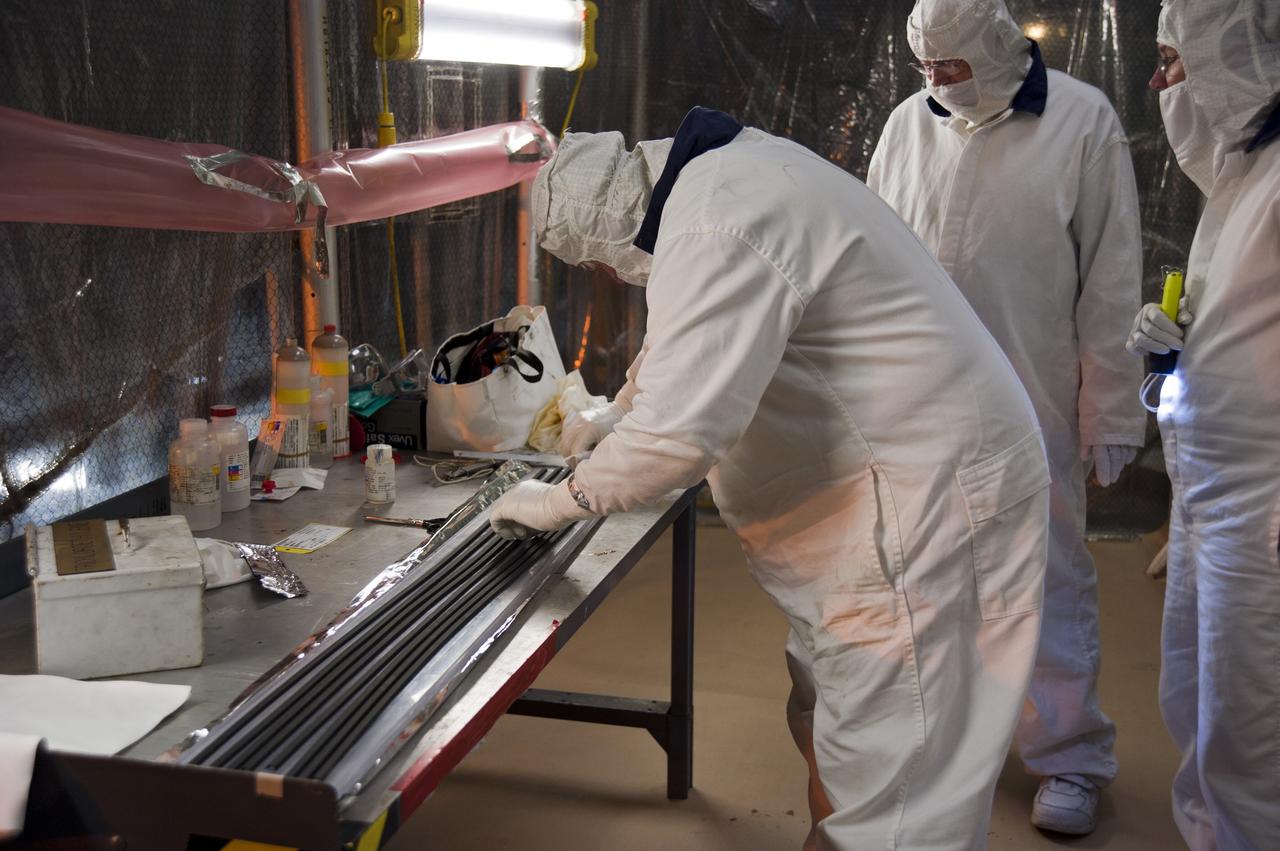
CAPE CANAVERAL, Fla. -- In the Vehicle Assembly Building at NASA's Kennedy Space Center in Florida, technicians select the rubber rings that will cushion and secure the left forward center solid rocket booster segments together. The booster along with its twin will be stacked on the mobile launcher platform along with an external fuel tank awaiting the arrival of space shuttle Endeavour for its flight to the International Space Station. As the final planned mission of the Space Shuttle Program, Endeavour and its crew will deliver the Alpha Magnetic Spectrometer, as well as critical spare components to the station on the STS-134 mission targeted for launch Feb. 26, 2011. For more information visit, http://www.nasa.gov/mission_pages/shuttle/shuttlemissions/sts134/index.html. Photo credit: NASA/Kim Shiflett
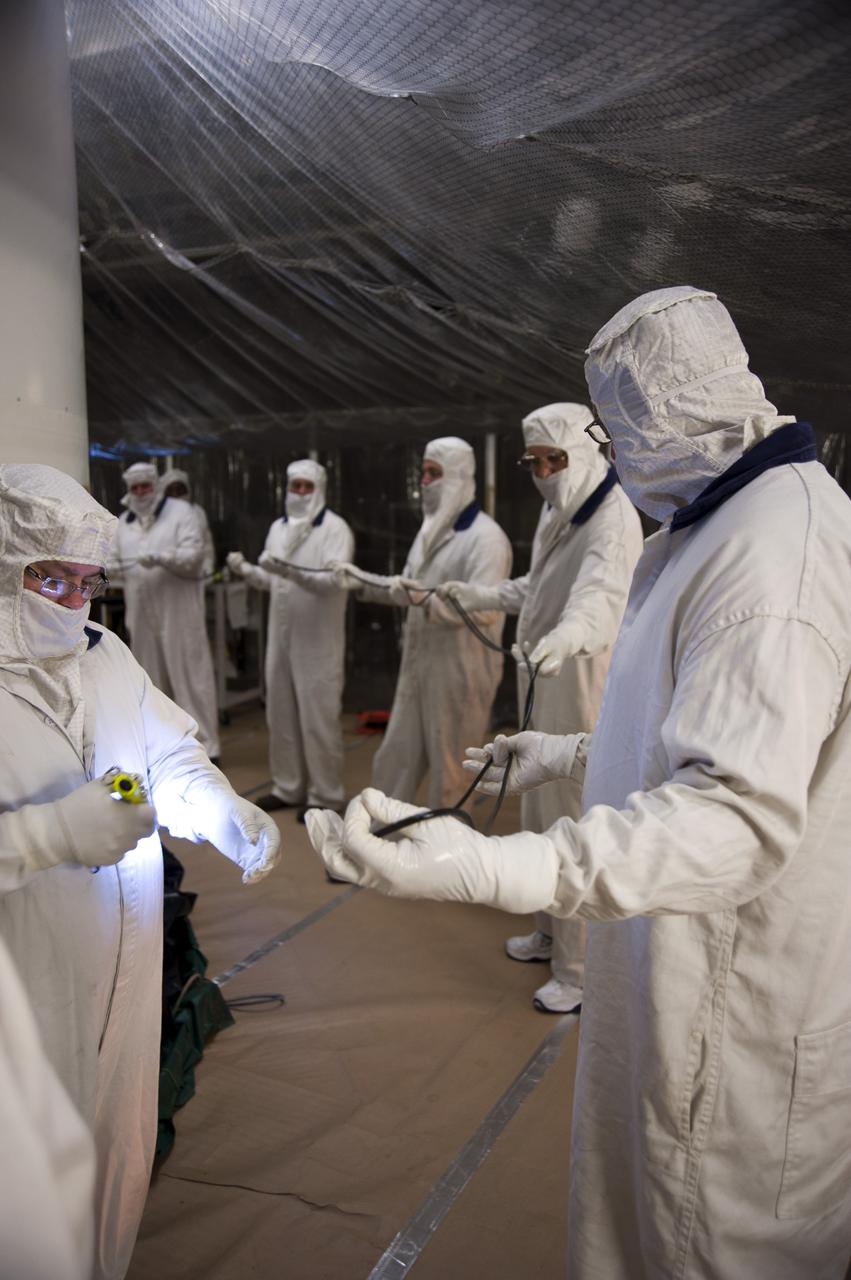
CAPE CANAVERAL, Fla. -- In the Vehicle Assembly Building at NASA's Kennedy Space Center in Florida, workers hold up the rubber rings while another thoroughly inspects each section with an ultraviolet light before the rings are installed on the left forward center solid rocket booster segment. The booster along with its twin will be stacked on the mobile launcher platform along with an external fuel tank awaiting the arrival of space shuttle Endeavour for its flight to the International Space Station. As the final planned mission of the Space Shuttle Program, Endeavour and its crew will deliver the Alpha Magnetic Spectrometer, as well as critical spare components to the station on the STS-134 mission targeted for launch Feb. 26, 2011. For more information visit, http://www.nasa.gov/mission_pages/shuttle/shuttlemissions/sts134/index.html. Photo credit: NASA/Kim Shiflett

CAPE CANAVERAL, Fla. -- In the Vehicle Assembly Building at NASA's Kennedy Space Center in Florida, workers apply a special solution to the connecting sections of the left forward center solid rocket booster segment before the upper segment is joined to it. The booster along with its twin will be stacked on the mobile launcher platform along with an external fuel tank awaiting the arrival of space shuttle Endeavour for its flight to the International Space Station. As the final planned mission of the Space Shuttle Program, Endeavour and its crew will deliver the Alpha Magnetic Spectrometer, as well as critical spare components to the station on the STS-134 mission targeted for launch Feb. 26, 2011. For more information visit, http://www.nasa.gov/mission_pages/shuttle/shuttlemissions/sts134/index.html. Photo credit: NASA/Kim Shiflett

CAPE CANAVERAL, Fla. -- In the Vehicle Assembly Building at NASA's Kennedy Space Center in Florida, technicians stand around the left forward center solid rocket booster segment to properly position the rubber rings around the circumference. The booster along with its twin will be stacked on the mobile launcher platform along with an external fuel tank awaiting the arrival of space shuttle Endeavour for its flight to the International Space Station. As the final planned mission of the Space Shuttle Program, Endeavour and its crew will deliver the Alpha Magnetic Spectrometer, as well as critical spare components to the station on the STS-134 mission targeted for launch Feb. 26, 2011. For more information visit, http://www.nasa.gov/mission_pages/shuttle/shuttlemissions/sts134/index.html. Photo credit: NASA/Kim Shiflett
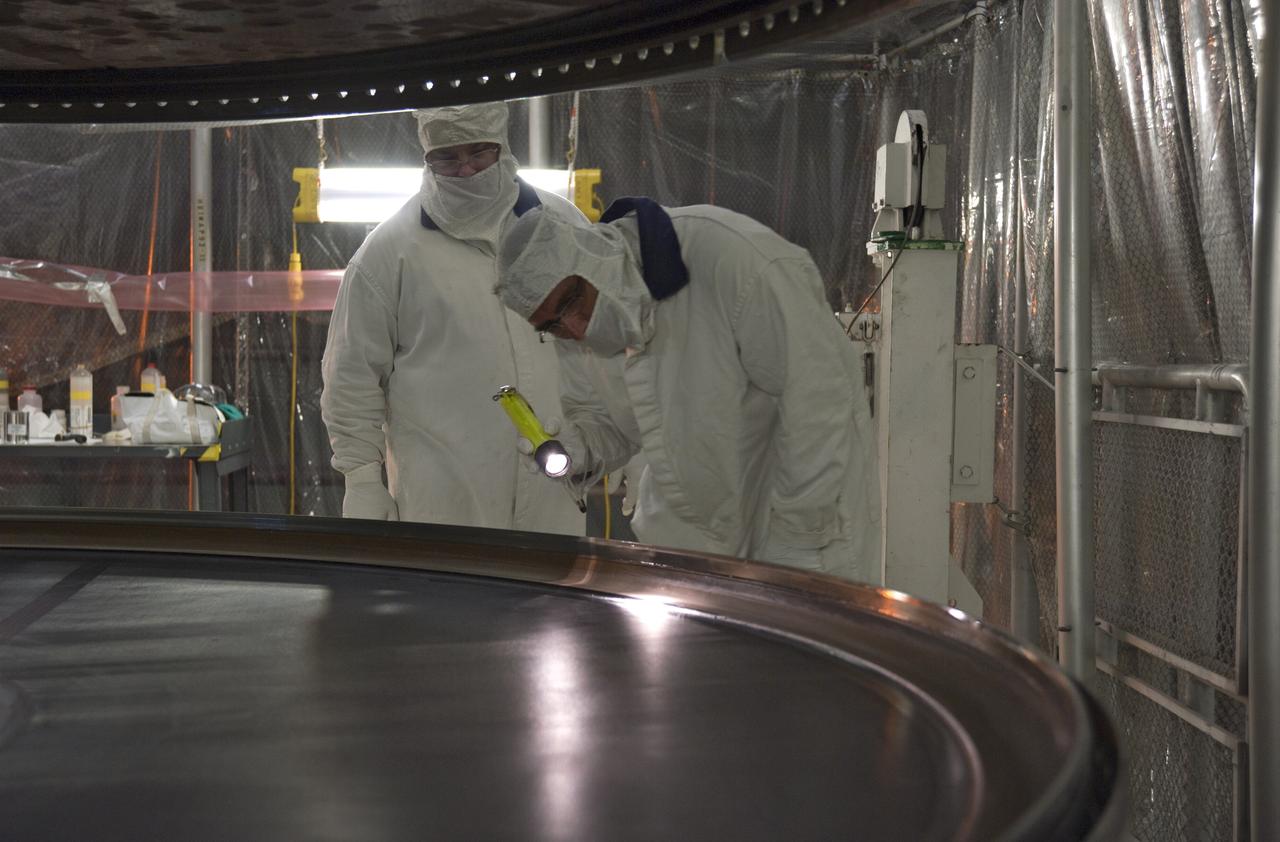
CAPE CANAVERAL, Fla. -- In the Vehicle Assembly Building at NASA's Kennedy Space Center in Florida, technicians check the alignment of the rubber rings after installation to the left forward center solid rocket booster segment. The booster along with its twin will be stacked on the mobile launcher platform along with an external fuel tank awaiting the arrival of space shuttle Endeavour for its flight to the International Space Station. As the final planned mission of the Space Shuttle Program, Endeavour and its crew will deliver the Alpha Magnetic Spectrometer, as well as critical spare components to the station on the STS-134 mission targeted for launch Feb. 26, 2011. For more information visit, http://www.nasa.gov/mission_pages/shuttle/shuttlemissions/sts134/index.html. Photo credit: NASA/Kim Shiflett

CAPE CANAVERAL, Fla. -- In the Vehicle Assembly Building at NASA's Kennedy Space Center in Florida, technicians check the channel around the circumference of the left forward center solid rocket booster segment for dirt and debris before processing continues. The booster along with its twin will be stacked on the mobile launcher platform along with an external fuel tank awaiting the arrival of space shuttle Endeavour for its flight to the International Space Station. As the final planned mission of the Space Shuttle Program, Endeavour and its crew will deliver the Alpha Magnetic Spectrometer, as well as critical spare components to the station on the STS-134 mission targeted for launch Feb. 26, 2011. For more information visit, http://www.nasa.gov/mission_pages/shuttle/shuttlemissions/sts134/index.html. Photo credit: NASA/Kim Shiflett
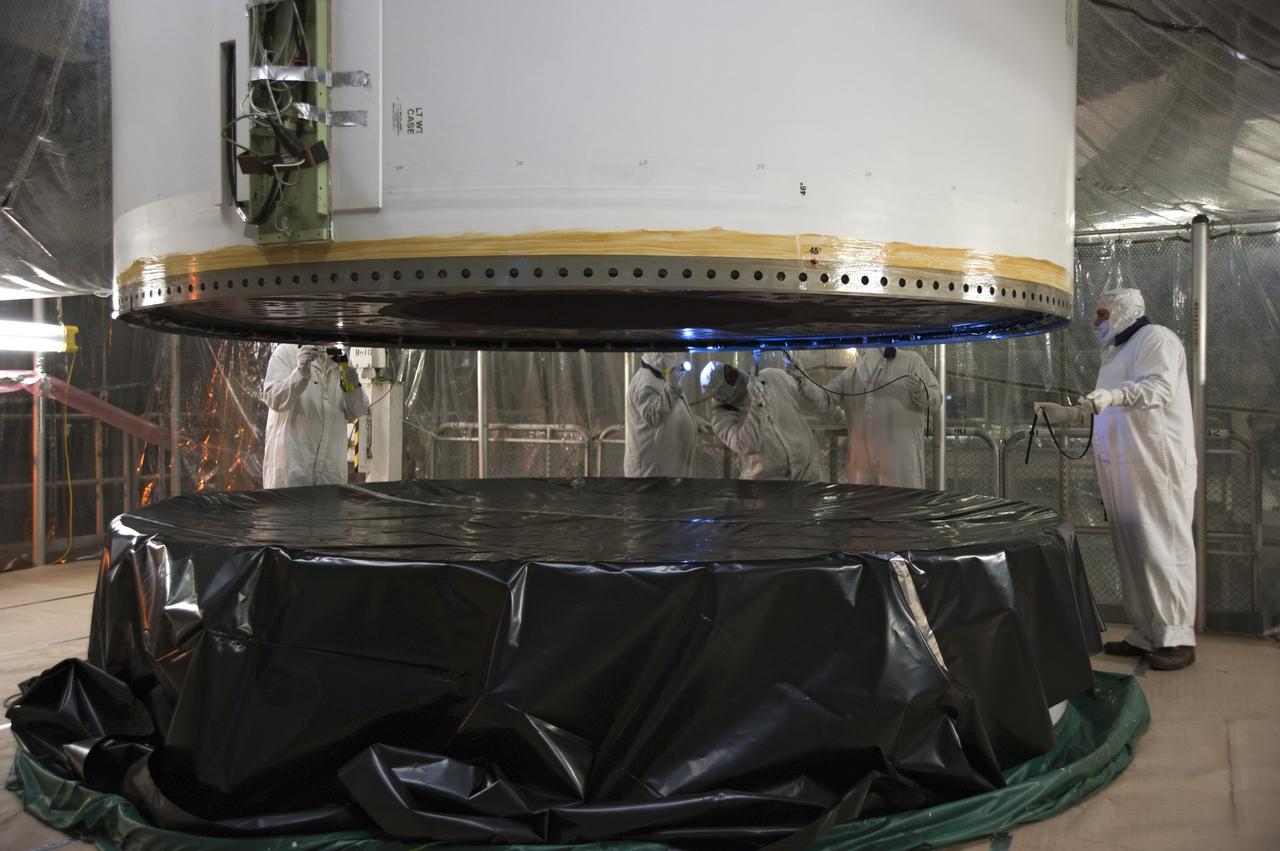
CAPE CANAVERAL, Fla. -- In the Vehicle Assembly Building at NASA's Kennedy Space Center in Florida, technicians install the rubber rings around the circumference of the left forward center solid rocket booster segment before the segments are joined. The booster along with its twin will be stacked on the mobile launcher platform along with an external fuel tank awaiting the arrival of space shuttle Endeavour for its flight to the International Space Station. As the final planned mission of the Space Shuttle Program, Endeavour and its crew will deliver the Alpha Magnetic Spectrometer, as well as critical spare components to the station on the STS-134 mission targeted for launch Feb. 26, 2011. For more information visit, http://www.nasa.gov/mission_pages/shuttle/shuttlemissions/sts134/index.html. Photo credit: NASA/Kim Shiflett
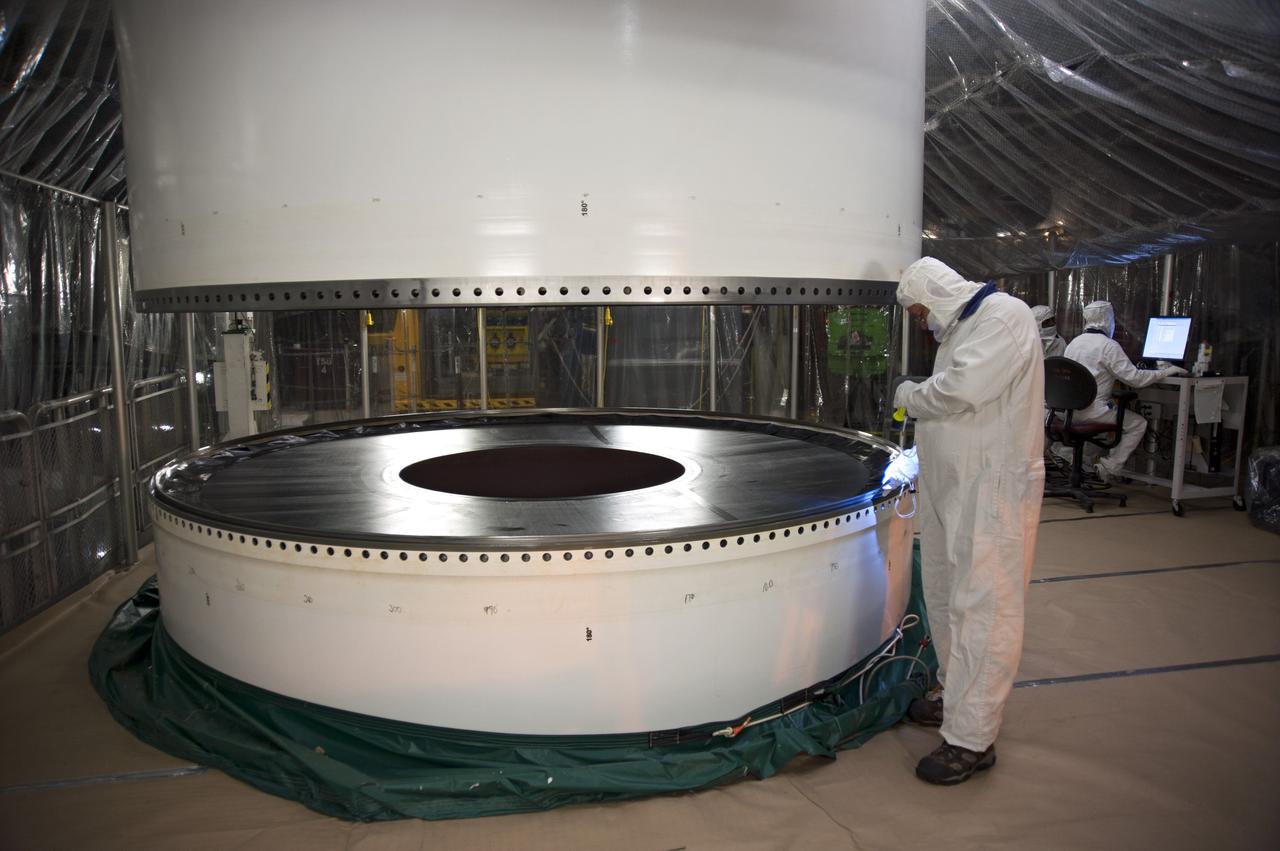
CAPE CANAVERAL, Fla. -- In the Vehicle Assembly Building at NASA's Kennedy Space Center in Florida, a technician double-checks the channel around the circumference of the left forward center solid rocket booster segment for dirt and debris before processing continues. The booster along with its twin will be stacked on the mobile launcher platform along with an external fuel tank awaiting the arrival of space shuttle Endeavour for its flight to the International Space Station. As the final planned mission of the Space Shuttle Program, Endeavour and its crew will deliver the Alpha Magnetic Spectrometer, as well as critical spare components to the station on the STS-134 mission targeted for launch Feb. 26, 2011. For more information visit, http://www.nasa.gov/mission_pages/shuttle/shuttlemissions/sts134/index.html. Photo credit: NASA/Kim Shiflett
CAPE CANAVERAL, Fla. -- In the Vehicle Assembly Building at NASA's Kennedy Space Center in Florida, a technician is applying HD calcium grease to the field joint along the base of the left forward center solid rocket booster segment to inhibit rust and corrosion from occurring in the area. The booster along with its twin will be stacked on the mobile launcher platform along with an external fuel tank awaiting the arrival of space shuttle Endeavour for its flight to the International Space Station. As the final planned mission of the Space Shuttle Program, Endeavour and its crew will deliver the Alpha Magnetic Spectrometer, as well as critical spare components to the station on the STS-134 mission targeted for launch Feb. 26, 2011. For more information visit, http://www.nasa.gov/mission_pages/shuttle/shuttlemissions/sts134/index.html. Photo credit: NASA/Kim Shiflett
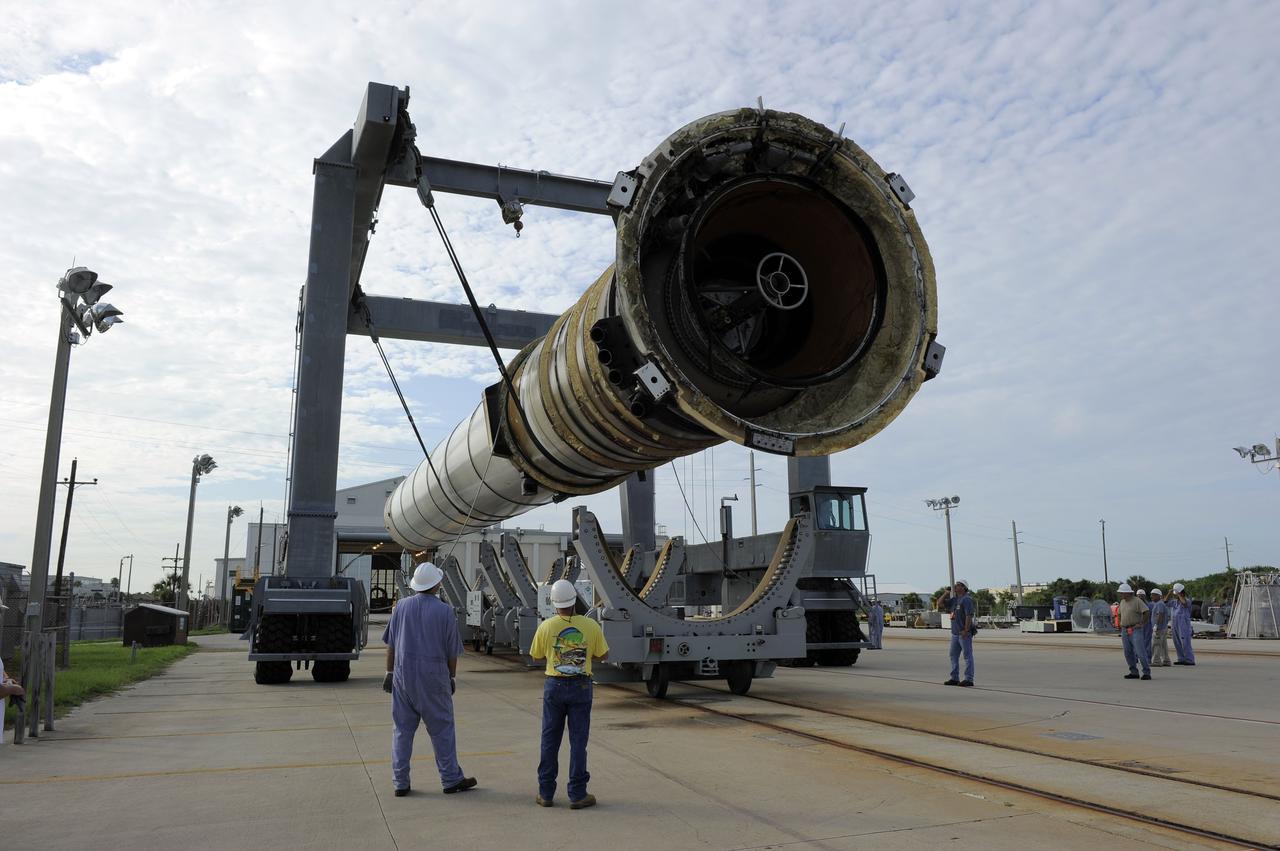
CAPE CANAVERAL, Fla. – One of two solid rocket boosters is transported to Hangar AF at Cape Canaveral Air Force Station in Florida. Liberty Star, one of NASA’s two booster retrieval ships, towed the spent booster from space shuttle Atlantis’ final launch, to a mooring at Port Canaveral. The shuttle’s two solid rocket booster casings and associated flight hardware are recovered in the Atlantic Ocean after every launch by Freedom Star and Liberty Star. The boosters impact the Atlantic about seven minutes after liftoff, and the retrieval ships are stationed about 10 miles from the impact area at the time of splashdown. After the spent segments are processed, they will be transported to Utah, where they will be deserviced and stored, if needed. Atlantis began its final flight, STS-135, at 11:29 a.m. EDT on July 8 to deliver the Raffaello multi-purpose logistics module packed with supplies and spare parts to the International Space Station. Photo credit: NASA/Kim Shiflett
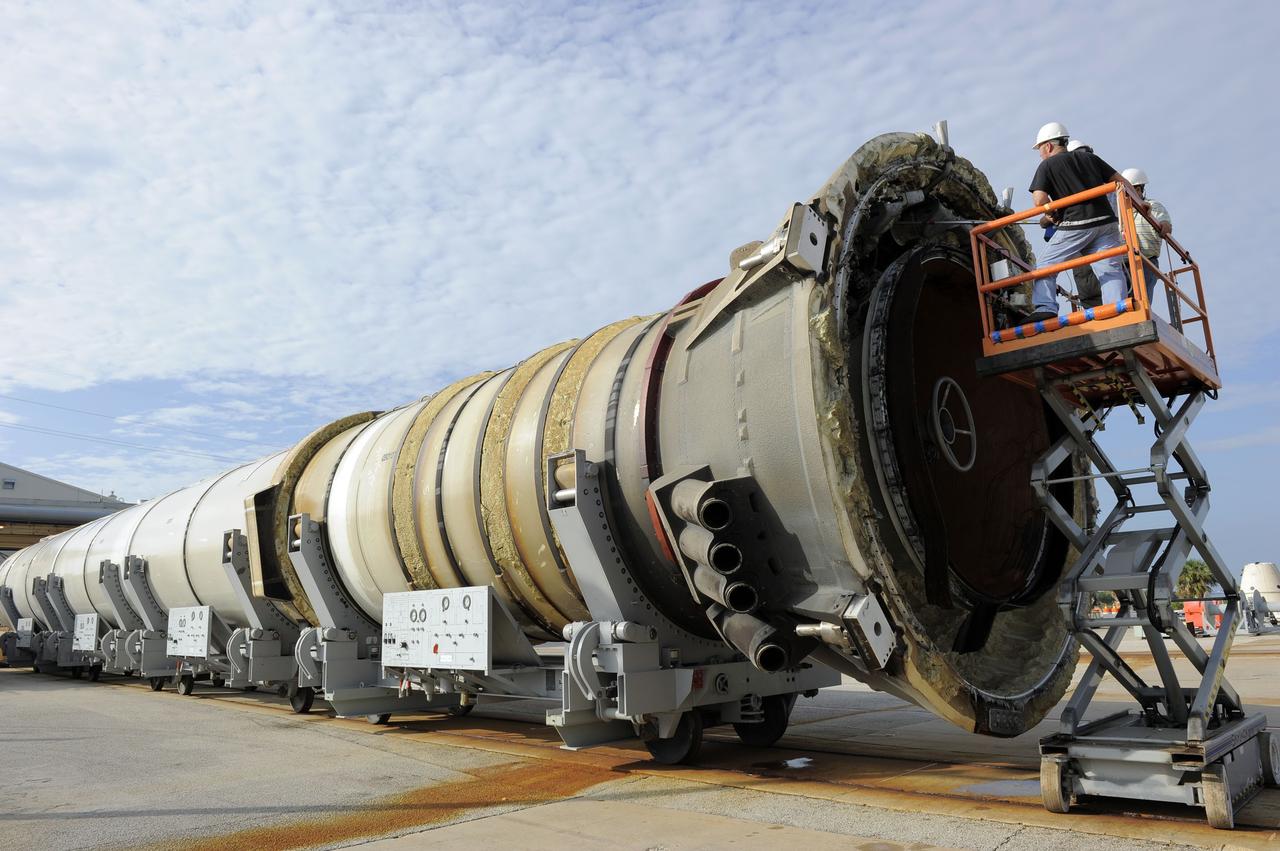
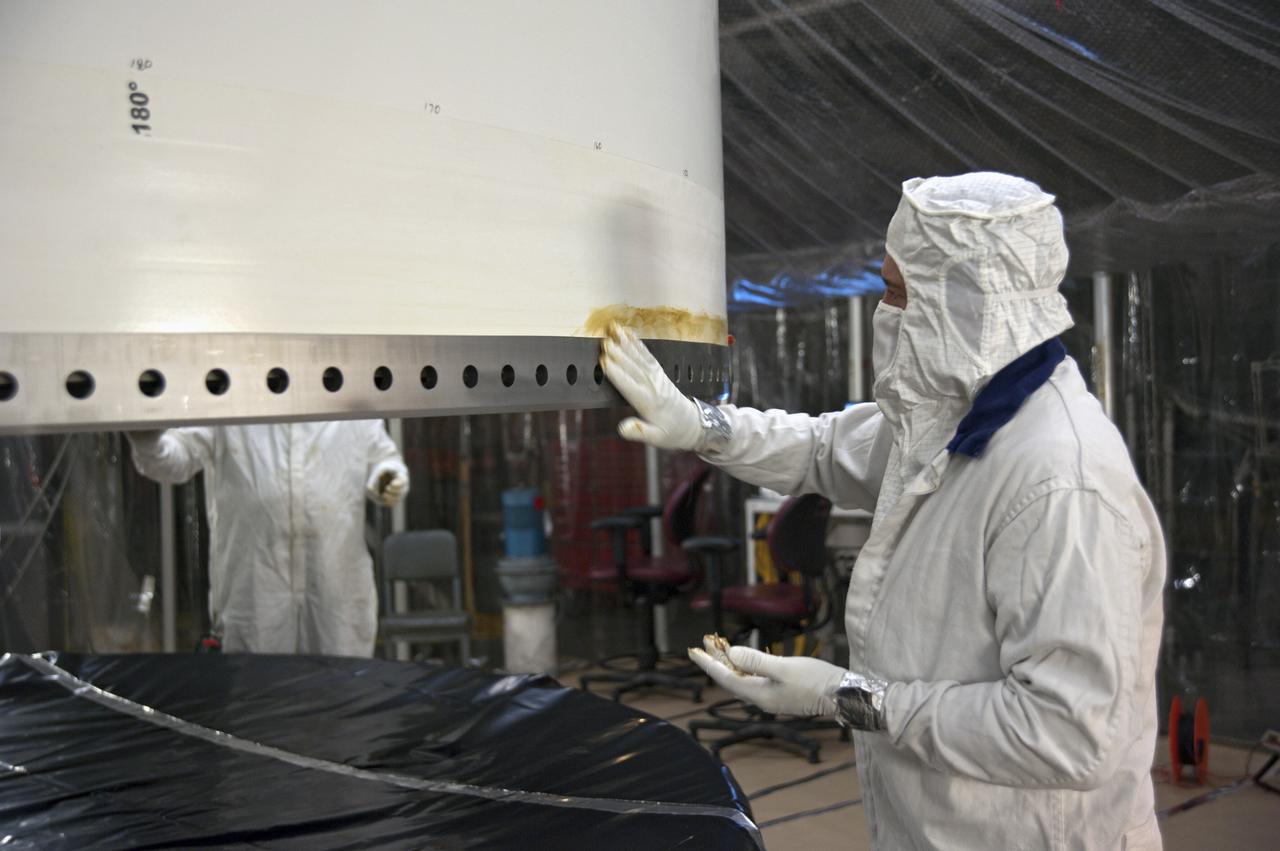
CAPE CANAVERAL, Fla. – Workers prepare one of two solid rocket boosters for deservicing at Hangar AF at Cape Canaveral Air Force Station in Florida. Liberty Star, one of NASA’s two booster retrieval ships, towed the spent booster from space shuttle Atlantis’ final launch to a mooring at Port Canaveral. The shuttle’s two solid rocket booster casings and associated flight hardware are recovered in the Atlantic Ocean after every launch by Freedom Star and Liberty Star. The boosters impact the Atlantic about seven minutes after liftoff, and the retrieval ships are stationed about 10 miles from the impact area at the time of splashdown. After the spent segments are processed, they will be transported to Utah, where they will be deserviced and stored, if needed. Atlantis began its final flight, STS-135, at 11:29 a.m. EDT on July 8 to deliver the Raffaello multi-purpose logistics module packed with supplies and spare parts to the International Space Station. Photo credit: NASA/Kim Shiflett
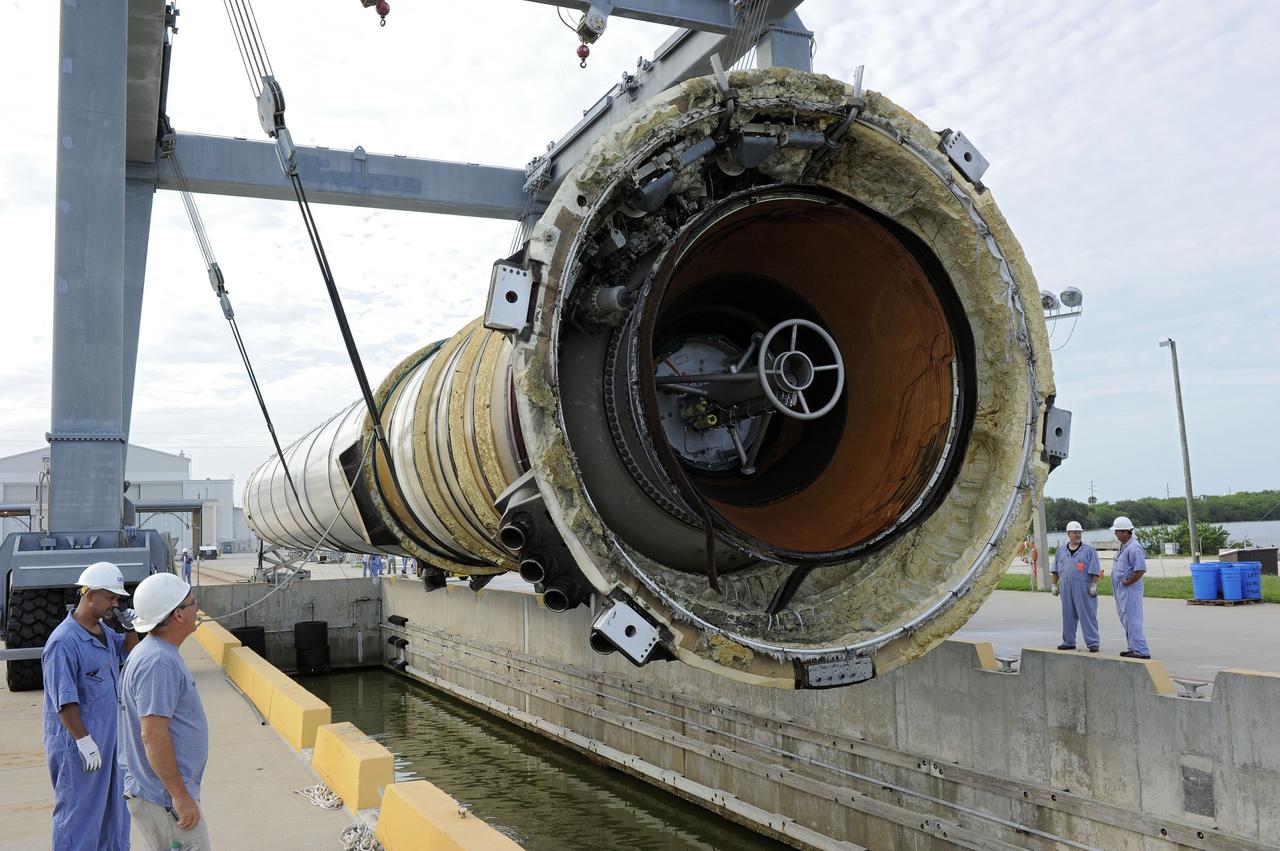
CAPE CANAVERAL, Fla. – Workers monitor the progress as one of two solid rocket boosters is lifted above a mooring at Port Canaveral in Florida. Liberty Star, one of NASA’s two booster retrieval ships, towed the spent booster from space shuttle Atlantis’ final launch to the port. The shuttle’s two solid rocket booster casings and associated flight hardware are recovered in the Atlantic Ocean after every launch by Freedom Star and Liberty Star. The boosters impact the Atlantic about seven minutes after liftoff, and the retrieval ships are stationed about 10 miles from the impact area at the time of splashdown. After the spent segments are processed, they will be transported to Utah, where they will be deserviced and stored, if needed. Atlantis began its final flight, STS-135, at 11:29 a.m. EDT on July 8 to deliver the Raffaello multi-purpose logistics module packed with supplies and spare parts to the International Space Station. Photo credit: NASA/Kim Shiflett
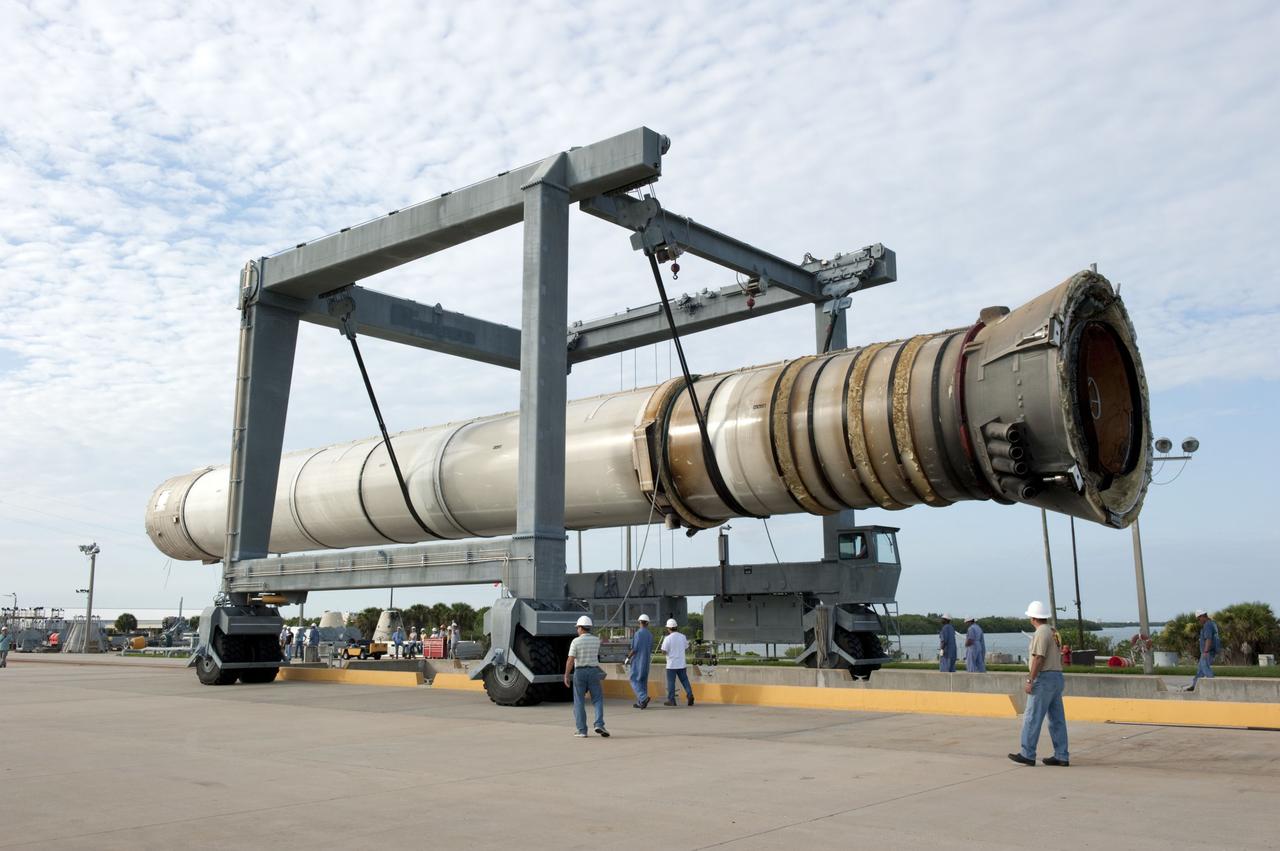
CAPE CANAVERAL, Fla. -- One of two solid rocket boosters is transported from a mooring at Port Canaveral in Florida to Hangar AF at Cape Canaveral Air Force Station. Liberty Star, one of NASA’s two booster retrieval ships, towed the spent booster from space shuttle Atlantis’ final launch to the port. The shuttle’s two solid rocket booster casings and associated flight hardware are recovered in the Atlantic Ocean after every launch by Freedom Star and Liberty Star. The boosters impact the Atlantic about seven minutes after liftoff, and the retrieval ships are stationed about 10 miles from the impact area at the time of splashdown. After the spent segments are processed, they will be transported to Utah, where they will be deserviced and stored, if needed. Atlantis began its final flight, STS-135, at 11:29 a.m. EDT on July 8 to deliver the Raffaello multi-purpose logistics module packed with supplies and spare parts to the International Space Station. Photo credit: NASA/Kim Shiflett
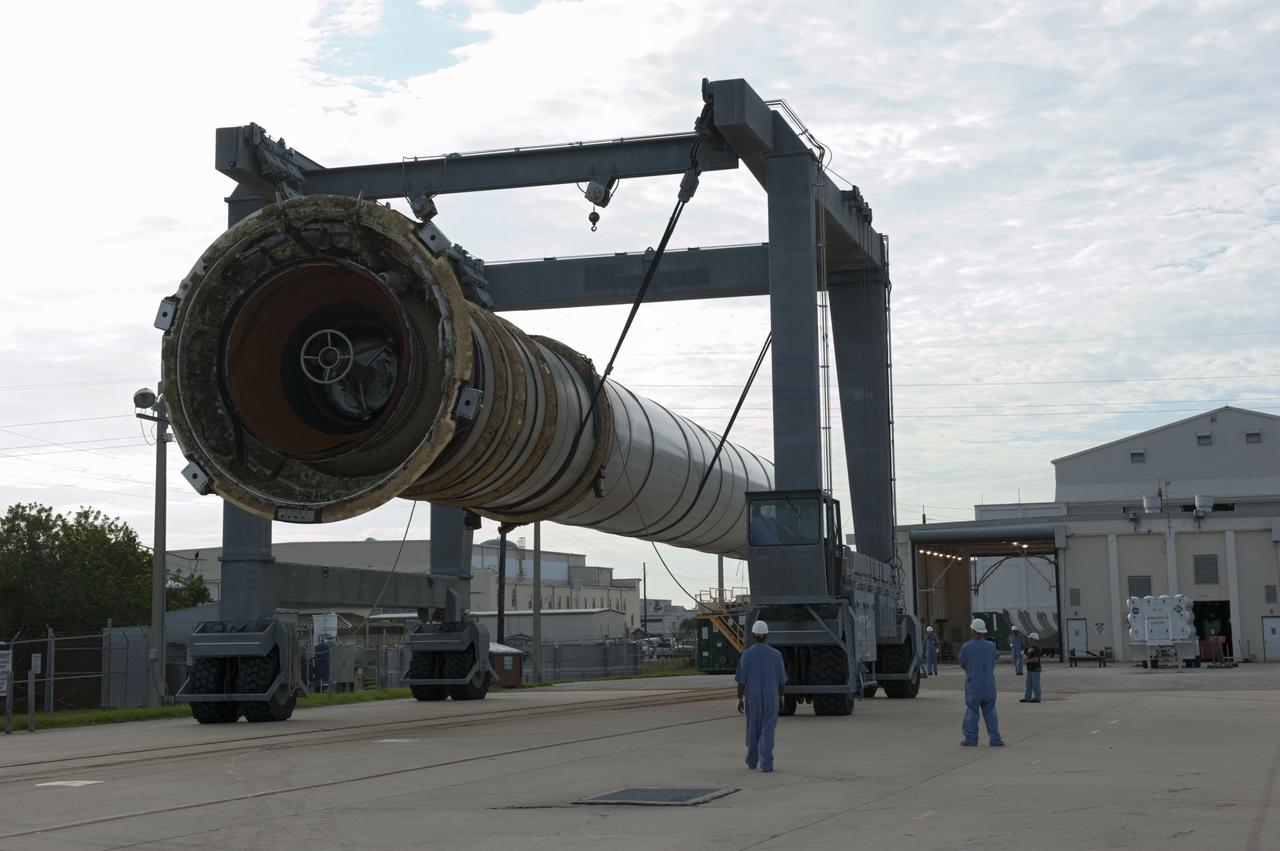
CAPE CANAVERAL, Fla. – One of two solid rocket boosters is transported to Hangar AF at Cape Canaveral Air Force Station in Florida. Liberty Star, one of NASA’s two booster retrieval ships, towed the spent booster from space shuttle Atlantis’ final launch to a mooring at Port Canaveral. The shuttle’s two solid rocket booster casings and associated flight hardware are recovered in the Atlantic Ocean after every launch by Freedom Star and Liberty Star. The boosters impact the Atlantic about seven minutes after liftoff, and the retrieval ships are stationed about 10 miles from the impact area at the time of splashdown. After the spent segments are processed, they will be transported to Utah, where they will be deserviced and stored, if needed. Atlantis began its final flight, STS-135, at 11:29 a.m. EDT on July 8 to deliver the Raffaello multi-purpose logistics module packed with supplies and spare parts to the International Space Station. Photo credit: NASA/Kim Shiflett