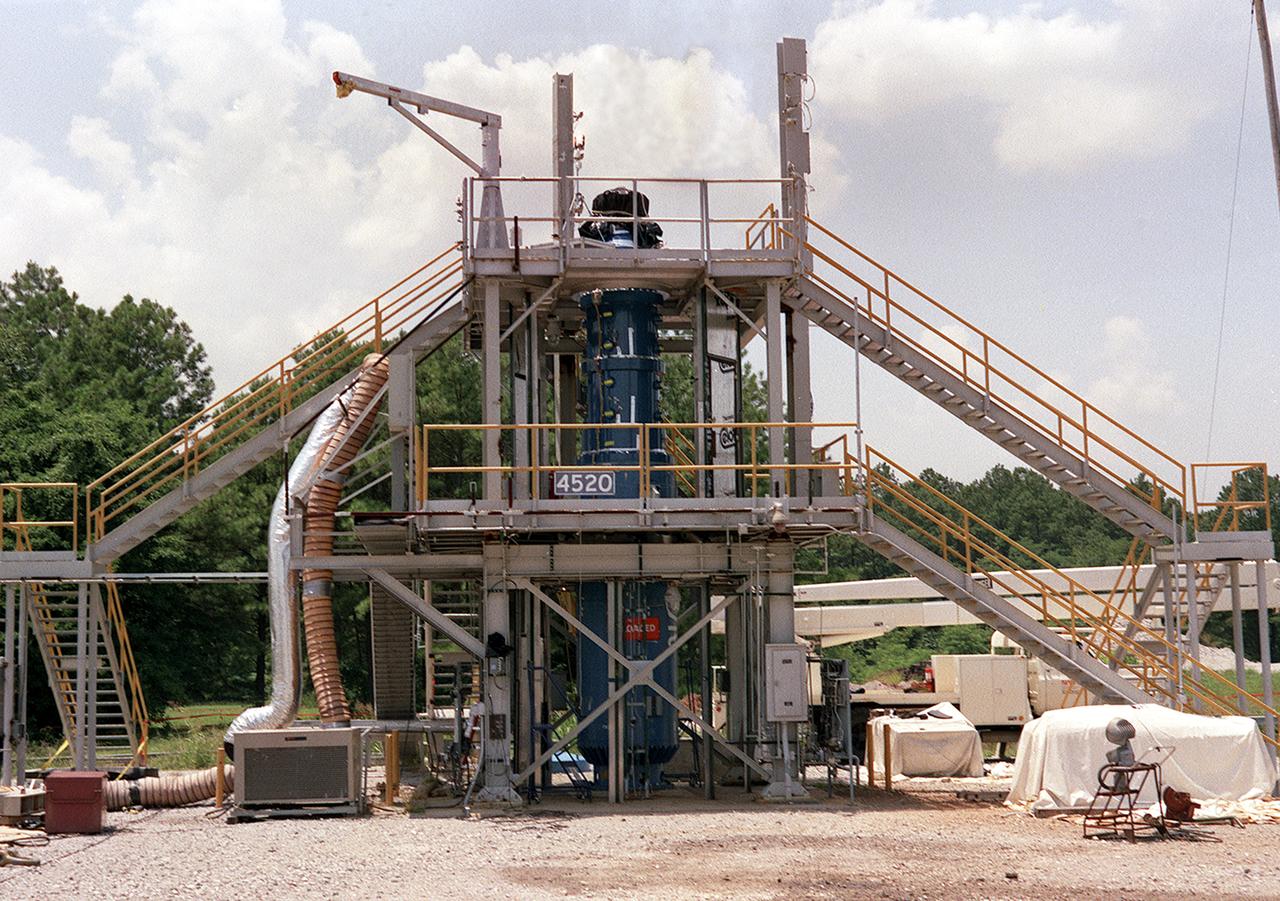
This photograph shows the Solid Propellant Test Article (SPTA) test stand with the Modified Nasa Motor (M-NASA) test article at the Marshall Space Flight Center (MSFC). The SPTA test stand, 12-feet wide by 12-feet long by 24-feet high, was built in 1989 to provide comparative performance data on nozzle and case insulation material and to verify thermostructural analysis models. A modified NASA 48-inch solid motor (M-NASA motor) with a 12-foot blast tube and 10-inch throat makes up the SPTA. The M-NASA motor is being used to evaluate solid rocket motor internal non-asbestos insulation materials, nozzle designs, materials, and new inspection techniques. New internal motor case instrumentation techniques are also being evaluated.
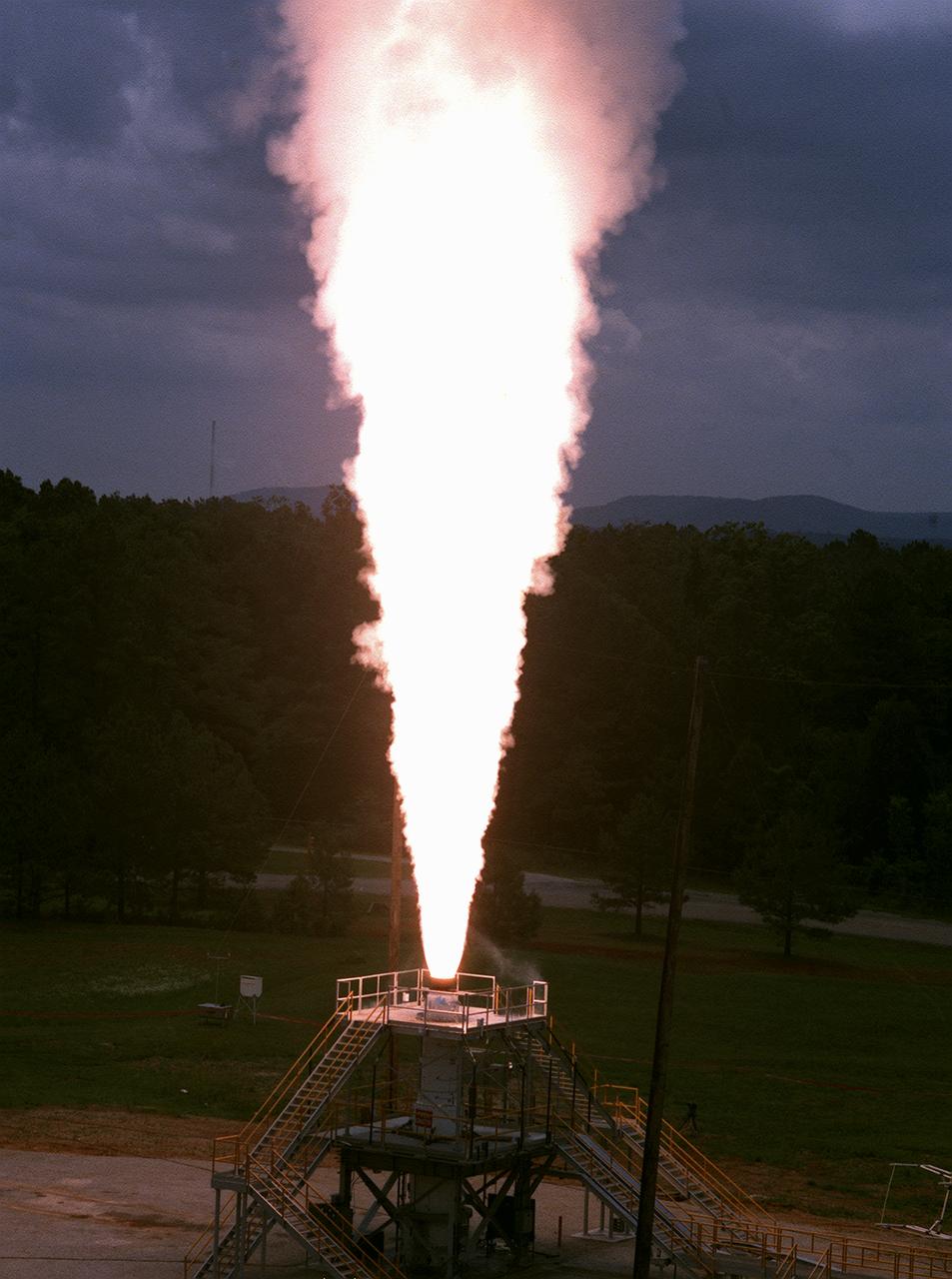
The Marshall Space Flight Center (MSFC) engineers test fired a 26-foot long, 100,000-pound-thrust solid rocket motor for 30 seconds at the MSFC east test area, the first test firing of the Modified NASA Motor (M-NASA Motor). The M-NASA Motor was fired in a newly constructed stand. The motor is 48-inches in diameter and was loaded with two propellant cartridges weighing a total of approximately 12,000 pounds. The purpose of the test was to learn more about solid rocket motor insulation and nozzle materials and to provide young engineers additional hands-on expertise in solid rocket motor technology. The test is a part of NASA's Solid Propulsion Integrity Program, that is to provide NASA engineers with the techniques, engineering tools, and computer programs to be able to better design, build, and verify solid rocket motors.
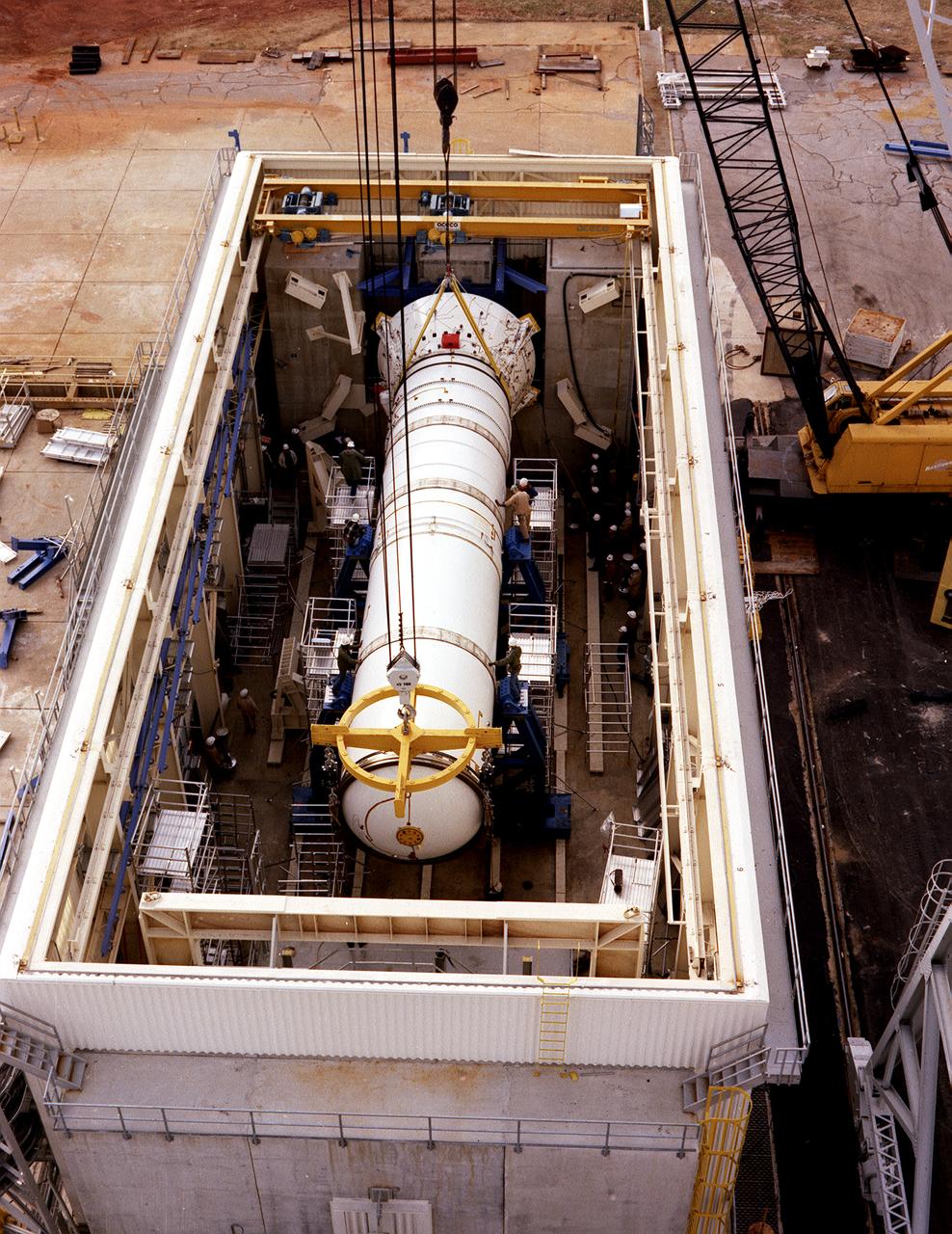
The solid rocket booster (SRB) structural test article is being installed in the Solid Rocket Booster Test Facility for the structural and load verification test at the Marshall Space Flight Center (MSFC). The Shuttle's two SRB's are the largest solids ever built and the first designed for refurbishment and reuse. Standing nearly 150-feet high, the twin boosters provide the majority of thrust for the first two minutes of flight, about 5.8 million pounds, augmenting the Shuttle's main propulsion system during liftoff. The major design drivers for the solid rocket motors (SRM's) were high thrust and reuse. The desired thrust was achieved by using state-of-the-art solid propellant and by using a long cylindrical motor with a specific core design that allows the propellant to burn in a carefully controlled marner. At burnout, the boosters separate from the external tank and drop by parachute to the ocean for recovery and subsequent refurbishment.
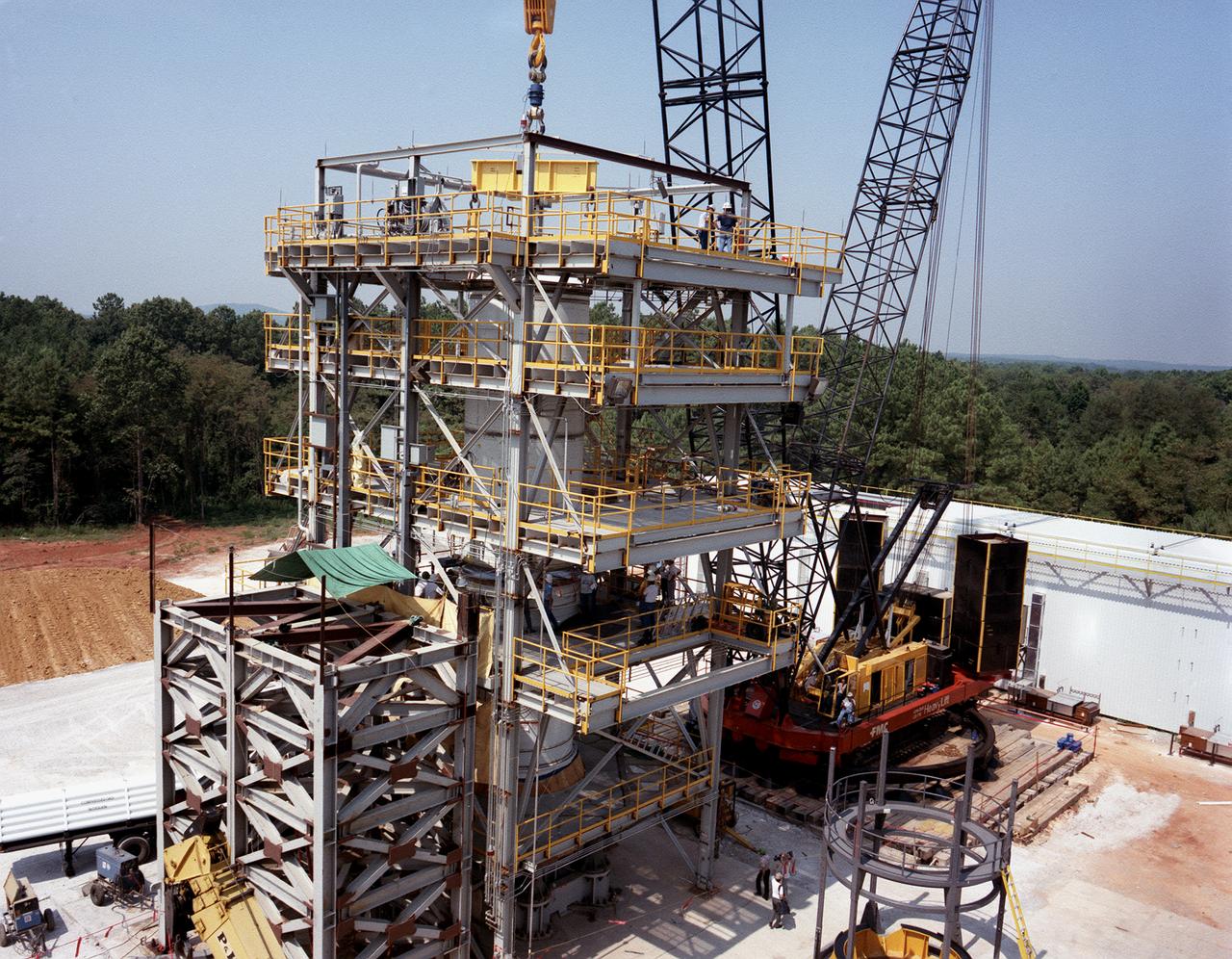
A forward segment is being lowered into the Transient Pressure Test Article (TPTA) test stand at thw Marshall Space Flight Center (MSFC) east test area. The TPTA test stand, 14-feet wide, 27-feet long, and 33-feet high, was built in 1987 to provide data to verify the sealing capability of the redesign solid rocket motor (SRM) field and nozzle joints. The test facility applies pressure, temperature, and external loads to a short stack of solid rocket motor hardware. The simulated SRM ignition pressure and temperature transients are achieved by firing a small amount of specially configured solid propellant. The pressure transient is synchronized with external programmable dynamic loads that simulate lift off loads at the external tank attach points. Approximately one million pounds of dead weight on top of the test article simulates the weight of the other Shuttle elements.
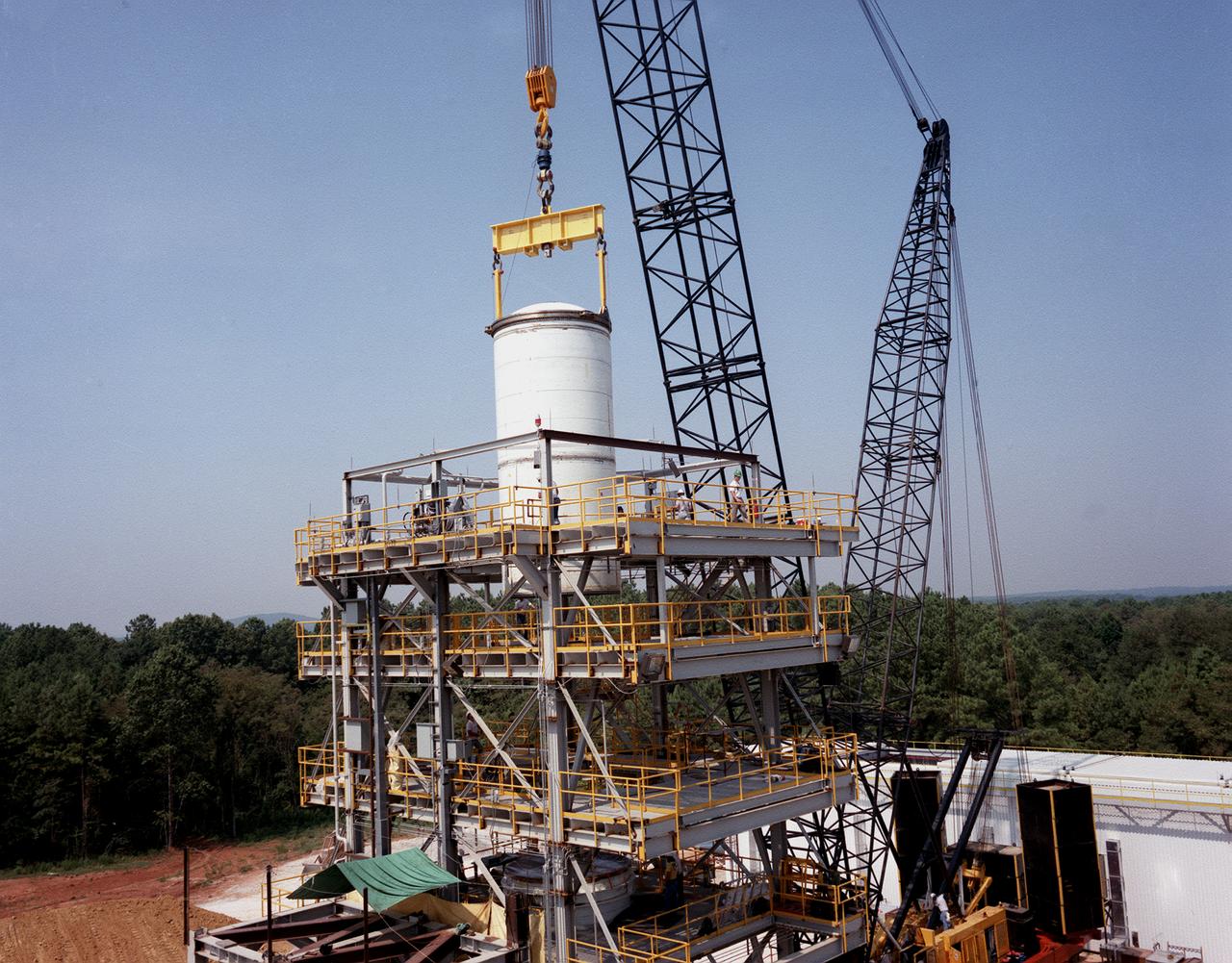
A forward segment is being lowered into the Transient Pressure Test Article (TPTA) test stand at the Marshall Space Flight Center (MSFC) east test area. The TPTA test stand, 14-feet wide, 27-feet long, and 33-feet high, was built in 1987 to provide data to verify the sealing capability of the redesign solid rocket motor (SRM) field and nozzle joints. The test facility applies pressure, temperature, and external loads to a short stack of solid rocket motor hardware. The simulated SRM ignition pressure and temperature transients are achieved by firing a small amount of specially configured solid propellant. The pressure transient is synchronized with external programmable dynamic loads that simulate lift off loads at the external tank attach points. Approximately one million pounds of dead weight on top of the test article simulates the weight of the other Shuttle elements.
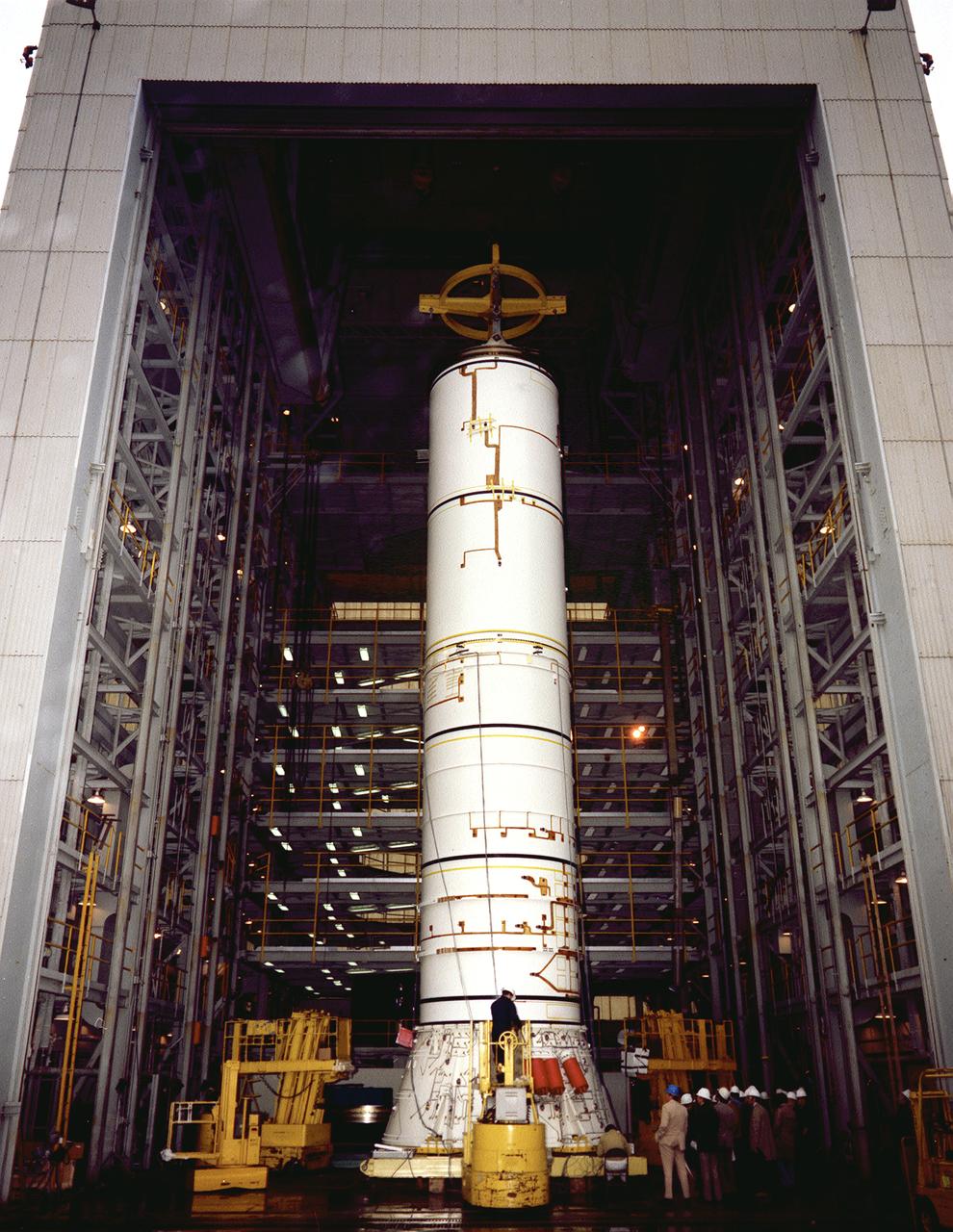
The structural test article to be used in the solid rocket booster (SRB) structural and load verification tests is being assembled in a high bay building of the Marshall Space Flight Center (MSFC). The Shuttle's two SRB's are the largest solids ever built and the first designed for refurbishment and reuse. Standing nearly 150-feet high, the twin boosters provide the majority of thrust for the first two minutes of flight, about 5.8 million pounds, augmenting the Shuttle's main propulsion system during liftoff. The major design drivers for the solid rocket motors (SRM's) were high thrust and reuse. The desired thrust was achieved by using state-of-the-art solid propellant and by using a long cylindrical motor with a specific core design that allows the propellant to burn in a carefully controlled marner. At burnout, the boosters separate from the external tank and drop by parachute to the ocean for recovery and subsequent refurbishment.